WO2006005063A2 - Methods and compositions - Google Patents
Methods and compositions Download PDFInfo
- Publication number
- WO2006005063A2 WO2006005063A2 PCT/US2005/023758 US2005023758W WO2006005063A2 WO 2006005063 A2 WO2006005063 A2 WO 2006005063A2 US 2005023758 W US2005023758 W US 2005023758W WO 2006005063 A2 WO2006005063 A2 WO 2006005063A2
- Authority
- WO
- WIPO (PCT)
- Prior art keywords
- compound
- trifluoromethyl
- carbazol
- optionally substituted
- ksp
- Prior art date
- Legal status (The legal status is an assumption and is not a legal conclusion. Google has not performed a legal analysis and makes no representation as to the accuracy of the status listed.)
- Ceased
Links
Classifications
-
- C—CHEMISTRY; METALLURGY
- C07—ORGANIC CHEMISTRY
- C07D—HETEROCYCLIC COMPOUNDS
- C07D487/00—Heterocyclic compounds containing nitrogen atoms as the only ring hetero atoms in the condensed system, not provided for by groups C07D451/00 - C07D477/00
- C07D487/02—Heterocyclic compounds containing nitrogen atoms as the only ring hetero atoms in the condensed system, not provided for by groups C07D451/00 - C07D477/00 in which the condensed system contains two hetero rings
- C07D487/04—Ortho-condensed systems
-
- A—HUMAN NECESSITIES
- A61—MEDICAL OR VETERINARY SCIENCE; HYGIENE
- A61P—SPECIFIC THERAPEUTIC ACTIVITY OF CHEMICAL COMPOUNDS OR MEDICINAL PREPARATIONS
- A61P29/00—Non-central analgesic, antipyretic or antiinflammatory agents, e.g. antirheumatic agents; Non-steroidal antiinflammatory drugs [NSAID]
-
- A—HUMAN NECESSITIES
- A61—MEDICAL OR VETERINARY SCIENCE; HYGIENE
- A61P—SPECIFIC THERAPEUTIC ACTIVITY OF CHEMICAL COMPOUNDS OR MEDICINAL PREPARATIONS
- A61P31/00—Antiinfectives, i.e. antibiotics, antiseptics, chemotherapeutics
- A61P31/10—Antimycotics
-
- A—HUMAN NECESSITIES
- A61—MEDICAL OR VETERINARY SCIENCE; HYGIENE
- A61P—SPECIFIC THERAPEUTIC ACTIVITY OF CHEMICAL COMPOUNDS OR MEDICINAL PREPARATIONS
- A61P35/00—Antineoplastic agents
-
- A—HUMAN NECESSITIES
- A61—MEDICAL OR VETERINARY SCIENCE; HYGIENE
- A61P—SPECIFIC THERAPEUTIC ACTIVITY OF CHEMICAL COMPOUNDS OR MEDICINAL PREPARATIONS
- A61P37/00—Drugs for immunological or allergic disorders
-
- C—CHEMISTRY; METALLURGY
- C07—ORGANIC CHEMISTRY
- C07D—HETEROCYCLIC COMPOUNDS
- C07D209/00—Heterocyclic compounds containing five-membered rings, condensed with other rings, with one nitrogen atom as the only ring hetero atom
- C07D209/56—Ring systems containing three or more rings
- C07D209/80—[b, c]- or [b, d]-condensed
- C07D209/82—Carbazoles; Hydrogenated carbazoles
- C07D209/86—Carbazoles; Hydrogenated carbazoles with only hydrogen atoms, hydrocarbon or substituted hydrocarbon radicals, directly attached to carbon atoms of the ring system
-
- C—CHEMISTRY; METALLURGY
- C07—ORGANIC CHEMISTRY
- C07D—HETEROCYCLIC COMPOUNDS
- C07D209/00—Heterocyclic compounds containing five-membered rings, condensed with other rings, with one nitrogen atom as the only ring hetero atom
- C07D209/56—Ring systems containing three or more rings
- C07D209/80—[b, c]- or [b, d]-condensed
- C07D209/82—Carbazoles; Hydrogenated carbazoles
- C07D209/88—Carbazoles; Hydrogenated carbazoles with hetero atoms or with carbon atoms having three bonds to hetero atoms with at the most one bond to halogen, e.g. ester or nitrile radicals, directly attached to carbon atoms of the ring system
Definitions
- This invention relates to compounds which are inhibitors of the mitotic kinesin KSP and are useful in the treatment of cellular proliferative diseases, for example cancer, hyperplasias, restenosis, cardiac hypertrophy, immune disorders, fungal disorders, and inflammation.
- cellular proliferative diseases for example cancer, hyperplasias, restenosis, cardiac hypertrophy, immune disorders, fungal disorders, and inflammation.
- Microtubules are the primary structural element of the mitotic spindle.
- the mitotic spindle is responsible for distribution of replicate copies of the genome to each of the two daughter cells that result from cell division. It is presumed that disruption of the mitotic spindle by these drugs results in inhibition of cancer cell division, and induction of cancer cell death.
- microtubules form other types of cellular structures, including tracks for intracellular transport in nerve processes. Because these agents do not specifically target mitotic spindles, they have side effects that limit their usefulness.
- Mitotic kinesins are enzymes essential for assembly and function of the mitotic spindle, but are not generally part of other microtubule structures, such as in nerve processes. Mitotic kinesins play essential roles during all phases of mitosis. These enzymes are "molecular motors" that transform energy released by hydrolysis of ATP into mechanical force which drives the directional movement of cellular cargoes along microtubules. The catalytic domain sufficient for this task is a compact structure of approximately 340 amino acids. During mitosis, kinesins organize microtubules into the bipolar structure that is the mitotic spindle.
- Kinesins mediate movement of chromosomes along spindle microtubules, as well as structural changes in the mitotic spindle associated with specific phases of mitosis.
- Experimental perturbation of mitotic kinesin function causes malformation or dysfunction of the mitotic spindle, frequently resulting in cell cycle arrest and cell death.
- KSP Among the mitotic kinesins which have been identified is KSP.
- KSP belongs to an evolutionary conserved kinesin subfamily of plus end-directed microtubule motors that assemble into bipolar homotetramers consisting of antiparallel homodimers.
- KSP associates with microtubules of the mitotic spindle.
- Microinjection of antibodies directed against KSP into human cells prevents spindle pole separation during prometaphase, giving rise to monopolar spindles and causing mitotic arrest and induction of programmed cell death.
- KSP and related kinesins in other, non-human, organisms bundle antiparallel microtubules and slide them relative to one another, thus forcing the two spindle poles apart.
- KSP may also mediate in anaphase B spindle elongation and focussing of microtubules at the spindle pole.
- Human KSP also termed HsEg ⁇
- HsEg ⁇ Human KSP has been described (Blangy, et al., Cell, 83:1159-69 (1995); Whitehead, et al., Arthritis Rheum., 39:1635-42 (1996); Galgio et al., J. Cell Biol., 135:339-414 (1996); Blangy, et al., J Biol.
- Mitotic kinesins are attractive targets for the discovery and development of novel antimitotic chemotherapeutics. Accordingly, it is an object of the present invention to provide methods, compounds and compositions useful in the inhibition of KSP, a mitotic kinesin.
- the present invention provides methods, compounds and compositions that can be used to treat diseases of proliferating cells.
- the compounds and compositions are KSP inhibitors, particularly human KSP inhibitors.
- the invention relates to compositions useful for treating cellular proliferative disease and for inhibiting KSP kinesin.
- the invention relates to methods useful for treating cellular proliferative diseases, for treating disorders by inhibiting the activity of KSP kinesin.
- the methods and compositions of this invention employ the novel compounds represented by Formula I:
- X is selected from the group consisting of CF 3 and S(O) n Ri;
- Y is selected from the group consisting of NR 1 R 2 , NR 1 COR 2 , NR 1 CONR 2 R 3 , NR 1 CSNR 2 R 3 , NR 1 S(O) n NR 2 R 3 and NR 1 S(O) n R 2 ;
- n is at each occurrence independently 1 or 2;
- R 1 , R 2 and R 3 are at each occurrence independently selected from the group consisting of hydrogen, optionally substituted alkyl, optionally substituted aryl, optionally substituted aralkyl, optionally substituted heteroaryl and optionally substituted heteroarylalkyl;
- a and B are independently carbon or nitrogen; or a pharmaceutically acceptable salt or solvate thereof.
- Substituent X may occupy any of the four positions on the ring that it is located.
- the substituent Y may occupy any of the open positions on the ring that it is located on except for A and/or B when A and/or B is N.
- the invention relates to methods for treating cellular proliferative diseases and other disorders that can be treated by inhibiting KSP by the administration of a therapeutically effective amount of a compound of Formula I or a pharmaceutically acceptable salt or solvate thereof.
- Diseases and disorders that respond to therapy with compounds of the invention include cancer, hyperplasia, restenosis, cardiac hypertrophy, immune disorders, fungal disorders and inflammation.
- the invention relates to compounds useful in inhibiting KSP kinesin.
- the compounds have the structures shown in Formula I.
- the invention also relates to a pharmaceutical composition containing a therapeutically effective amount of a compound of Formula I or a pharmaceutically acceptable salt or solvate thereof admixed with at least one pharmaceutically acceptable excipient.
- the present invention provides methods of screening for compounds that will bind to a KSP kinesin, for example compounds that will displace or compete with the binding of the compounds or compositions of the invention.
- the methods comprise combining a labeled compound of the invention, a KSP kinesin, and at least one candidate agent and determining the binding of the candidate bioactive agent to the KSP kinesin.
- the invention provides methods of screening for inhibitors of KSP kinesin activity.
- the methods comprise combining a compound or composition of the invention, a KSP kinesin, and at least one candidate agent and determining the effect of the biological agent on the KSP kinesin activity.
- the present invention is directed to a class of novel compounds, comprising a di- substituted 9-H-carbazole, 1H-pyrido[2,3-jb]indole, 5H-pyrido[4,3- ⁇ ]indole or 1H- pyrimido[4,5-jb]indole structure, that are inhibitors of mitotic kinesins.
- mitotic kinesins By inhibiting mitotic kinesins, but not other kinesins (e.g., transport kinesins), specific inhibition of cellular proliferation is accomplished.
- the present invention capitalizes on the finding that perturbation of mitotic kinesin function causes malformation or dysfunction of mitotic spindles, frequently resulting in cell cycle arrest and cell death.
- An object of the present invention is to develop inhibitors of one or more mitotic kinesins, in particular KSP, for the treatment of disorders associated with cell proliferation.
- mitotic kinesins in particular KSP
- KSP mitotic kinesins
- An object of the present invention is to develop inhibitors of one or more mitotic kinesins, in particular KSP, for the treatment of disorders associated with cell proliferation.
- Traditionally dramatic improvements in the treatment of cancer, one type of cell proliferative disorder, have been associated with identification of therapeutic agents acting through novel mechanisms. Examples of this include not only the taxane class of agents that appear to act on microtubule formation, but also the camptothecin class of topoisomerase I inhibitors.
- the compounds, compositions and methods described herein can differ in their selectivity and are preferably used to treat diseases of proliferating cells, including, but not limited to cancer, hyperplasias, restenosis, cardiac hypertrophy, immune disorders, fungal disorders and inflammation. Accordingly, the present invention relates to
- X is selected from the group consisting of CF 3 and S(O) n Ri;
- Y is selected from the group consisting of NR 1 R 2 , NR 1 COR 2 , NR 1 CONR 2 R 3 , NR 1 CSNR 2 R 3 , NR 1 S(O) n NR 2 R 3 and NR 1 S(O) n R 2 ; n is 1 or 2;
- R 1 , R 2 and R 3 are at each occurrence independently selected from the group consisting of hydrogen, optionally substituted alkyl, optionally substituted aryl, optionally substituted aralkyl, optionally substituted heteroaryl and optionally substituted heteroarylalkyl; A and B are independently carbon or nitrogen; or a pharmaceutically acceptable salt or solvate thereof.
- Substituent X may occupy any of the four positions on the ring that it is located.
- the substituent Y may occupy any of the open positions on the ring that it is located on except for A and/or B when A and/or B is N.
- X is CF 3 . In other embodiments, X is S(O) n R 1 . In some embodiments, when X is S(O) n R 1 , n is 2 and R 1 is substituted alkyl. In some • embodiments, when X is is S(O) n R 1 and n is 2, R 1 is methyl.
- a and B are carbon. In other embodiments, A and B are nitrogen.
- Y is NR 1 R 2 . In some embodiments when Y is NR 1 R 2 , R 1 and R 2 are at each occurrence independently hydrogen or substituted alkyl. In some embodiments, when Y is NR 1 R 2 , R 1 and R 2 are hydrogen. In some embodiments, Y is NR 1 CONR 2 R 3 . In some embodiments when Y is NR 1 CONR 2 R 3 , R 1 , R 2 and R 3 are at each occurrence independently hydrogen or substituted alkyl.
- Y is NR 1 CSNR 2 R 3 . In some embodiments when Y is NRiCSNR 2 R 3 , R 1 , R 2 and R 3 are at each occurrence independently hydrogen or substituted alkyl. In some embodiments, Y is NR 1 S(O) n NR 2 R 3 . In some embodiments when Y is
- NR 1 S(O) n NR 2 R 3 , R 1 , R 2 and R 3 are at each occurrence independently hydrogen or substituted alkyl.
- Y is NR 1 S(O) n R 2 . In some embodiments when Y is NR 1 S(O) n R 2, R 1 and R 2 are at each occurrence independently hydrogen or substituted alkyl. In some embodiments when Y is NR 1 S(O) n R 2, Ri and R 2 are at each occurrence independently hydrogen or methyl.
- this invention describes compounds of formula I having the formula: a) 7-(trifluoromethyl)-1H-pyrimido[4,5-b]indol-2-ylamine; 6-(trifluoromethyl)- 1 H-pyrimido[4,5-b]indol-2-ylamine; 6-(trifluoromethyl)-9H-carbazol-2-ylamine; 6- (trifluoromethyl)-9H-carbazol-3-ylamine; N-[7-(trifluoromethyl)-9H ⁇ carbazol-2- yl]methanesulfonamide; N-[6-(trifluoromethyl)-9H-carbazol-2-yl]urea; 7-
- this invention comprises a pharmaceutically acceptable excipient and any of the previously described embodiments of formula I, or pharmaceutically acceptable salts or solvates thereof. In some embodiments, this invention comprises a pharmaceutically acceptable excipient and any of the previously described embodiments of formula I, or pharmaceutically acceptable salts or solvates thereof, and further comprises a taxane. In some embodiments, this invention comprises a pharmaceutically acceptable excipient and any of the previously described embodiments of formula I, or pharmaceutically acceptable salts or solvates thereof, and further comprises a vinca alkaloid.
- this invention comprises a pharmaceutically acceptable excipient and any of the previously described embodiments of formula I, or pharmaceutically acceptable salts or solvates thereof, and further comprises a topoisomerase I inhibitor.
- this invention describes a method of inhibiting KSP which comprises contacting said kinesin with an effective amount of the compound or composition according to any one of the previously described compound or composition embodiments.
- this invention describes a method for the treatment of a disease of proliferating cells comprising administering to a subject in need thereof the compound or composition according to any one of the previously described compound embodiments.
- said disease is selected from a group consisting of cancer, hyperplasias, restenosis, cardiac hypertrophy, immune disorders, fungal disorders and inflammation.
- Alkyl is intended to include linear, branched, or cyclic hydrocarbon structures and combinations thereof.
- alkyl groups include methyl, ethyl, propyl, isopropyl, butyl, s-and t-butyl, pentyl, hexyl, heptyl, octyl, nonyl, decyl, undecyl, dodecyl and the like.
- Preferred alkyl groups range from C 2 o and below, C 13 and below, C 8 and below, C 6 and below, or C 4 and below.
- Cycloalkyl is a subset of alkyl and includes cyclic hydrocarbon groups of from 3 to 13 carbon atoms. Examples of cycloalkyl groups include c-propyl, c-butyl, c- pentyl, norbornyl, adamantyl and the like.
- alkyl refers to alkanyl, alkenyl and alkynyl residues; it is intended to include cyclohexylmethyl, vinyl, allyl, isoprenyl and the like.
- Alkylene is another subset of alkyl, referring to the same residues as alkyl, but having two points of attachment.
- alkylene examples include ethylene (-CH 2 CH 2 -), propylene (-CH 2 CH 2 CH 2 -), dimethylpropylene (-CH 2 C(CH 3 ) 2 CH 2 -) and cyclohexylpropylene (-CH 2 CH 2 CH(C 6 H 13 )-).
- alkyl residue having a specific number of carbons all geometric isomers having that number of carbons are intended to be encompassed; thus, for example, "butyl” is meant to include n- butyl, sec-butyl, isobutyl and t-butyl; "propyl” includes n-propyl and isopropyl.
- Aryl means a 6-membered aromatic, a bicyclic 9- or 10-membered aromatic or a tricyclic 14- to 16-membered aromatic ring system containing.
- the aromatic 6- to 16- membered carbocyclic rings include such non-limiting examples e.g., phenyl, naphthyl, indanyl, tetralinyl, anthracenyl, fluorenyl, and the like.
- Heteroaryl means a 5- or 6-membered heteroaromatic ring containing 1-4 heteroatoms selected singly or in combination from a group consisting of N, O, and S; a bicyclic 9- or 10-membered heteroaromatic ring system containing 1-4 heteroatoms, selected singly or in combination from a group consisting of N, O, or S; or a tricyclic 14- to 16- membered heteroaromatic ring system containing 1-4 heteroatoms selected singly or in combination from a group consisting of N, O, and S.
- 5- to 16- member heteroaromatic compounds include, e.g., imidazole, pyridinyl, indolyl, thienyl, benzopyranonyl, thiazolyl, furanyl, benzimidazolyl, quinolinyl, isoquinolinyl, quinoxalinyl, pyrimidinyl, pyrazinyl, pyrazolyl, tetrazolyl, phenothiazinyl, benzoquinolinyl, naphtho[2,3-/)]thiophenyl, and the like.
- Aralkyl refers to a residue in which an aryl moiety is attached to the parent structure via an alkyl residue. Examples include benzyl, phenethyl, phenylvinyl, phenylallyl and the like. Heteroaralkyl refers to a residue in which a heteroaryl moiety is attached to the parent structure via an alkyl residue. Examples include furanylmethyl, pyridinylmethyl, pyrimidinylethyl and the like.
- Halogen or halo refers to fluorine, chlorine, bromine or iodine. Fluorine, chlorine and bromine are preferred.
- Dihaloaryl, dihaloalkyl, trihaloaryl etc. refer to aryl and alkyl substituted with a plurality of halogens, but not necessarily a plurality of the same halogen; thus 4-chloro-3-fluorophenyl is within the scope of dihaloaryl.
- Substituted- alkyl, aryl, and heteroaryl which includes the substituted alkyl, aryl and heteroaryl moieties of any group containing an optionally substituted alkyl, aryl and heteroaryl moiety (e.g., aralkyl and heteroaralkyl), refer respectively to alkyl, aryl, and heteroaryl wherein one or more (up to about 5, preferably up to about 3) hydrogen atoms are replaced by a substituent, wherein each substituent is independently selected from the group:
- R a is at each occurrence independently optionally substituted C 1 -C 6 alkyl, optionally substituted aryl, optionally substituted heteroaryl, optionally substituted aryl-CrC 4 alkyl-, or optionally substituted heteroaryl-C r C 4 alkyl- group,
- R b is at each occurrence independently H, optionally substituted C 1 -C 6 alkyl, optionally substituted aryl, optionally substituted heteroaryl, optionally substituted aryl-Ci-C 4 alkyl-, or optionally substituted heteroaryl-Ci-C 4 alkyl- group;
- R c is hydrogen or C 1 -C 4 alkyl; where each optionally substituted R a group and R b group is independently unsubstituted or substituted with one or more substituents independently selected from C 1 -C 4 alkyl, aryl, heteroaryl, aryl-C-i-C 4 alkyl-, heteroaryl-C r C 4 alkyl-, C 1 -C 4 haloalkyl, -OC 1 -C 4 alkyl, -OC 1 -C 4 alkylphenyl, - C 1 -C 4 alkyl-OH, -OC 1 -C 4 haloalkyl, halogen,
- Pharmaceutically acceptable acid addition salt refers to those salts that retain at least some of the biological effectiveness of the free bases, and that are not biologically or otherwise undesirable, formed with inorganic acids such as hydrochloric acid, hydrobromic acid, sulfuric acid, nitric acid, phosphoric acid and the like, and organic acids such as acetic acid, propionic acid, glycolic acid, pyruvic acid, oxalic acid, maleic acid, malonic acid, succinic acid, fumaric acid, tartaric acid, citric acid, benzoic acid, cinnamic acid, mandelic acid, methanesulfonic acid, ethanesulfonic acid, benzenesulfonic acid, p-toluenesulfonic acid, salicylic acid and the like.
- the acids used may be monoprotic, diprotic, or polyprotic (including polymeric acids), and thus the stoichiometry for di- or polyprotic acid derived salts can be adjusted through a
- Pharmaceutically acceptable base addition salt refers to those salts that retain at least some of the biological effectiveness of a free acid, and that are not biologically or otherwise undesirable, formed with inorganic or organic bases including those containing sodium, potassium, lithium, ammonium, calcium, magnesium, iron, zinc, copper, manganese, aluminum, and the like. Particularly preferred base addition salt products are ammonium, potassium, sodium, calcium, and magnesium salts.
- Salts derived from pharmaceutically acceptable organic non-toxic bases include salts of primary, secondary, and tertiary amines.
- the bases used may also be monobasic, dibasic, or polybasic (including base resins), and thus the stoichiometry for di- or polybase derived salts of the final product can be adjusted through a range according to what is desired.
- Pharmaceutically acceptable solvates refer to the complex formed by the interaction of a solvent and a compound of Formula I or a pharmaeutically acceptable salt or derivative thereof. Suitable solvates are those formed with pharmaceutically acceptable solvents, including hydrates (i.e., wherein the solvent is water). It will be understood that phrases such as "a compound of Formula I or a pharmaceutically acceptable salt or solvate thereof are intended to encompass the compound of Formula I, a pharmaceutically acceptable salt of the compound, a solvate of the compound and a solvate of a pharmaeutically acceptable salt of the compound.
- Certain embodiments of the invention described herein may contain one or more asymmetric centers and may thus give rise to enantiomers, diastereomers, and other " stereoisomeric forms that may be defined, in terms of absolute stereochemistry, as (R)- or (S)-.
- the present invention is meant to include all such possible isomers, including racemic mixtures, optically pure forms and intermediate mixtures.
- Optically active (R)- and (S)- isomers may be prepared using chiral synthons or chiral reagents, or resolved using conventional techniques.
- the compounds described herein contain olefinic double bonds or other centers of geometric asymmetry, and unless specified otherwise, it is intended that the compounds include both E and Z geometric isomers. Likewise, all tautomeric forms are also intended to be included.
- the R- and S-isomers may be resolved by methods known to those skilled in the art, for example by formation of diastereoisomeric salts or complexes which may be separated, for example, by crystallisation; via formation of diastereoisomeric derivatives which may be separated, for example, by crystallisation, gas-liquid or liquid chromatography; selective reaction of one enantiomer with an enantiomer-specific reagent, for example enzymatic oxidation or reduction, followed by separation of the modified and unmodified enantiomers; or gas-liquid or liquid chromatography in a chiral environment, for example on a chiral support, such as silica with a bound chiral ligand or in the presence of a chiral solvent.
- a chiral support such as silica with a bound chiral ligand or in the presence of a chiral solvent.
- a further step may be required to liberate the desired enantiomeric form.
- a specific enantiomer may be synthesized by asymmetric synthesis using optically active reagents, substrates, catalysts or solvents, or by converting on enantiomer to the other by asymmetric transformation.
- mitosis may be altered in a variety of ways; that is, one can affect mitosis either by increasing or decreasing the activity of a component in the mitotic pathway. Stated differently, mitosis may be affected (e.g., disrupted) by disturbing equilibrium, either by inhibiting or activating certain components. Similar approaches may be used to alter meiosis.
- the compounds and compositions of the invention are used to inhibit mitotic spindle formation, thus causing prolonged cell cycle arrest in mitosis.
- inhibit herein is meant decreasing spindle formation.
- mitotic spindle formation herein is meant organization of microtubules into bipolar structures by mitotic kinesins.
- mitotic spindle dysfunction herein is meant mitotic arrest and monopolar spindle formation.
- compositions of the invention are useful to bind to and/or inhibit the activity of a mitotic kinesin, KSP.
- the KSP is human KSP, although KSP kinesins from other organisms may also be used.
- inhibit means decreasing spindle pole separation, causing malformation, i.e., splaying, of mitotic spindle poles, or otherwise causing morphological perturbation of the mitotic spindle.
- variants and/or fragments of KSP See U.S. Patent 6,414,121 , hereby incorporated by reference in its entirety.
- other mitotic kinesins may be used in the present invention.
- KSP KSP
- a compound according to the invention is non-diffusably bound to an insoluble support having isolated sample receiving areas (e.g., a microtiter plate, an array, etc.).
- the insoluble support may be made of any composition to which the compositions can be bound, is readily separated from soluble material, and is otherwise compatible with the overall method of screening.
- the surface of such supports may be solid or porous and of any convenient shape. Examples of suitable insoluble supports include microtiter plates, arrays, membranes and beads. These are typically made of glass, plastic (e.g., polystyrene), polysaccharides, nylon or nitrocellulose, TeflonTM, etc.
- Microtiter plates and arrays are especially convenient because a large number of assays can be carried out simultaneously, using small amounts of reagents and samples.
- the particular manner of binding of the composition is not crucial so long as it is compatible with the reagents and overall methods of the invention, maintains the activity of the composition and is nondiffusable.
- Preferred methods of binding include the use of antibodies (which do not sterically block either the ligand binding site or activation sequence when the protein is bound to the support), direct binding to "sticky" or ionic supports, chemical crosslinking, the synthesis of the protein or agent on the surface, etc. Following binding of the protein or agent, excess unbound material is removed by washing.
- the sample receiving areas may then be blocked through incubation with bovine serum albumin (BSA), casein or other innocuous protein or other moiety.
- BSA bovine serum albumin
- the mitotic agents of the invention may be used on their own to inhibit the activity of a mitotic kinesin, particularly KSP.
- the mitotic agents of the invention are combined with KSP and the activity of KSP is assayed.
- Kinesin activity is known in the art and includes one or more kinesin activities.
- Kinesin activities include the ability to affect ATP hydrolysis; microtubule binding; gliding and polymerization/depolymerization (effects on microtubule dynamics); binding to other proteins of the spindle; binding to proteins involved in cell-cycle control; serving as a substrate to other enzymes; such as kinases or proteases; and specific kinesin cellular activities such as spindle pole separation.
- ATPase hydrolysis activity assay utilizes 0.3 M PCA (perchloric acid) and malachite green reagent (8.27 mM sodium molybdate II, 0.33 mM malachite green oxalate, and 0.8 mM Triton X-1 00).
- PCA perchloric acid
- malachite green reagent 8.27 mM sodium molybdate II, 0.33 mM malachite green oxalate, and 0.8 mM Triton X-1 00).
- ATPase activity of kinesin motor domains also can be used to monitor the effects of inhibitory agents.
- ATPase assays of kinesin are performed in the absence of microtubules.
- the ATPase assays are performed in the presence of microtubules.
- Different types of inhibiting agents can be detected in the above assays.
- the effect of the agents on kinesin ATPase can be decreased by increasing the concentrations of ATP, microtubules or both. Agents that inhibit the biochemical activity of KSP in vitro may then be screened in vivo.
- Methods for such agents in vivo include assays of cell cycle distribution, cell viability, or the presence, morphology, activity, distribution, or amount of mitotic spindles.
- Methods for monitoring cell cycle distribution of a cell population for example, by flow cytometry, are well known to those skilled in the art, as are methods for determining cell viability. See for example, U.S. Patent Application “Methods of Screening for Modulators of Cell Proliferation and Methods of Diagnosing Cell Proliferation States," US 6,414,121 , hereby incorporated by reference in its entirety.
- compositions of the invention inhibit the KSP kinesin.
- IC 50 defined as the concentration of the composition at which the activity of KSP is decreased by fifty percent relative to a control.
- Preferred compositions have IC 50 1 S of less than about 1 mM, with preferred embodiments having IC 50 1 S of less than about 100 ⁇ M, with more preferred embodiments having IC 50 1 S of less than about 10 ⁇ M, with particularly preferred embodiments having IC 50 1 S of less than about 1 ⁇ M, and especially preferred embodiments having IC 50 1 S of less than about 100 nM, and with the most preferred embodiments having IC 50 1 S of less than about 10 nM.
- Measurement of IC 50 is done using an ATPase assay.
- Kj Another measure of inhibition is Kj.
- the Kj or K d is defined as the dissociation rate constant for the interaction of the compounds described herein with KSP.
- Preferred compounds have Kj's of less than about 100 ⁇ M, with preferred embodiments having K/s of less than about 10 ⁇ M, and particularly preferred embodiments having Kj's of less than about 1 ⁇ M and especially preferred embodiments having Kj's of less than about 100 nM, and with the most preferred embodiments having Kj's of less than about 10 nM.
- the K, for a compound is determined from the IC 50 based on three assumptions. First, only one compound molecule binds to the enzyme and there is no cooperativity.
- the concentrations of active enzyme and the compound tested are known (i.e., there are no significant amounts of impurities or inactive forms in the preparations).
- the enzymatic rate of the enzyme-inhibitor complex is zero.
- the rate (i.e., compound concentration) data are fitted to the equation:
- V is the observed rate
- V max is the rate of the free enzyme
- I 0 is the inhibitor concentration
- E 0 is the enzyme concentration
- K d is the dissociation constant of the enzyme-inhibitor complex.
- Another measure of inhibition is the cell IC 50 , defined as the concentration of the compound that results in a decrease in the rate of cell growth by fifty percent.
- Preferred compounds have cell IC 50 1 S of less than about 1 mM.
- the level of preferability of embodiments is a function of their cell IC 50 : those having cell IC 50 1 S of less than about 20 ⁇ M are more preferred; those having cell IC 50 1 S of 10 ⁇ M more so; those having cell IC 50 1 S of less than about 1 ⁇ M more so; those having cell IC 50 1 S of 100 nM even more so. Measurement of cell IC 50 1 S is done using a cell proliferation assay.
- the compounds and compositions of the invention are used to treat cellular proliferation diseases.
- Disease states which can be treated by the methods, compounds and compositions provided herein include, but are not limited to, cancer, autoimmune disease, fungal disorders, arthritis, graft rejection, inflammatory bowel disease, proliferation induced after medical procedures, including, but not limited to, surgery, angioplasty, and the like. It is appreciated that in some cases the cells may not be in a hyper or hypo proliferation state (abnormal state) and still require treatment. For example, during wound healing, the cells may be proliferating "normally", but proliferation enhancement maybe desired. Thus, in one embodiment, the invention herein includes application to cells or individuals afflicted or impending affliction with any one of these disorders or states.
- compositions and methods provided herein are particularly deemed useful for the treatment of cancer including solid tumors such as skin, breast, brain, cervical carcinomas, testicular carcinomas, etc. More particularly, cancers that may be treated by the compositions and methods of the invention include, but are not limited to: Cardiac: sarcoma (angiosarcoma, fibrosarcoma, rhabdomyosarcoma, liposarcoma), myxoma, rhabdomyoma, fibroma, lipoma and teratoma; Lung: bronchogenic carcinoma (squamous cell, undifferentiated small cell, undifferentiated large cell, adenocarcinoma), alveolar (bronchiolar) carcinoma, bronchial adenoma, sarcoma, lymphoma, chondromatous hamartoma, mesothelioma; Gastrointestinal: esophagus (squamous cell carcinoma, adenocarcino
- the term "cancerous cell” as provided herein includes a cell afflicted by any one of the above identified conditions. Accordingly, the compositions of the invention are administered to cells.
- administered herein is meant administration of a therapeutically effective dose of the mitotic agents of the invention to a cell either in cell culture or in a patient.
- therapeutically effective dose herein is meant a dose that produces the effects for which it is administered. The exact dose will depend on the purpose of the treatment, and will be ascertainable by one skilled in the art using known techniques.
- cells are meant almost any cell in which mitosis or meiosis can be altered.
- a "patient” for the purposes of the present invention includes both humans and other animals, particularly mammals, and other organisms. Thus the methods are applicable to both human therapy and veterinary applications.
- the patient is a mammal, and in the most preferred embodiment the patient is human.
- Mitotic agents having the desired pharmacological activity may be administered in a physiologically acceptable carrier to a patient, as described herein.
- the compounds may be formulated in a variety of ways as discussed below.
- the concentration of therapeutically active compound in the formulation may vary from about 0.1-100 wt.%.
- the agents may be administered alone or in combination with other treatments, i.e., radiation, or other therapeutic agents, such as the taxane class of agents that appear to act on microtubule formation or the campothecin class of topoisomerase I inhibitors.
- other therapeutic agents can be administered before, concurrently (whether in separate dosage forms or in a combined dosage form), or after administration of an active agent of the present invention.
- Pharmaceutical formulations include a compound of Formula I or a pharmaceutically acceptable salt or solvate thereof, and one or more pharmaceutically acceptable excipients.
- pharmaceutical excipients are secondary ingredients that function to enable or enhance the delivery of a drug or medicine in a variety of dosage forms (e.g., oral forms such as tablets, capsules, and liquids; topical forms such as dermal, opthalmic, and otic forms; suppositories; injectables; respiratory forms and the like).
- Pharmaceutical excipients include inert or inactive ingredients, synergists or chemicals that substantively contribute to the medicinal effects of the active ingredient.
- pharmaceutical excipients may function to improve flow characteristics, product uniformity, stability, taste, or appearance, to ease handling and administration of dose, for convenience of use, or to control bioavailability. While pharmaceutical excipients are commonly described as being inert or inactive, it is appreciated in the art that there is a relationship between the properties of the pharmaceutical excipients and the dosage forms containing them. Pharmaceutical excipients suitable for for use as carriers or diluents are well known in the art, and maybe used in a variety of formulations. See, e.g., Remington's Pharmaceutical Sciences, 18th Edition, A. R. Gennaro, Editor, Mack Publishing
- the concentration of a therapeutically active agent in a formulation can vary widely, from about 0.1 to 99.9 wt.%, depending on the nature of the formulation.
- Oral solid dosage forms such as tablets will typically comprise one or more pharmaceutical excipients, which may for example help impart satisfactory processing and compression characteristics, or provide additional desirable physical characteristics to the tablet.
- Such pharmaceutical excipients may be selected from diluents, binders, glidants, lubricants, disentegrants, colorants, flavorants, sweetening agents, polymers, waxes or other solubility modulating agents.
- Dosage forms for parenteral administration will generally comprise fluids, particularly intravenous fluids, i.e., sterile solutions of simple chemicals such as sugars, amino acids or electrolytes, which can be easily carried by the circulatory system and assimilated.
- Such fluids are typically prepared with water for injection USP.
- Fluids used commonly for intravenous (IV) use are disclosed in Remington, the Science and Practice of Pharmacy [full citation previously provided], and include: alcohol, e.g., 5% alcohol (e.g., in dextrose and water (“D/W”) or D/W in normal saline solution (“NSS”), including in 5% dextrose and water (“D5/W”), or D5/W in NSS); synthetic amino acid such as Aminosyn, FreAmine, Travasol, e.g., 3.5 or 7; 8.5;
- ammonium chloride e.g., 2.14%
- dextran 40 in NSS e.g., 10% or in D5/W e.g., 10%
- dextran 70 in NSS e.g., 6% or in D5/W e.g., 6%
- dextrose glucose, D5/W
- dextrose and sodium chloride e.g.,5-20% dextrose and 0.22-0.9% NaCI
- lactated Ringer's Hartmann's
- NaCi 0.6%, KCI 0.03%, CaCI2 0.02% lactate 0.3%
- mannitol e.g., 5%, optionally in combination with dextrose e.g., 10% or NaCI e.g., 15 or 20%
- multiple electrolyte solutions with varying combinations of electrolytes, dextrose, fructose, invert sugar Ringer's e.g., NaCI 0.86%, KCI 0.03%, CaCL2
- sodium bicarbonate e.g., 5%
- sodium chloride e.g., 0.45, 0.9, 3, or 5%
- sodium lactate e.g., 1/6 M
- sterile water for injection e.g., 0.033%
- the pH of such fluids may vary, and will typically be from 3.5 to 8 as known in the art.
- compositions can be prepared in various forms, such as granules, tablets, pills, suppositories, capsules, suspensions, salves, lotions and the like.
- Pharmaceutical grade organic or inorganic carriers and/or diluents suitable for oral and topical use can be used to make up compositions containing the therapeutically-active compounds.
- Diluents known to the art include aqueous media, vegetable and animal oils and fats. Stabilizing agents, wetting and emulsifying agents, salts for varying the osmotic pressure or buffers for securing an adequate pH value, and skin penetration enhancers can be used as auxiliary agents.
- compositions may also include one or more of the following: carrier proteins such as serum albumin; buffers; fillers such as microcrystalline cellulose, lactose, corn and other starches; binding agents; sweeteners and other flavoring agents; coloring agents; and polyethylene glycol.
- carrier proteins such as serum albumin
- buffers such as buffers
- fillers such as microcrystalline cellulose, lactose, corn and other starches
- binding agents such as microcrystalline cellulose, lactose, corn
- the administration of the agents of the present invention can be done in a variety of ways as discussed above, including, but not limited to, orally, subcutaneously, intravenously, intranasally, transdermal ⁇ , intraperitoneally, intramuscularly, intrapulmonary, vaginally, rectally, or intraocularly.
- the agents may be directly applied as a solution or spray.
- the KSP is bound to a support, and a compound of the invention (which is an anti-mitotic agent) is added to the assay.
- a compound of the invention which is an anti-mitotic agent
- the compound of the invention is bound to the support and KSP is added.
- Classes of compounds among which novel binding agents may be sought include specific antibodies, non-natural binding agents identified in screens of chemical libraries, peptide analogs, etc. Of particular interest are screening assays for candidate agents that have a low toxicity for human cells.
- assays may be used for this purpose, including labeled in vitro protein-protein binding assays, electrophoretic mobility shift assays, immunoassays for protein binding, functional assays (phosphorylation assays, etc.) and the like.
- the determination of the binding of the anti-mitotic agent to KSP may be done in a number of ways.
- the anti-mitotic agent (the compound of the invention) is labeled, for example, with a fluorescent or radioactive moiety and binding determined directly.
- this may be done by attaching all or a portion of KSP to a solid support, adding a labeled anti-mitotic agent (for example a compound of the invention in which at least one atom has been replaced by a detectable isotope), washing off excess reagent, and determining whether the amount of the label is that present on the solid support.
- a labeled anti-mitotic agent for example a compound of the invention in which at least one atom has been replaced by a detectable isotope
- washing off excess reagent for example a compound of the invention in which at least one atom has been replaced by a detectable isotope
- Various blocking and washing steps may be utilized as is known in the art.
- label herein is meant that the compound is either directly or indirectly labeled with a label which provides a detectable signal, e.g., radioisotope, fluorescent tag, enzyme, antibodies, particles such as magnetic particles, chemiluminescent tag, or specific binding molecules, etc.
- Specific binding molecules include pairs, such as biotin and streptavidin, digoxin and antidigoxin etc.
- the complementary member would normally be labeled with a molecule which provides for detection, in accordance with known procedures, as outlined above.
- the label can directly or indirectly provide a detectable signal.
- the kinesin proteins may be labeled at tyrosine positions using 125 I, or with fluorophores.
- more than one component may be labeled with different labels; using 125 I for the proteins, for example, and a fluorophor for the anti-mitotic agents.
- the compounds of the invention may also be used as competitors to screen for additional drug candidates.
- "Candidate bioactive agent” or “drug candidate” or grammatical equivalents as used herein describe any molecule, e.g., protein, oligopeptide, small organic molecule, polysaccharide, polynucleotide, etc., to be tested for bioactivity.
- cellular proliferation phenotypes may be capable of directly or indirectly altering the cellular proliferation phenotype or the expression of a cellular proliferation sequence, including both nucleic acid sequences and protein sequences.
- alteration of cellular proliferation protein binding and/or activity is screened. Screens of this sort may be performed either in the presence or absence of microtubules.
- preferred embodiments exclude molecules already known to bind to that particular protein, for example, polymer structures such as microtubules, and energy sources such as ATP.
- Preferred embodiments of assays herein include candidate agents which do not bind the cellular proliferation protein in its endogenous native state termed herein as "exogenous" agents.
- exogenous agents further exclude antibodies to KSP.
- Candidate agents can encompass numerous chemical classes, though typically they are organic molecules, preferably small organic compounds having a molecular weight of more than 100 and less than about 2,500 daltons.
- Candidate agents comprise functional groups necessary for structural interaction with proteins, particularly hydrogen bonding and lipophilic binding, and typically include at least an amine, carbonyl, hydroxyl, ether, or carboxyl group, preferably at least two of the functional chemical groups.
- the candidate agents often comprise cyclical carbon or heterocyclic structures and/or aromatic or polyaromatic structures substituted with one or more of the above functional groups.
- Candidate agents are also found among biomolecules including peptides, saccharides, fatty acids, steroids, purines, pyrimidines, derivatives, structural analogs or combinations thereof.
- Candidate agents are obtained from a wide variety of sources including libraries of synthetic or natural compounds. For example, numerous means are available for random and directed synthesis of a wide variety of organic compounds and biomolecules, including expression of randomized oligonucleotides. Alternatively, libraries of natural compounds in the form of bacterial, fungal, plant and animal extracts are available or readily produced. Additionally, natural or synthetically produced libraries and compounds are readily modified through conventional chemical, physical and biochemical means. Known pharmacological agents may be subjected to directed or random chemical modifications, such as acylation, alkylation, esterification, amidification to produce structural analogs.
- a second sample comprises a anti-mitotic agent, KSP and a drug candidate. This may be performed in either the presence or absence of microtubules.
- the binding of the drug candidate is determined for both samples, and a change, or difference in binding between the two samples indicates the presence of an agent capable of binding to KSP and potentially modulating its activity. That is, if the binding of the drug candidate is different in the second sample relative to the first sample, the drug candidate is capable of binding to KSP.
- the binding of the candidate agent is determined through the use of competitive binding assays.
- the competitor is a binding moiety known to bind to KSP, such as an antibody, peptide, binding partner, ligand, etc. Under certain circumstances, there may be competitive binding as between the candidate agent and the binding moiety, with the binding moiety displacing the candidate agent.
- the candidate agent is labeled. Either the candidate agent, or the competitor, or both, is added first to KSP for a time sufficient to allow binding, if present. Incubations may be performed at any temperature which facilitates optimal activity, typically between 4 and 40 0 C.
- Incubation periods are selected for optimum activity, but may also be optimized to facilitate rapid high throughput screening. Typically between 0.1 and 1 hour will be sufficient. Excess reagent is generally removed or washed away. The second component is then added, and the presence or absence of the labeled component is followed, to indicate binding.
- the competitor is added first, followed by the candidate agent. Displacement of the competitor is an indication the candidate agent is binding to KSP and thus is capable of binding to, and potentially modulating, the activity of KSP.
- either component can be labeled.
- the presence of label in the wash solution indicates displacement by the agent.
- the presence of the label on the support indicates displacement.
- the candidate agent is added first, with incubation and washing, followed by the competitor. The absence of binding by the competitor may indicate the candidate agent is bound to KSP with a higher affinity.
- the presence of the label on the support, coupled with a lack of competitor binding may indicate the candidate agent is capable of binding to KSP. It may be of value to identify the binding site of KSP. This can be done in a variety of ways. In one embodiment, once KSP has been identified as binding to the anti-mitotic agent, KSP is fragmented or modified and the assays repeated to identify the necessary components for binding.
- Modulation is tested by screening for candidate agents capable of modulating the activity of KSP comprising the steps of combining a candidate agent with KSP, as above, and determining an alteration in the biological activity of KSP.
- the candidate agent should both bind to KSP (although this may not be necessary), and alter its biological or biochemical activity as defined herein.
- the methods include both in vitro screening methods and in vivo screening of cells for alterations in cell cycle distribution, cell viability, or for the presence, morpohology, activity, distribution, or amount of mitotic spindles, as are generally outlined above.
- differential screening may be used to identify drug candidates that bind to the native KSP, but cannot bind to modified KSP.
- Positive controls and negative controls may be used in the assays.
- Preferably all control and test samples are performed in at least triplicate to obtain statistically significant results. Incubation of all samples is for a time sufficient for the binding of the agent to the protein. Following incubation, all samples are washed free of non- specifically bound material and the amount of bound, generally labeled agent determined. For example, where a radiolabel is employed, the samples may be counted in a scintillation counter to determine the amount of bound compound.
- a variety of other reagents may be included in the screening assays. These include reagents like salts, neutral proteins, e.g., albumin, detergents, etc which may be used to facilitate optimal protein-protein binding and/or reduce non-specific or background interactions. Also reagents that otherwise improve the efficiency of the assay, such as protease inhibitors, nuclease inhibitors, anti-microbial agents, etc., may be used. The mixture of components may be added in any order that provides for the
- solvent inert under the conditions of the reaction being described in conjunction therewith [including, for example, benzene, toluene, acetonitrile, tetrahydrofuran (“THF”), dimethylformamide (“DMF”), chloroform, methylene chloride (or dichloromethane), diethyl ether, methanol, pyridine and the like].
- solvents used in the reactions of the present invention are inert organic solvents.
- q.s means adding a quantity sufficient to achieve a stated function, e.g., to bring a solution to the desired volume (i.e., 100%).
- Isolation and purification of the compounds and intermediates described herein can be affected, if desired, by any suitable separation or purification procedure such as, for example, filtration, extraction, crystallization, column chromatography, thin-layer chromatography or thick-layer chromatography, or a combination of these procedures.
- suitable separation and isolation procedures can be had by reference to the examples hereinbelow. However, other equivalent separation or isolation procedures can, of course, also be used.
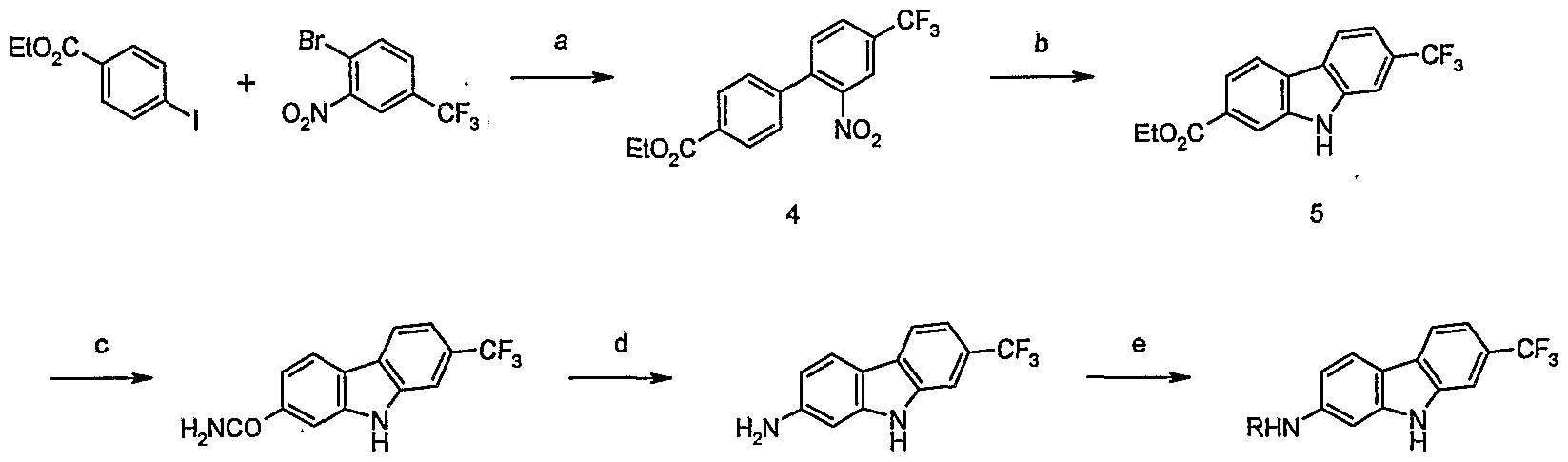
- Ethyl 2'-nitro-4'-(trifluoromethyl)-4-biphenylcarboxvlate A mixture of Ethyl 4-iodobenzoate (10.0 g, 36.2 mMol), 4-bromo-3- nitrobenzotrifluoride (5.0 g, 18.5 mMol) and Copper powder (5.0 g, 78.7 mMol) was heated to reflux (160-180 0 C) and stirred for 4 h under Ar. The reaction was cooled to RT, diluted with EtOAc, filtered through a pad of Celite® and rinsed with EtOAc to remove the insolubles.
- 6-(trifluoromethyl)-9/-/-carbazol-2-ylamine 11a 6-(trifluoromethyl)-9/-/-carbazol-2-ylamine 11a.
- ⁇ -Dinitro-S'-ftrifluoromethvDbiphenyl To a stirred solution of 1-bromo-2,4-dinitrobenzene (1O g, 40 mMol) and 3- trifluoromethylphenylboronic acid (8.25 g, 43 mMol) in dioxane (100 ml_) was added a solution of 2 M K 2 C ⁇ 3 in water (44 ml_) followed by Pd(PPh ⁇ (1.0 g, 0.86 mMol). The reaction was purged with N 2 , heated to 80 0 C in an oil bath, and stirred for 18 h.
- Cells SKOV3, Ovarian Cancer (human).
- Media Phenol Red Free RPMI + 5% Fetal Bovine Serum + 2mM L-glutamine. Colorimetric Agent for Determining Cell Viability: Promega MTS tetrazolium compound.
- Adherent SKOV3 cells are washed with 10mLs of PBS followed by the addition of 2mLs of 0.25% trypsin and incubation for 5 minutes at 37°C.
- the cells are rinsed from the flask using 8 ml_ of media (phenol red-free RPMI+ 5%FBS) and transferred to fresh flask.
- Cell concentration is determined using a Coulter counter and the appropriate volume of cells to achieve 1000 cells/1 OO ⁇ L is calculated.
- 100 ⁇ l_ of media cell suspension (adjusted to 1000 cells/100 ⁇ l_) is added to all wells of 96-well plates, followed by incubation for 18 to 24 hours at 37 0 C, 100% humidity, and 5% CO 2, allowing the cells to adhere to the plates.
- the plates are removed from the incubator and 40 ⁇ l MTS / PMS is added to each well. Plates are then incubated for 120 minutes at 37 0 C, 100% humidity, 5%CO 2 , followed by reading the ODs at 490nm after a 5 second shaking cycle in a ninety-six well spectrophotometer.
- the normalized % of control (absorbance- background) is calculated and an XLfit is used to generate a dose-response curve from which the concentration of compound required to inhibit viability by 50% is determined.
- the compounds of the present invention show activity when tested by this method.
- Monopolar Spindle Formation Following Application of a KSP Inhibitor Human tumor cells Skov-3 (ovarian) were plated in 96-well plates at densities of 4,000 cells per well, allowed to adhere for 24 hours, and treated with various concentrations of the test compounds for 24 hours. Cells were fixed in 4% formaldehyde and stained with antitubulin antibodies (subsequently recognized using fluorescently-labeled secondary antibody) and Hoechst dye (which stains DNA). Visual inspection revealed that the compounds caused cell cycle arrest in the prometaphase stage of mitosis. DNA was condensed and spindle formation had initiated, but arrested cells uniformly displayed monopolar spindles, indicating that there was an inhibition of spindle pole body separation. Microinjection of anti-KSP antibodies also causes mitotic arrest with arrested cells displaying monopolar spindles.
- Example 18 Inhibition of Cellular Proliferation in Tumor Cell Lines Treated with KSP Inhibitors.
- Cells were plated in 96-well plates at densities from 1000-2500 ceils/well of a 96-well plate and allowed to adhere/grow for 24 hours. They were then treated with various concentrations of drug for 48 hours. The time at which compounds are added is considered T 0 .
- a tetrazolium-based assay using the reagent 3-(4,5-dimethylthiazol-2- yl)-5-(3-carboxymethoxyphenyl)-2-(4-sulfophenyl)-2H-tetrazolium (MTS) U.S. Patent No.
- KSP inhibitors inhibited cell proliferation in human ovarian tumor cell lines (SKOV-3).
- Solution 1 consists of 3 mM phosphoenolpyruvate potassium salt (Sigma P-7127), 2 mM ATP (Sigma A-3377), 1 mM IDTT (Sigma D- 9779), 5 ⁇ M paclitaxel (Sigma T-7402), 10 ppm antifoam 289 (Sigma A-8436), 25 mM Pipes/KOH pH 6.8 (Sigma P6757), 2 mM MgC12 (VWR JT400301), and 1 mM EGTA (Sigma E3889).
- Solution 1 consists of 3 mM phosphoenolpyruvate potassium salt (Sigma P-7127), 2 mM ATP (Sigma A-3377), 1 mM IDTT (Sigma D- 9779), 5 ⁇ M paclitaxel (Sigma T-7402), 10 ppm antifoam 289 (Sigma A-8436), 25 mM Pipes/KOH pH 6.8 (Sigma P6757), 2
- Solution 2 consists of 1 mM NADH (Sigma N8129), 0.2 mg/ml BSA (Sigma A7906), pyruvate kinase 7U/ml, L-lactate dehydrogenase 10 U/ml (Sigma P0294), 100 nM KSP motor domain, 50 ⁇ g/ml microtubules, 1 mM DTT (Sigma N8129), 0.2 mg/ml BSA (Sigma A7906), pyruvate kinase 7U/ml, L-lactate dehydrogenase 10 U/ml (Sigma P0294), 100 nM KSP motor domain, 50 ⁇ g/ml microtubules, 1 mM DTT (Sigma
- microtiter plate is then transferred to a microplate absorbance reader and multiple absorbance readings at 340 nm are taken for each well in a kinetic mode.
- the observed rate of change which is proportional to the ATPase rate, is then plotted as a function of the compound concentration.
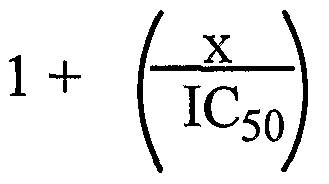
- a nonlinear fitting program e.g., Grafit 4
- y is the observed rate and x the compound concentration.
- Other compounds of this class were found to inhibit cell proliferation, although IC 50 values varied. IC 50 values for the compounds tested ranged from less than 200 nM to greater than the highest concentration tested. By this we mean that although most of the compounds that inhibited KSP activity biochemically did inhibit cell proliferation, for some, at the highest concentration tested (generally about 20 ⁇ M), cell growth was inhibited less than 50%. Many of the compounds have IC 50 values less than 10 ⁇ M, and several have IC 50 values less than 1 ⁇ M.
- Anti-proliferative compounds that have been successfully applied in the clinic to treatment of cancer have IC 50 1 S that vary greatly.
- paclitaxel IC 50 is 4 nM
- doxorubicin is 63 nM
- 5-fluorouraciI is 1 ⁇ M
- hydroxyurea is 500 ⁇ M (data provided by National Cancer Institute, Developmental Therapeutic Program, http://dtp.nci.nih.gov/). Therefore, compounds that inhibit cellular proliferation at virtually any concentration may be useful. However, preferably, compounds will have IC 50 values of less than 1 mM. More preferably, compounds will have iCso values of less than 20 ⁇ M. Even more preferably, compounds will have IC 50 values of less than 10 ⁇ M. Further reduction in IC 50 values may also be desirable, including compounds with IC 50 values of less than 1 ⁇ M. Some of the compounds of the invention inhibit cell proliferation with IC 50 values below 200 nM. Biological activity of compounds of Examples 1 - 16.
- Compound Examples 1-16 were found to inhibit KSP with an IC 50 ⁇ 10 uM. The compounds were also shown to inhibit the proliferation of various tumor cell lines including SKOV3 and Colo205 and typically had IC 50 ⁇ 50 uM.
Landscapes
- Organic Chemistry (AREA)
- Chemical & Material Sciences (AREA)
- Health & Medical Sciences (AREA)
- General Health & Medical Sciences (AREA)
- Veterinary Medicine (AREA)
- Nuclear Medicine, Radiotherapy & Molecular Imaging (AREA)
- General Chemical & Material Sciences (AREA)
- Pharmacology & Pharmacy (AREA)
- Life Sciences & Earth Sciences (AREA)
- Animal Behavior & Ethology (AREA)
- Chemical Kinetics & Catalysis (AREA)
- Public Health (AREA)
- Medicinal Chemistry (AREA)
- Engineering & Computer Science (AREA)
- Bioinformatics & Cheminformatics (AREA)
- Immunology (AREA)
- Communicable Diseases (AREA)
- Oncology (AREA)
- Pain & Pain Management (AREA)
- Rheumatology (AREA)
- Pharmaceuticals Containing Other Organic And Inorganic Compounds (AREA)
Abstract
Description






Claims

Priority Applications (2)
| Application Number | Priority Date | Filing Date | Title |
|---|---|---|---|
| US11/631,138 US20090170882A1 (en) | 2004-06-30 | 2005-06-30 | Methods and compositions |
| EP05791615A EP1771176A2 (en) | 2004-06-30 | 2005-06-30 | Methods and compositions |
Applications Claiming Priority (2)
| Application Number | Priority Date | Filing Date | Title |
|---|---|---|---|
| US58484204P | 2004-06-30 | 2004-06-30 | |
| US60/584,842 | 2004-06-30 |
Publications (2)
| Publication Number | Publication Date |
|---|---|
| WO2006005063A2 true WO2006005063A2 (en) | 2006-01-12 |
| WO2006005063A3 WO2006005063A3 (en) | 2006-08-24 |
Family
ID=35783408
Family Applications (1)
| Application Number | Title | Priority Date | Filing Date |
|---|---|---|---|
| PCT/US2005/023758 Ceased WO2006005063A2 (en) | 2004-06-30 | 2005-06-30 | Methods and compositions |
Country Status (3)
| Country | Link |
|---|---|
| US (1) | US20090170882A1 (en) |
| EP (1) | EP1771176A2 (en) |
| WO (1) | WO2006005063A2 (en) |
Cited By (7)
| Publication number | Priority date | Publication date | Assignee | Title |
|---|---|---|---|---|
| CN102199148A (en) * | 2010-03-25 | 2011-09-28 | 瑞安大药厂股份有限公司 | Benzenesulfonamide derivatives and pharmaceutical compositions thereof |
| EP2366687A3 (en) * | 2010-03-16 | 2011-12-14 | Purzer Pharmaceutical Co., Ltd. | Benzenesulfonamide derivatives and pharmaceutical composition thereof |
| US8575186B2 (en) | 2009-10-05 | 2013-11-05 | Albany Molecular Research, Inc. | Epiminocycloalkyl[b] indole derivatives as serotonin sub-type 6 (5-HT6) modulators and uses thereof |
| WO2013176698A1 (en) * | 2012-05-22 | 2013-11-28 | Eli Lilly And Company | Carboline and carbazole based imaging agents for detecting neurological dysfunction |
| WO2014052828A1 (en) * | 2012-09-27 | 2014-04-03 | The Regents Of The University Of California | Compositions and methods for modulating tlr4 |
| US8932557B2 (en) | 2008-02-14 | 2015-01-13 | Eli Lilly And Company | Imaging agents for detecting neurological dysfunction |
| US9067949B2 (en) | 2011-01-19 | 2015-06-30 | Albany Molecular Research, Inc. | Benzofuro[3,2-c] pyridines and related analogs as serotonin sub-type 6 (5-HT6) modulators for the treatment of obesity, metabolic syndrome, cognition and schizophrenia |
Families Citing this family (3)
| Publication number | Priority date | Publication date | Assignee | Title |
|---|---|---|---|---|
| US11925703B1 (en) * | 2022-07-29 | 2024-03-12 | Xellia Pharmaceuticals Aps | Liquid composition comprising glucose |
| WO2025038666A2 (en) * | 2023-08-13 | 2025-02-20 | GATC Health Corp | Compounds and methods for treating addiction |
| CN119751335A (en) * | 2024-12-27 | 2025-04-04 | 山东省农业科学院 | Indole derivative and preparation method and use thereof |
-
2005
- 2005-06-30 WO PCT/US2005/023758 patent/WO2006005063A2/en not_active Ceased
- 2005-06-30 US US11/631,138 patent/US20090170882A1/en not_active Abandoned
- 2005-06-30 EP EP05791615A patent/EP1771176A2/en not_active Withdrawn
Non-Patent Citations (1)
| Title |
|---|
| BOROVIK V. P. ET AL.: 'Synthesis of functional 2-substituted 4-phenyl-9H-pyrimido[4,5-bÜindoles' RUSSIAN CHEMICAL BULLITIN, INTERNATIONAL EDITION vol. 51, no. 11, November 2002, pages 2129 - 2133, XP002279589 * |
Cited By (9)
| Publication number | Priority date | Publication date | Assignee | Title |
|---|---|---|---|---|
| US8932557B2 (en) | 2008-02-14 | 2015-01-13 | Eli Lilly And Company | Imaging agents for detecting neurological dysfunction |
| US8575186B2 (en) | 2009-10-05 | 2013-11-05 | Albany Molecular Research, Inc. | Epiminocycloalkyl[b] indole derivatives as serotonin sub-type 6 (5-HT6) modulators and uses thereof |
| EP2366687A3 (en) * | 2010-03-16 | 2011-12-14 | Purzer Pharmaceutical Co., Ltd. | Benzenesulfonamide derivatives and pharmaceutical composition thereof |
| CN102199148A (en) * | 2010-03-25 | 2011-09-28 | 瑞安大药厂股份有限公司 | Benzenesulfonamide derivatives and pharmaceutical compositions thereof |
| US9067949B2 (en) | 2011-01-19 | 2015-06-30 | Albany Molecular Research, Inc. | Benzofuro[3,2-c] pyridines and related analogs as serotonin sub-type 6 (5-HT6) modulators for the treatment of obesity, metabolic syndrome, cognition and schizophrenia |
| WO2013176698A1 (en) * | 2012-05-22 | 2013-11-28 | Eli Lilly And Company | Carboline and carbazole based imaging agents for detecting neurological dysfunction |
| AU2012381042B2 (en) * | 2012-05-22 | 2015-10-01 | Eli Lilly And Company | Carboline and carbazole based imaging agents for detecting neurological dysfunction |
| WO2014052828A1 (en) * | 2012-09-27 | 2014-04-03 | The Regents Of The University Of California | Compositions and methods for modulating tlr4 |
| US9505768B2 (en) | 2012-09-27 | 2016-11-29 | The Regents Of The University Of California | Compositions and methods for modulating TLR4 |
Also Published As
| Publication number | Publication date |
|---|---|
| EP1771176A2 (en) | 2007-04-11 |
| WO2006005063A3 (en) | 2006-08-24 |
| US20090170882A1 (en) | 2009-07-02 |
Similar Documents
| Publication | Publication Date | Title |
|---|---|---|
| US7041676B2 (en) | Compounds, compositions, and methods | |
| US20070254870A1 (en) | Compounds, compositions and methods | |
| US7439254B2 (en) | Compounds, compositions, and methods | |
| US7214800B2 (en) | Compounds, compositions, and methods | |
| US20040048853A1 (en) | Compounds, compositions, and methods | |
| PL204525B1 (en) | Methods and compositions utilizing quinazolinones | |
| WO2006113432A2 (en) | Compounds, compositions and methods | |
| US20070149500A1 (en) | Compounds, compositions, and methods | |
| EP1539727B1 (en) | Compounds, compositions, and methods for treating cellular proliferative diseases | |
| EP1771176A2 (en) | Methods and compositions | |
| US20070265345A1 (en) | Novel Biphenyl Compounds And Their Use | |
| US20040053948A1 (en) | Compounds, compositions and methods | |
| WO2004032840A2 (en) | Compounds, compositions, and methods | |
| WO2005046588A2 (en) | Compounds, compositions, and methods | |
| US7271167B2 (en) | Compounds, compositions, and methods | |
| US20070142460A1 (en) | Compounds, compositions and methods | |
| US20050197327A1 (en) | Compounds, compositions, and methods | |
| US20070032536A1 (en) | Compounds, compositions and methods | |
| US20070066591A1 (en) | Compounds, compositions, and methods |
Legal Events
| Date | Code | Title | Description |
|---|---|---|---|
| AK | Designated states |
Kind code of ref document: A2 Designated state(s): AE AG AL AM AT AU AZ BA BB BG BR BW BY BZ CA CH CN CO CR CU CZ DE DK DM DZ EC EE EG ES FI GB GD GE GH GM HR HU ID IL IN IS JP KE KG KM KP KR KZ LC LK LR LS LT LU LV MA MD MG MK MN MW MX MZ NA NG NI NO NZ OM PG PH PL PT RO RU SC SD SE SG SK SL SM SY TJ TM TN TR TT TZ UA UG US UZ VC VN YU ZA ZM ZW |
|
| AL | Designated countries for regional patents |
Kind code of ref document: A2 Designated state(s): GM KE LS MW MZ NA SD SL SZ TZ UG ZM ZW AM AZ BY KG KZ MD RU TJ TM AT BE BG CH CY CZ DE DK EE ES FI FR GB GR HU IE IS IT LT LU MC NL PL PT RO SE SI SK TR BF BJ CF CG CI CM GA GN GQ GW ML MR NE SN TD TG |
|
| 121 | Ep: the epo has been informed by wipo that ep was designated in this application | ||
| NENP | Non-entry into the national phase |
Ref country code: DE |
|
| WWW | Wipo information: withdrawn in national office |
Country of ref document: DE |
|
| WWE | Wipo information: entry into national phase |
Ref document number: 2005791615 Country of ref document: EP |
|
| WWP | Wipo information: published in national office |
Ref document number: 2005791615 Country of ref document: EP |
|
| WWE | Wipo information: entry into national phase |
Ref document number: 11631138 Country of ref document: US |