WO2005084158A2 - Polypeptide transduction and fusogenic peptides - Google Patents
Polypeptide transduction and fusogenic peptides Download PDFInfo
- Publication number
- WO2005084158A2 WO2005084158A2 PCT/US2004/020837 US2004020837W WO2005084158A2 WO 2005084158 A2 WO2005084158 A2 WO 2005084158A2 US 2004020837 W US2004020837 W US 2004020837W WO 2005084158 A2 WO2005084158 A2 WO 2005084158A2
- Authority
- WO
- WIPO (PCT)
- Prior art keywords
- polypeptide
- virus
- protein
- tat
- fusion polypeptide
- Prior art date
- Legal status (The legal status is an assumption and is not a legal conclusion. Google has not performed a legal analysis and makes no representation as to the accuracy of the status listed.)
- Ceased
Links
Classifications
-
- C—CHEMISTRY; METALLURGY
- C07—ORGANIC CHEMISTRY
- C07K—PEPTIDES
- C07K14/00—Peptides having more than 20 amino acids; Gastrins; Somatostatins; Melanotropins; Derivatives thereof
- C07K14/435—Peptides having more than 20 amino acids; Gastrins; Somatostatins; Melanotropins; Derivatives thereof from animals; from humans
- C07K14/43504—Peptides having more than 20 amino acids; Gastrins; Somatostatins; Melanotropins; Derivatives thereof from animals; from humans from invertebrates
- C07K14/43563—Peptides having more than 20 amino acids; Gastrins; Somatostatins; Melanotropins; Derivatives thereof from animals; from humans from invertebrates from insects
- C07K14/43577—Peptides having more than 20 amino acids; Gastrins; Somatostatins; Melanotropins; Derivatives thereof from animals; from humans from invertebrates from insects from flies
- C07K14/43581—Peptides having more than 20 amino acids; Gastrins; Somatostatins; Melanotropins; Derivatives thereof from animals; from humans from invertebrates from insects from flies from Drosophila
-
- A—HUMAN NECESSITIES
- A61—MEDICAL OR VETERINARY SCIENCE; HYGIENE
- A61K—PREPARATIONS FOR MEDICAL, DENTAL OR TOILETRY PURPOSES
- A61K38/00—Medicinal preparations containing peptides
- A61K38/16—Peptides having more than 20 amino acids; Gastrins; Somatostatins; Melanotropins; Derivatives thereof
- A61K38/162—Peptides having more than 20 amino acids; Gastrins; Somatostatins; Melanotropins; Derivatives thereof from virus
-
- A—HUMAN NECESSITIES
- A61—MEDICAL OR VETERINARY SCIENCE; HYGIENE
- A61P—SPECIFIC THERAPEUTIC ACTIVITY OF CHEMICAL COMPOUNDS OR MEDICINAL PREPARATIONS
- A61P31/00—Antiinfectives, i.e. antibiotics, antiseptics, chemotherapeutics
- A61P31/12—Antivirals
-
- C—CHEMISTRY; METALLURGY
- C07—ORGANIC CHEMISTRY
- C07K—PEPTIDES
- C07K14/00—Peptides having more than 20 amino acids; Gastrins; Somatostatins; Melanotropins; Derivatives thereof
- C07K14/005—Peptides having more than 20 amino acids; Gastrins; Somatostatins; Melanotropins; Derivatives thereof from viruses
-
- C—CHEMISTRY; METALLURGY
- C12—BIOCHEMISTRY; BEER; SPIRITS; WINE; VINEGAR; MICROBIOLOGY; ENZYMOLOGY; MUTATION OR GENETIC ENGINEERING
- C12N—MICROORGANISMS OR ENZYMES; COMPOSITIONS THEREOF; PROPAGATING, PRESERVING, OR MAINTAINING MICROORGANISMS; MUTATION OR GENETIC ENGINEERING; CULTURE MEDIA
- C12N15/00—Mutation or genetic engineering; DNA or RNA concerning genetic engineering, vectors, e.g. plasmids, or their isolation, preparation or purification; Use of hosts therefor
- C12N15/09—Recombinant DNA-technology
- C12N15/87—Introduction of foreign genetic material using processes not otherwise provided for, e.g. co-transformation
- C12N15/90—Stable introduction of foreign DNA into chromosome
- C12N15/902—Stable introduction of foreign DNA into chromosome using homologous recombination
- C12N15/907—Stable introduction of foreign DNA into chromosome using homologous recombination in mammalian cells
-
- C—CHEMISTRY; METALLURGY
- C07—ORGANIC CHEMISTRY
- C07K—PEPTIDES
- C07K2319/00—Fusion polypeptide
- C07K2319/01—Fusion polypeptide containing a localisation/targetting motif
-
- C—CHEMISTRY; METALLURGY
- C07—ORGANIC CHEMISTRY
- C07K—PEPTIDES
- C07K2319/00—Fusion polypeptide
- C07K2319/01—Fusion polypeptide containing a localisation/targetting motif
- C07K2319/10—Fusion polypeptide containing a localisation/targetting motif containing a tag for extracellular membrane crossing, e.g. TAT or VP22
-
- C—CHEMISTRY; METALLURGY
- C07—ORGANIC CHEMISTRY
- C07K—PEPTIDES
- C07K2319/00—Fusion polypeptide
- C07K2319/20—Fusion polypeptide containing a tag with affinity for a non-protein ligand
- C07K2319/21—Fusion polypeptide containing a tag with affinity for a non-protein ligand containing a His-tag
-
- C—CHEMISTRY; METALLURGY
- C12—BIOCHEMISTRY; BEER; SPIRITS; WINE; VINEGAR; MICROBIOLOGY; ENZYMOLOGY; MUTATION OR GENETIC ENGINEERING
- C12N—MICROORGANISMS OR ENZYMES; COMPOSITIONS THEREOF; PROPAGATING, PRESERVING, OR MAINTAINING MICROORGANISMS; MUTATION OR GENETIC ENGINEERING; CULTURE MEDIA
- C12N2740/00—Reverse transcribing RNA viruses
- C12N2740/00011—Details
- C12N2740/10011—Retroviridae
- C12N2740/16011—Human Immunodeficiency Virus, HIV
- C12N2740/16311—Human Immunodeficiency Virus, HIV concerning HIV regulatory proteins
- C12N2740/16322—New viral proteins or individual genes, new structural or functional aspects of known viral proteins or genes
-
- C—CHEMISTRY; METALLURGY
- C12—BIOCHEMISTRY; BEER; SPIRITS; WINE; VINEGAR; MICROBIOLOGY; ENZYMOLOGY; MUTATION OR GENETIC ENGINEERING
- C12N—MICROORGANISMS OR ENZYMES; COMPOSITIONS THEREOF; PROPAGATING, PRESERVING, OR MAINTAINING MICROORGANISMS; MUTATION OR GENETIC ENGINEERING; CULTURE MEDIA
- C12N2760/00—MICROORGANISMS OR ENZYMES; COMPOSITIONS THEREOF; PROPAGATING, PRESERVING, OR MAINTAINING MICROORGANISMS; MUTATION OR GENETIC ENGINEERING; CULTURE MEDIA ssRNA viruses negative-sense
- C12N2760/00011—Details
- C12N2760/16011—Orthomyxoviridae
- C12N2760/16111—Influenzavirus A, i.e. influenza A virus
- C12N2760/16122—New viral proteins or individual genes, new structural or functional aspects of known viral proteins or genes
-
- C—CHEMISTRY; METALLURGY
- C12—BIOCHEMISTRY; BEER; SPIRITS; WINE; VINEGAR; MICROBIOLOGY; ENZYMOLOGY; MUTATION OR GENETIC ENGINEERING
- C12N—MICROORGANISMS OR ENZYMES; COMPOSITIONS THEREOF; PROPAGATING, PRESERVING, OR MAINTAINING MICROORGANISMS; MUTATION OR GENETIC ENGINEERING; CULTURE MEDIA
- C12N2760/00—MICROORGANISMS OR ENZYMES; COMPOSITIONS THEREOF; PROPAGATING, PRESERVING, OR MAINTAINING MICROORGANISMS; MUTATION OR GENETIC ENGINEERING; CULTURE MEDIA ssRNA viruses negative-sense
- C12N2760/00011—Details
- C12N2760/16011—Orthomyxoviridae
- C12N2760/16311—Influenzavirus C, i.e. influenza C virus
- C12N2760/16322—New viral proteins or individual genes, new structural or functional aspects of known viral proteins or genes
Definitions
- tumor-suppressor proteins such as p53
- p53 tumor-suppressor proteins
- Duchenne' ' s muscular dystrophy are often considered the goal of effective treatment.
- ttie direct intracellular delivery of these proteins has been difficult. This is due primarily to the bioavailability barrier of the plasma membrane, which effectively prevents the uptake of the majority of peptides and proteins by limiting their passive entry.
- the composition further comprises a second fusion polypeptide comprising a first domain comprising a protein transduction moiety, and a second domain comprising a fusogenic polypeptide.
- the protein transduction moiety can be selected from a polypeptide comprising a herpesviral VP22 protein; a polypeptide comprising a human immunodeficiency virus (HIV) TAT protein; and a polypeptide comprising a homeodomain of an Antennapedia protein (Antp HD) .
- the heterologous polypeptide can be, for example, a therapeutic or diagnostic polypeptide such as an imaging agent.
- the therapeutic polypeptide can, for example, modulate cell proliferation by inhibiting or increasing cell proliferation.
- the therapeutic agent can be a suicide inhibitor, such as thymidine kinase, or a tumor suppressor protein, such as p53.
- a suicide inhibitor such as thymidine kinase
- a tumor suppressor protein such as p53.
- An increase in cell proliferation can be obtained when the therapeutic agent is SV40 small T antigen, SV40 large T antigen, adenovirus E1A, papilloma virus E6, papilloma virus E7, Epstein-Barr virus, Epstein-Barr nuclear antigen-2, human T-cell leukemia virus-1 (HTLV-1) , HTLV-1 tax, herpesvirus saimiri, mutant p53, myc, c-jun, c-ras, c- Ha-ras, h-ras, v-src, c-fgr, myb, c-myc, n-mye, v-myc, or Mdm2.
- the disclosure further encompasses methods of introducing a heterologous polypeptide in. to a target cell, the method comprising contacting the cell with the composition of the disclosure.
- the disclosure further encompasses methods of introducing a heterologous polypeptide in. to a target cell, the method comprising contacting the cell with a composition comprising a first polypeptide comprising at least one transducing domain associated with a heterologous polypeptide; and a second polypeptide corriprising at least one transducing domain associated with a fusogenic domain, wherein the first polypeptide and second polypeptide are co- transduced in to the cell .
- the contacting can be in vivo or in vi tro.
- Figure 1 is a schematic diagram of the compositions and methods of the disclosure.
- Figure 2A shows a schematic diagram showing DNA recombination between loxP sites in tex.loxP.EG cells following treatment with TAT-Cre. The exicision of the transcriptional stop region causes constitutive eGFP expression in reco bined cells. Prior to analysis cells were incubated for 16-2 Oh following treatment in media containing serum to allow for sufficient expression of eGFP.
- Figure 2B shows a flow cytometry profiles of eGFP expression in untreated tex.loxP.EG cells or following treatment with 2mM TAT-Cre or 2mM Cre alone. Cells were incubated overnight in serum containing media and analyzed the following morning.
- Figure 2C is a time-course of TAT-Cre cellular uptake.
- Tex.loxP.EG cells were washed and replated into media with (D) or without (o) serum and treated with 0.5mM TAT-Cre. At each time point cells were washed by trypsinization.
- Figure 2D shows that extracellular GAG' s prevent TAT- Cre recombination.
- Tex.loxP.EG cells were incubated for lh in serum free conditions with TAT-Cre and varying doses of either 0-50mg/mL chondroitin sulfate A (D) r B (o) , C ( ⁇ ) or 0-25mg/mL heparin (V) .
- FIG. 3A shows co-localization of TAT-Cre with endosomes .
- 3T3 cells were treated with 2mM fluorescently labeled TAT-Cre-488 and 4mM of the fluorescent endosomal marker FM 4-64 for 8h.
- Figure 3B-C show recombination of tex.loxP.EG cells following TAT-Cre treatment is inhibited by lipid-raft destabilizing drugs. Cells were washed to remove serum and pretreated with 0-lOOmg/mL nystatin (B) or 0-5mM methyl-b- cyclodextrin (C) for 30' prior to the addition of 0. ImM (o) , 0.25mM (D) , 0.5mM (0) TAT-Cre for lh.
- Figure 3D demonstrates the effect of nystatin on TAT- Cre internalization.
- FIG. 4A shows that TAT-Cre does not co-localize with caveolin-1.
- NIH 3T3 cells were grown on a chambered coverglass and transfected with caveolin-1-gfp. Cells were then incubates with fluorescent TAT-CRE 546 for lh and corresponding images were captured. Higher magnification (insert) clearly shows cav-1-gfp and tat-cre 546 in different intracellular compartments.
- Figure 4B shows that lymphoid cells do not express caveolin-1 protein. Cell lysates from ' endothelial cells
- Figure 5A shows that chloroquine increases TAT-Cre recombination. Equal numbers of 3T3 loxP.lacZ cells were treated with 0.25mM TAT-Cre with 0-200mM chloroquine overnight in DMEM + 10% serum. The following day, recombination and lacZ expression was measured by in si tu ⁇ - galactosidase staining. [0030] Figure 5B-C shows the efficiency of TAT-Cre recombination is enhanced by HA2-TAT induced endosomal release.
- Tex.loxP.EG cells were treated with TAT-Cre and either OmM (D) , ImM (o) , 2.5mM ( ⁇ ) , or 5mM HA2-TAT (V) peptide overnight in RPMI + 10% serum. The next day eGFP expression was measured by flow cytometry.
- Figure 5D shows nystatin pretreatment blocks the effect of HA2-TAT peptide.
- Tex.loxP.EG cells were pretreated with nystatin for 30' in serum-free media after which either O.lttiM ( ⁇ , D) or 0.25mM (•, o) TAT-Cre +/- 5mM HA2-TAT was added for lh.
- Figure 6 shows the pTAT 2.1 plasmid map and sequence.
- Figure 7 shows the pTAT 2.2 plasmid map and sequence.
- Figure 8 shows the pTAT 2.2 CRE plasmid map and sequence .
- the plasma membrane of the cell forms an effective barrier which restricts the intracellular uptake of molecules to those which are sufficiently non-polar and smaller than approximately 500 daltons in size.
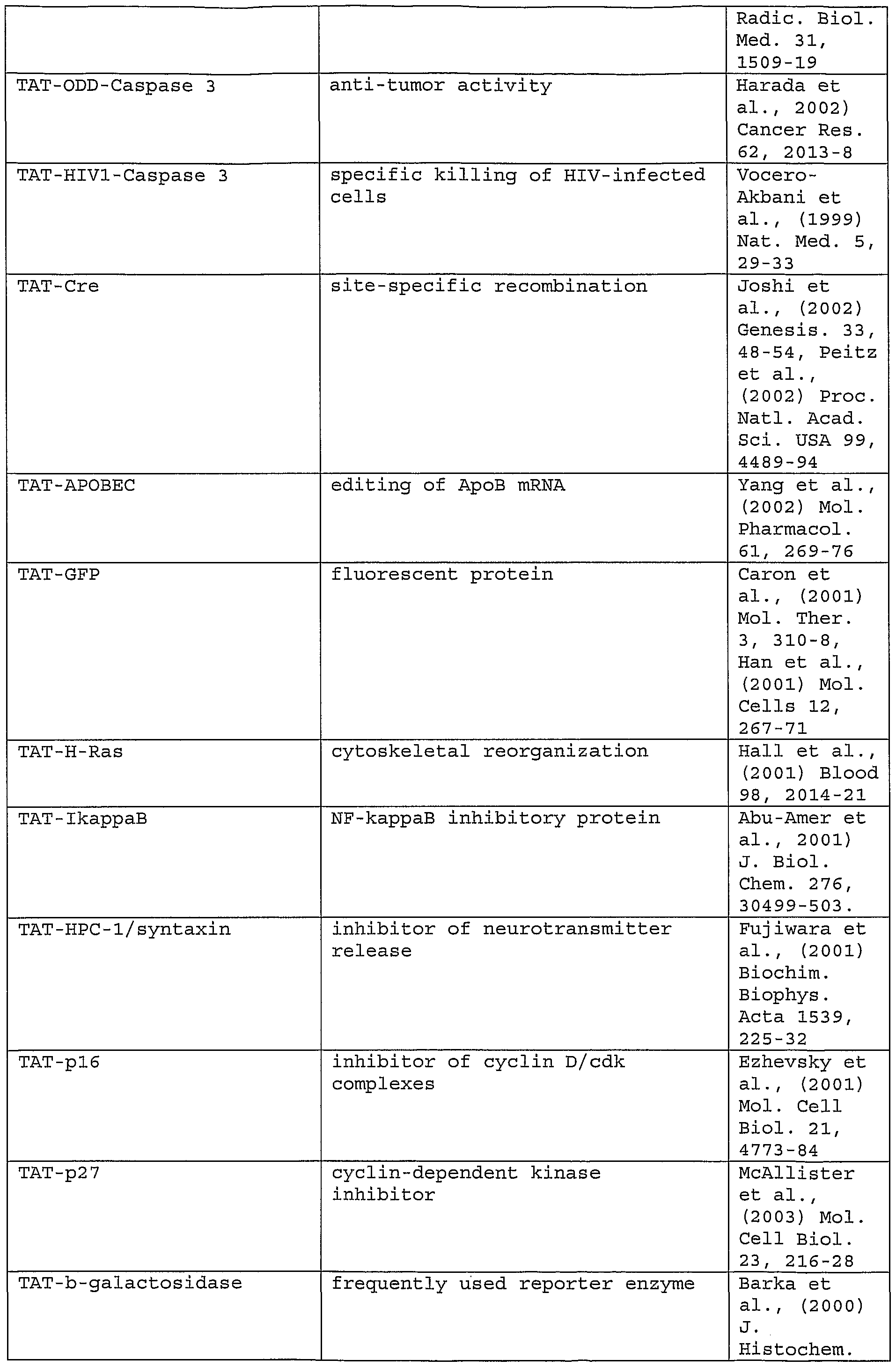
- Previous efforts to enhance the internalization of proteins have focused on fusing proteins with receptor ligands (Ng et al . , Proc . Natl . Acad. Sci. USA, 99:10706-11, 2002) or by packaging them into caged liposomal carriers (Abu-Amer et al . , J. Biol . Chem. 276:30499-503, 2001).
- these techniques often result in poor cellular uptake and intracellular sequestration into the endocytic pathway.
- herpes simplex virus structural protein VP22 (Elliott and O'Hare, Cell 88:223-33, 1997) and tune HIV-1 transcriptional activator TAT protein (Green and Loewenstein, Cell 55:1179-1188, 1988; Frankel and Pabo, Cell 55:1189-1193, 1988). Not only can these proteins pass through the plasma membrane but the attachment of other proteins, such as the enzyme ⁇ - galactosidase, was sufficient to stimulate the cellular uptake of these complexes.
- Such chimeric proteins are present in a biologically active form within the cytoplasm and nucleus.
- a polynucleotide, small molecule, or protein is sufficient to cause their transduction into a variety of different cells in a concentration-dependent manner.
- this technique for protein delivery appears to circumvent many problems associated with DNA and drug based techniques.
- This technique represents the next paradigm in the ability to modulate cells and offer a unique avenue for the treatment of disease .
- transduction can be achieved by use of a polypeptide comprising a PTD (e.g., an HIV TAT protein or fragment thereof) that is covalently linked to a fusogenic molecule.
- the transducing protein can be the Antennapedia homeodomain or the HSV VP22 polypeptide, or suitable transducing fragments thereof.
- the type and size of the PTD will be guided by several parameters including the extent of transduction desired. Typical PTDs will be capable of transducing at least about 20%, 25%, 50%, 75%, 80% or 90% of the cells of interest, more typically at least about 95%, 98% and up to and including about 100% of the cells.
- PTD fusion molecule can comprise a PTD linked to a heterologous polypeptide, or fragment thereof, that provides a therapeutic effect when present in a targeted cell.
- therapeutic is used in a generic sense and includes treating agents, prophylactic agents, and replacement agents.
- therapeutic molecules include, but are not limited to, cell cycle control agents; agents which inhibit cyclin proteins, such as antisense polynucleotides to the cyclin Gl and cycLin Dl genes; growth factors such as, for example, epidermal growth factor (EGF) , vascular endothelial growth factor (VEGF) , erythropoietin, G- CSF, GM-CSF, TGF- ⁇ , TGF- ⁇ , and fibroblast growth factor; cytokines, including, but not limited to, Interleukins 1 through 13 and tumor necrosis factors; anticoagulants, anti- platelet agents; anti-inflammatory agents; tumor suppressor proteins; clotting factors including Factor VIII and Factor IX, protein S, protein C, antithrombin III, von Willebrand Factor, cystic fibrosis transmembrane conductance regulator (CFTR) , and negative selective markers si ⁇ ch as Herpes Simplex Virus thymidine kinase.
- growth factors
- HA2-TAT fusion polypeptide enhances release of heterologous molecules from the endosome into the cytoplasm, nucleus or other cellular organelle. This is accomplished by the PTD-fusogenic fusion polypeptide tracking with the TAT- heterologous fusion polypeptide via independent or the same PTD domain and then fusing to the vesicle lipid bilayer by the fusogenic domain ⁇ e . g. , HA2 ) resulting in an enhanced release into the cytoplasm, nucleus, or other cellular organelle.
- Recombinant TAT protein in the absence of any external perturbations, when added to the culture media was sufficient to induce reporter activity at concentra ions as low as 1 nM (Frankel and Pabo, supra) .
- Other cell lines including Jurkat T cells, H9 lymphocytic and U937 promonocrytic cells were subsequently found to internalize TAT protein.
- Green and Loewenstein also studying the trans-activation of TAT in HeLa cells using DNA transfection and protein microinj ection, found that chemically-synthesized TAT-86 was rapidly internalized into cells in culture and could trans-activate the expression of the reporter (Green anc Loewenstein, supra) .
- TAT- ⁇ - galactosidase After overnight incubation with TAT- ⁇ - galactosidase, trypsin sensitive and insensitive activities were determined to separate surface bound from internalized protein. Approximately 5 x 10 6 molecules were associated with each cell, 20 percent of which were trypsin-insensitive indicating the full internalization of the protein. [0059] Significantly, all the cells in culture showed upt ake of the TAT protein and transduction of TAT- ⁇ -galactosidase could be achieved in all cell types which were tested including HeLa, COS-1, CHO, H9, NIH 3T3, primary human keratinocytes, and umbilical endothelial cells.
- TAT- (48- 60> peptide appeared to be more efficiently transduced than other active peptide sequences indicating that the ordered secondary structure provided by the ⁇ -helical region was not necessary for transduction.
- Truncation of the C-terminal Pro-Pro-Gin from TAT- (48-60) further characterized the minimal transduction domain to consist of amino acids 47-57 (YGRKKRRQRRR; SEQ ID NO:l from amino acid 47-57) .
- the transduction of the TAT basic peptide did not involve any disruption of the plasma membrane and could not promote the uptake of unrelated non- conjugated peptides or molecules indicating that the mechanism of transduction was highly specific.
- Polypeptides and fragments can have the same or substantially the same amino acid sequence as the naturally occurring protein. “Substantially identical” means that an amino acid sequence is largely, but not entirely, the same, but retains a functional activity of the sequence to which it is related. An example of a functional activity is that the fragment is capable of transduction or fusogenic activity. For example, fragments of full length TAT are described herein that have transduction activity. In general two amino acid sequences are "substantially identical” if they are at least 85%, 90%, 95%, 98% or 99% identical, or if there are conservative variations in the sequence.
- a DNA sequence encoding a desired peptide linker can be inserted between, and in the same reading frame as, a polynucleotide encoding a PTD polypeptide or fragment thereof followed by a heterologous polypeptide, using any suitable conventional technique.
- a chemically synthesized oligonucleotide encoding the linker can be ligated between two coding polynucleotides .
- Eukaryotic systems and typically mammalian expression systems, allow for proper post-translational modifications of expressed mammalian proteins to occur.
- Eukaryotic cells that possess the cellular machinery for proper processing of the primary transcript, glycosylation, phosphorylation, and advantageously secretion of the gene product can be used as host cells for the expression of the PTD-fusion polypeptide of the disclosure.
- host cell lines may include, but are not limited to, CHO, VERO, BHK, HeLa, COS, MDCK, Jurkat, HEK-293, and WI38.
- stable expression is preferred.
- Amounts effective for this use will, of course, depend on the severity of the disease and the weight and general state of the patient.
- dosages used in vi tro may provide useful guidance in the amounts useful for in si tu administration of the pharmaceutical composition, and animal models may be used to determine effective dosages for treatment of particular disorders.
- animal models may be used to determine effective dosages for treatment of particular disorders.
- Various considerations are described, e . g. , in Langer, Science, 249: 1527, (1990); Gilman et a 1 . (eds.) (1990), each of which is herein incorporated by reference.
- "administering a therapeutically effective amount” is intended to include methods of giving or applying a pharmaceutical composition of the disclosure to a subject that allow the composition to perform its intended therapeutic function.
- the pharmaceutical composition can be administered in a convenient manner, such as by injection (subcutaneous, intravenous, etc.), oral administration, inhalation, transdermal application, or rectal administration.
- the pharmaceutical composition can be coated with a material to protect the pharmaceutical composition from the action of enzymes, acids, and other natural conditions that may inactivate the pharmaceutical composition.
- the pharmaceutical composition can also be administered parenterally or intraperitoneally.
- Dispersions can also be prepared in glycerol , liquid polyethylene glycols, and mixtures thereof, and in oils. Under ordinary conditions of storage and use, these preparations may contain a preservative to prevent the growth of microorganisms.
- Sterile injectable solutions can be prepared by incorporating the pharmaceutical composition in the required amount in an appropriate solvent with one or a combination of ingredients enumerated above, as required, followed by filtered sterilization.
- dispersions are prepared by incorporating the pharmaceutical composition into a sterile vehicle that contains a basic dispersion medium and the required other ingredients from those enumerated above.
- the pharmaceutical composition can be orally administered, for example, with an inert diluent or an assimilable edible carrier.
- the pharmaceutical composition and other ingredients can also be enclosed in a hard or soft- shell gelatin capsule, compressed into tablets, or incorporated directly into the individual's diet.
- the pharmaceutical composition can be incorporated with excipients and used in the form of ingestible tablets, buccal tablets, troches, capsules, elixirs, suspensions, syrups, wafers, and the like.
- Such compositions and preparations should contain at least 1% by weight of active compound.
- the percentage of the compositions and preparations can, of course, be varied and can conveniently be between about 5% to about 80% of the weight of the unit .
- the tablets, troches, pills, capsules, and the like can also contain the following: a binder, such as gum gragacanth, acacia, corn starch, or gelatin; excipients such as dicalcium phosphate; a disintegra ing agent, such as corn starch, potato starch, alginic acid, and the like; a lubricant, such as magnesium stearate ; and a sweetening agent, such as sucrose, lactose or saccharin, or a flavoring agent such as peppermint, oil of wintergreen, or cherry flavoring.
- a binder such as gum gragacanth, acacia, corn starch, or gelatin
- excipients such as dicalcium phosphate
- a disintegra ing agent such as corn starch, potato starch, alginic acid, and the like
- a lubricant such as magnesium stearate
- a sweetening agent such as sucrose, lactose or saccharin,
- a "pharmaceutically acceptable carrier” is intended to include solvents, dispersion media, coatings, antibacterial and antifungal agents, isotonic and absorption delaying agents, and the like.
- solvents dispersion media, coatings, antibacterial and antifungal agents, isotonic and absorption delaying agents, and the like.
- the use of such media and agents for pharmaceutically active substances is well known in the art .
- Except insof r as any conventional media or agent is incompatible with the pharmaceutical composition, use thereof in the therapeutic compositions and methods of treatment is contemplated.
- Supplementary active compounds can also be incorporated into the compositions.
- the denaturation aids in the solubilization of the recombinant protein and assists in trie unfolding of complex tertiary protein structure which has been observed to lead to an ⁇ ncrease in the transduction efficiency over highly-folded, native proteins (Becker-Hapak: et al . , supra) .
- This latter observation is in keeping with earlier findings which suppoirted a role for protein unfolding in the increased cellular uptake of the TAT-fusion polypeptide TAT-DHFR (Bonifaci et al . , Aids 9:995-1000, 1995). It is thought that the higher energy (DG) partial or fully denatured proteins may transduce more efficiently than lower energy, correctly folded proteins, in part due to increased exposure of the TAT domain.
- DG higher energy
- TAT-Cre Proteins are further purified using ion exchange chromatography and finally exchanged into PBS + 10% glycerol by gel filtration (Nagahara et al . , supra) .
- Cre cDNA was cloned in- frame into the pTAT v2.2 vector that contains an amino- terminal tat-basic domain (48-57) and a carboxy-terminal 6- His tag.
- TAT-Cre was expressed in BL21 pLysS (Novagen) e.coli. Cultures were grown in Luria broth overnight and induced using 500mM IPTG for 3h. Cell pellets were washed and stored at -80°C until used.
- TAT-Cre protein was purified in a two step process using metal affinity chromatography (Qiagen) followed by ion exchange using a HiPrep Source 3OS 5/5 column (Pharmacia) . Aliquots were stored at -80°C. Fluorescent labeling of TAT-Cre was achieved by coupling of the protein to either alexa-488 or alexa-546 protein labeling kits (Molecular Probes) .
- tex.loxP.EG are a murine thymoma cell line that contains an integrated lox-stop-lox eEGFP reporter were maintained in RPMI (Invitrogen) media containing 10% fetal bovine serum
- Peptides were cleaved in 92.5% TFA, 2.5% H 2 0, 2.5%thioanisole, 2.5 EDT for 5h hours, precipitated in ether and purified on C18 reverse phase HPLC column. Major peaks were analyzed by electrospray mass spectrography . Fractions corresponding to the correct molecular weight were lyophilized and stored at -80 °C. Prior to use peptides were resuspended in PBS and sterile filtered. The concentration of peptide solutions was determined by absorbance at 215 and 225nM. [00113] Recombination experiments.
- tex.loxP.EG cells were plated at 5x10 s cells/well and treated with 0.5 ⁇ M TAT-Cre in RPMI +/- 10% FBS. After each time eriod, cells were trypsini zed for 2', washed and replated into complete media overnight .
- 3T3 loxP.lacZ cells were treated with 0.25 ⁇ M TAT-Cre and 0-200 ⁇ M chlorocguine (Sigma) in DMEM + 10% FBS overnight. LacZ expression was measured by in si tu ⁇ - galactosidase staining (Strratagene) .
- tex.loxP.EG cells maintained in RPMI + 10% FBS were incubated TAT-Cre and either 0-5mM HA.2-tat or tat peptide for 16-20h after which eGFP expression was measured by flow cytometry.
- a TAT-Cre mediated recombination of a lox-stop-lox eGFP reporter gene in live murine T cells as a measure for the cellular uptake (Fig. 2a) .
- exogenous TAT-Cre protein must enter the cell, be translocated to the nucleus and excision the lox-stop-lox DNA segment resulting in GFP expression and measurement 16-2O h later by flow cytometry and microscopy of live cells.
- Treatment of cells with TAT-Cre resulted in site specific recombination and induction of eGFP expression (Fig. 2b) .
- TAT protein has previously been reported to bind strongly to cell surface leparin sulfate proteoglycans .
- Incubation of tex .loxP.EG T cells with fluorescently labeled alexa 488 TAT-Cre (TAT-Cre-488) resulted in significant trypsin-sensitive surface binding at 4 °C.
- TAT-Cre-4808 fluorescently labeled alexa 488 TAT-Cre
- TAT-Cre-488 To determine whether cell surface binding was a necessary and prerequisite step for TAT-Cre internalization, cells were incubated with TAT-Cre and increasing concentrations of free glycosaminoglyans for 1 hr in serum- free media, then washed and replated the cells in complete media, and measured eGFP expression after 16 hr.
- TAT-Cre-488 was internalized and co-localized with FM4-64, a general fluorescent marker of endocytosis , in live NIH-3T3 cells (Fig. 3a) .
- endocytosis occurs by variety of mechanisms and that TAT-Cre has a high electrostatic avidity- for the cell surface
- experiments were performed to determine whether cellular uptake of TAT-Cre occurred through a specific endocytotic pathway or by all forms of endocytosis.
- the initial focus was on lipid rafts, cholesterol and sphingolipid enriched microdomains in the plasma membrane, which are involved in several endocytic pathways, including caveolin-mediated endocytosis and maciropinocytosis .
- Macropinocytosis is a non-selective, receptor- independent endocytic pathway ttiat has been associated with lipid rafts and is often triggered by stimulation at the cell surface leading to the formation of actin-dependent membrane protrusions that envelope into large vesicles known as macropinosomes .
- TAT-mediated transduction occurs by lipid raft-mediated macropinocytosis.
- TAT-Cre must escape from macropinosomes .
- fluorescent imaging of 3T3 cells treated with TAT-Cre-488 indicated that the majority of protein remainecd in vesicle-bound compartments after 8 hr (Fig. 3a) , inculcating that the release of TAT-Cre from macropinosomes was an inefficient process.
- 3T3 LacZ reporter cells were treated with a sub-threshold dose of TAT-Cre in combination with increasing concentrations of chloroquine, an ion-transporting ATTPase inhibitor that prevents vesicle acidification leading- to endosomal disruption (Fig. 5a) .
- Sub-threshold treatment with TAT-Cre alone did not result in recombination and expression of LacZ.
- addition of lOO ⁇ M and 20O ⁇ M chloroquine with TAT-Cre caused a significant increase in recombination and LacZ expression (Fig. 5a) .
- Fig. 5a shows that as shown by the significant loss of cells in chloroqui_ne treated cells (Fig.
- HA-2 GLFGAIAGFIENGWEGMIDG
- HA-2 GLFGAIAGFIENGWEGMIDG
- TAT-fusion polypeptide a proteolytically-stable, retro-inverso D-amino acid peptide corresponding to the HA-2 domain peptide followed by the TAT transduction domain (HA2-TAT) was synthesized.
- Treatment of tex.loxP.EG T cells with a sub-threshold concentration of TAT-Cre protein resulted in minimal recombination and expression of eGFP (Fig. 5b) .
Landscapes
- Health & Medical Sciences (AREA)
- Life Sciences & Earth Sciences (AREA)
- Chemical & Material Sciences (AREA)
- Genetics & Genomics (AREA)
- Organic Chemistry (AREA)
- General Health & Medical Sciences (AREA)
- Engineering & Computer Science (AREA)
- Zoology (AREA)
- Molecular Biology (AREA)
- Medicinal Chemistry (AREA)
- Gastroenterology & Hepatology (AREA)
- Bioinformatics & Cheminformatics (AREA)
- Biochemistry (AREA)
- Insects & Arthropods (AREA)
- Proteomics, Peptides & Aminoacids (AREA)
- Biophysics (AREA)
- Virology (AREA)
- Biotechnology (AREA)
- Biomedical Technology (AREA)
- Wood Science & Technology (AREA)
- General Engineering & Computer Science (AREA)
- Veterinary Medicine (AREA)
- Pharmacology & Pharmacy (AREA)
- Animal Behavior & Ethology (AREA)
- Public Health (AREA)
- Cell Biology (AREA)
- Toxicology (AREA)
- Tropical Medicine & Parasitology (AREA)
- Immunology (AREA)
- Epidemiology (AREA)
- Microbiology (AREA)
- Mycology (AREA)
- Physics & Mathematics (AREA)
- Plant Pathology (AREA)
- Chemical Kinetics & Catalysis (AREA)
- Communicable Diseases (AREA)
- Oncology (AREA)
- Nuclear Medicine, Radiotherapy & Molecular Imaging (AREA)
- General Chemical & Material Sciences (AREA)
- Peptides Or Proteins (AREA)
Abstract
Description


Claims
Priority Applications (4)
| Application Number | Priority Date | Filing Date | Title |
|---|---|---|---|
| CA002529752A CA2529752A1 (en) | 2003-06-20 | 2004-06-18 | Polypeptide transduction and fusogenic peptides |
| US10/561,092 US20060222657A1 (en) | 2003-06-20 | 2004-06-18 | Polypeptide transduction and fusogenic peptides |
| EP04821562A EP1732581A4 (en) | 2003-06-20 | 2004-06-18 | POLYPEPTIDE TRANSDUCTION AND FUSOGENIC PEPTIDES |
| AU2004316996A AU2004316996A1 (en) | 2003-06-20 | 2004-06-18 | Polypeptide transduction and fusogenic peptides |
Applications Claiming Priority (2)
| Application Number | Priority Date | Filing Date | Title |
|---|---|---|---|
| US48006503P | 2003-06-20 | 2003-06-20 | |
| US60/480,065 | 2003-06-20 |
Publications (2)
| Publication Number | Publication Date |
|---|---|
| WO2005084158A2 true WO2005084158A2 (en) | 2005-09-15 |
| WO2005084158A3 WO2005084158A3 (en) | 2007-07-26 |
Family
ID=34919290
Family Applications (1)
| Application Number | Title | Priority Date | Filing Date |
|---|---|---|---|
| PCT/US2004/020837 Ceased WO2005084158A2 (en) | 2003-06-20 | 2004-06-18 | Polypeptide transduction and fusogenic peptides |
Country Status (5)
| Country | Link |
|---|---|
| US (1) | US20060222657A1 (en) |
| EP (1) | EP1732581A4 (en) |
| AU (1) | AU2004316996A1 (en) |
| CA (1) | CA2529752A1 (en) |
| WO (1) | WO2005084158A2 (en) |
Cited By (43)
| Publication number | Priority date | Publication date | Assignee | Title |
|---|---|---|---|---|
| US20070116691A1 (en) * | 2005-10-18 | 2007-05-24 | National Jewish Medical And Research Center | Conditionally immortalized long-term stem cells and methods of making and using such cells |
| EP1951752A4 (en) * | 2005-11-30 | 2008-12-31 | Jung Moon Kim | Non-activated wnt inhibition polypeptides and method for preparing the same |
| WO2009117439A2 (en) | 2008-03-17 | 2009-09-24 | The Scripps Research Institute | Combined chemical and genetic approaches for generation of induced pluripotent stem cells |
| WO2011047300A1 (en) | 2009-10-16 | 2011-04-21 | The Scripps Research Institute | Induction of pluripotent cells |
| WO2011123572A1 (en) | 2010-03-31 | 2011-10-06 | The Scripps Research Institute | Reprogramming cells |
| US8080517B2 (en) | 2005-09-12 | 2011-12-20 | Xigen Sa | Cell-permeable peptide inhibitors of the JNK signal transduction pathway |
| WO2011159726A2 (en) | 2010-06-14 | 2011-12-22 | The Scripps Research Institute | Reprogramming of cells to a new fate |
| US8183339B1 (en) | 1999-10-12 | 2012-05-22 | Xigen S.A. | Cell-permeable peptide inhibitors of the JNK signal transduction pathway |
| US8236924B2 (en) | 1999-10-12 | 2012-08-07 | Xigen Sa | Cell-permeable peptide inhibitors of the JNK signal transduction pathway |
| US8273867B2 (en) | 2006-02-10 | 2012-09-25 | The Regents Of The University Of California | Transducible delivery of siRNA by dsRNA binding domain fusions to PTD/CPPS |
| WO2013116903A1 (en) | 2012-02-10 | 2013-08-15 | Phylogica Limited | Methods for the characterisation of interaction sites on target proteins |
| WO2013165816A2 (en) | 2012-05-02 | 2013-11-07 | Merck Sharp & Dohme Corp. | SHORT INTERFERING NUCLEIC ACID (siNA) COMPOSITIONS |
| US8748395B2 (en) | 2005-09-12 | 2014-06-10 | Xigen Inflammation Ltd. | Cell-permeable peptide inhibitors of the JNK signal transduction pathway |
| US8784825B2 (en) | 2008-08-28 | 2014-07-22 | Taiga Biotechnologies, Inc. | Modulators of MYC, methods of using the same, and methods of identifying agents that modulate MYC |
| US8981052B2 (en) | 2010-06-21 | 2015-03-17 | Xigen Inflammation Ltd. | JNK inhibitor molecules |
| US8986702B2 (en) | 2008-05-16 | 2015-03-24 | Taiga Biotechnologies, Inc. | Antibodies and processes for preparing the same |
| US9006415B2 (en) | 2010-04-06 | 2015-04-14 | Massachusetts Institute Of Technology | Targeted delivery of nucleic acids |
| US9006185B2 (en) | 2008-05-30 | 2015-04-14 | Xigen Inflammation Ltd. | Use of cell-permeable peptide inhibitors of the JNK signal transduction pathway for the treatment of various diseases |
| US9150618B2 (en) | 2010-10-14 | 2015-10-06 | Xigen Inflammation Ltd. | Use of cell-permeable peptide inhibitors of the JNK signal transduction pathway for the treatment of chronic or non-chronic inflammatory eye diseases |
| US9169462B2 (en) | 2008-07-21 | 2015-10-27 | Taiga Biotechnologies, Inc. | Methods for preparing mature erythrocytes from conditionally immortalized hematopoietic stem cells |
| US9180159B2 (en) | 2008-05-30 | 2015-11-10 | Xigen Inflammation Ltd. | Use of cell-permeable peptide inhibitors of the JNK signal transduction pathway for the treatment of chronic or non-chronic inflammatory digestive diseases |
| US9284604B2 (en) | 2010-11-22 | 2016-03-15 | The Regents Of The University Of California | Methods of identifying a cellular nascent RNA transcript |
| AU2014202016B2 (en) * | 2005-10-18 | 2016-05-19 | National Jewish Health | Conditionally immortalized long-term stem cells and methods of making and using such cells |
| US9365825B2 (en) | 2013-03-11 | 2016-06-14 | Taiga Biotechnologies, Inc. | Expansion of adult stem cells in vitro |
| US9732319B2 (en) | 2010-12-22 | 2017-08-15 | Fate Therapeutics, Inc. | Cell culture platform for single cell sorting and enhanced reprogramming of iPSCs |
| US9789135B2 (en) | 2012-07-20 | 2017-10-17 | Taiga Biotechnologies, Inc. | Enhanced reconstitution and autoreconstitution of the hematopoietic compartment |
| EP3172240A4 (en) * | 2014-07-22 | 2018-04-18 | The Regents of the University of California | Endosomal escape domains for delivery of macromolecules into cells |
| US9950001B2 (en) | 2012-08-20 | 2018-04-24 | The Regents Of The University Of California | Polynucleotides having bioreversible groups |
| US10023615B2 (en) | 2008-12-22 | 2018-07-17 | Xigen Inflammation Ltd. | Efficient transport into white blood cells |
| US10272115B2 (en) | 2013-03-11 | 2019-04-30 | Taiga Biotechnologies, Inc. | Production and use of red blood cells |
| US10596223B2 (en) | 2011-12-21 | 2020-03-24 | Xigen Inflammation Ltd. | JNK inhibitor molecules for treatment of various diseases |
| US10864259B2 (en) | 2017-08-03 | 2020-12-15 | Taiga Biotechnologies, Inc. | Methods and compositions for the treatment of melanoma |
| WO2020257867A1 (en) | 2019-06-26 | 2020-12-30 | Monash University | Cell culture methods and compositions |
| US11116796B2 (en) | 2016-12-02 | 2021-09-14 | Taiga Biotechnologies, Inc. | Nanoparticle formulations |
| US11268069B2 (en) | 2014-03-04 | 2022-03-08 | Fate Therapeutics, Inc. | Reprogramming methods and cell culture platforms |
| US11331364B2 (en) | 2014-06-26 | 2022-05-17 | Xigen Inflammation Ltd. | Use for JNK inhibitor molecules for treatment of various diseases |
| US11441126B2 (en) | 2015-10-16 | 2022-09-13 | Fate Therapeutics, Inc. | Platform for the induction and maintenance of ground state pluripotency |
| US11597744B2 (en) | 2017-06-30 | 2023-03-07 | Sirius Therapeutics, Inc. | Chiral phosphoramidite auxiliaries and methods of their use |
| US11779628B2 (en) | 2013-06-26 | 2023-10-10 | Xigen Inflammation Ltd. | Use of cell-permeable peptide inhibitors of the JNK signal transduction pathway for the treatment of various diseases |
| US11981703B2 (en) | 2016-08-17 | 2024-05-14 | Sirius Therapeutics, Inc. | Polynucleotide constructs |
| US12250943B2 (en) | 2019-04-08 | 2025-03-18 | Htyr Acquisition Llc | Compositions and methods for the cryopreservation of immune cells |
| US12370217B2 (en) | 2019-05-14 | 2025-07-29 | Htyr Acquisition Llc | Compositions and methods for treating T cell exhaustion |
| US12492372B2 (en) | 2020-11-24 | 2025-12-09 | Monash University | Induced stem cells |
Families Citing this family (29)
| Publication number | Priority date | Publication date | Assignee | Title |
|---|---|---|---|---|
| US8507277B2 (en) | 2003-10-24 | 2013-08-13 | Gencia Corporation | Nonviral vectors for delivering polynucleotides |
| US8062891B2 (en) | 2003-10-24 | 2011-11-22 | Gencia Corporation | Nonviral vectors for delivering polynucleotides to plants |
| US20090123468A1 (en) | 2003-10-24 | 2009-05-14 | Gencia Corporation | Transducible polypeptides for modifying metabolism |
| US8133733B2 (en) | 2003-10-24 | 2012-03-13 | Gencia Corporation | Nonviral vectors for delivering polynucleotides to target tissues |
| CA2543257C (en) | 2003-10-24 | 2013-12-31 | Gencia Corporation | Methods and compositions for delivering polynucleotides |
| US20090098049A1 (en) * | 2004-09-07 | 2009-04-16 | The Regents Of The University Of California | Targeting transducible molecules to specific cell types |
| WO2007035553A2 (en) * | 2005-09-15 | 2007-03-29 | The Regents Of The University Of California | Methods and compositions for detecting neoplastic cells |
| AU2007272906B2 (en) * | 2006-07-12 | 2013-01-31 | The Regents Of The University Of California | Transducible delivery of nucleic acids by reversible phosphotriester charge neutralization protecting groups |
| EP2059122B1 (en) * | 2006-08-28 | 2012-06-20 | University of Rochester | Methods and compositions related to apobec-1 expression |
| US20090047703A1 (en) * | 2007-08-17 | 2009-02-19 | University Of Maryland, Baltimore | ERG-1 Peptides and Polynucleotides and Their Use in the Treatment and Diagnosis of Disease |
| WO2009091812A2 (en) * | 2008-01-14 | 2009-07-23 | Surmodics, Inc. | Devices and methods for elution of nucleic acid delivery complexes |
| KR100996953B1 (en) * | 2008-11-10 | 2010-11-26 | 메디스커브 주식회사 | Method for delivering nanoparticles into cells and peptides therefor |
| US20100260850A1 (en) * | 2009-04-08 | 2010-10-14 | Surmodics, Inc. | Controlled Release Devices and Methods for Delivery of Nucleic Acids |
| US20110033389A1 (en) * | 2009-04-29 | 2011-02-10 | Zhifeng Chen | Modified antibodies for passive immunotherapy |
| EP2456470A1 (en) | 2009-07-22 | 2012-05-30 | Cenix Bioscience GmbH | Delivery system and conjugates for compound delivery via naturally occurring intracellular transport routes |
| CA2780741C (en) | 2009-10-12 | 2023-04-04 | Smith Holdings, Llc | Methods and compositions for modulating gene expression using oligonucleotide based drugs administered in vivo or in vitro |
| EP2667898A1 (en) | 2011-01-26 | 2013-12-04 | Cenix Bioscience GmbH | Delivery system and conjugates for compound delivery via naturally occurring intracellular transport routes |
| KR101605520B1 (en) | 2011-09-22 | 2016-04-04 | 대한민국 | Attenuated recombinant influenza virus comprising PTD and method of producing the same |
| CA2907184C (en) | 2013-03-15 | 2022-12-06 | Sutter West Bay Hospitals | Falz for use as a target for therapies to treat cancer |
| KR20210123433A (en) | 2013-08-29 | 2021-10-13 | 시티 오브 호프 | Cell penetrating conjugates and methods of use thereof |
| US20150266945A1 (en) * | 2014-03-21 | 2015-09-24 | Dalin Tzu Chi Hospital, Buddhist Tzu Chi Medical Foundation | Fusion protein, a method of making the same, and a method of delivering antigenic peptide into the endoplasmic reticulum by the fusion protein |
| ZA201608812B (en) | 2014-06-26 | 2019-08-28 | Janssen Vaccines & Prevention Bv | Antibodies and antigen-binding fragments that specifically bind to microtubule-associated protein tau |
| WO2015197820A1 (en) | 2014-06-26 | 2015-12-30 | Crucell Holland B.V. | Antibodies and antigen-binding fragments that specifically bind to microtubule-associated protein tau |
| WO2017026779A1 (en) * | 2015-08-10 | 2017-02-16 | Cellivery Therapeutics, Inc. | Improved cell-permeable cre (icp-cre) recombinant protein and use thereof |
| SG10202110500TA (en) | 2017-06-22 | 2021-11-29 | Catalyst Biosciences Inc | Modified membrane type serine protease 1 (mtsp-1) polypeptides and methods of use |
| CN111094328A (en) * | 2017-08-03 | 2020-05-01 | 泰加生物工艺学公司 | Methods and compositions for treating cancer |
| US12059407B2 (en) | 2017-12-04 | 2024-08-13 | The Regents Of The University Of California | Compositions and methods for delivery of macromolecules |
| US11613744B2 (en) | 2018-12-28 | 2023-03-28 | Vertex Pharmaceuticals Incorporated | Modified urokinase-type plasminogen activator polypeptides and methods of use |
| MX2021007843A (en) | 2018-12-28 | 2021-08-11 | Vertex Pharma | Modified urokinase-type plasminogen activator polypeptides and methods of use. |
Family Cites Families (8)
| Publication number | Priority date | Publication date | Assignee | Title |
|---|---|---|---|---|
| US5804604A (en) * | 1989-12-21 | 1998-09-08 | Biogen, Inc. | Tat-derived transport polypeptides and fusion proteins |
| US5747641A (en) * | 1989-12-21 | 1998-05-05 | Biogen Inc | Tat-derived transport polypeptide conjugates |
| US6316003B1 (en) * | 1989-12-21 | 2001-11-13 | Whitehead Institute For Biomedical Research | Tat-derived transport polypeptides |
| US5837533A (en) * | 1994-09-28 | 1998-11-17 | American Home Products Corporation | Complexes comprising a nucleic acid bound to a cationic polyamine having an endosome disruption agent |
| CA2314267A1 (en) * | 1997-12-10 | 1999-06-17 | Washington University | Anti-pathogen system and methods of use thereof |
| AU755564B2 (en) * | 1998-06-20 | 2002-12-12 | Washington University | Membrane-permeant peptide complexes for medical imaging, diagnostics, and pharmaceutical therapy |
| AU2002259005A1 (en) * | 2001-04-24 | 2002-11-05 | Washington University | Compositions and methods for inducing cancer cell death |
| US20060040882A1 (en) * | 2004-05-04 | 2006-02-23 | Lishan Chen | Compostions and methods for enhancing delivery of nucleic acids into cells and for modifying expression of target genes in cells |
-
2004
- 2004-06-18 WO PCT/US2004/020837 patent/WO2005084158A2/en not_active Ceased
- 2004-06-18 AU AU2004316996A patent/AU2004316996A1/en not_active Abandoned
- 2004-06-18 EP EP04821562A patent/EP1732581A4/en not_active Withdrawn
- 2004-06-18 US US10/561,092 patent/US20060222657A1/en not_active Abandoned
- 2004-06-18 CA CA002529752A patent/CA2529752A1/en not_active Abandoned
Non-Patent Citations (1)
| Title |
|---|
| See references of EP1732581A4 * |
Cited By (82)
| Publication number | Priority date | Publication date | Assignee | Title |
|---|---|---|---|---|
| US8183339B1 (en) | 1999-10-12 | 2012-05-22 | Xigen S.A. | Cell-permeable peptide inhibitors of the JNK signal transduction pathway |
| US8569447B2 (en) | 1999-10-12 | 2013-10-29 | Xigen Sa | Cell-permeable peptide inhibitors of the JNK signal transduction pathway |
| US8278413B2 (en) | 1999-10-12 | 2012-10-02 | Xigen Sa | Cell-permeable peptide inhibitors of the JNK signal transduction pathway |
| US8236924B2 (en) | 1999-10-12 | 2012-08-07 | Xigen Sa | Cell-permeable peptide inhibitors of the JNK signal transduction pathway |
| US8080517B2 (en) | 2005-09-12 | 2011-12-20 | Xigen Sa | Cell-permeable peptide inhibitors of the JNK signal transduction pathway |
| US9290538B2 (en) | 2005-09-12 | 2016-03-22 | Xigen Inflammation Ltd. | Cell-permeable peptide inhibitors of the JNK signal transduction pathway |
| US8748395B2 (en) | 2005-09-12 | 2014-06-10 | Xigen Inflammation Ltd. | Cell-permeable peptide inhibitors of the JNK signal transduction pathway |
| US9796961B2 (en) | 2005-10-18 | 2017-10-24 | The Regents Of The University Of Colorado | Conditionally immortalized long-term stem cells and methods of making and using such cells |
| US9150831B2 (en) * | 2005-10-18 | 2015-10-06 | The Regents Of The University Of Colorado | Conditionally immortalized long-term stem cells and methods of making and using such cells |
| US10760055B2 (en) | 2005-10-18 | 2020-09-01 | National Jewish Health | Conditionally immortalized long-term stem cells and methods of making and using such cells |
| US20100297763A1 (en) * | 2005-10-18 | 2010-11-25 | Taiga Biotechnologies, Inc. | Conditionally immortalized long-term stem cells and methods of making and using such cells |
| AU2014202016B2 (en) * | 2005-10-18 | 2016-05-19 | National Jewish Health | Conditionally immortalized long-term stem cells and methods of making and using such cells |
| US20150240205A1 (en) * | 2005-10-18 | 2015-08-27 | National Jewish Health | Conditionally immortalized long-term stem cells and methods of making and using such cells |
| US8883507B2 (en) | 2005-10-18 | 2014-11-11 | The Regents Of The University Of Colorado | Conditionally immortalized long-term hematopoietic stem cells and methods of making and using such cells |
| US20070116691A1 (en) * | 2005-10-18 | 2007-05-24 | National Jewish Medical And Research Center | Conditionally immortalized long-term stem cells and methods of making and using such cells |
| JP2009517080A (en) * | 2005-11-30 | 2009-04-30 | ジュンムン キム | Non-active Wnt inhibitory polypeptide and method for producing the same |
| EP1951752A4 (en) * | 2005-11-30 | 2008-12-31 | Jung Moon Kim | Non-activated wnt inhibition polypeptides and method for preparing the same |
| US8273867B2 (en) | 2006-02-10 | 2012-09-25 | The Regents Of The University Of California | Transducible delivery of siRNA by dsRNA binding domain fusions to PTD/CPPS |
| EP3409762A1 (en) | 2008-03-17 | 2018-12-05 | The Scripps Research Institute | Combined chemical and genetic approaches for generation of induced pluripotent stem cells |
| EP4578941A2 (en) | 2008-03-17 | 2025-07-02 | The Scripps Research Institute | Combined chemical and genetic approaches for generation of induced pluripotent stem cells |
| WO2009117439A2 (en) | 2008-03-17 | 2009-09-24 | The Scripps Research Institute | Combined chemical and genetic approaches for generation of induced pluripotent stem cells |
| EP2955222A1 (en) | 2008-03-17 | 2015-12-16 | The Scripps Research Institute | Combined chemical and genetic approaches for generation of induced pluripotent stem cells |
| US10442853B2 (en) | 2008-05-16 | 2019-10-15 | Taiga Biotechnologies, Inc. | Antibodies and processes for preparing the same |
| US8986702B2 (en) | 2008-05-16 | 2015-03-24 | Taiga Biotechnologies, Inc. | Antibodies and processes for preparing the same |
| US9428571B2 (en) | 2008-05-16 | 2016-08-30 | Taiga Biotechnologies, Inc. | Antibodies and processes for preparing the same |
| US11667695B2 (en) | 2008-05-16 | 2023-06-06 | Taiga Biotechnologies, Inc. | Antibodies and processes for preparing the same |
| US9610330B2 (en) | 2008-05-30 | 2017-04-04 | Xigen Inflammation Ltd. | Use of cell-permeable peptide inhibitors of the JNK signal transduction pathway for the treatment of various diseases |
| US9006185B2 (en) | 2008-05-30 | 2015-04-14 | Xigen Inflammation Ltd. | Use of cell-permeable peptide inhibitors of the JNK signal transduction pathway for the treatment of various diseases |
| US9180159B2 (en) | 2008-05-30 | 2015-11-10 | Xigen Inflammation Ltd. | Use of cell-permeable peptide inhibitors of the JNK signal transduction pathway for the treatment of chronic or non-chronic inflammatory digestive diseases |
| US9169462B2 (en) | 2008-07-21 | 2015-10-27 | Taiga Biotechnologies, Inc. | Methods for preparing mature erythrocytes from conditionally immortalized hematopoietic stem cells |
| US9775897B2 (en) | 2008-08-28 | 2017-10-03 | Taiga Biotechnologies, Inc. | Modulators of MYC and methods of using the same |
| US8828723B2 (en) | 2008-08-28 | 2014-09-09 | Taiga Biotechnologies, Inc. | Modulators of MYC, methods of using the same, and methods of identifying agents that modulate MYC |
| US11369678B2 (en) | 2008-08-28 | 2022-06-28 | Taiga Biotechnologies, Inc. | Compositions and methods for modulating immune cells |
| US12496341B2 (en) | 2008-08-28 | 2025-12-16 | Htyr Acquisition Llc | Methods for reducing anergy in lymphocytes using modulators of MYC |
| US10556006B2 (en) | 2008-08-28 | 2020-02-11 | Taiga Biotechnologies, Inc. | Compositions and methods for modulating an immune response |
| US8784825B2 (en) | 2008-08-28 | 2014-07-22 | Taiga Biotechnologies, Inc. | Modulators of MYC, methods of using the same, and methods of identifying agents that modulate MYC |
| US10023615B2 (en) | 2008-12-22 | 2018-07-17 | Xigen Inflammation Ltd. | Efficient transport into white blood cells |
| EP3235901A1 (en) | 2009-10-16 | 2017-10-25 | The Scripps Research Institute | Induction of pluripotent cells |
| EP4206319A1 (en) | 2009-10-16 | 2023-07-05 | The Scripps Research Institute | Induction of pluripotent cells |
| WO2011047300A1 (en) | 2009-10-16 | 2011-04-21 | The Scripps Research Institute | Induction of pluripotent cells |
| EP3199623A1 (en) | 2010-03-31 | 2017-08-02 | The Scripps Research Institute | Reprogramming cells |
| WO2011123572A1 (en) | 2010-03-31 | 2011-10-06 | The Scripps Research Institute | Reprogramming cells |
| EP3936608A1 (en) | 2010-03-31 | 2022-01-12 | The Scripps Research Institute | Reprogramming cells |
| US9006415B2 (en) | 2010-04-06 | 2015-04-14 | Massachusetts Institute Of Technology | Targeted delivery of nucleic acids |
| EP3399026A1 (en) | 2010-06-14 | 2018-11-07 | The Scripps Research Institute | Reprogramming of cells to a new fate |
| WO2011159726A2 (en) | 2010-06-14 | 2011-12-22 | The Scripps Research Institute | Reprogramming of cells to a new fate |
| EP4438734A2 (en) | 2010-06-14 | 2024-10-02 | The Scripps Research Institute | Reprogramming of cells to a new fate |
| US8981052B2 (en) | 2010-06-21 | 2015-03-17 | Xigen Inflammation Ltd. | JNK inhibitor molecules |
| US9624267B2 (en) | 2010-06-21 | 2017-04-18 | Xigen Inflammation Ltd. | JNK inhibitor molecules |
| US9150618B2 (en) | 2010-10-14 | 2015-10-06 | Xigen Inflammation Ltd. | Use of cell-permeable peptide inhibitors of the JNK signal transduction pathway for the treatment of chronic or non-chronic inflammatory eye diseases |
| US9284604B2 (en) | 2010-11-22 | 2016-03-15 | The Regents Of The University Of California | Methods of identifying a cellular nascent RNA transcript |
| US12415989B2 (en) | 2010-12-22 | 2025-09-16 | Fate Therapeutics, Inc. | Cell culture platform for single cell sorting and enhanced reprogramming of iPSCs |
| US10844356B2 (en) | 2010-12-22 | 2020-11-24 | Fate Therapeutics, Inc. | Cell culture platform for single cell sorting and enhanced reprogramming of iPSCs |
| US9732319B2 (en) | 2010-12-22 | 2017-08-15 | Fate Therapeutics, Inc. | Cell culture platform for single cell sorting and enhanced reprogramming of iPSCs |
| US10596223B2 (en) | 2011-12-21 | 2020-03-24 | Xigen Inflammation Ltd. | JNK inhibitor molecules for treatment of various diseases |
| WO2013116903A1 (en) | 2012-02-10 | 2013-08-15 | Phylogica Limited | Methods for the characterisation of interaction sites on target proteins |
| WO2013165816A2 (en) | 2012-05-02 | 2013-11-07 | Merck Sharp & Dohme Corp. | SHORT INTERFERING NUCLEIC ACID (siNA) COMPOSITIONS |
| EP3919620A1 (en) | 2012-05-02 | 2021-12-08 | Sirna Therapeutics, Inc. | Short interfering nucleic acid (sina) compositions |
| US10206952B2 (en) | 2012-07-20 | 2019-02-19 | Taiga Biotechnologies, Inc. | Enhanced reconstitution and autoreconstitution of the hematopoietic compartment |
| US9789135B2 (en) | 2012-07-20 | 2017-10-17 | Taiga Biotechnologies, Inc. | Enhanced reconstitution and autoreconstitution of the hematopoietic compartment |
| US10953048B2 (en) | 2012-07-20 | 2021-03-23 | Taiga Biotechnologies, Inc. | Enhanced reconstitution and autoreconstitution of the hematopoietic compartment |
| US9950001B2 (en) | 2012-08-20 | 2018-04-24 | The Regents Of The University Of California | Polynucleotides having bioreversible groups |
| US9365825B2 (en) | 2013-03-11 | 2016-06-14 | Taiga Biotechnologies, Inc. | Expansion of adult stem cells in vitro |
| US10087420B2 (en) | 2013-03-11 | 2018-10-02 | Taiga Biotechnologies, Inc. | Expansion of adult stem cells in vitro |
| US10272115B2 (en) | 2013-03-11 | 2019-04-30 | Taiga Biotechnologies, Inc. | Production and use of red blood cells |
| US10786534B2 (en) | 2013-03-11 | 2020-09-29 | Taiga Biotechnologies, Inc. | Production and use of red blood cells |
| US11779628B2 (en) | 2013-06-26 | 2023-10-10 | Xigen Inflammation Ltd. | Use of cell-permeable peptide inhibitors of the JNK signal transduction pathway for the treatment of various diseases |
| US11268069B2 (en) | 2014-03-04 | 2022-03-08 | Fate Therapeutics, Inc. | Reprogramming methods and cell culture platforms |
| US11331364B2 (en) | 2014-06-26 | 2022-05-17 | Xigen Inflammation Ltd. | Use for JNK inhibitor molecules for treatment of various diseases |
| EP3172240A4 (en) * | 2014-07-22 | 2018-04-18 | The Regents of the University of California | Endosomal escape domains for delivery of macromolecules into cells |
| US12351831B2 (en) | 2015-10-16 | 2025-07-08 | Fate Therapeutics, Inc. | Platform for the induction and maintenance of ground state pluripotency |
| US11441126B2 (en) | 2015-10-16 | 2022-09-13 | Fate Therapeutics, Inc. | Platform for the induction and maintenance of ground state pluripotency |
| US11981703B2 (en) | 2016-08-17 | 2024-05-14 | Sirius Therapeutics, Inc. | Polynucleotide constructs |
| US12344658B2 (en) | 2016-12-02 | 2025-07-01 | HTYR Acquistion LLC | Nanoparticle formulations |
| US11116796B2 (en) | 2016-12-02 | 2021-09-14 | Taiga Biotechnologies, Inc. | Nanoparticle formulations |
| US12269839B2 (en) | 2017-06-30 | 2025-04-08 | Sirius Therapeutics, Inc. | Chiral phosphoramidite auxiliaries and methods of their use |
| US11597744B2 (en) | 2017-06-30 | 2023-03-07 | Sirius Therapeutics, Inc. | Chiral phosphoramidite auxiliaries and methods of their use |
| US10864259B2 (en) | 2017-08-03 | 2020-12-15 | Taiga Biotechnologies, Inc. | Methods and compositions for the treatment of melanoma |
| US12250943B2 (en) | 2019-04-08 | 2025-03-18 | Htyr Acquisition Llc | Compositions and methods for the cryopreservation of immune cells |
| US12370217B2 (en) | 2019-05-14 | 2025-07-29 | Htyr Acquisition Llc | Compositions and methods for treating T cell exhaustion |
| WO2020257867A1 (en) | 2019-06-26 | 2020-12-30 | Monash University | Cell culture methods and compositions |
| US12492372B2 (en) | 2020-11-24 | 2025-12-09 | Monash University | Induced stem cells |
Also Published As
| Publication number | Publication date |
|---|---|
| WO2005084158A3 (en) | 2007-07-26 |
| CA2529752A1 (en) | 2005-09-15 |
| EP1732581A2 (en) | 2006-12-20 |
| US20060222657A1 (en) | 2006-10-05 |
| AU2004316996A1 (en) | 2005-09-15 |
| EP1732581A4 (en) | 2008-06-04 |
Similar Documents
| Publication | Publication Date | Title |
|---|---|---|
| US20060222657A1 (en) | Polypeptide transduction and fusogenic peptides | |
| Wagstaff et al. | Protein transduction: cell penetrating peptides and their therapeutic applications | |
| US6376248B1 (en) | Peptide-enhanced transfections | |
| US8058068B2 (en) | Peptide-enhanced transfections | |
| Järver et al. | Cell-penetrating peptides—a brief introduction | |
| Futaki | Membrane-permeable arginine-rich peptides and the translocation mechanisms | |
| Martin et al. | Peptide-guided gene delivery | |
| Kerkis et al. | Properties of cell penetrating peptides (CPPs) | |
| Fischer et al. | Cellular delivery of impermeable effector molecules in the form of conjugates with peptides capable of mediating membrane translocation | |
| Beerens et al. | Protein transduction domains and their utility in gene therapy | |
| JP4188909B2 (en) | Cytoplasmic residual cell membrane permeation peptide and uses thereof {CytoplasmicTransductionPeptides and Usetherof} | |
| Deshayes et al. | Cell-penetrating peptides: tools for intracellular delivery of therapeutics | |
| El-Andaloussi et al. | Cell-penetrating peptides: mechanisms and applications | |
| JP4338106B2 (en) | Peptide enhanced cationic lipid transfection | |
| AU2007215275B2 (en) | Transducible delivery of siRNA by dsRNA binding domain fusions to PTD/CPPS | |
| Soane et al. | Inhibition of mitochondrial neural cell death pathways by protein transduction of Bcl-2 family proteins | |
| JP7542830B2 (en) | Complexes for intracellular delivery of molecules | |
| CN101081871A (en) | Protein transduction field 4-apopain fusion protein (PTD4-Apoptin) and preparation method and application thereof | |
| Wagstaff et al. | Protein Transduction: Cell Penetrating Peptides and Their Therapeutic Applications | |
| Pattabiraman | The design, synthesis and evaluation of guanidine-based molecular transporters |
Legal Events
| Date | Code | Title | Description |
|---|---|---|---|
| AK | Designated states |
Kind code of ref document: A2 Designated state(s): AE AG AL AM AT AU AZ BA BB BG BR BW BY BZ CA CH CN CO CR CU CZ DE DK DM DZ EC EE EG ES FI GB GD GE GH GM HR HU ID IL IN IS JP KE KG KP KR KZ LC LK LR LS LT LU LV MA MD MG MK MN MW MX MZ NA NI NO NZ OM PG PH PL PT RO RU SC SD SE SG SK SL SY TJ TM TN TR TT TZ UA UG US UZ VC VN YU ZA ZM ZW |
|
| AL | Designated countries for regional patents |
Kind code of ref document: A2 Designated state(s): GM KE LS MW MZ NA SD SL SZ TZ UG ZM ZW AM AZ BY KG KZ MD RU TJ TM AT BE BG CH CY CZ DE DK EE ES FI FR GB GR HU IE IT LU MC NL PL PT RO SE SI SK TR BF BJ CF CG CI CM GA GN GQ GW ML MR NE SN TD TG |
|
| ENP | Entry into the national phase |
Ref document number: 2529752 Country of ref document: CA |
|
| WWE | Wipo information: entry into national phase |
Ref document number: 2006517767 Country of ref document: JP |
|
| WWE | Wipo information: entry into national phase |
Ref document number: PA/A/2005/014014 Country of ref document: MX |
|
| WWE | Wipo information: entry into national phase |
Ref document number: 2004316996 Country of ref document: AU |
|
| WWE | Wipo information: entry into national phase |
Ref document number: 2004821562 Country of ref document: EP |
|
| ENP | Entry into the national phase |
Ref document number: 2004316996 Country of ref document: AU Date of ref document: 20040618 Kind code of ref document: A |
|
| WWE | Wipo information: entry into national phase |
Ref document number: 2006222657 Country of ref document: US Ref document number: 10561092 Country of ref document: US |
|
| WWP | Wipo information: published in national office |
Ref document number: 10561092 Country of ref document: US |
|
| NENP | Non-entry into the national phase |
Ref country code: JP |
|
| WWW | Wipo information: withdrawn in national office |
Ref document number: JP |
|
| 121 | Ep: the epo has been informed by wipo that ep was designated in this application | ||
| WWP | Wipo information: published in national office |
Ref document number: 2004821562 Country of ref document: EP |