WO2005000315A1 - Combination product comprising an antagonist or inverse agonist of histamine receptor h3 and an antipsychotic or antidepressant agent, and use thereof for the preparation of a medicament that prevents the adverse effects of psychotropic drugs - Google Patents
Combination product comprising an antagonist or inverse agonist of histamine receptor h3 and an antipsychotic or antidepressant agent, and use thereof for the preparation of a medicament that prevents the adverse effects of psychotropic drugs Download PDFInfo
- Publication number
- WO2005000315A1 WO2005000315A1 PCT/FR2004/001628 FR2004001628W WO2005000315A1 WO 2005000315 A1 WO2005000315 A1 WO 2005000315A1 FR 2004001628 W FR2004001628 W FR 2004001628W WO 2005000315 A1 WO2005000315 A1 WO 2005000315A1
- Authority
- WO
- WIPO (PCT)
- Prior art keywords
- group
- alkyl
- linear
- branched
- phenyl
- Prior art date
- Legal status (The legal status is an assumption and is not a legal conclusion. Google has not performed a legal analysis and makes no representation as to the accuracy of the status listed.)
- Ceased
Links
- RYJIOVBPKKTYII-XQRVVYSFSA-N CCC(C)CNC/C=C\C Chemical compound CCC(C)CNC/C=C\C RYJIOVBPKKTYII-XQRVVYSFSA-N 0.000 description 1
Classifications
-
- A—HUMAN NECESSITIES
- A61—MEDICAL OR VETERINARY SCIENCE; HYGIENE
- A61K—PREPARATIONS FOR MEDICAL, DENTAL OR TOILETRY PURPOSES
- A61K31/00—Medicinal preparations containing organic active ingredients
- A61K31/33—Heterocyclic compounds
- A61K31/395—Heterocyclic compounds having nitrogen as a ring hetero atom, e.g. guanethidine or rifamycins
- A61K31/55—Heterocyclic compounds having nitrogen as a ring hetero atom, e.g. guanethidine or rifamycins having seven-membered rings, e.g. azelastine, pentylenetetrazole
- A61K31/551—Heterocyclic compounds having nitrogen as a ring hetero atom, e.g. guanethidine or rifamycins having seven-membered rings, e.g. azelastine, pentylenetetrazole having two nitrogen atoms, e.g. dilazep
- A61K31/5513—1,4-Benzodiazepines, e.g. diazepam or clozapine
-
- A—HUMAN NECESSITIES
- A61—MEDICAL OR VETERINARY SCIENCE; HYGIENE
- A61K—PREPARATIONS FOR MEDICAL, DENTAL OR TOILETRY PURPOSES
- A61K31/00—Medicinal preparations containing organic active ingredients
- A61K31/13—Amines
- A61K31/135—Amines having aromatic rings, e.g. ketamine, nortriptyline
- A61K31/137—Arylalkylamines, e.g. amphetamine, epinephrine, salbutamol, ephedrine or methadone
-
- A—HUMAN NECESSITIES
- A61—MEDICAL OR VETERINARY SCIENCE; HYGIENE
- A61K—PREPARATIONS FOR MEDICAL, DENTAL OR TOILETRY PURPOSES
- A61K31/00—Medicinal preparations containing organic active ingredients
- A61K31/33—Heterocyclic compounds
- A61K31/395—Heterocyclic compounds having nitrogen as a ring hetero atom, e.g. guanethidine or rifamycins
- A61K31/41—Heterocyclic compounds having nitrogen as a ring hetero atom, e.g. guanethidine or rifamycins having five-membered rings with two or more ring hetero atoms, at least one of which being nitrogen, e.g. tetrazole
- A61K31/4164—1,3-Diazoles
-
- A—HUMAN NECESSITIES
- A61—MEDICAL OR VETERINARY SCIENCE; HYGIENE
- A61K—PREPARATIONS FOR MEDICAL, DENTAL OR TOILETRY PURPOSES
- A61K31/00—Medicinal preparations containing organic active ingredients
- A61K31/33—Heterocyclic compounds
- A61K31/395—Heterocyclic compounds having nitrogen as a ring hetero atom, e.g. guanethidine or rifamycins
- A61K31/435—Heterocyclic compounds having nitrogen as a ring hetero atom, e.g. guanethidine or rifamycins having six-membered rings with one nitrogen as the only ring hetero atom
- A61K31/44—Non condensed pyridines; Hydrogenated derivatives thereof
- A61K31/4412—Non condensed pyridines; Hydrogenated derivatives thereof having oxo groups directly attached to the heterocyclic ring
-
- A—HUMAN NECESSITIES
- A61—MEDICAL OR VETERINARY SCIENCE; HYGIENE
- A61K—PREPARATIONS FOR MEDICAL, DENTAL OR TOILETRY PURPOSES
- A61K31/00—Medicinal preparations containing organic active ingredients
- A61K31/33—Heterocyclic compounds
- A61K31/395—Heterocyclic compounds having nitrogen as a ring hetero atom, e.g. guanethidine or rifamycins
- A61K31/435—Heterocyclic compounds having nitrogen as a ring hetero atom, e.g. guanethidine or rifamycins having six-membered rings with one nitrogen as the only ring hetero atom
- A61K31/44—Non condensed pyridines; Hydrogenated derivatives thereof
- A61K31/445—Non condensed piperidines, e.g. piperocaine
- A61K31/4453—Non condensed piperidines, e.g. piperocaine only substituted in position 1, e.g. propipocaine, diperodon
-
- A—HUMAN NECESSITIES
- A61—MEDICAL OR VETERINARY SCIENCE; HYGIENE
- A61K—PREPARATIONS FOR MEDICAL, DENTAL OR TOILETRY PURPOSES
- A61K31/00—Medicinal preparations containing organic active ingredients
- A61K31/33—Heterocyclic compounds
- A61K31/395—Heterocyclic compounds having nitrogen as a ring hetero atom, e.g. guanethidine or rifamycins
- A61K31/495—Heterocyclic compounds having nitrogen as a ring hetero atom, e.g. guanethidine or rifamycins having six-membered rings with two or more nitrogen atoms as the only ring heteroatoms, e.g. piperazine or tetrazines
- A61K31/496—Non-condensed piperazines containing further heterocyclic rings, e.g. rifampin, thiothixene or sparfloxacin
-
- A—HUMAN NECESSITIES
- A61—MEDICAL OR VETERINARY SCIENCE; HYGIENE
- A61K—PREPARATIONS FOR MEDICAL, DENTAL OR TOILETRY PURPOSES
- A61K31/00—Medicinal preparations containing organic active ingredients
- A61K31/33—Heterocyclic compounds
- A61K31/395—Heterocyclic compounds having nitrogen as a ring hetero atom, e.g. guanethidine or rifamycins
- A61K31/495—Heterocyclic compounds having nitrogen as a ring hetero atom, e.g. guanethidine or rifamycins having six-membered rings with two or more nitrogen atoms as the only ring heteroatoms, e.g. piperazine or tetrazines
- A61K31/505—Pyrimidines; Hydrogenated pyrimidines, e.g. trimethoprim
- A61K31/513—Pyrimidines; Hydrogenated pyrimidines, e.g. trimethoprim having oxo groups directly attached to the heterocyclic ring, e.g. cytosine
-
- A—HUMAN NECESSITIES
- A61—MEDICAL OR VETERINARY SCIENCE; HYGIENE
- A61K—PREPARATIONS FOR MEDICAL, DENTAL OR TOILETRY PURPOSES
- A61K31/00—Medicinal preparations containing organic active ingredients
- A61K31/33—Heterocyclic compounds
- A61K31/395—Heterocyclic compounds having nitrogen as a ring hetero atom, e.g. guanethidine or rifamycins
- A61K31/55—Heterocyclic compounds having nitrogen as a ring hetero atom, e.g. guanethidine or rifamycins having seven-membered rings, e.g. azelastine, pentylenetetrazole
-
- A—HUMAN NECESSITIES
- A61—MEDICAL OR VETERINARY SCIENCE; HYGIENE
- A61K—PREPARATIONS FOR MEDICAL, DENTAL OR TOILETRY PURPOSES
- A61K31/00—Medicinal preparations containing organic active ingredients
- A61K31/33—Heterocyclic compounds
- A61K31/395—Heterocyclic compounds having nitrogen as a ring hetero atom, e.g. guanethidine or rifamycins
- A61K31/55—Heterocyclic compounds having nitrogen as a ring hetero atom, e.g. guanethidine or rifamycins having seven-membered rings, e.g. azelastine, pentylenetetrazole
- A61K31/551—Heterocyclic compounds having nitrogen as a ring hetero atom, e.g. guanethidine or rifamycins having seven-membered rings, e.g. azelastine, pentylenetetrazole having two nitrogen atoms, e.g. dilazep
-
- A—HUMAN NECESSITIES
- A61—MEDICAL OR VETERINARY SCIENCE; HYGIENE
- A61K—PREPARATIONS FOR MEDICAL, DENTAL OR TOILETRY PURPOSES
- A61K31/00—Medicinal preparations containing organic active ingredients
- A61K31/33—Heterocyclic compounds
- A61K31/395—Heterocyclic compounds having nitrogen as a ring hetero atom, e.g. guanethidine or rifamycins
- A61K31/55—Heterocyclic compounds having nitrogen as a ring hetero atom, e.g. guanethidine or rifamycins having seven-membered rings, e.g. azelastine, pentylenetetrazole
- A61K31/554—Heterocyclic compounds having nitrogen as a ring hetero atom, e.g. guanethidine or rifamycins having seven-membered rings, e.g. azelastine, pentylenetetrazole having at least one nitrogen and one sulfur as ring hetero atoms, e.g. clothiapine, diltiazem
-
- A—HUMAN NECESSITIES
- A61—MEDICAL OR VETERINARY SCIENCE; HYGIENE
- A61K—PREPARATIONS FOR MEDICAL, DENTAL OR TOILETRY PURPOSES
- A61K45/00—Medicinal preparations containing active ingredients not provided for in groups A61K31/00 - A61K41/00
- A61K45/06—Mixtures of active ingredients without chemical characterisation, e.g. antiphlogistics and cardiaca
-
- A—HUMAN NECESSITIES
- A61—MEDICAL OR VETERINARY SCIENCE; HYGIENE
- A61P—SPECIFIC THERAPEUTIC ACTIVITY OF CHEMICAL COMPOUNDS OR MEDICINAL PREPARATIONS
- A61P25/00—Drugs for disorders of the nervous system
-
- A—HUMAN NECESSITIES
- A61—MEDICAL OR VETERINARY SCIENCE; HYGIENE
- A61P—SPECIFIC THERAPEUTIC ACTIVITY OF CHEMICAL COMPOUNDS OR MEDICINAL PREPARATIONS
- A61P25/00—Drugs for disorders of the nervous system
- A61P25/08—Antiepileptics; Anticonvulsants
-
- A—HUMAN NECESSITIES
- A61—MEDICAL OR VETERINARY SCIENCE; HYGIENE
- A61P—SPECIFIC THERAPEUTIC ACTIVITY OF CHEMICAL COMPOUNDS OR MEDICINAL PREPARATIONS
- A61P25/00—Drugs for disorders of the nervous system
- A61P25/18—Antipsychotics, i.e. neuroleptics; Drugs for mania or schizophrenia
-
- A—HUMAN NECESSITIES
- A61—MEDICAL OR VETERINARY SCIENCE; HYGIENE
- A61P—SPECIFIC THERAPEUTIC ACTIVITY OF CHEMICAL COMPOUNDS OR MEDICINAL PREPARATIONS
- A61P25/00—Drugs for disorders of the nervous system
- A61P25/24—Antidepressants
-
- A—HUMAN NECESSITIES
- A61—MEDICAL OR VETERINARY SCIENCE; HYGIENE
- A61P—SPECIFIC THERAPEUTIC ACTIVITY OF CHEMICAL COMPOUNDS OR MEDICINAL PREPARATIONS
- A61P25/00—Drugs for disorders of the nervous system
- A61P25/28—Drugs for disorders of the nervous system for treating neurodegenerative disorders of the central nervous system, e.g. nootropic agents, cognition enhancers, drugs for treating Alzheimer's disease or other forms of dementia
-
- A—HUMAN NECESSITIES
- A61—MEDICAL OR VETERINARY SCIENCE; HYGIENE
- A61P—SPECIFIC THERAPEUTIC ACTIVITY OF CHEMICAL COMPOUNDS OR MEDICINAL PREPARATIONS
- A61P3/00—Drugs for disorders of the metabolism
- A61P3/04—Anorexiants; Antiobesity agents
-
- A—HUMAN NECESSITIES
- A61—MEDICAL OR VETERINARY SCIENCE; HYGIENE
- A61P—SPECIFIC THERAPEUTIC ACTIVITY OF CHEMICAL COMPOUNDS OR MEDICINAL PREPARATIONS
- A61P43/00—Drugs for specific purposes, not provided for in groups A61P1/00-A61P41/00
Definitions
- the present invention relates to a new drug consisting of a new combination for antipsychotic or more generally psychotropic use.
- a number of psychotropic agents administered chronically have the disadvantage of inducing in patients an exaggerated weight gain which constitutes an extremely troublesome effect. This is particularly true for second-generation antipsychotics, the most widely used agents in schizophrenia (Blackburn GL, J. Clin Psych, 2000, 61, 36, Bobes J. et al., Schizophrenia Res 2003, 62, 77) but also concerns a number of antidepressants and other psychotropic agents (Ackerman S. and Nolom LJ, CNS Drugs 1998, 9, 135).
- the present invention aims to remedy these drawbacks and to allow antipsychotic or more generally psychotropic treatments with neuroleptic antipsychotics said second generation, avoiding or limiting the weight gain related to treatment and preventing or delaying the onset associated complications and in particular the risks of type 2 diabetes, cardiovascular diseases and / or neoplastic diseases.
- Another object of the invention is to provide such a treatment means substantially free of other side effects.
- Yet another object of the invention is, in some cases, to improve the efficacy of antipsychotic treatment.
- the present invention relates to a novel medicament comprising, in a pharmaceutically acceptable vehicle, an anti-psychotic or an antidepressant (A), having only an undesirable effect of body weight gain or sedation and an antagonist and / or inverse agonist ( B) histamine H 3 receptor, said antipsychotic or antidepressant being present in the drug in a therapeutically effective amount for the desired antipsychotic or antidepressant effect, and said histamine H 3 receptor antagonist and / or inverse agonist being present in a therapeutically effective amount to achieve at least one of the following three effects: suppressing or at least limiting the undesirable effect of weight gain, eliminating or limiting the undesirable effect on alertness, increasing the pro-cognitive effect of the treatment.
- A anti-psychotic or an antidepressant
- B antagonist and / or inverse agonist
- the invention is particularly applicable to antipsychotics or antidepressants and more generally psychotropic agents, having an undesirable effect of body weight gain and / or sedation mainly due to an antagonistic effect of histamine (Hi).
- antipsychotic agents such as olanzapine, risperidone, clozapine, orseetiapine or antidepressants such as mirtazapine are preferred. or paroxetine, amitryptiline, aripiprazole and carbamazepine; preferably, olanzapine.
- the antipsychotic and / or antidepressant doses are equal to or similar to those of the corresponding antipsychotic or antidepressant drugs already used.
- antagonist / antagonist (B) of histamine on the H 3 receptor it is possible in particular to use, in accordance with the present invention, an imidazole derivative, many derivatives having been described, for example in the documents listed herein. -after. However, preferably an antagonist or agonist described in PCT / EP99 / 05744 will be used. The contents of this application, and its US national phase SN09 / 622199, and divisional application 10 / 856,838 is hereby incorporated by reference.
- the compound (B) is a partial or inverse antagonist or agonist of histamine on the H 3 receptor having the formula (I)
- R 1 and R 2 identical or different, each represent, independently,. C1-C6 alkyl or cycloalkyl, or taken together with the nitrogen atom to which they are attached, - a saturated nitrogen ring i)
- R is a C 1 -C 6 alkyl, cycloalkyl, carboalkoxy, aryl, arylalkyl, alkanoyl or aroyl group; Among these compounds, those having the general formula R 1 ⁇ N (A-chain) ⁇ " (B-chain”) b-Y are preferred.
- R 2 in which: i) R 1 and R 2 are as defined in formula (I) ii) the A "chain is chosen from saturated or unsaturated hydrocarbon chains, linear or branched, containing 1 to 6 atoms of carbon, the saturated hydrocarbon chain possibly being interrupted by a heteroatom which may be a sulfur atom, iii) X "is chosen from the oxygen and sulfur atoms -NH-, -NHCO-,
- the B "chain is selected from an aryl, arylalkyl, arylalkanoyl group, a linear alkylene chain - (CH 2 ) n -, n being 1 to 5, or a branched alkylene chain containing 2 to 8 carbon atoms, the the alkylene chain being optionally interrupted by one or more oxygen or sulfur atoms, and a - (CH 2 ) n "-O- or - (CH 2 ) n "
- R1 and R2 taken together with the nitrogen atom to which they are attached form a saturated nitrogen ring.
- the A" chain is selected from saturated hydrocarbon chains or unsaturated, linear or branched, containing 1 to 6 carbon atoms, preferably C1-C6 alkyl chains;
- B" is selected from an aryl group, a linear alkylene chain - (CH 2 ) n -, n being from 1 to 5, or a branched alkylene chain containing 2 to 8 carbon atoms, the alkylene chain optionally being interrupted by one or more oxygen or sulfur atoms; preferably a linear alkylene chain - (CH 2 ) n-, n being from 1 to 5;
- R 1 and R 2 are identical, are preferred or different, each independently represent • a saturated nitrogen cycle 1) N (CR “R D ) m with m ranging from 2 to 8, R a" b being independently selected from a hydrogen atom or a C 1 -C 4 alkyl radical, and ii) A "is selected from an alkyl-linear group - (CH 2 ) n ⁇ - for which n is 3; iii) the group X "is -O-; iv) the chain B "is a linear alkyl group comprising 3 carbon atoms, and v) the group Y" represents a phenyl group, unsubstituted or mono- or polysubstituted with one or more identical or different substituents chosen from
- -C (cycloalkyl) NOH
- -C (cycloalkyl) N-O (alkyl).
- m is equal to 4 or 5.
- -NR 1 R 2 is chosen from the piperidyl or pyrrolidinyl group.
- R a is a hydrogen atom.
- the saturated nitrogen ring is mono- or di-substituted.
- the saturated nitrogenous ring is mono-substituted with an alkyl group, preferably methyl.
- the said substituent (s) is (are) in position beta with respect to the nitrogen atom.
- Y 11 represents a phenyl group at least monosubstituted by a keto group which may include a C 1 -C 8 aliphatic chain ketone and optionally substituted by a hydroxyl group, a cycloalkyl ketone group, an arylalkyl ketone group or an arylalkenyl ketone group, wherein the aryl group is optionally substituted, or a heteroarylketone group.
- a keto group which may include a C 1 -C 8 aliphatic chain ketone and optionally substituted by a hydroxyl group, a cycloalkyl ketone group, an arylalkyl ketone group or an arylalkenyl ketone group, wherein the aryl group is optionally substituted, or a heteroarylketone group.
- the compound of formula (IIa) is chosen from: 3-Phenylpropyl 3-piperidinopropyl ether - 3- (4-chlorophenyl) propyl 3-piperidinopropyl ether 3-Phenylpropyl 3- (4-methylpiperidino) propyl ether 3-Phenylpropyl 3 - (3,5-cis-dimethylpiperidino) propyl ether 3-Phenylpropyl 3- (3,5-trans-dimethylpiperidino) propyl ether 3-Phenylpropyl-3- (3-methylpiperidino) propyl ether-3-phenylpropyl-3-pyrrolidinopropyl ether 3- (4-Chlorophenyl) propyl 3- (4-methylpiperidino) propyl ether 3- (4-chlorophenyl) propyl 3- (3,5-cis-dimethylpipe
- the compound of formula (IIa) is 3- (4-chlorophenyl) propyl-3-piperidinopropylether, or its pharmaceutically acceptable salts, hydrates, or hydrated salts, or the polymorphic crystalline structures of these compounds or their optical isomers, racemates, diastereoisomers or enantiomers.
- the compounds of formula (IIa) are in the form of pharmaceutically acceptable salts and said salts are chosen from hydrochloride, bromohydrate, hydrogen maleate or hydrogenoxalate.
- the formulas and definitions of compounds according to the invention indicated above cover the compounds in free form as well as their pharmaceutically acceptable salts, hydrates, or hydrated salts, or the polymorphic crystalline structures of these compounds or their optical isomers, racemates, diastereoisomers or enantiomers. More specifically, the compounds may also be present in the form of its pharmaceutically acceptable salts or hydrates or hydrated salts or polymorphic crystalline structures or their optical isomers, racemates, diastereoisomers or enantiomers, having the function of an antagonist ligand on the receptors of the histamine H 3 .
- Preferred salts include hydrochloride, bromohydrate, hydrogen maleate or hydrogen oxalate.
- a particularly preferred compound is the identified compound BF2649, namely 3- (4-chlorophenyl) propyl-3-piperidinopropyl ether, also referred to as 1- ⁇ 3- [3- (4-chlorophenyl) propoxy] propyl ⁇ piperidine.
- H 3 receptor antagonists as well as inverse agonists are described in the following documents EP 197 840, EP 494 010, WO93 / 14070 WO96 / 29315, US 6,248,765, WO92 / 15567, WO93 / 20061, WO93 / 20062 WO95 / 11894, US 5,486,526, WO93 / 12107, WO93 / 12108, WO95 / 14007
- 3-phenylpropyl 3-piperidinopropyl ether 1- [5- (4-acetamidophenoxy) -pentyl] pyrrolidine; 1- (3- [4-oxobutyl) phenoxyl] propyl) piperidine; 1- (3- [4- (1-hydroxypropyl) phenoxy] propyl) -3-methylpiperidine; 1-3- [4- (1-hydroxypropyl) phenoxy] propyl) -4-methylpiperidine; 1- [3- (4-cyanophenoxy) propyl] piperidine; N- [3- (4-cyanophenoxy) propyl] hexamethyleneimine; 1- [3- (4-acetylphenoxypropyl) -3-methyl-piperidine; 1- (3- [4- (1-ethoxypropyl) phenoxy] propyl) -2-methylpiperidine oxime; 1- [3- (4- bromophenoxy) propy
- the proportions of the compound (A) relative to the compound (B) are preferably 5 to 100 mg, more preferably 5 to 80 mg of the compound (B) for 0.5 to 50 mg of the compound (A).
- the compound (A) it will be preferable to use, at the dosage level, dosages identical or similar to the dosages usually used for antipsychotic or antidepressant treatments.
- the dose of compound (A) can be lowered, for example to 50-90%, of the dose usual.
- the dose used may correspond to a usual dose as taught in the aforementioned patent application or 5-80 mg, for example 20-50 mg of the compound BF 2649.
- this dose may be lowered, preferably being at least 10 to 15% of the usual dose, for example 50% of the usual dose.
- the drug according to the invention can be administered by any route of administration suitable for antipsychotic administration or as an antidepressant.
- oral administration is provided.
- the drug may be in the form of tablets, capsules, powder or any form for solid oral preparation or in any form of oral preparation.
- the formulation may be combined with a pharmaceutically acceptable vehicle, for example for the preparation of tablets or capsules or for an oral preparation such as the vehicles used in a manner quite conventional in the pharmacopoeia and in particular already used for the neuroleptics described in US Pat. the invention.
- the subject of the invention is also the use of an antagonist and / or inverse agonist of the H 3 receptor of histamine, that is to say of a compound (B) as described above, for the preparation of a medicament intended to be administered in addition to psychiatric treatment with an antipsychotic or an antidepressant to prevent or correct the undesirable effects of such treatment on weight gain and / or alertness caused or likely to occur be caused by said treatment.
- said adverse effect is in particular epilepsy and / or convulsions.
- epilepsy and / or convulsions have been observed as an induced effect of olanzapine, or risperidone, clozapine, mirtazapine.
- the present invention thus relates to the use of an antagonist and / or inverse agonist of the histamine H 3 receptor, that is to say a compound (B) as described above, for the preparation of a medicament intended to be administered in addition to a psychiatric treatment with an antipsychotic or an antidepressant to prevent or correct the epilepsy and / or convulsions.
- a compound (B) as described above for the preparation of a medicament intended to be administered in addition to a psychiatric treatment with an antipsychotic or an antidepressant to prevent or correct the epilepsy and / or convulsions.
- the subject of the invention is also the use of such a compound for the preparation of a medicament intended to be administered in addition to an antipsychotic or antidepressant treatment in order to potentiate the therapeutic effects of said treatment on the cognitive sphere.
- the invention also relates to the use of a compound (A) and a compound (B) as defined above for the preparation of a medicament for preventing and / or treating a pathology chosen from: schizophrenia, depression, psychosis, mental disorders, mania, bipolar affective disorder.
- the uses according to the invention may comprise the manufacture of a medicament comprising both the compound (A) and the compound (B) as defined above. These uses may also provide for the manufacture of a set of distinct compositions, one containing the compound (A) and the other the compound (B), in combination in the same. presentation.
- the uses according to the invention may comprise the manufacture of a medicament for preventing or correcting said undesirable effects in the aforementioned treatment, or potentiating the therapeutic effect on the cognitive sphere in such treatment, in the form of a medicament having only or substantially the compound (B) as the active ingredient.
- a drug is preferably manufactured in an oral form similar to those described above.
- the dosage of such a drug preferably comprises a dose of compound (B) equal to or less than the dose normally recommended for the already known use of the compound (B). Preferably, this dose is between 15 or 20% and up to 100% of this dose. However, doses higher than this dose normally recommended for the compound (B) can also be provided.
- the subject of the invention is a method for preventing or correcting weight gain, and, where appropriate, associated undesirable effects caused or likely to be caused by antipsychotic or antidepressant treatment, in which method is administered to the patient receiving said treatment a therapeutically effective amount of a compound (B) as defined above.
- the compound (B) can be administered either in the form of a combination with the antipsychotic or antidepressant compound (A), forming a single drug, or even be administered separately, either concomitantly or independently, for example , with a lag in time.
- the rate of administration of the compound (B) is identical or similar to the rate of administration of the compound (A).
- the therapeutically active amounts used in the process according to the invention are defined above.
- An oral formulation in the form of tablets or capsules or oral preparation comprising 5 to 80 mg of compound BF2649 and 3 to 20 mg of olanzapine is prepared. Such a formulation is preferably administered once a day. Preferably, the formulation associates 20 to 60 mg of compound BF2649 with
- Example 2 Association risperidone - compound BF2649
- An oral formulation is prepared in the form of tablets or capsules or oral preparation comprising from 5 to 60 mg of compound BF2649 and 0.5 to 10 mg of risperidone. Such a formulation is preferably administered once a day. Preferably, the formulation combines 20 to 60 mg of BF2649 with 10 mg of risperidone for an adult.
- An oral formulation in the form of tablets or capsules or oral preparation comprising 5 to 60 mg of compound BF2649 and 10 to 30 mg of aripiprazole is prepared. Such a formulation is preferably administered once a day. Preferably, the formulation associates 20 to 60 mg of compound BF2649 with
- an oral composition is prepared, especially in the form of tablets or capsules, comprising a dose of 20 to 60 mg of compound BF2649.
- the invention thus makes it possible to prevent or correct weight gain by antipsychotics, antidepressants and other psychotropic agents, as well as these other undesirable effects by simultaneously administering an antagonist / inverse agonist of the H 3 receptor of histamine.
- the present inventors believe that this unexpected effect can be explained by the following considerations: 1) the inverse antagonists / agonists H 3 considerably increase the release of cerebral histamine and, as such, protect the Hi receptor from blocking by many psychotropic agents by a competition process, 2) antagonists / inverse agonists H 3 tend, by themselves, to reduce food intake (Sakata et al., Nutrition, 1997, 5, 403). 3) The action of antagonists / inverse agonists H 3 does not in any way oppose the action of antipsychotics or antidepressants and would be even likely to promote it.
- Human data A group of 6 volunteer males received orally, successively and at one week intervals: 1) a placebo 2) olanzapine at the dose of 5 mg 3) BF 2649 at a dose of 60 mg 4) a combination of olanzapine and BF 2649 at the doses indicated above. The subjects were then analyzed for a period of 24 hours with respect to vigilance parameters (quantitative EEG), cognition (various psychometric tests) and satiety (self-evaluation questionnaires of feelings of hunger, desire to eat, gastric fullness ). In addition, the rates of both drugs in the blood during the nycthemere were repeated.
- Olanzapine alone, was found to induce deep sedation accompanied by a decrease in fast EEG waves in favor of slow waves, a profound alteration of psychometric tests including attention, and a very marked increase in feelings of hunger.
- BF 2649 at the root of the side effects of the antipsychotic, there were reverse effects with BF 2649 and, above all, a sometimes complete prevention of the effects of olanzapine when it was associated with it. This satiety prevention was confirmed by normalization of altered leptin secretion in these subjects by the administration of olanzapine alone.
- the combination was perfectly tolerated and did not lead to marked changes in the plasma levels of each drug.
- the particularly spectacular effect in the field of appetite indicates that the combination is likely to prevent the development of weight gain, type II diabetes and metabolic syndrome that often accompany chronic treatment with antipsychotics of the type olanzapine.
- the effects on quantitative EEG indicate that the procognitive effects of H3 antagonists are maintained in a subject receiving an olanzapine-like antipsychotic drug and that the proconvulsant effects of the latter will be prevented by association with an H3 antagonist.
Landscapes
- Health & Medical Sciences (AREA)
- Pharmacology & Pharmacy (AREA)
- Veterinary Medicine (AREA)
- Chemical & Material Sciences (AREA)
- Public Health (AREA)
- General Health & Medical Sciences (AREA)
- Medicinal Chemistry (AREA)
- Animal Behavior & Ethology (AREA)
- Life Sciences & Earth Sciences (AREA)
- Epidemiology (AREA)
- Bioinformatics & Cheminformatics (AREA)
- Engineering & Computer Science (AREA)
- Organic Chemistry (AREA)
- Nuclear Medicine, Radiotherapy & Molecular Imaging (AREA)
- General Chemical & Material Sciences (AREA)
- Chemical Kinetics & Catalysis (AREA)
- Neurology (AREA)
- Neurosurgery (AREA)
- Biomedical Technology (AREA)
- Psychiatry (AREA)
- Pain & Pain Management (AREA)
- Emergency Medicine (AREA)
- Hospice & Palliative Care (AREA)
- Obesity (AREA)
- Hematology (AREA)
- Diabetes (AREA)
- Child & Adolescent Psychology (AREA)
- Pharmaceuticals Containing Other Organic And Inorganic Compounds (AREA)
- Medicines That Contain Protein Lipid Enzymes And Other Medicines (AREA)
- Hydrogenated Pyridines (AREA)
- Medicinal Preparation (AREA)
- Acyclic And Carbocyclic Compounds In Medicinal Compositions (AREA)
Abstract
Description
ASSOCIATION D'UN ANTAGONISTE OU AGONISTE INVERSE DU RECEPTEUR H3 DE L'HISTAMINE AVEC UN ANTI-PSYCHOTIQUE OU UN ANTIDEPRESSEUR ET SON UTILISATION POUR PREPARER UN MEDICAMENT PREVENANT DES EFFETS INDESIRABLES DE MEDICAMENTS PSYCHOTROPESASSOCIATION OF AN INVERSE ANTAGONIST OR AGONIST OF HISTAMINE H3 RECEPTOR WITH AN ANTI-PSYCHOTIC OR ANTIDEPRESSANT AND USE THEREOF FOR PREPARING A MEDICAMENT PREVENTING ADVERSE EFFECTS OF PSYCHOTROPIC DRUGS
La présente invention a trait à un nouveau médicament constitué par une nouvelle association à usage antipsychotique ou plus généralement psychotrope. Un certain nombre d'agents psychotropes administrés de manière chronique présentent l'inconvénient d'induire chez les malades une prise de poids exagérée qui constitue un effet extrêmement gênant. Ceci est particulièrement vrai pour les antipsychotiques de deuxième génération, les agents les plus employés actuellement dans la schizophrénie (Blackburn G.L., J. Clin. Psych. 2000, 61, 36 ; Bobes J. et al., Schizophrenia Res. 2003, 62, 77) mais concerne aussi un certain nombre d'antidépresseurs et autres agents psychotropes (Ackerman S. et Nolom L.J., CNS Drugs 1998, 9, 135). C'est ainsi que le traitement continu par des agents antipsychotiques tels que l'olanzapine, la rispéridone, la clozapine, la quiétiapine) ou antidépresseurs tels que la mirtazapine, l'amitryptiline ou la paroxétine induisent des prises de poids mensuelles de 1 à 2,5 kg et des prises de poids totales pouvant dépasser 4 kg (Bobes et al., 2003). Cet effet indésirable se produit jusqu'à près de 50 % des malades traités chez lesquels il se révèle extrêmement gênant, particulièrement chez les femmes. Il conduit souvent à réduire le bénéfice du traitement aux yeux du malade qui en réduit les doses ou même l'abandonne, ce qui amène à des rechutes de plus en plus difficiles à traiter. Par ailleurs, il est établi que des prises de poids de cette amplitude sont de nature à augmenter significativement les risques de diabète de type 2, d'affections cardiovasculaires et de cancer. Plusieurs tentatives pour prévenir cet effet indésirable par l'association des antipsychotiques à des agents tels que la fluoxétine (Bustillo J.R. et al. Neuropsychopharmacol. 2003, 28, 527), la sibutramine (Heiman et al., World J. Biol. Psycho. 2001 , 2, 2515), l'amantadine (Baptista et al., Pharmacopsychiatry 1997, 30, 43) ou le tamoxifène (Baptista et al., Pharmacopsychiatry 1997, 57, 215) n'ont pas été suffisamment probantes pour être suivies d'application thérapeutique. Le mécanisme de survenue de cet effet indésirable reste discuté, car la plupart des agents psychotropes interagissent avec plusieurs récepteurs cérébraux. On a notamment invoqué à cet égard le blocage des récepteurs 5HT2A, 5HT2c, α-adrénergiques ou histaminergiques H-i. La présente invention a pour objectif de remédier à ces inconvénients et de permettre des traitements antipsychotiques ou plus généralement psychotropes par des antipsychotiques neuroleptiques dits de seconde génération, en évitant ou en limitant la prise de poids liée au traitement et en prévenant ou retardant l'apparition de complications associées et notamment les risques de diabètes de type 2, d'affections cardiovasculaires et/ou de maladies néoplasiques. Un autre objectif de l'invention est de fournir un tel moyen de traitement sensiblement exempt d'autres effets secondaires. Un autre objectif encore de l'invention est, dans certains cas, d'améliorer l'efficacité du traitement antipsychotique. La présente invention a pour objet un nouveau médicament comprenant, dans un véhicule pharmaceutiquement acceptable, un anti-psychotique ou un antidépresseur (A), présentant seul un effet indésirable de prise de poids corporel ou de sedation et un antagoniste et/ou agoniste inverse (B) du récepteur H3 de l'histamine, ledit antipsychotique ou antidépresseur étant présent dans le médicament en une quantité thérapeutiquement efficace pour l'effet antipsychotique ou antidépresseur recherché, et ledit antagoniste et/ou agoniste inverse du récepteur H3 de l'histamine étant présent en une quantité thérapeutiquement efficace pour assurer l'un au moins des trois effets suivants : suppression ou au moins limitation de l'effet indésirable de prise de poids, suppression ou limitation de l'effet indésirable sur la vigilance, augmentation de l'effet pro-cognitif du traitement. L'invention s'applique particulièrement aux antipsychotiques ou antidépresseurs et plus généralement agents psychotropes, présentant un effet indésirable de prise de poids corporel et/ou de sedation dû principalement à un effet antagoniste de l'histamine (Hi). Comme antipsychotique ou antidépresseur (A) dans les médicaments selon l'invention, on préfère les agents antipsychotiques tel que l'olanzapine, la rispéridone, la clozapine, la quiétiapine ou antidépresseurs tels que la mirtazapine ou la paroxétine, l'amitryptiline, l'aripiprazole et la carbamazépine ; de préférence, l'olanzapine. De préférence, les doses d'antipsychotique et/ou d'antidépresseur sont égales ou similaires à celles des médicaments antipsychotiques ou antidépresseurs correspondants déjà utilisés. Comme antagoniste/antagoniste inverse (B) de l'histamine sur le récepteur H3, on peut notamment utiliser, conformément à la présente invention, un dérivé de l'imidazole, de nombreux dérivés ayant été décrits, par exemple dans les documents énumérés ci-après. Cependant, de préférence, on utilisera un antagoniste ou un agoniste décrit dans la demande PCT/EP99/05744. Le contenu de cette demande, et, de sa phase nationale US SN09/622199, et demande divisionnaire 10/856,838 est ici incorporé par référence. Ainsi, dans une forme de réalisation préférée, le composé (B) est un antagoniste ou un agoniste partiel ou inverse de l'histamine sur le récepteur H3 présentant la formule (I)The present invention relates to a new drug consisting of a new combination for antipsychotic or more generally psychotropic use. A number of psychotropic agents administered chronically have the disadvantage of inducing in patients an exaggerated weight gain which constitutes an extremely troublesome effect. This is particularly true for second-generation antipsychotics, the most widely used agents in schizophrenia (Blackburn GL, J. Clin Psych, 2000, 61, 36, Bobes J. et al., Schizophrenia Res 2003, 62, 77) but also concerns a number of antidepressants and other psychotropic agents (Ackerman S. and Nolom LJ, CNS Drugs 1998, 9, 135). Thus, continuous treatment with antipsychotic agents such as olanzapine, risperidone, clozapine, and queetiapine) or antidepressants such as mirtazapine, amitryptiline or paroxetine induce monthly weight gains of 1 to 2 , 5 kg and total weight gain exceeding 4 kg (Bobes et al., 2003). This adverse effect occurs up to nearly 50% of treated patients in which it is extremely troublesome, particularly in women. It often leads to reducing the benefit of the treatment to the eyes of the patient who reduces the doses or even abandons, which leads to relapses increasingly difficult to treat. In addition, it is established that weight gain of this magnitude is likely to significantly increase the risk of type 2 diabetes, cardiovascular disease and cancer. Several attempts to prevent this adverse effect by the combination of antipsychotics with agents such as fluoxetine (Bustillo JR et al., Neuropsychopharmacol 2003, 28, 527), sibutramine (Heiman et al., World J. Biol., Psycho. 2001, 2, 2515), amantadine (Baptista et al., Pharmacopsychiatry 1997, 30, 43) or tamoxifen (Baptista et al., Pharmacopsychiatry 1997, 57, 215) have not been sufficiently convincing to be followed by therapeutic application. The mechanism of occurrence of this adverse effect remains controversial as most psychotropic agents interact with multiple brain receptors. In particular, blocking of the 5HT 2A , 5HT 2c , α-adrenergic or histaminergic Hi receptors has been invoked. The present invention aims to remedy these drawbacks and to allow antipsychotic or more generally psychotropic treatments with neuroleptic antipsychotics said second generation, avoiding or limiting the weight gain related to treatment and preventing or delaying the onset associated complications and in particular the risks of type 2 diabetes, cardiovascular diseases and / or neoplastic diseases. Another object of the invention is to provide such a treatment means substantially free of other side effects. Yet another object of the invention is, in some cases, to improve the efficacy of antipsychotic treatment. The present invention relates to a novel medicament comprising, in a pharmaceutically acceptable vehicle, an anti-psychotic or an antidepressant (A), having only an undesirable effect of body weight gain or sedation and an antagonist and / or inverse agonist ( B) histamine H 3 receptor, said antipsychotic or antidepressant being present in the drug in a therapeutically effective amount for the desired antipsychotic or antidepressant effect, and said histamine H 3 receptor antagonist and / or inverse agonist being present in a therapeutically effective amount to achieve at least one of the following three effects: suppressing or at least limiting the undesirable effect of weight gain, eliminating or limiting the undesirable effect on alertness, increasing the pro-cognitive effect of the treatment. The invention is particularly applicable to antipsychotics or antidepressants and more generally psychotropic agents, having an undesirable effect of body weight gain and / or sedation mainly due to an antagonistic effect of histamine (Hi). As an antipsychotic or antidepressant (A) in the medicaments according to the invention, antipsychotic agents such as olanzapine, risperidone, clozapine, orseetiapine or antidepressants such as mirtazapine are preferred. or paroxetine, amitryptiline, aripiprazole and carbamazepine; preferably, olanzapine. Preferably, the antipsychotic and / or antidepressant doses are equal to or similar to those of the corresponding antipsychotic or antidepressant drugs already used. As antagonist / antagonist (B) of histamine on the H 3 receptor, it is possible in particular to use, in accordance with the present invention, an imidazole derivative, many derivatives having been described, for example in the documents listed herein. -after. However, preferably an antagonist or agonist described in PCT / EP99 / 05744 will be used. The contents of this application, and its US national phase SN09 / 622199, and divisional application 10 / 856,838 is hereby incorporated by reference. Thus, in a preferred embodiment, the compound (B) is a partial or inverse antagonist or agonist of histamine on the H 3 receptor having the formula (I)


R étant un groupe alkyle en C1-C6, cycloalkyle, carboalkoxy, aryle, arylalkyle, alcanoyle ou un groupe aroyle ; Parmi ces composés, on préfère ceux répondant à la formule générale R1 \ N (chaîne A") χ« (chaîne B")b -Y"R is a C 1 -C 6 alkyl, cycloalkyl, carboalkoxy, aryl, arylalkyl, alkanoyl or aroyl group; Among these compounds, those having the general formula R 1 \ N (A-chain) χ " (B-chain") b-Y are preferred.
R2 (II) dans laquelle : i) R1 et R2 sont tels que définis dans la formule (I) ii) la chaîne A" est choisie parmi les chaînes hydrocarbonées saturées ou insaturées, linéaires ou ramifiées, contenant 1 à 6 atomes de carbone, la chaîne hydrocarbonée saturée pouvant éventuellement être interrompue par un hétéroatome qui peut être un atome de soufre, iii) X" est choisi parmi les atomes d'oxygène et de soufre -NH-, -NHCO-,R 2 (II) in which: i) R 1 and R 2 are as defined in formula (I) ii) the A "chain is chosen from saturated or unsaturated hydrocarbon chains, linear or branched, containing 1 to 6 atoms of carbon, the saturated hydrocarbon chain possibly being interrupted by a heteroatom which may be a sulfur atom, iii) X "is chosen from the oxygen and sulfur atoms -NH-, -NHCO-,
-N(alkyle)CO-, -NHCONH, -NH-CS-NH-, -NHCS-, -O-CO-, -CO-O-, -OCONH-, -OCON(alkyle)-, -OCON(alcène), -OCONH-CO-, -CONH-, -CON(alkyle)-, -SO-, -CO-, -CHOH-. -N(alkyle saturé ou insaturé), -S-C(=NY")— N-Y"- avec Y" identique ou différent et -NR»C(=NR"")-NR'", où R» et R'» désignent un atome d'hydrogène ou un radical alkyle en C1-C6 et R"» désigne un atome d'hydrogène ou un autre groupe électronégatif puissant qui peut être choisi parmi un groupe cyano ou COYΛ Yi "désignant un groupe alkoxy ; iv) La chaîne B" est choisie parmi un groupe aryle, arylalkyle, arylalcanoyle ; une chaîne alkylène linéaire -(CH2)n-, n étant de 1 à 5, ou une chaîne alkylène ramifiée contenant 2 à 8 atomes de carbone, la chaîne alkylène étant éventuellement interrompue par un ou plusieurs atomes d'oxygène ou de soufre ; et un groupe -(CH2)n»-0- ou -(CH2)n»-S- dans lequel n- est égal à 1 ou 2 ; et v) Y" est choisi dans un groupe alkyle linéaire ou ramifié contenant 1 à 8 atomes de carbone ; un cycloalkyle contenant 3 à 6 atomes de carbone ; un groupe bicycloalkyle ; un groupe cycloalkényle ; un groupe aryle éventuellement substitué par un groupe phényle ; un radical hétérocyclique à 5- ou 6 éléments contenant un ou deux hétéroatomes choisis parmi l'azote et le soufre, le radical hétérocyclique étant éventuellement substitué ; et un radical bicyclique résultant de la fusion d'un noyau benzénique à un hétérocycle tel que défini ci-dessus ; Ou dans laquelle ii') la chaîne A" est choisie dans un groupe alkylène linéaire, ramifié saturé ou insaturé -(CH2)n»- dans lequel n" est un entier de 1 à 8 ; un groupe alkénylène linéaire ou ramifié comprenant de 1 à 8 atomes de carbone ; et un groupe alkynylène linéaire ou ramifié comprenant de 1 à 4 atomes de carbone ; iii') le groupe X" est choisi parmi -OCONH-, OCON(alkyle)-, -OCON(alcène)-, -OCO-, -OCOSNH-, -CH2-, -O-, -OCH2CO-, -S-, -CO-, -CS-, une aminé ou un alkyle saturé ou insaturé ; iv') la chaîne B" est choisie parmi les alkylènes, linéaires, ramifiés, saturés ou insaturés comprenant de 1 à 8 atomes de carbone ; et -(CH2)n«(hétéroatome)- où l'hétéroatome est, de préférence, un atome d'oxygène ou de soufre ; n" étant un entier de 1 à 5 ; et v') le groupe Y" représente un groupe phényle non substitué ou mono ou polysubstitué par un ou plusieurs substituants identiques ou différents choisis parmi les atomes d'halogène, OCF3, CHO, CF3, S02N(alkyle)2 tel que S02N(CH3)2, N02, S(aryle), SCH2(phényle), un alcène linéaire ou ramifié, un alcyne linéaire ou ramifié éventuellement substitué par un radical trialkyle silyle, -O(alkyle)-, -O(aryle), -CH2CN, une cétone, un aldhéyde, une sulfone, un acétal, un alcool, un alkyle en C C6, -CH=CH-CHO, -C(alkyle)=N-OH, -C(aikyle)=N- O(alkyle) et d'autres dérivés cétoniques, -CH=NOH, -CH=NO(alkyle) et d'autres dérivés aldéhydes, -C(alkyle)=NH-CONH2, et O-phényle ou le groupe -OCH2(phényle), -C(cycloalkyle)=NOH, -C(cycloalkyl )=N-0(alkyle) ; un hétéro- cycle éventuellement substitué, un cycloalkyle" ; un groupe bicyclique et de préférence un groupe norbomyle ; un noyau phényle fusionné à un hétérocycle comprenant un hétéroatome d'azote ou à un carbocycle ou à un hétérocycle présentant une fonction cétonique ; un alkyle linéaire ou ramifié comprenant de 1 à 8 atomes de carbone ; un alcyne linéaire ou ramifié comprenant de 1 à 8 atomes de carbone et notamment 1 à 5 atomes de carbone ; un alkyle linéaire ou ramifié mono ou polysubstitué par des groupes phényles qui sont non substitués ou mono ou polysubstitués ; une phénylalkyle cétone dans laquelle le groupe alkyle est linéaire ou ramifié ou cyclique ; une benzophénone substituée ou non substituée ; un phényle alcool substitué ou non substitué, linéaire, ramifié ou cyclique ; un alcène linéaire ou ramifié ; un groupe pipéridyle ; un groupe phényle cycloalkyle ; un groupe polycyclique, notamment un groupe fluorényle, un groupe naphtyle ou polyhydronaphtyle ou un groupe indanyle ; un groupe phénol ; une cétone ou un dérivé cétonique ; un groupe diphényle, un groupe phénoxyphényle ; un groupe benzyloxyphényle, -CN, -alkyle, -aryle, -alkyleCOAlkyie, -COOAlkyle, -COalkyle, -COaryle, -COaralkyle, -COcycloalkyle, -OH, -alkyle(OH), -alkyle(Oalkyle), -NHCOAlkyle, -NH2.-N (alkyl) CO-, -NHCONH, -NH-CS-NH-, -NHCS-, -O-CO-, -CO-O-, -OCONH-, -OCON (alkyl) -, -OCON (alkene ), -OCONH-CO-, -CONH-, -CON (alkyl) -, -SO-, -CO-, -CHOH-. -N (saturated or unsaturated alkyl), -SC (= NY ") - NY" - with Y "identical or different and -NR" C (= NR "" ) -NR "" , where R "and R '" designate a hydrogen atom or a C1-C6 alkyl radical and R "" denotes a hydrogen atom or another strong electronegative group which may be selected from a cyano group or COYΛ Yi "denoting an alkoxy group; iv) The B "chain is selected from an aryl, arylalkyl, arylalkanoyl group, a linear alkylene chain - (CH 2 ) n -, n being 1 to 5, or a branched alkylene chain containing 2 to 8 carbon atoms, the the alkylene chain being optionally interrupted by one or more oxygen or sulfur atoms, and a - (CH 2 ) n "-O- or - (CH 2 ) n " -S- group in which n- is equal to 1 or 2 and v) Y "is selected from a linear or branched alkyl group containing 1 to 8 carbon atoms; a cycloalkyl containing 3 to 6 carbon atoms; a bicycloalkyl group; a cycloalkenyl group; an aryl group optionally substituted with a phenyl group; a 5- or 6-membered heterocyclic radical containing one or two heteroatoms selected from nitrogen and sulfur, the heterocyclic radical being optionally substituted; and a bicyclic radical resulting from the fusion of a benzene ring with a heterocycle as defined above; Or wherein (ii ') the A "chain is selected from a linear, branched, saturated or unsaturated alkylene group - (CH 2 ) n " - wherein n "is an integer of 1 to 8; a linear or branched alkenylene group comprising from 1 to 8 carbon atoms; and a linear or branched alkynylene group having 1 to 4 carbon atoms; iii ') the group X "is selected from -OCONH-, OCON (alkyl) -, -OCON (alkene) -, -OCO-, -OCOSNH-, -CH 2 -, -O-, -OCH 2 CO-, -S-, -CO-, -CS-, an amine or a saturated or unsaturated alkyl; iv ') the B "chain is chosen from linear, branched, saturated or unsaturated alkylene radicals comprising from 1 to 8 carbon atoms; and - (CH 2 ) n "(heteroatom) - wherein the heteroatom is preferably an oxygen or sulfur atom; n "being an integer from 1 to 5; and v ') the group Y" represents an unsubstituted phenyl group or mono or polysubstituted with one or more identical or different substituents chosen among the halogen atoms, OCF 3 , CHO, CF 3 , SO 2 N (alkyl) 2 such that S0 2 N (CH 3 ) 2, NO 2 , S (aryl), SCH 2 (phenyl), a linear alkene or branched, a linear or branched alkyne optionally substituted with a trialkylsilyl radical, -O (alkyl) -, -O (aryl), -CH 2 CN, a ketone, an aldehyde, a sulfone, an acetal, an alcohol, a CC 6 alkyl, -CH = CH-CHO, -C (alkyl) = N-OH, -C (aikyl) = N-O (alkyl) and other ketone derivatives, -CH = NOH, -CH = NO (alkyl) and other aldehyde derivatives, -C (alkyl) = NH-CONH 2 , and O-phenyl or the group -OCH 2 (phenyl), -C (cycloalkyl) = NOH, -C (cycloalkyl) = N -O (alkyl); an optionally substituted heterocycle, a cycloalkyl "; a bicyclic group and preferably a norbornyl group; a phenyl ring fused to a heterocycle comprising a nitrogen heteroatom or to a carbocycle or to a heterocycle having a ketone function; a linear alkyl or branched comprising from 1 to 8 carbon atoms, a linear or branched alkyne comprising 1 to 8 carbon atoms and in particular 1 to 5 carbon atoms, a linear or branched alkyl mono or polysubstituted by phenyl groups which are unsubstituted or mono or polysubstituted, phenylalkyl ketone in which the alkyl group is linear or branched or cyclic, a substituted or unsubstituted benzophenone, a linear or branched or cyclic substituted or unsubstituted phenyl alcohol, a linear or branched alkene, a piperidyl group; a phenylcycloalkyl group, a polycyclic group, especially a fluorenyl group, a group naphthyl or polyhydronaphthyl or an indanyl group; a phenol group; a ketone or a ketone derivative; a diphenyl group, a phenoxyphenyl group; benzyloxyphenyl, -CN, -alkyl, -aryl, -alkylalkyl, -COOalkyl, -COalkyl, -COaryl, -COaralkyl, -COcycloalkyl, -OH, -alkyl (OH), -alkyl (Oalkyl), -NHCOAlkyl, - NH2.
De préférence, dans la formule (I) ou (II), R1 et R2 pris ensemble avec l'atome d'azote auquel ils sont fixés, forment un cycle azoté saturé. 0Preferably, in formula (I) or (II), R1 and R2 taken together with the nitrogen atom to which they are attached form a saturated nitrogen ring. 0

Parmi les composés de formule (II), on préfère ceux de formule (lia) R R 1^ N"— (c ain A ^—X Ηcliaiπ B U)— γ!l fila) dans laquelle: 1 2 R et R , identiques ou différents, représente chacun indépendamment • un cycle azoté saturé 1) N (ÇR"RD)m avec m compris entre 2 to 8, Ra"b étant choisis indépendamment parmi un atome d'hydrogène ou un radical alkyle en C1-C4, et ii) la chaîne A" est choisie parmi un groupe alkylelinéaire -(CH2)nιι- pour lequel nu est 3 ; iii) le groupe X" est -O- ; iv) la chaîne B" est un groupe alkyle linéaire comprenant 3 atomes de carbone; et v) le group Y" représente un groupe phényle, non-substitué ou mono- ou polysubstitue avec un ou plusieurs substituants identiques ou différents choisis parmi les atomes d'halogène, OCF3, CHO, CF3, S02N(alkyl)2 tel que S02N(CH3)2,Among the compounds of formula (II), those of formula (IIa) R 1 ( R 1 ) n "- (c ain A 1 -X ΗCl (1i) BU) - γ! L fila) in which: R 1 and R 2 are identical, are preferred or different, each independently represent • a saturated nitrogen cycle 1) N (CR "R D ) m with m ranging from 2 to 8, R a" b being independently selected from a hydrogen atom or a C 1 -C 4 alkyl radical, and ii) A "is selected from an alkyl-linear group - (CH 2 ) n ιι- for which n is 3; iii) the group X "is -O-; iv) the chain B "is a linear alkyl group comprising 3 carbon atoms, and v) the group Y" represents a phenyl group, unsubstituted or mono- or polysubstituted with one or more identical or different substituents chosen from the d halogen, OCF 3 , CHO, CF 3 , SO 2 N (alkyl) 2 such that SO 2 N (CH 3 ) 2 ,
N02, S(aryl), SCH2(phenyl), -alkyleCOAlkyle, -COOAlkyle, -COalkyle, -COaryle,N0 2 , S (aryl), SCH 2 (phenyl), -alkylCOalkyl, -COOalkyl, -COalkyl, -COaryl,
-COaralkyle, -COcycloalkyle, -alkyle(OH), -alkyle(Oalkyle), -Oaryle, -NHCOAlkyle, -Oalkyle, -C(alkyle)=N-OH , -C(alkyle)=N-0(alkyle), -N02, -NH2, un alkène linéaire ou ramifié, un alkyne linéaire ou ramifié éventuellement substitué avec un radical trialkylsilyle, -O(alkyl), -O(aryl), -CH2CN, une cétone, un aldéhyde, une sulphone, un acétal, un alcool, un alkyl en C1-C4, -CH=CH-CHO, -C(alkyl)=N-OH,-COaralkyl, -COcycloalkyl, -alkyl (OH), -alkyl (Oalkyl), -Oaryl, -NHCOAlkyl, -Oalkyl, -C (alkyl) = N-OH, -C (alkyl) = N-O (alkyl), -NO2, -NH2, a linear or branched alkene, a linear or branched alkylene optionally substituted with a trialkylsilyl radical, -O (alkyl), -O (aryl), -CH 2 CN, a ketone, an aldehyde, a sulphone, an acetal, an alcohol, a C1-C4 alkyl, -CH = CH-CHO, -C (alkyl) = N-OH,
-C(alkyl)=N-0(alkyl) et autres dérivés cétoniques, -CH=NOH, -CH=NO(alkyl), et autres dérivés aldéhydes, -C(alkyl)=NH-NH-CONH2, O-phényl or -OCH2(phényl),-C (alkyl) = N-O (alkyl) and other ketone derivatives, -CH = NOH, -CH = NO (alkyl), and other aldehyde derivatives, -C (alkyl) = NH-NH-CONH 2 , O- phenyl or -OCH 2 (phenyl),
-C(cycloalkyl)=NOH, -C(cycloalkyl)=N-0(alkyl).-C (cycloalkyl) = NOH, -C (cycloalkyl) = N-O (alkyl).
De préférence dans la formule (lia), m est égal à 4 or 5. De préférence dans la formule (lia), -NR1R2 est choisi parmi le groupe pipéridyle ou pyrrolidinyle. De préférence dans la formule (lia), Ra est une atome d'hydrogène. De préférence dans la formule (lia), le cycle azoté saturé est mono- ou di-substitué. De préférence dans la formule (Ha), le cycle azoté saturé est mono-substitué avec un groupe alkyle, de préférence méthyle. De préférence, dans la formule (lia), le(s)dit(s) substituant(s) est(sont) en position beta par rapport à l'atome d'azote. De préférence, dans la formule (lia), Y11 représente un groupe phényle au moins monosubstitue par un groupe cétonique pouvant inclure une cétone à chaine aliphatique en C1-C8 et éventuellement substitué par un groupe hydroxyle, un groupe cycloalkylcétone, araylalkylcétone ou arylalkenylcétone, dans lequel le groupe aryle est éventuellement substitué, ou un groupe hétéroarylcétone. De préférence dans la formule (lia), Y" est un phényle au moins mono-substitué par -CHO, une cétone, un aldéhyde, -CH=CH-CHO, -C(alkyl)=N-OH, -C(alkyl)=N-0(alkyl) et autres dérivés cétoniques, -CH=N-OH,Preferably in the formula (IIa), m is equal to 4 or 5. Preferably in the formula (IIa), -NR 1 R 2 is chosen from the piperidyl or pyrrolidinyl group. Preferably in the formula (IIa), R a is a hydrogen atom. Preferably in the formula (IIa), the saturated nitrogen ring is mono- or di-substituted. Preferably in the formula (IIa), the saturated nitrogenous ring is mono-substituted with an alkyl group, preferably methyl. Preferably, in the formula (IIa), the said substituent (s) is (are) in position beta with respect to the nitrogen atom. Preferably, in the formula (IIa), Y 11 represents a phenyl group at least monosubstituted by a keto group which may include a C 1 -C 8 aliphatic chain ketone and optionally substituted by a hydroxyl group, a cycloalkyl ketone group, an arylalkyl ketone group or an arylalkenyl ketone group, wherein the aryl group is optionally substituted, or a heteroarylketone group. Preferably in the formula (IIa), Y "is a phenyl at least mono-substituted with -CHO, a ketone, an aldehyde, -CH = CH-CHO, -C (alkyl) = N-OH, -C (alkyl) ) = N-O (alkyl) and other ketone derivatives, -CH = N-OH,
-CH=NO(alkyl) et autres dérivés aldéhyde, -C(cycloalkyl)=NOH,-CH = NO (alkyl) and other aldehyde derivatives, -C (cycloalkyl) = NOH,
-C(cycloalkyl)=N-0(alkyl). De préférence, le composé de formule (lia) est choisi parmi : 3-Phenylpropyl 3-piperidinopropyl ether - 3-(4-Chlorophenyl)propyl 3-piperidinopropyl ether 3-Phenylpropyl 3-(4-methylpiperidino)propyl ether 3-Phenylpropyl 3-(3,5-cis-dimethylpiperidino)propyl ether 3-Phenylpropyl 3-(3,5-trans-dimethylpiperidino)propyl ether 3-Phenylpropyl 3-(3-methylpiperidino)propyl ether - 3-Phenylpropyl 3-pyrrolidinopropyl ether 3-(4-Chlorophenyl)propyl 3-(4-methylpiperidino)propyl ether 3-(4-Chlorophenyl) propyl 3-(3,5-cis-dimethyi piperidino)propyl ether 3-(4-Chlorophenyl) propyl 3-(3,5-trans-dimethyl piperidino)propyl ether.-C (cycloalkyl) = N-0 (alkyl). Preferably, the compound of formula (IIa) is chosen from: 3-Phenylpropyl 3-piperidinopropyl ether - 3- (4-chlorophenyl) propyl 3-piperidinopropyl ether 3-Phenylpropyl 3- (4-methylpiperidino) propyl ether 3-Phenylpropyl 3 - (3,5-cis-dimethylpiperidino) propyl ether 3-Phenylpropyl 3- (3,5-trans-dimethylpiperidino) propyl ether 3-Phenylpropyl-3- (3-methylpiperidino) propyl ether-3-phenylpropyl-3-pyrrolidinopropyl ether 3- (4-Chlorophenyl) propyl 3- (4-methylpiperidino) propyl ether 3- (4-chlorophenyl) propyl 3- (3,5-cis-dimethylpiperidino) propyl ether 3- (4-chlorophenyl) propyl 3- (3, 5-trans-dimethylpiperidino) propyl ether.
De façon encore plus préférentielle, le composé de formule (lia) est le 3-(4- chlorophenyl)propyl-3-piperidinopropylether, ou ses sels pharmaceutiquement acceptables, hydrates, ou sels hydratés, ou les structures crystallines polymorphiques de ces composés ou leurs isomères optiques, racémates, diastéréoisomères ou énantiomères. De préférence, les composés de formule (lia) se présentent sous la forme de sels pharmaceutiquement acceptables et lesdits sels sont choisis parmi le chlorhydrate, le bromohydrate, l'hydrogènomaléate ou l'hydrogènooxalate. Les formules et définitions de composés selon l'invention indiquées ci- dessus couvrent les composés sous forme libre ainsi que leurs sels pharmaceutiquement acceptables, hydrates, ou sels hydratés, ou les structures crystallines polymorphiques de ces composés ou leurs isomères optiques, racémates, diastéréoisomères ou énantiomères. Plus précisément, les composés peuvent être également présent sous forme de ses sels pharmaceutiquement acceptables ou hydrates ou sels hydratés ou structures cristallines polymorphiques ou leurs isomères optiques, racémates, diastéréoisomères ou énantiomères, ayant la fonction d'un ligand antagoniste sur les récepteurs de l'histamine H3. Les sels préférés incluent le chlorhydrate, le bromohydrate, l'hydrogéno- maléate ou l'hydrogénooxalate.Even more preferably, the compound of formula (IIa) is 3- (4-chlorophenyl) propyl-3-piperidinopropylether, or its pharmaceutically acceptable salts, hydrates, or hydrated salts, or the polymorphic crystalline structures of these compounds or their optical isomers, racemates, diastereoisomers or enantiomers. Preferably, the compounds of formula (IIa) are in the form of pharmaceutically acceptable salts and said salts are chosen from hydrochloride, bromohydrate, hydrogen maleate or hydrogenoxalate. The formulas and definitions of compounds according to the invention indicated above cover the compounds in free form as well as their pharmaceutically acceptable salts, hydrates, or hydrated salts, or the polymorphic crystalline structures of these compounds or their optical isomers, racemates, diastereoisomers or enantiomers. More specifically, the compounds may also be present in the form of its pharmaceutically acceptable salts or hydrates or hydrated salts or polymorphic crystalline structures or their optical isomers, racemates, diastereoisomers or enantiomers, having the function of an antagonist ligand on the receptors of the histamine H 3 . Preferred salts include hydrochloride, bromohydrate, hydrogen maleate or hydrogen oxalate.
Un composé particulièrement préféré est le composé identifié BF2649, à savoir le 3-(4-chlorophényl)propyl-3-pipéridinopropyl éther, également dénommé 1-{3-[3-(4-chlorophényl)propoxy]propyl}pipéridine. D'autres antagonistes du récepteur H3 ainsi que des agonistes inverses sont décrits dans les documents suivants EP 197 840, EP 494 010, WO93/14070 W096/29315, US 6,248,765, W092/15567, WO93/20061 , WO93/20062 W095/11894, US 5,486,526, WO93/12107, WO93/12108, WO95/14007A particularly preferred compound is the identified compound BF2649, namely 3- (4-chlorophenyl) propyl-3-piperidinopropyl ether, also referred to as 1- {3- [3- (4-chlorophenyl) propoxy] propyl} piperidine. Other H 3 receptor antagonists as well as inverse agonists are described in the following documents EP 197 840, EP 494 010, WO93 / 14070 WO96 / 29315, US 6,248,765, WO92 / 15567, WO93 / 20061, WO93 / 20062 WO95 / 11894, US 5,486,526, WO93 / 12107, WO93 / 12108, WO95 / 14007
WO95/06037, WO97/29092, EP 680960, W096/38141 , W096/38142 WO96/40126, Plazzi et al., Eur. J. Med. Chem. 1995, 30, 881 , Clitherow et al. Bioorg. & Med. Chem. Lett. 6(7), 883-838 (1996), Wolin et al., Bioorg. & Med. Chem. Lett. ; 8, 2157 (1998), ainsi que WO 03/11856 A1 20030213 WO 03/24928 A2 20030327 ; WO 03/24929 A1 20030327 ; WO 02/79168 A1WO95 / 06037, WO97 / 29092, EP 680960, WO96 / 38141, WO96 / 38142 WO96 / 40126, Plazzi et al., Eur. J. Med. Chem. 1995, 30, 881, Clitherow et al. Bioorg. & Med. Chem. Lett. 6 (7), 883-838 (1996), Wolin et al., Bioorg. & Med. Chem. Lett. ; 8, 2157 (1998), as well as WO 03/11856 A1 20030213 WO 03/24928 A2 20030327; WO 03/24929 A1 20030327; WO 02/79168 A1
20021010 ; WO 02/24695 A2 20020328 ; WO 02/12224 A2 20020214 WO 02/32893 A2 20020425 ; WO 02/12190 A2 20020214 ; US 2002183309 A1 20021205 ; WO 02/76925 A2 20021003 ; WO 02/12214 A2 20020214 WO 02/13821 A1 20020221 ; US 2002111340 A1 20020815 ; WO 02/06223 A1 20020124 ; WO 01/81317 A1 20012201 ; WO 01/74810 A2 2001101120021010; WO 02/24695 A2 20020328; WO 02/12224 A2 20020214 WO 02/32893 A2 20020425; WO 02/12190 A2 20020214; US 2002183309 A1 20021205; WO 02/76925 A2 20021003; WO 02/12214 A2 20020214 WO 02/13821 A1 20020221; US 2002111340 A1 20020815; WO 02/06223 A1 20020124; WO 01/81317 A1 20012201; WO 01/74810 A2 20011011
WO 01/74813 A2 20011011 ; WO 01/68652 A1 20010920 ; WO 01/68651 A1 20010920 ; WO 01/74815 A2 20011011 ; WO 01/74814 A1 20011011 WO 01/66534 A2 20010913 ; US 6166060 20001226 ; US 6100279 20000808 ;US 6034251 A 20000307 ; EP 978512 A1 20000209 ; WO 00/06254 A2 20000210 ;WO 00/42023 A1 20000720 ; WO 00/53596 A2 20000914 ; WO 00/23438 A1 20000427 ; WO 00/06552 A1 20000210 ; WO 00/64884 A1 20001102 ; WO 00/63208 A1 20001026 ; US 5932596 A 19990803 ; WO 99/05114 A2 19990204 ; US 6008240 A 19991228 ; WOWO 01/74813 A2 20011011; WO 01/68652 A1 20010920; WO 01/68651 A1 20010920; WO 01/74815 A2 20011011; WO 01/74814 A1 20011011 WO 01/66534 A2 20010913; US 6166060 20001226; US 6100279 20000808; US 6034251 A 20000307; EP 978512 A1 20000209; WO 00/06254 A2 20000210; WO 00/42023 A1 20000720; WO 00/53596 A2 20000914; WO 00/23438 A1 20000427; WO 00/06552 A1 20000210; WO 00/64884 A1 20001102; WO 00/63208 A1 20001026; US 5932596 A 19990803; WO 99/05114 A2 19990204; US 6008240 A 19991228; WO
99/24421 A1 19990520 ; WO 99/42458 A1 19990826 ; WO 99/05141 A1 19990204 ; US 5990317 A 19991123; WO 99/05115 A1 19990204 ; US 5869479 A 19990209 ; US 5837718 A 19981117 ; US 5639775 A 19970617 ; WO 97/29092 A1 19970814 ; US 5463074 A" 19951031 ; WO 94/17058 AI 19940804 ; WO 93/12093 A1 19930624 ; US 5217986 A 19930608 ; WO99/24421 A1 19990520; WO 99/42458 A1 19990826; WO 99/05141 A1 19990204; US 5990317 to 19991123; WO 99/05115 A1 19990204; US 5869479 to 19990209; US 5837718 to 19981117; US 5639775 A 19970617; WO 97/29092 A1 19970814; US 5463074 A "19951031; WO 94/17058 A1 19940804; WO 93/12093 A1 19930624; US 5217986 A 19930608;
91/17146 A1 19911114. Comme composés individuels, on peut citer : 1 -(5-phenoxypentyl)-piperidine 1 -(5-phenoxypentyl)-pyrrolidine N-methyl-N-(5-phenoxypentyl)-ethylamine 1 -(5-phenoxypentyl)-morpholine N-(5-phenoxypentyl)-hexamethyleneimine N-ethyl-N-(5-phenoxypentyl)-propylamine 1-(5-phenoxypentyl)-2-methyl-pipehdine 1-(5-phenoxypentyl)-4-propyl-piperidine 1-(5-phenoxypentyl)-4-methyl-piperidine 1-(5-phenoxypentyl)-3-methyl-piperidine 1-acetyl-4-(5-phenoxypentyi)-piperazine 1-(5-phenoxypentyl)-3,5-trans-dimethyl-piperidine 1 -(5-phenoxypentyl)-3,5-cis-dimethyl-piperidine 1-(5-phenoxypentyI)-2,6-cis-dimethyl-piperidine 4-carboethoxy-1-(5-phenoxypentyl)-piperidine 3-carboethoxy-1-(5-phenoxypentyl)-piperidine 1 -[3-(4-cyclopropyIcarbonylphenoxy) propylj-piperidine 1-[3-(4-acetylphenoxy)-2-R-methylpropyI] piperidine 1 -[3-(4-cyanophenoxy)propyl]-4-methylpiperidine 1-[3-(4-cyanophenoxy)propyl]-3-methylpiperidine 1 -[3-(4-acetyIphenoxy)-2-S-methylpropyl] piperidine -{3-[4-(3-oxobutyl)phenoxy] propyl}piperidine-[3-(4-cyano-3-fluorophenoxy)propyl] piperidine-[3-(4-nitrophenoxy)propyl]-3-methylpiperidine-[3-(4-cyanophenoxy)propyl]-2-methylpiperidine-[3-(4-nitrophenoxy)propyl]-2-methylpiperidine-[3-(4-nitrophenoxy)propyl]-4-methylpiperidine-[3-(4-cyanophenoxy)propyl]-2,6-dimethylpiperidine-[3-(4-propionylphenoxy)propyl]-3-methylpiperidine-[3-(4-cyclobutylcarbonylphenoxy)propyl] piperidine -[3-(4-cyclopentylcarbonylphenoxy) propyl]piperidine-[3-(4-cyanophenoxy)propyl]-cis-2-methyl-5-ethylpiperidine-[3-(4-cyanophenoxy)propyl]-trans-2-methyl-5-ethylpiperidine-[3-(4-cyanophenoxy)propyl]-cis-3,5-dimethylpiperidine -[3-(4-propionylphenoxy)propyl]-4-methylpiperidine-[3-(4-propionylphenoxy)propyl]-2-methylpiperidine -{3-[4-(1 -hydroxypropyl)phenoxy]propyl}-3-methylpiperidine -{3-[4-(1 -hydroxypropyl)phenoxy]propyl}-4-methylpiperidine-[3-(4-propionylphenoxy)propyl]-2-methylpiperidine -[3-(4-propionylphenoxy)propyl]-4-methylpiperidine methoxime-[3-(4-cyanophenoxy)propyl]-trans-3,5-dimethylpipehdine-[3-(4-cyclopropylcarbonylphenoxy) propyl] -trans-3,5-di ethyl piperidine-[3-(4-cyclopropylcarbonylphenoxy) propyl] -cis-3,5-dimethyl piperidine-[3-(4-carbomethoxyphenoxy)propyl] piperidine -[3-(4-propenylphenoxy)propyl]-2-methyl piperidine-[3-(4-propionylphenoxy)propyl]-2-methylpiperidine-{3-[4-(1-ethoxypropyl)phenoxy]propyl}-2-methyl piperidine-[3-(4-propionylphenoxy)propyl]-4-methylpiperidine-[3-(4-bromophenoxy)propyl]piperidine-[3-(4-nitrophenoxy)propyl]piperidine-[3-(4-N,N-dimethylsulfonamidophenoxy) propyl]piperidine-[3-(4-isopropylphenoxy)propyl]piperidine-[3-(4-sec-butylphenoxy)propyl]piperidine-[3-(4-propylphenoxy)propyl]piperidine 1-[3-(4-ethylphenoxy)propyl]piperidine91/17146 A1 19911114. As individual compounds, there may be mentioned: 1 - (5-phenoxypentyl) -piperidine 1 - (5-phenoxypentyl) -pyrrolidine N-methyl-N- (5-phenoxypentyl) -ethylamine 1 - (5- phenoxypentyl) -morpholine N- (5-phenoxypentyl) -hexamethyleneimine N-ethyl-N- (5-phenoxypentyl) -propylamine 1- (5-phenoxypentyl) -2-methyl-piperidine 1- (5-phenoxypentyl) -4-propyl 1- (5-Phenoxypentyl) -4-methyl-piperidine 1- (5-phenoxypentyl) -3-methylpiperidine 1-acetyl-4- (5-phenoxypentyi) -piperazine 1- (5-phenoxypentyl) -3-piperidine 1- (5-Phenoxypentyl) -3,5-cis-dimethylpiperidine 1- (5-phenoxypentyI) -2,6-cis-dimethylpiperidine 4-carboethoxy-1- (5-trans-dimethyl) piperidine 1-phenoxypentyl) -piperidine 3-carboethoxy-1- (5-phenoxypentyl) -piperidine 1 - [3- (4-Cyclopropylcarbonylphenoxy) propyl] -piperidine 1- [3- (4-acetylphenoxy) -2-R-methylpropyl] piperidine 1 1- [3- (4-cyanophenoxy) propyl] -4-methylpiperidine 1- [3- (4-cyanophenoxy) propyl] -3-methylpiperidine 1 - [3- (4-acetyphenoxy) -2-S-methylpropyl] piperidine - {3- [4- (3-oxobutyl) phenoxy] propyl} piperidine- [3- (4-cyano-3-fluorophenoxy) propyl] piperidine- [3- (4-nitrophenoxy) propyl] -3-methylpiperidine- [ 3- (4-cyanophenoxy) propyl] -2-methylpiperidine [3- (4-nitrophenoxy) propyl] -2-methylpiperidine [3- (4-nitrophenoxy) propyl] -4-methylpiperidine [3- (4- cyanophenoxy) propyl] -2,6-dimethylpiperidine- [3- (4-propionylphenoxy) propyl] -3-methylpiperidine- [3- (4-cyclobutylcarbonylphenoxy) propyl] piperidine - [3- (4-cyclopentylcarbonylphenoxy) propyl] piperidine- [3- (4-cyanophenoxy) propyl] -cis-2-methyl-5-ethylpiperidine- [3- (4-cyanophenoxy) propyl] -trans-2-methyl-5-ethylpiperidine- [3- (4-cyanophenoxy) propyl] -cis-3,5-dimethylpiperidine - [3- (4-propionylphenoxy) propyl] -4-methylpiperidine- [3- (4-propionylphenoxy) propyl] -2-methylpiperidine - {3- [4- (1 - hydroxypropyl) phenoxy] propyl} -3-methylpiperidine - {3- [4- (1-hydroxypropyl) phenoxy] propyl} -4-methylpiperidine- [3- (4-propionylphenoxy) propyl] -2-methylpiperidine - [3- ( 4-propionylphenoxy) propyl] -4-methylpiperidine methoxime- [3- (4-cyanophen) oxy) propyl] trans-3,5-dimethylpipehdine- [3- (4-cyclopropylcarbonylphenoxy) propyl] trans-3,5-diethylpiperidine- [3- (4-cyclopropylcarbonylphenoxy) propyl] -cis-3,5 dimethylpiperidine- [3- (4-carbomethoxyphenoxy) propyl] piperidine - [3- (4-propenylphenoxy) propyl] -2-methylpiperidine- [3- (4-propionylphenoxy) propyl] -2-methylpiperidine- {3- [4- (1-ethoxypropyl) phenoxy] propyl] -2-methylpiperidine- [3- (4-propionylphenoxy) propyl] -4-methylpiperidine- [3- (4-bromophenoxy) propyl] piperidine- [3- (4 Nitrophenoxy) propyl] piperidine- [3- (4-N, N-dimethylsulfonamidophenoxy) propyl] piperidine- [3- (4-isopropylphenoxy) propyl] piperidine- [3- (4-sec-butylphenoxy) propyl] piperidine- [ 3- (4-propylphenoxy) propyl] piperidine 1- [3- (4-ethylphenoxy) propyl] piperidine
1-(5-phenoxypentyl)-1 ,2,3,6-tetrahydropyridine1- (5-phenoxypentyl) -1,2,3,6-tetrahydropyridine
1-[5-(4-nitrophenoxy)-pentyl]-pyrrolidine1- [5- (4-nitrophenoxy) -pentyl] -pyrrolidine
1-[5-(4-chlorophenoxy)-pentyl]-pyrrolidine 1 -[5-(4-methoxyphenoxy)-pentyl]-pyrrolidine1- [5- (4-Chlorophenoxy) -pentyl] -pyrrolidine 1- [5- (4-methoxyphenoxy) -pentyl] -pyrrolidine
1-[5-(4-methylphenoxy)-pentyl]-pyrrolidine1- [5- (4-methylphenoxy) -pentyl] -pyrrolidine
1-[5-(4-cyanophenoxy)-pentyl]-pyrrolidine1- [5- (4-cyanophenoxy) -pentyl] -pyrrolidine
1-[5-(2-naphthyloxy)-pentyl]-pyrrolidine1- [5- (2-naphthyloxy) -pentyl] -pyrrolidine
1 -[5-(1 -naphthyloxy)-pentyl]-pyrrolidine 1-[5-(3-chlorophenoxy)-pentyl]-pyrrolidine1- [5- (1-Naphthyloxy) -pentyl] -pyrrolidine 1- [5- (3-chlorophenoxy) -pentyl] -pyrrolidine
1-[5-(4-phenylphenoxy)-pentyl]-pyrrolidine1- [5- (4-phenylphenoxy) -pentyl] -pyrrolidine
1-{5-[2-(5,6,7,8-tetrahydronaphthyl)-oxy]-pentyl}-pyrrolidine1- {5- [2- (5,6,7,8-tetrahydronaphthyl) -oxy] -pentyl} -pyrrolidine
1-[5-(3-phenylphenoxy)-pentyl]-pyrrolidine1- [5- (3-phenylphenoxy) -pentyl] -pyrrolidine
1-(5-phenoxypentyl)-2,5-dihydropyrrole 1-{5-[1-(5,6,7,8-tetrahydronaphthyl)-oxy]-pentyl}-pyrrolidine1- (5-Phenoxypentyl) -2,5-dihydropyrrole 1- {5- [1- (5,6,7,8-tetrahydronaphthyl) -oxy] -pentyl} -pyrrolidine
1 -(4-phenoxybutyl)-pyrrolidine1 - (4-phenoxybutyl) -pyrrolidine
1 -(δ-phenoxyhexyl)-pyrrolidine1 - (δ-phenoxyhexyl) -pyrrolidine
1-(5-phenylthiopentyl)-pyrrolidine1- (5-phenylthiopentyl) -pyrrolidine
1-(4-phenylthiobutyl)-pyrrolidine 1 -(3-phenoxypropyl)-pyrrolidine1- (4-Phenylthiobutyl) -pyrrolidine 1- (3-phenoxypropyl) -pyrrolidine
1-[5-(3-nitrophenoxy)-pentyl]-pyrrolidine1- [5- (3-nitrophenoxy) -pentyl] -pyrrolidine
1-[5-(4-fluorophenoxy)-pentyl]-pyrrolidine1- [5- (4-fluorophenoxy) -pentyl] -pyrrolidine
1-[5-(4-nitrophenoxy)-pentyl]-3-methyl-piperidine1- [5- (4-nitrophenoxy) -pentyl] -3-methyl-piperidine
1 -[5-(4-acetylphenoxy)-pentyl]-pyrrolidine 1-[5-(4-aminophenoxy)-pentyl]-pyrrolidine1- [5- (4-acetylphenoxy) -pentyl] -pyrrolidine 1- [5- (4-aminophenoxy) -pentyl] -pyrrolidine
1 -[5-(3-cyanophenoxy)-pentyl]-pyrrolidine1 - [5- (3-cyanophenoxy) -pentyl] -pyrrolidine
N-[3-(4-nitrophenoxy)-propyl]-diethylamineN- [3- (4-nitrophenoxy) -propyl] -diethylamine
N-[3-(4-cyanophenoxy)-propyl]-diethylamineN- [3- (4-cyanophenoxy) -propyl] -diethylamine
1-[5-(4-benzoylphenoxy)-pentyl]-pyrrolidine 1 -{5-[4-(phenylacetyl)-phenoxy]-pentyl}-pyrrolidine1- [5- (4-Benzoylphenoxy) -pentyl] -pyrrolidine 1- {5- [4- (phenylacetyl) -phenoxy] -pentyl} -pyrrolidine
N-[3-(4-acetylphenoxy)-propyl]-diethylamineN- [3- (4-acetylphenoxy) -propyl] -diethylamine
1-[5-(4-acetamidophenoxy)-pentyl]-pyrrolidine1- [5- (4-acetamidophenoxy) -pentyl] -pyrrolidine
1-[5-(4-phenoxyphenoxy)-pentyl]-pyrrolidine 1-[5-(4-N-benzamidophenoxy)-pentyl]-pyrrolidine1- [5- (4-phenoxyphenoxy) -pentyl] -pyrrolidine 1- [5- (4-N-benzamidophenoxy) -pentyl] -pyrrolidine
1 -{5-[4-(1 -hydroxyethyl)-phenoxy]-pentyl}-pyrrolidine1- {5- [4- (1-hydroxyethyl) -phenoxy] -pentyl} -pyrrolidine
1-[5-(4-cyanophenoxy)-pentyl]-diethylamine1- [5- (4-cyanophenoxy) -pentyl] -diethylamine
1-[5-(4-cyanophenoxy)-pentyl]-piperidine1- [5- (4-cyanophenoxy) -pentyl] -piperidine
N-[5-(4-cyanophenoxy)-pentyl]-dimethylamineN- [5- (4-cyanophenoxy) -pentyl] -dimethylamine
N-[2-(4-cyanophenoxy)-ethyl]-diethyiamineN- [2- (4-cyanophenoxy) -ethyl] -diethyiamine
N-[3-(4-cyanophenoxy)-propyl]-dimethylamineN- [3- (4-cyanophenoxy) -propyl] -dimethylamine
N-[4-(4-cyanophenoxy)-butyl]-diethylamineN- [4- (4-cyanophenoxy) -butyl] -diethylamine
N-[5-(4-cyanophenoxy)-pentyl]-dipropylamineN- [5- (4-cyanophenoxy) -pentyl] -dipropylamine
1-[3-(4-cyanophenoxy)-propyl]-pyrrolidine1- [3- (4-cyanophenoxy) -propyl] -pyrrolidine
1-[3-(4-cyanophenoxy)-propyl]-piperidine1- [3- (4-cyanophenoxy) -propyl] -piperidine
N-[3-(4-cyanophenoxy)-propyl]-hexamethyleneimineN- [3- (4-cyanophenoxy) -propyl] -hexamethyleneimine
N-[6-(4-cyanophenoxy)-hexyl]-diethylamineN- [6- (4-cyanophenoxy) -hexyl] -diethylamine
N-[3-(4-cyanophenoxy)-propyl]-dipropylamineN- [3- (4-cyanophenoxy) -propyl] -dipropylamine
N-3-[4-(1-hydroxyethyl)-phenoxy]-propyl-diethylamineN-3- [4- (1-hydroxyethyl) -phenoxy] -propyl-diethylamine
4-(3-diethylaminopropoxy)-acetophenone-oxime4- (3-diethylaminopropoxy) -acetophenone-oxime
1 -[3-(4-acetylphenoxy)-propyl]-piperidine1 - [3- (4-acetylphenoxy) -propyl] -piperidine
1 -[3-(4-acetylphenoxy)-propyl]-3-methyl-pipehdine1 - [3- (4-acetylphenoxy) -propyl] -3-methyl-pipehdine
1-[3-(4-acetylphenoxy)-propyl]-3,5-trans-dimethyl-piperidine1- [3- (4-acetylphenoxy) -propyl] -3,5-trans-dimethyl-piperidine
1-[3-(4-acetylphenoxy)-proρyl]-4-methyl-piperidine1- [3- (4-acetylphenoxy) -proρyl] -4-methyl-piperidine
1-[3-(4-propionylphenoxy)-propyi]-piperidine1- [3- (4-propionylphenoxy) -propyi] -piperidine
1-[3-(4-acetylphenoxy)-propyl]-3,5-cis-dimethyl-piperidine1- [3- (4-acetylphenoxy) -propyl] -3,5-cis-dimethyl-piperidine
1-[3-(4-formylphenoxy)-propyl]-piperidine1- [3- (4-formyl-phenoxy) -propyl] -piperidine
1-[3-(4-isobutyrylphenoxy)-propyl]-piperidine1- [3- (4-isobutyrylphenoxy) -propyl] -piperidine
N-[3-(4-propionylphenoxy)-propyl]-diethylamineN- [3- (4-propionylphenoxy) -propyl] -diethylamine
1-[3-(4-butyrylphenoxy)-propyl]-piperidine1- [3- (4-butyrylphenoxy) -propyl] -piperidine
1-[3-(4-acetylphenoxy)-propyl]-1 ,2,3,6-tetrahydropyridine -(4-Acetylphenoxy)-α'-(4-methylpiperidino)p-xylol α-(4-Acetylphenoxy)- '-(3,5-c/s-dimethylpiperidino)p-xylol α-(4-Acetylphenoxy)- '-(3,5- rat?s-dimethylpiperidino)p-xylol α-(4-Acetylphenoxy)-α'-(2-methylpyrrolidino)p-xylol α-(4-Cyclopropylcarbonylphenoxy)-α'-piperidino-p-xylol α-(4-Cyclopropylcarbonylphenoxy)-α'-(4-methylpiperidino)p-xylol α-(4-Cyclopropylcarbonylphenoxy)-α'-pyrrolidino-p-xylol 3-Phenylpropyl 3-(4-methylpipehdino)propyl ether 3-Phenylpropyl 3-(3,5-c/'s-dimethylpiperidino)propyl ether 3-Phenylpropyl 3-(3,5--7"at7s-dimethyIpiperidino)propyl ether 3-Phenylpropyl 3-(3-methylpiperidino)propyl ether1- [3- (4-acetylphenoxy) -propyl] -1,2,3,6-tetrahydropyridine - (4-acetylphenoxy) -α '- (4-methylpiperidino) p -xylol α- (4-acetylphenoxy) - - (3,5-c / s-dimethylpiperidino) p-xylol α- (4-Acetylphenoxy) - '- (3,5-rat-s-dimethylpiperidino) p-xylol α- (4-acetylphenoxy) -α'- (2-methylpyrrolidino) p-xylol α- (4-Cyclopropylcarbonylphenoxy) -α'-piperidino-p-xylol α- (4-Cyclopropylcarbonylphenoxy) -α '- (4-methylpiperidino) p-xylol α- (4-Cyclopropylcarbonylphenoxy) -α'-pyrrolidino-p-xylol 3-Phenylpropyl 3- (4-methylpipehdino) propyl ether 3-Phenylpropyl 3- (3,5-c / 's-dimethylpiperidino) propyl ether 3-Phenylpropyl 3- (3,5--7 "-7-Dimethylpiperidino) propyl ether 3-Phenylpropyl 3- (3-methylpiperidino) propyl ether
3-Phenylpropyl 3-pyrrolidinopropyl ether 3-(4-Chlorophenyl)propyl 3-(4-methylpiperidino)propyl ether 3-(4-Chlorophenyl)propyl 3-(3,5-c/s-dimethylpiperidino)propyl ether 3-(4-Chlorophenyl)propyl3-(3,5-fra/ιs-dimethylplperidino)propyl ether 4-(6-Piperidinohexylamino)quinoline3-Phenylpropyl-3-pyrrolidinopropyl ether 3- (4-chlorophenyl) propyl 3- (4-methylpiperidino) propyl ether 3- (4-chlorophenyl) propyl 3- (3,5-cis-dimethylpiperidino) propyl ether 3 ( 4-Chlorophenyl) propyl3- (3,5-fra / ls-dimethylplperidino) propyl ether 4- (6-piperidinohexylamino) quinoline
2-Methyl 4-(3-piperidinopropylamino)quinoline 2-Methyl 4-(6-piperidinohexylamino)quinoline 7-Chloro-4-(3-piperidinopropylamino)quinoline 7-Chloro-4-(4-piperidinobutylamino)quinoline 7-Chloro-4-(8-piperidinooctyramino)quinoline2-Methyl 4- (3-piperidinopropylamino) quinoline 2-Methyl 4- (6-piperidinohexylamino) quinoline 7-Chloro-4- (3-piperidinopropylamino) quinoline 7-Chloro-4- (4-piperidinobutylamino) quinoline 7-chloro 4- (8-piperidinooctyramino) quinoline
7-Chloro-4-(10-piperidinodecylamino)quinoline 7-Chloro-4-(12-piperidinododecylamino)quinoline 7-Chloro-4-(4-(3-piperidinopropoxy)phenylamino)quinoline 7-Chloro-4-(2-(4-(3-piperidinopropoxy)phenyl)ethylamino)quinoline 4-(6-Piperidinohexanoyl)phenyl 3-piperidinopropyl ether7-Chloro-4- (10-piperidinodecylamino) quinoline 7-Chloro-4- (12-piperidinododecylamino) quinoline 7-Chloro-4- (4- (3-piperidinopropoxy) phenylamino) quinoline 7-Chloro-4- (2- (4- (3-piperidinopropoxy) phenyl) ethylamino) quinoline 4- (6-piperidinohexanoyl) phenyl 3-piperidinopropyl ether
5-Nitro-2-(5-piperidinopentyIamino)pyridine 3-Nitro-2-(6-piperidinopentylamino)pyridine 5-Amino-2-(6-piperidinopentylamino)pyridine 2-(6-Piperidinohexy!amino)quinoline Λ/-(4-Chlorobenzyl)-Λf-cyclohexyl-3~piperidinopropyl isothiourea5-Nitro-2- (5-piperidinopentylamino) pyridine 3-Nitro-2- (6-piperidinopentylamino) pyridine 5-Amino-2- (6-piperidinopentylamino) pyridine 2- (6-Piperidinohexylamino) quinoline Λ / - ( 4-Chlorobenzyl) -3-cyclohexyl-3-piperidinopropyl isothiourea
2-(6-Piperidinohexylamino)benzothiazole 10-Piperidinodecylamine 3-Phenylpropy! 3-(Λ/,Λ/-diethylamino)propyl ether N-(3-(N,N-Diethylamino)propyl)N'-phenylurea N-Cyclohexylmethyl-N'-(3-piperidinopropyl)guanidine2- (6-Piperidinohexylamino) benzothiazole 10-Piperidinodecylamine 3-Phenylpropyl N- (3- (N, N-Diethylamino) propyl) N-phenylurea N-cyclohexylmethyl-N '- (3-piperidinopropyl) guanidine 3- (Λ /, Λ-diethylamino) propyl ether
N-(4-Bromobenzyl)-N'-(4-piperidinobutyl)sulphamide 3-Chloro-N-(4-piperidinobutyl)-N-methyl-benzene sulphonamide N-(4-Chlorobenzyl)-2-(4-piperidinomethyl) phenyl) ethan amidine 1 -(5-Cyclohexylpentanoyl)-1 ,4-bipiperidine cis-1 -(6-Cyclohexyl-3-hexen-1 -yl)pipehdine trans-1 -(6-Cyclohexyl-3-hexen-1 -yl)piperidineN- (4-Bromobenzyl) -N '- (4-piperidinobutyl) sulphamide 3-Chloro-N- (4-piperidinobutyl) -N-methyl-benzene sulphonamide N- (4-chlorobenzyl) -2- (4-piperidinomethyl) phenyl) ethan amidine 1- (5-Cyclohexylpentanoyl) -1,4-bipiperidine cis-1 - (6-Cyclohexyl-3-hexen-1-yl) piperidine trans-1 - (6-Cyclohexyl-3-hexen-1-yl) piperidine
1 -(2-(5,5-Dimethyl-1 -hexin-1 -yl)cyclopropyl)piperidine 3,3-Dimethylbutyl 3-piperidinopropyl ether1 - (2- (5,5-Dimethyl-1-hexin-1-yl) cyclopropyl) piperidine 3,3-Dimethylbutyl 3-piperidinopropyl ether
3-Phenylpropyl 3-piperidinopropyl ether3-Phenylpropyl 3-piperidinopropyl ether
3-(4-Chlorophenyl)propyl 3-piperidinopropyl ether3- (4-Chlorophenyl) propyl 3-piperidinopropyl ether
2-Benzothiazolyl 3-pipehdinopropyl ether2-Benzothiazolyl 3-pipehdinopropyl ether
3-Phenylpropyl 3-(4-methylpiperidino)propyl ether 3-Phenylpropyl 3-(3,5-cis-dimethylpiperidino)propyl ether3-Phenylpropyl 3- (4-methylpiperidino) propyl ether 3-Phenylpropyl 3- (3,5-cis-dimethylpiperidino) propyl ether
3-Phenylpropyl 3-(3,5-trans-dimethylpiperidino)propyl ether3-Phenylpropyl 3- (3,5-trans-dimethylpiperidino) propyl ether
3-Phenylpropyl 3-(3-methylpiperidino)propyl ether3-Phenylpropyl 3- (3-methylpiperidino) propyl ether
3-Phenylpropyl 3-pyrrolidinopropyl ether3-Phenylpropyl 3-pyrrolidinopropyl ether
3-(4-Chlorophenyl)propyl 3-(4-methylpiperidino)propyl ether 3-(4-Chloro phenyl) propyl 3-(3,5-cis-dimethyl piperidino) propyl ether3- (4-Chlorophenyl) propyl 3- (4-methylpiperidino) propyl ether 3- (4-chlorophenyl) propyl 3- (3,5-cis-dimethylpiperidino) propyl ether
3-(4-Chloro phenyl) propyl 3-(3,5-trans-dimethyl piperidino) propyl ether3- (4-Chloro phenyl) propyl 3- (3,5-trans-dimethylpiperidino) propyl ether
3-Phenylpropyl 3-(N,N-diethylamino)propyl ether3-Phenylpropyl 3- (N, N-diethylamino) propyl ether
N-Phenyl-3-piperidinopropyl carbamateN-Phenyl-3-piperidinopropyl carbamate
N-Pentyl-3-piperidinopropyl carbamate (S)-(+)-N-[2-(3,3-Dimethyl)butyl]-3-piperidinopropyl carbamateN-Pentyl-3-piperidinopropyl carbamate (S) - (+) - N- [2- (3,3-Dimethyl) butyl] -3-piperidinopropyl carbamate
3-Cyclopentyl-N-(3-(1-pyrrolidinyl)propyl)propanamide3-Cyclopentyl-N- (3- (1-pyrrolidinyl) propyl) propanamide
N-Cyclohexyl-N'-(1-pyrrolidinyl-3-propyl)ureaN-Cyclohexyl-N '- (1-pyrrolidinyl-3-propyl) urea
2-((2-Piperidinoethyl)amino)benzothiazole2 - ((2-piperidinoethyl) amino) benzothiazole
5-Piperidinopentylamine 2-Nitro-5-(6-piperidinohexyl)pyridine5-Piperidinopentylamine 2-Nitro-5- (6-piperidinohexyl) pyridine
3-Nitro-2-(6-piperidinohexylamino)pyridine3-Nitro-2- (6-piperidinohexylamino) pyridine
2-(6-Piperidinohexylamino)pyhmidine2- (6-Piperidinohexylamino) pyhmidine
N-(6-Phenylhexyl)piperidineN- (6-phenylhexyl) piperidine
N-(3-(N,N-Diethylamino)propyl)N'-phenylurea N-Cyclohexylmethyl-N'-(3-piperidinopropyl)guanidine •N- (3- (N, N-Diethylamino) propyl) N-phenylurea N-cyclohexylmethyl-N '- (3-piperidinopropyl) guanidine •
3-(3,4-Dimethoxyphenyl)propyl 3-piperidinopropyl ether3- (3,4-Dimethoxyphenyl) propyl 3-piperidinopropyl ether
3-(4-Fluorophenyl)propyI 3-pyrrolidinopropyl ether3- (4-Fluorophenyl) propyl-3-pyrrolidinopropyl ether
3-(4-Hydroxy-3-methoxyphenyl)propyi 3-piperidinopropyl ether 3-(3-Hydroxy-4-methoxyphenyl)propyl 3-piperidinopropyl ether 3-(4-Fluoro-3-methoxyphenyl)propyl 3-piperidinopropyl ether 3-(4-Fluoro-3-methoxyphenyl)propyl 3-pyrrolidinopropyl ether 1-[3-(4-butylphenoxy)propyl]piperidine 1 -[3-(4-phenylphenoxy)propyl]piperidine 1-{3-[4-(3-oxobutyl)phenoxy]propyl}-3,5-trans-dimethyl-piperidine 1-{3-[4-(3-oxobutyl)phenoxy]propyi}-3I5-cis-climethyl-piperidine 1-[3-(4-butylphenoxy)propyl]-3,5-trans-dimethyl-piperidine 1-[3-(4-butylphenoxy)propyl]-3,5-cis-dimethyr-piperidine 1-[3-(4-phenylphenoxy)propyl]-3,5-trans-dimethyl-piperidine 1-[3-(4-phenylphenoxy)propyl]-3,5-cis-dimethyl-piperidine ou ses sels pharmaceutiquement acceptables, hydrates, ou sels hydratés, ou les structures crystallines polymorphiques de ces composés ou leurs isomères optiques, racémates, diastéréoisomères ou énantiomères.3- (4-Hydroxy-3-methoxyphenyl) propyl 3-piperidinopropyl ether 3- (3-Hydroxy-4-methoxyphenyl) propyl-3-piperidinopropyl ether 3- (4-Fluoro-3-methoxyphenyl) propyl-3-piperidinopropyl ether 3- (4-Fluoro-3-methoxyphenyl) propyl-3-pyrrolidinopropyl ether [3- (4-Butylphenoxy) propyl] piperidine 1- [3- (4-Phenylphenoxy) propyl] piperidine 1- {3- [4- (3-oxobutyl) phenoxy] propyl} -3,5-trans-dimethyl- piperidine 1- {3- [4- (3-oxobutyl) phenoxy] propyi} -3 I 5-cis-climethyl-piperidine 1- [3- (4-butylphenoxy) propyl] -3,5-trans-dimethyl-piperidine 1- [3- (4-Butylphenoxy) propyl] -3,5-cis-dimethyr-piperidine 1- [3- (4-phenylphenoxy) propyl] -3,5-trans-dimethyl-piperidine 1- [3- ( 4-phenylphenoxy) propyl] -3,5-cis-dimethylpiperidine or its pharmaceutically acceptable salts, hydrates, or hydrated salts, or the polymorphic crystalline structures of these compounds or their optical isomers, racemates, diastereoisomers or enantiomers.
Comme composés individuels, on peut notamment citer : 3-phénylpropyl 3-pipéridinopropyl éther ; 1-[5-(4-acétamidophénoxy)-pentyi]-pyrrolidine ; 1-(3-[4-oxobutyl)phénoxyl]propyl)pipéridine ; 1-(3-[4-(1-hydroxypropyl)phénoxy]propyl)-3-méthylpipéridine ; 1-3-[4-(1-hydroxypropyl)phénoxy]propyl)-4-méthylpipéhdine ; 1-[3-(4-cyanophénoxy)-propyl]-pipéridine ; N-[3-(4-cyanophénoxy)-propyl]-hexaméthylèneimine ; 1-[3-(4-acétylphénoxy-propyl]-3-méthyl-pipéridine ; 1-(3-[4-(1-éthoxypropyl)phénoxy]propyl)-2-méthylpipéridine oxime ; 1 -[3-(4-bromophénoxy)propyl]pipéridine ; 1-[3-(4-isopropylphénoxy)propyl]pipéridine ; 1-[3-(4-sec-butylphénoxy)propyl]pipéridine ; 1 -[3-(4-propylphénoxy)propyl]pipéridine ; 1-[3-(4-éthylphénoxy)propyl]pipéridine . Ces composés sont décrits dans la demande PCT/EP99/05744 (WO00/06254). Ils peuvent être préparés par application ou adaptation des méthodes décrites dans cette demande, ou de toute autre méthode à la portée de l'homme de l'art. Notamment, les produits suivants ont été préparés selon ces méthodes et présentent les caractéristiques suivantes : 3-(3,4-Dimethoxyphenyl)propyl 3-piperidinopropyl ether (sel d'oxalate): F = 111 °C 3-(4-Fluorophenyl)propyl 3-pyrrolidinopropyl ether (sel d'oxalate): F = 106°C 3-(4-Hydroxy-3-methoxyphenyl)propyl 3-piperidinopropyl ether (sel d'oxalate): F = 110-111°C 3-(3-Hydroxy-4-methoxyphenyl)propyl 3-piperidinopropyl ether (sel d'oxalate): F = 101-103°C 3-(4-Fluoro-3-methoxyphenyl)propyl 3-piperidinopropyl ether (sel d'oxalate) : F = 125-126°C 3-(4-Fluoro-3-methoxyphenyl)propyl 3-pyrrolidinopropyl ether (sel d'oxalate): F = 87-88°C 1-{3-[4-(3-oxobutyl)phenoxy]propyl}-3,5-cis-dimethyl-piperidine (sel d'oxalate): F = 114°C 1-{3-[4-(3-oxobutyl)phenoxy]propyl}-3,5-trans-dimethyl-piperidine (sel d'oxalate): F = 120°CAs individual compounds, there may be mentioned in particular: 3-phenylpropyl 3-piperidinopropyl ether; 1- [5- (4-acetamidophenoxy) -pentyl] pyrrolidine; 1- (3- [4-oxobutyl) phenoxyl] propyl) piperidine; 1- (3- [4- (1-hydroxypropyl) phenoxy] propyl) -3-methylpiperidine; 1-3- [4- (1-hydroxypropyl) phenoxy] propyl) -4-methylpiperidine; 1- [3- (4-cyanophenoxy) propyl] piperidine; N- [3- (4-cyanophenoxy) propyl] hexamethyleneimine; 1- [3- (4-acetylphenoxypropyl) -3-methyl-piperidine; 1- (3- [4- (1-ethoxypropyl) phenoxy] propyl) -2-methylpiperidine oxime; 1- [3- (4- bromophenoxy) propyl] piperidine; 1- [3- (4-isopropylphenoxy) propyl] piperidine; 1- [3- (4-sec-butylphenoxy) propyl] piperidine; 1- [3- (4-propylphenoxy) propyl] piperidine; 1- [3- (4-ethylphenoxy) propyl] piperidine These compounds are described in PCT / EP99 / 05744 (WO00 / 06254) and can be prepared by application or adaptation of methods described in this application, or any other method within the reach of those skilled in the art. In particular, the following products have been prepared according to these methods and have the following characteristics: 3- (3,4-Dimethoxyphenyl) propyl 3-piperidinopropyl ether (oxalate salt): F = 111 ° C 3- (4-Fluorophenyl) propyl 3-pyrrolidinopropyl ether (oxalate salt): F = 106 ° C 3- (4-Hydroxy-3-methoxyphenyl) propyl 3-piperidinopropyl ether (oxalate salt): mp = 110-111 ° C 3- ( 3-Hydroxy-4-methoxyphenyl) propyl 3-piperidinopropyl ether (oxalate salt): m.p. 101-103 ° C 3- (4-Fluoro-3-methoxyphenyl) propyl 3-piperidinopropyl ether (oxalate salt): M.p. 125-126 ° C 3- (4-Fluoro-3-methoxyphenyl) propyl-3-pyrrolidinopropyl ether (oxalate salt): mp: 87-88 ° C 1- {3- [4- (3-oxobutyl)} phenoxy] propyl} -3,5-cis-dimethyl-piperidine (oxalate salt): F = 114 ° C 1- {3- [4- (3-oxobutyl) phenoxy] propyl} -3,5-trans- dimethylpiperidine (oxalate salt): mp = 120 ° C.
Les proportions du composé (A) par rapport au composé (B) sont de préférences de 5 à 100 mg, plus préférentiellement de 5 à 80 mg de composé (B) pour 0,5 à 50 mg de composé (A). Pour le composé (A), on préférera utiliser, au niveau de la posologie, des dosages identiques ou similaires aux dosages habituellement utilisés pour les traitements antipsychotiques ou antidépresseurs. Cependant, dans une forme de réalisation particulière, et compte tenu d'un effet anti-psychotique ou antidépresseur propre au composé (B), la dose de composé (A) peut être abaissée, par exemple à 50-90%, de la dose usuelle. Pour le composé (B), la dose utilisée peut correspondre à une dose habituelle telle qu'enseigné dans la demande de brevet précitée ou de 5-80 mg, par exemple 20-50 mg du composé BF 2649. Cependant, dans une forme de réalisation perfectionnée, cette dose peut être abaissée, en étant de préférence égale au moins à 10 à 15% de la dose habituelle, par exemple 50% de la dose habituelle. Le médicament selon l'invention peut être administré par toute voie d'administration convenant à l'administration antipsychotique ou à titre d'antidépresseur. De préférence, une administration orale est prévue. En conséquence le médicament peut se composer sous forme de comprimés, de gélules, de poudre ou de toute forme pour préparation orale solide ou sous toute forme de préparation buvable. La formulation peut être associée à un véhicule pharmaceutiquement acceptable, par exemple pour la préparation de comprimés ou de gélules ou pour une préparation buvable telle que les véhicules utilisés de façon tout à fait classique dans la pharmacopée et notamment déjà utilisés déjà pour les neuroleptiques décrits dans l'invention. Pour déterminer les neuroleptiques ou autres médicaments antipsychotiques et/ou antidépresseurs susceptibles d'être utilisés dans les médicaments selon l'invention, on peut rechercher par les tests in vitro, éventuellement in vivo, les agents psychotropes bloquant les récepteurs H-i. De tels tests sont décrits par exemple dans Quach et al., Eur. J. Pharmacol., 1979, 60, 391. Ainsi, parmi ces médicaments psychotropes, on peut décrire, outre les antipsychotiques et antidépresseurs décrits ci-dessus, la carbamazépine. L'invention a également pour objet l'utilisation d'un antagoniste et/ou agoniste inverse du récepteur H3 de l'histamine, c'est-à-dire d'un composé (B) tel que décrit ci-dessus, pour la préparation d'un médicament destiné à être administré en complément d'un traitement psychiatrique par un antipsychotique ou un antidépresseur pour prévenir ou corriger les effets indésirables d'un tel traitement sur la prise de poids et/ou la vigilance occasionnés ou susceptibles d'être occasionnés par ledit traitement. Selon un autre aspect préféré, ledit effet indésirable est en particulier l'épilepsie et/ou les convulsions. L'épilepsie et/ou les convulsions ont notamment été observées à titre d'effet induit de l'olanzapine, ou de la rispéridone, clozapine, mirtazapine. Selon un autre aspect préféré, la présente invention concerne donc l'utilisation d'un antagoniste et/ou agoniste inverse du récepteur H3 de l'histamine, c'est-à-dire d'un composé (B) tel que décrit ci-dessus, pour la préparation d'un médicament destiné à être administré en complément d'un traitement psychiatrique par un antipsychotique ou un antidépresseur pour prévenir ou corriger l'épilepsie et/ou les convulsions. L'invention a également pour objet l'utilisation d'un tel composé pour la préparation d'un médicament destiné à être administré en complément d'un traitement par antipsychotique ou antidépresseur afin de potentialiser les effets thérapeutiques dudit traitement sur la sphère cognitive. L'invention concerne également l'utilisation d'un composé (A) et d'un composé (B) tels que définis ci-avant pour la préparation d'un médicament pour prévenir et/ou traiter une pathologie choisie parmi : la schizophrénie, la dépression, la psychose, les désordres mentaux, la manie, les troubles affectifs bipolaires. Les utilisations selon l'invention peuvent comporter la fabrication d'un médicament comprenant, à la fois, le composé (A) et le composé (B) tels que définis ci-dessus. Ces utilisations peuvent également prévoir la fabrication d'un ensemble de compositions distinctes, l'une contenant le composé (A) et l'autre le composé (B), en association dans une même. présentation. Enfin, les utilisations selon l'invention peuvent comporter la fabrication d'un médicament destiné à prévenir ou corriger lesdits effets indésirables dans le traitement précité, ou potentialiser l'effet thérapeutique sur la sphère cognitive dans un tel traitement, sous forme d'un médicament comportant uniquement ou essentiellement le composé (B) comme principe actif. Un tel médicament est fabriqué de préférence sous une forme à administration orale, analogue à celles décrites ci-dessus. Le dosage d'un tel médicament comporte, de préférence, une dose de composé (B) égale ou inférieure à la dose normalement préconisée pour l'utilisation déjà connue du composé (B). De préférence, cette dose est comprise entre 15 ou 20% et jusqu'à 100% de cette dose. Cependant on peut également prévoir des doses supérieures à cette dose normalement préconisée pour le composé (B). Enfin, l'invention a pour objet un procédé de prévention ou de correction de la prise de poids, et le cas échéant, des effets indésirables associés, provoqués ou susceptibles d'être provoqués par un traitement antipsychotique ou antidépresseur, procédé dans lequel on administre au patient recevant ledit traitement une quantité thérapeutiquement efficace d'un composé (B) tel que défini ci-dessus. Dans ce procédé, le composé (B) peut être administré soit sous forme d'une association avec le composé antipsychotique ou antidépresseur (A), formant un médicament unique, ou bien encore, être administré séparément, soit concomitamment, soit indépendamment, par exemple, avec un décalage dans le temps. De façon préférée, le rythme d'administration du composé (B) est identique ou similaire au rythme d'administration du composé (A). Les quantités thérapeutiquement actives mises en œuvre dans le procédé selon l'invention sont définies ci-dessus. D'autres avantages et caractéristiques de l'invention apparaîtront à la lecture de la description suivante, faite à titre d'exemple non limitatif.The proportions of the compound (A) relative to the compound (B) are preferably 5 to 100 mg, more preferably 5 to 80 mg of the compound (B) for 0.5 to 50 mg of the compound (A). For the compound (A), it will be preferable to use, at the dosage level, dosages identical or similar to the dosages usually used for antipsychotic or antidepressant treatments. However, in a particular embodiment, and taking into account an anti-psychotic or antidepressant effect specific to compound (B), the dose of compound (A) can be lowered, for example to 50-90%, of the dose usual. For the compound (B), the dose used may correspond to a usual dose as taught in the aforementioned patent application or 5-80 mg, for example 20-50 mg of the compound BF 2649. However, in an improved embodiment, this dose may be lowered, preferably being at least 10 to 15% of the usual dose, for example 50% of the usual dose. The drug according to the invention can be administered by any route of administration suitable for antipsychotic administration or as an antidepressant. Preferably, oral administration is provided. As a result, the drug may be in the form of tablets, capsules, powder or any form for solid oral preparation or in any form of oral preparation. The formulation may be combined with a pharmaceutically acceptable vehicle, for example for the preparation of tablets or capsules or for an oral preparation such as the vehicles used in a manner quite conventional in the pharmacopoeia and in particular already used for the neuroleptics described in US Pat. the invention. In order to determine the neuroleptics or other antipsychotic and / or antidepressant drugs that may be used in the medicaments according to the invention, one can search by in vitro tests, possibly in vivo, the psychotropic agents blocking the Hi receptors. Such tests are described for example in Quach et al., Eur. J. Pharmacol., 1979, 60, 391. Thus, among these psychotropic drugs, carbamazepine may be described in addition to the antipsychotics and antidepressants described above. The subject of the invention is also the use of an antagonist and / or inverse agonist of the H 3 receptor of histamine, that is to say of a compound (B) as described above, for the preparation of a medicament intended to be administered in addition to psychiatric treatment with an antipsychotic or an antidepressant to prevent or correct the undesirable effects of such treatment on weight gain and / or alertness caused or likely to occur be caused by said treatment. In another preferred aspect, said adverse effect is in particular epilepsy and / or convulsions. In particular, epilepsy and / or convulsions have been observed as an induced effect of olanzapine, or risperidone, clozapine, mirtazapine. According to another preferred aspect, the present invention thus relates to the use of an antagonist and / or inverse agonist of the histamine H 3 receptor, that is to say a compound (B) as described above, for the preparation of a medicament intended to be administered in addition to a psychiatric treatment with an antipsychotic or an antidepressant to prevent or correct the epilepsy and / or convulsions. The subject of the invention is also the use of such a compound for the preparation of a medicament intended to be administered in addition to an antipsychotic or antidepressant treatment in order to potentiate the therapeutic effects of said treatment on the cognitive sphere. The invention also relates to the use of a compound (A) and a compound (B) as defined above for the preparation of a medicament for preventing and / or treating a pathology chosen from: schizophrenia, depression, psychosis, mental disorders, mania, bipolar affective disorder. The uses according to the invention may comprise the manufacture of a medicament comprising both the compound (A) and the compound (B) as defined above. These uses may also provide for the manufacture of a set of distinct compositions, one containing the compound (A) and the other the compound (B), in combination in the same. presentation. Finally, the uses according to the invention may comprise the manufacture of a medicament for preventing or correcting said undesirable effects in the aforementioned treatment, or potentiating the therapeutic effect on the cognitive sphere in such treatment, in the form of a medicament having only or substantially the compound (B) as the active ingredient. Such a drug is preferably manufactured in an oral form similar to those described above. The dosage of such a drug preferably comprises a dose of compound (B) equal to or less than the dose normally recommended for the already known use of the compound (B). Preferably, this dose is between 15 or 20% and up to 100% of this dose. However, doses higher than this dose normally recommended for the compound (B) can also be provided. Finally, the subject of the invention is a method for preventing or correcting weight gain, and, where appropriate, associated undesirable effects caused or likely to be caused by antipsychotic or antidepressant treatment, in which method is administered to the patient receiving said treatment a therapeutically effective amount of a compound (B) as defined above. In this process, the compound (B) can be administered either in the form of a combination with the antipsychotic or antidepressant compound (A), forming a single drug, or even be administered separately, either concomitantly or independently, for example , with a lag in time. Preferably, the rate of administration of the compound (B) is identical or similar to the rate of administration of the compound (A). The therapeutically active amounts used in the process according to the invention are defined above. Other advantages and features of the invention will appear on reading the following description, given by way of non-limiting example.
Exemple 1 : Association olanzapine - composé BF2649Example 1: Olanzapine Association - Compound BF2649
On prépare une formulation orale sous forme de comprimés ou gélules ou préparation buvable comprenant de 5 à 80 mg de composé BF2649 et 3 à 20 mg d'olanzapine. Une telle formulation est administrée de préférence une fois par jour. De préférence, la formulation associe 20 à 60 mg de composé BF2649 àAn oral formulation in the form of tablets or capsules or oral preparation comprising 5 to 80 mg of compound BF2649 and 3 to 20 mg of olanzapine is prepared. Such a formulation is preferably administered once a day. Preferably, the formulation associates 20 to 60 mg of compound BF2649 with
20 mg d'olanzapine pour un adulte.20 mg olanzapine for an adult.
Exemple 2 : Association rispéridone - composé BF2649 On prépare une formulation orale sous forme de comprimés ou gélules ou préparation buvable comprenant de 5 à 60 mg de composé BF2649 et 0,5 à 10 mg de rispéridone. Une telle formulation est administrée de préférence une fois par jour. De préférence, la formulation associe 20 à 60 mg de composé BF2649 à 10 mg de rispéridone pour un adulte.Example 2: Association risperidone - compound BF2649 An oral formulation is prepared in the form of tablets or capsules or oral preparation comprising from 5 to 60 mg of compound BF2649 and 0.5 to 10 mg of risperidone. Such a formulation is preferably administered once a day. Preferably, the formulation combines 20 to 60 mg of BF2649 with 10 mg of risperidone for an adult.
Exemple 3 : Association aripiprazole - composé BF2649Example 3 Aripiprazole Association - Compound BF2649
On prépare une formulation orale sous forme de comprimés ou gélules ou préparation buvable comprenant de 5 à 60 mg de composé BF2649 et 10 à 30 mg d'aripiprazole. Une telle formulation est administrée de préférence une fois par jour. De préférence, la formulation associe 20 à 60 mg de composé BF2649 àAn oral formulation in the form of tablets or capsules or oral preparation comprising 5 to 60 mg of compound BF2649 and 10 to 30 mg of aripiprazole is prepared. Such a formulation is preferably administered once a day. Preferably, the formulation associates 20 to 60 mg of compound BF2649 with
10 à 30 mg d'aripiprazole pour un adulte. Les associations du composé BF2649 et de clozapine ou de quiétapine ou d'un antidépresseur comme la mirtazapine sont réalisés de façon similaire. Exemple 4 : Utilisation du composé BF264910 to 30 mg of aripiprazole for an adult. The combinations of compound BF2649 and clozapine or quietapine or an antidepressant such as mirtazapine are similarly performed. Example 4 Use of Compound BF2649
Pour préparer un médicament destiné à être utilisé pour prévenir ou corriger les effets indésirables d'un traitement antipsychotique ou antidépresseur, on fabrique une composition à administration orale, notamment sous forme de comprimés gélules ou préparations buvables, comprenant une dose de 20 à 60 mg de composé BF2649. L'invention permet ainsi de prévenir ou de corriger la prise de poids par des antipsychotiques, antidépresseurs et autres agents psychotropes, ainsi que ces autres effets indésirables en administrant simultanément un antagoniste/agoniste inverse du récepteur H3 de l'histamine. Sans vouloir être liés par la théorie, les présents inventeurs pensent pouvoir expliquer cet effet inattendu par les considérations suivantes : 1) les antagonistes/agonistes inverses H3 augmentent considérablement la libération d'histamine cérébrale et, à ce titre, protègent le récepteur H-i du blocage par de nombreux agents psychotropes par un processus de compétition, 2) les antagonistes/agonistes inverses H3 tendent, par eux-mêmes, à diminuer la prise alimentaire (Sakata et al. Nutrition, 1997, 5, 403). 3) L'action des antagonistes/agonistes inverses H3 ne s'oppose en aucune manière à l'action des antipsychotiques ou antidépresseurs et serait même de nature à la favoriser. En effet, par eux-mêmes, i) ils s'avèrent actifs sur certains « modèles » animaux de schizophrénie (blocage de l'activation psychomotrice induite par l'amphétamine sur les antagonistes NMDA), ii) ils exercent un effet pro-cognitif recherché dans le traitement aussi bien de la schizophrénie que de la dépression. 4) Leur effet éveillant qui est mis en évidence chez l'homme, est de nature à s'opposer à l'effet sédatif indésirable deJiombreux agents psychotropes.. II a aussi été montré qu'un antagoniste/agoniste inverse H3 administré chez l'homme induit une augmentation des ondes alpha de haute fréquence, connues pour être associées à des processus cognitifs, indiquant par là que ce médicament est utile pour augmenter l'effet pro-cognitif des antipsychotiques, recherché dans les psychoses et désordres mentaux associés.In order to prepare a medicament for use in preventing or correcting the adverse effects of antipsychotic or antidepressant treatment, an oral composition is prepared, especially in the form of tablets or capsules, comprising a dose of 20 to 60 mg of compound BF2649. The invention thus makes it possible to prevent or correct weight gain by antipsychotics, antidepressants and other psychotropic agents, as well as these other undesirable effects by simultaneously administering an antagonist / inverse agonist of the H 3 receptor of histamine. Without wishing to be bound by the theory, the present inventors believe that this unexpected effect can be explained by the following considerations: 1) the inverse antagonists / agonists H 3 considerably increase the release of cerebral histamine and, as such, protect the Hi receptor from blocking by many psychotropic agents by a competition process, 2) antagonists / inverse agonists H 3 tend, by themselves, to reduce food intake (Sakata et al., Nutrition, 1997, 5, 403). 3) The action of antagonists / inverse agonists H 3 does not in any way oppose the action of antipsychotics or antidepressants and would be even likely to promote it. Indeed, by themselves, i) they are active on certain animal "models" of schizophrenia (blocking of amphetamine-induced psychomotor activation on NMDA antagonists), ii) they exert a pro-cognitive effect sought in the treatment of both schizophrenia and depression. (4) Their awakening effect, which is demonstrated in man, is such as to oppose the undesirable sedative effect of many psychotropic agents . . It has also been shown that an H 3 antagonist / inverse agonist administered in humans induces an increase in high frequency alpha waves known to be associated with cognitive processes, thereby indicating that this drug is useful for increasing the pro-cognitive effect of antipsychotics, sought in psychoses and associated mental disorders.
Ces observations ont été confirmées par les résultats expérimentaux suivants :These observations were confirmed by the following experimental results:
Exemple 5 : Activité des combinaisons selon l'inventionExample 5 Activity of Combinations According to the Invention
Données animales : Le composé BF2649 a été administré à la dose de 5mg/kg par voie intrapéritonéale, seul ou en combinaison avec 0J5 mg/kg d'olanzapine per os chez des souris pour lesquelles une hyperlocomotion a été induite (par administration de 0.2mg/kg de dizocilpine). Les données expérimentales montrent que l'administration séparée du BF2649 ou de l'olanzapine n'a que des effets marginaux sur l'hyperlocomotion induite par dizocilpine alors que l'administration des 2 composés en association prévient totalement l'effet hyperlocomoteur de 0.2mg/kg de dizocilpine. Ces résultats établissent que l'antagoniste H3 potentialise les effets de l'olanzapine sur un certain nombre de tests d'antipsychotiques. Données humaines : Un groupe de 6 mâles volontaires a reçu par voie orale,successivement et à une semaine d'intervalle :1) un placebo 2) de l'olanzapine à la dose de 5mg 3) du BF 2649 à la dose de 60 mg 4)une combinaison d'olanzapine et de BF 2649 aux doses indiquées ci-dessus. Les sujets ont alors été analysés pendant une période de 24h en ce qui concerne des paramètres de vigilance (EEG quantitatif), de cognition (tests psychométriques variés) et de satiété (questionnaires d'autoévaluation des sensations de faim, désir de manger, plénitude gastrique). En outre, on a procédé à l'analyse répétée des taux des deux médicaments dans le sang au cours du nycthemère.Animal Data: Compound BF2649 was administered at a dose of 5mg / kg intraperitoneally alone or in combination with 015 mg / kg oral olanzapine in mice for which hyperlocomotion was induced (by administration of 0.2mg). / kg of dizocilpine). The experimental data show that the separate administration of BF2649 or olanzapine has only marginal effects on the hyperlocomotion induced by dizocilpine while the administration of 2 compounds in combination completely prevents the hyperlocomotor effect of 0.2 mg / kg of dizocilpine. These results establish that the H3 antagonist potentiates the effects of olanzapine on a number of antipsychotic tests. Human data: A group of 6 volunteer males received orally, successively and at one week intervals: 1) a placebo 2) olanzapine at the dose of 5 mg 3) BF 2649 at a dose of 60 mg 4) a combination of olanzapine and BF 2649 at the doses indicated above. The subjects were then analyzed for a period of 24 hours with respect to vigilance parameters (quantitative EEG), cognition (various psychometric tests) and satiety (self-evaluation questionnaires of feelings of hunger, desire to eat, gastric fullness ). In addition, the rates of both drugs in the blood during the nycthemere were repeated.
On a constaté que l'olanzapine, administrée seule, induisait une profonde sedation accompagnée d'une diminution des ondes rapides de l'EEG au profit des ondes lentes, une profonde altération des tests psychométriques notamment d'attention, et une augmentation très marquée des sensations de faim. Sur ces différentes manifestations, à la base des effets secondaires de l'antipsychotique, on a constaté des effets inverses avec le BF 2649 et, surtout une prévention parfois totale des effets de l'olanzapine lorsqu'il était associé à cette dernière. Cette prévention dans le domaine de la satiété a été confirmée par une normalisation de la sécrétion de leptine altérée chez ces sujets par l'administration d'olanzapine seule. En outre, l'association a été parfaitement tolérée et n'a pas conduit à des modifications marquées des taux plasmatiques de chacun des médicaments. L'effet particulièrement spectaculaire dans le domaine de l'appétit indique que l'association est de nature à prévenir le développement de la prise de poids, du diabète de type II et du syndrome métabolique qui accompagnent souvent le traitement chronique par les antipsychotiques du type olanzapine. Les effets sur l'EEG quantitatif indiquent que les effets procognitifs des antagonistes H3 sont maintenus chez un sujet recevant un médicament antipsychotique du type olanzapine et que les effets proconvulsivants de ces derniers seront prévenus par l'association avec un antagoniste H3. Olanzapine, alone, was found to induce deep sedation accompanied by a decrease in fast EEG waves in favor of slow waves, a profound alteration of psychometric tests including attention, and a very marked increase in feelings of hunger. On these different manifestations, at the root of the side effects of the antipsychotic, there were reverse effects with BF 2649 and, above all, a sometimes complete prevention of the effects of olanzapine when it was associated with it. This satiety prevention was confirmed by normalization of altered leptin secretion in these subjects by the administration of olanzapine alone. In addition, the combination was perfectly tolerated and did not lead to marked changes in the plasma levels of each drug. The particularly spectacular effect in the field of appetite indicates that the combination is likely to prevent the development of weight gain, type II diabetes and metabolic syndrome that often accompany chronic treatment with antipsychotics of the type olanzapine. The effects on quantitative EEG indicate that the procognitive effects of H3 antagonists are maintained in a subject receiving an olanzapine-like antipsychotic drug and that the proconvulsant effects of the latter will be prevented by association with an H3 antagonist.
Claims


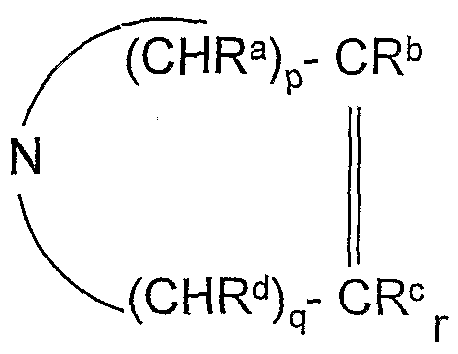


Priority Applications (10)
| Application Number | Priority Date | Filing Date | Title |
|---|---|---|---|
| JP2006516331A JP4800936B2 (en) | 2003-06-27 | 2004-06-25 | Combination products comprising antagonists or inverse agonists of histamine receptor H3 and antibiotic psychosis or antidepressants, and their use for preparing a medicament for preventing the adverse effects of these antipsychotics |
| AT04767475T ATE482711T1 (en) | 2003-06-27 | 2004-06-25 | COMBINATION PRODUCT CONTAINING AN ANTAGONIST OR INVERSE AGONIST OF HISTAMINE RECEPTOR H3 AND AN ANTIPSYCHOTIC OR ANTIDEPRESSIVE AGENT, AND THE USE THEREOF FOR PRODUCING A MEDICATION FOR PREVENTING THE ADVERSE EFFECTS OF PSYCHOTROPICS |
| EP04767475A EP1641461B1 (en) | 2003-06-27 | 2004-06-25 | Combination product comprising an antagonist or inverse agonist of histamine receptor h<sb>3</sb> and an antipsychotic or antidepressant agent, and use thereof for the preparation of a medicament that prevents the adverse effects of psychotropic drugs |
| US10/562,396 US8106041B2 (en) | 2003-06-27 | 2004-06-25 | Combination product comprising an antagonist or inverse agonist of histamine receptor H3 and an antipsychotic and antidepressant agent, and use thereof for the preparation of a medicament that prevents the adverse effects of psychotropic drugs |
| SI200431513T SI1641461T1 (en) | 2003-06-27 | 2004-06-25 | Combination product comprising an antagonist or inverse agonist of histamine receptor h3 and an antipsychotic or antidepressant agent, and use thereof for the preparation of a medicament that prevents the adverse effects of psychotropic drug |
| CA2530381A CA2530381C (en) | 2003-06-27 | 2004-06-25 | Combination product comprising an antagonist or inverse agonist of histamine receptor h<sb>3 </sb>and an antipsychotic or antidepressant agent, and use thereof for the preparation of a medicament that prevents the adverse effects of psychotropic drugs |
| DK04767475.9T DK1641461T3 (en) | 2003-06-27 | 2004-06-25 | Combination product comprising a histamine H3 receptor antagonist or inverse agonist and an antipsychotic or antidepressant, and use thereof in the manufacture of a drug which prevents the adverse effects of psychotropic ... |
| PL04767475T PL1641461T3 (en) | 2003-06-27 | 2004-06-25 | Combination product comprising an antagonist or inverse agonist of histamine receptor h<sb>3</sb> and an antipsychotic or antidepressant agent, and use thereof for the preparation of a medicament that prevents the adverse effects of psychotropic drugs |
| MXPA05013877A MXPA05013877A (en) | 2003-06-27 | 2004-06-25 | Combination product comprising an antagonist or inverse agonist of histamine receptor h3 and an antipsychotic or antidepressant agent, and use thereof for the preparation of a medicament that prevents the adverse effects of psychotropic drug |
| DE602004029364T DE602004029364D1 (en) | 2003-06-27 | 2004-06-25 | COMPOUND PRODUCT COMPRISING AN ANTAGONIST OR INVERSE AGONIST OF HISTAMINE RECEPTOR H3 AND AN ANTIPSYCHOTIC OR ANTI-PRESSIVE MEDICAMENT TO PREVENT THE ADVERSE EFFECTS OF PSYCHOTROPIKA |
Applications Claiming Priority (2)
| Application Number | Priority Date | Filing Date | Title |
|---|---|---|---|
| FR0307836 | 2003-06-27 | ||
| FR0307836A FR2856596B1 (en) | 2003-06-27 | 2003-06-27 | NOVEL PSYCHIATRIC DRUG ASSOCIATION AND THE USE OF AN INVERSE HISTAMINE H3 RECEPTOR ANTAGONIST OR AGONIST TO PREPARE A MEDICAMENT PREVENTING ADVERSE EFFECTS OF PSYCHOTROPES. |
Publications (1)
| Publication Number | Publication Date |
|---|---|
| WO2005000315A1 true WO2005000315A1 (en) | 2005-01-06 |
Family
ID=33515484
Family Applications (1)
| Application Number | Title | Priority Date | Filing Date |
|---|---|---|---|
| PCT/FR2004/001628 Ceased WO2005000315A1 (en) | 2003-06-27 | 2004-06-25 | Combination product comprising an antagonist or inverse agonist of histamine receptor h3 and an antipsychotic or antidepressant agent, and use thereof for the preparation of a medicament that prevents the adverse effects of psychotropic drugs |
Country Status (16)
| Country | Link |
|---|---|
| US (1) | US8106041B2 (en) |
| EP (1) | EP1641461B1 (en) |
| JP (1) | JP4800936B2 (en) |
| KR (1) | KR20060094847A (en) |
| AT (1) | ATE482711T1 (en) |
| CA (1) | CA2530381C (en) |
| CY (1) | CY1110947T1 (en) |
| DE (1) | DE602004029364D1 (en) |
| DK (1) | DK1641461T3 (en) |
| ES (1) | ES2350103T3 (en) |
| FR (1) | FR2856596B1 (en) |
| MX (1) | MXPA05013877A (en) |
| PL (1) | PL1641461T3 (en) |
| PT (1) | PT1641461E (en) |
| SI (1) | SI1641461T1 (en) |
| WO (1) | WO2005000315A1 (en) |
Cited By (18)
| Publication number | Priority date | Publication date | Assignee | Title |
|---|---|---|---|---|
| EP1874747A1 (en) * | 2005-04-29 | 2008-01-09 | Bioprojet | Histamine h3-recept0r ligands and their therapeutic application |
| JP2008534572A (en) * | 2005-04-01 | 2008-08-28 | ビオポロジェ | Treatment of Parkinson's disease, obstructive sleep apnea, dementia with Lewy bodies, vascular dementia with non-imidazole alkylamine histamine H3-receptor ligand |
| US20090312367A1 (en) * | 2006-07-21 | 2009-12-17 | Bioprojet | Combination of modafinil and an antagonist or inverse agonist of the h3 receptor |
| US7831915B2 (en) | 2005-11-10 | 2010-11-09 | Microsoft Corporation | Dynamically protecting against web resources associated with undesirable activities |
| US8217077B2 (en) | 2004-03-26 | 2012-07-10 | Abbott Laboratories | HMB uses thereof |
| US8778992B2 (en) | 2005-12-19 | 2014-07-15 | Abbott Laboratories | Method of using beta-hydroxy-beta-methylbutyrate to treat allergies and asthma |
| US8829041B2 (en) | 2006-06-23 | 2014-09-09 | Abbvie Inc. | Cyclopropyl amine derivatives |
| US8853390B2 (en) | 2010-09-16 | 2014-10-07 | Abbvie Inc. | Processes for preparing 1,2-substituted cyclopropyl derivatives |
| US8916217B2 (en) | 2010-01-29 | 2014-12-23 | Abbott Laboratories | Aseptically packaged nutritional liquids comprising HMB |
| US9108948B2 (en) | 2006-06-23 | 2015-08-18 | Abbvie Inc. | Cyclopropyl amine derivatives |
| US9186353B2 (en) | 2009-04-27 | 2015-11-17 | Abbvie Inc. | Treatment of osteoarthritis pain |
| US9241508B2 (en) | 2010-01-29 | 2016-01-26 | Abbott Laboratories | Nutritional emulsions comprising calcium HMB |
| US9521859B2 (en) | 2010-06-10 | 2016-12-20 | Normanella T. Dewille | Substantially clear nutritional liquids comprising calcium HMB and soluble protein |
| US9693577B2 (en) | 2010-01-29 | 2017-07-04 | Abbott Laboratories | Method of preparing a nutritional powder comprising spray dried HMB |
| US10208048B2 (en) | 2015-04-28 | 2019-02-19 | Janssen Sciences Ireland Uc | RSV antiviral pyrazolo- and triazolo-pyrimidine compounds |
| US11339165B2 (en) | 2017-11-29 | 2022-05-24 | Janssen Sciences Ireland Unlimited Company | Pyrazolopyrimidines having activity against the respiratory syncytial virus (RSV) |
| US11491157B2 (en) | 2018-01-31 | 2022-11-08 | Janssen Sciences Ireland Unlimited Company Co Cork, IE | Cycloalkyl substituted pyrazolopyrimidines having activity against RSV |
| US11708369B2 (en) | 2018-04-23 | 2023-07-25 | Janssen Sciences Ireland Unlimited Company | Heteroaromatic compounds having activity against RSV |
Families Citing this family (3)
| Publication number | Priority date | Publication date | Assignee | Title |
|---|---|---|---|---|
| AR048134A1 (en) * | 2003-12-15 | 2006-04-05 | Lundbeck & Co As H | THE COMBINATION OF AN INHIBITOR OF THE RECOVERY OF SEROTONINE AND AN ANTAGONIST OF THE RECEIVER OF HISTAMINE 3, THE INVESTED AGONIST OR THE PARTIAL AGONIST |
| US7487265B2 (en) * | 2004-04-16 | 2009-02-03 | Sandisk Corporation | Memory card with two standard sets of contacts and a hinged contact covering mechanism |
| WO2008157094A1 (en) * | 2007-06-13 | 2008-12-24 | Cypress Bioscience, Inc. | Improving the tolerability of mirtazapine and a second active by using them in combination |
Citations (4)
| Publication number | Priority date | Publication date | Assignee | Title |
|---|---|---|---|---|
| EP0982300A2 (en) * | 1998-07-29 | 2000-03-01 | Societe Civile Bioprojet | Non-imidazole alkylamines as histamine H3 - receptor ligands and their therapeutic applications |
| US6248765B1 (en) * | 1995-03-21 | 2001-06-19 | Institut National De La Sante Et De La Recherche Medical | Imidazole derivatives as histamine receptor H3 (ANT) agonists |
| US20020065278A1 (en) * | 2000-08-08 | 2002-05-30 | Richard Apodaca | Non-imidazole aryloxyalkylamines |
| US20030096808A1 (en) * | 1999-03-29 | 2003-05-22 | Jon M. Miller | Substance to prevent or reverse weight gain induced by psychoactive agents |
Family Cites Families (1)
| Publication number | Priority date | Publication date | Assignee | Title |
|---|---|---|---|---|
| AU4973800A (en) * | 1999-06-09 | 2000-12-28 | Eli Lilly And Company | Combination for treating weight gain associated with antipsychotic use comprising an atypical antipsychotic and an h2 antagonist |
-
2003
- 2003-06-27 FR FR0307836A patent/FR2856596B1/en not_active Expired - Fee Related
-
2004
- 2004-06-25 DK DK04767475.9T patent/DK1641461T3/en active
- 2004-06-25 WO PCT/FR2004/001628 patent/WO2005000315A1/en not_active Ceased
- 2004-06-25 EP EP04767475A patent/EP1641461B1/en not_active Expired - Lifetime
- 2004-06-25 AT AT04767475T patent/ATE482711T1/en active
- 2004-06-25 CA CA2530381A patent/CA2530381C/en not_active Expired - Lifetime
- 2004-06-25 JP JP2006516331A patent/JP4800936B2/en not_active Expired - Fee Related
- 2004-06-25 SI SI200431513T patent/SI1641461T1/en unknown
- 2004-06-25 DE DE602004029364T patent/DE602004029364D1/en not_active Expired - Lifetime
- 2004-06-25 PL PL04767475T patent/PL1641461T3/en unknown
- 2004-06-25 PT PT04767475T patent/PT1641461E/en unknown
- 2004-06-25 KR KR1020057024963A patent/KR20060094847A/en not_active Ceased
- 2004-06-25 ES ES04767475T patent/ES2350103T3/en not_active Expired - Lifetime
- 2004-06-25 US US10/562,396 patent/US8106041B2/en active Active
- 2004-06-25 MX MXPA05013877A patent/MXPA05013877A/en active IP Right Grant
-
2010
- 2010-11-24 CY CY20101101070T patent/CY1110947T1/en unknown
Patent Citations (5)
| Publication number | Priority date | Publication date | Assignee | Title |
|---|---|---|---|---|
| US6248765B1 (en) * | 1995-03-21 | 2001-06-19 | Institut National De La Sante Et De La Recherche Medical | Imidazole derivatives as histamine receptor H3 (ANT) agonists |
| EP0982300A2 (en) * | 1998-07-29 | 2000-03-01 | Societe Civile Bioprojet | Non-imidazole alkylamines as histamine H3 - receptor ligands and their therapeutic applications |
| EP1428820A1 (en) * | 1998-07-29 | 2004-06-16 | Bioprojet | Non-imidazole alkylamines as histamine H-3-receptor ligands and their therapeutic applications |
| US20030096808A1 (en) * | 1999-03-29 | 2003-05-22 | Jon M. Miller | Substance to prevent or reverse weight gain induced by psychoactive agents |
| US20020065278A1 (en) * | 2000-08-08 | 2002-05-30 | Richard Apodaca | Non-imidazole aryloxyalkylamines |
Non-Patent Citations (8)
| Title |
|---|
| GANELLIN C R ET AL: "Synthesis of potent non-imidazole histamine H3-receptor antagonists", ARCHIV DER PHARMAZIE 1998 GERMANY, vol. 331, no. 12, 1998, pages 395 - 404, XP002307663, ISSN: 0365-6233 * |
| LIEDTKE SUSANNA ET AL: "Replacement of imidazole by a piperidine moiety differentially affects the potency of histamine H3-receptor antagonists.", NAUNYN-SCHMIEDEBERG'S ARCHIVES OF PHARMACOLOGY. GERMANY JAN 2003, vol. 367, no. 1, January 2003 (2003-01-01), pages 43 - 50, XP002269928, ISSN: 0028-1298 * |
| MEIER GALINA ET AL: "Influence of imidazole replacement in different structural classes of histamine H3-receptor antagonists", EUROPEAN JOURNAL OF PHARMACEUTICAL SCIENCES, vol. 13, no. 3, June 2001 (2001-06-01), pages 249 - 259, XP002269929, ISSN: 0928-0987 * |
| MIYAZAKI S ET AL: "Effects of thioperamide, a histamine H3-receptor antagonist, on a scopolamine-induced learning deficit using an elevated plus-maze test in mice.", LIFE SCIENCES. ENGLAND 1995, vol. 57, no. 23, 1995, pages 2137 - 2144, XP002269927, ISSN: 0024-3205 * |
| MONTI J M ET AL: "Effects of selective activation or blockade of the histamine H3 receptor on sleep and wakefulness.", EUROPEAN JOURNAL OF PHARMACOLOGY. NETHERLANDS 3 DEC 1991, vol. 205, no. 3, 3 December 1991 (1991-12-03), pages 283 - 287, XP002269926, ISSN: 0014-2999 * |
| SHADBOLT R S ET AL: "Some Aryloxyalkylamines, N-Arylethylenediamines and Related Compounds as Anorectic Agents", JOURNAL OF MEDICINAL CHEMISTRY, AMERICAN CHEMICAL SOCIETY. WASHINGTON, US, vol. 14, no. 9, 1971, pages 836 - 842, XP002084867, ISSN: 0022-2623 * |
| STARK H ET AL: "Developments of Histamine H3-receptor Antagonists", DRUGS OF THE FUTURE, BARCELONA, ES, vol. 21, no. 5, 1996, pages 507 - 520, XP002084872, ISSN: 0377-8282 * |
| VOHORA D ET AL: "Histamine and selective H3-receptor ligands: a possible role in the mechanism and management of epilepsy.", PHARMACOLOGY, BIOCHEMISTRY, AND BEHAVIOR. UNITED STATES APR 2001, vol. 68, no. 4, April 2001 (2001-04-01), pages 735 - 741, XP002269925, ISSN: 0091-3057 * |
Cited By (28)
| Publication number | Priority date | Publication date | Assignee | Title |
|---|---|---|---|---|
| US8778994B2 (en) | 2004-03-26 | 2014-07-15 | Abbott Laboratories | Method of using beta-hydroxy-beta-methylbutyrate and fatty acids for treating disease-associated wasting |
| US8785495B2 (en) | 2004-03-26 | 2014-07-22 | Abbott Laboratories | Compositions including beta-hydroxy-beta-methylbutyrate |
| US8217077B2 (en) | 2004-03-26 | 2012-07-10 | Abbott Laboratories | HMB uses thereof |
| US8609725B2 (en) | 2004-03-26 | 2013-12-17 | Abbott Laboratories | Method of using beta-hydroxy-beta-methylbutyrate for reducing tumor growth rate |
| US8778993B2 (en) | 2004-03-26 | 2014-07-15 | Abbott Laboratories | Method of using β-hydroxy-β-methylbutyrate for the treatment of disease conditions |
| US8785496B2 (en) | 2004-03-26 | 2014-07-22 | Abbott Laboratories | Method of using beta-hydroxy-beta-methylbutyrate for treating disease-associated wasting |
| JP2016106142A (en) * | 2005-04-01 | 2016-06-16 | ビオポロジェ | Treatment of parkinson's disease, obstructive sleep apnea, dementia with lewy bodies, vascular dementia with non-imidazole alkylamines histamine h3-receptor ligands |
| JP2014062126A (en) * | 2005-04-01 | 2014-04-10 | Bioprojet | Treatment of symptoms of parkinson's disease, obstructive sleep apnea, dementia with lewy bodies, vascular dementia with non-imidazole alkylamine histamine h3-receptor ligands |
| JP2008534572A (en) * | 2005-04-01 | 2008-08-28 | ビオポロジェ | Treatment of Parkinson's disease, obstructive sleep apnea, dementia with Lewy bodies, vascular dementia with non-imidazole alkylamine histamine H3-receptor ligand |
| EP1874747A1 (en) * | 2005-04-29 | 2008-01-09 | Bioprojet | Histamine h3-recept0r ligands and their therapeutic application |
| US7831915B2 (en) | 2005-11-10 | 2010-11-09 | Microsoft Corporation | Dynamically protecting against web resources associated with undesirable activities |
| US8778992B2 (en) | 2005-12-19 | 2014-07-15 | Abbott Laboratories | Method of using beta-hydroxy-beta-methylbutyrate to treat allergies and asthma |
| US8796333B2 (en) | 2005-12-19 | 2014-08-05 | Abbott Laboratories | Method of using β-hydroxy-β-methylbutyrate to treat a condition |
| US8829041B2 (en) | 2006-06-23 | 2014-09-09 | Abbvie Inc. | Cyclopropyl amine derivatives |
| US9108948B2 (en) | 2006-06-23 | 2015-08-18 | Abbvie Inc. | Cyclopropyl amine derivatives |
| US20090312367A1 (en) * | 2006-07-21 | 2009-12-17 | Bioprojet | Combination of modafinil and an antagonist or inverse agonist of the h3 receptor |
| US9186353B2 (en) | 2009-04-27 | 2015-11-17 | Abbvie Inc. | Treatment of osteoarthritis pain |
| US9693577B2 (en) | 2010-01-29 | 2017-07-04 | Abbott Laboratories | Method of preparing a nutritional powder comprising spray dried HMB |
| US9241508B2 (en) | 2010-01-29 | 2016-01-26 | Abbott Laboratories | Nutritional emulsions comprising calcium HMB |
| US8916217B2 (en) | 2010-01-29 | 2014-12-23 | Abbott Laboratories | Aseptically packaged nutritional liquids comprising HMB |
| US9521859B2 (en) | 2010-06-10 | 2016-12-20 | Normanella T. Dewille | Substantially clear nutritional liquids comprising calcium HMB and soluble protein |
| US8853390B2 (en) | 2010-09-16 | 2014-10-07 | Abbvie Inc. | Processes for preparing 1,2-substituted cyclopropyl derivatives |
| US10208048B2 (en) | 2015-04-28 | 2019-02-19 | Janssen Sciences Ireland Uc | RSV antiviral pyrazolo- and triazolo-pyrimidine compounds |
| US10611769B2 (en) | 2015-04-28 | 2020-04-07 | Janssen Sciences Ireland Unlimited Company | RSV antiviral pyrazolo- and triazolo-pyrimidine compounds |
| US11084826B2 (en) | 2015-04-28 | 2021-08-10 | Janssen Sciences Ireland Unlimited Company | RSV antiviral pyrazolo- and triazolo-pyrimidine compounds |
| US11339165B2 (en) | 2017-11-29 | 2022-05-24 | Janssen Sciences Ireland Unlimited Company | Pyrazolopyrimidines having activity against the respiratory syncytial virus (RSV) |
| US11491157B2 (en) | 2018-01-31 | 2022-11-08 | Janssen Sciences Ireland Unlimited Company Co Cork, IE | Cycloalkyl substituted pyrazolopyrimidines having activity against RSV |
| US11708369B2 (en) | 2018-04-23 | 2023-07-25 | Janssen Sciences Ireland Unlimited Company | Heteroaromatic compounds having activity against RSV |
Also Published As
| Publication number | Publication date |
|---|---|
| KR20060094847A (en) | 2006-08-30 |
| JP2007516160A (en) | 2007-06-21 |
| DK1641461T3 (en) | 2011-01-10 |
| JP4800936B2 (en) | 2011-10-26 |
| FR2856596A1 (en) | 2004-12-31 |
| PT1641461E (en) | 2010-10-13 |
| CA2530381C (en) | 2013-03-12 |
| MXPA05013877A (en) | 2006-03-13 |
| EP1641461B1 (en) | 2010-09-29 |
| US20060210624A1 (en) | 2006-09-21 |
| SI1641461T1 (en) | 2010-12-31 |
| ES2350103T3 (en) | 2011-01-18 |
| EP1641461A1 (en) | 2006-04-05 |
| CA2530381A1 (en) | 2005-01-06 |
| FR2856596B1 (en) | 2007-04-27 |
| CY1110947T1 (en) | 2015-06-10 |
| US8106041B2 (en) | 2012-01-31 |
| DE602004029364D1 (en) | 2010-11-11 |
| PL1641461T3 (en) | 2011-02-28 |
| ATE482711T1 (en) | 2010-10-15 |
Similar Documents
| Publication | Publication Date | Title |
|---|---|---|
| EP1641461B1 (en) | Combination product comprising an antagonist or inverse agonist of histamine receptor h<sb>3</sb> and an antipsychotic or antidepressant agent, and use thereof for the preparation of a medicament that prevents the adverse effects of psychotropic drugs | |
| TWI776407B (en) | Agonists and methods of using same | |
| KR100797603B1 (en) | Use of dopamine D2 / D3 receptor agonists to treat fibromyalgia | |
| US20090023712A1 (en) | Pharmaceutical Compositions for the Treatment of Attention Deficit Hyperactivity Disorder Comprising Flibanserin | |
| CN118576586A (en) | Methods for treating neurological and psychiatric disorders | |
| EA020339B1 (en) | Nmda receptor antagonists for the treatment of neuropsychiatric disorders | |
| EA026869B1 (en) | Method of treating idiopathic pulmonary fibrosis | |
| WO2017041112A1 (en) | Ketamine and cytochrome p 450 inhibitor combinations | |
| WO2019018633A1 (en) | Compositions for treating stress-related disorders | |
| CN103221043A (en) | Inhibitors of ERK for developmental disorders of neuronal connectivity | |
| DK2694065T3 (en) | COMPOSITION FOR TREATMENT OF DISORDER WITH SEXUAL SEXUAL LISTENING | |
| CA2865845C (en) | An iloperidone metabolite for use in the treatment of psychiatric disorders | |
| KR20080002906A (en) | Treatment of Epilepsy with Biimidazole Alkylamine Histamine H3-Receptor Ligand | |
| US20020147206A1 (en) | Combination treatment of multiple sclerosis (MS), other demyelinating conditions and peripheral neuropathy, especially painful neuropathies and diabetic neuropathy | |
| JP2005513105A (en) | Use of deoxypeganine to treat clinical depression | |
| CN113613653A (en) | Method of treating borderline personality disorder | |
| CN113631164A (en) | Methods of treating attention deficit hyperactivity disorder using KDM1A inhibitors such as the compound varespita | |
| US20250302823A1 (en) | Compositions and methods for treating hepatic porphyrias with glycine transport inhibitors | |
| CA2453445C (en) | Pyridin-2-yl-methlyamine derivatives for treating opioid dependence | |
| CA2659754A1 (en) | Combination of modafinil and an antagonist or inverse agonist of the h3 receptor | |
| CN119947712A (en) | Combination therapy of tacitropidine and CYP2D6 inhibitor | |
| CN1761467A (en) | Use of pyridin-2-ylmethylamine derivatives for the production of a medicament for the treatment of chronic pain symptoms of neuropathological or psychogenic origin | |
| JPWO2022101435A5 (en) |
Legal Events
| Date | Code | Title | Description |
|---|---|---|---|
| AK | Designated states |
Kind code of ref document: A1 Designated state(s): AE AG AL AM AT AU AZ BA BB BG BR BW BY BZ CA CH CN CO CR CU CZ DE DK DM DZ EC EE EG ES FI GB GD GE GH GM HR HU ID IL IN IS JP KE KG KP KR KZ LC LK LR LS LT LU LV MA MD MG MK MN MW MX MZ NA NI NO NZ OM PG PH PL PT RO RU SC SD SE SG SK SL SY TJ TM TN TR TT TZ UA UG US UZ VC VN YU ZA ZM ZW |
|
| AL | Designated countries for regional patents |
Kind code of ref document: A1 Designated state(s): GM KE LS MW MZ NA SD SL SZ TZ UG ZM ZW AM AZ BY KG KZ MD RU TJ TM AT BE BG CH CY CZ DE DK EE ES FI FR GB GR HU IE IT LU MC NL PL PT RO SE SI SK TR BF BJ CF CG CI CM GA GN GQ GW ML MR NE SN TD TG |
|
| 121 | Ep: the epo has been informed by wipo that ep was designated in this application | ||
| WWE | Wipo information: entry into national phase |
Ref document number: PA/a/2005/013877 Country of ref document: MX |
|
| ENP | Entry into the national phase |
Ref document number: 2530381 Country of ref document: CA |
|
| WWE | Wipo information: entry into national phase |
Ref document number: 1020057024963 Country of ref document: KR Ref document number: 2006516331 Country of ref document: JP |
|
| WWE | Wipo information: entry into national phase |
Ref document number: 2004767475 Country of ref document: EP |
|
| WWP | Wipo information: published in national office |
Ref document number: 2004767475 Country of ref document: EP |
|
| WWE | Wipo information: entry into national phase |
Ref document number: 10562396 Country of ref document: US |
|
| WWP | Wipo information: published in national office |
Ref document number: 10562396 Country of ref document: US |