WO2003093428A2 - Gene targeting using replicating dna molecules - Google Patents
Gene targeting using replicating dna molecules Download PDFInfo
- Publication number
- WO2003093428A2 WO2003093428A2 PCT/US2003/013642 US0313642W WO03093428A2 WO 2003093428 A2 WO2003093428 A2 WO 2003093428A2 US 0313642 W US0313642 W US 0313642W WO 03093428 A2 WO03093428 A2 WO 03093428A2
- Authority
- WO
- WIPO (PCT)
- Prior art keywords
- plant
- polynucleotide
- target
- targeting vector
- gene
- Prior art date
- Legal status (The legal status is an assumption and is not a legal conclusion. Google has not performed a legal analysis and makes no representation as to the accuracy of the status listed.)
- Ceased
Links
Classifications
-
- C—CHEMISTRY; METALLURGY
- C12—BIOCHEMISTRY; BEER; SPIRITS; WINE; VINEGAR; MICROBIOLOGY; ENZYMOLOGY; MUTATION OR GENETIC ENGINEERING
- C12N—MICROORGANISMS OR ENZYMES; COMPOSITIONS THEREOF; PROPAGATING, PRESERVING, OR MAINTAINING MICROORGANISMS; MUTATION OR GENETIC ENGINEERING; CULTURE MEDIA
- C12N15/00—Mutation or genetic engineering; DNA or RNA concerning genetic engineering, vectors, e.g. plasmids, or their isolation, preparation or purification; Use of hosts therefor
- C12N15/09—Recombinant DNA-technology
- C12N15/63—Introduction of foreign genetic material using vectors; Vectors; Use of hosts therefor; Regulation of expression
- C12N15/79—Vectors or expression systems specially adapted for eukaryotic hosts
- C12N15/82—Vectors or expression systems specially adapted for eukaryotic hosts for plant cells, e.g. plant artificial chromosomes (PACs)
- C12N15/8201—Methods for introducing genetic material into plant cells, e.g. DNA, RNA, stable or transient incorporation, tissue culture methods adapted for transformation
- C12N15/8213—Targeted insertion of genes into the plant genome by homologous recombination
-
- C—CHEMISTRY; METALLURGY
- C12—BIOCHEMISTRY; BEER; SPIRITS; WINE; VINEGAR; MICROBIOLOGY; ENZYMOLOGY; MUTATION OR GENETIC ENGINEERING
- C12N—MICROORGANISMS OR ENZYMES; COMPOSITIONS THEREOF; PROPAGATING, PRESERVING, OR MAINTAINING MICROORGANISMS; MUTATION OR GENETIC ENGINEERING; CULTURE MEDIA
- C12N9/00—Enzymes; Proenzymes; Compositions thereof; Processes for preparing, activating, inhibiting, separating or purifying enzymes
Definitions
- the present invention relates generally to plant molecular biology.
- the present invention provides novel methods and compositions for carrying out gene targeting.
- the method uses homologous recombination processes endogenous in the cells of all organisms. Any gene of any organism can be modified by the methods of the invention as long as the sequence of at least a portion of the gene is known, or a DNA clone is available.
- the invention provides methods for increasing gene targeting frequencies comprising introducing into a target cell a targeting vector comprising an origin of replication and further comprising a target modifying sequence which is compatible with a target site in the genome of the target cell.
- the target modifying sequence comprises the sequence modifications to be introduced into the target site sequence.
- a replicase is also provided in the target cell. Replication of the targeting vector stimulates homologous recombination between the targeting vector and the target site resulting in a gene targeting event.
- the invention provides methods for increasing gene targeting frequencies comprising introducing into a target cell a targeting vector comprising a transposon comprising an origin of replication and further comprising a target modifying sequence which is compatible with a target site in the genome of the target cell.
- a transposase is provided in the target cell, wherein the transposase is capable of excising the transposon to produce a replication- competent targeting vector.
- a replicase is also provided in the target cell. Replication of the targeting vector stimulates homologous recombination between the targeting vector and the target site resulting in a gene targeting event.
- the invention provides methods for increasing gene targeting frequencies comprising introducing into a target cell a targeting vector comprising an origin of replication and further comprising a target modifying sequence which is compatible with a target site in the genome of the target cell, wherein the origin of replication and the target modifying sequence are flanked by site-specific recombination sites.
- a site-specific recombinase capable of excising the targeting vector to produce a replication-competent targeting vector is provided.
- a replicase is also provided in the target cell. Replication of the targeting vector stimulates homologous recombination between the targeting vector and the target site resulting in a gene targeting event.
- the invention also provides cells and organisms produced by the methods. These cells or organisms comprise a modified target polynucleotide sequence produced by a method of the invention.
- the invention further provides progeny or seed produced by the modified cells or organisms, wherein the progeny or seed have inherited the gene targeted modification.
- the invention also provides isolated nucleic acids such as targeting vectors.
- compositions used in the invention comprise nucleic acids, such as targeting vectors, and expression cassettes.
- the compositions further comprise donor organisms comprising an integrated targeting vector, and target organisms comprising modified target sequences, and the progeny of each.
- isolated refers to material, such as a nucleic acid or a protein, which is: (1) substantially or essentially free from components which normally accompany or interact with the material as found in its naturally occurring environment or (2) if the material is in its natural environment, the material has been altered by deliberate human intervention to a composition and/or placed at a locus in the cell other than the locus native to the material.
- polypeptide and “protein” are used interchangeably and mean proteins, protein fragments, modified proteins, amino acid sequences and synthetic amino acid sequences.
- the polypeptide can be glycosylated or not.
- polynucleotide and “nucleic acid” are used interchangeably.
- a polynucleotide can be full-length or a fragment and includes polynucleotides that have been modified for stability. Unless otherwise indicated, the term includes reference to a specific sequence or its complement.
- the functional variant or derivative is a fragment, a modified polypeptide, or a synthetic polypeptide that provides a functional activity in a manner similar to the wild type, or naturally occurring, gene products
- oil of replication refers to a polynucleotide region where DNA replication is initiated.
- the origin of replication is intended to include functional fragments, modifications, variants, and derivatives which retain the functional activity. Replication is usually initiated at the origin of replication by a replicase polypeptide.
- replicase refers to polypeptides capable of stimulating DNA synthesis.
- the polynucleotides and polypeptides are intended to include functional variants, fragments, and derivatives which retain the functional activity.
- the polypeptides include proteins commonly referred to as “replication proteins”, “replication associated proteins”, or “replication initiation proteins”.
- the polypeptide includes proteins in which all the “replication associated” or “replication” functions are encoded as a single protein, and those in which these functions are carried out by more than one protein, irrespective of whether proper or "inappropriate” splicing has occurred prior to translation.
- replicase polypeptide refers to polynucleotides coding for a replicase polypeptide, including functional variants, derivatives, fragments, or functional homoiogs of characterized replicase polynucleotides.
- Replicase polynucleotides, functional variants and/or functional homoiogs from any organism can be used in the methods of the invention as long as the expressed replicase polypeptides bind to the origin of replication, and/or stimulate DNA replication.
- plant includes but is not limited to whole plants, plant parts, plant cells, plant tissue, and plant seeds.
- site-specific recombinase refers to any enzyme capable of being functionally expressed that catalyzes conservative site-specific recombination between its corresponding site-specific recombination sites.
- the site-specific recombinase may be naturally occurring, or a recombinantly produced polypeptide, fragment, variant, or derivative thereof that retains the activity of the naturally occurring recombinase.
- gene targeting refers to a process whereby a specific sequence modification is facilitated at a desired genetic locus by a transforming nucleic acid, such as a targeting vector.
- a transforming nucleic acid such as a targeting vector.
- the gene at the target locus is modified, removed, replaced or duplicated by the transforming nucleic acid. Modifications include at least one insertion, deletion, or substitution of one or more nucleotides at a target site.
- homologous recombination refers to the process by which a recombination event occurs between two homologous nucleic acid regions.
- transposon refers to a DNA sequence capable of moving from one place in the genome to another. Transposons are typically characterized by being flanked by terminal inverted repeat sequences required for transposition.
- transposase refers to a polypeptide that mediates transposition of a transposon from one location in the genome to another.
- Transposases typically function to excise the transposon, and to recognize subterminal repeats and bring together the ends of the excised transposon, in some systems other proteins are also required to bring together the ends during transposition.
- targeting vector refers to a nucleic acid comprising at least an origin of replication and a target modifying polynucleotide, wherein the target modifying polynucleotide comprises a modified version of the target sequence, containing any sequence modification to be introduced at the target site resulted in a desired genetic change at the target.
- the targeting vector can be integrated in a host genome and later excised to produce a gene targeting event.
- the targeting vector can be provided by any transformation method or introduced by sexual crossing.
- target polynucleotide or “target site” refers to a polynucleotide sequence to be modified in the host organism.
- the target polynucleotide can be either an endogenous polynucleotide, or an exogenous polynucleotide previously introduced into the host organism.
- the target sequence may be any polynucleotide sequence, including but not limited to a polypeptide coding region.
- the target sequence may be a non-coding region, for example, a promoter, an intron, a terminator, an enhancer, or any other regulatory, structural polynucleotide, or other polynucleotide region.
- target modifying polynucleotide refers to a polynucleotide comprising the sequence modification to be incorporated at the target site, wherein the sequence modification comprises at least one base pair difference as compared to the target site sequence.
- Sequence modifications to the target polynucleotide may include nucleotide substitutions, nucleotide or polynucleotide deletions, and/or nucleotide or polynucleotide insertions.
- donor organism or “donor cell” refers to an organism, or cell, which comprises at least one of the following: a targeting vector, a replicase expression cassette, a recombinase expression cassette, and/or a transposase expression cassette, such that those components contained can be delivered to a target host organism in a heritable manner.
- the component(s) may be delivered by sexually crossing the target host to the donor organism.
- target organism refers to an organism, or cell, which comprises at least one target polynucleotide to be modified. Any one of the following: a targeting vector, a target modifying polynucleotide, a replicase expression cassette, a recombinase expression cassette, and/or a transposase expression cassette, may be introduced by any means including transient or stable transformation, sexually crossing to a donor, or fusion to a donor cell.
- expression cassette refers to a nucleic acid construct, generated recombinantly or synthetically, with a series of specified nucleic acid elements which permit transcription of a particular nucleic acid in a host cell.
- the expression cassette can be incorporated into a plasmid, chromosome, mitochondrial DNA, plastid DNA, virus, or nucleic acid fragment.
- the expression cassette portion of an expression vector includes, among other sequences, a nucleic acid to be transcribed, and a promoter.
- operably linked includes reference to a functional linkage between a promoter and a second sequence, wherein the promoter sequence initiates and mediates transcription of the DNA sequence corresponding to the second sequence.
- operably linked means that the nucleic acid sequences being linked are contiguous and, where necessary to join two protein coding regions, contiguous and in the same reading frame.
- the invention provides a method for gene targeting in an organism by providing a targeting vector comprising a target modifying polynucleotide and an origin of replication, and providing replicase activity such that targeted sequence modifications are incorporated at the target site in the host genome.
- the target site can be any polynucleotide region, including but not limited to polypeptide coding regions, introns, exons, untranslated regions (UTR's), promoters, enhancers, terminators, or other regulators of gene expression, or any other region of interest.
- the targeting vector comprises at least an origin of replication and a target modifying polynucleotide.
- the target modifying polynucleotide shares sufficient homology with the target site so that homologous recombination can occur between the two polynucleotides.
- the target modifying polynucleotide has at least one base pair difference as compared to the target site, this base pair difference can comprise a point mutation (base change), insertion, or deletion.
- base change base change
- the target site modification includes any changes which could suppress gene expression, such as the introduction of a premature stop codon, frameshift mutation, or changes to a promoter or other UTR, and the like.
- the changes also include modifications to increase gene expression or protein activity such as alterations to codons, or alterations to UTR's and the like.
- the targeting vector need not be integrated into the host genome, but may be maintained as an autonomously replicating vector.
- the targeting vector need not be circular in order to replicate, as illustrated by the work of Jeske et al. (2001) EMBO 20:6158-6167.
- the targeting vector may be introduced by any method, depending on the organism, including Agrobacterium-mediated transformation, biolistic methods, direct DNA delivery methods including microinjection, chemical methods, electroporation and the like.
- the targeting vector may further comprise a replicase expression cassette wherein a replicase polynucleotide is operably linked to a promoter and other regulatory elements needed for expression of a replicase polypeptide.
- the promoter can be constitutive, inducible, or under developmental control as needed in order to regulate the expression of the replicase polypeptide.
- the targeting vector may comprise flanking sequences for excision using systems such as site-specific recombinases, or transposases.
- the recombinase or transposase activity may be introduced using a recombinant expression cassette wherein the recombinase or transposase is operably linked to a promoter and other regulatory elements needed for expression of the polypeptide.
- the recombinase or transposase activity may also be provided by crossing a donor organism, which comprises a recombinase or transposase expression cassette, with a target organism comprising the integrated targeting vector. Methods of providing the transposase by crossing organisms are disclosed in WO 01/71019, the contents of which are herein incorporated by reference.
- replication systems suitable for this invention include bacterial origins of replication and replication proteins, viral origins of replication and replication proteins, and eukaryotic replication systems.
- Suitable viral replication systems include abutilon mosaic virus (AbMV), African cassava mosaic virus (ACMV), banana streak virus (BSV), bean dwarf mosaic virus (BDMV), bean golden mosaic virus (BGMV), beet curly top virus (BCTV), beet western yellow virus (BWYV), and other luteoviruses, cassava latent virus (CLV), carnation etched ring virus (CERV), cauliflower mosaic virus (CaMV), chloris striate mosaic virus (CSMV), commelina yellow mottle virus (CoYMV), cucumber mosaic virus (CMV), dahlia mosaic virus (DMV), digitaria streak virus (DSV), figwort mosaic virus (FMV), hop stunt viroid (HSV), maize streak virus (MSV), mirabilias mosaic virus (MMV), miscanthus streak virus (MiSV), potato stunt tuber virus (PSTV), panicum streak virus (PSV), potato yellow mosaic virus (PYMV), rice tungro bacilliform virus (RTBV), soybean chlorotic mottle virus (So
- plant viruses with DNA replicases suitable for use in the invention include members of the nanovirus group such as banana bunchy top virus (BBTV), milk vetch dwarf virus (MDV), subterranean clover stunt virus (SCSV), and Ageratum yellow vein virus (AYVV).
- BBTV banana bunchy top virus
- MDV milk vetch dwarf virus
- SCSV subterranean clover stunt virus
- AAVV Ageratum yellow vein virus
- virus systems include the papova viruses such as SV40, polyoma viruses, adenoviruses, papillomaviruses such as human papillomavirus (HPV) and bovine papillomavirus (BPV), herpes viruses such as herpes simplex virus (HSV), cytomegalovirus (CMV), and Epstein-Barr virus (EBV), and retroviruses such as human immunodeficiency virus (HIV), human T lymphotropic virus (HTVL), simian immunodeficiency virus (SIV), simian sarcoma virus (SSV), Rous sarcoma virus (RSV), caprine arthritis-encephalitis virus (CAEV), murine leukemia virus (MLV), avian leukemia virus (ALV), bovine leukemia virus (BLV), feline immunodeficiency virus (FIV), equine infectious anemia virus (EIAV), and endogenous retrovirus (ERV), or a bac
- the targeting vector flanked by site-specific recombination sites and/or transposon sequences, may be randomly integrated in the genome of a donor or target organism.
- Gene targeting can be activated by excising the target vector, which is then capable of replication and homologous recombination with the target sequence.
- the integrated vector may be excised by providing site-specific recombinase or a transposase activity. Any system or method to excise the integrated targeting vector can be used in the invention.
- transposons and transposases suitable for this invention include the P element transposon from Drosophila (Gloor, G.B. et al. (1991) Science 253:1110-1117), the Copia, Mariner and Minos elements from Drosophila, the Hermes elements from the housefly, the PiggyBack elements from Trichplusia ni, Tc1 elements from C.
- a transposable element system effective in vertebrates and invertebrates is a synthetic SB transposon system derived from Tc1 /mariner disclosed in WO 98/40510, the contents of which is herein incorporated by reference.
- Site-specific recombination systems are reviewed in Sauer (1994) Current Opinion in Biotechnology 5:521-527, Nunes-Duby et al. (1998) Nucl. Acids Res. 26:391-406, and Sadowski (1993) FASEB 7:760-767, the contents of which are herein incorporated by reference. Any site-specific recombination can be used in the invention.
- Examples of site-specific recombination systems suitable for this invention include the integrase family, such as the FLP/FRT system from yeast, and the Cre/Lox system from bacteriophage P1 , as well as the Int, and R systems.
- the resolvase family can also be used, for example ⁇ resolvase, and the like.
- Gene targeting can be performed without selection if there is a sensitive method for identifying recombinants, for example if the targeted gene modification can be easily detected by PCR analysis, or if it results in a certain phenotype. However, in most cases, identification of gene targeting events will be facilitated by the use of markers. Markers useful in the invention include positive and negative selectable markers as well as markers that facilitate screening, such as visual markers. Selectable markers include genes carrying resistance to an antibiotic such as spectinomycin (e.g. the aada gene, Svab et al. 1990 Plant Mol. Biol. 14:197), streptomycin (e.g., aada, or SPT, Svab et al. 1990 Plant Mol. Biol.
- an antibiotic such as spectinomycin (e.g. the aada gene, Svab et al. 1990 Plant Mol. Biol. 14:197), streptomycin (e.g., aada, or SPT, Svab e
- Negative selectable markers include cytosine deaminase (codA) (Stougaard 1993 Plant J. 3:755-761 ), tms2 (DePicker et al. 1988 Plant Cell Rep.
- nitrate reductase Nussame et al. 1991 Plant J. 1:267-274
- SU1 O'Keefe et al. 1994 Plant Physiol. 105:473-482
- aux-2 from the Ti plasmid of Agrobacterium
- Screenable markers include fluorescent proteins such as green fluorescent protein (GFP) (Chalfie et al., 1994 Science 263:802; US 6,146,826; US 5,491 ,084; and WO 97/41228), reporter enzymes such as ⁇ -glucuronidase (GUS) (Jefferson R.A. 1987 Plant Mol. Biol. Rep.
- One or more markers may be used in order to select and screen for gene targeting events.
- One common strategy for gene disruption involves using a target modifying polynucleotide in which the target is disrupted by a promoterless selectable marker. Since the selectable marker lacks a promoter, random integration events are unlikely to lead to transcription of the gene. Gene targeting events will put the selectable marker under control of the promoter for the target gene. Gene targeting events are identified by selection for expression of the selectable marker.
- Another common strategy utilizes a positive-negative selection scheme. This scheme utilizes two selectable markers, one that confers resistance (R + ) coupled with one that confers a sensitivity (S + ), each with a promoter.
- the resulting phenotype is R7S + .
- the two markers are uncoupled and the resulting phenotype is R7S " . Examples of using positive-negative selection are found in Thykjaer et al. (1997) Plant Mol. Biol. 35:523-530; and WO 01/66717, which are herein incorporated by reference.
- the methods of the invention can be practiced in any organism in which a method of transformation is available, and for which there is at least some sequence information for the target sequence of interest, or for a region flanking the target sequence of interest. It is also understood that two or more sequences could be targeted by sequential transformation, co-transformation with more than one targeting vector, or the construction of a targeting vector comprising more than one target modifying sequence.
- the target sequences can be selected from any portion of a genome of interest. Typically, targets comprise genes or regulatory regions, although regions adjacent to or near genes may be selected such that modifications may be made without disrupting gene expression.
- target sequences of interest include, for example, those genes involved in information, such as zinc fingers, those involved in communication, such as kinases, and those involved in housekeeping, such as heat shock proteins.
- Target sequences further include coding regions and non-coding regions such as promoters, enhancers, terminators, introns and the like, which may be modified in order to alter the expression of a gene of interest.
- an intron sequence can be added to the 5' region to increase the amount of mature message that accumulates (see for example Buchman and Berg, Mol. Cell Biol. 8:4395-4405 (1988); and Callis et al., Genes Dev. 1 :1183-1200 (1987)).
- the target sequence may be an endogenous sequence, or may be an introduced exogenous sequence, or transgene.
- this method may be used to alter the regulation or expression of a transgene, or to remove a transgene or other introduced sequence such as an introduced site-specific recombination site.
- a sequence of interest could also be introduced at a target site, for example a site-specific recombination site could be introduced, a endonuclease restriction site could be introduced, a polynucleotide tag could be introduced, or a protein purification tag such as that encoding hexa-histidine could be inserted to facilitate purification of a expressed protein of interest.
- target sequences include genes encoding agronomic traits, insect resistance, disease resistance, herbicide resistance, sterility, grain characteristics, and commercial products. Genes of interest also included those involved in oil, starch, carbohydrate, or nutrient metabolism as well as those affecting, for example, kernel size, sucrose loading, and the like. The quality of grain is reflected in traits such as levels and types of oils, saturated and unsaturated, quality and quantity of essential amino acids, and levels of cellulose.
- Herbicide resistance traits may include genes coding for resistance to herbicides that act to inhibit the action of acetolactate synthase (ALS), in particular the sulfonylurea-type herbicides (e.g., the acetolactate synthase (ALS) gene containing mutations leading to such resistance, in particular the S4 and /or Hra mutations). Glyphosate tolerance can be obtained form the EPSPS gene.
- ALS acetolactate synthase
- Sterility genes can also be targeted, including male tissue-preferred genes and genes with male sterility phenotypes such as QM, described in U.S. Patent No. 5.583,210.
- Other genes include kinases and those encoding compounds toxic to either male or female gametophytes.
- the TGA3 locus was knocked out by disrupting the gene with a kanamycin-resistance cassette (Maio and Lam (1995) Plant J. 7:359-365).
- the targeting cassette had about 4 kb of homology to the 5' end of TGA3 and about 3 kb of homology to the 3' end of the gene.
- the AGL5 MADS-box gene has been knocked out by homologous recombination in Arabidopsis (Kempin et al. 1997 Nature 389:802-803).
- the targeting construct consisted of a kanamycin-resistance cassette inserted into the AGL5 sequence roughly 3 kb from the 5' end and 2 kb from the 3' end.
- target sequences include genes involved in various diseases or medical conditions, such as cancer, including targets such as tumor suppressor genes (e.g., p53, p73, p51 , or p40) and oncogenes (e.g., c-myc, c-jn, c-fos, c-rel, c-qin, c-neu, c-src, c-abl, c-lck, c-mil/raf, c-ras, c-sis, or c-fps); obesity, fertility, diabetes, hypertension, coronary disease, neurological disorders, cystic fibrosis, multiple sclerosis, muscular dystrophy, genetic disorders, and the like.
- targets such as tumor suppressor genes (e.g., p53, p73, p51 , or p40) and oncogenes (e.g., c-myc, c-jn, c-fos, c-re
- Homologous recombination is recombination occurring as a result of interaction between segments of genetic material that is homologous over a sufficient length of nucleotide sequence.
- Homologous recombination is an enzyme-catalyzed process that occurs in essentially all cell types. The reaction takes place when nucleotide strands of homologous sequence are aligned in proximity to one another, and entails breaking phosphodiester bonds in the nucleotide strands and rejoining with neighboring homologous strands or with an homologous sequence on the same strand. The breaking and rejoining can occur with precision, such that the sequence fidelity is retained.
- the frequency of homologous recombination is influenced by a number of factors.
- Absolute limits for the length of homology or the degree of homology cannot be fixed, but depend on the number of events that can be generated, screened, and selected. All such factors are well known in the art, and can be taken into account when using the invention for gene targeting in any given organism.
- the targeting vector contained a region of about 7 kb homologous to the target gene and the targeting frequency was estimated to be at least 3.9 X 10 "4 (Maio and Lam
- Thykjaar and co- workers detected gene targeting with a frequency less than 5.3 X 10 ⁇ 5 , despite the large flanking sequences available for recombination (Thykjaer et al. (1997) Plant Mol. Biol. 35:523-530).
- Arabidopsis the AGL5 MADS-box gene was knocked out by homologous recombination (Kempin et al.
- Gene targeting has also been accomplished in other organisms. For example, at least 150-200 bp of homology was required for homologous recombination in the parasitic protozoan Leishmania, regions less than 1 kb a decrease in the length had a linear effect on the targeting frequency, and the targeting frequency plateaus at 1-2 kb of homology (Papadopoulou and Dumas (1997) Nucl. Acids Res. 25:4278-4286). In the filamentous fungus Aspergillus nidulans, gene replacement has been accomplished with as little as 50 bp flanking homology (Chaveroche et al. (2000) Nucl. Acids Res. 28(22):e97). Targeted gene replacement has also been demonstrated in the ciliate Tetrahymena thermophila (Gaertig et al. (1994) Nucl. Acids Res. 22:5391-5398).
- ES embryonic stem cell lines
- Embryos bearing inserted transgenic ES cells develop as genetically chimeric offspring.
- homozygous mice carrying the selected genes can be obtained.
- An overview of the process is provided in Watson et al. (1992) Recombinant DNA, 2 nd Ed., Scientific American Books distributed by WH Freeman & Co.; Capecchi, MR (1989) Trends in Genetics 5:70-76; and Bronson, SK (1994) J. Biol. Chem. 269:27155-27158.
- ES cells are transfected with a DNA construct that combines a donor DNA having the modification to be introduced at the target site combined with flanking sequence homologous to the target site, and marker genes as needed for selection, as well as any other desired sequences.
- the donor construct need not be integrated into the genome initially, but can recombine with the target site by homologous recombination, or become integrated by non-homologous recombination.
- homologous recombination events are rare, dual selection can be used to select for gene targeted events and to select against random integration. The selections are conveniently carried out in vitro on ES cells in culture. Other screening, such as PCR, can also be used to identify desired events.
- the frequency of homologous recombination is increased as the length of the region of homology in the donor is increased, with at least 5 kb of homology commonly used.
- homologous recombination has been observed with as little as 25-50 bp of homology. It has been observed that small deletions or insertions into the target site are introduced with higher frequency than point mutations, but any desired modification can be obtained by appropriate design of donor vector, and selection and/or screening methods.
- a targeting construct with about 5.5 kb of homology across exons 2 - 5 of Ren-1D specifically recombined only with the target gene with a gene targeting frequency of 5.29 X 10 "3 .
- the first intron of COIIA1 was targeted in mouse ES cells (Hormuzdi et al. (1998) Mol. Cell. Biol. 18:3368-3375).
- the targeting construct which shared about 13 kb of homology to the target, resulted in a 1.3 kb deletion in intron 1. Even though there is a large deletion in the first intron, the study showed the intron was still correctly spliced.
- a point mutation in ⁇ -globin causes sickle cell disease.
- BSM mouse- human hybrid cell line
- the targeting vector comprised 4.7 kb of homology to the ⁇ -globin gene, as well as a selectable marker outside of the target gene, and resulted in a gene targeting frequency of at least 1 X 10 "4 .
- insects including Coleoptera, Diptera, such as Drosophila, Hemiptera, Homoptera, Hymenoptera, Lepidoptera, and Orthoptera
- plants including both monocotyledonous and dicotyledonous plants such as, but not limited to, maize, rice, wheat, oats, barley, sorghum, millet, soybean and other legumes, canola, Brassica, alfalfa, sunflower, safflower, Arabidopsis, cotton, potato, tomato, tobacco and the like
- animals including mice, rats, sheep, pigs, bovines, amphibians, such as Xenopus, fish, such as zebrafish, birds; invertebrates such as C.
- the targeted event can be effected in the whole organism, or limited to certain tissue or cell types or even particular subcellular organelles.
- homologous recombination has been used to target foreign genes into the plastid genome in tobacco (Zoubenko et al. (1994) Nucl. Acids Res. 22:3819-3824), and to correct a defective gene in hematopoietic progenitor cells (Hatada et al. (2000) PNAS 97:13807-13811).
- the amount of homology shared between the target and the target modifying polynucleotide can vary and includes unit integral values in the ranges of about 1-20 bp, 20-50 bp, 50-100 bp, 75-150 bp, 100-250 bp, 150-300 bp, 200- 400 bp, 250-500 bp, 300-600 bp, 350-750 bp, 400-800 bp, 450-900 bp, 500-1000 bp, 600-1250 bp, 700-1500 bp, 800-1750 bp, 900-2000 bp, 1-2.5 kb, 1.5-3 kb, 2-4 kb, 2.5-5 kb, 3-6 kb, 3.5-7 kb, 4-8 kb, 5-10 kb, or up to and including the total length of the target site.
- These ranges include every integer within the range, for example, the range of 1-20 bp includes 1 , 2, 3, 4, 5, 6, 7, 8, 9, 10, 11 , 12,
- Polynucleotides including targeting vectors, target modifying polynucleotides, replicase polynucleotides, origins of replication, recombinase polynucleotides, transposon polynucleotides, transposase polynucleotides, selectable markers, and any other polynucleotides of interest, useful in the present invention can be obtained using (a) standard recombinant methods, (b) synthetic techniques, or combinations thereof. In general, examples of appropriate molecular biological techniques and instructions are found in Sambrook et al., Molecular Cloning: A Laboratory Manual, 2nd Ed., Cold Spring Harbor Laboratory, Vols. 1-3 (1989), Methods in Enzymology, Vol.
- Polynucleotides and functional variants useful in the invention can be obtained using primers that selectively hybridize under stringent conditions.
- Primers are generally at least 12 bases in length and can be as high as 200 bases, but will generally be from 15 to 75, typically from 15 to 50.
- Functional fragments can be identified using a variety of techniques such as restriction analysis, Southern analysis, primer extension analysis, and DNA sequence analysis.
- Variants of the nucleic acids can be obtained, for example, by oligonucleotide-directed mutagenesis, linker-scanning mutagenesis, mutagenesis using the polymerase chain reaction, and the like. See, for example, Ausubel, pages 8.0.3 - 8.5.9. Also, see generally, McPherson (ed.), DIRECTED MUTAGENESIS: A Practical approach, (IRL Press, 1991). Thus, the present invention also encompasses DNA molecules comprising nucleotide sequences that have substantial sequence similarity with the inventive sequences. Conservatively modified variants are preferred.
- Nucleic acids produced by sequence shuffling of useful polynucleotides can also be used. Sequence shuffling is described in PCT publication No. 96/19256. See also, Zhang, J.- H., et al. Proc. Natl. Acad. Sci. USA 94:4504-4509 (1997).
- Positive sequence motifs include translational initiation consensus sequences (Kozak, Nucleic Acids ResA 5:8125 (1987)) and the 7-methylguanosine cap structure (Drummond et al., Nucleic Acids Res. 13:7375 (1985)).
- Negative elements include stable intramolecular 5' UTR stem- loop structures (Muesing et al., Cell 48:691 (1987)) and AUG sequences or short reading frames 5' of the appropriate AUG in the 5' UTR (Kozak, supra, Rao et al., Mol. and Cell. Biol. 8:284 (1988)).
- polypeptide-encoding segments of the polynucleotides can be modified to alter codon usage.
- Codon usage in the coding regions of the polynucleotides of the present invention can be analyzed statistically using commercially available software packages such as "Codon Preference” available from the University of Wisconsin Genetics Computer Group (see Devereaux et al., Nucleic Acids Res. 12: 387-395 (1984)) or MacVector 4.1 (Eastman Kodak Co., New Haven, Conn.).
- the polynucleotides can be optimized for enhanced or suppressed expression in the target organism.
- the genes can be synthesized utilizing species-preferred codons.
- the nucleic acids may conveniently comprise a multi-cloning site comprising one or more endonuclease restriction sites inserted into the nucleic acid to aid in isolation of the polynucleotide.
- translatable sequences may be inserted to aid in the isolation of the translated polynucleotide of the present invention.
- a hexa-histidine marker sequence provides a convenient means to purify the proteins of the present invention.
- the polynucleotides can be attached to a vector, adapter, promoter, transit peptide or linker for cloning and/or expression of a polynucleotide of the present invention. Additional sequences may be added to such cloning and/or expression sequences to optimize their function in cloning and/or expression, to aid in isolation of the polynucleotide, or to improve the introduction of the polynucleotide into a cell.
- Use of cloning vectors, expression vectors, adapters, and linkers is well known and extensively described in the art. For a description of such nucleic acids see, for example, Stratagene Cloning Systems, Catalogs 1995, 1996, 1997 (La Jolla, CA); and, Amersham Life Sciences, Inc, Catalog '97 (Arlington Heights, IL).
- the targeting vectors may comprise large regions of DNA with homology to the target site. Examples of construction of targeting vectors with large fragments of DNA are found in Lalioti and Heath (2001 ) Nucl. Acids Res. 29(3):e14; Akiyama et al. (2000) Nucl. Acids Res. 28(16):e77; and Angrand et al. (1999) Nucl. Acids Res. 27(17):e16. Transformation-associated recombination (TAR) cloning methods may also be used to isolate large regions of DNA. Examples of minimal homology required and selection of clones are found in Noskov et al. (2001) Nucl. Acids Res. 29(6):e32 and Noskov et al. (2002) Nucl. Acids Res. 30(2):e8.
- genomic libraries large segments of genomic DNA are generated by random fragmentation. Examples of appropriate molecular biological techniques and instructions are found in Sambrook et al., Molecular Cloning: A Laboratory Manual, 2nd Ed., Cold Spring Harbor Laboratory, Vols. 1-3 (1989), Methods in Enzymology, Vol. 152: Guide to Molecular Cloning Techniques, Berger and Kimmel, Eds., San Diego: Academic Press, Inc. (1987), Current Protocols in Molecular Biology, Ausubel et al., Eds., Greene Publishing and Wiley-lnterscience, New York (1995); Plant Molecular Biology: A Laboratory Manual, Clark, Ed., Springer-Verlag, Berlin (1997). Kits for construction of genomic libraries are also commercially available.
- the genomic library can be screened using a probe based upon the sequence of a nucleic acid used in the present invention.
- a probe based upon the sequence of a nucleic acid used in the present invention.
- degrees of stringency of hybridization can be employed in the assay; and either the hybridization or the wash medium can be stringent.
- the degree of stringency can be controlled by temperature, ionic strength, pH and the presence of a partially denaturing solvent such as formamide.
- stringent hybridization conditions will be those in which the salt ' concentration is less than about 1.5 M Na ion, typically about 0.01 to 1.0 M Na ion concentration (or other salts) at pH 7.0 to 8.3 and the temperature is at least about 30°C for short probes (e.g., 10 to 50 nucleotides) and at least about 60°C for long probes (e.g., greater than 50 nucleotides).
- Stringent conditions may also be achieved with the addition of destabilizing agents such as formamide.
- the hybridization can be conducted under moderate stringency conditions which include hybridization in 40 % formamide, 1 M NaCI, 1 % SDS at 37°C, and a wash in 0.5X to 1X SSC at 55°C.
- the hybridization can be conducted under high stringency conditions which include hybridization in 50% formamide, 1 M NaCI, 1% SDS at 37°C, and a wash in 0.1 X SSC at 60°C.
- the nucleic acids can be amplified from nucleic acid samples using amplification techniques. For instance, polymerase chain reaction (PCR) technology can be used to amplify the sequences of polynucleotides of the present invention and related genes directly from genomic DNA or libraries. PCR and other in vitro amplification methods may also be useful, for example, to clone nucleic acid sequences that code for proteins to be expressed, to make nucleic acids to use as probes for detecting the presence of the desired mRNA in samples, for nucleic acid sequencing, or for other purposes.
- PCR polymerase chain reaction
- kits for genomic PCR amplification are known in the art. See, e.g., Advantage-GC Genomic PCR Kit (Clontech).
- the T4 gene 32 protein (Boehringer Mannheim) can be used to improve yield of long PCR products.
- PCR-based screening methods have also been described. Wilfinger et al. describe a PCR-based method in which the longest cDNA is identified in the first step so that incomplete clones can be eliminated from study. BioTechniques, 22(3):481 -486 (1997).
- the nucleic acids can also be prepared by direct chemical synthesis by methods such as the phosphotriester method of Narang et al., Meth. Enzymol. 68:90-99 (1979); the phosphodiester method of Brown et ai, Meth. Enzymol. 68:109-151 (1979); the diethylphosphoramidite method of Beaucage et al., Tetra. Lett. 22:1859-1862 (1981 ); the solid phase phosphoramidite triester method described by Beaucage and Caruthers, Tetra. Letts.
- Expression cassettes comprising the isolated polynucleotide sequences of interest are also provided.
- An expression cassette will typically comprise a polynucleotide operably linked to transcriptional initiation regulatory sequences that will direct the transcription of the polynucleotide in the intended host cell, such as tissues of a transformed plant.
- expression cassettes may include (1) a nucleic acid under the transcriptional control of 5' and 3' regulatory sequences and (2) a dominant selectable marker.
- plant expression cassettes may also contain, if desired, a promoter regulatory region (e.g., one conferring inducible, constitutive, environmentally- or developmentally-regulated, or cell- or tissue-specific/selective expression), a transcription initiation start site, a ribosome binding site, an RNA processing signal, a transcription termination site, and/or a polyadenylation signal.
- constitutive, tissue-preferred or inducible promoters can be employed.
- constitutive promoters include the cauliflower mosaic virus (CaMV) 35S transcription initiation region, the 1 * - or 2'- promoter derived from T-DNA of Agrobacterium tumefaciens, the ubiquitin 1 promoter, the Smas promoter, the cinnamyl alcohol dehydrogenase promoter (U.S. Patent No. 5,683,439), the Nos promoter, the pEmu promoter, the rubisco promoter, the GRP1-8 promoter and other transcription initiation regions from various plant genes known to those of skill.
- CaMV cauliflower mosaic virus
- 1 * - or 2'- promoter derived from T-DNA of Agrobacterium tumefaciens the ubiquitin 1 promoter
- the Smas promoter the cinnamyl alcohol dehydrogenase promoter
- the Nos promoter the pEmu promoter
- inducible promoters examples include the Adh1 promoter which is inducible by hypoxia or cold stress, the Hsp70 promoter which is inducible by heat stress, the PPDK promoter and the pepcarboxylase promoter which are both inducible by light. Also useful are promoters which are chemically inducible, such as the ln2-2 promoter which is safener induced (U.S. patent 5,364,780), the ERE promoter which is estrogen induced, and the Axigl promoter which is auxin induced and tapetum specific but also active in callus (PCT US01/22169).
- promoters under developmental control include promoters that initiate transcription preferentially in certain tissues, such as leaves, roots, fruit, seeds, or flowers.
- An exemplary promoter is the anther specific promoter 5126 (U.S. Patent Nos. 5,689,049 and 5,689,051).
- seed-preferred promoters include, but are not limited to, 27 kD gamma zein promoter and waxy promoter, Boronat, A. et al. (1986) Plant Sci. 47:95-102; Reina, M. et al. Nucl. Acids Res. 18(21 ):6426; and Kloesgen, R.B. et al. (1986) Mol. Gen. Genet. 203:237-244. Promoters that express in the embryo, pericarp, and endosperm are disclosed in US patent 6,225,529 and PCT publication WO 00/12733. The disclosures each of these are incorporated herein by reference in their entirety.
- Either heterologous or non-heterologous (i.e., endogenous) promoters can be employed to direct expression of the nucleic acids of the present invention. These promoters can also be used, for example, in expression cassettes to drive expression of antisense nucleic acids to reduce, increase, or alter concentration and/or composition of the proteins of the present invention in a desired tissue.
- polypeptide expression it is generally desirable to include a polyadenylation region at the 3'-end of a polynucleotide coding region.
- the polyadenylation region can be derived from the natural gene, from a variety of other plant genes, or from T-DNA.
- the 3' end sequence to be added can be derived from, for example, the nopaline synthase or octopine synthase genes, or alternatively from another plant gene, or even from any other eukaryotic gene.
- An intron sequence can be added to the 5' untranslated region or the coding sequence of the partial coding sequence to increase the amount of the mature message that accumulates. See for example Buchman and Berg, Mol. Cell Biol. 8:4395-4405 (1988); Callis et al., Genes Dev. 1 :1183-1200 (1987).
- Use of maize introns Adh1-S intron 1 , 2, and 6, the Bronze-1 intron are known in the art. See generally, The Maize Handbook, Chapter 116, Freeling and Walbot, Eds., Springer, New York (1994).
- the vector comprising the polynucleotide sequences useful in the present invention will typically comprise a marker gene that confers a selectable phenotype on plant cells.
- the selectable marker gene will encode antibiotic or herbicide resistance.
- suitable genes include those coding for resistance to the antibiotic spectinomycin or streptomycin (e.g., the aada gene), the streptomycin phosphotransferase (SPT) gene coding for streptomycin resistance, the neomycin phosphotransferase (NPTII) gene encoding kanamycin or geneticin resistance, the hygromycin phosphotransferase (HPT) gene coding for hygromycin resistance.
- SPT streptomycin phosphotransferase
- NPTII neomycin phosphotransferase
- HPT hygromycin phosphotransferase
- Suitable genes coding for resistance to herbicides include those which act to inhibit the action of acetolactate synthase (ALS), in particular the sulfonylurea- type herbicides (e.g., the acetolactate synthase (ALS) gene containing mutations leading to such resistance in particular the S4 and/or Hra mutations), those which act to inhibit action of glutamine synthase, such as phosphinothricin or basta (e.g., the bar gene), or other such genes known in the art.
- the bar gene encodes resistance to the herbicide basta and the ALS gene encodes resistance to the herbicide chlorsulfuron.
- Typical vectors useful for expression of nucleic acids in higher plants are well known in the art and include vectors derived from the tumor-inducing (Ti) plasmid of Agrobacterium tumefaciens described by Rogers et al., Meth. In Enzymol., 153:253-277 (1987).
- Exemplary A. tumefaciens vectors useful herein are plasmids pKYLX6 and pKYLX7 of Schardl et al., Gene, 61 :1-11 (1987) and Berger et al., Proc. Natl. Acad. Sci. U.S.A., 86:8402-8406 (1989).
- Plasmid pBI101.2 is available from Clontech Laboratories, Inc. (Palo Alto, CA).
- a variety of plant viruses that can be employed as vectors are known in the art and include cauliflower mosaic virus (CaMV), geminivirus, brome mosaic virus, and tobacco mosaic virus.
- Useful polynucleotides can be expressed in either sense or anti-sense orientation as desired.
- antisense RNA inhibits gene expression by preventing the accumulation of mRNA which encodes the enzyme of interest, see, e.g., Sheehy et al., Proc. Nat'l. Acad. Sci. (USA) 85: 8805-8809 (1988); and Hiatt et al., U.S. Patent No. 4,801 ,340.
- Another method of suppression is sense suppression.
- Another method of down-regulation of the protein involves using PEST sequences that provide a target for degradation of the protein.
- RNA molecules or ribozymes can also be used to inhibit expression of plant genes.
- the inclusion of ribozyme sequences within antisense RNAs confers RNA-cleaving activity upon them, thereby increasing the activity of the constructs.
- the design and use of target RNA-specific ribozymes is described in Haseloff et al., Nature 334: 585-591 (1988).
- cross-linking agents, alkylating agents and radical generating species as pendant groups on polynucleotides of the present invention can be used to bind, label, detect, and/or cleave nucleic acids.
- Vlassov, V. V., et al., Nucleic Acids Res (1986) 14:4065-4076 describe covalent bonding of a single-stranded DNA fragment with alkylating derivatives of nucleotides complementary to target sequences.
- a report of similar work by the same group is that by Knorre, D. G., et al., Biochimie (1985) 67:785-789.
- Proteins useful in the present invention include proteins derived from the native protein by deletion (so-called truncation), addition or substitution of one or more amino acids at one or more sites in the native protein. In constructing variants of the proteins of interest, modifications will be made such that variants continue to possess the desired activity.
- amino acid sequence variants of the polypeptide can be prepared by mutations in the cloned DNA sequence encoding the native protein of interest. Methods for mutagenesis and nucleotide sequence alterations are well known in the art. See, for example, Walker and Gaastra, eds. (1983) Techniques in Molecular Biology (MacMillan Publishing Company, New York); Kunkel (1985) Proc. Natl. Acad. Sci. USA 82:488-492; Kunkel et al. (1987) Methods Enzymol. 154:367-382; Sambrook et al. (1989) Molecular Cloning: A Laboratory Manual (Cold Spring Harbor, New York); U.S. Patent No.
- the present invention includes catalytically active polypeptides (i.e., enzymes).
- Catalytically active polypeptides will generally have a specific activity of at least 20%, 30%, or 40%, or at least 50%, 60%, or 70%, or at least 80%, 90%, 95%, or 100% that of the native (non-synthetic), endogenous polypeptide.
- the substrate specificity (k ca t/Km) is optionally substantially similar to the native (non-synthetic), endogenous polypeptide.
- the K m will be at least 30%, 40%, or 50%, that of the native (non-synthetic), endogenous polypeptide; or at least 60%, 70%, 80%, 90%, 95% or 100%.
- the methods of the present invention can be used with any cell such as bacteria, yeast, insect, mammalian, or plant cells.
- the transformed cells produce viral replicase protein.
- An intermediate host cell may be used in the practice of this invention to increase the copy number of the targeting vector, and/or replicase, recombinase, or transposase expression cassettes. With an increased copy number, the vector containing the nucleic acid of interest can be isolated in significant quantities for introduction into the desired target host cells.
- Intermediate host cells that can be used in the practice of this invention include prokaryotes, including bacterial hosts such as Eschericia coli, Salmonella typhimurium, and Serratia marcescens. Eukaryotic hosts such as yeast or filamentous fungi may also be used in this invention. One can use target host specific promoters that do not cause expression of the polypeptide in bacteria.
- prokaryotic control sequences include promoters such as the beta lactamase (penicillinase) and lactose (lac) promoter systems (Chang et al., Nature 198:1056 (1977)), the tryptophan (trp) promoter system (Goeddel et al., Nucl. Acids Res. 8:4057 (1980)) and the lambda derived P L promoter and N-gene ribosome binding site (Shimatake et al., Nature 292:128 (1981 )).
- promoters such as the beta lactamase (penicillinase) and lactose (lac) promoter systems (Chang et al., Nature 198:1056 (1977)), the tryptophan (trp) promoter system (Goeddel et al., Nucl. Acids Res. 8:4057 (1980)) and the lambda derived P L promoter and N-gene ribosome binding site
- Bacterial vectors are typically of plasmid or phage origin. Expression systems for expressing a protein of the present invention are available using Bacillus sp. and Salmonella (Palva et al. (1983) Gene 22: 229-235; Mosbach et al. (1983) Nature 302: 543-545).
- yeast Synthesis of heterologous proteins in yeast is well known. See Sherman, F. et al. Methods in Yeast Genetics, Cold Spring Harbor Laboratory (1982). Two widely utilized yeast for production of eukaryotic proteins are Saccharomyces cerevisiae and Pichia pastoris. Vectors, strains, and protocols for expression in Saccharomyces and Pichia are known in the art and available from commercial suppliers (e.g., Invitrogen). Suitable vectors usually have expression control sequences, such as promoters, including 3-phosphoglycerate kinase or alcohol oxidase, and an origin of replication, termination sequences and the like as desired.
- promoters including 3-phosphoglycerate kinase or alcohol oxidase
- the protein can be isolated from yeast by lysing the cells and applying standard protein isolation techniques to the lysates.
- the monitoring of the purification process can be accomplished by using Western blot techniques or radioimmunoassay of other standard immunoassay techniques.
- the proteins useful in the present invention can also be constructed using non-cellular synthetic methods. Techniques for solid phase synthesis are described by Barany and Merrifield, Solid-Phase Peptide Synthesis, pp. 3-284 in The Peptides: Analysis, Synthesis, Biology. Vol. 2: Special Methods in Peptide Synthesis, Part A.; Merrifield et al., J. Am. Chem. Soc. 85:2149-2156 (1963), and Stewart et al., Solid Phase Peptide Synthesis, 2nd ed., Pierce Chem. Co., Rockford, III. (1984). Proteins of greater length may be synthesized by condensation of the amino and carboxy termini of shorter fragments. Methods of forming peptide bonds by activation of a carboxy terminal end (e.g., by the use of the coupling reagent N.N'-dicyclohexylcarbodiimide) are known to those of skill.
- the proteins useful in this invention may be purified to substantial purity by standard techniques well known in the art, including detergent solubilization, selective precipitation with such substances as ammonium sulfate, column chromatography, immunopurification methods, and others. See, for instance, R. Scopes, Protein Purification: Principles and Practice, Springer-Verlag: New York (1982); Deutscher, Guide to Protein Purification, Academic Press (1990). For example, antibodies may be raised to the proteins as described herein. Purification from E. coli can be achieved following procedures described in U.S. Patent No. 4,511 ,503. Detection of the expressed protein is achieved by methods known in the art, for example, radioimmunoassays, Western blotting techniques or immunoprecipitation.
- the invention can be practiced in a wide range of plants such as monocots and dicots.
- the methods of the present invention can be employed in corn, soybean, sunflower, safflower, potato, tomato, sorghum, canola, wheat, alfalfa, cotton, rice, barley and millet.
- the method of transformation/transfection is not critical to the invention; various methods of transformation or transfection are currently available. As newer methods are available to transform host cells they may be directly applied. Accordingly, a wide variety of methods have been developed to insert a DNA sequence into the genome of a host cell to obtain the transcription and/or translation of the sequence to effect phenotypic changes in the organism. Thus, any method that provides for efficient transformation/transfection may be employed.
- a DNA sequence coding for the desired polynucleotide useful in the present invention for example a cDNA, RNA or a genomic sequence, will be used to construct an expression cassette that can be introduced into the desired host.
- Isolated nucleic acid acids of the present invention can be introduced according techniques known in the art. Generally, expression cassettes as described above and suitable for transformation of are prepared.
- transformation can be carried out by in vitro culture, followed by selection for transformation and regeneration of transformants.
- Methods often used for transferring DNA or RNA into cells include microinjection, particle gun bombardment, forming DNA or RNA complexes with cationic lipids, liposomes or other carrier materials, electroporation, chemical methods, and viral methods.
- Other techniques are known in the art, for example see standard reference works such as Methods in Enzymology, Methods in Cell Biology, Molecular Biology Techniques, all published by Academic Press, Inc. NY.
- Methods for transforming various host ceils are disclosed in Klein et al. "Transformation of microbes, plants and animals by particle bombardment", Bio/Technol.
- Transfer of the polynucleotide into the cell nucleus occurs by cellular processes and can sometimes be aided by choice of an appropriate vector, by including integration site sequences which can be acted upon by an intracellular transposase or recombinase.
- transposase or recombinase mediated integration see, e.g., Craig, NLK (1988) Ann Rev Genet. 22:77; Cox, MM (1988) In Genetic Recombination (Kucherlapati and Smith, Eds.) pp. 429-443, American Society for Microbiology, Washington, DC; Hoess, RH et al. (1990) In Nucleic Acid and Molecular Biology (Eckstein and Lilley, Eds.) Vol 4, pp. 99-109, Springer-Verlag, Berlin.
- Direct transformation of multicellular organisms can often be accomplished at an embryonic stage of the organism.
- DNA can be microinjected into the embryo at a multinucleate stage where it can become integrated into many nuclei, some of which become the nuclei of germ line cells.
- stable germline transformations were reported in mosquito (Catteruccia, F., et al. (2000) Nature 405:954-962).
- a marker as a component of the transforming DNA, non-chimeric progeny of the original transformant can be identified and maintained.
- Direct microinjection into egg or embryo cells has also been employed effectively for transforming many species, Xenopus for example.
- ES cells pluripotent embryonic stem cells that are amenable to culture in vitro has been used to generate transformed mice.
- the ES cells can be transformed in culture, then microinjected into mouse blastocysts, where they integrate into the developing embryo and generate germline chimeras. By interbreeding heterozygous siblings, homozygous animals carrying the desired gene can be obtained.
- the DNA construct may be introduced directly into the genomic DNA of the plant cell using techniques such as electroporation, PEG-mediated transfection, particle bombardment, silicon fiber delivery, or microinjection of plant cell protoplasts or embryogenic callus. See, e.g., Tomes, et al., Direct DNA Transfer into Intact Plant Cells Via Microprojectile Bombardment, pp.197-213 in Plant Cell, Tissue and Organ Culture, Fundamental Methods, eds. O. L. Gamborg and G.C. Phillips.
- the DNA constructs may be combined with suitable T-DNA flanking regions and introduced into a conventional Agrobaderium tumefaciens host vector.
- the virulence functions of the Agrobaderium tumefaciens host will direct the insertion of the construct and adjacent marker into the plant cell DNA when the cell is infected by the bacteria. See, U.S. Patent No. 5,591 ,616.
- Agrobaderium tumefaciens-med ' ated transformation techniques are well described in the scientific literature. See, for example Horsch et al., Science 233: 496-498 (1984), and Fraley et al., Proc. Natl. Acad. Sci. 80: 4803 (1983). For instance, Agrobaderium transformation of maize is described in U.S. Patent No. 5,550,318.
- tumefaciens vectors pARC ⁇ or pARC16 (2) liposome-mediated DNA uptake (see, e.g., Freeman et al., Plant Cell Physiol. 25:1353, 1984), (3) the vortexing method (see, e.g., Kindle, Proc. Natl. Acad. Sci., USA 87:1228, (1990).
- DNA can also be introduced into plants by direct DNA transfer into pollen as described by Zhou et al., Methods in Enzymology, 101 :433 (1983); D. Hess, Intern Rev. Cytol., 107:367 (1987); Luo et al., Plant Mol. Biol. Reporter, 6:165 (1988).
- Expression of polypeptide coding nucleic acids can be obtained by injection of the DNA into reproductive organs of a plant as described by Pena et al., Nature, 325:274 (1987).
- DNA can also be injected directly into the cells of immature embryos and the rehydration of desiccated embryos as described by Neuhaus et al., Theor. Appl. Genet, 75:30 (1987); and Benbrook et al., in Proceedings Bio Expo 1986, Butterworth, Stoneham, Mass., pp. 27-54 (1986).
- Animal and lower eukaryotic (e.g., yeast) host cells are competent or rendered competent for transfection by various means.
- eukaryotic (e.g., yeast) host cells are competent or rendered competent for transfection by various means.
- methods of introducing DNA into animal cells include: calcium phosphate precipitation, fusion of the recipient cells with bacterial protoplasts containing the DNA, treatment of the recipient cells with liposomes containing the DNA, DEAE dextran, electroporation, biolistics, and micro-injection of the DNA directly into the cells.
- the transfected cells are cultured by means well known in the art. Kuchler, R.J., Biochemical Methods in Cell Culture and Virology, Dowden, Hutchinson and Ross, Inc. (1977).
- Transformed plant cells which are derived by any of the above transformation techniques can be cultured to regenerate a whole plant which possesses the transformed genotype.
- Such regeneration techniques often rely on manipulation of certain phytohormones in a tissue culture growth medium, typically relying on a biocide and/or herbicide marker which has been introduced together with a polynucleotide of the present invention.
- a tissue culture growth medium typically relying on a biocide and/or herbicide marker which has been introduced together with a polynucleotide of the present invention.
- For transformation and regeneration of maize see, Gordon-Kamm et al., The Plant Cell, 2:603-618 (1990).
- Plants cells transformed with a plant expression vector can be regenerated, e.g., from single cells, callus tissue or leaf discs according to standard plant tissue culture techniques. It is well known in the art that various cells, tissues, and organs from almost any plant can be successfully cultured to regenerate an entire plant. Plant regeneration from cultured protoplasts is described in Evans et al., Protoplasts Isolation and Culture, Handbook of Plant Cell Culture, Macmillan Publishing Company, New York, pp. 124-176 (1983); and Binding, Regeneration of Plants, Plant Protoplasts, CRC Press, Boca Raton, pp. 21-73 (1985).
- Transgenic plants of the present invention may be fertile or sterile.
- Regeneration can also be obtained from plant callus, explants, organs, or parts thereof. Such regeneration techniques are described generally in Klee et al., Ann. Rev. of Plant Phys. 38: 467-486 (1987). The regeneration of plants from either single plant protoplasts or various explants is well known in the art. See, for example, Methods for Plant Molecular Biology, A. Weissbach and H. Weissbach, eds., Academic Press, Inc., San Diego, Calif. (1988).
- mature transgenic plants can be propagated by the taking of cuttings or by tissue culture techniques to produce multiple identical plants. Selection of desirable transgenics is made and new varieties are obtained and propagated vegetatively for commercial use.
- mature transgenic plants can be self crossed to produce a homozygous inbred plant. The inbred plant produces seed containing the newly introduced heterologous nucleic acid. These seeds can be grown to produce plants that would produce the selected phenotype.
- Parts obtained from the regenerated plant such as flowers, seeds, leaves, branches, fruit, and the like are included in the invention, provided that these parts comprise cells comprising the isolated polynucleotide of interest. Progeny and variants, and mutants of the regenerated plants are also included within the scope of the invention, provided that these parts comprise the introduced nucleic acid sequences.
- Transgenic plants expressing a selectable marker can be screened for transmission of the polynucleotide of interest, for example, standard DNA detection techniques to detect the polynucleotide, and/or immunoblots to detect protein expression.
- Transgenic lines are also typically evaluated on levels of expression of the heterologous nucleic acid. Expression at the RNA level can be determined initially to identify and quantitate expression-positive plants. Standard techniques for RNA analysis can be employed and include PCR amplification assays using oligonucleotide primers designed to amplify only the heterologous RNA templates and solution hybridization assays using heterologous nucleic acid- specific probes. The RNA-positive plants can then analyzed for protein expression by Western immunoblot analysis using the specifically reactive antibodies of the present invention.
- in situ hybridization and immunocytochemistry can be done using heterologous nucleic acid specific polynucleotide probes and antibodies, respectively, to localize sites of expression within transgenic tissue.
- a number of transgenic lines are usually screened for the incorporated nucleic acid to identify and select plants with the most appropriate expression profiles.
- Plants that can be used in the method of the invention vary broadly and include monocotyledonous and dicotyledonous plants including corn, soybean, sunflower, sorghum, canola, wheat, alfalfa, cotton, rice, barley, potato, tomato, and millet. Seeds derived from plants regenerated from transformed plant cells, plant parts or plant tissues, or progeny derived from the regenerated transformed plants, may be used directly as feed or food, or further processing may occur.
- the expression cassette after the expression cassette is stably incorporated in transgenic plants and confirmed to be operable, it can be introduced into other plants by sexual crossing. Any of a number of standard breeding techniques can be used, depending upon the species to be crossed. Further, one of skill will recognize that any component of the method can be introduced to the host organism by sexually crossing the target host with a donor organism which comprises one of more of the following: a targeting vector, and/or a replicase expression cassette, a site-specific recombinase expression cassette, or a transposase expression cassette. In the case of cells in culture, the components may also be brought together by fusing target cells and donor cells.
- insects including Coleoptera, Diptera, such as Drosophila, Hemiptera, Homoptera, Hymenoptera, Lepidoptera, and Orthoptera
- plants including both monocotyledonous and dicotyledonous plants such as, but not limited to, maize, rice, wheat, oats, barley, sorghum, millet, soybean and other legumes, canola, Brassica, alfalfa, sunflower, safflower, Arabidopsis, cotton, potato, tomato, tobacco and the like
- animals including mice, rats, sheep, pigs, bovines, amphibians, such as Xenopus, fish, such as zebrafish, birds
- protozoa such as ciliates, and/or parasitic protozoa, and the like.
- Gene targeting can be performed without selection, if there is a sensitive method for identifying recombinants, for example if the targeted gene modification can be easily detected by PCR analysis, or if it results in a certain phenotype. However, in most cases, identification of gene targeting events will be facilitated by the use of markers. Markers useful in the invention include positive and negative selectable markers as well as markers that facilitate screening, such as visual markers. Selectable markers include genes carrying resistance to an antibiotic such as spectinomycin (e.g.
- aada gene streptomycin (e.g., aada, or SPT), kanamycin (e.g., nptll), hygromycin (e.g., HPT), gentamycin, phleomycin, zeocin, or bleomycin, or resistance to a herbicide such as phosphinothricin (bar gene), or sulfonylurea (acetolactate synthase - ALS), genes that fulfill a growth requirement on an incomplete media such as HIS3, LEU2, URA3, LYS2, and TRP1 genes in yeast, and other such genes known in the art.
- streptomycin e.g., aada, or SPT
- kanamycin e.g., nptll
- hygromycin e.g., HPT
- gentamycin phleomycin
- zeocin zeocin
- bleomycin or resistance to
- Negative selectable markers include cytosine deaminase (codA) (Stougaard 1993 Plant J. 3:755-761 ), tms2 (DePicker et al. 1988 Plant Cell Rep. 7:63-66), nitrate reductase (Nussame et al. 1991 Plant J. 1 :267-274), and SU1 (O'Keefe et al. 1994 Plant Physiol. 105:473-482).
- codA cytosine deaminase
- tms2 DePicker et al. 1988 Plant Cell Rep. 7:63-66
- nitrate reductase Nussame et al. 1991 Plant J. 1 :267-274
- SU1 O'Keefe et al. 1994 Plant Physiol. 105:473-482).
- Screenable markers include fluorescent proteins such as green fluorescent protein (GFP) (Chalfie et al., 1994 Science 263:802; US 6,146,826; US 5,491 ,084; and WO 97/41228), reporter enzymes such as ⁇ -glucuronidase (GUS) (Jefferson R.A. 1987 Plant Mol. Biol. Rep. 5:387; US 5,599,670; and US 5,432,081), ⁇ -galactosidase (lacZ), alkaline phosphatase (AP), glutathione S- transferase (GST) and luciferase (US 5,674,713; and Ow et al.
- GUS green fluorescent protein
- GUS ⁇ -glucuronidase
- lacZ alkaline phosphatase
- AP alkaline phosphatase
- GST glutathione S- transferase
- luciferase US 5,674,713; and Ow et al.
- One or more markers may be used in order to select and screen for gene targeting events.
- One common strategy for gene disruption involves using a target modifying polynucleotide in which the target is disrupted by a promoterless selectable marker. Since the selectable marker lacks a promoter, random integration events are unlikely to lead to transcription of the gene. Gene targeting events will put the selectable marker under control of the promoter for the target gene. Gene targeting events are identified by selection for expression of the selectable marker.
- Another common strategy utilizes a positive-negative selection scheme. This scheme utilizes two selectable markers, one that confers resistance (R + ) coupled with one that confers a sensitivity (S + ), each with a promoter.
- the resulting phenotype is R + /S + .
- the two markers are uncoupled and the resulting phenotype is R7S " . Examples of using positive-negative selection are found in Thykjaer et al. (1997) Plant Mol. Biol. 35:523-530; and WO 01/66717, which are herein incorporated by reference. Cells or organisms identified by one or more selective markers can be further screened for modification of the target polynucleotide of interest by a large number of molecular and biochemical assays known in the art.
- telomere sequence For example, standard DNA detection techniques to detect the polynucleotide including amplification techniques such as restriction enzyme analysis, PCR, Southern and Northern blots, DNA chips, in situ hybridization, sequencing and the like. PCR is fast, specific and sensitive method commonly used to detect gene targeting events. Primers that distinguish between unmodified and modified target are designed and amplification conditions identified as known to those of skill in the art, see for example standard references such as Sambrook et al. (1989) Molecular Cloning, A Laboratory Manual 2 nd Ed. Cold Spring Harbor Press New York, Walker and Gaastra, eds. (1983) Techniques in Molecular Biology, MacMillan Publishing New York, Innis et al. eds.
- Biochemical and/or immunochemical assay to detect and/or quantify protein expression may also be employed, such as immunoblots, immunoprecipitation, ELISA assays, immunohistochemistry, enzyme activity assays, enzyme kinetic studies, chromatographic and electrophoretic separations such as polyacrylamide gel profiles, capillary electrophoresis, protein binding/interaction assays such as ligand binding, gel shift assays, blot overlays, co-immunoprecipitation, and the like.
- Standard techniques for RNA analysis can be employed and include PCR amplification assays using oligonucleotide primers designed to amplify only the modified RNA templates and solution hybridization assays using heterologous nucleic acid-specific probes.
- in situ hybridization and immunocytochemistry according to standard protocols can be done using heterologous nucleic acid specific polynucleotide probes and antibodies, respectively, to localize sites of expression within transgenic tissue.
- T-DNA vectors were constructed to test whether recombinant T-DNA molecules could be produced and could persist in transformed maize cells using a viral replication mechanism acting in concert with recombination.
- the recombination event could be site-specific, homologous or illegitimate recombination.
- the basic vector design comprised at least one source of microhomology that could be used to circularize the T-DNA. For example, overlapping areas of the neo gene, FRT1 sites, or the left and right T-DNA borders can be used as the regions of microhomology.
- a recombination event within the neo gene, FRT1 sites, or the border sequences should generate replication competent, circular T-DNAs which therefore leads to the activation of a recombination marker gene, for example neo which confers kanamycin-resistance, or gusA.
- a recombination marker gene for example neo which confers kanamycin-resistance, or gusA.
- the ampicillin-resistance gene was incorporated into the T-DNA structure.
- a FLP recombinase gene, driven by a separate promoter, can be provided on the same T-DNA or provided by another vector.
- Two truncated inactive neo genes on the same T-DNA were used to monitor the homologous recombination between T-DNAs in BMS cells.
- One neo gene has a 5' deletion (5' ⁇ neo), while the second gene has a 3' deletion (3' ⁇ eo), both truncated fragments share a significant region of overlapping homology comprising 653 bp.
- Experiments were done in either the presence or absence of WDV Replicase (Rep). If homologous recombination occurs, inactive neo genes are restored to produce an active, full-length neo gene and the cells acquire kanamycin-resistance.
- BMS cells were transformed with the vectors of Table 1 according to the Agrobacfer/i/m-mediated transformation protocol illustrated in Example 3A.
- Plasmid P10525 is a positive control transformation vector. Untransformed BMS cells were used as the negative control.
- T-DNA recombinants were identified by the ability to transform E. coli. In order to test for recombinants, DNA was isolated from untransformed BMS cells (negative control) and transformed BMS cells. Further, to determine if the T-DNAs could recombine in Agrobaderium, DNA was isolated from the strains used for Agrobacter/u -mediated transformation of BMS cells.
- DNA was isolated from 2ml aliquots of Agrobaderium 3 hours after acetosyringone induction. Plasmid DNA was isolated using the Qiagen DNA mini- prep kit (Qiagen, Valencia, CA) according to the manufacturer's instructions. An aliquot of each sample was adjusted to a standard concentration of 17ng/ ⁇ l and used for further analysis. All DNA samples were stored at -20°C.
- DH5 ⁇ E. coli Forty microliters of library-efficiency DH5 ⁇ E. coli (GibcoBRL) was transformed with 24ng of DNA from each treatment by electroporation.
- the electroporation was performed in a Bio-Rad Gene Pulser (Bio-Rad, Hercules, CA) at 2.5KV with capacitance set at 25 ⁇ F, resistance set at 200 ohms and time set at constant using 2mm cuvettes. Electroporated cells were incubated in 0.6ml of 2xYT media at 37°C for 30 min. After incubation, 0.2ml samples were dispensed onto agar plates containing LB medium supplemented with 0.1 g/L ampicillin. The plates were incubated overnight at 37°C, the number of colonies per plate was counted. The number of recovered colonies per plate was averaged for each treatment.
- BMS + Agro DNA from BMS cells co-cultivated with Agrobaderium containing T-
- BMS + (Agro+rep) DNA from BMS cells co-cultivated with Agrobaderium containing T-DNA (P16821 or P16822) with the rep gene
- the column labeled as “Total” presents the total number of ampicillin-resistant colonies recovered from each particular treatment.
- the column “Kan-Resistant” presents the fraction of kanamycin-resistant colonies recovered among the tested ampicillin-resistant colonies.
- a restriction digest followed by electrophoretic separation was used to confirm that the kanamycin-resistant lines contained a restored full-length neo gene.
- a Sacll restriction site was located upstream of the neo gene and a Sph ⁇ site was located downstream of the neo gene. If the neo gene is restored via homologous recombination to a full-length gene, a Sacll/Sphl restriction digest yields a band of 1009 bp on an agarose gel. If the truncated neo gene has not been restored to full-length by recombination, a Sacll/Sphl restriction digest yields a band of 847 bp on an agarose gel.
- PCR analysis was also used to confirm that kanamycin-resistance was due to the restoration of a full-length neo gene by homologous recombination.
- the pWI-11 vector was the source of the wheat dwarf virus (WDV) initiator protein gene (rep) (Ugaki, M. et al. (1991) Nucl. Acids Res. 19:371-377).
- WDV wheat dwarf virus
- An ⁇ /col- Sacll fragment of this vector containing the rep coding sequence and the short intergenic region (SIR) was subcloned into the multiple cloning site of pUC19.
- the long intergenic region (LIR) regulatory element was amplified by PCR to produce a BamH ⁇ -Nco ⁇ fragment, which was subsequently ligated with the rep Nco ⁇ -Sph ⁇ fragment and cloned into the SamHI /Sph ⁇ restriction sites of a gusA expression vector.
- This three-fragment ligation produced an expression vector containing gusA and rep, whose expression was controlled by the bi-directional (divergent) promoters within the LIR region.
- the LIR region also contained the origin of replication (or/) required for vector amplification in plant cells.
- the gusA gene was modified to include the potato ST LS1 intron (Vancanneyt, G. et al., (1990) Mol. Gen. Genet. 220:245-250).
- the maize ubH intron (Christensen and Quail (1996) Transgenic Res. 5:213-218) containing an FRT1 site was inserted between the LIR promoter and the gusA coding sequence.
- a synthetic FRT1 site (48bp) was inserted into the multiple cloning site between two T-DNA border sequences in pSB11 (Ishida, Y. et al. (1996) Nat. Biotech. 14:745-750).
- the gusA/rep- containing vectors which included the plasmid backbone with the ampicillin- resistant gene, were integrated into this site by in-vitro site-specific recombination catalyzed by the FLP protein.
- the reaction contained 25 mM Tris-HCI, pH 7.4, 1 mM EDTA, 1 mM DTT, 5% glycerol, 0.1 mM NaCI, 2 ⁇ g each of the FRT1- containing vectors to be integrated, and 1.4 ⁇ g of FLP protein in a total volume of 10 ⁇ l. Incubation was for 60 min at 30°C. Two microliters of the incubation mixture were used for transformation of library efficiency DH5 ⁇ E. coli competent cells (Cat# 18263-012, Invitrogen, Carlsbad, CA) according to the manufacturer's specifications.
- Bacterial colonies were grown at 37°C overnight in spectinomycin- containing (100 mg/L) LB medium and then transferred into 2 ml of ampicillin- containing (100 mg/L) liquid LB medium for identification and DNA preparation of double-antibiotic-resistant, co-integrative plasmids.
- the gusA gene is separated from its promoter by T-DNA border sequences. Any recombination event within the FRT1 sites or the border sequences will generate replication competent circular T-DNAs in which the recombination marker gene, gusA, is activated. SUG indicates an opposite orientation of the gusA gene in relation to its promoter on the other end of the T- DNA.
- gusA a maize ubiquitin promoter (Upro) was used in the transformation control vectors (Upro- SUG and Upro-GUS), and v-sense promoter (Wpro) of WDV was used in the experimental vectors (Wpro-SUG, W-proRep-SUG, and WproRepm-SUG).
- the v- sense promoter is part of the LIR compact viral genetic element. This element also contains the viral (+)strand DNA replication origin (ori) and regulatory sequences controlling expression of the WDV initiator protein (Rep).
- Tri-parental mating or electroporation was used to integrate the pSB11- based vectors into the super-binary vector pSB1 residing in Agrobaderium tumefaciens strain LBA 4404. Co-integrates were identified by double selection of transformed Agrobaderium colonies on media containing spectinomycin and tetracyclin at 100 mg/L each. Restriction analysis was used to verify the structural integrity of the super-binary vectors.
- BMS cells were transformed with the vectors of table 3 as described in Example 3A. Circular, recombinant T-DNAs were recovered from total DNA preparations obtained from BMS cells three and six days after transformation (see Table 4) and used to transformation of DH5 ⁇ E coli as described earlier. In the WproRep-SUG treatment, more ampicillin-resistant colonies were observed using DNA isolated from BMS cells six days after transformation compared to DNA isolated three days after transformation. No such increase was seen in the Wpro- SUG treatment, where the vector lacks the initiator protein (rep) gene, or in the WproRepm-SUG treatment, where the C2 open reading frame of the initiator rep gene was mutated to eliminate replication function.
- rep initiator protein
- the circular, recombinant T-DNAs can be formed by site-specific recombination at the FRT1 sites, or by homologous recombination at the T-DNA borders.
- junction sites are generated mostly by the recombination around the border sequences, as indicated by a 661 bp PCR product resulting from border-to-border recombination.
- the size of the predominant PCR product is smaller and corresponds to the expected size of the FRT-recombined T-DNA molecules of 307bp.
- Circular T-DNA molecules recovered 6 days after co-cultivation were analyzed further. No recombinant T-DNA molecules were recovered from treatments containing only FLP with no Rep. A random sample of 27 recombinant T-DNAs was sequenced through the recombination sites to verify that they were generated by site-specific recombination. Of those 27 T-DNAs sequenced, 20 T- DNA junction sites were the result of recombination events within the two FRT1 sites, presumably catalyzed by FLP.
- the gusA gene separated from its promoter by T-DNA border sequences produced strong GUS activity in BMS cells co-cultivated with an Agrobaderium strain containing the WproRep-SUG T-DNA (see Table 6).
- Expression of GUS was delayed by about 1-2 days as compared to the fully functional gusA expression cassette, Upro-GUS, which was used as a positive control. This delay could not be attributed to background activity since the Upro-SUG control showed only a fraction of the GUS activity observed in the WproRep-SUG treatment.
- no GUS activity was detectable when the ubiquitin promoter in Upro-GUS was replaced with the LIR promoter. The LIR promoter is only activated in the presence of the initiator Rep protein.
- a sample of recombinant T-DNA molecules recovered from treatments with the Wpro-SUG vector was sequenced to determine the junction sites around the left border.
- 33 produced sequencing data.
- One recombination junction site was identified within the FRT sequences sharing a perfect 76 bp homology, but FLP protein was not provided in this particular treatment, therefore the recombination was based on sequence homology and not produced by the action of a site-specific recombinase.
- Vector construction is done using standard molecular biology techniques.
- the method of transformation is not critical to the invention, therefore any method of transformation can be used, and vector construction and/or insert preparation can be modified accordingly.
- An Agrobaderium transformation vector was constructed containing a GUS expression cassette between the left and right borders.
- the GUS expression cassette comprised 5'UTR::Ubiquitin promoter: :maize ubiquitin intron Vx.gusA exon ⁇ .gusA intron 1 ::gusA exon 2::pinll terminator: :3'UTR.
- the 5' and 3' regions each have one Sph ⁇ site. Sph ⁇ restriction enzyme digestion produces a 6.0-6.5 kb DNA fragment.
- PCR primers hybridizing to ubi intron 1 and gusA intron 2 amplify a 0.7 kb fragment.
- the overall structure of the transgene is as follows:
- the introduced gusA transgene was used as a target site for a gene targeting experiment.
- the gene targeting vector was contained between the left and right border in an Agrobaderium transformation vector.
- the gene targeting vector was designed to replace gusA exon 1 with a bar selectable marker gene which contains a Sph ⁇ site. Restriction digestion with Sphl now results in a 2.3 kb fragment. PCR amplification with the primers directed to introns 1 and 2 generates a 1.1 kb fragment. Removal of the gusA exon 1 eliminates GUS expression.
- the structure of the gene targeting vector is as follows: 5'LB - ubi pro::ubi intron bar:.gusA intron 2::gusA exon 2-LIR::Rep::SIR - RB 3' wherein LIR is the Wheat Dwarf Virus (WDV) long intergenic region containing the promoter and origin of replication; Rep is the WDV replicase gene; and SIR is the WDV short intergenic region containing polyadenylation signals.
- WDV Wheat Dwarf Virus
- Point mutations in acetohydroxy-acid synthase can be introduced to confer either a sulfonylurea or imidazolinone herbicide resistance phenotype in plants.
- AHAS loci There are two genetically unlinked AHAS loci, SuRA and SuRB, in Nicotiana tabacum, herbicide resistance can be mediated by mutation at either locus (Chaleff et al. (1986) in Molecular Strategies for Crop Protection: UCLA Symposium on Molecular and Cellular Biology, 48:415-425, Arntzen and Ryan Eds, John Wiley and Sons, NY; Lee et al. (1988) EMBO J. 7:1241-1248).
- a sulfonylurea herbicide resistance phenotype can be generated in tobacco by targeted modification of SuRB to convert Trp 573 - Leu 573 (W573L) as described by Lee et al. (1990) Plant Cell 2:415-425.
- the targeting vectors used in Lee et al. can be modified to enhance gene targeting frequency by the inclusion of an origin of replication (ori) and a replicase expression cassette.
- gene targeting vector pAGS182BV is modified as follows:
- AHAS108 and AHAS109 Two AHAS genes, AHAS108 and AHAS109, have been reported in maize (Fang et al. (1992) Plant Mol. Biol. 18:1185-1187), herbicide resistance can be generated by mutation at either locus.
- a sulfonylurea herbicide resistance phenotype can be generated in maize by a targeted modification of AHAS108 to convert Pro 165 - Ala 165 (P165A) as described by Lee et al. (1988) EMBO J. 7:1241-1248.
- An imidazolinone herbicide resistance phenotype can be generated in maize by a targeted modification of AHAS108 to convert Ser 621 - Asn 621 (S621N) as described by Sathasivan et al. (1991) Plant Physiol. 97:1044- 1050.
- targeting vectors can be constructed as follows:
- mutant AHAS genes are not operably linked to a promoter, therefore random integration is unlikely to yield a herbicide resistant phenotype.
- the targeting vector In order to be maintained for delivery via sexual crosses, the targeting vector must be integrated into the genome of a plant and excised after crossing to a second plant. Therefore the targeting vector must be flanked by excision sequences, for example site-specific recombination sites or transposon terminal repeats. This example outlines a strategy using a site-specific recombinase.
- the targeting vector is flanked at the 5' and 3' ends by directly repeated FRT sequences. Adjacent to the 5' FRT (i.e. directly inside the FRT site) is the Wheat Dwarf Virus replicase gene (the Rep C1 :C2 sequence). Adjacent to the 3' FRT site (i.e.
- a promoter for example the Wheat Dwarf Virus LIR which contains the viral promoter elements and the viral origin of replication (ori).
- the mutant AHAS sequence i.e. the target-modifying sequence.
- the transformation cassette is shown below: 5' LB - ubi::bar::pinll - FRT- replicase - mutant AHAS - LIR - FRT 3'
- This example provides methods of plant transformation and regeneration using the polynucleotides of the present invention.
- the method of transformation is not critical to the invention, therefore any method of transformation can be used.
- Zea mays Black Mexican Sweet (BMS) cells were propagated in Murashige and Skoog medium containing 4.3 g/L MS salts, 3% sucrose, 2 mg/L 2,4-D, 0.1 g/L myoinositol, 0.5 mg/L nicotinic acid, 0.1 mg/L thiamine-HCL, 0.5 mg/L pyridoxine-HCL, and 2 mg/L glycine, pH 5.6.
- the suspension cultures were shaken at 125 rpm at 25°C in the dark.
- the same medium (5 ml) was used to re-suspend the pellet of 2.5x10 8 Agrobacterium cells (centrifuged at 4K rpm for 15 min) that were grown overnight in 30 ml of a minimal medium containing 10.5 g/L K2HPO4, 4.5 g/L KH 2 PO 4 , 1 g/L ammonium sulfate, 0.5 g/L sodium citrate dihydrate, 1 mM magnesium sulfate, and 0.2 % sucrose.
- the two cell suspensions, BMS cells and Agrobacterium were combined and placed on a gyratory shaker at 140 rpm for 3 hrs at 27°C in the dark.
- Immature maize embryos from greenhouse or field grown High type II donor plants are bombarded with a plasmid or insert containing polynucleotide of the invention.
- a plasmid or insert containing polynucleotide of the invention does not include a selectable marker
- another plasmid containing a selectable marker gene can be co-precipitated on the particles used for bombardment.
- a plasmid containing the PAT gene (Wohlleben et al. (1988) Gene 70:25-37) which confers resistance to the herbicide Bialaphos can be used. Transformation is performed as follows.
- the ears are surface sterilized in 50% Chlorox bleach plus 0.5% Micro detergent for 20 minutes, and rinsed two times with sterile water.
- the immature embryos are excised and placed embryo axis side down (scutellum side up), 25 embryos per plate. These are cultured on 560L agar medium 4 days prior to bombardment in the dark.
- Medium 560L is an N6-based medium containing Eriksson's vitamins, thiamine, sucrose, 2,4-D, and silver nitrate.
- the day of bombardment the embryos are transferred to 560Y medium for 4 hours and are arranged within the 2.5-cm target zone.
- Medium 560Y is a high osmoticum medium (560L with high sucrose concentration).
- the plasmid or insert DNA for transformation is precipitated onto 1.1 ⁇ m (average diameter) tungsten pellets using a CaCI 2 precipitation procedure as follows: 100 ⁇ l prepared tungsten particles (0.6 mg) in water, 20 ⁇ l (2 ⁇ g) DNA in TrisEDTA buffer (1 ⁇ g total), 100 ⁇ l 2.5 M CaC1 2> 40 ⁇ l 0.1 M spermidine.
- Each reagent is added sequentially to the tungsten particle suspension.
- the final mixture is sonicated briefly. After the precipitation period, the tubes are centrifuged briefly, liquid removed, washed with 500 ml 100% ethanol, and centrifuged again for 30 seconds. Again the liquid is removed, and 60 ⁇ l 100% ethanol is added to the final tungsten particle pellet.
- the tungsten/DNA particles are briefly sonicated and 5 ⁇ l spotted onto the center of each macrocarrier and allowed to dry about 2 minutes before bombardment.
- sample plates are bombarded at a distance of 8 cm from the stopping screen to the tissue, using a DuPont biolistics helium particle gun. All samples receive a single shot at 650 PSI, with a total of ten aliquots taken from each tube of prepared particles/DNA.
- the embryos are moved to 560P (a low osmoticum callus initiation medium similar to 560L but with lower silver nitrate), for 3-7 days, then transferred to 560R selection medium, an N6 based medium similar to 560P containing 3 mg/liter Bialaphos, and subcultured every 2 weeks. After approximately 10 weeks of selection, callus clones are sampled for PCR and activity of the polynucleotide of interest. Positive lines are transferred to 288J medium, an MS-based medium with lower sucrose and hormone levels, to initiate plant regeneration. Following somatic embryo maturation (2-4 weeks), well-developed somatic embryos are transferred to medium for germination and transferred to the lighted culture room.
- 560P a low osmoticum callus initiation medium similar to 560L but with lower silver nitrate
- 560R selection medium an N6 based medium similar to 560P containing 3 mg/liter Bialaphos
- Plants are then transferred to inserts in flats (equivalent to 2.5" pot) containing potting soil and grown for 1 week in a growth chamber, subsequently grown an additional 1-2 weeks in the greenhouse, then transferred to ClassicTM 600 pots (1.6 gallon) and grown to maturity. Plants are monitored for expression of the polynucleotide of interest.
- a gene targeting vector of the present invention is introduced using the method of Zhao (U.S. Patent No. 5,981 ,840, and PCT patent publication W098/32326; the contents of which are hereby incorporated by reference).
- immature embryos are isolated from maize and the embryos contacted with a suspension of Agrobacterium containing a polynucleotide of the present invention, where the bacteria are capable of transferring the nucleotide sequence of interest to at least one cell of at least one of the immature embryos (step 1 : the infection step).
- the immature embryos are immersed in an Agrobaderium suspension for the initiation of inoculation.
- the embryos are co- cultured with the Agrobacterium (step 2: the co-cultivation step).
- the immature embryos are cultured on solid medium following the infection step. Following this co-cultivation period an optional "resting" step is available.
- step 3 resting step
- the immature embryos are cultured on solid medium with antibiotic, but without a selecting agent, for elimination of Agrobacterium and for a resting phase for the infected cells.
- step 4 inoculated embryos are cultured on medium containing a selective agent and growing transformed callus is recovered (step 4: the selection step).
- the immature embryos are cultured on solid medium with a selective agent resulting in the selective growth of transformed cells.
- the callus is then regenerated into plants (step 5: the regeneration step), and calli grown on selective medium are cultured on solid medium to regenerate the plants.
- a polynucleotide of the present invention can be introduced into embryogenic suspension cultures of soybean by particle bombardment using the methods as essentially described in Parrott, W.A., L.M. Hoffman, D.F. Hildebrand, E.G. Williams, and G.B. Collins (1989) Plant Cell Rep. 7:615-617. This method, with modifications, is described below.
- Seed is removed from pods when the cotyledons are between 3 and 5 mm in length.
- the seeds are sterilized in a bleach solution (0.5%) for 15 minutes after which time the seeds are rinsed with sterile distilled water.
- the immature cotyledons are excised by first cutting away the portion of the seed that contains the embryo axis.
- the cotyledons are then removed from the seed coat by gently pushing the distal end of the seed with the blunt end of the scalpel blade.
- the cotyledons are then placed (flat side up) SB1 initiation medium (MS salts, B5 vitamins, 20 mg/L 2,4-D, 31.5 g/l sucrose, 8 g/L TC Agar, pH 5.8).
- the petri plates are incubated in the light (16 hr day; 75-80 ⁇ E) at 26°C. After 4 weeks of incubation the cotyledons are transferred to fresh SB1 medium. After an additional two weeks, globular stage somatic embryos that exhibit proliferative areas are excised and transferred to FN Lite liquid medium (Samoylov, V.M., D.M. Tucker, and W.A. Parrott (1998) In Vitro Cell Dev. Biol.- Plant 34:8-13). About 10 to 12 small clusters of somatic embryos are placed in 250 ml flasks containing 35 ml of SB172 medium.
- soybean embryogenic suspension cultures are maintained in 35 mL liquid media on a rotary shaker, 150 rpm, at 26°C with florescent lights (20 ⁇ E) on a 16:8 hour day/night schedule. Cultures are sub- cultured every two weeks by inoculating approximately 35 mg of tissue into 35 mL of liquid medium.
- Soybean embryogenic suspension cultures are then transformed using particle gun bombardment (Klein et al. (1987) Nature (London) 327:70; U.S. Patent No. 4,945,050).
- a BioRad BiolisticTM PDS1000/HE instrument can be used for these transformations.
- a selectable marker gene which is used to facilitate soybean transformation, is a chimeric gene composed of the 35S promoter from Cauliflower Mosaic Virus (Odell et al. (1985) Nature 313:810-812), the hygromycin phosphotransferase gene from plasmid pJR225 (from E. coli; Gritz et al. (1983) Gene 25:179-188) and the 3' region of the nopaline synthase gene from the T-DNA of the Ti plasmid of Agrobacterium tumefaciens.
- Approximately 300-400 mg of a two-week-old suspension culture is placed in an empty 60x15 mm petri dish and the residual liquid removed from the tissue with a pipette.
- Membrane rupture pressure is set at 1100 psi and the chamber is evacuated to a vacuum of 28 inches mercury.
- the tissue is placed approximately 8 cm away from the retaining screen, and is bombarded three times. Following bombardment, the tissue is divided in half and placed back into 35 ml of FN Lite medium.
- the liquid medium is exchanged with fresh medium. Eleven days post bombardment the medium is exchanged with fresh medium containing 50 mg/mL hygromycin. This selective medium is refreshed weekly. Seven to eight weeks post bombardment, green, transformed tissue will be observed growing from untransformed, necrotic embryogenic clusters. Isolated green tissue is removed and inoculated into individual flasks to generate new, clonally propagated, transformed embryogenic suspension cultures. Each new line is treated as an independent transformation event These suspensions are then subcultured and maintained as clusters of immature embryos, or tissue is regenerated into whole plants by maturation and germination of individual embryos.
- genomic DNA is extracted from calluses or leaves using a modification of the CTAB (cetyltriethylammonium bromide, Sigma H5882) method described by Stacey and Isaac (1994).
- CTAB cetyltriethylammonium bromide
- Approximately 100-200 mg of frozen tissues is ground into powder in liquid nitrogen and homogenized in 1 ml of CTAB extraction buffer (2% CTAB, 0.02 M EDTA, 0.1 M Tris-HCI pH 8, 1.4 M NaCI, 25 mM DTT) for 30 min at 65°C. Homogenized samples are allowed to cool at room temperature for 15 min before a single protein extraction with approximately 1 ml 24:1 v/v chloroform:octanol is done.
- RNAse A is added to the samples and incubated at 37°C for 1 h.
- This example provides methods and constructs used to produce a targeted modification to a polynucleotide integrated in the host genome.
- the example describes the targeting of a stably introduced transgene, as well as the targeting of an endogenous gene.
- BMS cells were stably transformed with a gusA expression vector as described in Example 3A.
- the gusA transgene is described in Example 2A, part i.
- the 5' and 3' regions of the transgene each have one Sph ⁇ site which result in a 6.0-6.5 kb fragment upon Sph ⁇ restriction enzyme digestion.
- PCR primers hybridizing to intron 1 and intron 2 amplify a 0.7 kb DNA fragment.
- GUS expression can be measured by several standard methods known in the art, such as a quantitative fluorimetric assay as described in (Jefferson et al. (1987) EMBO J. 6:3901-3907).
- the introduced gusA transgene was used as a target for modification.
- a targeting vector was designed which replaces gusA exon 1 with a bar selectable marker gene containing a Sph ⁇ site. Restriction digestion with Sph ⁇ now results in a 2.3 kb DNA fragment. PCR amplification with the primers directed to introns 1 and 2 generates a 1.1 kb band. Removal of the gusA exon 1 eliminates GUS expression.
- the gusA target modifying polynucleotide shared a total of about 2 kb homology with the gusA target.
- Cells with randomly integrated targeting vector were GUS + , bar + , with PCR products of 1.1 kb and 0.7 kb.
- Cells comprising a gene targeted modification were GUS " , bar "1" , with a PCR product of 1.1 kb only, for example events CD4 and CF5.
- Selected events were further evaluated by Southern analysis of genomic DNA digested with Sph ⁇ using a gusA exon 2 probe confirmed the absence of a ⁇ 6.0 - 6.5 kb band and the presence of a 2.3 kb band in gene targeting events. While not all putative events were fully characterized, of 364 Basf ⁇ -resistant calli generated 2 gene targeting events were fully confirmed using the process described above. Therefore, the frequency of gene targeting is at least 5.5 X 10 "3 , which corresponds well with observations in Arabidopsis (Puchta et al. (1996) PNAS 93:5055-5060).
- Point mutations in acetohydroxy-acid synthase can be introduced to confer either a sulfonylurea or imidazolinone herbicide resistance phenotype in plants.
- AHAS acetohydroxy-acid synthase
- Transformation, selection, and characterization of AHAS gene targeting events can be done as described in Lee et al. (1990) Plant Cell 2:415-425 using the modified vector pAGS182BVrep described in Example 2B, as well as the original control and targeting vectors used.
- Gene targeting frequency can be measured by comparing the frequency of targeted modification with vector pAGS182BVrep to the frequency with vector pAGS182BV.
- Transformation with AHAS targeting vectors of Example 2B can be done as described in Example 3C. Selection, and characterization of AHAS gene targeting events can be done as described in Zhu et al. (1999) PNAS 96:8768-8773. Gene targeting events should exhibit herbicide resistance while random integration events should be herbicide sensitive. Gene targeting frequency can be measured by comparing the frequency of targeted modification with the vectors of Example 2B to the frequency with control vectors lacking either the origin of replication or the functional replicase expression cassette.
- This example provides methods of gene targeting by sexually crossing individual plants. Crossing plants results in gene targeting events in the developing embryos.
- AHAS acetohydroxy-acid synthase
- the first transgenic line comprises a FLP recombinase expression cassette, and the endogenous AHAS gene.
- the second transgenic line comprises an integrated AHAS gene targeting vector flanked by FRT-sites. By crossing these two lines, the targeting vector is excised by FLP recombinase wherein it can generate AHAS gene targeted modification resulting in an imidazolinone herbicide resistance phenotype in the progeny.
- the FLP-expression cassette is introduced into a maize plant comprising the endogenous AHAS gene, to produce a transgenic event.
- This construct contains a selection cassette (UBI::bar::pinll) and a cassette for constitutive- expression of a recombinase (UBI::moFLP::pinll) both within an Agrobacterium binary vector.
- This cassette is transformed into a maize inbred (for example the Pioneer inbred PHN46) using Agrooacter/utTJ-mediated transformation as described in Example 3C, and Bialaphos selection is used to recover transgenic events.
- Transgenic events are assessed for single-copy integration using Southern analysis, and further analyzed for FLP activity (see for example WO 99/25841). Single-copy, FLP-active events are regenerated, the plants grown to maturity, and selfed or outcrossed to produce transgenic seed.
- the second construct is also an Agrobacterium transformation vector. Inside the T-borders of this construct are the molecular components necessary for crossing-base homologous recombination, the targeting vector.
- the targeting vector is described in Example 2C.
- the targeting vector is transformed into immature embryos from the PHN46 inbred, and Bialaphos selection is used to recover transgenic events.
- the Bialaphos-resistant transformants are screened for single-copy integration and these events are regenerated. The resulting plants are selfed or outcrossed to produce transgenic seed.
- crosses are made between the events produced with the above two constructs. These crosses can be made using TO transgenic plants, or with any progeny generation of plants (T1 , T2...Tn). For example, T1 seed from both transformants is planted and grown to maturity.
- T1 seed from both transformants is planted and grown to maturity.
- the FLP recombinase activity provided by the first transgenic line results in excision of the FRT-flanked targeting vector from the copy of the genome that came from the second transgenic line.
- the FRT sites recombine to circularize the cassette, the LIR promoter sequence is juxtaposed to the replicase gene, resulting in replicase expression.
- Circularized targeting vector replicates, enhancing homologous recombination between the mutant-AHAS and the endogenous AHAS sequence.
- the result of this homologous recombination is the targeted modification of the endogenous AHAS sequence to the mutant form which confers resistance to imidazolinone herbicides.
- Progeny plants containing such as modified AHAS locus are screened by germinating seedlings on 0.7 ⁇ M imazethapyr (AC263, 499, or Pursuit, technical grade, American Cyanamid), upon which herbicide-resistant plants are easily distinguished from wild-type plants (i.e. with an unaltered AHAS gene).
- imazethapyr AC263, 499, or Pursuit, technical grade, American Cyanamid
- it is expected that the mutant-AHAS herbicide-resistance phenotype will be conferred (via homologous recombination) at much higher frequencies in the resulting progeny (relative to a non-replicating control targeting vector).
- Variations on this crossing-based strategy can also be incorporated. Examples include using inducible and/or developmental or tissue-specific promoters to control expression of either the recombinase or the replicase genes, using larger regions of homology (i.e. between the target sequence and the target- modifying sequence in the two respective plants to be crossed), or controlling replicase activity by using variants selected for decreased efficacy.
- Replication can also be controlled by using single replicase component-genes from geminiviruses in which replicase functions have evolved in separate genes (for example, using the AL1 gene from the AL1 , AL2, AL3 replicase complex in Tomato Golden Mosaic Virus, see Hanley-Bowdoin et al. (1990) PNAS (USA) 87(4):1446-1450).
- one transgenic line can be produced which comprises the integrated targeting vector and a recombinase expression cassette under control of an inducible promoter.
- This transgenic line can be crossed to a non- transgenic line, and recombinase expression induced such that the progeny of the cross comprise gene targeted modifications in a non-transgenic background.
- AHAS AHAS
- the targeting vector is flanked by the terminal elements of transposons.
- a transposase is provided to excise the targeting vector.
Landscapes
- Health & Medical Sciences (AREA)
- Life Sciences & Earth Sciences (AREA)
- Genetics & Genomics (AREA)
- Engineering & Computer Science (AREA)
- Chemical & Material Sciences (AREA)
- Bioinformatics & Cheminformatics (AREA)
- Biomedical Technology (AREA)
- Organic Chemistry (AREA)
- Biotechnology (AREA)
- Wood Science & Technology (AREA)
- Zoology (AREA)
- General Engineering & Computer Science (AREA)
- General Health & Medical Sciences (AREA)
- Molecular Biology (AREA)
- Biochemistry (AREA)
- Microbiology (AREA)
- Plant Pathology (AREA)
- Cell Biology (AREA)
- Biophysics (AREA)
- Physics & Mathematics (AREA)
- Medicinal Chemistry (AREA)
- Micro-Organisms Or Cultivation Processes Thereof (AREA)
- Breeding Of Plants And Reproduction By Means Of Culturing (AREA)
- Medicines Containing Plant Substances (AREA)
- Pharmaceuticals Containing Other Organic And Inorganic Compounds (AREA)
- Saccharide Compounds (AREA)
Abstract
Description

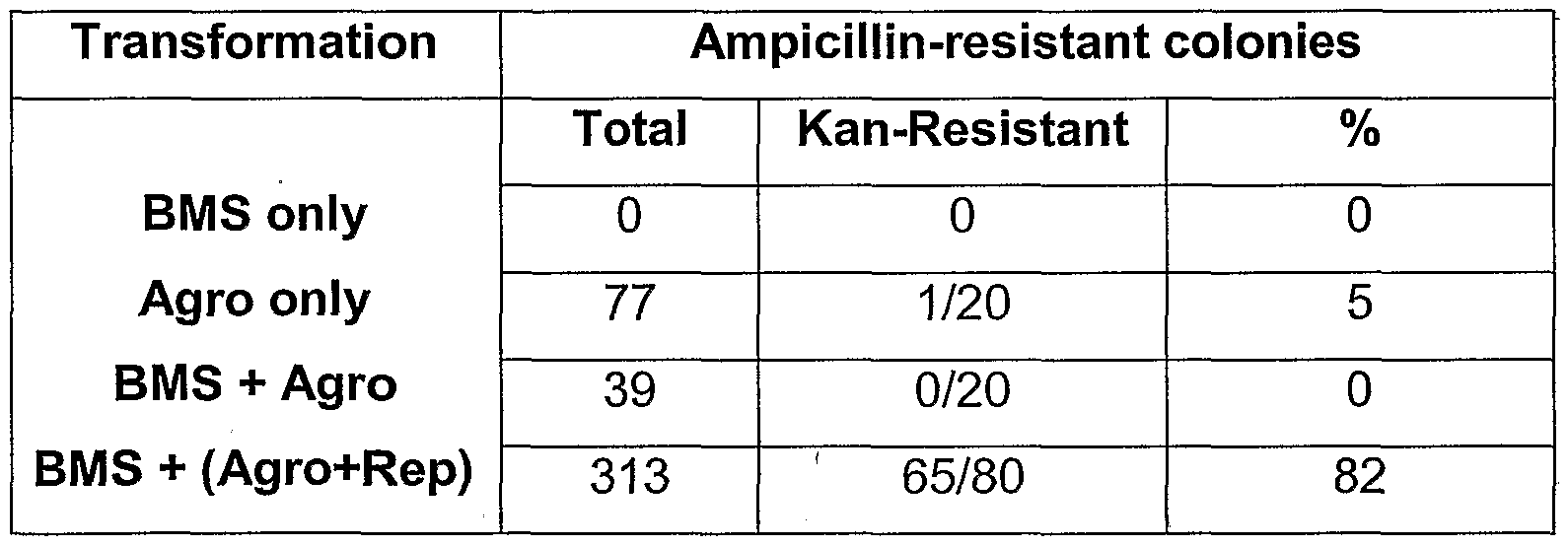


Claims
Priority Applications (5)
| Application Number | Priority Date | Filing Date | Title |
|---|---|---|---|
| CA2483891A CA2483891C (en) | 2002-05-03 | 2003-05-01 | Gene targeting using replicating dna molecules |
| EP03728646A EP1499720B1 (en) | 2002-05-03 | 2003-05-01 | Gene targeting using replicating dna molecules |
| DE60336124T DE60336124D1 (en) | 2002-05-03 | 2003-05-01 | GEN-TARGETING WITH REPLICATING DNA MOLECULES |
| AU2003234330A AU2003234330B2 (en) | 2002-05-03 | 2003-05-01 | Gene targeting using replicating DNA molecules |
| AT03728646T ATE499440T1 (en) | 2002-05-03 | 2003-05-01 | GENE TARGETING WITH REPLICATING DNA MOLECULES |
Applications Claiming Priority (2)
| Application Number | Priority Date | Filing Date | Title |
|---|---|---|---|
| US10/138,546 US7164056B2 (en) | 2002-05-03 | 2002-05-03 | Gene targeting using replicating DNA molecules |
| US10/138,546 | 2002-05-03 |
Publications (2)
| Publication Number | Publication Date |
|---|---|
| WO2003093428A2 true WO2003093428A2 (en) | 2003-11-13 |
| WO2003093428A3 WO2003093428A3 (en) | 2004-02-19 |
Family
ID=29269365
Family Applications (1)
| Application Number | Title | Priority Date | Filing Date |
|---|---|---|---|
| PCT/US2003/013642 Ceased WO2003093428A2 (en) | 2002-05-03 | 2003-05-01 | Gene targeting using replicating dna molecules |
Country Status (7)
| Country | Link |
|---|---|
| US (2) | US7164056B2 (en) |
| EP (1) | EP1499720B1 (en) |
| AT (1) | ATE499440T1 (en) |
| AU (1) | AU2003234330B2 (en) |
| CA (1) | CA2483891C (en) |
| DE (1) | DE60336124D1 (en) |
| WO (1) | WO2003093428A2 (en) |
Cited By (5)
| Publication number | Priority date | Publication date | Assignee | Title |
|---|---|---|---|---|
| WO2007059077A2 (en) | 2005-11-14 | 2007-05-24 | E.I.Du Pont De Nemours And Company | Compositions and methods for altering alpha- and beta-tocotrienol content |
| WO2008145757A1 (en) * | 2007-05-31 | 2008-12-04 | Vrije Universiteit Brussel | Targeted genome modifications in plants |
| WO2009055597A3 (en) * | 2007-10-25 | 2009-11-12 | Monsanto Technology Llc | Methods for identifying genetic linkage |
| WO2010084331A3 (en) * | 2009-01-26 | 2010-11-04 | Algentech Sas | Gene targeting in plants |
| US9193980B2 (en) | 2008-08-29 | 2015-11-24 | Riken | Triterpene oxidase derived from plant belonging to genus Glycyrrhiza, gene encoding the same, and method of using the same |
Families Citing this family (8)
| Publication number | Priority date | Publication date | Assignee | Title |
|---|---|---|---|---|
| DE10325814A1 (en) * | 2003-06-06 | 2004-12-23 | Icon Genetics Ag | Safe production of a desired product in hybrid seeds |
| PT1885176T (en) * | 2005-05-27 | 2016-11-28 | Monsanto Technology Llc | EVENT MON89788 OF SOYBEANS AND METHODS FOR ITS DETECTION |
| WO2010099320A1 (en) * | 2009-02-25 | 2010-09-02 | University Of Hawaii | Plant resistance to banana bunchy top virus |
| CA2877290A1 (en) | 2012-06-19 | 2013-12-27 | Daniel F. Voytas | Gene targeting in plants using dna viruses |
| KR101622090B1 (en) * | 2013-11-08 | 2016-05-18 | 엘지전자 주식회사 | Solar cell |
| US10323251B2 (en) * | 2014-02-19 | 2019-06-18 | National Research And Development Agency National Agriculture And Food Research Organization | Method utilizing piggybac transposon and transposase to introduce mutation into target DNA in a plant cell |
| JP2015185743A (en) * | 2014-03-25 | 2015-10-22 | シャープ株式会社 | photoelectric conversion element |
| CN108018306B (en) * | 2016-11-03 | 2021-06-01 | 中国科学院分子植物科学卓越创新中心 | Nucleic acid constructs for expressing foreign genes in plant cells and their applications |
Family Cites Families (39)
| Publication number | Priority date | Publication date | Assignee | Title |
|---|---|---|---|---|
| US5569597A (en) | 1985-05-13 | 1996-10-29 | Ciba Geigy Corp. | Methods of inserting viral DNA into plant material |
| US6147278A (en) | 1985-10-25 | 2000-11-14 | Monsanto Company | Plant vectors |
| US6376234B1 (en) | 1986-05-05 | 2002-04-23 | Ciba-Geigy | Method of inserting viral DNA into plant material |
| US5658772A (en) | 1989-12-22 | 1997-08-19 | E. I. Du Pont De Nemours And Company | Site-specific recombination of DNA in plant cells |
| US5225341A (en) | 1990-07-19 | 1993-07-06 | The Regents Of The University Of California | Biologically safe plant transformation system using a ds transposon |
| US5635381A (en) | 1992-02-26 | 1997-06-03 | Mogen International Nv | Agrobacterium bacteria capable of site-specific recombination |
| DE69332763T2 (en) * | 1992-12-30 | 2004-03-18 | Biosource Genetics Corp., Vacaville | VIRAL AMPLIFICATION OF RECOMBINANT MESSENGER RNA IN TRANSGENIC PLANTS |
| US5527695A (en) | 1993-01-29 | 1996-06-18 | Purdue Research Foundation | Controlled modification of eukaryotic genomes |
| JP4216350B2 (en) * | 1994-09-19 | 2009-01-28 | 大日本住友製薬株式会社 | Recombinant DNA viral vector for animal cell infection |
| US5801030A (en) * | 1995-09-01 | 1998-09-01 | Genvec, Inc. | Methods and vectors for site-specific recombination |
| FR2749857B1 (en) * | 1996-06-12 | 1998-08-14 | Centre Nat Rech Scient | GENERATION OF IN VIVO REPLICATIVE MOLECULES |
| US5928914A (en) | 1996-06-14 | 1999-07-27 | Albert Einstein College Of Medicine Of Yeshiva University, A Division Of Yeshiva University | Methods and compositions for transforming cells |
| AU3507297A (en) | 1996-06-26 | 1998-01-14 | Baylor College Of Medicine | Chromosomal rearrangement by insertion of two recombination substrates |
| CA2259158A1 (en) | 1996-07-09 | 1998-01-15 | The Government Of The United States Of America As Represented By The Sec Retary, Department Of Health And Human Services | Transformation-associated recombination cloning |
| JP2002511741A (en) | 1997-03-11 | 2002-04-16 | リージェンツ オブ ザ ユニバーシティ オブ ミネソタ | DNA-based transposon system for introducing nucleic acid into cell DNA |
| EP0981637B1 (en) | 1997-03-14 | 2005-05-25 | Biogen Idec Inc. | Method for integrating genes at specific sites in mammalian cells via homologous recombination and vectors for accomplishing the same |
| US6632980B1 (en) * | 1997-10-24 | 2003-10-14 | E. I. Du Pont De Nemours And Company | Binary viral expression system in plants |
| US6077992A (en) | 1997-10-24 | 2000-06-20 | E. I. Du Pont De Nemours And Company | Binary viral expression system in plants |
| EP1032693A1 (en) * | 1997-11-18 | 2000-09-06 | Pioneer Hi-Bred International, Inc. | A method for directional stable transformation of eukaryotic cells |
| US6262341B1 (en) | 1997-11-18 | 2001-07-17 | Pioneer Hi-Bred International, Inc. | Method for the integration of foreign DNA into eukaryotic genomes |
| EP1034286B1 (en) | 1997-11-18 | 2010-01-06 | Pioneer Hi-Bred International, Inc. | Mobilization of viral genomes from t-dna using site-specific recombination systems |
| US6759571B1 (en) | 1998-04-01 | 2004-07-06 | North Carolina State University | Method of suppressing gene expression in plants |
| AU5789199A (en) | 1998-08-28 | 2000-03-21 | Regents Of The University Of California, The | Transposon tagging and gene delivery in small grain cereals |
| US6284947B1 (en) | 1999-02-25 | 2001-09-04 | Pioneer Hi-Bred International, Inc. | Methods of using viral replicase polynucleotides and polypeptides |
| US6392121B1 (en) | 1998-10-07 | 2002-05-21 | Boyce Thompson Institute For Plant Research | Gemini virus vectors for gene expression in plants |
| CA2292798A1 (en) * | 1999-01-06 | 2000-07-06 | Nippon Paper Industries Co., Ltd. | Novel vector for introducing a gene into a plant using a selectable marker |
| WO2000075289A1 (en) | 1999-06-08 | 2000-12-14 | Rutgers, The State University | Compositions and methods for targeted gene insertion |
| WO2001011020A1 (en) * | 1999-08-05 | 2001-02-15 | Icon Genetics, Inc. | Method of making plant artificial chromosomes |
| CA2401677A1 (en) | 2000-03-03 | 2001-09-13 | University Of Utah Research Foundation | Gene targeting method |
| US6750379B2 (en) | 2000-03-09 | 2004-06-15 | Dekalb Genetics Corporation | Homologous recombination-mediated transgene alterations in plants |
| JP2003527864A (en) | 2000-03-21 | 2003-09-24 | マイノス バイオシステムズ リミテッド | Methods for producing transgenic organisms using transposons |
| US20020023278A1 (en) | 2000-05-08 | 2002-02-21 | Lyznik Leszek Alexander | Genetic transformation in plants using site-specific recombination and wide hybridization |
| US6551828B1 (en) | 2000-06-28 | 2003-04-22 | Protemation, Inc. | Compositions and methods for generating expression vectors through site-specific recombination |
| US7560622B2 (en) | 2000-10-06 | 2009-07-14 | Pioneer Hi-Bred International, Inc. | Methods and compositions relating to the generation of partially transgenic organisms |
| EP1362114B1 (en) | 2001-02-08 | 2012-05-09 | HER MAJESTY THE QUEEN IN RIGHT OF CANADA, as represented by the Minister of Agriculture and Agri-Food | Replicative in vivo gene targeting |
| CA2332186A1 (en) * | 2001-02-08 | 2002-08-08 | Her Majesty In Right Of Canada As Represented By The Minister Of Agricul Ture And Agri-Food Canada | Replicative in vivo gene targeting |
| DE10114209A1 (en) | 2001-03-23 | 2002-12-05 | Icon Genetics Ag | Site-directed transformation using amplification vectors |
| US6759587B2 (en) * | 2001-04-27 | 2004-07-06 | Hokushin Corporation | Thermoelectric materials, thermoelectric device, and method for producing thermoelectric materials |
| EP1572914B1 (en) | 2002-03-29 | 2012-06-06 | Syngenta Participations AG | Lambda integrase mediated recombination in plants |
-
2002
- 2002-05-03 US US10/138,546 patent/US7164056B2/en not_active Expired - Lifetime
-
2003
- 2003-05-01 AU AU2003234330A patent/AU2003234330B2/en not_active Ceased
- 2003-05-01 CA CA2483891A patent/CA2483891C/en not_active Expired - Fee Related
- 2003-05-01 DE DE60336124T patent/DE60336124D1/en not_active Expired - Lifetime
- 2003-05-01 WO PCT/US2003/013642 patent/WO2003093428A2/en not_active Ceased
- 2003-05-01 AT AT03728646T patent/ATE499440T1/en not_active IP Right Cessation
- 2003-05-01 EP EP03728646A patent/EP1499720B1/en not_active Expired - Lifetime
-
2006
- 2006-09-20 US US11/533,381 patent/US7608752B2/en not_active Expired - Lifetime
Cited By (7)
| Publication number | Priority date | Publication date | Assignee | Title |
|---|---|---|---|---|
| WO2007059077A2 (en) | 2005-11-14 | 2007-05-24 | E.I.Du Pont De Nemours And Company | Compositions and methods for altering alpha- and beta-tocotrienol content |
| WO2008145757A1 (en) * | 2007-05-31 | 2008-12-04 | Vrije Universiteit Brussel | Targeted genome modifications in plants |
| WO2009055597A3 (en) * | 2007-10-25 | 2009-11-12 | Monsanto Technology Llc | Methods for identifying genetic linkage |
| US9193980B2 (en) | 2008-08-29 | 2015-11-24 | Riken | Triterpene oxidase derived from plant belonging to genus Glycyrrhiza, gene encoding the same, and method of using the same |
| WO2010084331A3 (en) * | 2009-01-26 | 2010-11-04 | Algentech Sas | Gene targeting in plants |
| AU2010207572B2 (en) * | 2009-01-26 | 2016-09-01 | Algentech Sas | Gene targeting in plants |
| US10457950B2 (en) | 2009-01-26 | 2019-10-29 | Algentech Sas | Gene targeting in plants using a chimeric multi domain recombination protein |
Also Published As
| Publication number | Publication date |
|---|---|
| WO2003093428A3 (en) | 2004-02-19 |
| AU2003234330A1 (en) | 2003-11-17 |
| EP1499720B1 (en) | 2011-02-23 |
| ATE499440T1 (en) | 2011-03-15 |
| EP1499720A4 (en) | 2005-11-09 |
| CA2483891C (en) | 2013-03-19 |
| US20030208794A1 (en) | 2003-11-06 |
| AU2003234330B2 (en) | 2008-06-19 |
| CA2483891A1 (en) | 2003-11-13 |
| DE60336124D1 (en) | 2011-04-07 |
| US7608752B2 (en) | 2009-10-27 |
| US20070016980A1 (en) | 2007-01-18 |
| US7164056B2 (en) | 2007-01-16 |
| EP1499720A2 (en) | 2005-01-26 |
Similar Documents
| Publication | Publication Date | Title |
|---|---|---|
| US6825397B1 (en) | LEC1 trancriptional activator nucleic acids and methods of use thereof | |
| CA2348240C (en) | Transcriptional activator lec1 nucleic acids, polypeptides and their uses | |
| CA2483891C (en) | Gene targeting using replicating dna molecules | |
| CA2414471C (en) | Methods for enhancing plant transformation frequencies | |
| AU747844B2 (en) | Methods of using viral replicase polynucleotides and polypeptides | |
| US6777590B2 (en) | Cell cycle nucleic acids, polypeptides and uses thereof | |
| CA2436805A1 (en) | Cell cycle nucleic acids, polypeptides and uses thereof | |
| EP1356064B1 (en) | Transcriptional regulator nucleic acids, polypeptides and methods of use thereof | |
| US6770800B2 (en) | Methods of using viral replicase polynucleotides and polypeptides | |
| AU2002225890A1 (en) | Transcriptional regulator nucleic acids, polypeptides and methods of use thereof | |
| AU2003200679B2 (en) | Transcriptional Activator LEC1 Nucleic Acids, Polypeptides and Their Use | |
| US20080109925A1 (en) | Transcriptional Regulatory Nucleic Acids, Polypeptides and Methods of Use Thereof | |
| AU2001297744A1 (en) | Cell cycle nucleic acids, polypeptides and uses thereof |
Legal Events
| Date | Code | Title | Description |
|---|---|---|---|
| AK | Designated states |
Kind code of ref document: A2 Designated state(s): AE AG AL AM AT AU AZ BA BB BG BR BY BZ CA CH CN CO CR CU CZ DE DK DM DZ EC EE ES FI GB GD GE GH GM HR HU ID IL IN IS JP KE KG KP KR KZ LC LK LR LS LT LU LV MA MD MG MK MN MW MX MZ NI NO NZ OM PH PL PT RO RU SC SD SE SG SK SL TJ TM TN TR TT TZ UA UG UZ VC VN YU ZA ZM ZW |
|
| AL | Designated countries for regional patents |
Kind code of ref document: A2 Designated state(s): GH GM KE LS MW MZ SD SL SZ TZ UG ZM ZW AM AZ BY KG KZ MD RU TJ TM AT BE BG CH CY CZ DE DK EE ES FI FR GB GR HU IE IT LU MC NL PT RO SE SI SK TR BF BJ CF CG CI CM GA GN GQ GW ML MR NE SN TD TG |
|
| 121 | Ep: the epo has been informed by wipo that ep was designated in this application | ||
| WWE | Wipo information: entry into national phase |
Ref document number: 2003728646 Country of ref document: EP |
|
| WWE | Wipo information: entry into national phase |
Ref document number: 2483891 Country of ref document: CA |
|
| WWE | Wipo information: entry into national phase |
Ref document number: 2003234330 Country of ref document: AU |
|
| WWP | Wipo information: published in national office |
Ref document number: 2003728646 Country of ref document: EP |
|
| NENP | Non-entry into the national phase |
Ref country code: JP |
|
| WWW | Wipo information: withdrawn in national office |
Country of ref document: JP |