WO2003086327A2 - Radical polymerisation activator for the production of coloured non-toxic organic cements - Google Patents
Radical polymerisation activator for the production of coloured non-toxic organic cementsInfo
- Publication number
- WO2003086327A2 WO2003086327A2 PCT/FR2003/001211 FR0301211W WO03086327A2 WO 2003086327 A2 WO2003086327 A2 WO 2003086327A2 FR 0301211 W FR0301211 W FR 0301211W WO 03086327 A2 WO03086327 A2 WO 03086327A2
- Authority
- WO
- WIPO (PCT)
- Prior art keywords
- cement
- activator
- group
- polymerizable composition
- groups
- Prior art date
- Legal status (The legal status is an assumption and is not a legal conclusion. Google has not performed a legal analysis and makes no representation as to the accuracy of the status listed.)
- Ceased
Links
- 0 CC1(C)C=CC(N(C)*)=CC=C1 Chemical compound CC1(C)C=CC(N(C)*)=CC=C1 0.000 description 3
Classifications
-
- A—HUMAN NECESSITIES
- A61—MEDICAL OR VETERINARY SCIENCE; HYGIENE
- A61L—METHODS OR APPARATUS FOR STERILISING MATERIALS OR OBJECTS IN GENERAL; DISINFECTION, STERILISATION OR DEODORISATION OF AIR; CHEMICAL ASPECTS OF BANDAGES, DRESSINGS, ABSORBENT PADS OR SURGICAL ARTICLES; MATERIALS FOR BANDAGES, DRESSINGS, ABSORBENT PADS OR SURGICAL ARTICLES
- A61L24/00—Surgical adhesives or cements; Adhesives for colostomy devices
- A61L24/001—Use of materials characterised by their function or physical properties
-
- A—HUMAN NECESSITIES
- A61—MEDICAL OR VETERINARY SCIENCE; HYGIENE
- A61K—PREPARATIONS FOR MEDICAL, DENTAL OR TOILETRY PURPOSES
- A61K6/00—Preparations for dentistry
- A61K6/80—Preparations for artificial teeth, for filling teeth or for capping teeth
- A61K6/884—Preparations for artificial teeth, for filling teeth or for capping teeth comprising natural or synthetic resins
- A61K6/887—Compounds obtained by reactions only involving carbon-to-carbon unsaturated bonds
-
- A—HUMAN NECESSITIES
- A61—MEDICAL OR VETERINARY SCIENCE; HYGIENE
- A61L—METHODS OR APPARATUS FOR STERILISING MATERIALS OR OBJECTS IN GENERAL; DISINFECTION, STERILISATION OR DEODORISATION OF AIR; CHEMICAL ASPECTS OF BANDAGES, DRESSINGS, ABSORBENT PADS OR SURGICAL ARTICLES; MATERIALS FOR BANDAGES, DRESSINGS, ABSORBENT PADS OR SURGICAL ARTICLES
- A61L24/00—Surgical adhesives or cements; Adhesives for colostomy devices
- A61L24/04—Surgical adhesives or cements; Adhesives for colostomy devices containing macromolecular materials
- A61L24/06—Surgical adhesives or cements; Adhesives for colostomy devices containing macromolecular materials obtained by reactions only involving carbon-to-carbon unsaturated bonds
Definitions
- the present invention relates to the field of radical polymerization of acrylic or methacrylic monomers and relates more particularly to the preparation of colored polymers as well as non-toxic colored polymer cements, in particular usable in the medical field, without using conventional pigments.
- a field of application envisaged is in particular that of bone cements or dental cements but also that of cements used in vertebroplasty, for which the toxicity of the available compounds is a brake on the use of some of them which nevertheless have properties sealing and mechanical properties compatible with this application.
- the applications of the invention are not however limited to the medical field. They also extend to all areas where colored cements are sought, in particular for example that of building.
- Known bone cements are usually obtained by mixing on the one hand a solid phase generally consisting of poly (methyl methacrylate) or a copolymer based on methyl methacrylate in powder form and an organic initiator of the peroxide type.
- a liquid phase comprising at least one monomer, for example methyl methacrylate and an activator of the decomposition of said organic initiator.
- the solid and liquid phases are capable of being stored separately from each other and it is only when they are mixed during the production of the cement that the activator plays its role and accelerates decomposition.
- peroxide which forms free radicals capable of reacting with the monomers to induce the propagation of the polymerization reaction of the monomer.
- the polymerization time which is considerably reduced thanks to the presence of the activator, must remain long enough for the practitioner to mix and then seal the prosthetic device in the bone material.
- the polymerization of methacrylate forms a matrix in which are trapped the particles of polymethacrylate and other components such as in particular, a radio-opacifier and sometimes an antibiotic; the assembly constituting a solid possibly trapping the prosthetic elements and adhering to the internal and / or external bone walls.
- the peroxide decomposition accelerator hereinafter called activator, is usually dimethylparatoluidine (DMPT), a tertiary aromatic amine.
- DMPT dimethylparatoluidine
- This molecule is very toxic to humans and its small size -131g / mol- suggests that it can migrate into cement (US3,740,850) then into bone and end up being harmful for the carrier of the prosthesis over time.
- the substituent is of acetoxy type, which leads to an activation of the decomposition of BPO less than DMAPE (alcohol substituent), itself less than that of DMPT.
- DMAPE alcohol substituent
- a polymer-type support does not bring any additional interest.
- the bone cements usually used also have another drawback: the polymerization reaction of methyl methacrylate is exothermic and due to the confinement of the reaction medium, the polymerization self-accelerates, an effect known as the Tromsdorff effect. This leads to a rise in temperature in the cement placed, up to 90 ° C in some cases, while the proteins of the human body coagulate from 60 ° C.
- US Pat. No. 4,782,118 (1988) suggests adding an oligomer carrying glycidyl methacrylate functions in the solid phase and methylanilylglycidyl methacrylate as activator in the liquid phase.
- the oligomer is introduced to store part of the heat energy released by the polymerization of methyl methacrylate after activation of BPO (benzoyl peroxide).
- BPO benzoyl peroxide
- the activator after having played its role with BPO, can also participate in the polymerization via its reactive end.
- the glycidyl functions provided by the oligomer post-crosslink the cement thereafter.
- WO95 / 30480 describes the use of tertiary amines of high molecular weight to store the heat energy released by the radical polymerization and to avoid the migration of the amine then into the cement.
- tertiary pluriamines have been proposed, most with an acetoxy group in para of the benzenic nucleus or with a long spacer between tertiary aromatic amines.
- Certain amines carry a reactive double bond or are supported by a polymer of 2000 to 5000 g / mol, always with an acetoxy group in para of the benzenic nucleus.
- tertiary amines less toxic than DMPT have been described.
- Three tertiary amines (N, N-dimethyl-4-toluidine (DMPT), N, N-dimethylbenzyl alcohol (DMOH) and N, N- dimethylbenzyl methacrylate (DMMO)) were compared in terms of their toxicity and their potency d activation of BPO (Vazquez, B., Levenfeld, B., San Roman, X, Polym. Int. 1998, 4t _ ⁇ ), 241-250).
- Amines derived from dimethylbenzyl appear to have no mutagenic or cytotoxic effects, unlike DMPT; in addition, the maximum temperature reached when setting the cement is lower, which presents the tissues, especially with DMMO. The disadvantage is that the setting time increases, especially since the maximum temperature reached is low.
- Another activator was proposed in 1999 by the same authors: it is 4-N, N-dimethylaminobenzyl laurate (DML) (1 Biomed. Mater. Res. 1999, 48 (5), 719-725) . According to the authors, this activator is even less toxic than the previous ones and makes it possible to obtain satisfactory mechanical properties, with a reduced maximum temperature reached, but a longer setting time.
- tertiary amines generally used such as dimethylparatoluidine (DMPT) or dimethylaminophenylethanol
- DMPT dimethylparatoluidine
- dimethylaminophenylethanol is accompanied by a slight yellow coloration of the material obtained.
- the present invention proposes to remedy all the problems not resolved by the prior art and for this purpose proposes the use of an activator for decomposition of the radical initiator which, not only, is not liable to migrate in cement and which makes it possible to attenuate the thermal energy produced by the polymerization reaction, but also and above all which is not likely to lead to the formation of a cement having a color similar to that of bone.
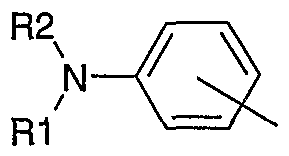
- the invention relates, according to a first essential characteristic, to a process for the preparation of a polymer, in particular a colored polymer cement, based on an acrylic or methacrylic monomer, said process being carried out by presence of a radical polymerization initiator of the peroxide type and of a decomposition activator of said radical polymerization initiator of the tertiary amine type, characterized in that said decomposition activator of said radical polymerization initiator comprises a tertiary amine corresponding to the formula (I):
- the group R3 is an electron-donor group by resonance comprising at least one aromatic group which is capable of forming with the radical:
- the groups RI and R2 are respectively and independently: • C1 to C16, preferably C1 to C5 alkyl groups, linear or branched,
- the invention relates to a polymerizable composition containing at least one acrylic or methacrylic monomer and at least one activator for decomposition of a radical polymerization initiator of the peroxide type, in which at least one activator meets the definition given above.
- the invention relates to an assembly for preparing a colored acrylic or methacrylic cement, in particular a bone, dental cement or a cement intended for use in vertebroplasty or else a cement intended for be used in building, comprising on the one hand a pulverulent product and a radical initiator of the peroxide type, and on the other hand a polymerizable composition as defined above.
- the invention relates to colored acrylic or methacrylic cements obtained by implementing the process which is the subject of the first characteristic of the invention, by mixing a polymerizable composition as defined above. above with a radical polymerization initiator of the peroxide type and a pulverulent product.
- the invention relates to the preparation of acrylic or methacrylic polymers, in particular colored or non-toxic acrylic or methacrylic cements.
- polymer or colored cement within the meaning of the invention is meant that the final product has a color distinctly different from that of the bone, this color resulting from the particular choice which is made according to the present invention from group R3 which must be a resonant electron-donor group comprising at least one aromatic group which is capable of forming with the radical:
- the molar mass of the activators of the invention is greater than that of dimethylparatoluidine so that they present less risk of migration in the cement and in the organism and are therefore less toxic.
- these tertiary amines give the mixture of monomers and radical initiator polymerization reaction rates similar to those obtained by dimethylparatoluidine without the overall temperature of the mixture reaching the same maximum values.
- the tertiary amine of formula (I) in which R3 is an electron donor group by resonance favorably activates the decomposition of the radical initiator. It will easily be understood that the presence of at least one aromatic group in the group R3 allows coloring during polymerization and contributes to increasing the mass of the amine.
- the activation will be better when the R3 groups include at least one tertiary amine linked to at least one of these aromatic groups.
- the preferred activators for the implementation of the process of the invention as well as for the other objects of the invention will be products of the tertiary polyamine type in which the various tertiary amine groups are carried by aromatic groups.
- this characteristic allows the surgeon on the one hand to be able to distinguish that the polymerization has indeed taken place and on the other hand to distinguish the product from a support whitish in color like bone.
- the aromatic group tends to increase the reactivity of tertiary nitrogen and therefore the kinetics of the initiation phase and consequently the overall speed of the polymerization reaction.
- the activator of formula (I) is a tertiary diamine of formula (I) in which the group R3 is of the form:
- - X ' is chosen from: CH 2 , O, OC 6 H 4 -O, NH, NR and
- R8 - R9 and R are respectively and independently:
- Linear or branched C1 to C16 preferably C1 to C5 alkyl groups, • C5 to C30, preferably C5 to C10 aryl or arylalkyl groups,
- TMB N, N, N ', N' tetramethylbenzidine
- the R3 group comprises at least two tertiary amines carried by two different aromatic rings.
- the group R3 is a group of the form:
- - X is chosen from: CH, N, and
- R4, R5, R6 and R7 are chosen from:
- a particularly advantageous activator according to this embodiment is:
- a tertiary amine of formula (I) is used in which R3 is a group of form:
- - XI and X2 being chosen from: N and CH, - RIO to R15 being independently:
- the various products of formula (I) used as activator according to the process of the present invention not only increase the molar mass of the tertiary amines which are the subject of the invention, which makes them less mobile and therefore less toxic than DMPT but also provide the desired coloring effect.
- the aromatic group R3 forms with the tertiary amine of formula (I) and in combination with the radical initiator a conjugated system capable of absorbing visible light from the electromagnetic spectrum. Obviously, the resulting color will depend on the wavelengths of the spectrum absorbed by the conjugate system.
- the activator responsible for coloring the polymer or the final cement is used in the presence of at least one other activator for decomposition of the radical polymerization initiator of tertiary amine type, said additional activator, in particular with the aim of reducing the toxicity which the second activator could confer alone or to reduce the maximum temperature reached during the polymerization, while benefiting from the property of the activators of the invention of imparting a coloration clean with polymers and cements obtained according to the process of the invention.
- the proportions of the activator (or activators) according to the invention and of the other activators may vary within very wide ranges, the quantity of activator according to the invention being however sufficient to impart a clear coloring to the polymer or to the cement. during and after the polymerization of the monomer.
- DMPT is widely used today and its formulation in cement is something well known to those skilled in the art. It appeared to the inventors of the present invention that by replacing at least a few percent of DMPT with the molar equivalent of a tertiary amine of formula (I) according to the invention, the coloration of the polymer product, in particular of cement, while retaining the same setting kinetics and equivalent mechanical properties. In fact, the amines do not activate the breakdown of peroxide at exactly the same speed and by mixing several, the setting speed of the cement can be adjusted, with the disadvantage that this requires a new development phase. It is therefore understandable that it can be very advantageous to obtain a clear coloring without having to considerably change the conditions of the polymerization process.
- dimethylaminophenylethanol which, too, is currently used as an activator for decomposition of peroxides but which, too, like DMPT can be used in combination in wide ranges of proportions with the tertiary amines of formula (I ) used according to the invention with the same advantages.
- the amine used according to the invention corresponding to formula (I) will be used in combination with DMPT or dimethylaminophenylethanol, or with one of their mixtures, the proportions of the different types of activator can vary within very large proportions, the proportion of tertiary amine of family (I) remaining, however, greater than or equal to 5 mol% relative to all the activators to ensure the desired coloring function.
- other associations prove to be particularly useful for implementing the process of the invention and, in particular all associations with tertiary amines of the amino polymer type which make it possible to considerably reduce the maximum temperature reached during polymerization. , which allows for medical applications, to preserve the tissues.
- R16 and R17 are independently:
- These polymers can be obtained by amination of a poly (styrene-co-bromostyrene) copolymer itself obtained by bromination of a polystyrene according to a process inspired by those described in the publications of Camps M., Montheard JP, Bonrokia F. , Camps JM, Pham QT, Eur. Polym. 1, 26 (1), 53 (1990) and Heaney H., Chem. Rev., 62, 81 (1962))
- the polymer of formula (II) is a tertiary amine having a large molar mass so that it does not risk migrating into a solid phase constituted by bone cement, but also the skeleton of the chain of this polymer is inductive. donor on the benzenic nucleus comprising the tertiary amine so that the reactivity of tertiary nitrogen is increased.
- DMPT which is the most widely used amine today, is inherently toxic and, due to its size, it can migrate in cement over time. By mixing it with a less toxic amine, the toxicity of the entire cement is reduced.
- the radical polymerization initiator is a peroxide of the benzoyl peroxide type.
- the tertiary nitrogen of the activator can act directly on an oxygen of the peroxide to initially form a first radical comprising a free electron on the other oxygen which is terminal and which is capable of acting on the monomer for start the polymerization reaction.
- tertiary nitrogen is capable of acting as oxygen directly on the carbon to form radicals.
- the present invention provides a polymerizable composition containing at least one acrylic or methacrylic monomer and an activator for the decomposition of a radical polymerization initiator of the peroxide type in which said activator comprises a product corresponding to formula (I) in all the variants described above.
- this activator is used in combination with a second decomposition activator of the radical polymerization initiator as also described above.
- the polymerizable composition forms a single stable liquid phase which can be stored and conditioned in this form and whose monomer can only react in the presence of a radical initiator which will be activated by the activator of the invention contained in the liquid phase.
- the polymerizable composition containing the activator according to the invention is capable of being mixed with a solid phase containing a polymer in powder form and a radical initiator to form a cement having all the characteristics set out above; that is to say, a cement whose activator, said tertiary amine, does not migrate, whose temperature is lower than that which is reached with the activators of the prior art and whose color is distinct from the color of the bone material, all of these characteristics being combined without reducing the mechanical characteristics of the hardened cement.
- Yet another object of the present invention relates to an assembly for preparing a colored acrylic or methacrylic cement, in particular a bone, dental cement or a cement intended for use in vertebroplasty or else a cement intended to be used in building, comprising on the one hand a pulverulent product and a radical initiator of the peroxide type, and on the other hand a polymerizable composition as defined in any one of the claims as defined above.
- the assembly initially comprises two phases isolated from each other in two separate containers, a first solid phase containing the pulverulent product and the radical initiator, and a phase, hereinafter called the monomer phase, containing the monomer and l activator capable of activating the decomposition of the radical initiator. It is only at the time of use that the operator mixes the two phases of methyl methacrylate, to prepare the cement and that he applies it, for example, to seal any prosthesis in a bone or dental cavity. . As soon as the monomer phase is intimately mixed with the solid phase, the decomposition of the radical initiator by the activator takes place and this priming step makes it possible to provide free radicals.
- the latter are capable of reacting on the monomer so that, in a propagation step, the polymerization takes place.
- the overall speed of the polymerization process and therefore of hardening or setting of the cement, after the phases have been mixed, is obviously compatible with the time necessary for the implementation and installation of a prosthetic device.
- the pulverulent product is based on polymers and copolymers based on methyl methacrylate, of small particle size and said radical initiator is a peroxide, for example benzoyl peroxide (BPO) .
- BPO benzoyl peroxide
- the colored cements of the invention find, due to their reduced toxicity and the moderate nature of the exothermicity of the polymerization reaction, numerous applications in the medical field, and very particularly as bone cement, dental cement or in the field of vertebroplasty.
- the mass composition of the solid phase is as follows: approximately 90% of powder of polymers and copolymers based on MMA, 1% of BPO (radical initiator) and 9% of radio-opacifier (oxide of zirconium or barium sulfate).
- the mass composition of the monomer phase is advantageously 98% of methacrylic monomers.
- the proportion of monomer phase relative to the solid phase is generally 30 to 40% (or approximately 70% of solid phase in the whole cement).
- the advantage of coloring cement in the medical field is, on the one hand, to assure the surgeon that polymerization runs smoothly and, on the other hand, to be able to clearly distinguish cement from bone or dental material, which greatly facilitates a number of operations for the practitioner, especially during a recovery intervention.
- the colored cements of the invention also find particularly interesting applications in the building industry, in particular for sealing elements.
- the monomer consists of a mixture of two monomers, methyl methacrylate (MMA) and butyl methacrylate (BuMA).
- the solid phase consists of polymethyl methacrylate (PMMA) particles in powder form, the particle size of which is essentially between 20 and 130 ⁇ m and preferably between 50 and
- This is one of the advantages of the invention since the bone cement is then distinguished from the bone which is whitish, and can be removed, from the bone wall, in a later stage, by means of a cutter for example, without risk of damaging said bone wall.
- the hardening of the cement is obtained after approximately 10 minutes, just like the cements formulated with activators of the prior art. at. Leuco-based cement setting kinetics
- the setting times are the same when they are made under the same initial temperature conditions; depending on the tests, the setting time can vary by almost a minute and the temperature reached depends on where the probe is planted in the cement. b. Mechanical properties
- the mechanical properties of the cement thus obtained are comparable to those of the cements obtained according to the same formulation in which the activator of the decomposition of the radical polymerization initiator is dimethylparatoluidine (DMPT) usually used in the prior art.
- DMPT dimethylparatoluidine
- the cytotoxicity test was carried out in direct contact with the bone cement, according to ISO 10993-5 and EN 30993-5:
- the test in direct contact on the bone cement made from the product prepared in the presence of DMPT leads to the conclusion of cytotoxicity of the product (value of 2 corresponding to a loss of 20 to 39% of cell density compared to the negative test, on a scale of 0 to 5, on which the value 5 corresponds to more than 80% of cell density), while bone cement made from leuco crystal violet is not.
- composition of the solid phase 41.7g PMMA (homogeneous particle size (50-80 ⁇ m)), 0.5g of BPO, 4.3g ZrO2,
- the setting times are the same when they are made under the same initial temperature conditions.
- test specimens are produced and tested in compression according to ISO5833 standard. The results are as follows:
- the cement obtained with TMB is non-toxic, brown / yellow in color, however, the mechanical results are less interesting than the previous cement.
- This polymer is prepared by bromination of a polystyrene in a process analogous to those described in the publications of Camps M., Montheard JP, Bonrokia F., Camps JM,
- test pieces are produced and tested according to ISO5833 standard. The results are as follows:
- the kit comprises a first container in which is housed a pulverulent product based on polymethyl methacrylate and benzoyl peroxide as initiator of radical polymerization; and in a second containing a polymerizable composition consisting of methyl methacrylate as monomer and as activator of decomposition of a radical initiator a tertiary amine of formula:
- the two containers of the preparation kit are capable of being stored and marketed together, without the polymerizable composition being able to react; it is only after having thoroughly mixed the contents of the two containers together, that the cement thus formulated can be applied in a bone cavity to seal a prosthesis.
- the polymerization reaction obviously begins when said tertiary amine has activated the benzoyl peroxide which itself initiated the reaction.
- the formulation of the compounds used is such that the cement gradually hardens so that the operator can proceed with the fitting of a prosthesis and filling the bone cavity with said cement in pasty form.
Landscapes
- Health & Medical Sciences (AREA)
- Animal Behavior & Ethology (AREA)
- Veterinary Medicine (AREA)
- Public Health (AREA)
- General Health & Medical Sciences (AREA)
- Epidemiology (AREA)
- Life Sciences & Earth Sciences (AREA)
- Surgery (AREA)
- Chemical & Material Sciences (AREA)
- Oral & Maxillofacial Surgery (AREA)
- Materials Engineering (AREA)
- Engineering & Computer Science (AREA)
- Plastic & Reconstructive Surgery (AREA)
- Chemical Kinetics & Catalysis (AREA)
- Materials For Medical Uses (AREA)
- Dental Preparations (AREA)
Abstract
Description
Activateur de polymérisation radicalaire permettant l'obtention de ciments organiques colorés et non toxiquesRadical polymerization activator for obtaining colored and non-toxic organic cements
La présente invention concerne le domaine de la polymérisation radicalaire des monomères acryliques ou méthacryliques et vise plus particulièrement la préparation de polymères colorés ainsi que de ciments polymères colorés non toxiques, notamment utilisables dans le domaine médical, sans avoir recours à des pigments classiques.The present invention relates to the field of radical polymerization of acrylic or methacrylic monomers and relates more particularly to the preparation of colored polymers as well as non-toxic colored polymer cements, in particular usable in the medical field, without using conventional pigments.
Un domaine d'application envisagé est notamment celui des ciments osseux ou des ciments dentaires mais aussi celui des ciments utilisés en vertebroplastie, pour lesquels la toxicité des composés disponibles est un frein à l'utilisation de certains d'entre eux qui présentent néanmoins des propriétés de scellement et des propriétés mécaniques compatibles avec cette application.A field of application envisaged is in particular that of bone cements or dental cements but also that of cements used in vertebroplasty, for which the toxicity of the available compounds is a brake on the use of some of them which nevertheless have properties sealing and mechanical properties compatible with this application.
Les applications de l'invention ne sont toutefois pas limitées au domaine médical. Elles s'étendent également à tous les domaines où l'on recherche des ciments colorés, en particulier par exemple à celui du bâtiment.The applications of the invention are not however limited to the medical field. They also extend to all areas where colored cements are sought, in particular for example that of building.
Les ciments osseux connus sont habituellement obtenus par mélange d'une part d'une phase solide constituée généralement de poly(méthacrylate de méthyle) ou d'un copolymère à base de méthacrylate de méthyle sous forme pulvérulente et d'un amorceur organique de type peroxyde, et d'autre part d'une phase liquide comprenant au moins un monomère, par exemple le méthacrylate de méthyle et un activateur de la décomposition dudit amorceur organique. Ainsi, les phases solide et liquide sont susceptibles d'être stockées séparément l'une de l'autre et ce n'est que lorsqu'elles sont mélangées au cours de la réalisation du ciment que l'activateur joue son rôle et accélère la décomposition du peroxyde, lequel forme des radicaux libres susceptibles de réagir avec les monomères pour induire la propagation de la réaction de polymérisation du monomère. Bien évidemment, le temps de polymérisation qui est considérablement réduit grâce à la présence de l'activateur, doit demeurer suffisamment long pour que le praticien puisse mélanger puis sceller le dispositif prothétique dans la matière osseuse. De la sorte la polymérisation du méthacrylate forme une matrice dans laquelle sont emprisonnées les particules de polyméthacrylate et d'autres composants tels que notamment, un radio-opacifiant et parfois un antibiotique ; l'ensemble constituant un solide emprisonnant éventuellement les éléments prothétiques et adhérant sur les parois osseuses internes et/ou externe. ETAT DE L'ARTKnown bone cements are usually obtained by mixing on the one hand a solid phase generally consisting of poly (methyl methacrylate) or a copolymer based on methyl methacrylate in powder form and an organic initiator of the peroxide type. , and on the other hand a liquid phase comprising at least one monomer, for example methyl methacrylate and an activator of the decomposition of said organic initiator. Thus, the solid and liquid phases are capable of being stored separately from each other and it is only when they are mixed during the production of the cement that the activator plays its role and accelerates decomposition. peroxide, which forms free radicals capable of reacting with the monomers to induce the propagation of the polymerization reaction of the monomer. Obviously, the polymerization time, which is considerably reduced thanks to the presence of the activator, must remain long enough for the practitioner to mix and then seal the prosthetic device in the bone material. In this way the polymerization of methacrylate forms a matrix in which are trapped the particles of polymethacrylate and other components such as in particular, a radio-opacifier and sometimes an antibiotic; the assembly constituting a solid possibly trapping the prosthetic elements and adhering to the internal and / or external bone walls. STATE OF THE ART
L'accélérateur de décomposition du peroxyde, ci-après appelé activateur est habituellement la diméthylparatoluidine (DMPT), une aminé aromatique tertiaire. Cette molécule est très toxique pour l'être humain et sa petite taille -131g/mol- porte à penser qu'elle peut migrer dans le ciment (US3,740,850) puis dans l'os et finir par être préjudiciable pour le porteur de la prothèse dans le temps.The peroxide decomposition accelerator, hereinafter called activator, is usually dimethylparatoluidine (DMPT), a tertiary aromatic amine. This molecule is very toxic to humans and its small size -131g / mol- suggests that it can migrate into cement (US3,740,850) then into bone and end up being harmful for the carrier of the prosthesis over time.
Plusieurs brevets ont été déposés pour tenter de remplacer cet activateur par une molécule moins toxique. Par exemple, les inventeurs du brevet US4,284,551, déposé en 1981, montrent que les dérivés du para- aminophényléthanol (DMAPE) peuvent être de bons candidats à l'activation du peroxyde de benzoyle (BPO) à température ambiante. La réactivité de ces dérivés dépend très peu de la taille des substituants portés par l'atome d'azote (groupe méthyle dans le cas de la DMAPE), mais elle dépend beaucoup du substituant en para du cycle benzenique. Dans les dérivés proposés dans ce brevet, le substituant est de type acétoxy, ce qui entraîne une activation de la décomposition du BPO inférieure au DMAPE (substituant alcool), elle-même inférieure à celle de la DMPT. Un support de type polymère n'apporte pas d'intérêt supplémentaire d'après les auteurs. Les ciments osseux utilisés habituellement présentent également un autre inconvénient : la réaction de polymérisation du méthacrylate de méthyle est exothermique et du fait du confinement du milieu réactionnel, la polymérisation s'auto-accélère, effet connu sous le nom d'effet Tromsdorff. Ceci entraîne une montée en température dans le ciment mis en place , jusqu'à 90°C dans certains cas, alors que les protéines du corps humain coagulent à partir de 60°C. Les nécroses engendrées pourraient être évitées si la polymérisation utilisée était moins exothermique. Le brevet US4,782,118 (1988) suggère d'ajouter un oligomère porteur de fonctions méthacrylate de glycidyle dans la phase solide et le méthacrylate de méthylanilylglycidyle comme activateur dans la phase liquide. L'oligomère est introduit pour emmagasiner une partie de l'énergie calorifique dégagée par la polymérisation du méthacrylate de méthyle après l'activation du BPO (peroxyde de benzoyle). L'activateur, après avoir joué son rôle auprès du BPO, peut participer lui aussi à la polymérisation via son extrémité réactive. Les fonctions glycidyle apportées par l'oligomère viennent post-réticuler le ciment par la suite.Several patents have been filed in an attempt to replace this activator with a less toxic molecule. For example, the inventors of US Pat. No. 4,284,551, filed in 1981, show that the para-aminophenylethanol derivatives (DMAPE) can be good candidates for the activation of benzoyl peroxide (BPO) at room temperature. The reactivity of these derivatives depends very little on the size of the substituents carried by the nitrogen atom (methyl group in the case of DMAPE), but it very much depends on the substituent in para of the benzenic cycle. In the derivatives proposed in this patent, the substituent is of acetoxy type, which leads to an activation of the decomposition of BPO less than DMAPE (alcohol substituent), itself less than that of DMPT. According to the authors, a polymer-type support does not bring any additional interest. The bone cements usually used also have another drawback: the polymerization reaction of methyl methacrylate is exothermic and due to the confinement of the reaction medium, the polymerization self-accelerates, an effect known as the Tromsdorff effect. This leads to a rise in temperature in the cement placed, up to 90 ° C in some cases, while the proteins of the human body coagulate from 60 ° C. The necrosis caused could be avoided if the polymerization used was less exothermic. US Pat. No. 4,782,118 (1988) suggests adding an oligomer carrying glycidyl methacrylate functions in the solid phase and methylanilylglycidyl methacrylate as activator in the liquid phase. The oligomer is introduced to store part of the heat energy released by the polymerization of methyl methacrylate after activation of BPO (benzoyl peroxide). The activator, after having played its role with BPO, can also participate in the polymerization via its reactive end. The glycidyl functions provided by the oligomer post-crosslink the cement thereafter.
La demande internationale WO95/30480 décrit l'utilisation d'aminés tertiaires à haut poids moléculaire pour emmagasiner l'énergie calorifique dégagée par la polymérisation radicalaire et éviter la migration de l'aminé ensuite dans le ciment. Plusieurs pluriamines tertiaires ont été proposées, la plupart avec un groupement acétoxy en para du noyau benzenique ou avec un espaceur long entre aminés aromatiques tertiaires. Certaines aminés portent une double liaison réactive ou sont supportées par un polymère de 2000 à 5000g/mol, toujours avec un groupement acétoxy en para du noyau benzenique. Les résultats montrent que la cinétique de polymérisation en présence de ce dernier activateur est plus lente que dans le cas de la DMPT, mais l'exothermie est beaucoup moins importante. Ce phénomène avait déjà été décrit dans le brevet EP0383595 où des particules de polymère réticulé étaient incorporées à la phase solide pour dissiper l'énergie calorifique dégagée lors de la polymérisation en présence de DMPT.The international application WO95 / 30480 describes the use of tertiary amines of high molecular weight to store the heat energy released by the radical polymerization and to avoid the migration of the amine then into the cement. Several tertiary pluriamines have been proposed, most with an acetoxy group in para of the benzenic nucleus or with a long spacer between tertiary aromatic amines. Certain amines carry a reactive double bond or are supported by a polymer of 2000 to 5000 g / mol, always with an acetoxy group in para of the benzenic nucleus. The results show that the polymerization kinetics in the presence of this latter activator is slower than in the case of DMPT, but the exotherm is much less significant. This phenomenon had already been described in patent EP0383595 where particles of crosslinked polymer were incorporated into the phase solid to dissipate the heat energy released during polymerization in the presence of DMPT.
Plus récemment, des aminés tertiaires moins toxiques que la DMPT, d'après les auteurs, ont été décrites. Trois aminés tertiaires (N,N- diméthyl-4-toluidine (DMPT), N,N-diméthylbenzyl alcool (DMOH) et N,N- diméthylbenzyl méthacrylate (DMMO)) ont été comparées au niveau de leur toxicité et de leur pouvoir d'activation du BPO (Vazquez, B., Levenfeld, B., San Roman, X, Polym. Int. 1998, 4t _\), 241-250). Il semblerait que les aminés dérivées du diméthylbenzyl ne présentent pas d'effets mutagene ni cytotoxiques, contrairement à la DMPT ; de plus, la température maximale atteinte lors de la prise du ciment est moindre, ce qui présente les tissus, surtout avec la DMMO. L'inconvénient est que le temps de prise augmente, d'autant plus que la température maximale atteinte est basse. Un autre activateur a été est proposé en 1999 par les mêmes auteurs : il s'agit de la 4-N,N-diméthylaminobenzyl laurate (DML) (1 Biomed. Mater. Res. 1999, 48(5), 719-725). D'après les auteurs, cet activateur est encore moins toxique que les précédents et permet d'obtenir des propriétés mécaniques satisfaisantes, avec une température maximale atteinte réduite, mais un temps de prise plus long.More recently, tertiary amines less toxic than DMPT, according to the authors, have been described. Three tertiary amines (N, N-dimethyl-4-toluidine (DMPT), N, N-dimethylbenzyl alcohol (DMOH) and N, N- dimethylbenzyl methacrylate (DMMO)) were compared in terms of their toxicity and their potency d activation of BPO (Vazquez, B., Levenfeld, B., San Roman, X, Polym. Int. 1998, 4t _ \), 241-250). Amines derived from dimethylbenzyl appear to have no mutagenic or cytotoxic effects, unlike DMPT; in addition, the maximum temperature reached when setting the cement is lower, which presents the tissues, especially with DMMO. The disadvantage is that the setting time increases, especially since the maximum temperature reached is low. Another activator was proposed in 1999 by the same authors: it is 4-N, N-dimethylaminobenzyl laurate (DML) (1 Biomed. Mater. Res. 1999, 48 (5), 719-725) . According to the authors, this activator is even less toxic than the previous ones and makes it possible to obtain satisfactory mechanical properties, with a reduced maximum temperature reached, but a longer setting time.
Ainsi, différentes tentatives ont été réalisées à ce jour notamment pour diminuer la toxicité des ciments et le caractère exothermique des réactions de polymérisation mises en œuvre.Thus, various attempts have been made to date, in particular to reduce the toxicity of cements and the exothermic nature of the polymerization reactions implemented.
Par ailleurs, la prise du ciment en présence des aminés tertiaires, généralement utilisées comme la dimethylparatoluidine (DMPT) ou le diméthylaminophényléthanol, s'accompagne d'une légère coloration jaune du matériau obtenu. Ainsi, lorsque le ciment a définitivement pris, il est difficile de le distinguer de l'os, de sorte que toute tentative de descellement au moyen d'une fraise, sans endommager la partie osseuse est rendue délicate. La présente invention propose de remédier à l'ensemble des problèmes non résolus par l'art antérieur et propose à cet effet l'utilisation d'un activateur de décomposition de l'amorceur radicalaire qui, non seulement, ne soit pas susceptible de migrer dans le ciment et qui permette d'atténuer l'énergie thermique produite par la réaction de polymérisation, mais, aussi et surtout qui ne soit pas susceptible de conduire à la formation d'un ciment présentant une couleur similaire à celle de l'os.Furthermore, the setting of the cement in the presence of tertiary amines, generally used such as dimethylparatoluidine (DMPT) or dimethylaminophenylethanol, is accompanied by a slight yellow coloration of the material obtained. Thus, when the cement has definitively set, it is difficult to distinguish it from the bone, so that any attempt to loosen it by means of a cutter without damaging the bone part is made delicate. The present invention proposes to remedy all the problems not resolved by the prior art and for this purpose proposes the use of an activator for decomposition of the radical initiator which, not only, is not liable to migrate in cement and which makes it possible to attenuate the thermal energy produced by the polymerization reaction, but also and above all which is not likely to lead to the formation of a cement having a color similar to that of bone.
Plus précisément, l'invention concerne, selon une première caractéristique essentielle, un procédé de préparation d'un polymère, en particulier d'un ciment polymère, coloré, à base d'un monomère acrylique ou méthacrylique, ledit procédé étant mis en œuvre en présence d'un amorceur de polymérisation radicalaire de type peroxyde et d'un activateur de décomposition dudit amorceur de polymérisation radicalaire, de type aminé tertiaire, caractérisé en ce que ledit activateur de décomposition dudit amorceur de polymérisation radicalaire comprend une aminé tertiaire répondant à la formule (I) :More precisely, the invention relates, according to a first essential characteristic, to a process for the preparation of a polymer, in particular a colored polymer cement, based on an acrylic or methacrylic monomer, said process being carried out by presence of a radical polymerization initiator of the peroxide type and of a decomposition activator of said radical polymerization initiator of the tertiary amine type, characterized in that said decomposition activator of said radical polymerization initiator comprises a tertiary amine corresponding to the formula (I):

- le groupe R3 est un groupe électro-donneur par résonance comprenant au moins un groupe aromatique qui est susceptible de former avec le radical :the group R3 is an electron-donor group by resonance comprising at least one aromatic group which is capable of forming with the radical:
• des groupes aryle ou arylalkyle en C5 à C30, de préférence en C5 à CIO,• C5 to C30, preferably C5 to C10 aryl or arylalkyl groups,
• des groupes alkylidène en C2 à C15, de préférence en C2 à C5.• C2 to C15 alkylidene groups, preferably C2 to C5.
Par mesure de simplification, on désignera ci-après ces aminés de formule (I) par activateur de l'invention.By way of simplification, these amines of formula (I) will be designated below by activator of the invention.
Selon une deuxième caractéristique essentielle, l'invention concerne une composition polymerisable contenant au moins un monomère acrylique ou méthacrylique et au moins un activateur de décomposition d'un amorceur de polymérisation radicalaire de type peroxyde, dans laquelle au moins un activateur répond à la définition donnée ci-dessus.According to a second essential characteristic, the invention relates to a polymerizable composition containing at least one acrylic or methacrylic monomer and at least one activator for decomposition of a radical polymerization initiator of the peroxide type, in which at least one activator meets the definition given above.
Selon une troisième caractéristique essentielle, l'invention concerne un ensemble de préparation d'un ciment acrylique ou méthacrylique coloré, notamment d'un ciment osseux, dentaire ou d'un ciment destiné à une utilisation en vertebroplastie ou encore d'un ciment destiné à être utilisé dans le bâtiment, comprenant d'une part un produit pulvérulent et un amorceur radicalaire de type peroxyde, et d'autre part une composition polymerisable telle que définie ci-dessus.According to a third essential characteristic, the invention relates to an assembly for preparing a colored acrylic or methacrylic cement, in particular a bone, dental cement or a cement intended for use in vertebroplasty or else a cement intended for be used in building, comprising on the one hand a pulverulent product and a radical initiator of the peroxide type, and on the other hand a polymerizable composition as defined above.
Enfin, selon sa dernière caractéristique, l'invention concerne des ciments acryliques ou méthacryliques colorés obtenus par mise en œuvre du procédé qui fait l'objet de la première caractéristique de l'invention, par mélange d'une composition polymerisable telle que définie ci-dessus avec un amorceur de polymérisation radicalaire de type peroxyde et un produit pulvérulent. Comme exposé précédemment, l'invention vise la préparation de polymères acryliques ou méthacryliques, en particulier de ciments acryliques ou méthacryliques colorés et non toxiques pour l'organisme.Finally, according to its last characteristic, the invention relates to colored acrylic or methacrylic cements obtained by implementing the process which is the subject of the first characteristic of the invention, by mixing a polymerizable composition as defined above. above with a radical polymerization initiator of the peroxide type and a pulverulent product. As previously stated, the invention relates to the preparation of acrylic or methacrylic polymers, in particular colored or non-toxic acrylic or methacrylic cements.
Elle vise tout particulièrement des ciments colorés non toxiques présentant des temps de prise et une température maximale de prise lors de leur élaboration compatibles avec une utilisation dans le domaine médical.It particularly relates to non-toxic colored cements having setting times and a maximum setting temperature during their preparation compatible with use in the medical field.
Par polymère ou ciment coloré au sens de l'invention, on entend que le produit final présente une couleur nettement différente de celle de l'os, cette couleur résultant du choix particulier qui est fait selon la présente invention du groupe R3 qui doit être un groupe électro-donneur par résonance comprenant au moins un groupe aromatique qui est susceptible de former avec le radical :By polymer or colored cement within the meaning of the invention is meant that the final product has a color distinctly different from that of the bone, this color resulting from the particular choice which is made according to the present invention from group R3 which must be a resonant electron-donor group comprising at least one aromatic group which is capable of forming with the radical:

La masse molaire des activateurs de l'invention est supérieure à celle de la dimethylparatoluidine de sorte qu'ils présentent moins de risque de migration dans le ciment et dans l'organisme et sont donc moins toxiques. En outre, ces aminés tertiaires confèrent au mélange de monomères et d'amorceur radicalaire des vitesses de réaction de polymérisation analogues à celles que procure la dimethylparatoluidine sans que la température globale du mélange n'atteigne les mêmes valeurs maximales.The molar mass of the activators of the invention is greater than that of dimethylparatoluidine so that they present less risk of migration in the cement and in the organism and are therefore less toxic. In addition, these tertiary amines give the mixture of monomers and radical initiator polymerization reaction rates similar to those obtained by dimethylparatoluidine without the overall temperature of the mixture reaching the same maximum values.
Par ailleurs, l'aminé tertiaire de formule (I) dans laquelle R3 est un groupe électro-donneur par résonance active favorablement la décomposition de l'amorceur radicalaire. On comprendra aisément que la présence d'au moins un groupe aromatique dans le groupement R3 permet la coloration en cours de polymérisation et contribue à augmenter la masse de l'aminé.Furthermore, the tertiary amine of formula (I) in which R3 is an electron donor group by resonance favorably activates the decomposition of the radical initiator. It will easily be understood that the presence of at least one aromatic group in the group R3 allows coloring during polymerization and contributes to increasing the mass of the amine.
Par ailleurs, l'activation sera meilleure lorsque les groupements R3 comprendront au moins une aminé tertiaire liée à au moins un de ces groupes aromatiques.Furthermore, the activation will be better when the R3 groups include at least one tertiary amine linked to at least one of these aromatic groups.
Ainsi, les activateurs préférés pour la mise en œuvre du procédé de l'invention ainsi que pour les autres objets de l'invention seront des produits de type polyamine tertiaire dans lesquels les différents groupements aminé tertiaire sont portés par des groupes aromatiques.Thus, the preferred activators for the implementation of the process of the invention as well as for the other objects of the invention will be products of the tertiary polyamine type in which the various tertiary amine groups are carried by aromatic groups.
Dès que l'activateur et l'amorceur radicalaire sont en contact l'un de l'autre et que la phase d'amorçage de la réaction est en cours, l'ensemble se colore et cette coloration persiste après que la réaction soit terminée. De la sorte, comme on l'expliquera plus en détail dans la suite de la description, cette caractéristique permet d'une part au chirurgien de pouvoir distinguer que la polymérisation a bien lieu et d'autre part de distinguer le produit d'un support de couleur blanchâtre comme l'os. Par ailleurs, le groupe aromatique tend à accroître la réactivité de l'azote tertiaire et donc la cinétique de la phase d'initiation et en conséquence la vitesse globale de la réaction de polymérisation.As soon as the activator and the radical initiator are in contact with each other and the initiation phase of the reaction is in progress, the assembly becomes colored and this coloration persists after the reaction has ended. In this way, as will be explained in more detail in the following description, this characteristic allows the surgeon on the one hand to be able to distinguish that the polymerization has indeed taken place and on the other hand to distinguish the product from a support whitish in color like bone. Furthermore, the aromatic group tends to increase the reactivity of tertiary nitrogen and therefore the kinetics of the initiation phase and consequently the overall speed of the polymerization reaction.
Selon une variante de l'invention, l'activateur de formule (I) est une diamine tertiaire de formule (I) dans laquelle le groupement R3 est de la forme :According to a variant of the invention, the activator of formula (I) is a tertiary diamine of formula (I) in which the group R3 is of the form:

- X' est choisi parmi : CH2, O, O-C6H4-O, N-H, N-R et- X 'is chosen from: CH 2 , O, OC 6 H 4 -O, NH, NR and
- R8, R9 et R sont respectivement et indépendamment :- R8, R9 and R are respectively and independently:
• des groupes alkyle en Cl à C16, de préférence en Cl à C5, linéaires ou ramifiés, • des groupes aryle ou arylalkyle en C5 à C30, de préférence en C5 à CIO,Linear or branched C1 to C16, preferably C1 to C5 alkyl groups, • C5 to C30, preferably C5 to C10 aryl or arylalkyl groups,
• des groupes alkylidène en C2 à C15, de préférence en C2 à C5. Une autre diamine intéressante pour la mise en œuvre de l'invention dans ses différents aspects est la N, N, N', N' tétraméthylebenzidine (TMB).• C2 to C15 alkylidene groups, preferably C2 to C5. Another interesting diamine for implementing the invention in its various aspects is N, N, N ', N' tetramethylbenzidine (TMB).
Selon d'autres variantes de l'invention, le groupe R3 comprend au moins deux aminés tertiaires portées par deux cycles aromatiques différents.According to other variants of the invention, the R3 group comprises at least two tertiary amines carried by two different aromatic rings.
Ainsi, selon une variante de l'invention, le groupe R3 est un groupe de la forme :Thus, according to a variant of the invention, the group R3 is a group of the form:

- R4, R5, R6 et R7 sont choisis parmi :- R4, R5, R6 and R7 are chosen from:
• les groupes alkyle en Cl à C16, de préférence en Cl à C5, linéaires ou ramifiés,• linear or branched C1 to C16, preferably C1 to C5 alkyl groups,
• les groupes aryle ou arylalkyle en C5 à C30, de préférence en C5 à CIO,• C5 to C30, preferably C5 to C10 aryl or arylalkyl groups,
• les groupes alkylidène en C2 à C15, de préférence en C2 à C5. Un activateur particulièrement avantageux selon ce mode de réalisation est :• C2 to C15 alkylidene groups, preferably C2 to C5. A particularly advantageous activator according to this embodiment is:

H.C CH3 Cette triamine tertiaire qui est la 4, 4', 4"-méthylidynetris(N, N- diméthylaniline), couramment désignée par « leuco cristal-violet » ou plus simplement « leuco » s'avère particulièrement intéressante en tant qu'activateur, compte tenu de la symétrie de la molécule et de la présence de trois sites actifs possibles pour activer l'amorceur de polymérisation radicalaire.HC CH 3 This tertiary triamine which is 4, 4 ′, 4 "-methylidynetris (N, N- dimethylaniline), commonly designated by" crystal-violet leuco "or more simply" leuco "is particularly interesting as an activator, account given the symmetry of the molecule and the presence of three possible active sites to activate the radical polymerization initiator.
Selon un autre mode de réalisation particulièrement avantageux, on utilise une aminé tertiaire de formule (I) dans laquelle R3 est un groupe de forme :According to another particularly advantageous embodiment, a tertiary amine of formula (I) is used in which R3 is a group of form:

- XI et X2 étant choisis parmi : N et CH, - RIO à R15 étant indépendamment :- XI and X2 being chosen from: N and CH, - RIO to R15 being independently:
• des groupes alkyle en Cl à C16, de préférence en Cl à C5, linéaires ou ramifiés,Linear or branched C1 to C16, preferably C1 to C5 alkyl groups,
• des groupes aryle ou arylalkyle en C5 à C30, de préférence en C5 à CIO, • des groupes alkylidène en C2 à C15, de préférence en C2 à• C5 to C30, preferably C5 to C10 aryl or arylalkyl groups, • C2 to C15, preferably C2 to alkylidene groups
C5.C5.
Ainsi, les différents produits de formule (I) utilisés comme activateur selon le procédé de la présente invention, non seulement augmentent la masse molaire des aminés tertiaires objets de l'invention, ce qui les rend moins mobiles et donc moins toxiques que la DMPT mais aussi apportent l'effet de coloration recherché. Par ailleurs, le groupe aromatique R3 forme avec l'aminé tertiaire de formule (I) et en combinaison avec l'amorceur radicalaire un système conjugué susceptible d'absorber la lumière visible du spectre électromagnétique. Bien évidemment, la couleur résultante dépendra des longueurs d'onde du spectre absorbées par le système conjugué.Thus, the various products of formula (I) used as activator according to the process of the present invention, not only increase the molar mass of the tertiary amines which are the subject of the invention, which makes them less mobile and therefore less toxic than DMPT but also provide the desired coloring effect. Furthermore, the aromatic group R3 forms with the tertiary amine of formula (I) and in combination with the radical initiator a conjugated system capable of absorbing visible light from the electromagnetic spectrum. Obviously, the resulting color will depend on the wavelengths of the spectrum absorbed by the conjugate system.
Selon une variante particulièrement préférée du procédé de l'invention, l'activateur responsable de la coloration du polymère ou du ciment final est utilisé en présence d'au moins un autre activateur de décomposition de l'amorceur de polymérisation radicalaire de type aminé tertiaire, dit activateur supplémentaire, en particulier avec le souci de diminuer la toxicité que pourrait conférer le deuxième activateur utilisé seul ou pour diminuer la température maximale atteinte au cours de la polymérisation, tout en bénéficiant de la propriété des activateurs de l'invention de conférer une coloration nette aux polymères et ciments obtenus suivant le procédé de l'invention.According to a particularly preferred variant of the process of the invention, the activator responsible for coloring the polymer or the final cement is used in the presence of at least one other activator for decomposition of the radical polymerization initiator of tertiary amine type, said additional activator, in particular with the aim of reducing the toxicity which the second activator could confer alone or to reduce the maximum temperature reached during the polymerization, while benefiting from the property of the activators of the invention of imparting a coloration clean with polymers and cements obtained according to the process of the invention.
On pourra également utiliser comme activateur supplémentaire au moins un activateur de la famille des activateurs de formule (I), avec le souci de modifier la coloration obtenue.It is also possible to use as additional activator at least one activator from the family of activators of formula (I), with the aim of modifying the coloration obtained.
Les proportions de l'activateur (ou des activateurs) selon l'invention et des autres activateurs pourront varier dans de très larges gammes, la quantité d'activateur selon l'invention étant toutefois suffisante pour conférer une coloration nette au polymère ou au ciment au cours et après la polymérisation du monomère.The proportions of the activator (or activators) according to the invention and of the other activators may vary within very wide ranges, the quantity of activator according to the invention being however sufficient to impart a clear coloring to the polymer or to the cement. during and after the polymerization of the monomer.
Ainsi, la DMPT est très utilisée aujourd'hui et sa formulation dans le ciment est quelque chose de bien connu de l'homme de l'art. Il est apparu aux inventeurs de la présente invention qu'en remplaçant au moins quelques pourcents de DMPT par l'équivalent molaire d'une aminé tertiaire de formule (I) selon l'invention, on obtient la coloration du produit polymère, en particulier du ciment, tout en conservant la même cinétique de prise et des propriétés mécaniques équivalentes. En effet, les aminés n'activent pas la décomposition du peroxyde exactement à la même vitesse et en en mélangeant plusieurs, on peut régler la vitesse de prise du ciment, avec l'inconvénient que cela nécessite une nouvelle phase de mise au point. On conçoit donc qu'il peut être très intéressant d'obtenir une coloration nette sans avoir à changer considérablement les conditions du procédé de polymérisation.Thus, DMPT is widely used today and its formulation in cement is something well known to those skilled in the art. It appeared to the inventors of the present invention that by replacing at least a few percent of DMPT with the molar equivalent of a tertiary amine of formula (I) according to the invention, the coloration of the polymer product, in particular of cement, while retaining the same setting kinetics and equivalent mechanical properties. In fact, the amines do not activate the breakdown of peroxide at exactly the same speed and by mixing several, the setting speed of the cement can be adjusted, with the disadvantage that this requires a new development phase. It is therefore understandable that it can be very advantageous to obtain a clear coloring without having to considerably change the conditions of the polymerization process.
Il en est de même pour la dimethylaminophenylethanol qui, elle aussi, est actuellement utilisée comme activateur de décomposition des peroxydes mais qui pourra, elle aussi, comme la DMPT être utilisée en combinaison dans de larges gammes de proportions avec les aminés tertiaires de formule (I) utilisées selon l'invention avec les mêmes avantages.The same is true for dimethylaminophenylethanol which, too, is currently used as an activator for decomposition of peroxides but which, too, like DMPT can be used in combination in wide ranges of proportions with the tertiary amines of formula (I ) used according to the invention with the same advantages.
Ainsi, selon une variante particulièrement avantageuse du procédé, l'aminé utilisée selon l'invention répondant à la formule (I) sera utilisée en combinaison avec de la DMPT ou du dimethylaminophenylethanol, ou avec un de leurs mélanges, les proportions des différents types d'activateur peuvent varier dans de très larges proportions, la proportion d'aminé tertiaire de la famille (I) restant toutefois supérieure ou égale à 5% en mole par rapport à l'ensemble des activateurs pour assurer la fonction de coloration recherchée. Enfin, d'autres associations s'avèrent particulièrement utiles pour la mise en œuvre du procédé de l'invention et, en particulier toutes les associations avec des aminés tertiaires de type polymère aminé qui permettent de diminuer considérablement la température maximum atteinte lors de la polymérisation, ce qui permet pour les applications médicales, de préserver les tissus.Thus, according to a particularly advantageous variant of the process, the amine used according to the invention corresponding to formula (I) will be used in combination with DMPT or dimethylaminophenylethanol, or with one of their mixtures, the proportions of the different types of activator can vary within very large proportions, the proportion of tertiary amine of family (I) remaining, however, greater than or equal to 5 mol% relative to all the activators to ensure the desired coloring function. Finally, other associations prove to be particularly useful for implementing the process of the invention and, in particular all associations with tertiary amines of the amino polymer type which make it possible to considerably reduce the maximum temperature reached during polymerization. , which allows for medical applications, to preserve the tissues.
Ainsi, selon une autre variante, il s'avère particulièrement intéressant d'utiliser l'aminé tertiaire de formule (I) selon l'invention en combinaison avec un polymère répondant à l'une des deux formules (II) et (III) ci-dessous : Thus, according to another variant, it turns out to be particularly advantageous to use the tertiary amine of formula (I) according to the invention in combination with a polymer corresponding to one of the two formulas (II) and (III) ci below:

dans laquelle :in which :
- 0.1<x<0.9 et 0.9>y>0.1, avec x + y = 1,- 0.1 <x <0.9 and 0.9> y> 0.1, with x + y = 1,
- n est compris entre 5 et 1000,- n is between 5 and 1000,
- R16 et R17 sont indépendamment :- R16 and R17 are independently:
• des groupes alkyle en Cl à C16, de préférence en Cl à C5, linéaires ou ramifiés,Linear or branched C1 to C16, preferably C1 to C5 alkyl groups,
• des groupes aryle ou arylalkyle en C5 à C30, de préférence en C5 à C10,• C5 to C30, preferably C5 to C10 aryl or arylalkyl groups,
• des groupes alkylidène en C2 à C15, de préférence en C2 à C5. ou :• C2 to C15 alkylidene groups, preferably C2 to C5. or :
(III) (III)
dans laquellein which
- n est compris entre 2 et 1000,- n is between 2 and 1000,
- R18 et R19 et R'3 sont respectivement et indépendamment :- R18 and R19 and R'3 are respectively and independently:
• des groupes alkyle en Cl à C16, de préférence en Cl à C5, linéaires ou ramifiés,Linear or branched C1 to C16, preferably C1 to C5 alkyl groups,
• des groupes aryle ou arylalkyle en C5 à C30, de préférence en C5 à C10, • des groupes alkylidène en C2 à C15, de préférence en C2 à• C5 to C30, preferably C5 to C10 aryl or arylalkyl groups, • C2 to C15 alkylidene groups, preferably C2 to C15
C5. Ces polymères pourront être obtenus par amination d'un copolymère poly(styrène-co-bromostyrène) lui-même obtenu par bromation d'un polystyrène selon un procédé inspiré de ceux décrits dans les publications de Camps M., Montheard J.P., Bonrokia F., Camps J.M., Pham Q.T., Eur. Polym. 1, 26(1), 53 (1990) et Heaney H., Chem. Rev., 62, 81 (1962))C5. These polymers can be obtained by amination of a poly (styrene-co-bromostyrene) copolymer itself obtained by bromination of a polystyrene according to a process inspired by those described in the publications of Camps M., Montheard JP, Bonrokia F. , Camps JM, Pham QT, Eur. Polym. 1, 26 (1), 53 (1990) and Heaney H., Chem. Rev., 62, 81 (1962))
Ainsi, le polymère de formule (II) est une aminé tertiaire présentant une masse molaire importante de sorte qu'il ne risque pas de migrer dans une phase solide constituée par du ciment osseux, mais aussi le squelette de la chaîne de ce polymère est inductif donneur sur le noyau benzenique comportant l'aminé tertiaire de sorte que la réactivité de l'azote tertiaire est augmentée. Dans le cas des associations d'activateur selon l'invention avec d'autres activateurs, la coloration des produits polymères est plus ou moins soutenue, suivant la quantité d'aminé colorée introduite : par exemple avec la leuco, le ciment passe du bleu pâle au violet intense si l'on utilise un mélange DMPT/leuco correspondant à de 99/l%massique à 0/100%. Dans le cas de la TMB, la coloration est moins intense, elle est perceptible à partir de DMPT/TMB=90/10%.Thus, the polymer of formula (II) is a tertiary amine having a large molar mass so that it does not risk migrating into a solid phase constituted by bone cement, but also the skeleton of the chain of this polymer is inductive. donor on the benzenic nucleus comprising the tertiary amine so that the reactivity of tertiary nitrogen is increased. In the case of activator associations according to the invention with other activators, the coloring of the polymer products is more or less sustained, depending on the amount of colored amine introduced: for example with leuco, the cement turns pale blue intense purple if a DMPT / leuco mixture corresponding to 99 / l% by mass to 0/100% is used. In the case of TMB, the coloration is less intense, it is perceptible from DMPT / TMB = 90/10%.
De plus, la DMPT qui est l'aminé la plus employée aujourd'hui, est toxique intrinsèquement et de par sa taille, elle peut être amenée à migrer dans le ciment dans le temps. En la mélangeant avec une aminé moins toxique, on réduit la toxicité du ciment dans son entier.In addition, DMPT, which is the most widely used amine today, is inherently toxic and, due to its size, it can migrate in cement over time. By mixing it with a less toxic amine, the toxicity of the entire cement is reduced.
L'utilisation des aminés TMB, leuco entraîne une température élevée lors de la prise du ciment ; en l'utilisant en mélange avec le polymère aminé de formule II ou III, on diminue la température maximale atteinte, ce qui préserve les tissus. De plus, le recours à plusieurs activateurs de formule (I) permet de moduler la coloration finale du produit. D'une façon générale, l'amorceur de polymérisation radicalaire est un peroxyde du type peroxyde de benzoyle. Ainsi, l'azote tertiaire de l'activateur peut agir directement sur un oxygène du peroxyde pour former dans un premier temps un premier radical comportant un électron libre sur l'autre oxygène qui est terminal et qui est susceptible d'agir sur le monomère pour démarrer la réaction de polymérisation. Or l'azote tertiaire est susceptible d'agir en de l'oxygène directement sur le carbone pour former des radicaux.The use of amines TMB, leuco causes a high temperature when setting the cement; by using it in admixture with the amino polymer of formula II or III, the maximum temperature reached is reduced, which preserves the tissues. In addition, the use of several activators of formula (I) makes it possible to modulate the final coloration of the product. In general, the radical polymerization initiator is a peroxide of the benzoyl peroxide type. Thus, the tertiary nitrogen of the activator can act directly on an oxygen of the peroxide to initially form a first radical comprising a free electron on the other oxygen which is terminal and which is capable of acting on the monomer for start the polymerization reaction. Now tertiary nitrogen is capable of acting as oxygen directly on the carbon to form radicals.
Selon son deuxième objet, la présente invention propose une composition polymerisable contenant au moins un monomère acrylique ou méthacrylique et un activateur de décomposition d'un amorceur de polymérisation radicalaire de type peroxyde dans laquelle ledit activateur comprend un produit répondant à la formule (I) dans toutes les variantes décrites précédemment. Selon une variante particulièrement intéressante de ce second aspect, cet activateur est utilisé en combinaison avec un deuxième activateur de décomposition de l'amorceur de polymérisation radicalaire comme décrit également précédemment.According to its second object, the present invention provides a polymerizable composition containing at least one acrylic or methacrylic monomer and an activator for the decomposition of a radical polymerization initiator of the peroxide type in which said activator comprises a product corresponding to formula (I) in all the variants described above. According to a particularly advantageous variant of this second aspect, this activator is used in combination with a second decomposition activator of the radical polymerization initiator as also described above.
La composition polymerisable forme une seule phase liquide stable qui peut être stockée et conditionnée sous cette forme et dont le monomère ne pourra réagir qu'en présence d'un amorceur radicalaire qui lui, sera activé par l'activateur de l'invention contenu dans la phase liquide. De la sorte, la composition polymerisable contenant l'activateur conforme à l'invention est susceptible d'être mélangé à une phase solide contenant un polymère sous forme pulvérulente et un amorceur radicalaire pour former un ciment présentant toutes les caractéristiques énoncées ci-dessus ; c'est à dire, un ciment dont l'activateur, ladite aminé tertiaire, ne migre pas, dont la température est inférieure à celle qui est atteinte avec les activateurs de l'art antérieur et dont la couleur est distincte de la couleur de la matière osseuse, toutes ces caractéristiques étant réunies sans pour autant que les caractéristiques mécaniques du ciment durci ne soient diminuées.The polymerizable composition forms a single stable liquid phase which can be stored and conditioned in this form and whose monomer can only react in the presence of a radical initiator which will be activated by the activator of the invention contained in the liquid phase. In this way, the polymerizable composition containing the activator according to the invention is capable of being mixed with a solid phase containing a polymer in powder form and a radical initiator to form a cement having all the characteristics set out above; that is to say, a cement whose activator, said tertiary amine, does not migrate, whose temperature is lower than that which is reached with the activators of the prior art and whose color is distinct from the color of the bone material, all of these characteristics being combined without reducing the mechanical characteristics of the hardened cement.
Encore un autre objet de la présente invention concerne un ensemble de préparation d'un ciment acrylique ou méthacrylique coloré, notamment d'un ciment osseux, dentaire ou d'un ciment destiné à une utilisation en vertebroplastie ou encore d'un ciment destiné à être utilisé dans le bâtiment, comprenant d'une part un produit pulvérulent et un amorceur radicalaire de type peroxyde, et d'autre part une composition polymerisable telle que définie dans l'une quelconque des revendications telles que définie ci-dessus.Yet another object of the present invention relates to an assembly for preparing a colored acrylic or methacrylic cement, in particular a bone, dental cement or a cement intended for use in vertebroplasty or else a cement intended to be used in building, comprising on the one hand a pulverulent product and a radical initiator of the peroxide type, and on the other hand a polymerizable composition as defined in any one of the claims as defined above.
L'ensemble comprend initialement deux phases isolées l'une de l'autre dans deux contenants distincts, une première phase solide renfermant le produit pulvérulent et l'amorceur radicalaire, et une phase, ci-après dite phase monomère, contenant le monomère et l'activateur susceptible d'activer la décomposition de l'amorceur radicalaire. Ce n'est qu'au moment de l'utilisation que l'opérateur mélange les deux phases de méthacrylate de méthyle, pour préparer le ciment et qu'il l'applique, par exemple, pour sceller toute prothèse dans une cavité osseuse ou dentaire. Dès que la phase monomère est intiment mélangée à la phase solide, la décomposition de l'amorceur radicalaire par l'activateur a lieu et cette étape d'amorçage permet de fournir des radicaux libres. Ces derniers sont susceptibles de réagir sur le monomère pour que dans une étape de propagation la polymérisation s'effectue. La vitesse globale du processus de polymérisation et donc de durcissement ou prise du ciment, après que les phases ont été mélangées, est bien évidemment compatible avec le temps nécessaire à la mise en œuvre et à la pose d'un dispositif prothétique.The assembly initially comprises two phases isolated from each other in two separate containers, a first solid phase containing the pulverulent product and the radical initiator, and a phase, hereinafter called the monomer phase, containing the monomer and l activator capable of activating the decomposition of the radical initiator. It is only at the time of use that the operator mixes the two phases of methyl methacrylate, to prepare the cement and that he applies it, for example, to seal any prosthesis in a bone or dental cavity. . As soon as the monomer phase is intimately mixed with the solid phase, the decomposition of the radical initiator by the activator takes place and this priming step makes it possible to provide free radicals. The latter are capable of reacting on the monomer so that, in a propagation step, the polymerization takes place. The overall speed of the polymerization process and therefore of hardening or setting of the cement, after the phases have been mixed, is obviously compatible with the time necessary for the implementation and installation of a prosthetic device.
Selon un mode de mise en œuvre préféré de l'invention, le produit pulvérulent est à base de polymères et copolymères à base de méthacrylate de méthyle, de faible granulometrie et ledit amorceur radicalaire est un peroxyde, par exemple le peroxyde de benzoyle (BPO). Les ciments colorés de l'invention trouvent, du fait de leur toxicité réduite et du caractère modéré de l'exothermicité de la réaction de polymérisation, de nombreuses applications dans le domaine médical, et tout particulièrement en tant que ciment osseux, ciment dentaire ou dans le domaine de la vertebroplastie.According to a preferred embodiment of the invention, the pulverulent product is based on polymers and copolymers based on methyl methacrylate, of small particle size and said radical initiator is a peroxide, for example benzoyl peroxide (BPO) . The colored cements of the invention find, due to their reduced toxicity and the moderate nature of the exothermicity of the polymerization reaction, numerous applications in the medical field, and very particularly as bone cement, dental cement or in the field of vertebroplasty.
Bien entendu, leur composition et tout particulièrement les compositions massiques de la phase solide et de la phase monomère du ciment ainsi que les proportions de ces deux phases dépendent du domaine d'application. Ainsi, en ce qui concerne les ciments osseux, suivant la viscosité souhaitée par le chirurgien pour la mise en œuvre, la proportion de phase solide (poudre de PMMA) par rapport à la phase monomère (MMA) entraîne la fabrication d'un ciment à haute viscosité ou basse viscosité.Of course, their composition and very particularly the mass compositions of the solid phase and of the monomer phase of the cement as well as the proportions of these two phases depend on the field of application. Thus, with regard to bone cements, depending on the viscosity desired by the surgeon for implementation, the proportion of solid phase (PMMA powder) relative to the monomer phase (MMA) results in the manufacture of a cement to high viscosity or low viscosity.
D'une façon générale, la composition massique de la phase solide est la suivante : environ 90% de poudre de polymères et de copolymères à base de MMA, 1% de BPO (amorceur radicalaire) et 9% de radio-opacifiant (oxyde de zirconium ou sulfate de baryum).In general, the mass composition of the solid phase is as follows: approximately 90% of powder of polymers and copolymers based on MMA, 1% of BPO (radical initiator) and 9% of radio-opacifier (oxide of zirconium or barium sulfate).
La composition massique de la phase monomère est avantageusement de 98% de monomères méthacryliques. La proportion de phase monomère par rapport à la phase solide est généralement de 30 à 40% (soit 70% environ de phase solide dans le ciment entier).The mass composition of the monomer phase is advantageously 98% of methacrylic monomers. The proportion of monomer phase relative to the solid phase is generally 30 to 40% (or approximately 70% of solid phase in the whole cement).
Comme exposé précédemment, l'intérêt de la coloration du ciment dans le domaine médical est d'une part d'assurer au chirurgien le bon déroulement de la polymérisation et d'autre part de pouvoir clairement distinguer le ciment de la matière osseuse ou dentaire, ce qui facilite grandement un certain nombre d'opérations du praticien, notamment lors d'une intervention de reprise.As explained above, the advantage of coloring cement in the medical field is, on the one hand, to assure the surgeon that polymerization runs smoothly and, on the other hand, to be able to clearly distinguish cement from bone or dental material, which greatly facilitates a number of operations for the practitioner, especially during a recovery intervention.
Dans le domaine dentaire où la coloration d'un ciment définitif n'est pas recherchée, on recourra essentiellement au ciment de l'invention pour des réparations provisoires ou la pause de prothèses provisoires destinées à être remplacées rapidement.In the dental field where the coloring of a definitive cement is not sought, use will be made essentially of the cement of the invention for temporary repairs or the pause of temporary prostheses intended to be replaced quickly.
Comme exposé précédemment, les ciments colorés de l'invention trouvent également des applications particulièrement intéressantes dans le bâtiment, en particulier pour sceller des éléments.As previously explained, the colored cements of the invention also find particularly interesting applications in the building industry, in particular for sealing elements.
EXEMPLESEXAMPLES
Exemple 1Example 1
Ciments colorés préparés en utilisant comme activateur le produit dit «leuco cristal violet» (4,4,'4"-methylidynetris(N,N- dimethylaniline))Colored cements prepared using the product called "leuco crystal violet" as an activator (4,4, '4 "-methylidynetris (N, N- dimethylaniline))
On utilise comme activateur de la décomposition de l'amorceur radicalaire, une aminé tertiaire de formule :Use is made, as activator of the decomposition of the radical initiator, of a tertiary amine of formula:

Le monomère est constitué d'un mélange de deux monomères, le méthacrylate de méthyle (MMA) et le méthacrylate de butyle (BuMA).The monomer consists of a mixture of two monomers, methyl methacrylate (MMA) and butyl methacrylate (BuMA).
La phase solide est constituée de particules de polyméthacrylate de méthyle (PMMA) sous forme pulvérulente dont la granulometrie est essentiellement comprise entre 20 et 130 μm et de préférence entre 50 etThe solid phase consists of polymethyl methacrylate (PMMA) particles in powder form, the particle size of which is essentially between 20 and 130 μm and preferably between 50 and
80 μm. En outre, elle renferme un amorceur radicalaire, le peroxyde de benzoyle (BPO) et de l'oxyde de zirconium ZrÛ2 comme radio-opacifiant. Les proportions en pourcentage du poids des différents éléments des deux phases mélangées ensemble sont données dans le tableau ci- après :80 μm. In addition, it contains a radical initiator, benzoyl peroxide (BPO) and zirconium oxide ZrO 2 as a radio-opacifier. The percentages by weight of the different elements of the two phases mixed together are given in the table below:

Le ciment obtenu par le mélange homogène des deux phases et donc des constituants respectifs des deux phases, présente une couleur bleu-violet qui persiste après le durcissement. C'est un des avantages de l'invention, puisque le ciment osseux se distingue alors de l'os qui est blanchâtre, et pourra être dégagé, de la paroi osseuse, dans une étape ultérieure, au moyen d'une fraise par exemple, sans risque d'endommagement de ladite paroi osseuse. De plus, on obtient le durcissement du ciment au bout de 10 minutes environ, tout comme les ciments formulés avec les activateurs de l'art antérieur. a. Cinétique de prise du ciment à base de leucoThe cement obtained by the homogeneous mixture of the two phases and therefore of the respective constituents of the two phases, exhibits a blue-violet color which persists after hardening. This is one of the advantages of the invention, since the bone cement is then distinguished from the bone which is whitish, and can be removed, from the bone wall, in a later stage, by means of a cutter for example, without risk of damaging said bone wall. In addition, the hardening of the cement is obtained after approximately 10 minutes, just like the cements formulated with activators of the prior art. at. Leuco-based cement setting kinetics
Température du ciment (°C) au cours de la prise du cimentCement temperature (° C) during setting of the cement

Les temps de prise sont les mêmes quand ils sont faits dans les mêmes conditions de température initiale ; suivant les essais, le temps de prise peut varier de près d'une minute et la température atteinte dépend de l'endroit où la sonde est plantée dans le ciment. b. Propriétés mécaniquesThe setting times are the same when they are made under the same initial temperature conditions; depending on the tests, the setting time can vary by almost a minute and the temperature reached depends on where the probe is planted in the cement. b. Mechanical properties
Les propriétés mécaniques du ciment ainsi obtenu sont comparables à celles des ciments obtenus selon la même formulation dans laquelle l'activateur de la décomposition de l'amorceur radicalaire de polymérisation est la dimethylparatoluidine (DMPT) habituellement utilisée dans l'art antérieur. Le tableau ci-après présente des valeurs comparatives des propriétés mécaniques des deux ciments obtenus selon la norme iso 5833 :The mechanical properties of the cement thus obtained are comparable to those of the cements obtained according to the same formulation in which the activator of the decomposition of the radical polymerization initiator is dimethylparatoluidine (DMPT) usually used in the prior art. The table below presents comparative values of the mechanical properties of the two cements obtained according to iso 5833 standard:

c. Mesures de cytotoxicité du ciment à base de leucovs. Leuco-based cement cytotoxicity measurements
Le test de mesure de cytotoxicité a été réalisé en contact direct avec le ciment osseux, selon la norme ISO 10993-5 et EN 30993-5 :The cytotoxicity test was carried out in direct contact with the bone cement, according to ISO 10993-5 and EN 30993-5:

Le test en contact direct sur le ciment osseux réalisé à partir du produit préparé en présence de DMPT conduit à conclure à la cytotoxicité du produit (valeur de 2 correspondant à une perte de 20 à 39% de densité cellulaire par rapport au test négatif, sur une échelle de 0 à 5, sur laquelle la valeur 5 correspond à plus de 80% de densité cellulaire), tandis que le ciment osseux réalisé à partir de la leuco cristal violet ne l'est pas.The test in direct contact on the bone cement made from the product prepared in the presence of DMPT leads to the conclusion of cytotoxicity of the product (value of 2 corresponding to a loss of 20 to 39% of cell density compared to the negative test, on a scale of 0 to 5, on which the value 5 corresponds to more than 80% of cell density), while bone cement made from leuco crystal violet is not.
En conclusion, bien que les résultats portant sur la contrainte maximum en charge (ou résistance moyenne à la compression) soient inférieurs d'environ 10 MPa, pour le ciment réalisé avec l'activateur leuco cristal-violet , les autres paramètres présentent des valeurs comparables, et ce nouvel activateur est tout à fait acceptable. En outre, contrairement aux ciments obtenus avec la DMPT, il n'est pas toxique car la molécule de l'activateur ne migre pas dans le ciment et sa couleur bleu-violet lui confère les avantages précités.In conclusion, although the results relating to the maximum stress under load (or average resistance to compression) are lower by approximately 10 MPa, for the cement produced with the activator leuco crystal-violet, the other parameters have comparable values , and this new activator is perfectly acceptable. In addition, unlike the cements obtained with DMPT, it is not toxic since the activator molecule does not migrate into the cement and its blue-violet color gives it the above-mentioned advantages.
Exemple 2 :Example 2:
Ciment préparé en utilisant comme activateur la N, N, N', N'- tétraméthylbenzidine (TMB)Cement prepared using N, N, N ', N'-tetramethylbenzidine (TMB) as an activator
Les résultats sont donnés ci-après en comparaison avec ceux obtenus avec la DMPT pour des ciments obtenus à partir des phases solide et liquide définies ci-après :The results are given below in comparison with those obtained with DMPT for cements obtained from the solid and liquid phases defined below:
- Composition de la phase solide : 41.7g PMMA (taille des particules homogène (50-80μm)), 0.5g de BPO, 4.3g ZrO2,- Composition of the solid phase: 41.7g PMMA (homogeneous particle size (50-80μm)), 0.5g of BPO, 4.3g ZrO2,
- Composition de la phase liquide : 16.6g MMA, 2.54g BuMA, 0.393g de DMPT (2.9xl0"3mol) ou 0.35g de TMB (1.45xl0"3mol).- Composition of the liquid phase: 16.6g MMA, 2.54g BuMA, 0.393g of DMPT (2.9xl0 "3 mol) or 0.35g of TMB (1.45xl0 " 3 mol).
Température du ciment (°C) au cours de la prise du cimentCement temperature (° C) during setting of the cement

Les éprouvettes sont réalisées et testées en compression selon la norme ISO5833. Les résultats sont les suivants :The test specimens are produced and tested in compression according to ISO5833 standard. The results are as follows:
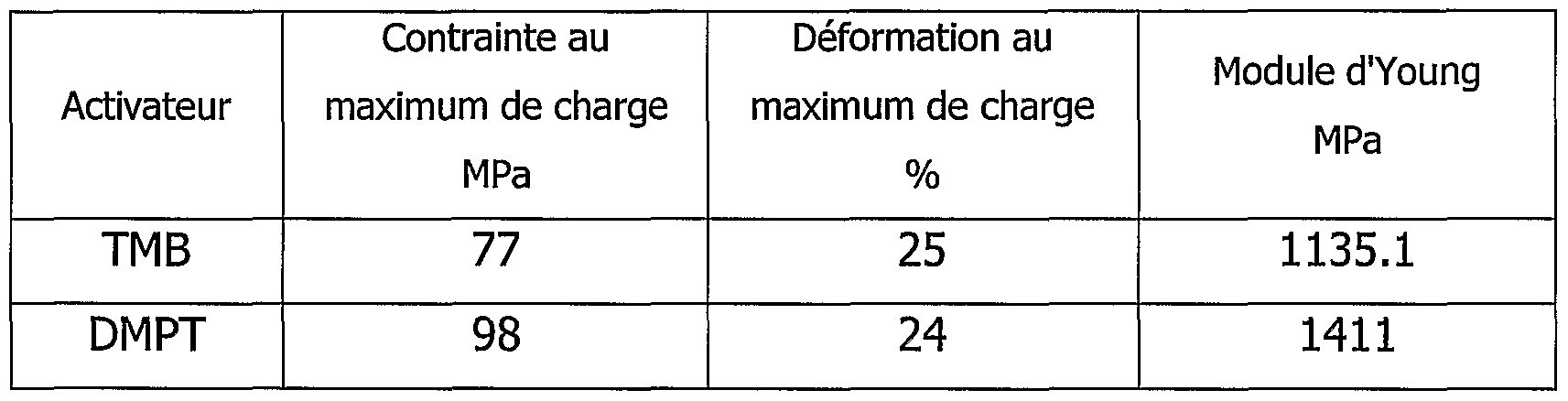
Le ciment obtenu avec la TMB est non toxique, de couleur marron/jaune, toutefois, les résultats mécaniques sont moins intéressants que le ciment précédent.The cement obtained with TMB is non-toxic, brown / yellow in color, however, the mechanical results are less interesting than the previous cement.
Exemple 3 :Example 3:
Ciment coloré obtenu en présence d'un activateur constitué d'un mélange d'une aminé colorée selon l'invention et de DMPT ou de polystyrène aminéColored cement obtained in the presence of an activator consisting of a mixture of a colored amine according to the invention and of DMPT or of polystyrene amino
On prépare différents ciments à partir d'une phase solide et d'une phase liquide dont les proportions et la composition sont données ci- dessous :Different cements are prepared from a solid phase and a liquid phase, the proportions and composition of which are given below:
- Composition de la phase solide : 23.9g PMMA/BPO/ZrO2 (89.8/1.0/9.2% massique),- Composition of the solid phase: 23.9g PMMA / BPO / ZrO2 (89.8 / 1.0 / 9.2% by mass),
- Composition de la phase liquide : 7.9g MMA, 1.2g BuMA, et l'aminé (cf tableau ci-dessous).- Composition of the liquid phase: 7.9g MMA, 1.2g BuMA, and the amine (see table below).
On compare dans cet exemple, l'effet de la DMPT seul avec celui de différentes associations selon l'invention :In this example, the effect of DMPT alone is compared with that of various associations according to the invention:
- DMPT + TMB,- DMPT + TMB,
- DMPT +leuco, - leuco + polystyrène fonctionnalisé à 50% par la diméthylamine (15000 g/mol et 7,97.103 de fonction aminé par gramme de produit sous forme solide). Ce polymère est préparé par bromation d'un polystyrène dans un procédé analogue à ceux décrits dans les publications de Camps M., Montheard J.P., Bonrokia F., Camps J.M.,- DMPT + leuco, - leuco + polystyrene functionalized at 50% with dimethylamine (15,000 g / mol and 7.97 × 10 3 of amino function per gram of product in solid form). This polymer is prepared by bromination of a polystyrene in a process analogous to those described in the publications of Camps M., Montheard JP, Bonrokia F., Camps JM,
Pham Q.T., Eur. Polym. J., 26(1), 53 (1990) et Heaney H., Chem. Rev., 62, 81 (1962))Pham Q.T., Eur. Polym. J., 26 (1), 53 (1990) and Heaney H., Chem. Rev., 62, 81 (1962))
Le tableau ci-dessous donne dans sa dernière colonne, les valeurs de contrainte au maximum de charge pour chacun des polymères obtenus.The table below gives in its last column, the maximum load stress values for each of the polymers obtained.
Les éprouvettes sont réalisées et testées selon la norme ISO5833. Les résultats sont les suivants :The test pieces are produced and tested according to ISO5833 standard. The results are as follows:

On constate au cours des essais réalisés qu'il suffit de remplacer quelques pourcents d'aminé classique (DMPT) par une des aminés colorées pour obtenir la coloration du ciment entier (bleue dans le cas de la leuco et verte puis marron dans le cas de la TMB).It is observed during the tests carried out that it suffices to replace a few percent of conventional amine (DMPT) with one of the colored amines to obtain the coloring of the whole cement (blue in the case of leuco and green then brown in the case of TMB).
Les propriétés mécaniques obtenues évoluent suivant les mélanges réalisés : la leuco ne modifie pas les propriétés mécaniques du ciment classique (et elle diminue sa toxicité), tandis que la TMB et le PS aminé donnent des ciments de tenue mécanique un peu inférieure à celle ciment classique, mais permet d'atteindre une température de prise inférieure à la température usuelle. Exemple 4 : Kit de préparation d'un ciment osseux ou dentaireThe mechanical properties obtained change according to the mixtures produced: leuco does not modify the mechanical properties of conventional cement (and it decreases its toxicity), while TMB and amine PS give cements with a mechanical resistance slightly lower than that of conventional cement , but achieves a setting temperature lower than the usual temperature. Example 4: Kit for preparing a bone or dental cement
Le kit comprend un premier contenant dans lequel est logé un produit pulvérulent à base de polymethacrylate de méthyle et de peroxyde de benzoyle comme amorceur de polymérisation radicalaire ; et dans un second contenant une composition polymerisable constituée de méthacrylate de méthyle comme monomère et comme activateur de décomposition d'un amorceur radicalaire une aminé tertiaire de formule :The kit comprises a first container in which is housed a pulverulent product based on polymethyl methacrylate and benzoyl peroxide as initiator of radical polymerization; and in a second containing a polymerizable composition consisting of methyl methacrylate as monomer and as activator of decomposition of a radical initiator a tertiary amine of formula:

Les deux contenants du kit de préparation sont susceptibles d'être stockés et commercialisés ensemble, sans que la composition polymerisable ne puisse réagir ; ce n'est qu'après avoir mélangé intimement le contenu des deux contenants ensemble, que le ciment ainsi formulé est susceptible d'être appliqué dans une cavité osseuse pour sceller une prothèse. La réaction de polymérisation, débute bien évidemment lorsque ladite aminé tertiaire a activé le peroxyde de benzoyle qui à lui-même amorcé la réaction. Cependant, la formulation des composés utilisés est telle que le ciment durcit progressivement de façon que l'opérateur puisse procéder à la pose d'une prothèse et au remplissage de la cavité osseuse avec ledit ciment sous forme pâteuse. The two containers of the preparation kit are capable of being stored and marketed together, without the polymerizable composition being able to react; it is only after having thoroughly mixed the contents of the two containers together, that the cement thus formulated can be applied in a bone cavity to seal a prosthesis. The polymerization reaction obviously begins when said tertiary amine has activated the benzoyl peroxide which itself initiated the reaction. However, the formulation of the compounds used is such that the cement gradually hardens so that the operator can proceed with the fitting of a prosthesis and filling the bone cavity with said cement in pasty form.
Claims


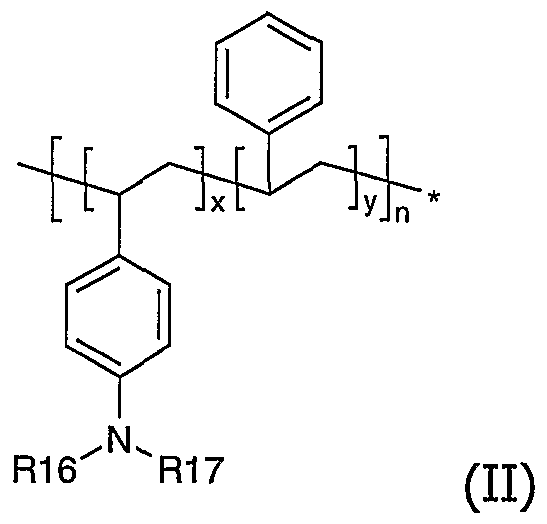


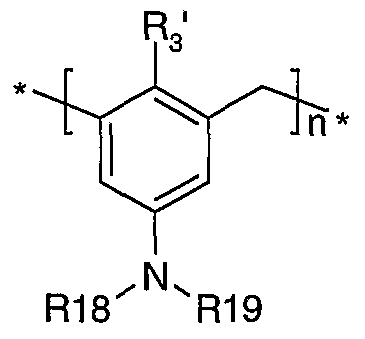
Priority Applications (1)
| Application Number | Priority Date | Filing Date | Title |
|---|---|---|---|
| AU2003262135A AU2003262135A1 (en) | 2002-04-16 | 2003-04-16 | Radical polymerisation activator for the production of coloured non-toxic organic cements |
Applications Claiming Priority (2)
| Application Number | Priority Date | Filing Date | Title |
|---|---|---|---|
| FR02/04710 | 2002-04-16 | ||
| FR0204710A FR2838334B1 (en) | 2002-04-16 | 2002-04-16 | NON-TOXIC RADICAL POLYMERIZATION ACTIVATOR FOR BONE OR DENTAL CEMENT |
Publications (2)
| Publication Number | Publication Date |
|---|---|
| WO2003086327A2 true WO2003086327A2 (en) | 2003-10-23 |
| WO2003086327A3 WO2003086327A3 (en) | 2004-04-08 |
Family
ID=28459861
Family Applications (1)
| Application Number | Title | Priority Date | Filing Date |
|---|---|---|---|
| PCT/FR2003/001211 Ceased WO2003086327A2 (en) | 2002-04-16 | 2003-04-16 | Radical polymerisation activator for the production of coloured non-toxic organic cements |
Country Status (3)
| Country | Link |
|---|---|
| AU (1) | AU2003262135A1 (en) |
| FR (1) | FR2838334B1 (en) |
| WO (1) | WO2003086327A2 (en) |
Cited By (9)
| Publication number | Priority date | Publication date | Assignee | Title |
|---|---|---|---|---|
| WO2009115610A1 (en) * | 2008-03-21 | 2009-09-24 | Jacret | Composition for structural adhesive |
| JP2009535153A (en) * | 2006-05-02 | 2009-10-01 | カイフォン・ソシエテ・ア・レスポンサビリテ・リミテ | Bone cement composition containing an indicator and methods related thereto |
| US7651701B2 (en) | 2005-08-29 | 2010-01-26 | Sanatis Gmbh | Bone cement composition and method of making the same |
| US7758693B2 (en) | 2002-06-07 | 2010-07-20 | Kyphon Sarl | Strontium-apatite cement preparations, cements formed therefrom, and uses thereof |
| US7942963B2 (en) | 2000-07-03 | 2011-05-17 | Kyhon SARL | Magnesium ammonium phosphate cement composition |
| US7968616B2 (en) | 2008-04-22 | 2011-06-28 | Kyphon Sarl | Bone cement composition and method |
| US8118926B2 (en) | 2006-06-08 | 2012-02-21 | Warsaw Orthopedic, Inc. | Self-foaming cement for void filling and/or delivery systems |
| US8168692B2 (en) | 2004-04-27 | 2012-05-01 | Kyphon Sarl | Bone substitute compositions and method of use |
| WO2020020877A1 (en) | 2018-07-24 | 2020-01-30 | Jacret | Composition for a structural adhesive |
Family Cites Families (11)
| Publication number | Priority date | Publication date | Assignee | Title |
|---|---|---|---|---|
| US2732297A (en) * | 1948-11-03 | 1956-01-24 | Decorating ceramic objects | |
| US4315998A (en) * | 1974-06-12 | 1982-02-16 | Research Corporation | Polymer-bound photosensitizing catalysts |
| CH618188A5 (en) * | 1975-12-24 | 1980-07-15 | Espe Pharm Praep | |
| DE2913220A1 (en) * | 1979-04-03 | 1980-10-23 | Bayer Ag | COLD-HARDENING MATERIAL |
| US4284551A (en) * | 1979-11-30 | 1981-08-18 | American Dental Association Health Foundation | Tertiary aromatic amine accelerators derived from para-aminophenethanol |
| US4459349A (en) * | 1981-03-27 | 1984-07-10 | Toyo Boseki Kabushiki Kaisha | Photosensitive resin composition |
| DE3669108D1 (en) * | 1985-06-20 | 1990-04-05 | Ceraver | CEMENT FOR ANCHORING BONE PROSTHESES. |
| US5192642A (en) * | 1989-06-01 | 1993-03-09 | Ciba-Geigy Corporation | Oxygen-containing titanocenes, and the use thereof |
| WO1995030480A2 (en) * | 1994-05-02 | 1995-11-16 | The Regents Of The University Of California | Initiators of tertiary amine/peroxide and polymer |
| JPH107709A (en) * | 1996-06-24 | 1998-01-13 | Toyo Ink Mfg Co Ltd | Energy-sensitive activator composition, sensitive composition using the same, and image-forming composition |
| US6455064B1 (en) * | 1998-04-30 | 2002-09-24 | Closure Medical Corporation | Method of applying an adhesive composition over a bioactive polymerization initiator or accelerator |
-
2002
- 2002-04-16 FR FR0204710A patent/FR2838334B1/en not_active Expired - Fee Related
-
2003
- 2003-04-16 WO PCT/FR2003/001211 patent/WO2003086327A2/en not_active Ceased
- 2003-04-16 AU AU2003262135A patent/AU2003262135A1/en not_active Abandoned
Cited By (19)
| Publication number | Priority date | Publication date | Assignee | Title |
|---|---|---|---|---|
| US7942963B2 (en) | 2000-07-03 | 2011-05-17 | Kyhon SARL | Magnesium ammonium phosphate cement composition |
| US8715410B2 (en) | 2002-06-07 | 2014-05-06 | Warsaw Orthopedic, Inc. | Strontium-apatite cement preparation cements formed therefrom, and use thereof |
| US7758693B2 (en) | 2002-06-07 | 2010-07-20 | Kyphon Sarl | Strontium-apatite cement preparations, cements formed therefrom, and uses thereof |
| US8168692B2 (en) | 2004-04-27 | 2012-05-01 | Kyphon Sarl | Bone substitute compositions and method of use |
| US9089625B2 (en) | 2005-08-29 | 2015-07-28 | Kyphon Sarl | Bone cement composition and method of making the same |
| US7651701B2 (en) | 2005-08-29 | 2010-01-26 | Sanatis Gmbh | Bone cement composition and method of making the same |
| US7754005B2 (en) * | 2006-05-02 | 2010-07-13 | Kyphon Sarl | Bone cement compositions comprising an indicator agent and related methods thereof |
| JP2009535153A (en) * | 2006-05-02 | 2009-10-01 | カイフォン・ソシエテ・ア・レスポンサビリテ・リミテ | Bone cement composition containing an indicator and methods related thereto |
| US8118926B2 (en) | 2006-06-08 | 2012-02-21 | Warsaw Orthopedic, Inc. | Self-foaming cement for void filling and/or delivery systems |
| WO2009115610A1 (en) * | 2008-03-21 | 2009-09-24 | Jacret | Composition for structural adhesive |
| EP2455434A1 (en) | 2008-03-21 | 2012-05-23 | Jacret | Composition for a structural adhesive |
| US8480844B2 (en) | 2008-03-21 | 2013-07-09 | Jacret | Composition for structural adhesive |
| JP2014177635A (en) * | 2008-03-21 | 2014-09-25 | Jacret | Structural adhesive |
| FR2928931A1 (en) * | 2008-03-21 | 2009-09-25 | Jacret | COMPOSITION FOR STRUCTURAL ADHESIVE |
| US9732255B2 (en) | 2008-03-21 | 2017-08-15 | Jacret | Composition for structural adhesive |
| US10000673B2 (en) | 2008-03-21 | 2018-06-19 | Jacret | Composition for structural adhesive |
| US7968616B2 (en) | 2008-04-22 | 2011-06-28 | Kyphon Sarl | Bone cement composition and method |
| WO2020020877A1 (en) | 2018-07-24 | 2020-01-30 | Jacret | Composition for a structural adhesive |
| EP4372064A2 (en) | 2018-07-24 | 2024-05-22 | Jacret | Composition for structural adhesive |
Also Published As
| Publication number | Publication date |
|---|---|
| AU2003262135A8 (en) | 2003-10-27 |
| FR2838334A1 (en) | 2003-10-17 |
| AU2003262135A1 (en) | 2003-10-27 |
| FR2838334B1 (en) | 2006-05-26 |
| WO2003086327A3 (en) | 2004-04-08 |
Similar Documents
| Publication | Publication Date | Title |
|---|---|---|
| EP0721472B1 (en) | Stable microdispersion and microgels based on acrylic polymers, method for obtaining them and compositions, particularly cosmetic compositions containing them | |
| CH680340A5 (en) | ||
| FR2838048A1 (en) | DENTAL / DERETICULABLE DENTAL PRODUCT | |
| RU2510405C9 (en) | Emulsive polymerisate containing activators, method for production thereof and use thereof in two- or multi-component systems | |
| CH670564A5 (en) | ||
| WO2003086327A2 (en) | Radical polymerisation activator for the production of coloured non-toxic organic cements | |
| FR2900332A1 (en) | DENTAL COMPOSITION IN TWO PARTS. | |
| CH674925A5 (en) | ||
| JP2006514707A (en) | Enzyme-containing free radical initiator system | |
| FR3013970A1 (en) | PHOTORETICULABLE VARNISH COMPOSITIONS AS BASE COATING AND METHODS OF APPLICATION | |
| EP2652042B1 (en) | Silicone elastomer material suitable for use in particular for making dental impressions | |
| CH682127A5 (en) | ||
| FR2481114A1 (en) | POLYMERIZABLE DENTAL COMPOSITION WITH INCREASED CURING SPEED AND METHOD OF USE THEREOF | |
| CH667805A5 (en) | PHOTOSETTING COMPOSITION FOR DENTAL RESTORATION. | |
| FR2591478A1 (en) | LIGHT - CURING COMPOSITIONS FOR DENTAL REFECTION. | |
| FR2920431A1 (en) | PROCESS FOR THE PREPARATION OF A TRANSPARENT MATERIAL OF THE THERMOSETTING POLYMER / THERMOPLASTIC POLYMER ALLOY TYPE AND ITS APPLICATION IN THE OPTICS FOR THE MANUFACTURE OF ORGANIC GLASSES. | |
| JPH0323524B2 (en) | ||
| EP2043588B1 (en) | Dental composition crosslinkable/polymerizable by cationic process | |
| BE1005918A5 (en) | Dental composition adhesive. | |
| EP1660019B1 (en) | Polymerizable dental composition having a high content of loading material | |
| WO2003013379A2 (en) | Dental compositions | |
| WO2014010431A1 (en) | Dental adhesive composition, dental adhesive primer, dental adhesive bonding material, dental adhesive composite resin, and dental adhesive resin cement | |
| CA2469454C (en) | Dental composition based on a colloidal silica solution in continuous silicon phase | |
| CA2431900C (en) | Dental composition based on a functionalised silicone crosslinkable and/or polymerisable by heat-process | |
| EP2788039A1 (en) | Polymer cements used for fixing prostheses, for bone repair and for vertebroplasty, and obtained from liquid single-phase formulations |
Legal Events
| Date | Code | Title | Description |
|---|---|---|---|
| AK | Designated states |
Kind code of ref document: A2 Designated state(s): AE AG AL AM AT AU AZ BA BB BG BR BY BZ CA CH CN CO CR CU CZ DE DK DM DZ EC EE ES FI GB GD GE GH GM HR HU ID IL IN IS JP KE KG KP KR KZ LC LK LR LS LT LU LV MA MD MG MK MN MW MX MZ NI NO NZ OM PH PL PT RO RU SC SD SE SG SK SL TJ TM TN TR TT TZ UA UG US UZ VC VN YU ZA ZM ZW |
|
| AL | Designated countries for regional patents |
Kind code of ref document: A2 Designated state(s): GH GM KE LS MW MZ SD SL SZ TZ UG ZM ZW AM AZ BY KG KZ MD RU TJ TM AT BE BG CH CY CZ DE DK EE ES FI FR GB GR HU IE IT LU MC NL PT RO SE SI SK TR BF BJ CF CG CI CM GA GN GQ GW ML MR NE SN TD TG |
|
| 121 | Ep: the epo has been informed by wipo that ep was designated in this application | ||
| 122 | Ep: pct application non-entry in european phase | ||
| NENP | Non-entry into the national phase |
Ref country code: JP |
|
| WWW | Wipo information: withdrawn in national office |
Country of ref document: JP |