WO2003084507A2 - Atomizable liposomes and their use for the pulmonary administration of active substances - Google Patents
Atomizable liposomes and their use for the pulmonary administration of active substances Download PDFInfo
- Publication number
- WO2003084507A2 WO2003084507A2 PCT/DE2003/001068 DE0301068W WO03084507A2 WO 2003084507 A2 WO2003084507 A2 WO 2003084507A2 DE 0301068 W DE0301068 W DE 0301068W WO 03084507 A2 WO03084507 A2 WO 03084507A2
- Authority
- WO
- WIPO (PCT)
- Prior art keywords
- liposomes
- dppc
- cholesterol
- phospholipids
- liposomes according
- Prior art date
- Legal status (The legal status is an assumption and is not a legal conclusion. Google has not performed a legal analysis and makes no representation as to the accuracy of the status listed.)
- Ceased
Links
Classifications
-
- A—HUMAN NECESSITIES
- A61—MEDICAL OR VETERINARY SCIENCE; HYGIENE
- A61K—PREPARATIONS FOR MEDICAL, DENTAL OR TOILETRY PURPOSES
- A61K9/00—Medicinal preparations characterised by special physical form
- A61K9/0012—Galenical forms characterised by the site of application
- A61K9/007—Pulmonary tract; Aromatherapy
- A61K9/0073—Sprays or powders for inhalation; Aerolised or nebulised preparations generated by other means than thermal energy
- A61K9/0078—Sprays or powders for inhalation; Aerolised or nebulised preparations generated by other means than thermal energy for inhalation via a nebulizer such as a jet nebulizer, ultrasonic nebulizer, e.g. in the form of aqueous drug solutions or dispersions
-
- A—HUMAN NECESSITIES
- A61—MEDICAL OR VETERINARY SCIENCE; HYGIENE
- A61K—PREPARATIONS FOR MEDICAL, DENTAL OR TOILETRY PURPOSES
- A61K9/00—Medicinal preparations characterised by special physical form
- A61K9/10—Dispersions; Emulsions
- A61K9/127—Synthetic bilayered vehicles, e.g. liposomes or liposomes with cholesterol as the only non-phosphatidyl surfactant
- A61K9/1271—Non-conventional liposomes, e.g. PEGylated liposomes or liposomes coated or grafted with polymers
Definitions
- the present invention relates to the production of liposomes which are stable against nebulization and for pulmonary administration and which show a delayed release of enclosed active substances. More information
- Liposomes are considered to be toxicologically harmless, as the liposomal products Daunoxome ® , Ambisome ® , HeparinPur ® and others, which have already been approved for other application routes, show. Liposomal formulations also appear to be suitable for the lungs, since they can be made wholly or in large part from the body's own substances that occur naturally in the lungs.
- the person skilled in the art describes liposomes as liposomes, which in structure are very similar to the body's own cell membranes.
- the vesicle walls which consist of phospholipids, for example, separate an aqueous interior from the likewise aqueous surrounding phase.
- Such lipid vesicles can form spontaneously according to thermodynamic laws, inter alia, by dispersing phospholipids in excess aqueous medium. Natural, partially synthetic or also fully synthetic phospholipids are usually used to produce liposomes. While other lipids have a conical molecular structure that favors the formation of micelles, due to the two fatty acid chains, phospholipids have a cylindrical geometry that favors the formation of lamellar structures in an aqueous medium.
- the structure of the individual lamellae of a liposome is similar to that of the cell membrane: the phospholipids form double layers in which the hydrophobic parts of the molecule are located inside the double layer, while the hydrophilic head groups point outwards or inwards into the aqueous phase.
- liposomes have both hydrophilic and lipophilic regions, active substances can be incorporated in different ways. While lipophilic active substances are stored in the membrane, there are hydrophilic substances in the aqueous layers of the vesicle walls or in the aqueous interior of the liposomes delimited by the vesicle walls. Amphiphilic active substances are arranged analogously to the phospholipids. The different properties of the liposome classes determine the possible areas of application. SUVs have a high proportion of lipids and are therefore particularly suitable for lipophilic agents; the opposite is true for LUV, they have a relatively large interior space for absorbing hydrophilic active substances. Delayed release is most likely to be achieved using an MLV structure with the many diffusion membranes connected in series.
- Liposomes represent a factor both due to their biological compatibility and the possibility of modifiable pharmacokinetics (eg delayed drug release) promising approach for a controlled and delayed release of active substances in the lungs.
- Such a controlled and delayed release of active substances in the lungs could be of considerable therapeutic importance for a variety of diseases.
- lung diseases in particular, there is the possibility of delivering active substances directly to the target organ and achieving a high local active substance concentration with a long duration of action.
- the delayed release of the active ingredient can also lead to a reduction in side effects, since on the one hand strong fluctuations in concentration with high concentration peaks are avoided immediately after application, and on the other hand the liposomal packaging means that active ingredients with a short biological half-life can be used after release and delivery of effects can be quickly deactivated.
- active substances with a long biological half-life such as those used for the treatment of asthma or chronic obstructive pulmonary diseases (COPD)
- COPD chronic obstructive pulmonary diseases
- vascularly active substances eg prostacyclin or prostacyclin analogues
- vascularly active substances eg prostacyclin or prostacyclin analogues
- Liposomal packaging and sustained release of the substances could drastically reduce the frequency of inhalation for the benefit of the patients and at the same time ensure a constant, therapeutically desirable reduction in pressure in the pulmonary circuit that also lasts over the night phase.
- the delayed and controlled release of active substances is also of interest for systemic diseases, such as diabetes mellitus.
- the lung is an organ that has a high absorption capacity due to the extremely thin boundary layer between air and blood and the large total area of the alveoli. Therefore, active substances applied transpulmonally can be made systemically available and used accordingly for the prophylaxis or therapy of systemic diseases.
- active substances applied transpulmonally can be made systemically available and used accordingly for the prophylaxis or therapy of systemic diseases.
- inhaled bolus administration of insulin is currently being developed as an alternative to injection, although no formulation for continuous basal insulin release into the body circulation is known to date. So far there is no depot form for pulmonary application. So far, the only possibility for a long duration of action is the use of drugs with a correspondingly long half-life.
- Aerosols The standard procedure for introducing active substances into the lungs is inhalation of aerosols. Active substance-bearing Ae Rosols are generated by means of suitable aerosol generators. Devices that are common in practice are nozzle and ultrasonic nebulization as well as metered dose aerosols and powder inhalers. The deposition of aerosols in the respiratory tract is particularly dependent on the particle size distribution of the aerosol. Particles with an aerodynamic mass diameter of less than 6 ⁇ reach the lungs with trachea, bronchi and alveolar area to a greater percentage; For therapeutic purposes, aerosols with particle diameters smaller than 6 ⁇ m should be used.
- Active ingredient formulations that are in aqueous solution can be atomized with jet or ultrasonic aerosol generators. Additional modifications of the active substance formulations are necessary for use with metered dose inhalers or powder inhalers (eg solution or suspension in propellants, micronization as dry powder).
- metered dose inhalers or powder inhalers eg solution or suspension in propellants, micronization as dry powder
- jet and ultrasonic nebulization are particularly suitable as processes for aerosol generation. Both methods have in common that aerosol droplets are released from the liquid continuum by the action of mechanical energy. In these processes, forces act on the liquid to be atomized and on the suspended lipid vesicles, which can impair the integrity of the lipid vesicles and thus lead to a premature release of the active substance enclosed in the vesicles.
- a basic requirement for the pulmonary applicability of liposomal depot formulations as Aerosol is therefore sufficient stability of the liposomes against the nebulizing process.
- the stability of liposomes with respect to nebulization depends in particular on the type and size of the liposomes and on the chemical composition of the liposome membranes.
- Another option for introducing active substances into the lungs is intratracheal instillation. With this method, a tube is inserted into the trachea or into the lower bronchial tubes and the active ingredient solution is then brought into the respiratory tract.
- a liposomal formulation In order to be suitable as a pulmonary depot form, a liposomal formulation must have sufficient stability with respect to the nebulization process, can be converted into a respirable aerosol by means of nebulization techniques, and have a delayed release of active ingredient at the target site. Ideally, the release of the active ingredient begins immediately after the liposomes are deposited in the lungs and continues for several hours.
- the object of the present invention is to provide a specific, non-toxic formulation for pulmonary application. re-sit, which is nebulizable and respirable and has a delayed release of trapped agents and / or dyes after deposition. It is also an object of the present invention to develop a method with which the release of encapsulated active substance / dye from liposomes can be measured.
- the liposomal formulations are produced by the film method known to the person skilled in the art (see, for example, the textbook by R.R.C. New (Editor), Liposomes: a practical approach, Oxford University Press, Reprint 1994).
- the liposomes are extruded through filter membranes and the non-encapsulated, free active ingredient is separated off by centrifugation, dialysis or chromatographic methods.
- the liposomes can be destroyed with methanol and the concentration of the active substance can then be measured using suitable methods.
- the liposome dispersion is used to characterize the stability of the liposomes with respect to nebulization
- Common aerosol generators are nebulized, the resulting aerosol is collected and then the free and encapsulated proportion of the active ingredient is determined.
- the liposomes are surprisingly easy to aerosolize with common jet and ultrasonic nebulizers.
- particle size distributions of the resulting aerosol are comparable to those when nebulizing isotonic saline, so that suitable aerosols suitable for the respiratory system can be used to produce aerosols that can enter the lungs from the liposo endispersions.
- jet nebulizers such as Bennett-
- foggers such as Multisonic pro®, Pulmosonic®, Systam LS®).
- Table 2 shows the liposomal formulations according to the invention, which are combined from the natural constituents of the pulmonary surfactant dipalmitoylphosphatidylcholine (DPPC), cholesterol (Chol), dimyristoylphosphatidylcholine (DMPC), sphingomyelin (SM) and the polyethylene glycol (not found in the lung surfactant) ,
- DPPC dipalmitoylphosphatidylcholine
- cholesterol cholesterol
- DMPC dimyristoylphosphatidylcholine
- SM sphingomyelin
- the numbers indicate the molar ratio of the components DPPC, Chol, PEG and DMPC; weight percentages are given for SM.
- hydrophilic, lipophilic and / or amphiphilic active substances or dyes can be encapsulated with sufficient stability against nebulization.
- carboxyfluorescein is used as the model active ingredient, a hydrophilic dye which can be easily detected by means of fluorescence spectroscopy.
- CF solution carboxyfluorescein solution
- 100 mg of 5- (6) -carboxyfluorescein are dissolved in 10 ml of PBS buffer and the pH of the CF solution is adjusted to 7.4.
- 150 mg of total amount of phospholipids are dissolved in 40 ml of a mixture of chloroform and methanol (70:30 volume ratio) in a round-bottom flask and the solvent at 60 ° C in a rotary evaporator under vacuum.
- the thin film that forms on the inner wall of the flask is further dried under vacuum for 2 hours.
- the film is hydrated by adding 10 ml of the CF solution, likewise heated to 60 ° C.
- the resulting dispersion is stirred for 2 hours with heating and subjected to a freeze-thaw cycle before extrusion.
- the round bottom flask is immersed in liquid nitrogen until the contents are frozen. During thawing at room temperature, the membranes tear open, trapping additional CF, thereby increasing the efficiency of the encapsulation. This cycle is repeated five times.
- the dispersion is then heated again to 60 ° C. in a water bath.
- 0.5 ml portions of the dispersion are extruded 21 times through a polycarbonate filter membrane with a pore diameter of 1.0 ⁇ m or 0.4 ⁇ m.
- the dispersion is then centrifuged at 4 ° C (4 x 45 min / 4500 rpm or 4 x 60 min / 15000 rpm).
- the supernatant CF solution is pipetted off after the individual centrifugation cycles and replaced by an equal volume of PBS buffer.
- liposome formulations contain a molar ratio of dipalmitoylphosphatidylcholine (DPPC), cholesterol (Chol) and polyethylene glycol (PEG) from 7: 3: 0.15 to 7: 3: 0.6.
- DPPC dipalmitoylphosphatidylcholine
- cholesterol cholesterol
- PEG polyethylene glycol
- liposome formulations contain a molar ratio of dipalmitoylphosphatidylcholine (DPPC), cholesterol (Chol) and dimyristoylphosphatidylcholine (DMPC) from 7: 4: 1 to 7: 4: 4.
- DPPC dipalmitoylphosphatidylcholine
- Chol cholesterol
- DMPC dimyristoylphosphatidylcholine
- liposome formulations contain a molar ratio of dipalmitoylphosphatidylcholine (DPPC) and cholesterol (Chol) of 7: 3 as 100 percent by weight, with varying amounts of sphingomyelin (SM) of more than 2%, particularly preferably 2-8% by weight.
- DPPC dipalmitoylphosphatidylcholine
- Chol cholesterol
- SM sphingomyelin
- Liposome formulations with dipalmitoylphosphatidylcholine (DPPC) and cholesterol (Chol) and combinations of DMPC, SM and / or PEG also have advantageous properties.
- the liposomes according to the invention have a size of 0.2-1.5 ⁇ m.
- the liposomal formulations extruded through a 0.4 ⁇ m polycarbonate filter membrane are diluted 1:10 with PBS and 2.5 ml of the dispersion obtained for 3 minutes at room temperature with nozzle (operated with 1 bar compressed air) and Ultra - sound nebulizers (operated with 10 1 / min additional air).
- the aerosol generated is passed through a silicone tube (15 cm long, 3 cm inside diameter) onto a baffle plate made of glass and collected in a 40 ml test tube. The free and the total amount of carboxyfluorescein in the collected dispersions is analyzed by fluorescence spectrometry.
- CF free proportion of CF (c fre i)
- 100 ⁇ l of the liposomal dispersion according to the invention are centrifuged in an Eppendorf vessel, 50 ⁇ l of the supernatant obtained is diluted 1: 100 with PBS buffer and the CF concentration in the supernatant is quantified by fluorescence spectrometry.
- the liposomal dispersion of the invention with 450 ul methanol for the determination of the total proportion of CF (c tal) 50 ul was added, incubated for 10 min and then centrifuged. The addition of methanol causes the liposomes to be destroyed and the dye to be released completely.
- the liposomal dispersions according to the invention are modeled on the model of the isolated perfused and ventilated rabbit lung (Seeger et al., J Appl Physiol 1986, 61: 1781-1789; Seeger et al., In: Oxygen Radicals in Biological Systems, edited by L. Packer. New York: Academic Press, 1994, vol. 233: 549-584). Rabbits weighing between 2.5 and 3 kg are anticoagulated with heparin and anesthetized with a mixture of xylocaine, ketamine and xylazine. A tracheostomy is performed with ventilation with room air.
- a catheter is inserted into the pulmonary artery, the aorta is ligated and the two ventricles are opened at the tip of the heart.
- the perfusion of the lungs is now carried out using a roller pump; Krebs-Henseleit electrolyte solution is used as the perfusion medium, which also contains hydroxyethyl starch and sodium bicarbonate.
- the lungs are ventilated with a mixture of 21% oxygen, 5.3% carbon dioxide and 73.7% nitrogen.
- the heart-lung package is now carefully prepared from the chest cavity and then a second catheter is fixed in the left ventricle using a tobacco pouch suture.
- the venous leg of the perfusion system is connected to the catheter integrated into the heart, so that a closed, recirculating perfusion cycle is created.
- the perfusate is heated to 38 ° C and the free-hanging lungs are placed in a heated chamber.
- the standard parameters of lung ventilation and perfusion are:
- Lung ventilation takes place with a tidal volume of 30 ml and a breathing frequency of 30 min "1 .
- PEEP positive end expiratory pressure
- the left ventricular pressure is set to 2 mHg.
- the perfusate volume is 150 ml.
- the inhalation of aerosols takes place via a so-called bag-in-box system (Fig. 1).
- This system consists of a jet nebulizer (1), storage bag (2), valves (3) and a flexible balloon (4, bag), which is placed in an airtight glass vessel (5, box).
- the respiratory pump (6) is connected to the airtight glass vessel (5) and, depending on the direction of the gas flow, applied an overpressure or underpressure to the flexible balloon (4) located in the glass vessel (5).
- the aerosol generated by the jet nebulizer (1) is first fed into the storage bag (2).
- the flexible balloon (4) is stretched due to the negative pressure in the glass vessel (5) and filled with aerosol from the storage bag via a valve system (3).
- the aerosol is brought out of the balloon (4) into the respiratory tract of the lungs (7) with the appropriate valve position.
- a nozzle nebulizer (Bennett-Raindrop ® ) is used for nebulization, which is operated with a breathing gas mixture (5.3% C0 2 , 21% 0 2 , 73.7% N 2 ) at a pressure of 1.0 bar.
- the transfer of the dye can be quantified by taking samples (0.5 ml) from the perfusate, which take place every 10 minutes starting immediately before the aerosol application. In comparison with the unencapsulated CF solution, the release kinetics of the CF encapsulated in liposomes can now be assessed.
- the respiratory pump (6) moves a flexible balloon (4), which supplies the lungs (7) with the aerosol / breathing gas mixture from a storage bag (2).
- the storage bag (2) is filled with aerosol, which is generated by means of a nozzle nebulizer (1), which is operated by breathing gas at 1.0 bar.
- DPPC dipalmitoylphosphatidylcholine
- Chol cholesterol
- DMPC dimyristoylphosphatidylcholine
- DPPC dipalmitoylphosphatidylcholine
- Chol cholesterol
- PEG polyethylene glycol
- Fig. 4 Release Kinetics of DPPC / Chol / SM Liposomes
- DPPC dipalmitoylphosphatidylcholine
Landscapes
- Health & Medical Sciences (AREA)
- Chemical & Material Sciences (AREA)
- General Health & Medical Sciences (AREA)
- Public Health (AREA)
- Pharmacology & Pharmacy (AREA)
- Epidemiology (AREA)
- Life Sciences & Earth Sciences (AREA)
- Animal Behavior & Ethology (AREA)
- Dispersion Chemistry (AREA)
- Medicinal Chemistry (AREA)
- Veterinary Medicine (AREA)
- Engineering & Computer Science (AREA)
- Bioinformatics & Cheminformatics (AREA)
- Otolaryngology (AREA)
- Pulmonology (AREA)
- Medicinal Preparation (AREA)
Abstract
Description
Patentanmeldung Patent application
Vernebelbare Liposomen und ihre Verwendung zur pulmonalen Applikation von WirkstoffenNebulisable liposomes and their use for pulmonary application of active substances
Die vorliegende Erfindung betrifft die Herstellung von Liposomen, die stabil gegenüber Vernebelung und zur pulmonalen Applikation geeignet sind und die eine verzögerte Freisetzung von eingeschlossenen Wirkstoffen zeigen. Be s ehr eibungThe present invention relates to the production of liposomes which are stable against nebulization and for pulmonary administration and which show a delayed release of enclosed active substances. More information
In der pharmazeutischen Technologie unterscheidet man verschiedene Arzneiformen mit protrahierter Wirkung. Sie alle haben- das Ziel, eine Wirkungsverlängerung des jeweiligen Arzneistoffes zu erreichen. Man unterscheidet Langzeit-, Depot- und Retardpräparate. Die modifizierte Wirkstofffreigäbe kann durch chemische Veränderungen (z.B. Salze, Ester, Komplexe), durch Zusätze (z.B. Verwendung von Hilfsstoffen), durch technologische Maßnahmen (z.B. Wahl bestimmter Korngrößen, Tablettenhärten) sowie durch Wahl des Applikationsortes oder der Applikationsart erreicht werden. In Abhängigkeit von der Art der Freigabe unterscheidet man den sustained-, repeat- prolonged-, und delayed-release-Typ.In pharmaceutical technology, a distinction is made between different pharmaceutical forms with a protracted effect. They all have the goal of extending the effectiveness of the respective drug. A distinction is made between long-term, depot and sustained-release preparations. The modified release of the active ingredient can be achieved through chemical changes (e.g. salts, esters, complexes), through additives (e.g. use of auxiliaries), through technological measures (e.g. selection of certain grain sizes, tablet hardness) as well as through the choice of application location or type of application. Depending on the type of release, a distinction is made between the sustained, repeat-prolonged, and delayed-release types.
Ein besonderes Problem stellt die Applikation von pharmazeutischen Wirkstoffen in der Lunge dar, da hier aus Verträglichkeitsgründen die Auswahl der Hilfsstoffe stark eingeschränkt und eine gezielte und kontrollierte Freisetzung schwierig zu erreichen ist.The application of pharmaceutical active substances in the lungs is a particular problem, since the choice of auxiliary substances is severely restricted here for reasons of tolerance and a targeted and controlled release is difficult to achieve.
Als toxikologisch unbedenklich gelten Liposomen, wie die bereits für andere Applikationswege zugelassenen liposomalen Produkte Daunoxome®, Ambisome®, HeparinPur® u.a. zeigen. Lipo- somale Formulierungen erscheinen auch für die Lunge als geeignet, da sie ganz oder zum größten Teil aus körpereigenen Substanzen hergestellt werden können, die natürlicherweise in der Lunge vorkommen. Als Liposomen bezeichnet der Fachmann Lipidvesikel, die in ihrer Struktur körpereigenen Zellmembranen stark ähneln. Die Vesikelwände, die beispielsweise aus Phospholipiden bestehen, trennen einen wässrigen Innenraum von der ebenfalls wässrigen umgebenden Phase. Derartige Lipidvesikel können sich spontan nach thermodynamischen Gesetzmäßigkeiten u.a. durch Dispersion von Phospholipiden in überschüssigem wässrigen Medium bilden. Zur Herstellung von Liposomen werden üblicherweise natürliche, partialsynthetische oder auch vollsynthetische Phospholipide eingesetzt. Während andere Lipide einen kegelförmigen Molekülaufbau zeigen, der die Bildung von Mizellen favorisiert, weisen Phospholipide aufgrund der beiden Fettsäureketten eine zylindrische Geometrie auf, die in wässrigem Medium die Bildung von lamellaren Strukturen begünstigt.Liposomes are considered to be toxicologically harmless, as the liposomal products Daunoxome ® , Ambisome ® , HeparinPur ® and others, which have already been approved for other application routes, show. Liposomal formulations also appear to be suitable for the lungs, since they can be made wholly or in large part from the body's own substances that occur naturally in the lungs. The person skilled in the art describes liposomes as liposomes, which in structure are very similar to the body's own cell membranes. The vesicle walls, which consist of phospholipids, for example, separate an aqueous interior from the likewise aqueous surrounding phase. Such lipid vesicles can form spontaneously according to thermodynamic laws, inter alia, by dispersing phospholipids in excess aqueous medium. Natural, partially synthetic or also fully synthetic phospholipids are usually used to produce liposomes. While other lipids have a conical molecular structure that favors the formation of micelles, due to the two fatty acid chains, phospholipids have a cylindrical geometry that favors the formation of lamellar structures in an aqueous medium.
Der Aufbau der einzelnen Lamellen eines Liposoms ist ähnlich dem der Zellmembran: Die Phospholipide bilden Doppelschichten, in denen sich die hydrophoben Molekülteile im Inneren der Doppelschicht befinden, während die hydrophilen Kopfgruppen in die wässrige Phase nach außen beziehungsweise innen zeigen.The structure of the individual lamellae of a liposome is similar to that of the cell membrane: the phospholipids form double layers in which the hydrophobic parts of the molecule are located inside the double layer, while the hydrophilic head groups point outwards or inwards into the aqueous phase.
Aufgrund ihrer Struktur und Größe lassen sich die Liposomen in verschiedene Gruppen einteilen (Tabelle 1) . Tabelle 1Due to their structure and size, the liposomes can be divided into different groups (Table 1). Table 1

Da Liposomen sowohl hydrophile als auch lipophile Bereiche aufweisen, können Wirkstoffe unterschiedlich eingebaut werden. Während sich lipophile Wirkstoffe in die Membran einlagern, befinden sich hydrophile Stoffe in den wässrigen Schichten der Vesikelwände oder im von den Vesikelwänden begrenzten wässrigen Innenraum der Liposomen. Amphiphile Wirkstoffe ordnen sich analog den Phospholipiden an. Die unterschiedlichen Eigenschaften der Liposomenklassen bestimmen die möglichen Einsatzgebiete. So weisen SUV im Verhältnis einen hohen Anteil an Lipiden auf und eignen sich von daher vor allem für lipophile Wirkstoffe; für LUV gilt das Gegenteil, sie weisen einen verhältnismäßig großen Innenraum zur Aufnahme hydrophiler Wirkstoffe auf. Eine verzögerte Freisetzung ist am ehesten durch eine MLV-Struktur mit den vielen hintereinander geschalteten Diffusionsmembranen realisierbar. Sowohl durch ihre biologische Verträglichkeit als auch durch die Möglichkeit einer modifizierbaren Pharmakokinetik (z.B. verzögerte Wirkstofffreisetzung) stellen Liposomen einen vielversprechenden Ansatz für eine kontrollierte und verzögerte Freisetzung von Wirkstoffen in der Lunge dar. Eine derartige kontrollierte und verzögerte Freisetzung von Wirkstoffen in der Lunge könnte für eine Vielzahl von Erkrankungen von erheblicher therapeutischer Bedeutung sein. Insbesondere bietet sich bei Lungenerkrankungen die Möglichkeit, Wirkstoffe direkt in das Zielorgan zu verbringen und dort eine hohe lokale Wirkstoffkonzentration bei langer Wirkdauer zu erzielen. Die retardierte Wirkstofffreisetzung kann darüber hinaus zu einer Verminderung von Nebenwirkungen führen, da zum einen starke Konzentrationsschwankungen mit hohen Kon- zentrations-Peaks unmittelbar nach der Applikation vermieden werden, zum anderen durch die liposomale Verpackung Wirkstoffe mit kurzer biologischer Halbwertszeit Verwendung finden können, die nach Freisetzung und Wirkungsvermittlung schnell inaktiviert werden. In Gegensatz dazu können Wirkstoffe mit langer biologischer Halbwertszeit, wie sie teilweise zur Behandlung des Asthmas oder chronisch obstruktiver Lungenerkrankungen (COPD) eingesetzt werden, über die Luft-Blut- Barriere in den Körperkreislauf gelangen und dort zu Nebenwirkungen führen. Neben den bereits erwähnten Lungen- und A- temwegserkrankungen Asthma und COPD stellen insbesondere die Lungenentzündung und der Lungenhochdruck Erkrankungen dar, die durch liposomal verpackte Wirkstoffe besser behandelt werden könnten. So sind beispielsweise derzeit in der Therapie des Lungenhochdrucks mit gefäßaktiven Substanzen (z.B. Prostazyklin oder Prostazyklinanaloga) aufgrund deren kurzen biologischen Halbwertszeiten häufige, zum Teil stündliche Inhalationen mit einer Dauer von bis zu 15 Minuten für eine effektive und anhaltende Drucksenkung im Lungenkreislauf notwendig. Liposomale Verpackung und retardierte Freisetzung der Substanzen könnten die Inhalationshäufigkeit zum Wohle der Patienten drastisch reduzieren und gleichzeitig zu einer konstanten, auch über die Nachtphase anhaltenden, therapeutisch erwünschten Drucksenkung im Lungenkreislauf sorgen. Neben der Anwendung bei Lungenerkrankungen ist die verzögerte und kontrollierte Freisetzung von Wirkstoffen auch für systemische Erkrankungen, wie z.B. Diabetes mellitus, von Interesse. Die Lunge ist ein Organ, das aufgrund der äußerst dünnen Grenzschicht zwischen Luft und Blut und der großen Gesamtfläche der Lungenbläschen über ein hohes Resorptionsvermögen verfügt. Daher können transpulmonal applizierte Wirkstoffe systemisch verfügbar gemacht und entsprechend zur Prophylaxe oder Therapie von systemischen Erkrankungen eingesetzt werden. Beispielsweise wird derzeit die inhalative Bolusgabe von Insulin als Alternative zur Injektion entwickelt, wobei jedoch bisher keine Formulierung zur kontinuierlichen basalen Insulinfreisetzung in den Körperkreislauf bekannt ist. Bislang gibt es keine Depotform zur pulmonalen Applikation. Die bisher einzige Möglichkeit für eine lange Wirkdauer besteht in der Verwendung von Arzneistoffen mit entsprechend langer Halbwertszeit.Since liposomes have both hydrophilic and lipophilic regions, active substances can be incorporated in different ways. While lipophilic active substances are stored in the membrane, there are hydrophilic substances in the aqueous layers of the vesicle walls or in the aqueous interior of the liposomes delimited by the vesicle walls. Amphiphilic active substances are arranged analogously to the phospholipids. The different properties of the liposome classes determine the possible areas of application. SUVs have a high proportion of lipids and are therefore particularly suitable for lipophilic agents; the opposite is true for LUV, they have a relatively large interior space for absorbing hydrophilic active substances. Delayed release is most likely to be achieved using an MLV structure with the many diffusion membranes connected in series. Liposomes represent a factor both due to their biological compatibility and the possibility of modifiable pharmacokinetics (eg delayed drug release) promising approach for a controlled and delayed release of active substances in the lungs. Such a controlled and delayed release of active substances in the lungs could be of considerable therapeutic importance for a variety of diseases. In the case of lung diseases in particular, there is the possibility of delivering active substances directly to the target organ and achieving a high local active substance concentration with a long duration of action. The delayed release of the active ingredient can also lead to a reduction in side effects, since on the one hand strong fluctuations in concentration with high concentration peaks are avoided immediately after application, and on the other hand the liposomal packaging means that active ingredients with a short biological half-life can be used after release and delivery of effects can be quickly deactivated. In contrast, active substances with a long biological half-life, such as those used for the treatment of asthma or chronic obstructive pulmonary diseases (COPD), can enter the body via the air-blood barrier and cause side effects there. In addition to the already mentioned lung and respiratory diseases asthma and COPD, pneumonia and pulmonary hypertension are diseases that could be better treated with liposomally packaged drugs. For example, currently in the treatment of pulmonary hypertension with vascularly active substances (eg prostacyclin or prostacyclin analogues) due to their short biological half-lives frequent, sometimes hourly inhalations with a duration of up to 15 minutes necessary for an effective and sustained reduction in pressure in the pulmonary circulation. Liposomal packaging and sustained release of the substances could drastically reduce the frequency of inhalation for the benefit of the patients and at the same time ensure a constant, therapeutically desirable reduction in pressure in the pulmonary circuit that also lasts over the night phase. In addition to the use in lung diseases, the delayed and controlled release of active substances is also of interest for systemic diseases, such as diabetes mellitus. The lung is an organ that has a high absorption capacity due to the extremely thin boundary layer between air and blood and the large total area of the alveoli. Therefore, active substances applied transpulmonally can be made systemically available and used accordingly for the prophylaxis or therapy of systemic diseases. For example, inhaled bolus administration of insulin is currently being developed as an alternative to injection, although no formulation for continuous basal insulin release into the body circulation is known to date. So far there is no depot form for pulmonary application. So far, the only possibility for a long duration of action is the use of drugs with a correspondingly long half-life.
Das Standardverfahren zum Einbringen von Wirkstoffen in die Lunge ist die Inhalation von Aerosolen. Wirkstofftragende Ae- rosole werden mittels geeigneter Aerosolgeneratoren erzeugt, in der Praxis übliche Geräte sind Düsen- und Ultraschallver- neblung sowie Dosieraerosole und Pulverinhalatoren. Die Deposition von Aerosolen im Atemtrakt ist insbesondere abhängig von der Partikelgrößenverteilung des Aerosols. Partikel mit einem aerodynamischen Massendurchmesser von unter 6 μ erreichen zu einem größeren Prozentsatz die Lunge mit Luftröhre, Bronchien und Alveolarbereich; zu therapeutischen Zwecken sind entsprechend Aerosole mit Partikeldurchmessern kleiner 6 μm zu verwenden.The standard procedure for introducing active substances into the lungs is inhalation of aerosols. Active substance-bearing Ae Rosols are generated by means of suitable aerosol generators. Devices that are common in practice are nozzle and ultrasonic nebulization as well as metered dose aerosols and powder inhalers. The deposition of aerosols in the respiratory tract is particularly dependent on the particle size distribution of the aerosol. Particles with an aerodynamic mass diameter of less than 6 μ reach the lungs with trachea, bronchi and alveolar area to a greater percentage; For therapeutic purposes, aerosols with particle diameters smaller than 6 μm should be used.
Wirkstoff-Formulierungen, die in wässriger Lösung vorliegen, lassen sich mit Düsen- oder Ultraschall-Aerosolgeneratoren vernebeln. Für die Anwendung mit Dosieraerosolen oder Pulverinhalatoren sind zusätzliche Modifikationen der Wirkstoff- Formulierungen notwendig (z.B. Lösung oder Suspension in Treibmitteln, Mikronisierung als Trockenpulver) . Bei wässrigen liposomalen Dispersionen bietet sich in besonderer Weise die Düsen- und Ultraschallverneblung als Verfahren zur Aerosolerzeugung an. Beiden Verfahren gemeinsam ist, dass durch Einwirkung mechanischer Energie Aerosoltröpfchen aus dem Flüssigkeitskontinuum herausgelöst werden. Bei diesen Prozessen wirken Kräfte auf die zu vernebelnde Flüssigkeit und auf die suspendierten Lipidvesikel, die zu einer Beeinträchtigung der Integrität der Lipidvesikel und damit zu einer vorzeitigen Freisetzung des in die Vesikel eingeschlossenen Wirkstoffs führen können. Eine Grundvoraussetzung für die pulmo- nale Anwendbarkeit von liposomalen Depotformulierungen als Aerosol ist daher eine ausreichende Stabilität der Liposomen gegenüber dem Verneblungsprozess . Die Stabilität von Liposomen gegenüber der Verneblung hängt neben den technischen Bedingungen der verschiedenen Verneblungsprozesse (Druck, Ultraschallfrequenz) insbesondere von der Liposomenart und Lipo- somengröße sowie von der chemischen Zusammensetzung der Lipo- somenmembranen ab. Eine weitere Möglichkeit zum Einbringen von Wirkstoffen in die Lunge ist die intratracheale Instilla- tion. Bei dieser Methode wird ein Schlauch in die Luftröhre oder in die tieferliegenden Bronchien eingeführt und die Wirkstofflösung über diesen in den Atemtrakt verbracht. Dieses Verfahren stellt zwar wesentlich geringere Anforderungen an die Stabilität von liposomalen Formulierungen als die Verneblung, führt jedoch zu einer inhomogenen Verteilung des eingebrachten Materials in der Lunge. Darüber hinaus ist die intratracheale Instillation aufgrund ihrer Invasivität nur äußerst begrenzt einsetzbar und eignet sich nicht für eine Heim- oder Dauertherapie. Um als pulmonale Depotform geeignet zu sein, muss eine liposomale Formulierung eine ausreichende Stabilität gegenüber dem Vernebelungsprozess besitzen, mittels Vernebelungstechniken in ein lungengängiges Aerosol ü- berführt werden können, und eine verzögerte Wirkstofffreisetzung am Zielort aufweisen. Idealerweise beginnt die Freisetzung des Wirkstoffes direkt nach der Deposition der Liposomen in der Lunge und hält über mehrere Stunden an. Aufgabe der vorliegenden Erfindung ist es, eine spezifische, nicht toxische Formulierung zur pulmonalen Applikation be- reitzustellen, die vernebelbar und lungengängig ist und eine verzögerte Freisetzung von eingeschlossenen Wirkstoffen und/oder Farbstoffen nach der Deposition aufweist. Weiterhin ist es Aufgabe der vorliegenden Erfindung, ein Verfahren zu entwickeln, mit dem die Freisetzung von verkapseltem Wirk- /Farbstoff aus Liposomen gemessen werden kann.Active ingredient formulations that are in aqueous solution can be atomized with jet or ultrasonic aerosol generators. Additional modifications of the active substance formulations are necessary for use with metered dose inhalers or powder inhalers (eg solution or suspension in propellants, micronization as dry powder). In the case of aqueous liposomal dispersions, jet and ultrasonic nebulization are particularly suitable as processes for aerosol generation. Both methods have in common that aerosol droplets are released from the liquid continuum by the action of mechanical energy. In these processes, forces act on the liquid to be atomized and on the suspended lipid vesicles, which can impair the integrity of the lipid vesicles and thus lead to a premature release of the active substance enclosed in the vesicles. A basic requirement for the pulmonary applicability of liposomal depot formulations as Aerosol is therefore sufficient stability of the liposomes against the nebulizing process. In addition to the technical conditions of the various nebulization processes (pressure, ultrasound frequency), the stability of liposomes with respect to nebulization depends in particular on the type and size of the liposomes and on the chemical composition of the liposome membranes. Another option for introducing active substances into the lungs is intratracheal instillation. With this method, a tube is inserted into the trachea or into the lower bronchial tubes and the active ingredient solution is then brought into the respiratory tract. Although this method places far less demands on the stability of liposomal formulations than nebulization, it leads to an inhomogeneous distribution of the material introduced into the lungs. In addition, due to its invasiveness, intratracheal instillation can only be used to a very limited extent and is not suitable for home or long-term therapy. In order to be suitable as a pulmonary depot form, a liposomal formulation must have sufficient stability with respect to the nebulization process, can be converted into a respirable aerosol by means of nebulization techniques, and have a delayed release of active ingredient at the target site. Ideally, the release of the active ingredient begins immediately after the liposomes are deposited in the lungs and continues for several hours. The object of the present invention is to provide a specific, non-toxic formulation for pulmonary application. re-sit, which is nebulizable and respirable and has a delayed release of trapped agents and / or dyes after deposition. It is also an object of the present invention to develop a method with which the release of encapsulated active substance / dye from liposomes can be measured.
Diese Aufgabe wird erfindungsgemäß durch die Bereitstellung von Formulierungen spezifischer Liposomen-bildender, endogen in der Lunge vorkommender Lipide gelöst, teilweise unter dem Zusatz von synthetischen Tensiden wie Polyethylenglykol, oder dessen Derivaten. Darüber hinaus wird mit den Merkmalen des Anspruch 10 ein Verfahren zur Messung der Freisetzung von verkapseltem Wirk-/Farbstoff aus Liposomen vorgeschlagen.This object is achieved according to the invention by the provision of formulations of specific liposome-forming lipids which occur endogenously in the lungs, partly with the addition of synthetic surfactants such as polyethylene glycol, or its derivatives. In addition, the features of claim 10 propose a method for measuring the release of encapsulated active substance / dye from liposomes.
Die liposomalen Formulierungen werden nach der dem Fachmann bekannten Filmmethode hergestellt (siehe beispielsweise das Lehrbuch von R. R. C. New (Editor), Liposomes: a practical approach, Oxford University Press, Reprint 1994) . Als weiterer Arbeitsschritt erfolgt die Extrusion der Liposomen durch Filtermembranen sowie das Abtrennen des nichtverkapselten, freien Wirkstoffanteils durch Zentrifugation, Dialyse oder chromatographische Verfahren.The liposomal formulations are produced by the film method known to the person skilled in the art (see, for example, the textbook by R.R.C. New (Editor), Liposomes: a practical approach, Oxford University Press, Reprint 1994). As a further step, the liposomes are extruded through filter membranes and the non-encapsulated, free active ingredient is separated off by centrifugation, dialysis or chromatographic methods.
Zur Bestimmung der Effizienz der Einschlußreaktion können die Liposomen mit Methanol zerstört und anschließend die Konzentration des Wirkstoffs mittels geeigneter Methoden gemessen werden. Zur Charakterisierung der Stabilität der Liposomen gegenüber der Verneblung wird die Liposomendispersion mittels gängiger Aerosolgeneratoren vernebelt, das entstehende Aerosol aufgefangen und anschließend der freie und der verkapselte Anteil des Wirkstoffs bestimmt.To determine the efficiency of the inclusion reaction, the liposomes can be destroyed with methanol and the concentration of the active substance can then be measured using suitable methods. The liposome dispersion is used to characterize the stability of the liposomes with respect to nebulization Common aerosol generators are nebulized, the resulting aerosol is collected and then the free and encapsulated proportion of the active ingredient is determined.
Die Liposomen sind überraschenderweise gut mit gängigen Düsen- und Ultraschallverneblern aerosolierbar . Beim Vernebeln der liposomalen Dispersionen findet man vergleichbare Partikelgrößenverteilungen des entstehenden Aerosols wie beim Vernebeln von isotonischer Kochsalzlösung, so dass mit geeigneten handelsüblichen Verneblern lungengängige Aerosole aus den Liposo endispersionen erzeugt werden können. (Beispiele für handelsübliche Vernebler: Düsenvernebler wie Bennett-The liposomes are surprisingly easy to aerosolize with common jet and ultrasonic nebulizers. When nebulizing the liposomal dispersions, particle size distributions of the resulting aerosol are comparable to those when nebulizing isotonic saline, so that suitable aerosols suitable for the respiratory system can be used to produce aerosols that can enter the lungs from the liposo endispersions. (Examples of commercially available nebulizers: jet nebulizers such as Bennett-
Raindrop®, Pari LC®, Pari LL®, Ventstream®, Ultraschallver-Raindrop®, Pari LC®, Pari LL®, Ventstream®, ultrasonic processing
nebler wie Multisonic pro®, Pulmosonic®, Systam LS®) .foggers such as Multisonic pro®, Pulmosonic®, Systam LS®).
Ausführungsbeispiele :Examples:
Tabelle 2 zeigt die erfindungsgemäßen liposomalen Formulierungen, die aus den natürlichen Bestandteilen des Lungensur- factant Dipalmitoylphosphatidylcholin (DPPC) , Cholesterin (Chol) , Dimyristoylphosphatidylcholin (DMPC) , Sphingomyelin (SM) und dem nicht im Lungensurfactant vorkommenden Polyethy- lenglykol (PEG) kombiniert werden.Table 2 shows the liposomal formulations according to the invention, which are combined from the natural constituents of the pulmonary surfactant dipalmitoylphosphatidylcholine (DPPC), cholesterol (Chol), dimyristoylphosphatidylcholine (DMPC), sphingomyelin (SM) and the polyethylene glycol (not found in the lung surfactant) ,
Tabelle 2Table 2

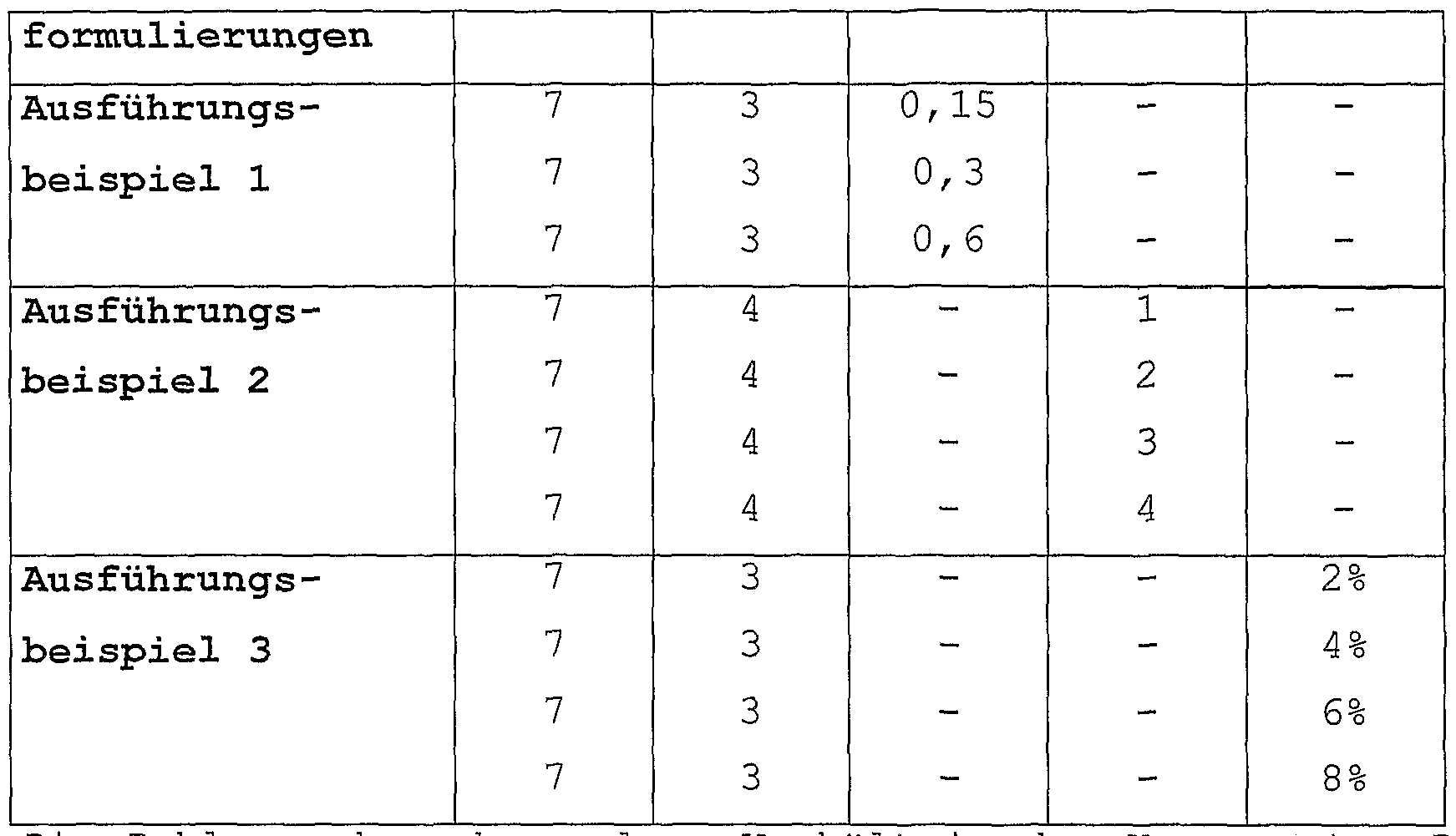
Die Zahlen geben das molare Verhältnis der Komponenten DPPC, Chol, PEG und DMPC an; bei SM sind Gewichtsprozent angegeben.The numbers indicate the molar ratio of the components DPPC, Chol, PEG and DMPC; weight percentages are given for SM.
LiposomenherStellungliposome Preparation
Mit den erfindungsgemäßen liposomalen Formulierungen können hydrophile, lipophile und/oder amphiphile Wirk- oder Farbstoffe mit ausreichender Stabilität gegenüber der Verneblung verkapselt werden.With the liposomal formulations according to the invention, hydrophilic, lipophilic and / or amphiphilic active substances or dyes can be encapsulated with sufficient stability against nebulization.
In den Ausführungsbeispielen wird als Modellwirkstoff Carboxyfluorescein verwendet, ein hydrophiler Farbstoff, der sich einfach mittels Fluoreszenzspektroskopie nachweisen läßt. Zur Herstellung der Carboxyfluorescein-Lösung (CF-Lösung) werden 100 mg 5- (6) -Carboxyfluorescein in 10 ml PBS-Puffer gelöst und der pH-Wert der CF-Lösung auf 7,4 eingestellt. Zur Lipo- somenherstellung nach der Filmmethode wird 150 mg Gesamtmenge an Phospholipiden (siehe Formulierungen Tabelle 2) in 40 ml eines Gemisches aus Chloroform und Methanol (70:30 Volumenverhältnis) in einem Rundkolben gelöst und das Lösungsmittel bei 60 °C im Rotationsverdampfer unter Vakuum abgezogen. Der an der Innenwand des Kolbens entstehende dünne Film wird weiter 2h unter Vakuum getrocknet. Durch Zugabe von 10 ml der ebenfalls auf 60 °C erwärmten CF-Lösung erfolgt die Hydratisierung des Filmes. Die entstandene Dispersion wird für 2h unter Erwärmung gerührt und vor der Extrusion einem Frier- Tau-Zyklus unterzogen. Dazu wird der Rundkolben in flüssigen Stickstoff getaucht bis der Inhalt gefroren ist. Während des Auftauens bei Raumtemperatur reißen die Membranen auf, schließen zusätzliches CF ein und erhöhen dadurch die Effizienz der Verkapselung. Dieser Zyklus wird fünfmal wiederholt. Danach wird die Dispersion erneut im Wasserbad auf 60 °C erwärmt. Jeweils 0,5 ml der Dispersion werden 21mal durch eine Polycarbonat-Filtermembran mit einem Porendurchmesser von 1,0 μm bzw. 0,4 μm extrudiert. Die Dispersion wird anschließend bei 4°C zentrifugiert (4 x 45 min/ 4500 rpm bzw. 4 x 60 min/ 15000 rpm) . Die überstehende CF-Lösung wird jeweils nach den einzelnen Zentrifugationszyklen abpipettiert und durch ein gleiches Volumen an PBS-Puffer ersetzt.In the exemplary embodiments, carboxyfluorescein is used as the model active ingredient, a hydrophilic dye which can be easily detected by means of fluorescence spectroscopy. To prepare the carboxyfluorescein solution (CF solution), 100 mg of 5- (6) -carboxyfluorescein are dissolved in 10 ml of PBS buffer and the pH of the CF solution is adjusted to 7.4. For the liposome preparation according to the film method, 150 mg of total amount of phospholipids (see formulations Table 2) are dissolved in 40 ml of a mixture of chloroform and methanol (70:30 volume ratio) in a round-bottom flask and the solvent at 60 ° C in a rotary evaporator under vacuum. The thin film that forms on the inner wall of the flask is further dried under vacuum for 2 hours. The film is hydrated by adding 10 ml of the CF solution, likewise heated to 60 ° C. The resulting dispersion is stirred for 2 hours with heating and subjected to a freeze-thaw cycle before extrusion. To do this, the round bottom flask is immersed in liquid nitrogen until the contents are frozen. During thawing at room temperature, the membranes tear open, trapping additional CF, thereby increasing the efficiency of the encapsulation. This cycle is repeated five times. The dispersion is then heated again to 60 ° C. in a water bath. 0.5 ml portions of the dispersion are extruded 21 times through a polycarbonate filter membrane with a pore diameter of 1.0 μm or 0.4 μm. The dispersion is then centrifuged at 4 ° C (4 x 45 min / 4500 rpm or 4 x 60 min / 15000 rpm). The supernatant CF solution is pipetted off after the individual centrifugation cycles and replaced by an equal volume of PBS buffer.
Ausführungsbeispiel 1Embodiment 1
Diese Liposomenformulierungen enthalten ein molares Verhältnis von Dipalmitoylphosphatidylcholin (DPPC) , Cholesterin (Chol) und Polyethylenglykol (PEG) von 7:3:0,15 bis 7:3:0,6. Ausführungsbeispiel 2These liposome formulations contain a molar ratio of dipalmitoylphosphatidylcholine (DPPC), cholesterol (Chol) and polyethylene glycol (PEG) from 7: 3: 0.15 to 7: 3: 0.6. Embodiment 2
Diese Liposomenformulierungen enthalten ein molares Verhältnis von Dipalmitoylphosphatidylcholin (DPPC) , Cholesterin (Chol) und Dimyristoylphosphatidylcholin (DMPC) von 7:4:1 bis 7:4:4.These liposome formulations contain a molar ratio of dipalmitoylphosphatidylcholine (DPPC), cholesterol (Chol) and dimyristoylphosphatidylcholine (DMPC) from 7: 4: 1 to 7: 4: 4.
Ausführungsbeispiel 3Embodiment 3
Diese Liposomenformulierungen enthalten ein molares Verhältnis von Dipalmitoylphosphatidylcholin (DPPC) und Cholesterin (Chol) von 7:3 als 100 Gewichtsprozent, dazu variierende Mengen an Sphingomyelin (SM) von mehr als 2%, besonders bevorzugt 2-8% Gewichtsprozent.These liposome formulations contain a molar ratio of dipalmitoylphosphatidylcholine (DPPC) and cholesterol (Chol) of 7: 3 as 100 percent by weight, with varying amounts of sphingomyelin (SM) of more than 2%, particularly preferably 2-8% by weight.
Ebenfalls vorteilhafte Eigenschaften haben Liposomenformulierungen mit Dipalmitoylphosphatidylcholin (DPPC) und Cholesterin (Chol) und Kombinationen von DMPC, SM und/oder PEG.Liposome formulations with dipalmitoylphosphatidylcholine (DPPC) and cholesterol (Chol) and combinations of DMPC, SM and / or PEG also have advantageous properties.
Die erfindungsgemäßen Liposomen haben eine Größe von 0,2 - 1, 5 μm.The liposomes according to the invention have a size of 0.2-1.5 μm.
Tabelle 3 zeigt exemplarisch die Größe der Liposomen eines Herstellungsganges nach Extrusion durch eine Polycarbonat- membran mit 0,4 μm Porengröße, Zentrifugation und Verneblung mit einem Düsenvernebler (dargestellt sind die Mittelwerte mit Standardabweichungen, n=3) . Tabelle 3Table 3 shows an example of the size of the liposomes of a production process after extrusion through a polycarbonate membrane with a pore size of 0.4 μm, centrifugation and atomization with a nozzle nebulizer (the mean values with standard deviations are shown, n = 3). Table 3
Formulierungen Liposomen Liposomen Liposomen durchmesser durchmesser durchmesser nach Extrusion nach Zentrifunach Düsenver-Formulations Liposomes Liposomes Liposomes diameter diameter after extrusion after centrifuge after nozzle
[μm] gation [μm] neblung [μm][μm] gation [μm] fog [μm]
DPPC: Chol: DMPCDPPC: Chol: DMPC
7:4 0,57 +/- 0,01 0,58 +/- 0,01 0,51 +/- 0,01 7:4 7:4 7:47: 4 0.57 +/- 0.01 0.58 +/- 0.01 0.51 +/- 0.01 7: 4 7: 4 7: 4
DPPC: Chol: PEGDPPC: Chol: PEG
7:3 0,15 0,60 +/- 0,02 0,57 +/- 0,01 0,64 +/- 0,01 7:3 0,3 7:3 0,67: 3 0.15 0.60 +/- 0.02 0.57 +/- 0.01 0.64 +/- 0.01 7: 3 0.3 7: 3 0.6
DPPC: Chol : SMDPPC: Chol: SM
7:3 mit 2% SM 0,65 +/- 0,01 0,68 +/- 0,02 0,70 +/- 0,01 7:3 mit 4% SM 7:3 mit 6% SM 7:3 mit 8% SM7: 3 with 2% SM 0.65 +/- 0.01 0.68 +/- 0.02 0.70 +/- 0.01 7: 3 with 4% SM 7: 3 with 6% SM 7: 3 with 8% SM
Stabilität der Liposomen gegenüber VernebelungStability of the liposomes against nebulization
Zur Untersuchung der Stabilität gegenüber Vernebelung werden die durch eine 0,4 μm Polycarbonatfiltermembran extrudierten liposomalen Formulierungen mit PBS 1:10 verdünnt und jeweils 2,5 ml der erhaltenen Dispersion für 3 Minuten bei Raumtemperatur mit Düsen- (betrieben mit 1 bar Druckluft) und Ultra- schallverneblern (betrieben mit 10 1/min Zusatzluft) vernebelt. Das erzeugte Aerosol wird über einen Silikonschlauch (15 cm lang, 3 cm Innendurchmesser) auf eine Prallplatte aus Glas geleitet und in einem 40 ml Reagenzgefäß aufgefangen. Der freie und der gesamte Anteil an Carboxyfluorescein in den aufgefangenen Dispersionen wird fluoreszenzspektrometrisch analysiert . Zur Bestimmung des freien Anteils an CF (cfrei) werden 100 μl der erfindungsgemäßen liposomalen Dispersion in einem Eppen- dorfgefäß zentrifugiert, 50 μl des erhaltenen Überstandes mit PBS-Puffer 1:100 verdünnt und die CF-Konzentration im Überstand fluoreszenzspektrometrisch quantifiziert. Zur Bestimmung des gesamten Anteils an CF (cgesamt) werden 50 μl der erfindungsgemäßen liposomalen Dispersion mit 450 μl Methanol versetzt, 10 min inkubiert und anschließend zentrifugiert. Die Zugabe von Methanol bewirkt dabei die Zerstörung der Liposomen und eine vollständigen Freisetzung des Farbstoffes. Nach der Zentrifugation werden 50 μl des Überstands mit PBS 1:1000 verdünnt und die Konzentration von CF fluoreszenzspektrometrisch quantifiziert. Der in den Liposomen verkapselte Anteil des Farbstoffes (cverkapseit) läßt sich nun einfach anhand der folgenden Formel bestimmen:To investigate the stability against nebulization, the liposomal formulations extruded through a 0.4 μm polycarbonate filter membrane are diluted 1:10 with PBS and 2.5 ml of the dispersion obtained for 3 minutes at room temperature with nozzle (operated with 1 bar compressed air) and Ultra - sound nebulizers (operated with 10 1 / min additional air). The aerosol generated is passed through a silicone tube (15 cm long, 3 cm inside diameter) onto a baffle plate made of glass and collected in a 40 ml test tube. The free and the total amount of carboxyfluorescein in the collected dispersions is analyzed by fluorescence spectrometry. To determine the free proportion of CF (c fre i), 100 μl of the liposomal dispersion according to the invention are centrifuged in an Eppendorf vessel, 50 μl of the supernatant obtained is diluted 1: 100 with PBS buffer and the CF concentration in the supernatant is quantified by fluorescence spectrometry. The liposomal dispersion of the invention with 450 ul methanol for the determination of the total proportion of CF (c tal) 50 ul was added, incubated for 10 min and then centrifuged. The addition of methanol causes the liposomes to be destroyed and the dye to be released completely. After centrifugation, 50 μl of the supernatant are diluted 1: 1000 with PBS and the concentration of CF is quantified by fluorescence spectrometry. The encapsulated in the liposomes proportion of the dye (c ver kapseit) can now be easily determined using the following formula:
^verkapselt ~ *, Cgesamt — O rej_ ) 1 U U / CgeSamt L "° J^ encapsulated ~ *, Ctotal - O re j_) 1 UU / Cg eS amt L "° J
Die Untersuchungen zur Stabilität der Liposomen gegenüber Verneblung zeigen, daß 50% - 80% der Liposomen den Verneb- lungsprozess mit Düsen- bzw. Ultraschallverneblern als intakte Liposomen überstehen.The studies on the stability of the liposomes against nebulization show that 50% - 80% of the liposomes survive the nebulization process with jet or ultrasonic nebulizers as intact liposomes.
Tabelle 4 zeigt exemplarisch die Stabilität der Liposomen gegenüber Düsenverneblung für ausgewählte Ausführungsbeispiele (Mittelwerte ± Standardabweichungen, n = 4) . Tabelle 4Table 4 shows an example of the stability of the liposomes against jet nebulization for selected exemplary embodiments (mean values ± standard deviations, n = 4). Table 4
Formulierungen Anteil an liposomal verpacktem Wirkstoff nach Verneblung [%]Formulations Proportion of liposomally packaged active ingredient after nebulization [%]
DPPC: Chol: DMPCDPPC: Chol: DMPC
7:4:1 69,3 ± 1,37: 4: 1 69.3 ± 1.3
7:4:27: 4: 2
7:4:37: 4: 3
7:4:47: 4: 4
DPPC: Chol: PEGDPPC: Chol: PEG
0,15 55,7 ± 1,0.15 55.7 ± 1,
0,30.3
0,60.6
DPPC: Chol : SMDPPC: Chol: SM
3 mit 2% SM 76,9 ± 0,73 with 2% SM 76.9 ± 0.7
3 mit 4% SM3 with 4% SM
3 mit 6% SM3 with 6% SM
3 mit 8% SM3 with 8% SM
Freisetzungskinetik der lipsosmal verpackten Wirk- und Farbstoffe am LungenmodellRelease kinetics of the liposmally packaged active ingredients and dyes on the lung model
Die erfindungsgemäßen liposomalen Dispersionen werden am Modell der isoliert perfundierten und ventilierten Kaninchenlunge (Seeger et al., J Appl Physiol 1986, 61:1781-1789; Seeger et al., In: Oxygen Radicals in Biological Systems, edited by L. Packer. New York: Academic Press, 1994, vol. 233:549- 584) untersucht. Dabei werden Kaninchen mit einen Gewicht zwischen 2,5 und 3 kg mit Heparin antikoaguliert und mit einem Gemisch aus Xylocain, Ketamin, und Xylazin anaesthesiert . Unter Beatmung mit Raumluft erfolgt eine Tracheostomie. Nach mittiger sternaler Thorakotomie wird ein Katheter in die Pul- monalarterie eingebunden, die Aorta ligiert und die beiden Ventrikel an der Herzspitze eröffnet. Die Perfusion der Lunge erfolgt nun mittels einer Rollerpumpe, als Perfusionsmedium wird Krebs-Henseleit-Elektrolyt- lösung verwendet, die zusätzlich Hydroxyethylstärke und Nat- rium-Bicarbonat enthält. Parallel zu der künstlichen Perfusion wird die Lunge mit einem Gemisch aus 21% Sauerstoff, 5,3% Kohlendioxid und 73,7% Stickstoff beatmet. Das Herz-Lungen- Paket wird nun vorsichtig aus der Brusthöhle präpariert und anschließend ein zweiter Katheter im linken Ventrikel mittels einer Tabaksbeutelnaht fixiert. Nach Aufhängen der Lunge an einem Gewichtsmesser wird der venöse Schenkel des Perfusionssystems mit dem in das Herz eingebundenen Katheter verbunden, so dass ein geschlosser, rezirkulierender Perfusionskreislauf entsteht. Zur Aufrechterhaltung einer physiologischen Temperatur wird das Perfusat auf 38 °C geheizt und die frei hängende Lunge in eine beheizte Kammer verbracht.The liposomal dispersions according to the invention are modeled on the model of the isolated perfused and ventilated rabbit lung (Seeger et al., J Appl Physiol 1986, 61: 1781-1789; Seeger et al., In: Oxygen Radicals in Biological Systems, edited by L. Packer. New York: Academic Press, 1994, vol. 233: 549-584). Rabbits weighing between 2.5 and 3 kg are anticoagulated with heparin and anesthetized with a mixture of xylocaine, ketamine and xylazine. A tracheostomy is performed with ventilation with room air. After a central sternal thoracotomy, a catheter is inserted into the pulmonary artery, the aorta is ligated and the two ventricles are opened at the tip of the heart. The perfusion of the lungs is now carried out using a roller pump; Krebs-Henseleit electrolyte solution is used as the perfusion medium, which also contains hydroxyethyl starch and sodium bicarbonate. In parallel to the artificial perfusion, the lungs are ventilated with a mixture of 21% oxygen, 5.3% carbon dioxide and 73.7% nitrogen. The heart-lung package is now carefully prepared from the chest cavity and then a second catheter is fixed in the left ventricle using a tobacco pouch suture. After hanging the lungs on a weight meter, the venous leg of the perfusion system is connected to the catheter integrated into the heart, so that a closed, recirculating perfusion cycle is created. To maintain a physiological temperature, the perfusate is heated to 38 ° C and the free-hanging lungs are placed in a heated chamber.
Die Standardparameter der Lungenventilation und -perfusion sind:The standard parameters of lung ventilation and perfusion are:
Die Lungenperfusion mittels Rollerpumpe beträgtLung perfusion using a roller pump is
100 ml/min.100 ml / min.
Die Lungenventilation erfolgt mit einem Atemzugvolumen von 30 ml und einer Atemfrequenz von 30 min"1.Lung ventilation takes place with a tidal volume of 30 ml and a breathing frequency of 30 min "1 .
Der positive endexspiratorische Druck (PEEP) beträgtThe positive end expiratory pressure (PEEP) is
1 mmHg.1 mmHg.
Der linksventrikuläre Druck wird auf 2 mHg eingestellt.The left ventricular pressure is set to 2 mHg.
Das Perfusatvolumen beträgt 150 ml. Die inhalative Applikation von Aerosolen erfolgt über ein sog. Bag-in-Box-System (Abb. 1) . Dieses System besteht aus einem Düsenvernebler (1) , Vorratsbeutel (2) , Ventilen (3) und einem flexiblen Ballon (4, Bag) , der in ein luftdichtes Glasgefäß (5, Box) eingebracht ist. Die Beatmungspumpe (6) ist an das luftdichte Glasgefäß (5) angeschlossen und vermittelte je nach Richtung des Gasflusses einen Über- oder Unterdruck auf den im Glasgefäß (5) befindlichen flexiblen Ballon (4) . Das vom Düsenvernebler (1) erzeugte Aerosol wird zunächst in den Vorratsbeutel (2) geleitet. Während der Expirationsphase der Pumpe (6) wird der flexible Ballon (4) aufgrund des Unterdrucks im Glasgefäß (5) gedehnt und über ein Ventilsystem (3) mit Aerosol aus dem Vorratsbeutel gefüllt. In der darauffolgenden Inspirationsphase wird das Aerosol bei entsprechender Ventilstellung aus dem Ballon (4) in den Atemtrakt der Lunge (7) verbracht.The perfusate volume is 150 ml. The inhalation of aerosols takes place via a so-called bag-in-box system (Fig. 1). This system consists of a jet nebulizer (1), storage bag (2), valves (3) and a flexible balloon (4, bag), which is placed in an airtight glass vessel (5, box). The respiratory pump (6) is connected to the airtight glass vessel (5) and, depending on the direction of the gas flow, applied an overpressure or underpressure to the flexible balloon (4) located in the glass vessel (5). The aerosol generated by the jet nebulizer (1) is first fed into the storage bag (2). During the expiration phase of the pump (6), the flexible balloon (4) is stretched due to the negative pressure in the glass vessel (5) and filled with aerosol from the storage bag via a valve system (3). In the subsequent inspiration phase, the aerosol is brought out of the balloon (4) into the respiratory tract of the lungs (7) with the appropriate valve position.
Zur Verneblung wird ein Düsenvernebler (Bennett-Raindrop®) verwendet, der mit Atemgasgemisch (5,3% C02, 21% 02, 73,7% N2) bei einem Druck von 1,0 bar betrieben wird.A nozzle nebulizer (Bennett-Raindrop ® ) is used for nebulization, which is operated with a breathing gas mixture (5.3% C0 2 , 21% 0 2 , 73.7% N 2 ) at a pressure of 1.0 bar.
Zur Bestimmung der Freisetzungskinetik von liposomal verkapseltem Färb- oder Wirkstoff werden in einer ersten Versuchsreihe an jeder Lunge zwei aufeinanderfolgende Interventionen durchgeführt. Zunächst erfolgt die inhalative Applikation einer definierten Menge an aerosolierter CF-Lösung über einen Zeitraum von 30 Minuten, gefolgt von einer Beobachtungszeit von 90 Minuten. Nach einem Perfusatwechsel mit 1 L frischer Elektrolytlösung wird in einem zweiten Schritt die jeweilige liposmale Dispersion ebenfalls über 30 aerosoliert, gefolgt von einer Beobachtungszeit von bis zu 270 Minuten. Während beider inhalativen Aerosolapplikationen wird die gleiche Menge an CF in der Kaninchenlunge deponiert. Freies CF tritt bekanntermaßen schnell und vollständig aus dem Alveolarraum in das Gefäßsystem der Lunge über. Durch Probenentnahmen (0,5 ml) aus dem Perfusat, die beginnend mit dem Zeitpunkt unmittelbar vor der Aerosolapplikation alle 10 Minuten erfolgen, kann der Übertritt des Farbstoff quantifiziert werden. Im Vergleich mit der unverkapselten CF-Lösung läßt sich nun die Freisetzungskinetik des in Liposomen verkapselten CF beurteilen.To determine the release kinetics of liposomally encapsulated dye or active ingredient, two successive interventions are carried out on each lung in a first series of experiments. First, a defined amount of aerosolized CF solution is administered by inhalation over a period of 30 minutes, followed by an observation time of 90 minutes. After a perfusate change with 1 L fresher In a second step, the respective liposmal dispersion is also aerosolized in the electrolyte solution, followed by an observation time of up to 270 minutes. The same amount of CF is deposited in the rabbit lung during both inhaled aerosol applications. As is known, free CF quickly and completely passes from the alveolar space into the vascular system of the lungs. The transfer of the dye can be quantified by taking samples (0.5 ml) from the perfusate, which take place every 10 minutes starting immediately before the aerosol application. In comparison with the unencapsulated CF solution, the release kinetics of the CF encapsulated in liposomes can now be assessed.
Die Freisetzungskinetik des Modell-Wirkstoffs CF für die erfindungsgemäßen Formulierungen ist in den Abbildungen 2-4 dargestellt (Abb.2 Freisetzungskinetik von DPPC/Chol/DMPC- Liposomen, Abb.3 Freisetzungskinetik von DPPC/Chol/PEG- Liposomen, Abb.4 Freisetzungskinetik von DPPC/Chol/SM- Liposomen) .The release kinetics of the model active ingredient CF for the formulations according to the invention are shown in Figures 2-4 (Fig. 2 release kinetics of DPPC / Chol / DMPC liposomes, Fig. 3 release kinetics of DPPC / Chol / PEG liposomes, Fig. 4 release kinetics of DPPC / Chol / SM liposomes).
Anzahl anhängende Zeichnungen: 4 Abb. 1 Darstellung des Bag-in-Box-Systems zur Beatmung der isolierten LungeNumber of attached drawings: 4 Fig. 1 Illustration of the bag-in-box system for ventilation of the isolated lungs
Die Beatmungspumpe (6) bewegt einen flexiblen Ballon (4), der aus einem Vorratsbeutel (2) die Lunge (7) mit dem Aerosol/Atemgasgemisch versorgt. Die Füllung des Vorratsbeutels (2) erfolgt mit Aerosol, das mittels eines Düsenverneblers (1) erzeugt wird, der durch Atemgas mit 1,0 bar betrieben wird.The respiratory pump (6) moves a flexible balloon (4), which supplies the lungs (7) with the aerosol / breathing gas mixture from a storage bag (2). The storage bag (2) is filled with aerosol, which is generated by means of a nozzle nebulizer (1), which is operated by breathing gas at 1.0 bar.
Abb. 2 Freisetzungskinetik von DPPC/Chol/DMPC-Liposomen Liposomen der Zusammensetzung DPPC: Chol : DMPC = 7:4:1 mit Carboxyfluorescein als eingeschlossenem Modell-Wirkstoff werden über einen Zeitraum von 30 Minuten als Aerosol in eine isoliert ventilierte und perfundierte Kaninchenlunge eingebracht. Das aus den Liposomen freigesetzte und im Perfusionsmedium nachgewiesene Carboxyfluorescein ist in Prozent des gesamten initial in den Liposomen eingeschlossenen Carboxyfluoresceins angegeben. Dargestellt sind Mittelwerte mit Standardabweichung aus n = 3 Versuchen.Fig. 2 Release kinetics of DPPC / Chol / DMPC liposomes Liposomes of the composition DPPC: Chol: DMPC = 7: 4: 1 with carboxyfluorescein as the enclosed model active ingredient are introduced as aerosol into an isolated ventilated and perfused rabbit lung over a period of 30 minutes , The carboxyfluorescein released from the liposomes and detected in the perfusion medium is given as a percentage of the total carboxyfluorescein initially included in the liposomes. Average values with standard deviation from n = 3 experiments are shown.
DPPC = Dipalmitoylphosphatidylcholin, Chol = Cholesterin DMPC = DimyristoylphosphatidylcholinDPPC = dipalmitoylphosphatidylcholine, Chol = cholesterol DMPC = dimyristoylphosphatidylcholine
Abb. 3 Freisetzungskinetik von DPPC/Chol/PEG-LiposomenFig. 3 Release kinetics of DPPC / Chol / PEG liposomes
Liposomen der Zusammensetzung DPPC: Chol: PEG = 7:3:0.3 mit Carboxyfluorescein als eingeschlossenem Modell-Wirkstoff werden über einen Zeitraum von 30 Minuten als Aerosol in eine isoliert ventilierte und perfundierte Kaninchenlunge eingebracht. Das aus den Liposomen freigesetzte und im Perfusionsmedium nachgewiesene Carboxyfluorescein ist in Prozent des gesamten initial in den Liposomen eingeschlossenen Carboxyfluoresceins angegeben. Dargestellt sind Mittelwerte mit Standardabweichung aus n = 3 Versuchen.Liposomes of the composition DPPC: Chol: PEG = 7: 3: 0.3 with carboxyfluorescein as the enclosed model active ingredient are introduced as aerosol into an insulated ventilated and perfused rabbit lung over a period of 30 minutes. The carboxyfluorescein released from the liposomes and detected in the perfusion medium is given as a percentage of the total carboxyfluorescein initially included in the liposomes. Average values with standard deviation from n = 3 experiments are shown.
DPPC = Dipalmitoylphosphatidylcholin, Chol = Cholesterin PEG = PolyethylenglykolDPPC = dipalmitoylphosphatidylcholine, Chol = cholesterol PEG = polyethylene glycol
Abb . 4 Freisetzungskinetik von DPPC/Chol/SM-Liposomen Liposomen der Zusammensetzung DPPC: CHOL = 7:3 + 6% Sphingomyelin mit Carboxyfluorescein als eingeschlossenem Modell- Wirkstoff werden über einen Zeitraum von 30 Minuten als Aerosol in eine isoliert ventilierte und perfundierte Kaninchenlunge eingebracht. Das aus den Liposomen freigesetzte und im Perfusionsmedium nachgewiesene Carboxyfluorescein ist in Prozent des gesamten initial in den Liposomen eingeschlossenen Carboxyfluoresceins angegeben. Dargestellt sind Mittelwerte mit Standardabweichung aus n = 3 Versuchen. DPPC = Dipalmitoylphosphatidylcholin, Chol = Cholesterin SM = SphingomyelinFig. 4 Release Kinetics of DPPC / Chol / SM Liposomes Liposomes of the composition DPPC: CHOL = 7: 3 + 6% sphingomyelin with carboxyfluorescein as the enclosed model active ingredient are introduced as aerosol over 30 minutes as an aerosol in an isolated ventilated and perfused rabbit lung. The carboxyfluorescein released from the liposomes and detected in the perfusion medium is given as a percentage of the total carboxyfluorescein initially included in the liposomes. Average values with standard deviation from n = 3 experiments are shown. DPPC = dipalmitoylphosphatidylcholine, Chol = cholesterol SM = sphingomyelin
BezugszeichenlisteLIST OF REFERENCE NUMBERS
(1) : Düsenvernebler(1): jet nebulizer
(2) : Vorratsbeutel(2): Storage bag
(3) : Ventile(3): valves
(4) : flexibler Ballon(4): flexible balloon
(5) : Glasgefäß(5): glass jar
(6) : Beatmungspumpe(6): respiratory pump
(7) : Lunge (7): Lungs
Claims
Priority Applications (5)
| Application Number | Priority Date | Filing Date | Title |
|---|---|---|---|
| AT03727164T ATE489940T1 (en) | 2002-04-04 | 2003-04-01 | NEBULIZABLE LIPOSOMES AND THEIR USE FOR THE PULMONARY APPLICATION OF ACTIVE INGREDIENTS |
| AU2003233921A AU2003233921A1 (en) | 2002-04-04 | 2003-04-01 | Atomizable liposomes and their use for the pulmonary administration of active substances |
| DE50313292T DE50313292D1 (en) | 2002-04-04 | 2003-04-01 | Revealing liposomes and their use for the pulmonary application of drugs |
| EP03727164A EP1490026B1 (en) | 2002-04-04 | 2003-04-01 | Atomizable liposomes and their use for the pulmonary administration of active substances |
| US10/510,040 US8652512B2 (en) | 2002-04-04 | 2003-04-04 | Nebulized liposomes for the pulmonary application of drug compounds |
Applications Claiming Priority (2)
| Application Number | Priority Date | Filing Date | Title |
|---|---|---|---|
| DE10214983.6 | 2002-04-04 | ||
| DE10214983A DE10214983A1 (en) | 2002-04-04 | 2002-04-04 | Nebulisable liposomes and their use for pulmonary application of active substances |
Publications (2)
| Publication Number | Publication Date |
|---|---|
| WO2003084507A2 true WO2003084507A2 (en) | 2003-10-16 |
| WO2003084507A3 WO2003084507A3 (en) | 2004-02-12 |
Family
ID=28684760
Family Applications (1)
| Application Number | Title | Priority Date | Filing Date |
|---|---|---|---|
| PCT/DE2003/001068 Ceased WO2003084507A2 (en) | 2002-04-04 | 2003-04-01 | Atomizable liposomes and their use for the pulmonary administration of active substances |
Country Status (7)
| Country | Link |
|---|---|
| US (1) | US8652512B2 (en) |
| EP (1) | EP1490026B1 (en) |
| AT (1) | ATE489940T1 (en) |
| AU (1) | AU2003233921A1 (en) |
| DE (2) | DE10214983A1 (en) |
| ES (1) | ES2356905T3 (en) |
| WO (1) | WO2003084507A2 (en) |
Cited By (3)
| Publication number | Priority date | Publication date | Assignee | Title |
|---|---|---|---|---|
| WO2011000835A3 (en) * | 2009-06-30 | 2011-03-03 | Justus-Liebig-Universität Giessen | Liposomes for pulmonary application |
| US8410169B2 (en) | 2003-05-22 | 2013-04-02 | United Therapeutics Corporation | Compounds and methods for delivery of prostacyclin analogs |
| EP3817747A4 (en) * | 2018-07-02 | 2022-07-06 | Aptamir Therapeutics, Inc. | TARGETED DELIVERY OF THERAPEUTIC AGENTS TO HUMAN ADIPOCYTES |
Families Citing this family (18)
| Publication number | Priority date | Publication date | Assignee | Title |
|---|---|---|---|---|
| US20040265238A1 (en) * | 2003-06-27 | 2004-12-30 | Imtiaz Chaudry | Inhalable formulations for treating pulmonary hypertension and methods of using same |
| EP1920765A1 (en) * | 2006-11-07 | 2008-05-14 | Medigene AG | Liposome preparation by single-pass process |
| ES2643938T3 (en) | 2007-03-30 | 2017-11-27 | Otsuka Pharmaceutical Co., Ltd. | Transpulmonary liposome to control the arrival of the drug |
| ES2666559T3 (en) | 2009-12-01 | 2018-05-07 | Translate Bio, Inc. | Delivery of mrna for the augmentation of proteins and enzymes in human genetic diseases |
| EA032941B1 (en) | 2010-03-12 | 2019-08-30 | БЕРГ ЭлЭлСи | INTRAVENOUS FORMULATIONS OF COENZYME Q10 (CoQ10) AND USE THEREOF |
| BR112013031553A2 (en) | 2011-06-08 | 2020-11-10 | Shire Human Genetic Therapies, Inc. | compositions, mrna encoding a gland and its use, use of at least one mrna molecule and a vehicle for transfer and use of an mrna encoding for exogenous protein |
| CA2839270C (en) * | 2011-06-17 | 2018-09-18 | Berg Llc | Inhalable liposomal pharmaceutical compositions |
| EP2859102A4 (en) | 2012-06-08 | 2016-05-11 | Shire Human Genetic Therapies | Nuclease resistant polynucleotides and uses thereof |
| EP4446413A3 (en) | 2013-03-14 | 2024-12-18 | Translate Bio, Inc. | Methods for purification of messenger rna |
| WO2014153052A2 (en) | 2013-03-14 | 2014-09-25 | Shire Human Genetic Therapies, Inc. | Cftr mrna compositions and related methods and uses |
| ES2707966T3 (en) | 2013-10-22 | 2019-04-08 | Translate Bio Inc | MRNA therapy for the deficiency in argininosuccinate synthesis |
| CN105658242A (en) | 2013-10-22 | 2016-06-08 | 夏尔人类遗传性治疗公司 | MRNA therapy for phenylketonuria |
| CN106164248B (en) | 2014-04-25 | 2019-10-15 | 川斯勒佰尔公司 | Purification of messenger RNA |
| MX2019010155A (en) | 2017-02-27 | 2020-12-10 | Translate Bio Inc | Novel codon-optimized cftr mrna. |
| WO2018213476A1 (en) | 2017-05-16 | 2018-11-22 | Translate Bio, Inc. | Treatment of cystic fibrosis by delivery of codon-optimized mrna encoding cftr |
| CA3101102A1 (en) | 2018-04-23 | 2019-10-31 | Tlc Biopharmaceuticals, Inc. | Inhalable liposomal sustained release composition for use in treating pulmonary diseases |
| KR20210060480A (en) | 2018-08-24 | 2021-05-26 | 트랜슬레이트 바이오 인코포레이티드 | Method for purifying messenger RNA |
| CA3120647A1 (en) | 2018-11-21 | 2020-05-28 | Translate Bio, Inc. | Treatment of cystic fibrosis by delivery of nebulized mrna encoding cftr |
Family Cites Families (37)
| Publication number | Priority date | Publication date | Assignee | Title |
|---|---|---|---|---|
| US4732914A (en) * | 1978-02-13 | 1988-03-22 | The Upjohn Company | Prostacyclin analogs |
| JPH0768117B2 (en) | 1983-05-06 | 1995-07-26 | ベスター・インコーポレイテツド | Vesicle formulation for controlled drug release |
| ATE78158T1 (en) * | 1985-05-22 | 1992-08-15 | Liposome Technology Inc | METHOD AND SYSTEM FOR INHALATION OF LIPOSOMES. |
| US5340587A (en) * | 1985-05-22 | 1994-08-23 | Liposome Technology, Inc. | Liposome/bronchodilator method & System |
| MX9203291A (en) * | 1985-06-26 | 1992-08-01 | Liposome Co Inc | LIPOSOMAS COUPLING METHOD. |
| SE8601457D0 (en) * | 1986-04-01 | 1986-04-01 | Draco Ab | COMPOSITIONS OF LIPOSOMES AND B? 712 RECEPTOR ACTIVE SUBSTANCES FOR INHALATION |
| US5049388A (en) * | 1986-11-06 | 1991-09-17 | Research Development Foundation | Small particle aerosol liposome and liposome-drug combinations for medical use |
| IL91664A (en) * | 1988-09-28 | 1993-05-13 | Yissum Res Dev Co | Ammonium transmembrane gradient system for efficient loading of liposomes with amphipathic drugs and their controlled release |
| US5006343A (en) * | 1988-12-29 | 1991-04-09 | Benson Bradley J | Pulmonary administration of pharmaceutically active substances |
| US5174988A (en) * | 1989-07-27 | 1992-12-29 | Scientific Development & Research, Inc. | Phospholipid delivery system |
| US5580575A (en) * | 1989-12-22 | 1996-12-03 | Imarx Pharmaceutical Corp. | Therapeutic drug delivery systems |
| US5585112A (en) * | 1989-12-22 | 1996-12-17 | Imarx Pharmaceutical Corp. | Method of preparing gas and gaseous precursor-filled microspheres |
| US5469854A (en) * | 1989-12-22 | 1995-11-28 | Imarx Pharmaceutical Corp. | Methods of preparing gas-filled liposomes |
| US5542935A (en) * | 1989-12-22 | 1996-08-06 | Imarx Pharmaceutical Corp. | Therapeutic delivery systems related applications |
| WO1992002244A1 (en) * | 1990-07-31 | 1992-02-20 | The Liposome Company, Inc. | Accumulation of amino acids and peptides into liposomes |
| US6113946A (en) * | 1992-04-03 | 2000-09-05 | The Regents Of The University Of California | Self-assembling polynucleotide delivery system comprising dendrimer polycations |
| US6764693B1 (en) * | 1992-12-11 | 2004-07-20 | Amaox, Ltd. | Free radical quenching composition and a method to increase intracellular and/or extracellular antioxidants |
| US5741516A (en) * | 1994-06-20 | 1998-04-21 | Inex Pharmaceuticals Corporation | Sphingosomes for enhanced drug delivery |
| US5662929A (en) * | 1994-12-23 | 1997-09-02 | Universite De Montreal | Therapeutic liposomal formulation |
| US5783566A (en) * | 1996-05-10 | 1998-07-21 | California Institute Of Technology | Method for increasing or decreasing transfection efficiency |
| AU7454698A (en) * | 1997-06-06 | 1998-12-21 | Shionogi & Co., Ltd. | Improvement in medicament administration system |
| US6193997B1 (en) * | 1998-09-27 | 2001-02-27 | Generex Pharmaceuticals Inc. | Proteinic drug delivery system using membrane mimetics |
| US6680068B2 (en) * | 2000-07-06 | 2004-01-20 | The General Hospital Corporation | Drug delivery formulations and targeting |
| AU2002323266B2 (en) * | 2001-08-20 | 2008-04-24 | Transave, Inc. | Method for treating lung cancers |
| CA2457148A1 (en) * | 2001-08-20 | 2003-02-27 | Transave, Inc. | Treatment of cancers by inhalation of stable platinum-containing formulations |
| US20030232019A1 (en) * | 2002-02-22 | 2003-12-18 | Advanced Inhalation Research, Inc. | Inhalable formulations for sustained release |
| EP1480691A4 (en) * | 2002-03-05 | 2007-11-28 | Univ State Cleveland | AGGLOMERATED PARTICLES FOR ADMINISTERING AEROSOL DRUGS |
| AU2003218308B2 (en) * | 2002-03-20 | 2006-07-20 | Advanced Inhalation Research, Inc. | hGH (human growth hormone) formulations for pulmonary administration |
| AU2003279010A1 (en) * | 2002-09-28 | 2004-04-19 | Massachusetts Institute Of Technology | Compositions and methods for delivery of short interfering rna and short hairpin rna |
| US7879351B2 (en) * | 2002-10-29 | 2011-02-01 | Transave, Inc. | High delivery rates for lipid based drug formulations, and methods of treatment thereof |
| US20060141029A1 (en) * | 2003-05-20 | 2006-06-29 | Erimos Pharmaceuticals Llc | Methods and compositions for delivery of catecholic butanes for treatment of diseases |
| AU2004249123A1 (en) * | 2003-05-20 | 2004-12-29 | Erimos Pharmaceuticals Llc | Methods and compositions for delivery of catecholic butanes for treatment of obesity |
| CN102697790A (en) * | 2003-05-22 | 2012-10-03 | 联合治疗公司 | Compounds and methods for delivery of prostacyclin analogs |
| PL1786490T3 (en) | 2004-07-21 | 2012-07-31 | Animas Corp | Method and system for providing an infusion device interface |
| WO2009070609A2 (en) | 2007-11-27 | 2009-06-04 | The Board Of Regents Of The University Of Texas System | Therapeutic targeting of il-6 using sirna in neutral liposomes |
| AU2009238175C1 (en) | 2008-04-15 | 2023-11-30 | Arbutus Biopharma Corporation | Novel lipid formulations for nucleic acid delivery |
| WO2009129395A1 (en) | 2008-04-16 | 2009-10-22 | Abbott Laboratories | Cationic lipids and uses thereof |
-
2002
- 2002-04-04 DE DE10214983A patent/DE10214983A1/en not_active Withdrawn
-
2003
- 2003-04-01 AT AT03727164T patent/ATE489940T1/en active
- 2003-04-01 AU AU2003233921A patent/AU2003233921A1/en not_active Abandoned
- 2003-04-01 EP EP03727164A patent/EP1490026B1/en not_active Expired - Lifetime
- 2003-04-01 WO PCT/DE2003/001068 patent/WO2003084507A2/en not_active Ceased
- 2003-04-01 DE DE50313292T patent/DE50313292D1/en not_active Expired - Lifetime
- 2003-04-01 ES ES03727164T patent/ES2356905T3/en not_active Expired - Lifetime
- 2003-04-04 US US10/510,040 patent/US8652512B2/en active Active
Cited By (5)
| Publication number | Priority date | Publication date | Assignee | Title |
|---|---|---|---|---|
| US8410169B2 (en) | 2003-05-22 | 2013-04-02 | United Therapeutics Corporation | Compounds and methods for delivery of prostacyclin analogs |
| WO2011000835A3 (en) * | 2009-06-30 | 2011-03-03 | Justus-Liebig-Universität Giessen | Liposomes for pulmonary application |
| US20130039847A1 (en) * | 2009-06-30 | 2013-02-14 | Justus-Liebig-Universitat Gieben | Liposomes for pulmonary administration |
| US10258570B2 (en) | 2009-06-30 | 2019-04-16 | Lung Biotechnology Inc. | Liposomes for pulmonary administration |
| EP3817747A4 (en) * | 2018-07-02 | 2022-07-06 | Aptamir Therapeutics, Inc. | TARGETED DELIVERY OF THERAPEUTIC AGENTS TO HUMAN ADIPOCYTES |
Also Published As
| Publication number | Publication date |
|---|---|
| US8652512B2 (en) | 2014-02-18 |
| US20060002992A1 (en) | 2006-01-05 |
| DE50313292D1 (en) | 2011-01-13 |
| ES2356905T3 (en) | 2011-04-14 |
| ATE489940T1 (en) | 2010-12-15 |
| DE10214983A1 (en) | 2004-04-08 |
| AU2003233921A1 (en) | 2003-10-20 |
| WO2003084507A3 (en) | 2004-02-12 |
| EP1490026A2 (en) | 2004-12-29 |
| EP1490026B1 (en) | 2010-12-01 |
Similar Documents
| Publication | Publication Date | Title |
|---|---|---|
| EP1490026B1 (en) | Atomizable liposomes and their use for the pulmonary administration of active substances | |
| DE3686025T2 (en) | METHOD AND SYSTEM FOR INHALING LIPOSOMES. | |
| AT389993B (en) | PRODUCTION OF AEROSOL COMPOSITIONS | |
| DE69933208T2 (en) | USE OF COMPOSITIONS WITH ANTISEPTICA AND / OR WOUND HEALING EFFECTS FOR THE DEEP BREATHING WAY | |
| EP0776202B1 (en) | Liposome-encapsulated taxol, its preparation and its use | |
| DE69033856T2 (en) | ADMINISTRATION SYSTEM FOR PHOSPHOLIPID | |
| DE69332240T2 (en) | ULTRA FINE POWDER FOR INHALATION AND PRODUCTION | |
| DE69530792T2 (en) | PHARMACEUTICAL COMPOSITION CONTAINING PROLIPOSOME POWDER FOR INHALATION | |
| DE69804832T2 (en) | DOSAGE FORM FOR ADMINISTRATION OF AEROSOLS | |
| US5192528A (en) | Corticosteroid inhalation treatment method | |
| DE69935154T2 (en) | INHALATION SYSTEM | |
| DE69904312T2 (en) | PHARMACEUTICAL AEROSOL FORMULATION | |
| DE69814428T2 (en) | PREPARED, STABILIZED PREPARATIONS | |
| DE3783039T2 (en) | MEMBRANE LIPID COMPOSITION AND METHOD FOR PRODUCTION. | |
| US5340587A (en) | Liposome/bronchodilator method & System | |
| DE10004860A1 (en) | Pressurized air inhaler for administering drug-containing liposomal powder aerosol for treatment of respiratory disease, has nebulization chamber for drying aqueous liposome suspension | |
| EP2448559A2 (en) | Liposomes for pulmonary application | |
| DE4216644B4 (en) | Liposome-containing drugs | |
| EP2526927A1 (en) | Biocompatible nano- and microparticles coated with stabilisers for pulmonary application | |
| FI85596B (en) | FOERFARANDE FOER FRAMSTAELLNING AV EN AEROSOLSPRAY SOM INNEHAOLLER LIPOSOMER, DAERVID ANVAEND FOERPACKNING OCH ANVAENDNING AV EN KOMPOSITION I FOERPACKNINGEN. | |
| DE10012151A1 (en) | Aerosol inhalant containing vitamin A compound in liposomes based on phosphatidylcholine, useful for treatment of tracheo-bronchial illnesses, especially chronic obstructive pulmonary disease | |
| EP1001749A1 (en) | Proliposome powders for inhalation stabilised by tocopherol | |
| DE10145361A1 (en) | Sterile liquid composition for pulmonary administration in aerosol form comprises a sparingly water-soluble drug in the form of suspended particles of defined size | |
| DE60018395T2 (en) | METHACOLINE OR HISTAMINE FORMULATIONS FOR DETERMINING ASTHMA | |
| CN116687855B (en) | Use of electrolytic reduced ionic water in the reconstitution, dispersion or atomization of lipid materials and compositions thereof |
Legal Events
| Date | Code | Title | Description |
|---|---|---|---|
| AK | Designated states |
Kind code of ref document: A2 Designated state(s): AU BR CA CN ID JP KR US |
|
| AL | Designated countries for regional patents |
Kind code of ref document: A2 Designated state(s): AT BE BG CH CY CZ DE DK EE ES FI FR GB GR HU IE IT LU MC NL PT RO SE SI SK TR |
|
| 121 | Ep: the epo has been informed by wipo that ep was designated in this application | ||
| WWE | Wipo information: entry into national phase |
Ref document number: 2003727164 Country of ref document: EP |
|
| WWP | Wipo information: published in national office |
Ref document number: 2003727164 Country of ref document: EP |
|
| ENP | Entry into the national phase |
Ref document number: 2006002992 Country of ref document: US Kind code of ref document: A1 |
|
| WWE | Wipo information: entry into national phase |
Ref document number: 10510040 Country of ref document: US |
|
| WWP | Wipo information: published in national office |
Ref document number: 10510040 Country of ref document: US |
|
| NENP | Non-entry into the national phase |
Ref country code: JP |
|
| WWW | Wipo information: withdrawn in national office |
Country of ref document: JP |