WO2002006261A1 - Tocotrienolquinone cyclisation product with an anti-hypercholesterol effect - Google Patents
Tocotrienolquinone cyclisation product with an anti-hypercholesterol effect Download PDFInfo
- Publication number
- WO2002006261A1 WO2002006261A1 PCT/EP2001/008163 EP0108163W WO0206261A1 WO 2002006261 A1 WO2002006261 A1 WO 2002006261A1 EP 0108163 W EP0108163 W EP 0108163W WO 0206261 A1 WO0206261 A1 WO 0206261A1
- Authority
- WO
- WIPO (PCT)
- Prior art keywords
- formula
- tocotrienolquinone
- compound
- tocotrienol
- compounds
- Prior art date
- Legal status (The legal status is an assumption and is not a legal conclusion. Google has not performed a legal analysis and makes no representation as to the accuracy of the status listed.)
- Ceased
Links
- 0 CC(C)=CCCC(C)=CCCC(C)=CCCC(*)(CC1)Oc(c(*)c2*)c1c(*)c2O Chemical compound CC(C)=CCCC(C)=CCCC(C)=CCCC(*)(CC1)Oc(c(*)c2*)c1c(*)c2O 0.000 description 1
Classifications
-
- C—CHEMISTRY; METALLURGY
- C07—ORGANIC CHEMISTRY
- C07D—HETEROCYCLIC COMPOUNDS
- C07D307/00—Heterocyclic compounds containing five-membered rings having one oxygen atom as the only ring hetero atom
- C07D307/94—Heterocyclic compounds containing five-membered rings having one oxygen atom as the only ring hetero atom spiro-condensed with carbocyclic rings or ring systems, e.g. griseofulvins
-
- A—HUMAN NECESSITIES
- A23—FOODS OR FOODSTUFFS; TREATMENT THEREOF, NOT COVERED BY OTHER CLASSES
- A23L—FOODS, FOODSTUFFS OR NON-ALCOHOLIC BEVERAGES, NOT OTHERWISE PROVIDED FOR; PREPARATION OR TREATMENT THEREOF
- A23L33/00—Modifying nutritive qualities of foods; Dietetic products; Preparation or treatment thereof
- A23L33/10—Modifying nutritive qualities of foods; Dietetic products; Preparation or treatment thereof using additives
- A23L33/105—Plant extracts, their artificial duplicates or their derivatives
-
- A—HUMAN NECESSITIES
- A61—MEDICAL OR VETERINARY SCIENCE; HYGIENE
- A61P—SPECIFIC THERAPEUTIC ACTIVITY OF CHEMICAL COMPOUNDS OR MEDICINAL PREPARATIONS
- A61P3/00—Drugs for disorders of the metabolism
-
- A—HUMAN NECESSITIES
- A61—MEDICAL OR VETERINARY SCIENCE; HYGIENE
- A61P—SPECIFIC THERAPEUTIC ACTIVITY OF CHEMICAL COMPOUNDS OR MEDICINAL PREPARATIONS
- A61P3/00—Drugs for disorders of the metabolism
- A61P3/06—Antihyperlipidemics
-
- A—HUMAN NECESSITIES
- A61—MEDICAL OR VETERINARY SCIENCE; HYGIENE
- A61P—SPECIFIC THERAPEUTIC ACTIVITY OF CHEMICAL COMPOUNDS OR MEDICINAL PREPARATIONS
- A61P3/00—Drugs for disorders of the metabolism
- A61P3/08—Drugs for disorders of the metabolism for glucose homeostasis
- A61P3/10—Drugs for disorders of the metabolism for glucose homeostasis for hyperglycaemia, e.g. antidiabetics
-
- A—HUMAN NECESSITIES
- A61—MEDICAL OR VETERINARY SCIENCE; HYGIENE
- A61P—SPECIFIC THERAPEUTIC ACTIVITY OF CHEMICAL COMPOUNDS OR MEDICINAL PREPARATIONS
- A61P7/00—Drugs for disorders of the blood or the extracellular fluid
- A61P7/02—Antithrombotic agents; Anticoagulants; Platelet aggregation inhibitors
-
- A—HUMAN NECESSITIES
- A61—MEDICAL OR VETERINARY SCIENCE; HYGIENE
- A61P—SPECIFIC THERAPEUTIC ACTIVITY OF CHEMICAL COMPOUNDS OR MEDICINAL PREPARATIONS
- A61P9/00—Drugs for disorders of the cardiovascular system
-
- A—HUMAN NECESSITIES
- A61—MEDICAL OR VETERINARY SCIENCE; HYGIENE
- A61P—SPECIFIC THERAPEUTIC ACTIVITY OF CHEMICAL COMPOUNDS OR MEDICINAL PREPARATIONS
- A61P9/00—Drugs for disorders of the cardiovascular system
- A61P9/10—Drugs for disorders of the cardiovascular system for treating ischaemic or atherosclerotic diseases, e.g. antianginal drugs, coronary vasodilators, drugs for myocardial infarction, retinopathy, cerebrovascula insufficiency, renal arteriosclerosis
Definitions
- Effective inhibitors of cholesterol biosynthesis used in medicine are statins such as atorvastatin, fluvastatin, cerivastatin, lovastatin, mevastatin, pravastatin and Si vastatin.
- statins such as atorvastatin, fluvastatin, cerivastatin, lovastatin, mevastatin, pravastatin and Si vastatin.
- active ingredients contained in the garlic extract allicin and ajoene, the luteolin contained in the artichoke extract, as well as fibrates and the piperizine derivative BM 15.766 have a cholesterol-lowering effect (Gebhardt, R. et al. (1994) Biochim. Biophys. Acta 1213: 57-63; Gebhardt, R. (1998) J. Pharmacol. Exp. Therap. 286: 1122-1128; Aufenanger, J. et al. (1985) Biochem.
- Palm oil is also characterized by a cholesterol-lowering effect, despite its high content of saturated fatty acids. Palm oil contains tocopherols (such as vitamin E) and tocotrienols, which have been made responsible for this effect (US 5,217,992). Tocopherols and tocotrienols differ primarily in that tocopherols have a saturated, tocotrienols, on the other hand, an unsaturated side chain, which is responsible for binding to lipoproteins and membranes (Hood, RL (1998) Phytochemicals, 33-41).
- tocopherols such as vitamin E
- tocotrienols which have been made responsible for this effect
- Tocopherols and tocotrienols differ primarily in that tocopherols have a saturated, tocotrienols, on the other hand, an unsaturated side chain, which is responsible for binding to lipoproteins and membranes (Hood, RL (1998) Phytochemicals, 33-41).
- tocopherols are used as a prophylaxis against oxidative damage to the muscles, skin, hair, immune system and in smokers. They are also used as anti-carcinogens, as nitrite scavengers, e.g. B. in smoked ham, and in veterinary medicine (Römpp-Lexikon Chemie (1999), Georg Thieme Verlag, Stuttgart, 4572-4573). However, they have no effect on lipid metabolism, although vitamin E has long been attributed to the effect of oxidizing LDL cholesterol prevent. In contrast, the tocotrienols contained in palm oil are able to lower the plasma cholesterol level. The inhibitory effect z. B. the ⁇ -tocotrienol on the cholesterol synthesis comes about by a direct farnesylation of the HMGR or by a feedback inhibition of the HMGR by a farnesylated protein
- Palm oil and the tocotrienols contained in it therefore have an advantageous, lowering effect on the cholesterol and LDL-cholesterol level in plasma in birds and mammals, without influencing the HDL level.
- tocotrienols lower apolipoprotein B levels, also a measure of blood cholesterol levels (Brown et al. (1980), J. Lipid Res. 21: 505-517).
- the US 5,318,993 describes a group of synthetic tocotrienol analogs, ring-opened quinones, which arise after oxidation of tocotrienols and are in vitro ( 14 C-acetate incorporation into the microsome fraction from HepG2 cells) and in vivo (cholesterol and LDL cholesterol levels in chickens ) have an increased effectiveness compared to tocotrienols.
- the prophylactic effect of tocotrienols in ateriosclerosis is based on the inhibition of platelet aggregation.
- the plasma levels of thromboxane B2 and platelet factor IV decrease with tocotrienol administration (Wright et al., A Symposium on Drugs Affecting Lipid Metabolism, Houston, Texas (Nov. 1989); Papas, AM (1999), CRC, Boca Raton, Florida, S 189-210).
- the tocotrienols are also believed to have an anticancerogenic effect. Palm oil can prevent the development of liver cancer, while a deficiency of tocotrienols in the adipose tissue increases the incidence of breast and skin cancer.
- the anticancerogenic effect of tocotrienols in liver cancer is also based on the inhibition of cholesterol synthesis and thus on a growth and proliferation-inhibiting effect which, for. B. has been detected in A549 cells (Hood, RL (1998), Phytochemicals, 33-51; Watkins, TR et al. (1999), CRC, Boca Raton, Florida, 479-496; Bennis F. et al. (1993), Int. J. Cancer 55: 640-645).
- tocotrienols inhibit protein kinase C, which e.g. B. may be involved in tumor development, cell proliferation and differentiation, platelet aggregation and radical release.
- farnesylation of ras is likely to prevent its carcinogenicity (Hood, RL (1998), Phytochemicals, 33-51; Watkins, TR et al. (1999), CRC, Boca Raton, Florida, 479-496).
- tocotrienols in combination with tamoxifen and hesperatin can be used effectively for tumor prophylaxis and therapy (Hood, RL (1998), Phytochemicals, 33-51; Guthrie, N. and KK Caroll (1998), Biol. Oxidants and Antioxidants, Molecular Mechanism and Health Effects, Champaign, AOCS-Press, 257-264).
- the invention relates in particular to compounds of the formula I.
- R 1 , R 2 , R 3 and R 4 independently of one another represent H or Ci-C ⁇ alkyl;
- R 1 is preferably H or CH 3 , particularly preferably H;
- R2 preferably represents H or CH 3 , particularly preferably CH 3 ;
- R 3 is preferred for CH 3 and R 4 preferably represents H or CH 3 ; in stereoisomerically pure form or as a mixture of stereoisomers.
- R 1 can represent halogens, in particular Cl.
- Ci-C ⁇ -alkyl includes methyl, ethyl, n- and i-propyl, n-, i- and t-butyl as well as n-pentyl and n-hexyl and their branched analogs.
- the invention in particular also encompasses the two diastereomers (polar / nonpolar) and the enantiomers of the compounds of the formula I.
- the polar diastereomer is distinguished by the fact that it is eluted more slowly from a silica gel column by a solvent mixture consisting mainly of an alkane than the nonpolar diastereomer ,
- the invention also relates to a process for the preparation of a compound of the formula I, characterized in that a tocotrienolquinone of the formula III,
- R 1 to R 4 have the meanings given in formula I, in the presence of a catalyst to give a compound of formula I.
- the tocotrienolquinone cyclization product corresponding to the tocotrienolquinone used is obtained, ie the radicals R 1 to R 4 are predetermined by the tocotrienolquinone used.
- Preferred catalysts are alkali carbonates, for example sodium and potassium carbonate, cesium carbonate is particularly preferred.
- 10 to 200 g / 1, preferably 100 g / 1, of a tocotrienolquinone of the formula III and 5 to 15 g / 1, preferably 10 g / 1, of one of the abovementioned catalysts are dissolved in an organic solvent, preferably methylene chloride, and implemented.
- the reaction can be carried out in conventional reaction vessels, preferably glass reactors, using conventional stirring and mixing devices.
- the reaction time should be chosen so that there is complete conversion of the tocotrienolquinone to the corresponding cyclization product, preferably 1 to 6 hours.
- the reaction takes place at about 10 to 100 ° C, preferably at 20 to 50 ° C.
- reaction solution or the above organic phase can for further purification of the cyclization product, for. B. evaporated after drying over sodium sulfate and z. B. be further purified by chromatography.
- the desired product can be separated from secondary components using a silica gel column.
- the polar diastereomer is eluted more slowly from the column than the non-polar diastereomer by a solvent consisting mainly of an alkane.
- a partial or complete separation of the two diastereomers is achieved by this or the corresponding chromatographic method.
- this is not always necessary since both diastereomers have a high cholesterol-lowering effect.
- the tocotrienolquinone of the formula III used in the process according to the invention can, in a synthesis process preceding the process according to the invention described, an oxidation reaction, from the corresponding tocotrienol of the formula II
- R 1 to R 4 have the meanings given in formula I, are prepared.
- the residues R 1 to R 4 of the resulting tocotrienolquinone are determined by the tocotrienol used.
- Tocotrienols can be made synthetically or isolated from natural sources (Khor HT and JY Lai (1991), Biologie Oxidants and Antioxidants, AOCS Press, 267-273; Goh SH et al. (1991) Biologie Oxidants and Antioxidants, AOCS Press, 274- 283; Qureshi N. (1993), Vitamin E in Health and Disease, 247-267).
- the tocotrienol is converted to tocotrienolquinone by adding an aqueous solution of an oxidizing agent, selected from cerium (IV) salts or Fe (III) salts, preferably ammonium cer (IV) nitrate or ammonium iron (III) nitrate in a concentration of, for example 2 to 5 moles of oxidizing agent tel / mol tocotrienol, preferably 2 to 3 mol / mol.
- an oxidizing agent selected from cerium (IV) salts or Fe (III) salts, preferably ammonium cer (IV) nitrate or ammonium iron (III) nitrate in a concentration of, for example 2 to 5 moles of oxidizing agent tel / mol tocotrienol, preferably 2 to 3 mol / mol.
- the reaction can take place in all common reaction vessels at room temperature with a reaction time of 0.5 to 8 hours, preferably 1 hour.
- the invention also relates to the use of compounds of the formula I as dietary supplements.
- cyclization products according to the invention can be contained in foods and beverages or taken before, during or after a meal, for example in combination preparations with other nutritional supplements.
- the present invention further comprises compounds of the formula I for medical use.
- Cyclization products according to the invention are used in the manufacture of medicaments and nutritional supplements for lowering the plasma cholesterol level in birds and in mammals, in particular in humans.
- Medicaments according to the invention are thus used in human and veterinary medicine, and medications can be produced on the basis of the cyclization products according to the invention which can be used for the treatment of diseases associated with hypercholesterolemia.
- Medicaments according to the invention can also be used to prevent such diseases.
- the effectiveness may be based on the inhibitory effect of the cyclization products according to the invention on 3-hydroxy-3-methylglutaryl-CoA reductase (HMGR), the rate-determining enzyme of cholesterol biosynthesis.
- HMGR 3-hydroxy-3-methylglutaryl-CoA reductase
- the cyclization products are also used in the manufacture of medicines and nutritional supplements for the treatment and prevention of cancer.
- the invention also relates to pharmaceutical compositions comprising a pharmaceutically effective amount of at least one compound of the formula I according to the invention and at least one pharmaceutically acceptable carrier.
- This carrier may be in solid or liquid form depending on the dosage form desired.
- Preferred carriers are starch, lactose, sucrose and edible oils.
- Medicaments and nutritional supplements according to the invention also comprise compositions or combination preparations of the cyclization products with other active substances. The dosages of the individual active ingredients can advantageously be reduced as a result.
- compositions or combination preparations are preferred for the use of the cyclization products for the production of a medicament for the treatment and prevention of diseases in connection with hypercholesterolemia.
- Such combination preparations can contain further HMGR inhibitors, the inhibitory effect of which is based on a comparable or different mechanism and for which reason an increased effectiveness can be expected.
- compositions according to the invention can, for example, atorvastatin, fluvastatin, cerivastatin, lovastatin, mevastatin, pravastatin, simvastatin, SRI-62320, probucol, niacin (nicotinic acid), allicin, ajoene, luteolin, BM 15,766, isoflavones, curcumin, phytosterols, n -3 PUFA, probiotics and cholesterol-lowering fibrates and their derivatives and conjugates contain individually or in combination as further active ingredients.
- Preferred for the use of the cyclization products according to the invention for the manufacture of a medicament for the treatment and prevention of cancer are compositions or combination preparations which contain the active ingredients tamoxifen and flavonoids, such as hesatin or the like.
- Medicaments, compositions and combination preparations according to the invention can be in the form of tablets, granules, powders, dragees, lozenges, pellets, capsules, suppositories, gels, solutions, emulsions and suspensions for enteral and parenteral administration.
- the compounds according to the invention can be contained in gels, lotions and creams for cutaneous application.
- the cyclization products can also be present as food supplements in foods and beverages or as combination preparations with other food supplements in the form mentioned above.
- Gamma-tocotrienol cyclization product can be administered in a dosage of 0.5 to 2000 mg / d, but also in higher or lower doses.
- Fig. 1 shows the 1 C-acetate incorporation in HepG2 cells with increasing concentrations of R- ⁇ -tocotrienol
- Fig. 2 shows the 14 C-acetate incorporation in HepG2 cells with increasing concentrations of ⁇ -tocotrienolquinone
- Fig. 3 shows the 1 C-acetate incorporation in HepG2 cells with increasing concentrations of ⁇ -tocotrienolquinone
- R 1 stands for H and R 2 , R 3 and R 4 each for CH 3 ( ⁇ -tocotrienolquinone -Cycltechniks.)
- R 1 is H and R 2 , R 3 and R 4 are each CH 3 ( ⁇ -tocotrienolquinone cyclization product )
- R 1 stands for H and R 2 , R 3 and R 4 each for CH 3 ( ⁇ -tocotrienolquinone cyclization)
- R- ⁇ -tocotrienol (gamma-T3, 100.0 g / 0.24 mol) was dissolved in ethanol, for example, under N 2 protection.
- A. (4800 ml) dissolved.
- N-heptane (2000 ml) and 10% sodium hydrogen sulfate solution (1000 ml / 0.83 mol) were added and the mixture was stirred briefly at a higher speed.
- the phases were then separated and the organic phase was washed twice more with distilled water (1000 ml).
- the organic phase was then dried over sodium sulfate and ⁇ -tocotrienolquinone cyclization product (100.7 g) was obtained by concentrating completely on a rotary evaporator.
- the GC analysis was carried out on a 50 m CP-Sil 5 / CB column (chrome pack). Temperature program: 150 ° C, 3 min- 15 ° C / min- 300 ° C, 45 min. Injector: 280 ° C. Detector (FID): 300 ° C
- Example 2 Determination of cholesterol synthesis in HepG2 cells (see Fahrner, J. et al., Eur. J. Biochem. 213: 1067-1073 (1993); Gebhardt, R., Lipids 28: 613-619 (1993); Pill, J. et al., Z. Anal. Chem. 332: 512-513 (1985)
- HepG2 cell cultures were used to demonstrate that cholesterol biosynthesis was influenced by test substances. These cells were placed in 35 mm 6-well cell culture incubation dishes in DMEM medium (Gibco, Eggenstein, Germany) with 2 mM gentamine, 10% fetal calf serum, 40 U / ml streptomycin and 50 U / ml penicillin cultivated to confluence. Frozen cells were cultured and passaged for one week before use. The confluent cells were then incubated with the test substances in serum-free Williams Medium E for 4 hours at 37 ° C. Then 5 C 14 acetate (18.5 kBq / ml; 0.5 ⁇ Ci / ml) was added to the batches.
- test substances were diluted in DMSO and used in the concentrations indicated. After a further 2 hours, the medium was removed, the cells were washed twice with physiological saline, transferred to distilled water and homogenized by high-frequency ultrasound (20 sec, step 3).
Landscapes
- Health & Medical Sciences (AREA)
- Chemical & Material Sciences (AREA)
- Organic Chemistry (AREA)
- Life Sciences & Earth Sciences (AREA)
- Engineering & Computer Science (AREA)
- Bioinformatics & Cheminformatics (AREA)
- Veterinary Medicine (AREA)
- General Chemical & Material Sciences (AREA)
- Medicinal Chemistry (AREA)
- Nuclear Medicine, Radiotherapy & Molecular Imaging (AREA)
- Chemical Kinetics & Catalysis (AREA)
- Pharmacology & Pharmacy (AREA)
- Animal Behavior & Ethology (AREA)
- General Health & Medical Sciences (AREA)
- Public Health (AREA)
- Diabetes (AREA)
- Hematology (AREA)
- Obesity (AREA)
- Cardiology (AREA)
- Food Science & Technology (AREA)
- Heart & Thoracic Surgery (AREA)
- Polymers & Plastics (AREA)
- Botany (AREA)
- Mycology (AREA)
- Nutrition Science (AREA)
- Vascular Medicine (AREA)
- Urology & Nephrology (AREA)
- Emergency Medicine (AREA)
- Endocrinology (AREA)
- Pharmaceuticals Containing Other Organic And Inorganic Compounds (AREA)
- Steroid Compounds (AREA)
- Coloring Foods And Improving Nutritive Qualities (AREA)
- Furan Compounds (AREA)
- Organic Low-Molecular-Weight Compounds And Preparation Thereof (AREA)
Abstract
Description
TOCOTRIEWO CHINON- ZYKLISIERUHGSPRODUKTE MIT ANTIHYPERCHOLESTERIN WIRKUNGTOCOTRIEWO CHINONE CYCLIZING PRODUCTS WITH ANTI-HYPERCHOLESTERINE EFFECT
Beschreibungdescription
Die Akkumulation von Cholesterin im Kreislauf bzw. der hohe Cho- lesterin- und LDL-Cholesterinspiegel im Plasma als Folge einer Nahrung, die einen hohen Gehalt an gesättigten Fettsäuren und Cholesterin aufweist, korreliert mit der Inzidenz der koronaren Herzkrankheit. Diese ist eine der häufigsten Todesursachen in den Industrienationen. Hypercholesterinämie spielt auch eine kausale Rolle bei der Pathogenese von Arteriosklerose, Leberkrebs, Xanthomatose und vieler anderer Krankheiten.The accumulation of cholesterol in the circulatory system or the high cholesterol and LDL cholesterol level in plasma as a result of a diet that is high in saturated fatty acids and cholesterol correlates with the incidence of coronary heart disease. This is one of the most common causes of death in industrialized countries. Hypercholesterolemia also has a causal role in the pathogenesis of atherosclerosis, liver cancer, xanthomatosis and many other diseases.
Wirksame, in der Medizin eingesetzte Hemmstoffe der Cholesterin- biosynthese sind die Statine, wie Atorvastatin, Fluvastatin, Ce- rivastatin, Lovastatin, Mevastatin, Pravastatin und Si vastatin. Darüber hinaus zeigen die im Knoblauchextrakt enthaltenen Wirkstoffe Allicin und Ajoene, das im Artischokenextrakt enthaltene Luteolin sowie auch Fibrate und das Piperizin-Derivat BM 15.766 eine Cholesterin-senkende Wirkung (Gebhardt, R. et al. (1994) Biochim. Biophys. Acta 1213: 57-63; Gebhardt, R. (1998) J. Phar- macol. Exp. Therap. 286: 1122-1128; Aufenanger, J. et al. (1985) Biochem. Pharmacol. 35(6): 911-916). Auch Palmöl zeichnet sich durch eine Cholesterin-senkende Wirkung aus, trotz seines hohen Gehalts an gesättigten Fettsäuren. In Palmöl sind Tocopherole (wie z. B. das Vitamin E) und Tocotrienole enthalten, die für diese Wirkung verantwortlich gemacht wurden (US 5,217,992). Tocopherole und Tocotrienole unterscheiden sich in erster Linie da- durch, dass Tocopherole eine gesättigte, Tocotrienole dagegen eine ungesättigte Seitenkette besitzen, die jeweils für die Bindung an Lipoproteine und an Membrane verantwortlich ist (Hood, R. L. (1998) Phytochemicals, 33-41). Tocopherole werden aufgrund ihrer antioxidativen Wirkung als Mittel zur Prophylaxe vor oxida- tiven Schäden des Muskels, der Haut, der Haare, des Immunsystems und bei Rauchern eingesetzt. Außerdem verwendet man sie als Anti- cancerogene, als Nitritfänger, z. B. in Räucherschinken, und in der Veterinärmedizin (Römpp-Lexikon Chemie (1999), Georg Thieme Verlag, Stuttgart, 4572-4573). Sie üben jedoch keinen Einfluss auf den Lipidmetabolismus aus, obwohl lange Zeit Vitamin E die Wirkung zugeschrieben wurde, die Oxidation von LDL-Cholesterin zu verhindern. Dagegen vermögen die im Palmöl enthaltenen Tocotrienole den Plasmacholesterinspiegel zu senken. Die hemmende Wirkung z. B. des γ-Tocotrienols auf die Cholesterinsynthese kommt durch eine direkte Farnesylierung der HMGR oder durch eine Feedback- Hemmung der HMGR durch ein farnesyliertes Protein zustandeEffective inhibitors of cholesterol biosynthesis used in medicine are statins such as atorvastatin, fluvastatin, cerivastatin, lovastatin, mevastatin, pravastatin and Si vastatin. In addition, the active ingredients contained in the garlic extract allicin and ajoene, the luteolin contained in the artichoke extract, as well as fibrates and the piperizine derivative BM 15.766 have a cholesterol-lowering effect (Gebhardt, R. et al. (1994) Biochim. Biophys. Acta 1213: 57-63; Gebhardt, R. (1998) J. Pharmacol. Exp. Therap. 286: 1122-1128; Aufenanger, J. et al. (1985) Biochem. Pharmacol. 35 (6): 911-916) , Palm oil is also characterized by a cholesterol-lowering effect, despite its high content of saturated fatty acids. Palm oil contains tocopherols (such as vitamin E) and tocotrienols, which have been made responsible for this effect (US 5,217,992). Tocopherols and tocotrienols differ primarily in that tocopherols have a saturated, tocotrienols, on the other hand, an unsaturated side chain, which is responsible for binding to lipoproteins and membranes (Hood, RL (1998) Phytochemicals, 33-41). Due to their antioxidative effect, tocopherols are used as a prophylaxis against oxidative damage to the muscles, skin, hair, immune system and in smokers. They are also used as anti-carcinogens, as nitrite scavengers, e.g. B. in smoked ham, and in veterinary medicine (Römpp-Lexikon Chemie (1999), Georg Thieme Verlag, Stuttgart, 4572-4573). However, they have no effect on lipid metabolism, although vitamin E has long been attributed to the effect of oxidizing LDL cholesterol prevent. In contrast, the tocotrienols contained in palm oil are able to lower the plasma cholesterol level. The inhibitory effect z. B. the γ-tocotrienol on the cholesterol synthesis comes about by a direct farnesylation of the HMGR or by a feedback inhibition of the HMGR by a farnesylated protein
(Guthrie, N. and K. K. Caroll (1998), Biol. Oxidants and Antioxi- dants: Molecular Mechanisms and Health Effects, Champaign, AOCS- Press, 257-264; Qureshi, N. (1993) Vitamin E in Health and Disease, 247-267). Eine Zusammensetzung aus γ-Tocotrienol und Lo- vastatin, das über einen anderen, unabhängigen Mechanismus wirkt und dessen Wirkung dadurch additiv ist, ist noch effektiver. Zur Bestimmung des Einflusses eines Wirkstoffs auf die Cholesterin- syntheserate wird ein in vitro-Test herangezogen, bei dem es bei Hemmung der HMGR, z. B. durch γ-Tocotrienol, in der Mikrosomen- fraktion aus HepG2-Zellen zu einem verminderten 14C-Acetateinbau kommt.(Guthrie, N. and KK Caroll (1998), Biol. Oxidants and Antioxidants: Molecular Mechanisms and Health Effects, Champaign, AOCS-Press, 257-264; Qureshi, N. (1993) Vitamin E in Health and Disease, 247-267). A combination of γ-tocotrienol and lo-vastatin, which acts via a different, independent mechanism and whose effect is additive as a result, is even more effective. To determine the influence of an active ingredient on the cholesterol synthesis rate, an in vitro test is used, in which it is inhibited by the HMGR, e.g. B. by γ-tocotrienol, in the microsome fraction from HepG2 cells to a reduced 14 C-acetate incorporation.
Palmöl und die darin enthaltenen Tocotrienole besitzen also in Vögeln und Säugern eine vorteilhafte, senkende Wirkung auf den Cholesterin- und LDL-Cholesterinspiegel im Plasma, ohne den HDL- Spiegel zu beeinflussen. Darüber hinaus senken Tocotrienole den Apolipoprotein-B-Spiegel, ebenfalls ein Maß für den Cholesterin- spiegel im Blut (Brown et al. (1980), J. Lipid Res. 21:505-517). Die US 5,318,993 beschreibt eine Stoffgruppe von synthetischen Tocotrienol-Analogen, ringgeöffnete Chinone, die nach Oxidation von Tocotrienolen entstehen und sich in vitro ( 14C-Acetateinbau in die Mikrosomenfraktion aus HepG2-Zellen) und in vivo (Cholesterin- und LDL-Cholesterinspiegel in Hühnern) durch eine erhöhte Wirksamkeit im Vergleich zu Tocotrienolen auszeichnen.Palm oil and the tocotrienols contained in it therefore have an advantageous, lowering effect on the cholesterol and LDL-cholesterol level in plasma in birds and mammals, without influencing the HDL level. In addition, tocotrienols lower apolipoprotein B levels, also a measure of blood cholesterol levels (Brown et al. (1980), J. Lipid Res. 21: 505-517). The US 5,318,993 describes a group of synthetic tocotrienol analogs, ring-opened quinones, which arise after oxidation of tocotrienols and are in vitro ( 14 C-acetate incorporation into the microsome fraction from HepG2 cells) and in vivo (cholesterol and LDL cholesterol levels in chickens ) have an increased effectiveness compared to tocotrienols.
Die prophylaktische Wirkung der Tocotrienole bei der Aterioskle- rose beruht neben der Cholesterin-senkenden Wirkung auf der Hemmung der Plättchenaggregation. So sinken bei Tocotrienolgabe die Plasmaspiegel von Thromboxan B2 und Plättchenfaktor IV (Wright et al., A Symposium on Drugs Affecting Lipid Metabolism, Houston, Texas (Nov. 1989); Papas, A. M. (1999), CRC, Boca Raton, Florida, S. 189-210).In addition to the cholesterol-lowering effect, the prophylactic effect of tocotrienols in ateriosclerosis is based on the inhibition of platelet aggregation. The plasma levels of thromboxane B2 and platelet factor IV decrease with tocotrienol administration (Wright et al., A Symposium on Drugs Affecting Lipid Metabolism, Houston, Texas (Nov. 1989); Papas, AM (1999), CRC, Boca Raton, Florida, S 189-210).
Den Tocotrienolen wird darüber hinaus eine anticancerogene Wir- kung zugeschrieben. So vermag Palmöl die Entstehung von Leberkarzinomen zu verhindern, während ein Mangel von Tocotrienolen im Fettgewebe die Inzidenz von Brust- und Hautkrebs erhöht. Die anticancerogene Wirkung der Tocotrienole bei Leberkrebs beruht ebenfalls auf der Hemmung der Cholesterinsynthese und damit auf einer Wachstums- und proliferationshemmenden Wirkung, die z. B. bei A549-Zellen nachgewiesen wurde (Hood, R. L. (1998), Phytoche- micals, 33-51; Watkins, T. R. et al. (1999), CRC, Boca Raton, Florida, 479-496; Bennis F. et al. (1993), Int. J. Cancer 55:640-645). Eine bedeutendere Rolle für die anticancerogene Wirkung der Tocotrienole spielt jedoch deren 6 '-OH-Gruppe, die aufgrund ihrer antioxidativen Eigenschaften als Radikalfänger wirkt. Außerdem hemmen Tocotrienole die Proteinkinase C, die z. B. bei der Tumorentwicklung, Zeilproliferation und -differenzierung, Plättchenaggregation und Radikalfreisetzung involviert sein kann. Schließlich wird vermutlich über eine Farnesylierung von ras dessen Cancerogenität verhindert (Hood, R. L. (1998), Phytochemi- cals, 33-51; Watkins, T. R. et al. (1999), CRC, Boca Raton, Florida, 479-496). Aufgrund dieser anticancerogenen Eigenschaften können Tocotrienole in Kombination mit Tamoxifen und Hesperatin (Flavonoide) wirksam zur Tumorprophylaxe und -therapie eingesetzt werden (Hood, R. L. (1998), Phytochemicals, 33-51; Guthrie, N. and K. K. Caroll (1998), Biol. Oxidants and Antioxidants, Molecu- lar Mechanism and Health Effects, Champaign, AOCS-Press, 257-264).The tocotrienols are also believed to have an anticancerogenic effect. Palm oil can prevent the development of liver cancer, while a deficiency of tocotrienols in the adipose tissue increases the incidence of breast and skin cancer. The anticancerogenic effect of tocotrienols in liver cancer is also based on the inhibition of cholesterol synthesis and thus on a growth and proliferation-inhibiting effect which, for. B. has been detected in A549 cells (Hood, RL (1998), Phytochemicals, 33-51; Watkins, TR et al. (1999), CRC, Boca Raton, Florida, 479-496; Bennis F. et al. (1993), Int. J. Cancer 55: 640-645). However, their 6'-OH group, which acts as a radical scavenger due to their antioxidant properties, plays a more important role for the anticancerogenic activity of the tocotrienols. In addition, tocotrienols inhibit protein kinase C, which e.g. B. may be involved in tumor development, cell proliferation and differentiation, platelet aggregation and radical release. Finally, farnesylation of ras is likely to prevent its carcinogenicity (Hood, RL (1998), Phytochemicals, 33-51; Watkins, TR et al. (1999), CRC, Boca Raton, Florida, 479-496). Due to these anticancerogenic properties, tocotrienols in combination with tamoxifen and hesperatin (flavonoids) can be used effectively for tumor prophylaxis and therapy (Hood, RL (1998), Phytochemicals, 33-51; Guthrie, N. and KK Caroll (1998), Biol. Oxidants and Antioxidants, Molecular Mechanism and Health Effects, Champaign, AOCS-Press, 257-264).
Obwohl ringgeöffnete Chinone eine gegenüber den natürlich vorkom- menden Tocotrienolen verbesserte Wirkung zeigen (US 5,318,993), stellte sich das Problem, noch wirksamere synthetische Analoge bereitzustellen.Although ring-opened quinones show an improved action compared to the naturally occurring tocotrienols (US Pat. No. 5,318,993), the problem arose of providing even more effective synthetic analogs.
Diese Aufgabe wurde überraschenderweise durch Bereitstellung syn- thetischer Tocotrienolchinon-Cyclisierungsprodukte, im weiteren Verlauf als Cyclisierungsprodukte bezeichnet, mit einer erhöhten Wirksamkeit im Vergleich zu γ-Tocotrienol oder den ringgeöffneten Chinonen gelöst. Besonders überraschend war vor allen Dingen die Tatsache, dass die erfindungsgemäßen Cyclisierungsprodukte be- reits in geringen Konzentrationen von 10-6 bis 10~5 M (Mol/1) eine signifikant hohe Wirksamkeit entfalten.This task was surprisingly achieved by providing synthetic tocotrienolquinone cyclization products, hereinafter referred to as cyclization products, with increased effectiveness compared to γ-tocotrienol or the ring-opened quinones. The fact that cyclization of the invention As far back in low concentrations of 10 -6 to 10 -5 M (mol / 1) develop a significantly high effectiveness was particularly surprising, above all.
Die Erfindung betrifft insbesondere Verbindungen der Formel IThe invention relates in particular to compounds of the formula I.

wobeiin which
R1, R2, R3 und R4 voneinander unabhängig für H oder Ci-Cδ-Alkyl stehen; R1 bevorzugt für H oder CH3, besonders bevorzugt für H steht; R2 bevorzugt für H oder CH3, besonders bevorzugt für CH3 steht; R3 bevorzugt für CH3 und R4 bevorzugt für H oder CH3 steht; in stereoisomerenreiner Form oder als Gemisch von Stereoisomeren. Außerdem kann R1 für Halogene, insbesondere Cl stehen.R 1 , R 2 , R 3 and R 4 independently of one another represent H or Ci-C δ alkyl; R 1 is preferably H or CH 3 , particularly preferably H; R2 preferably represents H or CH 3 , particularly preferably CH 3 ; R 3 is preferred for CH 3 and R 4 preferably represents H or CH 3 ; in stereoisomerically pure form or as a mixture of stereoisomers. In addition, R 1 can represent halogens, in particular Cl.
Ci-Cβ-Alkyl umfasst Methyl, Ethyl, n- und i-Propyl, n-, i- und t-Butyl sowie n-Pentyl und n-Hexyl und deren verzweigte Analoge.Ci-Cβ-alkyl includes methyl, ethyl, n- and i-propyl, n-, i- and t-butyl as well as n-pentyl and n-hexyl and their branched analogs.
Die Erfindung umfasst insbesondere auch die beiden Diastereomeren (polar/unpolar) sowie die Enantiomere der Verbindungen der Formel I. Das polare Diastereomer zeichnet sich dadurch aus, dass es von einer Kieselgelsäule durch ein hauptsächlich aus einem Alkan bestehenden Lösungsmittelgemisch langsamer eluiert wird als das unpolare Diastereomer.The invention in particular also encompasses the two diastereomers (polar / nonpolar) and the enantiomers of the compounds of the formula I. The polar diastereomer is distinguished by the fact that it is eluted more slowly from a silica gel column by a solvent mixture consisting mainly of an alkane than the nonpolar diastereomer ,
Gegenstand der Erfindung ist außerdem ein Verfahren zur Herstellung einer Verbindung der Formel I, dadurch gekennzeichnet, dass man ein Tocotrienolchinon der Formel III,The invention also relates to a process for the preparation of a compound of the formula I, characterized in that a tocotrienolquinone of the formula III,

worin R1 bis R4 die in Formel I angegebenen Bedeutungen besitzen, in Gegenwart eines Katalysators zu einer Verbindung der Formel I umsetzt. Dabei erhält man das zum eingesetzten Tocotrienolchinon korrespondierende Tocotrienolchinon-Cyclisierungsprodukt, d. h. die Reste R1 bis R4 werden durch das eingesetzte Tocotrienolchinon vorgegeben.wherein R 1 to R 4 have the meanings given in formula I, in the presence of a catalyst to give a compound of formula I. The tocotrienolquinone cyclization product corresponding to the tocotrienolquinone used is obtained, ie the radicals R 1 to R 4 are predetermined by the tocotrienolquinone used.
Bevorzugte Katalysatoren sind Alkalicarbonate, beispielsweise Natrium- und Kaliumcarbonat, besonders bevorzugt ist Cäsiumcarbo- nat. Dazu werden 10 bis 200 g/1, vorzugsweise 100 g/1, eines To- cotrienolchinons der Formel III und 5 bis 15 g/1, vorzugsweise 10 g/1 eines der oben genannten Katalysatoren in einem organischen Lösungsmittel, vorzugsweise Methylenchlorid, gelöst und umgesetzt.Preferred catalysts are alkali carbonates, for example sodium and potassium carbonate, cesium carbonate is particularly preferred. For this purpose, 10 to 200 g / 1, preferably 100 g / 1, of a tocotrienolquinone of the formula III and 5 to 15 g / 1, preferably 10 g / 1, of one of the abovementioned catalysts are dissolved in an organic solvent, preferably methylene chloride, and implemented.
Die Umsetzung kann in gängigen Reaktionsgefäßen, vorzugsweise Glasreaktoren, erfolgen, unter Verwendung üblicher Rühr- und Mischvorrichtungen. Die Reaktionsdauer sollte so gewählt werden, dass es zu einer vollständigen Umsetzung des Tocotrienolchinons zum korrespondierenden Cyclisierungsprodukt kommt, bevorzugt 1 bis 6 Stunden. Die Reaktion erfolgt bei etwa 10 bis 100 °C, vorzugsweise bei 20 bis 50 °C. Anschließend lässt sich beispielsweise durch Zugabe von n-Heptan ( im Verhältnis 2:1, bezogen auf das Volumen der Ausgangslösung) und einer 10 %igen Natriumhydrogensulfatlösung (im Verhältnis 1:1, bezogen auf das Volumen der Ausgangslösung) eine Phasentrennung erreichen, wobei das Cyclisie- rungsprodukt und bei der Umsetzung entstehende Nebenkomponenten in der organischen Phase zu finden sind.The reaction can be carried out in conventional reaction vessels, preferably glass reactors, using conventional stirring and mixing devices. The reaction time should be chosen so that there is complete conversion of the tocotrienolquinone to the corresponding cyclization product, preferably 1 to 6 hours. The reaction takes place at about 10 to 100 ° C, preferably at 20 to 50 ° C. Then you can, for example phase separation by adding n-heptane (in a ratio of 2: 1, based on the volume of the starting solution) and a 10% strength sodium hydrogen sulfate solution (in a ratio of 1: 1, based on the volume of the starting solution), the cyclization product and secondary components arising during the reaction can be found in the organic phase.
Die Reaktionslösung bzw. die vorstehende organische Phase können zur weiteren Reinigung des Cyclisierungsprodukts, z. B. nach Trocknung über Natriumsulfat eingedampft und z. B. chromatographisch weiter gereinigt werden.The reaction solution or the above organic phase can for further purification of the cyclization product, for. B. evaporated after drying over sodium sulfate and z. B. be further purified by chromatography.
Beispielsweise kann das gewünschte Produkt mit Hilfe einer Kieselgelsäule von Nebenkomponenten getrennt werden. Dabei wird, wie oben erwähnt, das polare Diastereomer durch ein hauptsächlich aus einem Alkan bestehenden Lösungsmittel langsamer von der Säule eluiert als das unpolare Diastereomer. Man erreicht durch dieses oder entsprechende chromatographische Verfahren eine teilweise oder vollständige Trennung der beiden Diastereomere. Dies ist je- doch nicht immer notwendig, da beide Diastereomere eine hohe Cholesterin-senkende Wirkung aufweisen.For example, the desired product can be separated from secondary components using a silica gel column. As mentioned above, the polar diastereomer is eluted more slowly from the column than the non-polar diastereomer by a solvent consisting mainly of an alkane. A partial or complete separation of the two diastereomers is achieved by this or the corresponding chromatographic method. However, this is not always necessary since both diastereomers have a high cholesterol-lowering effect.
Das im erfindungsgemäßen Verfahren eingesetzte Tocotrienolchinon der Formel III kann in einem, dem beschriebenen erfindungsgemäßen Verfahren vorausgehenden Syntheseverfahren, einer Oxidationsreak- tion, aus dem korrespondieren Tocotrienol der Formel IIThe tocotrienolquinone of the formula III used in the process according to the invention can, in a synthesis process preceding the process according to the invention described, an oxidation reaction, from the corresponding tocotrienol of the formula II

worin R1 bis R4 die in Formel I angegebenen Bedeutungen besitzen, hergestellt werden. Die Reste R1 bis R4 des resultierenden Toco- trienolchinons werden durch das eingesetzte Tocotrienol vorgegeben. Tocotrienole können synthetisch hergestellt oder aus natürlichen Quellen isoliert werden (Khor H.T. and J.Y. Lai (1991), Biologie Oxidants and Antioxidants, AOCS Press, 267-273; Goh S.H. et al. (1991) Biologie Oxidants and Antioxidants, AOCS Press, 274-283; Qureshi N. (1993), Vitamin E in Health and Disease, 247-267). Die Umsetzung des Tocotrienols zu Tocotrienolchinon erfolgt durch Zugabe einer wässrigen Lösung eines Oxidationsmit- tels, ausgewählt unter Cer(IV)-Salzen oder Fe( III) -Salzen, vorzugsweise Ammoniumcer(IV)nitrat oder Ammoniumeisen(III)nitrat in einer Konzentration von beispielsweise 2 bis 5 Mol Oxidationsmit- tel/Mol Tocotrienol, bevorzugt 2 bis 3 Mol/Mol. Die Umsetzung kann in allen gängigen Reaktionsgefäßen bei Raumtemperatur bei einer Reaktionsdauer von 0,5 bis 8 Stunden, vorzugsweise 1 Stunde, erfolgen.wherein R 1 to R 4 have the meanings given in formula I, are prepared. The residues R 1 to R 4 of the resulting tocotrienolquinone are determined by the tocotrienol used. Tocotrienols can be made synthetically or isolated from natural sources (Khor HT and JY Lai (1991), Biologie Oxidants and Antioxidants, AOCS Press, 267-273; Goh SH et al. (1991) Biologie Oxidants and Antioxidants, AOCS Press, 274- 283; Qureshi N. (1993), Vitamin E in Health and Disease, 247-267). The tocotrienol is converted to tocotrienolquinone by adding an aqueous solution of an oxidizing agent, selected from cerium (IV) salts or Fe (III) salts, preferably ammonium cer (IV) nitrate or ammonium iron (III) nitrate in a concentration of, for example 2 to 5 moles of oxidizing agent tel / mol tocotrienol, preferably 2 to 3 mol / mol. The reaction can take place in all common reaction vessels at room temperature with a reaction time of 0.5 to 8 hours, preferably 1 hour.
Die oben beschriebenen erfindungsgemäßen Reaktionen werden außerdem bevorzugt in einer Inertgasatmosphäre, wie z. B. unter Stickstoff, durchgeführt.The reactions according to the invention described above are also preferred in an inert gas atmosphere, such as. B. carried out under nitrogen.
Gegenstand der Erfindung ist auch die Verwendung von Verbindungen der Formel I als Nahrungsergänzungsmittel. So können erfindungsgemäße Cyclisierungsprodukte in Speisen und Getränken enthalten sein bzw. vor, während oder nach der Mahlzeit beispielsweise in Kombinationspräparaten mit anderen Nahrungsergänzungs itteln ein- genommen werden.The invention also relates to the use of compounds of the formula I as dietary supplements. For example, cyclization products according to the invention can be contained in foods and beverages or taken before, during or after a meal, for example in combination preparations with other nutritional supplements.
Die vorliegende Erfindung umfasst weiterhin Verbindungen der Formel I zur medizinischen Anwendung.The present invention further comprises compounds of the formula I for medical use.
Erfindungsgemäße Cyclisierungsprodukte finden Verwendung bei der Herstellung von Medikamenten und Nahrungsergänzungsmitteln zur Senkung des Plasmacholesterinspiegels bei Vögeln und bei Säugetieren, insbesondere beim Menschen. So werden erfindungsgemäße Medikamente in der Human- und Veterinärmedizin angewendet, und auf Grundlage der erfindungsgemäßen Cyclisierungsprodukte lassen sich Medikamente herstellen, die zur Behandlung von Krankheiten im Zusammenhang mit Hypercholesterinämie verwendet werden können. Ferner können erfindungsgemäße Medikamente auch zur Vorbeugung solcher Krankheiten eingesetzt werden.Cyclization products according to the invention are used in the manufacture of medicaments and nutritional supplements for lowering the plasma cholesterol level in birds and in mammals, in particular in humans. Medicaments according to the invention are thus used in human and veterinary medicine, and medications can be produced on the basis of the cyclization products according to the invention which can be used for the treatment of diseases associated with hypercholesterolemia. Medicaments according to the invention can also be used to prevent such diseases.
Grundlage der Wirksamkeit ist möglicherweise die hemmende Wirkung der erfindungsgemäßen Cyclisierungsprodukte auf die 3-Hy- droxy-3-methylglutaryl-CoA-Reduktase (HMGR), das Geschwindigkeits-bestimmende Enzym der Cholesterinbiosynthese .The effectiveness may be based on the inhibitory effect of the cyclization products according to the invention on 3-hydroxy-3-methylglutaryl-CoA reductase (HMGR), the rate-determining enzyme of cholesterol biosynthesis.
Weiter finden die Cyclisierungsprodukte Verwendung bei der Herstellung von Medikamenten und Nahrungsergänzungsmitteln zur Behandlung und zur Vorbeugung von Krebserkrankungen.The cyclization products are also used in the manufacture of medicines and nutritional supplements for the treatment and prevention of cancer.
Gegenstand der Erfindung sind auch pharmazeutische Mittel, umfassend eine pharmazeutisch wirksame Menge wenigstens einer erfindungsgemäßen Verbindung der Formel I und wenigstens einen pharmazeutisch verträglichen Träger. Dieser Träger kann abhängig von der erwünschten Dosierungsform in fester oder flüssiger Form vor- liegen. Bevorzugte Träger sind Stärke, Lactose, Sucrose und Speiseöle. Erfindungsgemäße Medikamente und Nahrungsergänzungsmittel umfassen auch Zusammensetzungen oder Kombinationspräparate der Cyclisierungsprodukte mit anderen Wirkstoffen. Vorteilhafterweise können dadurch die Dosierungen der einzelnen Wirkstoffe herabgesetzt werden.The invention also relates to pharmaceutical compositions comprising a pharmaceutically effective amount of at least one compound of the formula I according to the invention and at least one pharmaceutically acceptable carrier. This carrier may be in solid or liquid form depending on the dosage form desired. Preferred carriers are starch, lactose, sucrose and edible oils. Medicaments and nutritional supplements according to the invention also comprise compositions or combination preparations of the cyclization products with other active substances. The dosages of the individual active ingredients can advantageously be reduced as a result.
Bevorzugt für die Verwendung der Cyclisierungsprodukte zur Herstellung eines Medikaments zur Behandlung und Vorbeugung von Krankheiten im Zusammenhang mit Hypercholesterinämie sind Zusam- mensetzungen oder Kombinationspräparate. Derartige Kombinationspräparate können weitere Inhibitoren der HMGR enthalten, deren hemmender Wirkung ein vergleichbarer oder anderer Mechanismus zugrunde liegt und aus diesem Grund eine erhöhte Wirksamkeit zu erwarten ist. Demgemäß können erfindungsgemäße Zusammensetzungen beispielsweise Atorvastatin, Fluvastatin, Cerivastatin, Lovasta- tin, Mevastatin, Pravastatin, Simvastatin, SRI-62320, Probucol, Niacin (Nikotinsäure), Allicin, Ajoene, Luteolin, BM 15.766, Iso- flavone, Curcumin, Phytosterole, n-3 PUFA, Probiotika und Cholesterin-senkende Fibrate und deren Derivate und Konjugate einzeln oder in Kombination als weitere Wirkstoffe enthalten. Bevorzugt für die Verwendung der erfindungsgemäßen Cyclisierungsprodukte zur Herstellung eines Medikaments zur Behandlung und Vorbeugung von Krebserkrankungen sind Zusammensetzungen oder Kombinationspräparate, die die Wirkstoffe Tamoxifen und Flavonoide, wie Hes- peratin oder dergleichen enthalten.Compositions or combination preparations are preferred for the use of the cyclization products for the production of a medicament for the treatment and prevention of diseases in connection with hypercholesterolemia. Such combination preparations can contain further HMGR inhibitors, the inhibitory effect of which is based on a comparable or different mechanism and for which reason an increased effectiveness can be expected. Accordingly, compositions according to the invention can, for example, atorvastatin, fluvastatin, cerivastatin, lovastatin, mevastatin, pravastatin, simvastatin, SRI-62320, probucol, niacin (nicotinic acid), allicin, ajoene, luteolin, BM 15,766, isoflavones, curcumin, phytosterols, n -3 PUFA, probiotics and cholesterol-lowering fibrates and their derivatives and conjugates contain individually or in combination as further active ingredients. Preferred for the use of the cyclization products according to the invention for the manufacture of a medicament for the treatment and prevention of cancer are compositions or combination preparations which contain the active ingredients tamoxifen and flavonoids, such as hesatin or the like.
Erfindungsgemäße Medikamente, Zusammensetzungen und Kombinationspräparate können in Form von Tabletten, Granulaten, Pulver, Dragees, Pastillen, Pellets, Kapseln, Zäpfchen, Gelen, Lösungen, Emulsionen und Suspensionen zur enteralen und parenteralen Verabreichung vorliegen. Außerdem können die erfindungsgemäßen Verbindungen in Gelen, Lotionen und Cremes zur kutanen Applikation enthalten sein. Die Cyclisierungsprodukte können auch als Nahrungsergänzungsmittel in Speisen und Getränken enthalten sein bzw. als Kombinationspräparate mit anderen Nahrungsergänzungsmitteln in oben genannter Form vorliegen. Gamma-Tocotrienol-Cyclisierungs- produkt kann in einer Dosierung von 0,5 bis 2000 mg/d, jedoch auch in höheren oder niedrigeren Dosierungen, verabreicht werden. Die genaue Dosierung und das Behandlungsmuster wird vom Zustand des Patienten, der Schwere und dem Verlauf der Krankheit, sowie der Disposition des Patienten für diese Krankheit abhängen und wird geeigneterweise vom behandelnden Arzt genau festgelegt. Entsprechendes gilt für die Verwendung in der Veterinärmedizin. Die Erfindung wird nun in den folgenden nichtlimitierenden Beispielen und unter Bezugnahme auf beiliegende Figuren näher beschrieben. Dabei zeigtMedicaments, compositions and combination preparations according to the invention can be in the form of tablets, granules, powders, dragees, lozenges, pellets, capsules, suppositories, gels, solutions, emulsions and suspensions for enteral and parenteral administration. In addition, the compounds according to the invention can be contained in gels, lotions and creams for cutaneous application. The cyclization products can also be present as food supplements in foods and beverages or as combination preparations with other food supplements in the form mentioned above. Gamma-tocotrienol cyclization product can be administered in a dosage of 0.5 to 2000 mg / d, but also in higher or lower doses. The exact dosage and treatment pattern will depend on the condition of the patient, the severity and course of the disease, as well as the disposition of the patient for this disease and is suitably determined by the attending physician. The same applies to the use in veterinary medicine. The invention will now be described in more detail in the following non-limiting examples and with reference to the attached figures. It shows
Fig. 1 den 1C-Acetat-Einbau in HepG2-Zellen bei steigenden Konzentrationen von R-γ-TocotrienolFig. 1 shows the 1 C-acetate incorporation in HepG2 cells with increasing concentrations of R-γ-tocotrienol
Fig. 2 den 14C-Acetat-Einbau in HepG2-Zellen bei steigenden Konzentrationen von γ-TocotrienolchinonFig. 2 shows the 14 C-acetate incorporation in HepG2 cells with increasing concentrations of γ-tocotrienolquinone
Fig. 3 den 1C-Acetat-Einbau in HepG2-Zellen bei steigenden Konzentrationen von α-TocotrienolchinonFig. 3 shows the 1 C-acetate incorporation in HepG2 cells with increasing concentrations of α-tocotrienolquinone
Fig. 4 den 14C-Acetat-Einbau in HepG2-Zellen bei steigenden Kon- zentrationen des polaren Diastereomers des Cyclisie- rungsprodukts, worin R1 für H und R2, R3 und R4 jeweils für CH3 steht (γ-Tocotrienolchinon-Cyclisierungsprodukt)4 shows the 14 C-acetate incorporation in HepG2 cells with increasing concentrations of the polar diastereomer of the cyclization product, in which R 1 stands for H and R 2 , R 3 and R 4 each for CH 3 (γ-tocotrienolquinone -Cyclisierungsprodukt)
Fig. 5 den 1C-Acetat-Einbau in HepG2-Zellen bei steigenden Kon- zentrationen des unpolaren Diastereomers des Cyclisierungsprodukte, worin R1 für H und R2, R3 und R4 jeweils für CH3 steht (γ-Tocotrienolchinon-Cyclisierungsprodukt)5 shows the 1 C-acetate incorporation in HepG2 cells with increasing concentrations of the non-polar diastereomer of the cyclization product, in which R 1 is H and R 2 , R 3 and R 4 are each CH 3 (γ-tocotrienolquinone cyclization product )
Fig. 6 den 1C-Acetat-Einbau in HepG2-Zellen bei steigenden Kon- zentrationen des Diastereomerengemischs des Cyclisie- rungsprodukts, worin R1 für H und R2, R3 und R4 jeweils für CH3 steht (γ-Tocotrienolchinon-Cyclisierungsprodukt)6 shows the 1 C-acetate incorporation in HepG2 cells with increasing concentrations of the diastereomer mixture of the cyclization product, in which R 1 stands for H and R 2 , R 3 and R 4 each for CH 3 (γ-tocotrienolquinone cyclization)
Das folgende Beispiel erläutert die Synthese der erfindungsgemä- ßen Verbindung, ohne sie zu beschränken.The following example explains the synthesis of the compound according to the invention without restricting it.
Beispiel 1 : Synthese von γ-Tocotrienolchinon-Cyclisierungsprodukt (Verbindung der Formel I, worin R1 = H, R2 = CH3, R3 = CH3 und R4 = CH3)Example 1: Synthesis of γ-tocotrienolquinone cyclization product (compound of the formula I in which R 1 = H, R 2 = CH 3 , R 3 = CH 3 and R 4 = CH 3 )
In einem 6 1-Glaskolben mit Scheibenruhrer, Kühler, Tropftrichter und Thermometer wurde unter N2-Schutz R-γ-Tocotrienol (gamma-T3, 100,0 g/0,24 Mol) in Ethanol z. A. (4800 ml) gelöst. Zu dieser Lösung wurde bei Raumtemperatur Ammoniumcer(IV)nitrat (307,2 g/0,56 Mol), gelöst in destilliertem Wasser (400 ml), zugegeben. Dieses Gemisch wurde eine Stunde bei Raumtemperatur gerührt und eine DC-Probe entnommen. Diese zeigte vollständigen Umsatz des R-γ-Tocotrienols .In a 6 1 glass flask equipped with a stirrer, cooler, dropping funnel and thermometer, R-γ-tocotrienol (gamma-T3, 100.0 g / 0.24 mol) was dissolved in ethanol, for example, under N 2 protection. A. (4800 ml) dissolved. Ammonium cerium (IV) nitrate (307.2 g / 0.56 mol), dissolved in distilled water (400 ml), was added to this solution at room temperature. This mixture was stirred at room temperature for one hour and a TLC sample was taken. This showed complete conversion of the R-γ-tocotrienol.
Danach wurde der Ansatz zwischen n-Heptan (800 ml) und destilliertem Wasser (8000 ml) verteilt. Die Phasen wurden getrennt und die wässrige Phase noch einmal mit n-Heptan (800 ml) extrahiert. Die organischen Phasen wurden vereint und zweimal mit destilliertem Wasser (2000 ml) gewaschen. Zur besseren Phasentrennung wurde bei der zweiten Wäsche Essigsäure z. A. (ca. 3 ml/ca. 0,05 Mol) zugegeben. Anschließend wurde die organische Phase über Natriu - sulfat getrocknet. Durch vollständiges Einengen an einem Rotationsverdampfer wurde γ-Tocotrienolchinon (104,5 g) erhalten. Dieses wurde wie folgt weiter umgesetzt.The mixture was then partitioned between n-heptane (800 ml) and distilled water (8000 ml). The phases were separated and the aqueous phase was extracted once more with n-heptane (800 ml). The organic phases were combined and washed twice with distilled water (2000 ml). For better phase separation, acetic acid was z. A. (approx. 3 ml / approx. 0.05 mol) was added. The organic phase was then dried over sodium sulfate. Γ-Tocotrienolquinone (104.5 g) was obtained by completely concentrating on a rotary evaporator. This was implemented further as follows.
In einem 4 1-Glasreaktor mit Kühler, Scheibenruhrer und Thermome- ter wurden unter N2-Schutz γ-Tocotrienolchinon (104,5 g), Cäsium- carbonat (Cs2C03, 10,0 g/0,03 Mol) und Methylenchlorid (CH2C12, 1000 ml) zusammengegeben und bei Rückfluss gerührt. Nach 5 Stunden wurde eine DC-Probe entnommen. Diese zeigte weitgehenden Umsatz, aber auch Nebenkomponenten.In a 4 1 glass reactor equipped with a condenser, stirrer disc and thermometers were ter under N 2 protection γ-tocotrienolquinone (104.5 g), cesium carbonate (Cs 2 C0 3, 10.0 g / 0.03 mol) and Combined methylene chloride (CH 2 C1 2 , 1000 ml) and stirred at reflux. A DC sample was taken after 5 hours. This showed extensive sales, but also secondary components.
Es wurden n-Heptan (2000 ml) und 10 %ige Natriumhydrogensulfat- Lösung (1000 ml/0,83 Mol) zugegeben und kurz bei höherer Drehzahl gerührt. Anschließend wurden die Phasen getrennt und die organische Phase noch zweimal mit destilliertem Wasser (1000 ml) gewa- sehen. Danach wurde die organische Phase über Natriumsulfat getrocknet und durch vollständiges Einengen an einem Rotationsverdampfer wurde γ-Tocotrienolchinon-Cyclisierungsprodukt (100,7 g) erhalten.N-heptane (2000 ml) and 10% sodium hydrogen sulfate solution (1000 ml / 0.83 mol) were added and the mixture was stirred briefly at a higher speed. The phases were then separated and the organic phase was washed twice more with distilled water (1000 ml). The organic phase was then dried over sodium sulfate and γ-tocotrienolquinone cyclization product (100.7 g) was obtained by concentrating completely on a rotary evaporator.
Trennung der Diastereomere:Separation of the diastereomers:
Dieses wurde vollständig über eine Flash 150-Kieselgelsäule der Firma Biotage chromatographiert. Als Laufmittel wurden 6 % Ethyl- acetat in n-Heptan benutzt. Nach vollständigem Einengen der Hauptfraktionen (DC-Kontrolle) am Rotationsverdampfer wurde γ-To- cotrienolchinon-Cyclisierungsprodukt (0,12 Mol; 49,4 g) erhalten. Ein DC vom Endprodukt zeigte nur die beiden Diastereomere und keine Nebenprodukte mehr. Trennung der Diastereomere: Zwei Nebenfraktionen der Chromatographie, die jeweils nur eines der beiden Diastereomeren enthielten, wurden ebenfalls mittels Rotationsverdampfer vollständig eingeengt. Dadurch wurden unpolares Diastereomer (0,82 g; RF-Wert: 0,39 (Laufmittel: 30 % MTB/n-Heptan) ; Drehwert[α]25 D:+2,0° (c=l, Ethanol)) und polares Diastereomer (0,86 g; RF-Wert: 0,35(Laufmittel: 30 % MTB/n-Heptan); Drehwert [α]25 D:-40,0° (c=l, Ethanol)) erhalten. 13C-NMR-Daten der beiden Diastereomere ( in CDCl3/DMS0-d6 1 : 4 ) : Chemische Verschiebung in δ ppm (TMS) , Multiplizität ( S = Singu- lett, D = Dublett, T = Triplett, Q = Quartett)This was completely chromatographed on a Flash 150 silica gel column from Biotage. 6% ethyl acetate in n-heptane was used as the eluent. After complete concentration of the main fractions (TLC control) on a rotary evaporator, γ-tocotrienolquinone cyclization product (0.12 mol; 49.4 g) was obtained. TLC of the end product showed only the two diastereomers and no more by-products. Separation of the diastereomers: Two secondary fractions of the chromatography, each containing only one of the two diastereomers, were also completely concentrated using a rotary evaporator. This resulted in apolar diastereomer (0.82 g; RF value: 0.39 (eluent: 30% MTB / n-heptane); rotation value [α] 25 D : + 2.0 ° (c = 1, ethanol)) and polar diastereomer (0.86 g; RF value: 0.35 (eluent: 30% MTB / n-heptane); rotation value [α] 25 D : -40.0 ° (c = 1, ethanol)) obtained. 13 C-NMR data of the two diastereomers (in CDCl 3 / DMS0-d 6 1: 4): chemical shift in δ ppm (TMS), multiplicity (S = singlet, D = doublet, T = triplet, Q = Quartet)
Diastereomer 1 :Diastereomer 1:

Diastereomer 2 :Diastereomer 2:
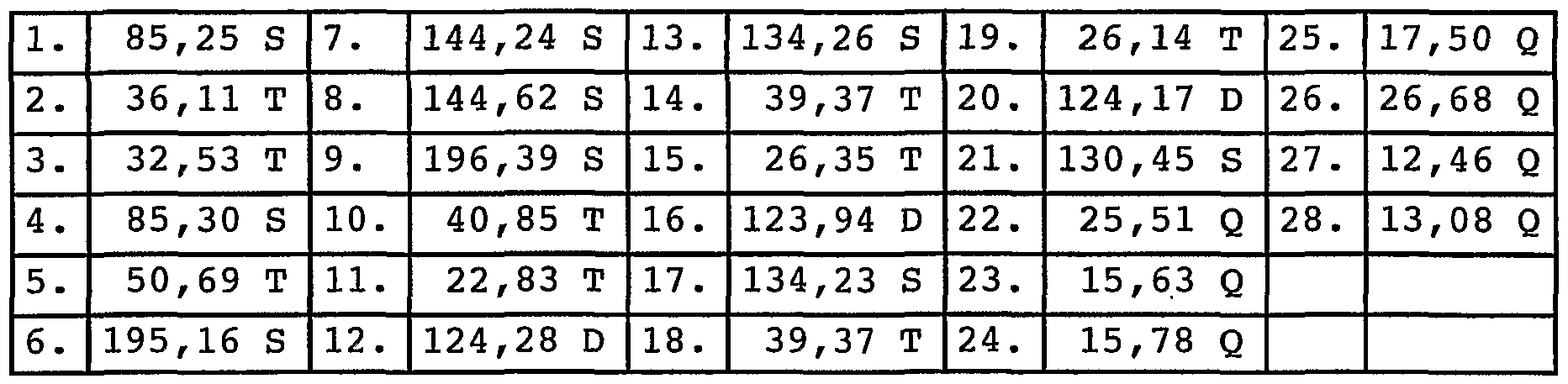
Gaschromatographische Analyse :Gas chromatographic analysis:
Die GC-Analyse wurde auf einer 50 m CP-Sil 5/CB-Säule (Chrompack) durchgeführt. Temperaturprogramm: 150 °C, 3 min- 15 °C/min- 300 °C, 45 min. Injektor: 280 °C. Detektor (FID) : 300 °CThe GC analysis was carried out on a 50 m CP-Sil 5 / CB column (chrome pack). Temperature program: 150 ° C, 3 min- 15 ° C / min- 300 ° C, 45 min. Injector: 280 ° C. Detector (FID): 300 ° C
DC-Bedingungen:TLC conditions:
- DC-Platten: Kieselgel 60- TLC plates: silica gel 60
- Laufmittel: 30 % Methyl-tert-butylether/n-Heptan- solvent: 30% methyl tert-butyl ether / n-heptane
- Sprühreagenz : Cer(IV) sulfat-Molybdatophosphorsäure- Spray reagent: Cerium (IV) sulfate-molybdatophosphoric acid
Beispiel 2 : Bestimmung der Cholesterinsynthese in HepG2-Zellen (siehe Fahrner, J. et al., Eur. J. Biochem. 213: 1067-1073 (1993); Gebhardt, R. , Lipids 28: 613-619 (1993); Pill, J. et al., Z. Anal. Chem. 332: 512-513 (1985)Example 2: Determination of cholesterol synthesis in HepG2 cells (see Fahrner, J. et al., Eur. J. Biochem. 213: 1067-1073 (1993); Gebhardt, R., Lipids 28: 613-619 (1993); Pill, J. et al., Z. Anal. Chem. 332: 512-513 (1985)
Für den Nachweis einer Beeinflussung der Cholesterin-Biosynthese durch Testsubstanzen wurden HepG2-Zellkulturen eingesetzt. Diese Zellen wurden in 35 mm 6-well-Zellkulturinkubationsschalen in DMEM-Medium (Gibco, Eggenstein, Germany) mit 2 mM Gentamin, 10 % fötales Kälberserum, 40 U/ml Streptomycin und 50 U/ml Penicillin bis zur Konfluenz kultiviert. Eingefrorene Zellen wurden vor der Verwendung eine Woche kultiviert und passagiert. Die konfluenten Zellen wurden dann und in Serum-freiem Williams Medium E für 4 Stunden bei 37 °C mit den TestSubstanzen inkubiert. Dann wurde 5 den Ansätzen 14C-Acetat (18,5 kBq/ml; 0,5 μCi/ml) zugefügt. Die Testsubstanzen wurden in DMSO verdünnt und in den angegebenen Konzentrationen eingesetzt. Nach weiteren 2 Stunden wurde das Medium entfernt, die Zellen zweimal mit physiologischer Salzlösung gewaschen, in destilliertes Wasser überführt und durch hochfre- 10 quenten Ultraschall homogenisiert (20 sec, Stufe 3).HepG2 cell cultures were used to demonstrate that cholesterol biosynthesis was influenced by test substances. These cells were placed in 35 mm 6-well cell culture incubation dishes in DMEM medium (Gibco, Eggenstein, Germany) with 2 mM gentamine, 10% fetal calf serum, 40 U / ml streptomycin and 50 U / ml penicillin cultivated to confluence. Frozen cells were cultured and passaged for one week before use. The confluent cells were then incubated with the test substances in serum-free Williams Medium E for 4 hours at 37 ° C. Then 5 C 14 acetate (18.5 kBq / ml; 0.5 μCi / ml) was added to the batches. The test substances were diluted in DMSO and used in the concentrations indicated. After a further 2 hours, the medium was removed, the cells were washed twice with physiological saline, transferred to distilled water and homogenized by high-frequency ultrasound (20 sec, step 3).
Der Einbau von 14C-Acetat in die nicht verseifbare Lipid-Fraktion (Sterol-Fraktion) wurde durch folgende Methode bestimmt: 1,4 ml der Homogenate wurden mit 2,8 ml 0,5 M KOH in EtOH unter Schüt-The incorporation of 14 C-acetate into the unsaponifiable lipid fraction (sterol fraction) was determined by the following method: 1.4 ml of the homogenates were shaken with 2.8 ml of 0.5 M KOH in EtOH.
15 teln für 1 Stunde bei 70 °C inkubiert. 2,1 ml dieser Menge wurden auf Extrelut®-Säulen (Merck, Darmstadt) aufgetragen. Die neutralen, lipophilen, nicht verseifbaren Substanzen wurden nach 30 min durch 10 ml n-Heptan in Szintillationsgefäße eluiert. Die 14C-Aktivität in den Proben wurde nach Zugabe von 10 ml Szintilla-Incubated for 15 hours at 70 ° C. 2.1 ml of this amount were applied to Extrelut® columns (Merck, Darmstadt). The neutral, lipophilic, unsaponifiable substances were eluted after 30 min by 10 ml of n-heptane in scintillation vials. The 14 C activity in the samples was increased after adding 10 ml of scintilla
20 tionslösung (Ultima Gold®, Packard, Merident, Connecticut) in einem Szintillationszähler bestimmt. Die gezeigten Messwerte verstehen sich als Mittelwerte dreier unabhängiger Kulturschalen pro Versuchsansatz. Als Bezugswert wurde der Einbau von 14C-Acetat in Abwesenheit der Testsubstanzen bestimmt auf 100 % gesetzt.20 tion solution (Ultima Gold®, Packard, Merident, Connecticut) determined in a scintillation counter. The measured values shown are to be understood as the mean values of three independent culture dishes per test batch. As a reference, the incorporation of 14 C-acetate in the absence of the test substances was determined to be 100%.
2525
Versuchsergebnisse:Test results:
Folgende Substanzen wurden auf in Beispiel 2 angegebene Weise getestet: R-γ-Tocotrienol; γ-Tocotrienolchinon; α-Tocotrienolchinon;The following substances were tested in the manner given in Example 2: R-γ-tocotrienol; γ-tocotrienolquinone; α-tocotrienolquinone;
30 polares Diastereomer des γ-Tocotrienolchinon-Cyclisierungspro- dukts, unpolares Diastereomer des γ-Tocotrienolchinon-Cyclisie- rungsprodukts, Racemat des γ-Tocotrienolchinon-Cyclisierungspro- dukts. Die Ergebnisse sind in den Fig. 1 bis 6 dargestellt. Die in den Figuren angegebenen Werte entsprechen den Mittelwerten aus30 polar diastereomer of the γ-tocotrienolquinone cyclization product, non-polar diastereomer of the γ-tocotrienolquinone cyclization product, racemate of the γ-tocotrienolquinone cyclization product. The results are shown in FIGS. 1 to 6. The values given in the figures correspond to the mean values
35 jeweils drei unabhängigen Messwerten. Sie sind ausgedrückt in relativen Einheiten bezogen auf den 14C-Acetat-Einbau in Zellen mit einer Zugabe der äquivalenten Menge DMSO als Kontrolle. R-γ-Tocotrienol bewirkt in einer Konzentration von 5 x 10⁻⁶ M eine ca. 20 %ige Hemmung des 14C-Acetat-Einbaus mit einer maximal ca.35 three independent measurements each. They are expressed in relative units based on the 14 C-acetate incorporation in cells with an addition of the equivalent amount of DMSO as a control. In a concentration of 5 x 10 -6 M, R-γ-tocotrienol causes an approx. 20% inhibition of the 14 C acetate incorporation with a maximum of approx.
40 50 %igen signifikanten Hemmung bei Konzentrationen > 5 x 10⁻⁵ M (Fig. 1). γ- und α-Tocotrienolchinon bewirken erst ab einer Konzentration von 10-5 M eine signifikante, aber ca. 70- bis 75 %ige Hemmung des 14C-Acetat-Einbaus (Fig. 2 und 3). Sowohl das polare als auch das unpolare Diastereomer von γ-Tocotrienolchinon-Cycli-40 50% significant inhibition at concentrations> 5 x 10 -5 M (Fig. 1). γ- and α-tocotrienolquinone only cause a significant, but approx. 70 to 75% inhibition of 14 C-acetate incorporation from a concentration of 10 -5 M (FIGS. 2 and 3). Both the polar and the non-polar diastereomer of γ-tocotrienolquinone cycli-
45 sierungsprodukt sowie das Gemisch der beiden Diastereomere (1:1) bewirken bereits bei einer Konzentration von 10-6 M eine signifikante 20- bis 30 %ige Hemmung des 1C-Acetat-Einbaus , bei einer Konzentration von 5 x 10⁻⁵ eine ca. 50 %ige Hemmung (Fig. 4, 5 und 6). Damit sind die erfindungsgemäßen Cyclisierungsprodukte im Konzentrationsbereich von 10-6 M wesentlich wirksamer als γ-Tocotrienol und γ-Tocotrienolchinon. 45 product and the mixture of the two diastereomers (1: 1) cause a significant 20 to 30% inhibition of the 1 C-acetate incorporation, even at a concentration of 10 -6 M Concentration of 5 x 10 -5 an approximately 50% inhibition (Fig. 4, 5 and 6). The cyclization products according to the invention in the concentration range of 10 -6 M are thus considerably more effective than γ-tocotrienol and γ-tocotrienolquinone.
Claims


Priority Applications (7)
| Application Number | Priority Date | Filing Date | Title |
|---|---|---|---|
| EP01969391A EP1301501B1 (en) | 2000-07-14 | 2001-07-13 | Tocotrienolquinone cyclisation product with an anti-hypercholesterol effect |
| AT01969391T ATE263160T1 (en) | 2000-07-14 | 2001-07-13 | TOCOTRIENOLQUINONE CYCLING PRODUCTS WITH ANTIHYPERCHOLESTEROL EFFECT |
| AU2001289659A AU2001289659A1 (en) | 2000-07-14 | 2001-07-13 | Tocotrienolquinone cyclisation product with an anti-hypercholesterol effect |
| DK01969391T DK1301501T3 (en) | 2000-07-14 | 2001-07-13 | Tocotrienol quinone cyclization products with antihypercholesterol effect |
| JP2002512165A JP2004504313A (en) | 2000-07-14 | 2001-07-13 | Tocotrienol quinone cyclized product having anti-high cholesterol activity |
| US10/332,863 US6977270B2 (en) | 2000-07-14 | 2001-07-13 | Tocotrienolquinone cyclization product with an anti-hypercholesterol effect |
| DE50101861T DE50101861D1 (en) | 2000-07-14 | 2001-07-13 | TOCOTRIENOLCHINONE CYCLIZING PRODUCTS WITH ANTIHYPERCHOLESTERINE EFFECT |
Applications Claiming Priority (2)
| Application Number | Priority Date | Filing Date | Title |
|---|---|---|---|
| DE10034233.7 | 2000-07-14 | ||
| DE10034233A DE10034233A1 (en) | 2000-07-14 | 2000-07-14 | Tocotrienolquinone-cyclization |
Publications (1)
| Publication Number | Publication Date |
|---|---|
| WO2002006261A1 true WO2002006261A1 (en) | 2002-01-24 |
Family
ID=7648895
Family Applications (1)
| Application Number | Title | Priority Date | Filing Date |
|---|---|---|---|
| PCT/EP2001/008163 Ceased WO2002006261A1 (en) | 2000-07-14 | 2001-07-13 | Tocotrienolquinone cyclisation product with an anti-hypercholesterol effect |
Country Status (10)
| Country | Link |
|---|---|
| US (1) | US6977270B2 (en) |
| EP (1) | EP1301501B1 (en) |
| JP (1) | JP2004504313A (en) |
| CN (1) | CN1441793A (en) |
| AT (1) | ATE263160T1 (en) |
| AU (1) | AU2001289659A1 (en) |
| DE (2) | DE10034233A1 (en) |
| DK (1) | DK1301501T3 (en) |
| ES (1) | ES2218448T3 (en) |
| WO (1) | WO2002006261A1 (en) |
Cited By (4)
| Publication number | Priority date | Publication date | Assignee | Title |
|---|---|---|---|---|
| US9447006B2 (en) | 2005-06-01 | 2016-09-20 | Edison Pharmaceuticals, Inc. | Redox-active therapeutics for treatment of mitochondrial diseases and other conditions and modulation of energy biomarkers |
| US9932286B2 (en) | 2006-02-22 | 2018-04-03 | Bioelectron Technology Corporation | Side-chain variants of redox-active therapeutics for treatment of mitochondrial diseases and other conditions and modulation of energy biomarkers |
| US10105325B2 (en) | 2008-09-10 | 2018-10-23 | Bioelectron Technology Corporation | Treatment of pervasive developmental disorders with redox-active therapeutics |
| US10703701B2 (en) | 2015-12-17 | 2020-07-07 | Ptc Therapeutics, Inc. | Fluoroalkyl, fluoroalkoxy, phenoxy, heteroaryloxy, alkoxy, and amine 1,4-benzoquinone derivatives for treatment of oxidative stress disorders |
Families Citing this family (8)
| Publication number | Priority date | Publication date | Assignee | Title |
|---|---|---|---|---|
| US20120046237A1 (en) * | 1998-04-08 | 2012-02-23 | Theoharides Theoharis C | Compositions for protection against superficial vasodilator flush syndrome, and methods of use |
| JP2009508867A (en) * | 2005-09-15 | 2009-03-05 | エジソン ファーマシューティカルズ, インコーポレイテッド | Tail variants of redox-active therapeutic agents for the treatment of mitochondrial diseases and related aspects and for modulation of energy biomarkers |
| HUE041714T2 (en) * | 2008-10-28 | 2019-05-28 | Bioelectron Tech Corp | Composition containing alpha-tocotrienol quinone,and intermediates thereof |
| WO2010126911A1 (en) | 2009-04-28 | 2010-11-04 | Edison Pharmaceuticals, Inc. | Treatment of leber's hereditary optic neuropathy and dominant optic atrophy with tocotrienol quinones |
| EA028677B1 (en) * | 2009-08-26 | 2017-12-29 | Биоэлектрон Текнолоджи Корпорейшн | Method for the treatment, prevention and/or amelioration of neuronal damage associated with cerebral ischemia |
| EP2734512B1 (en) | 2011-07-19 | 2019-11-20 | Bioelectron Technology Corporation | Methods for selective oxidation of alpha tocotrienol in the presence of non-alpha tocotrienols |
| AU2013271442B2 (en) | 2012-06-08 | 2017-10-05 | The Ohio State University | Treating burn and scar injury using tocotrienol |
| WO2017106786A1 (en) | 2015-12-16 | 2017-06-22 | Bioelectron Technology Corporation | Improved methods for enriching alpha-tocotrienol from mixed tocol compositions |
Citations (6)
| Publication number | Priority date | Publication date | Assignee | Title |
|---|---|---|---|---|
| EP0421419A2 (en) * | 1989-10-04 | 1991-04-10 | Bristol-Myers Squibb Company | Tocotrienols in the treatment of hypercholesterolemia, hyperlipidemia and thromboembolic disorders |
| EP0476493A1 (en) * | 1990-09-14 | 1992-03-25 | Bristol-Myers Squibb Company | Acyclic tocotrienol analogs in the treatment of hypercholesterolemia and hyperlipidemia |
| EP0571928A1 (en) * | 1992-05-29 | 1993-12-01 | Bristol-Myers Squibb Company | Acyclic Tocotrienol analogs in the treatment of hypercholesterolemia and hyperlipidemia |
| US5318993A (en) * | 1993-04-16 | 1994-06-07 | Bristol-Myers Squibb Company | Antihyperlipidemic benzoquinones |
| EP0669132A1 (en) * | 1994-02-23 | 1995-08-30 | van der Kraaij, Antonius Marinus Maria | Pharmaceutical composition of vitamin E and acetylsalicylate for treatment and prevention of atherosclerosis |
| EP0882450A2 (en) * | 1997-05-27 | 1998-12-09 | Kaneka Corporation | Cholesterol-lowering composition comprising coenzyme Q |
Family Cites Families (1)
| Publication number | Priority date | Publication date | Assignee | Title |
|---|---|---|---|---|
| US5217992A (en) * | 1989-10-04 | 1993-06-08 | Bristol-Myers Squibb Company | Tocotrienols in the treatment of hypercholesterolemia, hyperlipidemia and thromboembolic disorders |
-
2000
- 2000-07-14 DE DE10034233A patent/DE10034233A1/en not_active Withdrawn
-
2001
- 2001-07-13 US US10/332,863 patent/US6977270B2/en not_active Expired - Lifetime
- 2001-07-13 AT AT01969391T patent/ATE263160T1/en not_active IP Right Cessation
- 2001-07-13 DE DE50101861T patent/DE50101861D1/en not_active Expired - Fee Related
- 2001-07-13 ES ES01969391T patent/ES2218448T3/en not_active Expired - Lifetime
- 2001-07-13 CN CN01812696A patent/CN1441793A/en active Pending
- 2001-07-13 EP EP01969391A patent/EP1301501B1/en not_active Expired - Lifetime
- 2001-07-13 DK DK01969391T patent/DK1301501T3/en active
- 2001-07-13 JP JP2002512165A patent/JP2004504313A/en not_active Withdrawn
- 2001-07-13 WO PCT/EP2001/008163 patent/WO2002006261A1/en not_active Ceased
- 2001-07-13 AU AU2001289659A patent/AU2001289659A1/en not_active Abandoned
Patent Citations (6)
| Publication number | Priority date | Publication date | Assignee | Title |
|---|---|---|---|---|
| EP0421419A2 (en) * | 1989-10-04 | 1991-04-10 | Bristol-Myers Squibb Company | Tocotrienols in the treatment of hypercholesterolemia, hyperlipidemia and thromboembolic disorders |
| EP0476493A1 (en) * | 1990-09-14 | 1992-03-25 | Bristol-Myers Squibb Company | Acyclic tocotrienol analogs in the treatment of hypercholesterolemia and hyperlipidemia |
| EP0571928A1 (en) * | 1992-05-29 | 1993-12-01 | Bristol-Myers Squibb Company | Acyclic Tocotrienol analogs in the treatment of hypercholesterolemia and hyperlipidemia |
| US5318993A (en) * | 1993-04-16 | 1994-06-07 | Bristol-Myers Squibb Company | Antihyperlipidemic benzoquinones |
| EP0669132A1 (en) * | 1994-02-23 | 1995-08-30 | van der Kraaij, Antonius Marinus Maria | Pharmaceutical composition of vitamin E and acetylsalicylate for treatment and prevention of atherosclerosis |
| EP0882450A2 (en) * | 1997-05-27 | 1998-12-09 | Kaneka Corporation | Cholesterol-lowering composition comprising coenzyme Q |
Non-Patent Citations (1)
| Title |
|---|
| KOMIYAMA K ET AL: "STUDIES ON THE BIOLOGICAL ACTIVITY OF TOCOTRIENOLS", STN CHEMICAL ABSTRAC, XP002914546 * |
Cited By (7)
| Publication number | Priority date | Publication date | Assignee | Title |
|---|---|---|---|---|
| US9447006B2 (en) | 2005-06-01 | 2016-09-20 | Edison Pharmaceuticals, Inc. | Redox-active therapeutics for treatment of mitochondrial diseases and other conditions and modulation of energy biomarkers |
| US11021424B2 (en) | 2005-06-01 | 2021-06-01 | Ptc Therapeutics, Inc. | Redox-active therapeutics for treatment of mitochondrial diseases and other conditions and modulation of energy biomarkers |
| US9932286B2 (en) | 2006-02-22 | 2018-04-03 | Bioelectron Technology Corporation | Side-chain variants of redox-active therapeutics for treatment of mitochondrial diseases and other conditions and modulation of energy biomarkers |
| US10105325B2 (en) | 2008-09-10 | 2018-10-23 | Bioelectron Technology Corporation | Treatment of pervasive developmental disorders with redox-active therapeutics |
| US10703701B2 (en) | 2015-12-17 | 2020-07-07 | Ptc Therapeutics, Inc. | Fluoroalkyl, fluoroalkoxy, phenoxy, heteroaryloxy, alkoxy, and amine 1,4-benzoquinone derivatives for treatment of oxidative stress disorders |
| US10981855B2 (en) | 2015-12-17 | 2021-04-20 | Ptc Therapeutics, Inc. | Fluoroalkyl, fluoroalkoxy, phenoxy, heteroaryloxy, alkoxy, and amine 1,4-benzoquinone derivatives for treatment of oxidative stress disorders |
| US11680034B2 (en) | 2015-12-17 | 2023-06-20 | Ptc Therapeutics, Inc. | Fluoroalkyl, fluoroalkoxy, phenoxy, heteroaryloxy, alkoxy, and amine 1,4-benzoquinone derivatives for treatment of oxidative stress disorders |
Also Published As
| Publication number | Publication date |
|---|---|
| ATE263160T1 (en) | 2004-04-15 |
| US20040116715A1 (en) | 2004-06-17 |
| US6977270B2 (en) | 2005-12-20 |
| AU2001289659A1 (en) | 2002-01-30 |
| DK1301501T3 (en) | 2004-07-19 |
| CN1441793A (en) | 2003-09-10 |
| DE10034233A1 (en) | 2002-01-24 |
| ES2218448T3 (en) | 2004-11-16 |
| EP1301501B1 (en) | 2004-03-31 |
| DE50101861D1 (en) | 2004-05-06 |
| EP1301501A1 (en) | 2003-04-16 |
| JP2004504313A (en) | 2004-02-12 |
Similar Documents
| Publication | Publication Date | Title |
|---|---|---|
| Al-Farsi et al. | Optimization of phenolics and dietary fibre extraction from date seeds | |
| Guevara et al. | An antitumor promoter from Moringa oleifera Lam. | |
| Zhang et al. | Isolation and identification of strawberry phenolics with antioxidant and human cancer cell antiproliferative properties | |
| Kim et al. | 4-Methylthio-butanyl derivatives from the seeds of Raphanus sativus and their biological evaluation on anti-inflammatory and antitumor activities | |
| Wang et al. | Isolation, identification and antioxidant activity of bound phenolic compounds present in rice bran | |
| Gawlik-Dziki et al. | Antioxidant and anticancer activities of Chenopodium quinoa leaves extracts–in vitro study | |
| Fayek et al. | Chemical and biological study of Manilkara zapota (L.) Van Royen leaves (Sapotaceae) cultivated in Egypt | |
| US6641847B1 (en) | Cranberry seed oil extract and compositions containing components thereof | |
| Ebrahimzadeh et al. | Antihypoxic and antioxidant activity of Hibiscus esculentus seeds | |
| JP4644787B2 (en) | Anti-obesity agent having lipase inhibitory activity and antioxidant properties | |
| EP2010294B1 (en) | Antioxidants | |
| DE69230958T2 (en) | Medicinal composition based on dioxabicyclo [3.3.0] octane derivatives | |
| Zahmanov et al. | Flavonoid glycosides profiling in dwarf elder fruits (Sambucus ebulus L.) and evaluation of their antioxidant and anti-herpes simplex activities | |
| EP0436936A2 (en) | Lipid selective anti-oxidants, their production and use | |
| EP1301501B1 (en) | Tocotrienolquinone cyclisation product with an anti-hypercholesterol effect | |
| Abdalla et al. | Phenolic profile, antioxidant and enzyme inhibition properties of seed methanolic extract of seven new Sunflower lines: From fields to industrial applications | |
| WO2009110782A1 (en) | Extract from oil palm leaves comprising phenolic acids | |
| Ruiz-Vargas et al. | α-Glucosidase inhibitory activity and in vivo antihyperglycemic effect of secondary metabolites from the leaf infusion of Ocimum campechianum mill | |
| Chanioti et al. | β-Sitosterol as a functional bioactive | |
| CN103936698A (en) | Composition For Preventing Or Treating Adiposity Or Metabolism Syndrome | |
| JP3977889B2 (en) | Drugs containing buckwheat husk extract as an active ingredient | |
| Cherif | Phytochemicals components as bioactive foods | |
| JP2021050144A (en) | Enhancers for sugar uptake and methods for producing the same | |
| KR20200098370A (en) | A composition comprising Caulerpa racemosa extracts or fraction having anti-oxidation or anti-inflammation activity | |
| JP3523287B2 (en) | Carcinogenesis promotion inhibitor |
Legal Events
| Date | Code | Title | Description |
|---|---|---|---|
| AK | Designated states |
Kind code of ref document: A1 Designated state(s): AE AG AL AM AT AU AZ BA BB BG BR BY BZ CA CH CN CO CR CU CZ DE DK DM DZ EC EE ES FI GB GD GE GH GM HR HU ID IL IN IS JP KE KG KP KR KZ LC LK LR LS LT LU LV MA MD MG MK MN MW MX MZ NO NZ PL PT RO RU SD SE SG SI SK SL TJ TM TR TT TZ UA UG US UZ VN YU ZA ZW |
|
| AL | Designated countries for regional patents |
Kind code of ref document: A1 Designated state(s): GH GM KE LS MW MZ SD SL SZ TZ UG ZW AM AZ BY KG KZ MD RU TJ TM AT BE CH CY DE DK ES FI FR GB GR IE IT LU MC NL PT SE TR BF BJ CF CG CI CM GA GN GW ML MR NE SN TD TG |
|
| 121 | Ep: the epo has been informed by wipo that ep was designated in this application | ||
| DFPE | Request for preliminary examination filed prior to expiration of 19th month from priority date (pct application filed before 20040101) | ||
| REG | Reference to national code |
Ref country code: DE Ref legal event code: 8642 |
|
| WWE | Wipo information: entry into national phase |
Ref document number: 2001969391 Country of ref document: EP Ref document number: 018126960 Country of ref document: CN |
|
| WWP | Wipo information: published in national office |
Ref document number: 2001969391 Country of ref document: EP |
|
| REG | Reference to national code |
Ref country code: DE Ref legal event code: 8642 |
|
| WWE | Wipo information: entry into national phase |
Ref document number: 10332863 Country of ref document: US |
|
| WWG | Wipo information: grant in national office |
Ref document number: 2001969391 Country of ref document: EP |