WO2001087819A1 - PROCESS FOR PRODUCING OPTICALLY ACTIVE α-AMINO ACID AND OPTICALLY ACTIVE α-AMINO ACID AMIDE - Google Patents
PROCESS FOR PRODUCING OPTICALLY ACTIVE α-AMINO ACID AND OPTICALLY ACTIVE α-AMINO ACID AMIDE Download PDFInfo
- Publication number
- WO2001087819A1 WO2001087819A1 PCT/JP2001/004191 JP0104191W WO0187819A1 WO 2001087819 A1 WO2001087819 A1 WO 2001087819A1 JP 0104191 W JP0104191 W JP 0104191W WO 0187819 A1 WO0187819 A1 WO 0187819A1
- Authority
- WO
- WIPO (PCT)
- Prior art keywords
- amino acid
- optically active
- acid amide
- amide
- group
- Prior art date
- Legal status (The legal status is an assumption and is not a legal conclusion. Google has not performed a legal analysis and makes no representation as to the accuracy of the status listed.)
- Ceased
Links
Classifications
-
- C—CHEMISTRY; METALLURGY
- C12—BIOCHEMISTRY; BEER; SPIRITS; WINE; VINEGAR; MICROBIOLOGY; ENZYMOLOGY; MUTATION OR GENETIC ENGINEERING
- C12P—FERMENTATION OR ENZYME-USING PROCESSES TO SYNTHESISE A DESIRED CHEMICAL COMPOUND OR COMPOSITION OR TO SEPARATE OPTICAL ISOMERS FROM A RACEMIC MIXTURE
- C12P13/00—Preparation of nitrogen-containing organic compounds
- C12P13/04—Alpha- or beta- amino acids
-
- C—CHEMISTRY; METALLURGY
- C07—ORGANIC CHEMISTRY
- C07C—ACYCLIC OR CARBOCYCLIC COMPOUNDS
- C07C227/00—Preparation of compounds containing amino and carboxyl groups bound to the same carbon skeleton
- C07C227/38—Separation; Purification; Stabilisation; Use of additives
- C07C227/40—Separation; Purification
- C07C227/42—Crystallisation
-
- C—CHEMISTRY; METALLURGY
- C07—ORGANIC CHEMISTRY
- C07C—ACYCLIC OR CARBOCYCLIC COMPOUNDS
- C07C231/00—Preparation of carboxylic acid amides
- C07C231/22—Separation; Purification; Stabilisation; Use of additives
- C07C231/24—Separation; Purification
-
- C—CHEMISTRY; METALLURGY
- C07—ORGANIC CHEMISTRY
- C07B—GENERAL METHODS OF ORGANIC CHEMISTRY; APPARATUS THEREFOR
- C07B2200/00—Indexing scheme relating to specific properties of organic compounds
- C07B2200/07—Optical isomers
Definitions
- the present invention relates to a method for producing an optically active ⁇ -amino acid and an optically active ⁇ -amino acid amide.
- Optically active one amino acid, optically active ⁇ -amino acid amide and racemic amino acid amide are used as starting materials for pharmaceuticals and agricultural chemicals.
- an optical resolution method of a racemic ⁇ -amino acid amide using a microorganism or the like having asymmetric amino acid amide hydrolytic resolution is known.
- This method is capable of easily producing a highly amino acid-rich amino acid by obtaining a microorganism having high stereoselectivity, being easy to produce a racemic monoamino acid amide as a raw material, a natural type and a natural type. It is useful as a general-purpose production method for optically active ⁇ -amino acids, for example, because it can be applied to the production of any unnatural optically active ⁇ -amino acid.
- optical racemization or optical purity of amino acid amides using microorganisms having asymmetric hydrolytic ability is not considered. Since the desired optically active ⁇ -amino acid and optically active ⁇ -amino acid amide are mixed, it is necessary to separate the optically active ⁇ -amino acid and the optically active single amino acid amide.
- Japanese Patent Application Laid-Open No. 60-184439 Japanese Patent Application Laid-Open No. 59-159879, and a method of performing adsorption separation using an ion-exchange resin (Japanese Patent Application Laid-Open No. 1 1 2 2
- racemization a method of racemizing a single amino acid amide by heating in an organic solvent in the presence of an alkali is also described in JP-A-62-252571. ing.
- Japanese Patent Application Laid-Open No. 61-197530 also describes that the racemization proceeds efficiently in an organic solvent under an alkaline condition.
- optically active monoamino acid amides were used to suppress the hydrolysis of ⁇ -amino acid amide, which occurs as a side reaction during the racemization reaction. It is essential to keep the water content in the solution low.
- the water content in an organic solvent is specified to be 10% or less.
- the method of preferentially crystallizing ⁇ -amino acids by adding ethanol to the reaction concentrate is simpler than other methods, because the concentration and crystallization can be performed in the same tank. Is characterized by low capital investment. However, in this method, it is necessary to add ethanol several times or more to the volume of the concentrated solution, which causes an increase in cost.
- the reported example of this technology has only a limited number of natural amino acids and only describes valine as to the purity of the obtained amino acid, and is it possible to obtain high-purity amino acids of other amino acids in good yield? It is unknown at all. Therefore, this method is not a versatile technique.
- optically active Q! -Amino acid amide-containing ethanol solution has a high water content, etc.
- further optically active 0! -Amino acid amide racemization reaction is required.
- Operations such as dehydration of the solution and solvent replacement, or isolation and drying of optically active ⁇ -amino acid amide crystals are required, which complicates the operation process.
- the amino acid is not always completely crystallized, and the amino acid may be mixed into the amino acid amide.
- the optically active amino acid amide could be racemized and reused as a raw material for the asymmetric hydrolysis reaction. It is feared that the optical purity will be reduced by this.
- the optically active amino acid amide can be racemized without isolation from the solution. Although it is characterized by the ability to react, it is technically difficult to completely remove the water from the solution and concentrate it to dryness in industrial-scale production, and considering operability and equipment investment in equipment, etc. However, this method is not a practical manufacturing method.
- the method for producing optically active ⁇ -amino acid and the method for purifying racemic human amino acid amide by known methods are for recovering optically active 0! -Amino acid and 0! -Amino acid amide after the reaction.
- the method had problems in terms of efficiency, etc., and could not be industrially superior.
- the present invention provides an optically active mono-amino acid and an efficient method for producing the optically active mono-amino acid amide, which solve the above problems. Disclosure of the invention
- the present inventors have conducted intensive studies to solve the above-mentioned problems, and as a result, have found that optically active 0! -Amino acids and optically active-solvents of aqueous solutions containing amino acid amides have been studied.
- optically active 0! -Amino acids and optically active-solvents of aqueous solutions containing amino acid amides have been studied.
- By replacing water with an alcohol solvent having 3 or more carbon atoms and preferentially obtaining optically active amino acids from alcohol solutions it is possible to produce optically active monoamino acids in very high yields. I found it.
- an alcohol containing an optically active ⁇ -amino acid amide obtained as a separated mother liquor after an asymmetric hydrolysis reaction, crystallization and separation of the optically active ⁇ -amino acid. It has also been found that the racemization reaction of an optically active monoamino acid amide can be performed without going through a step of isolating the optically active amino acid amide from the solution.
- a water removal operation such as azeotropic dehydration can be performed to remove the water generated by the reaction with the basic compound, so that the optically active amino acid amide can be more efficiently racemized.
- the reaction can be carried out, and after the racemization reaction, the recovered D- and L-isomeric amino acid amide mixtures can be recycled and used as a raw material for the asymmetric hydrolysis of the amino acid amide. I found it.
- the present invention relates to the following items (1) to (25).
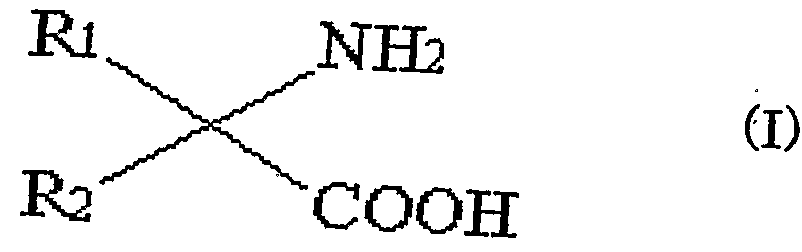
- the solvent of the aqueous solution containing an optically active amino acid and an optically active ⁇ -amino acid amide is converted from water into at least one alcohol selected from the group consisting of linear, branched or cyclic alcohols having 3 or more carbon atoms. And producing an optically active ⁇ -amino acid and an optically active ⁇ -amino acid amide, wherein the ⁇ -amino acid has the general formula (I) )
- R 1 and R 2 are the same or different and each represents a hydrogen atom, a lower alkyl group, a substituted lower alkyl group, a lower alkenyl group, a substituted lower alkenyl group, a cycloalkyl group, a phenyl group, a substituted phenyl group, Represents a heterocyclic group or a substituted heterocyclic group.
- the amino acid amide is represented by the general formula (II)
- R 1 and R 2 are the same or different and each represents a hydrogen atom, a lower alkyl group, a substituted lower alkyl group, a lower alkenyl group, a substituted lower alkenyl group, a cycloalkyl group, a phenyl group, a substituted phenyl group, It represents a heterocyclic group and a substituted heterocyclic group.
- a method for producing an optically active a-amino acid and an optically active ⁇ -amino acid amide represented by the formula:
- R is a linear or branched alkyl group having 2 to 5 carbon atoms
- R is a linear or branched alkyl group having 2 to 5 carbon atoms
- One amino acid and one amino acid amide are each one tert-leucine and ⁇ -tert one mouth isine amide, ⁇ -phenylalanine and ⁇ -phenylalanine amide, one phenyldaricin and one phenyldaricin Amide, ⁇ _ ⁇ -fluorophenylglycine and a-p-fluorophenylglycine amide, a-0-chloro-phenylglycine and 1-chloro-phenylglycine amide, a-p- A group consisting of hydroxy-phenylalanine and a_p-hydroxy-phenylalanine amide, a-2-amino-n-butyric acid and a_2-amino-n-butyric acid amide, and isoleucine and a-isoleucine amide
- the method for producing an optically active amino acid and an optically active a-amino acid amide according to (2) which is selected from the group consisting of:
- a cell or a processed product of the cell wherein the aqueous solution containing optically active a; -amino acid and optically active a-amino acid amide has an asymmetric hydrolytic activity on an optically impure a-amino acid amide
- Optical activity a The optically active monoamino acid and optical activity a according to any one of (1) to (6), wherein the water content of the separated mother liquor after the precipitation of the amino acid is 10% by mass or less.
- Methods for producing amino acid amides Methods for producing amino acid amides.
- (9) The process for producing an optically active ⁇ -amino acid and an optically active a-amino acid amide according to (7), wherein the water content of the separated mother liquor after the precipitation of the optically active ⁇ -amino acid is 10% by mass or less.
- the type of the ⁇ -amino acid used in the present invention is not limited, but those represented by the following general formula (I) are preferred.
- Examples of the compound represented by the general formula (I) include, for example, alanine, palin, leucine, isoleucine, methionine, tributofan, fenylalanine, serine, cysteine, tyrosine, lysine, histidine, 2-amino-n-butyric acid, and cyclohexylalanine.
- the kind of one amino acid amide is not limited, but those represented by the following general formula (II) are preferred.
- R 1 and R 2 are the same or different, and each represents a hydrogen atom, a lower alkyl group, a substituted lower alkyl group, a lower alkenyl group, a substituted lower alkenyl group, a cycloalkyl group, a phenyl group, a substituted phenyl group, Heterocyclic group and position Represents a substituted heterocyclic group.
- Examples of the compound represented by the general formula (II) include, for example, alanine amide, norinamide, leucine amide, isoleucine amide, methionine amide, tributan amide, fenylalanine amide, serine amide, cis tin amide, and tyrosin amide.
- Lysine amide histidine amide, 2-amino-butyrate amide, cyclohexylalanine amide, norvalinamide, norleucine amide, 6-hydroxynorleucine amide, neopentylglycine amide, ⁇ Nisylamine amide, tert-mouth amide, phenylglycine amide, 0-black mouth phenyldaricinamide, ⁇ -black mouth phenyldaricinamide, p-mouth phenyldaricinamide, p-fluorophenyl Glycineamide, p-cloth Nina Mi de, p- hydroxy-phenylene Ruaranin'ami de, 0, mention may be made of p- dichlorophenyl Gurishin'ami de like.
- R is a linear or branched alkyl group having 2 to 5 carbon atoms
- R is a linear or branched alkyl group having 2 to 5 carbon atoms.
- the optical resolution reaction of a monoamino acid amide acts stereospecifically on a racemic or optically unpurified monoamino acid amide in an aqueous medium and has optical properties corresponding to the optically active monoamino acid. It can be performed by the action of a microorganism that provides an amino acid amide.
- the microorganism is not particularly limited as long as it catalyzes the above-mentioned reaction. For example, Enterobacter—'Croatsey N-7901 (F ERMBP-873), E.co.
- microorganisms 1 i J M 109 / p LA 205 (FERMBP—71 32). These microorganisms are used as they are or as processed cells (washed cells, dried cells, crushed cells, cell extracts, crude or purified enzymes, and immobilized products thereof).
- the optical resolution reaction is carried out by bringing a human amino acid amide into contact with the above-mentioned cells or the treated cells in an aqueous medium.
- concentration of ⁇ -amino acid amide is 0.1 to 60% by mass, preferably 1 to 40% by mass.
- the concentration of the processed cells or processed cells varies depending on the amount of the activity, but is 1/10000 to 1 mass, preferably 1Z100 to 110 mass, based on the mass of the amino acid amide.
- the pH is between 4 and 11, preferably between 6 and 10, and the reaction temperature is between 10 and 60, preferably between 20 and 50 ° C.
- the method for removing the cells or the treated cells from the reaction solution is not particularly limited, and for example, it can be carried out using a method such as centrifugation or filtration.
- the reaction solution from which the cells or the treated product has been removed may be subjected to a vacuum concentration operation as necessary.
- the water in the obtained reaction solution or concentrated solution contains at least one solvent selected from linear, branched, or cyclic alcohols having 3 or more carbon atoms, preferably 3 to 6, and more preferably 4 to 6 carbon atoms. Is replaced by Examples of the solvent include propanol, butanol, pentanol, and hexanol, and n-butanol and isopropyl alcohol are preferable.
- the solvent is replaced by an operation such as azeotropic distillation, and the water contained in the aqueous solution containing the optically active a_amino acid and the optically active ⁇ -amino acid amide obtained after the asymmetric hydrolysis reaction of the amino acid amide.
- the operation is preferably performed until 90% by mass or more is replaced with an alcohol solvent.
- the method for obtaining an optically active ⁇ -amino acid after substitution with an alcohol solvent is not particularly limited, and examples thereof include a method for obtaining by precipitation.
- the concentration and temperature of the optically active ⁇ -amino acid when precipitating the optically active ⁇ -amino acid are not particularly limited as long as the optically active ⁇ -amino acid can be recovered in a high yield. Is carried out at 1 to 50% by mass, preferably 5 to 30% by mass, and at a temperature of 120 to 60 ° C, preferably 0 to 40 ° C. Further, after heating and stirring the solution at a higher temperature than during the precipitation operation, the optically active monoamino acid is precipitated at the above-mentioned temperature, whereby a highly pure optically active monoamino acid can be obtained. Furthermore, the operation of recovering the precipitated optically active single amino acid can be performed by any of continuous and batch methods. By the above operation, the optically active amino acid precipitated as crystals is recovered by a method such as centrifugation or filtration, and as a result, the optically active a-amino acid is dissolved in the solution. And can be separated.
- the optically active a-amino acid amide in the separated mother liquor can be recovered as a solid by substituting with a solvent having low solubility for the optically active monoamino acid amide or removing the solvent.
- the racemization reaction of the optically active a-amino acid amide is carried out by adding a basic compound to an optically active a-amino acid amide-containing alcohol solution obtained as a separation mother liquor.
- any basic compound may be used as long as the amino acid is a salt that easily dissolves in an organic solvent.
- An alkali metal, an alkali metal hydroxide, an alkali metal hydride, an alkali metal salt, or an alkali metal alcohol may be used. At least one of these is selected.
- the alkali metal include sodium metal and metal hydride
- examples of the alkali metal hydride include sodium hydride and potassium hydride
- examples of the alkali metal salt include sodium carbonate and potassium carbonate.
- Examples of the alkali metal hydroxide include sodium hydroxide and potassium hydroxide
- examples of the alkali metal alcoholate include sodium methylate, sodium ethylate, potassium methylate, and potassium tert-butylate. . Of these, potassium compounds are particularly desirable.
- the amount of the basic compound to be added is 0.01 to 1.0 molar equivalent, preferably 0.05 to 0.5 molar equivalent, based on the amino acid amide.
- a basic compound of at least 1.0 molar equivalent of one amino acid can be added to the above-mentioned amount.
- water removal generated by the reaction with the basic compound can be removed by performing a water removal operation such as azeotropic dehydration after the addition of the basic compound, so that the optically active a-amino acid amide racemate can be more efficiently removed.
- Chemical reaction It is possible to do.
- the optically active amino acid amide thus recovered as an alcohol solution can be subjected to a racemization reaction only by a simple operation without going through a complicated process while being dissolved in an alcohol solvent.
- the conditions for the racemization reaction of the optically active ⁇ -amino acid amide vary depending on various factors such as the type and concentration of the ⁇ -amino acid amide and the base compound, and are not particularly limited. It is carried out at 100 ° C., preferably at 100 to 150 ° C., for 10 minutes to 24 hours.
- the amino acid amide is obtained by adding an appropriate organic solvent to a solution containing an amino acid and an amino acid amide mixed with a basic compound, and precipitating the amino acid amide preferentially.
- any organic solvent may be used as long as the amino acid salt as a salt of the basic compound is dissolved and the amino acid amide is hardly dissolved.
- the amino acid amide can be precipitated from the solution by an operation such as concentration or cooling.
- Enterobacter croatacei N—7901 (FERMP—873) was cultured. 1 L of the culture was centrifuged, and the wet cells were suspended in distilled water to prepare 800 g of a cell suspension. After dissolving 200 g of D, L-tert-leucine amide in this suspension, the mixture was reacted at 40 ° C for 52 hours. After the reaction, The cells were removed by centrifugation to obtain 970 g of an aqueous solution containing 10% by mass of each of L-tert-one-port isine and D-tert-one-port isine amide.
- the concentrations of t ert -leucine and t ert -leucine amide were analyzed under high-performance liquid chromatography (HPLC) analysis condition 1, and their optical purities were analyzed under HPLC analysis condition 2.
- HPLC high-performance liquid chromatography
- the water content of the solution was measured using a Karl-Fischer Moisture Analyzer (Mitsubishi Moisture, Inc. CA-60: manufactured by Mitsubishi Kasei Corporation).
- the precipitated crystals were collected by centrifugal filtration to obtain 39.2 g of dry mass of L-tert-leucine (yield: 98%). At this time, the amount of D_tert-leucine amide contained in the L-tert single-mouthed isine crystal was 0.05% by mass.
- the precipitated crystals were collected by centrifugal filtration to obtain 48.9 g of dry mass of L-tert-leucine (yield: 98%). At this time, the amount of D-tert-leucine amide contained in the L-tert-leucine crystal was less than 0.01% by mass.
- the recovered mother liquor (295 g) contained 49.0 g of D-tert single-mouthed isinamide.
- Example 2 The same operation as in Example 2 was performed using each of the alcohol solvents shown in Table 1 in place of n-butanol, and the L-tert-mouth isine and D-t.ert obtained in Reference Example 1 were obtained. From the aqueous solution containing leucine amide, 400 g, L-tert single-mouthed isine crystals were recovered. Table 1 shows the water content, crystallization temperature, and L-tert-mouth isine acquisition yield of each alcohol solution after the solvent replacement operation. showed that.
- the mixture was concentrated at 80 to 80 torr, until the total amount became 150 g, and then 150 g of n-butanol was added to bring the total amount to 300 g (water content: 0.1%).
- the solution was stirred at 120 ° C for 6 hours.
- the amino acid ratio was 2.8% (wXw) before the reaction, and 5.4% (w / w) after the reaction.
- D-tert-leucine amide 70 g (optical purity> 9.9% ee), L-tert bite isine (optical purity 9.9% ee) 5.5 g, water 44 g, and isopropyl alcohol 8
- the mixture was concentrated at 80 ° C / 80 torr until the total amount became 150 g, and then 150 g of n-butanol was added to make the total amount 300 g. (Water content 0.1% ) o The solution was stirred at 120 for 6 hours.
- the amino acid ratio before the reaction was 7.3% (w / w), and the ratio after the reaction was 11.9% (w / w).
- the reaction solution was concentrated to a total volume of 100 g, 100 g of n-heptane was added, and the precipitated crystals were centrifugally filtered and dried to obtain 63 g of racemic tert-leucine amide. .
- the content of tert-mouth isine contained in the collected tert-mouth isineamide was 1.07% (w / w).
- the acquisition yield of the amino acid amide was 89%, and the racemization ratio was 99%.
- the mixture was concentrated at 80 ° C./80 torr until the total amount became 150 g, and then 150 g of n-butanol was added to make the total amount to 300 g.
- the measured water content was 0.1%.
- reaction mixture was concentrated to a total volume of 100 g, 100 g of n-heptane was added, and the precipitated crystals were centrifugally filtered and dried to obtain 63 g of racemic tert-leucine amide. did.
- the tert-leucine contained in the collected tert-mouth isinamide was 0.89% (w / w). Acquisition yield of amino acid amide is 89%, racemization rate is 96% there were.
- the mixture was concentrated at 80 ° C / 80 torr until the total amount became 1.50 g, and then 150 g of n-butanol was added to bring the total amount to 300 g (water content 0.1%). .
- the solution was stirred at 120 ° C for 6 hours.
- the amino acid ratio was 7.3% (wXw) before the reaction, and 12.1% (wZw) after the reaction.
- reaction mixture was concentrated to a total volume of 100 g, 100 g of n-heptane was added, and the precipitated crystals were centrifugally filtered and dried to collect 65 g of racemic tert-leucine amide. .
- Enteropac Yuichi Croatssey N-7901 strain (FERM BP-873) was cultured. Centrifuge 500 mL of the culture solution, and then suspend the wet cells in distilled water. As a result, 1140 g of a cell suspension solution was prepared. After dissolving 60 g of D, L-phenylalanine amide in this suspension, the mixture was reacted at 40 ° C. for 24 hours. After the reaction, the cells were removed by centrifugation to obtain 1150 g of an aqueous solution containing 2.5% by mass of each of L-phenylalanine and D-phenylalanine amide.
- HPLC analysis condition 5 The concentrations of phenylalanine and phenylalanine amide were analyzed under HPLC analysis condition 5, and their optical purities were analyzed under HPLC analysis condition 6.
- Example 11 After the centrifugal filtration operation of Example 11, 300 g of an n-butanol solution containing D-phenylalanine amide 28 was obtained. After adding 1.1 g of potassium hydroxide and 50 g of n-butanol, the solution was concentrated under reduced pressure to 187 g. The water concentration of the concentrated liquid was 0.05% by mass. After the concentrated solution was heated to reflux for 1 hour, the reaction solution was concentrated under reduced pressure to 55 g, and 100 g of toluene was added to the concentrated solution, followed by stirring at 5 ° C for 3 hours.
- the precipitated crystals were collected by suction filtration to obtain a dry mass 23.8 g of a phenylalanine amide of a mixture of the D-form and L (85% yield from the separated mother liquor).
- the D-form: L-form abundance ratio of the phenylalanine amide crystals at this time was 50.1: 49.9.
- the concentration of L-phenyldaricin and D-phenyldaricin amide is HP The analysis was performed under LC analysis condition 7 under HPLC analysis condition 8 for each optical purity.
- Example 14 After the centrifugal filtration operation of Example 14, 110 g of an n-butanol solution containing 14.5 g of D-phenyldaricinamide was obtained. Hydrolysis power is added to this After adding 0.2 g of n-butanol and 40 g of n-butanol, the solution was concentrated under reduced pressure to 72 g. The water concentration of the concentrated liquid was 0.08% by mass. After the concentrated solution was heated under reflux for 2 hours, the reaction solution was concentrated under reduced pressure to 25 g, and 40 g of toluene was added to the concentrated solution, followed by stirring at 5 ° C for 10 hours.
- the precipitated crystals were collected by suction filtration to obtain 10.9 g of a dry mass of phenyldaricin amide as a mixture of the D-isomer and L (75% yield from the separated mother liquor). At this time, the abundance ratio of D-form: L in the phenylglycine amide crystal was 50.0: 50.0.
- Enterobacter croataceae 7 7901 strain (FERMBP-873) was cultured. 100 mL of the culture solution was centrifuged, and the wet cells were suspended in distilled water to prepare a cell suspension solution (228 g). After dissolving 12 g of D, L-P-fluoro-phenyldaricinamide in this suspension, the mixture was reacted at 40 ° C for 24 hours. After the reaction, the cells were removed by centrifugation to obtain 230 g of an aqueous solution containing 2.5% by mass each of LP-fluoro-phenylglycine and DP-fluoro-phenyldaricinamide.
- HPLC analysis conditions 9 Column: Intotosyl ODS—3 V (4.6 ⁇ X 250 mm) Moving bed: 0.1% phosphoric acid aqueous solution-methanol (95: 5)
- the precipitated crystals were collected by centrifugal filtration to obtain 5.4 g of dry mass of L-P-fluorophenylglycine (yield: 90%). At this time, the amount of D-p-fluoro-phenylglycine amide contained in the L-p-fluoro-phenylglycine crystal was 0.1% by mass.
- Example 1 (1) After the centrifugal filtration operation in Example 1 (1), 110 g of an n-butanol solution containing 5.9 g of Dp-fluoro-phenyldaricinamide was obtained. After 0.2 g of potassium hydroxide was added thereto, the solution was concentrated under reduced pressure to 60 g. The water concentration of the concentrated liquid was 0.02% by mass. After heating the concentrated solution under reflux for 2 hours, the reaction solution was concentrated under reduced pressure to 20 g, and 20 g of toluene was further added to the concentrated solution, followed by stirring at 5 ° C for 3 hours. The precipitated crystals were collected by suction filtration, i 4-4 g of D- and L-body mixture! ) -Fluorophenylidaricinamide was obtained (74% yield from separated mother liquor). At this time, the D-form: L-form abundance ratio of the p-flow-phenylglycine amide crystal was 50.0: 50.0.
- enterobacteria croataceae II-7901 strain (FE RM BP-8733) 0 was added to suspension solution 228, and L-0-clonal phenyldaricin amide 12 was added. After dissolution, the reaction was carried out at 40 ° C. for 24 hours. After the reaction, the cells were removed by centrifugation to obtain 230 g of an aqueous solution containing 2.5% by mass of each of L-10-cloguchi-phenyldaricin and D-0-cloguchi-phenyldaricin amide.
- FE RM BP-8733 enterobacteria croataceae II-7901 strain
- Example 20 After the operation of Example 20, 110 g of an n-butanol solution containing 5.9 g of D-0-clo-monophenyldaricinamide was obtained. Hydrolysis power is added to this After adding 0.2 g of the compound, the same process operation as in Example 18 was carried out to obtain a dry mass of 4.5 g of 0-chloro-phenylglycine amide as a mixture of D-isomer and L-integrated. (76% yield from separated mother liquor). At this time, the abundance ratio of the D-form: L-form of the 0-chloro-phenylidaricinamide crystal was 50.0: 50.0. Using the obtained crystals, a bacterial cell reaction was carried out in the same manner as in Example 19. After 24 hours, the reaction solution contained L-10-chloro-phenylidaricin and D_o-clo-n-phenylidyne. Lysine amide was present at 2.5% by mass each.
- Enterobacter croataceus II-7901 strain (FE RM BP-873) suspension solution 0, L-p-hydroxy-phenylalanine amide 12 g as in Reference Example 4 was dissolved and reacted at 40 ° C. for 24 hours. After the reaction, the cells were removed by centrifugation, and 230 g of an aqueous solution containing 2.5% by mass of each of L-p-hydroxy-1-phenylalanine and D-p-hydroxy-1-phenylalanine was added. Obtained.
- Example 17 The same operation as in Example 17 was carried out on 230 g of the aqueous solution containing L-p-hydroxy-phenylalanine and D-p-hydroxy-phenylalanine amide obtained in Reference Example 6 to obtain a dry mass of 5. 3 g of L-p-hydroxy-phenyl-2-alanine was obtained (88% yield). At this time, the amount of Dp-hydroxy-1-phenylalanine amide contained in the L-p-hydroxy-1-phenylalanine crystal was 0.2% by mass.
- Example 22 After the operation of Example 22, 110 g of n-butanol solution containing 5-9 g of Dp-hydroxy-phenylalanine amide was obtained. After adding 0.3 g of hydroxide hydroxide thereto, the same process operation as in Example 18 was carried out to obtain a dry mass of 4.2 g of the D-isomer and L-integrated mixture of P-hydroxy-phenylene. Laninamide was obtained (72% yield from separated mother liquor). At this time, the abundance ratio of the D-form: L-form of p-hydric xy-phenylalanine amide was 50.0: 50.0.
- a bacterial cell reaction was carried out using the obtained crystals in the same manner as in Example 19, and after 24 hours, the reaction mixture contained L-p-hydroxy-phenyl-2-alanine and D-p-hydroxy-phenylene. Dilulaninamide was present at 2.5% by mass each.
- the Enterobacter croataceae 7 7901 strain (FERMBP-873) was cultured.
- the culture solution (10 O mL) was centrifuged, and the wet cells were suspended in distilled water to prepare a cell suspension (240 g). After dissolving 10 g of D, L-2-aminon-butyric acid amide in this suspension, the mixture was reacted at 40 ° C. for 40 hours.
- the cells were removed by centrifugation to obtain 240 g of an aqueous solution containing 2.0% by mass of each of L_2-amino-n-butyric acid and D-2-amino-n-butyric acid amide.
- the precipitated crystals were collected by suction filtration to obtain 4.0 g of dry mass of L-2-amino-n-butyric acid (yield 90%). At this time, the amount of D-2-amino-n-butyric acid amide contained in the L-2-amino-n-butyric acid crystal was 0.2% by mass.
- Example 2 5 After the operation of Example 24, 85 g of n-butanol solution containing 4.8 g of D-2-amino-n-butyric acid amide was obtained. After 0.1 g of potassium hydroxide was added thereto, the solution was concentrated under reduced pressure to 25 g. The water concentration of the concentrate was 0.09% by mass. After the concentrated solution was heated to reflux for 7 hours, the reaction solution was concentrated under reduced pressure to 8 g, and 8 g of toluene was added to the concentrated solution, followed by stirring at 0 ° C for 3 hours.
- the precipitated crystals were collected by suction filtration to obtain a 2-amino-n-butyric acid amide of a mixture of 0-integral and L-integral with a dry mass of 3.4 ⁇ (70% yield from the separated mother liquor).
- the abundance ratio of the D-isomer: L integral of the 2-amino-n-butyric acid amide crystal was 50.0: 50.0.
- Example 2 240 g of the aqueous solution containing L-isoleucine and D-isoleucine amide obtained in Reference Example 8 was treated in the same manner as in Example 24 to obtain 4.5 g of dry mass of L-isoleucine ( Yield 88%). At this time, the amount of D-isoleucine amide contained in the L-iso-isocyanate crystal was 0.2% by mass.
- Example 2 8 240 g of the aqueous solution containing L-isoleucine and D-isoleucine amide obtained in Reference Example 8 was treated in the same manner as in Example 24 to obtain 4.5 g of dry mass of L-isoleucine ( Yield 88%). At this time, the amount of D-isoleucine amide contained in the L-iso-isocyanate crystal was 0.2% by mass.
- Example 27 After the operation of Example 27, 85 g of an n-butanol solution containing 4.8 g of D-isoleucine amide was obtained. After adding 0.2 g of potassium hydroxide thereto, the same operation as in Example 18 was carried out to obtain an isoleucine amide of a mixture of D-isomer and L having a dry mass of 3.6 g (separation) 75% yield from mother liquor). At this time, the abundance ratio of the D-form: L-form of the isoleucine amide crystal was 51.0: 49.0. A bacterial cell reaction was carried out using the obtained crystals in the same manner as in Example 26. After 40 hours, the reaction solution contained 2.0% by mass of L-isoleucine and D-isoleucine amide, respectively. Comparative Example 2
- Example 3 The same operation as in Example 3 was performed using ethanol instead of n-butanol. After concentrating 550 g of the aqueous solution containing L-tert single-mouthed isine and D-tert-leucine amide obtained in Reference Example 1 to 250 g under reduced pressure, 250 g of ethanol was added to the solution. The solution was further concentrated under reduced pressure, and when the amount of the distillate reached 240 g, 250 g of ethanol was added to the solution again. ⁇ Addition, concentration was performed again under reduced pressure, and finally 350 g of concentrated solution was added. I got At this time, the water concentration of the concentrated solution was 19.5% by mass. Further, 250 g of ethanol was added, and the mixture was again concentrated under reduced pressure.
- a racemic ⁇ -amino acid amide is brought into contact with a cell or an enzyme having a stereospecific amino acid amide hydrolytic ability, and then water as a solvent is converted into a straight chain having 3 or more carbon atoms, or Substitute with at least one solvent selected from among branched or cyclic alcohols, and preferentially precipitate optically active single amino acids from the obtained alcohol solution, resulting in very high optical yields. Active ⁇ -amino acids can be produced.
Landscapes
- Chemical & Material Sciences (AREA)
- Organic Chemistry (AREA)
- Engineering & Computer Science (AREA)
- Zoology (AREA)
- Life Sciences & Earth Sciences (AREA)
- Wood Science & Technology (AREA)
- Chemical Kinetics & Catalysis (AREA)
- Microbiology (AREA)
- General Chemical & Material Sciences (AREA)
- Biotechnology (AREA)
- Health & Medical Sciences (AREA)
- Biochemistry (AREA)
- Bioinformatics & Cheminformatics (AREA)
- General Engineering & Computer Science (AREA)
- General Health & Medical Sciences (AREA)
- Genetics & Genomics (AREA)
- Crystallography & Structural Chemistry (AREA)
- Organic Low-Molecular-Weight Compounds And Preparation Thereof (AREA)
- Preparation Of Compounds By Using Micro-Organisms (AREA)
Abstract
Description
明細 : 光学活性 a —了ミノ酸及び光学活性 α —アミノ酸アミ ドの製造方法 技術分野 Description : Method for producing optically active a-amino acid and optically active α-amino acid amide
本発明は、 光学活性 α —アミノ酸及び光学活性 α —アミノ酸アミ ドの 製造方法に関する。 光学活性 一アミノ酸、 光学活性 α —アミノ酸アミ ド及びラセミ体のアミノ酸アミ ドは医農薬等の出発原料として利用され る。 背景技術 The present invention relates to a method for producing an optically active α-amino acid and an optically active α-amino acid amide. Optically active one amino acid, optically active α-amino acid amide and racemic amino acid amide are used as starting materials for pharmaceuticals and agricultural chemicals. Background art
光学活性 α —アミノ酸の製造に関する報告は化学的合成法、 生物学的 合成法ともに数多く見られる。 There are many reports on the production of optically active α-amino acids in both chemical and biological synthesis methods.
例えば、 生物学的合成法として、 ひ —アミノ酸アミ ド不斉加水分解能 を有する微生物等を用いたラセミ体 α —アミノ酸アミ ドの光学分割法が 知られている。 この方法は、 立体選択性の高い微生物の取得により光学 純度の高いひ—アミノ酸が容易に製造可能であること、 原料となるラセ ミ体 一アミノ酸アミ ドの製造が容易であること、 天然型及び非天然型 のいずれの光学活性 a —ァミノ酸製造にも応用が可能であること等の理 由により、 光学活性 α —アミノ酸の汎用的な製造法として有用である。 For example, as a biological synthesis method, an optical resolution method of a racemic α-amino acid amide using a microorganism or the like having asymmetric amino acid amide hydrolytic resolution is known. This method is capable of easily producing a highly amino acid-rich amino acid by obtaining a microorganism having high stereoselectivity, being easy to produce a racemic monoamino acid amide as a raw material, a natural type and a natural type. It is useful as a general-purpose production method for optically active α-amino acids, for example, because it can be applied to the production of any unnatural optically active α-amino acid.
しかし、 上記、 ひ —アミノ酸アミ ド不斉加水分解能を有する微生物等 を用いたラセミ体又は光学的に純粋でない — ア ミノ酸アミ ドの光学分 割法においては、 '反応終了後、 液中に目的とする光学活性 α —アミノ酸 と光学活性 α —アミノ酸アミ ドが混在するため、 光学活性 α —アミノ酸 と光学活性 一アミノ酸アミ ドを分離する必要がある。 However, the above-mentioned optical racemization or optical purity of amino acid amides using microorganisms having asymmetric hydrolytic ability is not considered. Since the desired optically active α-amino acid and optically active α-amino acid amide are mixed, it is necessary to separate the optically active α-amino acid and the optically active single amino acid amide.
分離法としては、 水系溶媒にて酵素的不斉加水分解反応を行った後、 反応液を濃縮し、 アミノ酸の貧溶媒であるアルコール等の有機溶媒を加 えて、 結晶化したアミソ酸を取り出し、 未反応のアミノ酸アミ ドはろ液 として水一アルコール混合溶媒に溶解した状態で取得する方法が考えら れる。 さらには、 より効率よく製造する方法として、 ラセミ化を組み合 わせた光学活性アミノ酸及びアミノ酸アミ ドの製造法が報告されている 例えば、 α—アミノ酸アミ ドを溶媒抽出により除去した後、 α—アミ ノ酸を等電点にて回収する方法 (特開昭 5 8— 2 0 9 9 8 9号、 特開昭As a separation method, after performing an enzymatic asymmetric hydrolysis reaction in an aqueous solvent, the reaction solution is concentrated, and an organic solvent such as alcohol, which is a poor solvent for amino acids, is added to take out the crystallized amino acid. Unreacted amino acid amide is filtrate As a method, it is conceivable to obtain it in a state of being dissolved in a mixed solvent of water and alcohol. Furthermore, as a more efficient method for producing optically active amino acids and amino acid amides, a combination of racemization has been reported. For example, after removing α-amino acid amide by solvent extraction, Method for recovering amino acid at isoelectric point (Japanese Patent Application Laid-Open No. 58-20989,
5 7 - 1 3 0 0 0号各公報参照)、エタノールを加えアミノ酸を優先的に 晶析させる方法 (特開昭 6 3— 8 7 9 9 8号、 特開昭 6 1 — 2 7 4 6 957-130, 000), a method of preferentially crystallizing amino acids by adding ethanol (JP-A-63-87998, JP-A-61-27464) 9
0号、 特開昭 6 0— 1 8 4 3 9 2号、 特開昭 5 9— 1 5 9 7 8 9号各公 報参照)、 イオン交換樹脂を用いて吸着分離を行う方法 (特開平 1一 2 2No. 0, Japanese Patent Application Laid-Open No. 60-184439, Japanese Patent Application Laid-Open No. 59-159879, and a method of performing adsorption separation using an ion-exchange resin (Japanese Patent Application Laid-Open No. 1 1 2 2
6 4 8 2号公報参照)、又は α—アミノ酸アミ ドを陽イオン交換樹脂に吸 着させた後、 該イオン交換樹脂に酵素を接触させて立体特異的に加水分 解反応を行い、 反応と分離を同時に行う光学活性アミノ酸の製造方法 ( 特開平 8— 2 3 9 9 6号公報参照) が報告されている。 No. 6482) or an α-amino acid amide is adsorbed to a cation exchange resin, and then an enzyme is brought into contact with the ion exchange resin to carry out a stereospecific hydrolysis reaction. There has been reported a method for producing an optically active amino acid which can be simultaneously separated (see JP-A-8-23996).
また、 光学分割反応後、 得られた光学活性 Q! —アミノ酸水溶液に含ま れる水を減圧下除去し、 熱有機溶媒にて残渣を洗浄して α—アミノ酸ァ ミ ドを選択的に除去した後、 残った光学活性ひ—アミノ酸を回収する方 法も報告されている (特開昭 6 1— 2 9 3 3 9 4号公報参照)。 After the optical resolution reaction, the water contained in the obtained optically active Q! -Amino acid aqueous solution was removed under reduced pressure, and the residue was washed with a hot organic solvent to selectively remove α-amino acid amide. A method of recovering the remaining optically active amino acids has also been reported (see Japanese Patent Application Laid-Open No. Sho 61-293394).
この報告には、 洗浄 · 回収した光学活性 α—アミノ酸アミ ドの有機溶 媒溶液に強塩基性化合物を加え、 加熱して a—アミノ酸アミ ドのラセミ 化反応を行ない、 得られた D _体及び L—体混合物の α—アミノ酸アミ ドを不斉加水分解反応に再利用する旨も記載されている。 In this report, a strongly basic compound was added to an organic solvent solution of the optically active α-amino acid amide washed and recovered, and heated to perform a racemization reaction of the a-amino acid amide. And that the α-amino acid amide of the L-isomer mixture is reused in the asymmetric hydrolysis reaction.
また、 ラセミ化に関しては、 有機溶媒中、 アルカリ存在下加熱してひ 一アミノ酸アミ ドをラセミ化する方法は、 特開昭 6 2— 2 5 2 7 5 1号 公報明細書中にも記載されている。 Regarding racemization, a method of racemizing a single amino acid amide by heating in an organic solvent in the presence of an alkali is also described in JP-A-62-252571. ing.
さらに、 特開昭 6 1 — 1 9 7 5 3 0号にもアル力リ条件下、 有機溶媒 中で、 効率よくラセミ化が進行することが記載されている。 Furthermore, Japanese Patent Application Laid-Open No. 61-197530 also describes that the racemization proceeds efficiently in an organic solvent under an alkaline condition.
いずれの報告でも、 ラセミ化反応中に副反応として起こる α—ァミノ 酸アミ ドの加水分解反応を抑制するため、 光学活性ひ 一アミノ酸アミ ド 溶液中の水分含量を低く抑えることが必須とされており、 例えば特開昭In both reports, optically active monoamino acid amides were used to suppress the hydrolysis of α-amino acid amide, which occurs as a side reaction during the racemization reaction. It is essential to keep the water content in the solution low.
6 2 - 2 5 2 7 5 1号公報では有機溶媒中の水分含量を 1 0 %以下と規 定している。 In Japanese Patent Application Laid-Open No. 622-252751, the water content in an organic solvent is specified to be 10% or less.
しかしながら、 上記の光学活性 α —アミノ酸と α —アミノ酸アミ ドと の分離方法は各々欠点を有し工業的に効率の良い製造方法ではない。 However, the above-mentioned methods for separating an optically active α-amino acid and an α-amino acid amide each have disadvantages and are not industrially efficient production methods.
ひ 一アミノ酸と α —アミノ酸アミ ドを溶媒抽出により分離した後、 ひ —アミノ酸を等電点にて回収する方法においては、 抽出に多量の溶媒を 必要とする。 よって、 装置、 コス ト面で不利となる。 また、 イオン交換 樹脂を用いて吸着分離を行う方法では、 吸着 · 脱離、 回収と多くの行程 が必要とし、 設備投資の増加、 回収効率の低下又は不純物混入機会の増 加の可能性等の問題があり工業的に好ましくない。 In a method in which a single amino acid and an α-amino acid amide are separated by solvent extraction, and then the amino acid is recovered at an isoelectric point, a large amount of solvent is required for the extraction. Therefore, it is disadvantageous in equipment and cost. Also, the method of performing adsorption separation using ion-exchange resin requires adsorption, desorption, and recovery, and requires many steps, which may lead to an increase in capital investment, a decrease in recovery efficiency, or an increase in the chance of impurity contamination. There is a problem and it is not industrially preferable.
一方、 反応濃縮液にエタノールを加え α —アミノ酸を優先的に晶析さ せる方法は、 他の方法に比べ、 濃縮一晶析を同一槽内で行える等から、 操作が簡便であり、 装置上の設備投資も少ないという特徴がある。 しか し、 該方法では濃縮溶液の容積に対し数倍以上の量のエタノールを添加 する必要あり、 コス ト増加の一因となる。 また、 この技術の報告例は、 限られた天然アミノ酸しかなく、 かつ取得したアミノ酸の純度について 記載されているのもバリンのみであり、 他のアミノ酸について高い純度 のアミノ酸が収率良く得られるかどうかは全く不明である。 従ってこの 方法は汎用性ある技術とは言い難い。 On the other hand, the method of preferentially crystallizing α-amino acids by adding ethanol to the reaction concentrate is simpler than other methods, because the concentration and crystallization can be performed in the same tank. Is characterized by low capital investment. However, in this method, it is necessary to add ethanol several times or more to the volume of the concentrated solution, which causes an increase in cost. In addition, the reported example of this technology has only a limited number of natural amino acids and only describes valine as to the purity of the obtained amino acid, and is it possible to obtain high-purity amino acids of other amino acids in good yield? It is unknown at all. Therefore, this method is not a versatile technique.
また、 該方法で、 分離した光学活性 α —アミノ酸アミ ドをラセミ化し て光学分割反応に再利用することを想定した場合、 ェタノールは沸点が 低く、 ラセミ化反応に適当な溶媒ではないことは明白である。 例えば、 特開昭 6 2— 2 5 2 7 5 1号公報では、 ェ夕ノール溶液を用いたラセミ 化反応の例が記載されているが、 反応温度を上昇させるため、 反応容器 を封管した後、 1 1 0〜 1 2 0 °Cに容器を加熱して反応を行っている。 該方法は、 工業スケールにおいては、特殊な装置を必要とする。従って、 エタノールを用いた場合、 装置上の設備投資なく常圧下で反応を行うの は困難である。 In addition, when it is assumed that the separated optically active α-amino acid amide is racemized and reused in the optical resolution reaction by this method, it is apparent that ethanol has a low boiling point and is not a suitable solvent for the racemization reaction. It is. For example, JP-A-62-252571 describes an example of a racemization reaction using an ethanol solution, but in order to raise the reaction temperature, the reaction vessel was sealed. Thereafter, the reaction is carried out by heating the vessel to 110 to 120 ° C. The method requires special equipment on an industrial scale. Therefore, when ethanol is used, the reaction is carried out under normal pressure without capital investment on the equipment. It is difficult.
さらには、 分離 · 回収した光学活性 Q!—アミノ酸アミ ド含有エタノー ル溶液は水分含有率が高いこと等を考慮すると、 光学活性 0!—アミノ酸 アミ ドのラセミ化反応を行うためには、 さらなる溶液の脱水、 溶媒置換 等の操作、 又は光学活性 α—アミノ酸アミ ド結晶の単離 · 乾燥操作が必 要であり、 操作工程が煩雑となる。 Furthermore, considering that the separated and recovered optically active Q! -Amino acid amide-containing ethanol solution has a high water content, etc., further optically active 0! -Amino acid amide racemization reaction is required. Operations such as dehydration of the solution and solvent replacement, or isolation and drying of optically active α-amino acid amide crystals are required, which complicates the operation process.
しかも、 上記の方法では、 必ずしも、 アミノ酸のみが完全に結晶化で きるとは限らず、 アミノ酸アミ ド中にアミノ酸が混入する可能性がある。 また、 光学活性体の一方のみが必要な場合は、 例えば、 光学活性アミ ノ酸アミ ドをラセミ化して、 不斉加水分解反応の原料として再利用でき れば極めて好都合であるが、 混入したアミノ酸により光学純度が低下す ることが危惧される。 Moreover, in the above-mentioned method, not only the amino acid is not always completely crystallized, and the amino acid may be mixed into the amino acid amide. When only one of the optically active compounds is required, for example, it would be extremely convenient if the optically active amino acid amide could be racemized and reused as a raw material for the asymmetric hydrolysis reaction. It is feared that the optical purity will be reduced by this.
水を除去した後、 熱有機溶媒にて残渣を洗浄し、 α—アミノ酸アミ ド を選択的に洗浄除去する方法は、 光学活性ひ —アミノ酸アミ ドを溶液か ら単離することなく、 ラセミ化反応を行なえるという特徴があるが、 ェ 業的規模の製造において溶液から水分を完全に除去し濃縮乾固すること は技術的に困難であり、 操作性、 装置上の設備投資等も考えると、 この 方法は実用的な製造方法ではない。 After removing water, the residue is washed with a hot organic solvent, and the α-amino acid amide is selectively washed away. The optically active amino acid amide can be racemized without isolation from the solution. Although it is characterized by the ability to react, it is technically difficult to completely remove the water from the solution and concentrate it to dryness in industrial-scale production, and considering operability and equipment investment in equipment, etc. However, this method is not a practical manufacturing method.
以上の理由から、 公知の手法による光学活性 α—アミノ酸の製造方法 およびラセミ化したひ —アミノ酸アミ ドの精製方法は、 反応後の光学活 性 0!—アミノ酸及び 0!—アミノ酸アミ ドの回収方法に効率等の面で問題 があり、 工業的に優位な方法となり得えなかった。 For the above reasons, the method for producing optically active α-amino acid and the method for purifying racemic human amino acid amide by known methods are for recovering optically active 0! -Amino acid and 0! -Amino acid amide after the reaction. The method had problems in terms of efficiency, etc., and could not be industrially superior.
本発明は、 上記問題点を解決した効率の良い光学活性ひ一アミノ酸及 び光学活性ひ一アミノ酸アミ ドの有効な製造法を提供する。 発明の開示 The present invention provides an optically active mono-amino acid and an efficient method for producing the optically active mono-amino acid amide, which solve the above problems. Disclosure of the invention
本発明者らは、 上記課題の解決のために、 鋭意検討を重ねた結果、 光 学活性 0!—ァミノ酸及び光学活性 —アミノ酸アミ ド含有水溶液の溶媒 を水から炭素数 3以上のアルコール溶媒へと置換し、 光学活性ひ—アミ ノ酸をアルコール溶液から優先的に取得することで、 非常に高い収率で 光学活性 一アミノ酸を製造し得ることを見いだした。 The present inventors have conducted intensive studies to solve the above-mentioned problems, and as a result, have found that optically active 0! -Amino acids and optically active-solvents of aqueous solutions containing amino acid amides have been studied. By replacing water with an alcohol solvent having 3 or more carbon atoms and preferentially obtaining optically active amino acids from alcohol solutions, it is possible to produce optically active monoamino acids in very high yields. I found it.
さらには、 より効率良く光学活性 α —アミノ酸を製造するため、 不斉 加水分解反応、 光学活性 α —アミノ酸の晶析 · 分離操作の後、 分離母液 として得られる光学活性 α —アミノ酸アミ ド含有アルコール溶液中から 光学活性 £¾—アミノ酸アミ ドを単離する工程を経ることことなく、 光学 活性 一アミノ酸アミ ドのラセミ化反応を実施することができることも 見出した。 また、 アミノ酸及びアミノ酸アミ ドを含む溶液から、 ァミノ 酸アミ ドを精製する方法について鋭意研究を重ねた結果、 アミノ酸及び アミノ酸アミ ドを含む溶液中に塩基性化合物を添加することで、 ァミノ 酸の有機溶媒に対する溶解度が向上し、 該溶液中より、 アミノ酸アミ ド を析出させることにより、 アミノ酸の混入が少ないアミノ酸アミ ドを純 度よく取得できること、 さらには塩基性化合物の添加は、 アミノ酸及び アミノ酸アミ ドの分離及びアミノ酸アミ ドのラセミ化に非常に有効であ るを見出した。 さらに、 塩基性化合物添加後、 共沸脱水等の水分除去操 作を行うことで、塩基性化合物との反応で生じた水分を除去できるため、 さらに効率良く光学活性ひ 一アミノ酸アミ ドのラセミ化反応を行うこと が可能であり、 かつラセミ化反応後、 回収された D—体及び L —体ひ 一 アミノ酸アミ ド混合物がひ—アミノ酸アミ ドの不斉加水分解反応の原料 として循環利用できることを見いだした。 Furthermore, in order to produce optically active α-amino acids more efficiently, an alcohol containing an optically active α-amino acid amide obtained as a separated mother liquor after an asymmetric hydrolysis reaction, crystallization and separation of the optically active α-amino acid. It has also been found that the racemization reaction of an optically active monoamino acid amide can be performed without going through a step of isolating the optically active amino acid amide from the solution. In addition, as a result of intensive studies on a method for purifying an amino acid amide from a solution containing an amino acid and an amino acid amide, the addition of a basic compound to the solution containing the amino acid and the amino acid amide has led to The solubility in an organic solvent is improved, and by precipitating the amino acid amide from the solution, it is possible to obtain an amino acid amide with a small amount of contaminating amino acids with good purity. It was found to be very effective for separation of amides and racemization of amino acid amides. Furthermore, after the addition of the basic compound, a water removal operation such as azeotropic dehydration can be performed to remove the water generated by the reaction with the basic compound, so that the optically active amino acid amide can be more efficiently racemized. The reaction can be carried out, and after the racemization reaction, the recovered D- and L-isomeric amino acid amide mixtures can be recycled and used as a raw material for the asymmetric hydrolysis of the amino acid amide. I found it.
すなわち、 本発明は、 以下の ( 1 ) 〜 ( 2 5 ) の事項に関する。 That is, the present invention relates to the following items (1) to (25).
( 1 ) 光学活性ひ —ァミノ酸及び光学活性 α —アミノ酸アミ ド含有水溶 液の溶媒を、 水から炭素数 3以上の直鎖、 分岐又は環状アルコールから なる群から選ばれる少なくとも 1種のアルコールへと置換し、 光学活性 α —アミノ酸を該アルコール溶液から析出させることを特徴とする光学 活性 α —ァミノ酸及び光学活性 α —アミノ酸アミ ドの製造方法であって、 α —アミノ酸が一般式 (I )
(式中、 R l及び R 2は、 同一又は異なっており、 水素原子、 低級アル キル基、 置換低級アルキル基、 低級アルケニル基、 置換低級アルケニル 基、 シクロアルキル基、 フエニル基、 置換フヱニル基、 複素環基及び置 換複素環基を示す。 )で示され、 ひ 一アミノ酸ア ミ ドが一般式 (II) (Wherein, R 1 and R 2 are the same or different and each represents a hydrogen atom, a lower alkyl group, a substituted lower alkyl group, a lower alkenyl group, a substituted lower alkenyl group, a cycloalkyl group, a phenyl group, a substituted phenyl group, Represents a heterocyclic group or a substituted heterocyclic group.), And the amino acid amide is represented by the general formula (II)

(式中、 R 1及び R 2は、 同一又は異なっており、 水素原子、 低級アルキ ル基、 置換低級アルキル基、低級アルケニル基、 置換低級アルケニル基、 シクロアルキル基、 フエニル基、 置換フエニル基、 複素環基及び置換複 素環基を示す。 ) (Wherein, R 1 and R 2 are the same or different and each represents a hydrogen atom, a lower alkyl group, a substituted lower alkyl group, a lower alkenyl group, a substituted lower alkenyl group, a cycloalkyl group, a phenyl group, a substituted phenyl group, It represents a heterocyclic group and a substituted heterocyclic group.)
で示される、 光学活性 a—アミノ酸及び光学活性 α—アミノ酸アミ ドの 製造方法。 A method for producing an optically active a-amino acid and an optically active α-amino acid amide represented by the formula:
(2 ) ひ 一アミノ酸及び 一アミノ酸アミ ドが一般式 (III) で表される 芳香環を有するアミノ酸 ' (2) One amino acid and one amino acid amide having an aromatic ring represented by the general formula (III):

(η== 0〜 1、 Χ =水素、 ハロゲン、 アルキル基、 水酸基、 アルコキシ および一般式 (IV) で表される芳香環を有するアミノ酸アミ ド、 (η == 0 to 1, Χ = hydrogen, halogen, alkyl group, hydroxyl group, alkoxy And an amino acid amide having an aromatic ring represented by the general formula (IV),

(n = 0〜 l、 X=水素、 ハロゲン、 アルキル基、 水酸基、 アルコキシ 基) (n = 0 to l, X = hydrogen, halogen, alkyl group, hydroxyl group, alkoxy group)
又は一般式 (V) で表される脂肪族アミノ酸 . Or an aliphatic amino acid represented by the general formula (V):

(Rは炭素数 2〜 5の直鎖 · または分岐アルキル基) (R is a linear or branched alkyl group having 2 to 5 carbon atoms)
および一般式 (VI) で表される脂肪族アミノ酸アミ ド And an aliphatic amino acid amide represented by the general formula (VI)

(Rは炭素数 2〜 5の直鎖 · または分岐アルキル基) (R is a linear or branched alkyl group having 2 to 5 carbon atoms)
である、 ( 1 ) 記載の光学活性ひ一アミノ酸及び光学活性 一アミノ酸ァ ミ ドの製造方法。 (1) The method for producing an optically active amino acid and an optically active amino acid amide according to (1).
(3) ひ 一アミノ酸及び 一アミノ酸アミ ドが 一 t e r t—ロイシン 及び α— t e r t一口イシンアミ ド、 α—フエ二ルァラニン及び α—フ ェニルァラニンアミ ド、 ひ一フエニルダリシン及び 一フエニルダリシ ンアミ ド、 α _ρ—フロロ一フエニルグリシン及び a— p—フロロ一フエ ニルグリシンアミ ド、 a— 0—クロローフエニルグリシン及びひ 一 0—ク ロロ—フエニルグリシンアミ ド、 a— p—ヒドロキシ一フエ二ルァラニン 及び a _p—ヒ ドロキシーフエ二ルァラニンアミ ド、 a— 2—ァミノ一 n 一酪酸及び a _ 2—ァミノ— n—酪酸アミ ド、 並びにひ 一イソロイシン 及び a—イソロイシンアミ ドからなる群から選択される 一アミノ酸及 び a—アミノ酸アミ ドである ( 2 ) 記載の光学活性ひ —アミノ酸及び光 学活性 a—アミノ酸アミ ドの製造方法。 (3) One amino acid and one amino acid amide are each one tert-leucine and α-tert one mouth isine amide, α-phenylalanine and α-phenylalanine amide, one phenyldaricin and one phenyldaricin Amide, α_ρ-fluorophenylglycine and a-p-fluorophenylglycine amide, a-0-chloro-phenylglycine and 1-chloro-phenylglycine amide, a-p- A group consisting of hydroxy-phenylalanine and a_p-hydroxy-phenylalanine amide, a-2-amino-n-butyric acid and a_2-amino-n-butyric acid amide, and isoleucine and a-isoleucine amide (2) The method for producing an optically active amino acid and an optically active a-amino acid amide according to (2), which is selected from the group consisting of:
(4) アルコールが n—ブ夕ノール、 イソプロパノール、 イソプチルァ ルコール、 1—ペン夕ノールおよびシクロへキサノールよりなる群から 選択される、 ( 1 ) 記載の光学活性 a;—アミノ酸及び光学活性ひ ー ァミノ 酸アミ ドの製造方法。 (4) The optical activity a; the amino acid and the optically active amino as described in (1), wherein the alcohol is selected from the group consisting of n-butanol, isopropanol, isobutyl alcohol, 1-pentanol and cyclohexanol. Method for producing acid amide.
( 5 ) アルコールが n—ブ夕ノール又はイソプロパノール、 イソブチル アルコール、 1 一ペン夕ノールおよびシクロへキサノールよりなる群か ら選択される、 ( 2 ) 記載の光学活性 a—アミノ酸及び光学活性 a—アミ ノ酸アミ ドの製造方法。 (5) The optically active a-amino acid and optically active a-amino according to (2), wherein the alcohol is selected from the group consisting of n-butanol or isopropanol, isobutyl alcohol, 1-pentanol and cyclohexanol. A method for producing acid amide.
( 6 ) アルコールが n—ブタノ一ル又はイソプロパノール、 イソプチル アルコール、 1 一ペン夕ノールおよびシクロへキサノールよりなる群か ら選択される、 ( 3 ) 記載の光学活性ひ 一アミノ酸及び光学活性ひ 一アミ ノ酸アミ ドの製造方法。 (6) The optically active amino acid and optically active amino acid according to (3), wherein the alcohol is selected from the group consisting of n-butanol or isopropanol, isobutyl alcohol, 1.1 pentanol and cyclohexanol. A method for producing acid amide.
( 7 ) 光学活性 a;—ァミノ酸及び光学活性 a—アミノ酸アミ ド含有水溶 液が、 光学的に純粋でない a—アミノ酸アミ ドに不斉加水分解能を有す る菌体又は該菌体処理物を接触させ、 得られたものである ( 1 ) 〜 ( 6 ) のいずれか記載の光学活性 a—ァミノ酸及び光学活性 一アミノ酸ァ ミ ドの製造方法。 (7) A cell or a processed product of the cell, wherein the aqueous solution containing optically active a; -amino acid and optically active a-amino acid amide has an asymmetric hydrolytic activity on an optically impure a-amino acid amide The method for producing an optically active a-amino acid and an optically active monoamino acid amide according to any one of (1) to (6), which is obtained by contacting
( 8 ) 光学活性 a—アミノ酸が析出した後の分離母液の水分含有率が 1 0質量%以下である ( 1 ) 〜 ( 6 ) のいずれか記載の光学活性ひ 一アミ ノ酸及び光学活性 a—アミノ酸アミ ドの製造方法。 ( 9 ) 光学活性 α—アミノ酸が析出した後の分離母液の水分含有率が 1 0質量%以下である ( 7 ) 記載の光学活性 α—アミノ酸及び光学活性 a 一アミノ酸アミ ドの製造方法。 (8) Optical activity a—The optically active monoamino acid and optical activity a according to any one of (1) to (6), wherein the water content of the separated mother liquor after the precipitation of the amino acid is 10% by mass or less. —Methods for producing amino acid amides. (9) The process for producing an optically active α-amino acid and an optically active a-amino acid amide according to (7), wherein the water content of the separated mother liquor after the precipitation of the optically active α-amino acid is 10% by mass or less.
( 1 0 ) ( 1 ) 〜 ( 6 ) のいずれか記載の方法により得られた、 光学活性 ひ 一アミノ酸が析出した後の分離母液に、 水酸化力リゥムまたは tert— ブトキシカリウムを加え、 ラセミ化反応を行い、 次いで a—アミノ酸ァ ミ ドを該溶液中から優先的に析出させることを特徴とする a—アミノ酸 アミ ドの精製方法。 (10) To the separated mother liquor obtained by the method according to any one of (1) to (6), after the optically active amino acid is precipitated, add hydrational hydration or potassium tert-butoxide to racemize. A method for purifying an a-amino acid amide, which comprises carrying out a reaction and then preferentially precipitating the a-amino acid amide from the solution.
( 1 1 ) ( 7 ) 記載の方法により得られた、 光学活性ひ —アミノ酸が析出 した後の分離母液に、 水酸化力リゥムまたは tert—ブトキシカリゥムを 加え、 ラセミ化反応を行い、 次いで a—アミノ酸アミ ドを該溶液中から 優先的に析出させることを特徴とする —アミノ酸アミ ドの精製方法。 (11) To the separated mother liquor obtained after the precipitation of the optically active amino acid obtained by the method described in (7), a hydration power or tert-butoxy potassium is added, and a racemization reaction is carried out. Characterized in that the amide is preferentially precipitated from the solution-a method for purifying an amino acid amide.
( 1 2 ) ( 8 ) 記載の方法により得られた、 光学活性 a—アミノ酸が析出 した後の分離母液に、 水酸化力リウムまたは tett—ブトキシカリウムを 加え、 ラセミ化反応を行い、 次いで a—アミノ酸アミ ドを該溶液中から 優先的に析出させることを特徴とする a—アミノ酸アミ ドの精製方法。 (12) To the separated mother liquor obtained after the optically active a-amino acid is precipitated obtained by the method described in (8), potassium hydroxide or potassium tett-butoxide is added, and a racemization reaction is carried out. An a-amino acid amide purification method, wherein an amino acid amide is preferentially precipitated from the solution.
( 1 3 ) ( 9 ) 記載の方法により得られた、 光学活性 a—アミノ酸が析出 した後の分離母液に、 水酸化力リゥムまたは tert—ブトキシカリゥムを 加え、 ラセミ化反応を行い、 次いで a—アミノ酸アミ ドを該溶液中から 優先的に析出させることを特徴とするひ—アミノ酸アミ ドの精製方法。 (13) To the separated mother liquor obtained after the optically active a-amino acid obtained by the method described in (9) has been added, a hydroxylating power or tert-butoxycalime is added, and a racemization reaction is carried out. A method for purifying amino acid amides, wherein the amide is preferentially precipitated from the solution.
( 1 4) 析出させたアミノ酸アミ ドの結晶中のアミノ酸含有率が 1. 5 %以下である、 ( 1 0 ) 記載のアミノ酸アミ ドの精製方法。 (14) The method for purifying an amino acid amide according to (10), wherein the amino acid content in the crystal of the precipitated amino acid amide is 1.5% or less.
( 1 5 ) 析出させたアミノ酸アミ ドの結晶中のアミノ酸含有率が 1. 5 %以下である、 ( 1 1 ) 記載のアミノ酸アミ ドの精製方法。 (15) The method for purifying an amino acid amide according to (11), wherein the amino acid content in the crystals of the precipitated amino acid amide is 1.5% or less.
( 1 6 ) 析出させたアミノ酸アミ ドの結晶中のアミノ酸含有率が 1. 5 %以下である、 ( 1 2 ) 記載のアミノ酸アミ ドの精製方法。 (16) The method for purifying an amino acid amide according to (12), wherein the amino acid content in the crystals of the precipitated amino acid amide is 1.5% or less.
( 1 7 ) 析出させたアミノ酸アミ ドの結晶中のアミノ酸含有率が 1. 5 %以下である、 ( 1 3 ) 記載のアミノ酸アミ ドの精製方法。 ( 1 8 ) ( 1 0 ) 記載の方法により得られたひ 一アミノ酸アミ ドを不斉加 水分解の原料として循環利用することを特徴とする光学活性ひーァミノ 酸及び光学活性 α—アミノ酸アミ ドの製造方法。 (17) The method for purifying an amino acid amide according to (13), wherein the amino acid content in the crystal of the precipitated amino acid amide is 1.5% or less. (18) An optically active amino acid and an optically active α-amino acid amide, wherein the amino acid amide obtained by the method according to (10) is recycled as a raw material for asymmetric hydrolysis. Manufacturing method.
( 1 9 ) ( 1 1 ) 記載の方法により得られた α—アミノ酸アミ ドを不斉加 水分解の原料として循環利用することを特徴とする光学活性 α—アミノ 酸及び光学活性 α—アミノ酸アミ ドの製造方法。 (19) An optically active α-amino acid and an optically active α-amino acid amide, wherein the α-amino acid amide obtained by the method according to (11) is recycled as a raw material for asymmetric hydrolysis. Manufacturing method.
( 2 0 ) ( 1 2 ) 記載の方法により得られた α—アミノ酸アミ ドを不斉加 水分解の原料として循環利用することを特徴とする光学活性 α—ァミノ 酸及び光学活性 α—アミノ酸アミ ドの製造方法。 (20) An optically active α-amino acid and an optically active α-amino acid amide, wherein the α-amino acid amide obtained by the method according to (12) is recycled as a raw material for asymmetric hydrolysis. Manufacturing method.
( 2 1 ) ( 1 3 ) 記載の方法により得られた α—アミノ酸アミ ドを不斉加 水分解の原料として循環利用することを特徴とする光学活性 α—ァミノ 酸及び光学活性ひ 一アミノ酸アミ ドの製造方法。 (21) An optically active α-amino acid and an optically active amino acid amide, characterized in that the α-amino acid amide obtained by the method according to (13) is recycled as a raw material for asymmetric hydrolysis. Manufacturing method.
( 2 2 ) ( 1 4 ) 記載の方法により得られた α—アミノ酸アミ ドを不斉加 水分解の原料として循環利用することを特徴とする光学活性 α—ァミノ 酸及び光学活性 α—アミノ酸アミ ドの製造方法。 (22) An optically active α-amino acid and an optically active α-amino acid amide, wherein the α-amino acid amide obtained by the method according to (14) is recycled as a raw material for asymmetric hydrolysis. Manufacturing method.
( 2 3 ) ( 1 5 ) 記載の方法により得られた α—アミノ酸アミ ドを不斉加 水分解の原料として循環利用することを特徴とする光学活性 α—アミノ 酸及び光学活性 α—アミノ酸アミ ドの製造方法。 (23) An optically active α-amino acid and an optically active α-amino acid amino acid, characterized by recycling the α-amino acid amide obtained by the method according to (15) as a raw material for asymmetric hydrolysis. Manufacturing method.
( 2 4) ( 1 6 ) 記載の方法により得られた 一アミノ酸アミ ドを不斉加 水分解の原料として循環利用することを特徴とする光学活性 α—ァミノ 酸及び光学活性 α—アミノ酸アミ ドの製造方法。 (24) An optically active α-amino acid and an optically active α-amino acid amide, wherein the monoamino acid amide obtained by the method according to (16) is recycled as a raw material for asymmetric hydrolysis. Manufacturing method.
( 2 5 ) ( 1 7 ) 記載の方法により得られたひ 一アミノ酸アミ ドを不斉加 水分解の原料として循環利用することを特徴とする光学活性ひ一アミノ 酸及び光学活性 α—アミノ酸アミ ドの製造方法。 (25) An optically active amino acid and an optically active α-amino acid amino acid, wherein the amino acid amide obtained by the method according to (17) is recycled as a raw material for asymmetric hydrolysis. Manufacturing method.
以下、 本発明の一般的実施態様について説明する。 Hereinafter, general embodiments of the present invention will be described.
本発明に用いる α—アミノ酸の種類に制限はないが、 次の一般式 (I ) で示されるものが好ましい。

(式中、 1及び 2は、 同一又は異なっており、 水素原子、 低級アル キル基、 置換低級アルキル基、 低級アルケニル基、 置換低級アルケニル 基、 シクロアルキル基、 フエニル基、 置換フエニル基、 複素環基及び置 換複素環基を示す。 ) (Wherein 1 and 2 are the same or different and each represents a hydrogen atom, a lower alkyl group, a substituted lower alkyl group, a lower alkenyl group, a substituted lower alkenyl group, a cycloalkyl group, a phenyl group, a substituted phenyl group, a heterocyclic ring, And a substituted heterocyclic group.)
一般式 (I ) で示されるものとして、 例えば、 ァラニン、 パリン、 ロイ シン、 イソロイシン、 メチォニン、 トリブトファン、 フエ二ルァラニン、 セリン、 システィン、 チロシン、 リジン、 ヒスチジン、 2—アミノー n 一酪酸、 シクロへキシルァラニン、 ノルパリン、 ノルロイシン、 6—ヒ ドロキシノルロイシン、 ネオペンチルグリシン、 ぺニシラミン、 t e r t 一口イシン、 フエニルグリシン、 0—クロ口フエニルグリシン、 m—ク ロロフェニルグリシン、 p—クロ口フエニルグリシン、 p—フロロフエ二 ルグリシン、 p—クロ口フエ二ルァラニン、 p—ヒドロキシフエ二ルァラ ニン、 o, p—ジクロロフエニルダリシン等を挙げることができる。 Examples of the compound represented by the general formula (I) include, for example, alanine, palin, leucine, isoleucine, methionine, tributofan, fenylalanine, serine, cysteine, tyrosine, lysine, histidine, 2-amino-n-butyric acid, and cyclohexylalanine. , Norparin, norleucine, 6-hydroxynorleucine, neopentylglycine, penicillamine, tert-bit isine, phenylglycine, 0-clothphenylglycine, m-chlorophenylglycine, p-clophenylphenylglycine , P-fluorophenylglycine, p-chlorophenylalanine, p-hydroxyphenylalanine, o, p-dichlorophenyldaricin and the like.
本発明において、 一アミノ酸アミ ドの種類に制限はないが、 次の一 般式 (I I ) で示されるものが好ましい。 In the present invention, the kind of one amino acid amide is not limited, but those represented by the following general formula (II) are preferred.

(式中、 R 1及び R 2は、 同一又は異なっており、 水素原子、 低級アル キル基、 置換低級アルキル基、 低級アルケニル基、 置換低級アルケニル 基、 シクロアルキル基、 フエニル基、 置換フエニル基、 複素環基及び置 換複素環基を示す。 ) (In the formula, R 1 and R 2 are the same or different, and each represents a hydrogen atom, a lower alkyl group, a substituted lower alkyl group, a lower alkenyl group, a substituted lower alkenyl group, a cycloalkyl group, a phenyl group, a substituted phenyl group, Heterocyclic group and position Represents a substituted heterocyclic group. )
一般式 (I I) で示されるものとして、 例えば、 ァラニンアミ ド、 ノ リ ンアミ ド、 ロイシンアミ ド、 イソロイシンアミ ド、 メチォニンアミ ド、 トリブトファンアミ ド、 フエ二ルァラニンアミ ド、 セリンアミ ド、 シス ティンアミ ド、 チロシンアミ ド、 リジンアミ ド、 ヒスチジンアミ ド、 2 —アミノー n —酪酸アミ ド、 シクロへキシルァラニンアミ ド、 ノルバリ ンアミ ド、 ノルロイシンアミ ド、 6—ヒドロキシノルロイシンアミ ド、 ネオペンチルグリシンアミ ド、 ぺニシラミンアミ ド、 t e r t —口イシ ンアミ ド、 フエニルグリシンアミ ド、 0—クロ口フエニルダリシンアミ ド 、 πι—クロ口フエニルダリシンアミ ド、 p—クロ口フエニルダリシンアミ ド、 p—フロロフェニルグリシンアミ ド、 p—クロ口フエ二ルァラニンァ ミ ド、 p—ヒドロキシフエ二ルァラニンアミ ド、 0, p—ジクロロフェニル グリシンアミ ド等を挙げることができる。 Examples of the compound represented by the general formula (II) include, for example, alanine amide, norinamide, leucine amide, isoleucine amide, methionine amide, tributan amide, fenylalanine amide, serine amide, cis tin amide, and tyrosin amide. , Lysine amide, histidine amide, 2-amino-butyrate amide, cyclohexylalanine amide, norvalinamide, norleucine amide, 6-hydroxynorleucine amide, neopentylglycine amide, ぺNisylamine amide, tert-mouth amide, phenylglycine amide, 0-black mouth phenyldaricinamide, πι-black mouth phenyldaricinamide, p-mouth phenyldaricinamide, p-fluorophenyl Glycineamide, p-cloth Nina Mi de, p- hydroxy-phenylene Ruaranin'ami de, 0, mention may be made of p- dichlorophenyl Gurishin'ami de like.
これらのうち、 一般式 (I I I) で表される芳香環を有するアミノ酸 Of these, amino acids having an aromatic ring represented by the general formula (III)

( η == 0〜 1、 X =水素、 ハロゲン、 アルキル基、 水酸基、 アルコキシ 基) (η == 0 to 1, X = hydrogen, halogen, alkyl group, hydroxyl group, alkoxy group)
および一般式 (IV) で表される芳香環を有するアミノ酸アミ ド、 And an amino acid amide having an aromatic ring represented by the general formula (IV),

( η == 0〜 1、 X =水素、 ハロゲン、 アルキル基、 水酸基、 アルコキシ 基) (η == 0 to 1, X = hydrogen, halogen, alkyl group, hydroxyl group, alkoxy Base)
又は一般式 (V) で表される脂肪族アミノ酸 Or an aliphatic amino acid represented by the general formula (V)

(Rは炭素数 2〜 5の直鎖 · または分岐アルキル基) (R is a linear or branched alkyl group having 2 to 5 carbon atoms)
および一般式 (VI) で表される脂肪族アミノ酸アミ ド And an aliphatic amino acid amide represented by the general formula (VI)

(Rは炭素数 2〜 5の直鎖 · または分岐アルキル基) が望ましい。 (R is a linear or branched alkyl group having 2 to 5 carbon atoms).
ひ 一アミノ酸アミ ドの光学分割反応は、 水性媒体中でラセミ体あるい は光学的に純粋でない 一アミノ酸アミ ドに立体特異的に作用し、 光学 活性 一アミノ酸と対応する光学特性を有するひ—アミノ酸アミ ドを与 える微生物の作用により行うことができる。 該微生物としては、 上記反 応を触媒するものであれば、 特に制限はなく、 例えば、 ェンテロバクタ — ' クロアツセィ N— 7 9 0 1 (F E RM B P— 8 7 3 )、 E . c o The optical resolution reaction of a monoamino acid amide acts stereospecifically on a racemic or optically unpurified monoamino acid amide in an aqueous medium and has optical properties corresponding to the optically active monoamino acid. It can be performed by the action of a microorganism that provides an amino acid amide. The microorganism is not particularly limited as long as it catalyzes the above-mentioned reaction. For example, Enterobacter—'Croatsey N-7901 (F ERMBP-873), E.co.
1 i J M 1 0 9 /p LA 2 0 5 (F E RM B P— 7 1 3 2 ) 等を挙 げることができる。 これら微生物は菌体をそのまま又は菌体処理物 (洗 浄菌体、 乾燥菌体、 菌体破砕物、 菌体抽出物、 粗又は精製酵素、 及ぴこ れらの固定化物) として使用される。 1 i J M 109 / p LA 205 (FERMBP—71 32). These microorganisms are used as they are or as processed cells (washed cells, dried cells, crushed cells, cell extracts, crude or purified enzymes, and immobilized products thereof).
該光学分割反応は、 水性媒体中においてひ—アミノ酸アミ ドを上記菌 体又は菌体処理物と接触させることによって行われる。 通常、 α—アミ ノ酸アミ ド濃度は 0. 1〜 6 0質量%、 好ましくは 1〜 4 0質量%、 菌 体又は菌体処理物の濃度は、 その活性量により異なるがアミノ酸アミ ド 質量に対し 1 / 1 0 0 0 0〜 1質量、 好ましくは 1 Z 1 0 0 0〜 1 1 0質量、 反応液の p Hは 4〜 1 1、 好ましくは 6〜 1 0、 及び反応温度 は 1 0〜 6 0で、 好ましくは 2 0〜 5 0 °Cである。 The optical resolution reaction is carried out by bringing a human amino acid amide into contact with the above-mentioned cells or the treated cells in an aqueous medium. Usually, the concentration of α-amino acid amide is 0.1 to 60% by mass, preferably 1 to 40% by mass. The concentration of the processed cells or processed cells varies depending on the amount of the activity, but is 1/10000 to 1 mass, preferably 1Z100 to 110 mass, based on the mass of the amino acid amide. The pH is between 4 and 11, preferably between 6 and 10, and the reaction temperature is between 10 and 60, preferably between 20 and 50 ° C.
反応終了後、 反応液からの菌体又は菌体処理物の除去方法は特に限定 しないが例えば、 遠心分離、 ろ過等の方法を用いて行うことができる。 菌体又は該処理物を除去した反応液は必要に応じて減圧濃縮操作を行つ てもよい。 After the completion of the reaction, the method for removing the cells or the treated cells from the reaction solution is not particularly limited, and for example, it can be carried out using a method such as centrifugation or filtration. The reaction solution from which the cells or the treated product has been removed may be subjected to a vacuum concentration operation as necessary.
得られた反応液又は濃縮液中の水は、 炭素数 3以上、 好ましくは 3〜 6、 さらに好ましくは 4〜 6の直鎖、 分岐、 あるいは環状アルコールの 中から選ばれた少なくとも 1種類の溶媒に置換される。 溶媒として、 プ ロパノール、 ブタノール、 ペンタノ一ル、 へキサノール等が挙げられ、 n—ブタノ一ル、 イソプロピルアルコールが望ましい。 The water in the obtained reaction solution or concentrated solution contains at least one solvent selected from linear, branched, or cyclic alcohols having 3 or more carbon atoms, preferably 3 to 6, and more preferably 4 to 6 carbon atoms. Is replaced by Examples of the solvent include propanol, butanol, pentanol, and hexanol, and n-butanol and isopropyl alcohol are preferable.
溶媒の置換は共沸等の操作によつて行なわれ、 ひ 一アミノ酸アミ ドの 不斉加水分解反応後得られる光学活性 a _アミノ酸及び光学活性 α—ァ ミノ酸アミ ド含有水溶液に含まれる水が、 好ましくは 9 0質量%以上ま でアルコール溶媒へと置換されるまで操作を行なう。 The solvent is replaced by an operation such as azeotropic distillation, and the water contained in the aqueous solution containing the optically active a_amino acid and the optically active α-amino acid amide obtained after the asymmetric hydrolysis reaction of the amino acid amide. However, the operation is preferably performed until 90% by mass or more is replaced with an alcohol solvent.
アルコール溶媒へ置換した後、 光学活性 α—アミノ酸を取得する方法 は、 特に限定されないが、 例えば、 析出による取得法が挙げられる。 The method for obtaining an optically active α-amino acid after substitution with an alcohol solvent is not particularly limited, and examples thereof include a method for obtaining by precipitation.
光学活性 α—アミノ酸を析出させる際の光学活性 α—アミノ酸の濃度、 温度については高い収率で光学活性 α—アミノ酸が回収できるのであれ ば特に限定はしないが、 操作効率等を考慮して濃度は 1〜 5 0質量%、 好ましくは 5〜 3 0質量%で、 温度は一 2 0〜 6 0 °C、 好ましくは 0〜 4 0 °Cで行なわれる。 また、 析出操作時より高い温度にて溶液を加温、 撹拌した後、 前述した温度にて光学活性 一アミノ酸を析出させること で、 純度の高い光学活性ひ 一アミノ酸を得ることができる。 さらに析出 した光学活性ひ 一アミノ酸の回収操作は連続及び回分のいずれの方法に よっても行うことができる。 上記操作により、 結晶として析出した光学活性ひ一アミノ酸は、 遠心 分離又はろ過等の方法により回収され、 その結果、 光学活性 a—ァミノ 酸は溶液中に溶解している光学活性 a—アミノ酸アミ ドと分離すること ができる。 The concentration and temperature of the optically active α-amino acid when precipitating the optically active α-amino acid are not particularly limited as long as the optically active α-amino acid can be recovered in a high yield. Is carried out at 1 to 50% by mass, preferably 5 to 30% by mass, and at a temperature of 120 to 60 ° C, preferably 0 to 40 ° C. Further, after heating and stirring the solution at a higher temperature than during the precipitation operation, the optically active monoamino acid is precipitated at the above-mentioned temperature, whereby a highly pure optically active monoamino acid can be obtained. Furthermore, the operation of recovering the precipitated optically active single amino acid can be performed by any of continuous and batch methods. By the above operation, the optically active amino acid precipitated as crystals is recovered by a method such as centrifugation or filtration, and as a result, the optically active a-amino acid is dissolved in the solution. And can be separated.
分離母液中の光学活性 a—アミノ酸アミ ドは、 必要により、 光学活性 一アミノ酸アミ ドに対して溶解度の低い溶媒への置換、 あるいは溶媒 を除去して固体状で回収することができる。 If necessary, the optically active a-amino acid amide in the separated mother liquor can be recovered as a solid by substituting with a solvent having low solubility for the optically active monoamino acid amide or removing the solvent.
光学活性 a —アミノ酸アミ ドのラセミ化反応は、 塩基性化合物を、 分 離母液として得られる光学活性 a —アミノ酸アミ ド含有アルコール溶液 に加えて行う。 The racemization reaction of the optically active a-amino acid amide is carried out by adding a basic compound to an optically active a-amino acid amide-containing alcohol solution obtained as a separation mother liquor.
塩基性化合物としては、 アミノ酸が有機溶媒に溶けやすい塩になるも のであれば何れでも構わず、 アルカリ金属、 アルカリ金属水酸化物、 ァ ルカリ金属水素化物、 アルカリ金属塩、 又はアルカリ金属のアルコラ一 トのうち、 少なく とも 1種類が選ばれる。 アルカリ金属としては、 例え ば、金属ナトリウム、金属力リゥムが、 アル力リ金属水素化物としては、 例えば、 水素化ナトリウム、 水素化カリウムが、 アルカリ金属塩として は、 例えば、 炭酸ナトリウム、 炭酸カリウムが、 アルカリ金属水酸化物 としては、 例えば、 水酸化ナトリウム、 水酸化カリウムが、 アルカリ金 属のアルコラートとしてはナトリウムメチラート、 ナトリウムェチラー ト、 カリウムメチラート、 カリウム一 t e r t —プチラート等が挙げら れる。 これらのうち、 特にカリウム化合物が望ましい。 Any basic compound may be used as long as the amino acid is a salt that easily dissolves in an organic solvent. An alkali metal, an alkali metal hydroxide, an alkali metal hydride, an alkali metal salt, or an alkali metal alcohol may be used. At least one of these is selected. Examples of the alkali metal include sodium metal and metal hydride, and examples of the alkali metal hydride include sodium hydride and potassium hydride, and examples of the alkali metal salt include sodium carbonate and potassium carbonate. Examples of the alkali metal hydroxide include sodium hydroxide and potassium hydroxide, and examples of the alkali metal alcoholate include sodium methylate, sodium ethylate, potassium methylate, and potassium tert-butylate. . Of these, potassium compounds are particularly desirable.
加えられるべき塩基化合物の量はアミノ酸アミ ドに対して 0 . 0 1〜 1 . 0モル当量、 好ましくは 0 . 0 5〜 0 . 5モル当量である。 a—ァ ミノ酸アミ ド含有アルコール溶液中に —アミノ酸が混在する場合は、 一アミノ酸の 1 . 0モル当量以上の塩基性化合物を前述した量に加算 して加えることができる。 また、 塩基性化合物添加後、 共沸脱水等の水 分除去操作を行うことで、 塩基性化合物との反応で生じた水分を除去で きるため、 さらに効率良く光学活性 a —アミノ酸アミ ドのラセミ化反応 を行うことが可能である。 かく してアルコール溶液として回収された光 学活性ひ —アミノ酸アミ ドは、 アルコール溶媒中に溶解したまま複雑な 工程を経ることなく、 単純な操作のみでラセミ化反応を実施することが できる。 The amount of the basic compound to be added is 0.01 to 1.0 molar equivalent, preferably 0.05 to 0.5 molar equivalent, based on the amino acid amide. When amino acids are mixed in the a-amino acid amide-containing alcohol solution, a basic compound of at least 1.0 molar equivalent of one amino acid can be added to the above-mentioned amount. In addition, water removal generated by the reaction with the basic compound can be removed by performing a water removal operation such as azeotropic dehydration after the addition of the basic compound, so that the optically active a-amino acid amide racemate can be more efficiently removed. Chemical reaction It is possible to do. The optically active amino acid amide thus recovered as an alcohol solution can be subjected to a racemization reaction only by a simple operation without going through a complicated process while being dissolved in an alcohol solvent.
光学活性 α—アミノ酸アミ ドのラセミ化反応の条件は、 α—アミノ酸 アミ ド、 塩基化合物の種類、 濃度等の諸要因により異なり特に限定され るものではないが、 一般には反応温度 8 0〜 2 0 0 °C、 好ましくは 1 0 0〜 1 5 0 °Cで 1 0分〜 2 4時間行う。 The conditions for the racemization reaction of the optically active α-amino acid amide vary depending on various factors such as the type and concentration of the α-amino acid amide and the base compound, and are not particularly limited. It is carried out at 100 ° C., preferably at 100 to 150 ° C., for 10 minutes to 24 hours.
アミノ酸アミ ドの取得は、 塩基性化合物を混入したアミノ酸及びアミ ノ酸アミ ドを含む溶液に適当な有機溶媒を加え、 アミノ酸アミ ドを優先 的に析出させることにより行う。 析出の際、 使用する有機溶媒は、 塩基 性化合物の塩となったアミノ酸塩が溶解し、 アミノ酸アミ ドが溶解し難 い溶媒であればいずれでも構わない。 The amino acid amide is obtained by adding an appropriate organic solvent to a solution containing an amino acid and an amino acid amide mixed with a basic compound, and precipitating the amino acid amide preferentially. At the time of precipitation, any organic solvent may be used as long as the amino acid salt as a salt of the basic compound is dissolved and the amino acid amide is hardly dissolved.
アミノ酸アミ ドを該溶液より析出させるには、 濃縮又は冷却等の操作 により行うことができる。 The amino acid amide can be precipitated from the solution by an operation such as concentration or cooling.
反応後、 D—体及び L—体ひ —アミノ酸アミ ド混合物は、 公知の方法 により回収され、 不斉アミノ酸アミ ド加水分解反応に循環利用すること ができる。 発明を実施するための最良の形態 After the reaction, the D-form and L-form amino acid amide mixture is recovered by a known method, and can be recycled for the asymmetric amino acid amide hydrolysis reaction. BEST MODE FOR CARRYING OUT THE INVENTION
次に、 本発明を実施例により具体的に説明する。 Next, the present invention will be specifically described with reference to examples.
参考例 1 光学活性ひ —アミノ酸と光学活性 α—アミノ酸アミ ドを含む 水溶液の調製 Reference Example 1 Preparation of aqueous solution containing optically active amino acid and optically active α-amino acid amide
特開昭 6 2 - 5 5 0 9 7号公報記載の方法に従い、 ェンテロパクター クロアツセィ N— 7 9 0 1 (F E RM P— 8 7 3 )の培養を行った。 培養液 1 Lを遠心分離し、 次いで湿潤菌体を蒸留水に懸濁して菌体懸濁 溶液 8 0 0 gを調製した。 この懸濁液に D, L— t e r t —ロイシンァ ミ ド 2 0 0 gを溶解させた後、 4 0 °Cにて 5 2時間反応させた。反応後、 遠心分離により菌体を除去し、 L一 t e r t 一口イシン及び D— t e r t 一口イシンアミ ドを各々 1 0質量%含む水溶液 9 7 0 gを得た。 In accordance with the method described in Japanese Patent Application Laid-Open No. 62-55097, Enterobacter croatacei N—7901 (FERMP—873) was cultured. 1 L of the culture was centrifuged, and the wet cells were suspended in distilled water to prepare 800 g of a cell suspension. After dissolving 200 g of D, L-tert-leucine amide in this suspension, the mixture was reacted at 40 ° C for 52 hours. After the reaction, The cells were removed by centrifugation to obtain 970 g of an aqueous solution containing 10% by mass of each of L-tert-one-port isine and D-tert-one-port isine amide.
t e r t —ロイシン及び t e r t —ロイシンアミ ドの濃度は高速液体 クロマトグラフィー (HP L C) 分析条件 1で、 各々の光学純度は、 H P L C分析条件 2で分析を行った。 また、 溶液の水分量はカールフイ ツ シャ一水分測定器 (三菱モイスチャーメ一夕一 CA- 60:三菱化成社製) を 用いて測定した。 The concentrations of t ert -leucine and t ert -leucine amide were analyzed under high-performance liquid chromatography (HPLC) analysis condition 1, and their optical purities were analyzed under HPLC analysis condition 2. The water content of the solution was measured using a Karl-Fischer Moisture Analyzer (Mitsubishi Moisture, Inc. CA-60: manufactured by Mitsubishi Kasei Corporation).
HP L C分析条件 1 : HP LC analysis condition 1:
カラム : イナ一トシル OD S— 3 V ( 4. 6 φ X 2 5 0 mm) 移動層 : 0. 1 % リン酸水溶液 Column: Intosyl ODS—3 V (4.6 φ X 250 mm) Moving bed: 0.1% phosphoric acid aqueous solution
流速 : 1 m L / m i n Flow rate: 1 mL / min
, 検出 : R I , Detection: R I
HP L C分析条件 2 : HP LC analysis condition 2:
カラム : S UM I CH I RAL OA— 5 0 0 0 ( 4. 6 φ X 2 5 0 mm) Column: SUM I CH I RAL OA—500 0 0 (4.6 φ X 250 mm)
水一メタノール ( 8 5 5 ) Water-methanol (8.55)
流速 : 1 m L / m i n Flow rate: 1 mL / min
検出 : U V 2 5 4 n m Detection: U V 2 5 4 n m
実施例 1 Example 1
参考例 1で得られた L一 t e r t 一口イシンと D _ t e r t 一口イシ ンアミ ドを含む水溶液 2 0 0 gを 7 2 gまで減圧濃縮した後、 溶液にィ ソプロピルアルコール 3 0 0 gを加えた。 さらに溶液を減圧濃縮し、 最 終的に濃縮液 1 4 0 gを得た。 この時の濃縮液の水分濃度は 6. 5質量 %であった。この濃縮液を 5 0 にて 1時間撹拌した後、溶液を冷却し、 1 5 °Cにてさらに 4時間撹拌した。 析出した結晶を吸引濾過により回収 し、 乾燥質量 1 8. 4 gの L一 t e r t —ロイシンを得た (収率 9 2 % )o この時、 L一 t e r t —ロイシン結晶中に含まれる D— t e r t 一口 イシンアミ ドの量は 0. 0 1質量%以下であった。 実施例 2 After concentrating the aqueous solution containing L-tert-one-port isine amide and D-tert-one-port-isine amide obtained in Reference Example 200 to 72 g under reduced pressure, 300 g of isopropyl alcohol was added to the solution. . The solution was further concentrated under reduced pressure to finally obtain 140 g of a concentrated solution. At this time, the water concentration of the concentrated liquid was 6.5% by mass. After the concentrated solution was stirred at 50 for 1 hour, the solution was cooled and stirred at 15 ° C for another 4 hours. The precipitated crystals were collected by suction filtration to obtain 18.4 g of dry mass of L-tert-leucine (yield: 92%) o At this time, D-tert contained in the L-tert-leucine crystals The amount of bite isine amide was 0.01% by mass or less. Example 2
参考例 1で得られた L— t e r t —ロイシンと D _ t e r t 一口イシ ンアミ ドを含む水溶液 4 0 0 gを 1 4 0 gまで減圧濃縮した後、 溶液に n—ブ夕ノール 3 0 0 gを加えた。 さらに溶液を減圧濃縮し、 最終的に 濃縮液 2 6 5 gを得た。 この時の濃縮液の水分濃度は 0 . 9質量%であ つた。 濃縮液に n -ブ夕ノール 1 0 gを加えて得た溶液を 6 0でにて 1 時間撹拌した後、 溶液を冷却し、 2 0 °Cにてさらに 3時間撹拌した。 析 出した結晶を遠心ろ過により回収し、 乾燥質量 3 9 . 2 gの L — t e r t —ロイシンを得た (収率 9 8 % )。 この時、 L— t e r t 一口イシン結 晶中に含まれる D _ t e r t —ロイシンアミ ドの量は 0 . 0 5質量%で めった。 After concentrating 400 g of the aqueous solution containing L-tert-leucine and D_tert one-port isinamide obtained in Reference Example 1 to 140 g under reduced pressure, 300 g of n-butanol was added to the solution. added. The solution was further concentrated under reduced pressure to finally obtain 26.5 g of a concentrated solution. At this time, the water concentration of the concentrate was 0.9% by mass. After a solution obtained by adding 10 g of n-butanol to the concentrated solution was stirred at 60 for 1 hour, the solution was cooled, and further stirred at 20 ° C for 3 hours. The precipitated crystals were collected by centrifugal filtration to obtain 39.2 g of dry mass of L-tert-leucine (yield: 98%). At this time, the amount of D_tert-leucine amide contained in the L-tert single-mouthed isine crystal was 0.05% by mass.
実施例 3 Example 3
参考例 1で得られた L 一 t e r t —ロイシンと D— t e r t —口イシ ンアミ ドを含む水溶液 5 0 0 gを 2 5 0 gまで減圧濃縮した後、 溶液に n —ブ夕ノール 2 5 0 gを加えた。 さらに溶液を減圧濃縮し、 溜出液が 2 4 0 となった時点で再度溶液に n —ブ夕ノ一ルを 2 5 0 g加えた。 添加後、 再び減圧濃縮を行ない、 最終的に濃縮液 3 5 0 gを得た。 この 時の濃縮液の水分濃度は 0 . 6質量%であった。 この濃縮液を 6 0 °Cに て 2時間撹拌した後、溶液を冷却し、 2 0 °Cにてさらに 2時間撹拌した。 析出した結晶を遠心ろ過により回収し、 乾燥質量 4 8 . 9 gの L 一 t e r t —ロイシンを得た (収率 9 8 % )。 この時、 L— t e r t —ロイシン 結晶中に含まれる D— t e r t —ロイシンアミ ドの量は 0 . 0 1質量% 未満であった。 After concentration of 500 g of the aqueous solution containing L-tert-leucine and D-tert-mouth isinamide obtained in Reference Example 1 to 250 g under reduced pressure, 250 g of n-butanol was added to the solution. Was added. The solution was further concentrated under reduced pressure. When the amount of the distillate reached 240, 250 g of n-butanol was added to the solution again. After the addition, the mixture was again concentrated under reduced pressure, and finally 350 g of a concentrated liquid was obtained. At this time, the water concentration of the concentrated solution was 0.6% by mass. After the concentrated solution was stirred at 60 ° C for 2 hours, the solution was cooled and stirred at 20 ° C for another 2 hours. The precipitated crystals were collected by centrifugal filtration to obtain 48.9 g of dry mass of L-tert-leucine (yield: 98%). At this time, the amount of D-tert-leucine amide contained in the L-tert-leucine crystal was less than 0.01% by mass.
回収した分離母液 2 9 5 g中には D— t e r t 一口イシンアミ ド 4 9 . 0 gが含まれていた。 The recovered mother liquor (295 g) contained 49.0 g of D-tert single-mouthed isinamide.
実施例 4 Example 4
実施例 3で得られた D - t e r t 一口イシンアミ ドの n —ブ夕ノール 溶液 (分離母液) 2 9 5 gに水酸化ナトリウム 3 . 0 gを加え、 4時間 加熱還流した。 反応液を 8 0 gまで減圧濃縮した後、 濃縮液に n—ヘプ タン 1 0 0 gを加えて 5 °Cにて 1 0時間攪拌した。 析出した結晶を吸引 ろ過にて回収し、 乾燥質量 3 8. 7 gの D—体及び L—体の混合物の t e r t —口イシンアミ ドを得た (分離母液からの収率 7 9 %)。 このとき の t e r t 一口イシンアミ ド結晶の D—体 : L—体の存在比率は 5 0. 2 : 4 9. 8であった。 3.0 g of sodium hydroxide was added to 295 g of an n-butanol solution of D-tert one-port isinamide obtained in Example 3 (separated mother liquor) for 4 hours. Heated to reflux. After the reaction solution was concentrated under reduced pressure to 80 g, 100 g of n-heptane was added to the concentrated solution, followed by stirring at 5 ° C for 10 hours. The precipitated crystals were collected by suction filtration to obtain a dry mass of 38.7 g of a tert-mouth isinamide of a mixture of the D-form and the L-form (79% yield from the separated mother liquor). At this time, the abundance ratio of D-form: L-form of the tert-one-mouth isocyanamide crystal was 50.2: 49.8.
実施例 5 Example 5
実施例 4で得られた D—体及び L一体の混合物の t e r t—ロイシン アミ ド結晶 2 0 gと参考例 1 にて調製した菌体懸濁液 8 0 gを混合し、 参考例 1 と同様にして菌体反応を行った。 5 2時間後反応液中には L一 t e r t —ロイシン及び D _ t e r t —ロイシノアミ ドが各々 1 0質量 %存在していた。 20 g of the tert-leucine amide crystal of the mixture of the D-isomer and L obtained in Example 4 and 80 g of the bacterial cell suspension prepared in Reference Example 1 were mixed, and the same as in Reference Example 1. To perform a cell reaction. After 52 hours, the reaction solution contained 10% by mass of L-tert-leucine and D_tert-leucinoamide, respectively.
実施例 6 Example 6
実施例 3で得られた D - t e r t —ロイシンアミ ドの n—ブ夕ノ一ル 溶液 (分離母液) 2 9 5 gに水酸化カリウム 3. 0 gを加えた後、 この 溶液を 2 0 6 gまで減圧濃縮した。 濃縮液の水分濃度は 0. 0 6質量% であった。 濃縮液を 6時間加熱還流した後、 反応液を 8 1 gまで減圧濃 縮し、 さらに濃縮液に n—ヘプタン 1 0 0 gを加えて 5 °Cにて 3時間攪 拌した。 析出した結晶を吸引ろ過にて回収し、 乾燥質量 4 0. 2 ^の13 一体及び L一体の混合物の t e r t _ロイシンアミ ドを得た (分離母液 からの収率 8 2 %)。 このときの t e r t —ロイシンアミ ド結晶の D—体 : L—体の存在比率は 5 0. 0 : 5 0. 0であった。 After adding 3.0 g of potassium hydroxide to 295 g of n-butanol solution of D-tert-leucine amide obtained in Example 3 (separated mother liquor), 206 g of this solution was added. It concentrated under reduced pressure until. The water concentration of the concentrated liquid was 0.06% by mass. After heating the concentrated solution under reflux for 6 hours, the reaction solution was concentrated under reduced pressure to 81 g, and 100 g of n-heptane was added to the concentrated solution, followed by stirring at 5 ° C for 3 hours. The precipitated crystals were collected by suction filtration to obtain a mixture of 13 integral and L integral tert_leucine amides having a dry mass of 40.2 ^ (yield from the separated mother liquor: 82%). At this time, the abundance ratio of D-form: L-form of tert-leucine amide crystal was 50.0: 50.0.
実施例 7 Example 7
n—ブ夕ノールの代わりに、 表 1 に示した各アルコール溶媒を用いて 実施例 2 と同様の操作を行ない、 参考例 1で得られた L一 t e r t —口 イシンと D— t .e r t —ロイシンアミ ドを含む水溶液 4 0 0 gから L— t e r t 一口イシン結晶を回収した。 表 1 に溶媒置換操作後の各アルコ ール溶液の水分含量、晶析温度、及び L一 t e r t —口イシン取得収率、 を示した。 The same operation as in Example 2 was performed using each of the alcohol solvents shown in Table 1 in place of n-butanol, and the L-tert-mouth isine and D-t.ert obtained in Reference Example 1 were obtained. From the aqueous solution containing leucine amide, 400 g, L-tert single-mouthed isine crystals were recovered. Table 1 shows the water content, crystallization temperature, and L-tert-mouth isine acquisition yield of each alcohol solution after the solvent replacement operation. showed that.

D— t e r t —口イシンアミ ド 7 0 g (光学純度 > 9 9 % e e )、 L— t e r t _ロイシン (光学純度〉 9 9 % e e ) 2 gを、 水 4 8 g及びィ ソプロピルアルコール 8 0 gに溶解した溶液全量 2 0 0 g (水分量 2 4 %) に、 n—ブタノ一ル 1 0 0 gを加えて 6 0 °CZ 8 0 t o r rで全量 1 5 0 gになるまで濃縮した。 70 g (optical purity> 99% ee) of D-tert-mouth isocyanamide, 2 g of L-tert-leucine (optical purity> 99% ee), 48 g of water and 80 g of isopropyl alcohol 100 g of n-butanol was added to a total amount of 200 g (water content of 24%) dissolved in, and concentrated at 60 ° C. 80 torr until the total amount reached 150 g.
そこへ、 水酸化カリウム 4. 9 g (アミノ酸に対して等量及びアミ ド に対して 2 0 %モル) 及び n -ブ夕ノール 1 4 5 gを加えて室温で 1時 間攪拌して水酸化力リゥムを溶解させた (全量 3 0 0 g)0 水分量を測定 したところ 6 %であった。 4.9 g of potassium hydroxide (equivalent to amino acid and 20% mol to amide) and 145 g of n-butanol were added thereto, and the mixture was stirred at room temperature for 1 hour and water was added. The oxidizing rim was dissolved (total amount of 300 g). 0 The water content was measured and found to be 6%.
さらに、 8 0でノ 8 0 t o r rで全量 1 5 0 gになるまで濃縮後、 n ーブ夕ノール 1 5 0 gを加えて全量 3 0 0 gとした (水分量 0. 1 %)。 該溶液を 1 2 0 °Cで 6時間攪拌した。 Further, the mixture was concentrated at 80 to 80 torr, until the total amount became 150 g, and then 150 g of n-butanol was added to bring the total amount to 300 g (water content: 0.1%). The solution was stirred at 120 ° C for 6 hours.
結果、 反応前は 2. 8 % (wXw) であったアミノ酸比が、 反応後は 5. 4 % (w/w) であった。 As a result, the amino acid ratio was 2.8% (wXw) before the reaction, and 5.4% (w / w) after the reaction.
反応後、 全量 1 0 0 gになるまで濃縮し、 n—ヘプタン 1 0 0 gを加 えて、 析出した結晶を遠心濾過後、 乾燥させて、 ラセミ体の t e r t — ロイシンアミ ド 6 3 gを取得した。 t e r t —ロイシン及び t e r t - ロイシンアミ ドの濃度は高速液体クロマトグラフィー (HP L C) 分析 条件 3で、 各々の光学純度は、 H P L C分析条件 4で分析を行った。 HP L C分析条件 3 : カラム : イナ一トシル OD S— 3 V ( 4. 6 X 2 5 0 mm) 移動層 : 0. 1 % リン酸水溶液 After the reaction, the reaction solution was concentrated to a total volume of 100 g, 100 g of n-heptane was added, and the precipitated crystals were centrifugally filtered and dried to obtain 63 g of racemic tert-leucine amide. . The concentrations of tert-leucine and tert-leucine amide were analyzed under high performance liquid chromatography (HP LC) analysis condition 3, and the optical purity of each was analyzed under HPLC analysis condition 4. HP LC analysis condition 3: Column: Inatosyl ODS—3 V (4.6 x 250 mm) Moving bed: 0.1% phosphoric acid aqueous solution
流速 : l mLZm i n Flow rate: l mLZm i n
検出 : R I Detection: R I
H P L C分析条件 4 : HPLC analysis condition 4:
カラム : S UM I C H I R A L OA— 5 0 0 0 (4. 6 X 2 5 0 mm; Column: S UM I C H I R A L OA— 500 0 0 (4.6 x 250 mm;
水一メタノール ( 8 5 5 ) Water-methanol (8.55)
流速 : 1 m L X m i n Flow velocity: 1 ml x min
検出 : U V 2 5 4 nm Detection: UV 2 5 4 nm
上記条件で、 HPLCで分析したところ、 採取した t e r t—ロイシン アミ ド中に含まれる t e r t —ロイシンは 0. 1 3 % (w/w) であつ た。アミノ酸アミ ドの取得収率は 9 0 %、ラセミ化率は 9 9 %であった。 実施例 9 When analyzed by HPLC under the above-mentioned conditions, the content of tert-leucine contained in the collected tert-leucine amide was 0.13% (w / w). The amino acid amide acquisition yield was 90%, and the racemization rate was 99%. Example 9
D— t e r t —ロイシンアミ ド 7 0 g (光学純度 > 9 9 % e e ), L - t e r t 一口イシン (光学純度〉 9 9 % e e ) 5. 5 gを、 水 4 4 g、 及びィソプロピルアルコール 8 0 gに溶解した溶液全量 2 0 0 g (水分 量 2 2 %) に、 n—ブ夕ノール 1 0 0 gを加えて 6 0 °CZ 8 0 t o r r で全量 1 5 0 gになるまで濃縮した。 D-tert-leucine amide 70 g (optical purity> 9.9% ee), L-tert bite isine (optical purity 9.9% ee) 5.5 g, water 44 g, and isopropyl alcohol 8 Add 100 g of n-butanol to a total of 200 g of solution dissolved in 0 g (moisture content of 22%), and concentrate at 60 ° CZ80 torr until the total volume becomes 150 g. .
そこへ、 水酸化カリウム 9. 8 7 g (アミノ酸に対して等量及びアミ ドに対して 2 0 %モルに相当) 及び n—ブ夕ノール 1 4 0 gを加えて室 温で 1時間攪拌して水酸化力リゥムを溶解させた (全量 3 0 0 g)。 水分 量を測定したところ 4 %であった。 To this, 9.87 g of potassium hydroxide (equivalent to amino acid and equivalent to 20% mol based on amide) and 140 g of n-butanol were added and stirred at room temperature for 1 hour. Then, the water-soluble hydration solution was dissolved (total amount: 300 g). The measured water content was 4%.
さらに、 8 0 °C/ 8 0 t o r rで全量 1 5 0 gになるまで濃縮した後、 n—ブ夕ノール 1 5 0 gを加えて全量 3 0 0 gとした.(水分量 0. 1 % )o 該溶液を 1 2 0 で 6時間攪拌した。 Further, the mixture was concentrated at 80 ° C / 80 torr until the total amount became 150 g, and then 150 g of n-butanol was added to make the total amount 300 g. (Water content 0.1% ) o The solution was stirred at 120 for 6 hours.
結果、 反応前は 7. 3 % (w/w) であったアミノ酸比が反応後は 1 1. 9 % (w/w) であった。 反応後、 全量 1 0 0 gになるまで濃縮し、 n—ヘプタン 1 0 0 gを加 えて、 析出した結晶を遠心濾過後、 乾燥させて、 ラセミ体の t e r t — ロイシンアミ ド 6 3 gを取得した。 As a result, the amino acid ratio before the reaction was 7.3% (w / w), and the ratio after the reaction was 11.9% (w / w). After the reaction, the reaction solution was concentrated to a total volume of 100 g, 100 g of n-heptane was added, and the precipitated crystals were centrifugally filtered and dried to obtain 63 g of racemic tert-leucine amide. .
実施例 8の条件で、 HPLCで分析したところ、 採取した t e r t —口 イシンアミ ド中に含まれる t e r t —口イシンは 1. 0 7 % (w/w) であった。 アミノ酸アミ ドの取得収率は 8 9 %、 ラセミ化率は 9 9 %で あった。 When analyzed by HPLC under the conditions of Example 8, the content of tert-mouth isine contained in the collected tert-mouth isineamide was 1.07% (w / w). The acquisition yield of the amino acid amide was 89%, and the racemization ratio was 99%.
実施例 1 0 Example 10
D - t e r t 一口イシンアミ ド 7 0 g (光学純度 > 9 9 % e e )、 L — t e r t —ロイシン (光学純度 > 9 9 % e e ) 5. 5 gを、 水 4 4 g 及びィソプロピルアルコール 8 0 gに溶解した溶液全量 2 0 0 g (水分 量 2 2 %) に、 n—ブタノール 1 0 0 gを加えて 6 0でノ 8 0 1; 0 1" で全量 1 5 0 gになるまで濃縮した後、 n―ブ夕ノール 1 5 0 gを加え て全量 3 0 0 gにした。 水分量を測定したところ 4 %であった。 70 g (optical purity> 99% ee) of D-tert single-mouth isocyanamide, 5.5 g of L-tert-leucine (optical purity> 9.9% ee), 44 g of water and 80 g of isopropyl alcohol Add 100 g of n-butanol to a total of 200 g of the solution dissolved in g (moisture content of 2 2%) and concentrate at 60 to 80 1; 0 to 1 "to a total volume of 150 g After that, 150 g of n-butanol was added to make the total amount 300 g, and the water content was measured to be 4%.
さらに、 8 0 °C/ 8 0 t o r rで全量 1 5 0 gになるまで濃縮した後、 n―ブタノール 1 5 0 gを加えて全量 3 0 0 gとした。 水分量を測定し たところ 0. 1 %であった。 Further, the mixture was concentrated at 80 ° C./80 torr until the total amount became 150 g, and then 150 g of n-butanol was added to make the total amount to 300 g. The measured water content was 0.1%.
そこへ、 t e r t —ブトキシカリウム 1 0. 7 4 g (アミノ酸に対し て等量及びアミ ドに対して 1 0 %モル相当) 加えて、 1 2 0 °Cで 6時間 攪拌した。 Thereto, 10.74 g (equivalent to amino acid and equivalent to 10% mol to amide) of t tert -butoxy potassium was added, and the mixture was stirred at 120 ° C for 6 hours.
結果、 反応前は 7. 3 % (wZw) であったアミノ酸比が反応後は 9. 4 % (w/w) であった。 As a result, the amino acid ratio after the reaction was 7.3% (wZw) before the reaction was 9.4% (w / w).
反応後、 全量 1 0 0 gになるまで濃縮し、 n—ヘプタン 1 0 0 gを加 えて、 析出した結晶を遠心濾過後、 ¾燥させて、 ラセミ体の t e r t — ロイシンアミ ド 6 3 gを取得した。 After the reaction, the reaction mixture was concentrated to a total volume of 100 g, 100 g of n-heptane was added, and the precipitated crystals were centrifugally filtered and dried to obtain 63 g of racemic tert-leucine amide. did.
実施例 8の条件で、 HPLCで分析したところ、 採取した t e r t —口 イシンアミ ド中に含まれる t e r t —ロイシンは 0. 8 9 % (w/w) であった。 アミノ酸アミ ドの取得収率は 8 9 %、 ラセミ化率は 9 6 %で あった。 When analyzed by HPLC under the conditions of Example 8, the tert-leucine contained in the collected tert-mouth isinamide was 0.89% (w / w). Acquisition yield of amino acid amide is 89%, racemization rate is 96% there were.
比較例 1 Comparative Example 1
D - t e r t 一口イシンアミ ド 7 0 g (光学純度 > 9 9 % e e )、 L一 t e r t —ロイシン (光学純度 > 9 9 % e e ) 5. 5 gを、 水 4 4 g及 びィソプロピルアルコール 8 0 gに溶解した溶液 2 0 0 g (水分量 2 2 %) に、 n—ブ夕ノール 1 0 0 gを加えて 6 0 °C/ 8 0 t o r rで全量 1 5 0 になるまで濃縮した。 70 g (optical purity> 9.9% ee) of D-tert one-port isineamide, 5.5 g of L-tert-leucine (optical purity> 9.9% ee), 44 g of water and isopropyl alcohol 8 To 200 g of the solution dissolved in 0 g (water content: 22%), 100 g of n-butanol was added, and the mixture was concentrated at 60 ° C / 80 torr until the total amount became 150.
そこへ、 水酸化ナトリウム 6. 0 0 g (アミノ酸に対して等量及びァ ミ ドに対して 2 0 %モルに相当) 及び n—ブタノール 1 44 gを加えて 室温で 1時間攪拌して水酸化ナトリゥムを溶解させた (全量 3 0 0 g)0 水分量を測定したところ 4 %であった。 6.00 g of sodium hydroxide (equivalent to amino acid and equivalent to 20% mol to amide) and 144 g of n-butanol were added thereto, and the mixture was stirred at room temperature for 1 hour and water was added. The sodium oxide was dissolved (total amount: 300 g). 0 The water content was measured and found to be 4%.
さらに、 8 0 °C/ 8 0 t o r rで全量 1 .5 0 gになるまで濃縮後、 n 一ブタノ一ル 1 5 0 gを加えて全量 3 0 0 gとした (水分量 0. 1 % )。 該溶液を 1 2 0 °Cで 6時間攪拌した。 Further, the mixture was concentrated at 80 ° C / 80 torr until the total amount became 1.50 g, and then 150 g of n-butanol was added to bring the total amount to 300 g (water content 0.1%). . The solution was stirred at 120 ° C for 6 hours.
結果、 反応前は 7. 3 % (wXw) であったアミノ酸比が、 反応後は 1 2. 1 % (wZw) であつた。 As a result, the amino acid ratio was 7.3% (wXw) before the reaction, and 12.1% (wZw) after the reaction.
反応後、 全量 1 0 0 gになるまで濃縮し、 n—ヘプタン 1 0 0 gを加 えて、 析出した結晶を遠心濾過後、 乾燥させて、 ラセミ体の t e r t — ロイシンアミ ド 6 5 gを採取した。 After the reaction, the reaction mixture was concentrated to a total volume of 100 g, 100 g of n-heptane was added, and the precipitated crystals were centrifugally filtered and dried to collect 65 g of racemic tert-leucine amide. .
実施例 8の条件で HPLCで分析したところ、 採取した t e r t —ロイ シンアミ ド中に含まれる t e r t —ロイシンは 5. 9 6 % (wZw) で あった。 アミノ酸アミ ドの取得収率は 8 7 %、 ラセミ化率は 9 8 %であ つた。 As a result of HPLC analysis under the conditions of Example 8, the amount of tert-leucine contained in the collected tert-leucine amide was 5.96% (wZw). The yield of amino acid amide was 87%, and the racemization rate was 98%.
参考例 2 光学活性 α—アミノ酸と光学活性 一アミノ酸アミ ドを含む 水溶液の調製 Reference Example 2 Preparation of aqueous solution containing optically active α-amino acid and optically active monoamino acid amide
特開昭 6 2 _ 5 5 0 9 7号公報記載の方法に従い、 ェンテロパク夕一 クロアツセィ N— 7 9 0 1株 (F E RM B P— 8 7 3 ) の培養を行 つた。 培養液 5 0 0 mLを遠心分離し、 次いで湿潤菌体を蒸留水に懸濁 して菌体懸濁溶液 1 1 4 0 gを調製した。 この懸濁液に D, L一フエ二 ルァラニンアミ ド 6 0 gを溶解させた後、 4 0 °Cにて 2 4時間反応させ た。 反応後、 遠心分離により菌体を除去し、 L一フエ二ルァラニン及び D—フエ二ルァラニンアミ ドを各々 2. 5質量%含む水溶液 1 1 5 0 g を得た。 In accordance with the method described in Japanese Patent Application Laid-Open No. 62-55097, Enteropac Yuichi Croatssey N-7901 strain (FERM BP-873) was cultured. Centrifuge 500 mL of the culture solution, and then suspend the wet cells in distilled water. As a result, 1140 g of a cell suspension solution was prepared. After dissolving 60 g of D, L-phenylalanine amide in this suspension, the mixture was reacted at 40 ° C. for 24 hours. After the reaction, the cells were removed by centrifugation to obtain 1150 g of an aqueous solution containing 2.5% by mass of each of L-phenylalanine and D-phenylalanine amide.
フエ二ルァラニン及びフエ二ルァラニンアミ ドの濃度は HP L C分析 条件 5で、 各々の光学純度は、 H P L C分析条件 6で分析を行った。 H P L C分析条件 5 : The concentrations of phenylalanine and phenylalanine amide were analyzed under HPLC analysis condition 5, and their optical purities were analyzed under HPLC analysis condition 6. HPLC analysis condition 5:
カラム : イナ一トシル OD S— 3 V (4. 6 φ X 2 5 0 mm) 移動層 : 0. 1 % リン酸水溶液一メタノール ( 8 0 : 2 0 ) 流速 : 1 m L /m i n Column: Intotosyl ODS—3 V (4.6 φ X 250 mm) Moving bed: 0.1% phosphoric acid aqueous solution—methanol (80:20) Flow rate: 1 mL / min
検出 : UV 2 5 4 n m Detection: UV 2 5 4 nm
H P L C分析条件 6 : HPLC analysis conditions 6:
カラム : S UM I C H I R A L OA— 5 0 0 0 ( 4. 6 X 2 5 0 mm) Column: S UM I C H I R A L OA— 500 0 0 (4.6 x 250 mm)
移動層 水一メタノール ( 7 0 3 0 ) Moving bed Water-methanol (7030)
流速 : 1 m L / m i n Flow rate: 1 mL / min
検出 : U V 2 5 4 n m Detection: U V 2 5 4 n m
実施例 1 Example 1
参考例 2で得られた L一フエ二ルァラニンと D—フエ二ルァラニンァ ミ ドを含む水溶液 l l O O gを 3 1 0 gまで減圧濃縮した後、 溶液に n ーブ夕ノール 7 7 0 gを加えた。 さらに溶液を減圧濃縮し、 最終的に濃 縮液 3 3 5 gを得た。 この時の濃縮液の水分濃度は 0. 2質量%であつ た。 濃縮液を 7 0 °Cにて 1時間撹拌した後、 溶液を冷却し、 4 0 °Cにて さらに 1時間撹拌した。 析出した結晶を遠心ろ過により回収し、 乾燥質 量 2 8. 2 gの L一フエ二ルァラニンを得た (収率 9 4 %)。 この時、 L 一フエ二ルァラニン結晶中に含まれる D—フエ二ルァラニンアミ ドの量 は 0. 0 7質量%であった。 実施例 1 2 After concentrating the aqueous solution containing L-phenylalanine and D-phenylalanine amide obtained in Reference Example 2 to 310 g under reduced pressure, 770 g of n-butanol was added to the solution. Was. Further, the solution was concentrated under reduced pressure to finally obtain 335 g of a concentrated solution. At this time, the water concentration of the concentrated liquid was 0.2% by mass. After the concentrated solution was stirred at 70 ° C for 1 hour, the solution was cooled, and further stirred at 40 ° C for 1 hour. The precipitated crystals were collected by centrifugal filtration to obtain 28.2 g of L-phenylalanine (yield: 94%). At this time, the amount of D-phenylalanine amide contained in the L-phenylalanine crystal was 0.07% by mass. Example 1 2
実施例 1 1の遠心ろ過操作後、 D—フエ二ルァラニンアミ ド 2 8 が 含まれる n—ブタノ一ル溶液 3 0 0 gを得た。 これに水酸化カリウム 1. 1 g、 及び n—ブ夕ノール 5 0 gを加えた後、 溶液を 1 8 7 gまで減圧 濃縮した。 濃縮液の水分濃度は 0. 0 5質量%であった。 濃縮液を 1時 間加熱還流した後、 反応液を 5 5 gまで減圧濃縮し、 さらに濃縮液にト ルェン 1 0 0 gを加えて 5 °Cにて 3時間攪拌した。 析出した結晶を吸引 ろ過にて回収し、 乾燥質量 2 3. 8 gの D—体及び L一体の混合物のフ ェニルァラニンアミ ドを得た (分離母液からの収率 8 5 %)。 このときの フエ二ルァラニンアミ ド結晶の D—体 : L—体の存在比率は 5 0. 1 : 4 9. 9であった。 After the centrifugal filtration operation of Example 11, 300 g of an n-butanol solution containing D-phenylalanine amide 28 was obtained. After adding 1.1 g of potassium hydroxide and 50 g of n-butanol, the solution was concentrated under reduced pressure to 187 g. The water concentration of the concentrated liquid was 0.05% by mass. After the concentrated solution was heated to reflux for 1 hour, the reaction solution was concentrated under reduced pressure to 55 g, and 100 g of toluene was added to the concentrated solution, followed by stirring at 5 ° C for 3 hours. The precipitated crystals were collected by suction filtration to obtain a dry mass 23.8 g of a phenylalanine amide of a mixture of the D-form and L (85% yield from the separated mother liquor). The D-form: L-form abundance ratio of the phenylalanine amide crystals at this time was 50.1: 49.9.
実施例 1 3 Example 13
実施例 1 2で得られた D—体及び L—体の混合物のフエ二ルァラニン アミ ド結晶 2 0 gと参考例 2にて調製した菌体懸濁液 3 8 0 gを混合し、 参考例 2と同様にして菌体反応を行った。 2 4時間後反応液中には L一 フエ二ルァラニン及び D—フエ二ルァラニンアミ ドが各々 2. 5質量% 存在していた。 20 g of phenylalanine amide crystals of the mixture of the D-form and the L-form obtained in Example 12 and 380 g of the cell suspension prepared in Reference Example 2 were mixed. A cell reaction was performed in the same manner as in 2. After 24 hours, the reaction solution contained 2.5% by mass of L-phenylalanine and D-phenylalanine amide, respectively.
参考例 3 光学活性 —アミノ酸と光学活性ひ 一アミノ酸アミ ドを含む 水溶液の調製 Reference Example 3 Optical activity-Preparation of aqueous solution containing amino acid and optically active amino acid amide
特開昭 6 2— 5 5 0 9 7号公報記載の方法に従い、 ェンテロパク夕一 クロアツセィ N— 7 9 0 1株 (F E RM B P— 8 7 3 ) の培養を 行った。 培養液 1 0 0 mLを遠心分離し、 次いで湿潤菌体を蒸留水に懸 濁して菌体懸濁溶液 2 7 0 gを調製した。 この懸濁液に D、 L一フエ二 ルグリシンアミ ド 3 0 gを溶解させた後、 4 O X にて 1 8時間反応させ た。 反応後、 遠心分離により菌体を除去し、 L一フエニルダリシン及び D—フエニルダリシンアミ ドを各々 5. 0質量%含む水溶液 2 9 5 gを 得た。 In accordance with the method described in Japanese Patent Application Laid-Open No. 62-55097, Enteropac Yuichi Croatssey N-7901 strain (FERMBP-8773) was cultured. The culture broth (100 mL) was centrifuged, and the wet cells were suspended in distilled water to prepare a cell suspension (270 g). After dissolving 30 g of D, L-phenylglycine amide in this suspension, the mixture was reacted with 4OX for 18 hours. After the reaction, the cells were removed by centrifugation to obtain 295 g of an aqueous solution containing 5.0% by mass of each of L-phenyldaricin and D-phenyldaricin amide.
L—フエニルダリシン及び D—フエニルダリシンアミ ドの濃度は HP L C分析条件 7で、 各々の光学純度は、 H P L C分析条件 8で分析を行 つた。 The concentration of L-phenyldaricin and D-phenyldaricin amide is HP The analysis was performed under LC analysis condition 7 under HPLC analysis condition 8 for each optical purity.
H P L C分析条件 7 : HPLC analysis condition 7:
カラム : イナ一トシル OD S— 3 V (4. 6 φ X 2 5 0 mm) 移動層 : 0. 1 % リン酸水溶液一メタノール ( 9 5 : 5 ) Column: Inatosyl ODS—3 V (4.6 φ X 250 mm) Moving bed: 0.1% phosphoric acid aqueous solution-methanol (95: 5)
流速 : 1 m L /m i n Flow velocity: 1 mL / min
検出 : UV 2 2 0 n m Detection: UV 220 nm
H P L C分析条件 8 : HPLC analysis condition 8:
カラム : S UM I CH I RAL OA— 5 0 0 0 ( 4. 6 X 2 5 0 mm) Column: SUM I CH I RAL OA—500 0 (4.6 X 250 mm)
水一メタノール ( 8 5 1 5 ) Water-methanol (85 15)
流速 : 1 m L / m i n Flow rate: 1 mL / min
検出 : U V 2 5 4 n m Detection: U V 2 5 4 n m
実施例 1 4 Example 14
参考例 3で得られた L一フエニルダリシン及び D―フエニルダリシン アミ ドを含む水溶液 2 9 5 gを 1 0 0 gまで減圧濃縮した後、 溶液に n ーブ夕ノール 1 9 0 gを加えた。 溶液の量が 1 1 0 gになるまで減圧濃 縮し、 さらに n—ブタノール 1 9 0 gを再ぴ加え最終的に濃縮液 1 2 0 gを得るまで減圧濃縮を行った。 得られた濃縮液に n—ブ夕ノール 3 0 gを加えた後の溶液の水分濃度は 0. 1質量%であった。 n—ブタノ一 ル溶液を 7 0 °Cにて 1時間撹拌した後、 溶液を冷却し、 2 0°Cにてさら に 5時間撹拌した。 析出した結晶を吸引ろ過により回収し、 乾燥質量 1 3. 5 gの L—フエニルダリシンを得た (収率 9 0 %)。 この時、 L—フ ェニルグリシン結晶中に含まれる D—フエニルダリシンアミ ドの量は 0 . 0 5質量%であつた。 After concentrating the aqueous solution containing L-phenyldaricin and D-phenyldaricin amide obtained in Reference Example 3 in an amount of 2,950 g to 100 g under reduced pressure, 190 g of n-butanol was added to the solution. The solution was concentrated under reduced pressure until the amount of the solution reached 110 g, and further, 190 g of n-butanol was added again, and the solution was concentrated under reduced pressure until finally obtaining a concentrated solution of 120 g. After adding 30 g of n-butanol to the obtained concentrate, the water concentration of the solution was 0.1% by mass. After stirring the n-butanol solution at 70 ° C. for 1 hour, the solution was cooled, and further stirred at 20 ° C. for 5 hours. The precipitated crystals were collected by suction filtration to obtain 13.5 g of dry mass of L-phenyldaricin (90% yield). At this time, the amount of D-phenyldaricin amide contained in the L-phenylglycine crystal was 0.05% by mass.
実施例 1 5 Example 15
実施例 1 4の遠心ろ過操作後、 D—フエニルダリシンアミ ド 1 4. 5 gが含まれる n—ブ夕ノール溶液 1 1 0 gを得た。 これに水酸化力リゥ ム 0. 2 g、 n—ブ夕ノール 4 0 gを加えた後、 溶液を 7 2 gまで減圧 濃縮した。 濃縮液の水分濃度は 0. 0 8質量%であった。 濃縮液を 2時 間加熱還流した後、 反応液を 2 5 gまで減圧濃縮し、 さらに濃縮液にト ルェン 4 0 gを加えて 5 °Cにて 1 0時間攪拌した。 析出した結晶を吸引 ろ過にて回収し、 乾燥質量 1 0. 9 gの D—体及び L一体の混合物のフ ェニルダリシンアミ ドを得た (分離母液からの収率 7 5 %)。 このときの フエニルグリシンアミ ド結晶の D—体 : L一体の存在比率は 5 0. 0 : 5 0. 0であった。 After the centrifugal filtration operation of Example 14, 110 g of an n-butanol solution containing 14.5 g of D-phenyldaricinamide was obtained. Hydrolysis power is added to this After adding 0.2 g of n-butanol and 40 g of n-butanol, the solution was concentrated under reduced pressure to 72 g. The water concentration of the concentrated liquid was 0.08% by mass. After the concentrated solution was heated under reflux for 2 hours, the reaction solution was concentrated under reduced pressure to 25 g, and 40 g of toluene was added to the concentrated solution, followed by stirring at 5 ° C for 10 hours. The precipitated crystals were collected by suction filtration to obtain 10.9 g of a dry mass of phenyldaricin amide as a mixture of the D-isomer and L (75% yield from the separated mother liquor). At this time, the abundance ratio of D-form: L in the phenylglycine amide crystal was 50.0: 50.0.
実施例 1 6 Example 16
実施例 1 5で得られた D—体及び L一体の混合物のフエニルダリシン アミ ド結晶 4 gと参考例 3にて調製した菌体懸濁液 3 6 gを混合し、 参 考例 3 と同様にして菌体反応を行った。 2 4時間後反応液中には L—フ ェニルダリシン及び D -フエニルダリシンアミ ドが各々 2. 5質量%存 在していた。 In the same manner as in Reference Example 3, 4 g of phenyldaricin amide crystals of the mixture of the D-isomer and L obtained in Example 15 and 36 g of the bacterial cell suspension prepared in Reference Example 3 were mixed. To perform a cell reaction. After 24 hours, the reaction solution contained 2.5% by mass of L-phenyldaricin and D-phenyldaricin amide, respectively.
参考例 4 光学活性ひ 一アミノ酸と光学活性 α—アミノ酸アミ ドを含む 水溶液の調製 Reference Example 4 Preparation of aqueous solution containing optically active amino acid and optically active α-amino acid amide
特開昭 6 2— 5 5 0 9 7号公報記載の方法に従い、 ェンテロパクター クロアツセィ Ν— 7 9 0 1株 (F E RM B P— 8 7 3 ) の培養を行 つた。 培養液 1 0 0 mLを遠心分離し、 次いで湿潤菌体を蒸留水に懸濁 して菌体懸濁溶液 2 2 8 gを調製した。 この懸濁液に D, L -P-フロロ —フエニルダリシンアミ ド 1 2 gを溶解させた後、 4 0 °Cにて 2 4時間 反応させた。 反応後、 遠心分離により菌体を除去し、 L— p—フロロ—フ ェニルグリシン及び D— p—フロロ—フエニルダリシンアミ ドを各々 2. 5質量%含む水溶液 2 3 0 gを得た。 In accordance with the method described in Japanese Patent Application Laid-Open No. 62-55097, Enterobacter croataceae 7 7901 strain (FERMBP-873) was cultured. 100 mL of the culture solution was centrifuged, and the wet cells were suspended in distilled water to prepare a cell suspension solution (228 g). After dissolving 12 g of D, L-P-fluoro-phenyldaricinamide in this suspension, the mixture was reacted at 40 ° C for 24 hours. After the reaction, the cells were removed by centrifugation to obtain 230 g of an aqueous solution containing 2.5% by mass each of LP-fluoro-phenylglycine and DP-fluoro-phenyldaricinamide.
L— p—フロロ一フエニルグリシン及び D— p—フロロ一フエ二ルグリ シンアミ ドの濃度は H P L C分析条件 9で、 各々の光学純度は、 H P L C分析条件 1 0で分析を行った。 The concentrations of L-p-fluorophenylglycine and D-p-fluorophenylglycine amide were analyzed under HPLC analysis condition 9, and the optical purity of each was analyzed under HPLC analysis condition 10.
H P L C分析条件 9 : カラム : イナ一トシル OD S— 3 V ( 4. 6 φ X 2 5 0 mm) 移動層 : 0. 1 % リン酸水溶液一メタノール ( 9 5 : 5 ) HPLC analysis conditions 9: Column: Intotosyl ODS—3 V (4.6 φ X 250 mm) Moving bed: 0.1% phosphoric acid aqueous solution-methanol (95: 5)
流速 : 1 m L / i n Flow rate: 1 mL / in
検出 : UV 2 2 0 n m Detection: UV 220 nm
H P L C分析条件 1 0 : HPLC analysis conditions 10:
カラム : S UM I CH I RAL OA— 5 0 0 0 (4. 6 X 2 5 0 mm) Column: SUM I CH I RAL OA—500 0 0 (4.6 X 250 mm)
水一メタノール ( 8 5 2 0 ) Water-methanol (8.520)
速 : 1 m L /m i n Speed: 1 ml / min
検出 : U V 2 5 4 n m Detection: U V 2 5 4 n m
実施例 1 7 Example 17
参考例 4で得られた L一 p—フロロ一フエニルダリシン及び D _p—フ ロロ—フエニルダリシンアミ ドを含む水溶液 2 3 0 gを 6 0 gまで減圧 濃縮した後、 溶液に n—ブタノール 1 7 0 gを加えた。 さらに溶液を減 圧濃縮し、 最終的に濃縮液 6 0 gを得た。 得られた濃縮液に n—プタノ ール 6 0 gを加えた後の溶液の水分濃度は 0. 0 8質量%であった。 n ーブ夕ノール溶液を 7 0 °Cにて 1時間撹拌した後、 溶液を冷却し、 2 0 °Cにてさらに 5時間撹拌した。 析出した結晶を遠心ろ過により回収し、 乾燥質量 5 · 4 gの L -P-フロロ一フエ二ルグリシンを得た (収率 9 0 %)。 この時、 L一 p—フロロ一フエニルグリシン結晶中に含まれる D— p 一フロロ—フエニルグリシンアミ ドの量は 0. 1質量%であった。 After concentrating the aqueous solution containing L-p-fluoro-phenylidaricin and D_p-fluoro-phenylidaricin amide obtained in Reference Example 4 to 60 g under reduced pressure, the solution was added with n-butanol 17 0 g was added. The solution was further concentrated under reduced pressure to finally obtain 60 g of a concentrated solution. After adding 60 g of n-butanol to the obtained concentrate, the water concentration of the solution was 0.08% by mass. After stirring the n-butanol solution at 70 ° C for 1 hour, the solution was cooled and further stirred at 20 ° C for 5 hours. The precipitated crystals were collected by centrifugal filtration to obtain 5.4 g of dry mass of L-P-fluorophenylglycine (yield: 90%). At this time, the amount of D-p-fluoro-phenylglycine amide contained in the L-p-fluoro-phenylglycine crystal was 0.1% by mass.
実施例 1 8 Example 18
実施例 1 Ίの遠心ろ過操作後、 D—p—フロロ—フエニルダリシンアミ ド 5. 9 gが含まれる n—ブ夕ノール溶液 1 1 0 gを得た。 これに水酸 化カリウム 0. 2 gを加えた後、 溶液を 6 0 gまで減圧濃縮した。 濃縮 液の水分濃度は 0. 0 2質量%であった。 濃縮液を 2時間加熱還流した 後、 反応液を 2 0 gまで減圧濃縮し、 さらに濃縮液にトルエン 2 0 gを 加えて 5 °Cにて 3時間攪拌した。 析出した結晶を吸引ろ過にて回収し、 i 4 - 4 gの D—体及び L—体の混合物の!)—フロロ一フエニルダ リシンアミ ドを得た (分離母液からの収率 7 4 % )。 このときの p—フロ 口—フエニルグリシンアミ ド結晶の D—体 : L—体の存在比率は 5 0. 0 : 5 0. 0であった。 After the centrifugal filtration operation in Example 1 (1), 110 g of an n-butanol solution containing 5.9 g of Dp-fluoro-phenyldaricinamide was obtained. After 0.2 g of potassium hydroxide was added thereto, the solution was concentrated under reduced pressure to 60 g. The water concentration of the concentrated liquid was 0.02% by mass. After heating the concentrated solution under reflux for 2 hours, the reaction solution was concentrated under reduced pressure to 20 g, and 20 g of toluene was further added to the concentrated solution, followed by stirring at 5 ° C for 3 hours. The precipitated crystals were collected by suction filtration, i 4-4 g of D- and L-body mixture! ) -Fluorophenylidaricinamide was obtained (74% yield from separated mother liquor). At this time, the D-form: L-form abundance ratio of the p-flow-phenylglycine amide crystal was 50.0: 50.0.
実施例 1 9 Example 19
実施例 1 8で得られた D—体及び L一体の混合物の p—フロロ—フエ ニルダリシンアミ ド結晶 4 gと参考例 4にて調製した菌体懸濁液 3 6 g を混合し、 参考例 4と同様にして菌体反応を行った。 2 4時間後反応液 中には L— p—フロロ—フエニルグリシン及び D— p—フロロ一フエニル グリシンアミ ドが各々 2. 5質量%存在していた。 4 g of the p-fluorophenylidaricinamide crystal of the mixture of the D-isomer and L obtained in Example 18 and 36 g of the cell suspension prepared in Reference Example 4 were mixed. A bacterial cell reaction was performed in the same manner as described above. After 24 hours, the reaction solution contained 2.5% by mass of LP-fluorophenylglycine and DP-fluorophenylglycine amide, respectively.
参考例 5 光学活性 α—アミノ酸と光学活性 α—アミノ酸アミ ドを含む 水溶液の調製 Reference Example 5 Preparation of aqueous solution containing optically active α-amino acid and optically active α-amino acid amide
参考例 4と同様にしてェンテロバクタ一 クロアツセィ Ν— 7 9 0 1株 (F E RM B P— 8 7 3 ) 懸濁溶液 2 2 8 に0、 L— 0—クロ口 一フエニルダリシンアミ ド 1 2 を溶解させた後、 4 0 °Cにて 2 4時間 反応させた。 反応後、 遠心分離により菌体を除去し、 L一 0—クロ口一フ ェニルダリシン及び、 D— 0—クロ口—フエニルダリシンアミ ドを各々 2. 5質量%含む水溶液 2 3 0 gを得た。 In the same manner as in Reference Example 4, enterobacteria croataceae II-7901 strain (FE RM BP-8733) 0 was added to suspension solution 228, and L-0-clonal phenyldaricin amide 12 was added. After dissolution, the reaction was carried out at 40 ° C. for 24 hours. After the reaction, the cells were removed by centrifugation to obtain 230 g of an aqueous solution containing 2.5% by mass of each of L-10-cloguchi-phenyldaricin and D-0-cloguchi-phenyldaricin amide. Was.
実施例 2 0 Example 20
参考例 5で得られた L一 0—クロ口—フエニルダリシン及び D— 0—ク ロロ一フエニルダリシンアミ ドを含む水溶液 2 3 0 gを実施例 1 7 と同 様の手段で処理し、 乾燥質量 5 . 5 8の ー0—クロロ—フエニルダリシ ンを得た (収率 9 1 %)。 この時、 L—0—クロローフエニルダリシン結 晶中に含まれる D— 0—クロ口—フエニルダリシンアミ ドの量は 0. 1質 量%であった。 230 g of the aqueous solution containing L-10-chloromouth phenyldaricin and D-0-chlorophenyldaricin amide obtained in Reference Example 5 was treated in the same manner as in Example 17 and dried. -5-O-chloro-phenyldaricin having a mass of 5.58 was obtained (yield: 91%). At this time, the amount of D-0-chloro-openh-phenyldaricin amide contained in the L-0-chloro-phenyldaricin crystal was 0.1% by mass.
実施例 2 1 Example 2 1
実施例 2 0の操作後、 D— 0—クロ口一フエニルダリシンアミ ド 5. 9 gが含まれる n—ブ夕ノ一ル溶液 1 1 0 gを得た。 これに水酸化力リゥ ム 0. 2 gを加えた後、 実施例 1 8 と同様の工程操作を行い、 乾燥質量 4. 5 gの D—体及び L一体の混合物の 0—クロローフエニルグリシンァ ミ ドを得た (分離母液からの収率 7 6 %)。 このときの 0—クロローフエ ニルダリシンアミ ド結晶の D—体 : L—体の存在比率は 5 0. 0 : 5 0 . 0であった。 この得られた結晶を用いて実施例 1 9 と同様に菌体反応 を行ったところ、 2 4時間後反応液中には L一 0—クロローフエニルダリ シン及び D _o—クロ口一フエニルダリシンアミ ドが各々 2. 5質量%存 在していた。 After the operation of Example 20, 110 g of an n-butanol solution containing 5.9 g of D-0-clo-monophenyldaricinamide was obtained. Hydrolysis power is added to this After adding 0.2 g of the compound, the same process operation as in Example 18 was carried out to obtain a dry mass of 4.5 g of 0-chloro-phenylglycine amide as a mixture of D-isomer and L-integrated. (76% yield from separated mother liquor). At this time, the abundance ratio of the D-form: L-form of the 0-chloro-phenylidaricinamide crystal was 50.0: 50.0. Using the obtained crystals, a bacterial cell reaction was carried out in the same manner as in Example 19. After 24 hours, the reaction solution contained L-10-chloro-phenylidaricin and D_o-clo-n-phenylidyne. Lysine amide was present at 2.5% by mass each.
参考例 6 光学活性 α—アミノ酸と光学活性ひ 一アミノ酸アミ ドを含む 水溶液の調製 Reference Example 6 Preparation of aqueous solution containing optically active α-amino acid and optically active amino acid amide
参考例 4と同様にしてェンテロパクター クロアツセィ Ν— 7 9 0 1株 (F E RM B P— 8 7 3 ) 懸濁溶液2 2 8 8に0、 L— p—ヒ ドロ キシ—フエ二ルァラニンアミ ド 1 2 gを溶解させた後、 4 0°Cにて 2 4 時間反応させた。 反応後、 遠心分離により菌体を除去し、 L一 p—ヒ ドロ キシ一フエ二ルァラニン及び D— p—ヒ ドロキシ一フエ二ルァラニンァ ミ ドを各々 2. 5質量%含む水溶液 2 3 0 gを得た。 Enterobacter croataceus II-7901 strain (FE RM BP-873) suspension solution 0, L-p-hydroxy-phenylalanine amide 12 g as in Reference Example 4 Was dissolved and reacted at 40 ° C. for 24 hours. After the reaction, the cells were removed by centrifugation, and 230 g of an aqueous solution containing 2.5% by mass of each of L-p-hydroxy-1-phenylalanine and D-p-hydroxy-1-phenylalanine was added. Obtained.
実施例 2 2 Example 22
参考例 6で得られた L一 p—ヒ ドロキシーフエ二ルァラニン及び D—p —ヒ ドロキシ—フエ二ルァラニンアミ ドを含む水溶液 2 3 0 gを実施例 1 7と同様の操作を行い、 乾燥質量 5. 3 gの L— p—ヒドロキシ一フエ 二ルァラニンを得た (収率 8 8 %)。 この時、 L— p—ヒ ドロキシ一フエ 二ルァラニン結晶中に含まれる D— p—ヒ ドロキシ一フエ二ルァラニン アミ ドの量は 0. 2質量%であった。 The same operation as in Example 17 was carried out on 230 g of the aqueous solution containing L-p-hydroxy-phenylalanine and D-p-hydroxy-phenylalanine amide obtained in Reference Example 6 to obtain a dry mass of 5. 3 g of L-p-hydroxy-phenyl-2-alanine was obtained (88% yield). At this time, the amount of Dp-hydroxy-1-phenylalanine amide contained in the L-p-hydroxy-1-phenylalanine crystal was 0.2% by mass.
実施例 2 3 Example 2 3
実施例 2 2の操作後、 D— p—ヒ ドロキシ—フエ二ルァラニンアミ ド 5 - 9 gが含まれる n—ブ夕ノール溶液 1 1 0 gを得た。 これに水酸化力 リウム 0. 3 gを加えた後、 実施例 1 8 と同様の工程操作を行い、 乾燥 質量 4. 2 gの D—体及び L一体の混合物の P—ヒ ドロキシ—フエニルァ ラニンアミ ドを得た (分離母液からの収率 7 2 %)。 このときの p—ヒド 口キシ一フエ二ルァラニンアミ ドの D—体 : L—体の存在比率は 5 0. 0 : 5 0. 0であった。 この得られた結晶を用いて実施例 1 9 と同様に 菌体反応を行ったところ、 2 4時間後反応液中には L一 p—ヒドロキシ一 フエ二ルァラニン及び D— p—ヒ ドロキシ一フエ二ルァラニンアミ ドが 各々 2. 5質量%存在していた。 After the operation of Example 22, 110 g of n-butanol solution containing 5-9 g of Dp-hydroxy-phenylalanine amide was obtained. After adding 0.3 g of hydroxide hydroxide thereto, the same process operation as in Example 18 was carried out to obtain a dry mass of 4.2 g of the D-isomer and L-integrated mixture of P-hydroxy-phenylene. Laninamide was obtained (72% yield from separated mother liquor). At this time, the abundance ratio of the D-form: L-form of p-hydric xy-phenylalanine amide was 50.0: 50.0. A bacterial cell reaction was carried out using the obtained crystals in the same manner as in Example 19, and after 24 hours, the reaction mixture contained L-p-hydroxy-phenyl-2-alanine and D-p-hydroxy-phenylene. Dilulaninamide was present at 2.5% by mass each.
参考例 7 光学活性ひ 一アミノ酸と光学活性 α—アミノ酸アミ ドを含む 水溶液の調製 Reference Example 7 Preparation of aqueous solution containing optically active amino acid and optically active α-amino acid amide
特開昭 6 2 - 5 5 0 9 7号公報記載の方法に従い、 ェンテロパクター クロアツセィ Ν— 7 9 0 1株 (F E RM B P— 8 7 3 ) の培養を 行った。 培養液 1 0 O mLを遠心分離し、 次いで湿潤菌体を蒸留水に懸 濁して菌体懸濁溶液 2 4 0 gを調製した。 この懸濁液に D、 L— 2—ァ ミノー n—酪酸アミ ド 1 0 gを溶解させた後、 4 0 °Cにて 4 0時間反応 させた。 反応後、 遠心分離により菌体を除去し、 L _ 2 _アミノー n— 酪酸及び D— 2—アミノー n—酪酸アミ ドを各々 2. 0質量%含む水溶 液 2 4 0 gを得た。 In accordance with the method described in Japanese Patent Application Laid-Open No. 62-55097, the Enterobacter croataceae 7 7901 strain (FERMBP-873) was cultured. The culture solution (10 O mL) was centrifuged, and the wet cells were suspended in distilled water to prepare a cell suspension (240 g). After dissolving 10 g of D, L-2-aminon-butyric acid amide in this suspension, the mixture was reacted at 40 ° C. for 40 hours. After the reaction, the cells were removed by centrifugation to obtain 240 g of an aqueous solution containing 2.0% by mass of each of L_2-amino-n-butyric acid and D-2-amino-n-butyric acid amide.
実施例 2 4 Example 2 4
参考例 7で得られた L— 2 —ァミノ— n _酪酸及び D— 2—アミノー n—酪酸アミ ドを含む水溶液 2 4 0 gを 5 0 gまで減圧濃縮した後、 溶 液に n—ブ夕ノール 1 8 0 gを加えた。 さらに溶液を減圧濃縮し、 最終 的に濃縮液 5.0 gを得た。 得られた濃縮液に n—ブ夕ノール 5 0 gを加 えた後の溶液の水分濃度は 0. 0 7質量%であった。 n—ブタノ一ル溶 液を 7 0 °Cにて 1時間撹拌した後、 溶液を冷却し、 3 0 °Cにてさらに 3 時間撹拌した。 析出した結晶を吸引ろ過により回収し、 乾燥質量 4. 0 gの L— 2—アミノー n—酪酸を得た (収率 9 0 %)。 この時、 L— 2— アミノー n—酪酸結晶中に含まれる D— 2—ァミノ _ n—酪酸アミ ドの 量は 0. 2質量%であった。 After concentration of 240 g of the aqueous solution containing L-2-amino-n-butyric acid and D-2-amino-n-butyric acid amide obtained in Reference Example 7 to 50 g under reduced pressure, n-butane was added to the solution. Evening 180 g was added. The solution was further concentrated under reduced pressure to finally obtain 5.0 g of a concentrated solution. After 50 g of n-butanol was added to the obtained concentrated solution, the water concentration of the solution was 0.07% by mass. After stirring the n-butanol solution at 70 ° C. for 1 hour, the solution was cooled and stirred at 30 ° C. for another 3 hours. The precipitated crystals were collected by suction filtration to obtain 4.0 g of dry mass of L-2-amino-n-butyric acid (yield 90%). At this time, the amount of D-2-amino-n-butyric acid amide contained in the L-2-amino-n-butyric acid crystal was 0.2% by mass.
実施例 2 5 実施例 2 4の操作後、 D— 2 —アミノー n _酪酸アミ ド 4. 8 gが含 まれる n—ブ夕ノール溶液 8 5 gを得た。 これに水酸化カリウム 0. 1 gを加えた後、 溶液を 2 5 gまで減圧濃縮した。 濃縮液の水分濃度は 0 . 0 9質量%であった。 濃縮液を 7時間加熱還流した後、 反応液を 8 g まで減圧濃縮し、 さらに濃縮液にトルエン 8 gを加えて 0 °Cにて 3時間 攪拌した。 析出した結晶を吸引ろ過にて回収し、 乾燥質量 3. 4 ^の0 一体及び L一体の混合物の 2—アミノー n—酪酸アミ ドを得た (分離母 液からの収率 7 0 %)。 このときの 2 —アミノー n—酪酸アミ ド結晶の D —体 : L一体の存在比率は 5 0. 0 : 5 0. 0であった。 Example 2 5 After the operation of Example 24, 85 g of n-butanol solution containing 4.8 g of D-2-amino-n-butyric acid amide was obtained. After 0.1 g of potassium hydroxide was added thereto, the solution was concentrated under reduced pressure to 25 g. The water concentration of the concentrate was 0.09% by mass. After the concentrated solution was heated to reflux for 7 hours, the reaction solution was concentrated under reduced pressure to 8 g, and 8 g of toluene was added to the concentrated solution, followed by stirring at 0 ° C for 3 hours. The precipitated crystals were collected by suction filtration to obtain a 2-amino-n-butyric acid amide of a mixture of 0-integral and L-integral with a dry mass of 3.4 ^ (70% yield from the separated mother liquor). At this time, the abundance ratio of the D-isomer: L integral of the 2-amino-n-butyric acid amide crystal was 50.0: 50.0.
実施例 2 6 Example 26
実施例 2 5で得られた D—体及び L—体の混合物の 2 _アミノー n— 酪酸アミ ド結晶 2 gと参考例 2にて調製した菌体懸濁液 4 8 gを混合し 、 参考例 7 と同様にして菌体反応を行った。 2 4時間後反応液中には L — 2—アミノー n—酪酸及び D— 2—アミノー n—酪酸アミ ドが各々 2 . 0質量%存在していた。 2 g of the 2-amino-n-butyric acid amide crystal of the mixture of the D-form and the L-form obtained in Example 25 and 48 g of the cell suspension prepared in Reference Example 2 were mixed. A cell reaction was performed in the same manner as in Example 7. After 24 hours, the reaction solution contained 2.0% by mass of L-amino-n-butyric acid and 2.0% by mass of D-2-amino-n-butyric acid amide, respectively.
参考例 8 光学活性 0!—アミノ酸と光学活性 一アミノ酸アミ ドを含む 水溶液の調製 Reference Example 8 Preparation of aqueous solution containing optically active 0! -Amino acid and optically active monoamino acid amide
参考例 7 と同様にしてェンテロパクター クロアツセィ N— 7 9 0 1株 (F E RM B P— 8 7 3 ) 懸濁溶液 2 4 0 gに D、 イソロイシン アミ ド 1 0 gを溶解させた後、 4 0 °Cにて 4 0時間反応させた。 反応後 、 遠心分離により菌体を除去し、 L一イソロイシン及び D—イソ口イシ ンアミ ドを各々 2. 0質量%含む水溶液 2 4 0 gを得た。 After dissolving 10 g of D and isoleucine amide in 240 g of a suspension solution of Enterobacter cloatsii N-701 strain (FERM BP-873) in the same manner as in Reference Example 7, the solution was dissolved at 40 ° C. The reaction was carried out at 40 C for 40 hours. After the reaction, the cells were removed by centrifugation to obtain 240 g of an aqueous solution containing 2.0% by mass of each of L-isoleucine and D-isoisocyanamide.
実施例 2 7 Example 2 7
参考例 8で得られた L—イソロイシン及び D—イソロイシンアミ ドを 含む水溶液 2 4 0 gを実施例 2 4と同様の手段で処理し、 乾燥質量 4. 5 gの L一イソロイシンを得た (収率 8 8 %)。 この時、 L—イソ口イシ ン結晶中に含まれる D—イソロイシンアミ ドの量は 0. 2質量%であつ た。 実施例 2 8 240 g of the aqueous solution containing L-isoleucine and D-isoleucine amide obtained in Reference Example 8 was treated in the same manner as in Example 24 to obtain 4.5 g of dry mass of L-isoleucine ( Yield 88%). At this time, the amount of D-isoleucine amide contained in the L-iso-isocyanate crystal was 0.2% by mass. Example 2 8
実施例 2 7の操作後、 D—イソロイシンアミ ド 4. 8 gが含まれる n —ブタノール溶液 8 5 gを得た。 これに水酸化カリウム 0. 2 gを加え た後、 実施例 1 8 と同様の工程操作を行い、 乾燥質量 3. 6 gの D—体 及び L一体の混合物のイソロイシンアミ ドを得た (分離母液からの収率 7 5 %)。 このときのイソロイシンアミ ド結晶の D—体: L—体の存在比 率は 5 1. 0 : 4 9. 0であった。 この得られた結晶を用いて実施例 2 6 と同様に菌体反応を行ったところ、 4 0時間後反応液中には L一イソ ロイシン及び D—イソロイシンアミ ドが各々 2. 0質量%存在していた 比較例 2 After the operation of Example 27, 85 g of an n-butanol solution containing 4.8 g of D-isoleucine amide was obtained. After adding 0.2 g of potassium hydroxide thereto, the same operation as in Example 18 was carried out to obtain an isoleucine amide of a mixture of D-isomer and L having a dry mass of 3.6 g (separation) 75% yield from mother liquor). At this time, the abundance ratio of the D-form: L-form of the isoleucine amide crystal was 51.0: 49.0. A bacterial cell reaction was carried out using the obtained crystals in the same manner as in Example 26. After 40 hours, the reaction solution contained 2.0% by mass of L-isoleucine and D-isoleucine amide, respectively. Comparative Example 2
n—ブタノールの代わりに、 エタノールを用いて実施例 3 と同様の操 作を行った。 参考例 1で得られた L一 t e r t 一口イシンと D— t e r t —ロイシンアミ ドを含む水溶液 5 0 0 gを 2 5 0 gまで減圧濃縮した 後、 溶液にエタノール 2 5 0 gを加えた。 さらに溶液を減圧濃縮し、 溜 出液が 2 4 0 gとなった時点で再度溶液にェタノールを 2 5 0 g加えた < 添加後、 再び減圧濃縮を行ない、 最終的に濃縮液 3 5 0 gを得た。 この 時の濃縮液の水分濃度は 1 9. 5質量%であった。 さらにエタノール 2 5 0 gを加えて再び減圧濃縮を行い、 流出液が 2 4 0 gとなった時点再 度エタノール 2 5 0 gを加えた。 この一連の操作をもう一度行い、 水分 濃度が 4. 0質量%の濃縮液 3 4 0 gを得た。 使用したエタノールの総 量は 3 0 0 0 gである。 実施例 3 と同様の操作で結晶を析出させ、 遠心 ろ過後乾燥質量 5 9. 6 gの白色結晶を得た。 この結晶中の L— t e r t —ロイシンと D— t e r t —ロイシンアミ ドの存在比は 6 8. 5 : 3 1. 5であった。 The same operation as in Example 3 was performed using ethanol instead of n-butanol. After concentrating 550 g of the aqueous solution containing L-tert single-mouthed isine and D-tert-leucine amide obtained in Reference Example 1 to 250 g under reduced pressure, 250 g of ethanol was added to the solution. The solution was further concentrated under reduced pressure, and when the amount of the distillate reached 240 g, 250 g of ethanol was added to the solution again. <Addition, concentration was performed again under reduced pressure, and finally 350 g of concentrated solution was added. I got At this time, the water concentration of the concentrated solution was 19.5% by mass. Further, 250 g of ethanol was added, and the mixture was again concentrated under reduced pressure. When the effluent reached 240 g, 250 g of ethanol was added again. This series of operations was performed once again to obtain 340 g of a concentrated solution having a water concentration of 4.0% by mass. The total amount of ethanol used is 300 g. Crystals were precipitated in the same manner as in Example 3, and after centrifugal filtration, white crystals having a dry mass of 59.6 g were obtained. The abundance ratio of L-tert-leucine and D-tert-leucine amide in the crystal was 68.5: 31.5.
比較例 3 Comparative Example 3
D _ t e r t —ロイシンアミ ド 2 0 gを含むェ夕ノール溶液 1 5 0 g に水酸化カリウム 1. 3 gを加え、 溶液を 6時間加熱還流した。 しかし ながらラセミ化反応はほとんど進行せず、 濃縮 · 晶析後回収された結晶 中の L 一 t e r t —ロイシンアミ ドの存在は、 極僅かであり、 9 9 %以 上が D— t e r t —ロイシンアミ ドであった。 産業上の利用可能性 1.3 g of potassium hydroxide was added to 150 g of an ethanol solution containing 20 g of D_tert-leucine amide, and the solution was heated to reflux for 6 hours. However However, the racemization reaction hardly proceeded, and the concentration of L-tert-leucine amide in the crystals recovered after concentration and crystallization was extremely small, and D-tert-leucine amide accounted for more than 99%. Was. Industrial applicability
水性媒体中、 ラセミ体 α —アミノ酸ア ミ ドと立体特異的な ー ァミノ 酸アミ ド加水分解能を有する菌体もしくは酵素を接触させた後、 溶媒で ある水を炭素数 3以上の直鎖、 又は分岐、 あるいは環状アルコールの中 から少なくとも 1つ以上選ばれた溶媒に置換し、 さらに得られたアルコ ール溶液から光学活性ひ 一アミノ酸を優先的に析出させることで、 非常 に高い収率で光学活性 α —アミノ酸を製造することができる。 In an aqueous medium, a racemic α-amino acid amide is brought into contact with a cell or an enzyme having a stereospecific amino acid amide hydrolytic ability, and then water as a solvent is converted into a straight chain having 3 or more carbon atoms, or Substitute with at least one solvent selected from among branched or cyclic alcohols, and preferentially precipitate optically active single amino acids from the obtained alcohol solution, resulting in very high optical yields. Active α-amino acids can be produced.
また、 光学活性 α —アミノ酸を分離した後に得られる光学活性 a—ァ ミノ酸アミ ド含有アルコール溶液からアミノ酸アミ ドを精製する際、 塩 基性化合物、 特にカリウム化合物を用いることにより、 アミノ酸の有機 溶媒に対する溶解度が向上し、 アミノ酸アミ ドを純度良く、 分離するこ とができ、 容易に、 ラセミ化反応工程へと供することができるので、 光 学活性 α —アミノ酸の製造効率を向上させることができる。 本明細書に引用されたすベての刊行物は、 その内容の全体を本明細書 に取り込むものとする。 また、 添付の請求の範囲に記載される技術思想 および発明の範囲を逸脱しない範囲内で本発明の種々の変形および変更 が可能であることは当業者には容易に理解されるであろう。 本発明はこ のような変形および変更をも包含することを意図している。 In addition, when purifying an amino acid amide from an alcohol solution containing an optically active a-amino acid amide obtained after separating the optically active α-amino acid, the use of a basic compound, especially a potassium compound, allows the organic conversion of the amino acid. Since the solubility in a solvent is improved, the amino acid amide can be separated with high purity, and can be easily supplied to the racemization reaction step, thereby improving the production efficiency of the optically active α-amino acid. it can. All publications cited herein are incorporated by reference in their entirety. It will be readily understood by those skilled in the art that various modifications and alterations of the present invention are possible without departing from the technical concept and the scope of the invention described in the appended claims. The present invention is intended to cover such modifications and variations.
Claims

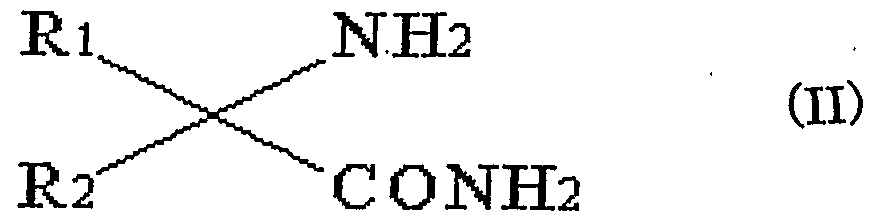


Priority Applications (2)
| Application Number | Priority Date | Filing Date | Title |
|---|---|---|---|
| US10/276,702 US6949658B2 (en) | 2000-05-18 | 2001-05-18 | Process for producing optically active α-amino acid and optically active α-amino acid amide |
| EP01930218A EP1300392B1 (en) | 2000-05-18 | 2001-05-18 | Process for producing optically active alpha-amino acid and optically active alpha-amino acid amide |
Applications Claiming Priority (4)
| Application Number | Priority Date | Filing Date | Title |
|---|---|---|---|
| JP2000-146663 | 2000-05-18 | ||
| JP2000146663A JP2001328970A (en) | 2000-05-18 | 2000-05-18 | Method for producing optically active α-amino acid and optically active α-amino acid amide |
| JP2000-150285 | 2000-05-22 | ||
| JP2000150285A JP4548756B2 (en) | 2000-05-22 | 2000-05-22 | Purification method of amino acid amide |
Publications (1)
| Publication Number | Publication Date |
|---|---|
| WO2001087819A1 true WO2001087819A1 (en) | 2001-11-22 |
Family
ID=26592141
Family Applications (1)
| Application Number | Title | Priority Date | Filing Date |
|---|---|---|---|
| PCT/JP2001/004191 Ceased WO2001087819A1 (en) | 2000-05-18 | 2001-05-18 | PROCESS FOR PRODUCING OPTICALLY ACTIVE α-AMINO ACID AND OPTICALLY ACTIVE α-AMINO ACID AMIDE |
Country Status (3)
| Country | Link |
|---|---|
| US (1) | US6949658B2 (en) |
| EP (1) | EP1300392B1 (en) |
| WO (1) | WO2001087819A1 (en) |
Cited By (1)
| Publication number | Priority date | Publication date | Assignee | Title |
|---|---|---|---|---|
| US7612226B2 (en) | 2005-04-28 | 2009-11-03 | Pfizer Inc. | Amino acid derivatives |
Families Citing this family (7)
| Publication number | Priority date | Publication date | Assignee | Title |
|---|---|---|---|---|
| US7208631B2 (en) | 2003-04-08 | 2007-04-24 | Mitsubishi Gas Chemical Company, Inc. | 2-alkylcysteinamide or salt thereof, process for producing these, and use of these |
| WO2005102988A1 (en) * | 2004-04-22 | 2005-11-03 | Mitsubishi Gas Chemical Company, Inc. | Method of separately collecting optically active amino acid amide and optically active amino acid |
| WO2006103696A2 (en) * | 2005-04-01 | 2006-10-05 | Rubamin Laboratories Limited | Process for preparing levetiracetam and racemization of (r)- and (s)-2-amino butynamide and the corresponding acid derivatives |
| US8178725B2 (en) * | 2005-04-21 | 2012-05-15 | Mitsubishi Gas Chemical Company, Inc. | Method of separating and collecting optically active amino acid amide |
| WO2007083620A1 (en) | 2006-01-20 | 2007-07-26 | Kaneka Corporation | PROCESS FOR PRODUCTION OF β-AMINO-α-HYDROXY ACID AMIDE DERIVATIVE |
| WO2011053835A1 (en) * | 2009-10-30 | 2011-05-05 | Aton Pharma, Inc. | Stereoselective synthesis of metyrosine |
| EP2508615A4 (en) * | 2009-12-04 | 2013-07-10 | Mitsubishi Gas Chemical Co | Process for production of optically active amino acid or optically active amino acid amide |
Citations (7)
| Publication number | Priority date | Publication date | Assignee | Title |
|---|---|---|---|---|
| JPS59159789A (en) * | 1983-03-01 | 1984-09-10 | Mitsubishi Gas Chem Co Inc | Production of l-alpha-aminoacid |
| EP0193113A1 (en) | 1985-02-25 | 1986-09-03 | Mitsubishi Gas Chemical Company, Inc. | Process for optically isomerizing optically active alpha-amino acid amides and process for producing optically active alpha-amino acids |
| JPS61274690A (en) * | 1985-05-30 | 1986-12-04 | Mitsubishi Gas Chem Co Inc | Production of d-alpha-amino acid |
| GB2182036A (en) * | 1985-09-04 | 1987-05-07 | Nitto Chemical Industry Co Ltd | Enzymatic process for producing L-amino acids |
| JPS6387998A (en) * | 1986-09-30 | 1988-04-19 | Mitsubishi Gas Chem Co Inc | Method for producing D-α-amino acid |
| JPH01186850A (en) * | 1988-01-20 | 1989-07-26 | Mitsubishi Gas Chem Co Inc | Separation and purification method of 2-methylphenylalanine |
| JP2001011034A (en) * | 1999-06-29 | 2001-01-16 | Mitsubishi Rayon Co Ltd | Separation and recovery method of optically active amino acid and optically active amino acid amide |
Family Cites Families (3)
| Publication number | Priority date | Publication date | Assignee | Title |
|---|---|---|---|---|
| JPS61293394A (en) | 1985-06-21 | 1986-12-24 | Mitsubishi Gas Chem Co Inc | Production of l-alpha-amino acid |
| JPS61197530A (en) | 1985-02-25 | 1986-09-01 | Mitsubishi Gas Chem Co Inc | Racemization method |
| JPS63203653A (en) * | 1987-02-20 | 1988-08-23 | Ajinomoto Co Inc | Purification of phenylalanine |
-
2001
- 2001-05-18 WO PCT/JP2001/004191 patent/WO2001087819A1/en not_active Ceased
- 2001-05-18 EP EP01930218A patent/EP1300392B1/en not_active Expired - Lifetime
- 2001-05-18 US US10/276,702 patent/US6949658B2/en not_active Expired - Fee Related
Patent Citations (7)
| Publication number | Priority date | Publication date | Assignee | Title |
|---|---|---|---|---|
| JPS59159789A (en) * | 1983-03-01 | 1984-09-10 | Mitsubishi Gas Chem Co Inc | Production of l-alpha-aminoacid |
| EP0193113A1 (en) | 1985-02-25 | 1986-09-03 | Mitsubishi Gas Chemical Company, Inc. | Process for optically isomerizing optically active alpha-amino acid amides and process for producing optically active alpha-amino acids |
| JPS61274690A (en) * | 1985-05-30 | 1986-12-04 | Mitsubishi Gas Chem Co Inc | Production of d-alpha-amino acid |
| GB2182036A (en) * | 1985-09-04 | 1987-05-07 | Nitto Chemical Industry Co Ltd | Enzymatic process for producing L-amino acids |
| JPS6387998A (en) * | 1986-09-30 | 1988-04-19 | Mitsubishi Gas Chem Co Inc | Method for producing D-α-amino acid |
| JPH01186850A (en) * | 1988-01-20 | 1989-07-26 | Mitsubishi Gas Chem Co Inc | Separation and purification method of 2-methylphenylalanine |
| JP2001011034A (en) * | 1999-06-29 | 2001-01-16 | Mitsubishi Rayon Co Ltd | Separation and recovery method of optically active amino acid and optically active amino acid amide |
Non-Patent Citations (1)
| Title |
|---|
| See also references of EP1300392A4 |
Cited By (1)
| Publication number | Priority date | Publication date | Assignee | Title |
|---|---|---|---|---|
| US7612226B2 (en) | 2005-04-28 | 2009-11-03 | Pfizer Inc. | Amino acid derivatives |
Also Published As
| Publication number | Publication date |
|---|---|
| US6949658B2 (en) | 2005-09-27 |
| EP1300392A1 (en) | 2003-04-09 |
| EP1300392A4 (en) | 2005-11-23 |
| US20030171597A1 (en) | 2003-09-11 |
| EP1300392B1 (en) | 2012-09-05 |
Similar Documents
| Publication | Publication Date | Title |
|---|---|---|
| JP5096435B2 (en) | Process for producing optically active α-methylcysteine derivative | |
| CN87106791A (en) | Enzymatic membrane process for synthesis and separation of peptides | |
| WO2001087819A1 (en) | PROCESS FOR PRODUCING OPTICALLY ACTIVE α-AMINO ACID AND OPTICALLY ACTIVE α-AMINO ACID AMIDE | |
| JP4361641B2 (en) | Separation and recovery method of optically active amino acid and optically active amino acid amide | |
| JP2001328970A (en) | Method for producing optically active α-amino acid and optically active α-amino acid amide | |
| JPH0739385A (en) | Production of l-3,4-dihydroxyphenylalanine | |
| CN101547893B (en) | Method for collection of L-biphenylalanine compound salt, and method for collection of biphenylalanine ester compound using the same | |
| JP5092743B2 (en) | Separation and recovery method of optically active amino acid amide | |
| JP4730913B2 (en) | Optically active tert-leucine and method for producing optically active tert-leucine amide | |
| JP5097607B2 (en) | Method for producing optically active amino acid | |
| JP4596098B2 (en) | Method for producing optically active α-amino acid | |
| JP4484027B2 (en) | Optically active 2-alkyl-D-cysteine amide or a salt thereof, and a process for producing these compounds. | |
| JP2008125364A (en) | Process for producing optically active amino acids and N-alkoxycarbonylamino acids | |
| JP2011036135A (en) | METHOD FOR PRODUCING OPTICALLY ACTIVE tert-LEUCINE | |
| CA1263094A (en) | Process for the separation of l-leucine and l- isoleucine | |
| JP4035856B2 (en) | Method for producing high optical purity optically active amino acid ester | |
| JP4544385B2 (en) | Process for producing optically active 2,6-diaminoheptanoic acid | |
| JP2002253293A (en) | Method for producing optically active L-tert-leucine | |
| JP2010284109A (en) | Method for producing optically active tert-leucine | |
| JP2012193135A (en) | Method of manufacturing amino acid | |
| JP4816454B2 (en) | Separation and recovery of optically active amino acid amide and optically active amino acid | |
| JPH0325416B2 (en) | ||
| JPH0634751B2 (en) | Method for separating D-phenylalanine | |
| JP2009278914A (en) | Method for producing optically active aromatic amino acid and optically active aromatic amino acid amide | |
| JPS63270637A (en) | Method for separating lactic acid |
Legal Events
| Date | Code | Title | Description |
|---|---|---|---|
| AK | Designated states |
Kind code of ref document: A1 Designated state(s): US |
|
| AL | Designated countries for regional patents |
Kind code of ref document: A1 Designated state(s): AT BE CH CY DE DK ES FI FR GB GR IE IT LU MC NL PT SE TR |
|
| 121 | Ep: the epo has been informed by wipo that ep was designated in this application | ||
| DFPE | Request for preliminary examination filed prior to expiration of 19th month from priority date (pct application filed before 20040101) | ||
| WWE | Wipo information: entry into national phase |
Ref document number: 2001930218 Country of ref document: EP |
|
| WWP | Wipo information: published in national office |
Ref document number: 2001930218 Country of ref document: EP |
|
| WWE | Wipo information: entry into national phase |
Ref document number: 10276702 Country of ref document: US |