WO2001061024A2 - Rolling circle replicon expression vectors - Google Patents
Rolling circle replicon expression vectors Download PDFInfo
- Publication number
- WO2001061024A2 WO2001061024A2 PCT/US2001/005394 US0105394W WO0161024A2 WO 2001061024 A2 WO2001061024 A2 WO 2001061024A2 US 0105394 W US0105394 W US 0105394W WO 0161024 A2 WO0161024 A2 WO 0161024A2
- Authority
- WO
- WIPO (PCT)
- Prior art keywords
- cell
- polynucleotide
- protein
- rep
- rolling circle
- Prior art date
- Legal status (The legal status is an assumption and is not a legal conclusion. Google has not performed a legal analysis and makes no representation as to the accuracy of the status listed.)
- Ceased
Links
- 0 C*(C1=C)=CC=CC1=* Chemical compound C*(C1=C)=CC=CC1=* 0.000 description 1
Classifications
-
- C—CHEMISTRY; METALLURGY
- C07—ORGANIC CHEMISTRY
- C07K—PEPTIDES
- C07K14/00—Peptides having more than 20 amino acids; Gastrins; Somatostatins; Melanotropins; Derivatives thereof
- C07K14/005—Peptides having more than 20 amino acids; Gastrins; Somatostatins; Melanotropins; Derivatives thereof from viruses
-
- C—CHEMISTRY; METALLURGY
- C12—BIOCHEMISTRY; BEER; SPIRITS; WINE; VINEGAR; MICROBIOLOGY; ENZYMOLOGY; MUTATION OR GENETIC ENGINEERING
- C12N—MICROORGANISMS OR ENZYMES; COMPOSITIONS THEREOF; PROPAGATING, PRESERVING, OR MAINTAINING MICROORGANISMS; MUTATION OR GENETIC ENGINEERING; CULTURE MEDIA
- C12N15/00—Mutation or genetic engineering; DNA or RNA concerning genetic engineering, vectors, e.g. plasmids, or their isolation, preparation or purification; Use of hosts therefor
- C12N15/09—Recombinant DNA-technology
- C12N15/63—Introduction of foreign genetic material using vectors; Vectors; Use of hosts therefor; Regulation of expression
- C12N15/79—Vectors or expression systems specially adapted for eukaryotic hosts
-
- C—CHEMISTRY; METALLURGY
- C12—BIOCHEMISTRY; BEER; SPIRITS; WINE; VINEGAR; MICROBIOLOGY; ENZYMOLOGY; MUTATION OR GENETIC ENGINEERING
- C12N—MICROORGANISMS OR ENZYMES; COMPOSITIONS THEREOF; PROPAGATING, PRESERVING, OR MAINTAINING MICROORGANISMS; MUTATION OR GENETIC ENGINEERING; CULTURE MEDIA
- C12N15/00—Mutation or genetic engineering; DNA or RNA concerning genetic engineering, vectors, e.g. plasmids, or their isolation, preparation or purification; Use of hosts therefor
- C12N15/09—Recombinant DNA-technology
- C12N15/63—Introduction of foreign genetic material using vectors; Vectors; Use of hosts therefor; Regulation of expression
- C12N15/79—Vectors or expression systems specially adapted for eukaryotic hosts
- C12N15/85—Vectors or expression systems specially adapted for eukaryotic hosts for animal cells
- C12N15/86—Viral vectors
-
- A—HUMAN NECESSITIES
- A01—AGRICULTURE; FORESTRY; ANIMAL HUSBANDRY; HUNTING; TRAPPING; FISHING
- A01K—ANIMAL HUSBANDRY; AVICULTURE; APICULTURE; PISCICULTURE; FISHING; REARING OR BREEDING ANIMALS, NOT OTHERWISE PROVIDED FOR; NEW BREEDS OF ANIMALS
- A01K2217/00—Genetically modified animals
- A01K2217/05—Animals comprising random inserted nucleic acids (transgenic)
-
- C—CHEMISTRY; METALLURGY
- C12—BIOCHEMISTRY; BEER; SPIRITS; WINE; VINEGAR; MICROBIOLOGY; ENZYMOLOGY; MUTATION OR GENETIC ENGINEERING
- C12N—MICROORGANISMS OR ENZYMES; COMPOSITIONS THEREOF; PROPAGATING, PRESERVING, OR MAINTAINING MICROORGANISMS; MUTATION OR GENETIC ENGINEERING; CULTURE MEDIA
- C12N2750/00—MICROORGANISMS OR ENZYMES; COMPOSITIONS THEREOF; PROPAGATING, PRESERVING, OR MAINTAINING MICROORGANISMS; MUTATION OR GENETIC ENGINEERING; CULTURE MEDIA ssDNA viruses
- C12N2750/00011—Details
- C12N2750/00022—New viral proteins or individual genes, new structural or functional aspects of known viral proteins or genes
-
- C—CHEMISTRY; METALLURGY
- C12—BIOCHEMISTRY; BEER; SPIRITS; WINE; VINEGAR; MICROBIOLOGY; ENZYMOLOGY; MUTATION OR GENETIC ENGINEERING
- C12N—MICROORGANISMS OR ENZYMES; COMPOSITIONS THEREOF; PROPAGATING, PRESERVING, OR MAINTAINING MICROORGANISMS; MUTATION OR GENETIC ENGINEERING; CULTURE MEDIA
- C12N2750/00—MICROORGANISMS OR ENZYMES; COMPOSITIONS THEREOF; PROPAGATING, PRESERVING, OR MAINTAINING MICROORGANISMS; MUTATION OR GENETIC ENGINEERING; CULTURE MEDIA ssDNA viruses
- C12N2750/00011—Details
- C12N2750/12011—Geminiviridae
- C12N2750/12041—Use of virus, viral particle or viral elements as a vector
- C12N2750/12043—Use of virus, viral particle or viral elements as a vector viral genome or elements thereof as genetic vector
-
- C—CHEMISTRY; METALLURGY
- C12—BIOCHEMISTRY; BEER; SPIRITS; WINE; VINEGAR; MICROBIOLOGY; ENZYMOLOGY; MUTATION OR GENETIC ENGINEERING
- C12N—MICROORGANISMS OR ENZYMES; COMPOSITIONS THEREOF; PROPAGATING, PRESERVING, OR MAINTAINING MICROORGANISMS; MUTATION OR GENETIC ENGINEERING; CULTURE MEDIA
- C12N2800/00—Nucleic acids vectors
- C12N2800/10—Plasmid DNA
- C12N2800/108—Plasmid DNA episomal vectors
-
- C—CHEMISTRY; METALLURGY
- C12—BIOCHEMISTRY; BEER; SPIRITS; WINE; VINEGAR; MICROBIOLOGY; ENZYMOLOGY; MUTATION OR GENETIC ENGINEERING
- C12N—MICROORGANISMS OR ENZYMES; COMPOSITIONS THEREOF; PROPAGATING, PRESERVING, OR MAINTAINING MICROORGANISMS; MUTATION OR GENETIC ENGINEERING; CULTURE MEDIA
- C12N2830/00—Vector systems having a special element relevant for transcription
- C12N2830/42—Vector systems having a special element relevant for transcription being an intron or intervening sequence for splicing and/or stability of RNA
Definitions
- This invention relates to the field of single stranded circular DNA (ssDNA) viruses that infect eukaryotic hosts.
- ssDNA single stranded circular DNA
- this invention relates to viral vectors having utility in gene expression in a eukaryotic host.
- viruses in this field are the Geminiviruses, Nanoviruses, and Circoviruses.
- the circular single stranded DNA (ssDNA) viruses that infect eukaryotic hosts belong to several different virus taxonomic families (Nan Regenmortel et al., 1999; Pringle, 1999). Circoviruses, Circinoviruses (Mushahwar et al, 1999), Gyroviruses and Parvoviruses infect vertebrates; some Parvoviruses (subfamily Densovirinae) also infect invertebrate hosts while Geminiviruses and viruses in the genus Nanovirus infect plants. There is recent evidence that the viruses currently classified as Circoviruses evolved from Nanoviruses and have switched from a plant to a vertebrate host (Gibbs and Weiller, 1999).
- Geminiviruses, Nanoviruses, and Circoviruses are all small circular ssDNA viruses that appear to be fairly closely related, in that they use the same basic rolling- circle mechanism of replication (RCR) and employ very similar life cycle strategies.
- RCR rolling- circle mechanism of replication
- Recently published data indicate that some plant RCR viruses — dicot-infecting begomoviruses and at least one Nanovirus genomic component even co-exist in some plant infections, with the geminiviral component of the infection presumably providing movement and propogation functions for the Nanovirus element, which functions as a sort of autonomously replicating satellite virus (Mansoor et al, 1999; Saunders and Stanley, 1999).
- the genomes of all of the plant RCR viruses, and related vertebrate-infecting Circoviruses are small, single-stranded and circular.
- the Geminiviruses have mono- or bi-partite genomes, with each genomic component between 2.5 and 3.0-kb.
- the Nanoviruses have multipartite genomes, generally with at least six, and up to ten, circular subgenomic ssDNAs, each of about 1.0-kb (Katul et al, 1998; Boevink et al, 1995; Burns et al, 1995).
- the Circoviruses PCV and BFDN have circular ssD ⁇ A genomes between 1.75- and 2.0-kb that encode at least two proteins.
- RF DNA repair system This conversion of the virion DNA into circular dsDNA is required for replication of all RCR replicons, as the "replicative form” (RF) dsDNA intermediate is the template for transcription of the viral genome and therefore expression of viral proteins.
- the RF DNA becomes associated with host histone proteins and exists as a minichromosome-like structure in the nucleus of infected cells (Abouzid et al, 1988). 4. Transcription of "early" genes — those required for viral replication — by the host
- RNA polymerase II complex Production of the viral replication-associated protein (Rep) then results in initiation of RCR of the RF DNA.
- Rep viral replication-associated protein
- viral transcription regulatory proteins down-regulate transcription of early genes, and stimulate transcription of the viral "late" genes, including the structural protein/s and proteins required for dissemination of the viral genome.
- the "late” viral proteins sequester ssDNA produced during replication, move it out of the cell nucleus and ultimately out of the infected cell, either as a ssDNA- protein complex, or as assembled virions.
- the plant RCR viruses and their relatives the Circoviruses all encode a replication-associated protein (Rep) that is absolutely required for replication of the virus genomic components (Mankertz et al, 1998; Elmer et al, 1988; Hafner et al, 1997).
- All other proteins are dispensable for replication, and may be involved in such functions as: movement from cell-to-cell; encapsidation of the virus genome; shuttling of the virus genome between the nucleus and the cytoplasm of infected cells; transcriptional activation or repression of genes in the host or viral genome.
- the Rep proteins of these RCR viruses bear some distant relationship to replication initiator proteins of some ssDNA plasmids, as well as of members of the Microviridae, such as coliphage phiX174 (Ilyina and Koonin, 1992), and has led to speculation that the plant RCR viruses and Circoviruses evolved from prokaryotic ssDNA replicons.
- the Rep proteins of all of these replicons is a sequence specific DNA binding protein with site specific cleavage and joining activity.
- Rep probably in association with host enzymes and possibly other viral proteins (Castellano et al, 1999) binds RF DNA at specific sequences and nicks the plus strand at a specific point.
- this specific point occurs within a conserved nonanucleotide sequence that occurs in the loop of a stem-loop structure in the viral intergenic region.
- the sequence of this nonanucleotide sequence is well conserved between all RCR viruses of plants and Circoviruses: in Geminiviruses the sequence of the nonanucleotide origin of RCR is: TAATATTAC (Palmer and Rybicki, 1998; Hanley-Bowdoin et al, 1999); in Nanoviruses (Refs) and Circoviruses the sequence is TANTATTAC (Meehan et al, 1997; Hamel et al, 1998; Morozov et al, 1998) Thus the consensus sequence for nonanucleotide origin of replication for these viruses is TANTATTAC. The Rep protein-mediated cleavage of this nonanucleotide sequence occurs between positions 7 and 8.
- the minimum amount of sequences that are required to be present on a DNA molecule so that it can be replicated in a reaction mediated by an RCR virus Rep protein are referred to as the RCR virus's minimal origin of replication (minimal ori).
- the minimal origin of replication is empirically determined, and virus species-specific; the term “minimal ori” is used interchangeably with "ori”, and "origin of replication”.
- the minimal ori includes: (1) the viral stem-loop structure with TANTATTAC nonanucleotide sequence present in the loop; (2) generally, at least 90 base pairs 5' to the start of the stem-loop structure and (3) generally, at least 10, but in many cases up to 100 bases, 3' of the end of the stem- loop structure.
- the minimal ori is always contained within the main viral intergenic region.
- the main viral intergenic region is a non-coding DNA sequence that contains the stem-loop structure, TANTATTAC sequence, binding sites for the Rep protein, the minimal ori, and promoter sequences for driving transcription of viral genes in both orientations relative to the IR.
- the minimal ori is contained within the common region, a sequence within the TR that is common to both DNA A and DNA B genetic components since the sequence is required to be in present in cis for replication of both components.
- the minimal ori of Nanoviruses is contained within the viral common region, present on all genome components.
- the minimal ori is contained within the IR, and Mastreviruses the minimal ori is within the Long IR, but sequences in the Short IR are also required for replication.
- the minimal ori is contained within the IR, and constitutes the stem-loop structure, TANTATTAC sequence and sequences flanking the stem-loop structure (Mankertz et al, 1997).
- Replication of the plant RCR viruses and Circoviruses is entirely dependent upon a single virally-encoded replication initiator protein (Rep).
- Rep proteins of these viruses all contain three conserved protein motifs which are also present in replication intiator proteins from prokaryotic RCR replicons (Ilyina and Koonin, 1992; Palmer and Rybicki 1998; Mankertz et al. , 1998; Meehan et al. , 1997; Bassami et al, 1998; Gibbs and Weiller 1999).
- motif I FTLNN in Circoviruses, FTLNY in Nanoviruses and FLTYP in Geminiviruses
- Motif II GXXXHLQGF in Circoviruses, GXXHLQGF in Nanoviruses and GXXHLH(A/N)L in Geminiviruses
- Motif III [(N/ ⁇ )(R/K)XYXXK in all three groups] contains a conserved tyrosine residue that participates in phosphodiester bond cleavage and in the covalent linkage of Rep to the 5' terminus of the nicked nonanucleotide motif at the origin of replication.
- the Rep proteins of these three groups of viruses also contains a fourth conserved motif, a nucleotide triphosphate-binding domain (GX 4 GKXXWARX 28 - 29 DD) that may indicate that these proteins possess helicase activity.
- RCR Retinoblastoma protein
- TGMN tomato golden mosaic begomoviras
- PC ⁇ A proliferating cell nuclear antigen
- Rb host proteins
- Mastrevirus-derived vectors that contain the two genes (Rep and RepA) necessary for replication of the viral genome and expression of the viral late genes, together with the viral origins of replication, can replicate in cells derived from monocotyledonous cereal plants (Palmer et al, 1997; Palmer et al, 1999).
- One aspect of this invention is a polynucleotide capable of rolling circle replication in an eukaryotic host.
- One aspect of this invention is a rolling circle DNA replicon (RCR replicon) which replicates in a host eukaryotic cell.
- Another aspect of the invention is a RCR replicon which has a truncated replication cycle.
- Another aspect of the invention is a polynucleotide or a RCR replicoon which has the following elements, present on the same DNA molecule:
- Another aspect of the invention is a RCR replicon, which replicates in a host eukaryotic cell, and which has a promoter that has some tissue- or cell-type specificity.
- Another aspect of the invention is a RCR replicon for a host cell, which has a promoter that is inducible by chemical or other environmental induction.
- RCR replicon which replicates in a host eukaryotic cell, and which has sequences that are required to be present in cis on the rolling circle DNA replicon in order that the Rep protein might promote replication of the rolling circle DNA replicon are derived from the group consisting of Nanoviruses, Circoviruses, begomoviruses and curtoviruses.
- RCR replicon which replicates in a host eukaryotic cell, and which has sequences that are required to be present in cis on the rolling circle DNA replicon in order that Rep might promote the replication of the rolling circle DNA replicon. These sequences are:
- Another aspect of the invention is an RCR replicon derived from a Mastrevirus which replicates in a host eukaryotic cell, and which has sequences that are required to be present in cis on the rolling circle DNA replicon in order that Rep might promote the replication of the rolling circle DNA replicon.
- TANTATTAC sequence where "N” may be A or C or G or T;
- SIR Short intergenic region
- RCR replicon which replicates in a host eukaryotic cell, and which has an expression cassette that: (a) functions in expression of an ancillary protein, and (b) which is redundant with the Rep gene expression cassette.
- RCR replicon which replicates in a host eukaryotic cell, and which has an expression cassette for expression of an ancillary protein and an expression cassette driving the expression of a Rep ORF which expression cassette is from a different virus species from the group of Geminiviruses, Circoviruses and Nanoviruses.
- Another aspect of the invention is a method of making a rolling circle DNA replicon which replicates in a host eukaryotic cell, comprising combining: (a) a Rep gene open reading frame from a virus belonging to the viral taxonomic families Geminiviridae, Circoviridae or genus Nanovirus, said Rep gene open reading frame is placed under transcriptional control of a promoter, which promoter is placed 5' of the gene; (b) any sequences that are required to be present in cis on the rolling circle DNA replicon in order that the Rep protein might promote replication of the rolling circle DNA replicon; (c) an expression cassette for expression of an ancillary protein that is capable of creating a cellular environment permissive for replication of the rolling circle DNA replicon in the host cell of interest; and
- RNA polymerase II promoter at least one expression cassette with an RNA polymerase II promoter, a multiple cloning site, and transcription termination and polyadenylation signals suitable for transcription of RNA molecules not normally intrinsic to a geminiviral, circoviral or nanoviral genome.
- Another aspect of the invention is a method of making a rolling circle DNA replicon which replicates in a host eukaryotic cell which replicon has a truncated replication cycle, comprising combining:
- Rep gene open reading frame from a virus belonging to the viral taxonomic families Geminiviridae, Circoviridae or genus Nanovirus, said Rep gene open reading frame is placed under transcriptional control of a promoter, which promoter is placed 5' of the gene; (b) any sequences that are required to be present in cis on the rolling circle DNA replicon in order that the Rep protem might promote replication of the rolling circle DNA replicon;
- Another aspect of the invention is a method of discovering the function of a gene or gene segment in a host eukaryotic cell, the method comprising:
- FIG. 1 shows a restriction and genetic map of Construct 1.
- the PCV Rep Promoter, the PCV Rep Gene with restriction sites, the PCV Ori and cloning vector are shown.
- FIG. 2 shows a restriction and genetic map of Construct 2 with pCMN, pCN Rep gene, PCN Ori, and SN40 terminator with G418/kanamycin resistance gene.
- FIG. 3 shows the restriction map and genetic map of Construct 6 (p TracerSN40 from Invitrogen Corp), construct 6 is the backbone of Construct 7. It contains the same GFP-zeocin expression cassette that is present in Construct 7 the ⁇ otI - ⁇ sil fragment from Construct 1 was excised and inserted into Construct 6, replacing the SN40 promoter with the PCN fragment to generate Construct 7.
- the pTracerTM-SN40 vector is available from Invitrogen Corp. (Carlsbad, California).
- FIG. 4 shows a Southern blot of D ⁇ A isolated from cells transfected with PCN-containing constructs and control D ⁇ As.
- Lanes 1 to 9 contain D ⁇ A isolated from COS-7 cells transfected with the following plasmids: Lanes 1 and 2 (Construct 1, D ⁇ A isolated at day 2 and day 4 post-transfection); Lanes 3 and 4 (Construct 2, day 2 and day 4 post-transfection); Lanes 5 and 6 (Construct 4, day 2 and day 4 post-transfection); Lanes 7 and 8 (construct 6, day 2 and day 4 post-transfection); Lanes 9 and 11 contain D ⁇ A isolated from untransfected cells; Lane 10 contained a D ⁇ A molecular weight marker.
- Lanes 12 to 19 contain D ⁇ A isolated from CHO-K1 cells transfected with the following plasmids: lanes 12 & 13 (Construct 7, day 2 and day 4 post-transfection); Lanes 14 and 15 (Construct 2, day 2 and day 4 post-transfection); Lanes 16 and 17 (Construct 4, day 2 and day 4 post-transfection); Lanes 18 and 19 (Construct 6, day 2 and day 4 post-transfection); and, Lane 20 contains D ⁇ A isolated from PCN-positive cell line PK-15, used as a positive control for D ⁇ A hybridization. The hybridizing bands run at a significantly lower position, due to the virus's small size (1.8-kb) relative to the plasmid D ⁇ As (greater than 4.0-kb).
- FIG. 5 shows the DNA sequence of Construct 1 (SEQ ID NO:l): 5285 bp. Composition: 1216 A; 1277 C; 1514 G; 1278 T; 0 other. Percentage: 23% A; 24% C; 29% G; 24% T; 0% other. Molecular Weight (kDa): ssDNA: 1636.28; dsDNA: 3258.4.
- FIG. 6 shows the DNA sequence of Construct 7 (SEQ ID NO:2): 5650 bp.
- composition 1372 A; 1333 C; 1516 G; 1429 T; 0 other. Percentage: 24% A; 24% C; 27% G; 25% T; 0% other. Molecular Weight (kDa): ssDNA: 1747.85; dsDNA: 3483.2.
- FIG. 7 shows the structure of plasmid pCI-PCNl-Luc.
- the PCN1 Stul fragment, the CMN promoter, the intron, the inserted firefly luciferase gene (F.Luc), and the Bglll, ⁇ hel and EcoRI restriction sites and their nucleotide positions are shown.
- FIG. 8 shows the D ⁇ A sequence of pCI-PCNl-Luc: 7460 bp (SEQ ID ⁇ O:7).
- FIG. 9 show the structure of plasmid pGL3-PCNl-Luc.
- the PCN1 Stul fragment, the SN40 promoter, the inserted firefly luciferase gene (F.Luc), and the Bglll, ⁇ hel and EcoRI restriction sites and their nucleotide positions are shown.
- FIG. 10A shows firefly luciferase activity in CHO cells transfected with CMN based vectors with and without the PCN1 genome at different times post-transfection.
- the y-axis depicts firefly luciferase units.
- the x-axis depicts in number of days post- transfection.
- the open columns are CHO cells with pCI and the hatched columns are CHO cells with pCI-PCNl -Luc.
- FIG. 10B shows firefly luciferase activity in CHO cells transfected with SN40 based vectors with and without the PCN1 genome at different times post-transfection.
- the y-axis depicts firefly luciferase units.
- the x- axis depicts in number of days post-transfection.
- the open columns are CHO cells with pGL3 and the hatched columns are CHO cells with pGL3-PCNl-Luc.
- BFDN means beak and feather disease virus.
- PCN porcine Circovirus.
- CHO cells means Chinese Hamster Ovary cells
- COS-7 cells means Cercopithecus aethiops (African Green Monkey) kidney cells, transformed with simian virus 40 (SN40).
- D-MEM Dulbecco's Modified Eagle Medium
- DpnT' is a restriction endonuclease which cuts only m-methylated D ⁇ A.
- Buffer EC means D ⁇ A condensation buffer.
- Effectene is a transfection reagent, sold by Qiagen, Inc. (Valencia, California).
- GFP-zeocin is a fusion fusion gene made by combining the genes for green fluorescent protein and zeocin.
- G418 resistance gene is a selectable marker gene.
- Heterologous means not derived or obtained from the same species.
- UBEC cell lines means human brain endothelial cell lines.
- COS-7 The African Green Monkey Kidney cell line COS-7 contains a chromosomally-integrated SN40 virus that has a gene for the Large T antigen protein which is required for SN40 virus replication.
- COS-7 cells contain a chromosomally-integrated SN40 Large T antigen-expresisng gene that is sufficient for episomal replication of SN40 ori- containing plasmids in this cell line.
- Intergenic sequences The non-coding D ⁇ A sequences, wherein the viral origin of replication is situated, that are located between open reading frames of RCR viruses.
- Lipofectamine is a cationic lipid used for transfecting mammalian cells. Life Technologies, Inc supplies Lipofectamine.
- nucleotide The sequence TANTATTAC, where "N” may be A or C or G or T. This sequence is contained within the loop of the stem-loop structure present in the origin of replication of all RCR viruses in the group of Geminiviruses, Circoviruses, and Nanoviruses.
- neomycin/G418 resistance gene A gene that confers to the G418 antibiotic resistance.
- Nsil-Noil fragment is a restriction fragment from Construct 1 that is used to create Construct 7.
- Passive episomal replicon inheritance Process where a replicon present in the nucleus of a cell is passively inherited by both daughter cells upon cell division; the replicons are not actively sequestered into each daughter cell since they do not contain a classical centromere structure, but are nevertheless inherited due to their high copy number in the original undivided cell.
- PMVC cell lines means porcine microvascular cell lines.
- PCN genome means the porcine Circovirus genome.
- PCN rep The replication associated protein gene of porcine Circovirus (PCN).
- PCN RCR plasmid A plasmid that contains the sequences derived from porcine Circovirus which allow the plasmid to replicate by rolling circle replication in a host cell.
- PK-15 cells Porcine Kidney cell line PK-15 or PK(15). Cell line derived from kidney epithelial cells of Sus scrofa. The PK-15 cell line is persistently infected with Porcine Circovirus, type 1 (PCN).
- PCN Porcine Circovirus
- pCMN-Script A mammalian cell expression vector obtained from Stratagene, Inc. (La Jolla, CA).
- ⁇ CR ® -Blunt II-TOPO ® vector a vector useful for cloning of PCR products sold by Invitrogen Corp. (Carlsbad, California).
- PK-15SwaA and PK-15SwaB are PCR primers used to amplify the PCN genome.
- pTracerTMSN40 a mammalian cell expression vector that contains an expression cassette for expression of a GFP-zeocin resistance gene; obtained from Invitrogen Corporation.
- QIAamp D ⁇ A Mini Kit A D ⁇ A extraction kit useful for extraction of total D ⁇ A from blood and mammalian cells, sold by Qiagen, Inc (Valencia, CA.)
- Rep means virally-encoded replication initiator protein.
- Rep gene means a gene from an RCR virus belonging to the group of viruses from the taxonomic families Geminiviridae or Circoviridae or from the genus Nanovirus, which is essential for viral replication and which possesses a nicking and joining activity specific for the TANTATTAC sequence present in the stem loop sequence in the viral origin of replication and which is able to promote replication of an RCR virus.
- Rep gene ORF is an open reading frame associated with a Rep gene.
- Rep protem means replication-associated protein, a plasmid-encoded protein that functions as an activator of replication of that plasmid.
- Replicon means any DNA sequence or molecule which possesses a replication origin and which is therefore potentially capable of being replicated in a suitable cell.
- RCR replicons are replicons or polynucleotides that reproduce by the rolling circle DNA replication mechanism.
- Rolling circle DNA replication is a mechanism for the replication of DNA wherein one strand of a parent dsDNA molecule is nicked, and DNA synthesis proceeds by elongation of the 3 ' -OH end (with progressive displacement of the 5 ' - end), the unbroken circular strand acting as the template.
- the partly replicated intermediate is thus a double-stranded circular DNA with a single-stranded displaced tail.
- RCR rolling-circle mechanism of replication.
- Rolling circle DNA replicon means a replicon that reproduces by the rolling circle DNA replication mechanism.
- Rolling Circle Replicon Expression Vectors means a vector that reproduces by means of the rolling circle DNA replication method.
- RCR vector means Rolling Circle Replicon Expression Vectors.
- RCR virus means Rolling Circle Replicon Expression virus.
- ssDNA viruses means single stranded circular DNA virus.
- SV40 promoter means simian virus 40 early promoter.
- Simian virus 40 is a virus of the genus Polyomavirus. SV 40 was originally isolated from kidney cells of the rhesus monkey, and is common (in latent form) in such cells.
- VLPs means virus-like particles.
- This invention provides methods for designing and creating a polynucleotide or a rolling circle DNA replicon for an eukaryotic host with elements from RCR viruses from the viral taxonomic families Geminiviridae and Circoviridae, and from the genus Nanovirus that is as yet unassigned to a taxonomic family.
- RCR viruses from the viral taxonomic families Geminiviridae and Circoviridae, and from the genus Nanovirus that is as yet unassigned to a taxonomic family.
- the RCR replicons are introduced into eukaryotic host cells as double stranded DNA molecules, and thus the form in which the replicon initially enters the host is not usual for the parental virus that normally infects new host cells in an encapsidated ssDNA form.
- the viral "late" genes that are involved in sequestration of ssDNA, movement of viral DNA out of the host cell nucleus and assembly of viral DNA into virions are inactivated or deleted in the RCR replicons of this invention.
- the invention provides for a polynucleotide capable of rolling circle replication in an eukaryotic host, said polynucleotide comprising: (a) a first Rep gene encoding a first Rep protein from a first virus selected from the group of genera of family Geminiviridae, genera of family Circoviridae, and genus Nanovirus, wherein said first Rep gene is capable of being expressed in said eukaryotic host;
- the polynucleotide may lack one or more genes of said first virus.
- the polynucleotide may further comprise a second Rep gene encoding a second Rep protein from a second virus selected from the group of genera of family Geminiviridae, genera of family Circoviridae, and genus Nanovirus, wherein said second Rep gene is heterologous to the first Rep gene; such a polynucleotide in the ssDNA form may form the RF form and replicate in an eukaryotic host that the first virus cannot replicate in.
- RCR replicons have the following elements, present on the same DNA molecule or polynucleotide:
- This Rep gene ORF is placed under transcriptional control of a promoter, placed 5' of the gene.
- This promoter is chosen to be one that can function in a cell type of interest, and may additionally have some tissue, or cell-type specificity, or may be induced by the addition of a chemical or by other some other environmental induction.
- This cassette may be redundant with the Rep gene expression cassette described above, or may be an expression cassette driving the expression of a Rep ORF from a different virus species from the group of Geminiviruses, Circoviruses and Nanoviruses.
- the invention also provides for a method of constructing a rolling circle DNA replicon or a polynucleotide which replicates in a eukaryotic host, comprising: combining unto a single polynucleotide:
- Rep gene encoding a Rep protein obtained from a virus selected from the group of genera of family Geminiviridae, genera of family Circoviridae, and genus Nanovirus, wherein a promoter is operatively linked 5' to said Rep gene;
- an open reading frame encoding a protein of interest capable of being expressed in said eukaryotic host, wherein said protein of interest is heterologous to the Rep protein.
- All genes and open reading frames, encoding proteins can be expressed by having a promoter operatively linked 5' to the gene or open reading frame (i.e., the promoter is at the 5' end of the gene or open reading frame).
- the promoter is capable of expressing the gene or open reading frame in the eukaryotic host.
- the eukarytoic host may be a eukarytoic cell.
- the eukaryotic cell may be an animal or plant cell. The animal cell is preferably an insect cell, bird cell, or mammalian cell.
- the mammalian cell may be a CHO cell, COS-7 cell or African Green Monkey kidney cell.
- the eukaryotic cell may be part of a cell culture, tissue, tissue culture, or organ.
- the eukaryotic cell may also be part of a whole organism.
- the whole organism can be a plant or an animal.
- the animal is preferably an insect, bird, or mammal.
- the polynucleotides and RCR replicons of the present invention can also further comprise a prokaryotic selectable and a prokaryotic origin of replication so that the polynucleotide and RCR replicon can be propagated and amplified in a prokaryotic cell.
- the polynucleotides and RCR replicons of the present invention can also further comprise an eukaryotic selectable and an eukaryotic origin of replication so that the polynucleotide and RCR replicon can be propagated and amplified in an eukaryotic cell using a non-rolling circle replication mechanism.
- RCR replicons are useful for discovery of the function of genes in eukaryotic hosts.
- RCR replicons are useful for inducing or enhancing a function or trait in a host eukaryotic cell.
- RCR replicons are useful for down-regulating a gene in a plant or in mammalian cells and thereby altering or even eliminating the function of that gene.
- RCR replicons have several properties that will lead to the development of superior gene expression vector properties.
- the vector initiates a rapid replication cycle leading to earlier gene expression than standard plasmid vectors. This coupled with its self-amplifying properties will lead to sustained expression for longer periods of time as compared with standard plasmid vectors. These properties, coupled with the amplification of substrates for transcription by host machinery, will lead to greater levels and longer enduring levels of target gene expression as compared to standard plasmid vectors.
- the amplification of 100-1000 copies of the genome per transfected cell will lead to passive inheritance of the RCR replicon infection into daughter cells.
- vectors can be used as an alternative cellular expression vectors and perform superior to plasmid or virus-based vectors based on the following criteria: rapid replication coupled with expression driven by promoter of choice (affecting expression levels or regulation); sustained replication and passive inheritance; unlimited cellular host range; minimal host metabolism perturbation; and, low levels of viral protein accumulation.
- RCR replicons should have sustained replication properties yielding greater levels of substrate for sustained targeted gene expression in transfected cells.
- the accumulation of targeted immunogen in transfected antigen presenting cells will be greater than standard plasmid vectors.
- Advantages over virus vectors include: Non- pathogenic, minimal host perturbation, broad cell host range, no transmission of infection to non-primarily transfected cells due to lack of packaging.
- RCR vectors Mammalian-cell based genomics using RCR vectors for gene function discovery.
- RCR vectors will prove to be excellent gene sequence delivery tools for mammalian genomic approaches. Uses include the expression of homologous or heterologous genes in a library or targeted manner for the detection of gain of function cellular phenotypes and expression of antisense or sense gene fragments for the inhibition of targeted gene expression for assay of loss of function phenotypes.
- the sustained episomal expression in specific tissues or cells transfected by RCR replicon can allow the delivery of therapeutic or complementing (functional gene copy to complement function of a dysfunctional chromosomal copy) gene products to organisms or cells.
- the coupling of this activity with the ability of porcine or human brain endothelial cells lines to amplify hemopoetic stem cells without differentiation may prove to be a powerful tool to repopulate a body with new cells containing functional gene copies lacking in native organism.
- the coupling of these technologies will enable gene therapy to really work.
- RCR replicon could be designed to express the glucocerebrosidase gene and transfect the hemopoetic stem cells of a patient suffering from Gaucher's disease.
- the transfected stem cells Once the transfected stem cells are amplified, they can be re-infused into the patient to engraft in the bone marrow. Once there, the cells will produce a range of hemopoetic cells including Kupffer cells that will be in the liver and responsible from cerebroside lipid degradation.
- the cells derived from stem cells transfected with the RCR vector will inherit the RCR expression replicon and now express glucocerebrosidase in the liver and now degrade the accumulating lipids that the native system is incapable of doing.
- Other properties that are important in RCR vectors to succeed in gene therapy applications sustained replication, passive episomal replicon inheritance, wide cellular and tissue host range.
- RCR replicon DNA in capsid proteins of viruses with specific cellular tropisms bound by receptors on specific cell or tissue types
- packaging of RCR replicons in papillomavirus viruslike particles (VLPs) would give the replicon a mucosal targeting tropism at the receptor binding step and inherent replication properties of RCR replicons will allow them to amplify and express sequences in mucosal cells.
- VLPs papillomavirus viruslike particles
- RCR replicon D ⁇ A into adenovirus NLPs would grant pleural tropisms for delivery of genes to advance therapeutic treatment of cystic fibrosis or other diseases.
- D ⁇ Ase following treatment of patients with D ⁇ Ase, patients could receive regular treatments with NLPs containing RCR replicons containing therapeutic genes (D ⁇ Ase gene) or complimenting gene (correct copies of genes causing the disease).
- D ⁇ Ase gene therapeutic genes
- complimenting gene complimenting gene
- RCR vectors containing homologous or heterologous genes could be delivered to embryos of animals and the organism developing from the transfected embryo would be at least chimeric for the RCR encoded gene function or possibly homogeneous for its expression.
- This tool could be applied to determine gene function in the context of developing or adult organisms.
- this could be the ultimate gene therapy tool for complimenting chromosomal defects in organisms, such that the derived organism would continue to have a chromosomal defect in a gene, but it would be complemented by the persistent, episomal gene copy in the RCR vector.
- a 1.8-kb fragment was amplified with these primers (not shown), with total nucleic acid (100 ng) isolated from PK-15 cells used as the template for PCR.
- the PCR fragment was cloned into the pCRblunt- ⁇ TOPO vector, according to the manufacturer's instructions (Invitrogen Corp.).
- a clone containing the correct-sized insert was named construct 1 ( Figure 1).
- Construct 1 (deposited to ATCC on February 16, 2000, accession no. PTA- 1351) thus contained the whole PCV genome cloned into the Invitrogen cloning vector pCR ® -Blunt II-TOPO ® (Invitrogen Corp.).
- This construct contained the PCV rep gene under the transcriptional control of its own promoter, and has the putative coat protein inactivated by insertion of the bacterial cloning vector.
- the PCV genome was amplified by PCR from total DNA isolated from PK-15 cells, using the following primers; nucleotides identical to the published sequence of PCV are underlined:
- PCR product of approximately 1.8-kb was obtained after PCR amplification using these primers (not shown).
- This product was cloned into the vector pCMVScript according to the instructions supplied by the manufacturer (Stratagene, La Jolla, California).
- Construct 2 Shown in Figure 2 contained the PCV genome cloned into the Stratagene vector, pCMV-Script, such that the Rep gene was placed under the control of the cytomegalovirus immediate-early promoter (CMN promoter), with the PCN rep transcription termination and polyadenylation signal and origin of replication sequences upstream.
- CPN promoter cytomegalovirus immediate-early promoter
- This construct also contained a neomycin/G418 resistance gene with simian virus 40 early promoter (SN40 promoter) and origin of replication sequences, and thus should replicate episomally in COS-7 cells that have an integrated SN40 Large T antigen-expressing gene.
- SN40 origin of replication will not, however, be functional in other cell types.
- Construct 4 contains the PCN genome amplified with primers PK-15SwaA and PK- 15SwaB and cloned into the pCMVScript vector according to the instructions supplied by the manufacturer (Stratagene). This construct therefore contains the PCN Rep gene under the control of its own promoter in a vector which carries an SN40 origin of replication and a selectable marker gene (G418 resistance).
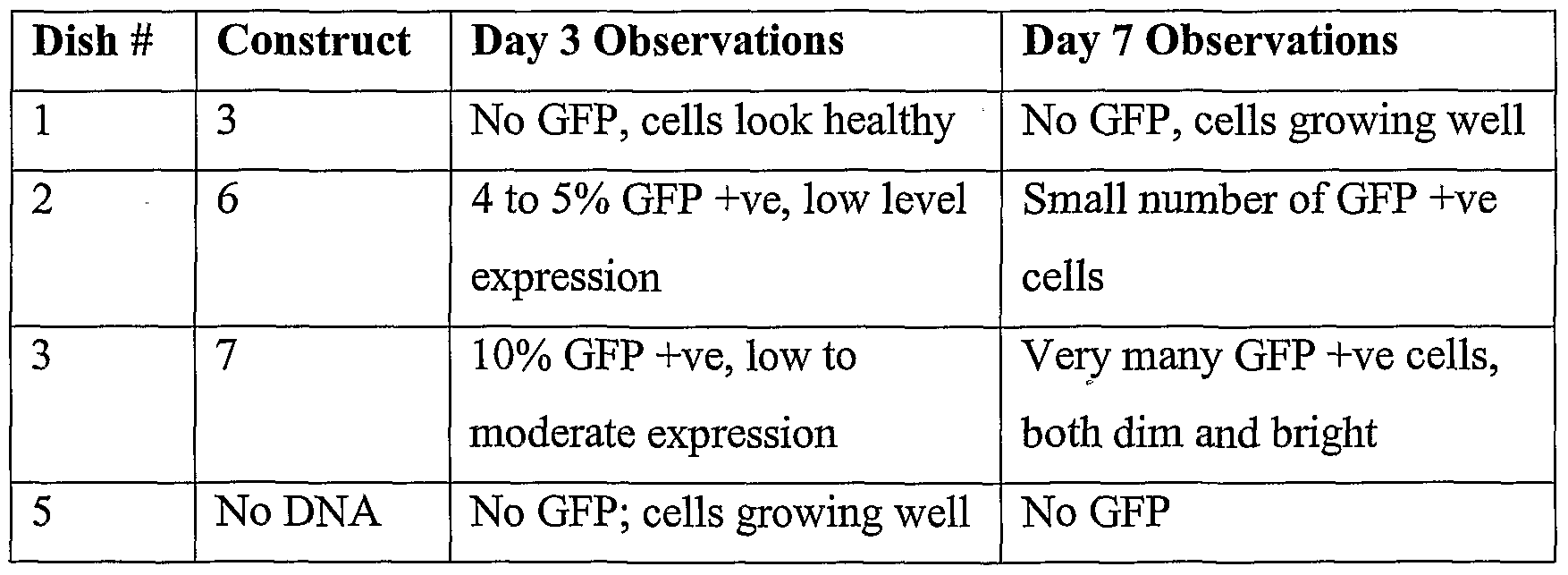
- Construct 6 is the Invitrogen pTracerSN40 ( Figure 3), which expresses a GFP-zeocin resistance gene fusion, useful because one can evaluate the success of transfection experiments by visualization of green fluorescent protein expression.
- Construct 7 (deposited in ATCC on February 16, 2000, accession no. PTA-1352) was derived by deleting the SN40 promoter and origin of replication sequences from pTracer SN40 ( Figure 3). The Nsil-Not ⁇ fragment from construct 1 ( Figure 1) was then cloned into the vector. This construct therefore contains the PCV Rep gene under the control of its own promoter, together with the PCV origin of replication sequences, in the context of a vector that contains a selectable and screenable marker gene (GFP-zeocin resistance), but which cannot replicate in COS-7 cells because the SV40 origin of replication sequences have been deleted.
- GFP-zeocin resistance selectable and screenable marker gene
- the RCR vectors described herein may be introduced into eukaryotic cells by one of many different protocols that are available for direct transfer of DNA into cells, including, but not limited to: electroporation, cationic lipid-mediated transfection, calcium phophate transfection, Agrobacterium-mediated transfection, microprojectile bombardment, polyethylene glycol-mediated transfection.
- electroporation cationic lipid-mediated transfection
- calcium phophate transfection calcium phophate transfection
- Agrobacterium-mediated transfection Agrobacterium-mediated transfection
- microprojectile bombardment polyethylene glycol-mediated transfection.
- Constructs 1, 2, 4 and 6 were transfected into Cercopithecus ⁇ ethiops (African Green Monkey) kidney cells, transformed with SV40 (COS-7 cells), according to the protocol supplied by the manufacturer of the transfection reagent (Lipofectamine, manufactured by Life Technologies, Inc.) of COS 7 cells.
- Transfections were done in duplicate, i.e. two plates per construct. 1. In a 35 mm tissue culture plate, ⁇ 2 x 10 5 cells were seeded in 2 ml D-MEM
- FBS Fetal Bovine Serum
- nonessential amino acids obtained from the ATCC, or from Life Technologies.
- the cells were incubated at 37°C in a CO 2 incubator until the cells were 70- 80% confluent. This took 18-24 hours.
- Solution A For each transfection, 2 ⁇ g DNA (plasmid) diluted in 375 ⁇ l serum-free D-MEM (containing nonessential amino acids).
- Solution B For each transfection, 6 ⁇ l LIPOFECTAMLNE Reagent was diluted in 375 ⁇ l serum-free D-MEM.
- the cells were washed once with 2 ml serum-free D-MEM. 6. For each transfection, 750 ⁇ l serum-free D-MEM was added to each tube containing the lipid-DNA complexes. After gentle mixing, the diluted complex solution was added onto the washed cells.
- the cells were incubated for 5 h at 37°C in a CO 2 incubator. 8. 1.5 ml D-MEM with 20% FBS was added without removing the transfection mixture. 9. The medium was replaced at 18-24 h following start of transfection.
- Cells were harvested at 2 and 4 days post-transfection. Cells were scraped from the plates and pelleted by centrifugation in 1.5 ml microcentrifuge tubes.
- Pellets from the duplicate transfection experiments were pooled. We isolated total nucleic acids from these cells, at two and four days post-transfection using the QIAamp DNA Mini Kit, according to the manufacturer's instructions (Qiagen). Two and a half micrograms of total nucleic acids from each sample was digested with 20 units ofDpnl, which cuts only cf ⁇ m-methylated DNA, i.e. the input plasmid DNA, at sequence GA*TC, where the A* is methylated (Sambrook et al, 1989). The restricted DNA was run on a 1% TAE agarose gel, stained with ethidium bromide.
- the DNA was transferred to a nylon membrane (Roche Molecular Biochemicals) by the standard alkaline capillary transfer Southern blot protocol (Sambrook et al, 1989).
- the RCR replicon DNAs were detected by Southern hybridization with a probe made from Construct 1, nonradioactively labeled with Digoxygenin by the random priming method, according to the protocol supplied by the manufacturer (Roche Molecular Biochemicals).
- FIG 5 shows the results of the Southern Hybridization experiment.
- DNA contains sequences (the ColEl origin of replication) in common with all of the input plasmids, and should therefore hybridize with all replicating, and input plasmid DNAs.
- Digested, low molecular weight Dpn I-digested fragments of the input DNAs may be visible (less than 1.0-kb, indicated in Figure 4); all replicating DNAs will remain undigested.
- All plasmids with SV40 ori sequences (constructs 2, 4, and 6) replicated in the COS-7 cells, as expected.
- Construct 1 (lanes 1 and 2) also appeared to be replicating in the COS-7 cells, indicating that the PCV RCR replicon was functioning, and replicating the linked non-viral DNA sequences. This shows that the PCV-derived RCR replicon can replicate in African Green Monkey kidney cells.
- Constructs 2, 4, 6 and 7 were transfected into Chinese Hamster Ovary (CHO) cells. Cells transfected with constructs 6 and 7 exhibited green fluorescence, indicating expression of the GFP fusion protein. Total DNA was isolated from these cells at 2 and 4 days post-transfection. Southern blot analysis showed that constructs 2, 4 and 7, which contain PCV Rep and origin of replication sequences were all replicating in the transfected cells, whereas construct 6, an SV40 replicon, was not replicating. This shows that PCV RCR replicons can replicate, and express genes linked to the replicon, in Chinese Hamster Ovary (CHO) cells.
- Constructs 1, 6 and 7 were transfected into COS-7 cells.
- the transfections were performed according to the methods suggested by the manufacturer of the transfection reagent (Effectene, from Qiagen). We used 1 ⁇ g of DNA, 8 ⁇ l of enhancer and 25 ⁇ l of Effectene per transfection.
- construct 7 PCV RCR plasmid
- construct 6 with functional SV40 origin of replication sequences
- construct 6 expresses linked genes at a higher level, earlier than the cognate SV40 replicon.
- Constructs 1, 6 and 7 were also transfected into CHO cells, with similar results one day post-transfection.
- DNA condensation buffer Buffer EC
- Enhancer a DNA condensation buffer
- the DNA mixture was incubated at room temperature for 5 minutes.
- Effectene transfection reagent 25 ⁇ l was added to the DNA-enhancer mixture, and mixed by pipetting up and down five times. The samples were incubated at room temperature to allow complex formation.
- the growth medium was gently aspirated from the plates, and the cells were washed once with phosphate buffered saline (PBS). Four milliliters of fresh growth medium was then added to the cells.
- PBS phosphate buffered saline
- Construct 3 non-replicating plasmid DNA, no GFP gene (DNA control)
- Construct 6 non-replicating plasmid DNA, GFP-zeocin fusion gene, should express GFP in transfected cells.
- Construct 7 plasmid DNA with PCV replicon and the same GFP-zeocin fusion gene Construct 6: may be capable of replication.
- EXAMPLE 2 We constructed plasmid pCI-PCVl-Luc (FIG. 7) that contained the Firefly luciferase gene as a reporter gene to obtain quantitative data on the expression- enhancing effect of PCV-based gene vectors (the nucleotide sequence is depicted in SEQ ID NO:7).
- the PCVl genome was amplified by PCR using the primer PCV BglStu (AAAGATCTAGGCCTGTGTGCTCGACATTG) (SEQ ID NO: 8) and PCVBamStu (AAGGATCCAGGCCTCGGCTATGCGCTCC) (SEQ ID NO:9). These primers amplified the circular PCVl genome from nucleotide 1130, the point of a unique Stul site, and also introduced a Bglll and BamHI restriction site at the 5' and 3' end respectively.
- PCV BglStu AAAGATCTAGGCCTGTGTGCTCGACATTG
- PCVBamStu AAGGATCCAGGCCTCGGCTATGCGCTCC
- the PCR product was than digested with the restriction enzymes Bglll and BamHI and introduced into the commercially available plasmids pGL3 (Genbank accession no. U47298) to generate pCI-PCVl-Luc ( Figure 7) and into the pCI mammalian expression vector (Genbank accession no. U47119) linearized at nucleotide 1 by a Bglll digestion to generate pGL3-PCVl-Luc ( Figure 9).
- the Luciferase gene was already contained into the pGL3 construct and was added as an EcoRI-Nhel fragment into the pCI and pCI-PCVl construct.
- the DNA sequence of pCI-PCVl-Luc with the inserted luciferase gene is shown in Figure 8.
- DNA from each construct was purified using a DNA maxiprep kit (Qiagen) and used for cell transfection experiments.
- Cell transfection CHO-K1 cells Choinese hamster ovary epithelial cells ATCC no. CCL-61) were maintained in F12K HAM media (Gibco BRL) supplemented with 10% Fetal Bovine Sera. 24 hours before transfection, cells were trypsinized and dispensed in 24 well plate at 1 x 10 4 cells/well.
- RRBl and RRB2 encode maize retinoblastoma-related proteins that interact with a plant-D-type cyclin and geminivirus replication proteins. Mol Cellular Biol 17: 5977-86.
- Plant cells contain a novel member of the retinoblastoma family of plant growth regulatory proteins. EMBOJ. 15: 4900-4968.
Landscapes
- Health & Medical Sciences (AREA)
- Genetics & Genomics (AREA)
- Life Sciences & Earth Sciences (AREA)
- Chemical & Material Sciences (AREA)
- Organic Chemistry (AREA)
- Engineering & Computer Science (AREA)
- Wood Science & Technology (AREA)
- Biomedical Technology (AREA)
- Biotechnology (AREA)
- General Engineering & Computer Science (AREA)
- Zoology (AREA)
- Bioinformatics & Cheminformatics (AREA)
- Biophysics (AREA)
- Molecular Biology (AREA)
- Biochemistry (AREA)
- General Health & Medical Sciences (AREA)
- Microbiology (AREA)
- Plant Pathology (AREA)
- Physics & Mathematics (AREA)
- Virology (AREA)
- Gastroenterology & Hepatology (AREA)
- Medicinal Chemistry (AREA)
- Proteomics, Peptides & Aminoacids (AREA)
- Micro-Organisms Or Cultivation Processes Thereof (AREA)
- Preparation Of Compounds By Using Micro-Organisms (AREA)
Abstract
Description
Claims
Priority Applications (1)
| Application Number | Priority Date | Filing Date | Title |
|---|---|---|---|
| AU2001238535A AU2001238535A1 (en) | 2000-02-16 | 2001-02-15 | Rolling circle replicon expression vectors |
Applications Claiming Priority (2)
| Application Number | Priority Date | Filing Date | Title |
|---|---|---|---|
| US50547700A | 2000-02-16 | 2000-02-16 | |
| US09/505,477 | 2000-02-16 |
Publications (2)
| Publication Number | Publication Date |
|---|---|
| WO2001061024A2 true WO2001061024A2 (en) | 2001-08-23 |
| WO2001061024A3 WO2001061024A3 (en) | 2002-06-27 |
Family
ID=24010463
Family Applications (1)
| Application Number | Title | Priority Date | Filing Date |
|---|---|---|---|
| PCT/US2001/005394 Ceased WO2001061024A2 (en) | 2000-02-16 | 2001-02-15 | Rolling circle replicon expression vectors |
Country Status (3)
| Country | Link |
|---|---|
| US (3) | US20020187952A1 (en) |
| AU (1) | AU2001238535A1 (en) |
| WO (1) | WO2001061024A2 (en) |
Cited By (5)
| Publication number | Priority date | Publication date | Assignee | Title |
|---|---|---|---|---|
| WO2007054788A1 (en) * | 2005-11-08 | 2007-05-18 | South African Medical Research Council | Expression system incorporating a capsid promotor sequence as an enhancer of a cytomegalovirus promotor |
| CN104404069A (en) * | 2014-11-20 | 2015-03-11 | 苏州金唯智生物科技有限公司 | Low-copy pTerm plasmids and construction method and application thereof |
| CN104480130A (en) * | 2014-11-20 | 2015-04-01 | 苏州金唯智生物科技有限公司 | PTerm-SC plasmid as well as construction method and application thereof |
| WO2021072031A1 (en) * | 2019-10-11 | 2021-04-15 | Insideoutbio, Inc. | Methods and compositions for the manufacture and use of circular dna encoded therapeutics for genetic disorders and other diseases |
| WO2023012710A1 (en) * | 2021-08-04 | 2023-02-09 | University Of Cape Town | Self-replicating dna expression system and immunogen |
Families Citing this family (5)
| Publication number | Priority date | Publication date | Assignee | Title |
|---|---|---|---|---|
| US20080160040A1 (en) * | 2004-04-15 | 2008-07-03 | Ghim Shin-Je | Plant-produced compositions for treating papillomavirus infection and related methods |
| EP1934335A4 (en) * | 2005-09-08 | 2010-05-05 | Large Scale Biology Corp | MODIFIED TOBACCO MOSAIC VIRUS PARTICLES AS MEDIA FOR THE DISPOSAL OF PROTEIN ANTIGENS FOR VACCINE APPLICATIONS |
| US9125845B2 (en) * | 2008-07-09 | 2015-09-08 | General Electric Company | DNA vaccines, uses for unprocessed rolling circle amplification product and methods for making the same |
| US20100008939A1 (en) * | 2008-07-09 | 2010-01-14 | General Electric Company | Unprocessed rolling circle amplification product |
| WO2025111446A1 (en) * | 2023-11-21 | 2025-05-30 | The Wistar Institute Of Anatomy And Biology | Rolling circle amplified dna encoded antigens and methods of use thereof |
Family Cites Families (4)
| Publication number | Priority date | Publication date | Assignee | Title |
|---|---|---|---|---|
| FR2772047B1 (en) | 1997-12-05 | 2004-04-09 | Ct Nat D Etudes Veterinaires E | GENOMIC SEQUENCE AND POLYPEPTIDES OF CIRCOVIRUS ASSOCIATED WITH PIGLET LOSS DISEASE (MAP), APPLICATIONS TO DIAGNOSIS AND TO PREVENTION AND / OR TREATMENT OF INFECTION |
| WO1999045956A1 (en) * | 1998-03-13 | 1999-09-16 | University Of Georgia Research Foundation, Inc. | Vaccines against circovirus infections |
| JP4493844B2 (en) * | 1998-03-25 | 2010-06-30 | ランデグレン、ウルフ | Rolling circle replication of padlock probe |
| EP0960940A1 (en) * | 1998-05-19 | 1999-12-01 | Centro de Investigacion y de Estudios Avanzados del I.P.N.( CINVESTAV) | Geminivirus inducible promoter sequences and the use thereof in geminivirus infected plants or plant cells |
-
2001
- 2001-02-15 WO PCT/US2001/005394 patent/WO2001061024A2/en not_active Ceased
- 2001-02-15 AU AU2001238535A patent/AU2001238535A1/en not_active Abandoned
- 2001-12-20 US US10/038,001 patent/US20020187952A1/en not_active Abandoned
-
2002
- 2002-11-01 US US10/286,186 patent/US7049134B2/en not_active Expired - Fee Related
-
2005
- 2005-09-20 US US11/231,725 patent/US20060024821A1/en not_active Abandoned
Cited By (7)
| Publication number | Priority date | Publication date | Assignee | Title |
|---|---|---|---|---|
| WO2007054788A1 (en) * | 2005-11-08 | 2007-05-18 | South African Medical Research Council | Expression system incorporating a capsid promotor sequence as an enhancer of a cytomegalovirus promotor |
| AP2580A (en) * | 2005-11-08 | 2013-01-30 | South African Medical Res Council | Expression system incorporating a capsid promoter sequence as an enhancer |
| US8460933B2 (en) | 2005-11-08 | 2013-06-11 | South African Medical Research Council | Expression system incorporating a capsid promoter sequence as an enhancer |
| CN104404069A (en) * | 2014-11-20 | 2015-03-11 | 苏州金唯智生物科技有限公司 | Low-copy pTerm plasmids and construction method and application thereof |
| CN104480130A (en) * | 2014-11-20 | 2015-04-01 | 苏州金唯智生物科技有限公司 | PTerm-SC plasmid as well as construction method and application thereof |
| WO2021072031A1 (en) * | 2019-10-11 | 2021-04-15 | Insideoutbio, Inc. | Methods and compositions for the manufacture and use of circular dna encoded therapeutics for genetic disorders and other diseases |
| WO2023012710A1 (en) * | 2021-08-04 | 2023-02-09 | University Of Cape Town | Self-replicating dna expression system and immunogen |
Also Published As
| Publication number | Publication date |
|---|---|
| WO2001061024A3 (en) | 2002-06-27 |
| US20060024821A1 (en) | 2006-02-02 |
| US20020187952A1 (en) | 2002-12-12 |
| US20030143741A1 (en) | 2003-07-31 |
| US7049134B2 (en) | 2006-05-23 |
| AU2001238535A1 (en) | 2001-08-27 |
Similar Documents
| Publication | Publication Date | Title |
|---|---|---|
| JP7081767B2 (en) | Adeno-associated virus (AAV) capsid protein mutant | |
| Kyöstiö et al. | Negative regulation of the adeno-associated virus (AAV) P5 promoter involves both the P5 rep binding site and the consensus ATP-binding motif of the AAV Rep68 protein | |
| EP1290205B1 (en) | Duplexed parvovirus vectors | |
| US6057152A (en) | Recombinant viral vector system | |
| US9885022B2 (en) | Mutated rep encoding sequences for use in AAV production | |
| JP2003525590A (en) | Methods, compositions, and cells for encapsulating recombinant vectors in AAV particles | |
| CA2206244A1 (en) | Adeno-associated derived vector systems for gene delivery and integration into target cells | |
| AU2001269723A1 (en) | Duplexed parvovirus vectors | |
| WO1996036364A9 (en) | Recombinant viral vector system | |
| Park et al. | Scalable production of adeno‐associated virus type 2 vectors via suspension transfection | |
| US7049134B2 (en) | Rolling circle replicon expression vector | |
| TW202229558A (en) | Nucleic acid constructs for simultaneous gene activation | |
| JP2022541915A (en) | Synthetic genetic elements for biomanufacturing | |
| EP4326881A1 (en) | Dna amplification method using care elements | |
| US20040014031A1 (en) | Inducible highly productive rAAV packaging cell-lines | |
| Afione et al. | Delayed expression of adeno-associated virus vector DNA | |
| TW202223094A (en) | Nucleic acid constructs for va rna transcription | |
| US12416019B2 (en) | Expression cassette containing overlapping open reading frames and application | |
| US20250302994A1 (en) | Erythroparvovirus with a modified genome for gene therapy | |
| US20250295810A1 (en) | Erythroparvovirus with a modified capsid for gene therapy | |
| Smith Jr et al. | Adeno‐Associated Virus | |
| Jain | Factors affecting AAV production: Mutagenesis of AAV2 rep and AAV transgenes | |
| EP1626091B1 (en) | Duplexed parvovirus vectors | |
| Cheung | Homologous recombination plays minor role in excision of unit-length viral genomes from head-to-tail direct tandem repeats of porcine circovirus during DNA replication in Escherichia coli | |
| HK40091612A (en) | Nucleic acid constructs for simultaneous gene activation |
Legal Events
| Date | Code | Title | Description |
|---|---|---|---|
| AK | Designated states |
Kind code of ref document: A2 Designated state(s): AE AG AL AM AT AU AZ BA BB BG BR BY BZ CA CH CN CR CU CZ DE DK DM DZ EE ES FI GB GD GE GH GM HR HU ID IL IN IS JP KE KG KP KR KZ LC LK LR LS LT LU LV MA MD MG MK MN MW MX MZ NO NZ PL PT RO RU SD SE SG SI SK SL TJ TM TR TT TZ UA UG US UZ VN YU ZA ZW |
|
| AL | Designated countries for regional patents |
Kind code of ref document: A2 Designated state(s): GH GM KE LS MW MZ SD SL SZ TZ UG ZW AM AZ BY KG KZ MD RU TJ TM AT BE CH CY DE DK ES FI FR GB GR IE IT LU MC NL PT SE TR BF BJ CF CG CI CM GA GN GW ML MR NE SN TD TG |
|
| 121 | Ep: the epo has been informed by wipo that ep was designated in this application | ||
| DFPE | Request for preliminary examination filed prior to expiration of 19th month from priority date (pct application filed before 20040101) | ||
| AK | Designated states |
Kind code of ref document: A3 Designated state(s): AE AG AL AM AT AU AZ BA BB BG BR BY BZ CA CH CN CR CU CZ DE DK DM DZ EE ES FI GB GD GE GH GM HR HU ID IL IN IS JP KE KG KP KR KZ LC LK LR LS LT LU LV MA MD MG MK MN MW MX MZ NO NZ PL PT RO RU SD SE SG SI SK SL TJ TM TR TT TZ UA UG US UZ VN YU ZA ZW |
|
| AL | Designated countries for regional patents |
Kind code of ref document: A3 Designated state(s): GH GM KE LS MW MZ SD SL SZ TZ UG ZW AM AZ BY KG KZ MD RU TJ TM AT BE CH CY DE DK ES FI FR GB GR IE IT LU MC NL PT SE TR BF BJ CF CG CI CM GA GN GW ML MR NE SN TD TG |
|
| REG | Reference to national code |
Ref country code: DE Ref legal event code: 8642 Ref country code: DE Ref legal event code: 8642 |
|
| 122 | Ep: pct application non-entry in european phase | ||
| NENP | Non-entry into the national phase |
Ref country code: JP |