WO2001034586A2 - Branched adamantyl and noradamantyl aryl- and aralkylpiperazines with serotonin 5-ht1a activity - Google Patents
Branched adamantyl and noradamantyl aryl- and aralkylpiperazines with serotonin 5-ht1a activity Download PDFInfo
- Publication number
- WO2001034586A2 WO2001034586A2 PCT/US2000/030529 US0030529W WO0134586A2 WO 2001034586 A2 WO2001034586 A2 WO 2001034586A2 US 0030529 W US0030529 W US 0030529W WO 0134586 A2 WO0134586 A2 WO 0134586A2
- Authority
- WO
- WIPO (PCT)
- Prior art keywords
- compound
- phenylmethyl
- piperazinyl
- ethyl
- neurodegenerative disorder
- Prior art date
- Legal status (The legal status is an assumption and is not a legal conclusion. Google has not performed a legal analysis and makes no representation as to the accuracy of the status listed.)
- Ceased
Links
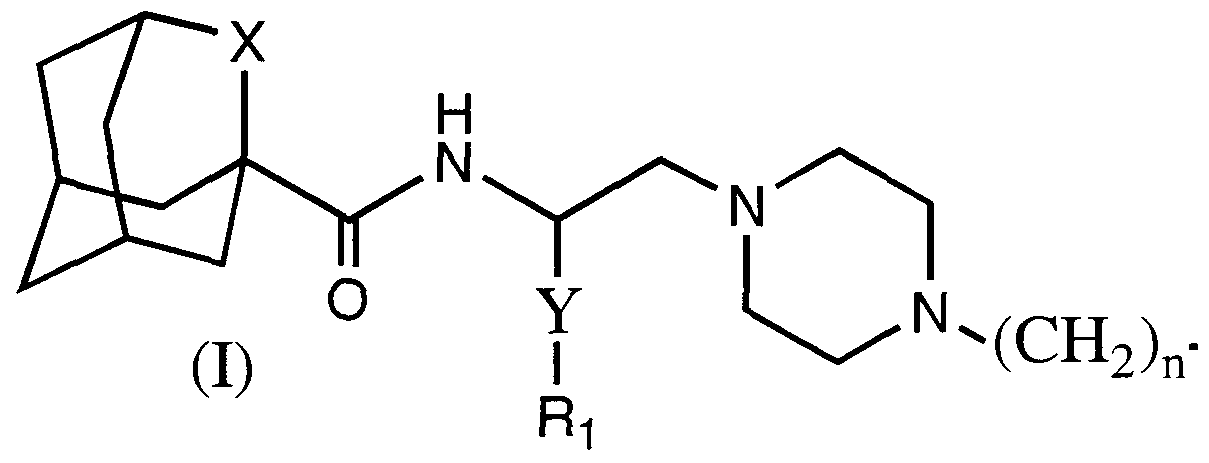
- 0 C*(C)(C)N1CCN(CC(**)NC(C2(CC(C3)C4)CC4CC3C2)=O)CC1 Chemical compound C*(C)(C)N1CCN(CC(**)NC(C2(CC(C3)C4)CC4CC3C2)=O)CC1 0.000 description 2
Classifications
-
- C—CHEMISTRY; METALLURGY
- C07—ORGANIC CHEMISTRY
- C07D—HETEROCYCLIC COMPOUNDS
- C07D239/00—Heterocyclic compounds containing 1,3-diazine or hydrogenated 1,3-diazine rings
- C07D239/02—Heterocyclic compounds containing 1,3-diazine or hydrogenated 1,3-diazine rings not condensed with other rings
- C07D239/24—Heterocyclic compounds containing 1,3-diazine or hydrogenated 1,3-diazine rings not condensed with other rings having three or more double bonds between ring members or between ring members and non-ring members
- C07D239/28—Heterocyclic compounds containing 1,3-diazine or hydrogenated 1,3-diazine rings not condensed with other rings having three or more double bonds between ring members or between ring members and non-ring members with hetero atoms or with carbon atoms having three bonds to hetero atoms with at the most one bond to halogen, directly attached to ring carbon atoms
- C07D239/32—One oxygen, sulfur or nitrogen atom
- C07D239/42—One nitrogen atom
-
- A—HUMAN NECESSITIES
- A61—MEDICAL OR VETERINARY SCIENCE; HYGIENE
- A61K—PREPARATIONS FOR MEDICAL, DENTAL OR TOILETRY PURPOSES
- A61K31/00—Medicinal preparations containing organic active ingredients
- A61K31/33—Heterocyclic compounds
- A61K31/395—Heterocyclic compounds having nitrogen as a ring hetero atom, e.g. guanethidine or rifamycins
- A61K31/495—Heterocyclic compounds having nitrogen as a ring hetero atom, e.g. guanethidine or rifamycins having six-membered rings with two or more nitrogen atoms as the only ring heteroatoms, e.g. piperazine or tetrazines
- A61K31/496—Non-condensed piperazines containing further heterocyclic rings, e.g. rifampin, thiothixene or sparfloxacin
-
- A—HUMAN NECESSITIES
- A61—MEDICAL OR VETERINARY SCIENCE; HYGIENE
- A61P—SPECIFIC THERAPEUTIC ACTIVITY OF CHEMICAL COMPOUNDS OR MEDICINAL PREPARATIONS
- A61P19/00—Drugs for skeletal disorders
-
- A—HUMAN NECESSITIES
- A61—MEDICAL OR VETERINARY SCIENCE; HYGIENE
- A61P—SPECIFIC THERAPEUTIC ACTIVITY OF CHEMICAL COMPOUNDS OR MEDICINAL PREPARATIONS
- A61P21/00—Drugs for disorders of the muscular or neuromuscular system
-
- A—HUMAN NECESSITIES
- A61—MEDICAL OR VETERINARY SCIENCE; HYGIENE
- A61P—SPECIFIC THERAPEUTIC ACTIVITY OF CHEMICAL COMPOUNDS OR MEDICINAL PREPARATIONS
- A61P25/00—Drugs for disorders of the nervous system
-
- A—HUMAN NECESSITIES
- A61—MEDICAL OR VETERINARY SCIENCE; HYGIENE
- A61P—SPECIFIC THERAPEUTIC ACTIVITY OF CHEMICAL COMPOUNDS OR MEDICINAL PREPARATIONS
- A61P25/00—Drugs for disorders of the nervous system
- A61P25/04—Centrally acting analgesics, e.g. opioids
-
- A—HUMAN NECESSITIES
- A61—MEDICAL OR VETERINARY SCIENCE; HYGIENE
- A61P—SPECIFIC THERAPEUTIC ACTIVITY OF CHEMICAL COMPOUNDS OR MEDICINAL PREPARATIONS
- A61P25/00—Drugs for disorders of the nervous system
- A61P25/08—Antiepileptics; Anticonvulsants
-
- A—HUMAN NECESSITIES
- A61—MEDICAL OR VETERINARY SCIENCE; HYGIENE
- A61P—SPECIFIC THERAPEUTIC ACTIVITY OF CHEMICAL COMPOUNDS OR MEDICINAL PREPARATIONS
- A61P25/00—Drugs for disorders of the nervous system
- A61P25/14—Drugs for disorders of the nervous system for treating abnormal movements, e.g. chorea, dyskinesia
-
- A—HUMAN NECESSITIES
- A61—MEDICAL OR VETERINARY SCIENCE; HYGIENE
- A61P—SPECIFIC THERAPEUTIC ACTIVITY OF CHEMICAL COMPOUNDS OR MEDICINAL PREPARATIONS
- A61P25/00—Drugs for disorders of the nervous system
- A61P25/14—Drugs for disorders of the nervous system for treating abnormal movements, e.g. chorea, dyskinesia
- A61P25/16—Anti-Parkinson drugs
-
- A—HUMAN NECESSITIES
- A61—MEDICAL OR VETERINARY SCIENCE; HYGIENE
- A61P—SPECIFIC THERAPEUTIC ACTIVITY OF CHEMICAL COMPOUNDS OR MEDICINAL PREPARATIONS
- A61P25/00—Drugs for disorders of the nervous system
- A61P25/28—Drugs for disorders of the nervous system for treating neurodegenerative disorders of the central nervous system, e.g. nootropic agents, cognition enhancers, drugs for treating Alzheimer's disease or other forms of dementia
-
- A—HUMAN NECESSITIES
- A61—MEDICAL OR VETERINARY SCIENCE; HYGIENE
- A61P—SPECIFIC THERAPEUTIC ACTIVITY OF CHEMICAL COMPOUNDS OR MEDICINAL PREPARATIONS
- A61P27/00—Drugs for disorders of the senses
- A61P27/02—Ophthalmic agents
-
- A—HUMAN NECESSITIES
- A61—MEDICAL OR VETERINARY SCIENCE; HYGIENE
- A61P—SPECIFIC THERAPEUTIC ACTIVITY OF CHEMICAL COMPOUNDS OR MEDICINAL PREPARATIONS
- A61P3/00—Drugs for disorders of the metabolism
- A61P3/08—Drugs for disorders of the metabolism for glucose homeostasis
- A61P3/10—Drugs for disorders of the metabolism for glucose homeostasis for hyperglycaemia, e.g. antidiabetics
-
- A—HUMAN NECESSITIES
- A61—MEDICAL OR VETERINARY SCIENCE; HYGIENE
- A61P—SPECIFIC THERAPEUTIC ACTIVITY OF CHEMICAL COMPOUNDS OR MEDICINAL PREPARATIONS
- A61P31/00—Antiinfectives, i.e. antibiotics, antiseptics, chemotherapeutics
- A61P31/12—Antivirals
- A61P31/14—Antivirals for RNA viruses
- A61P31/18—Antivirals for RNA viruses for HIV
-
- A—HUMAN NECESSITIES
- A61—MEDICAL OR VETERINARY SCIENCE; HYGIENE
- A61P—SPECIFIC THERAPEUTIC ACTIVITY OF CHEMICAL COMPOUNDS OR MEDICINAL PREPARATIONS
- A61P9/00—Drugs for disorders of the cardiovascular system
-
- A—HUMAN NECESSITIES
- A61—MEDICAL OR VETERINARY SCIENCE; HYGIENE
- A61P—SPECIFIC THERAPEUTIC ACTIVITY OF CHEMICAL COMPOUNDS OR MEDICINAL PREPARATIONS
- A61P9/00—Drugs for disorders of the cardiovascular system
- A61P9/10—Drugs for disorders of the cardiovascular system for treating ischaemic or atherosclerotic diseases, e.g. antianginal drugs, coronary vasodilators, drugs for myocardial infarction, retinopathy, cerebrovascula insufficiency, renal arteriosclerosis
-
- C—CHEMISTRY; METALLURGY
- C07—ORGANIC CHEMISTRY
- C07D—HETEROCYCLIC COMPOUNDS
- C07D295/00—Heterocyclic compounds containing polymethylene-imine rings with at least five ring members, 3-azabicyclo [3.2.2] nonane, piperazine, morpholine or thiomorpholine rings, having only hydrogen atoms directly attached to the ring carbon atoms
- C07D295/04—Heterocyclic compounds containing polymethylene-imine rings with at least five ring members, 3-azabicyclo [3.2.2] nonane, piperazine, morpholine or thiomorpholine rings, having only hydrogen atoms directly attached to the ring carbon atoms with substituted hydrocarbon radicals attached to ring nitrogen atoms
- C07D295/12—Heterocyclic compounds containing polymethylene-imine rings with at least five ring members, 3-azabicyclo [3.2.2] nonane, piperazine, morpholine or thiomorpholine rings, having only hydrogen atoms directly attached to the ring carbon atoms with substituted hydrocarbon radicals attached to ring nitrogen atoms substituted by singly or doubly bound nitrogen atoms
- C07D295/125—Heterocyclic compounds containing polymethylene-imine rings with at least five ring members, 3-azabicyclo [3.2.2] nonane, piperazine, morpholine or thiomorpholine rings, having only hydrogen atoms directly attached to the ring carbon atoms with substituted hydrocarbon radicals attached to ring nitrogen atoms substituted by singly or doubly bound nitrogen atoms with the ring nitrogen atoms and the substituent nitrogen atoms attached to the same carbon chain, which is not interrupted by carbocyclic rings
- C07D295/13—Heterocyclic compounds containing polymethylene-imine rings with at least five ring members, 3-azabicyclo [3.2.2] nonane, piperazine, morpholine or thiomorpholine rings, having only hydrogen atoms directly attached to the ring carbon atoms with substituted hydrocarbon radicals attached to ring nitrogen atoms substituted by singly or doubly bound nitrogen atoms with the ring nitrogen atoms and the substituent nitrogen atoms attached to the same carbon chain, which is not interrupted by carbocyclic rings to an acyclic saturated chain
Definitions
- This invention relates to novel branched adamantyl, noradamantyl aryl and aralkylpiperazines having serotonin 5-HT 1A activity. More particularly, the present invention relates to compounds and methods using them to provide neuroprotection and prevent, inhibit or limit processes of neurodegeneration in mammals.
- 5-HT 1A agonists and partial agonists may find use in the treatment of several diseases such as anxiety, depression, schizophrenia, sexual dysfunction, cognitive deficits resulting from neurodegenerative diseases like Alzheimer's Disease, nausea and vomiting, sleep disorders, pain, obesity, pain, addiction/withdrawl and in the treatment of prostate cancer (for recent reviews, see:
- 5-HT ⁇ agonists and partial agonists act in other disease states and conditions by virtue of their ability to inhibit the release of glutamate.
- 5-HT ⁇ agonists and partial agonists may be used to treat conditions arising from the dysfunction of the glutamate neurotransmitter system or the aberrant release of glutamate.
- Glutamate is the predominant neuro transmitter in the central nervous system and it plays an important role in neuroplasticity.
- Ischemia can also result from surgery where the blood flow must be halted for a period of time (e.g., cardiac by-pass surgery) due to the resulting anoxia and hypoglycemia (Arrowsmith, J. E. et al., Neuroprotection of the Brain During Cardiopulmonary Bypass. A Randomized Trial of Remacemide During Coronary Artery Bypass in 171 Patients, Strode 1998, 29, 2357-2362, and references cited within).
- Serotonin 5-HT ⁇ receptors are located in brain areas which are highly sensitive to ischemia, such as the hippocampus and cerebral cortex. Activation of this receptor subtype results in neuronal hyperpolarization and a concomitant inhibition of neuronal activity (DeVry, J. 5-HT1A Receptor Agonists: Recent Developments and
- 5-HT ⁇ receptor agonists and partial agonists are able to attenuate glutamate release, most likely through activation of 5-HT ⁇ receptors located on glutamatergic terminals (Matsuyama, S. et al., Regulation of Glutamate Release via NMDA and 5-HT ⁇ Receptors in Guinea Pig Dentate Gyrus. Brain Res.
- compounds which possesses 5-HT ⁇ agonist or partial agonist activity may be used as neuroprotective agents as well as a means for treating psychosis.
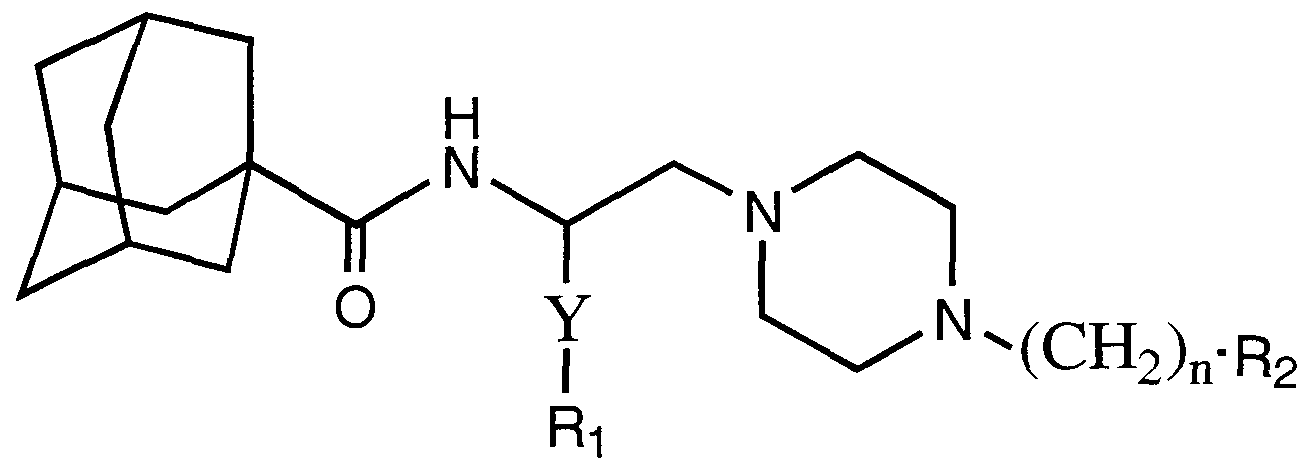
- X is selected from -CH,- or a chemical bond
- Y is selected from -(CH-),.- or -(CH 2 )-O-(CH 2 )-;
- n is selected from the integer 0 or 1 ;
- n is selected from the integer 0 or 1;
- Rl and R 2 are independently selected from the group consisting of aryl or heteroaryl of from 5 - 10 atoms optionally substituted with F, Cl, Br, I, -OH, -NH 2 , - CO 2 H, -CO 2 -C C 6 alkyl, -CN. -NO 2 , C -C 6 alkyl, C -C 6 alkenyl, C 2 -C 6 alkynyl, C,- C 6 perhaloalkyl, OR3, or C -C 6 perhaloalkoxy;
- R3 is selected from the group consisting of H, C -C 6 alkyl, C.-C 6 alkenyl, C 2 -
- C 6 -C 10 aryl includes phenyl and naphthyl.
- Monocyclic heteroaryl means a 5-6 membered heteroaryl group having from 1-3 heteroatoms selected independently from N, O, and S, such as pyridine, pyrrole, thiophene, furan, imidazole, oxazole, pyrimidine, pyridazine, pyrazine, thiazole and oxathiazole.
- Bicyclic heteroaryl includes phenyl fused to a monocyclic 5-6 membered heteroaryl group or a 5-6 membered heteroaryl group fused to another 5-6 membered heteroaryl group, including, but not limited to indole, quinoline, isoquinoline, benzofuran, benzodioxan, benzothiophene, benzimidazole, naphthyridine, and imidazopyridine.
- C 7 -C 14 aralkyl means a C -C 4 alkyl group having a phenyl or naphthyl group as a substituent
- heteroaralkyl means a C -C 4 alkyl group having a mono or bicyclic heteroaryl group as defined above as a substituent
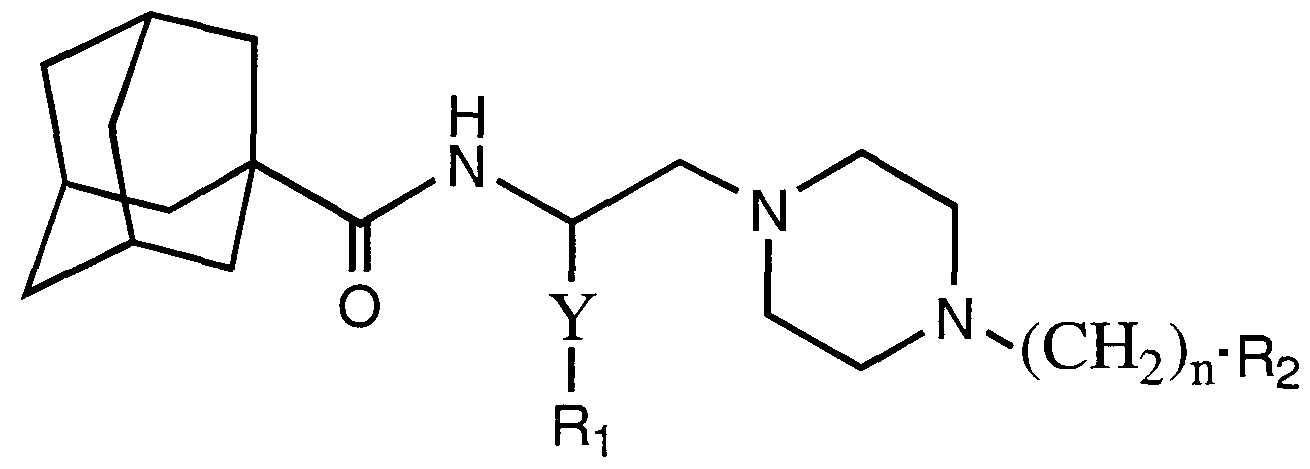
- Y is selected from - ⁇ CH-) m - or -(CH 2 )-O-(CH 2 )-;
- n is selected from the integer 0 or 1;
- n is selected from the integer 0 or 1 ;
- R is phenyl optionally substituted with F, Cl, Br, I, -OH, -NH., -CO 2 H, -CO 2 - C C 6 alkyl, -CN, -NO 2 , C,-C 6 alkyl, C 2 -C 6 alkenyl, C -C 6 alkynyl, C,-C 6 perhaloalkyl or C -C 6 perhaloalkoxy;
- R 2 is selected from phenyl, napthyl, piperazinyl, pyridine, thiophene, furan, imidazole, oxazole, pyrrole, pyrimidine, pyridazine, pyrazine, thiazole or oxathiazole;
- C -C 6 alkyl -CN, -NO 2 , C C 6 alkyl, C.-C. alkenyl, C 2 -C 6 alkynyl, C,-C 6 perhaloalkyl or C -C 6 perhaloalkoxy;
- R 2 is phenyl or pyrimidinyl; the optical isomers or a pharmaceutically acceptable salt thereof.
- Optical isomers of the invention compounds can be selectively synthesized or separated using conventional procedures known to those skilled in the art of organic synthesis.
- the pharmaceutically acceptable salts of the invention compounds include the conventional acid addition salts which are formed from an invention compound and a pharmaceutically acceptable organic or inorganic acid.
- the acid addition salts include, but is not limited to, the acetate, adipate, alginate, aspartate, benzoate, benzenesulfonate, bisulfate, butyrate, citrate, camphorate, camphorsulfonate, dodecylsulfate, ethanesulfonate, fumarate, glycerophosphate, phosphate, hemisulfate, hydrochloride, hydrobromide, hydroiodide, lactate, maleate, methanesulfonate, nicotinate, oxalate, pamoate, pectinate, pivalate, propionate, succinate, tartrate, and tosylate.
- the basic nitrogen-containing groups may be quaternized with such agents as lower alkyl halides, dialkyl sulfates, long chain halides such as lauryl bromide, aralkyl halides like benzyl and phenethyl bromides.
- Methods of treatment of this invention include those glutamate-mediated maladies wherein inhibition of glutamate release is desireable. These methods may be characterized as methods for inhibiting or limiting neuronal glutamate release in a mammal, the method comprising administering to the mammal, preferably to a human patient, a pharmaceutically effective amount of a compound of this invention, or a pharmaceutically effective salt thereof.
- these compounds may be useful in the treatment of several diseases such as anxiety, depression, schizophrenia, sexual dysfunction, cognitive deficits resulting from neurodegenerative diseases including Alzheimer's Disease, nausea and vomiting, epilipsy, sleep disorders, obesity, pain, addiction/withdrawal, urinary incontinence, prostate cancer, and ischemia resulting from acute stroke, transient ischemic attack, head and spinal trauma, fetal hypoxia, neuronal hypoxia, cardiac surgery or any other surgical technique which requires halting the blood flow for a period of time.
- diseases such as anxiety, depression, schizophrenia, sexual dysfunction, cognitive deficits resulting from neurodegenerative diseases including Alzheimer's Disease, nausea and vomiting, epilipsy, sleep disorders, obesity, pain, addiction/withdrawal, urinary incontinence, prostate cancer, and ischemia resulting from acute stroke, transient ischemic attack, head and spinal trauma, fetal hypoxia, neuronal hypoxia, cardiac surgery or any other surgical technique which requires halting the blood flow for a period of time.
- this invention is also useful in inhibiting or limiting the chronic neurodegenerative actions associated with Alzheimer's Disease, Huntington's Disease, Parkinson's Disease, epilepsy, amyotrophic lateral sclerosis, AIDS dementia as well as retinal diseases. Therefore, this invention also comprises methods of treatment for each of these maladies, the methods comprising administering to a mammal in need thereof a pharmaceutically effective amount of a compound of this invention, or a pharmaceutically acceptable salt thereof.
- the compounds of this invention may also be used in the mediation or inhibition of glutamate activity associated with the maladies known as chronic, neuropathic or persistent pain, including its actions in fibromyalgia, postherpetic neuralgia, reflex sympathetic dystrophy, diabetic peripheral neuropathy, etc.
- a mammal in need thereof a pharmaceutically effective amount of a compound of this invention, or a pharmaceutically acceptable salt thereof.
- these methods include those in which the neurodegenerative disease or disorder is acute or chronic. Included are those instances in which the neurodegeneration results from stroke, including thromboembolic stroke, focal ischemia, global ischemia and tranient ischemic attack. Also included are those neurodegenerative disorders such as ischemia resulting from a surgical technique involving prolonged halt of blood flow to the brain, head or spinal trauma, or hypoxia, including fetal hypoxia.
- the methods of treatment of this invention may also be characterized as methods for providing or inducing neuroprotection in a mammal, as their activity reduces or inhibits the glutamate-mediated or glutamate-related degeneration which would naturally occur.
- the compound of formula I can be prepared by conventional chemical methods which are well known to those skilled in the art of chemistry using chemicals that are either commercially available or readily prepared following standard literature procedures.
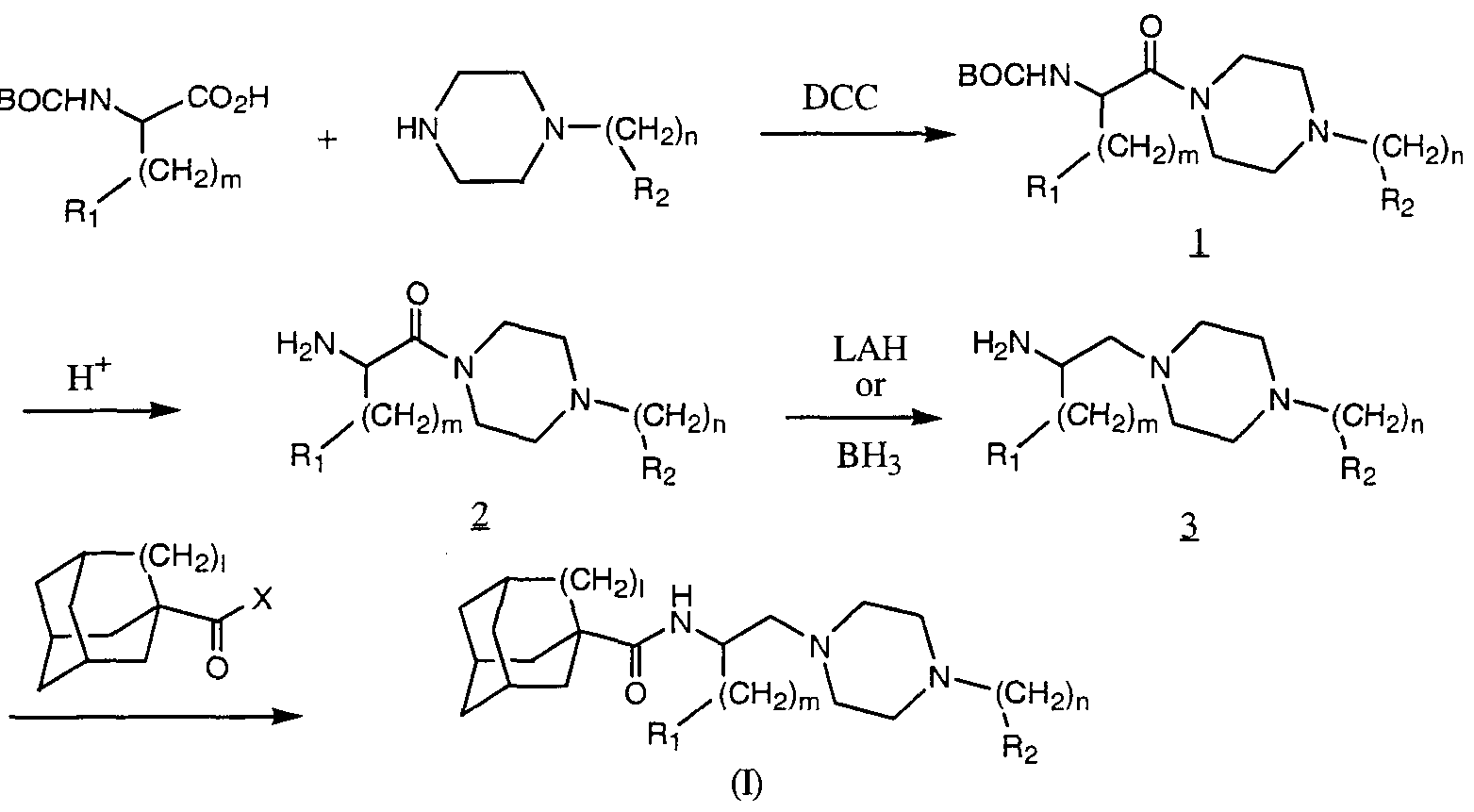
- the compounds may be synthesized in four steps (Scheme 1) starting from the appropriate phenylalanine, phenylglycine or heteroaryl-substituted alanine or heteroaryl-substituted glycine which has been protected on the nitrogen atom with a suitable protecting group such as the t- butoxycarbonyl group (BOC).
- This material is coupled to the appropriately substituted arylpiperazine using a suitable coupling catalyst, such as dicyclohexylcarbodiimide (DCC) to afford compound 1.
- DCC dicyclohexylcarbodiimide
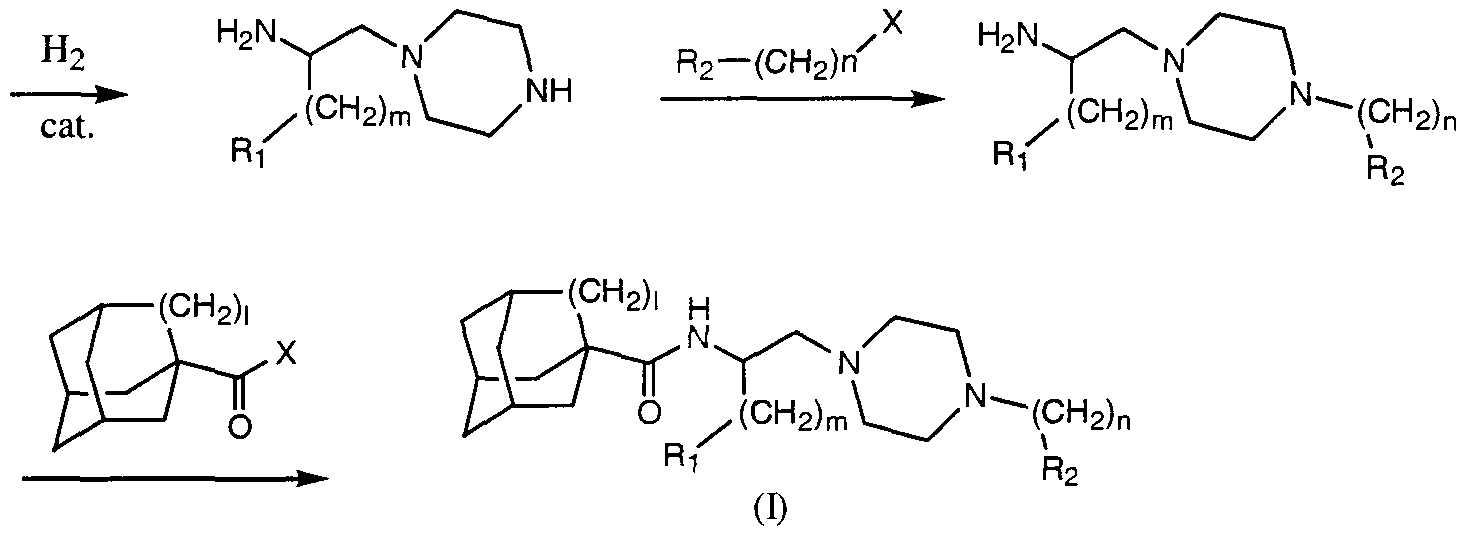
- R 2 grouping is not compatible with the reductive conditions required for the conversion of intermediate 2 to intermediate 3, it may be introduced after the reduction of the amide by initially protecting the NH group of the piperazine with a benzyl moiety (Scheme 2). This benzyl group can then be removed under catalytic hydrogenation conditions and the R 2 group incorporated into the molecule to give the final products.
- Scheme 2 may be accomplished according to the general method described in Scheme 1 using one of many possible acylating derivatives, which include but are not limited to acid halides (e.g., acid chloride), anhydrides and activated esters and amides or through the use of adamantyl- or noradamantyl carboxylic acid and an appropriate coupling catalyst.
- acid halides e.g., acid chloride
- anhydrides e.g., anhydrides
- activated esters and amides e.g., adamantyl- or noradamantyl carboxylic acid and an appropriate coupling catalyst.
- the pure optical isomers of the compounds of formula I may be obtained stereospecifically by beginning the synthesis with chirally pure starting materials.
- the optical isomers of the compounds of formula I may be obtained by conventional separation methods which are well known to those skilled in the art of synthetic chemistry. These methods include but are not rest ⁇ cted to crystallization of a mixture of diastereome ⁇ c salts, enzymatic resolution, chromatography of one of the intermediates or the final product on a chiral column, or formation and separation of a diastereome ⁇ c mixture followed by conversion back to the chirally pure matenal.
- 1-benzylp ⁇ perazme (8.8 g, 50 mmol) were dissolved in 125 mL of dry dichloromethane and cooled in an ice bath The stirred mixture was then treated with a solution of diethylcyanophosphonate (8.97 g, 55 mmol) in 50 mL of dry dichloromethane over a period of 45 minutes. A solution of N-methylmorphohne (5.55 g, 55 mmol) in 50 mL of dry dichloromethane was then added over a period of one hour. The resulting reaction mixture was stirred overnight, du ⁇ ng which time it came up to room temperature.
- the reaction mixture was then washed with 100 mL of 10% aqueous potassium carbonate solution followed by 100 mL of water.
- the resulting organic layer was dried over anhydrous sodium sulfate and concentrated on a rotary evaporator.
- Example 1 The compound of Example 1 (4.5 g, 7.84 mmol) was hydrogenated over 10% Pd/C (1 g) in 200 mL of ethanol on a Parr shaker at a pressure of 36 psi overnight.
- reaction mixture was then concentrated under reduced pressure, diluted with ethyl acetate and washed with water. The organic layer was dried over anhydrous sodium sulfate and concentrated under reduced pressure. The desired product was purified by flash chromatography on silica gel
- Affinity for the serotonin 5-HT ⁇ receptor was established by assaying the test compound's ability to displace [3H]-8-OH-DPAT from its binding site on the receptor complex in rat hippocampal membrane homogenates according to the method described in US Patent 5,482,940.
- the compounds of this invention displayed high affinity for the 5-HT ⁇ receptor, as exemplified by the data given in
- Some of the compounds of this invention displayed serotonin 5-HT ⁇ agonist activity, as measured by the test compounds' s ability to stimulate the binding of [ 35 S]-GTP S to the 5-HTIA receptor-G protein complex in CHO cells stably transfected with the human 5-HTi / ⁇ receptor following a variation of the procedure described by Lazerino and Birdsall (Br. J. Pharmacol., 109, 1120 (1993)). Data are given in Table 1. Data are presented as the percent of
- the compounds of this invention are potent 5-HT ⁇ ligands which display agonist and partial agonist activity in the GTP S assay.
- Some of the compounds of this invention displayed serotonin 5-HT ⁇ antagonist activity, as measured by the test compound's ability to block the stimulation of the binding of [ 35 S]-GTP S to the 5-HT ⁇ receptor-G protein complex induced by the 5-HT ⁇ full agonist 8-OH-DPAT in CHO cells stably transfected with the human 5-HT ⁇ receptor following a variation of the procedure described by Lazerino and Birdsall (Br. J. Pharmacol., 109, 1120 (1993)). Data are given in Table 1. As can be seen from Table 1, some of the compounds of this invention are potent 5-HT ⁇ ligands which display antagonist activity in the GTP S assay.
- neurodegenerative diseases like Alzheimer's Disease, nausea and vomiting, epilipsy, sleep disorders, obesity, pain, addiction/withdrawal, urinary incontinence, prostate cancer, and ischemia resulting from acute stroke, transient ischemic attack, head and spinal trauma, fetal hypoxia, cardiac surgery or any other surgical technique which requires halting the blood flow for a period of time, and chronic neurodegenerative diseases such as Alzheimer's Disease, Huntington's Disease, Parkinson's Disease, amyotrophic lateral sclerosis, AIDS dementia as well as retinal diseases.
- This invention also comprises pharmaceutical compositions comprising pharmaceutically effective amounts of one or more compounds of this invention, or a pharmacetically acceptable salt thereof, and one or more pharmaceutically acceptable carriers or excipients.
- the pharmaceutically effective amount of these compounds will be understood to be an amount which provides an effective degree of neuroprotection or treats, inhibits or limits the neurodegeneration in question.
- a daily dosage of from about 100 mg to about 1,500 mg per day may be administered, preferably between about 300 mg and about 1,200 mg per day, more preferably between about 500 mg and 1,000 mg per day. These dosages may be administered in a single administration or divided into multiple doses for sequential administration.
- the compounds of the present invention may be administered orally or parentally, neat or in combination with conventional pharmaceutical carriers.
- Applicable solid carriers can include one or more substances which may also act as flavoring agents, lubricants, solubilizers, suspending agents, fillers, glidants, compression aids, binders, tablet-disintegrating agents or encapsulating materials.
- the carrier is a finely divided solid which is in admixture with the finely divided active ingredient.
- the active ingredient is mixed with a carrier having the necessary compression properties in suitable proportions and compacted in the shape and size desired.
- the powders and tablets may contain up to 99% of the active ingredient.
- Suitable solid carriers include, for example, calcium phosphate, magnesium stearate, talc, sugars, lactose, dextrin, starch, gelatin, cellulose, methyl cellulose, sodium carboxymethyl cellulose, polyvinylpyrrolidine, low melting waxes and ion exchange resins.
- Liquid carriers may be used in preparing solutions, suspensions, emulsions, syrups and elixirs.
- the active ingredient of this invention can be dissolved or suspended in a pharmaceutically acceptable liquid carrier such as water, an organic solvent, a mixture of both or pharmaceutically acceptable oils or fat.
- the liquid carrier can contain other suitable pharmaceutical additives such as solubilizers, emulsifiers, buffers, preservatives, sweeteners, flavoring agents, suspending agents, thickening agents, colors, viscosity regulators, stabilizers or osmo- regulators.
- suitable pharmaceutical additives such as solubilizers, emulsifiers, buffers, preservatives, sweeteners, flavoring agents, suspending agents, thickening agents, colors, viscosity regulators, stabilizers or osmo- regulators.
- suitable examples of liquid carriers for oral and parenteral administration include water (particularly containing additives as above, e.g., cellulose derivatives, preferably sodium carboxymethyl cellulose solution), alcohols (including monohydric alcohols and polyhydric alcohols, e.g., glycols) and their derivatives, and oils (e.g., fractionated coconut oil and arachis oil).
- the carrier can also be an oily ester such as ethyl oleate and isopropyl myristate.
- Sterile liquid carriers are used in sterile liquid form compositions for parenteral administration.
- Liquid pharmaceutical compositions which are sterile solutions or suspensions can be utilized by, for example, intramuscular, intraperitoneal or subcutaneous injection. Sterile solutions can also be administered intravenously.
- Oral administration may be either in liquid or solid composition form.
- the pharmaceutical compositions containing the present compounds are in unit dosage form, e.g., as tablets or capsules. In such form, the composition is sub-divided in unit dosages containing appropriate quantities of the active ingredients.
- the unit dosage forms can be packaged compositions, for example, packaged powders, vials, ampoules, prefilled syringes or sachets containing liquids.
- the unit dosage form can be, for example, a capsule or tablet itself, or it can be the appropriate number of any such compositions in package form.
- the therapeutically effective dosage to be used in the treatment of a specific disease or condition must be subjectively determined by the attending physician. The variables involved include the specific condition(s) being treated and the size, age and response pattern of the patient.
Landscapes
- Health & Medical Sciences (AREA)
- Chemical & Material Sciences (AREA)
- Organic Chemistry (AREA)
- Life Sciences & Earth Sciences (AREA)
- Bioinformatics & Cheminformatics (AREA)
- Engineering & Computer Science (AREA)
- Veterinary Medicine (AREA)
- Public Health (AREA)
- General Health & Medical Sciences (AREA)
- Animal Behavior & Ethology (AREA)
- Pharmacology & Pharmacy (AREA)
- Medicinal Chemistry (AREA)
- General Chemical & Material Sciences (AREA)
- Chemical Kinetics & Catalysis (AREA)
- Nuclear Medicine, Radiotherapy & Molecular Imaging (AREA)
- Neurology (AREA)
- Neurosurgery (AREA)
- Biomedical Technology (AREA)
- Diabetes (AREA)
- Physical Education & Sports Medicine (AREA)
- Psychology (AREA)
- Cardiology (AREA)
- Heart & Thoracic Surgery (AREA)
- Virology (AREA)
- Pain & Pain Management (AREA)
- Epidemiology (AREA)
- AIDS & HIV (AREA)
- Tropical Medicine & Parasitology (AREA)
- Urology & Nephrology (AREA)
- Vascular Medicine (AREA)
- Hematology (AREA)
- Endocrinology (AREA)
- Emergency Medicine (AREA)
- Obesity (AREA)
- Molecular Biology (AREA)
- Ophthalmology & Optometry (AREA)
- Hospice & Palliative Care (AREA)
- Psychiatry (AREA)
- Communicable Diseases (AREA)
- Orthopedic Medicine & Surgery (AREA)
Abstract
Description




Claims


Priority Applications (6)
| Application Number | Priority Date | Filing Date | Title |
|---|---|---|---|
| MXPA02004655A MXPA02004655A (en) | 1999-11-12 | 2000-11-06 | Branched adamantyl and noradamantyl aryl- and aralkylpiperazines with serotonin 5-ht1a. |
| EP00976980A EP1276731A2 (en) | 1999-11-12 | 2000-11-06 | Branched adamantyl and noradamantyl aryl- and aralkylpiperazines with serotonin 5-ht 1a activity |
| AU14680/01A AU1468001A (en) | 1999-11-12 | 2000-11-06 | Branched adamantyl and noradamantyl aryl- and aralkylpiperazines with serotonin 5-HT1a activity |
| CA002390524A CA2390524A1 (en) | 1999-11-12 | 2000-11-06 | Branched adamantyl and noradamantyl aryl- and aralkylpiperazines with serotonin 5-ht1a activity |
| JP2001536533A JP2003517468A (en) | 1999-11-12 | 2000-11-06 | Branched adamantyl and noradamatyl aryl- and aralkylpiperazines having serotonin 5-HT1A activity |
| BR0015539-0A BR0015539A (en) | 1999-11-12 | 2000-11-06 | Adamantyl and noradamantyl aryl- and aralkylpiperazines branched with 5-ht1a serotonin activity |
Applications Claiming Priority (8)
| Application Number | Priority Date | Filing Date | Title |
|---|---|---|---|
| US22882099P | 1999-11-12 | 1999-11-12 | |
| US43979899A | 1999-11-12 | 1999-11-12 | |
| US09/439,798 | 1999-11-12 | ||
| US21934899P | 1999-11-18 | 1999-11-18 | |
| US44298199A | 1999-11-18 | 1999-11-18 | |
| US09/442,981 | 1999-11-18 | ||
| US09/706,683 US6831084B1 (en) | 1999-11-12 | 2000-11-06 | Branched adamantyl and noradamantyl aryl- and aralkylpiperazines with serotonin 5-HT1A activity |
| US10/783,109 US6828324B2 (en) | 1999-11-12 | 2004-02-20 | Branched adamantyl and noradamantyl aryl-and aralkylpiperazines with serotonin 5-HT1A activity |
Publications (2)
| Publication Number | Publication Date |
|---|---|
| WO2001034586A2 true WO2001034586A2 (en) | 2001-05-17 |
| WO2001034586A3 WO2001034586A3 (en) | 2002-11-07 |
Family
ID=34468557
Family Applications (1)
| Application Number | Title | Priority Date | Filing Date |
|---|---|---|---|
| PCT/US2000/030529 Ceased WO2001034586A2 (en) | 1999-11-12 | 2000-11-06 | Branched adamantyl and noradamantyl aryl- and aralkylpiperazines with serotonin 5-ht1a activity |
Country Status (9)
| Country | Link |
|---|---|
| US (1) | US6828324B2 (en) |
| EP (1) | EP1276731A2 (en) |
| JP (1) | JP2003517468A (en) |
| CN (1) | CN1507437A (en) |
| AU (1) | AU1468001A (en) |
| BR (1) | BR0015539A (en) |
| CA (1) | CA2390524A1 (en) |
| WO (1) | WO2001034586A2 (en) |
| ZA (1) | ZA200204683B (en) |
Cited By (14)
| Publication number | Priority date | Publication date | Assignee | Title |
|---|---|---|---|---|
| WO2002102988A3 (en) * | 2001-06-18 | 2003-02-27 | Psychiatric Genomics Inc | Method for neural stem cell differentiation using 5ht-1a agonists |
| US7115607B2 (en) * | 2001-07-25 | 2006-10-03 | Amgen Inc. | Substituted piperazinyl amides and methods of use |
| WO2006083983A3 (en) * | 2005-02-02 | 2007-04-26 | Mallinckrodt Inc | Bridgehead radiolabelled compounds and methods of using the same |
| US7763619B2 (en) | 2000-03-17 | 2010-07-27 | Alcon, Inc. | Compounds with 5-HT1A activity useful for treating disorders of the outer retina |
| US8354382B2 (en) | 2008-04-16 | 2013-01-15 | Kissei Pharmaceutical Co., Ltd. | Hemifumarate of a pyrazole derivative |
| US20160145194A1 (en) * | 2007-06-15 | 2016-05-26 | University Of Florida Research Foundation, Inc. | Therapeutic compounds and methods of use |
| US9623072B2 (en) | 2011-10-10 | 2017-04-18 | Ampio Pharmaceuticals, Inc. | Treatment of degenerative joint disease |
| US9707227B2 (en) | 2003-05-15 | 2017-07-18 | Ampio Pharmaceuticals, Inc. | Treatment of T-cell mediated diseases |
| US9808454B2 (en) | 2013-03-15 | 2017-11-07 | Ampio Pharmaceuticals, Inc. | Compositions for the mobilization, homing, expansion and differentiation of stem cells and methods of using the same |
| US9925300B2 (en) | 2011-10-10 | 2018-03-27 | Ampio Pharmaceuticals, Inc. | Implantable medical devices with increased immune tolerance, and methods for making and implanting |
| US9956217B2 (en) | 2014-08-18 | 2018-05-01 | Ampio Pharmaceuticals, Inc. | Treatment of joint conditions |
| US10039760B2 (en) | 2000-08-04 | 2018-08-07 | Ampio Pharmaceuticals, Inc. | Method of using diketopiperazines and composition containing them |
| US10881710B2 (en) | 2011-10-28 | 2021-01-05 | Ampio Pharmaceuticals, Inc. | Treatment of rhinitis |
| US11389512B2 (en) | 2015-06-22 | 2022-07-19 | Ampio Pharmaceuticals, Inc. | Use of low molecular weight fractions of human serum albumin in treating diseases |
Families Citing this family (3)
| Publication number | Priority date | Publication date | Assignee | Title |
|---|---|---|---|---|
| EP1571970B1 (en) | 2002-10-02 | 2011-08-17 | DMI Biosciences, Inc. | Diagnosis and monitoring of diseases |
| EP2300011A4 (en) | 2008-05-27 | 2012-06-20 | Dmi Life Sciences Inc | METHODS AND THERAPEUTIC COMPOUNDS |
| CA2810844C (en) | 2010-09-07 | 2017-03-21 | Dmi Acquisition Corp. | Diketopiperazine compositions for the treatment of metabolic syndrome and related conditions |
Family Cites Families (20)
| Publication number | Priority date | Publication date | Assignee | Title |
|---|---|---|---|---|
| BE759371A (en) | 1969-11-24 | 1971-05-24 | Bristol Myers Co | HETEROCYCLICAL AZASPIRODECANEDIONES AND METHODS FOR THEIR PREPARATION |
| US4001223A (en) | 1975-01-13 | 1977-01-04 | Idemitsu Kosan Co., Ltd. | Adamantane-piperazine derivatives |
| US4202898A (en) | 1978-06-05 | 1980-05-13 | Synthelabo | Method of treating anxiety and depression |
| US4797489A (en) | 1987-12-02 | 1989-01-10 | American Home Products Corp. | Adamantyl- and fluorenyl-arylpiperazines and -arylpiperidines |
| US5254552A (en) | 1988-05-24 | 1993-10-19 | American Home Products Corporation | Aryl-and heteroaryl piperazinyl carboxamides having central nervous system activity |
| CA1340113C (en) | 1988-05-24 | 1998-11-03 | Magid A. Abou-Gharbia | Aryl-and heteroaryl piperazinyl carboxamides having central nervous system activity |
| US5482940A (en) | 1988-05-24 | 1996-01-09 | American Home Products Corporation | Use of aryl- and heteroaryl piperazinyl carboxamides in the treatment of various central nervous system disorders |
| US4873331A (en) | 1988-12-09 | 1989-10-10 | American Home Products Corporation | Noradamantyl-carboxylic acid piperazinoalkyl esters |
| US4882432A (en) | 1989-01-09 | 1989-11-21 | American Home Products Corporation | Polycyclic-carbamic acid piperazinoalkyl esters and amides |
| GB8909209D0 (en) | 1989-04-22 | 1989-06-07 | Wyeth John & Brother Ltd | Piperazine derivatives |
| US5340812A (en) | 1989-04-22 | 1994-08-23 | John Wyeth & Brother, Limited | Piperazine derivatives |
| DD297968A5 (en) * | 1989-04-22 | 1992-01-30 | �����@��������@�K@�����������@�������k�� | NEW PIPERAZINE, THEIR PREPARATION AND USE IN PHARMACEUTICAL AGENTS |
| GB2230780B (en) * | 1989-04-22 | 1992-10-21 | American Home Prod | Tertiary alkyl functionalized piperazine derivatives |
| US5364849A (en) | 1989-04-22 | 1994-11-15 | John Wyeth & Brother, Limited | 1-[3 or 4-[1-[4-piperazinyl]]-2 arylpropionyl or butryl]-heterocyclic derivatives |
| AU645681B2 (en) | 1991-05-02 | 1994-01-20 | John Wyeth & Brother Limited | Piperazine derivatives |
| US5519025A (en) | 1995-04-10 | 1996-05-21 | American Home Products Corporation | 4-indolylpiperazinyl derivatives |
| US5486518A (en) | 1995-04-10 | 1996-01-23 | American Home Products Corporation | 4-indolylpiperazinyl derivatives |
| EP0900792B1 (en) * | 1997-09-02 | 2003-10-29 | Duphar International Research B.V | Piperazine and piperidine derivatives as 5-HT1A and dopamine D2-receptor (ant)agonists |
| JP2002538154A (en) * | 1999-03-02 | 2002-11-12 | ワイス | N-substituted imide derivatives having serotonin agonist activity |
| CA2361179A1 (en) * | 1999-03-03 | 2000-09-08 | American Home Products Corporation | New diazole derivatives as serotonergic agents |
-
2000
- 2000-11-06 WO PCT/US2000/030529 patent/WO2001034586A2/en not_active Ceased
- 2000-11-06 BR BR0015539-0A patent/BR0015539A/en not_active IP Right Cessation
- 2000-11-06 EP EP00976980A patent/EP1276731A2/en not_active Withdrawn
- 2000-11-06 AU AU14680/01A patent/AU1468001A/en not_active Abandoned
- 2000-11-06 CN CNA008182736A patent/CN1507437A/en active Pending
- 2000-11-06 CA CA002390524A patent/CA2390524A1/en not_active Abandoned
- 2000-11-06 JP JP2001536533A patent/JP2003517468A/en active Pending
-
2002
- 2002-06-11 ZA ZA200204683A patent/ZA200204683B/en unknown
-
2004
- 2004-02-20 US US10/783,109 patent/US6828324B2/en not_active Expired - Fee Related
Cited By (27)
| Publication number | Priority date | Publication date | Assignee | Title |
|---|---|---|---|---|
| US7763619B2 (en) | 2000-03-17 | 2010-07-27 | Alcon, Inc. | Compounds with 5-HT1A activity useful for treating disorders of the outer retina |
| US10039760B2 (en) | 2000-08-04 | 2018-08-07 | Ampio Pharmaceuticals, Inc. | Method of using diketopiperazines and composition containing them |
| WO2002102988A3 (en) * | 2001-06-18 | 2003-02-27 | Psychiatric Genomics Inc | Method for neural stem cell differentiation using 5ht-1a agonists |
| US7132287B2 (en) | 2001-06-18 | 2006-11-07 | Psychiatric Genomics, Inc. | Method for neural stem cell differentiation using 5HT-1A agonists |
| US7115607B2 (en) * | 2001-07-25 | 2006-10-03 | Amgen Inc. | Substituted piperazinyl amides and methods of use |
| US9707227B2 (en) | 2003-05-15 | 2017-07-18 | Ampio Pharmaceuticals, Inc. | Treatment of T-cell mediated diseases |
| US11369598B2 (en) | 2003-05-15 | 2022-06-28 | Ampio Pharmaceuticals, Inc. | Treatment of T-cell mediated diseases |
| US9730924B2 (en) | 2003-05-15 | 2017-08-15 | Ampio Pharmaceuticals, Inc. | Treatment of T-cell mediated diseases |
| US10828296B2 (en) | 2003-05-15 | 2020-11-10 | Ampio Pharmaceuticals, Inc. | Treatment of T-cell mediated diseases |
| US7901667B2 (en) | 2005-02-02 | 2011-03-08 | Mallinckrodt Inc. | Bridgehead labelled compounds and methods of using the same |
| WO2006083983A3 (en) * | 2005-02-02 | 2007-04-26 | Mallinckrodt Inc | Bridgehead radiolabelled compounds and methods of using the same |
| US20160145194A1 (en) * | 2007-06-15 | 2016-05-26 | University Of Florida Research Foundation, Inc. | Therapeutic compounds and methods of use |
| US9862674B2 (en) * | 2007-06-15 | 2018-01-09 | University Of Florida Research Foundation, Incorporated | Therapeutic compounds and methods of use |
| US8354382B2 (en) | 2008-04-16 | 2013-01-15 | Kissei Pharmaceutical Co., Ltd. | Hemifumarate of a pyrazole derivative |
| US11058798B2 (en) | 2011-10-10 | 2021-07-13 | Ampio Pharmaceuticals, Inc. | Implantable medical devices with increased immune tolerance, and methods for making and implanting |
| US9925300B2 (en) | 2011-10-10 | 2018-03-27 | Ampio Pharmaceuticals, Inc. | Implantable medical devices with increased immune tolerance, and methods for making and implanting |
| US10251930B2 (en) | 2011-10-10 | 2019-04-09 | Ampio Pharmaceuticals, Inc. | Treatment of degenerative joint disease |
| US10471178B2 (en) | 2011-10-10 | 2019-11-12 | Ampio Pharmaceuticals, Inc. | Implantable medical devices with increased immune tolerance, and methods for making and implanting |
| US10842847B2 (en) | 2011-10-10 | 2020-11-24 | Ampio Pharmaceuticals, Inc. | Treatment of degenerative joint disease |
| US9623072B2 (en) | 2011-10-10 | 2017-04-18 | Ampio Pharmaceuticals, Inc. | Treatment of degenerative joint disease |
| US10881710B2 (en) | 2011-10-28 | 2021-01-05 | Ampio Pharmaceuticals, Inc. | Treatment of rhinitis |
| US9808454B2 (en) | 2013-03-15 | 2017-11-07 | Ampio Pharmaceuticals, Inc. | Compositions for the mobilization, homing, expansion and differentiation of stem cells and methods of using the same |
| US11026940B2 (en) | 2013-03-15 | 2021-06-08 | Ampio Pharmaceuticals, Inc. | Compositions for the mobilization, homing, expansion and differentiation of stem cells and methods of using the same |
| US10342793B2 (en) | 2014-08-18 | 2019-07-09 | Ampio Pharmaceuticals, Inc. | Treatment of joint conditions |
| US9956217B2 (en) | 2014-08-18 | 2018-05-01 | Ampio Pharmaceuticals, Inc. | Treatment of joint conditions |
| US11090301B2 (en) | 2014-08-18 | 2021-08-17 | Ampio Pharmaceuticals, Inc. | Treatment of joint conditions |
| US11389512B2 (en) | 2015-06-22 | 2022-07-19 | Ampio Pharmaceuticals, Inc. | Use of low molecular weight fractions of human serum albumin in treating diseases |
Also Published As
| Publication number | Publication date |
|---|---|
| US6828324B2 (en) | 2004-12-07 |
| BR0015539A (en) | 2002-07-16 |
| JP2003517468A (en) | 2003-05-27 |
| WO2001034586A3 (en) | 2002-11-07 |
| EP1276731A2 (en) | 2003-01-22 |
| ZA200204683B (en) | 2003-10-15 |
| CA2390524A1 (en) | 2001-05-17 |
| AU1468001A (en) | 2001-06-06 |
| US20040162430A1 (en) | 2004-08-19 |
| CN1507437A (en) | 2004-06-23 |
Similar Documents
| Publication | Publication Date | Title |
|---|---|---|
| US6828324B2 (en) | Branched adamantyl and noradamantyl aryl-and aralkylpiperazines with serotonin 5-HT1A activity | |
| JP2001509176A (en) | Integrin antagonist | |
| CA2251017A1 (en) | .alpha.v.beta.3 antagonists | |
| CN101307046A (en) | Tripeptidyl peptidase inhibitors | |
| JP7237010B2 (en) | HDAC6 Selective Inhibitor and its Production Method and Use | |
| KR101540821B1 (en) | Pyrimidinyl-piperazine < / RTI > useful as a dopamine D3 / D2 receptor ligand | |
| US6319917B1 (en) | Acylaminoalkenylene-amide derivatives as NK1 and NK2 antagonists | |
| JPWO2005030773A1 (en) | New pyrazolopyrimidine derivatives | |
| WO1998009960A1 (en) | 2,4-disubstituted pyrimidine derivatives, process for producing the same, and medicinal compositions containing the same | |
| US6831084B1 (en) | Branched adamantyl and noradamantyl aryl- and aralkylpiperazines with serotonin 5-HT1A activity | |
| FR2593818A1 (en) | ACYLAMINOMETHYL-3 IMIDAZO (1,2-A) PYRIDINE DERIVATIVES, THEIR PREPARATION AND THEIR THERAPEUTIC USE | |
| US20020013324A1 (en) | N-substituted imide derivatives with serotonergic activity | |
| JP2003503501A (en) | Potassium channel blocker | |
| JPWO2017183723A1 (en) | KCNQ2-5 channel activator | |
| CN118852335A (en) | Thiadiazolidinone derivatives and preparation methods and applications thereof | |
| JP2002518382A (en) | Cycloalkyl-substituted aryl-piperazines, piperidines and tetrahydropyridines as serotonin agonists | |
| JP2010540503A (en) | Pyrazolo-pyrazine derivatives as G protein inhibitors | |
| JPH0635445B2 (en) | Imidazole-containing peptide | |
| JP2002538154A (en) | N-substituted imide derivatives having serotonin agonist activity | |
| CN100448869C (en) | Anilinopyrazole derivatives for the treatment of diabetes | |
| JPH08507512A (en) | 4-Amino-2- (hetero) aryl-butanamides useful as 5-HT1A antagonists | |
| US7776901B2 (en) | Imidazolic compounds and use thereof as alpha-2 adrenergic receptors | |
| AU746024B2 (en) | Pyrazinone thrombin inhibitors | |
| WO2007040289A1 (en) | Deformylase inhibitor, process for the preparation thereof, and composition comprising the same | |
| MXPA99001768A (en) | Acylaminoalkenylene-amide derivatives as nk1 and nk2 antagonists |
Legal Events
| Date | Code | Title | Description |
|---|---|---|---|
| AK | Designated states |
Kind code of ref document: A2 Designated state(s): AE AG AL AM AT AU AZ BA BB BG BR BY BZ CA CH CN CR CU CZ DE DK DM DZ EE ES FI GB GD GE GH GM HR HU ID IL IN IS JP KE KG KP KR KZ LC LK LR LS LT LU LV MA MD MG MK MN MW MX MZ NO NZ PL PT RO RU SD SE SG SI SK SL TJ TM TR TT TZ UA UG UZ VN YU ZA ZW |
|
| AL | Designated countries for regional patents |
Kind code of ref document: A2 Designated state(s): GH GM KE LS MW MZ SD SL SZ TZ UG ZW AM AZ BY KG KZ MD RU TJ TM AT BE CH CY DE DK ES FI FR GB GR IE IT LU MC NL PT SE TR BF BJ CF CG CI CM GA GN GW ML MR NE SN TD TG |
|
| 121 | Ep: the epo has been informed by wipo that ep was designated in this application | ||
| DFPE | Request for preliminary examination filed prior to expiration of 19th month from priority date (pct application filed before 20040101) | ||
| WWE | Wipo information: entry into national phase |
Ref document number: 2000976980 Country of ref document: EP |
|
| WWE | Wipo information: entry into national phase |
Ref document number: 14680/01 Country of ref document: AU |
|
| WWE | Wipo information: entry into national phase |
Ref document number: 518728 Country of ref document: NZ |
|
| WWE | Wipo information: entry into national phase |
Ref document number: 2390524 Country of ref document: CA |
|
| ENP | Entry into the national phase |
Ref country code: JP Ref document number: 2001 536533 Kind code of ref document: A Format of ref document f/p: F |
|
| WWE | Wipo information: entry into national phase |
Ref document number: PA/a/2002/004655 Country of ref document: MX |
|
| WWE | Wipo information: entry into national phase |
Ref document number: 2002/04683 Country of ref document: ZA Ref document number: 200204683 Country of ref document: ZA |
|
| WWE | Wipo information: entry into national phase |
Ref document number: 008182736 Country of ref document: CN |
|
| REG | Reference to national code |
Ref country code: DE Ref legal event code: 8642 |
|
| AK | Designated states |
Kind code of ref document: A3 Designated state(s): AE AG AL AM AT AU AZ BA BB BG BR BY BZ CA CH CN CR CU CZ DE DK DM DZ EE ES FI GB GD GE GH GM HR HU ID IL IN IS JP KE KG KP KR KZ LC LK LR LS LT LU LV MA MD MG MK MN MW MX MZ NO NZ PL PT RO RU SD SE SG SI SK SL TJ TM TR TT TZ UA UG UZ VN YU ZA ZW |
|
| AL | Designated countries for regional patents |
Kind code of ref document: A3 Designated state(s): GH GM KE LS MW MZ SD SL SZ TZ UG ZW AM AZ BY KG KZ MD RU TJ TM AT BE CH CY DE DK ES FI FR GB GR IE IT LU MC NL PT SE TR BF BJ CF CG CI CM GA GN GW ML MR NE SN TD TG |
|
| WWP | Wipo information: published in national office |
Ref document number: 2000976980 Country of ref document: EP |
|
| WWW | Wipo information: withdrawn in national office |
Ref document number: 2000976980 Country of ref document: EP |