WO2000004916A1 - Encapsulation of water soluble peptides - Google Patents
Encapsulation of water soluble peptides Download PDFInfo
- Publication number
- WO2000004916A1 WO2000004916A1 PCT/US1999/014869 US9914869W WO0004916A1 WO 2000004916 A1 WO2000004916 A1 WO 2000004916A1 US 9914869 W US9914869 W US 9914869W WO 0004916 A1 WO0004916 A1 WO 0004916A1
- Authority
- WO
- WIPO (PCT)
- Prior art keywords
- peptide
- phe
- cys
- trp
- process according
- Prior art date
- Legal status (The legal status is an assumption and is not a legal conclusion. Google has not performed a legal analysis and makes no representation as to the accuracy of the status listed.)
- Ceased
Links
Classifications
-
- A—HUMAN NECESSITIES
- A61—MEDICAL OR VETERINARY SCIENCE; HYGIENE
- A61K—PREPARATIONS FOR MEDICAL, DENTAL OR TOILETRY PURPOSES
- A61K9/00—Medicinal preparations characterised by special physical form
- A61K9/14—Particulate form, e.g. powders, Processes for size reducing of pure drugs or the resulting products, Pure drug nanoparticles
- A61K9/16—Agglomerates; Granulates; Microbeadlets ; Microspheres; Pellets; Solid products obtained by spray drying, spray freeze drying, spray congealing,(multiple) emulsion solvent evaporation or extraction
- A61K9/1605—Excipients; Inactive ingredients
- A61K9/1629—Organic macromolecular compounds
- A61K9/1641—Organic macromolecular compounds obtained otherwise than by reactions only involving carbon-to-carbon unsaturated bonds, e.g. polyethylene glycol, poloxamers
- A61K9/1647—Polyesters, e.g. poly(lactide-co-glycolide)
-
- A—HUMAN NECESSITIES
- A61—MEDICAL OR VETERINARY SCIENCE; HYGIENE
- A61K—PREPARATIONS FOR MEDICAL, DENTAL OR TOILETRY PURPOSES
- A61K9/00—Medicinal preparations characterised by special physical form
- A61K9/14—Particulate form, e.g. powders, Processes for size reducing of pure drugs or the resulting products, Pure drug nanoparticles
- A61K9/16—Agglomerates; Granulates; Microbeadlets ; Microspheres; Pellets; Solid products obtained by spray drying, spray freeze drying, spray congealing,(multiple) emulsion solvent evaporation or extraction
- A61K9/1682—Processes
- A61K9/1694—Processes resulting in granules or microspheres of the matrix type containing more than 5% of excipient
-
- A—HUMAN NECESSITIES
- A61—MEDICAL OR VETERINARY SCIENCE; HYGIENE
- A61K—PREPARATIONS FOR MEDICAL, DENTAL OR TOILETRY PURPOSES
- A61K9/00—Medicinal preparations characterised by special physical form
- A61K9/14—Particulate form, e.g. powders, Processes for size reducing of pure drugs or the resulting products, Pure drug nanoparticles
- A61K9/141—Intimate drug-carrier mixtures characterised by the carrier, e.g. ordered mixtures, adsorbates, solid solutions, eutectica, co-dried, co-solubilised, co-kneaded, co-milled, co-ground products, co-precipitates, co-evaporates, co-extrudates, co-melts; Drug nanoparticles with adsorbed surface modifiers
- A61K9/143—Intimate drug-carrier mixtures characterised by the carrier, e.g. ordered mixtures, adsorbates, solid solutions, eutectica, co-dried, co-solubilised, co-kneaded, co-milled, co-ground products, co-precipitates, co-evaporates, co-extrudates, co-melts; Drug nanoparticles with adsorbed surface modifiers with inorganic compounds
-
- A—HUMAN NECESSITIES
- A61—MEDICAL OR VETERINARY SCIENCE; HYGIENE
- A61K—PREPARATIONS FOR MEDICAL, DENTAL OR TOILETRY PURPOSES
- A61K9/00—Medicinal preparations characterised by special physical form
- A61K9/14—Particulate form, e.g. powders, Processes for size reducing of pure drugs or the resulting products, Pure drug nanoparticles
- A61K9/16—Agglomerates; Granulates; Microbeadlets ; Microspheres; Pellets; Solid products obtained by spray drying, spray freeze drying, spray congealing,(multiple) emulsion solvent evaporation or extraction
- A61K9/1605—Excipients; Inactive ingredients
- A61K9/1611—Inorganic compounds
Definitions
- This invention relates to a process for preparing biodegradable microspheres and or nanospheres using an oil-in-water process, which microspheres and nanospheres can be used for the controlled release of bioactive peptides.
- a variety of techniques are described in the literature for the preparation of polymer microspheres for the sustained release of bioactive peptides. Among the different techniques such as spray drying, spray congealing, coacervation, solvent evaporation etc., solvent evaporation is simplest to scale-up industrially (for a recent review see protein delivery from biodegradable microspheres, by J.L. Cleland in Protein Delivery edited by L. Sanders and W. Hendren, Plenum Press, NY 1997).
- Solvent evaporation is usually practiced by dissolving or suspending an active ingredient in a polymer solution, which is further dispersed in the form of droplets in a suitable medium containing surfactants capable of stabilizing the droplets, and the polymer droplets are hardened by evaporation of the solvent.
- a polymer solution which is further dispersed in the form of droplets in a suitable medium containing surfactants capable of stabilizing the droplets, and the polymer droplets are hardened by evaporation of the solvent.
- O/W oil-in-water process
- Water soluble peptides cannot be encapsulated by the O/W process, due to the partition of the water soluble peptides into the aqueous medium, resulting in low encapsulation efficiency.
- the main hurdle to achieving higher encapsulation efficiency of the peptides is their water solubility. Solubility of peptides depends on the nature of the counter-ion. The aqueous solubility of a peptide is considerably reduced when the peptide is present as a free base, due to intermolecular interactions.
- One method of enhancing the encapsulation efficiency of the peptides in an O/W process according to the present invention is by using a peptide as a free base adsorbed onto a bioresorbable inorganic matrix, such as hydroxyapatite, Calcium monohydrogen phosphate, zinc hydroxide, alum etc.
- the presence of calcium phosphate in the micropheres may not only serve to stabilize the neutralized peptide but also act as a calcium supplement, since one of the biggest concerns of continuous therapy using LHRH agonists is loss of bone density.
- This method of encapsulation is most suited when the peptide loading in excess of 5-6% is not desired.
- a heterogeneous distribution of the drug particles, even if they were stabilized by adsorption onto a solid matrix or not, inside the microspheres leads to non- predictable release profiles.
- a second method of reducing the aqueous solubility of the drug is by simply forming reversible water insoluble salts of mono-functional or multi-functional detergents and/or polymers or a combination of both, as exemplified by Schally et al. in US Patent No. 4,010,125.
- the aqueous solubility of the peptides can be considerably reduced by forming salts of mono-functional detergents such as sodium dodecyl sulfate, or of multi-functional anionic species such as pamoate, tannate, alginate, carboxymethyl cellulose, leading to the precipitation of the water insoluble peptide salt.
- U.S. Patent No. 5,672,659 describes compositions formed between anionic carboxylate functionalized polyesters and cationic peptides. These compositions as well as those formed with certain anionic detergents such as dioctylsulfosuccinate are found to exhibit good solubility in organic solvents such as dichloromethane (DCM), chloroform, acetonitrile, ethyl acetate, and the like.
- DCM dichloromethane
- chloroform chloroform
- acetonitrile ethyl acetate
- the pH of the aqueous medium can dramatically increase the water solubility, by affecting the equilibrium between the complexed and uncomplexed state. If the pH is not maintained at 7 the equilibrium may shift, favoring the solubilization of the peptide, leading to poor encapsulation efficiency. It is therefore the object of the present invention to provide polymer microspheres and/or nanospheres prepared by a simple O/W method, where the encapsulation efficiency achieved can be greater than 85%.
- process A is a process for preparing polymer microspheres comprising a polymer and a peptide, which comprises the steps of: neutralizing a peptide salt with a weak base in an aqueous medium wherein said medium comprises a suspension of hydroxyapatite or a solution of calcium mono-hydrogen phosphate to form a precipitate; isolating the precipitate; suspending the precipitate in an organic solvent, which comprises a polymer dissolved therein to form a suspension; dispersing the suspension in an aqueous solution of a surfactant; and evaporating the organic solvent to isolate the polymer microspheres.
- a preferred process of process A comprises the additional step of dissolving the peptide salt in a minimum of water before neutralizing the peptide salt.
- process B is a process for preparing polymer microspheres and nanospheres comprising a polymer and a peptide, which comprises the steps of: dissolving a salt of a peptide complexed with an anionically or cationically functionalized biodegradable polyester in an organic solvent to form a solution; dispersing the solution in an aqueous solution of a surfactant; and evaporating the organic solvent to isolate the polymer microspheres and nanospheres.
- a preferred process of process B is where the anionically functionalized biodegradable polyester is functionalized with an anionic moiety selected from the group consisting of carboxylate, phosphate and sulfate and the cationically functionalized biodegradable polyester is functionalized with a cationic moiety selected from the group consisting of amino, amidino, guadino, ammonium, cyclic amino groups and nucleic acid bases.
- the present invention is directed to a process for preparing polymer microspheres and nanospheres comprising a polymer and a peptide, which comprises the steps of: dissolving a salt of a peptide complexed with an anionic counterion in an organic solvent which is selected from the group consisting of dichloromethane, chloroform and ethyl acetate to form a solution; dispersing the solution in a surfactant; and evaporating the organic solvent to isolate the polymer microspheres and nanospheres.
- a preferred process of any of the foregoing processes is where the surfactant is one or more of sodium oleate, sodium stearate, sodium laurylsulphate, a poly(oxyethylene) sorbitan fatty acid ester, polyvinylpyrrolidine, polyvinyl alcohol, carboxymethyl cellulose, lecithin, gelatin or hyaluronic acid.
- the surfactant is one or more of sodium oleate, sodium stearate, sodium laurylsulphate, a poly(oxyethylene) sorbitan fatty acid ester, polyvinylpyrrolidine, polyvinyl alcohol, carboxymethyl cellulose, lecithin, gelatin or hyaluronic acid.
- a preferred process of any of the foregoing processes is where the surfactant is polyvinyl alcohol and the pH of the polyvinyl alcohol is 6.5-7.5.
- a preferred process of any of the foregoing processes is where the pH of the polyvinyl alcohol is 6.9-7.1.
- a preferred process of any of the foregoing processes is where the organic solvent is dichloromethane, chloroform or ethyl acetate.
- a preferred process of any of the foregoing processes is where the organic solvent is dichloromethane and the concentration of the polymer in dichloromethane is 0.5% to 30% by weight.
- a preferred process of any of the foregoing processes is where the concentration of the polymer in dichloromethane is 0.5% to 10% by weight.
- a preferred process of any of the foregoing processes is where the peptide is growth hormone releasing peptide, luteinizing hormone-releasing hormone, somatostatin, bombesin, gastrin releasing peptide, calcitonin, bradykinin, galanin, melanocyte stimulating hormone, growth hormone releasing factor, amylin, tachykinins, secretin, parathyroid hormone, enkephalin, endothelin, calcitonin gene releasing peptide, neuromedins, parathyroid hormone related protein, glucagon, neurotensin, adrenocorticothrophic hormone, peptide YY, glucagon releasing peptide, vasoactive intestinal peptide, pituitary adenylate cyclase activating peptide, motilin, substance P, neuropeptide Y, or TSH or an analogue or a fragment thereof or a pharmaceutically acceptable salt thereof.
- a preferred process of any of the foregoing processes is where the peptide is the LHRH analogue of the formula pyroGlu-His-Trp-Ser-Tyr-D-Trp- Leu-Arg-Pro-Gly-NH 2 .
- a preferred process of any of the foregoing processes is where the peptide is selected from the group of somatostatin analogues consisting of H-D- ⁇ -Nal-Cys-Tyr-D-Trp-Lys-Thr-Cys-Thr-NH 2 ,
- a preferred process of any of the foregoing processes is where the polymer is polylactide-co-glycolide, polycaprolactone or polyanhydride or a copolymer or blends thereof.
- the present invention is directed to a polymer microsphere made according to process A, process B or process C.
- the polymer is polylactide-co-glycolide, polycaprolactone or polyanhydride or a copolymer or blends thereof and where the peptide is the LHRH analogue of the formula pyroGlu-His-Trp-Ser-Tyr-D-Trp-Leu-Arg-Pro-Gly-NH 2 or the peptide is selected from the group of somatostatin analogues consisting of H-D- ⁇ -Nal-Cys-Tyr-D- Trp-Lys-Thr-Cys-Thr-NH 2 ,
- biodegradable and bioerodable are used interchangeably and is intended to mean that the material is degraded in the biological environment of the subject that to which it is administered.
- Polymer microspheres made according to a process of this invention can be administered by intramuscular (IM), subcutaneous, pulmonary or oral route.
- Polymer nanospheres made according to a process of this invention in addition to being deliverable in the same manner as disclosed for microspheres can also be administered via inhalation methods such as those discussed in Pulmonary Drug Delivery, J. Yu and Y.W. Chien in Critical ReviewsTM in Therapeutic Drug Carrier Systems, 14(4): 395-453, (1997), the contents of which are incorporated herein by reference.
- the microspheres and nanospheres made according to a process of this invention contain from less than 0.1% by weight up to approximately 50% by weight of a peptide.
- the polymer microspheres containing a peptide are prepared by an O/W emulsion solvent evaporation process, without compromising the much desired high encapsulation efficiency. Encapsulation efficiencies greater than 85% can be achieved according to the teachings of the present invention.
- Polymers that can be used to form microspheres include bioerodible polymers such as polyesters (ex. polylactides, polyglycolides, polycaprolactone and copolymers and blends thereof), polycarbonates, polyorthoesters, polyacetals, polyanhydrides, their copolymers or blends, and non-bioerodible polymers such as polyacrylates, polystyrenes, polyvinylacetates, etc. Both types of polymers may optionally contain anionic or cationic groups.
- a polymer solution can be prepared containing between 1% and 20% polymer, preferably between 5% and 15% polymer.
- the polymer solution can be prepared in dichloromethane (DCM), chloroform, ethylacetate, methylformate, dichloroethane, toluene, cyclohexane and the like. Any peptide can be incorporated in the microspheres of this invention.
- peptides that can be incorporated in the microspheres produced by a process of this invention are growth hormone releasing peptide (GHRP), luteinizing hormone-releasing hormone (LHRH), somatostatin, bombesin, gastrin releasing peptide (GRP), calcitonin, bradykinin, galanin, melanocyte stimulating hormone (MSH), growth hormone releasing factor (GRF), amylin, tachykinins, secretin, parathyroid hormone (PTH), enkephalin, endothelin, calcitonin gene releasing peptide (CGRP), neuromedins, parathyroid hormone related protein (PTHrP), glucagon, neurotensin, adrenocorticothrophic hormone (ACTH), peptide YY (PYY), glucagon releasing peptide (GLP), vasoactive intestinal peptide (VIP), pituitary adenylate cyclase activating peptide
- peptide is intended to include peptide, polypeptides and proteins.
- LHRH analogues that can be incorporated in the microspheres of this invention are tryptorelin (p-Glu-His-Trp-Ser-Tyr-D-Trp-Leu- Arg-Pro-Gly-NH 2 ), buserelin ([D-Ser(t-Bu) 6 , des-Gly-NH 2 10 ]-LHRH(1-9)NHEt), deslorelin ([D-Trp 6 , des-Gly-NH 2 10 ]-LHRH(1-9)NHEt, fertirelin ([des-Gly-NH 2 10 ]- LHRH(1-9)NHEt), gosreiin ([D-Ser(t-Bu) 6 , Azgly 10 ]-LHRH), histrelin ([D-His(Bzl) 6 , des-Gly-NH 2 10 ]-LHRH(1-9)NHEt), leuprorelin ([D-Le
- Preferred somatostatin analogs that can be incorporated in the microspheres and/or nanospheres of this invention are those covered by formulae or those specifically recited in the publications set forth below, all of which are hereby incorporated by reference: Van Binst, G. et al. Peptide Research 5:8 (1992); Horvath, A. et al. Abstract, "Conformations of Somatostatin Analogs Having Antitumor Activity", 22nd European peptide Symposium, September 13-19, 1992, Interlaken, Switzerland; PCT Application WO 91/09056 (1991); EP Application 0 363 589 A2 (1990); U.S. Patent No. 4,904,642 (1990);
- somatostatin analogs include, but are not limited to, the following somatostatin analogs which are disclosed in the above-cited references:
- a disulfide bridge is formed between the two free thiols (e.g., Cys, Pen, or Bmp residues) when they are present in a peptide; however, the disulfide bond is not shown.
- somatostatin agonists of the following formula:
- a 1 is a D- or L- isomer of Ala, Leu, lie, Val, Nle, Thr, Ser, ⁇ -Nal, ⁇ -Pal, Trp, Phe, 2,4-dichloro-Phe, pentafluoro-Phe, p-X-Phe, or o-X-Phe, wherein X is CH 3 , Cl, Br, F, OH, OCH 3 or NO 2 ;
- a 2 is Ala, Leu, lie, Val, Nle, Phe, ⁇ -Nal, pyridyl-Ala, Trp, 2,4-dichloro-Phe, pentafluoro-Phe, o-X-Phe, or p-X-Phe, wherein X is CH 3 , Cl, Br, F, OH, OCH 3 or N0 2 ;
- a 3 is pyridyl-Ala, Trp, Phe, ⁇ -Nal, 2,4-dichloro-Phe, pentafluoro-Phe, o-X- Phe, or p-X-Phe, wherein X is CH 3 , Cl, Br, F, OH, OCH 3 or NO 2 ;
- a 6 is Val, Ala, Leu, lie, Nle, Thr, Abu, or Ser
- a 7 is Ala, Leu, He, Val, Nle, Phe, ⁇ -Nal, pyridyl-Ala, Trp, 2,4-dichloro-Phe, pentafluoro-Phe, o-X-Phe, or p-X-Phe, wherein X is CH 3 , Cl, Br, F, OH, OCH 3 or NO 2 ;
- a 8 is a D- or L-isomer of Ala, Leu, lie, Val, Nle, Thr, Ser, Phe, ⁇ -Nal, pyridyl-Ala, Trp, 2,4-dichloro-Phe, pentafluoro-Phe, p-X-Phe, or o-X-Phe, wherein X is CH 3 , Cl, Br, F, OH, OCH 3 or NO 2 ; each R and R 2 , independently, is H, lower acyl or lower alkyl; and R 3 is OH or NH 2 ; provided that at least one of A 1 and A 8 and one of A 2 and A 7 must be an aromatic amino acid; and further provided that A 1 , A 2 , A 7 and A 8 cannot all be aromatic amino acids.
- linear agonists to be used in a process of this invention include:
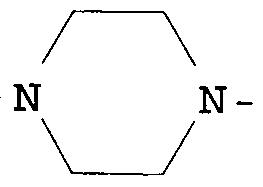
- one or more chemical moieties e.g., a sugar derivative, mono or poly-hydroxy C 2-12 alkyl, mono or poly-hydroxy C 2-12 acyl groups, or a piperazine derivative
- somatostatin agonist e.g., to the N-terminus amino acid.
- somatostatin agonists which contain N-terminal chemical substitutions are:
- Water solubility can be considerably diminished by co-precipitating the peptide as free base along with an inorganic bioresorbable matrix such as hydroxyapatite, calcium phosphate, alum, zinc hydroxide, etc.
- an inorganic bioresorbable matrix such as hydroxyapatite, calcium phosphate, alum, zinc hydroxide, etc.
- the presence of the inorganic bioresorbable matrix stabilizes the free, neutralized peptide by a combination of phenomena such as complexation, adsorption and the like.
- the water insoluble peptide in the neutralized and adsorbed form can be prepared by dissolving a water soluble salt of a peptide such as acetate, trifluoroacetate, hydrochloride, sulphate, and the like, in a minimum amount of water and suspending hydroxyapatite in the solution, followed by addition of a weak base such as NaHC0 3 triethylamine, and the like to bring the pH up to 7- 8.
- a weak base such as NaHC0 3 triethylamine, and the like to bring the pH up to 7- 8.
- the precipitate so formed is filtered, suspended in water and lyophilized.
- Another method of decreasing the water solubility of the peptide is by the formation of salts or complexes with either mono- or multi- functional, monomeric or polymeric counterions, such as dodecylsulfate, bisphosphonates, phosphatidyl inisitol, phosphorylated, sulfated or carboxylated cyclodextrins, alginates, carboxymethyl cellulose, dioctylsulfosuccinates, tannates, anionically functionalized polyesters, polycarbonates, polyesters, polyanhydrides, polyethers, polyorthoesters, present as their copolymers or blends, and the anionic functionality may be carboxylate, phosphate or sulfate, and the like.
- mono- or multi- functional, monomeric or polymeric counterions such as dodecylsulfate, bisphosphonates, phosphatidyl inisitol, phosphorylated, sulfated or carboxylated cycl
- anionic group present in the counter-ion complex influences the water solubility of a peptide by displacing the equilibrium between the complexed and uncomplexed peptide. This equilibrium constant depends on the acidity of the anionic functionality which decreases in order sulphate> phosphate> carboxylate.
- Water insoluble peptide salts or complexes of the present invention may be prepared by adding an equivalent amount of a salt containing the desired counterion, such as sodium dodecylsulfate, sodium tannate, sodium pamoate, sodium dioctylsulfosuccinate, sodium alginate, sodium cyclodextrin sulfate, sodium cyclodextrin phosphate and the like, in water to an aqueous peptide solution.
- the precipitated peptide complex is centrifuged, collected and suspended in water and lyophilized.
- Polymers that can be used to form microspheres include biodegradable polymers such as polyesters (ex. polylactides, polyglycolides, polycaprolactone and copolymers and blends thereof) polycarbonates, polyorthoesters, polyacetals, polyanhydrides, their copolymers or blends, and non-biodegradable polymers such as polyacrylates, polystyrenes, polyvinylacetates, etc.
- the biodegradable polymers are intended to degrade under physiological conditions over a period of time, to yield natural metabolites, such that the implant or the depot does not require to be retrieved once the drug is exhausted.
- These polymers may optionally contain anionic or cationic groups.
- the anionic groups present in the polymer may be sulphate, phosphate, or carboxylate, capable of forming salts with basic bioactive substances.
- the polymers can be endowed with cationic functionalities (or basic groups), such as amino, amidino, guadino, ammonium, cyclic amino groups and nucleic acid bases, which can form salts with acidic bioactive molecules.
- a polymer solution can be prepared in a water immiscible organic solvent, containing between 1% and 20% polymer, preferably between 5% and 15%.
- the polymer solution can be prepared in water immiscible organic solvents such as dichloromethane (DCM), chloroform, dichloroethane, trichloroethane, cyclohexane, benzene, toluene, ethyl acetate, and the like, which can be used alone or as a mixture thereof.
- DCM dichloromethane
- chloroform dichloroethane
- trichloroethane cyclohexane
- benzene toluene
- ethyl acetate benzene
- the polymer microspheres of the invention are made by either suspending or dissolving the coprecipitates, salts or complexes in a polymer solution, and emulsifying this mixture/solution in aqueous medium containing a surfactant.
- Emulsification of the oil droplets in aqueous medium is performed by known methods of dispersion.
- the dispersion methods include the use of mixers such as propeller mixer, turbine mixer, colloid mill method, the homogenizer method, and the ultrasonic irradiation method.
- the emulsification of the organic layer is done in an aqueous layer containing an emulsifier, which can stabilize O/W emulsions, such as anionic surfactants (sodium oleate, sodium stearate, sodium laurylsulphate, and the like), non-ionic surfactants such as poly(oxyethylene) sorbitan fatty acid esters like Tween 20®, Tween 60®, Tween 80®, polyvinylpyrrolidone, polyvinyl alcohol, carboxymethyl cellulose, lecithin, gelatin, hyaluronic acid and the like, which may be used separately or in combination.
- the amount used may be chosen appropriately from a range of about 0.01% to 20%, preferably about 0.05% to 10%.
- Encapsulation efficiency is the amount of peptide actually present in the microspheres compared to the amount initially used in the process.
- the peptide loss to the aqueous medium can be minimized by maintaining the pH of the aqueous medium between 6-8, preferably around 7.
- solvent removal may be effected by gradual reduction of pressure by stirring with a propeller type stirrer or a magnetic stirrer, or by adjusting the degree of vacuum with a rotary evaporator.
- Microspheres and/or nanospheres formed by the removal of the solvent are collected by centrifugation or by filtration, followed by several repetitions of washing with deionized water to remove emulsifier and any unencapsulated peptide.
- the washed microspheres are collected by filtration and dried under vacuum at about 30° C for about 24-48 hrs., in order to remove the residual solvent.
- the peptide content of a microspheres and/or nanospheres made according to a process of this was determined by nitrogen analysis and also by HPLC method.
- HPLC method about 20 mg of the sample dissolved in 0.1% TFA solution, was analyzed using a C 18 column, using eluants A (0.1% TFA) and eluant B (80% acetonitrile, 0.1% TFA), programmed at a gradient of 20% to 80% B in 50 min, and the peptide was monitored at 280nm by a UV detector (Applied Biosystems, Model # 785A).
- the HPLC system consisted of two Waters 510 pumps, Waters automated gradient controller and a Waters 712 wisp (Waters, Milford, MA).
- Example 1 Ka Preparation of neutralized Tryptorelin in presence of hydroxylapatite
- HAP Hydroxyapatite
- American International Chemical, Natick, MA having particle size 2 ⁇ m
- 100 mg of the acetate salt of pyroGlu-His-Trp-Ser-Tyr-D-Trp-Leu-Arg-Pro-Gly-NH 2 was dissolved in 1 ml of water and this solution was added to the suspension of HAP.
- the pH of the slurry was brought to about 7-8 by adding 1 N NaHCO 3 dropwise.
- the precipitate was left stirring for about 2 hrs.
- the precipitate was collected by centrifugation.
- the precipitate was suspended in water and lyophilized.
- PVA has pH lower than 5, due to the presence of hydrolysis product of poly(vinylacetate) from which PVA is prepared.
- the PVA solution was cleaned by preparing a concentrated solution in water, neutralizing with NaHCO 3 solution, dialyzing against de-ionized water. The neutralized PVA was precipitated in acetone, filtered and vacuum dried. 1 (c): Preparation of p(dl-lactic acid) microspheres
- Microspheres were prepared by employing the same procedure as 1 (b). Peptide content 4.9%.
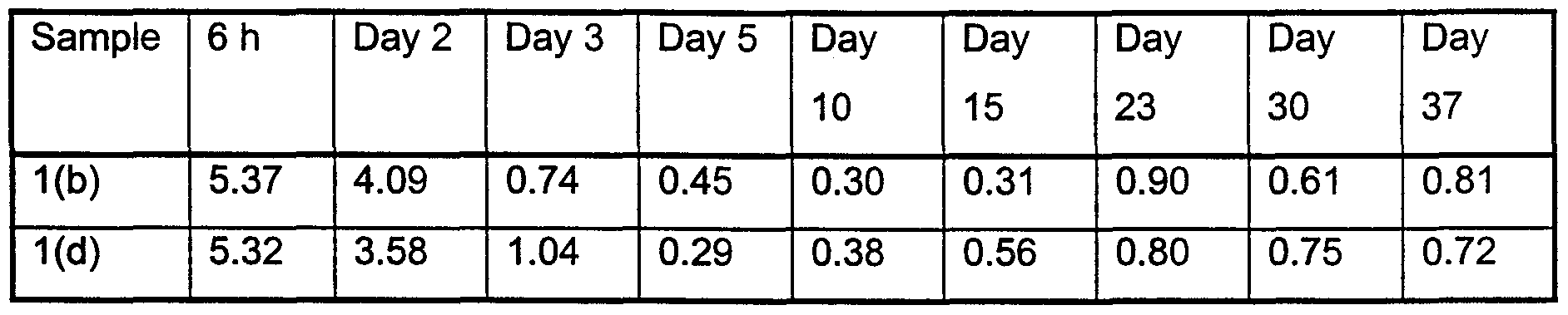
- Formulations 1(b) & 1(d) were administered in male rats by IM injection at a dose of 300 ⁇ g of tryptorelin equivalent per rat, as a dispersion of the microspheres in 1% (w/v) Tween 20 ® (Aldrich Chemicals, St. Louis, MO) and 2% (w/v) carboxymethyl cellulose (Aldrich Chemicals, St. Louis, MO).
- the testosterone response was monitored by RIA: 50 ⁇ L of the blood sample, 200 ⁇ L of 1251-testosterone and 200 ⁇ L of antiserum were poured into tubes which were shaken and incubated for 2 hrs. at 37°C.
- the immunoprecipitant reagent (1ml) was added to each tube and all the tubes were incubated for 15 minutes at room temperature. The supernatent was eliminated after centrifugation and the radioactivity was measured with LKB Wallace gamma counter. The plasma testosterone levels are shown below.
- Table 1 Plasma testosterone response (ng/ml) to IM injection of 300 ⁇ g of Tryptorelin equivalent/rat.
- Formulation 2(b) was administered in male rats by IM injection at a dose of 300 ⁇ g of tryptorelin per rat, as a dispersion of the microspheres in 1 % (w/v) Tween 20® and 2% (w/v) carboxymethyl cellulose.
- the testosterone response was monitored by RIA as described hereinabove.
- the plasma testosterone levels are shown below in Table 2.
Landscapes
- Health & Medical Sciences (AREA)
- Engineering & Computer Science (AREA)
- Bioinformatics & Cheminformatics (AREA)
- Epidemiology (AREA)
- Medicinal Chemistry (AREA)
- Pharmacology & Pharmacy (AREA)
- Chemical & Material Sciences (AREA)
- Life Sciences & Earth Sciences (AREA)
- Animal Behavior & Ethology (AREA)
- General Health & Medical Sciences (AREA)
- Public Health (AREA)
- Veterinary Medicine (AREA)
- Medicines That Contain Protein Lipid Enzymes And Other Medicines (AREA)
Abstract
Description


Claims
Priority Applications (9)
| Application Number | Priority Date | Filing Date | Title |
|---|---|---|---|
| DK99933630T DK1098660T3 (en) | 1998-07-23 | 1999-07-09 | Encapsulation of water-soluble peptides |
| AT99933630T ATE226083T1 (en) | 1998-07-23 | 1999-07-09 | ENCAPSULATION OF WATER SOLUBLE PEPTIDES |
| EP99933630A EP1098660B1 (en) | 1998-07-23 | 1999-07-09 | Encapsulation of water soluble peptides |
| DE69903553T DE69903553T2 (en) | 1998-07-23 | 1999-07-09 | ENCLOSURE OF WATER-SOLUBLE PEPTIDES |
| CA002338345A CA2338345A1 (en) | 1998-07-23 | 1999-07-09 | Encapsulation of water soluble peptides |
| JP2000560909A JP2002521343A (en) | 1998-07-23 | 1999-07-09 | Encapsulation of water-soluble peptide |
| AU49646/99A AU4964699A (en) | 1998-07-23 | 1999-07-09 | Encapsulation of water soluble peptides |
| NO20010358A NO20010358L (en) | 1998-07-23 | 2001-01-22 | Encapsulation of water-soluble peptides |
| US11/447,818 US20070009605A1 (en) | 1998-07-23 | 2006-06-05 | Encapsulation of water soluble peptides |
Applications Claiming Priority (3)
| Application Number | Priority Date | Filing Date | Title |
|---|---|---|---|
| US12165398A | 1998-07-23 | 1998-07-23 | |
| US09/121,653 | 1998-07-23 | ||
| US60/093,914 | 1998-07-23 |
Related Parent Applications (1)
| Application Number | Title | Priority Date | Filing Date |
|---|---|---|---|
| US12165398A Continuation | 1998-07-23 | 1998-07-23 |
Related Child Applications (1)
| Application Number | Title | Priority Date | Filing Date |
|---|---|---|---|
| US11/447,818 Continuation US20070009605A1 (en) | 1998-07-23 | 2006-06-05 | Encapsulation of water soluble peptides |
Publications (1)
| Publication Number | Publication Date |
|---|---|
| WO2000004916A1 true WO2000004916A1 (en) | 2000-02-03 |
Family
ID=22398009
Family Applications (1)
| Application Number | Title | Priority Date | Filing Date |
|---|---|---|---|
| PCT/US1999/014869 Ceased WO2000004916A1 (en) | 1998-07-23 | 1999-07-09 | Encapsulation of water soluble peptides |
Country Status (1)
| Country | Link |
|---|---|
| WO (1) | WO2000004916A1 (en) |
Cited By (45)
| Publication number | Priority date | Publication date | Assignee | Title |
|---|---|---|---|---|
| WO2002096396A1 (en) * | 2001-05-28 | 2002-12-05 | Ltt Bio-Pharma Co., Ltd. | Fine inorganic particles having drug included therein, method for preparation thereof and pharmaceutical preparation comprising fine inorganic particles having drug included therein |
| US6572894B2 (en) | 1995-11-24 | 2003-06-03 | Actipac Biosystems Gmbh | Process for the production of morphologically uniform microcapsules and microcapsules that are produced according to this process |
| WO2003089008A1 (en) * | 2002-04-19 | 2003-10-30 | Novartis Ag | Novel biomaterials, their preparation and use |
| US6899898B2 (en) | 2000-12-21 | 2005-05-31 | Nektar Therapeutics | Induced phase transition method for the production of microparticles containing hydrophobic active agents |
| WO2005058955A1 (en) | 2003-12-16 | 2005-06-30 | Societe De Conseils De Recherches Et D'applications Scientifiques S.A.S. | Analogues of glp-1 |
| WO2011011072A2 (en) | 2009-07-22 | 2011-01-27 | Ipsen Pharma S.A.S. | Analogues of insulin-like growth factor-1 (igf-1) having amino acid substitution at position 59 |
| US8188037B2 (en) | 2003-11-14 | 2012-05-29 | Novartis Ag | Microparticles comprising somatostatin analogues |
| EP1303259B1 (en) * | 2000-05-23 | 2013-03-20 | Ethypharm | Prolonged release microspheres for injection delivery and preparation method |
| EP2650006A1 (en) | 2007-09-07 | 2013-10-16 | Ipsen Pharma S.A.S. | Analogues of exendin-4 and exendin-3 |
| EP2769986A2 (en) | 2008-08-07 | 2014-08-27 | Ipsen Pharma S.A.S. | Analogues of glucose-dependent insulinotropic polypeptide (GIP) modified at N-terminal |
| US8822442B2 (en) | 2003-04-11 | 2014-09-02 | Ipsen Pharma S.A.S. | Somatostatin-dopamine chimeric analogs |
| RU2531096C1 (en) * | 2013-07-05 | 2014-10-20 | Александр Александрович Кролевец | Fenbendazole encapsulation method |
| RU2531095C1 (en) * | 2013-07-01 | 2014-10-20 | Александр Александрович Кролевец | Fenbendazole encapsulation method |
| RU2532403C1 (en) * | 2013-05-29 | 2014-11-10 | Александр Александрович Кролевец | Method of fenbendazole encapsulation |
| RU2532409C1 (en) * | 2013-07-05 | 2014-11-10 | Александр Александрович Кролевец | Method of fenbendazole encapsulation |
| RU2532405C1 (en) * | 2013-07-05 | 2014-11-10 | Александр Александрович Кролевец | Method of fenbendazole encapsulation |
| RU2533454C1 (en) * | 2013-07-05 | 2014-11-20 | Екатерина Евгеньевна Быковская | Method of fenbendazole encapsulation |
| RU2535885C1 (en) * | 2013-05-20 | 2014-12-20 | Александр Александрович Кролевец | Method of fenbendazole encapsulation |
| RU2535884C1 (en) * | 2013-05-17 | 2014-12-20 | Александр Александрович Кролевец | Method of fenbendazole encapsulation |
| RU2537255C1 (en) * | 2013-05-15 | 2014-12-27 | Екатерина Евгеньевна Быковская | Method for fenbendazole encapsulation |
| RU2537250C1 (en) * | 2013-05-17 | 2014-12-27 | Александр Александрович Кролевец | Method for fenbendazole encapsulation |
| RU2537249C1 (en) * | 2013-05-14 | 2014-12-27 | Екатерина Евгеньевна Быковская | Method for fenbendazole encapsulation |
| RU2538660C1 (en) * | 2013-06-28 | 2015-01-10 | Александр Александрович Кролевец | Method for fenbendazole encapsulation |
| RU2538670C2 (en) * | 2013-05-24 | 2015-01-10 | Екатерина Евгеньевна Быковская | Method for fenbendazole encapsulation |
| RU2538665C1 (en) * | 2013-07-05 | 2015-01-10 | Александр Александрович Кролевец | Method of fenbendazole encapsulation |
| RU2538667C1 (en) * | 2013-07-01 | 2015-01-10 | Александр Александрович Кролевец | Method of fenbendazole encapsulation |
| RU2538805C1 (en) * | 2013-08-26 | 2015-01-10 | Александр Александрович Кролевец | Method of obtaining fenbendazole microcapsules, possessing supramolecular properties |
| US8952128B2 (en) | 2012-11-01 | 2015-02-10 | Ipsen Pharma S.A.S. | Somatostatin-dopamine chimeric analogs |
| RU2544175C2 (en) * | 2013-07-05 | 2015-03-10 | Александр Александрович Кролевец | Method of fenbendazole encapsulation |
| RU2544172C2 (en) * | 2013-06-13 | 2015-03-10 | Александр Александрович Кролевец | Method of fenbendazole encapsulation |
| RU2544167C2 (en) * | 2013-07-05 | 2015-03-10 | Александр Александрович Кролевец | Method of fenbendazole encapsulation |
| RU2544165C2 (en) * | 2013-07-09 | 2015-03-10 | Александр Александрович Кролевец | Method of fenbendazole encapsulation |
| RU2544174C2 (en) * | 2013-06-25 | 2015-03-10 | Екатерина Евгеньевна Быковская | Method of fenbendazole encapsulation |
| RU2545713C2 (en) * | 2013-07-05 | 2015-04-10 | Александр Александрович Кролевец | Method of fenbendazole encapsulation |
| RU2545719C2 (en) * | 2013-07-05 | 2015-04-10 | Александр Александрович Кролевец | Method of fenbendazole encapsulation |
| RU2545803C2 (en) * | 2013-06-14 | 2015-04-10 | Александр Александрович Кролевец | Method of fenbendazole encapsulation |
| RU2545746C1 (en) * | 2013-09-10 | 2015-04-10 | Александр Александрович Кролевец | Method of fenbendazole encapsulation |
| RU2548738C2 (en) * | 2013-07-10 | 2015-04-20 | Александр Александрович Кролевец | Method for fenbendazole encapsulation |
| RU2548715C1 (en) * | 2013-12-25 | 2015-04-20 | Александр Александрович Кролевец | Fenbendazole encapsulation method |
| RU2552344C1 (en) * | 2014-03-18 | 2015-06-10 | Александр Александрович Кролевец | Fenbendazole encapsulation method |
| RU2552346C1 (en) * | 2014-03-26 | 2015-06-10 | Александр Александрович Кролевец | Fenbendazole encapsulation method |
| EP2915538A2 (en) | 2008-08-07 | 2015-09-09 | Ipsen Pharma S.A.S. | Truncated analogues of glucose-dependent insulinotropic polypeptide |
| EP2987805A2 (en) | 2008-08-07 | 2016-02-24 | Ipsen Pharma S.A.S. | Analogues of glucose-dependent insulinotropic polypeptide |
| US9777039B2 (en) | 2012-11-01 | 2017-10-03 | Ipsen Pharma S.A.S. | Somatostatin analogs and dimers thereof |
| RU2749803C1 (en) * | 2018-01-10 | 2021-06-17 | Джи2Джибио, Инк. | Polycaprolactone microspheric filler containing collagen peptide and method for its production |
Citations (3)
| Publication number | Priority date | Publication date | Assignee | Title |
|---|---|---|---|---|
| US5160745A (en) * | 1986-05-16 | 1992-11-03 | The University Of Kentucky Research Foundation | Biodegradable microspheres as a carrier for macromolecules |
| US5445832A (en) * | 1991-07-22 | 1995-08-29 | Debio Recherche Pharmaceutique S.A. | Process for the preparation of microspheres made of a biodegradable polymeric material |
| US5578709A (en) * | 1993-03-09 | 1996-11-26 | Middlesex Sciences, Inc. | Macromolecular microparticles and methods of production |
-
1999
- 1999-07-09 WO PCT/US1999/014869 patent/WO2000004916A1/en not_active Ceased
Patent Citations (3)
| Publication number | Priority date | Publication date | Assignee | Title |
|---|---|---|---|---|
| US5160745A (en) * | 1986-05-16 | 1992-11-03 | The University Of Kentucky Research Foundation | Biodegradable microspheres as a carrier for macromolecules |
| US5445832A (en) * | 1991-07-22 | 1995-08-29 | Debio Recherche Pharmaceutique S.A. | Process for the preparation of microspheres made of a biodegradable polymeric material |
| US5578709A (en) * | 1993-03-09 | 1996-11-26 | Middlesex Sciences, Inc. | Macromolecular microparticles and methods of production |
Non-Patent Citations (1)
| Title |
|---|
| PATENT ABSTRACTS OF JAPAN * |
Cited By (52)
| Publication number | Priority date | Publication date | Assignee | Title |
|---|---|---|---|---|
| US6572894B2 (en) | 1995-11-24 | 2003-06-03 | Actipac Biosystems Gmbh | Process for the production of morphologically uniform microcapsules and microcapsules that are produced according to this process |
| EP1303259B1 (en) * | 2000-05-23 | 2013-03-20 | Ethypharm | Prolonged release microspheres for injection delivery and preparation method |
| US7252842B2 (en) | 2000-12-21 | 2007-08-07 | Alrise Biosystems Gmbh | Induced phase transition method for the production of microparticles containing hydrophilic active agents |
| US6899898B2 (en) | 2000-12-21 | 2005-05-31 | Nektar Therapeutics | Induced phase transition method for the production of microparticles containing hydrophobic active agents |
| WO2002096396A1 (en) * | 2001-05-28 | 2002-12-05 | Ltt Bio-Pharma Co., Ltd. | Fine inorganic particles having drug included therein, method for preparation thereof and pharmaceutical preparation comprising fine inorganic particles having drug included therein |
| AU2003224099B2 (en) * | 2002-04-19 | 2006-11-09 | Novartis Ag | Novel biomaterials, their preparation and use |
| CN1646171B (en) * | 2002-04-19 | 2010-05-26 | 诺瓦提斯公司 | Novel biomaterials, their preparation and uses |
| WO2003089008A1 (en) * | 2002-04-19 | 2003-10-30 | Novartis Ag | Novel biomaterials, their preparation and use |
| KR101121675B1 (en) * | 2002-04-19 | 2012-03-13 | 노파르티스 아게 | Novel biomaterials, their preparation and use |
| US8822442B2 (en) | 2003-04-11 | 2014-09-02 | Ipsen Pharma S.A.S. | Somatostatin-dopamine chimeric analogs |
| US8188037B2 (en) | 2003-11-14 | 2012-05-29 | Novartis Ag | Microparticles comprising somatostatin analogues |
| KR101233892B1 (en) * | 2003-11-14 | 2013-02-18 | 노파르티스 아게 | Microparticles comprising somatostatin analogues |
| WO2005058955A1 (en) | 2003-12-16 | 2005-06-30 | Societe De Conseils De Recherches Et D'applications Scientifiques S.A.S. | Analogues of glp-1 |
| EP2650006A1 (en) | 2007-09-07 | 2013-10-16 | Ipsen Pharma S.A.S. | Analogues of exendin-4 and exendin-3 |
| EP2987805A2 (en) | 2008-08-07 | 2016-02-24 | Ipsen Pharma S.A.S. | Analogues of glucose-dependent insulinotropic polypeptide |
| EP2769986A2 (en) | 2008-08-07 | 2014-08-27 | Ipsen Pharma S.A.S. | Analogues of glucose-dependent insulinotropic polypeptide (GIP) modified at N-terminal |
| EP2915538A2 (en) | 2008-08-07 | 2015-09-09 | Ipsen Pharma S.A.S. | Truncated analogues of glucose-dependent insulinotropic polypeptide |
| WO2011011072A2 (en) | 2009-07-22 | 2011-01-27 | Ipsen Pharma S.A.S. | Analogues of insulin-like growth factor-1 (igf-1) having amino acid substitution at position 59 |
| US9603942B2 (en) | 2012-11-01 | 2017-03-28 | Ipsen Pharma S.A.S. | Somatostatin-dopamine chimeric analogs |
| US9731027B2 (en) | 2012-11-01 | 2017-08-15 | Ipsen Pharma S.A.S. | Somatostatin-dopamine chimeric analogs |
| US9777039B2 (en) | 2012-11-01 | 2017-10-03 | Ipsen Pharma S.A.S. | Somatostatin analogs and dimers thereof |
| US8952128B2 (en) | 2012-11-01 | 2015-02-10 | Ipsen Pharma S.A.S. | Somatostatin-dopamine chimeric analogs |
| RU2537249C1 (en) * | 2013-05-14 | 2014-12-27 | Екатерина Евгеньевна Быковская | Method for fenbendazole encapsulation |
| RU2537255C1 (en) * | 2013-05-15 | 2014-12-27 | Екатерина Евгеньевна Быковская | Method for fenbendazole encapsulation |
| RU2537250C1 (en) * | 2013-05-17 | 2014-12-27 | Александр Александрович Кролевец | Method for fenbendazole encapsulation |
| RU2535884C1 (en) * | 2013-05-17 | 2014-12-20 | Александр Александрович Кролевец | Method of fenbendazole encapsulation |
| RU2535885C1 (en) * | 2013-05-20 | 2014-12-20 | Александр Александрович Кролевец | Method of fenbendazole encapsulation |
| RU2538670C2 (en) * | 2013-05-24 | 2015-01-10 | Екатерина Евгеньевна Быковская | Method for fenbendazole encapsulation |
| RU2532403C1 (en) * | 2013-05-29 | 2014-11-10 | Александр Александрович Кролевец | Method of fenbendazole encapsulation |
| RU2544172C2 (en) * | 2013-06-13 | 2015-03-10 | Александр Александрович Кролевец | Method of fenbendazole encapsulation |
| RU2545803C2 (en) * | 2013-06-14 | 2015-04-10 | Александр Александрович Кролевец | Method of fenbendazole encapsulation |
| RU2544174C2 (en) * | 2013-06-25 | 2015-03-10 | Екатерина Евгеньевна Быковская | Method of fenbendazole encapsulation |
| RU2538660C1 (en) * | 2013-06-28 | 2015-01-10 | Александр Александрович Кролевец | Method for fenbendazole encapsulation |
| RU2538667C1 (en) * | 2013-07-01 | 2015-01-10 | Александр Александрович Кролевец | Method of fenbendazole encapsulation |
| RU2531095C1 (en) * | 2013-07-01 | 2014-10-20 | Александр Александрович Кролевец | Fenbendazole encapsulation method |
| RU2544175C2 (en) * | 2013-07-05 | 2015-03-10 | Александр Александрович Кролевец | Method of fenbendazole encapsulation |
| RU2544167C2 (en) * | 2013-07-05 | 2015-03-10 | Александр Александрович Кролевец | Method of fenbendazole encapsulation |
| RU2533454C1 (en) * | 2013-07-05 | 2014-11-20 | Екатерина Евгеньевна Быковская | Method of fenbendazole encapsulation |
| RU2545713C2 (en) * | 2013-07-05 | 2015-04-10 | Александр Александрович Кролевец | Method of fenbendazole encapsulation |
| RU2545719C2 (en) * | 2013-07-05 | 2015-04-10 | Александр Александрович Кролевец | Method of fenbendazole encapsulation |
| RU2532405C1 (en) * | 2013-07-05 | 2014-11-10 | Александр Александрович Кролевец | Method of fenbendazole encapsulation |
| RU2531096C1 (en) * | 2013-07-05 | 2014-10-20 | Александр Александрович Кролевец | Fenbendazole encapsulation method |
| RU2538665C1 (en) * | 2013-07-05 | 2015-01-10 | Александр Александрович Кролевец | Method of fenbendazole encapsulation |
| RU2532409C1 (en) * | 2013-07-05 | 2014-11-10 | Александр Александрович Кролевец | Method of fenbendazole encapsulation |
| RU2544165C2 (en) * | 2013-07-09 | 2015-03-10 | Александр Александрович Кролевец | Method of fenbendazole encapsulation |
| RU2548738C2 (en) * | 2013-07-10 | 2015-04-20 | Александр Александрович Кролевец | Method for fenbendazole encapsulation |
| RU2538805C1 (en) * | 2013-08-26 | 2015-01-10 | Александр Александрович Кролевец | Method of obtaining fenbendazole microcapsules, possessing supramolecular properties |
| RU2545746C1 (en) * | 2013-09-10 | 2015-04-10 | Александр Александрович Кролевец | Method of fenbendazole encapsulation |
| RU2548715C1 (en) * | 2013-12-25 | 2015-04-20 | Александр Александрович Кролевец | Fenbendazole encapsulation method |
| RU2552344C1 (en) * | 2014-03-18 | 2015-06-10 | Александр Александрович Кролевец | Fenbendazole encapsulation method |
| RU2552346C1 (en) * | 2014-03-26 | 2015-06-10 | Александр Александрович Кролевец | Fenbendazole encapsulation method |
| RU2749803C1 (en) * | 2018-01-10 | 2021-06-17 | Джи2Джибио, Инк. | Polycaprolactone microspheric filler containing collagen peptide and method for its production |
Similar Documents
| Publication | Publication Date | Title |
|---|---|---|
| US6270700B1 (en) | Encapsulation of water soluble peptides | |
| WO2000004916A1 (en) | Encapsulation of water soluble peptides | |
| EP0781548B1 (en) | Production of sustained-release preparation for injection | |
| CN101528206B (en) | A process of preparing microspheres for sustained release having improved dispersibility and syringeability | |
| EP0839525B1 (en) | Sustained-release preparation | |
| JP5931147B2 (en) | Sustained release composition and method for producing the same | |
| US7399486B2 (en) | Method of preparing mixed formulation of sustained release microspheres by continuous one-step process | |
| HUP0004297A2 (en) | Sustained-release compositions and method for preparing same | |
| US20070275082A1 (en) | Preparation Method for Sustained Release Microspheres Using a Dual-Feed Nozzle | |
| EP1098660B1 (en) | Encapsulation of water soluble peptides | |
| CZ2002114A3 (en) | A sustained release formulation, a method of making it and its use | |
| JP3765338B2 (en) | Manufacturing method of sustained-release preparation for injection | |
| Woo et al. | In vitro characterization and in vivo testosterone suppression of 6-month release poly (D, L-lactide) leuprolide microspheres | |
| EP1240896A2 (en) | Encapsulation of water soluble peptides | |
| US20070009605A1 (en) | Encapsulation of water soluble peptides | |
| US20040052855A1 (en) | Microparticles of biodegradable polymer encapsulating a biologically active substance and sustained release pharmaceutical formulations containing same | |
| KR100566573B1 (en) | Preparation method of sustained release microspheres containing LHRH analogue | |
| RU2128055C1 (en) | Pharmaceutical composition of the delayed agent releasing and a method of its preparing | |
| JP6238401B2 (en) | Bioactive peptide sustained-release fine particles and method for producing the same | |
| JP3902518B2 (en) | Process for producing lactic acid-glycolic acid polymer for sustained release composition | |
| JP5188670B2 (en) | Sustained release composition and method for producing the same |
Legal Events
| Date | Code | Title | Description |
|---|---|---|---|
| AK | Designated states |
Kind code of ref document: A1 Designated state(s): AE AL AM AT AU AZ BA BB BG BR BY CA CH CN CU CZ DE DK EE ES FI GB GE GH GM HR HU ID IL IN IS JP KE KG KP KR KZ LC LK LR LS LT LU LV MD MG MK MN MW MX NO NZ PL PT RO RU SD SE SG SI SK SL TJ TM TR TT UA UG US UZ VN YU ZA ZW |
|
| AL | Designated countries for regional patents |
Kind code of ref document: A1 Designated state(s): GH GM KE LS MW SD SL SZ UG ZW AM AZ BY KG KZ MD RU TJ TM AT BE CH CY DE DK ES FI FR GB GR IE IT LU MC NL PT SE BF BJ CF CG CI CM GA GN GW ML MR NE SN TD TG |
|
| 121 | Ep: the epo has been informed by wipo that ep was designated in this application | ||
| DFPE | Request for preliminary examination filed prior to expiration of 19th month from priority date (pct application filed before 20040101) | ||
| ENP | Entry into the national phase |
Ref document number: 2338345 Country of ref document: CA Ref country code: CA Ref document number: 2338345 Kind code of ref document: A Format of ref document f/p: F |
|
| ENP | Entry into the national phase |
Ref country code: JP Ref document number: 2000 560909 Kind code of ref document: A Format of ref document f/p: F |
|
| WWE | Wipo information: entry into national phase |
Ref document number: 1999933630 Country of ref document: EP |
|
| WWP | Wipo information: published in national office |
Ref document number: 1999933630 Country of ref document: EP |
|
| WWE | Wipo information: entry into national phase |
Ref document number: 09744350 Country of ref document: US |
|
| REG | Reference to national code |
Ref country code: DE Ref legal event code: 8642 |
|
| WWG | Wipo information: grant in national office |
Ref document number: 1999933630 Country of ref document: EP |