WO1998054159A1 - Non-steroidal (hetero) cyclically substituted acylanilides with mixed gestagen and androgen activity - Google Patents
Non-steroidal (hetero) cyclically substituted acylanilides with mixed gestagen and androgen activity Download PDFInfo
- Publication number
- WO1998054159A1 WO1998054159A1 PCT/EP1998/003242 EP9803242W WO9854159A1 WO 1998054159 A1 WO1998054159 A1 WO 1998054159A1 EP 9803242 W EP9803242 W EP 9803242W WO 9854159 A1 WO9854159 A1 WO 9854159A1
- Authority
- WO
- WIPO (PCT)
- Prior art keywords
- methyl
- hydroxy
- group
- phthalide
- compounds
- Prior art date
- Legal status (The legal status is an assumption and is not a legal conclusion. Google has not performed a legal analysis and makes no representation as to the accuracy of the status listed.)
- Ceased
Links
- 0 Cc(c(*)c1*)c(*)c(C(*)CO2)c1C2=O Chemical compound Cc(c(*)c1*)c(*)c(C(*)CO2)c1C2=O 0.000 description 3
Classifications
-
- C—CHEMISTRY; METALLURGY
- C07—ORGANIC CHEMISTRY
- C07D—HETEROCYCLIC COMPOUNDS
- C07D285/00—Heterocyclic compounds containing rings having nitrogen and sulfur atoms as the only ring hetero atoms, not provided for by groups C07D275/00 - C07D283/00
- C07D285/01—Five-membered rings
- C07D285/02—Thiadiazoles; Hydrogenated thiadiazoles
- C07D285/04—Thiadiazoles; Hydrogenated thiadiazoles not condensed with other rings
- C07D285/10—1,2,5-Thiadiazoles; Hydrogenated 1,2,5-thiadiazoles
-
- A—HUMAN NECESSITIES
- A61—MEDICAL OR VETERINARY SCIENCE; HYGIENE
- A61P—SPECIFIC THERAPEUTIC ACTIVITY OF CHEMICAL COMPOUNDS OR MEDICINAL PREPARATIONS
- A61P15/00—Drugs for genital or sexual disorders; Contraceptives
-
- A—HUMAN NECESSITIES
- A61—MEDICAL OR VETERINARY SCIENCE; HYGIENE
- A61P—SPECIFIC THERAPEUTIC ACTIVITY OF CHEMICAL COMPOUNDS OR MEDICINAL PREPARATIONS
- A61P15/00—Drugs for genital or sexual disorders; Contraceptives
- A61P15/12—Drugs for genital or sexual disorders; Contraceptives for climacteric disorders
-
- A—HUMAN NECESSITIES
- A61—MEDICAL OR VETERINARY SCIENCE; HYGIENE
- A61P—SPECIFIC THERAPEUTIC ACTIVITY OF CHEMICAL COMPOUNDS OR MEDICINAL PREPARATIONS
- A61P15/00—Drugs for genital or sexual disorders; Contraceptives
- A61P15/18—Feminine contraceptives
-
- A—HUMAN NECESSITIES
- A61—MEDICAL OR VETERINARY SCIENCE; HYGIENE
- A61P—SPECIFIC THERAPEUTIC ACTIVITY OF CHEMICAL COMPOUNDS OR MEDICINAL PREPARATIONS
- A61P5/00—Drugs for disorders of the endocrine system
- A61P5/24—Drugs for disorders of the endocrine system of the sex hormones
- A61P5/26—Androgens
-
- A—HUMAN NECESSITIES
- A61—MEDICAL OR VETERINARY SCIENCE; HYGIENE
- A61P—SPECIFIC THERAPEUTIC ACTIVITY OF CHEMICAL COMPOUNDS OR MEDICINAL PREPARATIONS
- A61P5/00—Drugs for disorders of the endocrine system
- A61P5/24—Drugs for disorders of the endocrine system of the sex hormones
- A61P5/34—Gestagens
-
- C—CHEMISTRY; METALLURGY
- C07—ORGANIC CHEMISTRY
- C07C—ACYCLIC OR CARBOCYCLIC COMPOUNDS
- C07C225/00—Compounds containing amino groups and doubly—bound oxygen atoms bound to the same carbon skeleton, at least one of the doubly—bound oxygen atoms not being part of a —CHO group, e.g. amino ketones
- C07C225/22—Compounds containing amino groups and doubly—bound oxygen atoms bound to the same carbon skeleton, at least one of the doubly—bound oxygen atoms not being part of a —CHO group, e.g. amino ketones having amino groups bound to carbon atoms of six-membered aromatic rings of the carbon skeleton
-
- C—CHEMISTRY; METALLURGY
- C07—ORGANIC CHEMISTRY
- C07C—ACYCLIC OR CARBOCYCLIC COMPOUNDS
- C07C235/00—Carboxylic acid amides, the carbon skeleton of the acid part being further substituted by oxygen atoms
- C07C235/02—Carboxylic acid amides, the carbon skeleton of the acid part being further substituted by oxygen atoms having carbon atoms of carboxamide groups bound to acyclic carbon atoms and singly-bound oxygen atoms bound to the same carbon skeleton
- C07C235/32—Carboxylic acid amides, the carbon skeleton of the acid part being further substituted by oxygen atoms having carbon atoms of carboxamide groups bound to acyclic carbon atoms and singly-bound oxygen atoms bound to the same carbon skeleton the carbon skeleton containing six-membered aromatic rings
- C07C235/38—Carboxylic acid amides, the carbon skeleton of the acid part being further substituted by oxygen atoms having carbon atoms of carboxamide groups bound to acyclic carbon atoms and singly-bound oxygen atoms bound to the same carbon skeleton the carbon skeleton containing six-membered aromatic rings having the nitrogen atom of at least one of the carboxamide groups bound to a carbon atom of a six-membered aromatic ring
-
- C—CHEMISTRY; METALLURGY
- C07—ORGANIC CHEMISTRY
- C07C—ACYCLIC OR CARBOCYCLIC COMPOUNDS
- C07C235/00—Carboxylic acid amides, the carbon skeleton of the acid part being further substituted by oxygen atoms
- C07C235/70—Carboxylic acid amides, the carbon skeleton of the acid part being further substituted by oxygen atoms having carbon atoms of carboxamide groups and doubly-bound oxygen atoms bound to the same carbon skeleton
- C07C235/84—Carboxylic acid amides, the carbon skeleton of the acid part being further substituted by oxygen atoms having carbon atoms of carboxamide groups and doubly-bound oxygen atoms bound to the same carbon skeleton with the carbon atom of at least one of the carboxamide groups bound to a carbon atom of a six-membered aromatic ring
-
- C—CHEMISTRY; METALLURGY
- C07—ORGANIC CHEMISTRY
- C07C—ACYCLIC OR CARBOCYCLIC COMPOUNDS
- C07C255/00—Carboxylic acid nitriles
- C07C255/49—Carboxylic acid nitriles having cyano groups bound to carbon atoms of six-membered aromatic rings of a carbon skeleton
- C07C255/57—Carboxylic acid nitriles having cyano groups bound to carbon atoms of six-membered aromatic rings of a carbon skeleton containing cyano groups and carboxyl groups, other than cyano groups, bound to the carbon skeleton
-
- C—CHEMISTRY; METALLURGY
- C07—ORGANIC CHEMISTRY
- C07D—HETEROCYCLIC COMPOUNDS
- C07D237/00—Heterocyclic compounds containing 1,2-diazine or hydrogenated 1,2-diazine rings
- C07D237/26—Heterocyclic compounds containing 1,2-diazine or hydrogenated 1,2-diazine rings condensed with carbocyclic rings or ring systems
- C07D237/30—Phthalazines
- C07D237/32—Phthalazines with oxygen atoms directly attached to carbon atoms of the nitrogen-containing ring
-
- C—CHEMISTRY; METALLURGY
- C07—ORGANIC CHEMISTRY
- C07D—HETEROCYCLIC COMPOUNDS
- C07D249/00—Heterocyclic compounds containing five-membered rings having three nitrogen atoms as the only ring hetero atoms
- C07D249/16—Heterocyclic compounds containing five-membered rings having three nitrogen atoms as the only ring hetero atoms condensed with carbocyclic rings or ring systems
- C07D249/18—Benzotriazoles
-
- C—CHEMISTRY; METALLURGY
- C07—ORGANIC CHEMISTRY
- C07D—HETEROCYCLIC COMPOUNDS
- C07D265/00—Heterocyclic compounds containing six-membered rings having one nitrogen atom and one oxygen atom as the only ring hetero atoms
- C07D265/02—1,2-Oxazines; Hydrogenated 1,2-oxazines
-
- C—CHEMISTRY; METALLURGY
- C07—ORGANIC CHEMISTRY
- C07D—HETEROCYCLIC COMPOUNDS
- C07D271/00—Heterocyclic compounds containing five-membered rings having two nitrogen atoms and one oxygen atom as the only ring hetero atoms
- C07D271/02—Heterocyclic compounds containing five-membered rings having two nitrogen atoms and one oxygen atom as the only ring hetero atoms not condensed with other rings
- C07D271/08—1,2,5-Oxadiazoles; Hydrogenated 1,2,5-oxadiazoles
-
- C—CHEMISTRY; METALLURGY
- C07—ORGANIC CHEMISTRY
- C07D—HETEROCYCLIC COMPOUNDS
- C07D307/00—Heterocyclic compounds containing five-membered rings having one oxygen atom as the only ring hetero atom
- C07D307/77—Heterocyclic compounds containing five-membered rings having one oxygen atom as the only ring hetero atom ortho- or peri-condensed with carbocyclic rings or ring systems
- C07D307/87—Benzo [c] furans; Hydrogenated benzo [c] furans
- C07D307/88—Benzo [c] furans; Hydrogenated benzo [c] furans with one oxygen atom directly attached in position 1 or 3
-
- C—CHEMISTRY; METALLURGY
- C07—ORGANIC CHEMISTRY
- C07D—HETEROCYCLIC COMPOUNDS
- C07D307/00—Heterocyclic compounds containing five-membered rings having one oxygen atom as the only ring hetero atom
- C07D307/94—Heterocyclic compounds containing five-membered rings having one oxygen atom as the only ring hetero atom spiro-condensed with carbocyclic rings or ring systems, e.g. griseofulvins
-
- C—CHEMISTRY; METALLURGY
- C07—ORGANIC CHEMISTRY
- C07D—HETEROCYCLIC COMPOUNDS
- C07D311/00—Heterocyclic compounds containing six-membered rings having one oxygen atom as the only hetero atom, condensed with other rings
- C07D311/02—Heterocyclic compounds containing six-membered rings having one oxygen atom as the only hetero atom, condensed with other rings ortho- or peri-condensed with carbocyclic rings or ring systems
- C07D311/76—Benzo[c]pyrans
-
- C—CHEMISTRY; METALLURGY
- C07—ORGANIC CHEMISTRY
- C07D—HETEROCYCLIC COMPOUNDS
- C07D333/00—Heterocyclic compounds containing five-membered rings having one sulfur atom as the only ring hetero atom
- C07D333/50—Heterocyclic compounds containing five-membered rings having one sulfur atom as the only ring hetero atom condensed with carbocyclic rings or ring systems
- C07D333/72—Benzo[c]thiophenes; Hydrogenated benzo[c]thiophenes
-
- C—CHEMISTRY; METALLURGY
- C07—ORGANIC CHEMISTRY
- C07D—HETEROCYCLIC COMPOUNDS
- C07D409/00—Heterocyclic compounds containing two or more hetero rings, at least one ring having sulfur atoms as the only ring hetero atoms
- C07D409/02—Heterocyclic compounds containing two or more hetero rings, at least one ring having sulfur atoms as the only ring hetero atoms containing two hetero rings
- C07D409/12—Heterocyclic compounds containing two or more hetero rings, at least one ring having sulfur atoms as the only ring hetero atoms containing two hetero rings linked by a chain containing hetero atoms as chain links
-
- C—CHEMISTRY; METALLURGY
- C07—ORGANIC CHEMISTRY
- C07C—ACYCLIC OR CARBOCYCLIC COMPOUNDS
- C07C2602/00—Systems containing two condensed rings
- C07C2602/02—Systems containing two condensed rings the rings having only two atoms in common
- C07C2602/04—One of the condensed rings being a six-membered aromatic ring
- C07C2602/08—One of the condensed rings being a six-membered aromatic ring the other ring being five-membered, e.g. indane
Definitions
- the present invention relates to non-steroidal compounds which have a high gestagen activity.
- progestogens are also known which are not steroids (for example from EP 0 253 500 B1 and WO 94/01412, cf. J. Med. Chem. 38 (1995) 4878).
- the present invention describes the compounds of general formula I.
- Rl and R2 are the same or different and represent a hydrogen atom, a C1-C5
- Alkyl group or a halogen atom further together with the carbon atom of the chain for a ring with a total of 3-7 links
- Halogen atoms, Ci-Cs-alkyl groups, C2-C5-alkenyl groups -CR5 CR6R7, where R5, R ⁇ and R? are identical or different and independently of one another are hydrogen atoms or C1-C5 alkyl groups, hydroxyl groups, hydroxyl groups which are a -C-C ⁇ ) acyl group, a C3-Cio-carbalkoxyalkyl group, a C2-C5-cyanoalkyl group. a C3-C0 unsubstituted or substituted allyl group, a C3-C10 unsubstituted or substituted propargyl group, a C2-C5 alkoxyalkyl group.
- C5 means alkyl group, for a partially or fully fluorinated C1-C5 alkyl group,
- Alkyl groups which may additionally contain a hydroxy group which may be etherified with a C 1 -C 5 -alkyl group or esterified with a -C-C 5 -alkanoyl group, partially or completely fluorinated C1-C5 alkyl groups, C2-Cs-alkenyl groups
- Ring systems 5, 6 or 7 can form a ring with a total of 3-7 members and also the residues ⁇ , ⁇ 6, ⁇ 7 (in the partial formulas 2, 3, 4, 5, 6 and 7) or Y, ⁇ 5,
- Y 7 , Y °> are selected from halogen atoms
- Ci-Cs-alkoxy groups or Ci-Cs-alkanoyloxy groups furthermore in the event that B in the general formula I is a CH2 group, Ar is additionally a phenyl radical of the general sub-formula 12,
- R 9 and RIO are the same or different and are a cyano group, a nitro group, a halogen atom, a Ci-Cs-alkyl group, a Ci-Cs-alkoxy group, a partially or fully fluorinated C1-C5 alkyl group, a Ci-Cs-alkylthio group, mean a C1-C5-alkylsulfinyl group or a Ci-Cs-alkylsulfonyl group, and in the event that B represents a CH2 group, the physiologically tolerable salts of the compounds of the general formula I with acids.
- the compounds according to the invention differ from the known nonsteroidal compounds with gestagenic activity by the substitution pattern on the aryl radical on the right in general formula I.
- Ar is a benzocondensed, bicyclic ring system, while in the structures which are to be regarded as the closest compounds and which emerge from EP 0 253 500 B1, there is a mono-, di- or trisubstituted phenyl radical at this point.
- the compounds of general formula 1 according to the invention can exist as different stereoisomers due to the presence of asymmetry centers. Both the racemates and the separately present stereoisimers belong to the subject of the present invention.
- the C, -C 5 -alkyl groups can consist of a methyl, ethyl, n-propyl, iso-propyl, n, iso, tert-butyl or an n-pentyl, Act 2,2-dimethylpropyl or 3-methylbutyl group.
- a methyl or ethyl group is preferred.
- a fluorine, chlorine, bromine or iodine atom can represent a halogen atom. Fluorine, chlorine or bromine is preferred here.
- R 1 and R 2 together with the carbon atom of the chain form a 3-7 membered ring, this is, for example, a cyclopropyl, butyl, pentyl or hexyl ring.
- the cyclopropyl ring is preferred.
- CC j -alkyl group there are the perfluorinated alkyl groups above, and of these in particular the trifluoromethyl or pentafluoroethyl group and, for example, the 5,5,5,4,4-pentafluoropentyl or 5, 5,5,4,4,3, 3-heptafluoropentyl group.
- a vinyl, allyl or 2,3-dimethyl-2-propenyl group can be, for example, a C 2 -C 5 alkenyl group; in the event that the aromatic A is substituted with an alkenyl group, this is preferably a vinyl group.
- the C 2 -C 5 carbalkoxyalkyl group can be, for example, a carboxymethyl, tert-butoxymethyl or ethoxymethyl group; the first two are preferred.
- C 2 -C 5 cyanoalkyl group Representatives for the C 2 -C 5 cyanoalkyl group include cyanomethyl and 1- and 2-cyanoethyl; Cyanomethyl is preferred.
- the C3-C10 allyl group is preferably an unsubstituted allyl group; in the case of a substituted allyl group, for example 1-methylallyl, 1,1-dimethylallyl, 2-methylallyl, 3-methylallyl. 2,3-dimethylallyl, 3,3-dimethylallyl. Cinnamyl and 3-cyclohexylallyl called.
- An unsubstituted propargyl, a methylpropargyl, 3-methylpropargyl, 3-phenylpropargyl or 3-cyclohexylpropargyl group are the exemplary representatives for a C3-C10 propargyl group; the unsubstituted propargyl group is preferred.
- C 2 -C 5 alkoxyalkyl can be, for example, methoxymethyl, ethoxymethyl or 2-methoxyethyl.
- C 5 -C 5 alkoxy group are selected from methoxy, ethoxy, n-propoxy, iso-propoxy, n-, iso-, tert-butoxy or n-pentoxy, 2,2-dimethylpropoxy - or 3-methylbutoxy groups.
- a methoxy or ethoxy group is preferred.
- C 1 -C 5 -perfluoroalkoxy groups are the corresponding perfluorinated residues of the above C, - C 5 alkoxy groups.
- the mono- or bicyclic aromatic ring A which can be substituted, is a carbocyclic or heterocyclic aryl radical.
- phenyl or naphthyl radical preferably a phenyl radical.
- a monocyclic heterocyclic radical for example the thienyl, furyl, pyranyl, pyrrolyl, imidazolyl, pyrazolyl, pyridyl,
- the thienyl radical is preferred as heteroaryl radical A.
- R 4 as a C
- Alkyl groups in question primarily a methyl or ethyl group.
- C r C 5 alkanoyl group for the esterification of hydroxyl groups there is a formyl, acetyl,
- C r C 10 acyl group for esterification of hydroxy groups are for example the above-mentioned alkanoyl groups, preferably in turn an acetyl group, or
- X 3a and X 3b together with the carbon atom of the benzocondensed ring system form a 3-7 membered ring, this is, for example, a cyclopropyl, butyl, pentyl or hexyl ring.
- the cyclopropyl ring is preferred.
- C r C 5 alkanoyloxy group for ⁇ 4, ⁇ 6, ⁇ ? ⁇ 4 ; ⁇ 5 ; ⁇ 7 0 d e r ⁇ 8 is a formyloxy, acetoxy, propionyloxy, butyryloxy, iso-butyryloxy, valeryloxy or iso-valeryloxy group, preferably an acetoxy group.
- C1-C5 alkyl groups can stand for C1-C5 alkyl within the Ci-Cs-alkylthio, Ci-Cs-alkylsulfinyl or C1-C5-alkylsulfonyl group.
- the compounds according to the invention are present as racemic mixtures, they can be separated into the pure, optically active forms by methods of racemate separation familiar to the person skilled in the art.
- the racemic mixtures can be separated into the pure isomers by chromatography on a self-optically active carrier material (CHIRALPAK AD ® ).
- CHIRALPAK AD ® self-optically active carrier material
- mandelic acid, camphorsulfonic acid or tartaric acid can be used as the optically active acid.
- Rl and R2 are the same or different and represent a hydrogen atom, a methyl or
- Cyclopropyl ring, and / or R3 represents a C1-C5 perfluoroalkyl group, and / or
- Fluorine atoms chlorine atoms, bromine atoms, methyl groups, ethyl groups, (CH2) n -
- Naphthalene or thiophene ring and / or either X 3a for a hydrogen atom or a C r C 5 alkyl group, or
- X a and X- b are the same or different and represent a hydrogen atom or a C ! -C 5 -
- Alkyl group and / or ⁇ , ⁇ 6 and X 1 are identical or different and independently of one another for a hydrogen atom or a halogen atom, and / or ⁇ for a Ci-Cs-alkyl group or a C1-C5 perfluoroalkyl group, and / or
- Y5, ⁇ and Y ⁇ are the same or different and independently of one another for a hydrogen atom or a halogen atom
- the new compounds are also characterized by a more or less pronounced affinity for the androgen receptor.
- the androgen receptor binding test for androgenic activity was performed using cytosol from rat prostate homogenate and 3H-methyltrienolone as a reference substance.
- the new compounds Compared to the gestagenic compounds from EP 0 253 500 B1, the new compounds thus represent compounds with a completely new mixed profile, which is composed of gestagenic and androgenic activity.
- the new compounds can be used according to the invention for different medical or pharmaceutical purposes.
- the compounds classified under 11 with a stronger gestagenic and less pronounced androgenic action are very effective progestogens which, like the many known progestogen compounds, are suitable for maintaining pregnancies with both parenteral and oral administration.
- Contraception and and for the treatment of menopausal symptoms can be used.
- Suitable dosages can be routinely determined, e.g. B. by determining the bioequivalence, for example in the pregnancy maintenance test, compared to a known progestogen for a specific use, for example an amount that is bioequivalent to 30 to 150 ⁇ g levonorgestrel for contraception.
- the dosage of the compounds according to the invention under 1) in contraceptive preparations should preferably be 0.01 to 2 mg per day.
- the gestagenic and estrogenic active ingredient components are preferably administered orally together in contraceptive preparations.
- the daily dose is preferably administered once. All natural and synthetic compounds known to act as estrogens are suitable as estrogens.
- estradiol As natural estrogens, these are in particular estradiol and also its longer-acting esters such as valerate etc. or estriol.
- estrogens such as ethinyl estradiol, 14 ⁇ , 17 ⁇ -ethano-1,3,5 (10) -estratrien-3,17ß-diol (WO 88/01275), 14 ⁇ , 17 ⁇ -ethano-1,3,5 (10 ) -estratriene-3,16 ⁇ , 17ß-triol (WO 91/08219) or the 15,15-dialkyl derivatives of estradiol, and in particular the 15,15-dimethyltradiol (WO 95/04070).
- Ethinyl estradiol is preferred as the synthetic estrogen.
- estratriene-3-amidosulfonates WO 96/05216 and WO 96/052157
- estradiol or ethinyl estradiol which are characterized by low hapatic estrogenicity
- estradiol or ethinyl estradiol which are characterized by low hapatic estrogenicity
- estrogens for common use with the compounds of general formula I suitable.
- 14 ⁇ , 15 ⁇ -methylene steroids from the estrane series, in particular the 14 ⁇ , 15 ⁇ -methylene-17 ⁇ -estradiol, and the corresponding 3-amidosulfonate derivatives should be mentioned.
- the estrogen is administered in an amount equal to that of 0.01 to 0.05 mg of ethinyl estradiol.
- the new compounds of the general formula I classified under 1) can also be used in preparations for the treatment of gynecological disorders and for substitution therapy. Because of their favorable activity profile, these compounds according to the invention are particularly well suited for the treatment of premenstrual complaints, such as headaches, depressive mood, water retention and mastodynia.
- the daily dose for the treatment of premenstrual complaints is about 1 to 20 mg.
- the new compounds can also be used to treat endometriosis.
- these new compounds can also be used as a gestagen component in the recently known compositions for female fertility control, which are characterized by the additional use of a competitive progesterone antagonist (HB Croxatto and AM Salvatierra in Female Contraception and Male Fertility Regulation, ed. by Runnebaum, Rabe & Kiesel - Vol. 2, Advances in Gynecological and Obstetric Research Series, Parthenon Publishing Group - 1991, page 245; WO 93/17686, WO 93/21927, US Pat.
- HB Croxatto and AM Salvatierra in Female Contraception and Male Fertility Regulation ed. by Runnebaum, Rabe & Kiesel - Vol. 2, Advances in Gynecological and Obstetric Research Series, Parthenon Publishing Group - 1991, page 245; WO 93/17686, WO 93/21927, US Pat.
- the dosage is in the range already specified, the formulation can be carried out as with conventional OC preparations.
- Progesterone antagonists can also be carried out sequentially.
- male fertility control is possible in one dosage form, to be administered orally or transdermally.
- the compounds according to the invention with androgenic activity can be used in older men for male HRT (hormone replacement therapy).
- Those compounds of general formula I that can be classified under 2) i.e. Compounds with predominantly androgenic and weaker gestagenic effects can be used for male hormone therapy. They can be used to produce preparations for the treatment of hypergonadism or for the treatment of male infertility and erectile dysfunction.
- the compounds according to the invention are used in doses which are equivalent to the amounts of testosterone monanthate used in the WHO studies or to the doses of compounds already used in androgen therapy.
- Active equivalents are amounts that are tested in the test for androgenic activity
- Rat bladder and / or prostate achieve comparable effects.
- Testosterone monanthate used.
- Various testosterone esters in the range of approximately 10 - 30 mg / day are used for the male fertility control studies.
- the compounds of general formula 1 also show some effects on the glucocorticoid and or mineralocorticoid receptor.
- the formulation of the pharmaceutical preparations based on the new compounds is carried out in a manner known per se by processing the active ingredient, optionally in combination with an estrogen, with the carrier substances, diluents, optionally flavoring agents, etc. customary in galenics, and in the desired application form transferred.
- Tablets, coated tablets, capsules, pills, suspensions or solutions are particularly suitable for the preferred oral application.
- Oily solutions such as solutions in sesame oil, castor oil and cottonseed oil, are particularly suitable for parenteral administration.
- Solubilizers such as, for example, benzyl benzoate or benzyl alcohol, can be added to increase the solubility.
- IUS intrauterine release system
- MIRENA® intrauterine release system
- A, B, Ar, R ⁇ and R ⁇ have the meaning given in formula I, with a compound of the general formula C n F2 n + l-SiR- ⁇ wherein R 3 has the meaning given in general formula I, in the presence of a catalyst or with an alkyl metal compound, for example a Grignard reagent or a lithium alkyl, to give a compound of the formula I.
- a catalyst or with an alkyl metal compound for example a Grignard reagent or a lithium alkyl
- A, B, Rl, R2 and R3 have the meaning given in formula I and FG is a leaving group, is with a compound Ar-NH-Rl 1, where R ⁇ is a hydrogen atom or a C1-C5 acyl group and Ar is in of the general formula I has the meaning implemented, where appropriate the radical R 1 is subsequently split off in order to arrive at a compound of the formula I.
- the compound of the general formula III can optionally only be formed as an intermediate, for example it can be an acid chloride formed intermediately from a corresponding carboxylic acid. A chlorine or bromine atom or the tosylate residue may be mentioned as escape groups.
- a compound of general formula IV
- Rl, R2 and R have the meaning given in formula I, with a compound of formula Ar-NH-R ⁇ .
- R 1 'and Ar have the meanings given above, where appropriate the radical R * 1 is then subsequently split off in order to arrive at a compound of the formula I with B meaning a CH2 group.
- a compound of the formula I which contains the group aryl-X in the radical A or the radical Ar, where "aryl” is an isocyclic or heterocyclic aromatic according to the definitions given for formula I and X is a bromine or iodine atom or the group - O-S ⁇ 2R ⁇ , in which Rl2 is a CC ⁇ -perfluoroalkyl group, is, according to known methods, with a compound of the formula R ⁇ -Y 5 where R ⁇ 3 is an optionally substituted aryl, ethenyl or ethynyl radical and Y is a hydrogen atom (J. Org. Chem. 43, 2947 (1978)), Group B (OR 14 ) 2 (J.
- the third variant can be used to prepare compounds of the general formula I in which B represents a —CH 2 group.
- the fourth and fifth process variants can be used to carry out functionalizations of compounds of the general formula I which are already present.
- the starting materials used in the examples are produced as follows:
- the mixture is stirred at -70 ° C. for one hour and then warmed to room temperature. Then 2 N hydrochloric acid and ethyl acetate are added, the ethyl acetate phase is separated off, evaporated and the residue is dissolved in 5 ml of dichloromethane. After adding 200 mg of tetrabutylammonium fluoride, the mixture is left for one hour at room temperature, then washed with water and the dichloromethane phase is dried (Na2SO4) and evaporated.
- the Grignard reagent is prepared from 1.5 g of magnesium and 10 g of 2-methyl-2-phenylpropyl chloride in 100 ml of diethyl ether. After reaction with 10 g of ethyl trifluorofruvate, 9.5 g of 2-hydroxy-4-methyl-4-phenyl- 2-trifluoromethyl-valeric acid ethyl ester, bp 90 ° C / 0.045 hPa.
- This compound is obtained by reacting 2.5 g of 2-hydroxy-4- (4-methoxyphenyl) -4-methyl-2-trifluoromethyl-valeric acid ethyl ester with 4 ml of 100 percent nitric acid in 12 ml of trifluoroacetic acid for one hour at 0 ° C., mp. 79-80 ° C. 4- (4-iodo-2-methoxypheny _) - 4-methyl-2-oxo-valeric acid
- 4- (4-bromo-2-methoxyphenyl) -2-oxo-valeric acid is obtained as an oil analogously to the above exemplary embodiment.
- 3- (1-phenylcyclopentyl) pyruvic acid is obtained analogously to the above embodiment from 1-phenylcyclopentanol with ethyl 2-trimethylsilyloxy-acrylic acid and tin (IV) chloride as an oil.
- a Grignard solution is prepared from 2.6 g of magnesium shavings and 15 ml of 2-phenyl-1-chloro-propane in diethyl ether, to which 15 ml of diethyl oxalate are added at -30 ° C. in the course of 30 minutes. It is stirred for one hour at -20 ° C and 2 hours at 0 ° C and then mixed with saturated ammonium chloride solution. The diethyl ether phase is separated off, dried (Na2S04) and evaporated and distilled in vacuo. 17.7 g of ethyl 2-oxo-4-phenylvalerate, bp. 98-100 ° C./0.03 hPa are obtained.
- 4-toluenesulfonic acid (2-hydroxy-4-methyl-4-phenyl-2-trifluoromethyl-pentyl) ester is obtained, mp. 78 ° C.
- 4-toluenesulfonic acid- [4- ( 4-fluorophenyl) -2-hydroxy-4-methyl-2-trifluoromethyl-pentyl ester mp. 80-81 ° C.
- 4-toluenesulfonic acid- [2-hydroxy-4- ( 2-methoxy-5-fluorophene) -4-methyl-2-trifluoromethyl-pentyl] ester prepared, mp. 93-95 ° C.
- the anhydride is dissolved in 120 ml of dimethylformamide and 78.8 ml of a 0.5 M solution of sodium borohydride in dimethylformamide are slowly added at 0 ° C. After three hours at 0 ° C, 2N hydrochloric acid is carefully added and extracted with ethyl acetate. After washing with potassium bicarbonate solution, drying (Na2SO4) and evaporation of the ethyl acetate phase, 6.6 g of 4-bromo-5-nitrophthalide are obtained.
- 4-bromo-5-nitrophthalic anhydride is prepared from 4-bromo-5-nitro-l, 2-xylene analogously to the process described above.
- a mixture of 2-bromo-6-ethoxycarbonyl-3-nitro-benzoic acid and 3-bromo-2-ethoxycarbonyl-4-nitro-benzoic acid is obtained therefrom by boiling with ethanol.
- This material is dissolved in 35 ml of ethanol and added dropwise to a mixture of 50 g of iron (II) sulfate, 170 ml of water and 50 ml of ammonia (33%) heated to 60 ° C. and well stirred. After 2 hours at 60 ° C, the mixture is stirred 5 times with 200 ml of diethyl ether, the Diethylethe ⁇ hasen are evaporated and the residue is crystallized with hexane. 3.1 g of 4-amino-2-bromo-benzoic acid allylamide are obtained, mp 115-1 17 ° C.
- 52 g of the acid are hydrogenated in 500 ml of methanol and 500 ml of ethyl acetate with 10 g of palladium / carbon (10%>). 45.5 g of the crystalline amino compound are obtained from pentane.
- Example 2 is obtained analogously to Example 1 from 1.6 g of 6-bromo-5- (4-methyl-2-oxo-4-phenylvaleroylamino) phthalide, 3.5 ml of trifluoromethyltrimethylsilane and 1.6 g of cesium carbonate, mp. 205- 210 ° C.
- Example 2 is obtained analogously to Example 1 from 20 mg of 5- (4-methyl-2-oxo-4-phenylvaleroylamino) phthalide, 0.1 ml of trimethyl-pentafluoroethylsilane and 20 mg of cesium carbonate, mp. 187-189 ° C.
- Example 5 is obtained analogously to Example 1 from 30 mg of 5- [4- (3-methoxyphenyl) -4-methyl-2-oxo-valeroylamino] phthalide, 0.13 ml of trifluoromethyltrimethylsilane and 30 mg of cesium carbonate, mp. 173-178 ° C.
- Example 5 is obtained analogously to Example 1 from 30 mg of 5- [4- (3-methoxyphenyl) -4-methyl-2-oxo-valeroylamino] phthalide, 0.13 ml of trifluoromethyltrimethylsilane and 30 mg of cesium carbonate, mp. 173-178 ° C.
- Example 5 is obtained analogously to Example 1 from 30 mg of 5- [4- (3-methoxyphenyl) -4-methyl-2-oxo-valeroylamino] phthalide, 0.13 ml of trifluoromethyltrimethylsilane and 30 mg of cesium carbonate, mp. 173-178 ° C.
- Example 2 is obtained analogously to Example 1 from 200 mg of 5- (4,4-dimethyl-2-oxo-5-hexenoylamino) phthalide, 0.22 ml of trifluoromethyl-trimethylsilane and 258 mg of cesium carbonate, mp. 153-157 ° C.
- Example 41 is obtained analogously to Example 41 from 784 mg of 2-hydroxy-4-phenyl-2-trifluoromethylvaleric acid in 17 ml of dimethylacetamide and 500 mg of 6-amino-4-methyl-2,3-benzoxazin-l-one, mp. 172-
- Example 73 The enantiomer mixture from Example 73 is separated by chromatography on a chiral support material (CHIRALPAK AD®, DAICEL) with hexane / 2-propanol / ethanol (900: 25: 25, vvv). This gives 200 mg of racemate
- the compound is prepared analogously to Example 104 from 151 mg of 6-acetamido-4-ethyl-2,3-benzoxazin-2-one, 208 mg of 4-toluenesulfonic acid (2-hydroxy-4-phenyl-2-trifluoromethyl-pentyl) ester and 36 mg of N ' atrium hydride obtained, mp 161-163 ° C.
- Racemate resolution analogous to Example 102 gives the (-r) form with mp 140-141 ° C. and the
- the compound is prepared analogously to the preceding example from 57 mg of 5- [2-hydroxy-4- (2-hydroxy-5-methylphenyl) -4-methyl-2-t ⁇ fluormethyl-valeroylam ⁇ no] -phthal ⁇ d, mp
- Racemate resolution analogous to Example 102 gives the (+) form with mp 148-149 ° C. and the
- Example 208 The compound was obtained analogously to Example 41 from 2-hydroxy-4-phenyl-2-trifluoromethylvaleric acid and 5-amino-benz [1.2.5] oxadiazole. Mp 192 ° C.
- Example 208 The compound was obtained analogously to Example 41 from 2-hydroxy-4-phenyl-2-trifluoromethylvaleric acid and 5-amino-benz [1.2.5] oxadiazole. Mp 192 ° C.
- Example 208 The compound was obtained analogously to Example 41 from 2-hydroxy-4-phenyl-2-trifluoromethylvaleric acid and 5-amino-benz [1.2.5] oxadiazole. Mp 192 ° C.
- Example 208 The compound was obtained analogously to Example 41 from 2-hydroxy-4-phenyl-2-trifluoromethylvaleric acid and 5-amino-benz [1.2.5] oxadiazole. Mp 192 ° C.
- Example 208 The compound was obtained analogously to Example 41 from 2-hydroxy-4-phen
Landscapes
- Chemical & Material Sciences (AREA)
- Organic Chemistry (AREA)
- Health & Medical Sciences (AREA)
- General Health & Medical Sciences (AREA)
- Veterinary Medicine (AREA)
- Endocrinology (AREA)
- Chemical Kinetics & Catalysis (AREA)
- General Chemical & Material Sciences (AREA)
- Medicinal Chemistry (AREA)
- Nuclear Medicine, Radiotherapy & Molecular Imaging (AREA)
- Bioinformatics & Cheminformatics (AREA)
- Pharmacology & Pharmacy (AREA)
- Life Sciences & Earth Sciences (AREA)
- Animal Behavior & Ethology (AREA)
- Engineering & Computer Science (AREA)
- Public Health (AREA)
- Reproductive Health (AREA)
- Diabetes (AREA)
- Gynecology & Obstetrics (AREA)
- Pharmaceuticals Containing Other Organic And Inorganic Compounds (AREA)
- Organic Low-Molecular-Weight Compounds And Preparation Thereof (AREA)
- Acyclic And Carbocyclic Compounds In Medicinal Compositions (AREA)
- Materials For Medical Uses (AREA)
- Nitrogen- Or Sulfur-Containing Heterocyclic Ring Compounds With Rings Of Six Or More Members (AREA)
- Furan Compounds (AREA)
- Heterocyclic Carbon Compounds Containing A Hetero Ring Having Nitrogen And Oxygen As The Only Ring Hetero Atoms (AREA)
- Pyrane Compounds (AREA)
- Plural Heterocyclic Compounds (AREA)
- Steroid Compounds (AREA)
Abstract
Description
N ICHTSTEROIDALE ( HETERO )ZYKLISCH-SUBSTITUIERTE ACYLAN ILIDE MIT GEMISCHTER GESTAGENER UND ANDROGENER WIRKSAMKEIT N NIGHTTEROIDAL (HETERO) CYCLIC-SUBSTITUTED ACYLAN ILIDE WITH MIXED STAGE AND ANDROGEN EFFECTIVENESS
Die vorliegende Erfindung betrifft nichtsteroidale Verbindungen, die eine hohe gestagene Aktivität aufweisen.The present invention relates to non-steroidal compounds which have a high gestagen activity.
Neben einer großen Zahl von Steroidverbindungen mit gestagener Wirkung sind auch Gestagene bekannt, die keine Steroide sind (beispielsweise aus der EP 0 253 500 Bl und der WO 94/01412, vgl. J. Med. Chem. 38 (1995) 4878).In addition to a large number of steroid compounds with gestagenic activity, progestogens are also known which are not steroids (for example from EP 0 253 500 B1 and WO 94/01412, cf. J. Med. Chem. 38 (1995) 4878).
Die vorliegende Erfindung beschreibt die Verbindungen der allgemeinen Formel IThe present invention describes the compounds of general formula I.

I worinI in which
Rl und R2 gleich oder verschieden sind und für ein Wasserstoffatom, eine C1-C5-Rl and R2 are the same or different and represent a hydrogen atom, a C1-C5
Alkylgruppe oder ein Halogenatom, ferner gemeinsam mit dem C-Atom der Kette für einen Ring mit insgesamt 3-7 Gliedern,Alkyl group or a halogen atom, further together with the carbon atom of the chain for a ring with a total of 3-7 links,
R3 für eine C1-C5 Alkylgruppe oder eine teilweise oder vollständig fluorierte C1 -R3 for a C1-C5 alkyl group or a partially or fully fluorinated C1 -
C5 Alkylgruppe,C5 alkyl group,
A für einen gegebenenfalls durch einen oder mehrere Reste, ausgewählt ausA for one optionally selected from one or more radicals
Halogenatomen, Ci-Cs-Alkylgruppen, C2-C5-Alkenylgruppen -CR5=CR6R7, wobei R5, RÖ und R? gleich oder verschieden sind und unabhängig voneinander Wasserstoffatome oder C1-C5 Alkylgruppen bedeuten, Hydroxygruppen, Hydroxygruppen, die eine Cι-Cκ)-Acylgruppe, eine C3- Cio-Carbalkoxyalkylgruppe, eine C2-C5-Cyanalkylgruppe. eine C3-C 0 unsubstituierte oder substituierte Allylgruppe, eine C3-C10 unsubstituierte oder substituierte Propargylgruppe, eine C2-C5-Alkoxyalkylgruppe. eine teilweise oder vollständig durch Fluoratome substituierte Cι-C5-Alkylgruppe tragen, der Cyan- oder Nitrogruppe, Ci-Cs-Alkoxygruppen, Cι-C5-Alkylthiogruppen. mono- oder disubstituierten C1-C 0 Aminogruppen oder teilweise oder vollständig fluorierten C1-C5 Alkylgruppen substituierten mono- oder bicyclischen aromatischen Ring, für eine Estergruppe -COOR4 , wobei R4 eine Ci-Cs-Alkylgruppe bedeutet, für eine Alkenylgruppe -CR5=CR6R7, wobei R5, RÖ und R? gleich oder verschieden sind und unabhängig voneinander Wasserstoffatome,Halogen atoms, Ci-Cs-alkyl groups, C2-C5-alkenyl groups -CR5 = CR6R7, where R5, RÖ and R? are identical or different and independently of one another are hydrogen atoms or C1-C5 alkyl groups, hydroxyl groups, hydroxyl groups which are a -C-Cκ) acyl group, a C3-Cio-carbalkoxyalkyl group, a C2-C5-cyanoalkyl group. a C3-C0 unsubstituted or substituted allyl group, a C3-C10 unsubstituted or substituted propargyl group, a C2-C5 alkoxyalkyl group. carry a partially or completely substituted by fluorine atoms -C-C5-alkyl group, the cyano or nitro group, Ci-Cs-alkoxy groups, -C-C5-alkylthio groups. mono- or disubstituted C1-C0 amino groups or partially or completely fluorinated C1-C5 alkyl groups substituted mono- or bicyclic aromatic ring, for an ester group -COOR4, where R4 is a Ci-Cs-alkyl group, for an alkenyl group -CR5 = CR6R7, where R5, RÖ and R? are identical or different and are independently hydrogen atoms,
Halogenatome, Arylreste oder C1-C5 Alkylgruppen bedeuten, für eine AUcinylgruppe -C≡CR5, wobei R^ ein Wasserstoffatom oder eine Ci-Halogen atoms, aryl radicals or C1-C5 alkyl groups, for an AUcinyl group -C≡CR5, where R ^ is a hydrogen atom or a Ci
C5 Alkylgruppe bedeutet, für eine teilweise oder vollständig fluorierte C1-C5 -Alkylgruppe,C5 means alkyl group, for a partially or fully fluorinated C1-C5 alkyl group,
B für eine Carbonyl- oder eine CH2-Gruppe undB for a carbonyl or a CH2 group and
.Ar für ein Ringsystem, ausgewählt aus der Gruppe der allgemeinen Teilformeln 2 -.Ar for a ring system, selected from the group of general sub-formulas 2 -
11, stehen,11, stand


8 108 10
1111
woπn die Reste χ3a, χ4, χ6, χ7 (m der Teilformel 2), χ4 χ6, χ7 (in den Teilformeln 3 und 4), χ3a,embedded image in which the radicals χ3a, χ4, χ6, χ 7 (m of partial formula 2), χ4 χ6, χ7 (i n the subformulae 3 and 4), χ3a,
X3b, χ4? χ6, χ7 (in den Teilformeln 5, 6 und 7) oder γ4 γ5, γ?5 γ8 (in den Teilformeln 8, 9,X3b, χ4 ? χ6, χ7 (i n the subformulae 5, 6 and 7) or γ4 γ5, γ? 5 γ8 (i n the subformulae 8, 9,
10 und 11) gleich oder verschieden und ausgewählt sind aus Wasserstoffatomen, C1-C5-10 and 11) are the same or different and are selected from hydrogen atoms, C1-C5-
Alkylgruppen, die zusätzlich noch eine gegebenenfalls mit einer C1-C5-Alkylgruppe veretherte oder mit einer Cι-C5-Alkanoylgruppe veresterte Hydroxygruppe enthalten können, teilweise oder vollständig fluorierten C1-C5 Alkylgruppen, C2-Cs-AlkenylgruppenAlkyl groups which may additionally contain a hydroxy group which may be etherified with a C 1 -C 5 -alkyl group or esterified with a -C-C 5 -alkanoyl group, partially or completely fluorinated C1-C5 alkyl groups, C2-Cs-alkenyl groups
-CR5=CR6R7, wobei R5, RÖ und R? die oben genannte Bedeutung haben, Alkinylgruppen-CR5 = CR6R7, where R5, RÖ and R? have the meaning given above, alkynyl groups
-C≡CR5, wobei R.5 die oben genannte Bedeutung hat, die Reste χ3a und χ b ferner gemeinsam mit dem C-Atom des benzokondensierten-C≡CR5, where R.5 has the meaning given above, the residues χ3a and χ b further together with the carbon atom of the benzo-condensed
Ringsystems 5, 6 oder 7 einen Ring mit insgesamt 3-7 Gliedern bilden können sowie darüber hinaus die Reste χ , χ6, χ7 (in den Teilformeln 2, 3, 4, 5, 6 und 7) oder Y , γ5,Ring systems 5, 6 or 7 can form a ring with a total of 3-7 members and also the residues χ, χ6, χ 7 (in the partial formulas 2, 3, 4, 5, 6 and 7) or Y, γ5,
Y7, Y°> (in den Teilformeln 8, 9, 10 und 11) ausgewählt sind aus Halogenatomen,Y 7 , Y °> (in sub-formulas 8, 9, 10 and 11) are selected from halogen atoms,
Hydroxygruppen, Ci-Cs-Alkoxygruppen oder Ci-Cs-Alkanoyloxygruppen, ferner für den Fall, daß B in der allgemeinen Formel I für eine CH2-Gruppe steht, Ar zusätzlich für einen Phenylrest der allgemeinen Teilformel 12 steht,Hydroxy groups, Ci-Cs-alkoxy groups or Ci-Cs-alkanoyloxy groups, furthermore in the event that B in the general formula I is a CH2 group, Ar is additionally a phenyl radical of the general sub-formula 12,

12 worin R9 und RIO gleich oder verschieden sind und eine Cyanogruppe, eine Nitrogruppe, ein Halogenatom, eine Ci-Cs-Alkylgruppe, eine Ci-Cs-Alkoxygruppe, eine teilweise oder vollständig fluorierte C1-C5 Alkylgruppe, eine Ci-Cs-Alkylthiogruppe, eine C1-C5- Alkylsulfinylgruppe oder eine Ci-Cs-Alkylsulfonylgruppe bedeuten, sowie für den Fall,daß B für eine CH2-Gruppe steht, die physiologisch verträglichen Salze der Verbindungen der allgemeinen Formel I mit Säuren.12 wherein R 9 and RIO are the same or different and are a cyano group, a nitro group, a halogen atom, a Ci-Cs-alkyl group, a Ci-Cs-alkoxy group, a partially or fully fluorinated C1-C5 alkyl group, a Ci-Cs-alkylthio group, mean a C1-C5-alkylsulfinyl group or a Ci-Cs-alkylsulfonyl group, and in the event that B represents a CH2 group, the physiologically tolerable salts of the compounds of the general formula I with acids.
Die erfindungsgemäßen Verbindungen unterscheiden sich von den bekannten nichtsteroidalen Verbindungen mit gestagener Wirksamkeit durch das Substitutionsmuster am in der allgemeinen Formel I rechts stehenden Arylrest. Bei den hier vorliegenden Verbindungen ist Ar ein benzokondensiertes, bicyclisches Ringsystem, während bei den aus der EP 0 253 500 Bl hervorgehenden, als nächstliegende Verbindungen anzusehenden Strukturen an dieser Stelle ein ein-, zwei- oder dreifach substituierter Phenylrest steht.The compounds according to the invention differ from the known nonsteroidal compounds with gestagenic activity by the substitution pattern on the aryl radical on the right in general formula I. In the case of the compounds present here, Ar is a benzocondensed, bicyclic ring system, while in the structures which are to be regarded as the closest compounds and which emerge from EP 0 253 500 B1, there is a mono-, di- or trisubstituted phenyl radical at this point.
Die erfindungsgemäßen Verbindungen der allgemeinen Formel 1 können durch das Vorhandensein von Asymmetriezentren als unterschiedliche Stereoisomere vorliegen. Sowohl die Racemate wie auch die getrennt vorliegenden Stereoisimere gehören zum Gegenstand der vorliegenden Erfindung.The compounds of general formula 1 according to the invention can exist as different stereoisomers due to the presence of asymmetry centers. Both the racemates and the separately present stereoisimers belong to the subject of the present invention.
Die als Gruppen definierten Substituenten in den Verbindungen der allgemeinen Formel I können jeweils die nachfolgenden Bedeutungen haben.The substituents defined as groups in the compounds of the general formula I can each have the following meanings.
Bei den C,-C5-Alkylgruppen kann es sich durchweg um eine Methyl-, Ethyl-, n-Propyl-, iso- Propyl-, n-, iso-, tert.-Butyl- oder um eine n-Pentyl-, 2,2-Dimethylpropyl- oder 3- Methylbutylgruppe handeln. Eine Methyl- oder Ethylgruppe ist bevorzugt.The C, -C 5 -alkyl groups can consist of a methyl, ethyl, n-propyl, iso-propyl, n, iso, tert-butyl or an n-pentyl, Act 2,2-dimethylpropyl or 3-methylbutyl group. A methyl or ethyl group is preferred.
Für ein Halogenatom kann ein Fluor-, Chlor-, Brom- oder Iodatom stehen. Bevorzugt ist hier Fluor, Chlor oder Brom.A fluorine, chlorine, bromine or iodine atom can represent a halogen atom. Fluorine, chlorine or bromine is preferred here.
Wenn R1 und R2 gemeinsam mit dem C-Atom der Kette einen 3-7 gliedrigen Ring bilden, so ist dies beispielsweise ein Cyclo-propyl-, -butyl-, -pentyl- oder -hexylring. Der Cyclopropylring ist bevorzugt.If R 1 and R 2 together with the carbon atom of the chain form a 3-7 membered ring, this is, for example, a cyclopropyl, butyl, pentyl or hexyl ring. The cyclopropyl ring is preferred.
Für eine teilweise oder vollständig fluorierte C Cj-Alkylgruppe kommen die perfluorierten, oben stehenden Alkylgruppen, und von diesen vor allem die Trifluormethyl- oder Pentafluorethylgruppe sowie als teilweise fluorierte Alkylgruppen beispielsweise die 5,5,5,4,4- Pentafluorpentyl- oder 5,5,5,4,4,3, 3-Heptafluorpentylgruppe in Betracht. Als C2-C5-Alkenylgruppe kann beispielsweise eine Vinyl-, Allyl- oder 2,3-Dimethyl-2- propenylgruppe stehen; im Falle, daß der Aromat A mit einer Alkenylgruppe substituiert ist, steht hierfür vorzugsweise eine Vinylgruppe.For a partially or fully fluorinated CC j -alkyl group there are the perfluorinated alkyl groups above, and of these in particular the trifluoromethyl or pentafluoroethyl group and, for example, the 5,5,5,4,4-pentafluoropentyl or 5, 5,5,4,4,3, 3-heptafluoropentyl group. A vinyl, allyl or 2,3-dimethyl-2-propenyl group can be, for example, a C 2 -C 5 alkenyl group; in the event that the aromatic A is substituted with an alkenyl group, this is preferably a vinyl group.
Für die C2-C5-Carbalkoxyalkylgruppe kann beispielsweise eine Carboxymethyl-, tert- Butoxymethyl- oder Ethoxymethylgruppe stehen; die beiden zuerst genannten sind bevorzugt.The C 2 -C 5 carbalkoxyalkyl group can be, for example, a carboxymethyl, tert-butoxymethyl or ethoxymethyl group; the first two are preferred.
Als Vertreter für die C2-C5-Cyanalkylgruppe seien Cyanmethyl sowie 1 - und 2-Cyanethyl genannt; Cyanmethyl ist bevorzugt.Representatives for the C 2 -C 5 cyanoalkyl group include cyanomethyl and 1- and 2-cyanoethyl; Cyanomethyl is preferred.
Die C3-C 10- Allylgruppe ist vorzugsweise eine unsubstituierte Allylgruppe; im Falle einer substituierten Allylgruppe seien beispielsweise 1-Methylallyl, 1,1-Dimethylallyl, 2-Methylallyl, 3-Methylallyl. 2,3-Dimethylallyl, 3,3-Dimethylallyl. Cinnamyl und 3-Cyclohexylallyl genannt.The C3-C10 allyl group is preferably an unsubstituted allyl group; in the case of a substituted allyl group, for example 1-methylallyl, 1,1-dimethylallyl, 2-methylallyl, 3-methylallyl. 2,3-dimethylallyl, 3,3-dimethylallyl. Cinnamyl and 3-cyclohexylallyl called.
Eine unsubstituierte Propargyl-, eine Methylpropargyl-, 3-Methylpropargyl-, 3-Phenylpropar- gyl- oder 3-Cyclohexylpropargylgruppe sind die exemplarischen Vertreter für eine C3-C10 Propargylgruppe; die unsubstituierte Propargylgruppe ist bevorzugt.An unsubstituted propargyl, a methylpropargyl, 3-methylpropargyl, 3-phenylpropargyl or 3-cyclohexylpropargyl group are the exemplary representatives for a C3-C10 propargyl group; the unsubstituted propargyl group is preferred.
Für C2-C5-Alkoxyalkyl kann beispielsweise Methoxymethyl, Ethoxymethyl oder 2- Methoxyethyl stehen.C 2 -C 5 alkoxyalkyl can be, for example, methoxymethyl, ethoxymethyl or 2-methoxyethyl.
Vertreter für eine Cι-C5-Alkoxygruppe sind ausgewählt aus Methoxy-, Ethoxy-, n-Propoxy-, iso- Propoxy-, n-, iso-, tert.-Butoxy- oder n-Pentoxy-, 2,2-Dimethylpropoxy- oder 3- Methylbutoxygruppen. Eine Methoxy- oder Ethoxygruppe ist bevorzugt.Representatives of a C 5 -C 5 alkoxy group are selected from methoxy, ethoxy, n-propoxy, iso-propoxy, n-, iso-, tert-butoxy or n-pentoxy, 2,2-dimethylpropoxy - or 3-methylbutoxy groups. A methoxy or ethoxy group is preferred.
Cι-C5-Perfluoralkoxygruppen sind die entsprechenden perfluorierten Reste der vorstehenden C,- C5-Alkoxygruppen.C 1 -C 5 -perfluoroalkoxy groups are the corresponding perfluorinated residues of the above C, - C 5 alkoxy groups.
Der mono- oder bicyclische aromatische Ring A, der substituiert sein kann, ist ein carbocyclischer oder heterocyclischer Arylrest.The mono- or bicyclic aromatic ring A, which can be substituted, is a carbocyclic or heterocyclic aryl radical.
Im ersten Fall handelt es sich beispielsweise um einen Phenyl- oder Naphthylrest, vorzugsweise um einen Phenylrest.In the first case, it is, for example, a phenyl or naphthyl radical, preferably a phenyl radical.
Als heterocyclischer Rest kann beispielsweise ein ein monocyclischer heterocyclischer Rest, beispielsweise der Thienyl-, Furyl-, Pyranyl-, Pyrrolyl-, Imidazolyl-, Pyrazolyl-, Pyridyl-,A monocyclic heterocyclic radical, for example the thienyl, furyl, pyranyl, pyrrolyl, imidazolyl, pyrazolyl, pyridyl,
Pyrazinyl-, Pyrimidinyl-, Pyridazinyl-, Thiazolyl-, Oxazolyl-, Furazanyl-, Pyrrolinyl-,Pyrazinyl, pyrimidinyl, pyridazinyl, thiazolyl, oxazolyl, furazanyl, pyrrolinyl,
Imidazolinyl-, Pyrazolinyl-, Thiazolinyl-, Triazolyl-, Tetrazolylrest, und zwar alle möglichenImidazolinyl, pyrazolinyl, thiazolinyl, triazolyl, tetrazolyl radical, and all possible
Isomeren bezüglich der Positionen der Heteroatome. Der Thienylrest ist als Heteroarylrest A bevorzugt. Für R4 als eine C|-C5-Alkylgruppe in der Estergruppe -COOR4 ist eine Methyl-, Ethyl-, n- oder iso-Propylgruppe bevorzugt.Isomers with respect to the positions of the heteroatoms. The thienyl radical is preferred as heteroaryl radical A. For R 4 as a C | -C 5 alkyl group in the ester group -COOR 4 , a methyl, ethyl, n or iso-propyl group is preferred.
Als CrC5-Alkylgruppe zur Veretherung von Hydroxygruppen kommen die genanntenAs C r C 5 alkyl group for etherification of hydroxyl groups come the mentioned
Alkylgruppen in Frage, in erster Linie eine Methyl- oder Ethylgruppe.Alkyl groups in question, primarily a methyl or ethyl group.
Als CrC5-Alkanoylgruppe zur Veresterung von Hydroxygruppen kommt eine Formyl,- Acetyl-,As the C r C 5 alkanoyl group for the esterification of hydroxyl groups there is a formyl, acetyl,
Propionyl-, Butyryl-, iso-Butyryl-, Valeryl- oder iso-Valeryl- oder Pivaloylgruppe in Betracht, vorzugsweise eine Acetylgruppe.Propionyl, butyryl, iso-butyryl, valeryl or iso-valeryl or pivaloyl group, preferably an acetyl group.
Als CrC10-Acylgruppe zur Veresterung von Hydroxygruppen seien beispielsweise die vorstehend genannten Alkanoylgruppen, vorzugsweise wiederum eine Acetylgruppe, oder eineAs a C r C 10 acyl group for esterification of hydroxy groups are for example the above-mentioned alkanoyl groups, preferably in turn an acetyl group, or
Benzoyl-, Toluoyl-, Phenylacetyl-, Acryloyl-, Cinnamoyl- oder Cyclohexylcarbonylgruppe genannt.Benzoyl, toluoyl, phenylacetyl, acryloyl, cinnamoyl or cyclohexylcarbonyl group called.
Wenn X3a und X3b gemeinsam mit dem C-Atom des benzokondensierTen Ringsystems einen 3-7 gliedrigen Ring bilden, so ist dies beispielsweise ein Cyclo-propyl-, -butyl-, -pentyl- oder - hexylring. Der Cyclopropylring ist bevorzugt.If X 3a and X 3b together with the carbon atom of the benzocondensed ring system form a 3-7 membered ring, this is, for example, a cyclopropyl, butyl, pentyl or hexyl ring. The cyclopropyl ring is preferred.
Als CrC5-Alkanoyloxygruppe für χ4, χ6, χ ? γ4; γ5; γ7 0der γ8 kommt eine Formyloxy,- Acetoxy-, Propionyloxy-, Butyryloxy-, iso-Butyryloxy-, Valeryloxy- oder iso-Valeryloxygruppe in Betracht, vorzugsweise eine Acetoxygruppe.As a C r C 5 alkanoyloxy group for χ4, χ6, χ ? γ4 ; γ5 ; γ7 0 d e r γ8 is a formyloxy, acetoxy, propionyloxy, butyryloxy, iso-butyryloxy, valeryloxy or iso-valeryloxy group, preferably an acetoxy group.
Für C1-C5 Alkyl in nerhalb der Ci-Cs-Alkylthio-, Ci-Cs-Alkylsulfinyl- oder C1-C5- Alkylsulfonylgruppe können die oben erwähnten C1-C5 Alkylgruppen stehen.The above-mentioned C1-C5 alkyl groups can stand for C1-C5 alkyl within the Ci-Cs-alkylthio, Ci-Cs-alkylsulfinyl or C1-C5-alkylsulfonyl group.
Im Falle, daß die Verbindungen der allgemeinen Formel I (B = -CH2-) als Salze vorliegen, kann dies beispielsweise in der Form des Hydrochlorids, Sulfats, Nitrats, Tartrats oder Benzoats sein.In the event that the compounds of the general formula I (B = -CH 2 -) are present as salts, this can be, for example, in the form of the hydrochloride, sulfate, nitrate, tartrate or benzoate.
Wenn die erfmdungsgemäßen Verbindungen als racemische Gemische vorliegen, können sie nach dem Fachmann geläufigen Methoden der Racemattrennung in die reinen, optisch aktiven Formen aufgetrennt werden. Beispielsweise lassen sich die racemischen Gemische durch Chromatographie an einem selbst optisch aktiven Trägermaterial (CHIRALPAK AD®) in die reinen Isomere trennen. Es ist auch möglich, die freie Hydroxygruppe in einer racemischen Verbindung der allgemeinen Formel I mit einer optisch aktiven Säure zu verestern und die erhaltenen diastereoisomeren Ester durch fraktionierte Kristallisation oder chromatographisch zu trennen und die getrennten Ester jeweils zu den optisch reinen Isomeren zu verseifen. Als optisch aktive Säure kann beispielsweise Mandelsäure, Camphersulfonsäure oder Weinsäure verwendet werden. Bevorzugt gemäß vorliegender Erfindung sind solche Verbindungen der allgemeinen Formel 1, in denen:If the compounds according to the invention are present as racemic mixtures, they can be separated into the pure, optically active forms by methods of racemate separation familiar to the person skilled in the art. For example, the racemic mixtures can be separated into the pure isomers by chromatography on a self-optically active carrier material (CHIRALPAK AD ® ). It is also possible to esterify the free hydroxyl group in a racemic compound of the general formula I with an optically active acid and to separate the diastereoisomeric esters obtained by fractional crystallization or chromatographically and to saponify the separated esters to give the optically pure isomers. For example, mandelic acid, camphorsulfonic acid or tartaric acid can be used as the optically active acid. Preferred compounds of the general formula 1 in which:
Rl und R2 gleich oder verschieden sind und für ein Wasserstoffatom, eine Methyl- oderRl and R2 are the same or different and represent a hydrogen atom, a methyl or
Ethylgruppe, ferner gemeinsam mit dem C-Atom der Kette für einenEthyl group, together with the carbon atom of the chain for one
Cyclopropylring stehen, und/oder R3 für eine C1-C5 Perfluoralkylgruppe, und/oderCyclopropyl ring, and / or R3 represents a C1-C5 perfluoroalkyl group, and / or
A für einen gegebenenfalls durch einen oder mehrere Reste, ausgewählt ausA for one optionally selected from one or more radicals
Fluoratomen, Chloratomen, Bromatomen, Methylgruppen, Ethylgruppen, (CH2)n-Fluorine atoms, chlorine atoms, bromine atoms, methyl groups, ethyl groups, (CH2) n -
Gruppe (n=3,4,5), die mit 2 benachbarten C-Atomen des Aromaten A einen Ring mit n+2 Gliedern bildet und die Unsättigungen enthalten kann, Vinylgruppen,Group (n = 3,4,5) which forms a ring with n + 2 members with 2 adjacent C atoms of aromatic A and which may contain unsaturation, vinyl groups,
Hydroxygruppen, Methoxygruppen, Ethoxygruppen substituierten Benzol-,Hydroxy groups, methoxy groups, ethoxy groups substituted benzene,
Naphthalin- oder Thiophenring, und/oder entweder X3a für ein Wasserstoffatom oder eine CrC5-Alkylgruppe, oderNaphthalene or thiophene ring, and / or either X 3a for a hydrogen atom or a C r C 5 alkyl group, or
X a und X-b gleich oder verschieden sind und für ein Wasserstoffatom oder eine C!-C5-X a and X- b are the same or different and represent a hydrogen atom or a C ! -C 5 -
Alkylgruppe und/oder χ , χ6 und X 1 gleich oder verschieden sind und unabhängig voneinander für ein Wasserstoffatom oder ein Halogenatom, und/oder γ für eine Ci-Cs-Alkylgruppe oder eine C1-C5 Perfluoralkylgruppe, und/oderAlkyl group and / or χ, χ6 and X 1 are identical or different and independently of one another for a hydrogen atom or a halogen atom, and / or γ for a Ci-Cs-alkyl group or a C1-C5 perfluoroalkyl group, and / or
Y5, γ und Y§ gleich oder verschieden sind und unabhängig voneinander für ein Wasserstoffatom oder ein HalogenatomY5, γ and Y § are the same or different and independently of one another for a hydrogen atom or a halogen atom
stehen, und die anderen Substituenten alle in der Formel 1 angegebenen Bedeutungen haben.stand, and the other substituents have all the meanings given in formula 1.
Desweiteren sind solche Verbindungen der allgemeinen Formel I bevorzugt, in denen Ar für ein Ringsystem der Teilformel 6, 7, 10 oder 11 steht.Furthermore, preference is given to those compounds of the general formula I in which Ar represents a ring system of the partial formula 6, 7, 10 or 11.
Die nachstehend genannten Verbindungen sind erfindungsgemäß insbesondere bevorzugt:The compounds mentioned below are particularly preferred according to the invention:
4-Brom-5-(2-hydroxy-4-methyl-4-phenyl-2-trifluormethyl-valeroylamino)-phthalid,4-bromo-5- (2-hydroxy-4-methyl-4-phenyl-2-trifluoromethylvaleroylamino) phthalide,
6-Brom-5-(2-hydroxy-4-methyl-4-phenyl-2-trifluormethyl-valeroylamino)-phthalid,6-bromo-5- (2-hydroxy-4-methyl-4-phenyl-2-trifluoromethylvaleroylamino) phthalide,
5-(2-Hydroxy-4-methyl-2-pentafluorethyl-4-phenyl-valeroylamino)-phthalid,5- (2-hydroxy-4-methyl-2-pentafluoroethyl-4-phenylvaleroylamino) phthalide,
5-[2-Hydroxy-4-(3-methoxyphenyl)-4-methyl-2-trifluormethyl-valeroylamino]-phthalid,5- [2-hydroxy-4- (3-methoxyphenyl) -4-methyl-2-trifluoromethylvaleroylamino] phthalide,
5-[2-Hydroxy-4-(4-methoxyphenyl)-4-methyl-2-trifluormethyl-valeroylamino]-phthalid,5- [2-hydroxy-4- (4-methoxyphenyl) -4-methyl-2-trifluoromethylvaleroylamino] phthalide,
5-[2-Hydroxy-4-(2-hydroxyphenyl)-4-methyl-2-trifluormethyl-valeroylamino]-phthalid,5- [2-hydroxy-4- (2-hydroxyphenyl) -4-methyl-2-trifluoromethylvaleroylamino] phthalide,
5-[4-(2-Fluorphenyl)-2-hydroxy-4-methyl-2-trifluormethyl-valeroylamino]-phthalid,5- [4- (2-fluorophenyl) -2-hydroxy-4-methyl-2-trifluoromethylvaleroylamino] phthalide,
5-[4-(4-Fluo henyl)-2-hydroxy-4-methyl-2-trifluormethyl-valeroylamino]-phthalid,5- [4- (4-fluoro henyl) -2-hydroxy-4-methyl-2-trifluoromethylvaleroylamino] phthalide,
5-[4-(4-Chlorphenyl)-2-hydroxy-4-methyl-2-trifluormethyl-valeroylamino]-phthalid,5- [4- (4-chlorophenyl) -2-hydroxy-4-methyl-2-trifluoromethylvaleroylamino] phthalide,
5-[4-(4-Bromphenyl)-2-hydroxy-4-methyl-2-trifluormethyl-valeroylamino]-phthalid, 5-[2-Hydroxy-4-methyl-4-(4-tolyl)-2-trifluormethyl-valeroylamino]-phthalid,5- [4- (4-bromophenyl) -2-hydroxy-4-methyl-2-trifluoromethylvaleroylamino] phthalide, 5- [2-hydroxy-4-methyl-4- (4-tolyl) -2-trifluoromethylvaleroylamino] phthalide,
5-[2-Hydroxy-4-methyl-4-(3-tolyl)-2-trifluormethyl-valeroylamino]-phthalid,5- [2-hydroxy-4-methyl-4- (3-tolyl) -2-trifluoromethylvaleroylamino] phthalide,
5-[4-(4-Cyanphenyl)-2-hydroxy-4-methyl-2-trifluormethyl-valeroylamino]-phthalid,5- [4- (4-cyanophenyl) -2-hydroxy-4-methyl-2-trifluoromethylvaleroylamino] phthalide,
5-[4-(3,4-Dimethylphenyl)-2-hydroxy-4-methyl-2-trifluormethyl-valeroylamino]-phthalid,5- [4- (3,4-dimethylphenyl) -2-hydroxy-4-methyl-2-trifluoromethylvaleroylamino] phthalide,
5-[4-(3,5-Dimethylphenyl)-2-hydroxy-4-methyl-2-trifluormethyl-valeroylamino]-phthalid,5- [4- (3,5-dimethylphenyl) -2-hydroxy-4-methyl-2-trifluoromethylvaleroylamino] phthalide,
5-[2-Hydroxy-4-(2-methoxy-5-methylyphenyl)-4-methyl-2-trifluormethyl-valeroylamino]- phthalid,5- [2-hydroxy-4- (2-methoxy-5-methylyphenyl) -4-methyl-2-trifluoromethylvaleroylamino] phthalide,
5-[4-(5-Chlor-2-hydroxyphenyl)-2-hydroxy-4-methyl-2-trifluormethyl-valeroylamino]-phthalid,5- [4- (5-chloro-2-hydroxyphenyl) -2-hydroxy-4-methyl-2-trifluoromethylvaleroylamino] phthalide,
5-[4-(5-Fluor-2-hydroxyphenyl)-2-hydroxy-4-methyl-2-trifluormethyl-valeroylamino]-phthalid,5- [4- (5-fluoro-2-hydroxyphenyl) -2-hydroxy-4-methyl-2-trifluoromethylvaleroylamino] phthalide,
5-[2-Hydroxy-4-(2-Hydroxy-5-methylphenyl)-4-methyl-2-trifluormethyl-valeroylamino]- phthalid,5- [2-hydroxy-4- (2-hydroxy-5-methylphenyl) -4-methyl-2-trifluoromethylvaleroylamino] phthalide,
5-[4-(5-Fluor-2-methoxyphenyl)-2-hydroxy-4-methyl-2-trifluormethyl-valeroylamino]-phthalid,5- [4- (5-fluoro-2-methoxyphenyl) -2-hydroxy-4-methyl-2-trifluoromethylvaleroylamino] phthalide,
5-[4-(2-Fluor-4-methoxyphenyl)-2-hydroxy-4-methyl-2-trifluormethyl-valeroylamino]-phthalid.5- [4- (2-Fluoro-4-methoxyphenyl) -2-hydroxy-4-methyl-2-trifluoromethylvaleroylamino] phthalide.
5-[4-(3-Fluor-4-methoxyphenyl)-2-hydroxy-4-methyl-2-trifluormethyl-valeroylamino]-phthalid,5- [4- (3-fluoro-4-methoxyphenyl) -2-hydroxy-4-methyl-2-trifluoromethylvaleroylamino] phthalide,
5-(2-Hydroxy-4-phenyl-2-trifluormethyl-valeroylamino)-phthalid,5- (2-hydroxy-4-phenyl-2-trifluoromethylvaleroylamino) phthalide,
5-[2-Hydroxy-4-(2-methoxyphenyl)-4-methyl-2-trifluormethyl-valeroylamino]-phthalid,5- [2-hydroxy-4- (2-methoxyphenyl) -4-methyl-2-trifluoromethylvaleroylamino] phthalide,
5-[4-(5-Chlor-2-methoxyphenyl)-2-hydroxy-4-methyl-2-trifluormethyl-valeroylamino]-phthalid,5- [4- (5-chloro-2-methoxyphenyl) -2-hydroxy-4-methyl-2-trifluoromethylvaleroylamino] phthalide,
5-(2-Hydroxy-4-phenyl-2-trifluormethyl-pentylamino)-phthalid,5- (2-hydroxy-4-phenyl-2-trifluoromethyl-pentylamino) phthalide,
5-(2-Hydroxy-4-methyl-4-phenyl-2-trifluormethyl-pentylamino)-phthalid,5- (2-hydroxy-4-methyl-4-phenyl-2-trifluoromethyl-pentylamino) phthalide,
5-[4-(4-Fluoφhenyl)-2-hydroxy-4-methyl-2-trifluormethyl-pentylamino]-phthalid,5- [4- (4-fluorophene) -2-hydroxy-4-methyl-2-trifluoromethyl-pentylamino] phthalide,
5-[4-(5-Fluor-2-hydroxyphenyl)-2-hydroxy-4-methyl-2-trifluormethyl-pentylamino]-phthalid.5- [4- (5-Fluoro-2-hydroxyphenyl) -2-hydroxy-4-methyl-2-trifluoromethylpentylamino] phthalide.
6-Acetyl-5-(2-hydroxy-4-methyl-4-phenyl-2-trifluormethyl-valeroylamino)-phthalid,6-acetyl-5- (2-hydroxy-4-methyl-4-phenyl-2-trifluoromethylvaleroylamino) phthalide,
5-[4-(3-Fluor-4-hydroxyphenyl)-2-hydroxy-4-methyl-2-trifluormethyl-valeroylamino]-phthalid,5- [4- (3-fluoro-4-hydroxyphenyl) -2-hydroxy-4-methyl-2-trifluoromethylvaleroylamino] phthalide,
5-[4-(3-Fluoφhenyl)-2-hydroxy-4-methyl-2-trifluormethyl-valeroylamino]-phthalid,5- [4- (3-fluorophene) -2-hydroxy-4-methyl-2-trifluoromethylvaleroylamino] phthalide,
6-(3-Hydroxy-3-methyl-l-butinyl)-5-(2-hydroxy-4-methyl-4-phenyl-2-trifluormethyl- valeroylamino)-phthalid,6- (3-hydroxy-3-methyl-1-butynyl) -5- (2-hydroxy-4-methyl-4-phenyl-2-trifluoromethylvaleroylamino) phthalide,
6-(2-Hydroxy-4-methyl-4-phenyl-2-trifluormethyl-valeroylamino)-4-methyl-2,3-benzoxazin-l- on,6- (2-hydroxy-4-methyl-4-phenyl-2-trifluoromethylvaleroylamino) -4-methyl-2,3-benzoxazin-l-one,
6-(2-Hydroxy-4-methyl-4-phenyl-2-trifluormethyl-valeroylamino)-4-trifluormethyl-2,3- benzoxazin-1-on,6- (2-hydroxy-4-methyl-4-phenyl-2-trifluoromethylvaleroylamino) -4-trifluoromethyl-2,3-benzoxazin-1-one,
4-Ethyl-6-(2-hydroxy-4-phenyl-2-trifluormethyl-pentylamino)-2,3-benzoxazin-l-on,4-ethyl-6- (2-hydroxy-4-phenyl-2-trifluoromethyl-pentylamino) -2,3-benzoxazin-l-one,
4-Ethyl-6-[2-hydroxy-4-(2-methoxyphenyl)-4-methyl-2-trifluormethyl-valeroylamino]-2,3- benzoxazin-1-on,4-ethyl-6- [2-hydroxy-4- (2-methoxyphenyl) -4-methyl-2-trifluoromethylvaleroylamino] -2,3-benzoxazin-1-one,
6-[2-Hydroxy-4-(2-methoxyphenyl)-4-methyl-2-trifluormethyl-valeroylamino]-4-methyl-2,3- benzoxazin-1-on,6- [2-hydroxy-4- (2-methoxyphenyl) -4-methyl-2-trifluoromethylvaleroylamino] -4-methyl-2,3-benzoxazin-1-one,
4-Ethyl-6-[2-hydroxy-4-methyl-4-(4-methylphenyl)-2-trifluormethyl-valeroylamino]-2,3- benzoxazin-1-on,4-ethyl-6- [2-hydroxy-4-methyl-4- (4-methylphenyl) -2-trifluoromethylvaleroylamino] -2,3-benzoxazin-1-one,
6-[4-(4-Bromphenyl)-2-hydroxy-4-methyl-2-trifluormethyl-valeroylamino]-4-ethyl-2,3- benzoxazin-1-on, 4-Ethyl-6-[4-(5-fluor-2-methoxyphenyl)-2-hydroxy-4-methyl-2-trifluormethyl-valeroylamino]- 2,3 -benzoxazin- 1 -on,6- [4- (4-bromophenyl) -2-hydroxy-4-methyl-2-trifluoromethylvaleroylamino] -4-ethyl-2,3-benzoxazin-1-one, 4-ethyl-6- [4- (5-fluoro-2-methoxyphenyl) -2-hydroxy-4-methyl-2-trifluoromethylvaleroylamino] - 2,3 -benzoxazin-1 -one,
6-[4-(5-Fluor-2-methoxyphenyl)-2-hydroxy-4-methyl-2-trifluormethyl-valeroylamino]-4-methyl-6- [4- (5-fluoro-2-methoxyphenyl) -2-hydroxy-4-methyl-2-trifluoromethylvaleroylamino] -4-methyl-
2,3-benzoxazin- 1 -on, l-(4-Nitro-3-trifluormethylanilino)-4-phenyl-2-trifluormethyl-2-pentanol, l-(4-Nitro-3-trifluormethylanilino)-4-phenyl-2-trifluormethyl-2-pentanol,2,3-benzoxazin-1 -one, l- (4-nitro-3-trifluoromethylanilino) -4-phenyl-2-trifluoromethyl-2-pentanol, l- (4-nitro-3-trifluoromethylanilino) -4-phenyl- 2-trifluoromethyl-2-pentanol,
5-(2-Hydroxy-4,4-dimethyl-2-trifluormethyl-5-hexenoylamino)-phthalid,5- (2-hydroxy-4,4-dimethyl-2-trifluoromethyl-5-hexenoylamino) phthalide,
5-[2-Hydroxy-3-(l-phenyl-cyclopropyl)-2-trifluormethyl-propionylamino]-phthalid,5- [2-hydroxy-3- (l-phenyl-cyclopropyl) -2-trifluoromethyl-propionylamino] phthalide,
5-[2-Hydroxy-3-(l-phenyl-cycloburyl)-2-trifluormethyl-propionylamino]-phthalid,5- [2-hydroxy-3- (l-phenyl-cycloburyl) -2-trifluoromethyl-propionylamino] phthalide,
5-[2-Hydroxy-3-(l-phenyl-cyclohexyl)-2-trifluormethyl-propionylamino]-phthalid,5- [2-hydroxy-3- (l-phenyl-cyclohexyl) -2-trifluoromethyl-propionylamino] phthalide,
6-(2-Hydroxy-2,4-dimethyl4-phenyl-valeroylamino)-4-methyl-2,3-benzoxazin-l-on,6- (2-hydroxy-2,4-dimethyl4-phenyl-valeroylamino) -4-methyl-2,3-benzoxazin-l-one,
5-[4-(3-Chlor-4-methoxyphenyl)-2-hydroxy-4-methyl-2-trifluormethyl-valeroylamino]-phthalid.5- [4- (3-Chloro-4-methoxyphenyl) -2-hydroxy-4-methyl-2-trifluoromethylvaleroylamino] phthalide.
Desweiteren sind die aus den Tabellen 7 bis 15 hervorgehenden Verbindungen bevorzugt.Furthermore, the compounds shown in Tables 7 to 15 are preferred.
Alle genannten Verbindungen sind in Form der optischen Antipoden oder der getrennten Diastereomere besonders bevorzugt.All of the compounds mentioned are particularly preferred in the form of the optical antipodes or the separate diastereomers.
Im Gestagenrezeptor-Bindungstest auf gestagene Wirkung unter Verwendung von Cytosol aus Kaninchenuterushomogenat und von 3H-Progesteron als Bezugssubstanz zeigen die neuen Verbindungen eine starke bis sehr starke Affinität zum Gestagenrezeptor (siehe Tab. 1).In the progestogen receptor binding test for progestogen activity using cytosol from rabbit uterine homogenate and 3H-progesterone as reference substance, the new compounds show a strong to very strong affinity for the progestogen receptor (see Table 1).
Zusätzlich zu ihrer gestagenen Wirksamkeit, die je nach betrachteter Verbindung der allgemeinen Formel I unterschiedlich stark ausgeprägt ist, zeichnen sich die neuen Verbindungen auch durch eine mehr oder minder stark ausgeprägte Affinität zum Androgenrezeptor aus. Der Androgenrezeptor-Bindungstest auf androgene Wirkung wurde unter Verwendung von Cytosol aus Rattenprostatahomogenat und von 3H-Methyltrienolon als Bezugssubstanz durchgeführt.In addition to their gestagenic activity, which varies depending on the compound of general formula I, the new compounds are also characterized by a more or less pronounced affinity for the androgen receptor. The androgen receptor binding test for androgenic activity was performed using cytosol from rat prostate homogenate and 3H-methyltrienolone as a reference substance.
Die neuen Verbindungen stellen sich somit gegenüber den gestagenen Verbindungen aus der EP 0 253 500 Bl als Verbindungen mit einem ganz neuartigen Mischprofil, welches aus gestagener und androgener Wirkung zusammengesetzt ist, dar.Compared to the gestagenic compounds from EP 0 253 500 B1, the new compounds thus represent compounds with a completely new mixed profile, which is composed of gestagenic and androgenic activity.
Für die erfindungsgemäßen Verbindungen der allgemeinen Formel I werden dabei alle drei der nachstehend möglichen Fälle angetroffen, die anhand der Kompetitionsfaktoren am Progesteronrezeptor (KFpr0g) und Androgenrezeptor (KFA ro) im Rahmen der vorliegenden Erfindung wie folgt klassifiziert werden: Tabelle 1All three of the possible cases are found below for the novel compounds of general formula I, which are classified based on the competition factors on the progesterone receptor (kfp r0 g) and androgen receptor (KFA ro) i m scope of the present invention as follows: Table 1

(*) EP 0 253 500 Bl, Example 2 1 ) Verbindungen mit stärkerer gestagener und weniger ausgeprägter androgener Wirkung (KFprog <1 und KFAndro >5);(*) EP 0 253 500 B1, Example 2 1) Compounds with stronger gestagenic and less pronounced androgenic effects (KFp rog <1 and KFAndro > 5 );
2) Verbindungen mit stärkerer androgener und weniger ausgeprägter gestagener Wirkung (KFAndro <5 und ^Prog 1);2) Compounds with a stronger androgenic and less pronounced gestagenic effect (KFAndro <5 and ^ Prog 1);
3) Verbindungen mit ausgeprägter gestagener und ausgeprägter androgener Wirkung (KFpr0g <1 und KFAndro <5)-3) Compounds with pronounced gestagenic and pronounced androgenic effects (KFp r0 g <1 and KFAndro <5 ) -
Je nach ihrer Klassifizierung nach 1), 2) oder 3) können die neuen Verbindungen erfindungsgemäß für unterschiedliche medizinische oder pharmazeutische Zwecke verwendet werden.Depending on their classification according to 1), 2) or 3), the new compounds can be used according to the invention for different medical or pharmaceutical purposes.
Bei den unter 11 klassifizierten Verbindungen mit stärkerer gestagener und weniger ausgeprägter androgener Wirkung handelt es sich um sehr wirksame Gestagene, die wie die bereits zahlreich bekannten gestagenen Verbindungen zur Erhaltung von Schwangerschaften bei parenteraler wie auch bei oraler Applikation geeignet sind.The compounds classified under 11 with a stronger gestagenic and less pronounced androgenic action are very effective progestogens which, like the many known progestogen compounds, are suitable for maintaining pregnancies with both parenteral and oral administration.
In Kombination mit einem Estrogen sind Kombinationspräparate erhältlich, die für dieIn combination with an estrogen, combination preparations are available that are for the
Kontrazeption und und für die Behandlung klimakterischer Beschwerden eingesetzt werden können.Contraception and and for the treatment of menopausal symptoms can be used.
Aufgrund ihrer hohen gestagenen Wirksamkeit können die neuen, unter 1) klassifizierten Verbindungen der allgemeinen Formel I beispielsweise allein oder in Kombination mit Estrogenen in Präparaten zur Kontrazeption verwendet werden. Aber auch alle anderen heutzutage für Gestagene bekannten Verwendungsmöglichkeiten stehen diesen neuen Verbindungen offen (siehe z.B. "Kontrazeption mit Hormonen", Hans-Dieter Taubert und Herbert Kühl, Georg Thieme Verlag Stuttgart - New York, 1995).Because of their high gestagenic activity, the new compounds of general formula I classified under 1) can be used, for example, alone or in combination with estrogens in contraceptive preparations. But all other possible uses known today for progestins are also open to these new connections (see e.g. "Contraception with hormones", Hans-Dieter Taubert and Herbert Kühl, Georg Thieme Verlag Stuttgart - New York, 1995).
Geeignete Dosierungen können routinemäßig bestimmt werden, z. B. durch Bestimmung der Bioequivalenz, beispielsweise im Schwangerschaftserhaltungstest, gegenüber einem bekannten Gestagen für eine bestimmte Verwendung, beispielsweise eine Menge, die bioequivalent zu 30 bis 150 μg Levonorgestrel für die Kontrazeption ist.Suitable dosages can be routinely determined, e.g. B. by determining the bioequivalence, for example in the pregnancy maintenance test, compared to a known progestogen for a specific use, for example an amount that is bioequivalent to 30 to 150 μg levonorgestrel for contraception.
Die Dosierung der erfindungsgemäßen Verbindungen unter 1) in Kontrazeptionspräparaten soll vorzugsweise 0,01 bis 2 mg pro Tag betragen.The dosage of the compounds according to the invention under 1) in contraceptive preparations should preferably be 0.01 to 2 mg per day.
Die gestagenen und estrogenen Wirkstoffkomponenten werden in Kontrazeptionspräparaten vorzugsweise zusammen oral appliziert. Die tägliche Dosis wird vorzugsweise einmalig verabfolgt. Als Estrogene kommen alle natürlichen und synthetischen, als estrogen wirksame bekannten Verbindungen in Frage.The gestagenic and estrogenic active ingredient components are preferably administered orally together in contraceptive preparations. The daily dose is preferably administered once. All natural and synthetic compounds known to act as estrogens are suitable as estrogens.
Als natürliche Estrogene sind dies insbesondere Estradiol sowie auch dessen länger wirkende Ester wie das Valerat etc. oder Estriol.As natural estrogens, these are in particular estradiol and also its longer-acting esters such as valerate etc. or estriol.
Vorzugsweise sind jedoch synthetische Estrogene wie Ethinylestradiol, 14α,17α-Ethano-l,3,5(10)-estratrien-3,17ß-diol (WO 88/01275), 14α,17α-Ethano- l,3,5(10)-estratrien-3,16α,17ß-triol (WO 91/08219) oder die 15,15-Dialkyl-Derivate des Estradiols, und hiervon insbesondere das 15,15-Dimethylestradiol (WO 95/04070), zu nennen. Als synthetisches Estrogen ist Ethinylestradiol bevorzugt. Auch die kürzlich bekannt gewordenen Estratrien-3-amidosulfonate (WO 96/05216 und WO 96/05217), abgeleitet vom Estradiol oder Ethinylestradiol, die sich durch geringe hapatische Estrogenität auszeichnen, sind als Estrogene zur gemeinsamen Verwendung mit den unter 1) klassifizierten Verbindungen der allgemeinen Formel I geeignet. Schließlich seien noch die 14α,15α-Methylensteroide aus der Estranreihe, insbesondere das 14α,15α-Methylen-17α-estradiol sowie die entsprechenden 3-Amidosulfonat-Derivate erwähnt.However, preference is given to synthetic estrogens such as ethinyl estradiol, 14α, 17α-ethano-1,3,5 (10) -estratrien-3,17ß-diol (WO 88/01275), 14α, 17α-ethano-1,3,5 (10 ) -estratriene-3,16α, 17ß-triol (WO 91/08219) or the 15,15-dialkyl derivatives of estradiol, and in particular the 15,15-dimethyltradiol (WO 95/04070). Ethinyl estradiol is preferred as the synthetic estrogen. The recently known estratriene-3-amidosulfonates (WO 96/05216 and WO 96/05217), derived from estradiol or ethinyl estradiol, which are characterized by low hapatic estrogenicity, are also known as estrogens for common use with the compounds of general formula I suitable. Finally, the 14α, 15α-methylene steroids from the estrane series, in particular the 14α, 15α-methylene-17α-estradiol, and the corresponding 3-amidosulfonate derivatives should be mentioned.
Das Estrogen wird in einer Menge verabfolgt, die der von 0,01 bis 0,05 mg Ethinylestradiol entspricht.The estrogen is administered in an amount equal to that of 0.01 to 0.05 mg of ethinyl estradiol.
Die neuen, unter 1 ) klassifizierten Verbindungen der allgemeinen Formel I können auch in Präparaten zur Behandlung gynäkologischer Störungen und zur Substitutionstherapie eingesetzt werden. Wegen ihres günstigen Wirkungsprofils sind diese erfindungsgemäßen Verbindungen besonders gut geeignet zur Behandlung prämenstrueller Beschwerden, wie Kopfschmerzen, depressive Verstimmung, Wasserretention und Mastodynie. Die Tagesdosis bei der Behandlung prämenstrueller Beschwerden liegt bei etwa 1 bis 20 mg.The new compounds of the general formula I classified under 1) can also be used in preparations for the treatment of gynecological disorders and for substitution therapy. Because of their favorable activity profile, these compounds according to the invention are particularly well suited for the treatment of premenstrual complaints, such as headaches, depressive mood, water retention and mastodynia. The daily dose for the treatment of premenstrual complaints is about 1 to 20 mg.
.Analog wie bereits für andere Gestagene bekannt, können die neuen Verbindungen auch zur Behandlun 'sg der Endometriose dienen.Analogously, as already known for other progestogens, the new compounds can also be used to treat endometriosis.
Schließlich können diese neuen Verbindungen auch als gestagene Komponente in den neuerdings bekannt gewordenen Zusammensetzungen für die weibliche Fertilitätskontrolle, die sich durch die zusätzliche Verwendung eines kompetitiven Progesteronantagonisten auszeichnen, zum Einsatz kommen (H.B. Croxatto und A.M. Salvatierra in Female Contraception and Male Fertility Regulation, ed. by Runnebaum, Rabe & Kiesel - Vol. 2, Advances in Gynecological and Obstetric Research Series, Parthenon Publishing Group - 1991, Seite 245; WO 93/17686, WO 93/21927, US-Pat.Finally, these new compounds can also be used as a gestagen component in the recently known compositions for female fertility control, which are characterized by the additional use of a competitive progesterone antagonist (HB Croxatto and AM Salvatierra in Female Contraception and Male Fertility Regulation, ed. by Runnebaum, Rabe & Kiesel - Vol. 2, Advances in Gynecological and Obstetric Research Series, Parthenon Publishing Group - 1991, page 245; WO 93/17686, WO 93/21927, US Pat.
5,521,166).5,521,166).
Die Dosierung liegt im bereits angegebenen Bereich, die Formulierung kann wie bei konventionellen OC-Präparaten erfolgen. Die Applikation des zusätzlichen, kompetitivenThe dosage is in the range already specified, the formulation can be carried out as with conventional OC preparations. The application of the additional, competitive
Progesteronantagonisten kann dabei auch sequentiell vorgenommen werden.Progesterone antagonists can also be carried out sequentially.
Diejenigen Verbindungen der allgemeinen Formel, die wie obenstehend unter 2) oder 3) einzuordnen sind, d. h. also Verbindungen, die in jedem Fall über eine starke androgene Wirkung verfügen (androgene Gestagene), können zur Herstellung pharmazeutischer Präparate für die männliche Fertilitätskontrolle verwendet werden.Those compounds of the general formula which are to be classified as 2) or 3) above, i. H. Compounds that have a strong androgenic effect in any case (androgenic progestogens) can be used to manufacture pharmaceutical preparations for male fertility control.
Gegenwärtig wird in mehreren WHO-Studien die kontrazeptive Wirksamkeit einer Kombination aus einem oral applizierten Gestagen (Depot-Medroxyprogesteronacetat. Levonorgestrel-Ester, Cyproteronacetat) mit einem parenteral verabreichten Androgen (Testosteronönanthat) an Männern geprüft.Several WHO studies are currently examining the contraceptive effectiveness of a combination of an orally administered progestogen (depot medroxyprogesterone acetate, levonorgestrel ester, cyproterone acetate) with a parenterally administered androgen (testosterone monanthate) in men.
Im Gegensatz hierzu ist mit den vorliegenden Verbindungen die Fertilitätskontrolle beim Mann in einer, und zwar oral oder transdermal zu verabreichenden, Dosierungsform möglich.In contrast, with the present compounds, male fertility control is possible in one dosage form, to be administered orally or transdermally.
Außerdem können die erfindungsgemäßen Verbindungen mit androgener Wirkung beim älteren Mann zur männlichen HRT (Hormone Replacement Therapy) verwendet werden.In addition, the compounds according to the invention with androgenic activity can be used in older men for male HRT (hormone replacement therapy).
Diejenigen Verbindungen der allgemeinen Formel I, die sich eher unter 2) klassifizieren lassen, d.h. Verbindungen mit überwiegend androgener und schwächerer gestagener Wirkung, können für die männliche Hormontherapie verwendet werden. Mit ihnen lassen sich Präparate zur Behandlung eines Hypergonadismus oder zur Behandlung der männlichen Infertilität und von Potenzstörun »Cgen herstellen.Those compounds of general formula I that can be classified under 2), i.e. Compounds with predominantly androgenic and weaker gestagenic effects can be used for male hormone therapy. They can be used to produce preparations for the treatment of hypergonadism or for the treatment of male infertility and erectile dysfunction.
Für die männliche Fertilitätskontrolle und zur Behandlung der vorstehend genannten androgenen Krankheitsbilder werden die erfindungsgemäßen Verbindungen in Dosierungen eingesetzt, die wirkequivalent zu den in den WHO-Studien verwendeten Testosteronönanthatmengen bzw. zur Dosierung bereits in der Androgentherapie eingesetzter Verbindungen sind.For male fertility control and for the treatment of the above-mentioned androgenic clinical pictures, the compounds according to the invention are used in doses which are equivalent to the amounts of testosterone monanthate used in the WHO studies or to the doses of compounds already used in androgen therapy.
Wirkequivalente Mengen sind solche Mengen, die im Test auf androgene Wirkung an derActive equivalents are amounts that are tested in the test for androgenic activity
Samenblase und/oder Prostata der Ratte (Hershberger-Test) vergleichbare Wirkung erzielen.Rat bladder and / or prostate (Hershberger test) achieve comparable effects.
Für die HRT beim Mann wird bisher eine Substitutionsdosis von ungefähr 10 mg/TagA substitution dose of approximately 10 mg / day has so far been used for male HRT
Testosteronönanthat verwendet. Für die von der WHO durchgeführten Fertilitätskontrollstudien beim Mann werden verschiedene Testosteronester (Onanthat, Bucyclat, Undecanoat) im Bereich von ungefähr 10 - 30 mg/Tag eingesetzt.Testosterone monanthate used. Various testosterone esters (onanthate, bucyclate, undecanoate) in the range of approximately 10 - 30 mg / day are used for the male fertility control studies.
Es ist an dieser Stelle darauf hinzuweisen, daß die Übergänge zwischen 1), 2) und 3) was die erfindungsgemäße Zuordnung der unterschiedlichen Indikationen zu diesen unterschiedlichen Mischpro filen 1), 2) und 3) anbelangt, fließend sind. Diejenigen Verbindungen, die aufgrund ihres KFprog und/oder KFAndro ener am Rande der angegebenen KF-Bereiche liegen, können ohne weiteres auch für die dem benachbarten Mischprofil zugeordneten Indikationen zum Einsatz kommen.It should be noted at this point that the transitions between 1), 2) and 3) are fluid as far as the assignment according to the invention of the different indications to these different mixed profiles 1), 2) and 3) is concerned. Those compounds which, owing to their KFp ro g and / or KFAndro ener, lie on the edge of the specified KF ranges can also be used without problems for the indications assigned to the adjacent mixed profile.
Die Verbindungen der allgemeinen Formel 1 zeigen teilweise auch Wirkungen am Glucocorticoid- und oder Mineralocorticoidrezeptor.The compounds of general formula 1 also show some effects on the glucocorticoid and or mineralocorticoid receptor.
Die Formulierung der pharmazeutischen Präparate auf Basis der neuen Verbindungen erfolgt in an sich bekannter Weise, indem man den Wirkstoff, gegebenenfalls in Kombination mit einem Estrogen, mit den in der Galenik gebräuchlichen Trägersubstanzen, Verdünnungsmitteln, gegebenenfalls Geschmackskorrigentien usw., verarbeitet und in die gewünschte Applikationsform überführt.The formulation of the pharmaceutical preparations based on the new compounds is carried out in a manner known per se by processing the active ingredient, optionally in combination with an estrogen, with the carrier substances, diluents, optionally flavoring agents, etc. customary in galenics, and in the desired application form transferred.
Für die bevorzugte orale Applikation kommen insbesondere Tabletten, Dragees, Kapseln, Pillen, Suspensionen oder Lösungen in Frage.Tablets, coated tablets, capsules, pills, suspensions or solutions are particularly suitable for the preferred oral application.
Für die parenterale Applikation sind insbesondere ölige Lösungen, wie zum Beispiel Lösungen in Sesamöl, Rizinusöl und Baumwollsamenöl, geeignet. Zur Erhöhung der Löslichkeit können Lösungsvermittler, wie zum Beispiel Benzylbenzoat oder Benzylalkohol, zugesetzt werden.Oily solutions, such as solutions in sesame oil, castor oil and cottonseed oil, are particularly suitable for parenteral administration. Solubilizers, such as, for example, benzyl benzoate or benzyl alcohol, can be added to increase the solubility.
Die Verbindungen der allgemeinen Formel I können auch kontinuierlich durch ein intrauterines Freisetzungssystem (IntraUterineSystem = IUS; z.B. MIRENA®) appliziert werden; die Freisetzungsrate der aktiven Verbindung(en) wird dabei so gewählt, daß die täglich freigesetzte Dosis innerhalb der bereits angegebenen Dosierungsbereiche liegt. Es ist auch möglich, die erfindungsgemäßen Substanzen in ein transdermales System einzuarbeiten und sie damit transdermal zu applizieren.The compounds of the general formula I can also be administered continuously by an intrauterine release system (IntraUterineSystem = IUS; e.g. MIRENA®); the release rate of the active compound (s) is chosen so that the daily dose is within the dosage ranges already given. It is also possible to incorporate the substances according to the invention into a transdermal system and thus to apply them transdermally.
Die erfindungsgemäßen Verbindungen der allgemeinen Formel I lassen sich wie nachstehend beschrieben herstellen: HerstellungsverfahrenThe compounds of general formula I according to the invention can be prepared as described below: production method
1. Eine Carbonylverbindung der allgemeinen Formel II1. A carbonyl compound of the general formula II

IIII
worin A, B, Ar, R^ und R^ die in Formel I angegebene Bedeutung haben, wird mit einer Verbindung der allgemeinen Formel CnF2n+l-SiR-\ worin R3 die in der allgemeinen Formel I angegebene Bedeutung hat, in Gegenwart eines Katalysators oder mit einer Alkylmetallverbindung, beispielsweise einem Grignard-Reagenz oder einem Lithiumalkyl, zu einer Verbindung der Formel I umgesetzt. Als Katalysator kommen Fluorid-Salze oder basische Verbindungen wie Alkalicarbonate infrage (J. Amer Chem. Soc.lll, 393 (1989)).wherein A, B, Ar, R ^ and R ^ have the meaning given in formula I, with a compound of the general formula C n F2 n + l-SiR- \ wherein R 3 has the meaning given in general formula I, in the presence of a catalyst or with an alkyl metal compound, for example a Grignard reagent or a lithium alkyl, to give a compound of the formula I. Fluoride salts or basic compounds such as alkali metal carbonates are suitable as catalysts (J. Amer Chem. Soc.lll, 393 (1989)).
Eine Verbindung der allgemeinen Formel IIIA compound of general formula III
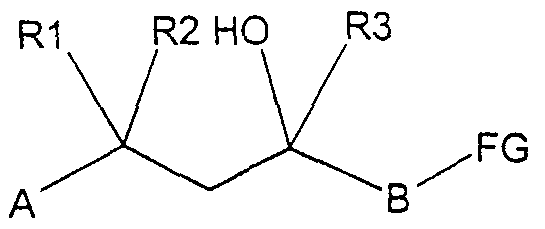
IIIIII
worin A,B, Rl,R2 und R3 die in Formel I angegebene Bedeutung haben und FG eine Fluchtgruppe bedeutet, wird mit einer Verbindung Ar-NH-Rl 1 , wobei R^ ein Wasserstoffatom oder eine C1-C5 Acylgruppe bedeutet und Ar die in der allgemeinen Formel I angegebene Bedeutung hat, umgesetzt, wobei gegebenenfalls anschließend der Rest R 1 abgespalten wird, um zu einer Verbindung der Formel I zu gelangen. Die Verbindung der allgemeinen Formel III kann dabei gegebenenfalls nur als Zwischenprodukt gebildet werden, z.B. kann es sich um ein intermediär aus einer entsprechenden Carbonsäure gebildetes Säurechlorid handeln. Als Fluchtgruppen seien beispielsweise ein Chlor- oder Bromatom oder der Tosylatrest genannt. Eine Verbindung der allgemeinen Formel IVwherein A, B, Rl, R2 and R3 have the meaning given in formula I and FG is a leaving group, is with a compound Ar-NH-Rl 1, where R ^ is a hydrogen atom or a C1-C5 acyl group and Ar is in of the general formula I has the meaning implemented, where appropriate the radical R 1 is subsequently split off in order to arrive at a compound of the formula I. The compound of the general formula III can optionally only be formed as an intermediate, for example it can be an acid chloride formed intermediately from a corresponding carboxylic acid. A chlorine or bromine atom or the tosylate residue may be mentioned as escape groups. A compound of general formula IV

IVIV
worin A. Rl,R2 und R die in Formel I angegebene Bedeutung haben, wird mit einer Verbindung der Formel Ar-NH-R^ . wobei R1 ' und Ar die oben angegebenen Bedeutungen haben, umgesetzt, wobei gegebenenfalls anschließend der Rest R* 1 abgespalten wird, um zu einer Verbindung der Formel I mit B in der Bedeutung einer CH2-Gruppe zu gelangen.wherein A. Rl, R2 and R have the meaning given in formula I, with a compound of formula Ar-NH-R ^. where R 1 'and Ar have the meanings given above, where appropriate the radical R * 1 is then subsequently split off in order to arrive at a compound of the formula I with B meaning a CH2 group.
4. Eine Verbindung der Formel I, die im Rest A oder im Rest Ar die Gruppierung Aryl-X enthält, wobei "Aryl" einen isocyclischen oder heterocyclischen Aromaten entsprechend den für Formel I gegebenen Definitionen und X ein Brom- oder Jodatom oder die Gruppe -O-Sθ2R^, worin Rl2 eine C C^-Perfluoralkylgruppe bedeutet, darstellt, wird nach an sich bekannten Verfahren mit einer Verbindung der Formel R^ -Y5 wobei R^3 einen gegebenenfalls substituierten Aryl-, Ethenyl- oder Ethinylrest und Y ein Wasserstoffatom (J. Org. Chem. 43, 2947 (1978)), die Gruppe B (O-R14)2 (J. Org. Chem. 58, 2201 (1993)) oder Sn(R15)3 (J. Org. Chem. 52, 422 (1987)) mit R'4 und R^ in der Bedeutung eines Phenylrestes oder von C1-C5- Alkyl und für R14 auch Wasserstoff, Mg- Halogen oder ein Alkalimetallatom darstellt, unter Metallkatalyse zur Verbindung Aryl-Rl3 umgesetzt.4. A compound of the formula I which contains the group aryl-X in the radical A or the radical Ar, where "aryl" is an isocyclic or heterocyclic aromatic according to the definitions given for formula I and X is a bromine or iodine atom or the group - O-Sθ2R ^, in which Rl2 is a CC ^ -perfluoroalkyl group, is, according to known methods, with a compound of the formula R ^ -Y 5 where R ^ 3 is an optionally substituted aryl, ethenyl or ethynyl radical and Y is a hydrogen atom (J. Org. Chem. 43, 2947 (1978)), Group B (OR 14 ) 2 (J. Org. Chem. 58, 2201 (1993)) or Sn (R 15 ) 3 (J. Org. Chem 52, 422 (1987)) with R'4 and R ^ in the meaning of a phenyl radical or of C1-C5-alkyl and for R 14 also hydrogen, Mg-halogen or an alkali metal atom, with metal catalysis to the compound aryl-Rl3 .
5. In einer Verbindung der Formel I, die in A oder Ar einen Alkoxy- oder Acyloxysubstituenten enthält, wird die OH-Gruppe freigesetzt und gegebenenfalls in einer weiteren Reaktion verethert oder verestert oder, nach Umwandlung in einen l-Phenyl-5- tetrazolylether, durch Hydrierung völlig eliminiert (J. Amer Chem. Soc.88. 4271 (1966)).5. In a compound of the formula I which contains an alkoxy or acyloxy substituent in A or Ar, the OH group is released and, if appropriate, etherified or esterified in a further reaction or, after conversion into an 1-phenyl-5-tetrazolyl ether, completely eliminated by hydrogenation (J. Amer Chem. Soc. 88, 4271 (1966)).
Von den vorstehenden Verfahrensvarianten sind 1. und 2. für die Herstellung aller Verbindungen, die unter die allgemeine Formel I fallen, geeignet.Of the above process variants, 1. and 2. are suitable for the preparation of all compounds which come under the general formula I.
Mit der 3. Variante sind Verbindungen der allgemeinen Formel I herstellbar, worin B für eine -CH2-Gruppe steht. Mittels der 4. und 5. Verfahrenvariante lassen sich Funktionalisierungen an bereits vorliegenden Verbindungen der allgemeinen Formel I vornehmen.The third variant can be used to prepare compounds of the general formula I in which B represents a —CH 2 group. The fourth and fifth process variants can be used to carry out functionalizations of compounds of the general formula I which are already present.
Gewünschtenfalls lassen sich Verbindungen, die nach einem der vorstehenden Verfahren hergestellt wurden und in denen A ein gegebenenfalls substituierter aromatischer Ring ist. nach bekannten Verfahren an diesem aromatischen Rest selektiv substituieren. Beispiele für dieses Verfahren sind die katalytische Hydrierung von Mehrfachbindungen, die Nitrierung und die Halogenierung.If desired, it is possible to use compounds which have been prepared by one of the above processes and in which A is an optionally substituted aromatic ring. selectively substitute on this aromatic radical by known processes. Examples of this process are the catalytic hydrogenation of multiple bonds, nitration and halogenation.
Die in den Beispielen verwendeten Ausgangsmaterialien werden folgendermaßen hergestellt: The starting materials used in the examples are produced as follows:
Herstellung der AusgangsmaterialienProduction of raw materials
4-Methy_-4-pheny_-2-oxovaleriansäure4-Methy_-4-pheny_-2-oxovaleric acid
Eine aus 26.4 g Magnesium und 162 ml 2-Methyl-2-phenyl-l-chlθφropan in 150 ml Diethylether hergestellte Grignard-Lösung wurde bei -30°C zu 600 ml Oxalsäurediethylester getropft. Nach 2 Stunden bei Raumtemperatur wurde auf Ammoniumchloridlösung gegeben, mit Diethylether extrahiert, getrocknet (Na2Sθ4) und fraktioniert destilliert; man erhält 84 g des Ethylesters (Kp. 115-120°C / 0,03 hPa), der in 11 Methanol gelöst, mit 500 ml Im Natriumhydroxid versetzt und 1 ,5 Stunden bei Raumtemperatur gerührt wird. Nach Abdampfen des Methanols im Vakuum wird der Rückstand zwischen Wasser und Diethylether verteilt, die wässrige Phase wird mit Salzsäure angesäuert und mit Diethylether extrahiert. Nach Eindampfen erhält man 57 g 4-Methyl-4-phenyl-2-oxovaleriansäure als dickes Öl.A Grignard solution prepared from 26.4 g of magnesium and 162 ml of 2-methyl-2-phenyl-l-chlθφropan in 150 ml of diethyl ether was added dropwise at -30 ° C. to 600 ml of diethyl oxalate. After 2 hours at room temperature, ammonium chloride solution was added, the mixture was extracted with diethyl ether, dried (Na2SO4) and fractionally distilled; 84 g of the ethyl ester (bp. 115-120 ° C./0.03 hPa) are obtained, which is dissolved in 11 methanol, mixed with 500 ml of sodium hydroxide and stirred for 1.5 hours at room temperature. After the methanol has been evaporated off in vacuo, the residue is partitioned between water and diethyl ether, the aqueous phase is acidified with hydrochloric acid and extracted with diethyl ether. After evaporation, 57 g of 4-methyl-4-phenyl-2-oxovaleric acid are obtained as a thick oil.
4,4-Dimethyl-2-oxo-5-hexensäure4,4-dimethyl-2-oxo-5-hexenoic acid
Aus 50 g 3,3-Dimethyl-4-pentensäuremethylester werden durch Verseifung mit 10%iger Kalilauge 36 g 3,3-Dimethyl-4-pentensäure als Öl erhalten. Durch Rühren mit Thionylchlorid (20 Stunden. Raumtemperatur) wird das Säurechlorid erhalten, Kp. 59°C / 30 hPa. 16 g davon werden mit 15 g Trimethylsilylcyanid und 0,16 g Zinkjodid 4 Tage gerührt. Nach Destillation erhält man 13 g 4,4-Dimethyl-2-oxo-5-hexensäurenitril. Kp. 75-85°C / 30 hPa. 2 g davon werden mit 0,6 ml Methanol in 13 ml Hexan unter Eiskühlung mit Salzsäuregas gesättigt und nach 2 Stunden mit Wasser versetzt. Aus der Hexanphase erhält man nach Trocknen (Na2SÜ4) und Eindampfen 0,558 g 4,4-Dimethyl-2-oxo-5-hexensäuremethylester, Kp. 48°C / 0,003 hPa. 0,535 g davon werden mit 1,3 ml 3 N Natronlauge verseift, wobei man 0,32 g 4,4-Dimethyl-2- oxo-5-hexensäure als gelbliche Flüssigkeit erhält.36 g of 3,3-dimethyl-4-pentenoic acid are obtained as an oil from 50 g of methyl 3,3-dimethyl-4-pentenoate by saponification with 10% potassium hydroxide solution. The acid chloride is obtained by stirring with thionyl chloride (20 hours. Room temperature), bp. 59 ° C./30 hPa. 16 g of this are stirred for 4 days with 15 g of trimethylsilyl cyanide and 0.16 g of zinc iodide. After distillation, 13 g of 4,4-dimethyl-2-oxo-5-hexenitrile are obtained. Kp. 75-85 ° C / 30 hPa. 2 g of which are saturated with 0.6 ml of methanol in 13 ml of hexane with ice cooling using hydrochloric acid gas and mixed with water after 2 hours. After drying (Na2SÜ4) and evaporation, 0.558 g of methyl 4,4-dimethyl-2-oxo-5-hexenoate, bp. 48 ° C / 0.003 hPa. 0.535 g of this is saponified with 1.3 ml of 3 N sodium hydroxide solution from the hexane phase , whereby 0.32 g of 4,4-dimethyl-2-oxo-5-hexenoic acid is obtained as a yellowish liquid.
3-(l-Phenyl-cyclobutyl)-2-oxo-propionsäure3- (l-phenyl-cyclobutyl) -2-oxo-propionic acid
10 g 1-Phenyl-cyclobutancarbonitril, gelöst in 70 ml Toluol, werden mit 56 ml Diisobutylaluminiumhydrid in Toluol (1,2 molar) bei -72 bis -69°C versetzt. Nach 4 Stunden bei -75°C werden 30 ml Ethylacetat zugetropft. Nach Erwärmen auf Raumtemperatur wird weiteres Ethylacetat und Wasser zugesetzt. Man filtriert über Kieselgur, trennt die organische Phase ab, trocknet (Na2S04) und dampft ein. Nach Chromatographie an Kieselgel (Hexan mit 0-10% Ethylacetat) erhält man 7,6 g 1 -Phenyl-cyclobutancarbaldehyd. 3 g davon werden in 10 ml Tetrahydrofuran gelöst und bei 0°C zu einer Lösung getropft, bei der zuvor 5 g Triethyl-2- ethoxyphosphonoacetat in 70 ml Tetrahydrofuran bei 0°C mit 10,3 ml einer 2 molaren Lösung von Lithiumdiisopropylamid in Tetrahydrofuran / Heptan / Ethylbenzol versetzt wurden. Nach 20 Stunden bei Raumtemperatur wird Wasser zugegeben, mit Ethylacetat extrahiert, getrocknet (Na2S04) und eingedampft. 2 g dieses Rohproduktes werden mit 28 ml 1 N Natronlauge verseift. Man erhält 1,32 g der Säure, die mit 25 ml 1 molarer Schwefelsäure unter starkem Rühren 20 Stunden auf 90°C erwärmt wird. Nach Extraktion mit Ether, Trocknen (Na2SÜ4) und Eindampfen erhält man 0, 89 g 3-(l-Phenyl-cyclobutyl)-2-oxo-propionsäure als gelbliches Öl.10 g of 1-phenyl-cyclobutane carbonitrile, dissolved in 70 ml of toluene, are mixed with 56 ml of diisobutyl aluminum hydride in toluene (1.2 molar) at -72 to -69 ° C. After 4 hours at -75 ° C, 30 ml of ethyl acetate are added dropwise. After warming to room temperature, further ethyl acetate and water are added. It is filtered through kieselguhr, the organic phase is separated off, dried (Na2S04) and evaporated. After chromatography on silica gel (hexane with 0-10% ethyl acetate), 7.6 g of 1-phenyl-cyclobutane carbaldehyde are obtained. 3 g of which are dissolved in 10 ml of tetrahydrofuran and added dropwise at 0 ° C. to a solution in which previously 5 g of triethyl 2-ethoxyphosphonoacetate in 70 ml of tetrahydrofuran at 0 ° C. with 10.3 ml of a 2 molar solution of lithium diisopropylamide in tetrahydrofuran / Heptane / ethylbenzene were added. To Water is added for 20 hours at room temperature, extracted with ethyl acetate, dried (Na2S04) and evaporated. 2 g of this crude product are saponified with 28 ml of 1 N sodium hydroxide solution. 1.32 g of the acid are obtained, which is heated with 90 ml of 25 ml of 1 molar sulfuric acid with vigorous stirring for 20 hours. After extraction with ether, drying (Na2SÜ4) and evaporation, 89.8 g of 3- (l-phenyl-cyclobutyl) -2-oxo-propionic acid are obtained as a yellowish oil.
3-[l-(2-Methoxyphenyl)-cycIopropyl]-2-oxo-propionsäure3- [1- (2-methoxyphenyl) cyclopropyl] -2-oxo-propionic acid
Entsprechend J. Org. Chem. 40 (1975) 3497 wurden 16,7 g 2-Methoxyphenylacetonitril, 158 ml Lithiumtriisopropylamid (2 molare Lösung) und 46,7 ml 1,2-Dichloroethan in 96 ml Tetrahydrofuran und 58,6 ml Hexamethylphosphorsäuretriamid miteinander umgesetzt. Man erhält 5,6 g l-(2-Methoxyphenyl)-cyclopropyl-carbonitril, Kp. 104-115°C / 0.1 mbar, die weiter wie für 3-(l-Phenyl-cyclobutyl)-2-oxo-propionsäure beschrieben, umgesetzt wurden. Man erhält so 3-[l-(2-Methoxyphenyl)-cyclopropyl]-2-oxo-propionsäure als Öl.According to J. Org. Chem. 40 (1975) 3497, 16.7 g of 2-methoxyphenylacetonitrile, 158 ml of lithium triisopropylamide (2 molar solution) and 46.7 ml of 1,2-dichloroethane in 96 ml of tetrahydrofuran and 58.6 ml of hexamethylphosphoric triamide were combined implemented. 5.6 g of l- (2-methoxyphenyl) -cyclopropyl-carbonitrile, bp. 104-115 ° C./0.1 mbar, are obtained, which are further described for 3- (l-phenyl-cyclobutyl) -2-oxo-propionic acid, have been implemented. This gives 3- [l- (2-methoxyphenyl) cyclopropyl] -2-oxo-propionic acid as an oil.
Analog dem für 3-(l-Phenyl-cyclobutyl)-2-oxo-propionsäure und für 3-[l-(2-Methoxyphenyl)- cyclopropyl]-2-oxo-propionsäure beschriebenen Verfahren wurden die in Tabelle 2 beschriebenen Säuren erhalten.The acids described in Table 2 were obtained analogously to the process described for 3- (l-phenyl-cyclobutyl) -2-oxo-propionic acid and for 3- [l- (2-methoxyphenyl) - cyclopropyl] -2-oxo-propionic acid.
Tabelle 2Table 2


3-(l-Phenyl-cyclopropy_)-2-oxo-propionsäure3- (l-phenyl-cyclopropy _) - 2-oxo-propionic acid
wird analog dem für 3-(l-Phenyl-cyclobutyl)-2-oxo-propionsäure beschriebenen Verfahren erhalten.is obtained analogously to the process described for 3- (l-phenyl-cyclobutyl) -2-oxo-propionic acid.
3-(l-Phenyl-cyclohexyl)-2-oxo-propionsäure3- (l-phenyl-cyclohexyl) -2-oxo-propionic acid
wird analog dem für 3-(l-Phenyl-cyclobutyl)-2-oxo-propionsäure beschriebenen Verfahren erhalten.is obtained analogously to the process described for 3- (l-phenyl-cyclobutyl) -2-oxo-propionic acid.
4-(3-Methoxyphenyl)-4-methyl-2-oxo-valeriansäure4- (3-methoxyphenyl) -4-methyl-2-oxo-valeric acid
4,2 ml einer 0.6 m Lösung von 3-Methoxyphenylmagnesiumbromid in Tetrahydrofuran werden bei -70°C mit 257 mg Kupferbromid-Dimethylsulfid-Komplex versetzt und dann bei -40°C 20 Minuten gerührt. Man kühlt erneut auf -70°C, gibt 0,33 ml l,3-Dimethyl-tetrahydro-2-lH- pyrimidinon und ein Gemisch von 400 mg 4-Methyl-2-oxo-3-pentensäuremethylester (Liebigs Annalen 1974, 477) und 0,71 ml Trimethylchlorsilan in 3,5 ml Tetrahydrofuran langsam zu. Man rührt eine Stunde bei -70°C und erwärmt dann auf Raumtemperatur. Dann gibt man 2 N Salzsäure und Ethylacetat zu, trennt die Ethylacetatphase ab, dampft sie ein und löst den Rückstand in 5 ml Dichlormethan. Nach Zusatz von 200 mg Tetrabutylammoniunfluorid wird eine Stunde bei Raumtemperatur belassen, dann mit Wasser gewaschen und die Dichlormethan- Phase getrocknet (Na2Sθ4) und eingedampft. Man erhält nach Chromatographie an Kieselgel mit Hexan / Ethylacetat (97:3) 63 mg 4-(3-Methoxyphenyl)-4-methyl-2-oxo-valeriansäure- methylester. der mit 1 ml Kaliumhydroxid in Methanol(10%) versetzt wird. Nach 45 Minuten wird eingedampft, der Rückstand in Wasser gelöst und mit Diethylether extrahiert, Die wässrige Phase wird dann mit 6 N Salzsäure angesäuert und mit Diethylether extrahiert. Die Diethyletheφhase wird getrocknet (Na2S04) und eingedampft. Man erhält 50 mg 4-(3- Methoxyphenyl)-4-methyl-2-oxo-valeriansäure.4.2 ml of a 0.6 m solution of 3-methoxyphenylmagnesium bromide in tetrahydrofuran are mixed at -70 ° C with 257 mg of copper bromide-dimethyl sulfide complex and then stirred at -40 ° C for 20 minutes. The mixture is cooled again to -70 ° C., 0.33 ml of 1, 3-dimethyl-tetrahydro-2-lH-pyrimidinone and a mixture of 400 mg of 4-methyl-2-oxo-3-pentenoic acid methyl ester are added (Liebigs Annalen 1974, 477 ) and 0.71 ml of trimethylchlorosilane in 3.5 ml of tetrahydrofuran. The mixture is stirred at -70 ° C. for one hour and then warmed to room temperature. Then 2 N hydrochloric acid and ethyl acetate are added, the ethyl acetate phase is separated off, evaporated and the residue is dissolved in 5 ml of dichloromethane. After adding 200 mg of tetrabutylammonium fluoride, the mixture is left for one hour at room temperature, then washed with water and the dichloromethane phase is dried (Na2SO4) and evaporated. After chromatography on silica gel with hexane / ethyl acetate (97: 3), 63 mg of 4- (3-methoxyphenyl) -4-methyl-2-oxo-valeric acid are obtained. methyl ester. 1 ml of potassium hydroxide in methanol (10%) is added. After 45 minutes, the mixture is evaporated, the residue is dissolved in water and extracted with diethyl ether. The aqueous phase is then acidified with 6N hydrochloric acid and extracted with diethyl ether. The diethyl ether phase is dried (Na2S04) and evaporated. 50 mg of 4- (3-methoxyphenyl) -4-methyl-2-oxo-valeric acid are obtained.
2-Hydroxy-4-methyl-4-phenyl-2-trifluormethyl-valeriansäure2-hydroxy-4-methyl-4-phenyl-2-trifluoromethylvaleric acid
Aus 1,5 g Magnesium und 10 g 2-Methyl-2-phenylpropylchlorid in 100 ml Diethylether wird das Grignard-Reagenz hergestellt, das nach Reaktion mit 10 g Trifluorbrenztraubensäureethylester 9,5 g 2-Hydroxy-4-methyl-4-phenyl-2-trifluormethyl-valeriansäureethylester, Kp. 90°C / 0,045 hPa, gibt.The Grignard reagent is prepared from 1.5 g of magnesium and 10 g of 2-methyl-2-phenylpropyl chloride in 100 ml of diethyl ether. After reaction with 10 g of ethyl trifluorofruvate, 9.5 g of 2-hydroxy-4-methyl-4-phenyl- 2-trifluoromethyl-valeric acid ethyl ester, bp 90 ° C / 0.045 hPa.
7,5 g des Ethylesters werden mit 100 ml Kaliumhydroxid in Methanol (10%) 18 Stunden im Rückfluß gekocht. Nach Einengen im Vakuum wird der Rückstand in Wasser gelöst und mit Diethylether extrahiert. Die wässrige Phase wird mit 2 N Salzsäure angesäuert und mit Diethylether extrahiert. Nach Eindampfen des Lösemittels erhält man 3,2 g 2-Hydroxy-4-methyl- 4-phenyl-2-trifluormethyl-valeriansäure als farblose Kristalle, Fp. 124-126°C.7.5 g of the ethyl ester are boiled with 100 ml of potassium hydroxide in methanol (10%) under reflux for 18 hours. After concentration in vacuo, the residue is dissolved in water and extracted with diethyl ether. The aqueous phase is acidified with 2N hydrochloric acid and extracted with diethyl ether. After evaporation of the solvent, 3.2 g of 2-hydroxy-4-methyl-4-phenyl-2-trifluoromethylvaleric acid are obtained as colorless crystals, mp. 124-126 ° C.
4-(5-Fluor-2-methoxyphenyl)-2-hydroxy-4-methyl-2-trifluormethyl-valeriansäure4- (5-fluoro-2-methoxyphenyl) -2-hydroxy-4-methyl-2-trifluoromethylvaleric acid
1,3 g wasserfreies Zinkchlorid und 13,2 g gekörntes Mangan werden in 100 ml Tetrahydrofuran zum Sieden erhitzt und mit 0,2 ml Methallylbromid 30 Minuten gekocht. Dann wird die Lösung von 25 g Methallylbromid und 17 g Trifluorbrenztraubensäure-ethylester in 80 ml Tetrahydrofuran im Laufe von 2 Stunden bei Siedehitze zugetropft und eine weitere Stunde gekocht. Dann gibt man unter Eiskühlung gesättigte Ammoniumchloridlösung und 300 ml Ethylacetat zu, rührt 30 Minuten bei 0°C und wäscht die abgetrennte Ethylacetat-Phase mit gesättigter Ammoniumchloridlösung und dreimal mit Wasser. Das Lösemittel wird getrocknet (Na2Sθ4) und eingedampft und der Rückstand im Vakuum destilliert. Man erhält 17,6 g 2- Hydroxy-4-methylen-2-trifluormethyl-valeriansäureethylester. Kp. 48°C / 1 hPa.1.3 g of anhydrous zinc chloride and 13.2 g of granular manganese are boiled in 100 ml of tetrahydrofuran and boiled for 30 minutes with 0.2 ml of methallyl bromide. Then the solution of 25 g of methallyl bromide and 17 g of ethyl trifluorofruvate in 80 ml of tetrahydrofuran is added dropwise over the course of 2 hours at the boiling point and the mixture is boiled for a further hour. Saturated ammonium chloride solution and 300 ml of ethyl acetate are then added while cooling with ice, the mixture is stirred at 0 ° C. for 30 minutes and the separated ethyl acetate phase is washed with saturated ammonium chloride solution and three times with water. The solvent is dried (Na2Sθ4) and evaporated and the residue is distilled in vacuo. 17.6 g of ethyl 2-hydroxy-4-methylene-2-trifluoromethylvalerate are obtained. Bp. 48 ° C / 1 hPa.
Zu 5 ml 4-Fluoranisol und 0,9 g 2-Hydroxy-4-methylen-2-trifluormethyl-valeriansäureethylester werden 0,8 g wasserfreies Aluminiumchlorid gegeben. Nach 40 Stunden Rühren bei Raumtemperatur wird auf eiskalte 2 N Salzsäure gegeben und mit Ethylacetat extrahiert. Die Ethylacetat-Phase wird mit 1 N Salzsäure und Wasser gewaschen, getrocknet (Na2S04) und eingedampft. Nach Chromatographie an Kieselgel mit Hexan / Ethylacetat (1 : 1) erhält man lg 4- (5-Fluor-2-methoxyphenyl)-2-hydroxy-4-methyl-2-trifluormethyl-valeriansäureethylester, Fp. 38-39°C. 1 ,9 g 4-(5-Fluor-2-methoxyphenyl)-2-hydroxy-4-methyl-2-trifluormethyl-valeriansäureethylester werden mit 40 ml Kaliumhydroxid im Methanol (10%) 2 Stunden im Rückfluß gekocht. Nach Eindampfen des Lösemittels im Vakuum wird Wasser zugegeben, mit Hexan extrahiert und die abgetrennte Wasseφhase mit 6 N Salzsäure angesäuert. Nach Extraktion mit Ethylacetat wird die Ethylacetat-Phase mit Wasser gewaschen, getrocknet (Na2SÜ4) und eingedampft. Der Rückstand wird aus Hexan kristallisiert. Man erhält 1,55 g 4-(5-Fluor-2-methoxyphenyl)-2- hydroxy-4-methyl-2-trifluormethyl-valeriansäure, Fp. 102-104 °C.0.8 g of anhydrous aluminum chloride are added to 5 ml of 4-fluoroanisole and 0.9 g of 2-hydroxy-4-methylene-2-trifluoromethylvaleric acid ethyl ester. After stirring at room temperature for 40 hours, the mixture is poured onto ice-cold 2N hydrochloric acid and extracted with ethyl acetate. The ethyl acetate phase is washed with 1N hydrochloric acid and water, dried (Na2S04) and evaporated. Chromatography on silica gel with hexane / ethyl acetate (1: 1) gives 1 g of 4- (5-fluoro-2-methoxyphenyl) -2-hydroxy-4-methyl-2-trifluoromethyl-valeric acid ethyl ester, mp 38-39 ° C. 1.9 g of 4- (5-fluoro-2-methoxyphenyl) -2-hydroxy-4-methyl-2-trifluoromethyl-valeric acid ethyl ester are refluxed with 40 ml of potassium hydroxide in methanol (10%) for 2 hours. After evaporating the solvent in vacuo, water is added, extracted with hexane and the separated water phase is acidified with 6 N hydrochloric acid. After extraction with ethyl acetate, the ethyl acetate phase is washed with water, dried (Na2SÜ4) and evaporated. The residue is crystallized from hexane. 1.55 g of 4- (5-fluoro-2-methoxyphenyl) -2-hydroxy-4-methyl-2-trifluoromethylvaleric acid, mp. 102-104 ° C., are obtained.
2-Hydroxy-4-methyl-4-(2-thienyl)-2-trifluormethyl-valeriansäure und 2-Hydroxy-4-methyl- 4-(3-thienyl)-2-trifluormethyl-valeriansäure2-hydroxy-4-methyl-4- (2-thienyl) -2-trifluoromethyl-valeric acid and 2-hydroxy-4-methyl-4- (3-thienyl) -2-trifluoromethyl-valeric acid
.Analog wurde das Gemisch von 2-Hydroxy-4-methyl-4-(2-thienyl)-2-trifluormsthyl- valeriansäure und 2-Hydroxy-4-methyl-4-(3-thienyl)-2-trifluormethyl-valeriansäure (9: 1 ) hergestellt. Fp. 150-151°C.The mixture of 2-hydroxy-4-methyl-4- (2-thienyl) -2-trifluoromethyl-valeric acid and 2-hydroxy-4-methyl-4- (3-thienyl) -2-trifluoromethyl-valeric acid ( 9: 1). Mp 150-151 ° C.
Die Säuren der Tabelle 3 wurden analog hergestellt.The acids in Table 3 were prepared analogously.
Tabelle 3Table 3
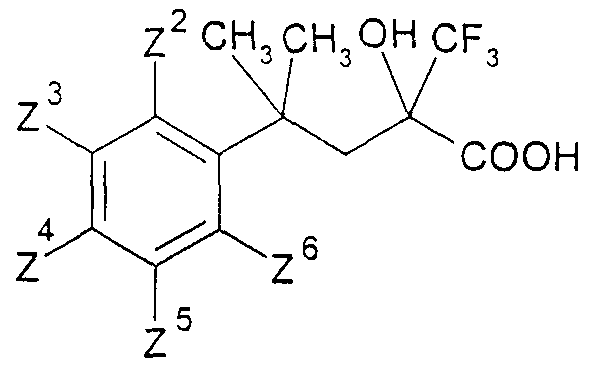

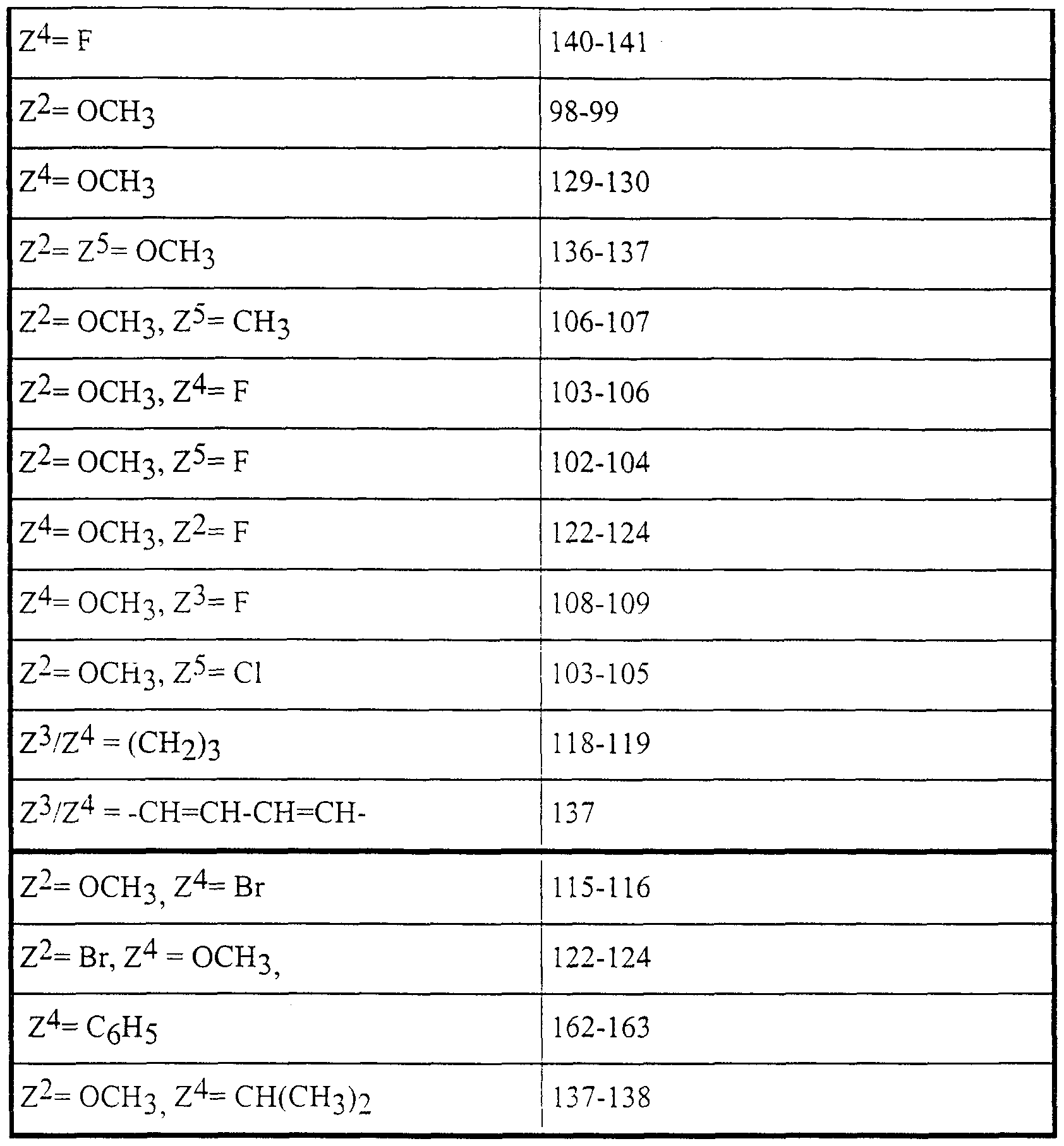
Durch Umwandlung nach Standardverfahren werden weitere Säuren aus vorstehenden Säuren oder ihren Vorstufen erhalten:By conversion according to standard methods, further acids are obtained from the above acids or their precursors:
2-Hydroxy-4-methyl-2-trifluormethyl-4-(4-vinyIphenyl)-valeriansäure2-Hydroxy-4-methyl-2-trifluoromethyl-4- (4-vinylphenyl) valeric acid
Durch Erhitzen von 4-(4-Bromphenyl)-2-hydroxy-4-methyl-2-trifluormethyl- valeriansäureethylester, Tributylvinylzinn, Tri-o-tolylphosphin und Bis-tri-o-tolylphosphin- palladium-II-chlorid in Dimethylformamid auf 120°C erhält man 2-Hydroxy-4-methyl-2- trifluormethyl-4-(4-vinylphenyl)-valeriansäureethylester, der durch alkalische Verseifung die Titelverbindung,Fp. 73-74°C, gibt. 4-(4-Acetylphenyl)-2-hydroxy-4-methyl-2-trifluormethy_-valeriansäureBy heating ethyl 4- (4-bromophenyl) -2-hydroxy-4-methyl-2-trifluoromethylvalerate, tributyl vinyl tin, tri-o-tolylphosphine and bis-tri-o-tolylphosphine-palladium-II-chloride in dimethylformamide to 120 ° C gives 2-hydroxy-4-methyl-2-trifluoromethyl-4- (4-vinylphenyl) valeric acid ethyl ester, the alkaline hydrolysis of the title compound, mp. 73-74 ° C. 4- (4-acetylphenyl) -2-hydroxy-4-methyl-2-trifluoromethyl-valeric acid
Analog zur vorstehenden Verbindung aus 4-(4-Bromphenyl)-2-hydroxy-4-methyl-2- trifluormethyl-valeriansäureethylester, Tributyl-1-ethoxyvinylzinn, Tri-o-tolylphosphin und Bis- tri-o-tolylphosphin-palladium-II-chlorid in Dimethylformamid auf 120°C und anschließende saure Hydrolyse des Enolethers und alkalische Verseif ng, Fp.l58-162°C.Analogous to the above compound from 4- (4-bromophenyl) -2-hydroxy-4-methyl-2-trifluoromethyl-valeric acid ethyl ester, tributyl-1-ethoxyvinyltin, tri-o-tolylphosphine and bis-tri-o-tolylphosphine-palladium-II -chloride in dimethylformamide to 120 ° C and subsequent acidic hydrolysis of the enol ether and alkaline saponification, mp.158-162 ° C.
4-(4-Acetyl-3-methoxypheπyl)-2-hydroxy-4-methyI-2-trifluormethyl-valeriansäure4- (4-acetyl-3-methoxypheπyl) -2-hydroxy-4-methyl-2-trifluoromethylvaleric acid
Analog zur vorstehenden Verbindung aus 4-(4-Brom-3-methoxyphenyl)-2-hydroxy-4-methyl-2- trifluormethyl-valeriansäureethylester, Tributyl- 1 -ethoxyvinylzinn, Tri-o-tolylphosphin und Bis- tri-o-tolylphosphin-palladium-II-chlorid in Dimethylformamid auf 120°C, Öl.Analogous to the above compound from 4- (4-bromo-3-methoxyphenyl) -2-hydroxy-4-methyl-2-trifluoromethyl-valeric acid ethyl ester, tributyl-1-ethoxyvinyltin, tri-o-tolylphosphine and bis-tri-o-tolylphosphine -palladium-II-chloride in dimethylformamide at 120 ° C, oil.
4-(4-Cyanpheny_)-2-hydroxy-4-methy_-2-trifluormethyl-valeriansäure4- (4-Cyanpheny_) - 2-hydroxy-4-methyl_-2-trifluoromethylvaleric acid
Aus 4-(4-Bromphenyl)-2-hydroxy-4-methyl-2-trifluormethyl-valeriansäureethylester. Zinkcyanid und Tetrakis-triphenylphosphin-palladium in Dimethylformamid bei 140°C. Nach Verseifung erhält man die Titelsäure als Schaum.From ethyl 4- (4-bromophenyl) -2-hydroxy-4-methyl-2-trifluoromethylvalerate. Zinc cyanide and tetrakis triphenylphosphine palladium in dimethylformamide at 140 ° C. After saponification, the title acid is obtained as a foam.
4-(4-Carbamoylphenyl)-2-hydroxy-4-methyl-2-trifluormethyl-valeriansäure4- (4-carbamoylphenyl) -2-hydroxy-4-methyl-2-trifluoromethylvaleric acid
erhält man durch Behandlung des Ethylesters der vorstehenden Säure mit Wasserstoffperoxid und Verseifung, Fp. 244-245°C.is obtained by treating the ethyl ester of the above acid with hydrogen peroxide and saponification, mp. 244-245 ° C.
4-(4-Cyan-2-methoxypheπyl)-2-hydroxy-4-methyl-2-trifluormethyl-valeriansäure4- (4-Cyan-2-methoxypheπyl) -2-hydroxy-4-methyl-2-trifluoromethyl-valeric acid
Aus 4-(4-Brom-2-methoxyphenyl)-2-hydroxy-4-methyl-2-trifluormethyl-valeriansäureethylester, Zinkcyanid und Tetrakis-triphenylphosphin-palladium in Dimethylformamid bei 140°C. Nach Verseifung erhält man die Titelsäure als amoφhes Pulver.From ethyl 4- (4-bromo-2-methoxyphenyl) -2-hydroxy-4-methyl-2-trifluoromethylvalerate, zinc cyanide and tetrakis-triphenylphosphine-palladium in dimethylformamide at 140 ° C. After saponification, the title acid is obtained as an amorphous powder.
4-(3-Brom-4-methoxyphenyl)-2-hydroxy-4-methyl-2-trifluormethyl-valeriansäure4- (3-bromo-4-methoxyphenyl) -2-hydroxy-4-methyl-2-trifluoromethylvaleric acid
Aus 2-Hydroxy-4-(4-methoxyphenyl)-4-methyl-2-trifluormethyl-valeriansäureethylester durch Bromierung mit N-Bromsuccinimid in Dimethylformamid bei 0°C und anschließende Verseifung. Fp. 94-96°C.From 2-hydroxy-4- (4-methoxyphenyl) -4-methyl-2-trifluoromethyl-valeric acid ethyl ester by bromination with N-bromosuccinimide in dimethylformamide at 0 ° C and subsequent saponification. Mp 94-96 ° C.
2-Hydroxy-4-methyl-4-(3-nitro-4-methoxyphenyl)-2-trifluormethyl-valeriansäure2-Hydroxy-4-methyl-4- (3-nitro-4-methoxyphenyl) -2-trifluoromethylvaleric acid
Diese Verbindung wird durch Umsetzung von 2.5 g 2-Hydroxy-4-(4-methoxyphenyl)-4-methyl- 2-trifluormethyl-valeriansäureethylester mit 4 ml 100 prozentiger Salpetersäure in 12 ml Trifluoressigsäure über eine Stunde bei 0°C erhalten, Fp. 79-80°C. 4-(4-Jod-2-methoxypheny_)-4-methyI-2-oxo-valeriansäureThis compound is obtained by reacting 2.5 g of 2-hydroxy-4- (4-methoxyphenyl) -4-methyl-2-trifluoromethyl-valeric acid ethyl ester with 4 ml of 100 percent nitric acid in 12 ml of trifluoroacetic acid for one hour at 0 ° C., mp. 79-80 ° C. 4- (4-iodo-2-methoxypheny _) - 4-methyl-2-oxo-valeric acid
Zu 24,2 mmol Methylmagnesiumbromid in 23 ml Diethylether werden 3,2 g 4-Jod-2- methoxybenzoesäure-methylester in 10 ml Diethylether gegeben.Nach 20 Stunden wird Ammoniumchloridlösung zugegeben, die Etheφhase abgetrennt, getrocknet und eingedampft. 2,4 g des Rückstands werden in 10 ml Dichlormethan gelöst, mit 714 mg 2-Trimethylsilyloxy- acrylsäure-ethylester versetzt, auf -70°C gekühlt und mit 0,27 ml Zinn(IV)chlorid versetzt. Nach 15 Minuten wird die Lösung auf Kaliumcarbonatlösung gegeben. Nach Extraktion mit Diethylether wird die organische Phase mit Wasser gewaschen, getrocknet und eingedampft. 500 mg des so erhaltenen 4-(4-Jod-2-methoxyphenyl)-4-methyl-2-oxo-valeriansäureethylesters werden mit 8,6 ml 1 M Natriumhydroxid in Ethanol / Wasser (2 : 1, v/v) 3 Stunden bei Raumtemperatur gerührt. Nach Zugabe von Wasser wird mit Diethylether extrahiert, die W asseφhase mit 1 m Salzsäure angesäuert und mit Diethylether extrahiert. Nach Trocknen und Eindampfen erhall man 410 mg 4-(4-Jod-2-methoxyphenyl)-4-methyl-2-oxo-valeriansäure als gelbliches Öl.3.2 g of methyl 4-iodo-2-methoxybenzoate in 10 ml of diethyl ether are added to 24.2 mmol of methyl magnesium bromide in 23 ml of diethyl ether. After 20 hours, ammonium chloride solution is added, the ether phase is separated off, dried and evaporated. 2.4 g of the residue are dissolved in 10 ml of dichloromethane, mixed with 714 mg of 2-trimethylsilyloxy-acrylic acid ethyl ester, cooled to -70 ° C and mixed with 0.27 ml of tin (IV) chloride. After 15 minutes, the solution is poured onto potassium carbonate solution. After extraction with diethyl ether, the organic phase is washed with water, dried and evaporated. 500 mg of the 4- (4-iodo-2-methoxyphenyl) -4-methyl-2-oxo-valeric acid ethyl ester thus obtained are mixed with 8.6 ml of 1 M sodium hydroxide in ethanol / water (2: 1, v / v) for 3 hours stirred at room temperature. After adding water, the mixture is extracted with diethyl ether, the water phase is acidified with 1 M hydrochloric acid and extracted with diethyl ether. After drying and evaporation, 410 mg of 4- (4-iodo-2-methoxyphenyl) -4-methyl-2-oxo-valeric acid are obtained as a yellowish oil.
4-(3-Chlorphenyl)-4-methyI-2-oxo-valeriansäure wird analog dem vorstehenden Ausführungsbeispielals amoφhes Pulver erhalten.4- (3-chlorophenyl) -4-methyl-2-oxo-valeric acid is obtained as an amorphous powder analogously to the above exemplary embodiment.
4-(3-Bromphenyl)-4-methyl-2-oxo-valeriansäure wird analog dem vorstehenden Ausführungsbeispielals amoφhes Pulver erhalten.4- (3-bromophenyl) -4-methyl-2-oxo-valeric acid is obtained as an amorphous powder analogously to the above exemplary embodiment.
4-(2-Jodphenyl)-4-methyl-2-oxo-valeriansäure wird analog dem vorstehenden Ausführungsbeispiel als amoφhes Pulver erhalten.4- (2-iodophenyl) -4-methyl-2-oxo-valeric acid is obtained analogously to the above embodiment as an amorphous powder.
4-(3-Jodphenyl)-4-methyl-2-oxo-valeriansäure wird analog dem vorstehenden Ausführungsbeispielals amoφhes Pulver erhalten.4- (3-iodophenyl) -4-methyl-2-oxo-valeric acid is obtained as an amorphous powder analogously to the above exemplary embodiment.
4-(4-Jodphenyl)-4-methyI-2-oxo-valeriansäure wird analog dem vorstehenden Ausführungsbeispiel als Öl erhalten.4- (4-iodophenyl) -4-methyl-2-oxo-valeric acid is obtained as an oil analogously to the above exemplary embodiment.
4-(5-FIuor-2-methoxyphenyl)-4-methyl-2-oxo-valeriansäure wird analog dem vorstehenden Ausführungsbeispiel erhalten, Fp. 58-60°C.4- (5-fluor-2-methoxyphenyl) -4-methyl-2-oxo-valeric acid is obtained analogously to the above exemplary embodiment, mp. 58-60 ° C.
4-(4-Brom-2-methoxyphenyl)-2-oxo-vaIeriansäure wird analog dem vorstehenden Ausführungsbeispiel als Öl erhalten. 3-(l-Phenylcyclopentyl)-brenztraubensäure wird analog dem vorstehenden Ausführungsbeispiel aus 1-Phenylcyclopentanol mit 2- Trimethylsilyloxy-acrylsäure-ethylester und Zinn(IV)chlorid als Öl erhalten.4- (4-bromo-2-methoxyphenyl) -2-oxo-valeric acid is obtained as an oil analogously to the above exemplary embodiment. 3- (1-phenylcyclopentyl) pyruvic acid is obtained analogously to the above embodiment from 1-phenylcyclopentanol with ethyl 2-trimethylsilyloxy-acrylic acid and tin (IV) chloride as an oil.
4-Toluolsulfonsäure-(2-hydroxy-4-phenyl-2-trifluormethyI-pentyl)ester4-toluenesulfonic acid (2-hydroxy-4-phenyl-2-trifluoromethyl-pentyl) ester
Aus 2,6 g Magnesiumspänen und 15 ml 2-Phenyl-l-chloφropan in Diethylether wird eine Grignardlösung bereitet, zu der bei -30°C innerhalb von 30 Minuten 15 ml Oxalsäurediethylester gegeben werden. Es wird eine Stunde bei -20°C und 2 Stunden bei 0°C gerührt und dann mit gesättigter Ammoniumchloridlösung versetzt. Die Diethylether-Phase wird abgetrennt, getrocknet (Na2S04) und eingedampft und im Vakuum destilliert. Man erhält 17,7 g 2-Oxo-4- phenylvaleriansäureethylester, Kp. 98-100°C / 0,03 hPa.A Grignard solution is prepared from 2.6 g of magnesium shavings and 15 ml of 2-phenyl-1-chloro-propane in diethyl ether, to which 15 ml of diethyl oxalate are added at -30 ° C. in the course of 30 minutes. It is stirred for one hour at -20 ° C and 2 hours at 0 ° C and then mixed with saturated ammonium chloride solution. The diethyl ether phase is separated off, dried (Na2S04) and evaporated and distilled in vacuo. 17.7 g of ethyl 2-oxo-4-phenylvalerate, bp. 98-100 ° C./0.03 hPa are obtained.
4,4 g 2-Oxo-4-phenylvaleriansäureethylester werden in 40 ml Tetrahydrofuran gelöst und bei - 78°C mit 3,6 ml Trifluorn ethyl-trimethylsilan und 2 ml 1 M Tetrabutylammoniunfluorid in Tetrahydrofuran versetzt. Nach 24 Stunden bei -78°C werden weitere 20 ml 1 M Tetrabutylammoniumfluorid in Tetrahydrofuran zugegeben. Man rührt 1,5 Stunden bei 0°C, setzt Ethylacetat und gesättigte Kochsalzlösung zu, trennt die organische Phase ab und wäscht sie mit ges. Kochsalzlösung und Wasser. Dann wird getrocknet ( a2SC>4) und eingedampft und am Kugelrohr destilliert. Man erhält 4,4 g 2-Hydroxy-4-phenyl-2-trifluormethyl- valeriansäureethylester, Kp. 95-100°C / 0,04 hPa.4.4 g of ethyl 2-oxo-4-phenylvalerate are dissolved in 40 ml of tetrahydrofuran, and 3.6 ml of trifluoromethyl-trimethylsilane and 2 ml of 1 M tetrabutylammonium fluoride in tetrahydrofuran are added at -78 ° C. After 24 hours at -78 ° C, a further 20 ml of 1 M tetrabutylammonium fluoride in tetrahydrofuran are added. The mixture is stirred at 0 ° C. for 1.5 hours, ethyl acetate and saturated sodium chloride solution are added, the organic phase is separated off and washed with sat. Saline and water. Then it is dried (a2SC> 4) and evaporated and distilled on a Kugelrohr. 4.4 g of ethyl 2-hydroxy-4-phenyl-2-trifluoromethylvalerate are obtained, bp. 95-100 ° C./0.04 hPa.
4,35 g 2-Hydroxy-4-phenyl-2-trifluormethyl-valeriansäureethylester werden in 100 ml Diethylether gelöst und bei 0°C mit 1,3 g Lithiumaluminiumhydrid eine Stunde bei 0°C und 16 Stunden bei Raumtemperatur gerührt. Man setzt unter Kühlung wenig Wasser zu und rührt eine Stunde. Die Diethyletheφhase wird abgetrennt, getrocknet ( a2S04) und eingedampft und am Kugelrohr destilliert. Man erhält 4,1 g 4-Phenyl-2-trifluormethyl-l,2-pentandiol, Kp. 120 °C / 0,04 hPa.4.35 g of 2-hydroxy-4-phenyl-2-trifluoromethyl-valeric acid ethyl ester are dissolved in 100 ml of diethyl ether and stirred at 0 ° C. with 1.3 g of lithium aluminum hydride for one hour at 0 ° C. and for 16 hours at room temperature. A little water is added with cooling and the mixture is stirred for one hour. The diethyl ether phase is separated off, dried (a2S04) and evaporated and distilled on a bulb tube. 4.1 g of 4-phenyl-2-trifluoromethyl-1,2-pentanediol are obtained, bp 120 ° C./0.04 hPa.
4.25 g 4-Phenyl-2-trifluormethyl-l,2-pentandiol in 30 ml Pyridin werden bei 0°C mit 3,8 g 4- Toluolsulfonsäurechlorid versetzt. Nach 16 Stunden bei 0°C wird im Vakuum eingeengt, mit Ethylacetat versetzt, mit Wasser gewaschen, getrocknet (Na2SÜ4) und eingedampft.Durch Kristallisation aus Ethylacetat/Hexan erhält man 4,9 g 4-Toluolsulfonsäure-(2-hydroxy-4- phenyl-2-trifluormethyl-pentyl)ester, Fp. 95-96°C.4.25 g of 4-phenyl-2-trifluoromethyl-1,2-pentanediol in 30 ml of pyridine are mixed with 3.8 g of 4-toluenesulfonic acid chloride at 0 ° C. After 16 hours at 0 ° C., the mixture is concentrated in vacuo, mixed with ethyl acetate, washed with water, dried (Na2SÜ4) and evaporated. 4.9 g of 4-toluenesulfonic acid (2-hydroxy-4-) are obtained by crystallization from ethyl acetate / hexane. phenyl-2-trifluoromethyl-pentyl) ester, mp 95-96 ° C.
.Analog wird 4-Toluolsulfonsäure-(2-hydroxy-4-methyl-4-phenyl-2-trifluormethyl-pentyl)ester erhalten, Fp. 78°C. Analog wurde 4-Toluolsulfonsäure-[4-(4-fluoφhenyl)-2-hydroxy-4-methyl-2-trifluormethyl- pentyljester, Fp. 80-81°C, und 4-Toluolsulfonsäure-[2-hydroxy-4-(2-methoxy-5-fluoφhenyl)-4- methyl-2-trifluormethyl-pentyl]ester hergestellt, Fp. 93-95°C.Analogously, 4-toluenesulfonic acid (2-hydroxy-4-methyl-4-phenyl-2-trifluoromethyl-pentyl) ester is obtained, mp. 78 ° C. Analogously, 4-toluenesulfonic acid- [4- ( 4-fluorophenyl) -2-hydroxy-4-methyl-2-trifluoromethyl-pentyl ester, mp. 80-81 ° C., and 4-toluenesulfonic acid- [2-hydroxy-4- ( 2-methoxy-5-fluorophene) -4-methyl-2-trifluoromethyl-pentyl] ester prepared, mp. 93-95 ° C.
2-(2-Phenylpropyl)-2-trifluormethyl-oxiran2- (2-phenylpropyl) -2-trifluoromethyl oxirane
400 mg 4-Toluolsulfonsäure-(2-hydroxy-4-phenyl-2-trifluormethyl-pentyl)ester in 5 ml Dimethylformamid werden bei 0°C mit 35 mg Natriumhydrid (80% in Mineralöl) versetzt. Nach einer Stunde bei 0°C wird mit Wasser verdünnt und mit Dichlormethan extrahiert. Die Dichlormethan-Phase wird mit Wasser gewaschen, getrocknet (Na2S04) und eingedampft. Der Rückstand wird destilliert. Man erhält 200 mg 2-(2-Phenylpropyl)-2-trifluormethyl-oxiran, Kp. 110°C / 1 hPa.400 mg of 4-toluenesulfonic acid (2-hydroxy-4-phenyl-2-trifluoromethyl-pentyl) ester in 5 ml of dimethylformamide are mixed with 35 mg of sodium hydride (80% in mineral oil) at 0 ° C. After one hour at 0 ° C., the mixture is diluted with water and extracted with dichloromethane. The dichloromethane phase is washed with water, dried (Na2S04) and evaporated. The residue is distilled. 200 mg of 2- (2-phenylpropyl) -2-trifluoromethyl-oxirane are obtained, bp 110 ° C./1 hPa.
4-Brom-5-aminophtha_id4-bromo-5-aminophthaid
23 g 3-Brom-4-nitro-l,2-xylol werden in 200 ml Pyridin und 600 ml Wasser suspendiert und bei 60°C portionsweise mit 260 g Kaliumpermanganat versetzt, wobei die Temperatur auf 90°C steigt. Man erwärmt noch 2 Stunden auf 95°C , filtriert, säuert das Filtrat mit Salzsäure an und extrahiert mit Diethylether. Nach Eindampfen des Lösemittels erhält man 27 g 3-Brom-4- nitrophthalsäure.23 g of 3-bromo-4-nitro-1,2-xylene are suspended in 200 ml of pyridine and 600 ml of water, and 260 g of potassium permanganate are added in portions at 60 ° C., the temperature rising to 90 ° C. The mixture is heated to 95 ° C. for a further 2 hours, filtered, the filtrate is acidified with hydrochloric acid and extracted with diethyl ether. Evaporation of the solvent gives 27 g of 3-bromo-4-nitrophthalic acid.
12 g der Säure werden 15 Minuten auf 220°C erhitzt und danach am Kugelrohr destilliert. Bei 0,03 hPa destillieren 10 g 3-Brom-4-nitrophthalsäureanhydrid über.12 g of the acid are heated to 220 ° C for 15 minutes and then distilled on a Kugelrohr. At 0.03 hPa, 10 g of 3-bromo-4-nitrophthalic anhydride distill over.
Das Anhydrid wird in 120 ml Dimethylformamid gelöst und bei 0°C mit 78,8 ml einer 0,5 M Lösung von Natriumborhydrid in Dimethylformamid langsam versetzt. Nach drei Stunden bei 0°C wird vorsichtig 2 n Salzsäure zugesetzt und mit Ethylacetat extrahiert. Nach Waschen mit Kaliumbicarbonatlösung, Trocknen (Na2Sθ4) und Eindampfen der Ethylacetatphase erhält man 6,6 g 4-Brom-5-nitrophthalid.The anhydride is dissolved in 120 ml of dimethylformamide and 78.8 ml of a 0.5 M solution of sodium borohydride in dimethylformamide are slowly added at 0 ° C. After three hours at 0 ° C, 2N hydrochloric acid is carefully added and extracted with ethyl acetate. After washing with potassium bicarbonate solution, drying (Na2SO4) and evaporation of the ethyl acetate phase, 6.6 g of 4-bromo-5-nitrophthalide are obtained.
6,6 g 4-Brom-5-nitrophthalid werden in 45 ml Ethanol gelöst und zu einem auf 60°C erwärmten und gut gerührten Gemisch von 65 g Eisen-II-sulfat. 220 ml Wasser und 65 ml Ammoniak (33%) getropft. Nach 2 Stunden bei 60°C wird das Gemisch fünfmal mit 200 ml Diethylether ausgerührt. Die Diethyletheφhasen werden eingedampft. Als Rückstand werden 4,1 g 4-Brom- 5-aminophthalid erhalten, Fp.l76-180°C. 6-Brom-5-aminophthalid6.6 g of 4-bromo-5-nitrophthalide are dissolved in 45 ml of ethanol and a mixture of 65 g of iron (II) sulfate which has been heated to 60 ° C. and is well stirred. 220 ml of water and 65 ml of ammonia (33%) were added dropwise. After 2 hours at 60 ° C, the mixture is stirred five times with 200 ml of diethyl ether. The Diethyletheφhasen are evaporated. 4.1 g of 4-bromo-5-aminophthalide are obtained as a residue, mp. 176-180 ° C. 6-bromo-5-aminophthalide
4-Brom-5-nitrophthalsäureanhydrid wird analog dem vorstehend beschriebenen Verfahren aus 4- Brom-5-nitro-l,2-xylol hergestellt.4-bromo-5-nitrophthalic anhydride is prepared from 4-bromo-5-nitro-l, 2-xylene analogously to the process described above.
Durch Kochen mit Ethanol wird daraus ein Gemisch von 2-Brom-6-ethoxycarbonyl-3-nitro- benzoesäure und 3-Brom-2-ethoxycarbonyl-4-nitro-benzoesäure gewonnen.A mixture of 2-bromo-6-ethoxycarbonyl-3-nitro-benzoic acid and 3-bromo-2-ethoxycarbonyl-4-nitro-benzoic acid is obtained therefrom by boiling with ethanol.
Zu 7,2 ml einer 0,66 m Lösung von Dimethylformamid in Dichlormethan werden bei 0°C vorsichtig 1,2 ml Oxalylchlorid getropft. Die Lösung wird 1 Stunde bei 0°C und 5 Minuten bei Raumtemperatur gerührt. Nach Eindampfen im Vakuum wird der Rüchstand in 7 ml Acetonitril suspendiert, auf -35°C gekühlt und tropfenweise mit 1,5 g des Estergemisches versetzt. Nach einer Stunde bei derselben Temperatur wird auf -70°C abgekühlt und 2.4 ml einer 2 m Lösung von Natriumborhydrid in Dimethylformamid zugetropft. Man rührt 20 Stunden bei Raumtemperatur, setzt Wasser zu, alkalisiert mit Kaliumcarbonat und extrahiert mit Diethylether. Die Diethylether-Phase wird getrocknet (Na2SÜ4) und eingedampft. Man erhält ein Gemisch von 5-Brom-6-nitrophthalid und 6-Brom-5-nitrophthalid, das an Kieselgel mit Hexan Ethylacetat ( 95:5) getrennt wird.1.2 ml of oxalyl chloride are carefully added dropwise to 7.2 ml of a 0.66 m solution of dimethylformamide in dichloromethane at 0.degree. The solution is stirred for 1 hour at 0 ° C and 5 minutes at room temperature. After evaporation in vacuo, the residue is suspended in 7 ml of acetonitrile, cooled to -35 ° C. and 1.5 g of the ester mixture are added dropwise. After one hour at the same temperature, the mixture is cooled to -70 ° C. and 2.4 ml of a 2 m solution of sodium borohydride in dimethylformamide are added dropwise. The mixture is stirred at room temperature for 20 hours, water is added, the mixture is made alkaline with potassium carbonate and extracted with diethyl ether. The diethyl ether phase is dried (Na2SÜ4) and evaporated. A mixture of 5-bromo-6-nitrophthalide and 6-bromo-5-nitrophthalide is obtained, which is separated on silica gel with hexane-ethyl acetate (95: 5).
Die Reduktion zum Aminophthalid erfolgt wie oben beschrieben. Man erhält 6-Brom-5- aminophthalid, Fp. 235-241 °C.The reduction to aminophthalide is carried out as described above. 6-Bromo-5-aminophthalide, mp. 235-241 ° C., is obtained.
5-Amino-3-(l-propenyl)-phthalid5-amino-3- (l-propenyl) phthalide
5 g 2-Brom-4-nitrobenzoesäure werden durch 2-stündiges Kochen mit 30 ml Thionylchloπd und Abdestillieren überschüssigenThionylchlorids ins Säurechlorid überführt, das in 50 ml Tetrahydrofuran gelöst und zu 3 ml Allylamin in 20 ml Tetrahydrofuran getropft wird. Nach 20 Stunden bei Raumtemperatur wird zwischen 1 N Salzsäure und Ethylacetat verteilt, die Ethylacetatphase mit Wasser gewaschen,getrocknet (Na2Sθ4) und eingedampft. Der Rückstand wird mit Hexan kristallisiert. Man erhält 5,6 g 2-Brom-4-nitrobenzoesäure-allylamid, Fp. 98- 100°C.5 g of 2-bromo-4-nitrobenzoic acid are converted into the acid chloride by boiling for 2 hours with 30 ml of thionyl chloride and distilling off excess thionyl chloride, which is dissolved in 50 ml of tetrahydrofuran and added dropwise to 3 ml of allylamine in 20 ml of tetrahydrofuran. After 20 hours at room temperature, the mixture is partitioned between 1N hydrochloric acid and ethyl acetate, the ethyl acetate phase is washed with water, dried (Na2SO4) and evaporated. The residue is crystallized with hexane. 5.6 g of 2-bromo-4-nitrobenzoic acid allylamide are obtained, mp 98-100 ° C.
Dieses Material wird in 35 ml Ethanol gelöst und zu einem auf 60°C erwärmten und gut gerührten Gemisch von 50 g Eisen-II-sulfat, 170 ml Wasser und 50 ml Ammoniak (33%) getropft. Nach 2 Stunden bei 60°C wird das Gemisch 5 mal mit 200 ml Diethylether ausgerührt, die Diethyletheφhasen werden eingedampft und der Rückstand wird mit Hexan kristallisiert. Man erhält 3,1 g 4-Amino-2-brom-benzoesäure-allylamid, Fp. 115-1 17°C. 11 g 4-Amino-2-brom-benzoesäure-allylamid, 5,2 ml Acetonylaceton und 200 mg 4- Toluolsulfonsäure werden 1,5 Stunden mit Wasserabscheider im Rückfluß gekocht. Dann wird die Lösung mit Ethylacetat verdünnt, mit 1 N Salzsäure und danach mit Kaliumcarbonatlösung gewaschen, getrocknet (Na2SÜ4) und eingedampft. Der Rückstand wird mit Hexan kristallisiert. Man erhält 13.4 g N-allyl-2-brom-4-(2,5-dimethylpyrrol-l-yl)-benzamid, Fp. 136-138°C.This material is dissolved in 35 ml of ethanol and added dropwise to a mixture of 50 g of iron (II) sulfate, 170 ml of water and 50 ml of ammonia (33%) heated to 60 ° C. and well stirred. After 2 hours at 60 ° C, the mixture is stirred 5 times with 200 ml of diethyl ether, the Diethyletheφhasen are evaporated and the residue is crystallized with hexane. 3.1 g of 4-amino-2-bromo-benzoic acid allylamide are obtained, mp 115-1 17 ° C. 11 g of 4-amino-2-bromo-benzoic acid allylamide, 5.2 ml of acetonylacetone and 200 mg of 4-toluenesulfonic acid are refluxed for 1.5 hours with a water separator. Then the solution is diluted with ethyl acetate, washed with 1N hydrochloric acid and then with potassium carbonate solution, dried (Na2SÜ4) and evaporated. The residue is crystallized with hexane. 13.4 g of N-allyl-2-bromo-4- (2,5-dimethylpyrrol-l-yl) benzamide are obtained, mp. 136-138 ° C.
3 g N-allyl-2-brom-4-(2,5-dimethylpyrrol-l-yl)-benzamid In 100 ml Dimethoxyethan werden bei -70°C mit 14,2 ml 1,4 M Butyllithium in Hexan versetzt. Nach 30 Minuten bei -70°C werden 1,63 ml Crotonaldehyd zugegeben. Man läßt die Lösung auf Raumtemperatur erwärmen, rührt 20 Stunden weiter, setzt 50 ml 50-prozentige Essigsäure zu und erwärmt 6 Stunden auf 60°C. Dann verdünnt man mit Wasser, extrahiert mit Ethylacetat, wäscht die Ethylacetatphase mit Kaliumcarbonatlösung. Die Ethylacetatphase wird getrocknet (Na2SÜ4) und eingedampft. Der Rückstand ergibt nach Chromatographie an Kieselgel mit Hexan Ethylacetat (98:2) 1.1 g kristallines 5-(2,5-Dimethylpyrrol-l-yl)-3-(l-propenyl)-phthalid, Fp. 91-95CC3 g of N-allyl-2-bromo-4- (2,5-dimethylpyrrol-l-yl) benzamide In 100 ml of dimethoxyethane, 14.2 ml of 1.4 M butyllithium in hexane are added at -70 ° C. After 30 minutes at -70 ° C, 1.63 ml of crotonaldehyde are added. The solution is allowed to warm to room temperature, stirred for a further 20 hours, 50 ml of 50 percent acetic acid are added and the mixture is heated to 60 ° C. for 6 hours. Then diluted with water, extracted with ethyl acetate, the ethyl acetate phase is washed with potassium carbonate solution. The ethyl acetate phase is dried (Na2SÜ4) and evaporated. The residue obtained after chromatography on silica gel with hexane ethyl acetate (98: 2) 1.1 g of crystalline 5- (2,5-dimethylpyrrol-l-yl) -3- (l-propenyl) phthalide, m.p. 91-95 C C.
1,1 g 5-(2,5-Dimethylpyrrol-l-yl)-3-(l-propenyl)-phthalid, 8,56 g Hydroxylamin-hydrochlorid und 4,58 g Kaliumhydroxid in 75 ml Ethanol/ Wasser (16:6,8, vv) werden 24 Stunden bei 120 °C erhitzt. Das Lösemittel wird abdestilliert, der Rückstand mit Waser versetzt und mit Ethylacetat extrahiert. Die Ethylacetatphase wird getrocknet (Na2Sθ4) und eingedampft und an Kieselgel chromatographiert. Mit Dichlormethan / Methanol (99:1) erhält man 640 mg 5-Amino-3-(l- propenyl)-phthalid, Fp. 125-130°C.1.1 g 5- (2,5-dimethylpyrrol-l-yl) -3- (l-propenyl) phthalide, 8.56 g hydroxylamine hydrochloride and 4.58 g potassium hydroxide in 75 ml ethanol / water (16: 6.8, vv) are heated at 120 ° C for 24 hours. The solvent is distilled off, the residue is mixed with water and extracted with ethyl acetate. The ethyl acetate phase is dried (Na2SO4) and evaporated and chromatographed on silica gel. With dichloromethane / methanol (99: 1), 640 mg of 5-amino-3- (l-propenyl) phthalide, mp. 125-130 ° C.
Analog erhält man die Phthalide der Tabelle 4.The phthalides of Table 4 are obtained analogously.
Tabelle 4Table 4


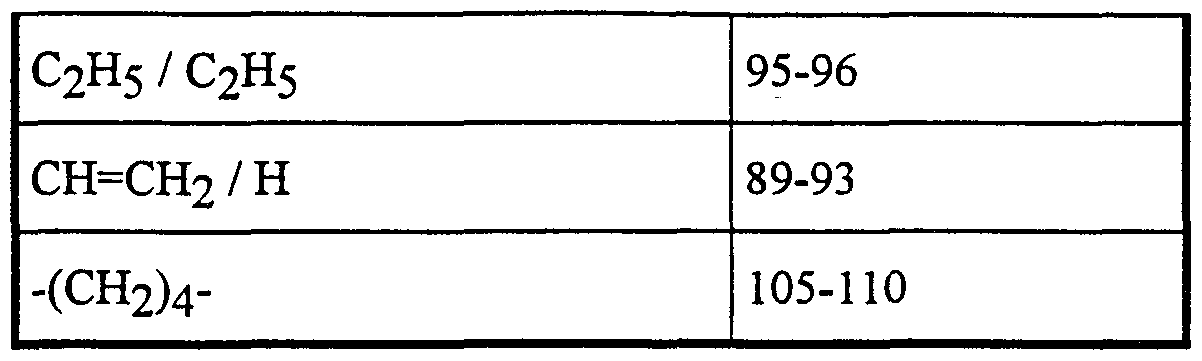
4-Brom-5-(4-methyI-2-oxo-4-phenyl-valeroyIamino)-phthalid4-bromo-5- (4-methyl-2-oxo-4-phenylvaleroylamino) phthalide
412 mg 4-Methyl-4-phenyl-2-oxovaleriansäure werden in 10 ml Dimethylacetamid gelöst und unter Argon bei -8°C mit 261 mg Thionylchlorid versetzt. Nach 20 Minuten Rühren bei -3 bis +3°C werden 228 mg 4-Brom-5-aminophthalid zugegeben. Man rührt 1,5 Stunden bei Raumtemperatur, versetzt dann mit Wasser, extrahiert mit Ethylacetat, wäscht die organische Phase mit Wasser, trocknet (Na2Sθ4) und erhält nach Eindampfen des Lösemittels und Behandeln mit Diethylether 360 mg 4-Brom-5-(4-methyl-2-oxo-4-phenyl-valeroylamino)- phthalid, Fp. 150-152°C.412 mg of 4-methyl-4-phenyl-2-oxovaleric acid are dissolved in 10 ml of dimethylacetamide, and 261 mg of thionyl chloride are added under argon at -8 ° C. After 20 minutes of stirring at -3 to + 3 ° C, 228 mg of 4-bromo-5-aminophthalide are added. The mixture is stirred at room temperature for 1.5 hours, then water is added, the mixture is extracted with ethyl acetate, the organic phase is washed with water, dried (Na2SO4) and, after evaporation of the solvent and treatment with diethyl ether, 360 mg of 4-bromo-5- (4- methyl-2-oxo-4-phenyl-valeroylamino) - phthalide, mp. 150-152 ° C.
Analog zur Darstellung von 4-Brom-5-(4-methyl-2-oxo-4-phenyl-valeroylamino)-phthalid werden die Verbindungen der Tabellen 5 und 6 erhalten.Analogously to the preparation of 4-bromo-5- (4-methyl-2-oxo-4-phenyl-valeroylamino) phthalide, the compounds of Tables 5 and 6 are obtained.
Tabelle 5Table 5

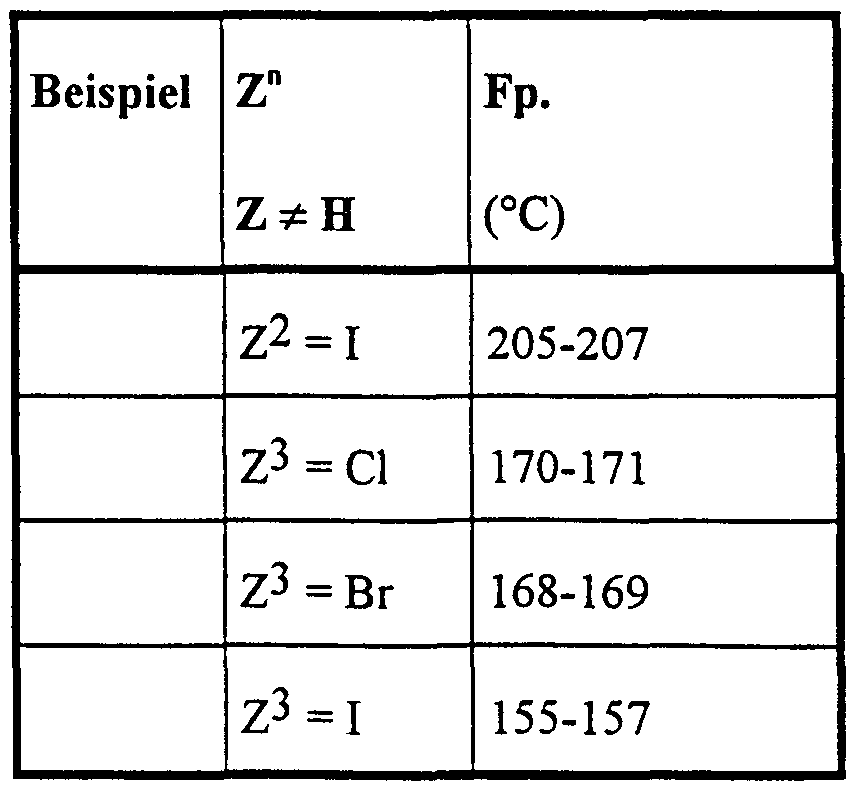
wurde analog dem für 4-Brom-5-(4-methyl-2-oxo-4-phenyl-valeroylamino)-phthalid beschriebenen Verfahren aus 5-Aminophthalid und 3-(l-Phenyl-cyclopropyl)-2-oxo- propionsäure erhalten, Fp.l32-138°C.was obtained analogously to the process described for 4-bromo-5- (4-methyl-2-oxo-4-phenylvaleroylamino) phthalide from 5-aminophthalide and 3- (l-phenylcyclopropyl) -2-oxo-propionic acid , Mp. L32-138 ° C.
5-[3-(l-Phenyl-cyclobutyl)-2-oxo-propionylamino]-phthalid5- [3- (l-phenyl-cyclobutyl) -2-oxo-propionylamino] phthalide
wurde analog dem für 4-Brom-5-(4-methyl-2-oxo-4-phenyl-valeroylamino)-phthalid beschriebenen Verfahren aus 5-Aminophthalid und 3-(l-Phenyl-cyclobutyl)-2-oxo-propionsäure erhalten, Fp.142-146°C.was obtained analogously to the process described for 4-bromo-5- (4-methyl-2-oxo-4-phenylvaleroylamino) phthalide from 5-aminophthalide and 3- (l-phenylcyclobutyl) -2-oxo-propionic acid , Mp. 142-146 ° C.
5-[3-(l-Phenyl-cyclohexyl)-2-oxo-propionylamino]-phthalid5- [3- (l-phenyl-cyclohexyl) -2-oxo-propionylamino] phthalide
wurde analog dem für 4-Brom-5-(4-methyl-2-oxo-4-phenyl-vaieroylamιno)-phthalid beschriebenen Verfahren aus 5-Aminophthalid und 3-(l-Phenyl-cyclohexyl)-2-oxo-propionsäure erhalten, Fp.120-123°C.was obtained analogously to the process described for 4-bromo-5- (4-methyl-2-oxo-4-phenyl-vaieroylamιno) phthalide from 5-aminophthalide and 3- (l-phenyl-cyclohexyl) -2-oxo-propionic acid , Mp 120-123 ° C.
Ebenso wurden die Verbindungen der Tabelle 6 hergestellt: The compounds in Table 6 were also prepared:
Tabelle 6Table 6
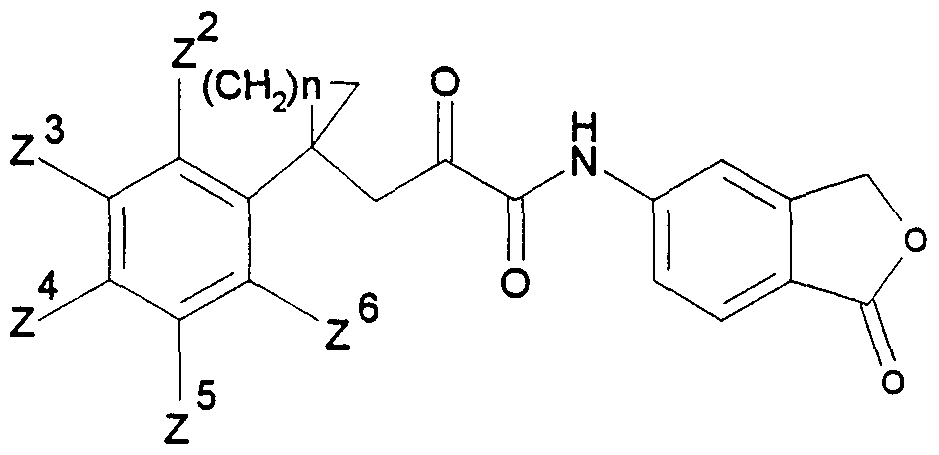

6-[3-(l-Phenyl-cyclopropyI)-2-oxo-propionylamino]-4-methyl-2,3-benzoxazin-l-on6- [3- (l-phenyl-cyclopropyl) -2-oxo-propionylamino] -4-methyl-2,3-benzoxazin-l-one
wurde analog dem für 4-Brom-5-(4-methyl-2-oxo-4-phenyl-valeroylamino)-phthalid beschriebenen Verfahren aus 6-Amino-4-methyl-2,3-benzoxazin-l-on und 3-(l-Phenyl- cyclopropyl)-2-oxo-propionsäure erhalten, Fp.l97-200°C. 6-[3-(l-Phenyl-cyclobutyl)-2-oxo-propionylamino]-4-methyl-2,3-benzoxazin-l-onwas analogous to the process described for 4-bromo-5- (4-methyl-2-oxo-4-phenylvaleroylamino) phthalide from 6-amino-4-methyl-2,3-benzoxazin-l-one and 3- Obtained (l-phenylcyclopropyl) -2-oxo-propionic acid, mp. 197-200 ° C. 6- [3- (l-phenyl-cyclobutyl) -2-oxo-propionylamino] -4-methyl-2,3-benzoxazin-l-one
wurde analog 6-[3-(l -Phenyl-cyclopropyl)-2-oxo-propionylamino]-4-methyl-2,3-benzoxazin- 1- on unter Verwendung von 3-(l-Phenyl-cyclobutyl)-2-oxo-propionsäure erhalten. Fp. l55-156°C.was analogous to 6- [3- (1-phenyl-cyclopropyl) -2-oxo-propionylamino] -4-methyl-2,3-benzoxazin-1-one using 3- (1-phenyl-cyclobutyl) -2- Get oxo-propionic acid. Mp 155-156 ° C.
6-[3-(l-Phenyl-cyclohexyI)-2-oxo-propionyIamino]-4-methyl-2,3-benzoxazin-l-on6- [3- (l-phenylcyclohexyl) -2-oxo-propionylamino] -4-methyl-2,3-benzoxazin-l-one
wurde analog 6-[3-(l-Phenyl-cyclopropyl)-2-oxo-propionylamino]-4-methyl-2,3-benzoxazin-l- on unter Verwendung von 3-(l-Phenyl-cyclohexyl)-2-oxo-propionsäure erhalten. Fp.l32-134°Cwas analogously 6- [3- (1-phenyl-cyclopropyl) -2-oxo-propionylamino] -4-methyl-2,3-benzoxazin-1-one using 3- (1-phenyl-cyclohexyl) -2- Get oxo-propionic acid. Mp. L32-134 ° C
5-(4,4- Dimethyl-2-oxo-5-hexenoylamino)-phthalid5- (4,4-Dimethyl-2-oxo-5-hexenoylamino) phthalide
wurde analog dem für 4-Brom-5-(4-methyl-2-oxo-4-phenyl-valercylam.no)-phthalid beschriebenen Verfahren aus 5-Aminophthalid und 4,4-Dimethyl-2-ox -5-hexeπsäure erhalten, Fp.l03-104cCwas obtained analogously to the process described for 4-bromo-5- (4-methyl-2-oxo-4-phenyl-valercylam.no) -phthalide from 5-aminophthalide and 4,4-dimethyl-2-ox -5-hexane acid , Mp. 103-104 c C
6-Brom-5-(4-methyl-2-oxo-4-phenyl-valeroylamino)-phthalid6-bromo-5- (4-methyl-2-oxo-4-phenylvaleroylamino) phthalide
Analog dem vorhergehenden Beispiel wird aus 2,0 g 4-Methyl-4-phenyl-2-oxovaleriansäure und 1,11 g 6-Brom-5-aminophthalid mit 1,27 g Thionylchlorid in 60 ml Dimethylacetamid 1,7 g 6- Brom-5-(4-methyl-2-oxo-4-phenyl-valeroylamino)-phthalid erhalten, Fp. 148-150°C.Analogously to the previous example, 2.0 g of 4-methyl-4-phenyl-2-oxovaleric acid and 1.11 g of 6-bromo-5-aminophthalide with 1.27 g of thionyl chloride in 60 ml of dimethylacetamide became 1.7 g of 6-bromo -5- (4-methyl-2-oxo-4-phenylvaleroylamino) phthalide obtained, mp. 148-150 ° C.
5-[4-(4-Jod-2-methoxyhenyI)-4-metbyl-2-oxo-valeroylamino)-phthalid5- [4- (4-iodo-2-methoxyhenyl) -4-metbyl-2-oxo-valeroylamino) phthalide
wurde analog dem für 4-Brom-5-(4-methyl-2-oxo-4-phenyl-valeroylamino)-phthalid beschriebenen Verfahren aus 5-Aminophthalid und 4-(4-Jod-2-methoxyphenyl)-4-methyl-2-oxo- valeriansäure als Schaum erhalten.was analogously to the process described for 4-bromo-5- (4-methyl-2-oxo-4-phenylvaleroylamino) phthalide from 5-aminophthalide and 4- (4-iodo-2-methoxyphenyl) -4-methyl- Obtain 2-oxo valeric acid as a foam.
5-[4-(4-Jodphenyl)-4-methyI-2-oxo-valeroylamino)-phthalid5- [4- (4-iodophenyl) -4-methyl-2-oxo-valeroylamino) phthalide
wurde analog dem für 4-Brom-5-(4-methyl-2-oxo-4-phenyl-valeroylamino)-phthalid beschriebenen Verfahren aus 5-Aminophthalid und 4-(4-Jodphenyl)-4-methyl-2-oxo- valeriansäure als Öl erhalten. 5-[4-(3-Jodphenyl)-4-methyl-2-oxo-valeroylamino)-phthalidwas analogously to the process described for 4-bromo-5- (4-methyl-2-oxo-4-phenylvaleroylamino) phthalide from 5-aminophthalide and 4- (4-iodophenyl) -4-methyl-2-oxo Valeric acid obtained as an oil. 5- [4- (3-iodophenyl) -4-methyl-2-oxo-valeroylamino) phthalide
wurde analog dem für 4-Brom-5-(4-methyl-2-oxo-4-phenyl-valeroylamino)-phthalid beschriebenen Verfahren aus 5-Aminophthalid und 4-(3-Jodphenyl)-4-methyl-2-oxo- valeriansäure erhalten, Fp. 160-161 °C.was analogous to the process described for 4-bromo-5- (4-methyl-2-oxo-4-phenylvaleroylamino) phthalide from 5-aminophthalide and 4- (3-iodophenyl) -4-methyl-2-oxo Valeric acid obtained, mp 160-161 ° C.
5-[4-(4-Brom-2-methoxyhenyl)-2-oxo-valeroyIamino)-phthalid5- [4- (4-Bromo-2-methoxyhenyl) -2-oxo-valeroyIamino) phthalide
wurde analog dem für 4-Brom-5-(4-methyl-2-oxo-4-phenyl-valeroylamino)-phthalid beschriebenen Verfahren aus 5-Aminophthalid und 4-(4-Brom-2-methoxyphenyl)-2-oxo- valeriansäure erhalten, Fp. 136-140°C.was analogous to the process described for 4-bromo-5- (4-methyl-2-oxo-4-phenylvaleroylamino) phthalide from 5-aminophthalide and 4- (4-bromo-2-methoxyphenyl) -2-oxo- Valeric acid obtained, mp. 136-140 ° C.
5-[3-(l-Phenyl-cyclopentyl)-2-oxo-propionylamino]-phthalid5- [3- (l-phenyl-cyclopentyl) -2-oxo-propionylamino] phthalide
wurde analog dem für 4-Brom-5-(4-methyl-2-oxo-4-phenyl-\ aleroylamino)-phthalid beschriebenen Verfahren aus 5-Aminophthalid und 3-(l-Phenyl-cyclopentyl)-2-oxo- propionsäure erhalten, Fp. l40-144°C.was analogous to the process described for 4-bromo-5- (4-methyl-2-oxo-4-phenyl- \ aleroylamino) phthalide from 5-aminophthalide and 3- (l-phenyl-cyclopentyl) -2-oxo-propionic acid obtained, mp. 140-144 ° C.
6-[4-(5-Fluor-2-methoxyhenyl)-4-methyl-2-oxo-valeroylamino)-4-methyl-2,3-benzoxazin-l- on6- [4- (5-Fluoro-2-methoxyhenyl) -4-methyl-2-oxo-valeroylamino) -4-methyl-2,3-benzoxazin-l-one
wurde analog dem für 4-Brom-5-(4-methyl-2-oxo-4-phenyl-valeroylamino)-phthalid beschriebenen Verfahren aus 4-Methyl-2,3-benzoxazin-l-on und 4-(5-Fluor-2-methoxyphenyl)- 4-methyl-2-oxo-valeriansäure erhalten, Fp. 171-173°C.was analogous to the procedure described for 4-bromo-5- (4-methyl-2-oxo-4-phenylvaleroylamino) phthalide from 4-methyl-2,3-benzoxazin-l-one and 4- (5-fluorine -2-methoxyphenyl) - 4-methyl-2-oxo-valeric acid obtained, mp. 171-173 ° C.
6-[4-(5-Fluor-2-methoxyhenyl)-4-methyl-2-oxo-valeroylamino)-4-ethyl-2,3-benzoxazin-l-on6- [4- (5-Fluoro-2-methoxyhenyl) -4-methyl-2-oxo-valeroylamino) -4-ethyl-2,3-benzoxazin-l-one
wurde analog dem für 4-Brom-5-(4-methyl-2-oxo-4-phenyl-valeroylamino)-phthalid beschriebenen Verfahren aus 4-Ethyl-2,3-benzoxazin-l-on und 4-(5-Fluor-2-methoxyphenyl)-4- methyl-2-oxo-valeriansäure erhalten, Fp. 157-158°C.was analogous to the process described for 4-bromo-5- (4-methyl-2-oxo-4-phenylvaleroylamino) phthalide from 4-ethyl-2,3-benzoxazin-l-one and 4- (5-fluorine -2-methoxyphenyl) -4-methyl-2-oxo-valeric acid obtained, mp. 157-158 ° C.
6-Amino-4-methyl-2,3-benzoxazin-l-on6-amino-4-methyl-2,3-benzoxazin-l-one
60 g 2-Methyl-5-nitroacetophenon, 38,5 g 2,2-Dimethyl-l,3-propandiol und 6 g p- Toluolsulfonsäure werden in 1 1 Toluol mit einem Wasserabscheider bis zum Ende der Wasserentwicklung gekocht. Die Lösung wird mit Kalumbicarbonat gewaschen,getrocknet (Na2Sθ4) und eingedampft. Aus Pentan erhält man 71,7 g des kristallinen Ketals. Dieses wird in 1,5 1 Pyridin und 4,5 1 Wasser mit 350 g Kaliumpermanganat, wie oben bei der Herstellung von 4-Brom-5-aminophthalid beschrieben, oxidiert. Man erhält 56,4 g 4-Nitro-2- (2,5,5-trimethyl-l,3-dioxan-2-yl)-benzoesäure.60 g of 2-methyl-5-nitroacetophenone, 38.5 g of 2,2-dimethyl-l, 3-propanediol and 6 g of p-toluenesulfonic acid are boiled in 1 l of toluene with a water separator until the evolution of water has ended. The solution is washed with potassium carbonate, dried (Na2SO4) and evaporated. 71.7 g of the crystalline ketal are obtained from pentane. This is oxidized in 1.5 l of pyridine and 4.5 l of water with 350 g of potassium permanganate, as described above in the preparation of 4-bromo-5-aminophthalide. 56.4 g of 4-nitro-2- (2,5,5-trimethyl-l, 3-dioxan-2-yl) benzoic acid are obtained.
52 g der Säure werden in 500 ml Methanol und 500 ml Ethylacetat mit 10 g Palladium/Kohle (10%>) hydriert. Man erhält aus Pentan 45,5 g der kristallinen Aminoverbindung.52 g of the acid are hydrogenated in 500 ml of methanol and 500 ml of ethyl acetate with 10 g of palladium / carbon (10%>). 45.5 g of the crystalline amino compound are obtained from pentane.
10 g des Amins werden mit 100 ml konzentrierter Salzsäure 2 Stunden am Rückfluß gekocht. Das Lösemittel wird im Vakuum eingedampft und der Rückstand mit 15,7 g Hydroxylamin Hydrochlorid, 8,4 g Kaliumhydroxid, 120 ml Ethanol und 50 ml Wasser 12 Stunden am Rückfluß gekocht. Man verdünnt mit Wasser und saugt die Kristalle ab. Nach Trocknen erhält man 3,5 g 6-Amino-4-methyl-2,3-benzoxazin-l-on, Fp. 291-296°C.10 g of the amine are boiled under reflux with 100 ml of concentrated hydrochloric acid for 2 hours. The solvent is evaporated in vacuo and the residue is refluxed with 15.7 g of hydroxylamine hydrochloride, 8.4 g of potassium hydroxide, 120 ml of ethanol and 50 ml of water for 12 hours. It is diluted with water and the crystals are filtered off. After drying, 3.5 g of 6-amino-4-methyl-2,3-benzoxazin-l-one, mp. 291-296 ° C.
6-Amino-4-ethyl-2,3-benzoxazin-l-on6-amino-4-ethyl-2,3-benzoxazin-l-one
wird analog aus 2-Methyl-5-nitropropiophenon erhalten, Fp 89-93 °C.is obtained analogously from 2-methyl-5-nitropropiophenone, mp 89-93 ° C.
6-Amino-l-methyl-lH-benzotriazol6-amino-1-methyl-1H-benzotriazole
ist in Heterocycles 36, 259 (1993) beschrieben.is described in Heterocycles 36, 259 (1993).
5-Amino-benz[1.2.5]oxadiazol5-amino-benz [1.2.5] oxadiazole
ist in Boll. Sei. Fac. Chim. Ind. Bologna, 22, 33.36.37 (1964) beschrieben.is in Boll. Be. Fac. Chim. Ind. Bologna, 22, 33.36.37 (1964).
5-Amino-benz[1.2.5]thiadiazol5-amino-benz [1.2.5] thiadiazole
ist in J. Heterocycl. Chem 11, 777 (1974) beschrieben.is in J. Heterocycl. Chem 11, 777 (1974).
5-Amino-l-indanon5-amino-l-indanon
ist in J. Org. Chem 27, 70 (1962) beschrieben.is described in J. Org. Chem 27, 70 (1962).
6-Amino-l,2,3,4-tetrahydro-l-naphthalinon6-amino-l, 2,3,4-tetrahydro-l-naphthalinone
ist in J. Org. Chem 27, 70 (1962) beschrieben. 6- mino-3,4-dihydro- 1 H-2-benzopyran- 1 -onis described in J. Org. Chem 27, 70 (1962). 6-mino-3,4-dihydro-1 H-2-benzopyran- 1 -one
wird durch katalytische Hydrierung (Palladium/Kohle) in Ethanol aus der entsprechenden Nitroverbindung (Canad. J. Chem. 61, 2643 (1983) hergestellt.is prepared by catalytic hydrogenation (palladium / carbon) in ethanol from the corresponding nitro compound (Canad. J. Chem. 61, 2643 (1983).
Die nachfolgenden Beispiele dienen der näheren Erläuterung der Erfindung. Weitere Verbindungen lassen sich durch Verwendung homologer/analoger Reagenzien herstellen. Die erforderlichen Ausgangsverbindungen sind vorstehend unter den "Ausgangsverbindungen" beschrieben. The following examples serve to explain the invention in more detail. Additional compounds can be made using homologous / analogous reagents. The required starting compounds are described above under the "starting compounds".
Beispiel 1 (Verfahren 1)Example 1 (Method 1)
4-Brom-5-(2-hydroxy-4-methyl-4-phenyl-2-trifluormethyl-valeroylamino)-phthalid4-bromo-5- (2-hydroxy-4-methyl-4-phenyl-2-trifluoromethylvaleroylamino) phthalide
350 mg 4-Brom-5-(4-methyl-2-oxo-4-phenyl-valeroylamino)-phthalid werden unter Argon in 15 ml Dimethylformamid gelöst und unter Eiskühlung mit 0,77 ml Trifluormethyl- trimethylsilan und 350 mg Caesiumcarbonat versetzt. Nach 3 Stunden Rühren bei Raumtemperatur werden 5 ml einer 1 M Lösung von Tetrabutylammoniumfluorid in Tetrahydrofuran und einige Tropfen Wasser zugesetzt und eine Stunde bei Raumtemperatur gerührt. Nach Zusatz von 100 ml Wasser wird mit Ethylacetat extrahiert, die organische Phase getrocknet (Na2SÜ4) und eingedampft. Man erhält 250 mg 4-Brom-5-(2-hydroxy-4-methyl-4- phenyl-2-trifluormethyl-valeroylamino)-phthalid, Fp. 187-194°C.350 mg of 4-bromo-5- (4-methyl-2-oxo-4-phenylvaleroylamino) phthalide are dissolved in 15 ml of dimethylformamide under argon and 0.77 ml of trifluoromethyl-trimethylsilane and 350 mg of cesium carbonate are added while cooling with ice. After stirring for 3 hours at room temperature, 5 ml of a 1 M solution of tetrabutylammonium fluoride in tetrahydrofuran and a few drops of water are added and the mixture is stirred for one hour at room temperature. After adding 100 ml of water, the mixture is extracted with ethyl acetate, the organic phase is dried (Na2SÜ4) and evaporated. 250 mg of 4-bromo-5- (2-hydroxy-4-methyl-4-phenyl-2-trifluoromethylvaleroylamino) phthalide are obtained, mp. 187-194 ° C.
Beispiel 2Example 2
6-Brom-5-(2-hydroxy-4-methyl-4-phenyl-2-trifluormethyI-valeroylamino)-phthalid6-bromo-5- (2-hydroxy-4-methyl-4-phenyl-2-trifluoromethyl-valeroylamino) phthalide
wird analog Beispiel 1 aus 1,6 g 6-Brom-5-(4-methyl-2-oxo-4-phenyl-valeroylamino)-phthalid, 3,5 ml Trifluormethyltrimethylsilan und 1,6 g Caesiumcarbonat erhalten, Fp.205-210°C.is obtained analogously to Example 1 from 1.6 g of 6-bromo-5- (4-methyl-2-oxo-4-phenylvaleroylamino) phthalide, 3.5 ml of trifluoromethyltrimethylsilane and 1.6 g of cesium carbonate, mp. 205- 210 ° C.
Beispiel 3Example 3
5-(2-Hydroxy-4-methyl-2-pentafluorethyl-4-phenyl-valeroylamino)-phthalid5- (2-Hydroxy-4-methyl-2-pentafluoroethyl-4-phenylvaleroylamino) phthalide
wird analog Beispiel 1 aus 20 mg 5-(4-Methyl-2-oxo-4-phenyl-valeroylamino)-phthalid, 0,1 ml Trimethyl-pentafluorethylsilan und 20 mg Caesiumcarbonat erhalten, Fp. 187-189°C.is obtained analogously to Example 1 from 20 mg of 5- (4-methyl-2-oxo-4-phenylvaleroylamino) phthalide, 0.1 ml of trimethyl-pentafluoroethylsilane and 20 mg of cesium carbonate, mp. 187-189 ° C.
Beispiel 4Example 4
5-[2-Hydroxy-4-(3-methoxyphenyl)-4-methyl-2-trifluormethyl-valeroylamino]-phthalid5- [2-Hydroxy-4- (3-methoxyphenyl) -4-methyl-2-trifluoromethylvaleroylamino] phthalide
wird analog Beispiel 1 aus 30 mg 5-[4-(3-Methoxyphenyl)-4-methyl-2-oxo-valeroylamino]- phthalid, 0.13 ml Trifluormethyltrimethylsilan und 30 mg Caesiumcarbonat erhalten, Fp. 173- 178°C. Beispiel 5is obtained analogously to Example 1 from 30 mg of 5- [4- (3-methoxyphenyl) -4-methyl-2-oxo-valeroylamino] phthalide, 0.13 ml of trifluoromethyltrimethylsilane and 30 mg of cesium carbonate, mp. 173-178 ° C. Example 5
5-(2-Hydroxy-4,4-dimethyl-2-trifluormethyI-5-hexenoylamino)-phthalid5- (2-Hydroxy-4,4-dimethyl-2-trifluoromethyl-5-hexenoylamino) phthalide
wird analog Beispiel 1 aus 200 mg 5-(4,4- Dimethyl-2-oxo-5-hexenoylamino)-phthalid, 0,22 ml Trifluormethyl-trimethylsilan und 258 mg Caesiumcarbonat erhalten, Fp. 153-157°C.is obtained analogously to Example 1 from 200 mg of 5- (4,4-dimethyl-2-oxo-5-hexenoylamino) phthalide, 0.22 ml of trifluoromethyl-trimethylsilane and 258 mg of cesium carbonate, mp. 153-157 ° C.
Analog Beispiel 1 werden die Verbindungen der Tabelle 7 erhaltenThe compounds of Table 7 are obtained analogously to Example 1
Tabelle 7Table 7

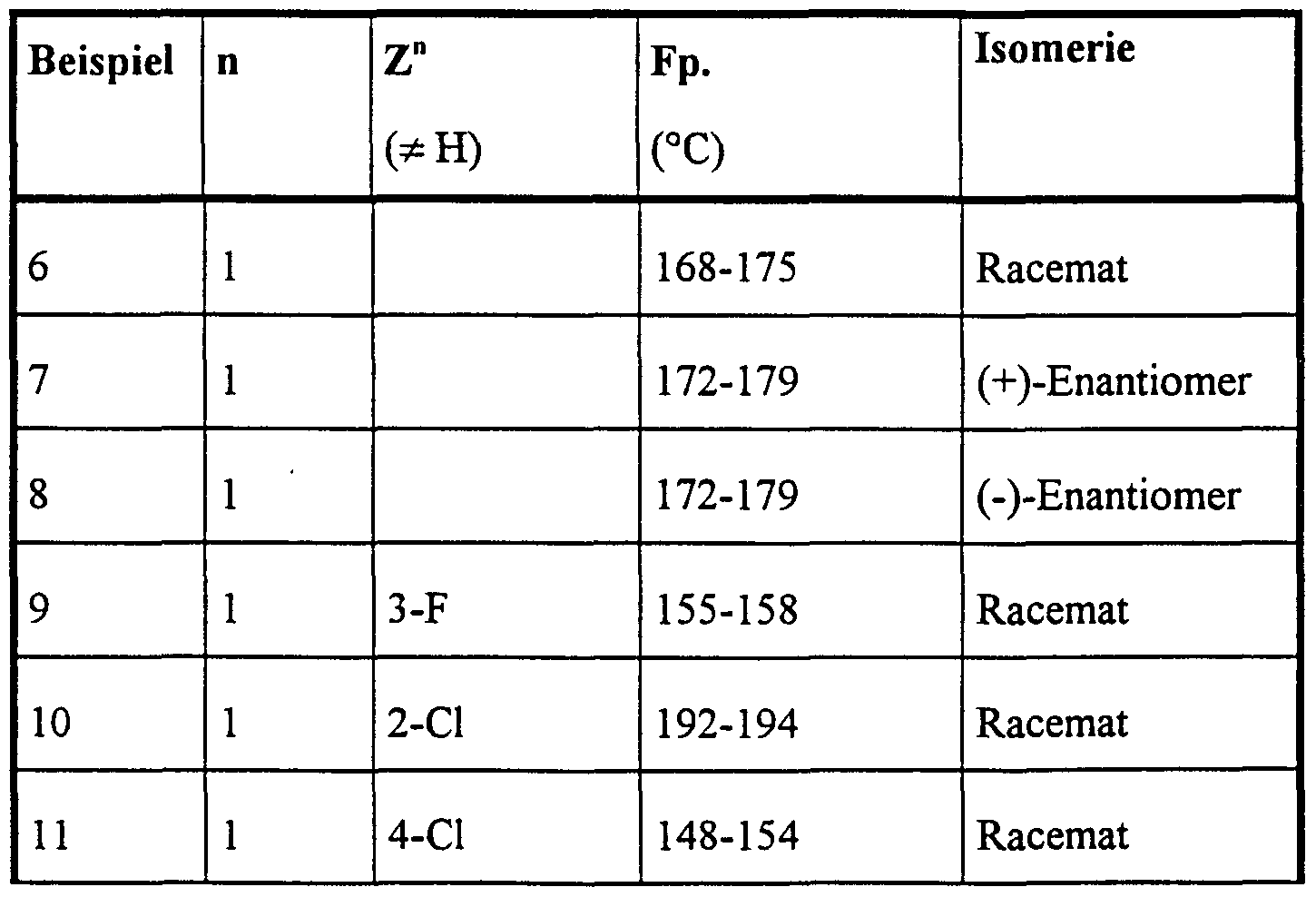
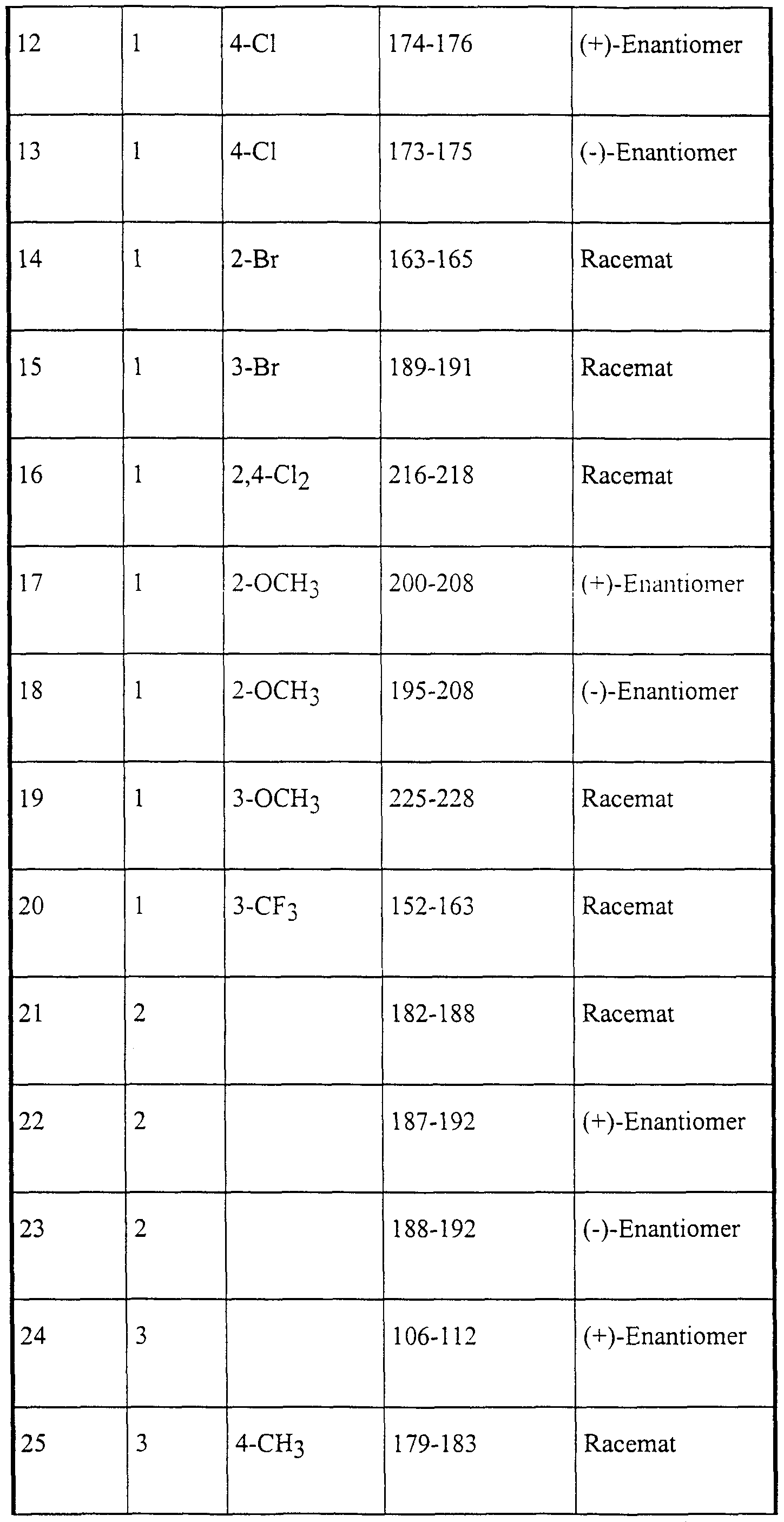

Verwendet man in Beispiel 1 anstelle des Aminophthalids 6-Amino-4-methylbenzoxazinon, so erhält man die in Tabelle 8 zusammengestellten Verbindungen.If 6-amino-4-methylbenzoxazinone is used instead of the aminophthalide in Example 1, the compounds listed in Table 8 are obtained.
Tabelle 8Table 8


Beispiel 40Example 40
6-(2-Hydroxy-2,4-dimethyl4-phenyl-valeroyIamino)-4-methyl-2,3-benzoxazin-l-on6- (2-Hydroxy-2,4-dimethyl4-phenylvaleroylamino) -4-methyl-2,3-benzoxazin-l-one
72 mg 6-(4-methyl4-phenyl-2-oxo-valeroylamino)-4-methyl-2,3-benzoxazin-l-on in 4 ml Tetrahydrofuran werdenmit 3 ml Methylmagnesiumbromid (3 molar) bei 0°C versetzt. Nach 30 Minuten wird Ammoniumchloridlösung zugesetzt, die organische Phase abgetrennt, getrocknet und eingedampfl.Nach Chromatographie an Kieselgel (Hexan / Ethylacetat 1:1) erhält man 39 mg 6-(2-Hydroxy-2,4-dimethyl4-phenyl-valeroylamino)-4-methyl-2,3-benzoxazin-l-on, Fp. 173- 175°C.72 ml of 6- (4-methyl4-phenyl-2-oxo-valeroylamino) -4-methyl-2,3-benzoxazin-l-one in 4 ml of tetrahydrofuran are mixed with 3 ml of methyl magnesium bromide (3 molar) at 0 ° C. After 30 minutes, ammonium chloride solution is added, the organic phase is separated off, dried and evaporated. After chromatography on silica gel (hexane / ethyl acetate 1: 1), 39 mg of 6- (2-hydroxy-2,4-dimethyl4-phenyl-valeroylamino) are obtained. 4-methyl-2,3-benzoxazin-l-one, mp 173-175 ° C.
Beispiel 41 (Verfahren 2)Example 41 (Method 2)
5-(2-Hydroxy-4-phenyl-2-trifiuormethyl-vaIeroylamino)-phthalid5- (2-Hydroxy-4-phenyl-2-trifluoromethyl-valeroylamino) phthalide
500 mg 2-Hydroxy-4-phenyl-2-trifluormethyl-valeriansäure ( Eur. Anm. 0 253 500 (Imperial Chemical Industries)) in 10 ml Dimethylacetamid werden bei -15°C mit 0,14 ml Thionylchlorid versetzt. Nach 3 Stunden Rühren bei -15°C werden 600 mg 5-Aminophthalid (fest) zugegeben. Die Lösung wird 2 Stunden bei -15°C gerührt und dann 18 Stunden bei Raumtemperatur belassen, danach mit Wasser versetzt und mit Ethylacetat extrahiert. Die Ethylacetat-Phase wird getrocknet (Na2S04) und eingedampft. Der Rückstand wird mit Diethylether verrührt und abgesaugt. Man erhält 290 mg 5-(2-Hydroxy-4-phenyl-2-trifluormethyl-valeroylamino)-phthalid, Fp. 166-168°C.500 mg of 2-hydroxy-4-phenyl-2-trifluoromethylvaleric acid (Eur. Note 0 253 500 (Imperial Chemical Industries)) in 10 ml of dimethylacetamide are mixed with 0.14 ml of thionyl chloride at -15 ° C. After 3 hours of stirring at -15 ° C, 600 mg of 5-aminophthalide (solid) are added. The solution is stirred at -15 ° C. for 2 hours and then left at room temperature for 18 hours, after which water is added and the mixture is extracted with ethyl acetate. The ethyl acetate phase is dried (Na 2 S0 4 ) and evaporated. The residue is stirred with diethyl ether and suction filtered. 290 mg of 5- (2-hydroxy-4-phenyl-2-trifluoromethylvaleroylamino) phthalide, mp. 166-168 ° C., are obtained.
Beispiel 42Example 42
6-(2-Hydroxy-4-phenyl-2-trifluormethyl-valeroylamino)-4-methyl-2,3-benzoxazin-l-on6- (2-Hydroxy-4-phenyl-2-trifluoromethylvaleroylamino) -4-methyl-2,3-benzoxazin-l-one
wird analog Beispiel 41 aus 784 mg 2-Hydroxy-4-phenyl-2-trifluormethyl-valeriansäure in 17 ml Dimethylacetamid und 500 mg 6-Amino-4-methyl-2,3-benzoxazin-l-on erhalten, Fp.172-is obtained analogously to Example 41 from 784 mg of 2-hydroxy-4-phenyl-2-trifluoromethylvaleric acid in 17 ml of dimethylacetamide and 500 mg of 6-amino-4-methyl-2,3-benzoxazin-l-one, mp. 172-
173°C.173 ° C.
Analog Beispiel 41 werden die in Tabelle 10 aufgeführten Verbindungen Hergestellt.The compounds listed in Table 10 are prepared analogously to Example 41.
TABELLE 10)TABLE 10)
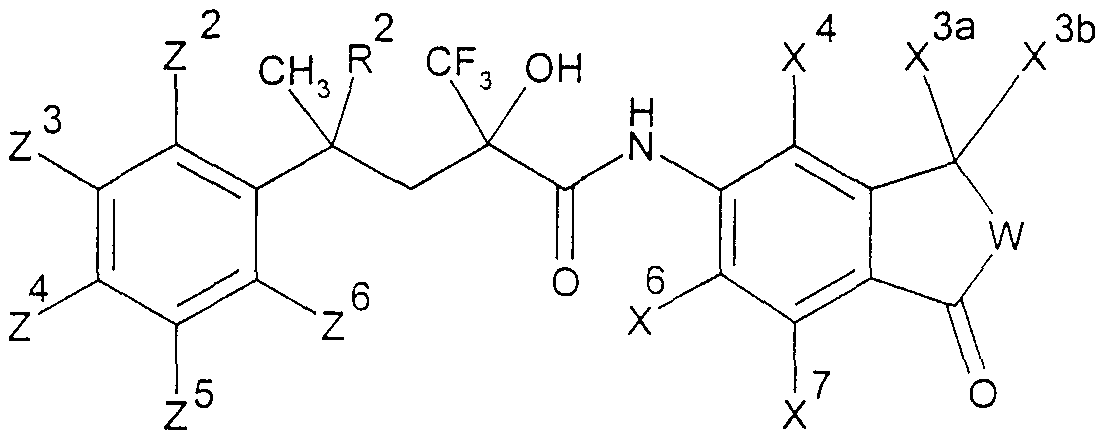


Tabelle 10 (Fortsetzung)Table 10 (continued)
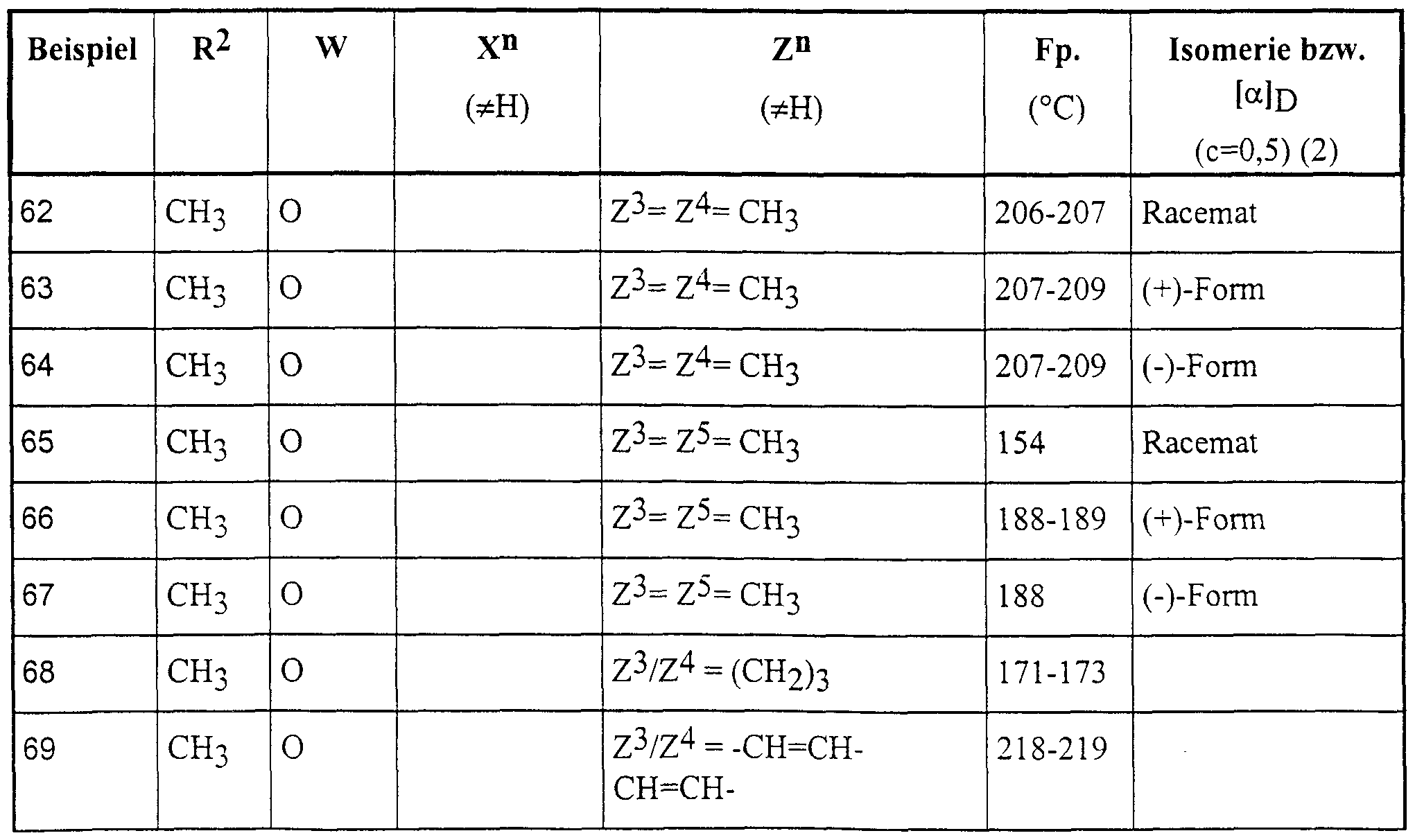

Tabelle 10 (Fortsetzung)Table 10 (continued)


(1) Die in Tabelle 10 aufgeführten optisch aktiven Verbindungen wurden analog Beispiel 88 getrennt.(1) The optically active compounds listed in Table 10 were separated analogously to Example 88.
(2) In Methanol.(2) In methanol.
(3) Bildung eines 1-Isochromanons.(3) Formation of a 1-isochromanone.
Beispiel 102Example 102
(+) und (-) 5-[2-Hydroxy-4-methyl-4-(2-methoxyphenyl)-2-trifluormethyl-valeroylamino] phthalid(+) and (-) 5- [2-Hydroxy-4-methyl-4- (2-methoxyphenyl) -2-trifluoromethylvaleroylamino] phthalide
Das Enantiomerengemisch aus Beispiel 73 wird durch Chromatographie an chiralem Trägermaterial (CHIRALPAK AD®, Fa DAICEL) mit Hexan/2-Propanol/Ethanol (900:25:25, vvv) getrennt. Man erhält so aus 200 mg RacematThe enantiomer mixture from Example 73 is separated by chromatography on a chiral support material (CHIRALPAK AD®, DAICEL) with hexane / 2-propanol / ethanol (900: 25: 25, vvv). This gives 200 mg of racemate
73 mg (-)-Form, Fp. 136-137°C. α p= -194.8° (c= 0,5 in Chloroform), 59 mg (+)-Form, Fp. 135-136°C, α D= +192,2° (c= 0,5 in Chloroform). Beispiel 10373 mg (-) form, mp 136-137 ° C. α p = -194.8 ° (c = 0.5 in chloroform), 59 mg (+) form, mp. 135-136 ° C, α D = + 192.2 ° (c = 0.5 in chloroform). Example 103
5-[2-Hydroxy-4-methyl-4-(2-thienyl)-2-trifluormethyl-valeroylamino]-phthalid und 5-[2-Hydroxy-4-methyl-4-(3-thienyl)-2-trifluormethyl-valeroylamino]-phthalid5- [2-Hydroxy-4-methyl-4- (2-thienyl) -2-trifluoromethyl-valeroylamino] phthalide and 5- [2-Hydroxy-4-methyl-4- (3-thienyl) -2-trifluoromethyl -valeroylamino] -phthalid
Das Gemisch von 2-Hydroxy-4-methyl-4-(2-thιenyl)-2-tπfluormethyl-valeriansäure und 2- Hydroxy-4-methyl-4-(3-thienyl)-2-trifluormethyl-valeriansäure (9:1) wurde analog Beispiel 41 mit 5-Ammophthahd umgesetzt. Nach chromatographischer Trennung der Positionsisomeren und Racemattrennung analog Beispiel 102 erhält manThe mixture of 2-hydroxy-4-methyl-4- (2-thionyl) -2-tπfluoromethyl-valeric acid and 2-hydroxy-4-methyl-4- (3-thienyl) -2-trifluoromethyl-valeric acid (9: 1 ) was reacted with 5-ammophthahd as in Example 41. After chromatographic separation of the position isomers and racemate separation analogously to Example 102, one obtains
(t-)-5-[2-Hydroxy-4-methyl-4-(2-thienyl)-2-trifluormethyl-valeroylammo]-phthahd. Fp. 166°C, α D= -163,6° (c= 0,5 in Chloroform), (-)-5-[2-Hydroxy-4-methyl-4-(2-thιenyl)-2- trifluormethyl-valeroylaminoj-phthalid, Fp. 166°C, >= -160,8° (c= 0,5 in Chloroform), (+)-5- [2-Hydroxy-4-methyl-4-(3-thιenyl)-2-trifluormethyl-valeroylammo]-phthahd, Fp. 135°C und (-)- 5-[2-Hydroxy-4-methyl-4-(3-thιenyl)-2-tπfluormethyl-valeroylammo]-phthahd, Fp 135DC(t -) - 5- [2-Hydroxy-4-methyl-4- (2-thienyl) -2-trifluoromethylvaleroylammo] phthalate. Mp 166 ° C, α D = -163.6 ° (c = 0.5 in chloroform), (-) - 5- [2-hydroxy-4-methyl-4- (2-thienyl) -2-trifluoromethyl -valeroylaminoj-phthalide, mp. 166 ° C,> = -160.8 ° (c = 0.5 in chloroform), (+) - 5- [2-hydroxy-4-methyl-4- (3-thιenyl) -2-trifluoromethyl-valeroylammo] phthahd, mp. 135 ° C and (-) - 5- [2-hydroxy-4-methyl-4- (3-thιenyl) -2-tπfluoromethyl-valeroylammo] phthahd, mp 135 D C
Beispiel 104 (Verfahren 3)Example 104 (Method 3)
5-(2-Hydroxy-4-phenyl-2-trifluormethyl-pentylamino)-phthaIid5- (2-Hydroxy-4-phenyl-2-trifluoromethyl-pentylamino) phthalide
760 mg 5-Acetamιdo-phthalid in 20 ml Dimethylformamid werden bei 0°C mit 144 mg Natπumhydπd (80% in Mineralöl) und nach 20 Minuten mit 800 mg 4-Toluolsulfonsaure-(2- hydroxy-4-phenyl-2-tπfluormethyl-pentyl)ester versetzt.Nach 16 Stunden bei 60°C wird das Lösemittel im Vakuum eingedampft, der Rückstand in Ethylacetat gelöst, mit Wasser gewaschen, getrocknet (Na2≤θ4) und eingedampft. Nach Chromatographie an Kieselgel mit Cyclohexan/Ethylacetat (2:1) werden 266 mg 5-(2-Hydroxy-4-phenyl-2-tπfluormethyl- pentylammo)-phthalιd erhalten, Fp. 110°C.760 mg of 5-acetamido-phthalide in 20 ml of dimethylformamide are at 0 ° C with 144 mg of sodium hydride (80% in mineral oil) and after 20 minutes with 800 mg of 4-toluenesulfonic acid (2-hydroxy-4-phenyl-2-tπfluoromethyl) pentyl) ester. After 16 hours at 60 ° C, the solvent is evaporated in vacuo, the residue is dissolved in ethyl acetate, washed with water, dried (Na2≤θ4) and evaporated. After chromatography on silica gel with cyclohexane / ethyl acetate (2: 1), 266 mg of 5- (2-hydroxy-4-phenyl-2-tπfluoromethyl-pentylammo) phthalide are obtained, mp. 110 ° C.
Analog Beispiel 104 werden die Verbindungen der Tabelle 11 erhalten. Tabelle !!The compounds of Table 11 are obtained analogously to Example 104. Table !!
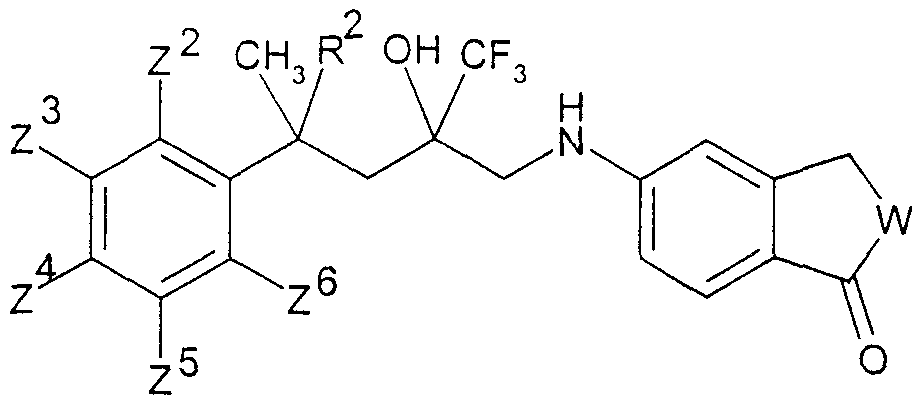

(1) Die in Tabelle 1 1 aufgefülirten optisch aktiven Verbindungen wurden analog Beispiel 102 getrennt.(1) The optically active compounds filled in Table 1 1 were separated analogously to Example 102.
(2) In Methanol(2) In methanol
(3) Bildung eines 1 -Isochromanons.(3) Formation of a 1 isochromanone.
(4) In Chloroform. Beispiel 117(4) In chloroform. Example 117
4-Ethyl-6-(2-hydroxy-4-phenyl-2-trifluormethyl-pentylamino)-2,3-benzoxazin-l-on4-ethyl-6- (2-hydroxy-4-phenyl-2-trifluoromethyl-pentylamino) -2,3-benzoxazin-l-one
Die Verbindung wird analog Beispiel 104 aus 151 mg 6-Acetamido-4-ethyl-2,3-benzoxazin-2- on, 208 mg 4-Toluolsulfonsäure-(2-hydroxy-4-phenyl-2-trifluormethyl-pentyl)ester und 36 mg N'atriumhydrid erhalten, Fp. 161-163°C.The compound is prepared analogously to Example 104 from 151 mg of 6-acetamido-4-ethyl-2,3-benzoxazin-2-one, 208 mg of 4-toluenesulfonic acid (2-hydroxy-4-phenyl-2-trifluoromethyl-pentyl) ester and 36 mg of N ' atrium hydride obtained, mp 161-163 ° C.
Beispiel 118Example 118
l-(4-Nitro-3-trifluormethylanilino)-4-phenyl-2-trifluormethyl-2-pentanol1- (4-nitro-3-trifluoromethylanilino) -4-phenyl-2-trifluoromethyl-2-pentanol
100 mg 4-Nitro-3-trifluormethylacetanilid in 2 ml Dimethylformamid werden bei 0°C mit 12 mg Natriumhydrid (80% in Mineralöl) und nach 20 Minuten mit 150 mg 2-(2-Phenylpropyl)-2- trifluormethyl-oxiran versetzt. Man rührt 16 Stunden bei 60°C, verdünnt mit Wasser und extrahiert mit Ethylacetat. Nach Waschen mit Wasser wird die Ethylacetat-Phase getrocknet (Na2S04) und eingedampft. Man erhält 80 mg N-(2-Hydroxy-4-methyl-4-phenyl-2- trifluormethyl-valeroyl)-4-nitro-3-trifluormethylanilin, Fp.l l9-120°C. Nach Racemattrennung analog Beispiel 102 erhält man die (-)-Form, [α] £>= -49.6° (c= 0,5 in Chloroform), die (+)-Form, [α] D= +48,8° (c= 0,5 in Chloroform).100 mg of 4-nitro-3-trifluoromethylacetanilide in 2 ml of dimethylformamide are mixed at 0 ° C with 12 mg of sodium hydride (80% in mineral oil) and after 20 minutes with 150 mg of 2- (2-phenylpropyl) -2-trifluoromethyl-oxirane. The mixture is stirred at 60 ° C. for 16 hours, diluted with water and extracted with ethyl acetate. After washing with water, the ethyl acetate phase is dried (Na 2 S0 4 ) and evaporated. This gives 80 mg of N- (2-hydroxy-4-methyl-4-phenyl-2-trifluoromethylvaleroyl) -4-nitro-3-trifluoromethylaniline, mp l 19-120 ° C. After separation of racemate analogously to Example 102, the (-) form, [α] £> = -49.6 ° (c = 0.5 in chloroform), the (+) form, [α] D = + 48.8 ° are obtained (c = 0.5 in chloroform).
Beispiel 119 (Verfahren 4)Example 119 (Method 4)
6-(3-Hydroxy-3-methyl-l-butinyI)-5-(2-hydroxy-4-methyl-4-phenyl-2-trifluormethyl- valeroylamino)-phthalid6- (3-Hydroxy-3-methyl-1-butynyl) -5- (2-hydroxy-4-methyl-4-phenyl-2-trifluoromethylvaleroylamino) phthalide
150 mg der Bromverbindung aus Beispiel 2 werden zusammen mit 30 mg 2-Methyl-3-butin-2-ol, 0.24 mg Kupfer-I-jodid und 0,9 mg Triphenylphosphin in 1,5 ml Pyridin gelöst und unter Argon mit 0,25 mg Bis-triphenylphosphin-palladium-II-chlorid versetzt. Nach 5 Stunden Kochen am Rückfluß werden weitere 30 mg 2-Methyl-3-butin-2-ol zugegeben und man kocht 20 Stunden im Rückfluß. Man verdünnt mit Wasser und extrahiert mit Ethylacetat. Die Ethylacetat-Phase wird getrocknet (Na2≤θ4) und eingedampft. Das Rohprodukt wird an Kieselgel chromatographiert. Mit Cyclohexan/Ethylacetat (1 : 1) erhält man 60 mg kristallines 6-(3- Hydroxy-3-methyl-l-butinyl)-5-(2-hydroxy-4-methyl-4-phenyl-2-trifluormethyl-valeroylamino)- phthalid, Fp. 162-168 °C. Beispiel 120150 mg of the bromine compound from Example 2 are dissolved together with 30 mg of 2-methyl-3-butyn-2-ol, 0.24 mg of copper i-iodide and 0.9 mg of triphenylphosphine in 1.5 ml of pyridine and, under argon, with 0. 25 mg of bis-triphenylphosphine-palladium-II-chloride were added. After refluxing for 5 hours, a further 30 mg of 2-methyl-3-butyn-2-ol are added and the mixture is refluxed for 20 hours. It is diluted with water and extracted with ethyl acetate. The ethyl acetate phase is dried (Na2≤θ4) and evaporated. The crude product is chromatographed on silica gel. With cyclohexane / ethyl acetate (1: 1), 60 mg of crystalline 6- (3-hydroxy-3-methyl-1-butynyl) -5- (2-hydroxy-4-methyl-4-phenyl-2-trifluoromethyl-valeroylamino) are obtained ) - phthalide, mp 162-168 ° C. Example 120
6-Acetyl-5-(2-hydroxy-4-methyl-4-phenyl-2-trifluormethyl-valeroylamino)-phthalid6-acetyl-5- (2-hydroxy-4-methyl-4-phenyl-2-trifluoromethylvaleroylamino) phthalide
100 mg der Bromverbindung aus Beispiel 2 werden zusammen mit 95 mg Tributyl-( 1 - ethoxyvinyl)-zinn und 8 mg Bis-triphenylphosphin-palladium-II-chlorid in 4 ml Toluol unter Argon gelöst. Nach 5 Stunden Kochen am Rückfluß werden weitere 45 mg Bis- triphenylphosphin-palladium-II-chlorid zugegeben und man kocht 20 Stunden am Rückfluß. Man gibt 1 N Salzsäure zu und extrahiert mit Ethylacetat. Die Ethylacetat-Phase wird getrocknet ( a2SÜ4) und eingedampft. Das Rohprodukt wird in 3 ml Tetrahydrofuran und 3 ml 2 N Salzsäure 2 Tage bei Raumtemperatur gerührt. Man versetzt mit Wasser und extrahiert mit Ethylacetat. Nach Waschen mit Wasser wird getrocknet (Na2SÜ4) und eingedampft. Der Rückstand wird mit Diethylether / Pentan verrieben und man erhält so 21 mg kristallines 6- Λcetv -5-(2-hydroxy-4-methyl-4-Dhenγl-2-trifluormethyl-valeroylamino)-phthalid. Fp. 195- 9X.100 mg of the bromine compound from Example 2 are dissolved together with 95 mg of tributyl- (1-ethoxyvinyl) tin and 8 mg of bis-triphenylphosphine-palladium-II-chloride in 4 ml of toluene under argon. After refluxing for 5 hours, a further 45 mg of bistriphenylphosphine-palladium-II chloride are added and the mixture is refluxed for 20 hours. 1 N hydrochloric acid is added and the mixture is extracted with ethyl acetate. The ethyl acetate phase is dried (a2SÜ4) and evaporated. The crude product is stirred in 3 ml of tetrahydrofuran and 3 ml of 2N hydrochloric acid for 2 days at room temperature. Water is added and the mixture is extracted with ethyl acetate. After washing with water, it is dried (Na2SÜ4) and evaporated. The residue is triturated with diethyl ether / pentane and 21 mg of crystalline 6- Λcetv -5- (2-hydroxy-4-methyl-4-dhenγl-2-trifluoromethylvaleroylamino) phthalide are obtained. Mp 195-9X.
.Analog Beispiel 1 19 und 120 werden die Verbindungen der Tabelle 12 erhalten..Analog Example 1 19 and 120, the compounds of Table 12 are obtained.
Tabelle 12Table 12

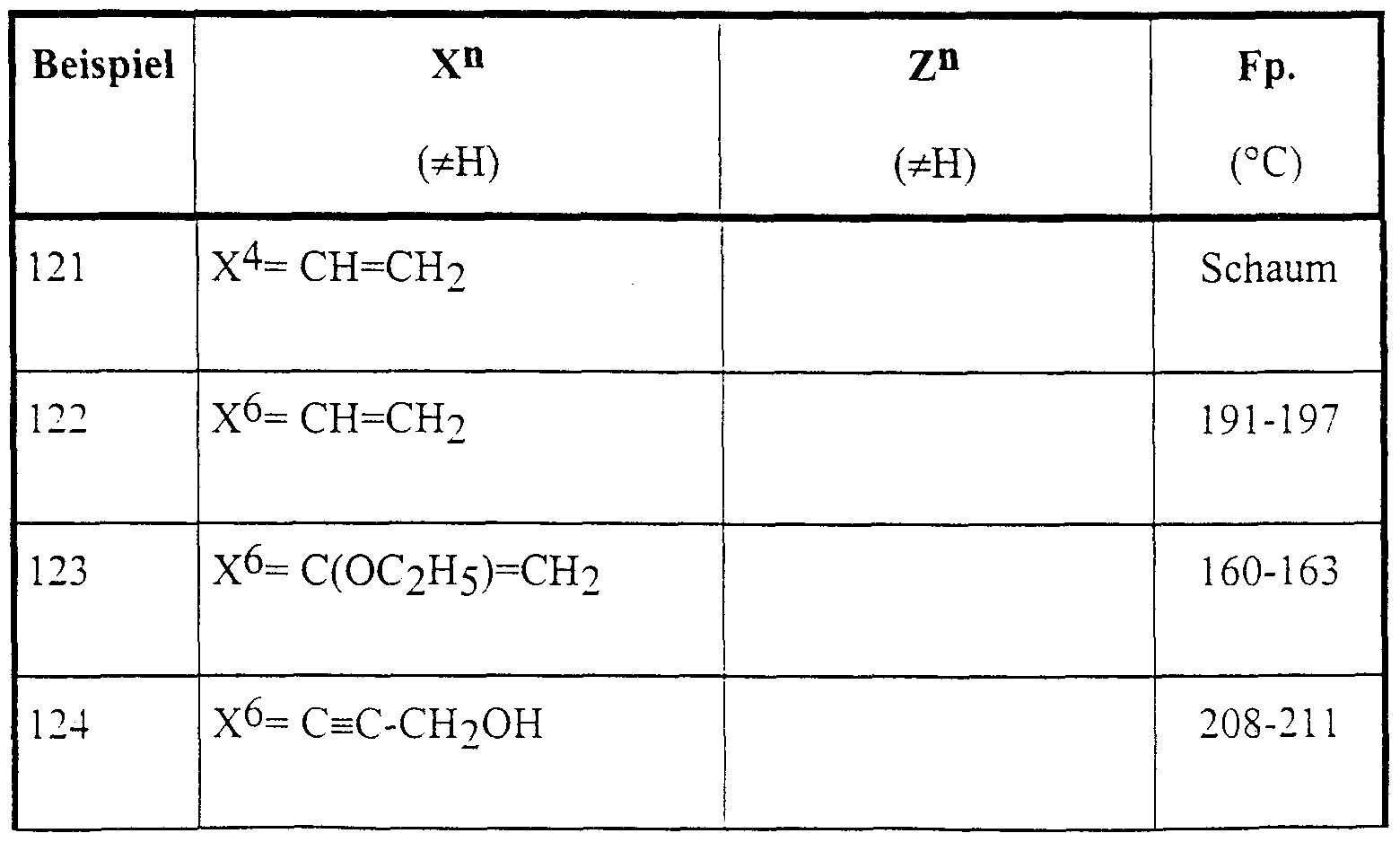

(*) Durch katalytische Hydrierung aus der Vinylverbindung erhalten. (**) Durch milde saure Hydrolyse aus dem Enolether erhalten.(*) Obtained from the vinyl compound by catalytic hydrogenation. (**) Obtained from the enol ether by mild acid hydrolysis.
Beispiel 134 (Verfahren 5)Example 134 (Method 5)
5-[4-(3-Fluor-4-hydroxyphenyI)-2-hydroxy-4-methyl-4-2-trifluormethyl-valeroylamino]- phthalid5- [4- (3-Fluoro-4-hydroxyphenyl) -2-hydroxy-4-methyl-4-2-trifluoromethylvaleroylamino] phthalide
132 mg 5-[4-(3-Fluor-4-methoxyphenyl)-2-hydroxy-4-methyl-4-2-trifluormethyl- valeroylamino]-phthalid (Beispiel 82) werden in 15 ml Dichlormethan gelöst und bei 0°C mit 1 ,2 ml einer 1 M Lösung von Bortribromid in Dichlormethan versetzt. Nach 16 Stunden bei 0°C wird dem Gemisch Eis, Ethylacetat und Kalumbicarbonat zugesetzt und die Ethylacetat-Phase abgetrennt, getrocknet (Na2SÜ4) und eingedampft. Aus Ethylacetat Diisopropylether / Hexan erhält man 120 mg 5-[4-(3-Fluor-4-hydroxyphenyl)-2-hydroxy-4-methyl-4~2-trifluormethyl- valeroylamιno]-phthalid. Fp. 139-140°C. Beispiel 86 werden die in Tabelle 13 aufgeführten Verbindungen erhalten.132 mg of 5- [4- (3-fluoro-4-methoxyphenyl) -2-hydroxy-4-methyl-4-2-trifluoromethylvaleroylamino] phthalide (Example 82) are dissolved in 15 ml of dichloromethane and at 0 ° C added with 1.2 ml of a 1 M solution of boron tribromide in dichloromethane. After 16 hours at 0 ° C., ice, ethyl acetate and potassium bicarbonate are added to the mixture and the ethyl acetate phase is separated off, dried (Na2SO4) and evaporated. From ethyl acetate diisopropyl ether / hexane, 120 mg of 5- [4- (3-fluoro-4-hydroxyphenyl) -2-hydroxy-4-methyl-4 ~ 2-trifluoromethylvaleroylamιno] phthalide are obtained. Mp 139-140 ° C. Example 86 the compounds listed in Table 13 are obtained.
Tabelle 13Table 13

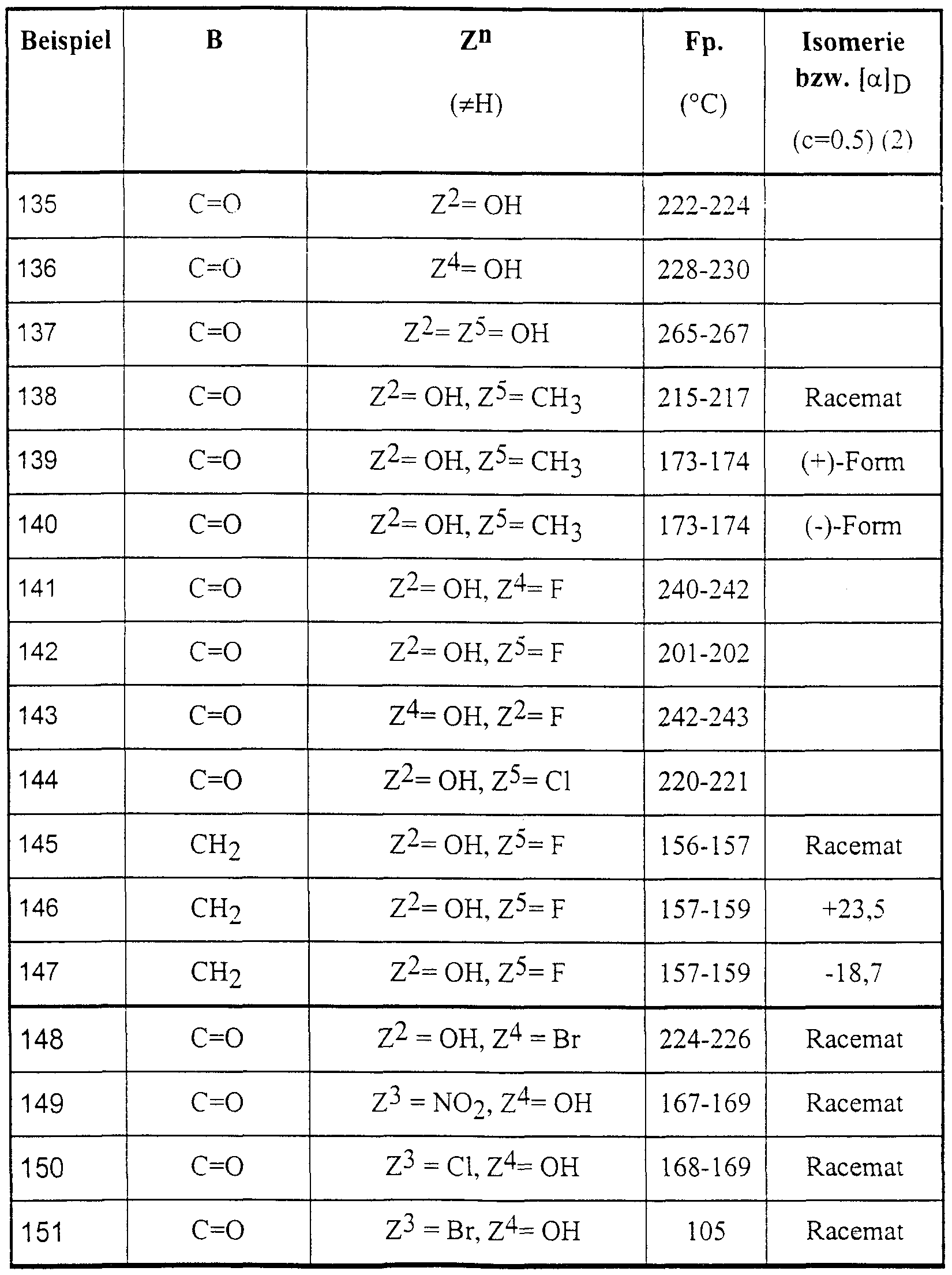
Beispiel 152Example 152
5-[4-(3-Fluorphenyl)-2-hydroxy-4-methyl-4-2-trifluormethyl-valeroylaminoj-phthalid5- [4- (3-fluorophenyl) -2-hydroxy-4-methyl-4-2-trifluoromethyl-valeroylaminoj-phthalide
66 mg (3-Fluor-4-hydroxyphenyl)-2-hydroxy-4-methyl-4-2-tπfluormethyl-valeroylamιno]- phthahd werden mit 126 mg Kaliumcarbonat und 108 mg 5-Chlor-l phenyl- lH-tetrazol in 3 ml Dimethylformamid 16 Stunden gerührt Dann wird das Dimethylformamid im Vakuum abdestilliert und der Ruckstand zwischen IN Salzsaure und Ethylacetat verteilt Nach Waschen mit Wasser wird die Ethylacetat-Phase getrocknet (Na2SÜ4) und eingedampft und der Ruckstand an Kieselgel mit Hexan / Ethylacetat Cl 1 ) chromatographiert Das Produkt wird in 10 ml Methanol mit 30 mg Palladium/Kohle (10%) hydriert Nach Entfernen des Katalysators und Eindampfen des Losemittels wird das Produkt an Kieselgel mit Hexan / Ethylacetat (1 1) chromatographiert Man erhalt 49 mg 5-[4-(3-Fluoφhenyl)-2-hydroxy-4-methyl-4-2- tπfluormethyl-valeroylammoj-phthahd, Fp 157°C66 mg (3-fluoro-4-hydroxyphenyl) -2-hydroxy-4-methyl-4-2-tπfluormethyl-valeroylamιno] - phthahd with 126 mg potassium carbonate and 108 mg 5-chloro-1 phenyl-lH-tetrazole in 3 ml of dimethylformamide is stirred for 16 hours. The dimethylformamide is then distilled off in vacuo and the residue is partitioned between 1N hydrochloric acid and ethyl acetate. After washing with water, the ethyl acetate phase is dried (Na2SÜ4) and evaporated and the residue is chromatographed on silica gel with hexane / ethyl acetate Cl 1) The product is hydrogenated in 10 ml of methanol with 30 mg of palladium / carbon (10%). After removing the catalyst and evaporating the solvent, the product is chromatographed on silica gel with hexane / ethyl acetate (1 1). 49 mg of 5- [4- (3 -Fluoφhenyl) -2-hydroxy-4-methyl-4-2- tπfluormethyl-valeroylammoj-phthahd, mp 157 ° C.
Durch Racematspaltung analog Beispiel 102 erhalt man die (-r)-Form mit Fp 140- 141 °C und die

Beispiel 153Example 153
5-[2-Hydro\y-4-methyl-4-(3-tolyl)-2-trifluormethyl-valeroylamino]-phthalid5- [2-Hydro \ y-4-methyl-4- (3-tolyl) -2-trifluoromethylvaleroylamino] phthalide
Die Verbindung wird analog dem vorhergehenden Beispiel aus 57 mg 5-[2-Hydroxy-4-(2- hydroxy-5-methylphenyl)-4-methyl-2-tπfluormethyl-valeroylamιno]-phthalιd hergestellt, FpThe compound is prepared analogously to the preceding example from 57 mg of 5- [2-hydroxy-4- (2-hydroxy-5-methylphenyl) -4-methyl-2-tπfluormethyl-valeroylamιno] -phthalιd, mp
152-153°C152-153 ° C
Durch Racematspaltung analog Beispiel 102 erhalt man die (+)-Form mit Fp 148-149°C und dieRacemate resolution analogous to Example 102 gives the (+) form with mp 148-149 ° C. and the
(-)-Form mit Fp 145-146°C(-) - Form with mp 145-146 ° C
Beispiel 154Example 154
5-[4-(5-Fluor-2-ethoxyphenyl)-2-hydroxy-4-methyl-4-2-trifluormethyl-valeroylamino]- phthalid5- [4- (5-Fluoro-2-ethoxyphenyl) -2-hydroxy-4-methyl-4-2-trifluoromethylvaleroylamino] phthalide
44 mg 5-[4-(5-Fluor-2-hydroxyphenyl)-2-hydroxy-4-methyl-4-2-tπfluormethyl-valeroylamιno]- phthahd werden m 1 ml Dimethylformamid mit 28 mg Kaliumcarbonat und 50 mg Ethyljodid 24 stunden bei Raumtemperatur gerührt Man versetzt dann mit Wasser, extrahiert mit Ethylacetat. wäscht die organische Phase mit Wasser, trocknet (Na2SÜ4) und erhält nach Eindampfen des Lösemittels 35 mg 5-[4-(5-Fluor-2-ethoxyphenyl)-2-hydroxy-4-methyl-4-2-trifluormethyl- valeroylamino]-phthalid, Fp. 108°C.44 mg of 5- [4- (5-fluoro-2-hydroxyphenyl) -2-hydroxy-4-methyl-4-2-tπfluormethyl-valeroylamιno] - phthahd are m 1 ml of dimethylformamide with 28 mg of potassium carbonate and 50 mg of ethyl iodide for 24 hours stirred at room temperature, water is then added and the mixture is extracted with ethyl acetate. washes the organic phase with water, dries (Na2SÜ4) and, after evaporation of the solvent, receives 35 mg of 5- [4- (5-fluoro-2-ethoxyphenyl) -2-hydroxy-4-methyl-4-2-trifluoromethylvaleroylamino] phthalide, mp. 108 ° C.
Analog Beispiel 154 wurden die Verbindungen der Tabelle 14 hergestelltThe compounds of Table 14 were prepared analogously to Example 154


Beispiel 162Example 162
5-[4-(3-ChIor-4-methoxyphenyl)-2-hydroxy-4-methyl-2-trifluormethyl-valeroylamino]- phthalid5- [4- (3-Chloro-4-methoxyphenyl) -2-hydroxy-4-methyl-2-trifluoromethylvaleroylamino] phthalide
22 mg 5-[2-Hydroxy-4-(4-methoxyphenyl)-4-methyl-2-trifluormethyl-valeroylamino]-phthalid werden in 1,5 ml Methanol mit 20 mg N-Chlorsuccinimid 5 Stunden gerührt. Man verteilt das Gemisch dann in Eiswasser, Natriumhydrogencarbonatlösung und Ethylacetat, trocknet die Ethylacetatphase und dampt sie ein. So erhält man 20 mg 5-[4-(3-Brom-4-methoxyphenyl)-2- hydroxy-4-methyl-2-trifluormethyl-valeroylamino]-phthalid, das nach Umkristallisation aus Isopropylether bei 189-191°C schmilzt.22 mg of 5- [2-hydroxy-4- (4-methoxyphenyl) -4-methyl-2-trifluoromethylvaleroylamino] phthalide are stirred in 1.5 ml of methanol with 20 mg of N-chlorosuccinimide for 5 hours. The mixture is then distributed in ice water, sodium bicarbonate solution and ethyl acetate, the ethyl acetate phase is dried and evaporated. This gives 20 mg of 5- [4- (3-bromo-4-methoxyphenyl) -2- hydroxy-4-methyl-2-trifluoromethyl-valeroylamino] phthalide, which melts after recrystallization from isopropyl ether at 189-191 ° C.
5-[4-(3-Chlor-4-hydroxyphenyl)-2-hydroxy-4-methyl-2-trifluormethyI-valeroyIamino]- phthalid5- [4- (3-Chloro-4-hydroxyphenyl) -2-hydroxy-4-methyl-2-trifluoromethyl-valeroyIamino] phthalide
wird aus 5-[4-(3-Chlor-4-methoxyphenyl)-2-hydroxy-4-methyl-2-trifluormethyl-valeroylamino]- phthalid durch Etherspaltung analog Beispiel 134 erhalten, Fp. 105°C.is obtained from 5- [4- (3-chloro-4-methoxyphenyl) -2-hydroxy-4-methyl-2-trifluoromethylvaleroylamino] phthalide by ether cleavage as in Example 134, mp 105 ° C.
Nach den obengenannten Verfahren wurden die 2,3-Benzoxazinon- und Phthalazinonderivate der Tabelle 15 hergestellt.The 2,3-benzoxazinone and phthalazinone derivatives in Table 15 were prepared by the above-mentioned methods.
Tabelle 15Table 15


Cl) Die in Tabelle 15 aufgeführten optisch aktiven Verbindungen wurden analog Beispiel 102 getrennt.C1) The optically active compounds listed in Table 15 were separated analogously to Example 102.
(2) In Methanol.(2) In methanol.
Beispiel 207Example 207
5-(2-Hydroxy-4-phenyl-2-trifluormethyI-valeroylamino)-benz[1.2.5]oxadiazol5- (2-Hydroxy-4-phenyl-2-trifluoromethyl-valeroylamino) benz [1.2.5] oxadiazole
Die Verbindung wurde analog Beispiel 41 aus 2-Hydroxy-4-phenyl-2-trifluormethyl- valeriansäure und 5-Amino-benz[1.2.5]oxadiazol erhalten. Fp. 192°C. Beispiel 208The compound was obtained analogously to Example 41 from 2-hydroxy-4-phenyl-2-trifluoromethylvaleric acid and 5-amino-benz [1.2.5] oxadiazole. Mp 192 ° C. Example 208
5-(2-Hydroxy-4-phenyl-2-trifluormethyl-valeroylamino)-benzo [ 1.2.5] thiadiazol5- (2-Hydroxy-4-phenyl-2-trifluoromethylvaleroylamino) benzo [1.2.5] thiadiazole
Die Verbindung wurde analog Beispiel 41 aus 2-Hydroxy-4-phenyl-2-tπfluormethyl- valeπansaure und 5-Amιno-benzo[1.2.5]thiadιazol erhalten. Fp. 166-167°CThe compound was obtained analogously to Example 41 from 2-hydroxy-4-phenyl-2-tπfluormethylvaleπansaure and 5-amino-benzo [1.2.5] thiadιazol. Mp 166-167 ° C
Beispiel 209Example 209
6-(2-Hydroxy-4-phenyl-2-trifluormethyl-valeroylamino)-l-methyl-benzotriazol6- (2-Hydroxy-4-phenyl-2-trifluoromethyl-valeroylamino) -l-methyl-benzotriazole
Die Verbindung wurde analog Beispiel 41 aus 2-Hydroxy-4-phenyl-2-tπfluormethyl- valeπansaure und 6-Amιno-l-methyl-benzotπazol erhalten. Fp 194-196°C The compound was obtained analogously to Example 41 from 2-hydroxy-4-phenyl-2-tπfluormethylvaleπansaure and 6-amino-l-methyl-benzotπazol. Mp 194-196 ° C
Claims


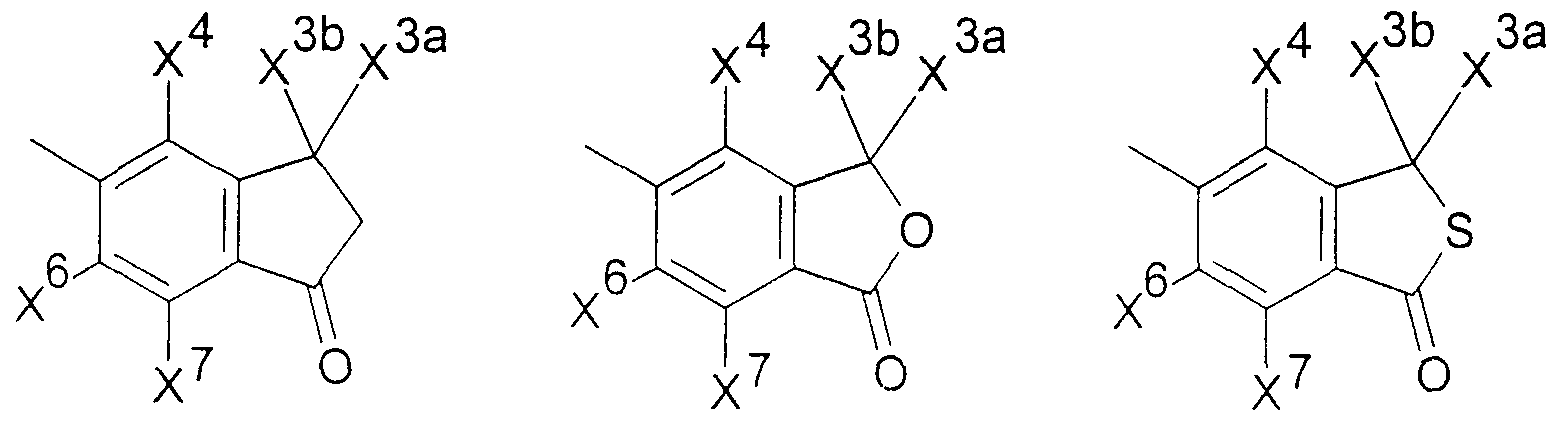


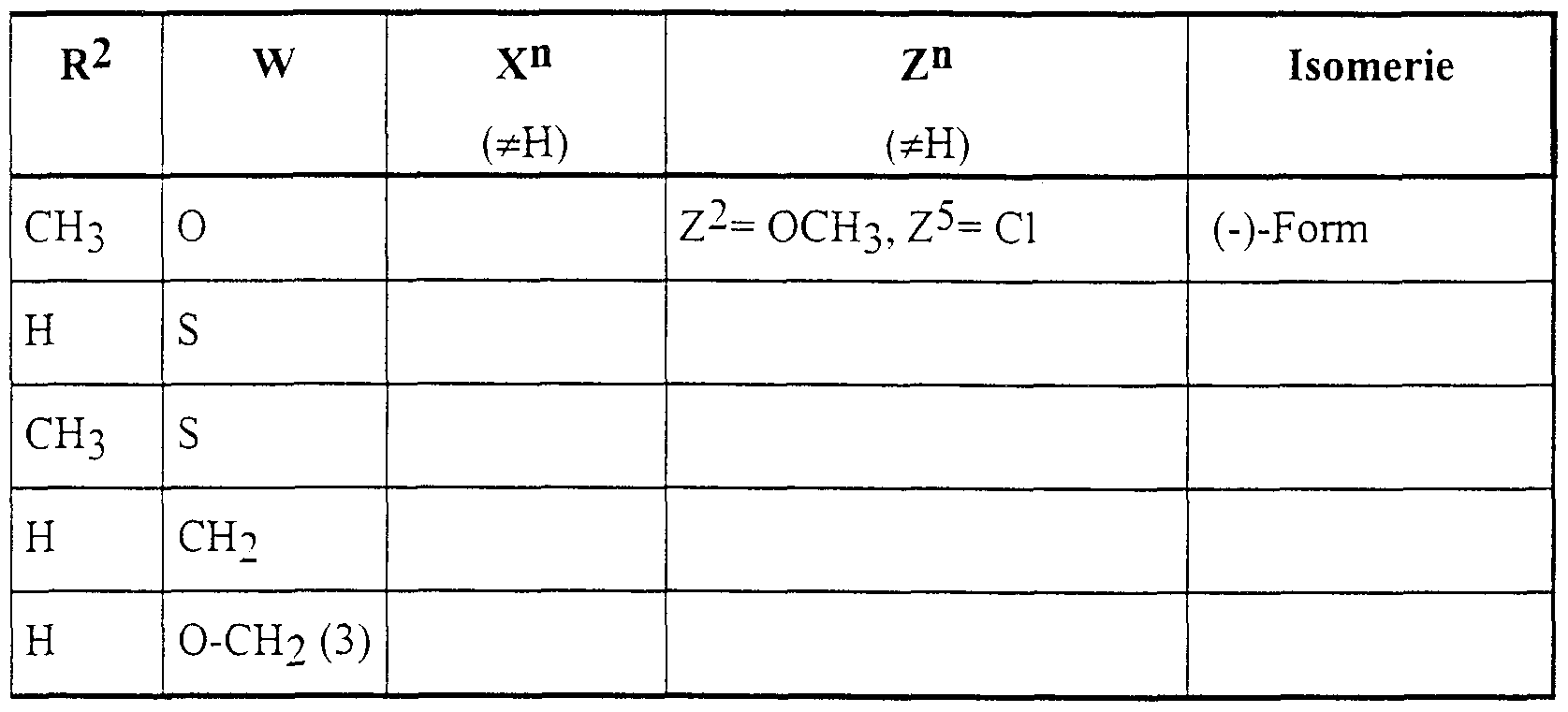

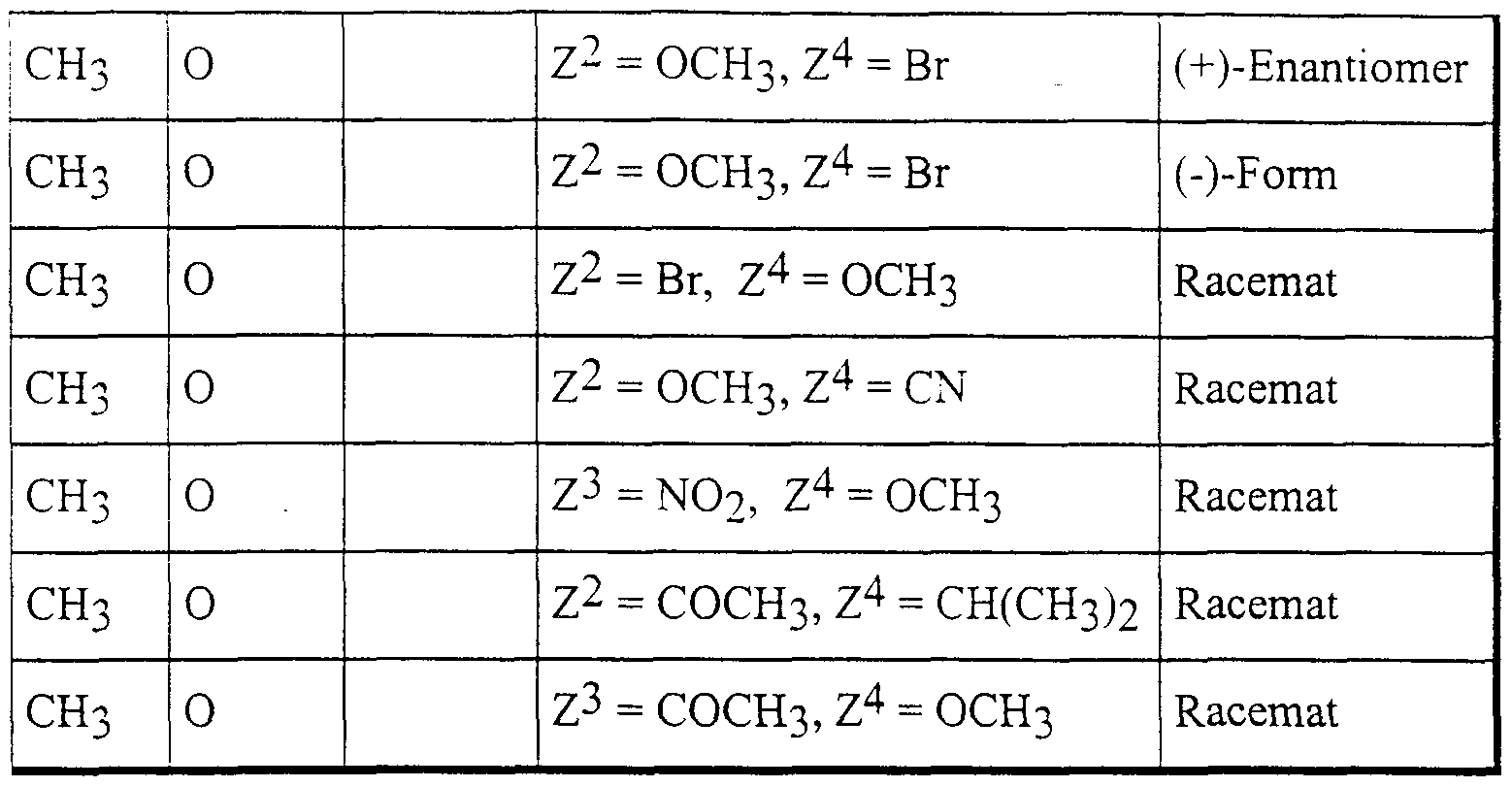


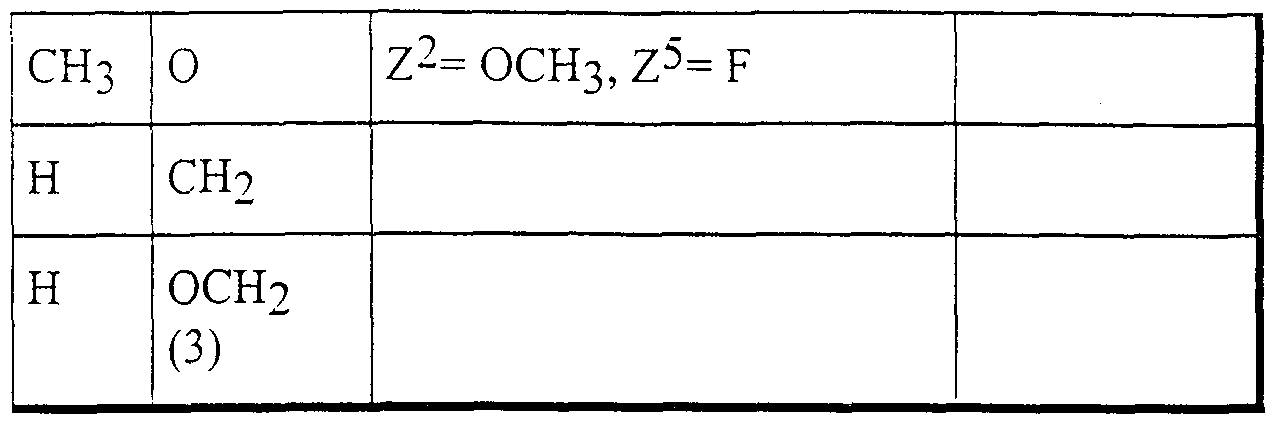

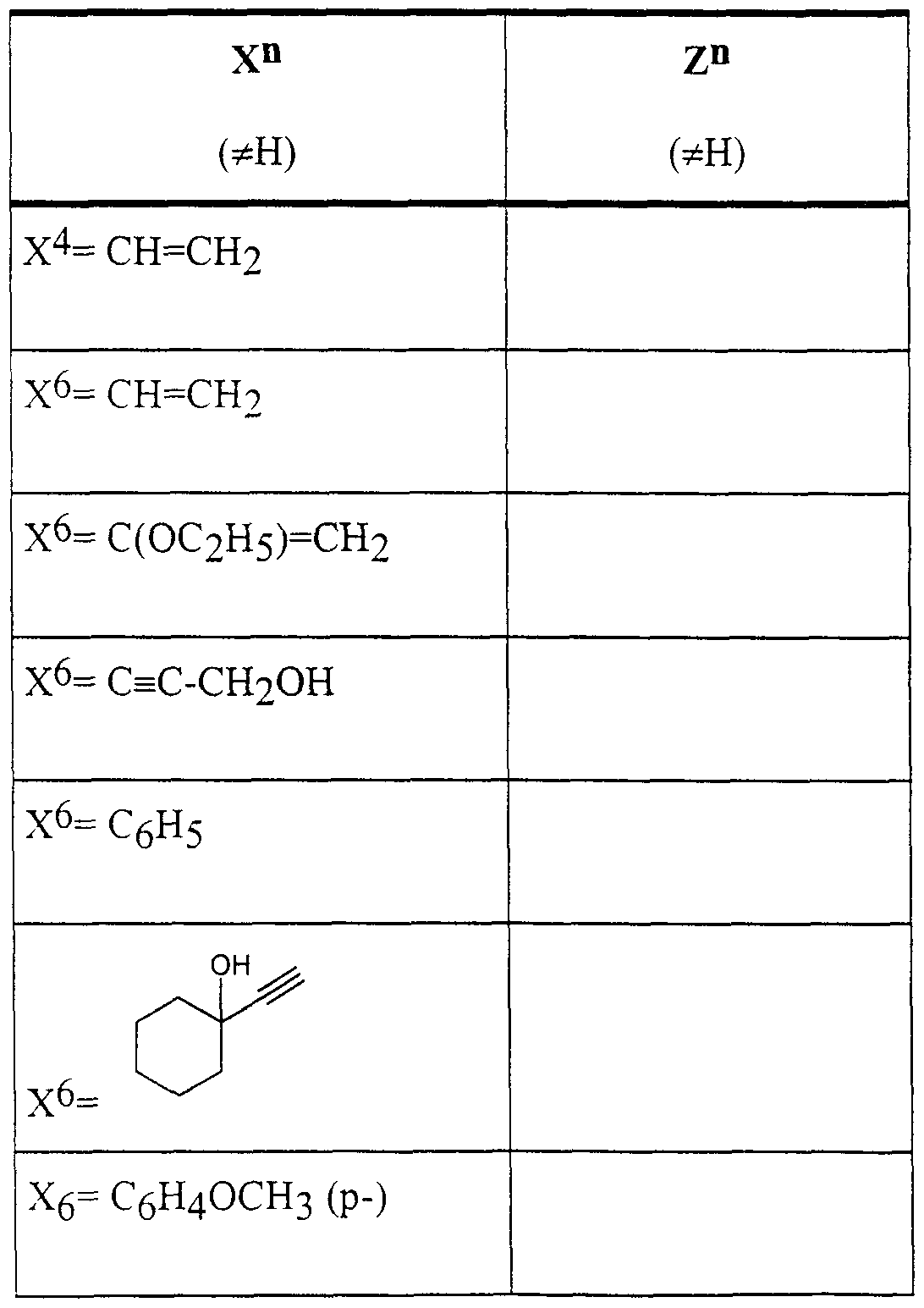

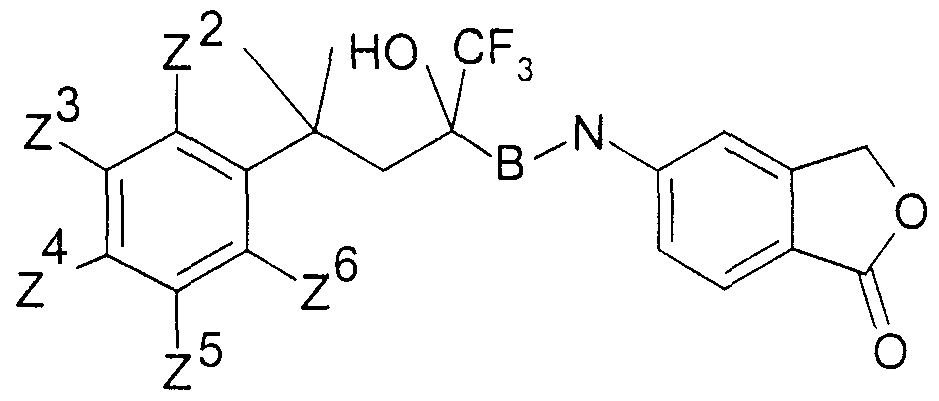


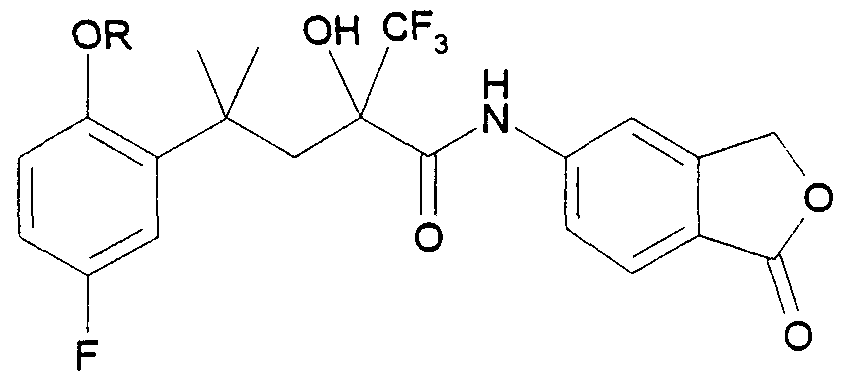


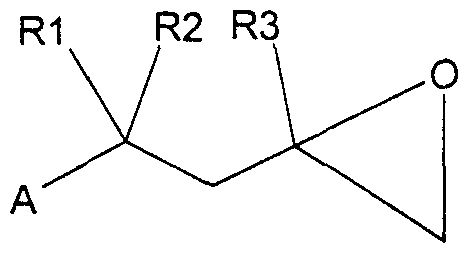
Priority Applications (22)
| Application Number | Priority Date | Filing Date | Title |
|---|---|---|---|
| UA99127245A UA64752C2 (en) | 1997-05-30 | 1998-02-06 | Non-steroidal (hetero)cyclically substituted acylanilides with a mixed gestagen or androgen activity |
| BR9809703-2A BR9809703A (en) | 1997-05-30 | 1998-06-02 | Cyclically substituted (hetero) acylanilides, non-steroidal, with mixed gestagenic and androgenic efficacy |
| CA002305458A CA2305458C (en) | 1997-05-30 | 1998-06-02 | Nonsteroidal (hetero) cyclically-substituted acylanilides with mixed gestagenic and androgenic activity |
| EP98928338A EP0986545B1 (en) | 1997-05-30 | 1998-06-02 | Non-steroidal (hetero) cyclically substituted acylanilides with mixed gestagen and androgen activity |
| DK98928338T DK0986545T3 (en) | 1997-05-30 | 1998-06-02 | Nonsteroidal (hetero) cyclic substituted acyanilides with mixed progestogen and androgenic activity |
| HU0002126A HUP0002126A3 (en) | 1997-05-30 | 1998-06-02 | Non-steroidal (hetero) cyclically substituted acylanilides with mixed gestagen and androgen activity, process for their preparation and pharmaceutical compositions thereof |
| NZ501359A NZ501359A (en) | 1997-05-30 | 1998-06-02 | Non-steroidal(hetero) cyclically substituted acylanilides with mixed gestagen and androgen activity |
| IL13319598A IL133195A0 (en) | 1997-05-30 | 1998-06-02 | Nonsteroidal gestagen compounds and processes for their production |
| JP50026799A JP2002502385A (en) | 1997-05-30 | 1998-06-02 | Non-steroidal (hetero) cyclic substituted acylanilides having mixed gestagen and androgen action |
| SK1609-99A SK284943B6 (en) | 1997-05-30 | 1998-06-02 | Non-steroidal (hetero) cyclically substituted acylanilides with mixed gestagen and androgen activity and process for their preparation |
| PL337088A PL197887B1 (en) | 1997-05-30 | 1998-06-02 | Non-steroidic (hetero)cyclically substituted acylanides of combined gestagenic and androgenic effectiveness |
| AU80211/98A AU747083C (en) | 1997-05-30 | 1998-06-02 | Non-steroidal (hetero) cyclically substituted acylanilides with mixed gestagen and androgen activity |
| SI9830739T SI0986545T1 (en) | 1997-05-30 | 1998-06-02 | Non-steroidal (hetero) cyclically substituted acylanilides with mixed gestagen and androgen activity |
| EA199900989A EA004306B1 (en) | 1997-05-30 | 1998-06-02 | Non-steroidal (hetero) cyclically substituted acylanilides with mixed gestagen and androgen activity |
| AT98928338T ATE286035T1 (en) | 1997-05-30 | 1998-06-02 | NONSTEROIDAL (HETERO)CYCLIC-SUBSTITUTED ACYLANILIDES WITH MIXED PROGESTAGENIC AND ANDROGENIC ACTIVITY |
| EEP199900548A EE04492B1 (en) | 1997-05-30 | 1998-06-02 | Gestagenic and androgenic mixed non-steroidal (hetero) cyclic substituted acyl anilides |
| KR10-1999-7011103A KR100536870B1 (en) | 1997-05-30 | 1998-06-02 | Non-Steroidal (Hetero) Cyclically Substituted Acylanilides with Mixed Gestagen and Androgen Activity |
| DE59812452T DE59812452D1 (en) | 1997-05-30 | 1998-06-02 | NON-TTEROIDAL (HETERO) CYCLIC-SUBSTITUTED ACYLANILIDES WITH MIXED STAFF AND ANDROGEN EFFECTIVENESS |
| IS5241A IS2498B (en) | 1997-05-30 | 1999-11-09 | (Hetero) non-steroidal, non-steroidal, mixed steroid and androgenic activity |
| BG103903A BG64212B1 (en) | 1997-05-30 | 1999-11-19 | Nonsteroid (hetero) cyclic substituted acylanylides of mixed gestagenous and androgenous activity |
| IL133195A IL133195A (en) | 1997-05-30 | 1999-11-29 | Nonsteroidal (hetero) cyclically substituted acylanilides with mixed gestagen and androgen activity and processes for their production |
| NO19995845A NO325076B1 (en) | 1997-05-30 | 1999-11-29 | Nonsteroidal (hetero) cyclic-substituted acylanilides with mixed progestogen and androgenic action, their preparation, pharmaceutical compositions comprising them and their use in the preparation of pharmaceutical preparations |
Applications Claiming Priority (2)
| Application Number | Priority Date | Filing Date | Title |
|---|---|---|---|
| DE19723722A DE19723722A1 (en) | 1997-05-30 | 1997-05-30 | Nonsteroidal progestogens |
| DE19723722.3 | 1997-05-30 |
Publications (1)
| Publication Number | Publication Date |
|---|---|
| WO1998054159A1 true WO1998054159A1 (en) | 1998-12-03 |
Family
ID=7831567
Family Applications (1)
| Application Number | Title | Priority Date | Filing Date |
|---|---|---|---|
| PCT/EP1998/003242 Ceased WO1998054159A1 (en) | 1997-05-30 | 1998-06-02 | Non-steroidal (hetero) cyclically substituted acylanilides with mixed gestagen and androgen activity |
Country Status (30)
| Country | Link |
|---|---|
| EP (1) | EP0986545B1 (en) |
| JP (1) | JP2002502385A (en) |
| KR (1) | KR100536870B1 (en) |
| CN (1) | CN100445272C (en) |
| AR (1) | AR011480A1 (en) |
| AT (1) | ATE286035T1 (en) |
| AU (1) | AU747083C (en) |
| BG (1) | BG64212B1 (en) |
| BR (1) | BR9809703A (en) |
| CA (1) | CA2305458C (en) |
| CZ (1) | CZ296377B6 (en) |
| DE (2) | DE19723722A1 (en) |
| EA (1) | EA004306B1 (en) |
| EE (1) | EE04492B1 (en) |
| ES (1) | ES2234121T3 (en) |
| HR (1) | HRP980289B1 (en) |
| HU (1) | HUP0002126A3 (en) |
| ID (1) | ID23499A (en) |
| IL (2) | IL133195A0 (en) |
| IS (1) | IS2498B (en) |
| NO (1) | NO325076B1 (en) |
| NZ (1) | NZ501359A (en) |
| PL (1) | PL197887B1 (en) |
| PT (1) | PT986545E (en) |
| SK (1) | SK284943B6 (en) |
| TR (1) | TR199902924T2 (en) |
| TW (1) | TW577882B (en) |
| UA (1) | UA64752C2 (en) |
| WO (1) | WO1998054159A1 (en) |
| ZA (1) | ZA984655B (en) |
Cited By (87)
| Publication number | Priority date | Publication date | Assignee | Title |
|---|---|---|---|---|
| WO2000032584A3 (en) * | 1998-11-27 | 2000-11-09 | Schering Ag | Nonsteroidal antiinflammatories |
| WO2002010143A1 (en) | 2000-07-28 | 2002-02-07 | Schering Aktiengesellschaft | Non-steroidal inflammation inhibitors |
| EP1344776A1 (en) * | 2002-03-11 | 2003-09-17 | Schering Aktiengesellschaft | 5- 2-hydroxy-3-[1-(3-trifluoromethylphenyl)-cyclopropyl]-propionylamino -phtalide and 6- 2-hydroxy-3-[1-(3-trifluoromethylphenyl)-cyclopropyl]-propionylamino -4-methyl-2,3-benzoxazin-1-one derivatives with progesterone receptor modulating activity for use in fertility control, hormone replacement therapy and the treatment of gynecological disorders |
| WO2003075915A1 (en) * | 2002-03-11 | 2003-09-18 | Schering Ag | 5-}2-hydroxy-3-`1-(3-trifluoromethylphenyl)-cyclopropyl!-propionylamino}- phtalide and related compounds with progesterone receptor modulating activity for use in fertility control and hormone replacement therapy |
| WO2004019935A1 (en) | 2002-08-29 | 2004-03-11 | Boehringer Ingelheim Pharmaceuticals, Inc. | -3 (sulfonamidoethyl) -indole derivaties for use as glucocorticoid mimetics in the treatment of inflammatory, allergic and proliferative diseases |
| WO2004058733A1 (en) * | 2002-12-20 | 2004-07-15 | Schering Aktiengesellschaft | Non-steroidal anti-inflammatory agents |
| WO2004075864A3 (en) * | 2003-02-27 | 2004-11-11 | Boehringer Ingelheim Pharma | Glucocorticoid mimetics, methods of making them, pharmaceutical compositions, and uses thereof |
| WO2005003098A1 (en) * | 2003-07-01 | 2005-01-13 | Schering Aktiengesellschaft | Heterocyclically substituted pentanol derivatives, method for the production thereof, and use thereof as anti-inflammatory agents |
| WO2005005452A1 (en) | 2003-07-11 | 2005-01-20 | Glaxo Group Limited | Specific glucocorticosteroid compound having anti- inflammatory activity |
| US6858627B2 (en) | 2002-08-21 | 2005-02-22 | Boehringer Ingelheim Pharmaceuticals, Inc. | Glucocorticoid mimetics, methods of making them, pharmaceutical compositions, and uses thereof |
| WO2005030213A1 (en) | 2003-09-24 | 2005-04-07 | Boehringer Ingelheim Pharmaceuticals, Inc. | 1,1,1-trifluoro-4-phenyl-4-methyl-2-(1h-pyrrolo |
| US6903215B2 (en) | 2002-03-26 | 2005-06-07 | Boehringer Ingelheim Pharmaceuticals, Inc. | Glucocorticoid mimetics, methods of making them, pharmaceutical compositions, and uses thereof |
| DE10346940B3 (en) * | 2003-10-06 | 2005-06-16 | Schering Ag | Substituted pentanols, their use for the preparation of medicaments, in particular anti-inflammatories and pharmaceutical compositions containing them |
| US6960581B2 (en) * | 2002-01-14 | 2005-11-01 | Boehringer Ingelheim Pharmaceuticals, Inc. | Glucocorticoid mimetics, methods of making them, pharmaceutical formulations, and uses thereof |
| WO2005116037A1 (en) | 2004-05-24 | 2005-12-08 | Glaxo Group Limited | Purine derivative |
| WO2006071609A2 (en) | 2004-12-27 | 2006-07-06 | Boehringer Ingelheim Pharmaceuticals, Inc. | Glucocorticoid mimetics, methods of making them, pharmaceutical compositions, and uses thereof |
| US7074806B2 (en) | 2002-06-06 | 2006-07-11 | Boehringer Ingelheim Pharmaceuticals, Inc. | Glucocorticoid mimetics, methods of making them, pharmaceutical compositions, and uses thereof |
| WO2006104889A2 (en) | 2005-03-25 | 2006-10-05 | Glaxo Group Limited | Novel compounds |
| WO2006108712A1 (en) * | 2005-04-14 | 2006-10-19 | Bayer Schering Pharma Aktiengesellschaft | Tetrahydronaphthalene derivatives method for the production and the use thereof in the form of antiphlogistics |
| DE102005030294A1 (en) * | 2005-06-24 | 2007-01-04 | Schering Ag | Nonsteroidal progesterone receptor modulators |
| WO2007009757A1 (en) | 2005-07-19 | 2007-01-25 | Glaxo Group Limited | Purine derivatives as agonists of the adenosine a2a receptor |
| US7186864B2 (en) | 2002-05-29 | 2007-03-06 | Boehringer Ingelheim Pharmaceuticals, Inc. | Glucocorticoid mimetics, methods of making them, pharmaceutical compositions, and uses thereof |
| WO2007065828A1 (en) | 2005-12-09 | 2007-06-14 | F. Hoffmann-La Roche Ag | Glucocorticoid receptor modulators as antiinflammatory agents |
| US7268152B2 (en) | 2002-03-26 | 2007-09-11 | Boehringer Ingelheim Pharmaceuticals, Inc. | Glucocorticoid mimetics, methods of making them, pharmaceutical compositions, and uses thereof |
| WO2007122165A1 (en) | 2006-04-20 | 2007-11-01 | Glaxo Group Limited | Novel compounds |
| WO2007144327A2 (en) | 2006-06-12 | 2007-12-21 | Glaxo Group Limited | Phenyl-pyrazole derivatives as non-steroidal glucocoricoid receptor ligands |
| US7408060B2 (en) | 2005-06-24 | 2008-08-05 | Schering Ag | Nonsteroidal progesterone receptor modulators |
| WO2008118724A1 (en) | 2007-03-23 | 2008-10-02 | Smithkline Beecham Corporation | Indole carboxamides as ikk2 inhibitors |
| WO2008077647A3 (en) * | 2006-12-21 | 2008-10-16 | Bayer Schering Pharma Ag | Alpha- amino alcohols as non-steroidal progesterone receptor modulators |
| DE102007023614A1 (en) | 2007-05-21 | 2008-11-27 | Bayer Schering Pharma Aktiengesellschaft | New amide compounds used for treatment of gynecological diseases e.g. endometriosis, for female fertility control and female hormone replacement therapy, has general formula |
| DE102007032800A1 (en) | 2007-07-10 | 2009-01-15 | Bayer Schering Pharma Aktiengesellschaft | Nonsteroidal progesterone receptor modulators |
| US7507843B2 (en) | 2003-10-16 | 2009-03-24 | Boehringer Ingelheim Pharmaceuticals, Inc. | Stereoselective synthesis of certain trifluoromethyl-substituted alcohols |
| DE102007058747A1 (en) | 2007-12-05 | 2009-06-10 | Bayer Schering Pharma Aktiengesellschaft | Nonsteroidal progesterone receptor modulators |
| EP2070909A1 (en) | 2007-12-15 | 2009-06-17 | Bayer Schering Pharma AG | Non-steroidal progesterone receptor modulators |
| US7579469B2 (en) | 2003-01-03 | 2009-08-25 | Boehringer Ingelheim Pharmaceuticals, Inc. | Glucocorticoid mimetics, methods of making them, pharmaceutical compositions, and uses thereof |
| US7579335B2 (en) | 2005-01-10 | 2009-08-25 | Glaxo Group Limited | Androstane 17α-carbonate derivatives for use in the treatment of allergic and inflammatory conditions |
| DE102007049630A1 (en) | 2007-10-11 | 2009-10-29 | Bayer Schering Pharma Aktiengesellschaft | New amide compounds used for therapy and/or prophylaxis of gynecological diseases e.g. endometriosis, for female fertility control and female hormone replacement therapy |
| WO2009147187A1 (en) | 2008-06-05 | 2009-12-10 | Glaxo Group Limited | 4-carboxamide indazole derivatives useful as inhibitors of p13-kinases |
| WO2009147190A1 (en) | 2008-06-05 | 2009-12-10 | Glaxo Group Limited | Novel compounds |
| EP2157087A1 (en) | 2005-12-20 | 2010-02-24 | Glaxo Group Limited | 3-(4-{[4-(4-{[3-(3,3-dimethyl-1-piperidinyl)propyl]oxy}phenyl)-1-piperidinyl]carbonyl}-1-naphthalenyl)propanoic or propenoic acid as h1 and h3 receptor antagonists for the treatment of inflammatory and/or allergic disorders |
| WO2010068311A1 (en) | 2008-05-23 | 2010-06-17 | Amira Pharmaceuticals, Inc. | 5-lipoxygenase-activating protein inhibitor |
| WO2010094643A1 (en) | 2009-02-17 | 2010-08-26 | Glaxo Group Limited | Quinoline derivatives and their uses for rhinitis and urticaria |
| US7795272B2 (en) | 2004-03-13 | 2010-09-14 | Boehringer Ingelheim Pharmaceutical, Inc. | Glucocorticoid mimetics, methods of making them, pharmaceutical compositions and uses thereof |
| WO2010102958A1 (en) | 2009-03-09 | 2010-09-16 | Glaxo Group Limited | 4-oxadiazol-2 -yl- indazoles as inhibitors of p13 kinases |
| WO2010102968A1 (en) | 2009-03-10 | 2010-09-16 | Glaxo Group Limited | Indole derivatives as ikk2 inhibitors |
| WO2010107958A1 (en) | 2009-03-19 | 2010-09-23 | Merck Sharp & Dohme Corp. | RNA INTERFERENCE MEDIATED INHIBITION OF SIGNAL TRANSDUCER AND ACTIVATOR OF TRANSCRIPTION 6 (STAT6) GENE EXPRESSION USING SHORT INTERFERING NUCLEIC ACID (siNA) |
| WO2010107955A2 (en) | 2009-03-19 | 2010-09-23 | Merck Sharp & Dohme Corp. | RNA INTERFERENCE MEDIATED INHIBITION OF BTB AND CNC HOMOLOGY 1, BASIC LEUCINE ZIPPER TRANSCRIPTION FACTOR 1 (BACH 1) GENE EXPRESSION USING SHORT INTERFERING NUCLEIC ACID (siNA) SEQUENCE LISTING |
| WO2010106016A1 (en) | 2009-03-17 | 2010-09-23 | Glaxo Group Limited | Pyrimidine derivatives used as itk inhibitors |
| WO2010107957A2 (en) | 2009-03-19 | 2010-09-23 | Merck Sharp & Dohme Corp. | RNA INTERFERENCE MEDIATED INHIBITION OF GATA BINDING PROTEIN 3 (GATA3) GENE EXPRESSION USING SHORT INTERFERING NUCLEIC ACID (siNA) |
| WO2010107952A2 (en) | 2009-03-19 | 2010-09-23 | Merck Sharp & Dohme Corp. | RNA INTERFERENCE MEDIATED INHIBITION OF CONNECTIVE TISSUE GROWTH FACTOR (CTGF) GENE EXPRESSION USING SHORT INTERFERING NUCLEIC ACID (siNA) |
| WO2010111464A1 (en) | 2009-03-27 | 2010-09-30 | Merck Sharp & Dohme Corp. | RNA INTERFERENCE MEDIATED INHIBITION OF APOPTOSIS SIGNAL-REGULATING KINASE 1 (ASK1) GENE EXPRESSION USING SHORT INTERFERING NUCLEIC ACID (siNA) |
| WO2010111497A2 (en) | 2009-03-27 | 2010-09-30 | Merck Sharp & Dohme Corp. | RNA INTERFERENCE MEDIATED INHIBITION OF THE INTERCELLULAR ADHESION MOLECULE 1 (ICAM-1)GENE EXPRESSION USING SHORT INTERFERING NUCLEIC ACID (siNA) |
| WO2010111468A2 (en) | 2009-03-27 | 2010-09-30 | Merck Sharp & Dohme Corp. | RNA INTERFERENCE MEDIATED INHIBITION OF THE NERVE GROWTH FACTOR BETA CHAIN (NGFß) GENE EXPRESSION USING SHORT INTERFERING NUCLEIC ACID (SINA) |
| WO2010111471A2 (en) | 2009-03-27 | 2010-09-30 | Merck Sharp & Dohme Corp. | RNA INTERFERENCE MEDIATED INHIBITION OF SIGNAL TRANSDUCER AND ACTIVATOR OF TRANSCRIPTION 1 (STAT1) GENE EXPRESSION USING SHORT INTERFERING NUCLEIC ACID (siNA) |
| WO2010111490A2 (en) | 2009-03-27 | 2010-09-30 | Merck Sharp & Dohme Corp. | RNA INTERFERENCE MEDIATED INHIBITION OF THE THYMIC STROMAL LYMPHOPOIETIN (TSLP) GENE EXPRESSION USING SHORT INTERFERING NUCLEIC ACID (siNA) |
| WO2010122089A1 (en) | 2009-04-24 | 2010-10-28 | Glaxo Group Limited | N-pyrazolyl carboxamides as crac channel inhibitors |
| WO2010122088A1 (en) | 2009-04-24 | 2010-10-28 | Glaxo Group Limited | Pyrazole and triazole carboxamides as crac channel inhibitors |
| WO2011067365A1 (en) | 2009-12-03 | 2011-06-09 | Glaxo Group Limited | Benzpyrazole derivatives as inhibitors of p13 kinases |
| WO2011067364A1 (en) | 2009-12-03 | 2011-06-09 | Glaxo Group Limited | Novel compounds |
| WO2011067366A1 (en) | 2009-12-03 | 2011-06-09 | Glaxo Group Limited | Indazole derivatives as pi 3 - kinase inhibitors |
| WO2011084316A2 (en) | 2009-12-16 | 2011-07-14 | 3M Innovative Properties Company | Formulations and methods for controlling mdi particle size delivery |
| WO2011110575A1 (en) | 2010-03-11 | 2011-09-15 | Glaxo Group Limited | Derivatives of 2-[2-(benzo- or pyrido-) thiazolylamino]-6-aminopyridine, useful in the treatment of respiratoric, allergic or inflammatory diseases |
| WO2011134971A1 (en) | 2010-04-29 | 2011-11-03 | Glaxo Group Limited | 7-(1h-pyrazol-4-yl)-1,6-naphthyridine compounds as syk inhibitors |
| WO2012032067A1 (en) | 2010-09-08 | 2012-03-15 | Glaxo Group Limited | Polymorphs and salts of n- [5- [4- (5- { [(2r,6s) -2, 6 - dimethyl - 4 -morpholinyl] methyl} - 1, 3 - oxazol - 2 - yl) - 1h- inda zol-6-yl] -2- (methyloxy) - 3 - pyridinyl] methanesulfonamide |
| WO2012032065A1 (en) | 2010-09-08 | 2012-03-15 | Glaxo Group Limited | Indazole derivatives for use in the treatment of influenza virus infection |
| WO2012035055A1 (en) | 2010-09-17 | 2012-03-22 | Glaxo Group Limited | Novel compounds |
| EP2436686A1 (en) | 2005-03-25 | 2012-04-04 | Glaxo Group Limited | Pyrimidopyridine compound used as a CSBP/RK/p38 modulator |
| EP2436697A1 (en) | 2004-07-01 | 2012-04-04 | Glaxo Group Limited | Chimeric and humanised monoclonal antibodies against interleukin-13 |
| WO2012052458A1 (en) | 2010-10-21 | 2012-04-26 | Glaxo Group Limited | Pyrazole compounds acting against allergic, immune and inflammatory conditions |
| WO2012052459A1 (en) | 2010-10-21 | 2012-04-26 | Glaxo Group Limited | Pyrazole compounds acting against allergic, inflammatory and immune disorders |
| WO2012055846A1 (en) | 2010-10-27 | 2012-05-03 | Glaxo Group Limited | Polymorphs and salts of 6-(1h-indol-4-yl)-4-(5- { [4-(1-methylethyl)-1-pi perazinyl] methyl} -1,3-oxazol-2-yl)-1h-indazole as pi3k inhibitors for use in the treatment of e.g. respiratory disorders |
| WO2012123311A1 (en) | 2011-03-11 | 2012-09-20 | Glaxo Group Limited | Pyridinyl- and pyrazinyl -methyloxy - aryl derivatives useful as inhibitors of spleen tyrosine kinase (syk) |
| WO2012123312A1 (en) | 2011-03-11 | 2012-09-20 | Glaxo Group Limited | Pyrido[3,4-b]pyrazine derivatives as syk inhibitors |
| WO2015042077A1 (en) | 2013-09-22 | 2015-03-26 | Calitor Sciences, Llc | Substituted aminopyrimidine compounds and methods of use |
| WO2015055691A1 (en) | 2013-10-17 | 2015-04-23 | Glaxosmithkline Intellectual Property Development Limited | Pi3k inhibitor for treatment of respiratory disease |
| WO2015055690A1 (en) | 2013-10-17 | 2015-04-23 | Glaxosmithkline Intellectual Property Development Limited | Pi3k inhibitor for treatment of respiratory disease |
| EP2899191A1 (en) | 2009-04-30 | 2015-07-29 | Glaxo Group Limited | Oxazole substituted indazoles as pi3-kinase inhibitors |
| WO2015173701A2 (en) | 2014-05-12 | 2015-11-19 | Glaxosmithkline Intellectual Property (No. 2) Limited | Pharmaceutical compositions for treating infectious diseases |
| WO2017044434A1 (en) | 2015-09-11 | 2017-03-16 | Sunshine Lake Pharma Co., Ltd. | Substituted heteroaryl compounds and methods of use |
| WO2017137535A1 (en) | 2016-02-12 | 2017-08-17 | Glaxosmithkline Intellectual Property Development Limited | Chemical compounds as inhibitors of kinase activity |
| WO2018029126A1 (en) | 2016-08-08 | 2018-02-15 | Glaxosmithkline Intellectual Property Development Limited | Chemical compounds |
| EP3312164A1 (en) | 2014-03-28 | 2018-04-25 | Calitor Sciences, LLC | Substituted heteroaryl compounds and methods of use |
| WO2018192864A1 (en) | 2017-04-18 | 2018-10-25 | Glaxosmithkline Intellectual Property Development Limited | Oxepinopyrazole derivatives as inhibitors of pi3-kinase activity |
| WO2019020657A1 (en) | 2017-07-27 | 2019-01-31 | Glaxosmithkline Intellectual Property Development Limited | Pyridine-3-sulfonamide compounds as pi3-kinase inhibitors |
| WO2019099311A1 (en) | 2017-11-19 | 2019-05-23 | Sunshine Lake Pharma Co., Ltd. | Substituted heteroaryl compounds and methods of use |
| WO2019143874A1 (en) | 2018-01-20 | 2019-07-25 | Sunshine Lake Pharma Co., Ltd. | Substituted aminopyrimidine compounds and methods of use |
| WO2021191875A1 (en) | 2020-03-26 | 2021-09-30 | Glaxosmithkline Intellectual Property Development Limited | Cathepsin inhibitors for preventing or treating viral infections |
Families Citing this family (13)
| Publication number | Priority date | Publication date | Assignee | Title |
|---|---|---|---|---|
| JP2004516841A (en) * | 2000-12-28 | 2004-06-10 | シエーリング アクチエンゲゼルシャフト | Methods for screening for progesterone receptor isoform-specific ligands and tissue-selective progesterone receptor ligands |
| DE10215316C1 (en) * | 2002-04-02 | 2003-12-18 | Schering Ag | Quinoline and isoquinoline derivatives, a pharmaceutical agent and their use as anti-inflammatory agents |
| AU2003287076C1 (en) * | 2002-10-15 | 2010-03-04 | University Of Tennessee Research Foundation | Heterocyclic selective androgen receptor modulators and methods of use thereof |
| DE102004062182B4 (en) * | 2004-12-20 | 2007-06-06 | Bayer Schering Pharma Ag | Transdermal patch with progesterone A-specific ligands (PRASL) as active ingredient |
| JPWO2006083030A1 (en) * | 2005-02-04 | 2008-06-26 | 味の素株式会社 | Fatty acid production method and fatty acid salt crystals |
| DE102005030293A1 (en) * | 2005-06-24 | 2007-01-04 | Schering Ag | Use of nonsteroidal progesterone receptor modulators |
| JP2010512331A (en) | 2006-12-06 | 2010-04-22 | ベーリンガー インゲルハイム インターナショナル ゲゼルシャフト ミット ベシュレンクテル ハフツング | Glucocorticoid mimetics, methods for their production, pharmaceutical compositions, and uses thereof |
| UY30815A1 (en) * | 2006-12-21 | 2008-07-31 | Bayer Schering Pharma Ag | NON-STEROID MODULATORS OF THE PROGESTERONE RECEIVER |
| JP5090773B2 (en) * | 2006-12-26 | 2012-12-05 | 国立大学法人東京工業大学 | Method for producing optically active fluorinated carbonyl-ene product |
| ATE541846T1 (en) | 2008-06-06 | 2012-02-15 | Boehringer Ingelheim Int | GLUCOCORTICOID MIMETICS, METHOD FOR THE PRODUCTION THEREOF, PHARMACEUTICAL COMPOSITIONS AND APPLICATIONS THEREOF |
| EP3569228A1 (en) * | 2018-05-17 | 2019-11-20 | Association pour la recherche à l'IGBMC (ARI) | Non-steroidal selective glucocorticoid receptor agonistic modulators (segrams) and uses thereof |
| CR20230007A (en) * | 2020-06-12 | 2023-06-01 | Shanghai Jemincare Pharmaceuticals Co Ltd | Phthalazinone compound, and preparation method therefor and medical use thereof |
| CN114605308B (en) * | 2022-03-18 | 2023-12-19 | 阜新孚隆宝医药科技有限公司 | Preparation method of azabicyclo medicine intermediate of Pa Luo Weide and intermediate |
Citations (5)
| Publication number | Priority date | Publication date | Assignee | Title |
|---|---|---|---|---|
| EP0002892A1 (en) * | 1977-12-15 | 1979-07-11 | Imperial Chemical Industries Plc | Amide derivatives, process for their manufacture and pharmaceutical or veterinary compositions containing them |
| EP0040932A1 (en) * | 1980-05-22 | 1981-12-02 | Imperial Chemical Industries Plc | Amide derivatives, process for their manufacture and pharmaceutical or veterinary compositions containing them |
| EP0173516A2 (en) * | 1984-08-20 | 1986-03-05 | Ono Pharmaceutical Co., Ltd. | (Fused)benz(thio)amides |
| EP0253503A2 (en) * | 1986-07-18 | 1988-01-20 | Imperial Chemical Industries Plc | Substituted anilides having antiandrogenic properties |
| EP0253500A2 (en) * | 1986-07-18 | 1988-01-20 | Imperial Chemical Industries Plc | Acylanilide derivatives |
Family Cites Families (2)
| Publication number | Priority date | Publication date | Assignee | Title |
|---|---|---|---|---|
| JPS5789048A (en) * | 1980-11-20 | 1982-06-03 | Nat Jutaku Kenzai | Independent pilar with cover |
| NZ254534A (en) * | 1992-07-01 | 1997-12-19 | Ortho Pharma Corp | 1,4,5,6-tetrahydro-pyridazine derivatives, preparation and pharmaceutical compositions thereof |
-
1997
- 1997-05-30 DE DE19723722A patent/DE19723722A1/en not_active Ceased
-
1998
- 1998-02-06 UA UA99127245A patent/UA64752C2/en unknown
- 1998-05-29 HR HR980289A patent/HRP980289B1/en not_active IP Right Cessation
- 1998-05-29 ZA ZA984655A patent/ZA984655B/en unknown
- 1998-06-01 TW TW087108524A patent/TW577882B/en not_active IP Right Cessation
- 1998-06-01 AR ARP980102552A patent/AR011480A1/en active IP Right Grant
- 1998-06-02 PL PL337088A patent/PL197887B1/en unknown
- 1998-06-02 EA EA199900989A patent/EA004306B1/en not_active IP Right Cessation
- 1998-06-02 KR KR10-1999-7011103A patent/KR100536870B1/en not_active Expired - Fee Related
- 1998-06-02 BR BR9809703-2A patent/BR9809703A/en not_active IP Right Cessation
- 1998-06-02 CZ CZ0425799A patent/CZ296377B6/en not_active IP Right Cessation
- 1998-06-02 JP JP50026799A patent/JP2002502385A/en not_active Ceased
- 1998-06-02 EE EEP199900548A patent/EE04492B1/en not_active IP Right Cessation
- 1998-06-02 ES ES98928338T patent/ES2234121T3/en not_active Expired - Lifetime
- 1998-06-02 DE DE59812452T patent/DE59812452D1/en not_active Expired - Fee Related
- 1998-06-02 SK SK1609-99A patent/SK284943B6/en not_active IP Right Cessation
- 1998-06-02 TR TR1999/02924T patent/TR199902924T2/en unknown
- 1998-06-02 PT PT98928338T patent/PT986545E/en unknown
- 1998-06-02 ID IDW991498A patent/ID23499A/en unknown
- 1998-06-02 AT AT98928338T patent/ATE286035T1/en not_active IP Right Cessation
- 1998-06-02 EP EP98928338A patent/EP0986545B1/en not_active Expired - Lifetime
- 1998-06-02 CA CA002305458A patent/CA2305458C/en not_active Expired - Fee Related
- 1998-06-02 NZ NZ501359A patent/NZ501359A/en unknown
- 1998-06-02 IL IL13319598A patent/IL133195A0/en active IP Right Grant
- 1998-06-02 AU AU80211/98A patent/AU747083C/en not_active Ceased
- 1998-06-02 WO PCT/EP1998/003242 patent/WO1998054159A1/en not_active Ceased
- 1998-06-02 HU HU0002126A patent/HUP0002126A3/en unknown
- 1998-06-02 CN CNB98805597XA patent/CN100445272C/en not_active Expired - Fee Related
-
1999
- 1999-11-09 IS IS5241A patent/IS2498B/en unknown
- 1999-11-19 BG BG103903A patent/BG64212B1/en unknown
- 1999-11-29 NO NO19995845A patent/NO325076B1/en unknown
- 1999-11-29 IL IL133195A patent/IL133195A/en not_active IP Right Cessation
Patent Citations (5)
| Publication number | Priority date | Publication date | Assignee | Title |
|---|---|---|---|---|
| EP0002892A1 (en) * | 1977-12-15 | 1979-07-11 | Imperial Chemical Industries Plc | Amide derivatives, process for their manufacture and pharmaceutical or veterinary compositions containing them |
| EP0040932A1 (en) * | 1980-05-22 | 1981-12-02 | Imperial Chemical Industries Plc | Amide derivatives, process for their manufacture and pharmaceutical or veterinary compositions containing them |
| EP0173516A2 (en) * | 1984-08-20 | 1986-03-05 | Ono Pharmaceutical Co., Ltd. | (Fused)benz(thio)amides |
| EP0253503A2 (en) * | 1986-07-18 | 1988-01-20 | Imperial Chemical Industries Plc | Substituted anilides having antiandrogenic properties |
| EP0253500A2 (en) * | 1986-07-18 | 1988-01-20 | Imperial Chemical Industries Plc | Acylanilide derivatives |
Cited By (118)
| Publication number | Priority date | Publication date | Assignee | Title |
|---|---|---|---|---|
| WO2000032584A3 (en) * | 1998-11-27 | 2000-11-09 | Schering Ag | Nonsteroidal antiinflammatories |
| US6323199B1 (en) | 1998-11-27 | 2001-11-27 | Schering Aktiengesellschaft | Nonsteroidal anti-inflammatory agents |
| EA003299B1 (en) * | 1998-11-27 | 2003-04-24 | Шеринг Акциенгезельшафт | Non-steroidal inflammation inhibitors |
| WO2002010143A1 (en) | 2000-07-28 | 2002-02-07 | Schering Aktiengesellschaft | Non-steroidal inflammation inhibitors |
| US7129270B2 (en) | 2000-07-28 | 2006-10-31 | Schėring AG | Nonsteroidal antiinflammatory agents |
| AU2001282009B2 (en) * | 2000-07-28 | 2006-06-22 | Schering Aktiengesellschaft | Non-steroidal inflammation inhibitors |
| US6777409B2 (en) | 2000-07-28 | 2004-08-17 | Schering Aktiengesellschaft Patents | Nonsteroidal antiinflammatory agents |
| US7166592B2 (en) | 2000-07-28 | 2007-01-23 | Schering Aktiengesellschaft | Nonsteroidal antiinflammatory agents |
| US6960581B2 (en) * | 2002-01-14 | 2005-11-01 | Boehringer Ingelheim Pharmaceuticals, Inc. | Glucocorticoid mimetics, methods of making them, pharmaceutical formulations, and uses thereof |
| US7189758B2 (en) | 2002-01-14 | 2007-03-13 | Boehringer Ingelheim Pharmaceuticals, Inc. | Glucocorticoid mimetics, methods of making them, pharmaceutical formulations, and uses thereof |
| US7388006B2 (en) * | 2002-03-11 | 2008-06-17 | Bayer Schering Pharma Ag | Non-steroidal progesting |
| WO2003075915A1 (en) * | 2002-03-11 | 2003-09-18 | Schering Ag | 5-}2-hydroxy-3-`1-(3-trifluoromethylphenyl)-cyclopropyl!-propionylamino}- phtalide and related compounds with progesterone receptor modulating activity for use in fertility control and hormone replacement therapy |
| EP1344776A1 (en) * | 2002-03-11 | 2003-09-17 | Schering Aktiengesellschaft | 5- 2-hydroxy-3-[1-(3-trifluoromethylphenyl)-cyclopropyl]-propionylamino -phtalide and 6- 2-hydroxy-3-[1-(3-trifluoromethylphenyl)-cyclopropyl]-propionylamino -4-methyl-2,3-benzoxazin-1-one derivatives with progesterone receptor modulating activity for use in fertility control, hormone replacement therapy and the treatment of gynecological disorders |
| RU2314299C2 (en) * | 2002-03-11 | 2008-01-10 | Шеринг Акциенгезельшафт | 5-{2-hydroxy-3-[1-(3-trifluoromethylphenyl)cyclopropyl]-propionylamino}-phthalide and related compounds possessing modulating activity with respect to progesterone receptor for using in control of reproductive function and hormone-substitution therapy |
| US7268152B2 (en) | 2002-03-26 | 2007-09-11 | Boehringer Ingelheim Pharmaceuticals, Inc. | Glucocorticoid mimetics, methods of making them, pharmaceutical compositions, and uses thereof |
| US6903215B2 (en) | 2002-03-26 | 2005-06-07 | Boehringer Ingelheim Pharmaceuticals, Inc. | Glucocorticoid mimetics, methods of making them, pharmaceutical compositions, and uses thereof |
| US7553966B2 (en) | 2002-03-26 | 2009-06-30 | Boehringer Ingelheim Pharmaceuticals, Inc. | Glucocorticoid mimetics, methods of making them, pharmaceutical compositions, and uses thereof |
| US7932392B2 (en) | 2002-03-26 | 2011-04-26 | Boehringer Ingelheim Pharmaceuticals, Inc. | Glucocorticoid mimetics, methods of making them, pharmaceutical compositions, and uses thereof |
| US8212040B2 (en) | 2002-03-26 | 2012-07-03 | Boehringer Ingelheim Pharmaceuticals, Inc. | Glucocorticoid mimetics, methods of making them, pharmaceutical compositions, and thereof |
| US7186864B2 (en) | 2002-05-29 | 2007-03-06 | Boehringer Ingelheim Pharmaceuticals, Inc. | Glucocorticoid mimetics, methods of making them, pharmaceutical compositions, and uses thereof |
| US7074806B2 (en) | 2002-06-06 | 2006-07-11 | Boehringer Ingelheim Pharmaceuticals, Inc. | Glucocorticoid mimetics, methods of making them, pharmaceutical compositions, and uses thereof |
| US6858627B2 (en) | 2002-08-21 | 2005-02-22 | Boehringer Ingelheim Pharmaceuticals, Inc. | Glucocorticoid mimetics, methods of making them, pharmaceutical compositions, and uses thereof |
| WO2004019935A1 (en) | 2002-08-29 | 2004-03-11 | Boehringer Ingelheim Pharmaceuticals, Inc. | -3 (sulfonamidoethyl) -indole derivaties for use as glucocorticoid mimetics in the treatment of inflammatory, allergic and proliferative diseases |
| WO2004058733A1 (en) * | 2002-12-20 | 2004-07-15 | Schering Aktiengesellschaft | Non-steroidal anti-inflammatory agents |
| US7579469B2 (en) | 2003-01-03 | 2009-08-25 | Boehringer Ingelheim Pharmaceuticals, Inc. | Glucocorticoid mimetics, methods of making them, pharmaceutical compositions, and uses thereof |
| WO2004075864A3 (en) * | 2003-02-27 | 2004-11-11 | Boehringer Ingelheim Pharma | Glucocorticoid mimetics, methods of making them, pharmaceutical compositions, and uses thereof |
| WO2005003098A1 (en) * | 2003-07-01 | 2005-01-13 | Schering Aktiengesellschaft | Heterocyclically substituted pentanol derivatives, method for the production thereof, and use thereof as anti-inflammatory agents |
| US7638508B2 (en) | 2003-07-11 | 2009-12-29 | Glaxo Group Limited | Glucocorticosteroid compound having anti-inflammatory activity |
| US7524970B2 (en) | 2003-07-11 | 2009-04-28 | Glaxo Group Limited | Compounds |
| WO2005005451A1 (en) | 2003-07-11 | 2005-01-20 | Glaxo Group Limited | Specific glucocorticosteroid compound having anti- inflammatory activity |
| EP2380898A1 (en) | 2003-07-11 | 2011-10-26 | Glaxo Group Limited | Process to make glucocortisoid compounds |
| WO2005005452A1 (en) | 2003-07-11 | 2005-01-20 | Glaxo Group Limited | Specific glucocorticosteroid compound having anti- inflammatory activity |
| US7288536B2 (en) | 2003-07-11 | 2007-10-30 | Glaxo Group Limited | Specific glucocorticosteroid compound having anti-inflammatory activity |
| US7291609B2 (en) | 2003-07-11 | 2007-11-06 | Glaxo Group Limited | Specific glucocorticosteroid compound having anti-inflammatory activity |
| WO2005030213A1 (en) | 2003-09-24 | 2005-04-07 | Boehringer Ingelheim Pharmaceuticals, Inc. | 1,1,1-trifluoro-4-phenyl-4-methyl-2-(1h-pyrrolo |
| DE10346940B3 (en) * | 2003-10-06 | 2005-06-16 | Schering Ag | Substituted pentanols, their use for the preparation of medicaments, in particular anti-inflammatories and pharmaceutical compositions containing them |
| US7507843B2 (en) | 2003-10-16 | 2009-03-24 | Boehringer Ingelheim Pharmaceuticals, Inc. | Stereoselective synthesis of certain trifluoromethyl-substituted alcohols |
| US7795272B2 (en) | 2004-03-13 | 2010-09-14 | Boehringer Ingelheim Pharmaceutical, Inc. | Glucocorticoid mimetics, methods of making them, pharmaceutical compositions and uses thereof |
| WO2005116037A1 (en) | 2004-05-24 | 2005-12-08 | Glaxo Group Limited | Purine derivative |
| EP2436697A1 (en) | 2004-07-01 | 2012-04-04 | Glaxo Group Limited | Chimeric and humanised monoclonal antibodies against interleukin-13 |
| US7635711B2 (en) | 2004-12-27 | 2009-12-22 | Boehringer-Ingelheim Pharmaceuticals, Inc. | Glucocorticoid mimetics, methods of making them, pharmaceutical compositions, and uses thereof |
| WO2006071609A2 (en) | 2004-12-27 | 2006-07-06 | Boehringer Ingelheim Pharmaceuticals, Inc. | Glucocorticoid mimetics, methods of making them, pharmaceutical compositions, and uses thereof |
| US7741361B2 (en) | 2004-12-27 | 2010-06-22 | Boehringer Ingelheim Pharmaceuticals, Inc. | Glucocorticoid mimetics, methods of making them, pharmaceutical compositions, and uses thereof |
| US7579335B2 (en) | 2005-01-10 | 2009-08-25 | Glaxo Group Limited | Androstane 17α-carbonate derivatives for use in the treatment of allergic and inflammatory conditions |
| EP2436686A1 (en) | 2005-03-25 | 2012-04-04 | Glaxo Group Limited | Pyrimidopyridine compound used as a CSBP/RK/p38 modulator |
| WO2006104889A2 (en) | 2005-03-25 | 2006-10-05 | Glaxo Group Limited | Novel compounds |
| EP2447266A1 (en) | 2005-03-25 | 2012-05-02 | Glaxo Group Limited | Pyrimidopyridine compound used as a CSBP/RK/p38 modulator |
| WO2006108712A1 (en) * | 2005-04-14 | 2006-10-19 | Bayer Schering Pharma Aktiengesellschaft | Tetrahydronaphthalene derivatives method for the production and the use thereof in the form of antiphlogistics |
| DE102005030294A1 (en) * | 2005-06-24 | 2007-01-04 | Schering Ag | Nonsteroidal progesterone receptor modulators |
| US7408060B2 (en) | 2005-06-24 | 2008-08-05 | Schering Ag | Nonsteroidal progesterone receptor modulators |
| WO2007009757A1 (en) | 2005-07-19 | 2007-01-25 | Glaxo Group Limited | Purine derivatives as agonists of the adenosine a2a receptor |
| US7348322B2 (en) | 2005-12-09 | 2008-03-25 | Roche Palo Alto Llc | Glucocorticoid receptor modulators as antiinflammatory agents |
| AU2006324097B2 (en) * | 2005-12-09 | 2011-08-25 | F. Hoffmann-La Roche Ag | Glucocorticoid receptor modulators as antiinflammatory agents |
| WO2007065828A1 (en) | 2005-12-09 | 2007-06-14 | F. Hoffmann-La Roche Ag | Glucocorticoid receptor modulators as antiinflammatory agents |
| EP2157087A1 (en) | 2005-12-20 | 2010-02-24 | Glaxo Group Limited | 3-(4-{[4-(4-{[3-(3,3-dimethyl-1-piperidinyl)propyl]oxy}phenyl)-1-piperidinyl]carbonyl}-1-naphthalenyl)propanoic or propenoic acid as h1 and h3 receptor antagonists for the treatment of inflammatory and/or allergic disorders |
| US8178573B2 (en) | 2006-04-20 | 2012-05-15 | Glaxo Group Limited | Compounds |
| US7943651B2 (en) | 2006-04-20 | 2011-05-17 | Glaxo Group Limited | Compounds |
| WO2007122165A1 (en) | 2006-04-20 | 2007-11-01 | Glaxo Group Limited | Novel compounds |
| WO2007144327A2 (en) | 2006-06-12 | 2007-12-21 | Glaxo Group Limited | Phenyl-pyrazole derivatives as non-steroidal glucocoricoid receptor ligands |
| WO2008077647A3 (en) * | 2006-12-21 | 2008-10-16 | Bayer Schering Pharma Ag | Alpha- amino alcohols as non-steroidal progesterone receptor modulators |
| WO2008118724A1 (en) | 2007-03-23 | 2008-10-02 | Smithkline Beecham Corporation | Indole carboxamides as ikk2 inhibitors |
| DE102007023614A1 (en) | 2007-05-21 | 2008-11-27 | Bayer Schering Pharma Aktiengesellschaft | New amide compounds used for treatment of gynecological diseases e.g. endometriosis, for female fertility control and female hormone replacement therapy, has general formula |
| DE102007032800A1 (en) | 2007-07-10 | 2009-01-15 | Bayer Schering Pharma Aktiengesellschaft | Nonsteroidal progesterone receptor modulators |
| DE102007049630A1 (en) | 2007-10-11 | 2009-10-29 | Bayer Schering Pharma Aktiengesellschaft | New amide compounds used for therapy and/or prophylaxis of gynecological diseases e.g. endometriosis, for female fertility control and female hormone replacement therapy |
| DE102007058747A1 (en) | 2007-12-05 | 2009-06-10 | Bayer Schering Pharma Aktiengesellschaft | Nonsteroidal progesterone receptor modulators |
| EP2070909A1 (en) | 2007-12-15 | 2009-06-17 | Bayer Schering Pharma AG | Non-steroidal progesterone receptor modulators |
| WO2010068311A1 (en) | 2008-05-23 | 2010-06-17 | Amira Pharmaceuticals, Inc. | 5-lipoxygenase-activating protein inhibitor |
| WO2009147187A1 (en) | 2008-06-05 | 2009-12-10 | Glaxo Group Limited | 4-carboxamide indazole derivatives useful as inhibitors of p13-kinases |
| WO2009147190A1 (en) | 2008-06-05 | 2009-12-10 | Glaxo Group Limited | Novel compounds |
| WO2010094643A1 (en) | 2009-02-17 | 2010-08-26 | Glaxo Group Limited | Quinoline derivatives and their uses for rhinitis and urticaria |
| WO2010102958A1 (en) | 2009-03-09 | 2010-09-16 | Glaxo Group Limited | 4-oxadiazol-2 -yl- indazoles as inhibitors of p13 kinases |
| WO2010102968A1 (en) | 2009-03-10 | 2010-09-16 | Glaxo Group Limited | Indole derivatives as ikk2 inhibitors |
| WO2010106016A1 (en) | 2009-03-17 | 2010-09-23 | Glaxo Group Limited | Pyrimidine derivatives used as itk inhibitors |
| WO2010107955A2 (en) | 2009-03-19 | 2010-09-23 | Merck Sharp & Dohme Corp. | RNA INTERFERENCE MEDIATED INHIBITION OF BTB AND CNC HOMOLOGY 1, BASIC LEUCINE ZIPPER TRANSCRIPTION FACTOR 1 (BACH 1) GENE EXPRESSION USING SHORT INTERFERING NUCLEIC ACID (siNA) SEQUENCE LISTING |
| WO2010107957A2 (en) | 2009-03-19 | 2010-09-23 | Merck Sharp & Dohme Corp. | RNA INTERFERENCE MEDIATED INHIBITION OF GATA BINDING PROTEIN 3 (GATA3) GENE EXPRESSION USING SHORT INTERFERING NUCLEIC ACID (siNA) |
| WO2010107958A1 (en) | 2009-03-19 | 2010-09-23 | Merck Sharp & Dohme Corp. | RNA INTERFERENCE MEDIATED INHIBITION OF SIGNAL TRANSDUCER AND ACTIVATOR OF TRANSCRIPTION 6 (STAT6) GENE EXPRESSION USING SHORT INTERFERING NUCLEIC ACID (siNA) |
| WO2010107952A2 (en) | 2009-03-19 | 2010-09-23 | Merck Sharp & Dohme Corp. | RNA INTERFERENCE MEDIATED INHIBITION OF CONNECTIVE TISSUE GROWTH FACTOR (CTGF) GENE EXPRESSION USING SHORT INTERFERING NUCLEIC ACID (siNA) |
| WO2010111490A2 (en) | 2009-03-27 | 2010-09-30 | Merck Sharp & Dohme Corp. | RNA INTERFERENCE MEDIATED INHIBITION OF THE THYMIC STROMAL LYMPHOPOIETIN (TSLP) GENE EXPRESSION USING SHORT INTERFERING NUCLEIC ACID (siNA) |
| WO2010111464A1 (en) | 2009-03-27 | 2010-09-30 | Merck Sharp & Dohme Corp. | RNA INTERFERENCE MEDIATED INHIBITION OF APOPTOSIS SIGNAL-REGULATING KINASE 1 (ASK1) GENE EXPRESSION USING SHORT INTERFERING NUCLEIC ACID (siNA) |
| WO2010111497A2 (en) | 2009-03-27 | 2010-09-30 | Merck Sharp & Dohme Corp. | RNA INTERFERENCE MEDIATED INHIBITION OF THE INTERCELLULAR ADHESION MOLECULE 1 (ICAM-1)GENE EXPRESSION USING SHORT INTERFERING NUCLEIC ACID (siNA) |
| WO2010111468A2 (en) | 2009-03-27 | 2010-09-30 | Merck Sharp & Dohme Corp. | RNA INTERFERENCE MEDIATED INHIBITION OF THE NERVE GROWTH FACTOR BETA CHAIN (NGFß) GENE EXPRESSION USING SHORT INTERFERING NUCLEIC ACID (SINA) |
| WO2010111471A2 (en) | 2009-03-27 | 2010-09-30 | Merck Sharp & Dohme Corp. | RNA INTERFERENCE MEDIATED INHIBITION OF SIGNAL TRANSDUCER AND ACTIVATOR OF TRANSCRIPTION 1 (STAT1) GENE EXPRESSION USING SHORT INTERFERING NUCLEIC ACID (siNA) |
| WO2010122089A1 (en) | 2009-04-24 | 2010-10-28 | Glaxo Group Limited | N-pyrazolyl carboxamides as crac channel inhibitors |
| WO2010122088A1 (en) | 2009-04-24 | 2010-10-28 | Glaxo Group Limited | Pyrazole and triazole carboxamides as crac channel inhibitors |
| EP2899191A1 (en) | 2009-04-30 | 2015-07-29 | Glaxo Group Limited | Oxazole substituted indazoles as pi3-kinase inhibitors |
| EP3260453A1 (en) | 2009-04-30 | 2017-12-27 | Glaxo Group Limited | Oxazole substituted indazoles as pi3-kinase inhibitors |
| WO2011067366A1 (en) | 2009-12-03 | 2011-06-09 | Glaxo Group Limited | Indazole derivatives as pi 3 - kinase inhibitors |
| WO2011067364A1 (en) | 2009-12-03 | 2011-06-09 | Glaxo Group Limited | Novel compounds |
| WO2011067365A1 (en) | 2009-12-03 | 2011-06-09 | Glaxo Group Limited | Benzpyrazole derivatives as inhibitors of p13 kinases |
| WO2011084316A2 (en) | 2009-12-16 | 2011-07-14 | 3M Innovative Properties Company | Formulations and methods for controlling mdi particle size delivery |
| EP3020393A1 (en) | 2009-12-16 | 2016-05-18 | 3M Innovative Properties Company of 3M Center | Formulations and methods for controlling mdi particle size delivery |
| WO2011110575A1 (en) | 2010-03-11 | 2011-09-15 | Glaxo Group Limited | Derivatives of 2-[2-(benzo- or pyrido-) thiazolylamino]-6-aminopyridine, useful in the treatment of respiratoric, allergic or inflammatory diseases |
| WO2011134971A1 (en) | 2010-04-29 | 2011-11-03 | Glaxo Group Limited | 7-(1h-pyrazol-4-yl)-1,6-naphthyridine compounds as syk inhibitors |
| WO2012032065A1 (en) | 2010-09-08 | 2012-03-15 | Glaxo Group Limited | Indazole derivatives for use in the treatment of influenza virus infection |
| WO2012032067A1 (en) | 2010-09-08 | 2012-03-15 | Glaxo Group Limited | Polymorphs and salts of n- [5- [4- (5- { [(2r,6s) -2, 6 - dimethyl - 4 -morpholinyl] methyl} - 1, 3 - oxazol - 2 - yl) - 1h- inda zol-6-yl] -2- (methyloxy) - 3 - pyridinyl] methanesulfonamide |
| WO2012035055A1 (en) | 2010-09-17 | 2012-03-22 | Glaxo Group Limited | Novel compounds |
| WO2012052458A1 (en) | 2010-10-21 | 2012-04-26 | Glaxo Group Limited | Pyrazole compounds acting against allergic, immune and inflammatory conditions |
| WO2012052459A1 (en) | 2010-10-21 | 2012-04-26 | Glaxo Group Limited | Pyrazole compounds acting against allergic, inflammatory and immune disorders |
| WO2012055846A1 (en) | 2010-10-27 | 2012-05-03 | Glaxo Group Limited | Polymorphs and salts of 6-(1h-indol-4-yl)-4-(5- { [4-(1-methylethyl)-1-pi perazinyl] methyl} -1,3-oxazol-2-yl)-1h-indazole as pi3k inhibitors for use in the treatment of e.g. respiratory disorders |
| EP3447055A1 (en) | 2010-10-27 | 2019-02-27 | Glaxo Group Limited | Combinations of polymorphs and salts of 6-(1h-indol-4-yl)-4-(5-{[4-(1-methylethyl)-1-piperazinyl]methyl}-1,3-oxazol-2-yl)-1h-indazole as pi3k inhibitors for use in the treatment of e.g. respiratory disorders |
| WO2012123311A1 (en) | 2011-03-11 | 2012-09-20 | Glaxo Group Limited | Pyridinyl- and pyrazinyl -methyloxy - aryl derivatives useful as inhibitors of spleen tyrosine kinase (syk) |
| EP2937344A1 (en) | 2011-03-11 | 2015-10-28 | Glaxo Group Limited | Pyridinyl- and pyrazinyl -methyloxy - aryl derivatives useful as inhibitors of spleen tyrosine kinase (syk) |
| WO2012123312A1 (en) | 2011-03-11 | 2012-09-20 | Glaxo Group Limited | Pyrido[3,4-b]pyrazine derivatives as syk inhibitors |
| WO2015042077A1 (en) | 2013-09-22 | 2015-03-26 | Calitor Sciences, Llc | Substituted aminopyrimidine compounds and methods of use |
| WO2015042078A2 (en) | 2013-09-22 | 2015-03-26 | Calitor Sciences, Llc | Substituted aminopyrimidine compounds and methods of use |
| WO2015055691A1 (en) | 2013-10-17 | 2015-04-23 | Glaxosmithkline Intellectual Property Development Limited | Pi3k inhibitor for treatment of respiratory disease |
| WO2015055690A1 (en) | 2013-10-17 | 2015-04-23 | Glaxosmithkline Intellectual Property Development Limited | Pi3k inhibitor for treatment of respiratory disease |
| EP3327006A1 (en) | 2014-03-28 | 2018-05-30 | Calitor Sciences, LLC | Substituted heteroaryl compounds and methods of use |
| EP3312164A1 (en) | 2014-03-28 | 2018-04-25 | Calitor Sciences, LLC | Substituted heteroaryl compounds and methods of use |
| WO2015173701A2 (en) | 2014-05-12 | 2015-11-19 | Glaxosmithkline Intellectual Property (No. 2) Limited | Pharmaceutical compositions for treating infectious diseases |
| WO2017044434A1 (en) | 2015-09-11 | 2017-03-16 | Sunshine Lake Pharma Co., Ltd. | Substituted heteroaryl compounds and methods of use |
| WO2017137535A1 (en) | 2016-02-12 | 2017-08-17 | Glaxosmithkline Intellectual Property Development Limited | Chemical compounds as inhibitors of kinase activity |
| WO2018029126A1 (en) | 2016-08-08 | 2018-02-15 | Glaxosmithkline Intellectual Property Development Limited | Chemical compounds |
| WO2018192864A1 (en) | 2017-04-18 | 2018-10-25 | Glaxosmithkline Intellectual Property Development Limited | Oxepinopyrazole derivatives as inhibitors of pi3-kinase activity |
| WO2019020657A1 (en) | 2017-07-27 | 2019-01-31 | Glaxosmithkline Intellectual Property Development Limited | Pyridine-3-sulfonamide compounds as pi3-kinase inhibitors |
| WO2019099311A1 (en) | 2017-11-19 | 2019-05-23 | Sunshine Lake Pharma Co., Ltd. | Substituted heteroaryl compounds and methods of use |
| WO2019143874A1 (en) | 2018-01-20 | 2019-07-25 | Sunshine Lake Pharma Co., Ltd. | Substituted aminopyrimidine compounds and methods of use |
| WO2021191875A1 (en) | 2020-03-26 | 2021-09-30 | Glaxosmithkline Intellectual Property Development Limited | Cathepsin inhibitors for preventing or treating viral infections |
Also Published As
Similar Documents
| Publication | Publication Date | Title |
|---|---|---|
| EP0986545B1 (en) | Non-steroidal (hetero) cyclically substituted acylanilides with mixed gestagen and androgen activity | |
| EP1133486B1 (en) | Nonsteroidal antiinflammatories | |
| DE2111071A1 (en) | Process for the preparation of new heterocyclic compounds | |
| EP1309571A1 (en) | Non-steroidal inflammation inhibitors | |
| DE2009555A1 (en) | New phenothiazine derivatives | |
| DE69103968T2 (en) | 2- (aminoalkyl) -5- (arylalkyl) 1,3-dioxane derivatives, their preparation and their use in therapeutics. | |
| DE1109166B (en) | Process for the preparation of dibenzocycloheptane compounds with psychosedative properties | |
| DE2817649A1 (en) | PYRIDAZINONE DERIVATIVES | |
| EP0350437A1 (en) | 3,4-Disubstituted phenyl-heterocycles and their use | |
| CH653028A5 (en) | BENZTHIOPHENALLYLAMINE COMPOUNDS AND METHOD FOR THE PRODUCTION THEREOF. | |
| CH556837A (en) | Spiro-indane-pyrrolidinyl-fluorobutyrophenone derivs - - analgesics and sedatives | |
| DE2526966A1 (en) | TRICYCLIC ALKYLAMINE COMPOUNDS, METHOD OF MANUFACTURING THEM AND COMPOUNDS CONTAINING THEM | |
| DE2729817C2 (en) | Process for the preparation of dl-6a-10a-cis-1-hydroxy-3-alkyl-substituted-6,6-dimethyl-6,6a, 7,8,10,10a-hexahydro-9H-dibenzo [b, d] -pyran -9-ones | |
| CH591415A5 (en) | 3-(Tri-substd. benzoyl) propionic acids - as relaxants or spasmolytics for the gall bladder | |
| DE3217236A1 (en) | 5,6-DIHYDRO-11H-DIBENZO (B, E) - AZEPIN-6-ONE, METHOD FOR THE PRODUCTION THEREOF AND THE MEDICINAL PRODUCTS CONTAINING IT | |
| DE1795543B2 (en) | Indolyl (3) alkanecarboxylic acid lower alkyl ester | |
| DE1493323B2 (en) | 1- (P-HYDROXYPHENYL) -2-PHENYL-6METHOXY-3,4-DIHYDRONAPHTHALIN, ITS PHARMACOLOGICALLY APPROPRIATE SALT AND METHOD FOR PREPARING THESE COMPOUNDS | |
| DE2656750C2 (en) | 2-Indanecarboxylic acids substituted in the 5-position, process for their LIPHA production and pharmaceuticals containing them | |
| DE2164662A1 (en) | Indane derivatives and processes for their preparation | |
| DE1695115A1 (en) | Process for the production of new furazan derivatives | |
| DE1795105A1 (en) | New process for the preparation of 5-hydroxy-5-phenyl-2,3-dihydro-5H-imidazo [2,1-a] isoindoles | |
| DE2702911A1 (en) | 4-Cycloalkyl- or 4-cyclo:alkanoyl-phenyl-acetic acid derivs. - used as systemic antiinflammatory agents | |
| AT318557B (en) | Process for the preparation of new 2-exo-aminobornanes and their acid addition salts | |
| AT370406B (en) | METHOD FOR PRODUCING NEW ALLYLAMINE DERIVATIVES AND THEIR ACID ADDITION SALTS | |
| DE1543674C3 (en) | Basically substituted benzofuran derivatives and their pharmaceutically acceptable acid addition salts, as well as processes for their production and pharmaceuticals containing these compounds |
Legal Events
| Date | Code | Title | Description |
|---|---|---|---|
| WWE | Wipo information: entry into national phase |
Ref document number: 133195 Country of ref document: IL Ref document number: 98805597.X Country of ref document: CN |
|
| AK | Designated states |
Kind code of ref document: A1 Designated state(s): AL AM AT AU AZ BA BB BG BR BY CA CH CN CU CZ DK EE ES FI GB GE GH GM GW HU ID IL IS JP KE KG KP KR KZ LC LK LR LS LT LU LV MD MG MK MN MW MX NO NZ PL PT RO RU SD SE SG SI SK SL TJ TM TR TT UA UG UZ VN YU ZW |
|
| AL | Designated countries for regional patents |
Kind code of ref document: A1 Designated state(s): GH GM KE LS MW SD SZ UG ZW AM AZ BY KG KZ MD RU TJ TM AT BE CH CY DE DK ES FI FR GB GR IE IT LU MC NL PT SE BF BJ CF CG CI CM GA GN ML MR NE SN TD TG |
|
| 121 | Ep: the epo has been informed by wipo that ep was designated in this application | ||
| DFPE | Request for preliminary examination filed prior to expiration of 19th month from priority date (pct application filed before 20040101) | ||
| WWE | Wipo information: entry into national phase |
Ref document number: 1998928338 Country of ref document: EP |
|
| WWE | Wipo information: entry into national phase |
Ref document number: 501359 Country of ref document: NZ Ref document number: 160999 Country of ref document: SK |
|
| ENP | Entry into the national phase |
Ref document number: 1999 500267 Country of ref document: JP Kind code of ref document: A |
|
| WWE | Wipo information: entry into national phase |
Ref document number: 1019997011103 Country of ref document: KR Ref document number: PV1999-4257 Country of ref document: CZ Ref document number: 1999/02924 Country of ref document: TR |
|
| WWE | Wipo information: entry into national phase |
Ref document number: PA/a/1999/011124 Country of ref document: MX |
|
| WWE | Wipo information: entry into national phase |
Ref document number: 199900989 Country of ref document: EA |
|
| WWE | Wipo information: entry into national phase |
Ref document number: 80211/98 Country of ref document: AU |
|
| WWP | Wipo information: published in national office |
Ref document number: 1998928338 Country of ref document: EP |
|
| ENP | Entry into the national phase |
Ref document number: 2305458 Country of ref document: CA Ref document number: 2305458 Country of ref document: CA Kind code of ref document: A |
|
| WWP | Wipo information: published in national office |
Ref document number: PV1999-4257 Country of ref document: CZ |
|
| WWP | Wipo information: published in national office |
Ref document number: 1019997011103 Country of ref document: KR |
|
| WWG | Wipo information: grant in national office |
Ref document number: 80211/98 Country of ref document: AU |
|
| WWG | Wipo information: grant in national office |
Ref document number: 1998928338 Country of ref document: EP |
|
| WWG | Wipo information: grant in national office |
Ref document number: 1019997011103 Country of ref document: KR |
|
| WWG | Wipo information: grant in national office |
Ref document number: PV1999-4257 Country of ref document: CZ |