WO1997040836A1 - Novel pharmaceutical compositions having steroid nitrate ester derivatives useful as anti-inflammatory drugs - Google Patents
Novel pharmaceutical compositions having steroid nitrate ester derivatives useful as anti-inflammatory drugs Download PDFInfo
- Publication number
- WO1997040836A1 WO1997040836A1 PCT/US1997/006374 US9706374W WO9740836A1 WO 1997040836 A1 WO1997040836 A1 WO 1997040836A1 US 9706374 W US9706374 W US 9706374W WO 9740836 A1 WO9740836 A1 WO 9740836A1
- Authority
- WO
- WIPO (PCT)
- Prior art keywords
- group
- carbon atoms
- hydrogen
- lower alkyl
- hydroxy
- Prior art date
- Legal status (The legal status is an assumption and is not a legal conclusion. Google has not performed a legal analysis and makes no representation as to the accuracy of the status listed.)
- Ceased
Links
- PUTNKQUDDHLFPH-KCWMFCHUSA-N C[C@](C[C@@H]1O[N+]([O-])=O)([C@@H](C[C@H]2O)C(CCC([C@]3(C)C=C4)=CC4=O)[C@]13F)[C@]2(C(CO[N+]([O-])=O)=O)O Chemical compound C[C@](C[C@@H]1O[N+]([O-])=O)([C@@H](C[C@H]2O)C(CCC([C@]3(C)C=C4)=CC4=O)[C@]13F)[C@]2(C(CO[N+]([O-])=O)=O)O PUTNKQUDDHLFPH-KCWMFCHUSA-N 0.000 description 1
- NDJYFTMZZXKRDG-WBJALZKKSA-N C[C@](C[C@@H]1O[N+]([O-])=O)([C@@H](C[C@H]2OC)C(CC3)[C@H]1[C@@](C)(C=C1)C3=CC1=O)[C@]2(C(CO[N+]([O-])=O)=O)OC Chemical compound C[C@](C[C@@H]1O[N+]([O-])=O)([C@@H](C[C@H]2OC)C(CC3)[C@H]1[C@@](C)(C=C1)C3=CC1=O)[C@]2(C(CO[N+]([O-])=O)=O)OC NDJYFTMZZXKRDG-WBJALZKKSA-N 0.000 description 1
Classifications
-
- A—HUMAN NECESSITIES
- A61—MEDICAL OR VETERINARY SCIENCE; HYGIENE
- A61K—PREPARATIONS FOR MEDICAL, DENTAL OR TOILETRY PURPOSES
- A61K31/00—Medicinal preparations containing organic active ingredients
- A61K31/56—Compounds containing cyclopenta[a]hydrophenanthrene ring systems; Derivatives thereof, e.g. steroids
- A61K31/57—Compounds containing cyclopenta[a]hydrophenanthrene ring systems; Derivatives thereof, e.g. steroids substituted in position 17 beta by a chain of two carbon atoms, e.g. pregnane or progesterone
- A61K31/573—Compounds containing cyclopenta[a]hydrophenanthrene ring systems; Derivatives thereof, e.g. steroids substituted in position 17 beta by a chain of two carbon atoms, e.g. pregnane or progesterone substituted in position 21, e.g. cortisone, dexamethasone, prednisone or aldosterone
-
- A—HUMAN NECESSITIES
- A61—MEDICAL OR VETERINARY SCIENCE; HYGIENE
- A61P—SPECIFIC THERAPEUTIC ACTIVITY OF CHEMICAL COMPOUNDS OR MEDICINAL PREPARATIONS
- A61P29/00—Non-central analgesic, antipyretic or antiinflammatory agents, e.g. antirheumatic agents; Non-steroidal antiinflammatory drugs [NSAID]
-
- A—HUMAN NECESSITIES
- A61—MEDICAL OR VETERINARY SCIENCE; HYGIENE
- A61P—SPECIFIC THERAPEUTIC ACTIVITY OF CHEMICAL COMPOUNDS OR MEDICINAL PREPARATIONS
- A61P5/00—Drugs for disorders of the endocrine system
- A61P5/24—Drugs for disorders of the endocrine system of the sex hormones
Definitions
- the present invention relates to novel pharmaceutical compositions containing steroid nitrate ester derivatives, and to their use treating inflammatory diseases.
- Steroids specifically of the glucocorticoid class of molecules, are known to possess anti-inflammatory and immunomodulatory activities and are commonly utilized for the treatment of numerous autoimmune and inflammatory diseases. However, their beneficial effects are often slow to develop and accompanied by many dose-limiting side-effects.
- Nitric oxide donors such as nitroglycerin, have also been utilized as pharmaceutical agents with prominent beneficial effects on the cardiovascular system. Many of the biological actions of nitric oxide potentially counteract the side-effects of the glucocorticoids and may enhance their therapeutic actions .
- the present invention relates to novel steroid nitrate ester derivatives that possess the combined biological properties of glucocorticoids and nitric oxide donors in a single molecule.
- these molecules have an advantage over currently utilized glucocorticoids in that they rapidly elicit beneficial pharmacological effects, such as bronchial relaxation, through the release of nitric oxide. It is intended that these novel molecules be utilized for therapy, in particular their use as anti- inflammatory and immunosuppressive drugs for the treatment of rheumatic diseases, immunological disorders, skin disorders, inflammation, transplant rejection, cancer, osteoporosis, rhinitis and asthma with less side- effects .
- Glucocorticoids are commonly utilized for the pharmacologic treatment of inflammation and undesirable immune system reactions. These steroids have the capacity to prevent or suppress the development of inflammation resulting from a number of different injurious agents including infectious, immunological, chemical, mechanical, and radiation. Glucocorticoids are also effective in the treatment of immune system disorders including autoimmune diseases such as rheumatoid arthritis and lupus, and transplant rejection. However, the therapeutic applications of these steroids are somewhat limited due to toxicity and side-effects. The major side effects of the glucocorticoids are hypertension, peptic ulcers, increased susceptibility to infections, osteoporosis, hyperglycemia, and vascular occlusion.
- endothelium-derived relaxing factor a labile humoral factor termed endothelium-derived relaxing factor (EDRF) .
- NO nitric oxide
- NO is the active component of amylnitrite ester, glyceryltrinitrate and other nitrovasodilators .
- EDRF endothelium-derived relaxing factor
- the NO released by the constitutive enzyme acts as a transduction mechanism underlying several physiological responses.
- the NO produced by the inducible enzyme is a cytotoxic molecule for tumor cells and invading microorganisms .
- NO is the endogenous stimulator of the soluble guanylate cyclase and is involved in a number of biological actions in addition to endothelium-dependent relaxation including cytotoxicity of phagocytic cells and cell-to-cell communication in the central nervous system (see Moncada et al . Biochemical Pharmacolo ⁇ v. 38. 1709- 1715 (1989) and Moncada et al . Pharmacological Reviews. 43. 109-142 (1991) .
- NO has been shown to possess anti-thrombotic (see Moncada et al . Journal of Cardiovascular Pharmacolo ⁇ v 17. S25 (1991), Byrne et al.. World Patent application WO9403421 -A2 and Schonafin ⁇ er et al.. German Patent application DE4223800-A1 ), bronchorelaxant (Persson et al. European Journal of Pharmacolo ⁇ v. 249. R7-R8 (1993), anti inflammatory, microbialcidal (Alsoau ⁇ h and Granger. Infection and
- nitric oxide an ideal agent to enhance the actions of corticosteroids in the treatment of various diseases mentioned earlier by both increasing their biological effects as well as by reducing their side effects.
- the present invention concerns novel pharmaceutical compositions comprising steroid nitrate derivatives of the Formula 1.
- R ] _ is selected from the group consisting of hydrogen, hydroxy, nitrate ester (ONO2), halogen, haloalkyl, nitroxyalkanoyl, thiol, heterocyclic, lower alkoxy, alkylsilyloxy, lower alkyl, wherein all said radicals may optionally be substituted with hydroxy, halogen, lower alkyl, lower alkenyl, lower alkynyl, lower alkoxy, amino, nitro, nitril, carboxyl and haloalkyl radicals or
- R ] _ is a group of the formula OCO-R7 wherein R 7 is alkanoic acid, lower alkyl, lower alkenyl, lower alkynyl, or lower alkoxy;
- R 2 is nitrate ester (ON0 2 );
- R3 and R4 are independently selected from the group consisting of hydrogen, hydroxy, nitrate ester (ON0 2 ), nitroxyalkanoyl, lower alkyl, lower alkenyl, lower alkynyl and lower alkoxy, wherein all said radicals may optionally be substituted with hydroxy, lower alkyl, lower alkenyl, lower alkynyl, lower alkoxy, amino, nitro, nitril, carboxyl and haloalkyl radicals, or
- R3 and R 4 are independently selected from a group of the formula OCO-Rg wherein Rg is 2-furanyl, lower alkyl or lower alkoxy group, or
- R3 and R4 may optionally form a cylic structure of the formula:
- K and L are selected from the group consisting of hydrogen, and lower alkyl or optionally K and L can form a alicyclic ring or heterocyclic ring;
- R5 is hydrogen or halogen
- Rg is hydrogen, hydroxy, or oxygen
- P and Q are independently selected from the group of hydrogen, chloro, fluoro and lower alkyl
- X is lower alkyl or sulfur if Ri is haloalkyl.
- compositions defined above have usefulness as antiinflai ⁇ matory and ir ⁇ munosuppressive drugs for treatment of rheumatic diseases, immunological disorders, skin disorders, inflammation, transplant rejection, osteoporosis, rhinitis and asthma. These compounds combine the previously described actions of the steroids and NO in a single molecule.
- novel compositions of the present invention may exert their steroid activities directly with the NO still attached or after the NO is released.
- a preferred embodiment of the present invention is a compound of the formula (1) :
- R- ] _ is selected from the group consisting of hydrogen, hydroxy, nitrate ester (ON0 2 ), halogen, heterocyclic group of 2 to 5 carbon atoms and 1 to 2 hetero atoms, nitroxyalkanoyl group of 2 to about 6 carbon atoms, thiol, haloalkyl group of 1 to about 6 carbon atoms, lower alkoxy group of 1 to about 6 carbon atoms, alkylsilyloxy group of 3 to about 8 carbon atoms, lower alkyl group of 1 to about 6 carbon atoms, wherein all said radicals may optionally be substituted with hydroxy, halogen, lower alkyl, lower alkenyl, lower alkynyl, lower alkoxy, amino, nitro, nitril, carboxyl and haloalkyl radicals, or
- Rl is a group of the formula OCO-R 7 wherein R 7 is alkanoic acid group of 2 to about 6 carbon atoms, lower alkyl group of 1 to about 6 carbon atoms, lower alkenyl group of 2 to about 6 carbon atoms, lower alkynyl group of 2 to about 6 carbon atoms, or lower alkoxy group of 1 to about 6 carbon atoms group; R 2 is nitrate ester (ON0 2 );
- R3 and R4 are independently selected from the group consisting of hydrogen, hydroxy, nitrate ester (ONO2), nitroxyalkanoyl group of 2 to about 6 carbon atoms, lower alkyl group of 1 to about 6 carbon atoms, lower alkenyl group of 2 to about 6 carbon atoms, lower alkynyl group of 2 to about 6 carbon atoms, lower alkoxy group of 1 to about 6 carbon atoms, wherein all said radicals may optionally be substituted with hydroxy, lower alkyl, lower alkenyl, lower alkynyl, lower alkoxy, amino, nitro, nitril, carboxyl and haloalkyl radicals or
- R3 and R4 are independently selected from a group of the formula OCO-Rg wherein Rg is 2-furanyl, lower alkyl group of 1 to about 6 carbon atoms or lower alkoxy group of 1 to about 6 carbon atoms;
- R3 and R4 may optionally form a cylic structure of the formula
- K and L are selected from the group consisting of hydrogen, lower alkyl group of 1 to about 8 carbon atoms, optionally K and L can form an alicyclic ring of 4 to about 8 carbon atoms or a heterocyclic ring of 4-6 carbon atoms and 1-2 heteroatoms selected from nitrogen, oxygen or sulfur;
- R5 is hydrogen or halogen
- Rg is hydrogen, hydroxy or oxygen; P and Q are independently selected from a group of hydrogen, chloro, fluoro and lower alkyl group of 1 to 6 carbon atoms,* and
- X is lower alkyl group or sulfur if Ri is a haloalkyl
- Another preferred embodiment of the present invention is a compound of the formula (1) :
- R- ] _ is selected from the group consisting of hydrogen, hydroxy, nitrate ester (ON0 2 ), halogen, thiol, heterocyclic group of 3 to 4 carbon atoms and 1 to 2 hetero atoms, nitroxyalkanoyl group of 2 to about 4 carbon atoms, lower alkoxy group of 1 to about 4 carbon atoms, lower alkyl group of 1 to about 4 carbon atoms, wherein all said radicals may optionally be substituted with hydroxy, chloro, fluoro, lower alkyl, lower alkenyl, lower alkynyl, lower alkoxy, amino, nitro, nitril, carboxyl and haloalkyl radicals; or
- Rl is a group of the formula OCO-R7 wherein R 7 is alkanoic acid group of 2 to about 4 carbon atoms, lower alkyl group of 1 to about 4 carbon atoms, lower alkenyl group of 2 to about 4 carbon atoms, lower alkynyl group of 2 to about 4 carbon atoms or lower alkoxy group of 1 to about 4 carbon atoms group;
- R 2 is nitrate ester(ON0 2 );
- R3 and R4 are independently selected from the group consisting of hydrogen, hydroxy, nitrate ester (ON0 2 ), nitroxyalkanoyl group of 2 to about 4 carbon atoms, lower alkyl group of 1 to about 4 carbon atoms, lower alkenyl group of 2 to about 4 carbon atoms, lower alkynyl group of 2 to about 4 carbon atoms, lower alkoxy group of 1 to about 4 carbon atoms, wherein all said radicals may optionally be substituted with hydroxy, lower alkyl, lower alkenyl, lower alkynyl, lower alkoxy, amino, nitro and haloalkyl radicals, or
- R3 and R4 is a group of the formula 0C0-R8 wherein Rg is 2-furanyl, lower alkyl group of 1 to about 4 carbon atoms or lower alkoxy group of 1 to about 4 carbon atoms; or
- R3 and R4 may together optionally form a cylic structure of the formula:
- K and L are selected from the group consisting of hydrogen, and lower alkyl group of 1 to about 6 carbon atoms; optionally K and L can form a alicyclic ring of 5-8 carbon atoms or a heterocyclic ring of 4-5 carbon atoms and 1-2 heteroatoms selected from nitrogen, oxygen or sulfur;
- R5 is hydrogen or halogen
- Rg is hydrogen, hydroxy, or oxygen
- P and Q are independently selected from the group consisting of hydrogen, chloro, fluoro and lower alkyl group of 1 to 4 carbon atoms
- X is methylene or sulfur if Ri is a haloalkyl.
- Another preferred embodiment of the present invention is a compound of the formula (1) :
- R- j _ is selected from the group consisting of hydrogen, hydroxy, nitrate ester (0N0 2 ), chloro, thiol, lower alkyl group of 1 to 4 carbon atoms; or
- R- ⁇ _ is a group of the formula 0C0-R 7 wherein R 7 is propanoic acid, methyl or ethyl;
- R 2 is nitrate ester (ON0 2 )
- R3 and R 4 are independently selected from the group consisting of hydrogen, hydroxy, nitrate ester (0N0 2 ), methyl, lower alkynyl group of 2 to 4 carbon atoms; or
- R3 and R4 are of formula OCO-Rg wherein Rg is ethoxy, 2-furanyl, methyl, ethyl, propyl or butyl; or R3 and R4 may together optionally form a cylic structure of the formula:
- K and L are selected from the group consisting of hydrogen, methyl and butyl; or K and L can optionally form a cyclopentyl or cyclohexyl ring;
- R5 is hydrogen, chloro or bromo
- Rg is hydroxy or oxygen
- P and Q are independently selected from a group of hydrogen, chloro, fluoro and methyl
- X is methylene
- the present invention provides a pharmaceutical formulation comprising a preparation or a compound as defined above or a pharmaceutically acceptable salt or solvate thereof, together with one or more pharmaceutically acceptable carriers thereof and optionally one or more other therapeutic ingredients.
- the carrier(s) must be "acceptable" in the sense of being compatible with the other ingredients of the formulation and not deleterious to the recipient thereof.
- the formulations include those suitable for oral, parenteral (including subcutaneous, intradermal, intramuscular, intravenous and intraarticular) , rectal and topical (including dermal, buccal, sublingual and intraocular) administration although the most suitable route may depend upon for example the condition and disorder of the recipient.
- the formulations may conveniently be presented in unit dosage form and may be prepared by any of the methods well known in the art of pharmacy. All methods include the step of bringing into association a preparation or a compound as defined above or a pharmaceutically acceptable salt or solvate thereof ("active ingredient”) with the carrier which constitutes one or more accessory ingredients.
- active ingredient a preparation or a compound as defined above or a pharmaceutically acceptable salt or solvate thereof
- the formulations are prepared by uniformly and intimately bringing into association the active ingredient with liquid carriers or finely divided solid carriers or both and then, if necessary, shaping the product into the desired formulation.
- Formulations of the present invention suitable for oral administration may be presented as discrete units such as capsules, cachets or tablets each containing a predetermined amount of the active ingredient ; as a powder or granules; as a solution or a suspension in an aqueous liquid or a non-aqueous liquid; or as an oil-in- water liquid emulsion or a water-in-oil liquid emulsion.
- the active ingredient may also be presented as a bolus, electuary or paste.
- a tablet may be made by compression or molding, optionally with one or more accessory ingredients .
- Compressed tablets may be prepared by compressing in a suitable machine the active ingredient in a free-flowing form such as a powder or granules, optionally mixed with a binder, lubricant, inert diluent, lubricating, surface active or dispersing agent.
- Molded tablets may be made by molding in a suitable machine a mixture of the powdered compound moistened with an inert liquid diluent.
- the tablets may optionally be coated or scored and may be formulated so as to provide slow or controlled release of the active ingredient therein.
- Formulations for parenteral administration include aqueous and non-aqueous sterile injection solutions which may contain antioxidants, buffers, bacteriostats and solutes which render the formulation isotonic with the blood of the intended recipient; and aqueous and non ⁇ aqueous sterile suspensions which may include suspending agents and thickening agents.
- the formulations may be presented in unit-dose or multi-dose containers, for example sealed ampoules and vials, and may be stored in a freeze-dried (lyophilized) condition requiring only the addition of the sterile liquid carrier, for example, saline, water-for-injection, immediately prior to use.
- Extemporaneous injection solutions and suspensions may be prepared from sterile powders, granules and tablets of the kind previously described.
- Formulations for rectal administration may be presented as a suppository with the usual carriers such as cocoa butter or polyethylene glycol.
- Formulations for topical administration in the mouth include lozenges comprising the active ingredient in a flavored basis such as sucrose and acacia or tragacanth, and pastilles comprising the active ingredient in a basis such as gelatin and glycerin or sucrose and acacia.
- Formulations for administration by inhalation can be prepared for use as an aerosolized medicaments such as in a manner recited in U.S. 5,458,135 and U.S. 5,447,150.
- Preferred unit dosage formulations are those containing an effective dose, as hereinbelow recited, or an appropriate fraction thereof, of the active ingredient.
- formulations of this invention may include other agents conventional in the art having regard to the type of formulation in question, for example those suitable for oral administration may include flavoring agents.
- the compounds of the invention may be administered orally or via injection at a dose of from 0.01 to 500 mg/kg per day.
- the dose range for adult humans is generally from 0.1 mg to lg/day.
- Tablets or other forms of presentation provided in discrete units may conveniently contain an amount of compound of the invention which is effective at such dosage or as a multiple of the same, for instance, units containing 0.05 mg to 250 mg, usually around 0.1 mg to 100 mg.
- the compounds of formula (I) are preferably administered by inhalation, orally or by injection (intravenous or subcutaneous) .
- the precise amount of compound administered to a patient will be the responsibility of the attendant physician. However, the dose employed will depend on a number of factors, including the age and sex of the patient, the precise disorder being treated, and its severity. Also, the route of administration may vary depending on the condition and its severity.
- lower alkyl means an acyclic alkyl radical containing from 1 to about 10, preferably from 1 to about 8 carbon atoms and more preferably 1 to about 6 carbon atoms.
- examples of such radicals include methyl, ethyl, n- propyl, isopropyl, n-butyl, isobutyl, sec-butyl, tert- butyl, pentyl, iso-amyl, hexyl, octyl and the like.
- lower alkenyl refers to an unsaturated acyclic hydrocarbon radical in so much as it contains at least one double bond. Such radicals containing from about 2 to about 10 carbon atoms, preferably from about 2 to about 8 carbon atoms and more preferably 2 to about 6 carbon atoms .
- suitable alkenyl radicals include propylenyl, buten-1-yl, isobutenyl, penten-1-yl, 2-2-methylbuten-l-yl, 3-methylbuten-l-yl, hexen-1-yl, hepten-1-yl, and octen-1-yl, and the like.
- lower alkynyl refers to an unsaturated acyclic hydrocarbon radical in so much as it contains one or more triple bonds, such radicals containing about 2 to about 10 carbon atoms, preferably having from about 2 to about 8 carbon atoms and more preferably having 2 to about 6 carbon atoms .
- alkynyl radicals examples include ethynyl, propynyl, butyn-1-yl, butyn-2- yl, pentyn-1-yl, pentyn-2-yl, 3-methylbutyn-l-yl, hexyn- 1-yl, hexyn-2-yl, hexyn-3-yl, 3, 3-dimethyl-butyn-1-yl radicals and the like.
- alicyclic hydrocarbon means a aliphatic radical in a ring with 3 to about 10 carbon atoms, and preferably from 3 to about 6 carbon atoms .
- suitable alicyclic radicals include cyclopropyl, cyclopropylenyl, cyclobutyl, cyclopentyl, cyclohexyl, 2- cyclohexen-1-ylenyl, cyclohexenyl and the like.
- alkanoyl means acyloxy radical with 2 to about 4 carbon atoms. Suitable examples include acetyloxy, propionyloxy and the like.
- halogen means fluorine, chlorine, bromine or iodine.
- heterocyclic radical means a saturated or unsaturated cyclic hydrocarbon radical with 4 to about 10 carbon atoms, preferably about 5 to about 6; wherein 1 to about 3 carbon atoms are replaced by nitrogen, oxygen or sulfur.
- the "heterocyclic radical” may be fused to an aromatic hydrocarbon radical.
- Suitable examples include pyrrolyl, pyridinyl, pyrazolyl, triazolyl, pyrimidinyl, pyridazinyl, oxazolyl, thiazolyl, imidazolyl, indolyl, thiophenyl, furanyl, tetrazolyl, 2-pyrrolinyl, 3- pyrrolinyl, pyrrolindinyl, 1, 3-dioxolanyl, 2- imidazonlinyl, imidazolidinyl, 2-pyrazolinyl, pyrazolidinyl, isoxazolyl, isothiazolyl, 1,2,3- oxadiazolyl, 1, 2, 3-triazolyl, 1, 3, 4-thiadiazolyl, 2H- pyranyl, 4H-pyranyl, piperidinyl, 1, 4-dioxanyl, morpholinyl, 1, 4-dithianyl, thiomorpholinyl, pyra
- lower alkoxy means an alkyl ether radical wherein the term alkyl is as defined above and most preferably containing 1 to about 4 carbon atoms .
- suitable alkyl ether radicals include methoxy, ethoxy, n-propoxy, isopropoxy, n-butoxy, iso-butoxy, sec-butoxy, tert-butoxy and the like.
- lower thioalkoxy means the same as “alkoxy” except sulfur replaces oxygen.
- prodrug refers to a compound that is made more active in vivo.
- treatment of a patient is intended to include prophylaxis.
- 3,298,941 and 3,215,713 disclose a photochemical process for the preparation of diol mononitrates from alcohol nitrites.
- United States Patents 3,639,434, 3,743,741 and 3,839,369 the preparation of steroid nitrate esters and their uses as intermediates is disclosed.
- German Patent 1643034 a method for the preparation of steroid nitrate esters is disclosed.
- Canadian Patent 975755 and 969927 a process for the preparation and acidolysis of nitrate esters of 21-alcohols of the pregnene series is disclosed, respectively.
- British Patent 1,082,573 and 1,082,574 a process for the preparation of steroid- 11-nitrate esters and their uses as intermediates is disclosed.
- these references are hereby incorporated by reference as if written herein
- the residue was purified on a Waters ⁇ Bondapak column (30 cm X 5 cm) using a linear gradient of 25-75% acetonitrile/water/trifluoroacetic acid. The desired fractions were collected and lyophilized to give 715 mg of white material.
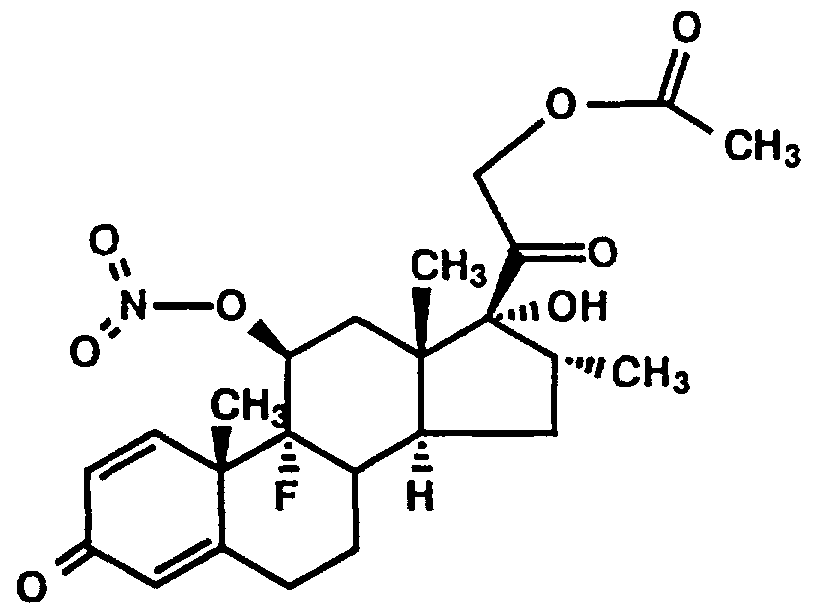
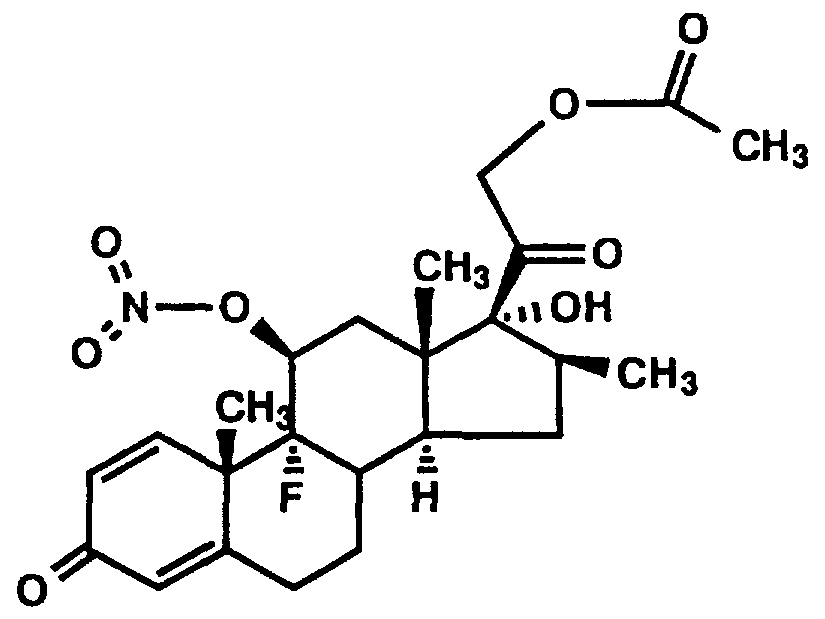
- the title compound is prepared from 9 ⁇ -fluoro-16 ⁇ - methyl-prednisolone in the same manner as described for EXAMPLE 1.
- the title compound is prepared from 9 ⁇ ,21-dichloro- 16 ⁇ -methyl-prednisolone furoate in the same manner as described for EXAMPLE 1.
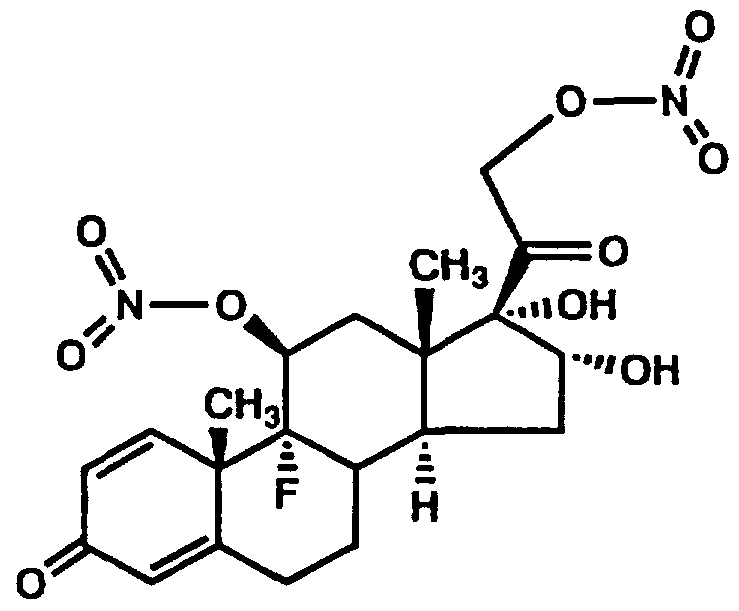
- the title compound is prepared from 9 ⁇ -fluoro-16 ⁇ - hydroxy-prednisolone-16,17-acetonide in the same manner as described for EXAMPLE 1.
- the title compound is prepared from 9 ⁇ -fluoro-16 ⁇ - hydroxy-prednisolone-16, 17-acetonide in the same manner as described for EXAMPLE 1.
- the title compound is prepared from 9 ⁇ -fluoro-16 ⁇ - hydroxy-prednisolone-16, 17-acetonide-21-acetate in the same manner as described for EXAMPLE 1.
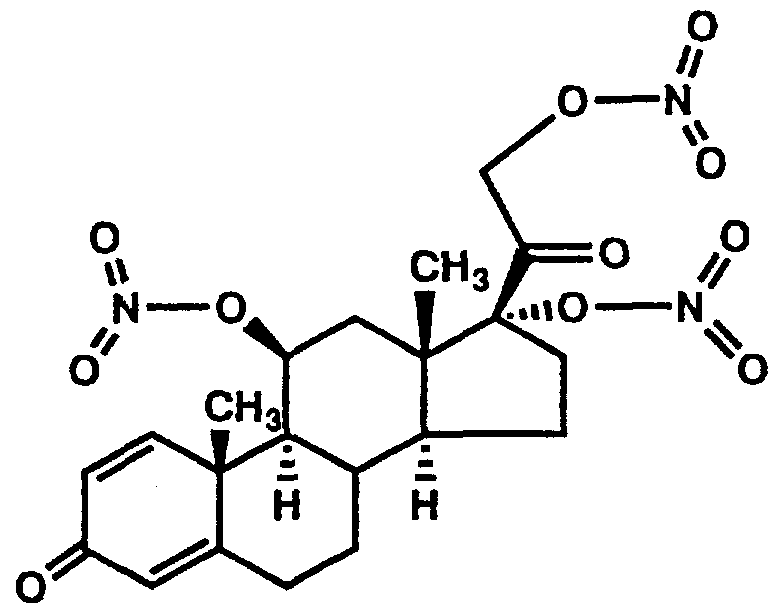
- the subject compounds of the formula (1) have been found to be nitric oxide donors while maintaining their steroid activities and possess useful pharmacological properties as demonstrated in one or more of the following tests :
- the in vi tro assays consisted of the following: measuring the effect of the compounds to inhibit the increase of prostaglandins following treatment of human fetal fibroblast cells with interleukin-1 (IL-1) and interleukin-1 followed by arachidonic acid, measuring the effect of the compounds on cyclic GMP in the human fetal fibroblasts, and measuring the smooth muscle relaxant activity in rat aortic rings.
- the in vivo assay consists of measuring the antiinflammatory properties of the compounds in the carageenan treated rat air pouch model.
- PGE 2 synthesis assay : Human f etal fibroblasts cells were treated with IL-1 for 16 hours and prostaglandin E 2 was measured by an ELISA . Compounds were given at the time of addition of IL-1 . This assay provides an in vitro assessment of the compound to block the induction of the proinflammatory agent prostaglandin E 2 ( PGE 2 ) : Treatment PGE 2 ( n )
- IL-1 9.4 IL-1 and Dexamethasone (lOuM) 0.6
- Example 2 260
- the rat aortic ring assay was utilized as a bioassay to measure the relaxant activity.
- the rings were precontracted with phenylephrine (0.3uM) and subsequently compounds were added to the tissue bath in the absence or in the presence of cysteine (Cys) and N ⁇ -L-nitroarginine methyl ester (L-NAME) :
- Example 4 10.0 prednisolone >100
- Example 5 5.0
- Example 1 2.0 budesonide 100
- Examples 1, 2, 4, 5, 6, and 9 were all tested in the absence of cysteine/NAME and, except for example 1, found to possess varying degrees of smooth muscle relaxant activity. In addition, examples 1, 9, 11, and 14 were also found to cause relaxation in the presence of cysteine and L-NAME. These data indicate that these compounds have smooth muscle relaxant activity, while the control compounds budesonide, dexamethasone, prednisolone and beclomethasone dipropionate did not show any effect.
- Example 2 was tested for antiinflammatory activity in vivo in the rat carageenan air pouch assay. Rats are injected subcutaneously with a volume of air over several days to form pouch. Inflammation is subsequently induced in the pouch by the addition of the pro-inflammatory agent carageenan. The inflammation is measured by assaying the pouch fluid for prostaglandin E 2 by ELISA. Example 2 at lmg/kg dose blocked the increase in prostaglandin E 2 by 98%. These data indicate that these compounds possess the ability to reduce inflammation in vivo.
Landscapes
- Health & Medical Sciences (AREA)
- Pharmacology & Pharmacy (AREA)
- Veterinary Medicine (AREA)
- Public Health (AREA)
- General Health & Medical Sciences (AREA)
- Animal Behavior & Ethology (AREA)
- Chemical & Material Sciences (AREA)
- Life Sciences & Earth Sciences (AREA)
- Medicinal Chemistry (AREA)
- Chemical Kinetics & Catalysis (AREA)
- Organic Chemistry (AREA)
- Nuclear Medicine, Radiotherapy & Molecular Imaging (AREA)
- General Chemical & Material Sciences (AREA)
- Epidemiology (AREA)
- Engineering & Computer Science (AREA)
- Bioinformatics & Cheminformatics (AREA)
- Diabetes (AREA)
- Endocrinology (AREA)
- Pain & Pain Management (AREA)
- Rheumatology (AREA)
- Steroid Compounds (AREA)
- Pharmaceuticals Containing Other Organic And Inorganic Compounds (AREA)
- Acyclic And Carbocyclic Compounds In Medicinal Compositions (AREA)
- Organic Low-Molecular-Weight Compounds And Preparation Thereof (AREA)
Abstract
Description








Claims


Priority Applications (6)
| Application Number | Priority Date | Filing Date | Title |
|---|---|---|---|
| AU27325/97A AU2732597A (en) | 1996-05-02 | 1997-04-28 | Novel pharmaceutical compositions having steroid nitrate ester derivatives useful as anti-inflammatory drugs |
| DK97921224T DK0912185T3 (en) | 1996-05-02 | 1997-04-28 | New pharmaceutical compositions containing steroid nitrate ester derivatives which can be used as anti-inflammatory drugs |
| EP97921224A EP0912185B1 (en) | 1996-05-02 | 1997-04-28 | Novel pharmaceutical compositions having steroid nitrate ester derivatives useful as anti-inflammatory drugs |
| DE69720996T DE69720996T2 (en) | 1996-05-02 | 1997-04-28 | NEW PHARMACEUTICAL COMPOSITIONS OF STEROID-NITRATE ESTER FOR USE AS AN IGNITION CONTROLLER |
| JP9538947A JP2000509388A (en) | 1996-05-02 | 1997-04-28 | Novel pharmaceutical compositions containing steroid nitrate ester derivatives useful as anti-inflammatory agents |
| AT97921224T ATE237334T1 (en) | 1996-05-02 | 1997-04-28 | NEW PHARMACEUTICAL COMPOSITIONS OF STEROID NITRATE TESTER FOR USE AS ANTI-INFLAMMATORY |
Applications Claiming Priority (2)
| Application Number | Priority Date | Filing Date | Title |
|---|---|---|---|
| US08/642,128 | 1996-05-02 | ||
| US08/642,128 US5985862A (en) | 1996-05-02 | 1996-05-02 | Pharmaceutical compositions having steroid nitrate ester derivatives useful as anti-inflammatory drugs |
Publications (1)
| Publication Number | Publication Date |
|---|---|
| WO1997040836A1 true WO1997040836A1 (en) | 1997-11-06 |
Family
ID=24575322
Family Applications (1)
| Application Number | Title | Priority Date | Filing Date |
|---|---|---|---|
| PCT/US1997/006374 Ceased WO1997040836A1 (en) | 1996-05-02 | 1997-04-28 | Novel pharmaceutical compositions having steroid nitrate ester derivatives useful as anti-inflammatory drugs |
Country Status (11)
| Country | Link |
|---|---|
| US (1) | US5985862A (en) |
| EP (1) | EP0912185B1 (en) |
| JP (1) | JP2000509388A (en) |
| AT (1) | ATE237334T1 (en) |
| AU (1) | AU2732597A (en) |
| CA (1) | CA2252876A1 (en) |
| DE (1) | DE69720996T2 (en) |
| DK (1) | DK0912185T3 (en) |
| ES (1) | ES2197341T3 (en) |
| PT (1) | PT912185E (en) |
| WO (1) | WO1997040836A1 (en) |
Cited By (12)
| Publication number | Priority date | Publication date | Assignee | Title |
|---|---|---|---|---|
| WO1998015568A3 (en) * | 1996-10-04 | 1998-06-18 | Nicox Sa | Nitrate esters of corticoid compounds and pharmaceutical applications thereof |
| US6197762B1 (en) | 1996-03-22 | 2001-03-06 | Nitromed, Inc. | Nitrosated and nitrosylated steroids compositions, and methods for treating respiratory disorders |
| JP2002542162A (en) * | 1999-04-13 | 2002-12-10 | ニコックス エス エイ | Pharmaceutical compounds |
| EP1336602A1 (en) * | 2002-02-13 | 2003-08-20 | Giovanni Scaramuzzino | Nitrate prodrugs able to release nitric oxide in a controlled and selective way and their use for prevention and treatment of inflammatory, ischemic and proliferative diseases |
| EP1496064A1 (en) * | 2000-12-22 | 2005-01-12 | Nicox S.A | Nitrate active principle |
| US7101866B2 (en) | 2000-08-05 | 2006-09-05 | Glaxo Group Limited | Anti-inflammatory androstane derivative |
| US7125985B2 (en) | 2000-08-05 | 2006-10-24 | Glaxo Group Limited | Compounds useful in the manufacture of an anti-inflammatory androstane derivative |
| WO2007025632A3 (en) * | 2005-09-02 | 2007-04-19 | Nicox Sa | Nitrooxy derivatives op glucocorticoids |
| US7291608B2 (en) | 2001-04-30 | 2007-11-06 | Glaxo Group Limited | Anti-inflammatory 17.β.-carbothioate ester derivatives of androstane with a cyclic ester group in position 17.α |
| US7541350B2 (en) | 2000-08-05 | 2009-06-02 | Glaxo Group Limited | Formulation containing anti-inflammatory androstane derivative |
| US7592329B2 (en) | 2002-02-04 | 2009-09-22 | Glaxo Group Limited | Crystalline complexes of fluticasone-2-furoate |
| US8933060B2 (en) | 2002-06-14 | 2015-01-13 | Cipla Limited | Combination of azelastine and ciclesonide for nasal administration |
Families Citing this family (8)
| Publication number | Priority date | Publication date | Assignee | Title |
|---|---|---|---|---|
| AU3703900A (en) * | 1999-02-24 | 2000-09-14 | Nitromed, Inc. | Nitrosated and nitrosylated steroids for the treatment of cardiovascular diseases and disorders |
| US6696592B2 (en) | 2001-05-22 | 2004-02-24 | Nicox-S.A. | Methods of making 21-[4′-(nitrooxyalkyl)benzoate] corticosteroid derivatives and intermediates useful in the synthesis thereof |
| US20040110691A1 (en) * | 2001-11-13 | 2004-06-10 | Stamler Jonathan S. | Thiol reactive agents as a therapeutic modality |
| US6627602B2 (en) * | 2001-11-13 | 2003-09-30 | Duke University | Preventing desensitization of receptors |
| WO2004037843A2 (en) * | 2002-10-25 | 2004-05-06 | Yissum Research Development Company Of The Hebrew University Of Jerusalem | Steroid compounds comprising superoxide dismutase mimic groups and nitric oxide donor groups, and their use in the preparation of medicaments |
| SE0300971D0 (en) * | 2003-04-03 | 2003-04-03 | Aga Ab | Nitric oxide in the treatment of inflammation |
| US8226987B2 (en) * | 2005-02-22 | 2012-07-24 | Zoorob George K | Herbal preparation to relieve inflammation and smooth muscle contraction |
| AU2009277381B2 (en) * | 2008-07-31 | 2014-04-24 | Nicox S.A. | Glucocorticoids attached to nitrate esters via an aromatic linker in position 21 and their use in ophthalmology |
Citations (5)
| Publication number | Priority date | Publication date | Assignee | Title |
|---|---|---|---|---|
| GB1082574A (en) * | 1965-02-12 | 1967-09-06 | Boots Pure Drug Co Ltd | Steroid esters |
| DE1643034A1 (en) * | 1967-08-11 | 1971-05-06 | Schering Ag | Process for the production of nitric acid esters of tertiary or sterically hindered secondary steroidal alcohols |
| DE2222491A1 (en) * | 1971-05-07 | 1972-11-16 | Richter Gedeon Vegyeszet | Steroid 21-nitric acid esters of the Pregnan series, their use and process for producing the same |
| WO1994012463A1 (en) * | 1992-11-26 | 1994-06-09 | Nicox Limited | Nitric esters having a pharmacological activity and process for their preparation |
| WO1995009831A1 (en) * | 1993-10-06 | 1995-04-13 | Nicox S.A. | Nitric esters having anti-inflammatory and/or analgesic activity and process for their preparation |
Family Cites Families (4)
| Publication number | Priority date | Publication date | Assignee | Title |
|---|---|---|---|---|
| US3639434A (en) * | 1967-02-02 | 1972-02-01 | Boots Pure Drug Co Ltd | 17-acyloxysteroids and their manufacture |
| DE2236115A1 (en) * | 1972-07-20 | 1974-02-07 | Schering Ag | METHOD OF PRODUCTION OF DELTA HIGH 4.9(11).16 -3.20DIKETOSTEROIDS |
| DE4223800A1 (en) * | 1992-07-20 | 1994-01-27 | Cassella Farbwerke Mainkur Ag | Use of 1.2.5-oxadiazole-2-oxides for the treatment of erectile dysfunctions |
| CA2141435A1 (en) * | 1992-07-30 | 1994-02-17 | William Byrne | Ester of an organic nitrate and a salicylate |
-
1996
- 1996-05-02 US US08/642,128 patent/US5985862A/en not_active Expired - Fee Related
-
1997
- 1997-04-28 DK DK97921224T patent/DK0912185T3/en active
- 1997-04-28 PT PT97921224T patent/PT912185E/en unknown
- 1997-04-28 AT AT97921224T patent/ATE237334T1/en not_active IP Right Cessation
- 1997-04-28 ES ES97921224T patent/ES2197341T3/en not_active Expired - Lifetime
- 1997-04-28 JP JP9538947A patent/JP2000509388A/en not_active Ceased
- 1997-04-28 AU AU27325/97A patent/AU2732597A/en not_active Abandoned
- 1997-04-28 DE DE69720996T patent/DE69720996T2/en not_active Expired - Fee Related
- 1997-04-28 WO PCT/US1997/006374 patent/WO1997040836A1/en not_active Ceased
- 1997-04-28 EP EP97921224A patent/EP0912185B1/en not_active Expired - Lifetime
- 1997-04-28 CA CA002252876A patent/CA2252876A1/en not_active Abandoned
Patent Citations (6)
| Publication number | Priority date | Publication date | Assignee | Title |
|---|---|---|---|---|
| GB1082574A (en) * | 1965-02-12 | 1967-09-06 | Boots Pure Drug Co Ltd | Steroid esters |
| GB1082573A (en) * | 1965-02-12 | 1967-09-06 | Boots Pure Drug Co Ltd | Improvements in the preparation of steroid esters |
| DE1643034A1 (en) * | 1967-08-11 | 1971-05-06 | Schering Ag | Process for the production of nitric acid esters of tertiary or sterically hindered secondary steroidal alcohols |
| DE2222491A1 (en) * | 1971-05-07 | 1972-11-16 | Richter Gedeon Vegyeszet | Steroid 21-nitric acid esters of the Pregnan series, their use and process for producing the same |
| WO1994012463A1 (en) * | 1992-11-26 | 1994-06-09 | Nicox Limited | Nitric esters having a pharmacological activity and process for their preparation |
| WO1995009831A1 (en) * | 1993-10-06 | 1995-04-13 | Nicox S.A. | Nitric esters having anti-inflammatory and/or analgesic activity and process for their preparation |
Cited By (30)
| Publication number | Priority date | Publication date | Assignee | Title |
|---|---|---|---|---|
| US7160920B2 (en) | 1996-03-22 | 2007-01-09 | Nitromed, Inc. | Nitrosated and nitrosylated compounds and compositions and their use for treating respiratory disorders |
| US6197762B1 (en) | 1996-03-22 | 2001-03-06 | Nitromed, Inc. | Nitrosated and nitrosylated steroids compositions, and methods for treating respiratory disorders |
| USRE37116E1 (en) * | 1996-03-22 | 2001-03-27 | Nitromed, Inc. | Nitrosated and nitrosylated compounds, and compositions and their use for treating respiratory disorders |
| US7345037B2 (en) | 1996-03-22 | 2008-03-18 | Nitromed, Inc. | Nitrosated and nitrosylated compounds and compositions and their use for treating respiratory disorders |
| US6579863B1 (en) | 1996-03-22 | 2003-06-17 | Nitromed, Inc. | Nitrosated and nitrosylated compounds and compositions and their use for treating respiratory disorders |
| US7196075B2 (en) | 1996-10-04 | 2007-03-27 | Nicox S.A. | Nitrate esters of corticoid compounds and pharmaceutical applications thereof |
| US7605151B2 (en) | 1996-10-04 | 2009-10-20 | Nicox S.A. | Nitrate esters of corticoid compounds and pharmaceutical applications thereof |
| US7056905B2 (en) | 1996-10-04 | 2006-06-06 | Nicox S.A. | Nitrate esters of corticoid compounds and pharmaceutical applications thereof |
| US7368442B2 (en) | 1996-10-04 | 2008-05-06 | Nicox S.A. | Nitrate esters of corticoid compounds and pharmaceutical applications thereof |
| US7205288B2 (en) | 1996-10-04 | 2007-04-17 | Nicox S.A. | Nitrate esters of corticoid compounds and pharmaceutical applications thereof |
| WO1998015568A3 (en) * | 1996-10-04 | 1998-06-18 | Nicox Sa | Nitrate esters of corticoid compounds and pharmaceutical applications thereof |
| US7157450B2 (en) | 1996-10-04 | 2007-01-02 | Nicox S.A. | Nitrate esters of corticoid compounds and pharmaceutical applications thereof |
| US7160871B2 (en) | 1996-10-04 | 2007-01-09 | Nicox S.A. | Nitrate esters of corticoid compounds and pharmaceutical applications thereof |
| JP2002542162A (en) * | 1999-04-13 | 2002-12-10 | ニコックス エス エイ | Pharmaceutical compounds |
| US7629335B2 (en) | 2000-08-05 | 2009-12-08 | Glaxo Group Limited | Anti-inflammatory androstane derivative |
| US7541350B2 (en) | 2000-08-05 | 2009-06-02 | Glaxo Group Limited | Formulation containing anti-inflammatory androstane derivative |
| US7498321B2 (en) | 2000-08-05 | 2009-03-03 | Glaxo Group Limited | 17β-carbothioate 17α-arylcarbonyloxyloxy androstane derivative as anti-inflammatory agents |
| US7531528B2 (en) | 2000-08-05 | 2009-05-12 | Glaxo Group Limited | Formulation containing anti-inflammatory androstane derivatives |
| US7144845B2 (en) | 2000-08-05 | 2006-12-05 | Glaxo Group Limited | Compounds useful in the manufacture of an anti-inflammatory androstane derivative |
| US7101866B2 (en) | 2000-08-05 | 2006-09-05 | Glaxo Group Limited | Anti-inflammatory androstane derivative |
| US7125985B2 (en) | 2000-08-05 | 2006-10-24 | Glaxo Group Limited | Compounds useful in the manufacture of an anti-inflammatory androstane derivative |
| EP1496064A1 (en) * | 2000-12-22 | 2005-01-12 | Nicox S.A | Nitrate active principle |
| US7291608B2 (en) | 2001-04-30 | 2007-11-06 | Glaxo Group Limited | Anti-inflammatory 17.β.-carbothioate ester derivatives of androstane with a cyclic ester group in position 17.α |
| US7592329B2 (en) | 2002-02-04 | 2009-09-22 | Glaxo Group Limited | Crystalline complexes of fluticasone-2-furoate |
| EP1336602A1 (en) * | 2002-02-13 | 2003-08-20 | Giovanni Scaramuzzino | Nitrate prodrugs able to release nitric oxide in a controlled and selective way and their use for prevention and treatment of inflammatory, ischemic and proliferative diseases |
| US8933060B2 (en) | 2002-06-14 | 2015-01-13 | Cipla Limited | Combination of azelastine and ciclesonide for nasal administration |
| US8937057B2 (en) | 2002-06-14 | 2015-01-20 | Cipla Limited | Combination of azelastine and mometasone for nasal administration |
| US9259428B2 (en) | 2002-06-14 | 2016-02-16 | Cipla Limited | Combination of azelastine and fluticasone for nasal administration |
| US9901585B2 (en) | 2002-06-14 | 2018-02-27 | Cipla Limited | Combination of azelastine and fluticasone for nasal administration |
| WO2007025632A3 (en) * | 2005-09-02 | 2007-04-19 | Nicox Sa | Nitrooxy derivatives op glucocorticoids |
Also Published As
| Publication number | Publication date |
|---|---|
| US5985862A (en) | 1999-11-16 |
| EP0912185A1 (en) | 1999-05-06 |
| DE69720996D1 (en) | 2003-05-22 |
| AU2732597A (en) | 1997-11-19 |
| JP2000509388A (en) | 2000-07-25 |
| ES2197341T3 (en) | 2004-01-01 |
| EP0912185B1 (en) | 2003-04-16 |
| DK0912185T3 (en) | 2003-08-04 |
| ATE237334T1 (en) | 2003-05-15 |
| DE69720996T2 (en) | 2004-02-05 |
| PT912185E (en) | 2003-08-29 |
| CA2252876A1 (en) | 1997-11-06 |
Similar Documents
| Publication | Publication Date | Title |
|---|---|---|
| EP0873351B1 (en) | Steroid nitrite/nitrate ester derivatives useful as anti-inflammatory drugs | |
| EP0900233B1 (en) | Steroid nitrite and nitrate ester derivatives useful as anti-inflammatory drugs | |
| EP0912185B1 (en) | Novel pharmaceutical compositions having steroid nitrate ester derivatives useful as anti-inflammatory drugs | |
| EP0869965B1 (en) | Steroid nitrite ester derivatives useful as anti-inflammatory drugs | |
| JP4388600B2 (en) | Nitrate esters of corticoid compounds and their pharmaceutical use | |
| US5733901A (en) | Prednisolone derivatives | |
| US20090258849A1 (en) | Nitrooxy derivatives of glucocorticoids | |
| CA2670284C (en) | Synthesis of compounds useful as modulators of amyloid-beta production | |
| HUT72442A (en) | Steroids condensed with heteroring containing oxygene, pharmaceutical compositions containing them and processes for their production | |
| MXPA98009114A (en) | ||
| MXPA98009181A (en) | Derivatives novedous steroides of nitrite and nitrate ester useful as anti inflamator drugs | |
| CA2159627C (en) | Novel prednisolone derivatives |
Legal Events
| Date | Code | Title | Description |
|---|---|---|---|
| AK | Designated states |
Kind code of ref document: A1 Designated state(s): AL AM AT AU AZ BA BB BG BR BY CA CH CN CU CZ DE DK EE ES FI GB GE GH HU IL IS JP KE KG KP KR KZ LC LK LR LS LT LU LV MD MG MK MN MW MX NO NZ PL PT RO RU SD SE SG SI SK TJ TM TR TT UA UG US UZ VN YU AM AZ BY KG KZ MD RU TJ TM |
|
| AL | Designated countries for regional patents |
Kind code of ref document: A1 Designated state(s): GH KE LS MW SD SZ UG AT BE CH DE DK ES FI FR GB GR IE IT LU MC NL PT SE BF |
|
| DFPE | Request for preliminary examination filed prior to expiration of 19th month from priority date (pct application filed before 20040101) | ||
| 121 | Ep: the epo has been informed by wipo that ep was designated in this application | ||
| WWE | Wipo information: entry into national phase |
Ref document number: 1997921224 Country of ref document: EP |
|
| ENP | Entry into the national phase |
Ref document number: 2252876 Country of ref document: CA Ref country code: CA Ref document number: 2252876 Kind code of ref document: A Format of ref document f/p: F |
|
| WWE | Wipo information: entry into national phase |
Ref document number: PA/a/1998/009114 Country of ref document: MX |
|
| REG | Reference to national code |
Ref country code: DE Ref legal event code: 8642 |
|
| WWP | Wipo information: published in national office |
Ref document number: 1997921224 Country of ref document: EP |
|
| WWG | Wipo information: grant in national office |
Ref document number: 1997921224 Country of ref document: EP |