US9818240B1 - Comparing vehicle performance - Google Patents
Comparing vehicle performance Download PDFInfo
- Publication number
- US9818240B1 US9818240B1 US14/019,908 US201314019908A US9818240B1 US 9818240 B1 US9818240 B1 US 9818240B1 US 201314019908 A US201314019908 A US 201314019908A US 9818240 B1 US9818240 B1 US 9818240B1
- Authority
- US
- United States
- Prior art keywords
- propulsion system
- vehicle
- operable
- vehicles
- distribution
- Prior art date
- Legal status (The legal status is an assumption and is not a legal conclusion. Google has not performed a legal analysis and makes no representation as to the accuracy of the status listed.)
- Expired - Fee Related
Links
Images


Classifications
-
- G—PHYSICS
- G07—CHECKING-DEVICES
- G07C—TIME OR ATTENDANCE REGISTERS; REGISTERING OR INDICATING THE WORKING OF MACHINES; GENERATING RANDOM NUMBERS; VOTING OR LOTTERY APPARATUS; ARRANGEMENTS, SYSTEMS OR APPARATUS FOR CHECKING NOT PROVIDED FOR ELSEWHERE
- G07C5/00—Registering or indicating the working of vehicles
- G07C5/08—Registering or indicating performance data other than driving, working, idle, or waiting time, with or without registering driving, working, idle or waiting time
-
- B—PERFORMING OPERATIONS; TRANSPORTING
- B60—VEHICLES IN GENERAL
- B60R—VEHICLES, VEHICLE FITTINGS, OR VEHICLE PARTS, NOT OTHERWISE PROVIDED FOR
- B60R16/00—Electric or fluid circuits specially adapted for vehicles and not otherwise provided for; Arrangement of elements of electric or fluid circuits specially adapted for vehicles and not otherwise provided for
- B60R16/02—Electric or fluid circuits specially adapted for vehicles and not otherwise provided for; Arrangement of elements of electric or fluid circuits specially adapted for vehicles and not otherwise provided for electric constitutive elements
- B60R16/023—Electric or fluid circuits specially adapted for vehicles and not otherwise provided for; Arrangement of elements of electric or fluid circuits specially adapted for vehicles and not otherwise provided for electric constitutive elements for transmission of signals between vehicle parts or subsystems
- B60R16/0231—Circuits relating to the driving or the functioning of the vehicle
- B60R16/0232—Circuits relating to the driving or the functioning of the vehicle for measuring vehicle parameters and indicating critical, abnormal or dangerous conditions
-
- B—PERFORMING OPERATIONS; TRANSPORTING
- B60—VEHICLES IN GENERAL
- B60R—VEHICLES, VEHICLE FITTINGS, OR VEHICLE PARTS, NOT OTHERWISE PROVIDED FOR
- B60R16/00—Electric or fluid circuits specially adapted for vehicles and not otherwise provided for; Arrangement of elements of electric or fluid circuits specially adapted for vehicles and not otherwise provided for
- B60R16/02—Electric or fluid circuits specially adapted for vehicles and not otherwise provided for; Arrangement of elements of electric or fluid circuits specially adapted for vehicles and not otherwise provided for electric constitutive elements
- B60R16/023—Electric or fluid circuits specially adapted for vehicles and not otherwise provided for; Arrangement of elements of electric or fluid circuits specially adapted for vehicles and not otherwise provided for electric constitutive elements for transmission of signals between vehicle parts or subsystems
- B60R16/0231—Circuits relating to the driving or the functioning of the vehicle
- B60R16/0236—Circuits relating to the driving or the functioning of the vehicle for economical driving
-
- B—PERFORMING OPERATIONS; TRANSPORTING
- B60—VEHICLES IN GENERAL
- B60W—CONJOINT CONTROL OF VEHICLE SUB-UNITS OF DIFFERENT TYPE OR DIFFERENT FUNCTION; CONTROL SYSTEMS SPECIALLY ADAPTED FOR HYBRID VEHICLES; ROAD VEHICLE DRIVE CONTROL SYSTEMS FOR PURPOSES NOT RELATED TO THE CONTROL OF A PARTICULAR SUB-UNIT
- B60W40/00—Estimation or calculation of non-directly measurable driving parameters for road vehicle drive control systems not related to the control of a particular sub unit, e.g. by using mathematical models
- B60W40/08—Estimation or calculation of non-directly measurable driving parameters for road vehicle drive control systems not related to the control of a particular sub unit, e.g. by using mathematical models related to drivers or passengers
- B60W40/09—Driving style or behaviour
-
- B—PERFORMING OPERATIONS; TRANSPORTING
- B60—VEHICLES IN GENERAL
- B60W—CONJOINT CONTROL OF VEHICLE SUB-UNITS OF DIFFERENT TYPE OR DIFFERENT FUNCTION; CONTROL SYSTEMS SPECIALLY ADAPTED FOR HYBRID VEHICLES; ROAD VEHICLE DRIVE CONTROL SYSTEMS FOR PURPOSES NOT RELATED TO THE CONTROL OF A PARTICULAR SUB-UNIT
- B60W50/00—Details of control systems for road vehicle drive control not related to the control of a particular sub-unit, e.g. process diagnostic or vehicle driver interfaces
- B60W50/08—Interaction between the driver and the control system
- B60W50/14—Means for informing the driver, warning the driver or prompting a driver intervention
-
- G—PHYSICS
- G01—MEASURING; TESTING
- G01C—MEASURING DISTANCES, LEVELS OR BEARINGS; SURVEYING; NAVIGATION; GYROSCOPIC INSTRUMENTS; PHOTOGRAMMETRY OR VIDEOGRAMMETRY
- G01C21/00—Navigation; Navigational instruments not provided for in groups G01C1/00 - G01C19/00
- G01C21/26—Navigation; Navigational instruments not provided for in groups G01C1/00 - G01C19/00 specially adapted for navigation in a road network
- G01C21/34—Route searching; Route guidance
- G01C21/3453—Special cost functions, i.e. other than distance or default speed limit of road segments
- G01C21/3469—Fuel consumption; Energy use; Emission aspects
-
- G—PHYSICS
- G01—MEASURING; TESTING
- G01C—MEASURING DISTANCES, LEVELS OR BEARINGS; SURVEYING; NAVIGATION; GYROSCOPIC INSTRUMENTS; PHOTOGRAMMETRY OR VIDEOGRAMMETRY
- G01C21/00—Navigation; Navigational instruments not provided for in groups G01C1/00 - G01C19/00
- G01C21/26—Navigation; Navigational instruments not provided for in groups G01C1/00 - G01C19/00 specially adapted for navigation in a road network
- G01C21/34—Route searching; Route guidance
- G01C21/36—Input/output arrangements for on-board computers
- G01C21/3697—Output of additional, non-guidance related information, e.g. low fuel level
-
- G—PHYSICS
- G07—CHECKING-DEVICES
- G07C—TIME OR ATTENDANCE REGISTERS; REGISTERING OR INDICATING THE WORKING OF MACHINES; GENERATING RANDOM NUMBERS; VOTING OR LOTTERY APPARATUS; ARRANGEMENTS, SYSTEMS OR APPARATUS FOR CHECKING NOT PROVIDED FOR ELSEWHERE
- G07C5/00—Registering or indicating the working of vehicles
- G07C5/008—Registering or indicating the working of vehicles communicating information to a remotely located station
-
- G—PHYSICS
- G07—CHECKING-DEVICES
- G07C—TIME OR ATTENDANCE REGISTERS; REGISTERING OR INDICATING THE WORKING OF MACHINES; GENERATING RANDOM NUMBERS; VOTING OR LOTTERY APPARATUS; ARRANGEMENTS, SYSTEMS OR APPARATUS FOR CHECKING NOT PROVIDED FOR ELSEWHERE
- G07C5/00—Registering or indicating the working of vehicles
- G07C5/08—Registering or indicating performance data other than driving, working, idle, or waiting time, with or without registering driving, working, idle or waiting time
- G07C5/0816—Indicating performance data, e.g. occurrence of a malfunction
- G07C5/0825—Indicating performance data, e.g. occurrence of a malfunction using optical means
-
- B—PERFORMING OPERATIONS; TRANSPORTING
- B60—VEHICLES IN GENERAL
- B60W—CONJOINT CONTROL OF VEHICLE SUB-UNITS OF DIFFERENT TYPE OR DIFFERENT FUNCTION; CONTROL SYSTEMS SPECIALLY ADAPTED FOR HYBRID VEHICLES; ROAD VEHICLE DRIVE CONTROL SYSTEMS FOR PURPOSES NOT RELATED TO THE CONTROL OF A PARTICULAR SUB-UNIT
- B60W2556/00—Input parameters relating to data
- B60W2556/45—External transmission of data to or from the vehicle
Definitions
- This description relates to techniques for collecting, processing, and presenting hybrid vehicle performance information.
- the systems and techniques described here relate to computing and presenting performance and comparison metrics of vehicles operated with an alternative energy based system (e.g., an electric motor) and a traditional petroleum based engine (e.g., a combustion engine).
- an alternative energy based system e.g., an electric motor
- a traditional petroleum based engine e.g., a combustion engine
- Different travel parameters e.g., distance traveled, fuel consumed, operating time, etc.
- data e.g., distributed over ranges of vehicle speeds
- data from a collection of vehicles e.g., a fleet of combustion engine vehicles
- performance improvements e.g., fuel efficiency
- a computing device-implemented method includes receiving data representative of one or more travel parameters for distribution ranges for a vehicle that includes a first propulsion system. The method also includes receiving data representative of one or more travel parameters for distribution ranges for a vehicle that includes a second propulsion system. The distribution ranges for the vehicle that includes the first propulsion system are equivalent to the distribution ranges for the vehicle that includes the second propulsion system. The method also includes receiving data representative of one or more travel parameters for distribution ranges for a collection of vehicles. The distribution ranges for the collection of vehicles are equivalent to the distribution ranges for the vehicle that includes the second propulsion system.
- the method also includes determining a first performance metric from the distribution for the vehicle that includes the first propulsion system and the distribution for the collection of vehicles, and a second performance metric from the distribution for the vehicle that includes the second propulsion system and the distribution for the collection of vehicles.
- the method also includes determining a comparison metric of the vehicle including the first propulsion system and the vehicle including the second propulsion system from the first performance metric and the second performance metric.
- the method also includes presenting the comparison metric of the vehicle including the first propulsion system and the vehicle including the second propulsion system.
- the first propulsion system may include a combustion engine.
- the second propulsion system may include an alternative fuel system.
- the ranges of the distribution of the vehicle that includes the first propulsion system may represent speeds.
- the ranges of the distribution of the vehicle that includes the first propulsion system may represent accelerations.
- At least one of the travel parameters of the distribution of the collection of vehicles may represent distance traveled for each range.
- the comparison metric may represent fuel savings between the vehicle that includes the second propulsion system and the vehicle that includes the first propulsion system.
- the vehicle that includes the second propulsion system may also include the first propulsion system.
- the collection of combustion engine vehicles may include vehicles of equivalent type. Determining the comparison metric may be executed external to the vehicle that includes the first propulsion system and the vehicle that includes the second propulsion system.
- a system in another aspect, includes a computing device that includes a memory configured to store instructions.
- the computing device also include a processor to execute the instructions to perform operations including receiving data representative of one or more travel parameters for distribution ranges for a vehicle that includes a first propulsion system.
- Operations also include receiving data representative of one or more travel parameters for distribution ranges for a vehicle that includes a second propulsion system.
- the distribution ranges for the vehicle that includes the first propulsion system are equivalent to the distribution ranges for the vehicle that includes the second propulsion system.
- Operations also include receiving data representative of one or more travel parameters for distribution ranges for a collection of vehicles.
- the distribution ranges for the collection of vehicles are equivalent to the distribution ranges for the vehicle that includes the second propulsion system.
- Operations also include determining a first performance metric from the distribution of the vehicle that includes the first propulsion system and the distribution of the collection of vehicles, and a second performance metric from the distribution of the vehicle that includes the second propulsion system and the distribution of the collection of vehicles. Operations also include determining a comparison metric of the vehicle including the first propulsion system and the vehicle including the second propulsion system from the first performance metric and the second performance metric. Operations also include presenting the comparison metric of the vehicle including the first propulsion system and the vehicle including the second propulsion system.
- the first propulsion system may include a combustion engine.
- the second propulsion system may include an alternative fuel system.
- the ranges of the distribution of the vehicle that includes the first propulsion system may represent speeds.
- the ranges of the distribution of the vehicle that includes the first propulsion system may represent accelerations.
- At least one of the travel parameters of the distribution of the collection of vehicles may represent distance traveled for each range.
- the comparison metric may represent fuel savings between the vehicle that includes the second propulsion system and the vehicle that includes the first propulsion system.
- the vehicle that includes the second propulsion system may also include the first propulsion system.
- the collection of combustion engine vehicles may include vehicles of equivalent type. Determining the comparison metric may be executed external to the vehicle that includes the first propulsion system and the vehicle that includes the second propulsion system.
- one or more computer readable media storing instructions that are executable by a processing device, and upon such execution cause the processing device to perform operations that include receiving data representative of one or more travel parameters for distribution ranges for a vehicle that includes a first propulsion system.
- Operations also include receiving data representative of one or more travel parameters for distribution ranges for a vehicle that includes a second propulsion system.
- the distribution ranges of the vehicle that includes the first propulsion system are equivalent to the distribution ranges of the vehicle that includes the second propulsion system.
- Operations also include receiving data representative of one or more travel parameters for distribution ranges for a collection of vehicles.
- the distribution ranges of the collection of vehicles are equivalent to the distribution ranges of the vehicle that includes the second propulsion system.
- Operations also include determining a first performance metric from the distribution of the vehicle that includes the first propulsion system and the distribution of the collection of vehicles, and a second performance metric from the distribution of the vehicle that includes the second propulsion system and the distribution of the collection of vehicles. Operations also include determining a comparison metric of the vehicle including the first propulsion system and the vehicle including the second propulsion system from the first performance metric and the second performance metric. Operations also include presenting the comparison metric of the vehicle including the first propulsion system and the vehicle including the second propulsion system.
- the first propulsion system may include a combustion engine.
- the second propulsion system may include an alternative fuel system.
- the ranges of the distribution of the vehicle that includes the first propulsion system may represent speeds.
- the ranges of the distribution of the vehicle that includes the first propulsion system may represent accelerations.
- At least one of the travel parameters of the distribution of the collection of vehicles may represent distance traveled for each range.
- the comparison metric may represent fuel savings between the vehicle that includes the second propulsion system and the vehicle that includes the first propulsion system.
- the vehicle that includes the second propulsion system may also include the first propulsion system.
- the collection of combustion engine vehicles may include vehicles of equivalent type. Determining the comparison metric may be executed external to the vehicle that includes the first propulsion system and the vehicle that includes the second propulsion system.
- FIG. 1 illustrates a vehicle that includes a performance manager.
- FIG. 2 illustrates a network-based performance analyzer for comparing performance information of multiple vehicles.
- FIG. 3 illustrates the input and output data flow of a vehicle information manager.
- FIG. 4 is a chart of performance information of a combustion engine vehicle and an alternative energy vehicle.
- FIG. 5 is a chart of performance information of a collection of combustion engine vehicles.
- FIG. 6 is a chart of comparative performance information from a performance analyzer.
- FIG. 7 is a flow chart of representative operations for a performance analyzer.
- FIG. 8 is a block diagram showing an example of a system for providing hosted storage and accessing the hosted storage from a client device.
- FIG. 9 illustrates an example of a computing device and a mobile computing device that can be used to implement the techniques described here.
- alternative fuel vehicles may solely rely upon non-petroleum energy sources, such as electricity, natural gas, biofuels etc. Rather than sole reliance on such energy sources, alternative fuel vehicles may also rely partially on an internal combustion engine along with one or more alternative energy sources.
- a vehicle referred to as a hybrid vehicle
- HEV hybrid electric vehicle
- plug-in hybrid vehicles may operate by using energy storage devices that can be replenished (e.g., rechargeable batteries).
- energy storage devices e.g., rechargeable batteries.
- one or more techniques may be implemented for charging and recharging the devices.
- the electric motor may be engaged during defined periods to assist the combustion engine.
- One or more control strategies may be used to determine these time periods. Similarly, periods of time may also be determined to engage regenerative braking and strategic charging in order to replenish energy storage. Other operations of the vehicle (e.g., accelerate, decelerate, gear changes, etc.) may also be defined for the control strategies. By developing such strategies to control the assistance provided to combustion engines (during low efficiency periods), energy may be conserved without negatively impacting vehicle performance.
- Some vehicle manufacturers may recommend operations and control strategies for entire classes of vehicles or other types of large vehicle groups (e.g., same model vehicles, same vehicle line, etc.) at particular times (e.g., at the release of the vehicle line).
- the level of assistance provided by an electric motor or other type of alternative fuel system may be a constant.
- One or more techniques may be implemented to improve recommended operations and control strategies. For example, vehicle performance may be measured to quantify improvements. Fuel efficiency (e.g., miles-per-gallon achieved by the vehicle), fuel consumption (e.g., fuel gallons consumed per hour), and other types of performance measures may be developed and report noticeable to considerable improvement. Once analyzed, the improvements may be incorporated into recommended operations and control strategies. For example, the retrieved data might report that energy provided by the alternative fuel during higher speed operation does not reduce fuel consumption compared to fuel consumption experienced at lower speeds.
- the performance manager 102 may operate in a generally autonomous manner, however, information from one or more users (e.g., identification of the vehicle operators) may be collected for operations of the performance manager.
- data may be collected from one or a variety of inputs.
- the performance manager 102 may communicate with one or more portions of the vehicle.
- One or more sensors, components, processing units, etc. of the vehicle may exchange data with the performance manager 102 .
- operational information of the vehicle such as speed, acceleration, etc. may be collected over time (e.g., as the vehicle operates) and provided to the performance manager 102 .
- Other operational information may also be provided from the vehicle; for example, data representing braking, steering, etc. may also be provided to the performance manager 102 .
- Vehicle components that provide information to the performance manager 102 may also include interface modules, circuitry, etc. for controlling the operations of the combustion engine, the electrical motor, etc.
- data from sources other than the vehicle may also be collected.
- user input may be provided.
- the vehicle 100 includes an electronic display 106 that has been incorporated into its dashboard to present information such as selectable entries regarding different topics (e.g., operator ID, planned vehicle operations, trip destination, etc.). Upon selection, representative information may be gathered and provided to the performance manager 102 .
- a knob 108 illustrates a potential control device; however, one or more other types of devices may be used for user interaction (e.g., a touch screen display, etc.).
- a sensor 110 may collect information such as cabin temperature, location of the vehicle (e.g., the sensor being a component of a global positioning system (GPS)) and other types of information.
- GPS global positioning system
- additional information may be provided to the performance manager 102 (e.g., location and destination information) which may be used for quantifying vehicle performance.
- information from other vehicles may be used by the performance manager 102 .
- data may be collected from a fleet of vehicles (e.g., similar or dissimilar to the vehicle 100 ) and used to quantify performance (e.g., based on similarly traveled routes).
- While one sensor 110 is illustrated in this example, multiple sensors may be located internally or externally to the vehicle for collecting information (e.g., internal or external temperature, etc.).
- One or more devices present in the vehicle 100 may also be used for information collection; for example, handheld devices (e.g., a smart phone 112 , etc.) may collect and provide information (e.g., location information, identify individuals present in the vehicle such as vehicle operators, etc.) for use by the performance manager 102 (e.g., identify driving characteristics of a vehicle operator).
- portions of the vehicle itself may collect information for the performance manager 102 ; for example, one or more of the seats of the vehicle 100 (e.g., driver seat 114 ) may collect information (e.g., position of the seat to estimate the driver's weight) that is then for being provided to the performance manager 102 .
- Processed data may also be provided; for example, gathered information may be processed by one or more computing devices (e.g., controllers) before being provided to the performance manager 102 .
- vehicle performance may be collected from the vehicle and associated with a speed range. By viewing this data (e.g., time spent, distance driven, fuel consumed, etc.) as a distribution defined by the speed ranges, vehicle performance may be analyzed for speed ranges. From the analysis, fuel economy and other types of performance measures can be determined and compared for different vehicles that have been driven on similar or different routes.
- One or more control strategies may also be developed from the data distributions and analysis. For example, strategies may be developed for controlling an alternative fuel system of a hybrid vehicle (e.g., an electric motor) to assist the combustion engine of the vehicle to improve overall performance.
- one or more wireless communication techniques may be utilized that call upon one or more protocols and/or standards (e.g., the IEEE 802.11 family of standards such as Wi-Fi, the International Mobile Telecommunications-2000 (IMT-2000) specifications such as 3rd generation mobile telecommunications (3G), 4th generation cellular wireless standards (4G), wireless technology standards for exchanging data over relatively short distances such as Bluetooth, etc.).
- protocols and/or standards e.g., the IEEE 802.11 family of standards such as Wi-Fi, the International Mobile Telecommunications-2000 (IMT-2000) specifications such as 3rd generation mobile telecommunications (3G), 4th generation cellular wireless standards (4G), wireless technology standards for exchanging data over relatively short distances such as Bluetooth, etc.
- an information exchanging environment 200 that allows information to be provided to a central location for analyzing vehicle performance, such as potential improvements through use of alternative fuel vehicles such as hybrid vehicles.
- the information is collected from individual vehicles or other information sources for the performance analysis.
- One or more techniques and methodologies may be implemented for providing such information to the vehicles.
- one or more communication techniques and network architectures may be used for exchanging information.
- a vehicle information manager 202 communicates through a network 204 (e.g., the Internet, an intranet, a combination of networks, etc.) to exchange information with a collection of vehicles (e.g., a small fleet of supply trucks 206 , 208 , 210 , and an automobile 212 ).
- a collection of vehicles e.g., a small fleet of supply trucks 206 , 208 , 210 , and an automobile 212 .
- one or more of the vehicles may operate with an alternative fuel system (e.g., the supply truck 206 is a hybrid).
- One or more technologies may be used for exchanging information among the vehicle information manager 202 , the network 204 (or networks) and the collection of vehicles.
- wireless technology capable of two-way communication
- the vehicle information manger 202 may be capable of processing information (e.g., in concert with a performance analyzer 214 to quantify vehicle performance, compare vehicle performance, etc.) and executing related operations (e.g., store collected and processed information).
- the vehicle information manager 202 may operate as a single entity; however, operations may be distributed among various entities to provide the functionality.
- some functionality may be considered a service, rather than a product, and may be attained by entering into a relationship with the vehicle information manager 202 (e.g., purchase a subscription, enter into a contractual agreement, etc.).
- the vehicle information manager 202 may be considered as being implemented as a cloud computing architecture in which its functionality is perceived by users (e.g., vehicle operators, business operators, vehicle designers and manufacturers, etc.) as a service rather than a product.
- users may be provided information (e.g., vehicle performance, comparative performances, control strategies, etc.) from one or more shared resources (e.g., hardware, software, etc.) used by the vehicle information manager 202 .
- shared resources e.g., hardware, software, etc.
- subscription plans for various time periods may be implemented (e.g., a time period for measuring the performance of a current fleet of vehicles along with candidate hybrid vehicles to demonstrate potential performance gains).
- an off-vehicle performance analyzer may use information from a vehicle (e.g., collected performance data, distributions of data, etc.) to determine one or more performance metrics of the vehicle, comparison metrics, etc.
- a portion of the functionality of the performance analyzer 214 may be executed on-board a vehicle or a portion of the performance manager 102 may executed at the vehicle information manager 202 .
- Information provided by one or more of the sources e.g., the vehicles, information sources 216 , etc.
- performance metrics and comparisons may be developed by the performance analyzer 214 .
- one or more metrics may be determined that provides a measure of fuel economy of each vehicle, metrics that represent comparison between vehicles (e.g., fuel saving of a hybrid vehicle compared to a combustion engine vehicle).
- functionality of the performance analyzer 214 may appropriately manage collected data, distributions, determined performance and comparison metrics, etc.
- one or more operations may be executed to provide appropriate information, for example, to one or more entities, vehicles, etc.
- one or more data transition techniques information may be delivered through the network 204 along with other types of communication systems.
- one or more trigger events may initiate the information being sent. For example, upon one or more messages, signals, etc. being received at the vehicle information manager 202 (e.g., a request for particular performance information is received), data representing the requested performance information may be provided.
- the provided ranges may be operating speeds of the vehicle (e.g., 0 MPH, 0-10 MPH, 10-20 MPH, 20-30 MPH, 30-40 MPH, 40-50 MPH, 50-60 MPH, 60-70 MPH, over 70 MPH). Similar data and ranges may also be provided for acceleration ranges or other types of operational information. In one arrangement, such ranges may be provided from the vehicle (e.g., the performance manager 102 ) to the vehicle information manager 202 . However, such distributions may similarly be produced at the vehicle information manager 202 from vehicle provided data (e.g., time series data representing vehicle speed, acceleration, location, consumed fuel, etc.). As can be imagined, such provided data may be provided from a variety of sources; for example, near real-time data may be provided from the vehicles under operation, previously stored time series data retrieved from a storage device, etc.
- vehicle provided data e.g., time series data representing vehicle speed, acceleration, location, consumed fuel, etc.
- the ranges can be used to produce distributions for different travel parameters associated with the operating state of the vehicle.
- travel parameters may represent one or more quantities that may be distributed based upon the ranges. For example, the amount of time that the vehicle operates in each range (e.g., time spent traveling between 10 and 20 MPH), distance traveled for each range (e.g., distance covered while traveling between 20 and 40 MPH), fuel consumed while operating within each range (e.g., gallons of fuel consumed while operating between 60 and 70 MPH), etc. may be represented by travel parameters.
- data is provided from one or more vehicles that represents the travel parameters (e.g., the amount of fuel consumed in each speed range). Travel parameters may also be determined external to the vehicle (e.g., at the vehicle information manager 202 ) or in concert with the vehicle (e.g., by the performance manager 102 ).
- Such travel parameters may represent quantities that are not tied to a specific type of vehicle.
- the time that a vehicle operates within a particular speed range e.g., time spent traveling between 10 and 20 MPH
- Other types of travel parameters may represent quantities related to particular types of vehicles; for example, a travel parameter may represent the amount of alternative energy (from an electric motor) applied to a driveline for a particular speed range or may represent the amount of alternative energy regenerated (e.g., electric energy for battery recharging) while the vehicle is operating in a particular speed range.
- distribution data (e.g., provided by one or more travel parameters and a ranges of speeds) may be produced on-board the vehicle (e.g., by the performance manager 102 ) and provided to the performance analyzer 214 .
- one or more of the distributions may be produced by the performance analyzer 214 .
- the performance analyzer 214 may determine a number of appropriate ranges along with the distribution of the times that the vehicle operated within each of the ranges.
- one or more operations may be executed by the performance analyzer 214 to produce metrics that are representative of the performance of the vehicle. For example, for each range, a performance metric such as average fuel efficiency (e.g., represented in miles-per-gallon), average fuel rate (e.g., represented in gallons-per-hour), percentage total distance travelled, etc. may be computed for each vehicle.
- a performance metric such as average fuel efficiency (e.g., represented in miles-per-gallon), average fuel rate (e.g., represented in gallons-per-hour), percentage total distance travelled, etc.
- vehicle performance metrics metrics that compare the performance of vehicles may be produced. For example, comparison metrics produced by the performance analyzer 214 may quantify the amount of improvement that may be achieved by replacing one type of vehicle with another.
- comparison metrics may be computed that may indicate improvements provided by a vehicle that uses an alternative fuel system.
- FIG. 4 two charts 400 , 402 are presented that include distribution data collected and processed for two different vehicles.
- Data collected from the first vehicle identified as “Vehicle A”
- vehicle A is a combustion engine based vehicle and includes a performance manager (such as performance manager 102 shown in FIG. 1 ) for collecting performance information from the vehicle.
- the operating speeds of the vehicle are collected (e.g., from time series data) and are used to define multiple speed ranges.
- nine ranges are defined in column 404 ; however, more or less ranges be used in other arrangements.
- travel parameters are also collected/processed and represented in the chart.
- column 406 represents fuel consumed by the vehicle (in gallons)
- column 408 represents the time (in hours) spent within each of the speed ranges
- column 410 represents the distance driven for each speed range.
- the chart 400 also includes calculated performance data.
- column 412 represents the fuel economy in miles-per-gallon (MPG) determined by dividing distance driven by the time spent within the corresponding speed range of the distribution data.
- Fuel rate (measured in gallons per hour) is provided by column 414 and is calculated by dividing the fuel consumed by the time spent in the corresponding speed range.
- the percentage of distance traveled by the vehicle is provided by dividing the distance driven while within the corresponding speed range by the sum of distances traveled for all of the speed ranges (e.g., the sum of the distance values included in column 410 ).
- performance information of the combustion engine based vehicle is provided and may be presented. Additionally, this performance information may be used to compare the performance of Vehicle A and other vehicles.
- column 426 provides the fuel economy (in MPG) for each of the speed ranges of the distribution.
- Column 428 provides the calculated fuel rate (in gallons per hour) for each range and column 430 provides the calculated percentage distance traveled within each of the speed ranges.
- one or more performance metrics may be computed (e.g., by the performance analyzer 214 ) for each of the vehicles. Additionally, metrics comparing the performance of the two vehicles may be produced. Also, analysis provided by the performance analyzer 214 may also use information collected from multiple vehicles (e.g., a fleet of similar vehicles) for producing comparison metrics.
- a chart 500 presents distribution data for a collection of vehicles in which each vehicle is driven over comparable routes and distances. However, substantially equivalent routes and distances for each vehicle are not required to produce distribution data. In some arrangements, vehicles of similar type are included in the collection, however, dissimilar vehicles may also be included in some collections. Similar to chart 400 and 402 , the chart 500 provides similar travel parameters and performance information. However, since a collection of vehicles provides the information, individual values are generally larger than corresponding values in the single vehicle charts 400 and 402 . In particular, chart 500 includes a column 502 that provides the speed ranges that are similarly presented in charts 400 and 402 . Column 504 presents the travel parameter collected from the vehicles that represents fuel consumed in gallons for each speed range.
- each data value present in the columns 504 , 506 and 508 is an aggregate calculated from the vehicles in the collection.
- chart 500 includes performance data calculated from the collected travel parameters.
- column 510 provides the fuel economy (in MPG) for each of the speed ranges of the distribution.
- Column 512 provides the calculated fuel rate (in gallons per hour) for each range and column 514 provides the calculated percentage distance traveled within each of the speed ranges.
- One or more techniques could be implemented for using this distribution data with the distribution data from the two vehicles (e.g., the combustion engine vehicle provided in chart 400 and the hybrid vehicle 402 shown in FIG. 4 ).
- data from the vehicle collection chart 500 may be used to normalize the data of the two vehicles when producing one or more performance and comparison metrics. Similar to using distribution data from a collection of vehicles to normalize data, other data sets may be used to provide this function.
- the distribution data from the two vehicles for comparison may be combined (e.g., sum the travel parameter elements of columns 406 - 410 summed with the corresponding travel parameter elements of columns 420 - 424 ).
- One or more sets of predefined data may also be used for producing distribution data to normalize data from distribution of the two vehicles.
- standard drive cycle test data e.g., from Federal Test Procedure (FTP) such as FTP-75 for city driving, highway driving (HWFET), aggressive driving (SFTP US06), optional air conditioning test (SFTP SC030), etc.
- FTP Federal Test Procedure
- HWFET highway driving
- SFTP US06 aggressive driving
- SFTP SC030 optional air conditioning test
- EPA US Environmental Protection Agency
- Other types of data may also be employed for normalizing data (or to execute other types of operations) to develop performance and comparison metrics.
- two charts 600 and 602 provide a collection of comparison metrics computed from the distribution data of the two vehicles.
- the chart 600 presents distribution data from the charts 400 , 402 and 500 along with performance metrics and a fuel saving comparison metric.
- Column 604 provides the same speed ranges used to define the distribution data in charts 400 , 402 and 500 .
- Columns 606 and 608 correspondingly provide the fuel economy travel parameter data from the charts 400 and 402 (i.e., columns 412 and 426 ) for the two vehicles (e.g., the combustion engine vehicle and the hybrid vehicle) and column 610 presents the distance travel percentages from the distribution data for the collection of vehicles (e.g., column 514 of chart 500 shown in FIG. 5 ).
- the chart 602 presents a series of three normalized metrics in column 616 , which utilize the distribution data from the vehicle collection provided by chart 500 .
- the time spent at zero MPH (i.e., as provided by the first entry of column 506 of chart 500 ) for the collection of vehicles is divided by the aggregate of the distance traveled by the vehicle collection (i.e., the sum of the quantities of column 508 in chart 500 ).
- This quantity referred to as the “Normalized Time at Zero Speed” is multiplied by the fuel rate (in gallons per hour) at zero MPH for the combustion engine vehicle (i.e., as provided by the first entry of column 414 of chart 400 as shown in FIG. 4 ) to provide the entry 620 .
- This normalized metric represents the fuel consumed by the combustion engine vehicle while operating at zero speed.
- the fuel consumed by the hybrid vehicle at zero speed i.e., entry 622
- the fuel consumed by the hybrid vehicle at zero speed is determined by multiplying the “Normalized Time at Zero Speed” as provided by entry 618 by the fuel rate (in gallons per hour) at zero MPH for the hybrid vehicle (i.e., as provided by the first entry of column 428 of chart 402 ).
- the column 612 provides the normalized fuel amount consumed by the combustion engine vehicle.
- the zero speed entry of column 612 i.e., the first entry
- the other entries of the column 612 are provided by dividing the respective entries of the normalized percentage distance (provided by column 610 ) by the fuel economy in MPG (provided by column 606 ).
- the zero speed entry of column 614 i.e., the first entry
- the other entries of column 614 are provided by dividing the respective entries of the normalized percentage distance (provided by column 610 ) by the fuel economy in MPG (provided by 608 ).
- Entries 624 and 626 of chart 600 are determined by aggregating the entries of the respective columns (above each entry).
- entry 624 is computed in this example by summing the entries of column 612
- entry 626 is computed by summing the entries of column 614 .
- the quantities provided in these entries represent the normalized fuel consumed by the combustion engine vehicle (in entry 624 ) and the normalized fuel consumed by the hybrid vehicle (in entry 626 ). From these quantities, one or more comparison metrics may be computed; for example, the percentage of fuel conserved by using one of the vehicles in place of the other vehicle.
- a comparison metric is determined that represents the percentage of fuel saved by using the hybrid vehicle (Vehicle B) rather than the combustion engine vehicle (Vehicle A).
- the normalized fuel consumed by the combustion engine vehicle presented in entry 624
- the normalized fuel consumed by the hybrid vehicle presented in entry 626
- this computed difference is divided by normalized fuel consumed by the combustion engine vehicle.
- entry 628 reports that the hybrid vehicle (Vehicle B) provides a 14.2% fuel consumption savings over the combustion engine vehicle.
- a flowchart 700 represents operations of a computing device, such as a controller (e.g., the controller 104 shown in FIG. 1 ) executing a performance manager 102 (also shown in FIG. 1 ), a computing device executing a performance analyzer (e.g., the server 218 located at the vehicle information manager 202 ), etc. for using distributions of data to determine comparison metrics (e.g., fuel savings) for two or more types of vehicle propulsion systems (e.g., a combustion engine and an electric motor of a hybrid vehicle).
- a controller e.g., the controller 104 shown in FIG. 1
- a performance manager 102 also shown in FIG. 1
- a performance analyzer e.g., the server 218 located at the vehicle information manager 202
- comparison metrics e.g., fuel savings
- Such operations are typically executed by components (e.g., processors, etc.) included in a single computing device (e.g., an on-board vehicle device such as controller 104 as shown in FIG. 1 , an off board computing device such as the server 218 shown in FIG. 2 ); however, operations may be executed by multiple computing devices.
- a single site e.g., at the vehicle information manager 202 , onboard a vehicle, etc.
- operation execution may be distributed among two or more locations.
- Operations may include receiving 702 data representative of one or more travel parameters for distribution ranges for a vehicle that includes a first propulsion system. For example, data may be received from a combustion engine based vehicle that represents fuel consumed, time spent, distance driven, etc. for a range of speeds (0 MPH, 0-10 MPH, 10-20 MPH etc.) at which the vehicle has been operated (as illustrated in the chart 400 in FIG. 4 ). Operations may also include receiving 704 data representative of one or more travel parameters for distribution ranges for a vehicle that includes a second propulsion system. For example, data may be received from an alternative fuel vehicle (e.g., a hybrid vehicle when operating its electric motor).
- an alternative fuel vehicle e.g., a hybrid vehicle when operating its electric motor.
- the distribution ranges of the vehicle that includes the first propulsion system are equivalent to the distribution ranges of the vehicle that includes the second propulsion system (e.g., the alternative fuel vehicle).
- the speed ranges for the distribution data of the combustion engine based vehicle may match the speed ranges for the distribution data of the hybrid vehicle (e.g., 0 MPH, 0-10 MPH, 10-20 MPH etc.).
- Operations may also include receiving 706 data representative of one or more travel parameters for distribution ranges for a collection of vehicles. For example, similar to the other two vehicles, data may be received for travel parameters that represent fuel consumed, time spent, distance driven, etc.
- a performance metric may be determined that represents the normalized fuel consumed by a combustion engine vehicle (provided by entry 624 in chart 600 ) that is determined from the distribution data of the combustion engine vehicle and the distribution data of the collection of vehicles. Another determined performance metric may represent the normalized fuel consumed by the hybrid vehicle (provided by the entry 626 in chart 600 ). Operations may also include determining a comparison metric of the vehicle including the first propulsion system and the vehicle including the second propulsion system from the first performance metric and the second performance metric. For example, from the performance metrics that represent the normalized fuel consumed (e.g., entries 624 and 626 of chart 6 ), the percentage of fuel saved may be determined (e.g., as provided by entry 628 of chart 6 ).
- Operations may also include presenting 712 the comparison metric of the vehicle including the first propulsion system and the vehicle including the second propulsion system. For example, once the percentage of fuel saved is determined, a quantity can be presented at one or more locations. Along with presenting at the vehicle information manager 202 (e.g., a display of the server 218 ), the comparison metric may be presented at remote locations (e.g., provided to one or more businesses for further analysis, provided to one or more vehicles to alert drivers, etc.). By quantifying and presenting such comparisons, improvements may be initiated to conserve fuel, introduce new vehicles into a fleet of vehicles, etc. For example, based upon the presented comparison, alternative fuel vehicles may be introduced into a fleet of vehicles (e.g., delivery vans, etc.) to improve fuel consumption over repetitive routes and driving conditions.
- a fleet of vehicles e.g., delivery vans, etc.
- FIG. 8 is a block diagram showing an example of a system 800 for providing hosted storage and accessing the hosted storage from a client device 802 (e.g., a computing device, a computing device incorporated into a vehicle, etc.).
- a hosted storage service 820 may provide access to stored data (e.g., distributions, performance metrics, comparison metrics, etc.) by applications (e.g., web browsers, dedicated applications) running on computing devices operating separately from one another, provide offsite data backup and restore functionality, provide data storage to a computing device with limited storage capabilities, and/or provide storage functionality not implemented on a computing device.
- applications e.g., web browsers, dedicated applications
- the system 800 may provide scalable stores for storing data resources.
- the client device 802 may upload data resources to the hosted storage service 820 and control access to the uploaded data resources. Access control may include a range of sharing levels (e.g., private, shared with one or more individuals, shared with one or more groups, public, etc.). Data stored in hosted storage service 820 can be secured from unauthorized access.
- the hosted storage service 820 can use a simple and consistent application programming interface, or API, which can allow arbitrary quantities of structured or unstructured data to be kept private or shared between individuals, organizations, or with the world at large.
- the client device 802 may access, retrieve, be provided, store, etc. data in the hosted storage service 820 for any number of a variety of reasons. For example, data may be stored for business reasons (e.g., provide identification information to attain access clearance for font data at the hosted storage service 820 ), or for use in data processing by other services.
- the client device 802 may be implemented using a computing device, such as the computing device 900 or the mobile device 950 described with respect to FIG. 9 .
- the client device 802 may communicate with the hosted storage service 820 (e.g., located at the vehicle information manager 202 ) via a network 804 , such as the Internet.
- the client device 802 may communicate across the network using communication protocols such as one or more of Transmission Control Protocol/Internet Protocol (TCP/IP), Hypertext Transfer Protocol (HTTP), Secure Shell Remote Protocol (SSH), or Application Program Interfaces (API).
- TCP/IP Transmission Control Protocol/Internet Protocol
- HTTP Hypertext Transfer Protocol
- SSH Secure Shell Remote Protocol
- API Application Program Interfaces
- Electronic mail (e-mail) protocols may also be utilized.
- one or more e-mail protocols may be used for providing assets (e.g., distributions, metrics, etc.) to an imaging device (e.g., a display) from the hosted storage service 820 , a computing device such as the computing device 900 or the mobile device 950 , etc. While only a single client device 802 is shown, there may be multiple client devices communicating across the network 804 with the hosted storage service 820 and/or other services and devices.
- assets e.g., distributions, metrics, etc.
- an imaging device e.g., a display
- client device 802 While only a single client device 802 is shown, there may be multiple client devices communicating across the network 804 with the hosted storage service 820 and/or other services and devices.
- the hosted storage service 820 may be implemented such that client applications executing on client device 802 , such as a client application 803 , may store, retrieve, or otherwise manipulate data resources in the hosted storage service 820 .
- the hosted storage service 820 may be implemented by one or more server devices, which may be implemented using a computing device, such as the computing device 900 or mobile device 950 described with respect to FIG. 9 .
- the hosted storage service 820 may be implemented by multiple server devices operating in the same, or different, data centers.
- the hosted storage service 820 generally includes an interface frontend 806 , an interface backend 808 , a storage backend 810 , and metadata 816 for resources stored in the storage backend 810 .
- the hosted storage service 820 may also include an authenticator 809 to verify that a user requesting distribution data, performance metrics, comparison metrics, etc. should be provided access to the data (e.g., based on a service subscription, rental period, etc.).
- the interface frontend 806 may receive requests from and send responses to the client device 802 .
- the hosted storage service 820 may be implemented as a Web Service with a corresponding set of Web Service Application Programming Interfaces (APIs).
- the Web Service APIs may be implemented, for example, as a Representational State Transfer (REST)-based HTTP interface or a Simple Object Access Protocol (SOAP)-based interface.
- Interface frontend 806 may receive messages from the client 802 and parse the requests into a format usable by the hosted storage service 820 , such as a remote procedure call (RPC) to an interface backend 808 .
- the interface frontend 806 may write responses generated by the hosted storage service 820 for transmission to the client 802 .
- multiple interface frontends 806 may be implemented; for example to support multiple access protocols.
- the interface frontend 806 may include a graphical front end, for example to display on a web browser for data access.
- the interface frontend 806 may include a sub-system to enable managed uploads and downloads of large files (e.g., for functionality such as pause, resume, and recover from time-out).
- the interface frontend 806 may monitor load information and update logs; for example to track and protect against denial of service (DOS) attacks.
- DOS denial of service
- the Web Service API may be a REST-based HTTP interface.
- a data resource is accessed as a resource, uniquely named using a uniform resource identifier (URI), and the client application 803 and service 820 exchange representations of resource state using a defined set of operations.
- requested actions may be represented as verbs, such as by HTTP GET, PUT, POST, HEAD, and DELETE.
- the GET verb may be used to retrieve a resource
- the HEAD verb may be used to retrieve information about a resource without retrieving the resource itself.
- the DELETE verb may be used to delete a resource from the hosted storage service 820 .
- the PUT and POST verbs may be used to upload a resource to the service 820 .
- PUT requests may come from the client 802 and contain authentication, authorization credentials, and resource metadata in a header, such as an HTTP header.
- POST requests may be received when a client 802 wants to upload from a web browser form.
- the form POST upload protocol for the hosted storage service 820 may involve multiple form fields to provide authentication, authorization, and resource metadata. More generally, any of the API requests may include credentials for authentication and authorization; for example in a header of the request.
- An authorization header may be included in the REST requests, which may include an access key to identify the entity sending the request.
- a user may be authenticated based on credentials stored in a browser cookie, which may be appended to the API requests. If no valid cookie is present, a redirect to an authentication frontend may be generated, and the authentication frontend may be used to generate the browser cookie.
- the authentication frontend may be used by systems and services in addition to the hosted storage service 820 (e.g., if the organization operating the hosted storage service 820 also operates other web services such as email service).
- a user may also or alternatively be authenticated based on authentication credentials from an external credentialing service or an external service that includes credentialing functionality. User or group identification information may be calculated from the external service's credential information. Requests sent by the client 802 to the interface frontend 806 may be translated and forwarded to the external service for authentication.
- resources stored in the hosted storage service 820 may be referenced by resource identifiers.
- the hosted storage service 820 may define namespaces to which a valid resource identifier must conform.
- the namespace may require that resource identifiers be a sequence of Unicode characters whose UTF-8 encoding is at most 1024 bytes long.
- the namespace may require that resource identifiers be globally unique identifiers (GUIDs), which may be 128-bit integers.
- GUIDs globally unique identifiers
- Resources may be stored in hosted storage service 820 in buckets.
- each bucket is uniquely named in the hosted storage service 820
- each data resource is uniquely named in a bucket
- every bucket and data resource combination is unique.
- Data resources may be uniquely identified by a URI that includes the bucket name and the resource name, and identifies the hosted storage service 820 .
- a resource named “/comparison_metrics.dat” in a bucket named “metrics” could be specified using a URI pattern such as http://s.hostedstoragesystem.com/metrics/comparison_metrics.dat or http://fonts.s.hostedstoragesystem.com/comparison_metrics.dat.
- the user of the client 802 may create a bucket named my.metrics.org, publish a CNAME alias redirected to http://fonts.s.hostedstoragesystem.com, and address the resource as http://my.metrics.org/comparison_metrics.dat.
- buckets do not nest.
- the interface backend 808 along with the authenticator 809 may handle request authentication and authorization, may manage data and metadata, and may track activity such as for billing. For example, the interface backend 1208 may query the authenticator 809 when a request for one or more fonts is received.
- the interface backend 808 may also provide additional or alternative functionality. For example, the interface backend 808 may provide functionality for independent frontend/backend scaling for resource utilization and responsiveness under localized heavy loads. Data management may be encapsulated in the interface backend 808 while communication serving may be encapsulated in the interface frontend 806 .
- the interface backend 808 may isolate certain security mechanisms from the client-facing interface frontend 806 .
- the interface backend 808 may expose an interface usable by both the interface frontend 806 and other systems.
- some features of the interface backend 808 are accessible only by an interface frontend (not shown) used by the owners of the hosted storage service 820 (internal users). Such features may include those needed for administrative tasks (e.g., resolving a resource reference to a low level disk address).
- the interface backend 808 may handle request authentication (e.g., ensuring a user's credentials are valid) and authorization (e.g., verifying that a requested operation is permitted).
- the interface backend may also provide encryption and decryption services to prevent unauthorized access to data, even by internal users.
- the interface backend 808 may manage metadata 816 associated with data resources, for example in a MySQL database or BigTable. User-specified names labeling the buckets can be completely defined within the metadata 816 , and resource metadata 816 can map a resource name to one or more datastores 812 storing the resource.
- the metadata 816 can also contain bucket and resource creation times, resource sizes, hashes, and access control lists 818 (ACL 818 ) for both buckets and resources.
- the interface backend 808 can log activity and track storage consumption to support accounting for billing and chargebacks. In some examples, this includes quota monitoring in each dimension in which customers are charged (e.g., reads, writes, network transfers, total storage in use).
- the ACLs 818 may generally define who is authorized to perform actions on corresponding buckets or resources, and the nature of the permitted actions.
- the ACLs 818 may be an unordered list of ⁇ scope, role ⁇ pairs, plus Boolean flags.
- the scope may define a user or group of users and the role may define the access permissions for the user or group.
- the union of all ⁇ scope, role ⁇ pairs may define access rights.
- more specific ⁇ scope, role ⁇ pairs may override more general ones.
- the storage backend 810 may contain multiple datastores 812 a - 812 c . Although three datastores 812 are shown, more or fewer are possible. Each of the datastores 812 a - 812 c may store data resources 814 a - 814 c in a particular format. For example, data store 812 a may store a data resource 814 a as a Binary Large Object (BLOB), data store 812 b may store a data resource 814 b in a distributed file system (e.g., Network File System), and data store 812 c may store a data resource 814 c in a database (e.g., MySQL).
- BLOB Binary Large Object
- data store 812 b may store a data resource 814 b in a distributed file system (e.g., Network File System)
- data store 812 c may store a data resource 814 c in a database (e.g., MySQL).
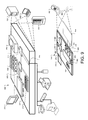
- FIG. 9 shows an example computer device 900 and example mobile computer device 950 , which can be used to implement the techniques described herein. For example, a portion or all of the operations of a performance manager (e.g., the performance manger 102 shown in FIG. 1 ) and/or a performance analyzer (e.g., the performance analyzer 214 shown in FIG. 2 ) may be executed by the computer device 900 and/or the mobile computer device 950 .
- Computing device 900 is intended to represent various forms of digital computers, including, e.g., laptops, desktops, workstations, personal digital assistants, servers, blade servers, mainframes, and other appropriate computers.
- Computing device 950 is intended to represent various forms of mobile devices, including, e.g., personal digital assistants, cellular telephones, smartphones, and other similar computing devices.
- the components shown here, their connections and relationships, and their functions, are meant to be examples only, and are not meant to limit implementations of the techniques described and/or claimed in this document.
- Computing device 900 includes processor 902 , memory 904 , storage device 906 , high-speed interface 908 connecting to memory 904 and high-speed expansion ports 910 , and low speed interface 912 connecting to low speed bus 914 and storage device 906 .
- processor 902 can process instructions for execution within computing device 900 , including instructions stored in memory 904 or on storage device 906 to display graphical data for a GUI on an external input/output device, including, e.g., display 916 coupled to high speed interface 908 .
- multiple processors and/or multiple buses can be used, as appropriate, along with multiple memories and types of memory.
- multiple computing devices 900 can be connected, with each device providing portions of the necessary operations (e.g., as a server bank, a group of blade servers, or a multi-processor system).
- Memory 904 stores data within computing device 900 .
- memory 904 is a volatile memory unit or units.
- memory 904 is a non-volatile memory unit or units.
- Memory 904 also can be another form of computer-readable medium, including, e.g., a magnetic or optical disk.
- Storage device 906 is capable of providing mass storage for computing device 900 .
- storage device 906 can be or contain a computer-readable medium, including, e.g., a floppy disk device, a hard disk device, an optical disk device, a tape device, a flash memory or other similar solid state memory device, or an array of devices, including devices in a storage area network or other configurations.
- a computer program product can be tangibly embodied in a data carrier.
- the computer program product also can contain instructions that, when executed, perform one or more methods, including, e.g., those described above.
- the data carrier is a computer- or machine-readable medium, including, e.g., memory 904 , storage device 906 , memory on processor 902 , and the like.
- High-speed controller 908 manages bandwidth-intensive operations for computing device 900 , while low speed controller 912 manages lower bandwidth-intensive operations. Such allocation of functions is an example only.
- high-speed controller 908 is coupled to memory 904 , display 916 (e.g., through a graphics processor or accelerator), and to high-speed expansion ports 910 , which can accept various expansion cards (not shown).
- low-speed controller 812 is coupled to storage device 806 and low-speed expansion port 914 .
- the low-speed expansion port which can include various communication ports (e.g., USB, Bluetooth®, Ethernet, wireless Ethernet), can be coupled to one or more input/output devices, including, e.g., a keyboard, a pointing device, a scanner, or a networking device including, e.g., a switch or router, e.g., through a network adapter.
- input/output devices including, e.g., a keyboard, a pointing device, a scanner, or a networking device including, e.g., a switch or router, e.g., through a network adapter.
- Computing device 900 can be implemented in a number of different forms, as shown in the figure. For example, it can be implemented as standard server 920 , or multiple times in a group of such servers. It also can be implemented as part of rack server system 924 . In addition or as an alternative, it can be implemented in a personal computer, e.g., laptop computer 922 . In some examples, components from computing device 900 can be combined with other components in a mobile device (not shown), e.g., device 950 . Each of such devices can contain one or more of computing device 900 , 950 , and an entire system can be made up of multiple computing devices 900 , 950 communicating with each other.
- Computing device 950 includes processor 952 , memory 964 , and an input/output device including, e.g., display 954 , communication interface 966 , and transceiver 968 , among other components.
- Device 950 also can be provided with a storage device, including, e.g., a microdrive or other device, to provide additional storage.
- Components 950 , 952 , 964 , 954 , 966 , and 968 may each be interconnected using various buses, and several of the components can be mounted on a common motherboard or in other manners as appropriate.
- Processor 952 can execute instructions within computing device 950 , including instructions stored in memory 964 .
- the processor can be implemented as a chipset of chips that include separate and multiple analog and digital processors.
- the processor can provide, for example, for the coordination of the other components of device 950 , including, e.g., control of user interfaces, applications run by device 950 , and wireless communication by device 950 .
- Processor 952 can communicate with a user through control interface 958 and display interface 956 coupled to display 954 .
- Display 954 can be, for example, a TFT LCD (Thin-Film-Transistor Liquid Crystal Display) or an OLED (Organic Light Emitting Diode) display, or other appropriate display technology.
- Display interface 956 can comprise appropriate circuitry for driving display 954 to present graphical and other data to a user.
- Control interface 958 can receive commands from a user and convert them for submission to processor 952 .
- external interface 962 can communicate with processor 942 , so as to enable near area communication of device 950 with other devices.
- External interface 962 can provide, for example, for wired communication in some implementations, or for wireless communication in other implementations. Multiple interfaces also can be used.
- Memory 964 stores data within computing device 950 .
- Memory 964 can be implemented as one or more of a computer-readable medium or media, a volatile memory unit or units, or a non-volatile memory unit or units.
- Expansion memory 974 also can be provided and connected to device 850 through expansion interface 972 , which can include, for example, a SIMM (Single In Line Memory Module) card interface.
- SIMM Single In Line Memory Module
- expansion memory 974 can provide extra storage space for device 950 , or can also store applications or other data for device 950 .
- expansion memory 974 can also include instructions to carry out or supplement the processes described above, and can include secure data.
- expansion memory 974 can be provided as a security module for device 950 and can be programmed with instructions that permit secure use of device 950 .
- secure applications can be provided through the SIMM cards, along with additional data, including, e.g., placing identifying data on the SIMM card in a non-hackable manner.
- the memory can include, for example, flash memory and/or NVRAM memory, as discussed below.
- a computer program product is tangibly embodied in a data carrier.
- the computer program product contains instructions that, when executed, perform one or more methods, including, e.g., those described above.
- the data carrier is a computer- or machine-readable medium, including, e.g., memory 964 , expansion memory 974 , and/or memory on processor 952 , which can be received, for example, over transceiver 968 or external interface 962 .
- Device 950 can communicate wirelessly through communication interface 966 , which can include digital signal processing circuitry where necessary. Communication interface 966 can provide for communications under various modes or protocols, including, e.g., GSM voice calls, SMS, EMS, or MMS messaging, CDMA, TDMA, PDC, WCDMA, CDMA2000, or GPRS, among others. Such communication can occur, for example, through radio-frequency transceiver 968 . In addition, short-range communication can occur, including, e.g., using a Bluetooth®, WiFi, or other such transceiver (not shown). In addition, GPS (Global Positioning System) receiver module 970 can provide additional navigation- and location-related wireless data to device 950 , which can be used as appropriate by applications running on device 950 .
- GPS Global Positioning System
- Device 950 also can communicate audibly using audio codec 960 , which can receive spoken data from a user and convert it to usable digital data. Audio codec 960 can likewise generate audible sound for a user, including, e.g., through a speaker, e.g., in a handset of device 950 . Such sound can include sound from voice telephone calls, can include recorded sound (e.g., voice messages, music files, and the like) and also can include sound generated by applications operating on device 950 .
- Audio codec 960 can receive spoken data from a user and convert it to usable digital data. Audio codec 960 can likewise generate audible sound for a user, including, e.g., through a speaker, e.g., in a handset of device 950 . Such sound can include sound from voice telephone calls, can include recorded sound (e.g., voice messages, music files, and the like) and also can include sound generated by applications operating on device 950 .
- Computing device 950 can be implemented in a number of different forms, as shown in the figure. For example, it can be implemented as cellular telephone 980 . It also can be implemented as part of smartphone 982 , personal digital assistant, or other similar mobile device.
- Various implementations of the systems and techniques described here can be realized in digital electronic circuitry, integrated circuitry, specially designed ASICs (application specific integrated circuits), computer hardware, firmware, software, and/or combinations thereof.
- ASICs application specific integrated circuits
- These various implementations can include one or more computer programs that are executable and/or interpretable on a programmable system.
- This includes at least one programmable processor, which can be special or general purpose, coupled to receive data and instructions from, and to transmit data and instructions to, a storage system, at least one input device, and at least one output device.
- machine-readable medium and computer-readable medium refer to a computer program product, apparatus and/or device (e.g., magnetic discs, optical disks, memory, Programmable Logic Devices (PLDs)) used to provide machine instructions and/or data to a programmable processor, including a machine-readable medium that receives machine instructions.
- PLDs Programmable Logic Devices
- the systems and techniques described here can be implemented on a computer having a display device (e.g., a CRT (cathode ray tube) or LCD (liquid crystal display) monitor) for displaying data to the user, and a keyboard, and a pointing device (e.g., a mouse or a trackball) by which the user can provide input to the computer.
- a display device e.g., a CRT (cathode ray tube) or LCD (liquid crystal display) monitor
- a keyboard e.g., a mouse or a trackball
- Other kinds of devices can be used to provide for interaction with a user as well; for example, feedback provided to the user can be a form of sensory feedback (e.g., visual feedback, auditory feedback, or tactile feedback); and input from the user can be received in a form, including acoustic, speech, or tactile input.
- the systems and techniques described here can be implemented in a computing system that includes a back end component (e.g., as a data server), or that includes a middleware component (e.g., an application server), or that includes a front end component (e.g., a client computer having a user interface or a Web browser through which a user can interact with an implementation of the systems and techniques described here), or a combination of such back end, middleware, or front end components.
- the components of the system can be interconnected by a form or medium of digital data communication (e.g., a communication network). Examples of communication networks include a local area network (LAN), a wide area network (WAN), and the Internet.
- LAN local area network
- WAN wide area network
- the Internet the global information network
- the computing system can include clients and servers.
- a client and server are generally remote from each other and typically interact through a communication network.
- the relationship of client and server arises by virtue of computer programs running on the respective computers and having a client-server relationship to each other.
- the engines described herein can be separated, combined or incorporated into a single or combined engine.
- the engines depicted in the figures are not intended to limit the systems described here to the software architectures shown in the figures.
Landscapes
- Engineering & Computer Science (AREA)
- Automation & Control Theory (AREA)
- Physics & Mathematics (AREA)
- Radar, Positioning & Navigation (AREA)
- Remote Sensing (AREA)
- General Physics & Mathematics (AREA)
- Mechanical Engineering (AREA)
- Transportation (AREA)
- Human Computer Interaction (AREA)
- Mathematical Physics (AREA)
- Traffic Control Systems (AREA)
- Combined Controls Of Internal Combustion Engines (AREA)
Abstract
Description
Claims (31)
Priority Applications (4)
| Application Number | Priority Date | Filing Date | Title |
|---|---|---|---|
| US14/019,908 US9818240B1 (en) | 2013-09-06 | 2013-09-06 | Comparing vehicle performance |
| US15/810,530 US10083552B2 (en) | 2013-09-06 | 2017-11-13 | Comparing vehicle performance |
| US16/139,910 US10565805B2 (en) | 2013-09-06 | 2018-09-24 | Comparing vehicle performance |
| US16/791,200 US11410472B2 (en) | 2013-09-06 | 2020-02-14 | Comparing vehicle performance |
Applications Claiming Priority (1)
| Application Number | Priority Date | Filing Date | Title |
|---|---|---|---|
| US14/019,908 US9818240B1 (en) | 2013-09-06 | 2013-09-06 | Comparing vehicle performance |
Related Child Applications (1)
| Application Number | Title | Priority Date | Filing Date |
|---|---|---|---|
| US15/810,530 Continuation US10083552B2 (en) | 2013-09-06 | 2017-11-13 | Comparing vehicle performance |
Publications (1)
| Publication Number | Publication Date |
|---|---|
| US9818240B1 true US9818240B1 (en) | 2017-11-14 |
Family
ID=60255777
Family Applications (4)
| Application Number | Title | Priority Date | Filing Date |
|---|---|---|---|
| US14/019,908 Expired - Fee Related US9818240B1 (en) | 2013-09-06 | 2013-09-06 | Comparing vehicle performance |
| US15/810,530 Active US10083552B2 (en) | 2013-09-06 | 2017-11-13 | Comparing vehicle performance |
| US16/139,910 Expired - Fee Related US10565805B2 (en) | 2013-09-06 | 2018-09-24 | Comparing vehicle performance |
| US16/791,200 Active 2033-10-26 US11410472B2 (en) | 2013-09-06 | 2020-02-14 | Comparing vehicle performance |
Family Applications After (3)
| Application Number | Title | Priority Date | Filing Date |
|---|---|---|---|
| US15/810,530 Active US10083552B2 (en) | 2013-09-06 | 2017-11-13 | Comparing vehicle performance |
| US16/139,910 Expired - Fee Related US10565805B2 (en) | 2013-09-06 | 2018-09-24 | Comparing vehicle performance |
| US16/791,200 Active 2033-10-26 US11410472B2 (en) | 2013-09-06 | 2020-02-14 | Comparing vehicle performance |
Country Status (1)
| Country | Link |
|---|---|
| US (4) | US9818240B1 (en) |
Cited By (8)
| Publication number | Priority date | Publication date | Assignee | Title |
|---|---|---|---|---|
| US9975542B1 (en) | 2013-06-18 | 2018-05-22 | XL Hybrids | Dynamically assisting hybrid vehicles |
| US10083552B2 (en) | 2013-09-06 | 2018-09-25 | XL Hybrids | Comparing vehicle performance |
| US10086710B2 (en) | 2012-02-01 | 2018-10-02 | XL Hybrids | Managing vehicle information |
| US10630723B1 (en) * | 2015-12-03 | 2020-04-21 | United Services Automobile Association (Usaa) | Determining policy characteristics based on route similarity |
| US10748355B2 (en) | 2013-11-07 | 2020-08-18 | XL Hybrids | Route-based vehicle selection |
| CN112590687A (en) * | 2020-12-18 | 2021-04-02 | 武汉格罗夫氢能汽车有限公司 | Car networking background checking method for total mileage of fuel cell hydrogen energy car |
| US11227234B2 (en) * | 2018-06-11 | 2022-01-18 | Traxen Inc. | Normalized performance comparison techniques |
| US20220348204A1 (en) * | 2021-04-29 | 2022-11-03 | Volvo Car Corporation | Method for controlling autonomous vehicle, and autonomous vehicle |
Families Citing this family (5)
| Publication number | Priority date | Publication date | Assignee | Title |
|---|---|---|---|---|
| US10984657B2 (en) * | 2018-08-21 | 2021-04-20 | Toyota Motor Engineering & Manufacturing North America, Inc. | System and method for vehicle-to-vehicle statistic challenges |
| CN109747427B (en) * | 2019-02-01 | 2021-02-19 | 广州小鹏汽车科技有限公司 | Method and apparatus for estimating remaining driving ability of electric vehicle when reaching destination |
| JP7172948B2 (en) * | 2019-10-29 | 2022-11-16 | トヨタ自動車株式会社 | Information processing device, information processing method, and information processing program |
| US12259251B2 (en) | 2021-09-01 | 2025-03-25 | BorgWarner US Technologies LLC | System and method for controlling vehicle propulsion |
| US12340638B2 (en) * | 2022-10-03 | 2025-06-24 | Cambridge Mobile Telematics Inc. | Method and system for obtaining vehicle fuel efficiency |
Citations (104)
| Publication number | Priority date | Publication date | Assignee | Title |
|---|---|---|---|---|
| US1696599A (en) | 1925-11-03 | 1928-12-25 | Gen Electric | Regenerative braking |
| US1790634A (en) | 1931-01-27 | Morton arendt | ||
| US2132450A (en) | 1932-04-07 | 1938-10-11 | Austin M Wolf | Motor vehicle |
| US3493066A (en) | 1968-02-28 | 1970-02-03 | Mcculloch Corp | Vehicle power system intended for reduced air pollution |
| US3732751A (en) | 1969-03-17 | 1973-05-15 | Trw Inc | Power train using multiple power sources |
| US3874472A (en) | 1974-01-25 | 1975-04-01 | West Virginia High Bird Corp | Battery powered vehicle drive |
| US3923115A (en) | 1971-10-29 | 1975-12-02 | Juergen Helling | Hybrid drive |
| US4042056A (en) | 1975-11-21 | 1977-08-16 | Automobile Corporation Of America | Hybrid powered automobile |
| US4233858A (en) | 1976-12-27 | 1980-11-18 | The Garrett Corporation | Flywheel drive system having a split electromechanical transmission |
| US4305254A (en) | 1980-02-20 | 1981-12-15 | Daihatsu Motor Co., Ltd. | Control apparatus and method for engine/electric hybrid vehicle |
| US4811804A (en) | 1986-12-08 | 1989-03-14 | Emergency One, Inc. | Fire truck with rear-mounted engine |
| US5125469A (en) | 1991-03-04 | 1992-06-30 | Scott Gerald A | System for storing and using deceleration energy |
| US5161638A (en) | 1990-02-23 | 1992-11-10 | Nissan Motor Co., Ltd. | Final drive supporting structure for vehicle |
| US5267623A (en) | 1991-03-27 | 1993-12-07 | Mazda Motor Corporation | Mounting structure for a power unit of an automobile |
| US5272939A (en) | 1992-07-06 | 1993-12-28 | Eaton Corporation | Shift enable control method/system |
| US5359228A (en) | 1992-05-15 | 1994-10-25 | Mitsubishi Jidosha Kogyo Kabushiki Kaisha | Operating method for a hybrid car |
| US5441122A (en) | 1992-05-15 | 1995-08-15 | Mitsubishi Jidosha Kogyo Kabushiki Kaisha | Hybrid car and an operating method therefor |
| US5487002A (en) | 1992-12-31 | 1996-01-23 | Amerigon, Inc. | Energy management system for vehicles having limited energy storage |
| US5490063A (en) | 1994-02-07 | 1996-02-06 | Eaton Corporation | Control method/system including determination of an updated value indicative of gross combination weight of vehicles |
| US5558588A (en) | 1995-02-16 | 1996-09-24 | General Motors Corporation | Two-mode, input-split, parallel, hybrid transmission |
| US5627752A (en) | 1993-12-24 | 1997-05-06 | Mercedes-Benz Ag | Consumption-oriented driving-power limitation of a vehicle drive |
| US5778326A (en) | 1994-10-25 | 1998-07-07 | Kabushikikaisha Equos Research | Hybrid vehicle with battery charge control relative to a driving route |
| US5856709A (en) | 1995-11-13 | 1999-01-05 | Toyota Jidosha Kabushiki Kaisha | Hybrid vehicle drive system having clutch between engine and synthesizing/distributing mechanism which is operatively connected to motor/generator |
| US5927829A (en) | 1995-10-03 | 1999-07-27 | Mitsubishi Jidosha Kogyo Kabushiki Kaisha | Brake apparatus for electric automobile utilizing regenerative braking |
| US6176808B1 (en) | 1999-07-15 | 2001-01-23 | Ford Global Technologies, Inc. | Hybrid vehicle powertrain and control therefor |
| US6269290B1 (en) | 1998-07-01 | 2001-07-31 | Denso Corporation | Engine-motor hybrid vehicle control apparatus and method having engine performance Lessening compensation |
| US6314347B1 (en) | 1999-05-20 | 2001-11-06 | Nissan Motor Co., Ltd. | Driving control apparatus of hybrid vehicle and method thereof |
| US6328671B1 (en) | 1998-03-20 | 2001-12-11 | Nissan Motor Co., Ltd. | Drive force control device |
| US6356818B1 (en) | 1999-09-30 | 2002-03-12 | Honda Giken Kogyo Kabushiki Kaisha | Control apparatus for hybrid vehicle |
| US6367570B1 (en) | 1997-10-17 | 2002-04-09 | Electromotive Inc. | Hybrid electric vehicle with electric motor providing strategic power assist to load balance internal combustion engine |
| US20030010563A1 (en) | 2001-07-10 | 2003-01-16 | Kubota Corporation | Frame type tractor |
| US6520160B2 (en) | 2000-04-21 | 2003-02-18 | Toyota Jidosha Kabushiki Kaisha | Internal combustion engine control unit for, and method of controlling a hybrid vehicle |
| US6533692B1 (en) | 2001-10-19 | 2003-03-18 | New Venture Gear, Inc. | Drivetrain with hybrid transfer case |
| US6630813B2 (en) | 2002-03-06 | 2003-10-07 | Ford Global Technologies, Llc | Method and apparatus for monitoring the state of the battery of a hybrid electric vehicle |
| US6668954B2 (en) | 1992-05-08 | 2003-12-30 | Field Hybrids, Llc | Electric hybrid vehicle |
| US6687581B2 (en) | 2001-02-07 | 2004-02-03 | Nissan Motor Co., Ltd. | Control device and control method for hybrid vehicle |
| US6826460B2 (en) | 2002-10-22 | 2004-11-30 | Michael M. Schneck | Range prediction in fleet management of electric and fuel-cell vehicles |
| US6868927B2 (en) | 2001-10-25 | 2005-03-22 | Daimlerchrysler Ag | Method for operating a hybrid drive system |
| US20050205313A1 (en) | 2004-03-19 | 2005-09-22 | Gilmore Curt D | Hybrid vehicle with power assisted prop shaft |
| US20060000650A1 (en) | 2004-06-23 | 2006-01-05 | Hughey Charles E | Hybrid vehicle conversion kit |
| US20060030450A1 (en) | 2004-08-09 | 2006-02-09 | Kyle Ronald L | Hybrid vehicle formed by converting a conventional IC engine powered vehicle and method of such conversion |
| US7013205B1 (en) | 2004-11-22 | 2006-03-14 | International Business Machines Corporation | System and method for minimizing energy consumption in hybrid vehicles |
| US7104347B2 (en) | 1998-09-14 | 2006-09-12 | Paice Llc | Hybrid vehicles |
| US20060213703A1 (en) | 2002-04-10 | 2006-09-28 | Long Thomas W | Vehicle drive system with energy recovery system and vehicle mounting same |
| US20060293841A1 (en) | 2005-06-15 | 2006-12-28 | Davor Hrovat | Traction control system and method |
| US20070027593A1 (en) * | 2005-07-14 | 2007-02-01 | Baiju Shah | Predictive monitoring for vehicle efficiency and maintenance |
| US7214156B2 (en) | 2004-06-18 | 2007-05-08 | Eaton Corporation | Start and operation sequences for hybrid motor vehicles |
| US20070129878A1 (en) * | 2005-12-07 | 2007-06-07 | Netistix Technologies Corp. | Methods and system for determining consumption and fuel efficiency in vehicles |
| US20070135988A1 (en) * | 2005-12-08 | 2007-06-14 | Kidston Kevin S | Apparatus and method for comparing the fuel consumption of an alternative fuel vehicle with that of a traditionally fueled comparison vehicle |
| US20070137919A1 (en) | 2003-08-20 | 2007-06-21 | Peter Jolley | Assembly of a motor vehicle body and a power train and chassis module |
| US20070163819A1 (en) | 2006-01-18 | 2007-07-19 | Timothy Gerard Richter | Hybrid drive system and method of installing same |
| US7258183B2 (en) | 2003-09-24 | 2007-08-21 | Ford Global Technologies, Llc | Stabilized electric distribution system for use with a vehicle having electric assist |
| US7271555B1 (en) | 2005-02-03 | 2007-09-18 | Gabriel Ciccone | Vehicle electrical assist apparatus and kit for same |
| US7367415B2 (en) | 2005-01-28 | 2008-05-06 | Eaton Corporation | Hybrid electric vehicle engine start technique |
| US7395887B2 (en) | 2004-12-23 | 2008-07-08 | Bosch Rexroth Corporation | Complementary regenerative torque system and method of controlling same |
| US20080208393A1 (en) | 2007-02-28 | 2008-08-28 | Caterpillar Inc. | Method of controlling a vehicle based on operation characteristics |
| US7419021B2 (en) | 2004-09-27 | 2008-09-02 | Oshkosh Truck Corporation | Engine and generator orientation within a hybrid vehicle |
| US20080213703A1 (en) | 2004-04-08 | 2008-09-04 | Carl Zeiss Smt Ag | Imaging System With Mirror Group |
| US20080236910A1 (en) | 2007-03-31 | 2008-10-02 | Kejha Joseph B | Low cost conversion of any internal combustion vehicle into hybrid electric vehicle |
| US7434640B2 (en) | 2005-07-27 | 2008-10-14 | Eaton Corporation | Method for reducing torque required to crank engine in hybrid vehicle |
| US7434641B2 (en) | 2003-09-24 | 2008-10-14 | Aisin Aw Co., Ltd. | Control apparatus of hybrid vehicle |
| US20080319596A1 (en) | 2007-06-20 | 2008-12-25 | Denso Corporation | Charge-discharge management apparatus and computer readable medium comprising instructions for achieving the apparatus |
| US20090015202A1 (en) | 2007-07-10 | 2009-01-15 | Shimpei Miura | State of charge control method and systems for vehicles |
| US7559578B2 (en) | 2004-10-18 | 2009-07-14 | Workhorse Custom Chassis, Llc | Vehicle chassis assembly |
| US20090192660A1 (en) | 2008-01-25 | 2009-07-30 | Ford Motor Company | Method and system for controlling a motive power system of an automotive vehicle |
| US20090198398A1 (en) | 2008-01-31 | 2009-08-06 | Denso Corporation | Drive-and-control system for hybrid vehicles |
| US20090212626A1 (en) | 2008-02-26 | 2009-08-27 | Philip Kenneth Snyder | System and Method for Dual Energy Storage Management |
| US20090223725A1 (en) | 2008-02-14 | 2009-09-10 | Fernando Rodriguez | Hybrid electric conversion kit for rear-wheel drive, all wheel drive, and four wheel drive vehicles |
| US20090259355A1 (en) | 2008-04-15 | 2009-10-15 | The Uwm Research Foundation, Inc. | Power management of a hybrid vehicle |
| US7610124B2 (en) | 2005-11-24 | 2009-10-27 | Honda Motor Co., Ltd. | Control device for motor-driven vehicle |
| US20100001672A1 (en) | 2008-07-02 | 2010-01-07 | Mitsubishi Electric Corporation | Generator motor for vehicle and control method for the same |
| US7647994B1 (en) | 2006-10-10 | 2010-01-19 | Belloso Gregorio M | Hybrid vehicle having an electric generator engine and an auxiliary accelerator engine |
| US7647997B2 (en) | 2004-11-16 | 2010-01-19 | Eaton Corporation | Regeneration and brake management system |
| US7665560B2 (en) | 2007-02-22 | 2010-02-23 | Ford Global Technologies, Llc | Drivetrain for hybrid electric vehicle |
| US20100044129A1 (en) | 2004-08-09 | 2010-02-25 | Hybrid Electric Conversion Co., Llc | Hybrid vehicle formed by converting a conventional ic engine powered vehicle and method of such conversion |
| US7674994B1 (en) | 2004-10-21 | 2010-03-09 | Valerio Thomas A | Method and apparatus for sorting metal |
| US7681676B2 (en) | 2006-01-23 | 2010-03-23 | Paul Harriman Kydd | Electric hybrid vehicle conversion |
| US20100106351A1 (en) | 2005-03-31 | 2010-04-29 | Energy Control Systems Engineering, Inc. | Method And System For Retrofitting A Full Hybrid To Be A Plug-In Hybrid |
| US20100219007A1 (en) | 2007-07-12 | 2010-09-02 | Odyne Systems, Llc | Hybrid vehicle drive system and method and idle reduction system and method |
| US20100274426A1 (en) * | 2007-12-26 | 2010-10-28 | Renault Trucks | Method for managing fuel consumption of a hybrid vehicle and vehicle adapted to such a method |
| US7849944B2 (en) | 2007-06-12 | 2010-12-14 | Ut-Battelle, Llc | Self-learning control system for plug-in hybrid vehicles |
| US20110024211A1 (en) | 2008-03-21 | 2011-02-03 | Toyota Jidosha Kabushiki Kaisha | Hybrid vehicle, and hybrid-vehicle control method |
| US20110029181A1 (en) | 2009-07-29 | 2011-02-03 | Searete Llc., A Limited Liability Corporation Of The State Of Delaware | Selective control of an optional vehicle mode |
| US20110029173A1 (en) | 2009-07-29 | 2011-02-03 | Searete Llc, A Limited Liability Corporation Of The State Of Delaware | Hybrid vehicle qualification for preferential result |
| US20110047102A1 (en) | 2009-08-18 | 2011-02-24 | Ford Global Technologies, Llc | Vehicle battery charging system and method |
| US20110071712A1 (en) | 2009-09-18 | 2011-03-24 | Denson Corporation | Driving power control apparatus for vehicle and method for controlling vehicle |
| US7921950B2 (en) | 2006-11-10 | 2011-04-12 | Clean Emissions Technologies, Inc. | Electric traction retrofit |
| US7926387B2 (en) | 2003-02-24 | 2011-04-19 | Kubota Corporation | Change-speed control system for utility vehicle having stepless change-speed apparatus for speed-changing engine output and transmitting the speed-changed output to traveling unit |
| US20110098873A1 (en) | 2008-06-27 | 2011-04-28 | Masato Koga | Hybrid construction machine |
| US7954579B2 (en) | 2008-02-04 | 2011-06-07 | Illinois Institute Of Technology | Adaptive control strategy and method for optimizing hybrid electric vehicles |
| US20110148618A1 (en) * | 2008-07-31 | 2011-06-23 | Fujitsu Ten Limited | Fuel-saving driving diagnostic device, fuel-saving driving diagnostic system, travel control device, fuel-saving driving rating device, and fuel-saving driving diagnostic method |
| US20110160990A1 (en) * | 2009-12-28 | 2011-06-30 | Honda Motor Co., Ltd. | Devices And Methods For Determining Fuel Consumption And Searching Vehicle Routes |
| US20110270486A1 (en) * | 2009-09-25 | 2011-11-03 | Matthew Stevens | System, method and computer program for simulating vehicle energy use |
| US20120065834A1 (en) | 2010-09-10 | 2012-03-15 | Accenture Global Services Limited | Driving management system and method |
| US20120072049A1 (en) * | 2009-05-29 | 2012-03-22 | Siemens Aktiengesellschaft | Computer-supported monitoring of an energy consumption of a means of transportation |
| US8215442B2 (en) | 2009-01-07 | 2012-07-10 | Suzuki Motor Company | Rear mount structure of engine |
| US8256549B2 (en) | 2009-06-15 | 2012-09-04 | Polaris Industries Inc. | Electric vehicle |
| US20120239462A1 (en) * | 2011-03-18 | 2012-09-20 | Greendriver, Inc. | Apparatuses and methods for improving driving performance |
| US20120323474A1 (en) | 1998-10-22 | 2012-12-20 | Intelligent Technologies International, Inc. | Intra-Vehicle Information Conveyance System and Method |
| US8337359B2 (en) | 2008-08-27 | 2012-12-25 | EcoMotors International | Hybrid engine system |
| US20130046526A1 (en) * | 2011-08-18 | 2013-02-21 | Sermet Yücel | Selecting a Vehicle to Optimize Fuel Efficiency for a Given Route and a Given Driver |
| US8469137B2 (en) | 2011-08-22 | 2013-06-25 | Kubota Corporation | Working vehicle |
| US8596391B2 (en) | 2009-09-15 | 2013-12-03 | Kpit Cummins Infosystems Ltd | Method of converting vehicle into hybrid vehicle |
| US8630784B2 (en) | 2010-07-19 | 2014-01-14 | Honda Motor Co., Ltd. | Method and system for detecting and compensating weather condition effects on wireless signals |
Family Cites Families (11)
| Publication number | Priority date | Publication date | Assignee | Title |
|---|---|---|---|---|
| US8712650B2 (en) | 2005-11-17 | 2014-04-29 | Invent.Ly, Llc | Power management systems and designs |
| US9283954B2 (en) | 2007-07-12 | 2016-03-15 | Odyne Systems, Llc | System for and method of fuel optimization in a hybrid vehicle |
| US20100174484A1 (en) | 2009-01-05 | 2010-07-08 | Manthram Sivasubramaniam | System and method for optimizing hybrid engine operation |
| KR101602221B1 (en) | 2009-05-19 | 2016-03-10 | 엘지전자 주식회사 | Mobile terminal system and control method thereof |
| WO2012097349A2 (en) | 2011-01-13 | 2012-07-19 | Cummins Inc. | System, method, and apparatus for controlling power output distribution in a hybrid power train |
| US20130046466A1 (en) | 2011-08-18 | 2013-02-21 | Sermet Yücel | Selecting a Route to Optimize Fuel Efficiency for a Given Vehicle and a Given Driver |
| US9390062B1 (en) | 2012-02-01 | 2016-07-12 | XL Hybrids | Managing vehicle information |
| US8670888B1 (en) | 2013-06-18 | 2014-03-11 | XL Hybrids | Dynamically assisting hybrid vehicles |
| US20150081404A1 (en) | 2013-08-12 | 2015-03-19 | Intelligent Mechatronic Systems Inc. | Driver behavior enhancement using scoring, recognition and redeemable rewards |
| US9818240B1 (en) | 2013-09-06 | 2017-11-14 | XL Hybrids | Comparing vehicle performance |
| US9922469B1 (en) | 2013-11-07 | 2018-03-20 | XL Hybrids | Route-based vehicle selection |
-
2013
- 2013-09-06 US US14/019,908 patent/US9818240B1/en not_active Expired - Fee Related
-
2017
- 2017-11-13 US US15/810,530 patent/US10083552B2/en active Active
-
2018
- 2018-09-24 US US16/139,910 patent/US10565805B2/en not_active Expired - Fee Related
-
2020
- 2020-02-14 US US16/791,200 patent/US11410472B2/en active Active
Patent Citations (106)
| Publication number | Priority date | Publication date | Assignee | Title |
|---|---|---|---|---|
| US1790634A (en) | 1931-01-27 | Morton arendt | ||
| US1696599A (en) | 1925-11-03 | 1928-12-25 | Gen Electric | Regenerative braking |
| US2132450A (en) | 1932-04-07 | 1938-10-11 | Austin M Wolf | Motor vehicle |
| US3493066A (en) | 1968-02-28 | 1970-02-03 | Mcculloch Corp | Vehicle power system intended for reduced air pollution |
| US3732751A (en) | 1969-03-17 | 1973-05-15 | Trw Inc | Power train using multiple power sources |
| US3923115A (en) | 1971-10-29 | 1975-12-02 | Juergen Helling | Hybrid drive |
| US3874472A (en) | 1974-01-25 | 1975-04-01 | West Virginia High Bird Corp | Battery powered vehicle drive |
| US4042056A (en) | 1975-11-21 | 1977-08-16 | Automobile Corporation Of America | Hybrid powered automobile |
| US4233858A (en) | 1976-12-27 | 1980-11-18 | The Garrett Corporation | Flywheel drive system having a split electromechanical transmission |
| US4305254A (en) | 1980-02-20 | 1981-12-15 | Daihatsu Motor Co., Ltd. | Control apparatus and method for engine/electric hybrid vehicle |
| US4811804A (en) | 1986-12-08 | 1989-03-14 | Emergency One, Inc. | Fire truck with rear-mounted engine |
| US5161638A (en) | 1990-02-23 | 1992-11-10 | Nissan Motor Co., Ltd. | Final drive supporting structure for vehicle |
| US5125469A (en) | 1991-03-04 | 1992-06-30 | Scott Gerald A | System for storing and using deceleration energy |
| US5267623A (en) | 1991-03-27 | 1993-12-07 | Mazda Motor Corporation | Mounting structure for a power unit of an automobile |
| US6668954B2 (en) | 1992-05-08 | 2003-12-30 | Field Hybrids, Llc | Electric hybrid vehicle |
| US5359228A (en) | 1992-05-15 | 1994-10-25 | Mitsubishi Jidosha Kogyo Kabushiki Kaisha | Operating method for a hybrid car |
| US5441122A (en) | 1992-05-15 | 1995-08-15 | Mitsubishi Jidosha Kogyo Kabushiki Kaisha | Hybrid car and an operating method therefor |
| US5272939A (en) | 1992-07-06 | 1993-12-28 | Eaton Corporation | Shift enable control method/system |
| US5272939B1 (en) | 1992-07-06 | 1994-12-06 | Eaton Corp | Shift enable control method/system |
| US5487002A (en) | 1992-12-31 | 1996-01-23 | Amerigon, Inc. | Energy management system for vehicles having limited energy storage |
| US5627752A (en) | 1993-12-24 | 1997-05-06 | Mercedes-Benz Ag | Consumption-oriented driving-power limitation of a vehicle drive |
| US5490063A (en) | 1994-02-07 | 1996-02-06 | Eaton Corporation | Control method/system including determination of an updated value indicative of gross combination weight of vehicles |
| US5778326A (en) | 1994-10-25 | 1998-07-07 | Kabushikikaisha Equos Research | Hybrid vehicle with battery charge control relative to a driving route |
| US5558588A (en) | 1995-02-16 | 1996-09-24 | General Motors Corporation | Two-mode, input-split, parallel, hybrid transmission |
| US5927829A (en) | 1995-10-03 | 1999-07-27 | Mitsubishi Jidosha Kogyo Kabushiki Kaisha | Brake apparatus for electric automobile utilizing regenerative braking |
| US5856709A (en) | 1995-11-13 | 1999-01-05 | Toyota Jidosha Kabushiki Kaisha | Hybrid vehicle drive system having clutch between engine and synthesizing/distributing mechanism which is operatively connected to motor/generator |
| US6367570B1 (en) | 1997-10-17 | 2002-04-09 | Electromotive Inc. | Hybrid electric vehicle with electric motor providing strategic power assist to load balance internal combustion engine |
| US6328671B1 (en) | 1998-03-20 | 2001-12-11 | Nissan Motor Co., Ltd. | Drive force control device |
| US6269290B1 (en) | 1998-07-01 | 2001-07-31 | Denso Corporation | Engine-motor hybrid vehicle control apparatus and method having engine performance Lessening compensation |
| US7104347B2 (en) | 1998-09-14 | 2006-09-12 | Paice Llc | Hybrid vehicles |
| US20120323474A1 (en) | 1998-10-22 | 2012-12-20 | Intelligent Technologies International, Inc. | Intra-Vehicle Information Conveyance System and Method |
| US6314347B1 (en) | 1999-05-20 | 2001-11-06 | Nissan Motor Co., Ltd. | Driving control apparatus of hybrid vehicle and method thereof |
| US6176808B1 (en) | 1999-07-15 | 2001-01-23 | Ford Global Technologies, Inc. | Hybrid vehicle powertrain and control therefor |
| US6356818B1 (en) | 1999-09-30 | 2002-03-12 | Honda Giken Kogyo Kabushiki Kaisha | Control apparatus for hybrid vehicle |
| US6520160B2 (en) | 2000-04-21 | 2003-02-18 | Toyota Jidosha Kabushiki Kaisha | Internal combustion engine control unit for, and method of controlling a hybrid vehicle |
| US6687581B2 (en) | 2001-02-07 | 2004-02-03 | Nissan Motor Co., Ltd. | Control device and control method for hybrid vehicle |
| US20030010563A1 (en) | 2001-07-10 | 2003-01-16 | Kubota Corporation | Frame type tractor |
| US6533692B1 (en) | 2001-10-19 | 2003-03-18 | New Venture Gear, Inc. | Drivetrain with hybrid transfer case |
| US6868927B2 (en) | 2001-10-25 | 2005-03-22 | Daimlerchrysler Ag | Method for operating a hybrid drive system |
| US6630813B2 (en) | 2002-03-06 | 2003-10-07 | Ford Global Technologies, Llc | Method and apparatus for monitoring the state of the battery of a hybrid electric vehicle |
| US20060213703A1 (en) | 2002-04-10 | 2006-09-28 | Long Thomas W | Vehicle drive system with energy recovery system and vehicle mounting same |
| US6826460B2 (en) | 2002-10-22 | 2004-11-30 | Michael M. Schneck | Range prediction in fleet management of electric and fuel-cell vehicles |
| US7926387B2 (en) | 2003-02-24 | 2011-04-19 | Kubota Corporation | Change-speed control system for utility vehicle having stepless change-speed apparatus for speed-changing engine output and transmitting the speed-changed output to traveling unit |
| US20070137919A1 (en) | 2003-08-20 | 2007-06-21 | Peter Jolley | Assembly of a motor vehicle body and a power train and chassis module |
| US7434641B2 (en) | 2003-09-24 | 2008-10-14 | Aisin Aw Co., Ltd. | Control apparatus of hybrid vehicle |
| US7258183B2 (en) | 2003-09-24 | 2007-08-21 | Ford Global Technologies, Llc | Stabilized electric distribution system for use with a vehicle having electric assist |
| US20050205313A1 (en) | 2004-03-19 | 2005-09-22 | Gilmore Curt D | Hybrid vehicle with power assisted prop shaft |
| US20080213703A1 (en) | 2004-04-08 | 2008-09-04 | Carl Zeiss Smt Ag | Imaging System With Mirror Group |
| US7214156B2 (en) | 2004-06-18 | 2007-05-08 | Eaton Corporation | Start and operation sequences for hybrid motor vehicles |
| US20060000650A1 (en) | 2004-06-23 | 2006-01-05 | Hughey Charles E | Hybrid vehicle conversion kit |
| US20100044129A1 (en) | 2004-08-09 | 2010-02-25 | Hybrid Electric Conversion Co., Llc | Hybrid vehicle formed by converting a conventional ic engine powered vehicle and method of such conversion |
| US20060030450A1 (en) | 2004-08-09 | 2006-02-09 | Kyle Ronald L | Hybrid vehicle formed by converting a conventional IC engine powered vehicle and method of such conversion |
| US7419021B2 (en) | 2004-09-27 | 2008-09-02 | Oshkosh Truck Corporation | Engine and generator orientation within a hybrid vehicle |
| US7559578B2 (en) | 2004-10-18 | 2009-07-14 | Workhorse Custom Chassis, Llc | Vehicle chassis assembly |
| US7674994B1 (en) | 2004-10-21 | 2010-03-09 | Valerio Thomas A | Method and apparatus for sorting metal |
| US7647997B2 (en) | 2004-11-16 | 2010-01-19 | Eaton Corporation | Regeneration and brake management system |
| US7013205B1 (en) | 2004-11-22 | 2006-03-14 | International Business Machines Corporation | System and method for minimizing energy consumption in hybrid vehicles |
| US7395887B2 (en) | 2004-12-23 | 2008-07-08 | Bosch Rexroth Corporation | Complementary regenerative torque system and method of controlling same |
| US7367415B2 (en) | 2005-01-28 | 2008-05-06 | Eaton Corporation | Hybrid electric vehicle engine start technique |
| US7271555B1 (en) | 2005-02-03 | 2007-09-18 | Gabriel Ciccone | Vehicle electrical assist apparatus and kit for same |
| US20100106351A1 (en) | 2005-03-31 | 2010-04-29 | Energy Control Systems Engineering, Inc. | Method And System For Retrofitting A Full Hybrid To Be A Plug-In Hybrid |
| US20060293841A1 (en) | 2005-06-15 | 2006-12-28 | Davor Hrovat | Traction control system and method |
| US20070027593A1 (en) * | 2005-07-14 | 2007-02-01 | Baiju Shah | Predictive monitoring for vehicle efficiency and maintenance |
| US7434640B2 (en) | 2005-07-27 | 2008-10-14 | Eaton Corporation | Method for reducing torque required to crank engine in hybrid vehicle |
| US7610124B2 (en) | 2005-11-24 | 2009-10-27 | Honda Motor Co., Ltd. | Control device for motor-driven vehicle |
| US20070129878A1 (en) * | 2005-12-07 | 2007-06-07 | Netistix Technologies Corp. | Methods and system for determining consumption and fuel efficiency in vehicles |
| US20070135988A1 (en) * | 2005-12-08 | 2007-06-14 | Kidston Kevin S | Apparatus and method for comparing the fuel consumption of an alternative fuel vehicle with that of a traditionally fueled comparison vehicle |
| US20070163819A1 (en) | 2006-01-18 | 2007-07-19 | Timothy Gerard Richter | Hybrid drive system and method of installing same |
| US7681676B2 (en) | 2006-01-23 | 2010-03-23 | Paul Harriman Kydd | Electric hybrid vehicle conversion |
| US7647994B1 (en) | 2006-10-10 | 2010-01-19 | Belloso Gregorio M | Hybrid vehicle having an electric generator engine and an auxiliary accelerator engine |
| US7921950B2 (en) | 2006-11-10 | 2011-04-12 | Clean Emissions Technologies, Inc. | Electric traction retrofit |
| US7665560B2 (en) | 2007-02-22 | 2010-02-23 | Ford Global Technologies, Llc | Drivetrain for hybrid electric vehicle |
| US20080208393A1 (en) | 2007-02-28 | 2008-08-28 | Caterpillar Inc. | Method of controlling a vehicle based on operation characteristics |
| US20080236910A1 (en) | 2007-03-31 | 2008-10-02 | Kejha Joseph B | Low cost conversion of any internal combustion vehicle into hybrid electric vehicle |
| US7849944B2 (en) | 2007-06-12 | 2010-12-14 | Ut-Battelle, Llc | Self-learning control system for plug-in hybrid vehicles |
| US20080319596A1 (en) | 2007-06-20 | 2008-12-25 | Denso Corporation | Charge-discharge management apparatus and computer readable medium comprising instructions for achieving the apparatus |
| US20090015202A1 (en) | 2007-07-10 | 2009-01-15 | Shimpei Miura | State of charge control method and systems for vehicles |
| US20100219007A1 (en) | 2007-07-12 | 2010-09-02 | Odyne Systems, Llc | Hybrid vehicle drive system and method and idle reduction system and method |
| US20100274426A1 (en) * | 2007-12-26 | 2010-10-28 | Renault Trucks | Method for managing fuel consumption of a hybrid vehicle and vehicle adapted to such a method |
| US20090192660A1 (en) | 2008-01-25 | 2009-07-30 | Ford Motor Company | Method and system for controlling a motive power system of an automotive vehicle |
| US20090198398A1 (en) | 2008-01-31 | 2009-08-06 | Denso Corporation | Drive-and-control system for hybrid vehicles |
| US7954579B2 (en) | 2008-02-04 | 2011-06-07 | Illinois Institute Of Technology | Adaptive control strategy and method for optimizing hybrid electric vehicles |
| US20090223725A1 (en) | 2008-02-14 | 2009-09-10 | Fernando Rodriguez | Hybrid electric conversion kit for rear-wheel drive, all wheel drive, and four wheel drive vehicles |
| US20090212626A1 (en) | 2008-02-26 | 2009-08-27 | Philip Kenneth Snyder | System and Method for Dual Energy Storage Management |
| US20110024211A1 (en) | 2008-03-21 | 2011-02-03 | Toyota Jidosha Kabushiki Kaisha | Hybrid vehicle, and hybrid-vehicle control method |
| US20090259355A1 (en) | 2008-04-15 | 2009-10-15 | The Uwm Research Foundation, Inc. | Power management of a hybrid vehicle |
| US20110098873A1 (en) | 2008-06-27 | 2011-04-28 | Masato Koga | Hybrid construction machine |
| US20100001672A1 (en) | 2008-07-02 | 2010-01-07 | Mitsubishi Electric Corporation | Generator motor for vehicle and control method for the same |
| US20110148618A1 (en) * | 2008-07-31 | 2011-06-23 | Fujitsu Ten Limited | Fuel-saving driving diagnostic device, fuel-saving driving diagnostic system, travel control device, fuel-saving driving rating device, and fuel-saving driving diagnostic method |
| US8337359B2 (en) | 2008-08-27 | 2012-12-25 | EcoMotors International | Hybrid engine system |
| US8215442B2 (en) | 2009-01-07 | 2012-07-10 | Suzuki Motor Company | Rear mount structure of engine |
| US20120072049A1 (en) * | 2009-05-29 | 2012-03-22 | Siemens Aktiengesellschaft | Computer-supported monitoring of an energy consumption of a means of transportation |
| US8256549B2 (en) | 2009-06-15 | 2012-09-04 | Polaris Industries Inc. | Electric vehicle |
| US20130060410A1 (en) | 2009-06-15 | 2013-03-07 | Polaris Industries Inc. | Electric vehicle |
| US20110029173A1 (en) | 2009-07-29 | 2011-02-03 | Searete Llc, A Limited Liability Corporation Of The State Of Delaware | Hybrid vehicle qualification for preferential result |
| US20110029181A1 (en) | 2009-07-29 | 2011-02-03 | Searete Llc., A Limited Liability Corporation Of The State Of Delaware | Selective control of an optional vehicle mode |
| US20110047102A1 (en) | 2009-08-18 | 2011-02-24 | Ford Global Technologies, Llc | Vehicle battery charging system and method |
| US8596391B2 (en) | 2009-09-15 | 2013-12-03 | Kpit Cummins Infosystems Ltd | Method of converting vehicle into hybrid vehicle |
| US20110071712A1 (en) | 2009-09-18 | 2011-03-24 | Denson Corporation | Driving power control apparatus for vehicle and method for controlling vehicle |
| US20110270486A1 (en) * | 2009-09-25 | 2011-11-03 | Matthew Stevens | System, method and computer program for simulating vehicle energy use |
| US20110160990A1 (en) * | 2009-12-28 | 2011-06-30 | Honda Motor Co., Ltd. | Devices And Methods For Determining Fuel Consumption And Searching Vehicle Routes |
| US8630784B2 (en) | 2010-07-19 | 2014-01-14 | Honda Motor Co., Ltd. | Method and system for detecting and compensating weather condition effects on wireless signals |
| US20120065834A1 (en) | 2010-09-10 | 2012-03-15 | Accenture Global Services Limited | Driving management system and method |
| US20120239462A1 (en) * | 2011-03-18 | 2012-09-20 | Greendriver, Inc. | Apparatuses and methods for improving driving performance |
| US20130046526A1 (en) * | 2011-08-18 | 2013-02-21 | Sermet Yücel | Selecting a Vehicle to Optimize Fuel Efficiency for a Given Route and a Given Driver |
| US8469137B2 (en) | 2011-08-22 | 2013-06-25 | Kubota Corporation | Working vehicle |
Non-Patent Citations (2)
| Title |
|---|
| Abdi, Herve, Normalizing Data, 2010, Encyclopedia of Research Design. * |
| What is the Best Car to Convert to Electric?, pp. 1-6, posted to internet May 10, 2012. |
Cited By (16)
| Publication number | Priority date | Publication date | Assignee | Title |
|---|---|---|---|---|
| US11254225B2 (en) | 2012-02-01 | 2022-02-22 | XL Hybrids | Managing vehicle information |
| US10086710B2 (en) | 2012-02-01 | 2018-10-02 | XL Hybrids | Managing vehicle information |
| US9975542B1 (en) | 2013-06-18 | 2018-05-22 | XL Hybrids | Dynamically assisting hybrid vehicles |
| US10744998B1 (en) | 2013-06-18 | 2020-08-18 | XL Hybrids | Dynamically assisting hybrid vehicles |
| US10083552B2 (en) | 2013-09-06 | 2018-09-25 | XL Hybrids | Comparing vehicle performance |
| US10565805B2 (en) | 2013-09-06 | 2020-02-18 | XL Hybrids | Comparing vehicle performance |
| US11410472B2 (en) | 2013-09-06 | 2022-08-09 | XL Hybrids | Comparing vehicle performance |
| US10748355B2 (en) | 2013-11-07 | 2020-08-18 | XL Hybrids | Route-based vehicle selection |
| US10630723B1 (en) * | 2015-12-03 | 2020-04-21 | United Services Automobile Association (Usaa) | Determining policy characteristics based on route similarity |
| US11330018B1 (en) | 2015-12-03 | 2022-05-10 | United Services Automobile Association (Usaa) | Determining policy characteristics based on route similarity |
| US11368491B1 (en) * | 2015-12-03 | 2022-06-21 | United Services Automobile Association (Usaa) | Determining policy characteristics based on route similarity |
| US11683347B1 (en) | 2015-12-03 | 2023-06-20 | United Services Automobile Association (Usaa) | Determining policy characteristics based on route similarity |
| US11227234B2 (en) * | 2018-06-11 | 2022-01-18 | Traxen Inc. | Normalized performance comparison techniques |
| CN112590687A (en) * | 2020-12-18 | 2021-04-02 | 武汉格罗夫氢能汽车有限公司 | Car networking background checking method for total mileage of fuel cell hydrogen energy car |
| CN112590687B (en) * | 2020-12-18 | 2023-12-15 | 武汉格罗夫氢能汽车有限公司 | A method for checking the total mileage of fuel cell hydrogen vehicles in the Internet of Vehicles background |
| US20220348204A1 (en) * | 2021-04-29 | 2022-11-03 | Volvo Car Corporation | Method for controlling autonomous vehicle, and autonomous vehicle |
Also Published As
| Publication number | Publication date |
|---|---|
| US20190266811A1 (en) | 2019-08-29 |
| US10565805B2 (en) | 2020-02-18 |
| US20200380800A1 (en) | 2020-12-03 |
| US10083552B2 (en) | 2018-09-25 |
| US11410472B2 (en) | 2022-08-09 |
| US20180225893A1 (en) | 2018-08-09 |
Similar Documents
| Publication | Publication Date | Title |
|---|---|---|
| US11410472B2 (en) | Comparing vehicle performance | |
| US10748355B2 (en) | Route-based vehicle selection | |
| US10953889B2 (en) | Controlling transmissions of vehicle operation information | |
| US20220324335A1 (en) | Managing vehicle information | |
| US11535113B2 (en) | Transport battery recharging via virtual power plant | |
| US20250360829A1 (en) | Battery preservation amid transport disuse | |
| US20210241546A1 (en) | Data extraction apparatuses, systems, and methods | |
| US12172543B2 (en) | Transport recharge level determination | |
| US20220285937A1 (en) | Microgrid energy distribution | |
| US20240109449A1 (en) | Determining vehicle charging locations | |
| US20210390800A1 (en) | Dynamic vehicle component data apparatuses, systems, and methods | |
| US20240020667A1 (en) | Charging management engine in an electric vehicle management system | |
| US20230219453A1 (en) | Transport battery repurposing | |
| EP4486597A1 (en) | Event energy muting and management | |
| US20230278446A1 (en) | Allowing energy use during peak times | |
| US20240144261A1 (en) | Behavior-based carbon credit adjustment | |
| US12460937B2 (en) | Ranking carbon footprints of vehicles to determine driving behavior modifications | |
| US20240239227A1 (en) | Electric vehicle energy depletion management | |
| US12277810B2 (en) | Vehicle carbon output management | |
| US20230261466A1 (en) | Management of power storage in anticipation of peak usage time | |
| US20210331659A1 (en) | Mode 9 data vehicle apparatuses, systems, and methods | |
| US20210331661A1 (en) | Hybrid vehicle back emf control apparatuses, systems, and methods |
Legal Events
| Date | Code | Title | Description |
|---|---|---|---|
| AS | Assignment |
Owner name: XL HYBRIDS, MASSACHUSETTS Free format text: ASSIGNMENT OF ASSIGNORS INTEREST;ASSIGNOR:BRENNER, NEAL ENNIS;REEL/FRAME:031179/0712 Effective date: 20130820 |
|
| AS | Assignment |
Owner name: WINDSAIL CREDIT FUND, L.P., MASSACHUSETTS Free format text: SECURITY AGREEMENT;ASSIGNOR:XL HYBRIDS, INC.;REEL/FRAME:031712/0408 Effective date: 20131122 |
|
| STCF | Information on status: patent grant |
Free format text: PATENTED CASE |
|
| AS | Assignment |
Owner name: SILICON VALLEY BANK, CALIFORNIA Free format text: SECURITY INTEREST;ASSIGNOR:XL HYBRIDS, INC.;REEL/FRAME:047751/0051 Effective date: 20181210 |
|
| FEPP | Fee payment procedure |
Free format text: SURCHARGE FOR LATE PAYMENT, SMALL ENTITY (ORIGINAL EVENT CODE: M2554); ENTITY STATUS OF PATENT OWNER: SMALL ENTITY |
|
| MAFP | Maintenance fee payment |
Free format text: PAYMENT OF MAINTENANCE FEE, 4TH YR, SMALL ENTITY (ORIGINAL EVENT CODE: M2551); ENTITY STATUS OF PATENT OWNER: SMALL ENTITY Year of fee payment: 4 |
|
| AS | Assignment |
Owner name: XL HYBRIDS, INC., MICHIGAN Free format text: RELEASE BY SECURED PARTY;ASSIGNOR:SILICON VALLEY BANK;REEL/FRAME:062035/0847 Effective date: 20221208 |
|
| FEPP | Fee payment procedure |
Free format text: MAINTENANCE FEE REMINDER MAILED (ORIGINAL EVENT CODE: REM.); ENTITY STATUS OF PATENT OWNER: SMALL ENTITY |
|
| LAPS | Lapse for failure to pay maintenance fees |
Free format text: PATENT EXPIRED FOR FAILURE TO PAY MAINTENANCE FEES (ORIGINAL EVENT CODE: EXP.); ENTITY STATUS OF PATENT OWNER: SMALL ENTITY |
|
| STCH | Information on status: patent discontinuation |
Free format text: PATENT EXPIRED DUE TO NONPAYMENT OF MAINTENANCE FEES UNDER 37 CFR 1.362 |
|
| FP | Lapsed due to failure to pay maintenance fee |
Effective date: 20251114 |