US9705884B2 - Intelligent access control - Google Patents
Intelligent access control Download PDFInfo
- Publication number
- US9705884B2 US9705884B2 US14/865,662 US201514865662A US9705884B2 US 9705884 B2 US9705884 B2 US 9705884B2 US 201514865662 A US201514865662 A US 201514865662A US 9705884 B2 US9705884 B2 US 9705884B2
- Authority
- US
- United States
- Prior art keywords
- users
- asset
- group
- program instructions
- access
- Prior art date
- Legal status (The legal status is an assumption and is not a legal conclusion. Google has not performed a legal analysis and makes no representation as to the accuracy of the status listed.)
- Expired - Fee Related, expires
Links
Images




Classifications
-
- H—ELECTRICITY
- H04—ELECTRIC COMMUNICATION TECHNIQUE
- H04L—TRANSMISSION OF DIGITAL INFORMATION, e.g. TELEGRAPHIC COMMUNICATION
- H04L63/00—Network architectures or network communication protocols for network security
- H04L63/10—Network architectures or network communication protocols for network security for controlling access to devices or network resources
- H04L63/101—Access control lists [ACL]
-
- H—ELECTRICITY
- H04—ELECTRIC COMMUNICATION TECHNIQUE
- H04L—TRANSMISSION OF DIGITAL INFORMATION, e.g. TELEGRAPHIC COMMUNICATION
- H04L63/00—Network architectures or network communication protocols for network security
- H04L63/10—Network architectures or network communication protocols for network security for controlling access to devices or network resources
- H04L63/104—Grouping of entities
Definitions
- the present invention relates generally to information security, and more particularly to access control lists.
- Managing access controls in an enterprise is largely a complex task.
- the access users and systems require on a day to day basis can change based on several different criteria.
- following a least privileged model of access is easy to state in practice but difficult to implement, monitor, and enforce over time.
- Access control lists in an enterprise typically follow the least privileged model where users are only provided access to assets necessary to fulfill their job responsibilities.
- the issues with the least privileged model in an enterprise is that it is complex and difficult to maintain. While the least privileged model increases asset security by only providing a user the minimum access to assets necessary to perform their task, it is quite common for users to find that to perform their daily jobs they find issues with their access.
- Embodiments of the present invention disclose a method, system, and computer program product for intelligent access control.
- a computer detects a new user or modifications made to an existing user in an access control list.
- the computer determines which other users share an attribute with the newly added or modified employee and then determines which asset(s) are associated with the determined group(s).
- the computer determines the correlation value between the group(s) and the asset. Based on the determined correlation value, the computer determines whether the newly added or modified employee should have access to the asset.
- FIG. 1 illustrates intelligent access control system 100 , in accordance with an embodiment of the invention.
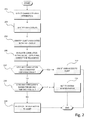
- FIG. 2 is a flowchart illustrating the operations of an intelligent access control program 114 of FIG. 1 in determining what assets a newly added employee should have access to, in accordance with an embodiment of the invention.
- FIG. 3 is a block diagram depicting the hardware components of an intelligent access control system of FIG. 1 , in accordance with an embodiment of the invention.
- FIG. 4 is a Venn diagram illustrating the union, intersection, and delta of an intelligent access control system 100 of FIG. 1 utilized in determining a correlation value, in accordance with an embodiment of the invention.
- FIG. 1 illustrates an intelligent access control system 100 , in accordance with an embodiment of the invention.
- intelligent access control system 100 includes computing device 110 .
- Computing device 110 includes access control list 112 and intelligent access control program 114 .
- computing device 110 may be a laptop computer, a notebook, tablet computer, netbook computer, personal computer (PC), a desktop computer, a personal digital assistant (PDA), a smart phone, a thin client, or any other electronic device or computing system capable of receiving and sending data to and from other computing devices. While computing device 110 is shown as a single device, in other embodiments, computing device 110 may be comprised of a cluster or plurality of computing devices, working together or working separately. Computing device 110 is described in more detail with reference to FIG. 3 .
- Access control list 112 details the access rights of users with regards to assets or resources.
- access control list 112 details information about users (such as employees of an organization) which is used in determining access to an asset and also in grouping together users that possess similar attributes.
- User information contained in access control list 112 contains demographical information such as employee name, job title, job site, location, department, division, manager, job family, and other job-related attributes.
- User information contained in access control list 112 also includes information such as identified server connections, community activity, and social interactions through messaging or email.
- access control list 112 details the assets to which said users have access to, such as campuses, buildings, rooms, networks, devices, drives, files, folders, data, and the like.
- access control list 112 details the access rights of a particular user with respect to a particular asset.
- access control list 112 is configured for role-based access control (RBAC) where access is dictated by the role of the user.
- RBAC role-based access control
- role-based access control configurations may dictate that all employees with the job title “manager” have access to quarterly earning information while employees with the job title “engineer” do not.
- access control list 112 may be configured for rule-based access control where access to an asset is dictated by a set of predefined rules.
- rule-based access control configurations may dictate that access to a bank vault may only be permitted during the hours of 9:00 AM to 5:00 PM.
- access control list 112 is stored locally on computing device 110
- access control list 112 may be stored remotely and accessed via a network.
- intelligent access control program 114 is capable of detecting when changes are made to the attributes of users in access control list 112 , such as detecting when a new user is added to access control list 112 or an attribute of an existing user is modified (referred to as a modified user). Intelligent access control program 114 is further capable of identifying a group of users who share similar attributes with the new added or modified user, such as being part of the same division or sharing a job title. Intelligent access control program 114 is additionally capable of referencing access control list 112 to identify the assets to which each group of users with like attributes have access. Intelligent access control program 114 is further capable of evaluating the strength of the correlation between the group of users with like attributes and a particular asset, then granting access to the asset for a new or modified user if the correlation between the asset and similarly attributed group is sufficiently strong.
- FIG. 2 is a flowchart depicting the operation of intelligent access control program 114 in modifying user access to an asset based on a correlation found between the asset and similarly attributed employees, in accordance with an embodiment of the present invention.
- intelligent access control program 114 detects when changes are made to access control list 112 by continuously monitoring access control list 112 (step 202 ).
- a system administrator modifies the attributes of (associated with) a user in access control list 112 via user input locally on computing device 110 or remotely via a network.
- access control list 112 also includes relevant user information such as job title, job site, location, department, division, manager, job family, identified server connections, community activity, social interactions through messaging/email, and other job-related attributes.
- the cells within the Employee column list the employee profiles stored in access control list 112 , such as Abe and Ben.
- the cells within the columns labeled G′ n detail a category of attributes possessed by each of the employees listed—for example, employees within the column G′ 2 (category Job Title) may be attributed as a DBA or IT Specialist.
- Employees who share the same attribute within column G′ n are grouped together to form groups G n (described in more detail below).
- cells within columns labeled A n denote whether a user has access to the corresponding asset—for example, Abe and Ben have access to A 1 (DB123) denoted by the “YES” in the corresponding cells, however Carl and Dan do not.
- Intelligent access control program 114 identifies groups of users with whom the new/modified user shares attributes by referencing G′ n in access control list 112 (step 204 ).
- G′ n details a category of attributes of all users, like or dislike, such that intelligent access control program 114 can create groups of users that match the attribute defined by column G′ 1 , G′ 2 , . . . G′ n to those of the new/modified user, into corresponding groups G 1 , G 2 , G 3 . . . G n .
- intelligent access control program 114 determines which attributes have been associated with a new/modified user, such as department or job title, and compares it to the attributes of existing users.
- Intelligent access control program 114 generates groups (G 1 , G 2 , G 3 . . . G n ) of users (not including the new/modified user) who possess similar attributes to the new/modified user.
- a group (G 1 , G 2 , G 3 . . . G n ) is generated for each known attribute of the new/modified user based on the information contained in columns G′ n . Referencing G′ 1 of Table 1 above, if intelligent access control program 114 determines that Eric (the new user) is within Department 1, then intelligent access control program 114 generates the group G 1 of employees comprising Abe, Carl, and Dan because Abe, Carl, and Dan by referencing G′ 1 for employees who also are within Department 1.
- G 1 is based on Department 1.
- Ben while included in G′ 1 , is not included in G 1 because he is in Department 2 rather than Department 1.
- intelligent access control program 114 determines that new employee, Eric, has the job title of a Database Administrator (DBA), then intelligent access control program 114 references G′ 2 to generate a group G 2 of employees consisting of Abe and Ben because Abe and Ben also have the job title of DBA.
- DBA Database Administrator
- Intelligent access control program 114 identifies the assets associated with each generated group by referencing access control list 112 (step 206 ). Assets are associated with a group if any members of the group have access to the asset. Referencing Table 1 above, if intelligent access control program 114 generates a group G 1 of employees who are all in Department 1, then intelligent access control program 114 references access control list 112 to determine that employees in Department 1 have access to assets DB123, DB456, and SVN123 (indicated by a “YES”/“NO”/“?” in the corresponding cell of Table 1). Furthermore, if intelligent access control program 114 generates a group G 2 of employees within the DBA job title, then intelligent access control program 114 references access control list 112 to determine that employees with the job title DBA are associated with assets DB123 and DB456.
- Intelligent access control program 114 evaluates a correlation value between the groups identified in step 204 and the assets identified in step 206 (step 208 ).
- the correlation value is used to determine the ratio of users with access to a particular asset, A n that also belong to a particular group, G n , to those not in group G n .
- the correlation value is synonymous with a confidence level corresponding to providing the new or modified user access to a particular asset.
- intelligent access control program 114 applies Equation 1 shown below:
- FIG. 4 The unions, deltas, and intersections of the variables used in Equation 1 are illustrated by the Venn diagram illustrated by FIG. 4 .
- FIG. 4 In the Venn diagram of FIG. 4 :
- the intersection is based on the number of users who both correspond to the group of similarly attributed users (G n ) and have access to the asset (A n ).
- the delta value represented by ⁇ , is based on the number of users who correspond to the group of similarly attributed users (G n ) but do not have access to the asset (A n ) and the number of users who have access to the asset (A n ) but do not correspond to the group of similarly attributed users (G n ).
- the union value, represented by ⁇ is based on the number of users who either correspond to the group of similarly attributed users (G n ) or have access to the asset (A n ).
- Intelligent access control program 114 begins with asset A 1 and determines a correlation between A 1 and each corresponding group, G 1 , G 2 , G 3 . . . G n , until a confidence level has been determined for each group with respect to A 1 . Intelligent access control program 114 repeats the process for A 1 , A 2 , A 3 . . . A n . Continuing the example above illustrated by Table 1, if intelligent access control program 114 evaluates the correlation between A 1 (DB123) and each corresponding group starting with G 1 (Department 1), then intelligent access control program 114 would calculate:
- Intelligent access control program 114 further evaluates the same asset A 1 (DB123) with the other identified groups G n of employees possessing similar attributes to the new/modified employee. Referencing Table 1 and Equation 1 again, intelligent access control program 114 determines whether Eric should be provided access to A 1 (DB123) again, this time based on G 2 (his position as a DBA):
- Intelligent access control program 114 evaluates a correlation between each asset and associated group until each asset has a correlation value for each associated group. Thus, in the example above, intelligent access control program 114 would now evaluate asset A 2 against applicable groups G 1 , G 2 , G 3 , etc., then A 3 against applicable groups G 1 , G 2 , G 3 , etc. until all assets have correlation values with the associated groups. Referencing Table 1 above, in order to determine whether Eric should be provided access to asset A 2 (DB456), intelligent access control program 114 calculates the correlation between A 2 and G 1 :
- Intelligent access control program 114 next evaluates the same asset A 2 using group G 2 . Therefore, referencing Table 1 with regards to A 2 (DB456) and G 2 (DBA's):
- Intelligent access control program 114 determines whether any of the individual correlation values C(A n G n ) between a particular asset A n and any corresponding group G n is greater than or equal to a user-set threshold (decision 210 ). In the example embodiment, intelligent access control program 114 determines whether the correlation between a particular asset and each group of similarly attributed employees is greater than or equal to 75%, while in other embodiments, the user-set threshold may be a different value. Thus, continuing the example illustrated by Table 1 above, if intelligent access control program 114 determines that C(A 1 G 1 ) is 25% and C(A 1 G 2 ) is 100%, then intelligent access control program 114 compares both the 25% correlation value and the 100% correlation value to the user-set threshold of 75% individually.
- intelligent access control program 114 may compare an averaged (overall) correlation value (62.5%) to the user-set threshold. In other embodiments which average the correlation values, if intelligent access control program 114 determines that C(A 1 G 1 ) is 25% and C(A 1 G 2 ) is 100%, then intelligent access control program 114 compares a 62.5% correlation value to the user-set threshold of 75%30 . In further embodiments, a system administrator may apply weights to the correlation value of specific groups such that specific groups have more significance than others in a weighted average.
- intelligent access control program 114 determines whether the correlation value is greater than or equal to 50% (decision 214 ). The comparison is performed in the same manner as described by decision 210 .
- intelligent access control program 114 determines that the correlation value does not equal nor exceed 50% (decision 214 “NO” branch), then intelligent access control program 114 denies and/or revokes the employee's access to the particular asset (step 218 ).
- Intelligent access control program 114 adds, revokes, or otherwise modifies user access to an asset by modifying access control list 112 .
- access is denoted within access control list 112 by a “YES” or a “NO”. If the user has not yet been evaluated for access to assets, access may be represented by a “?”. Modifying access control list 112 is performed by editing the cells corresponding to a user and asset to reflect the determination by intelligent access control program 114 .
- intelligent access control program 114 determines that the correlation value between DB123 and Job Title DBA is less than fifty percent (C(A 1 G 2 ) ⁇ 50%), then intelligent access control program 114 modifies the cell corresponding to Erik and DB123 to a “NO” in access control list 112 . Note, however, that if another group to which Erik is a member has a correlation greater than 50% with DB123, such as C(A 1 G 1 ), it may negate the denying of access based on C(A 1 G 2 ).
- intelligent access control program 114 determines that the correlation value is equal to or exceeds 50% (decision 210 “YES” branch), then intelligent access control program 114 notifies a system administrator (step 216 ). Because the correlation value is not strong enough in favor of nor against providing an employee access to an asset, the decision is passed to a system administrator for a final decision regarding employee access to the asset.
- FIG. 3 depicts a block diagram of components of computing device 110 of an intelligent access control system 100 of FIG. 1 , in accordance with an embodiment of the present invention. It should be appreciated that FIG. 3 provides only an illustration of one implementation and does not imply any limitations with regard to the environments in which different embodiments may be implemented. Many modifications to the depicted environment may be made.
- Computing device 110 may include one or more processors 302 , one or more computer-readable RAMs 304 , one or more computer-readable ROMs 306 , one or more computer readable storage media 308 , device drivers 312 , read/write drive or interface 314 , network adapter or interface 316 , all interconnected over a communications fabric 318 .
- Communications fabric 318 may be implemented with any architecture designed for passing data and/or control information between processors (such as microprocessors, communications and network processors, etc.), system memory, peripheral devices, and any other hardware components within a system.
- One or more operating systems 310 , and one or more application programs 311 are stored on one or more of the computer readable storage media 308 for execution by one or more of the processors 302 via one or more of the respective RAMs 304 (which typically include cache memory).
- each of the computer readable storage media 308 may be a magnetic disk storage device of an internal hard drive, CD-ROM, DVD, memory stick, magnetic tape, magnetic disk, optical disk, a semiconductor storage device such as RAM, ROM, EPROM, flash memory or any other computer-readable tangible storage device that can store a computer program and digital information.
- Computing device 110 may also include a R/W drive or interface 314 to read from and write to one or more portable computer readable storage media 326 .
- Application programs 311 on computing device 110 may be stored on one or more of the portable computer readable storage media 326 , read via the respective R/W drive or interface 314 and loaded into the respective computer readable storage media 308 .
- Computing device 110 may also include a network adapter or interface 316 , such as a TCP/IP adapter card or wireless communication adapter (such as a 4G wireless communication adapter using OFDMA technology).
- Application programs 311 on computing device 110 may be downloaded to the computing device from an external computer or external storage device via a network (for example, the Internet, a local area network or other wide area network or wireless network) and network adapter or interface 316 . From the network adapter or interface 316 , the programs may be loaded onto computer readable storage media 308 .
- the network may comprise copper wires, optical fibers, wireless transmission, routers, firewalls, switches, gateway computers and/or edge servers.
- Computing device 110 may also include a display screen 320 , a keyboard or keypad 322 , and a computer mouse or touchpad 324 .
- Device drivers 312 interface to display screen 320 for imaging, to keyboard or keypad 322 , to computer mouse or touchpad 324 , and/or to display screen 320 for pressure sensing of alphanumeric character entry and user selections.
- the device drivers 312 , R/W drive or interface 314 and network adapter or interface 316 may comprise hardware and software (stored on computer readable storage media 308 and/or ROM 306 ).
- Various embodiments of the present invention may be a system, a method, and/or a computer program product.
- the computer program product may include a computer readable storage medium (or media) having computer readable program instructions thereon for causing a processor to carry out aspects of the present invention.
- the computer readable storage medium can be a tangible device that can retain and store instructions for use by an instruction execution device.
- the computer readable storage medium may be, for example, but is not limited to, an electronic storage device, a magnetic storage device, an optical storage device, an electromagnetic storage device, a semiconductor storage device, or any suitable combination of the foregoing.
- a non-exhaustive list of more specific examples of the computer readable storage medium includes the following: a portable computer diskette, a hard disk, a random access memory (RAM), a read-only memory (ROM), an erasable programmable read-only memory (EPROM or Flash memory), a static random access memory (SRAM), a portable compact disc read-only memory (CD-ROM), a digital versatile disk (DVD), a memory stick, a floppy disk, a mechanically encoded device such as punch-cards or raised structures in a groove having instructions recorded thereon, and any suitable combination of the foregoing.
- RAM random access memory
- ROM read-only memory
- EPROM or Flash memory erasable programmable read-only memory
- SRAM static random access memory
- CD-ROM compact disc read-only memory
- DVD digital versatile disk
- memory stick a floppy disk
- a mechanically encoded device such as punch-cards or raised structures in a groove having instructions recorded thereon
- a computer readable storage medium is not to be construed as being transitory signals per se, such as radio waves or other freely propagating electromagnetic waves, electromagnetic waves propagating through a waveguide or other transmission media (e.g., light pulses passing through a fiber-optic cable), or electrical signals transmitted through a wire.
- Computer readable program instructions described herein can be downloaded to respective computing/processing devices from a computer readable storage medium or to an external computer or external storage device via a network, for example, the Internet, a local area network, a wide area network and/or a wireless network.
- the network may comprise copper transmission cables, optical transmission fibers, wireless transmission, routers, firewalls, switches, gateway computers and/or edge servers.
- a network adapter card or network interface in each computing/processing device receives computer readable program instructions from the network and forwards the computer readable program instructions for storage in a computer readable storage medium within the respective computing/processing device.
- Computer readable program instructions for carrying out operations of the present invention may be assembler instructions, instruction-set-architecture (ISA) instructions, machine instructions, machine dependent instructions, microcode, firmware instructions, state-setting data, or either source code or object code written in any combination of one or more programming languages, including an object oriented programming language such as Java, Smalltalk, C++ or the like, and conventional procedural programming languages, such as the “C” programming language or similar programming languages.
- the computer readable program instructions may execute entirely on the user's computer, partly on the user's computer, as a stand-alone software package, partly on the user's computer and partly on a remote computer or entirely on the remote computer or server.
- the remote computer may be connected to the user's computer through any type of network, including a local area network (LAN) or a wide area network (WAN), or the connection may be made to an external computer (for example, through the Internet using an Internet Service Provider).
- electronic circuitry including, for example, programmable logic circuitry, field-programmable gate arrays (FPGA), or programmable logic arrays (PLA) may execute the computer readable program instructions by utilizing state information of the computer readable program instructions to personalize the electronic circuitry, in order to perform aspects of the present invention.
- These computer readable program instructions may be provided to a processor of a general purpose computer, special purpose computer, or other programmable data processing apparatus to produce a machine, such that the instructions, which execute via the processor of the computer or other programmable data processing apparatus, create means for implementing the functions/acts specified in the flowchart and/or block diagram block or blocks.
- These computer readable program instructions may also be stored in a computer readable storage medium that can direct a computer, a programmable data processing apparatus, and/or other devices to function in a particular manner, such that the computer readable storage medium having instructions stored therein comprises an article of manufacture including instructions which implement aspects of the function/act specified in the flowchart and/or block diagram block or blocks.
- the computer readable program instructions may also be loaded onto a computer, other programmable data processing apparatus, or other device to cause a series of operational steps to be performed on the computer, other programmable apparatus or other device to produce a computer implemented process, such that the instructions which execute on the computer, other programmable apparatus, or other device implement the functions/acts specified in the flowchart and/or block diagram block or blocks.
- each block in the flowchart or block diagrams may represent a module, segment, or portion of instructions, which comprises one or more executable instructions for implementing the specified logical function(s).
- the functions noted in the block may occur out of the order noted in the figures.
- two blocks shown in succession may, in fact, be executed substantially concurrently, or the blocks may sometimes be executed in the reverse order, depending upon the functionality involved.
Landscapes
- Engineering & Computer Science (AREA)
- Computer Hardware Design (AREA)
- Computer Security & Cryptography (AREA)
- Computing Systems (AREA)
- General Engineering & Computer Science (AREA)
- Computer Networks & Wireless Communication (AREA)
- Signal Processing (AREA)
- Management, Administration, Business Operations System, And Electronic Commerce (AREA)
Abstract
Description
| TABLE 1 | |||||
| Department | DB123 | DB456 | SVN123 | ||
| Employee | (G′1) | Job Title (G′2) | (A1) | (A2) | (A3) |
| Abe | D1 | DBA | YES | YES | NO |
| Ben | D2 | DBA | YES | YES | NO |
| Carl | D1 | IT Specialist | NO | YES | YES |
| Dan | D1 | IT Specialist | NO | YES | YES |
| Eric | D1 | DBA | ? | ? | ? |
Where:
- C (AnGn)=correlation between employees with access to asset An and group of employees Gn;
- |An∩Gn|=count of employees who have access to asset An and are within group Gn;
- |AnΔGn|=count of employees with access to either An or Gn, but not both; and
- |An∪Gn|=count of employees with access to An and/or Gn.
- |An∩Gn|=|{C}|=1;
- |AnΔGn|=|{A, B}|=2; and
- |An∪Gn|=|{A, B, C}|=3.
- |A1∩G1|=1 (Abe has access to A1 (DB123) and is within G1 (Dept. 1));
- |A1ΔG1|=3 (Ben, Carl, and Dan have access to either A1 (DB123) or Gi (Dept. 1), but not both);
- |A1∪G1|=4 (Abe, Ben, Carl, and Dan have access to A1 (DB123) and/or G1 (Dept. 1)); and thus
- |A1∩G2|=2 (Abe and Ben have access to A1 (DB123) and are within G2 (DBA));
- |A1ΔG2|=0 (No employee has access to either A1 (DB123) or G2 (DBA), but not both);
- |A1∪G2|=2 (Abe and Ben have access to A1 and/or G2 (DBA)); thus
- |A2∩G1|=3 (Abe, Carl, and Dan have access to A2 (DB456) and are within G1 (Dept. 1));
- |A2ΔG1|=1 (Ben has access to A2 (DB456) or G1 (Dept. 1), but not both);
- |A2∪G1|=4 (Abe, Ben, Carl, and Dan have access to A2 (DB456) and/or G1 (Dept. 1)); thus
- |A2∩G2|=2 (Abe and Ben have access to A2 (DB456) and are within G2 (DBA's));
- |A2ΔG2|=2 (Carl and Dan have access to A2 (DB456) or G2 (DBA's), but not both);
- |A2∪G2|=4 (Abe, Ben, Carl, and Dan have access to A2 (DB456) and/or G2 (DBA's)); thus
Claims (20)
Priority Applications (1)
| Application Number | Priority Date | Filing Date | Title |
|---|---|---|---|
| US14/865,662 US9705884B2 (en) | 2015-09-25 | 2015-09-25 | Intelligent access control |
Applications Claiming Priority (1)
| Application Number | Priority Date | Filing Date | Title |
|---|---|---|---|
| US14/865,662 US9705884B2 (en) | 2015-09-25 | 2015-09-25 | Intelligent access control |
Publications (2)
| Publication Number | Publication Date |
|---|---|
| US20170093871A1 US20170093871A1 (en) | 2017-03-30 |
| US9705884B2 true US9705884B2 (en) | 2017-07-11 |
Family
ID=58409416
Family Applications (1)
| Application Number | Title | Priority Date | Filing Date |
|---|---|---|---|
| US14/865,662 Expired - Fee Related US9705884B2 (en) | 2015-09-25 | 2015-09-25 | Intelligent access control |
Country Status (1)
| Country | Link |
|---|---|
| US (1) | US9705884B2 (en) |
Cited By (1)
| Publication number | Priority date | Publication date | Assignee | Title |
|---|---|---|---|---|
| US10423636B2 (en) * | 2016-06-23 | 2019-09-24 | Amazon Technologies, Inc. | Relating collections in an item universe |
Families Citing this family (12)
| Publication number | Priority date | Publication date | Assignee | Title |
|---|---|---|---|---|
| US10909266B2 (en) * | 2017-10-24 | 2021-02-02 | Merck Sharp & Dohme Corp. | Adaptive model for database security and processing |
| US10637867B2 (en) * | 2018-01-19 | 2020-04-28 | Bank Of America Corporation | System for dynamic role-based evaluation of access and permissions |
| US10686795B2 (en) * | 2018-02-20 | 2020-06-16 | Accenture Global Solutions Limited | System for controlling access to a plurality of target systems and applications |
| US10708274B2 (en) * | 2018-02-20 | 2020-07-07 | Accenture Global Solutions Limited | System for controlling access to a plurality of target systems and applications |
| US10831904B2 (en) * | 2018-04-09 | 2020-11-10 | International Business Machines Corporation | Automatically discovering attribute permissions |
| US12457217B1 (en) * | 2020-08-03 | 2025-10-28 | PubNub, Inc. | Methods and systems for authorizing a client device to a service |
| US11876803B1 (en) * | 2020-08-03 | 2024-01-16 | PubNub, Inc. | Methods and systems for authorizing a client device to a service |
| US11689534B1 (en) * | 2020-12-01 | 2023-06-27 | Amazon Technologies, Inc. | Dynamic authorization of users for distributed systems |
| US20230114226A1 (en) * | 2021-10-13 | 2023-04-13 | ForgeRock, Inc. | Role mining proximity analysis for improved role-based access control |
| US11936658B2 (en) * | 2021-11-15 | 2024-03-19 | Bank Of America Corporation | Intelligent assignment of a network resource |
| US12368718B2 (en) | 2022-09-30 | 2025-07-22 | Ping Identity International, Inc. | Runtime configuration of authentication journeys |
| US12401655B1 (en) * | 2023-04-24 | 2025-08-26 | Asana, Inc. | Systems and methods to manage access to assets of a computer environment based on user and asset grouping |
Citations (14)
| Publication number | Priority date | Publication date | Assignee | Title |
|---|---|---|---|---|
| US6591265B1 (en) * | 2000-04-03 | 2003-07-08 | International Business Machines Corporation | Dynamic behavior-based access control system and method |
| US7216125B2 (en) * | 2002-09-17 | 2007-05-08 | International Business Machines Corporation | Methods and apparatus for pre-filtered access control in computing systems |
| US7287222B2 (en) * | 2002-01-31 | 2007-10-23 | Canon Kabushiki Kaisha | Information processing apparatus and method that determines effectiveness of metadata for editing information content |
| US7308704B2 (en) * | 2003-08-18 | 2007-12-11 | Sap Ag | Data structure for access control |
| US7506371B1 (en) | 2004-01-22 | 2009-03-17 | Guardium, Inc. | System and methods for adaptive behavior based access control |
| US7555482B2 (en) | 2005-06-07 | 2009-06-30 | Varonis Systems, Inc. | Automatic detection of abnormal data access activities |
| US20110247046A1 (en) * | 2010-03-31 | 2011-10-06 | Gross Thomas R | Access control in data processing systems |
| US20120136936A1 (en) | 2010-11-30 | 2012-05-31 | France Telecom | System and method for implementing dynamic access control rules to personal cloud information |
| US8290979B1 (en) * | 2005-03-10 | 2012-10-16 | The United States Of America As Represented By The Secretary Of The Navy | Software architecture for access control based on hierarchical characteristics |
| US8321437B2 (en) | 2005-12-29 | 2012-11-27 | Nextlabs, Inc. | Detecting behavioral patterns and anomalies using activity profiles |
| US20130246470A1 (en) * | 2012-03-14 | 2013-09-19 | International Business Machines Corporation | Rule-based access control list management |
| US20140075492A1 (en) * | 2012-09-10 | 2014-03-13 | International Business Machines Corporation | Identity context-based access control |
| US9147055B2 (en) * | 2013-08-29 | 2015-09-29 | Bank Of America Corporation | Entitlement predictions |
| US9189644B2 (en) * | 2012-12-20 | 2015-11-17 | Bank Of America Corporation | Access requests at IAM system implementing IAM data model |
-
2015
- 2015-09-25 US US14/865,662 patent/US9705884B2/en not_active Expired - Fee Related
Patent Citations (15)
| Publication number | Priority date | Publication date | Assignee | Title |
|---|---|---|---|---|
| US6591265B1 (en) * | 2000-04-03 | 2003-07-08 | International Business Machines Corporation | Dynamic behavior-based access control system and method |
| US7287222B2 (en) * | 2002-01-31 | 2007-10-23 | Canon Kabushiki Kaisha | Information processing apparatus and method that determines effectiveness of metadata for editing information content |
| US7216125B2 (en) * | 2002-09-17 | 2007-05-08 | International Business Machines Corporation | Methods and apparatus for pre-filtered access control in computing systems |
| US7308704B2 (en) * | 2003-08-18 | 2007-12-11 | Sap Ag | Data structure for access control |
| US7506371B1 (en) | 2004-01-22 | 2009-03-17 | Guardium, Inc. | System and methods for adaptive behavior based access control |
| US8290979B1 (en) * | 2005-03-10 | 2012-10-16 | The United States Of America As Represented By The Secretary Of The Navy | Software architecture for access control based on hierarchical characteristics |
| US7606801B2 (en) | 2005-06-07 | 2009-10-20 | Varonis Inc. | Automatic management of storage access control |
| US7555482B2 (en) | 2005-06-07 | 2009-06-30 | Varonis Systems, Inc. | Automatic detection of abnormal data access activities |
| US8321437B2 (en) | 2005-12-29 | 2012-11-27 | Nextlabs, Inc. | Detecting behavioral patterns and anomalies using activity profiles |
| US20110247046A1 (en) * | 2010-03-31 | 2011-10-06 | Gross Thomas R | Access control in data processing systems |
| US20120136936A1 (en) | 2010-11-30 | 2012-05-31 | France Telecom | System and method for implementing dynamic access control rules to personal cloud information |
| US20130246470A1 (en) * | 2012-03-14 | 2013-09-19 | International Business Machines Corporation | Rule-based access control list management |
| US20140075492A1 (en) * | 2012-09-10 | 2014-03-13 | International Business Machines Corporation | Identity context-based access control |
| US9189644B2 (en) * | 2012-12-20 | 2015-11-17 | Bank Of America Corporation | Access requests at IAM system implementing IAM data model |
| US9147055B2 (en) * | 2013-08-29 | 2015-09-29 | Bank Of America Corporation | Entitlement predictions |
Non-Patent Citations (6)
| Title |
|---|
| Cisco, "Security Configuration Guide: Access Control Lists, Cisco IOS Release 12.4T", Retrieved From http://www.cisco.com/c/en/us/td/docs/ios-xml/ios/sec-data-acl/configuration/12-4t/sec-data-ac1-12-4t-book.pdf, Published Aug. 1, 2005. * |
| Cisco, "Security Configuration Guide: Access Control Lists, Cisco IOS Release 12.4T", Retrieved From http://www.cisco.com/c/en/us/td/docs/ios-xml/ios/sec—data—acl/configuration/12-4t/sec-data-ac1-12-4t-book.pdf, Published Aug. 1, 2005. * |
| Disclosed Anonymously, "System call-Attribute based Security control," An IP.com Prior Art Database Technical Disclosure, IP.com No. 000210332, IP.com Electronic Publication: Aug. 30, 2011, 11 pages. |
| Disclosed Anonymously, "System call—Attribute based Security control," An IP.com Prior Art Database Technical Disclosure, IP.com No. 000210332, IP.com Electronic Publication: Aug. 30, 2011, 11 pages. |
| Kandala et al., "An Attribute Based Framework for Risk-Adaptive Access Control Models," 2011 Sixth International Conference on Availability, Reliability and Security, IEEE Computer Society, pp. 236-241. |
| Narayan et al., "Using Authentication, Authorization, and Accounting Services to Dynamically Provision View-Based Access Control Model User-to-Group Mappings," An IP.com Prior Art Database Technical Disclosure, IP.com No. 000202224, Dec. 2010, 39 pages. |
Cited By (1)
| Publication number | Priority date | Publication date | Assignee | Title |
|---|---|---|---|---|
| US10423636B2 (en) * | 2016-06-23 | 2019-09-24 | Amazon Technologies, Inc. | Relating collections in an item universe |
Also Published As
| Publication number | Publication date |
|---|---|
| US20170093871A1 (en) | 2017-03-30 |
Similar Documents
| Publication | Publication Date | Title |
|---|---|---|
| US9705884B2 (en) | Intelligent access control | |
| US12170680B2 (en) | Systems and methods for detecting security incidents across cloud-based application services | |
| US11120150B2 (en) | Dynamic access control for knowledge graph | |
| US10032039B1 (en) | Role access to information assets based on risk model | |
| US9940472B2 (en) | Edge access control in querying facts stored in graph databases | |
| US10341372B2 (en) | Clustering for detection of anomalous behavior and insider threat | |
| US9582673B2 (en) | Separation of duties checks from entitlement sets | |
| US8826455B2 (en) | Method and apparatus for automated assignment of access permissions to users | |
| US20220005027A1 (en) | Smart contract regulation | |
| US11210410B2 (en) | Serving data assets based on security policies by applying space-time optimized inline data transformations | |
| US20150082377A1 (en) | Generation of attribute based access control policy from existing authorization system | |
| US9754225B2 (en) | Automated risk assessment and management | |
| US12141253B2 (en) | Controlling access to computer resources | |
| CN103530106A (en) | Method and system of context-dependent transactional management for separation of duties | |
| EP4248349A1 (en) | Controlling access to electronic data assets | |
| US10831904B2 (en) | Automatically discovering attribute permissions | |
| JP2022028899A (en) | A system that controls access rights to target systems and applications | |
| Kotenko et al. | Data analytics for security management of complex heterogeneous systems: Event correlation and security assessment tasks | |
| US20170163684A1 (en) | Electronic access controls | |
| Martinelli et al. | Quantitative access control with partially-observable markov decision processes | |
| US11165788B2 (en) | Score based permission system | |
| Krautsevich et al. | Towards attribute-based access control policy engineering using risk | |
| US20230394351A1 (en) | Intelligent Data Ingestion | |
| Ahmad et al. | Rule Learning Algorithm for Detection of Malicious User in Cloud Environment | |
| Yue et al. | Study on Authorization Management Model of One-stop Office System |
Legal Events
| Date | Code | Title | Description |
|---|---|---|---|
| AS | Assignment |
Owner name: INTERNATIONAL BUSINESS MACHINES CORPORATION, NEW Y Free format text: ASSIGNMENT OF ASSIGNORS INTEREST;ASSIGNORS:ABUELSAAD, TAMER E.;BARNEY, JONATHAN M.;HOYOS, CARLOS A.;AND OTHERS;SIGNING DATES FROM 20150915 TO 20150916;REEL/FRAME:036658/0933 |
|
| STCF | Information on status: patent grant |
Free format text: PATENTED CASE |
|
| MAFP | Maintenance fee payment |
Free format text: PAYMENT OF MAINTENANCE FEE, 4TH YEAR, LARGE ENTITY (ORIGINAL EVENT CODE: M1551); ENTITY STATUS OF PATENT OWNER: LARGE ENTITY Year of fee payment: 4 |
|
| AS | Assignment |
Owner name: KYNDRYL, INC., NEW YORK Free format text: ASSIGNMENT OF ASSIGNORS INTEREST;ASSIGNOR:INTERNATIONAL BUSINESS MACHINES CORPORATION;REEL/FRAME:057885/0644 Effective date: 20210930 Owner name: KYNDRYL, INC., NEW YORK Free format text: ASSIGNMENT OF ASSIGNOR'S INTEREST;ASSIGNOR:INTERNATIONAL BUSINESS MACHINES CORPORATION;REEL/FRAME:057885/0644 Effective date: 20210930 |
|
| FEPP | Fee payment procedure |
Free format text: MAINTENANCE FEE REMINDER MAILED (ORIGINAL EVENT CODE: REM.); ENTITY STATUS OF PATENT OWNER: LARGE ENTITY |
|
| LAPS | Lapse for failure to pay maintenance fees |
Free format text: PATENT EXPIRED FOR FAILURE TO PAY MAINTENANCE FEES (ORIGINAL EVENT CODE: EXP.); ENTITY STATUS OF PATENT OWNER: LARGE ENTITY |
|
| STCH | Information on status: patent discontinuation |
Free format text: PATENT EXPIRED DUE TO NONPAYMENT OF MAINTENANCE FEES UNDER 37 CFR 1.362 |
|
| FP | Lapsed due to failure to pay maintenance fee |
Effective date: 20250711 |