US9446142B2 - Polymer chelator conjugates - Google Patents
Polymer chelator conjugates Download PDFInfo
- Publication number
- US9446142B2 US9446142B2 US13/903,878 US201313903878A US9446142B2 US 9446142 B2 US9446142 B2 US 9446142B2 US 201313903878 A US201313903878 A US 201313903878A US 9446142 B2 US9446142 B2 US 9446142B2
- Authority
- US
- United States
- Prior art keywords
- polymer
- precursor compound
- conjugate
- chelating
- cross
- Prior art date
- Legal status (The legal status is an assumption and is not a legal conclusion. Google has not performed a legal analysis and makes no representation as to the accuracy of the status listed.)
- Active, expires
Links
- 0 *c1cccc(O)c1O Chemical compound *c1cccc(O)c1O 0.000 description 3
- YSJWNEDBIWZWOI-UHFFFAOYSA-N CC1=C(C)C(O)=C(C(=O)O)C=C1 Chemical compound CC1=C(C)C(O)=C(C(=O)O)C=C1 YSJWNEDBIWZWOI-UHFFFAOYSA-N 0.000 description 2
- FAUQXDDOAXFZPR-UHFFFAOYSA-N CC1=C(C)C(O)=C(C(N)C(=O)O)C=C1 Chemical compound CC1=C(C)C(O)=C(C(N)C(=O)O)C=C1 FAUQXDDOAXFZPR-UHFFFAOYSA-N 0.000 description 2
- ZRTQIWOAHUHCJE-UHFFFAOYSA-N CC1=C(C)C(O)=C(N)C=C1 Chemical compound CC1=C(C)C(O)=C(N)C=C1 ZRTQIWOAHUHCJE-UHFFFAOYSA-N 0.000 description 2
- DVECBUWKXMPCAA-UHFFFAOYSA-N CC1=C(C)C(O)=CC(N)=C1 Chemical compound CC1=C(C)C(O)=CC(N)=C1 DVECBUWKXMPCAA-UHFFFAOYSA-N 0.000 description 2
- MZMDOZQWAXGOQR-UHFFFAOYSA-N CC1=C(C)C(O)=CC(OC=O)=C1 Chemical compound CC1=C(C)C(O)=CC(OC=O)=C1 MZMDOZQWAXGOQR-UHFFFAOYSA-N 0.000 description 2
- QWBBPBRQALCEIZ-UHFFFAOYSA-N CC1=C(C)C(O)=CC=C1 Chemical compound CC1=C(C)C(O)=CC=C1 QWBBPBRQALCEIZ-UHFFFAOYSA-N 0.000 description 2
- AKKVZIUCLXXOCL-UHFFFAOYSA-N CC1=C(O)C(O)=CC(C(N)C(=O)O)=C1 Chemical compound CC1=C(O)C(O)=CC(C(N)C(=O)O)=C1 AKKVZIUCLXXOCL-UHFFFAOYSA-N 0.000 description 2
- MYEBRASJJASLME-UHFFFAOYSA-N C.CC1=C(C)C(O)=C(C(=O)O)C=C1.CC1=C(C)C(O)=C(C(N)C(=O)O)C=C1.CC1=C(C)C(O)=C(N)C=C1.CC1=C(C)C(O)=CC(OC=O)=C1.CC1=C(O)C(O)=CC(C(N)C(=O)O)=C1.CC1=C(O)C(O)=CC(N)=C1 Chemical compound C.CC1=C(C)C(O)=C(C(=O)O)C=C1.CC1=C(C)C(O)=C(C(N)C(=O)O)C=C1.CC1=C(C)C(O)=C(N)C=C1.CC1=C(C)C(O)=CC(OC=O)=C1.CC1=C(O)C(O)=CC(C(N)C(=O)O)=C1.CC1=C(O)C(O)=CC(N)=C1 MYEBRASJJASLME-UHFFFAOYSA-N 0.000 description 1
- TTXCTIBMASQYPR-UHFFFAOYSA-N CC(=O)NCCC1=CC(O)=C(O)C=C1.NCCC1=CC(O)=C(O)C=C1 Chemical compound CC(=O)NCCC1=CC(O)=C(O)C=C1.NCCC1=CC(O)=C(O)C=C1 TTXCTIBMASQYPR-UHFFFAOYSA-N 0.000 description 1
- ROZXIIUVIMBBBC-UHFFFAOYSA-H CC(=O)O[Pt]1(N)(NC2CCCCC2)(OC(C)=O)C(C)(C)C1(C)C.CC1(C)C(C)(C)[Pt]12CC1CCCCC1N2.CC1(C)C(C)(C)[Pt]12OC(=O)C(=O)O2.CC1(C)C(C)(C)[Pt]12OC(=O)C1(CCC1)C(=O)O2.CC1=CC=CC=N1[Pt]1(N)C(C)(C)C1(C)C Chemical compound CC(=O)O[Pt]1(N)(NC2CCCCC2)(OC(C)=O)C(C)(C)C1(C)C.CC1(C)C(C)(C)[Pt]12CC1CCCCC1N2.CC1(C)C(C)(C)[Pt]12OC(=O)C(=O)O2.CC1(C)C(C)(C)[Pt]12OC(=O)C1(CCC1)C(=O)O2.CC1=CC=CC=N1[Pt]1(N)C(C)(C)C1(C)C ROZXIIUVIMBBBC-UHFFFAOYSA-H 0.000 description 1
- OMMLUKLXGSRPHK-UHFFFAOYSA-N CC(C)(C)C(C)(C)C Chemical compound CC(C)(C)C(C)(C)C OMMLUKLXGSRPHK-UHFFFAOYSA-N 0.000 description 1
- PGSWEKYNAOWQDF-UHFFFAOYSA-N CC1=C(O)C(O)=CC=C1 Chemical compound CC1=C(O)C(O)=CC=C1 PGSWEKYNAOWQDF-UHFFFAOYSA-N 0.000 description 1
- YZIHBUZLEXXXLA-UHFFFAOYSA-J N[Pt](N)(Cl)Cl.N[Pt](N)(O)O Chemical compound N[Pt](N)(Cl)Cl.N[Pt](N)(O)O YZIHBUZLEXXXLA-UHFFFAOYSA-J 0.000 description 1
Images


Classifications
-
- A—HUMAN NECESSITIES
- A61—MEDICAL OR VETERINARY SCIENCE; HYGIENE
- A61K—PREPARATIONS FOR MEDICAL, DENTAL OR TOILETRY PURPOSES
- A61K47/00—Medicinal preparations characterised by the non-active ingredients used, e.g. carriers or inert additives; Targeting or modifying agents chemically bound to the active ingredient
- A61K47/50—Medicinal preparations characterised by the non-active ingredients used, e.g. carriers or inert additives; Targeting or modifying agents chemically bound to the active ingredient the non-active ingredient being chemically bound to the active ingredient, e.g. polymer-drug conjugates
- A61K47/51—Medicinal preparations characterised by the non-active ingredients used, e.g. carriers or inert additives; Targeting or modifying agents chemically bound to the active ingredient the non-active ingredient being chemically bound to the active ingredient, e.g. polymer-drug conjugates the non-active ingredient being a modifying agent
- A61K47/62—Medicinal preparations characterised by the non-active ingredients used, e.g. carriers or inert additives; Targeting or modifying agents chemically bound to the active ingredient the non-active ingredient being chemically bound to the active ingredient, e.g. polymer-drug conjugates the non-active ingredient being a modifying agent the modifying agent being a protein, peptide or polyamino acid
- A61K47/64—Drug-peptide, drug-protein or drug-polyamino acid conjugates, i.e. the modifying agent being a peptide, protein or polyamino acid which is covalently bonded or complexed to a therapeutically active agent
- A61K47/6435—Drug-peptide, drug-protein or drug-polyamino acid conjugates, i.e. the modifying agent being a peptide, protein or polyamino acid which is covalently bonded or complexed to a therapeutically active agent the peptide or protein in the drug conjugate being a connective tissue peptide, e.g. collagen, fibronectin or gelatin
-
- A61K47/48292—
-
- A61K47/48776—
-
- A—HUMAN NECESSITIES
- A61—MEDICAL OR VETERINARY SCIENCE; HYGIENE
- A61K—PREPARATIONS FOR MEDICAL, DENTAL OR TOILETRY PURPOSES
- A61K47/00—Medicinal preparations characterised by the non-active ingredients used, e.g. carriers or inert additives; Targeting or modifying agents chemically bound to the active ingredient
- A61K47/50—Medicinal preparations characterised by the non-active ingredients used, e.g. carriers or inert additives; Targeting or modifying agents chemically bound to the active ingredient the non-active ingredient being chemically bound to the active ingredient, e.g. polymer-drug conjugates
- A61K47/69—Medicinal preparations characterised by the non-active ingredients used, e.g. carriers or inert additives; Targeting or modifying agents chemically bound to the active ingredient the non-active ingredient being chemically bound to the active ingredient, e.g. polymer-drug conjugates the conjugate being characterised by physical or galenical forms, e.g. emulsion, particle, inclusion complex, stent or kit
- A61K47/6901—Conjugates being cells, cell fragments, viruses, ghosts, red blood cells or viral vectors
-
- A—HUMAN NECESSITIES
- A61—MEDICAL OR VETERINARY SCIENCE; HYGIENE
- A61P—SPECIFIC THERAPEUTIC ACTIVITY OF CHEMICAL COMPOUNDS OR MEDICINAL PREPARATIONS
- A61P35/00—Antineoplastic agents
-
- A—HUMAN NECESSITIES
- A61—MEDICAL OR VETERINARY SCIENCE; HYGIENE
- A61P—SPECIFIC THERAPEUTIC ACTIVITY OF CHEMICAL COMPOUNDS OR MEDICINAL PREPARATIONS
- A61P35/00—Antineoplastic agents
- A61P35/04—Antineoplastic agents specific for metastasis
-
- A—HUMAN NECESSITIES
- A61—MEDICAL OR VETERINARY SCIENCE; HYGIENE
- A61P—SPECIFIC THERAPEUTIC ACTIVITY OF CHEMICAL COMPOUNDS OR MEDICINAL PREPARATIONS
- A61P43/00—Drugs for specific purposes, not provided for in groups A61P1/00-A61P41/00
Definitions
- This invention relates to a biocompatible polymer conjugate comprising a biologically compatible polymer and a biologically compatible chelator moiety covalently bound thereto.
- This invention further comprises said conjugate having pharmacologically active metal ions reversibly bound thereto.
- the biologically compatible polymer is collagen.
- Koob et al. have described methods of producing nordihydroguaiaretic acid (NDGA) polymerized and cross-linked collagen fibers for various biomedical applications, some with tensile strengths similar to that of natural tendon (e.g., about 91 MPa). See, for example, Koob and Hernandez, Material properties of polymerized NDGA - collagen composite fibers: development of biologically based tendon constructs , Biomaterials 2002 January; 23 (1): 203-12; and U.S. Pat. No. 6,565,960, the contents of which are hereby incorporated by reference as if recited in full herein.
- NDGA nordihydroguaiaretic acid
- Cross-linked polymers such as collagen possess different properties as compared to non-cross-linked polymer including a substantially longer in vivo residence time. In some cases, a long in vivo residence time is undesirable as a shorter clearance time for the polymer releasing therapeutic metal ions is desired. In some cases, a mixture of cross-linked and non-cross-linked polymers provide for a compatible mix of properties.
- this invention provides a biologically compatible polymer-chelator conjugate comprising a biologically compatible polymer and one or more chelating moieties, wherein the chelating moieties are covalently bound to the polymer but the polymer is otherwise substantially non-cross-linked by the chelating moiety. That is to say that the chelating agent either minimally or does not participate in cross-linking the polymer.
- the chelating agent either minimally or does not participate in cross-linking the polymer.
- at least 80% of the chelating moieties of such conjugates do not cross-linked the polymer. More preferably, at least 90% and even more preferably at least 95% of the chelator moieties do not cross-link with the polymer.
- none of the chelating moieties provide either intra-polymeric or extra-polymeric cross-linking. It is understood, however, that the polymer employed is optionally cross-linked with a non-chelating cross-linking agent.
- the chelating moiety can be any moiety with functional groups pendent thereto which are suitable for reversibly binding biologically compatible and pharmacologically active metal ions.
- biologically compatible and pharmacologically active metal ions include, without limitation, ions of silver, copper, or a metallic ionic anti-tumor agent.
- the anti-tumor agent is ionic platinum.
- FIGS. 1 and 2 illustrate different binary release patterns of metallic ions from a composition comprising a mixture of substantailly non-cross-linked polymer-chelating agent conjugates using different chelating moieties.
- FIG. 1 the release rates of the metal ions from a polymer-chelating agent conjugate containing different non-cross-linking chelating agents (moieties) are illustrated. The release rates from these two different chelating agents are selected to overlap so as to provide a sustained release of the metal ion over time.
- FIG. 2 the release rates of the metal ions from similar two conjugates are illustrated. In this case, the chelating moieties of the conjugates are selected so that their release rates do not to overlap. This results in release of a first bolus of metal ion release followed by release of a second bolus of metal ion.
- FIG. 3 shows a schematic for a cell culture insert for stem cell migration assays described in Example 4.
- FIG. 4 shows a bar graph of percent cell migration in human mesenchymal stem cells (MSCs) cultured in the presence of various amounts of EpiFix®. Details are described in Example 4.
- FIG. 6A shows representative FACS dot plots of cells detected using flow cytometry and fluorescent detection of CD45 and Sca-1.
- FIG. 6B shows photomicrograph of dermal tissue stained with DAPI which stains cell bodies, and CD34, which is a marker for hematopoietic stem cells. Details are described in Example 6.
- This invention relates to substantially non-cross-linked polymer chelator conjugates. Various embodiments of this invention are described below.
- C m when placed before a group refers to that group containing m carbon atom(s).
- Alkyl refers to a hydrocarbyl radical, preferably monovalent, containing 1-12 carbon atoms.
- alkyl includes methyl, ethyl, propyl, isopropyl, butyl, isobutyl, tertiary butyl, and the like.
- Cycloalkyl refers to a cyclic hydrocarbyl radical, preferably, monovalent, containing 3-10 carbon atoms and includes bicyclic radicals.
- Non-limiting examples of cycloalkyl include cycloproyl, cyclobutyl, cyclopentyl, cyclohexyl, and the like.
- Aryl refers to a aromatic hydrocarbyl mono-, bi-, or tricyclic ring.
- Heteroayl refers to a an aryl ring containing 1-5 ring heteroatoms selected from nitrogen, oxygen, sulfur, and appropriate oxxideized forms thereof.
- Aldehyde refers to a compound of formula O ⁇ C(H)—R wherein R is selected from the group consisting a chelating moiety connected to the aldehyde optionally through a linker moiety.
- R is selected from the group consisting a chelating moiety connected to the aldehyde optionally through a linker moiety.
- linker is employed, the aldehyde is represented by the formula R-L-aldehyde and L is the linker.
- Isocyanate refers to a compound of formula O ⁇ N ⁇ C-L-R where R is as defined above and L is a bond or a linker moiety.
- Di-alpha-diazo pyruvate refers to a compound of formula R-L-C(O)C(O)N 2 , wherein R and L are defined as above.
- subject or “patient” as used herein refers to any vertebrate organism including, but not limited to, mammalian subjects such as humans, farm animals, domesticated pets and the like.
- amnion as used herein includes amniotic membrane where the intermediate tissue layer is intact or has been substantially removed.
- biocompatible refers to a material that is suitable for implantation or injection into a subject. In various aspects, a biocompatible material does not cause toxic or injurious effects once implanted in the subject.
- modified placental tissue refers to any and all components of placental tissue including whole placental tissue that has been modified by cleaning, disinfecting, and/or segmenting the tissue as well as to separated components of placental tissue such as amnion, chorion, the umbilical cord, and the like.
- Modified tissue may maintain cellular layers, such as the epithelial layer and/or the fibroblast layer.
- Modified placental tissue may include further modification, such as lamination of one or more layers of placental tissue, micronization of placental tissue, chemisorption or physisorption of small molecules, proteins (e.g. growth factors, antibodies), nucleic acids (e.g. aptamers), polymers, or other substances.
- the term “sufficient amount” refers to an amount of a modified placental tissue that is sufficient to provoke stem cell recruitment proximate to or on the modified placental tissue over time, either in vivo or in vitro.
- the “sufficient amount” of a modified placental tissue will vary depending on a variety of factors, such as but not limited to, the type and/or amount of placental tissue used, the type and/or size of the intended organ and/or body part to be treated, the severity of the disease or injury to the organ and/or body part to be treated and the administration route.
- the determination of a “sufficient amount” can be made by one of ordinary skill in the art based on the disclosure provided herein.
- stem cell recruiting factors refers to any and all factors that are capable of recruiting stem cells and causing them to migrate towards a source of such factors.
- Non-limiting examples of stem cell recruiting factors may be one or more CC chemokines, CXC chemokines, C chemokines, or CX 3 C chemokines.
- stem cell recruitment refers to direct or indirect chemotaxis of stem cells to a modified placental tissue.
- the recruitment may be direct, wherein stem cell recruiting factors (e.g. chemokines, which induce cell chemotaxis) in a modified placental tissue are released from the placental tissue and induce stem cells to migrate towards the placental tissue.
- stem cell recruiting factors e.g. chemokines, which induce cell chemotaxis
- the recruitment may be indirect, wherein stem cell recruiting factors in a modified placental tissue are released from the placental tissue which induce nearby cells to release factors (e.g. chemokines), that in turn induce stem cells to migrate towards the placental tissue.
- stem cell recruitment may embody both direct and indirect factors.
- placental tissue may be modified as described in U.S. Ser. No. 61/683,698, including cleaning, separation of the amnion and chorion, removal or maintenance of the epithelial cell layer, decontamination, and dehydration. Dehydration may be accomplished using the drying apparatus as described in U.S. Ser. No. 61/683,698. Both of which applications are incorporated herein by reference in their entirety. Each aspect of that process produces modified placental tissue for the purposes of this invention whether used alone or in combination. However, it is preferred that the modified placental tissue include at least the steps of cleaning and decontamination.
- modified placental tissue preferably comprises placental tissue which has been cleaned and decontaminated and also includes placental tissue which has undergone one or more of separation of the amnion and chorion, removal of the epithelial cell layer, and dehydration.
- the modified placental tissue is selected from amnion, chorion, or both amnion and chorion. In preferred embodiments, modified placental tissue does not include the umbilical cord.
- Modified placental tissue can also be formed into layers which may be dried separately and laminated together or dried together to form multi-layer laminates. Modified placental tissue may also be micronized into particles of a variety of sizes. Micronized placental tissue may be sandwiched between one or more layers of a multilayer laminate, or on top of a laminate. Micronized placental tissue may also be added to single layer of modified placental tissue. See, for example, U.S. Provisional Application Ser. No. 61/543,995 which is incorporated herein by reference in its entirety.
- Suitable polymers include those that are known in the art and are capable of forming chelator conjugates as described herein.
- Preferred biocompatible polymers useful in this invention include biodegradable polymers.
- Suitable polymers include, without limitation, naturally-occurring polymers, synthetic polymers or mixtures thereof.
- the polymer includes collagen or placental tissue e.g. amnion or chorion containing collagen.
- Other examples of naturally-occurring biocompatible polymers include, but are not limited to, hylauronic acid, fibrin, fibrous or globular proteins, complex carbohydrates, glycosaminoglycans, such as, or mixtures thereof.
- the polymer may include collagens of all types, elastin, laminin, hyaluronic acid, alginic acid, desmin, versican, fibrin, fibronectin, vitronectin, albumin, and the like.
- Exemplary synthetic biocompatible polymers include, but are not limited to, polyoxyalkylenes (e.g., polyoxyethylene, polyoxypropylene, copolymers of oxyethylene and oxypropylene, and the like), polyethylene glycol, polymethylene glycol, polytrimethylene glycols, polyvinylpyrrolidones, caprolactones, 2-hydroxyethyl methacrylate (HEMA), silicone such as Nusil MED-6215 or other silicone suitable for implantation, poly(epsilon-caprolactone) dimethylacrylate, polysulfone, (poly)methyl methacrylate (PMMA), soluble Teflon-AF, poly ethylene teraphthalate (PET, Dacron), Nylon, polyvinyl alcohol, polyurethane, hydroxyapatite, and the like and mixtures thereof.
- polyoxyalkylenes e.g., polyoxyethylene, polyoxypropylene, copolymers of oxyethylene and oxypropylene,
- Such polymers preferably have a number average molecular weight of at least about 10,000 and more preferably from about 10,000 to about 1,000,000. On some embodiments, these polymers preferably have a weight average molecular weight of at least 10,000 and more preferably from about 10,000 to about 100,000.
- the polymers described herein can be either cross-linked with non-chelating agents or non-cross-linked. Common non-chelating cross-linking agents include carbodimides, diisothiocyanates, dicarboxylic acids, diamines and the like.
- the biocompatible polymers are water soluble polymers and are sometimes referred to as hydrophilic polymers. Water solubility can be achieved incorporating a sufficient number of oxygen (or less frequently nitrogen) atoms available for forming hydrogen bonds in aqueous solution.
- Hydrophilic polymers include, without limitation, polyoxyethylene, polyethylene glycol, polymethylene glycol, polytrimethylene glycols, polyvinylpyrrolidones, or derivatives thereof.
- the polymers are preferably linear or only slightly branched (i.e., having only about 2-10 significant free ends), and will not be substantially cross-linked.
- Other suitable polymers include polyoxyethylene-polyoxypropylene block polymers and copolymers.
- Hydrophilic polymers can also include naturally occurring polymers such as proteins (e.g., and without limitation, a collagen), starch, cellulose, and the like.
- All suitable polymers are biocompatible, and preferably non-toxic and non-inflammatory when administered in vivo, and will more preferably be degradable in vivo with a degradation time of at least several months.
- the polymers of this invention have at least one and preferably up to 1000 reactive functionalities which are complementary to the reaction functionalities on the precursor chelator compound.
- the complementary reactive functionality is present on the polymer such as reactive functionalities found in collagen, hylauronic acid, and the like or can be introduced onto the polymer by conventional chemical synthetic techniques well known to the skilled artisan.
- Exemplary functionalities include, without limitation, amine, carboxylic acid, hydrazine, hydrazone, azide, isocyanate, isothiocyanate, alkoxyamine, aldehyde, epoxy, nitrile, maleimide, halo, hydroxyl, thiol or a combination thereof.
- the reactive functional group is selected from the amine or carboxylic acid.
- Complementary functionalities include those that react with each other to form a covalent bond. Examples include isocyanates with amines and hydroxyl groups to form a urea or carbamate linkage, carboxylic acids and amines which form amides, and the like.
- Second reactive functionality functionality Covalent Bond formed Amine Carboxyl Amide Hydroxyl Halide Ether Isocyanate Amine Urea Isocyanate Hydroxyl Carbamate Carboxyl Amine Amide Thioisocyanate Hydroxyl Thiocarbamate
- the polymers of the invention can be functionalized, for example, by introducing an amine-functional monomer, either pendant or terminal to the polymer.
- a suitable method for imparting a pendant amine functionality to the polymer is to use a monomer containing a pendant amine functionality.
- Suitable monomers containing a pendant amine functionality include 2-aminoethylacrylate, 2-aminoethylmethacrylate, 2-aminoethylacrylamide, 2-aminoethylmethacrylamide, dimethylaminoethylmethacryl, aminopropyl (meth)acrylamide and the like.
- the resulting polymer may contain one or more pendant amine groups.
- the pendant amine functionality which is imparted to the polymer is a terminal pendant amine functionality.
- Terminal pendant amine functionality can be imparted to a polymer by using one or more compounds which, when they function as a chain transfer agent, have a pendant amine group.
- Preferred compounds for imparting terminal amine functionality are amine-thiols, e.g., N-butylaminoethanethiol, N,N-diethylaminoethanethiol and salts thereof.
- the polymers of the invention can be functionalized, for example, by introducing a carboxylic acid-functional monomer.
- Preferred acid monomers are carboxylic acids or their derivatives, including, but not limited to, monounsaturated monocarboxylic acid, monounsaturated dicarboxylic acid, anhydrides or alcohol derived mono- or di-esters.
- the polymer e.g., a polyolefin
- the monounsaturation of the monounsaturated carboxylic reactant becomes saturated.
- Exemplary monounsaturated carboxylic reactants include fumaric acid, itaconic acid, maleic acid, maleic anhydride, chloromaleic acid, chloromaleic anhydride, acrylic acid, methacrylic acid, crotonic acid, cinnamic acid, and lower alkyl acid esters, such as methyl maleate, ethyl fumarate, and methyl fumarate.
- polymer containing anhydride or ester functionality can be converted by well known hydrolysis methods to acid.
- Suitable chelators preferably comprise one or more C 2 -C 10 alkyl or heteroalkyl, C 6 -C 10 aryl C 3 -C 10 heteroaryl, or C 5 -C 10 cycloalkyl groups substituted with at least two, adjacent (or 1,2 substitued) hydroxy, alkoxy, amino, alkylamino, dialkylamino, mercapto, thioalkyl groups, which alkyl or heteroalkyl, aryl, heteroaryl, or cycloalkyl groups are attached via a linker, or a bond and a functional joining group, to the biocompatible polymer.
- chelator precursor compound refers to the chelator prior to reaction with the polymer.
- the precursor compound contains a reactive functionality which reacts with a complementary functionality on the polymer to form a covalent bond.
- the resulting chelating moiety is referred to as the “chelator” and is defined above.
- the reactive functional groups on the chelator precursor compounds form a stable covalent bond when coupled with the complementary reactive functional group on the polymer.
- Such stable covalent bonds include by way of example esters, ethers, amides (—CONH—, —NHCO—, —N(alkyl)CO— or CO—N(alkyl)-), carbamates, urea, carbonate, thiocarbonate, thiourea, carbamate, and urethane bonds, as well as any other well known covalent bonds.
- Reactive functional groups either on the chelator precursor compound or the polymer include those such as amino, hydroxy, mercapto, and carboxylic acid, carboxylate esters, isocyanate, and other well known functional groups that can be chemically bonded following art known methods to a complementary reactive functional group on the polymer as utilized herein.
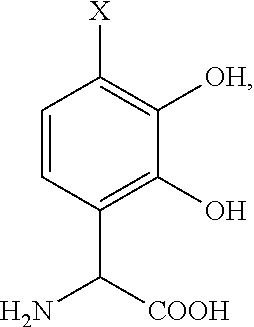
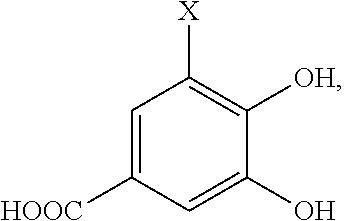
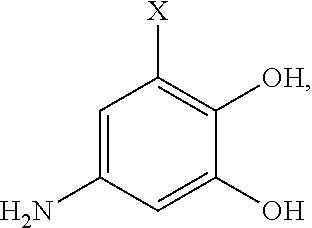
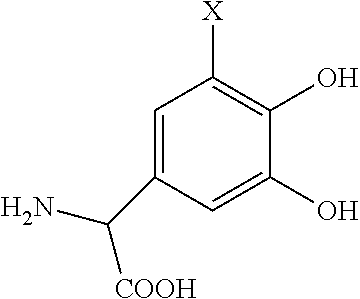
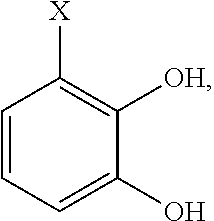
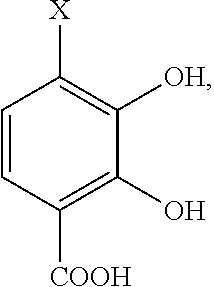
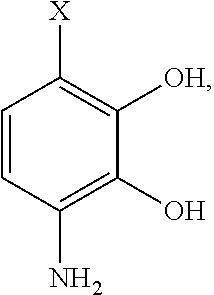
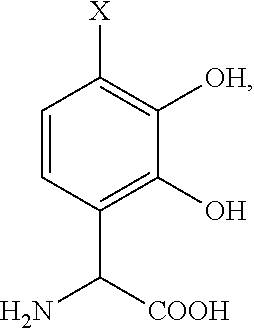
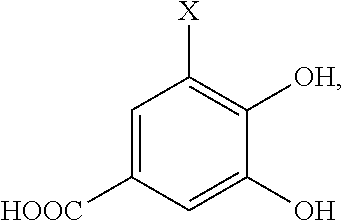
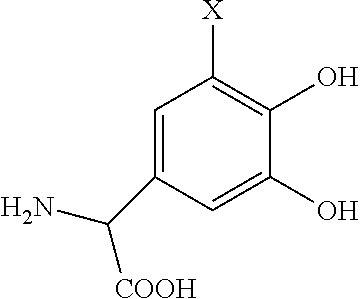
- the group X on the chelator precursor compound is selected from the group consisting of H or a complimentary reactive functional group. It is understood that when X is a complimentary functional group the other functional groups on the compound may need to be blocked or protected using conventional methods and protecting groups
- the chelating agent comprises a 1,2-benzoquinone and/or a 1,2-dihydroxy phenyl moiety.
- the chelating moiety is derived from a precursor compound selected from the group consisting of nordihydroguaiaretic acid (NDGA), 3,4-dyhydroxyphenylalanine, dopamine, 3,4-dihydroxybenzaldehyde, and 3,4-dihydroxybenzoic acid.
- the chelating agent is derived from a precursor compound which can both react with and forma a covalent bond to collagen and reversibly bind the anti-microbial metal ion.
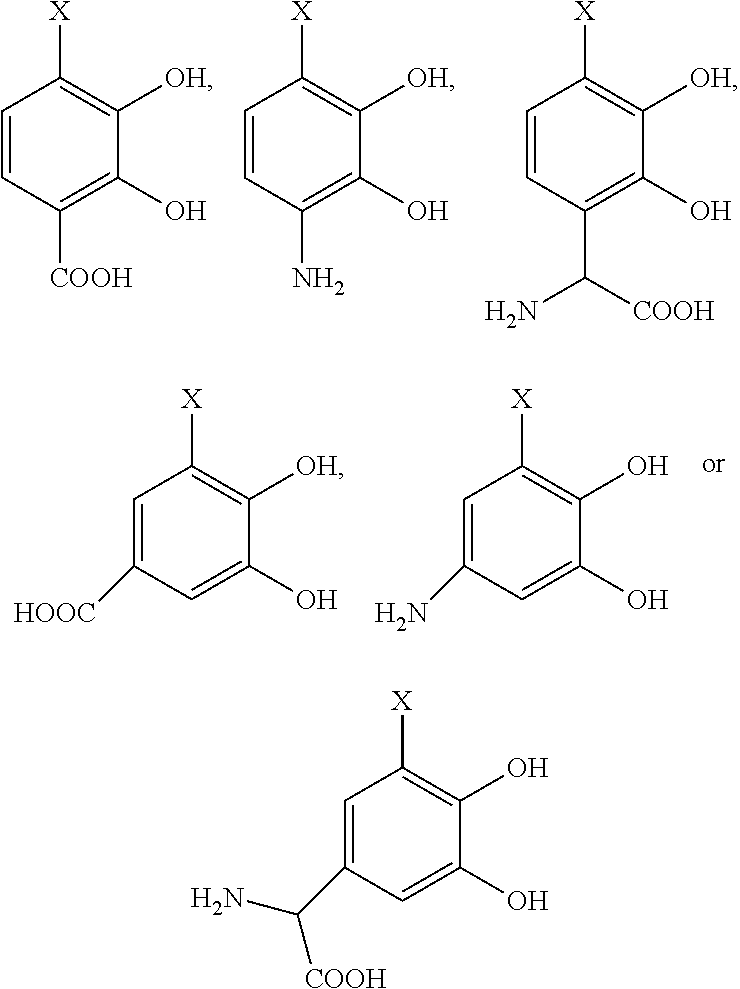
- the precursor compound is selected from the group consisting of:
- X is H or a complimentary reactive functional group, such that when X is a complimentary reactive functional group, the other functional groups on the molecule are protected.
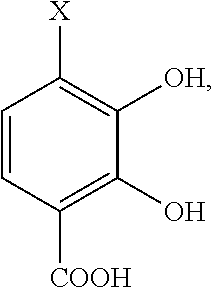
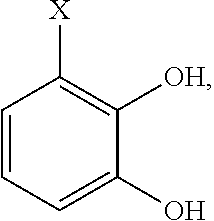
- the precursor compound is:
- X′ is a complimentary reactive functional group, such that the hydroxyl groups on the molecule are optionally protected.
- Preferable chelating agents used are derived from naturally occurring compounds such as dopamine and L-dopa.
- the chelator is sometimes referred to a chelating agent or as a chelating moiety.
- Suitable pharmacologically active metals are known in the art.
- the pharmacologically active metal ion is an antimicrobial agent.
- Antimicrobial metals include, without limitation, silver, gold, platinum and palladium.
- the metal ion is silver.
- the silver comprises ionic silver selected from the group consisting of silver (I) and/or silver (II). In other embodiments, the ionic silver may be bound to two or more nitrogen, and/or sulfur and/or oxygen atoms.
- the ionic silver is the dissociation product of silver chloride, silver phosphate, silver sulfate, silver acetate, silver nitrate, silver fluoride, silver iodide, silver lactate, silver benzoate, silver bromide, silver carbonate, silver citrate, silver iodate, silver laurate, silver oxide, silver palmitate, silver protein, silver imidazolate, arglaes, colloidal silver, silver crystals, such as silver nanocrystals, silver plating, and/or silver sulfonamides, such as, e.g., such as silver sulfadiazine.
- the silver incorporated into the construct is present in an amount of between about 0.1% to about 30%.
- the pharmacologically active metal ion is an antifungal agent.
- Antifungal metals include, without limitation, copper, iron, manganese, and zinc.
- the metal ion is ionic copper.
- the ionic copper incorporated into the construct is bound to two or more nitrogen, and/or sulfur and/or oxygen atoms.
- Such chelators can include quinone group and/or a catechol group present in the collagen construct.
- the ionic copper incorporated into the construct is bound to a basic nitrogen atom, nonlimiting examples of which include amino, or mono- or di-alkylated amino, and imidazole.
- the copper may be bound to two or more nitrogen, and/or sulfur and/or oxygen atoms.
- the ionic copper is selected from the group consisting of copper chloride, copper phosphate, copper sulfate, copper acetate, copper nitrate, copper fluoride, copper iodide, copper lactate, copper benzoate, copper bromide, copper carbonate, copper citrate, copper iodate, copper laurate, copper oxide, copper palmitate, copper protein, copper proteinate, copper imidazolate, colloidal copper, copper alloys, copper crystals, including copper nanocrystals, copper plating, and/or copper sulfonamides.
- the copper and silver chelates of this invention can be prepared by reacting the polymer constructs with water soluble and water stable salts of copper and silver, such as their acetate salts. Methods for making chelates of other metals will be apparent to the skilled artisan upon reading this disclosure.
- the collagen construct can be incubated with an appropriate salt of the pharmacologically active metal, for example, in water, to provide a collagen construct of this invention that comprises a pharmacologically active metal.
- the polymer construct in an aqueous media is reacted with a silver salt, such as silver acetate to precipitate the silver-polymer construct.
- a metal salts such as diamine salts with a functionalized polymer, such as a carboxylic acid functionalized polymer, so that the metal is covalently bonded to the polymer construct.
- the pharmacologically active metal is an anticancer agent.
- Anticancer metals include, without limitation, platinum, ruthenium, osmium and cobalt.
- the metal ion is ionic platinum.
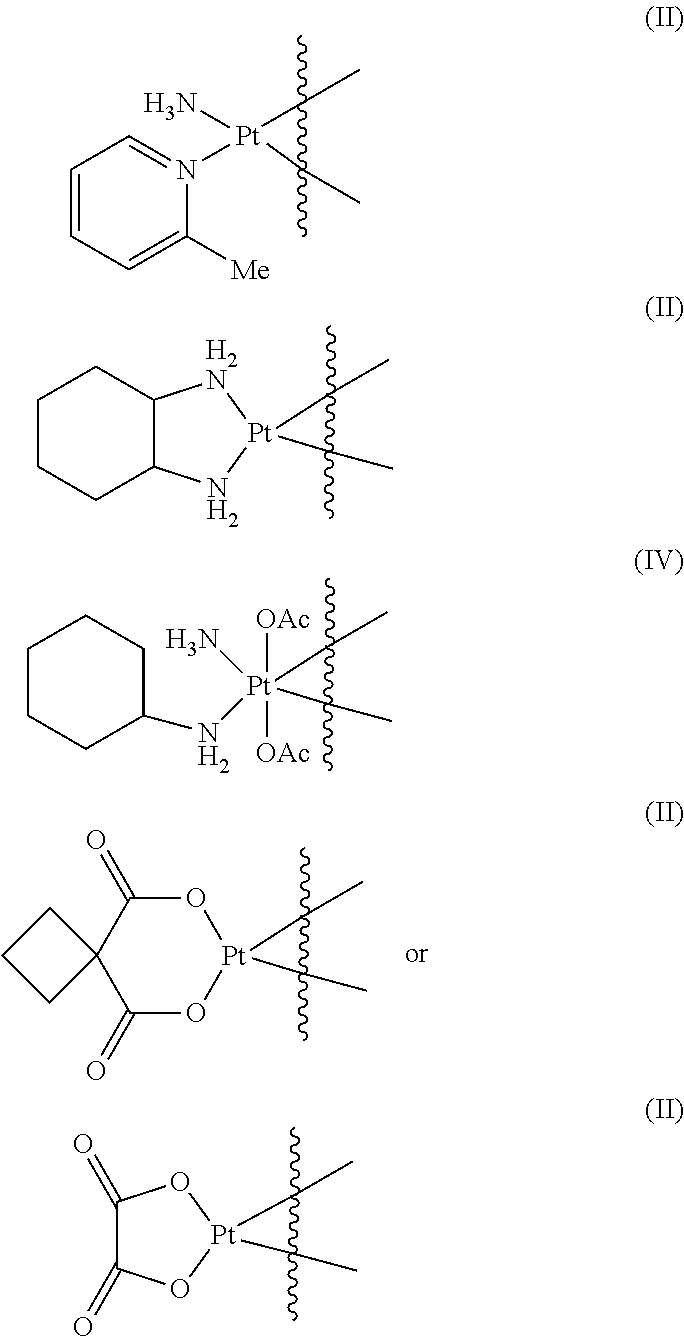
- the platinum comprises platinum (II) and/or platinum (IV).
- the platinum comprises a compound selected from the group of cis-platin,
- the chelated polymer-Pt constructs of this invention are prepared by contacting appropriate Pt salts, preferably, Pt(II) salts with a functionalized polymer of this invention.
- Pt salt is a cis diamino Pt(II) dichloro or, yet more preferably, a cis diamino Pt(II) diaqua salt.
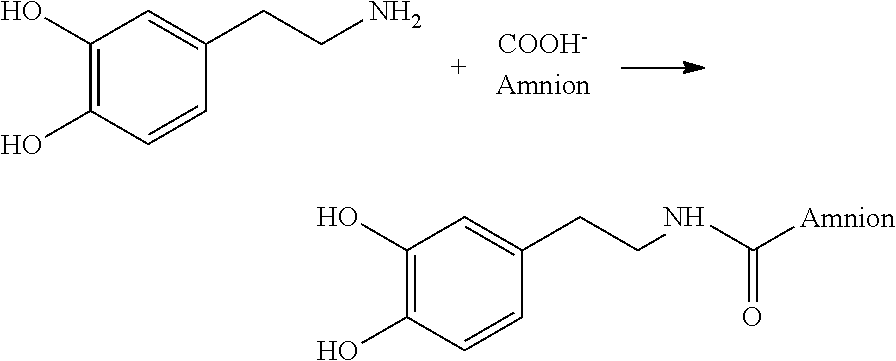
- An illustrative and non-limiting example is shown below:
- FIGS. 1 and 2 illustrate the use of different conjugates in a manner where the release rates of the conjugates overlap ( FIG. 1 ) so as to provide a continuous release of the metal ion whereas FIG. 2 illustrates the use of different conjugates in a manner where the release rates do not overlap so as to provide two separate releases (bolus) of metal ion.
- exemplary biocompatible collagen conjugates can be formed in the shape of, for example, patches, such as wound bed patches, muscle or organ patches, cardiac patches, hernia patches, skin patches, burn treatment patches, and skin/tissue repair patches; cuffs; blood vessel (artery, vein, and the like) repair material; valve replacements or valve repair material; auto-graft material; allo-graft material such as amnion and chorion; xenograft material; nerve guides; tubes; tendon sleeves, such as sleeves that can reside about repairing tendon to prevent or inhibit adhesions; indwelling tubes for delivery of antimicrobial agents; ducts, such as lymphatic, hepatic, pancreatic and cystic ducts; tubes, such as ureter and urethra tubes; collagen fiber; collagen gel; sutures; cord
- the conjugates of the present invention can be dry or partially hydrated.
- dry as used herein means the construct has a moisture content of less than about 5% by weight of the construct.
- partially hydrated means that the construct has a moisture content that is less than about 50%, typically less than about 75% of the moisture content at full hydration, measured ex vivo after 24 hours in a saline bath at ambient conditions.
- the construct can have a moisture content of less than about 25% by weight of the construct, such as less than about 15% by weight of the construct.
- the construct comprises at least one dry manufactured collagen fiber which can be in the form of a patch, an implant such as an implantable patch, wound around a device such as a medical device, and the like.
- the term “patch” refers to a piece or segment of biomaterial that can be placed on and/or affixed to target anatomical structure, typically soft tissue, to treat, protect, repair and/or reinforce a target site.
- the patch can be any geometric shape but is typically substantially planar and may, in position, conform to the shape of underlying or overlying tissue.
- implantable and derivatives thereof means the device can be inserted, embedded, grafted or otherwise acutely or chronically attached or placed in or on a subject.
- winding and “wound” and derivatives thereof means to wrap about an object or center at least once, typically repeatedly, e.g., to turn in a series of circular motions.
- at least one collagen fiber multiple fibers, one or more fiber bundles
- the winding may define a coil (e.g., a series of connected typically substantially concentric rings or spirals), woven and/or braided fiber arrangement with a number of revolutions or turns about a core and/or tube, typically in a regular pattern (but an irregular pattern may also be used) about a length of at least one layer of a tube or cylindrical shape.
- the present invention finds use in medical applications and animal studies.
- the term “medical” includes both human and veterinary uses. Suitable subjects of the present invention include, but are not limited to avians and mammals.
- the subject is “in need of” the methods of the present invention, e.g., the subject may benefit from a surgical procedure implanting a collagen construct of the present invention, such as a prosthesis or other device.
- the collagen constructs of the present invention can confer a therapeutic and/or prophylactic effect to the subject, such as prevent a disease and/or clinical symptom, reduce the severity of a disease and/or clinical symptom relative to what would occur in the absence of the methods of the prevent invention, and/or delay the onset and/or progression of a disease and/or clinical symptom.
- the methods of the present invention can provide complete and/or partial treatment and/or protection.
- the collagen constructs of the present invention treat and/or inhibit and/or protect against a microbial infection in the subject.
- a method of manufacturing a medical construct comprises: providing a construct with biologically compatible polymer, contacting the biologically compatible polymer with chelating moieties to chemically bind the chelating moieties to the biologically compatible polymer and to provide a polymer-chelator conjugate, and chelating the polymer-chelator conjugate with a pharmacologically active metal ion, thereby producing a medical construct with an incorporated pharmacologically active metal ion.
- Suitable biologically compatible polymers, chelating moieties and pharmacologically active metal ion are as described herein.
- the conjugates of this invention have broad therapeutic properties due to the localized and sustained released of a biologically active metal ion.
- a biologically active metal ion In the case of silver ions, those biologically active ions can be used to treat wounds which are infected or at risk of infection by bacteria including antibiotic resistant bacteria such as methicillin-resistant staphylococcus aureus infections.
- Therapeutic copper ions are useful in the treatment of patients infected with or at risk of infection with fungal infections.
- Therapeutic platinum ions are useful in the treatment of cancer especially solid mass cancers.
- At least 30 equivalents of the active ester described above is combined with collagen under conventional amide forming conditions to provide for a plurality of protected chelating moieties bound to the collagen. Hydrogenation yields the 2,3-dihydroxyphenyl moiety. The hydroxyl groups possess chelating properties.
- Chelation of the biologically active metal ion is achieved by conventional addition of a suitable metal salt such as silver nitrate, silver acetate, copper acetate, cis-platin and the like. Sufficient salt is added to effect substantial chelation of the chelating moieties on the collagen.
- a suitable metal salt such as silver nitrate, silver acetate, copper acetate, cis-platin and the like.
- Sufficient salt is added to effect substantial chelation of the chelating moieties on the collagen.
- Amnion/chorion tissue grafts used here to produce the micronized particles were produced by the process described in US 2008/0046095, which is incorporated by reference in its entirety.
- Tissue grafts (4 cm ⁇ 3 cm) and two 9.5 mm steel grinding balls were placed in 50 mL vials and the vials subsequently sealed.
- the vials were placed in the Cryo-block, and the Cryo-block was placed in a Cryo-rack.
- the Cryo-rack was placed into a liquid nitrogen holding-Dewar flask.
- Tissue samples were subjected to vapor phase cooling for no more than 30-60 minutes.
- the Cryo-rack was removed from the Dewar flask, and the Cryo-block was removed from the Cryo-rack.
- the Cryo-block was placed into the Grinder (SPEX Sample Prep GenoGrinder 2010) and set at 1,500 rpm for 20 minutes. After 20 minutes had elapsed, the tissue was inspected to ensure micronization. If necessary, the tissue was placed back into the Dewar flask for an additional 30-60 minutes, and moved to the grinder for an additional 20 minutes to ensure sufficient micronization. Once the tissue was sufficiently micronized it was sorted using a series of American Standard ASTM sieves. The sieves were placed in the following order: 355 ⁇ m, 300 ⁇ m, 250 ⁇ m, 150 ⁇ m, and 125 ⁇ m. The micronized material was transferred from the 50 mL vials to the 355 ⁇ m sieve.
- micronized particles having particle sizes of 355 ⁇ m, 300 ⁇ m, 250 ⁇ m, 150 ⁇ m, and 125 ⁇ m were collected in separate vials.
- Human mesenchymal stem cells (human MSC) were evaluated in cell culture in the presence of samples of EpiFix® to determine whether the EpiFix® would induce migration of the human MSC.
- EpiFix® is a layer of amnion and chorion with the epithelial layer intact.
- Standard migration assays were performed in 24-well cell culture inserts with 8- ⁇ m pore membrane filters at the bottom of the insert (see FIG. 3 ; BD Biosciences). 24 hours prior to the start of the experiment, human MSCs (one donor, passage 3) were cultured in serum free media, and 300 ⁇ L of 5 ⁇ g/mL fibronectin in PBS was placed into each cell culture insert to enable adsorption of fibronectin to the cell culture insert surface overnight.
- One square centimeter of EpiFix® weighs 4 mg.
- Human MSCs (40,000 cells in 300 ⁇ L) were then loaded into the cell culture inserts and cultured for 24 hours.
- both sides of the cell culture inserts were rinsed with PBS, and non-migrating cells in the upper portion insert were removed with a cotton-tipped applicator.
- Cells on the lower side of the insert plus the membrane filter were fixed in 10% formalin for 20 minutes, then rinsed and stained with hematoxylin for 5 min. The number of cells migrating through the membrane were counted on the lower surface of the membrane with an inverted microscope (Nikon TE2000; SPOT Software 4.6).
- the Low group (1.5 mm diameter disk) containing the smallest EpiFix® sample was not significantly different from the no serum negative control (see bar graph in FIG. 4 ). Both the Medium group (4 mm diameter disk) and the High group (12 ⁇ 13 mm square, trimmed into 3-4 mm square pieces) were statistically higher than the no serum control (about 60% and 75% migration relative to control; see FIG. 4 ), indicating that EpiFix® stimulated cell migration. The High group was not significantly different from the Medium group. The results indicate that the EpiFix® product contains one or more factors that attract human mesenchymal stem cells.
- HSCs mouse hematopoietic stem cells
- MSCs mouse mesenchymal stem cells
- EpiFix® products from six donors were used for implantation in normal mice.
- a 5 ⁇ 5 mm square of EpiFix® was surgically placed subcutaneously in 4 month old FVB/NJ mice (weighing between about 23.50 g and about 30 g).
- Four mice were implanted per sample per time point. The time points were 3, 7, 14 and 28 days.
- the negative controls were normal skin and sham operated mice (surgical incision but no implant).
- Decellularized dermal matrix (acellular dermal matrix; ADM) was used as the comparative implant (Type I collagen, no cytokines).
- the implant and overlying skin was harvested for fluorescence-activated cell sorting (FACS).
- Implants and overlying skin were harvested, cut into 1 mm 2 sections, and incubated in a 0.15% dispase/0.075% collagenase solution at 37° C. for 1 hour. After centrifugation, samples were stained with a lineage antibody cocktail as described below. CD31 antibody was added followed by Alexa Fluor 647 anti-rat secondary antibody. Phycoerythrin-Cy7-conjugated anti-CD45 antibody was incubated last. Samples were prepared and analyzed as described below.
- Samples were incubated with antibodies for 30 minutes and then washed by adding 5 volumes of 2% fetal bovine serum in phosphate-buffered saline with 2 mM ethylenediaminetetraacetic acid. Cells were centrifuged and then re-suspended in propidium iodide for 1 minute at 4° C. Samples were analyzed using an LSR Flow Cytometer. Using CellQuest software), samples were gated for lin ⁇ /Sca-1 + /CD45 ⁇ to define mesenchymal stem cells and for lin ⁇ /Sca-1 + /c-Kit + /CD45 + to define hematopoietic stem cells.
- Mouse HSCs were significantly increased following EpiFix® implantation compared to negative controls at days 7, 14 and 28 (see FIG. 5A ). Mouse HSCs remained significantly increased in the EpiFix® samples at day 28 compared to ADM.
- Mouse MSCs were significantly increased following EpiFix® implantation compared to negative controls at day 7 (see FIG. 5B ). The average percentages of mouse MSCs were increased at all time points compared to negative controls.
- EpiFix® implants effectively recruit both HSCs and MSCs in vivo in normal mice.
- the data also show that EpiFix® leads to longer term HSC recruitment than acellular dermal matrix (ADM), supporting the hypothesis of a cytokine mediated effect of EpiFix®.
- ADM acellular dermal matrix
- the surgical site was removed at 3, 7, 14 and 28 days following implantation for analyses of stem cells.
- Stem cells were identified with two distinct methods: Fluorescence-activated cell sorting (FACS) and immunohistochemistry (IHC).
- FACS Fluorescence-activated cell sorting
- IHC immunohistochemistry
- the membrane and associated regenerated tissue was fixed, sectioned for slides, and stained with specific antibodies to stem cells.
- Two antibodies were used for the immunohistochemistry: anti-CD34, which specifically detects hematopoietic progenitor cells (HPC), and reacts with dermal progenitor cells, endothelial cells, dendritic cells; and anti-CD31, which detects endothelial cells.
- HPC hematopoietic progenitor cells
- anti-CD31 which detects endothelial cells.
- the stained tissue sections were examined microscopically and the presence and number of specific stem cell types were measured. For the experimental analysis, the relative number of each cell type was counted. The results were calculated as the percentage of each cell type (no. of immunostained cells/total number of cells).
- Two areas were analyzed immunohistochemically for cell recruitment: the tissue surrounding the implant and the implant itself.
- FIG. 6A Representative data from the FACS analyses are shown in FIG. 6A .
- the left panel shows the total number of cells in the sample.
- the middle panel shows the number of CD45 positive cells (in red box).
- the right panel shows the number of Sca-1 positive cells (in red box).
- CD45 and Sca-1 are specific markers for hematopoietic stem cells.
- FIG. 6B shows an exemplary immunohistochemistry image.
- the gray bar in the lower left corner represents 50 ⁇ m.
- the section was stained with DAPI (blue—stains all cells) and anti-CD 34 (red).
- the place where the tissue is implanted in the experimental mice is shown for reference.
- Hematopoietic progenitor cell (HPC) levels were significantly elevated in tissue surrounding EpiFix® implants at days 14 and 28 compared to negative controls. Hematopoietic progenitor cells were significantly increased in the tissue surrounding the EpiFix® implant at days 14 and 28 compared to collagen scaffold ADM control.
- Progenitor cells were recruited into the EpiFix® implant. Intra-implant hematopoietic progenitor cells peaked at day 14 in the EpiFix® implant, and remained elevated at day 28. Average intra-implant hematopoietic progenitor cells were increased in the EpiFix® implant at days 14 and 28 compared to control ADM. Progenitor cells were not recruited into the ADM control implant.
- Vascularization of the EpiFix® implant steadily increased from day 14 to day 28.
- the amount of new vessel formation in the EpiFix® implant was significantly greater than that in the ADM control on day 28.
- EpiFix® contains one or more factors that recruit both hematopoietic stem cells and mesenchymal stem cells to the site of injury. More of these stem cells were found in the EpiFix® membrane and associated regenerated tissue that in the sham or, more importantly, the control collagen scaffold. EpiFix® was significantly more effective than the control decellularized collagen scaffold in recruiting progenitor cells to colonize the implant site. There were more progenitor cells in the EpiFix® membrane than in the control collagen scaffold.
- EpiFix® also induced new blood vessel formation in the associated regenerated tissue and the EpiFix® membrane itself. Vascularization in the EpiFix® membrane was significantly higher than in the collagen scaffold control.
- placental tissue grafts described above were combined with at least 30 equivalents of dopamine under conventional amide forming conditions to provide for a plurality of protected chelating moieties bound to the placental tissue.
- the nitrogen of the dopamine reacts with a number of carboxylic acid groups of the amniotic collagen to form a carbodiamide linkage.
- Dry non-cross-linked tissue-chelator conjugates described above are incubated in 1% (w/v) cis diamino Pt(II) diaqua salt in water at room temperature for 16 hours. The grafts are then washed with deionized water and dried. Platinum content in the conjugates is measured e.g., by Inductively Coupled Plasma-Mass Spectrometry (ICP-MS). Results are expressed as ⁇ g/g, which is equivalent to parts per million (ppm).
- the incorporation of platinum in the conjugates can produce a biomaterial imbibed with anticancer capabilities.
- the method of incorporating platinum into tissue materials can provide a drug delivery device, preferably for anticancer drug delivery.
- the tissues utilized in the conjugates of the present invention also incorporate one or more stem cell recruiting factors that enhance stem cell chemotaxis and or recruitment.
- stem cell recruiting factors that enhance stem cell chemotaxis and or recruitment.
- Such compositions for recruiting stem cells are described in in U.S. patent application Ser. No. 13/815,873 filed Mar. 15, 2013 and entitled COMPOSITIONS AND METHODS FOR RECRUITING STEM CELLS which application is incorporated herein by reference in its entirety.
- These stem cell recruiting factors in combination with the biologically active metal are abhorrent to cancerous cells and work against tumor related recurrence of cancer.
- the EpiFix® amniotic membrane allograft has the capability to attract or increase the flux of stem cells to the amnion.
- the amniotic membrane is a biologically derived polymer which attracts stem cells.
- the aminotic membrane is conjugated to the chelator moiety and a metal such as e.g, cisplatin, then the polymer conjugate can be used to kill stem cells, particularly aberrant stem cells such as tumor cells.
Landscapes
- Health & Medical Sciences (AREA)
- Life Sciences & Earth Sciences (AREA)
- Bioinformatics & Cheminformatics (AREA)
- Engineering & Computer Science (AREA)
- Pharmacology & Pharmacy (AREA)
- Medicinal Chemistry (AREA)
- Animal Behavior & Ethology (AREA)
- General Health & Medical Sciences (AREA)
- Public Health (AREA)
- Veterinary Medicine (AREA)
- Chemical & Material Sciences (AREA)
- Epidemiology (AREA)
- Proteomics, Peptides & Aminoacids (AREA)
- Organic Chemistry (AREA)
- General Chemical & Material Sciences (AREA)
- Chemical Kinetics & Catalysis (AREA)
- Nuclear Medicine, Radiotherapy & Molecular Imaging (AREA)
- Biomedical Technology (AREA)
- Virology (AREA)
- Hematology (AREA)
- Cell Biology (AREA)
- Molecular Biology (AREA)
- Oncology (AREA)
- Medicinal Preparation (AREA)
- Pharmaceuticals Containing Other Organic And Inorganic Compounds (AREA)
- Materials For Medical Uses (AREA)
- Medicines Containing Material From Animals Or Micro-Organisms (AREA)
- Acyclic And Carbocyclic Compounds In Medicinal Compositions (AREA)
Abstract
Description
| First reactive | Second reactive | |||
| functionality | functionality | Covalent Bond formed | ||
| Amine | Carboxyl | Amide | ||
| Hydroxyl | Halide | Ether | ||
| Isocyanate | Amine | Urea | ||
| Isocyanate | Hydroxyl | Carbamate | ||
| Carboxyl | Amine | Amide | ||
| Thioisocyanate | Hydroxyl | Thiocarbamate | ||
wherein X is H or a complimentary reactive functional group, such that when X is a complimentary reactive functional group, the other functional groups on the molecule are protected.

where X′ is a complimentary reactive functional group, such that the hydroxyl groups on the molecule are optionally protected.
wherein

denotes binding to the chelator.

Claims (14)


Priority Applications (6)
| Application Number | Priority Date | Filing Date | Title |
|---|---|---|---|
| US13/903,878 US9446142B2 (en) | 2013-05-28 | 2013-05-28 | Polymer chelator conjugates |
| PCT/US2013/067620 WO2014193468A1 (en) | 2013-05-28 | 2013-10-30 | Polymer chelator conjugates |
| AU2013390806A AU2013390806B2 (en) | 2013-05-28 | 2013-10-30 | Polymer chelator conjugates |
| JP2016516633A JP6496715B2 (en) | 2013-05-28 | 2013-10-30 | Polymer-chelator complex |
| EP13885866.7A EP3003326A4 (en) | 2013-05-28 | 2013-10-30 | Polymer chelator conjugates |
| JP2018163086A JP2019006802A (en) | 2013-05-28 | 2018-08-31 | Polymer-chelator complex |
Applications Claiming Priority (1)
| Application Number | Priority Date | Filing Date | Title |
|---|---|---|---|
| US13/903,878 US9446142B2 (en) | 2013-05-28 | 2013-05-28 | Polymer chelator conjugates |
Publications (2)
| Publication Number | Publication Date |
|---|---|
| US20140356451A1 US20140356451A1 (en) | 2014-12-04 |
| US9446142B2 true US9446142B2 (en) | 2016-09-20 |
Family
ID=51985370
Family Applications (1)
| Application Number | Title | Priority Date | Filing Date |
|---|---|---|---|
| US13/903,878 Active 2034-03-15 US9446142B2 (en) | 2013-05-28 | 2013-05-28 | Polymer chelator conjugates |
Country Status (5)
| Country | Link |
|---|---|
| US (1) | US9446142B2 (en) |
| EP (1) | EP3003326A4 (en) |
| JP (2) | JP6496715B2 (en) |
| AU (1) | AU2013390806B2 (en) |
| WO (1) | WO2014193468A1 (en) |
Families Citing this family (12)
| Publication number | Priority date | Publication date | Assignee | Title |
|---|---|---|---|---|
| EP2884944B1 (en) | 2012-08-15 | 2020-10-07 | MiMedx Group, Inc. | Reinforced placental tissue grafts and methods of making and using the same |
| US9943551B2 (en) | 2012-08-15 | 2018-04-17 | Mimedx Group, Inc. | Tissue grafts composed of micronized placental tissue and methods of making and using the same |
| US9180145B2 (en) | 2012-10-12 | 2015-11-10 | Mimedx Group, Inc. | Compositions and methods for recruiting and localizing stem cells |
| US8946163B2 (en) | 2012-11-19 | 2015-02-03 | Mimedx Group, Inc. | Cross-linked collagen comprising metallic anticancer agents |
| US9155799B2 (en) | 2012-11-19 | 2015-10-13 | Mimedx Group, Inc. | Cross-linked collagen with at least one bound antimicrobial agent for in vivo release of the agent |
| US10111910B2 (en) | 2013-01-18 | 2018-10-30 | Mimedx Group, Inc. | Methods for treating cardiac conditions |
| US10206977B1 (en) | 2013-01-18 | 2019-02-19 | Mimedx Group, Inc. | Isolated placental stem cell recruiting factors |
| US10029030B2 (en) | 2013-03-15 | 2018-07-24 | Mimedx Group, Inc. | Molded placental tissue compositions and methods of making and using the same |
| US10335433B2 (en) | 2013-04-10 | 2019-07-02 | Mimedx Group, Inc. | NDGA polymers and metal complexes thereof |
| WO2015031681A1 (en) | 2013-08-30 | 2015-03-05 | Mimedx Group, Inc. | Micronized placental compositions comprising a chelator |
| WO2015109329A1 (en) | 2014-01-17 | 2015-07-23 | Mimedx Group, Inc. | Method for inducing angiogenesis |
| EP3185918B1 (en) | 2014-08-28 | 2021-08-18 | MiMedx Group, Inc. | Collagen reinforced tissue grafts |
Citations (83)
| Publication number | Priority date | Publication date | Assignee | Title |
|---|---|---|---|---|
| EP0167263A1 (en) | 1984-05-29 | 1986-01-08 | Matrix Pharmaceutical Inc. | Drug-containing matrices for introduction into cellular lesion areas |
| WO1987000062A1 (en) | 1985-07-02 | 1987-01-15 | Target Therapeutics | Vaso-occlusive collagen composition and method |
| US4703108A (en) | 1984-03-27 | 1987-10-27 | University Of Medicine & Dentistry Of New Jersey | Biodegradable matrix and methods for producing same |
| WO1988003805A1 (en) | 1986-11-19 | 1988-06-02 | Chemex Pharmaceuticals, Inc. | Pharmacologically active compounds and mixtures thereof, organic compositions and metal salts |
| US4847049A (en) | 1985-12-18 | 1989-07-11 | Vitaphore Corporation | Method of forming chelated collagen having bactericidal properties |
| EP0431479A1 (en) | 1989-12-05 | 1991-06-12 | Hoechst Japan Limited | Wound surface-covering sheets |
| EP0431164A1 (en) | 1989-04-21 | 1991-06-12 | Kishinevsky Selskokhozyaistvenny Institut Imeni M.V. Frunze | Preparation with an anti-inflammatory, lactogenous and stimulating action, and method of obtaining it |
| US5118867A (en) | 1989-12-23 | 1992-06-02 | Hoechst Aktiengesellschaft | Process for the preparation of aldehydes |
| US5284655A (en) | 1989-09-21 | 1994-02-08 | Osteotech, Inc. | Swollen demineralized bone particles, flowable osteogenic composition containing same and use of the composition in the repair of osseous defects |
| US5541232A (en) | 1993-06-23 | 1996-07-30 | Chemex Pharmaceuticals, Inc. | Treatment of multidrug resistant diseases |
| USRE35748E (en) | 1984-05-29 | 1998-03-17 | Matrix Pharmaceutical, Inc. | Treatments employing drug containing matrices for introduction into cellular lesion areas |
| WO1998031404A1 (en) | 1997-01-22 | 1998-07-23 | St. Jude Medical, Inc. | Medical article with adhered antimicrobial metal ions |
| US5807581A (en) | 1994-02-09 | 1998-09-15 | Collagen Corporation | Collagen-based injectable drug delivery system and its use |
| EP0506207B1 (en) | 1985-05-03 | 1999-11-17 | Access Pharmaceuticals, Inc. | Pharmaceutical vehicles for reducing transdermal flux |
| US6030635A (en) | 1998-02-27 | 2000-02-29 | Musculoskeletal Transplant Foundation | Malleable paste for filling bone defects |
| US6129757A (en) | 1998-05-18 | 2000-10-10 | Scimed Life Systems | Implantable members for receiving therapeutically useful compositions |
| US6166184A (en) | 1997-08-18 | 2000-12-26 | Medtronic Inc. | Process for making a bioprosthetic device |
| WO2001000151A1 (en) | 1999-06-25 | 2001-01-04 | The Procter & Gamble Company | Topical anti-microbial compositions |
| WO2001000101A1 (en) | 1999-06-30 | 2001-01-04 | Senorx, Inc. | Biopsy site marker and process and apparatus for applying it |
| KR20010100588A (en) | 2000-05-04 | 2001-11-14 | 정원태 | Pharmaceutical composition containing amniotic membrane having anti-inflammatory, anti-fibroblastic and anti-scaring effects after photorefractive keratectomy |
| US20020019516A1 (en) | 2000-04-18 | 2002-02-14 | Matitiau Noff | Cross-linked collagen matrices and methods for their preparation |
| US20020037940A1 (en) | 2000-06-01 | 2002-03-28 | Koob Thomas J. | Polymer composite compositions |
| US20020123141A1 (en) | 2000-12-06 | 2002-09-05 | Hariri Robert J. | Method of collecting placental stem cells |
| US20020160510A1 (en) | 2001-02-14 | 2002-10-31 | Hariri Robert J. | Renovation and repopulation of decellularized tissues and cadaveric organs by stem cells |
| US6503244B2 (en) | 2001-03-07 | 2003-01-07 | Micro Therapeutics, Inc. | High pressure injection system |
| US20030032179A1 (en) | 2000-12-06 | 2003-02-13 | Hariri Robert J. | Post-partum mammalian placenta, its use and placental stem cells therefrom |
| US20030187515A1 (en) | 2002-03-26 | 2003-10-02 | Hariri Robert J. | Collagen biofabric and methods of preparing and using the collagen biofabric |
| US20040028711A1 (en) | 2001-02-01 | 2004-02-12 | The Procter & Gamble Company | Anhydrous cosmetic compositions |
| US6716895B1 (en) | 1999-12-15 | 2004-04-06 | C.R. Bard, Inc. | Polymer compositions containing colloids of silver salts |
| US20050142161A1 (en) | 2003-12-30 | 2005-06-30 | Freeman Lynetta J. | Collagen matrix for soft tissue augmentation |
| US6936271B1 (en) | 1998-09-11 | 2005-08-30 | Tissue Science Laboratories Plc | Collagenous tissue compositions |
| US20060140913A1 (en) | 2002-07-29 | 2006-06-29 | Asahi Kasei Kabushiki Kaisha | Regeneration initiating cells |
| US7101857B2 (en) | 1996-11-05 | 2006-09-05 | Gp Medical, Inc. | Crosslinkable biological material and medical uses |
| US20060210532A1 (en) | 2003-10-03 | 2006-09-21 | Vlaams Interuniversitair Instituut Voor Biotechnologie Vzw | Means and methods for the recruitment and identification of stem cells |
| US20070020225A1 (en) * | 2005-06-10 | 2007-01-25 | Sascha Abramson | Human placental collagen compositions, processes for their preparation, methods of their use and kits comprising the compositions |
| US20070160573A1 (en) | 2000-09-05 | 2007-07-12 | Biosight Ltd. | Peptide conjugated anti-cancer prodrugs |
| WO2007083984A1 (en) | 2006-01-23 | 2007-07-26 | Gwangju Institute Of Science And Technology | Conjugate comprising pharmaceutical active compound covalently bound to mucoadhesive polymer and transmucosal delivery method of pharmaceutical active compound using the same |
| US20070202189A1 (en) | 2005-10-26 | 2007-08-30 | Jan-Eric Ahlfors | Acellular bioabsorbable tissue regeneration matrices |
| US20070248575A1 (en) | 2006-04-19 | 2007-10-25 | Jerome Connor | Bone graft composition |
| US7311905B2 (en) | 2002-02-13 | 2007-12-25 | Anthrogenesis Corporation | Embryonic-like stem cells derived from post-partum mammalian placenta, and uses and methods of treatment using said cells |
| US20080020012A1 (en) | 2006-06-22 | 2008-01-24 | Ju Young M | Collagen scaffolds, medical implants with same and methods of use |
| US20080046095A1 (en) | 2006-08-17 | 2008-02-21 | Surgical Biologics, Inc. | Placental Tissue Grafts and Improved Methods of Preparing and Using the Same |
| US20080050347A1 (en) | 2006-08-23 | 2008-02-28 | Ichim Thomas E | Stem cell therapy for cardiac valvular dysfunction |
| US20080161917A1 (en) | 2006-12-27 | 2008-07-03 | Shriners Hospitals For Children | Methods of making high-strength ndga polymerized collagen fibers and related collagen-prep methods, medical devices and constructs |
| US20080181935A1 (en) * | 2006-10-06 | 2008-07-31 | Mohit Bhatia | Human placental collagen compositions, and methods of making and using the same |
| US20080200992A1 (en) | 2007-02-20 | 2008-08-21 | Shriners Hospitals For Children | In vivo hydraulic fixation including bio-rivets using biocompatible expandable fibers |
| US20080233552A1 (en) | 2007-03-22 | 2008-09-25 | David Hui-Kang Ma | Method of cross-linking amnion to be an improved biomedical material |
| US20090012629A1 (en) | 2007-04-12 | 2009-01-08 | Isto Technologies, Inc. | Compositions and methods for tissue repair |
| US20090036996A1 (en) | 2007-08-03 | 2009-02-05 | Roeber Peter J | Knit PTFE Articles and Mesh |
| US20090053290A1 (en) | 2006-03-08 | 2009-02-26 | Sand Bruce J | Transdermal drug delivery compositions and topical compositions for application on the skin |
| US20090092664A1 (en) | 2007-10-08 | 2009-04-09 | University Of Kentucky Research Foundation | Polymer-metal chelator conjugates and uses thereof |
| CN101433556A (en) | 2008-12-05 | 2009-05-20 | 成都青山利康药业有限公司 | Health product composition containing placenta component and preparation method |
| US20090216233A1 (en) | 2008-02-22 | 2009-08-27 | Mimedx, Inc. | Biostaples suitable for wrist, hand and other ligament replacements or repairs |
| US20090287308A1 (en) | 2008-05-16 | 2009-11-19 | Tian Davis | Medical constructs of twisted lengths of collagen fibers and methods of making same |
| US20090291891A1 (en) | 2002-12-17 | 2009-11-26 | Technion Research & Development | VEGF variant that lacks VEGFR-1 binding activity and its use in promotion of re-endothelization and prevention of in-stent restenosis |
| US20100028849A1 (en) | 2006-10-18 | 2010-02-04 | Nancy Jane Shelby | Novel process for devitalized/acellular tissue for transplantation |
| US20100094404A1 (en) | 2008-10-09 | 2010-04-15 | Kerriann Greenhalgh | Methods of Making Biocomposite Medical Constructs and Related Constructs Including Artificial Tissues, Vessels and Patches |
| US20100104539A1 (en) | 2007-09-07 | 2010-04-29 | John Daniel | Placental tissue grafts and improved methods of preparing and using the same |
| US20100136114A1 (en) | 2006-07-10 | 2010-06-03 | The Trustees Of Columbia University In The City Of New York | De novo formation and regeneration of vascularized tissue from tissue progenitor cells and vascular progentitor cells |
| US20100143312A1 (en) | 2008-11-21 | 2010-06-10 | Hariri Robert J | Treatment of diseases, disorders or conditions of the lung using placental cells |
| US20100209408A1 (en) | 2001-10-18 | 2010-08-19 | Lifecell Corporation | Remodeling of Tissues and Organs |
| US20100291182A1 (en) | 2009-01-21 | 2010-11-18 | Arsenal Medical, Inc. | Drug-Loaded Fibers |
| US20100317677A1 (en) | 2007-09-11 | 2010-12-16 | Hassel Bret A | Methods of Treating a Microbial Infection by Modulating RNase-L Expression and/or Activity |
| US20110044997A1 (en) | 2007-12-12 | 2011-02-24 | Sara Margaret Rankin | Methods |
| US20110097379A1 (en) | 2008-05-09 | 2011-04-28 | Wake Forest University Health Sciences | Directed stem cell recruitment |
| US20110189301A1 (en) | 2010-02-03 | 2011-08-04 | Bioland Ltd. | Method for preparing contact lens-shaped amniotic dressing |
| US20110206776A1 (en) | 2010-02-18 | 2011-08-25 | Samson Tom | Methods of manufacture of immunocompatible amniotic membrane products |
| US20110282447A1 (en) | 2010-05-17 | 2011-11-17 | Mei Niu | Compressible tubes for placing implants and related medical kits and methods of using same |
| US8067044B2 (en) | 2004-02-13 | 2011-11-29 | Cognis France S.A.S. | Cosmetic compositions containing an extract of leaves of the Castanea sativa plant and cosmetic treatments |
| US20110307059A1 (en) | 2010-06-11 | 2011-12-15 | AFcell Medical | Method of tendon repair with amnion and chorion constructs |
| US20120010708A1 (en) | 2010-07-08 | 2012-01-12 | AFcell Medical | Amnion and chorion replacement cover and uses thereof in surgical repair of muscles |
| US8153162B2 (en) | 2005-09-27 | 2012-04-10 | Tissuetech, Inc. | Purified amniotic membrane compositions and methods of use |
| WO2012065937A1 (en) | 2010-11-15 | 2012-05-24 | Novartis Forschungsstiftung, Zweigniederlassung, Friedrich Miescher Institute For Biomedical Research | Anti-fungal agents |
| WO2012069559A1 (en) | 2010-11-24 | 2012-05-31 | Spinplant Gmbh | Product of crosslinked material and method for producing the same |
| US20120135045A1 (en) | 2005-10-18 | 2012-05-31 | Organogenesis, Inc. | Antimicrobial Collagenous Constructs |
| US8192481B2 (en) | 2004-06-22 | 2012-06-05 | Boston Scientific Scimed, Inc. | Implantable medical devices with anti-microbial and biodegradable matrices |
| US20120189586A1 (en) | 2011-01-21 | 2012-07-26 | Carl Randall Harrell | Human Placental Derived Extracellular Matrix and Uses Therof |
| US20120189571A1 (en) | 2009-02-04 | 2012-07-26 | The Brigham And Women's Hospital., Inc. | Nanoscale platinum compounds and methods of use thereof |
| WO2012112417A2 (en) | 2011-02-14 | 2012-08-23 | Mimedx Group Inc. | Tissue grafts modified with a cross-linking agent and method of making and using the same |
| US20120282348A1 (en) | 2011-05-05 | 2012-11-08 | Yates Kenneth M | Antimicrobial Silver Hydrogel Composition For The Treatment of Burns And Wounds |
| US20130202676A1 (en) | 2011-12-22 | 2013-08-08 | Mimedx Group, Inc. | Cross-linked dehydrated placental tissue grafts and methods for making and using the same |
| US20130230561A1 (en) | 2011-12-02 | 2013-09-05 | Mimedx Group, Inc. | Placental tissue grafts produced by chemical dehydration/freeze-drying and methods for making and using the same |
| US20140342015A1 (en) * | 2012-09-10 | 2014-11-20 | Wake Forest University Health Sciences | Amniotic Membrane Powder and Methods of Making |
Family Cites Families (8)
| Publication number | Priority date | Publication date | Assignee | Title |
|---|---|---|---|---|
| DD289135A5 (en) * | 1989-11-16 | 1991-04-18 | Adw Zi F. Molekularbiologie,De | PROCESS FOR DETERMINING REDUCING OR OXIDIZING SUBSTANCES |
| WO2002098937A1 (en) * | 2001-06-01 | 2002-12-12 | Shriners Hospital For Children | Polymer composite compositions |
| EP1273308A1 (en) * | 2001-07-03 | 2003-01-08 | Fuji Photo Film B.V. | Peptide-flavonoid conjugates, their preparation and use in uv protection |
| EP1735004A4 (en) * | 2004-04-07 | 2011-11-09 | Resveratrol Partners Llc | Dietary supplement and method of processing same |
| US8568872B2 (en) * | 2005-08-24 | 2013-10-29 | Eth Zurich | Catechol functionalized polymers and method for preparing them |
| US8454934B2 (en) * | 2006-05-25 | 2013-06-04 | Canadian Blood Services | High molecular weight chelation structure |
| ZA200810412B (en) * | 2006-06-09 | 2010-03-31 | Anthrogenesis Corp | Placental niche and use thereof to culture stem cells |
| CA2829339C (en) * | 2011-03-08 | 2018-10-16 | Mimedx, Inc. | Collagen fiber ribbons with integrated fixation sutures and methods of making the same |
-
2013
- 2013-05-28 US US13/903,878 patent/US9446142B2/en active Active
- 2013-10-30 JP JP2016516633A patent/JP6496715B2/en active Active
- 2013-10-30 AU AU2013390806A patent/AU2013390806B2/en active Active
- 2013-10-30 WO PCT/US2013/067620 patent/WO2014193468A1/en not_active Ceased
- 2013-10-30 EP EP13885866.7A patent/EP3003326A4/en not_active Ceased
-
2018
- 2018-08-31 JP JP2018163086A patent/JP2019006802A/en active Pending
Patent Citations (99)
| Publication number | Priority date | Publication date | Assignee | Title |
|---|---|---|---|---|
| US4703108A (en) | 1984-03-27 | 1987-10-27 | University Of Medicine & Dentistry Of New Jersey | Biodegradable matrix and methods for producing same |
| USRE35748E (en) | 1984-05-29 | 1998-03-17 | Matrix Pharmaceutical, Inc. | Treatments employing drug containing matrices for introduction into cellular lesion areas |
| EP0167263A1 (en) | 1984-05-29 | 1986-01-08 | Matrix Pharmaceutical Inc. | Drug-containing matrices for introduction into cellular lesion areas |
| EP0506207B1 (en) | 1985-05-03 | 1999-11-17 | Access Pharmaceuticals, Inc. | Pharmaceutical vehicles for reducing transdermal flux |
| WO1987000062A1 (en) | 1985-07-02 | 1987-01-15 | Target Therapeutics | Vaso-occlusive collagen composition and method |
| US4847049A (en) | 1985-12-18 | 1989-07-11 | Vitaphore Corporation | Method of forming chelated collagen having bactericidal properties |
| WO1988003805A1 (en) | 1986-11-19 | 1988-06-02 | Chemex Pharmaceuticals, Inc. | Pharmacologically active compounds and mixtures thereof, organic compositions and metal salts |
| EP0431164A1 (en) | 1989-04-21 | 1991-06-12 | Kishinevsky Selskokhozyaistvenny Institut Imeni M.V. Frunze | Preparation with an anti-inflammatory, lactogenous and stimulating action, and method of obtaining it |
| US5284655A (en) | 1989-09-21 | 1994-02-08 | Osteotech, Inc. | Swollen demineralized bone particles, flowable osteogenic composition containing same and use of the composition in the repair of osseous defects |
| EP0431479A1 (en) | 1989-12-05 | 1991-06-12 | Hoechst Japan Limited | Wound surface-covering sheets |
| US5118867A (en) | 1989-12-23 | 1992-06-02 | Hoechst Aktiengesellschaft | Process for the preparation of aldehydes |
| US5541232A (en) | 1993-06-23 | 1996-07-30 | Chemex Pharmaceuticals, Inc. | Treatment of multidrug resistant diseases |
| US5807581A (en) | 1994-02-09 | 1998-09-15 | Collagen Corporation | Collagen-based injectable drug delivery system and its use |
| US7101857B2 (en) | 1996-11-05 | 2006-09-05 | Gp Medical, Inc. | Crosslinkable biological material and medical uses |
| WO1998031404A1 (en) | 1997-01-22 | 1998-07-23 | St. Jude Medical, Inc. | Medical article with adhered antimicrobial metal ions |
| US6166184A (en) | 1997-08-18 | 2000-12-26 | Medtronic Inc. | Process for making a bioprosthetic device |
| US6030635A (en) | 1998-02-27 | 2000-02-29 | Musculoskeletal Transplant Foundation | Malleable paste for filling bone defects |
| US6129757A (en) | 1998-05-18 | 2000-10-10 | Scimed Life Systems | Implantable members for receiving therapeutically useful compositions |
| US6936271B1 (en) | 1998-09-11 | 2005-08-30 | Tissue Science Laboratories Plc | Collagenous tissue compositions |
| WO2001000151A1 (en) | 1999-06-25 | 2001-01-04 | The Procter & Gamble Company | Topical anti-microbial compositions |
| WO2001000101A1 (en) | 1999-06-30 | 2001-01-04 | Senorx, Inc. | Biopsy site marker and process and apparatus for applying it |
| US6716895B1 (en) | 1999-12-15 | 2004-04-06 | C.R. Bard, Inc. | Polymer compositions containing colloids of silver salts |
| US20020019516A1 (en) | 2000-04-18 | 2002-02-14 | Matitiau Noff | Cross-linked collagen matrices and methods for their preparation |
| KR20010100588A (en) | 2000-05-04 | 2001-11-14 | 정원태 | Pharmaceutical composition containing amniotic membrane having anti-inflammatory, anti-fibroblastic and anti-scaring effects after photorefractive keratectomy |
| US6565960B2 (en) | 2000-06-01 | 2003-05-20 | Shriners Hospital Of Children | Polymer composite compositions |
| US20030204023A1 (en) | 2000-06-01 | 2003-10-30 | Shriners Hospital For Children, A Florida Corporation | Polymer composite compositions |
| US6821530B2 (en) | 2000-06-01 | 2004-11-23 | Shriners Hospitals For Children | Polymer composite compositions |
| US20020037940A1 (en) | 2000-06-01 | 2002-03-28 | Koob Thomas J. | Polymer composite compositions |
| US20070160573A1 (en) | 2000-09-05 | 2007-07-12 | Biosight Ltd. | Peptide conjugated anti-cancer prodrugs |
| US20030032179A1 (en) | 2000-12-06 | 2003-02-13 | Hariri Robert J. | Post-partum mammalian placenta, its use and placental stem cells therefrom |
| US20090142831A1 (en) | 2000-12-06 | 2009-06-04 | Anthrogenesis Corporation | Placental stem cells |
| US20020123141A1 (en) | 2000-12-06 | 2002-09-05 | Hariri Robert J. | Method of collecting placental stem cells |
| US20040028711A1 (en) | 2001-02-01 | 2004-02-12 | The Procter & Gamble Company | Anhydrous cosmetic compositions |
| US7311904B2 (en) | 2001-02-14 | 2007-12-25 | Anthrogenesis Corporation | Tissue matrices comprising placental stem cells, and methods of making the same |
| US20080131966A1 (en) | 2001-02-14 | 2008-06-05 | Hariri Robert J | Renovation and repopulation of decellularized tissues and cadaveric organs by stem cells |
| US20020160510A1 (en) | 2001-02-14 | 2002-10-31 | Hariri Robert J. | Renovation and repopulation of decellularized tissues and cadaveric organs by stem cells |
| US20100260847A1 (en) | 2001-02-14 | 2010-10-14 | Anthrogenesis Corporation | Tissue matrices comprising placental stem cells |
| US6503244B2 (en) | 2001-03-07 | 2003-01-07 | Micro Therapeutics, Inc. | High pressure injection system |
| US20100209408A1 (en) | 2001-10-18 | 2010-08-19 | Lifecell Corporation | Remodeling of Tissues and Organs |
| US7311905B2 (en) | 2002-02-13 | 2007-12-25 | Anthrogenesis Corporation | Embryonic-like stem cells derived from post-partum mammalian placenta, and uses and methods of treatment using said cells |
| US20040048796A1 (en) | 2002-03-26 | 2004-03-11 | Hariri Robert J. | Collagen biofabric and methods of preparation and use therefor |
| US20030187515A1 (en) | 2002-03-26 | 2003-10-02 | Hariri Robert J. | Collagen biofabric and methods of preparing and using the collagen biofabric |
| US20060140913A1 (en) | 2002-07-29 | 2006-06-29 | Asahi Kasei Kabushiki Kaisha | Regeneration initiating cells |
| US20090291891A1 (en) | 2002-12-17 | 2009-11-26 | Technion Research & Development | VEGF variant that lacks VEGFR-1 binding activity and its use in promotion of re-endothelization and prevention of in-stent restenosis |
| US20060210532A1 (en) | 2003-10-03 | 2006-09-21 | Vlaams Interuniversitair Instituut Voor Biotechnologie Vzw | Means and methods for the recruitment and identification of stem cells |
| US20100178297A1 (en) | 2003-10-03 | 2010-07-15 | Vlaams Interuniversitair-Instituut voor Biotechnologie vzw and Life Sciences Research Part | Means and methods for the recruitment and identification of stem cells |
| US20050142161A1 (en) | 2003-12-30 | 2005-06-30 | Freeman Lynetta J. | Collagen matrix for soft tissue augmentation |
| US8067044B2 (en) | 2004-02-13 | 2011-11-29 | Cognis France S.A.S. | Cosmetic compositions containing an extract of leaves of the Castanea sativa plant and cosmetic treatments |
| US8192481B2 (en) | 2004-06-22 | 2012-06-05 | Boston Scientific Scimed, Inc. | Implantable medical devices with anti-microbial and biodegradable matrices |
| US20070020225A1 (en) * | 2005-06-10 | 2007-01-25 | Sascha Abramson | Human placental collagen compositions, processes for their preparation, methods of their use and kits comprising the compositions |
| US8153162B2 (en) | 2005-09-27 | 2012-04-10 | Tissuetech, Inc. | Purified amniotic membrane compositions and methods of use |
| US20120135045A1 (en) | 2005-10-18 | 2012-05-31 | Organogenesis, Inc. | Antimicrobial Collagenous Constructs |
| US20070202189A1 (en) | 2005-10-26 | 2007-08-30 | Jan-Eric Ahlfors | Acellular bioabsorbable tissue regeneration matrices |
| WO2007083984A1 (en) | 2006-01-23 | 2007-07-26 | Gwangju Institute Of Science And Technology | Conjugate comprising pharmaceutical active compound covalently bound to mucoadhesive polymer and transmucosal delivery method of pharmaceutical active compound using the same |
| US20090053290A1 (en) | 2006-03-08 | 2009-02-26 | Sand Bruce J | Transdermal drug delivery compositions and topical compositions for application on the skin |
| US20070248575A1 (en) | 2006-04-19 | 2007-10-25 | Jerome Connor | Bone graft composition |
| US20080020012A1 (en) | 2006-06-22 | 2008-01-24 | Ju Young M | Collagen scaffolds, medical implants with same and methods of use |
| US20100136114A1 (en) | 2006-07-10 | 2010-06-03 | The Trustees Of Columbia University In The City Of New York | De novo formation and regeneration of vascularized tissue from tissue progenitor cells and vascular progentitor cells |
| US20080046095A1 (en) | 2006-08-17 | 2008-02-21 | Surgical Biologics, Inc. | Placental Tissue Grafts and Improved Methods of Preparing and Using the Same |
| US20080050347A1 (en) | 2006-08-23 | 2008-02-28 | Ichim Thomas E | Stem cell therapy for cardiac valvular dysfunction |
| US20080181935A1 (en) * | 2006-10-06 | 2008-07-31 | Mohit Bhatia | Human placental collagen compositions, and methods of making and using the same |
| US20100028849A1 (en) | 2006-10-18 | 2010-02-04 | Nancy Jane Shelby | Novel process for devitalized/acellular tissue for transplantation |
| US7901455B2 (en) | 2006-12-27 | 2011-03-08 | Shriners Hospitals For Children | Tendon or ligament bioprostheses and methods of making same |
| US20080161917A1 (en) | 2006-12-27 | 2008-07-03 | Shriners Hospitals For Children | Methods of making high-strength ndga polymerized collagen fibers and related collagen-prep methods, medical devices and constructs |
| US8177839B2 (en) | 2006-12-27 | 2012-05-15 | Shriners Hospitals For Children | Woven and/or braided fiber implants and methods of making same |
| US20080200992A1 (en) | 2007-02-20 | 2008-08-21 | Shriners Hospitals For Children | In vivo hydraulic fixation including bio-rivets using biocompatible expandable fibers |
| US20080233552A1 (en) | 2007-03-22 | 2008-09-25 | David Hui-Kang Ma | Method of cross-linking amnion to be an improved biomedical material |
| US20090012629A1 (en) | 2007-04-12 | 2009-01-08 | Isto Technologies, Inc. | Compositions and methods for tissue repair |
| US20090036996A1 (en) | 2007-08-03 | 2009-02-05 | Roeber Peter J | Knit PTFE Articles and Mesh |
| US20100104539A1 (en) | 2007-09-07 | 2010-04-29 | John Daniel | Placental tissue grafts and improved methods of preparing and using the same |
| US20120078378A1 (en) | 2007-09-07 | 2012-03-29 | John Daniel | Placental tissue grafts and improved methods of preparing and using the same |
| US20120294910A1 (en) | 2007-09-07 | 2012-11-22 | Mimedx Group Inc. | Method for treating a wound |
| US20100317677A1 (en) | 2007-09-11 | 2010-12-16 | Hassel Bret A | Methods of Treating a Microbial Infection by Modulating RNase-L Expression and/or Activity |
| US20090092664A1 (en) | 2007-10-08 | 2009-04-09 | University Of Kentucky Research Foundation | Polymer-metal chelator conjugates and uses thereof |
| US20110044997A1 (en) | 2007-12-12 | 2011-02-24 | Sara Margaret Rankin | Methods |
| US20090216233A1 (en) | 2008-02-22 | 2009-08-27 | Mimedx, Inc. | Biostaples suitable for wrist, hand and other ligament replacements or repairs |
| US20110097379A1 (en) | 2008-05-09 | 2011-04-28 | Wake Forest University Health Sciences | Directed stem cell recruitment |
| US20090287308A1 (en) | 2008-05-16 | 2009-11-19 | Tian Davis | Medical constructs of twisted lengths of collagen fibers and methods of making same |
| US8367148B2 (en) | 2008-10-09 | 2013-02-05 | Mimedx Group, Inc. | Methods of making biocomposite medical constructs and related constructs including artificial tissues, vessels and patches |
| US20110282448A1 (en) | 2008-10-09 | 2011-11-17 | Leon Paulos | Methods of making collagen fiber medical constructs and related medical constructs, including tubes for auto and/or allo-grafts |
| US20100094318A1 (en) | 2008-10-09 | 2010-04-15 | Mengyan Li | Methods of making collagen fiber medical constructs and related medical constructs, including nerve guides and patches |
| US20100094404A1 (en) | 2008-10-09 | 2010-04-15 | Kerriann Greenhalgh | Methods of Making Biocomposite Medical Constructs and Related Constructs Including Artificial Tissues, Vessels and Patches |
| US20100143312A1 (en) | 2008-11-21 | 2010-06-10 | Hariri Robert J | Treatment of diseases, disorders or conditions of the lung using placental cells |
| CN101433556A (en) | 2008-12-05 | 2009-05-20 | 成都青山利康药业有限公司 | Health product composition containing placenta component and preparation method |
| US20100291182A1 (en) | 2009-01-21 | 2010-11-18 | Arsenal Medical, Inc. | Drug-Loaded Fibers |
| US20120189571A1 (en) | 2009-02-04 | 2012-07-26 | The Brigham And Women's Hospital., Inc. | Nanoscale platinum compounds and methods of use thereof |
| US20110189301A1 (en) | 2010-02-03 | 2011-08-04 | Bioland Ltd. | Method for preparing contact lens-shaped amniotic dressing |
| US20110206776A1 (en) | 2010-02-18 | 2011-08-25 | Samson Tom | Methods of manufacture of immunocompatible amniotic membrane products |
| US20110282447A1 (en) | 2010-05-17 | 2011-11-17 | Mei Niu | Compressible tubes for placing implants and related medical kits and methods of using same |
| US20110307059A1 (en) | 2010-06-11 | 2011-12-15 | AFcell Medical | Method of tendon repair with amnion and chorion constructs |
| US20120010708A1 (en) | 2010-07-08 | 2012-01-12 | AFcell Medical | Amnion and chorion replacement cover and uses thereof in surgical repair of muscles |
| WO2012065937A1 (en) | 2010-11-15 | 2012-05-24 | Novartis Forschungsstiftung, Zweigniederlassung, Friedrich Miescher Institute For Biomedical Research | Anti-fungal agents |
| WO2012069559A1 (en) | 2010-11-24 | 2012-05-31 | Spinplant Gmbh | Product of crosslinked material and method for producing the same |
| US20120189586A1 (en) | 2011-01-21 | 2012-07-26 | Carl Randall Harrell | Human Placental Derived Extracellular Matrix and Uses Therof |
| WO2012112417A2 (en) | 2011-02-14 | 2012-08-23 | Mimedx Group Inc. | Tissue grafts modified with a cross-linking agent and method of making and using the same |
| US20120282348A1 (en) | 2011-05-05 | 2012-11-08 | Yates Kenneth M | Antimicrobial Silver Hydrogel Composition For The Treatment of Burns And Wounds |
| US20130230561A1 (en) | 2011-12-02 | 2013-09-05 | Mimedx Group, Inc. | Placental tissue grafts produced by chemical dehydration/freeze-drying and methods for making and using the same |
| US20130202676A1 (en) | 2011-12-22 | 2013-08-08 | Mimedx Group, Inc. | Cross-linked dehydrated placental tissue grafts and methods for making and using the same |
| US20140342015A1 (en) * | 2012-09-10 | 2014-11-20 | Wake Forest University Health Sciences | Amniotic Membrane Powder and Methods of Making |
Non-Patent Citations (44)
| Title |
|---|
| "MiMedx Group Announces Launch of EpiFixTM and Hiring of Vice President, Wound Care," Mimedx Press Release (2011). |
| Autiero et al., "Placental growth factor and its receptor, vascular endothelial growth factor receptor-1:novel targets for stimulation of ischemic tissue revascularization and inhibition of angiogenic and inflammatory disorders," J. Thromb. Haemo., (2003), 1:1356-1370. |
| Borkow et al., "Reducing the risk of skin pathologies in diabetics by using copper impregnated socks", Medical Hypotheses, 2009, 1-4, doi:10.1016/j.mehy.2009.02.050. |
| Derwent Abstract for KR 200110588, original document published Nov. 2001. |
| EpiFix Product Brochure (2011). |
| Hannallah et al., "Cerebrospinal Fluid Leaks Following Cervical Spine Surgery", J Bone Joint Surg Am, 2008;90(5):1101-1105. |
| Hattori et al., "Placental growth factor reconstitutes hematopoiesis by recruiting VEGFR1+ stem cells from bone-marrow microenvironment," Nat. Med., (2002), 8(8):841-849. |
| http://proxybiomedical.com/Images/ML005-01-Rev002.pdf (accessed on Jun. 5, 2014). |
| International Preliminary Report on Patentability dated Feb. 14, 2013 in related PCT Patent Application No. PCT/US2012/024814. |
| International Preliminary Report on Patentability issued on PCT/US13/67620, mailed Apr. 17, 2014. |
| International Search Report and Written Opinion dated Feb. 8, 2013 in related PCT Application No. PCT/US2012/0656722. |
| International Search Report and Written Opinion for PCT Patent Application No. PCT/US2012/024814 mailed Aug. 16, 2012. |
| Khan et al., "Postoperative management protocol for incidental dural tears during degenerative lumbar spin surgery: a review of 3,183 consecutive degenerative lumbar cases", Spine, 2006; 31(22)2609-2613. |
| Konishi et al., In vivo anti-tumor effect through the controlled release of cisplatin from biodegradable gelatin hydrogel,: J. Controlled Release, 2003, 92(3):301-313. |
| Koob et al., "Material properties of polymerized NDGA-collagen composite fibers: Development of biologically based tendon constructs", Biomaterials, 23(1) 203-212, 2002. |
| Koob et al., "Mechanical and thermal properties of novel polymerized NDGA-gelatin hydrogels", Biomaterials, 2003; 24(7):1285-1292. |
| Kostova, "Platinum Complexes as Anticancer Agents", Recent Patents on Anti-Cancer Drug Discovery, 2006; 1(1):1-22. |
| Lu et al., "Molecular mechanisms and clinical applications of nordihydroguaiaretic acid (NDGA) and its derivatives: An update," Med. Sci. Monit., 2010, 16(5):RA93-RA100. |
| Ma, He-wei, et al. Recovery of platinum(IV) and palladium(II) by bayberry tannin immobilized collagen fiber membrane from water solution. Journal of Membrane Science 278,373-380 (2006). |
| Mayfield et al., "Watertight closure of spinal dura mater: Technical note", Journal of Neurosurgery, 1975; 43(5):639-640. |
| MiMedx Press Release, "MiMedx Scientific Study is Electronically Published in the International Wound Journal", 2013. |
| Moussy et al., "Transport characteristics of a novel local drug delivery system using nordihydroguaiaretic acid (NDGA)-polymerized collagen fibers," Biotechnology Progress, (2007), 23(4):990-994. |
| PCT International Preliminary Report on Patentability dated Dec. 3, 2014 for PCT Patent Application No. PCT/US2013/067618. |
| PCT International Preliminary Report on Patentability dated Dec. 30, 2014 for PCT Patent Application No. PCT/US13/67622. |
| PCT International Preliminary Report on Patentability dated Nov. 10, 2014 for PCT Patent Application No. PCT/US2013/067623. |
| PCT International Search Report and Written Opinion dated Apr. 16, 2014 in PCT Patent Application No. PCT/US13/67622. |
| PCT International Search Report and Written Opinion dated Apr. 21, 2014 in PCT Patent Application No. PCT/US13/67623. |
| PCT International Search Report and Written Opinion dated Apr. 22, 2014 in PCT Patent Application No. PCT/US13/67618. |
| PCT International Search Report and Written Opinion dated Apr. 22, 2014 in PCT Patent Application No. PCT/US13/67620. |
| PCT International Search Report and Written Opinion dated Aug. 26, 2014 for PCT Patent Application No. PCT/US2014/033346. |
| PCT International Search Report and Written Opinion dated Dec. 29, 2014 for PCT Patent Application PCT/US2014/053270. |
| PCT International Search Report and Written Opinion dated Dec. 30, 2014 in PCT Patent Application No. PTC/US2014/054603. |
| U.S. Appl. No. 13/815,736, filed Mar. 15, 2013, Koob. |
| U.S. Appl. No. 13/815,775, filed Mar. 15, 2013, Koob. |
| U.S. Appl. No. 13/815,834, filed Mar. 15, 2013, Koob. |
| U.S. Appl. No. 13/815,873, filed Mar. 15, 2013, Brown et al. |
| U.S. Appl. No. 13/860,473, filed Apr. 10, 2013, Koob. |
| U.S. Appl. No. 13/903,878, filed May 28, 2013, Koob. |
| U.S. Appl. No. 13/984,842, filed Feb. 13, 2012, Morse et al. |
| U.S. Appl. No. 61/543,995, filed Oct. 6, 2011, Daniel et al. |
| U.S. Appl. No. 61/683,698, filed Aug. 15, 2012, Koob et al. |
| U.S. Appl. No. 61/683,699, filed Aug. 15, 2012, Koob et al. |
| U.S. Appl. No. 61/683,700, filed Aug. 15, 2013, Daniel et al. |
| Young Min Ju. A novel bio-stable 3D porous collagen scaffold for implantable biosensor; Ph.D. Dissertation 2008. |
Also Published As
| Publication number | Publication date |
|---|---|
| JP2016530217A (en) | 2016-09-29 |
| EP3003326A1 (en) | 2016-04-13 |
| AU2013390806B2 (en) | 2019-02-28 |
| WO2014193468A1 (en) | 2014-12-04 |
| US20140356451A1 (en) | 2014-12-04 |
| EP3003326A4 (en) | 2017-04-26 |
| JP2019006802A (en) | 2019-01-17 |
| JP6496715B2 (en) | 2019-04-03 |
| AU2013390806A1 (en) | 2015-12-24 |
Similar Documents
| Publication | Publication Date | Title |
|---|---|---|
| US9446142B2 (en) | Polymer chelator conjugates | |
| Zhang et al. | Magnetic nanocomposite hydrogel for potential cartilage tissue engineering: synthesis, characterization, and cytocompatibility with bone marrow derived mesenchymal stem cells | |
| US12076348B2 (en) | Micronized placental compositions comprising a chelator | |
| AU2009293001B2 (en) | Bionanocomposite for tissue regeneration and soft tissue repair | |
| Bankoti et al. | Dual functionalized injectable hybrid extracellular matrix hydrogel for burn wounds | |
| CN108473632B (en) | Polymeric compositions | |
| CN112263541B (en) | Double-layer metal-based integrated hydrogel and preparation method and application thereof | |
| Zhao et al. | A sustained H2S-releasing nanocellulose-based hydrogel with anti-inflammatory and antibacterial properties for promoting infected wound healing | |
| Liu et al. | Nanocomposite hydrogel with multiple metal ions coupling for effective treatment of bacteria infected wound via cascade catalysis and tissue regeneration | |
| Hu et al. | Evaluation of a novel tetra‐functional branched poly (ethylene glycol) crosslinker for manufacture of crosslinked, decellularized, porcine aortic valve leaflets | |
| KR101761092B1 (en) | Composition for Transplanting of Islet Cells | |
| KR102101936B1 (en) | Composition for suface modification of medical implants and suface modified medical implants using the same | |
| Liu et al. | Polyamino acid antibacterial hydrogel with photothermal effect for wound healing | |
| Balaji et al. | Engineering Antioxidant and Oxygen-Releasing Lignin Composites to Accelerate Wound Healing | |
| Fan et al. | Peptide coacervate–Prussian blue hybrid supraparticle-tailored scaffolds for revitalizing diabetic heart valve regeneration via multiplex oxidative stress regulation | |
| KR20220131197A (en) | Spontaneous respirable biomaterials for tissue engineering | |
| Dewangan et al. | In vivo Determination of Biocompatibility of Bladder Acellular Matrix in a Rabbit Model. | |
| WO2023215616A2 (en) | Nanomaterial-stem cell compositions and methods of use | |
| EP2709684B1 (en) | Substance enhancing biocompatibility of implants with recipient body and method of its preparation. | |
| Bridges | Host responses to microgel-based biomaterial interfaces |
Legal Events
| Date | Code | Title | Description |
|---|---|---|---|
| AS | Assignment |
Owner name: MIMEDX GROUP, INC., GEORGIA Free format text: ASSIGNMENT OF ASSIGNORS INTEREST;ASSIGNOR:KOOB, THOMAS J.;REEL/FRAME:031900/0768 Effective date: 20131125 |
|
| AS | Assignment |
Owner name: BANK OF AMERICA, N.A., AS ADMINISTRATIVE AGENT, NORTH CAROLINA Free format text: NOTICE OF GRANT OF SECURITY INTEREST IN PATENTS;ASSIGNOR:MIMEDX GROUP, INC.;REEL/FRAME:036872/0498 Effective date: 20151012 Owner name: BANK OF AMERICA, N.A., AS ADMINISTRATIVE AGENT, NO Free format text: NOTICE OF GRANT OF SECURITY INTEREST IN PATENTS;ASSIGNOR:MIMEDX GROUP, INC.;REEL/FRAME:036872/0498 Effective date: 20151012 |
|
| STCF | Information on status: patent grant |
Free format text: PATENTED CASE |
|
| AS | Assignment |
Owner name: MIMEDX GROUP, INC., GEORGIA Free format text: TERMINATION AND RELEASE OF SECURITY INTEREST IN PATENTS;ASSIGNOR:BANK OF AMERICA, N.A., AS ADMINISTRATIVE AGENT;REEL/FRAME:048121/0835 Effective date: 20190123 |
|
| AS | Assignment |
Owner name: BLUE TORCH FINANCE LLC, AS COLLATERAL AGENT, NEW Y Free format text: SECURITY INTEREST;ASSIGNOR:MIMEDX GROUP, INC.;REEL/FRAME:049426/0863 Effective date: 20190610 Owner name: BLUE TORCH FINANCE LLC, AS COLLATERAL AGENT, NEW YORK Free format text: SECURITY INTEREST;ASSIGNOR:MIMEDX GROUP, INC.;REEL/FRAME:049426/0863 Effective date: 20190610 |
|
| MAFP | Maintenance fee payment |
Free format text: PAYMENT OF MAINTENANCE FEE, 4TH YEAR, LARGE ENTITY (ORIGINAL EVENT CODE: M1551); ENTITY STATUS OF PATENT OWNER: LARGE ENTITY Year of fee payment: 4 |
|
| AS | Assignment |
Owner name: HAYFIN SERVICES LLP, AS COLLATERAL AGENT, ENGLAND Free format text: PATENT SECURITY AGREEMENT;ASSIGNORS:MIMEDX GROUP, INC.;MIMEDX PROCESSING SERVICES, LLC;REEL/FRAME:053121/0833 Effective date: 20200702 Owner name: MIMEDX GROUP, INC., GEORGIA Free format text: RELEASE BY SECURED PARTY;ASSIGNOR:BLUE TORCH FINANCE LLC, AS COLLATERAL AGENT;REEL/FRAME:054075/0687 Effective date: 20200702 Owner name: MIMEDX PROCESSING SERVICES, LLC, GEORGIA Free format text: RELEASE BY SECURED PARTY;ASSIGNOR:BLUE TORCH FINANCE LLC, AS COLLATERAL AGENT;REEL/FRAME:054075/0687 Effective date: 20200702 |
|
| AS | Assignment |
Owner name: CITIZENS BANK, N.A., RHODE ISLAND Free format text: SECURITY INTEREST;ASSIGNOR:MIMEDX GROUP, INC.;REEL/FRAME:066250/0132 Effective date: 20240125 |
|
| AS | Assignment |
Owner name: MIMEDX PROCESSING SERVICES, LLC, GEORGIA Free format text: RELEASE BY SECURED PARTY;ASSIGNOR:HAYFIN SERVICES LLP;REEL/FRAME:066493/0322 Effective date: 20240119 Owner name: MIMEDX GROUP, INC., GEORGIA Free format text: RELEASE BY SECURED PARTY;ASSIGNOR:HAYFIN SERVICES LLP;REEL/FRAME:066493/0322 Effective date: 20240119 Owner name: MIMEDX GROUP, INC., GEORGIA Free format text: RELEASE OF SECURITY INTEREST;ASSIGNOR:HAYFIN SERVICES LLP;REEL/FRAME:066493/0322 Effective date: 20240119 Owner name: MIMEDX PROCESSING SERVICES, LLC, GEORGIA Free format text: RELEASE OF SECURITY INTEREST;ASSIGNOR:HAYFIN SERVICES LLP;REEL/FRAME:066493/0322 Effective date: 20240119 |
|
| MAFP | Maintenance fee payment |
Free format text: PAYMENT OF MAINTENANCE FEE, 8TH YEAR, LARGE ENTITY (ORIGINAL EVENT CODE: M1552); ENTITY STATUS OF PATENT OWNER: LARGE ENTITY Year of fee payment: 8 |