US8677116B1 - Systems and methods for authentication and verification - Google Patents
Systems and methods for authentication and verification Download PDFInfo
- Publication number
- US8677116B1 US8677116B1 US13/963,941 US201313963941A US8677116B1 US 8677116 B1 US8677116 B1 US 8677116B1 US 201313963941 A US201313963941 A US 201313963941A US 8677116 B1 US8677116 B1 US 8677116B1
- Authority
- US
- United States
- Prior art keywords
- user
- signal
- electronic device
- computer
- information
- Prior art date
- Legal status (The legal status is an assumption and is not a legal conclusion. Google has not performed a legal analysis and makes no representation as to the accuracy of the status listed.)
- Active
Links
Images




Classifications
-
- H—ELECTRICITY
- H04—ELECTRIC COMMUNICATION TECHNIQUE
- H04L—TRANSMISSION OF DIGITAL INFORMATION, e.g. TELEGRAPHIC COMMUNICATION
- H04L63/00—Network architectures or network communication protocols for network security
- H04L63/08—Network architectures or network communication protocols for network security for authentication of entities
- H04L63/083—Network architectures or network communication protocols for network security for authentication of entities using passwords
- H04L63/0838—Network architectures or network communication protocols for network security for authentication of entities using passwords using one-time-passwords
-
- G—PHYSICS
- G06—COMPUTING OR CALCULATING; COUNTING
- G06F—ELECTRIC DIGITAL DATA PROCESSING
- G06F21/00—Security arrangements for protecting computers, components thereof, programs or data against unauthorised activity
- G06F21/60—Protecting data
- G06F21/62—Protecting access to data via a platform, e.g. using keys or access control rules
-
- G—PHYSICS
- G06—COMPUTING OR CALCULATING; COUNTING
- G06F—ELECTRIC DIGITAL DATA PROCESSING
- G06F21/00—Security arrangements for protecting computers, components thereof, programs or data against unauthorised activity
- G06F21/60—Protecting data
- G06F21/62—Protecting access to data via a platform, e.g. using keys or access control rules
- G06F21/629—Protecting access to data via a platform, e.g. using keys or access control rules to features or functions of an application
-
- H—ELECTRICITY
- H04—ELECTRIC COMMUNICATION TECHNIQUE
- H04L—TRANSMISSION OF DIGITAL INFORMATION, e.g. TELEGRAPHIC COMMUNICATION
- H04L63/00—Network architectures or network communication protocols for network security
- H04L63/08—Network architectures or network communication protocols for network security for authentication of entities
- H04L63/0853—Network architectures or network communication protocols for network security for authentication of entities using an additional device, e.g. smartcard, SIM or a different communication terminal
-
- H—ELECTRICITY
- H04—ELECTRIC COMMUNICATION TECHNIQUE
- H04L—TRANSMISSION OF DIGITAL INFORMATION, e.g. TELEGRAPHIC COMMUNICATION
- H04L63/00—Network architectures or network communication protocols for network security
- H04L63/18—Network architectures or network communication protocols for network security using different networks or channels, e.g. using out of band channels
-
- G—PHYSICS
- G06—COMPUTING OR CALCULATING; COUNTING
- G06F—ELECTRIC DIGITAL DATA PROCESSING
- G06F2221/00—Indexing scheme relating to security arrangements for protecting computers, components thereof, programs or data against unauthorised activity
- G06F2221/21—Indexing scheme relating to G06F21/00 and subgroups addressing additional information or applications relating to security arrangements for protecting computers, components thereof, programs or data against unauthorised activity
- G06F2221/2113—Multi-level security, e.g. mandatory access control
Definitions
- This application is generally directed to systems and methods for authentication and verification of users, and more specifically to such systems and methods utilizing a mobile or portable device.
- a method for authenticating a user seeking to conduct at least one interaction with a secured capability provided by a computer.
- the method comprises receiving a first signal from the computer providing the secured capability.
- the first signal comprises a reusable identifier corresponding to the secured capability.
- the method further comprises receiving a second signal from an electronic device being used by the user.
- the second signal comprises a copy of the reusable identifier and user verification information.
- the method further comprises using a processor to evaluate, based at least on the first signal and the second signal, whether the user is authorized to conduct the at least one interaction with the secured capability.
- the method further comprises, in response to an indication from the processor that the user is authorized to conduct the at least one interaction with the secured capability, transmitting a third signal comprising authorization information to at least one of the electronic device and the computer.
- a non-transitory (e.g., tangible) computer storage is provided having stored thereon a computer program (e.g., code) that instructs a computer system to perform the method described in this paragraph.
- a computer system for authenticating users seeking to conduct interactions with a plurality of secured capabilities.
- the computer system comprises a first input configured to receive a plurality of first signals from a plurality of computers. Each computer of the plurality of computers provides at least one secured capability of the plurality of secured capabilities. Each first signal of the plurality of first signals comprises a reusable identifier corresponding to a secured capability of the plurality of secured capabilities.
- the computer system further comprises a second input configured to receive a plurality of second signals from a plurality of electronic devices being used by the users. Each second signal of the plurality of second signals comprises a copy of a reusable identifier and user verification information.
- the computer system further comprises a storage device comprising a first association of each secured capability of the plurality of secured capabilities with at least one corresponding reusable identifier, and a second association of the user verification information with corresponding verified users authorized to access at least one secured capability of the plurality of secured capabilities.
- the computer system further comprises a processor configured to evaluate, based at least on a first signal received from a computer of the plurality of computers and a second signal received from an electronic device of the plurality of electronic devices, whether a user of the electronic device is authorized to conduct at least one interaction with a secured capability corresponding to the reusable identifier.
- the computer system further comprises an output configured to transmit a third signal comprising authorization information to at least one of the electronic device and the computer providing the secured capability corresponding to the reusable identifier, if the user of the electronic device is authorized to conduct the at least one interaction with the secured capability corresponding to the reusable identifier.
- a method for authenticating users seeking to conduct at least one interaction with a secured capability.
- the method comprises transmitting a first signal to a verification server.
- the first signal comprises a reusable identifier corresponding to the secured capability.
- the verification server is configured to receive validation data from an electronic device being used by the user and is further configured to evaluate, based at least on the validation data and the reusable identifier, whether the user is authorized to conduct the at least one interaction with the secured capability.
- the method further comprises transmitting a second signal to the user.
- the second signal comprises the reusable identifier.
- the method further comprises receiving authorization information from at least one of the verification server and the electronic device.
- the method further comprises using a processor to provide the user with access to conduct the at least one interaction with the secured capability in response at least to the authorization information.
- a non-transitory (e.g., tangible) computer storage is provided having stored thereon a computer program (e.g., code) that instructs a computer system to perform the method described in this paragraph.
- a method for authenticating users seeking to conduct at least one interaction with a secured capability.
- the method comprises storing a plurality of identifiers corresponding to the secured capability.
- the method further comprises selecting a first identifier of the plurality of identifiers to be presented to a first user and to a verification server to initiate a first interaction with the first user.
- the first identifier is to be presented to the first user in a first form configured to be detected by a first electronic device being used by the first user.
- the verification server is configured to receive the plurality of identifiers and to receive validation signals from electronic devices being used by the users.
- the verification server is further configured to evaluate, based at least on the received validation signals and identifiers, whether the users are authorized to conduct the at least one interaction with the secured capability.
- the method further comprises selecting a second identifier of the plurality of identifiers to be presented to a second user and to the verification server to initiate a second interaction with the second user.
- the second identifier is to be presented to the second user in a second form configured to be detected by a second electronic device being used by the second user.
- the method further comprises selecting the first identifier to be presented to a third user and to the verification server to initiate a third interaction with the third user.
- the first identifier is to be presented to the third user in a third form configured to be detected by a third electronic device being used by the third user.
- a non-transitory (e.g., tangible) computer storage is provided having stored thereon a computer program (e.g., code) that instructs a computer system to perform the method described in this paragraph.
- a method for authenticating a user seeking to conduct at least one interaction with a secured capability provided by a computer.
- the method comprises detecting an encoded identifier comprising a reusable identifier corresponding to the secured capability.
- the method further comprises using a processor to decode the encoded identifier to extract the reusable identifier.
- the method further comprises transmitting validation data to a validation server.
- the validation data comprises the extracted reusable identifier and a user verification code.
- the verification server is configured to evaluate, based at least on the validation data and the reusable identifier, whether the user is authorized to access the secured capability.
- a non-transitory (e.g., tangible) computer storage is provided having stored thereon a computer program (e.g., code) that instructs a computer system to perform the method described in this paragraph.
- FIG. 1 schematically illustrates an example configuration in which certain embodiments described herein can be used.
- FIG. 2 schematically illustrates an example subset of the configuration of FIG. 1 showing an aspect of communication among components of the configuration in accordance with certain embodiments described herein.
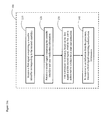
- FIG. 3A is a flow diagram of an example method of authenticating a user seeking to conduct at least one interaction with a secured capability provided by a computer, in accordance with certain embodiments described herein.
- FIG. 3B schematically illustrates an example computer system (e.g., a verification server) in accordance with certain embodiments described herein.
- FIG. 4 is a flow diagram of an example method of authenticating users seeking to conduct at least one interaction (e.g., retrieval of information from a secured internet portal, a purchase, opening a lock selectively inhibiting physical entry to an enclosed region within a safe, building, or vehicle) with a secured capability in accordance with certain embodiments described herein.
- at least one interaction e.g., retrieval of information from a secured internet portal, a purchase, opening a lock selectively inhibiting physical entry to an enclosed region within a safe, building, or vehicle
- FIG. 5 is a flow diagram of an example method of authenticating users seeking to conduct at least one interaction with a secured capability in accordance with certain embodiments described herein.
- FIG. 6 is a flow diagram of an example method of authenticating users seeking to conduct at least one interaction with a secured capability in accordance with certain embodiments described herein.
- FIG. 7 schematically illustrates a first example configuration for providing a secured authentication/login in accordance with certain embodiments described herein.
- FIG. 8 schematically illustrates a second example configuration for providing a secured authentication/login in accordance with certain embodiments described herein.
- FIG. 9 schematically illustrates a third example configuration for providing a secured authentication/login in accordance with certain embodiments described herein.
- FIG. 10 schematically illustrates a fourth example configuration for providing a secured authentication/login in accordance with certain embodiments described herein.
- FIG. 11 schematically illustrates a fifth example configuration for providing a secured authentication/login in accordance with certain embodiments described herein.
- FIG. 12 schematically illustrates a sixth example configuration for providing a secured authentication/login in accordance with certain embodiments described herein.
- FIG. 13 schematically illustrates a first example configuration for providing a secured electronic payment capability in accordance with certain embodiments described herein.
- FIG. 14 schematically illustrates a second example configuration for providing a secured electronic payment capability in accordance with certain embodiments described herein.
- FIG. 15 schematically illustrates a third example configuration for providing a secured electronic payment capability in accordance with certain embodiments described herein.
- FIG. 16 schematically illustrates a fourth example configuration for providing a secured electronic payment capability in accordance with certain embodiments described herein.
- FIG. 17 schematically illustrates a fifth example configuration for providing a secured electronic payment capability in accordance with certain embodiments described herein.
- FIG. 18 schematically illustrates a sixth example configuration for providing a secured electronic payment capability in accordance with certain embodiments described herein.
- FIG. 19 schematically illustrates a seventh example configuration for providing a secured electronic payment capability in accordance with certain embodiments described herein.
- FIG. 20 schematically illustrates an eighth example configuration for providing a secured electronic payment capability in accordance with certain embodiments described herein.
- FIG. 21 schematically illustrates a nineteenth example configuration for providing a secured electronic payment capability in accordance with certain embodiments described herein.
- While various embodiments are described herein by citing websites and smartphones as examples of devices which can be used, the systems and methods described herein are not so limited. Certain embodiments also extend to bank safes, door locks, and any other objects that use some form of security to access, and other forms of mobile personal devices (e.g., electronic tablets). Certain embodiments described herein can be used to provide higher security to access any secured or sensitive information or object. For example, certain embodiments can be used to allow users be identified and verified as being among those individuals who are authorized to access information that is secured or that is sensitive.
- FIG. 1 schematically illustrates an example configuration in which certain embodiments described herein can be used.
- a plurality of users 10 e.g., user 1, user 2, . . . , user N
- a first electronic device 20 e.g., device 1a, device 2a, . . . , device Na
- a network 40 e.g., the internet
- a second electronic device 30 e.g., device 1b, device 2b, . . . , device Nb
- the first electronic device 20 can be a personal computer (e.g., laptop, notebook) that is running a web browser program (e.g., Internet Explorer®, Firefox®, Safari®) to access or visit websites hosted by one or more computers 50 (e.g., computer 1, computer 2, computer 3, . . . , computer M) via the network 40 , or can be a mobile device (e.g., smartphone or tablet) that is running an application that accesses or visits websites hosted by the one or more computers 50 via the network 40 , and the second electronic device 30 can be a mobile device (e.g., smartphone or tablet) that is running an application that accesses the network 40 .
- the computers 50 e.g., web servers
- can each provide at least one secured capability e.g., access to secured information, access to conduct a secure transaction with which authorized users visiting the website are to conduct at least one interaction.
- a verification server 60 (e.g., a computing device that can authorize a connection or a validation attempt) is also operatively coupled to the network 40 as is described more fully herein. While FIG. 1 shows an example configuration in which the verification server 60 is separate from the one or more computers 50 (e.g., as a specific server operatively coupled to the network), in other example configurations, the verification server 60 is integrated with one or more of the computers 50 . In certain embodiments, two or more verification servers 60 may be used.
- Certain embodiments described herein include methods which are performed by computer hardware, software or both, comprising one or more modules.
- the hardware used for certain embodiments described herein can take a wide variety of forms, including processors, general-purpose computers, network servers, workstations, personal computers, mainframe computers and the like.
- the hardware running the software will typically include one or more input devices, such as a mouse, trackball, touchpad, and/or keyboard, a display, and computer-readable memory media, such as random-access memory (RAM) integrated circuits and a data storage device (e.g., tangible storage, non-transitory storage, flash memory, hard-disk drive).
- RAM random-access memory
- one or more portions, or all of the software code may be remote from the user and, for example, resident on a network resource, such as a LAN server, Internet server, network storage device, etc.
- the software code which configures the hardware to perform in accordance with certain embodiments described herein can be downloaded from a network server which is part of a local-area network or a wide-area network (such as the internet) or can be provided on a tangible (e.g., non-transitory) computer-readable medium, such as a CD-ROM or a flash drive.
- a network server which is part of a local-area network or a wide-area network (such as the internet) or can be provided on a tangible (e.g., non-transitory) computer-readable medium, such as a CD-ROM or a flash drive.
- Various computer languages, architectures, and configurations can be used to practice the various embodiments described herein.
- FIG. 2 schematically illustrates an example subset of the configuration of FIG. 1 showing an aspect of communication among components of the configuration in accordance with certain embodiments described herein.
- the user 10 utilizes a first electronic device 20 as described below in an authorization (e.g., authentication, verification) process. While the description herein includes numerous communication schemes, the example communication scheme of FIG. 2 can be helpful for understanding the general context in which certain embodiments described herein can be used.
- an authorization e.g., authentication, verification
- a user 10 can use the second electronic device 30 (e.g., a computer with a user browser running a browser window viewed on a display device) to view content provided by the computer 50 (e.g., web server) with the intention of conducting an interaction with a secured capability of the computer, such as entering into a secure environment or website (e.g., to access secure information or sensitive information) or making a payment as part of an ecommerce transaction.
- the computer 50 e.g., web server
- the second electronic device 30 e.g., with the reusable identifier encoded as a QR code
- the verification server 60 e.g., a computing device that can authorize an interaction
- the user 10 can scan the QR code displayed by the second electronic device 30 and can extract the reusable identifier from the displayed QR code.
- the first electronic device 20 then transmits the extracted reusable identifier and user verification information to the verification server 60 .
- the verification server 60 determines whether the user 10 is authorized to conduct the interaction with the secured capability. If the user is authorized, the verification server 60 can send an authorization signal to the computer 50 , which then provides the access to the user 10 .
- using the reusable identifier provides advantages not available from conventional systems. For example, by using reusable identifiers that do not include user-specific or transaction-specific information, details regarding the transaction (e.g., items to be purchased, pricing, user information, shipping information) can be updated or changed without having to produce a new identifier. For another example, by not including user-specific or transaction-specific information in the reusable identifier, the QR code in which the reusable identifier is encoded can be much simpler than in systems in which the QR code encodes additional information.
- the QR code can have larger light and dark regions in a given image (e.g., less resolution is needed to read the QR code), making the QR code more easily read and decoded (e.g., using the limited computing power and optical resolution of many mobile devices) and the process is faster and more reliable, thereby contributing to a favorable user experience, which can be a key to market acceptance.
- QR codes would not require real-time instantaneous generation of complex graphical images (the QR codes), thereby reducing server computing requirements and increasing server scalability to serve a higher number of users and processing a higher number of transactions as compared to one-time-use QR codes.
- no user- or transaction-specific information is contained in the reusable identifiers, such identifiers are safer to use, and do not require complex and time-consuming encryption/decryption processes to protect sensitive data.
- FIG. 3A is a flow diagram of an example method 100 of authenticating a user 10 seeking to conduct at least one interaction with a secured capability provided by a computer 50 , in accordance with certain embodiments described herein.
- FIG. 3B schematically illustrates an example computer system 200 (e.g., a verification server 60 ) in accordance with certain embodiments described herein for performing the method 100 .
- the example method 100 is described herein with regard to the aspects of an authorization process that are performed by a computer system 200 (e.g., a verification server 60 ).
- Other methods are described herein with regard to the aspects of an authorization process that are performed by the computer 50 and to the aspects of an authorization process that are performed by the electronic device 20 . While the method 100 is described below by referencing the structural components shown in FIG. 3B , the method 100 may be performed by other structural components.
- the method 100 comprises receiving a first signal 212 from the computer 50 providing the secured capability.
- the first signal 212 comprises a reusable identifier 214 corresponding to the secured capability.
- the method 100 further comprises receiving a second signal 222 from an electronic device 20 being used by the user 10 .
- the second signal 222 comprises the first reusable identifier 214 (e.g., a copy 224 of the reusable identifier 214 of the first signal 212 ) and user verification information 226 .
- the method 100 further comprises using a processor 240 to evaluate, based at least on the first signal 212 and the second signal 222 , whether the user 10 is authorized to conduct the at least one interaction with the secured capability.
- the method 100 further comprises transmitting, in response to an indication from the processor 240 that the user 10 is authorized to conduct the at least one interaction with the secured capability, a third signal 252 comprising authorization information 254 to at least one of the electronic device 20 and the computer 50 .
- the computer system 200 (e.g., a verification server 60 ) comprises a first input 210 configured to receive a plurality of first signals 212 from a plurality of computers 50 .
- Each computer 50 of the plurality of computers 50 is configured to provide at least one secured capability of the plurality of secured capabilities.
- Each first signal 212 of the plurality of first signals 212 comprises a reusable identifier 214 corresponding to a secured capability of the plurality of secured capabilities.
- the computer system 200 further comprises a second input 220 configured to receive a plurality of second signals 222 from a plurality of electronic devices 20 being used by the users 10 .
- Each second signal 222 of the plurality of second signals 222 comprises a reusable identifier 214 (e.g., a copy 224 of a reusable identifier 214 of a first signal 212 ) and user verification information 226 .
- the computer system 200 further comprises a storage device 230 comprising a first association 232 of each secured capability of the plurality of secured capabilities with at least one corresponding reusable identifier 214 .
- the storage device 230 further comprises a second association 234 of the user verification information 226 with corresponding verified users 10 authorized to access at least one secured capability of the plurality of secured capabilities.
- the computer system 200 further comprises a processor 240 configured to evaluate, based at least on a first signal 212 received from a computer 50 of the plurality of computers 50 and a second signal 222 received from an electronic device 20 of the plurality of electronic devices 20 , whether a user 10 of the electronic device 20 is authorized to conduct at least one interaction with a secured capability corresponding to the reusable identifier 214 .
- the computer system 200 further comprises an output 250 configured to transmit a third signal 252 comprising authorization information 254 to at least one of the electronic device 20 and the computer 50 providing the secured capability corresponding to the reusable identifier 214 , if the user 10 of the electronic device 20 is authorized to conduct the at least one interaction with the secured capability corresponding to the reusable identifier 214 .
- the first input 210 , the second input 220 , and the output 250 are each configured to be operationally coupled to the network 40 (e.g., the internet). In certain embodiments, two or more of the first input 210 , the second input 220 , and the output 250 can integrated together in a network portal, or can be distributed among one, two, or more network portals.
- the first input 210 , the second input 220 , and the output 250 are also configured to communicate with one or both of the storage device 230 and the processor 240 of the computer system 200 .
- the verification server 60 is configured to remotely disable the ability to use the electronic device 20 in an authorization process. For example, a separate website or push message may be used to communicate to the verification server 60 that the security of the electronic device 20 has been compromised (e.g., the electronic device 20 has been stolen), so communications with the electronic device 20 should no longer be used.
- information or data relevant to the authorization process can be remotely deleted from the electronic device 20 (e.g., via a push message) in the event that the security of the electronic device 20 has been compromised.
- the secured capability can comprise a structure (e.g., a locked door, fence, gate, elevator) that is operatively coupled to the computer 50 and that is configured to selectively inhibit physical access to a region (e.g., interior of a safe, building, house, vehicle, automobile) or operation of a machine (e.g., automobile, elevator) to only authorized users, and the at least one interaction can comprise access to the restricted region (e.g., opening a lock thereby allowing entry to or exit from the restricted region) or turning the machine on or off.
- a structure e.g., a locked door, fence, gate, elevator
- the secured capability can comprise a security module that is run by or operatively coupled to the computer 50 and that is configured to selectively restrict access to a memory region (e.g., a database, a secured internet portal) to only authorized users, and the at least one interaction can comprise access to the restricted memory region (e.g., retrieval of information from the secured internet portal, writing to or reading from the restricted memory region).
- a security module that is run by or operatively coupled to the computer 50 and that is configured to selectively restrict access to a memory region (e.g., a database, a secured internet portal) to only authorized users, and the at least one interaction can comprise access to the restricted memory region (e.g., retrieval of information from the secured internet portal, writing to or reading from the restricted memory region).
- the secured capability can comprise an electronic payment module that is run by or operatively coupled to the computer 50 and that is configured to selectively restrict access to an electronic payment as part of an ecommerce transaction (e.g., purchase) with the user that initiated the transaction, and the at least one interaction can comprise a transfer of funds (e.g., from the user to a merchant) to conduct the ecommerce transaction.
- an electronic payment module that is run by or operatively coupled to the computer 50 and that is configured to selectively restrict access to an electronic payment as part of an ecommerce transaction (e.g., purchase) with the user that initiated the transaction, and the at least one interaction can comprise a transfer of funds (e.g., from the user to a merchant) to conduct the ecommerce transaction.
- the reusable identifier 214 corresponds to a particular secured capability and serves as a “transaction start indicator” or “TSSID” that denotes the beginning of a process.
- the reusable identifier 214 may include data, such as information about the company providing the secured capability, the particular secured capability that corresponds to the TSSID, or both.
- the reusable identifier 214 can include a short sequence of numbers, letters, or characters that identifies the company providing the secured capability, the secured capability, or both.
- the reusable identifier 214 can comprise information identifying which of the verification servers 60 is to be used.
- the reusable identifier 214 does not contain information about the company providing the secured capability.
- the reusable identifier 214 includes only numbers, not alphabetic characters, which can make the visual identifier (e.g., QR code) which encodes the reusable identifier 214 more simple and easier to scan.
- the reusable identifier 214 does not comprise data that is to be kept confidential, so the data of the reusable identifier 214 may or may not be encrypted.
- reusable in conjunction with the reusable identifier 214 has its broadest reasonable interpretation, including but not limited to, an identifier that can be used more than once (e.g., the identifier is not for merely “one-time-use,” is not unique to one particular user or transaction, or both).
- a reusable identifier 214 e.g., a reusable TSSID
- signals the beginning of a transaction does not contain user-specific or transaction-specific information, and can be reused for multiple users and multiple transactions.
- a reusable identifier 214 is utilized in a different way than the “one-time-use” or “unique” identifiers (IDs) of conventional systems (e.g., systems that utilize identifiers containing transaction-specific information, so that, for example, when a smartphone sends login or payment information to a webserver, the webserver can associate the user to the transaction).
- IDs unique identifiers
- a predefined and previously generated list of the reusable identifiers 214 can be assigned to each secured capability of each computer 50 .
- the reusable identifier 214 assigned to each secured capability can be stored in the storage device 230 in the first association 232 (e.g., a database or look-up table) that keeps track of both the reusable identifiers 214 and the secured capabilities to which they are assigned.
- the reusable identifiers 214 to be used by a computer 50 can also be stored in a storage device of the computer 50 .
- the individual reusable identifiers 214 assigned to a secured capability can be used by the computer 50 sequentially (e.g., one after another, for sequential attempts to authenticate users seeking to conduct at least one interaction with the secured capability).
- the computer 50 can go back and restart the list by again using the reusable identifiers 214 on the list (round robin usage).
- the reusable identifiers 214 are each only valid for a finite and predetermined period of time (e.g., one or more minutes, one or more hours, one or more days) but can be used in multiple such periods of time.
- the reusable identifier 214 can be reused in a subsequent period of time (e.g., after one or more other reusable identifiers 214 have been selected and used sequentially in a round robin fashion).
- a subsequent period of time e.g., after one or more other reusable identifiers 214 have been selected and used sequentially in a round robin fashion.
- one or more previously-used reusable identifiers 214 can be used, even if the list of reusable identifiers 214 has not yet been exhausted within the previous time period (e.g., the round-robin processing does not have to be continued).
- Certain such embodiments are different from systems which utilize “one-time-use” TSSIDs or IDs.
- the user 10 utilizes a second electronic device 30 to conduct the at least one interaction with the secured capability provided by the computer 50 .
- the second electronic device 30 can comprise a computer with a user browser running a browser window viewed on a display device or a mobile device (e.g., smartphone or tablet) running an application.
- the user 10 conducts the at least one interaction with the secured capability provided by the computer 50 without using a second electronic device 30 .
- the reusable identifier 214 can be encoded in a QR code on a printed sheet of paper 70 (e.g., a bill or invoice).
- the reusable identifier 214 is displayed or presented in a manner in which the electronic device 20 is able to receive the reusable identifier 214 from the second electronic device 30 .
- the reusable identifier 214 can be presented (e.g., by the second electronic device 30 which received the reusable identifier 214 from the computer 50 ) as an reusable encoded visual or auditory identifier configured to be detected by the electronic device 20 and decoded by a program executed by the electronic device 20 to yield the reusable identifier 214 .
- the visual or auditory identifiers can be predetermined (e.g., premade) based on the predetermined reusable identifiers 214 , or each visual or auditory identifiers can be generated just before it is to be presented to and detected by the electronic device 20 . Since they encode the reusable identifiers 214 , the visual or auditory identifiers can also be reusable (e.g., used more than once and not for merely “one-time-use,” not unique to one particular user or transaction, or both). In certain embodiments, the visual or auditory identifiers are each only valid for a finite and predetermined period of time (e.g., one or more minutes, one or more hours, one or more days) but can be used in multiple such periods of time.
- a finite and predetermined period of time e.g., one or more minutes, one or more hours, one or more days
- the visual or auditory identifiers can be stored in the verification server 60 (e.g., the storage device 230 ) and provided to the computer 50 as needed, or the visual or auditory identifiers can be stored on the computer 50 (e.g., a web server) to be used as needed. In certain embodiments, the visual or auditory identifiers are used sequentially, in a round robin fashion.
- the visual or auditory identifier comprises visual signals (e.g., static images, color images, black and white images, striped images, flashing lights, animated images, videos) or auditory signals (e.g., tones, sounds, music) containing the reusable identifier 214 and that are decoded by a program executed by the first electronic device 20 .
- a visual identifier can be presented on a visual display device of the second electronic device 30 (e.g., by a user browser or on a printed page) and detected by a camera or light sensor of the first electronic device 20 .
- an auditory identifier can be presented by a speaker of the second electronic device 30 and detected by a microphone of the first electronic device 20 .
- a radio signal can be used to encode the reusable identifier 214 with the electronic device 20 configured to receive and decode the radio signal.
- the visual or auditory identifier comprises a QR code, which is a graphical static image that can be used to encode information and that can be detected by a camera and decoded by software.
- a QR code containing the reusable identifier 214 can be presented (e.g., by the second electronic device 30 or on a printed page) and can be detected by the electronic device 20 (e.g., smartphone or tablet) and decoded by a program executed by the electronic device 20 to yield the reusable identifier 214 .
- the QR code can be predetermined (e.g., premade) based on the predetermined reusable identifiers 214 , or each QR code can be generated just before it is to be presented to and detected by the electronic device 20 .
- the QR codes can also be reusable (e.g., used more than once and not for merely “one-time-use,” not unique to one particular user or transaction, or both).
- the QR codes are each only valid for a finite and predetermined period of time (e.g., one or more minutes, one or more hours, one or more days) but can be used in multiple such periods of time.
- the QR codes can be stored in the verification server 60 (e.g., the storage device 230 ) and provided to the computer 50 as needed, or the QR codes can be stored on the computer 50 (e.g., a web server) to be used as needed.
- the QR codes are used sequentially, in a round robin fashion.
- the first electronic device 20 comprises a device, such as a smartphone or a tablet, capable of detecting the visual or auditory identifier (e.g., QR Code) and communicating with the verification server 60 via a network or the internet.
- the second electronic device 30 comprises a display device (e.g., LED display, audio speaker, electric bulb or LED) capable of presenting the visual or auditory identifier (e.g., QR code) in a manner detectable by the first electronic device 20 .
- the display device is running a user browser connected to the computer 50 via the internet.
- the computer 50 comprises a processor running a web server and driving the display device (e.g., by transmitting HTML information to the user browser of the display device).
- the computer 50 may be integrated with or separated from the display device of the second electronic device 30 .
- the verification server 60 comprises a processor configured to authorize a connection or a validation attempt by the user 10 .
- verification server 60 can be integrated with or separated from the computer 50 .
- the verification server 60 comprises one or more specific servers sitting on the internet and containing user verification information.
- the first electronic device 20 comprises a mobile smartphone capable of scanning and decoding a QR code displayed by a user browser running on the second electronic device 30 , with the QR code encoding the reusable identifier 214 .
- the smartphone is also configured to communicate the decoded identifier, along with user verification information, to the verification server 60 via the network 40 (e.g., the internet).
- the computer 50 transmits the first signal 212 to the verification server 60 , which receives the first signal 212 from the computer 50 in the operational block 110 .
- the first signal 212 comprises the reusable identifier 214 and can be interpreted by the verification server 60 as the initiation of an authentication process.
- the computer 50 also transmits the reusable identifier 214 to the second electronic device 30 to be presented (e.g., in a visual or auditory identifier, such as a QR code) in a form that can be detected and decoded by the first electronic device 20 .
- This transmission of the reusable identifier 214 to the second electronic device 30 can be concurrent or non-concurrent with the transmission of the first signal 212 to the verification server 60 .
- the reusable identifier 214 is presented to the user 10 by a visual identifier in which the reusable identifier 214 is encoded and which is printed on a page 70 (e.g., a bill or invoice).
- the user 10 can use the first electronic device 20 to detect and decode the identifier being presented by the second electronic device 30 so as to generate a copy 224 of the reusable identifier 214 ), which should be the same as the reusable identifier 214 (e.g., both the reusable identifier 214 and the copy 224 do not contain user-specific or interaction-specific information).
- the first electronic device 20 transmits the second signal 222 to the verification server 60 , which receives the second signal 222 from the first electronic device 20 in the operational block 120 .
- the second signal 222 comprises the reusable identifier 214 and the user verification information 226 .
- the user verification information 226 can be stored on, or can be otherwise accessible by, the first electronic device 20 .
- the user verification information 226 comprises information that can be used to verify and authenticate the user (e.g., a verifiable “fingerprint” of the user and mobile device).
- the user verification information 226 can comprise information regarding (e.g., specific to) the user (e.g., the user's first name, family name, email address, phone number), information regarding (e.g., specific to) the first electronic device 20 (e.g., a device identification character string, hardware-specific information such as manufacturer or operating system of the first electronic device 20 ), or both.
- the user verification information 226 can comprise information derivable from user-specific information (e.g., predetermined portions of the user-specific information that would not themselves contain private information) or information derivable from device-specific information (e.g., predetermined portions of the device-specific information that would not themselves contain private information).
- the user verification information 226 may or may not be encrypted.
- the user verification information 226 corresponding to users that are authorized to access at least one secured capability can be stored in the storage device 230 in the second association 234 (e.g., in a database or look-up table) that keeps track of both the user verification information 226 and the authorized user which it denotes.
- the user verification information 226 is not made available to the computer 50 .
- the second association 234 also includes information regarding which secured capabilities each of the users denoted by user verification information 226 is authorized to access. Use of such user verification information 226 (e.g., user-specific information, device-related information, or both) can provide a desired level of security to ensure that the user 10 attempting to access the secured capability is an authorized user.
- the verification server 60 can evaluate (e.g., using the processor 240 ), based at least on the first signal 212 and the second signal 222 , whether the user 10 is authorized to conduct the at least one interaction with the secured capability in the operational block 130 .
- the verification server 60 can correlate the first signal 212 with the corresponding second signal 222 by comparing the reusable identifier 214 from the first signal 212 and the copy 224 from the second signal 222 . For a correlated first signal 212 and second signal 222 , the reusable identifier 214 and the copy 224 will match.
- the verification server 60 can also utilize the reusable identifier 214 with the first association 232 of each secured capability with at least one corresponding reusable identifier 214 to identify the secured capability that the user 10 is attempting to access. For example, using the received reusable identifier 214 , the validation server 60 can access the first association 232 to determine (e.g., look up) which secured capability (or computer 50 , or both) corresponds to the received reusable identifier 214 . The verification server 60 can also utilize the user verification information 226 and the second association 234 of the user verification information 226 with corresponding verified users 10 to evaluate, based at least on the user verification information 226 , whether the user 10 of the first electronic device 20 is one of the verified users of the secured capability.
- the verification server 60 can access the second association 234 to determine (e.g., look up) which user corresponds to the user verification information 226 . If the user verification server 226 received from the electronic device 20 does not match any of the entries of the second association 234 , then the user is deemed to not be one of the verified users of the secured capability. Also, in certain embodiments in which the second association 234 also includes information regarding which secured capabilities the user denoted by the user verification information 226 is authorized to access, the verification server 60 can use the second association 234 , the user verification information 226 , and the reusable identifier 214 to determine (e.g., look up) whether the user is authorized to access the particular secured capability that the user is seeking to access.
- the verification server 60 also checks whether the first electronic device 20 (e.g., mobile device, smartphone, tablet) is deactivated. For example, upon receipt of a notification (e.g., from the user or from a third party authorized to provide such notifications), the verification server 60 can place the user's first electronic device 20 on a stored list of deactivated first electronic devices 20 that have been deactivated from use by the verification server 60 . Such notifications can be provided to the verification server 60 upon discovery that the user's first electronic device 20 is lost or stolen. Deactivated first electronic devices 20 (e.g., those on the stored list of deactivated devices) would not be authorized by the verification server 60 . Certain such embodiments can provide a way for a user to deactivate a lost or stolen first electronic device 20 and to stop access by people other than the user.
- a notification e.g., from the user or from a third party authorized to provide such notifications.
- the validation server 60 can determine a first time of receipt of the first signal 212 and a second time of receipt of the second signal 222 , and can compare the time differential between the first time and the second time. If the time differential is less than or equal to the finite and predetermined period of time for the reusable identifier 214 , the validation server 60 can evaluate that the user 10 is authorized to conduct the at least one interaction with the secured capability corresponding to the reusable identifier 214 . If the time differential is greater than the finite and predetermined period of time for the reusable identifier 214 , the validation server 60 can evaluate that the user 10 is not authorized to access the secured capability.
- the verification server 60 deletes the record corresponding to the reusable identifier 214 so it can be reused again. Certain such embodiments avoid performing any timestamp comparison.
- the verification server 60 can transmit a third signal 252 comprising authorization information 254 to at least one of the first electronic device 20 and the computer 50 , in the operational block 140 .
- the authorization information 254 can comprise a flag indicating that the user 10 is authorized to conduct the at least one interaction with the secured capability, can comprise additional information regarding the conditions of the user 10 accessing the secured capability (e.g., number of interactions that are authorized, the type of interactions that are authorized), or both.
- the authorization information 254 sent to the computer 50 in the third signal 252 can comprise an identifier that is unique to the user 10 .
- the computer 50 can use this identifier to identify the user 10 . For example, for a login to a secured account, the computer 50 can use this identifier to select which user's account to present to the browser running on the electronic device 30 .
- the first signal 212 from the computer 50 can further comprise invoice information corresponding to the purchase, and the third signal 252 can also comprise the invoice information.
- the invoice information is sent to the first electronic device 20 from a second output of the validation server 60 .
- the first electronic device 20 can respond to the third signal 252 by transmitting payment information to at least one of the computer 50 and the validation server 60 .
- the payment information can comprise a confirmation (e.g., in a fourth signal) that a payment by the user 10 was made, and the output 250 can be configured to transmit the confirmation to the computer 50 .
- the payment information further comprises shipping information and/or billing information.
- the first electronic device 20 can transmit to the computer 50 shipping information for delivery corresponding to the purchase.
- the payment information comprises one or more of the following: user information (e.g., one or more of the user's name, mailing address, email address, phone number), means of payment information (e.g., one or more credit card, debit card, checking or savings account information, or other payment account information), which can be stored on the electronic device 20 or can be stored and accessible elsewhere on the internet (e.g., “in the cloud”), shipping information (e.g., one or more user information data records indicating the address to be used for shipping; the shipping information field can be empty where there is no need for a physical product shipment, and one shipping information can be shared among one or more payment information fields), billing information (e.g., one or more user information data records indicating the address to be used for billing; the billing information field can be empty where there is no need for billing, and one billing information can be shared among one or more payment information fields), userID (e.g., a registered combination of alphanumeric, special characters, or both that may be optionally followed by a password input, as
- userID
- the first electronic device 20 can respond to the third signal 252 by transmitting payment information to a payment gateway (e.g., a computer system with a processor configured to receive such payment information and to facilitate the transfer of funds) via the internet or a network.
- a payment gateway e.g., a computer system with a processor configured to receive such payment information and to facilitate the transfer of funds
- the first electronic device 20 transmits payment information to the payment gateway can advantageously reduce credit card theft or fraud, can significantly increase user security, can make compliance with Payment Card Industry (PCI) data security standards easier and less costly, and/or to make anonymous payments in which the user's name or credit card information are not provided to the merchant of the goods or services being purchased.
- PCI Payment Card Industry
- FIG. 4 is a flow diagram of an example method 300 of authenticating users seeking to conduct at least one interaction (e.g., retrieval of information from a secured internet portal, a purchase, opening a lock selectively inhibiting physical entry to an enclosed region within a safe, building, or vehicle) with a secured capability in accordance with certain embodiments described herein.
- the example method 300 is described herein with regard to the aspects of an authorization process that are performed by a computer 50 (e.g., web server).
- the computer 50 e.g., web server
- the computer 50 e.g., web server
- the computer 50 can comprise a processor configured to perform the method 300 . While the method 300 is described below by referencing certain structural components and signals, the method 300 may be performed using other structural components and signals.
- the method 300 comprises transmitting a first signal to a verification server 60 .
- the first signal comprises a reusable identifier 214 (e.g., not containing user-specific or interaction-specific information) corresponding to the secured capability.
- the verification server 60 is configured to receive validation data (e.g., user verification information 226 ) from an electronic device 20 (e.g., mobile device, smartphone, tablet) being used by the user and is further configured to evaluate, based at least on the validation data and the reusable identifier 214 , whether the user is authorized to conduct the at least one interaction with the secured capability.
- the method 300 further comprises transmitting a second signal comprising the reusable identifier 214 to the user.
- the method 300 further comprises receiving authorization information 254 from at least one of the verification server 60 and the electronic device 20 .
- the method 300 further comprises using a processor to provide the user with access to conduct the at least one interaction with the secured capability in response at least to the authorization information.
- transmitting the second signal to the user in the operational block 320 comprises transmitting the second signal to a second electronic device 30 being used by the user.
- the second electronic device 30 can comprise a computer with a visual display, a speaker, or both, configured to present the reusable identifier 214 as an encoded visual or auditory identifier (e.g., a QR code) configured to be detected by the electronic device 20 and decoded by a program executed by the electronic device 20 .
- the first signal can further comprises invoice information corresponding to the purchase.
- the method 300 in certain such embodiments further comprises receiving (e.g., by the computer 50 ) a confirmation of a payment (e.g., whether successful or unsuccessful) or payment information corresponding to the purchase by the user.
- transmitting the second signal to the user in the operational block 320 comprises providing the user with a printed page 70 on which the reusable identifier 214 is displayed as a visual identifier.
- the visual identifier e.g., QR code
- QR code can be configured to be detected by the electronic device 20 and decoded by a program executed by the electronic device 20 .
- FIG. 5 is a flow diagram of an example method 400 of authenticating users seeking to conduct at least one interaction with a secured capability in accordance with certain embodiments described herein.
- the example method 400 is described herein with regard to the aspects of an authorization process that are performed by an electronic device 20 (e.g., mobile device, smartphone, tablet).
- the electronic device 20 e.g., mobile device, smartphone, tablet
- the method 400 comprises detecting an encoded identifier comprising a reusable identifier 214 corresponding to the secured capability.
- the method 400 further comprises using a processor (e.g., of an electronic device 20 being used by the user, examples of which include but are not limited to a mobile device, a smartphone, and a tablet) to decode the encoded identifier to extract the reusable identifier 214 .
- a processor e.g., of an electronic device 20 being used by the user, examples of which include but are not limited to a mobile device, a smartphone, and a tablet
- the method 400 further comprises transmitting validation data (e.g., by the processor of the electronic device 20 being used by the user) to a validation server 60 configured to evaluate, based at least on the validation data and the reusable identifier 214 , whether the user is authorized to access the secured capability.
- the validation data can comprise the extracted reusable identifier 214 and user verification information 226 (e.g., at least one of user-specific information and device-specific information).
- the encoded identifier is presented by a second electronic device 30 being used by the user.
- the second electronic device 30 can comprise a computer with a visual display, a speaker, or both, configured to present the reusable identifier 214 as an encoded visual or auditory identifier (e.g., a QR code) configured to be detected by the electronic device 20 and decoded by a program executed by the electronic device 20 .
- detecting the encoded identifier in the operational block 410 can comprise using the electronic device 20 to detect the encoded identifier being presented by the second electronic device 30 .
- the encoded identifier is presented on a printed page 70 (e.g., as a QR code) presented to the user, and detecting the encoded identifier in the operational block 410 comprises scanning the printed page 70 (e.g., using a camera of the electronic device 20 ).
- the visual identifier e.g., QR code
- QR code can be configured to be detected by the electronic device 20 and decoded by a program executed by the electronic device 20 .
- FIG. 6 is a flow diagram of an example method 500 of authenticating users seeking to conduct at least one interaction with a secured capability in accordance with certain embodiments described herein.
- the at least one interaction can comprise opening a lock selectively inhibiting physical entry to an enclosed region within a safe, building, or vehicle, retrieval of information from a secured internet portal, or transmission of information for completing a transaction with a secured internet portal.
- the example method 500 is described herein with regard to the aspects of an authorization process that are performed by a computer 50 (e.g., web server).
- the computer 50 e.g., web server
- the computer 50 can comprise a processor configured to perform the method 500 . While the method 500 is described below by referencing certain structural components and signals, the method 500 may be performed using other structural components and signals.
- the method 500 comprises storing a plurality of identifiers corresponding to the secured capability. In certain embodiments, each identifier of the plurality of identifiers does not contain user-specific or interaction-specific information.
- the method 500 further comprises selecting and transmitting a first identifier of the plurality of identifiers to a first user and to a verification server 60 to initiate a first interaction with the first user.
- the first identifier is configured to be presented in a first form to a first electronic device 20 a being used by the first user.
- the verification server 60 is configured to receive the plurality of identifiers and to receive validation signals from electronic devices 20 being used by the users.
- the verification server 60 is further configured to evaluate, based at least on the received validation signals and identifiers, whether the users are authorized to conduct the at least one interaction with the secured capability.
- the method 500 further comprises selecting and transmitting a second identifier of the plurality of identifiers to a second user and to the verification server 60 to initiate a second interaction with the second user.
- the second identifier is configured to be presented in a second form to a second electronic device 20 b being used by the second user.
- the method 500 further comprises selecting and transmitting the first identifier to a third user and to the verification server 60 to initiate a third interaction with the third user.
- the first identifier is configured to be presented in a third form to a third electronic device 20 c being used by the third user.
- At least one of the first form, the second form, and the third form comprises an encoded visual form (e.g., QR code) configured to be presented using a computer display, while in certain other embodiments, at least one of the first form, the second form, and the third form comprises an encoded auditory form configured to be presented using a computer speaker.
- At least one of the first form, the second form, and the third form can comprise an encoded visual form (e.g., QR code) on a printed page 70 .
- At least one of the first form, the second form, and the third form can comprise a radio signal (e.g., a repeating encoded radio signal).
- FIG. 7 schematically illustrates a first example configuration for providing a secured authentication/login in accordance with certain embodiments described herein.
- an electronic device 20 e.g., a mobile device, smartphone, tablet
- the configuration of FIG. 7 shows a minimal number of steps, as compared to the example configurations of FIGS. 8-12 , for implementing the authentication/login functionality.
- the user can use an electronic device 30 running a user browser with the intention of entering into a secure environment (e.g., to access secure information or sensitive information) hosted by the computer 50 (e.g., a web server).
- a secure environment e.g., to access secure information or sensitive information
- the computer 50 e.g., a web server
- the user can type a secured website uniform resource locator (URL) in a computer browser, although other techniques (e.g., selecting the website from a list of “favorites”) can be used.
- URL uniform resource locator
- the computer 50 can then select the next reusable identifier 214 (e.g., a TSSID which can be the next TSSID of a list of predetermined TSSIDs in a round robin queue) and the corresponding predetermined (e.g., premade) visual or auditory identifier (e.g., a QR code) in which the reusable identifier 214 is encoded.
- the computer 50 can send a first signal 212 containing the reusable identifier 214 to the verification server 60 , and which can indicate the potential beginning of a verification process.
- the computer 50 can also send a login page signal 702 comprising the selected QR code to the user browser to be displayed to the user. This login page signal 702 can be sent before, concurrently with, or after the first signal 212 is sent.
- the user can scan the QR code (e.g., using the camera of the smartphone) and can extract the reusable identifier 214 (e.g., using a program or application running on the smartphone) to generate a copy 224 of the reusable identifier 214 .
- the electronic device 20 can send a second signal 222 comprising the copy 224 and the user verification information 226 to the verification server 60 .
- the verification server 60 can check the copy 224 and the user verification information 226 it receives from the electronic device 20 against its database (e.g., the first association 232 and the second association 234 ) to determine whether to authorize the user (e.g., authenticate or login the user).
- authorizing the user can comprise sending an authorization signal 252 (e.g., a valid/invalid flag or authentication information 254 ) from the validation server 60 to the computer 50 .
- the computer 50 upon receiving the authorization signal 252 , can automatically log in the user and can send a homepage signal 704 to the user browser of the electronic device 30 to display a web page containing, or otherwise allowing access to, the information (e.g., the secured information or the sensitive information) sought to be accessed by the user.
- the information e.g., the secured information or the sensitive information
- the system and method upon receiving the authorization signal 252 , the safe, lock, or door will open.
- FIG. 8 schematically illustrates a second example configuration for providing a secured authentication/login in accordance with certain embodiments described herein.
- increased security for the authentication/login is provided by adding a user-specific authorization code (e.g., a “personal identification number” or “PIN”) security check (e.g., requiring the user of the electronic device 20 to enter a PIN) to ensure that the authorized user is operating the electronic device 20 and is accessing the secured information.
- a user-specific authorization code e.g., a “personal identification number” or “PIN”
- PIN personal identification number
- the PIN may be composed of a sequence numbers, a sequence of text characters, or a sequence of images selected from a list of images.
- the PIN may be static (e.g., user enters the same PIN, until changed) or dynamic (e.g., different authentication questions are asked at different usage points, which may require different user inputs).
- the PINS are user created numeric codes or passwords.
- the user can use an electronic device 30 running a user browser with the intention of entering into a secure environment (e.g., to access secure information or sensitive information) hosted by the computer 50 (e.g., a web server).
- a secure environment e.g., to access secure information or sensitive information
- the computer 50 e.g., a web server
- the user can type a secured website uniform resource locator (URL) in a computer browser, although other techniques (e.g., selecting the website from a list of “favorites”) can be used.
- URL uniform resource locator
- the computer 50 can then select the next reusable identifier 214 (e.g., a TSSID which can be the next TSSID of a list of predetermined TSSIDs in a round robin queue) and the corresponding predetermined (e.g., premade) visual or auditory identifier (e.g., a QR code) in which the reusable identifier 214 is encoded.
- the computer 50 can send a first signal 212 containing the reusable identifier 214 to the verification server 60 , and which can indicate the potential beginning of a verification process.
- the computer 50 can also send a login page signal 702 comprising the selected QR code to the user browser to be displayed to the user. This login page signal 702 can be sent before, concurrently with, or after the first signal 212 is sent.
- the electronic device 20 can prompt the user to enter a PIN, which the electronic device 20 can verify (e.g., by checking it against a previously setup PIN). If the PIN is correct, the user can then use the electronic device 20 to scan the QR code (e.g., using the camera of the smartphone) and can extract the reusable identifier 214 (e.g., using the program or application running on the smartphone) to generate a copy 224 of the reusable identifier 214 . The electronic device 20 can send a second signal 222 comprising the copy 224 and the user verification information 226 to the verification server 60 .
- a PIN e.g., by checking it against a previously setup PIN. If the PIN is correct, the user can then use the electronic device 20 to scan the QR code (e.g., using the camera of the smartphone) and can extract the reusable identifier 214 (e.g., using the program or application running on the smartphone) to generate a copy 224 of the reusable identifier 214 .
- the verification server 60 can check the copy 224 and the user verification information 226 it receives from the electronic device 20 against its database (e.g., the first association 232 and the second association 234 ) to determine whether to authorize the user (e.g., authenticate or login the user). For example, authorizing the user can comprise sending an authorization signal 252 (e.g., a valid/invalid flag or authentication information 254 ) from the validation server 60 to the computer 50 .
- an authorization signal 252 e.g., a valid/invalid flag or authentication information 254
- the computer 50 upon receiving the authorization signal 252 , can automatically log in the user and can send a homepage signal 704 to the user browser of the electronic device 30 to display a web page containing, or otherwise allowing access to, the information (e.g., the secured information or the sensitive information) sought to be accessed by the user.
- the information e.g., the secured information or the sensitive information
- the system and method upon receiving the authorization signal 252 , the safe, lock, or door will open.
- FIG. 9 schematically illustrates a third example configuration for providing a secured authentication/login in accordance with certain embodiments described herein.
- the electronic device 20 can also receive an authorization signal 706 comprising authorization information 254 from the verification server 60 , so that the electronic device 20 can display a successful authorization message to the user.
- a user can use an electronic device 30 running a user browser with the intention of entering into a secure environment (e.g., to access secure information or sensitive information) hosted by the computer 50 (e.g., a web server).
- a secure environment e.g., to access secure information or sensitive information
- the computer 50 e.g., a web server
- the user can type a secured website uniform resource locator (URL) in a computer browser, although other techniques (e.g., selecting the website from a list of “favorites”) can be used.
- URL uniform resource locator
- the computer 50 can then select the next reusable identifier 214 (e.g., a TSSID which can be the next TSSID of a list of predetermined TSSIDs in a round robin queue) and the corresponding predetermined (e.g., premade) visual or auditory identifier (e.g., a QR code) in which the reusable identifier 214 is encoded.
- the computer 50 can send a first signal 212 containing the reusable identifier 214 to the verification server 60 , and which can indicate the potential beginning of a verification process.
- the computer 50 can also send a login page signal 702 comprising the selected QR code to the user browser to be displayed to the user. This login page signal 702 can be sent before, concurrently with, or after the first signal 212 is sent.
- the electronic device 20 can prompt the user to enter a PIN, which the electronic device 20 can verify (e.g., by checking it against a previously setup PIN). If the PIN is correct, the user can then use the electronic device 20 to scan the QR code (e.g., using the camera of the smartphone) and can extract the reusable identifier 214 (e.g., using the program or application running on the smai phone) to generate a copy 224 of the reusable identifier 214 . The electronic device 20 can send a second signal 222 comprising the copy 224 and the user verification information 226 to the verification server 60 .
- a PIN e.g., by checking it against a previously setup PIN. If the PIN is correct, the user can then use the electronic device 20 to scan the QR code (e.g., using the camera of the smartphone) and can extract the reusable identifier 214 (e.g., using the program or application running on the smai phone) to generate a copy 224 of the reusable identifier
- the verification server 60 can check the copy 224 and the user verification information 226 it receives from the electronic device 20 against its database (e.g., the first association 232 and the second association 234 ) to determine whether to authorize the user (e.g., authenticate or login the user). For example, authorizing the user can comprise sending an authorization signal 252 (e.g., a valid/invalid flag or authentication information 254 ) from the validation server 60 to the computer 50 .
- an authorization signal 252 e.g., a valid/invalid flag or authentication information 254
- the computer 50 upon receiving the authorization signal 252 , can automatically log in the user and can send a homepage signal 704 to the user browser of the electronic device 30 to display a web page containing, or otherwise allowing access to, the information (e.g., the secured information or the sensitive information) sought to be accessed by the user.
- the information e.g., the secured information or the sensitive information
- the verification server 60 upon receiving the authorization signal 252 , the safe, lock, or door will open.
- the verification server 60 can also send an authorization signal 706 comprising authorization information 254 to the electronic device 20 .
- FIG. 10 schematically illustrates a fourth example configuration for providing a secured authentication/login in accordance with certain embodiments described herein. While including the PIN functionality and the authorization signal 706 described above with regard to FIG. 9 , the example configuration of FIG. 10 can have the electronic device 20 transmit the authorization signal 252 comprising the authorization information 254 to the computer 50 , instead of the verification server 60 transmitting the authorization signal 252 comprising authorization information 254 to the computer 50 .
- the computer 50 can allow the electronic device 20 to send additional information directly to the computer 50 .
- the computer 50 can send additional information directly to the electronic device 20 (e.g., membership expiration date, urgent actions that need to take place, etc.).
- a user can use an electronic device 30 running a user browser with the intention of entering into a secure environment (e.g., to access secure information or sensitive information) hosted by the computer 50 (e.g., a web server).
- a secure environment e.g., to access secure information or sensitive information
- the computer 50 e.g., a web server
- the user can type a secured website uniform resource locator (URL) in a computer browser, although other techniques (e.g., selecting the website from a list of “favorites”) can be used.
- URL uniform resource locator
- the computer 50 can then select the next reusable identifier 214 (e.g., a TSSID which can be the next TSSID of a list of predetermined TSSIDs in a round robin queue) and the corresponding predetermined (e.g., premade) visual or auditory identifier (e.g., a QR code) in which the reusable identifier 214 is encoded.
- the computer 50 can send a first signal 212 containing the reusable identifier 214 to the verification server 60 , and which can indicate the potential beginning of a verification process.
- the computer 50 can also send a login page signal 702 comprising the selected QR code to the user browser to be displayed to the user. This login page signal 702 can be sent before, concurrently with, or after the first signal 212 is sent.
- the electronic device 20 can prompt the user to enter a PIN, which the electronic device 20 can verify (e.g., by checking it against a previously setup PIN). If the PIN is correct, the user can then use the electronic device 20 to scan the QR code (e.g., using the camera of the smartphone) and can extract the reusable identifier 214 (e.g., using the program or application running on the smartphone) to generate a copy 224 of the reusable identifier 214 . The electronic device 20 can send a second signal 222 comprising the copy 224 and the user verification information 226 to the verification server 60 .
- a PIN e.g., by checking it against a previously setup PIN. If the PIN is correct, the user can then use the electronic device 20 to scan the QR code (e.g., using the camera of the smartphone) and can extract the reusable identifier 214 (e.g., using the program or application running on the smartphone) to generate a copy 224 of the reusable identifier 214 .
- the verification server 60 can check the copy 224 and the user verification information 226 it receives from the electronic device 20 against its database (e.g., the first association 232 and the second association 234 ) to determine whether to authorize the user (e.g., authenticate or login the user).
- authorizing the user can comprise sending an authorization signal 706 (e.g., a valid/invalid flag or authentication information 254 ) from the validation server 60 to the electronic device 20 .
- the electronic device 20 can then send an authorization signal 252 (e.g., a valid/invalid flag or authentication information 254 ) to the computer 50 .
- the computer 50 upon receiving the authorization signal 252 , can automatically log in the user and can send a homepage signal 704 to the user browser of the electronic device 30 to display a web page containing, or otherwise allowing access to, the information (e.g., the secured information or the sensitive information) sought to be accessed by the user.
- the information e.g., the secured information or the sensitive information
- the system and method upon receiving the authorization signal 252 , the safe, lock, or door will open.
- FIG. 11 schematically illustrates a fifth example configuration for providing a secured authentication/login in accordance with certain embodiments described herein. While including the PIN functionality described above with regard to FIG. 8 , the example configuration of FIG. 11 prompts the user to enter a userID on the electronic device 30 to identify themselves, so that the verification server 60 can send a signal to the appropriate electronic device 20 to ask the user to verify the authentication.
- This example configuration can be referred to as a “push” configuration since, as described below, a notification is “pushed” from the verification server 60 to the electronic device 20 , in contrast to the example configurations of FIGS. 7-10 in which the electronic device 20 transmits a signal comprising the extracted identifier to the verification server 60 .
- a user can use an electronic device 30 running a user browser with the intention of entering into a secure environment (e.g., to access secure information or sensitive information) hosted by the computer 50 (e.g., a web server).
- a secure environment e.g., to access secure information or sensitive information
- the computer 50 e.g., a web server
- the user can type a secured website uniform resource locator (URL) in a computer browser, although other techniques (e.g., selecting the website from a list of “favorites”) can be used.
- URL uniform resource locator
- the computer 50 can then send a login page signal 702 to the user with a prompt (e.g., a field) to enter the userID of the user.
- the user can then enter the userID which is then sent by the electronic device 30 to the computer 50 in a signal 708 .
- the userID can comprise of a sequence numbers, text or images selected from a list of images.
- the userID may be static (e.g., user enters the same userID, until changed) or dynamic (e.g., different authentication questions are asked at different usage points, which may require different user inputs).
- the userIDs are user created numeric codes or passwords.
- the userID can be stored in a cookie on the browser of the electronic device 30 , so the userID can be automatically presented to the computer 50 .
- the computer 50 can then select the next reusable identifier 214 (e.g., a TSSID which can be the next TSSID of a list of predetermined TSSIDs in a round robin queue).
- the computer 50 can send a first signal 212 containing the reusable identifier 214 and the userID to the verification server 60 , and which can indicate the potential beginning of a verification process.
- the verification server 60 uses the userID to determine which electronic device 20 corresponds to the userID (e.g., using a stored database or look-up table that correlates the userIDs with corresponding electronic devices 20 ) and the verification server 60 sends a signal 710 comprising the reusable identifier 214 to the electronic device 20 corresponding to the userID.
- the electronic device 20 can prompt the user to enter a PIN, which the electronic device 20 can verify (e.g., by checking it against a previously setup PIN). If the PIN is correct, the electronic device 20 can send a second signal 222 comprising the reusable identifier 214 and the user verification information 226 to the verification server 60 .
- the verification server 60 can check the reusable identifier 214 and the user verification information 226 it receives from the electronic device 20 against its database (e.g., the first association 232 and the second association 234 ) to determine whether to authorize the user (e.g., authenticate or login the user). For example, authorizing the user can comprise sending an authorization signal 252 (e.g., a valid/invalid flag or authentication information 254 ) from the validation server 60 to the computer 50 . In certain embodiments, the verification server 60 can also send an authorization signal 706 comprising authorization information 254 to the electronic device 20 .
- an authorization signal 252 e.g., a valid/invalid flag or authentication information 254
- the computer 50 upon receiving the authorization signal 252 , can automatically log in the user and can send a homepage signal 704 to the user browser of the electronic device 30 to display a web page containing, or otherwise allowing access to, the information (e.g., the secured information or the sensitive information) sought to be accessed by the user.
- the information e.g., the secured information or the sensitive information
- the system and method upon receiving the authorization signal 252 , the safe, lock, or door will open.
- FIG. 12 schematically illustrates a sixth example configuration for providing a secured authentication/login in accordance with certain embodiments described herein. While including the PIN functionality described above with regard to FIG. 8 , the example configuration of FIG. 12 prompts the user to enter a userID on the electronic device 30 to identify themselves, and the verification server 60 awaits a signal from a securely authenticated user using the electronic device 20 identifying which website to connect to.
- a user can use an electronic device 30 running a user browser with the intention of entering into a secure environment (e.g., to access secure information or sensitive information) hosted by the computer 50 (e.g., a web server).
- a secure environment e.g., to access secure information or sensitive information
- the computer 50 e.g., a web server
- the user can type a secured website uniform resource locator (URL) in a computer browser, although other techniques (e.g., selecting the website from a list of “favorites”) can be used.
- URL uniform resource locator
- the webpage reached by the user can include a prompt (e.g., a field) for the user to enter the userID of the user.
- the user can then enter the userID which is then sent by the electronic device 30 to the computer 50 in a signal 708 .
- the userID can comprise of a sequence numbers, text or images selected from a list of images.
- the userID may be static (e.g., user enters the same userID, until changed) or dynamic (e.g., different authentication questions are asked at different usage points, which may require different user inputs).
- the userIDs are user created numeric codes or passwords.
- the userID can be stored in a cookie on the browser of the electronic device 30 , so the userID can be automatically presented to the website.
- the computer 50 can then select the next reusable identifier 214 (e.g., a TSSID which can be the next TSSID of a list of predetermined TSSIDs in a round robin queue).
- the computer 50 can send a first signal 212 containing the reusable identifier 214 and the userID to the verification server 60 , and which can indicate the potential beginning of a verification process.
- the verification server 60 uses the userID to determine which electronic device 20 corresponds to the userID (e.g., using a stored database or look-up table that correlates the userIDs with corresponding electronic devices 20 ) and the verification server 60 sends a signal 710 comprising the reusable identifier 214 to the electronic device 20 corresponding to the userID.
- the electronic device 20 can prompt the user to enter a PIN, which the electronic device 20 can verify (e.g., by checking it against a previously setup PIN). If the PIN is correct, the user can then use the electronic device 20 to select a website to login (e.g., from a previously-created site list on the electronic device 20 ).
- the electronic device 20 can then send a second signal 222 comprising the address of the selected website, the reusable identifier 214 , and the user verification information 226 to the verification server 60 .
- the verification server 60 can check the reusable identifier 214 and the user verification information 226 it receives from the electronic device 20 against its database (e.g., the first association 232 and the second association 234 ) to determine whether to authorize the user (e.g., authenticate or login the user).
- authorizing the user can comprise sending an authorization signal 252 (e.g., a valid/invalid flag or authentication information 254 ) to the computer 50 .
- the verification server 60 can then create an “Authorized Login URL” for the authorized user and can send the “Authorized Login URL” to the computer 50 .
- the verification server 60 also may send an authorization signal (e.g., a valid/invalid flag or authentication information 254 ) to the computer 50 .
- the computer 50 upon receiving the authorization signal 252 and the “Authorized Login URL”, can automatically display the “Authorized Login URL” web page containing the user's information (e.g., the secured information or the sensitive information).
- FIG. 13 schematically illustrates a first example configuration for providing a secured electronic payment capability in accordance with certain embodiments described herein.
- an electronic device 20 e.g., a mobile device, smartphone, tablet
- the example configurations described below can be used on any payment terminal or a point of sale system for fast and safe payments.
- the configuration of FIG. 13 shows a minimal number of steps, as compared to the example configurations of FIGS. 14-16 , for implementing the electronic payment functionality.
- the user can use an electronic device 30 running a user browser with the intention of making a payment.
- the payment may be made at the end of an online shopping session hosted by the computer 50 (e.g., a web server).
- the payment process can be initiated by a user clicking on a “checkout” button on a webpage, although other techniques may be used.
- the computer 50 can then select the next reusable identifier 214 (e.g., a TSSID which can be the next TSSID of a list of predetermined TSSIDs in a round robin queue) and the corresponding predetermined (e.g., premade) visual or auditory identifier (e.g., a QR code) in which the reusable identifier 214 is encoded.
- the computer 50 can send a first signal 212 containing the reusable identifier 214 to the verification server 60 , and which can indicate the potential beginning of a payment process.
- the computer 50 in addition to the first signal 212 , the computer 50 also sends information regarding the company, price and shopping cart details to the verification server 60 .
- the computer 50 can also send a shopping cart page signal 802 comprising the selected QR code to the user browser to be displayed to the user. This shopping cart page signal 802 can be sent before, concurrently with, or after the first signal 212 is sent.
- the user can scan the QR code (e.g., using the camera of the smartphone) and can extract the reusable identifier 214 (e.g., using a program or application running on the smartphone) to generate a copy 224 of the reusable identifier 214 .
- the electronic device 20 can send a second signal 222 comprising the copy 224 and the user verification information 226 to the verification server 60 .
- the verification server 60 can check the copy 224 and the user verification information 226 it receives from the electronic device 20 against its database (e.g., the first association 232 and the second association 234 ) to determine whether to authorize the user.
- authorizing the user can comprise sending an authorization signal 252 (e.g., authentication information 254 , a valid/invalid flag, Boolean true/false, zero/IP address or url of computer 50 ) from the validation server 60 to the electronic device 20 .
- the authorization signal 252 comprises at least one of company information, shopping cart information, and information regarding the amount that is to be paid.
- the electronic device 20 upon receiving the authorization signal 252 , can automatically send a payment signal 804 to the computer 50 to provide payment and shipping information to the computer 50 .
- the electronic device 20 can also send an authorization signal (e.g., a valid/invalid flag or authentication information 254 ) to the computer 50 as well.
- the computer 50 upon receiving the payment signal 804 , can process the payment and can display a receipt page (e.g., by sending a receipt signal 806 to the electronic device 30 ).
- FIG. 14 schematically illustrates a second example configuration for providing a secured electronic payment capability in accordance with certain embodiments described herein.
- increased security for the payment is provided by adding a user-specific authorization code (e.g., a “personal identification number” or “PIN”) security check (e.g., requiring the user of the electronic device 20 to enter a PIN) to ensure that the authorized user is operating the electronic device 20 and is completing the transaction.
- a user-specific authorization code e.g., a “personal identification number” or “PIN”
- PIN personal identification number
- the PIN may be composed of a sequence numbers, text or images selected from a list of images.
- the PIN may be static (e.g., user enters the same PIN, until changed) or dynamic (e.g., different authentication questions are asked at different usage points, which may require different user inputs).
- the PINs are user created numeric codes or passwords.
- the user can use an electronic device 30 running a user browser with the intention of making a payment.
- the payment may be made at the end of an online shopping session hosted by the computer 50 (e.g., a web server).
- the payment process can be initiated by a user clicking on a “checkout” button on a webpage, although other techniques may be used.
- the computer 50 can then select the next reusable identifier 214 (e.g., a TSSID which can be the next TSSID of a list of predetermined TSSIDs in a round robin queue) and the corresponding predetermined (e.g., premade) visual or auditory identifier (e.g., a QR code) in which the reusable identifier 214 is encoded.
- the computer 50 can send a first signal 212 containing the reusable identifier 214 to the verification server 60 , and which can indicate the potential beginning of a payment process.
- the computer 50 in addition to the first signal 212 , the computer 50 also sends information regarding the company, price and shopping cart details to the verification server 60 .
- the computer 50 can also send a shopping cart page signal 802 comprising the selected QR code to the user browser to be displayed to the user. This shopping cart page signal 802 can be sent before, concurrently with, or after the first signal 212 is sent.
- the electronic device 20 can prompt the user to enter a PIN, which the electronic device 20 can verify (e.g., by checking it against a previously setup PIN). If the PIN is correct, the user can then use the electronic device 20 to scan the QR code (e.g., using the camera of the smartphone) and can extract the reusable identifier 214 (e.g., using the program or application running on the smartphone) to generate a copy 224 of the reusable identifier 214 . The electronic device 20 can send a second signal 222 comprising the copy 224 and the user verification information 226 to the verification server 60 .
- a PIN e.g., by checking it against a previously setup PIN. If the PIN is correct, the user can then use the electronic device 20 to scan the QR code (e.g., using the camera of the smartphone) and can extract the reusable identifier 214 (e.g., using the program or application running on the smartphone) to generate a copy 224 of the reusable identifier 214 .
- the verification server 60 can check the copy 224 and the user verification information 226 it receives from the electronic device 20 against its database (e.g., the first association 232 and the second association 234 ) to determine whether to authorize the user.
- authorizing the user can comprise sending an authorization signal 252 (e.g., authentication information 254 , a valid/invalid flag, Boolean true/false, zero/IP address or url of computer 50 ) from the validation server 60 to the electronic device 20 .
- the authorization signal 252 comprises at least one of company information, shopping cart information, and information regarding the amount that is to be paid.
- the electronic device 20 upon receiving the authorization signal 252 , can automatically send a payment signal 804 to the computer 50 to provide payment and shipping information to the computer 50 .
- the electronic device 20 can also send an authorization signal (e.g., a valid/invalid flag or authentication information 254 ) to the computer 50 as well.
- the computer 50 upon receiving the payment signal 804 , can process the payment and can display a receipt page (e.g., by sending a receipt signal 806 to the electronic device 30 ).
- FIG. 15 schematically illustrates a third example configuration for providing a secured electronic payment capability in accordance with certain embodiments described herein.
- the example configuration of FIG. 15 can provide an additional safety for the user by not sending the sensitive credit card or bank account information to an ecommerce provider (e.g., the computer 50 ). Instead, the verification server 60 processes the payment and sends a payment confirmation signal (e.g., flag) to the computer 50 , along with the shipping information. In this way, a user can purchase from an unknown online vendor without risking his credit card or bank account information.
- a payment confirmation signal e.g., flag
- the user can use an electronic device 30 running a user browser with the intention of making a payment.
- the payment may be made at the end of an online shopping session hosted by the computer 50 (e.g., a web server).
- the payment process can be initiated by a user clicking on a “checkout” button on a webpage, although other techniques may be used.
- the computer 50 can then select the next reusable identifier 214 (e.g., a TSSID which can be the next TSSID of a list of predetermined TSSIDs in a round robin queue) and the corresponding predetermined (e.g., premade) visual or auditory identifier (e.g., a QR code) in which the reusable identifier 214 is encoded.
- the computer 50 can send a first signal 212 containing the reusable identifier 214 to the verification server 60 , and which can indicate the potential beginning of a payment process.
- the computer 50 in addition to the first signal 212 , the computer 50 also sends information regarding the company, price and shopping cart details to the verification server 60 .
- the computer 50 can also send a shopping cart page signal 802 comprising the selected QR code to the user browser to be displayed to the user. This shopping cart page signal 802 can be sent before, concurrently with, or after the first signal 212 is sent.
- the electronic device 20 can prompt the user to enter a PIN, which the electronic device 20 can verify (e.g., by checking it against a previously setup PIN). If the PIN is correct, the user can then use the electronic device 20 to scan the QR code (e.g., using the camera of the smartphone) and can extract the reusable identifier 214 (e.g., using the program or application running on the smartphone) to generate a copy 224 of the reusable identifier 214 . The electronic device 20 can send a second signal 222 comprising the copy 224 and the user verification information 226 to the verification server 60 .
- a PIN e.g., by checking it against a previously setup PIN. If the PIN is correct, the user can then use the electronic device 20 to scan the QR code (e.g., using the camera of the smartphone) and can extract the reusable identifier 214 (e.g., using the program or application running on the smartphone) to generate a copy 224 of the reusable identifier 214 .
- the verification server 60 can check the copy 224 and the user verification information 226 it receives from the electronic device 20 against its database (e.g., the first association 232 and the second association 234 ) to determine whether to authorize the user.
- authorizing the user can comprise sending an authorization signal 252 (e.g., authentication information 254 , a valid/invalid flag, Boolean true/false, zero/IP address or url of computer 50 ) from the validation server 60 to the electronic device 20 .
- the authorization signal 252 comprises at least one of company information, shopping cart information, and information regarding the amount that is to be paid.
- the electronic device 20 upon receiving the authorization signal 252 , can automatically send a payment signal 804 (e.g., containing payment information, which can include shipping information and/or billing information) to the verification server 60 which process the payment for the ecommerce site.
- a payment signal 804 e.g., containing payment information, which can include shipping information and/or billing information
- the electronic device 20 can also send an authorization signal (e.g., a valid/invalid flag or authentication information 254 ) to the verification server 60 as well (e.g., after successfully sending the payment information directly to a payment gateway, causing a payment).
- the verification server 60 upon receiving the payment signal 804 , can send a payment confirmation signal 808 (e.g., flag) and the shipping information to the computer 50 .
- the verification server 60 can also send the copy 224 to the computer 50 as well.
- the computer 50 upon receiving the payment confirmation signal and the shipping information, can display a receipt page (e.g., by sending a receipt signal 806 to the electronic device 30 ).
- FIG. 16 schematically illustrates a fourth example configuration for providing a secured electronic payment capability in accordance with certain embodiments described herein. While including the PIN functionality described above with regard to FIG. 14 , the example configuration of FIG. 16 prompts the user to enter a userID on the electronic device 30 to identify themselves, so that the verification server 60 can send a signal to the appropriate electronic device 20 to ask the user to verify the payment.
- This example configuration can be referred to as a “push” configuration since, as described below, a notification is “pushed” from the verification server 60 to the electronic device 20 , in contrast to the example configurations of FIGS. 13-15 in which the electronic device 20 transmits a signal comprising the extracted identifier to the verification server 60 .
- the user can use an electronic device 30 running a user browser with the intention of making a payment.
- the payment may be made at the end of an online shopping session hosted by the computer 50 (e.g., a web server).
- the payment process can be initiated by a user clicking on a “checkout” button on a webpage, although other techniques may be used.
- the computer 50 can then send a checkout or shopping cart page signal 802 to the user with a prompt (e.g., a field) to enter the userID of the user.
- the user can then enter the userID which is then sent by the electronic device 30 to the computer 50 in a signal 810 .
- the userID can comprise of a sequence numbers, text or images selected from a list of images.
- the userID may be static (e.g., user enters the same userID, until changed) or dynamic (e.g., different authentication questions are asked at different usage points, which may require different user inputs).
- the userIDs are user created numeric codes or passwords.
- the userID can be stored in a cookie on the browser of the electronic device 30 , so the user ID can be automatically presented to the computer 50 .
- the computer 50 can then select the next reusable identifier 214 (e.g., a TSSID which can be the next TSSID of a list of predetermined TSSIDs in a round robin queue).
- the computer 50 can send a first signal 212 containing the reusable identifier 214 and the userID to the verification server 60 , and which can indicate the potential beginning of a purchase.
- the computer 50 in addition to the first signal 212 , also sends information regarding the company, price and other details to the verification server 60 .
- the verification server 60 uses the userID to determine which electronic device 20 corresponds to the userID (e.g., using a stored database or look-up table that correlates the userIDs with corresponding electronic devices 20 ) and the verification server 60 sends a signal 812 comprising the reusable identifier 214 to the electronic device 20 corresponding to the userID.
- the electronic device 20 can prompt the user to enter a PIN, which the electronic device 20 can verify (e.g., by checking it against a previously setup PIN). If the PIN is correct, the electronic device 20 can send a second signal 222 comprising the reusable identifier 214 and the user verification information 226 to the verification server 60 .
- the verification server 60 can check the reusable identifier 214 and the user verification information 226 it receives from the electronic device 20 against its database (e.g., the first association 232 and the second association 234 ) to determine whether to authorize the user (e.g., authenticate or login the user).
- authorizing the user can comprise sending an authorization signal 252 (e.g., authentication information 254 , a valid/invalid flag, Boolean true/false, zero/IP address or url of computer 50 ) from the validation server 60 to the electronic device 20 .
- the authorization signal 252 comprises at least one of company information, shopping cart information, and information regarding the amount that is to be paid.
- the verification server 60 can also send an authorization signal 808 comprising authorization information 254 to the computer 50 .
- the electronic device 20 upon receiving the authorization signal 252 , can automatically send a payment signal 804 (e.g., containing payment information, which can include shipping information and/or billing information) to the verification server 60 which process the payment for the ecommerce site.
- a payment signal 804 e.g., containing payment information, which can include shipping information and/or billing information
- the electronic device 20 can also send an authorization signal (e.g., a valid/invalid flag or authentication information 254 ) to the verification server 60 as well (e.g., after successfully sending the payment information directly to a payment gateway, causing a payment).
- the verification server 60 upon receiving the payment signal 804 , can send a payment confirmation signal 808 (e.g., flag) and the shipping information to the computer 50 .
- the verification server 60 can also send the copy 224 to the computer 50 as well.
- the computer 50 upon receiving the payment confirmation signal 808 and the shipping information, can display a receipt page (e.g., by sending a receipt signal 806 to the electronic device 30 ).
- FIG. 17 schematically illustrates a fifth example configuration for providing a secured electronic payment capability in accordance with certain embodiments described herein. While including the PIN functionality described above with regard to FIG. 14 , the example configuration of FIG. 17 sends user validation information 226 to the verification server 60 and payment account information either to the computer 50 or a payment gateway.
- the user can use an electronic device 30 running a user browser with the intention of making a payment.
- the payment may be made at the end of an online shopping session hosted by the computer 50 (e.g., a web server).
- the payment process can be initiated by a user clicking on a “checkout” button on a webpage, although other techniques may be used.
- the computer 50 can then select the next reusable identifier 214 (e.g., a TSSID which can be the next TSSID of a list of predetermined TSSIDs in a round robin queue) and the corresponding predetermined (e.g., premade) visual or auditory identifier (e.g., a QR code) in which the reusable identifier 214 is encoded.
- the computer 50 can send a first signal 212 containing the reusable identifier 214 to the verification server 60 , and which can indicate the potential beginning of a payment process.
- the computer 50 in addition to the first signal 212 , the computer 50 also sends information regarding the company, price and shopping cart details to the verification server 60 .
- the computer 50 can also send a shopping cart page signal 802 comprising the selected QR code to the user browser to be displayed to the user. This shopping cart page signal 802 can be sent before, concurrently with, or after the first signal 212 is sent.
- the electronic device 20 can prompt the user to enter a PIN, which the electronic device 20 can verify (e.g., by checking it against a previously setup PIN). If the PIN is correct, the user can then use the electronic device 20 to scan the QR code (e.g., using the camera of the smartphone) and can extract the reusable identifier 214 (e.g., using the program or application running on the smartphone) to generate a copy 224 of the reusable identifier 214 . The electronic device 20 can send a second signal 222 comprising the copy 224 and the user verification information 226 to the verification server 60 .
- a PIN e.g., by checking it against a previously setup PIN. If the PIN is correct, the user can then use the electronic device 20 to scan the QR code (e.g., using the camera of the smartphone) and can extract the reusable identifier 214 (e.g., using the program or application running on the smartphone) to generate a copy 224 of the reusable identifier 214 .
- the verification server 60 can check the copy 224 and the user verification information 226 it receives from the electronic device 20 against its database (e.g., the first association 232 and the second association 234 ) to determine whether to authorize the user.
- authorizing the user can comprise sending an authorization signal 252 (e.g., authentication information 254 , a valid/invalid flag, Boolean true/false, zero/IP address or url of computer 50 ) from the validation server 60 to the electronic device 20 .
- the authorization signal 252 comprises at least one of company information, shopping cart information, and information regarding the amount that is to be paid.
- the authorization signal 252 can comprise a payment template to provide information to the electronic device 20 whether payment information is to be sent to the computer 50 or to a separate payment gateway.
- the electronic device 20 upon receiving the authorization signal 252 , can automatically send a payment signal 804 either to the computer 50 or to the separate payment gateway, depending on the payment template provided by the verification server 60 , to provide payment and shipping information.
- FIG. 17 shows an example in which the payment signal 804 is sent to the computer 50 .
- the electronic device 20 can also send a payment confirmation signal 814 (e.g., a valid/invalid flag or authentication information 254 ) to the verification server 60 .
- the payment confirmation signal 814 comprises shipping information.
- the verification server 60 upon receiving the payment confirmation signal 814 , can transmit a payment confirmation signal 808 with the payment confirmation and shipping information to the computer 50 .
- the computer 50 can then display a receipt page (e.g., by sending a receipt signal 806 to the electronic device 30 ).
- FIG. 18 schematically illustrates a sixth example configuration for providing a secured electronic payment capability in accordance with certain embodiments described herein. Besides including the PIN functionality described above with regard to FIG. 14 , the example configuration of FIG. 18 can provide processing and payment of printed bills, statements, and invoices.
- a user can open a bill, statement, or invoice 70 , with the intention of making a payment.
- the invoice 70 can be printed out by the computer 50 and sent to the user.
- the computer 50 can then select the next reusable identifier 214 (e.g., a TSSID which can be the next TSSID of a list of predetermined TSSIDs in a round robin queue) and the corresponding predetermined (e.g., premade) visual identifier (e.g., a QR code) in which the reusable identifier 214 is encoded.
- the next reusable identifier 214 e.g., a TSSID which can be the next TSSID of a list of predetermined TSSIDs in a round robin queue
- the corresponding predetermined visual identifier e.g., a QR code
- the computer 50 By printing the QR code onto the invoice 70 which is to be sent to the user, the computer 50 sends the reusable identifier 214 to the user in a form that can be scanned by the electronic device 20 .
- the computer 50 can send a first signal 212 containing the reusable identifier 214 to the verification server 60 , and which can indicate the potential beginning of a payment process.
- the computer 50 in addition to the first signal 212 , the computer 50 also sends information regarding the company, price and other details to the verification server 60 .
- the payment process proceeds when the user uses the electronic device 20 to scan the visual identifier (e.g., QR code) printed on the invoice 70 .
- the electronic device 20 can prompt the user to enter a PIN, which the electronic device 20 can verify (e.g., by checking it against a previously setup PIN). If the PIN is correct, the user can then use the electronic device 20 to scan the QR code (e.g., using the camera of the smartphone) and can extract the reusable identifier 214 (e.g., using the program or application running on the smartphone) to generate a copy 224 of the reusable identifier 214 .
- QR code e.g., using the camera of the smartphone
- the reusable identifier 214 e.g., using the program or application running on the smartphone
- the electronic device 20 can send a second signal 222 comprising the copy 224 and the user verification information 226 to the verification server 60 .
- the verification server 60 can check the copy 224 and the user verification information 226 it receives from the electronic device 20 against its database (e.g., the first association 232 and the second association 234 ) to determine whether to authorize the user.
- authorizing the user can comprise sending an authorization signal 252 (e.g., authentication information 254 , a valid/invalid flag, Boolean true/false, zero/IP address or url of computer 50 ) from the validation server 60 to the electronic device 20 .
- the authorization signal 252 comprises at least one of company information and information regarding the amount that is to be paid.
- the electronic device 20 upon receiving the authorization signal 252 , can automatically send a payment signal 804 (e.g., containing payment information, which can include shipping information and/or billing information) to the verification server 60 which process the payment for the ecommerce site.
- a payment signal 804 e.g., containing payment information, which can include shipping information and/or billing information
- the electronic device 20 can also send an authorization signal (e.g., a valid/invalid flag or authentication information 254 ) to the verification server 60 as well.
- the verification server 60 upon receiving the payment signal 804 , can send a payment confirmation signal 808 (e.g., flag) and the shipping information to the computer 50 .
- the verification server 60 can also send the copy 224 to the computer 50 as well.
- FIG. 19 schematically illustrates a seventh example configuration for providing a secured electronic payment capability in accordance with certain embodiments described herein. Besides including the PIN functionality described above with regard to FIG. 14 , the example configuration of FIG. 19 can provide processing and payment of printed bills with payment sent directly to the computer 50 .
- a user can open a bill, statement, or invoice 70 , with the intention of making a payment.
- the invoice 70 can be printed out by the computer 50 and sent to the user.
- the computer 50 can then select the next reusable identifier 214 (e.g., a TSSID which can be the next TSSID of a list of predetermined TSSIDs in a round robin queue) and the corresponding predetermined (e.g., premade) visual identifier (e.g., a QR code) in which the reusable identifier 214 is encoded.
- the next reusable identifier 214 e.g., a TSSID which can be the next TSSID of a list of predetermined TSSIDs in a round robin queue
- the corresponding predetermined visual identifier e.g., a QR code
- the computer 50 By printing the QR code onto the invoice 70 which is to be sent to the user, the computer 50 sends the reusable identifier 214 to the user in a form that can be scanned by the electronic device 20 .
- the computer 50 can send a first signal 212 containing the reusable identifier 214 to the verification server 60 , and which can indicate the potential beginning of a payment process.
- the computer 50 in addition to the first signal 212 , the computer 50 also sends information regarding the company, price and other details to the verification server 60 .
- the payment process proceeds when the user uses the electronic device 20 to scan the visual identifier (e.g., QR code) printed on the invoice 70 .
- the electronic device 20 can prompt the user to enter a PIN, which the electronic device 20 can verify (e.g., by checking it against a previously setup PIN). If the PIN is correct, the user can then use the electronic device 20 to scan the QR code (e.g., using the camera of the smartphone) and can extract the reusable identifier 214 (e.g., using the program or application running on the smartphone) to generate a copy 224 of the reusable identifier 214 .
- QR code e.g., using the camera of the smartphone
- the reusable identifier 214 e.g., using the program or application running on the smartphone
- the electronic device 20 can send a second signal 222 comprising the copy 224 and the user verification information 226 to the verification server 60 .
- the verification server 60 can check the copy 224 and the user verification information 226 it receives from the electronic device 20 against its database (e.g., the first association 232 and the second association 234 ) to determine whether to authorize the user.
- authorizing the user can comprise sending an authorization signal 252 (e.g., authentication information 254 , a valid/invalid flag, Boolean true/false, zero/IP address or url of computer 50 ) from the validation server 60 to the electronic device 20 .
- the authorization signal 252 comprises at least one of company information and information regarding the amount that is to be paid.
- the electronic device 20 upon receiving the authorization signal 252 , can automatically send a payment signal 804 (e.g., containing payment information, which can include shipping information and/or billing information) to the computer 50 for processing the payment.
- a payment signal 804 e.g., containing payment information, which can include shipping information and/or billing information
- the electronic device 20 can also send an authorization signal (e.g., a valid/invalid flag or authentication information 254 ) to the verification server 60 as well.
- FIG. 20 schematically illustrates an eighth example configuration for providing a secured electronic payment capability in accordance with certain embodiments described herein.
- the example configuration of FIG. 20 is similar to that of FIG. 18 in that it can provide processing and payment of printed bills, statements, and invoices, but it does not utilize the PIN code entry on the electronic device 20 by the user.
- a user can open a bill, statement, or invoice 70 , with the intention of making a payment.
- the invoice 70 can be printed out by the computer 50 and sent to the user.
- the computer 50 can then select the next reusable identifier 214 (e.g., a TSSID which can be the next TSSID of a list of predetermined TSSIDs in a round robin queue) and the corresponding predetermined (e.g., premade) visual identifier (e.g., a QR code) in which the reusable identifier 214 is encoded.
- the next reusable identifier 214 e.g., a TSSID which can be the next TSSID of a list of predetermined TSSIDs in a round robin queue
- the corresponding predetermined visual identifier e.g., a QR code
- the computer 50 By printing the QR code onto the invoice 70 which is to be sent to the user, the computer 50 sends the reusable identifier 214 to the user in a form that can be scanned by the electronic device 20 .
- the computer 50 can send a first signal 212 containing the reusable identifier 214 to the verification server 60 , and which can indicate the potential beginning of a payment process.
- the computer 50 in addition to the first signal 212 , the computer 50 also sends information regarding the company, price and other details to the verification server 60 .
- the payment process proceeds when the user uses the electronic device 20 to scan the visual identifier (e.g., QR code) printed on the invoice 70 .
- the electronic device 20 can extract the reusable identifier 214 (e.g., using the program or application running on the smartphone) to generate a copy 224 of the reusable identifier 214 .
- the electronic device 20 can send a second signal 222 comprising the copy 224 and the user verification information 226 to the verification server 60 .
- the verification server 60 can check the copy 224 and the user verification information 226 it receives from the electronic device 20 against its database (e.g., the first association 232 and the second association 234 ) to determine whether to authorize the user.
- authorizing the user can comprise sending an authorization signal 252 (e.g., authentication information 254 , a valid/invalid flag, Boolean true/false, zero/IP address or url of computer 50 ) from the validation server 60 to the electronic device 20 .
- the authorization signal 252 comprises at least one of company information and information regarding the amount that is to be paid.
- the electronic device 20 upon receiving the authorization signal 252 , can automatically send a payment signal 804 (e.g., containing payment information, which can include shipping information and/or billing information) to the verification server 60 which process the payment for the ecommerce site.
- a payment signal 804 e.g., containing payment information, which can include shipping information and/or billing information
- the electronic device 20 can also send an authorization signal (e.g., a valid/invalid flag or authentication information 254 ) to the verification server 60 as well.
- the verification server 60 upon receiving the payment signal 804 , can send a payment confirmation signal 808 (e.g., flag) and the shipping information to the computer 50 .
- the verification server 60 can also send the copy 224 to the computer 50 as well.
- FIG. 21 schematically illustrates a nineth example configuration for providing a secured electronic payment capability in accordance with certain embodiments described herein.
- the example configuration of FIG. 21 is similar to that of FIG. 19 in that it can provide processing and payment of printed bills, statements, and invoices with payment sent directly to the computer 50 , but it does not utilize the PIN code entry on the electronic device 20 by the user.
- a user can open a bill, statement, or invoice 70 , with the intention of making a payment.
- the invoice 70 can be printed out by the computer 50 and sent to the user.
- the computer 50 can then select the next reusable identifier 214 (e.g., a TSSID which can be the next TSSID of a list of predetermined TSSIDs in a round robin queue) and the corresponding predetermined (e.g., premade) visual identifier (e.g., a QR code) in which the reusable identifier 214 is encoded.
- the next reusable identifier 214 e.g., a TSSID which can be the next TSSID of a list of predetermined TSSIDs in a round robin queue
- the corresponding predetermined visual identifier e.g., a QR code
- the computer 50 By printing the QR code onto the invoice 70 which is to be sent to the user, the computer 50 sends the reusable identifier 214 to the user in a form that can be scanned by the electronic device 20 .
- the computer 50 can send a first signal 212 containing the reusable identifier 214 to the verification server 60 , and which can indicate the potential beginning of a payment process.
- the computer 50 in addition to the first signal 212 , the computer 50 also sends information regarding the company, price and other details to the verification server 60 .
- the payment process proceeds when the user uses the electronic device 20 to scan the visual identifier (e.g., QR code) printed on the invoice 70 .
- the electronic device 20 can extract the reusable identifier 214 (e.g., using the program or application running on the smartphone) to generate a copy 224 of the reusable identifier 214 .
- the electronic device 20 can send a second signal 222 comprising the copy 224 and the user verification information 226 to the verification server 60 .
- the verification server 60 can check the copy 224 and the user verification information 226 it receives from the electronic device 20 against its database (e.g., the first association 232 and the second association 234 ) to determine whether to authorize the user.
- authorizing the user can comprise sending an authorization signal 252 e.g., authentication information 254 , a valid/invalid flag, Boolean true/false, zero/IP address or url of computer 50 ) from the validation server 60 to the electronic device 20 .
- the authorization signal 252 comprises at least one of company information and information regarding the amount that is to be paid.
- the electronic device 20 upon receiving the authorization signal 252 , can automatically send a payment signal 804 (e.g., containing payment information, which can include shipping information and/or billing information) to the computer 50 for processing the payment.
- a payment signal 804 e.g., containing payment information, which can include shipping information and/or billing information
- the electronic device 20 can also send an authorization signal (e.g., a valid/invalid flag or authentication information 254 ) to the verification server 60 as well.
- certain embodiments described herein can advantageously provide a universal login or universal payment application that can work on every website and can provide an exceptional user experience. For example, one smartphone app can be used to log into every website a user wants to access and the user does not have to remember a multitude of passwords for these websites, with different password requirements. This can also save companies a significant amount of money, which would otherwise be spent on customer support services for lost and forgotten passwords.
- certain embodiments described herein provide a level of safety over a million times greater than systems that utilize just a login and password.
- all the supporting websites will immediately work with the new PIN when a user changes the PIN on his smartphone, and the user does not need to notify any other website, as would be needed for systems that utilize passwords.
Landscapes
- Engineering & Computer Science (AREA)
- General Engineering & Computer Science (AREA)
- Computer Hardware Design (AREA)
- Computer Security & Cryptography (AREA)
- Theoretical Computer Science (AREA)
- Computing Systems (AREA)
- Computer Networks & Wireless Communication (AREA)
- Signal Processing (AREA)
- Bioethics (AREA)
- Software Systems (AREA)
- General Health & Medical Sciences (AREA)
- Physics & Mathematics (AREA)
- General Physics & Mathematics (AREA)
- Health & Medical Sciences (AREA)
- Telephonic Communication Services (AREA)
- Information Transfer Between Computers (AREA)
- Management, Administration, Business Operations System, And Electronic Commerce (AREA)
Abstract
Description
Claims (22)
Priority Applications (5)
| Application Number | Priority Date | Filing Date | Title |
|---|---|---|---|
| US13/963,941 US8677116B1 (en) | 2012-11-21 | 2013-08-09 | Systems and methods for authentication and verification |
| CA2931169A CA2931169A1 (en) | 2012-11-21 | 2013-11-19 | Systems and methods for authentication and verification |
| PCT/US2013/070791 WO2014081720A1 (en) | 2012-11-21 | 2013-11-19 | Systems and methods for authentication and verification |
| US14/203,380 US9015813B2 (en) | 2012-11-21 | 2014-03-10 | Systems and methods for authentication, verification, and payments |
| US14/666,039 US9756042B2 (en) | 2012-11-21 | 2015-03-23 | Systems and methods for authentication and verification |
Applications Claiming Priority (3)
| Application Number | Priority Date | Filing Date | Title |
|---|---|---|---|
| US201261729266P | 2012-11-21 | 2012-11-21 | |
| US201361772110P | 2013-03-04 | 2013-03-04 | |
| US13/963,941 US8677116B1 (en) | 2012-11-21 | 2013-08-09 | Systems and methods for authentication and verification |
Related Child Applications (1)
| Application Number | Title | Priority Date | Filing Date |
|---|---|---|---|
| US14/203,380 Continuation-In-Part US9015813B2 (en) | 2012-11-21 | 2014-03-10 | Systems and methods for authentication, verification, and payments |
Publications (1)
| Publication Number | Publication Date |
|---|---|
| US8677116B1 true US8677116B1 (en) | 2014-03-18 |
Family
ID=50240505
Family Applications (1)
| Application Number | Title | Priority Date | Filing Date |
|---|---|---|---|
| US13/963,941 Active US8677116B1 (en) | 2012-11-21 | 2013-08-09 | Systems and methods for authentication and verification |
Country Status (3)
| Country | Link |
|---|---|
| US (1) | US8677116B1 (en) |
| CA (1) | CA2931169A1 (en) |
| WO (1) | WO2014081720A1 (en) |
Cited By (11)
| Publication number | Priority date | Publication date | Assignee | Title |
|---|---|---|---|---|
| US20150237049A1 (en) * | 2014-02-18 | 2015-08-20 | Secureauth Corporation | Device fingerprint updating for single sign on authentication |
| US9128471B1 (en) * | 2012-11-30 | 2015-09-08 | Shah Technologies LLC | Electronic real estate access system |
| US9473490B2 (en) | 2014-10-13 | 2016-10-18 | Wells Fargo Bank, N.A. | Bidirectional authentication |
| US10255429B2 (en) | 2014-10-03 | 2019-04-09 | Wells Fargo Bank, N.A. | Setting an authorization level at enrollment |
| US10341330B2 (en) * | 2013-09-17 | 2019-07-02 | Giesecke+Devrient Mobile Security Gmbh | 2FA authentication with QR on HMD |
| US20190332754A1 (en) * | 2018-03-05 | 2019-10-31 | The Boogie Badge, Inc. | Digital identity authentication and verification system, method, and device |
| US11089031B2 (en) * | 2019-10-10 | 2021-08-10 | Versatile Credit, Inc. | Methods for switchable matrix barcodes for secure website access |
| US11127009B2 (en) | 2015-04-07 | 2021-09-21 | Omnyway, Inc. | Methods and systems for using a mobile device to effect a secure electronic transaction |
| US11250414B2 (en) | 2019-08-02 | 2022-02-15 | Omnyway, Inc. | Cloud based system for engaging shoppers at or near physical stores |
| US11468432B2 (en) | 2019-08-09 | 2022-10-11 | Omnyway, Inc. | Virtual-to-physical secure remote payment to a physical location |
| WO2024259490A1 (en) * | 2023-06-23 | 2024-12-26 | Cyber Security Research Centre Limited | User authentication for operational technology (ot) assets |
Citations (53)
| Publication number | Priority date | Publication date | Assignee | Title |
|---|---|---|---|---|
| EP1197046A1 (en) | 1999-07-05 | 2002-04-17 | CANAL+ Société Anonyme | Method and apparatus for use with e-mail |
| US20030233334A1 (en) * | 2002-06-14 | 2003-12-18 | Smith Michael S. | Methods and apparatus for facilitating a transaction |
| US20040019792A1 (en) * | 2000-05-02 | 2004-01-29 | Jeness Corporation | Identification barcode assigning method, identity verifying method, identification barcode assigning device, identity verifying device, and portable terminal device |
| WO2006102848A1 (en) | 2005-03-31 | 2006-10-05 | Huawei Technologies Co., Ltd. | A data process method and system, a shopping method and system based on mobile terminal |
| US20070079135A1 (en) * | 2005-10-04 | 2007-04-05 | Forval Technology, Inc. | User authentication system and user authentication method |
| WO2007144708A1 (en) | 2006-06-09 | 2007-12-21 | Kean Hoe Au | Method of secure payment over a network |
| US20080077526A1 (en) | 2006-09-20 | 2008-03-27 | First Data Corporation | Online payer authorization systems and methods |
| WO2008040949A2 (en) | 2006-10-06 | 2008-04-10 | Philip Wesby | System and method for data acquisition and processing and processing |
| US20080319905A1 (en) | 2007-06-25 | 2008-12-25 | Mark Carlson | Secure mobile payment system |
| WO2009116954A2 (en) | 2008-03-18 | 2009-09-24 | Radiantrust Pte Ltd | Method and system for distribution of barcode information for performing a transaction via a network |
| US20090283589A1 (en) | 2004-12-03 | 2009-11-19 | Stephen James Moore | On-line generation and authentication of items |
| US20100242103A1 (en) | 2009-03-17 | 2010-09-23 | Airvana, Inc. | Identifying Hand-Over Targets |
| US20100273527A1 (en) | 2005-09-19 | 2010-10-28 | Silverbrook Research Pty Ltd | Mobile phone system for printing webpage and retrieving content |
| US20110071895A1 (en) | 2009-09-21 | 2011-03-24 | Masri Rabih C | Systems and methods for digitized loyalty programs and targeted mobile advertisements |
| US7922082B2 (en) | 2008-01-04 | 2011-04-12 | M2 International Ltd. | Dynamic card validation value |
| US20110125561A1 (en) | 2009-11-20 | 2011-05-26 | Steven Marcus | System and method of electronically verifying required proof-of-performance to secure promotional rewards |
| US20110137742A1 (en) * | 2009-12-09 | 2011-06-09 | Ebay Inc. | Payment using unique product identifier codes |
| US20110137797A1 (en) | 2008-05-30 | 2011-06-09 | Luc Stals | Server Device for Controlling a Transaction, First Entity and Second Entity |
| US20110208659A1 (en) | 2006-08-15 | 2011-08-25 | Last Mile Technologies, Llc | Method and apparatus for making secure transactions using an internet accessible device and application |
| US20110212717A1 (en) | 2008-08-19 | 2011-09-01 | Rhoads Geoffrey B | Methods and Systems for Content Processing |
| US20110219427A1 (en) * | 2010-03-04 | 2011-09-08 | RSSBus, Inc. | Smart Device User Authentication |
| US20110289106A1 (en) | 2010-05-21 | 2011-11-24 | Rankin Jr Claiborne R | Apparatuses, methods and systems for a lead generating hub |
| US20110288962A1 (en) | 2010-05-21 | 2011-11-24 | Rankin Jr Claiborne R | Apparatuses, methods and systems for a lead exchange facilitating hub |
| US20110307318A1 (en) | 2010-06-11 | 2011-12-15 | Jeffrey Laporte | Mobile retail loyalty network |
| US20110313870A1 (en) | 2009-10-13 | 2011-12-22 | Skycore LLC, | Initiating and Enabling Secure Contactless Transactions and Services with a Mobile Device |
| US20120012649A1 (en) | 2010-07-15 | 2012-01-19 | Weistech Technology Co., Ltd. | Method for E-commerce |
| US20120078782A1 (en) | 2008-06-25 | 2012-03-29 | Douglas Schoenberg | Method and system to process payment using url shortening and/or qr codes |
| US20120084162A1 (en) | 2010-10-05 | 2012-04-05 | Merrill Brooks Smith | Systems and methods for conducting a composite bill payment transaction |
| US8177125B1 (en) | 2010-12-15 | 2012-05-15 | Symantec Corporation | Automatic online checkout via mobile communication device with imaging system |
| US20120124656A1 (en) | 2010-11-16 | 2012-05-17 | Evolucard S/A | Method and system for mobile device based authentication |
| US20120123841A1 (en) | 2010-06-29 | 2012-05-17 | Ebay, Inc. | Smart wallet |
| US20120136739A1 (en) | 2010-11-30 | 2012-05-31 | Kcp Co., Ltd | Mobile payment method and system using barcode |
| WO2012069845A1 (en) * | 2010-11-25 | 2012-05-31 | Richard H Harris | Handling encoded information |
| US20120150729A1 (en) | 2010-12-14 | 2012-06-14 | Moneyhoney Llc | System and method for processing group gift cards using a temporary, limited scope social networking entity |
| US20120159591A1 (en) | 2010-12-15 | 2012-06-21 | Charles Andrew Payne | User Authentication Via Mobile Communication Device With Imaging System |
| US20120158581A1 (en) | 2010-12-15 | 2012-06-21 | Shaun Cooley | Automatic Electronic Payments Via Mobile Communication Device With Imaging System |
| US20120173426A1 (en) | 2011-01-05 | 2012-07-05 | Ebay, Inc. | Rapid online payment system |
| US8219808B2 (en) | 2005-12-28 | 2012-07-10 | Bce Inc. | Session-based public key infrastructure |
| US20120179527A1 (en) | 2011-01-07 | 2012-07-12 | Ball Zachary W | Method of delivering effective mobile advertising |
| US20120191553A1 (en) | 2011-01-21 | 2012-07-26 | Ebay, Inc. | Point of sale payment system |
| US20120191610A1 (en) | 2011-03-31 | 2012-07-26 | Satya Parakash Prasad | Online payment for offline purchase |
| US20120203695A1 (en) * | 2011-02-09 | 2012-08-09 | American Express Travel Related Services Company, Inc. | Systems and methods for facilitating secure transactions |
| US20120222055A1 (en) | 2011-02-25 | 2012-08-30 | Echostar Technologies L.L.C. | Billing with QR Codes |
| US20120234907A1 (en) * | 2011-03-18 | 2012-09-20 | Donald Jordan Clark | System and process for managing hosting and redirecting the data output of a 2-D QR barcode |
| US20120265585A1 (en) | 2010-04-13 | 2012-10-18 | Quickpay Corp. | Location based systems for entry and exit |
| US20120267432A1 (en) | 2010-11-12 | 2012-10-25 | Kuttuva Avinash | Secure payments with global mobile virtual wallet |
| US20120284130A1 (en) | 2011-05-05 | 2012-11-08 | Ebay, Inc. | Barcode checkout at point of sale |
| US20120290480A1 (en) | 2011-05-09 | 2012-11-15 | Bilin Chen | Electronic payment using transaction identity codes |
| US20120310757A1 (en) | 2011-06-03 | 2012-12-06 | Lg Electronics Inc. | Method for controlling stores and system for the same |
| US20130041781A1 (en) | 2011-08-08 | 2013-02-14 | Mary-Stuart G. FREYDBERG | Digital personal market and shopping network |
| US20130054320A1 (en) | 2011-08-30 | 2013-02-28 | Gregory DORSO | Systems and methods for fast mobile payment |
| US20130060686A1 (en) | 2011-09-02 | 2013-03-07 | Randy Mersky | Virtual debit card |
| US20130067235A1 (en) | 2011-08-11 | 2013-03-14 | Nowww.Us Pty Ltd. | Computing device for authentication |
Family Cites Families (4)
| Publication number | Priority date | Publication date | Assignee | Title |
|---|---|---|---|---|
| WO2006126969A1 (en) * | 2005-05-24 | 2006-11-30 | Encentuate Pte Ltd | User authentication using personal objects |
| US8256664B1 (en) * | 2010-04-09 | 2012-09-04 | Google Inc. | Out-of band authentication of browser sessions |
| EP2378451B1 (en) * | 2010-04-19 | 2018-07-04 | Vodafone Holding GmbH | User authentication in a tag-based service |
| US9715704B2 (en) * | 2011-05-11 | 2017-07-25 | Riavera Corp | Merchant ordering system using optical machine readable image representation of invoice information |
-
2013
- 2013-08-09 US US13/963,941 patent/US8677116B1/en active Active
- 2013-11-19 WO PCT/US2013/070791 patent/WO2014081720A1/en not_active Ceased
- 2013-11-19 CA CA2931169A patent/CA2931169A1/en not_active Abandoned
Patent Citations (58)
| Publication number | Priority date | Publication date | Assignee | Title |
|---|---|---|---|---|
| EP1197046A1 (en) | 1999-07-05 | 2002-04-17 | CANAL+ Société Anonyme | Method and apparatus for use with e-mail |
| US20040019792A1 (en) * | 2000-05-02 | 2004-01-29 | Jeness Corporation | Identification barcode assigning method, identity verifying method, identification barcode assigning device, identity verifying device, and portable terminal device |
| US20030233334A1 (en) * | 2002-06-14 | 2003-12-18 | Smith Michael S. | Methods and apparatus for facilitating a transaction |
| US20090283589A1 (en) | 2004-12-03 | 2009-11-19 | Stephen James Moore | On-line generation and authentication of items |
| US20090293112A1 (en) | 2004-12-03 | 2009-11-26 | Stephen James Moore | On-line generation and authentication of items |
| WO2006102848A1 (en) | 2005-03-31 | 2006-10-05 | Huawei Technologies Co., Ltd. | A data process method and system, a shopping method and system based on mobile terminal |
| US20100273527A1 (en) | 2005-09-19 | 2010-10-28 | Silverbrook Research Pty Ltd | Mobile phone system for printing webpage and retrieving content |
| US20070079135A1 (en) * | 2005-10-04 | 2007-04-05 | Forval Technology, Inc. | User authentication system and user authentication method |
| US8219808B2 (en) | 2005-12-28 | 2012-07-10 | Bce Inc. | Session-based public key infrastructure |
| WO2007144708A1 (en) | 2006-06-09 | 2007-12-21 | Kean Hoe Au | Method of secure payment over a network |
| US20110208659A1 (en) | 2006-08-15 | 2011-08-25 | Last Mile Technologies, Llc | Method and apparatus for making secure transactions using an internet accessible device and application |
| US20080077526A1 (en) | 2006-09-20 | 2008-03-27 | First Data Corporation | Online payer authorization systems and methods |
| WO2008040949A2 (en) | 2006-10-06 | 2008-04-10 | Philip Wesby | System and method for data acquisition and processing and processing |
| US20080319905A1 (en) | 2007-06-25 | 2008-12-25 | Mark Carlson | Secure mobile payment system |
| US7922082B2 (en) | 2008-01-04 | 2011-04-12 | M2 International Ltd. | Dynamic card validation value |
| WO2009116954A2 (en) | 2008-03-18 | 2009-09-24 | Radiantrust Pte Ltd | Method and system for distribution of barcode information for performing a transaction via a network |
| US8332323B2 (en) | 2008-05-30 | 2012-12-11 | Mr. Qr10 Gmbh & Co. Kg. | Server device for controlling a transaction, first entity and second entity |
| US20110137797A1 (en) | 2008-05-30 | 2011-06-09 | Luc Stals | Server Device for Controlling a Transaction, First Entity and Second Entity |
| US20120078782A1 (en) | 2008-06-25 | 2012-03-29 | Douglas Schoenberg | Method and system to process payment using url shortening and/or qr codes |
| US20110212717A1 (en) | 2008-08-19 | 2011-09-01 | Rhoads Geoffrey B | Methods and Systems for Content Processing |
| US20100242103A1 (en) | 2009-03-17 | 2010-09-23 | Airvana, Inc. | Identifying Hand-Over Targets |
| US20110071895A1 (en) | 2009-09-21 | 2011-03-24 | Masri Rabih C | Systems and methods for digitized loyalty programs and targeted mobile advertisements |
| US20110313870A1 (en) | 2009-10-13 | 2011-12-22 | Skycore LLC, | Initiating and Enabling Secure Contactless Transactions and Services with a Mobile Device |
| US20110125561A1 (en) | 2009-11-20 | 2011-05-26 | Steven Marcus | System and method of electronically verifying required proof-of-performance to secure promotional rewards |
| US20110137742A1 (en) * | 2009-12-09 | 2011-06-09 | Ebay Inc. | Payment using unique product identifier codes |
| US20110219427A1 (en) * | 2010-03-04 | 2011-09-08 | RSSBus, Inc. | Smart Device User Authentication |
| US20120265585A1 (en) | 2010-04-13 | 2012-10-18 | Quickpay Corp. | Location based systems for entry and exit |
| US20110288962A1 (en) | 2010-05-21 | 2011-11-24 | Rankin Jr Claiborne R | Apparatuses, methods and systems for a lead exchange facilitating hub |
| US20110289106A1 (en) | 2010-05-21 | 2011-11-24 | Rankin Jr Claiborne R | Apparatuses, methods and systems for a lead generating hub |
| US20110307318A1 (en) | 2010-06-11 | 2011-12-15 | Jeffrey Laporte | Mobile retail loyalty network |
| US20120123841A1 (en) | 2010-06-29 | 2012-05-17 | Ebay, Inc. | Smart wallet |
| US20120012649A1 (en) | 2010-07-15 | 2012-01-19 | Weistech Technology Co., Ltd. | Method for E-commerce |
| US20120084162A1 (en) | 2010-10-05 | 2012-04-05 | Merrill Brooks Smith | Systems and methods for conducting a composite bill payment transaction |
| US20120267432A1 (en) | 2010-11-12 | 2012-10-25 | Kuttuva Avinash | Secure payments with global mobile virtual wallet |
| US20120124656A1 (en) | 2010-11-16 | 2012-05-17 | Evolucard S/A | Method and system for mobile device based authentication |
| GB2481663B (en) | 2010-11-25 | 2012-06-13 | Richard H Harris | Handling encoded information |
| WO2012069845A1 (en) * | 2010-11-25 | 2012-05-31 | Richard H Harris | Handling encoded information |
| US20120136739A1 (en) | 2010-11-30 | 2012-05-31 | Kcp Co., Ltd | Mobile payment method and system using barcode |
| US20120150729A1 (en) | 2010-12-14 | 2012-06-14 | Moneyhoney Llc | System and method for processing group gift cards using a temporary, limited scope social networking entity |
| US20120159591A1 (en) | 2010-12-15 | 2012-06-21 | Charles Andrew Payne | User Authentication Via Mobile Communication Device With Imaging System |
| US8177125B1 (en) | 2010-12-15 | 2012-05-15 | Symantec Corporation | Automatic online checkout via mobile communication device with imaging system |
| US20120158581A1 (en) | 2010-12-15 | 2012-06-21 | Shaun Cooley | Automatic Electronic Payments Via Mobile Communication Device With Imaging System |
| US20120173426A1 (en) | 2011-01-05 | 2012-07-05 | Ebay, Inc. | Rapid online payment system |
| US20120179527A1 (en) | 2011-01-07 | 2012-07-12 | Ball Zachary W | Method of delivering effective mobile advertising |
| US20120191553A1 (en) | 2011-01-21 | 2012-07-26 | Ebay, Inc. | Point of sale payment system |
| US20120246018A1 (en) | 2011-01-21 | 2012-09-27 | Sathe Nikhil S | Point of sale payment system |
| US20120203695A1 (en) * | 2011-02-09 | 2012-08-09 | American Express Travel Related Services Company, Inc. | Systems and methods for facilitating secure transactions |
| US20120222055A1 (en) | 2011-02-25 | 2012-08-30 | Echostar Technologies L.L.C. | Billing with QR Codes |
| US20120234907A1 (en) * | 2011-03-18 | 2012-09-20 | Donald Jordan Clark | System and process for managing hosting and redirecting the data output of a 2-D QR barcode |
| US20120254025A1 (en) | 2011-03-31 | 2012-10-04 | Ebay Inc. | Online payment for offline purchase |
| US20120191610A1 (en) | 2011-03-31 | 2012-07-26 | Satya Parakash Prasad | Online payment for offline purchase |
| US20120284130A1 (en) | 2011-05-05 | 2012-11-08 | Ebay, Inc. | Barcode checkout at point of sale |
| US20120290480A1 (en) | 2011-05-09 | 2012-11-15 | Bilin Chen | Electronic payment using transaction identity codes |
| US20120310757A1 (en) | 2011-06-03 | 2012-12-06 | Lg Electronics Inc. | Method for controlling stores and system for the same |
| US20130041781A1 (en) | 2011-08-08 | 2013-02-14 | Mary-Stuart G. FREYDBERG | Digital personal market and shopping network |
| US20130067235A1 (en) | 2011-08-11 | 2013-03-14 | Nowww.Us Pty Ltd. | Computing device for authentication |
| US20130054320A1 (en) | 2011-08-30 | 2013-02-28 | Gregory DORSO | Systems and methods for fast mobile payment |
| US20130060686A1 (en) | 2011-09-02 | 2013-03-07 | Randy Mersky | Virtual debit card |
Non-Patent Citations (2)
| Title |
|---|
| http://www.calvin-c.com/blog/mobile-payment Jul. 23, 2013. |
| http://www.calvin-c.com/blog/tag/mobile-payment Jul. 23, 2013. |
Cited By (22)
| Publication number | Priority date | Publication date | Assignee | Title |
|---|---|---|---|---|
| US9128471B1 (en) * | 2012-11-30 | 2015-09-08 | Shah Technologies LLC | Electronic real estate access system |
| US9940642B1 (en) | 2012-11-30 | 2018-04-10 | Shah Technologies LLC | Electronic real estate access system |
| US10341330B2 (en) * | 2013-09-17 | 2019-07-02 | Giesecke+Devrient Mobile Security Gmbh | 2FA authentication with QR on HMD |
| US20150237049A1 (en) * | 2014-02-18 | 2015-08-20 | Secureauth Corporation | Device fingerprint updating for single sign on authentication |
| US9781097B2 (en) * | 2014-02-18 | 2017-10-03 | Secureauth Corporation | Device fingerprint updating for single sign on authentication |
| US10419418B2 (en) | 2014-02-18 | 2019-09-17 | Secureauth Corporation | Device fingerprint based authentication |
| US11423137B1 (en) | 2014-10-03 | 2022-08-23 | Wells Fargo Bank, N.A. | Setting an authorization level at enrollment |
| US12299111B1 (en) | 2014-10-03 | 2025-05-13 | Wells Fargo Bank, N.A. | Setting an authorization level at enrollment |
| US10255429B2 (en) | 2014-10-03 | 2019-04-09 | Wells Fargo Bank, N.A. | Setting an authorization level at enrollment |
| US10791115B1 (en) | 2014-10-13 | 2020-09-29 | Wells Fargo Bank, N.A. | Bidirectional authentication |
| US9473490B2 (en) | 2014-10-13 | 2016-10-18 | Wells Fargo Bank, N.A. | Bidirectional authentication |
| US11127009B2 (en) | 2015-04-07 | 2021-09-21 | Omnyway, Inc. | Methods and systems for using a mobile device to effect a secure electronic transaction |
| US12050676B2 (en) | 2018-03-05 | 2024-07-30 | The Boogie Badge, Inc. | Digital identity authentication and verification system, method, and device |
| US20190332754A1 (en) * | 2018-03-05 | 2019-10-31 | The Boogie Badge, Inc. | Digital identity authentication and verification system, method, and device |
| US11238141B2 (en) * | 2018-03-05 | 2022-02-01 | The Boogie Badge, Inc. | Digital identity authentication and verification system, method, and device |
| US20220261464A1 (en) * | 2018-03-05 | 2022-08-18 | The Boogie Badge, Inc. | Digital identity authentication and verification system, method, and device |
| US11574033B2 (en) * | 2018-03-05 | 2023-02-07 | The Boogie Badge, Inc. | Digital identity authentication and verification system, method, and device |
| US11783019B2 (en) * | 2018-03-05 | 2023-10-10 | The Boogie Badge, Inc. | Digital identity authentication and verification system, method, and device |
| US11250414B2 (en) | 2019-08-02 | 2022-02-15 | Omnyway, Inc. | Cloud based system for engaging shoppers at or near physical stores |
| US11468432B2 (en) | 2019-08-09 | 2022-10-11 | Omnyway, Inc. | Virtual-to-physical secure remote payment to a physical location |
| US11089031B2 (en) * | 2019-10-10 | 2021-08-10 | Versatile Credit, Inc. | Methods for switchable matrix barcodes for secure website access |
| WO2024259490A1 (en) * | 2023-06-23 | 2024-12-26 | Cyber Security Research Centre Limited | User authentication for operational technology (ot) assets |
Also Published As
| Publication number | Publication date |
|---|---|
| WO2014081720A1 (en) | 2014-05-30 |
| CA2931169A1 (en) | 2014-05-30 |
Similar Documents
| Publication | Publication Date | Title |
|---|---|---|
| US9756042B2 (en) | Systems and methods for authentication and verification | |
| US8677116B1 (en) | Systems and methods for authentication and verification | |
| US11405380B2 (en) | Systems and methods for using imaging to authenticate online users | |
| RU2742910C1 (en) | Encoded information processing | |
| US8079082B2 (en) | Verification of software application authenticity | |
| US20140229388A1 (en) | System and Method for Data and Identity Verification and Authentication | |
| JP6034995B2 (en) | Method and system for authenticating services | |
| CN104541475A (en) | Extracted and randomized one-time passwords for transaction authentication | |
| KR20110081103A (en) | Secure transaction system and method | |
| JP2018502410A (en) | Common identification data replacement system and method | |
| CA2884416C (en) | Obtaining a signature from a remote user | |
| CN112154636A (en) | Deep link authentication | |
| KR20160140919A (en) | Secure identity verification | |
| JP2017519278A (en) | data communication | |
| US20240380741A1 (en) | Website verification with proof of origin | |
| CN117172786A (en) | Identity authentication method, device, equipment, medium and program product | |
| US20250061456A1 (en) | Platform-agnostic universal transaction profiles | |
| JP7028947B2 (en) | Payment system, payment method and usage system | |
| WO2015061138A1 (en) | Systems and methods for authentication verification, and payments | |
| US11663357B2 (en) | System and method of providing secure access to personal information | |
| WO2025042556A2 (en) | Platform-agnostic universal transaction profiles | |
| TW201426604A (en) | Mobile device certification method for network transaction |
Legal Events
| Date | Code | Title | Description |
|---|---|---|---|
| STCF | Information on status: patent grant |
Free format text: PATENTED CASE |
|
| CC | Certificate of correction | ||
| MAFP | Maintenance fee payment |
Free format text: PAYMENT OF MAINTENANCE FEE, 4TH YEAR, MICRO ENTITY (ORIGINAL EVENT CODE: M3551) Year of fee payment: 4 |
|
| MAFP | Maintenance fee payment |
Free format text: PAYMENT OF MAINTENANCE FEE, 8TH YEAR, MICRO ENTITY (ORIGINAL EVENT CODE: M3552); ENTITY STATUS OF PATENT OWNER: MICROENTITY Year of fee payment: 8 |
|
| AS | Assignment |
Owner name: SERIES 111 OF ALLIED SECURITY TRUST I, NEW JERSEY Free format text: ASSIGNMENT OF ASSIGNORS INTEREST;ASSIGNOR:BICER, JACK;REEL/FRAME:060853/0260 Effective date: 20220815 |
|
| FEPP | Fee payment procedure |
Free format text: ENTITY STATUS SET TO UNDISCOUNTED (ORIGINAL EVENT CODE: BIG.); ENTITY STATUS OF PATENT OWNER: LARGE ENTITY |
|
| AS | Assignment |
Owner name: SECURE MATRIX LLC, NEW YORK Free format text: ASSIGNMENT OF ASSIGNORS INTEREST;ASSIGNOR:ALLIED SECURITY TRUST I;REEL/FRAME:067560/0159 Effective date: 20230830 |
|
| FEPP | Fee payment procedure |
Free format text: MAINTENANCE FEE REMINDER MAILED (ORIGINAL EVENT CODE: REM.); ENTITY STATUS OF PATENT OWNER: LARGE ENTITY |
|
| FEPP | Fee payment procedure |
Free format text: 11.5 YR SURCHARGE- LATE PMT W/IN 6 MO, LARGE ENTITY (ORIGINAL EVENT CODE: M1556); ENTITY STATUS OF PATENT OWNER: LARGE ENTITY |
|
| MAFP | Maintenance fee payment |
Free format text: PAYMENT OF MAINTENANCE FEE, 12TH YEAR, LARGE ENTITY (ORIGINAL EVENT CODE: M1553); ENTITY STATUS OF PATENT OWNER: LARGE ENTITY Year of fee payment: 12 |