US7807696B2 - Isoxazole and isothiazole compounds useful in the treatment of inflammation - Google Patents
Isoxazole and isothiazole compounds useful in the treatment of inflammation Download PDFInfo
- Publication number
- US7807696B2 US7807696B2 US10/574,612 US57461206A US7807696B2 US 7807696 B2 US7807696 B2 US 7807696B2 US 57461206 A US57461206 A US 57461206A US 7807696 B2 US7807696 B2 US 7807696B2
- Authority
- US
- United States
- Prior art keywords
- compound
- alkyl
- formula
- represented
- haloalkyl
- Prior art date
- Legal status (The legal status is an assumption and is not a legal conclusion. Google has not performed a legal analysis and makes no representation as to the accuracy of the status listed.)
- Expired - Fee Related, expires
Links
- 0 Cc1cCC(C)C1.Cc1cCC(C2=CC=CC=C2)C1.Cc1cCc(C)c-1.Cc1cCc(C2=CC=CC=C2)c-1.[1*]C.[1*]C.[1*]C.[1*]C.[2HH].[2HH] Chemical compound Cc1cCC(C)C1.Cc1cCC(C2=CC=CC=C2)C1.Cc1cCc(C)c-1.Cc1cCc(C2=CC=CC=C2)c-1.[1*]C.[1*]C.[1*]C.[1*]C.[2HH].[2HH] 0.000 description 13
- YOKBHWHBKBDZHG-UHFFFAOYSA-N C1=CC(C2CC(C3=CC=NC=C3)=NO2)=CN=C1.C1=CC=C(C2=NOC(C3=CN=CC=C3)C2)N=C1.C1=CC=C(C2=NOC(C3=NC=CC=C3)C2)N=C1.C1=CC=C(C2CC(C3=CC=CC=N3)=NO2)C=C1.C1=CC=C(C2CC(C3=CC=CN=C3)=NO2)C=C1.C1=CC=C(C2CC(C3=CC=NC=C3)=NO2)C=C1.C1=CN=C(C2CC(C3=CC=NC=C3)=NO2)C=C1.C1=CN=CC(C2=NOC(C3=CN=CC=C3)C2)=C1.C1=CN=CC(C2=NOC(C3=NC=CC=C3)C2)=C1 Chemical compound C1=CC(C2CC(C3=CC=NC=C3)=NO2)=CN=C1.C1=CC=C(C2=NOC(C3=CN=CC=C3)C2)N=C1.C1=CC=C(C2=NOC(C3=NC=CC=C3)C2)N=C1.C1=CC=C(C2CC(C3=CC=CC=N3)=NO2)C=C1.C1=CC=C(C2CC(C3=CC=CN=C3)=NO2)C=C1.C1=CC=C(C2CC(C3=CC=NC=C3)=NO2)C=C1.C1=CN=C(C2CC(C3=CC=NC=C3)=NO2)C=C1.C1=CN=CC(C2=NOC(C3=CN=CC=C3)C2)=C1.C1=CN=CC(C2=NOC(C3=NC=CC=C3)C2)=C1 YOKBHWHBKBDZHG-UHFFFAOYSA-N 0.000 description 3
- JCOTUBZTFJUUFU-UHFFFAOYSA-N C1=CN=CC(C2=NOC(C3=NC=CC=C3)C2)=C1 Chemical compound C1=CN=CC(C2=NOC(C3=NC=CC=C3)C2)=C1 JCOTUBZTFJUUFU-UHFFFAOYSA-N 0.000 description 3
- SYCIBYJUPBHOCG-UHFFFAOYSA-N C1=CC=C(C2CC(C3=CC=CN=C3)=NO2)C=C1 Chemical compound C1=CC=C(C2CC(C3=CC=CN=C3)=NO2)C=C1 SYCIBYJUPBHOCG-UHFFFAOYSA-N 0.000 description 2
- OTRSUDDRKIIUPN-UHFFFAOYSA-N C.C1=CC(C2=NOC(C3=CC=NC=C3)C2)=CC=N1.C1=CC(C2CC(C3=CC=NC=C3)=NO2)=CN=C1.C1=CC=C(C2=NOC(C3=CC=NC=C3)C2)N=C1.C1=CC=C(C2=NOC(C3=CN=CC=C3)C2)N=C1.C1=CC=C(C2=NOC(C3=NC=CC=C3)C2)N=C1.C1=CN=C(C2CC(C3=CC=NC=C3)=NO2)C=C1.C1=CN=CC(C2=NOC(C3=CC=NC=C3)C2)=C1.C1=CN=CC(C2=NOC(C3=CN=CC=C3)C2)=C1.C1=CN=CC(C2=NOC(C3=NC=CC=C3)C2)=C1.CC.CC.CC.CC.CC.CC.CC.CC.CC.CC.CC.CC.CC.CC.CC.CC.CC.CC Chemical compound C.C1=CC(C2=NOC(C3=CC=NC=C3)C2)=CC=N1.C1=CC(C2CC(C3=CC=NC=C3)=NO2)=CN=C1.C1=CC=C(C2=NOC(C3=CC=NC=C3)C2)N=C1.C1=CC=C(C2=NOC(C3=CN=CC=C3)C2)N=C1.C1=CC=C(C2=NOC(C3=NC=CC=C3)C2)N=C1.C1=CN=C(C2CC(C3=CC=NC=C3)=NO2)C=C1.C1=CN=CC(C2=NOC(C3=CC=NC=C3)C2)=C1.C1=CN=CC(C2=NOC(C3=CN=CC=C3)C2)=C1.C1=CN=CC(C2=NOC(C3=NC=CC=C3)C2)=C1.CC.CC.CC.CC.CC.CC.CC.CC.CC.CC.CC.CC.CC.CC.CC.CC.CC.CC OTRSUDDRKIIUPN-UHFFFAOYSA-N 0.000 description 1
- REFDJWZMHRXDJG-GGMKUFPDSA-N C/C=N/O.C=CC.CC1=NOC(C)C1.[Na]OCl Chemical compound C/C=N/O.C=CC.CC1=NOC(C)C1.[Na]OCl REFDJWZMHRXDJG-GGMKUFPDSA-N 0.000 description 1
- GQDIXTISAMZMKP-UHFFFAOYSA-N C1=CC=C(C2CC(C3=CC=CC=N3)=NO2)C=C1.C1=CC=C(C2CC(C3=CC=NC=C3)=NO2)C=C1 Chemical compound C1=CC=C(C2CC(C3=CC=CC=N3)=NO2)C=C1.C1=CC=C(C2CC(C3=CC=NC=C3)=NO2)C=C1 GQDIXTISAMZMKP-UHFFFAOYSA-N 0.000 description 1
- MHZGLELFTPTBST-FNYBZJMLSA-N C1=CC=C(C2CC(C3=CC=NC=C3)=NO2)C=C1.C=CC1=CC=CC=C1.O/N=C/C1=CC=NC=C1.[Na]OCl Chemical compound C1=CC=C(C2CC(C3=CC=NC=C3)=NO2)C=C1.C=CC1=CC=CC=C1.O/N=C/C1=CC=NC=C1.[Na]OCl MHZGLELFTPTBST-FNYBZJMLSA-N 0.000 description 1
- LFEUQNNSAQTDDA-FNYBZJMLSA-N C1=CN=CC(C2=NOC(C3=CC=NC=C3)C2)=C1.C=CC1=CC=NC=C1.O/N=C/C1=CC=CN=C1.[Na]OCl Chemical compound C1=CN=CC(C2=NOC(C3=CC=NC=C3)C2)=C1.C=CC1=CC=NC=C1.O/N=C/C1=CC=CN=C1.[Na]OCl LFEUQNNSAQTDDA-FNYBZJMLSA-N 0.000 description 1
- QXSFVYKJNYAZIR-FNYBZJMLSA-N C1=CN=CC(C2=NOC(C3=NC=CC=C3)C2)=C1.C=CC1=NC=CC=C1.O/N=C/C1=CC=CN=C1.[Na]OCl Chemical compound C1=CN=CC(C2=NOC(C3=NC=CC=C3)C2)=C1.C=CC1=NC=CC=C1.O/N=C/C1=CC=CN=C1.[Na]OCl QXSFVYKJNYAZIR-FNYBZJMLSA-N 0.000 description 1
Images


Classifications
-
- C—CHEMISTRY; METALLURGY
- C07—ORGANIC CHEMISTRY
- C07D—HETEROCYCLIC COMPOUNDS
- C07D413/00—Heterocyclic compounds containing two or more hetero rings, at least one ring having nitrogen and oxygen atoms as the only ring hetero atoms
- C07D413/14—Heterocyclic compounds containing two or more hetero rings, at least one ring having nitrogen and oxygen atoms as the only ring hetero atoms containing three or more hetero rings
-
- A—HUMAN NECESSITIES
- A61—MEDICAL OR VETERINARY SCIENCE; HYGIENE
- A61P—SPECIFIC THERAPEUTIC ACTIVITY OF CHEMICAL COMPOUNDS OR MEDICINAL PREPARATIONS
- A61P11/00—Drugs for disorders of the respiratory system
- A61P11/06—Antiasthmatics
-
- A—HUMAN NECESSITIES
- A61—MEDICAL OR VETERINARY SCIENCE; HYGIENE
- A61P—SPECIFIC THERAPEUTIC ACTIVITY OF CHEMICAL COMPOUNDS OR MEDICINAL PREPARATIONS
- A61P11/00—Drugs for disorders of the respiratory system
- A61P11/08—Bronchodilators
-
- A—HUMAN NECESSITIES
- A61—MEDICAL OR VETERINARY SCIENCE; HYGIENE
- A61P—SPECIFIC THERAPEUTIC ACTIVITY OF CHEMICAL COMPOUNDS OR MEDICINAL PREPARATIONS
- A61P25/00—Drugs for disorders of the nervous system
- A61P25/28—Drugs for disorders of the nervous system for treating neurodegenerative disorders of the central nervous system, e.g. nootropic agents, cognition enhancers, drugs for treating Alzheimer's disease or other forms of dementia
-
- A—HUMAN NECESSITIES
- A61—MEDICAL OR VETERINARY SCIENCE; HYGIENE
- A61P—SPECIFIC THERAPEUTIC ACTIVITY OF CHEMICAL COMPOUNDS OR MEDICINAL PREPARATIONS
- A61P29/00—Non-central analgesic, antipyretic or antiinflammatory agents, e.g. antirheumatic agents; Non-steroidal antiinflammatory drugs [NSAID]
-
- A—HUMAN NECESSITIES
- A61—MEDICAL OR VETERINARY SCIENCE; HYGIENE
- A61P—SPECIFIC THERAPEUTIC ACTIVITY OF CHEMICAL COMPOUNDS OR MEDICINAL PREPARATIONS
- A61P31/00—Antiinfectives, i.e. antibiotics, antiseptics, chemotherapeutics
-
- A—HUMAN NECESSITIES
- A61—MEDICAL OR VETERINARY SCIENCE; HYGIENE
- A61P—SPECIFIC THERAPEUTIC ACTIVITY OF CHEMICAL COMPOUNDS OR MEDICINAL PREPARATIONS
- A61P31/00—Antiinfectives, i.e. antibiotics, antiseptics, chemotherapeutics
- A61P31/12—Antivirals
- A61P31/14—Antivirals for RNA viruses
- A61P31/18—Antivirals for RNA viruses for HIV
-
- C—CHEMISTRY; METALLURGY
- C07—ORGANIC CHEMISTRY
- C07D—HETEROCYCLIC COMPOUNDS
- C07D413/00—Heterocyclic compounds containing two or more hetero rings, at least one ring having nitrogen and oxygen atoms as the only ring hetero atoms
- C07D413/02—Heterocyclic compounds containing two or more hetero rings, at least one ring having nitrogen and oxygen atoms as the only ring hetero atoms containing two hetero rings
- C07D413/04—Heterocyclic compounds containing two or more hetero rings, at least one ring having nitrogen and oxygen atoms as the only ring hetero atoms containing two hetero rings directly linked by a ring-member-to-ring-member bond
Definitions
- Inflammation is often induced by proinflammatory cytokines, such as tumor necrosis factor (TNF), interleukin (IL)-1 ⁇ , IL-1 ⁇ , IL-6, platelet-activating factor (PAF), macrophage migration inhibitory factor (MIF), HMGB1 and other compounds.
- TNF tumor necrosis factor
- IL-1 ⁇ interleukin-1 ⁇
- IL-6 platelet-activating factor
- MIF macrophage migration inhibitory factor
- HMGB1 HMGB1
- proinflammatory cytokines are produced by several different cell types, most importantly immune cells (for example, monocytes, macrophages and neutrophils), contributing to various disorders during the early stages of an inflammatory cytokine cascade.
- the early pro-inflammatory cytokines e.g., TNF, IL-1, etc.
- TNF IL-1
- HMGB1 high mobility group-1
- Tumor Necrosis Factor (TNF) isoforms ⁇ and ⁇ are soluble proteins produced by monocytes and macrophages in response to endotoxin or other stimuli. Cells other than monocytes or macrophages also make TNF ⁇ . For example, human non-monocytic tumor cell lines produce TNF ⁇ . (For recent reviews on TNF family, see Lin A, et al., Aging Cell. 2002 December; 1(2):112-6 and Baugh J. et al., Curr Opin Drug Discov Devel. 2001 September; 4(5):635-50.)
- TNF ⁇ Upon binding to its cognate receptor, TNF ⁇ activates both apoptosis and NF-kB-dependent survival pathways. TNF causes pro-inflammatory actions which result in tissue injury, such as inducing pro-coagulant activity on vascular endothelial cells, increasing the adherence of neutrophils and lymphocytes, and stimulating the release of platelet activating factor from macrophages, neutrophils and vascular endothelial cells.
- TNF is also associated with infections, immune disorders, neoplastic, autoimmune and graft-versus host pathologies. TNF can mediate cachexia in cancer, infectious pathology, and other catabolic states. (Kern, et al., ( J. Parent. Enter. Nutr. 12:286-298 (1988)). TNF also plays a central role in gram-negative sepsis and endotoxic shock. Endotoxin strongly activates monocyte/macrophage production and secretion of TNF and other cytokines. (Michie, et al., Br. J. Surg. 76:670-671 (1989); Debets, et al., Second Vienna Shock Forum, p. 463466 (1989); Simpson, et al., Crit. Care Clin. 5:27-47 (1989); Kornbluth, et al., J. Immunol. 137:2585-2591 (1986)).
- HMGB1 is a member of a family of DNA-binding proteins termed high mobility group (HMG) and has been implicated as a cytokine mediator of delayed lethality in endotoxemia (Wang et al., Science 285: 248-251, 1999; WO 00/47104). That work demonstrated that bacterial endotoxin (lipopolysaccharide (LPS)) activates monocytes/macrophages to release HMGB1 as a late response to activation, resulting in elevated serum HMGB1 levels that are toxic. Antibodies against HMGB1 prevent lethality of endotoxin even when antibody administration is delayed until after the early cytokine response.
- HMG high mobility group
- HMGB1 has also been implicated in mediating other inflammatory disorders such as endotoxin-induced lung edema, sepsis and hemorrhagic shock. (See, e.g., U.S. Pat. Nos. 6,448,223 and 6,468,533.)
- the present invention is a compound of Formula (I) or a pharmaceutically acceptable salt thereof:
- Ar 1 and Ar 2 are independently a monocyclic six-member optionally substituted heteroaryl group.
- a 1 is ⁇ N— or —NR a — and A 2 is O or S; R a is H or C1-C6 alkyl.
- R 1 is selected from —H, C1-C6 alkyl, phenyl, C1-C6 haloalkyl, halogen, —OH, —OR b , C1-C6 hydroxyalkyl, C1-C6 alkoxyalkyl, —O(C1-C6 haloalkyl), —SH, —SR b , —NO 2 , —CN, —NR b CO 2 R b , —NR b C(O)R b , —CO 2 R b , —C(O)R b , —C(O)N(R b ) 2 , —OC(O)R b and —NR b R b .
- Each R b is H or a C1-C6 alkyl group.
- the present invention is a pharmaceutical composition
- a pharmaceutically acceptable carrier or diluent and a compound represented by Formula (I a) or a pharmaceutically acceptable salt thereof:
- Ar 1 , Ar 2 , A 1 , A 2 , R 1 and its substituents are defined above for Formula (I).
- the present invention is a pharmaceutical composition
- a pharmaceutically acceptable carrier or diluent and a compound represented by Formula (VII) or a pharmaceutically acceptable salt thereof:
- Ar is an optionally substituted, monocyclic, six-member heteroaryl.
- a 1 is ⁇ N— or —NR a — and A 2 is O or S.
- R 1 is —H, C1-C6 alkyl, phenyl, C1-C6 haloalkyl, halogen, —OH, —OR b , C1-C6 hydroxyalkyl, C1-C6 alkoxyalkyl, —O(C1-C6 haloalkyl), —SH, —SR b , —NO 2 , —CN, —NR b CO 2 R b , —NR b C(O)R b , —CO 2 R b , —C(O)R b , —C(O)N(R b ) 2 , —OC(O)R b or —NR b R b .
- Each R a is —H or C1-C6 alkyl and each R b is —H or a C1-C6 alkyl group.
- Ring D is optionally substituted with zero, one or more substituents other than amide and is not an alkylphenol.
- the present invention is a method of treating a subject with an inflammatory cytokine mediated disorder comprising administering to the subject a therapeutically effective amount of a compound represented by Formula (I a) or a pharmaceutically acceptable salt thereof.
- the present invention is a method of treating a subject with an inflammatory cytokine mediated disorder comprising administering to the subject a therapeutically effective amount of a compound represented by Formula (VII a) or a pharmaceutically acceptable salt thereof:
- Ar, A 1 , A 2 , R 1 and ring D and its substituents are as defined above for Formula (VII).
- the present invention offers the advantage of providing individuals in need of treatment for inflammatory conditions with effective pharmaceutical agents.
- FIG. 1 is plot of the concentration of TNF, released by LPS-stimulated RAW cells, as a function of concentration of the compound of Formula (VI f) in the RAW cell culture.
- a plot of concentration of TNF as a function of nicotine concentration is included as a control.
- FIG. 2 is a side-by-side comparison of plots representing HMGB-1 release by LPS-stimulated RAW cells, as a function of concentration of either the compound of Formula (VI f) or nicotine in the RAW cell culture. The release is measured as percentage of LPS-stimulated HMGB-1 released by untreated cells.
- FIG. 3 is a table listing IC 50 values for the compounds of Formulae (VI f), (VI b), (XII b), (VI e), (VI g) and (XII a).
- FIG. 4 is a table showing the number of mice, by days, protected by the compound of Formula (VI f) against septic shock induced according to CLP model.
- FIG. 5 is a side-by-side comparison of plots representing TNF production by LPS-stimulated human macrophages treated by either the compound of Formula (VI f), (VI d) or nicotine.
- FIG. 6 is a plot of TNF ⁇ production by LPS-stimulated RAW cells in the presence of either the compound of Formula (VI f) alone or in combination with ⁇ -bingarotoxin.
- the present invention encompasses pharmaceutical agents, pharmaceutical compositions and methods of treatment of cytokine-mediated inflammatory disorders, particularly, the disorders mediated by pro-inflammatory cytokines such as tumor necrosis factor (TNF), high mobility group protein HMGB1, interleukin (IL)-1 ⁇ , IL-1 ⁇ , IL-6, platelet-activating factor (PAF) and macrophage migration inhibitory factor (MIF).
- TNF tumor necrosis factor
- HMGB1 high mobility group protein
- IL-1 ⁇ interleukin
- IL-1 ⁇ interleukin-1 ⁇
- IL-6 platelet-activating factor
- MIF macrophage migration inhibitory factor
- the compounds and methods of the invention are particularly useful for treatment of inflammatory disorders mediated by TNF- ⁇ and HMGB1.
- the present invention is a compound represented by Formula (I) or a pharmaceutically acceptable salt thereof.
- the variables of Formula (I) are as described above.
- the compound of Formula (I) is represented by Formulae (II), (III) or (IV):
- B 1 through B 5 and D 1 through D 5 are independently N or CR c , provided that from one to three of B 1 through B 5 and from one to three of D 1 through D 5 are N.
- Each R c is independently any suitable substituent as described below for a heteroaryl group.
- R 1 is as described above for Formula (I).
- R 1 is —H or a C1-C3 alkyl, optionally substituted with a halogen or a hydroxyl
- R c is —H, halogen, —NO 2 , —CN, C1-C3 alkyl, C1-C3 haloalkyl, C1-C3 hydroxyalkyl, C1-C3 alkoxyalkyl, —N(R d ) 2 , —NR d C(O)R d , or —C(O)N(R d ) 2 .
- R d is H or C1-C3 alkyl.
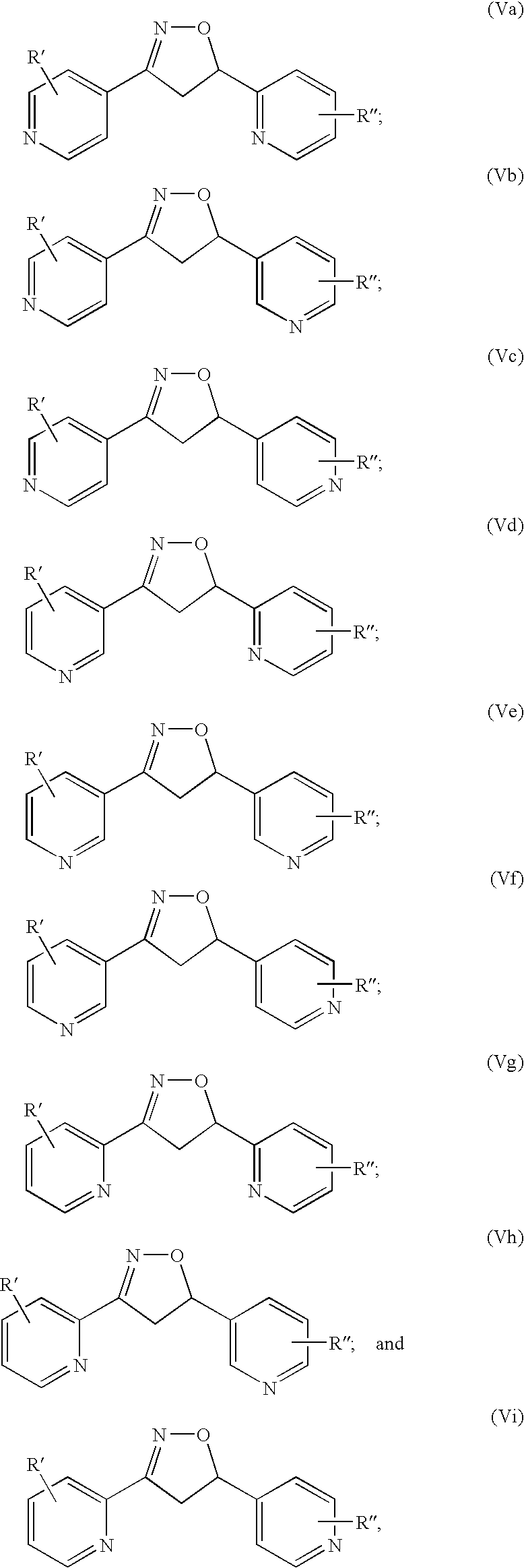
- the anti-inflammatory compounds of the present invention are represented by Formulae (V a) through (V i):
- R′ and R′′ are independently —H, halogen, —NO 2 , —CN, C1-C3 alkyl, C1-C3 haloalkyl, C1-C3 hydroxyalkyl, C1-C3 alkoxyalkyl, —N(R d ) 2 , —NR d C(O)R d , or —C(O)N(R d ) 2 .
- R d is as defined above. Specific examples of the compounds of the present invention are:
- the compounds are represented by Formula (VI d) or (VI f).
- the present invention is a pharmaceutical composition
- a pharmaceutically acceptable carrier or diluent any of the compounds represented by Formulae (I), (I a), (II), (III), (IV), (V a) through (V i) and (VI a) through (V i) or pharmaceutically acceptable salts thereof.
- the disclosed invention is a pharmaceutical composition comprising a compound of Formula (I a).
- the compound is represented by Formula (II a):
- variables B 1 through B 5 , D 1 through D 5 , A 1 , A 2 and R 1 are defined above for Formula (I).
- the present invention is a pharmaceutical composition
- a pharmaceutical composition comprising a pharmaceutically acceptable carrier or diluent and a compound represented by Formula (VII).
- the variables of Formula (VII) are as described above.
- the compounds of Formula (VII) are represented by Formulae (VIII) and (IX):
- a 1 , A 2 and R 1 are as defined above for Formnula (VII).
- B 1 through B 5 are independently N or CR c , provided that from one to three of B 1 through B 5 are N.
- Each R c is independently any suitable substituent as described below for a heteroaryl group.
- Ring D is optionally substituted with zero, one or more substituent R 2 .
- R 2 is independently any suitable substituent described below for an aryl group.
- the compounds of Formula (VII) are represented by Formulae (X) and (XI a) to (XI c):
- B 1 through B 3 where one of B 1 through B 3 is N, n is 0, 1 or 2 and m is 0, 1 or 2.
- R c is —H, halogen, —NO 2 , —CN, C1-C3 alkyl, C1-C3 haloalkyl, C1-C3 hydroxyalkyl, C1-C3 alkoxyalkyl, —N(R d ) 2 , —NR d C(O)R d , or —C(O)N(R d ) 2 and R 2 is —H, halogen, —NO 2 , —CN, C1-C3 alkyl, C1-C3 haloalkyl, C1-C3 hydroxyalkyl or C1-C3 alkoxyalkyl.
- R d is H or C1-C3 alkyl.
- the compounds of Formula (VII a), suitable for using in the methods of the present invention are represented by Formula (VIII a):
- the compounds suitable for use in the methods of the present invention are represented by Formulae (I), (I a), (II), (II a) (III), (IV), (V a) to (V i), (VI a) to (VI i), (VII), (VII a), (VIII), (IX), (X), (XI a) through (XI c), (XII a) and (XII b) as defined above.
- heteroaryl refers to aromatic groups containing one or more heteroatoms (O, S, or N).
- a heteroaryl group of the present invention is a monocyclic six-member group.
- the heteroaryl groups of this invention can also include ring systems substituted with one or more oxo moieties. Examples of heteroaryl groups include, but are not limited to, pyridinyl, pyridazinyl, pyrimidinyl, pyrazinyl, pyridazinyl, pyridazinyl and triazinyl.
- Suitable substituents on a heteroaryl group are those that do not substantially interfere with the pharmaceutical activity of the disclosed compound.
- a heteroaryl may have one or more substituents, which can be identical or different.
- substituents for a substitutable carbon atom in a heteroaryl group include —H, C1-C6 alkyl, halogen, C1-C6 haloalkyl, —R o , —OH, —OR o , —O(C1-C6 haloalkyl), —SH, —SR o , —NO 2 , —CN, —NH 2 , —NHCO 2 R o , —NHC(O)H, —NHC(O)R o , —NR o C(O)R o , —CO 2 H, —CO 2 R o , —C(O)H, —C(O)R o , —C(O)NHR o , —C(O)N(R o ) 2 , —OC(O)R o , —S(O) 2 R o , —SO 2 NH 2 , —S(S(
- aryl refers to a carbocyclic aromatic group. Examples of aryl groups include, but are not limited to phenyl and naphthyl.
- a substituted aryl group can have one or more substituents which can be the same or different.
- Suitable substituents for a substituted aryl group, including ring D, typically represented herein as “R 2 ”, are as defined above for a heteroaryls, provided that the substituents on ring D are other than amide and that ring D is not an alkylphenol.
- the term “amide” refers to a —C(O)NHR o group, where R o is defined above for heteroaryl groups.
- alkylphenol refers to a six-member monocyclic aryl substituted with one hydroxyl groups and one or more alkyls.
- Suitable substituents for an aryl include —H, halogen, C1-C6 haloalkyl, —R o , —OH, —OR o , —O(C1-C6 haloalkyl), —SH, —SR o , —NO 2 , —CN, —NHCO 2 R o , —NHC(O)H, —NHC(O)R o , —CO 2 H, —CO 2 R o , —C(O)H, —C(O)R o , —OC(O)R o , —S(O) 2 R o , —SO 2 NH 2 , —S(O)R o , —NHSO 2 R o , or a C1-C6 alkyl group substituted with R o , —OH, —OR o , —SH, —SR o , —NO 2 , —
- alkyl as used herein, unless otherwise indicated, includes straight, branched or cyclic saturated monovalent hydrocarbon radicals, typically C1-C10, preferably C1-C6.
- alkyl groups include, but are not limited to, methyl, ethyl, propyl, isopropyl, and t-butyl.
- haloalkyl includes an alkyl substituted with one or more F, Cl, Br, or I, wherein the alkyl is defined above.
- alkoxy means an “alkyl-O—” group, wherein alkyl, is defined above.
- a “pharmaceutically acceptable salt” of the disclosed compound is an ionic bond-containing product of reacting a compound of the invention with either an acid or a base, suitable for administering to a subject.
- an acid salt of a compound containing an amine or other basic group can be obtained by reacting the compound with a suitable organic or inorganic acid, such as hydrogen chloride, hydrogen bromide, acetic acid, perchloric acid and the like.
- salts include hydrochlorides, hydrobromides, sulfates, methanesulfonates, nitrates, maleates, acetates, citrates, fumarates, tartrates (e.g. (+)-tartrates, ( ⁇ )-tartrates or mixtures thereof including racemic mixtures), succinates, benzoates and salts with amino acids such as glutamic acid.
- Salts can also be formed with suitable organic bases when the compound comprises an acid functional group such as —COOH or —SO 3 H.
- bases suitable for the formation of a pharmaceutically acceptable base addition salts with compounds of the present invention include organic bases that are nontoxic and strong enough to react with the acid functional group.
- Such organic bases include amino acids such as arginine and lysine, mono-, di-, and triethanolamine, choline, mono-, di-, and trialkylamine, such as methylamine, dimethylamine, and trimethylamine, guanidine, N-benzylphenethylamine, N-methylglucosamine, N-methylpiperazine, morpholine, ethylendiamine, tris(hydroxymethyl)aminomethane and the like.
- amino acids such as arginine and lysine, mono-, di-, and triethanolamine
- choline such as methylamine, dimethylamine, and trimethylamine
- guanidine N-benzylphenethylamine, N-methylglucosamine, N-methylpiperazine, morpholine, ethylendiamine, tris(hydroxymethyl)aminomethane and the like.
- a “pharmaceutical composition” is a formulation comprising the disclosed compounds and a pharmaceutically acceptable diluent or carrier, in a form suitable for administration to a subject.
- the pharmaceutical composition can be in bulk or in unit dosage form.
- the unit dosage form can be in any of a variety of forms, including, for example, a capsule, an IV bag, a tablet, a single pump on an aerosol inhaler, or a vial.
- the quantity of active ingredient (i.e., a formulation of the disclosed compound or salts thereof) in a unit dose of composition is an effective amount and may be varied according to the particular treatment involved. It may be appreciated that it may be necessary to make routine variations to the dosage depending on the age and condition of the patient.
- the dosage will also depend on the route of administration.
- routes of administration including topical, oral, pulmonary, rectal, vaginal, parenternal, including transdermal, subcutaneous, intravenous, intramuscular, intraperitoneal and intranasal.
- the compounds described herein, and the pharmaceutically acceptable salts thereof can be used in pharmaceutical preparations in combination with a pharmaceutically acceptable carrier or diluent.
- suitable pharmaceutically acceptable carriers include inert solid fillers or diluents and sterile aqueous or organic solutions.
- the compounds will be present in such pharmaceutical compositions in amounts sufficient to provide the desired dosage amount in the range described herein. Techniques for formulation and administration of the compounds of the instant invention can be found in Remington: the Science and Practice of Pharmacy , 19 th edition, Mack Publishing Co., Easton, Pa. (1995).
- a “subject” includes mammals, e.g., humans, companion animals (e.g., dogs, cats, birds and the like), farm animals (e.g., cows, sheep, pigs, horses, fowl and the like) and laboratory animals (e.g., rats, mice, guinea pigs and the like).
- the subject is human.
- a “therapeutically effective amount” of a compound of the disclosed invention is the quantity which, when administered to a subject in need of treatment, improves the prognosis of the subject, e.g., delays the onset of and/or reduces the severity of one or more of the subject's symptoms associated with a fungal infection.
- the amount of the disclosed compound to be administered to a subject will depend on the particular disease, the mode of administration, and the characteristics of the subject, such as general health, other diseases, age, sex, genotype, body weight and tolerance to drugs. The skilled artisan will be able to determine appropriate dosages depending on these and other factors. Effective amounts of the disclosed compounds typically range between about 0.1 mg/kg body weight per day and about 1000 mg/kg body weight per day, and preferably between 1 mg/kg body weight per day and 100 mg/kg body weight per day.
- the present invention is directed to treating disorders mediated by pro-inflammatory cytokines such as, for example, TNF- ⁇ or HMGB-1.
- disorders that can be treated using compounds, pharmaceutical compositions and methods of the present invention include appendicitis, peptic, gastric or duodenal ulcers, peritonitis, pancreatitis, ulcerative, pseudomembranous, acute or ischemic colitis, diverticulitis, epiglottitis, achalasia, cholangitis, cholecystitis, hepatitis, Crohn's disease, enteritis, Whipple's disease, asthma, allergy, anaphylactic shock, immune complex disease, organ ischemia, reperfusion injury, organ necrosis, hay fever, sepsis, septicemia, endotoxic shock, cachexia, hyperpyrexia, eosinophilic granuloma, granulomatosis, sarcoidosis, septic abortion, epididymitis,
- the condition is appendicitis, peptic, gastric or duodenal ulcers, peritonitis, pancreatitis, ulcerative, pseudomembranous, acute or ischemic colitis, hepatitis, Crohn's disease, asthma, allergy, anaphylactic shock, organ ischemia, reperfusion injury, organ necrosis, hay fever, sepsis, septicemia, endotoxic shock, cachexia, septic abortion, disseminated bacteremia, bums, Alzheimer's disease, coeliac disease, congestive heart failure, adult respiratory distress syndrome, cerebral infarction, cerebral embolism, spinal cord injury, paralysis, allograft rejection and graft-versus-host disease.
- the disorder is peritonitis, pancreatitis, ulcerative colitis, Crohn's disease, asthma, organ ischemia, reperfusion ischemia, sepsis, cachexia, bums, myocardial ischemia, adult respiratory distress syndrome, multiple sclerosis, rheumatoid arthritis, systemic lupus erythematous, chronic obstructive pulmonary disease, psoriasis, Behcet's syndrome, allograft rejection or graft-versus-host disease. Even more preferably, the disorder is sepsis.
- the disclosed compounds can also be co-administered with one or more additional agents such as antibiotics, other anti-inflammatories (e.g. ibuprofen, prednisone (corticosteroid) or pentoxifylline), anti-fungals, (e.g. Amphotericin B, Fluconazole, Ketoconazol, and Itraconazol) steroids, decongestants, bronchodialators, and the like.
- anti-TNF agents e.g. infliximab, etanercept, adalimumab, CDP870, CDP571, Lenercept and Thalidomide.
- the formulation may also contain preserving agents, solubilizing agents, chemical buffers, surfactants, emulsifiers, colorants, odorants and sweeteners.
- the compounds of the present invention may be co-administered with one or more additional agents separately or in the same formulation.
- the excipient included with the compounds of the pharmaceutical compositions of the invention is chosen based on the expected route of administration of the composition in therapeutic applications.
- the route of administration of the composition depends on the condition to be treated. For example, intravenous injection may be preferred for treatment of a systemic disorder such as endotoxic shock, and oral administration may be preferred to treat a gastrointestinal disorder such as a gastric ulcer.
- the route of administration and the dosage of the composition to be administered can be determined by the skilled artisan without undue experimentation in conjunction with standard dose-response studies. Relevant circumstances to be considered in making those determinations include the condition or conditions to be treated, the choice of composition to be administered, the age, weight, and response of the individual patient, and the severity of the patient's symptoms.
- the antibody composition can be administered orally, parenterally, intranasally, vaginally, rectally, lingually, sublingually, bucally, intrabuccally and transdermally to the patient.
- compositions designed for oral, lingual, sublingual, buccal and intrabuccal administration can be made without undue experimentation by means well known in the art, for example, with an inert diluent or with an edible carrier.
- the compositions may be enclosed in gelatin capsules or compressed into tablets.
- the pharmaceutical compositions of the present invention may be incorporated with excipients and used in the form of tablets, troches, capsules, elixirs, suspensions, syrups, wafers, chewing gums and the like.
- Tablets, pills, capsules, troches and the like may also contain binders, recipients, disintegrating agent, lubricants, sweetening agents, and flavoring agents.
- binders include microcrystalline cellulose, gum tragacanth or gelatin.
- excipients include starch or lactose.
- disintegrating agents include alginic acid, corn starch and the like.
- lubricants include magnesium stearate or potassium stearate.
- An example of a glidant is colloidal silicon dioxide.
- sweetening agents include sucrose, saccharin and the like.
- flavoring agents include peppermint, methyl salicylate, orange flavoring and the like. Materials used in preparing these various compositions should be pharmaceutically pure and non-toxic in the amounts used.
- tablets may be coated with shellac, sugar or both.
- a syrup or elixir may contain, in addition to the active ingredient, sucrose as a sweetening agent, methyl and propylparabens as preservatives, a dye and a flavoring such as cherry or orange flavor, and the like.
- a pharmaceutical composition may be presented as pessaries, tampons, creams, gels, pastes, foams or spray.
- nasally administering or nasal administration includes administering the composition to the mucous membranes of the nasal passage or nasal cavity of the patient.
- pharmaceutical compositions for nasal administration of a composition include therapeutically effective amounts of the agonist prepared by well-known methods to be administered, for example, as a nasal spray, nasal drop, suspension, gel, ointment, cream or powder. Administration of the composition may also take place using a nasal tampon or nasal sponge.
- suitable formulations may include biocompatible oil, wax, gel, powder, polymer, or other liquid or solid carriers.
- Such formulations may be administered by applying directly to affected tissues, for example, a liquid formulation to treat infection of conjunctival tissue can be administered dropwise to the subject's eye, or a cream formulation can be administer to a wound site.
- compositions of the present invention can be administered parenterally such as, for example, by intravenous, intramuscular, intrathecal or subcutaneous injection.
- Parenteral administration can be accomplished by incorporating the antibody compositions of the present invention into a solution or suspension.
- solutions or suspensions may also include sterile diluents such as water for injection, saline solution, fixed oils, polyethylene glycols, glycerine, propylene glycol or other synthetic solvents.
- Parenteral formulations may also include antibacterial agents such as, for example, benzyl alcohol or methyl parabens, antioxidants such as, for example, ascorbic acid or sodium bisulfite and chelating agents such as EDTA.
- Buffers such as acetates, citrates or phosphates and agents for the adjustment of tonicity such as sodium chloride or dextrose may also be added.
- the parenteral preparation can be enclosed in ampules, disposable syringes or multiple dose vials made of glass or plastic.
- Rectal administration includes administering the pharmaceutical compositions into the rectum or large intestine. This can be accomplished using suppositories or enemas.
- Suppository formulations can easily be made by methods known in the art. For example, suppository formulations can be prepared by heating glycerin to about 120° C., dissolving the pharmaceutical composition in the glycerin, mixing the heated glycerin after which purified water may be added, and pouring the hot mixture into a suppository mold.
- Transdermal administration includes percutaneous absorption of the composition through the skin.
- Transdermal formulations include patches, ointments, creams, gels, salves and the like.
- pulmonary will also mean to include a tissue or cavity that is contingent to the respiratory tract, in particular, the sinuses.
- an aerosol formulation containing the active agent a manual pump spray, nebulizer or pressurized metered-dose inhaler as well as dry powder formulations are contemplated.
- Suitable formulations of this type can also include other agents, such as antistatic agents, to maintain the disclosed compounds as effective aerosols.
- a drug delivery device for delivering aerosols comprises a suitable aerosol canister with a metering valve containing a pharmaceutical aerosol formulation as described and an actuator housing adapted to hold the canister and allow for drug delivery.
- the canister in the drug delivery device has a head space representing greater than about 15% of the total volume of the canister.
- the polymer intended for pulmonary administration is dissolved, suspended or emulsified in a mixture of a solvent, surfactant and propellant. The mixture is maintained under pressure in a canister that has been sealed with a metering valve.
- the compounds of the present invention can be synthesized according to the following synthetic scheme:
- Ar a and Ar b are each independently 6-member substituted or unsubstituted heteroaryl or aryl group as defined above (including variables Ar 1 , Ar 2 , Ar and ring D). This procedure is based on the method of isoxazoline synthesis found in Wityak et al., J. Med. Chem. (1997) 40:50-60, incorporated herein by reference.
- compounds (VI f), (VI d) and (XII a) can be prepared according to the schemes (2), (3) and (4), respectively.
- the aqueous layer was again extracted with ether, and the combined ether layers were dried with MgSO4 and concentrated on the roto-evaporator.
- the crude product was loaded onto a silica column and eluted with 0, 10, 20, and 30% EtOAc/heptane.
- the isoxazoline came off the column in the 20-30% regime as a ⁇ 95% spectroscopically (1H NMR) pure solid (1.32 g, 23.9%).
- the compound was crystallized from EtOAc/heptane.
- the aqueous layer was again extracted with ether, and the combined ether layers were dried with MgSO4 and concentrated on the roto-evaporator.
- the crude product was loaded onto a silica column and eluted with 0, 10, 20, and 30% EtOAc/heptane.
- the isoxazoline came off the column in the 20-30% regime as a ⁇ 95% spectroscopically (1H NMR) pure solid 1.53 g, 27.7%).
- the compound was crystallized from EtOAc/heptane.
- the aqueous layer was again extracted with ether, and the combined ether layers were dried with MgSO4 and concentrated on the roto-evaporator.
- the crude product was loaded onto a silica column and eluted with 0, 10, 20, and 30% EtOAc/heptane.
- the isoxazoline came off the column in the 10-20% regime as a >95% spectroscopically (1H NMR) pure solid (2.1 g, 38%).
- the compound was crystallized from EtOAc/heptane.
- Compound of Formula (VIf) Suppresses TNF Release from LPS-Stimulated RAW Cells in a Dose-Dependent Manner
- FIG. 1 The results are shown in FIG. 1 , which clearly shows that compound (VI f) inhibited TNF ⁇ production in a dose-dependent manner.
- the efficacy of compound (VI f) is comparable to or better than that of the nicotine control.
- Compound of Formula (VIf) Suppresses HMGB-1 Release from LPS-Stimulated RAW Cells in a Dose-Dependent Manner
- Cecal Ligation and Puncture was performed as described in Fink and Heard, J. of Surg. Res. 49:186-196 (1990), Wichman el al., Crit. Care Med. 26:2078-2086 (1998) and Remick et al., Shock 4:89-95 (1995). Briefly, Balb/c mice were anesthetized with 75 mg/kg Ketamine (Fort Dodge, Fort Dodge, Iowa) and 20 mg/kg of xylazine (Bohringer Ingelheim, St. Joseph, Mo.) intramuscularly. A midline incision was performed, and the cecum was isolated. A 6-0 prolene suture ligature was placed at a level 5.0 mm from the cecal tip away from the ileocecal valve.
- the ligated cecal stump was then punctured once with a 22-gauge needle, without direct extrusion of stool.
- the cecum was then placed back into its normal intra-abdominal position.
- the abdomen was then closed with a running suture of 6-0 prolene in two layers, peritoneum and fascia separately to prevent leakage of fluid.
- All animals were resuscitated with a normal saline solution administered sub-cutaneously at 20 ml/kg of body weight.
- Each mouse received a subcutaneous injection of imipenem (0.5 mg/mouse) (Primaxin, Merck & Co., Inc., West Point, Pa.) 30 minutes after the surgery. Animals were then allowed to recuperate.
- Mice were administered 2 mg/kg compound (VI f) intraperitoneally twice daily for 3 days beginning 24 hours after surgery. Mortality was recorded for up to 2 weeks after the procedure to ensure no late mortalities had occurred.
- FIG. 4 shows the number of surviving animals following treatment either by compound (VI f) or an “empty” carrier solution.
- VI f the number of surviving animals following treatment either by compound (VI f) or an “empty” carrier solution.
- FIG. 4 shows the number of surviving animals following treatment either by compound (VI f) or an “empty” carrier solution.
- Human macrophage cultures were prepared as follows. Buffy coats were collected from the blood of healthy individual donors to the Long Island Blood Bank Services (Melville, N.Y.). Primary blood mononuclear cells were isolated by density-gradient centrifugation through Ficoll/Hypaque (Pharmacia, N.J.), suspended (8 ⁇ 10 6 cells/ml) in RPMI 1640 medium supplemented with 10% heat inactivated human serum (Gemini Bio-Products, Inc., Calabasas, Calif.), and seeded in flasks (PRIMARIA; Beckton and Dickinson Labware, Franklin Lakes, N.J.).
- adherent cells were washed extensively, treated briefly with 10 mM EDTA, detached, resuspended (10 6 cells/ml) in RPMI medium (10% human serum), supplemented with human macrophage colony stimulating factor (MCSF; Sigma Chemical Co., St. Louis, Mo.; 2 ng/ml), and seeded onto 24-well tissue culture plates (PRIMARIA; Falcon) (10.sup.6 cells/well). Cells were allowed to differentiate for 7 days in the presence of MCSF.
- RPMI medium 10% human serum
- MCSF human macrophage colony stimulating factor
- Murine RAW 264.7 macrophage-like cells were subjected to the protocol as described in Example 1. The cells were treated with ⁇ -bungarotoxin at the indicated concentration before treatment with compound (VI f).
- mice One day later, mice (4 per group) were injected either with vehicle (saline) or CAP (i.p., at the indicated doses) 15 min prior to challenge with LPS (150 ⁇ g, i.p.) To generate a localized vasculitic reaction. Five hours later, mice were sacrificed by CO 2 asphyxiation, and the ears were excised and cut in half longitudinally. Ears were flash frozen in liquid nitrogen and stored at ⁇ 80° C. Each experiment was repeated twice.
- vehicle saline
- CAP i.p., at the indicated doses
- LPS 150 ⁇ g, i.p.
- Ear sections (5 ⁇ ) from the Shwartzman Reaction were stained using VCAM-1 and E-selectin antibodies, according to the manufacturer's recommendations (BD Biosciences), followed by anti-mouse gG-HRP, and developed with DAB substrate. After immunostaining, slides were counterstained with H&E, dehydrated, and mounted with permount. For enumeration of positive staining, three fields per section (three sections per sample) were assessed at 200 ⁇ magnification and scored as the average number (+SD) of VCAM-1 or E-selectin positive capillaries/vessels. Representative slides were photographed at 100 ⁇ .
- mice were anesthetized (ketamine/xylazine) on day 0 and 6 ml of sterile air was injected s.c. to form a cavity on the dorsum. Three days later, 3 ml of air was injected into the cavity. On day 6, animals received either vehicle (saline) or Compound VIf diluted in saline (i.p., at the indicated concentrations) and then 15 minutes later, 1 ml-1% carrageenan was injected into the pre-formed air pouch.
- TNF, PGE2, MCP-1 (monocyte chemoattractant protein-1), MIP-2 (macrophage inflammatory protein-2), MIP-1 ⁇ (macrophage inflammatory protein- ⁇ ) and MIP-1 (macropphage inflammatory protein-1 ⁇ ) levels in the pouch fluids were determiend by ELISA.
- the collected cells were analzyed by flow cytometry to determine cell number by calibrated counting using a previously described method (Bleul, et al., J Exp Med 184:1101 (1996)). Each experiment as repeated at least twice. Macrophage inflammatory protein-1 ⁇ and -1 ⁇ (MIP-1 ⁇ and MIP-1 ⁇ ) were analyzed by ELISA as previously described (Sherry, et al., J. Inflamm. 45:85 (1995)).
Landscapes
- Health & Medical Sciences (AREA)
- Organic Chemistry (AREA)
- Chemical & Material Sciences (AREA)
- Life Sciences & Earth Sciences (AREA)
- General Chemical & Material Sciences (AREA)
- General Health & Medical Sciences (AREA)
- Veterinary Medicine (AREA)
- Public Health (AREA)
- Animal Behavior & Ethology (AREA)
- Chemical Kinetics & Catalysis (AREA)
- Pharmacology & Pharmacy (AREA)
- Medicinal Chemistry (AREA)
- Nuclear Medicine, Radiotherapy & Molecular Imaging (AREA)
- Bioinformatics & Cheminformatics (AREA)
- Engineering & Computer Science (AREA)
- Pulmonology (AREA)
- Communicable Diseases (AREA)
- Biomedical Technology (AREA)
- Neurology (AREA)
- Neurosurgery (AREA)
- Virology (AREA)
- Oncology (AREA)
- Psychiatry (AREA)
- Rheumatology (AREA)
- AIDS & HIV (AREA)
- Tropical Medicine & Parasitology (AREA)
- Molecular Biology (AREA)
- Pain & Pain Management (AREA)
- Hospice & Palliative Care (AREA)
- Pharmaceuticals Containing Other Organic And Inorganic Compounds (AREA)
Description


Ar1, Ar2, A1, A2, R1 and its substituents are defined above for Formula (I).


Ar, A1, A2, R1 and ring D and its substituents are as defined above for Formula (VII).


R′ and R″ are independently —H, halogen, —NO2, —CN, C1-C3 alkyl, C1-C3 haloalkyl, C1-C3 hydroxyalkyl, C1-C3 alkoxyalkyl, —N(Rd)2, —NRdC(O)Rd, or —C(O)N(Rd)2. Rd is as defined above. Specific examples of the compounds of the present invention are:


where variables B1 through B5, D1 through D5, A1, A2 and R1 are defined above for Formula (I).


where one of B1 through B3 is N, n is 0, 1 or 2 and m is 0, 1 or 2.


where B1 through B5 and the substituents thereof are defined above for Formula (VIII).

Ara and Arb are each independently 6-member substituted or unsubstituted heteroaryl or aryl group as defined above (including variables Ar1, Ar2, Ar and ring D). This procedure is based on the method of isoxazoline synthesis found in Wityak et al., J. Med. Chem. (1997) 40:50-60, incorporated herein by reference.


Claims (20)




Priority Applications (2)
| Application Number | Priority Date | Filing Date | Title |
|---|---|---|---|
| US10/574,612 US7807696B2 (en) | 2003-10-07 | 2004-10-07 | Isoxazole and isothiazole compounds useful in the treatment of inflammation |
| US12/891,447 US8759376B2 (en) | 2003-10-07 | 2010-09-27 | Isoxazole and isothiazole compounds useful in the treatment of inflammation |
Applications Claiming Priority (4)
| Application Number | Priority Date | Filing Date | Title |
|---|---|---|---|
| US56071903P | 2003-10-07 | 2003-10-07 | |
| US51602703P | 2003-10-31 | 2003-10-31 | |
| US10/574,612 US7807696B2 (en) | 2003-10-07 | 2004-10-07 | Isoxazole and isothiazole compounds useful in the treatment of inflammation |
| PCT/US2004/032986 WO2005034952A2 (en) | 2003-10-07 | 2004-10-07 | Isoxazole and isothiazole compounds useful in the treatment of inflammation |
Related Child Applications (1)
| Application Number | Title | Priority Date | Filing Date |
|---|---|---|---|
| US12/891,447 Division US8759376B2 (en) | 2003-10-07 | 2010-09-27 | Isoxazole and isothiazole compounds useful in the treatment of inflammation |
Publications (2)
| Publication Number | Publication Date |
|---|---|
| US20070021465A1 US20070021465A1 (en) | 2007-01-25 |
| US7807696B2 true US7807696B2 (en) | 2010-10-05 |
Family
ID=34437346
Family Applications (2)
| Application Number | Title | Priority Date | Filing Date |
|---|---|---|---|
| US10/574,612 Expired - Fee Related US7807696B2 (en) | 2003-10-07 | 2004-10-07 | Isoxazole and isothiazole compounds useful in the treatment of inflammation |
| US12/891,447 Expired - Fee Related US8759376B2 (en) | 2003-10-07 | 2010-09-27 | Isoxazole and isothiazole compounds useful in the treatment of inflammation |
Family Applications After (1)
| Application Number | Title | Priority Date | Filing Date |
|---|---|---|---|
| US12/891,447 Expired - Fee Related US8759376B2 (en) | 2003-10-07 | 2010-09-27 | Isoxazole and isothiazole compounds useful in the treatment of inflammation |
Country Status (2)
| Country | Link |
|---|---|
| US (2) | US7807696B2 (en) |
| WO (1) | WO2005034952A2 (en) |
Cited By (4)
| Publication number | Priority date | Publication date | Assignee | Title |
|---|---|---|---|---|
| US20100179176A1 (en) * | 2006-12-13 | 2010-07-15 | N.V. Organon | V3 antagonists for the treatment or prevention of chronic pain |
| US8865641B2 (en) | 2011-06-16 | 2014-10-21 | The Feinstein Institute For Medical Research | Methods of treatment of fatty liver disease by pharmacological activation of cholinergic pathways |
| US9091698B2 (en) | 2008-04-03 | 2015-07-28 | Becton, Dickinson And Company | Advanced detection of sepsis |
| US10443099B2 (en) | 2005-04-15 | 2019-10-15 | Becton, Dickinson And Company | Diagnosis of sepsis |
Families Citing this family (62)
| Publication number | Priority date | Publication date | Assignee | Title |
|---|---|---|---|---|
| US6303321B1 (en) | 1999-02-11 | 2001-10-16 | North Shore-Long Island Jewish Research Institute | Methods for diagnosing sepsis |
| US7696169B2 (en) | 2003-06-06 | 2010-04-13 | The Feinstein Institute For Medical Research | Inhibitors of the interaction between HMGB polypeptides and toll-like receptor 2 as anti-inflammatory agents |
| JP4792392B2 (en) | 2003-09-11 | 2011-10-12 | コーナーストーン セラピューティクス インコーポレイテッド | Monoclonal antibody against HMGB1 |
| US8580842B2 (en) * | 2003-09-30 | 2013-11-12 | Abbott Gmbh & Co. Kg | Heteroaryl-substituted 1,3-dihydroindol-2-one derivatives and medicaments containing them |
| US7919496B2 (en) | 2004-09-20 | 2011-04-05 | Xenon Pharmaceuticals Inc. | Heterocyclic derivatives for the treatment of diseases mediated by stearoyl-CoA desaturase enzymes |
| WO2006034441A1 (en) | 2004-09-20 | 2006-03-30 | Xenon Pharmaceuticals Inc. | Heterocyclic derivatives and their use as stearoyl-coa desaturase inhibitors |
| CA2580844A1 (en) | 2004-09-20 | 2006-03-30 | Xenon Pharmaceuticals Inc. | Heterocyclic derivatives and their use as mediators of stearoyl-coa desaturase |
| US7767677B2 (en) | 2004-09-20 | 2010-08-03 | Xenon Pharmaceuticals Inc. | Heterocyclic derivatives and their use as stearoyl-CoA desaturase inhibitors |
| CN101084211A (en) | 2004-09-20 | 2007-12-05 | 泽农医药公司 | Heterocyclic derivatives and their use as therapeutic agents |
| AR051094A1 (en) | 2004-09-20 | 2006-12-20 | Xenon Pharmaceuticals Inc | HETEROCICLIC DERIVATIVES AND THEIR USE AS INHIBITORS OF ESTEAROIL-COA DESATURASA |
| JP4958785B2 (en) | 2004-09-20 | 2012-06-20 | ゼノン・ファーマシューティカルズ・インコーポレイテッド | Heterocyclic derivatives and their use as stearoyl-CoA desaturase inhibitors |
| AU2005333602B2 (en) | 2004-10-22 | 2012-04-12 | Medimmune, Llc | High affinity antibodies against HMGB1 and methods of use thereof |
| WO2007084253A2 (en) * | 2005-11-28 | 2007-07-26 | Medimmune, Inc. | High affinity antibodies against hmgb1 and methods of use thereof |
| US8129130B2 (en) | 2004-10-22 | 2012-03-06 | The Feinstein Institute For Medical Research | High affinity antibodies against HMGB1 and methods of use thereof |
| EP2540296A1 (en) | 2005-06-03 | 2013-01-02 | Xenon Pharmaceuticals Inc. | Arminothiazole derivatives as human stearoyl-coa desaturase inhibitors |
| KR101281298B1 (en) * | 2005-09-28 | 2013-07-08 | 백톤 디킨슨 앤드 컴퍼니 | Detection of lysophosphatidylcholine for prognosis or diagnosis of a systemic inflammatory condition |
| TW200735866A (en) * | 2005-11-18 | 2007-10-01 | Synta Pharmaceuticals Corp | Compounds for the treatment of proliferative disorders |
| US20080167286A1 (en) | 2006-12-12 | 2008-07-10 | Abbott Laboratories | Pharmaceutical compositions and their methods of use |
| US8486979B2 (en) * | 2006-12-12 | 2013-07-16 | Abbvie Inc. | 1,2,4 oxadiazole compounds and methods of use thereof |
| UY30846A1 (en) | 2006-12-30 | 2008-07-31 | Abbott Gmbh & Amp | OXINDOL DERIVATIVES REPLACED, MEDICINES THAT UNDERSTAND AND USE THEMSELVES |
| US20080255203A1 (en) * | 2007-04-12 | 2008-10-16 | Abbott Laboratories | Heterocyclic compounds and their methods of use |
| US20080262057A1 (en) * | 2007-04-20 | 2008-10-23 | Dow Agrosciences Llc | Diarylisoxazolines |
| ES2455197T3 (en) | 2007-12-07 | 2014-04-14 | Abbvie Deutschland Gmbh & Co Kg | 5,6-disubstituted oxindole derivatives and their use for the preparation of a medicine for the treatment of vasopressin-dependent diseases |
| BRPI0820668A2 (en) * | 2007-12-07 | 2017-08-22 | Abbott Gmbh & Co Kg | 5-HALOGEN SUBSTITUTED OXINDOL DERIVATIVES AND THEIR USE TO TREAT VASOPRESSIN DEPENDENT DISEASES |
| WO2010009775A1 (en) * | 2007-12-07 | 2010-01-28 | Abbott Gmbh & Co. Kg | Carbamate-substituted oxindole derivatives and use thereof for the treatment of vasopressin-dependent diseases |
| CA2707667C (en) * | 2007-12-07 | 2016-02-23 | Abbott Gmbh & Co. Kg | Amidomethyl-substituted oxindole derivatives and the use thereof for the treatment of vasopressin-dependent illnesses |
| WO2010054398A1 (en) | 2008-11-10 | 2010-05-14 | Vertex Pharmaceuticals Incorporated | Compounds useful as inhibitors of atr kinase |
| CA3013000C (en) | 2008-12-19 | 2022-12-13 | Vertex Pharmaceuticals Incorporated | Pyrazine derivatives useful as inhibitors of atr kinase |
| AR076687A1 (en) * | 2009-05-18 | 2011-06-29 | Infinity Pharmaceuticals Inc | ISOXAZOLINS AS INHIBITORS OF THE AMIDAHIDROLASA OF FATTY ACIDS AND PHARMACEUTICAL COM-POSITIONS CONTAINING THEM |
| US9040568B2 (en) * | 2009-05-29 | 2015-05-26 | Abbvie Inc. | Pharmaceutical compositions for the treatment of pain |
| NZ603477A (en) | 2010-05-12 | 2014-09-26 | Vertex Pharma | Compounds useful as inhibitors of atr kinase |
| EP2569286B1 (en) | 2010-05-12 | 2014-08-20 | Vertex Pharmaceuticals Inc. | Compounds useful as inhibitors of atr kinase |
| US9334244B2 (en) | 2010-05-12 | 2016-05-10 | Vertex Pharmaceuticals Incorporated | Compounds useful as inhibitors of ATR kinase |
| EP2569289A1 (en) | 2010-05-12 | 2013-03-20 | Vertex Pharmaceuticals Incorporated | Pyrazines useful as inhibitors of atr kinase |
| NZ603478A (en) | 2010-05-12 | 2014-09-26 | Vertex Pharma | 2 -aminopyridine derivatives useful as inhibitors of atr kinase |
| JP2013526538A (en) | 2010-05-12 | 2013-06-24 | バーテックス ファーマシューティカルズ インコーポレイテッド | Compounds useful as ATR kinase inhibitors |
| WO2011163527A1 (en) | 2010-06-23 | 2011-12-29 | Vertex Pharmaceuticals Incorporated | Pyrrolo- pyrazine derivatives useful as inhibitors of atr kinase |
| KR20140027974A (en) | 2011-04-05 | 2014-03-07 | 버텍스 파마슈티칼스 인코포레이티드 | Aminopyrazine compounds useful as inhibitors of tra kinase |
| WO2012178123A1 (en) | 2011-06-22 | 2012-12-27 | Vertex Pharmaceuticals Incorporated | Compounds useful as inhibitors of atr kinase |
| US9309250B2 (en) | 2011-06-22 | 2016-04-12 | Vertex Pharmaceuticals Incorporated | Substituted pyrrolo[2,3-b]pyrazines as ATR kinase inhibitors |
| WO2012178124A1 (en) | 2011-06-22 | 2012-12-27 | Vertex Pharmaceuticals Incorporated | Compounds useful as inhibitors of atr kinase |
| RS61048B1 (en) | 2011-09-12 | 2020-12-31 | Boehringer Ingelheim Animal Health Usa Inc | Parasiticidal compositions comprising an isoxazoline active agent, method and uses thereof |
| CN103957917A (en) | 2011-09-30 | 2014-07-30 | 沃泰克斯药物股份有限公司 | Treatment of pancreatic cancer and non-small cell lung cancer with ATR inhibitors |
| US8853217B2 (en) | 2011-09-30 | 2014-10-07 | Vertex Pharmaceuticals Incorporated | Compounds useful as inhibitors of ATR kinase |
| EP3878851A1 (en) | 2011-09-30 | 2021-09-15 | Vertex Pharmaceuticals Incorporated | Process for making compounds useful as inhibitors of atr kinase |
| KR20140084112A (en) | 2011-09-30 | 2014-07-04 | 버텍스 파마슈티칼스 인코포레이티드 | Compounds useful as inhibitors of atr kinase |
| EP2751088B1 (en) | 2011-09-30 | 2016-04-13 | Vertex Pharmaceuticals Incorporated | Compounds useful as inhibitors of atr kinase |
| WO2013071094A1 (en) | 2011-11-09 | 2013-05-16 | Vertex Pharmaceuticals Incorporated | Compounds useful as inhibitors of atr kinase |
| WO2013071088A1 (en) | 2011-11-09 | 2013-05-16 | Vertex Pharmaceuticals Incorporated | Compounds useful as inhibitors of atr kinase |
| EP2776419B1 (en) | 2011-11-09 | 2016-05-11 | Vertex Pharmaceuticals Incorporated | Pyrazine compounds useful as inhibitors of atr kinase |
| EP2776420A1 (en) | 2011-11-09 | 2014-09-17 | Vertex Pharmaceuticals Incorporated | Pyrazine compounds useful as inhibitors of atr kinase |
| WO2013071090A1 (en) | 2011-11-09 | 2013-05-16 | Vertex Pharmaceuticals Incorporated | Compounds useful as inhibitors of atr kinase |
| HK1205028A1 (en) | 2012-04-05 | 2015-12-11 | 沃泰克斯药物股份有限公司 | Compounds useful as inhibitors of atr kinase and combination therapies thereof |
| EP2904406B1 (en) | 2012-10-04 | 2018-03-21 | Vertex Pharmaceuticals Incorporated | Method for measuring atr inhibition mediated increases in dna damage |
| WO2014062604A1 (en) | 2012-10-16 | 2014-04-24 | Vertex Pharmaceuticals Incorporated | Compounds useful as inhibitors of atr kinase |
| HRP20180859T1 (en) | 2012-12-07 | 2018-07-13 | Vertex Pharmaceuticals Incorporated | 2-Amino-6-fluoro-N- (5-fluoro-4- (4- (4- (3-oxetanyl-yl) piperazine-1-carbonyl) piperidin-1-yl) pyridin-3-yl) pyrazolo [ 1,5ALFA] PIRIMIDINE-3-CARBOXAMIDE AS ATR KINASE INHIBITOR |
| EP2970286A1 (en) | 2013-03-15 | 2016-01-20 | Vertex Pharmaceuticals Inc. | Fused pyrazolopyrimidine derivatives useful as inhibitors of atr kinase |
| HRP20192183T1 (en) | 2013-12-06 | 2020-02-21 | Vertex Pharmaceuticals Inc. | COMPOUND 2-AMINO-6-FLUORO-N- [5-FLUORO-PYRIDIN-3-YL] PYRAZOLO [1,5-A] PYRIMIDINE-3-CARBOXAMIDE USEFUL AS AN ATR KINASE INHIBITOR, ITS PREPARATION, VARIOUS DIFFERENT MARKED DERIVATIVES |
| EP3152212B9 (en) | 2014-06-05 | 2020-05-27 | Vertex Pharmaceuticals Inc. | Radiolabelled derivatives of a 2-amino-6-fluoro-n-[5-fluoro-pyridin-3-yl]- pyrazolo[1,5-a]pyrimidin-3-carboxamide compound useful as atr kinase inhibitor, the preparation of said compound and different solid forms thereof |
| EP3157566B1 (en) | 2014-06-17 | 2019-05-01 | Vertex Pharmaceuticals Incorporated | Method for treating cancer using a combination of chk1 and atr inhibitors |
| HK1258570A1 (en) | 2015-09-30 | 2019-11-15 | Vertex Pharmaceuticals Inc. | Method for treating cancer using a combination of dna damaging agents and atr inhibitors |
| CN109561682B (en) * | 2016-06-27 | 2021-05-11 | 牧牛研究所株式会社 | Pyridine compounds containing isoxazoline rings and their use as herbicides |
Citations (2)
| Publication number | Priority date | Publication date | Assignee | Title |
|---|---|---|---|---|
| JPS5095273A (en) | 1973-12-24 | 1975-07-29 | ||
| US5814627A (en) | 1994-03-10 | 1998-09-29 | Hoechst Aktienegesellschaft | 3, 5-disubstituted and 3, 4, 5-trisubstituted 2-isoxazolines and isoxazoles, process for their preparation and their use as pharmaceuticals |
Family Cites Families (1)
| Publication number | Priority date | Publication date | Assignee | Title |
|---|---|---|---|---|
| DE69914931T2 (en) * | 1998-10-09 | 2004-12-16 | Janssen Pharmaceutica N.V. | 4,5-DEHYDROISOXAZOLE DERIVATIVES AND THEIR PHARMACEUTICAL USE |
-
2004
- 2004-10-07 US US10/574,612 patent/US7807696B2/en not_active Expired - Fee Related
- 2004-10-07 WO PCT/US2004/032986 patent/WO2005034952A2/en not_active Ceased
-
2010
- 2010-09-27 US US12/891,447 patent/US8759376B2/en not_active Expired - Fee Related
Patent Citations (2)
| Publication number | Priority date | Publication date | Assignee | Title |
|---|---|---|---|---|
| JPS5095273A (en) | 1973-12-24 | 1975-07-29 | ||
| US5814627A (en) | 1994-03-10 | 1998-09-29 | Hoechst Aktienegesellschaft | 3, 5-disubstituted and 3, 4, 5-trisubstituted 2-isoxazolines and isoxazoles, process for their preparation and their use as pharmaceuticals |
Non-Patent Citations (1)
| Title |
|---|
| Ferles et al, Collection of Czechoslovak Chemical Communications (1990), 55(5), pp. 1228-1233. * |
Cited By (8)
| Publication number | Priority date | Publication date | Assignee | Title |
|---|---|---|---|---|
| US10443099B2 (en) | 2005-04-15 | 2019-10-15 | Becton, Dickinson And Company | Diagnosis of sepsis |
| US11578367B2 (en) | 2005-04-15 | 2023-02-14 | Becton, Dickinson And Company | Diagnosis of sepsis |
| US20100179176A1 (en) * | 2006-12-13 | 2010-07-15 | N.V. Organon | V3 antagonists for the treatment or prevention of chronic pain |
| US9091698B2 (en) | 2008-04-03 | 2015-07-28 | Becton, Dickinson And Company | Advanced detection of sepsis |
| US9708661B2 (en) | 2008-04-03 | 2017-07-18 | Becton, Dickinson And Company | Advanced detection of sepsis |
| US9885084B2 (en) | 2008-04-03 | 2018-02-06 | Becton, Dickinson And Company | Advanced detection of sepsis |
| US10221453B2 (en) | 2008-04-03 | 2019-03-05 | Becton, Dickinson And Company | Advanced detection of sepsis |
| US8865641B2 (en) | 2011-06-16 | 2014-10-21 | The Feinstein Institute For Medical Research | Methods of treatment of fatty liver disease by pharmacological activation of cholinergic pathways |
Also Published As
| Publication number | Publication date |
|---|---|
| WO2005034952A3 (en) | 2005-06-30 |
| US20110015231A1 (en) | 2011-01-20 |
| WO2005034952A2 (en) | 2005-04-21 |
| US20070021465A1 (en) | 2007-01-25 |
| US8759376B2 (en) | 2014-06-24 |
Similar Documents
| Publication | Publication Date | Title |
|---|---|---|
| US7807696B2 (en) | Isoxazole and isothiazole compounds useful in the treatment of inflammation | |
| US11325916B1 (en) | Spiropyrrolidine derived antiviral agents | |
| US11339170B1 (en) | Spiropyrrolidine derived antiviral agents | |
| US11976084B2 (en) | Spiropyrrolidine derived antiviral agents | |
| US11912714B2 (en) | Spiropyrrolidine derived antiviral agents | |
| US11970502B2 (en) | Macrocyclic antiviral agents | |
| US11919910B2 (en) | Spiropyrrolidine derived antiviral agents | |
| US11384090B2 (en) | Spiropyrrolidine derived antiviral agents | |
| US11352363B1 (en) | Spiropyrrolidine derived antiviral agents | |
| US12479854B2 (en) | Spiropyrrolidine derived antiviral agents | |
| US12540141B2 (en) | Spiropyrrolidine derived antiviral agents | |
| US7041682B2 (en) | NK1 antagonists | |
| AU2007288281B2 (en) | Compounds and methods for inhibiting the interaction of Bcl proteins with binding partners | |
| US20230115107A1 (en) | Novel spiropyrrolidine derived antiviral agents | |
| US20230159546A1 (en) | Novel spiropyrrolidine derived antiviral agents | |
| US20240425447A1 (en) | Benzoylglycine derivatives and methods of making and using same | |
| US8008499B2 (en) | Anabaseine derivatives, pharmaceutical compositions and methods of use thereof | |
| JP2020508996A (en) | Haloallylamine pyrazole derivative inhibitors of lysyl oxidase and uses thereof | |
| CN108698991A (en) | 2-oxoindole compound | |
| CN115768761A (en) | Novel Benzimidazole Derivatives | |
| JP2022507117A (en) | A novel compound for the treatment of respiratory diseases | |
| US20250011315A1 (en) | Aryl hydrocarbon receptor (ahr) agonists and uses thereof | |
| WO2012115118A1 (en) | Polypeptide compound | |
| CN110204537B (en) | 1,2, 5-oxadiazole derivatives as inhibitors of indoleamine 2, 3-dioxygenase | |
| CN107207477A (en) | Iminosugar for treating viral disease |
Legal Events
| Date | Code | Title | Description |
|---|---|---|---|
| AS | Assignment |
Owner name: FEINSTEIN INSTITUTE FOR MEDICAL RESEARCH, THE, NE Free format text: ASSIGNMENT OF ASSIGNORS INTEREST;ASSIGNORS:AL-ABED, YOUSEF;TRACEY, KEVIN J.;SIGNING DATES FROM 20060531 TO 20060602;REEL/FRAME:017802/0259 Owner name: FEINSTEIN INSTITUTE FOR MEDICAL RESEARCH, THE, NE Free format text: ASSIGNMENT OF ASSIGNORS INTEREST;ASSIGNORS:AL-ABED, YOUSEF;TRACEY, KEVIN J.;REEL/FRAME:017802/0259;SIGNING DATES FROM 20060531 TO 20060602 |
|
| FEPP | Fee payment procedure |
Free format text: PAYOR NUMBER ASSIGNED (ORIGINAL EVENT CODE: ASPN); ENTITY STATUS OF PATENT OWNER: LARGE ENTITY |
|
| FPAY | Fee payment |
Year of fee payment: 4 |
|
| FEPP | Fee payment procedure |
Free format text: MAINTENANCE FEE REMINDER MAILED (ORIGINAL EVENT CODE: REM.) |
|
| LAPS | Lapse for failure to pay maintenance fees |
Free format text: PATENT EXPIRED FOR FAILURE TO PAY MAINTENANCE FEES (ORIGINAL EVENT CODE: EXP.); ENTITY STATUS OF PATENT OWNER: LARGE ENTITY |
|
| STCH | Information on status: patent discontinuation |
Free format text: PATENT EXPIRED DUE TO NONPAYMENT OF MAINTENANCE FEES UNDER 37 CFR 1.362 |
|
| FP | Lapsed due to failure to pay maintenance fee |
Effective date: 20181005 |