US6867300B2 - Methods for the preparation of pyrrolotriazine compounds useful as kinase inhibitors - Google Patents
Methods for the preparation of pyrrolotriazine compounds useful as kinase inhibitors Download PDFInfo
- Publication number
- US6867300B2 US6867300B2 US10/289,010 US28901002A US6867300B2 US 6867300 B2 US6867300 B2 US 6867300B2 US 28901002 A US28901002 A US 28901002A US 6867300 B2 US6867300 B2 US 6867300B2
- Authority
- US
- United States
- Prior art keywords
- alkyl
- substituted
- aryl
- heterocyclo
- cycloalkyl
- Prior art date
- Legal status (The legal status is an assumption and is not a legal conclusion. Google has not performed a legal analysis and makes no representation as to the accuracy of the status listed.)
- Expired - Fee Related, expires
Links
- 0 [1*]C1=C(*[2*])C([3*])=C2C(C([4*])[5*])=NC([6*])=NN12 Chemical compound [1*]C1=C(*[2*])C([3*])=C2C(C([4*])[5*])=NC([6*])=NN12 0.000 description 40
- RWGFKTVRMDUZSP-UHFFFAOYSA-N CC(C)C1=CC=CC=C1 Chemical compound CC(C)C1=CC=CC=C1 RWGFKTVRMDUZSP-UHFFFAOYSA-N 0.000 description 6
- QWTDNUCVQCZILF-UHFFFAOYSA-N CCC(C)C Chemical compound CCC(C)C QWTDNUCVQCZILF-UHFFFAOYSA-N 0.000 description 4
- OHLUUHNLEMFGTQ-UHFFFAOYSA-N CNC(C)=O Chemical compound CNC(C)=O OHLUUHNLEMFGTQ-UHFFFAOYSA-N 0.000 description 4
- YTZKOQUCBOVLHL-UHFFFAOYSA-N CC(C)(C)C1=CC=CC=C1 Chemical compound CC(C)(C)C1=CC=CC=C1 YTZKOQUCBOVLHL-UHFFFAOYSA-N 0.000 description 2
- YFDJCWXBKWRDPW-UHFFFAOYSA-N CC(C)C1=CC=C(C#N)C=C1 Chemical compound CC(C)C1=CC=C(C#N)C=C1 YFDJCWXBKWRDPW-UHFFFAOYSA-N 0.000 description 2
- NQRMTOKLHZNAQH-SNVBAGLBSA-N CC(C)[C@@H](C)C1=CC=CC=C1 Chemical compound CC(C)[C@@H](C)C1=CC=CC=C1 NQRMTOKLHZNAQH-SNVBAGLBSA-N 0.000 description 2
- WRWPPGUCZBJXKX-UHFFFAOYSA-N CC1=CC=C(F)C=C1 Chemical compound CC1=CC=C(F)C=C1 WRWPPGUCZBJXKX-UHFFFAOYSA-N 0.000 description 2
- UAEPNZWRGJTJPN-UHFFFAOYSA-N CC1CCCCC1 Chemical compound CC1CCCCC1 UAEPNZWRGJTJPN-UHFFFAOYSA-N 0.000 description 2
- YNQLUTRBYVCPMQ-UHFFFAOYSA-N CCC1=CC=CC=C1 Chemical compound CCC1=CC=CC=C1 YNQLUTRBYVCPMQ-UHFFFAOYSA-N 0.000 description 2
- NRGGMCIBEHEAIL-UHFFFAOYSA-N CCC1=NC=CC=C1 Chemical compound CCC1=NC=CC=C1 NRGGMCIBEHEAIL-UHFFFAOYSA-N 0.000 description 2
- VTDIWMPYBAVEDY-UHFFFAOYSA-N CCCN1CCCCC1 Chemical compound CCCN1CCCCC1 VTDIWMPYBAVEDY-UHFFFAOYSA-N 0.000 description 2
- NMILGIZTAZXMTM-UHFFFAOYSA-N CCCN1CCOCC1 Chemical compound CCCN1CCOCC1 NMILGIZTAZXMTM-UHFFFAOYSA-N 0.000 description 2
- FTXUYGLGIYTMQT-UHFFFAOYSA-N CCCNC(=O)C1=CN2C=NN=C(NC3=CC(NC(=O)NCC)=CC=C3C)C2=C1C Chemical compound CCCNC(=O)C1=CN2C=NN=C(NC3=CC(NC(=O)NCC)=CC=C3C)C2=C1C FTXUYGLGIYTMQT-UHFFFAOYSA-N 0.000 description 2
- FNQQSDCQOLMENF-OIBJUYFYSA-N C[C@H]1C2=C(C=CC=C2)C[C@H]1O Chemical compound C[C@H]1C2=C(C=CC=C2)C[C@H]1O FNQQSDCQOLMENF-OIBJUYFYSA-N 0.000 description 2
- DAEJFWMDVJJZPN-UHFFFAOYSA-N C1=CSC=N1.CC Chemical compound C1=CSC=N1.CC DAEJFWMDVJJZPN-UHFFFAOYSA-N 0.000 description 1
- IIZURLNRIMKEDL-UHFFFAOYSA-N CC(C)(C)C1=CC=C(C#N)C=C1 Chemical compound CC(C)(C)C1=CC=C(C#N)C=C1 IIZURLNRIMKEDL-UHFFFAOYSA-N 0.000 description 1
- ISXPXFQBHNIYCU-UHFFFAOYSA-N CC(C)(C)C1=CC=C(F)C=C1 Chemical compound CC(C)(C)C1=CC=C(F)C=C1 ISXPXFQBHNIYCU-UHFFFAOYSA-N 0.000 description 1
- OKPOBWCIKZZZJG-UHFFFAOYSA-N CC(C)(C)C1=CC=CC(C(F)(F)F)=C1 Chemical compound CC(C)(C)C1=CC=CC(C(F)(F)F)=C1 OKPOBWCIKZZZJG-UHFFFAOYSA-N 0.000 description 1
- AAZWIUBEVIULFT-UHFFFAOYSA-N CC(C)(C)C1=CC=CC(Cl)=C1Cl Chemical compound CC(C)(C)C1=CC=CC(Cl)=C1Cl AAZWIUBEVIULFT-UHFFFAOYSA-N 0.000 description 1
- OILJIEKQCVHNMM-UHFFFAOYSA-N CC(C)(C)N1CCOCC1 Chemical compound CC(C)(C)N1CCOCC1 OILJIEKQCVHNMM-UHFFFAOYSA-N 0.000 description 1
- XZISOEPNTDOUEA-UHFFFAOYSA-N CC(C)C1=CC=C(F)C=C1 Chemical compound CC(C)C1=CC=C(F)C=C1 XZISOEPNTDOUEA-UHFFFAOYSA-N 0.000 description 1
- LUJNUHQBCOIBQR-UHFFFAOYSA-N CC(CF)FC(F)(F)F Chemical compound CC(CF)FC(F)(F)F LUJNUHQBCOIBQR-UHFFFAOYSA-N 0.000 description 1
- JTIAYWZZZOZUTK-UHFFFAOYSA-N CC1=CC(C(C)(C)C)=CC=C1 Chemical compound CC1=CC(C(C)(C)C)=CC=C1 JTIAYWZZZOZUTK-UHFFFAOYSA-N 0.000 description 1
- VJYXZJGDFJJDGF-UHFFFAOYSA-N CC1=CC(C(F)(F)F)=CC=C1 Chemical compound CC1=CC(C(F)(F)F)=CC=C1 VJYXZJGDFJJDGF-UHFFFAOYSA-N 0.000 description 1
- RXNAZAQNPAVZPX-UHFFFAOYSA-N CC1=CC(S(=O)(=O)NC2=CC=C(C)C(N)=C2)=CC=C1 Chemical compound CC1=CC(S(=O)(=O)NC2=CC=C(C)C(N)=C2)=CC=C1 RXNAZAQNPAVZPX-UHFFFAOYSA-N 0.000 description 1
- TVPUNCWXHNKPJD-UHFFFAOYSA-N CC1=CC(S(=O)(=O)NC2=CC=C(C)C(NC3=NN=CN4C=C(C)C(C)=C34)=C2)=CC=C1 Chemical compound CC1=CC(S(=O)(=O)NC2=CC=C(C)C(NC3=NN=CN4C=C(C)C(C)=C34)=C2)=CC=C1 TVPUNCWXHNKPJD-UHFFFAOYSA-N 0.000 description 1
- WBNXFJYIYOQAJO-UHFFFAOYSA-N CC1=CC(S(=O)(=O)NC2=CC=C(C)C([N+](=O)[O-])=C2)=CC=C1.CCNC(=O)C1=CN2N=CN=C(NC3=CC(NS(=O)(=O)C4=CC=CC(F)=C4)=CC=C3C)C2=C1C Chemical compound CC1=CC(S(=O)(=O)NC2=CC=C(C)C([N+](=O)[O-])=C2)=CC=C1.CCNC(=O)C1=CN2N=CN=C(NC3=CC(NS(=O)(=O)C4=CC=CC(F)=C4)=CC=C3C)C2=C1C WBNXFJYIYOQAJO-UHFFFAOYSA-N 0.000 description 1
- JKZWEEMUPNFJGI-FQEVSTJZSA-N CC1=CC=C(NS(=O)(=O)C2=CC=CC(F)=C2)C=C1NC1=NC=NN2C=C(C(=O)N[C@@H](C)C3=CC=CC=C3)C(C)=C12 Chemical compound CC1=CC=C(NS(=O)(=O)C2=CC=CC(F)=C2)C=C1NC1=NC=NN2C=C(C(=O)N[C@@H](C)C3=CC=CC=C3)C(C)=C12 JKZWEEMUPNFJGI-FQEVSTJZSA-N 0.000 description 1
- DTGZIOFKYVSCBC-UHFFFAOYSA-N CC1=CC=C(NS(=O)(=O)C2=CC=CC(F)=C2)C=C1NC1=NN=CN2C=C(C(=O)O)C(C)=C12 Chemical compound CC1=CC=C(NS(=O)(=O)C2=CC=CC(F)=C2)C=C1NC1=NN=CN2C=C(C(=O)O)C(C)=C12 DTGZIOFKYVSCBC-UHFFFAOYSA-N 0.000 description 1
- ROLMUUXROSPASN-UHFFFAOYSA-N CC1=CC=C([N+](=O)[O-])C=C1NC1=NC=NN2C=C(C(=O)O)C(C)=C12 Chemical compound CC1=CC=C([N+](=O)[O-])C=C1NC1=NC=NN2C=C(C(=O)O)C(C)=C12 ROLMUUXROSPASN-UHFFFAOYSA-N 0.000 description 1
- OBSLLHNATPQFMJ-UHFFFAOYSA-N CC1=CSC(C)=N1 Chemical compound CC1=CSC(C)=N1 OBSLLHNATPQFMJ-UHFFFAOYSA-N 0.000 description 1
- VNXBKJFUJUWOCW-UHFFFAOYSA-N CC1CC1 Chemical compound CC1CC1 VNXBKJFUJUWOCW-UHFFFAOYSA-N 0.000 description 1
- MWGYLUXMIMSOTM-UHFFFAOYSA-N CC1CC2=C(C=CC=C2)C1 Chemical compound CC1CC2=C(C=CC=C2)C1 MWGYLUXMIMSOTM-UHFFFAOYSA-N 0.000 description 1
- GDOPTJXRTPNYNR-UHFFFAOYSA-N CC1CCCC1 Chemical compound CC1CCCC1 GDOPTJXRTPNYNR-UHFFFAOYSA-N 0.000 description 1
- KVZJLSYJROEPSQ-UHFFFAOYSA-N CC1CCCCC1C Chemical compound CC1CCCCC1C KVZJLSYJROEPSQ-UHFFFAOYSA-N 0.000 description 1
- PFEOZHBOMNWTJB-UHFFFAOYSA-N CCC(C)CC Chemical compound CCC(C)CC PFEOZHBOMNWTJB-UHFFFAOYSA-N 0.000 description 1
- NTWBHJYRDKBGBR-UHFFFAOYSA-N CCC1=C(C=O)C=CC=C1 Chemical compound CCC1=C(C=O)C=CC=C1 NTWBHJYRDKBGBR-UHFFFAOYSA-N 0.000 description 1
- NUDVJQOVBFONPG-UHFFFAOYSA-N CCC1=C(Cl)C=CC=C1Cl Chemical compound CCC1=C(Cl)C=CC=C1Cl NUDVJQOVBFONPG-UHFFFAOYSA-N 0.000 description 1
- GGLWSLBFZLEDEF-UHFFFAOYSA-N CCC1=C(F)C=C(F)C=C1 Chemical compound CCC1=C(F)C=C(F)C=C1 GGLWSLBFZLEDEF-UHFFFAOYSA-N 0.000 description 1
- BHSMRMCWSGHMKF-UHFFFAOYSA-N CCC1=C(F)C=CC=C1F Chemical compound CCC1=C(F)C=CC=C1F BHSMRMCWSGHMKF-UHFFFAOYSA-N 0.000 description 1
- BLDNWXVISIXWKZ-UHFFFAOYSA-N CCC1=CC=C(F)C=C1 Chemical compound CCC1=CC=C(F)C=C1 BLDNWXVISIXWKZ-UHFFFAOYSA-N 0.000 description 1
- ZEWGMOQWTWMZMZ-UHFFFAOYSA-N CCC1=CC=CC(F)=C1 Chemical compound CCC1=CC=CC(F)=C1 ZEWGMOQWTWMZMZ-UHFFFAOYSA-N 0.000 description 1
- DWLZULQNIPIABE-UHFFFAOYSA-N CCC1=CC=CC(OC)=C1 Chemical compound CCC1=CC=CC(OC)=C1 DWLZULQNIPIABE-UHFFFAOYSA-N 0.000 description 1
- HLPIHRDZBHXTFJ-UHFFFAOYSA-N CCC1=CC=CO1 Chemical compound CCC1=CC=CO1 HLPIHRDZBHXTFJ-UHFFFAOYSA-N 0.000 description 1
- JCCCMAAJYSNBPR-UHFFFAOYSA-N CCC1=CC=CS1 Chemical compound CCC1=CC=CS1 JCCCMAAJYSNBPR-UHFFFAOYSA-N 0.000 description 1
- VJXRKZJMGVSXPX-UHFFFAOYSA-N CCC1=CC=NC=C1 Chemical compound CCC1=CC=NC=C1 VJXRKZJMGVSXPX-UHFFFAOYSA-N 0.000 description 1
- FOTXAJDDGPYIFU-UHFFFAOYSA-N CCC1CC1 Chemical compound CCC1CC1 FOTXAJDDGPYIFU-UHFFFAOYSA-N 0.000 description 1
- IIEWJVIFRVWJOD-UHFFFAOYSA-N CCC1CCCCC1 Chemical compound CCC1CCCCC1 IIEWJVIFRVWJOD-UHFFFAOYSA-N 0.000 description 1
- IHMXVSZXHFTOFN-UHFFFAOYSA-N CCC1CCCO1 Chemical compound CCC1CCCO1 IHMXVSZXHFTOFN-UHFFFAOYSA-N 0.000 description 1
- LUJGLFMPEZIRRP-UHFFFAOYSA-N CCCC1=CC=C(F)C=C1 Chemical compound CCCC1=CC=C(F)C=C1 LUJGLFMPEZIRRP-UHFFFAOYSA-N 0.000 description 1
- ODLMAHJVESYWTB-UHFFFAOYSA-N CCCC1=CC=CC=C1 Chemical compound CCCC1=CC=CC=C1 ODLMAHJVESYWTB-UHFFFAOYSA-N 0.000 description 1
- JAWZAONCXMJLFT-UHFFFAOYSA-N CCCC1=CC=NC=C1 Chemical compound CCCC1=CC=NC=C1 JAWZAONCXMJLFT-UHFFFAOYSA-N 0.000 description 1
- QXOAOKTUPHMFTR-UHFFFAOYSA-N CCCC1=CNC2=C1C=CC=C2 Chemical compound CCCC1=CNC2=C1C=CC=C2 QXOAOKTUPHMFTR-UHFFFAOYSA-N 0.000 description 1
- OFBQJSOFQDEBGM-UHFFFAOYSA-N CCCCC Chemical compound CCCCC OFBQJSOFQDEBGM-UHFFFAOYSA-N 0.000 description 1
- ZUHZZVMEUAUWHY-UHFFFAOYSA-N CCCN(C)C Chemical compound CCCN(C)C ZUHZZVMEUAUWHY-UHFFFAOYSA-N 0.000 description 1
- YFPLSYSBDMFPKG-UHFFFAOYSA-N CCCNC(=O)C1=CN2N=CN=C(NC3=CC(N)=CC=C3C)C2=C1C Chemical compound CCCNC(=O)C1=CN2N=CN=C(NC3=CC(N)=CC=C3C)C2=C1C YFPLSYSBDMFPKG-UHFFFAOYSA-N 0.000 description 1
- UXFOFXIWFPSRGQ-UHFFFAOYSA-N CCCNC(=O)C1=CN2N=CN=C(NC3=CC([N+](=O)[O-])=CC=C3C)C2=C1C Chemical compound CCCNC(=O)C1=CN2N=CN=C(NC3=CC([N+](=O)[O-])=CC=C3C)C2=C1C UXFOFXIWFPSRGQ-UHFFFAOYSA-N 0.000 description 1
- DSNYFFJTZPIKFZ-UHFFFAOYSA-N CCCOC1=CC=CC=C1 Chemical compound CCCOC1=CC=CC=C1 DSNYFFJTZPIKFZ-UHFFFAOYSA-N 0.000 description 1
- PHTIMMGOVZJZCU-UHFFFAOYSA-O CCNC(=O)C1=CN2[NH+]=CN=C(NC3=CC(C(=O)NOC)=CC=C3C)C2=C1C.CS(=O)(=O)=[O-] Chemical compound CCNC(=O)C1=CN2[NH+]=CN=C(NC3=CC(C(=O)NOC)=CC=C3C)C2=C1C.CS(=O)(=O)=[O-] PHTIMMGOVZJZCU-UHFFFAOYSA-O 0.000 description 1
- WADSUPVZUARTPO-UHFFFAOYSA-N CCOC(=O)C1=CN(N)C(C(=O)OCC)=C1C Chemical compound CCOC(=O)C1=CN(N)C(C(=O)OCC)=C1C WADSUPVZUARTPO-UHFFFAOYSA-N 0.000 description 1
- ZIMADRWWQDVUQL-UHFFFAOYSA-N CCOC(=O)C1=CN2N=CN=C(Cl)C2=C1C Chemical compound CCOC(=O)C1=CN2N=CN=C(Cl)C2=C1C ZIMADRWWQDVUQL-UHFFFAOYSA-N 0.000 description 1
- HXEFORARMATYKJ-UHFFFAOYSA-N CCOC(=O)C1=CN2N=CN=C(NC3=CC(C(=O)NOC)=CC=C3C)C2=C1C Chemical compound CCOC(=O)C1=CN2N=CN=C(NC3=CC(C(=O)NOC)=CC=C3C)C2=C1C HXEFORARMATYKJ-UHFFFAOYSA-N 0.000 description 1
- LLUUEDNTHPLQDL-UHFFFAOYSA-N CCOC(=O)C1=CN2N=CN=C(NC3=CC([N+](=O)[O-])=CC=C3C)C2=C1C Chemical compound CCOC(=O)C1=CN2N=CN=C(NC3=CC([N+](=O)[O-])=CC=C3C)C2=C1C LLUUEDNTHPLQDL-UHFFFAOYSA-N 0.000 description 1
- XCUHVGKOOKXZNK-UHFFFAOYSA-N CCOC(=O)C1=CN2NC=NC(=O)C2=C1C Chemical compound CCOC(=O)C1=CN2NC=NC(=O)C2=C1C XCUHVGKOOKXZNK-UHFFFAOYSA-N 0.000 description 1
- QLAQDAALXYBLIF-UHFFFAOYSA-N CN1CCC(CC2=CC=CC=C2)CC1 Chemical compound CN1CCC(CC2=CC=CC=C2)CC1 QLAQDAALXYBLIF-UHFFFAOYSA-N 0.000 description 1
- AVFZOVWCLRSYKC-UHFFFAOYSA-N CN1CCCC1 Chemical compound CN1CCCC1 AVFZOVWCLRSYKC-UHFFFAOYSA-N 0.000 description 1
- XTJLAABJCHBSJX-UHFFFAOYSA-N CN1CCCN(C(C)(C)C)CC1 Chemical compound CN1CCCN(C(C)(C)C)CC1 XTJLAABJCHBSJX-UHFFFAOYSA-N 0.000 description 1
- KXKVLQRXCPHEJC-UHFFFAOYSA-N COC(C)=O Chemical compound COC(C)=O KXKVLQRXCPHEJC-UHFFFAOYSA-N 0.000 description 1
- DTFKRVXLBCAIOZ-UHFFFAOYSA-N COC1=C(C)C=CC=C1 Chemical compound COC1=C(C)C=CC=C1 DTFKRVXLBCAIOZ-UHFFFAOYSA-N 0.000 description 1
- AXMAGVXIFVXNLX-INIZCTEOSA-N COC[C@H](C)NC(=O)C1=CN2N=CN=C(NC3=CC(NS(=O)(=O)C4=CC=CC(F)=C4)=CC=C3C)C2=C1C Chemical compound COC[C@H](C)NC(=O)C1=CN2N=CN=C(NC3=CC(NS(=O)(=O)C4=CC=CC(F)=C4)=CC=C3C)C2=C1C AXMAGVXIFVXNLX-INIZCTEOSA-N 0.000 description 1
- ZGQXDMRHJXKWMC-UHFFFAOYSA-N CONC(=O)C1=CC=C(C)C(NC2=NC=NN3C=C(C(=O)NC4CC4)C(C)=C23)=C1 Chemical compound CONC(=O)C1=CC=C(C)C(NC2=NC=NN3C=C(C(=O)NC4CC4)C(C)=C23)=C1 ZGQXDMRHJXKWMC-UHFFFAOYSA-N 0.000 description 1
- SQIYHQDCDNQPPX-UHFFFAOYSA-O CONC(=O)C1=CC=C(C)C([NH3+])=C1.[Cl-] Chemical compound CONC(=O)C1=CC=C(C)C([NH3+])=C1.[Cl-] SQIYHQDCDNQPPX-UHFFFAOYSA-O 0.000 description 1
- IGIYMQQFQAFLDH-SECBINFHSA-N C[C@@H](C=N)CC1=CC=CC=C1 Chemical compound C[C@@H](C=N)CC1=CC=CC=C1 IGIYMQQFQAFLDH-SECBINFHSA-N 0.000 description 1
- FNQQSDCQOLMENF-XCBNKYQSSA-N C[C@@H]1C2=C(C=CC=C2)C[C@@H]1O Chemical compound C[C@@H]1C2=C(C=CC=C2)C[C@@H]1O FNQQSDCQOLMENF-XCBNKYQSSA-N 0.000 description 1
- BBEWSMNRCUXQRF-UHFFFAOYSA-N Cc(c([N+]([O-])=O)c1)ccc1C(O)=O Chemical compound Cc(c([N+]([O-])=O)c1)ccc1C(O)=O BBEWSMNRCUXQRF-UHFFFAOYSA-N 0.000 description 1
- PPECHNDWLRNHEA-UHFFFAOYSA-N O=CNC1=CC(C(F)(F)F)=CC=C1 Chemical compound O=CNC1=CC(C(F)(F)F)=CC=C1 PPECHNDWLRNHEA-UHFFFAOYSA-N 0.000 description 1
Classifications
-
- C—CHEMISTRY; METALLURGY
- C07—ORGANIC CHEMISTRY
- C07D—HETEROCYCLIC COMPOUNDS
- C07D487/00—Heterocyclic compounds containing nitrogen atoms as the only ring hetero atoms in the condensed system, not provided for by groups C07D451/00 - C07D477/00
- C07D487/02—Heterocyclic compounds containing nitrogen atoms as the only ring hetero atoms in the condensed system, not provided for by groups C07D451/00 - C07D477/00 in which the condensed system contains two hetero rings
- C07D487/04—Ortho-condensed systems
-
- A—HUMAN NECESSITIES
- A61—MEDICAL OR VETERINARY SCIENCE; HYGIENE
- A61P—SPECIFIC THERAPEUTIC ACTIVITY OF CHEMICAL COMPOUNDS OR MEDICINAL PREPARATIONS
- A61P11/00—Drugs for disorders of the respiratory system
- A61P11/06—Antiasthmatics
-
- A—HUMAN NECESSITIES
- A61—MEDICAL OR VETERINARY SCIENCE; HYGIENE
- A61P—SPECIFIC THERAPEUTIC ACTIVITY OF CHEMICAL COMPOUNDS OR MEDICINAL PREPARATIONS
- A61P19/00—Drugs for skeletal disorders
- A61P19/02—Drugs for skeletal disorders for joint disorders, e.g. arthritis, arthrosis
-
- A—HUMAN NECESSITIES
- A61—MEDICAL OR VETERINARY SCIENCE; HYGIENE
- A61P—SPECIFIC THERAPEUTIC ACTIVITY OF CHEMICAL COMPOUNDS OR MEDICINAL PREPARATIONS
- A61P19/00—Drugs for skeletal disorders
- A61P19/08—Drugs for skeletal disorders for bone diseases, e.g. rachitism, Paget's disease
- A61P19/10—Drugs for skeletal disorders for bone diseases, e.g. rachitism, Paget's disease for osteoporosis
-
- C—CHEMISTRY; METALLURGY
- C07—ORGANIC CHEMISTRY
- C07D—HETEROCYCLIC COMPOUNDS
- C07D207/00—Heterocyclic compounds containing five-membered rings not condensed with other rings, with one nitrogen atom as the only ring hetero atom
- C07D207/46—Heterocyclic compounds containing five-membered rings not condensed with other rings, with one nitrogen atom as the only ring hetero atom with hetero atoms directly attached to the ring nitrogen atom
- C07D207/50—Nitrogen atoms
Definitions
- the invention relates to methods for preparing pyrrolotriazine pharmaceutical compounds having activity as kinase inhibitors and, in particular, to methods for making pyrrolotriazine-containing compounds useful for treating kinase-associated conditions.
- the invention also includes an efficient method of aminating pyrrole compounds useful in the synthesis of pyrrolotriazines and other N-aminated heterocyclic compounds.
- the invention generally relates to methods for preparing compounds useful as kinase inhibitors or alternatively, as components or precursors in the synthesis of kinase inhibitors.
- Pyrrolotriazine compounds useful as kinase inhibitors are disclosed in U.S. patent application Ser. No. 09/573,829 filed May 18, 2000, which is commonly assigned with this application.
- Pyrrolotriazine compounds substituted with an acidic group reportedly having sPLA 2 -inhibitory activity are disclosed in WO 01/14378 A1 to Shionogi & Co., Ltd, published Mar. 1, 2001 in Japanese.
- the entire disclosure of each of the patent applications, patents, and publications referred to herein is incorporated herein by reference.
- kinase inhibitors Compounds suitable as kinase inhibitors are described in co-pending and commonly assigned U.S. application Ser. No. 10/036,293, the entire disclosure of which is herein incorporated by reference. There are no previously known methods for manufacturing pyrrolotriazines, which form the core structure of such kinase inhibitors. Desirably, useful processes for producing such compounds would utilize commercially available starting materials to minimize costs, and would also reduce the reliance on more toxic reactants, while maintaining acceptable product yields. Such processes are described and claimed herein.
- the presently claimed invention is directed, in one aspect, to a method of forming a heterocyclic pyrrole-containing reaction product by first aminating a pyrrole using a haloamine, preferably chloramine, as the aminating agent.
- the aminated pyrrole-containing compound may then be cyclized to form a pyrrolotriazine.
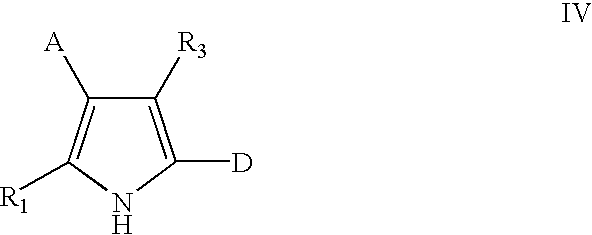
- the invention comprises reacting a pyrrole-containing compound of Formula IV:
- the invention comprises a process of making one or more pharmaceutically active compounds effective at inhibiting kinase activity having the formula I:
- the invention comprises a compound according to formula V: wherein A, R 3 , D and R 1 are as defined above.
- the invention comprises a compound according to formula VI: wherein A, R 3 , D and R 1 are as defined above.
- the invention further comprises a compound according to the formula VII: wherein A, R 1 and R 3 are as defined above.
- the invention provides an improved method of preparing such compounds when compared to other methods involving amination of a readily available pyrrole starting reactant.
- the reaction using chloramine provides an aminated pyrrole in acceptable yields while avoiding the use of more hazardous aminating reagents.
- aminating agents such as dinitro-substituted phenylhydroxylamines have been determined to be explosive, and to produce dinitrophenols, which are known toxic by-products (MSDS).
- MSDS toxic by-products
- Other aminating reagents such as hydroxylamine-O-sulfonic acid (HOSA), gave inferior yields (10-12%).
- Amination of pyrroles using oxaziridines also gave inferior results. Attempts at nitration of the desired pyrroles were also unsuccessful.
- the present invention is directed to a method of making pyrrolotriazine compounds of Formula (II): and pharmaceutically acceptable salts or solvates thereof, using the aforementioned procedure for compounds of formula I wherein:
- the invention comprises, in one aspect, a method of preparing pyrrolotriazine kinase inhibitors using a suitably substituted pyrrole as a starting material.
- a pyrrole is reacted with a strong base, then aminated using a reactive haloamine, preferably chloramine.
- this amination step is performed in a protic or aprotic solvent such as ether, MTBE, THF, toluene, water, DMF, NMPO, and DME, however other solvents may also be used.
- the resulting product can then be cyclized to form a pyrrolotriazine containing intermediate, which may optionally be further reacted to form the kinase inhibitors. It is also recognized that amination of the pyrrole can be used in applications other than cyclization to form pyrrolotriazines.
- cyclized or “cyclizing” are intended to encompass any reactions that result in the formation of a 5- or 6-membered ring structure adjunctly connected to the pyrrole ring.
- alkyl refers to straight or branched chain unsubstituted hydrocarbon groups of 1 to 20 carbon atoms, preferably 1 to 7 carbon atoms.
- the expression “lower alkyl” refers to unsubstituted alkyl groups of 1 to 4 carbon atoms.
- the subscript refers to the number of carbon atoms that the group may contain.
- C 0-4 alkyl includes a bond and alkyl groups of 1 to 4 carbon atoms.
- substituted alkyl refers to an alkyl group substituted by one to four substituents selected from halo, hydroxy, alkoxy, oxo ( ⁇ O), alkanoyl, aryloxy, alkanoyloxy, amino, alkylamino, arylamino, aralkylamino, disubstituted amines in which the 2 amino substituents are selected from alkyl, aryl or aralkyl; alkanoylamino, aroylamino, aralkanoylamino, substituted alkanoylamino, substituted arylamino, substituted aralkanoylamino, thiol, alkylthio, arylthio, aralkylthio, alkylthiono, arylthiono, aralkylthiono, alkylsulfonyl, arylsulfonyl, aralkylsulf
- alkyl When the term alkyl is used in connection with another group, as in heterocycloalkyl or cycloalkylalkyl, this means the identified group is bonded directly through an alkyl group which may be branched or straight chain.
- substituents as in “substituted cycloalkylalkyl,” the alkyl portion of the group may, besides being branched or straight chain, be substituted as recited above for substituted alkyl groups and/or the connected group may be substituted as recited herein for that group.
- halogen refers to fluorine, chlorine, bromine and iodine.
- aryl refers to monocyclic or bicyclic aromatic hydrocarbon groups having 6 to 12 carbon atoms in the ring portion, such as phenyl, naphthyl, biphenyl and diphenyl groups. When the aryl is substituted, each ring of the aryl may be substituted.
- substituted aryl refers to an aryl group substituted by one to four substituents selected from alkyl, substituted alkyl, halo, trifluoromethoxy, trifluoromethyl, hydroxy, alkoxy, alkanoyl, alkanoyloxy, amino, alkylamino, aralkylamino, dialkylamino, alkanoylamino, thiol, alkylthio, ureido, nitro, cyano, carboxy, carboxyalkyl, carbamyl, alkoxycarbonyl, alkylthiono, arylthiono, arylsulfonylamine, sulfonic acid, alkysulfonyl, sulfonamido, and aryloxy.
- the substituent may be further substituted by hydroxy, alkyl, alkoxy, aryl, substituted aryl, substituted alkyl or aralkyl.
- aralkyl refers to an aryl group bonded directly through an alkyl group, such as benzyl, wherein the alkyl group may be branched or straight chain.
- the alkyl portion of the group may, besides being branched or straight chain, be substituted as recited above for substituted alkyl groups and/or the aryl portion may be substituted as recited for substituted aryl.
- each R group may be hydrogen or may also be selected from alkyl, halogen, cyano, nitro, amino, hydroxy, alkoxy, alkylthio, phenyl, benzyl, phenyloxy, and benzyloxy, and other groups recited above. At least two of these “R” groups should be hydrogen and preferably at least five of the “R” groups is hydrogen.
- a preferred benzyl group involves the alkyl-portion being branched to define
- heteroaryl refers to an aromatic group for example, which is a 4 to 7 membered monocyclic, 7 to 11 membered bicyclic, or 10 to 15 membered tricyclic ring system, which has at least one heteroatom and at least one carbon atom-containing ring.
- Each ring of the heteroaryl group containing a heteroatom can contain one or two oxygen or sulfur atoms and/or from one to four nitrogen atoms, provided that the total number of heteroatoms in each ring is four or less and each ring has at least one carbon atom.
- the fused rings completing the bicyclic and tricyclic groups may contain only carbon atoms and may be saturated, partially saturated, or unsaturated.
- the nitrogen and sulfur atoms may optionally be oxidized and the nitrogen atoms may optionally be quaternized.
- Heteroaryl groups which are bicyclic or tricyclic must include at least one fully aromatic ring but the other fused ring or rings may be aromatic or non-aromatic.
- the heteroaryl group may be attached at any available nitrogen or carbon atom of any ring.
- a “substituted heteroaryl” has one to four substituents on any one or more of the rings comprising the heteraryl group.
- the substituents may be selected from those recited below for heterocycle groups.
- Exemplary monocyclic heteroaryl groups include pyrrolyl, pyrazolyl, pyrazolinyl, imidazolyl, oxazolyl, isoxazolyl, thiazolyl (i.e., thiadiazolyl, isothiazolyl, furanyl, thienyl, oxadiazolyl, pyridyl, pyrazinyl, pyrimidinyl, pyridazinyl, triazinyl and the like.
- Exemplary bicyclic heteroaryl groups include indolyl, benzothiazolyl, benzodioxolyl, benzoxaxolyl, benzothienyl, quinolinyl, tetrahydroisoquinolinyl, isoquinolinyl, benzimidazolyl, benzopyranyl, indolizinyl, benzofuranyl, chromonyl, coumarinyl, benzopyranyl, cinnolinyl, quinoxalinyl, indazolyl, pyrrolopyridyl, furopyridinyl, dihydroisoindolyl, tetrahydroquinolinyl and the like.
- Exemplary tricyclic heteroaryl groups include carbazolyl, benzidolyl, phenanthrollinyl, acridinyl, phenanthridinyl, xanthenyl and the like.
- alkenyl refers to straight or branched chain hydrocarbon groups of 2 to 20 carbon atoms, preferably 2 to 15 carbon atoms, and most preferably 2 to 8 carbon atoms, having one to four double bonds.
- substituted alkenyl refers to an alkenyl group substituted by one to two substituents selected from halo, hydroxy, alkoxy, alkanoyl, alkanoyloxy, amino, alkylamino, dialkylamino, alkanoylamino, thiol, alkylthio, alkylthiono, alkylsulfonyl, sulfonamido, nitro, cyano, carboxy, carbamyl, substituted carbamyl, guanidino, and substituted and unsubstituted heterocycles, including indolyl, imidazolyl, furyl, thienyl, thiazolyl, pyrrolidyl, pyridyl, pyrimidyl and the like.
- alkynyl refers to straight or branched chain hydrocarbon groups of 2 to 20 carbon atoms, preferably 2 to 15 carbon atoms, and most preferably 2 to 8 carbon atoms, having one to four triple bonds.
- substituted alkynyl refers to an alkynyl group substituted by a substituent selected from halo, hydroxy, alkoxy, alkanoyl, alkanoyloxy, amino, alkylamino, dialkylamino, alkanoylamino, thiol, alkylthio, alkylthiono, alkylsulfonyl, sulfonamido, nitro, cyano, carboxy, carbamyl, substituted carbamyl, guanidino and substituted or unsubstituted heterocyclo, e.g. imidazolyl, furyl, thienyl, thiazolyl, pyrrolidyl, pyridyl, pyrimidyl and the like.
- cycloalkyl refers to a saturated or partially unsaturated non-aromatic cyclic hydrocarbon ring system, preferably containing 1 to 3 rings and 3 to 7 carbons per ring which may be further fused with an unsaturated C 3 -C 7 carbocylic ring.
- exemplary groups include cyclopropyl, cyclobutyl, cyclopentyl, cyclohexyl, cycloheptyl, cycloctyl, cyclodecyl, cyclododecyl, and adamantyl.
- a “substituted cycloalkyl” is substituted at one or more ring positions with one or more alkyl or substituted alkyl groups as described above.
- heterocycle each refer to a fully saturated or unsaturated, aromatic or nonaromatic cyclic group, for example, which is a 4 to 7 membered monocyclic, 7 to 11 membered bicyclic, or 10 to 15 membered tricyclic ring system, which has at least one heteroatom in at least one carbon atom-containing ring.
- heterocycle includes heteroaryl groups as described above.
- Each ring of the heterocyclic group containing a heteroatom may have 1, 2 or 3 heteroatoms selected from nitrogen atoms, oxygen atoms and sulfur atoms, where the nitrogen and sulfur heteroatoms may also optionally be oxidized and the nitrogen heteroatoms may also optionally be quaternized.
- the heterocyclic group may be attached at any heteroatom or carbon atom.
- Exemplary monocyclic heterocyclic groups include pyrrolidinyl, pyrrolyl, indolyl, pyrazolyl, oxetanyl, pyrazolinyl, imidazolyl, imidazolinyl, imidazolidinyl, oxazolyl, oxazolidinyl, isoxazolinyl, isoxazolyl, thiazolyl, thiadiazolyl, thiazolidinyl, isothiazolyl, isothiazolidinyl, furyl, tetrahydrofuryl, thienyl, oxadiazolyl, piperidinyl, piperazinyl, 2-oxopiperazinyl, 2-oxopiperidinyl, 2-oxopyrrolidinyl, 2-oxazepinyl, azepinyl, 4-piperidonyl, pyridyl, N-oxo-pyridyl,
- bicyclic hetrocyclic groups include 2,3-dihydro-2-oxo-1H-indolyl, benzothiazolyl, benzoxazolyl, benzothienyl, quinuclidinyl, quinolinyl, quinolinyl-N-oxide, tetrahydroisoquinolinyl, isoquinolinyl, benzimidazolyl, benzopyranyl, indolizinyl, benzofuryl, chromonyl, coumarinyl, cinnolinyl, quinoxalinyl, indazolyl, pyrrolopyridyl, furopyridinyl (such as furo[2,3-c]pyridinyl, furo[3,1-b]pyridinyl] or furo[2,3-b]pyridinyl), dihydroisoindolyl, dihydroquinazolinyl (such as 3,4-dihydro-4
- heterocycles such as epoxides and aziridines.
- Preferred heterocyclo groups include, without limitation:
- a “substituted heterocycle” will be substituted with one or more alkyl or aralkyl groups as described above, and/or one or more groups described above as alkyl substituents.
- isoquinoline refers to isoquinoline and tetrahydroisoquinoline.
- diazepine refers to a heterocyclo ring having at least one seven atom ring with two nitrogen atoms in the seven membered ring, including a fully saturated or unsaturated diazepine.
- heteroatoms shall include oxygen, sulfur and nitrogen.
- haloalkyl means an alkyl having one or more halo substituents
- perfluoromethyl means a methyl group substituted by one, two, or three fluoro atoms, i.e., CH 2 F, CHF 2 and CF 3 .
- perfluoroalkyl means an alkyl group having from one to five fluoro atoms, such as pentafluoroethyl.
- haloalkoxy means an alkoxy group having one or more halo substituents.
- haloalkoxy includes —OCF 3 .
- carbocyclic means a saturated or unsaturated unsaturated monocyclic or bicyclic ring in which all atoms of all rings are carbon. Thus, the term includes cycloalkyl and aryl rings. The carbocyclic ring may be substituted in which case the substituents are selected from those recited above for cycloalkyl and aryl groups.
- the ring or group may be fully unsaturated or partially unsaturated.
- alkoxy is —OR e
- alkanoyl is —C( ⁇ O)R e
- aryloxy is —OAr
- alkanoyloxy is —OC( ⁇ O)R e
- amino is —NH 2
- alkylamino is —NHR c
- arylamino is —NHAr
- aralkylamino is —NH—R f —Ar
- disubstituted amine or dialkylamino is —NR g R h
- alkanoylamino is —NH—C( ⁇ O)R e
- aroylamino is —NH—C( ⁇ O)Ar
- aralkanoylamino is —NH—C( ⁇ O)Ar
- a selected pyrrole compound which may be substituted or unsubstituted at the ring positions, is aminated using a haloamine, preferably chloramine, in the presence of a base, to form an aminated pyrrole with an active amino (—NH 2 ) group bonded to the ring nitrogen atom.
- the reactive species so formed may then be cyclized using heat (from about 100° C. to about 200° C., and preferably from about 120° C. to about 190° C.) and an appropriate catalyst, for example an acid, to provide an oxo-pyrrolotriazine-containing compound.
- oxo-pyrrolotriazine formed according to the preferred embodiment of this invention may then be reacted with a halogenating agent, for example POCl 3 , followed by a nucleophilic displacement to form a desired addition product of Formula (I).
- a halogenating agent for example POCl 3
- the compounds of Formula (I) may form salts that are also within the scope of this invention.
- Pharmaceutically acceptable (i.e. non-toxic, physiologically acceptable) salts are preferred, although other salts are also useful, e.g., in isolating or purifying the compounds of this invention.
- the compounds of Formula (I) may form salts with alkali metals such as sodium, potassium and lithium, with alkaline earth metals such as calcium and magnesium, with organic bases such as dicyclohexylamine, tributylamine, pyridine and amino acids such as arginine, lysine and the like.
- alkali metals such as sodium, potassium and lithium
- alkaline earth metals such as calcium and magnesium
- organic bases such as dicyclohexylamine, tributylamine, pyridine and amino acids such as arginine, lysine and the like.
- amino acids such as arginine, lysine and the like.
- the compounds of Formula (I) may be reacted with a variety of organic and inorganic acids to form salts.
- Such salts include those formed with hydrogen chloride, hydrogen bromide, methanesulfonic acid, sulfuric acid, acetic acid, trifluoroacetic acid, oxalic acid, maleic acid, benzenesulfonic acid, toluenesulfonic acid and various others (e.g., nitrates, phosphates, borates, tartrates, citrates, succinates, benzoates, ascorbates, salicylates and the like).
- Such salts can be formed as known to those skilled in the art.
- zwitterions inner salts
- inner salts may be formed.
- the processes of the invention can be used to produce all stereoisomers of the compounds of Formula I, either in a racemic mixture or in pure or substantially pure form.
- the definition of the compounds herein embraces all the possible stereoisomers and their mixtures. It embraces the racemic forms and the isolated optical isomers having the specified activity.
- the racemic forms can be resolved by physical methods, such as, for example, fractional crystallization, separation or crystallization of diastereomeric derivatives or separation by chiral column chromatography.
- the individual optical isomers can be obtained from the racemates by conventional methods, such as, for example, salt formation with an optically active acid followed by crystallization.
- solvates e.g., hydrates
- Methods of solvation are generally known in the art.
- Preferred embodiments of the invention include the methods for preparing the preferred compounds of Formula (Ia):
- Certain preferred compounds of Formula (Ia) that may be prepared according to the methods of the invention are those in which R 3 is C 1 -C 6 alkyl, trifluoromethyl, or methoxy, most preferably methyl;
- X is preferably —CO 2 —, —NR 10 C( ⁇ O)—, or —C( ⁇ O)NR 10 —, more preferably —C( ⁇ O)NH—;
- Z is preferably N;
- R 4 is preferably substituted aryl or substituted heteroaryl, more preferably phenyl substituted with at least one of carbamyl, substituted carbamyl, arylsulfonylamido, substituted arylsulfonylamido, ureido, or substituted ureido, and optionally substituted with one or two C 1-4 alkyl or halogen.
- R 4 is phenyl substituted with at least one of —C( ⁇ O)NHO(C 1-4 alkyl) or —C( ⁇ O)NH(optionally substituted phenyl), and also is optionally substituted with C 1-4 alkyl.
- R 5 is preferably hydrogen or lower alkyl, more preferably hydrogen.
- R 1 and R 6 may be selected from groups of substituents as defined herein; however, advantageously they are selected from hydrogen, CH 3 , —OH, —OCH 3 , halogen, nitro, and cyano, and most preferably R 1 and R 6 are hydrogen.
- R 2 preferably is alkyl, aryl, substituted aryl, aralkyl, substituted aralkyl, heteroaryl, or substituted heteroaryl, more preferably straight or branched C 2 -C 6 alkyl or optionally-substituted benzyl.
- the mesylate salt is the preferred form of salt.
- the methods of the invention further comprise those for making preferred compounds of the Formula (II),
- R 2 is a heterocyclo, advantageously it is selected from diazepinyl, morpholinyl, piperidinyl, and pyrrolidinyl, said heterocycle being optionally substituted with C 1-4 alkyl, phenyl, and/or benzyl.
- the methods of the invention are also preferably used for making compounds having the formula (III): in which R 13a and R 13b are hydrogen, CH 3 , OH, OCH 3 , CF 3 , cyano, or halogen, R 2 is C 2-6 alkyl or optionally substituted benzyl, R 33 is lower alkyl.
- the compounds prepared according to the invention are known kinase inhibitors.
- Compounds of Formula (I) are useful in treating kinase-associated conditions including, but not limited to, inflammatory diseases, oncology diseases, autoimmune diseases, destructive bone disorders, proliferative disorders, angiogenic disorders, infectious diseases, neurodegenerative diseases, and viral diseases.
- the specific conditions or diseases that may be treated with the inventive compounds include, without limitation, pancreatitis (acute or chronic), asthma, allergies, adult respiratory distress syndrome, chronic obstructive pulmonary disease, glomerulonephritis, rheumatoid arthritis, systemic lupus erythematosis, scleroderma, chronic thyroiditis, Grave's disease, autoimmune gastritis, diabetes, autoimmune hemolytic anemia, autoimmune neutropenia, thrombocytopenia, atopic dermatitis, chronic active hepatitis, myasthenia gravis, multiple sclerosis, inflammatory bowel disease, ulcerative colitis, Crohn's disease, psoriasis, graft vs.
- Oxopyrrolotriazine (3) can be reacted with a suitable chlorinating agent, such as POCl 3 , in a suitable solvent such as toluene, to afford chloropyrrolotriazine (4). Reaction of the chloropyrrolotriazine with a suitable substituted nucleophile affords pyrrolotriazine (5).
- a suitable chlorinating agent such as POCl 3
- a suitable solvent such as toluene
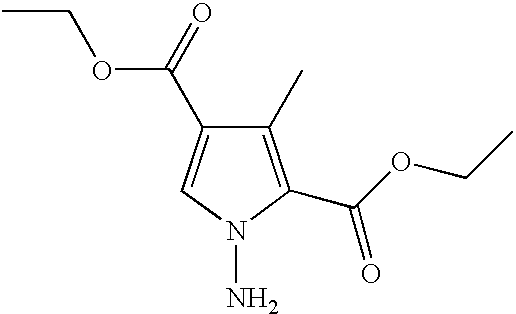
- An ester such as 3-methyl-1-pyrrole-2,4-diethyl ester can be reacted with chloramine in an appropriate solvent to produce compound (1).
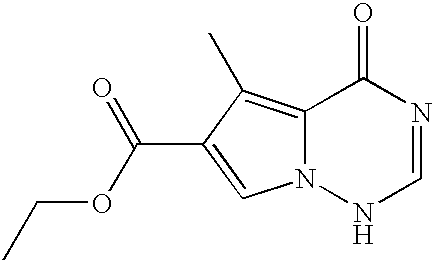
- Reacting compound (1) in formamide with acetic acid produces compound (2).
- Compound (2) can be reacted with DIPEA and POCl 3 in toluene to produce compound (3).
- Compound (3) can be reacted with DIPEA and compound (4) in DMF to produce compound (5).
- Compound (5) can be reacted in THF with NaOH to produce an acid intermediate which upon treatment with HOBt, EDCI and the appropriate amine (NR 2 R 10 ) in DMF produces compounds (6).
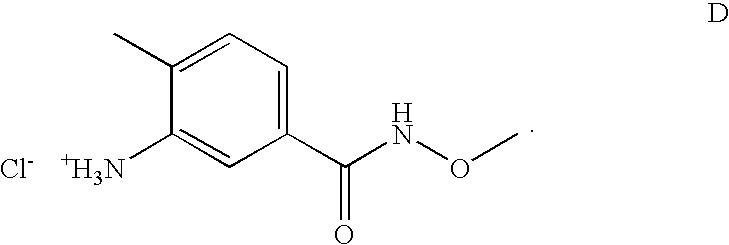
- Compound (4) can be prepared by 1) reacting commercially-available 4-amino-3-methylbenzoic acid and N-(tert-butoxycarbonyl)anhydride in THF to produce a BOC-protected aniline intermediate; 2) reacting the aniline intermediate with -(3-dimethylaminopropyl)-3-ethylcarbodiimide hydrochloride, HOBt, and DMF, followed by addition of methoxyamine hydrochloride and DIPEA to produce a BOC-protected N-methoxyamide intermediate; and 3) reacting that methoxyamide intermediate in a solution of HCl in dioxane to produce compound (4) as a hydrochloride salt.
- compound (4) can be prepared as shown in Scheme 6.
- R b is a carbon-containing substituent
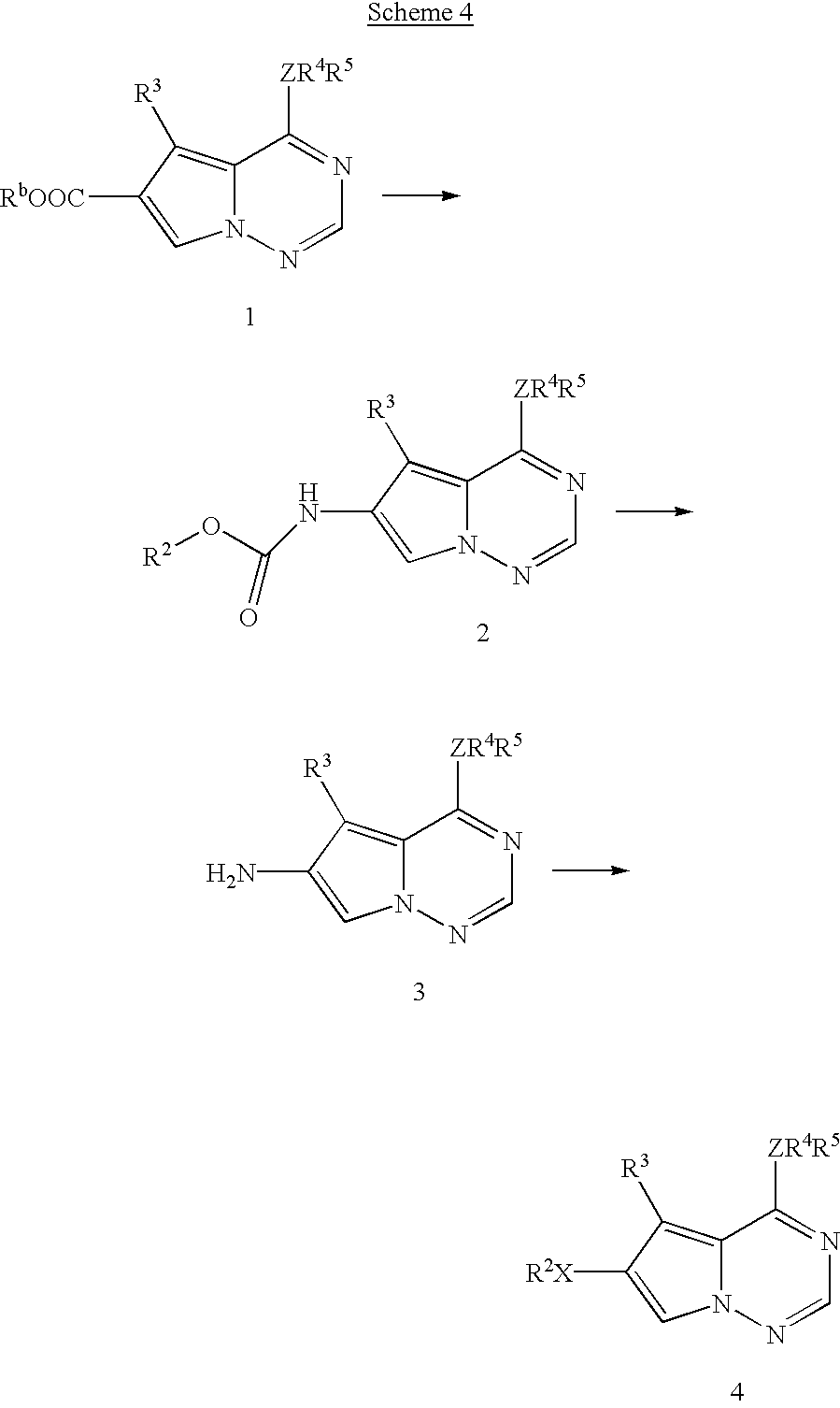
- carboxylic acid (1) where R b is H, and wherein R 3 is alkyl or alkoxy or is as otherwise defined herein, by treatment with a base such as aq. KOH.
- This acid undergoes Curtis rearrangement by treatment with diphenyl phosphoryl azide in the presence of an alcohol, such as benzyl alcohol, in an organic solvent, such as 1,4-dioxane, to afford compound (2).
- the carbamate group of compound (2) can be deprotected, when optionally protected by groups such as CBZ, by hydrogenation over a catalyst, such as Pd, to obtain compound (3).
- the amino group of compound (3) can be acylated to form compound (4), e.g., by treatment with a carboxylic acid in the presence of a coupling agent such as DCC, or sulfonylated, e.g., by treatment with a sulfonyl chloride.
- the amino group of compound (3) may be alkylated with alkyl halides or may undergo reductive amination with aldehydes in the presence of a reducing agent, such as sodium cyanoborohydride.
- compound (1) can be reacted with oxalyl chloride with heating and then concentrated in vacuo and reacted with an amine R 18 NH 2 in the presence of a base, such as diisopropylethylamine, in an organic solvent, such as DCM to yield compound (2).
- compound (2) can be reacted with hydrogen in the presence of a catalyst, such as Pd, in an alcoholic solvent, such as EtOH, at rt to afford compound (3).
- compound (3) can then be used as in Scheme 3 to produce compounds (6) of Scheme 3.
- compound (1) can be reacted with di-tert-butyl dicarbonate in an organic solvent, such as THF, to afford compound (2).
- compound (2) can be hydrolyzed using an aqueous base, such as sodium hydroxide, to afford compound (3) that can be reacted with an amine R 18 NH 2 in the presence of coupling reagents, such as EDCI and HOBt, in an organic solvent, such as DMF, to afford compound (4).
- Compound (4) can then be reacted with HCl in a solvent, such as dioxane, to afford compound (5).
- Compound (5) can also be used as in Scheme 3 to produce compounds (6) of Scheme 3.
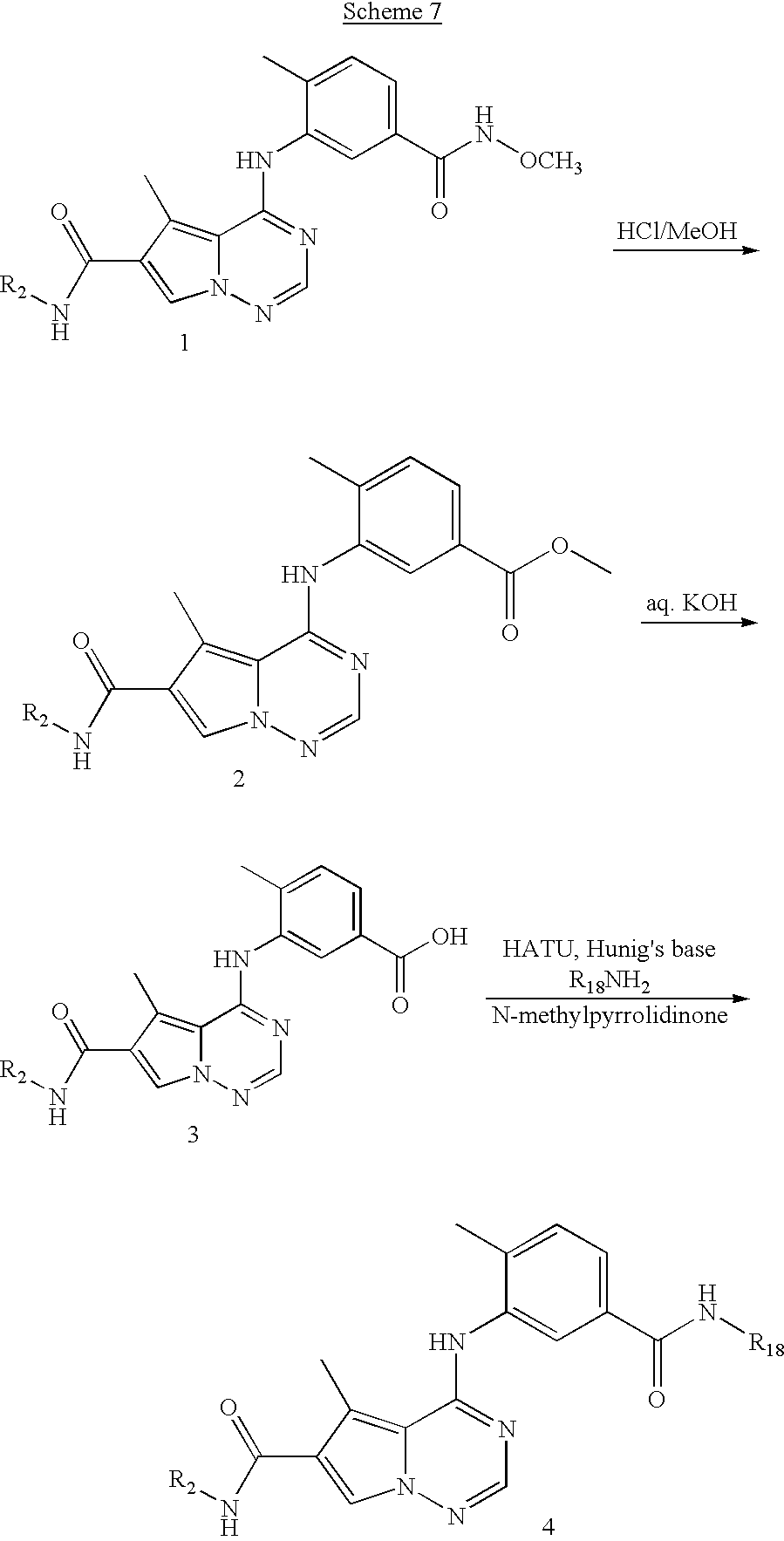
- a substituted hydroxamate (1) can be reacted with acid, such as HCl, in anhydrous MeOH, to afford compound (2).
- Compound (2) can be reacted with an aq. base such KOH with heating to form compound (3).
- Compound (3) is reacted with an amine R 18 NH 2 in the presence of a coupling reagent, such as HATU, and a base such as diisopropylamine, in an organic solvent, such as N-methylpyrrolidinone to afford compounds (4).
- a coupling reagent such as HATU
- a base such as diisopropylamine
- organic solvent such as N-methylpyrrolidinone
- compounds (4) may generally be prepared as outlined in Scheme 3, or using a suitable substituted aniline amide as a nucleophile.
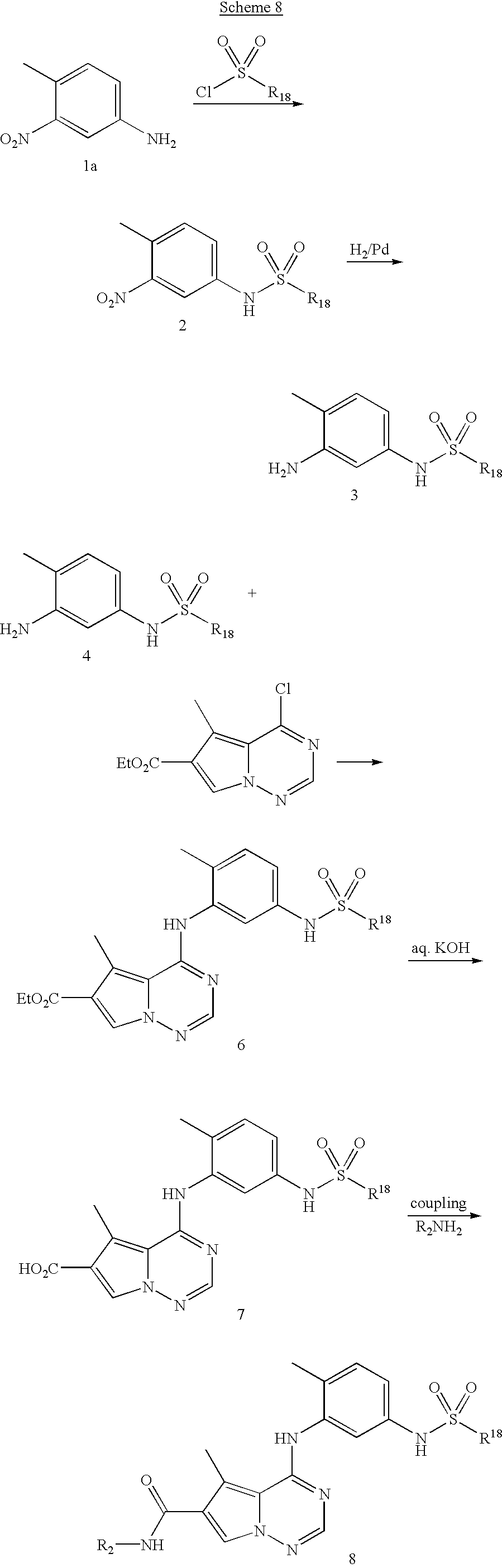
- compound (1a) can be reacted with a sulfonyl chloride in the presence of a base, such as TEA, in an organic solvent, such as DCM to yield compound (2).
- a base such as TEA
- organic solvent such as DCM
- Reaction of compound (3) with chloride (5) (compound 3 of scheme 3) in an organic solvent, such as DMF, at rt affords compound (6).
- Reaction of compound (6) with aq. KOH with heating affords compound (7).
- Compound (7) can be reacted with an amine R 2 NH 2 in the presence of a coupling reagent, such as EDCI, and a base such as diisopropylamine, in an organic solvent, such as DMF to afford compound (8).
- a coupling reagent such as EDCI
- a base such as diisopropylamine
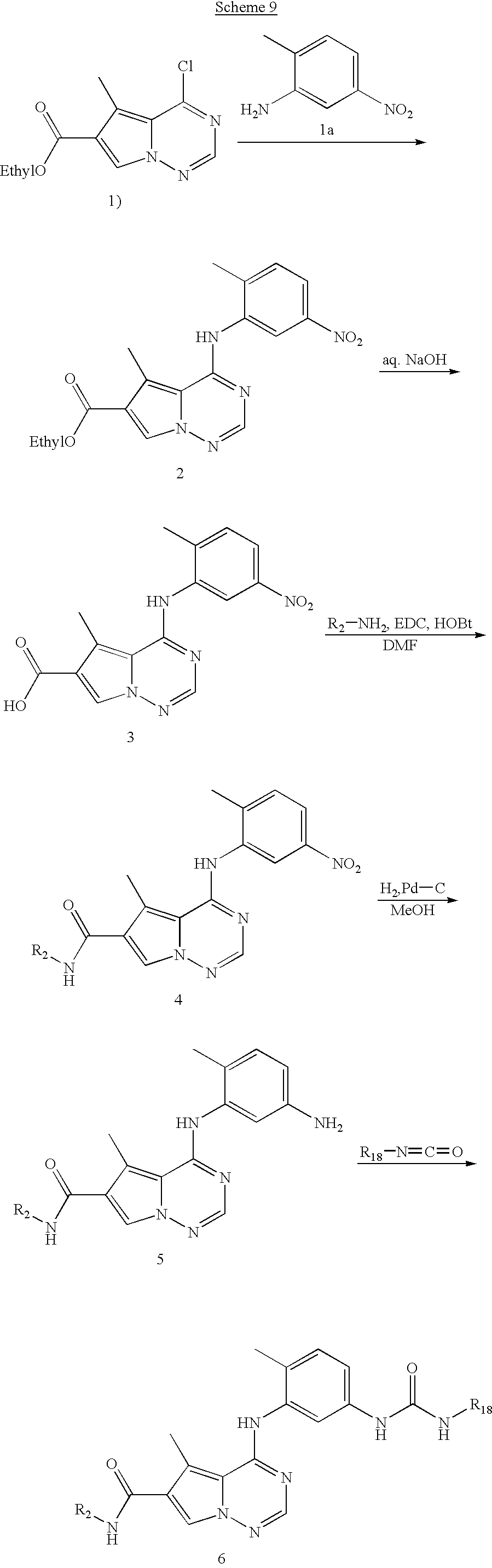
- Chloropyrrolotriazine (1) can be reacted with an aniline (1a) in anhydrous DMF at rt to afford compound (2).
- Reaction of compound (2) with an aq. base such as NaOH with heating affords compound (3).
- Compound (3) can be reacted with an amine R 2 NH 2 in the presence of a coupling reagent, such as HOBt, with or without a base such as diisopropylamine, in an organic solvent, such as DMF to afford compound (4).
- Compound (4) can be reacted with hydrogen in the presence of a catalyst, such as Pd/C, in an organic solvent, such as MeOH to afford compound (5).
- Reaction of compound (5) with an isocyanate in an organic solvent, such as DCE affords compound (6).
- Product (6) can be reacted with an amine R 2 NH 2 in the presence of a coupling reagent, such as EDCI, and a base such as diisopropylamine, in an organic solvent, such as DMF to afford compound (7).
- a coupling reagent such as EDCI
- a base such as diisopropylamine
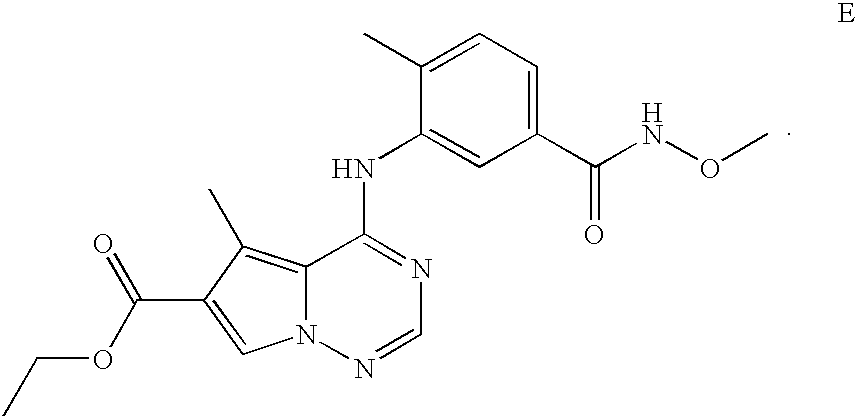
- Example 1 The compound of Example 1 was prepared as set forth below, using the Scheme 3 described above, wherein Compounds (A)-(E) have the structures indicated below. A.
- the aqueous portion was extracted with additional EtOAc (400 mL ⁇ 3), and the combined organic extracts were washed with water (300 mL ⁇ 3), cold 0.5 N aq. HCl (400 mL ⁇ 2), and water (500 mL).
- the resulting solid which precipitated was collected by filtration and washed with cold water.
- the wet solid was decolorized in hot EtOH with active charcoal to give 106 g of white solid as the BOC-protected N-methoxyamide intermediate.
- ester Compound E (22.5 g, 58.7 mmol) in THF (205 mL) was added 1 N NaOH (205 mL) and the reaction mixture heated to 50° C. for 16 h. The THF was removed in vacuo and the mixture was acidified to pH 4-5 with 1N aq. HCl to precipitate the product. The heterogeneous mixture was stirred for 1 h, filtered and washed with water (150 mL) and ether (150 mL). The collected solids were partially dried on the filter to give the crude acid intermediate as a moist white solid which was used without further purification.
- HOBt 11.9 g, 88.0 mmol
- EDCI 16.9 g, 88.0 mmol
- 1.3 equivalents 117 mmol
- DIPEA 20.4 mL, 117 mmol
- Example 2 After stirring for 3 h, the solids were collected by suction filtration, washed with water (150 mL) and ether (2 ⁇ 100 mL), and allowed to air dry by suction filtration to give Example 2 (92-98%) as a white solid.
- Example 37 as a free base was charged with acetone (10 ml/g), and the jacket was heated to 50-60° C. Reflux was started at 55-57° C., and the mixture was stirred for 30 min. at 50-60° C. Methanesulfonic acid (1.2 eq.) was added, and a slight exotherm was observed. The slurry was stirred at 50-60° C. until DSC showed in two consecutive samples the complete conversion of the free base (mp 220-222° C.) to the mesylate salt (mp 259-261° C.). The slurry was cooled to 20-25° C. over about 30 min, and then stirred for at least 30 min. with the temp. kept at 20-25° C.
- Example 65 as a white crystalline solid (yield 90-95%).
- [M+H] + 478.4.
- the above procedure may be used to prepare mesylate salts of other compounds of Formulae (I) and (II) herein.
- Examples 71 and 72 as shown in Table 5 were prepared from Compound D of Example 70 and an appropriate amine as described in Example 70, step E.
Landscapes
- Chemical & Material Sciences (AREA)
- Organic Chemistry (AREA)
- Health & Medical Sciences (AREA)
- Physical Education & Sports Medicine (AREA)
- Animal Behavior & Ethology (AREA)
- Veterinary Medicine (AREA)
- General Chemical & Material Sciences (AREA)
- Medicinal Chemistry (AREA)
- Nuclear Medicine, Radiotherapy & Molecular Imaging (AREA)
- Bioinformatics & Cheminformatics (AREA)
- Pharmacology & Pharmacy (AREA)
- Life Sciences & Earth Sciences (AREA)
- Engineering & Computer Science (AREA)
- General Health & Medical Sciences (AREA)
- Public Health (AREA)
- Chemical Kinetics & Catalysis (AREA)
- Rheumatology (AREA)
- Orthopedic Medicine & Surgery (AREA)
- Pulmonology (AREA)
- Immunology (AREA)
- Pharmaceuticals Containing Other Organic And Inorganic Compounds (AREA)
- Nitrogen Condensed Heterocyclic Rings (AREA)
- Organic Low-Molecular-Weight Compounds And Preparation Thereof (AREA)
- Pyrrole Compounds (AREA)
- Plural Heterocyclic Compounds (AREA)
Abstract
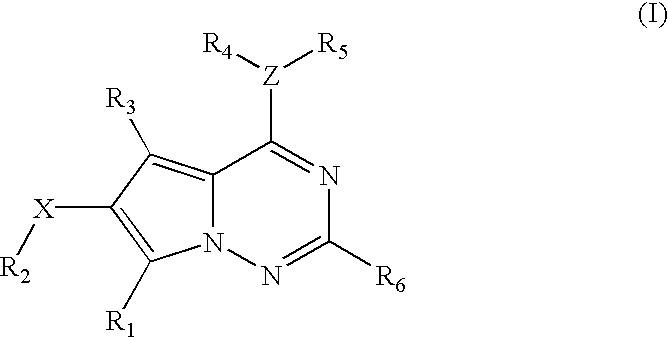
or a pharmaceutically acceptable salt or solvate thereof, wherein R1 through R6 and Z are as described in the specification. The methods according to the invention utilize an amination process, in which a pyrrole is reacted with a haloamine, preferably chloramine. This step is followed by cyclization to form the pyrrolotriazine core.
Description
-
- wherein
- R1 is selected from H, alkyl, aralkyl, OR1′, OC(O)R1′, OC(O)OR1′, OC(O)NR1′R1″, OS(O)2R′″, and OS(O)2NR1′R1′″, wherein the groups R1′ and R1″ may each independently be H, alkyl, aryl, aralkyl, heterocyclo, or cycloalkyl groups, or may be taken together to form a cycloalkyl, aryl, or heterocyclic group, any of which may be optionally substituted, and the group R1′″ is defined as an alkyl, aryl, aralkyl, heterocyclo, or cycloalkyl; —SCH3, —OC(═O)R21, —S(═O)R22, —SO2R22, —SO2NR24R25, —CO2R21, —C(═O)NR24R25, —NH2, —NR24R25, —NR21SO2NR24R25, —NR21SO2R22, —NR24C(═O)R25, —NR24CO2R25, —NR21C(═O)NR24R25, halogen, nitro, or cyano;
- A is selected from R2X or E, where X is selected from the group consisting of —O—, —OC(═O)—, —S—, —S (═O)—, —SO2—, —C(═O)—, —CO2—, —NR10—, —NR10C(═O)—, —NR10C(═O)NR11—, —NR10CO2—, —NR10SO2—, —NR10SO2NR11—, —SO2NR10—, —C(═O)NR10—, halogen, nitro, and cyano, or X is absent; and E is an electron withdrawing group; or R1, taken together with A, can form an optionally substituted saturated or unsaturated aromatic or heterocyclic ring;
- R2 is selected from:
- (i) hydrogen, provided that R2 is not hydrogen if X is —S(═O)—, —SO2—, —NR10CO2—, or —NR10SO2—;
- (ii) alkyl, alkenyl, and alkynyl optionally substituted with up to four R26;
- (iii) aryl and heteroaryl optionally substituted with up to three R27;
- (iv) heterocyclo and cycloalkyl optionally substituted with keto (═O), up to three R27, and/or having a carbon-carbon bridge of 3 to 4 carbon atoms; or
- (v) —C(O)Rb where Rb is H, OH, alkyl, aralkyl, halo, ORb′, OC(O)Rb′, OC(O)ORb′, OC(O)NRbRb′, OS(O)Rb′, OS(O)NRbRb′, and Rb and Rb′ are each independently selected from H, alkyl, aralkyl, heterocyclo or cycloalkyl, or Rb and Rb′ together form a cycloalkyl, aryl or heterocyclo group; however R2 is absent if X is halogen, nitro or cyano;
- R3 is selected from H, OH, C1-C6 alkoxy, alkyl, C1-C6 perfluoroalkyl, —O—(C1-C6) perfluoroalkyl, cycloalkyl, heterocyclo, aryl, aralkyl, acyl, carbalkoxy, carboxamido, cyano, halogen, amine, substituted amine, NO2, OR3′, CH2OR3′, CH2NR3′R3″, CH2SR3′, OC(O)R3′, OC(O)OR3″, OC(O)NR3′R3″, OS(O)2R3′, and OS(O)2NR3′R3″; the R3′ and R3″ groups are each independently H, alkyl, aralkyl, heterocyclo, cycloalkyl, or aryl. R3′ and R3″ when taken together may form a cycloalkyl, aryl, or heterocyclic group, any of which may be optionally substituted;
- R7, R8, R21, R24, and R25 are independently selected from hydrogen, alkyl, substituted alkyl, aryl, substituted aryl, heterocyclo, and substituted heterocyclo;
- R10 and R11 are independently selected from hydrogen, alkyl, substituted alkyl, aryl, substituted aryl, cycloalkyl, substituted cycloalkyl, heterocyclo, and substituted heterocyclo;
- R22 is selected from alkyl, substituted alkyl, aryl, substituted aryl, heterocyclo, or substituted heterocyclo;
- R26 is selected from halogen, trifluoromethyl, haloalkoxy, keto (═O), nitro, cyano, —SR28, —OR28, —NR28R29, —NR28SO2, —NR28SO2R29, —SO2R28, —SO2NR28R29, —CO2R28, —C(═O)R28, —C(═O)NR28R29, —OC(═O)R28, —OC(═O)NR28R29, —NR28C(═O)R29, —NR28CO2R29, ═N—OH, ═N—O-alkyl; aryl optionally substituted with one to three R27; cycloalkyl optionally substituted with keto (═O), one to three R27, or having a carbon-carbon bridge of 3 to 4 carbon atoms; and heterocyclo optionally substituted with keto (═O), one to three R27, or having a carbon-carbon bridge of 3 to 4 carbon atoms; wherein R28 and R29 are each independently selected from hydrogen, alkyl, alkenyl, aryl, aralkyl, C3-7cycloalkyl, and C3-7heterocycle, or may be taken together to form a C3-7heterocycle; and wherein each R28 and R29 in turn is optionally substituted with up to two of alkyl, alkenyl, halogen, haloalkyl, haloalkoxy, cyano, nitro, amino, hydroxy, alkoxy, alkylthio, phenyl, benzyl, phenyloxy, and benzyloxy;
- R27 is selected from alkyl, R32, and C1-4alkyl substituted with one to three R32, wherein each R32 group is independently selected from halogen, haloalkyl, haloalkoxy, nitro, cyano, —SR30, —OR30, —NR30R31, —NR30SO2, —NR30SO2R31, —SO2R30, —SO2NR30R31, —CO2R30, —C(═O)R30, —C(═O)NR30R31, —OC(═O)R30, —OC(═O)NR30R31, —NR30C(═O)R31, —NR30CO2R31, and a 3 to 7 membered carbocyclic or heterocyclic ring optionally substituted with alkyl, halogen, hydroxy, alkoxy, haloalkyl, haloalkoxy, nitro, amino, or cyano, wherein R30 and R31 are independently selected from hydrogen, alkyl, alkenyl, aryl, aralkyl, C3-7cycloalkyl, and heterocycle, or may be taken together to form a C3-7 heterocycle; and
- D is selected from the group consisting of —CHO, CN, —CORp, —C(═O)ORp, or RqC(O)NH—, where Rp and Rq are each independently selected from H or substituted or unsubstituted C1-C6 alkyl, aryl or halogenated alkyl;
with chloramine, in the presence of a suitable base, to form a compound of Formula V: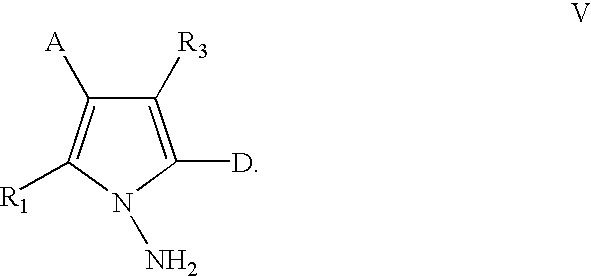

-
- and pharmaceutically acceptable salts or solvates thereof; wherein
- R1 is selected from H, alkyl, aralkyl, OR1′, OC(O)R1′, OC(O)OR1′, OC(O)NR1′R1″, OS(O)2R1′″, and OS(O)2NR1′R1″, wherein the groups R1′ and R1″ may each independently be H, alkyl, aryl, aralkyl, heterocyclo, or cycloalkyl groups, or may be taken together to form a cycloalkyl, aryl, or heterocyclic group, any of which may be optionally substituted, and the group R1′″ is defined as an alkyl, aryl, aralkyl, heterocyclo, or cycloalkyl; —SCH3, —OC(═O)R21, —S(═O)R22, —SO2R22, —SO2NR24R25, —CO2R21, —C(═O)NR24R25, —NH2, —NR24R25, —NR21SO2NR24R25, —NR21SO2R22, —NR24C(═O)R25, —NR24CO2R25, —NR21C(═O)NR24R25, halogen, nitro, or cyano;
- A is selected from R2X or E, where X is selected from the group consisting of —O—, —OC(═O)—, —S—, —S(═O)—, —SO2—, —C(═O)—, —CO2—, —NR10—, —NR10C(═O)—, —NR10C(═O)NR11—, —NR10CO2—, —NR10SO2—, —NR10SO2NR11—, —SO2NR10—, —C(═O)NR10—, halogen, nitro, and cyano, or X is absent; and E is an electron withdrawing group; or R1, taken together with A, can form an optionally substituted saturated or unsaturated aromatic or heterocyclic ring;
- R2 is selected from:
- (i) hydrogen, provided that R2 is not hydrogen if X is —S(═O)—, —SO2—, —NR10CO2—, or —NR10SO2—;
- (ii) alkyl, alkenyl, and alkynyl optionally substituted with up to four R26;
- (iii) aryl and heteroaryl optionally substituted with up to three R27;
- (iv) heterocyclo and cycloalkyl optionally substituted with keto (═O), up to three R27, and/or having a carbon-carbon bridge of 3 to 4 carbon atoms; or
- (v) —C(O)Rb where Rb is H, OH, alkyl, aralkyl, halo, ORb′, OC(O)Rb′, OC(O)ORb′, OC(O)NRbRb′, OS(O)Rb′, OS(O)NRbRb′, and Rb and Rb′ are each independently selected from H, alkyl, aralkyl, heterocyclo or cycloalkyl, or or Rb and Rb′ together form a cycloalkyl, aryl or heterocyclo group; however R2 is absent if X is halogen, nitro or cyano;
- R3 is selected from H, OH, C1-C6 alkoxy, alkyl, C1-C6 perfluoroalkyl, —O—C1-C6 perfluoroalkyl, cycloalkyl, heterocyclo, aryl, aralkyl, acyl, carbalkoxy, carboxamido, cyano, halogen, amine, substituted amine, NO2, OR3′, CH2OR3′, CH2NR3′R3″, CH2SR3′, OC(O)R3′, OC(O)OR3″, OC(O)NR3′R3″, OS(O)2R3′, and OS(O)2NR3′R3″; the R3′ and R3″ groups are each independently H, alkyl, aralkyl, heterocycle, cycloalkyl, or aryl. R3′ and R3″ when taken together may form a cycloalkyl, aryl, or heterocyclic group, any of which may be optionally substituted;
- Z is selected from O, S or N;
- R4 is selected from substituted aryl, aryl substituted with NHSO2alkyl, substituted heteroaryl, or an optionally-substituted bicyclic 7-11 membered saturated or unsaturated carbocyclic or heterocyclic ring, and R5 is hydrogen, alkyl, or substituted alkyl; provided that when Z is O or S, one of R4 or R5 is absent; or alternatively, R4 and R5 taken together with Z form an optionally substituted aryl, or an optionally-substituted bicyclic 7-11 membered aryl or heteroaryl; wherein in either case the substitution of the aryl or the bicyclic aryl or heteroaryl may be by a substituted or unsubstituted alkyl, cycloalkyl, aryl or heteroaryl substituent;
- R6 is selected from hydrogen, alkyl, substituted alkyl, cycloalkyl, aryl, substituted aryl, aralkyl, heterocyclo, substituted heterocyclo, —NR7R8, —OR7, acyl, carbalkoxy, carboxamido or halogen; wherein the carbalkoxy, acyl, and carboxamido groups are optionally substituted with one or two substituent groups, each of which is independently H, alkyl, aralkyl, or heterocyclo;
- R10 and R11 are independently selected from hydrogen, alkyl, substituted alkyl, aryl, substituted aryl, cycloalkyl, substituted cycloalkyl, heterocyclo, and substituted heterocyclo;
- R7, R8, R21, R24, and R25 are independently selected from hydrogen, alkyl, substituted alkyl, aryl, substituted aryl, heterocyclo, and substituted heterocyclo;
- R22 is selected from alkyl, substituted alkyl, aryl, substituted aryl, heterocyclo, or substituted heterocyclo;
- R26 is selected from halogen, trifluoromethyl, haloalkoxy, keto (═O), nitro, cyano, —SR28, —OR28, —NR28R29, —NR28SO2, —NR28SO2R29, —SO2R28, —SO2NR28R29, —CO2R28, —C(═O)R28, —C(═O)NR28R29, —OC(═O)R28, —OC(═O)NR28R29, —NR28C(═O)R29, —NR28CO2R29, ═N—OH, ═N—O-alkyl; aryl optionally substituted with one to three R27; cycloalkyl optionally substituted with keto (═O), one to three R27, or having a carbon-carbon bridge of 3 to 4 carbon atoms; and heterocyclo optionally substituted with keto (═O), one to three R27, or having a carbon-carbon bridge of 3 to 4 carbon atoms; wherein R28 and R29 are each independently selected from hydrogen, alkyl, alkenyl, aryl, aralkyl, C3-7cycloalkyl, and C3-7heterocycle, or may be taken together to form a C3-7 heterocycle; and wherein each R28 and R29 in turn is optionally substituted with up to two of alkyl, alkenyl, halogen, haloalkyl, haloalkoxy, cyano, nitro, amino, hydroxy, alkoxy, alkylthio, phenyl, benzyl, phenyloxy, and benzyloxy; and
- R27 is selected from alkyl, R32, and C1-4alkyl substituted with one to three R32, wherein each R32 group is independently selected from halogen, haloalkyl, haloalkoxy, nitro, cyano, —SR30, —OR30, —NR30R31, —NR30SO2, —NR30SO2R31, —SO2R30, —SO2NR30R31, —CO2R30, —C(═O)R30, —C(═O)NR30R31, —OC(═O)R30, —OC(═O)NR30R31, —NR30C(═O)R31, —NR30CO2R31, and a 3 to 7 membered carbocyclic or heterocyclic ring optionally substituted with alkyl, halogen, hydroxy, alkoxy, haloalkyl, haloalkoxy, nitro, amino, or cyano, wherein R30 and R31 are each independently selected from hydrogen, alkyl, alkenyl, aryl, aralkyl, C3-7cycloalkyl, and heterocycle, or may be taken together to form a C3-7 heterocycle;
- the method comprising:
- a) reacting a pyrrole compound of Formula IV:

- wherein A, R1 and R3 are as defined above; and
- D is selected from the group consisting of —CHO, CN, —CORp, —C(═O)ORp, or RqC(O)NH—, where Rp and Rq are each independently selected from H or substituted or unsubstituted C1-C6 alkyl, aryl or halogenated alkyl;
- with chloramine, in the presence of a suitable base, to form a compound of Formula V:

- b) cyclizing the compound V to form a compound VI:

- c) halogenating the compound VI to form a compound VII:
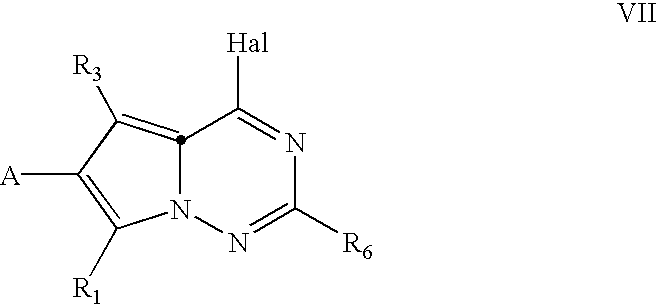
- d) further reacting compound VII with a reactant B—ZR4R5, wherein Z, R4 and R5 are as defined above; and B is selected from H, substituted or unsubstituted alkyl, or substituted or unsubstituted cycloalkyl;
to form a compound of Formula I. Preferably, the reactant B—ZNR4R5 is of the formula VIII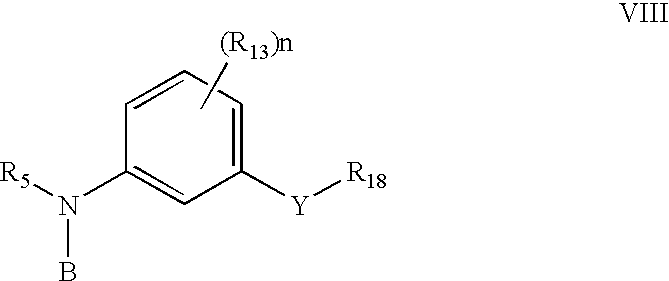
wherein Y is selected from —C(═O)NR23—, —NR23C(═O)NR23—, —NR23SO2—, or —SO2NR23; - R5 is selected from hydrogen or alkyl; R13 is selected from alkyl, halo, trifluoromethoxy, trifluoromethyl, hydroxy, alkoxy, alkanoyl, alkanoyloxy, thiol, alkylthio, ureido, nitro, cyano, carboxy, carboxyalkyl, carbamyl, alkoxycarbonyl, alkylthiono, arylthiono, arylsulfonylamine, alkylsulfonylamine, sulfonic acid, alkysulfonyl, sulfonamido, and aryloxy, and each R13 may be further substituted by hydroxy, alkyl, alkoxy, aryl, or aralkyl, and n is an integer between 1 and 3;
- R18 and R23 are each independently selected from hydrogen, alkyl, cycloalkyl, heterocyclo, alkoxy, aryl, and aryl/heterocyclo substituted with one to three R19, except that when Y is —NR23SO2—, R18 is C1-4alkyl or aryl optionally substituted with one to three R19; and
- R13 and R19 at each occurrence are independently selected from alkyl, halo, trifluoromethoxy, trifluoromethyl, hydroxy, alkoxy, alkanoyl, alkanoyloxy, thiol, alkylthio, ureido, nitro, cyano, carboxy, carboxyalkyl, carbamyl, alkoxycarbonyl, alkylthiono, arylthiono, arylsulfonylamine, alkylsulfonylamine, sulfonic acid, alkysulfonyl, sulfonamido, and aryloxy, wherein each R13 and/or R19 group may be further substituted by hydroxy, alkyl, alkoxy, aryl, or aralkyl. More preferably, the reactant of Formula VIII is:
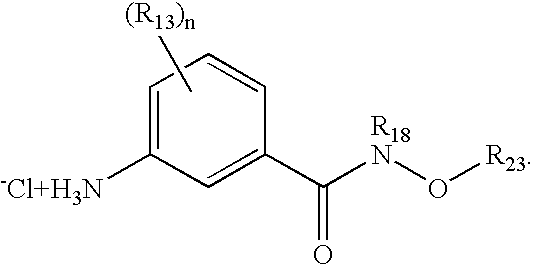
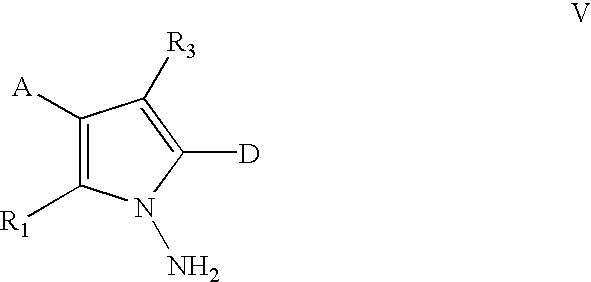
wherein A, R3, D and R1 are as defined above.
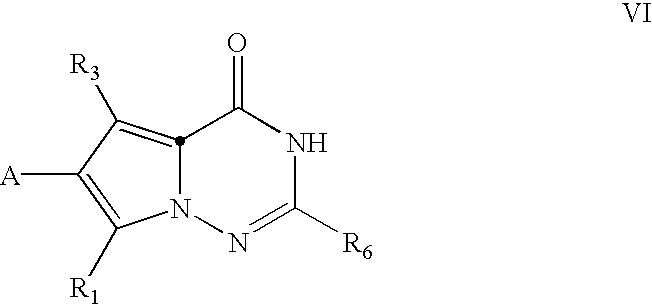
wherein A, R3, D and R1 are as defined above.
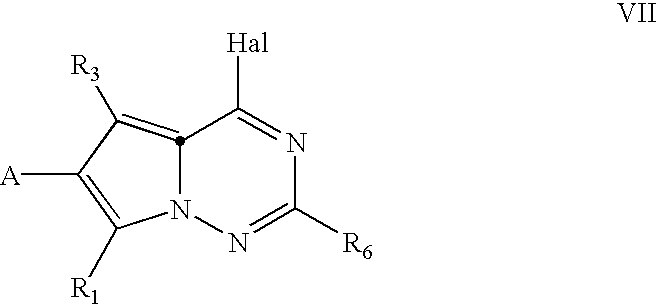
wherein A, R1 and R3 are as defined above.
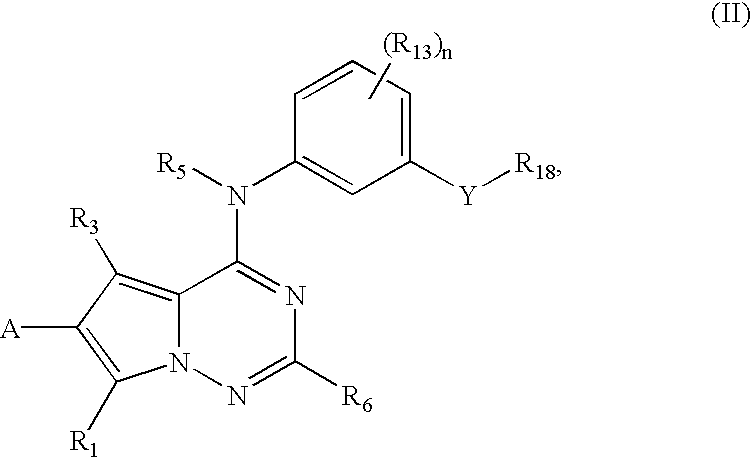
and pharmaceutically acceptable salts or solvates thereof, using the aforementioned procedure for compounds of formula I wherein:
-
- R3 is selected from H, alkyl, CF3, O-alkyl, CN or NH2;
- R5 is hydrogen or alkyl;
- Y is selected from —C(═O)NR23—, —NR23C(═O)NR23—, —NR23SO2—, or —SO2NR23—, or —NR23C(O)O—;
- R18 and R23 are selected from hydrogen, alkyl, cycloalkyl, heterocyclo, alkoxy, aryl, heteroaryl and aryl/heteroaryl substituted with one to three R19, except when Y is —NR23SO2—, R18 is C1-4alkyl or aryl optionally substituted with one to three R19;
- R13 and R19 at each occurrence are independently selected from alkyl, halo, trifluoromethoxy, trifluoromethyl, hydroxy, alkoxy, alkanoyl, alkanoyloxy, thiol, alkylthio, ureido, nitro, cyano, carboxy, carboxyalkyl, carbamyl, alkoxycarbonyl, alkylthiono, arylthiono, arylsulfonylamine, alkylsulfonylamine, sulfonic acid, alkysulfonyl, sulfonamido, and aryloxy, wherein each R13 and/or R19 group may be further substituted by hydroxy, alkyl, alkoxy, aryl, or aralkyl; and
- A, R1, and R6 are as defined above for compounds of Formula (I).

wherein each R group may be hydrogen or may also be selected from alkyl, halogen, cyano, nitro, amino, hydroxy, alkoxy, alkylthio, phenyl, benzyl, phenyloxy, and benzyloxy, and other groups recited above. At least two of these “R” groups should be hydrogen and preferably at least five of the “R” groups is hydrogen. A preferred benzyl group involves the alkyl-portion being branched to define


thiadiazolyl, isothiazolyl, furanyl, thienyl, oxadiazolyl, pyridyl, pyrazinyl, pyrimidinyl, pyridazinyl, triazinyl and the like.


and ureido is

wherein Re is alkyl as defined above, Rf is alkylene as defined above, Rg and Rh are selected from alkyl, aryl, and aralkyl, Ar is an aryl as defined above, and k is 2 or 3.
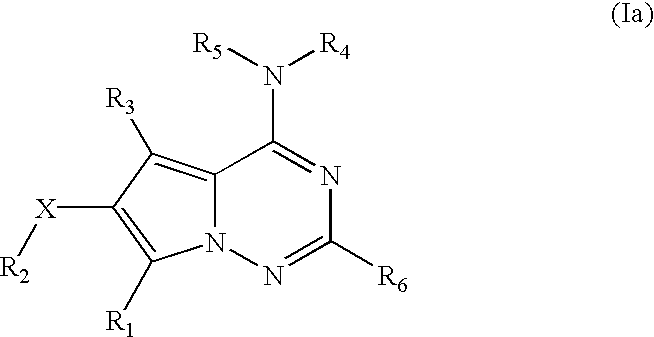
-
- and pharmaceutically acceptable salts, prodrugs, or solvates thereof, comprising reacting a pyrrole of formula IV wherein:
- R1 is selected from hydrogen, —CH3, —OH, —OCH3, —SH, —SCH3, —OC(═O)R21, —S(═O)R22, —SO2R22, —SO2NR24R25, —CO2R21, —C(═O)NR24R25, —NH2, —NR21SO2NR24R25, —NR21 SO2R22, —NR24C(═O)R25, —NR24CO2R25, —NR2C(═O)NR24R25, halogen, nitro, or cyano;
- R3 is selected from H, C1-C6 alkyl, OH, —CF3, —OCF3, CN or NH2;
- X is selected from —C(═O)—, —CO2—, —O—, —NR10C(═O)—, and —C(═O)NR10—, or X is absent;
- R2 is selected from hydrogen, C2-6alkyl, substituted C1-4alkyl, aryl, aralkyl, substituted aryl, substituted aralkyl, cycloalkyl, substituted cycloalkyl, heterocycle, or substituted heterocycle, or optionally-substituted cycloalkylalkyl or heterocycloalkyl;
- R4 is selected from aryl or heteroaryl substituted with one R12 and zero to three R13;
- R5 and R10 independently are selected from hydrogen and lower alkyl; R6 is selected from hydrogen, alkyl, substituted alkyl, aryl, substituted aryl, heterocyclo, substituted heterocyclo, —NR7R8, —OR7, or halogen;
- R12 is selected from carbamyl, sulfonamido, arylsulfonylamine, or ureido, each of which is optionally substituted with up to two of hydroxy, alkyl, substituted alkyl, alkoxy, aryl, substituted aryl, and aralkyl, or R12 is alkylsulfonylamine;
- R13 at each occurrence is independently selected from alkyl, substituted alkyl, halo, trifluoromethoxy, trifluoromethyl, —OR14, —C(═O)alkyl, —OC(═O)alkyl, —NR15R16, —SR15, —NO2, —CN, —CO2R15, —CONH2, —SO3H, —S(═O)alkyl, —S(═O)aryl, —NHSO2-aryl-R17, —NHSO2-alkyl, —SO2NHR17, —CONHR17, and —NHC(═O)NHR17;
- R14 is selected from hydrogen, alkyl, or aryl;
- R15 is hydrogen or alkyl;
- R16 is hydrogen, alkyl, aralkyl, or alkanoyl;
- R17 is hydrogen, hydroxy, alkyl, substituted alkyl, alkoxy, aryl, substituted aryl, or aralkyl;
- R7, R8, R10, R11, R21, R24, and R25 are independently selected from hydrogen and alkyl; and R22 is alkyl or substituted alkyl.
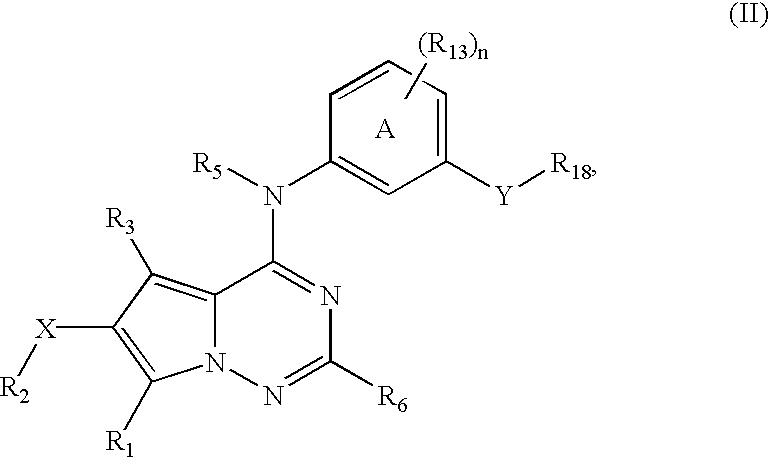
-
- and pharmaceutically acceptable salts or solvates thereof, wherein:
- R3 is selected from H, C1-C6 alkyl, OH, —CF3, —OCF3, CN or NH2;
- X is selected from —C(═O)NR10—, —NR10 C(═O)—, —C(═O)—, or —CO2—;
- Y is selected from —C(═O)NH—, —NHC(═O)NH—, or —NHSO2—;
- R10 is hydrogen or lower alkyl;
- R18 is selected from hydrogen, alkyl, cycloalkyl, alkoxy, aryl, and aryl substituted with one to three R19, except that when Y is —NHSO2—, R18 is —C1-4alkyl, aryl or aryl substituted with R19;
- R13 is attached to any available carbon atom of phenyl ring A and at each occurrence is independently selected from alkyl, substituted alkyl, halo, trifluoromethoxy, trifluoromethyl, —OR14, —C(═O)alkyl, —OC(═O)alkyl, —NR15R16, —SR15, —NO2, —CN, —CO2R15, —CONH2, —SO3H, —S (═O)alkyl, —S (═O)aryl, —NHSO2-aryl-R17, —SO2NHR17, —CONHR17, and —NHC(═O)NHR17;
- R14, R15, R16 and R17 are independently selected from hydrogen or alkyl;
- R19 at each occurrence is selected from alkyl, halo, trifluoromethoxy, trifluoromethyl, hydroxy, alkoxy, alkanoyl, alkanoyloxy, thiol, alkylthio, ureido, nitro, cyano, carboxy, carboxyalkyl, carbamyl, alkoxycarbonyl, alkylthiono, arylthiono, arylsulfonylamine, sulfonic acid, alkysulfonyl, sulfonamido, and aryloxy, wherein each group R19 may be further substituted by hydroxy, alkyl, alkoxy, aryl, or aralkyl;
- n is 0, 1 or 2, and
- R1, R2 and R6 are as defined above for compounds of Formula (I).

-
- and pharmaceutically acceptable salts, prodrugs, or solvates thereof, wherein:
- R3 is selected from H, C1-C6 alkyl, alkoxy, OH, —CF3, —OCF3, CN or NH2;
- R1 and R10 are each either hydrogen or —CH3;
- R2 is selected from hydrogen; straight or branched C2-6alkyl; cycloalkyl optionally substituted with keto and/or up to two R27; phenyl optionally substituted with up to two R27; heterocycle optionally substituted with keto and/or up to two R27; and C1-4alkyl substituted with up to three of halogen, trifluoromethyl, cyano, OR28, NR28R29, CO2R28, aryl, heterocycle, and/or cycloalkyl, wherein the aryl, heterocycle, and/or cycloalkyl in turn are optionally substituted with up to two of halogen, hydroxy, alkoxy, haloalkyl, haloalkoxy, nitro, cyano and alkyl; R18 is selected from hydroxy, C1-4alkoxy, phenyl, or phenyl substituted with one or two R19;
- R13 and R19 are independently selected from lower alkyl, halogen, trifluoromethoxy, trifluoromethyl, hydroxy, C1-4alkoxy, nitro, and cyano;
- R27 at each occurrence is independently selected from hydrogen, alkyl, trifluoromethyl, trifluoromethoxy, halogen, cyano, nitro, amino, hydroxy, alkoxy, phenyl, benzyl, phenyloxy, and benzyloxy;
- R28 and R29 at each occurrence are independently selected from hydrogen, alkyl, alkenyl, phenyl, and benzyl; and
- n is 0, 1 or 2.

in which R13a and R13b are hydrogen, CH3, OH, OCH3, CF3, cyano, or halogen, R2 is C2-6alkyl or optionally substituted benzyl, R33 is lower alkyl.
- Ph=phenyl
- Bz=benzyl
- t-Bu=tertiary butyl
- Me=methyl
- Et=ethyl
- Pr=propyl
- Iso-P=isopropyl
- MeOH=methanol
- EtOH=ethanol
- EtOAc=ethyl acetate
- Boc=tert-butyloxycarbonyl
- CBZ=carbobenzyloxy or carbobenzoxy or benzyloxycarbonyl
- DCM=dichloromethane
- DCE=1,2-dichloroethane
- DMF=dimethyl formamide
- DMSO=dimethyl sulfoxide
- TFA=trifluoroacetic acid
- THF=tetrahydrofuran
- HATU=O-(7-Azabenzotriazol-1-yl-N,N,N′,N′-tetramethyluronim hexafluorophosphate
- KOH=potassium hydroxide
- K2CO3=potassium carbonate
- POCl3=phosphorous oxychloride
- KOtBu=potassium t-butoxide
- EDC or EDCI=1-(3-Dimethylaminopropyl)-3-ethylcarbodiimide hydrochloride
- DIPEA=diisopropylethylamine
- HOBt=1-hydroxybenzotriazole hydrate
- m-CPBA=m-chloroperbenzoic acid
- NaH=sodium hydride
- NaOH=sodium hydroxide
- Na2S2O3=sodium thiosulfate
- Pd=palladium
- Pd/C=palladium on carbon
- min=minute(s)
- L=liter
- mL=milliliter
- μL=microliter
- g=gram(s)
- mg=milligram(s)
- mol=moles
- mmol=millimole(s)
- meq=milliequivalent
- RT or rt=room temperature
- ret. t.=HPLC retention time (minutes)
- sat or sat'd=saturated
- aq.=aqueous
- TLC=thin layer chromatography
- HPLC=high performance liquid chromatography
- RP HPLC=reverse phase HPLC
- LC/MS=high performance liquid chromatography/mass spectrometry
- MS=mass spectrometry
- NMR=nuclear magnetic resonance
- mp=melting point
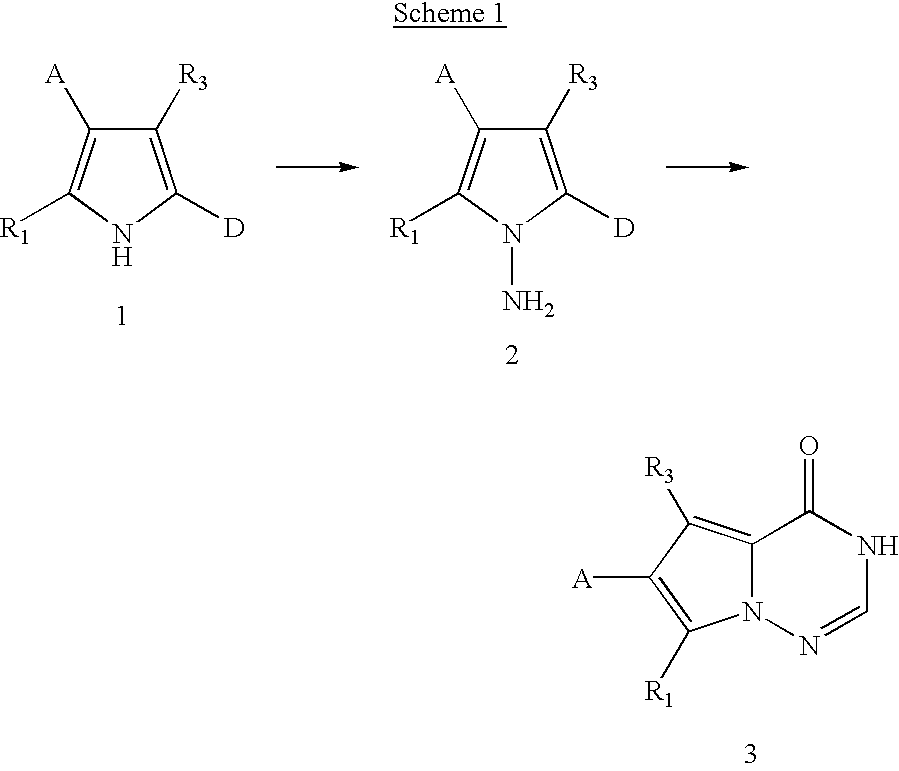
A pyrrole (1) can be reacted with KOtBu, NaH, or other strong base, in a suitable solvent such as ether, THF, DMF, water, toluene, NMPO or DME. Subsequent addition of a haloamine such as chloranine affords the aminated pyrrole (2). Cyclization using an appropriate agent such as formamide at elevated temperature (e.g. about 120-190° C.) affords the oxopyrrolotriazine (3).

Oxopyrrolotriazine (3) can be reacted with a suitable chlorinating agent, such as POCl3, in a suitable solvent such as toluene, to afford chloropyrrolotriazine (4). Reaction of the chloropyrrolotriazine with a suitable substituted nucleophile affords pyrrolotriazine (5).

-
- wherein X=NR10, NR10CO, NR10CONR11, NR10COO, NR10SO2, NR10SO2NR11, as described hereinbefore.




A.
B.
C.


| TABLE 1 | ||||
| Data | ||||
| Ex. | R2 | R10 | Compound Name | MS/HPLC |
| 2 | —CH2—C(CH3)3 | CH3 | N-(2,2-Dimethylpropyl)-4-[[5- | 439.3 |
| [(methoxyamino)carbonyl]-2- | 3.43 min | |||
| methylphenyl]amino]-N,5- | ||||
| dimethylpyrrolo | ||||
| [2,1-f][1,2,4]triazine-6-carboxamide | ||||
| 3 | —CH—(CH3)2 | H | 4-[[5-[(Methoxyamino)carbonyl]-2- | 397.3 |
| methylphenyl]amino]-5-methyl-N-(1- | 2.79 min | |||
| methylethyl)pyrrolo | ||||
| [2,1-f][1,2,4]triazine-6-carboxamide | ||||
| 4 |
 |
H | 4-[[5-[(Methoxyamino)carbonyl]-2- methylphenyl]amino]-5-methyl-N-(2- methylpropyl)pyrrolo [2,1-f][1,2,4]triazine-6-carboxamide | 411.4 3.14 min |
| 5 | —CH2—C(CH3)3 | H | N-(2,2-Dimethylpropyl)-4-[[5- | 425.3 |
| [(methoxyamino) | 3.35 min | |||
| Carbonyl]-2-methylphenyl]amino]-5- | ||||
| methylpyrrolo[2,1-f] | ||||
| [1,2,4]triazine-6-carboxamide | ||||
| 6 | —(CH2)2—CH3 | H | 4-[[5-[(Methoxyamino)carbonyl]-2- | 397.2 |
| methylphenyl]amino]-5-methyl-N- | 2.88 min | |||
| propylpyrrolo[2,1-f][1,2,4]triazine-6- | ||||
| carboxamide | ||||
| 7 | —C(CH3)3 | H | N-(1,1-Dimethylethyl)-4-[[5- | 411.2 |
| [(methoxyamino)carbonyl]-2- | 3.11 min | |||
| methylphenyl]amino]-5- | ||||
| methylpyrrolo[2,1-f][1,2,4]triazine-6- | ||||
| carboxamide | ||||
| 8 | —(CH2)2—OCH3 | H | 4-[[5-[(Methoxyamino)carbonyl]-2- | 413.2 |
| methylphenyl]amino]-N-(2- | 1.99 min | |||
| methoxyethyl)-5-methylpyrrolo[2,1- | ||||
| f][1,2,4]triazine-6-carboxamide | ||||
| 9 |
 |
H | N-Cyclohexyl-4-[[5- [(methoxyamino)carbonyl]-2- methylphenyl]amino]-5- methylpyrrolo[2,1-f][1,2,4]triazine-6- carboxamide | 437.4 2.88 min |
| 10 |
 |
H | 4-[[5-[(Methoxyamino)carbonyl]-2- methylphenyl]amino]-5-methyl-N-[(1R)- 1-phenylethyl] pyrrolo[2,1- f][1,2,4]triazine-6-carboxamide | 459.3 2.85 min |
| 11 |
 |
H | 4-[[5-[(Methoxyamino)carbonyl]-2- methylphenyl]amino]-5-methyl-N-[(1S)- 1-phenylethyl]pyrrolo[2,1- f][1,2,4]triazine-6-carboxamide | 459.3 2.85 min |
| 12 |
 |
H | N-[(4-Fluorophenyl)methyl]-4-[[5- [(methoxyamino)carbonyl]-2- methylphenyl]amino]-5- methylpyrrolo[2,1-f][1,2,4]triazine-6- carboxamide | 463.4 2.83 min |
| 13 |
 |
H | 4-[[5-[(Methoxyamino)carbonyl]-2- methylphenyl]amino]-N-[(2- methoxyphenyl)methyl]-5- methylpyrrolo[2,1-f][1,2,4]triazine-6- carboxamide | 475.4 2.83 min |
| 14 |
 |
H | 4-[[5-[(Methoxyamino)carbonyl]-2- methylphenyl]amino]-5-methyl-N-(4- pyridinylmethyl)pyrrolo[2,1- f[]1,2,4]triazine-6-carboxamide | 446.2 1.45 min |
| 15 |
 |
H | 4-[[5-[(Methoxyamino)carbonyl]-2- methylphenyl]amino]-5-methyl-N-[2-(4- pyridinyl)ethyl]pyrrolo[2,1- f][1,2,4]triazine-6-carboxamide | 460.3 1.81 min |
| 16 |
 |
H | 4-[[5-[(Methoxyamino)carbonyl]-2- methylphenyl]amino]-5-methyl-N-[2-(1- piperidinyl)ethyl]pyrrolo[2,1- f][1,2,4]triazine-6-carboxamide | 466.4 1.56 min |
| 17 |
 |
H | 4-[[5-[(Methoxyamino)carbonyl]-2- methylphenyl]amino]-5-methyl-N-[2-(4- morpholinyl)ethyl]pyrrolo[2,1- f][1,2,4]triazine-6-carboxamide | 468.3 1.38 min |
| 18 |
 |
H | N-[(1R, 2S)-2,3-Dihydro-1H-inden-1-yl]- 4-[[5-[(methoxyamino)carbonyl]-2- methylphenyl]amino]-5- methylpyrrolo[2,1-f][1,2,4]triazine-6- carboxamide | 487.4 2.74 min |
| 19 |
 |
H | N-[(1S, 2R)-2,3-Dihydro-1H-inden-1-yl]- 4-[[5-[(methoxyamino)carbonyl]-2- methylphenyl]amino]-5- methylpyrrolo[2,1-f][1,2,4]triazine-6- carboxamide | 487.2 2.74 min |
| 20 |
 |
H | N-Cyclopropyl-4-[[5- [(methoxyamino)carbonyl]-2- methylphenyl]amino]-5- methylpyrrolo[2,1-f][1,2,4]triazine-6- carboxamide | 395.3 2.64 min |
| 21 |
 |
H | N-Cyclopentyl-4-[[5- [(methoxyamino)carbonyl]-2- methylphenyl]amino]-5- methylpyrrolo[2,1-f][1,2,4]triazine-6- carboxamide | 423.0 3.15 min |
| 22 |
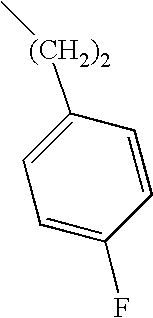 |
H | N-[2-(4-Fluorophenyl)ethyl]-4-[[5- [(methoxyamino)carbonyl]-2- methylphenyl]amino]-5- methylpyrrolo[2,1-f][1,2,4]triazine-6- carboxamide | 477.3 3.53 min |
| 23 |
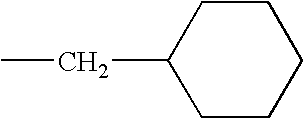 |
H | N-(Cyclohexylmethyl)-4-[[5- [(methoxyamino)carbonyl]-2- methylphenyl]amino]-5- methylpyrrolo[2,1-f][1,2,4]triazine-6- carboxamide | 451.3 3.70 min |
| 24 |
 |
H | 4-[[5-[(Methoxyamino)carbonyl]-2- methylphenyl]amino]-5-methyl-N- [(tetrahydro-2-furanyl)methyl]pyrrolo[2,1- f][1,2,4]triazine-6-carboxamide | 439.3 2.76 min |
| 25 |
 |
H | N-(2-1H-Indol-3-ylethyl)-4-[[5- [(methoxyamino)carbonyl]-2- methylphenyl]amino]-5- methylpyrrolo[2,1-f][1,2,4]triazine-6- carboxamide | 498.3 3.39 min |
| 26 |
 |
H | N-Butyl-4-[[5- [(methoxyamino)carbonyl]-2- methylphenyl]amino]-5- methylpyrrolo[2,1-f][1,2,4]triazine-6- carboxamide | 411.2 3.16 min |
| 27 |
 |
H | N-(Cyclopropylmethyl)-4-[[5- [(methoxyamino)carbonyl]-2- methylphenyl]amino]-5- methylpyrrolo[2,1-f][1,2,4]triazine-6- carboxamide | 409.1 2.90 min |
| 28 |
 |
H | 4-[[5-[(Methoxyamino)carbonyl]-2- methylphenyl]amino]-5-methyl-N-(2- methylbutyl)pyrrolo[2,1-f][1,2,4]triazine- 6-carboxamide | 425.3 3.43 min |
| 29 |
 |
H | N-(2-Furanylmethyl)-4-[[5- [(methoxyamino)carbonyl]-2- methylphenyl]amino]-5- methylpyrrolo[2,1-f][1,2,4]triazine-6- carboxamide | 435.1 2.95 min |
| 30 |
 |
H | 4-[[5-[(Methoxyamino)carbonyl]-2- methylphenyl]amino]-5-methyl-N-(2- thienylmethyl)pyrrolo[2,1- f][1,2,4]triazine-6-carboxamide | 451.2 3.16 min |
| 31 |
 |
H | 4-[[5-[(Methoxyamino)carbonyl]-2- methylphenyl]amino]-5-methyl-N-(2- phenoxyethyl)pyrrolo[2,1- f][1,2,4]triazine-6-carboxamide | 475.3 3.43 min |
| 32 |
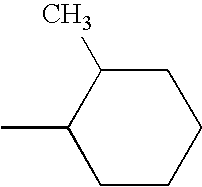 |
H | 4-[[5-[(Methoxyamino)carbonyl]-2- methylphenyl]amino]-5-methyl-N-(2- methylcyclohexyl)pyrrolo[2,1- f][1,2,4]triazine-6-carboxamide | 451.2 3.56 min |
| 33 | —CH2—CH3 | CH3 | N-Ethyl-4-[[5-[(methoxyamino)carbonyl]- | 397.2 |
| 2-methylphenyl]amino]-N,5- | 2.59 min | |||
| dimethylpyrrolo[2,1-f][1,2,4]triazine-6- | ||||
| carboxamide | ||||
| 34 | —CH2—CF3 | H | 4-[[5-[(Methoxyamino)carbonyl]-2- | 437.1 |
| methylphenyl]amino]-5-methyl-N-(2,2,2- | 3.01 min | |||
| trifluoroethyl)pyrrolo[2,1- | ||||
| f][1,2,4]triazine-6-carboxamide | ||||
| 35 | —CH2—CH2— F | H | N-(2-Fluoroethyl)-4-[[5- | 401.2 |
| [(methoxyamino)carbonyl]-2- | 2.44 min | |||
| methylphenyl]amino]-5- | ||||
| methylpyrrolo[2,1-f][1,2,4]triazine-6- | ||||
| carboxamide | ||||
| 36 |
 |
H | N-(2,3-Dihydro-1H-inden-2-yl)-4-[[5- [(methoxyamino)carbonyl]-2- methylphenyl]amino]-5- methylpyrrolo[2,1-f][1,2,4]triazine-6- carboxamide | 471.2 3.56 min |
| 37 | —CH2—CH3 | H | N-Ethyl-4-[[5-[(methoxyamino)carbonyl]- | 383.3 |
| 2-methylphenyl]amino]-5- | 2.58 min | |||
| methylpyrrolo[2,1-f][1,2,4]triazine-6- | ||||
| carboxamide | ||||
| 38 |
 |
H | 4-[[5-[(Methoxyamino)carbonyl]-2- methylphenyl]amino]-5-methyl-N- (2,2,3,3,3-pentafluoropropyl)pyrrolo[2,1- f][1,2,4]triazine-6-carboxamide | 487.2 3.40 min |
| 39 | —(CH2)2—N(CH3)2 | H | 4-[[5-[(Methoxyamino)carbonyl]-2- | 426.5 |
| methylphenyl]amino]-5,7-dimethyl-N-(1- | 1.38 min | |||
| methylethyl)pyrrolo[2,1-f][1,2,4]triazine- | ||||
| 6-carboxamide | ||||
| 40 |
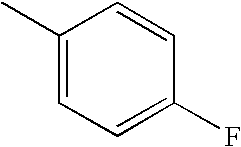 |
H | N-(4-Fluorophenyl)-4-[[5- [(methoxyamino)carbonyl]-2- methylphenyl]amino]-5- methylpyrrolo[2,1-f][1,2,4]triazine-6- carboxamide | 449.2 2.92 min |
| 41 |
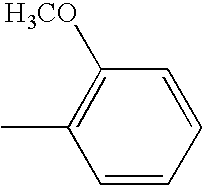 |
H | 4-[[5-[(Methoxyamino)carbonyl]-2- methylphenyl]amino]-N-(2- methoxyphenyl)-5-methylpyrrolo[2,1- f][1,2,4]triazine-6-carboxamide | 461.2 2.97 min |
| 42 |
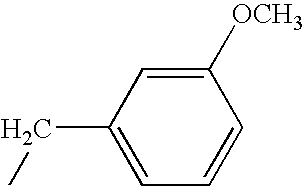 |
H | 4-[[5-[(Methoxyamino)carbonyl]-2- methylphenyl]amino]-N-[(3- methoxyphenyl)methyl]-5- methylpyrrolo[2,1-f][1,2,4]triazine-6- carboxamide | 475.4 2.75 min |
| 43 |
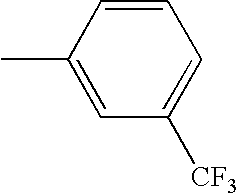 |
H | 4-[[5-[(Methoxyamino)carbonyl]-2- methylphenyl]amino]-5-methyl-N-[3- (trifluoromethyl)phenyl]pyrrolo[2,1- f][1,2,4]triazine-6-carboxamide | 499.1 3.39 min |
| 44 |
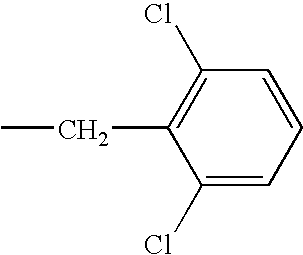 |
H | N-[(2,6-Dichlorophenyl)methyl]-4-[[5- [(methoxyamino)carbonyl]-2- methylphenyl]amino]-5- methylpyrrolo[2,1-f][1,2,4]triazine-6- carboxamide | 513.1 3.10 min |
| 45 |
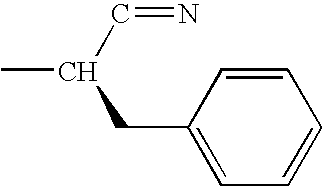 |
H | N-[(1S)-1-Cyano-2-phenylethyl]-4-[[5- [(methoxyamino)carbonyl]-2- methylphenyl]amino]-5- methylpyrrolo[2,1-f][1,2,4]triazine-6- carboxamide | 484.3 2.88 min |
| 46 |
 |
H | 4-[[5-[(Methoxyamino)carbonyl]-2- methylphenyl]amino]-5-methyl-N-(2- phenylethyl)pyrrolo[2,1-f][1,2,4]triazine- 6-carboxamide | 459.3 2.91 min |
| 47 |
 |
H | 4-[[5-[(Methoxyamino)carbonyl]-2- methylphenyl]amino]-5-methyl-N-(2- pyridinylmethyl)pyrrolo[2,1- f][1,2,4]triazine-6-carboxamide | 446.2 1.51 min |
| 48 |
 |
H | 4-[[5-[(Methoxyamino)carbonyl]-2- methylphenyl]amino]-5-methyl-N- (phenylmethyl)pyrrolo[2,1- f][1,2,4]triazine-6-carboxamide | 445.2 2.69 min |
| 49 |
 |
H | 4-[[5-[(Methoxyamino)carbonyl]-2- methylphenyl]amino]-5-methyl-N-(4- methyl-2-thiazolyl)pyrrolo[2,1- f][1,2,4]triazine-6-carboxamide | 452.3 3.50 min |
| 50 |
 |
H | 4-[[5-[(Methoxyamino)carbonyl]-2- methylphenyl]amino]-5-methyl-N-[(1R)- 1-methylpropyl]pyrrolo[2,1- f][1,2,4]triazine-6-carboxamide | 411.2 3.20 min |
| 51 |
 |
H | 4-[[5-[(Methoxyamino)carbonyl]-2- methylphenyl]amino]-5-methyl-N-[(1S)- 1-methylpropyl]pyrrolo[2,1- f][1,2,4]triazine-6-carboxamide | 411.2 3.20 min |
| 52 |
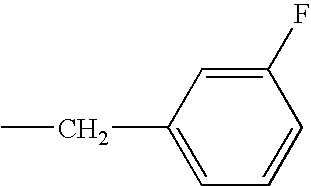 |
H | N-[(3-Fluorophenyl)methyl]-4-[[5- [(methoxyamino)carbonyl]-2- methylphenyl]amino]-5- methylpyrrolo[2,1-f][1,2,4]triazine-6- carboxamide | 463.2 2.84 min |
| 53 |
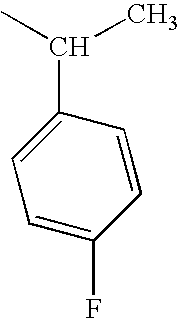 |
H | N-[1-(4-Fluorophenyl)ethyl]-4-[[5- [(methoxyamino)carbonyl]-2- methylphenyl]amino]-5- methylpyrrolo[2,1-f][1,2,4]triazine-6- carboxamide | 477.3 2.93 min |
| 54 |
 |
H | N-[(2,4-Difluorophenyl)methyl]-4-[[5- [(methoxyamino)carbonyl]-2- methylphenyl]amino]-5- methylpyrrolo[2,1-f][1,2,4]triazine-6- carboxamide | 481.2 2.92 min |
| 55 |
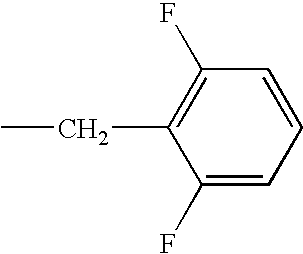 |
H | N-[(2,6-Difluorophenyl)methyl]-4-[[5- [(methoxyamino)carbonyl]-2- methylphenyl]amino]-5- methylpyrrolo[2,1-f][1,2,4]triazine-6- carboxamide | 481.1 2.70 min |
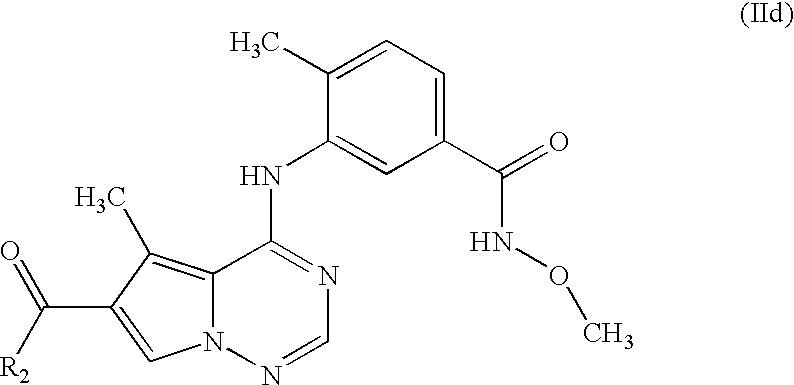
| TABLE 2 | |||
| Ex. | R2 | Compound Name | Data |
| 56 |
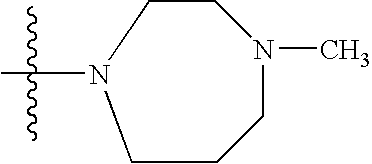 |
3-[[6-[(Hexahydro-4-methyl-1H-1,4- diazepin-1-yl)carbonyl]-5-methyl pyrrolo[2,1-f][1,2,4]triazin- 4-yl]amino]-N-methoxy-4-methylbenzamide | 452.1 1.63 min |
| 57 |
 |
N-Methoxy-4-methyl-3-[[5-methyl-6- (4-morpholinylcarbonyl) pyrrolo[2,1- f][1,2,4]triazin-4-yl]amino]benzamide | 425.2 1.82 min |
| 58 |
 |
N-Methoxy-4-methyl-3-[[5-methyl- 6-[[4-(phenylmethyl)-1-piperidinyl]carbonyl] pyrrolo[2,1-f][1,2,4]triazin- 4-yl]amino]benzamide | 513.4 3.45 min |
| 59 |
 |
N-Methoxy-4-methyl-3- [[5-methyl-6-(1-pyrrolidinylcarbonyl) pyrrolo[2,1-f][1,2,4]triazin- 4-yl]amino]benzamide | 409.2 2.16 min |

| TABLE 3 | ||||
| Data | ||||
| Ex. No. | X | R2 | Compound Name | MS/HPLC |
| 60 |
 |
—CH2—CH3 | 4-[[5-[(Methoxyamino)carbonyl]- 2-methylphenyl]amino]-5- (trifluoromethyl)pyrrolo[2,1- f][1,2,4]triazine-6-carboxylic acid ethyl ester | 438.2 3.76 min |
| 61 |
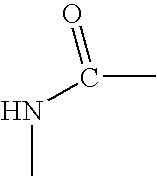 |
—CH2—CH3 | N-Ethyl-4-[[5- [(methoxyamino)carbonyl]-2- methylphenyl]amino]-5- (trifluoromethyl)pyrrolo[2,1- f][1,2,4]triazine-6-carboxamide | 437.2 2.99 min |
| 62 |
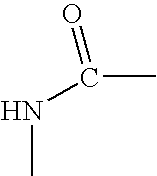 |
—CH2—CH2—CH3 | 4-[[5-[(Methoxyamino)carbonyl]- 2-methylphenyl]amino]-N-propyl- 5-(trifluoromethyl)pyrrolo[2,1- f][1,2,4]triazine-6-carboxamide | 451.3 3.21 min |
| 63 |
 |
 |
4-[[5-[(Methoxyamino)carbonyl]- 2-methylphenyl]amino]-N-[(1S)-1- methylpropyl]-5- (trifluoromethyl)pyrrolo[2,1- f][1,2,4]triazine-6-carboxamide | 465.3 3.36 min |
| 64 |
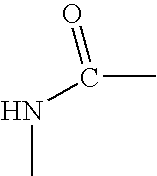 |
 |
4-[[5-[(Methoxyamino)carbonyl]- 2-methylphenyl]amino]-N-[(1S)-1- phenylethyl]-5- (trifluoromethyl)pyrrolo[2,1- f][1,2,4]triazine-6-carboxamide | 513.2 1.72 min |

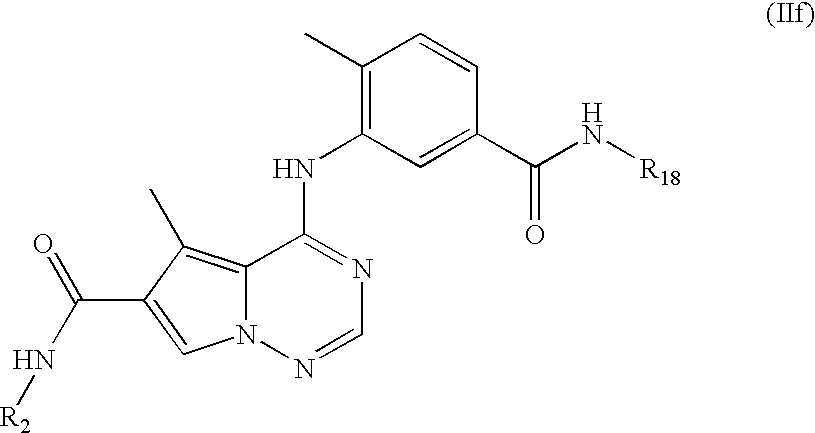
| TABLE 4 | ||||
| Ex. | R2 | R18 | Compound Name | Data |
| 66 | Et |
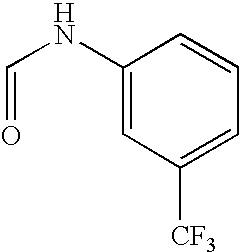 |
N-Ethyl-5-methyl-4-[[2- methyl-5-[[[3- (trifluoromethyl)phenyl]amino] carbonyl]phenyl]amino]pyrrol o[2,1-f][1,2,4]triazine-6- carboxamide | 1H NMR (CD3OD w/TFA): |
| #δ 8.28 (s, 1H), 8.19 (s, 1H), 8.16 (d, 1H), 8.11 (d, 1H), 7.84 (s, 1H), 7.71 (d, 1H), 7.58 (t, 2H), 7.47 (d, 1H), 3.44 (q, 2H), 2.94 (s, 3H), 2.47 (s, 3H), 1.26 (t, 3H). LCMS (M + H+) = 497.47. HPLC (Condition A): 3.30 min. | ||||
| 67 | Et |
 |
4-[[5-[[(4-Cyanophenyl) amino]carbonyl]-2- methylphenyl]amino]-N- ethyl-5-methyl pyrrolo[2,1-f][1,2,4] triazine-6-carboxamide | 1H NMR (CD3OD): δ |
| #7.93 (br s, 1H), 7.84-7.86 (d, 3H), 7.74 (d, 1H), 7.62 (d, 2H), 7.58 (s, 1H), 7.40 (d, 1H), 3.30 (q, 2H), 3.21 (s, 3H), 2.76 (s, 3H), 1.14 (t, 3H). LCMS (M + H+) = 454.18. HPLC (Condition A): 2.86 min. | ||||
| 68 |
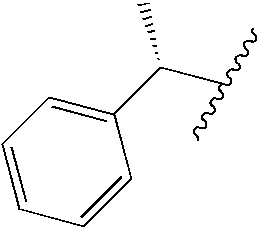 |
 |
5-Methyl-4-[[2-methyl-5- [(phenylamino)carbonyl] phenyl]amino]-N-[(1S)- 1-phenylethyl] pyrrolo[2,1-f][1,2,4] triazine-6-carboxamide | LCMS (M + H+) = 505.27. HPLC (Condition A): 3.34 min. |
| 69 |
 |
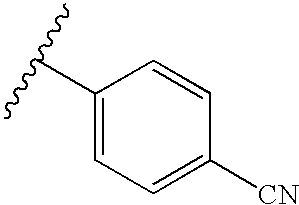 |
4-[[5-[[(4-Cyano- phenyl)amino]carbonyl]- 2-methylphenyl]amino]- 5-methyl-N-[(1S)-1- phenylethyl]pyrrolo[2,1- f][1,2,4]triazine-6- carboxamide | LCMS (M + H+) = 530.23. HPLC (Condition A): 3.35 min. |
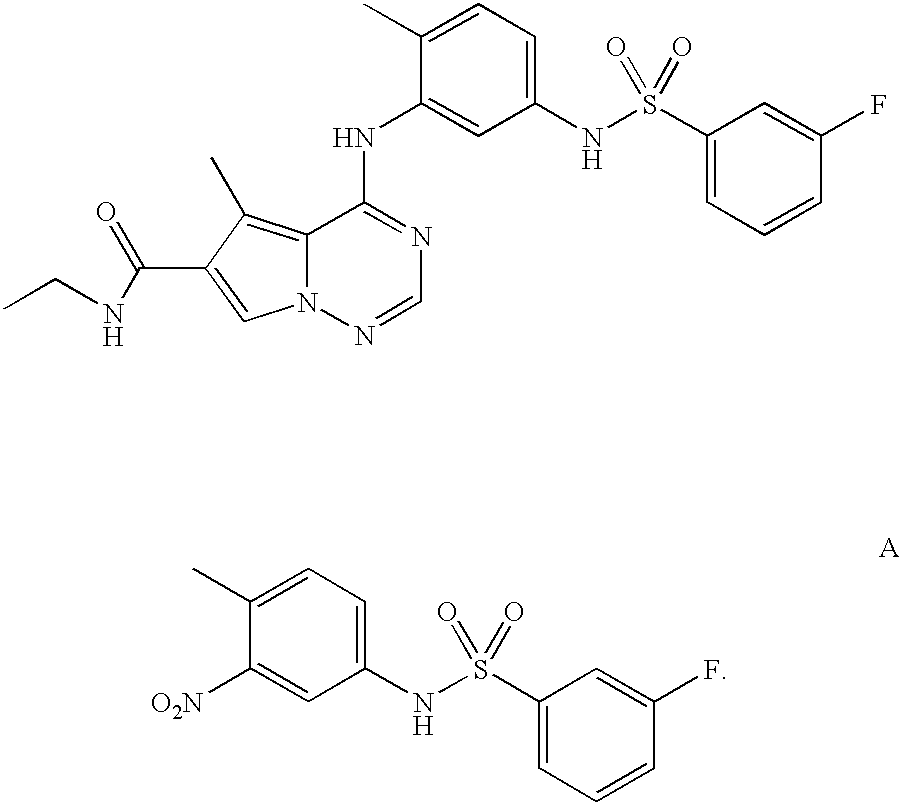
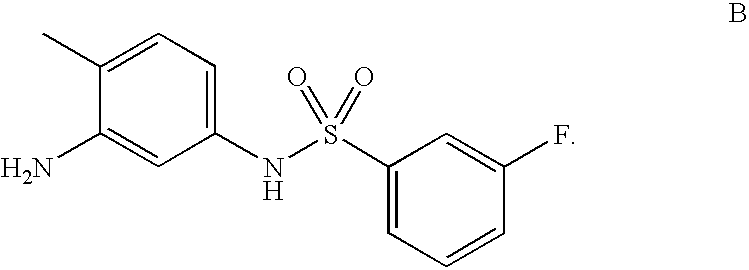

D.
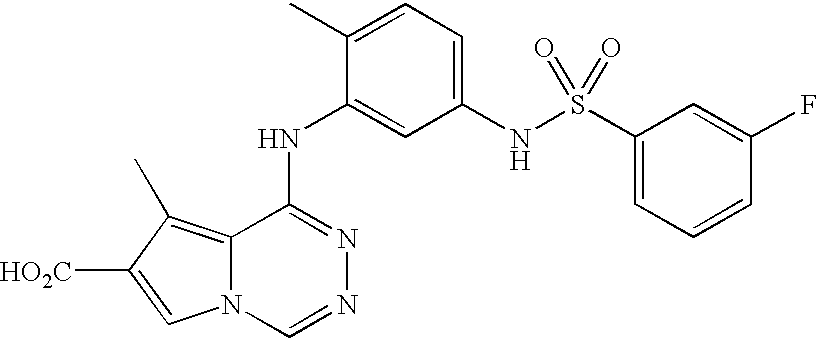
| TABLE 5 | |||
| Ex | Compound | Compound Name | Data |
| 71 |
 |
4-[[5-[[(3- Fluorophenyl)sulfonyl]amino]- 2-methylphenyl]amino]- N-[(1S)-2-methoxy-1- methylethyl]-5-methylpyrrolo[2,1- f][1,2,4]triazine-6-carboxamide | HPLC (Condition A): 2.89 min. MH+ (m/z) 527. |
| 72 |
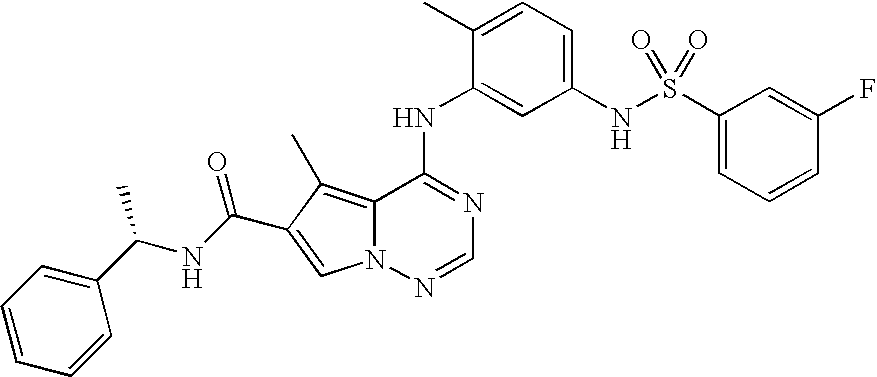 |
4-[[5-[[(3- Fluorophenyl)sulfonyl]amino]- 2-methylphenyl]amino]- 5-methyl-N-[(1S)-1- phenylethyl]pyrrolo[2,1- f][1,2,4]triazine-6-carboxamide | HPLC (Condition A): 3.23 min. MH+ (m/z) 559. |

| TABLE 6 | ||||
| Ex | X | R2 | Compound Name | Data |
| 73 | —CO2— | Et | 4-[[5-[(Methoxy- | 398.2, M + H |
| amino)carbonyl]-2- | 3.13 min, A | |||
| methylphenyl]amino]- | ||||
| 5,7-dimethylpyrrolo[2,1- | ||||
| f][1,2,4]triazine-6- | ||||
| carboxylic acid ethyl ester | ||||
| 74 | —C(═O)NH— | Et | N-Ethyl-4-[[5-[(methoxy | 397.2, M + H |
| Amino)carbonyl]-2- | 1.70 min, A | |||
| methylphenyl]amino]-5,7- | ||||
| dimethylpyrrolo[2,1- | ||||
| f][1,2,4]triazine-6-carboxamide | ||||
| 75 | —C(═O)NH— |
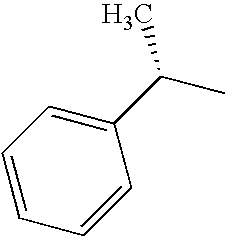 |
4-[[5-[(Methoxy- amino)carbonyl]-2- methylphenyl]amino]- 5,7-dimethyl-N-[(1S)-1- phenylethyl]pyrrolo[2,1- f][1,2,4]triazine-6-carboxamide | 473.3, M + H 2.51 min, A |
| 76 | —C(═O)NH— | —CH(CH3)2 | 4-[[5-[(Methoxy- | 411.2, M + H |
| amino)carbonyl]-2- | 1.81 min, A | |||
| methylphenyl]amino]- | ||||
| 5,7-dimethyl-N-(1- | ||||
| methylethyl)pyrrolo[2,1- | ||||
| f][1,2,4]triazine-6-carboxamide | ||||
| 77 | —C(═O)NH— |
 |
4-[[5-[(Methoxy- amino)carbonyl]-2- methylphenyl]amino]-5,7-dimethyl-N-(2- pyridinylmethyl)pyrrolo[2,1- f][1,2,4]triazine-6-carboxamide | 460.2, M + H 1.30 min, A |
| 78 | —CO2— | H | 4-[[5-[(Methoxy | 370.2, M + H |
| amino)carbonyl]-2- | 2.21 min, A | |||
| methylphenyl]amino]- | ||||
| 5,7-dimethylpyrrolo[2,1- | ||||
| f][1,2,4]triazine-6- | ||||
| carboxylic acid | ||||
| 79 | —C(═O)NH— |
 |
4-[[5-[(Methoxy- amino)carbonyl]-2- methylphenyl]amino]- 5,7-dimethyl-N-[2-(4- morpholinyl)ethyl]pyrrolo[2,1- f][1,2,4]triazine-6-carboxamide | 482.1, M + H 1.21 min, A |
| 80 | —C(═O)NH— |
 |
4-[[5-[(Methoxy- amino)carbonyl]-2- methylphenyl]amino]- 5,7-dimethyl-N-[2-(1- piperidinyl)ethyl]pyrrolo[2,1- f][1,2,4]triazine-6-carboxamide | 480.2, M + H 1.39 min, A |
| 81 | —C(═O)NH— |
 |
N-[2-(Dimethylamino) Ethyl]-4-[[5-[(methoxy Amino)carbonyl]-2- methylphenyl]amino]- 5,7-dimethylpyrrolo[2,1- f][1,2,4]triazine-6-carboxamide | 440.2, M + H 1.09 min, A |

A. 5-Methyl-4-[(2-methyl-5-nitrophenyl)amino]pyrrolo[2,1-f][1,2,4]triazine-6-carboxylic acid ethyl ester
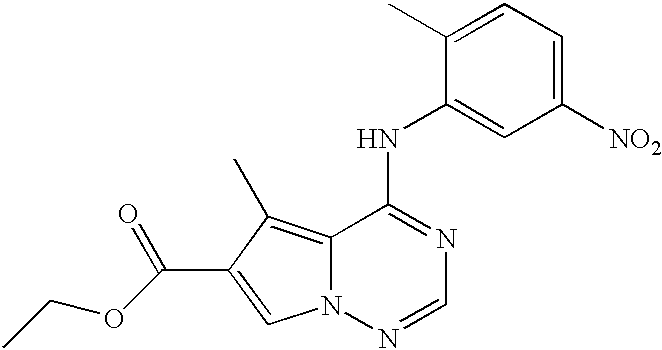
B. 5-Methyl-4-[(2-methyl-5-nitrophenyl)amino]pyrrolo[2,1-f][1,2,4]triazine-6-carboxylic Acid
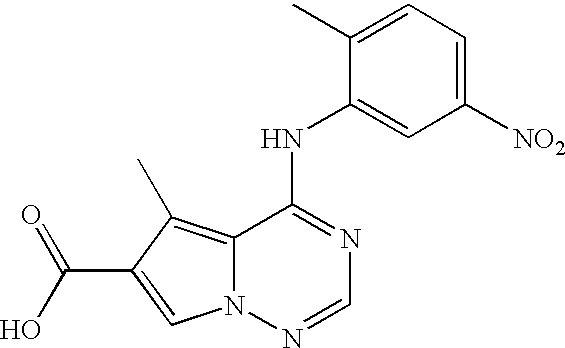
C. 5-methyl-4-[(2-methyl-5-nitrophenyl)amino]-N-propylpyrrolo[2,1-f][1,2,4]triazine-6-carboxamide
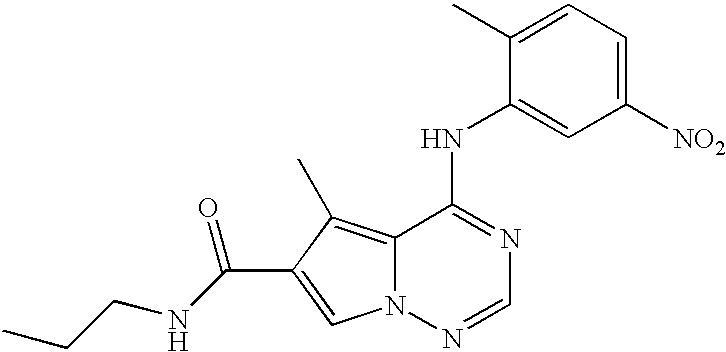
D. 4-[(5-Amino-2-methylphenyl)amino]-5-methyl-N-propylpyrrolo[2,1-f][1,2,4]triazine-6-carboxamide
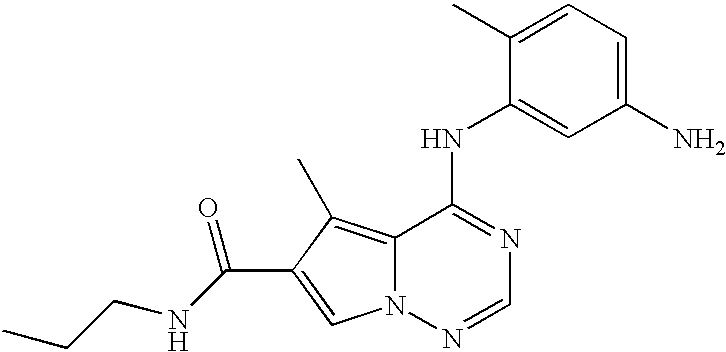
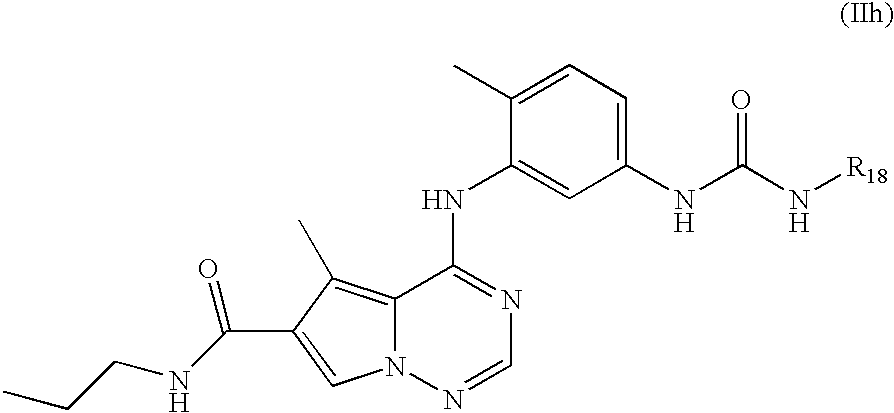
| TABLE 7 | |||
| Data | |||
| Ex. | R18 | Compound Name | MS/HPLC |
| 83 |
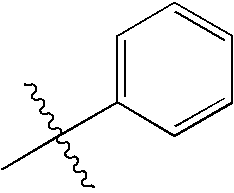 |
5-Methyl-4-[[2-methyl-5- [[(phenylamino)carbonyl]- amino]phenyl]amino]-N- propylpyrrolo[2,1- f][1,2,4]triazine-6- carboxamide | 458.2 3.40 min |
| 84 |
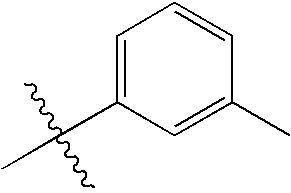 |
5-Methyl-4-[[2-methyl-5- [[[(3-methylphenyl)amino]- carbonyl]amino]phenyl]- amino]-N-propyl- pyrrolo[2,1- f][1,2,4]triazine- 6-carboxamide | 472.5 3.60 |
| 85 |
 |
4-[[5-[[[(4-Cyanophenyl)- amino]carbonyl]amino]-2- methylphenyl]amino]-5- methyl-N-propyl- pyrrolo[2,1- f][1,2,4]triazine- 6-carboxamide | 483.3 3.48 |
| 86 |
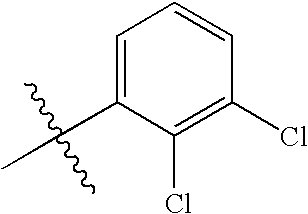 |
4-[[5-[[[(2,3-Dichloro- phenyl)amino]carbonyl]- amino]-2-methylphenyl]- amino]-5-methyl-N-propyl- pyrrolo[2,1-f][1,2,4]- triazine-6-carboxamide | 526.2 3.98 |
| 87 |
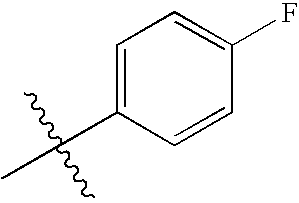 |
4-[[5-[[[(4-Fluorophenyl)- amino]carbonyl]amino]-2- methylphenyl]amino]-5- methyl-N-propyl- pyrrolo[2,1- f][1,2,4]triazine- 6-carboxamide | 476.2 3.48 |
| 88 |
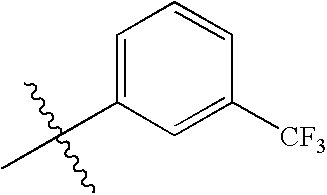 |
5-Methyl-4-[[2-methyl-5- [[[[3-(trifluoromethyl)- phenyl]amino]carbonyl]- amino]phenyl]amino]-N- propylpyrrolo[2,1- f][1,2,4]triazine- 6-carboxamide | 526.1 3.87 min |
- 89) 1,3-Dihydro-3-[5-methoxy-6-[[4-(4-methyl-1-piperazinyl)butyl]amino]pyrrolo[2,1-f][1,2,4]triazin-4-yl]-2H-indol-2-one;
- 90) 1,3-Dihydro-3-[5-methoxy-6-[[4-(4-morpholinyl)butyl]amino]pyrrolo[2,1-f][1,2,4]triazin-4-yl]-2H-indol-2-one;
- 91) 1-[3-[4-(2,3-Dihydro-2-oxo-1H-indol-3-yl)-5-methylpyrrolo[2,1-f][1,2,4]triazin-6-yl]-1-oxopropyl]-4-methylpiperazine; and
- 92) 2-Methyl-5-[[5-methyl-6-[3-(2H-1,2,3-triazol-2-yl)propoxy]pyrrolo[2,1-f][1,2,4]triazin-4-yl]amino]phenol.
Claims (9)
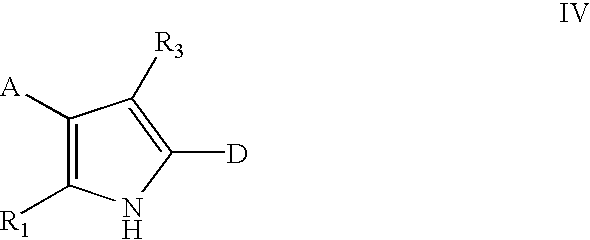
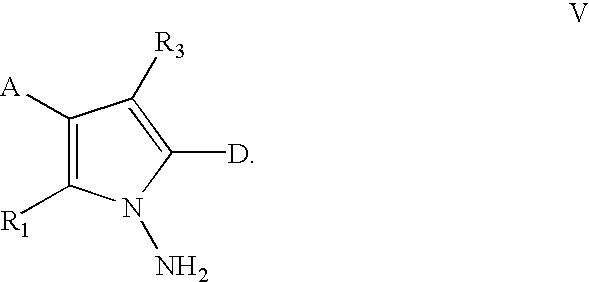
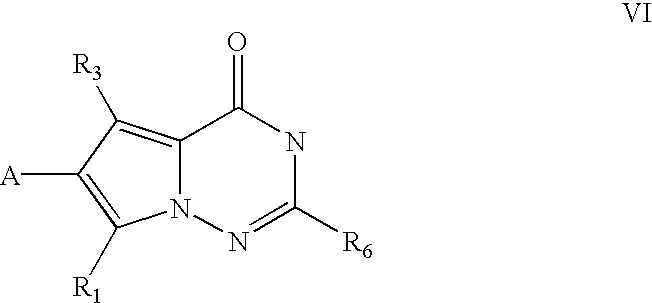
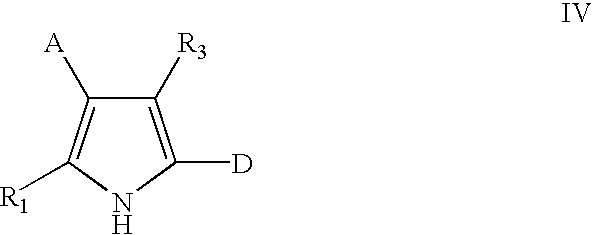

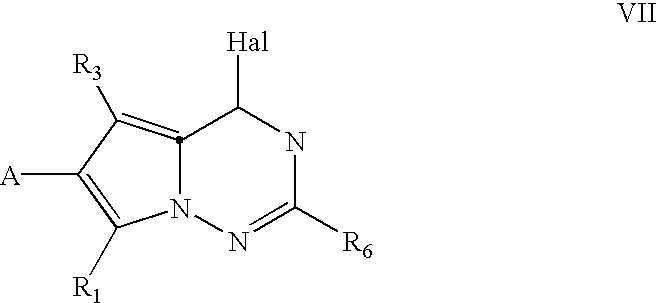
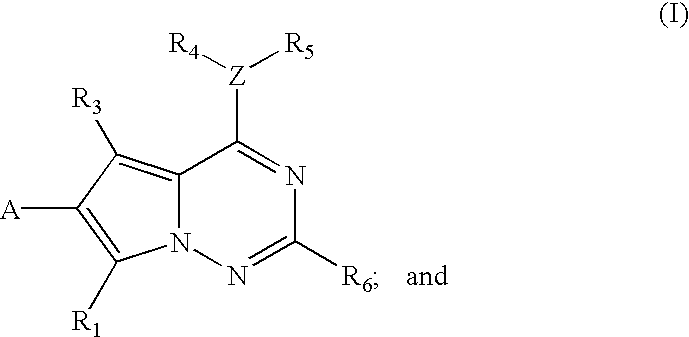
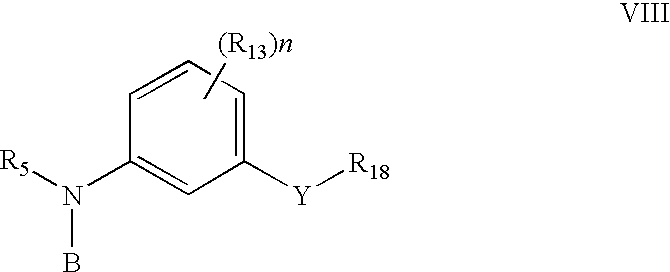
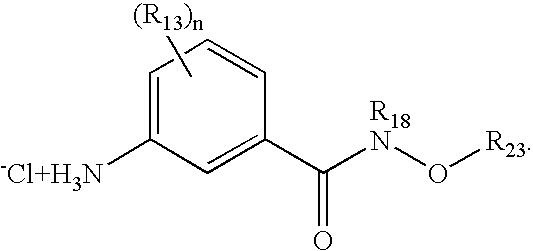

Priority Applications (17)
| Application Number | Priority Date | Filing Date | Title |
|---|---|---|---|
| US10/289,010 US6867300B2 (en) | 2000-11-17 | 2002-11-06 | Methods for the preparation of pyrrolotriazine compounds useful as kinase inhibitors |
| CNB2003801082297A CN100360532C (en) | 2002-11-06 | 2003-11-03 | Process for the preparation of pyrrolotriazine compounds useful as kinase inhibitors |
| MXPA05004748A MXPA05004748A (en) | 2002-11-06 | 2003-11-03 | Methods for the preparation of pyrrolotriazine compounds useful as kinase inhibitors. |
| AU2003287514A AU2003287514A1 (en) | 2002-11-06 | 2003-11-03 | Methods for the preparation of pyrrolotriazine compounds useful as kinase inhibitors |
| CA002505365A CA2505365A1 (en) | 2002-11-06 | 2003-11-03 | Methods for the preparation of pyrrolotriazine compounds useful as kinase inhibitors |
| ES03781756T ES2337571T3 (en) | 2002-11-06 | 2003-11-03 | PROCEDURE FOR THE PREPARATION OF USEFUL PIRROLOTRIAZINE COMPOUNDS AS QUINASE INHIBITORS. |
| JP2004551735A JP4662775B2 (en) | 2002-11-06 | 2003-11-03 | Method for preparing pyrrolotriazine compounds useful as kinase inhibitors |
| AT03781756T ATE453645T1 (en) | 2002-11-06 | 2003-11-03 | METHOD FOR PRODUCING PYRROLOTRIAZINE COMPOUNDS SUITABLE AS KINASE INHIBITORS |
| EP03781756A EP1562949B1 (en) | 2002-11-06 | 2003-11-03 | Methods for the preparation of pyrrolotriazine compounds useful as kinase inhibitors |
| KR1020057008063A KR20050084961A (en) | 2002-11-06 | 2003-11-03 | Methods for the preparation of pyrrolotriazine compounds useful as kinase inhibitors |
| BR0316056-4A BR0316056A (en) | 2002-11-06 | 2003-11-03 | Process for the preparation of pyrrolotriazine compounds useful as kinase inhibitors |
| PCT/US2003/035220 WO2004043912A2 (en) | 2002-11-06 | 2003-11-03 | Methods for the preparation of pyrrolotriazine compounds useful as kinase inhibitors |
| PL377112A PL377112A1 (en) | 2002-11-06 | 2003-11-03 | Methods for the preparation of pyrrolotriazine compounds useful as kinase inhibitors |
| DE60330800T DE60330800D1 (en) | 2002-11-06 | 2003-11-03 | METHOD FOR PRODUCING PYRROLOTRIAZIN COMPOUNDS SUITABLE AS KINASEINHIBITORS |
| TW092130839A TWI290555B (en) | 2002-11-06 | 2003-11-04 | Methods for the preparation of pyrrolotriazine compounds useful as kinase inhibitors |
| US11/019,788 US7211666B2 (en) | 2000-11-17 | 2004-12-22 | Methods for the preparation of pyrrolotriazine compounds useful as kinase inhibitors |
| CO05043491A CO5560547A2 (en) | 2002-11-06 | 2005-05-05 | METHODS FOR THE PREPARATION OF USEFUL PIRROLOTRIAZINE COMPOUNDS AS KINASE INHIBITORS |
Applications Claiming Priority (4)
| Application Number | Priority Date | Filing Date | Title |
|---|---|---|---|
| US24987700P | 2000-11-17 | 2000-11-17 | |
| US31056101P | 2001-08-07 | 2001-08-07 | |
| US10/036,293 US6670357B2 (en) | 2000-11-17 | 2001-11-07 | Methods of treating p38 kinase-associated conditions and pyrrolotriazine compounds useful as kinase inhibitors |
| US10/289,010 US6867300B2 (en) | 2000-11-17 | 2002-11-06 | Methods for the preparation of pyrrolotriazine compounds useful as kinase inhibitors |
Related Parent Applications (1)
| Application Number | Title | Priority Date | Filing Date |
|---|---|---|---|
| US10/036,293 Continuation-In-Part US6670357B2 (en) | 2000-11-17 | 2001-11-07 | Methods of treating p38 kinase-associated conditions and pyrrolotriazine compounds useful as kinase inhibitors |
Related Child Applications (1)
| Application Number | Title | Priority Date | Filing Date |
|---|---|---|---|
| US11/019,788 Continuation US7211666B2 (en) | 2000-11-17 | 2004-12-22 | Methods for the preparation of pyrrolotriazine compounds useful as kinase inhibitors |
Publications (2)
| Publication Number | Publication Date |
|---|---|
| US20030186982A1 US20030186982A1 (en) | 2003-10-02 |
| US6867300B2 true US6867300B2 (en) | 2005-03-15 |
Family
ID=32312096
Family Applications (2)
| Application Number | Title | Priority Date | Filing Date |
|---|---|---|---|
| US10/289,010 Expired - Fee Related US6867300B2 (en) | 2000-11-17 | 2002-11-06 | Methods for the preparation of pyrrolotriazine compounds useful as kinase inhibitors |
| US11/019,788 Expired - Fee Related US7211666B2 (en) | 2000-11-17 | 2004-12-22 | Methods for the preparation of pyrrolotriazine compounds useful as kinase inhibitors |
Family Applications After (1)
| Application Number | Title | Priority Date | Filing Date |
|---|---|---|---|
| US11/019,788 Expired - Fee Related US7211666B2 (en) | 2000-11-17 | 2004-12-22 | Methods for the preparation of pyrrolotriazine compounds useful as kinase inhibitors |
Country Status (16)
| Country | Link |
|---|---|
| US (2) | US6867300B2 (en) |
| EP (1) | EP1562949B1 (en) |
| JP (1) | JP4662775B2 (en) |
| KR (1) | KR20050084961A (en) |
| CN (1) | CN100360532C (en) |
| AT (1) | ATE453645T1 (en) |
| AU (1) | AU2003287514A1 (en) |
| BR (1) | BR0316056A (en) |
| CA (1) | CA2505365A1 (en) |
| CO (1) | CO5560547A2 (en) |
| DE (1) | DE60330800D1 (en) |
| ES (1) | ES2337571T3 (en) |
| MX (1) | MXPA05004748A (en) |
| PL (1) | PL377112A1 (en) |
| TW (1) | TWI290555B (en) |
| WO (1) | WO2004043912A2 (en) |
Cited By (27)
| Publication number | Priority date | Publication date | Assignee | Title |
|---|---|---|---|---|
| US20050107462A1 (en) * | 2000-11-17 | 2005-05-19 | Godfrey Jollie D.Jr. | Methods for the preparation of pyrrolotriazine compounds useful as kinase inhibitors |
| US20050182058A1 (en) * | 2003-12-29 | 2005-08-18 | Fink Brian E. | Pyrrolotriazine compounds as kinase inhibitors |
| US20050209235A1 (en) * | 2001-11-14 | 2005-09-22 | Harold Mastalerz | C-5 Modified indazolylpyrrolotriazines |
| US20050288289A1 (en) * | 2004-06-28 | 2005-12-29 | Gerard Crispino | Processes and intermediates useful for preparing fused heterocyclic kinase inhibitors |
| US6982265B1 (en) * | 1999-05-21 | 2006-01-03 | Bristol Myers Squibb Company | Pyrrolotriazine inhibitors of kinases |
| US20060003967A1 (en) * | 2004-06-30 | 2006-01-05 | Zhongping Shi | Method for preparing pyrrolotriazine compounds |
| US20060009454A1 (en) * | 2004-06-16 | 2006-01-12 | Cai Zhen-Wei | Pyrrolotriazine kinase inhibitors |
| US20060014741A1 (en) * | 2003-12-12 | 2006-01-19 | Dimarco John D | Synthetic process, and crystalline forms of a pyrrolotriazine compound |
| US20060014745A1 (en) * | 2004-07-01 | 2006-01-19 | Gavai Ashvinikumar V | Pyrrolotriazine compounds |
| US20060019928A1 (en) * | 2004-06-30 | 2006-01-26 | James Lin | Tricyclic-heteroaryl compounds useful as kinase inhibitors |
| US20060030708A1 (en) * | 2004-08-05 | 2006-02-09 | Lobben Paul C | Methods for the preparation of pyrrolotriazine compounds |
| US20060058304A1 (en) * | 2002-07-19 | 2006-03-16 | Bhide Rajeev S | Azaindole kinase inhibitors |
| US20060089358A1 (en) * | 2004-10-21 | 2006-04-27 | Gavai Ashvinikumar V | Pyrrolotriazine compounds |
| US7064203B2 (en) | 2003-12-29 | 2006-06-20 | Bristol Myers Squibb Company | Di-substituted pyrrolotriazine compounds |
| US20060135576A1 (en) * | 2002-06-20 | 2006-06-22 | Borzilleri Robert M | Heterocyclic inhibitors of kinases |
| US7102001B2 (en) | 2003-12-12 | 2006-09-05 | Bristol-Myers Squibb Company | Process for preparing pyrrolotriazine |
| US20060211695A1 (en) * | 2004-06-28 | 2006-09-21 | Borzilleri Robert M | Fused heterocyclic kinase inhibitors |
| US7148348B2 (en) | 2004-08-12 | 2006-12-12 | Bristol-Myers Squibb Company | Process for preparing pyrrolotriazine aniline compounds useful as kinase inhibitors |
| US7148220B2 (en) | 2002-12-13 | 2006-12-12 | Bristol-Myers Squibb Company | C-6 modified indazolylpyrrolotriazines |
| US7173031B2 (en) | 2004-06-28 | 2007-02-06 | Bristol-Myers Squibb Company | Pyrrolotriazine kinase inhibitors |
| US20070149534A1 (en) * | 2005-11-18 | 2007-06-28 | Bristol-Myers Squibb Company | Pyrrolotriazine kinase inhibitors |
| US20090105243A1 (en) * | 2002-04-23 | 2009-04-23 | Bristol-Myers Squibb Company | Pyrrolo-Triazine Aniline Compounds Useful As Kinase Inhibitors |
| US8063208B2 (en) | 2006-02-16 | 2011-11-22 | Bristol-Myers Squibb Company | Crystalline forms of (3R,4R)-4-amino-1-[[4-[(3-methoxyphenyl)amino]pyrrolo[2,1-f][1,2,4]triazin-5-yl]methyl]piperidin-3-ol |
| WO2012031057A1 (en) | 2010-09-01 | 2012-03-08 | Bristol-Myers Squibb Company | Bms- 582949 for the treatment of resistant rheumatic disease |
| US8558000B2 (en) | 2008-01-23 | 2013-10-15 | Bristol-Myers Squibb Company | 4-pyridinone compounds and their use for cancer |
| US9050345B2 (en) | 2013-03-11 | 2015-06-09 | Bristol-Myers Squibb Company | Pyrrolotriazines as potassium ion channel inhibitors |
| US12459951B2 (en) | 2022-04-08 | 2025-11-04 | Shy Therapeutics, Llc | Compounds that interact with RAS superfamily proteins for treatment of cancers, inflammatory diseases, rasopathies, and fibrotic disease |
Families Citing this family (22)
| Publication number | Priority date | Publication date | Assignee | Title |
|---|---|---|---|---|
| US6670357B2 (en) * | 2000-11-17 | 2003-12-30 | Bristol-Myers Squibb Company | Methods of treating p38 kinase-associated conditions and pyrrolotriazine compounds useful as kinase inhibitors |
| TW200306841A (en) | 2002-04-23 | 2003-12-01 | Bristol Myers Squibb Co | Aryl ketone pyrrolo-triazine compounds useful as kinase inhibitors |
| US7388009B2 (en) | 2002-04-23 | 2008-06-17 | Bristol-Myers Squibb Company | Heteroaryl-substituted pyrrolo-triazine compounds useful as kinase inhibitors |
| JP2006516653A (en) | 2003-02-05 | 2006-07-06 | ブリストル−マイヤーズ スクイブ カンパニー | Method for producing kinase inhibitor pyrrolotriazine |
| US7829720B2 (en) | 2004-05-04 | 2010-11-09 | Bristol-Myers Squibb Company | Process for preparing atazanavir bisulfate and novel forms |
| TWI354569B (en) | 2004-05-28 | 2011-12-21 | Bristol Myers Squibb Co | Coated tablet formulation and method |
| DE602005023333D1 (en) * | 2004-10-15 | 2010-10-14 | Takeda Pharmaceutical | KINASE INHIBITORS |
| US7348325B2 (en) * | 2005-11-30 | 2008-03-25 | Bristol-Myers Squibb Company | Pyrrolotriazine kinase inhibitors |
| PE20070855A1 (en) | 2005-12-02 | 2007-10-14 | Bayer Pharmaceuticals Corp | DERIVATIVES OF 4-AMINO-PYRROLOTRIAZINE SUBSTITUTE AS KINASE INHIBITORS |
| US8143393B2 (en) | 2005-12-02 | 2012-03-27 | Bayer Healthcare Llc | Substituted 4-amino-pyrrolotriazine derivatives useful for treating hyper-proliferative disorders and diseases associated with angiogenesis |
| WO2010071885A1 (en) | 2008-12-19 | 2010-06-24 | Cephalon, Inc. | Pyrrolotriazines as alk and jak2 inhibitors |
| CN102153558B (en) * | 2011-02-23 | 2012-11-21 | 扬州永济医药新技术有限公司 | Derivative of multi-target antitumor inhibitor 2-aminopyrrole-triazine and synthesis method thereof |
| CN103450204B (en) | 2012-05-31 | 2016-08-17 | 中国科学院上海药物研究所 | Pyrroles [2,1-f] [1,2,4] triazin compound, Preparation Method And The Use |
| US9724352B2 (en) | 2012-05-31 | 2017-08-08 | Shanghai Institute Of Materia Medica, Chinese Academy Of Sciences | Pyrrolo[2,1-F[1,2,4]triazine compounds, preparation methods and applications thereof |
| CN104003990B (en) * | 2013-02-21 | 2017-09-15 | 江苏先声药业有限公司 | Heterocyclic amine Hedgehog signal pathway inhibitors |
| CN104788460B (en) * | 2015-03-27 | 2016-11-09 | 陕西师范大学 | Preparation method of 4-arylaminopyrrolo[2,1-f][1,2,4]triazine derivatives |
| WO2019168874A1 (en) | 2018-02-27 | 2019-09-06 | The Research Foundation For The State University Of New York | Difluoromethoxylation and trifluoromethoxylation compositions and methods for synthesizing same |
| CN108516977A (en) * | 2018-07-10 | 2018-09-11 | 刘凤娟 | A kind of synthetic method for treating the map kinase inhibitor of malignant tumour |
| CN111234067B (en) * | 2018-11-29 | 2021-08-03 | 中国石油化工股份有限公司 | Solid catalyst component and catalyst for olefin polymerization and application thereof |
| CN113372263B (en) * | 2021-05-21 | 2022-04-19 | 温州医科大学 | A kind of preparation method of 2-chloro-3-amino naphthoquinone compound |
| CN113292503B (en) * | 2021-05-22 | 2022-05-13 | 台州市第一人民医院 | Preparation method of 2-bromo-3-aminonaphthoquinone compound |
| CN116789674B (en) * | 2022-08-24 | 2024-05-24 | 杭州高光制药有限公司 | NLRP3 inflammasome inhibitors |
Citations (19)
| Publication number | Priority date | Publication date | Assignee | Title |
|---|---|---|---|---|
| EP0713876A1 (en) | 1994-11-24 | 1996-05-29 | Wakamoto Pharmaceutical Co., Ltd. | Triazine derivative, chymase activity inhibitor and nitric oxide production inhibitor |
| EP0778277A1 (en) | 1995-12-08 | 1997-06-11 | Pfizer Inc. | Substituted heterocyclic derivatives as CRF antagonists |
| US5658903A (en) | 1995-06-07 | 1997-08-19 | Smithkline Beecham Corporation | Imidazole compounds, compositions and use |
| WO1999024033A1 (en) | 1997-11-12 | 1999-05-20 | Shionogi & Co., Ltd. | Method for the treatment of disorders associated with apoptosis using n-heterocyclic glyoxylamide compounds |
| US5932576A (en) | 1997-05-22 | 1999-08-03 | G. D. Searle & Company | 3(5)-heteroaryl substituted pyrazoles as p38 kinase inhibitors |
| US5945418A (en) | 1996-12-18 | 1999-08-31 | Vertex Pharmaceuticals Incorporated | Inhibitors of p38 |
| US5977103A (en) | 1996-01-11 | 1999-11-02 | Smithkline Beecham Corporation | Substituted imidazole compounds |
| WO2000012497A2 (en) | 1998-08-28 | 2000-03-09 | Scios Inc. | Quinazoline derivatives as medicaments |
| WO2000012074A2 (en) | 1998-08-28 | 2000-03-09 | Scios Inc. | Use of piperidines and/or piperazines as inhibitors of p38-alpha kinase |
| US6087496A (en) | 1998-05-22 | 2000-07-11 | G. D. Searle & Co. | Substituted pyrazoles suitable as p38 kinase inhibitors |
| WO2000056738A1 (en) | 1999-03-23 | 2000-09-28 | Astrazeneca Ab | Pyridine and pyrimidine derivatives and their use as inhibitors of cytokine mediated disease |
| US6130235A (en) | 1998-05-22 | 2000-10-10 | Scios Inc. | Compounds and methods to treat cardiac failure and other disorders |
| US6147080A (en) | 1996-12-18 | 2000-11-14 | Vertex Pharmaceuticals Incorporated | Inhibitors of p38 |
| WO2000071129A1 (en) | 1999-05-21 | 2000-11-30 | Bristol-Myers Squibb Company | Pyrrolotriazine inhibitors of kinases |
| WO2001014378A1 (en) | 1999-08-23 | 2001-03-01 | Shionogi & Co., Ltd. | PYRROLOTRIAZINE DERIVATIVES HAVING sPLA2-INHIBITORY ACTIVITIES |
| WO2001027089A1 (en) | 1999-10-13 | 2001-04-19 | Astrazeneca Ab | Pyrimidine derivatives |
| WO2001034605A1 (en) | 1999-11-10 | 2001-05-17 | Ortho-Mcneil Pharmaceutical, Inc. | SUBSTITUTED 2-ARYL-3-(HETEROARYL)-IMIDAZO[1,2-a]PYRIMIDINES, AND RELATED PHARMACEUTICAL COMPOSITIONS AND METHODS |
| US6251914B1 (en) | 1997-07-02 | 2001-06-26 | Smithkline Beecham Corporation | Cycloalkyl substituted imidazoles |
| WO2001047897A1 (en) | 1999-12-28 | 2001-07-05 | Pharmacopeia, Inc. | Cytokine, especially tnf-alpha, inhibitors |
Family Cites Families (29)
| Publication number | Priority date | Publication date | Assignee | Title |
|---|---|---|---|---|
| US4908056A (en) * | 1986-04-25 | 1990-03-13 | E. I. Du Pont De Nemours And Company | Heterocyclic acyl sulfonamides |
| DK0682027T3 (en) * | 1994-05-03 | 1998-05-04 | Ciba Geigy Ag | Pyrrolopyrimidine derivatives with antiproliferative action |
| GB9604361D0 (en) | 1996-02-29 | 1996-05-01 | Pharmacia Spa | 4-Substituted pyrrolopyrimidine compounds as tyrosine kinase inhibitors |
| JP3621706B2 (en) | 1996-08-28 | 2005-02-16 | ファイザー・インク | Substituted 6,5-hetero-bicyclic derivatives |
| US20010007867A1 (en) * | 1999-12-13 | 2001-07-12 | Yuhpyng L. Chen | Substituted 6,5-hetero-bicyclic derivatives |
| EP1117653B1 (en) | 1998-10-01 | 2003-02-05 | AstraZeneca AB | Quinoline and quinazoline derivatives and their use as inhibitors of cytokine mediated diseases |
| IL139197A0 (en) | 1999-10-29 | 2001-11-25 | Pfizer Prod Inc | Use of corticotropin releasing factor antagonists and related compositions |
| US20020065270A1 (en) | 1999-12-28 | 2002-05-30 | Moriarty Kevin Joseph | N-heterocyclic inhibitors of TNF-alpha expression |
| US6906067B2 (en) * | 1999-12-28 | 2005-06-14 | Bristol-Myers Squibb Company | N-heterocyclic inhibitors of TNF-α expression |
| EP1149583A3 (en) * | 2000-04-13 | 2001-11-14 | Pfizer Products Inc. | Combinations of corticotropin releasing factor antagonists and growth hormone secretagogues |
| US6518269B1 (en) * | 2000-07-28 | 2003-02-11 | University Of Arizona Foundation | Cancer treatment |
| US6867300B2 (en) * | 2000-11-17 | 2005-03-15 | Bristol-Myers Squibb Company | Methods for the preparation of pyrrolotriazine compounds useful as kinase inhibitors |
| GEP20063915B (en) | 2000-11-17 | 2006-09-11 | Bristol Myers Squibb Co | PYRROLOTRIAZINE COMPOUNDS USEFUL AS KINASE INHIBITORS AND USE THEREOF FOR TREATING p38 KINASE-ASSOCIATED CONDITIONS |
| US6670357B2 (en) * | 2000-11-17 | 2003-12-30 | Bristol-Myers Squibb Company | Methods of treating p38 kinase-associated conditions and pyrrolotriazine compounds useful as kinase inhibitors |
| EP1406875B1 (en) * | 2001-06-26 | 2013-07-31 | Bristol-Myers Squibb Company | N-heterocyclic inhibitors of tnf-alpha expression |
| TW200300350A (en) * | 2001-11-14 | 2003-06-01 | Bristol Myers Squibb Co | C-5 modified indazolylpyrrolotriazines |
| AU2003231034B2 (en) | 2002-04-23 | 2009-03-05 | Bristol-Myers Squibb Company | Pyrrolo-triazine aniline compounds useful as kinase inhibitors |
| US7388009B2 (en) | 2002-04-23 | 2008-06-17 | Bristol-Myers Squibb Company | Heteroaryl-substituted pyrrolo-triazine compounds useful as kinase inhibitors |
| TW200306841A (en) | 2002-04-23 | 2003-12-01 | Bristol Myers Squibb Co | Aryl ketone pyrrolo-triazine compounds useful as kinase inhibitors |
| TW200407143A (en) * | 2002-05-21 | 2004-05-16 | Bristol Myers Squibb Co | Pyrrolotriazinone compounds and their use to treat diseases |
| TWI329112B (en) | 2002-07-19 | 2010-08-21 | Bristol Myers Squibb Co | Novel inhibitors of kinases |
| TWI272271B (en) * | 2002-07-19 | 2007-02-01 | Bristol Myers Squibb Co | Process for preparing certain pyrrolotriazine compounds |
| EP1543009A4 (en) * | 2002-08-02 | 2007-08-08 | Bristol Myers Squibb Co | Pyrrolotriazine kinase inhibitors |
| TW200420565A (en) * | 2002-12-13 | 2004-10-16 | Bristol Myers Squibb Co | C-6 modified indazolylpyrrolotriazines |
| JP2006516653A (en) | 2003-02-05 | 2006-07-06 | ブリストル−マイヤーズ スクイブ カンパニー | Method for producing kinase inhibitor pyrrolotriazine |
| US7419978B2 (en) | 2003-10-22 | 2008-09-02 | Bristol-Myers Squibb Company | Phenyl-aniline substituted bicyclic compounds useful as kinase inhibitors |
| US7102001B2 (en) | 2003-12-12 | 2006-09-05 | Bristol-Myers Squibb Company | Process for preparing pyrrolotriazine |
| US7064203B2 (en) * | 2003-12-29 | 2006-06-20 | Bristol Myers Squibb Company | Di-substituted pyrrolotriazine compounds |
| MY145634A (en) | 2003-12-29 | 2012-03-15 | Bristol Myers Squibb Co | Pyrrolotriazine compounds as kinase inhibitors |
-
2002
- 2002-11-06 US US10/289,010 patent/US6867300B2/en not_active Expired - Fee Related
-
2003
- 2003-11-03 CN CNB2003801082297A patent/CN100360532C/en not_active Expired - Fee Related
- 2003-11-03 CA CA002505365A patent/CA2505365A1/en not_active Abandoned
- 2003-11-03 BR BR0316056-4A patent/BR0316056A/en not_active IP Right Cessation
- 2003-11-03 AT AT03781756T patent/ATE453645T1/en not_active IP Right Cessation
- 2003-11-03 EP EP03781756A patent/EP1562949B1/en not_active Expired - Lifetime
- 2003-11-03 AU AU2003287514A patent/AU2003287514A1/en not_active Abandoned
- 2003-11-03 DE DE60330800T patent/DE60330800D1/en not_active Expired - Lifetime
- 2003-11-03 JP JP2004551735A patent/JP4662775B2/en not_active Expired - Fee Related
- 2003-11-03 WO PCT/US2003/035220 patent/WO2004043912A2/en not_active Ceased
- 2003-11-03 PL PL377112A patent/PL377112A1/en not_active Application Discontinuation
- 2003-11-03 ES ES03781756T patent/ES2337571T3/en not_active Expired - Lifetime
- 2003-11-03 MX MXPA05004748A patent/MXPA05004748A/en active IP Right Grant
- 2003-11-03 KR KR1020057008063A patent/KR20050084961A/en not_active Ceased
- 2003-11-04 TW TW092130839A patent/TWI290555B/en not_active IP Right Cessation
-
2004
- 2004-12-22 US US11/019,788 patent/US7211666B2/en not_active Expired - Fee Related
-
2005
- 2005-05-05 CO CO05043491A patent/CO5560547A2/en not_active Application Discontinuation
Patent Citations (20)
| Publication number | Priority date | Publication date | Assignee | Title |
|---|---|---|---|---|
| EP0713876A1 (en) | 1994-11-24 | 1996-05-29 | Wakamoto Pharmaceutical Co., Ltd. | Triazine derivative, chymase activity inhibitor and nitric oxide production inhibitor |
| US5658903A (en) | 1995-06-07 | 1997-08-19 | Smithkline Beecham Corporation | Imidazole compounds, compositions and use |
| EP0778277A1 (en) | 1995-12-08 | 1997-06-11 | Pfizer Inc. | Substituted heterocyclic derivatives as CRF antagonists |
| US5977103A (en) | 1996-01-11 | 1999-11-02 | Smithkline Beecham Corporation | Substituted imidazole compounds |
| US5945418A (en) | 1996-12-18 | 1999-08-31 | Vertex Pharmaceuticals Incorporated | Inhibitors of p38 |
| US6147080A (en) | 1996-12-18 | 2000-11-14 | Vertex Pharmaceuticals Incorporated | Inhibitors of p38 |
| US5932576A (en) | 1997-05-22 | 1999-08-03 | G. D. Searle & Company | 3(5)-heteroaryl substituted pyrazoles as p38 kinase inhibitors |
| US6251914B1 (en) | 1997-07-02 | 2001-06-26 | Smithkline Beecham Corporation | Cycloalkyl substituted imidazoles |
| WO1999024033A1 (en) | 1997-11-12 | 1999-05-20 | Shionogi & Co., Ltd. | Method for the treatment of disorders associated with apoptosis using n-heterocyclic glyoxylamide compounds |
| US6087496A (en) | 1998-05-22 | 2000-07-11 | G. D. Searle & Co. | Substituted pyrazoles suitable as p38 kinase inhibitors |
| US6130235A (en) | 1998-05-22 | 2000-10-10 | Scios Inc. | Compounds and methods to treat cardiac failure and other disorders |
| WO2000012074A2 (en) | 1998-08-28 | 2000-03-09 | Scios Inc. | Use of piperidines and/or piperazines as inhibitors of p38-alpha kinase |
| WO2000012497A2 (en) | 1998-08-28 | 2000-03-09 | Scios Inc. | Quinazoline derivatives as medicaments |
| US6277989B1 (en) | 1998-08-28 | 2001-08-21 | Scios, Inc. | Quinazoline derivatives as medicaments |
| WO2000056738A1 (en) | 1999-03-23 | 2000-09-28 | Astrazeneca Ab | Pyridine and pyrimidine derivatives and their use as inhibitors of cytokine mediated disease |
| WO2000071129A1 (en) | 1999-05-21 | 2000-11-30 | Bristol-Myers Squibb Company | Pyrrolotriazine inhibitors of kinases |
| WO2001014378A1 (en) | 1999-08-23 | 2001-03-01 | Shionogi & Co., Ltd. | PYRROLOTRIAZINE DERIVATIVES HAVING sPLA2-INHIBITORY ACTIVITIES |
| WO2001027089A1 (en) | 1999-10-13 | 2001-04-19 | Astrazeneca Ab | Pyrimidine derivatives |
| WO2001034605A1 (en) | 1999-11-10 | 2001-05-17 | Ortho-Mcneil Pharmaceutical, Inc. | SUBSTITUTED 2-ARYL-3-(HETEROARYL)-IMIDAZO[1,2-a]PYRIMIDINES, AND RELATED PHARMACEUTICAL COMPOSITIONS AND METHODS |
| WO2001047897A1 (en) | 1999-12-28 | 2001-07-05 | Pharmacopeia, Inc. | Cytokine, especially tnf-alpha, inhibitors |
Non-Patent Citations (6)
| Title |
|---|
| Henry et al.; Drugs of the Future 24(12) pp. 1345-1354 (1999). |
| Moreland et al.; American College of Physicians-Am. Soc. of Internal Medicine; vol. 130; pp. 478-486 (1999). |
| Patil, S. A., et al., "Synthesis of Pyrrolo[2,1-f][1,2,4]triazine Congeners of Nucleic Acid Purines via the N-Amination of 2-Substituted Pyrroles [1]", Journal of Heterocyclic Chemistry, 1994, vol. 31, pp. 781-786. |
| Rankin et al.; British Journal of Rhematology, 34, pp. 334-342 (1995). |
| Salituro et al., Current Medicinal Chemistry; 6 pp. 807-823 (1999). |
| Shen, Y. et al., "Comparison of Electrophilic Amination Reagents for N-Amination of 2-Oxazolidinones and Application to Synthesis of Chiral Hydrazones", J. Org. Chem., 2002, vol. 67, pp. 6236-6239. |
Cited By (45)
| Publication number | Priority date | Publication date | Assignee | Title |
|---|---|---|---|---|
| US6982265B1 (en) * | 1999-05-21 | 2006-01-03 | Bristol Myers Squibb Company | Pyrrolotriazine inhibitors of kinases |
| US20050107462A1 (en) * | 2000-11-17 | 2005-05-19 | Godfrey Jollie D.Jr. | Methods for the preparation of pyrrolotriazine compounds useful as kinase inhibitors |
| US7211666B2 (en) * | 2000-11-17 | 2007-05-01 | Bristol-Myers Squibb Company | Methods for the preparation of pyrrolotriazine compounds useful as kinase inhibitors |
| US20050209235A1 (en) * | 2001-11-14 | 2005-09-22 | Harold Mastalerz | C-5 Modified indazolylpyrrolotriazines |
| US20100240646A1 (en) * | 2002-04-23 | 2010-09-23 | Bristol-Myers Squibb Company | Pyrrolo-triazine aniline compounds useful as kinase inhibitors |
| US7759343B2 (en) * | 2002-04-23 | 2010-07-20 | Bristol-Myers Squibb Company | Pyrrolo-triazine aniline compounds useful as kinase inhibitors |
| US20090105243A1 (en) * | 2002-04-23 | 2009-04-23 | Bristol-Myers Squibb Company | Pyrrolo-Triazine Aniline Compounds Useful As Kinase Inhibitors |
| US7547711B2 (en) | 2002-06-20 | 2009-06-16 | Bristol-Myers Squibb Company | Heterocyclic inhibitors of kinases |
| US20060135576A1 (en) * | 2002-06-20 | 2006-06-22 | Borzilleri Robert M | Heterocyclic inhibitors of kinases |
| US20060058304A1 (en) * | 2002-07-19 | 2006-03-16 | Bhide Rajeev S | Azaindole kinase inhibitors |
| US7148220B2 (en) | 2002-12-13 | 2006-12-12 | Bristol-Myers Squibb Company | C-6 modified indazolylpyrrolotriazines |
| US7102001B2 (en) | 2003-12-12 | 2006-09-05 | Bristol-Myers Squibb Company | Process for preparing pyrrolotriazine |
| US20060014741A1 (en) * | 2003-12-12 | 2006-01-19 | Dimarco John D | Synthetic process, and crystalline forms of a pyrrolotriazine compound |
| US7846931B2 (en) | 2003-12-29 | 2010-12-07 | Bristol-Myers Squibb Company | Pyrrolotriazine compounds as kinase inhibitors |
| US20050182058A1 (en) * | 2003-12-29 | 2005-08-18 | Fink Brian E. | Pyrrolotriazine compounds as kinase inhibitors |
| US7064203B2 (en) | 2003-12-29 | 2006-06-20 | Bristol Myers Squibb Company | Di-substituted pyrrolotriazine compounds |
| US7297695B2 (en) | 2003-12-29 | 2007-11-20 | Bristol-Myers Squibb Company | Pyrrolotriazine compounds as kinase inhibitors |
| US20060264438A1 (en) * | 2003-12-29 | 2006-11-23 | Bristol-Myers Squibb Company | Pyrrolotriazine compounds as kinase inhibitors |
| US7141571B2 (en) | 2003-12-29 | 2006-11-28 | Bristol-Myers Squibb Company | Pyrrolotriazine compounds as kinase inhibitors |
| US20060009454A1 (en) * | 2004-06-16 | 2006-01-12 | Cai Zhen-Wei | Pyrrolotriazine kinase inhibitors |
| US7102002B2 (en) | 2004-06-16 | 2006-09-05 | Bristol-Myers Squibb Company | Pyrrolotriazine kinase inhibitors |
| US20050288289A1 (en) * | 2004-06-28 | 2005-12-29 | Gerard Crispino | Processes and intermediates useful for preparing fused heterocyclic kinase inhibitors |
| US7439246B2 (en) | 2004-06-28 | 2008-10-21 | Bristol-Myers Squibb Company | Fused heterocyclic kinase inhibitors |
| US7432373B2 (en) | 2004-06-28 | 2008-10-07 | Bristol-Meyers Squibb Company | Processes and intermediates useful for preparing fused heterocyclic kinase inhibitors |
| US7173031B2 (en) | 2004-06-28 | 2007-02-06 | Bristol-Myers Squibb Company | Pyrrolotriazine kinase inhibitors |
| US20060211695A1 (en) * | 2004-06-28 | 2006-09-21 | Borzilleri Robert M | Fused heterocyclic kinase inhibitors |
| US7534881B2 (en) | 2004-06-30 | 2009-05-19 | Bristol-Myers Squibb Company | Method for preparing pyrrolotriazine compounds |
| US20060019928A1 (en) * | 2004-06-30 | 2006-01-26 | James Lin | Tricyclic-heteroaryl compounds useful as kinase inhibitors |
| US20060003967A1 (en) * | 2004-06-30 | 2006-01-05 | Zhongping Shi | Method for preparing pyrrolotriazine compounds |
| US7253167B2 (en) | 2004-06-30 | 2007-08-07 | Bristol-Myers Squibb Company | Tricyclic-heteroaryl compounds useful as kinase inhibitors |
| US7102003B2 (en) | 2004-07-01 | 2006-09-05 | Bristol-Myers Squibb Company | Pyrrolotriazine compounds |
| US20060014745A1 (en) * | 2004-07-01 | 2006-01-19 | Gavai Ashvinikumar V | Pyrrolotriazine compounds |
| US7504521B2 (en) | 2004-08-05 | 2009-03-17 | Bristol-Myers Squibb Co. | Methods for the preparation of pyrrolotriazine compounds |
| US20060030708A1 (en) * | 2004-08-05 | 2006-02-09 | Lobben Paul C | Methods for the preparation of pyrrolotriazine compounds |
| US7148348B2 (en) | 2004-08-12 | 2006-12-12 | Bristol-Myers Squibb Company | Process for preparing pyrrolotriazine aniline compounds useful as kinase inhibitors |
| US7151176B2 (en) | 2004-10-21 | 2006-12-19 | Bristol-Myers Squibb Company | Pyrrolotriazine compounds |
| US20060089358A1 (en) * | 2004-10-21 | 2006-04-27 | Gavai Ashvinikumar V | Pyrrolotriazine compounds |
| US7514435B2 (en) | 2005-11-18 | 2009-04-07 | Bristol-Myers Squibb Company | Pyrrolotriazine kinase inhibitors |
| US20070149534A1 (en) * | 2005-11-18 | 2007-06-28 | Bristol-Myers Squibb Company | Pyrrolotriazine kinase inhibitors |
| US8063208B2 (en) | 2006-02-16 | 2011-11-22 | Bristol-Myers Squibb Company | Crystalline forms of (3R,4R)-4-amino-1-[[4-[(3-methoxyphenyl)amino]pyrrolo[2,1-f][1,2,4]triazin-5-yl]methyl]piperidin-3-ol |
| US8558000B2 (en) | 2008-01-23 | 2013-10-15 | Bristol-Myers Squibb Company | 4-pyridinone compounds and their use for cancer |
| US8754230B2 (en) | 2008-01-23 | 2014-06-17 | Bristol-Myers Squibb Company | 4-pyridinone compounds and their use for cancer |
| WO2012031057A1 (en) | 2010-09-01 | 2012-03-08 | Bristol-Myers Squibb Company | Bms- 582949 for the treatment of resistant rheumatic disease |
| US9050345B2 (en) | 2013-03-11 | 2015-06-09 | Bristol-Myers Squibb Company | Pyrrolotriazines as potassium ion channel inhibitors |
| US12459951B2 (en) | 2022-04-08 | 2025-11-04 | Shy Therapeutics, Llc | Compounds that interact with RAS superfamily proteins for treatment of cancers, inflammatory diseases, rasopathies, and fibrotic disease |
Also Published As
| Publication number | Publication date |
|---|---|
| US20030186982A1 (en) | 2003-10-02 |
| ATE453645T1 (en) | 2010-01-15 |
| CN100360532C (en) | 2008-01-09 |
| JP2006514622A (en) | 2006-05-11 |
| PL377112A1 (en) | 2006-01-23 |
| TWI290555B (en) | 2007-12-01 |
| TW200413382A (en) | 2004-08-01 |
| JP4662775B2 (en) | 2011-03-30 |
| EP1562949A2 (en) | 2005-08-17 |
| WO2004043912A3 (en) | 2004-07-01 |
| CO5560547A2 (en) | 2005-09-30 |
| EP1562949B1 (en) | 2009-12-30 |
| WO2004043912A2 (en) | 2004-05-27 |
| MXPA05004748A (en) | 2005-08-03 |
| KR20050084961A (en) | 2005-08-29 |
| CA2505365A1 (en) | 2004-05-27 |
| CN1735615A (en) | 2006-02-15 |
| US20050107462A1 (en) | 2005-05-19 |
| US7211666B2 (en) | 2007-05-01 |
| BR0316056A (en) | 2005-09-27 |
| AU2003287514A1 (en) | 2004-06-03 |
| DE60330800D1 (en) | 2010-02-11 |
| ES2337571T3 (en) | 2010-04-27 |
| EP1562949A4 (en) | 2007-09-12 |
Similar Documents
| Publication | Publication Date | Title |
|---|---|---|
| US6867300B2 (en) | Methods for the preparation of pyrrolotriazine compounds useful as kinase inhibitors | |
| US6670357B2 (en) | Methods of treating p38 kinase-associated conditions and pyrrolotriazine compounds useful as kinase inhibitors | |
| AU2002232760B2 (en) | Methods of treating p38 kinase-associated conditions and pyrrolotriazine compounds useful as kinase inhibitors | |
| US7642257B2 (en) | Phenyl-aniline substituted bicyclic compounds useful as kinase inhibitors | |
| US7160883B2 (en) | Pyrrolo-triazine aniline compounds useful as kinase inhibitors | |
| AU2002232760A1 (en) | Methods of treating p38 kinase-associated conditions and pyrrolotriazine compounds useful as kinase inhibitors | |
| US20030232831A1 (en) | Aryl ketone pyrrolo-triazine compounds useful as kinase inhibitors | |
| US7034151B2 (en) | Process for preparing pyrrolotriazine kinase inhibitors | |
| US7507726B2 (en) | Peptide deformylase inhibitors | |
| HK1057555B (en) | Methods of treating p38 kinase-associated conditions and pyrrolotriazine compounds useful as kinase inhibitors |
Legal Events
| Date | Code | Title | Description |
|---|---|---|---|
| AS | Assignment |
Owner name: BRISTOL-MYERS SQUIBB COMPANY, NEW JERSEY Free format text: ASSIGNMENT OF ASSIGNORS INTEREST;ASSIGNORS:GODFREY, JOLLIE D.;HYNES, JR, JOHN;DYCKMAN, ALARIC J.;AND OTHERS;REEL/FRAME:013364/0556;SIGNING DATES FROM 20030102 TO 20030113 |
|
| FEPP | Fee payment procedure |
Free format text: PAYOR NUMBER ASSIGNED (ORIGINAL EVENT CODE: ASPN); ENTITY STATUS OF PATENT OWNER: LARGE ENTITY |
|
| CC | Certificate of correction | ||
| CC | Certificate of correction | ||
| FPAY | Fee payment |
Year of fee payment: 4 |
|
| FPAY | Fee payment |
Year of fee payment: 8 |
|
| REMI | Maintenance fee reminder mailed | ||
| LAPS | Lapse for failure to pay maintenance fees | ||
| STCH | Information on status: patent discontinuation |
Free format text: PATENT EXPIRED DUE TO NONPAYMENT OF MAINTENANCE FEES UNDER 37 CFR 1.362 |
|
| STCH | Information on status: patent discontinuation |
Free format text: PATENT EXPIRED DUE TO NONPAYMENT OF MAINTENANCE FEES UNDER 37 CFR 1.362 |
|
| FP | Lapsed due to failure to pay maintenance fee |
Effective date: 20170315 |