US6610721B2 - Imidazo heterocyclic compounds - Google Patents
Imidazo heterocyclic compounds Download PDFInfo
- Publication number
- US6610721B2 US6610721B2 US09/810,311 US81031101A US6610721B2 US 6610721 B2 US6610721 B2 US 6610721B2 US 81031101 A US81031101 A US 81031101A US 6610721 B2 US6610721 B2 US 6610721B2
- Authority
- US
- United States
- Prior art keywords
- alkyl
- tetrahydro
- aryl
- benzimidazole
- hydrogen
- Prior art date
- Legal status (The legal status is an assumption and is not a legal conclusion. Google has not performed a legal analysis and makes no representation as to the accuracy of the status listed.)
- Expired - Fee Related
Links
- 0 CC.CC.CC1=NC2=C(C*C(C[Y]C[V])C2)N1C Chemical compound CC.CC.CC1=NC2=C(C*C(C[Y]C[V])C2)N1C 0.000 description 10
- WXUDTTOTKXPMNE-UHFFFAOYSA-N C1=NC2=C(CCC(COC3=CC=C4CCCCC4=C3)C2)N1.O=C(O)C(=O)O Chemical compound C1=NC2=C(CCC(COC3=CC=C4CCCCC4=C3)C2)N1.O=C(O)C(=O)O WXUDTTOTKXPMNE-UHFFFAOYSA-N 0.000 description 2
- BOKJVSZLAKPGJB-UHFFFAOYSA-N CC.CC.CC1=NC2=C(CCCC2CO[V])N1C Chemical compound CC.CC.CC1=NC2=C(CCCC2CO[V])N1C BOKJVSZLAKPGJB-UHFFFAOYSA-N 0.000 description 2
- AXEUMHLQTNYSPD-UHFFFAOYSA-N CC.CC.CC1=NC2=C(CCCCC2CO[V])N1C Chemical compound CC.CC.CC1=NC2=C(CCCCC2CO[V])N1C AXEUMHLQTNYSPD-UHFFFAOYSA-N 0.000 description 2
- WTZPMOSLPMKQHS-UHFFFAOYSA-N Cl.ClC1=CC=C(OCCCC2CCC3=C(C2)N=CN3)C=C1 Chemical compound Cl.ClC1=CC=C(OCCCC2CCC3=C(C2)N=CN3)C=C1 WTZPMOSLPMKQHS-UHFFFAOYSA-N 0.000 description 2
- JMOOFAVMQDKVOM-UHFFFAOYSA-N Cl.FC(F)(F)C1=CC(OCC2CCC3=C(C2)N=CN3)=CC=C1 Chemical compound Cl.FC(F)(F)C1=CC(OCC2CCC3=C(C2)N=CN3)=CC=C1 JMOOFAVMQDKVOM-UHFFFAOYSA-N 0.000 description 2
- JPUDRTLCBJAZDT-UHFFFAOYSA-N N#CC1=CC(COCC2CCC3=C(C2)N=CN3)=CC=C1 Chemical compound N#CC1=CC(COCC2CCC3=C(C2)N=CN3)=CC=C1 JPUDRTLCBJAZDT-UHFFFAOYSA-N 0.000 description 2
- UREZDWSFTRXCQA-UHFFFAOYSA-N N#CC1=CC(OCC2CCCC3=C2N=CN3)=CC=C1 Chemical compound N#CC1=CC(OCC2CCCC3=C2N=CN3)=CC=C1 UREZDWSFTRXCQA-UHFFFAOYSA-N 0.000 description 2
- YQRIQBOWLXRKKG-UHFFFAOYSA-N BrCC1=CC=CC=C1OC1=CC=CC=C1 Chemical compound BrCC1=CC=CC=C1OC1=CC=CC=C1 YQRIQBOWLXRKKG-UHFFFAOYSA-N 0.000 description 1
- XPBQQAHIVODAIC-UHFFFAOYSA-N BrCCCCC1=CC=CC=C1 Chemical compound BrCCCCC1=CC=CC=C1 XPBQQAHIVODAIC-UHFFFAOYSA-N 0.000 description 1
- QICUPOFVENZWSC-UHFFFAOYSA-N BrCCCCCC1=CC=CC=C1 Chemical compound BrCCCCCC1=CC=CC=C1 QICUPOFVENZWSC-UHFFFAOYSA-N 0.000 description 1
- LPGRMOHKXZBFSY-GGCPSOHYSA-N C.CCC/C(=N\OC)C(C)C.CO/N=C(/C(C)C)C1CCCC1.CO/N=C(\C1=CC=CC=C1)C(C)C Chemical compound C.CCC/C(=N\OC)C(C)C.CO/N=C(/C(C)C)C1CCCC1.CO/N=C(\C1=CC=CC=C1)C(C)C LPGRMOHKXZBFSY-GGCPSOHYSA-N 0.000 description 1
- KTMBEPPMDOCQHJ-UHFFFAOYSA-K C.CI.CN1C=NC2=C1CC(CO)C2.CN1C=NC2=C1CC(COC[V])C2.ClC[V].II.I[V](I)I.[V]CBr.[V]COCC1CC2=C(C1)NC=N2 Chemical compound C.CI.CN1C=NC2=C1CC(CO)C2.CN1C=NC2=C1CC(COC[V])C2.ClC[V].II.I[V](I)I.[V]CBr.[V]COCC1CC2=C(C1)NC=N2 KTMBEPPMDOCQHJ-UHFFFAOYSA-K 0.000 description 1
- KPTNUAWGUAIYGT-UHFFFAOYSA-N C1=CC2=CC=C(COCC3CCC4=C(C3)N=CN4)C=C2C=C1 Chemical compound C1=CC2=CC=C(COCC3CCC4=C(C3)N=CN4)C=C2C=C1 KPTNUAWGUAIYGT-UHFFFAOYSA-N 0.000 description 1
- MCKMETHGTUZSSP-UHFFFAOYSA-N C1=CC2=CC=C(OCC3CCC4=C(C3)N=CN4)C=C2C=C1.O=C(O)C(=O)O Chemical compound C1=CC2=CC=C(OCC3CCC4=C(C3)N=CN4)C=C2C=C1.O=C(O)C(=O)O MCKMETHGTUZSSP-UHFFFAOYSA-N 0.000 description 1
- UEPIAFOQCYVOQT-VCUJAMMXSA-N C1=CC=C(/C=C/COCC2CCC3=C(C2)/N=C\N3C(C2=CC=CC=C2)(C2=CC=CC=C2)C2=CC=CC=C2)C=C1.C1=CC=C(/C=C/COCC2CCC3=C(C2)N(C(C2=CC=CC=C2)(C2=CC=CC=C2)C2=CC=CC=C2)C=N3)C=C1 Chemical compound C1=CC=C(/C=C/COCC2CCC3=C(C2)/N=C\N3C(C2=CC=CC=C2)(C2=CC=CC=C2)C2=CC=CC=C2)C=C1.C1=CC=C(/C=C/COCC2CCC3=C(C2)N(C(C2=CC=CC=C2)(C2=CC=CC=C2)C2=CC=CC=C2)C=N3)C=C1 UEPIAFOQCYVOQT-VCUJAMMXSA-N 0.000 description 1
- AYJUQKBGMBELKL-QPJJXVBHSA-N C1=CC=C(/C=C/COCC2CCC3=C(C2)N=CN3)C=C1 Chemical compound C1=CC=C(/C=C/COCC2CCC3=C(C2)N=CN3)C=C1 AYJUQKBGMBELKL-QPJJXVBHSA-N 0.000 description 1
- LERJPVHCVPFHJN-UHFFFAOYSA-N C1=CC=C(C(C2=CC=CC=C2)(C2=CC=CC=C2)N2/C=N\C3=C2CCC(COCC2=CC=C4C=CC=CC4=C2)C3)C=C1.C1=CC=C(C(C2=CC=CC=C2)(C2=CC=CC=C2)N2C=NC3=C2CC(COCC2=CC=C4C=CC=CC4=C2)CC3)C=C1 Chemical compound C1=CC=C(C(C2=CC=CC=C2)(C2=CC=CC=C2)N2/C=N\C3=C2CCC(COCC2=CC=C4C=CC=CC4=C2)C3)C=C1.C1=CC=C(C(C2=CC=CC=C2)(C2=CC=CC=C2)N2C=NC3=C2CC(COCC2=CC=C4C=CC=CC4=C2)CC3)C=C1 LERJPVHCVPFHJN-UHFFFAOYSA-N 0.000 description 1
- SZHHJRHJASNNSI-UHFFFAOYSA-N C1=CC=C(C(C2=CC=CC=C2)(C2=CC=CC=C2)N2C=NC3=C2CC(COCC2=CC=CC4=CC=CC=C42)CC3)C=C1.C1=CC=C(C(C2=CC=CC=C2)(C2=CC=CC=C2)N2C=NC3=C2CCC(COCC2=CC=CC4=CC=CC=C42)C3)C=C1 Chemical compound C1=CC=C(C(C2=CC=CC=C2)(C2=CC=CC=C2)N2C=NC3=C2CC(COCC2=CC=CC4=CC=CC=C42)CC3)C=C1.C1=CC=C(C(C2=CC=CC=C2)(C2=CC=CC=C2)N2C=NC3=C2CCC(COCC2=CC=CC4=CC=CC=C42)C3)C=C1 SZHHJRHJASNNSI-UHFFFAOYSA-N 0.000 description 1
- KWUINAOQTIFDDK-UHFFFAOYSA-N C1=CC=C(C2=CC=C(COCC3CCC4=C(C3)N(C(C3=CC=CC=C3)(C3=CC=CC=C3)C3=CC=CC=C3)C=N4)C=C2)C=C1.C1=CC=C(C2=CC=C(COCC3CCC4=C(C3)N=CN4C(C3=CC=CC=C3)(C3=CC=CC=C3)C3=CC=CC=C3)C=C2)C=C1 Chemical compound C1=CC=C(C2=CC=C(COCC3CCC4=C(C3)N(C(C3=CC=CC=C3)(C3=CC=CC=C3)C3=CC=CC=C3)C=N4)C=C2)C=C1.C1=CC=C(C2=CC=C(COCC3CCC4=C(C3)N=CN4C(C3=CC=CC=C3)(C3=CC=CC=C3)C3=CC=CC=C3)C=C2)C=C1 KWUINAOQTIFDDK-UHFFFAOYSA-N 0.000 description 1
- XUHNBORDZDNQBN-UHFFFAOYSA-N C1=CC=C(C2=CC=C(COCC3CCC4=C(C3)N=CN4)C=C2)C=C1 Chemical compound C1=CC=C(C2=CC=C(COCC3CCC4=C(C3)N=CN4)C=C2)C=C1 XUHNBORDZDNQBN-UHFFFAOYSA-N 0.000 description 1
- DBIDGZSBJDZBMV-UHFFFAOYSA-N C1=CC=C(C2=CC=CC(OCC3CCC4=C(C3)N=CN4)=C2)C=C1.Cl Chemical compound C1=CC=C(C2=CC=CC(OCC3CCC4=C(C3)N=CN4)=C2)C=C1.Cl DBIDGZSBJDZBMV-UHFFFAOYSA-N 0.000 description 1
- ZRFDXGJZFHKURQ-UHFFFAOYSA-N C1=CC=C(C2=CC=CC=C2COCC2CCC3=C(C2)N(C(C2=CC=CC=C2)(C2=CC=CC=C2)C2=CC=CC=C2)C=N3)C=C1.C1=CC=C(C2=CC=CC=C2COCC2CCC3=C(C2)N=CN3C(C2=CC=CC=C2)(C2=CC=CC=C2)C2=CC=CC=C2)C=C1.[H]Cl.[H]Cl Chemical compound C1=CC=C(C2=CC=CC=C2COCC2CCC3=C(C2)N(C(C2=CC=CC=C2)(C2=CC=CC=C2)C2=CC=CC=C2)C=N3)C=C1.C1=CC=C(C2=CC=CC=C2COCC2CCC3=C(C2)N=CN3C(C2=CC=CC=C2)(C2=CC=CC=C2)C2=CC=CC=C2)C=C1.[H]Cl.[H]Cl ZRFDXGJZFHKURQ-UHFFFAOYSA-N 0.000 description 1
- MIOOZTUJDIMNSY-UHFFFAOYSA-N C1=CC=C(C2=CC=CC=C2COCC2CCC3=C(C2)N=CN3)C=C1 Chemical compound C1=CC=C(C2=CC=CC=C2COCC2CCC3=C(C2)N=CN3)C=C1 MIOOZTUJDIMNSY-UHFFFAOYSA-N 0.000 description 1
- IJIGEMWBXJYNEZ-UHFFFAOYSA-N C1=CC=C(C2=CC=CC=C2OCCC2CCC3=C(C2)N=CN3)C=C1.Cl Chemical compound C1=CC=C(C2=CC=CC=C2OCCC2CCC3=C(C2)N=CN3)C=C1.Cl IJIGEMWBXJYNEZ-UHFFFAOYSA-N 0.000 description 1
- FZWMHEBJKPVLKD-UHFFFAOYSA-N C1=CC=C(CC2=CC=C(OCC3CCC4=C(C3)N=CN4)C=C2)C=C1.O=C(O)C(=O)O Chemical compound C1=CC=C(CC2=CC=C(OCC3CCC4=C(C3)N=CN4)C=C2)C=C1.O=C(O)C(=O)O FZWMHEBJKPVLKD-UHFFFAOYSA-N 0.000 description 1
- LFCUFJZFNYPSDK-UHFFFAOYSA-N C1=CC=C(CCCCCOCC2CCC3=C(C2)N(C(C2=CC=CC=C2)(C2=CC=CC=C2)C2=CC=CC=C2)C=N3)C=C1.C1=CC=C(CCCCCOCC2CCC3=C(C2)N=CN3C(C2=CC=CC=C2)(C2=CC=CC=C2)C2=CC=CC=C2)C=C1 Chemical compound C1=CC=C(CCCCCOCC2CCC3=C(C2)N(C(C2=CC=CC=C2)(C2=CC=CC=C2)C2=CC=CC=C2)C=N3)C=C1.C1=CC=C(CCCCCOCC2CCC3=C(C2)N=CN3C(C2=CC=CC=C2)(C2=CC=CC=C2)C2=CC=CC=C2)C=C1 LFCUFJZFNYPSDK-UHFFFAOYSA-N 0.000 description 1
- GGWFXVLWPRAVKJ-UHFFFAOYSA-N C1=CC=C(CCCCCOCC2CCC3=C(C2)N=CN3)C=C1 Chemical compound C1=CC=C(CCCCCOCC2CCC3=C(C2)N=CN3)C=C1 GGWFXVLWPRAVKJ-UHFFFAOYSA-N 0.000 description 1
- XOMWNRVMIWUHRP-UHFFFAOYSA-N C1=CC=C(CCCCOCC2CCC3=C(C2)N(C(C2=CC=CC=C2)(C2=CC=CC=C2)C2=CC=CC=C2)C=N3)C=C1.C1=CC=C(CCCCOCC2CCC3=C(C2)N=CN3C(C2=CC=CC=C2)(C2=CC=CC=C2)C2=CC=CC=C2)C=C1 Chemical compound C1=CC=C(CCCCOCC2CCC3=C(C2)N(C(C2=CC=CC=C2)(C2=CC=CC=C2)C2=CC=CC=C2)C=N3)C=C1.C1=CC=C(CCCCOCC2CCC3=C(C2)N=CN3C(C2=CC=CC=C2)(C2=CC=CC=C2)C2=CC=CC=C2)C=C1 XOMWNRVMIWUHRP-UHFFFAOYSA-N 0.000 description 1
- AFXMDNWJUUVOJC-UHFFFAOYSA-N C1=CC=C(CCCCOCC2CCC3=C(C2)N=CN3)C=C1 Chemical compound C1=CC=C(CCCCOCC2CCC3=C(C2)N=CN3)C=C1 AFXMDNWJUUVOJC-UHFFFAOYSA-N 0.000 description 1
- DRWOGIUSEDUDDA-UHFFFAOYSA-N C1=CC=C(CCCOCC2CCC3=C(C2)N=CN3)C=C1 Chemical compound C1=CC=C(CCCOCC2CCC3=C(C2)N=CN3)C=C1 DRWOGIUSEDUDDA-UHFFFAOYSA-N 0.000 description 1
- DMWOOWJHCOLIBX-UHFFFAOYSA-N C1=CC=C(COC2CCC3=C(C2)N=CN3)C=C1 Chemical compound C1=CC=C(COC2CCC3=C(C2)N=CN3)C=C1 DMWOOWJHCOLIBX-UHFFFAOYSA-N 0.000 description 1
- XFENOEUFBRSBHH-UHFFFAOYSA-N C1=CC=C(COCCC2CCC3=C(C2)/N=C\N3)C=C1.Cl Chemical compound C1=CC=C(COCCC2CCC3=C(C2)/N=C\N3)C=C1.Cl XFENOEUFBRSBHH-UHFFFAOYSA-N 0.000 description 1
- LNPOPBPEYHGUJY-UHFFFAOYSA-N C1=CC=C(OC2=CC(OCCC3CCC4=C(C3)N=CN4)=CC=C2)C=C1.Cl Chemical compound C1=CC=C(OC2=CC(OCCC3CCC4=C(C3)N=CN4)=CC=C2)C=C1.Cl LNPOPBPEYHGUJY-UHFFFAOYSA-N 0.000 description 1
- LBWBLBVUQKHDHF-UHFFFAOYSA-N C1=CC=C(OC2=CC=CC=C2COCC2CCC3=C(C2)N(C(C2=CC=CC=C2)(C2=CC=CC=C2)C2=CC=CC=C2)C=N3)C=C1.C1=CC=C(OC2=CC=CC=C2COCC2CCC3=C(C2)N=CN3C(C2=CC=CC=C2)(C2=CC=CC=C2)C2=CC=CC=C2)C=C1 Chemical compound C1=CC=C(OC2=CC=CC=C2COCC2CCC3=C(C2)N(C(C2=CC=CC=C2)(C2=CC=CC=C2)C2=CC=CC=C2)C=N3)C=C1.C1=CC=C(OC2=CC=CC=C2COCC2CCC3=C(C2)N=CN3C(C2=CC=CC=C2)(C2=CC=CC=C2)C2=CC=CC=C2)C=C1 LBWBLBVUQKHDHF-UHFFFAOYSA-N 0.000 description 1
- CJLWWJUSXDGGAN-UHFFFAOYSA-N C1=CC=C(OC2=CC=CC=C2COCC2CCC3=C(C2)N=CN3)C=C1 Chemical compound C1=CC=C(OC2=CC=CC=C2COCC2CCC3=C(C2)N=CN3)C=C1 CJLWWJUSXDGGAN-UHFFFAOYSA-N 0.000 description 1
- MNDKEYASGCVEEE-UHFFFAOYSA-N C1=CC=C(OCC2CC3=C(CO2)NC=N3)C=C1 Chemical compound C1=CC=C(OCC2CC3=C(CO2)NC=N3)C=C1 MNDKEYASGCVEEE-UHFFFAOYSA-N 0.000 description 1
- OMJJZIZYHZQITI-UHFFFAOYSA-N C1=CC=C2C(=C1)C=CC=C2COCC1CCC2=C(C1)N=CN2 Chemical compound C1=CC=C2C(=C1)C=CC=C2COCC1CCC2=C(C1)N=CN2 OMJJZIZYHZQITI-UHFFFAOYSA-N 0.000 description 1
- UCELPCSQSPNCEW-UHFFFAOYSA-N C1=CC=C2C(=C1)C=CC=C2OCC1CCC2=C(C1)N=CN2.O=C(O)C(=O)O Chemical compound C1=CC=C2C(=C1)C=CC=C2OCC1CCC2=C(C1)N=CN2.O=C(O)C(=O)O UCELPCSQSPNCEW-UHFFFAOYSA-N 0.000 description 1
- DLIWDMGAYJAICJ-UHFFFAOYSA-N C1=CC=C2C(=C1)C=CC=C2OCC1CCCC2=C1N=CN2.O=C(O)C(=O)O Chemical compound C1=CC=C2C(=C1)C=CC=C2OCC1CCCC2=C1N=CN2.O=C(O)C(=O)O DLIWDMGAYJAICJ-UHFFFAOYSA-N 0.000 description 1
- QWGDEQVFALPAIV-UHFFFAOYSA-N C1=CC=C2C(=C1)C=CC=C2OCCC1CCC2=C(C1)N=CN2.Cl Chemical compound C1=CC=C2C(=C1)C=CC=C2OCCC1CCC2=C(C1)N=CN2.Cl QWGDEQVFALPAIV-UHFFFAOYSA-N 0.000 description 1
- LPCURJOCTYQMHL-UHFFFAOYSA-N C1=NC2=C(CCC(COC3=CC=C4OCOC4=C3)C2)N1.O=C(O)C(=O)O Chemical compound C1=NC2=C(CCC(COC3=CC=C4OCOC4=C3)C2)N1.O=C(O)C(=O)O LPCURJOCTYQMHL-UHFFFAOYSA-N 0.000 description 1
- QPUMBWIHYNVCLP-UHFFFAOYSA-N C1CCC1.Cl.N#CCCC1CCC2=C(C1)N=CN2 Chemical compound C1CCC1.Cl.N#CCCC1CCC2=C(C1)N=CN2 QPUMBWIHYNVCLP-UHFFFAOYSA-N 0.000 description 1
- BFRWRZIMBLIILO-UHFFFAOYSA-N C=CCOCC1CCC2=C(C1)/N=C\N2C(C1=CC=CC=C1)(C1=CC=CC=C1)C1=CC=CC=C1.C=CCOCC1CCC2=C(C1)N(C(C1=CC=CC=C1)(C1=CC=CC=C1)C1=CC=CC=C1)C=N2 Chemical compound C=CCOCC1CCC2=C(C1)/N=C\N2C(C1=CC=CC=C1)(C1=CC=CC=C1)C1=CC=CC=C1.C=CCOCC1CCC2=C(C1)N(C(C1=CC=CC=C1)(C1=CC=CC=C1)C1=CC=CC=C1)C=N2 BFRWRZIMBLIILO-UHFFFAOYSA-N 0.000 description 1
- WAPVNMCNAJTLDH-UHFFFAOYSA-N C=CCOCC1CCC2=C(C1)N=CN2 Chemical compound C=CCOCC1CCC2=C(C1)N=CN2 WAPVNMCNAJTLDH-UHFFFAOYSA-N 0.000 description 1
- FMHNPLJAZKGNLE-UHFFFAOYSA-N CC(=O)C1=CC(OCC2CCCCC3=C2N=CN3)=CC=C1.Cl Chemical compound CC(=O)C1=CC(OCC2CCCCC3=C2N=CN3)=CC=C1.Cl FMHNPLJAZKGNLE-UHFFFAOYSA-N 0.000 description 1
- PPOBJHFUXVQKPC-UHFFFAOYSA-N CC(C)(C)CCC1=CC=CC=C1.CC(C)CC1=CC=CC=C1.CC(C)CC1=CC=CS1 Chemical compound CC(C)(C)CCC1=CC=CC=C1.CC(C)CC1=CC=CC=C1.CC(C)CC1=CC=CS1 PPOBJHFUXVQKPC-UHFFFAOYSA-N 0.000 description 1
- XHTPWNLKCREXFH-UHFFFAOYSA-N CC.CC.CC1=NC2=C(CCC(CCO[V])C2)N1C Chemical compound CC.CC.CC1=NC2=C(CCC(CCO[V])C2)N1C XHTPWNLKCREXFH-UHFFFAOYSA-N 0.000 description 1
- CYVDASFWDQZHAU-UHFFFAOYSA-N CC.CC.CC1=NC2=C(CCC(COC[V])C2)N1C Chemical compound CC.CC.CC1=NC2=C(CCC(COC[V])C2)N1C CYVDASFWDQZHAU-UHFFFAOYSA-N 0.000 description 1
- RUENTQGLDJQVKT-UHFFFAOYSA-N CC.CC.CC1=NC2=C(CCC(CO[V])C2)N1C Chemical compound CC.CC.CC1=NC2=C(CCC(CO[V])C2)N1C RUENTQGLDJQVKT-UHFFFAOYSA-N 0.000 description 1
- PCWLQKNDJQRUHL-UHFFFAOYSA-N CC1=CC(C#N)=CC(C)=C1OCC1CCCC2=C1N=CN2 Chemical compound CC1=CC(C#N)=CC(C)=C1OCC1CCCC2=C1N=CN2 PCWLQKNDJQRUHL-UHFFFAOYSA-N 0.000 description 1
- RGTRCZYVQBRCFP-UHFFFAOYSA-N CCC1=CC=CC=C1OCC1CCCC2=C1N=CN2.O=C(O)C(=O)O Chemical compound CCC1=CC=CC=C1OCC1CCCC2=C1N=CN2.O=C(O)C(=O)O RGTRCZYVQBRCFP-UHFFFAOYSA-N 0.000 description 1
- XUMSOYGUGYIGON-UHFFFAOYSA-N CCOC(=O)C1=CC=C(OCC2CCC3=C(C2)N=CN3)C=C1.O=C(O)C(=O)O Chemical compound CCOC(=O)C1=CC=C(OCC2CCC3=C(C2)N=CN3)C=C1.O=C(O)C(=O)O XUMSOYGUGYIGON-UHFFFAOYSA-N 0.000 description 1
- OSCOUJJOAXRTNO-UHFFFAOYSA-N CCOC(=O)C1CCCC2=C1N=CN2C(C1=CC=CC=C1)(C1=CC=CC=C1)C1=CC=CC=C1 Chemical compound CCOC(=O)C1CCCC2=C1N=CN2C(C1=CC=CC=C1)(C1=CC=CC=C1)C1=CC=CC=C1 OSCOUJJOAXRTNO-UHFFFAOYSA-N 0.000 description 1
- IATQVPWTABBXTL-UHFFFAOYSA-N CCOC(=O)CCC1CCC2=C(C1)N=CN2.Cl Chemical compound CCOC(=O)CCC1CCC2=C(C1)N=CN2.Cl IATQVPWTABBXTL-UHFFFAOYSA-N 0.000 description 1
- ZMXIYERNXPIYFR-UHFFFAOYSA-N CCc1c(cccc2)c2ccc1 Chemical compound CCc1c(cccc2)c2ccc1 ZMXIYERNXPIYFR-UHFFFAOYSA-N 0.000 description 1
- PUGYLBSXMKBSRP-UHFFFAOYSA-N COC(=O)C1=CC=CC=C1OC1=CC=CC=C1 Chemical compound COC(=O)C1=CC=CC=C1OC1=CC=CC=C1 PUGYLBSXMKBSRP-UHFFFAOYSA-N 0.000 description 1
- UPZDEHUKPNOWPO-UHFFFAOYSA-N COC(=O)C1CCC2=C(C1)N(C(C1=CC=CC=C1)(C1=CC=CC=C1)C1=CC=CC=C1)C=N2.COC(=O)C1CCC2=C(C1)N=CN2C(C1=CC=CC=C1)(C1=CC=CC=C1)C1=CC=CC=C1 Chemical compound COC(=O)C1CCC2=C(C1)N(C(C1=CC=CC=C1)(C1=CC=CC=C1)C1=CC=CC=C1)C=N2.COC(=O)C1CCC2=C(C1)N=CN2C(C1=CC=CC=C1)(C1=CC=CC=C1)C1=CC=CC=C1 UPZDEHUKPNOWPO-UHFFFAOYSA-N 0.000 description 1
- VYZDKGISJYNEKQ-UHFFFAOYSA-N COC(=O)C1CCCCC2=C1N=CN2C(C1=CC=CC=C1)(C1=CC=CC=C1)C1=CC=CC=C1 Chemical compound COC(=O)C1CCCCC2=C1N=CN2C(C1=CC=CC=C1)(C1=CC=CC=C1)C1=CC=CC=C1 VYZDKGISJYNEKQ-UHFFFAOYSA-N 0.000 description 1
- ZHWIUKNSROQREF-UHFFFAOYSA-N COC1=CC(C#N)=CC=C1OCC1CCCC2=C1N=CN2 Chemical compound COC1=CC(C#N)=CC=C1OCC1CCCC2=C1N=CN2 ZHWIUKNSROQREF-UHFFFAOYSA-N 0.000 description 1
- MXTVFVQEKZRVHS-UHFFFAOYSA-N COC1=CCC(O)CC1 Chemical compound COC1=CCC(O)CC1 MXTVFVQEKZRVHS-UHFFFAOYSA-N 0.000 description 1
- VTVXRHGXZKASCF-UHFFFAOYSA-N COC1=CCC(OCC2=CC=CC=C2)CC1 Chemical compound COC1=CCC(OCC2=CC=CC=C2)CC1 VTVXRHGXZKASCF-UHFFFAOYSA-N 0.000 description 1
- YPOIWYCCRKPHLE-UHFFFAOYSA-N Cl.ClC1=CC=C(OCCC2CCC3=C(C2)N=CN3)C(Cl)=C1 Chemical compound Cl.ClC1=CC=C(OCCC2CCC3=C(C2)N=CN3)C(Cl)=C1 YPOIWYCCRKPHLE-UHFFFAOYSA-N 0.000 description 1
- CKJVPGQOYXUABO-UHFFFAOYSA-N Cl.ClC1=CC=CC=C1OCC1CCC2=C(C1)N=CN2 Chemical compound Cl.ClC1=CC=CC=C1OCC1CCC2=C(C1)N=CN2 CKJVPGQOYXUABO-UHFFFAOYSA-N 0.000 description 1
- RPMYGABFSHHDJF-UHFFFAOYSA-N Cl.ClC1=CC=CC=C1OCC1CCCC2=C1N=CN2 Chemical compound Cl.ClC1=CC=CC=C1OCC1CCCC2=C1N=CN2 RPMYGABFSHHDJF-UHFFFAOYSA-N 0.000 description 1
- ZJXBSGCEMLOKTN-UHFFFAOYSA-N Cl.ClC1=CC=CC=C1OCC1CCCCC2=C1N=CN2 Chemical compound Cl.ClC1=CC=CC=C1OCC1CCCCC2=C1N=CN2 ZJXBSGCEMLOKTN-UHFFFAOYSA-N 0.000 description 1
- MKXVOEPKGJDXIL-UHFFFAOYSA-N Cl.FC(F)(F)C1=CC=CC=C1OCC1CCC2=C(C1)N=CN2 Chemical compound Cl.FC(F)(F)C1=CC=CC=C1OCC1CCC2=C(C1)N=CN2 MKXVOEPKGJDXIL-UHFFFAOYSA-N 0.000 description 1
- KYJHWVMHHILJIS-UHFFFAOYSA-N Cl.FC(F)(F)OC1=CC(OCC2CCC3=C(C2)N=CN3)=CC=C1 Chemical compound Cl.FC(F)(F)OC1=CC(OCC2CCC3=C(C2)N=CN3)=CC=C1 KYJHWVMHHILJIS-UHFFFAOYSA-N 0.000 description 1
- MLMQAIVFXLCQLT-UHFFFAOYSA-N Cl.FC(F)(F)OC1=CC=C(OCC2CCC3=C(C2)N=CN3)C=C1 Chemical compound Cl.FC(F)(F)OC1=CC=C(OCC2CCC3=C(C2)N=CN3)C=C1 MLMQAIVFXLCQLT-UHFFFAOYSA-N 0.000 description 1
- UIFHEGNLHWTYNS-UHFFFAOYSA-N Cl.FC1=CC=C(OCC2CCC3=C(C2)N=CN3)C(F)=C1 Chemical compound Cl.FC1=CC=C(OCC2CCC3=C(C2)N=CN3)C(F)=C1 UIFHEGNLHWTYNS-UHFFFAOYSA-N 0.000 description 1
- VZERSEMYMCPDDK-UHFFFAOYSA-N Cl.FC1=CC=C(OCC2CCCC3=C2N=CN3)C(F)=C1 Chemical compound Cl.FC1=CC=C(OCC2CCCC3=C2N=CN3)C(F)=C1 VZERSEMYMCPDDK-UHFFFAOYSA-N 0.000 description 1
- WYBIZRONADHCBC-UHFFFAOYSA-N Cl.FC1=CC=C(OCC2CCCCC3=C2N=CN3)C(F)=C1 Chemical compound Cl.FC1=CC=C(OCC2CCCCC3=C2N=CN3)C(F)=C1 WYBIZRONADHCBC-UHFFFAOYSA-N 0.000 description 1
- AYNGZNAKQDPMKN-UHFFFAOYSA-N Cl.FC1=CC=CC(F)=C1OCC1CCC2=C(C1)N=CN2 Chemical compound Cl.FC1=CC=CC(F)=C1OCC1CCC2=C(C1)N=CN2 AYNGZNAKQDPMKN-UHFFFAOYSA-N 0.000 description 1
- QFOLMEXEDSBSED-UHFFFAOYSA-N Cl.FC1=CC=CC=C1OCC1CCC2=C(C1)N=CN2 Chemical compound Cl.FC1=CC=CC=C1OCC1CCC2=C(C1)N=CN2 QFOLMEXEDSBSED-UHFFFAOYSA-N 0.000 description 1
- ABDZVQVLNAEWSS-UHFFFAOYSA-N Cl.N#CC1=CC=C(OCCCC2CCC3=C(C2)/N=C\N3)C=C1 Chemical compound Cl.N#CC1=CC=C(OCCCC2CCC3=C(C2)/N=C\N3)C=C1 ABDZVQVLNAEWSS-UHFFFAOYSA-N 0.000 description 1
- KVYGLRUQHDWSJH-UHFFFAOYSA-N Cl.N#CCC1CCC2=C(C1)N=CN2 Chemical compound Cl.N#CCC1CCC2=C(C1)N=CN2 KVYGLRUQHDWSJH-UHFFFAOYSA-N 0.000 description 1
- LQXRWFGXMQZLIV-UHFFFAOYSA-N Cl.O=C(O)C1CCC2=C(C1)N=CN2 Chemical compound Cl.O=C(O)C1CCC2=C(C1)N=CN2 LQXRWFGXMQZLIV-UHFFFAOYSA-N 0.000 description 1
- QPRGALOMHPPXIQ-UHFFFAOYSA-N ClC1=CC(Cl)=C(OC2=C(CBr)C=CC=C2)C=C1 Chemical compound ClC1=CC(Cl)=C(OC2=C(CBr)C=CC=C2)C=C1 QPRGALOMHPPXIQ-UHFFFAOYSA-N 0.000 description 1
- MAYWSUNWWMTGDV-UHFFFAOYSA-N ClC1=CC(Cl)=C(OC2=CC=CC=C2COCC2CCC3=C(C2)N(C(C2=CC=CC=C2)(C2=CC=CC=C2)C2=CC=CC=C2)C=N3)C=C1.ClC1=CC(Cl)=C(OC2=CC=CC=C2COCC2CCC3=C(C2)N=CN3C(C2=CC=CC=C2)(C2=CC=CC=C2)C2=CC=CC=C2)C=C1 Chemical compound ClC1=CC(Cl)=C(OC2=CC=CC=C2COCC2CCC3=C(C2)N(C(C2=CC=CC=C2)(C2=CC=CC=C2)C2=CC=CC=C2)C=N3)C=C1.ClC1=CC(Cl)=C(OC2=CC=CC=C2COCC2CCC3=C(C2)N=CN3C(C2=CC=CC=C2)(C2=CC=CC=C2)C2=CC=CC=C2)C=C1 MAYWSUNWWMTGDV-UHFFFAOYSA-N 0.000 description 1
- DAEGEUJBWYRJEL-UHFFFAOYSA-N ClC1=CC(Cl)=C(OC2=CC=CC=C2COCC2CCC3=C(C2)N=CN3)C=C1 Chemical compound ClC1=CC(Cl)=C(OC2=CC=CC=C2COCC2CCC3=C(C2)N=CN3)C=C1 DAEGEUJBWYRJEL-UHFFFAOYSA-N 0.000 description 1
- LTQIETOBRQGZOZ-UHFFFAOYSA-N ClC1=CC(OCC2CCC3=C(C2)N=CN3)=CC=C1.O=C(O)C(=O)O Chemical compound ClC1=CC(OCC2CCC3=C(C2)N=CN3)=CC=C1.O=C(O)C(=O)O LTQIETOBRQGZOZ-UHFFFAOYSA-N 0.000 description 1
- BJXVVQIJPPFKNY-UHFFFAOYSA-N ClC1=CC=C(OCC2CCC3=C(C2)N=CN3)C=C1.O=C(O)C(=O)O Chemical compound ClC1=CC=C(OCC2CCC3=C(C2)N=CN3)C=C1.O=C(O)C(=O)O BJXVVQIJPPFKNY-UHFFFAOYSA-N 0.000 description 1
- DLJSJXLMYRVGRL-UHFFFAOYSA-N ClC1=CC=C(OCC2CCCC3=C2N=CN3)C=C1 Chemical compound ClC1=CC=C(OCC2CCCC3=C2N=CN3)C=C1 DLJSJXLMYRVGRL-UHFFFAOYSA-N 0.000 description 1
- ZPHUUSQDKIEPDN-UHFFFAOYSA-N FC(F)(F)C1=C(Cl)C(CBr)=CC=C1 Chemical compound FC(F)(F)C1=C(Cl)C(CBr)=CC=C1 ZPHUUSQDKIEPDN-UHFFFAOYSA-N 0.000 description 1
- GSUAOKWTTGDRPZ-UHFFFAOYSA-N FC(F)(F)C1=C(Cl)C(COCC2CCC3=C(C2)N(C(C2=CC=CC=C2)(C2=CC=CC=C2)C2=CC=CC=C2)C=N3)=CC=C1.FC(F)(F)C1=C(Cl)C(COCC2CCC3=C(C2)N=CN3C(C2=CC=CC=C2)(C2=CC=CC=C2)C2=CC=CC=C2)=CC=C1 Chemical compound FC(F)(F)C1=C(Cl)C(COCC2CCC3=C(C2)N(C(C2=CC=CC=C2)(C2=CC=CC=C2)C2=CC=CC=C2)C=N3)=CC=C1.FC(F)(F)C1=C(Cl)C(COCC2CCC3=C(C2)N=CN3C(C2=CC=CC=C2)(C2=CC=CC=C2)C2=CC=CC=C2)=CC=C1 GSUAOKWTTGDRPZ-UHFFFAOYSA-N 0.000 description 1
- ZDIOYWAAHLZHNK-UHFFFAOYSA-N FC(F)(F)C1=C(Cl)C(COCC2CCC3=C(C2)N=CN3)=CC=C1 Chemical compound FC(F)(F)C1=C(Cl)C(COCC2CCC3=C(C2)N=CN3)=CC=C1 ZDIOYWAAHLZHNK-UHFFFAOYSA-N 0.000 description 1
- UNLMZAWZIOTREQ-UHFFFAOYSA-N FC(F)(F)C1=CC(COCC2CCC3=C(C2)N(C(C2=CC=CC=C2)(C2=CC=CC=C2)C2=CC=CC=C2)C=N3)=CC=C1.FC(F)(F)C1=CC(COCC2CCC3=C(C2)N=CN3C(C2=CC=CC=C2)(C2=CC=CC=C2)C2=CC=CC=C2)=CC=C1 Chemical compound FC(F)(F)C1=CC(COCC2CCC3=C(C2)N(C(C2=CC=CC=C2)(C2=CC=CC=C2)C2=CC=CC=C2)C=N3)=CC=C1.FC(F)(F)C1=CC(COCC2CCC3=C(C2)N=CN3C(C2=CC=CC=C2)(C2=CC=CC=C2)C2=CC=CC=C2)=CC=C1 UNLMZAWZIOTREQ-UHFFFAOYSA-N 0.000 description 1
- XJKNELCWAMTCFO-UHFFFAOYSA-N FC(F)(F)C1=CC(COCC2CCC3=C(C2)N=CN3)=CC=C1 Chemical compound FC(F)(F)C1=CC(COCC2CCC3=C(C2)N=CN3)=CC=C1 XJKNELCWAMTCFO-UHFFFAOYSA-N 0.000 description 1
- SMROZYCOEVUDFF-UHFFFAOYSA-N FC(F)(F)C1=CC=C(COCC2CCC3=C(C2)N(C(C2=CC=CC=C2)(C2=CC=CC=C2)C2=CC=CC=C2)C=N3)C=C1.FC(F)(F)C1=CC=C(COCC2CCC3=C(C2)N=CN3C(C2=CC=CC=C2)(C2=CC=CC=C2)C2=CC=CC=C2)C=C1 Chemical compound FC(F)(F)C1=CC=C(COCC2CCC3=C(C2)N(C(C2=CC=CC=C2)(C2=CC=CC=C2)C2=CC=CC=C2)C=N3)C=C1.FC(F)(F)C1=CC=C(COCC2CCC3=C(C2)N=CN3C(C2=CC=CC=C2)(C2=CC=CC=C2)C2=CC=CC=C2)C=C1 SMROZYCOEVUDFF-UHFFFAOYSA-N 0.000 description 1
- JNQARRZHQNIXFZ-UHFFFAOYSA-N FC(F)(F)C1=CC=C(COCC2CCC3=C(C2)N=CN3)C=C1 Chemical compound FC(F)(F)C1=CC=C(COCC2CCC3=C(C2)N=CN3)C=C1 JNQARRZHQNIXFZ-UHFFFAOYSA-N 0.000 description 1
- GSTANJZTZZUIPK-UHFFFAOYSA-N FC(F)(F)C1=CC=C(Cl)C(COCC2CCC3=C(C2)/N=C\N3C(C2=CC=CC=C2)(C2=CC=CC=C2)C2=CC=CC=C2)=C1.FC(F)(F)C1=CC=C(Cl)C(COCC2CCC3=C(C2)N(C(C2=CC=CC=C2)(C2=CC=CC=C2)C2=CC=CC=C2)C=N3)=C1 Chemical compound FC(F)(F)C1=CC=C(Cl)C(COCC2CCC3=C(C2)/N=C\N3C(C2=CC=CC=C2)(C2=CC=CC=C2)C2=CC=CC=C2)=C1.FC(F)(F)C1=CC=C(Cl)C(COCC2CCC3=C(C2)N(C(C2=CC=CC=C2)(C2=CC=CC=C2)C2=CC=CC=C2)C=N3)=C1 GSTANJZTZZUIPK-UHFFFAOYSA-N 0.000 description 1
- MIYALWBZEGYGFC-UHFFFAOYSA-N FC(F)(F)C1=CC=C(Cl)C(COCC2CCC3=C(C2)N=CN3)=C1 Chemical compound FC(F)(F)C1=CC=C(Cl)C(COCC2CCC3=C(C2)N=CN3)=C1 MIYALWBZEGYGFC-UHFFFAOYSA-N 0.000 description 1
- VXJBRYVMVROFQZ-UHFFFAOYSA-N FC(F)(F)C1=CC=C(OCC2CCCC3=C2N=CN3)C=C1 Chemical compound FC(F)(F)C1=CC=C(OCC2CCCC3=C2N=CN3)C=C1 VXJBRYVMVROFQZ-UHFFFAOYSA-N 0.000 description 1
- MKPNJTYHRUETEY-UHFFFAOYSA-N FC(F)(F)OC1=CC=C(OCC2CCCC3=C2N=CN3)C=C1 Chemical compound FC(F)(F)OC1=CC=C(OCC2CCCC3=C2N=CN3)C=C1 MKPNJTYHRUETEY-UHFFFAOYSA-N 0.000 description 1
- QYJCJUNUXLLKFV-UHFFFAOYSA-N FC(F)(F)OC1=CC=CC(OC2=CC=CC=C2CBr)=C1 Chemical compound FC(F)(F)OC1=CC=CC(OC2=CC=CC=C2CBr)=C1 QYJCJUNUXLLKFV-UHFFFAOYSA-N 0.000 description 1
- YNUDEGAJPISFSH-UHFFFAOYSA-N FC(F)(F)OC1=CC=CC(OC2=CC=CC=C2COCC2CCC3=C(C2)N(C(C2=CC=CC=C2)(C2=CC=CC=C2)C2=CC=CC=C2)C=N3)=C1.FC(F)(F)OC1=CC=CC(OC2=CC=CC=C2COCC2CCC3=C(C2)N=CN3C(C2=CC=CC=C2)(C2=CC=CC=C2)C2=CC=CC=C2)=C1 Chemical compound FC(F)(F)OC1=CC=CC(OC2=CC=CC=C2COCC2CCC3=C(C2)N(C(C2=CC=CC=C2)(C2=CC=CC=C2)C2=CC=CC=C2)C=N3)=C1.FC(F)(F)OC1=CC=CC(OC2=CC=CC=C2COCC2CCC3=C(C2)N=CN3C(C2=CC=CC=C2)(C2=CC=CC=C2)C2=CC=CC=C2)=C1 YNUDEGAJPISFSH-UHFFFAOYSA-N 0.000 description 1
- SYKOUMUCTAFWGO-UHFFFAOYSA-N FC(F)(F)OC1=CC=CC(OC2=CC=CC=C2COCC2CCC3=C(C2)N=CN3)=C1 Chemical compound FC(F)(F)OC1=CC=CC(OC2=CC=CC=C2COCC2CCC3=C(C2)N=CN3)=C1 SYKOUMUCTAFWGO-UHFFFAOYSA-N 0.000 description 1
- OFTCKMRNUOTAKH-UHFFFAOYSA-N FC1=CC=C(CC2=CC=CC=C2CBr)C=C1 Chemical compound FC1=CC=C(CC2=CC=CC=C2CBr)C=C1 OFTCKMRNUOTAKH-UHFFFAOYSA-N 0.000 description 1
- BEPLACNGXWGZEZ-UHFFFAOYSA-N FC1=CC=C(CC2=CC=CC=C2COCC2CCC3=C(C2)N(C(C2=CC=CC=C2)(C2=CC=CC=C2)C2=CC=CC=C2)C=N3)C=C1.FC1=CC=C(CC2=CC=CC=C2COCC2CCC3=C(C2)N=CN3C(C2=CC=CC=C2)(C2=CC=CC=C2)C2=CC=CC=C2)C=C1 Chemical compound FC1=CC=C(CC2=CC=CC=C2COCC2CCC3=C(C2)N(C(C2=CC=CC=C2)(C2=CC=CC=C2)C2=CC=CC=C2)C=N3)C=C1.FC1=CC=C(CC2=CC=CC=C2COCC2CCC3=C(C2)N=CN3C(C2=CC=CC=C2)(C2=CC=CC=C2)C2=CC=CC=C2)C=C1 BEPLACNGXWGZEZ-UHFFFAOYSA-N 0.000 description 1
- SNQLBQMULGIJIL-UHFFFAOYSA-N FC1=CC=C(CC2=CC=CC=C2COCC2CCC3=C(C2)N=CN3)C=C1 Chemical compound FC1=CC=C(CC2=CC=CC=C2COCC2CCC3=C(C2)N=CN3)C=C1 SNQLBQMULGIJIL-UHFFFAOYSA-N 0.000 description 1
- PRHQWMJKBKYZTJ-UHFFFAOYSA-N IC1=CC=CC=C1OCC1CCC2=C(C1)N=CN2.O=C(O)C(=O)O Chemical compound IC1=CC=CC=C1OCC1CCC2=C(C1)N=CN2.O=C(O)C(=O)O PRHQWMJKBKYZTJ-UHFFFAOYSA-N 0.000 description 1
- UUFZDFFVYGXUDM-UHFFFAOYSA-N N#CC1=C(OC2=CC(OC(F)(F)F)=CC=C2)C=CC=C1 Chemical compound N#CC1=C(OC2=CC(OC(F)(F)F)=CC=C2)C=CC=C1 UUFZDFFVYGXUDM-UHFFFAOYSA-N 0.000 description 1
- YHJGNUKAJZCWDP-UHFFFAOYSA-N N#CC1=CC(COCC2CCC3=C(C2)N(C(C2=CC=CC=C2)(C2=CC=CC=C2)C2=CC=CC=C2)C=N3)=CC=C1.N#CC1=CC(COCC2CCC3=C(C2)N=CN3C(C2=CC=CC=C2)(C2=CC=CC=C2)C2=CC=CC=C2)=CC=C1 Chemical compound N#CC1=CC(COCC2CCC3=C(C2)N(C(C2=CC=CC=C2)(C2=CC=CC=C2)C2=CC=CC=C2)C=N3)=CC=C1.N#CC1=CC(COCC2CCC3=C(C2)N=CN3C(C2=CC=CC=C2)(C2=CC=CC=C2)C2=CC=CC=C2)=CC=C1 YHJGNUKAJZCWDP-UHFFFAOYSA-N 0.000 description 1
- CAJTTWAPKZAZRL-UHFFFAOYSA-N N#CC1=CC=C(OCC2CCCC3=C2N=CN3)C(Cl)=C1 Chemical compound N#CC1=CC=C(OCC2CCCC3=C2N=CN3)C(Cl)=C1 CAJTTWAPKZAZRL-UHFFFAOYSA-N 0.000 description 1
- AFEVTTSHJYONMU-UHFFFAOYSA-N N#CC1=CC=C(OCC2CCCC3=C2N=CN3)C=C1.O=C(O)C(=O)O Chemical compound N#CC1=CC=C(OCC2CCCC3=C2N=CN3)C=C1.O=C(O)C(=O)O AFEVTTSHJYONMU-UHFFFAOYSA-N 0.000 description 1
- JPTPNUHDXRSUBI-UHFFFAOYSA-N N#CC1=CC=C(OCC2CCCCC3=C2N=CN3)C=C1 Chemical compound N#CC1=CC=C(OCC2CCCCC3=C2N=CN3)C=C1 JPTPNUHDXRSUBI-UHFFFAOYSA-N 0.000 description 1
- WMHNSRGHOZJSDT-UHFFFAOYSA-N N#CC1=CC=CC(OCC2CCC3=C(C2)N=CN3)=C1.O=C(O)C(=O)O Chemical compound N#CC1=CC=CC(OCC2CCC3=C(C2)N=CN3)=C1.O=C(O)C(=O)O WMHNSRGHOZJSDT-UHFFFAOYSA-N 0.000 description 1
- KEUSAVHVWLIPGU-UHFFFAOYSA-N N#CC1=CC=CC=C1OCC1CCC2=C(C1)N=CN2.O=C(O)C(=O)O Chemical compound N#CC1=CC=CC=C1OCC1CCC2=C(C1)N=CN2.O=C(O)C(=O)O KEUSAVHVWLIPGU-UHFFFAOYSA-N 0.000 description 1
- NQKQLLZGGBKPIU-UHFFFAOYSA-N O=C(C1=CC=C(OCC2CCC3=C(C2)N=CN3)C=C1)C1CC1.O=C(O)C(=O)O Chemical compound O=C(C1=CC=C(OCC2CCC3=C(C2)N=CN3)C=C1)C1CC1.O=C(O)C(=O)O NQKQLLZGGBKPIU-UHFFFAOYSA-N 0.000 description 1
- SIQPARAXLNZGIM-UHFFFAOYSA-N O=C(C1=CC=C(OCC2CCCC3=C2N=CN3)C=C1)C1CC1 Chemical compound O=C(C1=CC=C(OCC2CCCC3=C2N=CN3)C=C1)C1CC1 SIQPARAXLNZGIM-UHFFFAOYSA-N 0.000 description 1
- ZWHAEGFOOYRGNO-UHFFFAOYSA-N O=C(C1=CC=CC=C1)C1=CC(Cl)=CC=C1OCC1CCCC2=C1N=CN2 Chemical compound O=C(C1=CC=CC=C1)C1=CC(Cl)=CC=C1OCC1CCCC2=C1N=CN2 ZWHAEGFOOYRGNO-UHFFFAOYSA-N 0.000 description 1
- DCJDTUDDVVTJNX-UHFFFAOYSA-N O=C(O)C1=CC=CC=C1CC1=CC=C(F)C=C1 Chemical compound O=C(O)C1=CC=CC=C1CC1=CC=C(F)C=C1 DCJDTUDDVVTJNX-UHFFFAOYSA-N 0.000 description 1
- YPXXRYJQLCITKN-UHFFFAOYSA-N O=C(O)CC1CCC2=C(C1)N=CN2 Chemical compound O=C(O)CC1CCC2=C(C1)N=CN2 YPXXRYJQLCITKN-UHFFFAOYSA-N 0.000 description 1
- JDWFGWYUYZOVSA-UHFFFAOYSA-N O=C1C=COC(COC2=CC=CC=C2)C1 Chemical compound O=C1C=COC(COC2=CC=CC=C2)C1 JDWFGWYUYZOVSA-UHFFFAOYSA-N 0.000 description 1
- PDSQVUQOHADTDF-UHFFFAOYSA-N O=C1CC(COC2=CC=CC=C2)OCC1Br Chemical compound O=C1CC(COC2=CC=CC=C2)OCC1Br PDSQVUQOHADTDF-UHFFFAOYSA-N 0.000 description 1
- BYULBDFJKNBSDV-UHFFFAOYSA-N O=C1CCC(OCC2=CC=CC=C2)CC1Br Chemical compound O=C1CCC(OCC2=CC=CC=C2)CC1Br BYULBDFJKNBSDV-UHFFFAOYSA-N 0.000 description 1
- WBHHCKPNNIOSAO-UHFFFAOYSA-N O=C1CCCC2=C1C=CC=C2OCC1CCCC2=C1N=CN2 Chemical compound O=C1CCCC2=C1C=CC=C2OCC1CCCC2=C1N=CN2 WBHHCKPNNIOSAO-UHFFFAOYSA-N 0.000 description 1
- JVWKUCLULUZUCV-UHFFFAOYSA-N O=C1CCOC(COC2=CC=CC=C2)C1 Chemical compound O=C1CCOC(COC2=CC=CC=C2)C1 JVWKUCLULUZUCV-UHFFFAOYSA-N 0.000 description 1
- CGAIEACZGICHFD-UHFFFAOYSA-N O=CC1=C(OC2=CC(OC(F)(F)F)=CC=C2)C=CC=C1 Chemical compound O=CC1=C(OC2=CC(OC(F)(F)F)=CC=C2)C=CC=C1 CGAIEACZGICHFD-UHFFFAOYSA-N 0.000 description 1
- AEAYPCKDEZKJMI-UHFFFAOYSA-N O=CC1=CC=CC=C1OC1=CC=C(Cl)C=C1Cl Chemical compound O=CC1=CC=CC=C1OC1=CC=C(Cl)C=C1Cl AEAYPCKDEZKJMI-UHFFFAOYSA-N 0.000 description 1
- LPNGCNFDWSKJLE-UHFFFAOYSA-N OCC1=C(OC2=CC(OC(F)(F)F)=CC=C2)C=CC=C1 Chemical compound OCC1=C(OC2=CC(OC(F)(F)F)=CC=C2)C=CC=C1 LPNGCNFDWSKJLE-UHFFFAOYSA-N 0.000 description 1
- MQUXXVLMXCHGDZ-UHFFFAOYSA-N OCC1=CC=CC(C(F)(F)F)=C1Cl Chemical compound OCC1=CC=CC(C(F)(F)F)=C1Cl MQUXXVLMXCHGDZ-UHFFFAOYSA-N 0.000 description 1
- HERKADGGIGSDER-UHFFFAOYSA-N OCC1=CC=CC=C1CC1=CC=C(F)C=C1 Chemical compound OCC1=CC=CC=C1CC1=CC=C(F)C=C1 HERKADGGIGSDER-UHFFFAOYSA-N 0.000 description 1
- DLYGGEPMVDZHRV-UHFFFAOYSA-N OCC1=CC=CC=C1OC1=CC=C(Cl)C=C1Cl Chemical compound OCC1=CC=CC=C1OC1=CC=C(Cl)C=C1Cl DLYGGEPMVDZHRV-UHFFFAOYSA-N 0.000 description 1
- VMZBMTWFHYYOIN-UHFFFAOYSA-N OCC1=CC=CC=C1OC1=CC=CC=C1 Chemical compound OCC1=CC=CC=C1OC1=CC=CC=C1 VMZBMTWFHYYOIN-UHFFFAOYSA-N 0.000 description 1
- WDVQALFBCISYRZ-UHFFFAOYSA-N OCC1CCC2=C(C1)N(C(C1=CC=CC=C1)(C1=CC=CC=C1)C1=CC=CC=C1)C=N2.OCC1CCC2=C(C1)N=CN2C(C1=CC=CC=C1)(C1=CC=CC=C1)C1=CC=CC=C1 Chemical compound OCC1CCC2=C(C1)N(C(C1=CC=CC=C1)(C1=CC=CC=C1)C1=CC=CC=C1)C=N2.OCC1CCC2=C(C1)N=CN2C(C1=CC=CC=C1)(C1=CC=CC=C1)C1=CC=CC=C1 WDVQALFBCISYRZ-UHFFFAOYSA-N 0.000 description 1
- NMMNJCBTDLBPPK-UHFFFAOYSA-N OCC1CCCC2=C1N=CN2C(C1=CC=CC=C1)(C1=CC=CC=C1)C1=CC=CC=C1 Chemical compound OCC1CCCC2=C1N=CN2C(C1=CC=CC=C1)(C1=CC=CC=C1)C1=CC=CC=C1 NMMNJCBTDLBPPK-UHFFFAOYSA-N 0.000 description 1
- OREOUGAGVUMKDV-UHFFFAOYSA-N OCC1CCCCC2=C1N=CN2C(C1=CC=CC=C1)(C1=CC=CC=C1)C1=CC=CC=C1 Chemical compound OCC1CCCCC2=C1N=CN2C(C1=CC=CC=C1)(C1=CC=CC=C1)C1=CC=CC=C1 OREOUGAGVUMKDV-UHFFFAOYSA-N 0.000 description 1
- FHQPJDXOWFODBF-UHFFFAOYSA-N OCCC1CCC2=C(C1)/N=C\N2C(C1=CC=CC=C1)(C1=CC=CC=C1)C1=CC=CC=C1.OCCC1CCC2=C(C1)N(C(C1=CC=CC=C1)(C1=CC=CC=C1)C1=CC=CC=C1)/C=N\2 Chemical compound OCCC1CCC2=C(C1)/N=C\N2C(C1=CC=CC=C1)(C1=CC=CC=C1)C1=CC=CC=C1.OCCC1CCC2=C(C1)N(C(C1=CC=CC=C1)(C1=CC=CC=C1)C1=CC=CC=C1)/C=N\2 FHQPJDXOWFODBF-UHFFFAOYSA-N 0.000 description 1
- VNCKSDUTTPLCPY-UHFFFAOYSA-N OCCCC1CCC2=C(C1)/N=C\N2C(C1=CC=CC=C1)(C1=CC=CC=C1)C1=CC=CC=C1.OCCCC1CCC2=C(C1)N(C(C1=CC=CC=C1)(C1=CC=CC=C1)C1=CC=CC=C1)C=N2 Chemical compound OCCCC1CCC2=C(C1)/N=C\N2C(C1=CC=CC=C1)(C1=CC=CC=C1)C1=CC=CC=C1.OCCCC1CCC2=C(C1)N(C(C1=CC=CC=C1)(C1=CC=CC=C1)C1=CC=CC=C1)C=N2 VNCKSDUTTPLCPY-UHFFFAOYSA-N 0.000 description 1
- XFFILAFLGDUMBF-UHFFFAOYSA-N [H]C(=O)COC1=CC=CC=C1 Chemical compound [H]C(=O)COC1=CC=CC=C1 XFFILAFLGDUMBF-UHFFFAOYSA-N 0.000 description 1
Classifications
-
- C—CHEMISTRY; METALLURGY
- C07—ORGANIC CHEMISTRY
- C07D—HETEROCYCLIC COMPOUNDS
- C07D235/00—Heterocyclic compounds containing 1,3-diazole or hydrogenated 1,3-diazole rings, condensed with other rings
- C07D235/02—Heterocyclic compounds containing 1,3-diazole or hydrogenated 1,3-diazole rings, condensed with other rings condensed with carbocyclic rings or ring systems
-
- A—HUMAN NECESSITIES
- A61—MEDICAL OR VETERINARY SCIENCE; HYGIENE
- A61P—SPECIFIC THERAPEUTIC ACTIVITY OF CHEMICAL COMPOUNDS OR MEDICINAL PREPARATIONS
- A61P3/00—Drugs for disorders of the metabolism
- A61P3/08—Drugs for disorders of the metabolism for glucose homeostasis
- A61P3/10—Drugs for disorders of the metabolism for glucose homeostasis for hyperglycaemia, e.g. antidiabetics
-
- C—CHEMISTRY; METALLURGY
- C07—ORGANIC CHEMISTRY
- C07D—HETEROCYCLIC COMPOUNDS
- C07D235/00—Heterocyclic compounds containing 1,3-diazole or hydrogenated 1,3-diazole rings, condensed with other rings
- C07D235/02—Heterocyclic compounds containing 1,3-diazole or hydrogenated 1,3-diazole rings, condensed with other rings condensed with carbocyclic rings or ring systems
- C07D235/04—Benzimidazoles; Hydrogenated benzimidazoles
- C07D235/06—Benzimidazoles; Hydrogenated benzimidazoles with only hydrogen atoms, hydrocarbon or substituted hydrocarbon radicals, directly attached in position 2
-
- C—CHEMISTRY; METALLURGY
- C07—ORGANIC CHEMISTRY
- C07D—HETEROCYCLIC COMPOUNDS
- C07D405/00—Heterocyclic compounds containing both one or more hetero rings having oxygen atoms as the only ring hetero atoms, and one or more rings having nitrogen as the only ring hetero atom
- C07D405/02—Heterocyclic compounds containing both one or more hetero rings having oxygen atoms as the only ring hetero atoms, and one or more rings having nitrogen as the only ring hetero atom containing two hetero rings
- C07D405/12—Heterocyclic compounds containing both one or more hetero rings having oxygen atoms as the only ring hetero atoms, and one or more rings having nitrogen as the only ring hetero atom containing two hetero rings linked by a chain containing hetero atoms as chain links
Definitions
- the present invention relates to novel imidazo heterocyclic compounds, to the use of these compounds as pharmaceutical compositions, to pharmaceutical compositions comprising the compounds, and to a method of treatment employing these compounds and compositions.
- the present compounds show a high and selective binding affinity to the histamine H3 receptor indicating histamine H3 receptor antagonistic, inverse agonistic or agonistic activity. As a result, the compounds are useful for the treatment and/or prevention of diseases and disorders related to the histamine H3 receptor.
- histamine H3 receptor The existence of the histamine H3 receptor has been known for several years and the receptor is of current interest for the development of new medicaments (see eg Stark, H.; Schlicker, E.; Schunack, W., Drugs Fut. 1996, 21, 507-520; Leurs, R.; Timmerman, H.; Vollinga, R. C., Progress in Drug Research 1995, 45, 107-165). Recently, the human histamine H3 receptor has been cloned, cf Lovenberg, T. W. et al, Molecular Pharmacology, June 1999, 55, 1101-1107.
- the histamine H3 receptor is a presynaptic autoreceptor located both in the central and the peripheral nervous system, the skin and in organs such as the lung, the intestine, probably the spleen and the gastrointestinal tract. Recent evidence suggests that the H3 receptor show intrinsic, constitutive activity, in vitro as well as in vivo (i.e. it is active in the absence of an agonist; see eg Morisset et al., Nature 2000, 408, 860-864). This activity can be inhibited by compounds acting as inverse agonists.
- the histamine H3 receptor has been demonstrated to regulate the release of histamine and also of other neurotransmitters such as serotonin and acetylcholine.
- a histamine H3 receptor antagonist or inverse agonist would be expected to increase the release of these neurotransmitters in the brain.
- a histamine H3 receptor agonist leads to an inhibition of the biosynthesis of histamine and an inhibition of the release of histamine and also of other neurotransmitters such as serotonin and acetylcholine.
- Helv. Chim. Acta 1979, 62(2), 507-10 discloses imidazole derivatives. However, they are neither disclosed nor suggested to possess histamine H3 receptor agonistic, inverse agonistic or antagonistic activity.
- the present compounds are useful in the treatment and/or prevention of a wide range of conditions and disorders in which an interaction with the histamine H3 receptor is beneficial.
- the compounds may find use eg in the treatment of diseases of the central nervous system, the peripheral nervous system, the cardiovascular system, the pulmonary system, the gastrointestinal system and the endocrinological system.
- C 2-6 -alkenyl represents a branched or straight hydrocarbon group having from 2 to 6 carbon atoms and at least one double bond.
- examples of such groups include, but are not limited to, vinyl, 1-propenyl, 2-propenyl, isopropenyl, 1,3-butadienyl, 1-butenyl, 2-butenyl, 3-butenyl, 2-methyl-1-propenyl, 1-pentenyl, 2-pentenyl, 3-pentenyl, 4-pentenyl, 3-methyl-2-butenyl, 1-hexenyl, 2-hexenyl, 3-hexenyl, 2,4-hexadienyl, 5-hexenyl and the like.
- C 1-6 -alkoxy in the present context designates a group —O—C 1-6 -alkyl wherein C 1-6 -alkyl is as defined above.
- Representative examples include, but are not limited to, methoxy, ethoxy, n-propoxy, isopropoxy, butoxy, isobutoxy, sec-butoxy, tert-butoxy, n-pentoxy, isopentoxy, neopentoxy, tert-pentoxy, n-hexoxy, isohexoxy and the like.
- C 1-6 -alkylthio in the present context designates a group —S—C 1-6 -alkyl wherein C 1-6 -alkyl is as defined above.
- Representative examples include, but are not limited to, methylthio, ethylthio, n-propylthio, isopropylthio, butylthio, isobutylthio, sec-butylthio, tert-butylthio, n-pentylthio, isopentylthio, neopentylthio, tert-pentylthio, n-hexylthio, isohexylthio and the like.
- C 1-6 -alkylcarbonyl in the present context designates a group —C( ⁇ O)—C 1-6 -alkyl wherein C 1-6 -alkyl is as defined above.
- Representative examples include, but are not limited to, methylcarbonyl, ethylcarbonyl, n-propylcarbonyl, isopropylcarbonyl, butylcarbonyl, isobutylcarbonyl, sec-butylcarbonyl, tert-butylcarbonyl, n-pentylcarbonyl, isopentylcarbonyl, neopentylcarbonyl, tert-pentylcarbonyl, n-hexylcarbonyl, isohexylcarbonyl and the like.
- C 1-6 -alkylsulfonyl in the present context designates a group —S( ⁇ O) 2 —C 1-6 -alkyl wherein C 1-6 -alkyl is as defined above.
- Representative examples include, but are not limited to, methylsulfonyl, ethylsulfonyl, n-propylsulfonyl, isopropylsulfonyl, butylsulfonyl, iso-butylsulfonyl, sec-butylsulfonyl, tert-butylsulfonyl, n-pentylsulfonyl, isopentylsulfonyl, neopentylsulfonyl, tert-pentylsulfonyl, n-hexylsulfonyl, isohexylsulfonyl and the like.
- C 3-10 -cycloalkylcarbonyl represents a group —C( ⁇ O)—C 3-10 -cycloalkyl wherein C 3-10 -cycloalkyl is as defined above.
- C 3-8 -heterocyclyl represents a saturated 3 to 8 membered ring containing one or more heteroatoms selected from nitrogen, oxygen and sulfur.
- Representative examples are pyrrolidyl, piperidyl, piperazinyl, morpholinyl, thiomorpholinyl, aziridinyl, tetrahydrofuranyl and the like.
- aryl represents a carbocyclic aromatic ring system such as phenyl, biphenyl, naphthyl, anthracenyl, phenanthrenyl, fluorenyl, indenyl, pentalenyl, azulenyl, biphenylenyl and the like.
- Aryl is also intended to include the partially hydrogenated derivatives of the carbocyclic aromatic systems enumerated above. Non-limiting examples of such partially hydrogenated derivatives are 1,2,3,4-tetrahydronaphthyl, 1,4-dihydronaphthyl and the like.
- aroyl as used herein represents a group —C( ⁇ O)-aryl wherein aryl is as defined above.
- aryloxy as used herein represents a group —O-aryl wherein aryl is as defined above.
- arylsulfonyl as used herein represents a group —S( ⁇ O) 2 -aryl wherein aryl is as defined above.
- arylamino as used herein represents a group —NH-aryl wherein aryl is as defined above.
- aryl annulated with C 3-8 -heterocyclyl represents a ring system which contains an aryl group as defined herein to which a C 3-8 -heterocyclyl group as defined herein is attached and which does not fall under the below definiton of heteroaryl.
- the aryl group and the heterocyclyl group may form fused, bridged or spirocyclic ring systems.
- Representative examples are 2,3-methylenedioxyphenyl, 3,4-methylenedioxyphenyl, 2,4-methylenedioxyphenyl, 2,5-methylenedioxyphenyl, 3,5-methylenedioxyphenyl, 3,6-methylenedioxyphenyl, chromanyl, isochromanyl, 2,3-ethylenedioxyphenyl, 3,4-ethylenedioxyphenyl, 2,4-ethylenedioxyphenyl, 2,5-ethylenedioxyphenyl, 3,5-ethylenedioxyphenyl, 3,6-ethylenedioxyphenyl and the like.
- heteroaryl represents a heterocyclic aromatic ring system containing one or more heteroatoms selected from nitrogen, oxygen and sulfur such as furanyl, thiophenyl, pyrrolyl, oxazolyl, thiazolyl, imidazolyl, isoxazolyl, isothiazolyl, 1,2,3-triazolyl, 1,2,4-triazolyl, pyranyl, pyridyl, pyridazinyl, pyrimidinyl, pyrazinyl, 1,2,3-triazinyl, 1,2,4-triazinyl, 1,3,5- triazinyl, 1,2,3-oxadiazolyl, 1,2,4-oxadiazolyl, 1,2,5-oxadiazolyl, 1,3,4-oxadiazolyl, 1,2,3-thiadiazolyl, 1,2,4-thiadiazolyl, 1,2,5-thiadiazolyl, 1,3,4-thiadiazolyl, 1,2,5-thiadiazol
- Heteroaryl is also intended to include the partially hydrogenated derivatives of the heterocyclic systems enumerated above.
- Non-limiting examples of such partially hydrogenated derivatives are 2,3-dihydrobenzofuranyl, pyrrolinyl, pyrazolinyl, indolinyl, oxazolidinyl, oxazolinyl, oxazepinyl and the like.
- heteroaroyl as used herein represents a group —C( ⁇ O)-heteroaryl wherein heteroaryl is as defined above.
- heteroarylthio represents a group —S-heteroaryl wherein heteroaryl is as defined above.
- heteroaryloxy as used herein represents a group —O-heteroaryl wherein heteroaryl is as defined above.
- heteroarylsulfonyl as used herein represents a group —S( ⁇ O) 2 -heteroaryl wherein heteroaryl is as defined above.
- heteroarylamino as used herein represents a group —NH-heteroaryl wherein heteroaryl is as defined above.
- Aryl-C 1-6 -alkyl “heteroaryl-C 1-6 -alkyl” etc. means C 1-6 -alkyl as defined above, substituted by an aryl or heteroaryl as defined above, for example:
- Non-limiting examples of such groups are acyl, carbamoyl, monoalkylated carbamoyl, dialkylated carbamoyl, alkoxycarbonyl, alkoxyalkyl groups and the like such as C 1-6 -alkylcarbonyl, aroyl, C 1-6 -alkylcarbamoyl, di-C 1-6 -alkylcarbamoyl, C 1-6 -alkoxycarbonyl and C 1-6 -alkoxy-C 1-6 -alkyl.
- the phrase “diseases and disorders related to the histamine H3 receptor” is intended to include any disease or disorder in which an effect, either antagonistic or agonistic, on the histamine H3 receptor is beneficial.
- the present invention relates to a compound of the general formula (I):
- R 1 is hydrogen or a functional group, which can be converted to hydrogen in vivo
- R 2 is hydrogen, C 1-6 -alkyl, C 1-6 -alkoxy, C 1-6 -alkylthio, halogen, cyano, trifluoromethyl, hydroxy, thiol or —NR 5 R 6 , wherein R 5 and R 6 independently are hydrogen or C 1-6 -alkyl,
- R 3 and R 4 independently are hydrogen or C 1-6 -alkyl, which is optionally substituted with aryl or heteroaryl, which are optionally substituted with one or more substituents selected from nitro, —NR 7 R 8 , —S( ⁇ O) 2 NR 7 R 8 , —C( ⁇ O)NR 7 R 8 , hydroxy, halogen, cyano, trifluoromethyl, —OCF 3 , —OCHF 2 , —OCH 2 CHF 2 , C 1-6 -alkyl, C 2-6 -alkenyl, C 2-6 -alkynyl, C 1-6 -alkoxy, C 1-6 -alkylthio, C 1-6 -alkylsulfonyl, —C( ⁇ O)OR 7 , C 1-6 -alkylcarbonyl, —C( ⁇ NOR 7 )C 1-6 alkyl, C 3-10 -cycloalkyl, C 3-10 -cycloalkylcarbon
- n 0, 1 or 2
- n 1, 2, 3 or 4
- X is a valence bond, —O—, —S—, —S( ⁇ O)—, —S( ⁇ O) 2 — or —CF 2 —,
- p 0, 1, 2 or 3
- Y is —O—, —S—, —S( ⁇ O)—, —S( ⁇ O) 2 — or —NR 9 —, wherein R 9 is hydrogen or C 1-6 -alkyl,
- q 0, 1, 2 or 3
- aryl-C 1-6 -alkyl aryl or aryloxy, which are optionally substituted with one or more substituents selected from
- R 1 , R 2 , R 3 and R 4 are hydrogen, X is a valence bond, m is 0, n is 3, p is 0 and Y is —S—, —(CH 2 ) q —V must not be —(CH 2 ) 2 —NH 2 ,
- the present invention relates to a compound of the general formula (I′′):
- R 1 is hydrogen or a functional group, which can be converted to hydrogen in vivo
- R 2 is hydrogen, C 1-6 -alkyl, C 1-6 -alkoxy, C 1-6 -alkylthio, halogen, cyano, trifluoromethyl, hydroxy, thiol or —NR 5 R 6 , wherein R 5 and R 6 independently are hydrogen or C 1-6 -alkyl,
- R 3 and R 4 independently are hydrogen or C 1-6 -alkyl, which is optionally substituted with aryl or heteroaryl, which are optionally substituted with one or more substituents selected from nitro, —NR 7 R 8 , —S( ⁇ O) 2 R 7 R 8 , —C( ⁇ O)R 7 R 8 , hydroxy, halogen, cyano, trifluoromethyl, —OCF 3 , —OCHF 2 , —OCH 2 CHF 2 , C 1-6 -alkyl, C 2-6 -alkenyl, C 2-6 -alkynyl, C 1-6 -alkoxy, C 1-6 -alkylthio, C 1-6 -alkylsulfonyl, —C( ⁇ O)OR 7 , C 1-6 -alkylcarbonyl, —C( ⁇ NOR 7 )C 1-6 -alkyl, C 3-10 -cycloalkyl, C 3-10 -cycloalkyl
- n 0, 1 or 2
- n 1, 2, 3 or 4
- X is a valence bond, —O—, —S—, —S( ⁇ O)—, —S( ⁇ O) 2 — or —CF 2 —,
- p 0, 1, 2 or 3
- Y is —O—, —S—, —S( ⁇ O)—, —S( ⁇ O) 2 — or —NR 9 —, wherein R 9 is hydrogen or C 1-6 -alkyl,
- q 0, 1, 2 or 3
- R 1 , R 2 , R 3 and R 4 are hydrogen, X is a valence bond, m is 0, n is 3, p is 0 and Y is —S—, —(CH 2 ) q —V must not be —(CH 2 ) 2 —NH 2 ,
- R 1 is hydrogen
- R 2 is also preferably hydrogen.
- R 3 and R 4 are both hydrogen.
- n is 2.
- n is 3 or 4.
- n is 1.
- p is preferably 1 or 2.
- X is preferably a valence bond or —O—.
- Y is preferably —O—.
- q is preferably 0 or 1.
- V is selected from heteroaryl, aryl and aryl annulated with C 3-8 -heterocyclyl, which are optionally substituted as defined for formula (I).
- V is selected from aryl and aryl annulated with C 3-8 -heterocyclyl, which are optionally substituted as defined as for formula (I).
- V is selected from phenyl, naphthyl, tetrahydronaphthyl and 3,4-methylenedioxyphenyl, which are optionally substituted as defined for formula (I).
- V is selected from phenyl and naphthyl, which are optionally substituted as defined for formula (I).
- V is unsubstituted or substituted with one or two substituents independently selected from
- aryl-C 1-6 -alkyl aryl and aryloxy, which are optionally substituted as defined for formula (I) above.
- V is unsubstituted or substituted with one or two substituents independently selected from
- V is unsubstituted or substituted with one or two substituents independently selected from phenyl, phenoxy and trifluoromethyl.
- V is C 1-6 -alkyl or C 2-6 -alkenyl, which is optionally substituted as defined for formula (I) above.
- V is C 1-6 -alkyl or C 2-6 -alkenyl, which is substituted with aryl, which is optionally substituted as defined for formula (I) above.
- V is C 1-6 -alkyl or C 2-6 -alkenyl, which is substituted with phenyl, which is optionally substituted as defined for formula (I) above.
- the invention relates to a compound of the general formula (Ie):
- R 1 , R 2 , R 3 , R 4 and V are as defined for formula (I) or in any of the above preferred embodiments.
- the invention relates to a compound of the general formula (If):
- R 1 , R 2 , R 3 , R 4 and V are as defined are as defined for formula (I) or in any of the above preferred embodiments.
- the invention relates to a compound of the general formula (Ig):
- R 1 , R 2 , R 3 , R 4 and V are as defined are as defined for formula (I) or in any of the above preferred embodiments.
- the invention relates to a compound of the general formula (Ih):
- R 1 , R 2 , R 3 , R 4 and V are as defined are as defined for formula (I) or in any of the above preferred embodiments.
- the invention relates to a compound of the general formula (Ii):
- R 1 , R 2 , R 3 , R 4 and V are as defined are as defined for formula (I) or in any of the above preferred embodiments.
- the compounds of the present invention may have one or more asymmetric centres and it is intended that any optical isomers, as separated, pure or partially purified optical isomers or racemic mixtures thereof are included within the scope of the invention.
- geometric isomers may be formed. It is intended that any geometric isomers, as separated, pure or partially purified geometric isomers or mixtures thereof are included within the scope of the invention. Likewise, molecules having a bond with restricted rotation may form geometric isomers. These are also intended to be included within the scope of the present invention.
- the present invention also encompasses pharmaceutically acceptable salts of the present compounds.
- Such salts include pharmaceutically acceptable acid addition salts, pharmaceutically acceptable metal salts, ammonium and alkylated ammonium salts.
- Acid addition salts include salts of inorganic acids as well as organic acids. Representative examples of suitable inorganic acids include hydrochloric, hydrobromic, hydroiodic, phosphoric, sulfuric, nitric acids and the like.
- suitable organic acids include formic, acetic, trichloroacetic, trifluoroacetic, propionic, benzoic, cinnamic, citric, fumaric, glycolic, lactic, maleic, malic, malonic, mandelic, oxalic, picric, pyruvic, salicylic, succinic, methanesulfonic, ethanesulfonic, tartaric, ascorbic, pamoic, bismethylene salicylic, ethanedisulfonic, gluconic, citraconic, aspartic, stearic, palmitic, EDTA, glycolic, p-aminobenzoic, glutamic, benzenesulfonic, p-toluenesulfonic acids and the like.
- compositions include the pharmaceutically acceptable salts listed in J. Pharm. Sci. 1977, 66, 2, which is incorporated herein by reference.
- metal salts include lithium, sodium, potassium, magnesium salts and the like.
- ammonium and alkylated ammonium salts include ammonium, methylammonium, dimethylammonium, trimethylammonium, ethylammonium, hydroxyethylammonium, diethylammonium, butylammonium, tetramethylammonium salts and the like.
- Also intended as pharmaceutically acceptable acid addition salts are the hydrates, which the present compounds are able to form.
- the acid addition salts may be obtained as the direct products of compound synthesis.
- the free base may be dissolved in a suitable solvent containing the appropriate acid, and the salt isolated by evaporating the solvent or otherwise separating the salt and solvent.
- the compounds of the present invention may form solvates with standard low molecular weight solvents using methods well known to the person skilled in the art. Such solvates are also contemplated as being within the scope of the present invention.
- the invention also encompasses prodrugs of the present compounds, which on administration undergo chemical conversion by metabolic processes before becoming active pharmacological substances.
- prodrugs will be functional derivatives of the present compounds, which are readily convertible in vivo into the required compound of the formula (I).
- Conventional procedures for the selection and preparation of suitable prodrug derivatives are described, for example, in “Design of Prodrugs”, ed. H. Bundgaard, Elsevier, 1985.
- the invention also encompasses active metabolites of the present compounds.
- the compounds of the present invention interact with the histamine H3 receptor and are accordingly useful for the treatment and/or prevention of a wide variety of conditions and disorders in which histamine H3 receptor interactions are beneficial.
- the present invention relates to compounds of the general formula (I′):
- R 1 is hydrogen or a functional group, which can be converted to hydrogen in vivo
- R 2 is hydrogen, C 1-6 -alkyl, C 1-6 -alkoxy, C 1-6 -alkylthio, halogen, cyano, trifluoromethyl, hydroxy, thiol or —NR 5 R 6 , wherein R 5 and R 6 independently are hydrogen or C 1-6 -alkyl,
- R 3 and R 4 independently are hydrogen or C 1-6 -alkyl, which is optionally substituted with aryl or heteroaryl, which are optionally substituted with one or more substituents selected from nitro, —NR 7 R 8 , —S( ⁇ O) 2 NR 7 R 8 , —C( ⁇ O)NR 7 R 8 , hydroxy, halogen, cyano, trifluoromethyl, —OCF 3 , —OCHF 2 , —OCH 2 CHF 2 , C 1-6 -alkyl, C 2-6 -alkenyl, C 2-6 -alkynyl, C 1-6 -alkoxy, C 1-6 -alkylthio, C 1-6 -alkylsulfonyl, —C( ⁇ O)OR 7 , C 1-6 -alkylcarbonyl, —C( ⁇ NOR 7 )C 1-6 -alkyl, C 3-10 -cycloalkyl, C 3-10 -cycloalky
- n 0, 1 or 2
- n 1, 2, 3 or 4
- X is a valence bond, —O—, —S—, —S( ⁇ O)—, —S( ⁇ O) 2 — or —CF 2 —,
- p 0, 1, 2 or 3
- Y is —O—, —S—, —S( ⁇ O)—, —S( ⁇ O) 2 — or —NR 9 —, wherein R 9 is hydrogen or C 1-6 -alkyl,
- q 0, 1, 2 or 3
- aryl-C 1-6 -alkyl aryl or aryloxy, which are optionally substituted with one or more substituents selected from
- the invention also relates to pharmaceutical compositions comprising, as an active ingredient, at least one compound of the formula (I′) or any optical or geometric isomer or tautomeric form thereof including mixtures of these or a pharmaceutically acceptable salt hereof together with one or more pharmaceutically acceptable carriers or diluents.
- the invention relates to the use of a compound of the general formula (I′) or any optical or geometric isomer or tautomeric form thereof including mixtures of these or a pharmaceutically acceptable salt thereof for the preparation of a pharmaceutical composition for the treatment and/or prevention of diseases and disorders related to the histamine H3 receptor.
- the invention relates to a method for the treatment and/or prevention of diseases and disorders related to the histamine H3 receptor the method comprising administering to a subject in need thereof an effective amount of a compound of the formula (I′) or any optical or geometric isomer or tautomeric form thereof including mixtures of these or a pharmaceutically acceptable salt thereof or a pharmaceutical composition comprising the same.
- the invention relates to compounds with histamine H3 receptor antagonistic activity or inverse agonistic activity which may accordingly be useful in the treatment of a wide range of conditions and disorders in which histamine H3 receptor blockade is beneficial.
- the invention relates to compounds with histamine H3 receptor agonistic activity and which may accordingly be useful in the treatment of a wide range of conditions and disorders in which histamine H3 receptor activation is beneficial.
- the present compounds are used for the preparation of a pharmaceutical composition for the reduction of weight.
- the present compounds are used for the preparation of a pharmaceutical composition for the treatment and/or prevention of overweight or obesity.
- the present compounds are used for the preparation of a pharmaceutical composition for the suppression of appetite or satiety induction.
- the present compounds are used for the preparation of a pharmaceutical composition for the prevention and/or treatment of disorders and diseases related to overweight or obesity such as atherosclerosis, hypertension, IGT (impaired glucose tolerance), diabetes, especially Type 2 diabetes (NIDDM (non-insulin dependent diabetes mellitus)), dyslipidaemia, coronary heart disease, gallbladder disease, osteoarthritis and various types of cancer such as endometrial, breast, prostate and colon cancers.
- disorders and diseases related to overweight or obesity such as atherosclerosis, hypertension, IGT (impaired glucose tolerance), diabetes, especially Type 2 diabetes (NIDDM (non-insulin dependent diabetes mellitus)), dyslipidaemia, coronary heart disease, gallbladder disease, osteoarthritis and various types of cancer such as endometrial, breast, prostate and colon cancers.
- the present compounds are used for the preparation of a pharmaceutical composition for the prevention and/or treatment of eating disorders such as bulimia and binge eating.
- the present compounds are used for the preparation of a pharmaceutical composition for the treatment and/or prevention of IGT.
- the present compounds are used for the preparation of a pharmaceutical composition for the treatment and/or prevention of Type 2 diabetes.
- the present compounds are used for the preparation of a pharmaceutical composition for the delaying or prevention of the progression from IGT to Type 2 diabetes.
- the present compounds are used for the preparation of a pharmaceutical composition for the delaying or prevention of the progression from non-insulin requiring Type 2 diabetes to insulin requiring Type 2 diabetes.
- the compounds of the present invention may also be used for the treatment of air-way disorders such as asthma, as anti-diarrhoeals and for the modulation of gastric acid secretion.
- the compounds of the present invention may be used for the treatment of diseases associated with the regulation of sleep and wakefulness and for the treatment of narcolepsy and attention deficit disorders.
- the compounds of the invention may be used as CNS stimulants or as sedatives.
- the present compounds may also be used for the treatment of conditions associated with epilepsy. Additionally, the present compounds may be used for the treatment of motion sickness and vertigo. Furthermore, they may be useful as regulators of hypothalamohypophyseal secretion, antidepressants, modulators of cerebral circulation, and in the treatment of irritable bowel syndrome.
- the compounds of the present invention may be used for the treatment of dementia and Alzheimer's disease.
- the compounds of the present invention may also be useful for the treatment of allergic rhinitis, ulcer or anorexia.
- the compounds of the present invention may furthermore be useful for the treatment of migraine, see R. L. McLeod et al., The Journal of Pharmacology and Experimental Therapeutics 287 (1998), 43-50, and for the treatment of myocardial infarction, see C. J. Mackins and R. Levi, Expert Opinion on Investigational Drugs 9 (2000), 2537-2542.
- the present novel compounds may also interact with the vanilloid receptors, the serotonin receptors, and the adrenergic receptors and may be useful for the treatment of diseases associated with these receptors.
- the compounds of the present invention may be vanilloid receptor agonists, and thus be useful for the treatment of obesity by enhancement of the metabolic rate and energy expenditure. Further, by virtue of their interaction with the vanilloid receptor the compounds of the present invention may be useful for the treatment of pain or neurogenic inflammation or inflammatory painful conditions.
- the present compounds are used for the preparation of a pharmaceutical composition for the treatment and/or prevention of diseases and disorders related to the vanilloid receptor, such as for the treatment and/or prevention of pain, neurogenic inflammation or obesity.
- the present compounds may interact with the 5-HT3 receptor (serotonin-3-receptor), the compounds of the present invention may be useful as antiemetics, in particular the chemotherapy-induced emesis.
- 5-HT3 antagonists include treatment of central nervous system disorders such as anxiety, schizophrenia, drug abuse and withdrawal symptoms, and pathological and age-associated amnesia.
- the present compounds are used for the preparation of a pharmaceutical composition for the treatment and/or prevention of diseases and disorders related to the serotonin-3 receptor (5-HT3), such as for the treatment of emesis.
- a pharmaceutical composition for the treatment and/or prevention of diseases and disorders related to the serotonin-3 receptor (5-HT3) such as for the treatment of emesis.
- the present compounds may interact with the adrenergic alpha-2-receptor and thus be useful for the treatment of hypertension and of conditions associated with overexpression or hypersensitization of the adrenergic alpha-2 receptor, especially obesity, withdrawal symptoms to an adrenergic alpha-2 agonist, neurological disorders (especially orthostatic hypotension), multiple system atrophy, diabetes mellitus, benign prostatic hyperplasia or drug induced sensitization of the adrenergic alpha-2 receptor.
- the compounds of the present invention by virtue of their interaction with the adrenergic alpha-2 receptor, may be useful as sedatives and hypnotics (sleep inducing agents) or as stimulants.
- the present compounds are used for the preparation of a pharmaceutical composition for the treatment and/or prevention of diseases and disorders related to the alpha-2 adrenergic receptor, such as for use as a sleep inducing agent.
- the present compounds are combined with diet and/or exercise.
- the present compounds may be administered in combination with one or more further pharmacologically active substances in any suitable ratios.
- Such further active agents may be selected from antiobesity agents, antidiabetics, antihypertensive agents, agents for the treatment and/or prevention of complications resulting from or associated with diabetes and agents for the treatment and/or prevention of complications and disorders resulting from or associated with obesity.
- the present compounds may be administered in combination with one or more antiobesity agents or appetite regulating agents.
- Such agents may be selected from the group consisting of CART (cocaine amphetamine regulated transcript) agonists, NPY (neuropeptide Y) antagonists, MC 4 (melanocortin 4) agonists, MC 3 (melanocortin 3) agonists, orexin antagonists, TNF (tumor necrosis factor) agonists, CRF (corticotropin releasing factor) agonists, CRF BP (corticotropin releasing factor binding protein) antagonists, urocortin agonists, ⁇ 3 agonists, MSH (melanocyte-stimulating hormone) agonists, MCH (melanocyte-concentrating hormone) antagonists, CCK (cholecystokinin) agonists, serotonin re-uptake inhibitors, serotonin and noradrenaline re-uptake inhibitors, mixed serotonin and noradrenergic compounds, 5HT (serotonin) agonists, bombesin agonist
- the antiobesity agent is leptin.
- the antiobesity agent is dexamphetamine or amphetamine.
- the antiobesity agent is fenfluramine or dexfenfluramine.
- the antiobesity agent is sibutramine.
- the antiobesity agent is orlistat.
- the antiobesity agent is mazindol or phentermine.
- the antiobesity agent is phendimetrazine, diethylpropion, fluoxetine, bupropion, topiramate or ecopipam.
- Suitable antidiabetics comprise insulin, GLP-1 (glucagon like peptide-1) derivatives such as those disclosed in WO 98/08871 to Novo Nordisk A/S, which is incorporated herein by reference as well as orally active hypoglycaemic agents.
- the orally active hypoglycaemic agents preferably comprise imidazolines, sulphonylureas, biguanides, meglitinides, oxadiazolidinediones, thiazolidinediones, insulin sensitizers, ⁇ -glucosidase inhibitors, agents acting on the ATP-dependent potassium channel of the ⁇ -cells eg potassium channel openers such as those disclosed in WO 97/26265, WO 99/03861 and WO 00/37474 (Novo Nordisk A/S) which are incorporated herein by reference, nateglinide, glucagon antagonists such as those disclosed in WO 99/01423 and WO 00/39088 (Novo Nordisk A/S and Agouron Pharmaceuticals, Inc.), which are incorporated herein by reference, GLP-1 agonists such as those disclosed in WO 00/42026 (Novo Nordisk A/S and Agouron Pharmaceuticals, Inc.), which are incorporated herein by reference,
- the present compounds are administered in combination with insulin.
- the present compounds are administered in combination with a sulphonylurea eg tolbutamide, glibenclamide, glipizide, glimepiride, glicazide or glyburide.
- a sulphonylurea eg tolbutamide, glibenclamide, glipizide, glimepiride, glicazide or glyburide.
- the present compounds are administered in combination with a biguanide eg metformin.
- the present compounds are administered in combination with a meglitinide eg repaglinide or senaglinide.
- the present compounds are administered in combination with a thiazolidinedione eg troglitazone, ciglitazone, pioglitazone, rosiglitazone or the compounds disclosed in WO 97/41097, WO 97/41119, WO 97/41120, WO 00/41121 and WO 98/45292 (Dr. Reddy's Research Foundation), which are incorporated herein by reference.
- a thiazolidinedione eg troglitazone, ciglitazone, pioglitazone, rosiglitazone or the compounds disclosed in WO 97/41097, WO 97/41119, WO 97/41120, WO 00/41121 and WO 98/45292 (Dr. Reddy's Research Foundation), which are incorporated herein by reference.
- the present compounds may be administered in combination with an insulin sensitizer eg such as those disclosed in WO 99/19313, WO 00/50414, WO 00/63191, WO 00/63192, WO 00/63193 (Dr. Reddy's Research Foundation) and WO 00/23425, WO 00/23415, WO 00/23451, WO 00/23445, WO 00/23417, WO 00/23416, WO 00/63153, WO 00/63196, WO 00/63209, WO 00/63190 and WO 00/63189 (Novo Nordisk A/S), which are incorporated herein by reference.
- an insulin sensitizer eg such as those disclosed in WO 99/19313, WO 00/50414, WO 00/63191, WO 00/63192, WO 00/63193 (Dr. Reddy's Research Foundation) and WO 00/23425, WO 00/23415,
- the present compounds are administered in combination with an ⁇ -glucosidase inhibitor eg miglitol or acarbose.
- an ⁇ -glucosidase inhibitor eg miglitol or acarbose.
- the present compounds are administered in combination with an agent acting on the ATP-dependent potassium channel of the ⁇ -cells eg tolbutamide, glibenclamide, glipizide, glicazide or repaglinide.
- an agent acting on the ATP-dependent potassium channel of the ⁇ -cells eg tolbutamide, glibenclamide, glipizide, glicazide or repaglinide.
- the present compounds may be administered in combination with nateglinide.
- the present compounds are administered in combination with an antilipidemic agent eg cholestyramine, colestipol, clofibrate, gemfibrozil, lovastatin, pravastatin, simvastatin, probucol or dextrothyroxine.
- an antilipidemic agent eg cholestyramine, colestipol, clofibrate, gemfibrozil, lovastatin, pravastatin, simvastatin, probucol or dextrothyroxine.
- the present compounds are administered in combination with more than one of the above-mentioned compounds eg in combination with metformin and a sulphonylurea such as glyburide; a sulphonylurea and acarbose; nateglinide and metformin; acarbose and meformin; a sulfonylurea, metformin and troglitazone; insulin and a sulfonylurea; insulin and metformin; insulin, metformin and a sulfonylurea; insulin and troglitazone; insulin and lovastatin; etc.
- a sulphonylurea such as glyburide
- a sulphonylurea and acarbose such as glyburide
- a sulphonylurea and acarbose such as glyburide
- the present compounds may be administered in combination with one or more antihypertensive agents.
- antihypertensive agents are ⁇ -blockers such as alprenolol, atenolol, timolol, pindolol, propranolol and metoprolol, ACE (angiotensin converting enzyme) inhibitors such as benazepril, captopril, enalapril, fosinopril, lisinopril, quinapril and ramipril, calcium channel blockers such as nifedipine, felodipine, nicardipine, isradipine, nimodipine, diltiazem and verapamil, and ⁇ -blockers such as doxazosin, urapidil, prazosin and terazosin. Further reference can be made to Remington: The Science and Practice of Pharmacy, 19 th Edition, Gennaro, Ed., Mack Publishing
- the compounds of the invention may be administered alone or in combination with pharmaceutically acceptable carriers or excipients, in either single or multiple doses.
- the pharmaceutical compositions according to the invention may be formulated with pharmaceutically acceptable carriers or diluents as well as any other known adjuvants and excipients in accordance with conventional techniques such as those disclosed in Remington: The Science and Practice of Pharmacy, 19 th Edition, Gennaro, Ed., Mack Publishing Co., Easton, Pa., 1995.
- compositions may be specifically formulated for administration by any suitable route such as the oral, rectal, nasal, pulmonary, topical (including buccal and sublingual), transdermal, intracisternal, intraperitoneal, vaginal and parenteral (including subcutaneous, intramuscular, intrathecal, intravenous and intradermal) route, the oral route being preferred. It will be appreciated that the preferred route will depend on the general condition and age of the subject to be treated, the nature of the condition to be treated and the active ingredient chosen.
- compositions for oral administration include solid dosage forms such as capsules, tablets, dragees, pills, lozenges, powders and granules. Where appropriate, they can be prepared with coatings such as enteric coatings or they can be formulated so as to provide controlled release of the active ingredient such as sustained or prolonged release according to methods well known in the art.
- Liquid dosage forms for oral administration include solutions, emulsions, suspensions, syrups and elixirs.
- compositions for parenteral administration include sterile aqueous and non-aqueous injectable solutions, dispersions, suspensions or emulsions as well as sterile powders to be reconstituted in sterile injectable solutions or dispersions prior to use. Depot injectable formulations are also contemplated as being within the scope of the present invention.
- Suitable administration forms include suppositories, sprays, ointments, cremes, gels, inhalants, dermal patches, implants etc.
- a typical oral dosage is in the range of from about 0.001 to about 100 mg/kg body weight per day, preferably from about 0.01 to about 50 mg/kg body weight per day, and more preferred from about 0.05 to about 10 mg/kg body weight per day administered in one or more dosages such as 1 to 3 dosages.
- the exact dosage will depend upon the frequency and mode of administration, the sex, age, weight and general condition of the subject treated, the nature and severity of the condition treated and any concomitant diseases to be treated and other factors evident to those skilled in the art.
- a typical unit dosage form for oral administration one or more times per day such as 1 to 3 times per day may contain of from 0.05 to about 1000 mg, preferably from about 0.1 to about 500 mg, and more preferred from about 0.5 mg to about 200 mg.
- parenteral routes such as intravenous, intrathecal, intramuscular and similar administration
- typically doses are in the order of about half the dose employed for oral administration.
- the compounds of this invention are generally utilized as the free substance or as a pharmaceutically acceptable salt thereof.
- One example is an acid addition salt of a compound having the utility of a free base.
- a compound of the formula (I) contains a free base such salts are prepared in a conventional manner by treating a solution or suspension of a free base of the formula (I) with a chemical equivalent of a pharmaceutically acceptable acid, for example, inorganic and organic acids. Representative examples are mentioned above.
- Physiologically acceptable salts of a compound with a hydroxy group include the anion of said compound in combination with a suitable cation such as sodium or ammonium ion.
- solutions of the novel compounds of the formula (I) in sterile aqueous solution, aqueous propylene glycol or sesame or peanut oil may be employed.
- aqueous solutions should be suitable buffered if necessary and the liquid diluent first rendered isotonic with sufficient saline or glucose.
- the aqueous solutions are particularly suitable for intravenous, intramuscular, subcutaneous and intraperitoneal administration.
- the sterile aqueous media employed are all readily available by standard techniques known to those skilled in the art.
- Suitable pharmaceutical carriers include inert solid diluents or fillers, sterile aqueous solution and various organic solvents.
- solid carriers are lactose, terra alba, sucrose, cyclodextrin, talc, gelatine, agar, pectin, acacia, magnesium stearate, stearic acid or lower alkyl ethers of cellulose.
- liquid carriers are syrup, peanut oil, olive oil, phospholipids, fatty acids, fatty acid amines, polyoxyethylene or water.
- the carrier or diluent may include any sustained release material known in the art, such as glyceryl monostearate or glyceryl distearate, alone or mixed with a wax.
- the pharmaceutical compositions formed by combining the novel compounds of the formula (I) and the pharmaceutically acceptable carriers are then readily administered in a variety of dosage forms suitable for the disclosed routes of administration.
- the formulations may conveniently be presented in unit dosage form by methods known in the art of
- Formulations of the present invention suitable for oral administration may be presented as discrete units such as capsules or tablets, each containing a predetermined amount of the active ingredient, and which may include a suitable excipient. These formulations may be in the form of powder or granules, as a solution or suspension in an aqueous or non-aqueous liquid, or as an oil-in-water or water-in-oil liquid emulsion.
- the preparation may be tabletted, placed in a hard gelatine capsule in powder or pellet form or it can be in the form of a troche or lozenge.
- the amount of solid carrier will vary widely but will usually be from about 25 mg to about 1 g.
- the preparation may be in the form of a syrup, emulsion, soft gelatine capsule or sterile injectable liquid such as an aqueous or non-aqueous liquid suspension or solution.
- a typical tablet which may be prepared by conventional tabletting techniques, may contain:
- the pharmaceutical composition of the invention may comprise the compound of the formula (I) in combination with further pharmacologically active substances such as those described in the foregoing.
- the preparation of the compounds of this invention can be realised in many different ways.
- the starting imidazole derivatives of the formula (II) may be prepared according to procedures described in literature (see eg Croat. Chem. Acta. 1973, 45, 297. J. Am. Chem. Soc. 1976, 98, 984).
- the other reactants are either known compounds or compounds, which may be prepared in analogy with the preparation of similar known compounds.
- the alcohol of a compound of the formula (II) wherein m, n and p are as defined above and Pg represents a protecting group like eg triphenylmethyl (trityl) may be reacted with a compound of the formula (III) wherein V is as defined above.
- This reaction is carried out in the presence of a catalyst like eg triphenylphosphine and a base like eg diethyl azodicarboxylate in a suitable solvent like eg THF at a temperature of up to reflux for the solvent used for eg 1-200 hours. Removal of the trityl group of a compound of the formula (IV) is accomplished with dilute acid to give a compound of the formula Ia).
- a compound of the formula (V) wherein m, n and p are as defined above and Pg represents a protecting group like eg triphenylmethyl (trityl) and L represents a leaving group such as eg halogen or mesylate may be reacted with a compound of the formula (VI) wherein V and q are as defined above.
- This reaction is carried out in the presence of a strong base like eg sodium hydride in a suitable solvent like eg THF or DMF at a temperature of up to reflux for the solvent used for eg 1-200 hours. Removal of the trityl group from a compound of the formula (VII) is accomplished with dilute acid to give a compound of the formula (Ib).
- a compound of the formula (Ic), wherein m, n, p, q, and V are defined as in formula (I), may be prepared as outlined below:
- a suitable base such as eg sodium hydride, potassium hydride, lithium hydride in a suitable solvent such as tetrahydrofuran, ether or a hydrocarbon such as toluene or hexane.
- halogenide such as a bromide as shown in formula (VIII) or a chloride as shown in formula (IX) or a synthetic equivalent thereof
- Catalysts such as tetrabutylammonium iodide may be added optionally.
- the reaction temperature might be between ⁇ 78° C. and the boiling point of the solvent applied for a reaction time of 0.5-200 hours. Removal of the protection group of a compound of the formula (X) may be accomplished as described in the literature (eg T. W. Greene, P. G. M.
- triphenylmethyl group may be removed with acid, such as acetic acid which may be diluted with another solvent such as water at a temperature between room temperature and 100° C.
- a compound of the formula (Id), wherein n, m, p, q, X, Y, and V are defined as in formula (I), may be prepared as outlined below:
- a cyclic ketone, of formula (XI) in which n, m, p, q and V are defined as in formula (I), and L is a leaving group such as bromo, chloro, or methansulfonyl, may be warmed with DMF to a suitable temperature such as a temperature between 100° C. and 200° C. for a time between 0.5 and 200 hours.
- CDI carbonyldiimidazole
- DIPEA diisopropylethylamine
- HibarTM RT 250-4 LichrosorbTM RP-18, 5.0 ⁇ m, 4.0 ⁇ 125 mm; gradient elution, 5% to 80% solvent B (0.1% TFA in acetonitrile) in solvent A (0.1% TFA in water) within 15 min, 2.0 ml/min, detection at 214 nm, temperature 35° C.
- 218TP54 C-18 silica column 4.6 mm ⁇ 150 mm; linear gradient elution from 5% acetonitrile, 85% water and 10% of a solution of 0.5% TFA in water to 90% acetonitrile and 10% of a solution of 0.5% TFA in water within 15 min, 1 ml/min, detection at 214 nm, temperature 42° C.
- HibarTM RT 125-4 5.0 ⁇ m, 4.0 ⁇ 125 mm; gradient elution, 5% to 80% solvent B (0.1% TFA in acetonitrile) in solvent A (0.1% TFA in water) within 10 min, 2.0 ml/min, detection at 214 nm, temperature 35° C.
- Triethylamine (9.5 ml, 69 mmol) was added to the mixture followed by portion wise addition of triphenylmethyl chloride (6.4 g, 23 mmol). The mixture was stirred overnight at room temperature and then filtered. The solvent was evaporated from the filtrate to give a residue, which was stirred with diethyl ether (200 ml). The mixture was filtered and the solvent was evaporated from the filtrate.
- the acidic mixture was washed with ethyl acetate (4 ⁇ 10 ml) and then adjusted to pH 11 with 12 N sodium hydroxide (2-3 ml).
- the alkaline mixture was extracted with ethyl acetate (10 ml).
- the separated organic phase was treated with a solution of oxalic acid (40 mg, 0.44 mmol) in ethyl acetate (1 ml). On standing a solid was formed which was separated and dried. This afforded 100 mg (73%) of the title compound.
- the reaction mixture was poured into H 2 O (200 ml) and 1 N hydrochloric acid (100 ml) was added.
- the acidic mixture was washed with diethyl ether (3 ⁇ 100 ml) and then adjusted to pH 11 with 12 N sodium hydroxide.
- the alkaline mixture was extracted with ethyl acetate (2 ⁇ 150 ml).
- the combined organic extracts were dried (magnesium sulphate), filtered and the solvent was evaporated.
- the residue was dissolved in 1 N hydrochloric acid (10 ml) and the volatiles were evaporated to give a residue that was triturated twice with acetone. This afforded 700 mg (93%) of the title compound as a solid.
- the resulting product (100 mg) was dissolved in 5 ml of a mixture of glacial acetic acid and H 2 O (9:1), and kept at 70° C. for 20 hours. The mixture was concentrated and the residue was re-dissolved in ethyl acetate. To this solution was added a solution of oxalic acid (45 mg) in ethyl acetate (5 ml), whereby 23 mg (12%) of the title compound precipitated as a colourless solid.
- the aqueous phase was extracted with ethyl acetate (3 ⁇ 100 ml).
- the combined organic layers were washed with a saturated aqueous solution of sodium hydrogencarbonate (200 ml) and dried over magnesium sulphate.
- the solvent was removed in vacuo.
- the crude product was purified by flash chromatography on silica (200 g), using ethyl acetate/heptane 1:1 as eluent, to give 4.0 g of ((4-(methoxy)cyclohex-3-enyloxy)methyl)benzene, which was slightly contaminated with 4-benzyloxycyclohexanone.
- the title compound was transferred into its hydrochloride salt, by dissolving in ethyl acetate (100 ml) and addition of hydrogen chloride in ethyl acetate (3.0 M, 20 ml). The precipitation was collected.
- Step 1 5-((Biphenyl-2-yl)methoxymethyl)-1-(triphenylmethyl)-4,5,6,7-tetrahydro-1H-benzimidazole and 5-((Biphenyl-2-yl)methoxymethyl)-3-(triphenylmethyl)-4,5,6,7-tetrahydro-3H-benzimidazole, hydrochlorides
- reaction mixture was stirred for 16 hours at room temperature. Water (200 ml) was added carefully. The mixture was extracted with ethyl acetate (3 ⁇ 150 ml). The combined organic layers were washed with a saturated solution of sodium hydrogencarbonate (200 ml) and dried over magnesium sulphate. The solvent was removed in vacuo.
- the crude product was purified by flash chromatography on silica, using first ethyl acetate/heptane (1:1) and then DCM/methanol/25% aqueous ammonia (first: 200:10:1, then: 100:10:1) as eluent, to give 0.24 g of a mixture of 5-((biphenyl-2-yl)methoxymethyl)-1-(triphenylmethyl)-4,5,6,7-tetrahydro-1H-benzimidazole and 5-((biphenyl-2-yl)methoxymethyl)-3-(triphenylmethyl)-4,5,6,7-tetrahydro-3H-benzimidazole.
- Step 1 5-((1-Naphthyl)methoxymethyl)-1-(triphenylmethyl)-4,5,6,7-tetrahydrobenzimidazole and 5-((1-naphthyl)methoxymethyl)-3-(triphenylmethyl)-4,5,6,7-tetrahydrobenzimidazole
- reaction mixture was stirred for 16 hours at room temp. Water (200 ml) was added carefully. The mixture was extracted with ethyl acetate (3 ⁇ 150 ml). The combined organic layers were washed with a saturated solution of sodium hydrogen carbonate (200 ml) and dried over magnesium sulphate. The solvent was removed in vacuo.
- the crude product was purified by flash chromatography on silica (90 g), using a gradient of ethyl acetate/heptane (from 50:50 to 100:0) as eluent, to give 400 mg of a mixture of 5-((1-naphthyl)methoxymethyl)-1-(triphenylmethyl)-4,5,6,7-tetrahydrobenzimidazole and 5-((1-naphthyl)methoxymethyl)-3-(triphenylmethyl)-4,5,6,7-tetrahydrobenzimidazole.
- Step 1 5-(4-Trifluoromethylbenzyloxymethyl)-1-(triphenylmethyl)-4,5,6,7-tetrahydrobenzimidazole and 5-(4-Trifluoromethylbenzyloxymethyl)-3-(triphenylmethyl)-4,5,6,7-tetrahydrobenzimidazole
- reaction mixture was stirred for 16 hours at room temp. Water (100 ml) was added carefully. The mixture was extracted with ethyl acetate (3 ⁇ 80 ml). The combined organic layers were washed with a saturated aqueous solution of sodium hydrogencarbonate (100 ml) and dried over magnesium sulphate. The solvent was removed in vacuo.
- the crude product was purified by flash chromatography on silica (90 g), using a gradient of ethyl acetate/heptane (from 50:50 to 100:0) as eluent, to give 1.65 g of a mixture of 5-(4-trifluoromethylbenzyloxymethyl)-1-(triphenylmethyl)-4,5,6,7-tetrahydrobenzimidazole and 5-(4-trifluoromethylbenzyloxymethyl)-3-(triphenylmethyl)-4,5,6,7-tetrahydrobenzimidazole.
- Step 1 5-((3-(Trifluoromethyl)benzyloxy)methyl)-1-triphenylmethyl-4,5,6,7-tetrahydro-1H-benzimidazole and 5-((3-(trifluoromethyl)benzyloxy)methyl)-3-triphenylmethyl-4,5,6,7-tetrahydro-1H-benzimidazole
- the crude product was purified by flash chromatography on silica (90 g), using a gradient of ethyl acetate/heptane (from 50:50 to 100:0) as eluent, to give 1.50 g of a mixture of 5-((3-(trifluoromethyl)benzyloxy)methyl)-1-triphenylmethyl-4,5,6,7-tetrahydro-1H-benzimidazole and 5-((3-(trifluoromethyl)benzyloxy)methyl)-3-triphenylmethyl-4,5,6,7-tetrahydro-3H-benzimidazole.
- Phosphorus tribromide (5.5 ml, 57.1 mmol) was added dropwise over a period of 10 min to a solution of 2-phenoxybenzylalcohol (4.08 g, 20.4 mmol) in dioxane (165 ml). The reaction mixture was stirred for 40 min. Another portion of phosphorus tribromide (5.5 ml, 57.1 mmol) was added. The reaction mixture was stirred for 56 hours at room temperature. It was cooled to 0° C. Water (45 ml) was added carefully. The reaction mixture was stirred for 30 min at room temperature. The mixture was extracted with ethyl acetate (100 ml).
- the ethyl acetate phase was washed with 1 N hydrochloric acid.
- the combined aqueous layers were extracted with ethyl acetate.
- the combined organic layers were washed with a saturated aqueous soludtion of sodium hydrogen carbonate (100 ml) and dried over magnesium sulphate.
- the solvent was removed in vacuo.
- the crude product was purified by flash chromatography on silica (90 g), using ethyl acetate/heptane (1:3) as eluent, to give 4.80 g of 2-phenoxybenzyl bromide.
- Step 4 5-((2-Phenoxybenzyloxy)methyl)-1-triphenylmethyl-4,5,6,7-tetrahydro-1H-benzimidazole and 5-((2-Phenoxybenzyloxy)methyl)-3-triphenylmethyl-4,5,6,7-tetrahydro-3H-benzimidazole
- the crude product was purified by flash chromatography on silica (90 g), using ethyl acetate/heptane (gradient from 50:50 to 100:0) as eluent, to give 1.21 g of 5-((2-phenoxybenzyloxy)methyl)-1-triphenylmethyl-4,5,6,7-tetrahydro-1H-benzimidazole and 5-((2-phenoxybenzyloxy)methyl)-3-triphenylmethyl-4,5,6,7-tetrahydro-3H-benzimidazole.
- the solvent was removed in vacuo.
- the crude product was purified by flash chromatography on silica (40 g), using DCM/methanol/25% aqueous ammonia (first: 100:10:1, then 100:20:2) as eluent to give 74 mg of the title compound.
- the title compound was transferred into its hydrochloride salt by lyophilization of its solution in 0.1 N hydrochloric acid (40 ml).
- the aqueous phase was extracted with ethyl acetate (100 ml).
- the combined organic layers were washed with a saturated aqueous solution of sodium hydrogencarbonate (100 ml) and dried over magnesium sulphate.
- the solvent was removed in vacuo.
- the crude product was purified by flash chromatography on silica (200 g), using ethyl acetate/heptane (1:1) as eluent, to give 2.36 g of 2-phenoxymethyl-2,3-dihydropyran-4-one.
- Step 1 Allyloxy-1-triphenylmethyl-4,5,6,7-tetrahydro-1H-benzimidazole and allyloxy-3-triphenylmethyl-4,5,6,7-tetrahydro-3H-benzimidazole
- the reaction mixture was stirred for 16 hours, while it was warming up to room temperature. It was cooled to 0° C. Water (1 ml) was added carefully dropwise. A 1 N aqueous solution of sodium hydroxide (30 ml) was added. The mixture was extracted with tert-butyl methyl ether (3 ⁇ 30 ml). The combined organic layers were dried over magnesium sulphate. The solvent was removed.
- the crude product was purified by flash chromatography on silica (80 g), using ethyl acetate as eluent, to give 290 mg of a mixture of allyloxy-1-triphenylmethyl-4,5,6,7-tetrahydro-1H-benzimidazole and allyloxy-3-triphenylmethyl-4,5,6,7-tetrahydro-1H-benzimidazole.
- the title compound was transferred into its hydrochloride salt: The title compound (58 mg) was dissolved in ethyl acetate (2 ml). A 3.5 M solution of hydrogen chloride in ethyl acetate (1 ml) was added. The solvent was removed in vacuo. The residue was dissolved in ethyl acetate (1 ml) and heptane (3 ml). The solvent was removed. The residue was dried in vacuo.
- Step 1 5-(((2-Naphthyl)methoxy)methyl)-1-triphenylmethyl-4,5,6,7-tetrahydro-1H-benzimidazole and 5-(((2-naphthyl)methoxy)methyl)-3-triphenylmethyl-4,5,6,7-tetrahydro-3H-benzimidazole
- the crude product was purified by flash chromatography on silica (90 g), using a gradient of ethyl acetate/heptane (from 50:50 to 100:0), to give 590 mg of a mixture of 5-(((2-naphthyl)methoxy)methyl)-1-triphenylmethyl-4,5,6,7-tetrahydro-1H-benzimidazole and 5-(((2-naphthyl)methoxy)methyl)-3-triphenylmethyl-4,5,6,7-tetrahydro-3H-benzimidazole.
- the title compound was transferred into its hydrochloride salt, by dissolving it in ethyl acetate (30 ml) and addition of a 3.5 M solution of hydrogen chloride in ethyl acetate (3 ml). The precipitation was collected and dried in vacuo.
- Step 1 5-(2-Chloro-5-trifluoromethylbenzyloxymethyl)-1-triphenylmethyl-4,5,6,7-tetrahydro-1H-benzimidazole and 5-(2-chloro-5-trifluoromethylbenzyloxymethyl)-3-triphenylmethyl-4,5,6,7-tetrahydro-3H-benzimidazole
- Tetrabutylammonium iodide (0.05 g, 0.13 mmol) and 2-chloro-5-(trifluoromethyl)benzyl bromide (0.76 g, 2.79 mmol) (purchased from Fluorochem no: 6424) were added.
- the reaction mixture was stirred at room temperature for 16 hours. Water (100 ml) was added very carefully dropwise. The mixture was extracted with ethyl acetate (3 ⁇ 60 ml). The combined organic layers were washed with a saturated aqueous solution of sodium hydrogencarbonate (100 ml) and dried over magnesium sulphate. The solvent was removed in vacuo.
- the crude product was purified by flash chromatography on silica (40 g), using a gradient of ethyl acetate/heptane (from 50:50 to 100:0) as eluent, to give 560 mg of a mixture of 5-(2-chloro-5-trifluoromethylbenzyloxymethyl)-1-triphenylmethyl-4,5,6,7-tetrahydro-1H-benzimidazole and 5-(2-chloro-5-trifluoromethylbenzyloxymethyl)-3-triphenylmethyl-4,5,6,7-tetrahydro-3H-benzimidazole.
- the title compound was transferred into its hydrochloride salt, by dissolving it in ethyl acetate (30 ml) and addition of a 3.5 M solution of hydrogen chloride in ethyl acetate (3 ml). The precipitation was collected and dried in vacuo.
- Step 1 (E)-5-(3-Phenylallyloxymethyl)-1-triphenylmethyl-4,5,6,7-tetrahydro-1H-benzimidazole and (E)-5-(3-phenylallyloxymethyl)-3-triphenylmethyl-4,5,6,7-tetrahydro-3H-benzimidazole
- the crude product was purified by flash chromatography on silica (90 g), using a gradient of ethyl acetate/heptane (1:2 to pure ethyl acetate) as eluent, to give 501 mg of a mixture of (E)-5-(3-phenylallyloxymethyl)-1-triphenylmethyl-4,5,6,7-tetrahydro-1H-benzimidazole and (E)-5-(3-phenylallyloxymethyl)-3-triphenylmethyl-4,5,6,7-tetrahydro-3H-benzimidazole.
- Step 1 5-((Biphenyl-4-yl)methoxymethyl)-1-triphenylmethyl-4,5,6,7-tetrahydro-1H-benzimidazole and 5-((biphenyl-4-yl)methoxymethyl)-3-triphenylmethyl-4,5,6,7-tetrahydro-3H-benzimidazole
- the crude product was purified by flash chromatography on silica (90 g), using a gradient of ethyl acetate/heptane (from 1:2 to 1.0) as eluent, to give 440 mg of a mixture of 5-((biphenyl-4-yl)methoxymethyl)-1-triphenylmethyl-4,5,6,7-tetrahydro-1H-benzimidazole and 5-((biphenyl-4-yl)methoxymethyl)-3-triphenylmethyl-4,5,6,7-tetrahydro-3H-benzimidazole.
- the title compound was transformed into its hydrochloride salt, by dissolving it in ethyl acetate (30 ml) and addition of a 3.5 M solution of hydrogen chloride in ethyl acetate (3 ml). The precipitation was collected and dried in vacuo.
- Phosphorus tribromide (11.75 ml, 125 mmol) was added to a solution of crude (2-chloro-3-(trifluoromethyl)phenyl)methanol (9.37 g, 44.5 mmol) in dioxane (200 ml). The reaction mixture was stirred for 1 hour. Another portion of phosphorus tribromide (11.75 ml, 125 mmol) was added. The reaction mixture was stirred for 16 hours at room temperature. It was diluted with ethyl acetate (200 ml). A 10% aqueous solution of sodium hydrogensulphate (200 ml) was added, while cooling with a water bath. The phases were separated.
- Step 3 5-(2-Chloro-3-(trifluoromethyl)benzyloxymethyl)-1-triphenylmethyl-4,5,6,7-tetrahydro-1H-benzimidazole and 5-(2-chloro-3-(trifluoromethyl)benzyloxymethyl)-3-triphenylmethyl-4,5,6,7-tetrahydro-3H-benzimidazole
- Tetrabutylammonium iodide (12 mg, 0.03 mmol) was added. The reaction mixture was stirred for 56 hours, while the reaction mixture was warming up to room temperature. It was diluted with THF (10 ml). Water (10 ml) was added carefully dropwise, while the reaction mixture was cooled with a water bath. It was diluted with ethyl acetate (20 ml) and washed with a 10% aqueous solution of sodium hydrogensulphate (20 ml). The aqueous solution was extracted with ethyl acetate (20 ml). The combined organic layers were washed with a saturated aqueous solution of sodium hydrogencarbonate (100 ml) and dried over magnesium sulphate.
- the solvent was removed in vacuo.
- the crude product was purified by flash chromatography on silica (90 g), using first pure ethyl acetate and successively DCM/methanol/25% aqueous ammonia (100:10:1) as eluent, to give 48 mg of a mixture of 5-(2-chloro-3-(trifluoromethyl)benzyloxymethyl)-1-triphenylmethyl-4,5,6,7-tetrahydro-1H-benzimidazole and 5-(2-chloro-3-(trifluoromethyl)benzyloxymethyl)-3-triphenylmethyl-4,5,6,7-tetrahydro-3H-benzimidazole.
- the title compound was transformed into its hydrochloride salt, by dissolving it in ethyl acetate (10 ml) and addition of a 3.5 M solution of hydrogen chloride in ethyl acetate (1.5 ml, 5.25 mmol). The solvent was removed in vacuo.
- Step 1 3-(((1-Triphenylmethyl-4,5,6,7-tetrahydro-1H-benzimidazol-5-yl)methoxy)methyl)benzonitrile and 3-(((3-triphenylmethyl-4,5,6,7-tetrahydro-3H-benzimidazol-5-yl)methoxy)methyl)benzonitrile
- the crude product was purified by flash chromatography on silica (90 g), using a gradient of ethyl acetate/heptane (from 1:1 to 1:0) as eluent, to give 0.18 g of a mixture of 3-(((1-triphenylmethyl-4,5,6,7-tetrahydro-1H-benzimidazol-5-yl)methoxy)methyl)benzonitrile and 3-(((3-triphenylmethyl-4,5,6,7-tetrahydro-3H-benzimidazol-5-yl)methoxy)methyl)benzonitrile.
- the title compound was transformed into its hydrochloride salt, by dissolving it in ethyl acetate (10 ml) and addition of a 3.5 M solution of hydrogen chloride in ethyl acetate (1.5 ml, 5.25 mmol). The solvent was removed in vacuo. The residue was crystallized form acetone.
- Phosphorus tribromide (17.6 ml, 186 mmol) was added dropwise to a solution of 4-phenyl-1-butanol (10.0 g, 66.6 mmol) in dioxane (200 ml). The reaction mixture was stirred for 1 hour at room temperature. Another portion of phosphorus tribromide (17.6 ml, 186 mmol) was added dropwise. The reaction mixture was stirred for 16 hours at room temperature. It was cooled to 0° C. Water (130 ml) was added dropwise. The reaction mixture was stirred for 30 min at room temperature. It was diluted with ethyl acetate (200 ml) and washed with 1 N hydrochloric acid (200 ml).
- the aqueous phase was extracted with ethyl acetate (2 ⁇ 100 ml).
- the combined organic layers were washed with a saturated aqueous solution of sodium hydrogencarbonate (200 ml) and dried over magnesium sulphate.
- the solvent was removed in vacuo.
- the crude product was purified by flash chromatography on silica (300 g), using ethyl acetate/heptane 1:3 as eluent, to give 8.54 g of (4-bromobutyl)benzene.
- Step 2 5-(4-Phenylbutoxymethyl)-1-triphenylmethyl-4,5,6,7-tetrahydro-1H-benzimidazole and 5-(4-phenylbutoxymethyl)-3-triphenylmethyl-4,5,6,7-tetrahydro-3H-benzimidazole
- Tetrabutylammonium iodide (20 mg, 0.06 mmol) and (4-bromobutyl)benzene (0.80 g, 3.80 mmol) were added successively.
- the reaction mixture was stirred for 2 days at 60° C. It was cooled to room temperature. Water (50 ml) was added dropwise.
- the reaction mixture was extracted with ethyl acetate (3 ⁇ 70 ml). The combined organic layers were washed with a saturated aqueous solution of sodium hydrogencarbonate (100 ml) and dried over magnesium sulphate. The solvent was removed in vacuo.
- the crude product was purified by flash chromatography on silica (40 g), using a gradient of ethyl acetate/heptane (from 1:1 to 4:1) as eluent, to give 0.52 g of a mixture of 5-(4-phenylbutoxymethyl)-1-triphenylmethyl-4,5,6,7-tetrahydro-1H-benzimidazole and 5-(4-phenylbutoxymethyl)-3-triphenylmethyl-4,5,6,7-tetrahydro-3H-benzimidazole.
- the title compound was transformed into its hydrochloride salt, by dissolving it in ethyl acetate (10 ml) and addition of a 3.5 M solution of hydrogen chloride in ethyl acetate (1.5 ml, 5.25 mmol). The solvent was removed in vacuo. The residue was dissolved in acetone (5 ml). The solvent was removed in vacuo.
- Phosphorus(III) tribromide (0.41 ml, 4.37 mmol) was added to a solution of 1-[2-(2,4-dichlorophenoxy)phenyl]methanol (420 mg, 1.56 mmol) in dioxane (10 ml). The reaction mixture was stirred for 1 hour at room temperature. Another portion of phosphorus(III) tribromide (0.41 ml, 4.37 mmol) was added. The reaction mixture was stirred for 16 hours at room temperature. It was cooled to 0° C. Water (5 ml) was added dropwise. The reaction mixture was warmed to room temperature and diluted with ethyl acetate (400 ml).
- Step 4 5-[2-(2,4-Dichlorophenoxy)benzyloxymethyl]-1-triphenylmethyl-4,5,6,7-tetrahydro-1H-benzimidazole and 5-[2-(2,4-dichlorophenoxy)benzyloxymethyl]-3-triphenylmethyl-4,5,6,7-tetrahydro-3H-benzimidazole
- the aqueous phase was extracted with tert-butyl methyl ether (50 ml). The combined organic layers were dried over magnesium sulphate. The solvent was removed in vacuo.
- the crude product was purified by flash chromatography on silica, using ethyl acetate/heptane 1:1 followed by pure ethyl acetate as eluent, to give 319 mg of a mixture of 5-[2-(2,4-dichlorophenoxy)benzyloxymethyl]-1-triphenylmethyl-4,5,6,7-tetrahydro-1H-benzimidazole and 5-[2-(2,4-dichlorophenoxy)benzyloxymethyl]-3-triphenylmethyl-4,5,6,7-tetrahydro-3H-benzimidazole.
- the title compound was transferred into its hydrochloride salt by dissolving it in ethyl acetate (20 ml) and addition of a 3.8 M solution of hydrogen chloride in ethyl acetate (5 ml). The solvent was removed in vacuo. The crystals were dried in vacuo.
- the reaction mixture was stirred for 16 hours at room temperature. It was added to ice water (2000 ml). The phases were separated. The aqueous phase was extracted with DCM (400 ml). The combined organic layers were extracted with a saturated aqueous solution of sodium hydrogencarbonate (3 ⁇ 400 ml). The aqueous sodium hydrogencarbonate phase was acidified with 1 N hydrochloric acid to pH 2. The precipitation was isolated by filtration and dissolved in ethyl acetate (300 ml). The ethyl acetate solution was dried over magnesium sulphate.
- Phosphorus tribromide (6.4 ml, 67.3 mmol) was added dropwise to a solution of [2-(4-fluorobenzyl)phenyl]methanol (5.2 g, 24.05 mmol) in dioxane (125 ml). The reaction mixture was stirred for 1 hour at room temperature. Another portion of phosphorus tribromide (6.4 ml, 67.3 mmol) was added. The reaction mixture was stirred for 16 hours at room temperature. Water (60 ml) was added at 0° C. The reaction mixture was stirred for 30 min. Ethyl acetate (100 ml) was added. The phases were separated. The aqueous phase was washed with 1 N hydrochloric acid (100 ml).
- Step 4 5-[2-(4-Fluorobenzyl)benzyloxymethyl]-1-triphenylmethyl-4,5,6,7-tetrahydro-1H-benzimidazole and 5-[2-(4-fluorobenzyl)benzyloxymethyl]-3-triphenylmethyl-4,5,6,7-tetrahydro-3H-benzimidazole
- the crude product was purified by flash chromatography on silica (90 g), using ethyl acetate/heptane (first 1:1, then 1:0) as eluent, to give 0.62 g of a mixture of 5-[2-(4-fluorobenzyl)benzyloxymethyl]1-triphenylmethyl-4,5,6,7-tetrahydro-1H-benzimidazole 5-[2-(4-fluorobenzyl)benzyloxymethyl]-3-triphenylmethyl-4,5,6,7-tetrahydro-3H-benzimidazole.
- Phosphorus tribromide (5 ml, 53 mmol) was added to a solution of [2-(3-(trifluoromethoxy)phenoxy)phenyl]methanol (5.33 g, 18.9 mmol) in dioxane (100 ml). The reaction mixture was stirred for 1.5 hours. Another portion of phosphorus tribromide (5 ml, 53 mmol) was added. The reaction mixture was stirred for 16 hours at room temperature. It was diluted with ethyl acetate (500 ml) and washed with a 10% aqueous solution of sodium hydrogen sulphate (300 ml). The aqueous phase was extracted with ethyl acetate (2 ⁇ 100 ml).
- Step 5 5-[2-(3-(Trifluoromethoxy)phenoxy)benzyloxymethyl]-1-triphenylmethyl-4,5,6,7-tetrahydro-1H-benzimidazole and 5-[2-(3-(trifluoromethoxy)phenoxy)benzyloxymethyl]-3-triphenylmethyl4,5,6,7-tetrahydro-3H-benzimidazole
- Tetrabutylammonium iodide (18 mg, 0.05 mmol) was added. The reaction mixture was stirred for 16 hours, while it was warming to room temperature. The reaction mixture was cooled to 0° C. Water (5 ml) was added carefully dropwise, until the hydrogen evolution had ceased. The mixture was diluted with ethyl acetate (100 ml) and a 10% aqueous solution of sodium hydrogensulphate (100 ml) was added. The phases were separated. The aqueous phase was extracted with ethyl acetate (2 ⁇ 50 ml). The combined organic layers were washed with a saturated aqueous solution of sodium hydrogencarbonate (100 ml) and dried over magnesium sulphate.
- the title compound was transformed into its hydrochloride salt, by dissolving it in ethyl acetate (10 ml) and addition of a 3.5 M solution of hydrogen chloride in ethyl acetate (1.5 ml, 5.25 mmol). The solvent was removed in vacuo.
- Phosphorus tribromide (4.7 ml, 49.8 mmol) was added dropwise to a solution of 5-phenylpentan-1-ol (3 ml, 17.8 mmol) in dioxane (70 ml). The reaction mixture was stirred for 2 hours at room temperature. Another portion of phosphorus tribromide (4.7 m. 49.8 mmol) was added. The reaction mixture was stirred for 16 h at room temprature. It was cooled to 0° C. Water (60 ml) was added dropwise. The reaction mixture was diluted with ethyl acetate (100 ml). The phases were separated. The aqueous phase was extracted with ethyl acetate (2 ⁇ 100 ml).
- Step 2 5-((5-Phenylpentlyoxy)methyl)-1-trityl-4,5,6,7-tetrahydro-1H-benzimidazole and 5-((5-phenylpentlyoxy)methyl)-3-trityl-4,5,6,7-tetrahydro-3H-benzimidazole
- the crude product was purified by flash chromatography on silica (90 g), using a gradient of ethyl acetate/heptane (from 1:1 to 3:1) as eluent, to give 0.53 g of a mixture of 5-((5-phenylpentlyoxy)methyl)-1-trityl-4,5,6,7-tetrahydro-1H-benzimidazole and 5-((5-phenylpentlyoxy)methyl)-3-trityl-4,5,6,7-tetrahydro-3H-benzimidazole.
- the title compound was transformed into its hydrochloride salt, by dissolving it in ethyl acetate (10 ml) and addition of a 3.5 M solution of hydrogen chloride in ethyl acetate (1.5 ml, 5.25 mmol). The solvent was removed in vacuo. The residue was dissolved in acetone (5 ml). The solvent was removed in vacuo.
- the ability of the compounds to interact with the histamine H3 receptor can be determined by the following in vitro binding assays.
- Rat cerebral cortex is homogenized in ice cold K-Hepes, 5 mM MgCl 2 pH 7.1 buffer. After two differential centrifugations the last pellet is resuspended in fresh Hepes buffer containing 1 mg/ml bacitracin. Aliquots of the membrane suspension (400 ⁇ g/ml) are incubated for 60 min at 25° C. with 30 pM [ 125 I]-iodoproxifan, a known histamine H3 receptor antagonist, and the test compound at various concentrations. The incubation is stopped by dilution with ice-cold medium, followed by rapid filtration through Whatman GF/B filters pretreated for 1 hour with 0.5% polyethyleneimine. The radioactivity retained on the filters is counted using a Cobra II auto gamma counter. The radioactivity of the filters is indirectly proportional to the binding affinity of the tested compound. The results are analyzed by nonlinear regression analysis.
- the H3-receptor agonist ligand R- ⁇ -methyl[ 3 H]histamine is incubated with isolated rat cortex cell-membranes at 25° C. for 1 hour, followed by a filtration of the incubate through Whatman GF/B filters. Radioactivity retained on the filters is measured using a beta counter.
- Rat cerebral cortex is homogenized in 10 volumes (w/w) ice-cold Hepes buffer (20 mM Hepes, 5 mM MgCl 2 pH 7.1 (KOH) +1 mg/ml bacitracin) using an Ultra-Turrax homogenizer for 30 seconds. The homogenate is centrifuged at 140 g in 10 min. The supernatant is transferred to a new test tube and centrifuged for 30 min at 23 000 g.
- Pellet is resuspended in 5-10 ml Hepes buffer, homogenized and centrifuged for 10 min at 23 000 g. This short centrifugation step is repeated twice. After the last centrifugation the pellet is resuspended in 2-4 ml Hepes buffer and the protein concentration is determined. The membranes are diluted to a protein concentration of 5 mg/ml using Hepes buffer, aliquoted and stored at ⁇ 80° C. until use
- test-compound 100 ⁇ l membrane (200 ⁇ g/ml), 300 ⁇ l Hepes buffer and 50 ⁇ l R- ⁇ -methyl[ 3 H]histamine (1 nM) are mixed in a test tube.
- the compounds to be tested are dissolved in DMSO and further diluted in H 2 O to the desired concentrations.
- Radioligand and membranes are diluted in Hepes buffer+1 mg/ml bacitracin.
- the mixture is incubated for 60 min at 25° C. Incubation is terminated by adding 5 ml ice-cold 0.9% NaCl, followed by rapid filtration through Whatman GF/B filters pre-treated for 1 h with 0.5% polyethyleneimine.
- the filters are washed with 2 ⁇ 5 ml ice-cold NaCl.
- To each filter a 3 ml scintillation cocktail is added and the radioactivity retained is measured with a Packard Tri-Carb beta counter.
- IC 50 values are calculated by non-linear regression analysis of binding curves.
- the human H3 receptor is cloned by PCR and subcloned into the pcDNA3 expression vector.
- Cells stably expressing the H3 receptor are generated by transfecting the H3-expression vectors into HEK 293 cells and using G418 to select for H3 clones.
- the human H3-HEK 293 clones are cultured in DMEM (GIBCO-BRL) with glutamax, 10% foetal calf serum, 1% penicillin/streptavidin and 1 mg/ml G 418 at 37° C. and 5% CO 2 . Before harvesting, the confluent cells are rinsed with PBS and incubated with Versene (proteinase, GIBCO-BRL) for approximately 5 min.
- the cells are flushed with PBS and DMEM and the cellsuspension collected in a tube and centrifuged for 5-10 min at 1500 rpm in a Heraeus Sepatech Megafuge 1.0.
- the pellet is resuspended in 10-20 vol. Hepes buffer (20 mM Hepes, 5 mM MgCl 2 , pH 7.1 (KOH)) and homogenized for 10-20 seconds using an Ultra-Turrax homogenizer.
- the homogenate is centrifuged for 30 min at 23 000 g.
- the pellet is resuspended in 5-10 ml Hepes buffer, homogenized 5-10 seconds with the Ultra-Turrax and centrifuged for 10 min at 23 000 g.
- the membrane pellet is resuspended in 2-4 ml Hepes buffer, homogenized with a syringe or teflonhomogenizer, and the protein concentration determined.
- the membranes are diluted to a protein concentration of 1-5 mg/ml in Hepes buffer, aliquoted and kept at ⁇ 80° C. until use.
- the present compounds of the formula (I) When tested, the present compounds of the formula (I) generally show a high binding affinity to the histamine H3 receptor.
- the compounds according to the invention have an IC 50 value as determined by one or more of the assays of less than 10 ⁇ M, more preferred of less than 1 ⁇ M, and even more preferred of less than 500 nM, such as of less than 100 nM.
- the ability of the compounds to interact with the histamine H3 receptor as agonists, inverse agonists and/or antagonists, is determined by an in vitro functional assay utilizing membranes from HEK 293 cell expressing the human H3 receptors.
- the H3 receptor is cloned by PCR and subcloned into the pcDNA3 expression vector.
- Cells stably expressing the H3 receptor are generated by transfecting the H3-expression vectors into HEK 293 cells and using G418 to select for H3 clones.
- the human H3-HEK 293 clones are cultured in DMEM with glutamax, 10% foetal calf serum, 1% penicillin/streptavidin and 1 mg/ml G 418 at 37° C. and 5% CO 2 .
- the H3 receptor expressing cells are washed once with phosphate buffered saline (PBS) and harvested using versene (GIBCO-BRL). PBS is added and the cells are centrifuged for 5 min at 188 g. The cell pellet is resuspended in stimulation buffer to a concentration of 1 ⁇ 10 6 cells/ml. cAMP accumulation is measured using the Flash Plate® cAMP assay (NENTM Life Science Products). The assay is generally performed as described by the manufacturer.
- test compound either agonists or inverse agonists alone, or agonist and antagonist in combination.
- the assay can be run in “agonist-mode” which means that the test compound is added, in increasing concentration, on its own, to the cells, and cAMP is measured. If cAMP goes up, it is an inverse agonist; if cAMP does not change, it is a neutral antagonist, and if cAMP goes down, it is an agonist.
- the assay can also be run in the “antagonist-mode” which means that a test compound is added, in increasing concentrations, together with increasing concentrations of a known H3 agonist (eg RAMHA). If the compound is an antagonist, increasing concentrations of it cause a right-ward shift in the H3-agonist's dose-response curves.
- the final volume in each well is 100 ⁇ l. Test compounds are dissolved in DMSO and diluted in H 2 O. The mixture is shaken for 5 min, and allowed to stand for 25 min at room temperature. The reaction is stopped with 100 ⁇ l “Detection Mix” per well.
- EC 50 values are calculated by non-linear regression analysis of dose response curves (6 points minimum) using GraphPad Prism.
- Kb values are calculated by Schild plot analysis.
- the ability of the present compounds to reduce weight is determined using the in vivo open cage Schedule-fed rat model.
- Sprague-Dawley (SD) male rats of an age of about 11 ⁇ 2 to 2 months and a weight of about 250 g are habituated to the presence of food (Altromin pelleted rat chow) in their home cage only during three hours in the morning from 9 to 12 a.m. all days a week. Water is present ad libitum. As the consumption of food stabilised after 7 to 9 days, the animals are ready for use.
- food Altromin pelleted rat chow
- the animals are tested twice a week. During the test sessions, the test compound is administered intraperitoneally 30 min before the start of the sessions. One group of 9 animals is administered the test compound at a dose of 15 mg/kg and another group of 11 animals is administered the test compound at a dose of 30 mg/kg. A control group of 11 animals is administered the vehicle consisting of NaCl 0.9% and Chremophor 5%. Food and water intake are monitored at 1, 2 and 3 hours post administration.
- the animals are weighed weekly and if necessary extra food is given in order to ensure that the weight gain is 3 to 5 g per week corresponding to the normal weight gain for SD male rats at this age.
Landscapes
- Chemical & Material Sciences (AREA)
- Organic Chemistry (AREA)
- Health & Medical Sciences (AREA)
- Diabetes (AREA)
- Emergency Medicine (AREA)
- Endocrinology (AREA)
- Engineering & Computer Science (AREA)
- Bioinformatics & Cheminformatics (AREA)
- Hematology (AREA)
- Obesity (AREA)
- Chemical Kinetics & Catalysis (AREA)
- General Chemical & Material Sciences (AREA)
- Medicinal Chemistry (AREA)
- Nuclear Medicine, Radiotherapy & Molecular Imaging (AREA)
- Pharmacology & Pharmacy (AREA)
- Life Sciences & Earth Sciences (AREA)
- Animal Behavior & Ethology (AREA)
- General Health & Medical Sciences (AREA)
- Public Health (AREA)
- Veterinary Medicine (AREA)
- Pharmaceuticals Containing Other Organic And Inorganic Compounds (AREA)
Abstract
Description


| Core: | |||
| Active compound (as free compound or salt thereof) | 5.0 | mg | |
| Lactosum Ph. Eur. | 67.8 | mg | |
| Cellulose, microcryst. (Avicel) | 31.4 | mg | |
| Amberlite ® IRP88* | 1.0 | mg | |
| Magnesii stearas Ph. Eur. | q.s. | ||
| Coating: | |||
| Hydroxypropyl methylcellulose | approx. | 9 | mg |
| Mywacett 9-40 T** | approx. | 0.9 | mg |
| *Polacrillin potassium NF, tablet disintegrant, Rohm and Haas. | |||
| **Acylated monoglyceride used as plasticizer for film coating. | |||


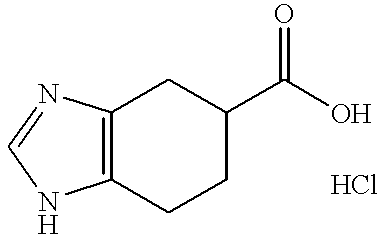


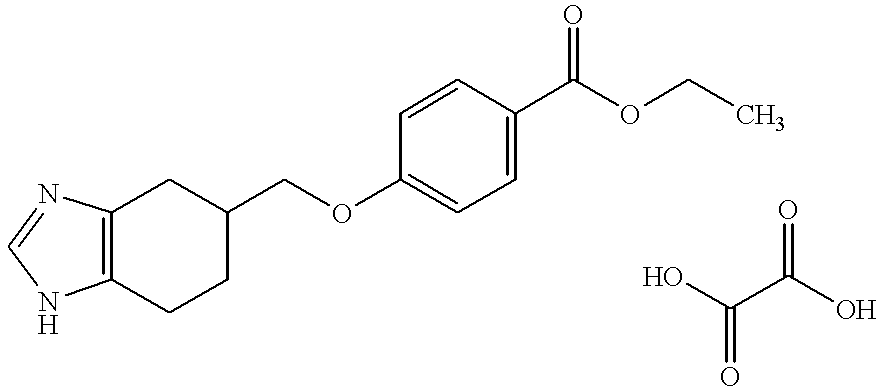

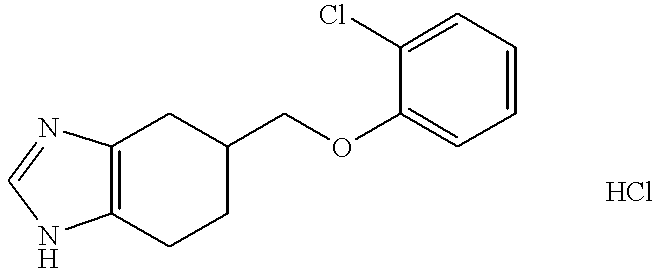


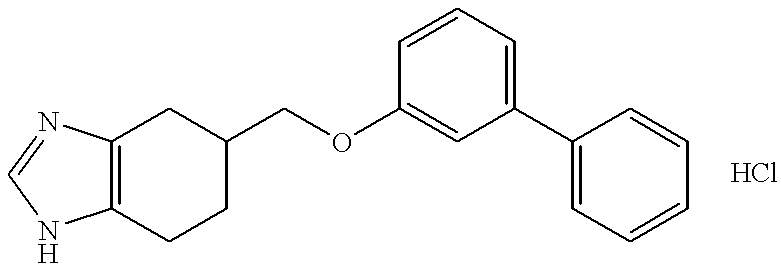


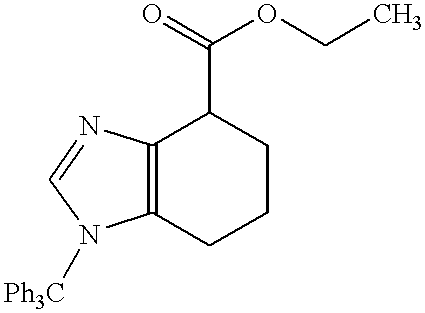


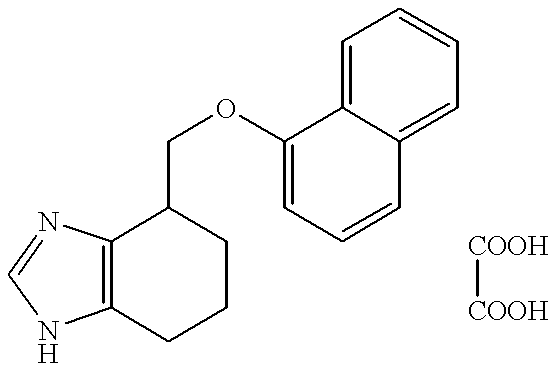

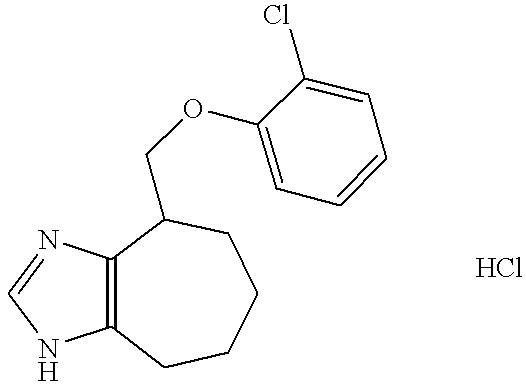


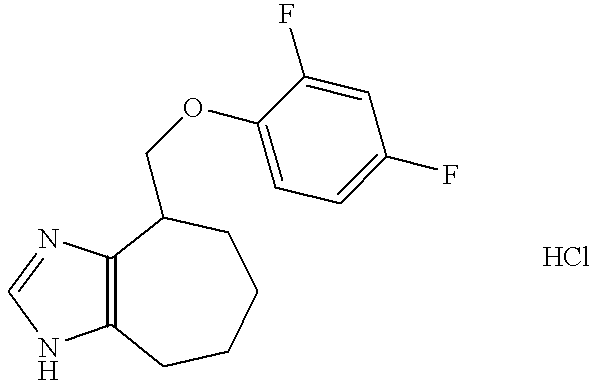
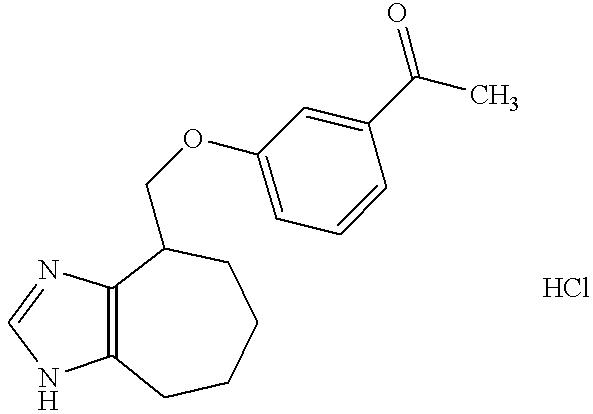
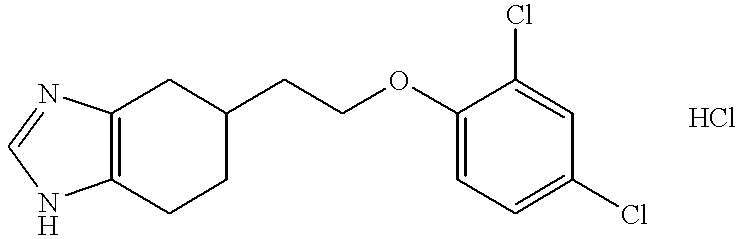
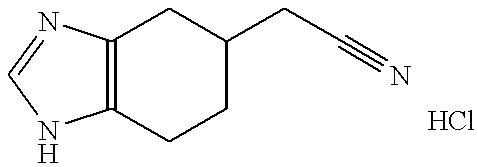
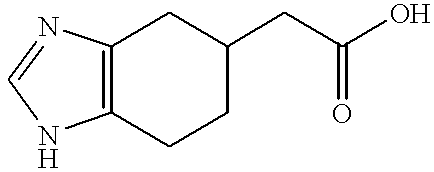


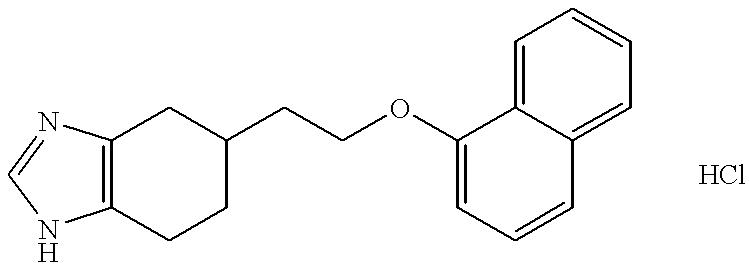

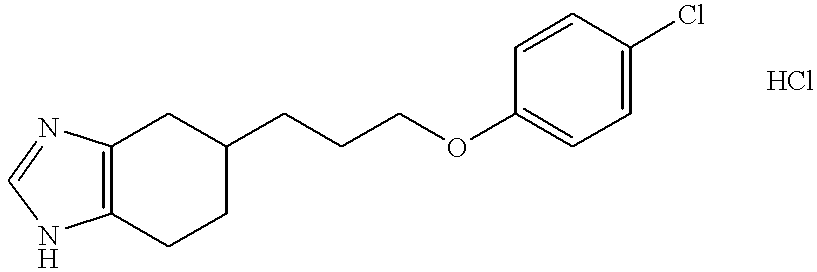
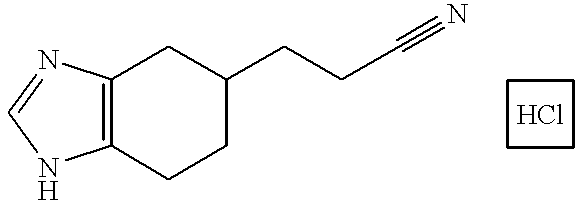


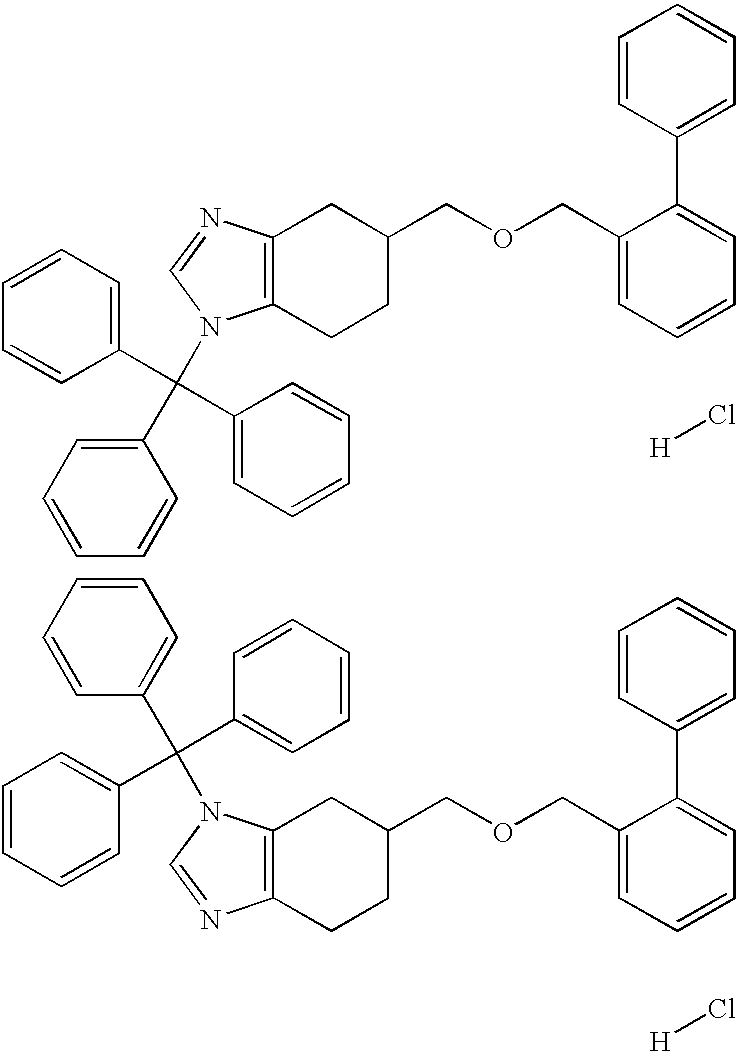


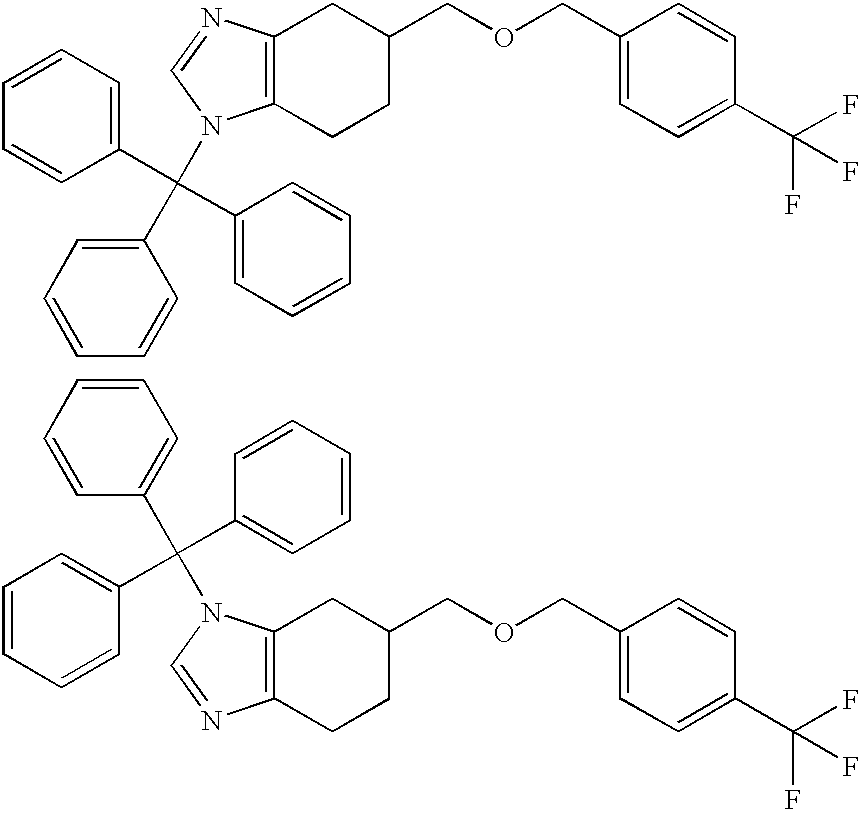


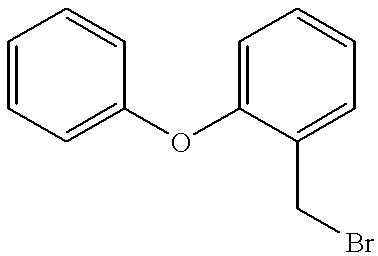


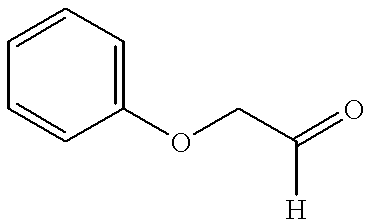

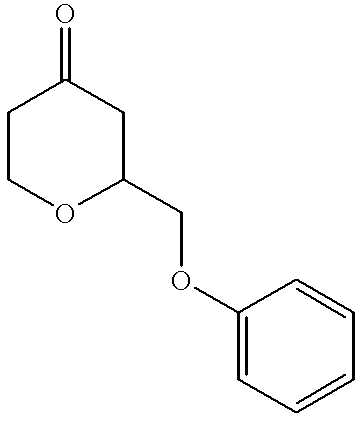
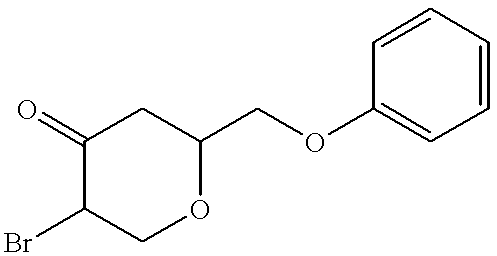

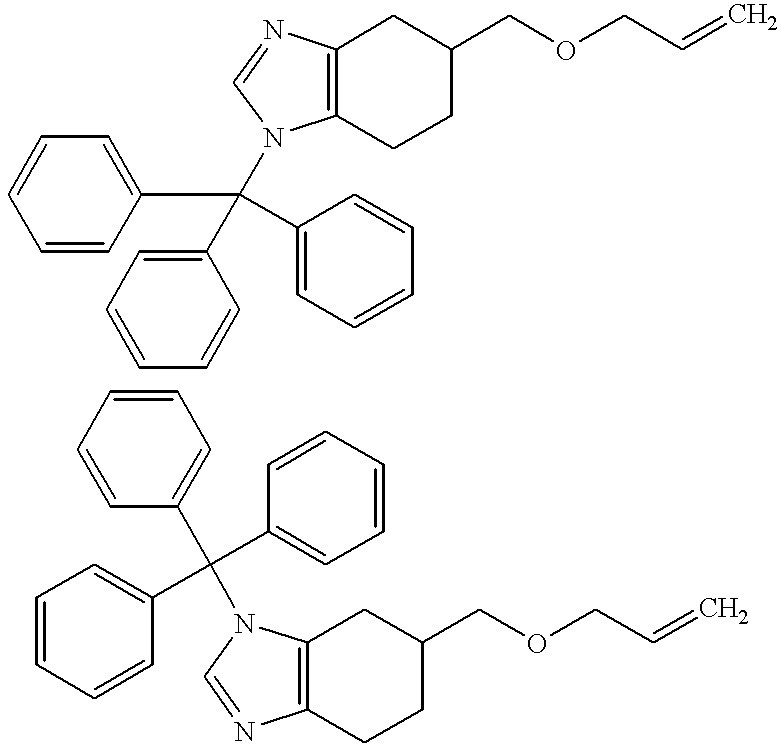


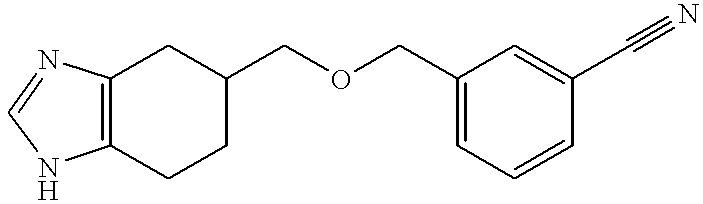
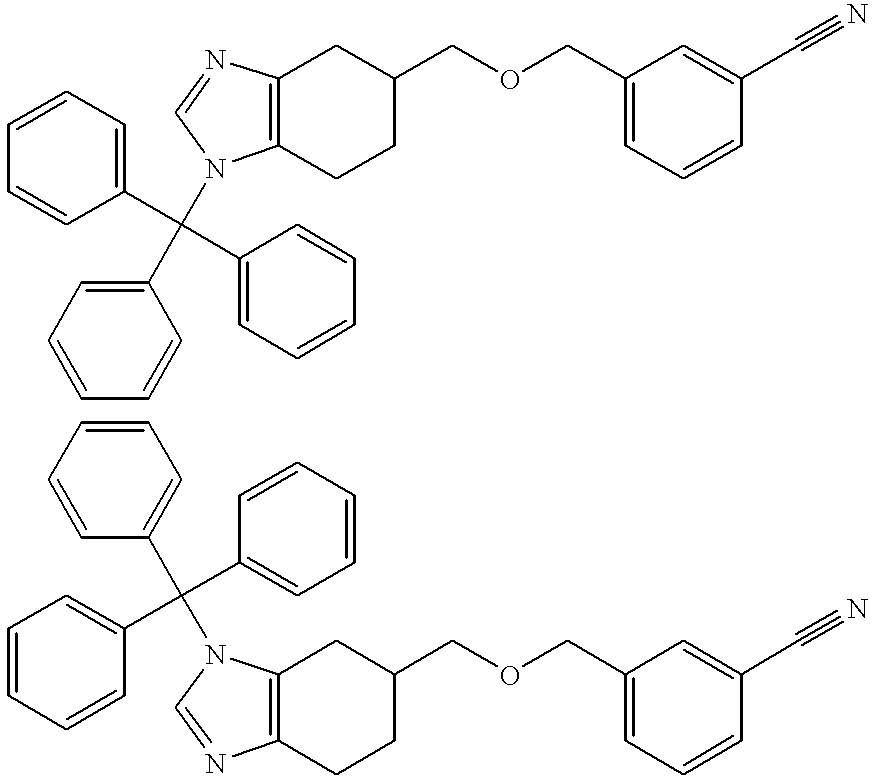


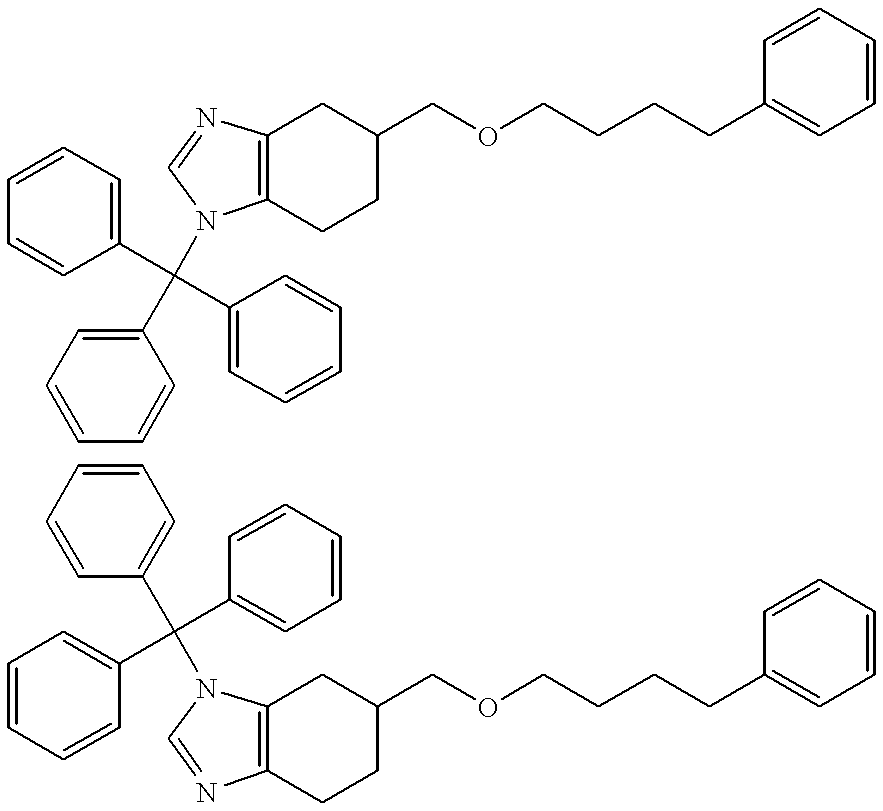
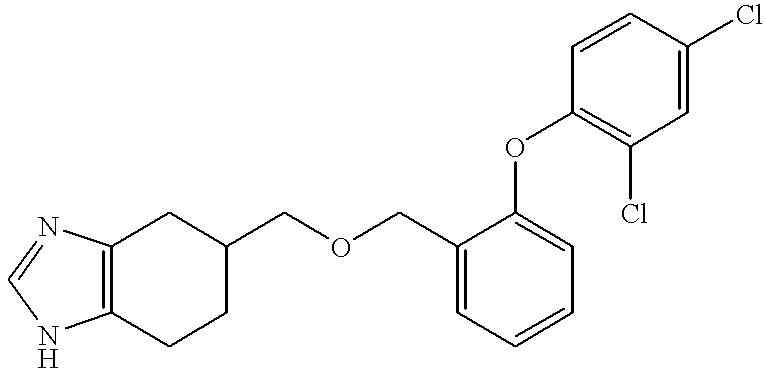
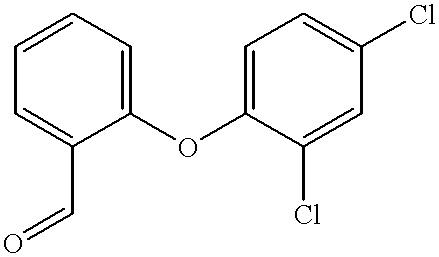


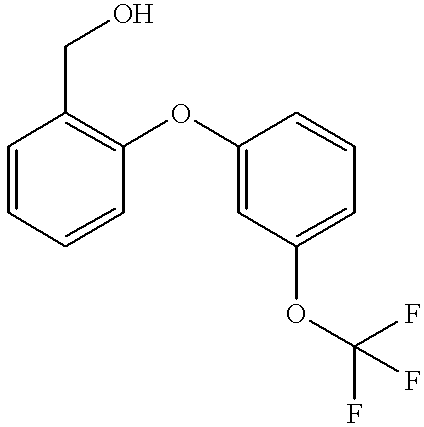


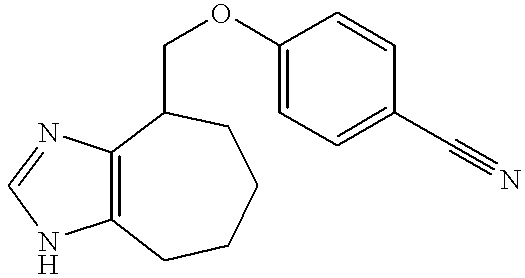
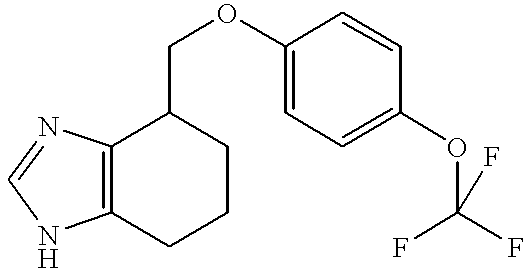

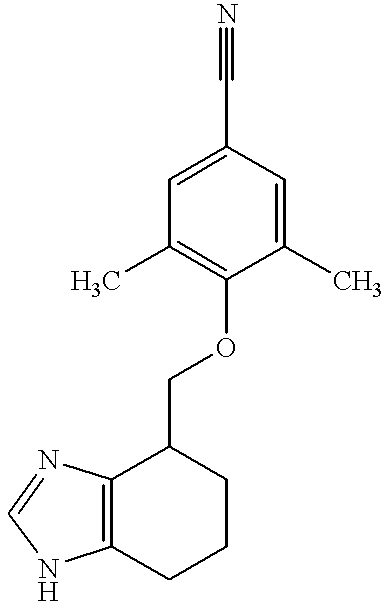

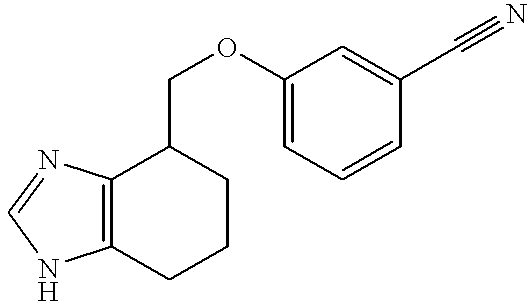

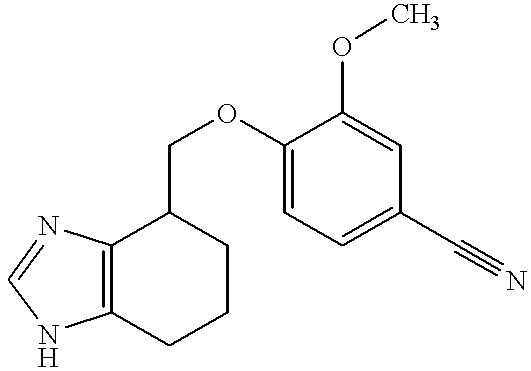


Claims (29)


Priority Applications (1)
| Application Number | Priority Date | Filing Date | Title |
|---|---|---|---|
| US09/810,311 US6610721B2 (en) | 2000-03-17 | 2001-03-16 | Imidazo heterocyclic compounds |
Applications Claiming Priority (5)
| Application Number | Priority Date | Filing Date | Title |
|---|---|---|---|
| DKPA200000442 | 2000-03-17 | ||
| DKPA200000442 | 2000-03-17 | ||
| DK200000442 | 2000-03-17 | ||
| US19492000P | 2000-04-04 | 2000-04-04 | |
| US09/810,311 US6610721B2 (en) | 2000-03-17 | 2001-03-16 | Imidazo heterocyclic compounds |
Publications (2)
| Publication Number | Publication Date |
|---|---|
| US20010049385A1 US20010049385A1 (en) | 2001-12-06 |
| US6610721B2 true US6610721B2 (en) | 2003-08-26 |
Family
ID=27222360
Family Applications (1)
| Application Number | Title | Priority Date | Filing Date |
|---|---|---|---|
| US09/810,311 Expired - Fee Related US6610721B2 (en) | 2000-03-17 | 2001-03-16 | Imidazo heterocyclic compounds |
Country Status (1)
| Country | Link |
|---|---|
| US (1) | US6610721B2 (en) |
Cited By (3)
| Publication number | Priority date | Publication date | Assignee | Title |
|---|---|---|---|---|
| US20040110748A1 (en) * | 2002-03-21 | 2004-06-10 | Beavers Lisa Selsam | Non-imidazole aryl alkylamines compounds as histamine h3 receptor antagonists, preparation and therapeutic uses |
| US20050111861A1 (en) * | 2003-11-24 | 2005-05-26 | Xerox Corporation | Transfer roll engagement method for minimizing media induced motion quality disturbances |
| US20060089347A1 (en) * | 2002-08-20 | 2006-04-27 | Eli Lilly And Company | Substituted azepines as histamine h3 receptor antagonists, preparation and therapeutic uses |
Citations (23)
| Publication number | Priority date | Publication date | Assignee | Title |
|---|---|---|---|---|
| EP0197840A1 (en) | 1985-03-26 | 1986-10-15 | Institut National De La Sante Et De La Recherche Medicale (Inserm) | (Imidazolyl-4) piperidines, their preparation and their therapeutical use |
| EP0214058A2 (en) | 1985-09-02 | 1987-03-11 | Institut National De La Sante Et De La Recherche Medicale (Inserm) | Pharmaceutical composition containing histamine derivatives |
| EP0338939A1 (en) | 1988-04-22 | 1989-10-25 | Institut National De La Sante Et De La Recherche Medicale (Inserm) | Histamine derivative, process for his preparation and his therapeutic application |
| WO1991017146A1 (en) | 1990-05-09 | 1991-11-14 | Institut National De La Sante Et De La Recherche Medicale | Novel histamine h3-receptor agonist compounds for therapeutic use, pharmaceutical compositions acting as agonists of said receptor and method of preparation |
| EP0458661A1 (en) | 1990-04-13 | 1991-11-27 | Societe Civile Bioprojet | Therapeutical application of histamine H3 receptor agonists, new compounds and their use for the preparation of medicaments |
| EP0494010A1 (en) | 1990-12-31 | 1992-07-08 | Institut National De La Sante Et De La Recherche Medicale (Inserm) | 1-Substituted 4-(4-imidazolyl) piperidines, process for their preparation and their therapeutic applications |
| WO1992015567A1 (en) | 1991-02-27 | 1992-09-17 | Seed Capital Investment (Sci) B.V. | Imidazole-derivatives having agonistic or antagonistic activity on the histamine h3-receptor |
| EP0531219A1 (en) | 1991-09-06 | 1993-03-10 | Societe Civile Bioprojet | Use of histamine derivatives for the preparation of drugs, new histamine derivatives and drugs |
| WO1993012107A1 (en) | 1991-12-18 | 1993-06-24 | Schering Corporation | Imidazoylalkyl substituted with a six membered nitrogen containing heterocyclic ring |
| WO1993012108A1 (en) | 1991-12-18 | 1993-06-24 | Schering Corporation | Imidazolyl or imidazoylalkyl substituted with a four or five membered nitrogen containing heterocyclic ring |
| WO1993012093A1 (en) | 1991-12-18 | 1993-06-24 | Schering Corporation | Imidazolyl-alkyl-piperazine and -diazepine derivatives as histamine h3 agonists/antagonists |
| WO1993014070A2 (en) | 1992-01-10 | 1993-07-22 | Institut National De La Sante Et De La Recherche Medicale | Novel imidazole derivatives, their preparation and therapeutic applications |
| WO1993020061A1 (en) | 1992-04-01 | 1993-10-14 | The University Of Toledo | 4-[4'-piperidinyl or 3'-pirrolidinyl] substituted imidazoles as h3-receptor antagonists and therapeutic uses thereof |
| WO1994017058A1 (en) | 1993-01-25 | 1994-08-04 | The Green Cross Corporation | Imidazole compound |
| WO1995006037A1 (en) | 1993-08-27 | 1995-03-02 | Vrije Universiteit | New imidazole derivatives having agonistic or antagonistic activity on the histamine h3 receptor |
| WO1995011894A1 (en) | 1993-10-29 | 1995-05-04 | The University Of Toledo | Histamine h3-receptor antagonists and therapeutic uses thereof |
| WO1995014007A1 (en) | 1993-11-15 | 1995-05-26 | Schering Corporation | Phenyl-alkyl imidazoles as h3-receptor antagonists |
| WO1996038142A1 (en) | 1995-05-30 | 1996-12-05 | Gliatech, Inc. | 1h-4(5)-substituted imidazole derivatives |
| WO1996038141A1 (en) | 1995-05-30 | 1996-12-05 | Gliatech, Inc. | 2-(1h-4(5)-imidazoyl) cyclopropyl derivatives |
| JPH08325234A (en) | 1995-05-30 | 1996-12-10 | Yamanouchi Pharmaceut Co Ltd | Benzoic acid derivative or its salt |
| WO1996040126A1 (en) | 1995-06-07 | 1996-12-19 | Gliatech, Inc. | 1h-4(5)-substituted imidazole derivatives |
| WO1999042458A1 (en) | 1998-02-19 | 1999-08-26 | James Black Foundation Limited | Histamine h3 receptor ligands |
| WO2000063208A1 (en) | 1999-04-16 | 2000-10-26 | Novo Nordisk A/S | Substituted imidazoles, their preparation and use |
-
2001
- 2001-03-16 US US09/810,311 patent/US6610721B2/en not_active Expired - Fee Related
Patent Citations (25)
| Publication number | Priority date | Publication date | Assignee | Title |
|---|---|---|---|---|
| EP0197840A1 (en) | 1985-03-26 | 1986-10-15 | Institut National De La Sante Et De La Recherche Medicale (Inserm) | (Imidazolyl-4) piperidines, their preparation and their therapeutical use |
| EP0214058A2 (en) | 1985-09-02 | 1987-03-11 | Institut National De La Sante Et De La Recherche Medicale (Inserm) | Pharmaceutical composition containing histamine derivatives |
| US4767778A (en) | 1985-09-02 | 1988-08-30 | Institut National De La Sante Et De La Recherche Medicale (Inserm) | Pharmaceutical compositions and methods for stimulating H3 histamine receptors |
| EP0338939A1 (en) | 1988-04-22 | 1989-10-25 | Institut National De La Sante Et De La Recherche Medicale (Inserm) | Histamine derivative, process for his preparation and his therapeutic application |
| EP0458661A1 (en) | 1990-04-13 | 1991-11-27 | Societe Civile Bioprojet | Therapeutical application of histamine H3 receptor agonists, new compounds and their use for the preparation of medicaments |
| WO1991017146A1 (en) | 1990-05-09 | 1991-11-14 | Institut National De La Sante Et De La Recherche Medicale | Novel histamine h3-receptor agonist compounds for therapeutic use, pharmaceutical compositions acting as agonists of said receptor and method of preparation |
| EP0494010A1 (en) | 1990-12-31 | 1992-07-08 | Institut National De La Sante Et De La Recherche Medicale (Inserm) | 1-Substituted 4-(4-imidazolyl) piperidines, process for their preparation and their therapeutic applications |
| WO1992015567A1 (en) | 1991-02-27 | 1992-09-17 | Seed Capital Investment (Sci) B.V. | Imidazole-derivatives having agonistic or antagonistic activity on the histamine h3-receptor |
| EP0531219A1 (en) | 1991-09-06 | 1993-03-10 | Societe Civile Bioprojet | Use of histamine derivatives for the preparation of drugs, new histamine derivatives and drugs |
| WO1993012107A1 (en) | 1991-12-18 | 1993-06-24 | Schering Corporation | Imidazoylalkyl substituted with a six membered nitrogen containing heterocyclic ring |
| WO1993012108A1 (en) | 1991-12-18 | 1993-06-24 | Schering Corporation | Imidazolyl or imidazoylalkyl substituted with a four or five membered nitrogen containing heterocyclic ring |
| WO1993012093A1 (en) | 1991-12-18 | 1993-06-24 | Schering Corporation | Imidazolyl-alkyl-piperazine and -diazepine derivatives as histamine h3 agonists/antagonists |
| WO1993014070A2 (en) | 1992-01-10 | 1993-07-22 | Institut National De La Sante Et De La Recherche Medicale | Novel imidazole derivatives, their preparation and therapeutic applications |
| WO1993020061A1 (en) | 1992-04-01 | 1993-10-14 | The University Of Toledo | 4-[4'-piperidinyl or 3'-pirrolidinyl] substituted imidazoles as h3-receptor antagonists and therapeutic uses thereof |
| WO1994017058A1 (en) | 1993-01-25 | 1994-08-04 | The Green Cross Corporation | Imidazole compound |
| WO1995006037A1 (en) | 1993-08-27 | 1995-03-02 | Vrije Universiteit | New imidazole derivatives having agonistic or antagonistic activity on the histamine h3 receptor |
| WO1995011894A1 (en) | 1993-10-29 | 1995-05-04 | The University Of Toledo | Histamine h3-receptor antagonists and therapeutic uses thereof |
| WO1995014007A1 (en) | 1993-11-15 | 1995-05-26 | Schering Corporation | Phenyl-alkyl imidazoles as h3-receptor antagonists |
| US5578616A (en) | 1993-11-15 | 1996-11-26 | Schering Corporation | Phenyl-alkyl-imidazoles |
| WO1996038142A1 (en) | 1995-05-30 | 1996-12-05 | Gliatech, Inc. | 1h-4(5)-substituted imidazole derivatives |
| WO1996038141A1 (en) | 1995-05-30 | 1996-12-05 | Gliatech, Inc. | 2-(1h-4(5)-imidazoyl) cyclopropyl derivatives |
| JPH08325234A (en) | 1995-05-30 | 1996-12-10 | Yamanouchi Pharmaceut Co Ltd | Benzoic acid derivative or its salt |
| WO1996040126A1 (en) | 1995-06-07 | 1996-12-19 | Gliatech, Inc. | 1h-4(5)-substituted imidazole derivatives |
| WO1999042458A1 (en) | 1998-02-19 | 1999-08-26 | James Black Foundation Limited | Histamine h3 receptor ligands |
| WO2000063208A1 (en) | 1999-04-16 | 2000-10-26 | Novo Nordisk A/S | Substituted imidazoles, their preparation and use |
Non-Patent Citations (6)
| Title |
|---|
| Carlstrom et al., Acta Chemica Scandinavica B, vol. 35, pp. 107-116 (1981). |
| Krebs et al., Helvetica Chimica Acta, vol. 62, pp. 497-506 (1979). |
| Leurs et al., Progress in Drug Research, vol. 45, pp. 107-165 (1995). |
| Morisset et al., Nature, vol. 408, pp. 860-864 (2000). |
| Stark et al., Drugs of the Future, vol. 21, pp. 507-520 (1996). |
| von Ernst-Peter Krebs, Helvetica Chimica Acta, vol. 62, pp. 507-510. |
Cited By (4)
| Publication number | Priority date | Publication date | Assignee | Title |
|---|---|---|---|---|
| US20040110748A1 (en) * | 2002-03-21 | 2004-06-10 | Beavers Lisa Selsam | Non-imidazole aryl alkylamines compounds as histamine h3 receptor antagonists, preparation and therapeutic uses |
| US7314937B2 (en) | 2002-03-21 | 2008-01-01 | Eli Lilly And Company | Non-imidazole aryl alkylamines compounds as histamine H3 receptor antagonists, preparation and therapeutic uses |
| US20060089347A1 (en) * | 2002-08-20 | 2006-04-27 | Eli Lilly And Company | Substituted azepines as histamine h3 receptor antagonists, preparation and therapeutic uses |
| US20050111861A1 (en) * | 2003-11-24 | 2005-05-26 | Xerox Corporation | Transfer roll engagement method for minimizing media induced motion quality disturbances |
Also Published As
| Publication number | Publication date |
|---|---|
| US20010049385A1 (en) | 2001-12-06 |
Similar Documents
| Publication | Publication Date | Title |
|---|---|---|
| US6417218B1 (en) | Substituted imidazoles, their preparation and use | |
| US6437147B1 (en) | Imidazole compounds | |
| EP1434765B1 (en) | Substituted piperidines with selective binding to histamine h3-receptor | |
| EP1474419B1 (en) | Amides of aminoalkyl-substituted azetidines, pyrrolidines, piperidines and azepanes | |
| US7064135B2 (en) | Substituted piperidines | |
| AU2004259263B2 (en) | Pyridazinyl- piperazines and their use as histamine H3 receptor ligands | |
| US7799924B2 (en) | Substituted homopiperidine, piperidine or pyrrolidine derivatives | |
| WO2000064884A1 (en) | Piperidyl-imidazole derivatives, their preparations and therapeutic uses | |
| US7101898B2 (en) | Amides of aminoalkyl-substituted azetidines, pyrrolidines, piperidines and azepanes | |
| EP1737840B1 (en) | 1-amino-phthalazine derivatives, the preparation and the therapeutic use thereof | |
| JP2013047189A (en) | Novel parabanic acid derivative, and medicine containing the same as effective component | |
| JPH08509731A (en) | N-acyl-substituted phenylpiperidines as bronchodilators and anti-inflammatory agents | |
| US7208497B2 (en) | Substituted piperazines and diazepanes | |
| US20040248938A1 (en) | Substituted piperidines | |
| EP2243776A1 (en) | Substituted piperidines and their use for the treatment of diseases related to the histamine H3 receptor | |
| WO2001068652A1 (en) | Condensed imidazoles as histamine h3 receptor ligands | |
| US7488748B2 (en) | 3,6-Disubstituted azabicyclo hexane derivatives as muscarinic receptor antagonists | |
| CN1324352A (en) | 2-phenylpyran-4-one derivatives | |
| US6610721B2 (en) | Imidazo heterocyclic compounds | |
| US6906060B2 (en) | Substituted hexahydropyrrolo[1,2-a]pyrazines, octahydropyrido[1,2-a]-pyrazines and decahydropyrazino[1,2-a]azepines | |
| WO2001068651A1 (en) | Condensed imidazoles as histamine h3 receptor ligands | |
| WO2005073183A1 (en) | Aryl sulfide derivative | |
| KR19990022130A (en) | 4,4- (disubstituted) cyclohexane-1-ol monomers and related compounds | |
| US20080146538A1 (en) | Compounds 614 | |
| US20070270399A1 (en) | New compounds 302 |
Legal Events
| Date | Code | Title | Description |
|---|---|---|---|
| AS | Assignment |
Owner name: NOVO NORDISK A/S, DENMARK Free format text: ASSIGNMENT OF ASSIGNORS INTEREST;ASSIGNORS:ANDERSEN, KNUD ERIK;DORWALD, FLORENCIO ZARAGOZA;PESCHKE, BERND;REEL/FRAME:011894/0679;SIGNING DATES FROM 20010404 TO 20010405 Owner name: BOEHRINGER INGELHEIM INTERNATIONAL GMBH, GERMANY Free format text: ASSIGNMENT OF ASSIGNORS INTEREST;ASSIGNORS:ANDERSEN, KNUD ERIK;DORWALD, FLORENCIO ZARAGOZA;PESCHKE, BERND;REEL/FRAME:011894/0679;SIGNING DATES FROM 20010404 TO 20010405 |
|
| FPAY | Fee payment |
Year of fee payment: 4 |
|
| AS | Assignment |
Owner name: NOVO NORDISK A/S, DENMARK Free format text: ASSIGNMENT OF ASSIGNORS INTEREST;ASSIGNOR:BOEHRINGER INGELHEIM INTERNATIONAL, GMBH;REEL/FRAME:020400/0119 Effective date: 20080104 |
|
| AS | Assignment |
Owner name: TRANSTECH PHARMA, INC., NORTH CAROLINA Free format text: ASSIGNMENT OF ASSIGNORS INTEREST;ASSIGNOR:NOVO NORDISK A/S;REEL/FRAME:021018/0022 Effective date: 20071217 Owner name: TRANSTECH PHARMA, INC.,NORTH CAROLINA Free format text: ASSIGNMENT OF ASSIGNORS INTEREST;ASSIGNOR:NOVO NORDISK A/S;REEL/FRAME:021018/0022 Effective date: 20071217 |
|
| AS | Assignment |
Owner name: HIGH POINT PHARMACEUTICALS, LLC, NORTH CAROLINA Free format text: ASSIGNMENT OF ASSIGNORS INTEREST;ASSIGNOR:TRANSTECH PHARMA, INC.;REEL/FRAME:021754/0978 Effective date: 20081029 |
|
| AS | Assignment |
Owner name: TRANSTECH PHARMA, INC., NORTH CAROLINA Free format text: ASSIGNMENT OF ASSIGNORS INTEREST;ASSIGNOR:NOVO NORDISK A/S;REEL/FRAME:022562/0365 Effective date: 20090316 |
|
| AS | Assignment |
Owner name: HIGH POINT PHARMACEUTICALS, LLC, NORTH CAROLINA Free format text: ASSIGNMENT OF ASSIGNORS INTEREST;ASSIGNOR:TRANSTECH PHARMA, INC.;REEL/FRAME:022584/0958 Effective date: 20090422 |
|
| FPAY | Fee payment |
Year of fee payment: 8 |
|
| AS | Assignment |
Owner name: M&F TTP HOLDINGS LLC C/O MACANDREWS & FORBES HOLDI Free format text: SECURITY AGREEMENT;ASSIGNOR:HIGH POINT PHARMACEUTICALS, LLC;REEL/FRAME:030982/0793 Effective date: 20130809 |
|
| FEPP | Fee payment procedure |
Free format text: PAYOR NUMBER ASSIGNED (ORIGINAL EVENT CODE: ASPN); ENTITY STATUS OF PATENT OWNER: LARGE ENTITY Free format text: PAYER NUMBER DE-ASSIGNED (ORIGINAL EVENT CODE: RMPN); ENTITY STATUS OF PATENT OWNER: LARGE ENTITY |
|
| AS | Assignment |
Owner name: HIGH POINT PHARMACEUTICALS, LLC, NORTH CAROLINA Free format text: NOTICE OF RELEASE OF SECURITY INTEREST IN PATENTS FOR REEL/FRAME 030982/0793;ASSIGNOR:M&F TTP HOLDINGS LLC;REEL/FRAME:032621/0867 Effective date: 20140328 |
|
| REMI | Maintenance fee reminder mailed | ||
| LAPS | Lapse for failure to pay maintenance fees | ||
| STCH | Information on status: patent discontinuation |
Free format text: PATENT EXPIRED DUE TO NONPAYMENT OF MAINTENANCE FEES UNDER 37 CFR 1.362 |
|
| STCH | Information on status: patent discontinuation |
Free format text: PATENT EXPIRED DUE TO NONPAYMENT OF MAINTENANCE FEES UNDER 37 CFR 1.362 |
|
| FP | Lapsed due to failure to pay maintenance fee |
Effective date: 20150826 |