US6172118B1 - Compounds - Google Patents
Compounds Download PDFInfo
- Publication number
- US6172118B1 US6172118B1 US09/291,592 US29159299A US6172118B1 US 6172118 B1 US6172118 B1 US 6172118B1 US 29159299 A US29159299 A US 29159299A US 6172118 B1 US6172118 B1 US 6172118B1
- Authority
- US
- United States
- Prior art keywords
- substituted
- alkyl
- unsubstituted
- carbon atoms
- cyclopentyloxy
- Prior art date
- Legal status (The legal status is an assumption and is not a legal conclusion. Google has not performed a legal analysis and makes no representation as to the accuracy of the status listed.)
- Expired - Fee Related
Links
- 150000001875 compounds Chemical class 0.000 title claims description 65
- IDASYJDWBZGUQI-UHFFFAOYSA-N 3-(3-cyclopentyloxy-4-methoxyphenyl)-3-(2-phenylethynyl)cyclobutan-1-one Chemical compound COC1=CC=C(C2(CC(=O)C2)C#CC=2C=CC=CC=2)C=C1OC1CCCC1 IDASYJDWBZGUQI-UHFFFAOYSA-N 0.000 claims abstract description 6
- -1 2-tetrahydropyranyl Chemical group 0.000 claims description 106
- 125000004432 carbon atom Chemical group C* 0.000 claims description 29
- 125000000217 alkyl group Chemical group 0.000 claims description 28
- 235000019000 fluorine Nutrition 0.000 claims description 25
- 125000002496 methyl group Chemical group [H]C([H])([H])* 0.000 claims description 22
- 125000001153 fluoro group Chemical group F* 0.000 claims description 20
- 239000001257 hydrogen Substances 0.000 claims description 20
- 229910052739 hydrogen Inorganic materials 0.000 claims description 20
- 229910052760 oxygen Inorganic materials 0.000 claims description 20
- 238000000034 method Methods 0.000 claims description 14
- 208000006673 asthma Diseases 0.000 claims description 13
- 229910052757 nitrogen Inorganic materials 0.000 claims description 13
- 125000000753 cycloalkyl group Chemical group 0.000 claims description 12
- 125000002887 hydroxy group Chemical group [H]O* 0.000 claims description 12
- 150000003839 salts Chemical class 0.000 claims description 12
- QCQCHGYLTSGIGX-GHXANHINSA-N 4-[[(3ar,5ar,5br,7ar,9s,11ar,11br,13as)-5a,5b,8,8,11a-pentamethyl-3a-[(5-methylpyridine-3-carbonyl)amino]-2-oxo-1-propan-2-yl-4,5,6,7,7a,9,10,11,11b,12,13,13a-dodecahydro-3h-cyclopenta[a]chrysen-9-yl]oxy]-2,2-dimethyl-4-oxobutanoic acid Chemical compound N([C@@]12CC[C@@]3(C)[C@]4(C)CC[C@H]5C(C)(C)[C@@H](OC(=O)CC(C)(C)C(O)=O)CC[C@]5(C)[C@H]4CC[C@@H]3C1=C(C(C2)=O)C(C)C)C(=O)C1=CN=CC(C)=C1 QCQCHGYLTSGIGX-GHXANHINSA-N 0.000 claims description 11
- PMPVIKIVABFJJI-UHFFFAOYSA-N Cyclobutane Chemical compound C1CCC1 PMPVIKIVABFJJI-UHFFFAOYSA-N 0.000 claims description 10
- 125000003342 alkenyl group Chemical group 0.000 claims description 10
- HSFWRNGVRCDJHI-UHFFFAOYSA-N alpha-acetylene Natural products C#C HSFWRNGVRCDJHI-UHFFFAOYSA-N 0.000 claims description 10
- 125000001495 ethyl group Chemical group [H]C([H])([H])C([H])([H])* 0.000 claims description 10
- 125000002534 ethynyl group Chemical group [H]C#C* 0.000 claims description 10
- ZUJPSMWCWRWTBM-UHFFFAOYSA-N ethynylcyclobutane Chemical compound [C]#CC1CCC1 ZUJPSMWCWRWTBM-UHFFFAOYSA-N 0.000 claims description 9
- 125000005842 heteroatom Chemical group 0.000 claims description 9
- 125000000623 heterocyclic group Chemical group 0.000 claims description 9
- QJGQUHMNIGDVPM-UHFFFAOYSA-N nitrogen group Chemical group [N] QJGQUHMNIGDVPM-UHFFFAOYSA-N 0.000 claims description 9
- 125000003118 aryl group Chemical group 0.000 claims description 8
- QVGXLLKOCUKJST-UHFFFAOYSA-N atomic oxygen Chemical group [O] QVGXLLKOCUKJST-UHFFFAOYSA-N 0.000 claims description 8
- 125000004435 hydrogen atom Chemical group [H]* 0.000 claims description 8
- 239000001301 oxygen Substances 0.000 claims description 8
- 239000008194 pharmaceutical composition Substances 0.000 claims description 8
- 125000001997 phenyl group Chemical group [H]C1=C([H])C([H])=C(*)C([H])=C1[H] 0.000 claims description 8
- 125000000714 pyrimidinyl group Chemical group 0.000 claims description 8
- 125000004169 (C1-C6) alkyl group Chemical group 0.000 claims description 7
- 229910052799 carbon Inorganic materials 0.000 claims description 7
- 239000011737 fluorine Substances 0.000 claims description 7
- 229910052731 fluorine Inorganic materials 0.000 claims description 7
- 229910052736 halogen Inorganic materials 0.000 claims description 7
- 150000002367 halogens Chemical class 0.000 claims description 7
- 150000002431 hydrogen Chemical group 0.000 claims description 7
- 125000003226 pyrazolyl group Chemical group 0.000 claims description 7
- 125000004178 (C1-C4) alkyl group Chemical group 0.000 claims description 6
- PXGOKWXKJXAPGV-UHFFFAOYSA-N Fluorine Chemical compound FF PXGOKWXKJXAPGV-UHFFFAOYSA-N 0.000 claims description 6
- 125000002541 furyl group Chemical group 0.000 claims description 6
- 125000000449 nitro group Chemical group [O-][N+](*)=O 0.000 claims description 6
- 208000006545 Chronic Obstructive Pulmonary Disease Diseases 0.000 claims description 5
- 125000000304 alkynyl group Chemical group 0.000 claims description 5
- 125000005843 halogen group Chemical group 0.000 claims description 5
- 125000002757 morpholinyl group Chemical group 0.000 claims description 5
- 125000004193 piperazinyl group Chemical group 0.000 claims description 5
- 125000005592 polycycloalkyl group Polymers 0.000 claims description 5
- 125000000168 pyrrolyl group Chemical group 0.000 claims description 5
- BNSRVFGXRITOQK-UHFFFAOYSA-N 2-(1,2-dichloroethyl)-4-methyl-1,3-dioxolane Chemical compound CC1COC(C(Cl)CCl)O1 BNSRVFGXRITOQK-UHFFFAOYSA-N 0.000 claims description 4
- 125000003349 3-pyridyl group Chemical group N1=C([H])C([*])=C([H])C([H])=C1[H] 0.000 claims description 4
- 125000000339 4-pyridyl group Chemical group N1=C([H])C([H])=C([*])C([H])=C1[H] 0.000 claims description 4
- UFHFLCQGNIYNRP-UHFFFAOYSA-N Hydrogen Chemical compound [H][H] UFHFLCQGNIYNRP-UHFFFAOYSA-N 0.000 claims description 4
- 125000001246 bromo group Chemical group Br* 0.000 claims description 4
- 150000001721 carbon Chemical group 0.000 claims description 4
- 125000001309 chloro group Chemical group Cl* 0.000 claims description 4
- 125000001511 cyclopentyl group Chemical group [H]C1([H])C([H])([H])C([H])([H])C([H])(*)C1([H])[H] 0.000 claims description 4
- 125000002883 imidazolyl group Chemical group 0.000 claims description 4
- 125000001624 naphthyl group Chemical group 0.000 claims description 4
- 229910052717 sulfur Inorganic materials 0.000 claims description 4
- 125000003831 tetrazolyl group Chemical group 0.000 claims description 4
- 125000000335 thiazolyl group Chemical group 0.000 claims description 4
- 125000001425 triazolyl group Chemical group 0.000 claims description 4
- 125000005913 (C3-C6) cycloalkyl group Chemical group 0.000 claims description 3
- WQADWIOXOXRPLN-UHFFFAOYSA-N 1,3-Dithiane Natural products C1CSCSC1 WQADWIOXOXRPLN-UHFFFAOYSA-N 0.000 claims description 3
- YBYIRNPNPLQARY-UHFFFAOYSA-N 1H-indene Natural products C1=CC=C2CC=CC2=C1 YBYIRNPNPLQARY-UHFFFAOYSA-N 0.000 claims description 3
- 125000001541 3-thienyl group Chemical group S1C([H])=C([*])C([H])=C1[H] 0.000 claims description 3
- CSCPPACGZOOCGX-UHFFFAOYSA-N Acetone Chemical compound CC(C)=O CSCPPACGZOOCGX-UHFFFAOYSA-N 0.000 claims description 3
- QMMFVYPAHWMCMS-UHFFFAOYSA-N Dimethyl sulfide Chemical group CSC QMMFVYPAHWMCMS-UHFFFAOYSA-N 0.000 claims description 3
- 125000002632 imidazolidinyl group Chemical group 0.000 claims description 3
- 125000003392 indanyl group Chemical group C1(CCC2=CC=CC=C12)* 0.000 claims description 3
- 125000003454 indenyl group Chemical group C1(C=CC2=CC=CC=C12)* 0.000 claims description 3
- 125000000842 isoxazolyl group Chemical group 0.000 claims description 3
- 125000001715 oxadiazolyl group Chemical group 0.000 claims description 3
- 125000000160 oxazolidinyl group Chemical group 0.000 claims description 3
- 125000002971 oxazolyl group Chemical group 0.000 claims description 3
- 125000003386 piperidinyl group Chemical group 0.000 claims description 3
- 125000004309 pyranyl group Chemical group O1C(C=CC=C1)* 0.000 claims description 3
- 125000002943 quinolinyl group Chemical group N1=C(C=CC2=CC=CC=C12)* 0.000 claims description 3
- 125000003718 tetrahydrofuranyl group Chemical group 0.000 claims description 3
- 125000001412 tetrahydropyranyl group Chemical group 0.000 claims description 3
- 125000005958 tetrahydrothienyl group Chemical group 0.000 claims description 3
- 125000004632 tetrahydrothiopyranyl group Chemical group S1C(CCCC1)* 0.000 claims description 3
- 125000001113 thiadiazolyl group Chemical group 0.000 claims description 3
- 125000001984 thiazolidinyl group Chemical group 0.000 claims description 3
- 125000001544 thienyl group Chemical group 0.000 claims description 3
- VDFVNEFVBPFDSB-UHFFFAOYSA-N 1,3-dioxane Chemical compound C1COCOC1 VDFVNEFVBPFDSB-UHFFFAOYSA-N 0.000 claims description 2
- 125000004177 diethyl group Chemical group [H]C([H])([H])C([H])([H])* 0.000 claims description 2
- LJSQFQKUNVCTIA-UHFFFAOYSA-N diethyl sulfide Chemical group CCSCC LJSQFQKUNVCTIA-UHFFFAOYSA-N 0.000 claims description 2
- 239000000546 pharmaceutical excipient Substances 0.000 claims 2
- 101100296719 Caenorhabditis elegans pde-4 gene Proteins 0.000 abstract description 9
- 150000001412 amines Chemical class 0.000 abstract description 9
- 150000002576 ketones Chemical class 0.000 abstract description 3
- 150000001298 alcohols Chemical class 0.000 abstract description 2
- 239000005557 antagonist Substances 0.000 abstract 1
- YMWUJEATGCHHMB-UHFFFAOYSA-N Dichloromethane Chemical compound ClCCl YMWUJEATGCHHMB-UHFFFAOYSA-N 0.000 description 93
- OKKJLVBELUTLKV-UHFFFAOYSA-N Methanol Chemical compound OC OKKJLVBELUTLKV-UHFFFAOYSA-N 0.000 description 63
- XEKOWRVHYACXOJ-UHFFFAOYSA-N Ethyl acetate Chemical compound CCOC(C)=O XEKOWRVHYACXOJ-UHFFFAOYSA-N 0.000 description 54
- 108060008682 Tumor Necrosis Factor Proteins 0.000 description 39
- 102000000852 Tumor Necrosis Factor-alpha Human genes 0.000 description 39
- WYURNTSHIVDZCO-UHFFFAOYSA-N Tetrahydrofuran Chemical compound C1CCOC1 WYURNTSHIVDZCO-UHFFFAOYSA-N 0.000 description 38
- VLKZOEOYAKHREP-UHFFFAOYSA-N n-Hexane Chemical class CCCCCC VLKZOEOYAKHREP-UHFFFAOYSA-N 0.000 description 34
- CSNNHWWHGAXBCP-UHFFFAOYSA-L Magnesium sulfate Chemical compound [Mg+2].[O-][S+2]([O-])([O-])[O-] CSNNHWWHGAXBCP-UHFFFAOYSA-L 0.000 description 26
- 238000006243 chemical reaction Methods 0.000 description 24
- 239000000047 product Substances 0.000 description 21
- 238000011282 treatment Methods 0.000 description 21
- XLYOFNOQVPJJNP-UHFFFAOYSA-N water Substances O XLYOFNOQVPJJNP-UHFFFAOYSA-N 0.000 description 21
- 239000000243 solution Substances 0.000 description 20
- 201000010099 disease Diseases 0.000 description 19
- 208000037265 diseases, disorders, signs and symptoms Diseases 0.000 description 19
- YLQBMQCUIZJEEH-UHFFFAOYSA-N tetrahydrofuran Natural products C=1C=COC=1 YLQBMQCUIZJEEH-UHFFFAOYSA-N 0.000 description 19
- RTZKZFJDLAIYFH-UHFFFAOYSA-N Diethyl ether Chemical compound CCOCC RTZKZFJDLAIYFH-UHFFFAOYSA-N 0.000 description 18
- ZMANZCXQSJIPKH-UHFFFAOYSA-N Triethylamine Chemical compound CCN(CC)CC ZMANZCXQSJIPKH-UHFFFAOYSA-N 0.000 description 18
- 239000012300 argon atmosphere Substances 0.000 description 18
- 238000003818 flash chromatography Methods 0.000 description 18
- 238000000746 purification Methods 0.000 description 18
- 239000002904 solvent Substances 0.000 description 18
- 241000725303 Human immunodeficiency virus Species 0.000 description 17
- VEXZGXHMUGYJMC-UHFFFAOYSA-N Hydrochloric acid Chemical compound Cl VEXZGXHMUGYJMC-UHFFFAOYSA-N 0.000 description 17
- 239000000203 mixture Substances 0.000 description 17
- 102000004861 Phosphoric Diester Hydrolases Human genes 0.000 description 16
- 108090001050 Phosphoric Diester Hydrolases Proteins 0.000 description 16
- 230000002401 inhibitory effect Effects 0.000 description 16
- NFHFRUOZVGFOOS-UHFFFAOYSA-N palladium;triphenylphosphane Chemical compound [Pd].C1=CC=CC=C1P(C=1C=CC=CC=1)C1=CC=CC=C1.C1=CC=CC=C1P(C=1C=CC=CC=1)C1=CC=CC=C1.C1=CC=CC=C1P(C=1C=CC=CC=1)C1=CC=CC=C1.C1=CC=CC=C1P(C=1C=CC=CC=1)C1=CC=CC=C1 NFHFRUOZVGFOOS-UHFFFAOYSA-N 0.000 description 15
- LFQSCWFLJHTTHZ-UHFFFAOYSA-N Ethanol Chemical compound CCO LFQSCWFLJHTTHZ-UHFFFAOYSA-N 0.000 description 14
- 239000007787 solid Substances 0.000 description 14
- 229910052943 magnesium sulfate Inorganic materials 0.000 description 13
- 235000019341 magnesium sulphate Nutrition 0.000 description 13
- 210000004027 cell Anatomy 0.000 description 12
- 230000000694 effects Effects 0.000 description 12
- IXCSERBJSXMMFS-UHFFFAOYSA-N hydrogen chloride Substances Cl.Cl IXCSERBJSXMMFS-UHFFFAOYSA-N 0.000 description 12
- 229910000041 hydrogen chloride Inorganic materials 0.000 description 12
- RIOQSEWOXXDEQQ-UHFFFAOYSA-N triphenylphosphine Chemical compound C1=CC=CC=C1P(C=1C=CC=CC=1)C1=CC=CC=C1 RIOQSEWOXXDEQQ-UHFFFAOYSA-N 0.000 description 12
- 108010044467 Isoenzymes Proteins 0.000 description 11
- 241000124008 Mammalia Species 0.000 description 11
- 210000001744 T-lymphocyte Anatomy 0.000 description 11
- 230000005764 inhibitory process Effects 0.000 description 11
- 210000001616 monocyte Anatomy 0.000 description 11
- 230000001404 mediated effect Effects 0.000 description 10
- 102000004127 Cytokines Human genes 0.000 description 9
- 108090000695 Cytokines Proteins 0.000 description 9
- 206010017533 Fungal infection Diseases 0.000 description 9
- 241000700605 Viruses Species 0.000 description 9
- 238000004458 analytical method Methods 0.000 description 9
- 238000001727 in vivo Methods 0.000 description 9
- 230000006433 tumor necrosis factor production Effects 0.000 description 9
- NLXLAEXVIDQMFP-UHFFFAOYSA-N Ammonia chloride Chemical compound [NH4+].[Cl-] NLXLAEXVIDQMFP-UHFFFAOYSA-N 0.000 description 8
- 238000004519 manufacturing process Methods 0.000 description 8
- 208000031886 HIV Infections Diseases 0.000 description 7
- 239000003153 chemical reaction reagent Substances 0.000 description 7
- 125000001570 methylene group Chemical group [H]C([H])([*:1])[*:2] 0.000 description 7
- IJGRMHOSHXDMSA-UHFFFAOYSA-N nitrogen Substances N#N IJGRMHOSHXDMSA-UHFFFAOYSA-N 0.000 description 7
- XKRFYHLGVUSROY-UHFFFAOYSA-N Argon Chemical compound [Ar] XKRFYHLGVUSROY-UHFFFAOYSA-N 0.000 description 6
- IAZDPXIOMUYVGZ-UHFFFAOYSA-N Dimethylsulphoxide Chemical compound CS(C)=O IAZDPXIOMUYVGZ-UHFFFAOYSA-N 0.000 description 6
- 241000282412 Homo Species 0.000 description 6
- 108010002352 Interleukin-1 Proteins 0.000 description 6
- KWYUFKZDYYNOTN-UHFFFAOYSA-M Potassium hydroxide Chemical compound [OH-].[K+] KWYUFKZDYYNOTN-UHFFFAOYSA-M 0.000 description 6
- 240000004808 Saccharomyces cerevisiae Species 0.000 description 6
- 206010040070 Septic Shock Diseases 0.000 description 6
- HEMHJVSKTPXQMS-UHFFFAOYSA-M Sodium hydroxide Chemical compound [OH-].[Na+] HEMHJVSKTPXQMS-UHFFFAOYSA-M 0.000 description 6
- 230000004913 activation Effects 0.000 description 6
- 150000001345 alkine derivatives Chemical class 0.000 description 6
- 239000012230 colorless oil Substances 0.000 description 6
- 210000002540 macrophage Anatomy 0.000 description 6
- BWHMMNNQKKPAPP-UHFFFAOYSA-L potassium carbonate Chemical compound [K+].[K+].[O-]C([O-])=O BWHMMNNQKKPAPP-UHFFFAOYSA-L 0.000 description 6
- JOXIMZWYDAKGHI-UHFFFAOYSA-N toluene-4-sulfonic acid Chemical compound CC1=CC=C(S(O)(=O)=O)C=C1 JOXIMZWYDAKGHI-UHFFFAOYSA-N 0.000 description 6
- 0 *C1=CC=C(C2([W]C)CC(=[Y])C2)C=C1C#C Chemical compound *C1=CC=C(C2([W]C)CC(=[Y])C2)C=C1C#C 0.000 description 5
- 229910021595 Copper(I) iodide Inorganic materials 0.000 description 5
- 208000031888 Mycoses Diseases 0.000 description 5
- DTQVDTLACAAQTR-UHFFFAOYSA-N Trifluoroacetic acid Chemical compound OC(=O)C(F)(F)F DTQVDTLACAAQTR-UHFFFAOYSA-N 0.000 description 5
- 230000003197 catalytic effect Effects 0.000 description 5
- LSXDOTMGLUJQCM-UHFFFAOYSA-M copper(i) iodide Chemical compound I[Cu] LSXDOTMGLUJQCM-UHFFFAOYSA-M 0.000 description 5
- 239000003937 drug carrier Substances 0.000 description 5
- 208000015181 infectious disease Diseases 0.000 description 5
- 239000007788 liquid Substances 0.000 description 5
- 239000003921 oil Substances 0.000 description 5
- 235000019198 oils Nutrition 0.000 description 5
- 230000010076 replication Effects 0.000 description 5
- MZOFCQQQCNRIBI-VMXHOPILSA-N (3s)-4-[[(2s)-1-[[(2s)-1-[[(1s)-1-carboxy-2-hydroxyethyl]amino]-4-methyl-1-oxopentan-2-yl]amino]-5-(diaminomethylideneamino)-1-oxopentan-2-yl]amino]-3-[[2-[[(2s)-2,6-diaminohexanoyl]amino]acetyl]amino]-4-oxobutanoic acid Chemical compound OC[C@@H](C(O)=O)NC(=O)[C@H](CC(C)C)NC(=O)[C@H](CCCN=C(N)N)NC(=O)[C@H](CC(O)=O)NC(=O)CNC(=O)[C@@H](N)CCCCN MZOFCQQQCNRIBI-VMXHOPILSA-N 0.000 description 4
- 238000005160 1H NMR spectroscopy Methods 0.000 description 4
- 208000030507 AIDS Diseases 0.000 description 4
- IVOMOUWHDPKRLL-KQYNXXCUSA-N Cyclic adenosine monophosphate Chemical compound C([C@H]1O2)OP(O)(=O)O[C@H]1[C@@H](O)[C@@H]2N1C(N=CN=C2N)=C2N=C1 IVOMOUWHDPKRLL-KQYNXXCUSA-N 0.000 description 4
- 241000701022 Cytomegalovirus Species 0.000 description 4
- 208000037357 HIV infectious disease Diseases 0.000 description 4
- KFZMGEQAYNKOFK-UHFFFAOYSA-N Isopropanol Chemical compound CC(C)O KFZMGEQAYNKOFK-UHFFFAOYSA-N 0.000 description 4
- JUJWROOIHBZHMG-UHFFFAOYSA-N Pyridine Chemical compound C1=CC=NC=C1 JUJWROOIHBZHMG-UHFFFAOYSA-N 0.000 description 4
- UIIMBOGNXHQVGW-UHFFFAOYSA-M Sodium bicarbonate Chemical compound [Na+].OC([O-])=O UIIMBOGNXHQVGW-UHFFFAOYSA-M 0.000 description 4
- 230000006044 T cell activation Effects 0.000 description 4
- HEDRZPFGACZZDS-MICDWDOJSA-N Trichloro(2H)methane Chemical compound [2H]C(Cl)(Cl)Cl HEDRZPFGACZZDS-MICDWDOJSA-N 0.000 description 4
- 239000004480 active ingredient Substances 0.000 description 4
- 102000030621 adenylate cyclase Human genes 0.000 description 4
- 108060000200 adenylate cyclase Proteins 0.000 description 4
- 239000000443 aerosol Substances 0.000 description 4
- 235000019270 ammonium chloride Nutrition 0.000 description 4
- APKFDSVGJQXUKY-INPOYWNPSA-N amphotericin B Chemical compound O[C@H]1[C@@H](N)[C@H](O)[C@@H](C)O[C@H]1O[C@H]1/C=C/C=C/C=C/C=C/C=C/C=C/C=C/[C@H](C)[C@@H](O)[C@@H](C)[C@H](C)OC(=O)C[C@H](O)C[C@H](O)CC[C@@H](O)[C@H](O)C[C@H](O)C[C@](O)(C[C@H](O)[C@H]2C(O)=O)O[C@H]2C1 APKFDSVGJQXUKY-INPOYWNPSA-N 0.000 description 4
- YCOXTKKNXUZSKD-UHFFFAOYSA-N as-o-xylenol Natural products CC1=CC=C(O)C=C1C YCOXTKKNXUZSKD-UHFFFAOYSA-N 0.000 description 4
- 239000003054 catalyst Substances 0.000 description 4
- PXBRQCKWGAHEHS-UHFFFAOYSA-N dichlorodifluoromethane Chemical compound FC(F)(Cl)Cl PXBRQCKWGAHEHS-UHFFFAOYSA-N 0.000 description 4
- FAMRKDQNMBBFBR-BQYQJAHWSA-N diethyl azodicarboxylate Substances CCOC(=O)\N=N\C(=O)OCC FAMRKDQNMBBFBR-BQYQJAHWSA-N 0.000 description 4
- 239000003814 drug Substances 0.000 description 4
- FAMRKDQNMBBFBR-UHFFFAOYSA-N ethyl n-ethoxycarbonyliminocarbamate Chemical compound CCOC(=O)N=NC(=O)OCC FAMRKDQNMBBFBR-UHFFFAOYSA-N 0.000 description 4
- 230000014509 gene expression Effects 0.000 description 4
- 208000033519 human immunodeficiency virus infectious disease Diseases 0.000 description 4
- SNHMUERNLJLMHN-UHFFFAOYSA-N iodobenzene Chemical compound IC1=CC=CC=C1 SNHMUERNLJLMHN-UHFFFAOYSA-N 0.000 description 4
- 239000008024 pharmaceutical diluent Substances 0.000 description 4
- 239000002587 phosphodiesterase IV inhibitor Substances 0.000 description 4
- 239000000725 suspension Substances 0.000 description 4
- DYLIWHYUXAJDOJ-OWOJBTEDSA-N (e)-4-(6-aminopurin-9-yl)but-2-en-1-ol Chemical compound NC1=NC=NC2=C1N=CN2C\C=C\CO DYLIWHYUXAJDOJ-OWOJBTEDSA-N 0.000 description 3
- NCFCVTZPJWVEQE-UHFFFAOYSA-N 3-(3-cyclopentyloxy-4-methoxyphenyl)-3-ethynylcyclobutan-1-ol Chemical compound COC1=CC=C(C2(CC(O)C2)C#C)C=C1OC1CCCC1 NCFCVTZPJWVEQE-UHFFFAOYSA-N 0.000 description 3
- JLWINGICEFVNJG-UHFFFAOYSA-N 3-(3-cyclopentyloxy-4-methoxyphenyl)-3-ethynylcyclobutan-1-one Chemical compound COC1=CC=C(C2(CC(=O)C2)C#C)C=C1OC1CCCC1 JLWINGICEFVNJG-UHFFFAOYSA-N 0.000 description 3
- USFZMSVCRYTOJT-UHFFFAOYSA-N Ammonium acetate Chemical compound N.CC(O)=O USFZMSVCRYTOJT-UHFFFAOYSA-N 0.000 description 3
- 239000005695 Ammonium acetate Substances 0.000 description 3
- 206010006895 Cachexia Diseases 0.000 description 3
- OKTJSMMVPCPJKN-UHFFFAOYSA-N Carbon Chemical compound [C] OKTJSMMVPCPJKN-UHFFFAOYSA-N 0.000 description 3
- 206010014824 Endotoxic shock Diseases 0.000 description 3
- 241000713772 Human immunodeficiency virus 1 Species 0.000 description 3
- 241000713340 Human immunodeficiency virus 2 Species 0.000 description 3
- 102000004083 Lymphotoxin-alpha Human genes 0.000 description 3
- 108090000542 Lymphotoxin-alpha Proteins 0.000 description 3
- 229940123932 Phosphodiesterase 4 inhibitor Drugs 0.000 description 3
- DNIAPMSPPWPWGF-UHFFFAOYSA-N Propylene glycol Chemical compound CC(O)CO DNIAPMSPPWPWGF-UHFFFAOYSA-N 0.000 description 3
- YXFVVABEGXRONW-UHFFFAOYSA-N Toluene Chemical compound CC1=CC=CC=C1 YXFVVABEGXRONW-UHFFFAOYSA-N 0.000 description 3
- 208000036142 Viral infection Diseases 0.000 description 3
- 210000005091 airway smooth muscle Anatomy 0.000 description 3
- 150000001299 aldehydes Chemical class 0.000 description 3
- 230000000172 allergic effect Effects 0.000 description 3
- 229940043376 ammonium acetate Drugs 0.000 description 3
- 235000019257 ammonium acetate Nutrition 0.000 description 3
- 229910052786 argon Inorganic materials 0.000 description 3
- 125000001797 benzyl group Chemical group [H]C1=C([H])C([H])=C(C([H])=C1[H])C([H])([H])* 0.000 description 3
- 230000015572 biosynthetic process Effects 0.000 description 3
- 238000004587 chromatography analysis Methods 0.000 description 3
- GBRBMTNGQBKBQE-UHFFFAOYSA-L copper;diiodide Chemical compound I[Cu]I GBRBMTNGQBKBQE-UHFFFAOYSA-L 0.000 description 3
- 239000003085 diluting agent Substances 0.000 description 3
- 229940079593 drug Drugs 0.000 description 3
- 238000000338 in vitro Methods 0.000 description 3
- 208000027866 inflammatory disease Diseases 0.000 description 3
- 238000012423 maintenance Methods 0.000 description 3
- 210000000440 neutrophil Anatomy 0.000 description 3
- 229910000027 potassium carbonate Inorganic materials 0.000 description 3
- 238000002360 preparation method Methods 0.000 description 3
- 108090000623 proteins and genes Proteins 0.000 description 3
- 150000003254 radicals Chemical class 0.000 description 3
- 230000002829 reductive effect Effects 0.000 description 3
- 238000010992 reflux Methods 0.000 description 3
- 230000004044 response Effects 0.000 description 3
- BEOOHQFXGBMRKU-UHFFFAOYSA-N sodium cyanoborohydride Chemical compound [Na+].[B-]C#N BEOOHQFXGBMRKU-UHFFFAOYSA-N 0.000 description 3
- 238000006467 substitution reaction Methods 0.000 description 3
- 230000003827 upregulation Effects 0.000 description 3
- 230000029812 viral genome replication Effects 0.000 description 3
- 230000009385 viral infection Effects 0.000 description 3
- OZLKBNYCXCZDQP-UHFFFAOYSA-N 2-(2-phenylethynyl)cyclobutan-1-one Chemical compound O=C1CCC1C#CC1=CC=CC=C1 OZLKBNYCXCZDQP-UHFFFAOYSA-N 0.000 description 2
- ZOOGRGPOEVQQDX-UUOKFMHZSA-N 3',5'-cyclic GMP Chemical compound C([C@H]1O2)OP(O)(=O)O[C@H]1[C@@H](O)[C@@H]2N1C(N=C(NC2=O)N)=C2N=C1 ZOOGRGPOEVQQDX-UUOKFMHZSA-N 0.000 description 2
- KDDQRKBRJSGMQE-UHFFFAOYSA-N 4-thiazolyl Chemical group [C]1=CSC=N1 KDDQRKBRJSGMQE-UHFFFAOYSA-N 0.000 description 2
- HAFKCGZQRIIADX-UHFFFAOYSA-N 5-iodopyrimidin-2-amine Chemical compound NC1=NC=C(I)C=N1 HAFKCGZQRIIADX-UHFFFAOYSA-N 0.000 description 2
- 206010001513 AIDS related complex Diseases 0.000 description 2
- 206010001052 Acute respiratory distress syndrome Diseases 0.000 description 2
- QGZKDVFQNNGYKY-UHFFFAOYSA-N Ammonia Chemical compound N QGZKDVFQNNGYKY-UHFFFAOYSA-N 0.000 description 2
- APKFDSVGJQXUKY-KKGHZKTASA-N Amphotericin-B Natural products O[C@H]1[C@@H](N)[C@H](O)[C@@H](C)O[C@H]1O[C@H]1C=CC=CC=CC=CC=CC=CC=C[C@H](C)[C@@H](O)[C@@H](C)[C@H](C)OC(=O)C[C@H](O)C[C@H](O)CC[C@@H](O)[C@H](O)C[C@H](O)C[C@](O)(C[C@H](O)[C@H]2C(O)=O)O[C@H]2C1 APKFDSVGJQXUKY-KKGHZKTASA-N 0.000 description 2
- CURLTUGMZLYLDI-UHFFFAOYSA-N Carbon dioxide Chemical compound O=C=O CURLTUGMZLYLDI-UHFFFAOYSA-N 0.000 description 2
- 241000700199 Cavia porcellus Species 0.000 description 2
- ZAMOUSCENKQFHK-UHFFFAOYSA-N Chlorine atom Chemical compound [Cl] ZAMOUSCENKQFHK-UHFFFAOYSA-N 0.000 description 2
- 206010009900 Colitis ulcerative Diseases 0.000 description 2
- 208000035473 Communicable disease Diseases 0.000 description 2
- 206010010744 Conjunctivitis allergic Diseases 0.000 description 2
- 208000011231 Crohn disease Diseases 0.000 description 2
- 102000004190 Enzymes Human genes 0.000 description 2
- 108090000790 Enzymes Proteins 0.000 description 2
- 241000233866 Fungi Species 0.000 description 2
- PEDCQBHIVMGVHV-UHFFFAOYSA-N Glycerine Chemical compound OCC(O)CO PEDCQBHIVMGVHV-UHFFFAOYSA-N 0.000 description 2
- 206010020164 HIV infection CDC Group III Diseases 0.000 description 2
- OAKJQQAXSVQMHS-UHFFFAOYSA-N Hydrazine Chemical compound NN OAKJQQAXSVQMHS-UHFFFAOYSA-N 0.000 description 2
- 239000012448 Lithium borohydride Substances 0.000 description 2
- 241001465754 Metazoa Species 0.000 description 2
- 102000013967 Monokines Human genes 0.000 description 2
- 108010050619 Monokines Proteins 0.000 description 2
- 101000909851 Mycobacterium tuberculosis (strain ATCC 25618 / H37Rv) cAMP/cGMP dual specificity phosphodiesterase Rv0805 Proteins 0.000 description 2
- 206010028980 Neoplasm Diseases 0.000 description 2
- 206010063837 Reperfusion injury Diseases 0.000 description 2
- 208000013616 Respiratory Distress Syndrome Diseases 0.000 description 2
- 206010040047 Sepsis Diseases 0.000 description 2
- CDBYLPFSWZWCQE-UHFFFAOYSA-L Sodium Carbonate Chemical compound [Na+].[Na+].[O-]C([O-])=O CDBYLPFSWZWCQE-UHFFFAOYSA-L 0.000 description 2
- IVOMOUWHDPKRLL-UHFFFAOYSA-N UNPD107823 Natural products O1C2COP(O)(=O)OC2C(O)C1N1C(N=CN=C2N)=C2N=C1 IVOMOUWHDPKRLL-UHFFFAOYSA-N 0.000 description 2
- 201000006704 Ulcerative Colitis Diseases 0.000 description 2
- 239000012445 acidic reagent Substances 0.000 description 2
- 208000011341 adult acute respiratory distress syndrome Diseases 0.000 description 2
- 201000000028 adult respiratory distress syndrome Diseases 0.000 description 2
- 208000002205 allergic conjunctivitis Diseases 0.000 description 2
- 208000026935 allergic disease Diseases 0.000 description 2
- 229960003942 amphotericin b Drugs 0.000 description 2
- 238000013459 approach Methods 0.000 description 2
- 239000003125 aqueous solvent Substances 0.000 description 2
- 150000001499 aryl bromides Chemical class 0.000 description 2
- 150000001503 aryl iodides Chemical class 0.000 description 2
- 150000001540 azides Chemical class 0.000 description 2
- 210000003651 basophil Anatomy 0.000 description 2
- 230000009286 beneficial effect Effects 0.000 description 2
- 230000004071 biological effect Effects 0.000 description 2
- 230000008512 biological response Effects 0.000 description 2
- 229910002092 carbon dioxide Inorganic materials 0.000 description 2
- 239000003795 chemical substances by application Substances 0.000 description 2
- 239000000460 chlorine Substances 0.000 description 2
- 229910052801 chlorine Inorganic materials 0.000 description 2
- 239000013078 crystal Substances 0.000 description 2
- ZOOGRGPOEVQQDX-UHFFFAOYSA-N cyclic GMP Natural products O1C2COP(O)(=O)OC2C(O)C1N1C=NC2=C1NC(N)=NC2=O ZOOGRGPOEVQQDX-UHFFFAOYSA-N 0.000 description 2
- 229940095074 cyclic amp Drugs 0.000 description 2
- 125000004122 cyclic group Chemical group 0.000 description 2
- HPNMFZURTQLUMO-UHFFFAOYSA-N diethylamine Chemical compound CCNCC HPNMFZURTQLUMO-UHFFFAOYSA-N 0.000 description 2
- MKRTXPORKIRPDG-UHFFFAOYSA-N diphenylphosphoryl azide Chemical compound C=1C=CC=CC=1P(=O)(N=[N+]=[N-])C1=CC=CC=C1 MKRTXPORKIRPDG-UHFFFAOYSA-N 0.000 description 2
- 230000003828 downregulation Effects 0.000 description 2
- 230000002255 enzymatic effect Effects 0.000 description 2
- 125000001072 heteroaryl group Chemical group 0.000 description 2
- 210000003630 histaminocyte Anatomy 0.000 description 2
- 239000005556 hormone Substances 0.000 description 2
- 229940088597 hormone Drugs 0.000 description 2
- IKDUDTNKRLTJSI-UHFFFAOYSA-N hydrazine hydrate Chemical compound O.NN IKDUDTNKRLTJSI-UHFFFAOYSA-N 0.000 description 2
- XMBWDFGMSWQBCA-UHFFFAOYSA-N hydrogen iodide Chemical compound I XMBWDFGMSWQBCA-UHFFFAOYSA-N 0.000 description 2
- 210000004969 inflammatory cell Anatomy 0.000 description 2
- 206010022000 influenza Diseases 0.000 description 2
- 239000004615 ingredient Substances 0.000 description 2
- 208000030603 inherited susceptibility to asthma Diseases 0.000 description 2
- 230000000670 limiting effect Effects 0.000 description 2
- 238000001819 mass spectrum Methods 0.000 description 2
- STZCRXQWRGQSJD-GEEYTBSJSA-M methyl orange Chemical compound [Na+].C1=CC(N(C)C)=CC=C1\N=N\C1=CC=C(S([O-])(=O)=O)C=C1 STZCRXQWRGQSJD-GEEYTBSJSA-M 0.000 description 2
- 229940012189 methyl orange Drugs 0.000 description 2
- 239000002808 molecular sieve Substances 0.000 description 2
- 230000007310 pathophysiology Effects 0.000 description 2
- NHKJPPKXDNZFBJ-UHFFFAOYSA-N phenyllithium Chemical compound [Li]C1=CC=CC=C1 NHKJPPKXDNZFBJ-UHFFFAOYSA-N 0.000 description 2
- XKJCHHZQLQNZHY-UHFFFAOYSA-N phthalimide Chemical compound C1=CC=C2C(=O)NC(=O)C2=C1 XKJCHHZQLQNZHY-UHFFFAOYSA-N 0.000 description 2
- LPNYRYFBWFDTMA-UHFFFAOYSA-N potassium tert-butoxide Chemical compound [K+].CC(C)(C)[O-] LPNYRYFBWFDTMA-UHFFFAOYSA-N 0.000 description 2
- 102000004169 proteins and genes Human genes 0.000 description 2
- UMJSCPRVCHMLSP-UHFFFAOYSA-N pyridine Natural products COC1=CC=CN=C1 UMJSCPRVCHMLSP-UHFFFAOYSA-N 0.000 description 2
- 230000004648 relaxation of smooth muscle Effects 0.000 description 2
- 206010039073 rheumatoid arthritis Diseases 0.000 description 2
- 230000036303 septic shock Effects 0.000 description 2
- 210000002966 serum Anatomy 0.000 description 2
- URGAHOPLAPQHLN-UHFFFAOYSA-N sodium aluminosilicate Chemical compound [Na+].[Al+3].[O-][Si]([O-])=O.[O-][Si]([O-])=O URGAHOPLAPQHLN-UHFFFAOYSA-N 0.000 description 2
- 229910000030 sodium bicarbonate Inorganic materials 0.000 description 2
- 235000017557 sodium bicarbonate Nutrition 0.000 description 2
- 230000001225 therapeutic effect Effects 0.000 description 2
- 231100000419 toxicity Toxicity 0.000 description 2
- 230000001988 toxicity Effects 0.000 description 2
- 241000701161 unidentified adenovirus Species 0.000 description 2
- XMAYWYJOQHXEEK-OZXSUGGESA-N (2R,4S)-ketoconazole Chemical compound C1CN(C(=O)C)CCN1C(C=C1)=CC=C1OC[C@@H]1O[C@@](CN2C=NC=C2)(C=2C(=CC(Cl)=CC=2)Cl)OC1 XMAYWYJOQHXEEK-OZXSUGGESA-N 0.000 description 1
- HCNXGNNHDVDCAN-UHFFFAOYSA-N (4-methyl-4-oxo-1,3,2,4lambda5-dioxazaphosphetidin-2-ium-2-ylidene)azanide Chemical compound CP1(O[N+](=[N-])O1)=O HCNXGNNHDVDCAN-UHFFFAOYSA-N 0.000 description 1
- 125000006526 (C1-C2) alkyl group Chemical group 0.000 description 1
- 125000006273 (C1-C3) alkyl group Chemical group 0.000 description 1
- QUZMIAJIRIZFQN-UHFFFAOYSA-N (e)-diazo(dimethoxyphosphoryl)methane Chemical compound COP(=O)(OC)C=[N+]=[N-] QUZMIAJIRIZFQN-UHFFFAOYSA-N 0.000 description 1
- CBYAZOKPJYBCHE-UHFFFAOYSA-N 1-iodo-3-nitrobenzene Chemical compound [O-][N+](=O)C1=CC=CC(I)=C1 CBYAZOKPJYBCHE-UHFFFAOYSA-N 0.000 description 1
- 125000006017 1-propenyl group Chemical group 0.000 description 1
- 125000001462 1-pyrrolyl group Chemical group [*]N1C([H])=C([H])C([H])=C1[H] 0.000 description 1
- LEZWWPYKPKIXLL-UHFFFAOYSA-N 1-{2-(4-chlorobenzyloxy)-2-(2,4-dichlorophenyl)ethyl}imidazole Chemical compound C1=CC(Cl)=CC=C1COC(C=1C(=CC(Cl)=CC=1)Cl)CN1C=NC=C1 LEZWWPYKPKIXLL-UHFFFAOYSA-N 0.000 description 1
- CYXIKYKBLDZZNW-UHFFFAOYSA-N 2-Chloro-1,1,1-trifluoroethane Chemical compound FC(F)(F)CCl CYXIKYKBLDZZNW-UHFFFAOYSA-N 0.000 description 1
- PTXNIPMCMAOFKZ-UHFFFAOYSA-N 2-oxocyclobutane-1-carbonitrile Chemical compound O=C1CCC1C#N PTXNIPMCMAOFKZ-UHFFFAOYSA-N 0.000 description 1
- 125000000094 2-phenylethyl group Chemical group [H]C1=C([H])C([H])=C(C([H])=C1[H])C([H])([H])C([H])([H])* 0.000 description 1
- 125000003903 2-propenyl group Chemical group [H]C([*])([H])C([H])=C([H])[H] 0.000 description 1
- 125000000175 2-thienyl group Chemical group S1C([*])=C([H])C([H])=C1[H] 0.000 description 1
- CWDWFSXUQODZGW-UHFFFAOYSA-N 5-thiazolyl Chemical group [C]1=CN=CS1 CWDWFSXUQODZGW-UHFFFAOYSA-N 0.000 description 1
- GUBGYTABKSRVRQ-XLOQQCSPSA-N Alpha-Lactose Chemical compound O[C@@H]1[C@@H](O)[C@@H](O)[C@@H](CO)O[C@H]1O[C@@H]1[C@@H](CO)O[C@H](O)[C@H](O)[C@H]1O GUBGYTABKSRVRQ-XLOQQCSPSA-N 0.000 description 1
- 239000005995 Aluminium silicate Substances 0.000 description 1
- VHUUQVKOLVNVRT-UHFFFAOYSA-N Ammonium hydroxide Chemical compound [NH4+].[OH-] VHUUQVKOLVNVRT-UHFFFAOYSA-N 0.000 description 1
- 229930183010 Amphotericin Natural products 0.000 description 1
- 206010002556 Ankylosing Spondylitis Diseases 0.000 description 1
- 208000023275 Autoimmune disease Diseases 0.000 description 1
- CPELXLSAUQHCOX-UHFFFAOYSA-M Bromide Chemical compound [Br-] CPELXLSAUQHCOX-UHFFFAOYSA-M 0.000 description 1
- 206010006458 Bronchitis chronic Diseases 0.000 description 1
- BWMQHZYODPVTIC-LLPHJMJASA-N C#CC1(C2=CC=C(OC)C(OC3CCCC3)=C2)CC(=O)C1.C#CC1(C2=CC=C(OC)C(OC3CCCC3)=C2)CC(N2C(=O)C3=C(C=CC=C3)C2=O)C1.C#C[C@]1(C2=CC=C(OC)C(OC3CCCC3)=C2)C[C@@H](NC(=O)OC(C)(C)C)C1.C#C[C@]1(C2=CC=C(OC)C(OC3CCCC3)=C2)C[C@@H](NC(=O)OC(C)(C)C)C1.COC1=CC=C([C@]2(C#CC3=CC=CC=C3)C[C@H](N)C2)C=C1OC1CCCC1.COC1=CC=C([C@]2(C#CC3=CN=C(N)N=C3)C[C@H](N)C2)C=C1OC1CCCC1 Chemical compound C#CC1(C2=CC=C(OC)C(OC3CCCC3)=C2)CC(=O)C1.C#CC1(C2=CC=C(OC)C(OC3CCCC3)=C2)CC(N2C(=O)C3=C(C=CC=C3)C2=O)C1.C#C[C@]1(C2=CC=C(OC)C(OC3CCCC3)=C2)C[C@@H](NC(=O)OC(C)(C)C)C1.C#C[C@]1(C2=CC=C(OC)C(OC3CCCC3)=C2)C[C@@H](NC(=O)OC(C)(C)C)C1.COC1=CC=C([C@]2(C#CC3=CC=CC=C3)C[C@H](N)C2)C=C1OC1CCCC1.COC1=CC=C([C@]2(C#CC3=CN=C(N)N=C3)C[C@H](N)C2)C=C1OC1CCCC1 BWMQHZYODPVTIC-LLPHJMJASA-N 0.000 description 1
- LDXXMIZAZGQMLC-NLVZRCAASA-N C#CC1(C2=CC=C(OC)C(OC3CCCC3)=C2)CC(=O)C1.C#CC1(C2=CC=C(OC)C(OC3CCCC3)=C2)CC(N=[N+]=[N-])C1.COC(=O)[Ar]C#CC1(C2=CC=C(OC)C(OC3CCCC3)=C2)CC(N)C1.COC1=CC=C(C2(C#C[Ar]C(=O)O)CC(N)C2)C=C1OC1CCCC1.COC1=CC=C([C@]2(C#C[Ar])C[C@H](N)C2)C=C1OC1CCCC1.COC1=CC=C([C@]2(C#C[Ar])C[C@H](N=[N+]=[N-])C2)C=C1OC1CCCC1 Chemical compound C#CC1(C2=CC=C(OC)C(OC3CCCC3)=C2)CC(=O)C1.C#CC1(C2=CC=C(OC)C(OC3CCCC3)=C2)CC(N=[N+]=[N-])C1.COC(=O)[Ar]C#CC1(C2=CC=C(OC)C(OC3CCCC3)=C2)CC(N)C1.COC1=CC=C(C2(C#C[Ar]C(=O)O)CC(N)C2)C=C1OC1CCCC1.COC1=CC=C([C@]2(C#C[Ar])C[C@H](N)C2)C=C1OC1CCCC1.COC1=CC=C([C@]2(C#C[Ar])C[C@H](N=[N+]=[N-])C2)C=C1OC1CCCC1 LDXXMIZAZGQMLC-NLVZRCAASA-N 0.000 description 1
- AKNJPYMEODIPCY-UHFFFAOYSA-N C#CC1(C2=CC=C(OC)C(OC3CCCC3)=C2)CC(=O)C1.COC1=CC=C(C2(C#CC3=CC=CC=C3)CC(=O)C2)C=C1OC1CCCC1.COC1=CC=C(C2(C#N)CC(=O)C2)C=C1OC1CCCC1.COC1=CC=C(C2(C=O)CC3(C2)OCCO3)C=C1OC1CCCC1 Chemical compound C#CC1(C2=CC=C(OC)C(OC3CCCC3)=C2)CC(=O)C1.COC1=CC=C(C2(C#CC3=CC=CC=C3)CC(=O)C2)C=C1OC1CCCC1.COC1=CC=C(C2(C#N)CC(=O)C2)C=C1OC1CCCC1.COC1=CC=C(C2(C=O)CC3(C2)OCCO3)C=C1OC1CCCC1 AKNJPYMEODIPCY-UHFFFAOYSA-N 0.000 description 1
- YOCOFTXKALVZNP-UHFFFAOYSA-N C1(CCCC1)OC=1C=C(C=CC=1OC)C1CCC1 Chemical compound C1(CCCC1)OC=1C=C(C=CC=1OC)C1CCC1 YOCOFTXKALVZNP-UHFFFAOYSA-N 0.000 description 1
- QGYDSXPUWVUFON-QQUOVXPPSA-N COC1=CC=C(C2(C#CC3=CC=CC=C3)CC(=O)C2)C=C1OC1CCCC1.COC1=CC=C(C2(C#CC3=CC=CC=C3)CC(C=O)C2)C=C1OC1CCCC1.COC1=CC=C(C2(C#CC3=CC=CC=C3)CC(CN)C2)C=C1OC1CCCC1.COC=C1CC(C#CC2=CC=CC=C2)(C2=CC=C(OC)C(OC3CCCC3)=C2)C1 Chemical compound COC1=CC=C(C2(C#CC3=CC=CC=C3)CC(=O)C2)C=C1OC1CCCC1.COC1=CC=C(C2(C#CC3=CC=CC=C3)CC(C=O)C2)C=C1OC1CCCC1.COC1=CC=C(C2(C#CC3=CC=CC=C3)CC(CN)C2)C=C1OC1CCCC1.COC=C1CC(C#CC2=CC=CC=C2)(C2=CC=C(OC)C(OC3CCCC3)=C2)C1 QGYDSXPUWVUFON-QQUOVXPPSA-N 0.000 description 1
- 241000222122 Candida albicans Species 0.000 description 1
- 241000282465 Canis Species 0.000 description 1
- 239000004215 Carbon black (E152) Substances 0.000 description 1
- 108010001857 Cell Surface Receptors Proteins 0.000 description 1
- 206010063094 Cerebral malaria Diseases 0.000 description 1
- XDTMQSROBMDMFD-UHFFFAOYSA-N Cyclohexane Chemical compound C1CCCCC1 XDTMQSROBMDMFD-UHFFFAOYSA-N 0.000 description 1
- FBPFZTCFMRRESA-KVTDHHQDSA-N D-Mannitol Chemical compound OC[C@@H](O)[C@@H](O)[C@H](O)[C@H](O)CO FBPFZTCFMRRESA-KVTDHHQDSA-N 0.000 description 1
- 206010012438 Dermatitis atopic Diseases 0.000 description 1
- 239000004338 Dichlorodifluoromethane Substances 0.000 description 1
- XTHFKEDIFFGKHM-UHFFFAOYSA-N Dimethoxyethane Chemical compound COCCOC XTHFKEDIFFGKHM-UHFFFAOYSA-N 0.000 description 1
- LCGLNKUTAGEVQW-UHFFFAOYSA-N Dimethyl ether Chemical compound COC LCGLNKUTAGEVQW-UHFFFAOYSA-N 0.000 description 1
- 241000713730 Equine infectious anemia virus Species 0.000 description 1
- 241000713800 Feline immunodeficiency virus Species 0.000 description 1
- 206010018367 Glomerulonephritis chronic Diseases 0.000 description 1
- 102000003886 Glycoproteins Human genes 0.000 description 1
- 108090000288 Glycoproteins Proteins 0.000 description 1
- 201000005569 Gout Diseases 0.000 description 1
- 206010018634 Gouty Arthritis Diseases 0.000 description 1
- 208000009889 Herpes Simplex Diseases 0.000 description 1
- 208000007514 Herpes zoster Diseases 0.000 description 1
- XQFRJNBWHJMXHO-RRKCRQDMSA-N IDUR Chemical group C1[C@H](O)[C@@H](CO)O[C@H]1N1C(=O)NC(=O)C(I)=C1 XQFRJNBWHJMXHO-RRKCRQDMSA-N 0.000 description 1
- 108090001005 Interleukin-6 Proteins 0.000 description 1
- GUBGYTABKSRVRQ-QKKXKWKRSA-N Lactose Natural products OC[C@H]1O[C@@H](O[C@H]2[C@H](O)[C@@H](O)C(O)O[C@@H]2CO)[C@H](O)[C@@H](O)[C@H]1O GUBGYTABKSRVRQ-QKKXKWKRSA-N 0.000 description 1
- 206010069698 Langerhans' cell histiocytosis Diseases 0.000 description 1
- 241000713666 Lentivirus Species 0.000 description 1
- 102000008072 Lymphokines Human genes 0.000 description 1
- 108010074338 Lymphokines Proteins 0.000 description 1
- 229930195725 Mannitol Natural products 0.000 description 1
- 206010027236 Meningitis fungal Diseases 0.000 description 1
- BYBLEWFAAKGYCD-UHFFFAOYSA-N Miconazole Chemical compound ClC1=CC(Cl)=CC=C1COC(C=1C(=CC(Cl)=CC=1)Cl)CN1C=NC=C1 BYBLEWFAAKGYCD-UHFFFAOYSA-N 0.000 description 1
- 238000006751 Mitsunobu reaction Methods 0.000 description 1
- 208000005314 Multi-Infarct Dementia Diseases 0.000 description 1
- 206010028289 Muscle atrophy Diseases 0.000 description 1
- 208000000112 Myalgia Diseases 0.000 description 1
- 208000001388 Opportunistic Infections Diseases 0.000 description 1
- 235000019483 Peanut oil Nutrition 0.000 description 1
- 201000004681 Psoriasis Diseases 0.000 description 1
- 206010037660 Pyrexia Diseases 0.000 description 1
- 206010038997 Retroviral infections Diseases 0.000 description 1
- 206010039085 Rhinitis allergic Diseases 0.000 description 1
- 229920002684 Sepharose Polymers 0.000 description 1
- 201000010001 Silicosis Diseases 0.000 description 1
- 230000024932 T cell mediated immunity Effects 0.000 description 1
- 206010044248 Toxic shock syndrome Diseases 0.000 description 1
- 231100000650 Toxic shock syndrome Toxicity 0.000 description 1
- 206010067584 Type 1 diabetes mellitus Diseases 0.000 description 1
- 208000024780 Urticaria Diseases 0.000 description 1
- 201000004810 Vascular dementia Diseases 0.000 description 1
- 102100026383 Vasopressin-neurophysin 2-copeptin Human genes 0.000 description 1
- 241000713325 Visna/maedi virus Species 0.000 description 1
- 239000002253 acid Substances 0.000 description 1
- 230000009471 action Effects 0.000 description 1
- 239000012190 activator Substances 0.000 description 1
- 230000002411 adverse Effects 0.000 description 1
- 239000000556 agonist Substances 0.000 description 1
- 210000005057 airway smooth muscle cell Anatomy 0.000 description 1
- 201000010105 allergic rhinitis Diseases 0.000 description 1
- 235000012211 aluminium silicate Nutrition 0.000 description 1
- 239000000908 ammonium hydroxide Substances 0.000 description 1
- 239000003708 ampul Substances 0.000 description 1
- 238000005349 anion exchange Methods 0.000 description 1
- 239000003242 anti bacterial agent Substances 0.000 description 1
- 230000000844 anti-bacterial effect Effects 0.000 description 1
- 230000000843 anti-fungal effect Effects 0.000 description 1
- 239000000924 antiasthmatic agent Substances 0.000 description 1
- 239000003429 antifungal agent Substances 0.000 description 1
- 239000004599 antimicrobial Substances 0.000 description 1
- 239000003963 antioxidant agent Substances 0.000 description 1
- 239000003443 antiviral agent Substances 0.000 description 1
- 210000000709 aorta Anatomy 0.000 description 1
- 230000002917 arthritic effect Effects 0.000 description 1
- 206010003246 arthritis Diseases 0.000 description 1
- 125000003710 aryl alkyl group Chemical group 0.000 description 1
- 208000024998 atopic conjunctivitis Diseases 0.000 description 1
- 201000008937 atopic dermatitis Diseases 0.000 description 1
- 208000010668 atopic eczema Diseases 0.000 description 1
- SIPUZPBQZHNSDW-UHFFFAOYSA-N bis(2-methylpropyl)aluminum Chemical compound CC(C)C[Al]CC(C)C SIPUZPBQZHNSDW-UHFFFAOYSA-N 0.000 description 1
- 208000019664 bone resorption disease Diseases 0.000 description 1
- 210000004556 brain Anatomy 0.000 description 1
- 239000012267 brine Substances 0.000 description 1
- 150000001649 bromium compounds Chemical class 0.000 description 1
- 206010006451 bronchitis Diseases 0.000 description 1
- 201000011510 cancer Diseases 0.000 description 1
- 229940095731 candida albicans Drugs 0.000 description 1
- 239000002775 capsule Substances 0.000 description 1
- 239000001569 carbon dioxide Substances 0.000 description 1
- 230000015556 catabolic process Effects 0.000 description 1
- 230000001413 cellular effect Effects 0.000 description 1
- 230000007248 cellular mechanism Effects 0.000 description 1
- 208000015114 central nervous system disease Diseases 0.000 description 1
- 239000007795 chemical reaction product Substances 0.000 description 1
- 238000002512 chemotherapy Methods 0.000 description 1
- 208000023819 chronic asthma Diseases 0.000 description 1
- 208000007451 chronic bronchitis Diseases 0.000 description 1
- 230000001684 chronic effect Effects 0.000 description 1
- 229960004022 clotrimazole Drugs 0.000 description 1
- VNFPBHJOKIVQEB-UHFFFAOYSA-N clotrimazole Chemical compound ClC1=CC=CC=C1C(N1C=NC=C1)(C=1C=CC=CC=1)C1=CC=CC=C1 VNFPBHJOKIVQEB-UHFFFAOYSA-N 0.000 description 1
- 238000007796 conventional method Methods 0.000 description 1
- 239000002285 corn oil Substances 0.000 description 1
- 235000005687 corn oil Nutrition 0.000 description 1
- 235000012343 cottonseed oil Nutrition 0.000 description 1
- 239000002385 cottonseed oil Substances 0.000 description 1
- 239000006071 cream Substances 0.000 description 1
- 125000001316 cycloalkyl alkyl group Chemical group 0.000 description 1
- KZZKOVLJUKWSKX-UHFFFAOYSA-N cyclobutanamine Chemical compound NC1CCC1 KZZKOVLJUKWSKX-UHFFFAOYSA-N 0.000 description 1
- LQNHRNOPWKZUSN-UHFFFAOYSA-N cyclobutylmethanamine Chemical compound NCC1CCC1 LQNHRNOPWKZUSN-UHFFFAOYSA-N 0.000 description 1
- 125000000113 cyclohexyl group Chemical group [H]C1([H])C([H])([H])C([H])([H])C([H])(*)C([H])([H])C1([H])[H] 0.000 description 1
- 125000001559 cyclopropyl group Chemical group [H]C1([H])C([H])([H])C1([H])* 0.000 description 1
- 125000004186 cyclopropylmethyl group Chemical group [H]C([H])(*)C1([H])C([H])([H])C1([H])[H] 0.000 description 1
- 230000007423 decrease Effects 0.000 description 1
- 230000003247 decreasing effect Effects 0.000 description 1
- 125000002704 decyl group Chemical group [H]C([H])([H])C([H])([H])C([H])([H])C([H])([H])C([H])([H])C([H])([H])C([H])([H])C([H])([H])C([H])([H])C([H])([H])* 0.000 description 1
- 230000002939 deleterious effect Effects 0.000 description 1
- 230000001419 dependent effect Effects 0.000 description 1
- 238000010511 deprotection reaction Methods 0.000 description 1
- 230000001627 detrimental effect Effects 0.000 description 1
- 238000011161 development Methods 0.000 description 1
- 201000010064 diabetes insipidus Diseases 0.000 description 1
- 235000019404 dichlorodifluoromethane Nutrition 0.000 description 1
- XEYBRNLFEZDVAW-ARSRFYASSA-N dinoprostone Chemical compound CCCCC[C@H](O)\C=C\[C@H]1[C@H](O)CC(=O)[C@@H]1C\C=C/CCCC(O)=O XEYBRNLFEZDVAW-ARSRFYASSA-N 0.000 description 1
- 238000009826 distribution Methods 0.000 description 1
- 239000006196 drop Substances 0.000 description 1
- 238000001035 drying Methods 0.000 description 1
- 229960003913 econazole Drugs 0.000 description 1
- 230000003028 elevating effect Effects 0.000 description 1
- 230000008030 elimination Effects 0.000 description 1
- 238000003379 elimination reaction Methods 0.000 description 1
- 239000000839 emulsion Substances 0.000 description 1
- 239000002158 endotoxin Substances 0.000 description 1
- 208000003401 eosinophilic granuloma Diseases 0.000 description 1
- KAQKFAOMNZTLHT-VVUHWYTRSA-N epoprostenol Chemical compound O1C(=CCCCC(O)=O)C[C@@H]2[C@@H](/C=C/[C@@H](O)CCCCC)[C@H](O)C[C@@H]21 KAQKFAOMNZTLHT-VVUHWYTRSA-N 0.000 description 1
- 229960001123 epoprostenol Drugs 0.000 description 1
- 235000019441 ethanol Nutrition 0.000 description 1
- LBAQSKZHMLAFHH-UHFFFAOYSA-N ethoxyethane;hydron;chloride Chemical compound Cl.CCOCC LBAQSKZHMLAFHH-UHFFFAOYSA-N 0.000 description 1
- 238000001704 evaporation Methods 0.000 description 1
- 230000008020 evaporation Effects 0.000 description 1
- 230000003090 exacerbative effect Effects 0.000 description 1
- 230000001747 exhibiting effect Effects 0.000 description 1
- 238000001914 filtration Methods 0.000 description 1
- 229960004884 fluconazole Drugs 0.000 description 1
- RFHAOTPXVQNOHP-UHFFFAOYSA-N fluconazole Chemical compound C1=NC=NN1CC(C=1C(=CC(F)=CC=1)F)(O)CN1C=NC=N1 RFHAOTPXVQNOHP-UHFFFAOYSA-N 0.000 description 1
- 239000006260 foam Substances 0.000 description 1
- 201000010056 fungal meningitis Diseases 0.000 description 1
- 235000011187 glycerol Nutrition 0.000 description 1
- 230000003394 haemopoietic effect Effects 0.000 description 1
- 125000001188 haloalkyl group Chemical group 0.000 description 1
- 229930195733 hydrocarbon Natural products 0.000 description 1
- 150000002430 hydrocarbons Chemical class 0.000 description 1
- 230000007062 hydrolysis Effects 0.000 description 1
- 238000006460 hydrolysis reaction Methods 0.000 description 1
- 230000035874 hyperreactivity Effects 0.000 description 1
- 125000002962 imidazol-1-yl group Chemical group [*]N1C([H])=NC([H])=C1[H] 0.000 description 1
- 150000002460 imidazoles Chemical class 0.000 description 1
- 208000026278 immune system disease Diseases 0.000 description 1
- 230000036039 immunity Effects 0.000 description 1
- 230000001771 impaired effect Effects 0.000 description 1
- 230000002779 inactivation Effects 0.000 description 1
- 230000002757 inflammatory effect Effects 0.000 description 1
- 230000000977 initiatory effect Effects 0.000 description 1
- 238000002347 injection Methods 0.000 description 1
- 239000007924 injection Substances 0.000 description 1
- 150000007529 inorganic bases Chemical class 0.000 description 1
- 230000003993 interaction Effects 0.000 description 1
- 230000003834 intracellular effect Effects 0.000 description 1
- 125000002346 iodo group Chemical group I* 0.000 description 1
- 125000000959 isobutyl group Chemical group [H]C([H])([H])C([H])(C([H])([H])[H])C([H])([H])* 0.000 description 1
- 238000002955 isolation Methods 0.000 description 1
- 125000001449 isopropyl group Chemical group [H]C([H])([H])C([H])(*)C([H])([H])[H] 0.000 description 1
- NLYAJNPCOHFWQQ-UHFFFAOYSA-N kaolin Chemical compound O.O.O=[Al]O[Si](=O)O[Si](=O)O[Al]=O NLYAJNPCOHFWQQ-UHFFFAOYSA-N 0.000 description 1
- 208000011379 keloid formation Diseases 0.000 description 1
- 229960004125 ketoconazole Drugs 0.000 description 1
- 210000001865 kupffer cell Anatomy 0.000 description 1
- 239000008101 lactose Substances 0.000 description 1
- 150000002617 leukotrienes Chemical class 0.000 description 1
- 239000000865 liniment Substances 0.000 description 1
- 229940040145 liniment Drugs 0.000 description 1
- 239000006194 liquid suspension Substances 0.000 description 1
- 239000006210 lotion Substances 0.000 description 1
- 239000007937 lozenge Substances 0.000 description 1
- 239000000314 lubricant Substances 0.000 description 1
- 210000004072 lung Anatomy 0.000 description 1
- 239000011777 magnesium Substances 0.000 description 1
- 230000036210 malignancy Effects 0.000 description 1
- 239000000594 mannitol Substances 0.000 description 1
- 235000010355 mannitol Nutrition 0.000 description 1
- 102000006240 membrane receptors Human genes 0.000 description 1
- 239000002207 metabolite Substances 0.000 description 1
- 125000004184 methoxymethyl group Chemical group [H]C([H])([H])OC([H])([H])* 0.000 description 1
- JGPXULUSWLHRSO-UHFFFAOYSA-N methoxymethyl(diphenyl)phosphanium;chloride Chemical compound [Cl-].C=1C=CC=CC=1[PH+](COC)C1=CC=CC=C1 JGPXULUSWLHRSO-UHFFFAOYSA-N 0.000 description 1
- XJRBAMWJDBPFIM-UHFFFAOYSA-N methyl vinyl ether Chemical compound COC=C XJRBAMWJDBPFIM-UHFFFAOYSA-N 0.000 description 1
- 229960002509 miconazole Drugs 0.000 description 1
- 150000007522 mineralic acids Chemical class 0.000 description 1
- 125000002950 monocyclic group Chemical group 0.000 description 1
- 125000004573 morpholin-4-yl group Chemical group N1(CCOCC1)* 0.000 description 1
- 201000006417 multiple sclerosis Diseases 0.000 description 1
- 210000004165 myocardium Anatomy 0.000 description 1
- SYSQUGFVNFXIIT-UHFFFAOYSA-N n-[4-(1,3-benzoxazol-2-yl)phenyl]-4-nitrobenzenesulfonamide Chemical class C1=CC([N+](=O)[O-])=CC=C1S(=O)(=O)NC1=CC=C(C=2OC3=CC=CC=C3N=2)C=C1 SYSQUGFVNFXIIT-UHFFFAOYSA-N 0.000 description 1
- 125000004108 n-butyl group Chemical group [H]C([H])([H])C([H])([H])C([H])([H])C([H])([H])* 0.000 description 1
- 125000004123 n-propyl group Chemical group [H]C([H])([H])C([H])([H])C([H])([H])* 0.000 description 1
- 210000000822 natural killer cell Anatomy 0.000 description 1
- 230000007302 negative regulation of cytokine production Effects 0.000 description 1
- 210000004498 neuroglial cell Anatomy 0.000 description 1
- 239000002858 neurotransmitter agent Substances 0.000 description 1
- 239000002547 new drug Substances 0.000 description 1
- 150000002825 nitriles Chemical class 0.000 description 1
- 231100000252 nontoxic Toxicity 0.000 description 1
- 230000003000 nontoxic effect Effects 0.000 description 1
- 239000002674 ointment Substances 0.000 description 1
- 150000007524 organic acids Chemical class 0.000 description 1
- 150000007530 organic bases Chemical class 0.000 description 1
- 201000008482 osteoarthritis Diseases 0.000 description 1
- 238000007911 parenteral administration Methods 0.000 description 1
- 239000006072 paste Substances 0.000 description 1
- 239000000312 peanut oil Substances 0.000 description 1
- 239000008188 pellet Substances 0.000 description 1
- 239000000825 pharmaceutical preparation Substances 0.000 description 1
- 238000001050 pharmacotherapy Methods 0.000 description 1
- 230000000704 physical effect Effects 0.000 description 1
- 230000006461 physiological response Effects 0.000 description 1
- IUGYQRQAERSCNH-UHFFFAOYSA-N pivalic acid Chemical compound CC(C)(C)C(O)=O IUGYQRQAERSCNH-UHFFFAOYSA-N 0.000 description 1
- WQVJHHACXVLGBL-GOVYWFKWSA-N polymyxin B1 Polymers N1C(=O)[C@H](CCN)NC(=O)[C@@H](NC(=O)[C@H](CCN)NC(=O)[C@H]([C@@H](C)O)NC(=O)[C@H](CCN)NC(=O)CCCC[C@H](C)CC)CCNC(=O)[C@H]([C@@H](C)O)NC(=O)[C@H](CCN)NC(=O)[C@H](CCN)NC(=O)[C@H](CC(C)C)NC(=O)[C@H]1CC1=CC=CC=C1 WQVJHHACXVLGBL-GOVYWFKWSA-N 0.000 description 1
- 229920001184 polypeptide Polymers 0.000 description 1
- 239000000843 powder Substances 0.000 description 1
- 239000003755 preservative agent Substances 0.000 description 1
- 230000002265 prevention Effects 0.000 description 1
- 102000004196 processed proteins & peptides Human genes 0.000 description 1
- 108090000765 processed proteins & peptides Proteins 0.000 description 1
- 238000011321 prophylaxis Methods 0.000 description 1
- 235000013772 propylene glycol Nutrition 0.000 description 1
- 230000002685 pulmonary effect Effects 0.000 description 1
- 201000003651 pulmonary sarcoidosis Diseases 0.000 description 1
- 102000005962 receptors Human genes 0.000 description 1
- 238000011084 recovery Methods 0.000 description 1
- 238000006268 reductive amination reaction Methods 0.000 description 1
- 238000011160 research Methods 0.000 description 1
- 210000002345 respiratory system Anatomy 0.000 description 1
- 230000002441 reversible effect Effects 0.000 description 1
- HJORMJIFDVBMOB-UHFFFAOYSA-N rolipram Chemical compound COC1=CC=C(C2CC(=O)NC2)C=C1OC1CCCC1 HJORMJIFDVBMOB-UHFFFAOYSA-N 0.000 description 1
- 229950005741 rolipram Drugs 0.000 description 1
- 238000007127 saponification reaction Methods 0.000 description 1
- 231100000241 scar Toxicity 0.000 description 1
- 125000002914 sec-butyl group Chemical group [H]C([H])([H])C([H])([H])C([H])(*)C([H])([H])[H] 0.000 description 1
- 238000000926 separation method Methods 0.000 description 1
- 239000008159 sesame oil Substances 0.000 description 1
- 235000011803 sesame oil Nutrition 0.000 description 1
- 210000003491 skin Anatomy 0.000 description 1
- 239000002002 slurry Substances 0.000 description 1
- 229910000029 sodium carbonate Inorganic materials 0.000 description 1
- HPALAKNZSZLMCH-UHFFFAOYSA-M sodium;chloride;hydrate Chemical compound O.[Na+].[Cl-] HPALAKNZSZLMCH-UHFFFAOYSA-M 0.000 description 1
- 239000007921 spray Substances 0.000 description 1
- 239000003381 stabilizer Substances 0.000 description 1
- 125000003107 substituted aryl group Chemical group 0.000 description 1
- 230000001629 suppression Effects 0.000 description 1
- 239000000375 suspending agent Substances 0.000 description 1
- 208000024891 symptom Diseases 0.000 description 1
- 208000011580 syndromic disease Diseases 0.000 description 1
- 238000003786 synthesis reaction Methods 0.000 description 1
- 239000006188 syrup Substances 0.000 description 1
- 235000020357 syrup Nutrition 0.000 description 1
- 230000009885 systemic effect Effects 0.000 description 1
- 201000000596 systemic lupus erythematosus Diseases 0.000 description 1
- 239000003826 tablet Substances 0.000 description 1
- DYHSDKLCOJIUFX-UHFFFAOYSA-N tert-butoxycarbonyl anhydride Chemical compound CC(C)(C)OC(=O)OC(=O)OC(C)(C)C DYHSDKLCOJIUFX-UHFFFAOYSA-N 0.000 description 1
- 125000000999 tert-butyl group Chemical group [H]C([H])([H])C(*)(C([H])([H])[H])C([H])([H])[H] 0.000 description 1
- 229940124597 therapeutic agent Drugs 0.000 description 1
- 210000001519 tissue Anatomy 0.000 description 1
- 230000009772 tissue formation Effects 0.000 description 1
- 238000011200 topical administration Methods 0.000 description 1
- 239000012049 topical pharmaceutical composition Substances 0.000 description 1
- 230000002110 toxicologic effect Effects 0.000 description 1
- 231100000759 toxicological effect Toxicity 0.000 description 1
- 230000002103 transcriptional effect Effects 0.000 description 1
- 150000003852 triazoles Chemical class 0.000 description 1
- CTERGEUBUIGWTM-UHFFFAOYSA-N trimethyl(1-trimethylsilyloxyethoxy)silane Chemical compound C[Si](C)(C)OC(C)O[Si](C)(C)C CTERGEUBUIGWTM-UHFFFAOYSA-N 0.000 description 1
- FTVLMFQEYACZNP-UHFFFAOYSA-N trimethylsilyl trifluoromethanesulfonate Chemical compound C[Si](C)(C)OS(=O)(=O)C(F)(F)F FTVLMFQEYACZNP-UHFFFAOYSA-N 0.000 description 1
- AVCVDUDESCZFHJ-UHFFFAOYSA-N triphenylphosphane;hydrochloride Chemical compound [Cl-].C1=CC=CC=C1[PH+](C=1C=CC=CC=1)C1=CC=CC=C1 AVCVDUDESCZFHJ-UHFFFAOYSA-N 0.000 description 1
- 229940046728 tumor necrosis factor alpha inhibitor Drugs 0.000 description 1
- 239000002451 tumor necrosis factor inhibitor Substances 0.000 description 1
- 241001529453 unidentified herpesvirus Species 0.000 description 1
- 241000712461 unidentified influenza virus Species 0.000 description 1
- 201000005539 vernal conjunctivitis Diseases 0.000 description 1
- 125000000391 vinyl group Chemical group [H]C([*])=C([H])[H] 0.000 description 1
- 229920002554 vinyl polymer Polymers 0.000 description 1
- 239000004034 viscosity adjusting agent Substances 0.000 description 1
- 230000003245 working effect Effects 0.000 description 1
Classifications
-
- C—CHEMISTRY; METALLURGY
- C07—ORGANIC CHEMISTRY
- C07C—ACYCLIC OR CARBOCYCLIC COMPOUNDS
- C07C255/00—Carboxylic acid nitriles
- C07C255/45—Carboxylic acid nitriles having cyano groups bound to carbon atoms of rings other than six-membered aromatic rings
- C07C255/46—Carboxylic acid nitriles having cyano groups bound to carbon atoms of rings other than six-membered aromatic rings to carbon atoms of non-condensed rings
-
- A—HUMAN NECESSITIES
- A61—MEDICAL OR VETERINARY SCIENCE; HYGIENE
- A61P—SPECIFIC THERAPEUTIC ACTIVITY OF CHEMICAL COMPOUNDS OR MEDICINAL PREPARATIONS
- A61P11/00—Drugs for disorders of the respiratory system
-
- A—HUMAN NECESSITIES
- A61—MEDICAL OR VETERINARY SCIENCE; HYGIENE
- A61P—SPECIFIC THERAPEUTIC ACTIVITY OF CHEMICAL COMPOUNDS OR MEDICINAL PREPARATIONS
- A61P11/00—Drugs for disorders of the respiratory system
- A61P11/06—Antiasthmatics
-
- A—HUMAN NECESSITIES
- A61—MEDICAL OR VETERINARY SCIENCE; HYGIENE
- A61P—SPECIFIC THERAPEUTIC ACTIVITY OF CHEMICAL COMPOUNDS OR MEDICINAL PREPARATIONS
- A61P43/00—Drugs for specific purposes, not provided for in groups A61P1/00-A61P41/00
-
- C—CHEMISTRY; METALLURGY
- C07—ORGANIC CHEMISTRY
- C07C—ACYCLIC OR CARBOCYCLIC COMPOUNDS
- C07C45/00—Preparation of compounds having >C = O groups bound only to carbon or hydrogen atoms; Preparation of chelates of such compounds
- C07C45/56—Preparation of compounds having >C = O groups bound only to carbon or hydrogen atoms; Preparation of chelates of such compounds from heterocyclic compounds
- C07C45/57—Preparation of compounds having >C = O groups bound only to carbon or hydrogen atoms; Preparation of chelates of such compounds from heterocyclic compounds with oxygen as the only heteroatom
- C07C45/59—Preparation of compounds having >C = O groups bound only to carbon or hydrogen atoms; Preparation of chelates of such compounds from heterocyclic compounds with oxygen as the only heteroatom in five-membered rings
-
- C—CHEMISTRY; METALLURGY
- C07—ORGANIC CHEMISTRY
- C07C—ACYCLIC OR CARBOCYCLIC COMPOUNDS
- C07C49/00—Ketones; Ketenes; Dimeric ketenes; Ketonic chelates
- C07C49/587—Unsaturated compounds containing a keto groups being part of a ring
- C07C49/753—Unsaturated compounds containing a keto groups being part of a ring containing ether groups, groups, groups, or groups
- C07C49/755—Unsaturated compounds containing a keto groups being part of a ring containing ether groups, groups, groups, or groups a keto group being part of a condensed ring system with two or three rings, at least one ring being a six-membered aromatic ring
-
- C—CHEMISTRY; METALLURGY
- C07—ORGANIC CHEMISTRY
- C07C—ACYCLIC OR CARBOCYCLIC COMPOUNDS
- C07C69/00—Esters of carboxylic acids; Esters of carbonic or haloformic acids
- C07C69/74—Esters of carboxylic acids having an esterified carboxyl group bound to a carbon atom of a ring other than a six-membered aromatic ring
- C07C69/757—Esters of carboxylic acids having an esterified carboxyl group bound to a carbon atom of a ring other than a six-membered aromatic ring having any of the groups OH, O—metal, —CHO, keto, ether, acyloxy, groups, groups, or in the acid moiety
-
- C—CHEMISTRY; METALLURGY
- C07—ORGANIC CHEMISTRY
- C07C—ACYCLIC OR CARBOCYCLIC COMPOUNDS
- C07C2601/00—Systems containing only non-condensed rings
- C07C2601/04—Systems containing only non-condensed rings with a four-membered ring
-
- C—CHEMISTRY; METALLURGY
- C07—ORGANIC CHEMISTRY
- C07C—ACYCLIC OR CARBOCYCLIC COMPOUNDS
- C07C2601/00—Systems containing only non-condensed rings
- C07C2601/06—Systems containing only non-condensed rings with a five-membered ring
- C07C2601/08—Systems containing only non-condensed rings with a five-membered ring the ring being saturated
Definitions
- This invention covers certain ketones and amines represented by the likes of 3-(3-cyclopentyloxy-4-methoxyphenyl)-3-phenylethynylcyclobutan-1-one. These ketones are selective for inhibiting the catalytic site in the phosphodiesterase isoenzyme denominated 4 (PDE 4 hereafter) while exhibiting little or no affinity for a second binding site on the PDE 4 isoenzyme denominated the high affinity rolipram binding site.
- PDE 4 phosphodiesterase isoenzyme denominated 4
- a method for treating diseases related to inhibiting the catalytic site in the PDE 4 isoenzyme e.g., asthma, COPD, etc. is also disclosed.
- Cyclic nulceotide phosphodiesterases represent a family of enzymes that hydrolyze the ubiquitous intracellular second messengers, adenosine 3′,5′-monophosphate (cAMP) and guanosine 3′,5′-monophosphate (cGMP) to their corresponding inactive 5′-monophosphate metabolites.
- PDEs Cyclic nulceotide phosphodiesterases
- Bronchial asthma is a complex, multifactorial disease characterized by reversible narrowing of the airway and hyperreactivity of the respiratory tract to external stimuli.
- Cyclic AMP adenosine cyclic 3′,5′-monophosphate
- Cyclic AMP has been shown to be a second messenger mediating the biologic responses to a wide range of hormones, neurotransmitters and drugs; [Krebs Endocrinology Proceedings of the 4th International Congress Excerpta Medica, 17-29, 1973].
- adenylate cyclase is activated, which converts Mg+ 2 -ATP to cAMP at an accelerated rate.
- Cyclic AMP modulates the activity of most, if not all, of the cells that contribute to the pathophysiology of extrinsic (allergic) asthma.
- an elevation of cAMP would produce beneficial effects including: 1) airway smooth muscle relaxation, 2) inhibition of mast cell mediator release, 3) suppression of neutrophil degranulation, 4) inhibition of basophil degranulation, and 5) inhibition of monocyte and macrophage activation.
- compounds that activate adenylate cyclase or inhibit phosphodiesterase should be effective in suppressing the inappropriate activation of airway smooth muscle and a wide variety of inflammatory cells.
- the principal cellular mechanism for the inactivation of cAMP is hydrolysis of the 3′-phosphodiester bond by one or more of a family of isozymes referred to as cyclic nucleotide phosphodiesterases (PDEs).
- PDE cyclic nucleotide phosphodiesterase
- PDE 4 inhibitors are markedly potentiated when adenylate cyclase activity of target cells is elevated by appropriate hormones or autocoids, as would be the case in vivo.
- PDE 4 inhibitors would be effective in the asthmatic lung, where levels of prostaglandin E 2 and prostacyclin (activators of adenylate cyclase) are elevated.
- Such compounds would offer a unique approach toward the pharmacotherapy of bronchial asthma and possess significant therapeutic advantages over agents currently on the market.
- TNF Tumor Necrosis Factor
- rheumatoid arthritis rheumatoid spondylitis
- osteoarthritis gouty arthritis and other arthritic conditions
- sepsis septic shock, endotoxic shock, gram negative sepsis
- toxic shock syndrome adult respiratory distress syndrome
- cerebral malaria chronic pulmonary inflammatory disease
- silicosis pulmonary sarcoidosis
- bone resorption diseases reperfusion injury, graft vs.
- allograft rejections fever and myalgias due to infection, such as influenza, cachexia secondary to infection or malignancy, cachexia secondary to human acquired immune deficiency syndrome (AIDS), AIDS, ARC (AIDS related complex), keloid formation, scar tissue formation, Crohn's disease, ulcerative colitis, or pyresis, in addition to a number of autoimmune diseases, such as multiple sclerosis, autoimmune diabetes and systemic lupus erythematosis.
- AIDS acquired immune deficiency syndrome
- AIDS AIDS
- ARC AIDS related complex
- keloid formation scar tissue formation
- Crohn's disease Crohn's disease
- ulcerative colitis ulcerative colitis
- pyresis in addition to a number of autoimmune diseases, such as multiple sclerosis, autoimmune diabetes and systemic lupus erythematosis.
- HIV Human Immunodeficiency Virus
- HIV-1 HIV-1
- HIV-2 HIV-2
- HIV-3 HIV-3
- HIV entry into the T lymphocyte requires T lymphocyte activation.
- Viruses such as HIV-1 or HIV-2 infect T lymphocytes after T cell activation and such virus protein expression and/or replication is mediated or maintained by such T cell activation. Once an activated T lymphocyte is infected with HIV, the T lymphocyte must continue to be maintained in an activated state to permit HIV gene expression and/or HIV replication.
- Cytokines are implicated in activated T-cell-mediated HIV protein expression and/or virus replication by playing a role in maintaining T lymphocyte activation. Therefore, interference with cytokine activity such as by inhibition of cytokine production, notably TNF, in an HIV-infected individual aids in limiting the maintenance of T cell activation, thereby reducing the progression of HIV infectivity to previously uninfected cells which results in a slowing or elimination of the progression of immune dysfunction caused by HIV infection.
- Monocytes, macrophages, and related cells such as kupffer and glial cells, have also been implicated in maintenance of the HIV infection. These cells, like T cells, are targets for viral replication and the level of viral replication is dependent upon the activation state of the cells.
- TNF has also been implicated in various roles with other viral infections, such as the cytomegalovirus (CMV), influenza virus, adenovirus, and the herpes virus for similar reasons as those noted.
- CMV cytomegalovirus
- influenza virus influenza virus
- adenovirus adenovirus
- herpes virus herpes virus
- TNF is also associated with yeast and fungal infections. Specifically Candida albicans has been shown to induce TNF production in vitro in human monocytes and natural killer cells. [See Riipi et al., Infection and Immunity, 58(9):2750-54, 1990; and Jafari et al., Journal of Infectious Diseases, 164:389-95, 1991. See also Wasan et al., Antimicrobial Agents and Chemotherapy, 35,(10):2046-48, 1991; and Luke et al., Journal of Infectious Diseases, 162:211-214,1990].
- novel compounds of this invention are represented by Formula (I):
- R 1 is —(CR 4 R 5 ) n C(O)O(CR 4 R 5 ) m R 6 , —(CR 4 R 5 ) n C(O)NR 4 (CR 4 R 5 ) m R 6 , —(CR 4 R 5 ) n O(CR 4 R 5 ) m R 6 , or —(CR 4 R 5 ) r R 6 wherein the alkyl moieties may be unsubstituted or substituted with one or more fluorines;
- n 0 to 2;
- n 1 to 4.
- r is 0 to 6;
- R 4 and R 5 are independently hydrogen or C 1-2 alkyl
- R 6 is hydrogen, methyl, hydroxyl, aryl, halo substituted aryl, aryloxyC 1-3 alkyl, halo substituted aryloxyC 1-3 alkyl, indanyl, indenyl, C 7-11 polycycloalkyl, tetrahydrofuranyl, furanyl, tetrahydropyranyl, pyranyl, tetrahydrothienyl, thienyl, tetrahydrothiopyranyl, thiopyranyl, C 3-6 cycloalkyl, or a C 4-6 cycloalkyl containing one or two unsaturated bonds, wherein the cycloalkyl or heterocyclic moiety may be unsubstituted or substituted by 1 to 3 methyl groups, one ethyl group or an hydroxyl group;
- R 6 is 2-tetrahydropyranyl, 2-tetrahydrothiopyranyl, 2-tetrahydrofuranyl, or 2-tetrahydrothienyl, then m is 1 or 2; or
- R 6 is 2-tetrahydropyranyl, 2-tetrahydrothiopyranyl, 2-tetrahydrofuranyl, or 2-tetrahydrothienyl, then r is 1 to 6;
- R 6 is other than H in —(CR 4 R 5 ) n O(CR 4 R 5 ) m R 6 ;
- X is VR 2 , halogen, nitro, NR 4 R 5 , or formyl amine
- V is O or S(O) m ′
- n′ 0, 1, or 2;
- X 2 is O or NR 8 ;
- R 2 is —CH 3 or —CH 2 CH 3 unsubstituted or substituted by 1 or more fluorines;
- R 3 is COOR 14 , C(O)NR 4 R 14 or R 7 ;
- W is alkyl of 2 to 6 carbon atoms, alkenyl of 2 to 6 carbon atoms or alkynyl of 2 to 6 carbon atoms;
- Z is O, NR 9, NOR 8 , NCN, C(—CN) 2 , CR 8 CN, CR 8 NO 2 , CR 8 C(O)OR 8 , CR 8 C(O)NR 8 R 8 , C(—CN)NO 2 , C(—CN)C(O)OR 9 , C(—CN)C(O)NR 8 R 8 ;
- Y is O, NR 7, NCR 4 R 5 C 2-6 alkenyl, NOR 14 , NOR 15, NOCR 4 R 5 C 2-6 alkenyl, NNR 4 R 14 , NNR 4 R 15 , NCN, NNR 8 C(O)NR 8 R 14 , NNR 8 C(S)NR 8 R 14 , or ⁇ Y is 2-(1,3-dithiane), 2-(1,3-dithiolane), dimethylthio ketal, diethylthio ketal, 2-(1,3-dioxolane), 2(1,3-dioxane), 2-(1,3-oxathiolane), dimethyl ketal or diethyl ketal;
- R 7 is —(CR 4 R 5 ) q R 12 or C 1-6 alkyl wherein the R 12 or C 1-6 alkyl group is unsubstituted or substituted one or more times by methyl or ethyl unsubstituted or substituted by 1-3 fluorines, —F, —Br, —Cl, —NO 2 , —NR 10 R 11 , —C(O)R 8 , —CO 2 R 8 , —O(CH 2 ) q R 8 , —CN, —C(O)NR 10 R 11 , —O(CH 2 ) q C(O)NR 10 R 11 , —O(CH 2 ) q C(O)R 8 , —NR 10 C(O)NR 10 R 11 , —NR 10 C(O)R 11 , —NR 10 C(O)OR 9 , —NR 10 C(O)R 13 , —C(NR 10 )NR 10 R 11 ,
- q 0, 1, or 2;
- R 12 is R 13 , C 3 -C 7 cycloalkyl, (2-, 3- or 4-pyridyl), pyrimidyl, pyrazolyl, (1- or 2-imidazolyl), pyrrolyl, piperazinyl, piperidinyl, morpholinyl, furanyl, (2- or 3-thienyl), quinolinyl, naphthyl, or phenyl;
- R 8 is hydrogen or R 9 ;
- R 8′ is R 8 or fluorine
- R 9 is C 1-4 alkyl unsubstituted or substituted by one to three fluorines
- R 10 is OR 8 or R 11 ;
- R 11 is hydrogen, or C 14 alkyl unsubstituted or substituted by one to three fluorines; or when R 10 and R 11 are as NR 10 R 11 they may together with the nitrogen form a 5 to 7 membered ring comprised only of carbon atoms or carbon atoms and at least one heteroatom selected from O, N, or S;
- R 13 is oxazolidinyl, oxazolyl, thiazolyl, pyrazolyl, triazolyl, tetrazolyl, imidazolyl, imidazolidinyl, thiazolidinyl, isoxazolyl, oxadiazolyl, or thiadiazolyl, and each of these heterocyclic rings is connected through a carbon atom and each may be unsubstituted or substituted by one or two C 1-2 alkyl groups;
- R 14 is hydrogen or R 7 ; or when R 8 and R 14 are as NR 8 R 14 they may together with the nitrogen form a 5 to 7 membered ring comprised only of carbon atoms or carbon atoms and at least one heteroatom selected from O, N, or S; provided that:
- R 15 is C(O)R 14 , C(O)NR 4 R 14 , S(O) 2 R 7 , or S(O) 2 NR 4 R 14 ;
- a second set of compounds of this invention are represented by Formula (II)
- Y is —(CR 4 R 5 ) q Z′;
- Z′ is OR 14 , OR 15 , SR 14 , S(O) m R 7 , S(O) 2 NR 10 R 14 , NR 10 R 14 , NR 14 C(O)R 9 , NR 10 C(Y′R 14 , NR 10 C(O)OR 7 , NR 10 C(Y′)NR 10 R 14 , NR 10 S(O) 2 NR 10 R 14 , NR 10 C(NCN)NR 10 R 14, NR 10 S(O) 2 R 7 , NR 10 C(CR 4 NO 2 )NR 10 R 14 , NR 10 C(NCN)SR 9 , NR 10 C(CR 4 NO 2 )SR 9 , NR 10 C(NR 10 )NR 10 R 14 , NR 10 C(O)C(O)NR 10 R 14 , or NR 10 C(O)C(O)OR 14 ;
- Y′ is O or S
- R 12 is N-pyrazolyl,, N-imidazolyl, N-triazolyl, N-pyrrolyl, N-piperazinyl, or N-morpholinyl, then q is not 1;
- This invention also relates to the pharmaceutical compositions comprising a compound of Formula (I) and (II) and a pharmaceutically acceptable carrier or diluent.
- the invention also relates to a method of mediation or inhibition of the enzymatic activity (or catalytic activity) of PDE 4 in mammals, including humans, which comprises administering to a mammal in need thereof an effective amount of a compound of Formula (I) and (II) as shown below.
- the invention further provides a method for the treatment of allergic and inflammatory disease which comprises administering to a mammal, including humans, in need thereof, an effective amount of a compound of Formula (I) and (II).
- the invention also provides a method for the treatment of asthma which comprises administering to a mammal, including humans, in need thereof, an effective amount of a compound of Formula (I) and (II).
- This invention also relates to a method of inhibiting TNF production in a mammal, including humans, which method comprises administering to a mammal in need of such treatment, an effective TNF inhibiting amount of a compound of Formula (I) and (II).
- This method may be used for the prophylactic treatment or prevention of certain TNF mediated disease states amenable thereto.
- This invention also relates to a method of treating a human afflicted with a human immunodeficiency virus (HIV), which comprises administering to such human an effective TNF inhibiting amount of a compound of Formula (I) and (II).
- HAV human immunodeficiency virus
- Compounds of Formula (I) and (II) are also useful in the treatment of additional viral infections, where such viruses are sensitive to upregulation by TNF or will elicit TNF production in vivo.
- compounds of Formula (I) and (II) are also useful in treating yeast and fungal infections, where such yeast and fungi are sensitive to upregulation by TNF or will elicit TNF production in vivo.
- Phosphodiesterase 4 inhibitors are useful in the treatment of a variety of allergic and inflammatory diseases including: asthma, chronic bronchitis, atopic dermatitis, urticaria, allergic rhinitis, allergic conjunctivitis, vernal conjunctivitis, eosinophilic granuloma, psoriasis, rheumatoid arthritis, septic shock, ulcerative colitis, Crohn's disease, reperfusion injury of the myocardium and brain, chronic glomerulonephritis, endotoxic shock and adult respiratory distress syndrome.
- PDE 4 inhibitors are useful in the treatment of diabetes insipidus and central nervous system disorders such as depression and multi-infarct dementia.
- viruses contemplated for treatment herein are those that produce TNF as a result of infection, or those which are sensitive to inhibition, such as by decreased replication, directly or indirectly, by the TNF inhibitors of Formula (I) and (II).
- viruses include, but are not limited to HIV-1, HIV-2 and HIV-3, cytomegalovirus (CMV), influenza, adenovirus and the Herpes group of viruses, such as, but not limited to, Herpes zoster and Herpes simplex.
- This invention more specifically relates to a method of treating a mammal, afflicted with a human immunodeficiency virus (HIV), which comprises administering to such mammal an effective TNF inhibiting amount of a compound of Formula (I) and (II).
- HAV human immunodeficiency virus
- TNF mediated diseases for treatment, therapeutically or prophylactically, in animals include disease states such as those noted above, but in particular viral infections.
- viruses include, but are not limited to feline immunodeficiency virus (HIV) or other retroviral infection such as equine infectious anemia virus, caprine arthritis virus, visna virus, maedi virus and other lentiviruses.
- the compounds of this invention are also useful in treating yeast and fungal infections, where such yeast and fungi are sensitive to upregulation by TNF or will elicit TNF production in vivo.
- a preferred disease state for treatment is fungal meningitis.
- the compounds of Formula (I) and (II) may be administered in conjunction with other drugs of choice for systemic yeast and fungal infections.
- Drugs of choice for fungal infections include but are not limited to the class of compounds called the polymixins, such as Polymycin B, the class of compounds called the imidazoles, such as clotrimazole, econazole, miconazole, and ketoconazole; the class of compounds called the triazoles, such as fluconazole, and itranazole, and the class of compound called the Amphotericins, in particular Amphotericin B and liposomal Amphotericin B.
- polymixins such as Polymycin B
- imidazoles such as clotrimazole, econazole, miconazole, and ketoconazole
- triazoles such as fluconazole, and itranazole
- Amphotericins in particular Amphotericin B and liposomal Amphotericin B.
- the compounds of Formula (I) and (II) may also be used for inhibiting and/or reducing the toxicity of an anti-fungal, anti-bacterial or anti-viral agent by administering an effective amount of a compound of Formula (I) and (II) to a mammal in need of such treatment.
- a compound of Formula (I) and (II) is administered for inhibiting or reducing the toxicity of the Amphotericin class of compounds, in particular Amphotericin B.
- C 1-3 alkyl”, “C 1-4 alkyl”, “C 1-6 alkyl” or “alkyl” groups as used herein is meant to include both straight or branched chain radicals of 1 to 10, unless the chain length is limited thereto, including, but not limited to methyl, ethyl, n-propyl, isopropyl, n-butyl, sec-butyl, isobutyl, tert-butyl, and the like.
- Alkenyl means both straight or branched chain radicals of 1 to 6 carbon lengths, unless the chain length is limited thereto, including but not limited to vinyl, 1-propenyl, 2-propenyl, or 3-methyl-2-propenyl.
- cycloalkyl or “cycloalkyl alkyl” means groups of 3-7 carbon atoms, such as cyclopropyl, cyclopropylmethyl, cyclopentyl, or cyclohexyl.
- Aryl or “aralkyl”, unless specified otherwise, means an aromatic ring or ring system of 6-10 carbon atoms, such as phenyl, benzyl, phenethyl, or naphthyl. Preferably the aryl is monocyclic, i.e, phenyl.
- the alkyl chain is meant to include both straight or branched chain radicals of 1 to 4 carbon atoms.
- Heteroaryl means an aromatic ring system containing one or more heteroatoms.
- Halo means all halogens, i.e., chloro, fluoro, bromo, or iodo.
- TNF mediated disease or disease states means any and all disease states in which TNF plays a role, either by production of TNF itself, or by TNF causing another cytokine to be released, such as but not limited to IL-1 or IL-6.
- TNF- ⁇ also known as lymphotoxin
- TNF- ⁇ also known as cachectin
- TNF- ⁇ also known as cachectin
- both TNF- ⁇ and TNF- ⁇ are inhibited by the compounds of the present invention and thus are herein referred to collectively as “TNF” unless specifically delineated otherwise.
- TNF- ⁇ is inhibited.
- Cytokine means any secreted polypeptide that affects the functions of cells, and is a molecule which modulates interactions between cells in immune, inflammatory, or hematopoietic responses.
- a cytokine includes, but is not limited to, monokines and lymphokines regardless of which cells produce them.
- the cytokine inhibited by the present invention for use in the treatment of a HIV-infected human must be a cytokine which is implicated in (a) the initiation and/or maintenance of T cell activation and/or activated T cell-mediated HIV gene expression and/or replication, and/or (b) any cytokine-mediated disease associated problem such as cachexia or muscle degeneration.
- his cytokine is TNF- ⁇ .
- All of the compounds of Formula (I) and (II) are useful in the method of inhibiting the production of TNF, preferably by macrophages, monocytes or macrophages and monocytes, in a mammal, including humans, in need thereof. All of the compounds of Formula (I) and (II) are useful in the method of inhibiting or mediating the enzymatic or catalytic activity of PDE 4 and in treatment of disease states mediated thereby.
- Preferred compounds are as follows:
- R 1 for the compounds of Formula (I) and (II) is an alkyl substituted by 1 or more halogens
- the halogens are preferably fluorine and chlorine, more preferably a C 1-4 alkyl substituted by 1 or more fluorines.
- the preferred halo-substituted alkyl chain length is one or two carbons, and most preferred are the moieties —CF 3 , —CH 2 F, —CHF 2 , —CF 2 CHF 2 , —CH 2 CF 3 , and —CH 2 CHF 2 .
- R 1 substitutents for the compounds of Formula (I) and (II) are CH 2 -cyclopropyl, CH 2 -C 5-6 cycloalkyl, C 4-6 cycloalkyl unsubstituted or substituted with OH, C 7-11 polycycloalkyl, (3- or 4-cyclopentenyl), phenyl, tetrahydrofuran-3-yl, benzyl or C 1-2 alkyl unsubstituted or substituted by 1 or more fluorines, —(CH 2 ) 1-3 C(O)O(CH 2 ) 0-2 CH 3 , —(CH 2 ) 1-3 O(CH 2 ) 0-2 CH 3 , and —(CH 2 ) 2-4 OH.
- R 4 and R 5 terms are independently hydrogen or alkyl.
- each repeating methylene unit is independent of the other, e.g., (CR 4 R 5 ) n wherein n is 2 can be —CH 2 CH(—CH 3 )—, for instance.
- the individual hydrogen atoms of the repeating methylene unit or the branching hydrocarbon can be unsubstituted or be substituted by fluorine independent of each other to yield, for instance, the preferred R 1 substitutions, as noted above.
- R 1 is a C 7-11 polycycloalkyl
- examples are bicyclo[2.2.1]-heptyl, bicyclo[2.2.2]octyl, bicyclo[3.2.1]octyl, tricyclo[5.2.1.0 2,6 ]decyl, etc. additional examples of which are described in Saccamano et al., WO 87/06576, published Nov. 5, 1987, whose disclosure is incorporated herein by reference in its entirety.
- Preferred Z terms are O, NCN, NR 7 , NOR 14 , NOR 15 , NNR 4 R 14 , NNR 4 R 15 , 2-(1,3-dithiane), dimethylthio ketal, 2-(1,3-dioxolane), or dimethyl ketal. More preferred are O, NR 7 , NOR 14 , NOR 15 , and 2-(1,3-dioxolane).
- Preferred X groups for Formula (I) and (II) are those wherein X is YR 2 and Y is oxygen.
- the preferred X 2 group for Formula (I) and (II) is that wherein X 2 is oxygen.
- the preferred X 3 group for Formula (I) and (II) is that wherein X3 is hydrogen.
- Preferred R 2 groups, where applicable, is a C 1-2 alkyl unsubstituted or substituted by 1 or more halogens.
- the halogen atoms are preferably fluorine and chlorine, more preferably fluorine.
- R 2 groups are those wherein R 2 is methyl, or the fluoro-substituted alkyls, specifically a C 1-2 alkyl, such as a —CF 3 , —CHF 2 , or —CH 2 CHF 2 moiety. Most preferred are the —CHF 2 and —CH 3 moieties.
- R 7 moieties include R 13 , unsubstituted or substituted —(CH 2 ) 0-2 (2-, 3- or 4-pyridyl), (CH 2 ) 1-2 (2-imidazolyl), (CH 2 ) 2 (4-morpholinyl), (CH 2 ) 2 (4-piperazinyl), (CH 2 ) 1-2 (2-thienyl), (CH 2 ) 1-2 (4-thiazolyl), unsubstituted or substituted pyrimidinyl, and substituted or unsubstituted (CH 2 ) 0-2 phenyl.
- Preferred rings when R 10 and R 11 in the moiety —NR 10 R 11 together with the nitrogen to which they are attached form a 5 to 7 membered ring comprised only of carbon atoms or carbon atoms and at least one heteroatom selected from O, N, or S include, but are not limited to 1-imidazolyl, 2-(R 8 )-1-imidazolyl, 1-pyrazolyl, 3-(R 8 )-1-pyrazolyl, 1-triazolyl, 2-triazolyl, 5-(R 8 )-1-triazolyl, 5-(R 8 )-2-triazolyl, 5-(R 8 )-1-tetrazolyl, 5-(R 8 )-2-tetrazolyl, 1-tetrazolyl, 2-tetrazloyl, morpholinyl, piperazinyl, 4-(R 8 )-1-piperazinyl, or pyrrolyl ring.
- Preferred rings when R 8 and R 14 in the moiety —NR 8 R 14 together with the nitrogen to which they are attached may form a 5 to 7 membered ring comprised only of carbon atoms or carbon atoms and at least one heteroatom selected from O, N, or S include, but are not limited to 1-imidazolyl, 1-pyrazolyl, 1-triazolyl, 2-triazolyl, 1-tetrazolyl, 2-tetrazolyl, morpholinyl, piperazinyl, and pyrrolyl.
- the respective rings may be additionally substituted, where applicable, on an available nitrogen or carbon by the moiety R 7 as described herein for Formula (I) and (II).
- Illustrations of such carbon substitutions includes, but is not limited to, 2-(R 7 )-1-imidazolyl, 4-(R 7 )-1-imidazolyl, 5-(R 7 )-1-imidazolyl, 3-(R 7 )-1-pyrazolyl, 4-(R 7 )-1-pyrazolyl, 5-(R 7 )-1-pyrazolyl, 4-(R 7 )-2-triazolyl, 5-(R 7 )-2-triazolyl, 4-(R 7 )-1-triazolyl, 5-(R 7 )-1-triazolyl, 5-(R 7 )-1-tetrazolyl, and 5-(R 7 )-2-tetrazolyl.
- R 7 includes, but is not limited to, 1-(R 7 )-2-tetrazolyl, 2-(R 7 )-1-tetrazolyl, 4-(R 7 )-1-piperazinyl. Where applicable, the ring may be substituted one or more times by R 7 .
- Preferred groups for NR 8 R 14 which contain a heterocyclic ring are 5-(R 14 )-1-tetrazolyl, 2-(R 14 )-1-imidazolyl, 5-(R 14 )-2-tetrazolyl, 4-(R 14 )-1-piperazinyl, or 4-(R 15 )-1-piperazinyl.
- Preferred rings for R 13 include (2-, 4- or 5-imidazolyl), (3-, 4- or 5-pyrazolyl), (4- or 5-triazolyl[1,2,3]), (3- or 5-triazolyl[1,2,4]), (S-tetrazolyl), (2-, 4- or 5-oxazolyl), (3-, 4- or 5-isoxazolyl), (3- or 5-oxadiazolyl[1,2,4]), (2-oxadiazolyl[1,3,4]), (2-thiadiazolyl[1,3,4]), (2-, 4-, or 5-thiazolyl), (2-, 4-, 5-oxazolidinyl), (2-, 4-, or 5-thiazolidinyl), or (2-, 4-, or 5-imidazolidinyl).
- the heterocyclic ring itself may be unsubstituted or substituted by R 8 either on an available nitrogen or carbon atom, such as 1-(R 8 )-2-imidazolyl, 1-(R 8 )-4-imidazolyl, 1-(R 8 )-5-imidazolyl, 1-(R 8 )-3-pyrazolyl, 1-(R 8 )-4-pyrazolyl, 1-(R 8 )-5-pyrazolyl, 1-(R 8 )-4-triazolyl, or 1-(R 8 )-5-triazolyl.
- the ring may be substituted one or more times by R 8 .
- W is preferably alkyl, alkenyl or alkynyl of 3 to 5 carbon atoms, and where it is alkenyl or alkynyl, that one or two double or triple bonds be present. It is most preferred that W is ethynyl or 1,3-butadiynyl.
- R 1 is —CH 2 — cyclopropyl, —CH 2 -C 5-6 cycloalkyl, —C 4-6 cycloalkyl unsubstituted or substituted with OH, tetrahydrofuran-3-yl, (3- or 4-cyclopentenyl), benzyl or —C 1-2 alkyl unsubstituted or substituted by 1 or more fluorines, and —(CH 2 ) 2-4 OH;
- R 2 is methyl or fluoro-substituted alkyl
- R, is R, where R, is an unsubstituted or substituted aryl or heteroaryl ring
- X is YR 2
- Z is O, NR 7 .
- those compounds of Formula (I) are those wherein R 1 is —CH 2 -cyclopropyl, cyclopentyl, 3-hydroxycyclopentyl, methyl or CF 2 H; X is VR 2 ; V is oxygen; X 2 is oxygen; R 2 is CF 2 H or methyl, W is ethynyl or 1,3-butadiynyl, R 3 is a substituted or unsubstituted pyrimidinyl ring, and Z is O or NR 7 .
- preferred compounds of Formula (II) they are the same as for those of Formula (I) where Formula (II) shares a group in common with Formula (I).
- the preferred embodiment is where R 4 and R 5 are hydrogen, q is 0 or 1 and Z′ is OR 14 , OR 15 , or NR 10 R 14 , most particularly NR 10 R 14 .
- salts of the instant compounds where they can be prepared, are also intended to be covered by this invention. These salts will be ones which are acceptable in their application to a pharmaceutical use. By that it is meant that the salt will retain the biological activity of the parent compound and the salt will not have untoward or deleterious effects in its application and use in treating diseases.
- compositions are prepared in a standard manner. If the parent compound is a base it is treated with an excess of an organic or inorganic acid. If the parent compound is an acid, it is treated with an inorganic or organic base dissolved in a suitable solvent.
- compositions of the present invention comprise a pharmaceutical carrier or diluent and some amount of a compound of the Formula (I) and (II).
- the compound may be present in an amount to effect a physiological response, or it may be present in a lesser amount such that the user will need to take two or more units of the composition to effect the treatment intended.
- These compositions may be made up as a solid, liquid or in a gaseous form. Or one of these three forms may be transformed to another at the time of being administered such as when a solid is delivered by aerosol means, or when a liquid is delivered as a spray or aerosol.
- compositions and the pharmaceutical carrier or diluent will, of course, depend upon the intended route of administration, for example parenterally, topically, orally or by inhalation.
- the pharmaceutical composition will be in the form of a cream, ointment, liniment, lotion, pastes, aerosols, and drops suitable for administration to the skin, eye, ear, or nose.
- the pharmaceutical composition will be in the form of a sterile injectable liquid such as an ampule or an aqueous or non-aqueous liquid suspension.
- the pharmaceutical composition will be in the form of a tablet, capsule, powder, pellet, atroche, lozenge, syrup, liquid, or emulsion.
- examples of appropriate pharmaceutical carriers or diluents include: for aqueous systems, water; for non-aqueous systems, ethanol, glycerin, propylene glycol, corn oil, cottonseed oil, peanut oil, sesame oil, liquid parafins and mixtures thereof with water; for solid systems, lactose, kaolin and mannitol; and for aerosol systems, dichlorodifluoromethane, chlorotrifluoroethane and compressed carbon dioxide.
- the instant compositions may include other ingredients such as stabilizers, antioxidants, preservatives, lubricants, suspending agents, viscosity modifiers and the like, provided that the additional ingredients do not have a detrimental effect on the therapeutic action of the instant compositions.
- the amount of carrier or diluent will vary but preferably will be the major proportion of a suspension or solution of the active ingredient.
- the diluent is a solid it may be present in lesser, equal or greater amounts than the solid active ingredient.
- a compound of formula I is administered to a subject in a composition comprising a nontoxic amount sufficient to produce an inhibition of the symptoms of a disease in which leukotrienes are a factor.
- Topical formulations will contain between about 0.01 to 5.0% by weight of the active ingredient and will be applied as required as a preventative or curative agent to the affected area.
- the dosage of the composition is selected from the range of from 50 mg to 1000 mg of active ingredient for each administration. For convenience, equal doses will be administered 1 to 5 times daily with the daily dosage regimen being selected from about 50 mg to about 5000 mg.
- Cyanocyclobutanone 1-Scheme 1 prepared as described in an accompanying patent application filed on even date herewith may be protected, for example, as a ketal, by treatment with suitable reagents, such as bis(trimethylsilyloxy)ethane and catalytic trimethylsilyl trifluoromethanesulfonate, in a suitable solvent, such as dichloromethane.
- suitable reagents such as bis(trimethylsilyloxy)ethane and catalytic trimethylsilyl trifluoromethanesulfonate
- a suitable solvent such as dichloromethane.
- the nitrile may then be reduced by a suitable reagent, such as diisobutylaluminum hydride, in a suitable solvent, such as toluene or an ether, such as tetrahydrofuran and tetrabutyl methyl ether.
- Aldehyde 2-Scheme 1 may be homologated to the alkyne by treatment with an appropriate reagent, such as dialkyl diazomethylphosphonate, [Seyferth et al, J. Org. Chem., 36: 1379, 1971 and a suitable base, such as potassium t-butoxide, in a suitable solvent, such as tetrahydrofuran.
- an appropriate reagent such as dialkyl diazomethylphosphonate, [Seyferth et al, J. Org. Chem., 36: 1379, 1971 and a suitable base, such as potassium t-butoxide, in a suitable solvent, such as tetrahydrofuran.
- Deprotection of the ketal may be achieved by treatment with an acidic reagent, such as hydrogen chloride or p-toluenesulfonic acid, in an aqueous solvent, such as tetrahydrofuran, at temperatures from room temperature to reflux, preferably at 60
- Terminal alkyne 3-Scheme 1 may be coupled with an aryl bromide or iodide, such as iodobenzene, using an appropriate catalyst system, such as tetrakis(triphenylphosphine)palladium(0) and copper(I) iodide, in a suitable solvent, such as triethylamine, at elevated temperature, preferably at 85° C., to provide the phenylethynylcyclobutanone 4 Scheme 1.
- an appropriate catalyst system such as tetrakis(triphenylphosphine)palladium(0) and copper(I) iodide
- a suitable solvent such as triethylamine
- Phenylethynylcyclobutanone 1 Scheme 2 may be treated with a suitable reagent, such as methoxymethyldiphenylphosphonium chloride, and a suitable base, such as phenyllithium, in a suitable solvent, such as ether or tetrahydrofuran.
- a suitable solvent such as ether or tetrahydrofuran.
- the resulting methyl vinyl ether 2-Scheme 2 may be hydrolyzed by treatment with an acidic reagent, such as p-toluenesulfonic acid, in a suitable aqueous solvent, such as isopropanol, at elevated temperature, preferably at reflux.
- Aldehyde 3a- or 3b-Scheme 2 may be transformed into the amine by, for example, reductive amination by treatment with suitable reagents, such as ammonium acetate and sodium cyanoborohydride, followed by hydrogen chloride, in a suitable solvent, such as methanol, to provide the aminomethylcyclobutane 4a- or 4b-Scheme 2
- Terminal alkyne 1-Scheme 3 may be reduced to the alcohol by a variety of reagents, such as a borohydride, especially lithium borohydride, in a suitable solvent, such as an alcohol, such as ethanol, or an ether, such as dimethoxyethane or tetrahydrofuran, at temperatures from ⁇ 78° C. to room temperature.
- a borohydride especially lithium borohydride
- a suitable solvent such as an alcohol, such as ethanol, or an ether, such as dimethoxyethane or tetrahydrofuran
- the mixture of cis and trans alcohols may then be subjected to Mitsunobu reaction conditions [Mitsunobu, Synth, 1, 1981], for example with diethyl azodicarboxylate, triphenylphosphine and phthalimide, in a suitable solvent, such as tetrahydrofuran, to give a mixture of phthalimidocyclobutanes, the cis and trans isomers of which may conveniently be separated.
- Trans-phthalimidocyclobutane 2-Scheme 3 may be elaborated to the amine, for example with hydrazine, in a suitable solvent, such as ethanol and tetrahydrofuran, and protected, for example as the t-butylcarboxylate, by treatment with a suitable reagent, such as di-t-butyldicarboxylate, in a suitable solvent, such as dichloromethane.
- a suitable solvent such as ethanol and tetrahydrofuran
- a suitable reagent such as di-t-butyldicarboxylate
- Terminal alkyne 3-Scheme 3 may be coupled to an aryl bromide or iodide, such as iodobenzene, with an appropriate catalyst system, such as tetrakis(triphenylphosphine)palladium(0) and copper(I) iodide, in a suitable solvent, such as triethylamine, at elevated temperatures, preferably at 85° C.
- an appropriate catalyst system such as tetrakis(triphenylphosphine)palladium(0) and copper(I) iodide
- a suitable solvent such as triethylamine
- the intermediate may be deprotected, for example with trifluoracetic acid, in a suitable solvent, such as dichloromethane, to give the trans-phenylethynylcyclobutylamine 4-Scheme 3.
- Terminal alkyne 3-Scheme 3 may be reacted with even unreactive aryl iodides and bromides, such as 2-amino-5-iodopyrimidine, in the presence of a base, such as diethylamine, in a suitable solvent, such as dimethyl sulfoxide, using an appropriate catalyst system, such as tetrakis(triphenylphosphine)palladium(O) and copper(I) iodide, at elevated temperatures, preferably at 65° C.
- aryl iodides and bromides such as 2-amino-5-iodopyrimidine
- a base such as diethylamine
- a suitable solvent such as dimethyl sulfoxide
- an appropriate catalyst system such as tetrakis(triphenylphosphine)palladium(O) and copper(I) iodide
- the intermediate may be deprotected, for example with trifluoracetic acid, in a suitable solvent, such as dichloromethane, to provide the trans-(2-aminopyrimidin-5-ylethynyl)cyclobutylamine 5-Scheme 3.
- a suitable solvent such as dichloromethane
- Terminal alkyne 1-Scheme 4 may be subjected to Mitsunobu [Pearson et al, J. Org. Chem., 54: 4235, 1989] reaction conditions, for example with diphenylphosphoryl azide, diethyl azodicarboxylate and triphenylphosphine, in a suitable solvent, such as tetrahydrofuran, resulting in a mixture of cis and trans azides 2a- and 2b-Scheme 4, which may conveniently be separated.
- Mitsunobu Pearson et al, J. Org. Chem., 54: 4235, 1989
- Trans-azide 2a-Scheme 4 may be coupled with an aryl iodide or bromide using a suitable catalyst system, such as tetrakis(triphenylphosphine)palladium(0) and copper(I) iodide, in a suitable solvent, such as triethylamine, at elevated temperatures, preferably at 85° C.
- a suitable catalyst system such as tetrakis(triphenylphosphine)palladium(0) and copper(I) iodide
- a suitable solvent such as triethylamine
- Azide 3-Scheme 4 may be reduced with a suitable reducing system, such as triphenylphosphine, in the presence of a suitable base, such as pyridine, in a suitable solvent, such as ammoniacal methanol.
- Salt formation with, for example, ethereal hydrogen chloride provides the amine salts 4-Scheme 4.
- saponification may be achieved by a variety of reaction conditions, for example with potassium hydroxide in tetrahydrofuran, methanol and water.
- Salt formation with, for example, ethereal hydrogen chloride provides the amine salts 6-Scheme 4
- the reaction was treated with a crystal of methyl orange, then dropwise with hydrogen chloride-saturated methanol to attain a red color.
- the reaction was stirred for three hours, maintaining the acidity, was basified with 10% sodium hydroxide, was diluted with water and was extracted with three portions of 5/95 methanol/dichloromethane. The organic extract was dried (potassium carbonate) and evaporated. Purification by flash chromatography, eluted with 1:9 methanol: dichloromethane provided product as an amber oil (0.026 g, 23%).
- the organic extract was dried (magnesium sulfate) and evaporated to provide crude amine as a colorless oil.
- the crude intermediate was dissolved in dichloromethane (20 mL) and was treated with ditert.butyl dicarbonate (0.13 g, 0.61 mmol). The reaction was stirred at room temperature under an argon atmosphere for 24 h, was partitioned between dichloromethane and water, was dried (magnesium sulfate) and was evaporated. Purification by flash chromatography, eluting with 1:9 ethyl acetate :hexanes provided product as a whitish solid (0.098 g, 44%), m.p.129-130° C.
- trans-1-tertbutoxycarbonylamino-3-(3-cyclopentyloxy-4-methoxyphenyl)-3-phenylethynylcyclobutane A solution of trans-1-tertbutoxycarbonylamino-3-(3-cyclopentyloxy-4-methoxyphenyl)-3-ethynylcyclobutane (0.098 g, 0.25 mmol) in triethylamine (3 mL) was treated with iodobenzene (0.03 mL, 0.25 mmol), tetrakis(triphenylphosphine)palladium(0) (0.01 g, 4%) and copper(II) iodide (0.003 g, 6%).
- trans-1-Amino-3-(2-aminopyrimidin-5-ylethynyl)-3-(3-cyclopentyloxy-4-methoxyphenyI)cyclobutane A solution of trans-3-(2-aminopyrimidin-5-ylethynyl)-1-tertbutoxycarbonylamino-3-(3-cyclopentyloxy-4-methoxyphenyl)cyclobutane (0.10 g, 0.20 mmol) in dichloromethane (5 mL) was treated with trifluoroactic acid (0.16 mL, 2 mmol) and was stirred at room temperature under argon for 9d.
- trans-1-Azido-3-(3-cyclopentyloxy-4-methoxyphenyl)-3-(3-nitrophenyl)ethynylcyclobutane A solution of trans-1-azido-3-(3-cyclopentyloxy-4-methoxyphenyl)-3-ethynylcyclobutane (0.20 g, 0.64 mmol) in triethylamine (5 mL) was treated with 3-nitro-iodobenzene (0.14 mL, 0.64 mmol), tetrakis(triphenylphosphine)palladium(0) (0.03 g, 4%) and copper(II) iodide (0.008 g, 6%).
- trans-1-Amino-3-(3-cyclopentyloxy-4-methoxyphenyl)-3-(3-nitrophenyl)ethynylcyclobutane, hydrochloride salt A solution of trans-1-azido-3-(3-cyclopentyloxy-4-methoxyphenyl)-3-(3-nitrophenyl)ethynylcyclobutane (0.19 g, 0.44 mmol) in 50% ammoniacal methanol (5 mL) and pyridine (5 mL) was treated with triphenylphosphine (0.35 g, 1.32 mmol).
- trans-1-Amino-3-[(3-carboxyphenyl)ethynyl] 3-(3-cyclopentyloxy-4-methoxyphenyl)cyclobutane, hydrochloride salt A solution of trans-1-amino-3-[(3-carboxymethylphenyl)ethynyl]3-(3-cyclopentyloxy-4-methoxyphenyl)cyclobutane (0.28 g, 0.68 mmol) and potassium hydroxide (0.12 g, 2.03 mmol) in tetrahydrofuran (5 mL), methanol (5 mL) and water (2 mL) was stirred at room temperature under an argon atmosphere for 24 h.
- inhibitory effect of compounds of Formula (I) and (II) on in vitro TNF production by human monocytes may be determined by the protocol as described in Badger et al., EPO published Application 0 411 754 A2, Feb. 6, 1991, and in Hanna, WO 90/15534, Dec. 27, 1990.
- Example 1 demonstrated a positive in vivo response in reducing serum levels of TNF induced by the injection of endotoxin.
- the phosphodiesterase inhibitory activity and selectivity of the compounds of Formula (I) and (II) can be determined using a battery of five distinct PDE isozymes.
- the tissues used as sources of the different isozymes are as follows: 1) PDE Ib, porcine aorta; 2) PDE Ic, guinea-pig heart; 3) PDE III, guinea-pig heart; 4) PDE 4, human monocyte; and 5) PDE V (also called “Ia”), canine trachealis.
- PDEs Ia, Ib, Ic and III are partially purified using standard chromatographic techniques [Torphy and Cieslinski, Mol. Pharmacol., 37:206-214, 1990].
- PDE 4 is purified to kinetic homogeneity by the sequential use of anion-exchange followed by heparin-Sepharose chromatography [Torphy et al., J. Biol. Chem., 267:1798-1804, 1992].
- Phosphodiesterase activity is assayed as described in the protocol of Torphy and Cieslinski, Mol. Pharmacol., 37:206-214, 1990. Positive IC50's in the nanomolar to ⁇ M range for compounds of the workings examples described herein for Formula (I) and (II) have been demonstrated.
Landscapes
- Chemical & Material Sciences (AREA)
- Organic Chemistry (AREA)
- Health & Medical Sciences (AREA)
- Chemical Kinetics & Catalysis (AREA)
- Life Sciences & Earth Sciences (AREA)
- General Chemical & Material Sciences (AREA)
- Medicinal Chemistry (AREA)
- Nuclear Medicine, Radiotherapy & Molecular Imaging (AREA)
- Bioinformatics & Cheminformatics (AREA)
- Pharmacology & Pharmacy (AREA)
- Engineering & Computer Science (AREA)
- Animal Behavior & Ethology (AREA)
- General Health & Medical Sciences (AREA)
- Public Health (AREA)
- Veterinary Medicine (AREA)
- Pulmonology (AREA)
- Pharmaceuticals Containing Other Organic And Inorganic Compounds (AREA)
- Acyclic And Carbocyclic Compounds In Medicinal Compositions (AREA)
- Organic Low-Molecular-Weight Compounds And Preparation Thereof (AREA)
Abstract
This invention relates to ketones, alcohols and amines represented by the likes of of 3-(3-cyclopentyloxy-4-methoxyphenyl)-3-phenylethynylcyclobutan-1-one. They are useful as PDE 4 antagonists.
Description
This application claims priority from provisional application Ser. No. 60/081,643 filed Apr. 14, 1998.
This invention covers certain ketones and amines represented by the likes of 3-(3-cyclopentyloxy-4-methoxyphenyl)-3-phenylethynylcyclobutan-1-one. These ketones are selective for inhibiting the catalytic site in the phosphodiesterase isoenzyme denominated 4 (PDE 4 hereafter) while exhibiting little or no affinity for a second binding site on the PDE 4 isoenzyme denominated the high affinity rolipram binding site. A method for treating diseases related to inhibiting the catalytic site in the PDE 4 isoenzyme, e.g., asthma, COPD, etc. is also disclosed.
Cyclic nulceotide phosphodiesterases (PDEs) represent a family of enzymes that hydrolyze the ubiquitous intracellular second messengers, adenosine 3′,5′-monophosphate (cAMP) and guanosine 3′,5′-monophosphate (cGMP) to their corresponding inactive 5′-monophosphate metabolites. At least five distinct PDE isoenzymes are believed to exist, each possessing unique physical and kinetic charactersitics and each representing a product of a different gene family. Also the distribution of these isoenzymes appears to differ markedly among cell types.
Bronchial asthma is a complex, multifactorial disease characterized by reversible narrowing of the airway and hyperreactivity of the respiratory tract to external stimuli.
Identification of novel therapeutic agents for asthma is made difficult by the fact that multiple mediators are responsible for the development of the disease. Thus, it seems unlikely that eliminating the effects of a single mediator will have a substantial effect on all three components of chronic asthma. An alternative to the “mediator approach” is to regulate the activity of the cells responsible for the pathophysiology of the disease.
One such way is by elevating levels of cAMP (adenosine cyclic 3′,5′-monophosphate). Cyclic AMP has been shown to be a second messenger mediating the biologic responses to a wide range of hormones, neurotransmitters and drugs; [Krebs Endocrinology Proceedings of the 4th International Congress Excerpta Medica, 17-29, 1973]. When the appropriate agonist binds to specific cell surface receptors, adenylate cyclase is activated, which converts Mg+2-ATP to cAMP at an accelerated rate.
Cyclic AMP modulates the activity of most, if not all, of the cells that contribute to the pathophysiology of extrinsic (allergic) asthma. As such, an elevation of cAMP would produce beneficial effects including: 1) airway smooth muscle relaxation, 2) inhibition of mast cell mediator release, 3) suppression of neutrophil degranulation, 4) inhibition of basophil degranulation, and 5) inhibition of monocyte and macrophage activation. Hence, compounds that activate adenylate cyclase or inhibit phosphodiesterase should be effective in suppressing the inappropriate activation of airway smooth muscle and a wide variety of inflammatory cells. The principal cellular mechanism for the inactivation of cAMP is hydrolysis of the 3′-phosphodiester bond by one or more of a family of isozymes referred to as cyclic nucleotide phosphodiesterases (PDEs).
It has now been shown that a distinct cyclic nucleotide phosphodiesterase (PDE) isozyme, PDE 4, is responsible for cAMP breakdown in airway smooth muscle and inflammatory cells. [Torphy, “Phosphodiesterase Isozymes: Potential Targets for Novel Anti-asthmatic Agents” in New Drugs for Asthma, Barnes, ed. IBC Technical Services Ltd., 1989]. Research indicates that inhibition of this enzyme not only produces airway smooth muscle relaxation, but also suppresses degranulation of mast cells, basophils and neutrophils along with inhibiting the activation of monocytes and neutrophils. Moreover, the beneficial effects of PDE 4 inhibitors are markedly potentiated when adenylate cyclase activity of target cells is elevated by appropriate hormones or autocoids, as would be the case in vivo. Thus PDE 4 inhibitors would be effective in the asthmatic lung, where levels of prostaglandin E2 and prostacyclin (activators of adenylate cyclase) are elevated. Such compounds would offer a unique approach toward the pharmacotherapy of bronchial asthma and possess significant therapeutic advantages over agents currently on the market.
The compounds of this invention also inhibit the production of Tumor Necrosis Factor (TNF), a serum glycoprotein. Excessive or unregulated TNF production has been implicated in mediating or exacerbating a number of diseases including rheumatoid arthritis, rheumatoid spondylitis, osteoarthritis, gouty arthritis and other arthritic conditions; sepsis, septic shock, endotoxic shock, gram negative sepsis, toxic shock syndrome, adult respiratory distress syndrome, cerebral malaria, chronic pulmonary inflammatory disease, silicosis, pulmonary sarcoidosis, bone resorption diseases, reperfusion injury, graft vs. host reaction, allograft rejections, fever and myalgias due to infection, such as influenza, cachexia secondary to infection or malignancy, cachexia secondary to human acquired immune deficiency syndrome (AIDS), AIDS, ARC (AIDS related complex), keloid formation, scar tissue formation, Crohn's disease, ulcerative colitis, or pyresis, in addition to a number of autoimmune diseases, such as multiple sclerosis, autoimmune diabetes and systemic lupus erythematosis.
AIDS results from the infection of T lymphocytes with Human Immunodeficiency Virus (HIV). At least three types or strains of HIV have been identified, i.e., HIV-1, HIV-2 and HIV-3. As a consequence of HIV infection, T-cell-mediated immunity is impaired and infected individuals manifest severe opportunistic infections and/or unusual neoplasms. HIV entry into the T lymphocyte requires T lymphocyte activation. Viruses such as HIV-1 or HIV-2 infect T lymphocytes after T cell activation and such virus protein expression and/or replication is mediated or maintained by such T cell activation. Once an activated T lymphocyte is infected with HIV, the T lymphocyte must continue to be maintained in an activated state to permit HIV gene expression and/or HIV replication.
Cytokines, specifically TNF, are implicated in activated T-cell-mediated HIV protein expression and/or virus replication by playing a role in maintaining T lymphocyte activation. Therefore, interference with cytokine activity such as by inhibition of cytokine production, notably TNF, in an HIV-infected individual aids in limiting the maintenance of T cell activation, thereby reducing the progression of HIV infectivity to previously uninfected cells which results in a slowing or elimination of the progression of immune dysfunction caused by HIV infection. Monocytes, macrophages, and related cells, such as kupffer and glial cells, have also been implicated in maintenance of the HIV infection. These cells, like T cells, are targets for viral replication and the level of viral replication is dependent upon the activation state of the cells. [See Rosenberg et al., The Immunopathogenesis of HIV Infection, Advances in Immunology, Vol. 57, 1989]. Monokines, such as TNF, have been shown to activate HIV replication in monocytes and/or macrophages [See Poli et al., Proc. Natl. Acad. Sci., 87:782-784, 1990], therefore, inhibition of monokine production or activity aids in limiting HIV progression as stated above for T cells.
TNF has also been implicated in various roles with other viral infections, such as the cytomegalovirus (CMV), influenza virus, adenovirus, and the herpes virus for similar reasons as those noted.
TNF is also associated with yeast and fungal infections. Specifically Candida albicans has been shown to induce TNF production in vitro in human monocytes and natural killer cells. [See Riipi et al., Infection and Immunity, 58(9):2750-54, 1990; and Jafari et al., Journal of Infectious Diseases, 164:389-95, 1991. See also Wasan et al., Antimicrobial Agents and Chemotherapy, 35,(10):2046-48, 1991; and Luke et al., Journal of Infectious Diseases, 162:211-214,1990].
The ability to control the adverse effects of TNF is furthered by the use of the compounds which inhibit TNF in mammals who are in need of such use. There remains a need for compounds which are useful in treating TNF-mediated disease states which are exacerbated or caused by the excessive and/or unregulated production of TNF.
The novel compounds of this invention are represented by Formula (I): 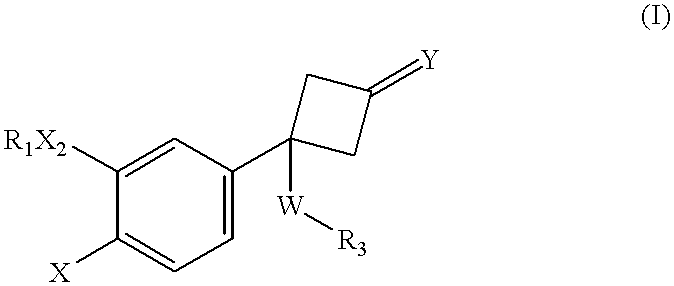
wherein:
R1 is —(CR4R5)nC(O)O(CR4R5)mR6, —(CR4R5)nC(O)NR4(CR4R5)mR6, —(CR4R5)nO(CR4R5)mR6, or —(CR4R5)rR6 wherein the alkyl moieties may be unsubstituted or substituted with one or more fluorines;
m is 0 to 2;
n is 1 to 4;
r is 0 to 6;
R4 and R5 are independently hydrogen or C1-2 alkyl;
R6 is hydrogen, methyl, hydroxyl, aryl, halo substituted aryl, aryloxyC1-3 alkyl, halo substituted aryloxyC1-3 alkyl, indanyl, indenyl, C7-11 polycycloalkyl, tetrahydrofuranyl, furanyl, tetrahydropyranyl, pyranyl, tetrahydrothienyl, thienyl, tetrahydrothiopyranyl, thiopyranyl, C3-6 cycloalkyl, or a C4-6 cycloalkyl containing one or two unsaturated bonds, wherein the cycloalkyl or heterocyclic moiety may be unsubstituted or substituted by 1 to 3 methyl groups, one ethyl group or an hydroxyl group;
provided that:
a) when R6 is hydroxyl, then m is 2; or
b) when R6 is hydroxyl, then r is 2 to 6; or
c) when R6 is 2-tetrahydropyranyl, 2-tetrahydrothiopyranyl, 2-tetrahydrofuranyl, or 2-tetrahydrothienyl, then m is 1 or 2; or
d) when R6 is 2-tetrahydropyranyl, 2-tetrahydrothiopyranyl, 2-tetrahydrofuranyl, or 2-tetrahydrothienyl, then r is 1 to 6;
e) when n is 1 and m is 0, then R6 is other than H in —(CR4R5)nO(CR4R5)mR6;
X is VR2, halogen, nitro, NR4R5, or formyl amine;
V is O or S(O)m′;
m′ is 0, 1, or 2;
X2 is O or NR8;
R2 is —CH3 or —CH2CH3 unsubstituted or substituted by 1 or more fluorines;
R3 is COOR14, C(O)NR4R14 or R7;
W is alkyl of 2 to 6 carbon atoms, alkenyl of 2 to 6 carbon atoms or alkynyl of 2 to 6 carbon atoms;
Z is O, NR9, NOR8, NCN, C(—CN)2, CR8CN, CR8NO2, CR8C(O)OR8, CR8C(O)NR8R8, C(—CN)NO2, C(—CN)C(O)OR9, C(—CN)C(O)NR8R8;
Y is O, NR7, NCR4R5C2-6 alkenyl, NOR14, NOR15, NOCR4R5C2-6 alkenyl, NNR4R14, NNR4R15, NCN, NNR8C(O)NR8R14, NNR8C(S)NR8R14, or ═Y is 2-(1,3-dithiane), 2-(1,3-dithiolane), dimethylthio ketal, diethylthio ketal, 2-(1,3-dioxolane), 2(1,3-dioxane), 2-(1,3-oxathiolane), dimethyl ketal or diethyl ketal;
R7 is —(CR4R5)qR12 or C1-6 alkyl wherein the R12 or C1-6 alkyl group is unsubstituted or substituted one or more times by methyl or ethyl unsubstituted or substituted by 1-3 fluorines, —F, —Br, —Cl, —NO2, —NR10R11, —C(O)R8, —CO2R8, —O(CH2)qR8, —CN, —C(O)NR10R11, —O(CH2)qC(O)NR10R11, —O(CH2)qC(O)R8, —NR10C(O)NR10R11, —NR10C(O)R11, —NR10C(O)OR9, —NR10C(O)R13, —C(NR10)NR10R11, —C(NCN)NR10R11, —C(NCN)SR9, —NR10C(NCN)SR9, —NR10C(NCN)NR10R11, —NR10S(O)2R9, —S(O)m′R9, —NR10C(O)C(O)NR10R11, —NR10C(O)C(O)R10, or R13;
q is 0, 1, or 2;
R12 is R13, C3-C7 cycloalkyl, (2-, 3- or 4-pyridyl), pyrimidyl, pyrazolyl, (1- or 2-imidazolyl), pyrrolyl, piperazinyl, piperidinyl, morpholinyl, furanyl, (2- or 3-thienyl), quinolinyl, naphthyl, or phenyl;
R8 is hydrogen or R9;
R8′ is R8 or fluorine;
R9 is C1-4 alkyl unsubstituted or substituted by one to three fluorines;
R10 is OR8 or R11;
R11 is hydrogen, or C14 alkyl unsubstituted or substituted by one to three fluorines; or when R10 and R11 are as NR10R11 they may together with the nitrogen form a 5 to 7 membered ring comprised only of carbon atoms or carbon atoms and at least one heteroatom selected from O, N, or S;
R13 is oxazolidinyl, oxazolyl, thiazolyl, pyrazolyl, triazolyl, tetrazolyl, imidazolyl, imidazolidinyl, thiazolidinyl, isoxazolyl, oxadiazolyl, or thiadiazolyl, and each of these heterocyclic rings is connected through a carbon atom and each may be unsubstituted or substituted by one or two C1-2 alkyl groups;
R14 is hydrogen or R7; or when R8 and R14 are as NR8R14 they may together with the nitrogen form a 5 to 7 membered ring comprised only of carbon atoms or carbon atoms and at least one heteroatom selected from O, N, or S; provided that:
R15 is C(O)R14, C(O)NR4R14, S(O)2R7, or S(O)2NR4R14;
or a pharmaceutically acceptable salt thereof.
A second set of compounds of this invention are represented by Formula (II) 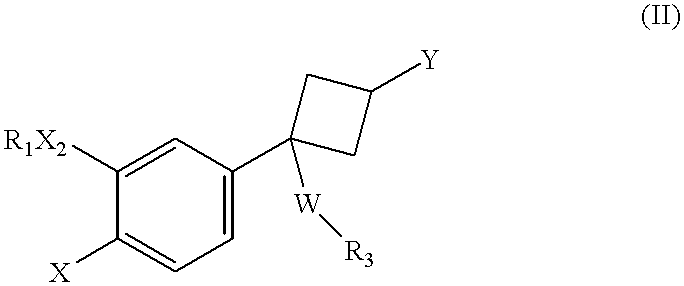
wherein the several groups are the same as those of formula (I) except:
Y is —(CR4R5)qZ′;
Z′ is OR14, OR15, SR14, S(O)mR7, S(O)2NR10R14, NR10R14, NR14C(O)R9, NR10C(Y′R14, NR10C(O)OR7, NR10C(Y′)NR10R14, NR10S(O)2NR10R14, NR10C(NCN)NR10R14, NR10S(O)2R7, NR10C(CR4NO2)NR10R14, NR10C(NCN)SR9, NR10C(CR4NO2)SR9, NR10C(NR10)NR10R14, NR10C(O)C(O)NR10R14, or NR10C(O)C(O)OR14;
Y′ is O or S;
(g) When R12 is N-pyrazolyl,, N-imidazolyl, N-triazolyl, N-pyrrolyl, N-piperazinyl, or N-morpholinyl, then q is not 1;
or a pharmaceutically acceptable salt thereof.
This invention also relates to the pharmaceutical compositions comprising a compound of Formula (I) and (II) and a pharmaceutically acceptable carrier or diluent.
The invention also relates to a method of mediation or inhibition of the enzymatic activity (or catalytic activity) of PDE 4 in mammals, including humans, which comprises administering to a mammal in need thereof an effective amount of a compound of Formula (I) and (II) as shown below.
The invention further provides a method for the treatment of allergic and inflammatory disease which comprises administering to a mammal, including humans, in need thereof, an effective amount of a compound of Formula (I) and (II).
The invention also provides a method for the treatment of asthma which comprises administering to a mammal, including humans, in need thereof, an effective amount of a compound of Formula (I) and (II).
This invention also relates to a method of inhibiting TNF production in a mammal, including humans, which method comprises administering to a mammal in need of such treatment, an effective TNF inhibiting amount of a compound of Formula (I) and (II). This method may be used for the prophylactic treatment or prevention of certain TNF mediated disease states amenable thereto.
This invention also relates to a method of treating a human afflicted with a human immunodeficiency virus (HIV), which comprises administering to such human an effective TNF inhibiting amount of a compound of Formula (I) and (II).
Compounds of Formula (I) and (II) are also useful in the treatment of additional viral infections, where such viruses are sensitive to upregulation by TNF or will elicit TNF production in vivo.
In addition, compounds of Formula (I) and (II) are also useful in treating yeast and fungal infections, where such yeast and fungi are sensitive to upregulation by TNF or will elicit TNF production in vivo.
Phosphodiesterase 4 inhibitors are useful in the treatment of a variety of allergic and inflammatory diseases including: asthma, chronic bronchitis, atopic dermatitis, urticaria, allergic rhinitis, allergic conjunctivitis, vernal conjunctivitis, eosinophilic granuloma, psoriasis, rheumatoid arthritis, septic shock, ulcerative colitis, Crohn's disease, reperfusion injury of the myocardium and brain, chronic glomerulonephritis, endotoxic shock and adult respiratory distress syndrome. In addition, PDE 4 inhibitors are useful in the treatment of diabetes insipidus and central nervous system disorders such as depression and multi-infarct dementia.
The viruses contemplated for treatment herein are those that produce TNF as a result of infection, or those which are sensitive to inhibition, such as by decreased replication, directly or indirectly, by the TNF inhibitors of Formula (I) and (II). Such viruses include, but are not limited to HIV-1, HIV-2 and HIV-3, cytomegalovirus (CMV), influenza, adenovirus and the Herpes group of viruses, such as, but not limited to, Herpes zoster and Herpes simplex.
This invention more specifically relates to a method of treating a mammal, afflicted with a human immunodeficiency virus (HIV), which comprises administering to such mammal an effective TNF inhibiting amount of a compound of Formula (I) and (II).
The compounds of this invention may also be used in association with the veterinary treatment of animals, other than in humans, in need of inhibition of TNF production. TNF mediated diseases for treatment, therapeutically or prophylactically, in animals include disease states such as those noted above, but in particular viral infections. Examples of such viruses include, but are not limited to feline immunodeficiency virus (HIV) or other retroviral infection such as equine infectious anemia virus, caprine arthritis virus, visna virus, maedi virus and other lentiviruses.
The compounds of this invention are also useful in treating yeast and fungal infections, where such yeast and fungi are sensitive to upregulation by TNF or will elicit TNF production in vivo. A preferred disease state for treatment is fungal meningitis. Additionally, the compounds of Formula (I) and (II) may be administered in conjunction with other drugs of choice for systemic yeast and fungal infections. Drugs of choice for fungal infections, include but are not limited to the class of compounds called the polymixins, such as Polymycin B, the class of compounds called the imidazoles, such as clotrimazole, econazole, miconazole, and ketoconazole; the class of compounds called the triazoles, such as fluconazole, and itranazole, and the class of compound called the Amphotericins, in particular Amphotericin B and liposomal Amphotericin B.
The compounds of Formula (I) and (II) may also be used for inhibiting and/or reducing the toxicity of an anti-fungal, anti-bacterial or anti-viral agent by administering an effective amount of a compound of Formula (I) and (II) to a mammal in need of such treatment. Preferably, a compound of Formula (I) and (II) is administered for inhibiting or reducing the toxicity of the Amphotericin class of compounds, in particular Amphotericin B.
The term “C1-3 alkyl”, “C1-4 alkyl”, “C1-6 alkyl” or “alkyl” groups as used herein is meant to include both straight or branched chain radicals of 1 to 10, unless the chain length is limited thereto, including, but not limited to methyl, ethyl, n-propyl, isopropyl, n-butyl, sec-butyl, isobutyl, tert-butyl, and the like.
“Alkenyl” means both straight or branched chain radicals of 1 to 6 carbon lengths, unless the chain length is limited thereto, including but not limited to vinyl, 1-propenyl, 2-propenyl, or 3-methyl-2-propenyl.
The term “cycloalkyl” or “cycloalkyl alkyl” means groups of 3-7 carbon atoms, such as cyclopropyl, cyclopropylmethyl, cyclopentyl, or cyclohexyl.
“Aryl” or “aralkyl”, unless specified otherwise, means an aromatic ring or ring system of 6-10 carbon atoms, such as phenyl, benzyl, phenethyl, or naphthyl. Preferably the aryl is monocyclic, i.e, phenyl. The alkyl chain is meant to include both straight or branched chain radicals of 1 to 4 carbon atoms. “Heteroaryl” means an aromatic ring system containing one or more heteroatoms.
“Halo” means all halogens, i.e., chloro, fluoro, bromo, or iodo.
“Inhibiting the production of IL-1” or “inhibiting the production of TNF” means:
a) a decrease of excessive in vivo L-1 or TNF levels, respectively, in a human to normal levels or below normal levels by inhibition of the in vivo release of IL-1 by all cells, including but not limited to monocytes or macrophages;
b) a down regulation, at the translational or transcriptional level, of excessive in vivo IL-1 or TNF levels, respectively, in a human to normal levels or below normal levels; or
c) a down regulation, by inhibition of the direct synthesis of IL-1 or TNF levels as a postranslational event.
The phrase “TNF mediated disease or disease states” means any and all disease states in which TNF plays a role, either by production of TNF itself, or by TNF causing another cytokine to be released, such as but not limited to IL-1 or IL-6. A disease state in which IL-1, for instance is a major component, and whose production or action, is exacerbated or secreted in response to TNF, would therefore be considered a disease state mediated by TNF. As TNF-β (also known as lymphotoxin) has close structural homology with TNF-α (also known as cachectin), and since each induces similar biologic responses and binds to the same cellular receptor, both TNF-α and TNF-β are inhibited by the compounds of the present invention and thus are herein referred to collectively as “TNF” unless specifically delineated otherwise. Preferably TNF-α is inhibited.
“Cytokine” means any secreted polypeptide that affects the functions of cells, and is a molecule which modulates interactions between cells in immune, inflammatory, or hematopoietic responses. A cytokine includes, but is not limited to, monokines and lymphokines regardless of which cells produce them. The cytokine inhibited by the present invention for use in the treatment of a HIV-infected human must be a cytokine which is implicated in (a) the initiation and/or maintenance of T cell activation and/or activated T cell-mediated HIV gene expression and/or replication, and/or (b) any cytokine-mediated disease associated problem such as cachexia or muscle degeneration. Preferrably, his cytokine is TNF-α.
All of the compounds of Formula (I) and (II) are useful in the method of inhibiting the production of TNF, preferably by macrophages, monocytes or macrophages and monocytes, in a mammal, including humans, in need thereof. All of the compounds of Formula (I) and (II) are useful in the method of inhibiting or mediating the enzymatic or catalytic activity of PDE 4 and in treatment of disease states mediated thereby.
Preferred compounds are as follows:
When R1 for the compounds of Formula (I) and (II) is an alkyl substituted by 1 or more halogens, the halogens are preferably fluorine and chlorine, more preferably a C1-4 alkyl substituted by 1 or more fluorines. The preferred halo-substituted alkyl chain length is one or two carbons, and most preferred are the moieties —CF3, —CH2F, —CHF2, —CF2CHF2, —CH2CF3, and —CH2CHF2. Preferred R1 substitutents for the compounds of Formula (I) and (II) are CH2-cyclopropyl, CH2-C5-6 cycloalkyl, C4-6 cycloalkyl unsubstituted or substituted with OH, C7-11 polycycloalkyl, (3- or 4-cyclopentenyl), phenyl, tetrahydrofuran-3-yl, benzyl or C1-2 alkyl unsubstituted or substituted by 1 or more fluorines, —(CH2)1-3C(O)O(CH2)0-2CH3, —(CH2)1-3O(CH2)0-2CH3, and —(CH2)2-4OH.
When the R1 term is (CR4R5), the R4 and R5 terms are independently hydrogen or alkyl. This allows for branching of the individual methylene units as (CR4R5)n or (CR4R5)m; each repeating methylene unit is independent of the other, e.g., (CR4R5)n wherein n is 2 can be —CH2CH(—CH3)—, for instance. The individual hydrogen atoms of the repeating methylene unit or the branching hydrocarbon can be unsubstituted or be substituted by fluorine independent of each other to yield, for instance, the preferred R1 substitutions, as noted above.
When R1 is a C7-11 polycycloalkyl, examples are bicyclo[2.2.1]-heptyl, bicyclo[2.2.2]octyl, bicyclo[3.2.1]octyl, tricyclo[5.2.1.02,6]decyl, etc. additional examples of which are described in Saccamano et al., WO 87/06576, published Nov. 5, 1987, whose disclosure is incorporated herein by reference in its entirety.
Preferred Z terms are O, NCN, NR7, NOR14, NOR15, NNR4R14, NNR4R15, 2-(1,3-dithiane), dimethylthio ketal, 2-(1,3-dioxolane), or dimethyl ketal. More preferred are O, NR7, NOR14, NOR15, and 2-(1,3-dioxolane).
Preferred X groups for Formula (I) and (II) are those wherein X is YR2 and Y is oxygen. The preferred X2 group for Formula (I) and (II) is that wherein X2 is oxygen. The preferred X3 group for Formula (I) and (II) is that wherein X3 is hydrogen. Preferred R2 groups, where applicable, is a C1-2 alkyl unsubstituted or substituted by 1 or more halogens. The halogen atoms are preferably fluorine and chlorine, more preferably fluorine. More preferred R2 groups are those wherein R2 is methyl, or the fluoro-substituted alkyls, specifically a C1-2 alkyl, such as a —CF3, —CHF2, or —CH2CHF2 moiety. Most preferred are the —CHF2 and —CH3 moieties.
Preferred R7 moieties include R13, unsubstituted or substituted —(CH2)0-2(2-, 3- or 4-pyridyl), (CH2)1-2(2-imidazolyl), (CH2)2(4-morpholinyl), (CH2)2(4-piperazinyl), (CH2)1-2(2-thienyl), (CH2)1-2(4-thiazolyl), unsubstituted or substituted pyrimidinyl, and substituted or unsubstituted (CH2)0-2phenyl.
Preferred rings when R10 and R11 in the moiety —NR10R11 together with the nitrogen to which they are attached form a 5 to 7 membered ring comprised only of carbon atoms or carbon atoms and at least one heteroatom selected from O, N, or S include, but are not limited to 1-imidazolyl, 2-(R8)-1-imidazolyl, 1-pyrazolyl, 3-(R8)-1-pyrazolyl, 1-triazolyl, 2-triazolyl, 5-(R8)-1-triazolyl, 5-(R8)-2-triazolyl, 5-(R8)-1-tetrazolyl, 5-(R8)-2-tetrazolyl, 1-tetrazolyl, 2-tetrazloyl, morpholinyl, piperazinyl, 4-(R8)-1-piperazinyl, or pyrrolyl ring.
Preferred rings when R8 and R14 in the moiety —NR8R14 together with the nitrogen to which they are attached may form a 5 to 7 membered ring comprised only of carbon atoms or carbon atoms and at least one heteroatom selected from O, N, or S include, but are not limited to 1-imidazolyl, 1-pyrazolyl, 1-triazolyl, 2-triazolyl, 1-tetrazolyl, 2-tetrazolyl, morpholinyl, piperazinyl, and pyrrolyl. The respective rings may be additionally substituted, where applicable, on an available nitrogen or carbon by the moiety R7 as described herein for Formula (I) and (II). Illustrations of such carbon substitutions includes, but is not limited to, 2-(R7)-1-imidazolyl, 4-(R7)-1-imidazolyl, 5-(R7)-1-imidazolyl, 3-(R7)-1-pyrazolyl, 4-(R7)-1-pyrazolyl, 5-(R7)-1-pyrazolyl, 4-(R7)-2-triazolyl, 5-(R7)-2-triazolyl, 4-(R7)-1-triazolyl, 5-(R7)-1-triazolyl, 5-(R7)-1-tetrazolyl, and 5-(R7)-2-tetrazolyl. Applicable nitrogen substitution by R7 includes, but is not limited to, 1-(R7)-2-tetrazolyl, 2-(R7)-1-tetrazolyl, 4-(R7)-1-piperazinyl. Where applicable, the ring may be substituted one or more times by R7.
Preferred groups for NR8R14 which contain a heterocyclic ring are 5-(R14)-1-tetrazolyl, 2-(R14)-1-imidazolyl, 5-(R14)-2-tetrazolyl, 4-(R14)-1-piperazinyl, or 4-(R15)-1-piperazinyl.
Preferred rings for R13 include (2-, 4- or 5-imidazolyl), (3-, 4- or 5-pyrazolyl), (4- or 5-triazolyl[1,2,3]), (3- or 5-triazolyl[1,2,4]), (S-tetrazolyl), (2-, 4- or 5-oxazolyl), (3-, 4- or 5-isoxazolyl), (3- or 5-oxadiazolyl[1,2,4]), (2-oxadiazolyl[1,3,4]), (2-thiadiazolyl[1,3,4]), (2-, 4-, or 5-thiazolyl), (2-, 4-, 5-oxazolidinyl), (2-, 4-, or 5-thiazolidinyl), or (2-, 4-, or 5-imidazolidinyl).
When the R7 group is unsubstituted or substituted by a heterocyclic ring such as imidazolyl, pyrazolyl, pyrimidinyl, triazolyl, tetrazolyl, or thiazolyl, the heterocyclic ring itself may be unsubstituted or substituted by R8 either on an available nitrogen or carbon atom, such as 1-(R8)-2-imidazolyl, 1-(R8)-4-imidazolyl, 1-(R8)-5-imidazolyl, 1-(R8)-3-pyrazolyl, 1-(R8)-4-pyrazolyl, 1-(R8)-5-pyrazolyl, 1-(R8)-4-triazolyl, or 1-(R8)-5-triazolyl. Where applicable, the ring may be substituted one or more times by R8.
W is preferably alkyl, alkenyl or alkynyl of 3 to 5 carbon atoms, and where it is alkenyl or alkynyl, that one or two double or triple bonds be present. It is most preferred that W is ethynyl or 1,3-butadiynyl.
Preferred are those compounds of Formula (I) and (II) wherein R1 is —CH2— cyclopropyl, —CH2-C5-6 cycloalkyl, —C4-6 cycloalkyl unsubstituted or substituted with OH, tetrahydrofuran-3-yl, (3- or 4-cyclopentenyl), benzyl or —C1-2 alkyl unsubstituted or substituted by 1 or more fluorines, and —(CH2)2-4 OH; R2 is methyl or fluoro-substituted alkyl, R, is R, where R, is an unsubstituted or substituted aryl or heteroaryl ring, X is YR2, and Z is O, NR7.
Most preferred are those compounds of Formula (I) are those wherein R1 is —CH2-cyclopropyl, cyclopentyl, 3-hydroxycyclopentyl, methyl or CF2H; X is VR2; V is oxygen; X2 is oxygen; R2 is CF2H or methyl, W is ethynyl or 1,3-butadiynyl, R3 is a substituted or unsubstituted pyrimidinyl ring, and Z is O or NR7.
As regards preferred compounds of Formula (II) they are the same as for those of Formula (I) where Formula (II) shares a group in common with Formula (I). As regards the Y group in Formula (II), the preferred embodiment is where R4 and R5 are hydrogen, q is 0 or 1 and Z′ is OR14, OR15, or NR10R14, most particularly NR10R14.
Pharmaceutically acceptable salts of the instant compounds, where they can be prepared, are also intended to be covered by this invention. These salts will be ones which are acceptable in their application to a pharmaceutical use. By that it is meant that the salt will retain the biological activity of the parent compound and the salt will not have untoward or deleterious effects in its application and use in treating diseases.
Pharmaceutically acceptable salts are prepared in a standard manner. If the parent compound is a base it is treated with an excess of an organic or inorganic acid. If the parent compound is an acid, it is treated with an inorganic or organic base dissolved in a suitable solvent.
Pharmaceutical compositions of the present invention comprise a pharmaceutical carrier or diluent and some amount of a compound of the Formula (I) and (II). The compound may be present in an amount to effect a physiological response, or it may be present in a lesser amount such that the user will need to take two or more units of the composition to effect the treatment intended. These compositions may be made up as a solid, liquid or in a gaseous form. Or one of these three forms may be transformed to another at the time of being administered such as when a solid is delivered by aerosol means, or when a liquid is delivered as a spray or aerosol.
The nature of the composition and the pharmaceutical carrier or diluent will, of course, depend upon the intended route of administration, for example parenterally, topically, orally or by inhalation.
For topical administration the pharmaceutical composition will be in the form of a cream, ointment, liniment, lotion, pastes, aerosols, and drops suitable for administration to the skin, eye, ear, or nose.
For parenteral administration the pharmaceutical composition will be in the form of a sterile injectable liquid such as an ampule or an aqueous or non-aqueous liquid suspension.
For oral administration the pharmaceutical composition will be in the form of a tablet, capsule, powder, pellet, atroche, lozenge, syrup, liquid, or emulsion.
When the pharmaceutical composition is employed in the form of a solution or suspension, examples of appropriate pharmaceutical carriers or diluents include: for aqueous systems, water; for non-aqueous systems, ethanol, glycerin, propylene glycol, corn oil, cottonseed oil, peanut oil, sesame oil, liquid parafins and mixtures thereof with water; for solid systems, lactose, kaolin and mannitol; and for aerosol systems, dichlorodifluoromethane, chlorotrifluoroethane and compressed carbon dioxide. Also, in addition to the pharmaceutical carrier or diluent, the instant compositions may include other ingredients such as stabilizers, antioxidants, preservatives, lubricants, suspending agents, viscosity modifiers and the like, provided that the additional ingredients do not have a detrimental effect on the therapeutic action of the instant compositions.
The pharmaceutical preparations thus described are made following the conventional techniques of the pharmaceutical chemist as appropriate to the desired end product.
In these compositions, the amount of carrier or diluent will vary but preferably will be the major proportion of a suspension or solution of the active ingredient. When the diluent is a solid it may be present in lesser, equal or greater amounts than the solid active ingredient.
Usually a compound of formula I is administered to a subject in a composition comprising a nontoxic amount sufficient to produce an inhibition of the symptoms of a disease in which leukotrienes are a factor. Topical formulations will contain between about 0.01 to 5.0% by weight of the active ingredient and will be applied as required as a preventative or curative agent to the affected area. When employed as an oral, or other ingested or injected regimen, the dosage of the composition is selected from the range of from 50 mg to 1000 mg of active ingredient for each administration. For convenience, equal doses will be administered 1 to 5 times daily with the daily dosage regimen being selected from about 50 mg to about 5000 mg.
It will be recognized that some of the compounds of Formula (I) and (II) may exist in both racemic and optically active forms; some may also exist in distinct diastereomeric forms possessing distinct physical and biological properties. All of these compounds are considered to be within the scope of the present invention.
The following examples are given to further illustrate the described invention. These examples are intented solely for illustrating the invention and should not be read to limit the invention in any manner. Reference is made to the claims for what is reserved to the inventors hereunder.
No unacceptable toxicological effects are expected when these compounds are administered in accordance with the present invention.
Synthetic Scheme(s) With Textual Description
Cyanocyclobutanone 1-Scheme 1, prepared as described in an accompanying patent application filed on even date herewith may be protected, for example, as a ketal, by treatment with suitable reagents, such as bis(trimethylsilyloxy)ethane and catalytic trimethylsilyl trifluoromethanesulfonate, in a suitable solvent, such as dichloromethane. The nitrile may then be reduced by a suitable reagent, such as diisobutylaluminum hydride, in a suitable solvent, such as toluene or an ether, such as tetrahydrofuran and tetrabutyl methyl ether. Aldehyde 2-Scheme 1 may be homologated to the alkyne by treatment with an appropriate reagent, such as dialkyl diazomethylphosphonate, [Seyferth et al, J. Org. Chem., 36: 1379, 1971 and a suitable base, such as potassium t-butoxide, in a suitable solvent, such as tetrahydrofuran. Deprotection of the ketal may be achieved by treatment with an acidic reagent, such as hydrogen chloride or p-toluenesulfonic acid, in an aqueous solvent, such as tetrahydrofuran, at temperatures from room temperature to reflux, preferably at 60° C. Terminal alkyne 3-Scheme 1 may be coupled with an aryl bromide or iodide, such as iodobenzene, using an appropriate catalyst system, such as tetrakis(triphenylphosphine)palladium(0) and copper(I) iodide, in a suitable solvent, such as triethylamine, at elevated temperature, preferably at 85° C., to provide the phenylethynylcyclobutanone 4 Scheme 1. [Brandsma et al, Syn. Comm., 20: 1889, 1990]. 
Phenylethynylcyclobutanone 1 Scheme 2 may be treated with a suitable reagent, such as methoxymethyldiphenylphosphonium chloride, and a suitable base, such as phenyllithium, in a suitable solvent, such as ether or tetrahydrofuran. The resulting methyl vinyl ether 2-Scheme 2 may be hydrolyzed by treatment with an acidic reagent, such as p-toluenesulfonic acid, in a suitable aqueous solvent, such as isopropanol, at elevated temperature, preferably at reflux. [Demopoulos et al. J. Het. Chem., 25: 635, 1988] Separation of cis and trans isomers may conveniently be carried out at this stage. Aldehyde 3a- or 3b-Scheme 2 may be transformed into the amine by, for example, reductive amination by treatment with suitable reagents, such as ammonium acetate and sodium cyanoborohydride, followed by hydrogen chloride, in a suitable solvent, such as methanol, to provide the aminomethylcyclobutane 4a- or 4b-Scheme 2 
Terminal alkyne 1-Scheme 3 may be reduced to the alcohol by a variety of reagents, such as a borohydride, especially lithium borohydride, in a suitable solvent, such as an alcohol, such as ethanol, or an ether, such as dimethoxyethane or tetrahydrofuran, at temperatures from −78° C. to room temperature. The mixture of cis and trans alcohols may then be subjected to Mitsunobu reaction conditions [Mitsunobu, Synth, 1, 1981], for example with diethyl azodicarboxylate, triphenylphosphine and phthalimide, in a suitable solvent, such as tetrahydrofuran, to give a mixture of phthalimidocyclobutanes, the cis and trans isomers of which may conveniently be separated.
Trans-phthalimidocyclobutane 2-Scheme 3 may be elaborated to the amine, for example with hydrazine, in a suitable solvent, such as ethanol and tetrahydrofuran, and protected, for example as the t-butylcarboxylate, by treatment with a suitable reagent, such as di-t-butyldicarboxylate, in a suitable solvent, such as dichloromethane. Terminal alkyne 3-Scheme 3 may be coupled to an aryl bromide or iodide, such as iodobenzene, with an appropriate catalyst system, such as tetrakis(triphenylphosphine)palladium(0) and copper(I) iodide, in a suitable solvent, such as triethylamine, at elevated temperatures, preferably at 85° C. [Brandsma et al, Syn. Comm., 20: 1889, 1990] The intermediate may be deprotected, for example with trifluoracetic acid, in a suitable solvent, such as dichloromethane, to give the trans-phenylethynylcyclobutylamine 4-Scheme 3.
Terminal alkyne 3-Scheme 3 may be reacted with even unreactive aryl iodides and bromides, such as 2-amino-5-iodopyrimidine, in the presence of a base, such as diethylamine, in a suitable solvent, such as dimethyl sulfoxide, using an appropriate catalyst system, such as tetrakis(triphenylphosphine)palladium(O) and copper(I) iodide, at elevated temperatures, preferably at 65° C. The intermediate may be deprotected, for example with trifluoracetic acid, in a suitable solvent, such as dichloromethane, to provide the trans-(2-aminopyrimidin-5-ylethynyl)cyclobutylamine 5-Scheme 3. 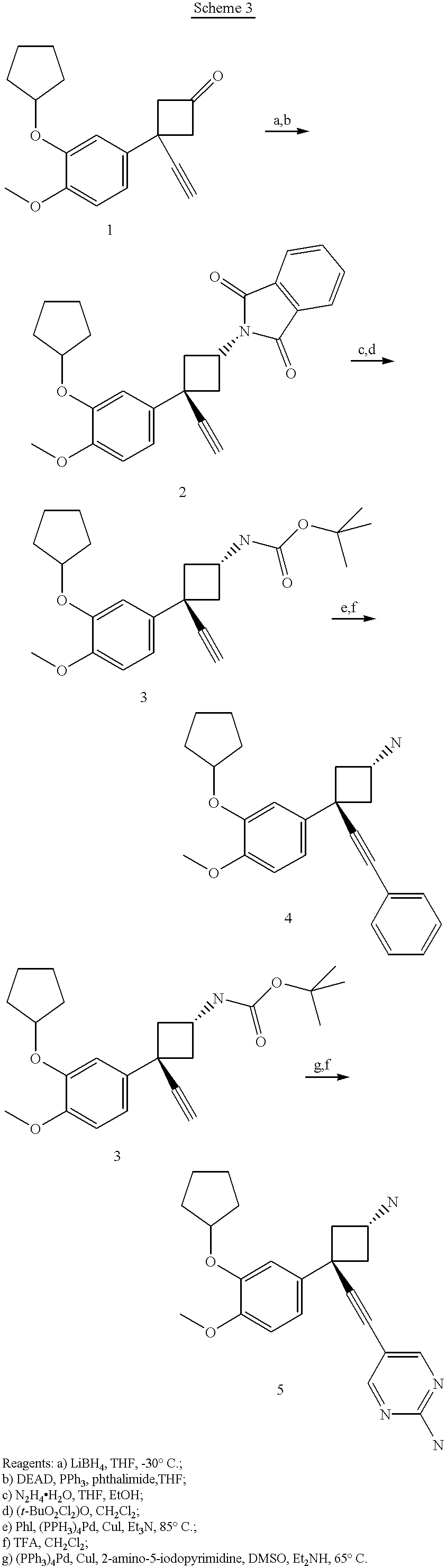
Terminal alkyne 1-Scheme 4 may be subjected to Mitsunobu [Pearson et al, J. Org. Chem., 54: 4235, 1989] reaction conditions, for example with diphenylphosphoryl azide, diethyl azodicarboxylate and triphenylphosphine, in a suitable solvent, such as tetrahydrofuran, resulting in a mixture of cis and trans azides 2a- and 2b-Scheme 4, which may conveniently be separated. Trans-azide 2a-Scheme 4 may be coupled with an aryl iodide or bromide using a suitable catalyst system, such as tetrakis(triphenylphosphine)palladium(0) and copper(I) iodide, in a suitable solvent, such as triethylamine, at elevated temperatures, preferably at 85° C. [Brandsma et al, Syn. Comm., 20: 1889, 1990] Azide 3-Scheme 4 may be reduced with a suitable reducing system, such as triphenylphosphine, in the presence of a suitable base, such as pyridine, in a suitable solvent, such as ammoniacal methanol. Salt formation with, for example, ethereal hydrogen chloride, provides the amine salts 4-Scheme 4. In those cases where the coupled aryl group is a benzoate ester 5-Scheme 4, saponification may be achieved by a variety of reaction conditions, for example with potassium hydroxide in tetrahydrofuran, methanol and water. Salt formation with, for example, ethereal hydrogen chloride provides the amine salts 6-Scheme 4 
3-(3-Cyclopentyloxy-4-methoxyphenyl)-3-phenylethynylcyclobutan-1-one,
1a 3-(3-Cyclopentyloxy-4-methoxyphenyl)-3-ethynylcyclobutan-1-(1,3-dioxolane ketal). To a suspension of potassium tert-butoxide (1.40 g, 12.5 mmol) in tetrahydrofuran (50 mL) at −78° C. under an argon atmosphere was added via cannula a −78° C. solution of dimethyl diazomethylphosphonate (1.88 g, 12.5 mmol) (preparation described in PCT application PCT/US95/1671 1, published Jul. 4, 1996 as WO96/19988) in tetrahydrofuran (15 mL), followed immediately by rapid syringe addition of a −78° C. solution of 3-(1,3-dioxolane ketal)-1-(3-cyclopentyloxy-4-methoxyphenyl)cyclobutane-1-carboxaldehyde (2.08 g, 6.25 mmol) (preparation described in patent) in tetrahydrofuran (15 mL). The reaction was stirred at room temperature for 1.5 h, was quenched with ammonium chloride and water and was extracted with three portions of dichloromethane. The organic extract was dried (magnesium sulfate) and evaporated. Purification by flash chromatography, eluting with 15:85 ethyl acetate: hexanes provided product as an off-white, waxy solid (1.39 g, 68%), m.p. 55-56° C.
1b 3-(3-Cyclopentyloxy-4-methoxyphenyl)-3-ethynylcyclobutan-1-one. A solution of 3-(3-cyclopentyloxy-4-methoxyphenyl)-3-ethynylcyclobutan-1-(1,3-dioxolane ketal) in tetrahydrofuran (65 mL) and 10% hydrochloric acid (15 mL) was stirred at 50-60° C. under an argon atmosphere for 24 h. The reaction was cooled, was poured into 5% sodium carbonate (100 mL) and was extracted with three portions of dichloromethane. The organic extract was dried (magnesium sulfate) and evaporated. Purification by flash chromatography, eluting with 1:9 ethyl acetate: hexanes provided product as a white solid (1.00 g, 83%), m.p. 58-59° C.
1c 3-(3-Cyclopentyloxy-4-methoxyphenyl)-3-phenylethynylcyclobutan-1-one. To a solution of 3-(3-cyclopentyloxy-4-methoxyphenyl)-3-ethynylcyclobutan-1-one (0.15 g, 0.53 mmol) in triethylamine (3 mL) was added iodobenzene (0.06 mL, 0.53 mmol), tetrakis(triphenylphosphine)palladium(0) (0.024 g, 4%) and copper(I) iodide (0.006 g, 6%). The reaction was stirred at 80-85° C. under an argon atmosphere for 1 h, was cooled, was diluted with water and was extracted with three portions of dichloromethane. The organic extract was dried (magnesium sulfate) and evaporated. Purification by flash chromatography, eluting with 1:9 ethyl acetate: hexanes provided product as a yellow oil (0.12 g, 60%).
Analysis Calcd for C24H24O3·0.125 H2O: C 79.48, H 6.74; found: C 79.30, H 6.58.
trans-1-Aminomethyl-3-(3-cyclopentyloxy-4-methoxyphenyl)-3-phenylethynylcyclobutane.
2a Methoxy 3-(3-cyclopentyloxy-4-methoxyphenvl)-3-phenylethynvlcyclobut-1-ylidene. To a suspension of methoxymethyl)triphenylphosphonium chloride (0.94 g, 2.73 mmol) in diethyl ether (20 mL) at 0° C. under an argon atmosphere was rapidly added a solution of 1.8 M phenyllithium in cyclohexane/diethyl ether (4.95 mL, 8.9 mmol), followed immediately by a solution of 3-(3-cyclopentyloxy-4-methoxyphenyl)-3-phenylethynylcyclobutan-1-one (0.82 g, 2.28 mmol) (prepared in example 12b) in diethyl ether (20 mL). The reaction was stirred at room temperature for 24 h, was quenched with ammonium chloride, was diluted with water and was extracted with three portions of dichloromethane. The organic extract was dried (magnesium sulfate) and evaporated. Purification by flash chromatography, eluting with 1:9 ethyl acetate: hexanes provided product as a colorless oil (0.35 g, 40%). (Starting aldehyde was also recovered (0.36 g, 44%)).
2b trans-3-(3-Cyclopentyloxy-4-methoxyphenyl)-3-phenylethynylcyclobutan 1-carboxaldehyde and cis-3-(3-cyclopentyloxy-4-methoxyphenyl)-3-phenylethynylcyclobutan-1-carboxaldehyde. A solution of methoxy 3-(3-cyclopentyloxy-4-methoxyphenyl)-3-phenylethynylcyclobut-1-ylidene (0.45 g, 1.16 mmol) in isopropanol (5 mL) and water (5 mL) was deoxygenated, and then was treated with p-toluenesulfonic acid (0.02 g, 10%). The reaction was stirred at reflux under an argon atmosphere for 20 h, was cooled, was diluted with water and was extracted with three portions of dichloromethane. The organic extract was dried (magnesium sulfate) and evaporated. Purification by flash chromatography, eluting with 5:95 ethyl acetate : hexanes provided both products: trans-3-(3-Cyclopentyloxy-4-methoxyphenyl)-3-phenylethynylcyclobutan-1-carboxaldehyde was obtained as a colorless oil (0.11 g, 26%), Rf=0.23 (1:9 ethyl acetate: hexanes), and cis-3-(3-cyclopentyloxy-4-methoxyphenyl)-3-phenylethynylcyclobutan-1-carboxaldehyde was obtained as a colorless oil (0.15 g, 35%), Rf=0.16 (1:9 ethyl acetate: hexanes), contaminated with −10% trans isomer. Additional product (0.044 g, 10%) was isolated as a mixture of isomers.
2c trans-1-Aminomethyl-3-(3-cyclopentyloxy-4-methoxyphenyl)-3--phenylethynylcyclobutane. A mixture of trans-3-(3-cyclopentyloxy-4-methoxyphenyl)-3-phenylethynylcyclobutan-1-carboxaldehyde (0.11 g, 0.30 mmol), ammonium acetate (0.23 g, 3.0 mmol), sodium cyanoborohydride (0.019 g, 0.30 mmol) and several 4A molecular sieves in methanol (3 mL) was stirred at room temperature under an argon atmosphere for 3d. The reaction was treated with a crystal of methyl orange, then dropwise with hydrogen chloride-saturated methanol to attain a red color. The reaction was stirred for three hours, maintaining the acidity, was basified with 10% sodium hydroxide, was diluted with water and was extracted with three portions of 5/95 methanol/dichloromethane. The organic extract was dried (potassium carbonate) and evaporated. Purification by flash chromatography, eluted with 1:9 methanol: dichloromethane provided product as an amber oil (0.026 g, 23%). 1H-NMR (CDCl3, 400 mHz) δ7.39 (m, 2H), 7.24 (m, 3H), 6.98 (d, J=2.3Hz, 1H), 6.91 (d, J=8.3 Hz, 1H), 6.79 (d, J=8.3 Hz, 1H), 4.78 (m, 1H), 3.80 (s, 3H), 3.13 (m, 1H), 3.05 (m, 2H), 2.82 (m, 2H), 2.36 (m, 2H), 1.8-2.0 (m, 6H), 1.65 (m, 2H) ppm. Mass spectrum (ES+): 376 (M+H).
cis-1 -Aminomethyl-3-(3-cyclopentyloxy-4-methoxyphenyl)-3-phenylethynylcyclobutane,
A mixture of cis-3-(3-cyclopentyloxy-4-methoxyphenyl)-3-phenylethynylcyclobutan-1-carboxaldehyde (0.15 g, 0.41 mmol), ammonium acetate (0.31 g, 4.1 mmol), sodium cyanoborohydride (0.026 g, 0.41 mmol) and several 4A molecular sieves in methanol (3 mL) was stirred at room temperature under an argon atmosphere for 3d. The reaction was treated with a crystal of methyl orange, then dropwise with hydrogen chloride-saturated methanol to attain a red color. The reaction was stirred for three hours, maintaining the acidity, was basified with 10% sodium hydroxide, was diluted with water and was extracted with three portions of 5/95 methanol/dichloromethane. The organic extract was dried (potassium carbonate) and evaporated. Purification by flash chromatography, eluted with 5:95 methanol : dichloromethane provided product as an amber oil (0.029 g, 19%). 1H-NMR (CDCl3, 400 MHz) δ7.39 (m, 2H), 7.25 (m, 3H), 7.09 (s, 1H), 7.04 (d, J=8.5 Hz, 1H), 6.81 (d, J=8.5Hz, 1H), 4.80 (m, 1H), 3.82 (s, 3H), 3.20 (m, 2H), 2.83 (m, 2H), 2.66 (m, 1H), 2.54 (m, 2H), 1.8-2.0 (m, 6H), 1.65 (m, 2H) ppm. Mass spectrum (ES+) 376 (M+H), 359 (M+H-NH3), 291 (M+H-(O-cyclopentyl)). (The MS has numerous other peaks as well)
trans-1-Amino-3-(3-cyclopentyloxy-4-methoxyphenyl)-3-phenylethynylcyclobutane,
4a 3-(3-Cyclopentyloxy-4-methoxyphenyl)-3-ethynylcyclobutan-1-ol. To a solution of 3-(3-cyclopentyloxy-4-methoxyphenyl)-3-ethynylcyclobutan-1-one (0.50 g, 1.76 mmol) (prepared in example 2b) in tetrahydrofuran (10 mL) at −30-40° C. under an argon atmosphere was added over 15 min a slurry of lithium borohydride (0.12 g, 5.28 mmol) in tetrahydrofuran (16 mL). The reaction was stirred 0.5 h and was poured into 0° C. ammonium chloride. 10% Hydrochloric acid was used to adjust to pH 3-4, the mixture was warmed to room temperature and was extracted with three portions of diethyl ether. The organic extract was dried (magnesium sulfate) and was evaporated. Purification by flash chromatography, eluting with 2:8 ethyl acetate : hexanes provided product as a colorless oil (0.54 g, 100%). 1H-NMR indicated the cis: trans isomer ratio to be ˜85:15.
4b trans-3-(3-Cyclopentyloxy-4-methoxyphenyl)-3-ethynyl-1-phthalimidocyclobutane. A solution of 3-(3-cyclopentyloxy-4-methoxyphenyl)-3-ethynylcyclobutan-1-ol (0.54 g, 1.76 mmol) in tetrahydrofuran (20 mL) was treated with phthalimide (0.39 g, 2.64 mmol), triphenylphosphine (0.69 g, 2.64 mmol) and diethyl azodicarboxylate (0.42 mL, 2.64 mmol). The reaction was stirred at room temperature under an argon atmosphere for 24 h and was evporated. Purification by four flash chromatographies, eluting with 1:9 ethyl acetate: hexanes, with 5:48:48 ethyl acetate: dichloromethane: hexanes, with 4:24:72 ethyl acetate: dichloromethane: hexanes and with 2:20:80 ethyl acetate: dichloromethane: hexanes provided product as a white solid (0.57 g, 78%), m.p. 130-131° C. Some cis-3-(3-cyclopentyloxy4-methoxyphenyl)-3-ethynyl-1-phthalimidocyclobutane (0.08 g, 11%) was also isolated.
4c trans-1-tertbutoxycarbonylamino-3-(3-cyclopentyloxy-4-methoxyphenyl)-3-ethynylcyclobutane. A solution of trans-3-(3-cyclopentyloxy-4-methoxyphenyl)-3-ethynyl-1-phthalimidocyclobutane (0.24 g, 0.58 mmol) in ethanol (4 mL) and tetrahydrofuran (2 mL) was treated with hydrazine monohydrate (0.26 mL, 5.8 mmol) and was stirred at room temperature under an argon atmosphere for 18 h. The reaction was diluted with water and extracted with three portions of 5/95 methanol/dichloromethane. The organic extract was dried (magnesium sulfate) and evaporated to provide crude amine as a colorless oil. The crude intermediate was dissolved in dichloromethane (20 mL) and was treated with ditert.butyl dicarbonate (0.13 g, 0.61 mmol). The reaction was stirred at room temperature under an argon atmosphere for 24 h, was partitioned between dichloromethane and water, was dried (magnesium sulfate) and was evaporated. Purification by flash chromatography, eluting with 1:9 ethyl acetate :hexanes provided product as a whitish solid (0.098 g, 44%), m.p.129-130° C.
4d trans-1-tertbutoxycarbonylamino-3-(3-cyclopentyloxy-4-methoxyphenyl)-3-phenylethynylcyclobutane. A solution of trans-1-tertbutoxycarbonylamino-3-(3-cyclopentyloxy-4-methoxyphenyl)-3-ethynylcyclobutane (0.098 g, 0.25 mmol) in triethylamine (3 mL) was treated with iodobenzene (0.03 mL, 0.25 mmol), tetrakis(triphenylphosphine)palladium(0) (0.01 g, 4%) and copper(II) iodide (0.003 g, 6%). The reaction was stirred at 80-85° C. under an argon atmosphere for 1 h, was cooled, was diluted with water and was extracted with three portions of dichloromethane. The organic extract was dried (magnesium sulfate) and evaporated. Purification by flash chromatography, eluting with 1:9 ethyl acetate: hexanes provided product as a yellow solid (0.09 g, 78%), m.p.45-51° C.
4e trans-1-Amino-3-(3-cyclopentyloxy-4-methoxyphenyl)-3-phenylethynylcyclobutane. A solution of trans-1-tertbutoxycarbonylamino-3-(3-cyclopentyloxy-4-methoxyphenyl)-3-phenylethynylcyclobutane (0.09 g, 0.20 mmol) in dichloromethane (3 mL) was treated with trifluoroactic acid (0.15 mL, 2 mmol) and was stirred at room temperature under argon for 24 h. The reaction was again treated with trifluoroactic acid (0.15 mL, 2 mmol) and was stirred at room temperature under argon for 24 h, was cooled to 0° C., was quenched with sodium bicarbonate and water and was extracted with three portions of 5/95 methanol/dichloromethane. The organic extract was dried (potassium carbonate) and evaporated. Purification by two flash chromatographies, eluting first with 3:97 methanol: dichloromethane, then with 2:98 methanol: dichloromethane provided product as a yellow oil (0.039 g, 55%).
Analysis Calcd for C24H27NO2·0.75 H2O: C 76.87, H 7.66, N 3.74; found: C 77.13, H 7.48, N 3.95.
trans-1-Amino-3-(2-aminopyrimidin-5-ylethynyl)-3-(3-cyclopentyloxy-4-methoxyphenyl)cyclobutane,
15a trans-3-(2-aminopyrimidin-5-ylethynyl)-1-tertbutoxycarbonylamino-3-(3-cyclopentyloxy-4-methoxyphenyl)cyclobutane. A solution of trans-1-tertbutoxycarbonylamino-3-(3-cyclopentyloxy-4-methoxyphenyl)-3-ethynylcyclobutane (0.098 g, 0.25 mmol) (prepared in example 4c) in dimethyl sulfoxide (1.5 mL) was added to a mixture of 2-amino-5-iodopyrimidine (0.07 g, 0.30 mmol), diethylamine (0.06 mL, 0.60 mmol) and a spatula-tip each of tetrakis(triphenylphosphine)palladium(0) and copper(II) iodide in dimethyl sulfoxide (1.5 mL). The reaction was stirred at 65-70° C. under an argon atmosphere for 4 h, was cooled, was diluted with ammonium chloride and water and was extracted with two portions of ethyl acetate. The organic extract was washed three times with water, once with brine, was dried (magnesium sulfate) and was evaporated. Purification by flash chromatography, eluting with 35:65 ethyl acetate: hexanes provided product as an off-white foam (0.10 g, 66%), m.p.63-67° C.
5b trans-1-Amino-3-(2-aminopyrimidin-5-ylethynyl)-3-(3-cyclopentyloxy-4-methoxyphenyI)cyclobutane. A solution of trans-3-(2-aminopyrimidin-5-ylethynyl)-1-tertbutoxycarbonylamino-3-(3-cyclopentyloxy-4-methoxyphenyl)cyclobutane (0.10 g, 0.20 mmol) in dichloromethane (5 mL) was treated with trifluoroactic acid (0.16 mL, 2 mmol) and was stirred at room temperature under argon for 9d. The reaction was quenched with sodium bicarbonate and water and was extracted with three portions of 5/95 methanol/dichloromethane. The organic extract was dried (magnesium sulfate) and evaporated. Purification by flash chromatography, eluting with 0.5:5:95 ammonium hydroxide: methanol: dichloromethane provided product as a pale tan solid (0.037 g, 48%), m.p.126-128° C.
Analysis Calcd for C22H26N4O2·H2O: C 66.64, H 7.12, N 14.13; found: C 66.43, H 6.81, N 13.87.
trans-1-Amino-3-(3-cyclopentyloxy-4-methoxyphenyl)-3-(3-nitrophenyl)ethynylcyclobutane, hydrochloride salt
6a trans-1-azido-3-(3-Cyclopentyloxy-4-methoxyphenyl)-3-ethynylcyclobutane. A solution of 3-(3-cyclopentyloxy-4-methoxyphenyl)-3-ethynylcyclobutan-1-ol (3.35 g, 11.7 mmol) (prepared in example 4a) in tetrahydrofuran (125 mL) at 0° C. under an argon atmosphere in a foil-wrapped flask was treated with triphenylphosphine (6.14 g, 23.4 mmol), then dropwise first with diethyl azodicarboxylate (3.7 mL, 23.4 mmol), then with diphenyl phosphorylazide (5.05 mL, 23.4 mmol). The reaction was stirred at room temperature under an argon atmosphere for 20 h and was evaporated. Purification by flash chromatography, eluting with 1:99 ethyl acetate: hexanes provided product as a colorless oil (1.62 g, 61%). Further chromatography allowed recovery of cis-1 -azido-3-(3-cyclopentyloxy-4-methoxyphenyl)-3-ethynylcyclobutane (0.12 g, 3%), containing -10% trans isomer (by 1H-NMR).
6b trans-1-Azido-3-(3-cyclopentyloxy-4-methoxyphenyl)-3-(3-nitrophenyl)ethynylcyclobutane. A solution of trans-1-azido-3-(3-cyclopentyloxy-4-methoxyphenyl)-3-ethynylcyclobutane (0.20 g, 0.64 mmol) in triethylamine (5 mL) was treated with 3-nitro-iodobenzene (0.14 mL, 0.64 mmol), tetrakis(triphenylphosphine)palladium(0) (0.03 g, 4%) and copper(II) iodide (0.008 g, 6%). The reaction was stirred at 80-85° C. under an argon atmosphere for 0.5 h, was cooled, was diluted with water and was extracted with three portions of dichloromethane. The organic extract was dried (magnesium sulfate) and evaporated. Purification by flash chromatography, eluting with 1:9 ethyl acetate: hexanes provided product as a yellow oil (0.19 g, 69%).
6c trans-1-Amino-3-(3-cyclopentyloxy-4-methoxyphenyl)-3-(3-nitrophenyl)ethynylcyclobutane, hydrochloride salt. A solution of trans-1-azido-3-(3-cyclopentyloxy-4-methoxyphenyl)-3-(3-nitrophenyl)ethynylcyclobutane (0.19 g, 0.44 mmol) in 50% ammoniacal methanol (5 mL) and pyridine (5 mL) was treated with triphenylphosphine (0.35 g, 1.32 mmol). The reaction was stirred for 24 h at room temperature under an argon atmosphere, was diluted with water and was extracted with 5/95 methanol/dichloromethane. The organic extract was dried (magnesium sulfate) and evaporated. Purification by flash chromatography, eluting with 2:98 methanol : dichloromethane, followed by treatment of the free amine with hydrogen chloride-diethyl ether provided product as a tan solid (0.11 g, 59%), m.p.113-117° C.
Analysis Calcd for C24H26N2O4·HCl·0.75 H2O: C 63.15, H 6.29, N 6.14; found: C 63.14, H 5.90, N 5.92
Proceeding in a similar manner, the following compounds were made.
trans-1-Amino-3-(3-cyclopentyloxy-4-methoxyphenyl)-3-(4-nitrophenyl)ethynylcyclobutane, hydrochloride salt, : m.p.162-163° C. Analysis Calcd for C24H26N2O4·HCl·H2O: C 62.54, H 6.34, N 6.07; found: C 62.56, H 5.94, N 5.
trans-1-Amino-3-(3-cgclopentyloxy-4-methoxyphenyl)-3-(4-trifluoromethoxyphenyl)ethynylcyclobutane, hydrochloride, SB 259835 A salt: m.p.170-174° C. Analysis Calcd for C25H26F3NO3·HCl·0.65 H2O: C 60.83, H 5.78, N 2.84; found: C 60.87, H 5.58, N 2.86.
cis-1 -Amino-3-(3-cyclopentyloxy-4-methoxyphenyl)-3-phenylethynylcyclobutane, hydrochloride salt. SB259717 A: m.p.131-132° C. Analysis Calcd for C24H27NO2·HCl·1.75 H2O: C 67.12, H 6.57, N 3.26; found: C 67.05, H 6.20, N 3.15.
trans-1-Amino-3-[(3-carboxyphenyl)ethynyl]3-(3-cyclopentyloxy-4-methoxyphenyl)cyclobutane, hydrochloride salt
7a trans-1-Amino-3-[(3-carboxymethylphenyl)ethynyl]3-(3-cyclopentyloxy-4-methoxyphenyl)cyclobutane. This product was prepared as the free amine, but otherwise in a manner similar to trans-1-amino-3-(3-cyclopentyloxy-4-methoxyphenyl)-3-(3-nitrophenyl)ethynylcyclobutane, hydrochloride salt. m.p.70-72° C.
7b trans-1-Amino-3-[(3-carboxyphenyl)ethynyl] 3-(3-cyclopentyloxy-4-methoxyphenyl)cyclobutane, hydrochloride salt. A solution of trans-1-amino-3-[(3-carboxymethylphenyl)ethynyl]3-(3-cyclopentyloxy-4-methoxyphenyl)cyclobutane (0.28 g, 0.68 mmol) and potassium hydroxide (0.12 g, 2.03 mmol) in tetrahydrofuran (5 mL), methanol (5 mL) and water (2 mL) was stirred at room temperature under an argon atmosphere for 24 h. The reaction was acidified with ethereal hydrogen chloride and evaporated. Purification by reverse-phase flash chromatography, eluting with 6:4 methanol : water provided free amine as a white solid (0.19 g, 71%), m.p.177-180° C. The free amine was suspended in dichloromethane, was treated with ethereal hydrogen chloride, was filtered and was died. Resuspension in methanol, filtration, evaporation and drying provided product as a white solid (0.09 g, 29%), m.p. greater than 225° C. Analysis Calcd for C25H27NO4·HCl·3 H2O: C 60.54, H 5.69, N 2.82; found: C 60.38, H 5.74, N 2.69.
Proceeding in a similar manner, the following compound was made:
trans-1-Amino-3-[(4-carboxyphenyl)ethynyl]3-(3-cyclopentyloxy-4-methoxyphenyl)cyclobutane, hydrochloride salt, :m.p.greater than 225° C. Analysis Calcd for C25H27NO4·HCl·1.5 H2O: C 64.03, H 6.66, N 2.99; found: C 64.22, H 6.26, N 2.78.
The inhibitory effect of compounds of Formula (I) and (II) on in vitro TNF production by human monocytes may be determined by the protocol as described in Badger et al., EPO published Application 0 411 754 A2, Feb. 6, 1991, and in Hanna, WO 90/15534, Dec. 27, 1990.
Two models of endotoxic shock have been utilized to determine in vivo TNF activity for the compounds of Formula (I) and (II). The protocol used in these models is described in Badger et al., EPO published Application 0 411 754 A2, Feb. 6, 1991, and in Hanna, WO 90/15534, Dec. 27, 1990.
The compound of Example 1 herein demonstrated a positive in vivo response in reducing serum levels of TNF induced by the injection of endotoxin.
The phosphodiesterase inhibitory activity and selectivity of the compounds of Formula (I) and (II) can be determined using a battery of five distinct PDE isozymes. The tissues used as sources of the different isozymes are as follows: 1) PDE Ib, porcine aorta; 2) PDE Ic, guinea-pig heart; 3) PDE III, guinea-pig heart; 4) PDE 4, human monocyte; and 5) PDE V (also called “Ia”), canine trachealis. PDEs Ia, Ib, Ic and III are partially purified using standard chromatographic techniques [Torphy and Cieslinski, Mol. Pharmacol., 37:206-214, 1990]. PDE 4 is purified to kinetic homogeneity by the sequential use of anion-exchange followed by heparin-Sepharose chromatography [Torphy et al., J. Biol. Chem., 267:1798-1804, 1992].
Phosphodiesterase activity is assayed as described in the protocol of Torphy and Cieslinski, Mol. Pharmacol., 37:206-214, 1990. Positive IC50's in the nanomolar to μM range for compounds of the workings examples described herein for Formula (I) and (II) have been demonstrated.
Claims (10)
1. A compound of Formula (I) 
wherein:
R1 is —(CR4R5)nC(O)O(CR4R5)mR6, —(CR4R5)nC(O)NR4(CR4R5)mR6, —(CR4R5)nO(CR4R5)mR6, or —(CR4R5)rR6 wherein the alkyl moieties may be unsubstituted or substituted with one or more fluorines;
m is 0 to 2;
n is 1 to 4;
r is 0 to 6;
R4 and R5 are independently hydrogen or C1-2 alkyl;
R6 is hydrogen, methyl, hydroxyl, aryl, halo substituted aryl, aryloxyC1-3 alkyl, halo substituted aryloxyC1-3 alkyl, indanyl, indenyl, C7-11 polycycloalkyl, tetrahydrofuranyl, furanyl, tetrahydropyranyl, pyranyl, tetrahydrothienyl, thienyl, tetrahydrothiopyranyl, thiopyranyl, C3-6 cycloalkyl, or a C4-6 cycloalkyl containing one or two unsaturated bonds, wherein the cycloalkyl or heterocyclic moiety may be unsubstituted or substituted by 1 to 3 methyl groups, one ethyl group or an hydroxyl group;
provided that:
a) when R6 is hydroxyl, then m is 2; or
b) when R6 is hydroxyl, then r is 2 to 6; or
c) when R6 is 2-tetrahydropyranyl, 2-tetrahydrothiopyranyl, 2-tetrahydrofuranyl, or 2-tetrahydrothienyl, then m is 1 or 2; or
d) when R6 is 2-tetrahydropyranyl, 2-tetrahydrothiopyranyl, 2-tetrahydrofuranyl, or 2-tetrahydrothienyl, then r is 1 to 6;
e) when n is 1 and m is 0, then R6 is other than H in —(CR4R5)nO(CR4R5)mR6;
X is VR2, halogen, nitro, NR4R5, or formyl amine;
V is 0 or S(O)m′;
m′ is 0, 1, or 2;
X2 is O or NR8;
R2 is —CH3 or —CH2CH3 unsubstituted or substituted by 1 or more fluorines;
R3 is COOR14, C(O)NR4R14 or R7;
W is alkyl of 2 to 6 carbon atoms, alkenyl of 2 to 6 carbon atoms or alkynyl of 2 to 6 carbon atoms;
Z is O, NR9, NOR8, NCN, C(—CN)2, CR8CN, CR8NO2, CR8C(O)OR8, CR8C(O)NR8R8, C(—CN)NO2, C(—CN)C(O)OR9, C(—CN)C(O)NR8R8;
Y is O, NR7, NCR4R5C2-6 alkenyl, NOR14, NOR15, NOCR4R5C2-6 alkenyl, NNR4R14, NNR4R15, NCN, NNR8C(O)NR8R14, NNR8C(S)NR8R14, or ═Y is 2-(1,3-dithiane), 2-(1,3-dithiolane), dimethylthio ketal, diethylthio ketal, 2-(1,3-dioxolane), 2(1,3-dioxane), 2-(1,3-oxathiolane), dimethyl ketal or diethyl ketal;
R7 is —(CR4R5)qR12 or C1-6 alkyl wherein the R12 or C1-6 alkyl group is unsubstituted or substituted one or more times by methyl or ethyl unsubstituted or substituted by 1-3 fluorines, —F, —Br, —Cl, —NO2, —NR10R11, —C(O)R8, —CO2R8, —O(CH2)qR8, —CN, —C(O)NR10R11, —O(CH2)qC(O)NR10R11, —O(CH2)qC(O)R8, —NR10C(O)NR10R11, —NR10C(O)R11, —NR10C(O)OR9, —NR10C(O)R13, —C(NR10)NR10R11, —C(NCN)NR10R11, —C(NCN)SR9, —NR10C(NCN)SR9, —NR10C(NCN)NR10R11, —NR10S(O)2R9, —S(O)m′R9, —NR10C(O)C(O)NR10R11, —NR10C(O)C(O)R10, or R13;
q is 0, 1, or 2;
R12 is R13, C3-C7 cycloalkyl, (2-, 3- or 4-pyridyl), pyrimidyl, pyrazolyl, (1- or 2-imidazolyl), pyrrolyl, piperazinyl, piperidinyl, morpholinyl, furanyl, (2- or 3-thienyl), quinolinyl, naphthyl, or phenyl;
R8 is hydrogen or R9;
R8′ is R8 or fluorine;
R9 is C1-4 alkyl unsubstituted or substituted by one to three fluorines;
R10 is OR8 or R11;
R11 is hydrogen, or C1-4 alkyl unsubstituted or substituted by one to three fluorines; or when R10 and R11 are as NR10R11 they may together with the nitrogen form a 5 to 7 membered ring comprised only of carbon atoms or carbon atoms and at least one heteroatom selected from O, N, or S;
R13 is oxazolidinyl, oxazolyl, thiazolyl, pyrazolyl, triazolyl, tetrazolyl, imidazolyl, imidazolidinyl, thiazolidinyl, isoxazolyl, oxadiazolyl, or thiadiazolyl, and each of these heterocyclic rings is connected through a carbon atom and each may be unsubstituted or substituted by one or two C1-2 alkyl groups;
R14 is hydrogen or R7; or when R8 and R14 are as NR8R14 they may together with the nitrogen form a 5 to 7 membered ring comprised only of carbon atoms or carbon atoms and at least one heteroatom selected from O, N, or S; provided that:
R15 is C(O)R14, C(O)NR4R14, S(O)2R7, or S(O)2NR4R14;
or a pharmaceutically acceptable salt thereof.
2. A compound of claim 1 wherein R1 is —CH2-cyclopropyl, cyclopentyl, 3-hydroxycyclopentyl, methyl or CF2H; X is VR2; V is oxygen; X2 is oxygen; R2 is CF2H or methyl, W is ethynyl or 1,3-butadiynyl, R3 is a substituted or unsubstituted phenyl or pyrimidinyl ring, and Z is O or NR7.
3. A compound of claim 2 which is
3-(3-cyclopentyloxy-4-methoxyphenyl)-3-phenylethynylcyclobutan-1-one.
4. A compound of Formula (II) 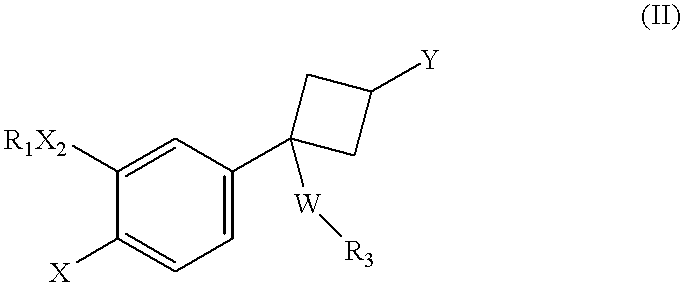
wherein:
R1 is —(CR4R5)nC(O)O(CR4R5)mR6, —(CR4R5)nC(O)NR4(CR4R5)mR6, —(CR4R5)nO(CR4R5)mR6, or —(CR4R5)rR6 wherein the alkyl moieties may be unsubstituted or substituted with one or more fluorines;
m is 0 to 2;
n is 1 to 4;
r is 0 to 6;
R4 and R5 are independently hydrogen or C1-2 alkyl;
R6 is hydrogen, methyl, hydroxyl, aryl, halo substituted aryl, aryloxyC1-3 alkyl, halo substituted aryloxyC1-3 alkyl, indanyl, indenyl, C7-11 polycycloalkyl, tetrahydrofuranyl, furanyl, tetrahydropyranyl, pyranyl, tetrahydrothienyl, thienyl, tetrahydrothiopyranyl, thiopyranyl, C3-6 cycloalkyl, or a C4-6 cycloalkyl containing one or two unsaturated bonds, wherein the cycloalkyl or heterocyclic moiety may be unsubstituted or substituted by 1 to 3 methyl groups, one ethyl group or an hydroxyl group;
provided that:
a) when R6 is hydroxyl, then m is 2; or
b) when R6 is hydroxyl, then r is 2 to 6; or
c) when R6 is 2-tetrahydropyranyl, 2-tetrahydrothiopyranyl, 2-tetrahydrofuranyl, or 2-tetrahydrothienyl, then m is 1 or 2; or
d) when R6 is 2-tetrahydropyranyl, 2-tetrahydrothiopyranyl, 2-tetrahydrofuranyl, or 2-tetrahydrothienyl, then r is 1 to 6;
e) when n is 1 and m is 0, then R6 is other than H in —(CR4R5)nO(CR4R5)mR6;
X is VR2, halogen, nitro, NR4R5, or formyl amine;
V is O or S(O)m′;
m′ is 0, 1, or 2;
X2 is O or NR8;
R2 is —CH3 or —CH2CH3 unsubstituted or substituted by 1 or more fluorines;
R3 is COOR14, C(O)NR4R14 or R7;
W is alkyl of 2 to 6 carbon atoms, alkenyl of 2 to 6 carbon atoms or alkynyl of 2 to 6 carbon atoms;
Y is —(CR4R5)qZ′;
Y′ is O or S;
Z′ is OR14, OR15, SR14, S(O)mR7, S(O)2NR10R14, NR10R14, NR14C(O)R9, NR10C(Y′)R14, NR10C(O)OR7, NR10C(Y′)NR10R14, NR10S(O)2NR10R14, NR10C(NCN)NR10R14, NR10S(O)2R7, NR10C(CR4NO2)NR10R14, NR10C(NCN)SR9, NR10C(CR4NO2)SR9, NR10C(NR10)NR10R14, NR1OC(O)C(O)NR10R14, or NR10C(O)C(O)OR14;
R7 is —(CR4R5)qR12 or C1-6 alkyl wherein the R12 or C1-6 alkyl group is unsubstituted or substituted one or more times by methyl or ethyl unsubstituted or substituted by 1-3 fluorines, —F, —Br, —Cl, —NO2, —NR10R11, —C(O)R8, —CO2R8, —O(CH2)qR8, —CN, —C(O)NR10R11, —O(CH2)qC(O)NR10R11, —O(CH2)qC(O)R8, —NR10C(O)NR10R11, —NR10C(O)R11, —NR10C(O)OR9, —NR10C(O)R13, —C(NR10)NR10R11, —C(NCN)NR10R11, —C(NCN)SR9, —NR10C(NCN)SR9, —NR10C(NCN)NR10R11, —NR10S(O)2R9, —S(O)m′R9, —NR10C(O)C(O)NR10R11, —NR10C(O)C(O)R10, or R13;
q is 0, 1, or 2;
R12 is R13, C3-C7 cycloalkyl, (2-, 3- or 4-pyridyl), pyrimidyl, pyrazolyl, (1- or 2-imidazolyl), pyrrolyl, piperazinyl, piperidinyl, morpholinyl, furanyl, (2- or 3-thienyl), quinolinyl, naphthyl, or phenyl;
R8 is hydrogen or R9;
R8′ is R8 or fluorine;
R9 is C14 alkyl unsubstituted or substituted by one to three fluorines;
R10 is OR8 or R11;
R11 is hydrogen, or C1-4 alkyl unsubstituted or substituted by one to three fluorines; or when R10 and R11 are as NR10R11 they may together with the nitrogen form a 5 to 7 membered ring comprised only of carbon atoms or carbon atoms and at least one heteroatom selected from O, N, or S;
R13 is oxazolidinyl, oxazolyl, thiazolyl, pyrazolyl, triazolyl, tetrazolyl, imidazolyl, imidazolidinyl, thiazolidinyl, isoxazolyl, oxadiazolyl, or thiadiazolyl, and each of these heterocyclic rings is connected through a carbon atom and each may be unsubstituted or substituted by one or two C1-2 alkyl groups;
R14 is hydrogen or R7; or when R8 and R14 are as NR8R14 they may together with the nitrogen form a 5 to 7 membered ring comprised only of carbon atoms or carbon atoms and at least one heteroatom selected from O, N, or S; provided that:
R15 is C(O)R14, C(O)NR4R14, S(O)2R7, or S(O)2NR4R14;
or a pharmaceutically acceptable salt thereof.
5. A compound according to claim 4 wherein R1 is —CH2-cyclopropyl, cyclopentyl, 3-hydroxycyclopentyl, methyl or CF2H; X is VR2; V is oxygen; X2 is oxygen; R2 is CF2H or methyl, W is ethynyl or 1,3-butadiynyl, R3 is a substituted or unsubstituted phenyl or pyrimidinyl ring, and Z is OR14, OR15 or NR10R14.
6. A compound according to claim 5 which is:
trans-1-aminomethyl-3-(3-cyclopentyloxy-4-methoxyphenyl)-3-phenylethynylcyclobutane,
trans-1-amino-3-(3-cyclopentyloxy-4-methoxyphenyl)-3-phenylethynylcyclobutane,
trans-1-amino-3-(2-aminopyrimidin-5-ylethynyl)-3-(3-cyclopentyloxy-4-methoxyphenyl)cyclobutane,
trans-1-amino-3-(3-cyclopentyloxy-4-methoxyphenyl)-3-(3-nitrophenyl)ethynylcyclobutane, hydrochloride salt
trans-1-amino-3-(3-cyclopentyloxy-4-methoxyphenyl)-3-(4-nitrophenyl)ethynylcyclobutane, hydrochloride salt,
trans-1-amino-3-[(3-carboxyphenyl)ethynyl]3-(3-cyclopentyloxy-4-methoxyphenyl)cyclobutane, hydrochloride salt.
7. A pharmaceutical composition comprising a pharmaceutically acceptable excipient and a compound of Formula (I) according to claim 1.
8. A pharmaceutical composition comprising a pharmaceutically acceptable excipient and a compound of Formula (I) according to claim 4.
9. A method for treating asthma or chronic obstructive pulmonary disease comprising administering a compound of Formula (I) according to claim 1 in an amount sufficient to treat asthma or chronic obstructive pulmonary disease in a human.
10. A method for treating as asthma or chronic obstructive pulmonary disease comprising administering a compound of Formula (II) according to claim 4 in an amount sufficient to treat asthma or chronic obstructive pulmonary disease in a human.
Priority Applications (1)
| Application Number | Priority Date | Filing Date | Title |
|---|---|---|---|
| US09/291,592 US6172118B1 (en) | 1998-04-14 | 1999-04-08 | Compounds |
Applications Claiming Priority (2)
| Application Number | Priority Date | Filing Date | Title |
|---|---|---|---|
| US8164398P | 1998-04-14 | 1998-04-14 | |
| US09/291,592 US6172118B1 (en) | 1998-04-14 | 1999-04-08 | Compounds |
Publications (1)
| Publication Number | Publication Date |
|---|---|
| US6172118B1 true US6172118B1 (en) | 2001-01-09 |
Family
ID=22165453
Family Applications (2)
| Application Number | Title | Priority Date | Filing Date |
|---|---|---|---|
| US09/291,576 Expired - Fee Related US6118017A (en) | 1998-04-14 | 1999-04-08 | Substituted-(3-cyclopentyloxy-4-methoxyphenyl)-3-phenylcyanocyclobutan-1-one |
| US09/291,592 Expired - Fee Related US6172118B1 (en) | 1998-04-14 | 1999-04-08 | Compounds |
Family Applications Before (1)
| Application Number | Title | Priority Date | Filing Date |
|---|---|---|---|
| US09/291,576 Expired - Fee Related US6118017A (en) | 1998-04-14 | 1999-04-08 | Substituted-(3-cyclopentyloxy-4-methoxyphenyl)-3-phenylcyanocyclobutan-1-one |
Country Status (5)
| Country | Link |
|---|---|
| US (2) | US6118017A (en) |
| EP (1) | EP1071646A4 (en) |
| JP (1) | JP2002511439A (en) |
| CA (1) | CA2328245A1 (en) |
| WO (1) | WO1999052848A1 (en) |
Families Citing this family (1)
| Publication number | Priority date | Publication date | Assignee | Title |
|---|---|---|---|---|
| FR2998892B1 (en) * | 2012-12-04 | 2015-01-02 | Pf Medicament | AMINOCYCLOBUTANE DERIVATIVES, PROCESS FOR PREPARING THEM AND THEIR USE AS MEDICAMENTS |
Family Cites Families (7)
| Publication number | Priority date | Publication date | Assignee | Title |
|---|---|---|---|---|
| US3345405A (en) * | 1964-03-31 | 1967-10-03 | Smith Kline French Lab | 1-amino-2(and 3)-phenylcyclobutane-1-carboxylic acids |
| GB9007762D0 (en) * | 1990-04-05 | 1990-06-06 | Beecham Group Plc | Novel compounds |
| US5187192A (en) * | 1992-03-13 | 1993-02-16 | Abbott Laboratories | Cyclobutyl derivatives having lipoxygenase inhibitory activity |
| HU225869B1 (en) * | 1992-04-02 | 2007-11-28 | Smithkline Beecham Corp | Compounds with antiallergic and antiinflammatory activity and pharmaceutical compns. contg. them |
| CN1046939C (en) * | 1993-07-02 | 1999-12-01 | 比克·古尔顿·劳姆贝尔格化学公司 | Fluoroalkoxy-substituted benzamides and their use as cyclic nucleotide phosphodiesterase inhibitors |
| US5883106A (en) * | 1994-10-18 | 1999-03-16 | Pfizer Inc. | 5-lipoxygenase inhibitors |
| TW332201B (en) * | 1995-04-06 | 1998-05-21 | Janssen Pharmaceutica Nv | 1,3-Dihydro-1-(phenylalkyl)-2H-imidazol-2-one derivatives |
-
1999
- 1999-04-08 US US09/291,576 patent/US6118017A/en not_active Expired - Fee Related
- 1999-04-08 US US09/291,592 patent/US6172118B1/en not_active Expired - Fee Related
- 1999-04-13 CA CA002328245A patent/CA2328245A1/en not_active Abandoned
- 1999-04-13 JP JP2000543411A patent/JP2002511439A/en not_active Withdrawn
- 1999-04-13 WO PCT/US1999/008001 patent/WO1999052848A1/en not_active Ceased
- 1999-04-13 EP EP99921382A patent/EP1071646A4/en not_active Withdrawn
Non-Patent Citations (2)
| Title |
|---|
| Honda, et al., "Chiral synthesis of phosphodiesterase inhibitor, (R)-(-)-rolipra, by means of enantioselective deprotonation strategy". Heterocycles, Jan. 1996, vol. 42, No. 1, pp. 109-111, especialy p. 10. |
| Honda, et al., "Chiral synthesis of phosphodiesterase inhibitor, ®-(-)-rolipra, by means of enantioselective deprotonation strategy". Heterocycles, Jan. 1996, vol. 42, No. 1, pp. 109-111, especialy p. 10. |
Also Published As
| Publication number | Publication date |
|---|---|
| EP1071646A4 (en) | 2003-04-02 |
| WO1999052848A1 (en) | 1999-10-21 |
| CA2328245A1 (en) | 1999-10-21 |
| JP2002511439A (en) | 2002-04-16 |
| EP1071646A1 (en) | 2001-01-31 |
| US6118017A (en) | 2000-09-12 |
Similar Documents
| Publication | Publication Date | Title |
|---|---|---|
| US5723681A (en) | 3,3-(disubstituted)cyclohexan-1-01 dimers and related compounds | |
| US5869677A (en) | 3,3-(disubstituted)cyclohexan-1-carboxylate monomers and related compounds | |
| US6172118B1 (en) | Compounds | |
| US5990119A (en) | 1,4,4-(trisubstituted)cyclohexane monomers and related compounds | |
| US5646158A (en) | 1,3,3-(trisubstituted)cyclohex-1-ene monomers and related compounds | |
| US5866616A (en) | 3,3-(disubstituted) cyclohexan-1-ol monomers and related compounds | |
| US5767151A (en) | 3,3-(disubstituted) cyclohexan-1-ylidine acetate dimers and related compounds | |
| US5900417A (en) | 1,3,3-(Trisubstituted)cyclohexanemonomers and related compounds | |
| US5892098A (en) | 3,3-(disubstituted)cyclohexan-1-one monomers and related compounds | |
| US5719184A (en) | 3,3-(disubstituted)cyclohexan-1-carboxylate dimers and related compounds | |
| US5777176A (en) | 4,4-(disubstituted)cyclohexan-1-ol dimers and related compounds | |
| EP0799205B1 (en) | 1,4,4-(trisubstituted)cyclohex-1-ene derivatives as pde iv- and tnf-inhibitors | |
| US5777160A (en) | 1, 4, 4-(trisubstituted) cyclohex-1-ene dimers and related compounds | |
| US5795918A (en) | 1,3,3-(Trisubstituted)cyclohex-1-ene dimers and related compounds | |
| WO1996020159A1 (en) | 3,3-(disubstituted)cyclohexan-1-ylidine acetate monomers and related compounds | |
| EP1071645A1 (en) | Phosphodiesterase isoenzyme denominated 4 (pde 4) inhibiting compounds | |
| WO1996020174A1 (en) | 1,3,3-(trisubstituted)cyclohexane monomers and related compounds | |
| EP0799031A1 (en) | 1,4,4-(trisubstituted)cyclohexane dimers and related compounds | |
| WO1996019985A1 (en) | 3,3-(disubstituted)cyclohexan-1-ylidine acetate dimers and related compounds | |
| EP0796097A1 (en) | 3,3-(disubstituted)cyclohexan-1-carboxylate monomers and related compounds | |
| WO1996019986A1 (en) | 1,4,4-(trisubstituted)cyclohexane monomers and related compounds | |
| WO1996019992A1 (en) | 4,4-(disubstituted)cyclohexan-1-ylidine acetate monomers and related compounds |
Legal Events
| Date | Code | Title | Description |
|---|---|---|---|
| REMI | Maintenance fee reminder mailed | ||
| LAPS | Lapse for failure to pay maintenance fees | ||
| STCH | Information on status: patent discontinuation |
Free format text: PATENT EXPIRED DUE TO NONPAYMENT OF MAINTENANCE FEES UNDER 37 CFR 1.362 |
|
| FP | Lapsed due to failure to pay maintenance fee |
Effective date: 20050109 |