US5169554A - Enzyme detergent formulation and methods of detoxifying toxic organophosphorous acid compounds - Google Patents
Enzyme detergent formulation and methods of detoxifying toxic organophosphorous acid compounds Download PDFInfo
- Publication number
- US5169554A US5169554A US07/417,614 US41761489A US5169554A US 5169554 A US5169554 A US 5169554A US 41761489 A US41761489 A US 41761489A US 5169554 A US5169554 A US 5169554A
- Authority
- US
- United States
- Prior art keywords
- enzyme
- sup
- detergent
- soman
- hydrolysis
- Prior art date
- Legal status (The legal status is an assumption and is not a legal conclusion. Google has not performed a legal analysis and makes no representation as to the accuracy of the status listed.)
- Expired - Fee Related
Links
- 239000003599 detergent Substances 0.000 title claims abstract description 139
- 102000004190 Enzymes Human genes 0.000 title claims abstract description 109
- 108090000790 Enzymes Proteins 0.000 title claims abstract description 109
- 239000000203 mixture Substances 0.000 title claims abstract description 76
- 238000000034 method Methods 0.000 title claims abstract description 10
- 239000002253 acid Substances 0.000 title claims description 12
- 150000001875 compounds Chemical class 0.000 title abstract description 13
- 238000009472 formulation Methods 0.000 title description 50
- 231100000331 toxic Toxicity 0.000 title description 9
- 230000002588 toxic effect Effects 0.000 title description 9
- 241000588724 Escherichia coli Species 0.000 claims abstract description 50
- 239000003795 chemical substances by application Substances 0.000 claims abstract description 32
- 239000000284 extract Substances 0.000 claims abstract description 26
- 239000000126 substance Substances 0.000 claims abstract description 21
- 230000002255 enzymatic effect Effects 0.000 claims abstract description 11
- 238000004140 cleaning Methods 0.000 claims abstract description 9
- 239000007900 aqueous suspension Substances 0.000 claims abstract description 7
- XLYOFNOQVPJJNP-UHFFFAOYSA-N water Substances O XLYOFNOQVPJJNP-UHFFFAOYSA-N 0.000 claims abstract description 6
- IFPHDUVGLXEIOQ-UHFFFAOYSA-N ortho-iodosylbenzoic acid Chemical compound OC(=O)C1=CC=CC=C1I=O IFPHDUVGLXEIOQ-UHFFFAOYSA-N 0.000 claims description 31
- 150000002697 manganese compounds Chemical class 0.000 claims description 3
- 210000005036 nerve Anatomy 0.000 claims description 2
- 230000003301 hydrolyzing effect Effects 0.000 abstract description 15
- 229940088598 enzyme Drugs 0.000 description 101
- GRXKLBBBQUKJJZ-UHFFFAOYSA-N Soman Chemical compound CC(C)(C)C(C)OP(C)(F)=O GRXKLBBBQUKJJZ-UHFFFAOYSA-N 0.000 description 71
- 238000006460 hydrolysis reaction Methods 0.000 description 58
- 230000007062 hydrolysis Effects 0.000 description 57
- 230000000694 effects Effects 0.000 description 49
- 238000001784 detoxification Methods 0.000 description 42
- 239000003513 alkali Substances 0.000 description 34
- KRHYYFGTRYWZRS-UHFFFAOYSA-M Fluoride anion Chemical compound [F-] KRHYYFGTRYWZRS-UHFFFAOYSA-M 0.000 description 29
- MUCZHBLJLSDCSD-UHFFFAOYSA-N diisopropyl fluorophosphate Chemical compound CC(C)OP(F)(=O)OC(C)C MUCZHBLJLSDCSD-UHFFFAOYSA-N 0.000 description 21
- 239000000758 substrate Substances 0.000 description 12
- XZKIHKMTEMTJQX-UHFFFAOYSA-N 4-Nitrophenyl Phosphate Chemical compound OP(O)(=O)OC1=CC=C([N+]([O-])=O)C=C1 XZKIHKMTEMTJQX-UHFFFAOYSA-N 0.000 description 11
- 230000003197 catalytic effect Effects 0.000 description 10
- 102100033639 Acetylcholinesterase Human genes 0.000 description 9
- 108010022752 Acetylcholinesterase Proteins 0.000 description 9
- 239000007788 liquid Substances 0.000 description 8
- 108010009355 microbial metalloproteinases Proteins 0.000 description 8
- 239000000047 product Substances 0.000 description 8
- 150000003839 salts Chemical class 0.000 description 8
- 239000013535 sea water Substances 0.000 description 8
- 239000000872 buffer Substances 0.000 description 7
- 239000002609 medium Substances 0.000 description 7
- 238000006243 chemical reaction Methods 0.000 description 6
- 230000005764 inhibitory process Effects 0.000 description 6
- 239000011572 manganese Substances 0.000 description 6
- 102000004169 proteins and genes Human genes 0.000 description 6
- 108090000623 proteins and genes Proteins 0.000 description 6
- 238000011160 research Methods 0.000 description 6
- 238000012360 testing method Methods 0.000 description 6
- 230000001580 bacterial effect Effects 0.000 description 5
- 239000003054 catalyst Substances 0.000 description 5
- 238000011534 incubation Methods 0.000 description 5
- WCUXLLCKKVVCTQ-UHFFFAOYSA-M Potassium chloride Chemical compound [Cl-].[K+] WCUXLLCKKVVCTQ-UHFFFAOYSA-M 0.000 description 4
- FAPWRFPIFSIZLT-UHFFFAOYSA-M Sodium chloride Chemical compound [Na+].[Cl-] FAPWRFPIFSIZLT-UHFFFAOYSA-M 0.000 description 4
- 239000006285 cell suspension Substances 0.000 description 4
- 238000005202 decontamination Methods 0.000 description 4
- 230000003588 decontaminative effect Effects 0.000 description 4
- 150000002500 ions Chemical class 0.000 description 4
- LCCNCVORNKJIRZ-UHFFFAOYSA-N parathion Chemical compound CCOP(=S)(OCC)OC1=CC=C([N+]([O-])=O)C=C1 LCCNCVORNKJIRZ-UHFFFAOYSA-N 0.000 description 4
- RLBIQVVOMOPOHC-UHFFFAOYSA-N parathion-methyl Chemical compound COP(=S)(OC)OC1=CC=C([N+]([O-])=O)C=C1 RLBIQVVOMOPOHC-UHFFFAOYSA-N 0.000 description 4
- 239000002002 slurry Substances 0.000 description 4
- YBADLXQNJCMBKR-UHFFFAOYSA-M (4-nitrophenyl)acetate Chemical compound [O-]C(=O)CC1=CC=C([N+]([O-])=O)C=C1 YBADLXQNJCMBKR-UHFFFAOYSA-M 0.000 description 3
- BTJIUGUIPKRLHP-UHFFFAOYSA-N 4-nitrophenol Chemical compound OC1=CC=C([N+]([O-])=O)C=C1 BTJIUGUIPKRLHP-UHFFFAOYSA-N 0.000 description 3
- 239000007989 BIS-Tris Propane buffer Substances 0.000 description 3
- 241000238366 Cephalopoda Species 0.000 description 3
- 150000007513 acids Chemical class 0.000 description 3
- 150000008052 alkyl sulfonates Chemical class 0.000 description 3
- HHKZCCWKTZRCCL-UHFFFAOYSA-N bis-tris propane Chemical compound OCC(CO)(CO)NCCCNC(CO)(CO)CO HHKZCCWKTZRCCL-UHFFFAOYSA-N 0.000 description 3
- KRKNYBCHXYNGOX-UHFFFAOYSA-N citric acid Chemical compound OC(=O)CC(O)(C(O)=O)CC(O)=O KRKNYBCHXYNGOX-UHFFFAOYSA-N 0.000 description 3
- 238000003776 cleavage reaction Methods 0.000 description 3
- 230000007123 defense Effects 0.000 description 3
- 238000011161 development Methods 0.000 description 3
- WYMSBXTXOHUIGT-UHFFFAOYSA-N paraoxon Chemical compound CCOP(=O)(OCC)OC1=CC=C([N+]([O-])=O)C=C1 WYMSBXTXOHUIGT-UHFFFAOYSA-N 0.000 description 3
- 229960004623 paraoxon Drugs 0.000 description 3
- 238000002360 preparation method Methods 0.000 description 3
- 239000011541 reaction mixture Substances 0.000 description 3
- 230000007017 scission Effects 0.000 description 3
- 239000002689 soil Substances 0.000 description 3
- 239000004094 surface-active agent Substances 0.000 description 3
- CSCPPACGZOOCGX-UHFFFAOYSA-N Acetone Chemical compound CC(C)=O CSCPPACGZOOCGX-UHFFFAOYSA-N 0.000 description 2
- 229920000936 Agarose Polymers 0.000 description 2
- YCKRFDGAMUMZLT-UHFFFAOYSA-N Fluorine atom Chemical compound [F] YCKRFDGAMUMZLT-UHFFFAOYSA-N 0.000 description 2
- 229910021380 Manganese Chloride Inorganic materials 0.000 description 2
- GLFNIEUTAYBVOC-UHFFFAOYSA-L Manganese chloride Chemical compound Cl[Mn]Cl GLFNIEUTAYBVOC-UHFFFAOYSA-L 0.000 description 2
- 229910019142 PO4 Inorganic materials 0.000 description 2
- 108010056079 Subtilisins Proteins 0.000 description 2
- 102000005158 Subtilisins Human genes 0.000 description 2
- -1 Type II (P-D-245-E) Substances 0.000 description 2
- 229940022698 acetylcholinesterase Drugs 0.000 description 2
- 230000002411 adverse Effects 0.000 description 2
- OWMVSZAMULFTJU-UHFFFAOYSA-N bis-tris Chemical compound OCCN(CCO)C(CO)(CO)CO OWMVSZAMULFTJU-UHFFFAOYSA-N 0.000 description 2
- 230000015556 catabolic process Effects 0.000 description 2
- 108010027293 diisopropyl-fluorophosphatase Proteins 0.000 description 2
- 229910052731 fluorine Inorganic materials 0.000 description 2
- 239000011737 fluorine Substances 0.000 description 2
- XKYSYNHDZZHXNB-UHFFFAOYSA-N fluoro(methoxy)phosphinic acid Chemical compound COP(O)(F)=O XKYSYNHDZZHXNB-UHFFFAOYSA-N 0.000 description 2
- 238000010348 incorporation Methods 0.000 description 2
- 238000004900 laundering Methods 0.000 description 2
- 150000002632 lipids Chemical class 0.000 description 2
- 150000002696 manganese Chemical class 0.000 description 2
- 239000011565 manganese chloride Substances 0.000 description 2
- 235000002867 manganese chloride Nutrition 0.000 description 2
- 229940099607 manganese chloride Drugs 0.000 description 2
- 238000005259 measurement Methods 0.000 description 2
- 108010003855 mesentericopeptidase Proteins 0.000 description 2
- 230000000813 microbial effect Effects 0.000 description 2
- 108010020132 microbial serine proteinases Proteins 0.000 description 2
- 235000021317 phosphate Nutrition 0.000 description 2
- 239000001103 potassium chloride Substances 0.000 description 2
- 235000011164 potassium chloride Nutrition 0.000 description 2
- 239000000843 powder Substances 0.000 description 2
- 239000011780 sodium chloride Substances 0.000 description 2
- CIJQGPVMMRXSQW-UHFFFAOYSA-M sodium;2-aminoacetic acid;hydroxide Chemical compound O.[Na+].NCC([O-])=O CIJQGPVMMRXSQW-UHFFFAOYSA-M 0.000 description 2
- 239000000243 solution Substances 0.000 description 2
- 239000000725 suspension Substances 0.000 description 2
- 231100000167 toxic agent Toxicity 0.000 description 2
- 239000001974 tryptic soy broth Substances 0.000 description 2
- 108010050327 trypticase-soy broth Proteins 0.000 description 2
- UHKMGDFUHVDKNN-UHFFFAOYSA-N 1-[ethyl(phenyl)phosphoryl]oxy-4-nitrobenzene Chemical compound C=1C=CC=CC=1P(=O)(CC)OC1=CC=C([N+]([O-])=O)C=C1 UHKMGDFUHVDKNN-UHFFFAOYSA-N 0.000 description 1
- HQAPREJURVMGMB-UHFFFAOYSA-M 2-acetylsulfanylethyl(trimethyl)azanium;bromide Chemical compound [Br-].CC(=O)SCC[N+](C)(C)C HQAPREJURVMGMB-UHFFFAOYSA-M 0.000 description 1
- KIUMMUBSPKGMOY-UHFFFAOYSA-N 3,3'-Dithiobis(6-nitrobenzoic acid) Chemical compound C1=C([N+]([O-])=O)C(C(=O)O)=CC(SSC=2C=C(C(=CC=2)[N+]([O-])=O)C(O)=O)=C1 KIUMMUBSPKGMOY-UHFFFAOYSA-N 0.000 description 1
- 241000193830 Bacillus <bacterium> Species 0.000 description 1
- 241000894006 Bacteria Species 0.000 description 1
- MDNWOSOZYLHTCG-UHFFFAOYSA-N Dichlorophen Chemical compound OC1=CC=C(Cl)C=C1CC1=CC(Cl)=CC=C1O MDNWOSOZYLHTCG-UHFFFAOYSA-N 0.000 description 1
- 241001360526 Escherichia coli ATCC 25922 Species 0.000 description 1
- 108090001060 Lipase Proteins 0.000 description 1
- 102000004882 Lipase Human genes 0.000 description 1
- 239000004367 Lipase Substances 0.000 description 1
- 108091005804 Peptidases Proteins 0.000 description 1
- 102000035195 Peptidases Human genes 0.000 description 1
- 102000004861 Phosphoric Diester Hydrolases Human genes 0.000 description 1
- 108090001050 Phosphoric Diester Hydrolases Proteins 0.000 description 1
- 239000004365 Protease Substances 0.000 description 1
- YVNQAIFQFWTPLQ-UHFFFAOYSA-O [4-[[4-(4-ethoxyanilino)phenyl]-[4-[ethyl-[(3-sulfophenyl)methyl]amino]-2-methylphenyl]methylidene]-3-methylcyclohexa-2,5-dien-1-ylidene]-ethyl-[(3-sulfophenyl)methyl]azanium Chemical compound C1=CC(OCC)=CC=C1NC1=CC=C(C(=C2C(=CC(C=C2)=[N+](CC)CC=2C=C(C=CC=2)S(O)(=O)=O)C)C=2C(=CC(=CC=2)N(CC)CC=2C=C(C=CC=2)S(O)(=O)=O)C)C=C1 YVNQAIFQFWTPLQ-UHFFFAOYSA-O 0.000 description 1
- 238000013459 approach Methods 0.000 description 1
- 239000012736 aqueous medium Substances 0.000 description 1
- 230000009286 beneficial effect Effects 0.000 description 1
- 239000007844 bleaching agent Substances 0.000 description 1
- 239000007853 buffer solution Substances 0.000 description 1
- 150000001720 carbohydrates Chemical class 0.000 description 1
- 238000005119 centrifugation Methods 0.000 description 1
- 238000009390 chemical decontamination Methods 0.000 description 1
- 239000007795 chemical reaction product Substances 0.000 description 1
- 238000004737 colorimetric analysis Methods 0.000 description 1
- 230000000052 comparative effect Effects 0.000 description 1
- 238000001816 cooling Methods 0.000 description 1
- 239000000287 crude extract Substances 0.000 description 1
- 238000006731 degradation reaction Methods 0.000 description 1
- 230000000593 degrading effect Effects 0.000 description 1
- 238000001514 detection method Methods 0.000 description 1
- 238000005516 engineering process Methods 0.000 description 1
- 238000001952 enzyme assay Methods 0.000 description 1
- 230000000058 esterolytic effect Effects 0.000 description 1
- 238000012869 ethanol precipitation Methods 0.000 description 1
- 238000002474 experimental method Methods 0.000 description 1
- 238000013213 extrapolation Methods 0.000 description 1
- 229960005051 fluostigmine Drugs 0.000 description 1
- 230000009931 harmful effect Effects 0.000 description 1
- GBHRVZIGDIUCJB-UHFFFAOYSA-N hydrogenphosphite Chemical class OP([O-])[O-] GBHRVZIGDIUCJB-UHFFFAOYSA-N 0.000 description 1
- 239000003112 inhibitor Substances 0.000 description 1
- 230000002401 inhibitory effect Effects 0.000 description 1
- 238000009533 lab test Methods 0.000 description 1
- 235000019421 lipase Nutrition 0.000 description 1
- 239000000463 material Substances 0.000 description 1
- 244000005700 microbiome Species 0.000 description 1
- 238000012986 modification Methods 0.000 description 1
- 230000004048 modification Effects 0.000 description 1
- 230000007935 neutral effect Effects 0.000 description 1
- RARSHUDCJQSEFJ-UHFFFAOYSA-N p-Hydroxypropiophenone Chemical compound CCC(=O)C1=CC=C(O)C=C1 RARSHUDCJQSEFJ-UHFFFAOYSA-N 0.000 description 1
- 229960001313 paroxypropione Drugs 0.000 description 1
- 239000000575 pesticide Substances 0.000 description 1
- NBIIXXVUZAFLBC-UHFFFAOYSA-K phosphate Chemical compound [O-]P([O-])([O-])=O NBIIXXVUZAFLBC-UHFFFAOYSA-K 0.000 description 1
- 239000010452 phosphate Substances 0.000 description 1
- 150000003013 phosphoric acid derivatives Chemical class 0.000 description 1
- 150000003014 phosphoric acid esters Chemical class 0.000 description 1
- DFOXKPDFWGNLJU-UHFFFAOYSA-N pinacolyl alcohol Chemical compound CC(O)C(C)(C)C DFOXKPDFWGNLJU-UHFFFAOYSA-N 0.000 description 1
- 238000002731 protein assay Methods 0.000 description 1
- 238000000746 purification Methods 0.000 description 1
- 239000011347 resin Substances 0.000 description 1
- 229920005989 resin Polymers 0.000 description 1
- 239000000344 soap Substances 0.000 description 1
- 239000006228 supernatant Substances 0.000 description 1
- 230000002195 synergetic effect Effects 0.000 description 1
- 239000003440 toxic substance Substances 0.000 description 1
Images

Classifications
-
- C—CHEMISTRY; METALLURGY
- C12—BIOCHEMISTRY; BEER; SPIRITS; WINE; VINEGAR; MICROBIOLOGY; ENZYMOLOGY; MUTATION OR GENETIC ENGINEERING
- C12N—MICROORGANISMS OR ENZYMES; COMPOSITIONS THEREOF; PROPAGATING, PRESERVING, OR MAINTAINING MICROORGANISMS; MUTATION OR GENETIC ENGINEERING; CULTURE MEDIA
- C12N9/00—Enzymes; Proenzymes; Compositions thereof; Processes for preparing, activating, inhibiting, separating or purifying enzymes
- C12N9/14—Hydrolases (3)
-
- C—CHEMISTRY; METALLURGY
- C11—ANIMAL OR VEGETABLE OILS, FATS, FATTY SUBSTANCES OR WAXES; FATTY ACIDS THEREFROM; DETERGENTS; CANDLES
- C11D—DETERGENT COMPOSITIONS; USE OF SINGLE SUBSTANCES AS DETERGENTS; SOAP OR SOAP-MAKING; RESIN SOAPS; RECOVERY OF GLYCEROL
- C11D3/00—Other compounding ingredients of detergent compositions covered in group C11D1/00
- C11D3/16—Organic compounds
- C11D3/38—Products with no well-defined composition, e.g. natural products
- C11D3/386—Preparations containing enzymes, e.g. protease or amylase
Definitions
- This invention relates to an enzyme detergent formulation which is capable of cleaning and decontaminating toxic organophosphorus acid compounds and their salts from clothing and other articles. This is done under mild conditions of pH and temperature which will not adversely effect the functional properties of clothing and other articles.
- Toxic organophosphorus acid compounds and other salts can be encountered in industrial, agricultural and military operations. Such toxic materials can be removed and detoxified by the application of harsh chemicals or elevated temperatures, either of which may degrade the articles being detoxified.
- This invention relates to an enzyme detergent composition capable of detoxifying toxic organophosphorus acid compounds and salts thereof comprising
- an enzymatic cell free extract from E. coli the composition having a pH of about 5 to 9.5 in water.
- This invention also relates to a method of hydrolyzing and detoxifying toxic compounds of organophosphorus acids and their salts comprising contacting said compounds with an amount of an aqueous suspension of the enzyme detergent composition described above under conditions effective to attain said hydrolysis and detoxification.
- Also part of this invention is a method of cleaning and detoxifying a product contaminated with at least one toxic compound selected from organophosphorus acids and their salts, comprising
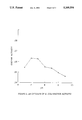
- FIG. 1 depicts the variation of the E. coli enzyme activity with temperature both at an initial time and after three minutes of contact.
- FIG. 2 depicts the variation of the E. coli enzyme activity with the pH of the aqueous medium.
- the present invention arose from a desire by the inventors to improve on prior art detergent formulations to provide an enzyme detergent preparation capable of rapid detoxification of clothing and other articlescontaminated with toxic organophosphorus acid compounds and their salts under mild conditions which would not adversely effect the functional properties of contaminated clothing and other articles.
- Toxic organophosphorus acids and their salts include organoflurophosphonates (warfare nerve agent, called G-agents such as soman), organophosphonates, organophosphinates and organophosphates (pesticides such as parathion, paroxon and methyl parathion).
- organoflurophosphonates warfare nerve agent, called G-agents such as soman
- organophosphonates organophosphinates
- organophosphates organophosphates
- An enzyme detergent formulation comprising commercially available detergent and an enzyme from the bacterium Escherichia coli.
- Thehydrolysis of G-agents such as soman was increased up to about 16-fold and more with the present enzyme detergent formulation over that observed withthe detergent formulation alone at a pH 9.5.
- Soman hydrolyzed at pH 9.5 and 40° C., was detoxified up to 91% in 10 minutes in the presence of the enzyme detergent formulation of the invention.
- the cleaning and decontaminating conditions required for this enzyme detergent formulation are very mild, which preserve the functional finishes on the clothing on other articles being cleaned and decontaminated.
- this formulation is compatible with current Army field laundry equipment.
- This enzyme detergent formulation can be used to decontaminate OPA chemicals, such as G-agents, in laundry applications in place of superTropical Bleach presently recommended by the Army Field Manual.
- a purpose of this invention is to provide a detergent formulation that not only launders or cleans, but also decontaminates soiled clothing or other articles contaminated with, e.g., G-agents. Under normal laundry conditions G-agents are hydrolyzed slowly. The rate of hydrolysis or half-life of soman (pinacolyl methylphosphonofloridate) at 25° C. and at pH 10 is 60 hours.
- the decontaminatingenzyme formulation provided therein extends the life cycle of both field clothing and equipment, and reduces logistic burdens.
- This invention provides an enzyme detergent composition which is capable ofdetoxifying G-agents, the composition comprising
- an enzymatic cell free extract from E. coli the composition having a pH ofabout 5 to 9.5 in water.
- laundry detergents may be utilized in the present composition.
- laundry detergents are ionic and non-ionic types of detergents such as alkali detergents, type II laundry detergents, linear alkyl sulfonate, Tide "New Liquid” and type I non-ionic detergents.
- other detergents can also be utilized.
- laundry detergents such as alkali detergent and laundry detergent type II.
- the amount of laundry detergent present in the composition is typically about 0.01 wt % to 10.0 wt. %, and more preferably about 0.01 wt % to 50 wt. %. However, other amounts are also possible.
- the enzymatic cell free extract from E. coli is typically present in an amount of about 1.0 to 20 of the composition, and more preferably 2.0 to 10 volume percent of the composition. However, other amounts may also be utilized.
- the enzyme detergent formulation of this invention may also comprise a non-enzymatic catalyst, such as iodosobenzoate.
- a non-enzymatic catalyst such as iodosobenzoate.
- this catalyst compound is present in an amount of about 0.001 to 10 wt %, and more preferably about 0.001 to 5 wt % of the composition.
- other amounts are also suitable
- the cell free extract may be obtained by sonicating E. coli cells and then centrifuging the disrupted cells thus obtained. These are technologies which are standard in the art.
- the enzymatic cell free extract is obtained from E. coli having an ATCC Accession No. 25922.
- a still more preferred embodiment is that comprising the purified enzyme obtained from this microorganism.
- the enzyme can be obtained from the E. coli microorganism as follows. Escherichia coli (ATCC 25922 may be grown in, e.g., trypticase soy broth (about 3%) and incubated for about 18-40 hours at about 37° C. The cells may then be separated from the medium, washed once in a buffer containing, e.g., about 400 mM sodium chloride, about 40 mM potassium chloride and about 5 mM bistris at a pH about 7.2. The washed cells may then be resuspended in the same buffer to give an about 10% (w/v) suspension.
- a buffer containing, e.g., about 400 mM sodium chloride, about 40 mM potassium chloride and about 5 mM bistris at a pH about 7.2.
- the washed cells may then be resuspended in the same buffer to give an about 10% (w/v) suspension.
- These bacterial cells may be broken up by ultrasonic oscillator at about 4° C., for, e.g., about 5 minutes.
- the output from the sonifier may be pulsed and the output interrupted to maintain thetemperature of the cell suspension at about 4° C.
- the disrupted cellsuspension may be centrifuged for about 30 minutes at about 4° C. at30,000x g, and the supernatant used as the source of E. coli enzyme (Akkara, J. A., Kaplan, D. L., and Kaplan, A. M., "Enzyme Formulation for Laundering and Decontaminating Chemically Contained Clothing", Technical Report, Natick TR-88/014L, U.S. Army Natick Research, Development and Engineering Center, Natick, MA (1988)).
- the enzymatic cell free extract is providedin freeze dried form.
- the manner in which the freeze dried product is processed is known in the art and need not be described herein in further detail.
- compositions further comprises a manganese compound such as manganese chloride.
- a manganese compound such as manganese chloride.
- other manganese salts may also be utilized.
- the manganese compound ispresent in an amount of about 0.001 to 10 wt %, and more preferably about 0.1 to 5 wt % of the composition.
- Also part of this invention is the method of hydrolyzing an OPA chemical comprising contacting said compound with an amount of an aqueous suspension of the enzyme detergent composition described herein under conditions effective to attain the desired effect.
- the method may be conducted at a temperature of about 20°to 50° C., and more preferably about 30° to 45° C.
- a temperature of about 20°to 50° C., and more preferably about 30° to 45° C.
- other temperature ranges within the broader range may also be utilized.
- the above method may be preferably practiced preserving the pH at about 6.5to 10.0, and more preferably about 7 to 9.5.
- Also part of this invention is a method of cleaning and detoxifying a product contaminated with an OPA chemical, comprises
- the contacting step is conducted at a temperature of about 20° to 50° C., and more preferably about 25° to 45° C.
- the pH utilized for the practice of the contacting step is preferably about 6.5 to 8, and more preferably about 7 to 7.5. Under theseconditions OPA chemicals may be detoxified while the product is cleaned.
- E. coli ATCC No. 25922 was grown in trypticase soy broth (3%) (Difco Laboratories, Detroit, Mich.) and incubated for about 18 to 40 hours at 37°2 C. The cells were harvested, washed once with buffer containing 400 nM sodium chloride, 40 mM potassium chloride and 5 mM bis tris at pH 7.2.
- the bacteria were resuspended in the above buffer to give 10% (w/v) suspension.
- the bacterial cell suspension prepared above was ultrasonically disrupted by a Branson sonifier. R at 4° C., for 5 minutes, using a microtip and with a pulsed input at 40% duty cycle and output control setting at 4 (Model #350, Branson Sonic Power Co., Danbury, Conn.).
- the pulsed input from the sonifier was for 30 seconds followed by one minute cooling in between the sonification. This cycle was repeated until the total sonification time was 5 minutes.
- a cell free extract was prepared from the disrupted cell suspension, after centrifugation at 30,000x g for 30 minutes at 4° C.
- the cell free crude extract was used for the determination of the enzyme activity, including G-agent hydrolysis and detoxification studies.
- DFP diisopropylfluorophosphonate
- bis pNPP bis para-nitrophenyl phosphate
- para-nitrophenyl acetate parathion, methyl parathion, paraoxon
- 4 nitrophenyl ethyl (phenyl) phosphinate 4 nitrophenyl ethyl (phenyl) phosphinate and iodosobenoic acid (IB).
- Soman (GD) used in the agent testing with detergent formulation was supplied by the Illinois Institute of Technology Research Institute (IITRI)
- Alkali (CID-A-A-876), (U.S. Government Printing Office, Customer Item Description, Alkali, Laundry CID-A-A-876, General Services Administration,Washington, D.C. (1980)), Laundry Detergent, Type II (P-D-245-E), non-ionicDetergent Type I (MIL-D-16791-F), Tide "New Liquid” (Procter and Gamble, Cincinnati, Ohio) and Linear Alkyl Sulfonate (Soap and Detergent Association, N.Y., N.Y.) were obtained from commercial sources.
- the protein concentration of the cell free extract of E. coli was determined by Bio Rad Protein Assay Kit (Bio Rad, Richmond, Cal.) using Coomassie Brilliant Blue G-250 dye.
- a fluoride specific electrode (Orion Research, Cambridge, Mass.) was connected with a Fisher Titrator (Model #750, Medford, Mass.) with strip chart (Hitachi Recorder #056-1001) to determine the rate of hydrolysis of DFP and soman by determining the fluoride that is released.
- a colorimetric method for the determination of the enzyme activity involvedthe measurement of para-nitrophenol formed at 405 nm in the presence of manganese chloride.
- the activity was measured at room temperature unless otherwise indicated.
- Soman testing with enzyme/iodosobenzoate detergent formulations was carriedout.
- the agent testing included both the hydrolysis and the detoxification of the agent.
- FIG. 1 shows variation of the activity of the E. coli enzyme with temperature, when bis para-nitrophenyl phosphate (bis pNPP) was used as the substrate.
- the activity of the enzyme increased with the increase in incubation temperature up to 45° C., above which the enzyme was deactivated very rapidly.
- the activity reported is the net activity due tothe enzyme after subtracting the activity without the enzyme.
- the second plot in FIG. 1 gives the rate of the reaction after three minutes into the reaction.
- the three minute plot clearly indicates that the rate of the reaction dropped to about 75% of the initial rate at 45° C.
- the pH optimum of the E. coli enzyme is given in FIG. 2, when bis pNPP was used as the substrate. It appears from the curve that the enzyme may have two pH optima, one at 7 to 7.5, and the second one near pH 8.5.
- the substrate specificity of the E. coli enzyme was determined with different phosphate esters. Para-nitrophenyl acetate and bis pNPP had comparable activities. However, with other substrates such as: parathion, methyl parathion and paraoxon, the enzyme activity was much lower as can be seen in Table 1.
- Table 2 shows the rate of hydrolysis of DFP at room temperature in the presence of different detergent formulations or detergent components. The net hydrolysis was much higher at pH 9.5 and in presence of detergent.
- Moss et al have shown that iodosobenzoic acid catalytically hydrolyzed phospho-esters (Moss, R. A., Kim, K. Y., and Swarup, S., "Efficient Catalytic Cleavage of Reactive Phosphates by an O-Iodosobenzoate Functionalized Surfactant” J. Amer. Chem. Soc., 108:788-783 (1986); Moss, R. A., and Swarup, S., "Surface Specific Phosphate Cleavage of a SubstrateFunctionalized Vesicular Surfactant" J. Amer. Chem.
- DFP was hydrolyzed at about the same rate at pHs 8.5 and 9.5 in the presence of alkali.
- the hydrolysis of DFP by iodosobenzoate in the presence of "Synthetic Sea Water” (Instant Ocean Aquarium System, Mention,Oh.) or sea water (collected from Naragansett Bay, R.I.) at pH 8.5 showed lower activities. All formulations contain 0.0075 wt/volume of iodosobenzoate.
- Table 4 presents the results of the hydrolysis of soman with iodosobenzoate, at 30° C. and 40° C., and in the presence ofvarious detergents.
- iodosobenzoate With iodosobenzoate, the rate of hydrolysis of soman was higher at 40° C. than at 30° C. at pH 9.5 with either alkali or laundry detergent Type II. The hydrolysis of soman was lower in the presence of non-ionic detergent. Each formulation contains 0.075 wt/volumeof iodosobenzoate.
- Table 5 gives the data on the hydrolysis and detoxification of soman by iodosobenzoate in presence of alkali and laundry detergent type II at 40° C. and at pH 9.5.
- the detoxification studies were carried out by determining the inhibition of eel acetyl cholinesterase enzyme (Ellman, G. L., Courtney, K. D., Andres, J. Jr., and Featherstone, R. M., "A New Rapid Determination of Acetylcohlinesterase Activity " Biochem. Phramacol. 7:88-95 (1961)).
- the data indicate that there was significant hydrolysis and detoxification of soman in presence of alkali. Both hydrolysis and detoxification were increased by the presence of iodosobenzoate in the detergent formulations.Detoxification was higher than hydrolysis in the presence of alkali and alkali in the presence of iodosobenzoate.
- Neutrase 1.5 G was the most active with bis pNPP as the substrate. Neutrase1.5 G was further evaluated with DFP as the substrate at different pHs and in the presence of Alkali as shown in Table 7 below.
- the hydrolytic activity of this enzyme was 0.1 umole per minute per milligram of Neutrase 1.5 G at pH 9.5.
- the hydrolysis and detoxification studies of soman by neutrase in the presence of alkali and laundry detergent type II also indicates that there was substantially no catalyticbreakdown of soman by this enzyme at pH 9.5 and at 40° C.
- Table 8 gives the results of the agent testing carried out using the E. coli extract in presence of alkali, laundry detergent type II, or non-ionic detergent at 30° C. and at different pHs.
- Table 9 shows data obtained for the hydrolysis of soman with E. coli enzyme detergent formulation at 40° C. incubation and at different pHs.
- Table 10 gives the results obtained for the detoxification of soman using the E. coli enzyme extract with the detergent formulations at pH 7.0and pH 9.5 at 40° C. incubation for 10 minutes (Ellman, G. L., Courtney, K. D., Andres, V. Jr., and Featherstone, R. M., "A New Rapid Determination of Acetylcholinesterase Activity” Biochem. Pharmacol. 7:88-95 (1961)).
- reaction mixture was diluted after the 10 minutes of incubation and thetoxic fraction of soman that had not been hydrolyzed was quantitated by theEllman reaction using eel acetyl cholinesterase enzyme inhibition.
- the fluoride released from the agent by hydrolysis was monitored with the fluoride specific electrode during the incubation of the enzyme detergent formulation with the agent and also during the quantitation of toxic fractions of soman by acetylcholinesterase enzyme inhibition.
- the detoxification of soman was increased by the increase in pH from 7.0 to 9.5. Also the detoxification is increased by the presence of manganese salt in the reaction mixture. This data are provided in Table 10 below.
- the temperature optimum for the E. coli enzyme was 45° C., above which the enzyme was rapidly inactivated. It is, therefore important that the enzyme detergent formulation be used at 45° C. or below for activity. However, the incorporation of similar enzyme extracts from thermophilous organisms such as Bacillus Sterothermophilus may provide higher temperature stability.
- the net hydrolytic activity of the E. coli enzyme increased with an increase in pH up to 9.5, with both DFP and somanas the substrates, indicating the beneficial effect of the enzyme from E. coli in the detergent formulation.
- the pH optimum studies using bis pNPP also indicated a second pH optimum for this enzyme on the alkaline side.
- pH 9.5 represents fairly mild conditions compared with standard chemical decontaminating solutions currently used and thus could be used on a number of surfaces or conditions for decontamination along with cleaning.
- the E. coli enzyme is quite stable when stored at 4° C. and retains its full catalytic activity for more than one year. The enzymesolution could also be freeze dried without any loss of activity.
- a detergent formulation based on alkali, linear alkyl sulfonate, citric acid and freeze dried E. coli extract had the same DFPase activity as the enzyme extract with detergent formulation at pH 9.5.
- the neutrase enzyme from Novo Laboratories looks good for use in place of E. coli enzyme, eventhough the hydrolysis and detoxification of soman was not significant with the conditions used in this study.
- the DFPase activities were determined in a buffer medium and the activity reported as comparable to the activity reported here with a buffer system and given in Table 2 above. However, the hydrolytic activity of the E. coli enzyme extract against DFP was significantly higher in the detergent formulations at pH 9.5 (see, Table 2).
- Hoskin et al used partially purified enzyme (using cold ethanol precipitation) followed by immobilization of the enzyme on agarose resin. This enzyme-agarose complex was used for detoxification studies.
- the results of the present studies (see, Table 10) using crude E. coli enzyme extract in the presence of laundry detergent type II show that detoxification was 45% of the total soman being hydrolyzed at pH 7.0, while detoxification was 91% of the total soman hydrolyzed at pH 9.5.
- soman is detoxified in the presence of alkali by a mechanism other than by fluorine removal, such as the cleavage of pinacolyl alcohol (1,2,2-trimethylpropyl alcohol) from soman.
- fluorine removal such as the cleavage of pinacolyl alcohol (1,2,2-trimethylpropyl alcohol
- One of the end products of this reaction would be methylfluorophosphonate, and this compound is not detected by the fluoride specific electrode.
- methylfluorophosphonate is inhibitory to the eel acetylcholinesterase enzyme used for the detoxification studies of soman.
- thermophiles Enzymes isolated from non-sporulating rod like obligate thermophiles (JD 100 and JD 300) have been shown to have catalytic activities against soman, both hydrolysis and detoxification.
- the enzymes from these thermophiles which have a high temperature optimum (stability and activity) against G-agents can also be incorporated into the enzyme detergent formulation described herein and the laundry operation can be carried out at high temperatures for complete detoxification of G-agents (Hoskin, F. C. G., Chettur, G., Gallo, B. J., Robbins, F. M., and Walker, J.
- Iodosobenzoate was evaluated in this study for chemical decontamination of OPA chemicals in order to generate comparative data for the non-enzymatic approach to decontamination. Iodosobenzoate was tested against DFP and soman and was shown to be catalytically active against the agents in a detergent formulation.
- Iodosobenzoate was more active at pH 9.5 than at lower pHs. Hydrolysis and detoxification studies of soman by iodosobenzoate in the presence of alkali clearly indicate that there was almost 100% detoxification of totalsoman hydrolysed. Iodosobenzoate was also active against DFP in the presence of sea water.
- Enzymes are routinely incorporated in commercial laundry detergent formulations.
- the primary purpose of this study is to improve cleaning under mild laundry conditions by the use of proteases or lipases for the removal of protein/lipid bound stains and/or soils.
- an OPA chemical degrading enzyme from E. coli can be incorporated into a detergent formulation with successful decontaminating activity. This decontaminating activity was demonstrated at neutral to alkaline pHs.
- the incorporation of a laundry detergent type II and E. coli enzyme into a formulation at the concentrations evaluated in this study will produce thehydrolysis and detoxification of soman as follows.
- the catalytic activity against soman and other OPA chemicals is up to about16-fold and greater when the enzyme detergent formulation of the invention is utilized over that observed with the detergent formulation alone at pH 9.5. Soman hydrolyzed at pH 9.5 (at 40° C.) in the enzyme detergentformulation is almost completely (91%) detoxified.
- soman detoxifying enzyme squid enzyme
- the E. coli enzyme can be produced inlarge quantities and be more cost effective than the squid enzyme.
- Another non-enzyme agent for the catalytic breakdown of soman is iodosobenzoic acid, which is shown in this study to be catalytically active against soman and other agents in a detergent formulation and sea water.
Landscapes
- Chemical & Material Sciences (AREA)
- Life Sciences & Earth Sciences (AREA)
- Organic Chemistry (AREA)
- Engineering & Computer Science (AREA)
- Health & Medical Sciences (AREA)
- Wood Science & Technology (AREA)
- Bioinformatics & Cheminformatics (AREA)
- Genetics & Genomics (AREA)
- Zoology (AREA)
- Chemical Kinetics & Catalysis (AREA)
- Oil, Petroleum & Natural Gas (AREA)
- Biomedical Technology (AREA)
- Biotechnology (AREA)
- Molecular Biology (AREA)
- Microbiology (AREA)
- Medicinal Chemistry (AREA)
- Biochemistry (AREA)
- General Engineering & Computer Science (AREA)
- General Health & Medical Sciences (AREA)
- Detergent Compositions (AREA)
Abstract
An enzyme detergent composition capable of detoxifying G-agents and other OPA chemicals comprises a laundry detergent and an enzymatic cell free extract from E. coli, the composition having a pH of about 6.5 to 10 in water. A method of hydrolyzing a hydrolyzable compound comprises contacting compound with an amount of an aqueous suspension of the enzyme detergent composition of the invention under conditions affective to attain the desired affect. A method of cleaning and detoxifying a product comprising a hydrolyzable compound comprises contacting the product with an amount of an aqueous suspension of the enzyme detergent composition of the invention under conditions capable of attaining the desired affect, and rinsing the product.
Description
The invention described herein may be manufactured, used and licensed by or for the government for government purposes without the payment of any royalty thereon.
This invention relates to an enzyme detergent formulation which is capable of cleaning and decontaminating toxic organophosphorus acid compounds and their salts from clothing and other articles. This is done under mild conditions of pH and temperature which will not adversely effect the functional properties of clothing and other articles.
Many laundry detergents available in the market contain enzymes to facilitate the removal of protein, carbohydrate and lipid based stains and soils from clothing under mild laundering conditions.
Toxic organophosphorus acid compounds and other salts can be encountered in industrial, agricultural and military operations. Such toxic materials can be removed and detoxified by the application of harsh chemicals or elevated temperatures, either of which may degrade the articles being detoxified.
Thus, a need exists for a detergent formulation capable of rapid detoxification of toxic organophosphorus acid compounds and their salts under mild conditions which will not have a harmful effect on articles so treated.
This invention relates to an enzyme detergent composition capable of detoxifying toxic organophosphorus acid compounds and salts thereof comprising
a detergent formulation; and
an enzymatic cell free extract from E. coli, the composition having a pH of about 5 to 9.5 in water.
This invention also relates to a method of hydrolyzing and detoxifying toxic compounds of organophosphorus acids and their salts comprising contacting said compounds with an amount of an aqueous suspension of the enzyme detergent composition described above under conditions effective to attain said hydrolysis and detoxification.
Also part of this invention is a method of cleaning and detoxifying a product contaminated with at least one toxic compound selected from organophosphorus acids and their salts, comprising
contacting the product with an amount of the aqueous suspension of the enzyme detergent composition of this invention under conditions capable of attaining the desired affect; and
rinsing the product.
A more complete appreciation of the invention and many of the attendant advantages thereof will be readily perceived as the same becomes better understood by reference to the following detailed description when considered in connection with the accompanying figures.
FIG. 1 depicts the variation of the E. coli enzyme activity with temperature both at an initial time and after three minutes of contact.
FIG. 2 depicts the variation of the E. coli enzyme activity with the pH of the aqueous medium.
Other objects, advantages and features of the present invention will becomeapparent to those skilled in the art from the following discussion.
The present invention arose from a desire by the inventors to improve on prior art detergent formulations to provide an enzyme detergent preparation capable of rapid detoxification of clothing and other articlescontaminated with toxic organophosphorus acid compounds and their salts under mild conditions which would not adversely effect the functional properties of contaminated clothing and other articles.
Toxic organophosphorus acids and their salts (OPA) include organoflurophosphonates (warfare nerve agent, called G-agents such as soman), organophosphonates, organophosphinates and organophosphates (pesticides such as parathion, paroxon and methyl parathion).
An enzyme detergent formulation has been developed comprising commercially available detergent and an enzyme from the bacterium Escherichia coli. Thehydrolysis of G-agents such as soman was increased up to about 16-fold and more with the present enzyme detergent formulation over that observed withthe detergent formulation alone at a pH 9.5.
Soman, hydrolyzed at pH 9.5 and 40° C., was detoxified up to 91% in 10 minutes in the presence of the enzyme detergent formulation of the invention. The cleaning and decontaminating conditions required for this enzyme detergent formulation are very mild, which preserve the functional finishes on the clothing on other articles being cleaned and decontaminated.
Moreover, this formulation is compatible with current Army field laundry equipment. This enzyme detergent formulation can be used to decontaminate OPA chemicals, such as G-agents, in laundry applications in place of superTropical Bleach presently recommended by the Army Field Manual.
A purpose of this invention is to provide a detergent formulation that not only launders or cleans, but also decontaminates soiled clothing or other articles contaminated with, e.g., G-agents. Under normal laundry conditions G-agents are hydrolyzed slowly. The rate of hydrolysis or half-life of soman (pinacolyl methylphosphonofloridate) at 25° C. and at pH 10 is 60 hours.
It is critical to catalytically destroy the agent at a faster rate, while at the same time cleaning soiled clothing and equipment under mild conditions and using equipment available in the field. The decontaminatingenzyme formulation provided therein extends the life cycle of both field clothing and equipment, and reduces logistic burdens.
The activities of decontaminating enzyme detergent formulations against OPAchemicals such as G-agents and G-agent surrogates have been determined at different pHs, temperatures, and with different substrates and inhibitors.The activity of the enzyme itself against G-agent and G-agent surrogates has also been studied in the presence of different detergent components. Live agent testing with soman using enzyme detergent formulations and a non-enzymatic catalyst containing detergent formulations involved both thehydrolysis and the detoxification of soman.
This invention provides an enzyme detergent composition which is capable ofdetoxifying G-agents, the composition comprising
a laundry detergent; and
an enzymatic cell free extract from E. coli, the composition having a pH ofabout 5 to 9.5 in water.
A variety of laundry detergents may be utilized in the present composition.Examples of laundry detergents are ionic and non-ionic types of detergents such as alkali detergents, type II laundry detergents, linear alkyl sulfonate, Tide "New Liquid" and type I non-ionic detergents. However, other detergents can also be utilized. Particularly preferred are laundry detergents such as alkali detergent and laundry detergent type II. The amount of laundry detergent present in the composition is typically about 0.01 wt % to 10.0 wt. %, and more preferably about 0.01 wt % to 50 wt. %. However, other amounts are also possible.
The enzymatic cell free extract from E. coli is typically present in an amount of about 1.0 to 20 of the composition, and more preferably 2.0 to 10 volume percent of the composition. However, other amounts may also be utilized.
The enzyme detergent formulation of this invention may also comprise a non-enzymatic catalyst, such as iodosobenzoate. Typically, this catalyst compound is present in an amount of about 0.001 to 10 wt %, and more preferably about 0.001 to 5 wt % of the composition. However, other amounts are also suitable
The cell free extract may be obtained by sonicating E. coli cells and then centrifuging the disrupted cells thus obtained. These are technologies which are standard in the art.
In a particularly preferred embodiment of the enzyme detergent formulation described herein the enzymatic cell free extract is obtained from E. coli having an ATCC Accession No. 25922. A still more preferred embodiment is that comprising the purified enzyme obtained from this microorganism.
The enzyme can be obtained from the E. coli microorganism as follows. Escherichia coli (ATCC 25922 may be grown in, e.g., trypticase soy broth (about 3%) and incubated for about 18-40 hours at about 37° C. The cells may then be separated from the medium, washed once in a buffer containing, e.g., about 400 mM sodium chloride, about 40 mM potassium chloride and about 5 mM bistris at a pH about 7.2. The washed cells may then be resuspended in the same buffer to give an about 10% (w/v) suspension. These bacterial cells may be broken up by ultrasonic oscillator at about 4° C., for, e.g., about 5 minutes. The output from the sonifier may be pulsed and the output interrupted to maintain thetemperature of the cell suspension at about 4° C. The disrupted cellsuspension may be centrifuged for about 30 minutes at about 4° C. at30,000x g, and the supernatant used as the source of E. coli enzyme (Akkara, J. A., Kaplan, D. L., and Kaplan, A. M., "Enzyme Formulation for Laundering and Decontaminating Chemically Contained Clothing", Technical Report, Natick TR-88/014L, U.S. Army Natick Research, Development and Engineering Center, Natick, MA (1988)).
In another preferred embodiment the enzymatic cell free extract is providedin freeze dried form. The manner in which the freeze dried product is processed is known in the art and need not be described herein in further detail.
Another particularly preferred embodiment of the composition further comprises a manganese compound such as manganese chloride. However, other manganese salts may also be utilized. Typically, the manganese compound ispresent in an amount of about 0.001 to 10 wt %, and more preferably about 0.1 to 5 wt % of the composition.
Also part of this invention is the method of hydrolyzing an OPA chemical comprising contacting said compound with an amount of an aqueous suspension of the enzyme detergent composition described herein under conditions effective to attain the desired effect.
Typically, the method may be conducted at a temperature of about 20°to 50° C., and more preferably about 30° to 45° C. However, other temperature ranges within the broader range may also be utilized.
The above method may be preferably practiced preserving the pH at about 6.5to 10.0, and more preferably about 7 to 9.5.
Also part of this invention is a method of cleaning and detoxifying a product contaminated with an OPA chemical, comprises
contacting the product with an amount of an aqueous suspension of the enzyme detergent formulation described herein under conditions capable of attaining the desired effect; and
rinsing the product.
Typically, the contacting step is conducted at a temperature of about 20° to 50° C., and more preferably about 25° to 45° C. The pH utilized for the practice of the contacting step is preferably about 6.5 to 8, and more preferably about 7 to 7.5. Under theseconditions OPA chemicals may be detoxified while the product is cleaned.
Having now generally described this invention, the same will be better understood by reference to certain specific examples, which are included herein for purposes of illustration only and are not intended to be limiting of the invention or any embodiment thereof, unless so specified.
E. coli ATCC No. 25922 was grown in trypticase soy broth (3%) (Difco Laboratories, Detroit, Mich.) and incubated for about 18 to 40 hours at 37°2 C. The cells were harvested, washed once with buffer containing 400 nM sodium chloride, 40 mM potassium chloride and 5 mM bis tris at pH 7.2.
The bacteria were resuspended in the above buffer to give 10% (w/v) suspension.
The bacterial cell suspension prepared above was ultrasonically disrupted by a Branson sonifier.R at 4° C., for 5 minutes, using a microtip and with a pulsed input at 40% duty cycle and output control setting at 4 (Model #350, Branson Sonic Power Co., Danbury, Conn.).
The pulsed input from the sonifier was for 30 seconds followed by one minute cooling in between the sonification. This cycle was repeated until the total sonification time was 5 minutes. A cell free extract was prepared from the disrupted cell suspension, after centrifugation at 30,000x g for 30 minutes at 4° C.
The cell free crude extract was used for the determination of the enzyme activity, including G-agent hydrolysis and detoxification studies.
The following chemicals were purchased from commercial sources: diisopropylfluorophosphonate (DFP), bis para-nitrophenyl phosphate (bis pNPP), para-nitrophenyl acetate, parathion, methyl parathion, paraoxon, 4 nitrophenyl ethyl (phenyl) phosphinate and iodosobenoic acid (IB). Soman (GD) used in the agent testing with detergent formulation was supplied by the Illinois Institute of Technology Research Institute (IITRI)
Alkali (CID-A-A-876), (U.S. Government Printing Office, Customer Item Description, Alkali, Laundry CID-A-A-876, General Services Administration,Washington, D.C. (1980)), Laundry Detergent, Type II (P-D-245-E), non-ionicDetergent Type I (MIL-D-16791-F), Tide "New Liquid" (Procter and Gamble, Cincinnati, Ohio) and Linear Alkyl Sulfonate (Soap and Detergent Association, N.Y., N.Y.) were obtained from commercial sources.
Commercial hydrolytic enzymes neutrase 1.5 G, esperase 4.0 T, alcalase 2.0 T, savinase 8.0 SL, and Nue #1, 6.0 S were obtained from Novo Laboratories, Wilton, Conn., and stored at 4° C. These enzymes werein slurry (SL), granulated (G,T),;or powder (S) form.
The protein concentration of the cell free extract of E. coli was determined by Bio Rad Protein Assay Kit (Bio Rad, Richmond, Cal.) using Coomassie Brilliant Blue G-250 dye.
A fluoride specific electrode (Orion Research, Cambridge, Mass.) was connected with a Fisher Titrator (Model #750, Medford, Mass.) with strip chart (Hitachi Recorder #056-1001) to determine the rate of hydrolysis of DFP and soman by determining the fluoride that is released.
A colorimetric method for the determination of the enzyme activity involvedthe measurement of para-nitrophenol formed at 405 nm in the presence of manganese chloride.
DFP and soman hydrolysis by the catalysts was followed by the measurement of the fluoride released using the fluoride specific electrode. The electrode was calibrated with detergent solutions (without enzyme and iodosobenzoate) containing known amounts of fluoride before the catalytic activity was determined.
The activity was measured at room temperature unless otherwise indicated.
Soman testing with enzyme/iodosobenzoate detergent formulations was carriedout. The agent testing included both the hydrolysis and the detoxification of the agent.
The hydrolysis of soman was followed by measuring fluoride released by the fluoride specific electrode. The detoxification of soman by the enzyme/iodosobenzoate detergent formulations was calculated from the second order inhibition rate constant by the Ellman color reaction using eel acetylcholinesterase enzyme, with acetylthiocholine bromide as the substrate and dithiobisnitrobenzoic acid as the indicator (Ellman, G. L., Courtney, K. D., Andres, V. Jr., and Featherstone, R. M., "A New Rapid Determination of Acetylcholinesterase Activity" Biochem. Pharmacol. 7:88-95 (1961)).
FIG. 1 shows variation of the activity of the E. coli enzyme with temperature, when bis para-nitrophenyl phosphate (bis pNPP) was used as the substrate. The activity of the enzyme increased with the increase in incubation temperature up to 45° C., above which the enzyme was deactivated very rapidly. The activity reported is the net activity due tothe enzyme after subtracting the activity without the enzyme.
The second plot in FIG. 1 gives the rate of the reaction after three minutes into the reaction. The three minute plot clearly indicates that the rate of the reaction dropped to about 75% of the initial rate at 45° C. The pH optimum of the E. coli enzyme is given in FIG. 2, when bis pNPP was used as the substrate. It appears from the curve that the enzyme may have two pH optima, one at 7 to 7.5, and the second one near pH 8.5.
The substrate specificity of the E. coli enzyme was determined with different phosphate esters. Para-nitrophenyl acetate and bis pNPP had comparable activities. However, with other substrates such as: parathion, methyl parathion and paraoxon, the enzyme activity was much lower as can be seen in Table 1.
              TABLE 1
______________________________________
Substrate Specificity of E. coli Enzyme
Substrate           Specific Activity
______________________________________
bis para Nitrophenyl phosphate
                    0.128
para-Nitrophenyl acetate
                    0.130
Parathion           0.042
Methyl parathion    0.035
Paraoxon            0.022
______________________________________
 .sup.a The activity of enzyme was measured at 37° C. at pH 7.2. Th
units of activity are μ moles of paranitrophenol formed/min./mg protein
Table 2 below shows the rate of hydrolysis of DFP at room temperature in the presence of different detergent formulations or detergent components. The net hydrolysis was much higher at pH 9.5 and in presence of detergent.
              TABLE 2
______________________________________
Hydrolysis of DFP with E. coli Extract.sup.a,b
Hydrolyzing   pH
Medium        7.5         8.5     9.5
______________________________________
Alkali.sup.c  0.02        0.05    0.18
Tide.sup.d    0.008       0.0     0.0
Nonionic Detergent.sup.e
              0.0         0.005   0.03
bis Tris Propane
              0.04        0.01    0.04
Glycine-NaOH  nd.sup.f    nd.sup.f
                                  0.05
______________________________________
 .sup.a Hydrolysis of DFP is followed by measuring the fluoride released
 with a fluoride specific electrode. The enzyme activity was measured as
 μ moles of fluoride released/minute/mL of E. coli extract.
 .sup.b One milliliter of E. coli extract contained 14.4 mg protein.
 .sup.c Alkali Laundry CIDA-A-876, General Services Administration,
 Washington, D.C. (1980).
 .sup.d Tide "New Liquid" (Procter and Gamble, Ohio).
 .sup.e Non-ionic Detergent Type I. Military Specification, Detergent,
 General Purpose (Liquid, Nonionic), MILD-16791F.
 .sup.f No data.
Moss et al have shown that iodosobenzoic acid catalytically hydrolyzed phospho-esters (Moss, R. A., Kim, K. Y., and Swarup, S., "Efficient Catalytic Cleavage of Reactive Phosphates by an O-Iodosobenzoate Functionalized Surfactant" J. Amer. Chem. Soc., 108:788-783 (1986); Moss, R. A., and Swarup, S., "Surface Specific Phosphate Cleavage of a SubstrateFunctionalized Vesicular Surfactant" J. Amer. Chem. Soc., 108:5341-5342 (1986); Moss, R. A., Hendrickson, T. F., and Bizziggotti, G. O., "The Esterolytic Chemistry of a Vesicular Thiocholine Surfactant" J. Amer. Chem. Soc., 108:5520-5527 (1986)). The catalytic effects of iodosobenzoatein the presence of detergent formulations or detergent components were determined and the results are shown in Table 3 below. The formulation contains 0.0075 wt/volume of the iodosobenzoate.
              TABLE 3
______________________________________
Hydrolysis of DFP with Iodosobenzoate.sup.a
               pH
Hydrolyzing    7.5        8.5     9.5
______________________________________
Alkali.sup.b   0.06       0.16    0.13
Nonionic Detergent.sup.c
               0.08       0.006   0.08
"Sea water" synthetic.sup.d
               nd.sup.f   0.02    nd
Sea water.sup.e
               nd         0.03    nd
bis Tris Propane
               0.03       0.05    0.04
Glycine-NaOH   nd         nd      0.05
______________________________________
 .sup.a The hydrolysis of DFP was followed by measuring the fluoride
 released with a fluoride specific electrode. The activity was measured as
 μ moles of fluoride released/minute/mg of iodsobenzoate.
 .sup.b Alkali Laundry CIDA-A-876, General Services Administration,
 Washington, D.C. (1980).
 .sup.c Non-ionic Detergent Type I. Military Specification, Detergent,
 General Purpose (Liquid, Nonionic), MILD-16791F.
 .sup.d Instant Ocean, Aquarium System, 8141 Tyler Blvd., Mentor, OH.
 .sup.e Collected from Narragansett Bay, RI.
 .sup.f No data.
DFP was hydrolyzed at about the same rate at pHs 8.5 and 9.5 in the presence of alkali. The hydrolysis of DFP by iodosobenzoate in the presence of "Synthetic Sea Water" (Instant Ocean Aquarium System, Mention,Oh.) or sea water (collected from Naragansett Bay, R.I.) at pH 8.5 showed lower activities. All formulations contain 0.0075 wt/volume of iodosobenzoate.
Table 4 below presents the results of the hydrolysis of soman with iodosobenzoate, at 30° C. and 40° C., and in the presence ofvarious detergents.
With iodosobenzoate, the rate of hydrolysis of soman was higher at 40° C. than at 30° C. at pH 9.5 with either alkali or laundry detergent Type II. The hydrolysis of soman was lower in the presence of non-ionic detergent. Each formulation contains 0.075 wt/volumeof iodosobenzoate.
              TABLE 4
______________________________________
Hydrolysis of Soman with Iodosobenzoate.sup.a
Hydrolyzing     pH
Medium          7.5        8.5    9.5
______________________________________
I. 30° C.
Alkali.sup.b    1.24       1.08   1.78
Detergent.sup.c 1.25       1.56   1.64
Nonionic Detergent.sup.d
                0.97       0.74   0.73
II. 40° C.
Alkali.sup.b    2.36       1.89   3.63
Detergent.sup.c 2.13       2.45   2.91
Nonionic Detergent.sup.d
                1.45       1.20   1.19
______________________________________
 .sup.a Hydrolysis of Soman is followed by measuring the fluoride released
 with a fluoride specific electrode. The activity was measured as μ
 moles of fluoride released/minute/mg of iodsobenzoate.
 .sup.b Alkali Laundry CIDA-A-876, General Services Administration,
 Washington, D.C. (1980).
 .sup.c Laundry Detergent Type II. Federal Specification Detergent, Laundr
and Hand Washing (Granular), PD-245E.
 .sup.d Non-ionic Detergent Type I. Military Specification, Detergent,
 General Purpose (Liquid, Nonionic), MILD-16791F.
Table 5 below gives the data on the hydrolysis and detoxification of soman by iodosobenzoate in presence of alkali and laundry detergent type II at 40° C. and at pH 9.5.
              TABLE 5
______________________________________
Hydrolysis and Detoxification of Soman by Iodosobenzoate.sup.a
                 Percent  Percent
                 Hydrolysis
                          Detoxification
______________________________________
I.  Buffer.sup.b       20.3       18.3
    Alkali.sup.c       22.2       33.4
    Alkali.sup.c + Iodosobenzoate
                       41.7       58.3
II. Buffer.sup.b       12.9       15.4
    Detergent.sup.d    12.9       21.1
    Detergent.sup.d + Iodosobensoate
                       36.1       37.4
______________________________________
 .sup.a Hydrolysis of soman is followed by measuring the fluoride released
 with the ion specific electrode. Detoxification of soman was determined b
measuring the inhibition of acetylcholinesterase enzyme.
 .sup.b Buffer: 0.05M glycineNaOH pH 9.5.
 .sup.c Alkali, Laundry CIDA-A-876.
 .sup.d Laundry detergent type II. Federal Specification, Detergent,
 Laundry and Hand Washing (Granular), PD-245E.
The detoxification studies were carried out by determining the inhibition of eel acetyl cholinesterase enzyme (Ellman, G. L., Courtney, K. D., Andres, J. Jr., and Featherstone, R. M., "A New Rapid Determination of Acetylcohlinesterase Activity " Biochem. Phramacol. 7:88-95 (1961)). The data indicate that there was significant hydrolysis and detoxification of soman in presence of alkali. Both hydrolysis and detoxification were increased by the presence of iodosobenzoate in the detergent formulations.Detoxification was higher than hydrolysis in the presence of alkali and alkali in the presence of iodosobenzoate.
Commercially available hydrolytic enzymes were also evaluated for hydrolysis of bis pNPP and DFP. Table 6 below gives the results obtained with a number of these enzymes purchased ;from Novo Laboratories, Conn.
              TABLE 6
______________________________________
Phosphodiesterase Activity with Commercial Enzymes
Enzyme          Enzyme Activity.sup.a
______________________________________
Neutrase 1.5 G.sup.b
                3.0
Esperase 4.0 T.sup.c
                0.09
Alcalase 2.0 T.sup.d
                0.0
Savinase 8.0 SL.sup.e
                0.07
Nue #1, 6.0 S.sup.f
                0.09
______________________________________
 .sup.a The enzyme activity is measured by the hydrolysis of bis
 paranitrophenyl phosphate at 405 nm and at room temperature. The activity
 of the enzyme was measured as μ moles of paranitrophenol
 formed/minute/mg enzyme × 10.sup.-3.
 .sup.b Batch #PW 20508, Novo Laboratories, CT.
 .sup.c Batch #PE 80280, Novo Laboratories, CT.
 .sup.d Batch #PM 81601, Novo Laboratories, CT.
 .sup.e Batch #PB 60004, Novo Laboratories, CT.
 .sup.f Batch #PN 20761, Novo Laboratories, CT.
Neutrase 1.5 G was the most active with bis pNPP as the substrate. Neutrase1.5 G was further evaluated with DFP as the substrate at different pHs and in the presence of Alkali as shown in Table 7 below.
              TABLE 7
______________________________________
Hydrolysis of DFP with Neutrase Enzyme.sup.a,b
Hydrolyzing               pH
Medium        7.5         8.5   9.5
______________________________________
Alkali.sup.c  0.0         0.0   0.1
bis Tris Propane
              0.0         0.0   0.03
______________________________________
 .sup.a Hydrolysis of DFP is followed by measuring the fluoride released
 with a fluoride specific electrode. The activity was measured as μ
 moles of fluoride released/minute/mg of enzyme.
 .sup.b Neutrase 1.5 G Batch #PW 20508, Novo Laboratories, CT.
 .sup.c Alkali, Laundry CIDA-A-876.
The hydrolytic activity of this enzyme was 0.1 umole per minute per milligram of Neutrase 1.5 G at pH 9.5. The hydrolysis and detoxification studies of soman by neutrase in the presence of alkali and laundry detergent type II also indicates that there was substantially no catalyticbreakdown of soman by this enzyme at pH 9.5 and at 40° C.
Table 8 below gives the results of the agent testing carried out using the E. coli extract in presence of alkali, laundry detergent type II, or non-ionic detergent at 30° C. and at different pHs.
              TABLE 8
______________________________________
Hydrolysis of Soman with E. coli Enzyme at 30° C..sup.a
Hydrolyzing                pH
Medium          7.5        8.5    9.5
______________________________________
Alkali.sup.b    1.98       2.01   2.00
Detergent.sup.c 1.88       2.03   1.90
Non-ionic Detergent.sup.d
                1.50       1.49   1.63
______________________________________
 .sup.a Hydrolysis of Soman is followed by measuring the fluoride released
 with the ion specific electrode. The activity of the enzyme was expressed
 as μ moles of fluoride released/minute/mL of enzyme.
 .sup.b Alkali, Laundry CIDA-A-876.
 .sup.c Laundry Detergent Type II. Federal Specification, Detergent,
 Laundry and Hand Washing (Granular), PD-245E.
 .sup.d Non-ionic Detergent Type I. Military Specification, Detergent,
 General Purpose (Liquid, Nonionic), MILD-16791F.
The rates given in Table 8 above are the net activities due to the enzyme.
The hydrolysis reaction was followed for 10 minutes after the electrode wasstabilized with the detergent formulation (without the catalyst).
Table 9 below shows data obtained for the hydrolysis of soman with E. coli enzyme detergent formulation at 40° C. incubation and at different pHs.
              TABLE 9
______________________________________
Hydrolysis of Soman with E. coli Enzyme at 40° C..sup.a
Hydrolyzing     pH
Medium          7.5        8.5    9.5
______________________________________
Alkali.sup.b    3.58       3.92   2.44
Detergent.sup.c 3.41       3.54   4.28
Non-ionic Detergent.sup.d
                2.76       2.92   3.18
______________________________________
 .sup.a Hydrolysis of Soman is followed by measuring the fluoride released
 with the ion specific electrode. The activity was measured as μ moles
 of fluoride released/minute/mg of enzyme.
 .sup.b Alkali, Laundry CIDA-A-876, General Services Administration,
 Washington, D.C. (1980).
 .sup.c Laundry Detergent Type II. Federal Specification, Detergent,
 Laundry and Hand Washing (Granular), PD-245E.
 .sup.d Non-ionic Detergent Type I. Military Specification, Detergent,
 General Purpose (Liquid, Nonionic), MILD-16791F.
Other conditions of the experiments were the same as those given above. Theenzyme activity with Alkali or with the laundry detergent type II was increased two fold when the temperature of the reaction mixture was increased from 30° C. to 40° C. at pHs 8.5 and 9.5.
Table 10 below gives the results obtained for the detoxification of soman using the E. coli enzyme extract with the detergent formulations at pH 7.0and pH 9.5 at 40° C. incubation for 10 minutes (Ellman, G. L., Courtney, K. D., Andres, V. Jr., and Featherstone, R. M., "A New Rapid Determination of Acetylcholinesterase Activity" Biochem. Pharmacol. 7:88-95 (1961)).
The reaction mixture was diluted after the 10 minutes of incubation and thetoxic fraction of soman that had not been hydrolyzed was quantitated by theEllman reaction using eel acetyl cholinesterase enzyme inhibition.
The fluoride released from the agent by hydrolysis was monitored with the fluoride specific electrode during the incubation of the enzyme detergent formulation with the agent and also during the quantitation of toxic fractions of soman by acetylcholinesterase enzyme inhibition. The detoxification of soman was increased by the increase in pH from 7.0 to 9.5. Also the detoxification is increased by the presence of manganese salt in the reaction mixture. This data are provided in Table 10 below.
              TABLE 10
______________________________________
Hydrolysis and Detoxification of Soman by E. coli Extract.sup.a
                  Percent Percent
                  Hydrolysis
                          Detoxification
______________________________________
I.  pH 7.0
    Detergent.sup.d     2.6       3.3
    Detergent + Mn.sup.++
                        4.0       8.7
    Detergent + Enz. Ext..sup.c
                        25.3      16.7
    Detergent + Enz. Ext. + Mn.sup.++
                        50.0      22.7
II. pH 9.5
    Alkali.sup.b        22.2      33.4
    Alkali + Mn.sup.++  17.6      34.0
    Alkali + Enz. Ext..sup.c
                        22.1      28.1
    Alkali + Enz. Ext. + Mn.sup.++
                        48.2      40.0
    Detergent.sup.d     12.9      21.1
    Detergent + Mn.sup.++
                        17.5      21.1
    Detergent + Enz. Ext..sup.c
                        31.2      35.4
    Detergent + Enz. Ext. + Mn.sup.++
                        44.7      40.8
______________________________________
 .sup.a Hydrolysis of Soman is followed by measuring the fluoride released
 with the ion specific electrode at 40° C. Detoxification of Soman
 was determined by measuring the inhibition of eel acetylcholinesterase
 enzyme.
 .sup.b Alkali.
 .sup.c 0.3 mL E. coli enzyme extract.
 .sup.d Laundry Detergent, Type II.
The temperature optimum for the E. coli enzyme was 45° C., above which the enzyme was rapidly inactivated. It is, therefore important that the enzyme detergent formulation be used at 45° C. or below for activity. However, the incorporation of similar enzyme extracts from thermophilous organisms such as Bacillus Sterothermophilus may provide higher temperature stability. The net hydrolytic activity of the E. coli enzyme increased with an increase in pH up to 9.5, with both DFP and somanas the substrates, indicating the beneficial effect of the enzyme from E. coli in the detergent formulation. The pH optimum studies using bis pNPP (see, FIG. 2) also indicated a second pH optimum for this enzyme on the alkaline side.
The studies demonstrated an increase in catalytic activity of the enzyme inthe presence of alkali and laundry detergent type II as pHs 8.5 and 9.5. These pHs values not only increase the catalytic hydrolysis of the agent, but also increase the detergent of the laundry formulation in removing soil from clothing and other articles.
Moreover, pH 9.5 represents fairly mild conditions compared with standard chemical decontaminating solutions currently used and thus could be used on a number of surfaces or conditions for decontamination along with cleaning. The E. coli enzyme is quite stable when stored at 4° C. and retains its full catalytic activity for more than one year. The enzymesolution could also be freeze dried without any loss of activity.
A detergent formulation based on alkali, linear alkyl sulfonate, citric acid and freeze dried E. coli extract had the same DFPase activity as the enzyme extract with detergent formulation at pH 9.5. The neutrase enzyme from Novo Laboratories looks good for use in place of E. coli enzyme, eventhough the hydrolysis and detoxification of soman was not significant with the conditions used in this study.
A recent report by Attaway et al has demonstrated DFP hydrolyzing and detoxifying activities with a number of bacterial cell free extracts (including from E. coli ATCC 25922) and acetone powder preparations (Attaway, H., Nelson, J. O., Baya, A. M., Voll, M. A., White, W. E., Grimes, D. J., and Colwell, R. R., "Bacterial Detoxification of Diisopropyl Fluorophosphate" Appl. and Environ. Microbiol. 53:1685-1689 (1987)).
The DFPase activities were determined in a buffer medium and the activity reported as comparable to the activity reported here with a buffer system and given in Table 2 above. However, the hydrolytic activity of the E. coli enzyme extract against DFP was significantly higher in the detergent formulations at pH 9.5 (see, Table 2).
Earlier studies reported by Hoskin et al. showed that the E. coli (ATCC 25922) enzyme hydrolyzed soman but did not detoxify the agent (Hoskin, F. C. G., Chettur, G., Gallo, B. J., Robbins, F. M., and Walker, J. E., "Hydrolysis and Detoxification of Soman and Dimebu by Microbial and Squid DFP-ases" Proceedings of the 1986 U.S. Army Chemical Research, Developmentand Engineering Center Scientific Conference on Chemical Defense, pp 283-288 (1987)).
Hoskin et al used partially purified enzyme (using cold ethanol precipitation) followed by immobilization of the enzyme on agarose resin. This enzyme-agarose complex was used for detoxification studies. The results of the present studies (see, Table 10) using crude E. coli enzyme extract in the presence of laundry detergent type II show that detoxification was 45% of the total soman being hydrolyzed at pH 7.0, while detoxification was 91% of the total soman hydrolyzed at pH 9.5.
Hydrolysis and detoxification of soman by the E. coli enzyme in the presence of alkali were comparable to the results obtained with laundry detergent type II. It is interesting to note that Soman was detoxified at a higher rate than hydrolysis (i.e., fluorine release) in the presence of alkali.
These hydrolysis and detoxification studies clearly indicate the synergistic effect of soman detoxification in the presence of alkali. It is possible that soman is detoxified in the presence of alkali by a mechanism other than by fluorine removal, such as the cleavage of pinacolyl alcohol (1,2,2-trimethylpropyl alcohol) from soman. One of the end products of this reaction would be methylfluorophosphonate, and this compound is not detected by the fluoride specific electrode. Moreover, there is no information in the literature to indicate that methylfluorophosphonate is inhibitory to the eel acetylcholinesterase enzyme used for the detoxification studies of soman.
Enzymes isolated from non-sporulating rod like obligate thermophiles (JD 100 and JD 300) have been shown to have catalytic activities against soman, both hydrolysis and detoxification. The enzymes from these thermophiles which have a high temperature optimum (stability and activity) against G-agents can also be incorporated into the enzyme detergent formulation described herein and the laundry operation can be carried out at high temperatures for complete detoxification of G-agents (Hoskin, F. C. G., Chettur, G., Gallo, B. J., Robbins, F. M., and Walker, J. E., "Hydrolysis and Detoxification of Soman and Dimebu by Microbial andSquid DFP-ases" Proceedings of the 1986 U.S. Army Chemical Research, Development and Engineering Center Scientific Conference on Chemical Defense, pp 283-288 (1987); DeFrank, J. J., "Thermostable Bacterial Enzymer for Organophosphorus Agent Detection/Decontamination" Proceedings of the 1986 U.S. Army Chemical Research, Development and Engineering Center Scientific Conference on Chemical Defense, pp 635-641 (1987)).
Iodosobenzoate was evaluated in this study for chemical decontamination of OPA chemicals in order to generate comparative data for the non-enzymatic approach to decontamination. Iodosobenzoate was tested against DFP and soman and was shown to be catalytically active against the agents in a detergent formulation.
Iodosobenzoate was more active at pH 9.5 than at lower pHs. Hydrolysis and detoxification studies of soman by iodosobenzoate in the presence of alkali clearly indicate that there was almost 100% detoxification of totalsoman hydrolysed. Iodosobenzoate was also active against DFP in the presence of sea water.
The catalytic degradation of soman by iodosobenzoate in the presence of seawater has to be studied at different temperatures and conditions before itspotential use for decontamination of G-agents can be fully assessed, including possible Nave application in the present of sea water.
Enzymes are routinely incorporated in commercial laundry detergent formulations. The primary purpose of this study is to improve cleaning under mild laundry conditions by the use of proteases or lipases for the removal of protein/lipid bound stains and/or soils. We have demonstrated that an OPA chemical degrading enzyme from E. coli can be incorporated into a detergent formulation with successful decontaminating activity. This decontaminating activity was demonstrated at neutral to alkaline pHs.The incorporation of a laundry detergent type II and E. coli enzyme into a formulation at the concentrations evaluated in this study will produce thehydrolysis and detoxification of soman as follows.
If soman were present in contaminated clothing at 2 g per square meter (g/m2) then 82% would be hydrolyzed and 74.6% detoxified in 33 minutes (see, Tables 11 and 12 below).
If soman were present at 10 g/m2 of clothing, then 16.4% would be hydrolyzed and 14.95 would be detoxified in 33 minutes.
              TABLE 11
______________________________________
Trailer Mounted Laundry for Overgarment 84.sup.a
OPERA-  WATER LEVEL  TIME    TEMP.  SUPPLIES
TION    (inch)       (min.)  (°C.)
                                    (per 13.6 kg)
______________________________________
SUDS    11           5       40     8 oz.
"       "            "       "      4 oz.
"       "            "       "      4 oz.
RINSE   "            2       28.5   --
"       "            "       "      --
"       "            "       "      --
______________________________________
 .sup.a 13.6 kg (30 lbs) of Overgarment 84 were exposed with 10 g of soman
 per square meter. total Soman in the wash load was 258.6 g. The volume of
 water used per cycle was 83 liters. The volume of clothing was 38 liters.
 Laundry Detergent Type II.sup.5 was used at pH 9.5 with E. coli enzyme
 extract.
              TABLE 12
______________________________________
Rate of Hydrolysis of Soman at
40° C. in Trailer Mounted Laundry
                 SOMAN
                 HYDROLYZED
OPERATION          m MOLE    g
______________________________________
SUDS               118       21.48
"                  59        10.74
"                  59        10.74
TOTAL                        42.42
PERCENTAGE OF      16.4%     10 g/m.sup.2
SOMAN HYDROLYZED   82.0%      2 g/m.sup.2
______________________________________
This does not consider the fact that with purification of the enzyme, increased concentration of the enzyme in the detergent formulation and/or with increased laundry time, this hydrolysis and detoxification can be increased significantly. The data contained in these two Tables are based on extrapolations from laboratory experiments.
The catalytic activity against soman and other OPA chemicals is up to about16-fold and greater when the enzyme detergent formulation of the invention is utilized over that observed with the detergent formulation alone at pH 9.5. Soman hydrolyzed at pH 9.5 (at 40° C.) in the enzyme detergentformulation is almost completely (91%) detoxified.
The present source of soman detoxifying enzyme, squid enzyme, is very expensive and the source is limited. The E. coli enzyme can be produced inlarge quantities and be more cost effective than the squid enzyme. Another non-enzyme agent for the catalytic breakdown of soman (both hydrolysis anddetoxification) is iodosobenzoic acid, which is shown in this study to be catalytically active against soman and other agents in a detergent formulation and sea water.
The invention now being fully described, it will be apparent to one of ordinary skill in the art that many changes and modifications can be made thereto without departing from the spirit or scope of the invention as said firth herein.
Claims (6)
1. An enzyme detergent composition capable of detoxifying warfare nerve agents and other organophosphorus acid chemicals, comprising
a laundry detergent; and
an enzymatic cell free extract from E. coli containing organophosphorous acid anhydrolase the composition having a pH of about 6.5 to 10 in water.
2. The composition of claim 1, further comprising iodosobenzoate.
3. The composition of claim 1, wherein the pH is about 7.0 to 9.5.
4. The enzyme detergent composition of claim 1, wherein
the enzymatic cell free extract is from E. coli having an ATCC Accession No. 25922.
5. The composition of claim 1, further comprising a manganese compound.
6. A method of cleaning and detoxifying a product contaminated with organophosphorous chemicals, comprising
contacting the product with an amount of an aqueous suspension of the enzyme detergent composition of claim 1 at a temperature of about 20 to 50 degrees centigrade; and
rinsing the product.
Priority Applications (1)
| Application Number | Priority Date | Filing Date | Title |
|---|---|---|---|
| US07/417,614 US5169554A (en) | 1989-10-04 | 1989-10-04 | Enzyme detergent formulation and methods of detoxifying toxic organophosphorous acid compounds |
Applications Claiming Priority (1)
| Application Number | Priority Date | Filing Date | Title |
|---|---|---|---|
| US07/417,614 US5169554A (en) | 1989-10-04 | 1989-10-04 | Enzyme detergent formulation and methods of detoxifying toxic organophosphorous acid compounds |
Publications (1)
| Publication Number | Publication Date |
|---|---|
| US5169554A true US5169554A (en) | 1992-12-08 |
Family
ID=23654699
Family Applications (1)
| Application Number | Title | Priority Date | Filing Date |
|---|---|---|---|
| US07/417,614 Expired - Fee Related US5169554A (en) | 1989-10-04 | 1989-10-04 | Enzyme detergent formulation and methods of detoxifying toxic organophosphorous acid compounds |
Country Status (1)
| Country | Link |
|---|---|
| US (1) | US5169554A (en) |
Cited By (11)
| Publication number | Priority date | Publication date | Assignee | Title |
|---|---|---|---|---|
| FR2740347A1 (en) * | 1995-10-27 | 1997-04-30 | France Etat | Degradation of toxic organo-phosphorus compounds by treatment with bacteria |
| US5846753A (en) * | 1995-05-30 | 1998-12-08 | The United States Of America As Represented By The Secretary Of The Army | Chemiluminescence-based method for rapid and sensitive in-situ detection of organophosphorus compounds and metal ions |
| US20040109853A1 (en) * | 2002-09-09 | 2004-06-10 | Reactive Surfaces, Ltd. | Biological active coating components, coatings, and coated surfaces |
| US7229819B1 (en) * | 2003-10-27 | 2007-06-12 | The United States Of America As Represented By The Secretary Of The Army | Non-corrosive, non-caustic, non-flammable, catalyst-based decontaminant formulation |
| US20090238811A1 (en) * | 2002-09-09 | 2009-09-24 | Mcdaniel C Steven | Enzymatic Antimicrobial and Antifouling Coatings and Polymeric Materials |
| US20100210745A1 (en) * | 2002-09-09 | 2010-08-19 | Reactive Surfaces, Ltd. | Molecular Healing of Polymeric Materials, Coatings, Plastics, Elastomers, Composites, Laminates, Adhesives, and Sealants by Active Enzymes |
| US20100233146A1 (en) * | 2002-09-09 | 2010-09-16 | Reactive Surfaces, Ltd. | Coatings and Surface Treatments Having Active Enzymes and Peptides |
| US20110070376A1 (en) * | 2002-09-09 | 2011-03-24 | Reactive Surfaces, Ltd. | Anti-fouling Paints & Coatings |
| US8388904B1 (en) | 2008-12-22 | 2013-03-05 | Reactive Surfaces, Ltd., Llp | Equipment decontamination system and method |
| CN110016469A (en) * | 2019-04-24 | 2019-07-16 | 中国人民解放军军事科学院军事医学研究院 | Can decontamination never poison enzyme-polymer complex and its preparation method and application |
| WO2025243027A1 (en) | 2024-05-20 | 2025-11-27 | FabricNano Limited | Detergent formulations |
Citations (4)
| Publication number | Priority date | Publication date | Assignee | Title |
|---|---|---|---|---|
| US3649454A (en) * | 1969-01-18 | 1972-03-14 | Takeda Chemical Industries Ltd | Bacteriolytic enzyme and process for the production thereof |
| EP0273125A2 (en) * | 1986-10-31 | 1988-07-06 | Kao Corporation | DNA fragments encoding alkaline cellulase, and plasmids containing them |
| US4865983A (en) * | 1987-12-04 | 1989-09-12 | W. R. Grace & Co.-Conn. | Cleaning compositions containing protease produced by vibrio and method of use |
| US4883757A (en) * | 1984-11-30 | 1989-11-28 | Petroleum Fermentations N.V. | Bioemulsifier production by Acinetobacter calcoaceticus strains |
-
1989
- 1989-10-04 US US07/417,614 patent/US5169554A/en not_active Expired - Fee Related
Patent Citations (4)
| Publication number | Priority date | Publication date | Assignee | Title |
|---|---|---|---|---|
| US3649454A (en) * | 1969-01-18 | 1972-03-14 | Takeda Chemical Industries Ltd | Bacteriolytic enzyme and process for the production thereof |
| US4883757A (en) * | 1984-11-30 | 1989-11-28 | Petroleum Fermentations N.V. | Bioemulsifier production by Acinetobacter calcoaceticus strains |
| EP0273125A2 (en) * | 1986-10-31 | 1988-07-06 | Kao Corporation | DNA fragments encoding alkaline cellulase, and plasmids containing them |
| US4865983A (en) * | 1987-12-04 | 1989-09-12 | W. R. Grace & Co.-Conn. | Cleaning compositions containing protease produced by vibrio and method of use |
Non-Patent Citations (12)
| Title |
|---|
| "Soman Hydrolysis and Detoxication by a Thermophilic Bacterial Enzyme", F. Hoskin et al., Enzymes Hydrolysing Organophosphorus Compounds, pp. 53-64, (1989). |
| "Soman-Hydrolyzing and -Detoxifying Properties of an Enzyme from a Thermophilic Bacterium", G. Chettur et al., Fundamental and Applied Technology, II, pp. 373-380, (1988). |
| Benschop et al., Fundamental and Applied Toxicology, vol. 1, pp. 177 182 (1981). * |
| Benschop et al., Fundamental and Applied Toxicology, vol. 1, pp. 177-182 (1981). |
| Benschop et al., Journal of American Chemical Society, vol. 103, pp. 4260 4262 (1981). * |
| Benschop et al., Journal of American Chemical Society, vol. 103, pp. 4260-4262 (1981). |
| Hoskin et al., Two Enzymes for the Detotification of Organophosphorous Counds, Fundamentals of Applied Toxicology, 4(2, Pt. 2), 165-172. |
| Hoskin et al., Two Enzymes for the Detotification of Organophosphorous Compounds, Fundamentals of Applied Toxicology, 4(2, Pt. 2), 165 172. * |
| Moss et al., Efficient Catalytic Cleavage of Reactive Phosphates by o Iodosobenzoate Functionalized Surfactant, J. American Chemical Society, 1986, 108, 788 793. * |
| Moss et al., Efficient Catalytic Cleavage of Reactive Phosphates by o-Iodosobenzoate Functionalized Surfactant, J. American Chemical Society, 1986, 108, 788-793. |
| Soman Hydrolysis and Detoxication by a Thermophilic Bacterial Enzyme , F. Hoskin et al., Enzymes Hydrolysing Organophosphorus Compounds, pp. 53 64, (1989). * |
| Soman Hydrolyzing and Detoxifying Properties of an Enzyme from a Thermophilic Bacterium , G. Chettur et al., Fundamental and Applied Technology, II, pp. 373 380, (1988). * |
Cited By (16)
| Publication number | Priority date | Publication date | Assignee | Title |
|---|---|---|---|---|
| US5846753A (en) * | 1995-05-30 | 1998-12-08 | The United States Of America As Represented By The Secretary Of The Army | Chemiluminescence-based method for rapid and sensitive in-situ detection of organophosphorus compounds and metal ions |
| FR2740347A1 (en) * | 1995-10-27 | 1997-04-30 | France Etat | Degradation of toxic organo-phosphorus compounds by treatment with bacteria |
| US20090238811A1 (en) * | 2002-09-09 | 2009-09-24 | Mcdaniel C Steven | Enzymatic Antimicrobial and Antifouling Coatings and Polymeric Materials |
| US20100210745A1 (en) * | 2002-09-09 | 2010-08-19 | Reactive Surfaces, Ltd. | Molecular Healing of Polymeric Materials, Coatings, Plastics, Elastomers, Composites, Laminates, Adhesives, and Sealants by Active Enzymes |
| GB2410249B (en) * | 2002-09-09 | 2006-12-13 | C Steven Mcdaniel | Biological active coating components, coatings, and coated surfaces |
| GB2430436A (en) * | 2002-09-09 | 2007-03-28 | C Steven Mcdaniel | Biological active coating components |
| GB2430436B (en) * | 2002-09-09 | 2007-06-06 | C Steven Mcdaniel | Biological active coating components, coatings, and coated surfaces |
| US10413769B2 (en) | 2002-09-09 | 2019-09-17 | Reactive Surfaces, Ltd., Llp | Paint having cell wall particulate material with a protective organophosphorus esterase |
| US20040109853A1 (en) * | 2002-09-09 | 2004-06-10 | Reactive Surfaces, Ltd. | Biological active coating components, coatings, and coated surfaces |
| US20040175407A1 (en) * | 2002-09-09 | 2004-09-09 | Reactive Surfaces, Ltd. | Microorganism coating components, coatings, and coated surfaces |
| US20100233146A1 (en) * | 2002-09-09 | 2010-09-16 | Reactive Surfaces, Ltd. | Coatings and Surface Treatments Having Active Enzymes and Peptides |
| US20110070376A1 (en) * | 2002-09-09 | 2011-03-24 | Reactive Surfaces, Ltd. | Anti-fouling Paints & Coatings |
| US7229819B1 (en) * | 2003-10-27 | 2007-06-12 | The United States Of America As Represented By The Secretary Of The Army | Non-corrosive, non-caustic, non-flammable, catalyst-based decontaminant formulation |
| US8388904B1 (en) | 2008-12-22 | 2013-03-05 | Reactive Surfaces, Ltd., Llp | Equipment decontamination system and method |
| CN110016469A (en) * | 2019-04-24 | 2019-07-16 | 中国人民解放军军事科学院军事医学研究院 | Can decontamination never poison enzyme-polymer complex and its preparation method and application |
| WO2025243027A1 (en) | 2024-05-20 | 2025-11-27 | FabricNano Limited | Detergent formulations |
Similar Documents
| Publication | Publication Date | Title |
|---|---|---|
| JP4191253B2 (en) | Enzymatic treatment of biofilm | |
| EP0322429B1 (en) | Cutinase cleaning composition | |
| US5169554A (en) | Enzyme detergent formulation and methods of detoxifying toxic organophosphorous acid compounds | |
| EP0218272B1 (en) | Novel lipolytic enzymes and their use in detergent compositions | |
| KR100236540B1 (en) | Alkaline bacillus lipases, coding dna sequences thereof and bacilli which produce these lipases | |
| Sousa et al. | A novel metalloprotease from Bacillus cereus for protein fibre processing | |
| Song et al. | Enhancement of stability and activity of phospholipase A1 in organic solvents by directed evolution | |
| JPH06262165A (en) | Proteases for control and removal of biofilm | |
| JPH0767636A (en) | Lipase, microorganism producing the same, method for producing lipase, and lipase-containing detergent composition | |
| JPH0791559B2 (en) | Aqueous liquid cleaning composition | |
| Kumar et al. | A thermoalkaliphilic halotolerant esterase from Rhodococcus sp. LKE-028 (MTCC 5562): enzyme purification and characterization | |
| JPH0343073A (en) | Specific microbial lipase having activity at various temperatures and detergent containing said lipase | |
| US5512203A (en) | Cutinase cleaning compositions | |
| Mechri et al. | A Taguchi design approach for the enhancement of a detergent‐biocompatible alkaline thermostable protease production by Streptomyces mutabilis strain TN‐X30 | |
| US5981255A (en) | Alkaline protease, process for the production thereof, use thereof, and microorganism producing the same | |
| EP0399681B1 (en) | Method of laundering fabrics | |
| KR20110040763A (en) | Cleaning and cleaning formulations | |
| US4981611A (en) | Cutinase cleaning compositions | |
| CN113366103A (en) | Polypeptides having peptidoglycan degrading activity and polynucleotides encoding same | |
| Abd‐Alla | Phosphodiesterase and phosphotriesterase in Rhizobium and Bradyrhizobium strains and their roles in the degradation of organophosphorus pesticides | |
| US6306813B1 (en) | Alkaline lipase and detergent composition active at low temperature | |
| Enomoto et al. | Enzymatic detergent additive, a detergent, and a washing method | |
| Oberoi | Characterization and wash performance analysis of microbial extracellular enzymes from East Calcutta Wetland in India | |
| Hopsu-Havu | Characteristics and Application of Cryotin, a Mixture of Psychrophilic | |
| CA2438510C (en) | Reduction of malodor from laundry |
Legal Events
| Date | Code | Title | Description |
|---|---|---|---|
| AS | Assignment |
Owner name: ARMY, UNITED STATES, AS REPRESENTED BY THE SECRETA Free format text: ASSIGNMENT OF ASSIGNORS INTEREST.;ASSIGNORS:AKKARA JOSEPH A.;KAPLAN DAVID L.;KAPLAN ARTHUR M.;REEL/FRAME:006209/0001;SIGNING DATES FROM 19890922 TO 19890927 |
|
| REMI | Maintenance fee reminder mailed | ||
| FPAY | Fee payment |
Year of fee payment: 4 |
|
| SULP | Surcharge for late payment | ||
| REMI | Maintenance fee reminder mailed | ||
| LAPS | Lapse for failure to pay maintenance fees | ||
| FP | Lapsed due to failure to pay maintenance fee |
Effective date: 20001208 |
|
| STCH | Information on status: patent discontinuation |
Free format text: PATENT EXPIRED DUE TO NONPAYMENT OF MAINTENANCE FEES UNDER 37 CFR 1.362 |