US3741203A - Protective covering - Google Patents
Protective covering Download PDFInfo
- Publication number
- US3741203A US3741203A US00210984A US3741203DA US3741203A US 3741203 A US3741203 A US 3741203A US 00210984 A US00210984 A US 00210984A US 3741203D A US3741203D A US 3741203DA US 3741203 A US3741203 A US 3741203A
- Authority
- US
- United States
- Prior art keywords
- limb
- protective covering
- open mouth
- covering
- adjacent
- Prior art date
- Legal status (The legal status is an assumption and is not a legal conclusion. Google has not performed a legal analysis and makes no representation as to the accuracy of the status listed.)
- Expired - Lifetime
Links
Images

Classifications
-
- A—HUMAN NECESSITIES
- A61—MEDICAL OR VETERINARY SCIENCE; HYGIENE
- A61F—FILTERS IMPLANTABLE INTO BLOOD VESSELS; PROSTHESES; DEVICES PROVIDING PATENCY TO, OR PREVENTING COLLAPSING OF, TUBULAR STRUCTURES OF THE BODY, e.g. STENTS; ORTHOPAEDIC, NURSING OR CONTRACEPTIVE DEVICES; FOMENTATION; TREATMENT OR PROTECTION OF EYES OR EARS; BANDAGES, DRESSINGS OR ABSORBENT PADS; FIRST-AID KITS
- A61F15/00—Auxiliary appliances for wound dressings; Dispensing containers for dressings or bandages
- A61F15/004—Bandage protectors
Definitions
- ABSTRACT limb at a point spaced from the wound and remote from the free end of the limb by a spongelike elastomeric foam layer which is attached to the interior of the bag near the mouth.
- a flexible tape which is wrapped about the exterior of the bag to insure a substantially water-tight and air-tight seal between the bag mouth and the skin.
- a valve between the interior and exterior surfaces of the bag enabling the bag to be inflated, thus minimizing contact with the wound.
- the bag may be inflated with oxygen or any gas prescribed to facilitate healing.
- an adhesive strip is affixed to the bag adjacent the closed end.
- the closed end may be folded back, shortening the overall length of the bag, until the desired length is attained whereupon the adhesive strip is secured to a side of the bag to maintain the closed end in its folded over position.
- the binding was either loosened or modified to reduce the binding pressure of the covering against the body limb.
- the result of such modifications unfortunately permitted the seepage of water and/or other contaminants to the wound area.
- the prior protective coverings of the past did not provide a simple means for the air-tight sealing of the wounded limb section nor for means permitting selective inflation of the covering.
- This disadvantage allowed the covering to frequently contact and rest on the bandage, the wound, or skin adjacent thereto, which at times presented additional irritation.
- the prior devices additionally lacked a means whereby the gaseous atmosphere surrounding a wound could be selectively controlled so that an ambulatory patient might be provided with a proper gaseous atmosphere prescribed to promote healing of the wound while not being confined to the hospital.
- Another object of the present invention is to provide a protective covering of the character described wherein a seal between the limb and the mouth of the bag is attained with minimum constriction of the flow of blood to the wound.
- Yet another object of the present invention is to provide a protective covering of the character described wherein the atmosphere surrounding a wounded limb may be pressurized to maintain the bag in spaced relation from the wound.
- a further-object of the present invention is to provide a protective covering of the character discribed wherein a soft flexible resilient cellular material is positioned adjacent the end of the covering, the same forming a substantially air-tight and water-tight barrier between the covered portion of the limb and ambient surroundings.
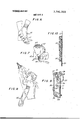
- FIG. 1 is a perspective view of a protective covering embodying this invention secured over and sealing an injured leg in a cast, with the covering portion of the leg and cast shown in dashed lines;
- FIG. 2 is a front view of an arm type protective covering constructed in accordance with the present invention and showing the expandable open top which facilitates insertion of an injured limb into the covering;
- FIG. 3 is a highly enlarged fragmentary crosssectional view taken substantiall along the line 3-3 of FIG. 2 and illustrating a cellular peripheral band affixed to the internal surface of the covering adjacent the mouth of the bag in accordance with the invention;
- FIG. 4 is a highly enlarged fragmentary crosssectional view taken substantially along the line 4-4 of FIG. 2 and illustrating an adhesive strip which is used to adjust the length of the covering to accommodate limbs and/or casts and/or bandages of various lengths;
- FIG. 5 is a highly enlarged fragmentary crosssectional view taken substantially along the line 5-5 of I FIG. 1 and illustrating the use of the adhesive strip to shorten the effective length of the protective covering;
- FIG. '6 is a perspective view of the protective covering foran injured foot, the same being constructed in accordance with another embodiment of the present invention.
- FIG. 7 is a side view of the protective covering shown in FIG. 6;
- FIG. 8 is a perspective view of the arm type covering shown in FIG. 2 the same illustrated in use and with 12-12 ofFIG.11.
- FIG. 9 is a front view of a protectivecovering constructed in accordance with a further embodiment of the present invention.
- FIG. 10 is a highly enlarged fragmentary crosssectional view taken substantially along the line 10-40 of FIG. 9 and illustrating a foam seal structure of closed cells,the foam layer being positioned adjacent the open end of the protective covering;
- FIG. 11 is an enlarged fragmentary cross-sectional view of the inflation valve, the same being taken substantially along the line 11l1 of FIG. 9 and;
- FIG. 12 is a transverse sectional view of the inflation valve, the same being taken substantially along the line DESCRIPTION OF THE PREFERRED EMBODIMENTS
- the protective covering of the present invention is suitable for maintaining a wounded area in a sealed environmenhprotecting the same from water as an injured person bathes. Additionally, the covering serves to seal the wound from any other contaminants which might be harmful. It will be seen that not only is the device designed to serve the needs of ambulatory patients. but it is quite useful for bedridden patients.
- An air and water tight seal between the open end of the covering and the injured limb is constructed of a resilierit peripheral layer of foamed spongelike material on the interior of the covering near the open mouth thereof.
- the foam material abuttingly contacts the skin of the limb and is bound thereto by a flexible elongate tape wrapped around the outer surface of the protective covering adjacent the open end.
- a seal to preclude the passage of the air and water between the interior of the covering and the exterior is formed when the foam layer is compressed.
- the foam material may be either of an open (interconnected) or closed cellular structure.
- the covering in one embodiment is a valve which permits the covering to-be inflated after it is placed around the limb and sealed thereagainst. As the covering is inflated, the increased gas pressure between the limb and the covering will space the covering from the wound preventing the covering from contacting the wound and causing further discomfort. This is particularly advantageous with burn wounds wherein healing is promoted with the wound unbandaged and in the absence of external contact with the injury. Any desired atmosphere may be introduced between the protective covering and the wound such as oxygen, for instance, or an inert gas such as nitrogen.
- the means for shortening the covering includes an adhesive strip mounted on a surface of the covering adjacent the bottom end.
- the exposed adhesive face may be secured to a portion synthetic limp flexible plastic sheet material in the shape of an elongate bag having a closed end 12 and an open end(mouth) 14 through which a portion of an injured limb is inserted.
- the bag may be either unitarily formed as a tube, e. g., if the bag is straight (see FIGS. 2, 8 and 9), or may be constructed of a folded or two opposed registered sheets appropriately joined at their edges and seamed with a seal suchas at the seam 16 illustrated in FIGS. 4 and 5, this form being convenient where the closed end has a lateral appendage, i. e., the bag is boot shaped (see FIGS. 1, 6 and 7).
- the wounded limb is inserted through the open end 14 and the end is then sealed against the skin of the limb at the bag mouth to preclude-the passage of contaminants into the area of the wound.
- the seal between the open end of the bag and the skin is effected by a foam spongelike band 18 which surrounds the internal periphery of the protective covering adjacent the open end 14.
- the foam band 18 is preferably heat sealed to the interior of the protective covering.
- the heat seal forms peripheral indented annular grooves 20 (FIG. 3) along the exposed surface of the band.
- the foam band grips the exposed skin of the limb and prevents the covering from slipping or moving with respect to the limb without the necessity of tightly binding the open end of the covering to the limb.
- foamspongelike material presents av quite effective seal between the skin and the open end of the bag as the foam band easily compresses, conforming to any irregularities in the skin and presenting a barrier or seal to the passage of liquids and gases without the necessity of being compressed against the skin to an excessive degree.
- the foam band is constructed of a cellular structure in which each cellular pocket or bubble 19 is interconnected to adjacent pockets all of which aid in precluding the passage of fluid and effecting the seal between the end of the protective covering and the limb. It is observed that the foam will act as a sponge and absorb any water before the same can pass completely through the foam band.
- the material of the foam band is resilient, i. e., elastomeric, typical useful materials being polyvinyl chloride and natural and synthetic rubbers.
- the band can be adhesively secured to the bag if the material of the band is not thermoplastic.
- an elongate flexible tape 22 is provided.
- the tape is anchored at one of its ends to the protective covering adjacent the open mouth 14. It is wound about the exterior of the covering adjacent the open mouth and will thus force the foam hand against the skin, compressing the of the protective covering distant from the bottom end tion.
- the covering 10 is formed of a fluid impervious hand to produce a tight seal. It is not necessary to wind the tape to an excessive tightness such that it will constrict the flow of blood to the wound. In fact, as the foam material will compress more readily than the flesh of the limb about which it is being bound, very little actual constricting pressure is necessary.
- the tape is wrapped about the protective covering and thence wound upwardly forming several overlapping ascending convolutions until it overlies the skin. The free end of the tape is then secured'by conventional adhesive or by merely tucking the same under an overlying preceding convolution.
- the injured limb once inserted in the protective covering, is ideally positioned with the open end 14 below a joint such as an elbow or knee if the injury is likewise below the joint. This facilitates bending of the limb at the joint and secures maximum mobility. Of course, in some instances, as when the wound is higher, it is impossible to have the open end 14 below the joint.
- the protective covering is designed with a maximum length, with the lower end thereof adjustably shortenable.
- the closed end 12 is folded upwardly and doubled over the upper length of the covering.
- a double faced adhesive strip'24 is secured to the outer surface of the protective covering adjacent the closed end 12.
- the adhesive strip 24 is affixed to the rear face 26 of the bag as illustrated in FIG. 2.
- the strip 24 has on each of its faces a thin layer of tacky adhesive 28a and 28b respectively and a strippable tape 30 covering the tacky outer layer 28b.
- the injured limb is inserted into the open end 14; the bottom of the child s foot will indicate the desired effective length of the bag. Any excess length which extends beyond the bottom of the foot is folded back over the face 26.
- the strippable tape 30 is pulled off, exposing the outer layer 28b of tacky adhesive. The strip 24 is then pressed against the surface of the bag at this folded over position and the tacky adhesive holds the end of the bag to the surface of the covering.
- the embodiment of the invention as shown in FIG. 2 includes provision for enlarging the opening 14 at the mouth of the covering to permit easy access for the entrance of a limb, particularly a limb with a locally enlarged part such as a cast or a foot.
- a slot runs partially down the length of the bag from the open end 14.
- the slot is actually a slender U shaped channel with side edges 31 and a flat bottom.
- a slide fastener 32 is provided to selectively open and close the slot.
- the fastener is preferably of plastic and includes interengagable U-shaped sealing 1 beads and a slider to effect the engagement and disenrial as the bag.
- the top edge of the web is considerably longer, e. g., 3 inches longer, than the distance between the points at which its ends are mounted to the covering when the fastener is closed.
- the bottom edges of the web 34 are parallel with the bottom edge being shorter than the top edge and sealed to the bottom 31a of the slot.
- the top edge of the web is approximately level with the open mouth of the bag.
- the side edges of the web uniformly taper downwardly toward the bottom edge forming a trapazoidal shape.
- the side and bottom edges of the web are joined to the bag at seams 35 which are preferably heat sealed.
- the dimensions of the web are such that when the fastener is opened and the slot spread apart for entrance" of the limb, the web is taut, while when the slide fastener is closed, the web and its upper edge are loose.
- the slide fastener is opened, enlarging the opening at the open end 14 and the injured limb is then inserted. With the limb fully inserted into the covering the fastener is closed, reducing the size of the opening 14 and forcing the web 34 between the closed fastener and the limb.
- FIGS. 6 and 7 An alternative protective covering 40suitable for a foot is illustrated in the embodiment of FIGS. 6 and 7. This covering is preferably shaped in the manner of a boot and formed of synthetic plastic sheet material similar to that of the embodiment previously described.
- the boot is sufficiently large to encase an injured foot with either bandages and/or a cast.
- the bottom of the foot includes transverse synthetic plastic ridges 41 heat laminated to the sheet material, alternatively the sheet material of which the boot is constructed maybe roughened, embossed or molded to present a gripping surface at the bottom of the boot.
- the upper open end 42 of the boot includes an interior annular peripheral resilient foam band 44 which is constructed and secured to the interior of the covering in gagement of the beads. Adjacent and in one piece with the beads the fastener includes sheet plastic webs that are heat sealed to the edges 31 and 31a of the'slot.
- a flexible limp impervious sheet web 34 is secured and sealed to the interior of the covering in a position completely underlying the slot.
- the web is preferably constructed of the same sheet matethe same manner as the band illustrated in FIG. 3.
- a closure tape 46 is anchored to the exterior of the boot adjacent the open' end 42.
- the opposite end of the closure tape is free and the tape is wrapped several times around the outside of the bag adjacent the open end and upwardly against the skin with the free end suitably secured as discussed with regard to the tape 22 of the previous embodiment.
- the bag 50 includes an open end 52 and a closed end 54.
- a slide fastener closure 56 similiar in operation and construction to the fastener 32 of the previous embodiment is also provided.
- a web 58 secured in a manner similiar to that of the web 34.
- the seal between the open end 52 and the limb is effected by an annular resilient foam band 60 in a manner analogous to that of the band 18 of the previous embodiment.
- the band 60 can be secured to the interior of the protective covering by any conventional means, e. g., a heat seal. In this embodiment, however, the use of an adhesive layer 62 between the foam band and the interior of the covering is employed as the securing means.
- the annular resilient foam band 60 is additionally modified in that it is constructed of closed cell (noninterconnected) material.
- each cellular pocket or bubble 64 is isolated from the interiors of adjacent pockets or bubbles and individually entraps a quantity of gas within the pocket.
- the individual pockets cooperate to form a resilient deformable band which effects the seal between the open end of the bag and the limb. As the open end is bound against the limb the individual cells of the band deform, compressing the gas contained therein. The deformation is readily accomplished with minimal pressure and the band quickly conforms to the shape of the limb, yet the layer elastically resumes its original thickness when released.
- the foam band 60 is pressed against the face of the web 58 which abuts the limb by a wrap around tape 53 and thus insures an effective seal between the open end 7 52 and the limb regardless of whether or not the prois of closed cellular nature, the seal effected between the open end of the covering and the limb is gas tight,
- FIG. 9 Also included in the embodiment of FIG. 9 is a means for selectively inflating or deflating the protective covering which, in view of the gas-tight seal at the upper end 52, will not accidentally deflate once it is inflated. This is a desirable feature as it permits the injured limb to be encased within the covering while minimizing actual physical contact between the covering and the limb. if between the limb and the covering a pressurized atmosphere exists, the covering is inflated and will maintain a spaced relationship from the limb.
- the covering may be inflated with any gaswhich would be prescribed to facilitate healing.
- any gas which would be prescribed to facilitate healing.
- sterile air or oxygen might be desirable gas, or under other conditions an inert gas such as nitrogen.
- the upper 76 and lower 78 walls of the valve are biased together either by the natural formation of the tube, i. e., this being the configuration the tube assumes when idle, or by the existence of gas pressure inside the covering that is in excess of atmospheric pressure and thus collapses the tube. When these walls touch one another they close the bore 80 precluding the exit of gas through the bore.
- the gas may be introduced into or released from the interior of the protective covering through the valve.
- the introduction of pressurized gas into the valve base from the outside of the covering will open the passage way 80 to permit the entrance of the gas.
- the top and bottom walls 76 and 78 close and the bore 80 is blocked so that gases can not escape.
- the slide fastener 56 is opened and the injured limb is inserted into the covering 50.
- the fastener is then closed and the tape 53 is wrapped around the protective covering adjacent the upper end in successively overlapping adjacent layers and finally overlapping the skin of the limb above the open end and then the free end of the band is anchored by suitable means or in a suitable manner as described hereinabove.
- the foam layer 60 is pressed against the skin of the limb and effects a gas and water tight seal to preclude both the entrance of water and the exit of gas entrapped within the covering.
- the desired atmosphere may be introduced into the protective covering.
- the patient may introduce either ordinary air as by blowing through a straw, inserted into the opening 72 and through the tube, with his mouth or a controlled atmosphere of oxy- -gen, sterile air or nitrogen for instance, may be introduced through the straw.
- the pressurized gas inflates the protective covering.
- the patient need only reinsert the straw allowing the gas to escape, or loosen the tape 53 and/or the slide fastener 56 which'will permit the exit of the gas through the open top 52.
- closed end 54 of he covering may be secured in a folded over position by means of a double faced adhesive strip 55 in a manner described with regard to the embodiment shown in F IG. 2.
- a protective covering for'enclosing injured POI" tions of a limb comprising: a flexible limp plastic liquid impermeable sheet material, said sheet material having closed sides and an open mouth at one end thereof, an annular resilient foam band secured to the interior of said covering adjacent the open mouth, and means adjacent the open mouth,
- said means adjacent the open mouth for compressing the open mouth and the foam band including a flexible tape, one end of said tape being secured to the protective covering adjacent the open mouth, the other end of said tape being free, said tape being wound in ascending overlapping convolutions about the protective covering adjacent said open mouth, said tape tightening said open mouth of said protective covering against the limb and compressing the annular foam band against the limb to insure a water-tight seal between the limb and the open mouth.
- a protective covering for enclosing injured portions of a limb comprising: a flexible limp plastic fluid impermeable sheet material, said sheet material having closed sides and an open mouth at one end thereof, an annular resilient foam band secured to the interior of said covering adjacent the open mouth, means adjacent the open mouth for compressing the open mouth and said annular foam band against the skin of the injured limb to thus seal said open mouth against said limb, precluding the entrance of water or other contaminants to the interior of the protective covering between the open mouth and said limb whereby a patient with an injured or a broken limb may readily bathe the remaining portions of his body without the danger of contaminating the injury, and means forming an elongate slot in the protective covering, said slot running from the open mouth to enlarge the opening at said open mouth for facilitating the insertion of an injured limb into the protective covering, a slide fastener secured to the protective covering along the edges of said slot, said slide fastener selectively opening and closing said slot, a backing web of water impermeable
- a protective covering for enclosing injured portions of a limb comprising: a flexible limp plastic liquid impermeable sheet material, said sheet material having closed sides and an open mouth at one end thereof, an annular resilient foam band secured to the interior of said coveringadjacent the open mouth, means adjacent the open mouth for compressing the open mouth and said annular foam band against the skin of the injured limb to thus seal said open mouth against said limb, precluding the entrance of water or other contaminants to the interior of the protective covering between the open mouth and said limb whereby a patient with an injured or a broken limb may readily bathe the remaining portions of his body without the danger of contaminating the injury, the resilient foam band presenting a gas tight seal precluding the escape of gas through the open mouth, means forming an opening in the protective covering for the inflation of the covering, and a valve mounted to the protective covering, said valve being positioned in registry with the opening, said valve being an inflow check valve including means precluding the escape of gas from the interior of said protective covering
- a protective covering for enclosing an injured portion of a limb comprising: a flexible limp plastic liquid impermeable sheet material, said sheet material having closed sides and an open mouth at one end thereof, a seal secured to the interior of said covering adjacent the open mouth and means for selectively enlarging the opening at said open mouth and pressing the seal against the limb, said means including an elongate slot in the protective covering, said slot running from the open mouth to permit enlargement of the opening at said mouth so as to facilitate the insertion of an injured limb, a fastener secured to the protective covering adjacent the edges of said slot, said fastener selectively opening and closing said slot, a backing web of water impermeable sheet material secured to the interior of said protective covering adjacent and behind said slot, said web having an upper edge, said upper edge being secured to said covering at its ends on opposed sides of said slot adjacent the edges of the slot, said upper edge being of greater dimension than the linear distance between the points connecting said upper edge to said protective covering when said fastener is closed, and said
- a protective covering for enclosing an injured portion of a limb constructed in accordance with claim 6, wherein the seal is-constructed of an annular resilient foam band, a portion of said band being secured to the internal surface of the backing web. adjacent the upper edge of said web.
Landscapes
- Health & Medical Sciences (AREA)
- Epidemiology (AREA)
- Engineering & Computer Science (AREA)
- Biomedical Technology (AREA)
- Heart & Thoracic Surgery (AREA)
- Vascular Medicine (AREA)
- Life Sciences & Earth Sciences (AREA)
- Animal Behavior & Ethology (AREA)
- General Health & Medical Sciences (AREA)
- Public Health (AREA)
- Veterinary Medicine (AREA)
- Orthopedics, Nursing, And Contraception (AREA)
Abstract
A protective covering is provided for encasing an injured body limb and preventing water or other harmful contaminants from contacting a wound, its bandaging, or a cast. The covering includes a sheet of synthetic limp flexible plastic forming a bag having an open mouth. The mouth is sealed to the skin of the injured limb at a point spaced from the wound and remote from the free end of the limb by a spongelike elastomeric foam layer which is attached to the interior of the bag near the mouth. Attached adjacent the mouth of the bag is a flexible tape which is wrapped about the exterior of the bag to insure a substantially watertight and air-tight seal between the bag mouth and the skin. Optionally provided is a valve between the interior and exterior surfaces of the bag enabling the bag to be inflated, thus minimizing contact with the wound. The bag may be inflated with oxygen or any gas prescribed to facilitate healing. To adjustably accomodate for various lengths of a limb with either a bandage and/or a cast, an adhesive strip is affixed to the bag adjacent the closed end. The closed end may be folded back, shortening the overall length of the bag, until the desired length is attained whereupon the adhesive strip is secured to a side of the bag to maintain the closed end in its folded over position.
Description
United States Patent [191 Liman 4] PROTECTIVE COVERING [75] Inventor: Peter C. Lirnan, Scarsdale, NY.
[73] Assignee: Dryspell Industries Inc., New York,
[22] Filed: Dec. 22, 1971 [21] Appl. No.: 210,984
[52] US. Cl. 128/82, 128/165 [51] Int. Cl. Afilf 13/00 [58] Field of Search 128/82, 83.5, 165, 128/260, DIG. 20; 36/81, 7.3, 4
[56] References Cited UNITED STATES PATENTS 3,478,738 11/1969 Altman et a1. 128/260 X 2,832,336 4/1958 Davis et al. 128/1316. 20' 3,083,708 4/1963 Gottfried 128/165 X 3,329,144 7/1967 Liman 128/82 2,229,575 1/1941 Kaplan....- 128/82 3,324,580 6/1967 Baxter 128/165 2,244,871 6/1941 Guinzburg 128/82 FOREIGN PATENTS OR APPLICATIONS 417,187 10/1934 Great Britain 128/165 Primary Examiner-Richard A. Gaudet Assistant Examiner-J. Yasko Attorney-Morris Kirschstein, Bertram Ottinger, Stephen A. Young et al.
[ June 26, 1973 [57] ABSTRACT limb at a point spaced from the wound and remote from the free end of the limb by a spongelike elastomeric foam layer which is attached to the interior of the bag near the mouth. Attached adjacent the mouth of the bag is a flexible tape which is wrapped about the exterior of the bag to insure a substantially water-tight and air-tight seal between the bag mouth and the skin. Optionally provided is a valve between the interior and exterior surfaces of the bag enabling the bag to be inflated, thus minimizing contact with the wound. The bag may be inflated with oxygen or any gas prescribed to facilitate healing. To adjustably accomodate for various lengths of a limb with either a bandage and/or a cast, an adhesive strip is affixed to the bag adjacent the closed end. The closed end may be folded back, shortening the overall length of the bag, until the desired length is attained whereupon the adhesive strip is secured to a side of the bag to maintain the closed end in its folded over position.
7 Claims, 12 Drawing Figures PAIENIEDJUHZEIHB I 3.741.203
SHEEI 2 0F 2 PROTECTIVE COVERING BACKGROUND OF THE INVENTION 1. Field of the Invention Protective coverings for injured limbs.
2. Description of the Prior Art It has been heretofore known to provide protective coverings for injured limbs or portions thereof. These prior devices generally included a hollow plastic bag into which the injured limb would be inserted. Among the disadvantages encountered with the use of some of the devices known heretofore was that in order to keep the wound dry they were of quite complicated construction which would not seal the injured portion from contact with bathing water unless tightly gripped around the limb and consequently inhibited a free passage of blood. As free blood circulation is necessary for best healing, the use of protective coverings which were sealed to limbs by tight bindings did not gain widespread acceptance.
In order to minimize the obstruction to the passage of blood, the binding was either loosened or modified to reduce the binding pressure of the covering against the body limb. The result of such modifications unfortunately permitted the seepage of water and/or other contaminants to the wound area.
Additionally, the prior protective coverings of the past did not provide a simple means for the air-tight sealing of the wounded limb section nor for means permitting selective inflation of the covering..This disadvantage allowed the covering to frequently contact and rest on the bandage, the wound, or skin adjacent thereto, which at times presented additional irritation. The prior devices additionally lacked a means whereby the gaseous atmosphere surrounding a wound could be selectively controlled so that an ambulatory patient might be provided with a proper gaseous atmosphere prescribed to promote healing of the wound while not being confined to the hospital.
Another disadvantage of many previous devices of the character described was that they did notprovide a neat fit inasmuch as the bag had to be oversize to permit easy insertion of a limb yet subsequently tightened around its mouth. This problem had been overcome by slitting a side of the bag from the mouth toward the base of the bag to allow limb to be thrust into the bag freely and by providing-a slide fastener to close the slit after donning of the bag. However this prevented the formation of a hermetic seal arond the limb.
SUMMARY OF THE INVENTION It is an object of the present invention to provide a protective covering which is so constructed that it is not subject to the foregoing disadvantages.
More specifically it is an object of the invention to provide a protective covering. of the character described which is simple and rugged in construction, yet can be fabricated by mass production methods at an appreciably lower cost than prior devices designed to serve the same function.
It is an object of the present invention to provide a protective covering wherein the atmosphere surrounding the wounded limb may be readily controlled to promote healing.
Another object of the present invention is to provide a protective covering of the character described wherein a seal between the limb and the mouth of the bag is attained with minimum constriction of the flow of blood to the wound.
It is a further object of the present invention to provide a protective covering of the character described wherein the length of the bag may be readily adjusted to accomodate wounds and/or limbs of various lengths.
Yet another object of the present invention is to provide a protective covering of the character described wherein the atmosphere surrounding a wounded limb may be pressurized to maintain the bag in spaced relation from the wound.
A further-object of the present invention is to provide a protective covering of the character discribed wherein a soft flexible resilient cellular material is positioned adjacent the end of the covering, the same forming a substantially air-tight and water-tight barrier between the covered portion of the limb and ambient surroundings.
It is a still further object of the invention to provide a protective covering of the character described wherein a top opening slit in the bag permits ready insertion of a limb and yet wherein the slit is so protected that when closed the side of the bag forms a hermetic sheath.
Other objects of the'invention in part will be obvious and in part will be pointed out hereinafter.
The invention accordingly constitues the features of construction, combinations of elements and arrangements of parts which will be exemplified in the protective covering devices hereinafter described and of which the scope of application will be indicated in the appended claims.
BRIEF DESCRIPTION OF THE DRAWINGS In the accompanying drawings in which are shown various possible embodiments of the invention,
FIG. 1 is a perspective view of a protective covering embodying this invention secured over and sealing an injured leg in a cast, with the covering portion of the leg and cast shown in dashed lines;
FIG. 2 is a front view of an arm type protective covering constructed in accordance with the present invention and showing the expandable open top which facilitates insertion of an injured limb into the covering;
FIG. 3 is a highly enlarged fragmentary crosssectional view taken substantiall along the line 3-3 of FIG. 2 and illustrating a cellular peripheral band affixed to the internal surface of the covering adjacent the mouth of the bag in accordance with the invention;
FIG. 4 is a highly enlarged fragmentary crosssectional view taken substantially along the line 4-4 of FIG. 2 and illustrating an adhesive strip which is used to adjust the length of the covering to accommodate limbs and/or casts and/or bandages of various lengths;
FIG. 5 is a highly enlarged fragmentary crosssectional view taken substantially along the line 5-5 of I FIG. 1 and illustrating the use of the adhesive strip to shorten the effective length of the protective covering;
FIG. '6 is a perspective view of the protective covering foran injured foot, the same being constructed in accordance with another embodiment of the present invention;
FIG. 7 is a side view of the protective covering shown in FIG. 6;
FIG. 8 is a perspective view of the arm type covering shown in FIG. 2 the same illustrated in use and with 12-12 ofFIG.11.
the adjustable end of the protective covering in a folded over, shortened, position;
FIG. 9 is a front view of a protectivecovering constructed in accordance with a further embodiment of the present invention;
FIG. 10 is a highly enlarged fragmentary crosssectional view taken substantially along the line 10-40 of FIG. 9 and illustrating a foam seal structure of closed cells,the foam layer being positioned adjacent the open end of the protective covering;
FIG. 11 is an enlarged fragmentary cross-sectional view of the inflation valve, the same being taken substantially along the line 11l1 of FIG. 9 and;
FIG. 12 is a transverse sectional view of the inflation valve, the same being taken substantially along the line DESCRIPTION OF THE PREFERRED EMBODIMENTS The protective covering of the present invention is suitable for maintaining a wounded area in a sealed environmenhprotecting the same from water as an injured person bathes. Additionally, the covering serves to seal the wound from any other contaminants which might be harmful. It will be seen that not only is the device designed to serve the needs of ambulatory patients. but it is quite useful for bedridden patients.
An air and water tight seal between the open end of the covering and the injured limb is constructed of a resilierit peripheral layer of foamed spongelike material on the interior of the covering near the open mouth thereof. The foam material abuttingly contacts the skin of the limb and is bound thereto by a flexible elongate tape wrapped around the outer surface of the protective covering adjacent the open end. A seal to preclude the passage of the air and water between the interior of the covering and the exterior is formed when the foam layer is compressed. The foam material may be either of an open (interconnected) or closed cellular structure.
Included with the covering in one embodiment is a valve which permits the covering to-be inflated after it is placed around the limb and sealed thereagainst. As the covering is inflated, the increased gas pressure between the limb and the covering will space the covering from the wound preventing the covering from contacting the wound and causing further discomfort. This is particularly advantageous with burn wounds wherein healing is promoted with the wound unbandaged and in the absence of external contact with the injury. Any desired atmosphere may be introduced between the protective covering and the wound such as oxygen, for instance, or an inert gas such as nitrogen.
Additionally provided on the protective covering is a means whereby the closed end of the covering may be adjustably shortened so that the covering canaccomrnodate different lengths of limbs. The means for shortening the covering includes an adhesive strip mounted on a surface of the covering adjacent the bottom end. The exposed adhesive face may be secured to a portion synthetic limp flexible plastic sheet material in the shape of an elongate bag having a closed end 12 and an open end(mouth) 14 through which a portion of an injured limb is inserted.
Suitable for application as the sheet material is polyethylene, a polyester or polyvinyl chloride, which are essentially liquid impermeable. The bag may be either unitarily formed as a tube, e. g., if the bag is straight (see FIGS. 2, 8 and 9), or may be constructed of a folded or two opposed registered sheets appropriately joined at their edges and seamed with a seal suchas at the seam 16 illustrated in FIGS. 4 and 5, this form being convenient where the closed end has a lateral appendage, i. e., the bag is boot shaped (see FIGS. 1, 6 and 7). To use the protective covering, the wounded limb is inserted through the open end 14 and the end is then sealed against the skin of the limb at the bag mouth to preclude-the passage of contaminants into the area of the wound. The seal between the open end of the bag and the skin is effected by a foam spongelike band 18 which surrounds the internal periphery of the protective covering adjacent the open end 14. The foam band 18 is preferably heat sealed to the interior of the protective covering. The heat seal forms peripheral indented annular grooves 20 (FIG. 3) along the exposed surface of the band. The foam band grips the exposed skin of the limb and prevents the covering from slipping or moving with respect to the limb without the necessity of tightly binding the open end of the covering to the limb.
It has been found that the use of foamspongelike material presents av quite effective seal between the skin and the open end of the bag as the foam band easily compresses, conforming to any irregularities in the skin and presenting a barrier or seal to the passage of liquids and gases without the necessity of being compressed against the skin to an excessive degree.
In the embodiment as shown in FIGS. 2 and 3 the foam band is constructed of a cellular structure in which each cellular pocket or bubble 19 is interconnected to adjacent pockets all of which aid in precluding the passage of fluid and effecting the seal between the end of the protective covering and the limb. It is observed that the foam will act as a sponge and absorb any water before the same can pass completely through the foam band. The material of the foam band is resilient, i. e., elastomeric, typical useful materials being polyvinyl chloride and natural and synthetic rubbers. The band can be adhesively secured to the bag if the material of the band is not thermoplastic.
To compress the foam band against the skin an elongate flexible tape 22 is provided. The tape is anchored at one of its ends to the protective covering adjacent the open mouth 14. It is wound about the exterior of the covering adjacent the open mouth and will thus force the foam hand against the skin, compressing the of the protective covering distant from the bottom end tion. The covering 10 is formed of a fluid impervious hand to produce a tight seal. It is not necessary to wind the tape to an excessive tightness such that it will constrict the flow of blood to the wound. In fact, as the foam material will compress more readily than the flesh of the limb about which it is being bound, very little actual constricting pressure is necessary. The tape is wrapped about the protective covering and thence wound upwardly forming several overlapping ascending convolutions until it overlies the skin. The free end of the tape is then secured'by conventional adhesive or by merely tucking the same under an overlying preceding convolution.
The injured limb, once inserted in the protective covering, is ideally positioned with the open end 14 below a joint such as an elbow or knee if the injury is likewise below the joint. This facilitates bending of the limb at the joint and secures maximum mobility. Of course, in some instances, as when the wound is higher, it is impossible to have the open end 14 below the joint. In order to providea protective covering of a single size which may accommodate limbs of various sizes and additionally injuries of various sizes so that the upper end may be positioned above a joint or below a joint, the protective covering is designed with a maximum length, with the lower end thereof adjustably shortenable.
To adjustably accommodate a single protective covering for a variety of limb sizes, the closed end 12 is folded upwardly and doubled over the upper length of the covering. A double faced adhesive strip'24 is secured to the outer surface of the protective covering adjacent the closed end 12. The adhesive strip 24 is affixed to the rear face 26 of the bag as illustrated in FIG. 2. The strip 24 has on each of its faces a thin layer of tacky adhesive 28a and 28b respectively and a strippable tape 30 covering the tacky outer layer 28b.
To shorten the effective length of the bag which would be required if a child were using the covering as illustrated in FIG. 1 the injured limb is inserted into the open end 14; the bottom of the child s foot will indicate the desired effective length of the bag. Any excess length which extends beyond the bottom of the foot is folded back over the face 26. To secure the end of the covering in its folded over position, the strippable tape 30 is pulled off, exposing the outer layer 28b of tacky adhesive. The strip 24 is then pressed against the surface of the bag at this folded over position and the tacky adhesive holds the end of the bag to the surface of the covering.
The embodiment of the invention as shown in FIG. 2 includes provision for enlarging the opening 14 at the mouth of the covering to permit easy access for the entrance of a limb, particularly a limb with a locally enlarged part such as a cast or a foot. For the aforesaid purpose a slot runs partially down the length of the bag from the open end 14. The slot is actually a slender U shaped channel with side edges 31 and a flat bottom.
edge 31a. A slide fastener 32 is provided to selectively open and close the slot. The fastener is preferably of plastic and includes interengagable U-shaped sealing 1 beads and a slider to effect the engagement and disenrial as the bag. To accommodate the increase in the size of the opening 14 when the beads are disengaged and the fastener is open, the top edge of the web is considerably longer, e. g., 3 inches longer, than the distance between the points at which its ends are mounted to the covering when the fastener is closed. The bottom edges of the web 34 are parallel with the bottom edge being shorter than the top edge and sealed to the bottom 31a of the slot. The top edge of the web is approximately level with the open mouth of the bag.
The side edges of the web uniformly taper downwardly toward the bottom edge forming a trapazoidal shape. The side and bottom edges of the web are joined to the bag at seams 35 which are preferably heat sealed. The dimensions of the web are such that when the fastener is opened and the slot spread apart for entrance" of the limb, the web is taut, while when the slide fastener is closed, the web and its upper edge are loose.
To insert a limb into the protective covering, the slide fastener is opened, enlarging the opening at the open end 14 and the injured limb is then inserted. With the limb fully inserted into the covering the fastener is closed, reducing the size of the opening 14 and forcing the web 34 between the closed fastener and the limb.
To insure a proper seal between the open mouth of the bag and the limb and to preclude the passage of fluids between the skin and'the top of the web 34 the surface of the web which faces the skin of the limb adjacent the top edge of the web is covered with the annular resilient foam seal 18.
An alternative protective covering 40suitable for a foot is illustrated in the embodiment of FIGS. 6 and 7. This covering is preferably shaped in the manner of a boot and formed of synthetic plastic sheet material similar to that of the embodiment previously described.
The boot is sufficiently large to encase an injured foot with either bandages and/or a cast. To prevent the boot from slipping on a wet surface, such as a tub, the bottom of the foot includes transverse synthetic plastic ridges 41 heat laminated to the sheet material, alternatively the sheet material of which the boot is constructed maybe roughened, embossed or molded to present a gripping surface at the bottom of the boot.
The upper open end 42 of the boot includes an interior annular peripheral resilient foam band 44 which is constructed and secured to the interior of the covering in gagement of the beads. Adjacent and in one piece with the beads the fastener includes sheet plastic webs that are heat sealed to the edges 31 and 31a of the'slot.
When the fastener is in closed position the interengaged beads, since they are each continuous (uninterrupted) and prehensibly engaged with one another, present an effective barrier precluding the entrance of liquid into the bag through the slot. Nevertheless the seal thus provided may develop defects and, in any event, is not hermetic. Hence to additionally insure effective preclusion of the entrance of water or other contaminants and to make the side of the covering gas tight, a flexible limp impervious sheet web 34 is secured and sealed to the interior of the covering in a position completely underlying the slot. The web is preferably constructed of the same sheet matethe same manner as the band illustrated in FIG. 3.
To bind the upper end of the boot against the limb and insure a water-tight and gas-tight seal, a closure tape 46 is anchored to the exterior of the boot adjacent the open' end 42. The opposite end of the closure tape is free and the tape is wrapped several times around the outside of the bag adjacent the open end and upwardly against the skin with the free end suitably secured as discussed with regard to the tape 22 of the previous embodiment.
Thus an individual with an injured or broken foot is permitted to shower without aggravation of the injury of synthetic plastic which may be seamed or of one piece construction. The bag 50 includes an open end 52 and a closed end 54. A slide fastener closure 56 similiar in operation and construction to the fastener 32 of the previous embodiment is also provided.
Additionally included is a web 58 secured in a manner similiar to that of the web 34.
The seal between the open end 52 and the limb is effected by an annular resilient foam band 60 in a manner analogous to that of the band 18 of the previous embodiment. The band 60 can be secured to the interior of the protective covering by any conventional means, e. g., a heat seal. In this embodiment, however, the use of an adhesive layer 62 between the foam band and the interior of the covering is employed as the securing means.
The annular resilient foam band 60 is additionally modified in that it is constructed of closed cell (noninterconnected) material. Thus, the interior of each cellular pocket or bubble 64 is isolated from the interiors of adjacent pockets or bubbles and individually entraps a quantity of gas within the pocket. The individual pockets cooperate to form a resilient deformable band which effects the seal between the open end of the bag and the limb. As the open end is bound against the limb the individual cells of the band deform, compressing the gas contained therein. The deformation is readily accomplished with minimal pressure and the band quickly conforms to the shape of the limb, yet the layer elastically resumes its original thickness when released.
The foam band 60 is pressed against the face of the web 58 which abuts the limb by a wrap around tape 53 and thus insures an effective seal between the open end 7 52 and the limb regardless of whether or not the prois of closed cellular nature, the seal effected between the open end of the covering and the limb is gas tight,
to an even greater degree than with an interconnected cell structure which itself is essentially hermetic since the interconnected'cells are compressed by the wrap around tape forming a seal that for practical purposes, considering the minimum pressure differential involved, is hermetic) precluding the passage of both water and/or gases.
Also included in the embodiment of FIG. 9 is a means for selectively inflating or deflating the protective covering which, in view of the gas-tight seal at the upper end 52, will not accidentally deflate once it is inflated. This is a desirable feature as it permits the injured limb to be encased within the covering while minimizing actual physical contact between the covering and the limb. if between the limb and the covering a pressurized atmosphere exists, the covering is inflated and will maintain a spaced relationship from the limb.
The covering may be inflated with any gaswhich would be prescribed to facilitate healing. For example, sterile air or oxygen might be desirable gas, or under other conditions an inert gas such as nitrogen.
I An inflow check (one-way) valve 70 illustrated in employed to join the seams of the sheet which form the protective covering.
Towards the end of the valve 70 the upper 76 and lower 78 walls of the valve are biased together either by the natural formation of the tube, i. e., this being the configuration the tube assumes when idle, or by the existence of gas pressure inside the covering that is in excess of atmospheric pressure and thus collapses the tube. When these walls touch one another they close the bore 80 precluding the exit of gas through the bore.
The gas may be introduced into or released from the interior of the protective covering through the valve. The introduction of pressurized gas into the valve base from the outside of the covering will open the passage way 80 to permit the entrance of the gas. As soon as the pressure of the incoming gas is reduced, the top and bottom walls 76 and 78 close and the bore 80 is blocked so that gases can not escape.
To use theinflatable embodiment, the slide fastener 56 is opened and the injured limb is inserted into the covering 50. The fastener is then closed and the tape 53 is wrapped around the protective covering adjacent the upper end in successively overlapping adjacent layers and finally overlapping the skin of the limb above the open end and then the free end of the band is anchored by suitable means or in a suitable manner as described hereinabove.
As the elongated tape 53 wraps about the covering 7 adjacent the open end, the foam layer 60is pressed against the skin of the limb and effects a gas and water tight seal to preclude both the entrance of water and the exit of gas entrapped within the covering.
At this point the desired atmosphere may be introduced into the protective covering. The patient may introduce either ordinary air as by blowing through a straw, inserted into the opening 72 and through the tube, with his mouth or a controlled atmosphere of oxy- -gen, sterile air or nitrogen for instance, may be introduced through the straw. The pressurized gas inflates the protective covering.
To remove the pressurized gas from the protective covering the patient need only reinsert the straw allowing the gas to escape, or loosen the tape 53 and/or the slide fastener 56 which'will permit the exit of the gas through the open top 52.
Additionally, the closed end 54 of he covering may be secured in a folded over position by means of a double faced adhesive strip 55 in a manner described with regard to the embodiment shown in F IG. 2.
It thus will be seen that there are provided protective covering devices which achieve the various objects of the invention and which are well adapted to meet the conditions of practical use.
As various possible embodiments might be made of the present invention and as various changes might be made in the embodiments above set forth, it is to be understood that all matter herein described or shown in the accompanying drawings is to be interpreted as illus trative and not in a limiting sense.
' Having thus described the present invention, there is claimed as new and desired to be secured by Letters Patent: j
l. A protective covering for'enclosing injured POI" tions of a limb, said protective covering comprising: a flexible limp plastic liquid impermeable sheet material, said sheet material having closed sides and an open mouth at one end thereof, an annular resilient foam band secured to the interior of said covering adjacent the open mouth, and means adjacent the open mouth,
for compressing the open mouth and said annular foam band against the skin of the injured limb to thus seal said open mouth against said limb, precluding the entrance of water or other contaminants to the interior of the protective covering between the open mouth and said limb whereby a patient with an injured or a broken limb may readily bathe the remaining portions of his body without the danger of contaminating the injury, said means adjacent the open mouth for compressing the open mouth and the foam band including a flexible tape, one end of said tape being secured to the protective covering adjacent the open mouth, the other end of said tape being free, said tape being wound in ascending overlapping convolutions about the protective covering adjacent said open mouth, said tape tightening said open mouth of said protective covering against the limb and compressing the annular foam band against the limb to insure a water-tight seal between the limb and the open mouth.
2. A protective covering for enclosing injured portions of a limb, said protective covering comprising: a flexible limp plastic fluid impermeable sheet material, said sheet material having closed sides and an open mouth at one end thereof, an annular resilient foam band secured to the interior of said covering adjacent the open mouth, means adjacent the open mouth for compressing the open mouth and said annular foam band against the skin of the injured limb to thus seal said open mouth against said limb, precluding the entrance of water or other contaminants to the interior of the protective covering between the open mouth and said limb whereby a patient with an injured or a broken limb may readily bathe the remaining portions of his body without the danger of contaminating the injury, and means forming an elongate slot in the protective covering, said slot running from the open mouth to enlarge the opening at said open mouth for facilitating the insertion of an injured limb into the protective covering, a slide fastener secured to the protective covering along the edges of said slot, said slide fastener selectively opening and closing said slot, a backing web of water impermeable sheet material secured to the interior of said protective covering adjacent and behind said slot, said web having an upper edge, said upper edge being secured to said covering at its ends on opposed sides of said slot, said upper edge being of greater dimension than the linear distance between the points connecting said upper edge to said protective covering when said fastener is closed, and said web being secured to said covering at the sides and bottom of the web.
3. A protective covering constructed in accordance with claim 2 wherein the compressing means includes an elongate flexible tape, said tape having one end secured to the protective covering adjacent the open mouth of said covering, said tape having a free end, said tape being wound in overlapping ascending convo-' lutions about the protective covering adjacent said open mouth, said tape tightening the open mouth of the protective covering against the limb and compressing the annular foam band against the limb to insure a water tight seal between the limb and the open end.
4. A protective covering for enclosing injured portions of a limb, said protective covering comprising: a flexible limp plastic liquid impermeable sheet material, said sheet material having closed sides and an open mouth at one end thereof, an annular resilient foam band secured to the interior of said coveringadjacent the open mouth, means adjacent the open mouth for compressing the open mouth and said annular foam band against the skin of the injured limb to thus seal said open mouth against said limb, precluding the entrance of water or other contaminants to the interior of the protective covering between the open mouth and said limb whereby a patient with an injured or a broken limb may readily bathe the remaining portions of his body without the danger of contaminating the injury, the resilient foam band presenting a gas tight seal precluding the escape of gas through the open mouth, means forming an opening in the protective covering for the inflation of the covering, and a valve mounted to the protective covering, said valve being positioned in registry with the opening, said valve being an inflow check valve including means precluding the escape of gas from the interior of said protective covering through the opening while permitting the introduction of pressurized gas into said protective covering through the opening.
5. A protective covering constructed in accordance with claim 4 wherein a pressurized atmosphere including oxygen, is introduced between the limb and the protective covering.
6. A protective covering for enclosing an injured portion of a limb, said protective covering comprising: a flexible limp plastic liquid impermeable sheet material, said sheet material having closed sides and an open mouth at one end thereof, a seal secured to the interior of said covering adjacent the open mouth and means for selectively enlarging the opening at said open mouth and pressing the seal against the limb, said means including an elongate slot in the protective covering, said slot running from the open mouth to permit enlargement of the opening at said mouth so as to facilitate the insertion of an injured limb, a fastener secured to the protective covering adjacent the edges of said slot, said fastener selectively opening and closing said slot, a backing web of water impermeable sheet material secured to the interior of said protective covering adjacent and behind said slot, said web having an upper edge, said upper edge being secured to said covering at its ends on opposed sides of said slot adjacent the edges of the slot, said upper edge being of greater dimension than the linear distance between the points connecting said upper edge to said protective covering when said fastener is closed, and said web being hermetically sealed to said covering at the sides and bottom of the web. 1
7. A protective covering for enclosing an injured portion of a limb constructed in accordance with claim 6, wherein the seal is-constructed of an annular resilient foam band, a portion of said band being secured to the internal surface of the backing web. adjacent the upper edge of said web.
. II! i i;
Claims (7)
1. A protective covering for enclosing injured portions of a limb, said protective covering comprising: a flexible limp plastic liquid impermeable sheet material, said sheet material having closed sides and an open mouth at one end thereof, an annular resilient foam band secured to the interior of said covering adjacent the open mouth, and means adjacent the open mouth for compressing the open mouth and said annular foam band against the skin of the injured limb to thus seal said open mouth against said limb, precluding the entrance of water or other contaminants to the interior of the protective covering between the open mouth and said limb whereby a patient with an injured or a broken limb may readily bathe the remaining portions of his body without the danger of contaminating the injury, said means adjacent the open mouth for compressing the open mouth and the foam band including a flexible tape, one end of said tape being secured to the protective covering adjacent the open mouth, the other end of said tape being free, said tape being wound in ascending overlapping convolutions about the protective covering adjacent said open mouth, said tape tightening said open mouth of said protective covering against the limb and compressing the annular foam band against the limb to insure a water-tight seal between the limb and the open mouth.
2. A protective covering for enclosing injured portions of a limb, said protective covering comprising: a flexible limp plastic fluid impermeable sheet material, said sheet material having closed sides and an open mouth at one end thereof, an annular resilient foam band secured to the interior of said covering adjacent the open mouth, means adjacent the open mouth for compressing the open mouth and said annular foam band against the skin of the injured limb to thus seal said open mouth against said limb, precluding the entrance of water or other contaminants to the interior of the protective covering between the open mouth and said limb whereby a patient with an injured or a broken limb may readily bathe the remaining portions of his body without the danger of contaminating the injury, and means forming an elongate slot in the protective covering, said slot running from the open mouth to enlarge the opening at said open mouth for facilitating the insertion of an injured limb into the protective covering, a slide fastener secured to the protective covering along the edges of said slot, said slide fastener selectively opening and closing said slot, a backing web of water impermeable sheet material secured to the interior of said protective covering adjacent and behind said slot, said web having an upper edge, said upper edge being secured to said covering at its ends on opposed sides of said slot, said upper edge being of greater dimension than the linear distance between the points connecting said upper edge to said protective covering when said fastener is closed, and said web being secured to said covering at the sides and bottom of the web.
3. A protective covering constructed in accordance with claim 2 wherein the compressing Means includes an elongate flexible tape, said tape having one end secured to the protective covering adjacent the open mouth of said covering, said tape having a free end, said tape being wound in overlapping ascending convolutions about the protective covering adjacent said open mouth, said tape tightening the open mouth of the protective covering against the limb and compressing the annular foam band against the limb to insure a water tight seal between the limb and the open end.
4. A protective covering for enclosing injured portions of a limb, said protective covering comprising: a flexible limp plastic liquid impermeable sheet material, said sheet material having closed sides and an open mouth at one end thereof, an annular resilient foam band secured to the interior of said covering adjacent the open mouth, means adjacent the open mouth for compressing the open mouth and said annular foam band against the skin of the injured limb to thus seal said open mouth against said limb, precluding the entrance of water or other contaminants to the interior of the protective covering between the open mouth and said limb whereby a patient with an injured or a broken limb may readily bathe the remaining portions of his body without the danger of contaminating the injury, the resilient foam band presenting a gas tight seal precluding the escape of gas through the open mouth, means forming an opening in the protective covering for the inflation of the covering, and a valve mounted to the protective covering, said valve being positioned in registry with the opening, said valve being an inflow check valve including means precluding the escape of gas from the interior of said protective covering through the opening while permitting the introduction of pressurized gas into said protective covering through the opening.
5. A protective covering constructed in accordance with claim 4 wherein a pressurized atmosphere including oxygen, is introduced between the limb and the protective covering.
6. A protective covering for enclosing an injured portion of a limb, said protective covering comprising: a flexible limp plastic liquid impermeable sheet material, said sheet material having closed sides and an open mouth at one end thereof, a seal secured to the interior of said covering adjacent the open mouth and means for selectively enlarging the opening at said open mouth and pressing the seal against the limb, said means including an elongate slot in the protective covering, said slot running from the open mouth to permit enlargement of the opening at said mouth so as to facilitate the insertion of an injured limb, a fastener secured to the protective covering adjacent the edges of said slot, said fastener selectively opening and closing said slot, a backing web of water impermeable sheet material secured to the interior of said protective covering adjacent and behind said slot, said web having an upper edge, said upper edge being secured to said covering at its ends on opposed sides of said slot adjacent the edges of the slot, said upper edge being of greater dimension than the linear distance between the points connecting said upper edge to said protective covering when said fastener is closed, and said web being hermetically sealed to said covering at the sides and bottom of the web.
7. A protective covering for enclosing an injured portion of a limb constructed in accordance with claim 6, wherein the seal is constructed of an annular resilient foam band, a portion of said band being secured to the internal surface of the backing web adjacent the upper edge of said web.
Applications Claiming Priority (1)
| Application Number | Priority Date | Filing Date | Title |
|---|---|---|---|
| US21098471A | 1971-12-22 | 1971-12-22 |
Publications (1)
| Publication Number | Publication Date |
|---|---|
| US3741203A true US3741203A (en) | 1973-06-26 |
Family
ID=22785150
Family Applications (1)
| Application Number | Title | Priority Date | Filing Date |
|---|---|---|---|
| US00210984A Expired - Lifetime US3741203A (en) | 1971-12-22 | 1971-12-22 | Protective covering |
Country Status (1)
| Country | Link |
|---|---|
| US (1) | US3741203A (en) |
Cited By (65)
| Publication number | Priority date | Publication date | Assignee | Title |
|---|---|---|---|---|
| US4098268A (en) * | 1977-01-06 | 1978-07-04 | Dalbert Byron Scott | Water impervious cover for an arm cast or leg cast |
| US4178924A (en) * | 1975-07-01 | 1979-12-18 | Baxter Samuel H | Cast protector |
| US4224935A (en) * | 1979-06-01 | 1980-09-30 | Metelnick John A | Bag protector for leg cast |
| US4254765A (en) * | 1979-08-17 | 1981-03-10 | Brown Ronald E | Limb protective coverings |
| US4301603A (en) * | 1979-04-02 | 1981-11-24 | Scott Dalbert B | Water impervious boot for protecting a surgical cast |
| US4363317A (en) * | 1981-04-16 | 1982-12-14 | Broucek Daniel M | Watertight cast cover |
| US4500019A (en) * | 1983-06-23 | 1985-02-19 | Curley Jr John J | Carrier for portable audio devices |
| US4530350A (en) * | 1981-09-28 | 1985-07-23 | Brown Ronald E | Limb protective coverings |
| US4562834A (en) * | 1983-12-12 | 1986-01-07 | Norman Bates | Waterproof limb covering |
| EP0211146A1 (en) * | 1985-04-19 | 1987-02-25 | Kopetzky, Claus-Dieter, Dr.med. | Device for the electrical treatment of body limbs |
| US4727864A (en) * | 1984-12-07 | 1988-03-01 | IIIe GmbH | Protective sleeve for the leak-proof coverage of body parts |
| US4911151A (en) * | 1988-12-12 | 1990-03-27 | Paul Rankin | Disposable dressing cover |
| US4986265A (en) * | 1988-02-16 | 1991-01-22 | Caponi Ronald E | Protective cover for cast |
| US5063919A (en) * | 1989-09-05 | 1991-11-12 | Silverberg Doris C | Protective sleeve |
| USD340115S (en) | 1991-09-23 | 1993-10-05 | Carmack James E | Protective sleeve |
| US5277699A (en) * | 1992-06-10 | 1994-01-11 | Williamson Theodore A | Foot drop orthotic and gait training device |
| US5342287A (en) * | 1992-05-02 | 1994-08-30 | Justin Jernoiu | Watertight wound protector |
| US5378224A (en) * | 1993-06-09 | 1995-01-03 | Billotti; Joseph D. | Method for supporting body joints and brace therefor |
| US5395302A (en) * | 1992-09-22 | 1995-03-07 | Limbtech (Proprietary) Limited | Protective sheath for an injured limb |
| US5588956A (en) * | 1993-06-09 | 1996-12-31 | Billotti; Joseph D. | Method for supporting body joints and brace therefor |
| US5605534A (en) * | 1995-12-26 | 1997-02-25 | Hutchison; Jeffrey W. | Shower guard for IV site |
| US5817038A (en) * | 1994-08-22 | 1998-10-06 | Orange; Beatrice Marie | Waterproof covering and equipment support for limbs |
| WO1998046174A1 (en) * | 1997-04-17 | 1998-10-22 | George Frederick W | Intrinsic pump for vacuum sealing cast protectors |
| US5855206A (en) * | 1993-06-16 | 1999-01-05 | Ireland; Jud | Loose prophylactic sack device having improved closure |
| WO2000044327A1 (en) * | 1999-01-26 | 2000-08-03 | Ark Therapeutics Limited | Protective cover for injured limbs |
| US6210352B1 (en) | 1998-08-12 | 2001-04-03 | Peggy Williams | Splashproof and adjustable limb sleeve |
| US6379343B2 (en) * | 1999-12-27 | 2002-04-30 | Miljarry, Llc | Infant diaper changing shield |
| US20030191419A1 (en) * | 2002-04-04 | 2003-10-09 | Mark Melin | Protective cover for a cast |
| US20040199092A1 (en) * | 2002-12-23 | 2004-10-07 | Andre Biewend | Adjustable protective covers for medical devices and wounds |
| US20040215118A1 (en) * | 2003-04-28 | 2004-10-28 | Cynthia Dumas | Disposable, water resistant surgical bandage or cast cover with powder dispensing rings at any opening |
| US20050020949A1 (en) * | 2003-07-21 | 2005-01-27 | Cheryl Switzer | Method of sealing an opening on a waterproof covering for a limb |
| US20050027227A1 (en) * | 2003-04-28 | 2005-02-03 | Cynthia Dumas | Disposable, water resistant cover for medical applications |
| US20050087197A1 (en) * | 2003-10-24 | 2005-04-28 | Andrea Kelly | Method and apparatus for protecting a wounded area of a user's limb |
| US20060200056A1 (en) * | 2005-03-04 | 2006-09-07 | Bindas Jan J | Protective covering process |
| US20060276734A1 (en) * | 2005-04-18 | 2006-12-07 | Satkowiak Steve M | Waterproof limb protector |
| USD549348S1 (en) * | 2005-06-03 | 2007-08-21 | Przybycien Scott M | Cast cover |
| US20080045906A1 (en) * | 2006-08-17 | 2008-02-21 | Grissom Carolyn M | Adjustable IV catheter cover device |
| US20080195009A1 (en) * | 2005-04-18 | 2008-08-14 | Satkowiak Steve M | Waterproof limb protector |
| US20090099488A1 (en) * | 2007-10-15 | 2009-04-16 | Mary Lucia Leone Hedberg | Low humidity device for body joint therapy |
| US20090149786A1 (en) * | 2007-12-04 | 2009-06-11 | Piatek Lee J | Cast cover |
| WO2009079552A1 (en) | 2007-12-17 | 2009-06-25 | 3M Innovative Properties Company | Patient extremity drape |
| US20090221945A1 (en) * | 2004-12-20 | 2009-09-03 | Tommy Andersson | Liquid-Resistant Protection for an Extremity |
| US20090231865A1 (en) * | 2008-03-11 | 2009-09-17 | Ludtke Jr Larry Lee | Compact fluorescent bulb installation, replacement and storage containment device |
| DE102008019997A1 (en) * | 2008-04-21 | 2009-10-22 | Wolfgang Macht | Protective cover for covering plaster dressing on extremities of patient, has cuff arranged between hook and loop fasteners and provided for fastening and sealing of cover at bones or arms of patient, where cuff is inflatable |
| US20100089954A1 (en) * | 2008-10-13 | 2010-04-15 | Rondeau Roger E | Removable Sleeve for Facilitating the Application of Compression Stockings |
| US20110082434A1 (en) * | 2009-10-07 | 2011-04-07 | Sager Jerry P | Surgical cover for human limb |
| USD638547S1 (en) | 2010-10-22 | 2011-05-24 | Alica Peavey | Dressing cuff |
| US8370964B1 (en) * | 2008-12-19 | 2013-02-12 | Bluewater Concept, LLC | Protective garment and associated accessories |
| US8529481B1 (en) * | 2007-07-26 | 2013-09-10 | William A Lois | Appendage covering system |
| US8635746B2 (en) | 2010-04-09 | 2014-01-28 | Cenorin, Llc | Closure latch |
| US20140251346A1 (en) * | 2010-06-07 | 2014-09-11 | Eric Strauch | Surgical drape with separable elements |
| US20170035626A1 (en) * | 2015-08-04 | 2017-02-09 | Eduardo Rubino | Cast cover |
| US10226391B2 (en) * | 2015-05-10 | 2019-03-12 | Oby C. Ikoro | Devices and methods for body protection against moisture and contaminants |
| USD859554S1 (en) * | 2017-04-28 | 2019-09-10 | Michael Scott Rogers | Training apparatus for throwing a baseball |
| US10709613B1 (en) * | 2016-05-09 | 2020-07-14 | Ingrid Patton | Protective cover for cast |
| US20210085527A1 (en) * | 2010-06-29 | 2021-03-25 | Jennifer DiGrazia | Wound and bandage protection system and method |
| USD919104S1 (en) | 2014-07-31 | 2021-05-11 | Brenda S. Woolf | Protective foot cover |
| WO2021183977A1 (en) * | 2020-03-12 | 2021-09-16 | Lumsdaine Anne J | Compound (multi-layer) waterproof bandage or dressing cover |
| US11160700B1 (en) | 2017-03-01 | 2021-11-02 | Erica Maynes | Apparatus, system, and method for covering a medical cast with a removable protective structure |
| US11185381B2 (en) | 2010-06-07 | 2021-11-30 | Creative Surgical Solutions, Llc | Surgical drape with separable elements |
| US11185382B2 (en) | 2017-08-31 | 2021-11-30 | Creative Surgical Solutions, Llc | Separable sterile drape with z-shaped folds |
| US11813034B2 (en) | 2010-06-07 | 2023-11-14 | Creative Surgical Solutions, Llc | Surgical drape with separable elements |
| US20230390120A1 (en) * | 2022-06-01 | 2023-12-07 | Terrah Osborne-Barbera | Extremity medical device waterproof cover |
| US12263074B2 (en) | 2021-07-08 | 2025-04-01 | Concept H2-Itex Inc. | Waterproof protector for a body member |
| US12370006B2 (en) | 2020-10-04 | 2025-07-29 | Creative Surgical Solutions, Llc | Surgical drape with separable elements |
-
1971
- 1971-12-22 US US00210984A patent/US3741203A/en not_active Expired - Lifetime
Cited By (84)
| Publication number | Priority date | Publication date | Assignee | Title |
|---|---|---|---|---|
| US4178924A (en) * | 1975-07-01 | 1979-12-18 | Baxter Samuel H | Cast protector |
| US4098268A (en) * | 1977-01-06 | 1978-07-04 | Dalbert Byron Scott | Water impervious cover for an arm cast or leg cast |
| US4301603A (en) * | 1979-04-02 | 1981-11-24 | Scott Dalbert B | Water impervious boot for protecting a surgical cast |
| US4224935A (en) * | 1979-06-01 | 1980-09-30 | Metelnick John A | Bag protector for leg cast |
| US4254765A (en) * | 1979-08-17 | 1981-03-10 | Brown Ronald E | Limb protective coverings |
| US4363317A (en) * | 1981-04-16 | 1982-12-14 | Broucek Daniel M | Watertight cast cover |
| US4530350A (en) * | 1981-09-28 | 1985-07-23 | Brown Ronald E | Limb protective coverings |
| US4500019A (en) * | 1983-06-23 | 1985-02-19 | Curley Jr John J | Carrier for portable audio devices |
| US4562834A (en) * | 1983-12-12 | 1986-01-07 | Norman Bates | Waterproof limb covering |
| US4727864A (en) * | 1984-12-07 | 1988-03-01 | IIIe GmbH | Protective sleeve for the leak-proof coverage of body parts |
| EP0211146A1 (en) * | 1985-04-19 | 1987-02-25 | Kopetzky, Claus-Dieter, Dr.med. | Device for the electrical treatment of body limbs |
| US4986265A (en) * | 1988-02-16 | 1991-01-22 | Caponi Ronald E | Protective cover for cast |
| US4911151A (en) * | 1988-12-12 | 1990-03-27 | Paul Rankin | Disposable dressing cover |
| US5063919A (en) * | 1989-09-05 | 1991-11-12 | Silverberg Doris C | Protective sleeve |
| USD340115S (en) | 1991-09-23 | 1993-10-05 | Carmack James E | Protective sleeve |
| US5342287A (en) * | 1992-05-02 | 1994-08-30 | Justin Jernoiu | Watertight wound protector |
| US5277699A (en) * | 1992-06-10 | 1994-01-11 | Williamson Theodore A | Foot drop orthotic and gait training device |
| US5395302A (en) * | 1992-09-22 | 1995-03-07 | Limbtech (Proprietary) Limited | Protective sheath for an injured limb |
| US5527267A (en) * | 1993-06-09 | 1996-06-18 | Billotti; Joseph D. | Method for supporting body joints and brace therefor |
| US5588956A (en) * | 1993-06-09 | 1996-12-31 | Billotti; Joseph D. | Method for supporting body joints and brace therefor |
| US5378224A (en) * | 1993-06-09 | 1995-01-03 | Billotti; Joseph D. | Method for supporting body joints and brace therefor |
| US5855206A (en) * | 1993-06-16 | 1999-01-05 | Ireland; Jud | Loose prophylactic sack device having improved closure |
| US5817038A (en) * | 1994-08-22 | 1998-10-06 | Orange; Beatrice Marie | Waterproof covering and equipment support for limbs |
| US5605534A (en) * | 1995-12-26 | 1997-02-25 | Hutchison; Jeffrey W. | Shower guard for IV site |
| US5720713A (en) * | 1995-12-26 | 1998-02-24 | Hutchison; Jeffrey W. | Shower guard for IV site |
| WO1998046174A1 (en) * | 1997-04-17 | 1998-10-22 | George Frederick W | Intrinsic pump for vacuum sealing cast protectors |
| US5865772A (en) * | 1997-04-17 | 1999-02-02 | George; Frederick W. | Intrinsic pump for vaccum sealing cast protectors |
| US6210352B1 (en) | 1998-08-12 | 2001-04-03 | Peggy Williams | Splashproof and adjustable limb sleeve |
| WO2000044327A1 (en) * | 1999-01-26 | 2000-08-03 | Ark Therapeutics Limited | Protective cover for injured limbs |
| US20060116621A1 (en) * | 1999-01-26 | 2006-06-01 | Barker Stephen G E | Device for protecting wounds on limbs |
| JP2002535085A (en) * | 1999-01-26 | 2002-10-22 | アーク・セラピューティックス・リミテッド | Protective cover for damaged limb |
| AU757482B2 (en) * | 1999-01-26 | 2003-02-20 | Ark Therapeutics Limited | Protective cover for injured limbs |
| US6982358B1 (en) * | 1999-01-26 | 2006-01-03 | Ark Therapeutics, Ltd. | Protective cover for injured limbs |
| US8348873B2 (en) * | 1999-01-26 | 2013-01-08 | Crawford Woundcare Limited | Device for protecting wounds on limbs |
| US7905847B2 (en) * | 1999-01-26 | 2011-03-15 | Ark Therapeutics Limited | Device for protecting wounds on limbs |
| US20080228122A1 (en) * | 1999-01-26 | 2008-09-18 | Stephen George Edward Barker | Device for Protecting Wounds on Limbs |
| US6379343B2 (en) * | 1999-12-27 | 2002-04-30 | Miljarry, Llc | Infant diaper changing shield |
| US20030191419A1 (en) * | 2002-04-04 | 2003-10-09 | Mark Melin | Protective cover for a cast |
| US20040199092A1 (en) * | 2002-12-23 | 2004-10-07 | Andre Biewend | Adjustable protective covers for medical devices and wounds |
| US20050027227A1 (en) * | 2003-04-28 | 2005-02-03 | Cynthia Dumas | Disposable, water resistant cover for medical applications |
| US20040215118A1 (en) * | 2003-04-28 | 2004-10-28 | Cynthia Dumas | Disposable, water resistant surgical bandage or cast cover with powder dispensing rings at any opening |
| US20050020949A1 (en) * | 2003-07-21 | 2005-01-27 | Cheryl Switzer | Method of sealing an opening on a waterproof covering for a limb |
| US20050087197A1 (en) * | 2003-10-24 | 2005-04-28 | Andrea Kelly | Method and apparatus for protecting a wounded area of a user's limb |
| US20090221945A1 (en) * | 2004-12-20 | 2009-09-03 | Tommy Andersson | Liquid-Resistant Protection for an Extremity |
| US20060200056A1 (en) * | 2005-03-04 | 2006-09-07 | Bindas Jan J | Protective covering process |
| US7867179B2 (en) | 2005-03-04 | 2011-01-11 | Bindas Jan J | Protective covering process |
| US20060276734A1 (en) * | 2005-04-18 | 2006-12-07 | Satkowiak Steve M | Waterproof limb protector |
| US20080195009A1 (en) * | 2005-04-18 | 2008-08-14 | Satkowiak Steve M | Waterproof limb protector |
| USD549348S1 (en) * | 2005-06-03 | 2007-08-21 | Przybycien Scott M | Cast cover |
| US20080045906A1 (en) * | 2006-08-17 | 2008-02-21 | Grissom Carolyn M | Adjustable IV catheter cover device |
| US7913320B2 (en) | 2006-08-17 | 2011-03-29 | Carolyn M. Grissom | Adjustable IV catheter cover device |
| US8529481B1 (en) * | 2007-07-26 | 2013-09-10 | William A Lois | Appendage covering system |
| US20090099488A1 (en) * | 2007-10-15 | 2009-04-16 | Mary Lucia Leone Hedberg | Low humidity device for body joint therapy |
| US10251775B2 (en) * | 2007-10-15 | 2019-04-09 | Mary Lucia Leone Hedberg | Low humidity device for body joint therapy |
| US8043240B2 (en) * | 2007-12-04 | 2011-10-25 | Lee J. Piatek | Cast cover |
| US20090149786A1 (en) * | 2007-12-04 | 2009-06-11 | Piatek Lee J | Cast cover |
| US20120035516A1 (en) * | 2007-12-04 | 2012-02-09 | Piatek Lee J | Cast cover |
| WO2009079552A1 (en) | 2007-12-17 | 2009-06-25 | 3M Innovative Properties Company | Patient extremity drape |
| US20110146694A1 (en) * | 2007-12-17 | 2011-06-23 | Michael Fischer | Patient extremity drape |
| US20090231865A1 (en) * | 2008-03-11 | 2009-09-17 | Ludtke Jr Larry Lee | Compact fluorescent bulb installation, replacement and storage containment device |
| DE102008019997A1 (en) * | 2008-04-21 | 2009-10-22 | Wolfgang Macht | Protective cover for covering plaster dressing on extremities of patient, has cuff arranged between hook and loop fasteners and provided for fastening and sealing of cover at bones or arms of patient, where cuff is inflatable |
| US20100089954A1 (en) * | 2008-10-13 | 2010-04-15 | Rondeau Roger E | Removable Sleeve for Facilitating the Application of Compression Stockings |
| US8370964B1 (en) * | 2008-12-19 | 2013-02-12 | Bluewater Concept, LLC | Protective garment and associated accessories |
| US20110082434A1 (en) * | 2009-10-07 | 2011-04-07 | Sager Jerry P | Surgical cover for human limb |
| US8635746B2 (en) | 2010-04-09 | 2014-01-28 | Cenorin, Llc | Closure latch |
| US20140251346A1 (en) * | 2010-06-07 | 2014-09-11 | Eric Strauch | Surgical drape with separable elements |
| US11813034B2 (en) | 2010-06-07 | 2023-11-14 | Creative Surgical Solutions, Llc | Surgical drape with separable elements |
| US11185381B2 (en) | 2010-06-07 | 2021-11-30 | Creative Surgical Solutions, Llc | Surgical drape with separable elements |
| US10363110B2 (en) * | 2010-06-07 | 2019-07-30 | Creative Surgical Solutions, Llc | Surgical drape with separable elements |
| US20210085527A1 (en) * | 2010-06-29 | 2021-03-25 | Jennifer DiGrazia | Wound and bandage protection system and method |
| USD638547S1 (en) | 2010-10-22 | 2011-05-24 | Alica Peavey | Dressing cuff |
| USD919104S1 (en) | 2014-07-31 | 2021-05-11 | Brenda S. Woolf | Protective foot cover |
| US10226391B2 (en) * | 2015-05-10 | 2019-03-12 | Oby C. Ikoro | Devices and methods for body protection against moisture and contaminants |
| US20170035626A1 (en) * | 2015-08-04 | 2017-02-09 | Eduardo Rubino | Cast cover |
| US10709613B1 (en) * | 2016-05-09 | 2020-07-14 | Ingrid Patton | Protective cover for cast |
| US11160700B1 (en) | 2017-03-01 | 2021-11-02 | Erica Maynes | Apparatus, system, and method for covering a medical cast with a removable protective structure |
| USD859554S1 (en) * | 2017-04-28 | 2019-09-10 | Michael Scott Rogers | Training apparatus for throwing a baseball |
| US11185382B2 (en) | 2017-08-31 | 2021-11-30 | Creative Surgical Solutions, Llc | Separable sterile drape with z-shaped folds |
| US11672623B2 (en) | 2017-08-31 | 2023-06-13 | Creative Surgical Solutions, Llc | Separable sterile drape with z-shaped folds |
| US11793680B2 (en) | 2020-03-12 | 2023-10-24 | Anne J. Lumsdaine | Compound (multi-layer) waterproof bandage |
| WO2021183977A1 (en) * | 2020-03-12 | 2021-09-16 | Lumsdaine Anne J | Compound (multi-layer) waterproof bandage or dressing cover |
| US12370006B2 (en) | 2020-10-04 | 2025-07-29 | Creative Surgical Solutions, Llc | Surgical drape with separable elements |
| US12263074B2 (en) | 2021-07-08 | 2025-04-01 | Concept H2-Itex Inc. | Waterproof protector for a body member |
| US20230390120A1 (en) * | 2022-06-01 | 2023-12-07 | Terrah Osborne-Barbera | Extremity medical device waterproof cover |
Similar Documents
| Publication | Publication Date | Title |
|---|---|---|
| US3741203A (en) | Protective covering | |
| US4043326A (en) | Waterproof cast protector | |
| US4139003A (en) | Waterproof cast protector | |
| US4157713A (en) | Air-pressure splint | |
| US4986265A (en) | Protective cover for cast | |
| US4530350A (en) | Limb protective coverings | |
| US3811434A (en) | Inflatable splint | |
| US5954676A (en) | Versatile splinting device | |
| US3338237A (en) | Pneumatic splint | |
| US5085214A (en) | Inflatable cushion for supporting an extremity | |
| US4911151A (en) | Disposable dressing cover | |
| US4966135A (en) | Orthopedic cast cover and method of manufacture | |
| US3026874A (en) | Wound shield | |
| US6916301B1 (en) | Elastomeric waterproof cast and bandage cover | |
| US4346699A (en) | Water proof cast protector | |
| US5592953A (en) | Tubular sleeve with elasticized sealing means | |
| US3581740A (en) | Inflatable device for arthritic therapy | |
| US4153050A (en) | Pulsatile stocking and bladder therefor | |
| US5817038A (en) | Waterproof covering and equipment support for limbs | |
| US4562834A (en) | Waterproof limb covering | |
| US4445898A (en) | Fecal incontinence device with separable release sheets | |
| US5720713A (en) | Shower guard for IV site | |
| US4036220A (en) | Body member protective device | |
| US5016648A (en) | Limb protective covering | |
| US3906941A (en) | Sealing item |