US3409728A - Electrical resistance furnaces - Google Patents
Electrical resistance furnaces Download PDFInfo
- Publication number
- US3409728A US3409728A US605449A US60544966A US3409728A US 3409728 A US3409728 A US 3409728A US 605449 A US605449 A US 605449A US 60544966 A US60544966 A US 60544966A US 3409728 A US3409728 A US 3409728A
- Authority
- US
- United States
- Prior art keywords
- electrical resistance
- tube
- heating element
- furnace
- resistance furnaces
- Prior art date
- Legal status (The legal status is an assumption and is not a legal conclusion. Google has not performed a legal analysis and makes no representation as to the accuracy of the status listed.)
- Expired - Lifetime
Links
- 238000010438 heat treatment Methods 0.000 description 12
- 239000000463 material Substances 0.000 description 6
- OKTJSMMVPCPJKN-UHFFFAOYSA-N Carbon Chemical compound [C] OKTJSMMVPCPJKN-UHFFFAOYSA-N 0.000 description 4
- 229910002804 graphite Inorganic materials 0.000 description 4
- 239000010439 graphite Substances 0.000 description 4
- XLYOFNOQVPJJNP-UHFFFAOYSA-N water Substances O XLYOFNOQVPJJNP-UHFFFAOYSA-N 0.000 description 3
- 230000004323 axial length Effects 0.000 description 1
- 230000000295 complement effect Effects 0.000 description 1
- 238000010276 construction Methods 0.000 description 1
- 238000001816 cooling Methods 0.000 description 1
- 238000012423 maintenance Methods 0.000 description 1
- 238000004519 manufacturing process Methods 0.000 description 1
- 239000011819 refractory material Substances 0.000 description 1
- 230000000284 resting effect Effects 0.000 description 1
Images


Classifications
-
- F—MECHANICAL ENGINEERING; LIGHTING; HEATING; WEAPONS; BLASTING
- F27—FURNACES; KILNS; OVENS; RETORTS
- F27D—DETAILS OR ACCESSORIES OF FURNACES, KILNS, OVENS OR RETORTS, IN SO FAR AS THEY ARE OF KINDS OCCURRING IN MORE THAN ONE KIND OF FURNACE
- F27D11/00—Arrangement of elements for electric heating in or on furnaces
- F27D11/02—Ohmic resistance heating
-
- H—ELECTRICITY
- H05—ELECTRIC TECHNIQUES NOT OTHERWISE PROVIDED FOR
- H05B—ELECTRIC HEATING; ELECTRIC LIGHT SOURCES NOT OTHERWISE PROVIDED FOR; CIRCUIT ARRANGEMENTS FOR ELECTRIC LIGHT SOURCES, IN GENERAL
- H05B3/00—Ohmic-resistance heating
- H05B3/62—Heating elements specially adapted for furnaces
Definitions
- An electrical resistance heating element for a furnace is a tube of graphite or similar material supported by at least two tapering electrode pins which enter correspondingly tapered holes in the tube wall.
- the tube wall can be formed with longitudinal slots which lie within the wall thickness between the holes so that the current path between the electrodes lies through axially extending webs coextensive with the heated length of the tube.
- This invention relates to electrical resistance furnaces.
- Electrical resistance furnaces for the high temperature treatment of materials commonly take the form of a tube of a refractory material having a high electrical resistivity such that when a large current passes in the material, the tube is raised to a very high temperature.
- Tubular furnaces of this kind are commonly coupled to the electrical supply by way of electrode clamps which are secured to axially spaced regions of the tube with the inevitable result that the temperature distribution along the tube length is uneven and there being a gradual reduction in the temperature of the tube wall from a peak temperature at the centre towards the electrodes.
- the maximum temperature is achieved only over a short length of the tube situated mid-way between the electrodes.
- an electrical resistance heating element in the form of a tubular member has tapered holes formed at diametrically opposite positions in the tub wall for the reception of correspondingly shaped electrodes.
- the electrical connections are formed by pin connectors which enter holes drilled at diametrically opposed positions in the tube wall and parallel with the tube axis.
- FIGURE 1 is a side elevation mainly in cross section of an electrical resistance furnace.
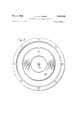
- FIGURE 2 is a view on the line II-II showing the heating element itself
- FIGURE 3 is a plan view on the line III-III of FIG- URE 1.
- the furnace shown in FIGURE 1 comprises a water cooled casing 1 with cylindrical side walls la, base 1b, and top Is, the latter having an entry port 2 shown closed by door 3.
- the water cooled channels are indicated at W.
- the interior of the casing is occupied by an electrical resistance heating element 4 of graphite in the form of a thick walled tube having two taper holes 5 (No. 2 Morse taper) which are drilled at diametrically opposed positions and parallel to the tube axis.
- Mounted in the base 1b are a pair of electrode pins 6 which protrude into Patented Nov. 5, 1968 the casing interior where they are of complementary taper to the holes 5.
- the pins enter the taper holes 5 and so support the element 4 centrally within the furnace, and make good electrical contact therewith.
- the electrode pins 6 are hollow to accommodate water cooling pipes 7.
- Beneath the heating element 4 and resting on the base 1b of the casing is a support block 13 on which the material to be heated is placed.
- the block 13 which is preferably of graphite, conveniently accommodates a thermocouple 8 in a bore 9 therein.
- the heating element 4 as shown in plan in FIGURE 2, has two arcuate grooves 10, which penetrate the full extent of the tube wall, formed one on either side of the diametric plane containing the axis of the taper holes 5, the curvature of these grooves extends to divide the tube wall into two, inner and outer, concentric cylinders 4a, 4b joined only by radial webs 11 opposite each of the electrodes.
- the outer cylinder is divided by saw cuts 12 and hence the flow path between electrodes lies through the interconnecting webs 11 and through the inner cylinder 4a.
- the power supply from the electrodes is applied axially of the cylinder so avoiding the production of a temperature gradient along the furnace which is raised to a substantially uniform temperature throughout its length.
- Means not shown are provided for creating an inert atmosphere wall within the furnace prior to operation and the furnace casing forming a hermetical seal maintains this atmosphere during operation.
- materials other than graphite may be employed for the heating element if desired.
- An electrical resistance heating element for a furnace comprising an axially extending tubular member having tapered holes formed within the thickness of the wall of the member substantially parallel to the axis of the member, a support for the element, said support including a plurality of correspondingly tapered electrode pins each of which extends in one of the holes from a common end face to support the element.
- a heating element as claimed in claim 1 in which the tubular member is composed of a thick-walled tube of high electrical resistivity material, the tube having a plurality of arcuate slots extending through the tube wall from one end face to the other end face so as to define between the arcuate slots diametrically opposed webs, said webs having taper holes therein for the reception of electrodes, the outer wall of the tube having radial slots to intersect said arcuate slots.
Landscapes
- Engineering & Computer Science (AREA)
- Mechanical Engineering (AREA)
- General Engineering & Computer Science (AREA)
- Furnace Details (AREA)
- Resistance Heating (AREA)
Description
Nov. 5, 1968 T. A. J. JAQUES ELECTRICAL RESISTANCE FURNACES 5 Sheets-Sheet 1 Filed Dec. 28, 1966 Nov. 5, 1968 T. A. J. JAQUES 3,409,723
ELECTRICAL RESISTANCE FURNACES Filed Dec. 28, 1966 5 Sheets-Sheet 2 Nov. 5, 1968 T. A. J. JAQUES 3,409,723
ELECTRICAL RESISTANCE FURNACES Filed Dec. 28, 1966 3 Sheets-Sheet 5 United States Patent ice 3,409,728 ELECTRICAL RESISTANCE FURNACES Thomas Arthur John Jaques, Radipole, England, assignor to United Kingdom Atomic Energy Authority, London, England Filed Dec. 28, 1966, Ser. No. 605,449 Claims priority, application Great Britain, Mar. 18, 1966,
2,010/ 66 4 Claims. (CI. 13-25) ABSTRACT OF THE DISCLOSURE An electrical resistance heating element for a furnace is a tube of graphite or similar material supported by at least two tapering electrode pins which enter correspondingly tapered holes in the tube wall. The tube wall can be formed with longitudinal slots which lie within the wall thickness between the holes so that the current path between the electrodes lies through axially extending webs coextensive with the heated length of the tube.
This invention relates to electrical resistance furnaces. Electrical resistance furnaces for the high temperature treatment of materials commonly take the form of a tube of a refractory material having a high electrical resistivity such that when a large current passes in the material, the tube is raised to a very high temperature. Tubular furnaces of this kind are commonly coupled to the electrical supply by way of electrode clamps which are secured to axially spaced regions of the tube with the inevitable result that the temperature distribution along the tube length is uneven and there being a gradual reduction in the temperature of the tube wall from a peak temperature at the centre towards the electrodes. Thus the maximum temperature is achieved only over a short length of the tube situated mid-way between the electrodes.
According to the present invention an electrical resistance heating element in the form of a tubular member has tapered holes formed at diametrically opposite positions in the tub wall for the reception of correspondingly shaped electrodes.
In this way a large temperature gradient along the axial length of the tube wall of the furnace is avoided. In a preferred construction, the electrical connections are formed by pin connectors which enter holes drilled at diametrically opposed positions in the tube wall and parallel with the tube axis.
An embodiment of the invention will now be described with reference to the accompanying drawings in which:
FIGURE 1 is a side elevation mainly in cross section of an electrical resistance furnace.
FIGURE 2 is a view on the line II-II showing the heating element itself, and
FIGURE 3 is a plan view on the line III-III of FIG- URE 1.
The furnace shown in FIGURE 1 comprises a water cooled casing 1 with cylindrical side walls la, base 1b, and top Is, the latter having an entry port 2 shown closed by door 3. The water cooled channels are indicated at W. The interior of the casing is occupied by an electrical resistance heating element 4 of graphite in the form of a thick walled tube having two taper holes 5 (No. 2 Morse taper) which are drilled at diametrically opposed positions and parallel to the tube axis. Mounted in the base 1b are a pair of electrode pins 6 which protrude into Patented Nov. 5, 1968 the casing interior where they are of complementary taper to the holes 5. The pins enter the taper holes 5 and so support the element 4 centrally within the furnace, and make good electrical contact therewith. The electrode pins 6 are hollow to accommodate water cooling pipes 7. Beneath the heating element 4 and resting on the base 1b of the casing is a support block 13 on which the material to be heated is placed. The block 13 which is preferably of graphite, conveniently accommodates a thermocouple 8 in a bore 9 therein.
The heating element 4, as shown in plan in FIGURE 2, has two arcuate grooves 10, which penetrate the full extent of the tube wall, formed one on either side of the diametric plane containing the axis of the taper holes 5, the curvature of these grooves extends to divide the tube wall into two, inner and outer, concentric cylinders 4a, 4b joined only by radial webs 11 opposite each of the electrodes. The outer cylinder is divided by saw cuts 12 and hence the flow path between electrodes lies through the interconnecting webs 11 and through the inner cylinder 4a. As the web 11 extends axially the full length of the tube, the power supply from the electrodes is applied axially of the cylinder so avoiding the production of a temperature gradient along the furnace which is raised to a substantially uniform temperature throughout its length. Means not shown are provided for creating an inert atmosphere wall within the furnace prior to operation and the furnace casing forming a hermetical seal maintains this atmosphere during operation. Of course, materials other than graphite may be employed for the heating element if desired.
I claim:
1. An electrical resistance heating element for a furnace comprising an axially extending tubular member having tapered holes formed within the thickness of the wall of the member substantially parallel to the axis of the member, a support for the element, said support including a plurality of correspondingly tapered electrode pins each of which extends in one of the holes from a common end face to support the element.
2. An electrical resistance element as claimed in claim 1 in which the electrode pins extend from a support which serves as the base of the furnace, the tubular element being at least in part maintained by the weight of the heating element.
3. An electrical resistance element as claimed in claim 2 in which the heating element is unrestrained except for the said maintenance by the weight of the heating element.
4. A heating element as claimed in claim 1 in which the tubular member is composed of a thick-walled tube of high electrical resistivity material, the tube having a plurality of arcuate slots extending through the tube wall from one end face to the other end face so as to define between the arcuate slots diametrically opposed webs, said webs having taper holes therein for the reception of electrodes, the outer wall of the tube having radial slots to intersect said arcuate slots.
References Cited UNITED STATES PATENTS 2,851 579 9/ 1958 Pfeiffer 219-427 2,971,039 2/ 1961 Westeren 13-25 3,057,936 10/1962 Hill 13-25 3,155,758 11/1964 Hill 13-25 ROBERT K. SCHAEFER, Primary Examiner.
M. GINSBURG, Assistant Examiner.
Applications Claiming Priority (1)
| Application Number | Priority Date | Filing Date | Title |
|---|---|---|---|
| GB12010/66A GB1142935A (en) | 1966-03-18 | 1966-03-18 | Improvements in or relating to electrical resistance furnaces |
Publications (1)
| Publication Number | Publication Date |
|---|---|
| US3409728A true US3409728A (en) | 1968-11-05 |
Family
ID=9996776
Family Applications (1)
| Application Number | Title | Priority Date | Filing Date |
|---|---|---|---|
| US605449A Expired - Lifetime US3409728A (en) | 1966-03-18 | 1966-12-28 | Electrical resistance furnaces |
Country Status (3)
| Country | Link |
|---|---|
| US (1) | US3409728A (en) |
| AT (1) | AT274737B (en) |
| GB (1) | GB1142935A (en) |
Cited By (4)
| Publication number | Priority date | Publication date | Assignee | Title |
|---|---|---|---|---|
| FR2374812A1 (en) * | 1976-12-17 | 1978-07-13 | Cselt Centro Studi Lab Telecom | Solid graphite resistance element electric furnace - has element contained in chamber filled with inert gas |
| US4171346A (en) * | 1976-12-20 | 1979-10-16 | Aluminum Company Of America | Reactor heater |
| US4202679A (en) * | 1977-11-25 | 1980-05-13 | Cselt - Centro Studi E Laboratori Telecomunicazioni S.P.A. | Process and apparatus for the continuous production of elongate light conductors |
| US4302659A (en) * | 1979-02-15 | 1981-11-24 | Kabushiki Kaisha Tokai Rika Denki Seisakusho | Ceramic heater-element to be used for cigarette-lighters |
Families Citing this family (2)
| Publication number | Priority date | Publication date | Assignee | Title |
|---|---|---|---|---|
| FR2587574B1 (en) * | 1985-09-18 | 1987-10-30 | Commissariat Energie Atomique | RESISTOR FOR PROCESSING MATERIALS |
| FR2680231B1 (en) * | 1991-08-07 | 1993-11-19 | Nitruvid | WELL - TYPE OVEN WITH RESISTANCE HEATING FOR THE TREATMENT OF METAL PARTS. |
Citations (4)
| Publication number | Priority date | Publication date | Assignee | Title |
|---|---|---|---|---|
| US2851579A (en) * | 1955-04-04 | 1958-09-09 | Western Electric Co | Resistance heated solder pot |
| US2971039A (en) * | 1957-11-26 | 1961-02-07 | Hayes Inc C I | Resistance heating element for vacuum furnaces and the like |
| US3057936A (en) * | 1959-05-13 | 1962-10-09 | Richard D Brew And Company Inc | Electrical heating device |
| US3155758A (en) * | 1962-06-14 | 1964-11-03 | Abar Corp | Heating elements for vacuum furnaces |
-
1966
- 1966-03-18 GB GB12010/66A patent/GB1142935A/en not_active Expired
- 1966-12-28 US US605449A patent/US3409728A/en not_active Expired - Lifetime
-
1967
- 1967-03-03 AT AT205867A patent/AT274737B/en active
Patent Citations (4)
| Publication number | Priority date | Publication date | Assignee | Title |
|---|---|---|---|---|
| US2851579A (en) * | 1955-04-04 | 1958-09-09 | Western Electric Co | Resistance heated solder pot |
| US2971039A (en) * | 1957-11-26 | 1961-02-07 | Hayes Inc C I | Resistance heating element for vacuum furnaces and the like |
| US3057936A (en) * | 1959-05-13 | 1962-10-09 | Richard D Brew And Company Inc | Electrical heating device |
| US3155758A (en) * | 1962-06-14 | 1964-11-03 | Abar Corp | Heating elements for vacuum furnaces |
Cited By (4)
| Publication number | Priority date | Publication date | Assignee | Title |
|---|---|---|---|---|
| FR2374812A1 (en) * | 1976-12-17 | 1978-07-13 | Cselt Centro Studi Lab Telecom | Solid graphite resistance element electric furnace - has element contained in chamber filled with inert gas |
| US4171346A (en) * | 1976-12-20 | 1979-10-16 | Aluminum Company Of America | Reactor heater |
| US4202679A (en) * | 1977-11-25 | 1980-05-13 | Cselt - Centro Studi E Laboratori Telecomunicazioni S.P.A. | Process and apparatus for the continuous production of elongate light conductors |
| US4302659A (en) * | 1979-02-15 | 1981-11-24 | Kabushiki Kaisha Tokai Rika Denki Seisakusho | Ceramic heater-element to be used for cigarette-lighters |
Also Published As
| Publication number | Publication date |
|---|---|
| AT274737B (en) | 1969-09-25 |
| GB1142935A (en) | 1969-02-12 |
Similar Documents
| Publication | Publication Date | Title |
|---|---|---|
| US3395241A (en) | Graphite heating element for electric resistance furnace | |
| US5117482A (en) | Porous ceramic body electrical resistance fluid heater | |
| DE2025368C3 (en) | Electric arc torch | |
| US3409728A (en) | Electrical resistance furnaces | |
| US3411123A (en) | Pyrolytic graphite electrical resistance element | |
| US3213177A (en) | Resistance furnace | |
| US2356237A (en) | Heating unit | |
| US3336431A (en) | Electric furnace | |
| DE2913464B2 (en) | DC plasma torch | |
| JP3017804B2 (en) | Plasma torch for dissolving the material to be processed in the vessel and maintaining the temperature | |
| US4056678A (en) | Electric heating furnace | |
| KR970001426B1 (en) | Anode for DC Electric Arc | |
| US4055723A (en) | Heater support element for electric furnace | |
| US4110545A (en) | Electrodes for glass furnaces | |
| US2577243A (en) | Heating device | |
| US3409727A (en) | Diffusion furnace | |
| US3868212A (en) | Radiant burner and furnace for treating at high temperature | |
| US2417953A (en) | High temperature electrically-heated furnace | |
| US1986636A (en) | Electrical heater for tubular | |
| US724069A (en) | Electric furnace. | |
| US3371142A (en) | Resistance melting furnace | |
| US4873423A (en) | High temperature heating furnace | |
| US3179735A (en) | Resistance heated furnace | |
| US3531275A (en) | Use of silicide electrode in glass melting | |
| GB1026245A (en) | Improvements in electrical storage heating apparatus |