US20150321164A1 - Method for synthesizing and screening lead compound and reagent testing kit - Google Patents
Method for synthesizing and screening lead compound and reagent testing kit Download PDFInfo
- Publication number
- US20150321164A1 US20150321164A1 US14/653,729 US201314653729A US2015321164A1 US 20150321164 A1 US20150321164 A1 US 20150321164A1 US 201314653729 A US201314653729 A US 201314653729A US 2015321164 A1 US2015321164 A1 US 2015321164A1
- Authority
- US
- United States
- Prior art keywords
- synthetic building
- building blocks
- stranded dna
- sequence
- tag sequences
- Prior art date
- Legal status (The legal status is an assumption and is not a legal conclusion. Google has not performed a legal analysis and makes no representation as to the accuracy of the status listed.)
- Abandoned
Links
- 238000000034 method Methods 0.000 title claims abstract description 54
- 238000012216 screening Methods 0.000 title claims abstract description 40
- 239000003153 chemical reaction reagent Substances 0.000 title claims abstract description 38
- 230000002194 synthesizing effect Effects 0.000 title claims abstract description 21
- 150000002611 lead compounds Chemical class 0.000 title claims abstract description 15
- 238000012360 testing method Methods 0.000 title abstract description 4
- 108020004414 DNA Proteins 0.000 claims abstract description 87
- 150000001875 compounds Chemical class 0.000 claims abstract description 78
- 102000053602 DNA Human genes 0.000 claims abstract description 76
- 108020004682 Single-Stranded DNA Proteins 0.000 claims abstract description 68
- 238000003786 synthesis reaction Methods 0.000 claims abstract description 55
- 230000015572 biosynthetic process Effects 0.000 claims abstract description 47
- 238000006243 chemical reaction Methods 0.000 claims abstract description 41
- 239000012634 fragment Substances 0.000 claims abstract description 37
- 238000012163 sequencing technique Methods 0.000 claims abstract description 21
- 238000001311 chemical methods and process Methods 0.000 claims abstract description 14
- 230000007246 mechanism Effects 0.000 claims abstract description 8
- 238000001712 DNA sequencing Methods 0.000 claims abstract description 5
- 239000002994 raw material Substances 0.000 claims abstract description 5
- 101710086015 RNA ligase Proteins 0.000 claims description 21
- 108010021757 Polynucleotide 5'-Hydroxyl-Kinase Proteins 0.000 claims description 16
- 102000008422 Polynucleotide 5'-hydroxyl-kinase Human genes 0.000 claims description 16
- 239000003446 ligand Substances 0.000 claims description 9
- 108091028664 Ribonucleotide Proteins 0.000 claims description 8
- 239000002336 ribonucleotide Substances 0.000 claims description 8
- 125000002652 ribonucleotide group Chemical group 0.000 claims description 8
- 239000002126 C01EB10 - Adenosine Substances 0.000 claims description 7
- OIRDTQYFTABQOQ-KQYNXXCUSA-N adenosine Chemical compound C1=NC=2C(N)=NC=NC=2N1[C@@H]1O[C@H](CO)[C@@H](O)[C@H]1O OIRDTQYFTABQOQ-KQYNXXCUSA-N 0.000 claims description 7
- 229960005305 adenosine Drugs 0.000 claims description 7
- UHDGCWIWMRVCDJ-UHFFFAOYSA-N 1-beta-D-Xylofuranosyl-NH-Cytosine Natural products O=C1N=C(N)C=CN1C1C(O)C(O)C(CO)O1 UHDGCWIWMRVCDJ-UHFFFAOYSA-N 0.000 claims description 4
- UHDGCWIWMRVCDJ-PSQAKQOGSA-N Cytidine Natural products O=C1N=C(N)C=CN1[C@@H]1[C@@H](O)[C@@H](O)[C@H](CO)O1 UHDGCWIWMRVCDJ-PSQAKQOGSA-N 0.000 claims description 4
- 150000003838 adenosines Chemical class 0.000 claims description 4
- 238000005905 alkynylation reaction Methods 0.000 claims description 4
- 238000005576 amination reaction Methods 0.000 claims description 4
- 230000021523 carboxylation Effects 0.000 claims description 4
- 238000006473 carboxylation reaction Methods 0.000 claims description 4
- UHDGCWIWMRVCDJ-ZAKLUEHWSA-N cytidine Chemical group O=C1N=C(N)C=CN1[C@H]1[C@H](O)[C@@H](O)[C@H](CO)O1 UHDGCWIWMRVCDJ-ZAKLUEHWSA-N 0.000 claims description 4
- 230000000865 phosphorylative effect Effects 0.000 claims description 2
- FAPWRFPIFSIZLT-UHFFFAOYSA-M Sodium chloride Chemical compound [Na+].[Cl-] FAPWRFPIFSIZLT-UHFFFAOYSA-M 0.000 description 21
- 102000004142 Trypsin Human genes 0.000 description 17
- 108090000631 Trypsin Proteins 0.000 description 17
- 239000012588 trypsin Substances 0.000 description 17
- 239000000243 solution Substances 0.000 description 16
- 239000011347 resin Substances 0.000 description 15
- 229920005989 resin Polymers 0.000 description 15
- 239000007853 buffer solution Substances 0.000 description 14
- 239000000126 substance Substances 0.000 description 12
- 239000000203 mixture Substances 0.000 description 11
- 239000011780 sodium chloride Substances 0.000 description 10
- 238000005516 engineering process Methods 0.000 description 8
- 239000007791 liquid phase Substances 0.000 description 8
- VEXZGXHMUGYJMC-UHFFFAOYSA-N Hydrochloric acid Chemical compound Cl VEXZGXHMUGYJMC-UHFFFAOYSA-N 0.000 description 7
- 108091034117 Oligonucleotide Proteins 0.000 description 7
- LMDZBCPBFSXMTL-UHFFFAOYSA-N 1-Ethyl-3-(3-dimethylaminopropyl)carbodiimide Substances CCN=C=NCCCN(C)C LMDZBCPBFSXMTL-UHFFFAOYSA-N 0.000 description 6
- FPQQSJJWHUJYPU-UHFFFAOYSA-N 3-(dimethylamino)propyliminomethylidene-ethylazanium;chloride Chemical compound Cl.CCN=C=NCCCN(C)C FPQQSJJWHUJYPU-UHFFFAOYSA-N 0.000 description 6
- QTBSBXVTEAMEQO-UHFFFAOYSA-N Acetic acid Chemical compound CC(O)=O QTBSBXVTEAMEQO-UHFFFAOYSA-N 0.000 description 6
- IAZDPXIOMUYVGZ-UHFFFAOYSA-N Dimethylsulphoxide Chemical compound CS(C)=O IAZDPXIOMUYVGZ-UHFFFAOYSA-N 0.000 description 6
- 239000002253 acid Substances 0.000 description 6
- 230000003213 activating effect Effects 0.000 description 6
- 239000003795 chemical substances by application Substances 0.000 description 6
- ATDGTVJJHBUTRL-UHFFFAOYSA-N cyanogen bromide Chemical class BrC#N ATDGTVJJHBUTRL-UHFFFAOYSA-N 0.000 description 6
- 238000002360 preparation method Methods 0.000 description 6
- 238000005406 washing Methods 0.000 description 6
- GVJXGCIPWAVXJP-UHFFFAOYSA-N 2,5-dioxo-1-oxoniopyrrolidine-3-sulfonate Chemical compound ON1C(=O)CC(S(O)(=O)=O)C1=O GVJXGCIPWAVXJP-UHFFFAOYSA-N 0.000 description 5
- JLCPHMBAVCMARE-UHFFFAOYSA-N [3-[[3-[[3-[[3-[[3-[[3-[[3-[[3-[[3-[[3-[[3-[[5-(2-amino-6-oxo-1H-purin-9-yl)-3-[[3-[[3-[[3-[[3-[[3-[[5-(2-amino-6-oxo-1H-purin-9-yl)-3-[[5-(2-amino-6-oxo-1H-purin-9-yl)-3-hydroxyoxolan-2-yl]methoxy-hydroxyphosphoryl]oxyoxolan-2-yl]methoxy-hydroxyphosphoryl]oxy-5-(5-methyl-2,4-dioxopyrimidin-1-yl)oxolan-2-yl]methoxy-hydroxyphosphoryl]oxy-5-(6-aminopurin-9-yl)oxolan-2-yl]methoxy-hydroxyphosphoryl]oxy-5-(6-aminopurin-9-yl)oxolan-2-yl]methoxy-hydroxyphosphoryl]oxy-5-(6-aminopurin-9-yl)oxolan-2-yl]methoxy-hydroxyphosphoryl]oxy-5-(6-aminopurin-9-yl)oxolan-2-yl]methoxy-hydroxyphosphoryl]oxyoxolan-2-yl]methoxy-hydroxyphosphoryl]oxy-5-(5-methyl-2,4-dioxopyrimidin-1-yl)oxolan-2-yl]methoxy-hydroxyphosphoryl]oxy-5-(4-amino-2-oxopyrimidin-1-yl)oxolan-2-yl]methoxy-hydroxyphosphoryl]oxy-5-(5-methyl-2,4-dioxopyrimidin-1-yl)oxolan-2-yl]methoxy-hydroxyphosphoryl]oxy-5-(5-methyl-2,4-dioxopyrimidin-1-yl)oxolan-2-yl]methoxy-hydroxyphosphoryl]oxy-5-(6-aminopurin-9-yl)oxolan-2-yl]methoxy-hydroxyphosphoryl]oxy-5-(6-aminopurin-9-yl)oxolan-2-yl]methoxy-hydroxyphosphoryl]oxy-5-(4-amino-2-oxopyrimidin-1-yl)oxolan-2-yl]methoxy-hydroxyphosphoryl]oxy-5-(4-amino-2-oxopyrimidin-1-yl)oxolan-2-yl]methoxy-hydroxyphosphoryl]oxy-5-(4-amino-2-oxopyrimidin-1-yl)oxolan-2-yl]methoxy-hydroxyphosphoryl]oxy-5-(6-aminopurin-9-yl)oxolan-2-yl]methoxy-hydroxyphosphoryl]oxy-5-(4-amino-2-oxopyrimidin-1-yl)oxolan-2-yl]methyl [5-(6-aminopurin-9-yl)-2-(hydroxymethyl)oxolan-3-yl] hydrogen phosphate Polymers Cc1cn(C2CC(OP(O)(=O)OCC3OC(CC3OP(O)(=O)OCC3OC(CC3O)n3cnc4c3nc(N)[nH]c4=O)n3cnc4c3nc(N)[nH]c4=O)C(COP(O)(=O)OC3CC(OC3COP(O)(=O)OC3CC(OC3COP(O)(=O)OC3CC(OC3COP(O)(=O)OC3CC(OC3COP(O)(=O)OC3CC(OC3COP(O)(=O)OC3CC(OC3COP(O)(=O)OC3CC(OC3COP(O)(=O)OC3CC(OC3COP(O)(=O)OC3CC(OC3COP(O)(=O)OC3CC(OC3COP(O)(=O)OC3CC(OC3COP(O)(=O)OC3CC(OC3COP(O)(=O)OC3CC(OC3COP(O)(=O)OC3CC(OC3COP(O)(=O)OC3CC(OC3COP(O)(=O)OC3CC(OC3COP(O)(=O)OC3CC(OC3CO)n3cnc4c(N)ncnc34)n3ccc(N)nc3=O)n3cnc4c(N)ncnc34)n3ccc(N)nc3=O)n3ccc(N)nc3=O)n3ccc(N)nc3=O)n3cnc4c(N)ncnc34)n3cnc4c(N)ncnc34)n3cc(C)c(=O)[nH]c3=O)n3cc(C)c(=O)[nH]c3=O)n3ccc(N)nc3=O)n3cc(C)c(=O)[nH]c3=O)n3cnc4c3nc(N)[nH]c4=O)n3cnc4c(N)ncnc34)n3cnc4c(N)ncnc34)n3cnc4c(N)ncnc34)n3cnc4c(N)ncnc34)O2)c(=O)[nH]c1=O JLCPHMBAVCMARE-UHFFFAOYSA-N 0.000 description 5
- 125000000524 functional group Chemical group 0.000 description 5
- 239000000047 product Substances 0.000 description 5
- ILWRPSCZWQJDMK-UHFFFAOYSA-N triethylazanium;chloride Chemical compound Cl.CCN(CC)CC ILWRPSCZWQJDMK-UHFFFAOYSA-N 0.000 description 5
- 239000002753 trypsin inhibitor Substances 0.000 description 5
- XLYOFNOQVPJJNP-UHFFFAOYSA-N water Substances O XLYOFNOQVPJJNP-UHFFFAOYSA-N 0.000 description 5
- QKNYBSVHEMOAJP-UHFFFAOYSA-N 2-amino-2-(hydroxymethyl)propane-1,3-diol;hydron;chloride Chemical compound Cl.OCC(N)(CO)CO QKNYBSVHEMOAJP-UHFFFAOYSA-N 0.000 description 4
- FNWNGQGTFICQJU-UHFFFAOYSA-N CC1=C(C(=O)O)C(O)=C(C(C)C)C=C1 Chemical compound CC1=C(C(=O)O)C(O)=C(C(C)C)C=C1 FNWNGQGTFICQJU-UHFFFAOYSA-N 0.000 description 4
- BDRDAUXEHDELHS-UHFFFAOYSA-N O=C(O)C1=C(C2CC2)NN=C1 Chemical compound O=C(O)C1=C(C2CC2)NN=C1 BDRDAUXEHDELHS-UHFFFAOYSA-N 0.000 description 4
- UIIMBOGNXHQVGW-UHFFFAOYSA-M Sodium bicarbonate Chemical compound [Na+].OC([O-])=O UIIMBOGNXHQVGW-UHFFFAOYSA-M 0.000 description 4
- 101710162629 Trypsin inhibitor Proteins 0.000 description 4
- 229940122618 Trypsin inhibitor Drugs 0.000 description 4
- 238000011161 development Methods 0.000 description 4
- 238000013537 high throughput screening Methods 0.000 description 4
- 238000002156 mixing Methods 0.000 description 4
- 238000003752 polymerase chain reaction Methods 0.000 description 4
- 238000000746 purification Methods 0.000 description 4
- 239000011541 reaction mixture Substances 0.000 description 4
- 239000002002 slurry Substances 0.000 description 4
- 238000001308 synthesis method Methods 0.000 description 4
- 241000283690 Bos taurus Species 0.000 description 3
- ADLBBYVEKZMEOK-UHFFFAOYSA-N N=C(N)C1=CC=C(CNC(=O)C(N)CCC(=O)O)C=C1 Chemical compound N=C(N)C1=CC=C(CNC(=O)C(N)CCC(=O)O)C=C1 ADLBBYVEKZMEOK-UHFFFAOYSA-N 0.000 description 3
- IJPNRBZMRINMMR-UHFFFAOYSA-N O=C(O)C1=CC=C(C2=CC=CC=C2C(F)(F)F)O1 Chemical compound O=C(O)C1=CC=C(C2=CC=CC=C2C(F)(F)F)O1 IJPNRBZMRINMMR-UHFFFAOYSA-N 0.000 description 3
- LJVQHXICFCZRJN-UHFFFAOYSA-N O=C(O)C1=NC=NN1 Chemical compound O=C(O)C1=NC=NN1 LJVQHXICFCZRJN-UHFFFAOYSA-N 0.000 description 3
- BUSOTUQRURCMCM-UHFFFAOYSA-N O=C(O)CCOC1=CC=CC=C1 Chemical compound O=C(O)CCOC1=CC=CC=C1 BUSOTUQRURCMCM-UHFFFAOYSA-N 0.000 description 3
- 230000003321 amplification Effects 0.000 description 3
- 239000007795 chemical reaction product Substances 0.000 description 3
- 229940094991 herring sperm dna Drugs 0.000 description 3
- 239000012160 loading buffer Substances 0.000 description 3
- 239000002547 new drug Substances 0.000 description 3
- 238000003199 nucleic acid amplification method Methods 0.000 description 3
- 210000000496 pancreas Anatomy 0.000 description 3
- 230000008569 process Effects 0.000 description 3
- 239000002904 solvent Substances 0.000 description 3
- 239000011534 wash buffer Substances 0.000 description 3
- PXFBZOLANLWPMH-UHFFFAOYSA-N 16-Epiaffinine Natural products C1C(C2=CC=CC=C2N2)=C2C(=O)CC2C(=CC)CN(C)C1C2CO PXFBZOLANLWPMH-UHFFFAOYSA-N 0.000 description 2
- SIVYRLBDAPKADZ-UHFFFAOYSA-N CC1=CC=C(C(=O)O)C2=C1C=CC=C2 Chemical compound CC1=CC=C(C(=O)O)C2=C1C=CC=C2 SIVYRLBDAPKADZ-UHFFFAOYSA-N 0.000 description 2
- NDKOKWXOWTVYJR-UHFFFAOYSA-N CCN1N=C(C)C(C=O)=C1C Chemical compound CCN1N=C(C)C(C=O)=C1C NDKOKWXOWTVYJR-UHFFFAOYSA-N 0.000 description 2
- 102000004190 Enzymes Human genes 0.000 description 2
- 108090000790 Enzymes Proteins 0.000 description 2
- LFQSCWFLJHTTHZ-UHFFFAOYSA-N Ethanol Chemical compound CCO LFQSCWFLJHTTHZ-UHFFFAOYSA-N 0.000 description 2
- NILQLFBWTXNUOE-UHFFFAOYSA-N NC1(C(=O)O)CCCC1 Chemical compound NC1(C(=O)O)CCCC1 NILQLFBWTXNUOE-UHFFFAOYSA-N 0.000 description 2
- 108091028043 Nucleic acid sequence Proteins 0.000 description 2
- KVVDRQDTODKIJD-UHFFFAOYSA-N O=C(O)CC1CC1 Chemical compound O=C(O)CC1CC1 KVVDRQDTODKIJD-UHFFFAOYSA-N 0.000 description 2
- LJOODBDWMQKMFB-UHFFFAOYSA-N O=C(O)CC1CCCCC1 Chemical compound O=C(O)CC1CCCCC1 LJOODBDWMQKMFB-UHFFFAOYSA-N 0.000 description 2
- DUDXQIXWPJMPRQ-UHFFFAOYSA-N O=C=NCC1CCCCC1 Chemical compound O=C=NCC1CCCCC1 DUDXQIXWPJMPRQ-UHFFFAOYSA-N 0.000 description 2
- VNNLHYZDXIBHKZ-UHFFFAOYSA-N O=S(=O)(Cl)C1=CC=CS1 Chemical compound O=S(=O)(Cl)C1=CC=CS1 VNNLHYZDXIBHKZ-UHFFFAOYSA-N 0.000 description 2
- 238000012408 PCR amplification Methods 0.000 description 2
- ZYFVNVRFVHJEIU-UHFFFAOYSA-N PicoGreen Chemical compound CN(C)CCCN(CCCN(C)C)C1=CC(=CC2=[N+](C3=CC=CC=C3S2)C)C2=CC=CC=C2N1C1=CC=CC=C1 ZYFVNVRFVHJEIU-UHFFFAOYSA-N 0.000 description 2
- 229920002684 Sepharose Polymers 0.000 description 2
- 239000000872 buffer Substances 0.000 description 2
- 150000001718 carbodiimides Chemical class 0.000 description 2
- 230000000295 complement effect Effects 0.000 description 2
- 230000008878 coupling Effects 0.000 description 2
- 238000010168 coupling process Methods 0.000 description 2
- 238000005859 coupling reaction Methods 0.000 description 2
- 238000001514 detection method Methods 0.000 description 2
- 230000000694 effects Effects 0.000 description 2
- 238000001962 electrophoresis Methods 0.000 description 2
- 238000002474 experimental method Methods 0.000 description 2
- 239000002245 particle Substances 0.000 description 2
- 238000000926 separation method Methods 0.000 description 2
- -1 small-molecule compounds Chemical class 0.000 description 2
- 235000017557 sodium bicarbonate Nutrition 0.000 description 2
- 229910000030 sodium bicarbonate Inorganic materials 0.000 description 2
- 239000007790 solid phase Substances 0.000 description 2
- PVEOYINWKBTPIZ-UHFFFAOYSA-N C=CCC(=O)O Chemical compound C=CCC(=O)O PVEOYINWKBTPIZ-UHFFFAOYSA-N 0.000 description 1
- MLXDUYUQINCFFV-UHFFFAOYSA-N CC(=O)OCC(=O)O Chemical compound CC(=O)OCC(=O)O MLXDUYUQINCFFV-UHFFFAOYSA-N 0.000 description 1
- ODELFXJUOVNEFZ-UHFFFAOYSA-N CC(C(=O)O)(C1=CC=CC=C1)C1=CC=CC=C1 Chemical compound CC(C(=O)O)(C1=CC=CC=C1)C1=CC=CC=C1 ODELFXJUOVNEFZ-UHFFFAOYSA-N 0.000 description 1
- MLMQPDHYNJCQAO-UHFFFAOYSA-N CC(C)(C)CC(=O)O Chemical compound CC(C)(C)CC(=O)O MLMQPDHYNJCQAO-UHFFFAOYSA-N 0.000 description 1
- GJWSUKYXUMVMGX-UHFFFAOYSA-N CC(C)=CCCC(C)CC(=O)O Chemical compound CC(C)=CCCC(C)CC(=O)O GJWSUKYXUMVMGX-UHFFFAOYSA-N 0.000 description 1
- GWYFCOCPABKNJV-UHFFFAOYSA-N CC(C)CC(=O)O Chemical compound CC(C)CC(=O)O GWYFCOCPABKNJV-UHFFFAOYSA-N 0.000 description 1
- HEFNNWSXXWATRW-UHFFFAOYSA-N CC(C)CC1=CC=C(C(C)C(=O)O)C=C1 Chemical compound CC(C)CC1=CC=C(C(C)C(=O)O)C=C1 HEFNNWSXXWATRW-UHFFFAOYSA-N 0.000 description 1
- IFLKEBSJTZGCJG-UHFFFAOYSA-N CC1=C(C(=O)O)SC=C1 Chemical compound CC1=C(C(=O)O)SC=C1 IFLKEBSJTZGCJG-UHFFFAOYSA-N 0.000 description 1
- QJNNHJVSQUUHHE-UHFFFAOYSA-N CC1=C(CC(=O)O)C2=CC=CC=C2N1 Chemical compound CC1=C(CC(=O)O)C2=CC=CC=C2N1 QJNNHJVSQUUHHE-UHFFFAOYSA-N 0.000 description 1
- NRSCPTLHWVWLLH-UHFFFAOYSA-N CC1=CC=C(C(=O)NCC(=O)O)C=C1 Chemical compound CC1=CC=C(C(=O)NCC(=O)O)C=C1 NRSCPTLHWVWLLH-UHFFFAOYSA-N 0.000 description 1
- XRIHTJYXIHOBDQ-UHFFFAOYSA-N CC1=CC=C(C(=O)O)C(=O)N1 Chemical compound CC1=CC=C(C(=O)O)C(=O)N1 XRIHTJYXIHOBDQ-UHFFFAOYSA-N 0.000 description 1
- AQDHXMBUTDLAMD-UHFFFAOYSA-N CC1=CC=C(S(=O)(=O)CC(=O)O)C=C1 Chemical compound CC1=CC=C(S(=O)(=O)CC(=O)O)C=C1 AQDHXMBUTDLAMD-UHFFFAOYSA-N 0.000 description 1
- MQGBARXPCXAFRZ-UHFFFAOYSA-N CC1=NC(C)=C(C(=O)O)S1 Chemical compound CC1=NC(C)=C(C(=O)O)S1 MQGBARXPCXAFRZ-UHFFFAOYSA-N 0.000 description 1
- NIONDZDPPYHYKY-SNAWJCMRSA-N CCC/C=C/C(=O)O Chemical compound CCC/C=C/C(=O)O NIONDZDPPYHYKY-SNAWJCMRSA-N 0.000 description 1
- AKYAUBWOTZJUBI-UHFFFAOYSA-N CCCC#CC(=O)O Chemical compound CCCC#CC(=O)O AKYAUBWOTZJUBI-UHFFFAOYSA-N 0.000 description 1
- FUZZWVXGSFPDMH-UHFFFAOYSA-N CCCCCC(=O)O Chemical compound CCCCCC(=O)O FUZZWVXGSFPDMH-UHFFFAOYSA-N 0.000 description 1
- HGINADPHJQTSKN-UHFFFAOYSA-N CCOC(=O)CC(=O)O Chemical compound CCOC(=O)CC(=O)O HGINADPHJQTSKN-UHFFFAOYSA-N 0.000 description 1
- BQBQKSSTFGCRQL-UHFFFAOYSA-N COC1=CC(CC(=O)O)=CC(OC)=C1O Chemical compound COC1=CC(CC(=O)O)=CC(OC)=C1O BQBQKSSTFGCRQL-UHFFFAOYSA-N 0.000 description 1
- YXFVQMUBBLRVRQ-KMRXNPHXSA-N C[C@H](NC(=O)[C@H](CNC(=O)CC1=CC2=CC=CC=C2C=C1)NS(=O)(=O)C1=CC=CC=C1)C(=O)NCC1=CC=C(C(=N)N)C=C1 Chemical compound C[C@H](NC(=O)[C@H](CNC(=O)CC1=CC2=CC=CC=C2C=C1)NS(=O)(=O)C1=CC=CC=C1)C(=O)NCC1=CC=C(C(=N)N)C=C1 YXFVQMUBBLRVRQ-KMRXNPHXSA-N 0.000 description 1
- KCXVZYZYPLLWCC-UHFFFAOYSA-N EDTA Chemical compound OC(=O)CN(CC(O)=O)CCN(CC(O)=O)CC(O)=O KCXVZYZYPLLWCC-UHFFFAOYSA-N 0.000 description 1
- MLIREBYILWEBDM-UHFFFAOYSA-N N#CCC(=O)O Chemical compound N#CCC(=O)O MLIREBYILWEBDM-UHFFFAOYSA-N 0.000 description 1
- ZGUNAGUHMKGQNY-UHFFFAOYSA-N NC(C(=O)O)C1=CC=CC=C1 Chemical compound NC(C(=O)O)C1=CC=CC=C1 ZGUNAGUHMKGQNY-UHFFFAOYSA-N 0.000 description 1
- OUYCCCASQSFEME-UHFFFAOYSA-N NC(CC1=CC=C(O)C=C1)C(=O)O Chemical compound NC(CC1=CC=C(O)C=C1)C(=O)O OUYCCCASQSFEME-UHFFFAOYSA-N 0.000 description 1
- QSCVWHIJUJGFDU-UHFFFAOYSA-N NCC(NS(=O)(=O)C1=CC=CC=C1)C(=O)O Chemical compound NCC(NS(=O)(=O)C1=CC=CC=C1)C(=O)O QSCVWHIJUJGFDU-UHFFFAOYSA-N 0.000 description 1
- XNERWVPQCYSMLC-UHFFFAOYSA-N O=C(O)C#CC1=CC=CC=C1 Chemical compound O=C(O)C#CC1=CC=CC=C1 XNERWVPQCYSMLC-UHFFFAOYSA-N 0.000 description 1
- PSCXFXNEYIHJST-QPJJXVBHSA-N O=C(O)C/C=C/C1=CC=CC=C1 Chemical compound O=C(O)C/C=C/C1=CC=CC=C1 PSCXFXNEYIHJST-QPJJXVBHSA-N 0.000 description 1
- YTRMTPPVNRALON-UHFFFAOYSA-N O=C(O)C1=C2C=CC=CC2=NC(C2=CC=CC=C2)=C1 Chemical compound O=C(O)C1=C2C=CC=CC2=NC(C2=CC=CC=C2)=C1 YTRMTPPVNRALON-UHFFFAOYSA-N 0.000 description 1
- HCZHHEIFKROPDY-UHFFFAOYSA-N O=C(O)C1=CC(=O)C2=CC=CC=C2N1 Chemical compound O=C(O)C1=CC(=O)C2=CC=CC=C2N1 HCZHHEIFKROPDY-UHFFFAOYSA-N 0.000 description 1
- YGTFDJRCCBKLDM-UHFFFAOYSA-N O=C(O)C1=CC(C2=CC=CC=C2)=NO1 Chemical compound O=C(O)C1=CC(C2=CC=CC=C2)=NO1 YGTFDJRCCBKLDM-UHFFFAOYSA-N 0.000 description 1
- QJWWPTQNLXAJFJ-UHFFFAOYSA-N O=C(O)C1=CC2=C(C=C1)CC=C2 Chemical compound O=C(O)C1=CC2=C(C=C1)CC=C2 QJWWPTQNLXAJFJ-UHFFFAOYSA-N 0.000 description 1
- QATKOZUHTGAWMG-UHFFFAOYSA-N O=C(O)C1=CC=C(F)C(O)=C1 Chemical compound O=C(O)C1=CC=C(F)C(O)=C1 QATKOZUHTGAWMG-UHFFFAOYSA-N 0.000 description 1
- KAUQJMHLAFIZDU-UHFFFAOYSA-N O=C(O)C1=CC=C2C=C(O)C=CC2=C1 Chemical compound O=C(O)C1=CC=C2C=C(O)C=CC2=C1 KAUQJMHLAFIZDU-UHFFFAOYSA-N 0.000 description 1
- XURXQNUIGWHWHU-UHFFFAOYSA-N O=C(O)C1=CC=CC(Br)=N1 Chemical compound O=C(O)C1=CC=CC(Br)=N1 XURXQNUIGWHWHU-UHFFFAOYSA-N 0.000 description 1
- WRHZVMBBRYBTKZ-UHFFFAOYSA-N O=C(O)C1=CC=CN1 Chemical compound O=C(O)C1=CC=CN1 WRHZVMBBRYBTKZ-UHFFFAOYSA-N 0.000 description 1
- SMNDYUVBFMFKNZ-UHFFFAOYSA-N O=C(O)C1=CC=CO1 Chemical compound O=C(O)C1=CC=CO1 SMNDYUVBFMFKNZ-UHFFFAOYSA-N 0.000 description 1
- IIVUJUOJERNGQX-UHFFFAOYSA-N O=C(O)C1=CN=CN=C1 Chemical compound O=C(O)C1=CN=CN=C1 IIVUJUOJERNGQX-UHFFFAOYSA-N 0.000 description 1
- IMZSHPUSPMOODC-UHFFFAOYSA-N O=C(O)C1=NN(C2=CC=CC=C2)C(=O)C1 Chemical compound O=C(O)C1=NN(C2=CC=CC=C2)C(=O)C1 IMZSHPUSPMOODC-UHFFFAOYSA-N 0.000 description 1
- TXWOGHSRPAYOML-UHFFFAOYSA-N O=C(O)C1CCC1 Chemical compound O=C(O)C1CCC1 TXWOGHSRPAYOML-UHFFFAOYSA-N 0.000 description 1
- SRJOCJYGOFTFLH-UHFFFAOYSA-N O=C(O)C1CCNCC1 Chemical compound O=C(O)C1CCNCC1 SRJOCJYGOFTFLH-UHFFFAOYSA-N 0.000 description 1
- VIBOGIYPPWLDTI-UHFFFAOYSA-N O=C(O)CC1=CC2=C(C=CC=C2)C=C1 Chemical compound O=C(O)CC1=CC2=C(C=CC=C2)C=C1 VIBOGIYPPWLDTI-UHFFFAOYSA-N 0.000 description 1
- SMJRBWINMFUUDS-UHFFFAOYSA-N O=C(O)CC1=CC=CS1 Chemical compound O=C(O)CC1=CC=CS1 SMJRBWINMFUUDS-UHFFFAOYSA-N 0.000 description 1
- PRJKNHOMHKJCEJ-UHFFFAOYSA-N O=C(O)CC1=CN=CN1 Chemical compound O=C(O)CC1=CN=CN1 PRJKNHOMHKJCEJ-UHFFFAOYSA-N 0.000 description 1
- SEOVTRFCIGRIMH-UHFFFAOYSA-N O=C(O)CC1=CNC2=CC=CC=C12 Chemical compound O=C(O)CC1=CNC2=CC=CC=C12 SEOVTRFCIGRIMH-UHFFFAOYSA-N 0.000 description 1
- YVHAIVPPUIZFBA-UHFFFAOYSA-N O=C(O)CC1CCCC1 Chemical compound O=C(O)CC1CCCC1 YVHAIVPPUIZFBA-UHFFFAOYSA-N 0.000 description 1
- XKDNEJYXLSVRMO-UHFFFAOYSA-N O=C(O)CCC1=NC=C(C2=CC=C(Cl)C=C2)O1 Chemical compound O=C(O)CCC1=NC=C(C2=CC=C(Cl)C=C2)O1 XKDNEJYXLSVRMO-UHFFFAOYSA-N 0.000 description 1
- AEMRFAOFKBGASW-UHFFFAOYSA-N O=C(O)CO Chemical compound O=C(O)CO AEMRFAOFKBGASW-UHFFFAOYSA-N 0.000 description 1
- RZCJYMOBWVJQGV-UHFFFAOYSA-N O=C(O)COC1=CC=C2C=CC=CC2=C1 Chemical compound O=C(O)COC1=CC=C2C=CC=CC2=C1 RZCJYMOBWVJQGV-UHFFFAOYSA-N 0.000 description 1
- ORGPJDKNYMVLFL-UHFFFAOYSA-N O=C1C=CC(C(=O)O)=CO1 Chemical compound O=C1C=CC(C(=O)O)=CO1 ORGPJDKNYMVLFL-UHFFFAOYSA-N 0.000 description 1
- VMHLLURERBWHNL-UHFFFAOYSA-M Sodium acetate Chemical compound [Na+].CC([O-])=O VMHLLURERBWHNL-UHFFFAOYSA-M 0.000 description 1
- 108091012456 T4 RNA ligase 1 Proteins 0.000 description 1
- 150000007513 acids Chemical class 0.000 description 1
- 230000004913 activation Effects 0.000 description 1
- 150000001413 amino acids Chemical class 0.000 description 1
- 238000013459 approach Methods 0.000 description 1
- 239000012295 chemical reaction liquid Substances 0.000 description 1
- 238000013375 chromatographic separation Methods 0.000 description 1
- 238000010276 construction Methods 0.000 description 1
- 238000010586 diagram Methods 0.000 description 1
- BNIILDVGGAEEIG-UHFFFAOYSA-L disodium hydrogen phosphate Chemical compound [Na+].[Na+].OP([O-])([O-])=O BNIILDVGGAEEIG-UHFFFAOYSA-L 0.000 description 1
- 229910000397 disodium phosphate Inorganic materials 0.000 description 1
- 235000019800 disodium phosphate Nutrition 0.000 description 1
- 238000007876 drug discovery Methods 0.000 description 1
- 238000010828 elution Methods 0.000 description 1
- 235000019441 ethanol Nutrition 0.000 description 1
- 239000011491 glass wool Substances 0.000 description 1
- 238000012165 high-throughput sequencing Methods 0.000 description 1
- IXCSERBJSXMMFS-UHFFFAOYSA-N hydrogen chloride Substances Cl.Cl IXCSERBJSXMMFS-UHFFFAOYSA-N 0.000 description 1
- 229910000041 hydrogen chloride Inorganic materials 0.000 description 1
- 238000003384 imaging method Methods 0.000 description 1
- 238000011534 incubation Methods 0.000 description 1
- 230000005764 inhibitory process Effects 0.000 description 1
- 239000007788 liquid Substances 0.000 description 1
- 239000000463 material Substances 0.000 description 1
- 238000012986 modification Methods 0.000 description 1
- 230000004048 modification Effects 0.000 description 1
- 235000019799 monosodium phosphate Nutrition 0.000 description 1
- 229930014626 natural product Natural products 0.000 description 1
- 239000013642 negative control Substances 0.000 description 1
- 239000002773 nucleotide Substances 0.000 description 1
- 125000003729 nucleotide group Chemical group 0.000 description 1
- 150000002894 organic compounds Chemical class 0.000 description 1
- 239000000575 pesticide Substances 0.000 description 1
- 229920001184 polypeptide Polymers 0.000 description 1
- 102000004196 processed proteins & peptides Human genes 0.000 description 1
- 108090000765 processed proteins & peptides Proteins 0.000 description 1
- 238000012545 processing Methods 0.000 description 1
- 102000004169 proteins and genes Human genes 0.000 description 1
- 108090000623 proteins and genes Proteins 0.000 description 1
- 238000011002 quantification Methods 0.000 description 1
- 239000000376 reactant Substances 0.000 description 1
- 238000011160 research Methods 0.000 description 1
- 239000001632 sodium acetate Substances 0.000 description 1
- 235000017281 sodium acetate Nutrition 0.000 description 1
- AJPJDKMHJJGVTQ-UHFFFAOYSA-M sodium dihydrogen phosphate Chemical compound [Na+].OP(O)([O-])=O AJPJDKMHJJGVTQ-UHFFFAOYSA-M 0.000 description 1
- 229910000162 sodium phosphate Inorganic materials 0.000 description 1
- 238000010532 solid phase synthesis reaction Methods 0.000 description 1
- 238000007711 solidification Methods 0.000 description 1
- 230000008023 solidification Effects 0.000 description 1
- 239000008223 sterile water Substances 0.000 description 1
- 239000006228 supernatant Substances 0.000 description 1
- 229940126673 western medicines Drugs 0.000 description 1
Images


Classifications
-
- B—PERFORMING OPERATIONS; TRANSPORTING
- B01—PHYSICAL OR CHEMICAL PROCESSES OR APPARATUS IN GENERAL
- B01J—CHEMICAL OR PHYSICAL PROCESSES, e.g. CATALYSIS OR COLLOID CHEMISTRY; THEIR RELEVANT APPARATUS
- B01J19/00—Chemical, physical or physico-chemical processes in general; Their relevant apparatus
- B01J19/0046—Sequential or parallel reactions, e.g. for the synthesis of polypeptides or polynucleotides; Apparatus and devices for combinatorial chemistry or for making molecular arrays
-
- C—CHEMISTRY; METALLURGY
- C12—BIOCHEMISTRY; BEER; SPIRITS; WINE; VINEGAR; MICROBIOLOGY; ENZYMOLOGY; MUTATION OR GENETIC ENGINEERING
- C12N—MICROORGANISMS OR ENZYMES; COMPOSITIONS THEREOF; PROPAGATING, PRESERVING, OR MAINTAINING MICROORGANISMS; MUTATION OR GENETIC ENGINEERING; CULTURE MEDIA
- C12N15/00—Mutation or genetic engineering; DNA or RNA concerning genetic engineering, vectors, e.g. plasmids, or their isolation, preparation or purification; Use of hosts therefor
- C12N15/09—Recombinant DNA-technology
- C12N15/10—Processes for the isolation, preparation or purification of DNA or RNA
- C12N15/1034—Isolating an individual clone by screening libraries
- C12N15/1068—Template (nucleic acid) mediated chemical library synthesis, e.g. chemical and enzymatical DNA-templated organic molecule synthesis, libraries prepared by non ribosomal polypeptide synthesis [NRPS], DNA/RNA-polymerase mediated polypeptide synthesis
-
- C—CHEMISTRY; METALLURGY
- C12—BIOCHEMISTRY; BEER; SPIRITS; WINE; VINEGAR; MICROBIOLOGY; ENZYMOLOGY; MUTATION OR GENETIC ENGINEERING
- C12N—MICROORGANISMS OR ENZYMES; COMPOSITIONS THEREOF; PROPAGATING, PRESERVING, OR MAINTAINING MICROORGANISMS; MUTATION OR GENETIC ENGINEERING; CULTURE MEDIA
- C12N15/00—Mutation or genetic engineering; DNA or RNA concerning genetic engineering, vectors, e.g. plasmids, or their isolation, preparation or purification; Use of hosts therefor
- C12N15/09—Recombinant DNA-technology
- C12N15/10—Processes for the isolation, preparation or purification of DNA or RNA
- C12N15/1034—Isolating an individual clone by screening libraries
- C12N15/1093—General methods of preparing gene libraries, not provided for in other subgroups
-
- C—CHEMISTRY; METALLURGY
- C12—BIOCHEMISTRY; BEER; SPIRITS; WINE; VINEGAR; MICROBIOLOGY; ENZYMOLOGY; MUTATION OR GENETIC ENGINEERING
- C12Q—MEASURING OR TESTING PROCESSES INVOLVING ENZYMES, NUCLEIC ACIDS OR MICROORGANISMS; COMPOSITIONS OR TEST PAPERS THEREFOR; PROCESSES OF PREPARING SUCH COMPOSITIONS; CONDITION-RESPONSIVE CONTROL IN MICROBIOLOGICAL OR ENZYMOLOGICAL PROCESSES
- C12Q1/00—Measuring or testing processes involving enzymes, nucleic acids or microorganisms; Compositions therefor; Processes of preparing such compositions
- C12Q1/68—Measuring or testing processes involving enzymes, nucleic acids or microorganisms; Compositions therefor; Processes of preparing such compositions involving nucleic acids
- C12Q1/6806—Preparing nucleic acids for analysis, e.g. for polymerase chain reaction [PCR] assay
-
- C—CHEMISTRY; METALLURGY
- C12—BIOCHEMISTRY; BEER; SPIRITS; WINE; VINEGAR; MICROBIOLOGY; ENZYMOLOGY; MUTATION OR GENETIC ENGINEERING
- C12Q—MEASURING OR TESTING PROCESSES INVOLVING ENZYMES, NUCLEIC ACIDS OR MICROORGANISMS; COMPOSITIONS OR TEST PAPERS THEREFOR; PROCESSES OF PREPARING SUCH COMPOSITIONS; CONDITION-RESPONSIVE CONTROL IN MICROBIOLOGICAL OR ENZYMOLOGICAL PROCESSES
- C12Q1/00—Measuring or testing processes involving enzymes, nucleic acids or microorganisms; Compositions therefor; Processes of preparing such compositions
- C12Q1/68—Measuring or testing processes involving enzymes, nucleic acids or microorganisms; Compositions therefor; Processes of preparing such compositions involving nucleic acids
- C12Q1/6869—Methods for sequencing
- C12Q1/6874—Methods for sequencing involving nucleic acid arrays, e.g. sequencing by hybridisation
-
- C—CHEMISTRY; METALLURGY
- C40—COMBINATORIAL TECHNOLOGY
- C40B—COMBINATORIAL CHEMISTRY; LIBRARIES, e.g. CHEMICAL LIBRARIES
- C40B50/00—Methods of creating libraries, e.g. combinatorial synthesis
- C40B50/08—Liquid phase synthesis, i.e. wherein all library building blocks are in liquid phase or in solution during library creation; Particular methods of cleavage from the liquid support
- C40B50/10—Liquid phase synthesis, i.e. wherein all library building blocks are in liquid phase or in solution during library creation; Particular methods of cleavage from the liquid support involving encoding steps
-
- B—PERFORMING OPERATIONS; TRANSPORTING
- B01—PHYSICAL OR CHEMICAL PROCESSES OR APPARATUS IN GENERAL
- B01J—CHEMICAL OR PHYSICAL PROCESSES, e.g. CATALYSIS OR COLLOID CHEMISTRY; THEIR RELEVANT APPARATUS
- B01J2219/00—Chemical, physical or physico-chemical processes in general; Their relevant apparatus
- B01J2219/00274—Sequential or parallel reactions; Apparatus and devices for combinatorial chemistry or for making arrays; Chemical library technology
- B01J2219/00718—Type of compounds synthesised
- B01J2219/0072—Organic compounds
- B01J2219/00722—Nucleotides
Definitions
- the present invention relates to the field of chemical synthesis, in particular to a method for synthesizing and screening lead compounds in drug discovery research and a kit.
- the chemical libraries are composed of many organic compounds of different attributes.
- the combinatorial chemistry method is a technology for synthesizing chemical libraries. By this technology, different series of synthetic building blocks, i.e., reagents, are arranged orderly to form a large series of diversified molecular entity groups.
- the combinatorial chemistry method is often referred to as a number's game, i.e., a method on how to arrange numerous synthetic building blocks combinatorially to form large of reaction products, chemical compounds.
- An objective of the combinatorial chemistry studies is how to effectively obtain all resulting products N of this reaction scheme.
- the combinatorial chemistry method has achieved a breakthrough in terms of synthesis methods.
- Several common synthesis methods include solid-phase organic synthesis and liquid-phase organic synthesis.
- the solid-phase organic synthesis includes mixed splitting and parallel synthesis, while the liquid-phase organic synthesis includes multi-component liquid-phase synthesis and functional group conversion.
- the High Throughput Screening (HTS) technology refers to a technology system where, based on the experimental methods in the molecular level and the cell level, using microplates as experimental tool supports, executing an experiment process by an automatic operating system, collecting the data of experimental results by a sensitive and rapid detecting instrument, and analyzing and processing the experimental data by a computer, thousands of and millions of samples are detected rapidly and the operation of the whole system is supported by a corresponding database.
- the high throughput screening method greatly improves the speed and efficiency of screening small-molecule compounds, and may screen, from a combinatorial chemistry library, compounds acting on target molecules.
- a chemical library by a conventional high throughput screening method, it is very difficult to purify target compounds and determine the structure thereof, and it is time-consuming and costly. With the expansion of the compound library, this becomes more difficult.
- Patent Application No. 95193518.6 entitled “Complex Combinatorial Chemical Libraries Encoded with Tags”, disclosed a method, where at each stage of the synthesis, a support (for example, a particle) upon which a compound is being synthesized, is uniquely tagged to define a particular event, usually chemical reagents, associated with the synthesis of the compound on the support.
- the tagging is accomplished using identifier molecules which record the sequential events to which the supporting particle is exposed during synthesis, thus providing a reaction history for the compound produced on the support.
- no technical solution for realizing the method is provided in this application.
- oligonucleotides are used to tag synthesis units of compounds.
- double-stranded DNA is more stable than a single-stranded DNA under normal conditions according to the common knowledge in the biological field, double-stranded oligonucleotides are usually selected to tag the synthesis units of compounds.
- Patent EP0643778 entitled “encoded combinatorial chemical libraries”, disclosed a method of using single-stranded oligonucleotides to tag amino acids or polypeptides;
- Patent WO/2010/094036 entitled “METHODS OF CREATING AND SCREENING DNA-ENCODED LIBRARIES”, disclosed a method of using oligonucleotides to tag compounds to form compound libraries, where the oligonucleotides were double-stranded DNA with hairpin structure.
- the double-stranded DNA is used to tag synthetic building blocks or compounds, during linking and extension, the double-stranded DNA is likely to be cross-linked to form a curly tertiary structure. Therefore, during sequencing, it is required to perform unlinking, and the operation is relatively complicated.
- the double-stranded DNA is used to tag a linear combination reaction having more than three steps, the result of sequencing of the double-stranded DNA has a large error. Therefore, it is necessary to find a new tagging method with simple operation and more accurate results.
- the present invention provides a kit and method for synthesizing and screening lead compounds, and a new combinatorial chemistry library.
- Synthetic building blocks also called synthons, refer to small-molecule compounds which have various physicochemical properties and specific biochemical properties and must be used in the development of new drugs (western medicines, pesticides).
- Lead compounds refer to compounds, obtained by various approaches and means, which have a certain bioactivity and a chemical structure and are used for further structural reconstructions and modifications, being the starting point of the development of modern new drugs.
- Reaction mechanism the process of a chemical reaction.
- Linking in series a number of fragments of single-stranded DNA sequences are successively linked endpoint by endpoint, without any branch at the linkage.
- the present invention provides a method for synthesizing and screening lead compounds, including the following steps of:
- preparing initial synthetic building blocks selecting 1 to i synthetic building blocks, linking in series one end of the start sequence to a synthetic building block and the other end of the start sequence to a specific tag sequence of the synthetic building block to obtain 1 to i initial synthetic building blocks tagged with single-stranded DNA with a free 3′-end;
- step b synthesizing compounds by reacting the initial synthetic building blocks obtained in step a and the 1 to i synthetic building blocks in a manner of linear combination, wherein, during synthesis, once a new synthetic building block is added, a specific tag sequence of this new synthetic building block is linked in series to the free end of the single-stranded DNA linked to the initial synthetic building blocks such that the single-stranded DNA is gradually lengthened; at the end of synthesis, the terminal sequence is linked in series to the free end of the single-stranded DNA to obtain a single-stranded DNA-encoded compound library;
- the start sequence in step (1) includes poly-adenosine.
- the poly-adenosine includes 12 to 20 adenosines.
- the length of the tag sequences in step (1) is not less than 6 bp.
- the length of the tag sequences is 9 bp.
- step (2) during synthesis, the pH is 8-12 and the temperature is 0-30° C.
- step (1) a ribonucleotide is linked to the 3′-end of the tag sequences in step (1), and the ribonucleotide is cytidine.
- step (2) a method for linking the start sequence to the initial synthetic building blocks in step a is as follows:
- a method for linking the start sequence to the tag sequences, linking the tag sequences or linking the tag sequences to the terminal sequence is as follows: phosphorylating the 5′-end of the single-stranded DNA with polynucleotide kinase and then linking using RNA ligase.
- the polynucleotide kinase is T4 polynucleotide kinase
- the RNA ligase is T4 RNA ligase.
- the screening method in step (3) is one based on a receptor-ligand specific reaction.
- the present invention provides a kit for synthesizing and screening lead compounds, including the following components:
- the start sequence in component 1) includes poly-adenosine.
- the poly-adenosine includes 12 to 20 adenosines.
- the length of the tag sequences in component 1) is not less than 6 bp. Preferably, the length of the tag sequences is 9 bp.
- a ribonucleotide is linked to the 3′-end of the tag sequences in component 1), and the ribonucleotide is cytidine.
- the reagent for linking the start sequence in component 2) to the synthetic building blocks comprises a reagent for amination of the start sequence, and a reagent for carboxylation, sulfhydrylization or alkynylation of the synthetic building blocks.
- the reagent for linking single-stranded DNA fragments in component 2) includes polynucleotide kinase and RNA ligase.
- the polynucleotide kinase is T4 polynucleotide kinase
- the RNA ligase is T4 RNA ligase
- the present invention provides a combinatorial chemistry library, which is a combinatorial chemistry library synthesized by combinatorial chemistry method using synthetic building blocks as raw materials, wherein a fragment of a single-stranded DNA sequence is tagged for each compound; and the single-stranded DNA sequence has a following structure: a start sequence-i tag sequences-a terminal sequence, the i tag sequences specifically tag i synthetic building blocks used during the combinatorial chemistry synthesis, and the order of the i tag sequences is the same as an order of adding the synthetic building blocks during the combinatorial chemistry synthesis.
- the length of the tag sequences is not less than 6 bp. Preferably, the length of the tag sequences is 9 bp.
- the length of the tag sequences is 6 bp, 4096 single-stranded DNA fragments of different sequences may be obtained, and there are thousands of synthetic building blocks encoded with the DNA fragments and used for preparing combinatorial chemistry libraries, so that the requirements on the synthesis and screening of the majority of compounds can be met.
- the length of the tag sequences is 9 bp, 262144 single-stranded DNA fragments of different sequences may be obtained, and there are millions of, up to 262144, synthetic building blocks encoded with these DNA fragments and used for preparing combinatorial chemistry libraries, so that the requirements on the compound synthesis and screening may be completely met.
- the length of the tag sequences is longer, more synthetic building blocks may be encoded, and the prepared combinatorial chemistry libraries are larger. However, correspondingly, the cost is higher. Comprehensively considering the capacity of a library and the cost, the length of the tag sequences is most preferably 9 bp.
- the single-stranded DNA will not be complementary to form double strands during linking, and thus is stable in structure and difficult to be cross-linked.
- the method provided by the present invention may include multiple linear combination reaction steps, the synthesized compound library has high diversity and large capacity, and it is easy to obtain target compounds by synthesis and determine their synthetic building blocks, reaction mechanisms and chemical structures, so that a large number of target compounds may be synthesized rapidly.
- the method provided by the present invention is a method for synthesizing and screening lead compound libraries, with high accuracy, high efficiency, simple operation, low cost and good application prospect.
- FIG. 1 is a process diagram of synthesizing compounds by combinatorial chemistry method according to the present invention, wherein “H” represents synthetic building blocks; “initial” represents an initial sequence; “B” represents tag sequences which specifically tag the synthetic building blocks, a number following it represents a correspondence between the both, for example, B1 specifically tags H1; “terminal” represents a terminal sequence; the left column represents the resulting products from reaction steps which are consistent to the reaction steps in Embodiment 1; for the synthetic building blocks, an order from right to left merely represents an order of adding the synthetic building blocks; and for the initial sequence, the tag sequences and the terminal sequence, an order from left to right represents a structure of the finally obtained single-stranded DNA sequence;
- FIG. 2 is an electrophoresis image of a chemical library and a trypsin inhibitor obtained by screening according to the present invention
- FIG. 3 is a column chart of the results of sequencing, where the columns are in one-to-one DNA tags correspondence to compounds, and the height of the columns is related to the bonding force of the compounds to a target;
- FIG. 4 is an IC50 curve of a trypsin inhibitor according to the present invention.
- FIG. 5 is an IC50 curve of the trypsin inhibitor according to the present invention.
- Poly-adenosine may be linked to the start sequence for convenient separation and purification.
- Cytidines may be linked to the tag sequences in order to improve the ligation efficiency of the subsequent single-stranded DNA fragments using RNA ligase
- the start sequence is aminated, synthetic building blocks 1 and 2 are carboxylated, sulfhydrylized or alkynylated; then, the activated synthetic building blocks 1 and 2 are reacted with the activated start sequence to obtain initial synthetic building blocks linked to the start sequence;
- 5′-end of the single-stranded DNA is phosphorylated using polynucleotide kinase and then linked using RNA ligase;
- step b Based on the initial synthetic building blocks obtained in step a, compounds are synthesized in a manner of linear combination reaction, wherein, during synthesis, once a new synthetic building block is added, a specific tag sequence of this new synthetic building block is linked in series to the free end of the single-stranded DNA linked to the initial synthetic building blocks such that the single-stranded DNA is gradually lengthened; at the end of synthesis, the terminal sequence is linked in series to the free end of the single-stranded DNA to obtain a single-stranded DNA-encoded compound library; for example, a three-step linear combination reaction.
- the DNA-encoded compound library is screened with biological target molecules.
- Elution is carried out in the chromatographic column to separate and remove DNA-encoded compounds which are not bonded with the biological target molecules to obtain DNA-encoded compounds bonded with the biological target molecules.
- DNA on the DNA-encoded compounds screened in step (3) is sequenced, so that the synthetic building blocks and reaction mechanisms of these compounds may be determined according to the DNA sequence.
- T4 PNK 500U NEB-M0201V
- T4 RNA ligase 1(NEB-M0204S) T4 RNA ligase 1(NEB-M0204S)
- Cartridges PCR purification Kit (cat.no 28104, Nucleotides removal Kit cat.no 28306) purchased from Qiagen (Hilden, Germany), and dNTPs (0.5 mM, NEB, cat.no 89009).
- the single-stranded DNA fragments shown in Table 1 are synthesized by Genscript and Biosune.
- the 57 single-stranded DNA fragments include 55 tag sequences, one start sequence and one terminal sequence.
- Cytidines may be linked to the following tag sequences in order to improve the ligation efficiency of the subsequent single-stranded DNA fragments using T4 RNA ligase.
- Preparation of an initial synthetic building block selecting a synthetic building block, linking one end of the start sequence to a synthetic building block and the other end of the start sequence to a specific tag sequence of the synthetic building block in series, to obtain an initial synthetic building block tagged with single-stranded DNA with a free end;
- the start sequence is aminated, synthetic building block 1 is carboxylated, sulfhydrylized or alkynylated; then, the activated synthetic building block 1 is reacted with the activated start sequence to obtain the initial synthetic building block linked to the start sequence.
- the total volume of the reaction mixture is 150 ⁇ L, and the solvents are water and dimethylsulfoxide at a volume ratio of 3:7 and contain a triethylamine hydrochloride buffer system (pH 10.0, 80 mM), wherein the concentration of the synthetic building block 1 is 30 mM, the concentration of 1-ethyl-3-(3-dimethylaminopropyl) carbodiimide hydrochloride (EDCI) (an activating agent) is 4 mM and the concentration of 2-sulfo-N-hydroxyl succinimide (an activating agent) is 10 mM, the concentration of the start sequence is 20 M, and the reaction is performed at the room temperature for 1 h.
- EDCI 1-ethyl-3-(3-dimethylaminopropyl) carbodiimide hydrochloride
- 2-sulfo-N-hydroxyl succinimide an activating agent
- 5′-end of the single-stranded DNA is phosphorylated using polynucleotide kinase and then linked using RNA ligase.
- Linking the treated start sequence in step ⁇ circle around (1) ⁇ and the tag sequence 1 are ready for use.
- 15 ⁇ L of the reaction mixture contains 225 pmol of the start sequence, 25 pmol of the tag sequence 1, 50 units of the T4 RNA ligase and a buffer solution for the linking reaction.
- the mixture is incubated at 25° C. for 1.5 h and then heated at 70° C. for 20 min, and the T4 RNA ligase is denatured. Subsequently, T4 polynucleotide kinase and 1 nm of ATP are added into the mixture, then reacted for 10 cycles and incubated at 75° C. for 20 min to denature the extra polynucleotide kinase.
- the resulting product is placed in a 2 ⁇ loading buffer solution.
- the buffer solution contains 40 mM of Tris-HCL (pH7.6), 1M of NaCL and 1 mM of EDTA.
- the obtained mixture is purified by the following steps: the reaction liquid is put in a Qiagen Cartridge column, then suspended with 1 ⁇ loading buffer solution, centrifuged at 100 rmp for 1 min, filtered by siliconized glass wool, then successively washed with 1 ⁇ loading buffer solution, 0.5 M of NaCl solution and 80% of ethyl alcohol, eluted with 20 ⁇ L of PE eluant and dried in vacuum.
- step b Based on the initial synthetic building block obtained in step a, compounds are synthesized in a manner of three-step linear combination reaction, wherein, during synthesis, once a new synthetic building block is added, a specific tag sequence of this new synthetic building block is linked in series to the free 3′-end of the single-stranded DNA linked to the initial synthetic building blocks such that the single-stranded DNA is gradually lengthened; at the end of synthesis, the terminal sequence is linked in series to the free end of the single-stranded DNA to obtain a single-stranded DNA-encoded compound library.
- Second batch of synthetic building blocks (5) synthetic building blocks 2-6; and,
- Synthetic building blocks 2-6 are placed into five miniature reaction vessels, then separately mixed with the initial synthetic building block obtained in step a, and synthesized by mixed splitting, parallel synthesis, multi-component liquid-phase synthesis or functional group conversion;
- the reaction conditions are as follows: in 150 ⁇ L of reaction mixture, the solvents are water and dimethylsulfoxide at a volume ratio of 3:7 and contain a triethylamine hydrochloride buffer system (pH 9.0, 80 mM), wherein the concentration of the synthetic building block 1 is 30 mM, the concentration of 1-ethyl-3-(3-dimethylaminopropyl) carbodiimide hydrochloride (EDCI) (an activating agent) is 4 mM and the concentration of 2-sulfo-N-hydroxyl succinimide (an activating agent) is 10 mM, the concentration of the synthetic building block 2 is 1.5 M, and the reaction is performed at the room temperature for 15 h.
- EDCI 1-ethyl-3-(3-dimethylaminopropyl) carbodiimide hydrochloride
- 2-sulfo-N-hydroxyl succinimide an activating agent
- step ⁇ circle around (2) ⁇ Adding the tag sequences of the synthetic building blocks 2-6: the same as step ⁇ circle around (2) ⁇ of step a.
- Synthetic building blocks 7-55 are placed into 49 miniature reaction vessels, then separately mixed with the initial synthetic building block obtained in step a, and synthesized by mixed splitting, parallel synthesis, multi-component liquid-phase synthesis or functional group conversion;
- the reaction conditions are as follows: in 150 ⁇ L of reaction mixture, the solvents are water and dimethylsulfoxide at a volume ratio of 3:7 and contains a triethylamine hydrochloride buffer system (pH 9.0, 80 mM), wherein the concentration of the synthetic building block 1 is 30 mM, the concentration of 1-ethyl-3-(3-dimethylaminopropyl) carbodiimide hydrochloride (EDCI) (an activating agent) is 4 mM and the concentration of 2-sulfo-N-hydroxyl succinimide (an activating agent) is 10 mM, the concentration of the synthetic building block 2 is 1.5 M, and the reaction is performed at the room temperature for 15 h.
- EDCI 1-ethyl-3-(3-dimethylaminopropyl) carbodiimide hydrochloride
- 2-sulfo-N-hydroxyl succinimide an activating agent
- step ⁇ circle around (2) ⁇ Adding tag sequences: the same as step ⁇ circle around (2) ⁇ of step a.
- the DNA-encoded compound library is screened with biological target molecules.
- Sepharose 4B resin is activated with 0.1033 g of CBNr, then divided into two branches, and stood in 4 ml of 1 mM hydrogen chloride solution (pH3.0).
- washing buffer solutions 1 and 2 for three times (washing solution 1: 0.1 M of acetic acid, 0.5 M of NaCl, pH 4.0; washing solution 2: 0.1 M of Tris-HCl, 0.5 M pf NaCl, pH 8.0).
- steps 4 and 5 are repeated for alternately washing for at least three cycles;
- step (2) The library of single-stranded DNA-encoded compounds obtained in step (2) is mixed with PBS buffer solution at a volume ratio of 1:15 (17 ⁇ L:255 ⁇ L);
- step 4) the herring sperm DNA solution obtained in step 3) and the bovine pancreas trypsin/CNBr resin slurry obtained in step 2) are incubated at 25° C. for 1 h;
- step 5) the mixture obtained in step 4) is transferred to a 2 ml Spin column, and supernatant is removed;
- the washed slurry is added with 100 ⁇ L of sterile water and then screened to obtain a trypsin ligand sample.
- electrophoresis detection is performed to the single-stranded DNA-encoded compound library obtained in step (2) and the trypsin affine sample screened in step (3).
- a target band is obtained by screening using bovine pancreas trypsin/CNBr resin slurry and a blank band is obtained in the negative control, so that it is indicated that purified trypsin affine sample is obtained by screening in the present invention.
- DNA on the DNA-encoded compounds screened in step (3) is sequenced, so that the synthetic building blocks and reaction mechanisms of these compounds may be determined according to the DNA sequence.
- the sample screened in step (3) is subjected to a polymerase chain reaction (PCR), the oligonucleotide codes of the encoded compounds are subjected to PCR amplification (a total volume of 50 ⁇ L, 30 cycles each for 1 min at 94° C., for 1 min at 55° C. and for 40 s at 72° C.), and 5 ⁇ L of trypsin 245 library (a concentration of 100 fM) is used as a template.
- PCR polymerase chain reaction
- the PCR-amplified screened oligonucleotide library is purified by a MAG-PCR-CL-250 kit produced by Axygen, and a quality test report is provided;
- nuclear acid is quantified by a Picogreen kit produced by Illumina to obtain the concentration of nuclear acids of the sample, ready for a next step of sequencing the library;
- a Hiseq2000 specific sequencing adaptor is linked to the 5′-end and 3′-end of a sequenced sample by a chip-seq DNA sample kit produced by Illumina, and then fixed on a chip chip-seq plate of a Hiseq2500 sequencer for a next step of bridge amplification;
- the compound is tested at the end of synthesis. It is determined by tests that the compound is a trypsin inhibitor, the enzyme inhibition activity of which is as shown in FIGS. 4-5 , where IC50 is 8.1 ⁇ 2.1 nM. Thus, it is indicated that the screened compound is definitely a trypsin ligand.
- the experimental results show that the present invention establishes a chemical library containing 245 compounds, and obtains by screening a trypsin ligand having a trypsin inhibition activity. Therefore, it is indicated that the method provided by the present invention may effectively synthesize and screen lead compounds.
- compositions of the kit provided by the present invention (dosage of N synthetic building blocks for synthesis)
- T4 PNK (10 U/ ⁇ l) N ⁇ 10 ⁇ L 10 ⁇ T4 RNA ligase buffer N ⁇ 10 ⁇ L dd H2O N ⁇ 77.4 ⁇ L
- T4 RNA ligase (10 U/ ⁇ l) N ⁇ 10 ⁇ L 10 ⁇ T4 RNA ligase buffer N ⁇ 2.5 ⁇ L ATP(10 mM) N ⁇ 0.1 ⁇ L
- the kit provided by the present invention is used according to the method provided by Embodiment 1 of the present invention and may be used for rapidly synthesizing and screening lead compounds.
- the present invention uses single-stranded DNA to tag synthetic building blocks.
- the single-stranded DNA will not be complementary and difficult to be cross-linked during linking and has stable structure
- the PCR amplification and sequencing of the single-stranded DNA are more convenient and rapid when compared with the case of using the double-stranded DNA. Therefore, the method provided by the present invention may contain multiple linear combination reaction steps, the synthesized compound library has high diversity and large capacity, and it is easy to synthesize target compounds.
- sequencing, the synthetic building blocks, the reaction mechanisms and the chemical structures may be determined. Therefore, the method provided by the present invention has high accuracy, high efficiency, simple operation, low cost and good application prospect.
Landscapes
- Chemical & Material Sciences (AREA)
- Life Sciences & Earth Sciences (AREA)
- Organic Chemistry (AREA)
- Health & Medical Sciences (AREA)
- Engineering & Computer Science (AREA)
- Genetics & Genomics (AREA)
- Zoology (AREA)
- Wood Science & Technology (AREA)
- Bioinformatics & Cheminformatics (AREA)
- Biotechnology (AREA)
- General Engineering & Computer Science (AREA)
- Biochemistry (AREA)
- Molecular Biology (AREA)
- Proteomics, Peptides & Aminoacids (AREA)
- Biomedical Technology (AREA)
- General Health & Medical Sciences (AREA)
- Physics & Mathematics (AREA)
- Microbiology (AREA)
- Biophysics (AREA)
- Chemical Kinetics & Catalysis (AREA)
- Analytical Chemistry (AREA)
- Plant Pathology (AREA)
- Bioinformatics & Computational Biology (AREA)
- Crystallography & Structural Chemistry (AREA)
- Immunology (AREA)
- Structural Engineering (AREA)
- General Chemical & Material Sciences (AREA)
- Medicinal Chemistry (AREA)
- Measuring Or Testing Involving Enzymes Or Micro-Organisms (AREA)
Abstract
Description
- The present invention relates to the field of chemical synthesis, in particular to a method for synthesizing and screening lead compounds in drug discovery research and a kit.
- Since the late 1980s, with the breakthrough of molecular biological studies and the development of high throughout technologies, more and more new molecular entities are required for the development of new drugs, and scientists have turned their attention from seeking natural products to synthesizing a large number of compound groups or groups of compounds, i.e., chemical libraries. The chemical libraries are composed of many organic compounds of different attributes. The combinatorial chemistry method is a technology for synthesizing chemical libraries. By this technology, different series of synthetic building blocks, i.e., reagents, are arranged orderly to form a large series of diversified molecular entity groups. The combinatorial chemistry method is often referred to as a number's game, i.e., a method on how to arrange numerous synthetic building blocks combinatorially to form large of reaction products, chemical compounds. Theoretically, the total number N of reaction products from the combinatorial synthesis is determined by two factors, i.e., the number b of synthetic building blocks in each step and the number x of synthesis steps. For example, for a linear combination reaction having three steps, if the number of reactants in each step is b1, b2 and b3, respectively, the theoretical total number of reaction products is N=b1*b2*b*3. An objective of the combinatorial chemistry studies is how to effectively obtain all resulting products N of this reaction scheme. Recently, from the solid-phase synthesis to the rapid liquid-phase parallel synthesis, the combinatorial chemistry method has achieved a breakthrough in terms of synthesis methods. Several common synthesis methods include solid-phase organic synthesis and liquid-phase organic synthesis. The solid-phase organic synthesis includes mixed splitting and parallel synthesis, while the liquid-phase organic synthesis includes multi-component liquid-phase synthesis and functional group conversion.
- In a chemical library established by the combinatorial chemistry synthesis technology, there are thousands of or even billions of resulting products. It is impossible to purify, separate and identify the resulting products one by one as for the typical organic synthesis. The High Throughput Screening (HTS) technology refers to a technology system where, based on the experimental methods in the molecular level and the cell level, using microplates as experimental tool supports, executing an experiment process by an automatic operating system, collecting the data of experimental results by a sensitive and rapid detecting instrument, and analyzing and processing the experimental data by a computer, thousands of and millions of samples are detected rapidly and the operation of the whole system is supported by a corresponding database. The high throughput screening method greatly improves the speed and efficiency of screening small-molecule compounds, and may screen, from a combinatorial chemistry library, compounds acting on target molecules. However, after screening compounds from a chemical library by a conventional high throughput screening method, it is very difficult to purify target compounds and determine the structure thereof, and it is time-consuming and costly. With the expansion of the compound library, this becomes more difficult.
- To solve this problem, Patent Application No. 95193518.6, entitled “Complex Combinatorial Chemical Libraries Encoded with Tags”, disclosed a method, where at each stage of the synthesis, a support (for example, a particle) upon which a compound is being synthesized, is uniquely tagged to define a particular event, usually chemical reagents, associated with the synthesis of the compound on the support. The tagging is accomplished using identifier molecules which record the sequential events to which the supporting particle is exposed during synthesis, thus providing a reaction history for the compound produced on the support. However, no technical solution for realizing the method is provided in this application.
- In the prior art, it is reported that oligonucleotides are used to tag synthesis units of compounds. As a double-stranded DNA is more stable than a single-stranded DNA under normal conditions according to the common knowledge in the biological field, double-stranded oligonucleotides are usually selected to tag the synthesis units of compounds.
- As another example, Patent EP0643778, entitled “encoded combinatorial chemical libraries”, disclosed a method of using single-stranded oligonucleotides to tag amino acids or polypeptides; U.S. Pat. No. 7,935,658, entitled “methods for synthesis of encoded libraries”, disclosed a method of using single-stranded DNA fragments to tag synthetic building blocks to form compound libraries; and Patent WO/2010/094036, entitled “METHODS OF CREATING AND SCREENING DNA-ENCODED LIBRARIES”, disclosed a method of using oligonucleotides to tag compounds to form compound libraries, where the oligonucleotides were double-stranded DNA with hairpin structure.
- However, when the double-stranded DNA is used to tag synthetic building blocks or compounds, during linking and extension, the double-stranded DNA is likely to be cross-linked to form a curly tertiary structure. Therefore, during sequencing, it is required to perform unlinking, and the operation is relatively complicated. When the double-stranded DNA is used to tag a linear combination reaction having more than three steps, the result of sequencing of the double-stranded DNA has a large error. Therefore, it is necessary to find a new tagging method with simple operation and more accurate results.
- To solve the above problems, the present invention provides a kit and method for synthesizing and screening lead compounds, and a new combinatorial chemistry library.
- Synthetic building blocks: also called synthons, refer to small-molecule compounds which have various physicochemical properties and specific biochemical properties and must be used in the development of new drugs (western medicines, pesticides).
- Lead compounds: refer to compounds, obtained by various approaches and means, which have a certain bioactivity and a chemical structure and are used for further structural reconstructions and modifications, being the starting point of the development of modern new drugs.
- Reaction mechanism: the process of a chemical reaction.
- Linking in series: a number of fragments of single-stranded DNA sequences are successively linked endpoint by endpoint, without any branch at the linkage.
- The present invention provides a method for synthesizing and screening lead compounds, including the following steps of:
- (1) Preparing raw materials, i.e., i synthetic building blocks and (i+2) single-stranded DNA fragments, where, the (i+2) single-stranded DNA fragments comprise i tag sequences, a start sequence and a terminal sequence, and the i tag sequences specifically tag the i synthetic building blocks, respectively, where i=1, 2, 3 . . . n;
- (2) Synthesizing a compound library by combinatorial chemistry method:
- a, preparing initial synthetic building blocks: selecting 1 to i synthetic building blocks, linking in series one end of the start sequence to a synthetic building block and the other end of the start sequence to a specific tag sequence of the synthetic building block to obtain 1 to i initial synthetic building blocks tagged with single-stranded DNA with a free 3′-end;
- b, synthesizing compounds by reacting the initial synthetic building blocks obtained in step a and the 1 to i synthetic building blocks in a manner of linear combination, wherein, during synthesis, once a new synthetic building block is added, a specific tag sequence of this new synthetic building block is linked in series to the free end of the single-stranded DNA linked to the initial synthetic building blocks such that the single-stranded DNA is gradually lengthened; at the end of synthesis, the terminal sequence is linked in series to the free end of the single-stranded DNA to obtain a single-stranded DNA-encoded compound library;
- (3) Screening: screening the DNA-encoded compound library to select target compounds; and
- (4) Sequencing: sequencing the DNA of the target compounds screened in step (3), and determining synthetic building blocks and reaction mechanisms for the target compounds.
- The start sequence in step (1) includes poly-adenosine. Preferably, the poly-adenosine includes 12 to 20 adenosines.
- The length of the tag sequences in step (1) is not less than 6 bp. Preferably, the length of the tag sequences is 9 bp.
- In step (2), during synthesis, the pH is 8-12 and the temperature is 0-30° C.
- In step (1), a ribonucleotide is linked to the 3′-end of the tag sequences in step (1), and the ribonucleotide is cytidine.
- In step (2), a method for linking the start sequence to the initial synthetic building blocks in step a is as follows:
- performing amination to the start sequence, performing carboxylation, sulfhydrylization or alkynylation to the initial synthetic building blocks, and reacting the start sequence with the initial synthetic building blocks.
- In step (2), a method for linking the start sequence to the tag sequences, linking the tag sequences or linking the tag sequences to the terminal sequence is as follows: phosphorylating the 5′-end of the single-stranded DNA with polynucleotide kinase and then linking using RNA ligase. The polynucleotide kinase is T4 polynucleotide kinase, and the RNA ligase is T4 RNA ligase.
- The screening method in step (3) is one based on a receptor-ligand specific reaction.
- The present invention provides a kit for synthesizing and screening lead compounds, including the following components:
- 1) i synthetic building blocks and (i+2) single-stranded DNA fragments, where the (i+2) single-stranded DNA fragments comprise i tag sequences, a start sequence and a terminal sequence, and the i tag sequences specifically tag the i synthetic building blocks, respectively, where i=1, 2, 3 . . . n;
- 2) a reagent for linking the start sequence-initial synthetic building blocks, a reagent for combinatorial chemistry method and a reagent for linking the single-stranded DNA fragments;
- 3) a reagent for screening compounds; and
- 4) a reagent for DNA sequencing.
- The start sequence in component 1) includes poly-adenosine. Preferably, the poly-adenosine includes 12 to 20 adenosines.
- The length of the tag sequences in component 1) is not less than 6 bp. Preferably, the length of the tag sequences is 9 bp.
- A ribonucleotide is linked to the 3′-end of the tag sequences in component 1), and the ribonucleotide is cytidine.
- The reagent for linking the start sequence in component 2) to the synthetic building blocks comprises a reagent for amination of the start sequence, and a reagent for carboxylation, sulfhydrylization or alkynylation of the synthetic building blocks.
- The reagent for linking single-stranded DNA fragments in component 2) includes polynucleotide kinase and RNA ligase.
- Preferably, the polynucleotide kinase is T4 polynucleotide kinase, and the RNA ligase is T4 RNA ligase.
- The present invention provides a combinatorial chemistry library, which is a combinatorial chemistry library synthesized by combinatorial chemistry method using synthetic building blocks as raw materials, wherein a fragment of a single-stranded DNA sequence is tagged for each compound; and the single-stranded DNA sequence has a following structure: a start sequence-i tag sequences-a terminal sequence, the i tag sequences specifically tag i synthetic building blocks used during the combinatorial chemistry synthesis, and the order of the i tag sequences is the same as an order of adding the synthetic building blocks during the combinatorial chemistry synthesis.
- The length of the tag sequences is not less than 6 bp. Preferably, the length of the tag sequences is 9 bp.
- When the length of the tag sequences is 6 bp, 4096 single-stranded DNA fragments of different sequences may be obtained, and there are thousands of synthetic building blocks encoded with the DNA fragments and used for preparing combinatorial chemistry libraries, so that the requirements on the synthesis and screening of the majority of compounds can be met. When the length of the tag sequences is 9 bp, 262144 single-stranded DNA fragments of different sequences may be obtained, and there are millions of, up to 262144, synthetic building blocks encoded with these DNA fragments and used for preparing combinatorial chemistry libraries, so that the requirements on the compound synthesis and screening may be completely met. If the length of the tag sequences is longer, more synthetic building blocks may be encoded, and the prepared combinatorial chemistry libraries are larger. However, correspondingly, the cost is higher. Comprehensively considering the capacity of a library and the cost, the length of the tag sequences is most preferably 9 bp.
- In the context of the present invention, using single-stranded DNA to tag synthetic building blocks, the single-stranded DNA will not be complementary to form double strands during linking, and thus is stable in structure and difficult to be cross-linked. Thus, it is not required to perform unlinking during sequencing, the operation is simple and rapid, and the results are more accurate. Therefore, the method provided by the present invention may include multiple linear combination reaction steps, the synthesized compound library has high diversity and large capacity, and it is easy to obtain target compounds by synthesis and determine their synthetic building blocks, reaction mechanisms and chemical structures, so that a large number of target compounds may be synthesized rapidly. In conclusion, the method provided by the present invention is a method for synthesizing and screening lead compound libraries, with high accuracy, high efficiency, simple operation, low cost and good application prospect.
- The above contents of the present invention will be further described as below in details by specific implementations in the form of embodiments, and the scope of the subject of the present invention should not be interpreted as being limited thereto. All technologies realized on the basis of the contents of the present invention shall fall into the scope of the present invention.
-
FIG. 1 is a process diagram of synthesizing compounds by combinatorial chemistry method according to the present invention, wherein “H” represents synthetic building blocks; “initial” represents an initial sequence; “B” represents tag sequences which specifically tag the synthetic building blocks, a number following it represents a correspondence between the both, for example, B1 specifically tags H1; “terminal” represents a terminal sequence; the left column represents the resulting products from reaction steps which are consistent to the reaction steps inEmbodiment 1; for the synthetic building blocks, an order from right to left merely represents an order of adding the synthetic building blocks; and for the initial sequence, the tag sequences and the terminal sequence, an order from left to right represents a structure of the finally obtained single-stranded DNA sequence; -
FIG. 2 is an electrophoresis image of a chemical library and a trypsin inhibitor obtained by screening according to the present invention; -
FIG. 3 is a column chart of the results of sequencing, where the columns are in one-to-one DNA tags correspondence to compounds, and the height of the columns is related to the bonding force of the compounds to a target; -
FIG. 4 is an IC50 curve of a trypsin inhibitor according to the present invention; and -
FIG. 5 is an IC50 curve of the trypsin inhibitor according to the present invention. - The specific implementations will be stated as below in the form of embodiments, and the contents of the present invention will be further described in details. However, the scope of the subject of the present invention should not be interpreted as being limited thereto. All technologies realized on the basis of the contents of the present invention shall fall into the scope of the present invention.
- A method for synthesizing and screening lead compounds
- 1. Preparation method
- 1)Preparation of synthetic building blocks and single-stranded DNA fragments i synthetic building blocks and (i+2) single-stranded DNA fragments are prepared, where the (i+2) single-stranded DNA fragments include i tag sequences, a start sequence and a terminal sequence, and the i tag sequences specifically tag the i synthetic building blocks, respectively, where i=1, 2, 3 . . . n.
- Poly-adenosine may be linked to the start sequence for convenient separation and purification. Cytidines may be linked to the tag sequences in order to improve the ligation efficiency of the subsequent single-stranded DNA fragments using RNA ligase
-
TABLE 1 Single-stranded DNA fragments Name of sequence Sequence of single-stranded DNA Synthetic building blocks Start 5′-PO3-AGATCTGATGGCGCGAG sequence GGAAAAAAAAAAAA-3′- PO4 Tag sequences 1 TCAGGCAGAc 
2 AGCATTTCAc 
3 CGACTTAGCc 
4 GGAGTTCAAc 
5 CTACGAGAAc 
6 TAGGCGTTAc 
7 CGTTCTAATc 
8 GGGAACGCGc 
9 TTGTAGATCc 
. . . . . . . . . n TCTATGGGTc 
Terminal GGAGCTTGTGAATTCTGGc sequence - (2) Synthesis: As shown in
FIG. 1 , a compound library is synthesized by combinatorial chemistry method: - a: preparation of initial synthetic building blocks: selecting 1 to i synthetic building blocks, linking one end of the start sequence to a synthetic building block and the other end of the start sequence in series to a specific tag sequence of the synthetic building block, to obtain 1 to i initial synthetic building blocks tagged with single-stranded DNA with a free end, where, for example, i=2;
- {circle around (1)} initial synthetic building blocks are linked to the start sequence:
- the start sequence is aminated,
synthetic building blocks synthetic building blocks - {circle around (2)} the tag sequences of the
synthetic building blocks - 5′-end of the single-stranded DNA is phosphorylated using polynucleotide kinase and then linked using RNA ligase;
- {circle around (3)} the initial synthetic building blocks are mixed to obtain a mixture of initial synthetic building blocks.
- b: Based on the initial synthetic building blocks obtained in step a, compounds are synthesized in a manner of linear combination reaction, wherein, during synthesis, once a new synthetic building block is added, a specific tag sequence of this new synthetic building block is linked in series to the free end of the single-stranded DNA linked to the initial synthetic building blocks such that the single-stranded DNA is gradually lengthened; at the end of synthesis, the terminal sequence is linked in series to the free end of the single-stranded DNA to obtain a single-stranded DNA-encoded compound library; for example, a three-step linear combination reaction.
- I:
- {circle around (1)} synthesis (in addition to the following synthesis methods, other chemical synthesis methods may be used): synthetic building block 3-4 are placed into two miniature reaction vessels, then separately mixed with the mixture of initial synthetic building blocks obtained in step a, and synthesized by mixed splitting, parallel synthesis, multi-component liquid-phase synthesis or functional group conversion;
- {circle around (2)} adding the tag sequences: the same as step {circle around (2)} of step a; and
- {circle around (3)} mixing to obtain a mixture.
- II:
- {circle around (1)} synthesis (in addition to the following synthesis methods, other chemical synthesis methods may be used): synthetic building block 5-6 are placed into two miniature reaction vessels, then separately mixed with the mixture obtained in step b, and synthesized by mixed splitting, parallel synthesis, multi-component liquid-phase synthesis or functional group conversion;
- {circle around (2)} adding the tag sequences: the same as step {circle around (2)} of step a;
- {circle around (3)} adding the terminal sequence: the same as step {circle around (2)} of step a; and
- {circle around (4)} mixing to obtain a library of single-stranded DNA-encoded compounds.
- (3) Screening: the DNA-encoded compound library is screened:
- Through a chromatographic separation and screening method based on a receptor-ligand specific reaction, the DNA-encoded compound library is screened with biological target molecules.
- Elution is carried out in the chromatographic column to separate and remove DNA-encoded compounds which are not bonded with the biological target molecules to obtain DNA-encoded compounds bonded with the biological target molecules.
- (4) Sequencing:
- DNA on the DNA-encoded compounds screened in step (3) is sequenced, so that the synthetic building blocks and reaction mechanisms of these compounds may be determined according to the DNA sequence.
- Synthesizing and screening trypsin ligand using the method provided by the present invention
- 1. Materials and reagents
- T4 PNK (500U NEB-M0201V), T4 RNA ligase 1(NEB-M0204S), Cartridges (PCR purification Kit (cat.no 28104, Nucleotides removal Kit cat.no 28306) purchased from Qiagen (Hilden, Germany), and dNTPs (0.5 mM, NEB, cat.no 89009).
- The single-stranded DNA fragments shown in Table 1 are synthesized by Genscript and Biosune.
- 2. Preparation method
- (1) Preparation of single-stranded DNA fragments
- The synthetic building blocks totally used in this embodiment and their coding sequences are given.
- 54 synthetic building blocks and 56 single-stranded DNA fragments are used. The 57 single-stranded DNA fragments include 55 tag sequences, one start sequence and one terminal sequence.
- Cytidines may be linked to the following tag sequences in order to improve the ligation efficiency of the subsequent single-stranded DNA fragments using T4 RNA ligase.
-
TABLE 2 Single-stranded DNA fragments Name of sequence Sequence of single-stranded DNA Synthetic building blocks Start 5′-PO3-AGATCTGATGGCGCGAG sequence GGAAAAAAAAAAAA-3′- PO4 Tag sequences 1 TGCCCAAGGc 
2 CGTCTCGATc 
3 TGCGCCGAGc 
4 ATGGATTTAc 
5 CATGTTTACc 
6 GTAACATTAc 
7 GGAGTTCAAc 
8 CTTTGTACTc 
9 ACTACCGTGc 
10 ATGAATAAGc 
11 AAGAATTTAc 
12 CACCATTATc 
13 AGAGGGAAGc 
14 GTCGGTGGAc 
15 GGGATGATGc 
16 AAAACAGGGc 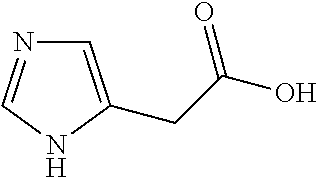
17 ATTGATGATc 
18 GCACCCTCAc 
19 TGGTAAAGGc 
20 CACTTAGCGc 
21 AATGTAGAAc 
22 CGTGCTCCAc 
23 ACGCGCATAc 
24 TGGCGCACTc 
25 CTACGAGAAc 
26 CTGTGACCTc 
27 GAAGAAGACc 
28 TAAATAGTTc 
29 TCCTAGCTTc 
30 TCCCTACCAc 
31 AGGTCCCGAc 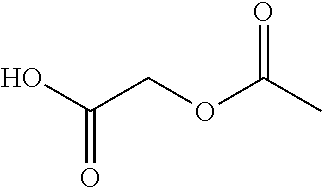
32 TAAGGATGAc 
33 TTGCTCTTAc 
34 TCCAACGACc 
35 TACATCTTCc 
36 GTTGCAGGTc 
37 CCGGGCTTGc 
38 GGCGATAGAc 
39 CTTCTGACCc 
40 GTGCGACGCc 
41 AGTAAACGAc 
42 CATCGCCCGc 
43 AAACCGACTc 
44 CAACCATGGc 
45 TCTCCATTGc 
46 AGCATTTCAc 
47 TACGCAAACc 
48 ATAACCTGGc 
49 CGAAGCGTTc 
50 TAGGCGTTAc 
51 TGCCAACATc 
52 CGACTTAGCc 
53 GTATGAAAAc 
54 TTGGCAGGGc 
55 TAGATATTGc 
Terminal GGAGCTTGTGAATTCTGGc sequence - (2) Synthesis:
- a: Preparation of an initial synthetic building block: selecting a synthetic building block, linking one end of the start sequence to a synthetic building block and the other end of the start sequence to a specific tag sequence of the synthetic building block in series, to obtain an initial synthetic building block tagged with single-stranded DNA with a free end;
- {circle around (1)} the initial synthetic building block is linked to the start sequence:
- the start sequence is aminated,
synthetic building block 1 is carboxylated, sulfhydrylized or alkynylated; then, the activatedsynthetic building block 1 is reacted with the activated start sequence to obtain the initial synthetic building block linked to the start sequence. - The total volume of the reaction mixture is 150 μL, and the solvents are water and dimethylsulfoxide at a volume ratio of 3:7 and contain a triethylamine hydrochloride buffer system (pH 10.0, 80 mM), wherein the concentration of the
synthetic building block 1 is 30 mM, the concentration of 1-ethyl-3-(3-dimethylaminopropyl) carbodiimide hydrochloride (EDCI) (an activating agent) is 4 mM and the concentration of 2-sulfo-N-hydroxyl succinimide (an activating agent) is 10 mM, the concentration of the start sequence is 20 M, and the reaction is performed at the room temperature for 1 h. - {circle around (2)} The tag sequence of the
synthetic building block 1 is linked to the start sequence (as this linking method, in addition to the following methods, other linking methods for single-stranded DNA may be used): - 5′-end of the single-stranded DNA is phosphorylated using polynucleotide kinase and then linked using RNA ligase.
- Linking: the treated start sequence in step {circle around (1)} and the
tag sequence 1 are ready for use. 15 μL of the reaction mixture contains 225 pmol of the start sequence, 25 pmol of thetag sequence 1, 50 units of the T4 RNA ligase and a buffer solution for the linking reaction. The mixture is incubated at 25° C. for 1.5 h and then heated at 70° C. for 20 min, and the T4 RNA ligase is denatured. Subsequently, T4 polynucleotide kinase and 1 nm of ATP are added into the mixture, then reacted for 10 cycles and incubated at 75° C. for 20 min to denature the extra polynucleotide kinase. - Purification: the resulting product is placed in a 2× loading buffer solution. The buffer solution contains 40 mM of Tris-HCL (pH7.6), 1M of NaCL and 1 mM of EDTA.
- The obtained mixture is purified by the following steps: the reaction liquid is put in a Qiagen Cartridge column, then suspended with 1× loading buffer solution, centrifuged at 100 rmp for 1 min, filtered by siliconized glass wool, then successively washed with 1× loading buffer solution, 0.5 M of NaCl solution and 80% of ethyl alcohol, eluted with 20 μL of PE eluant and dried in vacuum.
- b: Based on the initial synthetic building block obtained in step a, compounds are synthesized in a manner of three-step linear combination reaction, wherein, during synthesis, once a new synthetic building block is added, a specific tag sequence of this new synthetic building block is linked in series to the free 3′-end of the single-stranded DNA linked to the initial synthetic building blocks such that the single-stranded DNA is gradually lengthened; at the end of synthesis, the terminal sequence is linked in series to the free end of the single-stranded DNA to obtain a single-stranded DNA-encoded compound library.
- First batch of synthetic building blocks, i.e., the initial building block (1):
synthetic building block 1; - Second batch of synthetic building blocks (5): synthetic building blocks 2-6; and,
- Third batch of synthetic building blocks (49): synthetic building blocks 7-55.
- I:
- {circle around (1)} Synthesis
- Synthetic building blocks 2-6 are placed into five miniature reaction vessels, then separately mixed with the initial synthetic building block obtained in step a, and synthesized by mixed splitting, parallel synthesis, multi-component liquid-phase synthesis or functional group conversion;
- These synthetic building blocks are placed into five miniature reaction vessels and then reacted with the initial synthetic building block obtained in step a, respectively. Taking the
synthetic building block 2 for example, the reaction conditions are as follows: in 150 μL of reaction mixture, the solvents are water and dimethylsulfoxide at a volume ratio of 3:7 and contain a triethylamine hydrochloride buffer system (pH 9.0, 80 mM), wherein the concentration of thesynthetic building block 1 is 30 mM, the concentration of 1-ethyl-3-(3-dimethylaminopropyl) carbodiimide hydrochloride (EDCI) (an activating agent) is 4 mM and the concentration of 2-sulfo-N-hydroxyl succinimide (an activating agent) is 10 mM, the concentration of thesynthetic building block 2 is 1.5 M, and the reaction is performed at the room temperature for 15 h. - {circle around (2)} Adding the tag sequences of the synthetic building blocks 2-6: the same as step {circle around (2)} of step a.
- {circle around (3)} Mixing to obtain a mixture.
- II:
- {circle around (1)} Synthesis
- Synthetic building blocks 7-55 are placed into 49 miniature reaction vessels, then separately mixed with the initial synthetic building block obtained in step a, and synthesized by mixed splitting, parallel synthesis, multi-component liquid-phase synthesis or functional group conversion;
- These synthetic building blocks are placed into 49 miniature reaction vessels and then reacted with the initial synthetic building block obtained in step a, respectively. Taking the
synthetic building block 2 for example, the reaction conditions are as follows: in 150 μL of reaction mixture, the solvents are water and dimethylsulfoxide at a volume ratio of 3:7 and contains a triethylamine hydrochloride buffer system (pH 9.0, 80 mM), wherein the concentration of thesynthetic building block 1 is 30 mM, the concentration of 1-ethyl-3-(3-dimethylaminopropyl) carbodiimide hydrochloride (EDCI) (an activating agent) is 4 mM and the concentration of 2-sulfo-N-hydroxyl succinimide (an activating agent) is 10 mM, the concentration of thesynthetic building block 2 is 1.5 M, and the reaction is performed at the room temperature for 15 h. - {circle around (2)} Adding tag sequences: the same as step {circle around (2)} of step a.
- {circle around (3)} Adding the terminal sequence: the same as step {circle around (2)} of step a.
- {circle around (4)} Mixing to obtain a library of single-stranded DNA-encoded compounds.
- (3) Screening: the DNA-encoded compound library is screened:
- Through a chromatographic and separation screening method based on a receptor-ligand specific reaction, the DNA-encoded compound library is screened with biological target molecules.
- {circle around (1)} CNBr resin activation
- 1) Sepharose 4B resin is activated with 0.1033 g of CBNr, then divided into two branches, and stood in 4 ml of 1 mM hydrogen chloride solution (pH3.0).
- 2) Washing with 1 mM of hydrochloric acid (pH=3.0) washing liquid is performed for 15 min.
- 3) 4 mg of trypsin is dissolved in 0.5 ml of coupling buffer solution (0.1 M of sodium hydrogen carbonate, 0.5 M of sodium chloride, pH=8.3).
- 4) The mixture is slightly shocked up and down for 1 h and then incubated over night at the room temperature or 4° C.
- 5) Excessive protein is removed with 4 ML of coupling solution.
- 6) The resin is transferred into 4 mL of 0.1 M Tris-HCl solution (pH 8.0) and incubated for 2h.
- 7) The resin is washed with
washing buffer solutions - 8) The resin is centrifuged at 6000 r/min for 10 min.
- {circle around (2)} Solidification of trypsin on the activated CNBr resin
- 1) 100 mg of the activated CNBr resin is put into 4 ml of 1 mM hydrochloric acid for incubation;
- 2) washing with 8 mL of 1 mM hydrochloric acid (pH=3.0) is performed;
- 3) 0.004 mg/ml, 0.02 mg/ml, 0.1 mg/ml, 0.5 mg/ml and 2.5 mg/ml of trypsin solutions are mixed with five parts of CNBr resin and then incubated at 4° C. for 5 h, respectively;
- 4) the resin is washed with 0.1 M of Tris hydrochloric acid and 0.5 M of sodium chloride (pH=8.3);
- 5) the resin is washed with 0.1 M of sodium acetate and 0.5 M of sodium chloride (pH=4.0);
- 6) steps 4 and 5 are repeated for alternately washing for at least three cycles; and
- 7) the resin solidifying trypsin is stored in PBS buffer solution (pN=7.4) at 4° C.
- {circle around (3)} Affinity screening of a trypsin compound library
- 1) The library of single-stranded DNA-encoded compounds obtained in step (2) is mixed with PBS buffer solution at a volume ratio of 1:15 (17 μL:255 μL);
- 2) 50 μL of the library sample is added into bovine pancreas trypsin/CNBr resin slurry (2.5, 0.5, 0.1, 0.02, 0.004 and 0 mg/mL);
- 3) 0.3 mg/mL of herring sperm DNA solution is prepared using PBS buffer solution;
- 4) the herring sperm DNA solution obtained in step 3) and the bovine pancreas trypsin/CNBr resin slurry obtained in step 2) are incubated at 25° C. for 1 h;
- 5) the mixture obtained in step 4) is transferred to a 2 ml Spin column, and supernatant is removed;
- 6) the resin is washed with 200 μL of PBS buffer solution for 4 times; and
- 7) the washed slurry is added with 100 μL of sterile water and then screened to obtain a trypsin ligand sample.
- Identification: electrophoresis detection is performed to the single-stranded DNA-encoded compound library obtained in step (2) and the trypsin affine sample screened in step (3).
- The result of detection is as shown in
FIG. 2 . A target band is obtained by screening using bovine pancreas trypsin/CNBr resin slurry and a blank band is obtained in the negative control, so that it is indicated that purified trypsin affine sample is obtained by screening in the present invention. - (4) Sequencing:
- DNA on the DNA-encoded compounds screened in step (3) is sequenced, so that the synthetic building blocks and reaction mechanisms of these compounds may be determined according to the DNA sequence.
- The sample screened in step (3) is subjected to a polymerase chain reaction (PCR), the oligonucleotide codes of the encoded compounds are subjected to PCR amplification (a total volume of 50 μL, 30 cycles each for 1 min at 94° C., for 1 min at 55° C. and for 40 s at 72° C.), and 5 μL of trypsin 245 library (a concentration of 100 fM) is used as a template.
- An Illumina Hiseq2500 high throughput sequencing platform is employed, and the sequencing flow is as follows:
- 1) the PCR-amplified screened oligonucleotide library is purified by a MAG-PCR-CL-250 kit produced by Axygen, and a quality test report is provided;
- 2) nuclear acid is quantified by a Picogreen kit produced by Illumina to obtain the concentration of nuclear acids of the sample, ready for a next step of sequencing the library;
- 3) a Hiseq2000 specific sequencing adaptor is linked to the 5′-end and 3′-end of a sequenced sample by a chip-seq DNA sample kit produced by Illumina, and then fixed on a chip chip-seq plate of a Hiseq2500 sequencer for a next step of bridge amplification;
- 4) the bridge amplification of a nuclear acid sample is performed by a kit Truseq PE Cluster Kit v3-cBot-HS, and a nuclear acid cluster sufficient for sequencing is obtained on each chip-seq lane;
- 5) the appearance order and frequency of each base are read from the sequencing adaptor by a labeled dNTP of Truseq SBS Kit v3-HS (200 cycles) of a laser imaging system of Hiseq 2500, and the bases of the nuclear acid sample are tested; and
- 6) data is taken out and then processed.
- The result of sequencing is as shown in
FIG. 3 , and the sequence is shown by SEQ ID NO.1: TCAGGCAGAGGCGATAGAGGCGATAGA. With reference to Table 2, the structure of the screened trypsin ligand may be determined as follows: -

- According to the structural formula, the compound is tested at the end of synthesis. It is determined by tests that the compound is a trypsin inhibitor, the enzyme inhibition activity of which is as shown in
FIGS. 4-5 , where IC50 is 8.1±2.1 nM. Thus, it is indicated that the screened compound is definitely a trypsin ligand. - The experimental results show that the present invention establishes a chemical library containing 245 compounds, and obtains by screening a trypsin ligand having a trypsin inhibition activity. Therefore, it is indicated that the method provided by the present invention may effectively synthesize and screen lead compounds.
- A kit for synthesizing and screening lead compounds
- Compositions of the kit provided by the present invention (dosage of N synthetic building blocks for synthesis)
- 1) i synthetic building blocks and (i+2) single-stranded DNA fragments, where the single-stranded DNA fragments include a start sequence, a terminal sequence and i tag sequences, and the i tag sequences specifically tag the i synthetic building blocks, respectively, where i=1, 2, 3 . . . n;
-
TABLE 3 Synthetic building blocks and single-stranded DNA fragments of different sequences Name of Sequence of single-stranded DNA, Synthetic building block, sequence 1.5 M 30 mM Start 5′-PO3-AGATCTGATGGCGCGAG sequence GGAAAAAAAAAAAA-3′- PO4 Tag sequences 1 TCAGGCAGAc 
2 AGCATTTCAc 
3 CGACTTAGCc 
4 GGAGTTCAAc 
5 CTACGAGAAc 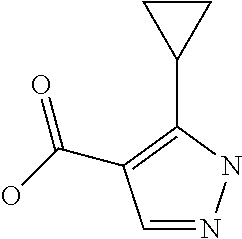
6 TAGGCGTTAc 
7 CGTTCTAATc 
8 GGGAACGCGc 
9 TTGTAGATCc 
. . . . . . . . . n TCTATGGGTc 
Terminal GGAGCTTGTGAATTCTGGc sequence - 2) a reagent for linking the start sequence-initial synthetic building blocks, a reagent for combinatorial chemistry method and a reagent for linking the single-stranded DNA fragments;
-
TABLE 4 Reagent for linking the start sequence to the synthetic building blocks Name of reagent Dosage Triethylamine hydrochloride buffer solution, pH 10.0 (800 mM, 15 μL) 1-ethyl-3-(3-dimethylaminopropy) carbodiimide (40 mM, 15 μL) 2-sulfo-N-hydroxyl succinimide (100 mM, 15 μL) -
TABLE 5 Reagent for combinatorial chemistry method Name of reagent Dosage Triethylamine hydrochloride buffer solution, pH 9.0 (800 mM, 15 μL) 1-ethyl-3-(3-dimethylaminopropy) carbodiimide (40 mM, 15 μL) 2-sulfo-N-hydroxyl succinimide (100 mM, 15 μL) -
TABLE 6 Reagent for linking DNA fragments Name of reagent Dosage T4 PNK (10 U/μl) N × 10 μL 10 × T4 RNA ligase buffer N × 10 μL dd H2O N × 77.4 μL T4 RNA ligase (10 U/μl) N × 10 μL 10 × T4 RNA ligase buffer N × 2.5 μL ATP(10 mM) N × 0.1 μL - 3) a reagent for screening compounds;
-
TABLE 7 Reagent for screening compounds Name of reagent Dosage Biological target Trypsin concentration molecules 2.5 mg/ml, 0.5 mg/ml, 0.1 mg/ml, 0.02 mg/ml, 0.004 mg/ml CBNr Sepharose 4B 100 mg/batch (GE 17-0340-01) Enzyme immobilization 0.1M NaHCO3, 0.5M NaCl, pH 8.3) buffer solution Washing buffer solution 0.1M acetic acid, 0.5M NaCl, pH4.0 1 Washing buffer solution 0.1M Tris-HCI, 0.5M NaCl, pH8.0 2 PBS buffer solution 20 mM NaH2PO4, 30 mM Na2HPO4, 100 mM NaCl [pH 7.4]) Herring sperm DNA 0.3 mg/mL, 100 uL/sample - 4) a reagent for DNA sequencing.
-
TABLE 8 Reagent for DNA sequencing Purpose Name of reagent PCR purification MAG-PCR-CL-250 Nuclear acid Picogreen kit quantification Library chip-seq DNA sample kit construction Bridge Truseq PE Cluster Kit v3-cBot-HS amplification Online sequencing Truseq SBS Kit v3-HS (200cycles) - The kit provided by the present invention is used according to the method provided by
Embodiment 1 of the present invention and may be used for rapidly synthesizing and screening lead compounds. - In conclusion, compared with using double-stranded DNA to tag synthetic building blocks in the prior art, the present invention uses single-stranded DNA to tag synthetic building blocks. As the single-stranded DNA will not be complementary and difficult to be cross-linked during linking and has stable structure, the PCR amplification and sequencing of the single-stranded DNA are more convenient and rapid when compared with the case of using the double-stranded DNA. Therefore, the method provided by the present invention may contain multiple linear combination reaction steps, the synthesized compound library has high diversity and large capacity, and it is easy to synthesize target compounds. By sequencing, the synthetic building blocks, the reaction mechanisms and the chemical structures may be determined. Therefore, the method provided by the present invention has high accuracy, high efficiency, simple operation, low cost and good application prospect.
Claims (25)
Applications Claiming Priority (3)
| Application Number | Priority Date | Filing Date | Title |
|---|---|---|---|
| CN201210555548.3 | 2012-12-20 | ||
| CN201210555548.3A CN103882532B (en) | 2012-12-20 | 2012-12-20 | A kind of synthesis of lead compound and screening method and test kit |
| PCT/CN2013/089873 WO2014094620A1 (en) | 2012-12-20 | 2013-12-18 | Method for synthesizing and screening lead compound and reagent testing kit |
Publications (1)
| Publication Number | Publication Date |
|---|---|
| US20150321164A1 true US20150321164A1 (en) | 2015-11-12 |
Family
ID=50951641
Family Applications (1)
| Application Number | Title | Priority Date | Filing Date |
|---|---|---|---|
| US14/653,729 Abandoned US20150321164A1 (en) | 2012-12-20 | 2013-12-18 | Method for synthesizing and screening lead compound and reagent testing kit |
Country Status (3)
| Country | Link |
|---|---|
| US (1) | US20150321164A1 (en) |
| CN (1) | CN103882532B (en) |
| WO (1) | WO2014094620A1 (en) |
Cited By (3)
| Publication number | Priority date | Publication date | Assignee | Title |
|---|---|---|---|---|
| US11186836B2 (en) | 2016-06-16 | 2021-11-30 | Haystack Sciences Corporation | Oligonucleotide directed and recorded combinatorial synthesis of encoded probe molecules |
| CN114411267A (en) * | 2020-10-28 | 2022-04-29 | 成都先导药物开发股份有限公司 | Method for constructing beta-fat substituted ketone compound through On-DNA reaction |
| US11795580B2 (en) | 2017-05-02 | 2023-10-24 | Haystack Sciences Corporation | Molecules for verifying oligonucleotide directed combinatorial synthesis and methods of making and using the same |
Families Citing this family (2)
| Publication number | Priority date | Publication date | Assignee | Title |
|---|---|---|---|---|
| WO2016165621A1 (en) * | 2015-04-14 | 2016-10-20 | 成都先导药物开发有限公司 | Method for solid-phase synthesis of dna-encoded chemical library |
| EP4253610A4 (en) | 2020-11-27 | 2025-05-14 | Hitgen Inc. | DNA-encoded compound library and compound screening methods |
Citations (4)
| Publication number | Priority date | Publication date | Assignee | Title |
|---|---|---|---|---|
| US20090062147A1 (en) * | 2003-12-17 | 2009-03-05 | Praecis Pharmaceuticals Incorporated | Methods for synthesis of encoded libraries |
| US20110104785A1 (en) * | 2009-11-05 | 2011-05-05 | Ramesh Vaidyanathan | Methods and kits for 3'-end-tagging of rna |
| US8048659B1 (en) * | 1999-10-08 | 2011-11-01 | Leif Robert C | Conjugated polymer tag complexes |
| US20140315762A1 (en) * | 2011-09-07 | 2014-10-23 | X-Chem, Inc. | Methods for tagging dna-encoded libraries |
Family Cites Families (1)
| Publication number | Priority date | Publication date | Assignee | Title |
|---|---|---|---|---|
| US6677160B1 (en) * | 1999-09-29 | 2004-01-13 | Pharmacia & Upjohn Company | Methods for creating a compound library and identifying lead chemical templates and ligands for target molecules |
-
2012
- 2012-12-20 CN CN201210555548.3A patent/CN103882532B/en active Active
-
2013
- 2013-12-18 US US14/653,729 patent/US20150321164A1/en not_active Abandoned
- 2013-12-18 WO PCT/CN2013/089873 patent/WO2014094620A1/en not_active Ceased
Patent Citations (5)
| Publication number | Priority date | Publication date | Assignee | Title |
|---|---|---|---|---|
| US8048659B1 (en) * | 1999-10-08 | 2011-11-01 | Leif Robert C | Conjugated polymer tag complexes |
| US20090062147A1 (en) * | 2003-12-17 | 2009-03-05 | Praecis Pharmaceuticals Incorporated | Methods for synthesis of encoded libraries |
| US20110136697A1 (en) * | 2003-12-17 | 2011-06-09 | Praecis Pharmaceuticals Incorporated | Methods for synthesis of encoded libraries |
| US20110104785A1 (en) * | 2009-11-05 | 2011-05-05 | Ramesh Vaidyanathan | Methods and kits for 3'-end-tagging of rna |
| US20140315762A1 (en) * | 2011-09-07 | 2014-10-23 | X-Chem, Inc. | Methods for tagging dna-encoded libraries |
Cited By (3)
| Publication number | Priority date | Publication date | Assignee | Title |
|---|---|---|---|---|
| US11186836B2 (en) | 2016-06-16 | 2021-11-30 | Haystack Sciences Corporation | Oligonucleotide directed and recorded combinatorial synthesis of encoded probe molecules |
| US11795580B2 (en) | 2017-05-02 | 2023-10-24 | Haystack Sciences Corporation | Molecules for verifying oligonucleotide directed combinatorial synthesis and methods of making and using the same |
| CN114411267A (en) * | 2020-10-28 | 2022-04-29 | 成都先导药物开发股份有限公司 | Method for constructing beta-fat substituted ketone compound through On-DNA reaction |
Also Published As
| Publication number | Publication date |
|---|---|
| WO2014094620A1 (en) | 2014-06-26 |
| CN103882532B (en) | 2015-10-21 |
| CN103882532A (en) | 2014-06-25 |
Similar Documents
| Publication | Publication Date | Title |
|---|---|---|
| JP7097627B2 (en) | Large molecule analysis using nucleic acid encoding | |
| US20240344240A1 (en) | Design and selection of affinity reagents | |
| CN103703143B (en) | Method for identifying multiple epitopes in a cell | |
| EP3150750B1 (en) | Peptide constructs and assay systems | |
| US20050181408A1 (en) | Genetic analysis by sequence-specific sorting | |
| AU783689B2 (en) | Sensitive, multiplexed diagnostic assays for protein analysis | |
| EP1105360B1 (en) | Identification of compound-protein interactions using libraries of protein-nucleic acid fusion molecules | |
| US20150321164A1 (en) | Method for synthesizing and screening lead compound and reagent testing kit | |
| US12038443B2 (en) | Determination of protein information by recoding amino acid polymers into DNA polymers | |
| US12474347B2 (en) | Determination of protein information by recoding amino acid polymers into DNA polymers | |
| AU2920900A (en) | Rational selection of putative peptides from identified nucleotide or peptide sequences | |
| EP0405913A2 (en) | Hydrophobic nucleic acid probe | |
| WO2014189768A1 (en) | Devices and methods for display of encoded peptides, polypeptides, and proteins on dna | |
| US20020006614A1 (en) | Detecting structural or synthetic information about chemical compounds | |
| CN103882531B (en) | Synthesis and screening method and kit of a lead compound | |
| US20060099626A1 (en) | DNA-templated combinatorial library device and method for use | |
| US20220073904A1 (en) | Devices and methods for display of encoded peptides, polypeptides, and proteins on dna | |
| US7297520B2 (en) | Large circular sense molecule array | |
| CN120435554A (en) | Chromatin analysis compositions and methods | |
| KR20220118333A (en) | Purification method for nucleic acid library | |
| CN113444769A (en) | Construction method and application of DNA tag sequence | |
| Chen et al. | DNA display for drug discovery | |
| JP2002507275A (en) | How to make a subtraction library |
Legal Events
| Date | Code | Title | Description |
|---|---|---|---|
| AS | Assignment |
Owner name: HITGEN LTD, CHINA Free format text: ASSIGNMENT OF ASSIGNORS INTEREST;ASSIGNORS:CHEN, SHI;GE, XIAOHU;HUANG, QI;AND OTHERS;REEL/FRAME:035944/0664 Effective date: 20150526 |
|
| STPP | Information on status: patent application and granting procedure in general |
Free format text: NON FINAL ACTION MAILED |
|
| STPP | Information on status: patent application and granting procedure in general |
Free format text: RESPONSE TO NON-FINAL OFFICE ACTION ENTERED AND FORWARDED TO EXAMINER |
|
| STPP | Information on status: patent application and granting procedure in general |
Free format text: FINAL REJECTION MAILED |
|
| STCV | Information on status: appeal procedure |
Free format text: NOTICE OF APPEAL FILED |
|
| STPP | Information on status: patent application and granting procedure in general |
Free format text: DOCKETED NEW CASE - READY FOR EXAMINATION |
|
| STPP | Information on status: patent application and granting procedure in general |
Free format text: NON FINAL ACTION MAILED |
|
| STCB | Information on status: application discontinuation |
Free format text: ABANDONED -- FAILURE TO RESPOND TO AN OFFICE ACTION |