US20110263532A1 - Halofuginone analogs for inhibition of trna synthetases and uses thereof - Google Patents
Halofuginone analogs for inhibition of trna synthetases and uses thereof Download PDFInfo
- Publication number
- US20110263532A1 US20110263532A1 US13/058,486 US200913058486A US2011263532A1 US 20110263532 A1 US20110263532 A1 US 20110263532A1 US 200913058486 A US200913058486 A US 200913058486A US 2011263532 A1 US2011263532 A1 US 2011263532A1
- Authority
- US
- United States
- Prior art keywords
- moiety
- substituted
- unsubstituted
- branched
- unbranched
- Prior art date
- Legal status (The legal status is an assumption and is not a legal conclusion. Google has not performed a legal analysis and makes no representation as to the accuracy of the status listed.)
- Granted
Links
- LVASCWIMLIKXLA-LSDHHAIUSA-N halofuginone Chemical class O[C@@H]1CCCN[C@H]1CC(=O)CN1C(=O)C2=CC(Cl)=C(Br)C=C2N=C1 LVASCWIMLIKXLA-LSDHHAIUSA-N 0.000 title abstract description 133
- 230000005764 inhibitory process Effects 0.000 title description 14
- 108700028939 Amino Acyl-tRNA Synthetases Proteins 0.000 title description 12
- 102000052866 Amino Acyl-tRNA Synthetases Human genes 0.000 title description 12
- 238000000034 method Methods 0.000 claims abstract description 21
- 229910052739 hydrogen Inorganic materials 0.000 claims description 355
- 239000001257 hydrogen Substances 0.000 claims description 355
- 125000001931 aliphatic group Chemical group 0.000 claims description 331
- 125000003118 aryl group Chemical group 0.000 claims description 325
- 125000002252 acyl group Chemical group 0.000 claims description 289
- 150000001875 compounds Chemical class 0.000 claims description 286
- 125000001072 heteroaryl group Chemical group 0.000 claims description 283
- 229910052736 halogen Inorganic materials 0.000 claims description 267
- 150000002367 halogens Chemical class 0.000 claims description 267
- 125000004435 hydrogen atom Chemical group [H]* 0.000 claims description 261
- 125000004122 cyclic group Chemical group 0.000 claims description 216
- 125000002015 acyclic group Chemical group 0.000 claims description 210
- 125000003545 alkoxy group Chemical group 0.000 claims description 195
- 125000006239 protecting group Chemical group 0.000 claims description 174
- 125000002924 primary amino group Chemical group [H]N([H])* 0.000 claims description 155
- 125000005377 alkyl thioxy group Chemical group 0.000 claims description 145
- 125000005165 aryl thioxy group Chemical group 0.000 claims description 145
- 125000004104 aryloxy group Chemical group 0.000 claims description 145
- 125000005553 heteroaryloxy group Chemical group 0.000 claims description 145
- 125000005378 heteroarylthioxy group Chemical group 0.000 claims description 145
- 125000003282 alkyl amino group Chemical group 0.000 claims description 144
- 125000004663 dialkyl amino group Chemical group 0.000 claims description 131
- UFHFLCQGNIYNRP-UHFFFAOYSA-N Hydrogen Chemical compound [H][H] UFHFLCQGNIYNRP-UHFFFAOYSA-N 0.000 claims description 99
- 125000000449 nitro group Chemical group [O-][N+](*)=O 0.000 claims description 87
- 125000000623 heterocyclic group Chemical group 0.000 claims description 36
- 150000003839 salts Chemical class 0.000 claims description 33
- 229910052757 nitrogen Inorganic materials 0.000 claims description 29
- 229910052760 oxygen Inorganic materials 0.000 claims description 25
- 229910052717 sulfur Inorganic materials 0.000 claims description 23
- 125000002496 methyl group Chemical group [H]C([H])([H])* 0.000 claims description 12
- 125000004429 atom Chemical group 0.000 claims description 9
- 229920006395 saturated elastomer Polymers 0.000 claims description 8
- 125000000325 methylidene group Chemical group [H]C([H])=* 0.000 claims description 7
- 239000008194 pharmaceutical composition Substances 0.000 claims description 6
- WKBOTKDWSSQWDR-UHFFFAOYSA-N Bromine atom Chemical group [Br] WKBOTKDWSSQWDR-UHFFFAOYSA-N 0.000 claims description 4
- 125000000051 benzyloxy group Chemical group [H]C1=C([H])C([H])=C(C([H])=C1[H])C([H])([H])O* 0.000 claims description 4
- GDTBXPJZTBHREO-UHFFFAOYSA-N bromine Chemical group BrBr GDTBXPJZTBHREO-UHFFFAOYSA-N 0.000 claims description 4
- 229910052794 bromium Chemical group 0.000 claims description 4
- 239000000460 chlorine Chemical group 0.000 claims description 4
- 229910052801 chlorine Inorganic materials 0.000 claims description 4
- 125000005931 tert-butyloxycarbonyl group Chemical group [H]C([H])([H])C(OC(*)=O)(C([H])([H])[H])C([H])([H])[H] 0.000 claims description 4
- ZAMOUSCENKQFHK-UHFFFAOYSA-N Chlorine atom Chemical group [Cl] ZAMOUSCENKQFHK-UHFFFAOYSA-N 0.000 claims description 3
- 239000000546 pharmaceutical excipient Substances 0.000 claims description 3
- 150000002431 hydrogen Chemical group 0.000 claims 1
- 230000001404 mediated effect Effects 0.000 claims 1
- 239000000203 mixture Substances 0.000 abstract description 11
- 208000023275 Autoimmune disease Diseases 0.000 abstract description 9
- 208000015122 neurodegenerative disease Diseases 0.000 abstract description 9
- 206010016654 Fibrosis Diseases 0.000 abstract description 8
- 230000033115 angiogenesis Effects 0.000 abstract description 8
- 230000004761 fibrosis Effects 0.000 abstract description 8
- 230000004770 neurodegeneration Effects 0.000 abstract description 8
- 239000002537 cosmetic Substances 0.000 abstract description 7
- 208000003556 Dry Eye Syndromes Diseases 0.000 abstract description 4
- 206010013774 Dry eye Diseases 0.000 abstract description 4
- 208000036142 Viral infection Diseases 0.000 abstract description 3
- 230000006378 damage Effects 0.000 abstract description 3
- 230000009385 viral infection Effects 0.000 abstract description 3
- 208000037976 chronic inflammation Diseases 0.000 abstract description 2
- 239000007943 implant Substances 0.000 abstract description 2
- 230000000302 ischemic effect Effects 0.000 abstract description 2
- 208000037893 chronic inflammatory disorder Diseases 0.000 abstract 1
- 230000036573 scar formation Effects 0.000 abstract 1
- -1 IFNγ Proteins 0.000 description 230
- 229950010152 halofuginone Drugs 0.000 description 119
- 125000003277 amino group Chemical group 0.000 description 94
- 125000002887 hydroxy group Chemical group [H]O* 0.000 description 84
- 125000000217 alkyl group Chemical group 0.000 description 77
- 210000001744 T-lymphocyte Anatomy 0.000 description 76
- 125000003342 alkenyl group Chemical group 0.000 description 59
- 125000000304 alkynyl group Chemical group 0.000 description 58
- 125000001246 bromo group Chemical group Br* 0.000 description 56
- 125000001309 chloro group Chemical group Cl* 0.000 description 55
- 210000004027 cell Anatomy 0.000 description 47
- 230000014509 gene expression Effects 0.000 description 39
- 102000004127 Cytokines Human genes 0.000 description 37
- 108090000695 Cytokines Proteins 0.000 description 37
- 125000002346 iodo group Chemical group I* 0.000 description 37
- 102100026126 Proline-tRNA ligase Human genes 0.000 description 34
- 102100036011 T-cell surface glycoprotein CD4 Human genes 0.000 description 33
- 238000004458 analytical method Methods 0.000 description 33
- 230000015572 biosynthetic process Effects 0.000 description 32
- 125000001424 substituent group Chemical group 0.000 description 31
- QNEZCKLDNGVZQV-MSOLQXFVSA-N tert-butyl (2r,3s)-2-[3-(7-bromo-6-chloro-4-oxoquinazolin-3-yl)-2-oxopropyl]-3-hydroxypiperidine-1-carboxylate Chemical compound CC(C)(C)OC(=O)N1CCC[C@H](O)[C@H]1CC(=O)CN1C(=O)C2=CC(Cl)=C(Br)C=C2N=C1 QNEZCKLDNGVZQV-MSOLQXFVSA-N 0.000 description 31
- 238000001943 fluorescence-activated cell sorting Methods 0.000 description 25
- 230000004069 differentiation Effects 0.000 description 24
- LMBFAGIMSUYTBN-MPZNNTNKSA-N teixobactin Chemical compound C([C@H](C(=O)N[C@@H]([C@@H](C)CC)C(=O)N[C@@H](CO)C(=O)N[C@H](CCC(N)=O)C(=O)N[C@H]([C@@H](C)CC)C(=O)N[C@@H]([C@@H](C)CC)C(=O)N[C@@H](CO)C(=O)N[C@H]1C(N[C@@H](C)C(=O)N[C@@H](C[C@@H]2NC(=N)NC2)C(=O)N[C@H](C(=O)O[C@H]1C)[C@@H](C)CC)=O)NC)C1=CC=CC=C1 LMBFAGIMSUYTBN-MPZNNTNKSA-N 0.000 description 24
- 208000037265 diseases, disorders, signs and symptoms Diseases 0.000 description 23
- 230000004913 activation Effects 0.000 description 22
- 238000011282 treatment Methods 0.000 description 22
- 125000004432 carbon atom Chemical group C* 0.000 description 21
- 230000003834 intracellular effect Effects 0.000 description 21
- 239000002609 medium Substances 0.000 description 21
- 150000003573 thiols Chemical class 0.000 description 21
- 238000003786 synthesis reaction Methods 0.000 description 20
- 125000003710 aryl alkyl group Chemical group 0.000 description 19
- IJGRMHOSHXDMSA-UHFFFAOYSA-N nitrogen Substances N#N IJGRMHOSHXDMSA-UHFFFAOYSA-N 0.000 description 19
- 241000699670 Mus sp. Species 0.000 description 18
- 125000000415 L-cysteinyl group Chemical group O=C([*])[C@@](N([H])[H])([H])C([H])([H])S[H] 0.000 description 17
- 210000000068 Th17 cell Anatomy 0.000 description 17
- 125000004185 ester group Chemical group 0.000 description 17
- FWVHWDSCPKXMDB-UHFFFAOYSA-N febrifugine dihydrochloride Natural products OC1CCCNC1CC(=O)CN1C(=O)C2=CC=CC=C2N=C1 FWVHWDSCPKXMDB-UHFFFAOYSA-N 0.000 description 17
- QAOWNCQODCNURD-UHFFFAOYSA-L Sulfate Chemical compound [O-]S([O-])(=O)=O QAOWNCQODCNURD-UHFFFAOYSA-L 0.000 description 16
- 108090001012 Transforming Growth Factor beta Proteins 0.000 description 16
- 102000004887 Transforming Growth Factor beta Human genes 0.000 description 16
- 125000001360 methionine group Chemical group N[C@@H](CCSC)C(=O)* 0.000 description 16
- VDABVNMGKGUPEY-UHFFFAOYSA-N 6-carboxyfluorescein succinimidyl ester Chemical class C=1C(O)=CC=C2C=1OC1=CC(O)=CC=C1C2(C1=C2)OC(=O)C1=CC=C2C(=O)ON1C(=O)CCC1=O VDABVNMGKGUPEY-UHFFFAOYSA-N 0.000 description 15
- FWVHWDSCPKXMDB-LSDHHAIUSA-N Febrifugine Chemical class O[C@@H]1CCCN[C@H]1CC(=O)CN1C(=O)C2=CC=CC=C2N=C1 FWVHWDSCPKXMDB-LSDHHAIUSA-N 0.000 description 15
- 125000002877 alkyl aryl group Chemical group 0.000 description 15
- 108050003558 Interleukin-17 Proteins 0.000 description 14
- 102000013691 Interleukin-17 Human genes 0.000 description 14
- 108090001005 Interleukin-6 Proteins 0.000 description 14
- 102000004889 Interleukin-6 Human genes 0.000 description 14
- 125000004093 cyano group Chemical group *C#N 0.000 description 14
- 201000010099 disease Diseases 0.000 description 14
- 125000001841 imino group Chemical group [H]N=* 0.000 description 14
- 238000001262 western blot Methods 0.000 description 14
- NINIDFKCEFEMDL-UHFFFAOYSA-N Sulfur Chemical group [S] NINIDFKCEFEMDL-UHFFFAOYSA-N 0.000 description 13
- DHKHKXVYLBGOIT-UHFFFAOYSA-N acetaldehyde Diethyl Acetal Natural products CCOC(C)OCC DHKHKXVYLBGOIT-UHFFFAOYSA-N 0.000 description 13
- 125000004423 acyloxy group Chemical group 0.000 description 13
- 125000001769 aryl amino group Chemical group 0.000 description 13
- QVGXLLKOCUKJST-UHFFFAOYSA-N atomic oxygen Chemical group [O] QVGXLLKOCUKJST-UHFFFAOYSA-N 0.000 description 13
- 239000003795 chemical substances by application Substances 0.000 description 13
- 125000005843 halogen group Chemical group 0.000 description 13
- 125000005241 heteroarylamino group Chemical group 0.000 description 13
- 125000002467 phosphate group Chemical group [H]OP(=O)(O[H])O[*] 0.000 description 13
- QTBSBXVTEAMEQO-UHFFFAOYSA-N Acetic acid Chemical compound CC(O)=O QTBSBXVTEAMEQO-UHFFFAOYSA-N 0.000 description 12
- 241001465754 Metazoa Species 0.000 description 12
- 229910019142 PO4 Inorganic materials 0.000 description 12
- 125000000852 azido group Chemical group *N=[N+]=[N-] 0.000 description 12
- 150000001732 carboxylic acid derivatives Chemical class 0.000 description 12
- 230000000694 effects Effects 0.000 description 12
- 238000002474 experimental method Methods 0.000 description 12
- PHEDXBVPIONUQT-RGYGYFBISA-N phorbol 13-acetate 12-myristate Chemical compound C([C@]1(O)C(=O)C(C)=C[C@H]1[C@@]1(O)[C@H](C)[C@H]2OC(=O)CCCCCCCCCCCCC)C(CO)=C[C@H]1[C@H]1[C@]2(OC(C)=O)C1(C)C PHEDXBVPIONUQT-RGYGYFBISA-N 0.000 description 12
- 239000010452 phosphate Substances 0.000 description 12
- QTBSBXVTEAMEQO-UHFFFAOYSA-M Acetate Chemical compound CC([O-])=O QTBSBXVTEAMEQO-UHFFFAOYSA-M 0.000 description 11
- UIHLDYLKWIWXAH-UHFFFAOYSA-N Febrifugine Natural products OC1CCNCC1CC(=O)CN2C=Nc3ccccc3C2=O UIHLDYLKWIWXAH-UHFFFAOYSA-N 0.000 description 11
- 229940024606 amino acid Drugs 0.000 description 11
- 235000001014 amino acid Nutrition 0.000 description 11
- 150000001413 amino acids Chemical class 0.000 description 11
- 238000006243 chemical reaction Methods 0.000 description 11
- 201000002491 encephalomyelitis Diseases 0.000 description 11
- PGHMRUGBZOYCAA-ADZNBVRBSA-N ionomycin Chemical compound O1[C@H](C[C@H](O)[C@H](C)[C@H](O)[C@H](C)/C=C/C[C@@H](C)C[C@@H](C)C(/O)=C/C(=O)[C@@H](C)C[C@@H](C)C[C@@H](CCC(O)=O)C)CC[C@@]1(C)[C@@H]1O[C@](C)([C@@H](C)O)CC1 PGHMRUGBZOYCAA-ADZNBVRBSA-N 0.000 description 11
- PGHMRUGBZOYCAA-UHFFFAOYSA-N ionomycin Natural products O1C(CC(O)C(C)C(O)C(C)C=CCC(C)CC(C)C(O)=CC(=O)C(C)CC(C)CC(CCC(O)=O)C)CCC1(C)C1OC(C)(C(C)O)CC1 PGHMRUGBZOYCAA-UHFFFAOYSA-N 0.000 description 11
- 125000004043 oxo group Chemical group O=* 0.000 description 11
- 125000000464 thioxo group Chemical group S=* 0.000 description 11
- 230000000078 anti-malarial effect Effects 0.000 description 10
- 238000010212 intracellular staining Methods 0.000 description 10
- 125000001997 phenyl group Chemical group [H]C1=C([H])C([H])=C(*)C([H])=C1[H] 0.000 description 10
- 108090000623 proteins and genes Proteins 0.000 description 10
- 125000006413 ring segment Chemical group 0.000 description 10
- 238000010186 staining Methods 0.000 description 10
- 102000008186 Collagen Human genes 0.000 description 9
- 108010035532 Collagen Proteins 0.000 description 9
- OKKJLVBELUTLKV-UHFFFAOYSA-N Methanol Chemical compound OC OKKJLVBELUTLKV-UHFFFAOYSA-N 0.000 description 9
- 229920001436 collagen Polymers 0.000 description 9
- 108010042589 prolyl T RNA synthetase Proteins 0.000 description 9
- 101001057504 Homo sapiens Interferon-stimulated gene 20 kDa protein Proteins 0.000 description 8
- 101001055144 Homo sapiens Interleukin-2 receptor subunit alpha Proteins 0.000 description 8
- 102100027268 Interferon-stimulated gene 20 kDa protein Human genes 0.000 description 8
- 108091008874 T cell receptors Proteins 0.000 description 8
- 102000016266 T-Cell Antigen Receptors Human genes 0.000 description 8
- 208000035475 disorder Diseases 0.000 description 8
- 125000004404 heteroalkyl group Chemical group 0.000 description 8
- 239000003112 inhibitor Substances 0.000 description 8
- 239000001301 oxygen Substances 0.000 description 8
- 230000026731 phosphorylation Effects 0.000 description 8
- 238000006366 phosphorylation reaction Methods 0.000 description 8
- 239000007858 starting material Substances 0.000 description 8
- 208000024891 symptom Diseases 0.000 description 8
- KXDHJXZQYSOELW-UHFFFAOYSA-M Carbamate Chemical compound NC([O-])=O KXDHJXZQYSOELW-UHFFFAOYSA-M 0.000 description 7
- 239000003430 antimalarial agent Substances 0.000 description 7
- QJGQUHMNIGDVPM-UHFFFAOYSA-N nitrogen group Chemical group [N] QJGQUHMNIGDVPM-UHFFFAOYSA-N 0.000 description 7
- 101100072149 Drosophila melanogaster eIF2alpha gene Proteins 0.000 description 6
- LFQSCWFLJHTTHZ-UHFFFAOYSA-N Ethanol Chemical compound CCO LFQSCWFLJHTTHZ-UHFFFAOYSA-N 0.000 description 6
- ONIBWKKTOPOVIA-BYPYZUCNSA-N L-Proline Chemical compound OC(=O)[C@@H]1CCCN1 ONIBWKKTOPOVIA-BYPYZUCNSA-N 0.000 description 6
- 102000002233 Myelin-Oligodendrocyte Glycoprotein Human genes 0.000 description 6
- 108010000123 Myelin-Oligodendrocyte Glycoprotein Proteins 0.000 description 6
- ONIBWKKTOPOVIA-UHFFFAOYSA-N Proline Natural products OC(=O)C1CCCN1 ONIBWKKTOPOVIA-UHFFFAOYSA-N 0.000 description 6
- RWRDLPDLKQPQOW-UHFFFAOYSA-N Pyrrolidine Chemical compound C1CCNC1 RWRDLPDLKQPQOW-UHFFFAOYSA-N 0.000 description 6
- YXFVVABEGXRONW-UHFFFAOYSA-N Toluene Chemical compound CC1=CC=CC=C1 YXFVVABEGXRONW-UHFFFAOYSA-N 0.000 description 6
- 150000001412 amines Chemical class 0.000 description 6
- 125000001797 benzyl group Chemical group [H]C1=C([H])C([H])=C(C([H])=C1[H])C([H])([H])* 0.000 description 6
- 210000003169 central nervous system Anatomy 0.000 description 6
- 239000002299 complementary DNA Substances 0.000 description 6
- 238000010790 dilution Methods 0.000 description 6
- 239000012895 dilution Substances 0.000 description 6
- 102100034175 eIF-2-alpha kinase GCN2 Human genes 0.000 description 6
- 108010092115 glutamyl-prolyl-tRNA synthetase Proteins 0.000 description 6
- 125000005842 heteroatom Chemical group 0.000 description 6
- 108020004999 messenger RNA Proteins 0.000 description 6
- GTCAXTIRRLKXRU-UHFFFAOYSA-N methyl carbamate Chemical compound COC(N)=O GTCAXTIRRLKXRU-UHFFFAOYSA-N 0.000 description 6
- 125000003386 piperidinyl group Chemical group 0.000 description 6
- 125000004076 pyridyl group Chemical group 0.000 description 6
- 230000026206 response to starvation Effects 0.000 description 6
- 239000011593 sulfur Substances 0.000 description 6
- 239000012130 whole-cell lysate Substances 0.000 description 6
- VYEWZWBILJHHCU-OMQUDAQFSA-N (e)-n-[(2s,3r,4r,5r,6r)-2-[(2r,3r,4s,5s,6s)-3-acetamido-5-amino-4-hydroxy-6-(hydroxymethyl)oxan-2-yl]oxy-6-[2-[(2r,3s,4r,5r)-5-(2,4-dioxopyrimidin-1-yl)-3,4-dihydroxyoxolan-2-yl]-2-hydroxyethyl]-4,5-dihydroxyoxan-3-yl]-5-methylhex-2-enamide Chemical compound N1([C@@H]2O[C@@H]([C@H]([C@H]2O)O)C(O)C[C@@H]2[C@H](O)[C@H](O)[C@H]([C@@H](O2)O[C@@H]2[C@@H]([C@@H](O)[C@H](N)[C@@H](CO)O2)NC(C)=O)NC(=O)/C=C/CC(C)C)C=CC(=O)NC1=O VYEWZWBILJHHCU-OMQUDAQFSA-N 0.000 description 5
- AVRPFRMDMNDIDH-UHFFFAOYSA-N 1h-quinazolin-2-one Chemical class C1=CC=CC2=NC(O)=NC=C21 AVRPFRMDMNDIDH-UHFFFAOYSA-N 0.000 description 5
- 125000002774 3,4-dimethoxybenzyl group Chemical group [H]C1=C([H])C(=C([H])C(OC([H])([H])[H])=C1OC([H])([H])[H])C([H])([H])* 0.000 description 5
- OKTJSMMVPCPJKN-UHFFFAOYSA-N Carbon Chemical compound [C] OKTJSMMVPCPJKN-UHFFFAOYSA-N 0.000 description 5
- 101000926525 Homo sapiens eIF-2-alpha kinase GCN2 Proteins 0.000 description 5
- ROHFNLRQFUQHCH-YFKPBYRVSA-N L-leucine Chemical compound CC(C)C[C@H](N)C(O)=O ROHFNLRQFUQHCH-YFKPBYRVSA-N 0.000 description 5
- 108060008682 Tumor Necrosis Factor Proteins 0.000 description 5
- 102000000852 Tumor Necrosis Factor-alpha Human genes 0.000 description 5
- YJQCOFNZVFGCAF-UHFFFAOYSA-N Tunicamycin II Natural products O1C(CC(O)C2C(C(O)C(O2)N2C(NC(=O)C=C2)=O)O)C(O)C(O)C(NC(=O)C=CCCCCCCCCC(C)C)C1OC1OC(CO)C(O)C(O)C1NC(C)=O YJQCOFNZVFGCAF-UHFFFAOYSA-N 0.000 description 5
- 210000003719 b-lymphocyte Anatomy 0.000 description 5
- 239000002585 base Substances 0.000 description 5
- 229910052799 carbon Inorganic materials 0.000 description 5
- 230000016396 cytokine production Effects 0.000 description 5
- 210000002950 fibroblast Anatomy 0.000 description 5
- 238000003119 immunoblot Methods 0.000 description 5
- 208000027866 inflammatory disease Diseases 0.000 description 5
- 230000002401 inhibitory effect Effects 0.000 description 5
- 230000000770 proinflammatory effect Effects 0.000 description 5
- 210000001519 tissue Anatomy 0.000 description 5
- MEYZYGMYMLNUHJ-UHFFFAOYSA-N tunicamycin Natural products CC(C)CCCCCCCCCC=CC(=O)NC1C(O)C(O)C(CC(O)C2OC(C(O)C2O)N3C=CC(=O)NC3=O)OC1OC4OC(CO)C(O)C(O)C4NC(=O)C MEYZYGMYMLNUHJ-UHFFFAOYSA-N 0.000 description 5
- DLFVBJFMPXGRIB-UHFFFAOYSA-N Acetamide Chemical class CC(N)=O DLFVBJFMPXGRIB-UHFFFAOYSA-N 0.000 description 4
- 241000282412 Homo Species 0.000 description 4
- 101150003028 Hprt1 gene Proteins 0.000 description 4
- FFEARJCKVFRZRR-BYPYZUCNSA-N L-methionine Chemical compound CSCC[C@H](N)C(O)=O FFEARJCKVFRZRR-BYPYZUCNSA-N 0.000 description 4
- 206010028980 Neoplasm Diseases 0.000 description 4
- MUBZPKHOEPUJKR-UHFFFAOYSA-N Oxalic acid Chemical compound OC(=O)C(O)=O MUBZPKHOEPUJKR-UHFFFAOYSA-N 0.000 description 4
- KDLHZDBZIXYQEI-UHFFFAOYSA-N Palladium Chemical compound [Pd] KDLHZDBZIXYQEI-UHFFFAOYSA-N 0.000 description 4
- OAICVXFJPJFONN-UHFFFAOYSA-N Phosphorus Chemical compound [P] OAICVXFJPJFONN-UHFFFAOYSA-N 0.000 description 4
- NQRYJNQNLNOLGT-UHFFFAOYSA-N Piperidine Chemical compound C1CCNCC1 NQRYJNQNLNOLGT-UHFFFAOYSA-N 0.000 description 4
- 108091008778 RORγ2 Proteins 0.000 description 4
- 238000011529 RT qPCR Methods 0.000 description 4
- XUIMIQQOPSSXEZ-UHFFFAOYSA-N Silicon Chemical group [Si] XUIMIQQOPSSXEZ-UHFFFAOYSA-N 0.000 description 4
- 230000006044 T cell activation Effects 0.000 description 4
- 108020004566 Transfer RNA Proteins 0.000 description 4
- 238000009825 accumulation Methods 0.000 description 4
- 239000002671 adjuvant Substances 0.000 description 4
- PUJDIJCNWFYVJX-UHFFFAOYSA-N benzyl carbamate Chemical compound NC(=O)OCC1=CC=CC=C1 PUJDIJCNWFYVJX-UHFFFAOYSA-N 0.000 description 4
- 230000004071 biological effect Effects 0.000 description 4
- 125000002837 carbocyclic group Chemical group 0.000 description 4
- ZUOUZKKEUPVFJK-UHFFFAOYSA-N diphenyl Chemical compound C1=CC=CC=C1C1=CC=CC=C1 ZUOUZKKEUPVFJK-UHFFFAOYSA-N 0.000 description 4
- 125000001495 ethyl group Chemical group [H]C([H])([H])C([H])([H])* 0.000 description 4
- 239000000284 extract Substances 0.000 description 4
- 125000000524 functional group Chemical group 0.000 description 4
- 125000005549 heteroarylene group Chemical group 0.000 description 4
- 229930195733 hydrocarbon Natural products 0.000 description 4
- 150000002430 hydrocarbons Chemical class 0.000 description 4
- 230000001965 increasing effect Effects 0.000 description 4
- 150000002576 ketones Chemical class 0.000 description 4
- 231100001231 less toxic Toxicity 0.000 description 4
- 229930182817 methionine Natural products 0.000 description 4
- 229960004452 methionine Drugs 0.000 description 4
- 125000002757 morpholinyl group Chemical group 0.000 description 4
- 229910052698 phosphorus Inorganic materials 0.000 description 4
- 239000011574 phosphorus Substances 0.000 description 4
- BASFCYQUMIYNBI-UHFFFAOYSA-N platinum Substances [Pt] BASFCYQUMIYNBI-UHFFFAOYSA-N 0.000 description 4
- BWHMMNNQKKPAPP-UHFFFAOYSA-L potassium carbonate Chemical compound [K+].[K+].[O-]C([O-])=O BWHMMNNQKKPAPP-UHFFFAOYSA-L 0.000 description 4
- 230000003389 potentiating effect Effects 0.000 description 4
- 230000002206 pro-fibrotic effect Effects 0.000 description 4
- 235000018102 proteins Nutrition 0.000 description 4
- 102000004169 proteins and genes Human genes 0.000 description 4
- 239000002904 solvent Substances 0.000 description 4
- 230000000638 stimulation Effects 0.000 description 4
- 230000035882 stress Effects 0.000 description 4
- 125000000547 substituted alkyl group Chemical group 0.000 description 4
- 125000000475 sulfinyl group Chemical group [*:2]S([*:1])=O 0.000 description 4
- 125000000472 sulfonyl group Chemical group *S(*)(=O)=O 0.000 description 4
- 125000000999 tert-butyl group Chemical group [H]C([H])([H])C(*)(C([H])([H])[H])C([H])([H])[H] 0.000 description 4
- ILMRJRBKQSSXGY-UHFFFAOYSA-N tert-butyl(dimethyl)silicon Chemical group C[Si](C)C(C)(C)C ILMRJRBKQSSXGY-UHFFFAOYSA-N 0.000 description 4
- NQPDZGIKBAWPEJ-UHFFFAOYSA-N valeric acid Chemical compound CCCCC(O)=O NQPDZGIKBAWPEJ-UHFFFAOYSA-N 0.000 description 4
- UDQCRUSSQAXPJY-VIFPVBQESA-N (2s)-2-amino-3-(1h-indol-3-yl)propan-1-ol Chemical compound C1=CC=C2C(C[C@@H](CO)N)=CNC2=C1 UDQCRUSSQAXPJY-VIFPVBQESA-N 0.000 description 3
- NGNBDVOYPDDBFK-UHFFFAOYSA-N 2-[2,4-di(pentan-2-yl)phenoxy]acetyl chloride Chemical compound CCCC(C)C1=CC=C(OCC(Cl)=O)C(C(C)CCC)=C1 NGNBDVOYPDDBFK-UHFFFAOYSA-N 0.000 description 3
- 125000003903 2-propenyl group Chemical group [H]C([*])([H])C([H])=C([H])[H] 0.000 description 3
- XMIIGOLPHOKFCH-UHFFFAOYSA-M 3-phenylpropionate Chemical compound [O-]C(=O)CCC1=CC=CC=C1 XMIIGOLPHOKFCH-UHFFFAOYSA-M 0.000 description 3
- JOOXCMJARBKPKM-UHFFFAOYSA-M 4-oxopentanoate Chemical compound CC(=O)CCC([O-])=O JOOXCMJARBKPKM-UHFFFAOYSA-M 0.000 description 3
- 208000024172 Cardiovascular disease Diseases 0.000 description 3
- 208000005590 Choroidal Neovascularization Diseases 0.000 description 3
- 206010060823 Choroidal neovascularisation Diseases 0.000 description 3
- 102100023580 Cyclic AMP-dependent transcription factor ATF-4 Human genes 0.000 description 3
- 244000055664 Dichroa febrifuga Species 0.000 description 3
- JOYRKODLDBILNP-UHFFFAOYSA-N Ethyl urethane Chemical compound CCOC(N)=O JOYRKODLDBILNP-UHFFFAOYSA-N 0.000 description 3
- 102100027581 Forkhead box protein P3 Human genes 0.000 description 3
- BDAGIHXWWSANSR-UHFFFAOYSA-M Formate Chemical compound [O-]C=O BDAGIHXWWSANSR-UHFFFAOYSA-M 0.000 description 3
- 241000282414 Homo sapiens Species 0.000 description 3
- 101000905743 Homo sapiens Cyclic AMP-dependent transcription factor ATF-4 Proteins 0.000 description 3
- 101000861452 Homo sapiens Forkhead box protein P3 Proteins 0.000 description 3
- 208000023105 Huntington disease Diseases 0.000 description 3
- XUJNEKJLAYXESH-REOHCLBHSA-N L-Cysteine Chemical compound SC[C@H](N)C(O)=O XUJNEKJLAYXESH-REOHCLBHSA-N 0.000 description 3
- ROHFNLRQFUQHCH-UHFFFAOYSA-N Leucine Natural products CC(C)CC(N)C(O)=O ROHFNLRQFUQHCH-UHFFFAOYSA-N 0.000 description 3
- AFVFQIVMOAPDHO-UHFFFAOYSA-N Methanesulfonic acid Chemical compound CS(O)(=O)=O AFVFQIVMOAPDHO-UHFFFAOYSA-N 0.000 description 3
- 229910002651 NO3 Inorganic materials 0.000 description 3
- NHNBFGGVMKEFGY-UHFFFAOYSA-N Nitrate Chemical compound [O-][N+]([O-])=O NHNBFGGVMKEFGY-UHFFFAOYSA-N 0.000 description 3
- OFOBLEOULBTSOW-UHFFFAOYSA-N Propanedioic acid Natural products OC(=O)CC(O)=O OFOBLEOULBTSOW-UHFFFAOYSA-N 0.000 description 3
- 201000004681 Psoriasis Diseases 0.000 description 3
- 102000004495 STAT3 Transcription Factor Human genes 0.000 description 3
- 108010017324 STAT3 Transcription Factor Proteins 0.000 description 3
- 201000009594 Systemic Scleroderma Diseases 0.000 description 3
- 206010042953 Systemic sclerosis Diseases 0.000 description 3
- 210000000447 Th1 cell Anatomy 0.000 description 3
- 239000007983 Tris buffer Substances 0.000 description 3
- 238000007792 addition Methods 0.000 description 3
- 229910052784 alkaline earth metal Inorganic materials 0.000 description 3
- 101150014732 asnS gene Proteins 0.000 description 3
- 230000001363 autoimmune Effects 0.000 description 3
- 230000004900 autophagic degradation Effects 0.000 description 3
- 125000004069 aziridinyl group Chemical group 0.000 description 3
- WPYMKLBDIGXBTP-UHFFFAOYSA-N benzoic acid Chemical compound OC(=O)C1=CC=CC=C1 WPYMKLBDIGXBTP-UHFFFAOYSA-N 0.000 description 3
- 125000001743 benzylic group Chemical group 0.000 description 3
- XMIIGOLPHOKFCH-UHFFFAOYSA-N beta-phenylpropanoic acid Natural products OC(=O)CCC1=CC=CC=C1 XMIIGOLPHOKFCH-UHFFFAOYSA-N 0.000 description 3
- 201000011510 cancer Diseases 0.000 description 3
- 150000004649 carbonic acid derivatives Chemical class 0.000 description 3
- 150000001735 carboxylic acids Chemical class 0.000 description 3
- 239000003153 chemical reaction reagent Substances 0.000 description 3
- FZFAMSAMCHXGEF-UHFFFAOYSA-N chloro formate Chemical compound ClOC=O FZFAMSAMCHXGEF-UHFFFAOYSA-N 0.000 description 3
- KRKNYBCHXYNGOX-UHFFFAOYSA-N citric acid Chemical compound OC(=O)CC(O)(C(O)=O)CC(O)=O KRKNYBCHXYNGOX-UHFFFAOYSA-N 0.000 description 3
- 125000001559 cyclopropyl group Chemical group [H]C1([H])C([H])([H])C1([H])* 0.000 description 3
- XUJNEKJLAYXESH-UHFFFAOYSA-N cysteine Natural products SCC(N)C(O)=O XUJNEKJLAYXESH-UHFFFAOYSA-N 0.000 description 3
- 235000018417 cysteine Nutrition 0.000 description 3
- 231100000673 dose–response relationship Toxicity 0.000 description 3
- 210000003162 effector t lymphocyte Anatomy 0.000 description 3
- 125000003700 epoxy group Chemical group 0.000 description 3
- 230000006870 function Effects 0.000 description 3
- 125000002541 furyl group Chemical group 0.000 description 3
- 230000003053 immunization Effects 0.000 description 3
- 238000002649 immunization Methods 0.000 description 3
- 210000002602 induced regulatory T cell Anatomy 0.000 description 3
- 239000012948 isocyanate Substances 0.000 description 3
- 150000002513 isocyanates Chemical class 0.000 description 3
- 229960003136 leucine Drugs 0.000 description 3
- 206010025135 lupus erythematosus Diseases 0.000 description 3
- 210000001165 lymph node Anatomy 0.000 description 3
- 238000002493 microarray Methods 0.000 description 3
- 210000005087 mononuclear cell Anatomy 0.000 description 3
- 201000006417 multiple sclerosis Diseases 0.000 description 3
- 229930014626 natural product Natural products 0.000 description 3
- 125000003566 oxetanyl group Chemical group 0.000 description 3
- 125000006505 p-cyanobenzyl group Chemical group [H]C1=C([H])C(=C([H])C([H])=C1C#N)C([H])([H])* 0.000 description 3
- 125000006503 p-nitrobenzyl group Chemical group [H]C1=C([H])C(=C([H])C([H])=C1[N+]([O-])=O)C([H])([H])* 0.000 description 3
- 230000004845 protein aggregation Effects 0.000 description 3
- 125000000714 pyrimidinyl group Chemical group 0.000 description 3
- 150000003254 radicals Chemical class 0.000 description 3
- 208000037803 restenosis Diseases 0.000 description 3
- 239000000523 sample Substances 0.000 description 3
- 230000037390 scarring Effects 0.000 description 3
- 125000003808 silyl group Chemical group [H][Si]([H])([H])[*] 0.000 description 3
- 239000000126 substance Substances 0.000 description 3
- 125000003107 substituted aryl group Chemical group 0.000 description 3
- 230000001225 therapeutic effect Effects 0.000 description 3
- 125000001544 thienyl group Chemical group 0.000 description 3
- VZCYOOQTPOCHFL-UHFFFAOYSA-N trans-butenedioic acid Natural products OC(=O)C=CC(O)=O VZCYOOQTPOCHFL-UHFFFAOYSA-N 0.000 description 3
- 125000000025 triisopropylsilyl group Chemical group C(C)(C)[Si](C(C)C)(C(C)C)* 0.000 description 3
- 125000000026 trimethylsilyl group Chemical group [H]C([H])([H])[Si]([*])(C([H])([H])[H])C([H])([H])[H] 0.000 description 3
- 125000002221 trityl group Chemical group [H]C1=C([H])C([H])=C([H])C([H])=C1C([*])(C1=C(C(=C(C(=C1[H])[H])[H])[H])[H])C1=C([H])C([H])=C([H])C([H])=C1[H] 0.000 description 3
- OJCKRNPLOZHAOU-RSXXJMTFSA-N (1r,2r)-2-[(2s,4e,6e,8r,9s,11r,13s,15s,16s)-7-cyano-8,16-dihydroxy-9,11,13,15-tetramethyl-18-oxo-1-oxacyclooctadeca-4,6-dien-2-yl]cyclopentane-1-carboxylic acid Chemical compound O1C(=O)C[C@H](O)[C@@H](C)C[C@@H](C)C[C@@H](C)C[C@H](C)[C@@H](O)\C(C#N)=C\C=C\C[C@H]1[C@H]1[C@H](C(O)=O)CCC1 OJCKRNPLOZHAOU-RSXXJMTFSA-N 0.000 description 2
- SODPIMGUZLOIPE-UHFFFAOYSA-N (4-chlorophenoxy)acetic acid Chemical compound OC(=O)COC1=CC=C(Cl)C=C1 SODPIMGUZLOIPE-UHFFFAOYSA-N 0.000 description 2
- 125000006569 (C5-C6) heterocyclic group Chemical group 0.000 description 2
- ZOJKRWXDNYZASL-NSCUHMNNSA-N (e)-4-methoxybut-2-enoic acid Chemical compound COC\C=C\C(O)=O ZOJKRWXDNYZASL-NSCUHMNNSA-N 0.000 description 2
- 125000003088 (fluoren-9-ylmethoxy)carbonyl group Chemical group 0.000 description 2
- COWSNABOAJJRBM-UHFFFAOYSA-N 1-hydroxy-3,4-dihydro-2h-pyridine Chemical compound ON1CCCC=C1 COWSNABOAJJRBM-UHFFFAOYSA-N 0.000 description 2
- LJCZNYWLQZZIOS-UHFFFAOYSA-N 2,2,2-trichlorethoxycarbonyl chloride Chemical compound ClC(=O)OCC(Cl)(Cl)Cl LJCZNYWLQZZIOS-UHFFFAOYSA-N 0.000 description 2
- 125000000453 2,2,2-trichloroethyl group Chemical group [H]C([H])(*)C(Cl)(Cl)Cl 0.000 description 2
- FFFIRKXTFQCCKJ-UHFFFAOYSA-M 2,4,6-trimethylbenzoate Chemical compound CC1=CC(C)=C(C([O-])=O)C(C)=C1 FFFIRKXTFQCCKJ-UHFFFAOYSA-M 0.000 description 2
- HZAXFHJVJLSVMW-UHFFFAOYSA-N 2-Aminoethan-1-ol Chemical compound NCCO HZAXFHJVJLSVMW-UHFFFAOYSA-N 0.000 description 2
- LSBDFXRDZJMBSC-UHFFFAOYSA-N 2-phenylacetamide Chemical class NC(=O)CC1=CC=CC=C1 LSBDFXRDZJMBSC-UHFFFAOYSA-N 0.000 description 2
- GPVOTFQILZVCFP-UHFFFAOYSA-N 2-trityloxyacetic acid Chemical compound C=1C=CC=CC=1C(C=1C=CC=CC=1)(OCC(=O)O)C1=CC=CC=C1 GPVOTFQILZVCFP-UHFFFAOYSA-N 0.000 description 2
- HBAQYPYDRFILMT-UHFFFAOYSA-N 8-[3-(1-cyclopropylpyrazol-4-yl)-1H-pyrazolo[4,3-d]pyrimidin-5-yl]-3-methyl-3,8-diazabicyclo[3.2.1]octan-2-one Chemical class C1(CC1)N1N=CC(=C1)C1=NNC2=C1N=C(N=C2)N1C2C(N(CC1CC2)C)=O HBAQYPYDRFILMT-UHFFFAOYSA-N 0.000 description 2
- QGZKDVFQNNGYKY-UHFFFAOYSA-O Ammonium Chemical compound [NH4+] QGZKDVFQNNGYKY-UHFFFAOYSA-O 0.000 description 2
- CIWBSHSKHKDKBQ-JLAZNSOCSA-N Ascorbic acid Chemical compound OC[C@H](O)[C@H]1OC(=O)C(O)=C1O CIWBSHSKHKDKBQ-JLAZNSOCSA-N 0.000 description 2
- 208000032116 Autoimmune Experimental Encephalomyelitis Diseases 0.000 description 2
- KXDAEFPNCMNJSK-UHFFFAOYSA-N Benzamide Chemical compound NC(=O)C1=CC=CC=C1 KXDAEFPNCMNJSK-UHFFFAOYSA-N 0.000 description 2
- BTBUEUYNUDRHOZ-UHFFFAOYSA-N Borate Chemical compound [O-]B([O-])[O-] BTBUEUYNUDRHOZ-UHFFFAOYSA-N 0.000 description 2
- OJCKRNPLOZHAOU-BNXNOGCYSA-N Borrelidin Natural products CC1CC(C)CC(C)C(O)C(=C/C=C/CC(OC(=O)CC(O)C(C)C1)C2CCCC2C(=O)O)C#N OJCKRNPLOZHAOU-BNXNOGCYSA-N 0.000 description 2
- 102100037084 C4b-binding protein alpha chain Human genes 0.000 description 2
- 102100032912 CD44 antigen Human genes 0.000 description 2
- 239000004215 Carbon black (E152) Substances 0.000 description 2
- 208000035484 Cellulite Diseases 0.000 description 2
- FEWJPZIEWOKRBE-JCYAYHJZSA-N Dextrotartaric acid Chemical compound OC(=O)[C@H](O)[C@@H](O)C(O)=O FEWJPZIEWOKRBE-JCYAYHJZSA-N 0.000 description 2
- RTZKZFJDLAIYFH-UHFFFAOYSA-N Diethyl ether Chemical compound CCOCC RTZKZFJDLAIYFH-UHFFFAOYSA-N 0.000 description 2
- 102000010834 Extracellular Matrix Proteins Human genes 0.000 description 2
- 108010037362 Extracellular Matrix Proteins Proteins 0.000 description 2
- ZHNUHDYFZUAESO-UHFFFAOYSA-N Formamide Chemical class NC=O ZHNUHDYFZUAESO-UHFFFAOYSA-N 0.000 description 2
- 208000009329 Graft vs Host Disease Diseases 0.000 description 2
- 108010017213 Granulocyte-Macrophage Colony-Stimulating Factor Proteins 0.000 description 2
- 102100039620 Granulocyte-macrophage colony-stimulating factor Human genes 0.000 description 2
- 101000868273 Homo sapiens CD44 antigen Proteins 0.000 description 2
- 101100204746 Homo sapiens EPRS1 gene Proteins 0.000 description 2
- 101001018097 Homo sapiens L-selectin Proteins 0.000 description 2
- OAKJQQAXSVQMHS-UHFFFAOYSA-N Hydrazine Chemical compound NN OAKJQQAXSVQMHS-UHFFFAOYSA-N 0.000 description 2
- VEXZGXHMUGYJMC-UHFFFAOYSA-N Hydrochloric acid Chemical compound Cl VEXZGXHMUGYJMC-UHFFFAOYSA-N 0.000 description 2
- MHAJPDPJQMAIIY-UHFFFAOYSA-N Hydrogen peroxide Chemical compound OO MHAJPDPJQMAIIY-UHFFFAOYSA-N 0.000 description 2
- AVXURJPOCDRRFD-UHFFFAOYSA-N Hydroxylamine Chemical compound ON AVXURJPOCDRRFD-UHFFFAOYSA-N 0.000 description 2
- 206010061218 Inflammation Diseases 0.000 description 2
- 208000022559 Inflammatory bowel disease Diseases 0.000 description 2
- 108010065805 Interleukin-12 Proteins 0.000 description 2
- 108090000978 Interleukin-4 Proteins 0.000 description 2
- 102100033467 L-selectin Human genes 0.000 description 2
- BAVYZALUXZFZLV-UHFFFAOYSA-N Methylamine Chemical compound NC BAVYZALUXZFZLV-UHFFFAOYSA-N 0.000 description 2
- 101710151803 Mitochondrial intermediate peptidase 2 Proteins 0.000 description 2
- 241000699666 Mus <mouse, genus> Species 0.000 description 2
- 206010049752 Peau d'orange Diseases 0.000 description 2
- NBIIXXVUZAFLBC-UHFFFAOYSA-N Phosphoric acid Chemical compound OP(O)(O)=O NBIIXXVUZAFLBC-UHFFFAOYSA-N 0.000 description 2
- 241000224016 Plasmodium Species 0.000 description 2
- 101710136733 Proline-rich protein Proteins 0.000 description 2
- 206010037075 Protozoal infections Diseases 0.000 description 2
- JUJWROOIHBZHMG-UHFFFAOYSA-N Pyridine Chemical compound C1=CC=NC=C1 JUJWROOIHBZHMG-UHFFFAOYSA-N 0.000 description 2
- 101000599815 Rattus norvegicus Probable E3 ubiquitin-protein ligase IRF2BPL Proteins 0.000 description 2
- 206010040925 Skin striae Diseases 0.000 description 2
- PXIPVTKHYLBLMZ-UHFFFAOYSA-N Sodium azide Chemical compound [Na+].[N-]=[N+]=[N-] PXIPVTKHYLBLMZ-UHFFFAOYSA-N 0.000 description 2
- 208000031439 Striae Distensae Diseases 0.000 description 2
- QAOWNCQODCNURD-UHFFFAOYSA-N Sulfuric acid Chemical compound OS(O)(=O)=O QAOWNCQODCNURD-UHFFFAOYSA-N 0.000 description 2
- 210000004241 Th2 cell Anatomy 0.000 description 2
- DTQVDTLACAAQTR-UHFFFAOYSA-M Trifluoroacetate Chemical compound [O-]C(=O)C(F)(F)F DTQVDTLACAAQTR-UHFFFAOYSA-M 0.000 description 2
- 125000002777 acetyl group Chemical group [H]C([H])([H])C(*)=O 0.000 description 2
- 239000002253 acid Substances 0.000 description 2
- 239000003377 acid catalyst Substances 0.000 description 2
- 150000001299 aldehydes Chemical class 0.000 description 2
- 229930013930 alkaloid Natural products 0.000 description 2
- 125000004450 alkenylene group Chemical group 0.000 description 2
- 125000002947 alkylene group Chemical group 0.000 description 2
- 125000004419 alkynylene group Chemical group 0.000 description 2
- 206010002026 amyotrophic lateral sclerosis Diseases 0.000 description 2
- 238000011914 asymmetric synthesis Methods 0.000 description 2
- 125000002393 azetidinyl group Chemical group 0.000 description 2
- 230000006399 behavior Effects 0.000 description 2
- 230000008901 benefit Effects 0.000 description 2
- WGQKYBSKWIADBV-UHFFFAOYSA-N benzylamine Chemical compound NCC1=CC=CC=C1 WGQKYBSKWIADBV-UHFFFAOYSA-N 0.000 description 2
- 239000004305 biphenyl Substances 0.000 description 2
- 235000010290 biphenyl Nutrition 0.000 description 2
- 239000011203 carbon fibre reinforced carbon Substances 0.000 description 2
- 230000015556 catabolic process Effects 0.000 description 2
- 239000003054 catalyst Substances 0.000 description 2
- 230000024245 cell differentiation Effects 0.000 description 2
- 230000003915 cell function Effects 0.000 description 2
- 230000036232 cellulite Effects 0.000 description 2
- 239000013522 chelant Substances 0.000 description 2
- FOCAUTSVDIKZOP-UHFFFAOYSA-M chloroacetate Chemical compound [O-]C(=O)CCl FOCAUTSVDIKZOP-UHFFFAOYSA-M 0.000 description 2
- 229940089960 chloroacetate Drugs 0.000 description 2
- 238000004891 communication Methods 0.000 description 2
- 229910052802 copper Inorganic materials 0.000 description 2
- 239000010949 copper Substances 0.000 description 2
- LDHQCZJRKDOVOX-NSCUHMNNSA-N crotonic acid Chemical compound C\C=C\C(O)=O LDHQCZJRKDOVOX-NSCUHMNNSA-N 0.000 description 2
- 238000006731 degradation reaction Methods 0.000 description 2
- 230000001419 dependent effect Effects 0.000 description 2
- 238000011161 development Methods 0.000 description 2
- 230000018109 developmental process Effects 0.000 description 2
- 125000005982 diphenylmethyl group Chemical group [H]C1=C([H])C([H])=C(C([H])=C1[H])C([H])(*)C1=C([H])C([H])=C([H])C([H])=C1[H] 0.000 description 2
- MOTZDAYCYVMXPC-UHFFFAOYSA-N dodecyl hydrogen sulfate Chemical compound CCCCCCCCCCCCOS(O)(=O)=O MOTZDAYCYVMXPC-UHFFFAOYSA-N 0.000 description 2
- 229940043264 dodecyl sulfate Drugs 0.000 description 2
- 150000002148 esters Chemical class 0.000 description 2
- 235000019441 ethanol Nutrition 0.000 description 2
- 238000011156 evaluation Methods 0.000 description 2
- 208000012997 experimental autoimmune encephalomyelitis Diseases 0.000 description 2
- 210000002744 extracellular matrix Anatomy 0.000 description 2
- 208000024908 graft versus host disease Diseases 0.000 description 2
- 125000004474 heteroalkylene group Chemical group 0.000 description 2
- 238000004128 high performance liquid chromatography Methods 0.000 description 2
- 238000001727 in vivo Methods 0.000 description 2
- 238000010348 incorporation Methods 0.000 description 2
- 230000006698 induction Effects 0.000 description 2
- 230000004054 inflammatory process Effects 0.000 description 2
- 239000007924 injection Substances 0.000 description 2
- 238000002347 injection Methods 0.000 description 2
- 230000024949 interleukin-17 production Effects 0.000 description 2
- 229910052740 iodine Inorganic materials 0.000 description 2
- 125000002183 isoquinolinyl group Chemical group C1(=NC=CC2=CC=CC=C12)* 0.000 description 2
- 230000000670 limiting effect Effects 0.000 description 2
- 125000005647 linker group Chemical group 0.000 description 2
- 208000002780 macular degeneration Diseases 0.000 description 2
- 201000004792 malaria Diseases 0.000 description 2
- VZCYOOQTPOCHFL-UPHRSURJSA-N maleic acid Chemical compound OC(=O)\C=C/C(O)=O VZCYOOQTPOCHFL-UPHRSURJSA-N 0.000 description 2
- 238000004519 manufacturing process Methods 0.000 description 2
- BDAGIHXWWSANSR-UHFFFAOYSA-N methanoic acid Natural products OC=O BDAGIHXWWSANSR-UHFFFAOYSA-N 0.000 description 2
- RMIODHQZRUFFFF-UHFFFAOYSA-M methoxyacetate Chemical compound COCC([O-])=O RMIODHQZRUFFFF-UHFFFAOYSA-M 0.000 description 2
- 125000004092 methylthiomethyl group Chemical group [H]C([H])([H])SC([H])([H])* 0.000 description 2
- 150000007522 mineralic acids Chemical class 0.000 description 2
- 125000001624 naphthyl group Chemical group 0.000 description 2
- 231100000252 nontoxic Toxicity 0.000 description 2
- 230000003000 nontoxic effect Effects 0.000 description 2
- 230000000269 nucleophilic effect Effects 0.000 description 2
- 210000000056 organ Anatomy 0.000 description 2
- 150000007524 organic acids Chemical class 0.000 description 2
- 235000005985 organic acids Nutrition 0.000 description 2
- 229910052763 palladium Inorganic materials 0.000 description 2
- 244000045947 parasite Species 0.000 description 2
- VLTRZXGMWDSKGL-UHFFFAOYSA-N perchloric acid Chemical compound OCl(=O)(=O)=O VLTRZXGMWDSKGL-UHFFFAOYSA-N 0.000 description 2
- FAQJJMHZNSSFSM-UHFFFAOYSA-N phenylglyoxylic acid Chemical compound OC(=O)C(=O)C1=CC=CC=C1 FAQJJMHZNSSFSM-UHFFFAOYSA-N 0.000 description 2
- NBIIXXVUZAFLBC-UHFFFAOYSA-K phosphate Chemical compound [O-]P([O-])([O-])=O NBIIXXVUZAFLBC-UHFFFAOYSA-K 0.000 description 2
- 125000005547 pivalate group Chemical group 0.000 description 2
- 229910000027 potassium carbonate Inorganic materials 0.000 description 2
- 230000008569 process Effects 0.000 description 2
- 125000001500 prolyl group Chemical group [H]N1C([H])(C(=O)[*])C([H])([H])C([H])([H])C1([H])[H] 0.000 description 2
- LISFMEBWQUVKPJ-UHFFFAOYSA-N quinolin-2-ol Chemical class C1=CC=C2NC(=O)C=CC2=C1 LISFMEBWQUVKPJ-UHFFFAOYSA-N 0.000 description 2
- 229930185107 quinolinone Natural products 0.000 description 2
- 125000002943 quinolinyl group Chemical group N1=C(C=CC2=CC=CC=C12)* 0.000 description 2
- LJPZHJUSICYOIX-UHFFFAOYSA-N quinolizidine Chemical group C1CCCC2CCCCN21 LJPZHJUSICYOIX-UHFFFAOYSA-N 0.000 description 2
- 238000006268 reductive amination reaction Methods 0.000 description 2
- 238000010992 reflux Methods 0.000 description 2
- 230000004044 response Effects 0.000 description 2
- 230000003938 response to stress Effects 0.000 description 2
- 230000000284 resting effect Effects 0.000 description 2
- 206010039073 rheumatoid arthritis Diseases 0.000 description 2
- KDYFGRWQOYBRFD-UHFFFAOYSA-N succinic acid Chemical compound OC(=O)CCC(O)=O KDYFGRWQOYBRFD-UHFFFAOYSA-N 0.000 description 2
- YBBRCQOCSYXUOC-UHFFFAOYSA-N sulfuryl dichloride Chemical compound ClS(Cl)(=O)=O YBBRCQOCSYXUOC-UHFFFAOYSA-N 0.000 description 2
- 125000003718 tetrahydrofuranyl group Chemical group 0.000 description 2
- 125000001412 tetrahydropyranyl group Chemical group 0.000 description 2
- JOXIMZWYDAKGHI-UHFFFAOYSA-N toluene-4-sulfonic acid Chemical compound CC1=CC=C(S(O)(=O)=O)C=C1 JOXIMZWYDAKGHI-UHFFFAOYSA-N 0.000 description 2
- 231100000419 toxicity Toxicity 0.000 description 2
- 230000001988 toxicity Effects 0.000 description 2
- 238000012546 transfer Methods 0.000 description 2
- 241001430294 unidentified retrovirus Species 0.000 description 2
- 239000003981 vehicle Substances 0.000 description 2
- 125000000391 vinyl group Chemical group [H]C([*])=C([H])[H] 0.000 description 2
- 230000006648 viral gene expression Effects 0.000 description 2
- 230000029812 viral genome replication Effects 0.000 description 2
- 230000029302 virus maturation Effects 0.000 description 2
- LSPHULWDVZXLIL-UHFFFAOYSA-N (+/-)-Camphoric acid Chemical compound CC1(C)C(C(O)=O)CCC1(C)C(O)=O LSPHULWDVZXLIL-UHFFFAOYSA-N 0.000 description 1
- DFNJPPOAVCXQQQ-UHFFFAOYSA-N (1,1,1-trichloro-2-methylpropan-2-yl) carbamate Chemical compound ClC(Cl)(Cl)C(C)(C)OC(N)=O DFNJPPOAVCXQQQ-UHFFFAOYSA-N 0.000 description 1
- AXTXAVIVKGDCLE-UHFFFAOYSA-N (1,1-dibromo-2-methylpropan-2-yl) carbamate Chemical compound BrC(Br)C(C)(C)OC(N)=O AXTXAVIVKGDCLE-UHFFFAOYSA-N 0.000 description 1
- AFCTUKSQTSHXEZ-UHFFFAOYSA-N (1-cyano-2-methylpropan-2-yl) carbamate Chemical compound N#CCC(C)(C)OC(N)=O AFCTUKSQTSHXEZ-UHFFFAOYSA-N 0.000 description 1
- FTVXFBJENACRRL-UHFFFAOYSA-N (1-hydroxypiperidin-2-yl) carbamate Chemical compound NC(=O)OC1CCCCN1O FTVXFBJENACRRL-UHFFFAOYSA-N 0.000 description 1
- KLWCNEYVHPBUNM-UHFFFAOYSA-N (1-methylcyclobutyl) carbamate Chemical compound NC(=O)OC1(C)CCC1 KLWCNEYVHPBUNM-UHFFFAOYSA-N 0.000 description 1
- AKIHTGIGOHBKGE-UHFFFAOYSA-N (1-methylcyclohexyl) carbamate Chemical compound NC(=O)OC1(C)CCCCC1 AKIHTGIGOHBKGE-UHFFFAOYSA-N 0.000 description 1
- ZLIHDHDAJVINAN-UHFFFAOYSA-N (2,4,6-trimethyl-3-pyridin-2-ylphenyl)methanimine Chemical compound CC1=C(C=N)C(C)=CC(C)=C1C1=CC=CC=N1 ZLIHDHDAJVINAN-UHFFFAOYSA-N 0.000 description 1
- KJOPTLWVYZCJBX-UHFFFAOYSA-N (2,4,6-trimethylphenyl)methyl carbamate Chemical class CC1=CC(C)=C(COC(N)=O)C(C)=C1 KJOPTLWVYZCJBX-UHFFFAOYSA-N 0.000 description 1
- IUZVXNNZBSTDJT-UHFFFAOYSA-N (2,4,6-tritert-butylphenyl) carbamate Chemical compound CC(C)(C)C1=CC(C(C)(C)C)=C(OC(N)=O)C(C(C)(C)C)=C1 IUZVXNNZBSTDJT-UHFFFAOYSA-N 0.000 description 1
- LZZRHUUMSXNYBI-UHFFFAOYSA-N (2,4-dichlorophenyl)methyl carbamate Chemical compound NC(=O)OCC1=CC=C(Cl)C=C1Cl LZZRHUUMSXNYBI-UHFFFAOYSA-N 0.000 description 1
- LEDMDNAHWYVAPC-UHFFFAOYSA-N (2-carbamoylphenyl)methyl benzoate Chemical compound NC(=O)C1=CC=CC=C1COC(=O)C1=CC=CC=C1 LEDMDNAHWYVAPC-UHFFFAOYSA-N 0.000 description 1
- SWHAGWLVMRLFKO-UHFFFAOYSA-N (2-nitrophenyl)methyl carbamate Chemical compound NC(=O)OCC1=CC=CC=C1[N+]([O-])=O SWHAGWLVMRLFKO-UHFFFAOYSA-N 0.000 description 1
- DDCPKNYKNWXULB-RXMQYKEDSA-N (2r)-2-azaniumyl-3-[(2-methylpropan-2-yl)oxy]propanoate Chemical compound CC(C)(C)OC[C@@H]([NH3+])C([O-])=O DDCPKNYKNWXULB-RXMQYKEDSA-N 0.000 description 1
- HIPYHINICCKLGX-UHFFFAOYSA-N (3,5-dimethoxyphenyl)methyl carbamate Chemical compound COC1=CC(COC(N)=O)=CC(OC)=C1 HIPYHINICCKLGX-UHFFFAOYSA-N 0.000 description 1
- YVOBGLMMNWZYCL-UHFFFAOYSA-N (3-nitrophenyl) carbamate Chemical compound NC(=O)OC1=CC=CC([N+]([O-])=O)=C1 YVOBGLMMNWZYCL-UHFFFAOYSA-N 0.000 description 1
- WTKQMHWYSBWUBE-UHFFFAOYSA-N (3-nitropyridin-2-yl) thiohypochlorite Chemical compound [O-][N+](=O)C1=CC=CN=C1SCl WTKQMHWYSBWUBE-UHFFFAOYSA-N 0.000 description 1
- AWOKSNNHYRGYIA-UHFFFAOYSA-N (4,5-dimethoxy-2-nitrophenyl)methyl carbamate Chemical compound COC1=CC(COC(N)=O)=C([N+]([O-])=O)C=C1OC AWOKSNNHYRGYIA-UHFFFAOYSA-N 0.000 description 1
- XHTUZBFAOYRMHI-UHFFFAOYSA-N (4-bromophenyl)methyl carbamate Chemical compound NC(=O)OCC1=CC=C(Br)C=C1 XHTUZBFAOYRMHI-UHFFFAOYSA-N 0.000 description 1
- HIIOEWGKFCWTJU-UHFFFAOYSA-N (4-chlorophenyl)methyl carbamate Chemical compound NC(=O)OCC1=CC=C(Cl)C=C1 HIIOEWGKFCWTJU-UHFFFAOYSA-N 0.000 description 1
- NULWVEYYQSYAHP-UHFFFAOYSA-N (4-cyanophenyl)methyl carbamate Chemical compound NC(=O)OCC1=CC=C(C#N)C=C1 NULWVEYYQSYAHP-UHFFFAOYSA-N 0.000 description 1
- IERCGNSLWQVTPC-UHFFFAOYSA-N (4-decoxyphenyl)methyl carbamate Chemical compound CCCCCCCCCCOC1=CC=C(COC(N)=O)C=C1 IERCGNSLWQVTPC-UHFFFAOYSA-N 0.000 description 1
- QXENIPSNYCZWNY-UHFFFAOYSA-N (4-methoxyphenyl)-diphenylmethanamine Chemical compound C1=CC(OC)=CC=C1C(N)(C=1C=CC=CC=1)C1=CC=CC=C1 QXENIPSNYCZWNY-UHFFFAOYSA-N 0.000 description 1
- OKLFHGKWEQKSDZ-UHFFFAOYSA-N (4-methoxyphenyl)methanimine Chemical compound COC1=CC=C(C=N)C=C1 OKLFHGKWEQKSDZ-UHFFFAOYSA-N 0.000 description 1
- SDEOSHAQCMPJIJ-UHFFFAOYSA-N (4-methoxyphenyl)methyl carbamate Chemical compound COC1=CC=C(COC(N)=O)C=C1 SDEOSHAQCMPJIJ-UHFFFAOYSA-N 0.000 description 1
- WNNZAHBBDIVWBB-UHFFFAOYSA-N (4-methylsulfanylphenyl) carbamate Chemical compound CSC1=CC=C(OC(N)=O)C=C1 WNNZAHBBDIVWBB-UHFFFAOYSA-N 0.000 description 1
- RZTAQRMRWPYVRR-UHFFFAOYSA-N (4-methylsulfinylphenyl)methyl carbamate Chemical compound CS(=O)C1=CC=C(COC(N)=O)C=C1 RZTAQRMRWPYVRR-UHFFFAOYSA-N 0.000 description 1
- LRJOVUGHUMSKFA-UHFFFAOYSA-N (4-nitrophenyl)methanimine Chemical compound [O-][N+](=O)C1=CC=C(C=N)C=C1 LRJOVUGHUMSKFA-UHFFFAOYSA-N 0.000 description 1
- FPBOSUGVPBRYCA-UHFFFAOYSA-N (4-nitrophenyl)methyl carbamate Chemical compound NC(=O)OCC1=CC=C([N+]([O-])=O)C=C1 FPBOSUGVPBRYCA-UHFFFAOYSA-N 0.000 description 1
- HQNKOEZESXBYJA-UHFFFAOYSA-N (4-phenyldiazenylphenyl)methyl carbamate Chemical compound C1=CC(COC(=O)N)=CC=C1N=NC1=CC=CC=C1 HQNKOEZESXBYJA-UHFFFAOYSA-N 0.000 description 1
- 125000004178 (C1-C4) alkyl group Chemical group 0.000 description 1
- 125000004169 (C1-C6) alkyl group Chemical group 0.000 description 1
- HEVMDQBCAHEHDY-UHFFFAOYSA-N (Dimethoxymethyl)benzene Chemical compound COC(OC)C1=CC=CC=C1 HEVMDQBCAHEHDY-UHFFFAOYSA-N 0.000 description 1
- RASLWNGTMHFPIQ-AATRIKPKSA-N (e)-3-(2-nitrophenyl)prop-2-enamide Chemical compound NC(=O)\C=C\C1=CC=CC=C1[N+]([O-])=O RASLWNGTMHFPIQ-AATRIKPKSA-N 0.000 description 1
- 108091032973 (ribonucleotides)n+m Proteins 0.000 description 1
- TTXKLVVJWALEOY-UHFFFAOYSA-N 1,2-benzoxazol-5-ylmethyl carbamate Chemical compound NC(=O)OCC1=CC=C2ON=CC2=C1 TTXKLVVJWALEOY-UHFFFAOYSA-N 0.000 description 1
- 150000000185 1,3-diols Chemical class 0.000 description 1
- VAYTZRYEBVHVLE-UHFFFAOYSA-N 1,3-dioxol-2-one Chemical compound O=C1OC=CO1 VAYTZRYEBVHVLE-UHFFFAOYSA-N 0.000 description 1
- FJANNOJSTOGZHK-UHFFFAOYSA-N 1-adamantyl carbamate Chemical compound C1C(C2)CC3CC2CC1(OC(=O)N)C3 FJANNOJSTOGZHK-UHFFFAOYSA-N 0.000 description 1
- MNCMBBIFTVWHIP-UHFFFAOYSA-N 1-anthracen-9-yl-2,2,2-trifluoroethanone Chemical group C1=CC=C2C(C(=O)C(F)(F)F)=C(C=CC=C3)C3=CC2=C1 MNCMBBIFTVWHIP-UHFFFAOYSA-N 0.000 description 1
- XIUQHVQLGXTGGN-UHFFFAOYSA-N 1-cyclopropylethyl carbamate Chemical compound NC(=O)OC(C)C1CC1 XIUQHVQLGXTGGN-UHFFFAOYSA-N 0.000 description 1
- LNETULKMXZVUST-UHFFFAOYSA-N 1-naphthoic acid Chemical compound C1=CC=C2C(C(=O)O)=CC=CC2=C1 LNETULKMXZVUST-UHFFFAOYSA-N 0.000 description 1
- 125000000530 1-propynyl group Chemical group [H]C([H])([H])C#C* 0.000 description 1
- UPQQXPKAYZYUKO-UHFFFAOYSA-N 2,2,2-trichloroacetamide Chemical class OC(=N)C(Cl)(Cl)Cl UPQQXPKAYZYUKO-UHFFFAOYSA-N 0.000 description 1
- QPLJYAKLSCXZSF-UHFFFAOYSA-N 2,2,2-trichloroethyl carbamate Chemical compound NC(=O)OCC(Cl)(Cl)Cl QPLJYAKLSCXZSF-UHFFFAOYSA-N 0.000 description 1
- NRKYWOKHZRQRJR-UHFFFAOYSA-N 2,2,2-trifluoroacetamide Chemical class NC(=O)C(F)(F)F NRKYWOKHZRQRJR-UHFFFAOYSA-N 0.000 description 1
- XNMOEWPBTNQAQB-UHFFFAOYSA-N 2,2,5,7,8-pentamethyl-3,4-dihydrochromene-6-sulfonamide Chemical compound C1CC(C)(C)OC2=C1C(C)=C(S(N)(=O)=O)C(C)=C2C XNMOEWPBTNQAQB-UHFFFAOYSA-N 0.000 description 1
- PXVUDLXXKGSXHH-UHFFFAOYSA-N 2,4,6-trimethoxybenzenesulfonamide Chemical compound COC1=CC(OC)=C(S(N)(=O)=O)C(OC)=C1 PXVUDLXXKGSXHH-UHFFFAOYSA-N 0.000 description 1
- YECJUZIGFPJWGQ-UHFFFAOYSA-N 2,4,6-trimethylbenzenesulfonamide Chemical compound CC1=CC(C)=C(S(N)(=O)=O)C(C)=C1 YECJUZIGFPJWGQ-UHFFFAOYSA-N 0.000 description 1
- 125000001917 2,4-dinitrophenyl group Chemical group [H]C1=C([H])C(=C([H])C(=C1*)[N+]([O-])=O)[N+]([O-])=O 0.000 description 1
- YJRISODHEYGPEL-UHFFFAOYSA-N 2,6-dimethoxy-4-methylbenzenesulfonamide Chemical compound COC1=CC(C)=CC(OC)=C1S(N)(=O)=O YJRISODHEYGPEL-UHFFFAOYSA-N 0.000 description 1
- DWKLSWPFGOTZII-UHFFFAOYSA-N 2-(1-adamantyl)propan-2-yl carbamate Chemical compound C1C(C2)CC3CC2CC1(C(C)(OC(N)=O)C)C3 DWKLSWPFGOTZII-UHFFFAOYSA-N 0.000 description 1
- YURLCYGZYWDCHL-UHFFFAOYSA-N 2-(2,6-dichloro-4-methylphenoxy)acetic acid Chemical compound CC1=CC(Cl)=C(OCC(O)=O)C(Cl)=C1 YURLCYGZYWDCHL-UHFFFAOYSA-N 0.000 description 1
- DVCVYHFEWYAJCP-UHFFFAOYSA-N 2-(2-nitrophenoxy)acetamide Chemical compound NC(=O)COC1=CC=CC=C1[N+]([O-])=O DVCVYHFEWYAJCP-UHFFFAOYSA-N 0.000 description 1
- XHNQIEUUMIBVBX-UHFFFAOYSA-N 2-(3,5-dimethoxyphenyl)propan-2-yl carbamate Chemical compound COC1=CC(OC)=CC(C(C)(C)OC(N)=O)=C1 XHNQIEUUMIBVBX-UHFFFAOYSA-N 0.000 description 1
- KPJXVLVCTUUFBA-UHFFFAOYSA-N 2-(3,5-ditert-butylphenyl)propan-2-yl carbamate Chemical compound CC(C)(C)C1=CC(C(C)(C)C)=CC(C(C)(C)OC(N)=O)=C1 KPJXVLVCTUUFBA-UHFFFAOYSA-N 0.000 description 1
- JTQUNAJHSFYGSN-UHFFFAOYSA-N 2-(4-methylphenyl)sulfonylethyl carbamate Chemical compound CC1=CC=C(S(=O)(=O)CCOC(N)=O)C=C1 JTQUNAJHSFYGSN-UHFFFAOYSA-N 0.000 description 1
- RHTMIQNZSGHFCN-UHFFFAOYSA-N 2-(4-phenyldiazenylphenyl)propan-2-yl carbamate Chemical compound C1=CC(C(C)(OC(N)=O)C)=CC=C1N=NC1=CC=CC=C1 RHTMIQNZSGHFCN-UHFFFAOYSA-N 0.000 description 1
- KXKIBGGGFMXVBJ-UHFFFAOYSA-N 2-(4-phenylphenyl)propan-2-yl carbamate Chemical compound C1=CC(C(C)(OC(N)=O)C)=CC=C1C1=CC=CC=C1 KXKIBGGGFMXVBJ-UHFFFAOYSA-N 0.000 description 1
- PGTRXPWCFSKHIL-UHFFFAOYSA-N 2-(benzenesulfonyl)ethyl hydrogen carbonate Chemical compound OC(=O)OCCS(=O)(=O)C1=CC=CC=C1 PGTRXPWCFSKHIL-UHFFFAOYSA-N 0.000 description 1
- FGJAPOYTPXTLPY-UHFFFAOYSA-N 2-(benzylideneamino)-4-chlorophenol Chemical compound OC1=CC=C(Cl)C=C1N=CC1=CC=CC=C1 FGJAPOYTPXTLPY-UHFFFAOYSA-N 0.000 description 1
- TYYAMZMDZWXHHA-UHFFFAOYSA-N 2-(dibromomethyl)benzoic acid Chemical compound OC(=O)C1=CC=CC=C1C(Br)Br TYYAMZMDZWXHHA-UHFFFAOYSA-N 0.000 description 1
- JGYNXZIYXGSEJH-UHFFFAOYSA-N 2-(methylsulfanylmethoxymethyl)benzoic acid Chemical compound CSCOCC1=CC=CC=C1C(O)=O JGYNXZIYXGSEJH-UHFFFAOYSA-N 0.000 description 1
- 125000003821 2-(trimethylsilyl)ethoxymethyl group Chemical group [H]C([H])([H])[Si](C([H])([H])[H])(C([H])([H])[H])C([H])([H])C(OC([H])([H])[*])([H])[H] 0.000 description 1
- QXQMENSTZKYZCE-UHFFFAOYSA-N 2-[2,4-bis(2-methylbutan-2-yl)phenoxy]acetic acid Chemical compound CCC(C)(C)C1=CC=C(OCC(O)=O)C(C(C)(C)CC)=C1 QXQMENSTZKYZCE-UHFFFAOYSA-N 0.000 description 1
- XTRFZKJEMAVUIK-UHFFFAOYSA-N 2-[2,6-dichloro-4-(2,4,4-trimethylpentan-2-yl)phenoxy]acetic acid Chemical compound CC(C)(C)CC(C)(C)C1=CC(Cl)=C(OCC(O)=O)C(Cl)=C1 XTRFZKJEMAVUIK-UHFFFAOYSA-N 0.000 description 1
- UJRMHFPTLFNSTA-UHFFFAOYSA-N 2-chloro-2,2-diphenylacetic acid Chemical compound C=1C=CC=CC=1C(Cl)(C(=O)O)C1=CC=CC=C1 UJRMHFPTLFNSTA-UHFFFAOYSA-N 0.000 description 1
- SHHKMWMIKILKQW-UHFFFAOYSA-N 2-formylbenzenesulfonic acid Chemical compound OS(=O)(=O)C1=CC=CC=C1C=O SHHKMWMIKILKQW-UHFFFAOYSA-N 0.000 description 1
- CJNZAXGUTKBIHP-UHFFFAOYSA-M 2-iodobenzoate Chemical compound [O-]C(=O)C1=CC=CC=C1I CJNZAXGUTKBIHP-UHFFFAOYSA-M 0.000 description 1
- UYCIUCIKUGYNBR-UHFFFAOYSA-N 2-iodoethyl carbamate Chemical compound NC(=O)OCCI UYCIUCIKUGYNBR-UHFFFAOYSA-N 0.000 description 1
- LPUAWADEOBHDIP-UHFFFAOYSA-N 2-methyl-2-(2-nitrophenoxy)propanamide Chemical compound NC(=O)C(C)(C)OC1=CC=CC=C1[N+]([O-])=O LPUAWADEOBHDIP-UHFFFAOYSA-N 0.000 description 1
- OBEJXZIQPCOKSK-UHFFFAOYSA-N 2-methyl-2-(2-phenyldiazenylphenoxy)propanamide Chemical compound NC(=O)C(C)(C)OC1=CC=CC=C1N=NC1=CC=CC=C1 OBEJXZIQPCOKSK-UHFFFAOYSA-N 0.000 description 1
- SDJNOBUNFYNROE-UHFFFAOYSA-N 2-methylbut-3-yn-2-yl carbamate Chemical compound C#CC(C)(C)OC(N)=O SDJNOBUNFYNROE-UHFFFAOYSA-N 0.000 description 1
- AUQKXXDHDKEBEY-UHFFFAOYSA-N 2-methylbutan-2-yl carbamate Chemical compound CCC(C)(C)OC(N)=O AUQKXXDHDKEBEY-UHFFFAOYSA-N 0.000 description 1
- BRUZQRBVNRKLJG-UHFFFAOYSA-N 2-methylpropyl carbamate Chemical compound CC(C)COC(N)=O BRUZQRBVNRKLJG-UHFFFAOYSA-N 0.000 description 1
- OWXVECVXBTWHPP-UHFFFAOYSA-N 2-methylsulfanylethyl carbamate Chemical compound CSCCOC(N)=O OWXVECVXBTWHPP-UHFFFAOYSA-N 0.000 description 1
- IXTODZAWAAKENF-UHFFFAOYSA-N 2-methylsulfonylethyl carbamate Chemical compound CS(=O)(=O)CCOC(N)=O IXTODZAWAAKENF-UHFFFAOYSA-N 0.000 description 1
- 229940080296 2-naphthalenesulfonate Drugs 0.000 description 1
- KLGQWSOYKYFBTR-UHFFFAOYSA-N 2-nitrobenzamide Chemical compound NC(=O)C1=CC=CC=C1[N+]([O-])=O KLGQWSOYKYFBTR-UHFFFAOYSA-N 0.000 description 1
- MUAUTBNKPSNTFM-UHFFFAOYSA-N 2-phenylethyl carbamate Chemical compound NC(=O)OCCC1=CC=CC=C1 MUAUTBNKPSNTFM-UHFFFAOYSA-N 0.000 description 1
- UCZSGRLQZLKLCQ-UHFFFAOYSA-N 2-phenylpropan-2-yl carbamate Chemical compound NC(=O)OC(C)(C)C1=CC=CC=C1 UCZSGRLQZLKLCQ-UHFFFAOYSA-N 0.000 description 1
- FCOXSVSQGYUZTB-UHFFFAOYSA-N 2-phosphanylethyl carbamate Chemical compound NC(=O)OCCP FCOXSVSQGYUZTB-UHFFFAOYSA-N 0.000 description 1
- WYECGUSLBPACPT-UHFFFAOYSA-N 2-pyridin-4-ylpropan-2-yl carbamate Chemical compound NC(=O)OC(C)(C)C1=CC=NC=C1 WYECGUSLBPACPT-UHFFFAOYSA-N 0.000 description 1
- MZASHBBAFBWNFL-UHFFFAOYSA-N 2-trimethylsilylethanesulfonamide Chemical compound C[Si](C)(C)CCS(N)(=O)=O MZASHBBAFBWNFL-UHFFFAOYSA-N 0.000 description 1
- XSXPJNJLDYOPTF-UHFFFAOYSA-N 2-trimethylsilylethoxymethanamine Chemical compound C[Si](C)(C)CCOCN XSXPJNJLDYOPTF-UHFFFAOYSA-N 0.000 description 1
- QWYTUBPAXJYCTH-UHFFFAOYSA-N 2-trimethylsilylethyl carbamate Chemical compound C[Si](C)(C)CCOC(N)=O QWYTUBPAXJYCTH-UHFFFAOYSA-N 0.000 description 1
- LDZNCSVWVMBVST-UHFFFAOYSA-N 2-trimethylsilylethyl hydrogen carbonate Chemical compound C[Si](C)(C)CCOC(O)=O LDZNCSVWVMBVST-UHFFFAOYSA-N 0.000 description 1
- IPHPFXHEWMVPQA-UHFFFAOYSA-N 2-triphenylphosphaniumylethyl carbonate Chemical compound C=1C=CC=CC=1[P+](C=1C=CC=CC=1)(CCOC(=O)[O-])C1=CC=CC=C1 IPHPFXHEWMVPQA-UHFFFAOYSA-N 0.000 description 1
- KADQHJDUFKAUEB-UHFFFAOYSA-N 3-(2-nitrophenyl)propanamide Chemical compound NC(=O)CCC1=CC=CC=C1[N+]([O-])=O KADQHJDUFKAUEB-UHFFFAOYSA-N 0.000 description 1
- OEHZEBOCZWCVMK-UHFFFAOYSA-N 3-(4-hydroxyphenyl)propanamide Chemical compound NC(=O)CCC1=CC=C(O)C=C1 OEHZEBOCZWCVMK-UHFFFAOYSA-N 0.000 description 1
- NRZLJLXOGSCRAO-UHFFFAOYSA-N 3-(4-nitrophenyl)prop-2-enyl carbamate Chemical compound NC(=O)OCC=CC1=CC=C([N+]([O-])=O)C=C1 NRZLJLXOGSCRAO-UHFFFAOYSA-N 0.000 description 1
- MTZNODTZOSBYJW-UHFFFAOYSA-N 3-amino-5,5-dimethylcyclohex-2-en-1-one Chemical compound CC1(C)CC(N)=CC(=O)C1 MTZNODTZOSBYJW-UHFFFAOYSA-N 0.000 description 1
- SCLGGNBFBLJQFU-UHFFFAOYSA-N 3-aminopropyl acetate Chemical compound CC(=O)OCCCN SCLGGNBFBLJQFU-UHFFFAOYSA-N 0.000 description 1
- BMYNFMYTOJXKLE-UHFFFAOYSA-N 3-azaniumyl-2-hydroxypropanoate Chemical compound NCC(O)C(O)=O BMYNFMYTOJXKLE-UHFFFAOYSA-N 0.000 description 1
- NHQDETIJWKXCTC-UHFFFAOYSA-N 3-chloroperbenzoic acid Chemical compound OOC(=O)C1=CC=CC(Cl)=C1 NHQDETIJWKXCTC-UHFFFAOYSA-N 0.000 description 1
- ZRPLANDPDWYOMZ-UHFFFAOYSA-N 3-cyclopentylpropionic acid Chemical compound OC(=O)CCC1CCCC1 ZRPLANDPDWYOMZ-UHFFFAOYSA-N 0.000 description 1
- UVODFYVXDPJZFJ-UHFFFAOYSA-N 3-methyl-3-nitrobutanamide Chemical compound [O-][N+](=O)C(C)(C)CC(N)=O UVODFYVXDPJZFJ-UHFFFAOYSA-N 0.000 description 1
- VYIBCOSBNVFEIW-UHFFFAOYSA-N 3-phenylpropanamide Chemical class NC(=O)CCC1=CC=CC=C1 VYIBCOSBNVFEIW-UHFFFAOYSA-N 0.000 description 1
- ATVJXMYDOSMEPO-UHFFFAOYSA-N 3-prop-2-enoxyprop-1-ene Chemical compound C=CCOCC=C ATVJXMYDOSMEPO-UHFFFAOYSA-N 0.000 description 1
- UBARRNXCKBFUEN-UHFFFAOYSA-N 4,5-diphenyl-5h-1,3-oxazol-2-one Chemical compound N=1C(=O)OC(C=2C=CC=CC=2)C=1C1=CC=CC=C1 UBARRNXCKBFUEN-UHFFFAOYSA-N 0.000 description 1
- OSWFIVFLDKOXQC-UHFFFAOYSA-N 4-(3-methoxyphenyl)aniline Chemical compound COC1=CC=CC(C=2C=CC(N)=CC=2)=C1 OSWFIVFLDKOXQC-UHFFFAOYSA-N 0.000 description 1
- NDRAHSMAGKWWFZ-UHFFFAOYSA-N 4-(methylsulfanylmethoxy)butanoic acid Chemical compound CSCOCCCC(O)=O NDRAHSMAGKWWFZ-UHFFFAOYSA-N 0.000 description 1
- JTSSUEWTRDWHGY-UHFFFAOYSA-N 4-(pyridin-4-ylmethoxymethyl)pyridine Chemical class C=1C=NC=CC=1COCC1=CC=NC=C1 JTSSUEWTRDWHGY-UHFFFAOYSA-N 0.000 description 1
- BLEFBWAGWNSEGB-UHFFFAOYSA-N 4-[(4,8-dimethoxynaphthalen-1-yl)methyl]benzenesulfonamide Chemical compound C12=C(OC)C=CC=C2C(OC)=CC=C1CC1=CC=C(S(N)(=O)=O)C=C1 BLEFBWAGWNSEGB-UHFFFAOYSA-N 0.000 description 1
- WAGMYTXJRVPMGW-UHFFFAOYSA-N 4-azidobutanoic acid Chemical compound OC(=O)CCCN=[N+]=[N-] WAGMYTXJRVPMGW-UHFFFAOYSA-N 0.000 description 1
- QPSBONMVNZJUMM-UHFFFAOYSA-N 4-chloro-2-methanimidoylphenol Chemical compound OC1=CC=C(Cl)C=C1C=N QPSBONMVNZJUMM-UHFFFAOYSA-N 0.000 description 1
- XYOXIERJKILWCG-UHFFFAOYSA-N 4-chlorobutanamide Chemical compound NC(=O)CCCCl XYOXIERJKILWCG-UHFFFAOYSA-N 0.000 description 1
- UHAAUDAFKLCPEA-UHFFFAOYSA-N 4-methoxy-2,3,5,6-tetramethylbenzenesulfonamide Chemical compound COC1=C(C)C(C)=C(S(N)(=O)=O)C(C)=C1C UHAAUDAFKLCPEA-UHFFFAOYSA-N 0.000 description 1
- ZJJLGMUSGUYZQP-UHFFFAOYSA-N 4-methoxy-2,6-dimethylbenzenesulfonamide Chemical compound COC1=CC(C)=C(S(N)(=O)=O)C(C)=C1 ZJJLGMUSGUYZQP-UHFFFAOYSA-N 0.000 description 1
- MSFQEZBRFPAFEX-UHFFFAOYSA-N 4-methoxybenzenesulfonamide Chemical compound COC1=CC=C(S(N)(=O)=O)C=C1 MSFQEZBRFPAFEX-UHFFFAOYSA-N 0.000 description 1
- 125000004172 4-methoxyphenyl group Chemical group [H]C1=C([H])C(OC([H])([H])[H])=C([H])C([H])=C1* 0.000 description 1
- KHKJLJHJTQRHSA-UHFFFAOYSA-N 4-methyl-4-nitropentanoic acid Chemical compound [O-][N+](=O)C(C)(C)CCC(O)=O KHKJLJHJTQRHSA-UHFFFAOYSA-N 0.000 description 1
- LUQVCHRDAGWYMG-UHFFFAOYSA-N 4-phenylbenzamide Chemical compound C1=CC(C(=O)N)=CC=C1C1=CC=CC=C1 LUQVCHRDAGWYMG-UHFFFAOYSA-N 0.000 description 1
- NNJMFJSKMRYHSR-UHFFFAOYSA-M 4-phenylbenzoate Chemical compound C1=CC(C(=O)[O-])=CC=C1C1=CC=CC=C1 NNJMFJSKMRYHSR-UHFFFAOYSA-M 0.000 description 1
- FHVDTGUDJYJELY-UHFFFAOYSA-N 6-{[2-carboxy-4,5-dihydroxy-6-(phosphanyloxy)oxan-3-yl]oxy}-4,5-dihydroxy-3-phosphanyloxane-2-carboxylic acid Chemical compound O1C(C(O)=O)C(P)C(O)C(O)C1OC1C(C(O)=O)OC(OP)C(O)C1O FHVDTGUDJYJELY-UHFFFAOYSA-N 0.000 description 1
- LVASCWIMLIKXLA-UHFFFAOYSA-N 7-Bromo-6-chloro-3-[3-(3-hydroxypiperidin-2-yl)-2-oxopropyl]-3,4-dihydroquinazolin-4-one Chemical compound OC1CCCNC1CC(=O)CN1C(=O)C2=CC(Cl)=C(Br)C=C2N=C1 LVASCWIMLIKXLA-UHFFFAOYSA-N 0.000 description 1
- ZCYVEMRRCGMTRW-UHFFFAOYSA-N 7553-56-2 Chemical compound [I] ZCYVEMRRCGMTRW-UHFFFAOYSA-N 0.000 description 1
- QXPJDKVEHRKBOE-UHFFFAOYSA-N 9-phenyl-9h-fluoren-1-amine Chemical compound C1=2C(N)=CC=CC=2C2=CC=CC=C2C1C1=CC=CC=C1 QXPJDKVEHRKBOE-UHFFFAOYSA-N 0.000 description 1
- GDXXYJRQFQZYNL-UHFFFAOYSA-N 9h-fluoren-1-ylmethyl carbamate Chemical compound C1C2=CC=CC=C2C2=C1C(COC(=O)N)=CC=C2 GDXXYJRQFQZYNL-UHFFFAOYSA-N 0.000 description 1
- ZZOKVYOCRSMTSS-UHFFFAOYSA-N 9h-fluoren-9-ylmethyl carbamate Chemical compound C1=CC=C2C(COC(=O)N)C3=CC=CC=C3C2=C1 ZZOKVYOCRSMTSS-UHFFFAOYSA-N 0.000 description 1
- WEVYAHXRMPXWCK-UHFFFAOYSA-N Acetonitrile Chemical compound CC#N WEVYAHXRMPXWCK-UHFFFAOYSA-N 0.000 description 1
- 102100031260 Acyl-coenzyme A thioesterase THEM4 Human genes 0.000 description 1
- VVJKKWFAADXIJK-UHFFFAOYSA-N Allylamine Chemical compound NCC=C VVJKKWFAADXIJK-UHFFFAOYSA-N 0.000 description 1
- 208000024827 Alzheimer disease Diseases 0.000 description 1
- QGZKDVFQNNGYKY-UHFFFAOYSA-N Ammonia Chemical compound N QGZKDVFQNNGYKY-UHFFFAOYSA-N 0.000 description 1
- NLXLAEXVIDQMFP-UHFFFAOYSA-N Ammonia chloride Chemical compound [NH4+].[Cl-] NLXLAEXVIDQMFP-UHFFFAOYSA-N 0.000 description 1
- KHBQMWCZKVMBLN-UHFFFAOYSA-N Benzenesulfonamide Chemical compound NS(=O)(=O)C1=CC=CC=C1 KHBQMWCZKVMBLN-UHFFFAOYSA-N 0.000 description 1
- 108091003079 Bovine Serum Albumin Proteins 0.000 description 1
- FERIUCNNQQJTOY-UHFFFAOYSA-M Butyrate Chemical compound CCCC([O-])=O FERIUCNNQQJTOY-UHFFFAOYSA-M 0.000 description 1
- FERIUCNNQQJTOY-UHFFFAOYSA-N Butyric acid Natural products CCCC(O)=O FERIUCNNQQJTOY-UHFFFAOYSA-N 0.000 description 1
- QWOJMRHUQHTCJG-UHFFFAOYSA-N CC([CH2-])=O Chemical compound CC([CH2-])=O QWOJMRHUQHTCJG-UHFFFAOYSA-N 0.000 description 1
- ZRVIHIHTDPBEDE-UHFFFAOYSA-N CCOBO Chemical compound CCOBO ZRVIHIHTDPBEDE-UHFFFAOYSA-N 0.000 description 1
- DCERHCFNWRGHLK-UHFFFAOYSA-N C[Si](C)C Chemical compound C[Si](C)C DCERHCFNWRGHLK-UHFFFAOYSA-N 0.000 description 1
- 101100317454 Caenorhabditis elegans xbp-1 gene Proteins 0.000 description 1
- OYPRJOBELJOOCE-UHFFFAOYSA-N Calcium Chemical compound [Ca] OYPRJOBELJOOCE-UHFFFAOYSA-N 0.000 description 1
- BVKZGUZCCUSVTD-UHFFFAOYSA-L Carbonate Chemical compound [O-]C([O-])=O BVKZGUZCCUSVTD-UHFFFAOYSA-L 0.000 description 1
- KRKNYBCHXYNGOX-UHFFFAOYSA-K Citrate Chemical compound [O-]C(=O)CC(O)(CC([O-])=O)C([O-])=O KRKNYBCHXYNGOX-UHFFFAOYSA-K 0.000 description 1
- 208000011038 Cold agglutinin disease Diseases 0.000 description 1
- RYGMFSIKBFXOCR-UHFFFAOYSA-N Copper Chemical compound [Cu] RYGMFSIKBFXOCR-UHFFFAOYSA-N 0.000 description 1
- PMATZTZNYRCHOR-CGLBZJNRSA-N Cyclosporin A Chemical compound CC[C@@H]1NC(=O)[C@H]([C@H](O)[C@H](C)C\C=C\C)N(C)C(=O)[C@H](C(C)C)N(C)C(=O)[C@H](CC(C)C)N(C)C(=O)[C@H](CC(C)C)N(C)C(=O)[C@@H](C)NC(=O)[C@H](C)NC(=O)[C@H](CC(C)C)N(C)C(=O)[C@H](C(C)C)NC(=O)[C@H](CC(C)C)N(C)C(=O)CN(C)C1=O PMATZTZNYRCHOR-CGLBZJNRSA-N 0.000 description 1
- 108010036949 Cyclosporine Proteins 0.000 description 1
- RGHNJXZEOKUKBD-SQOUGZDYSA-M D-gluconate Chemical compound OC[C@@H](O)[C@@H](O)[C@H](O)[C@@H](O)C([O-])=O RGHNJXZEOKUKBD-SQOUGZDYSA-M 0.000 description 1
- 101100447432 Danio rerio gapdh-2 gene Proteins 0.000 description 1
- SNRUBQQJIBEYMU-UHFFFAOYSA-N Dodecane Natural products CCCCCCCCCCCC SNRUBQQJIBEYMU-UHFFFAOYSA-N 0.000 description 1
- LYCAIKOWRPUZTN-UHFFFAOYSA-N Ethylene glycol Chemical compound OCCO LYCAIKOWRPUZTN-UHFFFAOYSA-N 0.000 description 1
- PXGOKWXKJXAPGV-UHFFFAOYSA-N Fluorine Chemical compound FF PXGOKWXKJXAPGV-UHFFFAOYSA-N 0.000 description 1
- 101150112014 Gapdh gene Proteins 0.000 description 1
- 102000001398 Granzyme Human genes 0.000 description 1
- 108060005986 Granzyme Proteins 0.000 description 1
- 208000032843 Hemorrhage Diseases 0.000 description 1
- 206010019668 Hepatic fibrosis Diseases 0.000 description 1
- 101000638510 Homo sapiens Acyl-coenzyme A thioesterase THEM4 Proteins 0.000 description 1
- 101000946889 Homo sapiens Monocyte differentiation antigen CD14 Proteins 0.000 description 1
- 244000267823 Hydrangea macrophylla Species 0.000 description 1
- 235000014486 Hydrangea macrophylla Nutrition 0.000 description 1
- PMMYEEVYMWASQN-DMTCNVIQSA-N Hydroxyproline Chemical compound O[C@H]1CN[C@H](C(O)=O)C1 PMMYEEVYMWASQN-DMTCNVIQSA-N 0.000 description 1
- 101150098378 Il17a gene Proteins 0.000 description 1
- 101150016080 Il17f gene Proteins 0.000 description 1
- DGAQECJNVWCQMB-PUAWFVPOSA-M Ilexoside XXIX Chemical compound C[C@@H]1CC[C@@]2(CC[C@@]3(C(=CC[C@H]4[C@]3(CC[C@@H]5[C@@]4(CC[C@@H](C5(C)C)OS(=O)(=O)[O-])C)C)[C@@H]2[C@]1(C)O)C)C(=O)O[C@H]6[C@@H]([C@H]([C@@H]([C@H](O6)CO)O)O)O.[Na+] DGAQECJNVWCQMB-PUAWFVPOSA-M 0.000 description 1
- 206010062016 Immunosuppression Diseases 0.000 description 1
- CKLJMWTZIZZHCS-REOHCLBHSA-N L-aspartic acid Chemical compound OC(=O)[C@@H](N)CC(O)=O CKLJMWTZIZZHCS-REOHCLBHSA-N 0.000 description 1
- JVTAAEKCZFNVCJ-UHFFFAOYSA-M Lactate Chemical compound CC(O)C([O-])=O JVTAAEKCZFNVCJ-UHFFFAOYSA-M 0.000 description 1
- 229910010084 LiAlH4 Inorganic materials 0.000 description 1
- WHXSMMKQMYFTQS-UHFFFAOYSA-N Lithium Chemical compound [Li] WHXSMMKQMYFTQS-UHFFFAOYSA-N 0.000 description 1
- FYYHWMGAXLPEAU-UHFFFAOYSA-N Magnesium Chemical compound [Mg] FYYHWMGAXLPEAU-UHFFFAOYSA-N 0.000 description 1
- OFOBLEOULBTSOW-UHFFFAOYSA-L Malonate Chemical compound [O-]C(=O)CC([O-])=O OFOBLEOULBTSOW-UHFFFAOYSA-L 0.000 description 1
- 241000124008 Mammalia Species 0.000 description 1
- 108010003060 Methionine-tRNA ligase Proteins 0.000 description 1
- 102000000362 Methionyl-tRNA synthetases Human genes 0.000 description 1
- 102100035877 Monocyte differentiation antigen CD14 Human genes 0.000 description 1
- FNJSWIPFHMKRAT-UHFFFAOYSA-N Monomethyl phthalate Chemical compound COC(=O)C1=CC=CC=C1C(O)=O FNJSWIPFHMKRAT-UHFFFAOYSA-N 0.000 description 1
- 101100189356 Mus musculus Papolb gene Proteins 0.000 description 1
- SUKXKLNDBLNTSW-UHFFFAOYSA-N N-(4-hydroxycyclohexyl)-6-phenylhexanamide Chemical compound OC1CCC(CC1)NC(CCCCCC1=CC=CC=C1)=O SUKXKLNDBLNTSW-UHFFFAOYSA-N 0.000 description 1
- XUYPXLNMDZIRQH-LURJTMIESA-N N-acetyl-L-methionine Chemical class CSCC[C@@H](C(O)=O)NC(C)=O XUYPXLNMDZIRQH-LURJTMIESA-N 0.000 description 1
- 206010028813 Nausea Diseases 0.000 description 1
- 206010029113 Neovascularisation Diseases 0.000 description 1
- PVNIIMVLHYAWGP-UHFFFAOYSA-N Niacin Chemical compound OC(=O)C1=CC=CN=C1 PVNIIMVLHYAWGP-UHFFFAOYSA-N 0.000 description 1
- DFPAKSUCGFBDDF-UHFFFAOYSA-N Nicotinamide Chemical class NC(=O)C1=CC=CN=C1 DFPAKSUCGFBDDF-UHFFFAOYSA-N 0.000 description 1
- 208000022873 Ocular disease Diseases 0.000 description 1
- 201000010183 Papilledema Diseases 0.000 description 1
- 208000018737 Parkinson disease Diseases 0.000 description 1
- 208000033976 Patient-device incompatibility Diseases 0.000 description 1
- ZLMJMSJWJFRBEC-UHFFFAOYSA-N Potassium Chemical compound [K] ZLMJMSJWJFRBEC-UHFFFAOYSA-N 0.000 description 1
- XBDQKXXYIPTUBI-UHFFFAOYSA-M Propionate Chemical compound CCC([O-])=O XBDQKXXYIPTUBI-UHFFFAOYSA-M 0.000 description 1
- 206010038886 Retinal oedema Diseases 0.000 description 1
- VMHLLURERBWHNL-UHFFFAOYSA-M Sodium acetate Chemical compound [Na+].CC([O-])=O VMHLLURERBWHNL-UHFFFAOYSA-M 0.000 description 1
- QJJXYPPXXYFBGM-LFZNUXCKSA-N Tacrolimus Chemical compound C1C[C@@H](O)[C@H](OC)C[C@@H]1\C=C(/C)[C@@H]1[C@H](C)[C@@H](O)CC(=O)[C@H](CC=C)/C=C(C)/C[C@H](C)C[C@H](OC)[C@H]([C@H](C[C@H]2C)OC)O[C@@]2(O)C(=O)C(=O)N2CCCC[C@H]2C(=O)O1 QJJXYPPXXYFBGM-LFZNUXCKSA-N 0.000 description 1
- FEWJPZIEWOKRBE-UHFFFAOYSA-N Tartaric acid Natural products [H+].[H+].[O-]C(=O)C(O)C(O)C([O-])=O FEWJPZIEWOKRBE-UHFFFAOYSA-N 0.000 description 1
- ZMZDMBWJUHKJPS-UHFFFAOYSA-M Thiocyanate anion Chemical compound [S-]C#N ZMZDMBWJUHKJPS-UHFFFAOYSA-M 0.000 description 1
- 108010029287 Threonine-tRNA ligase Proteins 0.000 description 1
- 102100034997 Threonine-tRNA ligase, mitochondrial Human genes 0.000 description 1
- 229910003074 TiCl4 Inorganic materials 0.000 description 1
- 108060008683 Tumor Necrosis Factor Receptor Proteins 0.000 description 1
- 206010047700 Vomiting Diseases 0.000 description 1
- 101150056418 XBP1 gene Proteins 0.000 description 1
- CLPYVPMXLNNKLB-UHFFFAOYSA-N [(2-nitrophenyl)-phenylmethyl] carbamate Chemical compound C=1C=CC=C([N+]([O-])=O)C=1C(OC(=O)N)C1=CC=CC=C1 CLPYVPMXLNNKLB-UHFFFAOYSA-N 0.000 description 1
- LXKLUWFIBVXFGX-QPJJXVBHSA-N [(e)-3-phenylprop-2-enyl] carbamate Chemical compound NC(=O)OC\C=C\C1=CC=CC=C1 LXKLUWFIBVXFGX-QPJJXVBHSA-N 0.000 description 1
- MQLDYIKXBMSDCL-UHFFFAOYSA-N [2,4-bis(methylsulfanyl)phenyl] carbamate Chemical compound CSC1=CC=C(OC(N)=O)C(SC)=C1 MQLDYIKXBMSDCL-UHFFFAOYSA-N 0.000 description 1
- OJUHIDQVEFLXSE-UHFFFAOYSA-N [2-(4-methoxyphenyl)-2-oxoethyl] carbamate Chemical compound COC1=CC=C(C(=O)COC(N)=O)C=C1 OJUHIDQVEFLXSE-UHFFFAOYSA-N 0.000 description 1
- XSXGGUVGOHDUPF-UHFFFAOYSA-N [4-(carbamoyloxymethyl)phenyl]boronic acid Chemical compound NC(=O)OCC1=CC=C(B(O)O)C=C1 XSXGGUVGOHDUPF-UHFFFAOYSA-N 0.000 description 1
- 229940022663 acetate Drugs 0.000 description 1
- 150000001242 acetic acid derivatives Chemical class 0.000 description 1
- GCPWJFKTWGFEHH-UHFFFAOYSA-N acetoacetamide Chemical compound CC(=O)CC(N)=O GCPWJFKTWGFEHH-UHFFFAOYSA-N 0.000 description 1
- 239000004480 active ingredient Substances 0.000 description 1
- 150000001266 acyl halides Chemical class 0.000 description 1
- 125000005585 adamantoate group Chemical group 0.000 description 1
- 239000000654 additive Substances 0.000 description 1
- WNLRTRBMVRJNCN-UHFFFAOYSA-L adipate(2-) Chemical compound [O-]C(=O)CCCCC([O-])=O WNLRTRBMVRJNCN-UHFFFAOYSA-L 0.000 description 1
- 229940072056 alginate Drugs 0.000 description 1
- 235000010443 alginic acid Nutrition 0.000 description 1
- 229920000615 alginic acid Polymers 0.000 description 1
- 239000003513 alkali Substances 0.000 description 1
- 229910052783 alkali metal Inorganic materials 0.000 description 1
- 150000001340 alkali metals Chemical class 0.000 description 1
- 150000001342 alkaline earth metals Chemical class 0.000 description 1
- 125000004849 alkoxymethyl group Chemical group 0.000 description 1
- 125000006177 alkyl benzyl group Chemical group 0.000 description 1
- 125000005012 alkyl thioether group Chemical group 0.000 description 1
- 230000029936 alkylation Effects 0.000 description 1
- 238000005804 alkylation reaction Methods 0.000 description 1
- 208000026935 allergic disease Diseases 0.000 description 1
- HSFWRNGVRCDJHI-UHFFFAOYSA-N alpha-acetylene Natural products C#C HSFWRNGVRCDJHI-UHFFFAOYSA-N 0.000 description 1
- AWUCVROLDVIAJX-UHFFFAOYSA-N alpha-glycerophosphate Natural products OCC(O)COP(O)(O)=O AWUCVROLDVIAJX-UHFFFAOYSA-N 0.000 description 1
- 229910000147 aluminium phosphate Inorganic materials 0.000 description 1
- 125000003368 amide group Chemical group 0.000 description 1
- 150000001408 amides Chemical class 0.000 description 1
- DQEFBVRIBYYPLE-UHFFFAOYSA-N anthracen-9-ylmethyl carbamate Chemical compound C1=CC=C2C(COC(=O)N)=C(C=CC=C3)C3=CC2=C1 DQEFBVRIBYYPLE-UHFFFAOYSA-N 0.000 description 1
- FKFZOFZWJNHJDE-UHFFFAOYSA-N anthracene-9-sulfonamide Chemical compound C1=CC=C2C(S(=O)(=O)N)=C(C=CC=C3)C3=CC2=C1 FKFZOFZWJNHJDE-UHFFFAOYSA-N 0.000 description 1
- 125000005428 anthryl group Chemical group [H]C1=C([H])C([H])=C2C([H])=C3C(*)=C([H])C([H])=C([H])C3=C([H])C2=C1[H] 0.000 description 1
- 230000003510 anti-fibrotic effect Effects 0.000 description 1
- 239000003904 antiprotozoal agent Substances 0.000 description 1
- 238000013459 approach Methods 0.000 description 1
- 206010003246 arthritis Diseases 0.000 description 1
- 150000001499 aryl bromides Chemical class 0.000 description 1
- 125000005228 aryl sulfonate group Chemical group 0.000 description 1
- 125000000732 arylene group Chemical group 0.000 description 1
- 229940072107 ascorbate Drugs 0.000 description 1
- 235000010323 ascorbic acid Nutrition 0.000 description 1
- 239000011668 ascorbic acid Substances 0.000 description 1
- 229940009098 aspartate Drugs 0.000 description 1
- 238000003556 assay Methods 0.000 description 1
- 208000006673 asthma Diseases 0.000 description 1
- 230000005784 autoimmunity Effects 0.000 description 1
- ZSIQJIWKELUFRJ-UHFFFAOYSA-N azepane Chemical group C1CCCNCC1 ZSIQJIWKELUFRJ-UHFFFAOYSA-N 0.000 description 1
- 239000011324 bead Substances 0.000 description 1
- 229940090012 bentyl Drugs 0.000 description 1
- 229940077388 benzenesulfonate Drugs 0.000 description 1
- SRSXLGNVWSONIS-UHFFFAOYSA-M benzenesulfonate Chemical compound [O-]S(=O)(=O)C1=CC=CC=C1 SRSXLGNVWSONIS-UHFFFAOYSA-M 0.000 description 1
- DUXANUSOCMOJSI-UHFFFAOYSA-N benzhydryl carbamate Chemical compound C=1C=CC=CC=1C(OC(=O)N)C1=CC=CC=C1 DUXANUSOCMOJSI-UHFFFAOYSA-N 0.000 description 1
- 125000004604 benzisothiazolyl group Chemical group S1N=C(C2=C1C=CC=C2)* 0.000 description 1
- 229940050390 benzoate Drugs 0.000 description 1
- 125000000499 benzofuranyl group Chemical group O1C(=CC2=C1C=CC=C2)* 0.000 description 1
- 150000001558 benzoic acid derivatives Chemical class 0.000 description 1
- 125000001164 benzothiazolyl group Chemical group S1C(=NC2=C1C=CC=C2)* 0.000 description 1
- 125000002619 bicyclic group Chemical group 0.000 description 1
- 230000008236 biological pathway Effects 0.000 description 1
- HROGQYMZWGPHIB-UHFFFAOYSA-N bis(4-methoxyphenyl)methanamine Chemical compound C1=CC(OC)=CC=C1C(N)C1=CC=C(OC)C=C1 HROGQYMZWGPHIB-UHFFFAOYSA-N 0.000 description 1
- JKJWYKGYGWOAHT-UHFFFAOYSA-N bis(prop-2-enyl) carbonate Chemical compound C=CCOC(=O)OCC=C JKJWYKGYGWOAHT-UHFFFAOYSA-N 0.000 description 1
- JZUVESQYEHERMD-UHFFFAOYSA-N bis[(4-nitrophenyl)methyl] carbonate Chemical compound C1=CC([N+](=O)[O-])=CC=C1COC(=O)OCC1=CC=C([N+]([O-])=O)C=C1 JZUVESQYEHERMD-UHFFFAOYSA-N 0.000 description 1
- 208000034158 bleeding Diseases 0.000 description 1
- 230000000740 bleeding effect Effects 0.000 description 1
- 210000004369 blood Anatomy 0.000 description 1
- 239000008280 blood Substances 0.000 description 1
- 125000004369 butenyl group Chemical group C(=CCC)* 0.000 description 1
- 239000011575 calcium Substances 0.000 description 1
- 229910052791 calcium Inorganic materials 0.000 description 1
- FATUQANACHZLRT-KMRXSBRUSA-L calcium glucoheptonate Chemical compound [Ca+2].OC[C@@H](O)[C@@H](O)[C@H](O)[C@@H](O)C(O)C([O-])=O.OC[C@@H](O)[C@@H](O)[C@H](O)[C@@H](O)C(O)C([O-])=O FATUQANACHZLRT-KMRXSBRUSA-L 0.000 description 1
- MIOPJNTWMNEORI-UHFFFAOYSA-N camphorsulfonic acid Chemical compound C1CC2(CS(O)(=O)=O)C(=O)CC1C2(C)C MIOPJNTWMNEORI-UHFFFAOYSA-N 0.000 description 1
- 150000004657 carbamic acid derivatives Chemical class 0.000 description 1
- 235000013877 carbamide Nutrition 0.000 description 1
- 150000001722 carbon compounds Chemical class 0.000 description 1
- 125000002915 carbonyl group Chemical group [*:2]C([*:1])=O 0.000 description 1
- 125000003178 carboxy group Chemical group [H]OC(*)=O 0.000 description 1
- 150000007942 carboxylates Chemical class 0.000 description 1
- 125000006244 carboxylic acid protecting group Chemical group 0.000 description 1
- 230000003197 catalytic effect Effects 0.000 description 1
- 238000004113 cell culture Methods 0.000 description 1
- 230000011712 cell development Effects 0.000 description 1
- 229910052729 chemical element Inorganic materials 0.000 description 1
- ITVPBBDAZKBMRP-UHFFFAOYSA-N chloro-dioxido-oxo-$l^{5}-phosphane;hydron Chemical compound OP(O)(Cl)=O ITVPBBDAZKBMRP-UHFFFAOYSA-N 0.000 description 1
- VXIVSQZSERGHQP-UHFFFAOYSA-N chloroacetamide Chemical class NC(=O)CCl VXIVSQZSERGHQP-UHFFFAOYSA-N 0.000 description 1
- 230000006020 chronic inflammation Effects 0.000 description 1
- 229960001265 ciclosporin Drugs 0.000 description 1
- 125000000259 cinnolinyl group Chemical group N1=NC(=CC2=CC=CC=C12)* 0.000 description 1
- 238000003501 co-culture Methods 0.000 description 1
- 210000002808 connective tissue Anatomy 0.000 description 1
- 238000006880 cross-coupling reaction Methods 0.000 description 1
- 238000002425 crystallisation Methods 0.000 description 1
- 230000008025 crystallization Effects 0.000 description 1
- 125000006165 cyclic alkyl group Chemical group 0.000 description 1
- 150000005676 cyclic carbonates Chemical class 0.000 description 1
- 125000000392 cycloalkenyl group Chemical group 0.000 description 1
- 125000000753 cycloalkyl group Chemical group 0.000 description 1
- LWABFMLTBBNLTA-UHFFFAOYSA-N cyclobutyl carbamate Chemical compound NC(=O)OC1CCC1 LWABFMLTBBNLTA-UHFFFAOYSA-N 0.000 description 1
- NNGAQKAUYDTUQR-UHFFFAOYSA-N cyclohexanimine Chemical compound N=C1CCCCC1 NNGAQKAUYDTUQR-UHFFFAOYSA-N 0.000 description 1
- AUELWJRRASQDKI-UHFFFAOYSA-N cyclohexyl carbamate Chemical compound NC(=O)OC1CCCCC1 AUELWJRRASQDKI-UHFFFAOYSA-N 0.000 description 1
- FNIATMYXUPOJRW-UHFFFAOYSA-N cyclohexylidene Chemical group [C]1CCCCC1 FNIATMYXUPOJRW-UHFFFAOYSA-N 0.000 description 1
- JMFVWNKPLURQMI-UHFFFAOYSA-N cyclopentyl carbamate Chemical compound NC(=O)OC1CCCC1 JMFVWNKPLURQMI-UHFFFAOYSA-N 0.000 description 1
- PWAPCRSSMCLZHG-UHFFFAOYSA-N cyclopentylidene Chemical group [C]1CCCC1 PWAPCRSSMCLZHG-UHFFFAOYSA-N 0.000 description 1
- UWYRVVJXSNXVAI-UHFFFAOYSA-N cyclopropylmethyl carbamate Chemical compound NC(=O)OCC1CC1 UWYRVVJXSNXVAI-UHFFFAOYSA-N 0.000 description 1
- 229930182912 cyclosporin Natural products 0.000 description 1
- 210000001151 cytotoxic T lymphocyte Anatomy 0.000 description 1
- 230000002950 deficient Effects 0.000 description 1
- 230000008021 deposition Effects 0.000 description 1
- LSXWFXONGKSEMY-UHFFFAOYSA-N di-tert-butyl peroxide Chemical compound CC(C)(C)OOC(C)(C)C LSXWFXONGKSEMY-UHFFFAOYSA-N 0.000 description 1
- 206010012601 diabetes mellitus Diseases 0.000 description 1
- 229940120124 dichloroacetate Drugs 0.000 description 1
- JXTHNDFMNIQAHM-UHFFFAOYSA-N dichloroacetic acid Chemical compound OC(=O)C(Cl)Cl JXTHNDFMNIQAHM-UHFFFAOYSA-N 0.000 description 1
- DCYUBZJZSBAWEZ-UHFFFAOYSA-N dimethyl 2-(carbamoyloxymethylidene)propanedioate Chemical compound COC(=O)C(C(=O)OC)=COC(N)=O DCYUBZJZSBAWEZ-UHFFFAOYSA-N 0.000 description 1
- 125000000532 dioxanyl group Chemical group 0.000 description 1
- SXZIXHOMFPUIRK-UHFFFAOYSA-N diphenylmethanimine Chemical compound C=1C=CC=CC=1C(=N)C1=CC=CC=C1 SXZIXHOMFPUIRK-UHFFFAOYSA-N 0.000 description 1
- SEBARIVPCNBHKO-UHFFFAOYSA-N dipyridin-2-ylmethyl carbamate Chemical compound C=1C=CC=NC=1C(OC(=O)N)C1=CC=CC=N1 SEBARIVPCNBHKO-UHFFFAOYSA-N 0.000 description 1
- 238000009826 distribution Methods 0.000 description 1
- 125000005411 dithiolanyl group Chemical group S1SC(CC1)* 0.000 description 1
- PMMYEEVYMWASQN-UHFFFAOYSA-N dl-hydroxyproline Natural products OC1C[NH2+]C(C([O-])=O)C1 PMMYEEVYMWASQN-UHFFFAOYSA-N 0.000 description 1
- POULHZVOKOAJMA-UHFFFAOYSA-M dodecanoate Chemical compound CCCCCCCCCCCC([O-])=O POULHZVOKOAJMA-UHFFFAOYSA-M 0.000 description 1
- 125000003438 dodecyl group Chemical group [H]C([H])([H])C([H])([H])C([H])([H])C([H])([H])C([H])([H])C([H])([H])C([H])([H])C([H])([H])C([H])([H])C([H])([H])C([H])([H])C([H])([H])* 0.000 description 1
- 239000003814 drug Substances 0.000 description 1
- 239000012636 effector Substances 0.000 description 1
- 239000012039 electrophile Substances 0.000 description 1
- 239000000839 emulsion Substances 0.000 description 1
- 210000003743 erythrocyte Anatomy 0.000 description 1
- CCIVGXIOQKPBKL-UHFFFAOYSA-M ethanesulfonate Chemical compound CCS([O-])(=O)=O CCIVGXIOQKPBKL-UHFFFAOYSA-M 0.000 description 1
- 125000002534 ethynyl group Chemical group [H]C#C* 0.000 description 1
- 206010016256 fatigue Diseases 0.000 description 1
- 239000012894 fetal calf serum Substances 0.000 description 1
- 230000003328 fibroblastic effect Effects 0.000 description 1
- FGIVSGPRGVABAB-UHFFFAOYSA-N fluoren-9-ylmethyl hydrogen carbonate Chemical compound C1=CC=C2C(COC(=O)O)C3=CC=CC=C3C2=C1 FGIVSGPRGVABAB-UHFFFAOYSA-N 0.000 description 1
- 229910052731 fluorine Inorganic materials 0.000 description 1
- 239000011737 fluorine Substances 0.000 description 1
- 125000001153 fluoro group Chemical group F* 0.000 description 1
- 235000019253 formic acid Nutrition 0.000 description 1
- 150000004675 formic acid derivatives Chemical class 0.000 description 1
- VZCYOOQTPOCHFL-OWOJBTEDSA-L fumarate(2-) Chemical compound [O-]C(=O)\C=C\C([O-])=O VZCYOOQTPOCHFL-OWOJBTEDSA-L 0.000 description 1
- RGEAONPOJJBMHO-UHFFFAOYSA-N furan-2-ylmethyl carbamate Chemical compound NC(=O)OCC1=CC=CO1 RGEAONPOJJBMHO-UHFFFAOYSA-N 0.000 description 1
- 230000002068 genetic effect Effects 0.000 description 1
- 229940050410 gluconate Drugs 0.000 description 1
- 150000004820 halides Chemical class 0.000 description 1
- 230000036541 health Effects 0.000 description 1
- MNWFXJYAOYHMED-UHFFFAOYSA-N heptanoic acid Chemical compound CCCCCCC(O)=O MNWFXJYAOYHMED-UHFFFAOYSA-N 0.000 description 1
- 235000008216 herbs Nutrition 0.000 description 1
- 125000004366 heterocycloalkenyl group Chemical group 0.000 description 1
- 125000000592 heterocycloalkyl group Chemical group 0.000 description 1
- IPCSVZSSVZVIGE-UHFFFAOYSA-M hexadecanoate Chemical compound CCCCCCCCCCCCCCCC([O-])=O IPCSVZSSVZVIGE-UHFFFAOYSA-M 0.000 description 1
- FUZZWVXGSFPDMH-UHFFFAOYSA-N hexanoic acid Chemical compound CCCCCC(O)=O FUZZWVXGSFPDMH-UHFFFAOYSA-N 0.000 description 1
- 239000003276 histone deacetylase inhibitor Substances 0.000 description 1
- XMBWDFGMSWQBCA-UHFFFAOYSA-N hydrogen iodide Chemical compound I XMBWDFGMSWQBCA-UHFFFAOYSA-N 0.000 description 1
- ZMZDMBWJUHKJPS-UHFFFAOYSA-N hydrogen thiocyanate Natural products SC#N ZMZDMBWJUHKJPS-UHFFFAOYSA-N 0.000 description 1
- QAOWNCQODCNURD-UHFFFAOYSA-M hydrogensulfate Chemical compound OS([O-])(=O)=O QAOWNCQODCNURD-UHFFFAOYSA-M 0.000 description 1
- XLYOFNOQVPJJNP-UHFFFAOYSA-M hydroxide Chemical compound [OH-] XLYOFNOQVPJJNP-UHFFFAOYSA-M 0.000 description 1
- HSNUXDIQZKIQRR-UHFFFAOYSA-N hydroxy-imino-bis(phenylmethoxy)-$l^{5}-phosphane Chemical compound C=1C=CC=CC=1COP(=O)(N)OCC1=CC=CC=C1 HSNUXDIQZKIQRR-UHFFFAOYSA-N 0.000 description 1
- QWMUDOFWQWBHFI-UHFFFAOYSA-N hydroxy-imino-diphenoxy-$l^{5}-phosphane Chemical compound C=1C=CC=CC=1OP(=O)(N)OC1=CC=CC=C1 QWMUDOFWQWBHFI-UHFFFAOYSA-N 0.000 description 1
- RIGIWEGXTTUCIQ-UHFFFAOYSA-N hydroxy-imino-diphenyl-$l^{5}-phosphane Chemical compound C=1C=CC=CC=1P(=O)(N)C1=CC=CC=C1 RIGIWEGXTTUCIQ-UHFFFAOYSA-N 0.000 description 1
- 125000004029 hydroxymethyl group Chemical group [H]OC([H])([H])* 0.000 description 1
- 229960002591 hydroxyproline Drugs 0.000 description 1
- 125000002883 imidazolyl group Chemical group 0.000 description 1
- 150000002466 imines Chemical class 0.000 description 1
- 230000002519 immonomodulatory effect Effects 0.000 description 1
- 230000001506 immunosuppresive effect Effects 0.000 description 1
- 238000000338 in vitro Methods 0.000 description 1
- 125000003453 indazolyl group Chemical group N1N=C(C2=C1C=CC=C2)* 0.000 description 1
- 125000001041 indolyl group Chemical group 0.000 description 1
- 208000015181 infectious disease Diseases 0.000 description 1
- 230000002757 inflammatory effect Effects 0.000 description 1
- 230000017306 interleukin-6 production Effects 0.000 description 1
- 238000007912 intraperitoneal administration Methods 0.000 description 1
- 239000011630 iodine Substances 0.000 description 1
- 238000005342 ion exchange Methods 0.000 description 1
- 230000007794 irritation Effects 0.000 description 1
- SUMDYPCJJOFFON-UHFFFAOYSA-N isethionic acid Chemical compound OCCS(O)(=O)=O SUMDYPCJJOFFON-UHFFFAOYSA-N 0.000 description 1
- 125000000959 isobutyl group Chemical group [H]C([H])([H])C([H])(C([H])([H])[H])C([H])([H])* 0.000 description 1
- KQNPFQTWMSNSAP-UHFFFAOYSA-N isobutyric acid Chemical compound CC(C)C(O)=O KQNPFQTWMSNSAP-UHFFFAOYSA-N 0.000 description 1
- 125000002462 isocyano group Chemical group *[N+]#[C-] 0.000 description 1
- 125000001972 isopentyl group Chemical group [H]C([H])([H])C([H])(C([H])([H])[H])C([H])([H])C([H])([H])* 0.000 description 1
- 125000001449 isopropyl group Chemical group [H]C([H])([H])C([H])(*)C([H])([H])[H] 0.000 description 1
- 125000001786 isothiazolyl group Chemical group 0.000 description 1
- 125000000842 isoxazolyl group Chemical group 0.000 description 1
- 229940001447 lactate Drugs 0.000 description 1
- JYTUSYBCFIZPBE-AMTLMPIISA-M lactobionate Chemical compound [O-]C(=O)[C@H](O)[C@@H](O)[C@@H]([C@H](O)CO)O[C@@H]1O[C@H](CO)[C@H](O)[C@H](O)[C@H]1O JYTUSYBCFIZPBE-AMTLMPIISA-M 0.000 description 1
- 229940099584 lactobionate Drugs 0.000 description 1
- 229940070765 laurate Drugs 0.000 description 1
- CFHGBZLNZZVTAY-UHFFFAOYSA-N lawesson's reagent Chemical compound C1=CC(OC)=CC=C1P1(=S)SP(=S)(C=2C=CC(OC)=CC=2)S1 CFHGBZLNZZVTAY-UHFFFAOYSA-N 0.000 description 1
- 210000000265 leukocyte Anatomy 0.000 description 1
- 229940058352 levulinate Drugs 0.000 description 1
- 229910052744 lithium Inorganic materials 0.000 description 1
- 239000012280 lithium aluminium hydride Substances 0.000 description 1
- 239000012139 lysis buffer Substances 0.000 description 1
- 239000011777 magnesium Substances 0.000 description 1
- 229910052749 magnesium Inorganic materials 0.000 description 1
- 229940049920 malate Drugs 0.000 description 1
- BJEPYKJPYRNKOW-UHFFFAOYSA-L malate(2-) Chemical compound [O-]C(=O)C(O)CC([O-])=O BJEPYKJPYRNKOW-UHFFFAOYSA-L 0.000 description 1
- 239000011976 maleic acid Substances 0.000 description 1
- 210000003071 memory t lymphocyte Anatomy 0.000 description 1
- 210000003584 mesangial cell Anatomy 0.000 description 1
- VNWKTOKETHGBQD-UHFFFAOYSA-N methane Natural products C VNWKTOKETHGBQD-UHFFFAOYSA-N 0.000 description 1
- HZVOZRGWRWCICA-UHFFFAOYSA-N methanediyl Chemical compound [CH2] HZVOZRGWRWCICA-UHFFFAOYSA-N 0.000 description 1
- HNQIVZYLYMDVSB-UHFFFAOYSA-N methanesulfonimidic acid Chemical compound CS(N)(=O)=O HNQIVZYLYMDVSB-UHFFFAOYSA-N 0.000 description 1
- NYEBKUUITGFJAK-UHFFFAOYSA-N methylsulfanylmethanethioic s-acid Chemical compound CSC(O)=S NYEBKUUITGFJAK-UHFFFAOYSA-N 0.000 description 1
- 230000004048 modification Effects 0.000 description 1
- 238000012986 modification Methods 0.000 description 1
- 239000002808 molecular sieve Substances 0.000 description 1
- 210000001616 monocyte Anatomy 0.000 description 1
- YNTOKMNHRPSGFU-UHFFFAOYSA-N n-Propyl carbamate Chemical compound CCCOC(N)=O YNTOKMNHRPSGFU-UHFFFAOYSA-N 0.000 description 1
- 125000004108 n-butyl group Chemical group [H]C([H])([H])C([H])([H])C([H])([H])C([H])([H])* 0.000 description 1
- 125000003136 n-heptyl group Chemical group [H]C([H])([H])C([H])([H])C([H])([H])C([H])([H])C([H])([H])C([H])([H])C([H])([H])* 0.000 description 1
- 125000001280 n-hexyl group Chemical group C(CCCCC)* 0.000 description 1
- 125000000740 n-pentyl group Chemical group [H]C([H])([H])C([H])([H])C([H])([H])C([H])([H])C([H])([H])* 0.000 description 1
- 125000004123 n-propyl group Chemical group [H]C([H])([H])C([H])([H])C([H])([H])* 0.000 description 1
- KVBGVZZKJNLNJU-UHFFFAOYSA-M naphthalene-2-sulfonate Chemical compound C1=CC=CC2=CC(S(=O)(=O)[O-])=CC=C21 KVBGVZZKJNLNJU-UHFFFAOYSA-M 0.000 description 1
- 230000008693 nausea Effects 0.000 description 1
- 125000001971 neopentyl group Chemical group [H]C([*])([H])C(C([H])([H])[H])(C([H])([H])[H])C([H])([H])[H] 0.000 description 1
- 235000001968 nicotinic acid Nutrition 0.000 description 1
- 239000011664 nicotinic acid Substances 0.000 description 1
- SFDJOSRHYKHMOK-UHFFFAOYSA-N nitramide Chemical compound N[N+]([O-])=O SFDJOSRHYKHMOK-UHFFFAOYSA-N 0.000 description 1
- XKLJHFLUAHKGGU-UHFFFAOYSA-N nitrous amide Chemical compound ON=N XKLJHFLUAHKGGU-UHFFFAOYSA-N 0.000 description 1
- 125000006574 non-aromatic ring group Chemical group 0.000 description 1
- 239000000041 non-steroidal anti-inflammatory agent Substances 0.000 description 1
- 229940021182 non-steroidal anti-inflammatory drug Drugs 0.000 description 1
- QIQXTHQIDYTFRH-UHFFFAOYSA-N octadecanoic acid Chemical compound CCCCCCCCCCCCCCCCCC(O)=O QIQXTHQIDYTFRH-UHFFFAOYSA-N 0.000 description 1
- 229940049964 oleate Drugs 0.000 description 1
- ZQPPMHVWECSIRJ-KTKRTIGZSA-N oleic acid Chemical compound CCCCCCCC\C=C/CCCCCCCC(O)=O ZQPPMHVWECSIRJ-KTKRTIGZSA-N 0.000 description 1
- 230000003287 optical effect Effects 0.000 description 1
- 150000002894 organic compounds Chemical class 0.000 description 1
- 150000002905 orthoesters Chemical class 0.000 description 1
- 235000006408 oxalic acid Nutrition 0.000 description 1
- 125000005880 oxathiolanyl group Chemical group 0.000 description 1
- 125000002971 oxazolyl group Chemical group 0.000 description 1
- 230000003647 oxidation Effects 0.000 description 1
- 238000007254 oxidation reaction Methods 0.000 description 1
- 125000000466 oxiranyl group Chemical group 0.000 description 1
- 125000003854 p-chlorophenyl group Chemical group [H]C1=C([H])C(*)=C([H])C([H])=C1Cl 0.000 description 1
- 210000000496 pancreas Anatomy 0.000 description 1
- 238000007911 parenteral administration Methods 0.000 description 1
- 230000008506 pathogenesis Effects 0.000 description 1
- 230000001575 pathological effect Effects 0.000 description 1
- 230000037361 pathway Effects 0.000 description 1
- 230000000737 periodic effect Effects 0.000 description 1
- JRKICGRDRMAZLK-UHFFFAOYSA-L peroxydisulfate Chemical compound [O-]S(=O)(=O)OOS([O-])(=O)=O JRKICGRDRMAZLK-UHFFFAOYSA-L 0.000 description 1
- LCPDWSOZIOUXRV-UHFFFAOYSA-N phenoxyacetic acid Chemical compound OC(=O)COC1=CC=CC=C1 LCPDWSOZIOUXRV-UHFFFAOYSA-N 0.000 description 1
- DKTXXUNXVCHYDO-UHFFFAOYSA-N phenoxyborinic acid Chemical compound OBOC1=CC=CC=C1 DKTXXUNXVCHYDO-UHFFFAOYSA-N 0.000 description 1
- BSCCSDNZEIHXOK-UHFFFAOYSA-N phenyl carbamate Chemical compound NC(=O)OC1=CC=CC=C1 BSCCSDNZEIHXOK-UHFFFAOYSA-N 0.000 description 1
- ABOYDMHGKWRPFD-UHFFFAOYSA-N phenylmethanesulfonamide Chemical compound NS(=O)(=O)CC1=CC=CC=C1 ABOYDMHGKWRPFD-UHFFFAOYSA-N 0.000 description 1
- NIXKBAZVOQAHGC-UHFFFAOYSA-N phenylmethanesulfonic acid Chemical compound OS(=O)(=O)CC1=CC=CC=C1 NIXKBAZVOQAHGC-UHFFFAOYSA-N 0.000 description 1
- AFDMODCXODAXLC-UHFFFAOYSA-N phenylmethanimine Chemical compound N=CC1=CC=CC=C1 AFDMODCXODAXLC-UHFFFAOYSA-N 0.000 description 1
- 150000008298 phosphoramidates Chemical class 0.000 description 1
- 125000004592 phthalazinyl group Chemical group C1(=NN=CC2=CC=CC=C12)* 0.000 description 1
- IBBMAWULFFBRKK-UHFFFAOYSA-N picolinamide Chemical class NC(=O)C1=CC=CC=N1 IBBMAWULFFBRKK-UHFFFAOYSA-N 0.000 description 1
- 229940075930 picrate Drugs 0.000 description 1
- OXNIZHLAWKMVMX-UHFFFAOYSA-M picrate anion Chemical compound [O-]C1=C([N+]([O-])=O)C=C([N+]([O-])=O)C=C1[N+]([O-])=O OXNIZHLAWKMVMX-UHFFFAOYSA-M 0.000 description 1
- 125000004193 piperazinyl group Chemical group 0.000 description 1
- IUGYQRQAERSCNH-UHFFFAOYSA-M pivalate Chemical compound CC(C)(C)C([O-])=O IUGYQRQAERSCNH-UHFFFAOYSA-M 0.000 description 1
- 229950010765 pivalate Drugs 0.000 description 1
- IUGYQRQAERSCNH-UHFFFAOYSA-N pivalic acid Chemical compound CC(C)(C)C(O)=O IUGYQRQAERSCNH-UHFFFAOYSA-N 0.000 description 1
- 229910052697 platinum Inorganic materials 0.000 description 1
- 125000003367 polycyclic group Chemical group 0.000 description 1
- 239000011591 potassium Substances 0.000 description 1
- 229910052700 potassium Inorganic materials 0.000 description 1
- 238000002360 preparation method Methods 0.000 description 1
- 230000002265 prevention Effects 0.000 description 1
- 150000003141 primary amines Chemical class 0.000 description 1
- 239000000651 prodrug Substances 0.000 description 1
- 229940002612 prodrug Drugs 0.000 description 1
- 239000000047 product Substances 0.000 description 1
- OCAAZRFBJBEVPS-UHFFFAOYSA-N prop-2-enyl carbamate Chemical compound NC(=O)OCC=C OCAAZRFBJBEVPS-UHFFFAOYSA-N 0.000 description 1
- ZNZJJSYHZBXQSM-UHFFFAOYSA-N propane-2,2-diamine Chemical compound CC(C)(N)N ZNZJJSYHZBXQSM-UHFFFAOYSA-N 0.000 description 1
- 125000004368 propenyl group Chemical group C(=CC)* 0.000 description 1
- 230000002633 protecting effect Effects 0.000 description 1
- 230000001681 protective effect Effects 0.000 description 1
- 230000002685 pulmonary effect Effects 0.000 description 1
- 208000005069 pulmonary fibrosis Diseases 0.000 description 1
- 238000000746 purification Methods 0.000 description 1
- 125000003373 pyrazinyl group Chemical group 0.000 description 1
- 125000003226 pyrazolyl group Chemical group 0.000 description 1
- 125000002098 pyridazinyl group Chemical group 0.000 description 1
- RWUGBYOALBYTGU-UHFFFAOYSA-N pyridin-4-ylmethyl carbamate Chemical compound NC(=O)OCC1=CC=NC=C1 RWUGBYOALBYTGU-UHFFFAOYSA-N 0.000 description 1
- UMJSCPRVCHMLSP-UHFFFAOYSA-N pyridine Natural products COC1=CC=CN=C1 UMJSCPRVCHMLSP-UHFFFAOYSA-N 0.000 description 1
- 125000000168 pyrrolyl group Chemical group 0.000 description 1
- 238000011002 quantification Methods 0.000 description 1
- 125000001453 quaternary ammonium group Chemical group 0.000 description 1
- 150000003242 quaternary ammonium salts Chemical class 0.000 description 1
- FLCPORVHXQFBHT-UHFFFAOYSA-N quinolin-8-yl carbamate Chemical compound C1=CN=C2C(OC(=O)N)=CC=CC2=C1 FLCPORVHXQFBHT-UHFFFAOYSA-N 0.000 description 1
- 125000001567 quinoxalinyl group Chemical group N1=C(C=NC2=CC=CC=C12)* 0.000 description 1
- ZAHRKKWIAAJSAO-UHFFFAOYSA-N rapamycin Natural products COCC(O)C(=C/C(C)C(=O)CC(OC(=O)C1CCCCN1C(=O)C(=O)C2(O)OC(CC(OC)C(=CC=CC=CC(C)CC(C)C(=O)C)C)CCC2C)C(C)CC3CCC(O)C(C3)OC)C ZAHRKKWIAAJSAO-UHFFFAOYSA-N 0.000 description 1
- 230000009257 reactivity Effects 0.000 description 1
- 238000003753 real-time PCR Methods 0.000 description 1
- 230000009467 reduction Effects 0.000 description 1
- 238000006722 reduction reaction Methods 0.000 description 1
- 230000002829 reductive effect Effects 0.000 description 1
- 230000013183 regulation of T cell differentiation Effects 0.000 description 1
- 230000001105 regulatory effect Effects 0.000 description 1
- 201000011195 retinal edema Diseases 0.000 description 1
- 238000006798 ring closing metathesis reaction Methods 0.000 description 1
- YBKWIGSMABMNJZ-UHFFFAOYSA-N s-(2,3,4,5,6-pentachlorophenyl)thiohydroxylamine Chemical compound NSC1=C(Cl)C(Cl)=C(Cl)C(Cl)=C1Cl YBKWIGSMABMNJZ-UHFFFAOYSA-N 0.000 description 1
- RTKRAORYZUBVGQ-UHFFFAOYSA-N s-(2,4-dinitrophenyl)thiohydroxylamine Chemical compound NSC1=CC=C([N+]([O-])=O)C=C1[N+]([O-])=O RTKRAORYZUBVGQ-UHFFFAOYSA-N 0.000 description 1
- LOVVSIULYJABJF-UHFFFAOYSA-N s-(2-nitrophenyl)thiohydroxylamine Chemical compound NSC1=CC=CC=C1[N+]([O-])=O LOVVSIULYJABJF-UHFFFAOYSA-N 0.000 description 1
- BDEZGPKAMAVGBE-UHFFFAOYSA-N s-(3-nitropyridin-2-yl)thiohydroxylamine Chemical compound NSC1=NC=CC=C1[N+]([O-])=O BDEZGPKAMAVGBE-UHFFFAOYSA-N 0.000 description 1
- DAXSYWBYJZACTA-UHFFFAOYSA-N s-(4-methoxy-2-nitrophenyl)thiohydroxylamine Chemical compound COC1=CC=C(SN)C([N+]([O-])=O)=C1 DAXSYWBYJZACTA-UHFFFAOYSA-N 0.000 description 1
- LOFZYSZWOLKUGE-UHFFFAOYSA-N s-benzyl carbamothioate Chemical compound NC(=O)SCC1=CC=CC=C1 LOFZYSZWOLKUGE-UHFFFAOYSA-N 0.000 description 1
- MAGSSGQAJNNDLU-UHFFFAOYSA-N s-phenylthiohydroxylamine Chemical compound NSC1=CC=CC=C1 MAGSSGQAJNNDLU-UHFFFAOYSA-N 0.000 description 1
- PIDYQAYNSQSDQY-UHFFFAOYSA-N s-tritylthiohydroxylamine Chemical compound C=1C=CC=CC=1C(C=1C=CC=CC=1)(SN)C1=CC=CC=C1 PIDYQAYNSQSDQY-UHFFFAOYSA-N 0.000 description 1
- BPELEZSCHIEMAE-UHFFFAOYSA-N salicylaldehyde imine Chemical compound OC1=CC=CC=C1C=N BPELEZSCHIEMAE-UHFFFAOYSA-N 0.000 description 1
- 125000002914 sec-butyl group Chemical group [H]C([H])([H])C([H])([H])C([H])(*)C([H])([H])[H] 0.000 description 1
- 230000028327 secretion Effects 0.000 description 1
- 230000011664 signaling Effects 0.000 description 1
- 229910000108 silver(I,III) oxide Inorganic materials 0.000 description 1
- FGEJJBGRIFKJTB-UHFFFAOYSA-N silylsulfanylsilane Chemical class [SiH3]S[SiH3] FGEJJBGRIFKJTB-UHFFFAOYSA-N 0.000 description 1
- QFJCIRLUMZQUOT-HPLJOQBZSA-N sirolimus Chemical compound C1C[C@@H](O)[C@H](OC)C[C@@H]1C[C@@H](C)[C@H]1OC(=O)[C@@H]2CCCCN2C(=O)C(=O)[C@](O)(O2)[C@H](C)CC[C@H]2C[C@H](OC)/C(C)=C/C=C/C=C/[C@@H](C)C[C@@H](C)C(=O)[C@H](OC)[C@H](O)/C(C)=C/[C@@H](C)C(=O)C1 QFJCIRLUMZQUOT-HPLJOQBZSA-N 0.000 description 1
- 229960002930 sirolimus Drugs 0.000 description 1
- AWUCVROLDVIAJX-GSVOUGTGSA-N sn-glycerol 3-phosphate Chemical compound OC[C@@H](O)COP(O)(O)=O AWUCVROLDVIAJX-GSVOUGTGSA-N 0.000 description 1
- 239000011734 sodium Substances 0.000 description 1
- 229910052708 sodium Inorganic materials 0.000 description 1
- 239000001632 sodium acetate Substances 0.000 description 1
- 235000017281 sodium acetate Nutrition 0.000 description 1
- URGAHOPLAPQHLN-UHFFFAOYSA-N sodium aluminosilicate Chemical compound [Na+].[Al+3].[O-][Si]([O-])=O.[O-][Si]([O-])=O URGAHOPLAPQHLN-UHFFFAOYSA-N 0.000 description 1
- 210000000952 spleen Anatomy 0.000 description 1
- 210000004988 splenocyte Anatomy 0.000 description 1
- 150000003431 steroids Chemical class 0.000 description 1
- 238000006467 substitution reaction Methods 0.000 description 1
- KDYFGRWQOYBRFD-UHFFFAOYSA-L succinate(2-) Chemical compound [O-]C(=O)CCC([O-])=O KDYFGRWQOYBRFD-UHFFFAOYSA-L 0.000 description 1
- 239000001384 succinic acid Substances 0.000 description 1
- 125000000446 sulfanediyl group Chemical group *S* 0.000 description 1
- BDHFUVZGWQCTTF-UHFFFAOYSA-M sulfonate Chemical compound [O-]S(=O)=O BDHFUVZGWQCTTF-UHFFFAOYSA-M 0.000 description 1
- 239000006228 supernatant Substances 0.000 description 1
- 230000002194 synthesizing effect Effects 0.000 description 1
- 230000009885 systemic effect Effects 0.000 description 1
- QJJXYPPXXYFBGM-SHYZHZOCSA-N tacrolimus Natural products CO[C@H]1C[C@H](CC[C@@H]1O)C=C(C)[C@H]2OC(=O)[C@H]3CCCCN3C(=O)C(=O)[C@@]4(O)O[C@@H]([C@H](C[C@H]4C)OC)[C@@H](C[C@H](C)CC(=C[C@@H](CC=C)C(=O)C[C@H](O)[C@H]2C)C)OC QJJXYPPXXYFBGM-SHYZHZOCSA-N 0.000 description 1
- 239000011975 tartaric acid Substances 0.000 description 1
- 235000002906 tartaric acid Nutrition 0.000 description 1
- 229940095064 tartrate Drugs 0.000 description 1
- XBXCNNQPRYLIDE-UHFFFAOYSA-N tert-butylcarbamic acid Chemical compound CC(C)(C)NC(O)=O XBXCNNQPRYLIDE-UHFFFAOYSA-N 0.000 description 1
- 125000001712 tetrahydronaphthyl group Chemical group C1(CCCC2=CC=CC=C12)* 0.000 description 1
- 125000004187 tetrahydropyran-2-yl group Chemical group [H]C1([H])OC([H])(*)C([H])([H])C([H])([H])C1([H])[H] 0.000 description 1
- 125000003507 tetrahydrothiofenyl group Chemical group 0.000 description 1
- 125000004632 tetrahydrothiopyranyl group Chemical group S1C(CCCC1)* 0.000 description 1
- 125000005247 tetrazinyl group Chemical group N1=NN=NC(=C1)* 0.000 description 1
- 125000005306 thianaphthenyl group Chemical group 0.000 description 1
- 125000000335 thiazolyl group Chemical group 0.000 description 1
- 125000002053 thietanyl group Chemical group 0.000 description 1
- 150000007970 thio esters Chemical class 0.000 description 1
- 150000003568 thioethers Chemical class 0.000 description 1
- 125000003396 thiol group Chemical group [H]S* 0.000 description 1
- 125000005503 thioxanyl group Chemical group 0.000 description 1
- UIERETOOQGIECD-ONEGZZNKSA-N tiglic acid Chemical compound C\C=C(/C)C(O)=O UIERETOOQGIECD-ONEGZZNKSA-N 0.000 description 1
- XJDNKRIXUMDJCW-UHFFFAOYSA-J titanium tetrachloride Chemical compound Cl[Ti](Cl)(Cl)Cl XJDNKRIXUMDJCW-UHFFFAOYSA-J 0.000 description 1
- LMYRWZFENFIFIT-UHFFFAOYSA-N toluene-4-sulfonamide Chemical compound CC1=CC=C(S(N)(=O)=O)C=C1 LMYRWZFENFIFIT-UHFFFAOYSA-N 0.000 description 1
- 238000011200 topical administration Methods 0.000 description 1
- 238000006257 total synthesis reaction Methods 0.000 description 1
- 231100000331 toxic Toxicity 0.000 description 1
- 230000002588 toxic effect Effects 0.000 description 1
- FGMPLJWBKKVCDB-UHFFFAOYSA-N trans-L-hydroxy-proline Natural products ON1CCCC1C(O)=O FGMPLJWBKKVCDB-UHFFFAOYSA-N 0.000 description 1
- 230000009466 transformation Effects 0.000 description 1
- 238000000844 transformation Methods 0.000 description 1
- 230000001052 transient effect Effects 0.000 description 1
- 230000014616 translation Effects 0.000 description 1
- 238000013519 translation Methods 0.000 description 1
- 230000009752 translational inhibition Effects 0.000 description 1
- LGSAOJLQTXCYHF-UHFFFAOYSA-N tri(propan-2-yl)-tri(propan-2-yl)silyloxysilane Chemical compound CC(C)[Si](C(C)C)(C(C)C)O[Si](C(C)C)(C(C)C)C(C)C LGSAOJLQTXCYHF-UHFFFAOYSA-N 0.000 description 1
- 125000004665 trialkylsilyl group Chemical group 0.000 description 1
- 125000004306 triazinyl group Chemical group 0.000 description 1
- 125000001425 triazolyl group Chemical group 0.000 description 1
- 229940066528 trichloroacetate Drugs 0.000 description 1
- YNJBWRMUSHSURL-UHFFFAOYSA-N trichloroacetic acid Chemical compound OC(=O)C(Cl)(Cl)Cl YNJBWRMUSHSURL-UHFFFAOYSA-N 0.000 description 1
- 125000006168 tricyclic group Chemical group 0.000 description 1
- KAKQVSNHTBLJCH-UHFFFAOYSA-N trifluoromethanesulfonimidic acid Chemical compound NS(=O)(=O)C(F)(F)F KAKQVSNHTBLJCH-UHFFFAOYSA-N 0.000 description 1
- BZVJOYBTLHNRDW-UHFFFAOYSA-N triphenylmethanamine Chemical compound C=1C=CC=CC=1C(C=1C=CC=CC=1)(N)C1=CC=CC=C1 BZVJOYBTLHNRDW-UHFFFAOYSA-N 0.000 description 1
- 102000003298 tumor necrosis factor receptor Human genes 0.000 description 1
- WFKWXMTUELFFGS-UHFFFAOYSA-N tungsten Chemical compound [W] WFKWXMTUELFFGS-UHFFFAOYSA-N 0.000 description 1
- 229910052721 tungsten Inorganic materials 0.000 description 1
- 239000010937 tungsten Substances 0.000 description 1
- ZDPHROOEEOARMN-UHFFFAOYSA-N undecanoic acid Chemical compound CCCCCCCCCCC(O)=O ZDPHROOEEOARMN-UHFFFAOYSA-N 0.000 description 1
- 230000003827 upregulation Effects 0.000 description 1
- 238000011144 upstream manufacturing Methods 0.000 description 1
- 150000003672 ureas Chemical class 0.000 description 1
- LVLANIHJQRZTPY-UHFFFAOYSA-N vinyl carbamate Chemical compound NC(=O)OC=C LVLANIHJQRZTPY-UHFFFAOYSA-N 0.000 description 1
- 229920002554 vinyl polymer Polymers 0.000 description 1
- 230000008673 vomiting Effects 0.000 description 1
- 230000029663 wound healing Effects 0.000 description 1
- 125000001834 xanthenyl group Chemical group C1=CC=CC=2OC3=CC=CC=C3C(C12)* 0.000 description 1
- 229910052725 zinc Inorganic materials 0.000 description 1
- 239000011701 zinc Substances 0.000 description 1
Images


Classifications
-
- A—HUMAN NECESSITIES
- A61—MEDICAL OR VETERINARY SCIENCE; HYGIENE
- A61K—PREPARATIONS FOR MEDICAL, DENTAL OR TOILETRY PURPOSES
- A61K31/00—Medicinal preparations containing organic active ingredients
- A61K31/33—Heterocyclic compounds
- A61K31/395—Heterocyclic compounds having nitrogen as a ring hetero atom, e.g. guanethidine or rifamycins
- A61K31/41—Heterocyclic compounds having nitrogen as a ring hetero atom, e.g. guanethidine or rifamycins having five-membered rings with two or more ring hetero atoms, at least one of which being nitrogen, e.g. tetrazole
- A61K31/4164—1,3-Diazoles
- A61K31/4184—1,3-Diazoles condensed with carbocyclic rings, e.g. benzimidazoles
-
- A—HUMAN NECESSITIES
- A61—MEDICAL OR VETERINARY SCIENCE; HYGIENE
- A61K—PREPARATIONS FOR MEDICAL, DENTAL OR TOILETRY PURPOSES
- A61K31/00—Medicinal preparations containing organic active ingredients
- A61K31/66—Phosphorus compounds
- A61K31/683—Diesters of a phosphorus acid with two hydroxy compounds, e.g. phosphatidylinositols
- A61K31/685—Diesters of a phosphorus acid with two hydroxy compounds, e.g. phosphatidylinositols one of the hydroxy compounds having nitrogen atoms, e.g. phosphatidylserine, lecithin
-
- A—HUMAN NECESSITIES
- A61—MEDICAL OR VETERINARY SCIENCE; HYGIENE
- A61K—PREPARATIONS FOR MEDICAL, DENTAL OR TOILETRY PURPOSES
- A61K31/00—Medicinal preparations containing organic active ingredients
- A61K31/695—Silicon compounds
-
- A—HUMAN NECESSITIES
- A61—MEDICAL OR VETERINARY SCIENCE; HYGIENE
- A61P—SPECIFIC THERAPEUTIC ACTIVITY OF CHEMICAL COMPOUNDS OR MEDICINAL PREPARATIONS
- A61P11/00—Drugs for disorders of the respiratory system
- A61P11/06—Antiasthmatics
-
- A—HUMAN NECESSITIES
- A61—MEDICAL OR VETERINARY SCIENCE; HYGIENE
- A61P—SPECIFIC THERAPEUTIC ACTIVITY OF CHEMICAL COMPOUNDS OR MEDICINAL PREPARATIONS
- A61P25/00—Drugs for disorders of the nervous system
-
- A—HUMAN NECESSITIES
- A61—MEDICAL OR VETERINARY SCIENCE; HYGIENE
- A61P—SPECIFIC THERAPEUTIC ACTIVITY OF CHEMICAL COMPOUNDS OR MEDICINAL PREPARATIONS
- A61P27/00—Drugs for disorders of the senses
- A61P27/02—Ophthalmic agents
-
- A—HUMAN NECESSITIES
- A61—MEDICAL OR VETERINARY SCIENCE; HYGIENE
- A61P—SPECIFIC THERAPEUTIC ACTIVITY OF CHEMICAL COMPOUNDS OR MEDICINAL PREPARATIONS
- A61P29/00—Non-central analgesic, antipyretic or antiinflammatory agents, e.g. antirheumatic agents; Non-steroidal antiinflammatory drugs [NSAID]
-
- A—HUMAN NECESSITIES
- A61—MEDICAL OR VETERINARY SCIENCE; HYGIENE
- A61P—SPECIFIC THERAPEUTIC ACTIVITY OF CHEMICAL COMPOUNDS OR MEDICINAL PREPARATIONS
- A61P29/00—Non-central analgesic, antipyretic or antiinflammatory agents, e.g. antirheumatic agents; Non-steroidal antiinflammatory drugs [NSAID]
- A61P29/02—Non-central analgesic, antipyretic or antiinflammatory agents, e.g. antirheumatic agents; Non-steroidal antiinflammatory drugs [NSAID] without antiinflammatory effect
-
- A—HUMAN NECESSITIES
- A61—MEDICAL OR VETERINARY SCIENCE; HYGIENE
- A61P—SPECIFIC THERAPEUTIC ACTIVITY OF CHEMICAL COMPOUNDS OR MEDICINAL PREPARATIONS
- A61P3/00—Drugs for disorders of the metabolism
- A61P3/08—Drugs for disorders of the metabolism for glucose homeostasis
- A61P3/10—Drugs for disorders of the metabolism for glucose homeostasis for hyperglycaemia, e.g. antidiabetics
-
- A—HUMAN NECESSITIES
- A61—MEDICAL OR VETERINARY SCIENCE; HYGIENE
- A61P—SPECIFIC THERAPEUTIC ACTIVITY OF CHEMICAL COMPOUNDS OR MEDICINAL PREPARATIONS
- A61P31/00—Antiinfectives, i.e. antibiotics, antiseptics, chemotherapeutics
-
- A—HUMAN NECESSITIES
- A61—MEDICAL OR VETERINARY SCIENCE; HYGIENE
- A61P—SPECIFIC THERAPEUTIC ACTIVITY OF CHEMICAL COMPOUNDS OR MEDICINAL PREPARATIONS
- A61P31/00—Antiinfectives, i.e. antibiotics, antiseptics, chemotherapeutics
- A61P31/12—Antivirals
-
- A—HUMAN NECESSITIES
- A61—MEDICAL OR VETERINARY SCIENCE; HYGIENE
- A61P—SPECIFIC THERAPEUTIC ACTIVITY OF CHEMICAL COMPOUNDS OR MEDICINAL PREPARATIONS
- A61P33/00—Antiparasitic agents
- A61P33/02—Antiprotozoals, e.g. for leishmaniasis, trichomoniasis, toxoplasmosis
-
- A—HUMAN NECESSITIES
- A61—MEDICAL OR VETERINARY SCIENCE; HYGIENE
- A61P—SPECIFIC THERAPEUTIC ACTIVITY OF CHEMICAL COMPOUNDS OR MEDICINAL PREPARATIONS
- A61P35/00—Antineoplastic agents
-
- A—HUMAN NECESSITIES
- A61—MEDICAL OR VETERINARY SCIENCE; HYGIENE
- A61P—SPECIFIC THERAPEUTIC ACTIVITY OF CHEMICAL COMPOUNDS OR MEDICINAL PREPARATIONS
- A61P37/00—Drugs for immunological or allergic disorders
- A61P37/02—Immunomodulators
- A61P37/06—Immunosuppressants, e.g. drugs for graft rejection
-
- A—HUMAN NECESSITIES
- A61—MEDICAL OR VETERINARY SCIENCE; HYGIENE
- A61P—SPECIFIC THERAPEUTIC ACTIVITY OF CHEMICAL COMPOUNDS OR MEDICINAL PREPARATIONS
- A61P43/00—Drugs for specific purposes, not provided for in groups A61P1/00-A61P41/00
-
- A—HUMAN NECESSITIES
- A61—MEDICAL OR VETERINARY SCIENCE; HYGIENE
- A61P—SPECIFIC THERAPEUTIC ACTIVITY OF CHEMICAL COMPOUNDS OR MEDICINAL PREPARATIONS
- A61P9/00—Drugs for disorders of the cardiovascular system
-
- C—CHEMISTRY; METALLURGY
- C07—ORGANIC CHEMISTRY
- C07D—HETEROCYCLIC COMPOUNDS
- C07D401/00—Heterocyclic compounds containing two or more hetero rings, having nitrogen atoms as the only ring hetero atoms, at least one ring being a six-membered ring with only one nitrogen atom
- C07D401/02—Heterocyclic compounds containing two or more hetero rings, having nitrogen atoms as the only ring hetero atoms, at least one ring being a six-membered ring with only one nitrogen atom containing two hetero rings
- C07D401/06—Heterocyclic compounds containing two or more hetero rings, having nitrogen atoms as the only ring hetero atoms, at least one ring being a six-membered ring with only one nitrogen atom containing two hetero rings linked by a carbon chain containing only aliphatic carbon atoms
-
- C—CHEMISTRY; METALLURGY
- C07—ORGANIC CHEMISTRY
- C07D—HETEROCYCLIC COMPOUNDS
- C07D401/00—Heterocyclic compounds containing two or more hetero rings, having nitrogen atoms as the only ring hetero atoms, at least one ring being a six-membered ring with only one nitrogen atom
- C07D401/14—Heterocyclic compounds containing two or more hetero rings, having nitrogen atoms as the only ring hetero atoms, at least one ring being a six-membered ring with only one nitrogen atom containing three or more hetero rings
-
- C—CHEMISTRY; METALLURGY
- C07—ORGANIC CHEMISTRY
- C07D—HETEROCYCLIC COMPOUNDS
- C07D403/00—Heterocyclic compounds containing two or more hetero rings, having nitrogen atoms as the only ring hetero atoms, not provided for by group C07D401/00
- C07D403/02—Heterocyclic compounds containing two or more hetero rings, having nitrogen atoms as the only ring hetero atoms, not provided for by group C07D401/00 containing two hetero rings
- C07D403/06—Heterocyclic compounds containing two or more hetero rings, having nitrogen atoms as the only ring hetero atoms, not provided for by group C07D401/00 containing two hetero rings linked by a carbon chain containing only aliphatic carbon atoms
-
- C—CHEMISTRY; METALLURGY
- C07—ORGANIC CHEMISTRY
- C07D—HETEROCYCLIC COMPOUNDS
- C07D405/00—Heterocyclic compounds containing both one or more hetero rings having oxygen atoms as the only ring hetero atoms, and one or more rings having nitrogen as the only ring hetero atom
- C07D405/14—Heterocyclic compounds containing both one or more hetero rings having oxygen atoms as the only ring hetero atoms, and one or more rings having nitrogen as the only ring hetero atom containing three or more hetero rings
-
- C—CHEMISTRY; METALLURGY
- C07—ORGANIC CHEMISTRY
- C07D—HETEROCYCLIC COMPOUNDS
- C07D491/00—Heterocyclic compounds containing in the condensed ring system both one or more rings having oxygen atoms as the only ring hetero atoms and one or more rings having nitrogen atoms as the only ring hetero atoms, not provided for by groups C07D451/00 - C07D459/00, C07D463/00, C07D477/00 or C07D489/00
- C07D491/02—Heterocyclic compounds containing in the condensed ring system both one or more rings having oxygen atoms as the only ring hetero atoms and one or more rings having nitrogen atoms as the only ring hetero atoms, not provided for by groups C07D451/00 - C07D459/00, C07D463/00, C07D477/00 or C07D489/00 in which the condensed system contains two hetero rings
- C07D491/04—Ortho-condensed systems
-
- C—CHEMISTRY; METALLURGY
- C07—ORGANIC CHEMISTRY
- C07D—HETEROCYCLIC COMPOUNDS
- C07D495/00—Heterocyclic compounds containing in the condensed system at least one hetero ring having sulfur atoms as the only ring hetero atoms
- C07D495/02—Heterocyclic compounds containing in the condensed system at least one hetero ring having sulfur atoms as the only ring hetero atoms in which the condensed system contains two hetero rings
- C07D495/04—Ortho-condensed systems
-
- C—CHEMISTRY; METALLURGY
- C07—ORGANIC CHEMISTRY
- C07F—ACYCLIC, CARBOCYCLIC OR HETEROCYCLIC COMPOUNDS CONTAINING ELEMENTS OTHER THAN CARBON, HYDROGEN, HALOGEN, OXYGEN, NITROGEN, SULFUR, SELENIUM OR TELLURIUM
- C07F9/00—Compounds containing elements of Groups 5 or 15 of the Periodic Table
- C07F9/02—Phosphorus compounds
- C07F9/547—Heterocyclic compounds, e.g. containing phosphorus as a ring hetero atom
- C07F9/6558—Heterocyclic compounds, e.g. containing phosphorus as a ring hetero atom containing at least two different or differently substituted hetero rings neither condensed among themselves nor condensed with a common carbocyclic ring or ring system
- C07F9/65583—Heterocyclic compounds, e.g. containing phosphorus as a ring hetero atom containing at least two different or differently substituted hetero rings neither condensed among themselves nor condensed with a common carbocyclic ring or ring system each of the hetero rings containing nitrogen as ring hetero atom
Definitions
- Halofuginone (1) is a halogenated derivative of febrifugine (3), a natural product extracted from the roots of the hydrangea Dichroa febrifuga.
- Dichroa febrifuga is one of the “fifty fundamental herbs” of traditional Chinese medicine, originally used as an anti-malarial remedy (Jiang et al., Antimicrob. Agents Chemother. (2005) 49:1169-1176).
- Halofuginone otherwise known as 7-bromo-6-chloro-3-[3-(3-hydroxy-2-piperidinyl)-2-oxopropyl]-4(3H)-quinazolinone, and halofuginone derivatives were first described in U.S. Pat. No. 2,694,711, incorporated herein by reference.
- Febrifugine has been shown to be the active ingredient in Dichroa febrifuga extracts; halofuginone was originally synthesized in search of less toxic anti-malarial derivatives of febrifugine. In addition to its anti-malarial properties, however, halofuginone has striking anti-fibrotic properities in vivo (Pines, et al., Biol. Blood Marrow Transplant (2003) 9: 417-425; U.S. Pat. No. 6,028,075, incorporated herein by reference). Halofuginone shows some toxicity in humans, such as nausea, vomiting, and fatigue, and possibly bleeding complications (de Jonge et al., Eur. J. Cancer (2006) 42: 1768-1774).
- the present invention stems from the recognition that analogs of the quinazolinone alkaloid halofuginone are inhibitors of metazoan glutamyl-prolyl tRNA synthetase (EPRS), particularly mammalian EPRS ( FIGS. 21 and 22 ), and/or non-metazoan prolyl tRNA synthetase, particularly protozoan tRNA synthetase.
- EPRS metazoan glutamyl-prolyl tRNA synthetase
- FIGS. 21 and 22 mammalian EPRS
- non-metazoan prolyl tRNA synthetase particularly protozoan tRNA synthetase.
- Inhibitors of EPRS such as halofuginone and halofuginone analogs can inhibit the pro-fibrotic behavior of fibroblasts ( FIG. 1 and Table 1) and therefore may be useful in treating disorders associated with fibrosis.
- halofuginone and analogs of halofuginone are useful in the modification of effector T-cell differentiation ( FIG. 2 and Table 2) and therefore may be useful in treating diseases such as inflammatory diseases and autoimmune diseases.
- halofuginone and halofuginone analogs can inhibit angiogenesis and may be useful in treating tumor neovascularization and ocular diseases involving choroidal neovascularization and retinal edema.
- Halofuginone and halofuginone analogs may also be useful as antiprotozoal agents given their ability to inhibit protozoal prolyl tRNA synthetase.
- the present invention provides novel classes of quinazolinones, quinolinones, and heteroaryl derivatives of halofuginone and analogs thereof.
- the inventive compounds may have more desirable properties than halofuginone.
- the inventive compounds may be less toxic than halofuginone or febrifugine and/or the inventive compounds may be more potent than halofuginone or febrifugine.
- inventive compounds are generally of the formula:
- the inventive compound is of the stereochemistry shown in formula:
- inventive compounds are thought to act by binding in the active site of the tRNA synthetase, thereby inhibiting the incorporation of proline into tRNA.
- the invention also provides methods of preparing the inventive compounds.
- the inventive compounds may be prepared via a total synthesis from commercially available starting materials or may be prepared via a semi-synthetic process starting from a compound such as halofuginone or febrifugine.
- the present invention provides methods of treatment comprising administering an inventive compound to a subject.
- inventive compound comprising administering an inventive compound to a subject.
- the compounds of the invention are thought to act by inhibiting glutamyl-prolyl tRNA synthetase (EPRS) or prolyl tRNA synthetase. See FIGS. 21 and 22 .
- EPRS glutamyl-prolyl tRNA synthetase
- prolyl tRNA synthetase See FIGS. 21 and 22 .
- the compounds of the invention or pharmaceutical compositions thereof may be used to treat any disease including autoimmune diseases, such as multiple sclerosis, rheumatoid arthritis, lupus, psoriasis, scleroderma, or dry eye syndrome, inflammatory diseases, cardiovascular diseases, neurodegenerative diseases, protein aggregation disorders, and disorders involving angiogenesis, such as cancer, restenosis, macular degeneration, and choroidal neovascularization.
- the compounds of the invention may also be used to promote wound healing and/or prevent scarring and may be useful cosmetically, such as for the treatment of cellulite or stretch marks. Therefore, the inventive compounds may be used in cosmetic as well as pharmaceutical treatments.
- the compounds of the invention may be used to treat or prevent disease in humans and other animals including domesticated animals.
- the compounds of the invention may be used to inhibit pro-fibrotic behavior in fibroblasts or inhibit the differentiation of Th17 cells. Therefore, the inventive compounds may be useful in preventing fibrosis.
- the inventive compounds may also be used as probes of biological pathways.
- the inventive compounds may also be used in studying the differentiation of T cells.
- a second agent which inhibits the expression or activity of a proinflammatory cytokine is administered to the subject.
- the proinflammatory cytokine is selected from one or more of TNF ⁇ , IFN ⁇ , GM-CSF, MIP-2, IL-12, IL-1 ⁇ , IL-1 ⁇ , and IL-23.
- a second agent which is an agent that inhibits expression or activity of IL-6 or IL-21 is administered to the subject.
- a second agent which is an agent that inhibits TNF ⁇ is administered to the subject.
- the agent that inhibits TNF ⁇ is an anti-TNF ⁇ antibody.
- the agent that inhibits TNF ⁇ is a soluble TNF receptor.
- a second agent which is an immunomodulatory agent e.g., steroids, non-steroidal anti-inflammatory agent, rapamycin, FK506, cyclosporine, HDAC inhibitors
- an immunomodulatory agent e.g., steroids, non-steroidal anti-inflammatory agent, rapamycin, FK506, cyclosporine, HDAC inhibitors
- the present invention provides pharmaceutical and cosmetic compositions comprising the inventive compounds.
- the compositions may comprise an inventive compound in a therapeutically effective amount to suppress Th17 differentiation and/or treat or prevent autoimmune diseases, inflammatory diseases, cardiovascular diseases, neurodegenerative diseases, protein aggregation disorders, fibrosis, cellulite, stretch marks, or disorders involving angiogenesis, such as cancer, restenosis, macular degeneration, and choroidal neovascularization.
- the pharmaceutical compositions may optionally include a pharmaceutically acceptable excipient.
- the cosmetic compositions may optionally include a cosmetically acceptable excipient.
- the pharmaceutical composition further comprises a second agent that inhibits expression or activity of a proinflammatory cytokine.
- the proinflammatory cytokine is selected from one or more of IL-6, I-21, TNF ⁇ , IFN ⁇ , GM-CSF, MIP-2, IL-12, IL-1 ⁇ , IL-1 ⁇ , and IL-23. Any mode of administration including oral, parenteral, and topical administration of the inventive compound or a pharmaceutical composition thereof may be used.
- the compounds of the present invention may exist in particular geometric or stereoisomeric forms.
- the present invention contemplates all such compounds, including cis- and trans-isomers, R- and S-enantiomers, diastereomers, ( D )-isomers, ( L )-isomers, the racemic mixtures thereof, and other mixtures thereof, as falling within the scope of the invention.
- an isomer/enantiomer may, in some embodiments, be provided substantially free of the corresponding enantiomer, and may also be referred to as “optically enriched.”
- “Optically enriched,” as used herein, means that the compound is made up of a significantly greater proportion of one enantiomer.
- the compound of the present invention is made up of at least about 90% by weight of a preferred enantiomer. In other embodiments the compound is made up of at least about 95%, 98%, or 99% by weight of a preferred enantiomer.
- Preferred enantiomers may be isolated from racemic mixtures by any method known to those skilled in the art, including chiral high pressure liquid chromatography (HPLC) and the formation and crystallization of chiral salts or prepared by asymmetric syntheses.
- HPLC high pressure liquid chromatography
- Jacques et al. Enantiomers, Racemates and Resolutions (Wiley Interscience, New York, 1981); Wilen et al., Tetrahedron 33:2725 (1977); Eliel, Stereochemistry of Carbon Compounds (McGraw-Hill, NY, 1962); Wilen, Tables of Resolving Agents and Optical Resolutions p. 268 (E. L. Eliel, Ed., Univ. of Notre Dame Press, Notre Dame, Ind. 1972).
- the compounds of the present invention may be substituted with any number of substituents or functional moieties.
- substituted whether preceded by the term “optionally” or not, and substituents contained in formulas of this invention, refer to the replacement of hydrogen radicals in a given structure with the radical of a specified substituent.
- substituents When more than one position in any given structure may be substituted with more than one substituent selected from a specified group, the substituent may be either the same or different at every position.
- substituted is contemplated to include substitution with all permissible substituents of organic compounds, any of the substituents described herein (for example, aliphatic, alkyl, alkenyl, alkynyl, heteroaliphatic, heterocyclic, aryl, heteroaryl, acyl, oxo, imino, thiooxo, cyano, isocyano, amino, azido, nitro, hydroxyl, thiol, halo, etc.), and any combination thereof (for example, aliphaticamino, heteroaliphaticamino, alkylamino, heteroalkylamino, arylamino, heteroarylamino, alkylaryl, arylalkyl, aliphaticoxy, heteroaliphaticoxy, alkyloxy, heteroalkyloxy, aryloxy, heteroaryloxy, aliphaticthioxy, heteroaliphaticthioxy, alkylthioxy, heteroalkylthioxy,
- the present invention contemplates any and all such combinations in order to arrive at a stable substituent/moiety. Additional examples of generally applicable substitutents are illustrated by the specific embodiments shown in the Examples, which are described herein.
- heteroatoms such as nitrogen may have hydrogen substituents and/or any suitable substituent as described herein which satisfy the valencies of the heteroatoms and results in the formation of a stable moiety.
- acyl is acylene; alkyl is alkylene; alkeneyl is alkenylene; alkynyl is alkynylene; heteroalkyl is heteroalkylene, heteroalkenyl is heteroalkenylene, heteroalkynyl is heteroalkynylene, aryl is arylene, and heteroaryl is heteroarylene.
- acyl refers to a group having the general formula —C( ⁇ O)R X1 , —C( ⁇ O)OR X1 , —C( ⁇ O)—O—C( ⁇ O)R X1 , —C( ⁇ O)SR X1 , —C( ⁇ O)N(R X1 ) 2 , —C( ⁇ S)R X1 , —C( ⁇ S)N(R X1 ) 2 , and —C( ⁇ S)S(R X1 ), —C( ⁇ NR X1 )R X1 , —C( ⁇ NR X1 )OR X1 , —C( ⁇ NR X1 )SR X1 , and —C( ⁇ NR X1 )N(R X1 ) 2 , wherein R X1 is hydrogen; halogen; substituted or unsubstituted hydroxyl; substituted or unsubstituted
- acyl groups include aldehydes (—CHO), carboxylic acids (—CO 2 H), ketones, acyl halides, esters, amides, imines, carbonates, carbamates, and ureas.
- Acyl substituents include, but are not limited to, any of the substituents described herein, that result in the formation of a stable moiety (e.g., aliphatic, alkyl, alkenyl, alkynyl, heteroaliphatic, heterocyclic, aryl, heteroaryl, acyl, oxo, imino, thiooxo, cyano, isocyano, amino, azido, nitro, hydroxyl, thiol, halo, aliphaticamino, heteroaliphaticamino, alkylamino, heteroalkylamino, arylamino, heteroarylamino, alkylaryl, arylalkyl, aliphaticoxy, heteroaliphaticoxy, alkyl
- acyloxy refers to a “substituted hydroxyl” of the formula (—OR i ), wherein R i is an optionally substituted acyl group, as defined herein, and the oxygen moiety is directly attached to the parent molecule.
- aliphatic includes both saturated and unsaturated, nonaromatic, straight chain (i.e., unbranched), branched, acyclic, and cyclic (i.e., carbocyclic) hydrocarbons, which are optionally substituted with one or more functional groups.
- aliphatic is intended herein to include, but is not limited to, alkyl, alkenyl, alkynyl, cycloalkyl, cycloalkenyl, and cycloalkynyl moieties.
- alkyl includes straight, branched and cyclic alkyl groups.
- alkenyl alkynyl
- alkynyl alkenyl
- alkynyl alkynyl
- aliphatic is used to indicate those aliphatic groups (cyclic, acyclic, substituted, unsubstituted, branched or unbranched) having 1-20 carbon atoms.
- Aliphatic group substituents include, but are not limited to, any of the substituents described herein, that result in the formation of a stable moiety (e.g., aliphatic, alkyl, alkenyl, alkynyl, heteroaliphatic, heterocyclic, aryl, heteroaryl, acyl, oxo, imino, thiooxo, cyano, isocyano, amino, azido, nitro, hydroxyl, thiol, halo, aliphaticamino, heteroaliphaticamino, alkylamino, heteroalkylamino, arylamino, heteroarylamino, alkylaryl, arylalkyl, aliphaticoxy, heteroaliphaticoxy, alkyloxy, heteroalkyloxy, aryloxy, heteroaryloxy, aliphaticthioxy, heteroaliphaticthioxy, alkylthioxy, heteroalkylthioxy, arylthioxy, heteroarylthioxy,
- alkyl refers to saturated, straight- or branched-chain hydrocarbon radicals derived from a hydrocarbon moiety containing between one and twenty carbon atoms by removal of a single hydrogen atom.
- the alkyl group employed in the invention contains 1-20 carbon atoms.
- the alkyl group employed contains 1-15 carbon atoms.
- the alkyl group employed contains 1-10 carbon atoms.
- the alkyl group employed contains 1-8 carbon atoms.
- the alkyl group employed contains 1-5 carbon atoms.
- alkyl radicals include, but are not limited to, methyl, ethyl, n-propyl, isopropyl, n-butyl, iso-butyl, sec-butyl, sec-bentyl, iso-pentyl, tert-butyl, n-pentyl, neopentyl, n-hexyl, sec-hexyl, n-heptyl, n-octyl, n-decyl, n-undecyl, dodecyl, and the like, which may bear one or more sustitutents.
- Alkyl group substituents include, but are not limited to, any of the substituents described herein, that result in the formation of a stable moiety (e.g., aliphatic, alkyl, alkenyl, alkynyl, heteroaliphatic, heterocyclic, aryl, heteroaryl, acyl, oxo, imino, thiooxo, cyano, isocyano, amino, azido, nitro, hydroxyl, thiol, halo, aliphaticamino, heteroaliphaticamino, alkylamino, heteroalkylamino, arylamino, heteroarylamino, alkylaryl, arylalkyl, aliphaticoxy, heteroaliphaticoxy, alkyloxy, heteroalkyloxy, aryloxy, heteroaryloxy, aliphaticthioxy, heteroaliphaticthioxy, alkylthioxy, heteroalkylthioxy, arylthioxy, heteroarylthioxy,
- alkenyl denotes a monovalent group derived from a straight- or branched-chain hydrocarbon moiety having at least one carbon-carbon double bond by the removal of a single hydrogen atom.
- the alkenyl group employed in the invention contains 2-20 carbon atoms. In some embodiments, the alkenyl group employed in the invention contains 2-15 carbon atoms. In another embodiment, the alkenyl group employed contains 2-10 carbon atoms. In still other embodiments, the alkenyl group contains 2-8 carbon atoms. In yet other embodiments, the alkenyl group contains 2-5 carbons.
- Alkenyl groups include, for example, ethenyl, propenyl, butenyl, 1-methyl-2-buten-1-yl, and the like, which may bear one or more substituents.
- Alkenyl group substituents include, but are not limited to, any of the substituents described herein, that result in the formation of a stable moiety (e.g., aliphatic, alkyl, alkenyl, alkynyl, heteroaliphatic, heterocyclic, aryl, heteroaryl, acyl, oxo, imino, thiooxo, cyano, isocyano, amino, azido, nitro, hydroxyl, thiol, halo, aliphaticamino, heteroaliphaticamino, alkylamino, heteroalkylamino, arylamino, heteroarylamino, alkylaryl, arylalkyl, aliphaticoxy, heteroaliphaticoxy, alkyloxy, hetero
- alkynyl refers to a monovalent group derived from a straight- or branched-chain hydrocarbon having at least one carbon-carbon triple bond by the removal of a single hydrogen atom.
- the alkynyl group employed in the invention contains 2-20 carbon atoms. In some embodiments, the alkynyl group employed in the invention contains 2-15 carbon atoms. In another embodiment, the alkynyl group employed contains 2-10 carbon atoms. In still other embodiments, the alkynyl group contains 2-8 carbon atoms. In still other embodiments, the alkynyl group contains 2-5 carbon atoms.
- alkynyl groups include, but are not limited to, ethynyl, 2-propynyl(propargyl), 1-propynyl, and the like, which may bear one or more substituents.
- Alkynyl group substituents include, but are not limited to, any of the substituents described herein, that result in the formation of a stable moiety (e.g., aliphatic, alkyl, alkenyl, alkynyl, heteroaliphatic, heterocyclic, aryl, heteroaryl, acyl, oxo, imino, thiooxo, cyano, isocyano, amino, azido, nitro, hydroxyl, thiol, halo, aliphaticamino, heteroaliphaticamino, alkylamino, heteroalkylamino, arylamino, heteroarylamino, alkylaryl, arylalkyl, aliphaticoxy, heteroaliphaticoxy, alky
- amino refers to a group of the formula (—NH 2 ).
- a “substituted amino” refers either to a mono-substituted amine (—NHR h ) of a disubstitued amine (—NR h 2 ), wherein the R h substituent is any substitutent as described herein that results in the formation of a stable moiety (e.g., a suitable amino protecting group; aliphatic, alkyl, alkenyl, alkynyl, heteroaliphatic, heterocyclic, aryl, heteroaryl, acyl, amino, nitro, hydroxyl, thiol, halo, aliphaticamino, heteroaliphaticamino, alkylamino, heteroalkylamino, arylamino, heteroarylamino, alkylaryl, arylalkyl, aliphaticoxy, heteroaliphaticoxy, alkyloxy, heteroalkyloxy, ary
- alkoxy refers to a “substituted hydroxyl” of the formula (—OR i ), wherein R i is an optionally substituted alkyl group, as defined herein, and the oxygen moiety is directly attached to the parent molecule.
- alkylthioxy refers to a “substituted thiol” of the formula (—SR r ), wherein R r is an optionally substituted alkyl group, as defined herein, and the sulfur moiety is directly attached to the parent molecule.
- alkylamino refers to a “substituted amino” of the formula (—NR h 2 ), wherein R h is, independently, a hydrogen or an optionally substituted alkyl group, as defined herein, and the nitrogen moiety is directly attached to the parent molecule.
- aryl refers to stable aromatic mono- or polycyclic ring system having 3-20 ring atoms, of which all the ring atoms are carbon, and which may be substituted or unsubstituted.
- aryl refers to a mono, bi, or tricyclic C 4 -C 20 aromatic ring system having one, two, or three aromatic rings which include, but not limited to, phenyl, biphenyl, naphthyl, and the like, which may bear one or more substituents.
- Aryl substituents include, but are not limited to, any of the substituents described herein, that result in the formation of a stable moiety (e.g., aliphatic, alkyl, alkenyl, alkynyl, heteroaliphatic, heterocyclic, aryl, heteroaryl, acyl, oxo, imino, thiooxo, cyano, isocyano, amino, azido, nitro, hydroxyl, thiol, halo, aliphaticamino, heteroaliphaticamino, alkylamino, heteroalkylamino, arylamino, heteroarylamino, alkylaryl, arylalkyl, aliphaticoxy, heteroaliphaticoxy, alkyloxy, heteroalkyloxy, aryloxy, heteroaryloxy, aliphaticthioxy, heteroaliphaticthioxy, alkylthioxy, heteroalkylthioxy, arylthioxy, heteroarylthioxy, acyl
- arylalkyl refers to an aryl substituted alkyl group, wherein the terms “aryl” and “alkyl” are defined herein, and wherein the aryl group is attached to the alkyl group, which in turn is attached to the parent molecule.
- An exemplary arylalkyl group includes benzyl.
- aryloxy refers to a “substituted hydroxyl” of the formula (—OR i ), wherein R i is an optionally substituted aryl group, as defined herein, and the oxygen moiety is directly attached to the parent molecule.
- arylamino refers to a “substituted amino” of the formula (—NR h 2 ), wherein R h is, independently, a hydrogen or an optionally substituted aryl group, as defined herein, and the nitrogen moiety is directly attached to the parent molecule.
- arylthioxy refers to a “substituted thiol” of the formula (—SR r ), wherein R r is an optionally substituted aryl group, as defined herein, and the sulfur moiety is directly attached to the parent molecule.
- azido refers to a group of the formula (—N 3 ).
- cyano refers to a group of the formula (—CN).
- halo and “halogen” as used herein refer to an atom selected from fluorine (fluoro, —F), chlorine (chloro, —Cl), bromine (bromo, —Br), and iodine (iodo, —I).
- heteroaliphatic refers to an aliphatic moiety, as defined herein, which includes both saturated and unsaturated, nonaromatic, straight chain (i.e., unbranched), branched, acyclic, cyclic (i.e., heterocyclic), or polycyclic hydrocarbons, which are optionally substituted with one or more functional groups, and that contain one or more oxygen, sulfur, nitrogen, phosphorus, or silicon atoms, e.g., in place of carbon atoms.
- heteroaliphatic moieties are substituted by independent replacement of one or more of the hydrogen atoms thereon with one or more substituents.
- heteroaliphatic is intended herein to include, but is not limited to, heteroalkyl, heteroalkenyl, heteroalkynyl, heterocycloalkyl, heterocycloalkenyl, and heterocycloalkynyl moieties.
- heteroaliphatic includes the terms “heteroalkyl,” “heteroalkenyl”, “heteroalkynyl”, and the like.
- heteroalkyl “heteroalkenyl”, “heteroalkynyl”, and the like encompass both substituted and unsubstituted groups.
- heteroaliphatic is used to indicate those heteroaliphatic groups (cyclic, acyclic, substituted, unsubstituted, branched or unbranched) having 1-20 carbon atoms.
- Heteroaliphatic group substituents include, but are not limited to, any of the substituents described herein, that result in the formation of a stable moiety (e.g., aliphatic, alkyl, alkenyl, alkynyl, heteroaliphatic, heterocyclic, aryl, heteroaryl, acyl, sulfinyl, sulfonyl, oxo, imino, thiooxo, cyano, isocyano, amino, azido, nitro, hydroxyl, thiol, halo, aliphaticamino, heteroaliphaticamino, alkylamino, heteroalkylamino, arylamino, heteroarylamino, alkylaryl
- heteroalkyl refers to an alkyl moiety, as defined herein, which contain one or more oxygen, sulfur, nitrogen, phosphorus, or silicon atoms, e.g., in place of carbon atoms.
- heteroalkenyl refers to an alkenyl moiety, as defined herein, which contain one or more oxygen, sulfur, nitrogen, phosphorus, or silicon atoms, e.g., in place of carbon atoms.
- heteroalkynyl refers to an alkynyl moiety, as defined herein, which contain one or more oxygen, sulfur, nitrogen, phosphorus, or silicon atoms, e.g., in place of carbon atoms.
- heteroalkylamino refers to a “substituted amino” of the formula (—NR h 2 ), wherein R h is, independently, a hydrogen or an optionally substituted heteroalkyl group, as defined herein, and the nitrogen moiety is directly attached to the parent molecule.
- heteroalkyloxy refers to a “substituted hydroxyl” of the formula (—OR i ), wherein R i is an optionally substituted heteroalkyl group, as defined herein, and the oxygen moiety is directly attached to the parent molecule.
- heteroalkylthioxy refers to a “substituted thiol” of the formula (—SR r ), wherein R r is an optionally substituted heteroalkyl group, as defined herein, and the sulfur moiety is directly attached to the parent molecule.
- heterocyclic refers to a cyclic heteroaliphatic group.
- a heterocyclic group refers to a non-aromatic, partially unsaturated or fully saturated, 3- to 12-membered ring system, which includes single rings of 3 to 8 atoms in size, and bi- and tri-cyclic ring systems which may include aromatic five- or six-membered aryl or heteroaryl groups fused to a non-aromatic ring.
- These heterocyclic rings include those having from one to three heteroatoms independently selected from oxygen, sulfur, and nitrogen, in which the nitrogen and sulfur heteroatoms may optionally be oxidized and the nitrogen heteroatom may optionally be quaternized.
- heterocylic refers to a non-aromatic 5-, 6-, or 7-membered ring or polycyclic group wherein at least one ring atom is a heteroatom selected from O, S, and N (wherein the nitrogen and sulfur heteroatoms may be optionally oxidized), and the remaining ring atoms are carbon, the radical being joined to the rest of the molecule via any of the ring atoms.
- Heterocycyl groups include, but are not limited to, a bi- or tri-cyclic group, comprising fused five, six, or seven-membered rings having between one and three heteroatoms independently selected from the oxygen, sulfur, and nitrogen, wherein (i) each 5-membered ring has 0 to 2 double bonds, each 6-membered ring has 0 to 2 double bonds, and each 7-membered ring has 0 to 3 double bonds, (ii) the nitrogen and sulfur heteroatoms may be optionally oxidized, (iii) the nitrogen heteroatom may optionally be quaternized, and (iv) any of the above heterocyclic rings may be fused to an aryl or heteroaryl ring.
- heterocycles include azacyclopropanyl, azacyclobutanyl, 1,3-diazatidinyl, piperidinyl, piperazinyl, azocanyl, thiaranyl, thietanyl, tetrahydrothiophenyl, dithiolanyl, thiacyclohexanyl, oxiranyl, oxetanyl, tetrahydrofuranyl, tetrahydropuranyl, dioxanyl, oxathiolanyl, morpholinyl, thioxanyl, tetrahydronaphthyl, and the like, which may bear one or more substituents.
- Substituents include, but are not limited to, any of the substituents described herein, that result in the formation of a stable moiety (e.g., aliphatic, alkyl, alkenyl, alkynyl, heteroaliphatic, heterocyclic, aryl, heteroaryl, acyl, sulfinyl, sulfonyl, oxo, imino, thiooxo, cyano, isocyano, amino, azido, nitro, hydroxyl, thiol, halo, aliphaticamino, heteroaliphaticamino, alkylamino, heteroalkylamino, arylamino, heteroarylamino, alkylaryl, arylalkyl, aliphaticoxy, heteroaliphaticoxy, alkyloxy, heteroalkyloxy, aryloxy, heteroaryloxy, aliphaticthioxy, heteroaliphaticthioxy, alkylthioxy, heteroalkylthi
- heteroaryl refers to stable aromatic mono- or polycyclic ring system having 3-20 ring atoms, of which one ring atom is selected from S, O, and N; zero, one, or two ring atoms are additional heteroatoms independently selected from S, O, and N; and the remaining ring atoms are carbon, the radical being joined to the rest of the molecule via any of the ring atoms.
- heteroaryls include, but are not limited to pyrrolyl, pyrazolyl, imidazolyl, pyridinyl, pyrimidinyl, pyrazinyl, pyridazinyl, triazinyl, tetrazinyl, pyrolizinyl, indolyl, quinolinyl, isoquinolinyl, benzoimidazolyl, indazolyl, quinolinyl, isoquinolinyl, quinolizinyl, cinnolinyl, quinazolynyl, phthalazinyl, naphthridinyl, quinoxalinyl, thiophenyl, thianaphthenyl, furanyl, benzofuranyl, benzothiazolyl, thiazolynyl, isothiazolyl, thiadiazolynyl, oxazolyl, isoxazolyl, oxadiaziolyl,
- Heteroaryl substituents include, but are not limited to, any of the substituents described herein, that result in the formation of a stable moiety (e.g., aliphatic, alkyl, alkenyl, alkynyl, heteroaliphatic, heterocyclic, aryl, heteroaryl, acyl, sulfinyl, sulfonyl, oxo, imino, thiooxo, cyano, isocyano, amino, azido, nitro, hydroxyl, thiol, halo, aliphaticamino, heteroaliphaticamino, alkylamino, heteroalkylamino, arylamino, heteroarylamino, alkylaryl, arylalkyl, aliphaticoxy, heteroaliphaticoxy, alkyloxy, heteroalkyloxy, aryloxy, heteroaryloxy, aliphaticthioxy, heteroaliphaticthioxy, alkylthioxy, heteroalky
- heteroarylene refers to a biradical derived from an heteroaryl group, as defined herein, by removal of two hydrogen atoms. Heteroarylene groups may be substituted or unsubstituted. Additionally, heteroarylene groups may be incorporated as a linker group into an alkylene, alkenylene, alkynylene, heteroalkylene, heteroalkenylene, or heteroalkynylene group, as defined herein.
- Heteroarylene group substituents include, but are not limited to, any of the substituents described herein, that result in the formation of a stable moiety (e.g., aliphatic, alkyl, alkenyl, alkynyl, heteroaliphatic, heterocyclic, aryl, heteroaryl, acyl, oxo, imino, thiooxo, cyano, isocyano, amino, azido, nitro, hydroxyl, thiol, halo, aliphaticamino, heteroaliphaticamino, alkylamino, heteroalkylamino, arylamino, heteroarylamino, alkylaryl, arylalkyl, aliphaticoxy, heteroaliphaticoxy, alkyloxy, heteroalkyloxy, aryloxy, heteroaryloxy, aliphaticthioxy, heteroaliphaticthioxy, alkylthioxy, heteroalkylthioxy, arylthioxy, heteroarylthioxy
- heteroarylamino refers to a “substituted amino” of the (—NR h 2 ), wherein R h is, independently, a hydrogen or an optionally substituted heteroaryl group, as defined herein, and the nitrogen moiety is directly attached to the parent molecule.
- heteroaryloxy refers to a “substituted hydroxyl” of the formula (—OR i ), wherein R i is an optionally substituted heteroaryl group, as defined herein, and the oxygen moiety is directly attached to the parent molecule.
- heteroarylthioxy refers to a “substituted thiol” of the formula (—SR r ), wherein R r is an optionally substituted heteroaryl group, as defined herein, and the sulfur moiety is directly attached to the parent molecule.
- hydroxy refers to a group of the formula (—OH).
- a “substituted hydroxyl” refers to a group of the formula (—OR i ), wherein R i can be any substitutent which results in a stable moiety (e.g., a suitable hydroxyl protecting group; aliphatic, alkyl, alkenyl, alkynyl, heteroaliphatic, heterocyclic, aryl, heteroaryl, acyl, nitro, alkylaryl, arylalkyl, and the like, each of which may or may not be further substituted).
- imino refers to a group of the formula ( ⁇ NR r ), wherein R r corresponds to hydrogen or any substitutent as described herein, that results in the formation of a stable moiety (for example, a suitable amino protecting group; aliphatic, alkyl, alkenyl, alkynyl, heteroaliphatic, heterocyclic, aryl, heteroaryl, acyl, amino, hydroxyl, alkylaryl, arylalkyl, and the like, each of which may or may not be further substituted).
- imino refers to ⁇ NH wherein R r is hydrogen.
- isocyano refers to a group of the formula (—NC).
- nitro refers to a group of the formula (—NO 2 ).
- oxo refers to a group of the formula ( ⁇ O).
- stable moiety preferably refers to a moiety which possess stability sufficient to allow manufacture, and which maintains its integrity for a sufficient period of time to be useful for the purposes detailed herein.
- a “suitable amino-protecting group,” as used herein, is well known in the art and include those described in detail in Greene's Protective Groups in Organic Synthesis, P. G. M. Wuts and T. W. Greene, 4 th edition, Wiley-Interscience, 2006, the entirety of which is incorporated herein by reference.
- Suitable amino-protecting groups include methyl carbamate, ethyl carbamate, 9-fluorenylmethyl carbamate (Fmoc), 9-(2-sulfo)fluorenylmethyl carbamate, 9-(2,7-dibromo)fluoroenylmethyl carbamate, 2,7-di-t-butyl-[9-(10,10-dioxo-10,10,10,10-tetrahydrothioxanthyl)]methyl carbamate (DBD-Tmoc), 4-methoxyphenacyl carbamate (Phenoc), 2,2,2-trichloroethyl carbamate (Troc), 2-trimethylsilylethyl carbamate (Teoc), 2-phenylethyl carbamate (hZ), 1-(1-adamantyl)-1-methylethyl carbamate (Adpoc), 1,1-dimethyl-2-haloethyl carbamate, 1,1-d
- suitable carboxylic acid protecting group or “protected carboxylic acid,” as used herein, are well known in the art and include those described in detail in Greene (1999).
- suitably protected carboxylic acids further include, but are not limited to, silyl-, alkyl-, alkenyl-, aryl-, and arylalkyl-protected carboxylic acids.
- suitable silyl groups include trimethylsilyl, triethylsilyl, t-butyldimethylsilyl, t-butyldiphenylsilyl, triisopropylsilyl, and the like.
- suitable alkyl groups include methyl, benzyl, p-methoxybenzyl, 3,4-dimethoxybenzyl, trityl, t-butyl, tetrahydropyran-2-yl.
- suitable alkenyl groups include allyl.
- suitable aryl groups include optionally substituted phenyl, biphenyl, or naphthyl.
- Suitable arylalkyl groups include optionally substituted benzyl (e.g., p-methoxybenzyl (MPM), 3,4-dimethoxybenzyl, O-nitrobenzyl, p-nitrobenzyl, p-halobenzyl, 2,6-dichlorobenzyl, p-cyanobenzyl), and 2- and 4-picolyl.
- MPM p-methoxybenzyl
- MPM 3,4-dimethoxybenzyl
- O-nitrobenzyl p-nitrobenzyl
- p-halobenzyl 2,6-dichlorobenzyl
- p-cyanobenzyl 2,6-dichlorobenzyl
- 2- and 4-picolyl 2- and 4-picolyl.
- Suitable hydroxyl protecting groups include methyl, methoxylmethyl (MOM), methylthiomethyl (MTM), t-butylthiomethyl, (phenyldimethylsilyl)methoxymethyl (SMOM), benzyloxymethyl (BOM), p-methoxybenzyloxymethyl (PMBM), (4-methoxyphenoxy)methyl (p-AOM), guaiacolmethyl (GUM), t-butoxymethyl, 4-pentenyloxymethyl (POM), siloxymethyl, 2-methoxyethoxymethyl (MEM), 2,2,2-trichloroethoxymethyl, bis(2-chloroethoxy)methyl, 2-(trimethylsilyl)ethoxymethyl (SEMOR), tetrahydropyranyl (THP), 3-bromotetrahydropyranyl, tetrahydrothiopyranyl, 1-
- the protecting groups include methylene acetal, ethylidene acetal, 1-t-butylethylidene ketal, 1-phenylethylidene ketal, (4-methoxyphenyl)ethylidene acetal, 2,2,2-trichloroethylidene acetal, acetonide, cyclopentylidene ketal, cyclohexylidene ketal, cycloheptylidene ketal, benzylidene acetal, p-methoxybenzylidene acetal, 2,4-dimethoxybenzylidene ketal, 3,4-dimethoxybenzylidene acetal, 2-nitrobenzylidene acetal, methoxymethylene acetal, ethoxymethylene acetal, dimethoxymethylene ortho ester, 1-methoxyethylidene ortho ester,
- suitably protected thiol groups further include, but are not limited to, thioesters, carbonates, sulfonates allyl thioethers, thioethers, silyl thioethers, alkyl thioethers, arylalkyl thioethers, and alkyloxyalkyl thioethers.
- ester groups include formates, acetates, proprionates, pentanoates, crotonates, and benzoates.
- Specific examples of suitable ester groups include formate, benzoyl formate, chloroacetate, trifluoroacetate, methoxyacetate, triphenylmethoxyacetate, p-chlorophenoxyacetate, 3-phenylpropionate, 4-oxopentanoate, 4,4-(ethylenedithio)pentanoate, pivaloate(trimethylacetate), crotonate, 4-methoxy-crotonate, benzoate, p-benylbenzoate, 2,4,6-trimethylbenzoate.
- Examples of suitable carbonates include 9-fluorenylmethyl, ethyl, 2,2,2-trichloroethyl, 2-(trimethylsilyl)ethyl, 2-(phenylsulfonyl)ethyl, vinyl, allyl, and p-nitrobenzyl carbonate.
- Examples of suitable silyl groups include trimethylsilyl, triethylsilyl, t-butyldimethylsilyl, t-butyldiphenylsilyl, triisopropylsilyl ether, and other trialkylsilyl ethers.
- alkyl groups include methyl, benzyl, p-methoxybenzyl, 3,4-dimethoxybenzyl, trityl, t-butyl, and allyl ether, or derivatives thereof
- suitable arylalkyl groups include benzyl, p-methoxybenzyl (MPM), 3,4-dimethoxybenzyl, O-nitrobenzyl, p-nitrobenzyl, p-halobenzyl, 2,6-dichlorobenzyl, p-cyanobenzyl, 2- and 4-picolyl ethers.
- thio refers to a group of the formula (—SH).
- a “substituted thiol” refers to a group of the formula (—SR r ), wherein R r can be any substituent that results in the formation of a stable moiety (e.g., a suitable thiol protecting group; aliphatic, alkyl, alkenyl, alkynyl, heteroaliphatic, heterocyclic, aryl, heteroaryl, acyl, sulfinyl, sulfonyl, cyano, nitro, alkylaryl, arylalkyl, and the like, each of which may or may not be further substituted).
- the term “pharmaceutically acceptable salt” refers to those salts which are, within the scope of sound medical judgment, suitable for use in contact with the tissues of humans and lower animals without undue toxicity, irritation, allergic response and the like, and are commensurate with a reasonable benefit/risk ratio.
- Pharmaceutically acceptable salts are well known in the art. For example, Berge et al., describe pharmaceutically acceptable salts in detail in J. Pharmaceutical Sciences, 1977, 66, 1-19, incorporated herein by reference.
- Pharmaceutically acceptable salts of the compounds of this invention include those derived from suitable inorganic and organic acids and bases.
- Examples of pharmaceutically acceptable, nontoxic acid addition salts are salts of an amino group formed with inorganic acids such as hydrochloric acid, hydrobromic acid, phosphoric acid, sulfuric acid and perchloric acid or with organic acids such as acetic acid, oxalic acid, maleic acid, tartaric acid, citric acid, succinic acid or malonic acid or by using other methods used in the art such as ion exchange.
- inorganic acids such as hydrochloric acid, hydrobromic acid, phosphoric acid, sulfuric acid and perchloric acid
- organic acids such as acetic acid, oxalic acid, maleic acid, tartaric acid, citric acid, succinic acid or malonic acid or by using other methods used in the art such as ion exchange.
- salts include adipate, alginate, ascorbate, aspartate, benzenesulfonate, benzoate, bisulfate, borate, butyrate, camphorate, camphorsulfonate, citrate, cyclopentanepropionate, digluconate, dodecylsulfate, ethanesulfonate, formate, fumarate, glucoheptonate, glycerophosphate, gluconate, hemisulfate, heptanoate, hexanoate, hydroiodide, 2-hydroxy-ethanesulfonate, lactobionate, lactate, laurate, lauryl sulfate, malate, maleate, malonate, methanesulfonate, 2-naphthalenesulfonate, nicotinate, nitrate, oleate, oxalate, palmitate, pamoate, pectinate,
- Salts derived from appropriate bases include alkali metal, alkaline earth metal, ammonium and N + (C 1-4 alkyl) 4 salts.
- Representative alkali or alkaline earth metal salts include sodium, lithium, potassium, calcium, magnesium, and the like.
- Further pharmaceutically acceptable salts include, when appropriate, nontoxic ammonium, quaternary ammonium, and amine cations formed using counterions such as halide, hydroxide, carboxylate, sulfate, phosphate, nitrate, loweralkyl sulfonate, and aryl sulfonate.
- subject refers to any animal. In certain embodiments, the subject is a mammal. In certain embodiments, the term “subject”, as used herein, refers to a human (e.g., a man, a woman, or a child).
- administer refers to implanting, absorbing, ingesting, injecting, or inhaling the inventive compound.
- treatment refers to reversing, alleviating, delaying the onset of, or inhibiting the progress of a disease or disorder, or one or more symptoms thereof, described herein.
- treatment may be administered after one or more symptoms have developed.
- treatment may be administered in the absence of symptoms.
- treatment may be administered to a susceptible individual prior to the onset of symptoms (e.g., in light of a history of symptoms and/or in light of genetic or other susceptibility factors). Treatment may also be continued after symptoms have resolved, for example to delay or prevent recurrence.
- an inventive compound that, when administered to a subject, is effective to at least partially treat a condition from which the subject is suffering (e.g., a neurodegenerative disease).
- FIG. 1 depicts western blot analysis showing that halofuginone (HF) stimulates the amino acid response (AAR) in a fibroblastic cell line.
- HF halofuginone
- AAR amino acid response
- FIG. 2 depicts western blot analysis showing that phosphorylation of elF2alpha by halofuginone is GCN2-dependent.
- FIG. 3 is a graph showing that proline rescues translational inhibition by halofuginone.
- FIG. 4A depicts western blot analysis showing that halofuginone induced elF2alpha phosphorylation.
- FIG. 4B is a graph showing that halofuginone-inhibited Th17 differentiation is blocked by added proline.
- FIG. 5 Selective inhibition of Th17 cell development by halofuginone.
- FIG. 5A left, is a graph showing dose response analyses performed on activated carboxyfluorescein succinimidyl ester (CFSE)-labeled CD4 + CD25 ⁇ T cells in the presence of DMSO, 40 nM compound 9 (MAZ1310), or increasing concentrations of halofuginone (HF) (1.25-40 nM).
- CFSE dilution and cell surface CD25 expression were determined 48 hours after activation.
- Intracellular cytokine production was determined on day 4 or 5 following restimulation with phorbol myristate acetate (PMA) and ionomycin.
- PMA phorbol myristate acetate
- FIG. 5A is a graph showing dose-response analyses of HF effects on CD8 + T cell or B cell function. Cells were activated in the presence of DMSO, 40 nM compound 9 (MAZ1310), or increasing concentrations of HF (1.25-40 nM).
- CFSE dilution, cell surface CD25 expression, and intracellular cytokine production were determined as above 2-5 days after activation.
- CFSE dilution and percentages of CD8 + T cells expressing CD25, IFN ⁇ + granzyme B + (cytotoxic T lymphocytes) or IL-6 + B cells are displayed and the values are normalized to cells treated with 40 nM MAZ1310 ⁇ SD.
- FIG. 5B is a table showing IC 50 values calculated for the effects of halofuginone on CD4 + CD25 ⁇ T cell functions as indicated.
- FIG. 5C is a graph showing data for experiments in which a racemic mixture of halofuginone (HF) or HPLC-purified D- or L-enantiomers of halofuginone (HF-D, or HF-L) were added to CD4 + CD25 ⁇ T cells activated in the presence of TGF ⁇ plus IL-6 and the percent of Th17 cells (IL-17 + IFN ⁇ ⁇ ) was determined by intracellular cytokine staining on day 4. Values are normalized to cells treated with 40 nM compound 9 (MAZ1310) ⁇ SD.
- FIG. 5D is a graph showing the percent of Th17 cells (IL-17 + IFN ⁇ ⁇ ) determined by intracellular staining 4 days after activation as above and values are presented as mean percent of Th17 cells ⁇ SD.
- CD4 + CD25 ⁇ T cells were activated in the indicated cytokine conditions, and 10 nM halofuginone was added at the indicated times following activation.
- Asterisks indicate statistical significance (p ⁇ 0.005) relative to T cells treated with 10 nM compound 9 (MAZ1310) at the time of activation.
- FIG. 5E is a set of FACS analyses of CFSE-labeled T cells activated in the indicated cytokine conditions in the presence of DMSO, 5 nM halofuginone (HF), 10 nM HF, 10 nM compound 9 (MAZ1310), or 10 ⁇ M SB-431542. Foxp3 intracellular staining was performed 3 days after T cell activation and intracellular cytokine staining was performed on day 4. Cells with equivalent CFSE fluorescence are gated on as indicated and intracellular Foxp3 or cytokine expression is shown within each gated population.
- DMSO 5 nM halofuginone
- 10 nM HF 10 nM compound 9
- SB-431542 10 ⁇ M SB-431542
- FIG. 5F is a set of FACS analyses of purified primary human memory T cells (CD4 + CD45RO + ) activated in co-culture with CD14 + monocytes and treated with DMSO, 100 nM HF or 100 nM MAZ1310. T cells were expanded for 6 days and intracellular cytokine expression was determined following restimulation with PMA plus ionomycin.
- FIG. 5G is a graph depicting the percent of IL-17 ⁇ (black bars) or IFN ⁇ ⁇ (white bars) expressing T cells upon treatment with the indicated additives.
- the data were normalized to T cells treated with MAZ1310 and are displayed as mean values ⁇ SD. Asterisk indicates statistical significance (p ⁇ 0.05). All data represent at least three similar experiments.
- FIG. 6 HF inhibits Th17 differentiation through effects on STAT3 phosphorylation.
- FIG. 6A is a set of representative histograms displaying the kinetics of STAT3 phosphorylation in developing Th17 cells treated with or without halofuginone. Resting na ⁇ ve T cells (grey, shaded peak), T cells activated in the presence of TGF ⁇ plus IL-6 (TGF ⁇ /IL-6) treated with 10 nM MAZ1310 (light gray trace), 5 nM HF (medium gray trace), or 10 nM HF (dark gray trace). T cells were fixed at the indicated times and intracellular phospho-STAT3 staining was performed.
- FIG. 6B depicts western blot analysis of CD4 + CD25 ⁇ T cells treated with 10 nM HF or 10 nM MAZ1310 and activated in the presence or absence of TGF ⁇ plus IL-6. Whole cell lysates were generated at the indicated times following activation.
- FIG. 6C is a set of FACS analyses of CD4 + CD25 ⁇ T cells from YFPfl/fl or STAT3C-GFPfl/fl mice treated with recombinant TAT-Cre which were activated in the presence or absence of TGF ⁇ plus IL-6 and treated with DMSO, 5 nM HF, 10 nM HF, or 10 nM MAZ1310 as indicated. T cells were restimulated after 4 days and intracellular cytokine staining was performed. T cells expressing YFP or GFP are gated on as shown.
- FIG. 6D is a bar graph displaying the percent of Th17 cells (IL-17 + IFN ⁇ ⁇ ) within YFP ⁇ cells (black bars), YFP + cells (grey bars), STAT3CGFP ⁇ cells (white bars) or STAT3C ⁇ GFP + (etched bars).
- the data are normalized to DMSO-treated cultures and are presented as mean values ⁇ SD on duplicate samples. Asterisks indicate statistical differences between STAT3C-GFP + cells and YFP + cells (p ⁇ 0.05).
- FIG. 6E is a set of FACS analyses of CD4 + CD25 ⁇ T cells activated in medium or TGF ⁇ plus IL-6, treated with DMSO, 10 nM HF, 10 nM MAZ1310, or 10 nM HF plus 10 ⁇ M SB-431542. Foxp3 expression was determined on day 3 by intracellular staining. All experiments were performed at least three times with similar results.
- FIG. 7 Halofuginone activates the amino acid starvation response pathway in T cells.
- FIG. 7A shows dot plot analyses of microarray data from CD4 + CD25 ⁇ T cells treated with 10 nM HF or 10 nM MAZ1310 and activated in Th17 polarizing cytokine conditions for 3 or 6 hours. Gray dots indicate transcripts increased at least 2-fold by HF treatment at both 3 and 6 hours. Hallmark amino acid starvation response genes are identified by text and arrowheads.
- FIG. 7B is a graph showing chi-squared analysis of microarray data from FIG. 4A , which shows the expression distribution of genes previously found to be regulated by ATF4 in tunicamycin-treated mouse embryonic fibroblasts (dark dots—see the table in FIG. 14 ).
- FIG. 7C is a graph depicting results of quantitative real-time PCR performed on cDNA generated from unstimulated na ⁇ ve T cells or those activated for 4 hours in the presence of 10 nM MAZ1310 or 10 nM HF. Asns, Gpt2 or eIF4Ebp1 mRNA expression was normalized to Hprt levels and data are presented as mean values ⁇ SD in duplicate samples.
- FIG. 7D depicts western blot analysis of purified CD4 + CD25 ⁇ T cells either unstimulated, or TCR-activated without exogenous cytokines in the presence of DMSO, 40 nM MAZ1310 or titrating concentrations of HF (1.25-40 nM).
- Whole cell lysates were prepared 4 hours-post TCR activation and immunoblotting was performed with the indicated antibodies.
- ATF4 protein is indicated by arrowhead.
- NS non-specific band.
- FIG. 7E depicts western blot analysis of purified CD4 + CD25 ⁇ T cells activated through the TCR for the indicated times without exogenous cytokines in the presence of either 10 nM MAZ1310 or 10 nM HF as indicated.
- Whole cell lysates were prepared during the timecourse and immunoblotting was performed.
- FIG. 7F depicts western blot analysis of CD4 + CD25 ⁇ T cells either left unstimulated or were TCR-activated in the absence or presence of the indicated polarizing cytokine conditions and 10 nM MAZ1310 or 10 nM HF as indicated.
- Whole cell lysates were generated 4 hours after activation and immunoblotting was performed.
- Microarray data were generated from three independent experiments and all other data are representative of at least two similar experiments.
- FIG. 8 Amino acid deprivation inhibits Th17 differentiation.
- FIG. 8A depicts western blot and Xbp1 splicing analysis of CD4 + CD25 ⁇ T cells left unstimulated, or activated through the TCR for 4 hours in complete medium (complete—200 ⁇ M Cys/100 ⁇ M Met), medium lacking Cys/Met (-Cys/Met) or complete medium containing 1 ⁇ g/ml tunicamycin, 10 nM HF, or 10 nM MAZ1310. Western blotting was performed on whole cell extracts with the indicated antibodies.
- Xbp-1 splicing assay was performed on cDNA synthesized from T cell cultures.
- FIG. 8B is a graph depicting dose-response analyses of the effects of limiting Cys/Met concentrations on T cell activation and differentiation.
- Activated CD4 + CD25 ⁇ T cells were cultured in the absence or presence of polarizing cytokines to induce Th1, Th2, iTreg or Th17 differentiation. Titrating concentrations of Cys/Met are indicated.
- CD25 and Foxp3 expression was determined 3 days post activation, cytokine production determined by intracellular staining on day 4 or 5.
- Percentages of cells expressing CD25, Foxp3, IFN ⁇ + IL4 ⁇ (Th1 cells), IL-4 + IFN ⁇ ⁇ (Th2 cells), or IL-17 + IFN ⁇ ⁇ (Th17 cells) are displayed, and the values are normalized to T cells cultured in complete medium (200 ⁇ M Cys/100 ⁇ M Met).
- FIG. 8C is a set of representative histograms show the kinetics of STAT3 phosphorylation in CD4 + CD25 ⁇ T cells activated in the presence of TGF ⁇ plus IL-6. Resting na ⁇ ve T cells (grey, shaded peak), T cells cultured in complete medium (200 ⁇ M Cys/100 ⁇ M Met—dark grey trace), low Cys/Met concentrations (10 ⁇ M Cys/5 ⁇ M Met—medium gray trace) or complete medium with 10 nM HF (light gray trace). T cells were fixed at the indicated times and intracellular phospho-STAT3 staining was performed.
- FIG. 8D is a graph depicting quantification of the intracellular phospho-STAT3 data. Data are presented as the percent of phospho-STAT3 + T cells in each condition multiplied by mean fluorescence intensity (MFI). Mean values from duplicate samples are displayed ⁇ SD.
- MFI mean fluorescence intensity
- FIG. 8E is a set of FACS analyses of activated T cells cultured in the indicated cytokine condition in complete medium (complete—200 ⁇ M Cys/100 ⁇ M Met/4 mM Leucine), medium containing 0.1 ⁇ cysteine and methionine (Cys/Met), medium containing 0.1 ⁇ leucine (Leu) or complete medium plus 0.2 mM L-tryptophanol.
- Complete medium complete—200 ⁇ M Cys/100 ⁇ M Met/4 mM Leucine
- Cys/Met medium containing 0.1 ⁇ cysteine and methionine
- Leu 0.1 ⁇ leucine
- L-tryptophanol complete medium plus 0.2 mM L-tryptophanol.
- FIG. 8F is a graph depicting analyses of CD4 + CD25 ⁇ T cells cultured in the presence of titrating concentrations of tunicamycin as indicated. These cells were analyzed for CD25 upregulation or differentiation into Th1, Th2, iTreg, or Th17 cells. All experiments were performed 3 times with similar results.
- FIG. 9 Effects of halofuginone on T cell activation and effector function.
- FIG. 9A is a set of FACS analyses of CFSE labeled CD4 + CD25 ⁇ T cells activated in the absence or presence of polarizing cytokines. DMSO, 5 nM HF, or 5 nM MAZ1310 was added to the cells at the time of T cell activation. Intracellular Foxp3 staining was performed on expanded cells 3 days after activation. Cytokine expression was determined by intracellular staining after PMA and ionomycin restimulation on day 4-5.
- FIG. 9B is a set of FACS and graphical analyses of CFSE labeled CD4 + CD25 ⁇ T cells treated with DMSO, 5 nM HF, or 5 nM MAZ1310 activated in the absence of polarizing cytokines.
- CFSE dilution and CD25 cell surface expression was determined on day 2 by FACS analyses.
- T cells were activated as above without exogenous cytokines and supernatants were harvested at the indicated time-points following activation. Cytokine secretion was determined using a cytometric bead array (CBA) on duplicate samples. Cytokine concentrations were determined by comparison to standard curves and data are presented as the mean cytokine concentrations ⁇ SD.
- CBA cytometric bead array
- FIG. 9C is a set of graphs depicting HF effects on IL-17 and IL-17f mRNA expression in Th17 cells.
- CD4 + CD25 ⁇ T cells were differentiated under Th17 cytokine conditions in the presence of DMSO, 10 nM HF, or 10 nM MAZ1310 for 4 days as above.
- Cells were harvested and restimulated with PMA and ionomycin as above, and cDNA was generated for Sybrgreen real-time PCR analysis.
- Data indicate fold changes in mRNA expression normalized to Hprt and are presented as mean expression ⁇ SD.
- Asterisks indicate statistical significance for Il17 mRNA (p ⁇ 0.001) and Il17f mRNA (p ⁇ 0.05) for HF-treated T cells relative to those treated with MAZ1310. All data are representative of at least three independent experiments.
- FIG. 10 Halofuginone does not regulate TGF ⁇ signaling in T and B cells.
- FIG. 10A is a set of FACS analyses of CD4 + CD25 ⁇ T cells activated in Th1 or Th2 polarizing conditions, either in the presence or absence of TGF ⁇ .
- DMSO, 10 nM HF, 10 nM MAZ1310, or 10 ⁇ M SB-431542 added as indicated at the time of activation. Intracellular cytokine staining was performed on expanded T cells on day 5.
- FIG. 10B is a set of FACS analyses of CD8 + T cells activated in the presence or absence of TGF ⁇ and cultured with DMSO, 10 nM HF, 10 nM MAZ1310, or 10 ⁇ M SB-431542. Expanded cells were restimulated on day 5 and intracellular staining was performed.
- FIG. 10C is a set of FACS analyses of CFSE-labeled B cells activated by LPS stimulation in the presence or absence of TGF ⁇ plus DMSO, 10 nM HF, 10 nM MAZ1310, or 10 ⁇ M SB-431542. Intracellular IL-6 production in B cells restimulated with PMA plus ionomycin, or cell-surface IgA expression was determined 4 days after activation.
- FIG. 10D depicts western blot analyses of purified CD4 + CD25 ⁇ T cells treated with DMSO, 40 nM MAZ1310, titrating concentrations of HF (2.5-40 nM) or 10 ⁇ M SB-431542 for 30 minutes in complete medium supplemented with 0.1% fetal calf serum. T cells were then activated in the presence or absence of 3 ng/ml TGF ⁇ . Whole cell extracts were prepared after 1 hour of stimulation and western blot analyses were performed using the indicated antibodies. These data are representative of three similar experiments.
- FIG. 11 Halofuginone inhibits ROR ⁇ t function, not expression.
- FIG. 11A is a graph depicting analyses of CD4 + CD25 ⁇ T cells treated with DMSO (if no indication), 10 nM HF, or 10 nM MAZ1310 as indicated and activated in the presence of cytokines as noted. T cells were harvested at the indicated times following activation, RNA was isolated and quantitative real-time PCR was performed on cDNA. ROR ⁇ t expression was normalized to Gapdh levels and the data are presented as fold changes relative to unstimulated T cells.
- FIG. 11B is a set of FACS analyses of CD4 + CD25 ⁇ T cells activated in the presence or absence of TGF ⁇ plus IL-6, which were transduced with empty (MIG) or ROR ⁇ t-expressing (MIG.ROR ⁇ t) retroviruses 12 hours-post activation. Infected T cells were expanded and restimulated on day 4 for intracellular staining. MIG and MIG.ROR ⁇ t-transduced cells were gated based on GFP fluorescence.
- FIG. 11C is a graph depicting the percent of Th17 cells (IL-17 + IFN ⁇ ⁇ ) in cultures of MIG-transduced (black bars) or MIG.ROR ⁇ t-transduced (white bars) T cells as determined by intracellular cytokine staining were normalized to DMSO-treated cultures. The data are presented as mean values ⁇ SD on duplicate samples. These data are representative of three similar experiments.
- FIG. 12 Halofuginone-enforced Foxp3 expression is not necessary or sufficient for the inhibition of Th17 differentiation.
- FIG. 12A is a set of FACS analyses of CD4 + CD25 ⁇ T cells activated in the presence or absence of TGF ⁇ plus IL-6 which were transduced with empty (pRV) or FOXP3-expressing (pRV.FOXP3) retroviruses 12 hours after activation. Intracellular FOXP3 and cytokine expression was determined 3 days after infection (4 days after activation). IFN ⁇ and IL-17 expression in pRV- and pRV.FOXP3-transduced cells was determined by FACS analyses after gating on GFP + cells.
- FIG. 12B is a set of FACS analyses of FACS sorted na ⁇ ve CD4 + T cells from wild-type (WT) or Foxp3-deficient (Foxp3 KO) male mice, treated with DMSO, 10 nM HF, or 10 nM MAZ1310 as indicated and activated in the absence or presence of TGF ⁇ plus IL-6. T cells were expanded and were restimulated on day 4 for intracellular cytokine staining. These results are representative of cells purified from two pairs of WT and Foxp3 KO mice.
- FIG. 13 Halofuginone induces a stress response in fibroblasts.
- SV-MES mesangial cells were stimulated for 2 hours with DMSO, 20 nM MAZ1310, or 20 nM HF.
- Whole cell lysates were analyzed for expression of phosphorylated or total eIF2 ⁇ by western blotting. These data represent at least two similar experiments.
- FIG. 14 Amino acid deprivation mimics the effects of halofuginone on T cell differentiation.
- FIG. 14A depicts western blot analyses of CD4 + CD25 ⁇ T cells activated through the TCR for the indicated times without polarizing cytokines in the presence or absence of cysteine and methionine (Cys/Met). Whole cell lysates were prepared and immunoblotting was performed.
- FIG. 14B is a graph depicting results of quantitative real-time PCR performed on cDNA generated from na ⁇ ve T cells, either left unstimulated or activated through the TCR for 4 hours without exogenous cytokines in the presence or absence of Cys/Met as indicated. Asns, Gpt2 or eIF4Ebp1 mRNA expression was normalized to Hprt levels, and data are presented as mean expression values ⁇ SD in duplicate samples.
- FIG. 14C is a set of FACS analyses of CD4 + CD25 ⁇ T cells cultured in complete medium (200 ⁇ M Cys/100 ⁇ M Met), medium containing limiting concentrations of Cys/Met (0.1 ⁇ -20 ⁇ M Cys/10 ⁇ M Met), or complete medium plus 31.25 ng/ml tunicamycin.
- Cells were activated through the TCR in the absence or presence of polarizing cytokines to induce Th1, Th2, iTreg, or Th17 differentiation. Foxp3 intracellular staining was performed on day 3-post activation, and intracellular cytokine expression was determined on cells restimulated with PMA plus ionomycin on day 4-5.
- FIG. 14D is a set of FACS analyses of CD4 + CD25 ⁇ T cells labeled with CFSE, cultured in medium containing the indicated concentrations of Cys/Met and activated in the absence or presence of TGF ⁇ plus IL-6. Cells were expanded until day 4 when CFSE dilution and intracellular cytokine production was determined on restimulated cells. Cells with equivalent CFSE fluorescence are gated on as indicated, and intracellular cytokine expression is shown within each gated population.
- FIG. 15 Genes induced by halofuginone treatment in T cells. Gene symbols and names of transcripts increased at least 2-fold by HF treatment at both 3 and 6 hours. Mean fold increases ⁇ SD from triplicate samples of HF- versus MAZ1310-treated T cells is shown at 3 and 6 hours.
- FIGS. 16A-C Probe IDs of known stress response genes. Affymetrix probe IDs and gene names previously identified as ATF4 responsive during tunicamycin-induced ER stress in mouse embryonic fibroblasts.
- FIG. 17 is a set of FACS analyses showing that depletion of amino acids or tRNA synthetase inhibition with L-tryptophanol inhibits Th17 differentiation.
- T cells were cultured in the presence of medium containing 0.1 ⁇ , 0.2 ⁇ , and 1 ⁇ cysteine and methionine (Cys/Met), medium containing 0.1 ⁇ , 0.2 ⁇ , and 1 ⁇ leucine (Leu), or complete medium plus 0.1 mM, 0.2 mM, 0.4 mM, or 0.8 mM tryptophanol.
- Cells were activated and cultured under Th17 differentiating conditions, restimulated, and assayed for IL-17 and IFN ⁇ expression.
- FIG. 18 Inhibition of IL-17-associated autoimmune inflammation in vivo.
- MOG myelin oligodendrocyte glycoprotein
- FIG. 18B is a graph depicting the effect of systemic HF administration on adjuvant-driven experimental autoimmune encephalomyelitis (EAE).
- EAE experimental autoimmune encephalomyelitis
- FIG. 18C is a set of FACS analyses of leukocytes isolated from CNS tissue of mice with active EAE following transfer of PLP-specific T cells. Cells were stimulated ex vivo with PMA and ionomycin and expression of IFN ⁇ (left panel) or IL-17 (right panel) was determined in PLP-reactive (TCRV ⁇ 6 gated) CD4 + T cells by intracellular staining.
- FIG. 18E is a set of FACS analyses of cells from lymph node or CNS of HF treated animals or control animals in an adjuvant-driven EAE model.
- left panels paraaortic lymph nodes were harvested from MOG-immunized mice treated with DMSO or HF after 6 days. Cells were cultured in the absence (resting—top panels) or presence (P+I—bottom panels) of PMA and ionomycin and stained for intracellular cytokine expression.
- FIG. 18F left panel, depicts western blot analysis of protein from cells of wild-type mice injected i.p. with vehicle (DMSO) or 2.5 mg HF. Spleens were harvested 6 hours post injection, red blood cells were removed by NH 4 Cl lysis buffer and immunoblotting for phosphorylated or total eIF2a was performed on whole cell extracts.
- FIG. 20F right panel is a graph depicting levels of AAR-associated gene expression (Asns, Gpt2, eIF4Ebp1) analyzed by quantitative real-time PCR using cDNA from splenocytes of mice treated with DMSO or HF as above. Expression of AAR-associated transcripts were normalized to Hprt levels and data are presented as mean relative expression from duplicate samples ⁇ SD. All data represent 2-3 similar experiments.
- FIG. 19 Regulation of T cell differentiation by halofuginone during adjuvant-driven EAE.
- FIG. 19A is a set of FACS analyses of T cells from paraaortic lymph nodes (day 6).
- FIG. 19B left panel, is a set of FACS analyses of T cells from CNS tissue (day 18).
- T cells analyzed in FIGS. 21A and 21B were from control- or HF-treated mice analyzed for CD44 and CD62L expression following induction of EAE. CD44 and CD62L expression in shown on cells gated for CD4 and TCR ⁇ expression as shown.
- FIG. 19A is a set of FACS analyses of T cells from paraaortic lymph nodes (day 6).
- FIG. 19B left panel, is a set of FACS analyses of T cells from CNS tissue (day 18).
- T cells analyzed in FIGS. 21A and 21B were from control- or HF-treated mice analyzed for CD44 and CD62L expression following induction of EAE. CD44 and CD62L expression in
- Total mononuclear cells, CD4 + TCR ⁇ + T cells, Th1 cells (IFN ⁇ + ) or Th17 cells (IL-17 + ) present within CNS preparations were quantified following FACS analyses and are displayed as mean numbers ⁇ SD. Asterisks indicate statistical significance.
- FIG. 20 Novel derivatives of HF selectively inhibit Th17 differentiation.
- Two novel active derivatives of HF (MAZ1320 and MAZ1686) selectively inhibit differentiation of Th17 cells without inhibiting Th1 differentiation.
- FIG. 21 HF inhibits the incorporation of 14 C proline but not 35 S methionine into tRNA. This figure establishes the specificity of HF as an inhibitor of prolyl-tRNA synthetase (EPRS) but not a different tRNA synthetase (methionyl tRNA synthetase) in a crude in vitro translation system.
- EPRS prolyl-tRNA synthetase
- methionyl tRNA synthetase methionyl tRNA synthetase
- FIG. 22 HF inhibits purified EPRS.
- FIG. 23 A tRNA synthetase inhibitor structurally unrelated to HF selectively inhibits Th17 differentiation.
- Borrelidin a threonyl tRNA synthetase inhibitor structurally unrelated to HF was tested for its ability to alter T-cell differentiation. Borrelidin inhibits Th17 differentiation without affecting Th1, Th2, or Treg differentiation or cell number, a selectivity identical to that of HF.
- tRNA synthetase inhibition therefore provides a general approach to the selective inhibition of Th17 differentiation without generalized immunosuppression.
- FIG. 24 HF Has Therapeutic Benefit Even After Symptom Onset. HF was injected into mice immunized to produce experimental autoimmune encephalomyelitis (EAE) as described in FIG. 18 , with the exception that HF was not introduced into the animals until day 10 following immunization.
- EAE experimental autoimmune encephalomyelitis
- FIG. 25 Transient treatment with HF prevents the development of EAE symptoms.
- HF was injected into mice immunized to produce EAE as described in FIG. 18 , with the exception that HF injection was terminated at day 10 following immunization.
- the present invention provides novel analogs of halofuginone.
- the inventive compounds include a quinazolinone moiety connected via a linker to a piperidine, pyrrolidine, or other heterocycle as shown herein.
- the compounds of the present invention are useful in the treatment of disorders associated with glutamyl-prolyl tRNA synthetase (EPRS) inhibition, Th17 differentiation, and amino acid starvation response (AAR) induction, such as chronic inflammation, fibrosis, autoimmune diseases, scarring, angiogenesis, transplant, implant, or device rejection, ischemic damage, viral infections, and neurodegenerative disorders.
- EPRS glutamyl-prolyl tRNA synthetase
- AAR amino acid starvation response
- the compounds may also be used in treating protozoal infections by inhibiting the prolyl tRNA synthetase of protozoa.
- the present invention also provides pharmaceutical compositions and methods of using the inventive compounds for the treatment of various diseases (e.g., neurodegenerative diseases), as well as methods for synthesizing halofuginone analogs.
- Compounds of the present invention include quinazolinones, quinolinones, and analogs and derivatives of halofuginone. Particularly useful compounds of the present invention include those with biological activity.
- the inventive compounds have been found to have a variety of biological activities.
- the compounds of the invention inhibit tRNA synthetase.
- the compounds of the invention inhibit glutamyl-prolyl tRNA synthetase (EPRS) (e.g., mammalian EPRS, human EPRS).
- EPRS glutamyl-prolyl tRNA synthetase
- the compounds of the invention inhibit non-metazoan prolyl tRNA synthetase (e.g., protozoal prolyl tRNA synthease).
- the compounds of the invention suppress the differentiation of a subset of effector T-cells (i.e., Th17 cells). In certain embodiments, the compounds of the invention suppress IL-17 production. In certain embodiments, the compounds of the invention activate the amino acid starvation response (AAR). In some embodiments, the compounds of the inventions are useful in the treatment of a disease associated with IL-17 production, such as arthritis, inflammatory bowel disease, psoriasis, multiple sclerosis, lupus, asthma, dry eye syndrome, and other autoimmune and/or inflammatory diseases. In certain other embodiments, the compounds of the invention suppress pro-fibrotic gene expression; therefore, they are useful in treating or preventing fibrosis.
- a disease associated with IL-17 production such as arthritis, inflammatory bowel disease, psoriasis, multiple sclerosis, lupus, asthma, dry eye syndrome, and other autoimmune and/or inflammatory diseases.
- the compounds of the invention suppress pro-fibrotic gene expression; therefore, they are useful in treating or
- the compounds inhibit viral gene expression, replication, and maturation. In other embodiments, the compounds protect organs from stress. In certain embodiments, the compounds suppress the synthesis of toxic proteins such as polyglutamine-containing proteins that cause neurodegenerative diseases such as Huntington's disease. In some embodiments, the compounds promote autophagy. In certain embodiments, the compounds inhibit the synthesis of proline-rich proteins such as collagen. In certain other embodiments, the compounds inhibit angiogenesis. In certain embodiments, the compounds are used to treat protozoal infections.
- the compound have an IC 50 of less than approximately 10 ⁇ M, e.g., less than approximately 1 ⁇ M, e.g., less than approximately 0.1 ⁇ M, or e.g., less than approximately 0.01 ⁇ M.
- inventive compounds are useful in the treatment of a variety of diseases.
- Certain compounds of the invention are useful in treating inflammatory diseases or autoimmune diseases, such as inflammatory bowel disease, multiple sclerosis, rheumatoid arthritis, lupus, psoriasis, scleroderma, or dry eye syndrome.
- the compounds are useful in the treatment of cardiovascular diseases, diseases involving angiogenesis, neurodegenerative diseases, or protein aggregation disorders.
- inventive compounds of the invention are also useful as anti-scarring agents.
- inventive compounds are useful in treating viral infections.
- the compounds are useful in the treatment or prevention of restenosis.
- an inventive compound is less toxic than halofuginone, febrifuginone, or other related natural products.
- an inventive compound is more potent than halofuginone, febrifuginone, or other related natural products.
- the invention provides a compound of formula (I) or a pharmaceutically acceptable salt thereof:
- T and G are each —CH 2 —, p and q are each 1, X is N, and v is 2, R 4 and R 5 are not taken together to form ⁇ O or ⁇ N—NHR D .
- T and G are each —CH 2 —, p and q are each 1, X is N, m is 2, and v is 1, R 4 and R 5 are not —OH and —H, and R 4 and R 5 are not taken together to form ⁇ O.
- the compound is of the stereochemistry of formula (Ia):
- the compound is of the stereochemistry of formula (Ib):
- the compound is of one of the formulae:
- the compound is of one of the formulae:
- the compound is of one of the formulae:
- the compound is of one of the formulae:
- the compound is of one of the formulae:
- the compound is of one of the formulae:
- the compound is of one of the formulae:
- the compound is of one of the formulae:
- the compound is of one of the formulae:
- R 1 of formula I, Ia, or Ib is hydrogen. In some embodiments, R 1 of formula I, Ia, or Ib is C 1-6 alkyl. In certain other embodiments, R 1 of formula I, Ia, or Ib is a suitable amino protecting group, as defined herein.
- R 2 of formula I, Ia, or Ib is hydrogen. In certain embodiments, all instances of R 2 of formula I, Ia, or Ib are hydrogen. In other embodiments, R 2 of formula I, Ia, or Ib is a halogen. In certain embodiments, R 2 of formula I, Ia, or Ib is chloro, bromo, or iodo. In certain embodiments, R 2 of formula I, Ia, or Ib is a hydroxyl or alkoxyl group. In some embodiments, R 2 of formula I, Ia, or Ib is a substituted or unsubstituted aliphatic group.
- R 2 of formula I, Ia, or Ib is a substituted or unsubstituted aryl group. In certain embodiments, R 2 of formula I, Ia, or Ib is an amino group. In certain other embodiments, R 2 of formula I, Ia, or Ib is a cyano group. In some embodiments, R 2 of formula I, Ia, or Ib is a carboxylic acid or ester group.
- R 3 of formula I, Ia, or Ib is hydrogen. In certain other embodiments, R 3 of formula I, Ia, or Ib is hydroxyl. In certain embodiments, R 3 of formulae I, Ia, or Ib is alkoxy. In certain embodiments, R 3 of formula I, Ia, or Ib is a protected hydroxyl group. In certain embodiments, R 3 of formula I, Ia, or Ib is phosphate. In certain embodiments, R 3 of formula I, Ia, or Ib is sulfate. In certain other embodiments, R 3 of formula I, Ia, or Ib is acetate (—OAc). In some embodiments, R 3 of formula I, Ia, or Ib is a thioxy group. In some embodiments, R 3 of formula I, Ia, or Ib is an amino group. In some embodiments, R 3 of formula Ia, or Ib is a protected amino group.
- R 4 of formula I, Ia, or Ib is hydrogen. In certain other embodiments, R 4 of formula I, Ia, or Ib is hydroxyl. In certain embodiments, R 4 of formula I, Ia, or Ib is alkoxy. In certain embodiments, R 4 of formula I, Ia, or Ib is a protected hydroxyl group. In certain embodiments, R 4 of formula I, Ia, or Ib is a substituted or unsubstituted aliphatic or heteroaliphatic group. In some embodiments, R 4 of formula I, Ia, or Ib is an amino group. In some embodiments, R 4 of formula I, Ia, or Ib is a protected amino group.
- R 5 of formula I, Ia, or Ib is hydrogen. In certain other embodiments, R 5 of formula I, Ia, or Ib is hydroxyl. In certain embodiments, R 5 of formula I, Ia, or Ib is alkoxy. In certain embodiments, R 5 of formulae I, Ia, or Ib is a protected hydroxyl group. In certain embodiments, R 5 of formula I, Ia, or Ib is a substituted or unsubstituted aliphatic or heteroaliphatic group. In some embodiments, R 5 of formula I, Ia, or Ib is an amino group. In some embodiments, R 5 of formula I, Ia, or Ib is a protected amino group.
- R 4 and R 5 of formula I, Ia, or Ib are taken together to form ⁇ O. In some embodiments, R 4 and R 5 of formula I, Ia, or Ib are taken together to form ⁇ S. In other embodiments, R 4 and R 5 of formula I, Ia, or Ib are taken together to form ⁇ NR D , and R D is as described herein. In certain embodiments, R 4 and R 5 of formula I, Ia, or Ib are taken together to form ⁇ N—OR D . In certain other embodiments, R 4 and R 5 of formula I, Ia, or Ib are taken together to form ⁇ N—NHR D .
- R 4 and R 5 of formula I, Ia, or Ib are taken together to form ⁇ N—N(R D ) 2 . In some embodiments, R 4 and R 5 of formula I, Ia, or Ib are taken together to form ⁇ C(R D ) 2 . In certain embodiments, R 4 and R 5 of formula I, Ia, or Ib are taken together to form ⁇ CH 2 .
- R 4 and R 5 of formula I, Ia, or Ib are taken together with the intervening carbon to form a ring.
- the ring formed is an oxetane ring.
- the ring formed is an aziridine ring.
- the ring formed is an azetidine ring.
- the ring formed is an epoxide ring.
- the ring formed is a cyclopropyl ring.
- the ring formed is a cyclic acetal.
- the ring formed is a 5-membered cyclic acetal.
- the ring formed is a 6-membered cyclic acetal.
- R 6 of formula I, Ia, or Ib is hydrogen. In certain other embodiments, R 6 of formula I, Ia, or Ib is aliphatic. In certain embodiments, R 6 of formula I, Ia, or Ib is alkyl.
- j of formula I, Ia, or Ib is 0. In certain embodiments, j of formula I, Ia, or Ib is 1. In certain embodiments, j of formula I, Ia, or Ib is 2. In certain embodiments, j of formula I, Ia, or Ib is 3, 4, 5, 6, 7, 8, 9, or 10.
- m of formula I, Ia, or Ib is 1. In other embodiments, m of formula I, Ia, or Ib is 2.
- X of formula I, Ia, or Ib is N. In other embodiments, X of formula I, Ia, or Ib is CR x , wherein R x is as defined herein. In certain embodiments, X of formula I, Ia, or Ib is CH.
- At least one instance of Y of formula I, Ia, or Ib is CH. In some embodiments, Y of formula I, Ia, or Ib is CR Y , where R Y is as defined herein. In other embodiments, Y of formula I, Ia, or Ib is S. In certain embodiments, Y of formula I, Ia, or Ib is N. In certain other embodiments, Y is NR Y . In other embodiments, Y of formula I, Ia, or Ib is O. In yet other embodiments, Y of formula I, Ia, or Ib is S. In some embodiments, all instances of Y of formula I, Ia, or Ib are CR Y . In other embodiments, at least one instance of Y of formula I, Ia, or Ib is not CR Y . In yet other embodiments, at least two instances of Y of formula I, Ia, or Ib are not CR Y .
- R Y of formula I, Ia, or Ib is hydrogen. In other embodiments, R Y of formula I, Ia, or Ib is a halogen. In certain embodiments, R Y of formula I, Ia, or Ib is chloro, bromo, or iodo. In certain embodiments, R Y of formula I, Ia, or Ib is a hydroxyl or alkoxy group. In some embodiments, R Y of formula I, Ia, or Ib is a substituted or unsubstituted aliphatic group. In certain embodiments, R Y of formula I, Ia, or Ib is a substituted or unsubstituted alkyl group.
- R Y of formula I, Ia, or Ib is a substituted or unsubstituted aryl group. In certain embodiments, R Y of formula I, Ia, or Ib is a substituted or unsubstituted alkenyl group. In certain other embodiments, R Y of formula I, Ia, or Ib is a substituted or unsubstituted alkynyl group. In some embodiments, R Y of formula I, Ia, or Ib is an acyl group. In other embodiments, R Y of formula I, Ia, or Ib is an amino group. In certain embodiments, R Y of formula I, Ia, or Ib is a protected amino group.
- Y of formula I, Ia, or Ib is CR Y and R Y is hydrogen. In some embodiments, Y of formula I, Ia, or Ib is CR Y and R Y is bromo. In other embodiments, Y of formula I, Ia, or Ib is CR Y and R Y is chloro. In certain embodiments, Y of formula I, Ia, or Ib is CR Y and R Y is —CN. In certain embodiments, Y of formula I, Ia, or Ib is CR Y and R Y is alkyl. In certain embodiments, Y of formula I, Ia, or Ib is CR Y and R Y is alkenyl.
- Y of formula I, Ia, or Ib is CR Y and R Y is alkynyl. In certain embodiments, Y of formula I, Ia, or Ib is CR Y and R Y is aryl. In certain embodiments, Y of formula I, Ia, or Ib is CR Y and R Y is phenyl. In certain embodiments, Y of formula I, Ia, or Ib is CR Y and R Y is benzylic. In certain embodiments, Y of formula I, Ia, or Ib is CR Y and R Y is heteroaryl.
- Y of formula I, Ia, or Ib is CR Y and R Y is pyridinyl. In certain embodiments, Y of formula I, Ia, or Ib is CR Y and R Y is carbocyclic. In certain embodiments, Y of formula I, Ia, or Ib is CR Y and R Y is heterocyclic. In certain embodiments, Y of formula I, Ia, or Ib is CR Y and R Y is morpholinyl. In certain embodiments, Y of formula I, Ia, or Ib is CR Y and R Y is piperidinyl.
- T of formula I, Ia, or Ib is —C(R E ) 2 —, where R E is as defined herein. In certain other embodiments, T of formula I, Ia, or Ib is —CH 2 —. In some embodiments, T of formula I, Ia, or Ib is —O—. In other embodiments, T of formula I, Ia, or Ib is —S—. In certain embodiments, T of formula I, Ia, or Ib is —NR E —.
- p of formula I, Ia, or Ib is 1. In some embodiments, p of formula I, Ia, or Ib is 2. In other embodiments, p of formula I, Ia, or Ib is 3, 4, 5, or 6.
- G of formula I, Ia, or Ib is —C(R E ) 2 —, where R E is as defined herein. In certain other embodiments, G of formula I, Ia, or Ib is —CH 2 —. In some embodiments, G of formula I, Ia, or Ib is —O—. In other embodiments, G of formula I, Ia, or Ib is —S—. In certain embodiments, G of formula I, Ia, or Ib is —NR E —.
- q of formula I, Ia, or Ib is 1. In some embodiments, q of formula I, Ia, or Ib is 2. In other embodiments, q of formula I, Ia, or Ib is 3, 4, 5, or 6.
- At least one of T and G of formula I, Ia, or Ib is —CH 2 —. In other embodiments, both T and G of formula I, Ia, or Ib are —CH 2 —. In certain other embodiments, only one of T and G of formula I, Ia, or Ib is —CH 2 —. In certain embodiments, at least one of T and G of formula I, Ia, or Ib is —NR E —. In certain embodiments, at least one of T and G of formula I, Ia, or Ib is —O—.
- v of formula I, Ia, or Ib is 2 to form a piperidine ring. In certain embodiments, v of formula I, Ia, or Ib is 1 to form a pyrrolidine ring. In other embodiments, v of formula I, Ia, or Ib is 3 to form a homopiperidine ring.
- compounds of formula I, Ia, or Ib are of the following formulae:
- compounds of formula I, Ia, or Ib are of the following formulae:
- compounds of formula I, Ia, or Ib are of the following formulae:
- compounds of formula I, Ia, or Ib are of the following formulae:
- compounds of formula I or Ia are of the following formulae:
- compounds of formula I or Ib are of the following formulae:
- the invention provides a compound of formula (II) or a pharmaceutically acceptable salt thereof:
- R 1 of formula II is not a tert-butoxycarbonyl group.
- R 3 of formula II is not —OCH 2 Ph.
- the compound of formula II is not of the formula:
- the compound has the stereochemistry shown in formula (IIa):
- the compound has the stereochemistry shown in formula (IIb):
- the compound of formula II is of the formula:
- the compound of formula II is of the formula:
- the compound of formula II is of the formula:
- R 1 of formula II, IIa, or IIb is hydrogen. In certain other embodiments, R 1 of formula II, IIa, or IIb is a suitable amino protecting group, as defined herein.
- R 2 of formula II, IIa, or IIb is hydrogen. In other embodiments, R 2 of formula II, IIa, or IIb is a halogen. In certain embodiments, R 2 of formula II, IIa, or IIb is chloro, bromo, or iodo. In certain embodiments, R 2 of formula II, IIa, or IIb is a hydroxyl or alkoxyl group. In some embodiments, R 2 of formula II, IIa, or IIb is a substituted or unsubstituted aliphatic group. In certain embodiments, R 2 of formula II, IIa, or IIb is a substituted or unsubstituted aryl group.
- R 2 of formula II, IIa, or IIb is an amino group. In certain other embodiments, R 2 of formula II, IIa, or IIb is a cyano group. In some embodiments, R 2 of formula II, IIa, or IIb is a carboxylic acid or ester group.
- R 3 of formula II, IIa, or IIb is hydrogen. In certain other embodiments, R 3 of formula II, IIa, or IIb is hydroxyl. In certain embodiments, R 3 of formula II, IIa, or IIb is alkoxy. In certain embodiments, R 3 of formula II, IIa, or IIb is a protected hydroxyl group. In certain embodiments, R 3 of formula II, IIa, or IIb is phosphate. In certain embodiments, R 3 of formula II, IIa, or IIb is sulfate. In certain other embodiments, R 3 of formula II, IIa, or IIb is acetate (—OAc). In some embodiments, R 3 of formula II, IIa, or IIb is a thioxy group. In some embodiments, R 3 of formula II, IIa, or IIb is an amino group. In some embodiments, R 3 of formula IIa, or IIb is a protected amino group.
- R 4 of formula II, IIa, or IIb is hydrogen. In certain other embodiments, R 4 of formula II, IIa, or IIb is hydroxyl. In certain embodiments, R 5 of formula II, IIa, or IIb is hydrogen. In certain other embodiments, R 5 of formula II, IIa, or IIb is hydroxyl. In certain embodiments, R 4 and R 5 of formula II, IIa, or IIb are taken together to form ⁇ O.
- R 6 of formula II, IIa, or IIb is hydrogen. In certain other embodiments, R 6 of formula II, IIa, or IIb is aliphatic. In certain embodiments, R 6 of formula II, IIa, or IIb is alkyl.
- j of formula II, IIa, or IIb is 0. In certain embodiments, j is 1. In certain embodiments, j is 2. In certain embodiments, j is 3, 4, 5, or 6.
- At least one instance of Y of formula II, IIa, or IIb is CH.
- Y of formula II, IIa, or IIb is CR Y , where R Y is as defined herein.
- Y is S.
- Y is N.
- Y is NR Y .
- Y is O.
- all instances of Y are CR Y .
- at least one instance of Y is not CR Y .
- at least two instances of Y are not CR Y .
- R Y of formula II, IIa, or IIb is hydrogen. In other embodiments, R Y of formula II, IIa, or IIb is a halogen. In certain embodiments, R Y of formula II, IIa, or IIb is chloro, bromo, or iodo. In certain embodiments, R Y of formula II, IIa, or IIb is a hydroxyl or alkoxy group. In some embodiments, R Y of formula II, IIa, or IIb is a substituted or unsubstituted aliphatic group. In certain embodiments, R Y of formula II, IIa, or IIb is a substituted or unsubstituted alkyl group.
- R Y of formula II, IIa, or IIb is a substituted or unsubstituted aryl group. In certain embodiments, R Y of formula II, IIa, or IIb is a substituted or unsubstituted alkenyl group. In certain other embodiments, R Y of formula II, IIa, or IIb is a substituted or unsubstituted alkynyl group. In some embodiments, R Y of formula II, IIa, or IIb is an acyl group. In other embodiments, R Y of formula II, IIa, or IIb is an amino group. In certain embodiments, R Y of formula II, IIa, or IIb is a protected amino group.
- Y of formula II, IIa, or IIb is CR Y and R Y is hydrogen. In some embodiments, Y of formula II, IIa, or IIb is CR Y and R Y is bromo. In other embodiments, Y of formula II, IIa, or IIb is CR Y and R Y is chloro. In certain embodiments, Y of formula II, IIa, or IIb is CR Y and R Y is —CN. In certain embodiments, Y of formula II, IIa, or IIb is CR Y and R Y is alkyl. In certain embodiments, Y of formula II, IIa, or IIb is CR Y and R Y is alkenyl.
- Y of formula II, IIa, or IIb is CR Y and R Y is alkynyl. In certain embodiments, Y of formula II, IIa, or IIb is CR Y and R Y is aryl. In certain embodiments, Y of formula II, IIa, or IIb is CR Y and R Y is phenyl. In certain embodiments, Y of formula II, IIa, or IIb is CR Y and R Y is benzylic. In certain embodiments, Y of formula II, IIa, or IIb is CR Y and R Y is heteroaryl.
- Y of formula II, IIa, or IIb is CR Y and R Y is pyridinyl. In certain embodiments, Y of formula II, IIa, or IIb is CR Y and R Y is carbocyclic. In certain embodiments, Y of formula II, IIa, or IIb is CR Y and R Y is heterocyclic. In certain embodiments, Y of formula II, IIa, or IIb is CR Y and R Y is morpholinyl. In certain embodiments, Y of formula II, IIa, or IIb is CR Y and R Y is piperidinyl.
- compounds of formula II, IIa, or IIb are of the formula:
- compounds of formula II, IIa, or IIb are of the formula:
- a compound of formula II or IIa is of the formula:
- a compound of formula II or IIb is of the formula:
- compounds of formula II, IIa, or IIb are of the formula:
- a compound of formula II or IIa is of the formula:
- a compound of formula II or IIb is of the formula:
- compounds of formula II, IIa, or IIb are of the formula:
- a compound of formula II or IIa is of the formula:
- a compound of formula II or IIb is of the formula:
- compounds of formula II, IIa, or IIb are of the formula:
- a compound of formula II or IIa is of the formula:
- a compound of formula II or IIb is of the formula:
- compounds of formula II, IIa, or IIb are of the formula:
- a compound of formula II or IIa is of the formula:
- a compound of formula II or IIb is of the formula:
- compounds of formula II, IIa, or IIb are of the formula:
- a compound of formula II or IIa is of the formula:
- a compound of formula II or IIb is of the formula:
- compounds of formula II, IIa, or IIb are of the formula:
- a compound of formula II or IIa is of the formula:
- a compound of formula II or IIb is of the formula:
- compounds of formula II, IIa, or IIb are of the formula:
- a compound of formula II or IIa is of the formula:
- a compound of formula II or IIb is of the formula:
- compounds of formula II, IIa, or IIb are of the formula:
- a compound of formula II or IIa is of the formula:
- a compound of formula II or IIb is of the formula:
- compounds of formula II, IIa, or IIb are of the formula:
- a compound of formula II or IIa is of the formula:
- a compound of formula II or IIb is of the formula:
- the invention provides a compound of formula (III) or a pharmaceutically acceptable salt thereof:
- the compound of formula III is not of formula
- R 2B is hydrogen, chlorine, or bromine;
- R C1 is hydrogen or methyl;
- R 1B is hydrogen, —CO 2 CH 3 , or —CO 2 CH 2 CH ⁇ CH 2 .
- the compound is of the stereochemistry of formula (IIIa):
- the compound is of the stereochemistry of formula (IIIb):
- R 1 of formula III, IIIa, or IIIb is hydrogen. In certain other embodiments, R 1 of formula III, IIIa, or IIIb is a suitable amino protecting group, as defined herein.
- R 2 of formula III, IIIa, or IIIb is hydrogen. In other embodiments, R 2 of formula III, IIIa, or IIIb is a halogen. In certain embodiments, R 2 of formula III, IIIa, or IIIb is chloro, bromo, or iodo. In certain embodiments, R 2 of formula III, IIIa, or IIIb is a hydroxyl or alkoxyl group. In some embodiments, R 2 of formula III, IIIa, or IIIb is a substituted or unsubstituted aliphatic group. In certain embodiments, R 2 of formula III, IIIa, or IIIb is a substituted or unsubstituted aryl group.
- R 2 of formula III, IIIa, or IIIb is an amino group. In certain other embodiments, R 2 of formula III, IIIa, or IIIb is a cyano group. In some embodiments, R 2 of formula III, IIIa, or IIIb is a carboxylic acid or ester group.
- R 3 of formula III, IIIa, or IIIb is hydrogen. In certain other embodiments, R 3 of formula III, IIIa, or IIIb is hydroxyl. In certain embodiments, R 3 of formula III, IIIa, or IIIb is alkoxy. In certain embodiments, R 3 of formula III, IIIa, or IIIb is a protected hydroxyl group. In certain embodiments, R 3 of formula III, IIIa, or IIIb is phosphate. In certain embodiments, R 3 of formula III, IIIa, or IIIb is sulfate. In certain other embodiments, R 3 of formula III, IIIa, or IIIb is acetate (—OAc). In some embodiments, R 3 of formula III, IIIa, or IIIb is a thioxy group. In some embodiments, R 3 of formula III, IIIa, or IIIb is an amino group. In some embodiments, R 3 of formula III, IIIa, or IIIb is a protected amino group.
- R 6 of formula III, IIIa, or IIIb is hydrogen. In certain other embodiments, R 6 of formula III, IIIa, or IIIb is aliphatic. In certain embodiments, R 6 of formula III, IIIa, or IIIb is alkyl.
- Z of formula III, IIIa, or IIIb is ⁇ O. In certain other embodiments, Z of formula III, IIIa, or IIIb is ⁇ N—NHR D , wherein R D is as defined herein.
- j of formula III, IIIa, or IIIb is 0. In certain embodiments, j is 1. In certain embodiments, j is 2. In certain embodiments, j is 3, 4, 5, 6, 7, or 8.
- At least one instance of Y of formula III, IIIa, or IIIb is CH.
- Y of formula III, IIIa, or IIIb is CR Y , where R Y is as defined herein.
- Y is S.
- Y is N.
- Y is NR Y .
- Y is O.
- all instances of Y are CR Y .
- at least one instance of Y is not CR Y .
- at least two instances of Y are not CR Y .
- R Y of formula III, IIIa, or IIIb is hydrogen. In other embodiments, R Y of formula III, IIIa, or IIIb is a halogen. In certain embodiments, R Y of formula III, IIIa, or IIIb is chloro, bromo, or iodo. In certain embodiments, R Y of formula III, IIIa, or IIIb is a hydroxyl or alkoxyl group. In some embodiments, R Y of formula III, IIIa, or IIIb is a substituted or unsubstituted aliphatic group. In certain embodiments, R Y of formula III, IIIa, or IIIb is a substituted or unsubstituted alkyl group.
- R Y of formula III, IIIa, or IIIb is a substituted or unsubstituted aryl group. In certain embodiments, R Y of formula III, IIIa, or IIIb is a substituted or unsubstituted alkenyl group. In certain other embodiments, R Y of formula III, IIIa, or IIIb is a substituted or unsubstituted alkynyl group. In some embodiments, R Y of formula III, IIIa, or IIIb is an acyl group. In other embodiments, R Y of formula III, IIIa, or IIIb is an amino group. In certain embodiments, R Y of formula III, IIIa, or IIIb is a protected amino group.
- Y of formula III, IIIa, or IIIb is CR Y and R Y is hydrogen. In some embodiments, Y of formula III, IIIa, or IIIb is CR Y and R Y is bromo. In other embodiments, Y of formula III, IIIa, or IIIb is CR Y and R Y is chloro.
- compounds of formula III, IIIa, or IIIb are of the following formulae:
- compounds of formula III, IIIa, or IIIb are of the following formulae:
- the invention provides a compound of formula (IV) or a pharmaceutically acceptable salt thereof:
- the compound is of the stereochemistry of formula (IVa):
- the compound is of the stereochemistry of formula (IVb):
- R 1 of formula IV, IVa, or IVb is hydrogen. In certain other embodiments, R 1 of formula IV, IVa, or IVb is a suitable amino protecting group, as defined herein.
- R 2 of formula IV, IVa, or IVb is hydrogen. In other embodiments, R 2 of formula IV, IVa, or IVb is a halogen. In certain embodiments, R 2 of formula IV, IVa, or IVb is chloro, bromo, or iodo. In certain embodiments, R 2 of formula IV, IVa, or IVb is a hydroxyl or alkoxyl group. In some embodiments, R 2 of formula IV, IVa, or IVb is a substituted or unsubstituted aliphatic group. In certain embodiments, R 2 of formula IV, IVa, or IVb is a substituted or unsubstituted aryl group.
- R 2 of formula IV, IVa, or IVb is an amino group. In certain other embodiments, R 2 of formula IV, IVa, or IVb is a cyano group. In some embodiments, R 2 of formula IV, IVa, or IVb is a carboxylic acid or ester group.
- R 3 of formula IV, IVa, or IVb is halogen. In certain other embodiments, R 3 of formula IV, IVa, or IVb is hydroxymethyl. In certain embodiments, R 3 of formula IV, IVa, or IVb is alkoxymethyl. In certain embodiments, R 3 of formula IV, IVa, or IVb is an acyl group. In certain embodiments, R 3 of formula IV, IVa, or IVb is cyano. In some embodiments, R 3 of formula IV, IVa, or IVb is a thioxy group. In some embodiments, R 3 of formula IV, IVa, or IVb is an amino group. In some embodiments, R 3 of formula IV, IVa, or IVb is a protected amino group.
- R 6 of formula IV, IVa, or IVb is hydrogen. In certain other embodiments, R 6 of formula IV, IVa, or IVb is aliphatic. In certain embodiments, R 6 of formula IV, IVa, or IVb is alkyl.
- Z of formula IV, IVa, or IVb is ⁇ O. In certain other embodiments, Z of formula IV, IVa, or IVb is ⁇ N—NHR D , where R D is as defined herein.
- j of formula IV, IVa, or IVb is 0. In certain embodiments, j is 1. In certain embodiments, j is 2, 3, 4, 5, 6, 7, or 8.
- m of formula IV, IVa, or IVb is 1. In other embodiments, m of formula IV, IVa, or IVb is 2.
- At least one instance of Y of formula IV, IVa, or IVb is CH.
- Y of formula IV, IVa, or IVb is CR Y , where R Y is as defined herein.
- Y is S.
- Y is N.
- Y is NR Y .
- Y is O.
- all instances of Y are CR Y .
- at least one instance of Y is not CR Y .
- at least two instances of Y are not CR Y .
- R Y of formula IV, IVa, or IVb is hydrogen. In other embodiments, R Y of formula IV, IVa, or IVb is a halogen. In certain embodiments, R Y of formula IV, IVa, or IVb is chloro, bromo, or iodo. In certain embodiments, R Y of formula IV, IVa, or IVb is a hydroxyl or alkoxyl group. In some embodiments, R Y of formula IV, IVa, or IVb is a substituted or unsubstituted aliphatic group. In certain embodiments, R Y of formula IV, IVa, or IVb is a substituted or unsubstituted alkyl group.
- R Y of formula IV, IVa, or IVb is a substituted or unsubstituted aryl group. In certain embodiments, R Y of formula IV, IVa, or IVb is a substituted or unsubstituted alkenyl group. In certain other embodiments, R Y of formula IV, IVa, or IVb is a substituted or unsubstituted alkynyl group. In some embodiments, R Y of formula IV, IVa, or IVb is an acyl group. In other embodiments, R Y of formula IV, IVa, or IVb is an amino group. In certain embodiments, R Y of formula IV, IVa, or IVb is a protected amino group.
- Y of formula IV, IVa, or IVb is CR Y and R Y is hydrogen. In some embodiments, Y of formula IV, IVa, or IVb is CR Y and R Y is bromo. In other embodiments, Y of formula IV, IVa, or IVb is CR Y and R Y is chloro.
- compounds of formula IV, IVa, or IVb are of the formula:
- compounds of formula IV, IVa, or IVb are of the formula:
- a compound of formula IV or IVa is of the formula:
- a compound of formula IV or IVb is of the formula:
- compounds of formula IV, IVa, or IVb are of the formula:
- a compound of formula IV or IVa is of the formula:
- a compound of formula IV or IVb is of the formula:
- the invention provides a compound of formula (V) or a pharmaceutically acceptable salt thereof:
- the compound is of the stereochemistry of formula (Va):
- the compound is of the stereochemistry of formula (Vb):
- R 1 of formula V, Va, or Vb is hydrogen. In certain other embodiments, R 1 of formula V, Va, or Vb is a suitable amino protecting group, as defined herein.
- R 2 of formula V, Va, or Vb is a halogen. In certain embodiments, R 2 of formula V, Va, or Vb is chloro, bromo, or iodo. In certain embodiments, R 2 of formula V, Va, or Vb is a hydroxyl or alkoxyl group. In some embodiments, R 2 of formula V, Va, or Vb is a substituted or unsubstituted aliphatic group. In certain embodiments, R 2 of formula V, Va, or Vb is a substituted or unsubstituted aryl group. In certain embodiments, R 2 of formula V, Va, or Vb is an amino group. In certain other embodiments, R 2 of formula V, Va, or Vb is a cyano group. In some embodiments, R 2 of formula V, Va, or Vb is a carboxylic acid or ester group.
- R 3 of formula V, Va, or Vb is hydrogen. In certain other embodiments, R 3 of formula V, Va, or Vb is hydroxyl. In certain embodiments, R 3 of formula V, Va, or Vb is alkoxy. In certain embodiments, R 3 of formula V, Va, or Vb is a protected hydroxyl group. In certain embodiments, R 3 of formula V, Va, or Vb is phosphate. In certain embodiments, R 3 of formula V, Va, or Vb is sulfate. In certain other embodiments, R 3 of formula V, Va, or Vb is acetate (—OAc). In some embodiments, R 3 of formula V, Va, or Vb is a thioxy group. In some embodiments, R 3 of formula V, Va, or Vb is an amino group. In some embodiments, R 3 of formula V, Va, or Vb is a protected amino group.
- Z of formula V, Va, or Vb is ⁇ O. In certain other embodiments, Z of formula V, Va, or Vb is ⁇ N—NHR D .
- j of formula V, Va, or Vb is 1. In certain embodiments, j of formula V, Va, or Vb is 2. In certain embodiments, j is 3, 4, 5, 6, 7, or 8.
- m of formula V, Va, or Vb is 1. In other embodiments, m of formula V, Va, or Vb is 2.
- At least one instance of Y of formula V, Va, or Vb is CH.
- Y of formula V, Va, or Vb is CR Y , where R y is as defined herein.
- Y is S.
- Y is N.
- Y is NR Y .
- Y is O.
- all instances of Y are CR Y .
- at least one instance of Y is not CR Y .
- at least two instances of Y are not CR Y .
- R Y of formula V, Va, or Vb is hydrogen. In other embodiments, R Y of formula V, Va, or Vb is a halogen. In certain embodiments, R Y of formula V, Va, or Vb is chloro, bromo, or iodo. In certain embodiments, R Y of formula V, Va, or Vb is a hydroxyl or alkoxy group. In some embodiments, R Y of formula V, Va, or Vb is a substituted or unsubstituted aliphatic group. In certain embodiments, R Y of formula V, Va, or Vb is a substituted or unsubstituted alkyl group.
- R Y of formula V, Va, or Vb is a substituted or unsubstituted aryl group. In certain embodiments, R Y of formula V, Va, or Vb is a substituted or unsubstituted alkenyl group. In certain other embodiments, R Y of formula V, Va, or Vb is a substituted or unsubstituted alkynyl group. In some embodiments, R Y of formula V, Va, or Vb is an acyl group. In other embodiments, R Y of formula V, Va, or Vb is an amino group. In certain embodiments, R Y of formula V, Va, or Vb is a protected amino group.
- Y of formula V, Va, or Vb is CR Y and R Y is hydrogen. In some embodiments, Y of formula V, Va, or Vb is CR Y and R Y is bromo. In other embodiments, Y of formula V, Va, or Vb is CR Y and R Y is chloro.
- compounds of formula V, Va, or Vb are of the following formula:
- compounds of formula V, Va, or Vb are of the following formula:
- compounds of formula V or Va are of the following formula:
- compounds of formula V or Vb are of the following formula:
- the invention provides a compound of formula (VI) or a pharmaceutically acceptable salt thereof:
- At least one instance of Y of formula VI is not CR Y .
- the compound is of the stereochemistry of formula (VIa):
- the compound is of the stereochemistry of formula (VIb):
- R 1 of formula VI, VIa, or VIb is hydrogen. In certain other embodiments, R 1 of formula VI, VIa, or VIb is a suitable amino protecting group, as defined herein.
- R 2 of formula VI, VIa, or VIb is hydrogen. In other embodiments, R 2 of formula VI, VIa, or VIb is a halogen. In certain embodiments, R 2 of formula VI, VIa, or VIb is chloro, bromo, or iodo. In certain embodiments, R 2 of formula VI, VIa, or VIb is a hydroxyl or alkoxyl group. In some embodiments, R 2 of formula VI, VIa, or VIb is a substituted or unsubstituted aliphatic group. In certain embodiments, R 2 of formula VI, VIa, or VIb is a substituted or unsubstituted aryl group.
- R 2 of formula VI, VIa, or VIb is an amino group. In certain other embodiments, R 2 of formula VI, VIa, or VIb is a cyano group. In some embodiments, R 2 of formula VI, VIa, or VIb is a carboxylic acid or ester group.
- R 3 of formula VI, VIa, or VIb is hydrogen. In certain other embodiments, R 3 of formula VI, VIa, or VIb is hydroxyl. In certain embodiments, R 3 of formula VI, VIa, or VIb is alkoxy. In certain embodiments, R 3 of formula VI, VIa, or VIb is a protected hydroxyl group. In certain embodiments, R 3 of formula VI, VIa, or VIb is phosphate. In certain embodiments, R 3 of formula VI, VIa, or VIb is sulfate. In certain other embodiments, R 3 of formula VI, VIa, or VIb is acetate (—OAc). In some embodiments, R 3 of formula VI, VIa, or VIb is a thioxy group. In some embodiments, R 3 of formula VI, VIa, or VIb is an amino group. In some embodiments, R 3 of formula VI, VIa, or VIb is a protected amino group.
- R 6 of formula VI, VIa, or VIb is hydrogen. In certain other embodiments, R 6 of formula VI, VIa, or VIb is aliphatic. In certain embodiments, R 6 of formula VI, VIa, or VIb is alkyl.
- Z of formula VI, VIa, or VIb is ⁇ O. In certain other embodiments, Z of formula VI, VIa, or VIb is ⁇ N—NHR D , where R D is as defined herein.
- j of formula VI, VIa, or VIb is 0. In certain embodiments, j is 1. In certain embodiments, j is 2. In certain embodiments, j is 3, 4, 5, 6, 7, or 8.
- At least one instance of Y of formula VI, VIa, or VIb is CH. In some embodiments, Y of formula VI, VIa, or VIb is CR Y , where R Y is as defined herein. In certain embodiments, Y is N. In other embodiments, at least one instance of Y is not CR Y . In yet other embodiments, at least two instances of Y are not CR Y .
- R Y of formula VI, VIa, or VIb is hydrogen. In other embodiments, R Y of formula VI, VIa, or VIb is a halogen. In certain embodiments, R Y of formula VI, VIa, or VIb is chloro, bromo, or iodo. In certain embodiments, R Y of formula VI or VIa is a hydroxyl or alkoxyl group. In some embodiments, R Y of formula VI, VIa, or VIb is a substituted or unsubstituted aliphatic group. In certain embodiments, R Y of formula VI, VIa, or VIb is a substituted or unsubstituted alkyl group.
- R Y of formula VI, VIa, or VIb is a substituted or unsubstituted aryl group. In certain embodiments, R Y of formula VI, VIa, or VIb is a substituted or unsubstituted alkenyl group. In certain other embodiments, R Y of formula VI, VIa, or VIb is a substituted or unsubstituted alkynyl group. In some embodiments, R Y of formula VI, VIa, or VIb is an acyl group. In other embodiments, R Y of formula VI, VIa, or VIb is an amino group. In certain embodiments, R Y of formula VI, VIa, or VIb is a protected amino group.
- Y of formula VI, VIa, or VIb is CR Y and R Y is hydrogen. In some embodiments, Y of formula VI, VIa, or VIb is CR Y and R Y is bromo. In other embodiments, Y of formula VI, VIa, or VIb is CR Y and R Y is chloro.
- compounds of formula VI, VIa, or VIb are of the following formulae:
- compounds of formula VI, VIa, or VIb are of the following formulae:
- the invention provides a compound of formula (VII) or a pharmaceutically acceptable salt thereof:
- the compound of formula VII is not of the formula:
- the compound is of the stereochemistry of formula (VIIa):
- the compound is of the stereochemistry of formula (VIIb):
- R 1 of formula VII, VIIa, or VIIb is hydrogen. In certain other embodiments, R 1 of formula VII, VIIa, or VIIb is a suitable amino protecting group, as defined herein.
- R A1 of formula VII, VIIa, or VIIb is hydrogen. In other embodiments, R A1 of formula VII, VIIa, or VIIb is a halogen. In certain embodiments, R A1 of formula VII, VIIa, or VIIb is chloro, bromo, or iodo. In certain embodiments, R A1 of formula VII, VIIa, or VIIb is a hydroxyl or alkoxy group. In some embodiments, R A1 of formula VII, VIIa, or VIIb is a substituted or unsubstituted aliphatic group. In certain embodiments, R A1 of formula VII, VIIa, or VIIb is a substituted or unsubstituted alkyl group.
- R A1 of formula VII, VIIa, or VIIb is a substituted or unsubstituted aryl group. In certain embodiments, R A1 of formula VII, VIIa, or VIIb is a substituted or unsubstituted alkenyl group. In certain other embodiments, R A1 of formula VII, VIIa, or VIIb is a substituted or unsubstituted alkynyl group. In some embodiments, R A1 of formula VII, VIIa, or VIIb is an acyl group. In some embodiments, R A1 of formula VII, VIIa, or VIIb is an amino group. In other embodiments, R A1 of formula VII, VIIa, or VIIb is a protected amino group.
- R A2 of formula VII, VIIa, or VIIb is hydrogen. In other embodiments, R A2 of formula VII, VIIa, or VIIb is a halogen. In certain embodiments, R A2 of formula VII, VIIa, or VIIb is chloro, bromo, or iodo. In certain embodiments, R A2 of formula VII, VIIa, or VIIb is bromo. In certain embodiments, R A2 of formula VII, VIIa, or VIIb is a hydroxyl or alkoxy group. In some embodiments, R A2 of formula VII, VIIa, or VIIb is a substituted or unsubstituted aliphatic group.
- R A2 of formula VII, VIIa, or VIIb is a substituted or unsubstituted alkyl group. In certain embodiments, R A2 of formula VII, VIIa, or VIIb is a substituted or unsubstituted aryl group. In certain embodiments, R A2 of formula VII, VIIa, or VIIb is a substituted or unsubstituted alkenyl group. In certain other embodiments, R A2 of formula VII, VIIa, or VIIb is a substituted or unsubstituted alkynyl group. In some embodiments, R A2 of formula VII, VIIa, or VIIb is an acyl group. In some embodiments, R A2 of formula VII, VIIa, or VIIb is an amino group. In other embodiments, R A2 of formula VII, VIIa, or VIIb is a protected amino group.
- R A3 of formula VII, VIIa, or VIIb is hydrogen. In other embodiments, R A3 of formula VII, VIIa, or VIIb is a halogen. In certain embodiments, R A3 of formula VII, VIIa, or VIIb is chloro, bromo, or iodo. In certain embodiments, R A3 of formula VII, VIIa, or VIIb is chloro. In certain embodiments, R A3 of formula VII, VIIa, or VIIb is a hydroxyl or alkoxy group. In some embodiments, R A3 of formula VII, VIIa, or VIIb is a substituted or unsubstituted aliphatic group.
- R A3 of formula VII, VIIa, or VIIb is a substituted or unsubstituted alkyl group. In certain embodiments, R A3 of formula VII, VIIa, or VIIb is a substituted or unsubstituted aryl group. In certain embodiments, R A3 of formula VII, VIIa, or VIIb is a substituted or unsubstituted alkenyl group. In certain other embodiments, R A3 of formula VII, VIIa, or VIIb is a substituted or unsubstituted alkynyl group. In some embodiments, R A3 of formula VII, VIIa, or VIIb is an acyl group. In some embodiments, R A3 of formula VII, VIIa, or VIIb is an amino group. In other embodiments, R A3 of formula VII, VIIa, or VIIb is a protected amino group.
- R A4 of formula VII, VIIa, or VIIb is a halogen. In certain embodiments, R A4 of formula VII, VIIa, or VIIb is chloro, bromo, or iodo. In certain embodiments, R A4 of formula VII, VIIa, or VIIb is chloro. In certain embodiments, R A4 of formula VII, VIIa, or VIIb is bromo. In certain embodiments, R A4 of formula VII, VIIa, or VIIb is a hydroxyl or alkoxy group. In some embodiments, R A4 of formula VII, VIIa, or VIIb is a substituted or unsubstituted aliphatic group.
- R A4 of formula VII, VIIa, or VIIb is a substituted or unsubstituted alkyl group. In certain embodiments, R A4 of formula VII, VIIa, or VIIb is a substituted or unsubstituted aryl group. In certain embodiments, R A4 of formula VII, VIIa, or VIIb is a substituted or unsubstituted alkenyl group. In certain other embodiments, R A4 of formula VII, VIIa, or VIIb is a substituted or unsubstituted alkynyl group. In some embodiments, R A4 of formula VII, VIIa, or VIIb is an acyl group. In some embodiments, R A4 of formula VII, VIIa, or VIIb is an amino group. In other embodiments, R A4 of formula VII, VIIa, or VIIb is a protected amino group.
- R 3 of formula VII, VIIa, or VIIb is hydrogen. In certain other embodiments, R 3 of formula VII, VIIa, or VIIb is hydroxyl. In certain embodiments, R 3 of formula VII, VIIa, or VIIb is alkoxy. In certain embodiments, R 3 of formula VII, VIIa, or VIIb is a protected hydroxyl group. In certain embodiments, R 3 of formula VII, VIIa, or VIIb is phosphate. In certain embodiments, R 3 of formula VII, VIIa, or VIIb is sulfate. In certain other embodiments, R 3 of formula VII, VIIa, or VIIb is acetate (—OAc). In some embodiments, R 3 of formula VII, VIIa, or VIIb is a thioxy group. In some embodiments, R 3 of formula VII, VIIa, or VIIb is an amino group. In some embodiments, R 3 of formula VIIa, or VIIb is a protected amino group.
- R 6 of formula VII, VIIa, or VIIb is hydrogen. In certain other embodiments, R 6 of formula VII, VIIa, or VIIb is aliphatic. In certain embodiments, R 6 of formula VII, VIIa, or VIIb is alkyl.
- Z of formula VII, VIIa, or VIIb is ⁇ O. In certain other embodiments, Z of formula VII, VIIa, or VIIb is ⁇ N—NHR D , where R D is as defined herein.
- the invention provides a compound of formula (VIII) or a pharmaceutically acceptable salt thereof:
- the compound is of the stereochemistry of formula (VIIIa):
- the compound is of the stereochemistry of formula (VIIIb):
- R 1 of formula VIII, VIIIa, or VIIIb is hydrogen. In certain other embodiments, R 1 of formula VIII, VIIIa, or VIIIb is a suitable amino protecting group, as defined herein.
- R 6 of formula VIII, VIIIa, or VIIIb is hydrogen. In certain other embodiments, R 6 of formula VIII, VIIIa, or VIIIb is aliphatic. In certain embodiments, R 6 of formula VIII, VIIIa, or VIIIb is alkyl.
- R A1 of formula VIII, VIIIa, or VIIIb is hydrogen. In other embodiments, R A1 of formula VIII, VIIIa, or VIIIb is a halogen. In certain embodiments, R A1 of formula VIII, VIIIa, or VIIIb is chloro, bromo, or iodo. In certain embodiments, R A1 of formula VIII, VIIIa, or VIIIb is a hydroxyl or alkoxyl group. In some embodiments, R A1 of formula VIII, VIIIa, or VIIIb is a substituted or unsubstituted aliphatic group. In certain embodiments, R A1 of formula VIII, VIIIa, or VIIIb is a substituted or unsubstituted alkyl group.
- R A1 of formula VIII, VIIIa, or VIIIb is a substituted or unsubstituted aryl group. In certain embodiments, R A1 of formula VIII, VIIIa, or VIIIb is a substituted or unsubstituted alkenyl group. In certain other embodiments, R A1 of formula VIII, VIIIa, or VIIIb is a substituted or unsubstituted alkynyl group. In some embodiments, R A1 of formula VIII, VIIIa, or VIIIb is an acyl group. In some embodiments, R A1 of formula VIII, VIIIa, or VIIIb is an amino group. In other embodiments, R A1 of formula VIII, VIIIa, or VIIIb is a protected amino group.
- R A2 of formula VIII, VIIIa, or VIIIb is hydrogen. In other embodiments, R A2 of formula VIII, VIIIa, or VIIIb is a halogen. In certain embodiments, R A2 of formula VIII, VIIIa, or VIIIb is chloro, bromo, or iodo. In certain embodiments, R A2 of formula VIII, VIIIa, or VIIIb is bromo. In certain embodiments, R A2 of formula VIII, VIIIa, or VIIIb is a hydroxyl or alkoxyl group. In some embodiments, R A2 of formula VIII, VIIIa, or VIIIb is a substituted or unsubstituted aliphatic group.
- R A2 of formula VIII, VIIIa, or VIIIb is a substituted or unsubstituted alkyl group. In certain embodiments, R A2 of formula VIII, VIIIa, or VIIIb is a substituted or unsubstituted aryl group. In certain embodiments, R A2 of formula VIII, VIIIa, or VIIIb is a substituted or unsubstituted alkenyl group. In certain other embodiments, R A2 of formula VIII, VIIIa, or VIIIb is a substituted or unsubstituted alkynyl group. In some embodiments, R A2 of formula VIII, VIIIa, or VIIIb is an acyl group. In some embodiments, R A2 of formula VIII, VIIIa, or VIIIb is an amino group. In other embodiments, R A2 of formula VIII, VIIIa, or VIIIb is a protected amino group.
- R A3 of formula VIII, VIIIa, or VIIIb is hydrogen. In other embodiments, R A3 of formula VIII, VIIIa, or VIIIb is a halogen. In certain embodiments, R A3 of formula VIII, VIIIa, or VIIIb is chloro, bromo, or iodo. In certain embodiments, R A3 of formula VIII, VIIIa, or VIIIb is chloro. In certain embodiments, R A3 of formula VIII, VIIIa, or VIIIb is a hydroxyl or alkoxyl group. In some embodiments, R A3 of formula VIII, VIIIa, or VIIIb is a substituted or unsubstituted aliphatic group.
- R A3 of formula VIII, VIIIa, or VIIIb is a substituted or unsubstituted alkyl group. In certain embodiments, R A3 of formula VIII, VIIIa, or VIIIb is a substituted or unsubstituted aryl group. In certain embodiments, R A3 of formula VIII, VIIIa, or VIIIb is a substituted or unsubstituted alkenyl group. In certain other embodiments, R A3 of formula VIII, VIIIa, or VIIIb is a substituted or unsubstituted alkynyl group. In some embodiments, R A3 of formula VIII, VIIIa, or VIIIb is an acyl group. In some embodiments, R A3 of formula VIII, VIIIa, or VIIIb is an amino group. In other embodiments, R A3 of formula VIII, VIIIa, or VIIIb is a protected amino group.
- R A4 of formula VIII, VIIIa, or VIIIb is hydrogen. In some embodiments, R A4 of formula VIII, VIIIa, or VIIIb is a halogen. In certain embodiments, R A4 of formula VIII, VIIIa, or VIIIb is chloro, bromo, or iodo. In certain embodiments, R A4 of formula VIII, VIIIa, or VIIIb is chloro. In certain embodiments, R A4 of formula VIII, VIIIa, or VIIIb is bromo. In certain embodiments, R A4 of formula VIII, VIIIa, or VIIIb is a hydroxyl or alkoxyl group. In some embodiments, R A4 of formula VIII, VIIIa, or VIIIb is a substituted or unsubstituted aliphatic group.
- R A4 of formula VIII, VIIIa, or VIIIb is a substituted or unsubstituted alkyl group. In certain embodiments, R A4 of formula VIII, VIIIa, or VIIIb is a substituted or unsubstituted aryl group. In certain embodiments, R A4 of formula VIII, VIIIa, or VIIIb is a substituted or unsubstituted alkenyl group. In certain other embodiments, R A4 of formula VIII, VIIIa, or VIIIb is a substituted or unsubstituted alkynyl group. In some embodiments, R A4 of formula VIII, VIIIa, or VIIIb is an acyl group. In some embodiments, R A4 of formula VIII, VIIIa, or VIIIb is an amino group. In other embodiments, R A4 of formula VIII, VIIIa, or VIIIb is a protected amino group.
- R C of formula VIII, VIIIa, or VIIIb is a suitable hydroxyl protecting group, as defined herein.
- R C of formula VIII, VIIIa, or VIIIb is an acyl group.
- R C of formula VIII, VIIIa, or VIIIb is an ester group.
- R C of formula VIII, VIIIa, or VIIIb is an aliphatic group.
- R C of formula VIII, VIIIa, or VIIIb is a heteroaliphatic group.
- —OR C of formula VIII, VIIIa, or VIIIb is a phosphate group.
- —OR C of formula VIII, VIIIa, or VIIIb is a sulfate group.
- Z of formula VIII, VIIIa, or VIIIb is ⁇ O. In certain other embodiments, Z of formula VIII, VIIIa, or VIIIb is ⁇ N—NHR D , wherein R D is as defined herein.
- compounds of formula VIII, VIIIa, or VIIIb are of the following formulae:
- compounds of formula VIII, VIIIa, or VIIIb are of the following formulae:
- compounds of formula VIII, VIIIa, or VIIIb are of the following formulae:
- compounds of formula VIII or VI(IIa) are of the following formulae:
- compounds of formula VIII or VIIIb are of the following formulae:
- compounds of formula VIII, VIIIa, or VIIIb are of the following formulae:
- compounds of formula VIII or VIIIa are of the following formulae:
- compounds of formula VIII or VIIIb are of the following formulae:
- the invention provides a compound of formula (IX) or a pharmaceutically acceptable salt thereof:
- R C is hydrogen; a protecting group; an aliphatic moiety; a heteroaliphatic moiety; an acyl moiety; an aryl moiety; a heteroaryl moiety; —C( ⁇ O)R C1 ; —C( ⁇ O)OR C1 ; —C( ⁇ O)N(R C1 ) 2 ; —P( ⁇ O)(OR C1 ) 2 ; —S( ⁇ O)(OR C1 ) 2 ; or —C(R C1 ) 2 OC( ⁇ O)R C1 ; wherein each occurrence of R C1 is independently a hydrogen; a halogen; a protecting group; an aliphatic moiety; a heteroaliphatic moiety; an acyl moiety; an aryl moiety; a heteroaryl moiety; alkoxy; aryloxy; alkylthioxy; arylthioxy; amino; alkylamino; dialkylamino; heteroaryloxy; or heteroarylthi
- the compound is of the stereochemistry of formula (IXa):
- the compound is of the stereochemistry of formula (IXb):
- R 1 of formula IX, IXa, or IXb is a suitable amino protecting group, as defined herein.
- R 1 of formula IX, IXa, or IXb is an acyl group.
- R 1 of formula IX, IXa, or IXb is an ester group.
- R 1 of formula IX, IXa, or IXb is an aliphatic group.
- R 1 of formula IX, IXa, or IXb is a heteroaliphatic group.
- R 6 of formula IX, IXa, or IXb is hydrogen. In certain other embodiments, R 6 of formula IX, IXa, or IXb is aliphatic. In certain embodiments, R 6 of formula IX, IXa, or IXb is alkyl.
- R A1 of formula IX, IXa, or IXb is hydrogen. In other embodiments, R A1 of formula IX, IXa, or IXb is a halogen. In certain embodiments, R A1 of formula IX, IXa, or IXb is chloro, bromo, or iodo. In certain embodiments, R A1 of formula IX, IXa, or IXb is a hydroxyl or alkoxy group. In some embodiments, R A1 of formula IX, IXa, or IXb is a substituted or unsubstituted aliphatic group.
- R A1 of formula IX, IXa, or IXb is a substituted or unsubstituted alkyl group. In certain embodiments, R A1 of formula IX, IXa, or IXb is a substituted or unsubstituted aryl group. In certain embodiments, R A1 of formula IX, IXa, or IXb is a substituted or unsubstituted alkenyl group. In certain other embodiments, R A1 of formula IX, IXa, or IXb is a substituted or unsubstituted alkynyl group. In some embodiments, R A1 of formula IX, IXa, or IXb is an acyl group. In some embodiments, R A1 of formula IX, IXa, or IXb is an amino group. In other embodiments, R A1 of formula IX, IXa, or IXb is a protected amino group.
- R A2 of formula IX, IXa, or IXb is hydrogen. In other embodiments, R A2 of formula IX, IXa, or IXb is a halogen. In certain embodiments, R A2 of formula IX, IXa, or IXb is chloro, bromo, or iodo. In certain embodiments, R A2 of formula IX, IXa, or IXb is bromo. In certain embodiments, R A2 of formula IX, IXa, or IXb is a hydroxyl or alkoxy group. In some embodiments, R A2 of formula IX, IXa, or IXb is a substituted or unsubstituted aliphatic group.
- R A2 of formula IX, IXa, or IXb is a substituted or unsubstituted alkyl group. In certain embodiments, R A2 of formula IX, IXa, or IXb is a substituted or unsubstituted aryl group. In certain embodiments, R A2 of formula IX, IXa, or IXb is a substituted or unsubstituted alkenyl group. In certain other embodiments, R A2 of formula IX, IXa, or IXb is a substituted or unsubstituted alkynyl group. In some embodiments, R A2 of formula IX, IXa, or IXb is an acyl group. In some embodiments, R A2 of formula IX, IXa, or IXb is an amino group. In other embodiments, R A2 of formula IX, IXa, or IXb is a protected amino group.
- R A3 of formula IX, IXa, or IXb is hydrogen. In other embodiments, R A3 of formula IX, IXa, or IXb is a halogen. In certain embodiments, R A3 of formula IX, IXa, or IXb is chloro, bromo, or iodo. In certain embodiments, R A3 of formula IX, IXa, or IXb is chloro. In certain embodiments, R A3 of formula IX, IXa, or IXb is a hydroxyl or alkoxy group. In some embodiments, R A3 of formula IX, IXa, or IXb is a substituted or unsubstituted aliphatic group.
- R A3 of formula IX, IXa, or IXb is a substituted or unsubstituted alkyl group. In certain embodiments, R A3 of formula IX, IXa, or IXb is a substituted or unsubstituted aryl group. In certain embodiments, R A3 of formula IX, IXa, or IXb is a substituted or unsubstituted alkenyl group. In certain other embodiments, R A3 of formula IX, IXa, or IXb is a substituted or unsubstituted alkynyl group. In some embodiments, R A3 of formula IX, IXa, or IXb is an acyl group. In some embodiments, R A3 of formula IX, IXa, or IXb is an amino group. In other embodiments, R A3 of formula IX, IXa, or IXb is a protected amino group.
- R A4 of formula IX, IXa, or IXb is hydrogen. In some embodiments, R A4 of formula IX, IXa, or IXb is a halogen. In certain embodiments, R A4 of formula IX, IXa, or IXb is chloro, bromo, or iodo. In certain embodiments, R A4 of formula IX, IXa, or IXb is chloro. In certain embodiments, R A4 of formula IX, IXa, or IXb is bromo. In certain embodiments, R A4 of formula IX, IXa, or IXb is a hydroxyl or alkoxy group.
- R A4 of formula IX, IXa, or IXb is a substituted or unsubstituted aliphatic group. In certain embodiments, R A4 of formula IX, IXa, or IXb is a substituted or unsubstituted alkyl group. In certain embodiments, R A4 of formula IX, IXa, or IXb is a substituted or unsubstituted aryl group. In certain embodiments, R A4 of formula IX, IXa, or IXb is a substituted or unsubstituted alkenyl group.
- R A4 of formula IX, IXa, or IXb is a substituted or unsubstituted alkynyl group. In some embodiments, R A4 of formula IX, IXa, or IXb is an acyl group. In some embodiments, R A4 of formula IX, IXa, or IXb is an amino group. In other embodiments, R A4 of formula IX, IXa, or IXb is a protected amino group.
- R C of formula IX, IXa, or IXb is hydrogen. In certain embodiments, R C of formula IX, IXa, or IXb is a suitable hydroxyl protecting group, as defined herein. In certain embodiments, R C of formula IX, IXa, or IXb is an acyl group. In certain embodiments, R C of formula IX, IXa, or IXb is an ester group. In certain embodiments, R C of formula IX, IXa, or IXb is an aliphatic group. In certain embodiments, R C of formula IX, IXa, or IXb is a heteroaliphatic group. In certain embodiments, —OR C of formula IX, IXa, or IXb is a phosphate group. In certain other embodiments, —OR C of formula IX, IXa, or IXb is a sulfate group.
- Z of formula IX, IXa, or IXb is ⁇ O. In certain other embodiments, Z of formula IX, IXa, or IXb is ⁇ N—NHR D , where R D is as defined herein.
- compounds of formula IX, IXa, or IXb are of the following formulae:
- compounds of formula IX, IXa, or IXb are of the following formulae:
- compounds of formula IX or IXa are of the following formulae:
- compounds of formula IX or IXb are of the following formulae:
- the invention provides a compound of formula (X) or a pharmaceutically acceptable salt thereof:
- the compound is of the stereochemistry of formula (Xa):
- the compound is of the stereochemistry of formula (Xb):
- R z of formula X, Xa, or Xb is —O—. In certain other embodiments, R z of formula X, Xa, or Xb is —S—.
- R 2 of formula X, Xa, or Xb is hydrogen. In other embodiments, R 2 of formula X, Xa, or Xb is a halogen. In certain embodiments, R 2 of formula X, Xa, or Xb is chloro, bromo, or iodo. In certain embodiments, R 2 of formula X, Xa, or Xb is a hydroxyl or alkoxyl group. In some embodiments, R 2 of formula X, Xa, or Xb is a substituted or unsubstituted aliphatic group.
- R 2 of formula X, Xa, or Xb is a substituted or unsubstituted aryl group. In certain embodiments, R 2 of formula X, Xa, or Xb is an amino group. In certain other embodiments, R 2 of formula X, Xa, or Xb is a cyano group. In some embodiments, R 2 of formula X, Xa, or Xb is a carboxylic acid or ester group.
- R 3 of formula X, Xa, or Xb is hydrogen. In certain other embodiments, R 3 of formula X, Xa, or Xb is hydroxyl. In certain embodiments, R 3 of formula X, Xa, or Xb is alkoxy. In certain embodiments, R 3 of formula X, Xa, or Xb is a protected hydroxyl group. In certain embodiments, R 3 of formula X, Xa, or Xb is phosphate. In certain embodiments, R 3 of formula X, Xa, or Xb is sulfate. In certain other embodiments, R 3 of formula X, Xa, or Xb is acetate (—OAc).
- R 3 of formula X, Xa, or Xb is a thioxy group. In some embodiments, R 3 of formula X, Xa, or Xb is an amino group. In some embodiments, R 3 of formula X, Xa, or Xb is a protected amino group.
- R 4 of formula X, Xa, or Xb is hydrogen. In certain other embodiments, R 4 of formula X, Xa, or Xb is hydroxyl. In certain embodiments, R 4 of formula X, Xa, or Xb is alkoxy. In certain embodiments, R 4 of formula X, Xa, or Xb is a protected hydroxyl group. In certain embodiments, R 4 of formula X, Xa, or Xb is a substituted or unsubstituted aliphatic or heteroaliphatic group. In some embodiments, R 4 of formula X, Xa, or Xb is an amino group. In some embodiments, R 4 of formula X, Xa, or Xb is a protected amino group.
- R 5 of formula X, Xa, or Xb is hydrogen. In certain other embodiments, R 5 of formula X, Xa, or Xb is hydroxyl. In certain embodiments, R 5 of formula X, Xa, or Xb is alkoxy. In certain embodiments, R 5 of formula X, Xa, or Xb is a protected hydroxyl group. In certain embodiments, R 5 of formula X, Xa, or Xb is a substituted or unsubstituted aliphatic or heteroaliphatic group. In some embodiments, R 5 of formula X, Xa, or Xb is an amino group. In some embodiments, R 5 of formula X, Xa, or Xb is a protected amino group.
- R 4 and R 5 of formula X, Xa, or Xb are taken together to form ⁇ O. In some embodiments, R 4 and R 5 of formula X, Xa, or Xb are taken together to form ⁇ S. In other embodiments, R 4 and R 5 of formula X, Xa, or Xb are taken together to form ⁇ NR D , and R D is as described herein. In certain embodiments, R 4 and R 5 of formula X, Xa, or Xb are taken together to form ⁇ N—OR D . In certain other embodiments, R 4 and R 5 of formula X, Xa, or Xb are taken together to form ⁇ N—NHR D .
- R 4 and R 5 of formula X, Xa, or Xb are taken together to form ⁇ N—N(R D ) 2 . In some embodiments, R 4 and R 5 of formula X, Xa, or Xb are taken together to form ⁇ C(R D ) 2 . In certain embodiments, R 4 and R 5 of formula X, Xa, or Xb are taken together to form ⁇ CH 2 .
- R 4 and R 5 of formula X, Xa, or Xb are taken together with the intervening carbon to form a ring.
- the ring formed is an oxetane ring.
- the ring formed is an aziridine ring.
- the ring formed is an azetidine ring.
- the ring formed is an epoxide ring.
- the ring formed is a cyclopropyl ring.
- the ring formed is a cyclic acetal.
- R 6 of formula X, Xa, or Xb is hydrogen. In certain other embodiments, R 6 of formula X, Xa, or Xb is aliphatic. In certain embodiments, R 6 of formula X, Xa, or Xb is alkyl.
- j of formula X, Xa, or Xb is 0. In certain embodiments, j is 1. In certain embodiments, j is 2, 3, 4, 5, 6, 7, 8, 9, or 10.
- m of formula X, Xa, or Xb is 1. In other embodiments, ‘ m of formula X, Xa, or Xb is 2.
- At least one instance of Y of formula X, Xa, or Xb is CH.
- Y of formula X, Xa, or Xb is CR Y , where R Y is as defined herein.
- Y is S.
- Y is N.
- Y is NR Y .
- Y is O.
- all instances of Y are CR Y .
- at least one instance of Y is not CR Y .
- at least two instances of Y are not CR Y .
- R Y of formula X, Xa, or Xb is hydrogen. In other embodiments, R Y of formula X, Xa, or Xb is a halogen. In certain embodiments, R Y of formula X, Xa, or Xb is chloro, bromo, or iodo. In certain embodiments, R Y of formula X, Xa, or Xb is a hydroxyl or alkoxy group. In some embodiments, R Y of formula X, Xa, or Xb is a substituted or unsubstituted aliphatic group.
- R Y of formula X, Xa, or Xb is a substituted or unsubstituted alkyl group. In certain embodiments, R Y of formula X, Xa, or Xb is a substituted or unsubstituted aryl group. In certain embodiments, R Y of formula X, Xa, or Xb is a substituted or unsubstituted alkenyl group. In certain other embodiments, R Y of formula X, Xa, or Xb is a substituted or unsubstituted alkynyl group. In some embodiments, R Y of formula X, Xa, or Xb is an acyl group. In other embodiments, R Y of formula X, Xa, or Xb is an amino group. In certain embodiments, R Y of formula X, Xa, or Xb is a protected amino group.
- Y of formula X, Xa, or Xb is CR Y and R Y is hydrogen. In some embodiments, Y of formula X, Xa, or Xb is CR Y and R Y is bromo. In other embodiments, Y of formula X, Xa, or Xb is CR Y and R Y is chloro.
- T of formula X, Xa, or Xb is —C(R E ) 2 —, where R E is as defined herein.
- T is —O—.
- T is —S—.
- T is —NR E —.
- p is 1. In other embodiments, p is 2, 3, 4, 5, or 6.
- G of formula X, Xa, or Xb is —C(R E ) 2 —, where R E is as defined herein.
- R E is as defined herein.
- G is —O—.
- G is —S—.
- G is —NR E —.
- q is 1. In other embodiments, q is 2, 3, 4, 5, or 6.
- compounds of formula X, Xa, or Xb are of the following formulae:
- compounds of formula X, Xa, or Xb are of the following formulae:
- compounds of formula X or Xa are of the following formulae:
- compounds of formula X or Xb are of the following formulae:
- the invention provides a compound of formula (XI) or a pharmaceutically acceptable salt thereof:
- the compound is of the stereochemistry of formula (XIa):
- the compound is of the stereochemistry of formula (XIb):
- formula XI, XIa, or XIb represents a triple bond. In certain other embodiments, of formula XI, XIa, or XIb represents a double bond.
- R 1 of formula XI, XIa, or XIb is hydrogen. In certain other embodiments, R 1 of formula XI, XIa, or XIb is a suitable amino protecting group, as defined herein.
- R 2 of formula XI, XIa, or XIb is hydrogen. In other embodiments, R 2 of formula XI, XIa, or XIb is a halogen. In certain embodiments, R 2 of formula XI, XIa, or XIb is chloro, bromo, or iodo. In certain embodiments, R 2 of formula XI, XIa, or XIb is a hydroxyl or alkoxyl group. In some embodiments, R 2 of formula XI, XIa, or XIb is a substituted or unsubstituted aliphatic group.
- R 2 of formula XI, XIa, or XIb is a substituted or unsubstituted aryl group. In certain embodiments, R 2 of formula XI, XIa, or XIb is an amino group. In certain other embodiments, R 2 of formula XI, XIa, or XIb is a cyano group. In some embodiments, R 2 of formula XI, XIa, or XIb is a carboxylic acid or ester group.
- R 3 of formula XI, XIa, or XIb is hydrogen. In certain other embodiments, R 3 of formula XI, XIa, or XIb is hydroxyl. In certain embodiments, R 3 of formula XI, XIa, or XIb is alkoxy. In certain embodiments, R 3 of formula XI, XIa, or XIb is a protected hydroxyl group. In certain embodiments, R 3 of formula XI, XIa, or XIb is phosphate. In certain embodiments, R 3 of formula XI, XIa, or XIb is sulfate.
- R 3 of formula XI, XIa, or XIb is acetate (—OAc). In some embodiments, R 3 of formula XI, XIa, or XIb is a thioxy group. In some embodiments, R 3 of formula XI, XIa, or XIb is an amino group. In some embodiments, R 3 of formula XI, XIa, or XIb is a protected amino group.
- R 6 of formula XI, XIa, or XIb is hydrogen. In certain other embodiments, R 6 of formula XI, XIa, or XIb is aliphatic. In certain embodiments, R 6 of formula XI, XIa, or XIb is alkyl.
- j of formula XI, XIa, or XIb is 0. In certain embodiments, j is 1. In certain embodiments, j is 2. In certain embodiments, j is 3, 4, 5, 6, 7, or 8.
- R 7 of formula XI, XIa, or XIb is hydrogen. In other embodiments, R 7 of formula XI, XIa, or XIb is a halogen. In some embodiments, R 7 of formula XI, XIa, or XIb is a silyl group. In certain embodiments, R 7 of formula XI, XIa, or XIb is a trialkylsilyl group. In some embodiments, R 7 of formula XI, XIa, or XIb is a substituted or unsubstituted aliphatic group.
- R 7 of formula XI, XIa, or XIb is a substituted or unsubstituted heteroaliphatic group. In certain embodiments, R 7 of formula XI, XIa, or XIb is a substituted or unsubstituted aryl group. In some embodiments, R 7 of formula XI, XIa, or XIb is a carboxylic acid or ester group. In other embodiments, R 7 of formula XI, XIa, or XIb is an amide group.
- R Y of formula XI, XIa, or XIb is hydrogen. In other embodiments, R Y of formula XI, XIa, or XIb is a halogen. In certain embodiments, R Y of formula XI, XIa, or XIb is chloro, bromo, or iodo. In certain embodiments, R Y of formula XI, XIa, or XIb is a hydroxyl or alkoxyl group. In some embodiments, R Y of formula XI, XIa, or XIb is a substituted or unsubstituted aliphatic group.
- R Y of formula XI, XIa, or XIb is a substituted or unsubstituted alkyl group. In certain embodiments, R Y of formula XI, XIa, or XIb is a substituted or unsubstituted aryl group. In certain embodiments, R Y of formula XI, XIa, or XIb is a substituted or unsubstituted alkenyl group. In certain other embodiments, R Y of formula XI, XIa, or XIb is a substituted or unsubstituted alkynyl group.
- R Y of formula XI, XIa, or XIb is an acyl group. In other embodiments, R Y of formula XI, XIa, or XIb is an amino group. In certain embodiments, R Y of formula XI, XIa, or XIb is a protected amino group.
- n of formula XI, XIa, or XIb is 0, 1, 2, or 3. In some embodiments, n is 0. In certain embodiments, n is 1. In certain other embodiments, n is 2. In some embodiments, n is 3.
- compounds of formula XI, XIa, or XIb are of the following formulae:
- Exemplary compounds of formula XI or XIa include:
- Exemplary compounds of formula XI or XIb include:
- the invention provides a compound of formula (XII) or a pharmaceutically acceptable salt thereof:
- the compound is of the stereochemistry of formula (XIIa):
- the compound is of the stereochemistry of formula (XIIb):
- R 1 of formula XII, XIIa, or XIIb is hydrogen. In certain other embodiments, R 1 of formula XII, XIIa, or XIIb is a suitable amino protecting group, as defined herein.
- R 2 of formula XII, XIIa, or XIIb is hydrogen. In other embodiments, R 2 of formula XII, XIIa, or XIIb is a halogen. In certain embodiments, R 2 of formula XII, XIIa, or XIIb is chloro, bromo, or iodo. In certain embodiments, R 2 of formula XII, XIIa, or XIIb is a hydroxyl or alkoxyl group. In some embodiments, R 2 of formula XII, XIIa, or XIIb is a substituted or unsubstituted aliphatic group.
- R 2 of formula XII, XIIa, or XIIb is a substituted or unsubstituted aryl group. In certain embodiments, R 2 of formula XII, XIIa, or XIIb is an amino group. In certain other embodiments, R 2 of formula XII, XIIa, or XIIb is a cyano group. In some embodiments, R 2 of formula XII, XIIa, or XIIb is a carboxylic acid or ester group.
- R 3 of formula XII, XIIa, or XIIb is hydrogen. In certain other embodiments, R 3 of formula XII, XIIa, or XIIb is hydroxyl. In certain embodiments, R 3 of formula XII, XIIa, or XIIb is alkoxy. In certain embodiments, R 3 of formula XII, XIIa, or XIIb is a protected hydroxyl group. In certain embodiments, R 3 of formula XII, XIIa, or XIIb is phosphate. In certain embodiments, R 3 of formula XII, XIIa, or XIIb is sulfate.
- R 3 of formula XII, XIIa, or XIIb is acetate (—OAc). In some embodiments, R 3 of formula XII, XIIa, or XIIb is a thioxy group. In some embodiments, R 3 of formula XII, XIIa, or XIIb is an amino group. In some embodiments, R 3 of formula XII, XIIa, or XIIb is a protected amino group.
- R 6 of formula XII, XIIa, or XIIb is hydrogen. In certain other embodiments, R 6 of formula XII, XIIa, or XIIb is aliphatic. In certain embodiments, R 6 of formula XII, XIIa, or XIIb is alkyl.
- j of formula XII, XIIa, or XIIb is 0. In certain embodiments, j is 1. In certain embodiments, j is 2. In certain embodiments, j is 3, 4, 5, 6, 7, or 8.
- R Y of formula XII, XIIa, or XIIb is hydrogen. In other embodiments, R Y of formula XII, XIIa, or XIIb is a halogen. In certain embodiments, R Y of formula XII, XIIa, or XIIb is chloro, bromo, or iodo. In certain embodiments, R Y of formula XII, XIIa, or XIIb is a hydroxyl or alkoxyl group. In some embodiments, R Y of formula XII, XIIa, or XIIb is a substituted or unsubstituted aliphatic group.
- R Y of formula XII, XIIa, or XIIb is a substituted or unsubstituted alkyl group. In certain embodiments, R Y of formula XII, XIIa, or XIIb is a substituted or unsubstituted aryl group. In certain embodiments, R Y of formula XII, XIIa, or XIIb is a substituted or unsubstituted alkenyl group. In certain other embodiments, R Y of formula XII, XIIa, or XIIb is a substituted or unsubstituted alkynyl group.
- R Y of formula XII, XIIa, or XIIb is an acyl group. In other embodiments, R Y of formula XII, XIIa, or XIIb is an amino group. In certain embodiments, R Y of formula XII, XIIa, or XIIb is a protected amino group.
- Y of formula XII, XIIa, or XIIb is CR Y and R Y is hydrogen. In some embodiments, Y of formula XII, XIIa, or XIIb is CR Y and R Y is bromo. In other embodiments, Y of formula XII, XIIa, or XIIb is CR Y and R Y is chloro.
- Ar of formula XII, XIIa, or XIIb is phenyl. In other embodiments, Ar of formula XII, XIIa, or XIIb is a nitrogen-containing heterocycle. In some embodiments, Ar of formula XII, XIIa, or XIIb is an oxygen-containing heterocycle. In certain embodiments, Ar of formula XII, XIIa, or XIIb is pyridyl. In some embodiments, Ar of formula XII, XIIa, or XIIb is pyrimidinyl.
- Ar of formula XII, XIIa, or XIIb is triazolyl. In certain embodiments, Ar of formula XII, XIIa, or XIIb is thiazolyl. In some embodiments, Ar of formula XII, XIIa, or XIIb is furyl. In other embodiments, Ar of formula XII, XIIa, or XIIb is thienyl.
- n of formula XII, XIIa, or XIIb is 0, 1, 2, or 3. In some embodiments, n is 0. In certain embodiments, n is 1. In certain other embodiments, n is 2. In some embodiments, n is 3.
- the invention provides a compound of formula (XIII) or a pharmaceutically acceptable salt thereof:
- the compound has the stereochemistry shown in formula (XIIIa):
- the compound has the stereochemistry shown in formula (XIIIb):
- the compound of formula XIII is of the formula:
- the compound of formula XIII is of the formula:
- the compound of formula XIII is of the formula:
- the compound of formula XIII is of the formula:
- the compound of formula XIII is of the formula:
- the compound of formula XIII is of the formula:
- the compound of formula XIII is of the formula:
- the compound of formula XIII is of the formula:
- the compound of formula XIII is of the formula:
- the compound of formula XIII is of the formula:
- the compound of formula XIII is of the formula:
- the compound of formula XIII is of the formula:
- the compound of formula XIII is of the formula:
- the compound of formula XIII is of the formula:
- the compound of formula XIII is of the formula:
- R 1 of formula XIII, XIIIa, or XIIIb is hydrogen. In certain other embodiments, R 1 of formula XIII, XIIIa, or XIIIb is a suitable amino protecting group, as defined herein.
- R 2 of formula XIII, XIIIa, or XIIIb is hydrogen. In other embodiments, R 2 of formula XIII, XIIIa, or XIIIb is a halogen. In certain embodiments, R 2 of formula XIII, XIIIa, or XIIIb is chloro, bromo, or iodo. In certain embodiments, R 2 of formula XIII, XIIIa, or XIIIb is a hydroxyl or alkoxyl group. In some embodiments, R 2 of formula XIII, XIIIa, or XIIIb is a substituted or unsubstituted aliphatic group.
- R 2 of formula XIII, XIIIa, or XIIIb is a substituted or unsubstituted aryl group. In certain embodiments, R 2 of formula XIII, XIIIa, or XIIIb is an amino group. In certain other embodiments, R 2 of formula XIII, XIIIa, or XIIIb is a cyano group. In some embodiments, R 2 of formula XIII, XIIIa, or XIIIb is a carboxylic acid or ester group.
- R 3 of formula XIII, XIIIa, or XIIIb is hydrogen. In certain other embodiments, R 3 of formula XIII, XIIIa, or XIIIb is hydroxyl. In certain embodiments, R 3 of formula XIII, XIIIa, or XIIIb is alkoxy. In certain embodiments, R 3 of formula XIII, XIIIa, or XIIIb is a protected hydroxyl group. In certain embodiments, R 3 of formula XIII, XIIIa, or XIIIb is phosphate. In certain embodiments, R 3 of formula XIII, XIIIa, or XIIIb is sulfate.
- R 3 of formula XIII, XIIIa, or XIIIb is acetate (—OAc). In some embodiments, R 3 of formula XIII, XIIIa, or XIIIb is a thioxy group. In some embodiments, R 3 of formula XIII, XIIIa, or XIIIb is an amino group. In some embodiments, R 3 of formula XIII, XIIIa, or XIIIb is a protected amino group.
- R 4 of formula XIII, XIIIa, or XIIIb is hydrogen. In certain other embodiments, R 4 of formula XIII, XIIIa, or XIIIb is hydroxyl. In certain embodiments, R 5 of formula XIII, XIIIa, or XIIIb is hydrogen. In certain other embodiments, R 5 of formula XIII, XIIIa, or XIIIb is hydroxyl. In certain embodiments, R 4 and R 5 of formula XIII, XIIIa, or XIIIb are taken together to form ⁇ O.
- R 6 of formula XIII, XIIIa, or XIIIb is hydrogen. In certain other embodiments, R 6 of formula XIII, XIIIa, or XIIIb is aliphatic. In certain embodiments, R 6 of formula XIII, XIIIa, or XIIIb is alkyl.
- j of formula XIII, XIIIa, or XIIIb is 0. In certain embodiments, j is 1. In certain embodiments, j is 2. In certain embodiments, j is 3, 4, 5, or 6.
- At least one instance of Y of formula XIII, XIIIa, or XIIIb is CH.
- Y of formula XIII, XIIIa, or XIIIb is CR Y , where R Y is as defined herein.
- Y is S.
- Y is N.
- Y is NR Y .
- Y is O.
- all instances of Y are CR Y .
- at least one instance of Y is not CR Y .
- at least two instances of Y are not CR Y .
- R Y of formula XIII, XIIIa, or XIIIb is hydrogen. In other embodiments, R Y of formula XIII, XIIIa, or XIIIb is a halogen. In certain embodiments, R Y of formula XIII, XIIIa, or XIIIb is chloro, bromo, or iodo. In certain embodiments, R Y of formula XIII, XIIIa, or XIIIb is a hydroxyl or alkoxy group. In some embodiments, R Y of formula XIII, XIIIa, or XIIIb is a substituted or unsubstituted aliphatic group.
- R Y of formula XIII, XIIIa, or XIIIb is a substituted or unsubstituted alkyl group. In certain embodiments, R Y of formula XIII, XIIIa, or XIIIb is a substituted or unsubstituted aryl group. In certain embodiments, R Y of formula XIII, XIIIa, or XIIIb is a substituted or unsubstituted alkenyl group. In certain other embodiments, R Y of formula XIII, XIIIa, or XIIIb is a substituted or unsubstituted alkynyl group.
- R Y of formula XIII, XIIIa, or XIIIb is an acyl group. In other embodiments, R Y of formula XIII, XIIIa, or XIIIb is an amino group. In certain embodiments, R Y of formula XIII, XIIIa, or XIIIb is a protected amino group.
- Y of formula XIII, XIIIa, or XIIIb is CR Y and R Y is hydrogen. In some embodiments, Y of formula XIII, XIIIa, or XIIIb is CR Y and R Y is bromo. In other embodiments, Y of formula XIII, XIIIa, or XIIIb is CR Y and R Y is chloro. In certain embodiments, Y of formula XIII, XIIIa, or XIIIb is CR Y and R Y is —CN. In certain embodiments, Y of formula XIII, XIIIa, or XIIIb is CR Y and R Y is alkyl.
- Y of formula XIII, XIIIa, or XIIIb is CR Y and R Y is alkenyl. In certain embodiments, Y of formula XIII, XIIIa, or XIIIb is CR Y and R Y is alkynyl. In certain embodiments, Y of formula XIII, XIIIa, or XIIIb is CR Y and R Y is aryl. In certain embodiments, Y of formula XIII, XIIIa, or XIIIb is CR Y and R Y is phenyl. In certain embodiments, Y of formula XIII, XIIIa, or XIIIb is CR Y and R Y is benzylic.
- Y of formula XIII, XIIIa, or XIIIb is CR Y and R Y is heteroaryl. In certain embodiments, Y of formula XIII, XIIIa, or XIIIb is CR Y and R Y is pyridinyl. In certain embodiments, Y of formula XIII, XIIIa, or XIIIb is CR Y and R Y is carbocyclic. In certain embodiments, Y of formula XIII, XIIIa, or XIIIb is CR Y and R Y is heterocyclic. In certain embodiments, Y of formula XIII, XIIIa, or XIIIb is CR Y and R Y is morpholinyl. In certain embodiments, Y of formula XIII, XIIIa, or XIIIb is CR Y and R Y is piperidinyl.
- compounds of formula XIII, XIIIa, or XIIIb are of the following formulae:
- compounds of formula XIII, XIIIa, or XIIIb are of the following formulae:
- compounds of formula XIII or XIIIa are of the following formulae:
- compounds of formula XIII or XIIIb are of the following formulae:
- compounds of formula XIII or XIIIa are of the following formulae:
- compounds of formula XIII or XIIIb are of the following formulae:
- the invention provides a compound of formula (XIV) or a pharmaceutically acceptable salt thereof:
- the compound is of the stereochemistry of formula (XIVa):
- the compound is of the stereochemistry of formula (XIVb):
- R 1 of formula XIV, XIVa, or XIVb is hydrogen. In certain other embodiments, R 1 of formula XIV, XIVa, or XIVb is a suitable amino protecting group, as defined herein.
- R 6 of formula XIV, XIVa, or XIVb is hydrogen. In certain other embodiments, R 6 of formula XIV, XIVa, or XIVb is aliphatic. In certain embodiments, R 6 of formula XIV, XIVa, or XIVb is alkyl.
- R A1 of formula XIV, XIVa, or XIVb is hydrogen. In other embodiments, R A1 of formula XIV, XIVa, or XIVb is a halogen. In certain embodiments, R A1 of formula XIV, XIVa, or XIVb is chloro, bromo, or iodo. In certain embodiments, R A1 of formula XIV, XIVa, or XIVb is a hydroxyl or alkoxyl group. In some embodiments, R A1 of formula XIV, XIVa, or XIVb is a substituted or unsubstituted aliphatic group.
- R A1 of formula XIV, XIVa, or XIVb is a substituted or unsubstituted alkyl group. In certain embodiments, R A1 of formula XIV, XIVa, or XIVb is a substituted or unsubstituted aryl group. In certain embodiments, R A1 of formula XIV, XIVa, or XIVb is a substituted or unsubstituted alkenyl group. In certain other embodiments, R A1 of formula XIV, XIVa, or XIVb is a substituted or unsubstituted alkynyl group.
- R A1 of formula XIV, XIVa, or XIVb is an acyl group. In some embodiments, R A1 of formula XIV, XIVa, or XIVb is an amino group. In other embodiments, R A1 of formula XIV, XIVa, or XIVb is a protected amino group.
- R A2 of formula XIV, XIVa, or XIVb is hydrogen. In other embodiments, R A2 of formula XIV, XIVa, or XIVb is a halogen. In certain embodiments, R A2 of formula XIV, XIVa, or XIVb is chloro, bromo, or iodo. In certain embodiments, R A2 of formula XIV, XIVa, or XIVb is bromo. In certain embodiments, R A2 of formula XIV, XIVa, or XIVb is a hydroxyl or alkoxyl group.
- R A2 of formula XIV, XIVa, or XIVb is a substituted or unsubstituted aliphatic group. In certain embodiments, R A2 of formula XIV, XIVa, or XIVb is a substituted or unsubstituted alkyl group. In certain embodiments, R A2 of formula XIV, XIVa, or XIVb is a substituted or unsubstituted aryl group. In certain embodiments, R A2 of formula XIV, XIVa, or XIVb is a substituted or unsubstituted alkenyl group.
- R A2 of formula XIV, XIVa, or XIVb is a substituted or unsubstituted alkynyl group. In some embodiments, R A2 of formula XIV, XIVa, or XIVb is an acyl group. In some embodiments, R A2 of formula XIV, XIVa, or XIVb is an amino group. In other embodiments, R A2 of formula XIV, XIVa, or XIVb is a protected amino group.
- R A3 of formula XIV, XIVa, or XIVb is hydrogen. In other embodiments, R A3 of formula XIV, XIVa, or XIVb is a halogen. In certain embodiments, R A3 of formula XIV, XIVa, or XIVb is chloro, bromo, or iodo. In certain embodiments, R A3 of formula XIV, XIVa, or XIVb is chloro. In certain embodiments, R A3 of formula XIV, XIVa, or XIVb is a hydroxyl or alkoxyl group.
- R A3 of formula XIV, XIVa, or XIVb is a substituted or unsubstituted aliphatic group. In certain embodiments, R A3 of formula XIV, XIVa, or XIVb is a substituted or unsubstituted alkyl group. In certain embodiments, R A3 of formula XIV, XIVa, or XIVb is a substituted or unsubstituted aryl group. In certain embodiments, R A3 of formula XIV, XIVa, or XIVb is a substituted or unsubstituted alkenyl group.
- R A3 of formula XIV, XIVa, or XIVb is a substituted or unsubstituted alkynyl group. In some embodiments, R A3 of formula XIV, XIVa, or XIVb is an acyl group. In some embodiments, R A3 of formula XIV, XIVa, or XIVb is an amino group. In other embodiments, R A3 of formula XIV, XIVa, or XIVb is a protected amino group.
- R A4 of formula XIV, XIVa, or XIVb is hydrogen. In some embodiments, R A4 of formula XIV, XIVa, or XIVb is a halogen. In certain embodiments, R A4 of formula XIV, XIVa, or XIVb is chloro, bromo, or iodo. In certain embodiments, R A4 of formula XIV, XIVa, or XIVb is chloro. In certain embodiments, R A4 of formula XIV, XIVa, or XIVb is bromo. In certain embodiments, R A4 of formula XIV, XIVa, or XIVb is a hydroxyl or alkoxyl group.
- R A4 of formula XIV, XIVa, or XIVb is a substituted or unsubstituted aliphatic group. In certain embodiments, R A4 of formula XIV, XIVa, or XIVb is a substituted or unsubstituted alkyl group. In certain embodiments, R A4 of formula XIV, XIVa, or XIVb is a substituted or unsubstituted aryl group. In certain embodiments, R A4 of formula XIV, XIVa, or XIVb is a substituted or unsubstituted alkenyl group.
- R A4 of formula XIV, XIVa, or XIVb is a substituted or unsubstituted alkynyl group. In some embodiments, R A4 of formula XIV, XIVa, or XIVb is an acyl group. In some embodiments, R A4 of formula XIV, XIVa, or XIVb is an amino group. In other embodiments, R A4 of formula XIV, XIVa, or XIVb is a protected amino group.
- R C of formula XIV, XIVa, or XIVb is a suitable hydroxyl protecting group, as defined herein.
- R C of formula XIV, XIVa, or XIVb is an acyl group.
- R C of formula XIV, XIVa, or XIVb is an ester group.
- R C of formula XIV, XIVa, or XIVb is an aliphatic group.
- R C of formula XIV, XIVa, or XIVb is a heteroaliphatic group.
- —OR C of formula XIV, XIVa, or XIVb is a phosphate group. In certain other embodiments, —OR C of formula XIV, XIVa, or XIVb is a sulfate group.
- Z of formula XIV, XIVa, or XIVb is ⁇ O. In certain other embodiments, Z of formula XIV, XIVa, or XIVb is ⁇ N—NHR D , wherein R D is as defined herein.
- compounds of formula XIV, XIVa, or XIVb are of the following formulae:
- compounds of formula XIV, XIVa, or XIVb are of the following formulae:
- compounds of formula XIV or XIVa are of the following formulae:
- compounds of formula XIV or XIVb are of the following formulae:
- compounds of formula XIV, XIVa, or XIVb are of the following formulae:
- compounds of formula XIV or XIVa are of the following formulae:
- compounds of formula XIV or XIVb are of the following formulae:
- compounds of formula XIV, XIVa, or XIVb are of the following formulae:
- compounds of formula XIV or XIVa are of the following formulae:
- compounds of formula XIV or XIVb are of the following formulae:
- Exemplary compounds of the invention include:
- Exemplary compounds of the invention include:
- the compounds provided by the present invention may be prepared via any synthetic route known to one of skill in the art.
- the compounds may be prepared from simple, commercially available starting materials, of the compounds may be prepared semi-synthetically using more complex starting materials such as halofuginone or febrifugine.
- the inventive compounds may be prepared from literature procedures. U.S. Pat. No. 4,762,838; U.S.
- Patent Application Publication 2008/0188498 Emmanuvel et al., “ A concise enantioselective synthesis of (+)- febrifugine” Tetrahedron: Asymmetry 20(1):84-88, 2009; Ooi et al., “ A Concise Enantioselective Synthesis of Antimalarial Febrifugine Alkaloids” Organic Letters 3(6):953-955, 2001; Ashoorzadeh et al., “Synthetic evaluation of an enantiopure tetrahydropyridine N-oxide.
- (+)-febrifugine Tetrahedron 65(24):4671-4680, 2009; Sukemoto et al., “Concise asymmetric synthesis of (+)-febrifugine utilizing trans-selective intramolecular conjugate addition” Synthesis ( 19):3081-3087, 2008; Kikuchi et al., “Exploration of a New Type of Antimalarial Compounds Based on Febrifugine” Journal of Medicinal Chemistry 49(15):4698-4706, 2006; Takaya et al., “New Type of Febrifugine Analogues, Bearing a Quinolizidine Moiety, Show Potent Antimalarial Activity against Plasmodium Malaria Parasite” Journal of Medicinal Chemistry 42(16):3163-3166, 1999.
- inventive compounds may also be prepared from commercially available starting materials using the following synthetic schemes. The following are only meant to exemplify the routes available to a synthetic organic chemist for preparing the inventive compounds. As would be readily apparent to one of skill in this art, these exemplary schemes may be modified to use different starting materials, reagents, and/or reaction conditions.
- the starting material S1 can be prepared according to literature procedures for closely related compounds. See, e.g., Kikuchi et al., J. Med. Chem. 49(15):4698-4706, 2006; Ooi et al., Org. Lett. 3:953-55, 2001; JP2002201192; CN1583729.
- the starting material S2 can be prepared according to literature procedures for closely related compounds. See, e.g., U.S. Patent Application Publication US 2008/0188498.
- inventive compounds are prepared wherein the phenyl moiety of the bicyclic quinazolinone ring system of halofuginone is replaced with a heteroaryl moiety such as thiophenyl, furanyl, pyridinyl, or pyrimidinyl.
- a heteroaryl moiety such as thiophenyl, furanyl, pyridinyl, or pyrimidinyl.
- the starting material S3 can be prepared according to U.S. Patent Application Publication US 2008/0188498.
- Corresponding heterocycles for preparing such inventive compounds are either commercially available or can be prepared following literature procedures. Song, Heterocyclic Communications 13(1):33-34, 2007; Peng et al., Journal of Combinatorial Chemistry 9(3):431-436, 2007; Robba et al., Bulletin de la Societe Chimique de France 3-4(Pt.
- Inventive compounds with an amino group off the phenyl moiety of halofuginone or derivatives thereof may be prepared by the following exemplary route:
- Prodrugs e.g., esters of the hydroxyproline
- the follwing exemplary scheme :
- intermediate 1A is either commercially available or is be prepared as described in literature procedures. Song, Heterocyclic Communications 13(1):33-34, 2007; Peng et al., Journal of Combinatorial Chemistry 9(3):431-436, 2007; Robba et al., Bulletin de la Societe Chimique de France 3-4(Pt. 2):587-91, 1975; Reigan et al., Bioorganic & Medicinal Chemistry Letters 14(21):5247-5250, 2004; Al-Shaar et al., Journal of the Chemical Society, Perkin Transactions 1 : Organic and Bio - Organic Chemistry 21:2789-811, 1992.
- Intermediate 1B can be prepared following literature procedures with modest variations if necessary. U.S.
- Patent Application Publication 2008/0188498 Emmanuvel et al., “ A concise enantioselective synthesis of (+)- febrifugine” Tetrahedron: Asymmetry 20(1):84-88, 2009; Ooi et al., “ A Concise Enantioselective Synthesis of Antimalarial Febrifugine Alkaloids” Organic Letters 3(6):953-955, 2001; Ashoorzadeh et al., “Synthetic evaluation of an enantiopure tetrahydropyridine N-oxide.
- compound 3A is prepared according to Scheme 3. Reaction of compound 2D with primary amine R D —NH 2 in the presence of an acid catalyst (e.g., formic acid, acetic acid, TiCl 4 ) yields compound 3A.
- an acid catalyst e.g., formic acid, acetic acid, TiCl 4
- compound 4A or compound 4B can be prepared according to Scheme 4.
- a mixture of intermediate 2D and the corresponding hydrazine are refluxed in methanol, ethanol, or another suitable solvent, optionally in the presence of an acid catalyst (e.g., acetic acid) to yield compound 4A or 4B.
- an acid catalyst e.g., acetic acid
- compound 5A can be prepared according to Scheme 5.
- a mixture of intermediate 2D and the corresponding hydroxylamine are refluxed in methanol, ethanol, or another suitable solvent, optionally in the presence of a base (e.g., pyridine, sodium acetate) to yield compound 5A.
- a base e.g., pyridine, sodium acetate
- compound 6A can be prepared according to Scheme 6.
- Compound 6A can be prepared by treating intermediate 2D with Lawesson's reagent.
- compound 7A can be prepared according to Scheme 7. Reaction of the ketone intermediate 2D with the corresponding Wittig reagent yields compound 7A.
- compound 8A When R 4 and R 5 are taken together with a neighboring atom to form a cyclopropyl ring, compound 8A can be prepared according to Scheme 8.
- Intermediate 7A can be prepared following Scheme 7. Treatment of 7A with the corresponding carbene reagent yields the cyclopropyl compound 8A.
- compounds 9A can be prepared according to Scheme 9. Reaction of intermediate 7A with oxygen donors such as MCPBA, hydrogen peroxide, or tert-butyl peroxide provides compound 9A as the product.
- oxygen donors such as MCPBA, hydrogen peroxide, or tert-butyl peroxide
- compound 10A can be prepared according to Scheme 10.
- Compound 10A is prepared by first reacting 7A with ICl and NaN 3 in MeCN, followed by reductive ring closure with LiAlH 4 in Et 2 O.
- compounds 11A-E can be prepared starting with the ketone intermediate 2D. Reductive amination of 2D with corresponding amine R D —NH 2 with a catalytic amount of acetic acid and NaCNBH 3 (or NaBH(OAc) 3 ) in DCE can provide compound 11A. Subsequently, reaction of 11A with the corresponding acid chloride yields compound 11B; reaction of 11A with the corresponding sulfonyl chloride yields compound 11C; reaction of 11A with the corresponding chloroformate yields compound 11D; and reaction of 11A with the corresponding isocyanate yields compound 11E.
- the diaziridine compound 13A can be prepared by treating intermediate 2D with HOSO 2 ONH 2 and NH 3 in MeOH. Oxidation of 13A with Ag 2 O in Et 2 O then provides compound 13B.
- intermediate 1C is prepared according to Scheme 1. Reaction of 1C with the corresponding chloroformate, acid chloride, isocyanate, or sulfonyl chloride provides compounds 16A, 16B, 16C, and 16D, respectively.
- intermediate 1C can be prepared according to Scheme 1. Reaction of compound 1C with the corresponding acid chloride, chloroformate, isocyanate, or phosphorochloridate yield compounds 19A, 19B, 19C, or 19D, respectively.
- halofuginone (1) act as inhibitors of metazoan glutamyl-prolyl tRNA synthetase (EPRS) or non-metazoan prolyl tRNA synthetase. See FIGS. 21 and 22 .
- the EPRS is a eukaryotic EPRS.
- the EPRS is a human EPRS.
- the prolyl tRNA synthetase is a protozoan prolyl tRNA synthetase.
- a structural feature of these inhibitors is a piperidine or pyrrolidine ring, or an analog thereof.
- the piperidine ring of halofuginone (1) acts by binding in the active site of the tRNA synthetase like the pyrrolidine ring of proline, thus preventing the charging of the amino acid proline to the tRNA synthetase.
- AAR amino acid starvation response
- EPRS neurodegenerative diseases
- This class of EPRS inhibitors also promotes autophagy, a process that clears protein aggregates in diseases such as Huntington's disease, Alzheimer's disease, Parkinson's disease, and amyotrophic lateral sclerosis (ALS). Halofuginone and similarly active compounds are therefore useful as promoters of autophagy.
- EPRS tRNA synthetases
- proline-rich proteins such as collagen
- Inhibition of collagen synthesis may be useful for cosmetic and therapeutic applications.
- the role of collagen in fibrosis makes the inventive compounds useful in various cosmetic and therapeutic applications associated with the accumulation of collagen.
- the synthesis of collagen and the degradation and remodelling of the ECM are also involved in a number of physiological and pathological conditions, including angiogenesis, systemic sclerosis, graft-versus-host disease (GVHD), pulmonary and hepatic fibrosis, and autoimmune diseases. These disease are many times associated with the excessive production of connective tissue components, particularly collagen, which results in the destruction of normal tissue architecture and function. Therefore, the inventive compounds may be useful in treating or preventing these diseases associated with collagen accumulation or the degradation and remodelling of the ECM.
- Halofuginone activates phosphorylation of eIF2alpha, a downstream component of the amino acid starvation response.
- the activation of eIF2alpha leads to the stimulation of an upstream kinase, GCN2, the activation of which is monitored by measuring its state of phosphorylation.
- FIG. 1 shows that GCN2 is phosphorylated in response to halofuginone but not an inactive derivative of halofuginone.
- the ability of halofuginone to stimulate eIF2alpha phosphorylation is dependent on GCN2, as the ability to stimulate eIF2alpha is lost in cells lacking GCN2 ( FIG. 2 ).
- Activation of GCN2 is well established to be regulated by the accumulation of uncharged tRNAs (Dong, et al., Mol. Cell. (2000) 6: 269-279). These data indicate that halofuginone acts either to limit the availability of amino acids for tRNA charging or to inhibit the enzymes that charge tRNA, the amino-acyl tRNA synthetases. The data detailed below show that halofuginone inhibits an amino-acyl tRNA synthetase, in particular, EPRS.
- halofuginone Assays for halofuginone, the effect of halofuginone on protein translation was examined in an in vitro system (rabbit reticulocyte lysate) in which amino acids are already present at levels adequate to support protein synthesis.
- halofuginone at 400 nM inhibits translation of luciferase by 5-6 orders of magnitude ( FIG. 3 ), ruling out the possibility that halofuginone modifies amino acid synthesis or transport and indicating that it blocks tRNA synthetase activity.
- Distinct tRNA synthetases catalyze the charging of individual tRNA species with their cognate amino acid.
- Compounds of the invention may be screened to identify biological activity, e.g., the ability to modulate the development and/or expansion of Th17 cells by inhibiting EPRS, e.g., IL-17 secreting cells, in a subject.
- An assay for screening selective inhibitors of IL-17 expressing cell development and/or expansion, such as IL-17 expressing effector T-cell development and/or expansion, e.g., Th17 development and/or expansion includes contacting a na ⁇ ve T-cell population with a test compound under conditions sufficient to allow T-cell development and/or expansion, culturing the cell population, and detecting the level of IL-17 expression and/or the number of Th17 cells in the cell population, wherein no change or a decrease in the level of IL-17 expression in the cell population indicates that the test compound is a selective Th17 inhibitor and/or wherein no change or a decrease in the number of Th17 cells in the cell population indicates that the test compound is a selective Th17 inhibitor.
- Determining the level of IL-17 expression and/or the number of Th17 cells in the cell population can be accomplished for example by using a detection agent that binds to IL-17 or other marker for Th17 cells, for example, the Th17-specific transcription factor RORgammat (ROR ⁇ t).
- the detection agent is, for example, an antibody.
- the detection agent can be coupled with a radioisotope or enzymatic label such that binding of the detection agent to IL-17 or other Th17 marker can be determined by detecting the labeled compound.
- the detection agent can be labeled with 125 I, 35 S, 14 C, or 3 H, either directly or indirectly, and the radioisotope detected by direct counting of radioemission or by scintillation counting.
- detection agents can be enzymatically labeled with, for example, horseradish peroxidase, alkaline phosphatase, or luciferase, and the enzymatic label detected by determination of conversion of an appropriate substrate to product.
- Halofuginone and analogs thereof have been found to specifically alter the development of T-cells away from the Th17 lineage, which is associated with cell-mediated damage, persistent inflammation, and autoimmunity.
- Th17 cells secrete several cytokines that may have a role in promoting inflammation and fibrosis, including IL-17, IL-6, IL-21, and GM-CSF. Of these cytokines, IL-17 is a specific product of Th17 cells, and not other T-cells. Whether Th17 cells are the only source of IL-17 during inflammatory response is not clear, but elevated IL-17 levels are in general thought to reflect expansion of the Th17 cell population.
- Diseases that have been associated with expansion of a Th17 cell population or increased IL-17 production include, but are not limited to, rheumatoid arthritis, multiple sclerosis, Crohn's disease, inflammatory bowel disease, dry eye syndrome, Lyme disease, airway inflammation, transplantation rejection, graft versus host disease, lupus, psoriasis, scleroderma, periodontitis, systemic sclerosis, coronary artery disease, myocarditis, atherosclerosis, diabetes, and inflammation associated with microbial infection (e.g., viral, protazoal, fungal, or bacterial infection).
- microbial infection e.g., viral, protazoal, fungal, or bacterial infection.
- Halofuginone analogs can be useful for treatment of any of these diseases by suppressing the chronic inflammatory activity of IL-17 expressing cells, such as IL-17 expressing effector T-cells, e.g., Th17 cells. In some instances, this may address the root cause of the disease (e.g., self-sustaining inflammation in rheumatoid arthritis); in other cases (e.g., diabetes, periodontitis) it may not address the root cause but may ameloriate the symptoms associated with the disease.
- IL-17 expressing cells such as IL-17 expressing effector T-cells, e.g., Th17 cells.
- this may address the root cause of the disease (e.g., self-sustaining inflammation in rheumatoid arthritis); in other cases (e.g., diabetes, periodontitis) it may not address the root cause but may ameloriate the symptoms associated with the disease.
- IL-17 expressing effector T-cells e.g., Th17 cells
- cytokine IL-17 provide a broad framework for predicting or diagnosing diseases potentially treatable by halofuginone analogs.
- pre-clinical fibrosis and/or transplant/graft rejection could be identified and treated with a halofuginone analog, or with a halofuginone analog in combination with other Th17 antagonists.
- diseases that are not currently associated with Th17 cell damage and persistence of inflammation may be identified through the measurement of Th17 cell expansion, or of increased IL-17 levels (e.g., in serum or synovial fluid).
- the use of gene profiling to characterize sets of genes activated subsequent to Th17 differentiation may allow detection of Th17-affected tissues, prior to histological/pathologic changes in tissues.
- Halofuginone analogs could be used in combination with other agents that act to suppress Th17 development to achieve synergistic therapeutic effects.
- Current examples of potential synergistic agents would include anti-IL-21 antibodies or antigen binding fragments thereof, retinoic acid, or anti-IL-6 antibodies or antigen binding fragments thereof, all of which can reduce Th17 differentiation.
- Halofuginone analogs could be used in combination with other agents that act to suppress inflammation and/or immunological reactions, such as steroids (e.g., cortisol (hydrocortisone), dexamethasone, methylprednisolone, and/or prednisolone), non-steroidal anti-inflammatory drugs (NSAIDs; e.g., ibuprofen, acetominophin, aspirin, celecoxib, valdecoxib, etoricoxib, lumiracoxib, parecoxib, rofecoxib, nimesulide, and/or naproxen), or immunosuppressants (e.g., cyclosporine, rapamycin, and/or FK506).
- steroids e.g., cortisol (hydrocortisone), dexamethasone, methylprednisolone, and/or prednisolone
- NSAIDs non-steroidal anti-inflammatory drugs
- halofuginone analogs are used in combination with agents that are immunomodulatory (e.g., modulators of the mTOR pathway; thalidomide and derivatives thereof such as lenalidomide and actimid; biguanides such as metformin, phenformin, buformin, and proguanil; and HDAC inhibitors such as trichostatin A, depsipeptide, SAHA, PXD101, LAQ824, LBH589, MS275, CI994, MGCD0103, and valproic acid.
- an agent that inhibits a tRNA synthetase is used in combination with an inhibitor of a proinflammatory cytokine.
- Proinflammatory cytokines that can be targeted include TNF ⁇ , IFN ⁇ , GM-CSF, MIP-2, IL-12, IL-1 ⁇ , IL-I ⁇ , and IL-23.
- inhibitors include antibodies that bind to the cytokine or that bind to a receptor of the cytokine and block its activity, agents that reduce expression of the cytokine (e.g., small interfering RNA (siRNA) or antisense agents), soluble cytokine receptors, and small molecule inhibitors (see, e.g., WO 2007/058990).
- agents that inhibit tRNA synthetases are used in combination with an inhibitor of TNF ⁇ .
- an inhibitor of TNF ⁇ comprises an anti-TNF ⁇ antibody or antigen binding fragment thereof.
- the anti-TNF ⁇ antibody is adalimumab (HumiraTM).
- the anti-TNF ⁇ antibody is infliximab (RemicadeTM).
- the anti-TNF ⁇ antibody is CDP571.
- an inhibitor of TNF ⁇ comprises a TNF ⁇ receptor.
- the TNF ⁇ inhibitor is etanercept (EnbrelTM), which is a recombinant fusion protein having two soluble TNF receptors joined by the Fc fragment of a human IgG1 molecule.
- an inhibitor of TNF ⁇ comprises an agent that inhibit expression of TNF ⁇ , e.g., such as nucleic acid molecules that mediate RNA interference (RNAi) (e.g., a TNF ⁇ selective siRNA or shRNA) or antisense oligonucleotides.
- RNAi RNA interference
- shRNA antisense oligonucleotides
- a TNF ⁇ inhibitor can include, e.g., a short interfering nucleic acid (siNA), a short interfering RNA (siRNA), a double-stranded RNA (dsRNA), or a short hairpin RNA (shRNA)(see, e.g., U.S. Patent Application No. 20050227935, incorporated herein by reference).
- siNA short interfering nucleic acid
- siRNA short interfering RNA
- dsRNA double-stranded RNA
- shRNA short hairpin RNA
- Halofuginone analogs can be evaluated in animal models. To determine whether a particular halofuginone analog suppresses graft rejection, allogeneic or xenogeneic grafting (e.g., skin grafting, organ transplantion, or cell implantation) can be performed on an animal such as a rat, mouse, rabbit, guinea pig, dog, or non-human primate. Strains of mice such as C57B1-10, B10.BR, and B10.AKM (Jackson Laboratory, Bar Harbor, Me.), which have the same genetic background but are mismatched for the H-2 locus, are well suited for assessing various organ grafts.
- allogeneic or xenogeneic grafting e.g., skin grafting, organ transplantion, or cell implantation
- xenogeneic grafting e.g., skin grafting, organ transplantion, or cell implantation
- Strains of mice such as C57B1-10, B10.BR,
- heart transplantation is performed, e.g., by performing cardiac grafts by anastomosis of the donor heart to the great vessels in the abdomen of the host as described by Ono et al., J. Thorac. Cardiovasc. Surg. 57:225, 1969. See also Corry et al., Transplantation 16:343, 1973.
- Function of the transplanted heart can be assessed by palpation of ventricular contractions through the abdominal wall. Rejection is defined as the cessation of myocardial contractions.
- a halofuginone analog would be considered effective in reducing organ rejection if animals treated with the inhibitor experience a longer period of myocardial contractions of the donor heart than do untreated hosts.
- a halofuginone analog at reducing skin graft rejection is assessed in an animal model.
- a donor animal is anesthetized and a full thickness skin is removed from a part of the tail.
- the recipient animal is also anesthetized, and a graft bed is prepared by removing a patch of skin (e.g., 0.5 ⁇ 0.5 cm) from the shaved flank.
- Donor skin is shaped to fit the graft bed, positioned, covered with gauze, and bandaged.
- Grafts are inspected daily beginning on the sixth post-operative day and are considered rejected when more than half of the transplanted epithelium appears to be non-viable.
- a halofuginone analog that causes a host to experience a longer period of engraftment than seen in an untreated host would be considered effective in this type of experiment.
- a halofuginone analog is evaluated in a pancreatic islet cell allograft model.
- DBA/2J islet cell allografts can be transplanted into rodents, such as 6-8 week-old B6 AF1 mice rendered diabetic by a single intraperitoneal injection of streptozotocin (225 mg/kg; Sigma Chemical Co., St. Louis, Mo.).
- streptozotocin 225 mg/kg
- syngeneic islet cell grafts can be transplanted into diabetic mice.
- Islet cell transplantation can be performed by following published protocols (for example, see Emamaullee et al., Diabetes 56(5):1289-98, 2007).
- Allograft function can be followed by serial blood glucose measurements (Accu-Check IIITM; Boehringer, Mannheim, Germany). A rise in blood glucose exceeding normal levels (on each of at least 2 successive days) following a period of primary graft function is indicative of graft rejection.
- the NOD (non-obese diabetic) mouse model is another model that can be used to evaluate ability of a halofuginone analog to treat or prevent type I diabetes.
- a tRNA synthetase inhibitor is evaluated in a model of dry eye disease (DED).
- DED is induced in mice in a controlled environment chamber by administering scopolamine hydrobromide into the skin four times daily. Chamber conditions include a relative humidity ⁇ 30%, airlflow of 15 L/min, and constant temperature (21-23° C.).
- Chamber conditions include a relative humidity ⁇ 30%, airlflow of 15 L/min, and constant temperature (21-23° C.).
- Induction of dry eye can be confirmed by measuring changes in corneal integrity with corneal fluorescein staining (see, e.g., Chauhan et al., J. Immunol. 182:1247-1252, 2009; Barabino et al., Invest. Ophthamol. Visual Sci. 46:2766-2771, 2005; and Rashid et al., Arch. Ophthamol. 126: 219-225, 2008).
- autoimmune diseases have been modeled in animals, including rheumatic diseases, such as rheumatoid arthritis and systemic lupus erythematosus (SLE), type I diabetes, dry eye syndrome, and autoimmune diseases of the thyroid, gut, and central nervous system.
- rheumatic diseases such as rheumatoid arthritis and systemic lupus erythematosus (SLE)
- SLE systemic lupus erythematosus
- type I diabetes type I diabetes
- dry eye syndrome dry eye syndrome
- autoimmune diseases of the thyroid, gut, and central nervous system autoimmune diseases of the thyroid, gut, and central nervous system.
- animal models of SLE include MRL mice, BXSB mice, and NZB mice and their F1 hybrids.
- the general health of the animal as well as the histological appearance of renal tissue can be used to determine whether the administration of a halofuginone analog can effectively suppress the immune response in an animal model of one of these diseases.
- mice with genetically engineered gene deletions develop chronic bowel inflammation similar to IBD. See, e.g., Elson et al., Gastroenterology 109:1344, 1995; Ludviksson et al., J. Immunol. 158:104, 1997; and Mombaerts et al., Cell 75:274, 1993).
- MRL-lpr/lpr One of the MRL strains of mice that develops SLE, MRL-lpr/lpr, also develops a form of arthritis that resembles rheumatoid arthritis in humans (Theofilopoulos et al., Adv. Immunol. 37:269, 1985).
- Models of autoimmune disease in the central nervous system can also be experimentally induced, e.g., by injection of brain or spinal cord tissue with adjuvant into the animal (see, e.g., Steinman and Zamvil, Ann Neurol. 60:12-21, 2006).
- EAE experimental allergic encephalomyelitis
- CNS central nervous system
- CNS central nervous system
- EAE experimental allergic encephalomyelitis
- C57B/6 mice are injected with an immunodominant peptide of myelin basic protein in Complete Freund's Adjuvant.
- EAE disease correlates such as limp tail, weak/altered gait, hind limb paralysis, forelimb paralysis, and morbidity are monitored in animals treated with a halofuginone analog as compared to controls.
- halofuginone analogs can specifically alter processes such as fibrosis and angiogenesis. Fibrosis can be assayed in vitro by observing the effect of a halofuginone analog on fibroblast behavior.
- primary dermal fibroblasts are cultured in a matrix of Type I collagen, which mimics the interstitial matrix of the dermis and hypodermis, such that fibroblasts attach to the substratum and spread. Inhibition of fibroblast attachment and spreading in the presence of a halofuginone analog indicates that the halofuginone analog has anti-fibrotic properties.
- a halofuginone analog reduces extracellular matrix deposition (e.g., in an animal model of wound healing; see, e.g., Pines et al., Biol. Bone Marrow Transplant 9:417-425, 2003).
- a halofuginone analog reduces extracellular matrix deposition at a concentration lower than the concentration at which it inhibits another cellular function, such as cell proliferation or protein synthesis.
- the invention further provides methods of treating a disease using a halofuginone analog.
- the inventive method involves the administration of a therapeutically effective amount of a halofuginone analog to a subject (including, but not limited to a human or other animal).
- EPRS glutamyl-prolyl tRNA synthetase
- halofuginone analog that inhibits EPRS has anti-fibrotic properties in vivo.
- an EPRS inhibitor, halofuginone potently reduces dermal extracellular matrix (ECM) deposition (Pines et al., Biol. Blood Marrow Transplant 9: 417-425, 2003).
- ECM dermal extracellular matrix
- Halofuginone inhibits the transcription of a number of components and modulators of ECM function, including Type I collagen, fibronectin, the matrix metallopeptidases MMP-2 and MMP-9, and the metalloprotease inhibitor TIMP-2 (Li et al., World J. Gastroenterol. 11: 3046-3050, 2005; Pines et al., Biol.
- fibroblasts and myofibroblasts The major cell types responsible for altered ECM deposition, tissue thickening, and contracting during fibrosis are fibroblasts and myofibroblasts.
- Myofibroblasts mature/differentiate from their precursor fibroblasts in response to cytokine release, often following tissue damage and mechanical stress, and can be distinguished from fibroblasts in a wide range of organs and pathological conditions (Border et al., New Eng. J. Med. 331: 1286-1292, 1994; Branton et al., Microbes Infect. 1: 1349-1365, 1999; Flanders, Int. J. Exp. Pathol. 85: 47-64, 2004). Halofuginone has been studied extensively as a potential anti-fibrotic therapeutic and has progressed to phase 2 clinical trials for applications stemming from these properties.
- halofuginone reduces excess dermal ECM deposition when introduced intraperitoneally, added to food, or applied locally (Pines et al., Biol. Blood Marrow Transplant 9: 417-425, 2003).
- Halofuginone is currently in phase 2 clinical trials as a treatment for scleroderma (Pines et al., Biol. Blood Marrow Transplant 9: 417-425, 2003), bladder cancer (Elkin et al., Cancer Res. 59: 4111-4118, 1999), and angiogenesis during Kaposi's sarcoma, as well as in earlier stages of clinical investigation for a wide range of other fibrosis-associated disorders (Nagler et al., Am. J.
- a halofuginone analog inhibits pro-fibrotic activities of fibroblasts.
- the present invention provides a method for treating a fibroblast-associated disorder comprising the step of administering to a patient in need thereof a halofuginone analog or pharmaceutically acceptable composition thereof.
- fibroblast-associated disorders means any disease or other deleterious condition in which fibroblasts are known to play a role. Accordingly, another embodiment of the present invention relates to treating or lessening the severity of one or more diseases in which fibroblasts are known to play a role including, but not limited to, fibrosis.
- halofuginone While halofuginone at high concentrations (between 20-40 nM) does generally inhibit CD4 + T cell, CD8 + T cell, and B220 + B cell activation, halofuginone also specifically inhibits the development of Th17 cells, i.e., the T helper subset that exclusively expresses high levels of the pro-inflammatory cytokine interleukin IL-17, at low concentrations (PCT/US08/09774, filed Aug. 15, 2008, which claims priority to U.S. Ser. No. 60/964,936, filed Aug. 15, 2007, the entirety of each of which is incorporated herein by reference).
- Th17 cells as a function of their IL-17 secretion, play causal roles in the pathogenesis of two important autoimmune diseases in the mouse, experimental autoimmune encephalomyelitis (EAE) and type II collagen-induced arthritis (CIA).
- EAE and CIA are murine models of the human autoimmune pathologies, multiple sclerosis (MS) and rheumatoid arthritis (RA).
- Halofuginone has been shown to be active in these models. Halofuginone-mediated specific inhibition of IL-17 expressing cell development, such as IL-17 expressing effector T cell development, e.g., Th17 cell development, takes place at remarkably low concentrations, with 50% inhibition being achieved around 3 nM.
- halofuginone treatment specifically inhibits the development of Th17-mediated and/or IL-17 related diseases, including autoimmune diseases, persistent inflammatory diseases, and infectious diseases, while not leading to profound T cell dysfunction, either in the context of delayed-type hypersensitivity or infection.
- halofuginone analogs can also be used to inhibit the development of Th17-mediated and/or IL-17 related diseases.
- Halofuginone and analogs thereof interfere with the differentiation of na ⁇ ve T-cells into IL-17-expressing Th17 cells.
- the present invention provides a method for treating a Th17-mediated or IL-17-mediated disorder comprising the step of administering to a patient in need thereof a halofuginone analog or a pharmaceutically acceptable composition thereof.
- Th17-mediated disorder and IL-17-mediated disorder means any disease or other deleterious condition in which Th17 or IL-17 is known to play a role. Accordingly, another embodiment of the present invention relates to treating or lessening the severity of one or more diseases in which Th17 or IL-17 is known to play a role including, but not limited to, autoimmune diseases, inflammatory diseases, infectious diseases, angiogenesis, and organ protection during transplantation.
- the compounds and pharmaceutical compositions of the present invention may be used in treating or preventing diseases or conditions including, but not limited to, asthma, arthritis, inflammatory diseases (e.g., Crohn's disease, rheumatoid arthritis, psoriasis, dry eye syndrome), proliferative diseases (e.g., cancer, benign neoplasms, diabetic retinopathy), cardiovascular diseases, and autoimmune diseases (e.g., rheumatoid arthritis, lupus, multiple sclerosis, psoriasis, scleroderma, or dry eye syndrome).
- diseases or conditions including, but not limited to, asthma, arthritis, inflammatory diseases (e.g., Crohn's disease, rheumatoid arthritis, psoriasis, dry eye syndrome), proliferative diseases (e.g., cancer, benign neoplasms, diabetic retinopathy), cardiovascular diseases, and autoimmune diseases (e.g., rheumatoid arthritis,
- Halofuginone analogs and pharmaceutical compositions thereof may be administered to animals, preferably mammals (e.g., domesticated animals, cats, dogs, mice, rats), and more preferably humans. Any method of administration may be used to deliver the agent or pharmaceutical composition to the animal. In certain embodiments, the agent or pharmaceutical composition is administered orally. In other embodiments, the agent or pharmaceutical composition is administered parenterally.
- mammals e.g., domesticated animals, cats, dogs, mice, rats
- Any method of administration may be used to deliver the agent or pharmaceutical composition to the animal.
- the agent or pharmaceutical composition is administered orally. In other embodiments, the agent or pharmaceutical composition is administered parenterally.
- the present invention provides methods for treating or lessening the severity of autoimmune diseases including, but not limited to, acute disseminated encephalomyelitis, alopecia universalis, alopecia areata, Addison's disease, ankylosing spondylosis, antiphospholipid antibody syndrome, aplastic anemia, arthritis, autoimmune diseases of the adrenal gland, autoimmune hemolytic anemia, autoimmune hepatitis, autoimmune oophoritis and orchitis, autoimmune thrombocytopenia, Behcet's disease, bullous pemphigoid, cardiomyopathy, celiac sprue-dermatitis, celiac disease, chronic fatigue immune dysfunction syndrome (CFIDS), chronic inflammatory demyelinating polyneuropathy, Churg-Strauss syndrome, cicatrical pemphigoid, CREST syndrome, cold agglutinin disease, Crohn's disease, discoid lupus, dry eye syndrome, endometri
- the present invention provides a method for treating or lessening the severity of one or more diseases and conditions, wherein the disease or condition is selected from immunological conditions or diseases, which include, but are not limited to graft versus host disease, transplantation, transfusion, anaphylaxis, allergies (e.g., allergies to plant pollens, latex, drugs, foods, insect poisons, animal hair, animal dander, dust mites, or cockroach calyx), type I hypersensitivity, allergic conjunctivitis, allergic rhinitis, and atopic dermatitis.
- immunological conditions or diseases include, but are not limited to graft versus host disease, transplantation, transfusion, anaphylaxis, allergies (e.g., allergies to plant pollens, latex, drugs, foods, insect poisons, animal hair, animal dander, dust mites, or cockroach calyx), type I hypersensitivity, allergic conjunctivitis, allergic rhinitis, and atopic dermatitis.
- the present invention provides a method for treating or lessening the severity of an inflammatory disease including, but not limited to, asthma, appendicitis, Blau syndrome, blepharitis, bronchiolitis, bronchitis, bursitis, cervicitis, cholangitis, cholecystitis, chronic obstructive pulmonary disease (COPD), chronic recurrent multifocal osteomyelitis (CRMO), colitis, conjunctivitis, cryopyrin associated periodic syndrome (CAPS), cystitis, dacryoadenitis, dermatitis, dermatomyositis, dry eye syndrome, encephalitis, endocarditis, endometritis, enteritis, enterocolitis, epicondylitis, epididymitis, familial cold-induced autoinflammatory syndrome, familial Mediterranean fever (FMF), fasciitis, fibrositis, gastritis, gastroenteritis, hepatitis, hidradenit
- the present invention provides methods for treating or lessening the severity of arthropathies and osteopathological diseases including, but not limited to, rheumatoid arthritis, osteoarthritis, gout, polyarthritis, and psoriatic arthritis.
- the present invention provides methods for treating or lessening the severity of hyperproliferative diseases including, but not limited to, psoriasis or smooth muscle cell proliferation including vascular proliferative disorders, atherosclerosis, and restenosis. In certain embodiments, the present invention provides methods for treating or lessening the severity of endometriosis, uterine fibroids, endometrial hyperplasia, and benign prostate hyperplasia.
- the present invention provides methods for treating or lessening the severity of acute and chronic inflammatory diseases including, but not limited to, ulcerative colitis, inflammatory bowel disease, Crohn's disease, dry eye syndrome, allergic rhinitis, allergic dermatitis, cystic fibrosis, chronic obstructive bronchitis, and asthma.
- acute and chronic inflammatory diseases including, but not limited to, ulcerative colitis, inflammatory bowel disease, Crohn's disease, dry eye syndrome, allergic rhinitis, allergic dermatitis, cystic fibrosis, chronic obstructive bronchitis, and asthma.
- the present invention provides a method for treating or lessening the severity of a cardiovascular disorder including, but not limited to, myocardial infarction, angina pectoris, reocclusion after angioplasty, restenosis after angioplasty, reocclusion after aortocoronary bypass, restenosis after aortocoronary bypass, stroke, transitory ischemia, a peripheral arterial occlusive disorder, pulmonary embolism, deep venous thrombosis, ischemic stroke, cardiac hypertrophy, and heart failure.
- a cardiovascular disorder including, but not limited to, myocardial infarction, angina pectoris, reocclusion after angioplasty, restenosis after angioplasty, reocclusion after aortocoronary bypass, restenosis after aortocoronary bypass, stroke, transitory ischemia, a peripheral arterial occlusive disorder, pulmonary embolism, deep venous thrombosis, ischemic stroke, cardiac
- the present invention further includes a method for the treatment of mammals, including humans, which are suffering from one of the above-mentioned conditions, illnesses, disorders, or diseases.
- the method comprises that a pharmacologically active and therapeutically effective amount of one or more of the halofuginone analogs according to this invention is administered to the subject in need of such treatment.
- the invention further relates to the use of the halofuginone analogs according to the present invention for the production of pharmaceutical compositions which are employed for the treatment and/or prophylaxis and/or amelioration of the diseases, disorders, illnesses, and/or conditions as mentioned herein.
- the invention further relates to the use of halofuginone analogs according to the present invention for the production of pharmaceutical compositions.
- the invention further relates to the use of the halofuginone analogs according to the present invention for the production of pharmaceutical compositions for inhibiting or treating fibrosis.
- the invention further relates to the use of halofuginone analogs according to the present invention for the production of pharmaceutical compositions which can be used for treating, preventing, or ameliorating of diseases responsive to inhibiting IL-17 production, such as autoimmune or inflammatory diseases, such as any of those diseases mentioned herein.
- the exact amount required will vary from subject to subject, depending on the species, age, and general condition of the subject, the particular agent, its mode of administration, its mode of activity, and the like.
- the compounds of the invention are preferably formulated in dosage unit form for ease of administration and uniformity of dosage. It will be understood, however, that the total daily usage of the agents of the present invention will be decided by the attending physician within the scope of sound medical judgment.
- the specific therapeutically effective dose level for any particular patient or organism will depend upon a variety of factors including the disorder being treated and the severity of the disorder; the specific agent employed; the age, body weight, general health, sex, and diet of the patient; the time of administration, route of administration, and rate of excretion of the specific agent employed; the duration of the treatment; drugs used in combination or coincidental with the specific agent employed; and like factors well known in the medical arts.
- compositions of this invention can be administered to humans and other animals orally, rectally, parenterally, intracisternally, intravaginally, intraperitoneally, topically (as by powders, ointments, or drops), bucally, as an oral or nasal spray, or the like, depending on the severity of the infection being treated.
- an agent of the invention may be administered orally or parenterally at dosage levels sufficient to deliver from about 0.001 mg/kg to about 100 mg/kg, from about 0.01 mg/kg to about 50 mg/kg, preferably from about 0.1 mg/kg to about 40 mg/kg, preferably from about 0.5 mg/kg to about 30 mg/kg, from about 0.01 mg/kg to about 10 mg/kg, from about 0.1 mg/kg to about 10 mg/kg, and more preferably from about 1 mg/kg to about 25 mg/kg, of subject body weight per day, one or more times a day, to obtain the desired therapeutic effect.
- the desired dosage may be delivered three times a day, two times a day, once a day, every other day, every third day, every week, every two weeks, every three weeks, or every four weeks.
- the desired dosage may be delivered using multiple administrations (e.g., two, three, four, five, six, seven, eight, nine, ten, eleven, twelve, thirteen, fourteen, or more administrations).
- a halofuginone analog is administered at a dose that is below the dose at which the agent causes non-specific effects.
- a halofuginone analog is administered at a dose that does not cause generalized immunosuppression in a subject.
- Liquid dosage forms for oral and parenteral administration include, but are not limited to, pharmaceutically acceptable emulsions, microemulsions, solutions, suspensions, syrups, and elixirs.
- the liquid dosage forms may contain inert diluents commonly used in the art such as, for example, water or other solvents, solubilizing agents and emulsifiers such as ethyl alcohol, isopropyl alcohol, ethyl carbonate, ethyl acetate, benzyl alcohol, benzyl benzoate, propylene glycol, 1,3-butylene glycol, dimethylformamide, oils (in particular, cottonseed, groundnut, corn, germ, olive, castor, and sesame oils), glycerol, tetrahydrofurfuryl alcohol, polyethylene glycols and fatty acid esters of sorbitan, and mixtures thereof.
- inert diluents commonly used in the art such as, for example, water
- oral compositions can also include adjuvants such as wetting agents, emulsifying and suspending agents, sweetening, flavoring, and perfuming agents.
- adjuvants such as wetting agents, emulsifying and suspending agents, sweetening, flavoring, and perfuming agents.
- agents of the invention are mixed with solubilizing agents such CREMOPHOR EL® (polyethoxylated castor oil), alcohols, oils, modified oils, glycols, polysorbates, cyclodextrins, polymers, and combinations thereof.
- solubilizing agents such as CREMOPHOR EL® (polyethoxylated castor oil), alcohols, oils, modified oils, glycols, polysorbates, cyclodextrins, polymers, and combinations thereof.
- Injectable preparations for example, sterile injectable aqueous or oleaginous suspensions may be formulated according to the known art using suitable dispersing or wetting agents and suspending agents.
- Sterile injectable preparation may also be a sterile injectable solution, suspension or emulsion in a nontoxic parenterally acceptable diluent or solvent, for example, as a solution in 1,3-butanediol.
- acceptable vehicles and solvents that may be employed are water, Ringer's solution, U.S.P. and isotonic sodium chloride solution.
- sterile, fixed oils are conventionally employed as a solvent or suspending medium.
- any bland fixed oil can be employed including synthetic mono- or diglycerides.
- fatty acids such as oleic acid are used in the preparation of injectables.
- Injectable formulations can be sterilized, for example, by filtration through a bacterial-retaining filter, or by incorporating sterilizing agents in the form of sterile solid compositions which can be dissolved or dispersed in sterile water or other sterile injectable medium prior to use.
- the rate of drug release can be controlled.
- biodegradable polymers include poly(orthoesters) and poly(anhydrides).
- Depot injectable formulations are also prepared by entrapping the drug in liposomes or microemulsions which are compatible with body tissues.
- compositions for rectal or vaginal administration are preferably suppositories which can be prepared by mixing the compounds of this invention with suitable non-irritating excipients or carriers such as cocoa butter, polyethylene glycol or a suppository wax which are solid at ambient temperature but liquid at body temperature and therefore melt in the rectum or vaginal cavity and release the active agent.
- suitable non-irritating excipients or carriers such as cocoa butter, polyethylene glycol or a suppository wax which are solid at ambient temperature but liquid at body temperature and therefore melt in the rectum or vaginal cavity and release the active agent.
- Solid dosage forms for oral administration include capsules, tablets, pills, powders, and granules.
- the active agent is mixed with at least one inert, pharmaceutically acceptable excipient or carrier such as sodium citrate or dicalcium phosphate and/or a) fillers or extenders such as starches, lactose, sucrose, glucose, mannitol, and silicic acid, b) binders such as, for example, carboxymethylcellulose, alginates, gelatin, polyvinylpyrrolidinone, sucrose, and acacia, c) humectants such as glycerol, d) disintegrating agents such as agar-agar, calcium carbonate, potato or tapioca starch, alginic acid, certain silicates, and sodium carbonate, e) solution retarding agents such as paraffin, f) absorption accelerators such as quaternary ammonium compounds, g) wetting agents such as, for example, cetyl alcohol and gly
- Solid compositions of a similar type may also be employed as fillers in soft and hard-filled gelatin capsules using such excipients as lactose or milk sugar as well as high molecular weight polyethylene glycols and the like.
- the solid dosage forms of tablets, dragees, capsules, pills, and granules can be prepared with coatings and shells such as enteric coatings and other coatings well known in the pharmaceutical formulating art. They may optionally contain opacifying agents and can also be of a composition that they release the active ingredient(s) only, or preferentially, in a certain part of the intestinal tract, optionally, in a delayed manner. Examples of embedding compositions which can be used include polymeric substances and waxes. Solid compositions of a similar type may also be employed as fillers in soft and hard-filled gelatin capsules using such excipients as lactose or milk sugar as well as high molecular weight polethylene glycols and the like.
- the active agents can also be in micro-encapsulated form with one or more excipients as noted above.
- the solid dosage forms of tablets, dragees, capsules, pills, and granules can be prepared with coatings and shells such as enteric coatings, release controlling coatings and other coatings well known in the pharmaceutical formulating art.
- the active agent may be admixed with at least one inert diluent such as sucrose, lactose or starch.
- Such dosage forms may also comprise, as is normal practice, additional substances other than inert diluents, e.g., tableting lubricants and other tableting aids such a magnesium stearate and microcrystalline cellulose.
- the dosage forms may also comprise buffering agents. They may optionally contain opacifying agents and can also be of a composition that they release the active ingredient(s) only, or preferentially, in a certain part of the intestinal tract, optionally, in a delayed manner.
- buffering agents include polymeric substances and waxes.
- Formulations suitable for topical administration include liquid or semi-liquid preparations such as liniments, lotions, gels, applicants, oil-in-water or water-in-oil emulsions such as creams, ointments, or pastes; or solutions or suspensions such as drops.
- Formulations for topical administration to the skin surface can be prepared by dispersing the drug with a dermatologically acceptable carrier such as a lotion, cream, ointment, or soap.
- Useful carriers are capable of forming a film or layer over the skin to localize application and inhibit removal.
- the agent can be dispersed in a liquid tissue adhesive or other substance known to enhance adsorption to a tissue surface.
- hydroxypropylcellulose or fibrinogen/thrombin solutions can be used to advantage.
- tissue-coating solutions such as pectin-containing formulations can be used.
- Ophthalmic formulation, ear drops, and eye drops are also contemplated as being within the scope of this invention.
- the present invention contemplates the use of transdermal patches, which have the added advantage of providing controlled delivery of an agent to the body.
- dosage forms can be made by dissolving or dispensing the agent in the proper medium.
- Absorption enhancers can also be used to increase the flux of the agent across the skin. The rate can be controlled by either providing a rate controlling membrane or by dispersing the agent in a polymer matrix or gel.
- the carrier for a topical formulation can be in the form of a hydroalcoholic system (e.g., quids and gels), an anhydrous oil or silicone based system, or an emulsion system, including, but not limited to, oil-in-water, water-in-oil, water-in-oil-in-water, and oil-in-water-in-silicone emulsions.
- the emulsions can cover a broad range of consistencies including thin lotions (which can also be suitable for spray or aerosol delivery), creamy lotions, light creams, heavy creams, and the like.
- the emulsions can also include microemulsion systems.
- Other suitable topical carriers include anhydrous solids and semisolids (such as gels and sticks); and aqueous based mousse systems.
- the agents and pharmaceutical compositions of the present invention can be employed in combination therapies, that is, the agents and pharmaceutical compositions can be administered concurrently with, prior to, or subsequent to, one or more other desired therapeutics or medical procedures.
- the particular combination of therapies (therapeutics or procedures) to employ in a combination regimen will take into account compatibility of the desired therapeutics and/or procedures and the desired therapeutic effect to be achieved.
- the therapies employed may achieve a desired effect for the same disorder (for example, a halofuginone analog may be administered concurrently with another agent), or they may achieve different effects (e.g., control of any adverse effects).
- the present invention also provides a pharmaceutical pack or kit comprising one or more containers filled with one or more of the ingredients of the pharmaceutical compositions of the invention, and in certain embodiments, includes an additional approved therapeutic agent for use as a combination therapy.
- an additional approved therapeutic agent for use as a combination therapy can be a notice in the form prescribed by a governmental agency regulating the manufacture, use or sale of pharmaceutical products, which notice reflects approval by the agency of manufacture, use or sale for human administration.
- suitable in vitro or in vivo studies are performed to determine whether administration of a specific therapeutic that modulates the development of IL-17 expressing cells, such as IL-17 expressing effector T-cells, e.g., Th17 cells is indicated for treatment of a given subject or population of subjects.
- a specific therapeutic that modulates the development of IL-17 expressing cells such as IL-17 expressing effector T-cells, e.g., Th17 cells
- subjects in need of treatment using a compound that modulates IL-17 expressing cell development such as IL-17 expressing effector T-cell development, e.g., Th17 cell development
- a sample of IL-17 expressing cells such as IL-17 expressing effector T-cells, e.g., Th17 cells from a given test subject and expanding the sample of cells.
- test subject is a candidate for treatment using any of the compounds, compositions, and methods described herein.
- Subjects in need of treatment are also identified by detecting an elevated level of IL-17 expressing cells, such as IL-17 expressing effector T-cells, e.g., Th17 cells or a Th17 cell-associated cytokine or a cytokine that is secreted by a Th17 cell.
- Cytokine levels to be evaluated include IL-17, IL-17F, IL-6, IL-21, TNF ⁇ , and GM-CSF.
- the cytokine IL-17, as well as other cytokines such as IL-6, IL-21, IL-2, TNF ⁇ , and GM-CSF, are typically induced during inflammation and/or infection.
- any elevated level of expression of these cytokines in a subject or biological sample as compared to the level of expression of these cytokines in a normal subject is useful as an indicator of a disease state or other situation where treatment with an inventive compound is desirable.
- the levels of IL-17 in healthy patient serum is less than 2 pg/mL (i.e., below the detection limit of the assay used), while patients with liver injury had levels of IL-17 expression in the range of 2-18 pg/mL and patients with rheumatoid arthritis had levels greater than 100 pg/mL (see Yasumi et al., Hepatol Res. (2007) 37: 248-254, and Ziolkowska et al., J Immunol. (2000) 164: 2832-2838, each of which is incorporated herein by reference).
- detection of an expression level of IL-17 greater than 2 pg/mL in a subject or biological sample is useful in identifying subjects in need of treatment.
- a subject suffering from or at risk of developing a Th17-related and/or IL-17-related diseases such as an autoimmune disease, a persistent inflammatory disease, or an infectious disease is identified by methods known in the art. For example, subjects suffering from an autoimmune disease, persistent inflammatory disease, or an infectious disease are diagnosed based on the presence of one or more symptoms associated with a given autoimmune, persistent inflammatory, or infectious disease.
- Common symptoms include, for example, inflammation, fever, loss of appetite, weight loss, abdominal symptoms, such as, for example, abdominal pain, diarrhea, or constipation, joint pain or aches (arthralgia), fatigue, rash, anemia, extreme sensitivity to cold (Raynaud's phenomenon), muscle weakness, muscle fatigue, change in skin or tissue tone, shortness of breath or other abnormal breathing patterns, chest pain or constriction of the chest muscles, abnormal heart rate (e.g., elevated or lowered), light sensitivity, blurry or otherwise abnormal vision, and reduced organ function.
- abdominal symptoms such as, for example, abdominal pain, diarrhea, or constipation, joint pain or aches (arthralgia), fatigue, rash, anemia, extreme sensitivity to cold (Raynaud's phenomenon), muscle weakness, muscle fatigue, change in skin or tissue tone, shortness of breath or other abnormal breathing patterns, chest pain or constriction of the chest muscles, abnormal heart rate (e.g., elevated or lowered), light sensitivity, blurry or otherwise abnormal vision, and reduced organ function.
- Subjects suffering from an autoimmune disease such as, e.g., multiple sclerosis, rheumatoid arthritis, Crohn's diseases, are identified using any of a variety of clinical and/or laboratory test such as, physical examination, radiological examination and blood, urine, and stool analysis to evaluate immune status.
- subjects suffering from an infectious disease such as Lyme disease are identified based on symptoms, objective physical findings (such as erythema migrans, facial palsy, or arthritis), and a history of possible exposure to infected ticks. Blood test results are generally used to confirm a diagnosis of Lyme disease.
- suitable in vitro or in vivo studies are performed to determine the effect of a specific therapeutic that modulates the development of IL-17 expressing cells, such as IL-17 expressing effector T-cells, e.g., Th17 cells, and whether its administration is indicated for treatment of a given subject or population of subjects.
- a selective Th17 inhibitor therapeutic such as a compound of the invention, is monitored by measuring level of IL-17 production and/or the number of IL-17 expressing cells, such as IL-17 expressing effector T-cells, e.g., Th17 cells in a patient-derived sample.
- the biological effect of a therapeutic is also measured by physical and/or clinical observation of a patient suffering from, or at risk of developing, a Th17-related and/or Il-17-related disease such as an autoimmune disease, persistent inflammatory disease, and/or an infectious disease.
- a Th17-related and/or Il-17-related disease such as an autoimmune disease, persistent inflammatory disease, and/or an infectious disease.
- administration of a specific Th17 inhibitor to a patient suffering from a Th17-related disease and/or an IL-17-related disease is considered successful if one or more of the symptoms associated with the disorder is alleviated, reduced, inhibited, or does not progress to a further, i.e., worse, state.
- AAR Amino Acid Starvation Response
- SV-MES mesangial cells were stimulated for 2 hours with halofuginone (20 nM), or an inactive derivative of halofuginone 9 (MAZ1310, 20 nM) or control buffer, lysed and analyzed by SDS-PAGE/Western blot for total or Ser51 phosphorylated eIF2alpha, and total or Thr 898 phosphorylated GCN2.
- FIG. 1 shows the results of the experiment. Duplicate cell samples are shown. Phosphorylation of GCN2 at Thr898 is a defining characteristic of AAR activation, therefore the activation of GCN2 phosphorylation at this site following HF treatment indicates that HF activates the AAR. Activated GCN2 phosphorylates eif2alpha at Ser 51, therefore this is an expected downstream outcome of AAR activation.
- CD4+ CD25 ⁇ T cells purified from wild type of GCN2 ⁇ / ⁇ mice were activated through TCR for 4 hours in the presence of halofuginone (10 nM) or 9 (MAZ1310, 10 nM). Results are shown in FIG. 2 .
- Whole cell lysates were analyzed by SDS PAGE/Western blot and antibodies indicated.
- Treatment with Halofuginone, but not the inactive derivative 9, leads to phosphorylation of Ser51 of eif2alpha only in wild type cells and not in GCN2 ⁇ / ⁇ cells, establishing the eif2alpha phosphorylation following halofuginone stimulation occurs through activation of the AAR/GCN2 pathway.
- Translations were performed without (dark bars) or with (light bars) 400 nM halofuginone, in the absence of amino acids (0), or with the following additions: Mix 1: 1 mM Asn, 1 mM Arg; Mix 2: 1 mM Lys, 1 mM Ile, 1 mM Tyr; Mix 3: 1 mM His, 1 mM Met, 1 mM Leu; Mix 4: 1 mM Ser, 1 mM Phe, 1 mM Pro, Phe: 2 mM Phe; Pro: 2 mM Pro; Ser: 2 mM Ser.
- proline either alone or in combination with phenylaline and serine, rescues inhibition of translation by halofuginone, establishing that proline utilization for translation (by glutamyl prolyl tRNA synthetase) is the critical target of halofuginone action.
- Na ⁇ ve T-cells were treated to stimulate the T-cell receptor (TCR) in the presence or absence of 10 nM halofuginone in the presence of 1 mM added amino acid, and then assayed for eIF2alpha activity phosphorylation by SDS PAGE/Western blot. Results are shown in FIG. 4A . Phosphorylation induced by halofuginone is blocked by added proline. These data establish that utilization of proline is inhibited by halofuginone, leading to activation of the AAR.
- Na ⁇ ve T-cells were stimulated to differentiate in the presence or absence of 10 nM halofuginone, with 1 mM of the indicated amino acids added to the medium, and stained for Th17 differentiation on day 4. Results are shown in FIG. 4B .
- Na ⁇ ve murine T cells were activated in the presence or absence of TGF ⁇ plus IL-6 as indicated, expanded in for 4 days and restimulated with PMA and ionomycin for intracellular cytokine staining.
- PMA and ionomycin intracellular cytokine staining.
- For intracellular cytokine staining fixed cells were washed twice with staining buffer (PBS/1% BSA/0.1% NaN 3 ) and then permeabilized with perm buffer III (BD Pharmingen) on ice for 30 minutes.
- halofuginone and analogs thereof were examined. Human primary dermal fibroblasts were replated and halofuginone added immediately after replating; spreading of cells was assessed by light microscopy 28 hours after treatment with compound. “+++” vs. “++” vs. “+” in general denotes ⁇ 4-fold differences in potency. “ ⁇ ” denotes no activity at any dose tested, up to 1000 ⁇ the effective dose of halofuginone.
- This example shows that the aminoacyl tRNA synthetase inhibitor, halofuginone (HF), imparts a selective block of Th17 differentiation in both human and mouse T cells by inducing the AAR response.
- HF halofuginone
- HF HF repressed Th17 differentiation in a dose-dependent manner with an IC 50 of 3.6 nM ⁇ 0.4 nM ( FIG. 5A , 5 B).
- Low concentrations of HF (1-10 nM) that strongly reduced IL-17 production FIG.
- FIG. 9A did not affect T cell proliferation, CD25 upregulation, or production of IL-2, TNF, or IFN ⁇ ( FIG. 9B ).
- Low-dose HF also failed to modulate Th1, Th2 or iTreg differentiation as assessed by IFN ⁇ , IL-4, or Foxp3 expression, respectively ( FIG. 9A ).
- HF induced a general inhibition of T and B cell activation, proliferation, and effector function ( FIG. 5A , 5 B).
- HF Inhibition by HF was not due to perturbation of cell cycle progression or selective survival; HF inhibited IL-17 expression in a dose-dependent manner even when considering only cells that had completed an equivalent number of cell divisions based on CFSE dilution ( FIG. 5E ). HF also reduced IL-17 expression in cultures where IFN ⁇ and IL-4, cytokines known to inhibit Th17 differentiation (Park et al., Nat. Immunol. 6:1133, 2005), were blocked by addition of neutralizing antibodies. Thus, HF-mediated inhibition of Th17 cell development is not secondary to effects on T cell proliferation or auxiliary cytokine production.
- HF modulation of IL-17 expression by human CD4 + T cells was investigated. These experiments showed that HF treatment greatly reduced both the percentage of human T cells expressing IL-17 and the amount of IL-17 produced ( FIG. 5F , 5 G). In striking contrast, IFN ⁇ expression was essentially unaffected by HF treatment ( FIG. 5F , 5 G). Therefore, HF selectively limits IL-17 expression in both human and mouse T cells.
- Th17 differentiation is synergistically regulated by TGF ⁇ and the pro-inflammatory cytokines IL-6 and IL-21.
- HF can attenuate TGF ⁇ signaling at high concentrations (>50 nM) (Gnainsky et al., Cell Tiss. Res. 328:153, 200; Flanders, Int. J. Exp. Pathol. 85:47, 2004)
- low dose HF inhibited neither TGF ⁇ -induced Smad phosphorylation nor a variety of other lymphocyte responses to TGF ⁇ (Li et al., Ann. Rev. Immunol. 24:99, 2006; Glimcher et al., Nat. Rev. Immunol.
- STAT3C hyperactive STAT3 protein
- HF strongly impaired Th17 differentiation of cells expressing YFP or those not expressing a transgene ( FIG. 6C , top three panels); in contrast, T cells expressing STAT3C (defined by their concomitant expression of GFP) remained capable of differentiating into Th17 cells even in the presence of 10 nM HF ( FIG. 6C , bottom panel).
- FIG. 6D Data from a number of similar experiments are quantified and summarized in FIG. 6D .
- HF induced detectable eIF2 ⁇ phosphorylation at 2.5 nM, and this effect plateaued at 5-10 nM HF ( FIG. 7D ).
- ATF4 expression levels were highest in T cells treated with 5-10 nM HF and were reduced in cells treated with higher concentrations of HF (20-40 nM) ( FIG. 7D ), demonstrating a positive correlation between the concentrations of HF that induce ATF4 expression and those that selectively inhibit Th17 differentiation ( FIG. 5A ).
- eIF2 ⁇ phosphorylation in HF-treated cells reached maximum levels by 2 hours and ATF4 protein continued to accumulate until 4 hours ( FIG. 7E ), indicating that HF activates the AAR pathway before any detectable effects on STAT3 phosphorylation or IL-17 production are observed.
- AAR activation was a general consequence of HF treatment; HF induced eIF2 ⁇ phosphorylation, not only in T cells activated in Th17-priming conditions, but also in resting na ⁇ ve T cells and T cells activated in ThN, Th1, Th2, and iTreg polarizing conditions ( FIG. 7F ).
- HF treatment also increased eIF2 ⁇ phosphorylation in cultured fibroblasts ( FIG.
- ISR integrated stress response
- the unfolded protein response which is activated by ER stress, results in expression of the transcription factor Xbp-1 through a mechanism involving IRE-1-dependent splicing, as well as nuclear translocation of the ER-sequestered transcription factor ATF6 in addition to eIF2 ⁇ phosphorylation catalyzed by the protein kinase Perk (Ron and Walter, Nat. Rev. Mol. Cell Biol. 8:519, 2007; Brunsing et al., J. Biol. Chem. 283, 17954, 2008; Lin et al., Science 318:944, 2007).
- Xbp-1 and ATF6 upregulate ER chaperones such as GRP78/BiP and calreticulin, whose expression is specific to the UPR and independent of the eIF2 ⁇ /ATF4 ISR pathway (Ron and Walter, Nat. Rev. Mol. Cell Biol. 8:519, 2007; Lee et al., Mol. Cell Biol. 23: 7448, 2003).
- ER chaperones such as GRP78/BiP and calreticulin
- Th17 differentiation is particularly susceptible to stress induced by amino acid deprivation, whereas ER stress blunts Th1 and Th2 differentiation.
- eIF2 ⁇ phosphorylation induced during ER stress may have cytoprotective effects in oligodendrocytes and pancreatic ⁇ cells during acute inflammation associated with autoimmune encephalomyelitis and diabetes (Puccetti and Grohmann, Nat. Rev. Immunol. 7:817, 2007; Lin et al., J. Clin. Invest. 117:448, 2007).
- Diverse cellular responses to stress may regulate both T cell function and the downstream cellular targets of inflammatory cytokine signaling during tissue inflammation.
- IDO indoleamine 2,3-dioxygenase
- IDO-mediated immune tolerance involves local AAR mediated inhibition of Th17 differentiation and consequent skewing of the Th17: iTreg balance in favor of iTreg cells (Romani et al., J. Immunol. 180:5157, 2008).
- mice were housed in specific pathogen-free barrier facilities and were used in accordance with protocols approved by the animal care and use committees of the Immune Disease Institute and Harvard Medical School. Wild-type C57B/6 mice were purchased from Jackson laboratories (Bar Harbor, Me.) and were used for all in vitro culture experiments unless otherwise noted.
- ROSA26-YFPfl/fl (Srinivas et al., BMC Dev. Biol. 1:4, 2001) and ROSA26-STAT3C-GFPfl/fl (Mesaros et al., Cell. Metab. 7:236, 2008) mice have been described.
- Dr. Alexander Rudensky provided lymphoid organs from Foxp3gfp and Foxp3ko mice (Gavin et al., Nature 445:771, 2007).
- CD4 + CD25 ⁇ T cells were positively selected using CD4 dynabeads and detachabeads (Dynal, Oslo, Norway) per manufacturers instructions followed by nTreg depletion using a CD25 microbead kit (Miltenyi biotech, Auburn, Calif.).
- Na ⁇ ve (CD4 + CD62Lhi CD44lo Foxp3gfp- or CD4 + CD62Lhi CD44lo CD25 ⁇ ) T cells were purified from Foxp3gfp or Foxp3ko mice, respectively, by FACS sorting.
- CD8 + T cells or B cells were isolated from CD4 ⁇ fractions using CD8 negative isolation kit (Dynal) or CD43 negative isolation kit (Miltenyi biotech), respectively. Resting human CD4 + T cells were isolated from PBMC of healthy human donors using Dynal CD4 Positive Isolation Kit (Invitrogen, Carlsbad, Calif.) as previously described (Sundrud et al., Blood 106:3440, 2005). CD4 + cells were further purified to obtain memory T cells by staining with PE-conjugated anti-human CD45RO-PE antibodies (BD Biosciences), and sorting on a FACSAria cytometer (BD Biosciences). Following purification, cells were greater than 99% CD4 + CD45RO + . CD14 + monocytes were isolated from autologous PBMC by MACS sorting using a magnetic separator (AutoMACS, Miltenyi Biotech) and were more then 99% pure following isolation.
- CD4 + CD25 ⁇ T cells were activated in vitro as previously described (Djuretic et al., Nat. Immunol. 8:145, 2007) using 0.3 ⁇ g/ml hamster anti-mouse CD3 (clone 145-2C11) (ATCC, Manassas, Va.) and 0.5 ⁇ g/ml hamster anti-mouse CD28 (BD Pharmingen, San Jose, Calif.).
- Activated cell cultures were differentiated using the following combinations of cytokines and antibodies: iTreg—recombinant human TGF ⁇ 1 (3 ng/ml—R&D systems, Minneapolis, Minn.), Th17-TGF ⁇ 1 (3 ng/ml) plus recombinant mouse IL-6 (30 ng/ml—R&D systems). Th1 and Th2 differentiation was performed as previously described (Djuretic et al., Nat. Immunol. 8:145, 2007).
- IL-2 supernatant Human IL-2 supernatant (National Cancer Institute) was used in culture at 0.01 U/ml and was added at 48 hours-post activation when T cells were split into tissue culture wells lacking CD3 and CD28 antibodies, with the exception of Th17 cultures that were maintained in the absence of exogenous IL-2.
- CD8 + T cells were activated with 1 ⁇ g/ml anti-CD3 and 1 ⁇ g/ml anti-CD28 and were expanded in 0.1 U/ml IL-2 until day 6 post activation.
- CD43-depleted B cells were activated in vitro by culturing with 25 ⁇ g/ml LPS (Sigma, St. Louis, Mo.) for 3-4 days in the presence or absence of TGF ⁇ .
- reagents were added at the time of T cell activation and again at 48 hours post activation unless indicated otherwise.
- purified CD4 + CD25 ⁇ T cells, CD8 + T cells or B cells were labeled with 1 ⁇ M CFSE (Invitrogen) prior to activation in accordance with manufacturer's instructions.
- Human T cell activation was performed by plating purified monocytes in a 96-well flat bottom plate at a concentration of 2 ⁇ 10 4 cells per well in complete medium overnight. 10 5 purified human memory T cells were added to monocyte cultures in the presence of soluble anti-CD3/anti-CD28 beads (Dynabeads, Invitrogen). T cells were expanded in the presence HF or 9 (MAZ1310) for up to 6 days.
- L-tryptophanol was prepared as a 20 mM stock solution in 0.1 M NaOH, pH 7.4 and was used at 0.2 mM.
- T cells were activated and differentiated as above in D-MEM medium without L-cysteine and L-methionine (Invitrogen, Carlsbad, Calif.), or D-MEM medium without L-leucine.
- Stocks containing 20 mM L-cysteine (Sigma, St. Louis, Mo.) plus 10 mM L-methionine (Sigma), or 400 mM L-leucine (Sigma) were prepared in ddH2O, pH 1.0 and were added to medium at the indicated concentrations.
- TAT-Cre 6 ⁇ His-TAT-NLS-Cre
- Retroviral particles were generated using the phoenix-Eco system (ATCC). Supernatants were concentrated by centrifugation and stored at ⁇ 80° C. prior to use in culture. Thawed retroviral supernatants were added to T cell cultures 12 hours after T cell activation in the presence of 8 ⁇ g/ml polybrene (American Bioanalytical, Natick, Mass.) and centrifuged for 1 hour at room temperature to enhance infections.
- ATCC phoenix-Eco system
- Cytokines secreted into media supernatant were measured using the mouse Th1/Th2 cytometric bead array (CBA—BD Pharmingen) in accordance with manufacturers instructions. Briefly, CD4+ CD25 ⁇ T cells were activated in anti-CD3/anti-CD28-coated tissue culture wells (see above) and supernatants were collected at the indicated times.
- CBA BD Pharmingen
- cultured T or B cells were stimulated with 10 nM PMA (Sigma) and 1 mM ionomycin (Sigma) for 4-5 hours in the presence of 10 mM brefeldin A (Sigma). Stimulated cells were harvested, washed with PBS and fixed with PBS plus 4% paraformaldehyde at room temperature for 20 minutes. Cells were then washed with PBS, permeabilized with PBS supplemented with 1% BSA and 0.5% saponin (Sigma) at room temperature for 10 minutes before cytokine-specific antibodies were added and incubated with cells for an additional 20 minutes at room temperature.
- Human T cells were restimulated with PMA (20 ng/ml) (Sigma) and Ionomycin (500 ng/ml) (Sigma) for 6 hours in the presence of golgi plug (BD Biosciences) and intracellular staining was performed using cytofix/cytoperm kit (BD Biosciences) per manufacturers instructions. All stained cells were stored at 4° C. in PBS plus 1% paraformaldehyde prior to FACS analyses.
- FACS buffer PBS/2% FBS/0.1% NaN 3
- antibodies were incubated with cells on ice for 20-30 minutes.
- Cells were washed with FACS buffer and fixed with FACS buffer plus 1% paraformaldehyde prior to data acquisition.
- FACS buffer 1% paraformaldehyde
- For phospho-STAT3 intracellular staining stimulated T cells cultured with or without TGF ⁇ plus IL-6 for the indicated times were harvested on ice and fixed in PBS plus 2% paraformaldehyde for 10 minutes at 37° C. Fixed cells were washed twice with staining buffer (PBS/1% BSA/0.1% NaN 3 ) and then permeabilized with perm buffer III (BD Pharmingen) on ice for 30 minutes.
- Fluorescent-conjugated antibodies purchased from BD Pharmingen were percp-Cy5.5-conjugated anti-CD4, PE-conjugated anti-CD25, PE-conjugated anti-IL-17, PE-conjugated anti-phospho-STAT3 and APC-conjugated anti-human IFN ⁇ .
- Fluorescent conjugated antibodies purchased from eBioscience include FITC-conjugated anti-CD8, APC-conjugated anti-mouse/rat Foxp3, PE-conjugated anti-IL-4, APC-conjugated anti-IFN ⁇ , PE-conjugated anti-granzyme B, APC-conjugated streptavidin, PE-conjugated anti-IL-6, and PE-conjugated anti-human IL-17.
- Biotin-conjugated anti-IgA antibody was purchased from Southern biotech (Birmingham, Ala.).
- FACS data was acquired on a FACSCalibur flow cytometer (BD Pharmingen) and analyzed using FlowJo software (Treestar, Inc., Ashland, Oreg.). FACS sorting was performed on a FACS-Diva cytometer (BD Pharmingen).
- T cells were activated as described above, collected at the indicated times and pellets were flash-frozen in liquid nitrogen.
- Total RNA was obtained by RNeasy (Quiagen, Valencia, Calif.) column purification per manufacturers instructions. ROR ⁇ t expression was determined after reverse transcription using the message sensor kit (Ambion—Austin, Tex.) per the manufacturer's instructions and taqman primers and probe as described elsewhere (Ivanov et al., Cell 126:1121, 2006). Sybrgreen quantitative real-time PCR was performed on T cell RNA samples following reverse transcription via SuperScript II first-strand cDNA synthesis kit (Invitrogen, Carlsbad, Calif.). All PCR data was collected on an iCycler thermal cycler (Biorad, Hercules, Calif.). Primer sequences used for detecting stress response genes are listed below.
- eIF2 ⁇ and ATF4 western blots cells were harvested as above and lysed in 50 mM Tris, pH 7.4, 2% SDS, 20% glycerol and 2 mM EDTA supplemented with protease and phosphatase inhibitors as above. All lysates were cleared via centrifugation and 15-30 ⁇ g of protein was resolved by SDS-PAGE. Protein was transferred to nitrocellulose membranes, blocked and blotted using specific antibodies. Antibodies used for western blot analysis were anti-phospho-Smad2, anti-STAT3 (pY705), anti-STAT3, anti-eIF2 ⁇ pS51 , anti-eIF2 ⁇ (all from Cell Signaling Technology, Danvers, Mass.).
- Anti-ATF4/CREB2 and anti- ⁇ -actin were purchased from Santa Cruz Biotechnology (Santa Cruz, Calif.).
- HRP-conjugated secondary antibodies were all purchased from Sigma, with the exception of HRP-conjugated anti-armenian hamster antibody (Jackson Immunoresearch, West Grove, Pa.).
- T cells were cultured in complete medium (complete ⁇ 200 ⁇ M Cys/100 ⁇ M Met/4 mM Leu), medium containing 0.1 ⁇ , 0.2 ⁇ , or 1 ⁇ cysteine and methionine (Cys/Met), medium containing 0.1 ⁇ leucine (Leu), or complete medium plus 0.2 mM L-tryptophanol.
- Cells were activated in the presence or absence of TGF ⁇ plus IL-6, expanded for 4 days and restimulated with PMA and ionomycin for intracellular cytokine staining.
- EAE experimental autoimmune encephalomyelitis
- Adjuvant-driven EAE was induced in 8 week-old wild-type B6 mice purchased from Charles River laboratories (Kingston, N.Y.) by subcutaneous injection of MOG 33-55 peptide emulsified in Incomplete Freund's Adjuvant (IFA) plus 5 mg/ml heat-killed M. tuburculosis (BD Biosciences) in both dorsal flanks as described in Veldhoen et al. ( Nat. Immunol. 7(11):1151-1156, 2006).
- IFA Incomplete Freund's Adjuvant
- M. tuburculosis BD Biosciences
- Passive EAE was induced by intravenous transfer of purified CD3 + splenic T cells isolated from PLP TCR transgenic B10.S mice into syngeneic RAG2-deficient mice (3 ⁇ 10 6 cells/mouse) (Waldner et al., J. Clin. Invest. 113(7):990-997, 2004).
- mice were injected daily with HF (2 ⁇ g/mouse) or vehicle control (DMSO) i.p.
- Clinical signs of EAE were assessed according to the following score: 0, no signs of disease; 1, flaccid tail; 2, weak gait/hind limb paresis; 3, hind limb paralysis; 4, tetraplegia; 5, moribund.
- Cytokine production during EAE was determined either in peripheral T cells isolated from spleen or lymph nodes of mice prior to disease onset (day 6-10) or in mononuclear cells isolated from the brain and spinal cords of mice with severe disease (clinical score ⁇ 2) between days 15-20. Briefly, splenocytes were stained for intracellular cytokines following erythrocyte lysis with ammonium chloride buffer.
- T cells were isolated from brain and spinal cords of mice with active EAE following perfusion with cold PBS. Minced CNS tissue was digested with liberase C1 (0.33 mg/ml, Roche Diagnostics) or collagenase D (10 mg/ml, Roche Diagnostics) at 37° C. for 30-45 minutes. Cell suspensions were passed through 70 ⁇ m cell strainers (VWR) and fractionated by 70%/30% Percoll gradient centrifugation. Mononuclear cells were collected from the interphase, washed, and used for intracellular cytokine analysis.
- the adjuvant-driven EAE model is associated with infiltration of both IL-17- and IFN ⁇ -expressing CD4 + T cells into the CNS ( FIG. 18A ).
- Low-dose HF treatment (2 ⁇ g HF daily, ⁇ 0.1 mg/kg) significantly reduced both the severity of adjuvant-driven EAE disease and frequency of disease onset ( FIG. 18B ).
- the second, passive model of EAE induction leads to a predominant Th1 response, rather than Th17 response, within CNS infiltrates ( FIG. 18C ).
- HF-treated mice in the passive EAE model developed disease symptoms with kinetics and severity similar to control treated animals ( FIG. 18D ).
- HF-mediated protection from adjuvant-driven EAE was accompanied by a reduction in T cell-derived IL-17-expression, both in peripheral lymph nodes prior to disease onset and in CNS tissue during active disease ( FIG. 18E ), as well as an overall reduction in CD4 + T cell infiltrates into the CNS ( FIG. 19 ). Consistent with in vitro results, HF impaired IL-17 production but did not affect IFN ⁇ expression in the same T cell populations. Moreover, splenocytes isolated ex vivo from HF-injected mice displayed increased eIF2 ⁇ phosphorylation and expression of AAR-associated transcripts ( FIG. 18F ). Thus, systemic administration of low doses of HF activates the AAR, leading to a selective impairment of Th17 differentiation, and concomitant blunting of IL-17 associated inflammatory responses in vivo.
- HF protects mice from adjuvant-driven EAE through in vivo activation of the AAR.
- HF selectively reduced the number of IL-17 expressing T cells in vivo, but had no effect on the number of IFN ⁇ T-cells.
- HF had no effect on an independent, passive model of EAE that develops in the absence of a Th17 response, demonstrating that HF is neither globally immunosuppressive nor generically protective against CNS inflammation. Both Th1 and Th17 cells can drive EAE pathogenesis when transferred into mice.
- HF was injected into mice immunized to produce EAE as described above, with the exception that HF was not introduced into the animals until day 10 following immunization. These data demonstrate that HF controls autoimmune inflammation even after inflammatory pathogenesis is evident, providing a more accurate representation of autoimmune disease in humans. See FIG. 24 .
- HF was injected into mice immunized to produce EAE as described above, with the exception that HF injection was terminated at day 10 following immunization.
- FIG. 25 demonstrate that HF exerts a protective effect that extends well beyond the time of treatment, consistent with its proposed role in preventing the differentiation of pro-inflammatory Th17 cells. Therefore, HF has been shown to have a therapeutic benefit in EAE after the onset of symptoms as well as to prevent the development of the symptoms of EAE.
Landscapes
- Chemical & Material Sciences (AREA)
- Health & Medical Sciences (AREA)
- Organic Chemistry (AREA)
- Life Sciences & Earth Sciences (AREA)
- General Health & Medical Sciences (AREA)
- Veterinary Medicine (AREA)
- Medicinal Chemistry (AREA)
- Pharmacology & Pharmacy (AREA)
- Animal Behavior & Ethology (AREA)
- Public Health (AREA)
- Nuclear Medicine, Radiotherapy & Molecular Imaging (AREA)
- General Chemical & Material Sciences (AREA)
- Chemical Kinetics & Catalysis (AREA)
- Engineering & Computer Science (AREA)
- Bioinformatics & Cheminformatics (AREA)
- Epidemiology (AREA)
- Diabetes (AREA)
- Immunology (AREA)
- Molecular Biology (AREA)
- Biochemistry (AREA)
- Pulmonology (AREA)
- Oncology (AREA)
- Pain & Pain Management (AREA)
- Communicable Diseases (AREA)
- Rheumatology (AREA)
- Cardiology (AREA)
- Obesity (AREA)
- Neurosurgery (AREA)
- Biomedical Technology (AREA)
- Tropical Medicine & Parasitology (AREA)
- Heart & Thoracic Surgery (AREA)
- Transplantation (AREA)
- Ophthalmology & Optometry (AREA)
- Virology (AREA)
- Neurology (AREA)
- Hematology (AREA)
- Endocrinology (AREA)
- Emergency Medicine (AREA)
- Pharmaceuticals Containing Other Organic And Inorganic Compounds (AREA)
- Organic Low-Molecular-Weight Compounds And Preparation Thereof (AREA)
Abstract
Description
- The present application claims priority under 35 U.S.C. §119(e) to U.S. provisional patent applications, U.S. Ser. No. 61/188,740, filed Aug. 11, 2008, and U.S. Ser. No. 61/153,866, filed Feb. 19, 2009, each of which is incorporated herein by reference.
- This invention was made with U.S. Government support under HD029468 and CA078048 awarded by National Institutes of Health. The U.S. Government has certain rights in the invention.
- Halofuginone (1) is a halogenated derivative of febrifugine (3), a natural product extracted from the roots of the hydrangea Dichroa febrifuga. Dichroa febrifuga is one of the “fifty fundamental herbs” of traditional Chinese medicine, originally used as an anti-malarial remedy (Jiang et al., Antimicrob. Agents Chemother. (2005) 49:1169-1176). Halofuginone, otherwise known as 7-bromo-6-chloro-3-[3-(3-hydroxy-2-piperidinyl)-2-oxopropyl]-4(3H)-quinazolinone, and halofuginone derivatives were first described in U.S. Pat. No. 2,694,711, incorporated herein by reference. Febrifugine has been shown to be the active ingredient in Dichroa febrifuga extracts; halofuginone was originally synthesized in search of less toxic anti-malarial derivatives of febrifugine. In addition to its anti-malarial properties, however, halofuginone has striking anti-fibrotic properities in vivo (Pines, et al., Biol. Blood Marrow Transplant (2003) 9: 417-425; U.S. Pat. No. 6,028,075, incorporated herein by reference). Halofuginone shows some toxicity in humans, such as nausea, vomiting, and fatigue, and possibly bleeding complications (de Jonge et al., Eur. J. Cancer (2006) 42: 1768-1774).
-

- Since halofuginone has shown promising biological activities, there remains a need for identifying further related compounds with useful biological activities, especially those that may be less toxic than halofuginone or febrifugine.
- The present invention stems from the recognition that analogs of the quinazolinone alkaloid halofuginone are inhibitors of metazoan glutamyl-prolyl tRNA synthetase (EPRS), particularly mammalian EPRS (
FIGS. 21 and 22 ), and/or non-metazoan prolyl tRNA synthetase, particularly protozoan tRNA synthetase. Inhibitors of EPRS such as halofuginone and halofuginone analogs can inhibit the pro-fibrotic behavior of fibroblasts (FIG. 1 and Table 1) and therefore may be useful in treating disorders associated with fibrosis. In addition, halofuginone and analogs of halofuginone are useful in the modification of effector T-cell differentiation (FIG. 2 and Table 2) and therefore may be useful in treating diseases such as inflammatory diseases and autoimmune diseases. Furthermore, halofuginone and halofuginone analogs can inhibit angiogenesis and may be useful in treating tumor neovascularization and ocular diseases involving choroidal neovascularization and retinal edema. Halofuginone and halofuginone analogs may also be useful as antiprotozoal agents given their ability to inhibit protozoal prolyl tRNA synthetase. The present invention provides novel classes of quinazolinones, quinolinones, and heteroaryl derivatives of halofuginone and analogs thereof. The inventive compounds may have more desirable properties than halofuginone. For example, the inventive compounds may be less toxic than halofuginone or febrifugine and/or the inventive compounds may be more potent than halofuginone or febrifugine. - In one aspect, the inventive compounds are generally of the formula:
-

- wherein:
-
- j is an integer between 0 and 10, inclusive;
- p is an integer between 0 and 6, inclusive;
- q is an integer between 0 and 6, inclusive;
- m is 1 or 2;
- v is an integer between 1 and 3, inclusive;
- X is N or CRX, wherein RX is hydrogen; halogen; substituted or unsubstituted aliphatic; substituted or unsubstituted heteroaliphatic; substituted or unsubstituted aryl; substituted or unsubstituted heteroaryl; —ORF; —SRF; —N(RF)2; and —C(RF)3; wherein each occurrence of RF is independently a hydrogen; a halogen; a protecting group; an aliphatic moiety; a heteroaliphatic moiety; an acyl moiety; an aryl moiety; a heteroaryl moiety; alkoxy; aryloxy; alkylthioxy; arylthioxy; amino; alkylamino; dialkylamino; heteroaryloxy; or heteroarylthioxy moiety;
- each occurrence of Y is independently S, O, N, NRY, or CRY, wherein each occurrence of RY is independently hydrogen; halogen; cyclic or acyclic, substituted or unsubstituted, branched or unbranched aliphatic; cyclic or acyclic, substituted or unsubstituted, branched or unbranched heteroaliphatic; substituted or unsubstituted, branched or unbranched acyl; substituted or unsubstituted, branched or unbranched aryl; substituted or unsubstituted, branched or unbranched heteroaryl; —ORG; —C(═O)RG; —CO2RG; —C(═O)N(RG)2; —CN; —SCN; —SRG; —SORG; —SO2RG; —NO2; —N(RG)2; —NHC(O)RG; or —C(RG)3; wherein each occurrence of RG is independently a hydrogen; a halogen; a protecting group; an aliphatic moiety; a heteroaliphatic moiety; an acyl moiety; an aryl moiety; a heteroaryl moiety; alkoxy; aryloxy; alkylthioxy; arylthioxy; amino; alkylamino; dialkylamino; heteroaryloxy; or heteroarylthioxy moiety;
- each occurrence of T and G is independently —S—, —O—, —NRE—, or C(RE)2—, wherein RE is selected from the group consisting of hydrogen, halogen, substituted or unsubstituted aliphatic, substituted or unsubstituted heteroaliphatic, substituted or unsubstituted aryl, substituted or unsubstituted heteroaryl, —ORG, —SRG, —N(RG)2, and —C(RG)3; wherein each occurrence of RG is independently a hydrogen; a halogen; a protecting group; an aliphatic moiety; a heteroaliphatic moiety; an acyl moiety; an aryl moiety; a heteroaryl moiety; alkoxy; aryloxy; alkylthioxy; arylthioxy; amino; alkylamino; dialkylamino; heteroaryloxy; or heteroarylthioxy moiety;
- R1 is hydrogen; a protecting group; cyclic or acyclic, substituted or unsubstituted, branched or unbranched aliphatic; cyclic or acyclic, substituted or unsubstituted, branched or unbranched heteroaliphatic; substituted or unsubstituted, branched or unbranched acyl; substituted or unsubstituted, branched or unbranched aryl; substituted or unsubstituted, branched or unbranched heteroaryl; —C(═O)RA; —C(═O)ORA; —C(═O)N(RA)2; or —C(RA)3; wherein each occurrence of RA is independently a hydrogen; a halogen; a protecting group; an aliphatic moiety; a heteroaliphatic moiety; an acyl moiety; an aryl moiety; a heteroaryl moiety; alkoxy; aryloxy; alkylthioxy; arylthioxy; amino; alkylamino; dialkylamino; heteroaryloxy; or heteroarylthioxy moiety;
- each occurrence of R2 is independently selected from the group consisting of hydrogen; halogen; cyclic or acyclic, substituted or unsubstituted, branched or unbranched aliphatic; cyclic or acyclic, substituted or unsubstituted, branched or unbranched heteroaliphatic; substituted or unsubstituted, branched or unbranched acyl; substituted or unsubstituted, branched or unbranched aryl; substituted or unsubstituted, branched or unbranched heteroaryl; —ORB; —C(═O)RB; —CO2RB; —C(═O)N(RB)2; —CN; —SCN; —SRB; —SORB; —SO2RB; —NO2; —N(RB)2; —NHC(O)RB; or —C(RB)3; wherein each occurrence of RB is independently a hydrogen; a halogen; a protecting group; an aliphatic moiety; a heteroaliphatic moiety; an acyl moiety; an aryl moiety; a heteroaryl moiety; alkoxy; aryloxy; alkylthioxy; arylthioxy; amino; alkylamino; dialkylamino; heteroaryloxy; or heteroarylthioxy moiety;
- R3 is hydrogen; halogen; cyclic or acyclic, substituted or unsubstituted, branched or unbranched aliphatic; cyclic or acyclic, substituted or unsubstituted, branched or unbranched heteroaliphatic; substituted or unsubstituted, branched or unbranched acyl; substituted or unsubstituted, branched or unbranched aryl; substituted or unsubstituted, branched or unbranched heteroaryl; —ORC; —C(═O)RC; —CO2RC; —C(═O)N(RC)2; —CN; —SCN; —SRC; —SORC; —SO2RC; —NO2; —N(RC)2; —NHC(O)RC; or —C(RC)3; wherein each occurrence of RC is independently a hydrogen; a halogen; a protecting group; an aliphatic moiety; a heteroaliphatic moiety; an acyl moiety; an aryl moiety; a heteroaryl moiety; alkoxy; aryloxy; alkylthioxy; arylthioxy; amino; alkylamino; dialkylamino; heteroaryloxy; or heteroarylthioxy moiety;
- R4 and R5 are independently hydrogen; halogen; cyclic or acyclic, substituted or unsubstituted, branched or unbranched aliphatic; cyclic or acyclic, substituted or unsubstituted, branched or unbranched heteroaliphatic; substituted or unsubstituted, branched or unbranched acyl; substituted or unsubstituted, branched or unbranched aryl; substituted or unsubstituted, branched or unbranched heteroaryl; —ORD; —C(═O)RD; —CO2RD; —C(═O)N(RD)2; —CN; —SCN; —SRD; —SORD; —SO2RD; —NO2; —N(RD)2; —NHC(O)RD; or —C(RD)3; wherein each occurrence of RD is independently a hydrogen; a halogen; a protecting group; an aliphatic moiety; a heteroaliphatic moiety; an acyl moiety; an aryl moiety; a heteroaryl moiety; alkoxy; aryloxy; alkylthioxy; arylthioxy; amino; alkylamino; dialkylamino; heteroaryloxy; or heteroarylthioxy moiety; or
- R4 and R5 may optionally be taken together to form ═O, ═S, ═NRD, ═N—ORD, ═N—NHRD, ═N—N(RD)2, or ═C(RD)2; or
- R4 and R5 may optionally be taken together with the intervening atom to form a saturated or unsaturated, substituted or unsubstituted cyclic or heterocyclic structure; and
- R6 is independently hydrogen; halogen; cyclic or acyclic, substituted or unsubstituted, branched or unbranched aliphatic; cyclic or acyclic, substituted or unsubstituted, branched or unbranched heteroaliphatic; substituted or unsubstituted, branched or unbranched acyl; substituted or unsubstituted, branched or unbranched aryl; substituted or unsubstituted, branched or unbranched heteroaryl; —ORK; —C(═O)RK; —CO2RK; —C(═O)N(RK)2; —CN; —SCN; —SRK; —SORK; —SO2RK; —NO2; —N(RK)2; —NHC(O)RK; or —C(RK)3; wherein each occurrence of RK is independently a hydrogen; a halogen; a protecting group; an aliphatic moiety; a heteroaliphatic moiety; an acyl moiety; an aryl moiety; a heteroaryl moiety; alkoxy; aryloxy; alkylthioxy; arylthioxy; amino; alkylamino; dialkylamino; heteroaryloxy; or heteroarylthioxy moiety, or a salt thereof. In certain embodiments, the inventive compound is of the stereochemistry shown in formula:
-

- In other embodiments, the inventive compound is of the stereochemistry shown in formula:
-

- Without wishing to be bound by any particular theory, these compounds are thought to act by binding in the active site of the tRNA synthetase, thereby inhibiting the incorporation of proline into tRNA. The invention also provides methods of preparing the inventive compounds. The inventive compounds may be prepared via a total synthesis from commercially available starting materials or may be prepared via a semi-synthetic process starting from a compound such as halofuginone or febrifugine.
- In another aspect, the present invention provides methods of treatment comprising administering an inventive compound to a subject. Without wishing to be bound by a particular theory, the compounds of the invention are thought to act by inhibiting glutamyl-prolyl tRNA synthetase (EPRS) or prolyl tRNA synthetase. See
FIGS. 21 and 22 . The compounds of the invention or pharmaceutical compositions thereof may be used to treat any disease including autoimmune diseases, such as multiple sclerosis, rheumatoid arthritis, lupus, psoriasis, scleroderma, or dry eye syndrome, inflammatory diseases, cardiovascular diseases, neurodegenerative diseases, protein aggregation disorders, and disorders involving angiogenesis, such as cancer, restenosis, macular degeneration, and choroidal neovascularization. The compounds of the invention may also be used to promote wound healing and/or prevent scarring and may be useful cosmetically, such as for the treatment of cellulite or stretch marks. Therefore, the inventive compounds may be used in cosmetic as well as pharmaceutical treatments. The compounds of the invention may be used to treat or prevent disease in humans and other animals including domesticated animals. In certain embodiments, the compounds of the invention may be used to inhibit pro-fibrotic behavior in fibroblasts or inhibit the differentiation of Th17 cells. Therefore, the inventive compounds may be useful in preventing fibrosis. The inventive compounds may also be used as probes of biological pathways. The inventive compounds may also be used in studying the differentiation of T cells. - In some embodiments of the method, a second agent which inhibits the expression or activity of a proinflammatory cytokine is administered to the subject. In some embodiments, the proinflammatory cytokine is selected from one or more of TNFα, IFNγ, GM-CSF, MIP-2, IL-12, IL-1α, IL-1β, and IL-23. In some embodiments of the method, a second agent which is an agent that inhibits expression or activity of IL-6 or IL-21 is administered to the subject. In some embodiments, a second agent which is an agent that inhibits TNFα is administered to the subject. In some embodiments, the agent that inhibits TNFα is an anti-TNFα antibody. In some embodiments, the agent that inhibits TNFα is a soluble TNF receptor. In other embodiments of the method, a second agent which is an immunomodulatory agent (e.g., steroids, non-steroidal anti-inflammatory agent, rapamycin, FK506, cyclosporine, HDAC inhibitors) is administered to the subject.
- In another aspect, the present invention provides pharmaceutical and cosmetic compositions comprising the inventive compounds. The compositions may comprise an inventive compound in a therapeutically effective amount to suppress Th17 differentiation and/or treat or prevent autoimmune diseases, inflammatory diseases, cardiovascular diseases, neurodegenerative diseases, protein aggregation disorders, fibrosis, cellulite, stretch marks, or disorders involving angiogenesis, such as cancer, restenosis, macular degeneration, and choroidal neovascularization. The pharmaceutical compositions may optionally include a pharmaceutically acceptable excipient. The cosmetic compositions may optionally include a cosmetically acceptable excipient. In some embodiments, the pharmaceutical composition further comprises a second agent that inhibits expression or activity of a proinflammatory cytokine. In some embodiments, the proinflammatory cytokine is selected from one or more of IL-6, I-21, TNFα, IFNγ, GM-CSF, MIP-2, IL-12, IL-1α, IL-1β, and IL-23. Any mode of administration including oral, parenteral, and topical administration of the inventive compound or a pharmaceutical composition thereof may be used.
- References, scientific articles, patent applications, and patents cited in this application are incorporated herein by reference.
- Definitions of specific functional groups and chemical terms are described in more detail below. For purposes of this invention, the chemical elements are identified in accordance with the Periodic Table of the Elements, CAS version, Handbook of Chemistry and Physics, 75th Ed., inside cover, and specific functional groups are generally defined as described therein. Additionally, general principles of organic chemistry, as well as specific functional moieties and reactivity, are described in Organic Chemistry, Thomas Sorrell, University Science Books, Sausalito, 1999; Smith and March March's Advanced Organic Chemistry, 5th Edition, John Wiley & Sons, Inc., New York, 2001; Larock, Comprehensive Organic Transformations, VCH Publishers, Inc., New York, 1989; Carruthers, Some Modern Methods of Organic Synthesis, 3rd Edition, Cambridge University Press, Cambridge, 1987.
- The compounds of the present invention may exist in particular geometric or stereoisomeric forms. The present invention contemplates all such compounds, including cis- and trans-isomers, R- and S-enantiomers, diastereomers, (
D )-isomers, (L )-isomers, the racemic mixtures thereof, and other mixtures thereof, as falling within the scope of the invention. - Where an isomer/enantiomer is preferred, it may, in some embodiments, be provided substantially free of the corresponding enantiomer, and may also be referred to as “optically enriched.” “Optically enriched,” as used herein, means that the compound is made up of a significantly greater proportion of one enantiomer. In certain embodiments the compound of the present invention is made up of at least about 90% by weight of a preferred enantiomer. In other embodiments the compound is made up of at least about 95%, 98%, or 99% by weight of a preferred enantiomer. Preferred enantiomers may be isolated from racemic mixtures by any method known to those skilled in the art, including chiral high pressure liquid chromatography (HPLC) and the formation and crystallization of chiral salts or prepared by asymmetric syntheses. See, for example, Jacques et al., Enantiomers, Racemates and Resolutions (Wiley Interscience, New York, 1981); Wilen et al., Tetrahedron 33:2725 (1977); Eliel, Stereochemistry of Carbon Compounds (McGraw-Hill, NY, 1962); Wilen, Tables of Resolving Agents and Optical Resolutions p. 268 (E. L. Eliel, Ed., Univ. of Notre Dame Press, Notre Dame, Ind. 1972).
- It will be appreciated that the compounds of the present invention, as described herein, may be substituted with any number of substituents or functional moieties. In general, the term “substituted” whether preceded by the term “optionally” or not, and substituents contained in formulas of this invention, refer to the replacement of hydrogen radicals in a given structure with the radical of a specified substituent. When more than one position in any given structure may be substituted with more than one substituent selected from a specified group, the substituent may be either the same or different at every position. As used herein, the term “substituted” is contemplated to include substitution with all permissible substituents of organic compounds, any of the substituents described herein (for example, aliphatic, alkyl, alkenyl, alkynyl, heteroaliphatic, heterocyclic, aryl, heteroaryl, acyl, oxo, imino, thiooxo, cyano, isocyano, amino, azido, nitro, hydroxyl, thiol, halo, etc.), and any combination thereof (for example, aliphaticamino, heteroaliphaticamino, alkylamino, heteroalkylamino, arylamino, heteroarylamino, alkylaryl, arylalkyl, aliphaticoxy, heteroaliphaticoxy, alkyloxy, heteroalkyloxy, aryloxy, heteroaryloxy, aliphaticthioxy, heteroaliphaticthioxy, alkylthioxy, heteroalkylthioxy, arylthioxy, heteroarylthioxy, acyloxy, and the like) that results in the formation of a stable moiety. The present invention contemplates any and all such combinations in order to arrive at a stable substituent/moiety. Additional examples of generally applicable substitutents are illustrated by the specific embodiments shown in the Examples, which are described herein. For purposes of this invention, heteroatoms such as nitrogen may have hydrogen substituents and/or any suitable substituent as described herein which satisfy the valencies of the heteroatoms and results in the formation of a stable moiety.
- As used herein, substituent names which end in the suffix “-ene” refer to a biradical derived from the removal of two hydrogen atoms from the substitutent. Thus, for example, acyl is acylene; alkyl is alkylene; alkeneyl is alkenylene; alkynyl is alkynylene; heteroalkyl is heteroalkylene, heteroalkenyl is heteroalkenylene, heteroalkynyl is heteroalkynylene, aryl is arylene, and heteroaryl is heteroarylene.
- The term “acyl,” as used herein, refers to a group having the general formula —C(═O)RX1, —C(═O)ORX1, —C(═O)—O—C(═O)RX1, —C(═O)SRX1, —C(═O)N(RX1)2, —C(═S)RX1, —C(═S)N(RX1)2, and —C(═S)S(RX1), —C(═NRX1)RX1, —C(═NRX1)ORX1, —C(═NRX1)SRX1, and —C(═NRX1)N(RX1)2, wherein RX1 is hydrogen; halogen; substituted or unsubstituted hydroxyl; substituted or unsubstituted thiol; substituted or unsubstituted amino; substituted or unsubstituted acyl, cyclic or acyclic, substituted or unsubstituted, branched or unbranched aliphatic; cyclic or acyclic, substituted or unsubstituted, branched or unbranched heteroaliphatic; cyclic or acyclic, substituted or unsubstituted, branched or unbranched alkyl; cyclic or acyclic, substituted or unsubstituted, branched or unbranched alkenyl; substituted or unsubstituted alkynyl; substituted or unsubstituted aryl, substituted or unsubstituted heteroaryl, aliphaticoxy, heteroaliphaticoxy, alkyloxy, heteroalkyloxy, aryloxy, heteroaryloxy, aliphaticthioxy, heteroaliphaticthioxy, alkylthioxy, heteroalkylthioxy, arylthioxy, heteroarylthioxy, mono- or di-aliphaticamino, mono- or di-heteroaliphaticamino, mono- or di-alkylamino, mono- or di-heteroalkylamino, mono- or di-arylamino, or mono- or di-heteroarylamino; or two RX1 groups taken together form a 5- to 6-membered heterocyclic ring. Exemplary acyl groups include aldehydes (—CHO), carboxylic acids (—CO2H), ketones, acyl halides, esters, amides, imines, carbonates, carbamates, and ureas. Acyl substituents include, but are not limited to, any of the substituents described herein, that result in the formation of a stable moiety (e.g., aliphatic, alkyl, alkenyl, alkynyl, heteroaliphatic, heterocyclic, aryl, heteroaryl, acyl, oxo, imino, thiooxo, cyano, isocyano, amino, azido, nitro, hydroxyl, thiol, halo, aliphaticamino, heteroaliphaticamino, alkylamino, heteroalkylamino, arylamino, heteroarylamino, alkylaryl, arylalkyl, aliphaticoxy, heteroaliphaticoxy, alkyloxy, heteroalkyloxy, aryloxy, heteroaryloxy, aliphaticthioxy, heteroaliphaticthioxy, alkylthioxy, heteroalkylthioxy, arylthioxy, heteroarylthioxy, acyloxy, and the like, each of which may or may not be further substituted).
- The term “acyloxy” refers to a “substituted hydroxyl” of the formula (—ORi), wherein Ri is an optionally substituted acyl group, as defined herein, and the oxygen moiety is directly attached to the parent molecule.
- The term “aliphatic,” as used herein, includes both saturated and unsaturated, nonaromatic, straight chain (i.e., unbranched), branched, acyclic, and cyclic (i.e., carbocyclic) hydrocarbons, which are optionally substituted with one or more functional groups. As will be appreciated by one of ordinary skill in the art, “aliphatic” is intended herein to include, but is not limited to, alkyl, alkenyl, alkynyl, cycloalkyl, cycloalkenyl, and cycloalkynyl moieties. Thus, as used herein, the term “alkyl” includes straight, branched and cyclic alkyl groups. An analogous convention applies to other generic terms such as “alkenyl”, “alkynyl”, and the like. Furthermore, as used herein, the terms “alkyl”, “alkenyl”, “alkynyl”, and the like encompass both substituted and unsubstituted groups. In certain embodiments, as used herein, “aliphatic” is used to indicate those aliphatic groups (cyclic, acyclic, substituted, unsubstituted, branched or unbranched) having 1-20 carbon atoms. Aliphatic group substituents include, but are not limited to, any of the substituents described herein, that result in the formation of a stable moiety (e.g., aliphatic, alkyl, alkenyl, alkynyl, heteroaliphatic, heterocyclic, aryl, heteroaryl, acyl, oxo, imino, thiooxo, cyano, isocyano, amino, azido, nitro, hydroxyl, thiol, halo, aliphaticamino, heteroaliphaticamino, alkylamino, heteroalkylamino, arylamino, heteroarylamino, alkylaryl, arylalkyl, aliphaticoxy, heteroaliphaticoxy, alkyloxy, heteroalkyloxy, aryloxy, heteroaryloxy, aliphaticthioxy, heteroaliphaticthioxy, alkylthioxy, heteroalkylthioxy, arylthioxy, heteroarylthioxy, acyloxy, and the like, each of which may or may not be further substituted).
- The term “alkyl,” as used herein, refers to saturated, straight- or branched-chain hydrocarbon radicals derived from a hydrocarbon moiety containing between one and twenty carbon atoms by removal of a single hydrogen atom. In some embodiments, the alkyl group employed in the invention contains 1-20 carbon atoms. In another embodiment, the alkyl group employed contains 1-15 carbon atoms. In another embodiment, the alkyl group employed contains 1-10 carbon atoms. In another embodiment, the alkyl group employed contains 1-8 carbon atoms. In another embodiment, the alkyl group employed contains 1-5 carbon atoms. Examples of alkyl radicals include, but are not limited to, methyl, ethyl, n-propyl, isopropyl, n-butyl, iso-butyl, sec-butyl, sec-bentyl, iso-pentyl, tert-butyl, n-pentyl, neopentyl, n-hexyl, sec-hexyl, n-heptyl, n-octyl, n-decyl, n-undecyl, dodecyl, and the like, which may bear one or more sustitutents. Alkyl group substituents include, but are not limited to, any of the substituents described herein, that result in the formation of a stable moiety (e.g., aliphatic, alkyl, alkenyl, alkynyl, heteroaliphatic, heterocyclic, aryl, heteroaryl, acyl, oxo, imino, thiooxo, cyano, isocyano, amino, azido, nitro, hydroxyl, thiol, halo, aliphaticamino, heteroaliphaticamino, alkylamino, heteroalkylamino, arylamino, heteroarylamino, alkylaryl, arylalkyl, aliphaticoxy, heteroaliphaticoxy, alkyloxy, heteroalkyloxy, aryloxy, heteroaryloxy, aliphaticthioxy, heteroaliphaticthioxy, alkylthioxy, heteroalkylthioxy, arylthioxy, heteroarylthioxy, acyloxy, and the like, each of which may or may not be further substituted).
- The term “alkenyl,” as used herein, denotes a monovalent group derived from a straight- or branched-chain hydrocarbon moiety having at least one carbon-carbon double bond by the removal of a single hydrogen atom. In certain embodiments, the alkenyl group employed in the invention contains 2-20 carbon atoms. In some embodiments, the alkenyl group employed in the invention contains 2-15 carbon atoms. In another embodiment, the alkenyl group employed contains 2-10 carbon atoms. In still other embodiments, the alkenyl group contains 2-8 carbon atoms. In yet other embodiments, the alkenyl group contains 2-5 carbons. Alkenyl groups include, for example, ethenyl, propenyl, butenyl, 1-methyl-2-buten-1-yl, and the like, which may bear one or more substituents. Alkenyl group substituents include, but are not limited to, any of the substituents described herein, that result in the formation of a stable moiety (e.g., aliphatic, alkyl, alkenyl, alkynyl, heteroaliphatic, heterocyclic, aryl, heteroaryl, acyl, oxo, imino, thiooxo, cyano, isocyano, amino, azido, nitro, hydroxyl, thiol, halo, aliphaticamino, heteroaliphaticamino, alkylamino, heteroalkylamino, arylamino, heteroarylamino, alkylaryl, arylalkyl, aliphaticoxy, heteroaliphaticoxy, alkyloxy, heteroalkyloxy, aryloxy, heteroaryloxy, aliphaticthioxy, heteroaliphaticthioxy, alkylthioxy, heteroalkylthioxy, arylthioxy, heteroarylthioxy, acyloxy, and the like, each of which may or may not be further substituted).
- The term “alkynyl,” as used herein, refers to a monovalent group derived from a straight- or branched-chain hydrocarbon having at least one carbon-carbon triple bond by the removal of a single hydrogen atom. In certain embodiments, the alkynyl group employed in the invention contains 2-20 carbon atoms. In some embodiments, the alkynyl group employed in the invention contains 2-15 carbon atoms. In another embodiment, the alkynyl group employed contains 2-10 carbon atoms. In still other embodiments, the alkynyl group contains 2-8 carbon atoms. In still other embodiments, the alkynyl group contains 2-5 carbon atoms. Representative alkynyl groups include, but are not limited to, ethynyl, 2-propynyl(propargyl), 1-propynyl, and the like, which may bear one or more substituents. Alkynyl group substituents include, but are not limited to, any of the substituents described herein, that result in the formation of a stable moiety (e.g., aliphatic, alkyl, alkenyl, alkynyl, heteroaliphatic, heterocyclic, aryl, heteroaryl, acyl, oxo, imino, thiooxo, cyano, isocyano, amino, azido, nitro, hydroxyl, thiol, halo, aliphaticamino, heteroaliphaticamino, alkylamino, heteroalkylamino, arylamino, heteroarylamino, alkylaryl, arylalkyl, aliphaticoxy, heteroaliphaticoxy, alkyloxy, heteroalkyloxy, aryloxy, heteroaryloxy, aliphaticthioxy, heteroaliphaticthioxy, alkylthioxy, heteroalkylthioxy, arylthioxy, heteroarylthioxy, acyloxy, and the like, each of which may or may not be further substituted).
- The term “amino,” as used herein, refers to a group of the formula (—NH2). A “substituted amino” refers either to a mono-substituted amine (—NHRh) of a disubstitued amine (—NRh 2), wherein the Rh substituent is any substitutent as described herein that results in the formation of a stable moiety (e.g., a suitable amino protecting group; aliphatic, alkyl, alkenyl, alkynyl, heteroaliphatic, heterocyclic, aryl, heteroaryl, acyl, amino, nitro, hydroxyl, thiol, halo, aliphaticamino, heteroaliphaticamino, alkylamino, heteroalkylamino, arylamino, heteroarylamino, alkylaryl, arylalkyl, aliphaticoxy, heteroaliphaticoxy, alkyloxy, heteroalkyloxy, aryloxy, heteroaryloxy, aliphaticthioxy, heteroaliphaticthioxy, alkylthioxy, heteroalkylthioxy, arylthioxy, heteroarylthioxy, acyloxy, and the like, each of which may or may not be further substituted). In certain embodiments, the Rh substituents of the di-substituted amino group (—NRh 2) form a 5- to 6-membered heterocyclic ring.
- The term “alkoxy” refers to a “substituted hydroxyl” of the formula (—ORi), wherein Ri is an optionally substituted alkyl group, as defined herein, and the oxygen moiety is directly attached to the parent molecule.
- The term “alkylthioxy” refers to a “substituted thiol” of the formula (—SRr), wherein Rr is an optionally substituted alkyl group, as defined herein, and the sulfur moiety is directly attached to the parent molecule.
- The term “alkylamino” refers to a “substituted amino” of the formula (—NRh 2), wherein Rh is, independently, a hydrogen or an optionally substituted alkyl group, as defined herein, and the nitrogen moiety is directly attached to the parent molecule.
- The term “aryl,” as used herein, refer to stable aromatic mono- or polycyclic ring system having 3-20 ring atoms, of which all the ring atoms are carbon, and which may be substituted or unsubstituted. In certain embodiments of the present invention, “aryl” refers to a mono, bi, or tricyclic C4-C20 aromatic ring system having one, two, or three aromatic rings which include, but not limited to, phenyl, biphenyl, naphthyl, and the like, which may bear one or more substituents. Aryl substituents include, but are not limited to, any of the substituents described herein, that result in the formation of a stable moiety (e.g., aliphatic, alkyl, alkenyl, alkynyl, heteroaliphatic, heterocyclic, aryl, heteroaryl, acyl, oxo, imino, thiooxo, cyano, isocyano, amino, azido, nitro, hydroxyl, thiol, halo, aliphaticamino, heteroaliphaticamino, alkylamino, heteroalkylamino, arylamino, heteroarylamino, alkylaryl, arylalkyl, aliphaticoxy, heteroaliphaticoxy, alkyloxy, heteroalkyloxy, aryloxy, heteroaryloxy, aliphaticthioxy, heteroaliphaticthioxy, alkylthioxy, heteroalkylthioxy, arylthioxy, heteroarylthioxy, acyloxy, and the like, each of which may or may not be further substituted).
- The term “arylalkyl,” as used herein, refers to an aryl substituted alkyl group, wherein the terms “aryl” and “alkyl” are defined herein, and wherein the aryl group is attached to the alkyl group, which in turn is attached to the parent molecule. An exemplary arylalkyl group includes benzyl.
- The term “aryloxy” refers to a “substituted hydroxyl” of the formula (—ORi), wherein Ri is an optionally substituted aryl group, as defined herein, and the oxygen moiety is directly attached to the parent molecule.
- The term “arylamino,” refers to a “substituted amino” of the formula (—NRh 2), wherein Rh is, independently, a hydrogen or an optionally substituted aryl group, as defined herein, and the nitrogen moiety is directly attached to the parent molecule.
- The term “arylthioxy” refers to a “substituted thiol” of the formula (—SRr), wherein Rr is an optionally substituted aryl group, as defined herein, and the sulfur moiety is directly attached to the parent molecule.
- The term “azido,” as used herein, refers to a group of the formula (—N3).
- The term “cyano,” as used herein, refers to a group of the formula (—CN).
- The terms “halo” and “halogen” as used herein refer to an atom selected from fluorine (fluoro, —F), chlorine (chloro, —Cl), bromine (bromo, —Br), and iodine (iodo, —I).
- The term “heteroaliphatic,” as used herein, refers to an aliphatic moiety, as defined herein, which includes both saturated and unsaturated, nonaromatic, straight chain (i.e., unbranched), branched, acyclic, cyclic (i.e., heterocyclic), or polycyclic hydrocarbons, which are optionally substituted with one or more functional groups, and that contain one or more oxygen, sulfur, nitrogen, phosphorus, or silicon atoms, e.g., in place of carbon atoms. In certain embodiments, heteroaliphatic moieties are substituted by independent replacement of one or more of the hydrogen atoms thereon with one or more substituents. As will be appreciated by one of ordinary skill in the art, “heteroaliphatic” is intended herein to include, but is not limited to, heteroalkyl, heteroalkenyl, heteroalkynyl, heterocycloalkyl, heterocycloalkenyl, and heterocycloalkynyl moieties. Thus, the term “heteroaliphatic” includes the terms “heteroalkyl,” “heteroalkenyl”, “heteroalkynyl”, and the like. Furthermore, as used herein, the terms “heteroalkyl”, “heteroalkenyl”, “heteroalkynyl”, and the like encompass both substituted and unsubstituted groups. In certain embodiments, as used herein, “heteroaliphatic” is used to indicate those heteroaliphatic groups (cyclic, acyclic, substituted, unsubstituted, branched or unbranched) having 1-20 carbon atoms. Heteroaliphatic group substituents include, but are not limited to, any of the substituents described herein, that result in the formation of a stable moiety (e.g., aliphatic, alkyl, alkenyl, alkynyl, heteroaliphatic, heterocyclic, aryl, heteroaryl, acyl, sulfinyl, sulfonyl, oxo, imino, thiooxo, cyano, isocyano, amino, azido, nitro, hydroxyl, thiol, halo, aliphaticamino, heteroaliphaticamino, alkylamino, heteroalkylamino, arylamino, heteroarylamino, alkylaryl, arylalkyl, aliphaticoxy, heteroaliphaticoxy, alkyloxy, heteroalkyloxy, aryloxy, heteroaryloxy, aliphaticthioxy, heteroaliphaticthioxy, alkylthioxy, heteroalkylthioxy, arylthioxy, heteroarylthioxy, acyloxy, and the like, each of which may or may not be further substituted).
- The term “heteroalkyl,” as used herein, refers to an alkyl moiety, as defined herein, which contain one or more oxygen, sulfur, nitrogen, phosphorus, or silicon atoms, e.g., in place of carbon atoms.
- The term “heteroalkenyl,” as used herein, refers to an alkenyl moiety, as defined herein, which contain one or more oxygen, sulfur, nitrogen, phosphorus, or silicon atoms, e.g., in place of carbon atoms.
- The term “heteroalkynyl,” as used herein, refers to an alkynyl moiety, as defined herein, which contain one or more oxygen, sulfur, nitrogen, phosphorus, or silicon atoms, e.g., in place of carbon atoms.
- The term “heteroalkylamino” refers to a “substituted amino” of the formula (—NRh 2), wherein Rh is, independently, a hydrogen or an optionally substituted heteroalkyl group, as defined herein, and the nitrogen moiety is directly attached to the parent molecule.
- The term “heteroalkyloxy” refers to a “substituted hydroxyl” of the formula (—ORi), wherein Ri is an optionally substituted heteroalkyl group, as defined herein, and the oxygen moiety is directly attached to the parent molecule.
- The term “heteroalkylthioxy” refers to a “substituted thiol” of the formula (—SRr), wherein Rr is an optionally substituted heteroalkyl group, as defined herein, and the sulfur moiety is directly attached to the parent molecule.
- The term “heterocyclic,” “heterocycles,” or “heterocyclyl,” as used herein, refers to a cyclic heteroaliphatic group. A heterocyclic group refers to a non-aromatic, partially unsaturated or fully saturated, 3- to 12-membered ring system, which includes single rings of 3 to 8 atoms in size, and bi- and tri-cyclic ring systems which may include aromatic five- or six-membered aryl or heteroaryl groups fused to a non-aromatic ring. These heterocyclic rings include those having from one to three heteroatoms independently selected from oxygen, sulfur, and nitrogen, in which the nitrogen and sulfur heteroatoms may optionally be oxidized and the nitrogen heteroatom may optionally be quaternized. In certain embodiments, the term heterocylic refers to a non-aromatic 5-, 6-, or 7-membered ring or polycyclic group wherein at least one ring atom is a heteroatom selected from O, S, and N (wherein the nitrogen and sulfur heteroatoms may be optionally oxidized), and the remaining ring atoms are carbon, the radical being joined to the rest of the molecule via any of the ring atoms. Heterocycyl groups include, but are not limited to, a bi- or tri-cyclic group, comprising fused five, six, or seven-membered rings having between one and three heteroatoms independently selected from the oxygen, sulfur, and nitrogen, wherein (i) each 5-membered ring has 0 to 2 double bonds, each 6-membered ring has 0 to 2 double bonds, and each 7-membered ring has 0 to 3 double bonds, (ii) the nitrogen and sulfur heteroatoms may be optionally oxidized, (iii) the nitrogen heteroatom may optionally be quaternized, and (iv) any of the above heterocyclic rings may be fused to an aryl or heteroaryl ring. Exemplary heterocycles include azacyclopropanyl, azacyclobutanyl, 1,3-diazatidinyl, piperidinyl, piperazinyl, azocanyl, thiaranyl, thietanyl, tetrahydrothiophenyl, dithiolanyl, thiacyclohexanyl, oxiranyl, oxetanyl, tetrahydrofuranyl, tetrahydropuranyl, dioxanyl, oxathiolanyl, morpholinyl, thioxanyl, tetrahydronaphthyl, and the like, which may bear one or more substituents. Substituents include, but are not limited to, any of the substituents described herein, that result in the formation of a stable moiety (e.g., aliphatic, alkyl, alkenyl, alkynyl, heteroaliphatic, heterocyclic, aryl, heteroaryl, acyl, sulfinyl, sulfonyl, oxo, imino, thiooxo, cyano, isocyano, amino, azido, nitro, hydroxyl, thiol, halo, aliphaticamino, heteroaliphaticamino, alkylamino, heteroalkylamino, arylamino, heteroarylamino, alkylaryl, arylalkyl, aliphaticoxy, heteroaliphaticoxy, alkyloxy, heteroalkyloxy, aryloxy, heteroaryloxy, aliphaticthioxy, heteroaliphaticthioxy, alkylthioxy, heteroalkylthioxy, arylthioxy, heteroarylthioxy, acyloxy, and the like, each of which may or may not be further substituted).
- The term “heteroaryl,” as used herein, refer to stable aromatic mono- or polycyclic ring system having 3-20 ring atoms, of which one ring atom is selected from S, O, and N; zero, one, or two ring atoms are additional heteroatoms independently selected from S, O, and N; and the remaining ring atoms are carbon, the radical being joined to the rest of the molecule via any of the ring atoms. Exemplary heteroaryls include, but are not limited to pyrrolyl, pyrazolyl, imidazolyl, pyridinyl, pyrimidinyl, pyrazinyl, pyridazinyl, triazinyl, tetrazinyl, pyrolizinyl, indolyl, quinolinyl, isoquinolinyl, benzoimidazolyl, indazolyl, quinolinyl, isoquinolinyl, quinolizinyl, cinnolinyl, quinazolynyl, phthalazinyl, naphthridinyl, quinoxalinyl, thiophenyl, thianaphthenyl, furanyl, benzofuranyl, benzothiazolyl, thiazolynyl, isothiazolyl, thiadiazolynyl, oxazolyl, isoxazolyl, oxadiaziolyl, oxadiaziolyl, and the like, which may bear one or more substituents. Heteroaryl substituents include, but are not limited to, any of the substituents described herein, that result in the formation of a stable moiety (e.g., aliphatic, alkyl, alkenyl, alkynyl, heteroaliphatic, heterocyclic, aryl, heteroaryl, acyl, sulfinyl, sulfonyl, oxo, imino, thiooxo, cyano, isocyano, amino, azido, nitro, hydroxyl, thiol, halo, aliphaticamino, heteroaliphaticamino, alkylamino, heteroalkylamino, arylamino, heteroarylamino, alkylaryl, arylalkyl, aliphaticoxy, heteroaliphaticoxy, alkyloxy, heteroalkyloxy, aryloxy, heteroaryloxy, aliphaticthioxy, heteroaliphaticthioxy, alkylthioxy, heteroalkylthioxy, arylthioxy, heteroarylthioxy, acyloxy, and the like, each of which may or may not be further substituted).
- The term “heteroarylene,” as used herein, refers to a biradical derived from an heteroaryl group, as defined herein, by removal of two hydrogen atoms. Heteroarylene groups may be substituted or unsubstituted. Additionally, heteroarylene groups may be incorporated as a linker group into an alkylene, alkenylene, alkynylene, heteroalkylene, heteroalkenylene, or heteroalkynylene group, as defined herein. Heteroarylene group substituents include, but are not limited to, any of the substituents described herein, that result in the formation of a stable moiety (e.g., aliphatic, alkyl, alkenyl, alkynyl, heteroaliphatic, heterocyclic, aryl, heteroaryl, acyl, oxo, imino, thiooxo, cyano, isocyano, amino, azido, nitro, hydroxyl, thiol, halo, aliphaticamino, heteroaliphaticamino, alkylamino, heteroalkylamino, arylamino, heteroarylamino, alkylaryl, arylalkyl, aliphaticoxy, heteroaliphaticoxy, alkyloxy, heteroalkyloxy, aryloxy, heteroaryloxy, aliphaticthioxy, heteroaliphaticthioxy, alkylthioxy, heteroalkylthioxy, arylthioxy, heteroarylthioxy, acyloxy, and the like, each of which may or may not be further substituted).
- The term “heteroarylamino” refers to a “substituted amino” of the (—NRh 2), wherein Rh is, independently, a hydrogen or an optionally substituted heteroaryl group, as defined herein, and the nitrogen moiety is directly attached to the parent molecule.
- The term “heteroaryloxy” refers to a “substituted hydroxyl” of the formula (—ORi), wherein Ri is an optionally substituted heteroaryl group, as defined herein, and the oxygen moiety is directly attached to the parent molecule.
- The term “heteroarylthioxy” refers to a “substituted thiol” of the formula (—SRr), wherein Rr is an optionally substituted heteroaryl group, as defined herein, and the sulfur moiety is directly attached to the parent molecule.
- The term “hydroxy,” or “hydroxyl,” as used herein, refers to a group of the formula (—OH). A “substituted hydroxyl” refers to a group of the formula (—ORi), wherein Ri can be any substitutent which results in a stable moiety (e.g., a suitable hydroxyl protecting group; aliphatic, alkyl, alkenyl, alkynyl, heteroaliphatic, heterocyclic, aryl, heteroaryl, acyl, nitro, alkylaryl, arylalkyl, and the like, each of which may or may not be further substituted).
- The term “imino,” as used herein, refers to a group of the formula (═NRr), wherein Rr corresponds to hydrogen or any substitutent as described herein, that results in the formation of a stable moiety (for example, a suitable amino protecting group; aliphatic, alkyl, alkenyl, alkynyl, heteroaliphatic, heterocyclic, aryl, heteroaryl, acyl, amino, hydroxyl, alkylaryl, arylalkyl, and the like, each of which may or may not be further substituted). In certain embodiments, imino refers to ═NH wherein Rr is hydrogen.
- The term “isocyano,” as used herein, refers to a group of the formula (—NC).
- The term “nitro,” as used herein, refers to a group of the formula (—NO2).
- The term “oxo,” as used herein, refers to a group of the formula (═O).
- The term “stable moiety,” as used herein, preferably refers to a moiety which possess stability sufficient to allow manufacture, and which maintains its integrity for a sufficient period of time to be useful for the purposes detailed herein.
- A “suitable amino-protecting group,” as used herein, is well known in the art and include those described in detail in Greene's Protective Groups in Organic Synthesis, P. G. M. Wuts and T. W. Greene, 4th edition, Wiley-Interscience, 2006, the entirety of which is incorporated herein by reference. Suitable amino-protecting groups include methyl carbamate, ethyl carbamate, 9-fluorenylmethyl carbamate (Fmoc), 9-(2-sulfo)fluorenylmethyl carbamate, 9-(2,7-dibromo)fluoroenylmethyl carbamate, 2,7-di-t-butyl-[9-(10,10-dioxo-10,10,10,10-tetrahydrothioxanthyl)]methyl carbamate (DBD-Tmoc), 4-methoxyphenacyl carbamate (Phenoc), 2,2,2-trichloroethyl carbamate (Troc), 2-trimethylsilylethyl carbamate (Teoc), 2-phenylethyl carbamate (hZ), 1-(1-adamantyl)-1-methylethyl carbamate (Adpoc), 1,1-dimethyl-2-haloethyl carbamate, 1,1-dimethyl-2,2-dibromoethyl carbamate (DB-t-BOC), 1,1-dimethyl-2,2,2-trichloroethyl carbamate (TCBOC), 1-methyl-1-(4-biphenylyl)ethyl carbamate (Bpoc), 1-(3,5-di-t-butylphenyl)-1-methylethyl carbamate (t-Bumeoc), 2-(2′- and 4′-pyridyl)ethyl carbamate (Pyoc), 2-(N,N-dicyclohexylcarboxamido)ethyl carbamate, t-butyl carbamate (BOC), 1-adamantyl carbamate (Adoc), vinyl carbamate (Voc), allyl carbamate (Alloc), 1-isopropylallyl carbamate (Ipaoc), cinnamyl carbamate (Coc), 4-nitrocinnamyl carbamate (Noc), 8-quinolyl carbamate, N-hydroxypiperidinyl carbamate, alkyldithio carbamate, benzyl carbamate (Cbz), p-methoxybenzyl carbamate (Moz), p-nitrobenzyl carbamate, p-bromobenzyl carbamate, p-chlorobenzyl carbamate, 2,4-dichlorobenzyl carbamate, 4-methylsulfinylbenzyl carbamate (Msz), 9-anthrylmethyl carbamate, diphenylmethyl carbamate, 2-methylthioethyl carbamate, 2-methylsulfonylethyl carbamate, 2-(p-toluenesulfonyl)ethyl carbamate, [2-(1,3-dithianyl)]methyl carbamate (Dmoc), 4-methylthiophenyl carbamate (Mtpc), 2,4-dimethylthiophenyl carbamate (Bmpc), 2-phosphonioethyl carbamate (Peoc), 2-triphenylphosphonioisopropyl carbamate (Ppoc), 1,1-dimethyl-2-cyanoethyl carbamate, m-chloro-p-acyloxybenzyl carbamate, p-(dihydroxyboryl)benzyl carbamate, 5-benzisoxazolylmethyl carbamate, 2-(trifluoromethyl)-6-chromonylmethyl carbamate (Tcroc), m-nitrophenyl carbamate, 3,5-dimethoxybenzyl carbamate, o-nitrobenzyl carbamate, 3,4-dimethoxy-6-nitrobenzyl carbamate, phenyl(o-nitrophenyl)methyl carbamate, phenothiazinyl-(10)-carbonyl derivative, N′-p-toluenesulfonylaminocarbonyl derivative, N′-phenylaminothiocarbonyl derivative, t-amyl carbamate, S-benzyl thiocarbamate, p-cyanobenzyl carbamate, cyclobutyl carbamate, cyclohexyl carbamate, cyclopentyl carbamate, cyclopropylmethyl carbamate, p-decyloxybenzyl carbamate, 2,2-dimethoxycarbonylvinyl carbamate, o-(N,N-dimethylcarboxamido)benzyl carbamate, 1,1-dimethyl-3-(N,N-dimethylcarboxamido)propyl carbamate, 1,1-dimethylpropynyl carbamate, di(2-pyridyl)methyl carbamate, 2-furanylmethyl carbamate, 2-iodoethyl carbamate, isoborynl carbamate, isobutyl carbamate, isonicotinyl carbamate, p-(p′-methoxyphenylazo)benzyl carbamate, 1-methylcyclobutyl carbamate, 1-methylcyclohexyl carbamate, 1-methyl-1-cyclopropylmethyl carbamate, 1-methyl-1-(3,5-dimethoxyphenyl)ethyl carbamate, 1-methyl-1-(p-phenylazophenyl)ethyl carbamate, 1-methyl-1-phenylethyl carbamate, 1-methyl-1-(4-pyridyl)ethyl carbamate, phenyl carbamate, p-(phenylazo)benzyl carbamate, 2,4,6-tri-t-butylphenyl carbamate, 4-(trimethylammonium)benzyl carbamate, 2,4,6-trimethylbenzyl carbamate, formamide, acetamide, chloroacetamide, trichloroacetamide, trifluoroacetamide, phenylacetamide, 3-phenylpropanamide, picolinamide, 3-pyridylcarboxamide, N-benzoylphenylalanyl derivative, benzamide, p-phenylbenzamide, o-nitophenylacetamide, o-nitrophenoxyacetamide, acetoacetamide, (N′-dithiobenzyloxycarbonylamino)acetamide, 3-(p-hydroxyphenyl)propanamide, 3-(o-nitrophenyl)propanamide, 2-methyl-2-(o-nitrophenoxy)propanamide, 2-methyl-2-(o-phenylazophenoxy)propanamide, 4-chlorobutanamide, 3-methyl-3-nitrobutanamide, o-nitrocinnamide, N-acetylmethionine derivative, o-nitrobenzamide, o-(benzoyloxymethyl)benzamide, 4,5-diphenyl-3-oxazolin-2-one, N-phthalimide, N-dithiasuccinimide (Dts), N-2,3-diphenylmaleimide, N-2,5-dimethylpyrrole, N-1,1,4,4-tetramethyldisilylazacyclopentane adduct (STABASE), 5-substituted 1,3-dimethyl-1,3,5-triazacyclohexan-2-one, 5-substituted 1,3-dibenzyl-1,3,5-triazacyclohexan-2-one, 1-substituted 3,5-dinitro-4-pyridone, N-methylamine, N-allylamine, N-[2-(trimethylsilyl)ethoxy]methylamine (SEM), N-3-acetoxypropylamine, N-(1-isopropyl-4-nitro-2-oxo-3-pyroolin-3-yl)amine, quaternary ammonium salts, N-benzylamine, N-di(4-methoxyphenyl)methylamine, N-5-dibenzosuberylamine, N-triphenylmethylamine (Tr), N-[(4-methoxyphenyl)diphenylmethyl]amine (MMTr), N-9-phenylfluorenylamine (PhF), N-2,7-dichloro-9-fluorenylmethyleneamine, N-ferrocenylmethylamino (Fcm), N-2-picolylamino N′-oxide, N-1,1-dimethylthiomethyleneamine, N-benzylideneamine, N-p-methoxybenzylideneamine, N-diphenylmethyleneamine, N-[(2-pyridyl)mesityl]methyleneamine, N-(N′,N′-dimethylaminomethylene)amine, N,N′-isopropylidenediamine, N-p-nitrobenzylideneamine, N-salicylideneamine, N-5-chlorosalicylideneamine, N-(5-chloro-2-hydroxyphenyl)phenylmethyleneamine, N-cyclohexylideneamine, N-(5,5-dimethyl-3-oxo-1-cyclohexenyl)amine, N-borane derivative, N-diphenylborinic acid derivative, N-[phenyl(pentacarbonylchromium- or tungsten)carbonyl]amine, N-copper chelate, N-zinc chelate, N-nitroamine, N-nitrosoamine, amine N-oxide, diphenylphosphinamide (Dpp), dimethylthiophosphinamide (Mpt), diphenylthiophosphinamide (Ppt), dialkyl phosphoramidates, dibenzyl phosphoramidate, diphenyl phosphoramidate, benzenesulfenamide, o-nitrobenzenesulfenamide (Nps), 2,4-dinitrobenzenesulfenamide, pentachlorobenzenesulfenamide, 2-nitro-4-methoxybenzenesulfenamide, triphenylmethylsulfenamide, 3-nitropyridinesulfenamide (Npys), p-toluenesulfonamide (Ts), benzenesulfonamide, 2,3,6,-trimethyl-4-methoxybenzenesulfonamide (Mtr), 2,4,6-trimethoxybenzenesulfonamide (Mtb), 2,6-dimethyl-4-methoxybenzenesulfonamide (Pme), 2,3,5,6-tetramethyl-4-methoxybenzenesulfonamide (Mte), 4-methoxybenzenesulfonamide (Mbs), 2,4,6-trimethylbenzenesulfonamide (Mts), 2,6-dimethoxy-4-methylbenzenesulfonamide (iMds), 2,2,5,7,8-pentamethylchroman-6-sulfonamide (Pmc), methanesulfonamide (Ms), β-trimethylsilylethanesulfonamide (SES), 9-anthracenesulfonamide, 4-(4′,8′-dimethoxynaphthylmethyl)benzenesulfonamide (DNMBS), benzylsulfonamide, trifluoromethylsulfonamide, and phenacylsulfonamide.
- A “suitable carboxylic acid protecting group,” or “protected carboxylic acid,” as used herein, are well known in the art and include those described in detail in Greene (1999). Examples of suitably protected carboxylic acids further include, but are not limited to, silyl-, alkyl-, alkenyl-, aryl-, and arylalkyl-protected carboxylic acids. Examples of suitable silyl groups include trimethylsilyl, triethylsilyl, t-butyldimethylsilyl, t-butyldiphenylsilyl, triisopropylsilyl, and the like. Examples of suitable alkyl groups include methyl, benzyl, p-methoxybenzyl, 3,4-dimethoxybenzyl, trityl, t-butyl, tetrahydropyran-2-yl. Examples of suitable alkenyl groups include allyl. Examples of suitable aryl groups include optionally substituted phenyl, biphenyl, or naphthyl. Examples of suitable arylalkyl groups include optionally substituted benzyl (e.g., p-methoxybenzyl (MPM), 3,4-dimethoxybenzyl, O-nitrobenzyl, p-nitrobenzyl, p-halobenzyl, 2,6-dichlorobenzyl, p-cyanobenzyl), and 2- and 4-picolyl.
- A “suitable hydroxyl protecting group” as used herein, is well known in the art and includes those described in detail in Greene (1999). Suitable hydroxyl protecting groups include methyl, methoxylmethyl (MOM), methylthiomethyl (MTM), t-butylthiomethyl, (phenyldimethylsilyl)methoxymethyl (SMOM), benzyloxymethyl (BOM), p-methoxybenzyloxymethyl (PMBM), (4-methoxyphenoxy)methyl (p-AOM), guaiacolmethyl (GUM), t-butoxymethyl, 4-pentenyloxymethyl (POM), siloxymethyl, 2-methoxyethoxymethyl (MEM), 2,2,2-trichloroethoxymethyl, bis(2-chloroethoxy)methyl, 2-(trimethylsilyl)ethoxymethyl (SEMOR), tetrahydropyranyl (THP), 3-bromotetrahydropyranyl, tetrahydrothiopyranyl, 1-methoxycyclohexyl, 4-methoxytetrahydropyranyl (MTHP), 4-methoxytetrahydrothiopyranyl, 4-methoxytetrahydrothiopyranyl S,S-dioxide, 1-[(2-chloro-4-methyl)phenyl]-4-methoxypiperidin-4-yl (CTMP), 1,4-dioxan-2-yl, tetrahydrofuranyl, tetrahydrothiofuranyl, 2,3,3a,4,5,6,7,7a-octahydro-7,8,8-trimethyl-4,7-methanobenzofuran-2-yl, 1-ethoxyethyl, 1-(2-chloroethoxy)ethyl, 1-methyl-1-methoxyethyl, 1-methyl-1-benzyloxyethyl, 1-methyl-1-benzyloxy-2-fluoroethyl, 2,2,2-trichloroethyl, 2-trimethylsilylethyl, 2-(phenylselenyl)ethyl, t-butyl, allyl, p-chlorophenyl, p-methoxyphenyl, 2,4-dinitrophenyl, benzyl, p-methoxybenzyl, 3,4-dimethoxybenzyl, o-nitrobenzyl, p-nitrobenzyl, p-halobenzyl, 2,6-dichlorobenzyl, p-cyanobenzyl, p-phenylbenzyl, 2-picolyl, 4-picolyl, 3-methyl-2-picolyl N-oxido, diphenylmethyl, p,p′-dinitrobenzhydryl, 5-dibenzosuberyl, triphenylmethyl, α-naphthyldiphenylmethyl, p-methoxyphenyldiphenylmethyl, di(p-methoxyphenyl)phenylmethyl, tri(p-methoxyphenyl)methyl, 4-(4′-bromophenacyloxyphenyl)diphenylmethyl, 4,4′,4″-tris(4,5-dichlorophthalimidophenyl)methyl, 4,4′,4″-tris(levulinoyloxyphenyl)methyl, 4,4′,4″-tris(benzoyloxyphenyl)methyl, 3-(imidazol-1-yl)bis(4′,4″-dimethoxyphenyl)methyl, 1,1-bis(4-methoxyphenyl)-1′-pyrenylmethyl, 9-anthryl, 9-(9-phenyl)xanthenyl, 9-(9-phenyl-10-oxo)anthryl, 1,3-benzodithiolan-2-yl, benzisothiazolyl S,S-dioxido, trimethylsilyl (TMS), triethylsilyl (TES), triisopropylsilyl (TIPS), dimethylisopropylsilyl (IPDMS), diethylisopropylsilyl (DEIPS), dimethylthexylsilyl, t-butyldimethylsilyl (TBDMS), t-butyldiphenylsilyl (TBDPS), tribenzylsilyl, tri-p-xylylsilyl, triphenylsilyl, diphenylmethylsilyl (DPMS), t-butylmethoxyphenylsilyl (TBMPS), formate, benzoylformate, acetate, chloroacetate, dichloroacetate, trichloroacetate, trifluoroacetate, methoxyacetate, triphenylmethoxyacetate, phenoxyacetate, p-chlorophenoxyacetate, 3-phenylpropionate, 4-oxopentanoate(levulinate), 4,4-(ethylenedithio)pentanoate(levulinoyldithioacetal), pivaloate, adamantoate, crotonate, 4-methoxycrotonate, benzoate, p-phenylbenzoate, 2,4,6-trimethylbenzoate(mesitoate), alkyl methyl carbonate, 9-fluorenylmethyl carbonate (Fmoc), alkyl ethyl carbonate, alkyl 2,2,2-trichloroethyl carbonate (Troc), 2-(trimethylsilyl)ethyl carbonate (TMSEC), 2-(phenylsulfonyl)ethyl carbonate (Psec), 2-(triphenylphosphonio)ethyl carbonate (Peoc), alkyl isobutyl carbonate, alkyl vinyl carbonate alkyl allyl carbonate, alkyl p-nitrophenyl carbonate, alkyl benzyl carbonate, alkyl p-methoxybenzyl carbonate, alkyl 3,4-dimethoxybenzyl carbonate, alkyl o-nitrobenzyl carbonate, alkyl p-nitrobenzyl carbonate, alkyl S-benzyl thiocarbonate, 4-ethoxy-1-napththyl carbonate, methyl dithiocarbonate, 2-iodobenzoate, 4-azidobutyrate, 4-nitro-4-methylpentanoate, o-(dibromomethyl)benzoate, 2-formylbenzenesulfonate, 2-(methylthiomethoxy)ethyl, 4-(methylthiomethoxy)butyrate, 2-(methylthiomethoxymethyl)benzoate, 2,6-dichloro-4-methylphenoxyacetate, 2,6-dichloro-4-(1,1,3,3-tetramethylbutyl)phenoxyacetate, 2,4-bis(1,1-dimethylpropyl)phenoxyacetate, chlorodiphenylacetate, isobutyrate, monosuccinoate, (E)-2-methyl-2-butenoate, o-(methoxycarbonyl)benzoate, α-naphthoate, nitrate, alkyl N,N,N′,N′-tetramethylphosphorodiamidate, alkyl N-phenylcarbamate, borate, dimethylphosphinothioyl, alkyl 2,4-dinitrophenylsulfenate, sulfate, methanesulfonate(mesylate), benzylsulfonate, and tosylate (Ts). For protecting 1,2- or 1,3-diols, the protecting groups include methylene acetal, ethylidene acetal, 1-t-butylethylidene ketal, 1-phenylethylidene ketal, (4-methoxyphenyl)ethylidene acetal, 2,2,2-trichloroethylidene acetal, acetonide, cyclopentylidene ketal, cyclohexylidene ketal, cycloheptylidene ketal, benzylidene acetal, p-methoxybenzylidene acetal, 2,4-dimethoxybenzylidene ketal, 3,4-dimethoxybenzylidene acetal, 2-nitrobenzylidene acetal, methoxymethylene acetal, ethoxymethylene acetal, dimethoxymethylene ortho ester, 1-methoxyethylidene ortho ester, 1-ethoxyethylidine ortho ester, 1,2-dimethoxyethylidene ortho ester, α-methoxybenzylidene ortho ester, 1-(N,N-dimethylamino)ethylidene derivative, α-(N,N′-dimethylamino)benzylidene derivative, 2-oxacyclopentylidene ortho ester, di-t-butylsilylene group (DTBS), 1,3-(1,1,3,3-tetraisopropyldisiloxanylidene) derivative (TIPDS), tetra-t-butoxydisiloxane-1,3-diylidene derivative (TBDS), cyclic carbonates, cyclic boronates, ethyl boronate, and phenyl boronate.
- A “suitable thiol protecting group,” as used herein, is well known in the art and include those described in detail in Protecting Groups in Organic Synthesis, T. W. Greene and P. G. M. Wuts, 3rd edition, John Wiley & Sons, 1999, the entirety of which is incorporated herein by reference. Examples of suitably protected thiol groups further include, but are not limited to, thioesters, carbonates, sulfonates allyl thioethers, thioethers, silyl thioethers, alkyl thioethers, arylalkyl thioethers, and alkyloxyalkyl thioethers. Examples of suitable ester groups include formates, acetates, proprionates, pentanoates, crotonates, and benzoates. Specific examples of suitable ester groups include formate, benzoyl formate, chloroacetate, trifluoroacetate, methoxyacetate, triphenylmethoxyacetate, p-chlorophenoxyacetate, 3-phenylpropionate, 4-oxopentanoate, 4,4-(ethylenedithio)pentanoate, pivaloate(trimethylacetate), crotonate, 4-methoxy-crotonate, benzoate, p-benylbenzoate, 2,4,6-trimethylbenzoate. Examples of suitable carbonates include 9-fluorenylmethyl, ethyl, 2,2,2-trichloroethyl, 2-(trimethylsilyl)ethyl, 2-(phenylsulfonyl)ethyl, vinyl, allyl, and p-nitrobenzyl carbonate. Examples of suitable silyl groups include trimethylsilyl, triethylsilyl, t-butyldimethylsilyl, t-butyldiphenylsilyl, triisopropylsilyl ether, and other trialkylsilyl ethers. Examples of suitable alkyl groups include methyl, benzyl, p-methoxybenzyl, 3,4-dimethoxybenzyl, trityl, t-butyl, and allyl ether, or derivatives thereof Examples of suitable arylalkyl groups include benzyl, p-methoxybenzyl (MPM), 3,4-dimethoxybenzyl, O-nitrobenzyl, p-nitrobenzyl, p-halobenzyl, 2,6-dichlorobenzyl, p-cyanobenzyl, 2- and 4-picolyl ethers.
- The term “thio,” or “thiol,” as used herein, refers to a group of the formula (—SH). A “substituted thiol” refers to a group of the formula (—SRr), wherein Rr can be any substituent that results in the formation of a stable moiety (e.g., a suitable thiol protecting group; aliphatic, alkyl, alkenyl, alkynyl, heteroaliphatic, heterocyclic, aryl, heteroaryl, acyl, sulfinyl, sulfonyl, cyano, nitro, alkylaryl, arylalkyl, and the like, each of which may or may not be further substituted).
- As used herein, the term “pharmaceutically acceptable salt” refers to those salts which are, within the scope of sound medical judgment, suitable for use in contact with the tissues of humans and lower animals without undue toxicity, irritation, allergic response and the like, and are commensurate with a reasonable benefit/risk ratio. Pharmaceutically acceptable salts are well known in the art. For example, Berge et al., describe pharmaceutically acceptable salts in detail in J. Pharmaceutical Sciences, 1977, 66, 1-19, incorporated herein by reference. Pharmaceutically acceptable salts of the compounds of this invention include those derived from suitable inorganic and organic acids and bases. Examples of pharmaceutically acceptable, nontoxic acid addition salts are salts of an amino group formed with inorganic acids such as hydrochloric acid, hydrobromic acid, phosphoric acid, sulfuric acid and perchloric acid or with organic acids such as acetic acid, oxalic acid, maleic acid, tartaric acid, citric acid, succinic acid or malonic acid or by using other methods used in the art such as ion exchange. Other pharmaceutically acceptable salts include adipate, alginate, ascorbate, aspartate, benzenesulfonate, benzoate, bisulfate, borate, butyrate, camphorate, camphorsulfonate, citrate, cyclopentanepropionate, digluconate, dodecylsulfate, ethanesulfonate, formate, fumarate, glucoheptonate, glycerophosphate, gluconate, hemisulfate, heptanoate, hexanoate, hydroiodide, 2-hydroxy-ethanesulfonate, lactobionate, lactate, laurate, lauryl sulfate, malate, maleate, malonate, methanesulfonate, 2-naphthalenesulfonate, nicotinate, nitrate, oleate, oxalate, palmitate, pamoate, pectinate, persulfate, 3-phenylpropionate, phosphate, picrate, pivalate, propionate, stearate, succinate, sulfate, tartrate, thiocyanate, p-toluenesulfonate, undecanoate, valerate salts, and the like. Salts derived from appropriate bases include alkali metal, alkaline earth metal, ammonium and N+(C1-4alkyl)4 salts. Representative alkali or alkaline earth metal salts include sodium, lithium, potassium, calcium, magnesium, and the like. Further pharmaceutically acceptable salts include, when appropriate, nontoxic ammonium, quaternary ammonium, and amine cations formed using counterions such as halide, hydroxide, carboxylate, sulfate, phosphate, nitrate, loweralkyl sulfonate, and aryl sulfonate.
- The term “subject,” as used herein, refers to any animal. In certain embodiments, the subject is a mammal. In certain embodiments, the term “subject”, as used herein, refers to a human (e.g., a man, a woman, or a child).
- The terms “administer,” “administering,” or “administration,” as used herein refers to implanting, absorbing, ingesting, injecting, or inhaling the inventive compound.
- As used herein, the terms “treatment,” “treat,” and “treating” refer to reversing, alleviating, delaying the onset of, or inhibiting the progress of a disease or disorder, or one or more symptoms thereof, described herein. In some embodiments, treatment may be administered after one or more symptoms have developed. In other embodiments, treatment may be administered in the absence of symptoms. For example, treatment may be administered to a susceptible individual prior to the onset of symptoms (e.g., in light of a history of symptoms and/or in light of genetic or other susceptibility factors). Treatment may also be continued after symptoms have resolved, for example to delay or prevent recurrence.
- The terms “effective amount” and “therapeutically effective amount,” as used herein, refer to the amount or concentration of an inventive compound, that, when administered to a subject, is effective to at least partially treat a condition from which the subject is suffering (e.g., a neurodegenerative disease).
-
FIG. 1 depicts western blot analysis showing that halofuginone (HF) stimulates the amino acid response (AAR) in a fibroblastic cell line. -
FIG. 2 depicts western blot analysis showing that phosphorylation of elF2alpha by halofuginone is GCN2-dependent. -
FIG. 3 is a graph showing that proline rescues translational inhibition by halofuginone. -
FIG. 4A depicts western blot analysis showing that halofuginone induced elF2alpha phosphorylation. -
FIG. 4B is a graph showing that halofuginone-inhibited Th17 differentiation is blocked by added proline. -
FIG. 5 . Selective inhibition of Th17 cell development by halofuginone.FIG. 5A , left, is a graph showing dose response analyses performed on activated carboxyfluorescein succinimidyl ester (CFSE)-labeled CD4+ CD25− T cells in the presence of DMSO, 40 nM compound 9 (MAZ1310), or increasing concentrations of halofuginone (HF) (1.25-40 nM). CFSE dilution and cell surface CD25 expression were determined 48 hours after activation. Intracellular cytokine production was determined onday FIG. 5A , right, is a graph showing dose-response analyses of HF effects on CD8+ T cell or B cell function. Cells were activated in the presence of DMSO, 40 nM compound 9 (MAZ1310), or increasing concentrations of HF (1.25-40 nM). CFSE dilution, cell surface CD25 expression, and intracellular cytokine production were determined as above 2-5 days after activation. CFSE dilution and percentages of CD8+ T cells expressing CD25, IFNγ+ granzyme B+ (cytotoxic T lymphocytes) or IL-6+ B cells are displayed and the values are normalized to cells treated with 40 nM MAZ1310±SD. -

-
FIG. 5B is a table showing IC50 values calculated for the effects of halofuginone on CD4+ CD25− T cell functions as indicated. -
FIG. 5C is a graph showing data for experiments in which a racemic mixture of halofuginone (HF) or HPLC-purified D- or L-enantiomers of halofuginone (HF-D, or HF-L) were added to CD4+ CD25− T cells activated in the presence of TGFβ plus IL-6 and the percent of Th17 cells (IL-17+ IFNγ−) was determined by intracellular cytokine staining onday 4. Values are normalized to cells treated with 40 nM compound 9 (MAZ1310)±SD. -
FIG. 5D is a graph showing the percent of Th17 cells (IL-17+ IFNγ−) determined byintracellular staining 4 days after activation as above and values are presented as mean percent of Th17 cells±SD. CD4+ CD25− T cells were activated in the indicated cytokine conditions, and 10 nM halofuginone was added at the indicated times following activation. Asterisks indicate statistical significance (p<0.005) relative to T cells treated with 10 nM compound 9 (MAZ1310) at the time of activation. -
FIG. 5E is a set of FACS analyses of CFSE-labeled T cells activated in the indicated cytokine conditions in the presence of DMSO, 5 nM halofuginone (HF), 10 nM HF, 10 nM compound 9 (MAZ1310), or 10 μM SB-431542. Foxp3 intracellular staining was performed 3 days after T cell activation and intracellular cytokine staining was performed onday 4. Cells with equivalent CFSE fluorescence are gated on as indicated and intracellular Foxp3 or cytokine expression is shown within each gated population. -
FIG. 5F is a set of FACS analyses of purified primary human memory T cells (CD4+ CD45RO+) activated in co-culture with CD14+ monocytes and treated with DMSO, 100 nM HF or 100 nM MAZ1310. T cells were expanded for 6 days and intracellular cytokine expression was determined following restimulation with PMA plus ionomycin. -
FIG. 5G is a graph depicting the percent of IL-17− (black bars) or IFNγ− (white bars) expressing T cells upon treatment with the indicated additives. The data were normalized to T cells treated with MAZ1310 and are displayed as mean values±SD. Asterisk indicates statistical significance (p<0.05). All data represent at least three similar experiments. -
FIG. 6 . HF inhibits Th17 differentiation through effects on STAT3 phosphorylation.FIG. 6A is a set of representative histograms displaying the kinetics of STAT3 phosphorylation in developing Th17 cells treated with or without halofuginone. Resting naïve T cells (grey, shaded peak), T cells activated in the presence of TGFβ plus IL-6 (TGFβ/IL-6) treated with 10 nM MAZ1310 (light gray trace), 5 nM HF (medium gray trace), or 10 nM HF (dark gray trace). T cells were fixed at the indicated times and intracellular phospho-STAT3 staining was performed. -
FIG. 6B depicts western blot analysis of CD4+ CD25− T cells treated with 10 nM HF or 10 nM MAZ1310 and activated in the presence or absence of TGFβ plus IL-6. Whole cell lysates were generated at the indicated times following activation. -
FIG. 6C is a set of FACS analyses of CD4+ CD25− T cells from YFPfl/fl or STAT3C-GFPfl/fl mice treated with recombinant TAT-Cre which were activated in the presence or absence of TGFβ plus IL-6 and treated with DMSO, 5 nM HF, 10 nM HF, or 10 nM MAZ1310 as indicated. T cells were restimulated after 4 days and intracellular cytokine staining was performed. T cells expressing YFP or GFP are gated on as shown. -
FIG. 6D is a bar graph displaying the percent of Th17 cells (IL-17+ IFNγ−) within YFP− cells (black bars), YFP+ cells (grey bars), STAT3CGFP− cells (white bars) or STAT3C−GFP+ (etched bars). The data are normalized to DMSO-treated cultures and are presented as mean values±SD on duplicate samples. Asterisks indicate statistical differences between STAT3C-GFP+ cells and YFP+ cells (p<0.05). -
FIG. 6E is a set of FACS analyses of CD4+ CD25− T cells activated in medium or TGFβ plus IL-6, treated with DMSO, 10 nM HF, 10 nM MAZ1310, or 10 nM HF plus 10 μM SB-431542. Foxp3 expression was determined onday 3 by intracellular staining. All experiments were performed at least three times with similar results. -
FIG. 7 . Halofuginone activates the amino acid starvation response pathway in T cells.FIG. 7A shows dot plot analyses of microarray data from CD4+ CD25− T cells treated with 10 nM HF or 10 nM MAZ1310 and activated in Th17 polarizing cytokine conditions for 3 or 6 hours. Gray dots indicate transcripts increased at least 2-fold by HF treatment at both 3 and 6 hours. Hallmark amino acid starvation response genes are identified by text and arrowheads. -
FIG. 7B is a graph showing chi-squared analysis of microarray data fromFIG. 4A , which shows the expression distribution of genes previously found to be regulated by ATF4 in tunicamycin-treated mouse embryonic fibroblasts (dark dots—see the table inFIG. 14 ). -
FIG. 7C is a graph depicting results of quantitative real-time PCR performed on cDNA generated from unstimulated naïve T cells or those activated for 4 hours in the presence of 10 nM MAZ1310 or 10 nM HF. Asns, Gpt2 or eIF4Ebp1 mRNA expression was normalized to Hprt levels and data are presented as mean values±SD in duplicate samples. -
FIG. 7D depicts western blot analysis of purified CD4+ CD25− T cells either unstimulated, or TCR-activated without exogenous cytokines in the presence of DMSO, 40 nM MAZ1310 or titrating concentrations of HF (1.25-40 nM). Whole cell lysates were prepared 4 hours-post TCR activation and immunoblotting was performed with the indicated antibodies. ATF4 protein is indicated by arrowhead. NS—non-specific band. -
FIG. 7E depicts western blot analysis of purified CD4+ CD25− T cells activated through the TCR for the indicated times without exogenous cytokines in the presence of either 10 nM MAZ1310 or 10 nM HF as indicated. Whole cell lysates were prepared during the timecourse and immunoblotting was performed. -
FIG. 7F depicts western blot analysis of CD4+ CD25− T cells either left unstimulated or were TCR-activated in the absence or presence of the indicated polarizing cytokine conditions and 10 nM MAZ1310 or 10 nM HF as indicated. Whole cell lysates were generated 4 hours after activation and immunoblotting was performed. Microarray data were generated from three independent experiments and all other data are representative of at least two similar experiments. -
FIG. 8 . Amino acid deprivation inhibits Th17 differentiation.FIG. 8A depicts western blot and Xbp1 splicing analysis of CD4+ CD25− T cells left unstimulated, or activated through the TCR for 4 hours in complete medium (complete—200 μM Cys/100 μM Met), medium lacking Cys/Met (-Cys/Met) or complete medium containing 1 μg/ml tunicamycin, 10 nM HF, or 10 nM MAZ1310. Western blotting was performed on whole cell extracts with the indicated antibodies. Xbp-1 splicing assay was performed on cDNA synthesized from T cell cultures. -
FIG. 8B is a graph depicting dose-response analyses of the effects of limiting Cys/Met concentrations on T cell activation and differentiation. Activated CD4+ CD25− T cells were cultured in the absence or presence of polarizing cytokines to induce Th1, Th2, iTreg or Th17 differentiation. Titrating concentrations of Cys/Met are indicated. CD25 and Foxp3 expression was determined 3 days post activation, cytokine production determined by intracellular staining onday -
FIG. 8C is a set of representative histograms show the kinetics of STAT3 phosphorylation in CD4+ CD25− T cells activated in the presence of TGFβ plus IL-6. Resting naïve T cells (grey, shaded peak), T cells cultured in complete medium (200 μM Cys/100 μM Met—dark grey trace), low Cys/Met concentrations (10 μM Cys/5 μM Met—medium gray trace) or complete medium with 10 nM HF (light gray trace). T cells were fixed at the indicated times and intracellular phospho-STAT3 staining was performed. -
FIG. 8D is a graph depicting quantification of the intracellular phospho-STAT3 data. Data are presented as the percent of phospho-STAT3+ T cells in each condition multiplied by mean fluorescence intensity (MFI). Mean values from duplicate samples are displayed±SD. -
FIG. 8E is a set of FACS analyses of activated T cells cultured in the indicated cytokine condition in complete medium (complete—200 μM Cys/100 μM Met/4 mM Leucine), medium containing 0.1× cysteine and methionine (Cys/Met), medium containing 0.1× leucine (Leu) or complete medium plus 0.2 mM L-tryptophanol. Cells were expanded for 4 days and restimulated with PMA and ionomycin for intracellular cytokine staining. -
FIG. 8F is a graph depicting analyses of CD4+ CD25− T cells cultured in the presence of titrating concentrations of tunicamycin as indicated. These cells were analyzed for CD25 upregulation or differentiation into Th1, Th2, iTreg, or Th17 cells. All experiments were performed 3 times with similar results. -
FIG. 9 . Effects of halofuginone on T cell activation and effector function.FIG. 9A is a set of FACS analyses of CFSE labeled CD4+ CD25− T cells activated in the absence or presence of polarizing cytokines. DMSO, 5 nM HF, or 5 nM MAZ1310 was added to the cells at the time of T cell activation. Intracellular Foxp3 staining was performed on expandedcells 3 days after activation. Cytokine expression was determined by intracellular staining after PMA and ionomycin restimulation on day 4-5. -
FIG. 9B is a set of FACS and graphical analyses of CFSE labeled CD4+ CD25− T cells treated with DMSO, 5 nM HF, or 5 nM MAZ1310 activated in the absence of polarizing cytokines. CFSE dilution and CD25 cell surface expression was determined onday 2 by FACS analyses. T cells were activated as above without exogenous cytokines and supernatants were harvested at the indicated time-points following activation. Cytokine secretion was determined using a cytometric bead array (CBA) on duplicate samples. Cytokine concentrations were determined by comparison to standard curves and data are presented as the mean cytokine concentrations±SD. -
FIG. 9C is a set of graphs depicting HF effects on IL-17 and IL-17f mRNA expression in Th17 cells. CD4+ CD25− T cells were differentiated under Th17 cytokine conditions in the presence of DMSO, 10 nM HF, or 10 nM MAZ1310 for 4 days as above. Cells were harvested and restimulated with PMA and ionomycin as above, and cDNA was generated for Sybrgreen real-time PCR analysis. Data indicate fold changes in mRNA expression normalized to Hprt and are presented as mean expression±SD. Asterisks indicate statistical significance for Il17 mRNA (p<0.001) and Il17f mRNA (p<0.05) for HF-treated T cells relative to those treated with MAZ1310. All data are representative of at least three independent experiments. -
FIG. 10 . Halofuginone does not regulate TGFβ signaling in T and B cells.FIG. 10A is a set of FACS analyses of CD4+ CD25− T cells activated in Th1 or Th2 polarizing conditions, either in the presence or absence of TGFβ. DMSO, 10 nM HF, 10 nM MAZ1310, or 10 μM SB-431542 added as indicated at the time of activation. Intracellular cytokine staining was performed on expanded T cells onday 5. -
FIG. 10B is a set of FACS analyses of CD8+ T cells activated in the presence or absence of TGFβ and cultured with DMSO, 10 nM HF, 10 nM MAZ1310, or 10 μM SB-431542. Expanded cells were restimulated onday 5 and intracellular staining was performed. -
FIG. 10C is a set of FACS analyses of CFSE-labeled B cells activated by LPS stimulation in the presence or absence of TGFβ plus DMSO, 10 nM HF, 10 nM MAZ1310, or 10 μM SB-431542. Intracellular IL-6 production in B cells restimulated with PMA plus ionomycin, or cell-surface IgA expression was determined 4 days after activation. -
FIG. 10D depicts western blot analyses of purified CD4+ CD25− T cells treated with DMSO, 40 nM MAZ1310, titrating concentrations of HF (2.5-40 nM) or 10 μM SB-431542 for 30 minutes in complete medium supplemented with 0.1% fetal calf serum. T cells were then activated in the presence or absence of 3 ng/ml TGFβ. Whole cell extracts were prepared after 1 hour of stimulation and western blot analyses were performed using the indicated antibodies. These data are representative of three similar experiments. -
FIG. 11 . Halofuginone inhibits RORγt function, not expression.FIG. 11A is a graph depicting analyses of CD4+ CD25− T cells treated with DMSO (if no indication), 10 nM HF, or 10 nM MAZ1310 as indicated and activated in the presence of cytokines as noted. T cells were harvested at the indicated times following activation, RNA was isolated and quantitative real-time PCR was performed on cDNA. RORγt expression was normalized to Gapdh levels and the data are presented as fold changes relative to unstimulated T cells. -
FIG. 11B is a set of FACS analyses of CD4+ CD25− T cells activated in the presence or absence of TGFβ plus IL-6, which were transduced with empty (MIG) or RORγt-expressing (MIG.RORγt)retroviruses 12 hours-post activation. Infected T cells were expanded and restimulated onday 4 for intracellular staining. MIG and MIG.RORγt-transduced cells were gated based on GFP fluorescence. -
FIG. 11C is a graph depicting the percent of Th17 cells (IL-17+ IFNγ−) in cultures of MIG-transduced (black bars) or MIG.RORγt-transduced (white bars) T cells as determined by intracellular cytokine staining were normalized to DMSO-treated cultures. The data are presented as mean values±SD on duplicate samples. These data are representative of three similar experiments. -
FIG. 12 . Halofuginone-enforced Foxp3 expression is not necessary or sufficient for the inhibition of Th17 differentiation.FIG. 12A is a set of FACS analyses of CD4+ CD25− T cells activated in the presence or absence of TGFβ plus IL-6 which were transduced with empty (pRV) or FOXP3-expressing (pRV.FOXP3) retroviruses 12 hours after activation. Intracellular FOXP3 and cytokine expression was determined 3 days after infection (4 days after activation). IFNγ and IL-17 expression in pRV- and pRV.FOXP3-transduced cells was determined by FACS analyses after gating on GFP+ cells. -
FIG. 12B is a set of FACS analyses of FACS sorted naïve CD4+ T cells from wild-type (WT) or Foxp3-deficient (Foxp3 KO) male mice, treated with DMSO, 10 nM HF, or 10 nM MAZ1310 as indicated and activated in the absence or presence of TGFβ plus IL-6. T cells were expanded and were restimulated onday 4 for intracellular cytokine staining. These results are representative of cells purified from two pairs of WT and Foxp3 KO mice. -
FIG. 13 . Halofuginone induces a stress response in fibroblasts. SV-MES mesangial cells were stimulated for 2 hours with DMSO, 20 nM MAZ1310, or 20 nM HF. Whole cell lysates were analyzed for expression of phosphorylated or total eIF2α by western blotting. These data represent at least two similar experiments. -
FIG. 14 . Amino acid deprivation mimics the effects of halofuginone on T cell differentiation.FIG. 14A depicts western blot analyses of CD4+ CD25− T cells activated through the TCR for the indicated times without polarizing cytokines in the presence or absence of cysteine and methionine (Cys/Met). Whole cell lysates were prepared and immunoblotting was performed. -
FIG. 14B is a graph depicting results of quantitative real-time PCR performed on cDNA generated from naïve T cells, either left unstimulated or activated through the TCR for 4 hours without exogenous cytokines in the presence or absence of Cys/Met as indicated. Asns, Gpt2 or eIF4Ebp1 mRNA expression was normalized to Hprt levels, and data are presented as mean expression values±SD in duplicate samples. -
FIG. 14C is a set of FACS analyses of CD4+ CD25− T cells cultured in complete medium (200 μM Cys/100 μM Met), medium containing limiting concentrations of Cys/Met (0.1×-20 μM Cys/10 μM Met), or complete medium plus 31.25 ng/ml tunicamycin. Cells were activated through the TCR in the absence or presence of polarizing cytokines to induce Th1, Th2, iTreg, or Th17 differentiation. Foxp3 intracellular staining was performed on day 3-post activation, and intracellular cytokine expression was determined on cells restimulated with PMA plus ionomycin on day 4-5. -
FIG. 14D is a set of FACS analyses of CD4+ CD25− T cells labeled with CFSE, cultured in medium containing the indicated concentrations of Cys/Met and activated in the absence or presence of TGFβ plus IL-6. Cells were expanded untilday 4 when CFSE dilution and intracellular cytokine production was determined on restimulated cells. Cells with equivalent CFSE fluorescence are gated on as indicated, and intracellular cytokine expression is shown within each gated population. -
FIG. 15 . Genes induced by halofuginone treatment in T cells. Gene symbols and names of transcripts increased at least 2-fold by HF treatment at both 3 and 6 hours. Mean fold increases±SD from triplicate samples of HF- versus MAZ1310-treated T cells is shown at 3 and 6 hours. -
FIGS. 16A-C . Probe IDs of known stress response genes. Affymetrix probe IDs and gene names previously identified as ATF4 responsive during tunicamycin-induced ER stress in mouse embryonic fibroblasts. -
FIG. 17 is a set of FACS analyses showing that depletion of amino acids or tRNA synthetase inhibition with L-tryptophanol inhibits Th17 differentiation. T cells were cultured in the presence of medium containing 0.1×, 0.2×, and 1× cysteine and methionine (Cys/Met), medium containing 0.1×, 0.2×, and 1× leucine (Leu), or complete medium plus 0.1 mM, 0.2 mM, 0.4 mM, or 0.8 mM tryptophanol. Cells were activated and cultured under Th17 differentiating conditions, restimulated, and assayed for IL-17 and IFNγ expression. -
FIG. 18 . Inhibition of IL-17-associated autoimmune inflammation in vivo.FIG. 18A is a set of FACS analyses of CNS-infiltrating mononuclear cells which were isolated from myelin oligodendrocyte glycoprotein (MOG)-immunized mice during active disease (day 19−clinical score=2) and stimulated ex vivo with PMA and ionomycin. Expression of IFNγ (left panel) and IL-17 (right panel) was determined in CD4+ TCRβ+ T cells. -
FIG. 18B is a graph depicting the effect of systemic HF administration on adjuvant-driven experimental autoimmune encephalomyelitis (EAE). Control mice were immunized with an emulsion of PBS in Complete Freund's Adjuvant (CFA) and treated with 2 mg HF daily (no MOG+HF (n=10)). Other mice were immunized with MOG33-55 in CFA and treated daily with either DMSO (MOG+DMSO (n=12)), or 2 mg HF (MOG+HF (n=14)). Disease was monitored daily. -
FIG. 18C is a set of FACS analyses of leukocytes isolated from CNS tissue of mice with active EAE following transfer of PLP-specific T cells. Cells were stimulated ex vivo with PMA and ionomycin and expression of IFNγ (left panel) or IL-17 (right panel) was determined in PLP-reactive (TCRVβ6 gated) CD4+ T cells by intracellular staining. -
FIG. 18D is a graph depicting the effect of HF in a passive EAE model. Following the transfer of PLP-specific T cells, recipient mice were treated daily either with 2 mg HF (n=6) or vehicle control (n=5) and disease was monitored daily. Data are shown as mean EAE scores. -
FIG. 18E is a set of FACS analyses of cells from lymph node or CNS of HF treated animals or control animals in an adjuvant-driven EAE model. ForFIG. 18E , left panels, paraaortic lymph nodes were harvested from MOG-immunized mice treated with DMSO or HF after 6 days. Cells were cultured in the absence (resting—top panels) or presence (P+I—bottom panels) of PMA and ionomycin and stained for intracellular cytokine expression. ForFIG. 18E , right panels, mononuclear cells were isolated from CNS tissue of DMSO-treated (clinical score=2) or HF-treated (clinical score=0)mice 17 days after immunization with MOG. Intracellular staining was performed on cells following PMA and ionomycin stimulation as above. Cytokine production is shown in TCRβ+ CD4+ gated cells and the percentages of IL-17-expressing cells are indicated. -
FIG. 18F , left panel, depicts western blot analysis of protein from cells of wild-type mice injected i.p. with vehicle (DMSO) or 2.5 mg HF. Spleens were harvested 6 hours post injection, red blood cells were removed by NH4Cl lysis buffer and immunoblotting for phosphorylated or total eIF2a was performed on whole cell extracts.FIG. 20F , right panel is a graph depicting levels of AAR-associated gene expression (Asns, Gpt2, eIF4Ebp1) analyzed by quantitative real-time PCR using cDNA from splenocytes of mice treated with DMSO or HF as above. Expression of AAR-associated transcripts were normalized to Hprt levels and data are presented as mean relative expression from duplicate samples±SD. All data represent 2-3 similar experiments. -
FIG. 19 . Regulation of T cell differentiation by halofuginone during adjuvant-driven EAE.FIG. 19A is a set of FACS analyses of T cells from paraaortic lymph nodes (day 6).FIG. 19B , left panel, is a set of FACS analyses of T cells from CNS tissue (day 18). T cells analyzed inFIGS. 21A and 21B were from control- or HF-treated mice analyzed for CD44 and CD62L expression following induction of EAE. CD44 and CD62L expression in shown on cells gated for CD4 and TCRβ expression as shown.FIG. 21B , right panel, is a graph depicting cell numbers of CNS infiltrates in DMSO-treated mice (clinical score=2) or HF-treated mice (clinical score=0), which were determined during active EAE disease (day 18). Total mononuclear cells, CD4+ TCRβ+ T cells, Th1 cells (IFNγ+) or Th17 cells (IL-17+) present within CNS preparations were quantified following FACS analyses and are displayed as mean numbers±SD. Asterisks indicate statistical significance. These data are representative of at least 2 independent experiments analyzing at least 3 mice per group. -
FIG. 20 . Novel derivatives of HF selectively inhibit Th17 differentiation. Two novel active derivatives of HF (MAZ1320 and MAZ1686) selectively inhibit differentiation of Th17 cells without inhibiting Th1 differentiation. -
FIG. 21 . HF inhibits the incorporation of 14C proline but not 35S methionine into tRNA. This figure establishes the specificity of HF as an inhibitor of prolyl-tRNA synthetase (EPRS) but not a different tRNA synthetase (methionyl tRNA synthetase) in a crude in vitro translation system. -
FIG. 22 . HF inhibits purified EPRS. These data establish that HF directly inhibits purified mammalian EPRS. -
FIG. 23 . A tRNA synthetase inhibitor structurally unrelated to HF selectively inhibits Th17 differentiation. Borrelidin, a threonyl tRNA synthetase inhibitor structurally unrelated to HF was tested for its ability to alter T-cell differentiation. Borrelidin inhibits Th17 differentiation without affecting Th1, Th2, or Treg differentiation or cell number, a selectivity identical to that of HF. tRNA synthetase inhibition therefore provides a general approach to the selective inhibition of Th17 differentiation without generalized immunosuppression. -
FIG. 24 . HF Has Therapeutic Benefit Even After Symptom Onset. HF was injected into mice immunized to produce experimental autoimmune encephalomyelitis (EAE) as described inFIG. 18 , with the exception that HF was not introduced into the animals untilday 10 following immunization. These data demonstrate that HF controls autoimmune inflammation even after inflammatory pathogenesis is evident, providing a more accurate representation of autoimmune disease in humans. -
FIG. 25 . Transient treatment with HF prevents the development of EAE symptoms. HF was injected into mice immunized to produce EAE as described inFIG. 18 , with the exception that HF injection was terminated atday 10 following immunization. These data demonstrate that HF exerts a protective effect that extends well beyond the time of treatment, consistent with its proposed role in preventing the differentiation of pro-inflammatory Th17 cells. - The present invention provides novel analogs of halofuginone. In some embodiments, the inventive compounds include a quinazolinone moiety connected via a linker to a piperidine, pyrrolidine, or other heterocycle as shown herein. The compounds of the present invention are useful in the treatment of disorders associated with glutamyl-prolyl tRNA synthetase (EPRS) inhibition, Th17 differentiation, and amino acid starvation response (AAR) induction, such as chronic inflammation, fibrosis, autoimmune diseases, scarring, angiogenesis, transplant, implant, or device rejection, ischemic damage, viral infections, and neurodegenerative disorders. The compounds may also be used in treating protozoal infections by inhibiting the prolyl tRNA synthetase of protozoa. The present invention also provides pharmaceutical compositions and methods of using the inventive compounds for the treatment of various diseases (e.g., neurodegenerative diseases), as well as methods for synthesizing halofuginone analogs.
- Compounds of the present invention include quinazolinones, quinolinones, and analogs and derivatives of halofuginone. Particularly useful compounds of the present invention include those with biological activity. The inventive compounds have been found to have a variety of biological activities. In some embodiments, the compounds of the invention inhibit tRNA synthetase. In particular, the compounds of the invention inhibit glutamyl-prolyl tRNA synthetase (EPRS) (e.g., mammalian EPRS, human EPRS). In certain embodiments, the compounds of the invention inhibit non-metazoan prolyl tRNA synthetase (e.g., protozoal prolyl tRNA synthease). In certain embodiments, the compounds of the invention suppress the differentiation of a subset of effector T-cells (i.e., Th17 cells). In certain embodiments, the compounds of the invention suppress IL-17 production. In certain embodiments, the compounds of the invention activate the amino acid starvation response (AAR). In some embodiments, the compounds of the inventions are useful in the treatment of a disease associated with IL-17 production, such as arthritis, inflammatory bowel disease, psoriasis, multiple sclerosis, lupus, asthma, dry eye syndrome, and other autoimmune and/or inflammatory diseases. In certain other embodiments, the compounds of the invention suppress pro-fibrotic gene expression; therefore, they are useful in treating or preventing fibrosis. In some embodiments, the compounds inhibit viral gene expression, replication, and maturation. In other embodiments, the compounds protect organs from stress. In certain embodiments, the compounds suppress the synthesis of toxic proteins such as polyglutamine-containing proteins that cause neurodegenerative diseases such as Huntington's disease. In some embodiments, the compounds promote autophagy. In certain embodiments, the compounds inhibit the synthesis of proline-rich proteins such as collagen. In certain other embodiments, the compounds inhibit angiogenesis. In certain embodiments, the compounds are used to treat protozoal infections. In certain embodiments, the compound have an IC50 of less than approximately 10 μM, e.g., less than approximately 1 μM, e.g., less than approximately 0.1 μM, or e.g., less than approximately 0.01 μM. The inventive compounds are useful in the treatment of a variety of diseases. Certain compounds of the invention are useful in treating inflammatory diseases or autoimmune diseases, such as inflammatory bowel disease, multiple sclerosis, rheumatoid arthritis, lupus, psoriasis, scleroderma, or dry eye syndrome. In certain embodiments, the compounds are useful in the treatment of cardiovascular diseases, diseases involving angiogenesis, neurodegenerative diseases, or protein aggregation disorders. Certain compounds of the invention are also useful as anti-scarring agents. In some embodiments, inventive compounds are useful in treating viral infections. In other embodiments, the compounds are useful in the treatment or prevention of restenosis. In certain embodiments, an inventive compound is less toxic than halofuginone, febrifuginone, or other related natural products. In certain other embodiments, an inventive compound is more potent than halofuginone, febrifuginone, or other related natural products.
- It will be noted that structures of some of the compounds of the invention include asymmetric centers. It is to be understood accordingly that the isomers arising from such asymmetry are included within the scope of the invention, unless indicated otherwise. Such isomers can be obtained in substantially pure form by purification techniques and/or by stereochemically controlled synthesis. The compounds of this invention may exist in stereoisomeric form, and therefore can be produced as individual stereoisomers or as mixtures thereof.
- In certain embodiments, the invention provides a compound of formula (I) or a pharmaceutically acceptable salt thereof:
-

- wherein
-
- j is an integer between 0 and 10, inclusive;
- p is an integer between 0 and 6, inclusive;
- q is an integer between 0 and 6, inclusive;
- m is 1 or 2;
- v is an integer between 1 and 3, inclusive;
- X is N or CRX, wherein RX is hydrogen; halogen; substituted or unsubstituted aliphatic; substituted or unsubstituted heteroaliphatic; substituted or unsubstituted aryl; substituted or unsubstituted heteroaryl; —ORF; —SRF; —N(RF)2; and —C(RF)3; wherein each occurrence of RF is independently a hydrogen; a halogen; a protecting group; an aliphatic moiety; a heteroaliphatic moiety; an acyl moiety; an aryl moiety; a heteroaryl moiety; alkoxy; aryloxy; alkylthioxy; arylthioxy; amino; alkylamino; dialkylamino; heteroaryloxy; or heteroarylthioxy moiety;
- each occurrence of Y is independently S, O, N, NRY, or CRY, wherein each occurrence of RY is independently hydrogen; halogen; cyclic or acyclic, substituted or unsubstituted, branched or unbranched aliphatic; cyclic or acyclic, substituted or unsubstituted, branched or unbranched heteroaliphatic; substituted or unsubstituted, branched or unbranched acyl; substituted or unsubstituted, branched or unbranched aryl; substituted or unsubstituted, branched or unbranched heteroaryl; —ORG; —C(═O)RG; —CO2RG; —C(═O)N(RG)2; —CN; —SCN; —SRG; —SORG; —SO2RG; —NO2; —N(RG)2; —NHC(O)RG; or —C(RG)3; wherein each occurrence of RG is independently a hydrogen; a halogen; a protecting group; an aliphatic moiety; a heteroaliphatic moiety; an acyl moiety; an aryl moiety; a heteroaryl moiety; alkoxy; aryloxy; alkylthioxy; arylthioxy; amino; alkylamino; dialkylamino; heteroaryloxy; or heteroarylthioxy moiety;
- each occurrence of T and G is independently —S—, —O—, —NRE—, or C(RE)2—, wherein each occurrence of RE is independently hydrogen; halogen; substituted or unsubstituted aliphatic; substituted or unsubstituted heteroaliphatic; substituted or unsubstituted aryl; substituted or unsubstituted heteroaryl; —ORG; —SRG; —N(RG)2; and —C(RG)3; wherein each occurrence of RG is independently a hydrogen; a halogen; a protecting group; an aliphatic moiety; a heteroaliphatic moiety; an acyl moiety; an aryl moiety; a heteroaryl moiety; alkoxy; aryloxy; alkylthioxy; arylthioxy; amino; alkylamino; dialkylamino; heteroaryloxy; or heteroarylthioxy moiety;
- R1 is hydrogen; a protecting group; cyclic or acyclic, substituted or unsubstituted, branched or unbranched aliphatic; cyclic or acyclic, substituted or unsubstituted, branched or unbranched heteroaliphatic; substituted or unsubstituted, branched or unbranched acyl; substituted or unsubstituted, branched or unbranched aryl; substituted or unsubstituted, branched or unbranched heteroaryl; —C(═O)RA; —C(═O)ORA; —C(═O)N(RA)2; or —C(RA)3; wherein each occurrence of RA is independently a hydrogen; a halogen; a protecting group; an aliphatic moiety; a heteroaliphatic moiety; an acyl moiety; an aryl moiety; a heteroaryl moiety; alkoxy; aryloxy; alkylthioxy; arylthioxy; amino; alkylamino; dialkylamino; heteroaryloxy; or heteroarylthioxy moiety;
- each occurrence of R2 is independently hydrogen; halogen; cyclic or acyclic, substituted or unsubstituted, branched or unbranched aliphatic; cyclic or acyclic, substituted or unsubstituted, branched or unbranched heteroaliphatic; substituted or unsubstituted, branched or unbranched acyl; substituted or unsubstituted, branched or unbranched aryl; substituted or unsubstituted, branched or unbranched heteroaryl; —ORB; —C(═O)RB; —CO2RB; —C(═O)N(RB)2; —CN; —SCN; —SRB; —SORB; —SO2RB; —NO2; —N(RB)2; —NHC(O)RB; or —C(RB)3; wherein each occurrence of RB is independently a hydrogen; a halogen; a protecting group; an aliphatic moiety; a heteroaliphatic moiety; an acyl moiety; an aryl moiety; a heteroaryl moiety; alkoxy; aryloxy; alkylthioxy; arylthioxy; amino; alkylamino; dialkylamino; heteroaryloxy; or heteroarylthioxy moiety;
- R3 is hydrogen; halogen; cyclic or acyclic, substituted or unsubstituted, branched or unbranched aliphatic; cyclic or acyclic, substituted or unsubstituted, branched or unbranched heteroaliphatic; substituted or unsubstituted, branched or unbranched acyl; substituted or unsubstituted, branched or unbranched aryl; substituted or unsubstituted, branched or unbranched heteroaryl; —ORC; —C(═O)RC; —CO2RC; —C(═O)N(RC)2; —CN; —SCN; —SRC; —SORC; —SO2RC; —NO2; —N(RC)2; —NHC(O)RC; or —C(RC)3; wherein each occurrence of RC is independently a hydrogen; a halogen; a protecting group; an aliphatic moiety; a heteroaliphatic moiety; an acyl moiety; an aryl moiety; a heteroaryl moiety; alkoxy; aryloxy; alkylthioxy; arylthioxy; amino; alkylamino; dialkylamino; heteroaryloxy; or heteroarylthioxy moiety;
- R4 and R5 are independently hydrogen; halogen; cyclic or acyclic, substituted or unsubstituted, branched or unbranched aliphatic; cyclic or acyclic, substituted or unsubstituted, branched or unbranched heteroaliphatic; substituted or unsubstituted, branched or unbranched acyl; substituted or unsubstituted, branched or unbranched aryl; substituted or unsubstituted, branched or unbranched heteroaryl; —ORD; —C(═O)RD; —CO2RD; —C(═O)N(RD)2; —CN; —SCN; —SRD; —SORD; —SO2RD; —NO2; —N(RD)2; —NHC(O)RD; or —C(RD)3; wherein each occurrence of RD is independently a hydrogen; a halogen; a protecting group; an aliphatic moiety; a heteroaliphatic moiety; an acyl moiety; an aryl moiety; a heteroaryl moiety; alkoxy; aryloxy; alkylthioxy; arylthioxy; amino; alkylamino; dialkylamino; heteroaryloxy; or heteroarylthioxy moiety; or
- R4 and R5 may optionally be taken together to form ═O, ═S, ═NRD, ═N—ORD, ═N—NHRD, ═N—N(RD)2, ═C(RD)2; or
- R4 and R5 may optionally be taken together with the intervening atom to form a saturated or unsaturated, substituted or unsubstituted cyclic or heterocyclic structure; and
- R6 is hydrogen; halogen; cyclic or acyclic, substituted or unsubstituted, branched or unbranched aliphatic; cyclic or acyclic, substituted or unsubstituted, branched or unbranched heteroaliphatic; substituted or unsubstituted, branched or unbranched acyl; substituted or unsubstituted, branched or unbranched aryl; substituted or unsubstituted, branched or unbranched heteroaryl; —ORK; —C(═O)RK; —CO2RK; —C(═O)N(RK)2; —CN; —SCN; —SRK; —SORK; —SO2RK; —NO2; —N(RK)2; —NHC(O)RK; or —C(RK)3; wherein each occurrence of RK is independently a hydrogen; a halogen; a protecting group; an aliphatic moiety; a heteroaliphatic moiety; an acyl moiety; an aryl moiety; a heteroaryl moiety; alkoxy; aryloxy; alkylthioxy; arylthioxy; amino; alkylamino; dialkylamino; heteroaryloxy; or heteroarylthioxy moiety.
- In some embodiments, when T and G are each —CH2—, p and q are each 1, X is N, and v is 2, R4 and R5 are not taken together to form ═O or ═N—NHRD.
- In some embodiments, when T and G are each —CH2—, p and q are each 1, X is N, m is 2, and v is 1, R4 and R5 are not —OH and —H, and R4 and R5 are not taken together to form ═O.
- In certain embodiments, the compound is of the stereochemistry of formula (Ia):
-

- In certain embodiments, the compound is of the stereochemistry of formula (Ib):
-

- In certain embodiments, the compound is of one of the formulae:
-

- In certain embodiments, the compound is of one of the formulae:
-

- In certain embodiments, the compound is of one of the formulae:
-

- In certain embodiments, the compound is of one of the formulae:
-

- In certain embodiments, the compound is of one of the formulae:
-

- In certain embodiments, the compound is of one of the formulae:
-

- In certain embodiments, the compound is of one of the formulae:
-

- In certain embodiments, the compound is of one of the formulae:
-

- In certain embodiments, the compound is of one of the formulae:
-

- In certain embodiments, R1 of formula I, Ia, or Ib is hydrogen. In some embodiments, R1 of formula I, Ia, or Ib is C1-6 alkyl. In certain other embodiments, R1 of formula I, Ia, or Ib is a suitable amino protecting group, as defined herein.
- In some embodiments, R2 of formula I, Ia, or Ib is hydrogen. In certain embodiments, all instances of R2 of formula I, Ia, or Ib are hydrogen. In other embodiments, R2 of formula I, Ia, or Ib is a halogen. In certain embodiments, R2 of formula I, Ia, or Ib is chloro, bromo, or iodo. In certain embodiments, R2 of formula I, Ia, or Ib is a hydroxyl or alkoxyl group. In some embodiments, R2 of formula I, Ia, or Ib is a substituted or unsubstituted aliphatic group. In certain embodiments, R2 of formula I, Ia, or Ib is a substituted or unsubstituted aryl group. In certain embodiments, R2 of formula I, Ia, or Ib is an amino group. In certain other embodiments, R2 of formula I, Ia, or Ib is a cyano group. In some embodiments, R2 of formula I, Ia, or Ib is a carboxylic acid or ester group.
- In certain embodiments, R3 of formula I, Ia, or Ib is hydrogen. In certain other embodiments, R3 of formula I, Ia, or Ib is hydroxyl. In certain embodiments, R3 of formulae I, Ia, or Ib is alkoxy. In certain embodiments, R3 of formula I, Ia, or Ib is a protected hydroxyl group. In certain embodiments, R3 of formula I, Ia, or Ib is phosphate. In certain embodiments, R3 of formula I, Ia, or Ib is sulfate. In certain other embodiments, R3 of formula I, Ia, or Ib is acetate (—OAc). In some embodiments, R3 of formula I, Ia, or Ib is a thioxy group. In some embodiments, R3 of formula I, Ia, or Ib is an amino group. In some embodiments, R3 of formula I, Ia, or Ib is a protected amino group.
- In certain embodiments, R4 of formula I, Ia, or Ib is hydrogen. In certain other embodiments, R4 of formula I, Ia, or Ib is hydroxyl. In certain embodiments, R4 of formula I, Ia, or Ib is alkoxy. In certain embodiments, R4 of formula I, Ia, or Ib is a protected hydroxyl group. In certain embodiments, R4 of formula I, Ia, or Ib is a substituted or unsubstituted aliphatic or heteroaliphatic group. In some embodiments, R4 of formula I, Ia, or Ib is an amino group. In some embodiments, R4 of formula I, Ia, or Ib is a protected amino group.
- In certain embodiments, R5 of formula I, Ia, or Ib is hydrogen. In certain other embodiments, R5 of formula I, Ia, or Ib is hydroxyl. In certain embodiments, R5 of formula I, Ia, or Ib is alkoxy. In certain embodiments, R5 of formulae I, Ia, or Ib is a protected hydroxyl group. In certain embodiments, R5 of formula I, Ia, or Ib is a substituted or unsubstituted aliphatic or heteroaliphatic group. In some embodiments, R5 of formula I, Ia, or Ib is an amino group. In some embodiments, R5 of formula I, Ia, or Ib is a protected amino group.
- In certain embodiments, R4 and R5 of formula I, Ia, or Ib are taken together to form ═O. In some embodiments, R4 and R5 of formula I, Ia, or Ib are taken together to form ═S. In other embodiments, R4 and R5 of formula I, Ia, or Ib are taken together to form ═NRD, and RD is as described herein. In certain embodiments, R4 and R5 of formula I, Ia, or Ib are taken together to form ═N—ORD. In certain other embodiments, R4 and R5 of formula I, Ia, or Ib are taken together to form ═N—NHRD. In certain other embodiments, R4 and R5 of formula I, Ia, or Ib are taken together to form ═N—N(RD)2. In some embodiments, R4 and R5 of formula I, Ia, or Ib are taken together to form ═C(RD)2. In certain embodiments, R4 and R5 of formula I, Ia, or Ib are taken together to form ═CH2.
- In some embodiments, R4 and R5 of formula I, Ia, or Ib are taken together with the intervening carbon to form a ring. In some embodiments, the ring formed is an oxetane ring. In certain embodiments, the ring formed is an aziridine ring. In certain embodiments, the ring formed is an azetidine ring. In certain embodiments, the ring formed is an epoxide ring. In certain other embodiments, the ring formed is a cyclopropyl ring. In some embodiments, the ring formed is a cyclic acetal. In other embodiments, the ring formed is a 5-membered cyclic acetal. In yet other embodiments, the ring formed is a 6-membered cyclic acetal.
- In certain embodiments, R6 of formula I, Ia, or Ib is hydrogen. In certain other embodiments, R6 of formula I, Ia, or Ib is aliphatic. In certain embodiments, R6 of formula I, Ia, or Ib is alkyl.
- In certain embodiments, j of formula I, Ia, or Ib is 0. In certain embodiments, j of formula I, Ia, or Ib is 1. In certain embodiments, j of formula I, Ia, or Ib is 2. In certain embodiments, j of formula I, Ia, or Ib is 3, 4, 5, 6, 7, 8, 9, or 10.
- In some embodiments, m of formula I, Ia, or Ib is 1. In other embodiments, m of formula I, Ia, or Ib is 2.
- In some embodiments, X of formula I, Ia, or Ib is N. In other embodiments, X of formula I, Ia, or Ib is CRx, wherein Rx is as defined herein. In certain embodiments, X of formula I, Ia, or Ib is CH.
- In some embodiments, at least one instance of Y of formula I, Ia, or Ib is CH. In some embodiments, Y of formula I, Ia, or Ib is CRY, where RY is as defined herein. In other embodiments, Y of formula I, Ia, or Ib is S. In certain embodiments, Y of formula I, Ia, or Ib is N. In certain other embodiments, Y is NRY. In other embodiments, Y of formula I, Ia, or Ib is O. In yet other embodiments, Y of formula I, Ia, or Ib is S. In some embodiments, all instances of Y of formula I, Ia, or Ib are CRY. In other embodiments, at least one instance of Y of formula I, Ia, or Ib is not CRY. In yet other embodiments, at least two instances of Y of formula I, Ia, or Ib are not CRY.
- In some embodiments, RY of formula I, Ia, or Ib is hydrogen. In other embodiments, RY of formula I, Ia, or Ib is a halogen. In certain embodiments, RY of formula I, Ia, or Ib is chloro, bromo, or iodo. In certain embodiments, RY of formula I, Ia, or Ib is a hydroxyl or alkoxy group. In some embodiments, RY of formula I, Ia, or Ib is a substituted or unsubstituted aliphatic group. In certain embodiments, RY of formula I, Ia, or Ib is a substituted or unsubstituted alkyl group. In certain embodiments, RY of formula I, Ia, or Ib is a substituted or unsubstituted aryl group. In certain embodiments, RY of formula I, Ia, or Ib is a substituted or unsubstituted alkenyl group. In certain other embodiments, RY of formula I, Ia, or Ib is a substituted or unsubstituted alkynyl group. In some embodiments, RY of formula I, Ia, or Ib is an acyl group. In other embodiments, RY of formula I, Ia, or Ib is an amino group. In certain embodiments, RY of formula I, Ia, or Ib is a protected amino group.
- In certain embodiments, Y of formula I, Ia, or Ib is CRY and RY is hydrogen. In some embodiments, Y of formula I, Ia, or Ib is CRY and RY is bromo. In other embodiments, Y of formula I, Ia, or Ib is CRY and RY is chloro. In certain embodiments, Y of formula I, Ia, or Ib is CRY and RY is —CN. In certain embodiments, Y of formula I, Ia, or Ib is CRY and RY is alkyl. In certain embodiments, Y of formula I, Ia, or Ib is CRY and RY is alkenyl. In certain embodiments, Y of formula I, Ia, or Ib is CRY and RY is alkynyl. In certain embodiments, Y of formula I, Ia, or Ib is CRY and RY is aryl. In certain embodiments, Y of formula I, Ia, or Ib is CRY and RY is phenyl. In certain embodiments, Y of formula I, Ia, or Ib is CRY and RY is benzylic. In certain embodiments, Y of formula I, Ia, or Ib is CRY and RY is heteroaryl. In certain embodiments, Y of formula I, Ia, or Ib is CRY and RY is pyridinyl. In certain embodiments, Y of formula I, Ia, or Ib is CRY and RY is carbocyclic. In certain embodiments, Y of formula I, Ia, or Ib is CRY and RY is heterocyclic. In certain embodiments, Y of formula I, Ia, or Ib is CRY and RY is morpholinyl. In certain embodiments, Y of formula I, Ia, or Ib is CRY and RY is piperidinyl.
- In certain embodiments, T of formula I, Ia, or Ib is —C(RE)2—, where RE is as defined herein. In certain other embodiments, T of formula I, Ia, or Ib is —CH2—. In some embodiments, T of formula I, Ia, or Ib is —O—. In other embodiments, T of formula I, Ia, or Ib is —S—. In certain embodiments, T of formula I, Ia, or Ib is —NRE—.
- In certain embodiments, p of formula I, Ia, or Ib is 1. In some embodiments, p of formula I, Ia, or Ib is 2. In other embodiments, p of formula I, Ia, or Ib is 3, 4, 5, or 6.
- In certain embodiments, G of formula I, Ia, or Ib is —C(RE)2—, where RE is as defined herein. In certain other embodiments, G of formula I, Ia, or Ib is —CH2—. In some embodiments, G of formula I, Ia, or Ib is —O—. In other embodiments, G of formula I, Ia, or Ib is —S—. In certain embodiments, G of formula I, Ia, or Ib is —NRE—.
- In certain embodiments, q of formula I, Ia, or Ib is 1. In some embodiments, q of formula I, Ia, or Ib is 2. In other embodiments, q of formula I, Ia, or Ib is 3, 4, 5, or 6.
- In certain embodiments, at least one of T and G of formula I, Ia, or Ib is —CH2—. In other embodiments, both T and G of formula I, Ia, or Ib are —CH2—. In certain other embodiments, only one of T and G of formula I, Ia, or Ib is —CH2—. In certain embodiments, at least one of T and G of formula I, Ia, or Ib is —NRE—. In certain embodiments, at least one of T and G of formula I, Ia, or Ib is —O—.
- In certain embodiments, v of formula I, Ia, or Ib is 2 to form a piperidine ring. In certain embodiments, v of formula I, Ia, or Ib is 1 to form a pyrrolidine ring. In other embodiments, v of formula I, Ia, or Ib is 3 to form a homopiperidine ring.
- In some embodiments, compounds of formula I, Ia, or Ib are of the following formulae:
-


- In some embodiments, compounds of formula I, Ia, or Ib are of the following formulae:
-


- In some embodiments, compounds of formula I, Ia, or Ib are of the following formulae:
-


- In certain embodiments, compounds of formula I, Ia, or Ib are of the following formulae:
-


- In certain embodiments, compounds of formula I or Ia are of the following formulae:
-


- In certain embodiments, compounds of formula I or Ib are of the following formulae:
-


- In certain embodiments, the invention provides a compound of formula (II) or a pharmaceutically acceptable salt thereof:
-

- wherein
-
- j is an integer between 0 and 6, inclusive;
- each occurrence of Y is independently S, O, N, or CRY, wherein each occurrence of RY is independently hydrogen; halogen; cyclic or acyclic, substituted or unsubstituted, branched or unbranched aliphatic; cyclic or acyclic, substituted or unsubstituted, branched or unbranched heteroaliphatic; substituted or unsubstituted, branched or unbranched acyl; substituted or unsubstituted, branched or unbranched aryl; substituted or unsubstituted, branched or unbranched heteroaryl; —ORG; —C(═O)RG; —CO2RG; —C(═O)N(RG)2; —CN; —SCN; —SRG; —SORG; —SO2RG; —NO2; —N(RG)2; —NHC(O)RG; or —C(RG)3; wherein each occurrence of RG is independently a hydrogen; a halogen; a protecting group; an aliphatic moiety; a heteroaliphatic moiety; an acyl moiety; an aryl moiety; a heteroaryl moiety; alkoxy; aryloxy; alkylthioxy; arylthioxy; amino; alkylamino; dialkylamino; heteroaryloxy; or heteroarylthioxy moiety;
- R1 is hydrogen; a protecting group; cyclic or acyclic, substituted or unsubstituted, branched or unbranched aliphatic; cyclic or acyclic, substituted or unsubstituted, branched or unbranched heteroaliphatic; substituted or unsubstituted, branched or unbranched acyl; substituted or unsubstituted, branched or unbranched aryl; substituted or unsubstituted, branched or unbranched heteroaryl; —C(═O)RA; —C(═O)ORA; —C(═O)N(RA)2; or —C(RA)3; wherein each occurrence of RA is independently a hydrogen; a halogen; a protecting group; an aliphatic moiety; a heteroaliphatic moiety; an acyl moiety; an aryl moiety; a heteroaryl moiety; alkoxy; aryloxy; alkylthioxy; arylthioxy; amino; alkylamino; dialkylamino; heteroaryloxy; or heteroarylthioxy moiety; provided that R1 is not a tert-butoxycarbonyl group;
- each occurrence of R2 is independently hydrogen; halogen; cyclic or acyclic, substituted or unsubstituted, branched or unbranched aliphatic; cyclic or acyclic, substituted or unsubstituted, branched or unbranched heteroaliphatic; substituted or unsubstituted, branched or unbranched acyl; substituted or unsubstituted, branched or unbranched aryl; substituted or unsubstituted, branched or unbranched heteroaryl; —ORB; —C(═O)RB; —CO2RB; —C(═O)N(RB)2; —CN; —SCN; —SRB; —SORB; —SO2RB; —NO2; —N(RB)2; —NHC(O)RB; or —C(RB)3; wherein each occurrence of RB is independently a hydrogen; a halogen; a protecting group; an aliphatic moiety; a heteroaliphatic moiety; an acyl moiety; an aryl moiety; a heteroaryl moiety; alkoxy; aryloxy; alkylthioxy; arylthioxy; amino; alkylamino; dialkylamino; heteroaryloxy; or heteroarylthioxy moiety;
- R3 is hydrogen; halogen; cyclic or acyclic, substituted or unsubstituted, branched or unbranched aliphatic; cyclic or acyclic, substituted or unsubstituted, branched or unbranched heteroaliphatic; substituted or unsubstituted, branched or unbranched acyl; substituted or unsubstituted, branched or unbranched aryl; substituted or unsubstituted, branched or unbranched heteroaryl; —ORC; —C(═O)RC; —CO2RC; —C(═O)N(RC)2; —CN; —SCN; —SRC; —SORC; —SO2RC; —NO2; —N(RC)2; —NHC(O)RC; or —C(RC)3; wherein each occurrence of RC is independently a hydrogen; a halogen; a protecting group; an aliphatic moiety; a heteroaliphatic moiety; an acyl moiety; an aryl moiety; a heteroaryl moiety; alkoxy; aryloxy; alkylthioxy; arylthioxy; amino, alkylamino, dialkylamino, heteroaryloxy; or heteroarylthioxy moiety; provided that R3 is not —OCH2Ph;
- R4 and R5 are independently hydrogen or —OH; or
- R4 and R5 may be taken together to form ═O; and
- R6 is hydrogen; halogen; cyclic or acyclic, substituted or unsubstituted, branched or unbranched aliphatic; cyclic or acyclic, substituted or unsubstituted, branched or unbranched heteroaliphatic; substituted or unsubstituted, branched or unbranched acyl; substituted or unsubstituted, branched or unbranched aryl; substituted or unsubstituted, branched or unbranched heteroaryl; —ORK; —C(═O)RK; —CO2RK; —C(═O)N(RK)2; —CN; —SCN; —SRK; —SORK; —SO2RK; —NO2; —N(RK)2; —NHC(O)RK; or —C(RK)3; wherein each occurrence of RK is independently a hydrogen; a halogen; a protecting group; an aliphatic moiety; a heteroaliphatic moiety; an acyl moiety; an aryl moiety; a heteroaryl moiety; alkoxy; aryloxy; alkylthioxy; arylthioxy; amino; alkylamino; dialkylamino; heteroaryloxy; or heteroarylthioxy moiety.
- In some embodiments, R1 of formula II is not a tert-butoxycarbonyl group.
- In some embodiments, R3 of formula II is not —OCH2Ph.
- In some embodiments, the compound of formula II is not of the formula:
-

- In certain embodiments, the compound has the stereochemistry shown in formula (IIa):
-

- In certain embodiments, the compound has the stereochemistry shown in formula (IIb):
-

- In certain embodiments, the compound of formula II is of the formula:
-

- In certain embodiments, the compound of formula II is of the formula:
-

- In certain embodiments, the compound of formula II is of the formula:
-

- In certain embodiments, R1 of formula II, IIa, or IIb is hydrogen. In certain other embodiments, R1 of formula II, IIa, or IIb is a suitable amino protecting group, as defined herein.
- In some embodiments, R2 of formula II, IIa, or IIb is hydrogen. In other embodiments, R2 of formula II, IIa, or IIb is a halogen. In certain embodiments, R2 of formula II, IIa, or IIb is chloro, bromo, or iodo. In certain embodiments, R2 of formula II, IIa, or IIb is a hydroxyl or alkoxyl group. In some embodiments, R2 of formula II, IIa, or IIb is a substituted or unsubstituted aliphatic group. In certain embodiments, R2 of formula II, IIa, or IIb is a substituted or unsubstituted aryl group. In certain embodiments, R2 of formula II, IIa, or IIb is an amino group. In certain other embodiments, R2 of formula II, IIa, or IIb is a cyano group. In some embodiments, R2 of formula II, IIa, or IIb is a carboxylic acid or ester group.
- In certain embodiments, R3 of formula II, IIa, or IIb is hydrogen. In certain other embodiments, R3 of formula II, IIa, or IIb is hydroxyl. In certain embodiments, R3 of formula II, IIa, or IIb is alkoxy. In certain embodiments, R3 of formula II, IIa, or IIb is a protected hydroxyl group. In certain embodiments, R3 of formula II, IIa, or IIb is phosphate. In certain embodiments, R3 of formula II, IIa, or IIb is sulfate. In certain other embodiments, R3 of formula II, IIa, or IIb is acetate (—OAc). In some embodiments, R3 of formula II, IIa, or IIb is a thioxy group. In some embodiments, R3 of formula II, IIa, or IIb is an amino group. In some embodiments, R3 of formula II, IIa, or IIb is a protected amino group.
- In certain embodiments, R4 of formula II, IIa, or IIb is hydrogen. In certain other embodiments, R4 of formula II, IIa, or IIb is hydroxyl. In certain embodiments, R5 of formula II, IIa, or IIb is hydrogen. In certain other embodiments, R5 of formula II, IIa, or IIb is hydroxyl. In certain embodiments, R4 and R5 of formula II, IIa, or IIb are taken together to form ═O.
- In certain embodiments, R6 of formula II, IIa, or IIb is hydrogen. In certain other embodiments, R6 of formula II, IIa, or IIb is aliphatic. In certain embodiments, R6 of formula II, IIa, or IIb is alkyl.
- In certain embodiments, j of formula II, IIa, or IIb is 0. In certain embodiments, j is 1. In certain embodiments, j is 2. In certain embodiments, j is 3, 4, 5, or 6.
- In some embodiments, at least one instance of Y of formula II, IIa, or IIb is CH. In some embodiments, Y of formula II, IIa, or IIb is CRY, where RY is as defined herein. In other embodiments, Y is S. In certain embodiments, Y is N. In certain other embodiments, Y is NRY. In other embodiments, Y is O. In some embodiments, all instances of Y are CRY. In other embodiments, at least one instance of Y is not CRY. In yet other embodiments, at least two instances of Y are not CRY.
- In some embodiments, RY of formula II, IIa, or IIb is hydrogen. In other embodiments, RY of formula II, IIa, or IIb is a halogen. In certain embodiments, RY of formula II, IIa, or IIb is chloro, bromo, or iodo. In certain embodiments, RY of formula II, IIa, or IIb is a hydroxyl or alkoxy group. In some embodiments, RY of formula II, IIa, or IIb is a substituted or unsubstituted aliphatic group. In certain embodiments, RY of formula II, IIa, or IIb is a substituted or unsubstituted alkyl group. In certain embodiments, RY of formula II, IIa, or IIb is a substituted or unsubstituted aryl group. In certain embodiments, RY of formula II, IIa, or IIb is a substituted or unsubstituted alkenyl group. In certain other embodiments, RY of formula II, IIa, or IIb is a substituted or unsubstituted alkynyl group. In some embodiments, RY of formula II, IIa, or IIb is an acyl group. In other embodiments, RY of formula II, IIa, or IIb is an amino group. In certain embodiments, RY of formula II, IIa, or IIb is a protected amino group.
- In certain embodiments, Y of formula II, IIa, or IIb is CRY and RY is hydrogen. In some embodiments, Y of formula II, IIa, or IIb is CRY and RY is bromo. In other embodiments, Y of formula II, IIa, or IIb is CRY and RY is chloro. In certain embodiments, Y of formula II, IIa, or IIb is CRY and RY is —CN. In certain embodiments, Y of formula II, IIa, or IIb is CRY and RY is alkyl. In certain embodiments, Y of formula II, IIa, or IIb is CRY and RY is alkenyl. In certain embodiments, Y of formula II, IIa, or IIb is CRY and RY is alkynyl. In certain embodiments, Y of formula II, IIa, or IIb is CRY and RY is aryl. In certain embodiments, Y of formula II, IIa, or IIb is CRY and RY is phenyl. In certain embodiments, Y of formula II, IIa, or IIb is CRY and RY is benzylic. In certain embodiments, Y of formula II, IIa, or IIb is CRY and RY is heteroaryl. In certain embodiments, Y of formula II, IIa, or IIb is CRY and RY is pyridinyl. In certain embodiments, Y of formula II, IIa, or IIb is CRY and RY is carbocyclic. In certain embodiments, Y of formula II, IIa, or IIb is CRY and RY is heterocyclic. In certain embodiments, Y of formula II, IIa, or IIb is CRY and RY is morpholinyl. In certain embodiments, Y of formula II, IIa, or IIb is CRY and RY is piperidinyl.
- In certain embodiments, compounds of formula II, IIa, or IIb are of the formula:
-

- In certain embodiments, compounds of formula II, IIa, or IIb are of the formula:
-

- In certain embodiments, a compound of formula II or IIa is of the formula:
-

- In certain embodiments, a compound of formula II or IIb is of the formula:
-

- In certain embodiments, compounds of formula II, IIa, or IIb are of the formula:
-

- In certain embodiments, a compound of formula II or IIa is of the formula:
-

- In certain embodiments, a compound of formula II or IIb is of the formula:
-

- In certain embodiments, compounds of formula II, IIa, or IIb are of the formula:
-

- In certain embodiments, a compound of formula II or IIa is of the formula:
-

- In certain embodiments, a compound of formula II or IIb is of the formula:
-

- In certain embodiments, compounds of formula II, IIa, or IIb are of the formula:
-

- In certain embodiments, a compound of formula II or IIa is of the formula:
-

- In certain embodiments, a compound of formula II or IIb is of the formula:
-

- In certain embodiments, compounds of formula II, IIa, or IIb are of the formula:
-

- In certain embodiments, a compound of formula II or IIa is of the formula:
-

- In certain embodiments, a compound of formula II or IIb is of the formula:
-

- In certain embodiments, compounds of formula II, IIa, or IIb are of the formula:
-

- In certain embodiments, a compound of formula II or IIa is of the formula:
-

- In certain embodiments, a compound of formula II or IIb is of the formula:
-

- In certain embodiments, compounds of formula II, IIa, or IIb are of the formula:
-

- In certain embodiments, a compound of formula II or IIa is of the formula:
-

- In certain embodiments, a compound of formula II or IIb is of the formula:
-

- In certain embodiments, compounds of formula II, IIa, or IIb are of the formula:
-

- In certain embodiments, a compound of formula II or IIa is of the formula:
-

- In certain embodiments, a compound of formula II or IIb is of the formula:
-

- In certain embodiments, compounds of formula II, IIa, or IIb are of the formula:
-

- In certain embodiments, a compound of formula II or IIa is of the formula:
-

- In certain embodiments, a compound of formula II or IIb is of the formula:
-

- In certain embodiments, compounds of formula II, IIa, or IIb are of the formula:
-

- In certain embodiments, a compound of formula II or IIa is of the formula:
-

- In certain embodiments, a compound of formula II or IIb is of the formula:
-

- In certain embodiments, the invention provides a compound of formula (III) or a pharmaceutically acceptable salt thereof:
-

- wherein
-
- j is an integer between 0 and 8, inclusive;
- each occurrence of Y is independently S, O, N, NRY, or CRY, wherein each occurrence of RY is independently hydrogen; halogen; cyclic or acyclic, substituted or unsubstituted, branched or unbranched aliphatic; cyclic or acyclic, substituted or unsubstituted, branched or unbranched heteroaliphatic; substituted or unsubstituted, branched or unbranched acyl; substituted or unsubstituted, branched or unbranched aryl; substituted or unsubstituted, branched or unbranched heteroaryl; —ORG; —C(═O)RG; —CO2RG; —C(═O)N(RG)2; —CN; —SCN; —SRG; —SORG; —SO2RG; —NO2; —N(RG)2; —NHC(O)RG; or —C(RG)3; wherein each occurrence of RG is independently a hydrogen; a halogen; a protecting group; an aliphatic moiety; a heteroaliphatic moiety; an acyl moiety; an aryl moiety; a heteroaryl moiety; alkoxy; aryloxy; alkylthioxy; arylthioxy; amino; alkylamino; dialkylamino; heteroaryloxy; or heteroarylthioxy moiety;
- Z is ═O or ═N—NHRD, wherein RD is a hydrogen; a halogen; a protecting group; an aliphatic moiety; a heteroaliphatic moiety; an acyl moiety; an aryl moiety; a heteroaryl moiety; alkoxy; aryloxy; alkylthioxy; arylthioxy; amino; alkylamino; dialkylamino; heteroaryloxy; or heteroarylthioxy moiety;
- R1 is hydrogen; a protecting group; cyclic or acyclic, substituted or unsubstituted, branched or unbranched aliphatic; cyclic or acyclic, substituted or unsubstituted, branched or unbranched heteroaliphatic; substituted or unsubstituted, branched or unbranched acyl; substituted or unsubstituted, branched or unbranched aryl; substituted or unsubstituted, branched or unbranched heteroaryl; —C(═O)RA; —C(═O)ORA; —C(═O)N(RA)2; or —C(RA)3; wherein each occurrence of RA is independently a hydrogen; a halogen; a protecting group; an aliphatic moiety; a heteroaliphatic moiety; an acyl moiety; an aryl moiety; a heteroaryl moiety; alkoxy; aryloxy; alkylthioxy; arylthioxy; amino; alkylamino; dialkylamino; heteroaryloxy; or heteroarylthioxy moiety;
- each occurrence of R2 is independently hydrogen; halogen; cyclic or acyclic, substituted or unsubstituted, branched or unbranched aliphatic; cyclic or acyclic, substituted or unsubstituted, branched or unbranched heteroaliphatic; substituted or unsubstituted, branched or unbranched acyl; substituted or unsubstituted, branched or unbranched aryl; substituted or unsubstituted, branched or unbranched heteroaryl; —ORB; —C(═O)RB; CO2RB; —C(═O)N(RB)2; —CN; —SCN; —SRB; —SORB; —SO2RB; —NO2; —N(RB)2; —NHC(O)RB; or —C(RB)3; wherein each occurrence of RB is independently a hydrogen; a halogen; a protecting group; an aliphatic moiety; a heteroaliphatic moiety; an acyl moiety; an aryl moiety; a heteroaryl moiety; alkoxy; aryloxy; alkylthioxy; arylthioxy; amino; alkylamino; dialkylamino; heteroaryloxy; or heteroarylthioxy moiety;
- R3 is hydrogen; halogen; cyclic or acyclic, substituted or unsubstituted, branched or unbranched aliphatic; cyclic or acyclic, substituted or unsubstituted, branched or unbranched heteroaliphatic; substituted or unsubstituted, branched or unbranched acyl; substituted or unsubstituted, branched or unbranched aryl; substituted or unsubstituted, branched or unbranched heteroaryl; —ORC; —C(═O)RC; —CO2RC; —C(═O)N(RC)2; —CN; —SCN; —SRC; —SORC; —SO2RC; —NO2; —N(RC)2; —NHC(O)RC; or —C(RC)3; wherein each occurrence of RC is independently a hydrogen; a halogen; a protecting group; an aliphatic moiety; a heteroaliphatic moiety; an acyl moiety; an aryl moiety; a heteroaryl moiety; alkoxy; aryloxy; alkylthioxy; arylthioxy; amino; alkylamino; dialkylamino; heteroaryloxy; or heteroarylthioxy moiety; and
- R6 is hydrogen; halogen; cyclic or acyclic, substituted or unsubstituted, branched or unbranched aliphatic; cyclic or acyclic, substituted or unsubstituted, branched or unbranched heteroaliphatic; substituted or unsubstituted, branched or unbranched acyl; substituted or unsubstituted, branched or unbranched aryl; substituted or unsubstituted, branched or unbranched heteroaryl; —ORK; —C(═O)RK; —CO2RK; —C(═O)N(RK)2; —CN; —SCN; —SRK; —SORK; —SO2RK; —NO2; —N(RK)2; —NHC(O)RK; or —C(RK)3; wherein each occurrence of RK is independently a hydrogen; a halogen; a protecting group; an aliphatic moiety; a heteroaliphatic moiety; an acyl moiety; an aryl moiety; a heteroaryl moiety; alkoxy; aryloxy; alkylthioxy; arylthioxy; amino; alkylamino; dialkylamino; heteroaryloxy; or heteroarylthioxy moiety.
- In some embodiments, the compound of formula III is not of formula
-

- wherein R2B is hydrogen, chlorine, or bromine; RC1 is hydrogen or methyl; and R1B is hydrogen, —CO2CH3, or —CO2CH2CH═CH2.
- In certain embodiments, the compound is of the stereochemistry of formula (IIIa):
-

- In certain embodiments, the compound is of the stereochemistry of formula (IIIb):
-

- In certain embodiments, R1 of formula III, IIIa, or IIIb is hydrogen. In certain other embodiments, R1 of formula III, IIIa, or IIIb is a suitable amino protecting group, as defined herein.
- In some embodiments, R2 of formula III, IIIa, or IIIb is hydrogen. In other embodiments, R2 of formula III, IIIa, or IIIb is a halogen. In certain embodiments, R2 of formula III, IIIa, or IIIb is chloro, bromo, or iodo. In certain embodiments, R2 of formula III, IIIa, or IIIb is a hydroxyl or alkoxyl group. In some embodiments, R2 of formula III, IIIa, or IIIb is a substituted or unsubstituted aliphatic group. In certain embodiments, R2 of formula III, IIIa, or IIIb is a substituted or unsubstituted aryl group. In certain embodiments, R2 of formula III, IIIa, or IIIb is an amino group. In certain other embodiments, R2 of formula III, IIIa, or IIIb is a cyano group. In some embodiments, R2 of formula III, IIIa, or IIIb is a carboxylic acid or ester group.
- In certain embodiments, R3 of formula III, IIIa, or IIIb is hydrogen. In certain other embodiments, R3 of formula III, IIIa, or IIIb is hydroxyl. In certain embodiments, R3 of formula III, IIIa, or IIIb is alkoxy. In certain embodiments, R3 of formula III, IIIa, or IIIb is a protected hydroxyl group. In certain embodiments, R3 of formula III, IIIa, or IIIb is phosphate. In certain embodiments, R3 of formula III, IIIa, or IIIb is sulfate. In certain other embodiments, R3 of formula III, IIIa, or IIIb is acetate (—OAc). In some embodiments, R3 of formula III, IIIa, or IIIb is a thioxy group. In some embodiments, R3 of formula III, IIIa, or IIIb is an amino group. In some embodiments, R3 of formula III, IIIa, or IIIb is a protected amino group.
- In certain embodiments, R6 of formula III, IIIa, or IIIb is hydrogen. In certain other embodiments, R6 of formula III, IIIa, or IIIb is aliphatic. In certain embodiments, R6 of formula III, IIIa, or IIIb is alkyl.
- In certain embodiments, Z of formula III, IIIa, or IIIb is ═O. In certain other embodiments, Z of formula III, IIIa, or IIIb is ═N—NHRD, wherein RD is as defined herein.
- In certain embodiments, j of formula III, IIIa, or IIIb is 0. In certain embodiments, j is 1. In certain embodiments, j is 2. In certain embodiments, j is 3, 4, 5, 6, 7, or 8.
- In some embodiments, at least one instance of Y of formula III, IIIa, or IIIb is CH. In some embodiments, Y of formula III, IIIa, or IIIb is CRY, where RY is as defined herein. In other embodiments, Y is S. In certain embodiments, Y is N. In certain other embodiments, Y is NRY. In other embodiments, Y is O. In some embodiments, all instances of Y are CRY. In other embodiments, at least one instance of Y is not CRY. In yet other embodiments, at least two instances of Y are not CRY.
- In some embodiments, RY of formula III, IIIa, or IIIb is hydrogen. In other embodiments, RY of formula III, IIIa, or IIIb is a halogen. In certain embodiments, RY of formula III, IIIa, or IIIb is chloro, bromo, or iodo. In certain embodiments, RY of formula III, IIIa, or IIIb is a hydroxyl or alkoxyl group. In some embodiments, RY of formula III, IIIa, or IIIb is a substituted or unsubstituted aliphatic group. In certain embodiments, RY of formula III, IIIa, or IIIb is a substituted or unsubstituted alkyl group. In certain embodiments, RY of formula III, IIIa, or IIIb is a substituted or unsubstituted aryl group. In certain embodiments, RY of formula III, IIIa, or IIIb is a substituted or unsubstituted alkenyl group. In certain other embodiments, RY of formula III, IIIa, or IIIb is a substituted or unsubstituted alkynyl group. In some embodiments, RY of formula III, IIIa, or IIIb is an acyl group. In other embodiments, RY of formula III, IIIa, or IIIb is an amino group. In certain embodiments, RY of formula III, IIIa, or IIIb is a protected amino group.
- In certain embodiments, Y of formula III, IIIa, or IIIb is CRY and RY is hydrogen. In some embodiments, Y of formula III, IIIa, or IIIb is CRY and RY is bromo. In other embodiments, Y of formula III, IIIa, or IIIb is CRY and RY is chloro.
- In some embodiments, compounds of formula III, IIIa, or IIIb are of the following formulae:
-

- In some embodiments, compounds of formula III, IIIa, or IIIb are of the following formulae:
-

- In certain embodiments, the invention provides a compound of formula (IV) or a pharmaceutically acceptable salt thereof:
-

- wherein
-
- j is an integer between 0 and 8, inclusive;
- m is an integer between 1 and 2, inclusive;
- each occurrence of Y is independently S, O, N, NRY, or CRY, wherein each occurrence of RY is independently hydrogen; halogen; cyclic or acyclic, substituted or unsubstituted, branched or unbranched aliphatic; cyclic or acyclic, substituted or unsubstituted, branched or unbranched heteroaliphatic; substituted or unsubstituted, branched or unbranched acyl; substituted or unsubstituted, branched or unbranched aryl; substituted or unsubstituted, branched or unbranched heteroaryl; —ORG; —C(═O)RG; —CO2RG; —C(═O)N(RG)2; —CN; —SCN; —SRG; —SORG; —SO2RG; —NO2; —N(RG)2; —NHC(O)RG; or —C(RG)3; wherein each occurrence of RG is independently a hydrogen; a halogen; a protecting group; an aliphatic moiety; a heteroaliphatic moiety; an acyl moiety; an aryl moiety; a heteroaryl moiety; alkoxy; aryloxy; alkylthioxy; arylthioxy; amino; alkylamino; dialkylamino; heteroaryloxy; or heteroarylthioxy moiety;
- Z is ═O or ═N—NHRD, wherein RD is a hydrogen; a halogen; a protecting group; an aliphatic moiety; a heteroaliphatic moiety; an acyl moiety; an aryl moiety; a heteroaryl moiety; alkoxy; aryloxy; alkylthioxy; arylthioxy; amino; alkylamino; dialkylamino; heteroaryloxy; or heteroarylthioxy moiety;
- R1 is hydrogen; a protecting group; cyclic or acyclic, substituted or unsubstituted, branched or unbranched aliphatic; cyclic or acyclic, substituted or unsubstituted, branched or unbranched heteroaliphatic; substituted or unsubstituted, branched or unbranched acyl; substituted or unsubstituted, branched or unbranched aryl; substituted or unsubstituted, branched or unbranched heteroaryl; —C(═O)RA; —C(═O)ORA; —C(═O)N(RA)2; or —C(RA)3; wherein each occurrence of RA is independently a hydrogen; a halogen; a protecting group; an aliphatic moiety; a heteroaliphatic moiety; an acyl moiety; an aryl moiety; a heteroaryl moiety; alkoxy; aryloxy; alkylthioxy; arylthioxy; amino; alkylamino; dialkylamino; heteroaryloxy; or heteroarylthioxy moiety;
- each occurrence of R2 is independently hydrogen; halogen; cyclic or acyclic, substituted or unsubstituted, branched or unbranched aliphatic; cyclic or acyclic, substituted or unsubstituted, branched or unbranched heteroaliphatic; substituted or unsubstituted, branched or unbranched acyl; substituted or unsubstituted, branched or unbranched aryl; substituted or unsubstituted, branched or unbranched heteroaryl; —ORB; —C(═O)RB; —CO2RB; —C(═O)N(RB)2; —CN; —SCN; —SRB; —SORB; —SO2RB; —NO2; —N(RB)2; —NHC(O)RB; or —C(RB)3; wherein each occurrence of RB is independently a hydrogen; a halogen; a protecting group; an aliphatic moiety; a heteroaliphatic moiety; an acyl moiety; an aryl moiety; a heteroaryl moiety; alkoxy; aryloxy; alkylthioxy; arylthioxy; amino; alkylamino; dialkylamino; heteroaryloxy; or heteroarylthioxy moiety;
- R3 is halogen; cyclic or acyclic, substituted or unsubstituted, branched or unbranched aliphatic; cyclic or acyclic, substituted or unsubstituted, branched or unbranched heteroaliphatic; substituted or unsubstituted, branched or unbranched acyl; substituted or unsubstituted, branched or unbranched aryl; substituted or unsubstituted, branched or unbranched heteroaryl; —C(═O)RC; —CO2RC; —C(═O)N(RC)2; —CN; —SCN; —SRC; —SORC; —SO2RC; —NO2; —N(RC)2; —NHC(O)RC; or —C(RC)3; wherein each occurrence of RC is independently a hydrogen; a halogen; a protecting group; an aliphatic moiety; a heteroaliphatic moiety; an acyl moiety; an aryl moiety; a heteroaryl moiety; alkoxy; aryloxy; alkylthioxy; arylthioxy; amino; alkylamino; dialkylamino; heteroaryloxy; or heteroarylthioxy moiety; and
- R6 is hydrogen; halogen; cyclic or acyclic, substituted or unsubstituted, branched or unbranched aliphatic; cyclic or acyclic, substituted or unsubstituted, branched or unbranched heteroaliphatic; substituted or unsubstituted, branched or unbranched acyl; substituted or unsubstituted, branched or unbranched aryl; substituted or unsubstituted, branched or unbranched heteroaryl; —ORK; —C(═O)RK; —CO2RK; —C(═O)N(RK)2; —CN; —SCN; —SRK; —SORK; —SO2RK; —NO2; —N(RK)2; —NHC(O)RK; or —C(RK)3; wherein each occurrence of RK is independently a hydrogen; a halogen; a protecting group; an aliphatic moiety; a heteroaliphatic moiety; an acyl moiety; an aryl moiety; a heteroaryl moiety; alkoxy; aryloxy; alkylthioxy; arylthioxy; amino; alkylamino; dialkylamino; heteroaryloxy; or heteroarylthioxy moiety.
- In certain embodiments, the compound is of the stereochemistry of formula (IVa):
-

- In certain embodiments, the compound is of the stereochemistry of formula (IVb):
-

- In certain embodiments, R1 of formula IV, IVa, or IVb is hydrogen. In certain other embodiments, R1 of formula IV, IVa, or IVb is a suitable amino protecting group, as defined herein.
- In some embodiments, R2 of formula IV, IVa, or IVb is hydrogen. In other embodiments, R2 of formula IV, IVa, or IVb is a halogen. In certain embodiments, R2 of formula IV, IVa, or IVb is chloro, bromo, or iodo. In certain embodiments, R2 of formula IV, IVa, or IVb is a hydroxyl or alkoxyl group. In some embodiments, R2 of formula IV, IVa, or IVb is a substituted or unsubstituted aliphatic group. In certain embodiments, R2 of formula IV, IVa, or IVb is a substituted or unsubstituted aryl group. In certain embodiments, R2 of formula IV, IVa, or IVb is an amino group. In certain other embodiments, R2 of formula IV, IVa, or IVb is a cyano group. In some embodiments, R2 of formula IV, IVa, or IVb is a carboxylic acid or ester group.
- In certain embodiments, R3 of formula IV, IVa, or IVb is halogen. In certain other embodiments, R3 of formula IV, IVa, or IVb is hydroxymethyl. In certain embodiments, R3 of formula IV, IVa, or IVb is alkoxymethyl. In certain embodiments, R3 of formula IV, IVa, or IVb is an acyl group. In certain embodiments, R3 of formula IV, IVa, or IVb is cyano. In some embodiments, R3 of formula IV, IVa, or IVb is a thioxy group. In some embodiments, R3 of formula IV, IVa, or IVb is an amino group. In some embodiments, R3 of formula IV, IVa, or IVb is a protected amino group.
- In certain embodiments, R6 of formula IV, IVa, or IVb is hydrogen. In certain other embodiments, R6 of formula IV, IVa, or IVb is aliphatic. In certain embodiments, R6 of formula IV, IVa, or IVb is alkyl.
- In certain embodiments, Z of formula IV, IVa, or IVb is ═O. In certain other embodiments, Z of formula IV, IVa, or IVb is ═N—NHRD, where RD is as defined herein.
- In certain embodiments, j of formula IV, IVa, or IVb is 0. In certain embodiments, j is 1. In certain embodiments, j is 2, 3, 4, 5, 6, 7, or 8.
- In some embodiments, m of formula IV, IVa, or IVb is 1. In other embodiments, m of formula IV, IVa, or IVb is 2.
- In some embodiments, at least one instance of Y of formula IV, IVa, or IVb is CH. In some embodiments, Y of formula IV, IVa, or IVb is CRY, where RY is as defined herein. In other embodiments, Y is S. In certain embodiments, Y is N. In certain other embodiments, Y is NRY. In other embodiments, Y is O. In some embodiments, all instances of Y are CRY. In other embodiments, at least one instance of Y is not CRY. In yet other embodiments, at least two instances of Y are not CRY.
- In some embodiments, RY of formula IV, IVa, or IVb is hydrogen. In other embodiments, RY of formula IV, IVa, or IVb is a halogen. In certain embodiments, RY of formula IV, IVa, or IVb is chloro, bromo, or iodo. In certain embodiments, RY of formula IV, IVa, or IVb is a hydroxyl or alkoxyl group. In some embodiments, RY of formula IV, IVa, or IVb is a substituted or unsubstituted aliphatic group. In certain embodiments, RY of formula IV, IVa, or IVb is a substituted or unsubstituted alkyl group. In certain embodiments, RY of formula IV, IVa, or IVb is a substituted or unsubstituted aryl group. In certain embodiments, RY of formula IV, IVa, or IVb is a substituted or unsubstituted alkenyl group. In certain other embodiments, RY of formula IV, IVa, or IVb is a substituted or unsubstituted alkynyl group. In some embodiments, RY of formula IV, IVa, or IVb is an acyl group. In other embodiments, RY of formula IV, IVa, or IVb is an amino group. In certain embodiments, RY of formula IV, IVa, or IVb is a protected amino group.
- In certain embodiments, Y of formula IV, IVa, or IVb is CRY and RY is hydrogen. In some embodiments, Y of formula IV, IVa, or IVb is CRY and RY is bromo. In other embodiments, Y of formula IV, IVa, or IVb is CRY and RY is chloro.
- In some embodiments, compounds of formula IV, IVa, or IVb are of the formula:
-

- In some embodiments, compounds of formula IV, IVa, or IVb are of the formula:
-

- In some embodiments, a compound of formula IV or IVa is of the formula:
-

- In some embodiments, a compound of formula IV or IVb is of the formula:
-

- In some embodiments, compounds of formula IV, IVa, or IVb are of the formula:
-

- In some embodiments, a compound of formula IV or IVa is of the formula:
-

- In some embodiments, a compound of formula IV or IVb is of the formula:
-

- In certain embodiments, the invention provides a compound of formula (V) or a pharmaceutically acceptable salt thereof:
-

- wherein
- j is an integer between 1 and 8, inclusive;
- m is an integer between 1 and 2, inclusive;
- each occurrence of Y is independently S, O, N, NRY, or CRY, wherein each occurrence of RY is independently hydrogen; halogen; cyclic or acyclic, substituted or unsubstituted, branched or unbranched aliphatic; cyclic or acyclic, substituted or unsubstituted, branched or unbranched heteroaliphatic; substituted or unsubstituted, branched or unbranched acyl; substituted or unsubstituted, branched or unbranched aryl; substituted or unsubstituted, branched or unbranched heteroaryl; —ORG; —C(═O)RG; —CO2RG; —C(═O)N(RG)2; —CN; —SCN; —SRG; —SORG; —SO2RG; —NO2; —N(RG)2; —NHC(O)RG; or —C(RG)3; wherein each occurrence of RG is independently a hydrogen; a halogen; a protecting group; an aliphatic moiety; a heteroaliphatic moiety; an acyl moiety; an aryl moiety; a heteroaryl moiety; alkoxy; aryloxy; alkylthioxy; arylthioxy; amino; alkylamino; dialkylamino; heteroaryloxy; or heteroarylthioxy moiety;
- Z is ═O or ═N—NHRD, wherein RD is a hydrogen; a halogen; a protecting group; an aliphatic moiety; a heteroaliphatic moiety; an acyl moiety; an aryl moiety; a heteroaryl moiety; alkoxy; aryloxy; alkylthioxy; arylthioxy; amino; alkylamino; dialkylamino; heteroaryloxy; or heteroarylthioxy moiety;
- R1 is hydrogen; a protecting group; cyclic or acyclic, substituted or unsubstituted, branched or unbranched aliphatic; cyclic or acyclic, substituted or unsubstituted, branched or unbranched heteroaliphatic; substituted or unsubstituted, branched or unbranched acyl; substituted or unsubstituted, branched or unbranched aryl; substituted or unsubstituted, branched or unbranched heteroaryl; —C(═O)RA; —C(═O)ORA; —C(═O)N(RA)2; or —C(RA)3; wherein each occurrence of RA is independently a hydrogen; a halogen; a protecting group; an aliphatic moiety; a heteroaliphatic moiety; an acyl moiety; an aryl moiety; a heteroaryl moiety; alkoxy; aryloxy; alkylthioxy; arylthioxy; amino; alkylamino; dialkylamino; heteroaryloxy; or heteroarylthioxy moiety;
- each occurrence of R2 is independently hydrogen; halogen; cyclic or acyclic, substituted or unsubstituted, branched or unbranched aliphatic; cyclic or acyclic, substituted or unsubstituted, branched or unbranched heteroaliphatic; substituted or unsubstituted, branched or unbranched acyl; substituted or unsubstituted, branched or unbranched aryl; substituted or unsubstituted, branched or unbranched heteroaryl; —ORB; —C(═O)RB; —CO2RB; —C(═O)N(RB)2; —CN; —SCN; —SRB; —SORB; —SO2RB; —NO2; —N(RB)2; —NHC(O)RB; or —C(RB)3; wherein each occurrence of RB is independently a hydrogen; a halogen; a protecting group; an aliphatic moiety; a heteroaliphatic moiety; an acyl moiety; an aryl moiety; a heteroaryl moiety; alkoxy; aryloxy; alkylthioxy; arylthioxy; amino; alkylamino; dialkylamino; heteroaryloxy; or heteroarylthioxy moiety;
- R3 is hydrogen; halogen; cyclic or acyclic, substituted or unsubstituted, branched or unbranched aliphatic; cyclic or acyclic, substituted or unsubstituted, branched or unbranched heteroaliphatic; substituted or unsubstituted, branched or unbranched acyl; substituted or unsubstituted, branched or unbranched aryl; substituted or unsubstituted, branched or unbranched heteroaryl; —ORC; —C(═O)RC; —CO2RC; —C(═O)N(RC)2; —CN; —SCN; —SRC; —SORC; —SO2RC; —NO2; —N(RC)2; —NHC(O)RC; or —C(RC)3; wherein each occurrence of RC is independently a hydrogen; a halogen; a protecting group; an aliphatic moiety; a heteroaliphatic moiety; an acyl moiety; an aryl moiety; a heteroaryl moiety; alkoxy; aryloxy; alkylthioxy; arylthioxy; amino; alkylamino; dialkylamino; heteroaryloxy; or heteroarylthioxy moiety; and
- R6 is hydrogen; halogen; cyclic or acyclic, substituted or unsubstituted, branched or unbranched aliphatic; cyclic or acyclic, substituted or unsubstituted, branched or unbranched heteroaliphatic; substituted or unsubstituted, branched or unbranched acyl; substituted or unsubstituted, branched or unbranched aryl; substituted or unsubstituted, branched or unbranched heteroaryl; —ORK; —C(═O)RK; —CO2RK; —C(═O)N(RK)2; —CN; —SCN; —SRK; —SORK; —SO2RK; —NO2; —N(RK)2; —NHC(O)RK; or —C(RK)3; wherein each occurrence of RK is independently a hydrogen; a halogen; a protecting group; an aliphatic moiety; a heteroaliphatic moiety; an acyl moiety; an aryl moiety; a heteroaryl moiety; alkoxy; aryloxy; alkylthioxy; arylthioxy; amino; alkylamino; dialkylamino; heteroaryloxy; or heteroarylthioxy moiety.
- In certain embodiments, the compound is of the stereochemistry of formula (Va):
-

- In certain embodiments, the compound is of the stereochemistry of formula (Vb):
-

- In certain embodiments, R1 of formula V, Va, or Vb is hydrogen. In certain other embodiments, R1 of formula V, Va, or Vb is a suitable amino protecting group, as defined herein.
- In other embodiments, R2 of formula V, Va, or Vb is a halogen. In certain embodiments, R2 of formula V, Va, or Vb is chloro, bromo, or iodo. In certain embodiments, R2 of formula V, Va, or Vb is a hydroxyl or alkoxyl group. In some embodiments, R2 of formula V, Va, or Vb is a substituted or unsubstituted aliphatic group. In certain embodiments, R2 of formula V, Va, or Vb is a substituted or unsubstituted aryl group. In certain embodiments, R2 of formula V, Va, or Vb is an amino group. In certain other embodiments, R2 of formula V, Va, or Vb is a cyano group. In some embodiments, R2 of formula V, Va, or Vb is a carboxylic acid or ester group.
- In certain embodiments, R3 of formula V, Va, or Vb is hydrogen. In certain other embodiments, R3 of formula V, Va, or Vb is hydroxyl. In certain embodiments, R3 of formula V, Va, or Vb is alkoxy. In certain embodiments, R3 of formula V, Va, or Vb is a protected hydroxyl group. In certain embodiments, R3 of formula V, Va, or Vb is phosphate. In certain embodiments, R3 of formula V, Va, or Vb is sulfate. In certain other embodiments, R3 of formula V, Va, or Vb is acetate (—OAc). In some embodiments, R3 of formula V, Va, or Vb is a thioxy group. In some embodiments, R3 of formula V, Va, or Vb is an amino group. In some embodiments, R3 of formula V, Va, or Vb is a protected amino group.
- In certain embodiments, R6 of formula V, Va, or Vb is hydrogen. In certain other embodiments, R6 of formula V, Va, or Vb is aliphatic. In certain embodiments, R6 of formula V, Va, or Vb is alkyl.
- In certain embodiments, Z of formula V, Va, or Vb is ═O. In certain other embodiments, Z of formula V, Va, or Vb is ═N—NHRD.
- In certain embodiments, j of formula V, Va, or Vb is 1. In certain embodiments, j of formula V, Va, or Vb is 2. In certain embodiments, j is 3, 4, 5, 6, 7, or 8.
- In some embodiments, m of formula V, Va, or Vb is 1. In other embodiments, m of formula V, Va, or Vb is 2.
- In some embodiments, at least one instance of Y of formula V, Va, or Vb is CH. In some embodiments, Y of formula V, Va, or Vb is CRY, where Ry is as defined herein. In other embodiments, Y is S. In certain embodiments, Y is N. In certain other embodiments, Y is NRY. In other embodiments, Y is O. In some embodiments, all instances of Y are CRY. In other embodiments, at least one instance of Y is not CRY. In yet other embodiments, at least two instances of Y are not CRY.
- In some embodiments, RY of formula V, Va, or Vb is hydrogen. In other embodiments, RY of formula V, Va, or Vb is a halogen. In certain embodiments, RY of formula V, Va, or Vb is chloro, bromo, or iodo. In certain embodiments, RY of formula V, Va, or Vb is a hydroxyl or alkoxy group. In some embodiments, RY of formula V, Va, or Vb is a substituted or unsubstituted aliphatic group. In certain embodiments, RY of formula V, Va, or Vb is a substituted or unsubstituted alkyl group. In certain embodiments, RY of formula V, Va, or Vb is a substituted or unsubstituted aryl group. In certain embodiments, RY of formula V, Va, or Vb is a substituted or unsubstituted alkenyl group. In certain other embodiments, RY of formula V, Va, or Vb is a substituted or unsubstituted alkynyl group. In some embodiments, RY of formula V, Va, or Vb is an acyl group. In other embodiments, RY of formula V, Va, or Vb is an amino group. In certain embodiments, RY of formula V, Va, or Vb is a protected amino group.
- In certain embodiments, Y of formula V, Va, or Vb is CRY and RY is hydrogen. In some embodiments, Y of formula V, Va, or Vb is CRY and RY is bromo. In other embodiments, Y of formula V, Va, or Vb is CRY and RY is chloro.
- In some embodiments, compounds of formula V, Va, or Vb are of the following formula:
-

- In some embodiments, compounds of formula V, Va, or Vb are of the following formula:
-

- In some embodiments, compounds of formula V or Va are of the following formula:
-

- In some embodiments, compounds of formula V or Vb are of the following formula:
-

- In certain embodiments, the invention provides a compound of formula (VI) or a pharmaceutically acceptable salt thereof:
-

- wherein
- j is an integer between 0 and 8, inclusive;
- each occurrence of Y is S, O, N, or CRY, wherein each occurrence of RY is independently hydrogen; halogen; cyclic or acyclic, substituted or unsubstituted, branched or unbranched aliphatic; cyclic or acyclic, substituted or unsubstituted, branched or unbranched heteroaliphatic; substituted or unsubstituted, branched or unbranched acyl; substituted or unsubstituted, branched or unbranched aryl; substituted or unsubstituted, branched or unbranched heteroaryl; —ORG; —C(═O)RG; —CO2RG; —C(═O)N(RG)2; —CN; —SCN; —SRG; —SORG; —SO2RG; —NO2; —N(RG)2; —NHC(O)RG; or —C(RG)3; wherein each occurrence of RG is independently a hydrogen; a halogen; a protecting group; an aliphatic moiety; a heteroaliphatic moiety; an acyl moiety; an aryl moiety; a heteroaryl moiety; alkoxy; aryloxy; alkylthioxy; arylthioxy; amino; alkylamino; dialkylamino; heteroaryloxy; or heteroarylthioxy moiety;
- Z is ═O or ═N—NHRD, wherein RD is a hydrogen; a halogen; a protecting group; an aliphatic moiety; a heteroaliphatic moiety; an acyl moiety; an aryl moiety; a heteroaryl moiety; alkoxy; aryloxy; alkylthioxy; arylthioxy; amino; alkylamino; dialkylamino; heteroaryloxy; or heteroarylthioxy moiety;
- R1 is hydrogen; a protecting group; cyclic or acyclic, substituted or unsubstituted, branched or unbranched aliphatic; cyclic or acyclic, substituted or unsubstituted, branched or unbranched heteroaliphatic; substituted or unsubstituted, branched or unbranched acyl; substituted or unsubstituted, branched or unbranched aryl; substituted or unsubstituted, branched or unbranched heteroaryl; —C(═O)RA; —C(═O)ORA; —C(═O)N(RA)2; or —C(RA)3; wherein each occurrence of RA is independently a hydrogen; a halogen; a protecting group; an aliphatic moiety; a heteroaliphatic moiety; an acyl moiety; an aryl moiety; a heteroaryl moiety; alkoxy; aryloxy; alkylthioxy; arylthioxy; amino; alkylamino; dialkylamino; heteroaryloxy; or heteroarylthioxy moiety;
- each occurrence of R2 is independently hydrogen; halogen; cyclic or acyclic, substituted or unsubstituted, branched or unbranched aliphatic; cyclic or acyclic, substituted or unsubstituted, branched or unbranched heteroaliphatic; substituted or unsubstituted, branched or unbranched acyl; substituted or unsubstituted, branched or unbranched aryl; substituted or unsubstituted, branched or unbranched heteroaryl; —ORB; —C(═O)RB; —CO2RB; —C(═O)N(RB)2; —CN; —SCN; —SRB; —SORB; —SO2RB; —NO2; —N(RB)2; —NHC(O)RB; or —C(RB)3; wherein each occurrence of RB is independently a hydrogen; a halogen; a protecting group; an aliphatic moiety; a heteroaliphatic moiety; an acyl moiety; an aryl moiety; a heteroaryl moiety; alkoxy; aryloxy; alkylthioxy; arylthioxy; amino; alkylamino; dialkylamino; heteroaryloxy; or heteroarylthioxy moiety;
- R3 is hydrogen; halogen; cyclic or acyclic, substituted or unsubstituted, branched or unbranched aliphatic; cyclic or acyclic, substituted or unsubstituted, branched or unbranched heteroaliphatic; substituted or unsubstituted, branched or unbranched acyl; substituted or unsubstituted, branched or unbranched aryl; substituted or unsubstituted, branched or unbranched heteroaryl; —ORC; —C(═O)RC; —CO2RC; —C(═O)N(RC)2; —CN; —SCN; —SRC; —SORC; —SO2RC; —NO2; —N(RC)2; —NHC(O)RC; or —C(RC)3; wherein each occurrence of RC is independently a hydrogen; a halogen; a protecting group; an aliphatic moiety; a heteroaliphatic moiety; an acyl moiety; an aryl moiety; a heteroaryl moiety; alkoxy; aryloxy; alkylthioxy; arylthioxy; amino; alkylamino; dialkylamino; heteroaryloxy; or heteroarylthioxy moiety; and
- R6 is hydrogen; halogen; cyclic or acyclic, substituted or unsubstituted, branched or unbranched aliphatic; cyclic or acyclic, substituted or unsubstituted, branched or unbranched heteroaliphatic; substituted or unsubstituted, branched or unbranched acyl; substituted or unsubstituted, branched or unbranched aryl; substituted or unsubstituted, branched or unbranched heteroaryl; —ORK; —C(═O)RK; —CO2RK; —C(═O)N(RK)2; —CN; —SCN; —SRK; —SORK; —SO2RK; —NO2; —N(RK)2; —NHC(O)RK; or —C(RK)3; wherein each occurrence of RK is independently a hydrogen; a halogen; a protecting group; an aliphatic moiety; a heteroaliphatic moiety; an acyl moiety; an aryl moiety; a heteroaryl moiety; alkoxy; aryloxy; alkylthioxy; arylthioxy; amino; alkylamino; dialkylamino; heteroaryloxy; or heteroarylthioxy moiety.
- In certain embodiments, at least one instance of Y of formula VI is not CRY.
- In certain embodiments, the compound is of the stereochemistry of formula (VIa):
-

- In certain embodiments, the compound is of the stereochemistry of formula (VIb):
-

- In certain embodiments, R1 of formula VI, VIa, or VIb is hydrogen. In certain other embodiments, R1 of formula VI, VIa, or VIb is a suitable amino protecting group, as defined herein.
- In some embodiments, R2 of formula VI, VIa, or VIb is hydrogen. In other embodiments, R2 of formula VI, VIa, or VIb is a halogen. In certain embodiments, R2 of formula VI, VIa, or VIb is chloro, bromo, or iodo. In certain embodiments, R2 of formula VI, VIa, or VIb is a hydroxyl or alkoxyl group. In some embodiments, R2 of formula VI, VIa, or VIb is a substituted or unsubstituted aliphatic group. In certain embodiments, R2 of formula VI, VIa, or VIb is a substituted or unsubstituted aryl group. In certain embodiments, R2 of formula VI, VIa, or VIb is an amino group. In certain other embodiments, R2 of formula VI, VIa, or VIb is a cyano group. In some embodiments, R2 of formula VI, VIa, or VIb is a carboxylic acid or ester group.
- In certain embodiments, R3 of formula VI, VIa, or VIb is hydrogen. In certain other embodiments, R3 of formula VI, VIa, or VIb is hydroxyl. In certain embodiments, R3 of formula VI, VIa, or VIb is alkoxy. In certain embodiments, R3 of formula VI, VIa, or VIb is a protected hydroxyl group. In certain embodiments, R3 of formula VI, VIa, or VIb is phosphate. In certain embodiments, R3 of formula VI, VIa, or VIb is sulfate. In certain other embodiments, R3 of formula VI, VIa, or VIb is acetate (—OAc). In some embodiments, R3 of formula VI, VIa, or VIb is a thioxy group. In some embodiments, R3 of formula VI, VIa, or VIb is an amino group. In some embodiments, R3 of formula VI, VIa, or VIb is a protected amino group.
- In certain embodiments, R6 of formula VI, VIa, or VIb is hydrogen. In certain other embodiments, R6 of formula VI, VIa, or VIb is aliphatic. In certain embodiments, R6 of formula VI, VIa, or VIb is alkyl.
- In certain embodiments, Z of formula VI, VIa, or VIb is ═O. In certain other embodiments, Z of formula VI, VIa, or VIb is ═N—NHRD, where RD is as defined herein.
- In certain embodiments, j of formula VI, VIa, or VIb is 0. In certain embodiments, j is 1. In certain embodiments, j is 2. In certain embodiments, j is 3, 4, 5, 6, 7, or 8.
- In some embodiments, at least one instance of Y of formula VI, VIa, or VIb is CH. In some embodiments, Y of formula VI, VIa, or VIb is CRY, where RY is as defined herein. In certain embodiments, Y is N. In other embodiments, at least one instance of Y is not CRY. In yet other embodiments, at least two instances of Y are not CRY.
- In some embodiments, RY of formula VI, VIa, or VIb is hydrogen. In other embodiments, RY of formula VI, VIa, or VIb is a halogen. In certain embodiments, RY of formula VI, VIa, or VIb is chloro, bromo, or iodo. In certain embodiments, RY of formula VI or VIa is a hydroxyl or alkoxyl group. In some embodiments, RY of formula VI, VIa, or VIb is a substituted or unsubstituted aliphatic group. In certain embodiments, RY of formula VI, VIa, or VIb is a substituted or unsubstituted alkyl group. In certain embodiments, RY of formula VI, VIa, or VIb is a substituted or unsubstituted aryl group. In certain embodiments, RY of formula VI, VIa, or VIb is a substituted or unsubstituted alkenyl group. In certain other embodiments, RY of formula VI, VIa, or VIb is a substituted or unsubstituted alkynyl group. In some embodiments, RY of formula VI, VIa, or VIb is an acyl group. In other embodiments, RY of formula VI, VIa, or VIb is an amino group. In certain embodiments, RY of formula VI, VIa, or VIb is a protected amino group.
- In certain embodiments, Y of formula VI, VIa, or VIb is CRY and RY is hydrogen. In some embodiments, Y of formula VI, VIa, or VIb is CRY and RY is bromo. In other embodiments, Y of formula VI, VIa, or VIb is CRY and RY is chloro.
- In some embodiments, compounds of formula VI, VIa, or VIb are of the following formulae:
-

- In some embodiments, compounds of formula VI, VIa, or VIb are of the following formulae:
-

- In certain embodiments, the invention provides a compound of formula (VII) or a pharmaceutically acceptable salt thereof:
-

- wherein Z is ═O or ═N—NHRD, wherein RD is a hydrogen; a halogen; a protecting group; an aliphatic moiety; a heteroaliphatic moiety; an acyl moiety; an aryl moiety; a heteroaryl moiety; alkoxy; aryloxy; alkylthioxy; arylthioxy; amino; alkylamino; dialkylamino; heteroaryloxy; or heteroarylthioxy moiety;
- R1 is hydrogen; a protecting group; cyclic or acyclic, substituted or unsubstituted, branched or unbranched aliphatic; cyclic or acyclic, substituted or unsubstituted, branched or unbranched heteroaliphatic; substituted or unsubstituted, branched or unbranched acyl; substituted or unsubstituted, branched or unbranched aryl; substituted or unsubstituted, branched or unbranched heteroaryl; —C(═O)RA; —C(═O)ORA; —C(═O)N(RA)2; or —C(RA)3; wherein each occurrence of RA is independently a hydrogen; a halogen; a protecting group; an aliphatic moiety; a heteroaliphatic moiety; an acyl moiety; an aryl moiety; a heteroaryl moiety; alkoxy; aryloxy; alkylthioxy; arylthioxy; amino; alkylamino; dialkylamino; heteroaryloxy; or heteroarylthioxy moiety;
- R3 is hydrogen; halogen; cyclic or acyclic, substituted or unsubstituted, branched or unbranched aliphatic; cyclic or acyclic, substituted or unsubstituted, branched or unbranched heteroaliphatic; substituted or unsubstituted, branched or unbranched acyl; substituted or unsubstituted, branched or unbranched aryl; substituted or unsubstituted, branched or unbranched heteroaryl; —ORC; —C(═O)RC; —CO2RC; —C(═O)N(RC)2; —CN; —SCN; —SRC; —SORC; —SO2RC; —NO2; —N(RC)2; —NHC(O)RC; or —C(RC)3; wherein each occurrence of RC is independently a hydrogen; a halogen; a protecting group; an aliphatic moiety; a heteroaliphatic moiety; an acyl moiety; an aryl moiety; a heteroaryl moiety; alkoxy; aryloxy; alkylthioxy; arylthioxy; amino; alkylamino; dialkylamino; heteroaryloxy; or heteroarylthioxy moiety;
- R6 is hydrogen; halogen; cyclic or acyclic, substituted or unsubstituted, branched or unbranched aliphatic; cyclic or acyclic, substituted or unsubstituted, branched or unbranched heteroaliphatic; substituted or unsubstituted, branched or unbranched acyl; substituted or unsubstituted, branched or unbranched aryl; substituted or unsubstituted, branched or unbranched heteroaryl; —ORK; —C(═O)RK; —CO2RK; —C(═O)N(RK)2; —CN; —SCN; —SRK; —SORK; —SO2RK; —NO2; —N(RK)2; —NHC(O)RK; or -C(RK)3; wherein each occurrence of RK is independently a hydrogen; a halogen; a protecting group; an aliphatic moiety; a heteroaliphatic moiety; an acyl moiety; an aryl moiety; a heteroaryl moiety; alkoxy; aryloxy; alkylthioxy; arylthioxy; amino; alkylamino; dialkylamino; heteroaryloxy; or heteroarylthioxy moiety;
- RA1, RA2, and RA3 are independently hydrogen; halogen; substituted or unsubstituted aliphatic; substituted or unsubstituted heteroaliphatic; substituted or unsubstituted aryl; substituted or unsubstituted heteroaryl; —ORG; —SRG; —N(RG)2; and —C(RG)3; wherein each occurrence of RG is independently a hydrogen; a halogen; a protecting group; an aliphatic moiety; a heteroaliphatic moiety; an acyl moiety; an aryl moiety; a heteroaryl moiety; alkoxy; aryloxy; alkylthioxy; arylthioxy; amino; alkylamino; dialkylamino; heteroaryloxy; or heteroarylthioxy moiety; and
- RA4 is halogen; substituted or unsubstituted aliphatic; substituted or unsubstituted heteroaliphatic; substituted or unsubstituted aryl; substituted or unsubstituted heteroaryl; —ORG; —SRG; —N(RG)2; and —C(RG)3; wherein each occurrence of RG is independently a hydrogen; a halogen; a protecting group; an aliphatic moiety; a heteroaliphatic moiety; an acyl moiety; an aryl moiety; a heteroaryl moiety; alkoxy; aryloxy; alkylthioxy; arylthioxy; amino; alkylamino; dialkylamino; heteroaryloxy; or heteroarylthioxy moiety.
- In some embodiments, the compound of formula VII is not of the formula:
-

- In certain embodiments, the compound is of the stereochemistry of formula (VIIa):
-

- In certain embodiments, the compound is of the stereochemistry of formula (VIIb):
-

- In certain embodiments, R1 of formula VII, VIIa, or VIIb is hydrogen. In certain other embodiments, R1 of formula VII, VIIa, or VIIb is a suitable amino protecting group, as defined herein.
- In some embodiments, RA1 of formula VII, VIIa, or VIIb is hydrogen. In other embodiments, RA1 of formula VII, VIIa, or VIIb is a halogen. In certain embodiments, RA1 of formula VII, VIIa, or VIIb is chloro, bromo, or iodo. In certain embodiments, RA1 of formula VII, VIIa, or VIIb is a hydroxyl or alkoxy group. In some embodiments, RA1 of formula VII, VIIa, or VIIb is a substituted or unsubstituted aliphatic group. In certain embodiments, RA1 of formula VII, VIIa, or VIIb is a substituted or unsubstituted alkyl group. In certain embodiments, RA1 of formula VII, VIIa, or VIIb is a substituted or unsubstituted aryl group. In certain embodiments, RA1 of formula VII, VIIa, or VIIb is a substituted or unsubstituted alkenyl group. In certain other embodiments, RA1 of formula VII, VIIa, or VIIb is a substituted or unsubstituted alkynyl group. In some embodiments, RA1 of formula VII, VIIa, or VIIb is an acyl group. In some embodiments, RA1 of formula VII, VIIa, or VIIb is an amino group. In other embodiments, RA1 of formula VII, VIIa, or VIIb is a protected amino group.
- In some embodiments, RA2 of formula VII, VIIa, or VIIb is hydrogen. In other embodiments, RA2 of formula VII, VIIa, or VIIb is a halogen. In certain embodiments, RA2 of formula VII, VIIa, or VIIb is chloro, bromo, or iodo. In certain embodiments, RA2 of formula VII, VIIa, or VIIb is bromo. In certain embodiments, RA2 of formula VII, VIIa, or VIIb is a hydroxyl or alkoxy group. In some embodiments, RA2 of formula VII, VIIa, or VIIb is a substituted or unsubstituted aliphatic group. In certain embodiments, RA2 of formula VII, VIIa, or VIIb is a substituted or unsubstituted alkyl group. In certain embodiments, RA2 of formula VII, VIIa, or VIIb is a substituted or unsubstituted aryl group. In certain embodiments, RA2 of formula VII, VIIa, or VIIb is a substituted or unsubstituted alkenyl group. In certain other embodiments, RA2 of formula VII, VIIa, or VIIb is a substituted or unsubstituted alkynyl group. In some embodiments, RA2 of formula VII, VIIa, or VIIb is an acyl group. In some embodiments, RA2 of formula VII, VIIa, or VIIb is an amino group. In other embodiments, RA2 of formula VII, VIIa, or VIIb is a protected amino group.
- In some embodiments, RA3 of formula VII, VIIa, or VIIb is hydrogen. In other embodiments, RA3 of formula VII, VIIa, or VIIb is a halogen. In certain embodiments, RA3 of formula VII, VIIa, or VIIb is chloro, bromo, or iodo. In certain embodiments, RA3 of formula VII, VIIa, or VIIb is chloro. In certain embodiments, RA3 of formula VII, VIIa, or VIIb is a hydroxyl or alkoxy group. In some embodiments, RA3 of formula VII, VIIa, or VIIb is a substituted or unsubstituted aliphatic group. In certain embodiments, RA3 of formula VII, VIIa, or VIIb is a substituted or unsubstituted alkyl group. In certain embodiments, RA3 of formula VII, VIIa, or VIIb is a substituted or unsubstituted aryl group. In certain embodiments, RA3 of formula VII, VIIa, or VIIb is a substituted or unsubstituted alkenyl group. In certain other embodiments, RA3 of formula VII, VIIa, or VIIb is a substituted or unsubstituted alkynyl group. In some embodiments, RA3 of formula VII, VIIa, or VIIb is an acyl group. In some embodiments, RA3 of formula VII, VIIa, or VIIb is an amino group. In other embodiments, RA3 of formula VII, VIIa, or VIIb is a protected amino group.
- In some embodiments, RA4 of formula VII, VIIa, or VIIb is a halogen. In certain embodiments, RA4 of formula VII, VIIa, or VIIb is chloro, bromo, or iodo. In certain embodiments, RA4 of formula VII, VIIa, or VIIb is chloro. In certain embodiments, RA4 of formula VII, VIIa, or VIIb is bromo. In certain embodiments, RA4 of formula VII, VIIa, or VIIb is a hydroxyl or alkoxy group. In some embodiments, RA4 of formula VII, VIIa, or VIIb is a substituted or unsubstituted aliphatic group. In certain embodiments, RA4 of formula VII, VIIa, or VIIb is a substituted or unsubstituted alkyl group. In certain embodiments, RA4 of formula VII, VIIa, or VIIb is a substituted or unsubstituted aryl group. In certain embodiments, RA4 of formula VII, VIIa, or VIIb is a substituted or unsubstituted alkenyl group. In certain other embodiments, RA4 of formula VII, VIIa, or VIIb is a substituted or unsubstituted alkynyl group. In some embodiments, RA4 of formula VII, VIIa, or VIIb is an acyl group. In some embodiments, RA4 of formula VII, VIIa, or VIIb is an amino group. In other embodiments, RA4 of formula VII, VIIa, or VIIb is a protected amino group.
- In certain embodiments, R3 of formula VII, VIIa, or VIIb is hydrogen. In certain other embodiments, R3 of formula VII, VIIa, or VIIb is hydroxyl. In certain embodiments, R3 of formula VII, VIIa, or VIIb is alkoxy. In certain embodiments, R3 of formula VII, VIIa, or VIIb is a protected hydroxyl group. In certain embodiments, R3 of formula VII, VIIa, or VIIb is phosphate. In certain embodiments, R3 of formula VII, VIIa, or VIIb is sulfate. In certain other embodiments, R3 of formula VII, VIIa, or VIIb is acetate (—OAc). In some embodiments, R3 of formula VII, VIIa, or VIIb is a thioxy group. In some embodiments, R3 of formula VII, VIIa, or VIIb is an amino group. In some embodiments, R3 of formula VII, VIIa, or VIIb is a protected amino group.
- In certain embodiments, R6 of formula VII, VIIa, or VIIb is hydrogen. In certain other embodiments, R6 of formula VII, VIIa, or VIIb is aliphatic. In certain embodiments, R6 of formula VII, VIIa, or VIIb is alkyl.
- In certain embodiments, Z of formula VII, VIIa, or VIIb is ═O. In certain other embodiments, Z of formula VII, VIIa, or VIIb is ═N—NHRD, where RD is as defined herein.
- In certain embodiments, the invention provides a compound of formula (VIII) or a pharmaceutically acceptable salt thereof:
-

- wherein Z is ═O or ═N—NHRD, wherein RD is a hydrogen; a halogen; a protecting group; an aliphatic moiety; a heteroaliphatic moiety; an acyl moiety; an aryl moiety; a heteroaryl moiety; alkoxy; aryloxy; alkylthioxy; arylthioxy; amino; alkylamino; dialkylamino; heteroaryloxy; or heteroarylthioxy moiety;
- R1 is hydrogen; a protecting group; an aliphatic moiety; a heteroaliphatic moiety; an acyl moiety; an aryl moiety; a heteroaryl moiety; —C(═O)RA; —C(═O)ORA; —C(═O)N(RA)2; —SO2RA; —S(═O)RA; —C(RA)2NHC(═O)RA; C(═O)OCH2OC(═O)RA; C(═O)OCH2OC(═O)ORA; or —C(RA)2OC(═O)RA; wherein each occurrence of RA is independently a hydrogen; a halogen; a protecting group; an aliphatic moiety; a heteroaliphatic moiety; an acyl moiety; an aryl moiety; a heteroaryl moiety; alkoxy; aryloxy; alkylthioxy; arylthioxy; amino; alkylamino; dialkylamino; heteroaryloxy; or heteroarylthioxy moiety;
- RC is a protecting group; an aliphatic moiety; a heteroaliphatic moiety; an acyl moiety; an aryl moiety; a heteroaryl moiety; —C(═O)RC1; —C(═O)ORC1; —C(═O)N(RC1)2; —P(═O)(ORC1)2; —S(═O)(ORC1)2; or —C(RC1)2OC(═O)RC1; wherein each occurrence of RC1 is independently a hydrogen; a halogen; a protecting group; an aliphatic moiety; a heteroaliphatic moiety; an acyl moiety; an aryl moiety; a heteroaryl moiety; alkoxy; aryloxy; alkylthioxy; arylthioxy; amino; alkylamino; dialkylamino; heteroaryloxy; or heteroarylthioxy moiety; provided that RC is not methyl, ethyl, or acetyl;
- R6 is hydrogen; halogen; cyclic or acyclic, substituted or unsubstituted, branched or unbranched aliphatic; cyclic or acyclic, substituted or unsubstituted, branched or unbranched heteroaliphatic; substituted or unsubstituted, branched or unbranched acyl; substituted or unsubstituted, branched or unbranched aryl; substituted or unsubstituted, branched or unbranched heteroaryl; —ORK; —C(═O)RK; —CO2RK; —C(═O)N(RK)2; —CN; —SCN; —SRK; —SORK; —SO2RK; —NO2; —N(RK)2; —NHC(O)RK; or —C(RK)3; wherein each occurrence of RK is independently a hydrogen; a halogen; a protecting group; an aliphatic moiety; a heteroaliphatic moiety; an acyl moiety; an aryl moiety; a heteroaryl moiety; alkoxy; aryloxy; alkylthioxy; arylthioxy; amino; alkylamino; dialkylamino; heteroaryloxy; or heteroarylthioxy moiety; and
- RA1, RA2, RA3, and RA4 are independently hydrogen; halogen; substituted or unsubstituted aliphatic; substituted or unsubstituted heteroaliphatic; substituted or unsubstituted aryl; substituted or unsubstituted heteroaryl; —ORG; —SRG; —N(RG)2; and —C(RG)3; wherein each occurrence of RG is independently a hydrogen; a halogen; a protecting group; an aliphatic moiety; a heteroaliphatic moiety; an acyl moiety; an aryl moiety; a heteroaryl moiety; alkoxy; aryloxy; alkylthioxy; arylthioxy; amino; alkylamino; dialkylamino; heteroaryloxy; or heteroarylthioxy moiety.
- In certain embodiments, the compound is of the stereochemistry of formula (VIIIa):
-

- In certain embodiments, the compound is of the stereochemistry of formula (VIIIb):
-

- In certain embodiments, R1 of formula VIII, VIIIa, or VIIIb is hydrogen. In certain other embodiments, R1 of formula VIII, VIIIa, or VIIIb is a suitable amino protecting group, as defined herein.
- In certain embodiments, R6 of formula VIII, VIIIa, or VIIIb is hydrogen. In certain other embodiments, R6 of formula VIII, VIIIa, or VIIIb is aliphatic. In certain embodiments, R6 of formula VIII, VIIIa, or VIIIb is alkyl.
- In some embodiments, RA1 of formula VIII, VIIIa, or VIIIb is hydrogen. In other embodiments, RA1 of formula VIII, VIIIa, or VIIIb is a halogen. In certain embodiments, RA1 of formula VIII, VIIIa, or VIIIb is chloro, bromo, or iodo. In certain embodiments, RA1 of formula VIII, VIIIa, or VIIIb is a hydroxyl or alkoxyl group. In some embodiments, RA1 of formula VIII, VIIIa, or VIIIb is a substituted or unsubstituted aliphatic group. In certain embodiments, RA1 of formula VIII, VIIIa, or VIIIb is a substituted or unsubstituted alkyl group. In certain embodiments, RA1 of formula VIII, VIIIa, or VIIIb is a substituted or unsubstituted aryl group. In certain embodiments, RA1 of formula VIII, VIIIa, or VIIIb is a substituted or unsubstituted alkenyl group. In certain other embodiments, RA1 of formula VIII, VIIIa, or VIIIb is a substituted or unsubstituted alkynyl group. In some embodiments, RA1 of formula VIII, VIIIa, or VIIIb is an acyl group. In some embodiments, RA1 of formula VIII, VIIIa, or VIIIb is an amino group. In other embodiments, RA1 of formula VIII, VIIIa, or VIIIb is a protected amino group.
- In some embodiments, RA2 of formula VIII, VIIIa, or VIIIb is hydrogen. In other embodiments, RA2 of formula VIII, VIIIa, or VIIIb is a halogen. In certain embodiments, RA2 of formula VIII, VIIIa, or VIIIb is chloro, bromo, or iodo. In certain embodiments, RA2 of formula VIII, VIIIa, or VIIIb is bromo. In certain embodiments, RA2 of formula VIII, VIIIa, or VIIIb is a hydroxyl or alkoxyl group. In some embodiments, RA2 of formula VIII, VIIIa, or VIIIb is a substituted or unsubstituted aliphatic group. In certain embodiments, RA2 of formula VIII, VIIIa, or VIIIb is a substituted or unsubstituted alkyl group. In certain embodiments, RA2 of formula VIII, VIIIa, or VIIIb is a substituted or unsubstituted aryl group. In certain embodiments, RA2 of formula VIII, VIIIa, or VIIIb is a substituted or unsubstituted alkenyl group. In certain other embodiments, RA2 of formula VIII, VIIIa, or VIIIb is a substituted or unsubstituted alkynyl group. In some embodiments, RA2 of formula VIII, VIIIa, or VIIIb is an acyl group. In some embodiments, RA2 of formula VIII, VIIIa, or VIIIb is an amino group. In other embodiments, RA2 of formula VIII, VIIIa, or VIIIb is a protected amino group.
- In some embodiments, RA3 of formula VIII, VIIIa, or VIIIb is hydrogen. In other embodiments, RA3 of formula VIII, VIIIa, or VIIIb is a halogen. In certain embodiments, RA3 of formula VIII, VIIIa, or VIIIb is chloro, bromo, or iodo. In certain embodiments, RA3 of formula VIII, VIIIa, or VIIIb is chloro. In certain embodiments, RA3 of formula VIII, VIIIa, or VIIIb is a hydroxyl or alkoxyl group. In some embodiments, RA3 of formula VIII, VIIIa, or VIIIb is a substituted or unsubstituted aliphatic group. In certain embodiments, RA3 of formula VIII, VIIIa, or VIIIb is a substituted or unsubstituted alkyl group. In certain embodiments, RA3 of formula VIII, VIIIa, or VIIIb is a substituted or unsubstituted aryl group. In certain embodiments, RA3 of formula VIII, VIIIa, or VIIIb is a substituted or unsubstituted alkenyl group. In certain other embodiments, RA3 of formula VIII, VIIIa, or VIIIb is a substituted or unsubstituted alkynyl group. In some embodiments, RA3 of formula VIII, VIIIa, or VIIIb is an acyl group. In some embodiments, RA3 of formula VIII, VIIIa, or VIIIb is an amino group. In other embodiments, RA3 of formula VIII, VIIIa, or VIIIb is a protected amino group.
- In some embodiments, RA4 of formula VIII, VIIIa, or VIIIb is hydrogen. In some embodiments, RA4 of formula VIII, VIIIa, or VIIIb is a halogen. In certain embodiments, RA4 of formula VIII, VIIIa, or VIIIb is chloro, bromo, or iodo. In certain embodiments, RA4 of formula VIII, VIIIa, or VIIIb is chloro. In certain embodiments, RA4 of formula VIII, VIIIa, or VIIIb is bromo. In certain embodiments, RA4 of formula VIII, VIIIa, or VIIIb is a hydroxyl or alkoxyl group. In some embodiments, RA4 of formula VIII, VIIIa, or VIIIb is a substituted or unsubstituted aliphatic group. In certain embodiments, RA4 of formula VIII, VIIIa, or VIIIb is a substituted or unsubstituted alkyl group. In certain embodiments, RA4 of formula VIII, VIIIa, or VIIIb is a substituted or unsubstituted aryl group. In certain embodiments, RA4 of formula VIII, VIIIa, or VIIIb is a substituted or unsubstituted alkenyl group. In certain other embodiments, RA4 of formula VIII, VIIIa, or VIIIb is a substituted or unsubstituted alkynyl group. In some embodiments, RA4 of formula VIII, VIIIa, or VIIIb is an acyl group. In some embodiments, RA4 of formula VIII, VIIIa, or VIIIb is an amino group. In other embodiments, RA4 of formula VIII, VIIIa, or VIIIb is a protected amino group.
- In certain embodiments, RC of formula VIII, VIIIa, or VIIIb is a suitable hydroxyl protecting group, as defined herein. In certain embodiments, RC of formula VIII, VIIIa, or VIIIb is an acyl group. In certain embodiments, RC of formula VIII, VIIIa, or VIIIb is an ester group. In certain embodiments, RC of formula VIII, VIIIa, or VIIIb is an aliphatic group. In certain embodiments, RC of formula VIII, VIIIa, or VIIIb is a heteroaliphatic group. In certain embodiments, —ORC of formula VIII, VIIIa, or VIIIb is a phosphate group. In certain other embodiments, —ORC of formula VIII, VIIIa, or VIIIb is a sulfate group.
- In certain embodiments, Z of formula VIII, VIIIa, or VIIIb is ═O. In certain other embodiments, Z of formula VIII, VIIIa, or VIIIb is ═N—NHRD, wherein RD is as defined herein.
- In some embodiments, compounds of formula VIII, VIIIa, or VIIIb are of the following formulae:
-

- In some embodiments, compounds of formula VIII, VIIIa, or VIIIb are of the following formulae:
-

- In some embodiments, compounds of formula VIII, VIIIa, or VIIIb are of the following formulae:
-

- In some embodiments, compounds of formula VIII or VI(IIa are of the following formulae:
-

- In some embodiments, compounds of formula VIII or VIIIb are of the following formulae:
-

- In some embodiments, compounds of formula VIII, VIIIa, or VIIIb are of the following formulae:
-

- In some embodiments, compounds of formula VIII or VIIIa are of the following formulae:
-
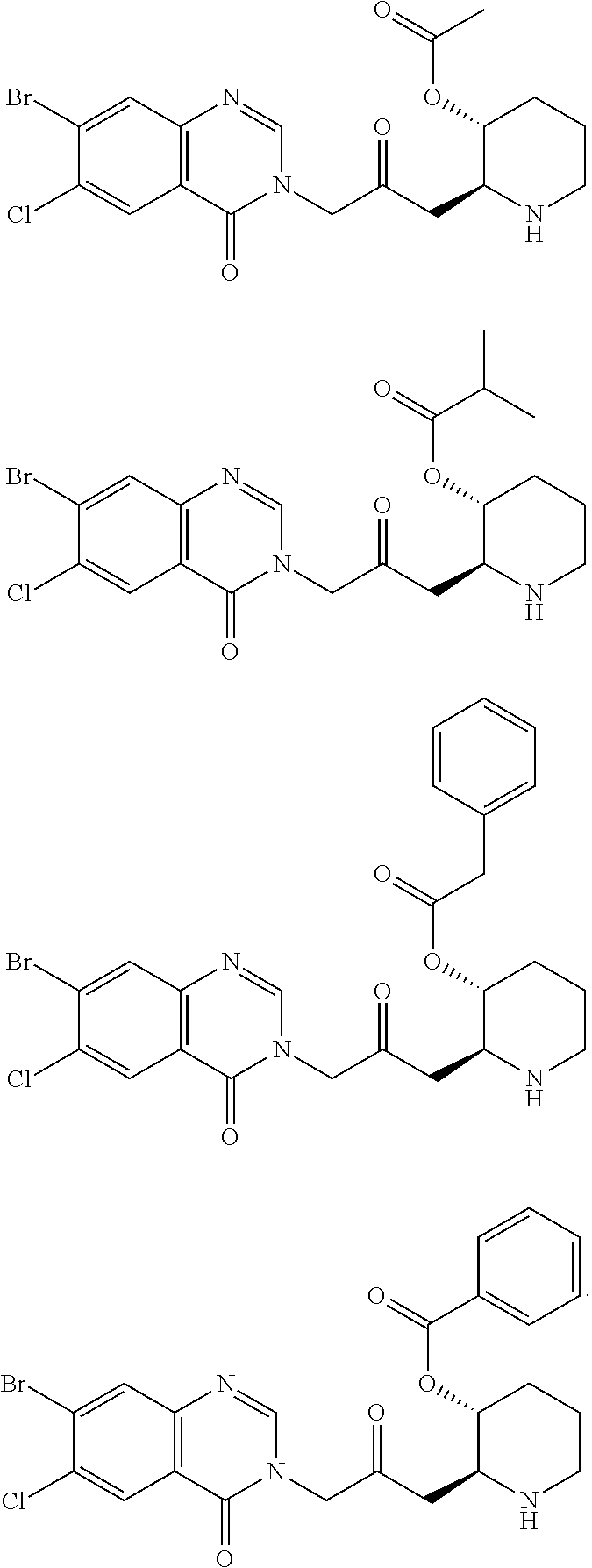
- In some embodiments, compounds of formula VIII or VIIIb are of the following formulae:
-

- In certain embodiments, the invention provides a compound of formula (IX) or a pharmaceutically acceptable salt thereof:
-

- wherein Z is ═O or ═N—NHRD, wherein RD is a hydrogen; a halogen; a protecting group; an aliphatic moiety; a heteroaliphatic moiety; an acyl moiety; an aryl moiety; a heteroaryl moiety; alkoxy; aryloxy; alkylthioxy; arylthioxy; amino; alkylamino; dialkylamino; heteroaryloxy; or heteroarylthioxy moiety;
- R1 is a protecting group; an aliphatic moiety; a heteroaliphatic moiety; an acyl moiety; an aryl moiety; a heteroaryl moiety; —C(═O)RA; —C(═O)ORA; —C(═O)N(RA)2; —SO2RA; —S(═O)RA; —C(RA)2NHC(═O)RA; C(═O)OCH2OC(═O)RA; C(═O)OCH2OC(═O)ORA; or —C(RA)2OC(═O)RA; wherein each occurrence of RA is independently a hydrogen; a halogen; a protecting group; an aliphatic moiety; a heteroaliphatic moiety; an acyl moiety; an aryl moiety; a heteroaryl moiety; alkoxy; aryloxy; alkylthioxy; arylthioxy; amino; alkylamino; dialkylamino; heteroaryloxy; or heteroarylthioxy moiety; provided that R1 is not —CO2CH3 or —CO2CH2CH═CH2;
- RC is hydrogen; a protecting group; an aliphatic moiety; a heteroaliphatic moiety; an acyl moiety; an aryl moiety; a heteroaryl moiety; —C(═O)RC1; —C(═O)ORC1; —C(═O)N(RC1)2; —P(═O)(ORC1)2; —S(═O)(ORC1)2; or —C(RC1)2OC(═O)RC1; wherein each occurrence of RC1 is independently a hydrogen; a halogen; a protecting group; an aliphatic moiety; a heteroaliphatic moiety; an acyl moiety; an aryl moiety; a heteroaryl moiety; alkoxy; aryloxy; alkylthioxy; arylthioxy; amino; alkylamino; dialkylamino; heteroaryloxy; or heteroarylthioxy moiety;
- R6 is hydrogen; halogen; cyclic or acyclic, substituted or unsubstituted, branched or unbranched aliphatic; cyclic or acyclic, substituted or unsubstituted, branched or unbranched heteroaliphatic; substituted or unsubstituted, branched or unbranched acyl; substituted or unsubstituted, branched or unbranched aryl; substituted or unsubstituted, branched or unbranched heteroaryl; —ORK; —C(═O)RK; —CO2RK; —C(═O)N(RK)2; —CN; —SCN; —SRK; —SORK; —SO2RK; —NO2; —N(RK)2; —NHC(O)RK; or —C(RK)3; wherein each occurrence of RK is independently a hydrogen; a halogen; a protecting group; an aliphatic moiety; a heteroaliphatic moiety; an acyl moiety; an aryl moiety; a heteroaryl moiety; alkoxy; aryloxy; alkylthioxy; arylthioxy; amino; alkylamino; dialkylamino; heteroaryloxy; or heteroarylthioxy moiety; and
- RA1, RA2, RA3, an RA4 are independently hydrogen; halogen; substituted or unsubstituted aliphatic; substituted or unsubstituted heteroaliphatic; substituted or unsubstituted aryl; substituted or unsubstituted heteroaryl; —ORG; —SRG; —N(RG)2; and —C(RG)3; wherein each occurrence of RG is independently a hydrogen; a halogen; a protecting group; an aliphatic moiety; a heteroaliphatic moiety; an acyl moiety; an aryl moiety; a heteroaryl moiety; alkoxy; aryloxy; alkylthioxy; arylthioxy; amino; alkylamino; dialkylamino; heteroaryloxy; or heteroarylthioxy moiety.
- In certain embodiments, the compound is of the stereochemistry of formula (IXa):
-

- In certain embodiments, the compound is of the stereochemistry of formula (IXb):
-

- In certain embodiments, R1 of formula IX, IXa, or IXb is a suitable amino protecting group, as defined herein. In certain embodiments, R1 of formula IX, IXa, or IXb is an acyl group. In certain embodiments, R1 of formula IX, IXa, or IXb is an ester group. In certain embodiments, R1 of formula IX, IXa, or IXb is an aliphatic group. In certain embodiments, R1 of formula IX, IXa, or IXb is a heteroaliphatic group.
- In certain embodiments, R6 of formula IX, IXa, or IXb is hydrogen. In certain other embodiments, R6 of formula IX, IXa, or IXb is aliphatic. In certain embodiments, R6 of formula IX, IXa, or IXb is alkyl.
- In some embodiments, RA1 of formula IX, IXa, or IXb is hydrogen. In other embodiments, RA1 of formula IX, IXa, or IXb is a halogen. In certain embodiments, RA1 of formula IX, IXa, or IXb is chloro, bromo, or iodo. In certain embodiments, RA1 of formula IX, IXa, or IXb is a hydroxyl or alkoxy group. In some embodiments, RA1 of formula IX, IXa, or IXb is a substituted or unsubstituted aliphatic group. In certain embodiments, RA1 of formula IX, IXa, or IXb is a substituted or unsubstituted alkyl group. In certain embodiments, RA1 of formula IX, IXa, or IXb is a substituted or unsubstituted aryl group. In certain embodiments, RA1 of formula IX, IXa, or IXb is a substituted or unsubstituted alkenyl group. In certain other embodiments, RA1 of formula IX, IXa, or IXb is a substituted or unsubstituted alkynyl group. In some embodiments, RA1 of formula IX, IXa, or IXb is an acyl group. In some embodiments, RA1 of formula IX, IXa, or IXb is an amino group. In other embodiments, RA1 of formula IX, IXa, or IXb is a protected amino group.
- In some embodiments, RA2 of formula IX, IXa, or IXb is hydrogen. In other embodiments, RA2 of formula IX, IXa, or IXb is a halogen. In certain embodiments, RA2 of formula IX, IXa, or IXb is chloro, bromo, or iodo. In certain embodiments, RA2 of formula IX, IXa, or IXb is bromo. In certain embodiments, RA2 of formula IX, IXa, or IXb is a hydroxyl or alkoxy group. In some embodiments, RA2 of formula IX, IXa, or IXb is a substituted or unsubstituted aliphatic group. In certain embodiments, RA2 of formula IX, IXa, or IXb is a substituted or unsubstituted alkyl group. In certain embodiments, RA2 of formula IX, IXa, or IXb is a substituted or unsubstituted aryl group. In certain embodiments, RA2 of formula IX, IXa, or IXb is a substituted or unsubstituted alkenyl group. In certain other embodiments, RA2 of formula IX, IXa, or IXb is a substituted or unsubstituted alkynyl group. In some embodiments, RA2 of formula IX, IXa, or IXb is an acyl group. In some embodiments, RA2 of formula IX, IXa, or IXb is an amino group. In other embodiments, RA2 of formula IX, IXa, or IXb is a protected amino group.
- In some embodiments, RA3 of formula IX, IXa, or IXb is hydrogen. In other embodiments, RA3 of formula IX, IXa, or IXb is a halogen. In certain embodiments, RA3 of formula IX, IXa, or IXb is chloro, bromo, or iodo. In certain embodiments, RA3 of formula IX, IXa, or IXb is chloro. In certain embodiments, RA3 of formula IX, IXa, or IXb is a hydroxyl or alkoxy group. In some embodiments, RA3 of formula IX, IXa, or IXb is a substituted or unsubstituted aliphatic group. In certain embodiments, RA3 of formula IX, IXa, or IXb is a substituted or unsubstituted alkyl group. In certain embodiments, RA3 of formula IX, IXa, or IXb is a substituted or unsubstituted aryl group. In certain embodiments, RA3 of formula IX, IXa, or IXb is a substituted or unsubstituted alkenyl group. In certain other embodiments, RA3 of formula IX, IXa, or IXb is a substituted or unsubstituted alkynyl group. In some embodiments, RA3 of formula IX, IXa, or IXb is an acyl group. In some embodiments, RA3 of formula IX, IXa, or IXb is an amino group. In other embodiments, RA3 of formula IX, IXa, or IXb is a protected amino group.
- In some embodiments, RA4 of formula IX, IXa, or IXb is hydrogen. In some embodiments, RA4 of formula IX, IXa, or IXb is a halogen. In certain embodiments, RA4 of formula IX, IXa, or IXb is chloro, bromo, or iodo. In certain embodiments, RA4 of formula IX, IXa, or IXb is chloro. In certain embodiments, RA4 of formula IX, IXa, or IXb is bromo. In certain embodiments, RA4 of formula IX, IXa, or IXb is a hydroxyl or alkoxy group. In some embodiments, RA4 of formula IX, IXa, or IXb is a substituted or unsubstituted aliphatic group. In certain embodiments, RA4 of formula IX, IXa, or IXb is a substituted or unsubstituted alkyl group. In certain embodiments, RA4 of formula IX, IXa, or IXb is a substituted or unsubstituted aryl group. In certain embodiments, RA4 of formula IX, IXa, or IXb is a substituted or unsubstituted alkenyl group. In certain other embodiments, RA4 of formula IX, IXa, or IXb is a substituted or unsubstituted alkynyl group. In some embodiments, RA4 of formula IX, IXa, or IXb is an acyl group. In some embodiments, RA4 of formula IX, IXa, or IXb is an amino group. In other embodiments, RA4 of formula IX, IXa, or IXb is a protected amino group.
- In certain embodiments, RC of formula IX, IXa, or IXb is hydrogen. In certain embodiments, RC of formula IX, IXa, or IXb is a suitable hydroxyl protecting group, as defined herein. In certain embodiments, RC of formula IX, IXa, or IXb is an acyl group. In certain embodiments, RC of formula IX, IXa, or IXb is an ester group. In certain embodiments, RC of formula IX, IXa, or IXb is an aliphatic group. In certain embodiments, RC of formula IX, IXa, or IXb is a heteroaliphatic group. In certain embodiments, —ORC of formula IX, IXa, or IXb is a phosphate group. In certain other embodiments, —ORC of formula IX, IXa, or IXb is a sulfate group.
- In certain embodiments, Z of formula IX, IXa, or IXb is ═O. In certain other embodiments, Z of formula IX, IXa, or IXb is ═N—NHRD, where RD is as defined herein.
- In some embodiments, compounds of formula IX, IXa, or IXb are of the following formulae:
-

- In some embodiments, compounds of formula IX, IXa, or IXb are of the following formulae:
-

- In some embodiments, compounds of formula IX or IXa are of the following formulae:
-

- In some embodiments, compounds of formula IX or IXb are of the following formulae:
-

- In certain embodiments, the invention provides a compound of formula (X) or a pharmaceutically acceptable salt thereof:
-

- wherein
- j is an integer between 0 and 10, inclusive;
- p is an integer between 0 and 6, inclusive;
- q is an integer between 0 and 6, inclusive;
- m is an integer between 1 and 2, inclusive;
- v is an integer between 1 and 3, inclusive;
- X is N or CRX, wherein RX is hydrogen; halogen; substituted or unsubstituted aliphatic; substituted or unsubstituted heteroaliphatic; substituted or unsubstituted aryl; substituted or unsubstituted heteroaryl; —ORF; —SRF; —N(RF)2; and —C(RF)3; wherein each occurrence of RF is independently a hydrogen; a halogen; a protecting group; an aliphatic moiety; a heteroaliphatic moiety; an acyl moiety; an aryl moiety; a heteroaryl moiety; alkoxy; aryloxy; alkylthioxy; arylthioxy; amino; alkylamino; dialkylamino; heteroaryloxy; or heteroarylthioxy moiety;
- each occurrence of Y is S, O, N, NRY, or CRY, wherein each occurrence of RY is independently hydrogen; halogen; cyclic or acyclic, substituted or unsubstituted, branched or unbranched aliphatic; cyclic or acyclic, substituted or unsubstituted, branched or unbranched heteroaliphatic; substituted or unsubstituted, branched or unbranched acyl; substituted or unsubstituted, branched or unbranched aryl; substituted or unsubstituted, branched or unbranched heteroaryl; —ORG; —C(═O)RG; —CO2RG; —C(═O)N(RG)2; —CN; —SCN; —SRG; —SORG; —SO2RG; —NO2; —N(RG)2; —NHC(O)RG; or —C(RG)3; wherein each occurrence of RG is independently a hydrogen; a halogen; a protecting group; an aliphatic moiety; a heteroaliphatic moiety; an acyl moiety; an aryl moiety; a heteroaryl moiety; alkoxy; aryloxy; alkylthioxy; arylthioxy; amino; alkylamino; dialkylamino; heteroaryloxy; or heteroarylthioxy moiety;
- each occurrence of T and G is independently —S—, —O—, —NRE—, or C(RE)2—, wherein each occurrence of RE is independently hydrogen; halogen; substituted or unsubstituted aliphatic; substituted or unsubstituted heteroaliphatic; substituted or unsubstituted aryl; substituted or unsubstituted heteroaryl; —ORG; —SRG; —N(RG)2; and —C(RG)3; wherein each occurrence of RG is independently a hydrogen; a halogen; a protecting group; an aliphatic moiety; a heteroaliphatic moiety; an acyl moiety; an aryl moiety; a heteroaryl moiety; alkoxy; aryloxy; alkylthioxy; arylthioxy; amino; alkylamino; dialkylamino; heteroaryloxy; or heteroarylthioxy moiety;
- RZ is —O— or —S—;
- each occurrence of R2 is independently hydrogen; halogen; cyclic or acyclic, substituted or unsubstituted, branched or unbranched aliphatic; cyclic or acyclic, substituted or unsubstituted, branched or unbranched heteroaliphatic; substituted or unsubstituted, branched or unbranched acyl; substituted or unsubstituted, branched or unbranched aryl; substituted or unsubstituted, branched or unbranched heteroaryl; —ORB; —C(═O)RB; —CO2RB; —C(═O)N(RB)2; —CN; —SCN; —SRB; —SORB; —SO2RB; —NO2; —N(RB)2; —NHC(O)RB; or —C(RB)3; wherein each occurrence of RB is independently a hydrogen; a halogen; a protecting group; an aliphatic moiety; a heteroaliphatic moiety; an acyl moiety; an aryl moiety; a heteroaryl moiety; alkoxy; aryloxy; alkylthioxy; arylthioxy; amino; alkylamino; dialkylamino; heteroaryloxy; or heteroarylthioxy moiety;
- R3 is hydrogen; halogen; cyclic or acyclic, substituted or unsubstituted, branched or unbranched aliphatic; cyclic or acyclic, substituted or unsubstituted, branched or unbranched heteroaliphatic; substituted or unsubstituted, branched or unbranched acyl; substituted or unsubstituted, branched or unbranched aryl; substituted or unsubstituted, branched or unbranched heteroaryl; —ORC; —C(═O)RC; —CO2RC; —C(═O)N(RC)2; —CN; —SCN; —SRC; —SORC; —SO2RC; —NO2; —N(RC)2; —NHC(O)RC; or —C(RC)3; wherein each occurrence of RC is independently a hydrogen; a halogen; a protecting group; an aliphatic moiety; a heteroaliphatic moiety; an acyl moiety; an aryl moiety; a heteroaryl moiety; alkoxy; aryloxy; alkylthioxy; arylthioxy; amino; alkylamino; dialkylamino; heteroaryloxy; or heteroarylthioxy moiety;
- R4 and R5 are independently hydrogen; halogen; cyclic or acyclic, substituted or unsubstituted, branched or unbranched aliphatic; cyclic or acyclic, substituted or unsubstituted, branched or unbranched heteroaliphatic; substituted or unsubstituted, branched or unbranched acyl; substituted or unsubstituted, branched or unbranched aryl; substituted or unsubstituted, branched or unbranched heteroaryl; —ORD; —C(═O)RD; —CO2RD; —C(═O)N(RD)2; —CN; —SCN; —SRD; —SORD; —SO2RD; —NO2; —N(RD)2; —NHC(O)RD; or —C(RD)3; wherein each occurrence of RD is independently a hydrogen; a halogen; a protecting group; an aliphatic moiety; a heteroaliphatic moiety; an acyl moiety; an aryl moiety; a heteroaryl moiety; alkoxy; aryloxy; alkylthioxy; arylthioxy; amino; alkylamino; dialkylamino; heteroaryloxy; or heteroarylthioxy moiety; or
- R4 and R5 may optionally be taken together to form ═O, ═S, ═NRD, ═N—ORD, ═N—NHRD, ═N—N(RD)2, ═C(RD)2; or
- R4 and R5 may optionally be taken together with the intervening atom to form a saturated or unsaturated, substituted or unsubstituted cyclic or heterocyclic structure; and
- R6 is hydrogen; halogen; cyclic or acyclic, substituted or unsubstituted, branched or unbranched aliphatic; cyclic or acyclic, substituted or unsubstituted, branched or unbranched heteroaliphatic; substituted or unsubstituted, branched or unbranched acyl; substituted or unsubstituted, branched or unbranched aryl; substituted or unsubstituted, branched or unbranched heteroaryl; —ORK; —C(═O)RK; —CO2RK; —C(═O)N(RK)2; —CN; —SCN; —SRK; —SORK; —SO2RK; —NO2; —N(RK)2; —NHC(O)RK; or —C(RK)3; wherein each occurrence of RK is independently a hydrogen; a halogen; a protecting group; an aliphatic moiety; a heteroaliphatic moiety; an acyl moiety; an aryl moiety; a heteroaryl moiety; alkoxy; aryloxy; alkylthioxy; arylthioxy; amino; alkylamino; dialkylamino; heteroaryloxy; or heteroarylthioxy moiety.
- In certain embodiments, the compound is of the stereochemistry of formula (Xa):
-

- In certain embodiments, the compound is of the stereochemistry of formula (Xb):
-

- In certain embodiments, Rz of formula X, Xa, or Xb is —O—. In certain other embodiments, Rz of formula X, Xa, or Xb is —S—.
- In some embodiments, R2 of formula X, Xa, or Xb is hydrogen. In other embodiments, R2 of formula X, Xa, or Xb is a halogen. In certain embodiments, R2 of formula X, Xa, or Xb is chloro, bromo, or iodo. In certain embodiments, R2 of formula X, Xa, or Xb is a hydroxyl or alkoxyl group. In some embodiments, R2 of formula X, Xa, or Xb is a substituted or unsubstituted aliphatic group. In certain embodiments, R2 of formula X, Xa, or Xb is a substituted or unsubstituted aryl group. In certain embodiments, R2 of formula X, Xa, or Xb is an amino group. In certain other embodiments, R2 of formula X, Xa, or Xb is a cyano group. In some embodiments, R2 of formula X, Xa, or Xb is a carboxylic acid or ester group.
- In certain embodiments, R3 of formula X, Xa, or Xb is hydrogen. In certain other embodiments, R3 of formula X, Xa, or Xb is hydroxyl. In certain embodiments, R3 of formula X, Xa, or Xb is alkoxy. In certain embodiments, R3 of formula X, Xa, or Xb is a protected hydroxyl group. In certain embodiments, R3 of formula X, Xa, or Xb is phosphate. In certain embodiments, R3 of formula X, Xa, or Xb is sulfate. In certain other embodiments, R3 of formula X, Xa, or Xb is acetate (—OAc). In some embodiments, R3 of formula X, Xa, or Xb is a thioxy group. In some embodiments, R3 of formula X, Xa, or Xb is an amino group. In some embodiments, R3 of formula X, Xa, or Xb is a protected amino group.
- In certain embodiments, R4 of formula X, Xa, or Xb is hydrogen. In certain other embodiments, R4 of formula X, Xa, or Xb is hydroxyl. In certain embodiments, R4 of formula X, Xa, or Xb is alkoxy. In certain embodiments, R4 of formula X, Xa, or Xb is a protected hydroxyl group. In certain embodiments, R4 of formula X, Xa, or Xb is a substituted or unsubstituted aliphatic or heteroaliphatic group. In some embodiments, R4 of formula X, Xa, or Xb is an amino group. In some embodiments, R4 of formula X, Xa, or Xb is a protected amino group.
- In certain embodiments, R5 of formula X, Xa, or Xb is hydrogen. In certain other embodiments, R5 of formula X, Xa, or Xb is hydroxyl. In certain embodiments, R5 of formula X, Xa, or Xb is alkoxy. In certain embodiments, R5 of formula X, Xa, or Xb is a protected hydroxyl group. In certain embodiments, R5 of formula X, Xa, or Xb is a substituted or unsubstituted aliphatic or heteroaliphatic group. In some embodiments, R5 of formula X, Xa, or Xb is an amino group. In some embodiments, R5 of formula X, Xa, or Xb is a protected amino group.
- In certain embodiments, R4 and R5 of formula X, Xa, or Xb are taken together to form ═O. In some embodiments, R4 and R5 of formula X, Xa, or Xb are taken together to form ═S. In other embodiments, R4 and R5 of formula X, Xa, or Xb are taken together to form ═NRD, and RD is as described herein. In certain embodiments, R4 and R5 of formula X, Xa, or Xb are taken together to form ═N—ORD. In certain other embodiments, R4 and R5 of formula X, Xa, or Xb are taken together to form ═N—NHRD. In certain other embodiments, R4 and R5 of formula X, Xa, or Xb are taken together to form ═N—N(RD)2. In some embodiments, R4 and R5 of formula X, Xa, or Xb are taken together to form ═C(RD)2. In certain embodiments, R4 and R5 of formula X, Xa, or Xb are taken together to form ═CH2.
- In some embodiments, R4 and R5 of formula X, Xa, or Xb are taken together with the intervening carbon to form a ring. In some embodiments, the ring formed is an oxetane ring. In certain embodiments, the ring formed is an aziridine ring. In certain embodiments, the ring formed is an azetidine ring. In certain embodiments, the ring formed is an epoxide ring. In certain other embodiments, the ring formed is a cyclopropyl ring. In some embodiments, the ring formed is a cyclic acetal.
- In certain embodiments, R6 of formula X, Xa, or Xb is hydrogen. In certain other embodiments, R6 of formula X, Xa, or Xb is aliphatic. In certain embodiments, R6 of formula X, Xa, or Xb is alkyl.
- In certain embodiments, j of formula X, Xa, or Xb is 0. In certain embodiments, j is 1. In certain embodiments, j is 2, 3, 4, 5, 6, 7, 8, 9, or 10.
- In some embodiments, m of formula X, Xa, or Xb is 1. In other embodiments, ‘ m of formula X, Xa, or Xb is 2.
- In some embodiments, at least one instance of Y of formula X, Xa, or Xb is CH. In some embodiments, Y of formula X, Xa, or Xb is CRY, where RY is as defined herein. In other embodiments, Y is S. In certain embodiments, Y is N. In certain other embodiments, Y is NRY. In other embodiments, Y is O. In some embodiments, all instances of Y are CRY. In other embodiments, at least one instance of Y is not CRY. In yet other embodiments, at least two instances of Y are not CRY.
- In some embodiments, RY of formula X, Xa, or Xb is hydrogen. In other embodiments, RY of formula X, Xa, or Xb is a halogen. In certain embodiments, RY of formula X, Xa, or Xb is chloro, bromo, or iodo. In certain embodiments, RY of formula X, Xa, or Xb is a hydroxyl or alkoxy group. In some embodiments, RY of formula X, Xa, or Xb is a substituted or unsubstituted aliphatic group. In certain embodiments, RY of formula X, Xa, or Xb is a substituted or unsubstituted alkyl group. In certain embodiments, RY of formula X, Xa, or Xb is a substituted or unsubstituted aryl group. In certain embodiments, RY of formula X, Xa, or Xb is a substituted or unsubstituted alkenyl group. In certain other embodiments, RY of formula X, Xa, or Xb is a substituted or unsubstituted alkynyl group. In some embodiments, RY of formula X, Xa, or Xb is an acyl group. In other embodiments, RY of formula X, Xa, or Xb is an amino group. In certain embodiments, RY of formula X, Xa, or Xb is a protected amino group.
- In certain embodiments, Y of formula X, Xa, or Xb is CRY and RY is hydrogen. In some embodiments, Y of formula X, Xa, or Xb is CRY and RY is bromo. In other embodiments, Y of formula X, Xa, or Xb is CRY and RY is chloro.
- In certain embodiments, T of formula X, Xa, or Xb is —C(RE)2—, where RE is as defined herein. In some embodiments, T is —O—. In other embodiments, T is —S—. In certain embodiments, T is —NRE—. In certain embodiments, p is 1. In other embodiments, p is 2, 3, 4, 5, or 6.
- In certain embodiments, G of formula X, Xa, or Xb is —C(RE)2—, where RE is as defined herein. In some embodiments, G is —O—. In other embodiments, G is —S—. In certain embodiments, G is —NRE—. In certain embodiments, q is 1. In other embodiments, q is 2, 3, 4, 5, or 6.
- In some embodiments, compounds of formula X, Xa, or Xb are of the following formulae:
-

- In some embodiments, compounds of formula X, Xa, or Xb are of the following formulae:
-

- In some embodiments, compounds of formula X or Xa are of the following formulae:
-

- In some embodiments, compounds of formula X or Xb are of the following formulae:
-
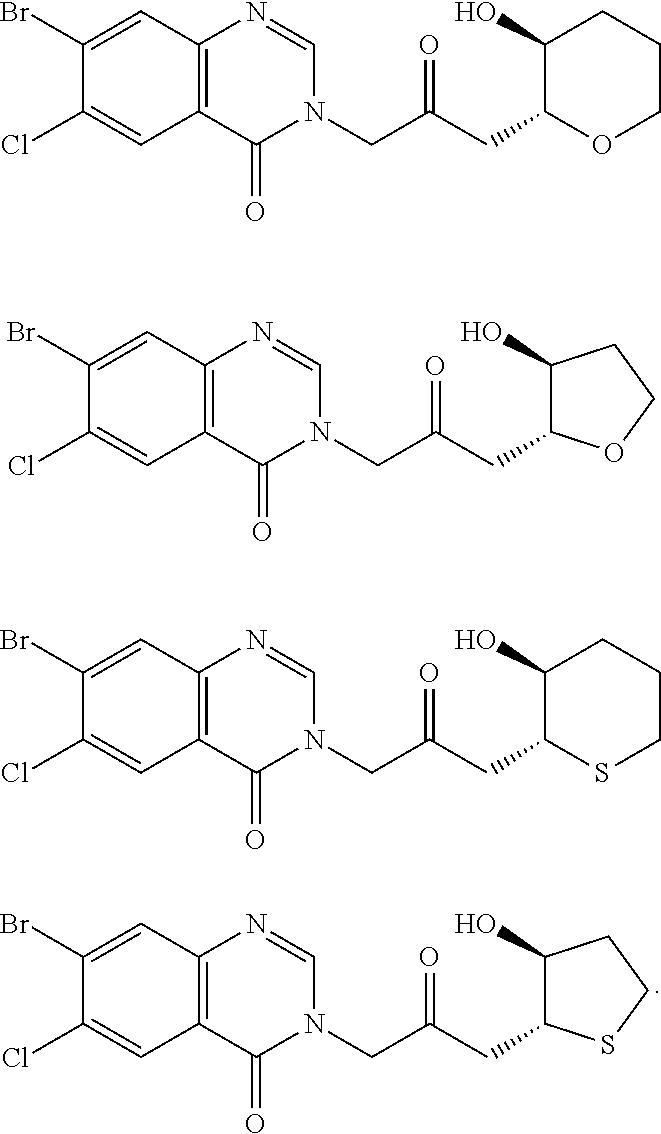
- In certain embodiments, the invention provides a compound of formula (XI) or a pharmaceutically acceptable salt thereof:
-

- wherein
- represents a double or triple bond;

- n is an integer between 0 and 3, inclusive;
- j is an integer between 0 and 8, inclusive;
- R1 is hydrogen; a protecting group; cyclic or acyclic, substituted or unsubstituted, branched or unbranched aliphatic; cyclic or acyclic, substituted or unsubstituted, branched or unbranched heteroaliphatic; substituted or unsubstituted, branched or unbranched acyl; substituted or unsubstituted, branched or unbranched aryl; substituted or unsubstituted, branched or unbranched heteroaryl; —C(═O)RA; —C(═O)ORA; —C(═O)N(RA)2; or —C(RA)3; wherein each occurrence of RA is independently a hydrogen; a halogen; a protecting group; an aliphatic moiety; a heteroaliphatic moiety; an acyl moiety; an aryl moiety; a heteroaryl moiety; alkoxy; aryloxy; alkylthioxy; arylthioxy; amino; alkylamino; dialkylamino; heteroaryloxy; or heteroarylthioxy moiety;
- each occurrence of RY is independently hydrogen; halogen; cyclic or acyclic, substituted or unsubstituted, branched or unbranched aliphatic; cyclic or acyclic, substituted or unsubstituted, branched or unbranched heteroaliphatic; substituted or unsubstituted, branched or unbranched acyl; substituted or unsubstituted, branched or unbranched aryl; substituted or unsubstituted, branched or unbranched heteroaryl; —ORG; —C(═O)RG; —CO2RG; —C(═O)N(RG)2; —CN; —SCN; —SRG; —SORG; —SO2RG; —NO2; —N(RG)2; —NHC(O)RG; or —C(RG)3; wherein each occurrence of RG is independently a hydrogen; a halogen; a protecting group; an aliphatic moiety; a heteroaliphatic moiety; an acyl moiety; an aryl moiety; a heteroaryl moiety; alkoxy; aryloxy; alkylthioxy; arylthioxy; amino; alkylamino; dialkylamino; heteroaryloxy; or heteroarylthioxy moiety;
- each occurrence of R2 is independently hydrogen; halogen; cyclic or acyclic, substituted or unsubstituted, branched or unbranched aliphatic; cyclic or acyclic, substituted or unsubstituted, branched or unbranched heteroaliphatic; substituted or unsubstituted, branched or unbranched acyl; substituted or unsubstituted, branched or unbranched aryl; substituted or unsubstituted, branched or unbranched heteroaryl; —ORB; —C(═O)RB; —CO2RB; —C(═O)N(RB)2; —CN; —SCN; —SRB; —SORB; —SO2RB; —NO2; —N(RB)2; —NHC(O)RB; or —C(RB)3; wherein each occurrence of RB is independently a hydrogen; a halogen; a protecting group; an aliphatic moiety; a heteroaliphatic moiety; an acyl moiety; an aryl moiety; a heteroaryl moiety; alkoxy; aryloxy; alkylthioxy; arylthioxy; amino; alkylamino; dialkylamino; heteroaryloxy; or heteroarylthioxy moiety;
- R3 is hydrogen; halogen; cyclic or acyclic, substituted or unsubstituted, branched or unbranched aliphatic; cyclic or acyclic, substituted or unsubstituted, branched or unbranched heteroaliphatic; substituted or unsubstituted, branched or unbranched acyl; substituted or unsubstituted, branched or unbranched aryl; substituted or unsubstituted, branched or unbranched heteroaryl; —ORC; —C(═O)RC; —CO2RC; —C(═O)N(RC)2; —CN; —SCN; —SRC; —SORC; —SO2RC; —NO2; —N(RC)2; —NHC(O)RC; or —C(RC)3; wherein each occurrence of RC is independently a hydrogen; a halogen; a protecting group; an aliphatic moiety; a heteroaliphatic moiety; an acyl moiety; an aryl moiety; a heteroaryl moiety; alkoxy; aryloxy; alkylthioxy; arylthioxy; amino; alkylamino; dialkylamino; heteroaryloxy; or heteroarylthioxy moiety;
- R6 is hydrogen; halogen; cyclic or acyclic, substituted or unsubstituted, branched or unbranched aliphatic; cyclic or acyclic, substituted or unsubstituted, branched or unbranched heteroaliphatic; substituted or unsubstituted, branched or unbranched acyl; substituted or unsubstituted, branched or unbranched aryl; substituted or unsubstituted, branched or unbranched heteroaryl; —ORK; —C(═O)RK; —CO2RK; —C(═O)N(RK)2; —CN; —SCN; —SRK; —SORK; —SO2RK; —NO2; —N(RK)2; —NHC(O)RK; or —C(RK)3; wherein each occurrence of RK is independently a hydrogen; a halogen; a protecting group; an aliphatic moiety; a heteroaliphatic moiety; an acyl moiety; an aryl moiety; a heteroaryl moiety; alkoxy; aryloxy; alkylthioxy; arylthioxy; amino; alkylamino; dialkylamino; heteroaryloxy; or heteroarylthioxy moiety; and
- R7 is hydrogen; halogen; cyclic or acyclic, substituted or unsubstituted, branched or unbranched aliphatic; cyclic or acyclic, substituted or unsubstituted, branched or unbranched heteroaliphatic; substituted or unsubstituted, branched or unbranched acyl; substituted or unsubstituted, branched or unbranched aryl; substituted or unsubstituted, branched or unbranched heteroaryl; —ORC; —C(═O)RC; —CO2RC; —C(═O)N(RC)2; —CN; —SCN; —SRC; —SORC; —SO2RC; —NO2; —N(RC)2; —NHC(O)RC; —Si(RC)3; or —C(RC)3; wherein each occurrence of RC is independently a hydrogen; a halogen; a protecting group; an aliphatic moiety; a heteroaliphatic moiety; an acyl moiety; an aryl moiety; a heteroaryl moiety; alkoxy; aryloxy; alkylthioxy; arylthioxy; amino; alkylamino; dialkylamino; heteroaryloxy; or heteroarylthioxy moiety.
- In certain embodiments, the compound is of the stereochemistry of formula (XIa):
-

- In certain embodiments, the compound is of the stereochemistry of formula (XIb):
-

- In certain embodiments,of formula XI, XIa, or XIb represents a triple bond. In certain other embodiments,of formula XI, XIa, or XIb represents a double bond.
- In certain embodiments, R1 of formula XI, XIa, or XIb is hydrogen. In certain other embodiments, R1 of formula XI, XIa, or XIb is a suitable amino protecting group, as defined herein.
- In some embodiments, R2 of formula XI, XIa, or XIb is hydrogen. In other embodiments, R2 of formula XI, XIa, or XIb is a halogen. In certain embodiments, R2 of formula XI, XIa, or XIb is chloro, bromo, or iodo. In certain embodiments, R2 of formula XI, XIa, or XIb is a hydroxyl or alkoxyl group. In some embodiments, R2 of formula XI, XIa, or XIb is a substituted or unsubstituted aliphatic group. In certain embodiments, R2 of formula XI, XIa, or XIb is a substituted or unsubstituted aryl group. In certain embodiments, R2 of formula XI, XIa, or XIb is an amino group. In certain other embodiments, R2 of formula XI, XIa, or XIb is a cyano group. In some embodiments, R2 of formula XI, XIa, or XIb is a carboxylic acid or ester group.
- In certain embodiments, R3 of formula XI, XIa, or XIb is hydrogen. In certain other embodiments, R3 of formula XI, XIa, or XIb is hydroxyl. In certain embodiments, R3 of formula XI, XIa, or XIb is alkoxy. In certain embodiments, R3 of formula XI, XIa, or XIb is a protected hydroxyl group. In certain embodiments, R3 of formula XI, XIa, or XIb is phosphate. In certain embodiments, R3 of formula XI, XIa, or XIb is sulfate. In certain other embodiments, R3 of formula XI, XIa, or XIb is acetate (—OAc). In some embodiments, R3 of formula XI, XIa, or XIb is a thioxy group. In some embodiments, R3 of formula XI, XIa, or XIb is an amino group. In some embodiments, R3 of formula XI, XIa, or XIb is a protected amino group.
- In certain embodiments, R6 of formula XI, XIa, or XIb is hydrogen. In certain other embodiments, R6 of formula XI, XIa, or XIb is aliphatic. In certain embodiments, R6 of formula XI, XIa, or XIb is alkyl.
- In certain embodiments, j of formula XI, XIa, or XIb is 0. In certain embodiments, j is 1. In certain embodiments, j is 2. In certain embodiments, j is 3, 4, 5, 6, 7, or 8.
- In some embodiments, R7 of formula XI, XIa, or XIb is hydrogen. In other embodiments, R7 of formula XI, XIa, or XIb is a halogen. In some embodiments, R7 of formula XI, XIa, or XIb is a silyl group. In certain embodiments, R7 of formula XI, XIa, or XIb is a trialkylsilyl group. In some embodiments, R7 of formula XI, XIa, or XIb is a substituted or unsubstituted aliphatic group. In some embodiments, R7 of formula XI, XIa, or XIb is a substituted or unsubstituted heteroaliphatic group. In certain embodiments, R7 of formula XI, XIa, or XIb is a substituted or unsubstituted aryl group. In some embodiments, R7 of formula XI, XIa, or XIb is a carboxylic acid or ester group. In other embodiments, R7 of formula XI, XIa, or XIb is an amide group.
- In some embodiments, RY of formula XI, XIa, or XIb is hydrogen. In other embodiments, RY of formula XI, XIa, or XIb is a halogen. In certain embodiments, RY of formula XI, XIa, or XIb is chloro, bromo, or iodo. In certain embodiments, RY of formula XI, XIa, or XIb is a hydroxyl or alkoxyl group. In some embodiments, RY of formula XI, XIa, or XIb is a substituted or unsubstituted aliphatic group. In certain embodiments, RY of formula XI, XIa, or XIb is a substituted or unsubstituted alkyl group. In certain embodiments, RY of formula XI, XIa, or XIb is a substituted or unsubstituted aryl group. In certain embodiments, RY of formula XI, XIa, or XIb is a substituted or unsubstituted alkenyl group. In certain other embodiments, RY of formula XI, XIa, or XIb is a substituted or unsubstituted alkynyl group. In some embodiments, RY of formula XI, XIa, or XIb is an acyl group. In other embodiments, RY of formula XI, XIa, or XIb is an amino group. In certain embodiments, RY of formula XI, XIa, or XIb is a protected amino group.
- In some embodiments, n of formula XI, XIa, or XIb is 0, 1, 2, or 3. In some embodiments, n is 0. In certain embodiments, n is 1. In certain other embodiments, n is 2. In some embodiments, n is 3.
- In some embodiments, compounds of formula XI, XIa, or XIb are of the following formulae:
-

- Exemplary compounds of formula XI or XIa include:
-

- Exemplary compounds of formula XI or XIb include:
-

- In certain embodiments, the invention provides a compound of formula (XII) or a pharmaceutically acceptable salt thereof:
-

- wherein
- Ar represents a substituted or unsubstituted aryl or heteroaryl group; n is an integer between 0 and 3, inclusive;
- j is an integer between 0 and 8, inclusive;
- R1 is hydrogen; a protecting group; cyclic or acyclic, substituted or unsubstituted, branched or unbranched aliphatic; cyclic or acyclic, substituted or unsubstituted, branched or unbranched heteroaliphatic; substituted or unsubstituted, branched or unbranched acyl; substituted or unsubstituted, branched or unbranched aryl; substituted or unsubstituted, branched or unbranched heteroaryl; —C(═O)RA; —C(═O)ORA; —C(═O)N(RA)2; or —C(RA)3; wherein each occurrence of RA is independently a hydrogen; a halogen; a protecting group; an aliphatic moiety; a heteroaliphatic moiety; an acyl moiety; an aryl moiety; a heteroaryl moiety; alkoxy; aryloxy; alkylthioxy; arylthioxy; amino; alkylamino; dialkylamino; heteroaryloxy; or heteroarylthioxy moiety;
- each occurrence of RY is independently hydrogen; halogen; cyclic or acyclic, substituted or unsubstituted, branched or unbranched aliphatic; cyclic or acyclic, substituted or unsubstituted, branched or unbranched heteroaliphatic; substituted or unsubstituted, branched or unbranched acyl; substituted or unsubstituted, branched or unbranched aryl; substituted or unsubstituted, branched or unbranched heteroaryl; —ORG; —C(═O)RG; —CO2RG; —C(═O)N(RG)2; —CN; —SCN; —SRG; —SORG; —SO2RG; —NO2; —N(RG)2; —NHC(O)RG; or —C(RG)3; wherein each occurrence of RG is independently a hydrogen; a halogen; a protecting group; an aliphatic moiety; a heteroaliphatic moiety; an acyl moiety; an aryl moiety; a heteroaryl moiety; alkoxy; aryloxy; alkylthioxy; arylthioxy; amino; alkylamino; dialkylamino; heteroaryloxy; or heteroarylthioxy moiety;
- each occurrence of R2 is independently hydrogen; halogen; cyclic or acyclic, substituted or unsubstituted, branched or unbranched aliphatic; cyclic or acyclic, substituted or unsubstituted, branched or unbranched heteroaliphatic; substituted or unsubstituted, branched or unbranched acyl; substituted or unsubstituted, branched or unbranched aryl; substituted or unsubstituted, branched or unbranched heteroaryl; —ORB; —C(═O)RB; —CO2RB; —C(═O)N(RB)2; —CN; —SCN; —SRB; —SORB; —SO2RB; —NO2; —N(RB)2; —NHC(O)RB; or —C(RB)3; wherein each occurrence of RB is independently a hydrogen; a halogen; a protecting group; an aliphatic moiety; a heteroaliphatic moiety; an acyl moiety; an aryl moiety; a heteroaryl moiety; alkoxy; aryloxy; alkylthioxy; arylthioxy; amino; alkylamino; dialkylamino; heteroaryloxy; or heteroarylthioxy moiety;
- R3 is hydrogen; halogen; cyclic or acyclic, substituted or unsubstituted, branched or unbranched aliphatic; cyclic or acyclic, substituted or unsubstituted, branched or unbranched heteroaliphatic; substituted or unsubstituted, branched or unbranched acyl; substituted or unsubstituted, branched or unbranched aryl; substituted or unsubstituted, branched or unbranched heteroaryl; —ORC; —C(═O)RC; —CO2RC; —C(═O)N(RC)2; —CN; —SCN; —SRC; —SORC; —SO2RC; —NO2; —N(RC)2; —NHC(O)RC; or —C(RC)3; wherein each occurrence of RC is independently a hydrogen; a halogen; a protecting group; an aliphatic moiety; a heteroaliphatic moiety; an acyl moiety; an aryl moiety; a heteroaryl moiety; alkoxy; aryloxy; alkylthioxy; arylthioxy; amino; alkylamino; dialkylamino; heteroaryloxy; or heteroarylthioxy moiety; and
- R6 is hydrogen; halogen; cyclic or acyclic, substituted or unsubstituted, branched or unbranched aliphatic; cyclic or acyclic, substituted or unsubstituted, branched or unbranched heteroaliphatic; substituted or unsubstituted, branched or unbranched acyl; substituted or unsubstituted, branched or unbranched aryl; substituted or unsubstituted, branched or unbranched heteroaryl; —ORK; —C(═O)RK; —CO2RK; —C(═O)N(RK)2; —CN; —SCN; —SRK; —SORK; —SO2RK; —NO2; —N(RK)2; —NHC(O)RK; or —C(RK)3; wherein each of RK is independently a hydrogen; a halogen; a protecting group; an aliphatic moiety; a heteroaliphatic moiety; an acyl moiety; an aryl moiety; a heteroaryl moiety; alkoxy; aryloxy; alkylthioxy; arylthioxy; amino; alkylamino; dialkylamino; heteroaryloxy; or heteroarylthioxy moiety.
- In certain embodiments, the compound is of the stereochemistry of formula (XIIa):
-

- In certain embodiments, the compound is of the stereochemistry of formula (XIIb):
-

- In certain embodiments, R1 of formula XII, XIIa, or XIIb is hydrogen. In certain other embodiments, R1 of formula XII, XIIa, or XIIb is a suitable amino protecting group, as defined herein.
- In some embodiments, R2 of formula XII, XIIa, or XIIb is hydrogen. In other embodiments, R2 of formula XII, XIIa, or XIIb is a halogen. In certain embodiments, R2 of formula XII, XIIa, or XIIb is chloro, bromo, or iodo. In certain embodiments, R2 of formula XII, XIIa, or XIIb is a hydroxyl or alkoxyl group. In some embodiments, R2 of formula XII, XIIa, or XIIb is a substituted or unsubstituted aliphatic group. In certain embodiments, R2 of formula XII, XIIa, or XIIb is a substituted or unsubstituted aryl group. In certain embodiments, R2 of formula XII, XIIa, or XIIb is an amino group. In certain other embodiments, R2 of formula XII, XIIa, or XIIb is a cyano group. In some embodiments, R2 of formula XII, XIIa, or XIIb is a carboxylic acid or ester group.
- In certain embodiments, R3 of formula XII, XIIa, or XIIb is hydrogen. In certain other embodiments, R3 of formula XII, XIIa, or XIIb is hydroxyl. In certain embodiments, R3 of formula XII, XIIa, or XIIb is alkoxy. In certain embodiments, R3 of formula XII, XIIa, or XIIb is a protected hydroxyl group. In certain embodiments, R3 of formula XII, XIIa, or XIIb is phosphate. In certain embodiments, R3 of formula XII, XIIa, or XIIb is sulfate. In certain other embodiments, R3 of formula XII, XIIa, or XIIb is acetate (—OAc). In some embodiments, R3 of formula XII, XIIa, or XIIb is a thioxy group. In some embodiments, R3 of formula XII, XIIa, or XIIb is an amino group. In some embodiments, R3 of formula XII, XIIa, or XIIb is a protected amino group.
- In certain embodiments, R6 of formula XII, XIIa, or XIIb is hydrogen. In certain other embodiments, R6 of formula XII, XIIa, or XIIb is aliphatic. In certain embodiments, R6 of formula XII, XIIa, or XIIb is alkyl.
- In certain embodiments, j of formula XII, XIIa, or XIIb is 0. In certain embodiments, j is 1. In certain embodiments, j is 2. In certain embodiments, j is 3, 4, 5, 6, 7, or 8.
- In some embodiments, RY of formula XII, XIIa, or XIIb is hydrogen. In other embodiments, RY of formula XII, XIIa, or XIIb is a halogen. In certain embodiments, RY of formula XII, XIIa, or XIIb is chloro, bromo, or iodo. In certain embodiments, RY of formula XII, XIIa, or XIIb is a hydroxyl or alkoxyl group. In some embodiments, RY of formula XII, XIIa, or XIIb is a substituted or unsubstituted aliphatic group. In certain embodiments, RY of formula XII, XIIa, or XIIb is a substituted or unsubstituted alkyl group. In certain embodiments, RY of formula XII, XIIa, or XIIb is a substituted or unsubstituted aryl group. In certain embodiments, RY of formula XII, XIIa, or XIIb is a substituted or unsubstituted alkenyl group. In certain other embodiments, RY of formula XII, XIIa, or XIIb is a substituted or unsubstituted alkynyl group. In some embodiments, RY of formula XII, XIIa, or XIIb is an acyl group. In other embodiments, RY of formula XII, XIIa, or XIIb is an amino group. In certain embodiments, RY of formula XII, XIIa, or XIIb is a protected amino group.
- In certain embodiments, Y of formula XII, XIIa, or XIIb is CRY and RY is hydrogen. In some embodiments, Y of formula XII, XIIa, or XIIb is CRY and RY is bromo. In other embodiments, Y of formula XII, XIIa, or XIIb is CRY and RY is chloro.
- In some embodiments, Ar of formula XII, XIIa, or XIIb is phenyl. In other embodiments, Ar of formula XII, XIIa, or XIIb is a nitrogen-containing heterocycle. In some embodiments, Ar of formula XII, XIIa, or XIIb is an oxygen-containing heterocycle. In certain embodiments, Ar of formula XII, XIIa, or XIIb is pyridyl. In some embodiments, Ar of formula XII, XIIa, or XIIb is pyrimidinyl. In some embodiments, Ar of formula XII, XIIa, or XIIb is triazolyl. In certain embodiments, Ar of formula XII, XIIa, or XIIb is thiazolyl. In some embodiments, Ar of formula XII, XIIa, or XIIb is furyl. In other embodiments, Ar of formula XII, XIIa, or XIIb is thienyl.
- In some embodiments, n of formula XII, XIIa, or XIIb is 0, 1, 2, or 3. In some embodiments, n is 0. In certain embodiments, n is 1. In certain other embodiments, n is 2. In some embodiments, n is 3.
- In certain embodiments, the invention provides a compound of formula (XIII) or a pharmaceutically acceptable salt thereof:
-

- wherein
- j is an integer between 0 and 6, inclusive;
- each occurrence of Y is independently S, O, N, or CRY, wherein each occurrence of RY is independently hydrogen; halogen; cyclic or acyclic, substituted or unsubstituted, branched or unbranched aliphatic; cyclic or acyclic, substituted or unsubstituted, branched or unbranched heteroaliphatic; substituted or unsubstituted, branched or unbranched acyl; substituted or unsubstituted, branched or unbranched aryl; substituted or unsubstituted, branched or unbranched heteroaryl; —ORG; —C(═O)RG; —CO2RG; —C(═O)N(RG)2; —CN; —SCN; —SRG; —SORG; —SO2RG; —NO2; —N(RG)2; —NHC(O)RG; or —C(RG)3; wherein each occurrence of RG is independently a hydrogen; a halogen; a protecting group; an aliphatic moiety; a heteroaliphatic moiety; an acyl moiety; an aryl moiety; a heteroaryl moiety; alkoxy; aryloxy; alkylthioxy; arylthioxy; amino; alkylamino; dialkylamino; heteroaryloxy; or heteroarylthioxy moiety;
- R1 is hydrogen; a protecting group; cyclic or acyclic, substituted or unsubstituted, branched or unbranched aliphatic; cyclic or acyclic, substituted or unsubstituted, branched or unbranched heteroaliphatic; substituted or unsubstituted, branched or unbranched acyl; substituted or unsubstituted, branched or unbranched aryl; substituted or unsubstituted, branched or unbranched heteroaryl; —C(═O)RA; —C(═O)ORA; —C(═O)N(RA)2; or —C(RA)3; wherein each occurrence of RA is independently a hydrogen; a halogen; a protecting group; an aliphatic moiety; a heteroaliphatic moiety; an acyl moiety; an aryl moiety; a heteroaryl moiety; alkoxy; aryloxy; alkylthioxy; arylthioxy; amino; alkylamino; dialkylamino; heteroaryloxy; or heteroarylthioxy moiety; provided that R1 is not a tert-butoxycarbonyl group;
- each occurrence of R2 is independently hydrogen; halogen; cyclic or acyclic, substituted or unsubstituted, branched or unbranched aliphatic; cyclic or acyclic, substituted or unsubstituted, branched or unbranched heteroaliphatic; substituted or unsubstituted, branched or unbranched acyl; substituted or unsubstituted, branched or unbranched aryl; substituted or unsubstituted, branched or unbranched heteroaryl; —ORB; —C(═O)RB; —CO2RB; —C(═O)N(RB)2; —CN; —SCN; —SRB; —SORB; —SO2RB; —NO2; —N(RB)2; —NHC(O)RB; or —C(RB)3; wherein each occurrence of RB is independently a hydrogen; a halogen; a protecting group; an aliphatic moiety; a heteroaliphatic moiety; an acyl moiety; an aryl moiety; a heteroaryl moiety; alkoxy; aryloxy; alkylthioxy; arylthioxy; amino; alkylamino; dialkylamino; heteroaryloxy; or heteroarylthioxy moiety;
- R3 is hydrogen; halogen; cyclic or acyclic, substituted or unsubstituted, branched or unbranched aliphatic; cyclic or acyclic, substituted or unsubstituted, branched or unbranched heteroaliphatic; substituted or unsubstituted, branched or unbranched acyl; substituted or unsubstituted, branched or unbranched aryl; substituted or unsubstituted, branched or unbranched heteroaryl; —ORC; —C(═O)RC; —CO2RC; —C(═O)N(RC)2; —CN; —SCN; —SRC; —SORC; —SO2RC; —NO2; —N(RC)2; —NHC(O)RC; or —C(RC)3; wherein each occurrence of RC is independently a hydrogen; a halogen; a protecting group; an aliphatic moiety; a heteroaliphatic moiety; an acyl moiety; an aryl moiety; a heteroaryl moiety; alkoxy; aryloxy; alkylthioxy; arylthioxy; amino, alkylamino, dialkylamino, heteroaryloxy; or heteroarylthioxy moiety; provided that R3 is not —OCH2Ph;
- R4 and R5 are independently hydrogen or —OH; or
- R4 and R5 may be taken together to form ═O; and
- R6 is hydrogen; halogen; cyclic or acyclic, substituted or unsubstituted, branched or unbranched aliphatic; cyclic or acyclic, substituted or unsubstituted, branched or unbranched heteroaliphatic; substituted or unsubstituted, branched or unbranched acyl; substituted or unsubstituted, branched or unbranched aryl; substituted or unsubstituted, branched or unbranched heteroaryl; —ORK; —C(═O)RK; —CO2RK; —C(═O)N(RK)2; —CN; —SCN; —SRK; —SORK; —SO2RK; —NO2; —N(RK)2; —NHC(O)RK; or —C(RK)3; wherein each occurrence of RK is independently a hydrogen; a halogen; a protecting group; an aliphatic moiety; a heteroaliphatic moiety; an acyl moiety; an aryl moiety; a heteroaryl moiety; alkoxy; aryloxy; alkylthioxy; arylthioxy; amino; alkylamino; dialkylamino; heteroaryloxy; or heteroarylthioxy moiety.
- In certain embodiments, the compound has the stereochemistry shown in formula (XIIIa):
-

- In certain embodiments, the compound has the stereochemistry shown in formula (XIIIb):
-

- In certain embodiments, the compound of formula XIII is of the formula:
-

- In certain embodiments, the compound of formula XIII is of the formula:
-

- In certain embodiments, the compound of formula XIII is of the formula:
-

- In certain embodiments, the compound of formula XIII is of the formula:
-

- In certain embodiments, the compound of formula XIII is of the formula:
-

- In certain embodiments, the compound of formula XIII is of the formula:
-

- In certain embodiments, the compound of formula XIII is of the formula:
-

- In certain embodiments, the compound of formula XIII is of the formula:
-

- In certain embodiments, the compound of formula XIII is of the formula:
-

- In certain embodiments, the compound of formula XIII is of the formula:
-

- In certain embodiments, the compound of formula XIII is of the formula:
-

- In certain embodiments, the compound of formula XIII is of the formula:
-

- In certain embodiments, the compound of formula XIII is of the formula:
-

- In certain embodiments, the compound of formula XIII is of the formula:
-

- In certain embodiments, the compound of formula XIII is of the formula:
-

- In certain embodiments, R1 of formula XIII, XIIIa, or XIIIb is hydrogen. In certain other embodiments, R1 of formula XIII, XIIIa, or XIIIb is a suitable amino protecting group, as defined herein.
- In some embodiments, R2 of formula XIII, XIIIa, or XIIIb is hydrogen. In other embodiments, R2 of formula XIII, XIIIa, or XIIIb is a halogen. In certain embodiments, R2 of formula XIII, XIIIa, or XIIIb is chloro, bromo, or iodo. In certain embodiments, R2 of formula XIII, XIIIa, or XIIIb is a hydroxyl or alkoxyl group. In some embodiments, R2 of formula XIII, XIIIa, or XIIIb is a substituted or unsubstituted aliphatic group. In certain embodiments, R2 of formula XIII, XIIIa, or XIIIb is a substituted or unsubstituted aryl group. In certain embodiments, R2 of formula XIII, XIIIa, or XIIIb is an amino group. In certain other embodiments, R2 of formula XIII, XIIIa, or XIIIb is a cyano group. In some embodiments, R2 of formula XIII, XIIIa, or XIIIb is a carboxylic acid or ester group.
- In certain embodiments, R3 of formula XIII, XIIIa, or XIIIb is hydrogen. In certain other embodiments, R3 of formula XIII, XIIIa, or XIIIb is hydroxyl. In certain embodiments, R3 of formula XIII, XIIIa, or XIIIb is alkoxy. In certain embodiments, R3 of formula XIII, XIIIa, or XIIIb is a protected hydroxyl group. In certain embodiments, R3 of formula XIII, XIIIa, or XIIIb is phosphate. In certain embodiments, R3 of formula XIII, XIIIa, or XIIIb is sulfate. In certain other embodiments, R3 of formula XIII, XIIIa, or XIIIb is acetate (—OAc). In some embodiments, R3 of formula XIII, XIIIa, or XIIIb is a thioxy group. In some embodiments, R3 of formula XIII, XIIIa, or XIIIb is an amino group. In some embodiments, R3 of formula XIII, XIIIa, or XIIIb is a protected amino group.
- In certain embodiments, R4 of formula XIII, XIIIa, or XIIIb is hydrogen. In certain other embodiments, R4 of formula XIII, XIIIa, or XIIIb is hydroxyl. In certain embodiments, R5 of formula XIII, XIIIa, or XIIIb is hydrogen. In certain other embodiments, R5 of formula XIII, XIIIa, or XIIIb is hydroxyl. In certain embodiments, R4 and R5 of formula XIII, XIIIa, or XIIIb are taken together to form ═O.
- In certain embodiments, R6 of formula XIII, XIIIa, or XIIIb is hydrogen. In certain other embodiments, R6 of formula XIII, XIIIa, or XIIIb is aliphatic. In certain embodiments, R6 of formula XIII, XIIIa, or XIIIb is alkyl.
- In certain embodiments, j of formula XIII, XIIIa, or XIIIb is 0. In certain embodiments, j is 1. In certain embodiments, j is 2. In certain embodiments, j is 3, 4, 5, or 6.
- In some embodiments, at least one instance of Y of formula XIII, XIIIa, or XIIIb is CH. In some embodiments, Y of formula XIII, XIIIa, or XIIIb is CRY, where RY is as defined herein. In other embodiments, Y is S. In certain embodiments, Y is N. In certain other embodiments, Y is NRY. In other embodiments, Y is O. In some embodiments, all instances of Y are CRY. In other embodiments, at least one instance of Y is not CRY. In yet other embodiments, at least two instances of Y are not CRY.
- In some embodiments, RY of formula XIII, XIIIa, or XIIIb is hydrogen. In other embodiments, RY of formula XIII, XIIIa, or XIIIb is a halogen. In certain embodiments, RY of formula XIII, XIIIa, or XIIIb is chloro, bromo, or iodo. In certain embodiments, RY of formula XIII, XIIIa, or XIIIb is a hydroxyl or alkoxy group. In some embodiments, RY of formula XIII, XIIIa, or XIIIb is a substituted or unsubstituted aliphatic group. In certain embodiments, RY of formula XIII, XIIIa, or XIIIb is a substituted or unsubstituted alkyl group. In certain embodiments, RY of formula XIII, XIIIa, or XIIIb is a substituted or unsubstituted aryl group. In certain embodiments, RY of formula XIII, XIIIa, or XIIIb is a substituted or unsubstituted alkenyl group. In certain other embodiments, RY of formula XIII, XIIIa, or XIIIb is a substituted or unsubstituted alkynyl group. In some embodiments, RY of formula XIII, XIIIa, or XIIIb is an acyl group. In other embodiments, RY of formula XIII, XIIIa, or XIIIb is an amino group. In certain embodiments, RY of formula XIII, XIIIa, or XIIIb is a protected amino group.
- In certain embodiments, Y of formula XIII, XIIIa, or XIIIb is CRY and RY is hydrogen. In some embodiments, Y of formula XIII, XIIIa, or XIIIb is CRY and RY is bromo. In other embodiments, Y of formula XIII, XIIIa, or XIIIb is CRY and RY is chloro. In certain embodiments, Y of formula XIII, XIIIa, or XIIIb is CRY and RY is —CN. In certain embodiments, Y of formula XIII, XIIIa, or XIIIb is CRY and RY is alkyl. In certain embodiments, Y of formula XIII, XIIIa, or XIIIb is CRY and RY is alkenyl. In certain embodiments, Y of formula XIII, XIIIa, or XIIIb is CRY and RY is alkynyl. In certain embodiments, Y of formula XIII, XIIIa, or XIIIb is CRY and RY is aryl. In certain embodiments, Y of formula XIII, XIIIa, or XIIIb is CRY and RY is phenyl. In certain embodiments, Y of formula XIII, XIIIa, or XIIIb is CRY and RY is benzylic. In certain embodiments, Y of formula XIII, XIIIa, or XIIIb is CRY and RY is heteroaryl. In certain embodiments, Y of formula XIII, XIIIa, or XIIIb is CRY and RY is pyridinyl. In certain embodiments, Y of formula XIII, XIIIa, or XIIIb is CRY and RY is carbocyclic. In certain embodiments, Y of formula XIII, XIIIa, or XIIIb is CRY and RY is heterocyclic. In certain embodiments, Y of formula XIII, XIIIa, or XIIIb is CRY and RY is morpholinyl. In certain embodiments, Y of formula XIII, XIIIa, or XIIIb is CRY and RY is piperidinyl.
- In some embodiments, compounds of formula XIII, XIIIa, or XIIIb are of the following formulae:
-

- In some embodiments, compounds of formula XIII, XIIIa, or XIIIb are of the following formulae:
-

- In some embodiments, compounds of formula XIII or XIIIa are of the following formulae:
-

- In some embodiments, compounds of formula XIII or XIIIb are of the following formulae:
-

- In some embodiments, compounds of formula XIII or XIIIa are of the following formulae:
-

- In some embodiments, compounds of formula XIII or XIIIb are of the following formulae:
-

- In certain embodiments, the invention provides a compound of formula (XIV) or a pharmaceutically acceptable salt thereof:
-

- wherein Z is ═O or ═N—NHRD, wherein RD is a hydrogen; a halogen; a protecting group; an aliphatic moiety; a heteroaliphatic moiety; an acyl moiety; an aryl moiety; a heteroaryl moiety; alkoxy; aryloxy; alkylthioxy; arylthioxy; amino; alkylamino; dialkylamino; heteroaryloxy; or heteroarylthioxy moiety;
- R1 is hydrogen; a protecting group; an aliphatic moiety; a heteroaliphatic moiety; an acyl moiety; an aryl moiety; a heteroaryl moiety; —C(═O)RA; —C(═O)ORA; —C(═O)N(RA)2; —SO2RA; —S(═O)RA; —C(RA)2NHC(═O)RA; C(═O)OCH2OC(═O)RA; C(═O)OCH2OC(═O)ORA; or —C(RA)2OC(═O)RA; wherein each occurrence of RA is independently a hydrogen; a halogen; a protecting group; an aliphatic moiety; a heteroaliphatic moiety; an acyl moiety; an aryl moiety; a heteroaryl moiety; alkoxy; aryloxy; alkylthioxy; arylthioxy; amino; alkylamino; dialkylamino; heteroaryloxy; or heteroarylthioxy moiety;
- RC is a protecting group; an aliphatic moiety; a heteroaliphatic moiety; an acyl moiety; an aryl moiety; a heteroaryl moiety; —C(═O)RC1; —C(═O)ORC1; —C(═O)N(RC1)2; —P(═O)(ORC1)2; —S(═O)(ORC1)2; or —C(RC1)2OC(═O)RC1; wherein each occurrence of RC1 is independently a hydrogen; a halogen; a protecting group; an aliphatic moiety; a heteroaliphatic moiety; an acyl moiety; an aryl moiety; a heteroaryl moiety; alkoxy; aryloxy; alkylthioxy; arylthioxy; amino; alkylamino; dialkylamino; heteroaryloxy; or heteroarylthioxy moiety; provided that RC is not methyl, ethyl, or acetyl;
- R6 is hydrogen; halogen; cyclic or acyclic, substituted or unsubstituted, branched or unbranched aliphatic; cyclic or acyclic, substituted or unsubstituted, branched or unbranched heteroaliphatic; substituted or unsubstituted, branched or unbranched acyl; substituted or unsubstituted, branched or unbranched aryl; substituted or unsubstituted, branched or unbranched heteroaryl; —ORK; —C(═O)RK; —CO2RK; —C(═O)N(RK)2; —CN; —SCN; —SRK; —SORK; —SO2RK; —NO2; —N(RK)2; —NHC(O)RK; or —C(RK)3; wherein each occurrence of RK is independently a hydrogen; a halogen; a protecting group; an aliphatic moiety; a heteroaliphatic moiety; an acyl moiety; an aryl moiety; a heteroaryl moiety; alkoxy; aryloxy; alkylthioxy; arylthioxy; amino; alkylamino; dialkylamino; heteroaryloxy; or heteroarylthioxy moiety; and
- RA1, RA2, RA3, and RA4 are independently hydrogen; halogen; substituted or unsubstituted aliphatic; substituted or unsubstituted heteroaliphatic; substituted or unsubstituted aryl; substituted or unsubstituted heteroaryl; —ORG; —SRG; —N(RG)2; and —C(RG)3; wherein each occurrence of RG is independently a hydrogen; a halogen; a protecting group; an aliphatic moiety; a heteroaliphatic moiety; an acyl moiety; an aryl moiety; a heteroaryl moiety; alkoxy; aryloxy; alkylthioxy; arylthioxy; amino; alkylamino; dialkylamino; heteroaryloxy; or heteroarylthioxy moiety.
- In certain embodiments, the compound is of the stereochemistry of formula (XIVa):
-

- In certain embodiments, the compound is of the stereochemistry of formula (XIVb):
-

- In certain embodiments, R1 of formula XIV, XIVa, or XIVb is hydrogen. In certain other embodiments, R1 of formula XIV, XIVa, or XIVb is a suitable amino protecting group, as defined herein.
- In certain embodiments, R6 of formula XIV, XIVa, or XIVb is hydrogen. In certain other embodiments, R6 of formula XIV, XIVa, or XIVb is aliphatic. In certain embodiments, R6 of formula XIV, XIVa, or XIVb is alkyl.
- In some embodiments, RA1 of formula XIV, XIVa, or XIVb is hydrogen. In other embodiments, RA1 of formula XIV, XIVa, or XIVb is a halogen. In certain embodiments, RA1 of formula XIV, XIVa, or XIVb is chloro, bromo, or iodo. In certain embodiments, RA1 of formula XIV, XIVa, or XIVb is a hydroxyl or alkoxyl group. In some embodiments, RA1 of formula XIV, XIVa, or XIVb is a substituted or unsubstituted aliphatic group. In certain embodiments, RA1 of formula XIV, XIVa, or XIVb is a substituted or unsubstituted alkyl group. In certain embodiments, RA1 of formula XIV, XIVa, or XIVb is a substituted or unsubstituted aryl group. In certain embodiments, RA1 of formula XIV, XIVa, or XIVb is a substituted or unsubstituted alkenyl group. In certain other embodiments, RA1 of formula XIV, XIVa, or XIVb is a substituted or unsubstituted alkynyl group. In some embodiments, RA1 of formula XIV, XIVa, or XIVb is an acyl group. In some embodiments, RA1 of formula XIV, XIVa, or XIVb is an amino group. In other embodiments, RA1 of formula XIV, XIVa, or XIVb is a protected amino group.
- In some embodiments, RA2 of formula XIV, XIVa, or XIVb is hydrogen. In other embodiments, RA2 of formula XIV, XIVa, or XIVb is a halogen. In certain embodiments, RA2 of formula XIV, XIVa, or XIVb is chloro, bromo, or iodo. In certain embodiments, RA2 of formula XIV, XIVa, or XIVb is bromo. In certain embodiments, RA2 of formula XIV, XIVa, or XIVb is a hydroxyl or alkoxyl group. In some embodiments, RA2 of formula XIV, XIVa, or XIVb is a substituted or unsubstituted aliphatic group. In certain embodiments, RA2 of formula XIV, XIVa, or XIVb is a substituted or unsubstituted alkyl group. In certain embodiments, RA2 of formula XIV, XIVa, or XIVb is a substituted or unsubstituted aryl group. In certain embodiments, RA2 of formula XIV, XIVa, or XIVb is a substituted or unsubstituted alkenyl group. In certain other embodiments, RA2 of formula XIV, XIVa, or XIVb is a substituted or unsubstituted alkynyl group. In some embodiments, RA2 of formula XIV, XIVa, or XIVb is an acyl group. In some embodiments, RA2 of formula XIV, XIVa, or XIVb is an amino group. In other embodiments, RA2 of formula XIV, XIVa, or XIVb is a protected amino group.
- In some embodiments, RA3 of formula XIV, XIVa, or XIVb is hydrogen. In other embodiments, RA3 of formula XIV, XIVa, or XIVb is a halogen. In certain embodiments, RA3 of formula XIV, XIVa, or XIVb is chloro, bromo, or iodo. In certain embodiments, RA3 of formula XIV, XIVa, or XIVb is chloro. In certain embodiments, RA3 of formula XIV, XIVa, or XIVb is a hydroxyl or alkoxyl group. In some embodiments, RA3 of formula XIV, XIVa, or XIVb is a substituted or unsubstituted aliphatic group. In certain embodiments, RA3 of formula XIV, XIVa, or XIVb is a substituted or unsubstituted alkyl group. In certain embodiments, RA3 of formula XIV, XIVa, or XIVb is a substituted or unsubstituted aryl group. In certain embodiments, RA3 of formula XIV, XIVa, or XIVb is a substituted or unsubstituted alkenyl group. In certain other embodiments, RA3 of formula XIV, XIVa, or XIVb is a substituted or unsubstituted alkynyl group. In some embodiments, RA3 of formula XIV, XIVa, or XIVb is an acyl group. In some embodiments, RA3 of formula XIV, XIVa, or XIVb is an amino group. In other embodiments, RA3 of formula XIV, XIVa, or XIVb is a protected amino group.
- In some embodiments, RA4 of formula XIV, XIVa, or XIVb is hydrogen. In some embodiments, RA4 of formula XIV, XIVa, or XIVb is a halogen. In certain embodiments, RA4 of formula XIV, XIVa, or XIVb is chloro, bromo, or iodo. In certain embodiments, RA4 of formula XIV, XIVa, or XIVb is chloro. In certain embodiments, RA4 of formula XIV, XIVa, or XIVb is bromo. In certain embodiments, RA4 of formula XIV, XIVa, or XIVb is a hydroxyl or alkoxyl group. In some embodiments, RA4 of formula XIV, XIVa, or XIVb is a substituted or unsubstituted aliphatic group. In certain embodiments, RA4 of formula XIV, XIVa, or XIVb is a substituted or unsubstituted alkyl group. In certain embodiments, RA4 of formula XIV, XIVa, or XIVb is a substituted or unsubstituted aryl group. In certain embodiments, RA4 of formula XIV, XIVa, or XIVb is a substituted or unsubstituted alkenyl group. In certain other embodiments, RA4 of formula XIV, XIVa, or XIVb is a substituted or unsubstituted alkynyl group. In some embodiments, RA4 of formula XIV, XIVa, or XIVb is an acyl group. In some embodiments, RA4 of formula XIV, XIVa, or XIVb is an amino group. In other embodiments, RA4 of formula XIV, XIVa, or XIVb is a protected amino group.
- In certain embodiments, RC of formula XIV, XIVa, or XIVb is a suitable hydroxyl protecting group, as defined herein. In certain embodiments, RC of formula XIV, XIVa, or XIVb is an acyl group. In certain embodiments, RC of formula XIV, XIVa, or XIVb is an ester group. In certain embodiments, RC of formula XIV, XIVa, or XIVb is an aliphatic group. In certain embodiments, RC of formula XIV, XIVa, or XIVb is a heteroaliphatic group. In certain embodiments, —ORC of formula XIV, XIVa, or XIVb is a phosphate group. In certain other embodiments, —ORC of formula XIV, XIVa, or XIVb is a sulfate group.
- In certain embodiments, Z of formula XIV, XIVa, or XIVb is ═O. In certain other embodiments, Z of formula XIV, XIVa, or XIVb is ═N—NHRD, wherein RD is as defined herein.
- In some embodiments, compounds of formula XIV, XIVa, or XIVb are of the following formulae:
-

- In some embodiments, compounds of formula XIV, XIVa, or XIVb are of the following formulae:
-

- In some embodiments, compounds of formula XIV or XIVa are of the following formulae:
-

- In some embodiments, compounds of formula XIV or XIVb are of the following formulae:
-

- In some embodiments, compounds of formula XIV, XIVa, or XIVb are of the following formulae:
-

- In some embodiments, compounds of formula XIV or XIVa are of the following formulae:
-

- In some embodiments, compounds of formula XIV or XIVb are of the following formulae:
-

- In some embodiments, compounds of formula XIV, XIVa, or XIVb are of the following formulae:
-

- In some embodiments, compounds of formula XIV or XIVa are of the following formulae:
-

- In some embodiments, compounds of formula XIV or XIVb are of the following formulae:
-

- Exemplary compounds of the invention include:
-


- Exemplary compounds of the invention include:
-


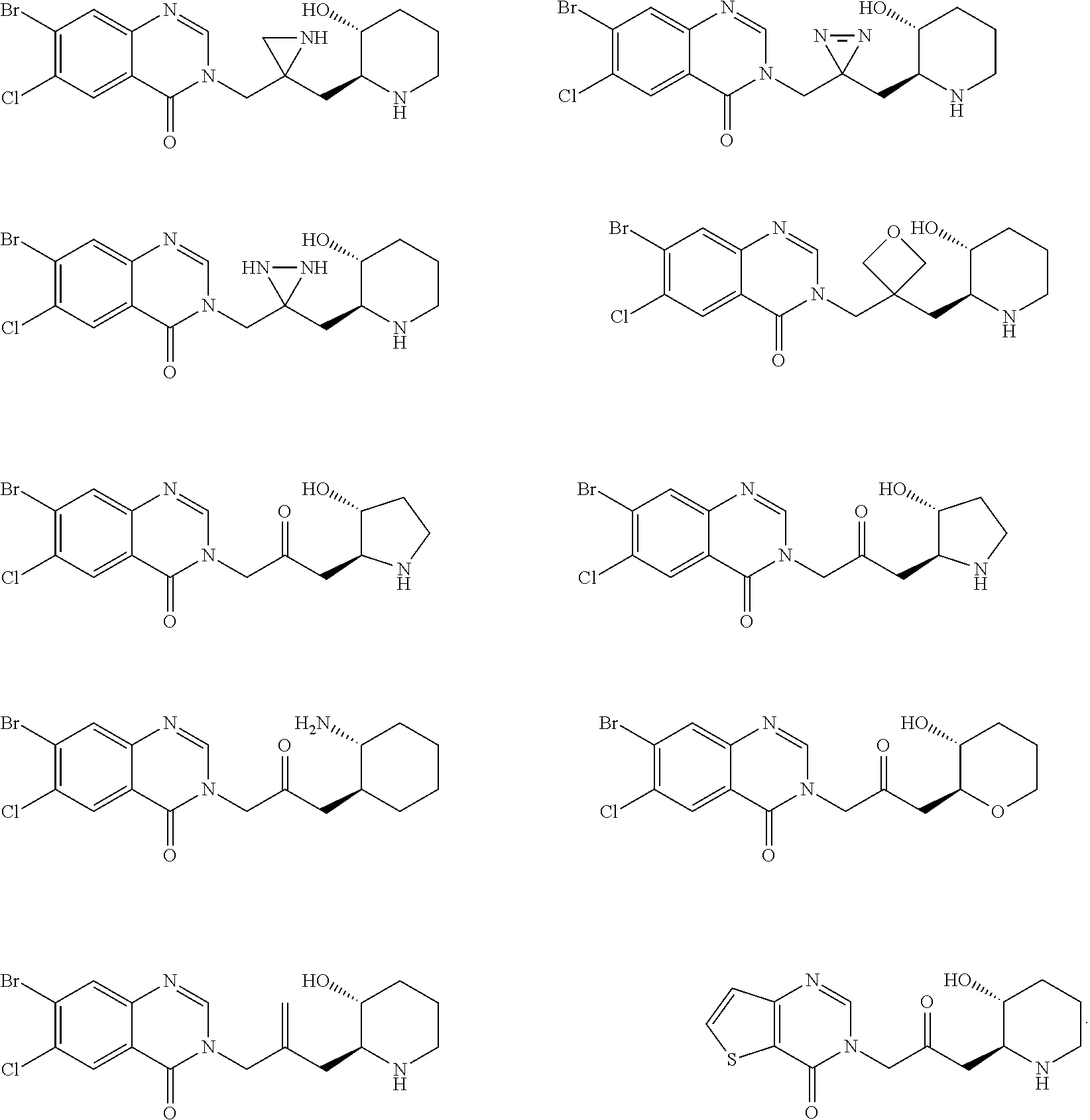
- The compounds provided by the present invention may be prepared via any synthetic route known to one of skill in the art. For example, the compounds may be prepared from simple, commercially available starting materials, of the compounds may be prepared semi-synthetically using more complex starting materials such as halofuginone or febrifugine. The inventive compounds may be prepared from literature procedures. U.S. Pat. No. 4,762,838; U.S. Patent Application Publication 2008/0188498; Emmanuvel et al., “A concise enantioselective synthesis of (+)-febrifugine” Tetrahedron: Asymmetry 20(1):84-88, 2009; Ooi et al., “A Concise Enantioselective Synthesis of Antimalarial Febrifugine Alkaloids” Organic Letters 3(6):953-955, 2001; Ashoorzadeh et al., “Synthetic evaluation of an enantiopure tetrahydropyridine N-oxide. Synthesis of (+)-febrifugine” Tetrahedron 65(24):4671-4680, 2009; Sukemoto et al., “Concise asymmetric synthesis of (+)-febrifugine utilizing trans-selective intramolecular conjugate addition” Synthesis (19):3081-3087, 2008; Kikuchi et al., “Exploration of a New Type of Antimalarial Compounds Based on Febrifugine” Journal of Medicinal Chemistry 49(15):4698-4706, 2006; Takaya et al., “New Type of Febrifugine Analogues, Bearing a Quinolizidine Moiety, Show Potent Antimalarial Activity against Plasmodium Malaria Parasite” Journal of Medicinal Chemistry 42(16):3163-3166, 1999. The inventive compounds may also be prepared from commercially available starting materials using the following synthetic schemes. The following are only meant to exemplify the routes available to a synthetic organic chemist for preparing the inventive compounds. As would be readily apparent to one of skill in this art, these exemplary schemes may be modified to use different starting materials, reagents, and/or reaction conditions.
- Various groups such as cyano, alkenyl, alkynyl, aryl, and amino may be substituted for the bromine of halofuginone or derivatives thereof as shown in the scheme below:
-

- The starting material S1 can be prepared according to literature procedures for closely related compounds. See, e.g., Kikuchi et al., J. Med. Chem. 49(15):4698-4706, 2006; Ooi et al., Org. Lett. 3:953-55, 2001; JP2002201192; CN1583729. The starting material S2 can be prepared according to literature procedures for closely related compounds. See, e.g., U.S. Patent Application Publication US 2008/0188498.
- In certain embodiments, inventive compounds are prepared wherein the phenyl moiety of the bicyclic quinazolinone ring system of halofuginone is replaced with a heteroaryl moiety such as thiophenyl, furanyl, pyridinyl, or pyrimidinyl. Such compounds may be prepared by the scheme:
-

- The starting material S3 can be prepared according to U.S. Patent Application Publication US 2008/0188498. Corresponding heterocycles for preparing such inventive compounds are either commercially available or can be prepared following literature procedures. Song, Heterocyclic Communications 13(1):33-34, 2007; Peng et al., Journal of Combinatorial Chemistry 9(3):431-436, 2007; Robba et al., Bulletin de la Societe Chimique de France 3-4(Pt. 2):587-91, 1975; Reigan et al., Bioorganic & Medicinal Chemistry Letters 14(21):5247-5250, 2004; Al-Shaar et al., Journal of the Chemical Society, Perkin Transactions 1: Organic and Bio-Organic Chemistry 21:2789-811, 1992; Hanami et al., Tetrahedron Letters 48(22):3801-3803, 2007; Vogel et al., Helvetica Chimica Acta 58(3):761-71, 1975; Heim-Riether et al., Journal of Organic Chemistry 70(18):7331-7337, 2005; Patil et al., Journal of Heterocyclic Chemistry 31(4):781-6, 1994.
- Inventive compounds with an amino group off the phenyl moiety of halofuginone or derivatives thereof may be prepared by the following exemplary route:
-

- Prodrugs (e.g., esters of the hydroxyproline) may be prepared by the follwing exemplary scheme:
-

- In
Scheme 1 below, intermediate 1A is either commercially available or is be prepared as described in literature procedures. Song, Heterocyclic Communications 13(1):33-34, 2007; Peng et al., Journal of Combinatorial Chemistry 9(3):431-436, 2007; Robba et al., Bulletin de la Societe Chimique de France 3-4(Pt. 2):587-91, 1975; Reigan et al., Bioorganic & Medicinal Chemistry Letters 14(21):5247-5250, 2004; Al-Shaar et al., Journal of the Chemical Society, Perkin Transactions 1: Organic and Bio-Organic Chemistry 21:2789-811, 1992. Intermediate 1B can be prepared following literature procedures with modest variations if necessary. U.S. Patent Application Publication 2008/0188498; Emmanuvel et al., “A concise enantioselective synthesis of (+)-febrifugine” Tetrahedron: Asymmetry 20(1):84-88, 2009; Ooi et al., “A Concise Enantioselective Synthesis of Antimalarial Febrifugine Alkaloids” Organic Letters 3(6):953-955, 2001; Ashoorzadeh et al., “Synthetic evaluation of an enantiopure tetrahydropyridine N-oxide. Synthesis of (+)-febrifugine” Tetrahedron 65(24):4671-4680, 2009; Sukemoto et al., “Concise asymmetric synthesis of (+)-febrifugine utilizing trans-selective intramolecular conjugate addition” Synthesis (19):3081-3087, 2008; Kikuchi et al., “Exploration of a New Type of Antimalarial Compounds Based on Febrifugine” Journal of Medicinal Chemistry 49(15):4698-4706, 2006; Takaya et al., “New Type of Febrifugine Analogues, Bearing a Quinolizidine Moiety, Show Potent Antimalarial Activity against Plasmodium Malaria Parasite” Journal of Medicinal Chemistry 42(16):3163-3166, 1999. Compound 1C can be prepared by reacting the nucleophilic 1A with the electrophilic 1B in the presence of a base, e.g., KH or K2CO3. -

- When R4 and R5 are taken together to form ═O, or R4 is hydrogen and R5 is hydroxyl, compounds 2C and 2D can be prepared following
Scheme 2. Intermediate 2B is prepared following literature procedures with modest variations if necessary. U.S. Patent Application Publication 2008/0188498; Kikuchi et al., “Exploration of a New Type of Antimalarial Compounds Based on Febrifugine” Journal of Medicinal Chemistry 49(15):4698-4706, 2006. Compound 2C is prepared by reacting the nucleophilic 1A with the electrophilic 2B in the presence of a base, e.g., KH or K2CO3. Compound 2C is then oxidized to provide compound 2D. In certain embodiments, the reaction conditions comprise TPAP and NMO at room temperature in the presence of ground molecular sieves. -

- When R4 and R5 are taken together to form ═NRD, compound 3A is prepared according to
Scheme 3. Reaction of compound 2D with primary amine RD—NH2 in the presence of an acid catalyst (e.g., formic acid, acetic acid, TiCl4) yields compound 3A. -

- When R4 and R5 are taken together to form ═N—NRD or ═N—N(RD)2, compound 4A or compound 4B can be prepared according to
Scheme 4. A mixture of intermediate 2D and the corresponding hydrazine are refluxed in methanol, ethanol, or another suitable solvent, optionally in the presence of an acid catalyst (e.g., acetic acid) to yield compound 4A or 4B. -

- When R4 and R5 are taken together to form ═N—ORD, compound 5A can be prepared according to
Scheme 5. A mixture of intermediate 2D and the corresponding hydroxylamine are refluxed in methanol, ethanol, or another suitable solvent, optionally in the presence of a base (e.g., pyridine, sodium acetate) to yield compound 5A. -

- When R4 and R5 are taken together to form ═S, compound 6A can be prepared according to
Scheme 6. Compound 6A can be prepared by treating intermediate 2D with Lawesson's reagent. -

- When R4 and R5 are taken together to form ═C(RD)2, compound 7A can be prepared according to
Scheme 7. Reaction of the ketone intermediate 2D with the corresponding Wittig reagent yields compound 7A. -

- When R4 and R5 are taken together with a neighboring atom to form a cyclopropyl ring, compound 8A can be prepared according to
Scheme 8. Intermediate 7A can be prepared followingScheme 7. Treatment of 7A with the corresponding carbene reagent yields the cyclopropyl compound 8A. -

- When R4 and R5 are taken together with a neighboring atom to form an epoxide ring, compounds 9A can be prepared according to
Scheme 9. Reaction of intermediate 7A with oxygen donors such as MCPBA, hydrogen peroxide, or tert-butyl peroxide provides compound 9A as the product. -

- When R4 and R5 are taken together with a neighboring atom to form an aziridine ring, compound 10A can be prepared according to
Scheme 10. Compound 10A is prepared by first reacting 7A with ICl and NaN3 in MeCN, followed by reductive ring closure with LiAlH4 in Et2O. -

- In
Scheme 11, compounds 11A-E can be prepared starting with the ketone intermediate 2D. Reductive amination of 2D with corresponding amine RD—NH2 with a catalytic amount of acetic acid and NaCNBH3 (or NaBH(OAc)3) in DCE can provide compound 11A. Subsequently, reaction of 11A with the corresponding acid chloride yields compound 11B; reaction of 11A with the corresponding sulfonyl chloride yields compound 11C; reaction of 11A with the corresponding chloroformate yields compound 11D; and reaction of 11A with the corresponding isocyanate yields compound 11E. -

- In
Scheme 12, reduction of intermediate 7A using H2 in the presence of a palladium or platinum catalyst, yields compounds 12A. -

- In
Scheme 13, the diaziridine compound 13A can be prepared by treating intermediate 2D with HOSO2ONH2 and NH3 in MeOH. Oxidation of 13A with Ag2O in Et2O then provides compound 13B. -

- In
Scheme 14, treatment of intermediate 2D with the corresponding 1,2-ethanediol in the presence of p-tosyl acid in toluene or another suitable solvent under reflux conditions yields compound 14A. -

- In
Scheme 15, refluxing of intermediate 2D with the corresponding 2-aminoethanol in toluene or another suitable solvent yields compound 15A. -

- In
Scheme 16, intermediate 1C is prepared according toScheme 1. Reaction of 1C with the corresponding chloroformate, acid chloride, isocyanate, or sulfonyl chloride provides compounds 16A, 16B, 16C, and 16D, respectively. -

- In
Scheme 17, alkylation of intermediate 1C with electrophile (RA)3C—Br (the leaving group can also be I, Cl, OMs, or OTs) provides compound 17A. Alternatively, reductive amination of 1C with the corresponding aldehyde (or ketone) provides compound 17B. -

- In
Scheme 18, cross-coupling of 1C with aryl bromide in the presence of a copper or palladium catalyst provides compound 18A. -

- In
Scheme 19, intermediate 1C can be prepared according toScheme 1. Reaction of compound 1C with the corresponding acid chloride, chloroformate, isocyanate, or phosphorochloridate yield compounds 19A, 19B, 19C, or 19D, respectively. -

- Inhibition of Glutamyl-Prolyl tRNA Synthetase (EPRS)
- Some of the analogs of halofuginone (1) described herein act as inhibitors of metazoan glutamyl-prolyl tRNA synthetase (EPRS) or non-metazoan prolyl tRNA synthetase. See
FIGS. 21 and 22 . In certain embodiments, the EPRS is a eukaryotic EPRS. In certain embodiments, the EPRS is a human EPRS. In certain embodiments, the prolyl tRNA synthetase is a protozoan prolyl tRNA synthetase. A structural feature of these inhibitors is a piperidine or pyrrolidine ring, or an analog thereof. Without wishing to be bound by a particular theory, it is believed that the piperidine ring of halofuginone (1) acts by binding in the active site of the tRNA synthetase like the pyrrolidine ring of proline, thus preventing the charging of the amino acid proline to the tRNA synthetase. - Inhibition of EPRS or other tRNA synthetases leads to the accumulation of uncharged prolyl tRNAs, which in turn activates the amino acid starvation response (AAR,
FIG. 1 ). Activation of the AAR in T-cells suppresses the differentiation of a subset of effector T-cells (Th17 cells) that promote autoimmunity. AAR also suppresses pro-fibrotic gene expression and viral gene expression, replication, and maturation. AAR may contribute to the protection of organs from stress (e.g., ER stress in the pancreas during the development of diabetes). - Inhibition of EPRS suppresses the synthesis and accumulation of proteins such as polyglutamine-containing proteins that cause neurodegenerative diseases such as Huntington's disease. This class of EPRS inhibitors also promotes autophagy, a process that clears protein aggregates in diseases such as Huntington's disease, Alzheimer's disease, Parkinson's disease, and amyotrophic lateral sclerosis (ALS). Halofuginone and similarly active compounds are therefore useful as promoters of autophagy.
- The specific inhibition of EPRS (as opposed to other tRNA synthetases) also inhibits the synthesis of proline-rich proteins such as collagen, which may be useful for the inhibition of scarring and fibrosis due to excess collagen deposition. Inhibition of collagen synthesis may be useful for cosmetic and therapeutic applications. The role of collagen in fibrosis makes the inventive compounds useful in various cosmetic and therapeutic applications associated with the accumulation of collagen.
- The synthesis of collagen and the degradation and remodelling of the ECM are also involved in a number of physiological and pathological conditions, including angiogenesis, systemic sclerosis, graft-versus-host disease (GVHD), pulmonary and hepatic fibrosis, and autoimmune diseases. These disease are many times associated with the excessive production of connective tissue components, particularly collagen, which results in the destruction of normal tissue architecture and function. Therefore, the inventive compounds may be useful in treating or preventing these diseases associated with collagen accumulation or the degradation and remodelling of the ECM.
- Halofuginone activates phosphorylation of eIF2alpha, a downstream component of the amino acid starvation response. The activation of eIF2alpha leads to the stimulation of an upstream kinase, GCN2, the activation of which is monitored by measuring its state of phosphorylation.
FIG. 1 shows that GCN2 is phosphorylated in response to halofuginone but not an inactive derivative of halofuginone. The ability of halofuginone to stimulate eIF2alpha phosphorylation is dependent on GCN2, as the ability to stimulate eIF2alpha is lost in cells lacking GCN2 (FIG. 2 ). Activation of GCN2 is well established to be regulated by the accumulation of uncharged tRNAs (Dong, et al., Mol. Cell. (2000) 6: 269-279). These data indicate that halofuginone acts either to limit the availability of amino acids for tRNA charging or to inhibit the enzymes that charge tRNA, the amino-acyl tRNA synthetases. The data detailed below show that halofuginone inhibits an amino-acyl tRNA synthetase, in particular, EPRS. - To distinguish these possibilities, the effect of halofuginone on protein translation was examined in an in vitro system (rabbit reticulocyte lysate) in which amino acids are already present at levels adequate to support protein synthesis. In this system, halofuginone at 400 nM inhibits translation of luciferase by 5-6 orders of magnitude (
FIG. 3 ), ruling out the possibility that halofuginone modifies amino acid synthesis or transport and indicating that it blocks tRNA synthetase activity. Distinct tRNA synthetases catalyze the charging of individual tRNA species with their cognate amino acid. To determine which tRNA synthetase is inhibited by halofuginone, several amino acid mixtures were added to the in vitro translation system to determine which, if any, could reverse the inhibition of translation by halofuginone (FIG. 3 ). When a mixture containing serine, phenylalanine, and proline was found to reverse the effect of halofuginone (FIG. 3 , Mix 4), the effect of each amino acid was tested. Only proline could rescue halofuginone inhibition, indicating that glutamyl-prolyl tRNA synthetase (EPRS), the enzyme responsible for proline tRNA aminoacylation, is specifically inhibited by halofuginone. To examine whether proline could specifically rescue the effect of halofuginone in intact cells, the ability of each amino acid to reverse the effect of halofuginone on eIF2alpha phosphorylation in T-cells or to prevent halofuginone inhibition of Th17 differentiation was tested (FIG. 4 ). Only proline had an effect in these assays, confirming that EPRS is the target for halofuginone in intact cells. Inhibition of EPRS with compounds of the current invention can inhibit Th17 differentiation. - Compounds of the invention may be screened to identify biological activity, e.g., the ability to modulate the development and/or expansion of Th17 cells by inhibiting EPRS, e.g., IL-17 secreting cells, in a subject. An assay for screening selective inhibitors of IL-17 expressing cell development and/or expansion, such as IL-17 expressing effector T-cell development and/or expansion, e.g., Th17 development and/or expansion includes contacting a naïve T-cell population with a test compound under conditions sufficient to allow T-cell development and/or expansion, culturing the cell population, and detecting the level of IL-17 expression and/or the number of Th17 cells in the cell population, wherein no change or a decrease in the level of IL-17 expression in the cell population indicates that the test compound is a selective Th17 inhibitor and/or wherein no change or a decrease in the number of Th17 cells in the cell population indicates that the test compound is a selective Th17 inhibitor. Determining the level of IL-17 expression and/or the number of Th17 cells in the cell population can be accomplished for example by using a detection agent that binds to IL-17 or other marker for Th17 cells, for example, the Th17-specific transcription factor RORgammat (RORγt). The detection agent is, for example, an antibody. The detection agent can be coupled with a radioisotope or enzymatic label such that binding of the detection agent to IL-17 or other Th17 marker can be determined by detecting the labeled compound. For example, the detection agent can be labeled with 125I, 35S, 14C, or 3H, either directly or indirectly, and the radioisotope detected by direct counting of radioemission or by scintillation counting. Alternatively, detection agents can be enzymatically labeled with, for example, horseradish peroxidase, alkaline phosphatase, or luciferase, and the enzymatic label detected by determination of conversion of an appropriate substrate to product.
- Methods of Modulating Th17 Cell Differentiation and/or Proliferation and other Cellular Functions Using Halofuginone Analogs and Compositions thereof.
- Halofuginone and analogs thereof have been found to specifically alter the development of T-cells away from the Th17 lineage, which is associated with cell-mediated damage, persistent inflammation, and autoimmunity.
- Th17 cells secrete several cytokines that may have a role in promoting inflammation and fibrosis, including IL-17, IL-6, IL-21, and GM-CSF. Of these cytokines, IL-17 is a specific product of Th17 cells, and not other T-cells. Whether Th17 cells are the only source of IL-17 during inflammatory response is not clear, but elevated IL-17 levels are in general thought to reflect expansion of the Th17 cell population.
- Diseases that have been associated with expansion of a Th17 cell population or increased IL-17 production include, but are not limited to, rheumatoid arthritis, multiple sclerosis, Crohn's disease, inflammatory bowel disease, dry eye syndrome, Lyme disease, airway inflammation, transplantation rejection, graft versus host disease, lupus, psoriasis, scleroderma, periodontitis, systemic sclerosis, coronary artery disease, myocarditis, atherosclerosis, diabetes, and inflammation associated with microbial infection (e.g., viral, protazoal, fungal, or bacterial infection).
- Halofuginone analogs can be useful for treatment of any of these diseases by suppressing the chronic inflammatory activity of IL-17 expressing cells, such as IL-17 expressing effector T-cells, e.g., Th17 cells. In some instances, this may address the root cause of the disease (e.g., self-sustaining inflammation in rheumatoid arthritis); in other cases (e.g., diabetes, periodontitis) it may not address the root cause but may ameloriate the symptoms associated with the disease.
- IL-17 expressing effector T-cells, e.g., Th17 cells, and their associated cytokine IL-17 provide a broad framework for predicting or diagnosing diseases potentially treatable by halofuginone analogs. Specifically, pre-clinical fibrosis and/or transplant/graft rejection could be identified and treated with a halofuginone analog, or with a halofuginone analog in combination with other Th17 antagonists. Additionally, diseases that are not currently associated with Th17 cell damage and persistence of inflammation may be identified through the measurement of Th17 cell expansion, or of increased IL-17 levels (e.g., in serum or synovial fluid). Alternatively, or in addition, the use of gene profiling to characterize sets of genes activated subsequent to Th17 differentiation may allow detection of Th17-affected tissues, prior to histological/pathologic changes in tissues.
- Halofuginone analogs could be used in combination with other agents that act to suppress Th17 development to achieve synergistic therapeutic effects. Current examples of potential synergistic agents would include anti-IL-21 antibodies or antigen binding fragments thereof, retinoic acid, or anti-IL-6 antibodies or antigen binding fragments thereof, all of which can reduce Th17 differentiation.
- Halofuginone analogs could be used in combination with other agents that act to suppress inflammation and/or immunological reactions, such as steroids (e.g., cortisol (hydrocortisone), dexamethasone, methylprednisolone, and/or prednisolone), non-steroidal anti-inflammatory drugs (NSAIDs; e.g., ibuprofen, acetominophin, aspirin, celecoxib, valdecoxib, etoricoxib, lumiracoxib, parecoxib, rofecoxib, nimesulide, and/or naproxen), or immunosuppressants (e.g., cyclosporine, rapamycin, and/or FK506). In certain embodiments, halofuginone analogs are used in combination with agents that are immunomodulatory (e.g., modulators of the mTOR pathway; thalidomide and derivatives thereof such as lenalidomide and actimid; biguanides such as metformin, phenformin, buformin, and proguanil; and HDAC inhibitors such as trichostatin A, depsipeptide, SAHA, PXD101, LAQ824, LBH589, MS275, CI994, MGCD0103, and valproic acid. In some embodiments, an agent that inhibits a tRNA synthetase is used in combination with an inhibitor of a proinflammatory cytokine. Proinflammatory cytokines that can be targeted (in addition to IL-6 and IL-21, discussed above) include TNFα, IFNγ, GM-CSF, MIP-2, IL-12, IL-1α, IL-I β, and IL-23. Examples of such inhibitors include antibodies that bind to the cytokine or that bind to a receptor of the cytokine and block its activity, agents that reduce expression of the cytokine (e.g., small interfering RNA (siRNA) or antisense agents), soluble cytokine receptors, and small molecule inhibitors (see, e.g., WO 2007/058990).
- In some embodiments, agents that inhibit tRNA synthetases are used in combination with an inhibitor of TNFα. In some embodiments, an inhibitor of TNFα comprises an anti-TNFα antibody or antigen binding fragment thereof. In some embodiments, the anti-TNFα antibody is adalimumab (Humira™). In some embodiments, the anti-TNFα antibody is infliximab (Remicade™). In some embodiments, the anti-TNFα antibody is CDP571. In some embodiments, an inhibitor of TNFα comprises a TNFα receptor. For example, in some embodiments, the TNFα inhibitor is etanercept (Enbrel™), which is a recombinant fusion protein having two soluble TNF receptors joined by the Fc fragment of a human IgG1 molecule. In some embodiments, an inhibitor of TNFα comprises an agent that inhibit expression of TNFα, e.g., such as nucleic acid molecules that mediate RNA interference (RNAi) (e.g., a TNFα selective siRNA or shRNA) or antisense oligonucleotides. For example, a TNFα inhibitor can include, e.g., a short interfering nucleic acid (siNA), a short interfering RNA (siRNA), a double-stranded RNA (dsRNA), or a short hairpin RNA (shRNA)(see, e.g., U.S. Patent Application No. 20050227935, incorporated herein by reference).
- Halofuginone analogs can be evaluated in animal models. To determine whether a particular halofuginone analog suppresses graft rejection, allogeneic or xenogeneic grafting (e.g., skin grafting, organ transplantion, or cell implantation) can be performed on an animal such as a rat, mouse, rabbit, guinea pig, dog, or non-human primate. Strains of mice such as C57B1-10, B10.BR, and B10.AKM (Jackson Laboratory, Bar Harbor, Me.), which have the same genetic background but are mismatched for the H-2 locus, are well suited for assessing various organ grafts.
- In another example, heart transplantation is performed, e.g., by performing cardiac grafts by anastomosis of the donor heart to the great vessels in the abdomen of the host as described by Ono et al., J. Thorac. Cardiovasc. Surg. 57:225, 1969. See also Corry et al., Transplantation 16:343, 1973. Function of the transplanted heart can be assessed by palpation of ventricular contractions through the abdominal wall. Rejection is defined as the cessation of myocardial contractions. A halofuginone analog would be considered effective in reducing organ rejection if animals treated with the inhibitor experience a longer period of myocardial contractions of the donor heart than do untreated hosts.
- In another example, effectiveness of a halofuginone analog at reducing skin graft rejection is assessed in an animal model. To perform skin grafts on a rodent, a donor animal is anesthetized and a full thickness skin is removed from a part of the tail. The recipient animal is also anesthetized, and a graft bed is prepared by removing a patch of skin (e.g., 0.5×0.5 cm) from the shaved flank. Donor skin is shaped to fit the graft bed, positioned, covered with gauze, and bandaged. Grafts are inspected daily beginning on the sixth post-operative day and are considered rejected when more than half of the transplanted epithelium appears to be non-viable. A halofuginone analog that causes a host to experience a longer period of engraftment than seen in an untreated host would be considered effective in this type of experiment.
- In another example, a halofuginone analog is evaluated in a pancreatic islet cell allograft model. DBA/2J islet cell allografts can be transplanted into rodents, such as 6-8 week-old B6 AF1 mice rendered diabetic by a single intraperitoneal injection of streptozotocin (225 mg/kg; Sigma Chemical Co., St. Louis, Mo.). As a control, syngeneic islet cell grafts can be transplanted into diabetic mice. Islet cell transplantation can be performed by following published protocols (for example, see Emamaullee et al., Diabetes 56(5):1289-98, 2007). Allograft function can be followed by serial blood glucose measurements (Accu-Check III™; Boehringer, Mannheim, Germany). A rise in blood glucose exceeding normal levels (on each of at least 2 successive days) following a period of primary graft function is indicative of graft rejection. The NOD (non-obese diabetic) mouse model is another model that can be used to evaluate ability of a halofuginone analog to treat or prevent type I diabetes.
- In another example, a tRNA synthetase inhibitor is evaluated in a model of dry eye disease (DED). In one such model, DED is induced in mice in a controlled environment chamber by administering scopolamine hydrobromide into the skin four times daily. Chamber conditions include a relative humidity <30%, airlflow of 15 L/min, and constant temperature (21-23° C.). Induction of dry eye can be confirmed by measuring changes in corneal integrity with corneal fluorescein staining (see, e.g., Chauhan et al., J. Immunol. 182:1247-1252, 2009; Barabino et al., Invest. Ophthamol. Visual Sci. 46:2766-2771, 2005; and Rashid et al., Arch. Ophthamol. 126: 219-225, 2008).
- Numerous autoimmune diseases have been modeled in animals, including rheumatic diseases, such as rheumatoid arthritis and systemic lupus erythematosus (SLE), type I diabetes, dry eye syndrome, and autoimmune diseases of the thyroid, gut, and central nervous system. For example, animal models of SLE include MRL mice, BXSB mice, and NZB mice and their F1 hybrids. The general health of the animal as well as the histological appearance of renal tissue can be used to determine whether the administration of a halofuginone analog can effectively suppress the immune response in an animal model of one of these diseases.
- Animal models of intestinal inflammation are described, for example, by Elliott et al. (Elliott et al., 1998, Inflammatory Bowel Disease and Celiac Disease. In: The Autoimmune Diseases, Third ed., N. R. Rose and I. R. MacKay, eds. Academic Press, San Diego, Calif.). Some mice with genetically engineered gene deletions develop chronic bowel inflammation similar to IBD. See, e.g., Elson et al., Gastroenterology 109:1344, 1995; Ludviksson et al., J. Immunol. 158:104, 1997; and Mombaerts et al., Cell 75:274, 1993). One of the MRL strains of mice that develops SLE, MRL-lpr/lpr, also develops a form of arthritis that resembles rheumatoid arthritis in humans (Theofilopoulos et al., Adv. Immunol. 37:269, 1985).
- Models of autoimmune disease in the central nervous system (CNS), such as experimental allergic encephalomyelitis (EAE), can also be experimentally induced, e.g., by injection of brain or spinal cord tissue with adjuvant into the animal (see, e.g., Steinman and Zamvil, Ann Neurol. 60:12-21, 2006). In one EAE model, C57B/6 mice are injected with an immunodominant peptide of myelin basic protein in Complete Freund's Adjuvant. EAE disease correlates such as limp tail, weak/altered gait, hind limb paralysis, forelimb paralysis, and morbidity are monitored in animals treated with a halofuginone analog as compared to controls.
- In addition to T cell differentiation processes, halofuginone analogs can specifically alter processes such as fibrosis and angiogenesis. Fibrosis can be assayed in vitro by observing the effect of a halofuginone analog on fibroblast behavior. In one exemplary assay for use in evaluating halofuginone analogs, primary dermal fibroblasts are cultured in a matrix of Type I collagen, which mimics the interstitial matrix of the dermis and hypodermis, such that fibroblasts attach to the substratum and spread. Inhibition of fibroblast attachment and spreading in the presence of a halofuginone analog indicates that the halofuginone analog has anti-fibrotic properties. Biological effects of halofuginone analogs on non-immune cell functions can also be evaluated in vivo. In some embodiments, a halofuginone analog reduces extracellular matrix deposition (e.g., in an animal model of wound healing; see, e.g., Pines et al., Biol. Bone Marrow Transplant 9:417-425, 2003). In some embodiments, a halofuginone analog reduces extracellular matrix deposition at a concentration lower than the concentration at which it inhibits another cellular function, such as cell proliferation or protein synthesis.
- The invention further provides methods of treating a disease using a halofuginone analog. The inventive method involves the administration of a therapeutically effective amount of a halofuginone analog to a subject (including, but not limited to a human or other animal).
- Compounds and compositions described herein are useful for the inhibition of glutamyl-prolyl tRNA synthetase (EPRS) Inhibition of EPRS leads to the accumulation of uncharged tRNAs, which in turn activate the amino acid starvation response (AAR). Activation of this response suppresses 1) pro-fibrotic gene expression; 2) the differentiation of naïve T-cells into Th17 cells that promote autoimmunity; 3) viral gene expression, replication, and maturation; and/or 4) stress to organs (e.g., during transplantation).
- In some embodiments, halofuginone analog that inhibits EPRS has anti-fibrotic properties in vivo. For example, an EPRS inhibitor, halofuginone, potently reduces dermal extracellular matrix (ECM) deposition (Pines et al., Biol. Blood Marrow Transplant 9: 417-425, 2003). Halofuginone inhibits the transcription of a number of components and modulators of ECM function, including Type I collagen, fibronectin, the matrix metallopeptidases MMP-2 and MMP-9, and the metalloprotease inhibitor TIMP-2 (Li et al., World J. Gastroenterol. 11: 3046-3050, 2005; Pines et al., Biol. Blood Marrow Transplant 9: 417-425, 2003). The major cell types responsible for altered ECM deposition, tissue thickening, and contracting during fibrosis are fibroblasts and myofibroblasts. Myofibroblasts mature/differentiate from their precursor fibroblasts in response to cytokine release, often following tissue damage and mechanical stress, and can be distinguished from fibroblasts in a wide range of organs and pathological conditions (Border et al., New Eng. J. Med. 331: 1286-1292, 1994; Branton et al., Microbes Infect. 1: 1349-1365, 1999; Flanders, Int. J. Exp. Pathol. 85: 47-64, 2004). Halofuginone has been studied extensively as a potential anti-fibrotic therapeutic and has progressed to
phase 2 clinical trials for applications stemming from these properties. - In animal models of wound healing and fibrotic disease, halofuginone reduces excess dermal ECM deposition when introduced intraperitoneally, added to food, or applied locally (Pines et al., Biol. Blood Marrow Transplant 9: 417-425, 2003). Halofuginone is currently in
phase 2 clinical trials as a treatment for scleroderma (Pines et al., Biol. Blood Marrow Transplant 9: 417-425, 2003), bladder cancer (Elkin et al., Cancer Res. 59: 4111-4118, 1999), and angiogenesis during Kaposi's sarcoma, as well as in earlier stages of clinical investigation for a wide range of other fibrosis-associated disorders (Nagler et al., Am. J. Respir. Crit. Care Med. 154: 1082-1086, 1996; Nagler et al., Arterioscler. Thromb. Vasc. Biol. 17: 194-202, 1997; Nagler et al., Eur. J. Cancer 40: 1397-1403, 2004; Ozcelik et al., Am. J. Surg. 187: 257-260, 2004). The results presented herein indicate that the inhibition of fibrosis may be due at least in part to the inhibition of glutamyl-prolyl tRNA synthetase (EPRS). - In some embodiments, a halofuginone analog inhibits pro-fibrotic activities of fibroblasts. Thus, in certain embodiments, the present invention provides a method for treating a fibroblast-associated disorder comprising the step of administering to a patient in need thereof a halofuginone analog or pharmaceutically acceptable composition thereof.
- As used herein, the term “fibroblast-associated” disorders means any disease or other deleterious condition in which fibroblasts are known to play a role. Accordingly, another embodiment of the present invention relates to treating or lessening the severity of one or more diseases in which fibroblasts are known to play a role including, but not limited to, fibrosis.
- While halofuginone at high concentrations (between 20-40 nM) does generally inhibit CD4+ T cell, CD8+ T cell, and B220+ B cell activation, halofuginone also specifically inhibits the development of Th17 cells, i.e., the T helper subset that exclusively expresses high levels of the pro-inflammatory cytokine interleukin IL-17, at low concentrations (PCT/US08/09774, filed Aug. 15, 2008, which claims priority to U.S. Ser. No. 60/964,936, filed Aug. 15, 2007, the entirety of each of which is incorporated herein by reference). Th17 cells, as a function of their IL-17 secretion, play causal roles in the pathogenesis of two important autoimmune diseases in the mouse, experimental autoimmune encephalomyelitis (EAE) and type II collagen-induced arthritis (CIA). EAE and CIA are murine models of the human autoimmune pathologies, multiple sclerosis (MS) and rheumatoid arthritis (RA). Halofuginone has been shown to be active in these models. Halofuginone-mediated specific inhibition of IL-17 expressing cell development, such as IL-17 expressing effector T cell development, e.g., Th17 cell development, takes place at remarkably low concentrations, with 50% inhibition being achieved around 3 nM. Therefore, halofuginone treatment specifically inhibits the development of Th17-mediated and/or IL-17 related diseases, including autoimmune diseases, persistent inflammatory diseases, and infectious diseases, while not leading to profound T cell dysfunction, either in the context of delayed-type hypersensitivity or infection. Halofuginone analogs can also be used to inhibit the development of Th17-mediated and/or IL-17 related diseases.
- Halofuginone and analogs thereof interfere with the differentiation of naïve T-cells into IL-17-expressing Th17 cells. Thus, in certain embodiments, the present invention provides a method for treating a Th17-mediated or IL-17-mediated disorder comprising the step of administering to a patient in need thereof a halofuginone analog or a pharmaceutically acceptable composition thereof.
- As used herein, the terms “Th17-mediated” disorder and “IL-17-mediated” disorder means any disease or other deleterious condition in which Th17 or IL-17 is known to play a role. Accordingly, another embodiment of the present invention relates to treating or lessening the severity of one or more diseases in which Th17 or IL-17 is known to play a role including, but not limited to, autoimmune diseases, inflammatory diseases, infectious diseases, angiogenesis, and organ protection during transplantation.
- The compounds and pharmaceutical compositions of the present invention may be used in treating or preventing diseases or conditions including, but not limited to, asthma, arthritis, inflammatory diseases (e.g., Crohn's disease, rheumatoid arthritis, psoriasis, dry eye syndrome), proliferative diseases (e.g., cancer, benign neoplasms, diabetic retinopathy), cardiovascular diseases, and autoimmune diseases (e.g., rheumatoid arthritis, lupus, multiple sclerosis, psoriasis, scleroderma, or dry eye syndrome). Halofuginone analogs and pharmaceutical compositions thereof may be administered to animals, preferably mammals (e.g., domesticated animals, cats, dogs, mice, rats), and more preferably humans. Any method of administration may be used to deliver the agent or pharmaceutical composition to the animal. In certain embodiments, the agent or pharmaceutical composition is administered orally. In other embodiments, the agent or pharmaceutical composition is administered parenterally.
- In certain embodiments, the present invention provides methods for treating or lessening the severity of autoimmune diseases including, but not limited to, acute disseminated encephalomyelitis, alopecia universalis, alopecia areata, Addison's disease, ankylosing spondylosis, antiphospholipid antibody syndrome, aplastic anemia, arthritis, autoimmune diseases of the adrenal gland, autoimmune hemolytic anemia, autoimmune hepatitis, autoimmune oophoritis and orchitis, autoimmune thrombocytopenia, Behcet's disease, bullous pemphigoid, cardiomyopathy, celiac sprue-dermatitis, celiac disease, chronic fatigue immune dysfunction syndrome (CFIDS), chronic inflammatory demyelinating polyneuropathy, Churg-Strauss syndrome, cicatrical pemphigoid, CREST syndrome, cold agglutinin disease, Crohn's disease, discoid lupus, dry eye syndrome, endometriosis, dysautonomia, essential mixed cryoglobulinemia, fibromyalgia-fibromyositis, glomerulonephritis, idiopathic pulmonary fibrosis, Goodpasture's syndrome, Graves' disease, Guillain-Barre syndrome, Hashimoto's thyroiditis, IgA neuropathy, inflammatory bowel disease, interstitial cystitis, juvenile arthritis, lichen planus, Meniere's disease, mixed connective tissue disease, type 1 or immune-mediated diabetes mellitus, juvenile arthritis, multiple sclerosis, myasthenia gravis, neuromyotonia, opsoclonus-myoclonus syndrome, optic neuritis, Ord's thyroiditis, osteoarthritis, pemphigus vulgaris, pernicious anemia, polyarteritis nodosa, polychrondritis, polyglandular syndromes, polymyalgia rheumatica, polymyositis and dermatomyositis, primary agammaglobulinemia, primary biliary cirrhosis, psoriasis, psoriatic arthritis, Raynauld's phenomenon, Reiter's syndrome, rheumatoid arthritis, sarcoidosis, scleroderma, Sjogren's syndrome, stiff-man syndrome, Still's disease, systemic lupus erythematosus, takayasu arteritis, temporal arteristis/giant cell arteritis, idiopathic thrombocytopenic purpura, ulcerative colitis, uveitis, vasculitides such as dermatitis herpetiformis vasculitis, vitiligo, vulvodynia, warm autoimmune hemolytic anemia, and Wegener's granulomatosis.
- In some embodiments, the present invention provides a method for treating or lessening the severity of one or more diseases and conditions, wherein the disease or condition is selected from immunological conditions or diseases, which include, but are not limited to graft versus host disease, transplantation, transfusion, anaphylaxis, allergies (e.g., allergies to plant pollens, latex, drugs, foods, insect poisons, animal hair, animal dander, dust mites, or cockroach calyx), type I hypersensitivity, allergic conjunctivitis, allergic rhinitis, and atopic dermatitis.
- In some embodiments, the present invention provides a method for treating or lessening the severity of an inflammatory disease including, but not limited to, asthma, appendicitis, Blau syndrome, blepharitis, bronchiolitis, bronchitis, bursitis, cervicitis, cholangitis, cholecystitis, chronic obstructive pulmonary disease (COPD), chronic recurrent multifocal osteomyelitis (CRMO), colitis, conjunctivitis, cryopyrin associated periodic syndrome (CAPS), cystitis, dacryoadenitis, dermatitis, dermatomyositis, dry eye syndrome, encephalitis, endocarditis, endometritis, enteritis, enterocolitis, epicondylitis, epididymitis, familial cold-induced autoinflammatory syndrome, familial Mediterranean fever (FMF), fasciitis, fibrositis, gastritis, gastroenteritis, hepatitis, hidradenitis suppurativa, laryngitis, mastitis, meningitis, mevalonate kinase deficiency (MKD), Muckle-Well syndrome, myelitis myocarditis, myositis, nephritis, oophoritis, orchitis, osteitis, inflammatory osteolysis, otitis, pancreatitis, parotitis, pericarditis, peritonitis, pharyngitis, pleuritis, phlebitis, pneumonitis, pneumonia, proctitis, prostatitis, pulmonary fibrosis, pyelonephritis, pyoderma gangrenosum and acne syndrome (PAPA), pyogenic sterile arthritis, rhinitis, salpingitis, sinusitis, stomatitis, synovitis, systemic juvenile rheumatoid arthritis, tendonitis, TNF receptor associated periodic syndrome (TRAPS), tonsillitis, undifferentiated spondyloarthropathy, undifferentiated arthropathy, uveitis, vaginitis, vasculitis, vulvitis, or chronic inflammation resulting from chronic viral or bacteria infections, psoriasis (e.g., plaque psoriasis, pustular psoriasis, erythrodermic psoriasis, guttate psoriasis or inverse psoriasis).
- In certain embodiments, the present invention provides methods for treating or lessening the severity of arthropathies and osteopathological diseases including, but not limited to, rheumatoid arthritis, osteoarthritis, gout, polyarthritis, and psoriatic arthritis.
- In certain embodiments, the present invention provides methods for treating or lessening the severity of hyperproliferative diseases including, but not limited to, psoriasis or smooth muscle cell proliferation including vascular proliferative disorders, atherosclerosis, and restenosis. In certain embodiments, the present invention provides methods for treating or lessening the severity of endometriosis, uterine fibroids, endometrial hyperplasia, and benign prostate hyperplasia.
- In certain embodiments, the present invention provides methods for treating or lessening the severity of acute and chronic inflammatory diseases including, but not limited to, ulcerative colitis, inflammatory bowel disease, Crohn's disease, dry eye syndrome, allergic rhinitis, allergic dermatitis, cystic fibrosis, chronic obstructive bronchitis, and asthma.
- In some embodiments, the present invention provides a method for treating or lessening the severity of a cardiovascular disorder including, but not limited to, myocardial infarction, angina pectoris, reocclusion after angioplasty, restenosis after angioplasty, reocclusion after aortocoronary bypass, restenosis after aortocoronary bypass, stroke, transitory ischemia, a peripheral arterial occlusive disorder, pulmonary embolism, deep venous thrombosis, ischemic stroke, cardiac hypertrophy, and heart failure.
- The present invention further includes a method for the treatment of mammals, including humans, which are suffering from one of the above-mentioned conditions, illnesses, disorders, or diseases. The method comprises that a pharmacologically active and therapeutically effective amount of one or more of the halofuginone analogs according to this invention is administered to the subject in need of such treatment.
- The invention further relates to the use of the halofuginone analogs according to the present invention for the production of pharmaceutical compositions which are employed for the treatment and/or prophylaxis and/or amelioration of the diseases, disorders, illnesses, and/or conditions as mentioned herein.
- The invention further relates to the use of halofuginone analogs according to the present invention for the production of pharmaceutical compositions.
- The invention further relates to the use of the halofuginone analogs according to the present invention for the production of pharmaceutical compositions for inhibiting or treating fibrosis.
- The invention further relates to the use of halofuginone analogs according to the present invention for the production of pharmaceutical compositions which can be used for treating, preventing, or ameliorating of diseases responsive to inhibiting IL-17 production, such as autoimmune or inflammatory diseases, such as any of those diseases mentioned herein.
- The exact amount required will vary from subject to subject, depending on the species, age, and general condition of the subject, the particular agent, its mode of administration, its mode of activity, and the like. The compounds of the invention are preferably formulated in dosage unit form for ease of administration and uniformity of dosage. It will be understood, however, that the total daily usage of the agents of the present invention will be decided by the attending physician within the scope of sound medical judgment. The specific therapeutically effective dose level for any particular patient or organism will depend upon a variety of factors including the disorder being treated and the severity of the disorder; the specific agent employed; the age, body weight, general health, sex, and diet of the patient; the time of administration, route of administration, and rate of excretion of the specific agent employed; the duration of the treatment; drugs used in combination or coincidental with the specific agent employed; and like factors well known in the medical arts.
- Furthermore, after formulation with an appropriate pharmaceutically acceptable carrier in a desired dosage, the pharmaceutical compositions of this invention can be administered to humans and other animals orally, rectally, parenterally, intracisternally, intravaginally, intraperitoneally, topically (as by powders, ointments, or drops), bucally, as an oral or nasal spray, or the like, depending on the severity of the infection being treated. In certain embodiments, an agent of the invention may be administered orally or parenterally at dosage levels sufficient to deliver from about 0.001 mg/kg to about 100 mg/kg, from about 0.01 mg/kg to about 50 mg/kg, preferably from about 0.1 mg/kg to about 40 mg/kg, preferably from about 0.5 mg/kg to about 30 mg/kg, from about 0.01 mg/kg to about 10 mg/kg, from about 0.1 mg/kg to about 10 mg/kg, and more preferably from about 1 mg/kg to about 25 mg/kg, of subject body weight per day, one or more times a day, to obtain the desired therapeutic effect. The desired dosage may be delivered three times a day, two times a day, once a day, every other day, every third day, every week, every two weeks, every three weeks, or every four weeks. In certain embodiments, the desired dosage may be delivered using multiple administrations (e.g., two, three, four, five, six, seven, eight, nine, ten, eleven, twelve, thirteen, fourteen, or more administrations). In certain embodiments, a halofuginone analog is administered at a dose that is below the dose at which the agent causes non-specific effects. In certain embodiments, a halofuginone analog is administered at a dose that does not cause generalized immunosuppression in a subject.
- Liquid dosage forms for oral and parenteral administration include, but are not limited to, pharmaceutically acceptable emulsions, microemulsions, solutions, suspensions, syrups, and elixirs. In addition to the active agents, the liquid dosage forms may contain inert diluents commonly used in the art such as, for example, water or other solvents, solubilizing agents and emulsifiers such as ethyl alcohol, isopropyl alcohol, ethyl carbonate, ethyl acetate, benzyl alcohol, benzyl benzoate, propylene glycol, 1,3-butylene glycol, dimethylformamide, oils (in particular, cottonseed, groundnut, corn, germ, olive, castor, and sesame oils), glycerol, tetrahydrofurfuryl alcohol, polyethylene glycols and fatty acid esters of sorbitan, and mixtures thereof. Besides inert diluents, oral compositions can also include adjuvants such as wetting agents, emulsifying and suspending agents, sweetening, flavoring, and perfuming agents. In certain embodiments for parenteral administration, agents of the invention are mixed with solubilizing agents such CREMOPHOR EL® (polyethoxylated castor oil), alcohols, oils, modified oils, glycols, polysorbates, cyclodextrins, polymers, and combinations thereof.
- Injectable preparations, for example, sterile injectable aqueous or oleaginous suspensions may be formulated according to the known art using suitable dispersing or wetting agents and suspending agents. Sterile injectable preparation may also be a sterile injectable solution, suspension or emulsion in a nontoxic parenterally acceptable diluent or solvent, for example, as a solution in 1,3-butanediol. Among the acceptable vehicles and solvents that may be employed are water, Ringer's solution, U.S.P. and isotonic sodium chloride solution. In addition, sterile, fixed oils are conventionally employed as a solvent or suspending medium. For this purpose any bland fixed oil can be employed including synthetic mono- or diglycerides. In addition, fatty acids such as oleic acid are used in the preparation of injectables.
- Injectable formulations can be sterilized, for example, by filtration through a bacterial-retaining filter, or by incorporating sterilizing agents in the form of sterile solid compositions which can be dissolved or dispersed in sterile water or other sterile injectable medium prior to use.
- In order to prolong the effect of a drug, it is often desirable to slow the absorption of the drug from subcutaneous or intramuscular injection. This may be accomplished by the use of a liquid suspension of crystalline or amorphous material with poor water solubility. The rate of absorption of the drug then depends upon its rate of dissolution which, in turn, may depend upon crystal size and crystalline form. Alternatively, delayed absorption of a parenterally administered drug form is accomplished by dissolving or suspending the drug in an oil vehicle. Injectable depot forms are made by forming microencapsule matrices of the drug in biodegradable polymers such as poly(lactide-co-glycolide). Depending upon the ratio of drug to polymer and the nature of the particular polymer employed, the rate of drug release can be controlled. Examples of other biodegradable polymers include poly(orthoesters) and poly(anhydrides). Depot injectable formulations are also prepared by entrapping the drug in liposomes or microemulsions which are compatible with body tissues.
- Compositions for rectal or vaginal administration are preferably suppositories which can be prepared by mixing the compounds of this invention with suitable non-irritating excipients or carriers such as cocoa butter, polyethylene glycol or a suppository wax which are solid at ambient temperature but liquid at body temperature and therefore melt in the rectum or vaginal cavity and release the active agent.
- Solid dosage forms for oral administration include capsules, tablets, pills, powders, and granules. In such solid dosage forms, the active agent is mixed with at least one inert, pharmaceutically acceptable excipient or carrier such as sodium citrate or dicalcium phosphate and/or a) fillers or extenders such as starches, lactose, sucrose, glucose, mannitol, and silicic acid, b) binders such as, for example, carboxymethylcellulose, alginates, gelatin, polyvinylpyrrolidinone, sucrose, and acacia, c) humectants such as glycerol, d) disintegrating agents such as agar-agar, calcium carbonate, potato or tapioca starch, alginic acid, certain silicates, and sodium carbonate, e) solution retarding agents such as paraffin, f) absorption accelerators such as quaternary ammonium compounds, g) wetting agents such as, for example, cetyl alcohol and glycerol monostearate, h) absorbents such as kaolin and bentonite clay, and i) lubricants such as talc, calcium stearate, magnesium stearate, solid polyethylene glycols, sodium lauryl sulfate, and mixtures thereof. In the case of capsules, tablets and pills, the dosage form may also comprise buffering agents.
- Solid compositions of a similar type may also be employed as fillers in soft and hard-filled gelatin capsules using such excipients as lactose or milk sugar as well as high molecular weight polyethylene glycols and the like. The solid dosage forms of tablets, dragees, capsules, pills, and granules can be prepared with coatings and shells such as enteric coatings and other coatings well known in the pharmaceutical formulating art. They may optionally contain opacifying agents and can also be of a composition that they release the active ingredient(s) only, or preferentially, in a certain part of the intestinal tract, optionally, in a delayed manner. Examples of embedding compositions which can be used include polymeric substances and waxes. Solid compositions of a similar type may also be employed as fillers in soft and hard-filled gelatin capsules using such excipients as lactose or milk sugar as well as high molecular weight polethylene glycols and the like.
- The active agents can also be in micro-encapsulated form with one or more excipients as noted above. The solid dosage forms of tablets, dragees, capsules, pills, and granules can be prepared with coatings and shells such as enteric coatings, release controlling coatings and other coatings well known in the pharmaceutical formulating art. In such solid dosage forms the active agent may be admixed with at least one inert diluent such as sucrose, lactose or starch. Such dosage forms may also comprise, as is normal practice, additional substances other than inert diluents, e.g., tableting lubricants and other tableting aids such a magnesium stearate and microcrystalline cellulose. In the case of capsules, tablets, and pills, the dosage forms may also comprise buffering agents. They may optionally contain opacifying agents and can also be of a composition that they release the active ingredient(s) only, or preferentially, in a certain part of the intestinal tract, optionally, in a delayed manner. Examples of embedding compositions which can be used include polymeric substances and waxes.
- Formulations suitable for topical administration include liquid or semi-liquid preparations such as liniments, lotions, gels, applicants, oil-in-water or water-in-oil emulsions such as creams, ointments, or pastes; or solutions or suspensions such as drops. Formulations for topical administration to the skin surface can be prepared by dispersing the drug with a dermatologically acceptable carrier such as a lotion, cream, ointment, or soap. Useful carriers are capable of forming a film or layer over the skin to localize application and inhibit removal. For topical administration to internal tissue surfaces, the agent can be dispersed in a liquid tissue adhesive or other substance known to enhance adsorption to a tissue surface. For example, hydroxypropylcellulose or fibrinogen/thrombin solutions can be used to advantage. Alternatively, tissue-coating solutions, such as pectin-containing formulations can be used. Ophthalmic formulation, ear drops, and eye drops are also contemplated as being within the scope of this invention. Additionally, the present invention contemplates the use of transdermal patches, which have the added advantage of providing controlled delivery of an agent to the body. Such dosage forms can be made by dissolving or dispensing the agent in the proper medium. Absorption enhancers can also be used to increase the flux of the agent across the skin. The rate can be controlled by either providing a rate controlling membrane or by dispersing the agent in a polymer matrix or gel.
- Additionally, the carrier for a topical formulation can be in the form of a hydroalcoholic system (e.g., quids and gels), an anhydrous oil or silicone based system, or an emulsion system, including, but not limited to, oil-in-water, water-in-oil, water-in-oil-in-water, and oil-in-water-in-silicone emulsions. The emulsions can cover a broad range of consistencies including thin lotions (which can also be suitable for spray or aerosol delivery), creamy lotions, light creams, heavy creams, and the like. The emulsions can also include microemulsion systems. Other suitable topical carriers include anhydrous solids and semisolids (such as gels and sticks); and aqueous based mousse systems.
- It will also be appreciated that the agents and pharmaceutical compositions of the present invention can be employed in combination therapies, that is, the agents and pharmaceutical compositions can be administered concurrently with, prior to, or subsequent to, one or more other desired therapeutics or medical procedures. The particular combination of therapies (therapeutics or procedures) to employ in a combination regimen will take into account compatibility of the desired therapeutics and/or procedures and the desired therapeutic effect to be achieved. It will also be appreciated that the therapies employed may achieve a desired effect for the same disorder (for example, a halofuginone analog may be administered concurrently with another agent), or they may achieve different effects (e.g., control of any adverse effects).
- In still another aspect, the present invention also provides a pharmaceutical pack or kit comprising one or more containers filled with one or more of the ingredients of the pharmaceutical compositions of the invention, and in certain embodiments, includes an additional approved therapeutic agent for use as a combination therapy. Optionally associated with such container(s) can be a notice in the form prescribed by a governmental agency regulating the manufacture, use or sale of pharmaceutical products, which notice reflects approval by the agency of manufacture, use or sale for human administration.
- In various embodiments of the invention, suitable in vitro or in vivo studies are performed to determine whether administration of a specific therapeutic that modulates the development of IL-17 expressing cells, such as IL-17 expressing effector T-cells, e.g., Th17 cells is indicated for treatment of a given subject or population of subjects. For example, subjects in need of treatment using a compound that modulates IL-17 expressing cell development, such as IL-17 expressing effector T-cell development, e.g., Th17 cell development, are identified by obtaining a sample of IL-17 expressing cells, such as IL-17 expressing effector T-cells, e.g., Th17 cells from a given test subject and expanding the sample of cells. If the concentration of any of a variety of inflammatory cytokine markers, including IL-17, IL-17F, IL-6, IL-21, IL-2, and TNFα, also increases as the cell population expands, then the test subject is a candidate for treatment using any of the compounds, compositions, and methods described herein.
- Subjects in need of treatment are also identified by detecting an elevated level of IL-17 expressing cells, such as IL-17 expressing effector T-cells, e.g., Th17 cells or a Th17 cell-associated cytokine or a cytokine that is secreted by a Th17 cell. Cytokine levels to be evaluated include IL-17, IL-17F, IL-6, IL-21, TNFα, and GM-CSF. The cytokine IL-17, as well as other cytokines such as IL-6, IL-21, IL-2, TNFα, and GM-CSF, are typically induced during inflammation and/or infection. Thus, any elevated level of expression of these cytokines in a subject or biological sample as compared to the level of expression of these cytokines in a normal subject is useful as an indicator of a disease state or other situation where treatment with an inventive compound is desirable. Studies have shown that the levels of IL-17 in healthy patient serum is less than 2 pg/mL (i.e., below the detection limit of the assay used), while patients with liver injury had levels of IL-17 expression in the range of 2-18 pg/mL and patients with rheumatoid arthritis had levels greater than 100 pg/mL (see Yasumi et al., Hepatol Res. (2007) 37: 248-254, and Ziolkowska et al., J Immunol. (2000) 164: 2832-2838, each of which is incorporated herein by reference). Thus, detection of an expression level of IL-17 greater than 2 pg/mL in a subject or biological sample is useful in identifying subjects in need of treatment.
- A subject suffering from or at risk of developing a Th17-related and/or IL-17-related diseases such as an autoimmune disease, a persistent inflammatory disease, or an infectious disease is identified by methods known in the art. For example, subjects suffering from an autoimmune disease, persistent inflammatory disease, or an infectious disease are diagnosed based on the presence of one or more symptoms associated with a given autoimmune, persistent inflammatory, or infectious disease. Common symptoms include, for example, inflammation, fever, loss of appetite, weight loss, abdominal symptoms, such as, for example, abdominal pain, diarrhea, or constipation, joint pain or aches (arthralgia), fatigue, rash, anemia, extreme sensitivity to cold (Raynaud's phenomenon), muscle weakness, muscle fatigue, change in skin or tissue tone, shortness of breath or other abnormal breathing patterns, chest pain or constriction of the chest muscles, abnormal heart rate (e.g., elevated or lowered), light sensitivity, blurry or otherwise abnormal vision, and reduced organ function.
- Subjects suffering from an autoimmune disease such as, e.g., multiple sclerosis, rheumatoid arthritis, Crohn's diseases, are identified using any of a variety of clinical and/or laboratory test such as, physical examination, radiological examination and blood, urine, and stool analysis to evaluate immune status. For example, subjects suffering from an infectious disease such as Lyme disease are identified based on symptoms, objective physical findings (such as erythema migrans, facial palsy, or arthritis), and a history of possible exposure to infected ticks. Blood test results are generally used to confirm a diagnosis of Lyme disease.
- In various embodiments of the invention, suitable in vitro or in vivo studies are performed to determine the effect of a specific therapeutic that modulates the development of IL-17 expressing cells, such as IL-17 expressing effector T-cells, e.g., Th17 cells, and whether its administration is indicated for treatment of a given subject or population of subjects. For example, the biological effect of a selective Th17 inhibitor therapeutic, such as a compound of the invention, is monitored by measuring level of IL-17 production and/or the number of IL-17 expressing cells, such as IL-17 expressing effector T-cells, e.g., Th17 cells in a patient-derived sample. The biological effect of a therapeutic is also measured by physical and/or clinical observation of a patient suffering from, or at risk of developing, a Th17-related and/or Il-17-related disease such as an autoimmune disease, persistent inflammatory disease, and/or an infectious disease. For example, administration of a specific Th17 inhibitor to a patient suffering from a Th17-related disease and/or an IL-17-related disease is considered successful if one or more of the symptoms associated with the disorder is alleviated, reduced, inhibited, or does not progress to a further, i.e., worse, state.
- These and other aspects of the present invention will be further appreciated upon consideration of the following Examples, which are intended to illustrate certain particular embodiments of the invention but are not intended to limit its scope, as defined by the claims.
- SV-MES mesangial cells were stimulated for 2 hours with halofuginone (20 nM), or an inactive derivative of halofuginone 9 (MAZ1310, 20 nM) or control buffer, lysed and analyzed by SDS-PAGE/Western blot for total or Ser51 phosphorylated eIF2alpha, and total or Thr 898 phosphorylated GCN2.
FIG. 1 shows the results of the experiment. Duplicate cell samples are shown. Phosphorylation of GCN2 at Thr898 is a defining characteristic of AAR activation, therefore the activation of GCN2 phosphorylation at this site following HF treatment indicates that HF activates the AAR. Activated GCN2 phosphorylates eif2alpha atSer 51, therefore this is an expected downstream outcome of AAR activation. - CD4+ CD25− T cells purified from wild type of GCN2−/− mice were activated through TCR for 4 hours in the presence of halofuginone (10 nM) or 9 (MAZ1310, 10 nM). Results are shown in
FIG. 2 . Whole cell lysates were analyzed by SDS PAGE/Western blot and antibodies indicated. Treatment with Halofuginone, but not theinactive derivative 9, leads to phosphorylation of Ser51 of eif2alpha only in wild type cells and not in GCN2−/− cells, establishing the eif2alpha phosphorylation following halofuginone stimulation occurs through activation of the AAR/GCN2 pathway. - Translation in vitro was performed using rabbit reticulocyte lysates and luciferase mRNA as template. Translation was measured as arbitrary units of luciferase activity using a luminometer based luminescence assay. Results are shown in
FIG. 3 . Log scale presentation of background-subtracted data is shown. Translations were performed without (dark bars) or with (light bars) 400 nM halofuginone, in the absence of amino acids (0), or with the following additions: Mix 1: 1 mM Asn, 1 mM Arg; Mix 2: 1 mM Lys, 1 mM Ile, 1 mM Tyr; Mix 3: 1 mM His, 1 mM Met, 1 mM Leu; Mix 4: 1 mM Ser, 1 mM Phe, 1 mM Pro, Phe: 2 mM Phe; Pro: 2 mM Pro; Ser: 2 mM Ser. Addition of proline, either alone or in combination with phenylaline and serine, rescues inhibition of translation by halofuginone, establishing that proline utilization for translation (by glutamyl prolyl tRNA synthetase) is the critical target of halofuginone action. - Naïve T-cells were treated to stimulate the T-cell receptor (TCR) in the presence or absence of 10 nM halofuginone in the presence of 1 mM added amino acid, and then assayed for eIF2alpha activity phosphorylation by SDS PAGE/Western blot. Results are shown in
FIG. 4A . Phosphorylation induced by halofuginone is blocked by added proline. These data establish that utilization of proline is inhibited by halofuginone, leading to activation of the AAR. - Naïve T-cells were stimulated to differentiate in the presence or absence of 10 nM halofuginone, with 1 mM of the indicated amino acids added to the medium, and stained for Th17 differentiation on
day 4. Results are shown inFIG. 4B . Naïve murine T cells were activated in the presence or absence of TGFβ plus IL-6 as indicated, expanded in for 4 days and restimulated with PMA and ionomycin for intracellular cytokine staining. For intracellular cytokine staining, fixed cells were washed twice with staining buffer (PBS/1% BSA/0.1% NaN3) and then permeabilized with perm buffer III (BD Pharmingen) on ice for 30 minutes. Cells were then washed and stored in staining buffer prior to data acquisitionAll FACS data was acquired on a FACSCalibur flow cytometer (BD Pharmingen) and analyzed using FlowJo software (Treestar, Inc., Ashland, Oreg.). FACS sorting was performed on a FACS-Diva cytometer (BD Pharmingen). Bars indicate percentage of cells differentiation as Th17 as indicated by IL17 expression. Proline, and no other added amino acid, rescues the inhibition of Th17 differentiation by halofuginone, confirming that proline utilization is the critical target for halofuginone inhibition of Th17 differentiation. - The ability of halofuginone and analogs thereof to inhibit the spreading of freshly plated primary dermal fibroblasts was examined. Human primary dermal fibroblasts were replated and halofuginone added immediately after replating; spreading of cells was assessed by
light microscopy 28 hours after treatment with compound. “+++” vs. “++” vs. “+” in general denotes ˜4-fold differences in potency. “−” denotes no activity at any dose tested, up to 1000× the effective dose of halofuginone. These data establish that several analogs of halofuginone act similarly to halofuginone in this assay, and that these activities correlate well with activities described in Tables 2 and 3 below. -
TABLE 1 Inhibition of cell spreading by halofuginone analogs in a fibroblast model Compound # Fibroblast inhibition 1 +++ 2 − 3 ++ 4 − 5 ++ 6 − 7 +++ 8 + 9 − 10 +++ 11 + 12 ++ 13 ++ 15 +++ 16 − - The effect of different halofuginone and analogs thereof on differentiation of naïve T-cells was assayed as described in legend for
FIG. 4 above. Differentiation of primary naive T-cells into Th17 cells following T-cell receptor stimulation+IL-6+TGFb. “+++” vs. “++” vs. “+” in general denotes ˜4-fold differences in potency. “−” denotes no activity at any dose tested, up to 1000× the effective dose of halofuginone. These data establish that several analogs of halofuginone act similarly to halofuginone in this assay. -
TABLE 2 Inhibition of Th17 differentiation by halofuginone analogs. Inhibition of Th17 Compound # differentiation 1 +++ 2 − 3 ++ 4 − 7 +++ 9 − 10 +++ 11 + 13 ++ - Inhibition of translation of luciferase RNA by halofuginone and analogs thereof was measured as described in
FIG. 3 above. Results are shown of translation of a luciferase RNA reporter in a rabbit reticulocyte lysate. “+++” vs. “++” vs. “+” in general denotes ˜4-fold differences in potency. “−” denotes no activity at any dose tested, up to 1000× the effective dose of halofuginone. These data establish that several analogs of halofuginone act similarly to halofuginone in this assay, and that these activities correlate well with activities described in Tables 1 and 2 above. -
TABLE 3 Translational inhibition by halofuginone analogs in rabbit reticulocyte lysates Translational Compound # inhibition 1 +++ 2 − 3 ++ 4 − 7 +++ 8 + 9 − 12 ++ 13 ++ 14 ++ 15 + 16 − - This example shows that the aminoacyl tRNA synthetase inhibitor, halofuginone (HF), imparts a selective block of Th17 differentiation in both human and mouse T cells by inducing the AAR response.
- To investigate whether HF can modulate T cell differentiation or effector function, purified murine CD4+ CD25− T cells were treated with HF or its inactive derivative 9 (MAZ1310) and stimulated in the absence or presence of polarizing cytokines to induce Th1, Th2, iTreg, or Th17 differentiation. Dose-response experiments revealed a remarkably selective effect of HF on Th17 differentiation (defined here as the percentage of IL-17+ IFNγ− cells following restimulation on day 4-5). HF repressed Th17 differentiation in a dose-dependent manner with an IC50 of 3.6 nM±0.4 nM (
FIG. 5A , 5B). Low concentrations of HF (1-10 nM) that strongly reduced IL-17 production (FIG. 5A , 5B,FIG. 9A ) did not affect T cell proliferation, CD25 upregulation, or production of IL-2, TNF, or IFNγ (FIG. 9B ). Low-dose HF also failed to modulate Th1, Th2 or iTreg differentiation as assessed by IFNγ, IL-4, or Foxp3 expression, respectively (FIG. 9A ). At approximately 10-fold higher concentrations (>20 nM), HF induced a general inhibition of T and B cell activation, proliferation, and effector function (FIG. 5A , 5B). - The selective inhibition of Th17 differentiation by low-dose HF was stereospecific: the HPLC-purified D-enantiomer of HF inhibited IL-17 expression more potently than a racemic mixture, whereas the L-enantiomer was completely inactive (
FIG. 5C ). Inhibition of IL-17 expression was most pronounced when HF was added during a 12-hour window at the start of the culture period (FIG. 5D ) and HF treatment impaired expression of both IL-17 and IL-17f mRNA (FIG. 9C ). These results suggest that HF regulates early events, possibly involved in Th17 lineage commitment, rather than influencing the expansion of Th17 cells or preventing acute cytokine expression upon restimulation. Inhibition by HF was not due to perturbation of cell cycle progression or selective survival; HF inhibited IL-17 expression in a dose-dependent manner even when considering only cells that had completed an equivalent number of cell divisions based on CFSE dilution (FIG. 5E ). HF also reduced IL-17 expression in cultures where IFNγ and IL-4, cytokines known to inhibit Th17 differentiation (Park et al., Nat. Immunol. 6:1133, 2005), were blocked by addition of neutralizing antibodies. Thus, HF-mediated inhibition of Th17 cell development is not secondary to effects on T cell proliferation or auxiliary cytokine production. - In light of reports that IL-17 expression may be differentially regulated in murine versus human T cells (Manel et al., Nat. Immunol. 9:641, 2008; Wilson et al., Nat. Immunol. 8:950, 2007; Acosta-Rodriguez et al., Nat. Immunol. 8:942, 2007), HF modulation of IL-17 expression by human CD4+ T cells was investigated. These experiments showed that HF treatment greatly reduced both the percentage of human T cells expressing IL-17 and the amount of IL-17 produced (
FIG. 5F , 5G). In striking contrast, IFNγ expression was essentially unaffected by HF treatment (FIG. 5F , 5G). Therefore, HF selectively limits IL-17 expression in both human and mouse T cells. - Th17 differentiation is synergistically regulated by TGFβ and the pro-inflammatory cytokines IL-6 and IL-21. Although reports had indicated that HF can attenuate TGFβ signaling at high concentrations (>50 nM) (Gnainsky et al., Cell Tiss. Res. 328:153, 200; Flanders, Int. J. Exp. Pathol. 85:47, 2004), it was discovered that low dose HF inhibited neither TGFβ-induced Smad phosphorylation nor a variety of other lymphocyte responses to TGFβ (Li et al., Ann. Rev. Immunol. 24:99, 2006; Glimcher et al., Nat. Rev. Immunol. 4:900, 2004; van Vlasselaer et al., J. Immunol. 148:2062, 1992), in contrast to the
type 1 TGFβ receptor kinase inhibitor SB-431542, which abrogated all responses to TGFβ (FIG. 10 ). Since STAT3 is the major transducer of IL-6 and IL-21 signaling, the kinetics of STAT3 phosphorylation in HF-treated T cells were examined. HF did not interfere with STAT3 activation during the first 6 hours of Th17 differentiation, but rather decreased the maintenance of STAT3 phosphorylation, beginning around 12 hours post activation (FIG. 6A , 6B). - Next, it was investigated whether inhibition of Th17 differentiation by HF could be restored by transgenic expression of a hyperactive STAT3 protein (STAT3C) (Bromberg et al., Cell 98:295, 1999). T cells isolated from homozygous mice containing a floxed stop-STAT3C-IRES-EGFP (STAT3C-GFPfl/fl) or stop-YFP (YFPfl/fl) cassette inserted into the ROSA26 locus were transduced with a cell-permeant TAT-Cre fusion protein to delete the stop cassette and these cells were activated in the presence of TGFβ plus IL-6, with either HF or 9 (MAZ1310). As expected, HF strongly impaired Th17 differentiation of cells expressing YFP or those not expressing a transgene (
FIG. 6C , top three panels); in contrast, T cells expressing STAT3C (defined by their concomitant expression of GFP) remained capable of differentiating into Th17 cells even in the presence of 10 nM HF (FIG. 6C , bottom panel). Data from a number of similar experiments are quantified and summarized inFIG. 6D . Collectively, these results suggest that HF inhibits Th17 differentiation through its ability to prevent sustained activation of STAT3. STAT3 promotes Th17 lineage commitment through the induction of the orphan nuclear receptors RORγt and RORα (Yang et al., J. Biol. Chem. 282:9358, 2007; Ivanov et al., Cell 126:1121, 2006; Yang et al., Immunity 28:29, 2008). Consistent with the finding that HF did not affect STAT3 phosphorylation during the first 12 hours of stimulation, HF did not interfere with the upregulation of RORγt or RORα during Th17 differentiation (FIG. 11A ). Moreover, HF inhibited Th17 differentiation as effectively in T cells retrovirally transduced with RORγt-expressing retroviruses as in those transduced with empty retroviruses (FIG. 11B , 11C). T cells differentiated in the presence of HF showed enhanced Foxp3 expression (FIG. 6E ), as expected from the observations that HF inhibits STAT3 signaling and Th17 differentiation (Yang et al., J. Biol. Chem. 282:9358, 2007). This result suggested that HF redirects developing Th17 cells to the iTreg lineage rather than simply blocking their effector function. However, upregulation of Foxp3 by HF was neither necessary nor sufficient to inhibit Th17 differentiation; retroviral expression of FOXP3 in T cells did not decrease IL-17 expression induced by TGFβ plus IL-6 (FIG. 12A ), though it markedly reduced IL-2 and IFNγ production in T cells cultured under non-polarizing conditions. Moreover, HF strongly repressed IL-17 expression in T cells lacking Foxp3 (FIG. 12B ). Therefore, the inhibitory effects of HF on Th17 differentiation are not exerted indirectly through the upregulation of Foxp3. Rather, HF impairs the maintenance of STAT3 phosphorylation in developing Th17 cells, resulting in a reciprocal increase in iTreg cell development. - The 12-hour lag period between the addition of HF to T cell cultures and the ensuing effect on STAT3 phosphorylation strongly suggested an indirect effect. To identify more proximal cellular effects of HF treatment, we used DNA microarrays to define the transcriptional profiles of HF- and MAZ 1310-treated T cells activated in Th17-priming conditions for 3 or 6 hours. Eighty-one annotated genes that were differentially expressed at both time points in HF-versus MAZ1310-treated cells were identified, the majority of which were upregulated following HF treatment (
FIG. 7A ,FIG. 15 ). Among the HF-inducible transcripts, a large number of genes functionally associated with amino acid synthesis and transport, as well as protein synthesis, were observed (FIG. 7A ,FIG. 15 ). Similar gene expression profiles have been observed during cellular responses to amino acid starvation (Fafournoux et al., Biochem. J. 351:1, 2000; Peng et al., Mol. Cell Biol. 22:5575, 2002). Insufficient cellular levels of amino acids lead to the accumulation of uncharged tRNAs that, in turn, activate the amino acid response (AAR) pathway via the protein kinase GCN2. Activated GCN2 phosphorylates and inhibits eukaryotic translation initiation factor 2A (eIF2α), thereby reducing overall protein translation, while specifically enhancing translation of the transcription factor ATF4 (Harding et al., Mol. Cell 11:619, 2003; Harding et al., Mol. Cell 6:1099, 2000). Indeed, a number of stress-induced genes reportedly regulated by ATF4 in mouse embryonic fibroblasts (Harding et al., Mol. Cell 11:619, 2003) were over-represented among the genes induced by HF treatment in T cells (FIG. 7B ,FIG. 16 ). These analyses suggest that at least a portion of the transcriptional response to HF is mediated by ATF4. Furthermore, quantitative real-time PCR (qPCR) experiments confirmed that at least three known AAR-associated genes (Asns, Gpt2, eIF4Ebp1) were induced by HF treatment within 4 hours of T cell activation (FIG. 7C ). - To directly address whether HF activates the AAR pathway, eIF2α phosphorylation and ATF4 protein levels in HF-treated T cells was examined. HF induced detectable eIF2α phosphorylation at 2.5 nM, and this effect plateaued at 5-10 nM HF (
FIG. 7D ). ATF4 expression levels were highest in T cells treated with 5-10 nM HF and were reduced in cells treated with higher concentrations of HF (20-40 nM) (FIG. 7D ), demonstrating a positive correlation between the concentrations of HF that induce ATF4 expression and those that selectively inhibit Th17 differentiation (FIG. 5A ). In kinetic analyses, eIF2α phosphorylation in HF-treated cells reached maximum levels by 2 hours and ATF4 protein continued to accumulate until 4 hours (FIG. 7E ), indicating that HF activates the AAR pathway before any detectable effects on STAT3 phosphorylation or IL-17 production are observed. AAR activation was a general consequence of HF treatment; HF induced eIF2α phosphorylation, not only in T cells activated in Th17-priming conditions, but also in resting naïve T cells and T cells activated in ThN, Th1, Th2, and iTreg polarizing conditions (FIG. 7F ). HF treatment also increased eIF2α phosphorylation in cultured fibroblasts (FIG. 13 ) and microarray analyses of fibroblasts revealed that HF induced a pattern of early gene induction similar to that seen in T cells. These data demonstrate that activation of the AAR pathway by HF is not a cell type-specific effect. HF treatment induced ATF4 expression in all differentiated T cells, but not in naïve T cells (FIG. 7F ). This result most likely reflects the low metabolic rate and relatively inefficient translation capacity of naïve T cells (Rathmell et al., Eur. J. Immunol. 33:2223, 2003). Thus, the rapid activation of the AAR pathway by HF could underlie both its selective inhibition of Th17 differentiation and its effects on fibroblasts (Pines and Nagler, Gen. Pharmacol. 30:445, 1998). - A variety of other cellular stresses (ER stress, oxidative stress, viral infection) also result in eIF2α phosphorylation and ATF4 translation, a phenomenon termed the integrated stress response (ISR) (Harding et al., Mol. Cell 11:619, 2003; Harding et al., Mol. Cell 6:1099, 2000). Individual stressors, however, can also activate stress type-specific pathways. For instance, the unfolded protein response (UPR), which is activated by ER stress, results in expression of the transcription factor Xbp-1 through a mechanism involving IRE-1-dependent splicing, as well as nuclear translocation of the ER-sequestered transcription factor ATF6 in addition to eIF2α phosphorylation catalyzed by the protein kinase Perk (Ron and Walter, Nat. Rev. Mol. Cell Biol. 8:519, 2007; Brunsing et al., J. Biol. Chem. 283, 17954, 2008; Lin et al., Science 318:944, 2007). Xbp-1 and ATF6, in turn, upregulate ER chaperones such as GRP78/BiP and calreticulin, whose expression is specific to the UPR and independent of the eIF2α/ATF4 ISR pathway (Ron and Walter, Nat. Rev. Mol. Cell Biol. 8:519, 2007; Lee et al., Mol. Cell Biol. 23: 7448, 2003). However, HF did not induce the expression of these and other hallmark ER stress response genes.
- To delineate the stress response pathway activated by HF, the effects of amino acid starvation with those of tunicamycin (an inducer of ER stress) or HF treatment during T cell activation were compared. As expected, cells deprived of cysteine (Cys) and methionine (Met) displayed eIF2α phosphorylation, ATF4 expression, and upregulation of AAR-associated genes but did not induce Xbp-1 splicing (
FIG. 8A ,FIG. 14A , 14B). In contrast, tunicamycin treatment induced eIF2α phosphorylation and ATF4 expression together with Xbp-1 splicing (FIG. 8A ), as characteristic of the UPR. The effects of HF treatment closely resembled those of amino acid starvation, inducing eIF2α phosphorylation without promoting Xbp-1 splicing (FIG. 8A ). Taken together, these data indicate that HF specifically induces an AAR. - Next, the effects of amino acid starvation on Th17 differentiation and STAT3 activation were investigated. It was discovered that the functional consequences of Cys/Met-deprivation were remarkably similar to those of HF treatment in T cells. Cys/Met deprivation profoundly and selectively impaired Th17 differentiation in a manner directly related to the concentration of these amino acids in the culture medium. T cells cultured under limiting Cys/Met concentrations showed greatly diminished Th17 differentiation but upregulated CD25 expression and differentiated into Th1, Th2, and iTreg subsets as effectively as T cells cultured in complete medium (
FIG. 8B ,FIG. 14C ). As shown for HF (FIG. 5E ), inhibition of IL-17 expression by amino acid starvation was unrelated to cell survival or proliferation (FIG. 14D ). Further similar to the effects of HF, Cys/Met-deprivation did not affect the early phase of STAT3 phosphorylation but impaired the maintenance of STAT3 phosphorylation (FIG. 8C , 8D). Moreover, L-tryptophanol, a tryptophan derivative that competitively inhibits tryptophanyl-tRNA loading, or limiting concentrations of a different amino acid, leucine, also impaired IL-17 production (FIG. 8E ), suggesting that inhibition of Th17 differentiation is a general consequence of amino acid starvation. The mammalian target of rapamycin (mTOR) pathway represents a second, complementary mechanism through which cells respond to amino acid availability (Fingar and Blenis, Oncogene 23:3151, 2004). However, early transcriptional responses induced by HF and the mTOR inhibitor rapamycin are distinct (Peng et al., Mol. Cell Biol. 22:5575, 2002 andFIG. 15 ), and HF did not inhibit signaling downstream of mTOR in fibroblasts. - To test whether inhibition of IL-17 expression was specific to stress induced by amino acid starvation, the influence of tunicamycin on T cell activation and differentiation was tested. Surprisingly, low concentrations of tunicamycin had little influence on IL-17 expression in T cells (
FIG. 8F ,FIG. 14C ) but instead preferentially impaired Th1 and Th2 differentiation (FIG. 8F ,FIG. 14C ). These data suggest that individual stress response pathways can regulate distinct aspects of T cell differentiation and effector function but also indicate that eIF2α phosphorylation and ATF4 translation (shared consequences of both AAR and UPR) are not sufficient to explain the selective regulation of Th17 differentiation by HF or amino acid deprivation. The impact of cellular stress on the immune system is complex. Data herein show here that Th17 differentiation is particularly susceptible to stress induced by amino acid deprivation, whereas ER stress blunts Th1 and Th2 differentiation. In addition to these effects on T cell effector function, eIF2α phosphorylation induced during ER stress may have cytoprotective effects in oligodendrocytes and pancreatic β cells during acute inflammation associated with autoimmune encephalomyelitis and diabetes (Puccetti and Grohmann, Nat. Rev. Immunol. 7:817, 2007; Lin et al., J. Clin. Invest. 117:448, 2007). Diverse cellular responses to stress may regulate both T cell function and the downstream cellular targets of inflammatory cytokine signaling during tissue inflammation. - The distinctive sensitivity of Th17 cells to AAR pathway activation may have a role during adaptive immune responses in vivo. For example,
indoleamine 2,3-dioxygenase (IDO), an IFNγ-induced enzyme that breaks down tryptophan, has been shown to cause local depletion of tryptophan at sites of inflammation and activate the AAR pathway in resident T cells (Puccetti and Grohmann, Nat. Rev. Immunol. 7:817, 2007; Munn et al., Immunity 22:633, 2005). While local IDO accumulation is most often associated with proliferative impairment in T cells, expansion or conversion of Foxp3+ T cells also has been reported following upregulation of IDO (Puccetti and Grohmann, Nat. Rev. Immunol. 7:817, 2007; Park et al., Arthritis Res. 10:R11, 2008). Given the reciprocal relationship between the development of pro-inflammatory Th17 cells and tissue protective iTreg cells, it is postulated that IDO-mediated immune tolerance involves local AAR mediated inhibition of Th17 differentiation and consequent skewing of the Th17: iTreg balance in favor of iTreg cells (Romani et al., J. Immunol. 180:5157, 2008). - Mice were housed in specific pathogen-free barrier facilities and were used in accordance with protocols approved by the animal care and use committees of the Immune Disease Institute and Harvard Medical School. Wild-type C57B/6 mice were purchased from Jackson laboratories (Bar Harbor, Me.) and were used for all in vitro culture experiments unless otherwise noted. ROSA26-YFPfl/fl (Srinivas et al., BMC Dev. Biol. 1:4, 2001) and ROSA26-STAT3C-GFPfl/fl (Mesaros et al., Cell. Metab. 7:236, 2008) mice have been described. Dr. Alexander Rudensky provided lymphoid organs from Foxp3gfp and Foxp3ko mice (Gavin et al., Nature 445:771, 2007).
- Primary murine T and B cells were purified by cell sorting. CD4+ CD25− T cells were positively selected using CD4 dynabeads and detachabeads (Dynal, Oslo, Norway) per manufacturers instructions followed by nTreg depletion using a CD25 microbead kit (Miltenyi biotech, Auburn, Calif.). Naïve (CD4+ CD62Lhi CD44lo Foxp3gfp- or CD4+ CD62Lhi CD44lo CD25−) T cells were purified from Foxp3gfp or Foxp3ko mice, respectively, by FACS sorting. CD8+ T cells or B cells were isolated from CD4− fractions using CD8 negative isolation kit (Dynal) or CD43 negative isolation kit (Miltenyi biotech), respectively. Resting human CD4+ T cells were isolated from PBMC of healthy human donors using Dynal CD4 Positive Isolation Kit (Invitrogen, Carlsbad, Calif.) as previously described (Sundrud et al., Blood 106:3440, 2005). CD4+ cells were further purified to obtain memory T cells by staining with PE-conjugated anti-human CD45RO-PE antibodies (BD Biosciences), and sorting on a FACSAria cytometer (BD Biosciences). Following purification, cells were greater than 99% CD4+ CD45RO+. CD14+ monocytes were isolated from autologous PBMC by MACS sorting using a magnetic separator (AutoMACS, Miltenyi Biotech) and were more then 99% pure following isolation.
- Purified CD4+ CD25− T cells were activated in vitro as previously described (Djuretic et al., Nat. Immunol. 8:145, 2007) using 0.3 μg/ml hamster anti-mouse CD3 (clone 145-2C11) (ATCC, Manassas, Va.) and 0.5 μg/ml hamster anti-mouse CD28 (BD Pharmingen, San Jose, Calif.). Activated cell cultures were differentiated using the following combinations of cytokines and antibodies: iTreg—recombinant human TGFβ1 (3 ng/ml—R&D systems, Minneapolis, Minn.), Th17-TGFβ1 (3 ng/ml) plus recombinant mouse IL-6 (30 ng/ml—R&D systems). Th1 and Th2 differentiation was performed as previously described (Djuretic et al., Nat. Immunol. 8:145, 2007). Human IL-2 supernatant (National Cancer Institute) was used in culture at 0.01 U/ml and was added at 48 hours-post activation when T cells were split into tissue culture wells lacking CD3 and CD28 antibodies, with the exception of Th17 cultures that were maintained in the absence of exogenous IL-2. CD8+ T cells were activated with 1 μg/ml anti-CD3 and 1 μg/ml anti-CD28 and were expanded in 0.1 U/ml IL-2 until
day 6 post activation. CD43-depleted B cells were activated in vitro by culturing with 25 μg/ml LPS (Sigma, St. Louis, Mo.) for 3-4 days in the presence or absence of TGFβ. All reagents (see below) were added at the time of T cell activation and again at 48 hours post activation unless indicated otherwise. For some experiments, purified CD4+ CD25− T cells, CD8+ T cells or B cells were labeled with 1 μM CFSE (Invitrogen) prior to activation in accordance with manufacturer's instructions. Human T cell activation was performed by plating purified monocytes in a 96-well flat bottom plate at a concentration of 2×10⁴ cells per well in complete medium overnight. 105 purified human memory T cells were added to monocyte cultures in the presence of soluble anti-CD3/anti-CD28 beads (Dynabeads, Invitrogen). T cells were expanded in the presence HF or 9 (MAZ1310) for up to 6 days. - 1 kg of 10% pure HF was received as a gift from Hangpoon Chemical Co. (Seoul, Korea), which was further purified via HPLC to >99% purity and used for experiments. Compound 9 (MAZ1310, Kamberov, Ph. D. Dissertation, Harvard University, 2008) was generated by chemical derivatization of halofuginone and was used at equal concentrations as a negative control. HF and 9 were prepared as 100 mM stock solutions in DMSO and diluted to the indicated concentrations. SB-431542 (Inman et al., Mol. Pharmacol. 62:65, 2002) (Tocris Bioscience, Ellisville, Mo.) was prepared as a 10 mM stock solution in DMSO and was used in culture at 10 μM. L-tryptophanol was prepared as a 20 mM stock solution in 0.1 M NaOH, pH 7.4 and was used at 0.2 mM. For amino acid starvation experiments, T cells were activated and differentiated as above in D-MEM medium without L-cysteine and L-methionine (Invitrogen, Carlsbad, Calif.), or D-MEM medium without L-leucine. Stocks containing 20 mM L-cysteine (Sigma, St. Louis, Mo.) plus 10 mM L-methionine (Sigma), or 400 mM L-leucine (Sigma) were prepared in ddH2O, pH 1.0 and were added to medium at the indicated concentrations.
- 6×His-TAT-NLS-Cre (HTNC—herein called TAT-Cre) was prepared as previously described (Peitz et al., Proc. Nat. Acad. Sci. USA 99:4489, 2002). Purified T cells where rested in complete medium for 30 minutes, washed 3 times in ADCF-Mab serum free medium (Hyclone, Logan, Utah) and resuspended in pre-warmed serum free medium supplemented with 50 μg/ml of TATCre. Following a 45 minute incubation at 37° C., transduction was stopped using media containing 10% FCS and T cells were rested for 4-6 hours in complete medium prior to activation.
- MIG and MIG.RORγt retroviral cDNA were gifts from Dr. Dan Littman. pRV and pRV.FOXP3 retroviral constructs have been described previously (Wu et al., Cell 126:375, 2006). Retroviral particles were generated using the phoenix-Eco system (ATCC). Supernatants were concentrated by centrifugation and stored at −80° C. prior to use in culture. Thawed retroviral supernatants were added to
T cell cultures 12 hours after T cell activation in the presence of 8 μg/ml polybrene (American Bioanalytical, Natick, Mass.) and centrifuged for 1 hour at room temperature to enhance infections. - Cytokines secreted into media supernatant were measured using the mouse Th1/Th2 cytometric bead array (CBA—BD Pharmingen) in accordance with manufacturers instructions. Briefly, CD4+ CD25− T cells were activated in anti-CD3/anti-CD28-coated tissue culture wells (see above) and supernatants were collected at the indicated times.
- For detection of intracellular cytokines in murine cells, cultured T or B cells were stimulated with 10 nM PMA (Sigma) and 1 mM ionomycin (Sigma) for 4-5 hours in the presence of 10 mM brefeldin A (Sigma). Stimulated cells were harvested, washed with PBS and fixed with PBS plus 4% paraformaldehyde at room temperature for 20 minutes. Cells were then washed with PBS, permeabilized with PBS supplemented with 1% BSA and 0.5% saponin (Sigma) at room temperature for 10 minutes before cytokine-specific antibodies were added and incubated with cells for an additional 20 minutes at room temperature. Human T cells were restimulated with PMA (20 ng/ml) (Sigma) and Ionomycin (500 ng/ml) (Sigma) for 6 hours in the presence of golgi plug (BD Biosciences) and intracellular staining was performed using cytofix/cytoperm kit (BD Biosciences) per manufacturers instructions. All stained cells were stored at 4° C. in PBS plus 1% paraformaldehyde prior to FACS analyses.
- All cell surface staining was performed in FACS buffer (PBS/2% FBS/0.1% NaN3) and antibodies were incubated with cells on ice for 20-30 minutes. Cells were washed with FACS buffer and fixed with FACS buffer plus 1% paraformaldehyde prior to data acquisition. For phospho-STAT3 intracellular staining, stimulated T cells cultured with or without TGFβ plus IL-6 for the indicated times were harvested on ice and fixed in PBS plus 2% paraformaldehyde for 10 minutes at 37° C. Fixed cells were washed twice with staining buffer (PBS/1% BSA/0.1% NaN3) and then permeabilized with perm buffer III (BD Pharmingen) on ice for 30 minutes. Cells were then washed twice with staining buffer and PE-conjugated anti-STAT3 (pY705) (BD Pharmingen) was added per the manufacturer's instructions and incubated with cells at room temperature for 45-60 minutes. Cells were then washed and stored in staining buffer prior to data acquisition. Foxp3 intracellular staining was performed using a Foxp3 intracellular staining kit (eBioscience, San Diego, Calif.) in accordance with the manufacturer's instructions. Fluorescent-conjugated antibodies purchased from BD Pharmingen were percp-Cy5.5-conjugated anti-CD4, PE-conjugated anti-CD25, PE-conjugated anti-IL-17, PE-conjugated anti-phospho-STAT3 and APC-conjugated anti-human IFNγ. Fluorescent conjugated antibodies purchased from eBioscience include FITC-conjugated anti-CD8, APC-conjugated anti-mouse/rat Foxp3, PE-conjugated anti-IL-4, APC-conjugated anti-IFNγ, PE-conjugated anti-granzyme B, APC-conjugated streptavidin, PE-conjugated anti-IL-6, and PE-conjugated anti-human IL-17. Biotin-conjugated anti-IgA antibody was purchased from Southern biotech (Birmingham, Ala.). All FACS data was acquired on a FACSCalibur flow cytometer (BD Pharmingen) and analyzed using FlowJo software (Treestar, Inc., Ashland, Oreg.). FACS sorting was performed on a FACS-Diva cytometer (BD Pharmingen).
- T cells were activated as described above, collected at the indicated times and pellets were flash-frozen in liquid nitrogen. Total RNA was obtained by RNeasy (Quiagen, Valencia, Calif.) column purification per manufacturers instructions. RORγt expression was determined after reverse transcription using the message sensor kit (Ambion—Austin, Tex.) per the manufacturer's instructions and taqman primers and probe as described elsewhere (Ivanov et al., Cell 126:1121, 2006). Sybrgreen quantitative real-time PCR was performed on T cell RNA samples following reverse transcription via SuperScript II first-strand cDNA synthesis kit (Invitrogen, Carlsbad, Calif.). All PCR data was collected on an iCycler thermal cycler (Biorad, Hercules, Calif.). Primer sequences used for detecting stress response genes are listed below.
-
Asns forward: (SEQ ID NO: 1) 5′-TGACTGCCTTTCCGTGCAGTGTCTGAG-3′ Asns reverse: (SEQ ID NO: 2) 5′-ACAGCCAAGCGGTGAAAGCCAAAGCAGC-3′ Gpt2 forward: (SEQ ID NO: 3) 5′-TAGTCACAGCAGCGCTGCAGCCGAAGC-3′ Gpt2 reverse: (SEQ ID NO: 4) 5′-TACTCCACCGCCTTCACCTGCGGGTTC-3′ eIF4Ebp1 forward: (SEQ ID NO: 5) 5′-ACCAGGATTATCTATGACCGGAAATTTC-3′ eIF4Ebp1 reverse: (SEQ ID NO: 6) 5′-TGGGAGGCTCATCGCTGGTAGGGCTAG-3′ Hprt forward: (SEQ ID NO: 7) 5′-GGGGGCTATAAGTTCTTTGCTGACC-3′ Hprt reverse: (SEQ ID NO: 8) 5′-TCCAACACTTCGAGAGGTCCTTTTCAC-3′ - Whole cell lysates were generated from T cells activated for the indicated times. For STAT3 and Smad2/3 western blots cells were harvested, washed in PBS and lysed in 50 mM Tris, pH 7.4, 0.1% SDS, 1% Triton-X100, 140 mM NaCl, 1 mM EDTA, 1 mM EGTA supplemented with protease inhibitors tablets (Roche, Germany), 1 mM NaF and 1 mM Na3VO4. For eIF2α and ATF4 western blots, cells were harvested as above and lysed in 50 mM Tris, pH 7.4, 2% SDS, 20% glycerol and 2 mM EDTA supplemented with protease and phosphatase inhibitors as above. All lysates were cleared via centrifugation and 15-30 μg of protein was resolved by SDS-PAGE. Protein was transferred to nitrocellulose membranes, blocked and blotted using specific antibodies. Antibodies used for western blot analysis were anti-phospho-Smad2, anti-STAT3 (pY705), anti-STAT3, anti-eIF2αpS51, anti-eIF2α (all from Cell Signaling Technology, Danvers, Mass.). Anti-ATF4/CREB2 and anti-β-actin were purchased from Santa Cruz Biotechnology (Santa Cruz, Calif.). HRP-conjugated secondary antibodies were all purchased from Sigma, with the exception of HRP-conjugated anti-armenian hamster antibody (Jackson Immunoresearch, West Grove, Pa.).
- RNA prepared from activated T cells treated with 10 nM HF or MAZ1310 for either 3 or 6 hours, was amplified, biotin-labeled (MessageAmp II Biotin-Enhanced kit, Ambion, Austin, Tex.), and purified using the RNeasy Mini Kit (Qiagen, Valencia, Calif.). Resulting cRNAs were hybridized to M430 2.0 chips (Affymetrix, Inc.). Raw data were normalized using the RMA algorithm implemented in the “Expression File Creator” module from the GenePattern software package (Reich et al., Nat. Gen. 38:500, 2006) (available on the internet at the following address: broad.mit.edu/cancer/software/genepattern/). Data were visualized using the GenePattern “Multiplot” modules. Gene expression distribution analyses were performed using Chi-squared statistical tests. For all other statistical comparisons, p values were generated using one-tailed student T-tests on duplicate or triplicate samples.
- T cells were cultured in complete medium (complete −200 μM Cys/100 μM Met/4 mM Leu), medium containing 0.1×, 0.2×, or 1× cysteine and methionine (Cys/Met), medium containing 0.1× leucine (Leu), or complete medium plus 0.2 mM L-tryptophanol. Cells were activated in the presence or absence of TGFβ plus IL-6, expanded for 4 days and restimulated with PMA and ionomycin for intracellular cytokine staining. For intracellular cytokine staining, fixed cells were washed twice with staining buffer (PBS/1% BSA/0.1% NaN3) and permeabilized with perm buffer III (BD Pharmingen) on ice for 30 minutes. Cells were then washed and stored in staining buffer prior to data acquisition. All FACS data were acquired on a FACSCalibur flow cytometer (BD Pharmingen) and analyzed using FlowJo software (Treestar, Inc., Ashland Oreg.). FACS sorting was performed on a FACS-Diva cytometer (BD Pharmingen). The results, depicted in
FIG. 17 , show that depletion of Cys/Met, depletion of Leu, and treatment with tryptophanol all inhibited Th17 differentiation. - The ability of systemic HF treatment to block IL-17 expression and associated autoimmune inflammation in vivo was examined using two distinct models of experimental autoimmune encephalomyelitis (EAE). The first model used is referred to as adjuvant-driven EAE and is actively induced by immunization of wild-type mice with the immunodominant myelin-derived peptide antigen MOG33-55 emulsified in Complete Freund's Adjuvant (CFA). The second model, a passive model of EAE induction, is initiated by the transfer of myelin proteolipid protein (PLP)-reactive T cells into lymphopenic hosts.
- Adjuvant-driven EAE was induced in 8 week-old wild-type B6 mice purchased from Charles River laboratories (Kingston, N.Y.) by subcutaneous injection of MOG33-55 peptide emulsified in Incomplete Freund's Adjuvant (IFA) plus 5 mg/ml heat-killed M. tuburculosis (BD Biosciences) in both dorsal flanks as described in Veldhoen et al. (Nat. Immunol. 7(11):1151-1156, 2006).
- Passive EAE was induced by intravenous transfer of purified CD3+ splenic T cells isolated from PLP TCR transgenic B10.S mice into syngeneic RAG2-deficient mice (3×10⁶ cells/mouse) (Waldner et al., J. Clin. Invest. 113(7):990-997, 2004).
- Mice were injected daily with HF (2 μg/mouse) or vehicle control (DMSO) i.p. Clinical signs of EAE were assessed according to the following score: 0, no signs of disease; 1, flaccid tail; 2, weak gait/hind limb paresis; 3, hind limb paralysis; 4, tetraplegia; 5, moribund. Cytokine production during EAE was determined either in peripheral T cells isolated from spleen or lymph nodes of mice prior to disease onset (day 6-10) or in mononuclear cells isolated from the brain and spinal cords of mice with severe disease (clinical score ≧2) between days 15-20. Briefly, splenocytes were stained for intracellular cytokines following erythrocyte lysis with ammonium chloride buffer. T cells were isolated from brain and spinal cords of mice with active EAE following perfusion with cold PBS. Minced CNS tissue was digested with liberase C1 (0.33 mg/ml, Roche Diagnostics) or collagenase D (10 mg/ml, Roche Diagnostics) at 37° C. for 30-45 minutes. Cell suspensions were passed through 70 μm cell strainers (VWR) and fractionated by 70%/30% Percoll gradient centrifugation. Mononuclear cells were collected from the interphase, washed, and used for intracellular cytokine analysis.
- The adjuvant-driven EAE model is associated with infiltration of both IL-17- and IFNγ-expressing CD4+ T cells into the CNS (
FIG. 18A ). Low-dose HF treatment (2 μg HF daily, ˜0.1 mg/kg) significantly reduced both the severity of adjuvant-driven EAE disease and frequency of disease onset (FIG. 18B ). The second, passive model of EAE induction leads to a predominant Th1 response, rather than Th17 response, within CNS infiltrates (FIG. 18C ). In marked contrast to the adjuvant-driven EAE model, HF-treated mice in the passive EAE model developed disease symptoms with kinetics and severity similar to control treated animals (FIG. 18D ). The contrasting effects of HF in these two models of EAE support the notion that HF selectively inhibits IL-17-associated inflammatory T cell function without inducing general T cell hyporesponsiveness. Taken together, these data suggest that HF can modulate autoimmune inflammation associated with Th17, but not Th1, responses. - HF-mediated protection from adjuvant-driven EAE was accompanied by a reduction in T cell-derived IL-17-expression, both in peripheral lymph nodes prior to disease onset and in CNS tissue during active disease (
FIG. 18E ), as well as an overall reduction in CD4+ T cell infiltrates into the CNS (FIG. 19 ). Consistent with in vitro results, HF impaired IL-17 production but did not affect IFNγ expression in the same T cell populations. Moreover, splenocytes isolated ex vivo from HF-injected mice displayed increased eIF2α phosphorylation and expression of AAR-associated transcripts (FIG. 18F ). Thus, systemic administration of low doses of HF activates the AAR, leading to a selective impairment of Th17 differentiation, and concomitant blunting of IL-17 associated inflammatory responses in vivo. - Thus, consistent with in vitro data, it was discovered that HF protects mice from adjuvant-driven EAE through in vivo activation of the AAR. HF selectively reduced the number of IL-17 expressing T cells in vivo, but had no effect on the number of IFNγ T-cells. These data are consistent with reports showing that adjuvant-driven EAE disease is particularly sensitive to modulation of IL-17 expression. Notably, HF had no effect on an independent, passive model of EAE that develops in the absence of a Th17 response, demonstrating that HF is neither globally immunosuppressive nor generically protective against CNS inflammation. Both Th1 and Th17 cells can drive EAE pathogenesis when transferred into mice. In the adjuvant-driven EAE model described above, a roughly equal induction of Th1 and Th17 cells was observed, whereas in the passive model of EAE, encephalitogenic T cells were biased towards a Th1 response. Thus, the lack of an effect of HF in the passive model, in comparison to the adjuvant-driven EAE is likely due to the distinctive inflammatory T cell responses in the two models.
- Two follow-on experiments were performed to further determine the therapeutic benefit of HF on EAE. In one, HF was injected into mice immunized to produce EAE as described above, with the exception that HF was not introduced into the animals until
day 10 following immunization. These data demonstrate that HF controls autoimmune inflammation even after inflammatory pathogenesis is evident, providing a more accurate representation of autoimmune disease in humans. SeeFIG. 24 . In the other experiment, HF was injected into mice immunized to produce EAE as described above, with the exception that HF injection was terminated atday 10 following immunization. These data as shown inFIG. 25 demonstrate that HF exerts a protective effect that extends well beyond the time of treatment, consistent with its proposed role in preventing the differentiation of pro-inflammatory Th17 cells. Therefore, HF has been shown to have a therapeutic benefit in EAE after the onset of symptoms as well as to prevent the development of the symptoms of EAE. -

- Di-tert-butyldicarbonate (982 mg) in 10 mL DMF was added to a solution of 1.5 g halofuginone hydrobromide and 1.3 mL diisopropylethylamine in 100 mL. The reaction mixture was stirred for 16 h at room temperature. After addition of water the aquous layer was extracted three times with diethyl ether. The combined organic layers were dried over sodium sulfate and evaporated to dryness. The crude product was purified on silica gel with dichloromethane/methanol to yield the desired Boc protected product as white solid in quantitative yield.
-

- PyBOP (2.34 g) in 5 mL dichloromethane were added to a solution of 476 mg hex-5-ynoic acid and 1.16 g diisopropylethylamine in 20 mL dichloromethane. After 2 min 700 mg Boc-2,2′-(ethane-1,2-diylbis(oxy))diethanamine were added and the reaction mixture was stirred for 3 h at room temperature. The reaction mixture was washed with citric acid solution and saturated sodium bicarbonate solution. The organic layer was then dried over sodium sulfate and evaporated to dryness. The crude product was purified on silica gel with dichloromethane and methanol to yield the desired product as colorless oil (820 mg).
-

- (2S/R,3R/S)-tert-butyl 2-(3-(7-bromo-6-chloro-4-oxoquinazolin-3(4H)-yl)-2-oxopropyl)-3-hydroxypiperidine-1-carboxylate (100 mg) and 130 mg tert-butyl 2-(2-(2-hex-5-ynamidoethoxy)ethoxy)ethylcarbamate were dissolved in 5 mL triethylamine and 5 mL THF. The solution was degassed and 50 mg tetrakis(triphenylphosphine)palladium and 40 mg copper iodide are added. The reaction mixture was stirred at 50° C. for 16 h. After cooling to room temperature dichloromethane was added and the organic layer was washed with brine. The organic layer was dried over sodium sulfate and evaporated to dryness. The crude product was purified on silica with hexanes and ethyl acetate (5:1) as eluent to afford 130 mg of the product as off white solid.
-

- (2S/R,3R/S)-tert-butyl 2-(3-(6-chloro-7-(2,2-dimethyl-4,15-dioxo-3,8,11-trioxa-5,14-diazaicos-19-yn-20-yl)-4-oxoquinazolin-3(4H)-yl)-2-oxopropyl)-3-hydroxypiperidine-1-carboxylate (6 mg) was dissolved in 1 mL dichloromethane, followed by the addition of 200 uL TFA. The reaction mixture was stirred at room temperature for 16 hours and the solvent was removed under reduced pressure. The product was used without further purification as trifluoroacetate.
-

- (2S/R,3R/S)-tert-butyl 2-(3-(7-bromo-6-chloro-4-oxoquinazolin-3(4H)-yl)-2-oxopropyl)-3-hydroxypiperidine-1-carboxylate (55 mg) and 24 mg ethynyltrimethylsilane were dissolved in 5 mL triethylamine. The solution was degassed and 11.5 mg tetrakis(triphenylphosphine)palladium and 8 mg copper iodide were added. The reaction mixture was stirred at 50° C. for 16 h. After cooling to room temperature dichloromethane and water were added and the aqueous layer was extracted twice with dichloromethane. The organic layer was dried over sodium sulfate and evaporated to dryness. The crude product was purified on basic alumina with dichloromethane and methanol as eluent to afford 25 mg of the desired product as white solid.
-

- (2S/R,3R/S)-tert-butyl 2-(3-(6-chloro-4-oxo-7-((trimethylsilyl)ethynyl)quinazolin-3(4H)-yl)-2-oxopropyl)-3-hydroxypiperidine-1-carboxylate (11 mg) was dissolved in 500 uL methanol, followed by the addition of 3 mg potassium carbonate. The reaction mixture was stirred for 2 h at room temperature. The solvent was removed and the product was purified on basic alumina with dichloromethane and methanol as eluent to afford 6 mg of the desired product as white solid.
-

- (2S/R,3R/S)-tert-butyl 2-(3-(6-chloro-4-oxo-7-((trimethylsilyl)ethynyl)quinazolin-3(4H)-yl)-2-oxopropyl)-3-hydroxypiperidine-1-carboxylate (10 mg) was dissolved in 500 uL dichloromethane, followed by the addition of 50 uL TFA. The reaction mixture was stirred at room temperature for 5 h and the solvent was removed under reduced pressure. The product was used without further purification as the trifluoroacetate salt.
-

- (2S/R,3R/S)-tert-butyl 2-(3-(6-chloro-7-ethynyl-4-oxoquinazolin-3(4H)-yl)-2-oxopropyl)-3-hydroxypiperidine-1-carboxylate (6 mg) was dissolved in 500 μL dichloromethane, followed by the addition of 50 μL TFA. The reaction mixture was stirred at room temperature for 5 h and the solvent was removed under reduced pressure. The product was purified by HPLC (water/MeCN) to yield 3 mg of the desired product as white solid.
-

- (2S/R,3R/S)-tert-butyl 2-(3-(7-bromo-6-chloro-4-oxoquinazolin-3(4H)-yl)-2-oxopropyl)-3-hydroxypiperidine-1-carboxylate (40 mg) and 40 uL hydrazine were dissolved in 2 mL absolute ethanol and heated for 16 h. The solvent was evaporated and the crude product was purified on silica with dichloromethane and methanol to yield 15 mg of the desired hydrazone as white solid.
-

- Halofuginone trifluoroacetate (24 mg) and 40 uL hydrazine were dissolved in 2 mL absolute ethanol. The reaction mixture was stirred for 5 h at room temperature whereby the desired product precipitated as white solid. The product was filtered off and washed twice with ethanol to yield 16 mg of the desired hydrazone without further purification.
-

- Halofuginone trifluoroacetate (24 mg) and 14 mg acetohydrazide were dissolved in 2 mL absolute ethanol. The reaction mixture was stirred for 1 h at room temperature followed by the removal of the solvent under reduced pressure. The crude product was purified by HPLC to yield the desired product as colorless oil (16 mg).
-

- Halofuginone trifluoroacetate (50 mg) and 50 mg methyl 6-hydrazinyl-6-oxohexanoate were dissolved in 2 mL absolute ethanol. The reaction mixture was stirred for 24 h at room temperature followed by the removal of the solvent under reduced pressure.
-

- Halofuginone trifluoroacetate (25 mg) and 25 mg N-(6-hydrazinyl-6-oxohexyl)-6-(5-(2-oxohexahydro-1H-thieno[3,4-d]imidazol-4-yl)pentanamido)hexanamide were dissolved in 2 mL absolute ethanol. The reaction mixture was stirred for 48 h at 65° C. followed by the removal of the solvent under reduced pressure. The crude product was purified by HPLC to yield the desired product as colorless oil (30 mg).
-

- (2S/R,3R/S)-tert-butyl 2-(3-(7-bromo-6-chloro-4-oxoquinazolin-3(4H)-yl)-2-oxopropyl)-3-hydroxypiperidine-1-carboxylate (52 mg), 15 mg triethylamine and 17.2 mg diethyl phosphorochloridate were dissolved in 2 mL dichloromethane followed by the addition of 40 uL titaniumtetraisopropoxide. After 16 h stirring at room temperature additional 0.5 eq phosphochloride and 0.2 eq titaniumtetraisopropoxide were added and the reaction mixture was stirred for additional 24 hours. After addition of few drops water and methanol the solvent was removed under reduced pressure and the crude product was purified by HPLC to yield the desired phosphate as white solid (10 mg).
-

- (2S/R,3R/S)-tert-butyl 2-(3-(7-bromo-6-chloro-4-oxoquinazolin-3(4H)-yl)-2-oxopropyl)-3-(diethoxyphosphoryloxy)piperidine-1-carboxylate (6 mg) was dissolved in 2 mL dichloromethane followed by the addition of 0.1 mL trifluoroacetic acid. The reaction mixture was stirred for 2 h followed by the removal of the solvent under reduced pressure. The product was used without further purification.
- Two novel derivatives of halofuginone (MAZ1320 and MAZ 1686, shown below) selectively inhibit the differentiation of Th17 cells without inhibiting Th1 differentiation. Methods for determining Th17 differentiation and FACS analysis are described above. Shown in
FIG. 20 is FACS analysis of CD4+ CD25− T cells analyzed according to IL17 expression (marking Th17 differentiation, y-axis) and Th1 (IFNgamma, x-axis) following differentiation in the presence of the indicated concentrations of HF or derivatives thereof (MAZ1320, MAZ1685, MAZ1686). -

- Rabbit reticulocyte lysate was incubated with total bovine tRNA, 0.1 μM puromycin (to prevent translation), and 14C-labeled proline or 35S-labeled methionine for minutes in the presence or absence of HF or MAZ1310 (an inactive HF derivative). Total RNA was extracted with acidic phenol-chloroform and tRNA was isolated using miRVANA microRNA isolation kit. Radioisotope incorporation into tRNA was measured in a scintillation counter.
FIG. 21 shows data normalized to control (no HF or MAZ1310 addition) material. HF is an inhibitor of prolyl-tRNA synthetase (EPRS) but not a different tRNA synthetase (methionyl tRNA synthetase) in a crude in vitro translation system. - Prolyl-tRNA synthetase (EPRS) purified from rabbit liver was tested for its ability to incorporate 14C-labeled proline into tRNA in the presence of the indicated concentration of HF or its inactive derivative, MAZ1310. Purified enzyme was incubated with 100 μg/ml bovine tRNA, 50 μM 14C-labeled proline, 5 mM ATP, and 10 mM MgCl2 for 20 minutes. Charged tRNA was isolated by precipitation on Whatman filter paper and washing with cold 5% TCA. TCA precipitable counts were assayed by scintillation counting.
FIG. 22 shows the TCA preciptiable counts for 10 μM HF, 4 μM HF, 1 μM HF, and MAZ1310. HF directly inhibits purified mammalian EPRS. -

- Borrelidin, a threonyl tRNA synthetase inhibitor structurally unrelated to HF was tested for its ability to alter T-cell differentiation. Methods for determining Th17 differentiation and FACS analysis are described above. Shown in
FIG. 23 is FACS analysis of CD4+ CD25− T cells analyzed according to IL17 expression (marking Th17 differentiation), IFNgamma expression (marking Th1 differentiation), FoxP3 expression (marking Tref differentiation), or IL4 (marking Th2 differentiation) following differentiation under conditions for polarization of each effector T-cell subtype in the presence of the indicated concentrations of HF (10 nM) or borrelidin. Borrelidin inhibits Th17 differentiation without affecting Th1, Th2, or Treg differentiation or cell number, a selectivity identical to that of HF. tRNA synthetase inhibition therefore provides a general approach to the selective inhibition of Th17 differentiation without generalized immunosuppression. - The foregoing has been a description of certain non-limiting preferred embodiments of the invention. Those of ordinary skill in the art will appreciate that various changes and modifications to this description may be made without departing from the spirit or scope of the present invention, as defined in the following claims.
Claims (36)


Priority Applications (1)
| Application Number | Priority Date | Filing Date | Title |
|---|---|---|---|
| US13/058,486 US9284297B2 (en) | 2008-08-11 | 2009-08-11 | Halofuginone analogs for inhibition of tRNA synthetases and uses thereof |
Applications Claiming Priority (4)
| Application Number | Priority Date | Filing Date | Title |
|---|---|---|---|
| US18874008P | 2008-08-11 | 2008-08-11 | |
| US15386609P | 2009-02-19 | 2009-02-19 | |
| US13/058,486 US9284297B2 (en) | 2008-08-11 | 2009-08-11 | Halofuginone analogs for inhibition of tRNA synthetases and uses thereof |
| PCT/US2009/004581 WO2010019210A2 (en) | 2008-08-11 | 2009-08-11 | Halofuginone analogs for inhibition of trna synthetases and uses thereof |
Related Parent Applications (1)
| Application Number | Title | Priority Date | Filing Date |
|---|---|---|---|
| PCT/US2009/004581 A-371-Of-International WO2010019210A2 (en) | 2008-08-11 | 2009-08-11 | Halofuginone analogs for inhibition of trna synthetases and uses thereof |
Related Child Applications (1)
| Application Number | Title | Priority Date | Filing Date |
|---|---|---|---|
| US15/064,198 Division US20160317498A1 (en) | 2008-08-11 | 2016-03-08 | Halofuginone analogs for inhibition of trna synthetases and uses thereof |
Publications (2)
| Publication Number | Publication Date |
|---|---|
| US20110263532A1 true US20110263532A1 (en) | 2011-10-27 |
| US9284297B2 US9284297B2 (en) | 2016-03-15 |
Family
ID=41669525
Family Applications (2)
| Application Number | Title | Priority Date | Filing Date |
|---|---|---|---|
| US13/058,486 Active 2031-04-16 US9284297B2 (en) | 2008-08-11 | 2009-08-11 | Halofuginone analogs for inhibition of tRNA synthetases and uses thereof |
| US15/064,198 Abandoned US20160317498A1 (en) | 2008-08-11 | 2016-03-08 | Halofuginone analogs for inhibition of trna synthetases and uses thereof |
Family Applications After (1)
| Application Number | Title | Priority Date | Filing Date |
|---|---|---|---|
| US15/064,198 Abandoned US20160317498A1 (en) | 2008-08-11 | 2016-03-08 | Halofuginone analogs for inhibition of trna synthetases and uses thereof |
Country Status (7)
| Country | Link |
|---|---|
| US (2) | US9284297B2 (en) |
| EP (1) | EP2331525A4 (en) |
| JP (1) | JP2011530596A (en) |
| CN (1) | CN102177152A (en) |
| AU (1) | AU2009282480B2 (en) |
| CA (1) | CA2737219C (en) |
| WO (1) | WO2010019210A2 (en) |
Cited By (16)
| Publication number | Priority date | Publication date | Assignee | Title |
|---|---|---|---|---|
| US20080025917A1 (en) * | 2006-04-10 | 2008-01-31 | Malcolm Whitman | Methods for modulating formation and progression of cellulite |
| US20110212100A1 (en) * | 2007-08-15 | 2011-09-01 | Tracy Keller | Methods for modulating development and expansion of il-17 expressing cells |
| WO2013106702A1 (en) | 2012-01-13 | 2013-07-18 | President And Fellows Of Harvard College | Halofuginol derivatives and their use in cosmetic and pharmaceutical compositions |
| US20150086627A1 (en) * | 2012-03-29 | 2015-03-26 | Halo Therapeutics, Llc. | Dosage forms of halofuginone and methods of use |
| US9546150B2 (en) | 2011-09-02 | 2017-01-17 | Hybrigenics Sa | Substituted quinazolin-4-ones for inhibiting ubiquitin specific protease 7 |
| US9840491B2 (en) | 2015-02-05 | 2017-12-12 | Forma Therapeutics, Inc. | Quinazolinones and azaquinazolinones as ubiquitin-specific protease 7 inhibitors |
| US9902728B2 (en) | 2014-12-30 | 2018-02-27 | Forma Therapeutics, Inc. | Pyrrolo and pyrazolopyrimidines as ubiquitin-specific protease 7 inhibitors |
| US9932351B2 (en) | 2015-02-05 | 2018-04-03 | Forma Therapeutics, Inc. | Thienopyrimidinones as ubiquitin-specific protease 7 inhibitors |
| US9938300B2 (en) | 2015-02-05 | 2018-04-10 | Forma Therapeutics, Inc. | Isothiazolopyrimidinones, pyrazolopyrimidinones, and pyrrolopyrimidinones as ubiquitin-specific protease 7 inhibitors |
| US10000495B2 (en) | 2014-12-30 | 2018-06-19 | Forma Therapeutics, Inc. | Pyrrolotriazinones and imidazotriazinones as ubiquitin-specific protease 7 inhibitors |
| US10335573B2 (en) | 2015-12-02 | 2019-07-02 | Cook Medical Technologies Llc | Intraperitoneal chemotherapy medical devices, kits, and methods |
| US10633379B2 (en) | 2016-04-15 | 2020-04-28 | Abbvie Inc. | Bromodomain inhibitors |
| US10774083B2 (en) | 2016-09-15 | 2020-09-15 | Takeda Pharmaceutical Company Limited | Heterocyclic amide compound |
| US10981917B2 (en) | 2017-02-07 | 2021-04-20 | Daewoong Pharmaceutical Co., Ltd. | Heterocyclic compound, its preparation method, and pharmaceutical composition comprising the same |
| US11708353B2 (en) | 2018-06-08 | 2023-07-25 | The General Hospital Corporation | Inhibitors of prolyl-tRNA-synthetase |
| WO2023205272A1 (en) * | 2022-04-20 | 2023-10-26 | The General Hospital Corporation | Pyrazinamide compounds |
Families Citing this family (82)
| Publication number | Priority date | Publication date | Assignee | Title |
|---|---|---|---|---|
| JP2008520744A (en) | 2004-11-19 | 2008-06-19 | ザ・レジェンツ・オブ・ザ・ユニバーシティ・オブ・カリフォルニア | Anti-inflammatory pyrazolopyrimidine |
| CA2909277A1 (en) | 2006-04-04 | 2007-10-11 | Kevan M. Shokat | Kinase antagonists |
| GB2467670B (en) | 2007-10-04 | 2012-08-01 | Intellikine Inc | Chemical entities and therapeutic uses thereof |
| US8193182B2 (en) | 2008-01-04 | 2012-06-05 | Intellikine, Inc. | Substituted isoquinolin-1(2H)-ones, and methods of use thereof |
| EP2240451B1 (en) | 2008-01-04 | 2017-08-09 | Intellikine, LLC | Isoquinolinone derivatives substituted with a purine useful as PI3K inhibitors |
| US8993580B2 (en) | 2008-03-14 | 2015-03-31 | Intellikine Llc | Benzothiazole kinase inhibitors and methods of use |
| WO2009114870A2 (en) | 2008-03-14 | 2009-09-17 | Intellikine, Inc. | Kinase inhibitors and methods of use |
| WO2010006086A2 (en) | 2008-07-08 | 2010-01-14 | Intellikine, Inc. | Kinase inhibitors and methods of use |
| US20110224223A1 (en) | 2008-07-08 | 2011-09-15 | The Regents Of The University Of California, A California Corporation | MTOR Modulators and Uses Thereof |
| JP2011530596A (en) | 2008-08-11 | 2011-12-22 | プレジデント アンド フェロウズ オブ ハーバード カレッジ | Halofuginone analogs and their use for inhibition of tRNA synthetase |
| CA2738429C (en) | 2008-09-26 | 2016-10-25 | Intellikine, Inc. | Heterocyclic kinase inhibitors |
| DK2358720T3 (en) | 2008-10-16 | 2016-06-06 | Univ California | Heteroarylkinaseinhibitorer fused-ring |
| US8476431B2 (en) | 2008-11-03 | 2013-07-02 | Itellikine LLC | Benzoxazole kinase inhibitors and methods of use |
| JP5819730B2 (en) | 2008-12-22 | 2015-11-24 | ケモセントリックス,インコーポレイティド | C5aR antagonist |
| JP5789252B2 (en) | 2009-05-07 | 2015-10-07 | インテリカイン, エルエルシー | Heterocyclic compounds and uses thereof |
| WO2011047384A2 (en) | 2009-10-16 | 2011-04-21 | The Regents Of The University Of California | Methods of inhibiting ire1 |
| AU2011255218B2 (en) | 2010-05-21 | 2015-03-12 | Infinity Pharmaceuticals, Inc. | Chemical compounds, compositions and methods for kinase modulation |
| BR112012033075B1 (en) | 2010-06-24 | 2021-06-01 | Chemocentryx, Inc | C5A RECEPTOR ANTAGONIST REPLACED PIPERIDINE COMPOUND, PHARMACEUTICAL COMPOSITION, AND, USE OF COMPOUND |
| AU2011311956C1 (en) | 2010-10-06 | 2017-06-15 | Pangu Biopharma Limited | Innovative discovery of therapeutic, diagnostic, and antibody compositions related protein fragments of tryptophanyl tRNA synthetases |
| AU2011326427B2 (en) | 2010-11-10 | 2016-01-07 | Infinity Pharmaceuticals Inc. | Heterocyclic compounds and uses thereof |
| US8754114B2 (en) | 2010-12-22 | 2014-06-17 | Incyte Corporation | Substituted imidazopyridazines and benzimidazoles as inhibitors of FGFR3 |
| AR084824A1 (en) | 2011-01-10 | 2013-06-26 | Intellikine Inc | PROCESSES TO PREPARE ISOQUINOLINONES AND SOLID FORMS OF ISOQUINOLINONAS |
| WO2012100732A1 (en) * | 2011-01-24 | 2012-08-02 | Glaxo Group Limited | Retinoid-related orphan receptor gamma modulators, composition containing them and uses thereof |
| TWI592411B (en) | 2011-02-23 | 2017-07-21 | 英特爾立秦有限責任公司 | Combination of kinase inhibitors and uses thereof |
| WO2013012918A1 (en) | 2011-07-19 | 2013-01-24 | Infinity Pharmaceuticals Inc. | Heterocyclic compounds and uses thereof |
| HK1198443A1 (en) | 2011-07-19 | 2015-04-24 | 无限药品股份有限公司 | Heterocyclic compounds and uses thereof |
| WO2013032591A1 (en) | 2011-08-29 | 2013-03-07 | Infinity Pharmaceuticals Inc. | Heterocyclic compounds and uses thereof |
| WO2013077921A2 (en) | 2011-09-02 | 2013-05-30 | The Regents Of The University Of California | Substituted pyrazolo[3,4-d]pyrimidines and uses thereof |
| US8940742B2 (en) | 2012-04-10 | 2015-01-27 | Infinity Pharmaceuticals, Inc. | Heterocyclic compounds and uses thereof |
| CN107652289B (en) | 2012-06-13 | 2020-07-21 | 因塞特控股公司 | Substituted tricyclic compounds as FGFR inhibitors |
| US8828998B2 (en) | 2012-06-25 | 2014-09-09 | Infinity Pharmaceuticals, Inc. | Treatment of lupus, fibrotic conditions, and inflammatory myopathies and other disorders using PI3 kinase inhibitors |
| US9388185B2 (en) | 2012-08-10 | 2016-07-12 | Incyte Holdings Corporation | Substituted pyrrolo[2,3-b]pyrazines as FGFR inhibitors |
| RU2015115631A (en) | 2012-09-26 | 2016-11-20 | Дзе Риджентс Оф Дзе Юниверсити Оф Калифорния | MODULATION IRE1 |
| RU2702908C2 (en) | 2012-11-01 | 2019-10-14 | Инфинити Фармасьютикалз, Инк. | Treating malignant tumours using modulators of pi3-kinase isoforms |
| US9266892B2 (en) | 2012-12-19 | 2016-02-23 | Incyte Holdings Corporation | Fused pyrazoles as FGFR inhibitors |
| US9481667B2 (en) | 2013-03-15 | 2016-11-01 | Infinity Pharmaceuticals, Inc. | Salts and solid forms of isoquinolinones and composition comprising and methods of using the same |
| KR102269032B1 (en) | 2013-04-19 | 2021-06-24 | 인사이트 홀딩스 코포레이션 | Bicyclic heterocycles as fgfr inhibitors |
| WO2015034330A1 (en) * | 2013-09-09 | 2015-03-12 | 가톨릭대학교 산학협력단 | Composition for treating or preventing bone diseases, comprising halofuginone as active ingredient |
| WO2015051241A1 (en) | 2013-10-04 | 2015-04-09 | Infinity Pharmaceuticals, Inc. | Heterocyclic compounds and uses thereof |
| EA201690713A1 (en) | 2013-10-04 | 2016-08-31 | Инфинити Фармасьютикалз, Инк. | HETEROCYCLIC COMPOUNDS AND THEIR APPLICATIONS |
| SG11201607705XA (en) | 2014-03-19 | 2016-10-28 | Infinity Pharmaceuticals Inc | Heterocyclic compounds for use in the treatment of pi3k-gamma mediated disorders |
| US20150320755A1 (en) | 2014-04-16 | 2015-11-12 | Infinity Pharmaceuticals, Inc. | Combination therapies |
| PT3159335T (en) * | 2014-06-23 | 2020-06-05 | Dae Woong Pharma | Novel heterocyclic compound |
| NZ767823A (en) | 2014-09-29 | 2023-05-26 | Chemocentryx Inc | Processes and intermediates in the preparation of c5ar antagonists |
| US9708348B2 (en) | 2014-10-03 | 2017-07-18 | Infinity Pharmaceuticals, Inc. | Trisubstituted bicyclic heterocyclic compounds with kinase activities and uses thereof |
| US10851105B2 (en) | 2014-10-22 | 2020-12-01 | Incyte Corporation | Bicyclic heterocycles as FGFR4 inhibitors |
| JP6653120B2 (en) * | 2014-10-31 | 2020-02-26 | 千寿製薬株式会社 | Anti-inflammatory drugs based on IKAROS inhibition |
| PE20171514A1 (en) | 2015-02-20 | 2017-10-20 | Incyte Corp | BICYCLE HETEROCYCLES AS FGFR INHIBITORS |
| WO2016134294A1 (en) | 2015-02-20 | 2016-08-25 | Incyte Corporation | Bicyclic heterocycles as fgfr4 inhibitors |
| MA41551A (en) | 2015-02-20 | 2017-12-26 | Incyte Corp | BICYCLIC HETEROCYCLES USED AS FGFR4 INHIBITORS |
| CN104814962B (en) * | 2015-03-25 | 2017-05-03 | 中山大学 | Application of 4N heterocyclic compound as inhibitor for Th17 cell differentiation |
| KR102277538B1 (en) * | 2015-06-08 | 2021-07-14 | 주식회사 대웅제약 | Novel hetero-ring compound, its preparation method, and pharmaceutical composition comprising the same |
| CN114230571B (en) | 2015-09-14 | 2025-07-08 | 无限药品股份有限公司 | Solid forms of isoquinolinones, methods of making, compositions comprising, and methods of using the same |
| KR102767008B1 (en) | 2016-01-14 | 2025-02-11 | 케모센트릭스, 인크. | How to treat C3 glomerulopathy |
| WO2017161116A1 (en) | 2016-03-17 | 2017-09-21 | Infinity Pharmaceuticals, Inc. | Isotopologues of isoquinolinone and quinazolinone compounds and uses thereof as pi3k kinase inhibitors |
| US10919914B2 (en) | 2016-06-08 | 2021-02-16 | Infinity Pharmaceuticals, Inc. | Heterocyclic compounds and uses thereof |
| JP7164521B2 (en) | 2016-06-21 | 2022-11-01 | オリオン・オフサルモロジー・エルエルシー | carbocyclic prolinamide derivatives |
| DK3472149T3 (en) | 2016-06-21 | 2023-11-27 | Orion Ophthalmology LLC | HETEROCYCLIC PROLINE MID DERIVATIVES |
| CN109640999A (en) | 2016-06-24 | 2019-04-16 | 无限药品股份有限公司 | Combination treatment |
| JP2019196308A (en) * | 2016-09-15 | 2019-11-14 | 武田薬品工業株式会社 | Heterocyclic amide compound |
| AR111960A1 (en) | 2017-05-26 | 2019-09-04 | Incyte Corp | CRYSTALLINE FORMS OF A FGFR INHIBITOR AND PROCESSES FOR ITS PREPARATION |
| WO2019109055A1 (en) * | 2017-12-02 | 2019-06-06 | Allied-Bristol Life Sciences, Llc | Febrifugine derivatives |
| SG11202010636VA (en) | 2018-05-04 | 2020-11-27 | Incyte Corp | Solid forms of an fgfr inhibitor and processes for preparing the same |
| BR112020022373A2 (en) | 2018-05-04 | 2021-02-02 | Incyte Corporation | salts of a fgfr inhibitor |
| WO2020185532A1 (en) | 2019-03-08 | 2020-09-17 | Incyte Corporation | Methods of treating cancer with an fgfr inhibitor |
| CN109793741B (en) * | 2019-03-11 | 2021-02-26 | 中国农业科学院兰州兽医研究所 | Application of halofuginone in preparation of drugs for preventing foot-and-mouth disease virus infection |
| WO2021007269A1 (en) | 2019-07-09 | 2021-01-14 | Incyte Corporation | Bicyclic heterocycles as fgfr inhibitors |
| WO2021067374A1 (en) | 2019-10-01 | 2021-04-08 | Incyte Corporation | Bicyclic heterocycles as fgfr inhibitors |
| WO2021076602A1 (en) | 2019-10-14 | 2021-04-22 | Incyte Corporation | Bicyclic heterocycles as fgfr inhibitors |
| WO2021076728A1 (en) | 2019-10-16 | 2021-04-22 | Incyte Corporation | Bicyclic heterocycles as fgfr inhibitors |
| CN115151539A (en) | 2019-12-04 | 2022-10-04 | 因赛特公司 | Derivatives of FGFR Inhibitors |
| JP7720840B2 (en) | 2019-12-04 | 2025-08-08 | インサイト・コーポレイション | Tricyclic heterocycles as FGFR inhibitors |
| WO2021146424A1 (en) | 2020-01-15 | 2021-07-22 | Incyte Corporation | Bicyclic heterocycles as fgfr inhibitors |
| US20230321101A1 (en) * | 2020-08-21 | 2023-10-12 | Philip L.S.M. Gordts | Methods and uses of halofuginone |
| WO2022160037A1 (en) * | 2021-02-01 | 2022-08-04 | University Health Network | Improved t-cells for cancer therapy using amino acid starvation pathways |
| US12065494B2 (en) | 2021-04-12 | 2024-08-20 | Incyte Corporation | Combination therapy comprising an FGFR inhibitor and a Nectin-4 targeting agent |
| AR126102A1 (en) | 2021-06-09 | 2023-09-13 | Incyte Corp | TRICYCLIC HETEROCYCLES AS FGFR INHIBITORS |
| CA3220155A1 (en) | 2021-06-09 | 2022-12-15 | Incyte Corporation | Tricyclic heterocycles as fgfr inhibitors |
| CN113880860B (en) * | 2021-12-08 | 2022-02-22 | 北京肿瘤医院(北京大学肿瘤医院) | Halofuginone derivative and pharmaceutical composition and application thereof |
| KR102758662B1 (en) * | 2022-01-18 | 2025-01-23 | (주)큐라미스 | Composition for preventing or treating neurodegenerative or motor neuron diseases comprising Halofuginone as active ingredient |
| CN116392493A (en) * | 2023-02-02 | 2023-07-07 | 四川大学华西医院 | Application of natural active compound HF to induction of ATC cell apoptosis |
| CN116751169B (en) * | 2023-06-05 | 2025-08-29 | 重庆市畜牧科学院 | An N-(2-oxopropyl)acetamide derivative and its preparation method and application |
Citations (5)
| Publication number | Priority date | Publication date | Assignee | Title |
|---|---|---|---|---|
| US3320124A (en) * | 1964-07-20 | 1967-05-16 | American Cyanamid Co | Method for treating coccidiosis with quinazolinones |
| US3748327A (en) * | 1970-04-25 | 1973-07-24 | Cassella Farbwerke Mainkur Ag | Basically substituted 4(3h)-quinazolinone derivatives |
| WO2004069793A2 (en) * | 2003-01-28 | 2004-08-19 | Bristol-Myers Squibb Company | Novel 2-substituted cyclic amines as calcium sensing receptor modulators |
| WO2007109192A2 (en) * | 2006-03-16 | 2007-09-27 | Renovis, Inc. | Bicycloheteroaryl compounds as p2x7 modulators and uses thereof |
| WO2008094909A2 (en) * | 2007-01-29 | 2008-08-07 | Xenon Pharmaceuticals Inc. | Quinazolinone and fused pyrimidinone compounds and their use in treating sodium channel-mediated diseases or conditions |
Family Cites Families (45)
| Publication number | Priority date | Publication date | Assignee | Title |
|---|---|---|---|---|
| US2694711A (en) | 1952-12-02 | 1954-11-16 | American Cyanamid Co | Quinazolone antimalarial compounds |
| US3418055A (en) | 1967-04-03 | 1968-12-24 | Schwartzman Gilbert | Pressure operated applicator and cap construction |
| US3410645A (en) | 1967-05-08 | 1968-11-12 | Schwartzman Gilbert | Concave diaphragm applicator |
| US3669323A (en) | 1969-12-12 | 1972-06-13 | American Can Co | One-way valve insert for collapsible dispensing containers |
| GB1541463A (en) | 1975-10-11 | 1979-02-28 | Lion Dentifrice Co Ltd | Process for prparing a multiple emulsion having a dispersing form of water-phase/oil-phase/water-phase |
| DE2934069A1 (en) * | 1979-08-23 | 1981-03-12 | Hoechst Ag, 6000 Frankfurt | AGENT AGAINST THEILERIOS AND ITS USE. |
| US4620648A (en) | 1982-07-06 | 1986-11-04 | Dab-O-Matic Corp. | Pressure-responsive valve |
| US4693623A (en) | 1984-03-02 | 1987-09-15 | Dab-O-Matic Corp. | Pressure-responsive valve for an applicator |
| US4762838A (en) | 1985-08-30 | 1988-08-09 | Pfizer Inc. | Quinazolin-4(3H)-one derivatives as anticoccidial agents |
| US4999186A (en) | 1986-06-27 | 1991-03-12 | The Procter & Gamble Company | Novel sunscreen agents, sunscreen compositions and methods for preventing sunburn |
| US4937370A (en) | 1987-06-02 | 1990-06-26 | The Procter & Gamble Company | Novel chromophores, sunscreen compositions and methods for preventing sunburn |
| US4725599A (en) * | 1986-09-08 | 1988-02-16 | Pfizer Inc. | Heterocyclic ring fused pyrimidine-4 (3H)-ones as anticoccidial agents |
| US4960764A (en) | 1987-03-06 | 1990-10-02 | Richardson-Vicks Inc. | Oil-in-water-in-silicone emulsion compositions |
| US4800197A (en) | 1987-07-17 | 1989-01-24 | Richardson-Vicks Inc. | Anti-acne composition |
| US4891227A (en) | 1988-02-02 | 1990-01-02 | Richardson-Vicks Inc. | Medicated cleansing pads |
| US4891228A (en) | 1988-02-02 | 1990-01-02 | Richardson-Vicks Inc. | Medicated cleansing pads |
| US5223409A (en) | 1988-09-02 | 1993-06-29 | Protein Engineering Corp. | Directed evolution of novel binding proteins |
| US4919934A (en) | 1989-03-02 | 1990-04-24 | Richardson-Vicks Inc. | Cosmetic sticks |
| US5087445A (en) | 1989-09-08 | 1992-02-11 | Richardson-Vicks, Inc. | Photoprotection compositions having reduced dermal irritation |
| US6446032B1 (en) | 1990-09-21 | 2002-09-03 | Massachusetts Institute Of Technology | Designing compounds specifically inhibiting ribonucleic acid by binding to the minor groove |
| US5073372A (en) | 1990-11-30 | 1991-12-17 | Richardson-Vicks, Inc. | Leave-on facial emulsion compositions |
| US5073371A (en) | 1990-11-30 | 1991-12-17 | Richardson-Vicks, Inc. | Leave-on facial emulsion compositions |
| CA2113229C (en) | 1994-01-11 | 1999-04-20 | Mark Pines | Anti-fibrotic quinazolinone-containing compositions and methods for the use thereof |
| US5759833A (en) | 1994-05-27 | 1998-06-02 | Cubist Pharmaceuticals, Inc. | Human isoleucyl-tRNA synthetase proteins, nucleic acids and tester strains comprising same |
| US6028075A (en) | 1997-02-11 | 2000-02-22 | Pines; Mark | Quinazolinone containing pharmaceutical compositions for prevention of neovascularization and for treating malignancies |
| JP2002522462A (en) | 1998-08-13 | 2002-07-23 | ハダシット・メディカル・リサーチ・サービシイズ・アンド・ディベロプメント・カンパニー・リミテッド | Inhibition of pathogenic processes associated with tissue trauma |
| WO2000018772A1 (en) * | 1998-09-25 | 2000-04-06 | Cubist Pharmaceuticals, Inc. | Condensed imidazolidinones as trna synthetase inhibitors |
| US6358539B1 (en) | 1999-08-20 | 2002-03-19 | Howard Murad | Pharmaceutical compositions for reducing the appearance of cellulite |
| ITMI991894A1 (en) | 1999-09-09 | 2001-03-09 | Carlo Ghisalberti | CONJUGATED LINOLEIC ACID AND TRIGLYCERIDE NEW METHODS OF SYNTHESIS AND USE |
| JP3771128B2 (en) | 2000-12-28 | 2006-04-26 | 独立行政法人科学技術振興機構 | Novel synthesis method of febrifugine and febrifugine compounds |
| US20050227935A1 (en) | 2001-05-18 | 2005-10-13 | Sirna Therapeutics, Inc. | RNA interference mediated inhibition of TNF and TNF receptor gene expression using short interfering nucleic acid (siNA) |
| CA2497343C (en) | 2001-08-14 | 2013-04-02 | Washington University In St. Louis | Systems and methods for screening pharmaceutical chemicals |
| CN1263753C (en) | 2004-05-21 | 2006-07-12 | 厦门大学 | Method for synthetizing orixine and RU-19110 intermediate |
| WO2007058990A2 (en) | 2005-11-14 | 2007-05-24 | Kemia, Inc. | Therapy using cytokine inhibitors |
| WO2007120606A2 (en) | 2006-04-10 | 2007-10-25 | President And Fellows Of Harvard College | Methods for modulating formation and progression of cellulite |
| CA2683756A1 (en) * | 2006-04-14 | 2007-10-25 | Prana Biotechnology Limited | Method of treatment of age-related macular degeneration(amd) |
| WO2007147217A1 (en) * | 2006-06-22 | 2007-12-27 | Prana Biotechnology Limited | Method of treatment of glioma brain tumour |
| US20080188498A1 (en) | 2007-02-05 | 2008-08-07 | Radix Pharmaceuticals, Inc. | Pyridopyrimidinone compounds with antimalarial activity |
| AU2008265600B2 (en) | 2007-06-21 | 2013-10-31 | Neuronascent, Inc. | Methods and compositions for stimulating neurogenesis and inhibiting neuronal degeneration using isothiazolopyrimidinones |
| WO2009023267A2 (en) | 2007-08-15 | 2009-02-19 | President And Fellows Of Harvard College | Methods for modulating development and expansion of il-17 expressing cells |
| US20090123389A1 (en) | 2007-08-15 | 2009-05-14 | Malcolm Whitman | Methods for modulating Th17 cell development in the treatment and prevention of cellulite |
| JP2011530596A (en) | 2008-08-11 | 2011-12-22 | プレジデント アンド フェロウズ オブ ハーバード カレッジ | Halofuginone analogs and their use for inhibition of tRNA synthetase |
| US20120058133A1 (en) | 2009-02-19 | 2012-03-08 | President And Fellows Of Harvard College | Inhibition of trna synthetases and therapeutic applications thereof |
| US8357692B2 (en) | 2010-06-20 | 2013-01-22 | Washington University | Methods of treatment of bone degenerative diseases |
| US10155742B2 (en) | 2012-01-13 | 2018-12-18 | President And Fellows Of Harvard College | Halofuginol derivatives and their use in cosmetic and pharmaceutical compositions |
-
2009
- 2009-08-11 JP JP2011522980A patent/JP2011530596A/en not_active Withdrawn
- 2009-08-11 CN CN2009801402818A patent/CN102177152A/en active Pending
- 2009-08-11 EP EP09806950A patent/EP2331525A4/en not_active Withdrawn
- 2009-08-11 WO PCT/US2009/004581 patent/WO2010019210A2/en not_active Ceased
- 2009-08-11 CA CA2737219A patent/CA2737219C/en not_active Expired - Fee Related
- 2009-08-11 AU AU2009282480A patent/AU2009282480B2/en not_active Ceased
- 2009-08-11 US US13/058,486 patent/US9284297B2/en active Active
-
2016
- 2016-03-08 US US15/064,198 patent/US20160317498A1/en not_active Abandoned
Patent Citations (5)
| Publication number | Priority date | Publication date | Assignee | Title |
|---|---|---|---|---|
| US3320124A (en) * | 1964-07-20 | 1967-05-16 | American Cyanamid Co | Method for treating coccidiosis with quinazolinones |
| US3748327A (en) * | 1970-04-25 | 1973-07-24 | Cassella Farbwerke Mainkur Ag | Basically substituted 4(3h)-quinazolinone derivatives |
| WO2004069793A2 (en) * | 2003-01-28 | 2004-08-19 | Bristol-Myers Squibb Company | Novel 2-substituted cyclic amines as calcium sensing receptor modulators |
| WO2007109192A2 (en) * | 2006-03-16 | 2007-09-27 | Renovis, Inc. | Bicycloheteroaryl compounds as p2x7 modulators and uses thereof |
| WO2008094909A2 (en) * | 2007-01-29 | 2008-08-07 | Xenon Pharmaceuticals Inc. | Quinazolinone and fused pyrimidinone compounds and their use in treating sodium channel-mediated diseases or conditions |
Non-Patent Citations (6)
| Title |
|---|
| Baker et. al., Journal of Organic Chemistry, 1952, American Chemical Society, vol. 17, pp. 35-51 * |
| Baker et. al., The Journal of Organic Chemistry, 1952, American Chemical Society, vol. 17, issue 1, pp. 116-131 * |
| Baker et. al., The Journal of Organic Chemistry, 1952, American Chemical Society, vol. 17, issue 1, pp. 141-148 * |
| Kikuchi et. al., Journal of Medicinal Chemistry, 2002, American Chemical Society, vol. 45, pp. 2563-2570 * |
| Kikuchi et. al., Journal of Medicinal Chemistry, 2006, American Chemical Society, vol. 49, pp. 4698-4706 * |
| Zhu et. al., Bioorganic and Medicinal Chemistry Letters, 2006, Elsevier, vol. 16, pp. 1854-1858 * |
Cited By (39)
| Publication number | Priority date | Publication date | Assignee | Title |
|---|---|---|---|---|
| US20080025917A1 (en) * | 2006-04-10 | 2008-01-31 | Malcolm Whitman | Methods for modulating formation and progression of cellulite |
| US20110212100A1 (en) * | 2007-08-15 | 2011-09-01 | Tracy Keller | Methods for modulating development and expansion of il-17 expressing cells |
| US9546150B2 (en) | 2011-09-02 | 2017-01-17 | Hybrigenics Sa | Substituted quinazolin-4-ones for inhibiting ubiquitin specific protease 7 |
| WO2013106702A1 (en) | 2012-01-13 | 2013-07-18 | President And Fellows Of Harvard College | Halofuginol derivatives and their use in cosmetic and pharmaceutical compositions |
| US10155742B2 (en) | 2012-01-13 | 2018-12-18 | President And Fellows Of Harvard College | Halofuginol derivatives and their use in cosmetic and pharmaceutical compositions |
| US20180193276A1 (en) * | 2012-03-29 | 2018-07-12 | Akashi Therapeutics, Inc. | Dosage forms of halofuginone and methods of use |
| CN104640546A (en) * | 2012-03-29 | 2015-05-20 | 哈龙医疗有限责任公司 | Dosage forms of halofuginone and methods of use |
| WO2013149148A3 (en) * | 2012-03-29 | 2015-04-16 | Halo Therapeutics, Llc | Dosage forms of halofuginone and methods of use |
| US20150086627A1 (en) * | 2012-03-29 | 2015-03-26 | Halo Therapeutics, Llc. | Dosage forms of halofuginone and methods of use |
| US12018030B2 (en) | 2014-12-30 | 2024-06-25 | Valo Health, Inc. | Pyrrolo and pyrazolopyrimidines as ubiquitin-specific protease 7 inhibitors |
| US9902728B2 (en) | 2014-12-30 | 2018-02-27 | Forma Therapeutics, Inc. | Pyrrolo and pyrazolopyrimidines as ubiquitin-specific protease 7 inhibitors |
| US11795171B2 (en) | 2014-12-30 | 2023-10-24 | Valo Health, Inc. | Pyrrolotriazinones and imidazotriazinones as ubiquitin-specific protease 7 inhibitors |
| US10981915B2 (en) | 2014-12-30 | 2021-04-20 | Valo Early Discovery, Inc. | Pyrrolotriazinones and imidazotriazinones as ubiquitin-specific protease 7 inhibitors |
| US10000495B2 (en) | 2014-12-30 | 2018-06-19 | Forma Therapeutics, Inc. | Pyrrolotriazinones and imidazotriazinones as ubiquitin-specific protease 7 inhibitors |
| US10934299B2 (en) | 2014-12-30 | 2021-03-02 | Valo Early Discovery, Inc. | Pyrrolo and pyrazolopyrimidines as ubiquitin-specific protease 7 inhibitors |
| US10351571B2 (en) | 2014-12-30 | 2019-07-16 | Forma Therapeutics, Inc. | Pyrrolotriazinones and imidazotriazinones as ubiquitin-specific protease 7 inhibitors |
| US10377760B2 (en) | 2014-12-30 | 2019-08-13 | Forma Therapeutics, Inc. | Pyrrolo and pyrazolopyrimidines as ubiquitin-specific protease 7 inhibitors |
| US10377767B2 (en) | 2015-02-05 | 2019-08-13 | Forma Therapeutics, Inc. | Thienopyrimidinones as ubiquitin-specific protease 7 inhibitors |
| US10836741B2 (en) | 2015-02-05 | 2020-11-17 | Valo Early Discovery, Inc. | Quinazolinones and azaquinazolinones as ubiquitin-specific protease 7 inhibitors |
| US10508098B2 (en) | 2015-02-05 | 2019-12-17 | Forma Therapeutics, Inc. | Quinazolinones and azaquinazolinones as ubiquitin-specific protease 7 inhibitors |
| US10513508B2 (en) | 2015-02-05 | 2019-12-24 | Forma Therapeutics, Inc. | Quinazolinones and azaquinazolinones as ubiquitin-specific protease 7 inhibitors |
| US10513507B2 (en) | 2015-02-05 | 2019-12-24 | Forma Therapeutics, Inc. | Quinazolinones and azaquinazolinones as ubiquitin-specific protease 7 inhibitors |
| US10519127B2 (en) | 2015-02-05 | 2019-12-31 | Forma Therapeutics, Inc. | Quinazolinones and azaquinazolinones as ubiquitin-specific protease 7 inhibitors |
| US10519128B2 (en) | 2015-02-05 | 2019-12-31 | Forma Therapeutics, Inc. | Quinazolinones and azaquinazolinones as ubiquitin-specific protease 7 inhibitors |
| US10519129B2 (en) | 2015-02-05 | 2019-12-31 | Forma Therapeutics, Inc. | Quinazolinones and azaquinazolinones as ubiquitin-specific protease 7 inhibitors |
| US10519130B2 (en) | 2015-02-05 | 2019-12-31 | Forma Therapeutics, Inc. | Quinazolinones and azaquinazolinones as ubiquitin-specific protease 7 inhibitors |
| US9840491B2 (en) | 2015-02-05 | 2017-12-12 | Forma Therapeutics, Inc. | Quinazolinones and azaquinazolinones as ubiquitin-specific protease 7 inhibitors |
| US9932351B2 (en) | 2015-02-05 | 2018-04-03 | Forma Therapeutics, Inc. | Thienopyrimidinones as ubiquitin-specific protease 7 inhibitors |
| US10377773B2 (en) | 2015-02-05 | 2019-08-13 | Forma Therapeutics, Inc. | Isothiazolopyrimidinones, pyrazolopyrimidinones, and pyrrolopyrimidinones as ubiquitin-specific protease 7 inhibitors |
| US10906916B2 (en) | 2015-02-05 | 2021-02-02 | Valo Early Discovery, Inc. | Thienopyrimidinones as ubiquitin-specific protease 7 inhibitors |
| US10927130B2 (en) | 2015-02-05 | 2021-02-23 | Valo Early Discovery, Inc. | Isothiazolopyrimidinones, pyrazolopyrimidinones, and pyrrolopyrimidinones as ubiquitin-specific protease 7 inhibitors |
| US11739071B2 (en) | 2015-02-05 | 2023-08-29 | Valo Health, Inc. | Quinazolinones and azaquinazolinones as ubiquitin-specific protease 7 inhibitors |
| US9938300B2 (en) | 2015-02-05 | 2018-04-10 | Forma Therapeutics, Inc. | Isothiazolopyrimidinones, pyrazolopyrimidinones, and pyrrolopyrimidinones as ubiquitin-specific protease 7 inhibitors |
| US10335573B2 (en) | 2015-12-02 | 2019-07-02 | Cook Medical Technologies Llc | Intraperitoneal chemotherapy medical devices, kits, and methods |
| US10633379B2 (en) | 2016-04-15 | 2020-04-28 | Abbvie Inc. | Bromodomain inhibitors |
| US10774083B2 (en) | 2016-09-15 | 2020-09-15 | Takeda Pharmaceutical Company Limited | Heterocyclic amide compound |
| US10981917B2 (en) | 2017-02-07 | 2021-04-20 | Daewoong Pharmaceutical Co., Ltd. | Heterocyclic compound, its preparation method, and pharmaceutical composition comprising the same |
| US11708353B2 (en) | 2018-06-08 | 2023-07-25 | The General Hospital Corporation | Inhibitors of prolyl-tRNA-synthetase |
| WO2023205272A1 (en) * | 2022-04-20 | 2023-10-26 | The General Hospital Corporation | Pyrazinamide compounds |
Also Published As
| Publication number | Publication date |
|---|---|
| US20160317498A1 (en) | 2016-11-03 |
| US9284297B2 (en) | 2016-03-15 |
| AU2009282480B2 (en) | 2015-05-07 |
| AU2009282480A1 (en) | 2010-02-18 |
| EP2331525A4 (en) | 2013-01-02 |
| EP2331525A2 (en) | 2011-06-15 |
| JP2011530596A (en) | 2011-12-22 |
| WO2010019210A2 (en) | 2010-02-18 |
| CA2737219C (en) | 2017-02-28 |
| CA2737219A1 (en) | 2010-02-18 |
| CN102177152A (en) | 2011-09-07 |
| WO2010019210A3 (en) | 2010-05-14 |
Similar Documents
| Publication | Publication Date | Title |
|---|---|---|
| US9284297B2 (en) | Halofuginone analogs for inhibition of tRNA synthetases and uses thereof | |
| US11932625B2 (en) | Inhibitors of cyclin-dependent kinase 12 (CDK12) and uses thereof | |
| US10155742B2 (en) | Halofuginol derivatives and their use in cosmetic and pharmaceutical compositions | |
| US10265321B2 (en) | Uses of salt-inducible kinase (SIK) inhibitors | |
| JP6491202B2 (en) | Polycyclic inhibitors of cyclin dependent kinase 7 (CDK 7) | |
| US10975055B2 (en) | Inhibitors of interleukin-1 receptor-associated kinases and uses thereof | |
| US20220054486A1 (en) | Inhibitor of indoleamine-2,3-dioxygenase (ido) | |
| US10017520B2 (en) | Myc modulators and uses thereof | |
| US20190192532A1 (en) | Combination therapy of bromodomain inhibitors and checkpoint blockade | |
| US8957075B2 (en) | O-GlcNAc transferase inhibitors and uses thereof | |
| US20220372017A1 (en) | Hck degraders and uses thereof | |
| US20250041247A1 (en) | Small molecule inhibitors of repeat associated non-aug (ran) translation and combination therapies | |
| JP2017537886A (en) | Thiazolyl-containing compounds for treating proliferative diseases | |
| CN114401732A (en) | CD38 binding agents and uses thereof | |
| HK1161718A (en) | Halofuginone analogs for inhibition of trna synthetases and uses thereof | |
| HK1203947B (en) | Halofuginol derivatives and their use in cosmetic and pharmaceutical compositions |
Legal Events
| Date | Code | Title | Description |
|---|---|---|---|
| AS | Assignment |
Owner name: PRESIDENT AND FELLOWS OF HARVARD COLLEGE, MASSACHU Free format text: ASSIGNMENT OF ASSIGNORS INTEREST;ASSIGNORS:LEE, JINBO;SAGE PARTNER INTERNATIONAL, LLC;REEL/FRAME:024726/0986 Effective date: 20100625 |
|
| AS | Assignment |
Owner name: PRESIDENT AND FELLOWS OF HARVARD COLLEGE, MASSACHU Free format text: ASSIGNMENT OF ASSIGNORS INTEREST;ASSIGNORS:KELLER, TRACY;MAZITSCHEK, RALPH;WHITMAN, MALCOLM;SIGNING DATES FROM 20100720 TO 20100820;REEL/FRAME:024898/0843 |
|
| AS | Assignment |
Owner name: PRESIDENT AND FELLOWS OF HARVARD COLLEGE, MASSACHU Free format text: ASSIGNMENT OF ASSIGNORS INTEREST;ASSIGNORS:KELLER, TRACY;MAZITSCHEK, RALPH;WHITMAN, MALCOLM;SIGNING DATES FROM 20100720 TO 20100820;REEL/FRAME:026001/0934 Owner name: PRESIDENT AND FELLOWS OF HARVARD COLLEGE, MASSACHU Free format text: ASSIGNMENT OF ASSIGNORS INTEREST;ASSIGNORS:LEE, JINBO;SAGE PARTNER INTERNATIONAL, LLC;REEL/FRAME:026001/0983 Effective date: 20100625 |
|
| AS | Assignment |
Owner name: CHILDREN'S MEDICAL CENTER CORPORATION, MASSACHUSET Free format text: ASSIGNMENT OF ASSIGNORS INTEREST;ASSIGNORS:SUNDRUD, MARK;RAO, ANJANA;SIGNING DATES FROM 20140129 TO 20140204;REEL/FRAME:032161/0203 |
|
| STCF | Information on status: patent grant |
Free format text: PATENTED CASE |
|
| MAFP | Maintenance fee payment |
Free format text: PAYMENT OF MAINTENANCE FEE, 4TH YEAR, LARGE ENTITY (ORIGINAL EVENT CODE: M1551); ENTITY STATUS OF PATENT OWNER: LARGE ENTITY Year of fee payment: 4 |
|
| MAFP | Maintenance fee payment |
Free format text: PAYMENT OF MAINTENANCE FEE, 8TH YEAR, LARGE ENTITY (ORIGINAL EVENT CODE: M1552); ENTITY STATUS OF PATENT OWNER: LARGE ENTITY Year of fee payment: 8 |