US20100286035A1 - Neuromedin u derivative - Google Patents
Neuromedin u derivative Download PDFInfo
- Publication number
- US20100286035A1 US20100286035A1 US12/681,747 US68174708A US2010286035A1 US 20100286035 A1 US20100286035 A1 US 20100286035A1 US 68174708 A US68174708 A US 68174708A US 2010286035 A1 US2010286035 A1 US 2010286035A1
- Authority
- US
- United States
- Prior art keywords
- integer ranging
- neuromedin
- formula
- divalent group
- nmu
- Prior art date
- Legal status (The legal status is an assumption and is not a legal conclusion. Google has not performed a legal analysis and makes no representation as to the accuracy of the status listed.)
- Abandoned
Links
- RWBLWXCGQLZKLK-USVTTYPOSA-N (2s)-2-[(2-aminoacetyl)amino]-n-[(2s)-1-[[(2s)-1-[[(2s)-1-[[(2s)-1-[[2-[[(2s)-1-[[(2s)-1-[[(2s)-1-amino-4-methylsulfanyl-1-oxobutan-2-yl]amino]-4-methyl-1-oxopentan-2-yl]amino]-3-(1h-imidazol-5-yl)-1-oxopropan-2-yl]amino]-2-oxoethyl]amino]-3-methyl-1-oxob Chemical compound C([C@@H](C(=O)N[C@@H](CC(C)C)C(=O)N[C@@H](CCSC)C(N)=O)NC(=O)CNC(=O)[C@@H](NC(=O)[C@H](C)NC(=O)[C@H](CC=1C2=CC=CC=C2NC=1)NC(=O)[C@H](CC=1NC=NC=1)NC(=O)[C@H](CC(N)=O)NC(=O)CN)C(C)C)C1=CN=CN1 RWBLWXCGQLZKLK-USVTTYPOSA-N 0.000 title description 14
- 102100038813 Neuromedin-U Human genes 0.000 claims abstract description 183
- 108010021512 neuromedin U Proteins 0.000 claims abstract description 183
- 150000001413 amino acids Chemical class 0.000 claims abstract description 162
- 108090000765 processed proteins & peptides Proteins 0.000 claims abstract description 145
- LYCAIKOWRPUZTN-UHFFFAOYSA-N Ethylene glycol Chemical compound OCCO LYCAIKOWRPUZTN-UHFFFAOYSA-N 0.000 claims abstract description 79
- 102000004196 processed proteins & peptides Human genes 0.000 claims abstract description 47
- 230000001887 anti-feedant effect Effects 0.000 claims abstract description 40
- WGCNASOHLSPBMP-UHFFFAOYSA-N hydroxyacetaldehyde Natural products OCC=O WGCNASOHLSPBMP-UHFFFAOYSA-N 0.000 claims abstract description 39
- 229920001184 polypeptide Polymers 0.000 claims abstract description 37
- 125000003275 alpha amino acid group Chemical group 0.000 claims abstract 36
- 229920001223 polyethylene glycol Polymers 0.000 claims description 138
- 125000005647 linker group Chemical group 0.000 claims description 49
- 125000000217 alkyl group Chemical group 0.000 claims description 45
- 125000004448 alkyl carbonyl group Chemical group 0.000 claims description 44
- 238000000034 method Methods 0.000 claims description 40
- 239000003795 chemical substances by application Substances 0.000 claims description 36
- 229910052757 nitrogen Inorganic materials 0.000 claims description 24
- 125000004433 nitrogen atom Chemical group N* 0.000 claims description 23
- 239000002202 Polyethylene glycol Substances 0.000 claims description 13
- 208000008589 Obesity Diseases 0.000 claims description 8
- 235000020824 obesity Nutrition 0.000 claims description 8
- 125000004429 atom Chemical group 0.000 claims description 7
- CSCSROFYRUZJJH-UHFFFAOYSA-N 1-methoxyethane-1,2-diol Chemical group COC(O)CO CSCSROFYRUZJJH-UHFFFAOYSA-N 0.000 claims description 5
- 241000124008 Mammalia Species 0.000 claims description 3
- 150000002334 glycols Chemical class 0.000 claims description 3
- 238000004519 manufacturing process Methods 0.000 claims description 3
- 230000002093 peripheral effect Effects 0.000 abstract description 12
- 101800003239 Neuromedin-U-8 Proteins 0.000 description 142
- 239000000243 solution Substances 0.000 description 142
- QTBSBXVTEAMEQO-UHFFFAOYSA-N Acetic acid Chemical compound CC(O)=O QTBSBXVTEAMEQO-UHFFFAOYSA-N 0.000 description 96
- 241000699670 Mus sp. Species 0.000 description 63
- 229940024606 amino acid Drugs 0.000 description 62
- 235000001014 amino acid Nutrition 0.000 description 62
- WEVYAHXRMPXWCK-UHFFFAOYSA-N Acetonitrile Chemical compound CC#N WEVYAHXRMPXWCK-UHFFFAOYSA-N 0.000 description 60
- 241001465754 Metazoa Species 0.000 description 44
- 239000000047 product Substances 0.000 description 38
- 238000006243 chemical reaction Methods 0.000 description 33
- 239000003814 drug Substances 0.000 description 33
- 229940079593 drug Drugs 0.000 description 32
- 239000000203 mixture Substances 0.000 description 31
- 235000002639 sodium chloride Nutrition 0.000 description 31
- ZMXDDKWLCZADIW-UHFFFAOYSA-N N,N-Dimethylformamide Chemical compound CN(C)C=O ZMXDDKWLCZADIW-UHFFFAOYSA-N 0.000 description 30
- 150000003839 salts Chemical class 0.000 description 28
- XLYOFNOQVPJJNP-UHFFFAOYSA-N water Chemical compound O XLYOFNOQVPJJNP-UHFFFAOYSA-N 0.000 description 28
- 239000012153 distilled water Substances 0.000 description 25
- ZMANZCXQSJIPKH-UHFFFAOYSA-N Triethylamine Chemical compound CCN(CC)CC ZMANZCXQSJIPKH-UHFFFAOYSA-N 0.000 description 24
- 150000001875 compounds Chemical class 0.000 description 24
- 0 C*CC.C*CC(C)CC.I[IH]I.I[IH]I Chemical compound C*CC.C*CC(C)CC.I[IH]I.I[IH]I 0.000 description 23
- VZTDIZULWFCMLS-UHFFFAOYSA-N ammonium formate Chemical compound [NH4+].[O-]C=O VZTDIZULWFCMLS-UHFFFAOYSA-N 0.000 description 23
- 230000000694 effects Effects 0.000 description 22
- 241001662443 Phemeranthus parviflorus Species 0.000 description 21
- DNIAPMSPPWPWGF-UHFFFAOYSA-N Propylene glycol Chemical compound CC(O)CO DNIAPMSPPWPWGF-UHFFFAOYSA-N 0.000 description 21
- 230000037406 food intake Effects 0.000 description 21
- 235000012631 food intake Nutrition 0.000 description 21
- 241000700159 Rattus Species 0.000 description 20
- 238000004458 analytical method Methods 0.000 description 20
- 230000037396 body weight Effects 0.000 description 20
- 230000002349 favourable effect Effects 0.000 description 20
- 102100038814 Neuromedin-U receptor 2 Human genes 0.000 description 19
- 210000004379 membrane Anatomy 0.000 description 19
- 239000012528 membrane Substances 0.000 description 19
- 238000002360 preparation method Methods 0.000 description 19
- FBPFZTCFMRRESA-KVTDHHQDSA-N D-Mannitol Chemical compound OC[C@@H](O)[C@@H](O)[C@H](O)[C@H](O)CO FBPFZTCFMRRESA-KVTDHHQDSA-N 0.000 description 18
- 238000009472 formulation Methods 0.000 description 18
- MZFVUPXANQTDSU-UHFFFAOYSA-N C1=CC=CC=C1.CC.CC.CC.CC.CC(C1=CC=CC=C1)N1CCN(C)CC1.CC1CCC(C)CC1.CN1C=CN=C1.CN1CCC1.CN1CCCCC1.CN1CCN(C)CC1.CN1CCN(C)CC1 Chemical compound C1=CC=CC=C1.CC.CC.CC.CC.CC(C1=CC=CC=C1)N1CCN(C)CC1.CC1CCC(C)CC1.CN1C=CN=C1.CN1CCC1.CN1CCCCC1.CN1CCN(C)CC1.CN1CCN(C)CC1 MZFVUPXANQTDSU-UHFFFAOYSA-N 0.000 description 16
- 101150079363 Nmur2 gene Proteins 0.000 description 16
- DTQVDTLACAAQTR-UHFFFAOYSA-N Trifluoroacetic acid Chemical compound OC(=O)C(F)(F)F DTQVDTLACAAQTR-UHFFFAOYSA-N 0.000 description 16
- 210000004027 cell Anatomy 0.000 description 16
- 239000003153 chemical reaction reagent Substances 0.000 description 16
- 230000006320 pegylation Effects 0.000 description 16
- 239000011575 calcium Substances 0.000 description 15
- 210000000692 cap cell Anatomy 0.000 description 15
- 238000012360 testing method Methods 0.000 description 15
- 239000002504 physiological saline solution Substances 0.000 description 14
- -1 1 to 10 amino acids Chemical class 0.000 description 13
- 230000027455 binding Effects 0.000 description 13
- 125000003277 amino group Chemical group 0.000 description 12
- 239000001768 carboxy methyl cellulose Substances 0.000 description 12
- 239000007924 injection Substances 0.000 description 12
- 238000002347 injection Methods 0.000 description 12
- JJAHTWIKCUJRDK-UHFFFAOYSA-N succinimidyl 4-(N-maleimidomethyl)cyclohexane-1-carboxylate Chemical compound C1CC(CN2C(C=CC2=O)=O)CCC1C(=O)ON1C(=O)CCC1=O JJAHTWIKCUJRDK-UHFFFAOYSA-N 0.000 description 12
- VLARLSIGSPVYHX-UHFFFAOYSA-N (2,5-dioxopyrrolidin-1-yl) 6-(2,5-dioxopyrrol-1-yl)hexanoate Chemical compound O=C1CCC(=O)N1OC(=O)CCCCCN1C(=O)C=CC1=O VLARLSIGSPVYHX-UHFFFAOYSA-N 0.000 description 11
- 125000003088 (fluoren-9-ylmethoxy)carbonyl group Chemical group 0.000 description 11
- 101000945318 Homo sapiens Calponin-1 Proteins 0.000 description 11
- 101000652736 Homo sapiens Transgelin Proteins 0.000 description 11
- 102100031013 Transgelin Human genes 0.000 description 11
- 238000004422 calculation algorithm Methods 0.000 description 11
- 125000002924 primary amino group Chemical group [H]N([H])* 0.000 description 11
- 230000001105 regulatory effect Effects 0.000 description 11
- IAZDPXIOMUYVGZ-UHFFFAOYSA-N Dimethylsulphoxide Chemical compound CS(C)=O IAZDPXIOMUYVGZ-UHFFFAOYSA-N 0.000 description 10
- 101800002021 Neuromedin-U-25 Proteins 0.000 description 10
- 229920002472 Starch Polymers 0.000 description 10
- NOESYZHRGYRDHS-UHFFFAOYSA-N insulin Chemical compound N1C(=O)C(NC(=O)C(CCC(N)=O)NC(=O)C(CCC(O)=O)NC(=O)C(C(C)C)NC(=O)C(NC(=O)CN)C(C)CC)CSSCC(C(NC(CO)C(=O)NC(CC(C)C)C(=O)NC(CC=2C=CC(O)=CC=2)C(=O)NC(CCC(N)=O)C(=O)NC(CC(C)C)C(=O)NC(CCC(O)=O)C(=O)NC(CC(N)=O)C(=O)NC(CC=2C=CC(O)=CC=2)C(=O)NC(CSSCC(NC(=O)C(C(C)C)NC(=O)C(CC(C)C)NC(=O)C(CC=2C=CC(O)=CC=2)NC(=O)C(CC(C)C)NC(=O)C(C)NC(=O)C(CCC(O)=O)NC(=O)C(C(C)C)NC(=O)C(CC(C)C)NC(=O)C(CC=2NC=NC=2)NC(=O)C(CO)NC(=O)CNC2=O)C(=O)NCC(=O)NC(CCC(O)=O)C(=O)NC(CCCNC(N)=N)C(=O)NCC(=O)NC(CC=3C=CC=CC=3)C(=O)NC(CC=3C=CC=CC=3)C(=O)NC(CC=3C=CC(O)=CC=3)C(=O)NC(C(C)O)C(=O)N3C(CCC3)C(=O)NC(CCCCN)C(=O)NC(C)C(O)=O)C(=O)NC(CC(N)=O)C(O)=O)=O)NC(=O)C(C(C)CC)NC(=O)C(CO)NC(=O)C(C(C)O)NC(=O)C1CSSCC2NC(=O)C(CC(C)C)NC(=O)C(NC(=O)C(CCC(N)=O)NC(=O)C(CC(N)=O)NC(=O)C(NC(=O)C(N)CC=1C=CC=CC=1)C(C)C)CC1=CN=CN1 NOESYZHRGYRDHS-UHFFFAOYSA-N 0.000 description 10
- 238000013227 male C57BL/6J mice Methods 0.000 description 10
- 239000008107 starch Substances 0.000 description 10
- PVGATNRYUYNBHO-UHFFFAOYSA-N (2,5-dioxopyrrolidin-1-yl) 4-(2,5-dioxopyrrol-1-yl)butanoate Chemical compound O=C1CCC(=O)N1OC(=O)CCCN1C(=O)C=CC1=O PVGATNRYUYNBHO-UHFFFAOYSA-N 0.000 description 9
- 240000004808 Saccharomyces cerevisiae Species 0.000 description 9
- 125000000539 amino acid group Chemical group 0.000 description 9
- 239000007928 intraperitoneal injection Substances 0.000 description 9
- 235000010355 mannitol Nutrition 0.000 description 9
- SGNVTRHWJGTNKV-UHFFFAOYSA-N (2,5-dioxopyrrolidin-1-yl) 11-(2,5-dioxopyrrol-1-yl)undecanoate Chemical compound O=C1CCC(=O)N1OC(=O)CCCCCCCCCCN1C(=O)C=CC1=O SGNVTRHWJGTNKV-UHFFFAOYSA-N 0.000 description 8
- QTKQPFSPAPJAAQ-UHFFFAOYSA-N CN1C(=O)CC([La])C1=O Chemical compound CN1C(=O)CC([La])C1=O QTKQPFSPAPJAAQ-UHFFFAOYSA-N 0.000 description 8
- 229920002134 Carboxymethyl cellulose Polymers 0.000 description 8
- 229920005654 Sephadex Polymers 0.000 description 8
- 239000012507 Sephadex™ Substances 0.000 description 8
- 125000003172 aldehyde group Chemical group 0.000 description 8
- 239000000872 buffer Substances 0.000 description 8
- 235000010948 carboxy methyl cellulose Nutrition 0.000 description 8
- 239000008112 carboxymethyl-cellulose Substances 0.000 description 8
- 229920002678 cellulose Polymers 0.000 description 8
- 239000001913 cellulose Substances 0.000 description 8
- OSASVXMJTNOKOY-UHFFFAOYSA-N chlorobutanol Chemical compound CC(C)(O)C(Cl)(Cl)Cl OSASVXMJTNOKOY-UHFFFAOYSA-N 0.000 description 8
- 239000003651 drinking water Substances 0.000 description 8
- 235000020188 drinking water Nutrition 0.000 description 8
- 239000003112 inhibitor Substances 0.000 description 8
- 238000005342 ion exchange Methods 0.000 description 8
- 102000005962 receptors Human genes 0.000 description 8
- 108020003175 receptors Proteins 0.000 description 8
- BSOBQDUQJCPMOJ-UHFFFAOYSA-N C.C.C[La](C)CC[Y] Chemical compound C.C.C[La](C)CC[Y] BSOBQDUQJCPMOJ-UHFFFAOYSA-N 0.000 description 7
- KONBGRCUZLOPOL-UHFFFAOYSA-N C1=CC=CC=C1.CC.CC.CC.CC.CC(C1=CC=CC=C1)N1CCN(C)CC1.CN1C=CN=C1.CN1CCC1.CN1CCCCC1.CN1CCN(C)CC1.CN1CCN(C)CC1 Chemical compound C1=CC=CC=C1.CC.CC.CC.CC.CC(C1=CC=CC=C1)N1CCN(C)CC1.CN1C=CN=C1.CN1CCC1.CN1CCCCC1.CN1CCN(C)CC1.CN1CCN(C)CC1 KONBGRCUZLOPOL-UHFFFAOYSA-N 0.000 description 7
- LFQSCWFLJHTTHZ-UHFFFAOYSA-N Ethanol Chemical compound CCO LFQSCWFLJHTTHZ-UHFFFAOYSA-N 0.000 description 7
- 229930006000 Sucrose Natural products 0.000 description 7
- CZMRCDWAGMRECN-UGDNZRGBSA-N Sucrose Chemical compound O[C@H]1[C@H](O)[C@@H](CO)O[C@@]1(CO)O[C@@H]1[C@H](O)[C@@H](O)[C@H](O)[C@@H](CO)O1 CZMRCDWAGMRECN-UGDNZRGBSA-N 0.000 description 7
- 239000002585 base Substances 0.000 description 7
- 210000004899 c-terminal region Anatomy 0.000 description 7
- 239000003431 cross linking reagent Substances 0.000 description 7
- 238000004108 freeze drying Methods 0.000 description 7
- 210000001035 gastrointestinal tract Anatomy 0.000 description 7
- 229960004063 propylene glycol Drugs 0.000 description 7
- 235000019698 starch Nutrition 0.000 description 7
- 239000000126 substance Substances 0.000 description 7
- 239000005720 sucrose Substances 0.000 description 7
- 210000001519 tissue Anatomy 0.000 description 7
- WRMNZCZEMHIOCP-UHFFFAOYSA-N 2-phenylethanol Chemical compound OCCC1=CC=CC=C1 WRMNZCZEMHIOCP-UHFFFAOYSA-N 0.000 description 6
- WVDDGKGOMKODPV-UHFFFAOYSA-N Benzyl alcohol Chemical compound OCC1=CC=CC=C1 WVDDGKGOMKODPV-UHFFFAOYSA-N 0.000 description 6
- XOTPOLFSUIDECE-UHFFFAOYSA-N CC(O)C(C)O.CCC.CCC(C)N.CCCC(=O)OCCOC(=O)CCC.CCCC(C)N.CCCSSCCC.CCSCC(C)N Chemical compound CC(O)C(C)O.CCC.CCC(C)N.CCCC(=O)OCCOC(=O)CCC.CCCC(C)N.CCCSSCCC.CCSCC(C)N XOTPOLFSUIDECE-UHFFFAOYSA-N 0.000 description 6
- VQZQOYWGRWARJS-UHFFFAOYSA-N CC1=CC=CC(C)=C1.CC1CCC(C)CC1.CCC.CCC(=O)NC1=CC=C(C)C=C1.CCC1=CC=C(C)C=C1.CCOC(=O)CC.CSCC(C)=O Chemical compound CC1=CC=CC(C)=C1.CC1CCC(C)CC1.CCC.CCC(=O)NC1=CC=C(C)C=C1.CCC1=CC=C(C)C=C1.CCOC(=O)CC.CSCC(C)=O VQZQOYWGRWARJS-UHFFFAOYSA-N 0.000 description 6
- WKBOPYHYAZYSHO-UHFFFAOYSA-N CSC1CC(=O)N(C)C1=O Chemical compound CSC1CC(=O)N(C)C1=O WKBOPYHYAZYSHO-UHFFFAOYSA-N 0.000 description 6
- KXDHJXZQYSOELW-UHFFFAOYSA-N Carbamic acid Chemical compound NC(O)=O KXDHJXZQYSOELW-UHFFFAOYSA-N 0.000 description 6
- RTZKZFJDLAIYFH-UHFFFAOYSA-N Diethyl ether Chemical compound CCOCC RTZKZFJDLAIYFH-UHFFFAOYSA-N 0.000 description 6
- VEXZGXHMUGYJMC-UHFFFAOYSA-N Hydrochloric acid Chemical compound Cl VEXZGXHMUGYJMC-UHFFFAOYSA-N 0.000 description 6
- KDXKERNSBIXSRK-YFKPBYRVSA-N L-lysine Chemical compound NCCCC[C@H](N)C(O)=O KDXKERNSBIXSRK-YFKPBYRVSA-N 0.000 description 6
- COLNVLDHVKWLRT-QMMMGPOBSA-N L-phenylalanine Chemical compound OC(=O)[C@@H](N)CC1=CC=CC=C1 COLNVLDHVKWLRT-QMMMGPOBSA-N 0.000 description 6
- 102100028086 Neuromedin-S Human genes 0.000 description 6
- NBIIXXVUZAFLBC-UHFFFAOYSA-N Phosphoric acid Chemical compound OP(O)(O)=O NBIIXXVUZAFLBC-UHFFFAOYSA-N 0.000 description 6
- VYPSYNLAJGMNEJ-UHFFFAOYSA-N Silicium dioxide Chemical compound O=[Si]=O VYPSYNLAJGMNEJ-UHFFFAOYSA-N 0.000 description 6
- DPXJVFZANSGRMM-UHFFFAOYSA-N acetic acid;2,3,4,5,6-pentahydroxyhexanal;sodium Chemical compound [Na].CC(O)=O.OCC(O)C(O)C(O)C(O)C=O DPXJVFZANSGRMM-UHFFFAOYSA-N 0.000 description 6
- 230000005764 inhibitory process Effects 0.000 description 6
- HQKMJHAJHXVSDF-UHFFFAOYSA-L magnesium stearate Chemical compound [Mg+2].CCCCCCCCCCCCCCCCCC([O-])=O.CCCCCCCCCCCCCCCCCC([O-])=O HQKMJHAJHXVSDF-UHFFFAOYSA-L 0.000 description 6
- 108010021508 neuromedin S Proteins 0.000 description 6
- 239000002904 solvent Substances 0.000 description 6
- 108091032973 (ribonucleotides)n+m Proteins 0.000 description 5
- HZSANRDTKSVIIH-UHFFFAOYSA-N C.C.C.CC(C)NC(=O)OCC1C2=C(C=CC=C2)C2=C\C=C/C=C\21.CC(N)CC1=CN(C)=CN1.CC(N)CC1=CN=CN1C Chemical compound C.C.C.CC(C)NC(=O)OCC1C2=C(C=CC=C2)C2=C\C=C/C=C\21.CC(N)CC1=CN(C)=CN1.CC(N)CC1=CN=CN1C HZSANRDTKSVIIH-UHFFFAOYSA-N 0.000 description 5
- CFKFIORRCOMACE-UHFFFAOYSA-N CC.CC.CC(=O)NC1=CC=C(C)C=C1.CC1=CC=CC=C1.CC1CCCCC1.CC1CCCCC1.CNC(C)=O.CSC(C)C1=CC=C(C(C)=O)C=C1.CSCC(N)C(C)=O.CSCCC(C)=O.CSCCCC(C)=N.CSCCCC(C)=O Chemical compound CC.CC.CC(=O)NC1=CC=C(C)C=C1.CC1=CC=CC=C1.CC1CCCCC1.CC1CCCCC1.CNC(C)=O.CSC(C)C1=CC=C(C(C)=O)C=C1.CSCC(N)C(C)=O.CSCCC(C)=O.CSCCCC(C)=N.CSCCCC(C)=O CFKFIORRCOMACE-UHFFFAOYSA-N 0.000 description 5
- FBPFZTCFMRRESA-FSIIMWSLSA-N D-Glucitol Natural products OC[C@H](O)[C@H](O)[C@@H](O)[C@H](O)CO FBPFZTCFMRRESA-FSIIMWSLSA-N 0.000 description 5
- FBPFZTCFMRRESA-JGWLITMVSA-N D-glucitol Chemical compound OC[C@H](O)[C@@H](O)[C@H](O)[C@H](O)CO FBPFZTCFMRRESA-JGWLITMVSA-N 0.000 description 5
- KCXVZYZYPLLWCC-UHFFFAOYSA-N EDTA Chemical compound OC(=O)CN(CC(O)=O)CCN(CC(O)=O)CC(O)=O KCXVZYZYPLLWCC-UHFFFAOYSA-N 0.000 description 5
- 101001024391 Homo sapiens Neuromedin-U receptor 1 Proteins 0.000 description 5
- 229920002153 Hydroxypropyl cellulose Polymers 0.000 description 5
- 102000004877 Insulin Human genes 0.000 description 5
- 108090001061 Insulin Proteins 0.000 description 5
- GUBGYTABKSRVRQ-QKKXKWKRSA-N Lactose Natural products OC[C@H]1O[C@@H](O[C@H]2[C@H](O)[C@@H](O)C(O)O[C@@H]2CO)[C@H](O)[C@@H](O)[C@H]1O GUBGYTABKSRVRQ-QKKXKWKRSA-N 0.000 description 5
- KDXKERNSBIXSRK-UHFFFAOYSA-N Lysine Natural products NCCCCC(N)C(O)=O KDXKERNSBIXSRK-UHFFFAOYSA-N 0.000 description 5
- 239000000556 agonist Substances 0.000 description 5
- 150000001370 alpha-amino acid derivatives Chemical class 0.000 description 5
- 230000003579 anti-obesity Effects 0.000 description 5
- 235000005911 diet Nutrition 0.000 description 5
- 150000002148 esters Chemical class 0.000 description 5
- 235000013305 food Nutrition 0.000 description 5
- 235000010977 hydroxypropyl cellulose Nutrition 0.000 description 5
- 239000001863 hydroxypropyl cellulose Substances 0.000 description 5
- 229940125396 insulin Drugs 0.000 description 5
- 238000007914 intraventricular administration Methods 0.000 description 5
- 239000008101 lactose Substances 0.000 description 5
- 239000003446 ligand Substances 0.000 description 5
- 108020004707 nucleic acids Proteins 0.000 description 5
- 150000007523 nucleic acids Chemical class 0.000 description 5
- 102000039446 nucleic acids Human genes 0.000 description 5
- 239000008188 pellet Substances 0.000 description 5
- 235000018102 proteins Nutrition 0.000 description 5
- 102000004169 proteins and genes Human genes 0.000 description 5
- 108090000623 proteins and genes Proteins 0.000 description 5
- 239000007787 solid Substances 0.000 description 5
- 229960002920 sorbitol Drugs 0.000 description 5
- 238000010189 synthetic method Methods 0.000 description 5
- HDTRYLNUVZCQOY-UHFFFAOYSA-N α-D-glucopyranosyl-α-D-glucopyranoside Natural products OC1C(O)C(O)C(CO)OC1OC1C(O)C(O)C(O)C(CO)O1 HDTRYLNUVZCQOY-UHFFFAOYSA-N 0.000 description 4
- HZAXFHJVJLSVMW-UHFFFAOYSA-N 2-Aminoethan-1-ol Chemical compound NCCO HZAXFHJVJLSVMW-UHFFFAOYSA-N 0.000 description 4
- GFMRZAMDGJIWRB-UHFFFAOYSA-N 5-[(2-methylpropan-2-yl)oxycarbonylamino]pentanoic acid Chemical compound CC(C)(C)OC(=O)NCCCCC(O)=O GFMRZAMDGJIWRB-UHFFFAOYSA-N 0.000 description 4
- GUBGYTABKSRVRQ-XLOQQCSPSA-N Alpha-Lactose Chemical compound O[C@@H]1[C@@H](O)[C@@H](O)[C@@H](CO)O[C@H]1O[C@@H]1[C@@H](CO)O[C@H](O)[C@H](O)[C@H]1O GUBGYTABKSRVRQ-XLOQQCSPSA-N 0.000 description 4
- VTYYLEPIZMXCLO-UHFFFAOYSA-L Calcium carbonate Chemical compound [Ca+2].[O-]C([O-])=O VTYYLEPIZMXCLO-UHFFFAOYSA-L 0.000 description 4
- QNAYBMKLOCPYGJ-UHFFFAOYSA-N D-alpha-Ala Natural products CC([NH3+])C([O-])=O QNAYBMKLOCPYGJ-UHFFFAOYSA-N 0.000 description 4
- PEDCQBHIVMGVHV-UHFFFAOYSA-N Glycerine Chemical compound OCC(O)CO PEDCQBHIVMGVHV-UHFFFAOYSA-N 0.000 description 4
- XUJNEKJLAYXESH-REOHCLBHSA-N L-Cysteine Chemical compound SC[C@H](N)C(O)=O XUJNEKJLAYXESH-REOHCLBHSA-N 0.000 description 4
- PEEHTFAAVSWFBL-UHFFFAOYSA-N Maleimide Chemical compound O=C1NC(=O)C=C1 PEEHTFAAVSWFBL-UHFFFAOYSA-N 0.000 description 4
- 102100035314 Neuromedin-U receptor 1 Human genes 0.000 description 4
- CDBYLPFSWZWCQE-UHFFFAOYSA-L Sodium Carbonate Chemical compound [Na+].[Na+].[O-]C([O-])=O CDBYLPFSWZWCQE-UHFFFAOYSA-L 0.000 description 4
- FAPWRFPIFSIZLT-UHFFFAOYSA-M Sodium chloride Chemical compound [Na+].[Cl-] FAPWRFPIFSIZLT-UHFFFAOYSA-M 0.000 description 4
- HDTRYLNUVZCQOY-WSWWMNSNSA-N Trehalose Natural products O[C@@H]1[C@@H](O)[C@@H](O)[C@@H](CO)O[C@@H]1O[C@@H]1[C@H](O)[C@@H](O)[C@@H](O)[C@@H](CO)O1 HDTRYLNUVZCQOY-WSWWMNSNSA-N 0.000 description 4
- TVXBFESIOXBWNM-UHFFFAOYSA-N Xylitol Natural products OCCC(O)C(O)C(O)CCO TVXBFESIOXBWNM-UHFFFAOYSA-N 0.000 description 4
- HDTRYLNUVZCQOY-LIZSDCNHSA-N alpha,alpha-trehalose Chemical compound O[C@@H]1[C@@H](O)[C@H](O)[C@@H](CO)O[C@@H]1O[C@@H]1[C@H](O)[C@@H](O)[C@H](O)[C@@H](CO)O1 HDTRYLNUVZCQOY-LIZSDCNHSA-N 0.000 description 4
- 235000008206 alpha-amino acids Nutrition 0.000 description 4
- 230000002421 anti-septic effect Effects 0.000 description 4
- SESFRYSPDFLNCH-UHFFFAOYSA-N benzyl benzoate Chemical compound C=1C=CC=CC=1C(=O)OCC1=CC=CC=C1 SESFRYSPDFLNCH-UHFFFAOYSA-N 0.000 description 4
- 210000004556 brain Anatomy 0.000 description 4
- 230000002490 cerebral effect Effects 0.000 description 4
- 210000004978 chinese hamster ovary cell Anatomy 0.000 description 4
- 229960004926 chlorobutanol Drugs 0.000 description 4
- HVYWMOMLDIMFJA-DPAQBDIFSA-N cholesterol Chemical compound C1C=C2C[C@@H](O)CC[C@]2(C)[C@@H]2[C@@H]1[C@@H]1CC[C@H]([C@H](C)CCCC(C)C)[C@@]1(C)CC2 HVYWMOMLDIMFJA-DPAQBDIFSA-N 0.000 description 4
- 239000011248 coating agent Substances 0.000 description 4
- 239000002299 complementary DNA Substances 0.000 description 4
- 239000000975 dye Substances 0.000 description 4
- 210000003016 hypothalamus Anatomy 0.000 description 4
- HEBKCHPVOIAQTA-UHFFFAOYSA-N meso ribitol Natural products OCC(O)C(O)C(O)CO HEBKCHPVOIAQTA-UHFFFAOYSA-N 0.000 description 4
- 229920000609 methyl cellulose Polymers 0.000 description 4
- 239000001923 methylcellulose Substances 0.000 description 4
- 235000010981 methylcellulose Nutrition 0.000 description 4
- WVDDGKGOMKODPV-ZQBYOMGUSA-N phenyl(114C)methanol Chemical compound O[14CH2]C1=CC=CC=C1 WVDDGKGOMKODPV-ZQBYOMGUSA-N 0.000 description 4
- 239000001267 polyvinylpyrrolidone Substances 0.000 description 4
- 229920000036 polyvinylpyrrolidone Polymers 0.000 description 4
- 235000013855 polyvinylpyrrolidone Nutrition 0.000 description 4
- 235000019812 sodium carboxymethyl cellulose Nutrition 0.000 description 4
- 229920001027 sodium carboxymethylcellulose Polymers 0.000 description 4
- 239000003826 tablet Substances 0.000 description 4
- 239000003981 vehicle Substances 0.000 description 4
- 239000000811 xylitol Substances 0.000 description 4
- 235000010447 xylitol Nutrition 0.000 description 4
- 229960002675 xylitol Drugs 0.000 description 4
- HEBKCHPVOIAQTA-SCDXWVJYSA-N xylitol Chemical compound OC[C@H](O)[C@@H](O)[C@H](O)CO HEBKCHPVOIAQTA-SCDXWVJYSA-N 0.000 description 4
- LNAZSHAWQACDHT-XIYTZBAFSA-N (2r,3r,4s,5r,6s)-4,5-dimethoxy-2-(methoxymethyl)-3-[(2s,3r,4s,5r,6r)-3,4,5-trimethoxy-6-(methoxymethyl)oxan-2-yl]oxy-6-[(2r,3r,4s,5r,6r)-4,5,6-trimethoxy-2-(methoxymethyl)oxan-3-yl]oxyoxane Chemical compound CO[C@@H]1[C@@H](OC)[C@H](OC)[C@@H](COC)O[C@H]1O[C@H]1[C@H](OC)[C@@H](OC)[C@H](O[C@H]2[C@@H]([C@@H](OC)[C@H](OC)O[C@@H]2COC)OC)O[C@@H]1COC LNAZSHAWQACDHT-XIYTZBAFSA-N 0.000 description 3
- GOJUJUVQIVIZAV-UHFFFAOYSA-N 2-amino-4,6-dichloropyrimidine-5-carbaldehyde Chemical class NC1=NC(Cl)=C(C=O)C(Cl)=N1 GOJUJUVQIVIZAV-UHFFFAOYSA-N 0.000 description 3
- 244000215068 Acacia senegal Species 0.000 description 3
- BTFYXEUJCSGMBI-UHFFFAOYSA-N C.C.C1=CC=CC=C1.CC.CC.CC.CC.CC.CC.CC.CC.CC.CC.CC(C)C1=CC=CC=C1.CC(C)CC1=CC=CC=C1.CC(N)CC1=CN(C)=CN1.CC1=C(C)C=C2C=CC=CC2=C1.CC1=CC(C)=C(C)C=C1.CC1=CC=C2C=CC=CC2=C1.CC1=CC=CC=C1.CC1=CC=CC=C1.CC1C=CCC1.CC1CCC(=O)N1C.CC1CCC1.CC1CCCC1.CC1CCCCC1.CC1CCCN1C.CCC.CCC1=CC=C(C)C=C1.CCCCC(C)N.CCCCCCC(N)C(C)=O.CCCCOCCC.CCCN1CCN(C)CC1.CCCSCC(C)N.CCN1C(=O)CCNC2=CC=C(C)C=C21.CCN1C(=O)CCSC2=CC=C(C)C=C21.CCN1CCN(C)C1=O.CCN1CCN(C)CC1 Chemical compound C.C.C1=CC=CC=C1.CC.CC.CC.CC.CC.CC.CC.CC.CC.CC.CC(C)C1=CC=CC=C1.CC(C)CC1=CC=CC=C1.CC(N)CC1=CN(C)=CN1.CC1=C(C)C=C2C=CC=CC2=C1.CC1=CC(C)=C(C)C=C1.CC1=CC=C2C=CC=CC2=C1.CC1=CC=CC=C1.CC1=CC=CC=C1.CC1C=CCC1.CC1CCC(=O)N1C.CC1CCC1.CC1CCCC1.CC1CCCCC1.CC1CCCN1C.CCC.CCC1=CC=C(C)C=C1.CCCCC(C)N.CCCCCCC(N)C(C)=O.CCCCOCCC.CCCN1CCN(C)CC1.CCCSCC(C)N.CCN1C(=O)CCNC2=CC=C(C)C=C21.CCN1C(=O)CCSC2=CC=C(C)C=C21.CCN1CCN(C)C1=O.CCN1CCN(C)CC1 BTFYXEUJCSGMBI-UHFFFAOYSA-N 0.000 description 3
- UPNXRZBILCDMMP-UHFFFAOYSA-N C1=CC=CC=C1.CC.CC.CC.CC.CC.CC.CC.CC.CC.CC(C)C1=CC=CC=C1.CC(C)CC1=CC=CC=C1.CC(C)NC(=O)OCC1C2=C(C=CC=C2)C2=C\C=C/C=C\21.CC(N)CC1=CN(C)=CN1.CC(N)CC1=CN=CN1C.CC1=C(C)C=C2C=CC=CC2=C1.CC1=CC(C)=C(C)C=C1.CC1=CC=C2C=CC=CC2=C1.CC1=CC=CC=C1.CC1=CC=CC=C1.CC1C=CCC1.CC1CCC(=O)N1C.CC1CCC1.CC1CCCC1.CC1CCCCC1.CC1CCCN1C.CCC.CCC.CCC1=CC=C(C)C=C1.CCCCC(C)N.CCCCOCCC.CCCN1CCN(C)CC1.CCCSCC(C)N.CCN1C(=O)CCNC2=CC=C(C)C=C21.CCN1C(=O)CCSC2=CC=C(C)C=C21.CCN1CCN(C)C1=O.CCN1CCN(C)CC1 Chemical compound C1=CC=CC=C1.CC.CC.CC.CC.CC.CC.CC.CC.CC.CC(C)C1=CC=CC=C1.CC(C)CC1=CC=CC=C1.CC(C)NC(=O)OCC1C2=C(C=CC=C2)C2=C\C=C/C=C\21.CC(N)CC1=CN(C)=CN1.CC(N)CC1=CN=CN1C.CC1=C(C)C=C2C=CC=CC2=C1.CC1=CC(C)=C(C)C=C1.CC1=CC=C2C=CC=CC2=C1.CC1=CC=CC=C1.CC1=CC=CC=C1.CC1C=CCC1.CC1CCC(=O)N1C.CC1CCC1.CC1CCCC1.CC1CCCCC1.CC1CCCN1C.CCC.CCC.CCC1=CC=C(C)C=C1.CCCCC(C)N.CCCCOCCC.CCCN1CCN(C)CC1.CCCSCC(C)N.CCN1C(=O)CCNC2=CC=C(C)C=C21.CCN1C(=O)CCSC2=CC=C(C)C=C21.CCN1CCN(C)C1=O.CCN1CCN(C)CC1 UPNXRZBILCDMMP-UHFFFAOYSA-N 0.000 description 3
- MWTMKSPXFQDHMY-UHFFFAOYSA-N CC(C)NC(=O)OCC1C2=C(C=CC=C2)C2=C\C=C/C=C\21.CC(N)CC1=CN=CN1C Chemical compound CC(C)NC(=O)OCC1C2=C(C=CC=C2)C2=C\C=C/C=C\21.CC(N)CC1=CN=CN1C MWTMKSPXFQDHMY-UHFFFAOYSA-N 0.000 description 3
- HLMOAAYKYCEJAA-UHFFFAOYSA-N CC.CC.CC.CC(C1=CC=CC=C1)N1CCN(C)CC1.CC1CCC(C)CC1.CN1C=CN=C1.CN1CCC1.CN1CCCCC1.CN1CCN(C)CC1 Chemical compound CC.CC.CC.CC(C1=CC=CC=C1)N1CCN(C)CC1.CC1CCC(C)CC1.CN1C=CN=C1.CN1CCC1.CN1CCCCC1.CN1CCN(C)CC1 HLMOAAYKYCEJAA-UHFFFAOYSA-N 0.000 description 3
- MGJNPVIRRSNCCV-UHFFFAOYSA-N CC.CC.CC1=CC=CC=C1.CC1CCCCC1.CC1CCCCC1.CNC(C)=O Chemical compound CC.CC.CC1=CC=CC=C1.CC1CCCCC1.CC1CCCCC1.CNC(C)=O MGJNPVIRRSNCCV-UHFFFAOYSA-N 0.000 description 3
- ATUOYWHBWRKTHZ-UHFFFAOYSA-N CCC Chemical compound CCC ATUOYWHBWRKTHZ-UHFFFAOYSA-N 0.000 description 3
- QCOGKXLOEWLIDC-UHFFFAOYSA-N CCCCNC Chemical compound CCCCNC QCOGKXLOEWLIDC-UHFFFAOYSA-N 0.000 description 3
- VWNXUFYQGPSEHC-UHFFFAOYSA-N CCCCNC(=O)CCN1C(=O)CC(C)C1=O Chemical compound CCCCNC(=O)CCN1C(=O)CC(C)C1=O VWNXUFYQGPSEHC-UHFFFAOYSA-N 0.000 description 3
- ZSSDOVGVQXLOBR-UHFFFAOYSA-N CCCCNC(CCCCNC)C(C)=O.CCCCNCCCCC(NC(=O)CN)C(C)=O.CNC(CCCCN)C(C)=O.CNC(CCCCNC(=O)CCCCN)C(C)=O.CNC(CCCCNC(=O)CN)C(C)=O.CNCCCCC(=O)NC(CC1=CC=CC=C1)C(C)=O.CNCCCCC(NC(=O)CCCCN)C(C)=O Chemical compound CCCCNC(CCCCNC)C(C)=O.CCCCNCCCCC(NC(=O)CN)C(C)=O.CNC(CCCCN)C(C)=O.CNC(CCCCNC(=O)CCCCN)C(C)=O.CNC(CCCCNC(=O)CN)C(C)=O.CNCCCCC(=O)NC(CC1=CC=CC=C1)C(C)=O.CNCCCCC(NC(=O)CCCCN)C(C)=O ZSSDOVGVQXLOBR-UHFFFAOYSA-N 0.000 description 3
- WYSNCSCVQWJYMY-UHFFFAOYSA-N CCSC1CC(=O)N(CC(=O)[Y])C1=O Chemical compound CCSC1CC(=O)N(CC(=O)[Y])C1=O WYSNCSCVQWJYMY-UHFFFAOYSA-N 0.000 description 3
- KRVVUNSYQWYLBU-UHFFFAOYSA-N CCSCC(C)N Chemical compound CCSCC(C)N KRVVUNSYQWYLBU-UHFFFAOYSA-N 0.000 description 3
- KEQQSBUQJKUWOB-UHFFFAOYSA-N CN1C(=O)CC([Y])C1=O Chemical compound CN1C(=O)CC([Y])C1=O KEQQSBUQJKUWOB-UHFFFAOYSA-N 0.000 description 3
- ULDBTDKIHCKKCV-UHFFFAOYSA-N CNC(C(C)=O)C1=CC=CC=C1.CNC(CC1=CC=CC=C1)C(C)=O.CNCCCC(N)C(=O)NC(C(C)=O)C1=CC=CC=C1.CNCCCC(N)C(=O)NCC(C)=O.CNCCCC(NC(=O)OCC1C2=C(C=CC=C2)C2=C1C=CC=C2)C(=O)NC(C(C)=O)C1=CC=CC=C1.CNCCCC(NC(=O)OCC1C2=C(C=CC=C2)C2=C1C=CC=C2)C(=O)NCC(C)=O.CNCCCCC(=O)NC(C(C)=O)C1=CC=CC=C1.CNCCCCC(N)C(C)=O Chemical compound CNC(C(C)=O)C1=CC=CC=C1.CNC(CC1=CC=CC=C1)C(C)=O.CNCCCC(N)C(=O)NC(C(C)=O)C1=CC=CC=C1.CNCCCC(N)C(=O)NCC(C)=O.CNCCCC(NC(=O)OCC1C2=C(C=CC=C2)C2=C1C=CC=C2)C(=O)NC(C(C)=O)C1=CC=CC=C1.CNCCCC(NC(=O)OCC1C2=C(C=CC=C2)C2=C1C=CC=C2)C(=O)NCC(C)=O.CNCCCCC(=O)NC(C(C)=O)C1=CC=CC=C1.CNCCCCC(N)C(C)=O ULDBTDKIHCKKCV-UHFFFAOYSA-N 0.000 description 3
- FVMIHNQZWGFCAO-UHFFFAOYSA-N CNCCCC(NC)C(=O)NC(C(C)=O)C1=CC=CC=C1.CNCCCC(NC)C(=O)NCC(C)=O.CNCCCCC(NC)C(=O)NC(C(C)=O)C1=CC=CC=C1.CNCCCCC(NC)C(=O)NCC(C)=O Chemical compound CNCCCC(NC)C(=O)NC(C(C)=O)C1=CC=CC=C1.CNCCCC(NC)C(=O)NCC(C)=O.CNCCCCC(NC)C(=O)NC(C(C)=O)C1=CC=CC=C1.CNCCCCC(NC)C(=O)NCC(C)=O FVMIHNQZWGFCAO-UHFFFAOYSA-N 0.000 description 3
- HHLXJKYBUPVSDQ-UHFFFAOYSA-N COCCCCN1CCN(CC(C)=O)CC1 Chemical compound COCCCCN1CCN(CC(C)=O)CC1 HHLXJKYBUPVSDQ-UHFFFAOYSA-N 0.000 description 3
- OYPRJOBELJOOCE-UHFFFAOYSA-N Calcium Chemical compound [Ca] OYPRJOBELJOOCE-UHFFFAOYSA-N 0.000 description 3
- 239000004287 Dehydroacetic acid Substances 0.000 description 3
- 229920001353 Dextrin Polymers 0.000 description 3
- 239000004375 Dextrin Substances 0.000 description 3
- WHUUTDBJXJRKMK-UHFFFAOYSA-N Glutamic acid Natural products OC(=O)C(N)CCC(O)=O WHUUTDBJXJRKMK-UHFFFAOYSA-N 0.000 description 3
- 229920000084 Gum arabic Polymers 0.000 description 3
- 241000282412 Homo Species 0.000 description 3
- 101100348711 Homo sapiens NMS gene Proteins 0.000 description 3
- 101000604177 Homo sapiens Neuromedin-U receptor 2 Proteins 0.000 description 3
- CKLJMWTZIZZHCS-REOHCLBHSA-N L-aspartic acid Chemical compound OC(=O)[C@@H](N)CC(O)=O CKLJMWTZIZZHCS-REOHCLBHSA-N 0.000 description 3
- 125000000415 L-cysteinyl group Chemical group O=C([*])[C@@](N([H])[H])([H])C([H])([H])S[H] 0.000 description 3
- WHUUTDBJXJRKMK-VKHMYHEASA-N L-glutamic acid Chemical compound OC(=O)[C@@H](N)CCC(O)=O WHUUTDBJXJRKMK-VKHMYHEASA-N 0.000 description 3
- MUBZPKHOEPUJKR-UHFFFAOYSA-N Oxalic acid Chemical compound OC(=O)C(O)=O MUBZPKHOEPUJKR-UHFFFAOYSA-N 0.000 description 3
- 229910019142 PO4 Inorganic materials 0.000 description 3
- 101100348713 Rattus norvegicus Nms gene Proteins 0.000 description 3
- HEMHJVSKTPXQMS-UHFFFAOYSA-M Sodium hydroxide Chemical compound [OH-].[Na+] HEMHJVSKTPXQMS-UHFFFAOYSA-M 0.000 description 3
- 235000010489 acacia gum Nutrition 0.000 description 3
- 239000000205 acacia gum Substances 0.000 description 3
- 239000002253 acid Substances 0.000 description 3
- 229910000147 aluminium phosphate Inorganic materials 0.000 description 3
- 239000005557 antagonist Substances 0.000 description 3
- 210000003295 arcuate nucleus Anatomy 0.000 description 3
- 229960000686 benzalkonium chloride Drugs 0.000 description 3
- CADWTSSKOVRVJC-UHFFFAOYSA-N benzyl(dimethyl)azanium;chloride Chemical compound [Cl-].C[NH+](C)CC1=CC=CC=C1 CADWTSSKOVRVJC-UHFFFAOYSA-N 0.000 description 3
- UCMIRNVEIXFBKS-UHFFFAOYSA-N beta-alanine Chemical compound NCCC(O)=O UCMIRNVEIXFBKS-UHFFFAOYSA-N 0.000 description 3
- 239000011230 binding agent Substances 0.000 description 3
- 210000004369 blood Anatomy 0.000 description 3
- 239000008280 blood Substances 0.000 description 3
- 210000004204 blood vessel Anatomy 0.000 description 3
- 229910052791 calcium Inorganic materials 0.000 description 3
- 235000001465 calcium Nutrition 0.000 description 3
- 159000000007 calcium salts Chemical class 0.000 description 3
- 230000001413 cellular effect Effects 0.000 description 3
- KRKNYBCHXYNGOX-UHFFFAOYSA-N citric acid Chemical compound OC(=O)CC(O)(C(O)=O)CC(O)=O KRKNYBCHXYNGOX-UHFFFAOYSA-N 0.000 description 3
- 210000001072 colon Anatomy 0.000 description 3
- 235000012343 cottonseed oil Nutrition 0.000 description 3
- 239000002385 cottonseed oil Substances 0.000 description 3
- 235000019258 dehydroacetic acid Nutrition 0.000 description 3
- 229940061632 dehydroacetic acid Drugs 0.000 description 3
- JEQRBTDTEKWZBW-UHFFFAOYSA-N dehydroacetic acid Chemical compound CC(=O)C1=C(O)OC(C)=CC1=O JEQRBTDTEKWZBW-UHFFFAOYSA-N 0.000 description 3
- PGRHXDWITVMQBC-UHFFFAOYSA-N dehydroacetic acid Natural products CC(=O)C1C(=O)OC(C)=CC1=O PGRHXDWITVMQBC-UHFFFAOYSA-N 0.000 description 3
- 235000019425 dextrin Nutrition 0.000 description 3
- 206010012601 diabetes mellitus Diseases 0.000 description 3
- 230000037213 diet Effects 0.000 description 3
- 201000010099 disease Diseases 0.000 description 3
- 208000037265 diseases, disorders, signs and symptoms Diseases 0.000 description 3
- 239000007884 disintegrant Substances 0.000 description 3
- 235000019441 ethanol Nutrition 0.000 description 3
- BEFDCLMNVWHSGT-UHFFFAOYSA-N ethenylcyclopentane Chemical compound C=CC1CCCC1 BEFDCLMNVWHSGT-UHFFFAOYSA-N 0.000 description 3
- 235000010979 hydroxypropyl methyl cellulose Nutrition 0.000 description 3
- 239000001866 hydroxypropyl methyl cellulose Substances 0.000 description 3
- 229920003088 hydroxypropyl methyl cellulose Polymers 0.000 description 3
- UFVKGYZPFZQRLF-UHFFFAOYSA-N hydroxypropyl methyl cellulose Chemical compound OC1C(O)C(OC)OC(CO)C1OC1C(O)C(O)C(OC2C(C(O)C(OC3C(C(O)C(O)C(CO)O3)O)C(CO)O2)O)C(CO)O1 UFVKGYZPFZQRLF-UHFFFAOYSA-N 0.000 description 3
- 239000007788 liquid Substances 0.000 description 3
- 229940031703 low substituted hydroxypropyl cellulose Drugs 0.000 description 3
- 239000000314 lubricant Substances 0.000 description 3
- 235000019359 magnesium stearate Nutrition 0.000 description 3
- 238000005259 measurement Methods 0.000 description 3
- 238000002156 mixing Methods 0.000 description 3
- 210000003205 muscle Anatomy 0.000 description 3
- 150000007530 organic bases Chemical class 0.000 description 3
- 210000000496 pancreas Anatomy 0.000 description 3
- 210000002963 paraventricular hypothalamic nucleus Anatomy 0.000 description 3
- 235000021317 phosphate Nutrition 0.000 description 3
- 239000000843 powder Substances 0.000 description 3
- 125000006239 protecting group Chemical group 0.000 description 3
- 238000000746 purification Methods 0.000 description 3
- 238000011160 research Methods 0.000 description 3
- 238000000926 separation method Methods 0.000 description 3
- 239000008159 sesame oil Substances 0.000 description 3
- 235000011803 sesame oil Nutrition 0.000 description 3
- 210000000813 small intestine Anatomy 0.000 description 3
- 239000004334 sorbic acid Substances 0.000 description 3
- 235000010199 sorbic acid Nutrition 0.000 description 3
- 229940075582 sorbic acid Drugs 0.000 description 3
- 210000002784 stomach Anatomy 0.000 description 3
- 230000001629 suppression Effects 0.000 description 3
- 239000000375 suspending agent Substances 0.000 description 3
- 125000003396 thiol group Chemical group [H]S* 0.000 description 3
- ATGUDZODTABURZ-UHFFFAOYSA-N thiolan-2-ylideneazanium;chloride Chemical compound Cl.N=C1CCCS1 ATGUDZODTABURZ-UHFFFAOYSA-N 0.000 description 3
- VBICKXHEKHSIBG-UHFFFAOYSA-N 1-monostearoylglycerol Chemical compound CCCCCCCCCCCCCCCCCC(=O)OCC(O)CO VBICKXHEKHSIBG-UHFFFAOYSA-N 0.000 description 2
- IIZPXYDJLKNOIY-JXPKJXOSSA-N 1-palmitoyl-2-arachidonoyl-sn-glycero-3-phosphocholine Chemical compound CCCCCCCCCCCCCCCC(=O)OC[C@H](COP([O-])(=O)OCC[N+](C)(C)C)OC(=O)CCC\C=C/C\C=C/C\C=C/C\C=C/CCCCC IIZPXYDJLKNOIY-JXPKJXOSSA-N 0.000 description 2
- HPTPZJBSQUULAV-UHFFFAOYSA-N 11-[(2-methylpropan-2-yl)oxycarbonylamino]undecanoic acid Chemical compound CC(C)(C)OC(=O)NCCCCCCCCCCC(O)=O HPTPZJBSQUULAV-UHFFFAOYSA-N 0.000 description 2
- NNPOZNVKUHYVEJ-UHFFFAOYSA-N 12-[(2-methylpropan-2-yl)oxycarbonylamino]dodecanoic acid Chemical compound CC(C)(C)OC(=O)NCCCCCCCCCCCC(O)=O NNPOZNVKUHYVEJ-UHFFFAOYSA-N 0.000 description 2
- YGZFYDFBHIDIBH-UHFFFAOYSA-N 2-[bis(2-hydroxyethyl)amino]icosan-1-ol Chemical compound CCCCCCCCCCCCCCCCCCC(CO)N(CCO)CCO YGZFYDFBHIDIBH-UHFFFAOYSA-N 0.000 description 2
- AEDQNOLIADXSBB-UHFFFAOYSA-N 3-(dodecylazaniumyl)propanoate Chemical compound CCCCCCCCCCCCNCCC(O)=O AEDQNOLIADXSBB-UHFFFAOYSA-N 0.000 description 2
- LHMWTJPMNYKPGC-BYPYZUCNSA-N 3-[[(2s)-2-aminopropanoyl]amino]propanoic acid Chemical compound C[C@H](N)C(=O)NCCC(O)=O LHMWTJPMNYKPGC-BYPYZUCNSA-N 0.000 description 2
- WZFZJEPHYDDFCT-UHFFFAOYSA-N 3-chloro-2-methyl-n-[4-[2-(3-oxomorpholin-4-yl)ethyl]-1,3-thiazol-2-yl]benzenesulfonamide Chemical compound CC1=C(Cl)C=CC=C1S(=O)(=O)NC1=NC(CCN2C(COCC2)=O)=CS1 WZFZJEPHYDDFCT-UHFFFAOYSA-N 0.000 description 2
- HIDJWBGOQFTDLU-UHFFFAOYSA-N 4-[(2-methylpropan-2-yl)oxycarbonylamino]butanoic acid Chemical compound CC(C)(C)OC(=O)NCCCC(O)=O HIDJWBGOQFTDLU-UHFFFAOYSA-N 0.000 description 2
- LNKHBRDWRIIROP-UHFFFAOYSA-N 4-[[(2-methylpropan-2-yl)oxycarbonylamino]methyl]benzoic acid Chemical compound CC(C)(C)OC(=O)NCC1=CC=C(C(O)=O)C=C1 LNKHBRDWRIIROP-UHFFFAOYSA-N 0.000 description 2
- ODHCTXKNWHHXJC-VKHMYHEASA-N 5-oxo-L-proline Chemical compound OC(=O)[C@@H]1CCC(=O)N1 ODHCTXKNWHHXJC-VKHMYHEASA-N 0.000 description 2
- RUFDYIJGNPVTAY-UHFFFAOYSA-N 6-[(2-methylpropan-2-yl)oxycarbonylamino]hexanoic acid Chemical compound CC(C)(C)OC(=O)NCCCCCC(O)=O RUFDYIJGNPVTAY-UHFFFAOYSA-N 0.000 description 2
- CSCPPACGZOOCGX-UHFFFAOYSA-N Acetone Chemical compound CC(C)=O CSCPPACGZOOCGX-UHFFFAOYSA-N 0.000 description 2
- 239000004475 Arginine Substances 0.000 description 2
- IJGRMHOSHXDMSA-UHFFFAOYSA-N Atomic nitrogen Chemical compound N#N IJGRMHOSHXDMSA-UHFFFAOYSA-N 0.000 description 2
- 210000002237 B-cell of pancreatic islet Anatomy 0.000 description 2
- 208000031648 Body Weight Changes Diseases 0.000 description 2
- RBRNXCNERTXIPW-UHFFFAOYSA-N C.C.C.C.CC(=O)CCC(C)=O.CC(=O)CCCC(C)=O.CC(C)=O.CCC.CCC(C)=O.CCC(C)COCCCNC.CCC(C)COCCCNC(=O)CCCC(=O)N1C(=O)CC(C)C1=O.CCC(C)COCCCNC(=O)CCCC(C)=O.CCCCCCC(C)=O.CCCCNC.CCCCNC(=O)CC.CCCCNC(=O)CCN1C(=O)CC(C)C1=O.CCCCOCC(C)CC.CCCCOCCOCCCNC(=O)OCC(C)CC.CCSC Chemical compound C.C.C.C.CC(=O)CCC(C)=O.CC(=O)CCCC(C)=O.CC(C)=O.CCC.CCC(C)=O.CCC(C)COCCCNC.CCC(C)COCCCNC(=O)CCCC(=O)N1C(=O)CC(C)C1=O.CCC(C)COCCCNC(=O)CCCC(C)=O.CCCCCCC(C)=O.CCCCNC.CCCCNC(=O)CC.CCCCNC(=O)CCN1C(=O)CC(C)C1=O.CCCCOCC(C)CC.CCCCOCCOCCCNC(=O)OCC(C)CC.CCSC RBRNXCNERTXIPW-UHFFFAOYSA-N 0.000 description 2
- QJCXWFRUWKGNAH-UHFFFAOYSA-N C.C.CC(C)=O.CCC.CCC(C)COCCCNC(=O)CCCC(=O)N1C(=O)CC(C)C1=O.CCCCOCC(C)CC.CCSC Chemical compound C.C.CC(C)=O.CCC.CCC(C)COCCCNC(=O)CCCC(=O)N1C(=O)CC(C)C1=O.CCCCOCC(C)CC.CCSC QJCXWFRUWKGNAH-UHFFFAOYSA-N 0.000 description 2
- HHJLQLQDUSVEEJ-UHFFFAOYSA-N C.C1=CC=CC=C1.CC.CC.CC.CC.CC.CC.CC.CC.CC.CC.CC1=CC=C2C=CC=CC2=C1.CC1=CC=CC=C1.CC1=CC=CC=C1.CC1C=CCC1.CC1CCC1.CC1CCCC1.CC1CCCCC1.CCN1C(=O)CCNC2=CC=C(C)C=C21.CCN1C(=O)CCSC2=CC=C(C(F)(F)F)C=C21 Chemical compound C.C1=CC=CC=C1.CC.CC.CC.CC.CC.CC.CC.CC.CC.CC.CC1=CC=C2C=CC=CC2=C1.CC1=CC=CC=C1.CC1=CC=CC=C1.CC1C=CCC1.CC1CCC1.CC1CCCC1.CC1CCCCC1.CCN1C(=O)CCNC2=CC=C(C)C=C21.CCN1C(=O)CCSC2=CC=C(C(F)(F)F)C=C21 HHJLQLQDUSVEEJ-UHFFFAOYSA-N 0.000 description 2
- KMRMOEVQXCJGJU-UHFFFAOYSA-N C1=CC=CC=C1.C1=CC=CC=C1.C1=CC=CC=C1.C1=CC=CC=C1.CC.CC(=O)C(C1=CC=CC=C1)N1CCN(C)CC1.CC(=O)CN1CCN(C)CC1.CC(C)=O.CC(C)=O.CC(C)=O.CC1CCCCC1.CCC(C)=O.CCC(C)=O.CN1CCC1.CN1CCN(C)CC1.CNC.CNC Chemical compound C1=CC=CC=C1.C1=CC=CC=C1.C1=CC=CC=C1.C1=CC=CC=C1.CC.CC(=O)C(C1=CC=CC=C1)N1CCN(C)CC1.CC(=O)CN1CCN(C)CC1.CC(C)=O.CC(C)=O.CC(C)=O.CC1CCCCC1.CCC(C)=O.CCC(C)=O.CN1CCC1.CN1CCN(C)CC1.CNC.CNC KMRMOEVQXCJGJU-UHFFFAOYSA-N 0.000 description 2
- TZDTUSWPXYHLMJ-UHFFFAOYSA-N C1=CC=CC=C1.CC.CC.CC.CC(C)C1=CC=CC=C1.CC(C)CC1=CC=CC=C1.CC(C)NC(=O)OCC1C2=C(C=CC=C2)C2=C\C=C/C=C\21.CC1=CC=CC=C1.CC1=CC=CC=C1.CCCCC(C)N.CCCSCC(C)N Chemical compound C1=CC=CC=C1.CC.CC.CC.CC(C)C1=CC=CC=C1.CC(C)CC1=CC=CC=C1.CC(C)NC(=O)OCC1C2=C(C=CC=C2)C2=C\C=C/C=C\21.CC1=CC=CC=C1.CC1=CC=CC=C1.CCCCC(C)N.CCCSCC(C)N TZDTUSWPXYHLMJ-UHFFFAOYSA-N 0.000 description 2
- RAEWLNQDBLIHOT-UHFFFAOYSA-N C1=CC=CC=C1.CC.CC.CC.CC(C)C1=CC=CC=C1.CC(C)CC1=CC=CC=C1.CC(C)NC(=O)OCC1C2=C(C=CC=C2)C2=C\C=C/C=C\21.CC1=CC=CC=C1.CCCCC(C)N Chemical compound C1=CC=CC=C1.CC.CC.CC.CC(C)C1=CC=CC=C1.CC(C)CC1=CC=CC=C1.CC(C)NC(=O)OCC1C2=C(C=CC=C2)C2=C\C=C/C=C\21.CC1=CC=CC=C1.CCCCC(C)N RAEWLNQDBLIHOT-UHFFFAOYSA-N 0.000 description 2
- RIDZDWFBVOEJPI-UHFFFAOYSA-N C1=CC=CC=C1.CC.CC.CC.CC.CC.CC.CC.CC.CC.CC.CC(C)C1=CC=CC=C1.CC(C)CC1=CC=CC=C1.CC(C)NC(=O)OCC1C2=C(C=CC=C2)C2=C\C=C/C=C\21.CC(N)CC1=CN(C)=CN1.CC(N)CC1=CN=CN1C.CC1=C(C)C=C2C=CC=CC2=C1.CC1=CC(C)=C(C)C=C1.CC1=CC=C2C=CC=CC2=C1.CC1=CC=CC=C1.CC1=CC=CC=C1.CC1C=CCC1.CC1CCC(=O)N1C.CC1CCC1.CC1CCCC1.CC1CCCCC1.CC1CCCN1C.CCC.CCC1=CC=C(C)C=C1.CCCCC(C)N.CCCCOCCC.CCCN1CCN(C)CC1.CCCSCC(C)N.CCN1C(=O)CCNC2=CC=C(C)C=C21.CCN1C(=O)CCSC2=CC=C(C)C=C21.CCN1CCN(C)C1=O.CCN1CCN(C)CC1 Chemical compound C1=CC=CC=C1.CC.CC.CC.CC.CC.CC.CC.CC.CC.CC.CC(C)C1=CC=CC=C1.CC(C)CC1=CC=CC=C1.CC(C)NC(=O)OCC1C2=C(C=CC=C2)C2=C\C=C/C=C\21.CC(N)CC1=CN(C)=CN1.CC(N)CC1=CN=CN1C.CC1=C(C)C=C2C=CC=CC2=C1.CC1=CC(C)=C(C)C=C1.CC1=CC=C2C=CC=CC2=C1.CC1=CC=CC=C1.CC1=CC=CC=C1.CC1C=CCC1.CC1CCC(=O)N1C.CC1CCC1.CC1CCCC1.CC1CCCCC1.CC1CCCN1C.CCC.CCC1=CC=C(C)C=C1.CCCCC(C)N.CCCCOCCC.CCCN1CCN(C)CC1.CCCSCC(C)N.CCN1C(=O)CCNC2=CC=C(C)C=C21.CCN1C(=O)CCSC2=CC=C(C)C=C21.CCN1CCN(C)C1=O.CCN1CCN(C)CC1 RIDZDWFBVOEJPI-UHFFFAOYSA-N 0.000 description 2
- RJFFVAGYPXHKIN-UHFFFAOYSA-N CC(=O)CN1CCN(C)CC1 Chemical compound CC(=O)CN1CCN(C)CC1 RJFFVAGYPXHKIN-UHFFFAOYSA-N 0.000 description 2
- CJYMYFWIUOBKMH-UHFFFAOYSA-N CC.CC1CCCCC1.CSCC(N)C(C)=O.CSCCCC(C)=N Chemical compound CC.CC1CCCCC1.CSCC(N)C(C)=O.CSCCCC(C)=N CJYMYFWIUOBKMH-UHFFFAOYSA-N 0.000 description 2
- NIXKACOKLPRDMY-UHFFFAOYSA-N CC1CC(=O)N(C)C1=O Chemical compound CC1CC(=O)N(C)C1=O NIXKACOKLPRDMY-UHFFFAOYSA-N 0.000 description 2
- UTZJGLAGMPJENG-UHFFFAOYSA-N CCSCC(N)I Chemical compound CCSCC(N)I UTZJGLAGMPJENG-UHFFFAOYSA-N 0.000 description 2
- PAMIQIKDUOTOBW-UHFFFAOYSA-N CN1CCCCC1 Chemical compound CN1CCCCC1 PAMIQIKDUOTOBW-UHFFFAOYSA-N 0.000 description 2
- HZIGMTWVEONYCA-UHFFFAOYSA-N COCC(=O)CCCC(=O)NC1=CC=C(C(C)=O)C=C1 Chemical compound COCC(=O)CCCC(=O)NC1=CC=C(C(C)=O)C=C1 HZIGMTWVEONYCA-UHFFFAOYSA-N 0.000 description 2
- BMPNMJGMIABNOB-UHFFFAOYSA-N COCC(=O)CCCC(=O)NCC(=O)NCCCC(C)=O Chemical compound COCC(=O)CCCC(=O)NCC(=O)NCCCC(C)=O BMPNMJGMIABNOB-UHFFFAOYSA-N 0.000 description 2
- PCHITWUXZDPPDF-UHFFFAOYSA-N COCCC(COC)COCCCN1CCN(CC(C)=O)CC1 Chemical compound COCCC(COC)COCCCN1CCN(CC(C)=O)CC1 PCHITWUXZDPPDF-UHFFFAOYSA-N 0.000 description 2
- ODTNSYHUNFHGKY-UHFFFAOYSA-N COCCCCNC1=CC=C(C(C)=O)C=C1 Chemical compound COCCCCNC1=CC=C(C(C)=O)C=C1 ODTNSYHUNFHGKY-UHFFFAOYSA-N 0.000 description 2
- MQOGSJZCUIGZQQ-UHFFFAOYSA-N COCCCCNCC(=O)NCCCC(C)=O Chemical compound COCCCCNCC(=O)NCCCC(C)=O MQOGSJZCUIGZQQ-UHFFFAOYSA-N 0.000 description 2
- FLSPXXSCOQJCNK-UHFFFAOYSA-N C[La](C)CC[Y] Chemical compound C[La](C)CC[Y] FLSPXXSCOQJCNK-UHFFFAOYSA-N 0.000 description 2
- 241000282472 Canis lupus familiaris Species 0.000 description 2
- 241000283707 Capra Species 0.000 description 2
- CURLTUGMZLYLDI-UHFFFAOYSA-N Carbon dioxide Chemical compound O=C=O CURLTUGMZLYLDI-UHFFFAOYSA-N 0.000 description 2
- 241000700198 Cavia Species 0.000 description 2
- 241000282693 Cercopithecidae Species 0.000 description 2
- 108010005939 Ciliary Neurotrophic Factor Proteins 0.000 description 2
- 102100031614 Ciliary neurotrophic factor Human genes 0.000 description 2
- 229920002261 Corn starch Polymers 0.000 description 2
- 241000699800 Cricetinae Species 0.000 description 2
- 229920002785 Croscarmellose sodium Polymers 0.000 description 2
- 125000000028 D-cysteine group Chemical group [H]N([H])[C@@]([H])(C(=O)[*])C(S[H])([H])[H] 0.000 description 2
- 208000002249 Diabetes Complications Diseases 0.000 description 2
- 241000283086 Equidae Species 0.000 description 2
- 239000004386 Erythritol Substances 0.000 description 2
- UNXHWFMMPAWVPI-UHFFFAOYSA-N Erythritol Natural products OCC(O)C(O)CO UNXHWFMMPAWVPI-UHFFFAOYSA-N 0.000 description 2
- 239000001856 Ethyl cellulose Substances 0.000 description 2
- 108010011459 Exenatide Proteins 0.000 description 2
- 241000282326 Felis catus Species 0.000 description 2
- 229930091371 Fructose Natural products 0.000 description 2
- 239000005715 Fructose Substances 0.000 description 2
- RFSUNEUAIZKAJO-ARQDHWQXSA-N Fructose Chemical compound OC[C@H]1O[C@](O)(CO)[C@@H](O)[C@@H]1O RFSUNEUAIZKAJO-ARQDHWQXSA-N 0.000 description 2
- VZCYOOQTPOCHFL-OWOJBTEDSA-N Fumaric acid Chemical compound OC(=O)\C=C\C(O)=O VZCYOOQTPOCHFL-OWOJBTEDSA-N 0.000 description 2
- 241000287828 Gallus gallus Species 0.000 description 2
- 108010004460 Gastric Inhibitory Polypeptide Proteins 0.000 description 2
- WQZGKKKJIJFFOK-GASJEMHNSA-N Glucose Natural products OC[C@H]1OC(O)[C@H](O)[C@@H](O)[C@@H]1O WQZGKKKJIJFFOK-GASJEMHNSA-N 0.000 description 2
- 239000004354 Hydroxyethyl cellulose Substances 0.000 description 2
- 229920000663 Hydroxyethyl cellulose Polymers 0.000 description 2
- 208000031226 Hyperlipidaemia Diseases 0.000 description 2
- 206010062767 Hypophysitis Diseases 0.000 description 2
- DCXYFEDJOCDNAF-REOHCLBHSA-N L-asparagine Chemical compound OC(=O)[C@@H](N)CC(N)=O DCXYFEDJOCDNAF-REOHCLBHSA-N 0.000 description 2
- AGPKZVBTJJNPAG-WHFBIAKZSA-N L-isoleucine Chemical compound CC[C@H](C)[C@H](N)C(O)=O AGPKZVBTJJNPAG-WHFBIAKZSA-N 0.000 description 2
- ROHFNLRQFUQHCH-YFKPBYRVSA-N L-leucine Chemical compound CC(C)C[C@H](N)C(O)=O ROHFNLRQFUQHCH-YFKPBYRVSA-N 0.000 description 2
- OUYCCCASQSFEME-QMMMGPOBSA-N L-tyrosine Chemical compound OC(=O)[C@@H](N)CC1=CC=C(O)C=C1 OUYCCCASQSFEME-QMMMGPOBSA-N 0.000 description 2
- 102000016267 Leptin Human genes 0.000 description 2
- 108010092277 Leptin Proteins 0.000 description 2
- 239000004472 Lysine Substances 0.000 description 2
- TWRXJAOTZQYOKJ-UHFFFAOYSA-L Magnesium chloride Chemical compound [Mg+2].[Cl-].[Cl-] TWRXJAOTZQYOKJ-UHFFFAOYSA-L 0.000 description 2
- AFVFQIVMOAPDHO-UHFFFAOYSA-N Methanesulfonic acid Chemical compound CS(O)(=O)=O AFVFQIVMOAPDHO-UHFFFAOYSA-N 0.000 description 2
- 206010028980 Neoplasm Diseases 0.000 description 2
- PVNIIMVLHYAWGP-UHFFFAOYSA-N Niacin Chemical compound OC(=O)C1=CC=CN=C1 PVNIIMVLHYAWGP-UHFFFAOYSA-N 0.000 description 2
- 241000283973 Oryctolagus cuniculus Species 0.000 description 2
- 241000282579 Pan Species 0.000 description 2
- 241001494479 Pecora Species 0.000 description 2
- ISWSIDIOOBJBQZ-UHFFFAOYSA-N Phenol Chemical compound OC1=CC=CC=C1 ISWSIDIOOBJBQZ-UHFFFAOYSA-N 0.000 description 2
- 239000004372 Polyvinyl alcohol Substances 0.000 description 2
- 239000004373 Pullulan Substances 0.000 description 2
- 229920001218 Pullulan Polymers 0.000 description 2
- JUJWROOIHBZHMG-UHFFFAOYSA-N Pyridine Chemical compound C1=CC=NC=C1 JUJWROOIHBZHMG-UHFFFAOYSA-N 0.000 description 2
- YASAKCUCGLMORW-UHFFFAOYSA-N Rosiglitazone Chemical compound C=1C=CC=NC=1N(C)CCOC(C=C1)=CC=C1CC1SC(=O)NC1=O YASAKCUCGLMORW-UHFFFAOYSA-N 0.000 description 2
- VMHLLURERBWHNL-UHFFFAOYSA-M Sodium acetate Chemical compound [Na+].CC([O-])=O VMHLLURERBWHNL-UHFFFAOYSA-M 0.000 description 2
- UIIMBOGNXHQVGW-UHFFFAOYSA-M Sodium bicarbonate Chemical compound [Na+].OC([O-])=O UIIMBOGNXHQVGW-UHFFFAOYSA-M 0.000 description 2
- DBMJMQXJHONAFJ-UHFFFAOYSA-M Sodium laurylsulphate Chemical compound [Na+].CCCCCCCCCCCCOS([O-])(=O)=O DBMJMQXJHONAFJ-UHFFFAOYSA-M 0.000 description 2
- ABBQHOQBGMUPJH-UHFFFAOYSA-M Sodium salicylate Chemical compound [Na+].OC1=CC=CC=C1C([O-])=O ABBQHOQBGMUPJH-UHFFFAOYSA-M 0.000 description 2
- 229920002125 Sokalan® Polymers 0.000 description 2
- 108050001286 Somatostatin Receptor Proteins 0.000 description 2
- 102000011096 Somatostatin receptor Human genes 0.000 description 2
- 238000000692 Student's t-test Methods 0.000 description 2
- 241000282887 Suidae Species 0.000 description 2
- QAOWNCQODCNURD-UHFFFAOYSA-N Sulfuric acid Chemical compound OS(O)(=O)=O QAOWNCQODCNURD-UHFFFAOYSA-N 0.000 description 2
- 210000001744 T-lymphocyte Anatomy 0.000 description 2
- GSEJCLTVZPLZKY-UHFFFAOYSA-N Triethanolamine Chemical compound OCCN(CCO)CCO GSEJCLTVZPLZKY-UHFFFAOYSA-N 0.000 description 2
- KZSNJWFQEVHDMF-UHFFFAOYSA-N Valine Chemical compound CC(C)C(N)C(O)=O KZSNJWFQEVHDMF-UHFFFAOYSA-N 0.000 description 2
- 125000000738 acetamido group Chemical group [H]C([H])([H])C(=O)N([H])[*] 0.000 description 2
- 150000001242 acetic acid derivatives Chemical class 0.000 description 2
- 230000002378 acidificating effect Effects 0.000 description 2
- 230000009471 action Effects 0.000 description 2
- 230000004913 activation Effects 0.000 description 2
- 239000000654 additive Substances 0.000 description 2
- 210000001789 adipocyte Anatomy 0.000 description 2
- 210000000577 adipose tissue Anatomy 0.000 description 2
- 210000004100 adrenal gland Anatomy 0.000 description 2
- AZDRQVAHHNSJOQ-UHFFFAOYSA-N alumane Chemical class [AlH3] AZDRQVAHHNSJOQ-UHFFFAOYSA-N 0.000 description 2
- 229920003144 amino alkyl methacrylate copolymer Polymers 0.000 description 2
- 239000003963 antioxidant agent Substances 0.000 description 2
- 235000006708 antioxidants Nutrition 0.000 description 2
- 229940064004 antiseptic throat preparations Drugs 0.000 description 2
- ODKSFYDXXFIFQN-UHFFFAOYSA-N arginine Natural products OC(=O)C(N)CCCNC(N)=N ODKSFYDXXFIFQN-UHFFFAOYSA-N 0.000 description 2
- 235000003704 aspartic acid Nutrition 0.000 description 2
- 210000003719 b-lymphocyte Anatomy 0.000 description 2
- 210000000270 basal cell Anatomy 0.000 description 2
- 210000003651 basophil Anatomy 0.000 description 2
- UREZNYTWGJKWBI-UHFFFAOYSA-M benzethonium chloride Chemical compound [Cl-].C1=CC(C(C)(C)CC(C)(C)C)=CC=C1OCCOCC[N+](C)(C)CC1=CC=CC=C1 UREZNYTWGJKWBI-UHFFFAOYSA-M 0.000 description 2
- 229960001950 benzethonium chloride Drugs 0.000 description 2
- 235000019445 benzyl alcohol Nutrition 0.000 description 2
- 229960004217 benzyl alcohol Drugs 0.000 description 2
- 229960002903 benzyl benzoate Drugs 0.000 description 2
- WQZGKKKJIJFFOK-VFUOTHLCSA-N beta-D-glucose Chemical compound OC[C@H]1O[C@@H](O)[C@H](O)[C@@H](O)[C@@H]1O WQZGKKKJIJFFOK-VFUOTHLCSA-N 0.000 description 2
- OQFSQFPPLPISGP-UHFFFAOYSA-N beta-carboxyaspartic acid Natural products OC(=O)C(N)C(C(O)=O)C(O)=O OQFSQFPPLPISGP-UHFFFAOYSA-N 0.000 description 2
- 230000004579 body weight change Effects 0.000 description 2
- 210000000988 bone and bone Anatomy 0.000 description 2
- 210000001185 bone marrow Anatomy 0.000 description 2
- 210000002798 bone marrow cell Anatomy 0.000 description 2
- 239000007853 buffer solution Substances 0.000 description 2
- 229910000019 calcium carbonate Inorganic materials 0.000 description 2
- CJZGTCYPCWQAJB-UHFFFAOYSA-L calcium stearate Chemical compound [Ca+2].CCCCCCCCCCCCCCCCCC([O-])=O.CCCCCCCCCCCCCCCCCC([O-])=O CJZGTCYPCWQAJB-UHFFFAOYSA-L 0.000 description 2
- 235000013539 calcium stearate Nutrition 0.000 description 2
- 239000008116 calcium stearate Substances 0.000 description 2
- 201000011510 cancer Diseases 0.000 description 2
- LEMUFSYUPGXXCM-JNEQYSBXSA-N caninsulin Chemical compound [Zn].C([C@@H](C(=O)N[C@@H](CC(C)C)C(=O)N[C@H]1CSSC[C@H]2C(=O)N[C@H](C(=O)N[C@@H](CO)C(=O)N[C@H](C(=O)N[C@H](C(N[C@@H](CO)C(=O)N[C@@H](CC(C)C)C(=O)N[C@@H](CC=3C=CC(O)=CC=3)C(=O)N[C@@H](CCC(N)=O)C(=O)N[C@@H](CC(C)C)C(=O)N[C@@H](CCC(O)=O)C(=O)N[C@@H](CC(N)=O)C(=O)N[C@@H](CC=3C=CC(O)=CC=3)C(=O)N[C@@H](CSSC[C@H](NC(=O)[C@H](C(C)C)NC(=O)[C@H](CC(C)C)NC(=O)[C@H](CC=3C=CC(O)=CC=3)NC(=O)[C@H](CC(C)C)NC(=O)[C@H](C)NC(=O)[C@H](CCC(O)=O)NC(=O)[C@H](C(C)C)NC(=O)[C@H](CC(C)C)NC(=O)[C@H](CC3N=CN=C3)NC(=O)[C@H](CO)NC(=O)CNC1=O)C(=O)NCC(=O)N[C@@H](CCC(O)=O)C(=O)N[C@@H](CCCNC(N)=N)C(=O)NCC(=O)N[C@@H](CC=1C=CC=CC=1)C(=O)N[C@@H](CC=1C=CC=CC=1)C(=O)N[C@@H](CC=1C=CC(O)=CC=1)C(=O)N[C@@H]([C@@H](C)O)C(=O)N1[C@@H](CCC1)C(=O)N[C@@H](CCCCN)C(=O)N[C@@H](C(C)O)C(O)=O)C(=O)N[C@@H](CC(N)=O)C(O)=O)=O)CSSC[C@@H](C(N2)=O)NC(=O)[C@H](CCC(N)=O)NC(=O)[C@H](CCC(O)=O)NC(=O)[C@H](C(C)C)NC(=O)[C@@H](NC(=O)CN)[C@@H](C)CC)[C@@H](C)CC)[C@@H](C)O)NC(=O)[C@H](CCC(N)=O)NC(=O)[C@H](CC(N)=O)NC(=O)[C@@H](NC(=O)[C@@H](N)CC=1C=CC=CC=1)C(C)C)C1C=NC=N1 LEMUFSYUPGXXCM-JNEQYSBXSA-N 0.000 description 2
- 210000001638 cerebellum Anatomy 0.000 description 2
- 210000003710 cerebral cortex Anatomy 0.000 description 2
- 235000012000 cholesterol Nutrition 0.000 description 2
- 210000001612 chondrocyte Anatomy 0.000 description 2
- 238000004587 chromatography analysis Methods 0.000 description 2
- 150000001860 citric acid derivatives Chemical class 0.000 description 2
- 238000000576 coating method Methods 0.000 description 2
- 239000008119 colloidal silica Substances 0.000 description 2
- 239000003086 colorant Substances 0.000 description 2
- 229920001577 copolymer Polymers 0.000 description 2
- 235000005687 corn oil Nutrition 0.000 description 2
- 239000002285 corn oil Substances 0.000 description 2
- 239000008120 corn starch Substances 0.000 description 2
- 229960001681 croscarmellose sodium Drugs 0.000 description 2
- 235000010947 crosslinked sodium carboxy methyl cellulose Nutrition 0.000 description 2
- 230000000378 dietary effect Effects 0.000 description 2
- 235000014113 dietary fatty acids Nutrition 0.000 description 2
- 229960004132 diethyl ether Drugs 0.000 description 2
- 230000003028 elevating effect Effects 0.000 description 2
- 210000002889 endothelial cell Anatomy 0.000 description 2
- 210000003979 eosinophil Anatomy 0.000 description 2
- 210000001339 epidermal cell Anatomy 0.000 description 2
- 210000002919 epithelial cell Anatomy 0.000 description 2
- UNXHWFMMPAWVPI-ZXZARUISSA-N erythritol Chemical compound OC[C@H](O)[C@H](O)CO UNXHWFMMPAWVPI-ZXZARUISSA-N 0.000 description 2
- 235000019414 erythritol Nutrition 0.000 description 2
- 229940009714 erythritol Drugs 0.000 description 2
- 235000019325 ethyl cellulose Nutrition 0.000 description 2
- 229920001249 ethyl cellulose Polymers 0.000 description 2
- 229930195729 fatty acid Natural products 0.000 description 2
- 239000000194 fatty acid Substances 0.000 description 2
- 210000002950 fibroblast Anatomy 0.000 description 2
- 210000000630 fibrocyte Anatomy 0.000 description 2
- 235000003599 food sweetener Nutrition 0.000 description 2
- 125000002485 formyl group Chemical group [H]C(*)=O 0.000 description 2
- 210000000232 gallbladder Anatomy 0.000 description 2
- 239000008103 glucose Substances 0.000 description 2
- 235000013922 glutamic acid Nutrition 0.000 description 2
- 239000004220 glutamic acid Substances 0.000 description 2
- 235000011187 glycerol Nutrition 0.000 description 2
- 210000002175 goblet cell Anatomy 0.000 description 2
- 210000002149 gonad Anatomy 0.000 description 2
- 210000002216 heart Anatomy 0.000 description 2
- 210000003494 hepatocyte Anatomy 0.000 description 2
- 235000009200 high fat diet Nutrition 0.000 description 2
- 210000001320 hippocampus Anatomy 0.000 description 2
- 210000003630 histaminocyte Anatomy 0.000 description 2
- 229920001477 hydrophilic polymer Polymers 0.000 description 2
- 235000019447 hydroxyethyl cellulose Nutrition 0.000 description 2
- 229920003063 hydroxymethyl cellulose Polymers 0.000 description 2
- 229940031574 hydroxymethyl cellulose Drugs 0.000 description 2
- 210000002865 immune cell Anatomy 0.000 description 2
- 150000007529 inorganic bases Chemical class 0.000 description 2
- 210000002570 interstitial cell Anatomy 0.000 description 2
- PGLTVOMIXTUURA-UHFFFAOYSA-N iodoacetamide Chemical group NC(=O)CI PGLTVOMIXTUURA-UHFFFAOYSA-N 0.000 description 2
- JEIPFZHSYJVQDO-UHFFFAOYSA-N iron(III) oxide Inorganic materials O=[Fe]O[Fe]=O JEIPFZHSYJVQDO-UHFFFAOYSA-N 0.000 description 2
- 210000001503 joint Anatomy 0.000 description 2
- 210000003734 kidney Anatomy 0.000 description 2
- 210000001821 langerhans cell Anatomy 0.000 description 2
- 235000010445 lecithin Nutrition 0.000 description 2
- 239000000787 lecithin Substances 0.000 description 2
- 229940067606 lecithin Drugs 0.000 description 2
- NRYBAZVQPHGZNS-ZSOCWYAHSA-N leptin Chemical compound O=C([C@H](CO)NC(=O)[C@H](CC(C)C)NC(=O)[C@H](CC(O)=O)NC(=O)[C@H](CC(C)C)NC(=O)[C@H](CCC(N)=O)NC(=O)[C@H](CC=1C2=CC=CC=C2NC=1)NC(=O)[C@H](CC(C)C)NC(=O)[C@@H](NC(=O)[C@H](CC(O)=O)NC(=O)[C@H](CCC(N)=O)NC(=O)[C@H](CC(C)C)NC(=O)[C@H](CO)NC(=O)CNC(=O)[C@H](CCC(N)=O)NC(=O)[C@@H](N)CC(C)C)CCSC)N1CCC[C@H]1C(=O)NCC(=O)N[C@@H](CS)C(O)=O NRYBAZVQPHGZNS-ZSOCWYAHSA-N 0.000 description 2
- 229940039781 leptin Drugs 0.000 description 2
- 229960004393 lidocaine hydrochloride Drugs 0.000 description 2
- YECIFGHRMFEPJK-UHFFFAOYSA-N lidocaine hydrochloride monohydrate Chemical compound O.[Cl-].CC[NH+](CC)CC(=O)NC1=C(C)C=CC=C1C YECIFGHRMFEPJK-UHFFFAOYSA-N 0.000 description 2
- 210000004185 liver Anatomy 0.000 description 2
- 210000004072 lung Anatomy 0.000 description 2
- 210000002540 macrophage Anatomy 0.000 description 2
- 210000004216 mammary stem cell Anatomy 0.000 description 2
- 210000001767 medulla oblongata Anatomy 0.000 description 2
- 210000003593 megakaryocyte Anatomy 0.000 description 2
- 210000003584 mesangial cell Anatomy 0.000 description 2
- 108020004999 messenger RNA Proteins 0.000 description 2
- 229920003145 methacrylic acid copolymer Polymers 0.000 description 2
- 229940117841 methacrylic acid copolymer Drugs 0.000 description 2
- WVJKHCGMRZGIJH-UHFFFAOYSA-N methanetriamine Chemical compound NC(N)N WVJKHCGMRZGIJH-UHFFFAOYSA-N 0.000 description 2
- BDAGIHXWWSANSR-UHFFFAOYSA-N methanoic acid Natural products OC=O BDAGIHXWWSANSR-UHFFFAOYSA-N 0.000 description 2
- LXCFILQKKLGQFO-UHFFFAOYSA-N methylparaben Chemical compound COC(=O)C1=CC=C(O)C=C1 LXCFILQKKLGQFO-UHFFFAOYSA-N 0.000 description 2
- 239000003094 microcapsule Substances 0.000 description 2
- 210000001616 monocyte Anatomy 0.000 description 2
- 210000000663 muscle cell Anatomy 0.000 description 2
- 229920001206 natural gum Polymers 0.000 description 2
- 210000000822 natural killer cell Anatomy 0.000 description 2
- 210000003061 neural cell Anatomy 0.000 description 2
- 210000004498 neuroglial cell Anatomy 0.000 description 2
- 239000002674 ointment Substances 0.000 description 2
- 239000004006 olive oil Substances 0.000 description 2
- 235000008390 olive oil Nutrition 0.000 description 2
- 230000003287 optical effect Effects 0.000 description 2
- 150000007524 organic acids Chemical class 0.000 description 2
- 235000005985 organic acids Nutrition 0.000 description 2
- 210000000963 osteoblast Anatomy 0.000 description 2
- 210000002997 osteoclast Anatomy 0.000 description 2
- 210000004409 osteocyte Anatomy 0.000 description 2
- 210000001672 ovary Anatomy 0.000 description 2
- 210000002741 palatine tonsil Anatomy 0.000 description 2
- 230000036961 partial effect Effects 0.000 description 2
- 210000005259 peripheral blood Anatomy 0.000 description 2
- 239000011886 peripheral blood Substances 0.000 description 2
- 210000004303 peritoneum Anatomy 0.000 description 2
- DHHVAGZRUROJKS-UHFFFAOYSA-N phentermine Chemical compound CC(C)(N)CC1=CC=CC=C1 DHHVAGZRUROJKS-UHFFFAOYSA-N 0.000 description 2
- YBYRMVIVWMBXKQ-UHFFFAOYSA-N phenylmethanesulfonyl fluoride Chemical compound FS(=O)(=O)CC1=CC=CC=C1 YBYRMVIVWMBXKQ-UHFFFAOYSA-N 0.000 description 2
- 150000003013 phosphoric acid derivatives Chemical class 0.000 description 2
- HYAFETHFCAUJAY-UHFFFAOYSA-N pioglitazone Chemical compound N1=CC(CC)=CC=C1CCOC(C=C1)=CC=C1CC1C(=O)NC(=O)S1 HYAFETHFCAUJAY-UHFFFAOYSA-N 0.000 description 2
- 210000003635 pituitary gland Anatomy 0.000 description 2
- 210000002826 placenta Anatomy 0.000 description 2
- 229940093429 polyethylene glycol 6000 Drugs 0.000 description 2
- 229920000642 polymer Polymers 0.000 description 2
- 238000006116 polymerization reaction Methods 0.000 description 2
- 229920002451 polyvinyl alcohol Polymers 0.000 description 2
- 235000019422 polyvinyl alcohol Nutrition 0.000 description 2
- 239000002243 precursor Substances 0.000 description 2
- QELSKZZBTMNZEB-UHFFFAOYSA-N propylparaben Chemical compound CCCOC(=O)C1=CC=C(O)C=C1 QELSKZZBTMNZEB-UHFFFAOYSA-N 0.000 description 2
- 210000002307 prostate Anatomy 0.000 description 2
- 229940121649 protein inhibitor Drugs 0.000 description 2
- 239000012268 protein inhibitor Substances 0.000 description 2
- 235000019423 pullulan Nutrition 0.000 description 2
- NHZMQXZHNVQTQA-UHFFFAOYSA-N pyridoxamine Chemical compound CC1=NC=C(CO)C(CN)=C1O NHZMQXZHNVQTQA-UHFFFAOYSA-N 0.000 description 2
- 239000011541 reaction mixture Substances 0.000 description 2
- 230000001603 reducing effect Effects 0.000 description 2
- 230000028327 secretion Effects 0.000 description 2
- UQDJGEHQDNVPGU-UHFFFAOYSA-N serine phosphoethanolamine Chemical compound [NH3+]CCOP([O-])(=O)OCC([NH3+])C([O-])=O UQDJGEHQDNVPGU-UHFFFAOYSA-N 0.000 description 2
- 210000002027 skeletal muscle Anatomy 0.000 description 2
- 210000003491 skin Anatomy 0.000 description 2
- 210000000329 smooth muscle myocyte Anatomy 0.000 description 2
- 239000011734 sodium Substances 0.000 description 2
- 229910052708 sodium Inorganic materials 0.000 description 2
- 229940083542 sodium Drugs 0.000 description 2
- 235000015424 sodium Nutrition 0.000 description 2
- 239000001632 sodium acetate Substances 0.000 description 2
- 235000017281 sodium acetate Nutrition 0.000 description 2
- 229910000029 sodium carbonate Inorganic materials 0.000 description 2
- 239000011780 sodium chloride Substances 0.000 description 2
- 239000001509 sodium citrate Substances 0.000 description 2
- NLJMYIDDQXHKNR-UHFFFAOYSA-K sodium citrate Chemical compound O.O.[Na+].[Na+].[Na+].[O-]C(=O)CC(O)(CC([O-])=O)C([O-])=O NLJMYIDDQXHKNR-UHFFFAOYSA-K 0.000 description 2
- BEOOHQFXGBMRKU-UHFFFAOYSA-N sodium cyanoborohydride Chemical compound [Na+].[B-]C#N BEOOHQFXGBMRKU-UHFFFAOYSA-N 0.000 description 2
- 235000019333 sodium laurylsulphate Nutrition 0.000 description 2
- 229960004025 sodium salicylate Drugs 0.000 description 2
- 159000000000 sodium salts Chemical class 0.000 description 2
- 239000008247 solid mixture Substances 0.000 description 2
- 239000012453 solvate Substances 0.000 description 2
- 235000010356 sorbitol Nutrition 0.000 description 2
- 239000000600 sorbitol Substances 0.000 description 2
- 210000000278 spinal cord Anatomy 0.000 description 2
- 210000000952 spleen Anatomy 0.000 description 2
- 210000000130 stem cell Anatomy 0.000 description 2
- 210000001913 submandibular gland Anatomy 0.000 description 2
- 239000006228 supernatant Substances 0.000 description 2
- 239000000829 suppository Substances 0.000 description 2
- 210000000221 suprachiasmatic nucleus Anatomy 0.000 description 2
- 239000004094 surface-active agent Substances 0.000 description 2
- 239000003765 sweetening agent Substances 0.000 description 2
- 210000002437 synoviocyte Anatomy 0.000 description 2
- 239000000454 talc Substances 0.000 description 2
- 229910052623 talc Inorganic materials 0.000 description 2
- 235000012222 talc Nutrition 0.000 description 2
- 210000001550 testis Anatomy 0.000 description 2
- 210000001103 thalamus Anatomy 0.000 description 2
- 238000002560 therapeutic procedure Methods 0.000 description 2
- 210000001541 thymus gland Anatomy 0.000 description 2
- 210000001685 thyroid gland Anatomy 0.000 description 2
- JOXIMZWYDAKGHI-UHFFFAOYSA-N toluene-4-sulfonic acid Chemical compound CC1=CC=C(S(O)(=O)=O)C=C1 JOXIMZWYDAKGHI-UHFFFAOYSA-N 0.000 description 2
- VZCYOOQTPOCHFL-UHFFFAOYSA-N trans-butenedioic acid Natural products OC(=O)C=CC(O)=O VZCYOOQTPOCHFL-UHFFFAOYSA-N 0.000 description 2
- GETQZCLCWQTVFV-UHFFFAOYSA-N trimethylamine Chemical compound CN(C)C GETQZCLCWQTVFV-UHFFFAOYSA-N 0.000 description 2
- 210000004291 uterus Anatomy 0.000 description 2
- 235000015112 vegetable and seed oil Nutrition 0.000 description 2
- 239000008158 vegetable oil Substances 0.000 description 2
- 229920002554 vinyl polymer Polymers 0.000 description 2
- 238000005406 washing Methods 0.000 description 2
- DBGIVFWFUFKIQN-VIFPVBQESA-N (+)-Fenfluramine Chemical compound CCN[C@@H](C)CC1=CC=CC(C(F)(F)F)=C1 DBGIVFWFUFKIQN-VIFPVBQESA-N 0.000 description 1
- DBGIVFWFUFKIQN-UHFFFAOYSA-N (+-)-Fenfluramine Chemical compound CCNC(C)CC1=CC=CC(C(F)(F)F)=C1 DBGIVFWFUFKIQN-UHFFFAOYSA-N 0.000 description 1
- XUFXOAAUWZOOIT-SXARVLRPSA-N (2R,3R,4R,5S,6R)-5-[[(2R,3R,4R,5S,6R)-5-[[(2R,3R,4S,5S,6R)-3,4-dihydroxy-6-methyl-5-[[(1S,4R,5S,6S)-4,5,6-trihydroxy-3-(hydroxymethyl)-1-cyclohex-2-enyl]amino]-2-oxanyl]oxy]-3,4-dihydroxy-6-(hydroxymethyl)-2-oxanyl]oxy]-6-(hydroxymethyl)oxane-2,3,4-triol Chemical compound O([C@H]1O[C@H](CO)[C@H]([C@@H]([C@H]1O)O)O[C@H]1O[C@@H]([C@H]([C@H](O)[C@H]1O)N[C@@H]1[C@@H]([C@@H](O)[C@H](O)C(CO)=C1)O)C)[C@@H]1[C@@H](CO)O[C@@H](O)[C@H](O)[C@H]1O XUFXOAAUWZOOIT-SXARVLRPSA-N 0.000 description 1
- KSDDQEGWVBODMD-OULINLAESA-N (2S)-2-[[(2S,3S)-2-[[(2S)-2-[[(2S)-6-amino-2-[[(2S)-2-[[(2S,3R)-2-[[(2S)-6-amino-2-[[(2S)-4-amino-2-[[(2S)-4-amino-2-[[(2S)-2-[[(2S,3S)-2-[[(2S)-2-[[(2S)-6-amino-2-[[(2S,3R)-2-[[(2S)-2-[[(2S)-2-[[(2S)-6-amino-2-[[(2S)-2-[[(2S)-2-[[(2S)-2-[[(2S)-2-[[(2R)-2-amino-3-sulfanylpropanoyl]amino]-4-carboxybutanoyl]amino]-3-phenylpropanoyl]amino]-4-methylpentanoyl]amino]-3-methylbutanoyl]amino]hexanoyl]amino]-4-carboxybutanoyl]amino]-3-methylbutanoyl]amino]-3-hydroxybutanoyl]amino]hexanoyl]amino]-4-methylpentanoyl]amino]-3-methylpentanoyl]amino]-3-carboxypropanoyl]amino]-4-oxobutanoyl]amino]-4-oxobutanoyl]amino]hexanoyl]amino]-3-hydroxybutanoyl]amino]-4-carboxybutanoyl]amino]hexanoyl]amino]-4-carboxybutanoyl]amino]-3-methylpentanoyl]amino]-4-methylpentanoic acid Chemical compound CC(C)C[C@@H](C(O)=O)NC(=O)[C@H]([C@@H](C)CC)NC(=O)[C@H](CCC(O)=O)NC(=O)[C@H](CCCCN)NC(=O)[C@H](CCC(O)=O)NC(=O)[C@H]([C@@H](C)O)NC(=O)[C@H](CCCCN)NC(=O)[C@H](CC(N)=O)NC(=O)[C@H](CC(N)=O)NC(=O)[C@H](CC(O)=O)NC(=O)[C@H]([C@@H](C)CC)NC(=O)[C@H](CC(C)C)NC(=O)[C@H](CCCCN)NC(=O)[C@H]([C@@H](C)O)NC(=O)[C@H](C(C)C)NC(=O)[C@H](CCC(O)=O)NC(=O)[C@H](CCCCN)NC(=O)[C@H](C(C)C)NC(=O)[C@H](CC(C)C)NC(=O)[C@@H](NC(=O)[C@H](CCC(O)=O)NC(=O)[C@@H](N)CS)CC1=CC=CC=C1 KSDDQEGWVBODMD-OULINLAESA-N 0.000 description 1
- VLPIATFUUWWMKC-SNVBAGLBSA-N (2r)-1-(2,6-dimethylphenoxy)propan-2-amine Chemical compound C[C@@H](N)COC1=C(C)C=CC=C1C VLPIATFUUWWMKC-SNVBAGLBSA-N 0.000 description 1
- FDKWRPBBCBCIGA-REOHCLBHSA-N (2r)-2-azaniumyl-3-$l^{1}-selanylpropanoate Chemical compound [Se]C[C@H](N)C(O)=O FDKWRPBBCBCIGA-REOHCLBHSA-N 0.000 description 1
- JWJVSDZKYYXDDN-LURJTMIESA-N (2s)-1-[(2-methylpropan-2-yl)oxycarbonyl]azetidine-2-carboxylic acid Chemical compound CC(C)(C)OC(=O)N1CC[C@H]1C(O)=O JWJVSDZKYYXDDN-LURJTMIESA-N 0.000 description 1
- ZXEIEKDGPVTZLD-NDEPHWFRSA-N (2s)-2-dodecylsulfanyl-n-(4-hydroxy-2,3,5-trimethylphenyl)-2-phenylacetamide Chemical compound O=C([C@@H](SCCCCCCCCCCCC)C=1C=CC=CC=1)NC1=CC(C)=C(O)C(C)=C1C ZXEIEKDGPVTZLD-NDEPHWFRSA-N 0.000 description 1
- WMUIIGVAWPWQAW-DEOSSOPVSA-N (2s)-2-ethoxy-3-{4-[2-(10h-phenoxazin-10-yl)ethoxy]phenyl}propanoic acid Chemical compound C1=CC(C[C@H](OCC)C(O)=O)=CC=C1OCCN1C2=CC=CC=C2OC2=CC=CC=C21 WMUIIGVAWPWQAW-DEOSSOPVSA-N 0.000 description 1
- ZGGHKIMDNBDHJB-NRFPMOEYSA-M (3R,5S)-fluvastatin sodium Chemical compound [Na+].C12=CC=CC=C2N(C(C)C)C(\C=C\[C@@H](O)C[C@@H](O)CC([O-])=O)=C1C1=CC=C(F)C=C1 ZGGHKIMDNBDHJB-NRFPMOEYSA-M 0.000 description 1
- VMDKRSNUUUUARH-MQDBWYGVSA-N (3s)-4-[[(2s)-1-[[(2s)-2-[[(2s)-3-(1h-indol-3-yl)-2-[[2-[[(2s)-2-[[2-(4-sulfooxyphenyl)acetyl]amino]hexanoyl]amino]acetyl]amino]propanoyl]amino]hexanoyl]amino]-1-oxo-3-phenylpropan-2-yl]amino]-3-(methylamino)-4-oxobutanoic acid Chemical compound N([C@@H](CCCC)C(=O)NCC(=O)N[C@@H](CC=1C2=CC=CC=C2NC=1)C(=O)N[C@@H](CCCC)C(=O)NC(=O)[C@H](CC=1C=CC=CC=1)NC(=O)[C@H](CC(O)=O)NC)C(=O)CC1=CC=C(OS(O)(=O)=O)C=C1 VMDKRSNUUUUARH-MQDBWYGVSA-N 0.000 description 1
- BMHZAHGTGIZZCT-LJQANCHMSA-N (4r)-2-[(4-bromo-2-fluorophenyl)methyl]-6-fluorospiro[isoquinoline-4,3'-pyrrolidine]-1,2',3,5'-tetrone Chemical compound C1([C@]2(C(NC(=O)C2)=O)C2=O)=CC(F)=CC=C1C(=O)N2CC1=CC=C(Br)C=C1F BMHZAHGTGIZZCT-LJQANCHMSA-N 0.000 description 1
- SYTBZMRGLBWNTM-SNVBAGLBSA-N (R)-flurbiprofen Chemical compound FC1=CC([C@H](C(O)=O)C)=CC=C1C1=CC=CC=C1 SYTBZMRGLBWNTM-SNVBAGLBSA-N 0.000 description 1
- AGBQKNBQESQNJD-SSDOTTSWSA-N (R)-lipoic acid Chemical compound OC(=O)CCCC[C@@H]1CCSS1 AGBQKNBQESQNJD-SSDOTTSWSA-N 0.000 description 1
- KWTSXDURSIMDCE-QMMMGPOBSA-N (S)-amphetamine Chemical compound C[C@H](N)CC1=CC=CC=C1 KWTSXDURSIMDCE-QMMMGPOBSA-N 0.000 description 1
- BJEPYKJPYRNKOW-REOHCLBHSA-N (S)-malic acid Chemical compound OC(=O)[C@@H](O)CC(O)=O BJEPYKJPYRNKOW-REOHCLBHSA-N 0.000 description 1
- NCADHSLPNSTDMJ-UHFFFAOYSA-N 1-[(2-methylpropan-2-yl)oxycarbonyl]azetidine-3-carboxylic acid Chemical compound CC(C)(C)OC(=O)N1CC(C(O)=O)C1 NCADHSLPNSTDMJ-UHFFFAOYSA-N 0.000 description 1
- BOVGTQGAOIONJV-BETUJISGSA-N 1-[(3ar,6as)-3,3a,4,5,6,6a-hexahydro-1h-cyclopenta[c]pyrrol-2-yl]-3-(4-methylphenyl)sulfonylurea Chemical compound C1=CC(C)=CC=C1S(=O)(=O)NC(=O)NN1C[C@H]2CCC[C@H]2C1 BOVGTQGAOIONJV-BETUJISGSA-N 0.000 description 1
- 229940099409 11 Beta hydroxysteroid dehydrogenase inhibitor Drugs 0.000 description 1
- 102000004277 11-beta-hydroxysteroid dehydrogenases Human genes 0.000 description 1
- 108090000874 11-beta-hydroxysteroid dehydrogenases Proteins 0.000 description 1
- DUHQBKLTAVUXFF-FERBBOLQSA-N 192050-59-2 Chemical compound CS(O)(=O)=O.O=C1NC(=O)C2=C1C(C1=CC=CC=C11)=CN1CCO[C@H](CN(C)C)CCN1C3=CC=CC=C3C2=C1 DUHQBKLTAVUXFF-FERBBOLQSA-N 0.000 description 1
- NMRWDFUZLLQSBN-UHFFFAOYSA-N 2,4-dichloro-n-(3,5-dichloro-4-quinolin-3-yloxyphenyl)benzenesulfonamide Chemical compound ClC1=CC(Cl)=CC=C1S(=O)(=O)NC(C=C1Cl)=CC(Cl)=C1OC1=CN=C(C=CC=C2)C2=C1 NMRWDFUZLLQSBN-UHFFFAOYSA-N 0.000 description 1
- QPEHPIVVAWESTM-UHFFFAOYSA-N 2-(4-Boc-piperazino)-2-phenylacetic acid Chemical compound C1CN(C(=O)OC(C)(C)C)CCN1C(C(O)=O)C1=CC=CC=C1 QPEHPIVVAWESTM-UHFFFAOYSA-N 0.000 description 1
- DDTQLPXXNHLBAB-UHFFFAOYSA-N 2-(4-chlorophenyl)-2-[3-(trifluoromethyl)phenoxy]acetic acid Chemical compound C=1C=C(Cl)C=CC=1C(C(=O)O)OC1=CC=CC(C(F)(F)F)=C1 DDTQLPXXNHLBAB-UHFFFAOYSA-N 0.000 description 1
- BYGHHEDJDSLEKK-UHFFFAOYSA-N 2-[(2-methylpropan-2-yl)oxycarbonylamino]benzoic acid Chemical compound CC(C)(C)OC(=O)NC1=CC=CC=C1C(O)=O BYGHHEDJDSLEKK-UHFFFAOYSA-N 0.000 description 1
- CMLUGNQVANVZHY-POURPWNDSA-N 2-[1-[2-[(3r,5s)-1-(3-acetyloxy-2,2-dimethylpropyl)-7-chloro-5-(2,3-dimethoxyphenyl)-2-oxo-5h-4,1-benzoxazepin-3-yl]acetyl]piperidin-4-yl]acetic acid Chemical compound COC1=CC=CC([C@@H]2C3=CC(Cl)=CC=C3N(CC(C)(C)COC(C)=O)C(=O)[C@@H](CC(=O)N3CCC(CC(O)=O)CC3)O2)=C1OC CMLUGNQVANVZHY-POURPWNDSA-N 0.000 description 1
- ILNRQFBVVQUOLP-UHFFFAOYSA-N 2-[2-[[[4-(2-chlorophenyl)-2-thiazolyl]amino]-oxomethyl]-1-indolyl]acetic acid Chemical compound C=1C2=CC=CC=C2N(CC(=O)O)C=1C(=O)NC(SC=1)=NC=1C1=CC=CC=C1Cl ILNRQFBVVQUOLP-UHFFFAOYSA-N 0.000 description 1
- JKMHFZQWWAIEOD-UHFFFAOYSA-N 2-[4-(2-hydroxyethyl)piperazin-1-yl]ethanesulfonic acid Chemical compound OCC[NH+]1CCN(CCS([O-])(=O)=O)CC1 JKMHFZQWWAIEOD-UHFFFAOYSA-N 0.000 description 1
- QKNYBSVHEMOAJP-UHFFFAOYSA-N 2-amino-2-(hydroxymethyl)propane-1,3-diol;hydron;chloride Chemical compound Cl.OCC(N)(CO)CO QKNYBSVHEMOAJP-UHFFFAOYSA-N 0.000 description 1
- ROJNYKZWTOHRNU-UHFFFAOYSA-N 2-chloro-4,5-difluoro-n-[[2-methoxy-5-(methylcarbamoylamino)phenyl]carbamoyl]benzamide Chemical compound CNC(=O)NC1=CC=C(OC)C(NC(=O)NC(=O)C=2C(=CC(F)=C(F)C=2)Cl)=C1 ROJNYKZWTOHRNU-UHFFFAOYSA-N 0.000 description 1
- BSKHPKMHTQYZBB-UHFFFAOYSA-N 2-methylpyridine Chemical compound CC1=CC=CC=N1 BSKHPKMHTQYZBB-UHFFFAOYSA-N 0.000 description 1
- BCSVCWVQNOXFGL-UHFFFAOYSA-N 3,4-dihydro-4-oxo-3-((5-trifluoromethyl-2-benzothiazolyl)methyl)-1-phthalazine acetic acid Chemical compound O=C1C2=CC=CC=C2C(CC(=O)O)=NN1CC1=NC2=CC(C(F)(F)F)=CC=C2S1 BCSVCWVQNOXFGL-UHFFFAOYSA-N 0.000 description 1
- SAPAUOFSCLCQJB-UHFFFAOYSA-N 3-[(2-methylpropan-2-yl)oxycarbonylamino]benzoic acid Chemical compound CC(C)(C)OC(=O)NC1=CC=CC(C(O)=O)=C1 SAPAUOFSCLCQJB-UHFFFAOYSA-N 0.000 description 1
- WCFJUSRQHZPVKY-UHFFFAOYSA-N 3-[(2-methylpropan-2-yl)oxycarbonylamino]propanoic acid Chemical compound CC(C)(C)OC(=O)NCCC(O)=O WCFJUSRQHZPVKY-UHFFFAOYSA-N 0.000 description 1
- UMCMPZBLKLEWAF-BCTGSCMUSA-N 3-[(3-cholamidopropyl)dimethylammonio]propane-1-sulfonate Chemical compound C([C@H]1C[C@H]2O)[C@H](O)CC[C@]1(C)[C@@H]1[C@@H]2[C@@H]2CC[C@H]([C@@H](CCC(=O)NCCC[N+](C)(C)CCCS([O-])(=O)=O)C)[C@@]2(C)[C@@H](O)C1 UMCMPZBLKLEWAF-BCTGSCMUSA-N 0.000 description 1
- WGQDOZLISKTFIH-UHFFFAOYSA-N 3-[4-[(2-methylpropan-2-yl)oxycarbonyl]piperazin-1-yl]propanoic acid Chemical compound CC(C)(C)OC(=O)N1CCN(CCC(O)=O)CC1 WGQDOZLISKTFIH-UHFFFAOYSA-N 0.000 description 1
- DGENZVKCTGIDRZ-UHFFFAOYSA-N 3-[4-[(3-phenoxyphenyl)methylamino]phenyl]propanoic acid Chemical compound C1=CC(CCC(=O)O)=CC=C1NCC1=CC=CC(OC=2C=CC=CC=2)=C1 DGENZVKCTGIDRZ-UHFFFAOYSA-N 0.000 description 1
- BMYNFMYTOJXKLE-UHFFFAOYSA-N 3-azaniumyl-2-hydroxypropanoate Chemical compound NCC(O)C(O)=O BMYNFMYTOJXKLE-UHFFFAOYSA-N 0.000 description 1
- OSWFIVFLDKOXQC-UHFFFAOYSA-N 4-(3-methoxyphenyl)aniline Chemical compound COC1=CC=CC(C=2C=CC(N)=CC=2)=C1 OSWFIVFLDKOXQC-UHFFFAOYSA-N 0.000 description 1
- UZKXVFBKGNVTFE-UHFFFAOYSA-N 4-(4-chlorophenyl)-2-(2-methylimidazol-1-yl)-5-[3-(2-methylphenoxy)propyl]-1,3-oxazole Chemical compound CC1=NC=CN1C(O1)=NC(C=2C=CC(Cl)=CC=2)=C1CCCOC1=CC=CC=C1C UZKXVFBKGNVTFE-UHFFFAOYSA-N 0.000 description 1
- HAEPMXWZNSSFAB-UHFFFAOYSA-N 4-[3-[(2-methylpropan-2-yl)oxycarbonylamino]phenyl]benzoic acid Chemical compound CC(C)(C)OC(=O)NC1=CC=CC(C=2C=CC(=CC=2)C(O)=O)=C1 HAEPMXWZNSSFAB-UHFFFAOYSA-N 0.000 description 1
- MPYIQVSAEHFQHB-UHFFFAOYSA-N 4-[4-[(2-methylpropan-2-yl)oxycarbonylamino]phenyl]benzoic acid Chemical compound C1=CC(NC(=O)OC(C)(C)C)=CC=C1C1=CC=C(C(O)=O)C=C1 MPYIQVSAEHFQHB-UHFFFAOYSA-N 0.000 description 1
- DRNGLYHKYPNTEA-UHFFFAOYSA-N 4-azaniumylcyclohexane-1-carboxylate Chemical compound NC1CCC(C(O)=O)CC1 DRNGLYHKYPNTEA-UHFFFAOYSA-N 0.000 description 1
- HAAXAFNSRADSMK-UHFFFAOYSA-N 5-[[4-[2-(5-methyl-2-phenyl-1,3-oxazol-4-yl)ethoxy]-1-benzothiophen-7-yl]methyl]-1,3-thiazolidine-2,4-dione Chemical compound CC=1OC(C=2C=CC=CC=2)=NC=1CCOC(C=1C=CSC=11)=CC=C1CC1SC(=O)NC1=O HAAXAFNSRADSMK-UHFFFAOYSA-N 0.000 description 1
- FPRZYWCRQHFPSX-UHFFFAOYSA-N 8-[(2-methylpropan-2-yl)oxycarbonylamino]octanoic acid Chemical compound CC(C)(C)OC(=O)NCCCCCCCC(O)=O FPRZYWCRQHFPSX-UHFFFAOYSA-N 0.000 description 1
- BFPMUUPVTQLZMH-UHFFFAOYSA-N 9-amino-2-[(2-methylpropan-2-yl)oxycarbonyl]nonanoic acid Chemical compound C(=O)(OC(C)(C)C)C(C(=O)O)CCCCCCCN BFPMUUPVTQLZMH-UHFFFAOYSA-N 0.000 description 1
- 102000011690 Adiponectin Human genes 0.000 description 1
- 108010076365 Adiponectin Proteins 0.000 description 1
- 108700028369 Alleles Proteins 0.000 description 1
- 229940077274 Alpha glucosidase inhibitor Drugs 0.000 description 1
- DCXYFEDJOCDNAF-UHFFFAOYSA-N Asparagine Natural products OC(=O)C(N)CC(N)=O DCXYFEDJOCDNAF-UHFFFAOYSA-N 0.000 description 1
- 108010011485 Aspartame Proteins 0.000 description 1
- XUKUURHRXDUEBC-KAYWLYCHSA-N Atorvastatin Chemical compound C=1C=CC=CC=1C1=C(C=2C=CC(F)=CC=2)N(CC[C@@H](O)C[C@@H](O)CC(O)=O)C(C(C)C)=C1C(=O)NC1=CC=CC=C1 XUKUURHRXDUEBC-KAYWLYCHSA-N 0.000 description 1
- XUKUURHRXDUEBC-UHFFFAOYSA-N Atorvastatin Natural products C=1C=CC=CC=1C1=C(C=2C=CC(F)=CC=2)N(CCC(O)CC(O)CC(O)=O)C(C(C)C)=C1C(=O)NC1=CC=CC=C1 XUKUURHRXDUEBC-UHFFFAOYSA-N 0.000 description 1
- PTQXTEKSNBVPQJ-UHFFFAOYSA-N Avasimibe Chemical compound CC(C)C1=CC(C(C)C)=CC(C(C)C)=C1CC(=O)NS(=O)(=O)OC1=C(C(C)C)C=CC=C1C(C)C PTQXTEKSNBVPQJ-UHFFFAOYSA-N 0.000 description 1
- 108010028845 BIM 23190 Proteins 0.000 description 1
- 108700001281 BIM 51077 Proteins 0.000 description 1
- 229940123208 Biguanide Drugs 0.000 description 1
- XNCOSPRUTUOJCJ-UHFFFAOYSA-N Biguanide Chemical compound NC(N)=NC(N)=N XNCOSPRUTUOJCJ-UHFFFAOYSA-N 0.000 description 1
- 241000283690 Bos taurus Species 0.000 description 1
- SGHZXLIDFTYFHQ-UHFFFAOYSA-L Brilliant Blue Chemical compound [Na+].[Na+].C=1C=C(C(=C2C=CC(C=C2)=[N+](CC)CC=2C=C(C=CC=2)S([O-])(=O)=O)C=2C(=CC=CC=2)S([O-])(=O)=O)C=CC=1N(CC)CC1=CC=CC(S([O-])(=O)=O)=C1 SGHZXLIDFTYFHQ-UHFFFAOYSA-L 0.000 description 1
- QFYWBJJSJZSEIQ-UHFFFAOYSA-N C.C.C.C.C.C.C.C.C.C1=CC=CC=C1.CC.CC.CC.CC.CC.CC.CC.CC.CC.CC.CC1=CC=C2C=CC=CC2=C1.CC1=CC=CC=C1.CC1=CC=CC=C1.CC1C=CCC1.CC1CCC1.CC1CCCC1.CC1CCCCC1.CCN1C(=O)CCNC2=CC=C(C(F)(F)F)C=C21.CCN1C(=O)CCSC2=CC=C(C(F)(F)F)C=C21 Chemical compound C.C.C.C.C.C.C.C.C.C1=CC=CC=C1.CC.CC.CC.CC.CC.CC.CC.CC.CC.CC.CC1=CC=C2C=CC=CC2=C1.CC1=CC=CC=C1.CC1=CC=CC=C1.CC1C=CCC1.CC1CCC1.CC1CCCC1.CC1CCCCC1.CCN1C(=O)CCNC2=CC=C(C(F)(F)F)C=C21.CCN1C(=O)CCSC2=CC=C(C(F)(F)F)C=C21 QFYWBJJSJZSEIQ-UHFFFAOYSA-N 0.000 description 1
- BTRGGONYUFCIAD-UHFFFAOYSA-N C.C.C.CC(=O)CC(=O)C[Y] Chemical compound C.C.C.CC(=O)CC(=O)C[Y] BTRGGONYUFCIAD-UHFFFAOYSA-N 0.000 description 1
- JTZWLHVCLMSCIB-UHFFFAOYSA-N C.C.C.CC(=O)CCC(C)=O.CC(=O)CCCC(C)=O.CC(C)=O.CCC.CCC(C)=O.CCC(C)COCCCNC(=O)CCCC(C)=O.CCCCCCC(C)=O.CCCCOCC(C)CC.CCCCOCCOCCCNC(=O)OCC(C)CC Chemical compound C.C.C.CC(=O)CCC(C)=O.CC(=O)CCCC(C)=O.CC(C)=O.CCC.CCC(C)=O.CCC(C)COCCCNC(=O)CCCC(C)=O.CCCCCCC(C)=O.CCCCOCC(C)CC.CCCCOCCOCCCNC(=O)OCC(C)CC JTZWLHVCLMSCIB-UHFFFAOYSA-N 0.000 description 1
- ICHYMURUWZGSOP-UHFFFAOYSA-N C.C.C.CCC[Y] Chemical compound C.C.C.CCC[Y] ICHYMURUWZGSOP-UHFFFAOYSA-N 0.000 description 1
- QZOKCACJCUSKAV-UHFFFAOYSA-N C.C.C.C[La](C)CC[Y] Chemical compound C.C.C.C[La](C)CC[Y] QZOKCACJCUSKAV-UHFFFAOYSA-N 0.000 description 1
- SNNSIBPMKIVCDQ-UHFFFAOYSA-N C.C.CC(=O)CC(=O)C[Y] Chemical compound C.C.CC(=O)CC(=O)C[Y] SNNSIBPMKIVCDQ-UHFFFAOYSA-N 0.000 description 1
- JLAXWZPSOLMKBR-UHFFFAOYSA-N C.C.CC(=O)CCC(C)=O.CC(=O)CCCC(C)=O.CC(C)=O.CCC.CCC(C)=O.CCC(C)COCCCNC.CCC(C)COCCCNC(=O)CCCC(=O)N1C(=O)CC(C)C1=O.CCC(C)COCCCNC(=O)CCCC(C)=O.CCCCCCC(C)=O.CCCCNC.CCCCNC(=O)CC.CCCCNC(=O)CCN1C(=O)CC(C)C1=O.CCCCOCC(C)CC.CCCCOCCOCCCNC(=O)OCC(C)CC.CCSC Chemical compound C.C.CC(=O)CCC(C)=O.CC(=O)CCCC(C)=O.CC(C)=O.CCC.CCC(C)=O.CCC(C)COCCCNC.CCC(C)COCCCNC(=O)CCCC(=O)N1C(=O)CC(C)C1=O.CCC(C)COCCCNC(=O)CCCC(C)=O.CCCCCCC(C)=O.CCCCNC.CCCCNC(=O)CC.CCCCNC(=O)CCN1C(=O)CC(C)C1=O.CCCCOCC(C)CC.CCCCOCCOCCCNC(=O)OCC(C)CC.CCSC JLAXWZPSOLMKBR-UHFFFAOYSA-N 0.000 description 1
- TWDNGMINXOUEAP-UHFFFAOYSA-N C.C.CC.CC(N)CC1=CN(C)=CN1.CC(N)CC1=CN=CN1C.CCN1C(=O)CCSC2=CC=C(C)C=C21 Chemical compound C.C.CC.CC(N)CC1=CN(C)=CN1.CC(N)CC1=CN=CN1C.CCN1C(=O)CCSC2=CC=C(C)C=C21 TWDNGMINXOUEAP-UHFFFAOYSA-N 0.000 description 1
- QTJYVUHSQQZDMF-UHFFFAOYSA-N C.C.CCC(C)COCCCNC.CCC(C)COCCCNC(=O)CCCC(=O)N1C(=O)CC(C)C1=O.CCCCNC.CCCCNC(=O)CC.CCCCNC(=O)CCN1C(=O)CC(C)C1=O.CCSC Chemical compound C.C.CCC(C)COCCCNC.CCC(C)COCCCNC(=O)CCCC(=O)N1C(=O)CC(C)C1=O.CCCCNC.CCCCNC(=O)CC.CCCCNC(=O)CCN1C(=O)CC(C)C1=O.CCSC QTJYVUHSQQZDMF-UHFFFAOYSA-N 0.000 description 1
- NSEWINNJBYOREF-UHFFFAOYSA-N C.C.CCC[Y] Chemical compound C.C.CCC[Y] NSEWINNJBYOREF-UHFFFAOYSA-N 0.000 description 1
- HWFOVSJCQVVGRH-UHFFFAOYSA-N C.C1=CC=CC=C1.CC.CC.CC.CC.CC.CC.CC.CC.CC.CC(C)C1=CC=CC=C1.CC1=C(C)C=C2C=CC=CC2=C1.CC1=CC=C2C=CC=CC2=C1.CC1=CC=CC=C1.CC1=CC=CC=C1.CC1C=CCC1.CC1CCC(=O)N1C.CC1CCC1.CC1CCCC1.CC1CCCCC1.CC1CCCN1C.CCC.CCC1=CC=C(C)C=C1.CCCCC(C)N.CCCCCCC(N)C(C)=O.CCCCOCCC.CCCN1CCN(C)CC1.CCCSCC(C)N.CCN1C(=O)CCNC2=CC=C(C)C=C21.CCN1CCN(C)C1=O.CCN1CCN(C)CC1.COC1=C(C)C=C(C)C=C1 Chemical compound C.C1=CC=CC=C1.CC.CC.CC.CC.CC.CC.CC.CC.CC.CC(C)C1=CC=CC=C1.CC1=C(C)C=C2C=CC=CC2=C1.CC1=CC=C2C=CC=CC2=C1.CC1=CC=CC=C1.CC1=CC=CC=C1.CC1C=CCC1.CC1CCC(=O)N1C.CC1CCC1.CC1CCCC1.CC1CCCCC1.CC1CCCN1C.CCC.CCC1=CC=C(C)C=C1.CCCCC(C)N.CCCCCCC(N)C(C)=O.CCCCOCCC.CCCN1CCN(C)CC1.CCCSCC(C)N.CCN1C(=O)CCNC2=CC=C(C)C=C21.CCN1CCN(C)C1=O.CCN1CCN(C)CC1.COC1=C(C)C=C(C)C=C1 HWFOVSJCQVVGRH-UHFFFAOYSA-N 0.000 description 1
- PZVITRBSSMRKOB-UHFFFAOYSA-N C.C1=CC=CC=C1.CC.CC.CC.CC.CC.CC.CC.CC.CC.CC.CC(C)CC1=CC=CC=C1.CC(C)NC(=O)OCC1C2=C(C=CC=C2)C2=C\C=C/C=C\21.CC1=CC=C2C=CC=CC2=C1.CC1=CC=CC=C1.CC1=CC=CC=C1.CC1C=CCC1.CC1CCC1.CC1CCCC1.CC1CCCCC1.CCN1C(=O)CCNC2=CC=C(C)C=C21.CCN1C(=O)CCSC2=CC=C(C)C=C21 Chemical compound C.C1=CC=CC=C1.CC.CC.CC.CC.CC.CC.CC.CC.CC.CC.CC(C)CC1=CC=CC=C1.CC(C)NC(=O)OCC1C2=C(C=CC=C2)C2=C\C=C/C=C\21.CC1=CC=C2C=CC=CC2=C1.CC1=CC=CC=C1.CC1=CC=CC=C1.CC1C=CCC1.CC1CCC1.CC1CCCC1.CC1CCCCC1.CCN1C(=O)CCNC2=CC=C(C)C=C21.CCN1C(=O)CCSC2=CC=C(C)C=C21 PZVITRBSSMRKOB-UHFFFAOYSA-N 0.000 description 1
- BXLALUVZPLAQFJ-UHFFFAOYSA-N C1=CC=CC=C1.C1=CC=CC=C1.CC(=O)CN1CCN(C)CC1.CC(C)=O.CC(C)=O.CC1CCCCC1.CCC(C)=O.CCCCCC(NC)C(=O)CC(C(C)=O)C1=CC=CC=C1.CCCCCC(NC)C(=O)CCC(C)=O.CN1CCN(C)CC1.CNC.CNCCCCC(N)C(C)=O.CNCCCCC(NC)C(=O)CC(C(C)=O)C1=CC=CC=C1.CNCCCCC(NC)C(=O)CCC(C)=O Chemical compound C1=CC=CC=C1.C1=CC=CC=C1.CC(=O)CN1CCN(C)CC1.CC(C)=O.CC(C)=O.CC1CCCCC1.CCC(C)=O.CCCCCC(NC)C(=O)CC(C(C)=O)C1=CC=CC=C1.CCCCCC(NC)C(=O)CCC(C)=O.CN1CCN(C)CC1.CNC.CNCCCCC(N)C(C)=O.CNCCCCC(NC)C(=O)CC(C(C)=O)C1=CC=CC=C1.CNCCCCC(NC)C(=O)CCC(C)=O BXLALUVZPLAQFJ-UHFFFAOYSA-N 0.000 description 1
- DPIDDDNFOWETMC-UHFFFAOYSA-N C1=CC=CC=C1.CC(=O)C(C1=CC=CC=C1)N1CCN(C)CC1.CC(C)=O.CC(C)=O.CC1CCCCC1.CCC(C)=O.CN1CCC1.CNC Chemical compound C1=CC=CC=C1.CC(=O)C(C1=CC=CC=C1)N1CCN(C)CC1.CC(C)=O.CC(C)=O.CC1CCCCC1.CCC(C)=O.CN1CCC1.CNC DPIDDDNFOWETMC-UHFFFAOYSA-N 0.000 description 1
- VAOWRBWDTHUKQN-UHFFFAOYSA-N C1=CC=CC=C1.CC.CC.CC.CC.CC.CC.CC.CC.CC(C)C1=CC=CC=C1.CC(C)CC1=CC=CC=C1.CC1=C(C)C=C2C=CC=CC2=C1.CC1=CC=C2C=CC=CC2=C1.CC1=CC=CC=C1.CC1=CC=CC=C1.CC1C=CCC1.CC1CCC(=O)N1C.CC1CCC1.CC1CCCC1.CC1CCCCC1.CC1CCCN1C.CCC.CCC1=CC=C(C)C=C1.CCCCC(C)N.CCCCCCC(N)C(C)=O.CCCCOCCC.CCCN1CCN(C)CC1.CCCSCC(C)N.CCN1CCN(C)C1=O.CCN1CCN(C)CC1.COC1=C(C)C=C(C)C=C1 Chemical compound C1=CC=CC=C1.CC.CC.CC.CC.CC.CC.CC.CC.CC(C)C1=CC=CC=C1.CC(C)CC1=CC=CC=C1.CC1=C(C)C=C2C=CC=CC2=C1.CC1=CC=C2C=CC=CC2=C1.CC1=CC=CC=C1.CC1=CC=CC=C1.CC1C=CCC1.CC1CCC(=O)N1C.CC1CCC1.CC1CCCC1.CC1CCCCC1.CC1CCCN1C.CCC.CCC1=CC=C(C)C=C1.CCCCC(C)N.CCCCCCC(N)C(C)=O.CCCCOCCC.CCCN1CCN(C)CC1.CCCSCC(C)N.CCN1CCN(C)C1=O.CCN1CCN(C)CC1.COC1=C(C)C=C(C)C=C1 VAOWRBWDTHUKQN-UHFFFAOYSA-N 0.000 description 1
- FRWZSYPESOKSOM-UHFFFAOYSA-N C1=CC=CC=C1.CC.CC.CC.CC.CC.CC.CC.CC.CC.CC.CC(C)C1=CC=CC=C1.CC(C)CC1=CC=CC=C1.CC1=C(C)C=C2C=CC=CC2=C1.CC1=CC=C2C=CC=CC2=C1.CC1=CC=CC=C1.CC1=CC=CC=C1.CC1C=CCC1.CC1CCC(=O)N1C.CC1CCC1.CC1CCCC1.CC1CCCCC1.CC1CCCN1C.CCC.CCC1=CC=C(C)C=C1.CCCCC(C)N.CCCCOCCC.CCCN1CCN(C)CC1.CCCSCC(C)N.CCN1C(=O)CCNC2=CC=C(C)C=C21.CCN1C(=O)CCSC2=CC=C(C)C=C21.CCN1CCN(C)C1=O.CCN1CCN(C)CC1.COC1=C(C)C=C(C)C=C1 Chemical compound C1=CC=CC=C1.CC.CC.CC.CC.CC.CC.CC.CC.CC.CC.CC(C)C1=CC=CC=C1.CC(C)CC1=CC=CC=C1.CC1=C(C)C=C2C=CC=CC2=C1.CC1=CC=C2C=CC=CC2=C1.CC1=CC=CC=C1.CC1=CC=CC=C1.CC1C=CCC1.CC1CCC(=O)N1C.CC1CCC1.CC1CCCC1.CC1CCCCC1.CC1CCCN1C.CCC.CCC1=CC=C(C)C=C1.CCCCC(C)N.CCCCOCCC.CCCN1CCN(C)CC1.CCCSCC(C)N.CCN1C(=O)CCNC2=CC=C(C)C=C21.CCN1C(=O)CCSC2=CC=C(C)C=C21.CCN1CCN(C)C1=O.CCN1CCN(C)CC1.COC1=C(C)C=C(C)C=C1 FRWZSYPESOKSOM-UHFFFAOYSA-N 0.000 description 1
- SRTFESVUWRONKE-UHFFFAOYSA-N CC(=O)CC(=O)C[Y] Chemical compound CC(=O)CC(=O)C[Y] SRTFESVUWRONKE-UHFFFAOYSA-N 0.000 description 1
- HWVHTCOUSDTGEB-UHFFFAOYSA-N CC(=O)CCCC(C)=O.CCCCNC(=O)CCN1C(=O)CC(SCC(N)C(C)=O)C1=O.CCCCNC(=O)CCN1C(=O)CC(SCCCC(C)=N)C1=O.CCCCNCCCC(C)=O.CCCCNCCCCC(C)=O.CCCSC1CC(=O)N(CC2CCC(C(C)=O)CC2)C1=O.CCCSC1CC(=O)N(CCCC(C)=O)C1=O.CCCSC1CC(=O)N(CCCCCC(C)=O)C1=O.CCCSC1CC(=O)N(CCCCCCCCCCC(C)=O)C1=O Chemical compound CC(=O)CCCC(C)=O.CCCCNC(=O)CCN1C(=O)CC(SCC(N)C(C)=O)C1=O.CCCCNC(=O)CCN1C(=O)CC(SCCCC(C)=N)C1=O.CCCCNCCCC(C)=O.CCCCNCCCCC(C)=O.CCCSC1CC(=O)N(CC2CCC(C(C)=O)CC2)C1=O.CCCSC1CC(=O)N(CCCC(C)=O)C1=O.CCCSC1CC(=O)N(CCCCCC(C)=O)C1=O.CCCSC1CC(=O)N(CCCCCCCCCCC(C)=O)C1=O HWVHTCOUSDTGEB-UHFFFAOYSA-N 0.000 description 1
- PTRNAJHEDOJNSL-UHFFFAOYSA-N CC(C)NC(=O)OCC1C2=C(C=CC=C2)C2=C\C=C/C=C\21.CC(N)CC1=CN(C)=CN1.CC(N)CC1=CN=CN1C Chemical compound CC(C)NC(=O)OCC1C2=C(C=CC=C2)C2=C\C=C/C=C\21.CC(N)CC1=CN(C)=CN1.CC(N)CC1=CN=CN1C PTRNAJHEDOJNSL-UHFFFAOYSA-N 0.000 description 1
- IDQJFFOBDOCZLX-UHFFFAOYSA-N CC(C)NC(OCC1c2ccccc2-c2c1cccc2)=O Chemical compound CC(C)NC(OCC1c2ccccc2-c2c1cccc2)=O IDQJFFOBDOCZLX-UHFFFAOYSA-N 0.000 description 1
- ZDLCGTGVVSGZEX-UHFFFAOYSA-N CC(CCCNC(CNCCCNC)=O)=O Chemical compound CC(CCCNC(CNCCCNC)=O)=O ZDLCGTGVVSGZEX-UHFFFAOYSA-N 0.000 description 1
- NVKANFODBZNQMZ-UHFFFAOYSA-N CC(CCNCCCNC)=O Chemical compound CC(CCNCCCNC)=O NVKANFODBZNQMZ-UHFFFAOYSA-N 0.000 description 1
- VWQDMQBEDNXTPH-UHFFFAOYSA-N CC.CC.CC(=O)NC1=CC=C(C)C=C1.CC1=CC=CC=C1.CC1CCCCC1.CC1CCCCC1.CCC(C)C1=CC=C(C(C)=O)C=C1.CNC(C)=O.CSCC(N)C(C)=O.CSCCC(C)=O.CSCCCC(C)=N.CSCCCC(C)=O Chemical compound CC.CC.CC(=O)NC1=CC=C(C)C=C1.CC1=CC=CC=C1.CC1CCCCC1.CC1CCCCC1.CCC(C)C1=CC=C(C(C)=O)C=C1.CNC(C)=O.CSCC(N)C(C)=O.CSCCC(C)=O.CSCCCC(C)=N.CSCCCC(C)=O VWQDMQBEDNXTPH-UHFFFAOYSA-N 0.000 description 1
- DPGBEGZRGITGQF-UHFFFAOYSA-N CC.CC.CC(C)NC(=O)OCC1C2=C(C=CC=C2)C2=C\C=C/C=C\21.CC(N)CC1=CN(C)=CN1.CC(N)CC1=CN=CN1C.CCN1C(=O)CCNC2=CC=C(C)C=C21.CCN1C(=O)CCSC2=CC=C(C)C=C21 Chemical compound CC.CC.CC(C)NC(=O)OCC1C2=C(C=CC=C2)C2=C\C=C/C=C\21.CC(N)CC1=CN(C)=CN1.CC(N)CC1=CN=CN1C.CCN1C(=O)CCNC2=CC=C(C)C=C21.CCN1C(=O)CCSC2=CC=C(C)C=C21 DPGBEGZRGITGQF-UHFFFAOYSA-N 0.000 description 1
- ZIXHLPQHTWUABF-UHFFFAOYSA-N CC.CC1CCC(C)CC1.CN1CCC1.CN1CCN(C)CC1 Chemical compound CC.CC1CCC(C)CC1.CN1CCC1.CN1CCN(C)CC1 ZIXHLPQHTWUABF-UHFFFAOYSA-N 0.000 description 1
- TZSICQYHCXADHB-UHFFFAOYSA-N CC.CC1CCCCC1.CN1CCC1.CN1CCN(C)CC1 Chemical compound CC.CC1CCCCC1.CN1CCC1.CN1CCN(C)CC1 TZSICQYHCXADHB-UHFFFAOYSA-N 0.000 description 1
- NLFJVYWLPNCQDY-UHFFFAOYSA-N CC1CCC(CC(NC)=O)CC1 Chemical compound CC1CCC(CC(NC)=O)CC1 NLFJVYWLPNCQDY-UHFFFAOYSA-N 0.000 description 1
- DBUJFULDVAZULB-UHFFFAOYSA-N CCCCCOC Chemical compound CCCCCOC DBUJFULDVAZULB-UHFFFAOYSA-N 0.000 description 1
- ZNGLJPQMJSUYPD-UHFFFAOYSA-N CCCCN1CCN(CC(C)=O)CC1.CCCCNCCCCCC(C)=O Chemical compound CCCCN1CCN(CC(C)=O)CC1.CCCCNCCCCCC(C)=O ZNGLJPQMJSUYPD-UHFFFAOYSA-N 0.000 description 1
- HUPGJKIGPUTMBE-UHFFFAOYSA-N CCC[Y] Chemical compound CCC[Y] HUPGJKIGPUTMBE-UHFFFAOYSA-N 0.000 description 1
- 108010055448 CJC 1131 Proteins 0.000 description 1
- RXYPXQSKLGGKOL-UHFFFAOYSA-N CN1CCN(C)CC1 Chemical compound CN1CCN(C)CC1 RXYPXQSKLGGKOL-UHFFFAOYSA-N 0.000 description 1
- VARWQSSWJRZLJT-UHFFFAOYSA-N COCC(=O)CCCC(=O)N1CC(C(C)=O)C1 Chemical compound COCC(=O)CCCC(=O)N1CC(C(C)=O)C1 VARWQSSWJRZLJT-UHFFFAOYSA-N 0.000 description 1
- ZVSCYCJJBMJDRY-UHFFFAOYSA-N COCC(=O)CCCC(=O)N1CCC1C(C)=O Chemical compound COCC(=O)CCCC(=O)N1CCC1C(C)=O ZVSCYCJJBMJDRY-UHFFFAOYSA-N 0.000 description 1
- OMOAPZHHSZZNJB-UHFFFAOYSA-N COCC(=O)CCCC(=O)N1CCN(C(C)=O)CC1 Chemical compound COCC(=O)CCCC(=O)N1CCN(C(C)=O)CC1 OMOAPZHHSZZNJB-UHFFFAOYSA-N 0.000 description 1
- RSDQJYXSNIPQCT-UHFFFAOYSA-N COCC(=O)CCCC(=O)N1CCN(C2=CC=CC=C2CC(C)=O)CC1 Chemical compound COCC(=O)CCCC(=O)N1CCN(C2=CC=CC=C2CC(C)=O)CC1 RSDQJYXSNIPQCT-UHFFFAOYSA-N 0.000 description 1
- RGEMHXDSWPYBPX-UHFFFAOYSA-N COCC(=O)CCCC(=O)N1CCN(CC(C)=O)CC1 Chemical compound COCC(=O)CCCC(=O)N1CCN(CC(C)=O)CC1 RGEMHXDSWPYBPX-UHFFFAOYSA-N 0.000 description 1
- JZPVLDDAQUMNQQ-UHFFFAOYSA-N COCC(=O)CCCC(=O)N1CCN(CCC(C)=O)CC1 Chemical compound COCC(=O)CCCC(=O)N1CCN(CCC(C)=O)CC1 JZPVLDDAQUMNQQ-UHFFFAOYSA-N 0.000 description 1
- CUWMQKQVMHAASD-UHFFFAOYSA-N COCC(=O)CCCC(=O)NC1=C(C(C)=O)C=CC=C1 Chemical compound COCC(=O)CCCC(=O)NC1=C(C(C)=O)C=CC=C1 CUWMQKQVMHAASD-UHFFFAOYSA-N 0.000 description 1
- CUNBOSLBOGHHLJ-UHFFFAOYSA-N COCC(=O)CCCC(=O)NC1=CC(C(C)=O)=CC=C1 Chemical compound COCC(=O)CCCC(=O)NC1=CC(C(C)=O)=CC=C1 CUNBOSLBOGHHLJ-UHFFFAOYSA-N 0.000 description 1
- WUCNVDWCFHKQID-UHFFFAOYSA-N COCC(=O)CCCC(=O)NC1=CC=C(C2=CC=CC=C2C(C)=O)C=C1 Chemical compound COCC(=O)CCCC(=O)NC1=CC=C(C2=CC=CC=C2C(C)=O)C=C1 WUCNVDWCFHKQID-UHFFFAOYSA-N 0.000 description 1
- MEFMDUPQMJKMTQ-UHFFFAOYSA-N COCC(=O)CCCC(=O)NC1=CC=CC(C2=CC=C(C(C)=O)C=C2)=C1 Chemical compound COCC(=O)CCCC(=O)NC1=CC=CC(C2=CC=C(C(C)=O)C=C2)=C1 MEFMDUPQMJKMTQ-UHFFFAOYSA-N 0.000 description 1
- RVCSJZKPRUGCBH-UHFFFAOYSA-N COCC(=O)CCCC(=O)NCC(C)=O Chemical compound COCC(=O)CCCC(=O)NCC(C)=O RVCSJZKPRUGCBH-UHFFFAOYSA-N 0.000 description 1
- DQIFJRBPTHVFKE-UHFFFAOYSA-N COCC(=O)CCCC(=O)NCCC(=O)NCCC(C)=O Chemical compound COCC(=O)CCCC(=O)NCCC(=O)NCCC(C)=O DQIFJRBPTHVFKE-UHFFFAOYSA-N 0.000 description 1
- KIFQWGVAWUPUDY-UHFFFAOYSA-N COCC(=O)CCCC(=O)NCCC(=O)NCCCC(C)=O Chemical compound COCC(=O)CCCC(=O)NCCC(=O)NCCCC(C)=O KIFQWGVAWUPUDY-UHFFFAOYSA-N 0.000 description 1
- DJEUBCXYKBDSBR-UHFFFAOYSA-N COCC(=O)CCCC(=O)NCCC(C)=O Chemical compound COCC(=O)CCCC(=O)NCCC(C)=O DJEUBCXYKBDSBR-UHFFFAOYSA-N 0.000 description 1
- YEMVHKOUGWDKPY-UHFFFAOYSA-N COCC(=O)CCCC(=O)NCCCC(=O)NCCC(C)=O Chemical compound COCC(=O)CCCC(=O)NCCCC(=O)NCCC(C)=O YEMVHKOUGWDKPY-UHFFFAOYSA-N 0.000 description 1
- RPHLJHZXVAHWHU-UHFFFAOYSA-N COCC(=O)CCCC(=O)NCCCC(C)=O Chemical compound COCC(=O)CCCC(=O)NCCCC(C)=O RPHLJHZXVAHWHU-UHFFFAOYSA-N 0.000 description 1
- ANYWMYUWBFLPJT-UHFFFAOYSA-N COCC(=O)CCCC(=O)NCCCCC(=O)NCC(C)=O Chemical compound COCC(=O)CCCC(=O)NCCCCC(=O)NCC(C)=O ANYWMYUWBFLPJT-UHFFFAOYSA-N 0.000 description 1
- DMZRPCGQHWCOMS-UHFFFAOYSA-N COCC(=O)CCCC(=O)NCCCCC(C)=O Chemical compound COCC(=O)CCCC(=O)NCCCCC(C)=O DMZRPCGQHWCOMS-UHFFFAOYSA-N 0.000 description 1
- UNGZTYJUPHBNCQ-UHFFFAOYSA-N COCC(=O)CCCC(=O)NCCCCC(N)C(C)=O Chemical compound COCC(=O)CCCC(=O)NCCCCC(N)C(C)=O UNGZTYJUPHBNCQ-UHFFFAOYSA-N 0.000 description 1
- WWRAHJNASQEOJQ-UHFFFAOYSA-N COCC(=O)CCCC(=O)NCCCCCC(=O)NCC(C)=O Chemical compound COCC(=O)CCCC(=O)NCCCCCC(=O)NCC(C)=O WWRAHJNASQEOJQ-UHFFFAOYSA-N 0.000 description 1
- XJHVAVFVXFRDBD-UHFFFAOYSA-N COCC(=O)CCCC(=O)NCCCCCC(C)=O Chemical compound COCC(=O)CCCC(=O)NCCCCCC(C)=O XJHVAVFVXFRDBD-UHFFFAOYSA-N 0.000 description 1
- SDSDTGTUKQNXLP-UHFFFAOYSA-N COCC(=O)CCCC(=O)NCCCCCCCC(C)=O Chemical compound COCC(=O)CCCC(=O)NCCCCCCCC(C)=O SDSDTGTUKQNXLP-UHFFFAOYSA-N 0.000 description 1
- IDADSXUVLJOHBG-UHFFFAOYSA-N COCC(=O)CCCC(=O)NCCCCCCCCC(C)=O Chemical compound COCC(=O)CCCC(=O)NCCCCCCCCC(C)=O IDADSXUVLJOHBG-UHFFFAOYSA-N 0.000 description 1
- YYJTWANGFMCELG-UHFFFAOYSA-N COCC(=O)CCCC(=O)NCCCCCCCCCCC(C)=O Chemical compound COCC(=O)CCCC(=O)NCCCCCCCCCCC(C)=O YYJTWANGFMCELG-UHFFFAOYSA-N 0.000 description 1
- LUWJQPPBBVRGLU-UHFFFAOYSA-N COCC(=O)CCCC(=O)NCCCCCCCCCCCC(C)=O Chemical compound COCC(=O)CCCC(=O)NCCCCCCCCCCCC(C)=O LUWJQPPBBVRGLU-UHFFFAOYSA-N 0.000 description 1
- QMZPOWVRQDUVPJ-UHFFFAOYSA-N COCC(=O)CCCC(C)=O Chemical compound COCC(=O)CCCC(C)=O QMZPOWVRQDUVPJ-UHFFFAOYSA-N 0.000 description 1
- FJERJIZAAHNUPB-UHFFFAOYSA-N COCCC(COC)COCC(CCCCCN1CCN(CC(C)=O)CC1)OCC(CCOC)COC Chemical compound COCCC(COC)COCC(CCCCCN1CCN(CC(C)=O)CC1)OCC(CCOC)COC FJERJIZAAHNUPB-UHFFFAOYSA-N 0.000 description 1
- FYALFBIDULUSPJ-UHFFFAOYSA-N COCCC(COC)COCCCNC(=O)CCCC(=O)N1CC(C(C)=O)C1 Chemical compound COCCC(COC)COCCCNC(=O)CCCC(=O)N1CC(C(C)=O)C1 FYALFBIDULUSPJ-UHFFFAOYSA-N 0.000 description 1
- BYUYHDURCWLALB-UHFFFAOYSA-N COCCC(COC)COCCCNC(=O)CCCC(=O)N1CCC1C(C)=O Chemical compound COCCC(COC)COCCCNC(=O)CCCC(=O)N1CCC1C(C)=O BYUYHDURCWLALB-UHFFFAOYSA-N 0.000 description 1
- GIJFLNOTRUUWFX-UHFFFAOYSA-N COCCC(COC)COCCCNC(=O)CCCC(=O)N1CCN(C2=CC=CC=C2CC(C)=O)CC1 Chemical compound COCCC(COC)COCCCNC(=O)CCCC(=O)N1CCN(C2=CC=CC=C2CC(C)=O)CC1 GIJFLNOTRUUWFX-UHFFFAOYSA-N 0.000 description 1
- WLIZCSIIZZMMTH-UHFFFAOYSA-N COCCC(COC)COCCCNC(=O)CCCC(=O)N1CCN(CC(C)=O)CC1 Chemical compound COCCC(COC)COCCCNC(=O)CCCC(=O)N1CCN(CC(C)=O)CC1 WLIZCSIIZZMMTH-UHFFFAOYSA-N 0.000 description 1
- JNCGLQPZLYRZQF-UHFFFAOYSA-N COCCC(COC)COCCCNC(=O)CCCC(=O)N1CCN(CCC(C)=O)CC1 Chemical compound COCCC(COC)COCCCNC(=O)CCCC(=O)N1CCN(CCC(C)=O)CC1 JNCGLQPZLYRZQF-UHFFFAOYSA-N 0.000 description 1
- XSAHWJYJCBFXIU-UHFFFAOYSA-N COCCC(COC)COCCCNC(=O)CCCC(=O)NC1=CC=C(C(C)=O)C=C1 Chemical compound COCCC(COC)COCCCNC(=O)CCCC(=O)NC1=CC=C(C(C)=O)C=C1 XSAHWJYJCBFXIU-UHFFFAOYSA-N 0.000 description 1
- BEFXCOLNAVLAIQ-UHFFFAOYSA-N COCCC(COC)COCCCNC(=O)CCCC(=O)NC1=CC=C(C2=CC=CC=C2C(C)=O)C=C1 Chemical compound COCCC(COC)COCCCNC(=O)CCCC(=O)NC1=CC=C(C2=CC=CC=C2C(C)=O)C=C1 BEFXCOLNAVLAIQ-UHFFFAOYSA-N 0.000 description 1
- KZYRIFFOWPOJAY-UHFFFAOYSA-N COCCC(COC)COCCCNC(=O)CCCC(=O)NC1=CC=CC(C2=CC=C(C(C)=O)C=C2)=C1 Chemical compound COCCC(COC)COCCCNC(=O)CCCC(=O)NC1=CC=CC(C2=CC=C(C(C)=O)C=C2)=C1 KZYRIFFOWPOJAY-UHFFFAOYSA-N 0.000 description 1
- IFIHEBMVKXDOBA-UHFFFAOYSA-N COCCC(COC)COCCCNC(=O)CCCC(=O)NCCC(C)=O Chemical compound COCCC(COC)COCCCNC(=O)CCCC(=O)NCCC(C)=O IFIHEBMVKXDOBA-UHFFFAOYSA-N 0.000 description 1
- WXDGYJNWVFZIKV-UHFFFAOYSA-N COCCC(COC)COCCCNC(=O)CCCC(=O)NCCCC(C)=O Chemical compound COCCC(COC)COCCCNC(=O)CCCC(=O)NCCCC(C)=O WXDGYJNWVFZIKV-UHFFFAOYSA-N 0.000 description 1
- IUKZELZCWLFZCL-UHFFFAOYSA-N COCCC(COC)COCCCNC(=O)CCCC(=O)NCCCCC(C)=O Chemical compound COCCC(COC)COCCCNC(=O)CCCC(=O)NCCCCC(C)=O IUKZELZCWLFZCL-UHFFFAOYSA-N 0.000 description 1
- VMTHLKYMPUUZOU-UHFFFAOYSA-N COCCC(COC)COCCCNC(=O)CCCC(=O)NCCCCCC(C)=O Chemical compound COCCC(COC)COCCCNC(=O)CCCC(=O)NCCCCCC(C)=O VMTHLKYMPUUZOU-UHFFFAOYSA-N 0.000 description 1
- NVOWWAGNYCHCMA-UHFFFAOYSA-N COCCC(COC)COCCCNC(=O)CCCC(=O)NCCCCCCCC(C)=O Chemical compound COCCC(COC)COCCCNC(=O)CCCC(=O)NCCCCCCCC(C)=O NVOWWAGNYCHCMA-UHFFFAOYSA-N 0.000 description 1
- JEHROQSHXBEIAX-UHFFFAOYSA-N COCCC(COC)COCCCNC(=O)CCCC(=O)NCCCCCCCCCCC(C)=O Chemical compound COCCC(COC)COCCCNC(=O)CCCC(=O)NCCCCCCCCCCC(C)=O JEHROQSHXBEIAX-UHFFFAOYSA-N 0.000 description 1
- VFUICQSQXSRBIM-UHFFFAOYSA-N COCCC(COC)COCCCNC(=O)CCCC(=O)NCCCCCCCCCCCC(C)=O Chemical compound COCCC(COC)COCCCNC(=O)CCCC(=O)NCCCCCCCCCCCC(C)=O VFUICQSQXSRBIM-UHFFFAOYSA-N 0.000 description 1
- JZBHCBHKTCAAFC-UHFFFAOYSA-N COCCC(COC)COCCCNC(=O)CCCC(C)=O Chemical compound COCCC(COC)COCCCNC(=O)CCCC(C)=O JZBHCBHKTCAAFC-UHFFFAOYSA-N 0.000 description 1
- DTVRSBHPYQXMEU-UHFFFAOYSA-N COCCC(COC)OCCCN1CCN(CC(C)=O)CC1 Chemical compound COCCC(COC)OCCCN1CCN(CC(C)=O)CC1 DTVRSBHPYQXMEU-UHFFFAOYSA-N 0.000 description 1
- ZYKYNNFFKJDYSX-UHFFFAOYSA-N COCCCCC1CCC(C(C)=O)CC1 Chemical compound COCCCCC1CCC(C(C)=O)CC1 ZYKYNNFFKJDYSX-UHFFFAOYSA-N 0.000 description 1
- QQHUREKPGNMQAT-UHFFFAOYSA-N COCCCCN1CC(C(C)=O)C1 Chemical compound COCCCCN1CC(C(C)=O)C1 QQHUREKPGNMQAT-UHFFFAOYSA-N 0.000 description 1
- OIZRMYZJXFXWQB-UHFFFAOYSA-N COCCCCN1CCC1C(C)=O Chemical compound COCCCCN1CCC1C(C)=O OIZRMYZJXFXWQB-UHFFFAOYSA-N 0.000 description 1
- LQVDBPIQBINEBD-UHFFFAOYSA-N COCCCCN1CCN(C(C(C)=O)C2=CC=CC=C2)CC1 Chemical compound COCCCCN1CCN(C(C(C)=O)C2=CC=CC=C2)CC1 LQVDBPIQBINEBD-UHFFFAOYSA-N 0.000 description 1
- ZOWDGSUGOVKGMS-UHFFFAOYSA-N COCCCCN1CCN(CCC(C)=O)CC1 Chemical compound COCCCCN1CCN(CCC(C)=O)CC1 ZOWDGSUGOVKGMS-UHFFFAOYSA-N 0.000 description 1
- LBLAFDSXORSXJU-UHFFFAOYSA-N COCCCCNC(=O)CCN1C(=O)CC(SCC(N)C(C)=O)C1=O Chemical compound COCCCCNC(=O)CCN1C(=O)CC(SCC(N)C(C)=O)C1=O LBLAFDSXORSXJU-UHFFFAOYSA-N 0.000 description 1
- WLZCPOPJDVPOGW-UHFFFAOYSA-N COCCCCNC(=O)CSCC(N)C(C)=O Chemical compound COCCCCNC(=O)CSCC(N)C(C)=O WLZCPOPJDVPOGW-UHFFFAOYSA-N 0.000 description 1
- KBMCLVJWNQYSEZ-UHFFFAOYSA-N COCCCCNC(C(C)=O)C1=CC=CC=C1 Chemical compound COCCCCNC(C(C)=O)C1=CC=CC=C1 KBMCLVJWNQYSEZ-UHFFFAOYSA-N 0.000 description 1
- LFBYMZRPEUTLKV-UHFFFAOYSA-N COCCCCNC(CC1=CC=CC=C1)C(C)=O Chemical compound COCCCCNC(CC1=CC=CC=C1)C(C)=O LFBYMZRPEUTLKV-UHFFFAOYSA-N 0.000 description 1
- OOXXWCZDDMJBSU-UHFFFAOYSA-N COCCCCNC(CCCCN)C(C)=O Chemical compound COCCCCNC(CCCCN)C(C)=O OOXXWCZDDMJBSU-UHFFFAOYSA-N 0.000 description 1
- GUBWVPOXWIRUCX-UHFFFAOYSA-N COCCCCNC(CCCCNC(=O)CCCCN)C(C)=O Chemical compound COCCCCNC(CCCCNC(=O)CCCCN)C(C)=O GUBWVPOXWIRUCX-UHFFFAOYSA-N 0.000 description 1
- AFGSXQJAKWDQSQ-UHFFFAOYSA-N COCCCCNC(CCCCNC(=O)CN)C(C)=O Chemical compound COCCCCNC(CCCCNC(=O)CN)C(C)=O AFGSXQJAKWDQSQ-UHFFFAOYSA-N 0.000 description 1
- KFFQXOSWCCZERT-UHFFFAOYSA-N COCCCCNC1=C(C(C)=O)C=CC=C1 Chemical compound COCCCCNC1=C(C(C)=O)C=CC=C1 KFFQXOSWCCZERT-UHFFFAOYSA-N 0.000 description 1
- FXMXPWMZEBEPKB-UHFFFAOYSA-N COCCCCNC1=CC(C(C)=O)=CC=C1 Chemical compound COCCCCNC1=CC(C(C)=O)=CC=C1 FXMXPWMZEBEPKB-UHFFFAOYSA-N 0.000 description 1
- UUBOYSQLXWFXIT-UHFFFAOYSA-N COCCCCNC1=CC=C(C2=CC=CC=C2C(C)=O)C=C1 Chemical compound COCCCCNC1=CC=C(C2=CC=CC=C2C(C)=O)C=C1 UUBOYSQLXWFXIT-UHFFFAOYSA-N 0.000 description 1
- LOOMSXPMUNIFHR-UHFFFAOYSA-N COCCCCNC1=CC=CC(C2=CC=C(C(C)=O)C=C2)=C1 Chemical compound COCCCCNC1=CC=CC(C2=CC=C(C(C)=O)C=C2)=C1 LOOMSXPMUNIFHR-UHFFFAOYSA-N 0.000 description 1
- XXBFTFLMBQXCAZ-UHFFFAOYSA-N COCCCCNCC(C)=O Chemical compound COCCCCNCC(C)=O XXBFTFLMBQXCAZ-UHFFFAOYSA-N 0.000 description 1
- MPZNAFFQISPHRP-UHFFFAOYSA-N COCCCCNCCC(=O)NCCC(C)=O Chemical compound COCCCCNCCC(=O)NCCC(C)=O MPZNAFFQISPHRP-UHFFFAOYSA-N 0.000 description 1
- UQFNMVSZUJLCTN-UHFFFAOYSA-N COCCCCNCCC(=O)NCCCC(C)=O Chemical compound COCCCCNCCC(=O)NCCCC(C)=O UQFNMVSZUJLCTN-UHFFFAOYSA-N 0.000 description 1
- NCQKFAUENWYUGB-UHFFFAOYSA-N COCCCCNCCC(C)=O Chemical compound COCCCCNCCC(C)=O NCQKFAUENWYUGB-UHFFFAOYSA-N 0.000 description 1
- LCKBYTFWCRANIC-UHFFFAOYSA-N COCCCCNCCC(N)C(C)=O Chemical compound COCCCCNCCC(N)C(C)=O LCKBYTFWCRANIC-UHFFFAOYSA-N 0.000 description 1
- WVXDQXSVUUEELF-UHFFFAOYSA-N COCCCCNCCCC(=O)NCCC(C)=O Chemical compound COCCCCNCCCC(=O)NCCC(C)=O WVXDQXSVUUEELF-UHFFFAOYSA-N 0.000 description 1
- KSERXTBCZZHFDD-UHFFFAOYSA-N COCCCCNCCCC(C)=O Chemical compound COCCCCNCCCC(C)=O KSERXTBCZZHFDD-UHFFFAOYSA-N 0.000 description 1
- ASQUKKRWBYIMJV-UHFFFAOYSA-N COCCCCNCCCC(N)C(=O)NC(C(C)=O)C1=CC=CC=C1 Chemical compound COCCCCNCCCC(N)C(=O)NC(C(C)=O)C1=CC=CC=C1 ASQUKKRWBYIMJV-UHFFFAOYSA-N 0.000 description 1
- DSPFIVLAFAJFOO-UHFFFAOYSA-N COCCCCNCCCC(N)C(=O)NCC(C)=O Chemical compound COCCCCNCCCC(N)C(=O)NCC(C)=O DSPFIVLAFAJFOO-UHFFFAOYSA-N 0.000 description 1
- XUCNOKCRAZQCOH-UHFFFAOYSA-N COCCCCNCCCC(NC(=O)OCC1C2=C(C=CC=C2)C2=C1C=CC=C2)C(=O)NC(C(C)=O)C1=CC=CC=C1 Chemical compound COCCCCNCCCC(NC(=O)OCC1C2=C(C=CC=C2)C2=C1C=CC=C2)C(=O)NC(C(C)=O)C1=CC=CC=C1 XUCNOKCRAZQCOH-UHFFFAOYSA-N 0.000 description 1
- BQMNSORPKNSEPS-UHFFFAOYSA-N COCCCCNCCCC(NC(=O)OCC1C2=C(C=CC=C2)C2=C1C=CC=C2)C(=O)NCC(C)=O Chemical compound COCCCCNCCCC(NC(=O)OCC1C2=C(C=CC=C2)C2=C1C=CC=C2)C(=O)NCC(C)=O BQMNSORPKNSEPS-UHFFFAOYSA-N 0.000 description 1
- ALUWEUULMWVCDY-UHFFFAOYSA-N COCCCCNCCCCC(=O)NC(C(C)=O)C1=CC=CC=C1 Chemical compound COCCCCNCCCCC(=O)NC(C(C)=O)C1=CC=CC=C1 ALUWEUULMWVCDY-UHFFFAOYSA-N 0.000 description 1
- ZYYXAQNPBSBZSE-UHFFFAOYSA-N COCCCCNCCCCC(=O)NC(CC1=CC=CC=C1)C(C)=O Chemical compound COCCCCNCCCCC(=O)NC(CC1=CC=CC=C1)C(C)=O ZYYXAQNPBSBZSE-UHFFFAOYSA-N 0.000 description 1
- NAGBIDVUJOJXRT-UHFFFAOYSA-N COCCCCNCCCCC(=O)NCCC(C)=O Chemical compound COCCCCNCCCCC(=O)NCCC(C)=O NAGBIDVUJOJXRT-UHFFFAOYSA-N 0.000 description 1
- HNDDEGTVKUZZPA-UHFFFAOYSA-N COCCCCNCCCCC(C)=O Chemical compound COCCCCNCCCCC(C)=O HNDDEGTVKUZZPA-UHFFFAOYSA-N 0.000 description 1
- YLDFBKUURNNNMC-UHFFFAOYSA-N COCCCCNCCCCC(NC(=O)CCCCN)C(C)=O Chemical compound COCCCCNCCCCC(NC(=O)CCCCN)C(C)=O YLDFBKUURNNNMC-UHFFFAOYSA-N 0.000 description 1
- OUMOLOGTBBCSPM-UHFFFAOYSA-N COCCCCNCCCCC(NC(=O)CN)C(C)=O Chemical compound COCCCCNCCCCC(NC(=O)CN)C(C)=O OUMOLOGTBBCSPM-UHFFFAOYSA-N 0.000 description 1
- MGGXTIPJORETMH-UHFFFAOYSA-N COCCCCNCCCCC(NCCCCOC)C(C)=O Chemical compound COCCCCNCCCCC(NCCCCOC)C(C)=O MGGXTIPJORETMH-UHFFFAOYSA-N 0.000 description 1
- AYOKPJKHYVIGTH-UHFFFAOYSA-N COCCCCNCCCCCC(=O)NCC(C)=O Chemical compound COCCCCNCCCCCC(=O)NCC(C)=O AYOKPJKHYVIGTH-UHFFFAOYSA-N 0.000 description 1
- YKWOHKITXSLPTG-UHFFFAOYSA-N COCCCCNCCCCCC(C)=O Chemical compound COCCCCNCCCCCC(C)=O YKWOHKITXSLPTG-UHFFFAOYSA-N 0.000 description 1
- NFAYBZHRZJGJRG-UHFFFAOYSA-N COCCCCNCCCCCCCC(C)=O Chemical compound COCCCCNCCCCCCCC(C)=O NFAYBZHRZJGJRG-UHFFFAOYSA-N 0.000 description 1
- DYNAAGLSDWNMLE-UHFFFAOYSA-N COCCCCNCCCCCCCCC(C)=O Chemical compound COCCCCNCCCCCCCCC(C)=O DYNAAGLSDWNMLE-UHFFFAOYSA-N 0.000 description 1
- VMQQMOKACWWZDJ-UHFFFAOYSA-N COCCCCNCCCCCCCCCCCC(C)=O Chemical compound COCCCCNCCCCCCCCCCCC(C)=O VMQQMOKACWWZDJ-UHFFFAOYSA-N 0.000 description 1
- DEIMSVRMERDZBI-UHFFFAOYSA-N COCCCCNCCCCCCCCCCCCC(C)=O Chemical compound COCCCCNCCCCCCCCCCCCC(C)=O DEIMSVRMERDZBI-UHFFFAOYSA-N 0.000 description 1
- WVINDUSWSNJPRG-UHFFFAOYSA-N COCCCSC1CC(=O)N(CC2CCC(C(C)=O)CC2)C1=O Chemical compound COCCCSC1CC(=O)N(CC2CCC(C(C)=O)CC2)C1=O WVINDUSWSNJPRG-UHFFFAOYSA-N 0.000 description 1
- YKMSEGDPVYXHLC-UHFFFAOYSA-N COCCCSC1CC(=O)N(CCCC(C)=O)C1=O Chemical compound COCCCSC1CC(=O)N(CCCC(C)=O)C1=O YKMSEGDPVYXHLC-UHFFFAOYSA-N 0.000 description 1
- MLVRGRNOBBKUBA-UHFFFAOYSA-N COCCCSC1CC(=O)N(CCCCCC(C)=O)C1=O Chemical compound COCCCSC1CC(=O)N(CCCCCC(C)=O)C1=O MLVRGRNOBBKUBA-UHFFFAOYSA-N 0.000 description 1
- SKSZDQQMYMGBPF-UHFFFAOYSA-N COCCCSC1CC(=O)N(CCCCCCCCCCC(C)=O)C1=O Chemical compound COCCCSC1CC(=O)N(CCCCCCCCCCC(C)=O)C1=O SKSZDQQMYMGBPF-UHFFFAOYSA-N 0.000 description 1
- MCTWTZJPVLRJOU-UHFFFAOYSA-N C[n]1cncc1 Chemical compound C[n]1cncc1 MCTWTZJPVLRJOU-UHFFFAOYSA-N 0.000 description 1
- 229940122820 Cannabinoid receptor antagonist Drugs 0.000 description 1
- PJBYBSFZSYNAER-UHFFFAOYSA-N Cc(cc1)ccc1NC(CI)=O Chemical compound Cc(cc1)ccc1NC(CI)=O PJBYBSFZSYNAER-UHFFFAOYSA-N 0.000 description 1
- RKWGIWYCVPQPMF-UHFFFAOYSA-N Chloropropamide Chemical compound CCCNC(=O)NS(=O)(=O)C1=CC=C(Cl)C=C1 RKWGIWYCVPQPMF-UHFFFAOYSA-N 0.000 description 1
- 101800001982 Cholecystokinin Proteins 0.000 description 1
- 102100025841 Cholecystokinin Human genes 0.000 description 1
- 229920001268 Cholestyramine Polymers 0.000 description 1
- BMOVQUBVGICXQN-UHFFFAOYSA-N Clinofibrate Chemical compound C1=CC(OC(C)(CC)C(O)=O)=CC=C1C1(C=2C=CC(OC(C)(CC)C(O)=O)=CC=2)CCCCC1 BMOVQUBVGICXQN-UHFFFAOYSA-N 0.000 description 1
- FDKWRPBBCBCIGA-UWTATZPHSA-N D-Selenocysteine Natural products [Se]C[C@@H](N)C(O)=O FDKWRPBBCBCIGA-UWTATZPHSA-N 0.000 description 1
- YZCKVEUIGOORGS-OUBTZVSYSA-N Deuterium Chemical compound [2H] YZCKVEUIGOORGS-OUBTZVSYSA-N 0.000 description 1
- FEWJPZIEWOKRBE-JCYAYHJZSA-N Dextrotartaric acid Chemical compound OC(=O)[C@H](O)[C@@H](O)C(O)=O FEWJPZIEWOKRBE-JCYAYHJZSA-N 0.000 description 1
- XBPCUCUWBYBCDP-UHFFFAOYSA-N Dicyclohexylamine Chemical compound C1CCCCC1NC1CCCCC1 XBPCUCUWBYBCDP-UHFFFAOYSA-N 0.000 description 1
- 229940124213 Dipeptidyl peptidase 4 (DPP IV) inhibitor Drugs 0.000 description 1
- 102000004190 Enzymes Human genes 0.000 description 1
- 108090000790 Enzymes Proteins 0.000 description 1
- 241000588724 Escherichia coli Species 0.000 description 1
- JIGUQPWFLRLWPJ-UHFFFAOYSA-N Ethyl acrylate Chemical compound CCOC(=O)C=C JIGUQPWFLRLWPJ-UHFFFAOYSA-N 0.000 description 1
- ZZSNKZQZMQGXPY-UHFFFAOYSA-N Ethyl cellulose Chemical compound CCOCC1OC(OC)C(OCC)C(OCC)C1OC1C(O)C(O)C(OC)C(CO)O1 ZZSNKZQZMQGXPY-UHFFFAOYSA-N 0.000 description 1
- HTQBXNHDCUEHJF-XWLPCZSASA-N Exenatide Chemical compound C([C@@H](C(=O)N[C@@H]([C@@H](C)CC)C(=O)N[C@@H](CCC(O)=O)C(=O)N[C@@H](CC=1C2=CC=CC=C2NC=1)C(=O)N[C@@H](CC(C)C)C(=O)N[C@@H](CCCCN)C(=O)N[C@@H](CC(N)=O)C(=O)NCC(=O)NCC(=O)N1[C@@H](CCC1)C(=O)N[C@@H](CO)C(=O)N[C@@H](CO)C(=O)NCC(=O)N[C@@H](C)C(=O)N1[C@@H](CCC1)C(=O)N1[C@@H](CCC1)C(=O)N1[C@@H](CCC1)C(=O)N[C@@H](CO)C(N)=O)NC(=O)[C@H](CC(C)C)NC(=O)[C@H](CCCNC(N)=N)NC(=O)[C@@H](NC(=O)[C@H](C)NC(=O)[C@H](CCC(O)=O)NC(=O)[C@H](CCC(O)=O)NC(=O)[C@H](CCC(O)=O)NC(=O)[C@H](CCSC)NC(=O)[C@H](CCC(N)=O)NC(=O)[C@H](CCCCN)NC(=O)[C@H](CO)NC(=O)[C@H](CC(C)C)NC(=O)[C@H](CC(O)=O)NC(=O)[C@H](CO)NC(=O)[C@@H](NC(=O)[C@H](CC=1C=CC=CC=1)NC(=O)[C@@H](NC(=O)CNC(=O)[C@H](CCC(O)=O)NC(=O)CNC(=O)[C@@H](N)CC=1NC=NC=1)[C@@H](C)O)[C@@H](C)O)C(C)C)C1=CC=CC=C1 HTQBXNHDCUEHJF-XWLPCZSASA-N 0.000 description 1
- 101710198884 GATA-type zinc finger protein 1 Proteins 0.000 description 1
- 229940125827 GPR40 agonist Drugs 0.000 description 1
- 108010010803 Gelatin Proteins 0.000 description 1
- 101800001586 Ghrelin Proteins 0.000 description 1
- 102400000442 Ghrelin-28 Human genes 0.000 description 1
- 102400000321 Glucagon Human genes 0.000 description 1
- 108060003199 Glucagon Proteins 0.000 description 1
- DTHNMHAUYICORS-KTKZVXAJSA-N Glucagon-like peptide 1 Chemical compound C([C@@H](C(=O)N[C@@H]([C@@H](C)CC)C(=O)N[C@@H](C)C(=O)N[C@@H](CC=1C2=CC=CC=C2NC=1)C(=O)N[C@@H](CC(C)C)C(=O)N[C@@H](C(C)C)C(=O)N[C@@H](CCCCN)C(=O)NCC(=O)N[C@@H](CCCNC(N)=N)C(N)=O)NC(=O)[C@H](CCC(O)=O)NC(=O)[C@H](CCCCN)NC(=O)[C@H](C)NC(=O)[C@H](C)NC(=O)[C@H](CCC(N)=O)NC(=O)CNC(=O)[C@H](CCC(O)=O)NC(=O)[C@H](CC(C)C)NC(=O)[C@H](CC=1C=CC(O)=CC=1)NC(=O)[C@H](CO)NC(=O)[C@H](CO)NC(=O)[C@@H](NC(=O)[C@H](CC(O)=O)NC(=O)[C@H](CO)NC(=O)[C@@H](NC(=O)[C@H](CC=1C=CC=CC=1)NC(=O)[C@@H](NC(=O)CNC(=O)[C@H](CCC(O)=O)NC(=O)[C@H](C)NC(=O)[C@@H](N)CC=1N=CNC=1)[C@@H](C)O)[C@@H](C)O)C(C)C)C1=CC=CC=C1 DTHNMHAUYICORS-KTKZVXAJSA-N 0.000 description 1
- 229940089838 Glucagon-like peptide 1 receptor agonist Drugs 0.000 description 1
- FAEKWTJYAYMJKF-QHCPKHFHSA-N GlucoNorm Chemical compound C1=C(C(O)=O)C(OCC)=CC(CC(=O)N[C@@H](CC(C)C)C=2C(=CC=CC=2)N2CCCCC2)=C1 FAEKWTJYAYMJKF-QHCPKHFHSA-N 0.000 description 1
- 102000030595 Glucokinase Human genes 0.000 description 1
- 108010021582 Glucokinase Proteins 0.000 description 1
- 102000003638 Glucose-6-Phosphatase Human genes 0.000 description 1
- 108010086800 Glucose-6-Phosphatase Proteins 0.000 description 1
- NMWQEPCLNXHPDX-UHFFFAOYSA-N Glybuzole Chemical compound S1C(C(C)(C)C)=NN=C1NS(=O)(=O)C1=CC=CC=C1 NMWQEPCLNXHPDX-UHFFFAOYSA-N 0.000 description 1
- HNSCCNJWTJUGNQ-UHFFFAOYSA-N Glyclopyramide Chemical compound C1=CC(Cl)=CC=C1S(=O)(=O)NC(=O)NN1CCCC1 HNSCCNJWTJUGNQ-UHFFFAOYSA-N 0.000 description 1
- BIVBRWYINDPWKA-VLQRKCJKSA-L Glycyrrhizinate dipotassium Chemical compound [K+].[K+].O([C@@H]1[C@@H](O)[C@H](O)[C@H](O[C@@H]1O[C@H]1CC[C@]2(C)[C@H]3C(=O)C=C4[C@@H]5C[C@](C)(CC[C@@]5(CC[C@@]4(C)[C@]3(C)CC[C@H]2C1(C)C)C)C(O)=O)C([O-])=O)[C@@H]1O[C@H](C([O-])=O)[C@@H](O)[C@H](O)[C@H]1O BIVBRWYINDPWKA-VLQRKCJKSA-L 0.000 description 1
- 239000007995 HEPES buffer Substances 0.000 description 1
- 229940121710 HMGCoA reductase inhibitor Drugs 0.000 description 1
- 101000976075 Homo sapiens Insulin Proteins 0.000 description 1
- 101100187208 Homo sapiens NMUR2 gene Proteins 0.000 description 1
- 102000008100 Human Serum Albumin Human genes 0.000 description 1
- 108091006905 Human Serum Albumin Proteins 0.000 description 1
- 239000003458 I kappa b kinase inhibitor Substances 0.000 description 1
- 206010022489 Insulin Resistance Diseases 0.000 description 1
- AHLPHDHHMVZTML-BYPYZUCNSA-N L-Ornithine Chemical compound NCCC[C@H](N)C(O)=O AHLPHDHHMVZTML-BYPYZUCNSA-N 0.000 description 1
- QNAYBMKLOCPYGJ-REOHCLBHSA-N L-alanine Chemical compound C[C@H](N)C(O)=O QNAYBMKLOCPYGJ-REOHCLBHSA-N 0.000 description 1
- ODKSFYDXXFIFQN-BYPYZUCNSA-P L-argininium(2+) Chemical compound NC(=[NH2+])NCCC[C@H]([NH3+])C(O)=O ODKSFYDXXFIFQN-BYPYZUCNSA-P 0.000 description 1
- FFEARJCKVFRZRR-BYPYZUCNSA-N L-methionine Chemical compound CSCC[C@H](N)C(O)=O FFEARJCKVFRZRR-BYPYZUCNSA-N 0.000 description 1
- QIVBCDIJIAJPQS-VIFPVBQESA-N L-tryptophane Chemical compound C1=CC=C2C(C[C@H](N)C(O)=O)=CNC2=C1 QIVBCDIJIAJPQS-VIFPVBQESA-N 0.000 description 1
- KZSNJWFQEVHDMF-BYPYZUCNSA-N L-valine Chemical compound CC(C)[C@H](N)C(O)=O KZSNJWFQEVHDMF-BYPYZUCNSA-N 0.000 description 1
- ROHFNLRQFUQHCH-UHFFFAOYSA-N Leucine Natural products CC(C)CC(N)C(O)=O ROHFNLRQFUQHCH-UHFFFAOYSA-N 0.000 description 1
- GDBQQVLCIARPGH-UHFFFAOYSA-N Leupeptin Natural products CC(C)CC(NC(C)=O)C(=O)NC(CC(C)C)C(=O)NC(C=O)CCCN=C(N)N GDBQQVLCIARPGH-UHFFFAOYSA-N 0.000 description 1
- FYYHWMGAXLPEAU-UHFFFAOYSA-N Magnesium Chemical compound [Mg] FYYHWMGAXLPEAU-UHFFFAOYSA-N 0.000 description 1
- ZPXSCAKFGYXMGA-UHFFFAOYSA-N Mazindol Chemical compound N12CCN=C2C2=CC=CC=C2C1(O)C1=CC=C(Cl)C=C1 ZPXSCAKFGYXMGA-UHFFFAOYSA-N 0.000 description 1
- 101100516768 Medicago sativa ENOD12A gene Proteins 0.000 description 1
- 101710151321 Melanostatin Proteins 0.000 description 1
- IBAQFPQHRJAVAV-ULAWRXDQSA-N Miglitol Chemical compound OCCN1C[C@H](O)[C@@H](O)[C@H](O)[C@H]1CO IBAQFPQHRJAVAV-ULAWRXDQSA-N 0.000 description 1
- PCZOHLXUXFIOCF-UHFFFAOYSA-N Monacolin X Natural products C12C(OC(=O)C(C)CC)CC(C)C=C2C=CC(C)C1CCC1CC(O)CC(=O)O1 PCZOHLXUXFIOCF-UHFFFAOYSA-N 0.000 description 1
- IRLWJILLXJGJTD-UHFFFAOYSA-N Muraglitazar Chemical compound C1=CC(OC)=CC=C1OC(=O)N(CC(O)=O)CC(C=C1)=CC=C1OCCC1=C(C)OC(C=2C=CC=CC=2)=N1 IRLWJILLXJGJTD-UHFFFAOYSA-N 0.000 description 1
- JTVPZMFULRWINT-UHFFFAOYSA-N N-[2-(diethylamino)ethyl]-2-methoxy-5-methylsulfonylbenzamide Chemical compound CCN(CC)CCNC(=O)C1=CC(S(C)(=O)=O)=CC=C1OC JTVPZMFULRWINT-UHFFFAOYSA-N 0.000 description 1
- 229930182559 Natural dye Natural products 0.000 description 1
- OKJHGOPITGTTIM-DEOSSOPVSA-N Naveglitazar Chemical compound C1=CC(C[C@H](OC)C(O)=O)=CC=C1OCCCOC(C=C1)=CC=C1OC1=CC=CC=C1 OKJHGOPITGTTIM-DEOSSOPVSA-N 0.000 description 1
- 102400000064 Neuropeptide Y Human genes 0.000 description 1
- KUEUWHJGRZKESU-UHFFFAOYSA-N Niceritrol Chemical compound C=1C=CN=CC=1C(=O)OCC(COC(=O)C=1C=NC=CC=1)(COC(=O)C=1C=NC=CC=1)COC(=O)C1=CC=CN=C1 KUEUWHJGRZKESU-UHFFFAOYSA-N 0.000 description 1
- VRAHPESAMYMDQI-UHFFFAOYSA-N Nicomol Chemical compound C1CCC(COC(=O)C=2C=NC=CC=2)(COC(=O)C=2C=NC=CC=2)C(O)C1(COC(=O)C=1C=NC=CC=1)COC(=O)C1=CC=CN=C1 VRAHPESAMYMDQI-UHFFFAOYSA-N 0.000 description 1
- GRYLNZFGIOXLOG-UHFFFAOYSA-N Nitric acid Chemical compound O[N+]([O-])=O GRYLNZFGIOXLOG-UHFFFAOYSA-N 0.000 description 1
- 206010067482 No adverse event Diseases 0.000 description 1
- AHLPHDHHMVZTML-UHFFFAOYSA-N Orn-delta-NH2 Natural products NCCCC(N)C(O)=O AHLPHDHHMVZTML-UHFFFAOYSA-N 0.000 description 1
- UTJLXEIPEHZYQJ-UHFFFAOYSA-N Ornithine Natural products OC(=O)C(C)CCCN UTJLXEIPEHZYQJ-UHFFFAOYSA-N 0.000 description 1
- 102000019280 Pancreatic lipases Human genes 0.000 description 1
- 108050006759 Pancreatic lipases Proteins 0.000 description 1
- 229940122907 Phosphatase inhibitor Drugs 0.000 description 1
- 229940122294 Phosphorylase inhibitor Drugs 0.000 description 1
- 108091000080 Phosphotransferase Proteins 0.000 description 1
- 229920002873 Polyethylenimine Polymers 0.000 description 1
- TUZYXOIXSAXUGO-UHFFFAOYSA-N Pravastatin Natural products C1=CC(C)C(CCC(O)CC(O)CC(O)=O)C2C(OC(=O)C(C)CC)CC(O)C=C21 TUZYXOIXSAXUGO-UHFFFAOYSA-N 0.000 description 1
- 102100040918 Pro-glucagon Human genes 0.000 description 1
- ONIBWKKTOPOVIA-UHFFFAOYSA-N Proline Natural products OC(=O)C1CCCN1 ONIBWKKTOPOVIA-UHFFFAOYSA-N 0.000 description 1
- OFOBLEOULBTSOW-UHFFFAOYSA-N Propanedioic acid Natural products OC(=O)CC(O)=O OFOBLEOULBTSOW-UHFFFAOYSA-N 0.000 description 1
- 102000007327 Protamines Human genes 0.000 description 1
- 108010007568 Protamines Proteins 0.000 description 1
- ODHCTXKNWHHXJC-GSVOUGTGSA-N Pyroglutamic acid Natural products OC(=O)[C@H]1CCC(=O)N1 ODHCTXKNWHHXJC-GSVOUGTGSA-N 0.000 description 1
- 101100187219 Rattus norvegicus Nmu gene Proteins 0.000 description 1
- RYMZZMVNJRMUDD-UHFFFAOYSA-N SJ000286063 Natural products C12C(OC(=O)C(C)(C)CC)CC(C)C=C2C=CC(C)C1CCC1CC(O)CC(=O)O1 RYMZZMVNJRMUDD-UHFFFAOYSA-N 0.000 description 1
- WINXNKPZLFISPD-UHFFFAOYSA-M Saccharin sodium Chemical compound [Na+].C1=CC=C2C(=O)[N-]S(=O)(=O)C2=C1 WINXNKPZLFISPD-UHFFFAOYSA-M 0.000 description 1
- MTCFGRXMJLQNBG-UHFFFAOYSA-N Serine Natural products OCC(N)C(O)=O MTCFGRXMJLQNBG-UHFFFAOYSA-N 0.000 description 1
- JLRNKCZRCMIVKA-UHFFFAOYSA-N Simfibrate Chemical compound C=1C=C(Cl)C=CC=1OC(C)(C)C(=O)OCCCOC(=O)C(C)(C)OC1=CC=C(Cl)C=C1 JLRNKCZRCMIVKA-UHFFFAOYSA-N 0.000 description 1
- 102000000070 Sodium-Glucose Transport Proteins Human genes 0.000 description 1
- 108010080361 Sodium-Glucose Transport Proteins Proteins 0.000 description 1
- 244000228451 Stevia rebaudiana Species 0.000 description 1
- KDYFGRWQOYBRFD-UHFFFAOYSA-N Succinic acid Natural products OC(=O)CCC(O)=O KDYFGRWQOYBRFD-UHFFFAOYSA-N 0.000 description 1
- 229940100389 Sulfonylurea Drugs 0.000 description 1
- FEWJPZIEWOKRBE-UHFFFAOYSA-N Tartaric acid Natural products [H+].[H+].[O-]C(=O)C(O)C(O)C([O-])=O FEWJPZIEWOKRBE-UHFFFAOYSA-N 0.000 description 1
- 244000299461 Theobroma cacao Species 0.000 description 1
- 235000005764 Theobroma cacao ssp. cacao Nutrition 0.000 description 1
- 235000005767 Theobroma cacao ssp. sphaerocarpum Nutrition 0.000 description 1
- AYFVYJQAPQTCCC-UHFFFAOYSA-N Threonine Natural products CC(O)C(N)C(O)=O AYFVYJQAPQTCCC-UHFFFAOYSA-N 0.000 description 1
- 239000004473 Threonine Substances 0.000 description 1
- GWEVSGVZZGPLCZ-UHFFFAOYSA-N Titan oxide Chemical compound O=[Ti]=O GWEVSGVZZGPLCZ-UHFFFAOYSA-N 0.000 description 1
- JLRGJRBPOGGCBT-UHFFFAOYSA-N Tolbutamide Chemical compound CCCCNC(=O)NS(=O)(=O)C1=CC=C(C)C=C1 JLRGJRBPOGGCBT-UHFFFAOYSA-N 0.000 description 1
- QIVBCDIJIAJPQS-UHFFFAOYSA-N Tryptophan Natural products C1=CC=C2C(CC(N)C(O)=O)=CNC2=C1 QIVBCDIJIAJPQS-UHFFFAOYSA-N 0.000 description 1
- 102400001284 Vessel dilator Human genes 0.000 description 1
- FZNCGRZWXLXZSZ-CIQUZCHMSA-N Voglibose Chemical compound OCC(CO)N[C@H]1C[C@](O)(CO)[C@@H](O)[C@H](O)[C@H]1O FZNCGRZWXLXZSZ-CIQUZCHMSA-N 0.000 description 1
- HODCZQGXIAMHOJ-UHFFFAOYSA-N [H]N(CCCCOC)C(=O)CCN1C(=O)CC(SCCCC(C)=N)C1=O Chemical compound [H]N(CCCCOC)C(=O)CCN1C(=O)CC(SCCCC(C)=N)C1=O HODCZQGXIAMHOJ-UHFFFAOYSA-N 0.000 description 1
- YKTSYUJCYHOUJP-UHFFFAOYSA-N [O--].[Al+3].[Al+3].[O-][Si]([O-])([O-])[O-] Chemical compound [O--].[Al+3].[Al+3].[O-][Si]([O-])([O-])[O-] YKTSYUJCYHOUJP-UHFFFAOYSA-N 0.000 description 1
- 229960002632 acarbose Drugs 0.000 description 1
- XUFXOAAUWZOOIT-UHFFFAOYSA-N acarviostatin I01 Natural products OC1C(O)C(NC2C(C(O)C(O)C(CO)=C2)O)C(C)OC1OC(C(C1O)O)C(CO)OC1OC1C(CO)OC(O)C(O)C1O XUFXOAAUWZOOIT-UHFFFAOYSA-N 0.000 description 1
- DHKHKXVYLBGOIT-UHFFFAOYSA-N acetaldehyde Diethyl Acetal Natural products CCOC(C)OCC DHKHKXVYLBGOIT-UHFFFAOYSA-N 0.000 description 1
- YVNBKZUIJRWERZ-UHFFFAOYSA-N acetic acid hydrate Chemical compound O.CC(O)=O.CC(O)=O.CC(O)=O.CC(O)=O.CC(O)=O.CC(O)=O YVNBKZUIJRWERZ-UHFFFAOYSA-N 0.000 description 1
- VIUCZAYKDLEBOL-UHFFFAOYSA-N acetic acid phthalic acid Chemical compound CC(O)=O.OC(=O)C1=CC=CC=C1C(O)=O.OC(=O)C1=CC=CC=C1C(O)=O.OC(=O)C1=CC=CC=C1C(O)=O.OC(=O)C1=CC=CC=C1C(O)=O VIUCZAYKDLEBOL-UHFFFAOYSA-N 0.000 description 1
- 229960001466 acetohexamide Drugs 0.000 description 1
- VGZSUPCWNCWDAN-UHFFFAOYSA-N acetohexamide Chemical compound C1=CC(C(=O)C)=CC=C1S(=O)(=O)NC(=O)NC1CCCCC1 VGZSUPCWNCWDAN-UHFFFAOYSA-N 0.000 description 1
- ODHCTXKNWHHXJC-UHFFFAOYSA-N acide pyroglutamique Natural products OC(=O)C1CCC(=O)N1 ODHCTXKNWHHXJC-UHFFFAOYSA-N 0.000 description 1
- 239000004480 active ingredient Substances 0.000 description 1
- 238000007792 addition Methods 0.000 description 1
- 238000001042 affinity chromatography Methods 0.000 description 1
- 235000004279 alanine Nutrition 0.000 description 1
- 150000001299 aldehydes Chemical class 0.000 description 1
- 150000001323 aldoses Chemical class 0.000 description 1
- 229910052783 alkali metal Inorganic materials 0.000 description 1
- 229910052784 alkaline earth metal Inorganic materials 0.000 description 1
- OENHQHLEOONYIE-UKMVMLAPSA-N all-trans beta-carotene Natural products CC=1CCCC(C)(C)C=1/C=C/C(/C)=C/C=C/C(/C)=C/C=C/C=C(C)C=CC=C(C)C=CC1=C(C)CCCC1(C)C OENHQHLEOONYIE-UKMVMLAPSA-N 0.000 description 1
- AGBQKNBQESQNJD-UHFFFAOYSA-N alpha-Lipoic acid Natural products OC(=O)CCCCC1CCSS1 AGBQKNBQESQNJD-UHFFFAOYSA-N 0.000 description 1
- BJEPYKJPYRNKOW-UHFFFAOYSA-N alpha-hydroxysuccinic acid Natural products OC(=O)C(O)CC(O)=O BJEPYKJPYRNKOW-UHFFFAOYSA-N 0.000 description 1
- 150000004645 aluminates Chemical class 0.000 description 1
- WLDHEUZGFKACJH-UHFFFAOYSA-K amaranth Chemical compound [Na+].[Na+].[Na+].C12=CC=C(S([O-])(=O)=O)C=C2C=C(S([O-])(=O)=O)C(O)=C1N=NC1=CC=C(S([O-])(=O)=O)C2=CC=CC=C12 WLDHEUZGFKACJH-UHFFFAOYSA-K 0.000 description 1
- HAMNKKUPIHEESI-UHFFFAOYSA-N aminoguanidine Chemical compound NNC(N)=N HAMNKKUPIHEESI-UHFFFAOYSA-N 0.000 description 1
- 150000003863 ammonium salts Chemical class 0.000 description 1
- 210000004102 animal cell Anatomy 0.000 description 1
- 239000000883 anti-obesity agent Substances 0.000 description 1
- 230000000692 anti-sense effect Effects 0.000 description 1
- 230000006907 apoptotic process Effects 0.000 description 1
- 239000003125 aqueous solvent Substances 0.000 description 1
- 235000010323 ascorbic acid Nutrition 0.000 description 1
- 125000003289 ascorbyl group Chemical class [H]O[C@@]([H])(C([H])([H])O*)[C@@]1([H])OC(=O)C(O*)=C1O* 0.000 description 1
- 235000009582 asparagine Nutrition 0.000 description 1
- 229960001230 asparagine Drugs 0.000 description 1
- 239000000605 aspartame Substances 0.000 description 1
- 235000010357 aspartame Nutrition 0.000 description 1
- IAOZJIPTCAWIRG-QWRGUYRKSA-N aspartame Chemical compound OC(=O)C[C@H](N)C(=O)N[C@H](C(=O)OC)CC1=CC=CC=C1 IAOZJIPTCAWIRG-QWRGUYRKSA-N 0.000 description 1
- 229960003438 aspartame Drugs 0.000 description 1
- 229960005370 atorvastatin Drugs 0.000 description 1
- 108010090012 atrial natriuretic factor prohormone (31-67) Proteins 0.000 description 1
- 229950010046 avasimibe Drugs 0.000 description 1
- 238000002869 basic local alignment search tool Methods 0.000 description 1
- SRSXLGNVWSONIS-UHFFFAOYSA-N benzenesulfonic acid Chemical compound OS(=O)(=O)C1=CC=CC=C1 SRSXLGNVWSONIS-UHFFFAOYSA-N 0.000 description 1
- 229940092714 benzenesulfonic acid Drugs 0.000 description 1
- QQFYLZXBFWWJHR-UHFFFAOYSA-M benzyl(triethyl)phosphanium;bromide Chemical compound [Br-].CC[P+](CC)(CC)CC1=CC=CC=C1 QQFYLZXBFWWJHR-UHFFFAOYSA-M 0.000 description 1
- JFSHUTJDVKUMTJ-QHPUVITPSA-N beta-amyrin Chemical compound C1C[C@H](O)C(C)(C)[C@@H]2CC[C@@]3(C)[C@]4(C)CC[C@@]5(C)CCC(C)(C)C[C@H]5C4=CC[C@@H]3[C@]21C JFSHUTJDVKUMTJ-QHPUVITPSA-N 0.000 description 1
- 239000011648 beta-carotene Substances 0.000 description 1
- 235000013734 beta-carotene Nutrition 0.000 description 1
- TUPZEYHYWIEDIH-WAIFQNFQSA-N beta-carotene Natural products CC(=C/C=C/C=C(C)/C=C/C=C(C)/C=C/C1=C(C)CCCC1(C)C)C=CC=C(/C)C=CC2=CCCCC2(C)C TUPZEYHYWIEDIH-WAIFQNFQSA-N 0.000 description 1
- 229960002747 betacarotene Drugs 0.000 description 1
- 229960000516 bezafibrate Drugs 0.000 description 1
- IIBYAHWJQTYFKB-UHFFFAOYSA-N bezafibrate Chemical compound C1=CC(OC(C)(C)C(O)=O)=CC=C1CCNC(=O)C1=CC=C(Cl)C=C1 IIBYAHWJQTYFKB-UHFFFAOYSA-N 0.000 description 1
- 230000015572 biosynthetic process Effects 0.000 description 1
- 230000036760 body temperature Effects 0.000 description 1
- 229960004111 buformin Drugs 0.000 description 1
- XSEUMFJMFFMCIU-UHFFFAOYSA-N buformin Chemical compound CCCC\N=C(/N)N=C(N)N XSEUMFJMFFMCIU-UHFFFAOYSA-N 0.000 description 1
- KDYFGRWQOYBRFD-NUQCWPJISA-N butanedioic acid Chemical compound O[14C](=O)CC[14C](O)=O KDYFGRWQOYBRFD-NUQCWPJISA-N 0.000 description 1
- 235000001046 cacaotero Nutrition 0.000 description 1
- 235000010216 calcium carbonate Nutrition 0.000 description 1
- 238000004364 calculation method Methods 0.000 description 1
- 239000003536 cannabinoid receptor antagonist Substances 0.000 description 1
- 239000002775 capsule Substances 0.000 description 1
- 239000001569 carbon dioxide Substances 0.000 description 1
- 229910002092 carbon dioxide Inorganic materials 0.000 description 1
- 150000004649 carbonic acid derivatives Chemical class 0.000 description 1
- 125000003178 carboxy group Chemical group [H]OC(*)=O 0.000 description 1
- 150000007942 carboxylates Chemical class 0.000 description 1
- 229940105329 carboxymethylcellulose Drugs 0.000 description 1
- 239000004359 castor oil Substances 0.000 description 1
- 235000019438 castor oil Nutrition 0.000 description 1
- 239000003729 cation exchange resin Substances 0.000 description 1
- 229940023913 cation exchange resins Drugs 0.000 description 1
- 210000000170 cell membrane Anatomy 0.000 description 1
- MVCQKIKWYUURMU-UHFFFAOYSA-N cetilistat Chemical compound C1=C(C)C=C2C(=O)OC(OCCCCCCCCCCCCCCCC)=NC2=C1 MVCQKIKWYUURMU-UHFFFAOYSA-N 0.000 description 1
- 229950002397 cetilistat Drugs 0.000 description 1
- JUFFVKRROAPVBI-PVOYSMBESA-N chembl1210015 Chemical compound C([C@@H](C(=O)N[C@@H]([C@@H](C)CC)C(=O)N[C@@H](CCC(O)=O)C(=O)N[C@@H](CC=1C2=CC=CC=C2NC=1)C(=O)N[C@@H](CC(C)C)C(=O)N[C@@H](CCCCN)C(=O)N[C@@H](CC(=O)N[C@H]1[C@@H]([C@@H](O)[C@H](O[C@H]2[C@@H]([C@@H](O)[C@@H](O)[C@@H](CO[C@]3(O[C@@H](C[C@H](O)[C@H](O)CO)[C@H](NC(C)=O)[C@@H](O)C3)C(O)=O)O2)O)[C@@H](CO)O1)NC(C)=O)C(=O)NCC(=O)NCC(=O)N1[C@@H](CCC1)C(=O)N[C@@H](CO)C(=O)N[C@@H](CO)C(=O)NCC(=O)N[C@@H](C)C(=O)N1[C@@H](CCC1)C(=O)N1[C@@H](CCC1)C(=O)N1[C@@H](CCC1)C(=O)N[C@@H](CO)C(N)=O)NC(=O)[C@H](CC(C)C)NC(=O)[C@H](CCCNC(N)=N)NC(=O)[C@@H](NC(=O)[C@H](C)NC(=O)[C@H](CCC(O)=O)NC(=O)[C@H](CCC(O)=O)NC(=O)[C@H](CCC(O)=O)NC(=O)[C@H](CCSC)NC(=O)[C@H](CCC(N)=O)NC(=O)[C@H](CCCCN)NC(=O)[C@H](CO)NC(=O)[C@H](CC(C)C)NC(=O)[C@H](CC(O)=O)NC(=O)[C@H](CO)NC(=O)[C@@H](NC(=O)[C@H](CC=1C=CC=CC=1)NC(=O)[C@@H](NC(=O)CNC(=O)[C@H](CCC(O)=O)NC(=O)CNC(=O)[C@@H](N)CC=1NC=NC=1)[C@@H](C)O)[C@@H](C)O)C(C)C)C1=CC=CC=C1 JUFFVKRROAPVBI-PVOYSMBESA-N 0.000 description 1
- OIQPTROHQCGFEF-UHFFFAOYSA-L chembl1371409 Chemical compound [Na+].[Na+].OC1=CC=C2C=C(S([O-])(=O)=O)C=CC2=C1N=NC1=CC=C(S([O-])(=O)=O)C=C1 OIQPTROHQCGFEF-UHFFFAOYSA-L 0.000 description 1
- 238000007385 chemical modification Methods 0.000 description 1
- 229930002875 chlorophyll Natural products 0.000 description 1
- 235000019804 chlorophyll Nutrition 0.000 description 1
- ATNHDLDRLWWWCB-AENOIHSZSA-M chlorophyll a Chemical compound C1([C@@H](C(=O)OC)C(=O)C2=C3C)=C2N2C3=CC(C(CC)=C3C)=[N+]4C3=CC3=C(C=C)C(C)=C5N3[Mg-2]42[N+]2=C1[C@@H](CCC(=O)OC\C=C(/C)CCC[C@H](C)CCC[C@H](C)CCCC(C)C)[C@H](C)C2=C5 ATNHDLDRLWWWCB-AENOIHSZSA-M 0.000 description 1
- 229960001761 chlorpropamide Drugs 0.000 description 1
- 229940107137 cholecystokinin Drugs 0.000 description 1
- 229950003072 clinofibrate Drugs 0.000 description 1
- 229960002492 clobenzorex Drugs 0.000 description 1
- LRXXRIXDSAEIOR-ZDUSSCGKSA-N clobenzorex Chemical compound C([C@H](C)NCC=1C(=CC=CC=1)Cl)C1=CC=CC=C1 LRXXRIXDSAEIOR-ZDUSSCGKSA-N 0.000 description 1
- 229960001214 clofibrate Drugs 0.000 description 1
- KNHUKKLJHYUCFP-UHFFFAOYSA-N clofibrate Chemical compound CCOC(=O)C(C)(C)OC1=CC=C(Cl)C=C1 KNHUKKLJHYUCFP-UHFFFAOYSA-N 0.000 description 1
- 239000013065 commercial product Substances 0.000 description 1
- 238000000748 compression moulding Methods 0.000 description 1
- 238000009833 condensation Methods 0.000 description 1
- 230000005494 condensation Effects 0.000 description 1
- 230000008602 contraction Effects 0.000 description 1
- 238000013270 controlled release Methods 0.000 description 1
- 239000013078 crystal Substances 0.000 description 1
- 230000008025 crystallization Effects 0.000 description 1
- 238000012258 culturing Methods 0.000 description 1
- XUJNEKJLAYXESH-UHFFFAOYSA-N cysteine Natural products SCC(N)C(O)=O XUJNEKJLAYXESH-UHFFFAOYSA-N 0.000 description 1
- 235000018417 cysteine Nutrition 0.000 description 1
- 235000021316 daily nutritional intake Nutrition 0.000 description 1
- 238000010908 decantation Methods 0.000 description 1
- 238000012217 deletion Methods 0.000 description 1
- 230000037430 deletion Effects 0.000 description 1
- 210000004443 dendritic cell Anatomy 0.000 description 1
- 229910052805 deuterium Inorganic materials 0.000 description 1
- 229960000632 dexamfetamine Drugs 0.000 description 1
- 229960004597 dexfenfluramine Drugs 0.000 description 1
- ZBCBWPMODOFKDW-UHFFFAOYSA-N diethanolamine Chemical compound OCCNCCO ZBCBWPMODOFKDW-UHFFFAOYSA-N 0.000 description 1
- ZWWWLCMDTZFSOO-UHFFFAOYSA-N diethoxyphosphorylformonitrile Chemical compound CCOP(=O)(C#N)OCC ZWWWLCMDTZFSOO-UHFFFAOYSA-N 0.000 description 1
- HPNMFZURTQLUMO-UHFFFAOYSA-N diethylamine Chemical compound CCNCC HPNMFZURTQLUMO-UHFFFAOYSA-N 0.000 description 1
- 229960004890 diethylpropion Drugs 0.000 description 1
- XXEPPPIWZFICOJ-UHFFFAOYSA-N diethylpropion Chemical compound CCN(CC)C(C)C(=O)C1=CC=CC=C1 XXEPPPIWZFICOJ-UHFFFAOYSA-N 0.000 description 1
- 238000010790 dilution Methods 0.000 description 1
- 239000012895 dilution Substances 0.000 description 1
- 239000003603 dipeptidyl peptidase IV inhibitor Substances 0.000 description 1
- JFVXEJADITYJHK-UHFFFAOYSA-L disodium 2-(3-hydroxy-5-sulfonato-1H-indol-2-yl)-3-oxoindole-5-sulfonate Chemical compound [Na+].[Na+].Oc1c([nH]c2ccc(cc12)S([O-])(=O)=O)C1=Nc2ccc(cc2C1=O)S([O-])(=O)=O JFVXEJADITYJHK-UHFFFAOYSA-L 0.000 description 1
- RAGZEDHHTPQLAI-UHFFFAOYSA-L disodium;2',4',5',7'-tetraiodo-3-oxospiro[2-benzofuran-1,9'-xanthene]-3',6'-diolate Chemical compound [Na+].[Na+].O1C(=O)C2=CC=CC=C2C21C1=CC(I)=C([O-])C(I)=C1OC1=C(I)C([O-])=C(I)C=C21 RAGZEDHHTPQLAI-UHFFFAOYSA-L 0.000 description 1
- 239000002270 dispersing agent Substances 0.000 description 1
- 238000010494 dissociation reaction Methods 0.000 description 1
- 230000005593 dissociations Effects 0.000 description 1
- 238000004090 dissolution Methods 0.000 description 1
- DLNKOYKMWOXYQA-UHFFFAOYSA-N dl-pseudophenylpropanolamine Natural products CC(N)C(O)C1=CC=CC=C1 DLNKOYKMWOXYQA-UHFFFAOYSA-N 0.000 description 1
- 238000001035 drying Methods 0.000 description 1
- 229950000195 edaglitazone Drugs 0.000 description 1
- 229950005925 eflucimibe Drugs 0.000 description 1
- 229950000269 emiglitate Drugs 0.000 description 1
- 230000001804 emulsifying effect Effects 0.000 description 1
- 239000000839 emulsion Substances 0.000 description 1
- 238000005516 engineering process Methods 0.000 description 1
- 230000002708 enhancing effect Effects 0.000 description 1
- 229940088598 enzyme Drugs 0.000 description 1
- 239000002532 enzyme inhibitor Substances 0.000 description 1
- 229940125532 enzyme inhibitor Drugs 0.000 description 1
- CHNUOJQWGUIOLD-NFZZJPOKSA-N epalrestat Chemical compound C=1C=CC=CC=1\C=C(/C)\C=C1/SC(=S)N(CC(O)=O)C1=O CHNUOJQWGUIOLD-NFZZJPOKSA-N 0.000 description 1
- 229950010170 epalrestat Drugs 0.000 description 1
- CHNUOJQWGUIOLD-UHFFFAOYSA-N epalrestate Natural products C=1C=CC=CC=1C=C(C)C=C1SC(=S)N(CC(O)=O)C1=O CHNUOJQWGUIOLD-UHFFFAOYSA-N 0.000 description 1
- SSQPWTVBQMWLSZ-AAQCHOMXSA-N ethyl (5Z,8Z,11Z,14Z,17Z)-icosapentaenoate Chemical compound CCOC(=O)CCC\C=C/C\C=C/C\C=C/C\C=C/C\C=C/CC SSQPWTVBQMWLSZ-AAQCHOMXSA-N 0.000 description 1
- NWWORXYTJRPSMC-QKPAOTATSA-N ethyl 4-[2-[(2r,3r,4r,5s)-3,4,5-trihydroxy-2-(hydroxymethyl)piperidin-1-yl]ethoxy]benzoate Chemical compound C1=CC(C(=O)OCC)=CC=C1OCCN1[C@H](CO)[C@@H](O)[C@H](O)[C@@H](O)C1 NWWORXYTJRPSMC-QKPAOTATSA-N 0.000 description 1
- 125000001495 ethyl group Chemical group [H]C([H])([H])C([H])([H])* 0.000 description 1
- 229960001519 exenatide Drugs 0.000 description 1
- 239000003889 eye drop Substances 0.000 description 1
- 229940012356 eye drops Drugs 0.000 description 1
- 229960001582 fenfluramine Drugs 0.000 description 1
- 229940125753 fibrate Drugs 0.000 description 1
- WAAPEIZFCHNLKK-PELKAZGASA-N fidarestat Chemical compound C([C@@H](OC1=CC=C(F)C=C11)C(=O)N)[C@@]21NC(=O)NC2=O WAAPEIZFCHNLKK-PELKAZGASA-N 0.000 description 1
- 229950007256 fidarestat Drugs 0.000 description 1
- 238000001914 filtration Methods 0.000 description 1
- 229960003765 fluvastatin Drugs 0.000 description 1
- 238000005755 formation reaction Methods 0.000 description 1
- 235000019253 formic acid Nutrition 0.000 description 1
- 238000001640 fractional crystallisation Methods 0.000 description 1
- 238000004508 fractional distillation Methods 0.000 description 1
- 238000010575 fractional recrystallization Methods 0.000 description 1
- 239000012634 fragment Substances 0.000 description 1
- 229960002737 fructose Drugs 0.000 description 1
- VZCYOOQTPOCHFL-OWOJBTEDSA-L fumarate(2-) Chemical class [O-]C(=O)\C=C\C([O-])=O VZCYOOQTPOCHFL-OWOJBTEDSA-L 0.000 description 1
- 239000001530 fumaric acid Substances 0.000 description 1
- 235000011087 fumaric acid Nutrition 0.000 description 1
- AIWAEWBZDJARBJ-PXUUZXDZSA-N fz7co35x2s Chemical compound C([C@@H](C(=O)N[C@@H]([C@@H](C)CC)C(=O)N[C@@H](C)C(=O)N[C@@H](CC=1C2=CC=CC=C2NC=1)C(=O)N[C@@H](CC(C)C)C(=O)N[C@@H](C(C)C)C(=O)N[C@@H](CCCCN)C(=O)NCC(=O)N[C@@H](CCCN=C(N)N)C(=O)N[C@@H](CCCCNC(=O)COCCOCCNC(=O)CCN1C(C=CC1=O)=O)C(N)=O)NC(=O)[C@H](CCC(O)=O)NC(=O)[C@H](CCCCN)NC(=O)[C@H](C)NC(=O)[C@H](C)NC(=O)[C@H](CCC(N)=O)NC(=O)CNC(=O)[C@H](CCC(O)=O)NC(=O)[C@H](CC(C)C)NC(=O)[C@H](CC=1C=CC(O)=CC=1)NC(=O)[C@H](CO)NC(=O)[C@H](CO)NC(=O)[C@@H](NC(=O)[C@H](CC(O)=O)NC(=O)[C@H](CO)NC(=O)[C@@H](NC(=O)[C@H](CC=1C=CC=CC=1)NC(=O)[C@@H](NC(=O)CNC(=O)[C@H](CCC(O)=O)NC(=O)[C@@H](C)NC(=O)[C@@H](N)CC=1N=CNC=1)[C@@H](C)O)[C@@H](C)O)C(C)C)C1=CC=CC=C1 AIWAEWBZDJARBJ-PXUUZXDZSA-N 0.000 description 1
- FODTZLFLDFKIQH-FSVGXZBPSA-N gamma-Oryzanol (TN) Chemical compound C1=C(O)C(OC)=CC(\C=C\C(=O)O[C@@H]2C([C@@H]3CC[C@H]4[C@]5(C)CC[C@@H]([C@@]5(C)CC[C@@]54C[C@@]53CC2)[C@H](C)CCC=C(C)C)(C)C)=C1 FODTZLFLDFKIQH-FSVGXZBPSA-N 0.000 description 1
- 230000027119 gastric acid secretion Effects 0.000 description 1
- 230000030136 gastric emptying Effects 0.000 description 1
- 239000000499 gel Substances 0.000 description 1
- 239000008273 gelatin Substances 0.000 description 1
- 229920000159 gelatin Polymers 0.000 description 1
- 229940050521 gelatin agent Drugs 0.000 description 1
- 235000019322 gelatine Nutrition 0.000 description 1
- 235000011852 gelatine desserts Nutrition 0.000 description 1
- 238000010353 genetic engineering Methods 0.000 description 1
- GNKDKYIHGQKHHM-RJKLHVOGSA-N ghrelin Chemical compound C([C@H](NC(=O)[C@@H](NC(=O)[C@H](CO)NC(=O)CN)COC(=O)CCCCCCC)C(=O)N[C@@H](CC(C)C)C(=O)N[C@@H](CO)C(=O)N1[C@@H](CCC1)C(=O)N[C@@H](CCC(O)=O)C(=O)N[C@@H](CC=1N=CNC=1)C(=O)N[C@@H](CCC(N)=O)C(=O)N[C@@H](CCCNC(N)=N)C(=O)N[C@@H](C(C)C)C(=O)N[C@@H](CCC(N)=O)C(=O)N[C@@H](CCC(N)=O)C(=O)N[C@@H](CCCNC(N)=N)C(=O)N[C@@H](CCCCN)C(=O)N[C@@H](CCC(O)=O)C(=O)N[C@@H](CO)C(=O)N[C@@H](CCCCN)C(=O)N[C@@H](CCCCN)C(=O)N1[C@@H](CCC1)C(=O)N1[C@@H](CCC1)C(=O)N[C@@H](C)C(=O)N[C@@H](CCCCN)C(=O)N[C@@H](CC(C)C)C(=O)N[C@@H](CCC(N)=O)C(=O)N1[C@@H](CCC1)C(=O)N[C@@H](CCCNC(N)=N)C(O)=O)C1=CC=CC=C1 GNKDKYIHGQKHHM-RJKLHVOGSA-N 0.000 description 1
- 239000011521 glass Substances 0.000 description 1
- 229960000346 gliclazide Drugs 0.000 description 1
- 229960004346 glimepiride Drugs 0.000 description 1
- WIGIZIANZCJQQY-RUCARUNLSA-N glimepiride Chemical compound O=C1C(CC)=C(C)CN1C(=O)NCCC1=CC=C(S(=O)(=O)NC(=O)N[C@@H]2CC[C@@H](C)CC2)C=C1 WIGIZIANZCJQQY-RUCARUNLSA-N 0.000 description 1
- 229960001381 glipizide Drugs 0.000 description 1
- ZJJXGWJIGJFDTL-UHFFFAOYSA-N glipizide Chemical compound C1=NC(C)=CN=C1C(=O)NCCC1=CC=C(S(=O)(=O)NC(=O)NC2CCCCC2)C=C1 ZJJXGWJIGJFDTL-UHFFFAOYSA-N 0.000 description 1
- MASNOZXLGMXCHN-ZLPAWPGGSA-N glucagon Chemical compound C([C@@H](C(=O)N[C@H](C(=O)N[C@@H](CCC(N)=O)C(=O)N[C@@H](CC=1C2=CC=CC=C2NC=1)C(=O)N[C@@H](CC(C)C)C(=O)N[C@@H](CCSC)C(=O)N[C@@H](CC(N)=O)C(=O)N[C@@H]([C@@H](C)O)C(O)=O)C(C)C)NC(=O)[C@H](CC(O)=O)NC(=O)[C@H](CCC(N)=O)NC(=O)[C@H](C)NC(=O)[C@H](CCCNC(N)=N)NC(=O)[C@H](CCCNC(N)=N)NC(=O)[C@H](CO)NC(=O)[C@H](CC(O)=O)NC(=O)[C@H](CC(C)C)NC(=O)[C@H](CC=1C=CC(O)=CC=1)NC(=O)[C@H](CCCCN)NC(=O)[C@H](CO)NC(=O)[C@H](CC=1C=CC(O)=CC=1)NC(=O)[C@H](CC(O)=O)NC(=O)[C@H](CO)NC(=O)[C@@H](NC(=O)[C@H](CC=1C=CC=CC=1)NC(=O)[C@@H](NC(=O)CNC(=O)[C@H](CCC(N)=O)NC(=O)[C@H](CO)NC(=O)[C@@H](N)CC=1NC=NC=1)[C@@H](C)O)[C@@H](C)O)C1=CC=CC=C1 MASNOZXLGMXCHN-ZLPAWPGGSA-N 0.000 description 1
- 229960004666 glucagon Drugs 0.000 description 1
- 239000003877 glucagon like peptide 1 receptor agonist Substances 0.000 description 1
- 229960001031 glucose Drugs 0.000 description 1
- 235000001727 glucose Nutrition 0.000 description 1
- ZDXPYRJPNDTMRX-UHFFFAOYSA-N glutamine Natural products OC(=O)C(N)CCC(N)=O ZDXPYRJPNDTMRX-UHFFFAOYSA-N 0.000 description 1
- ZNNLBTZKUZBEKO-UHFFFAOYSA-N glyburide Chemical compound COC1=CC=C(Cl)C=C1C(=O)NCCC1=CC=C(S(=O)(=O)NC(=O)NC2CCCCC2)C=C1 ZNNLBTZKUZBEKO-UHFFFAOYSA-N 0.000 description 1
- 229950005232 glybuzole Drugs 0.000 description 1
- ZEMPKEQAKRGZGQ-XOQCFJPHSA-N glycerol triricinoleate Natural products CCCCCC[C@@H](O)CC=CCCCCCCCC(=O)OC[C@@H](COC(=O)CCCCCCCC=CC[C@@H](O)CCCCCC)OC(=O)CCCCCCCC=CC[C@H](O)CCCCCC ZEMPKEQAKRGZGQ-XOQCFJPHSA-N 0.000 description 1
- 229950002888 glyclopyramide Drugs 0.000 description 1
- HNDVDQJCIGZPNO-UHFFFAOYSA-N histidine Natural products OC(=O)C(N)CC1=CN=CN1 HNDVDQJCIGZPNO-UHFFFAOYSA-N 0.000 description 1
- 102000053120 human NMUR1 Human genes 0.000 description 1
- 238000009396 hybridization Methods 0.000 description 1
- 239000002471 hydroxymethylglutaryl coenzyme A reductase inhibitor Substances 0.000 description 1
- 229940031704 hydroxypropyl methylcellulose phthalate Drugs 0.000 description 1
- 229920003132 hydroxypropyl methylcellulose phthalate Polymers 0.000 description 1
- 229920000639 hydroxypropylmethylcellulose acetate succinate Polymers 0.000 description 1
- 229960002600 icosapent ethyl Drugs 0.000 description 1
- 230000006872 improvement Effects 0.000 description 1
- 238000001802 infusion Methods 0.000 description 1
- 238000003780 insertion Methods 0.000 description 1
- 230000037431 insertion Effects 0.000 description 1
- PBGKTOXHQIOBKM-FHFVDXKLSA-N insulin (human) Chemical compound C([C@@H](C(=O)N[C@@H](CC(C)C)C(=O)N[C@H]1CSSC[C@H]2C(=O)N[C@H](C(=O)N[C@@H](CO)C(=O)N[C@H](C(=O)N[C@H](C(N[C@@H](CO)C(=O)N[C@@H](CC(C)C)C(=O)N[C@@H](CC=3C=CC(O)=CC=3)C(=O)N[C@@H](CCC(N)=O)C(=O)N[C@@H](CC(C)C)C(=O)N[C@@H](CCC(O)=O)C(=O)N[C@@H](CC(N)=O)C(=O)N[C@@H](CC=3C=CC(O)=CC=3)C(=O)N[C@@H](CSSC[C@H](NC(=O)[C@H](C(C)C)NC(=O)[C@H](CC(C)C)NC(=O)[C@H](CC=3C=CC(O)=CC=3)NC(=O)[C@H](CC(C)C)NC(=O)[C@H](C)NC(=O)[C@H](CCC(O)=O)NC(=O)[C@H](C(C)C)NC(=O)[C@H](CC(C)C)NC(=O)[C@H](CC=3NC=NC=3)NC(=O)[C@H](CO)NC(=O)CNC1=O)C(=O)NCC(=O)N[C@@H](CCC(O)=O)C(=O)N[C@@H](CCCNC(N)=N)C(=O)NCC(=O)N[C@@H](CC=1C=CC=CC=1)C(=O)N[C@@H](CC=1C=CC=CC=1)C(=O)N[C@@H](CC=1C=CC(O)=CC=1)C(=O)N[C@@H]([C@@H](C)O)C(=O)N1[C@@H](CCC1)C(=O)N[C@@H](CCCCN)C(=O)N[C@@H]([C@@H](C)O)C(O)=O)C(=O)N[C@@H](CC(N)=O)C(O)=O)=O)CSSC[C@@H](C(N2)=O)NC(=O)[C@H](CCC(N)=O)NC(=O)[C@H](CCC(O)=O)NC(=O)[C@H](C(C)C)NC(=O)[C@@H](NC(=O)CN)[C@@H](C)CC)[C@@H](C)CC)[C@@H](C)O)NC(=O)[C@H](CCC(N)=O)NC(=O)[C@H](CC(N)=O)NC(=O)[C@@H](NC(=O)[C@@H](N)CC=1C=CC=CC=1)C(C)C)C1=CN=CN1 PBGKTOXHQIOBKM-FHFVDXKLSA-N 0.000 description 1
- 230000003914 insulin secretion Effects 0.000 description 1
- 239000007927 intramuscular injection Substances 0.000 description 1
- 238000010255 intramuscular injection Methods 0.000 description 1
- 238000010253 intravenous injection Methods 0.000 description 1
- 238000004255 ion exchange chromatography Methods 0.000 description 1
- YOBAEOGBNPPUQV-UHFFFAOYSA-N iron;trihydrate Chemical compound O.O.O.[Fe].[Fe] YOBAEOGBNPPUQV-UHFFFAOYSA-N 0.000 description 1
- AGPKZVBTJJNPAG-UHFFFAOYSA-N isoleucine Natural products CCC(C)C(N)C(O)=O AGPKZVBTJJNPAG-UHFFFAOYSA-N 0.000 description 1
- 229960000310 isoleucine Drugs 0.000 description 1
- GDBQQVLCIARPGH-ULQDDVLXSA-N leupeptin Chemical compound CC(C)C[C@H](NC(C)=O)C(=O)N[C@@H](CC(C)C)C(=O)N[C@H](C=O)CCCN=C(N)N GDBQQVLCIARPGH-ULQDDVLXSA-N 0.000 description 1
- 108010052968 leupeptin Proteins 0.000 description 1
- 229950003977 lintitript Drugs 0.000 description 1
- 235000019136 lipoic acid Nutrition 0.000 description 1
- 239000012669 liquid formulation Substances 0.000 description 1
- 239000007791 liquid phase Substances 0.000 description 1
- 229960004844 lovastatin Drugs 0.000 description 1
- PCZOHLXUXFIOCF-BXMDZJJMSA-N lovastatin Chemical compound C([C@H]1[C@@H](C)C=CC2=C[C@H](C)C[C@@H]([C@H]12)OC(=O)[C@@H](C)CC)C[C@@H]1C[C@@H](O)CC(=O)O1 PCZOHLXUXFIOCF-BXMDZJJMSA-N 0.000 description 1
- QLJODMDSTUBWDW-UHFFFAOYSA-N lovastatin hydroxy acid Natural products C1=CC(C)C(CCC(O)CC(O)CC(O)=O)C2C(OC(=O)C(C)CC)CC(C)C=C21 QLJODMDSTUBWDW-UHFFFAOYSA-N 0.000 description 1
- 229960003511 macrogol Drugs 0.000 description 1
- 229910052749 magnesium Inorganic materials 0.000 description 1
- 239000011777 magnesium Substances 0.000 description 1
- 229910001629 magnesium chloride Inorganic materials 0.000 description 1
- 159000000003 magnesium salts Chemical class 0.000 description 1
- VZCYOOQTPOCHFL-UPHRSURJSA-N maleic acid Chemical compound OC(=O)\C=C/C(O)=O VZCYOOQTPOCHFL-UPHRSURJSA-N 0.000 description 1
- 239000011976 maleic acid Substances 0.000 description 1
- 150000002688 maleic acid derivatives Chemical class 0.000 description 1
- 125000005439 maleimidyl group Chemical group C1(C=CC(N1*)=O)=O 0.000 description 1
- 239000001630 malic acid Substances 0.000 description 1
- 235000011090 malic acid Nutrition 0.000 description 1
- 230000000873 masking effect Effects 0.000 description 1
- 239000011159 matrix material Substances 0.000 description 1
- 229960000299 mazindol Drugs 0.000 description 1
- 229960003105 metformin Drugs 0.000 description 1
- XZWYZXLIPXDOLR-UHFFFAOYSA-N metformin Chemical compound CN(C)C(=N)NC(N)=N XZWYZXLIPXDOLR-UHFFFAOYSA-N 0.000 description 1
- 229940098779 methanesulfonic acid Drugs 0.000 description 1
- 229930182817 methionine Natural products 0.000 description 1
- IVAQJHSXBVHUQT-ZVHZXABRSA-N methyl (e)-3-(3,5-dimethoxyphenyl)-2-[4-[4-[(2,4-dioxo-1,3-thiazolidin-5-yl)methyl]phenoxy]phenyl]prop-2-enoate Chemical compound C=1C=C(OC=2C=CC(CC3C(NC(=O)S3)=O)=CC=2)C=CC=1/C(C(=O)OC)=C\C1=CC(OC)=CC(OC)=C1 IVAQJHSXBVHUQT-ZVHZXABRSA-N 0.000 description 1
- 125000002496 methyl group Chemical group [H]C([H])([H])* 0.000 description 1
- 239000004292 methyl p-hydroxybenzoate Substances 0.000 description 1
- 235000010270 methyl p-hydroxybenzoate Nutrition 0.000 description 1
- 229960002216 methylparaben Drugs 0.000 description 1
- 229960003404 mexiletine Drugs 0.000 description 1
- 229960001110 miglitol Drugs 0.000 description 1
- 229950002259 minalrestat Drugs 0.000 description 1
- 150000007522 mineralic acids Chemical class 0.000 description 1
- 229960003365 mitiglinide Drugs 0.000 description 1
- WPGGHFDDFPHPOB-BBWFWOEESA-N mitiglinide Chemical compound C([C@@H](CC(=O)N1C[C@@H]2CCCC[C@@H]2C1)C(=O)O)C1=CC=CC=C1 WPGGHFDDFPHPOB-BBWFWOEESA-N 0.000 description 1
- 108091005601 modified peptides Proteins 0.000 description 1
- 238000000302 molecular modelling Methods 0.000 description 1
- 229950001135 muraglitazar Drugs 0.000 description 1
- ACTNHJDHMQSOGL-UHFFFAOYSA-N n',n'-dibenzylethane-1,2-diamine Chemical compound C=1C=CC=CC=1CN(CCN)CC1=CC=CC=C1 ACTNHJDHMQSOGL-UHFFFAOYSA-N 0.000 description 1
- 125000004108 n-butyl group Chemical group [H]C([H])([H])C([H])([H])C([H])([H])C([H])([H])* 0.000 description 1
- 125000000740 n-pentyl group Chemical group [H]C([H])([H])C([H])([H])C([H])([H])C([H])([H])C([H])([H])* 0.000 description 1
- 125000004123 n-propyl group Chemical group [H]C([H])([H])C([H])([H])C([H])([H])* 0.000 description 1
- 229960000698 nateglinide Drugs 0.000 description 1
- OELFLUMRDSZNSF-BRWVUGGUSA-N nateglinide Chemical compound C1C[C@@H](C(C)C)CC[C@@H]1C(=O)N[C@@H](C(O)=O)CC1=CC=CC=C1 OELFLUMRDSZNSF-BRWVUGGUSA-N 0.000 description 1
- 239000000978 natural dye Substances 0.000 description 1
- 229950003494 naveglitazar Drugs 0.000 description 1
- 210000005036 nerve Anatomy 0.000 description 1
- 230000032064 neurotrophin production Effects 0.000 description 1
- 210000000440 neutrophil Anatomy 0.000 description 1
- 229960000827 niceritrol Drugs 0.000 description 1
- 229950001071 nicomol Drugs 0.000 description 1
- 229960003512 nicotinic acid Drugs 0.000 description 1
- 235000001968 nicotinic acid Nutrition 0.000 description 1
- 239000011664 nicotinic acid Substances 0.000 description 1
- 229910017604 nitric acid Inorganic materials 0.000 description 1
- URPYMXQQVHTUDU-OFGSCBOVSA-N nucleopeptide y Chemical compound C([C@@H](C(=O)N[C@@H]([C@@H](C)CC)C(=O)N[C@@H](CC(N)=O)C(=O)N[C@@H](CC(C)C)C(=O)N[C@@H]([C@@H](C)CC)C(=O)N[C@@H]([C@@H](C)O)C(=O)N[C@@H](CCCNC(N)=N)C(=O)N[C@@H](CCC(N)=O)C(=O)N[C@@H](CCCNC(N)=N)C(=O)N[C@@H](CC=1C=CC(O)=CC=1)C(N)=O)NC(=O)[C@H](CC=1NC=NC=1)NC(=O)[C@H](CCCNC(N)=N)NC(=O)[C@H](CC(C)C)NC(=O)[C@H](C)NC(=O)[C@H](CO)NC(=O)[C@H](CC=1C=CC(O)=CC=1)NC(=O)[C@H](CC=1C=CC(O)=CC=1)NC(=O)[C@H](CCCNC(N)=N)NC(=O)[C@H](C)NC(=O)[C@H](CC(C)C)NC(=O)[C@H](CC(O)=O)NC(=O)[C@H](CCC(O)=O)NC(=O)[C@H](C)NC(=O)[C@H]1N(CCC1)C(=O)[C@H](C)NC(=O)[C@H](CC(O)=O)NC(=O)[C@H](CCC(O)=O)NC(=O)CNC(=O)[C@H]1N(CCC1)C(=O)[C@H](CC(N)=O)NC(=O)[C@H](CC(O)=O)NC(=O)[C@H]1N(CCC1)C(=O)[C@H](CCCCN)NC(=O)[C@H](CO)NC(=O)[C@H]1N(CCC1)C(=O)[C@@H](N)CC=1C=CC(O)=CC=1)C1=CC=C(O)C=C1 URPYMXQQVHTUDU-OFGSCBOVSA-N 0.000 description 1
- 229940125395 oral insulin Drugs 0.000 description 1
- 239000006191 orally-disintegrating tablet Substances 0.000 description 1
- AHLBNYSZXLDEJQ-FWEHEUNISA-N orlistat Chemical compound CCCCCCCCCCC[C@H](OC(=O)[C@H](CC(C)C)NC=O)C[C@@H]1OC(=O)[C@H]1CCCCCC AHLBNYSZXLDEJQ-FWEHEUNISA-N 0.000 description 1
- 229960001243 orlistat Drugs 0.000 description 1
- 229960003104 ornithine Drugs 0.000 description 1
- 108091008880 orphan GPCRs Proteins 0.000 description 1
- 235000006408 oxalic acid Nutrition 0.000 description 1
- 230000036284 oxygen consumption Effects 0.000 description 1
- 229940116369 pancreatic lipase Drugs 0.000 description 1
- PNJWIWWMYCMZRO-UHFFFAOYSA-N pent‐4‐en‐2‐one Natural products CC(=O)CC=C PNJWIWWMYCMZRO-UHFFFAOYSA-N 0.000 description 1
- 108010091212 pepstatin Proteins 0.000 description 1
- FAXGPCHRFPCXOO-LXTPJMTPSA-N pepstatin A Chemical compound OC(=O)C[C@H](O)[C@H](CC(C)C)NC(=O)[C@H](C)NC(=O)C[C@H](O)[C@H](CC(C)C)NC(=O)[C@H](C(C)C)NC(=O)[C@H](C(C)C)NC(=O)CC(C)C FAXGPCHRFPCXOO-LXTPJMTPSA-N 0.000 description 1
- 238000010647 peptide synthesis reaction Methods 0.000 description 1
- 239000012071 phase Substances 0.000 description 1
- 229960003742 phenol Drugs 0.000 description 1
- 229960003562 phentermine Drugs 0.000 description 1
- COLNVLDHVKWLRT-UHFFFAOYSA-N phenylalanine Natural products OC(=O)C(N)CC1=CC=CC=C1 COLNVLDHVKWLRT-UHFFFAOYSA-N 0.000 description 1
- 229960000395 phenylpropanolamine Drugs 0.000 description 1
- DLNKOYKMWOXYQA-APPZFPTMSA-N phenylpropanolamine Chemical compound C[C@@H](N)[C@H](O)C1=CC=CC=C1 DLNKOYKMWOXYQA-APPZFPTMSA-N 0.000 description 1
- NBIIXXVUZAFLBC-UHFFFAOYSA-K phosphate Chemical compound [O-]P([O-])([O-])=O NBIIXXVUZAFLBC-UHFFFAOYSA-K 0.000 description 1
- 239000010452 phosphate Substances 0.000 description 1
- 102000020233 phosphotransferase Human genes 0.000 description 1
- DCWXELXMIBXGTH-UHFFFAOYSA-N phosphotyrosine Chemical compound OC(=O)C(N)CC1=CC=C(OP(O)(O)=O)C=C1 DCWXELXMIBXGTH-UHFFFAOYSA-N 0.000 description 1
- 238000000554 physical therapy Methods 0.000 description 1
- 229960003890 pimagedine Drugs 0.000 description 1
- 229960005095 pioglitazone Drugs 0.000 description 1
- 229960002797 pitavastatin Drugs 0.000 description 1
- VGYFMXBACGZSIL-MCBHFWOFSA-N pitavastatin Chemical compound OC(=O)C[C@H](O)C[C@H](O)\C=C\C1=C(C2CC2)N=C2C=CC=CC2=C1C1=CC=C(F)C=C1 VGYFMXBACGZSIL-MCBHFWOFSA-N 0.000 description 1
- 229940096701 plain lipid modifying drug hmg coa reductase inhibitors Drugs 0.000 description 1
- 235000002378 plant sterols Nutrition 0.000 description 1
- 239000013612 plasmid Substances 0.000 description 1
- 239000004014 plasticizer Substances 0.000 description 1
- 238000003752 polymerase chain reaction Methods 0.000 description 1
- 235000010482 polyoxyethylene sorbitan monooleate Nutrition 0.000 description 1
- 229920000136 polysorbate Polymers 0.000 description 1
- 229920000053 polysorbate 80 Polymers 0.000 description 1
- 229940068965 polysorbates Drugs 0.000 description 1
- 159000000001 potassium salts Chemical class 0.000 description 1
- 229960003611 pramlintide Drugs 0.000 description 1
- 108010029667 pramlintide Proteins 0.000 description 1
- NRKVKVQDUCJPIZ-MKAGXXMWSA-N pramlintide acetate Chemical compound C([C@@H](C(=O)NCC(=O)N1CCC[C@H]1C(=O)N[C@@H]([C@@H](C)CC)C(=O)N[C@@H](CC(C)C)C(=O)N1[C@@H](CCC1)C(=O)N1[C@@H](CCC1)C(=O)N[C@@H]([C@@H](C)O)C(=O)N[C@@H](CC(N)=O)C(=O)N[C@@H](C(C)C)C(=O)NCC(=O)N[C@@H](CO)C(=O)N[C@@H](CC(N)=O)C(=O)N[C@@H]([C@@H](C)O)C(=O)N[C@@H](CC=1C=CC(O)=CC=1)C(N)=O)NC(=O)[C@H](CC(N)=O)NC(=O)[C@H](CC(N)=O)NC(=O)[C@H](CO)NC(=O)[C@H](CO)NC(=O)[C@H](CC=1NC=NC=1)NC(=O)[C@@H](NC(=O)[C@H](CC(C)C)NC(=O)[C@H](CC=1C=CC=CC=1)NC(=O)[C@H](CC(N)=O)NC(=O)[C@H](C)NC(=O)[C@H](CC(C)C)NC(=O)[C@H](CCCNC(N)=N)NC(=O)[C@H](CCC(N)=O)NC(=O)[C@@H](NC(=O)[C@H](C)NC(=O)[C@H](CS)NC(=O)[C@@H](NC(=O)[C@H](C)NC(=O)[C@@H](NC(=O)[C@H](CC(N)=O)NC(=O)[C@H](CS)NC(=O)[C@@H](N)CCCCN)[C@@H](C)O)[C@@H](C)O)[C@@H](C)O)C(C)C)C1=CC=CC=C1 NRKVKVQDUCJPIZ-MKAGXXMWSA-N 0.000 description 1
- 229960002965 pravastatin Drugs 0.000 description 1
- TUZYXOIXSAXUGO-PZAWKZKUSA-N pravastatin Chemical compound C1=C[C@H](C)[C@H](CC[C@@H](O)C[C@@H](O)CC(O)=O)[C@H]2[C@@H](OC(=O)[C@@H](C)CC)C[C@H](O)C=C21 TUZYXOIXSAXUGO-PZAWKZKUSA-N 0.000 description 1
- 239000003755 preservative agent Substances 0.000 description 1
- 230000002335 preservative effect Effects 0.000 description 1
- 230000003449 preventive effect Effects 0.000 description 1
- FYPMFJGVHOHGLL-UHFFFAOYSA-N probucol Chemical compound C=1C(C(C)(C)C)=C(O)C(C(C)(C)C)=CC=1SC(C)(C)SC1=CC(C(C)(C)C)=C(O)C(C(C)(C)C)=C1 FYPMFJGVHOHGLL-UHFFFAOYSA-N 0.000 description 1
- 229960003912 probucol Drugs 0.000 description 1
- 230000008569 process Effects 0.000 description 1
- 239000004405 propyl p-hydroxybenzoate Substances 0.000 description 1
- 235000010232 propyl p-hydroxybenzoate Nutrition 0.000 description 1
- 229960003415 propylparaben Drugs 0.000 description 1
- 108010076038 prosaptide Proteins 0.000 description 1
- 229940048914 protamine Drugs 0.000 description 1
- UMJSCPRVCHMLSP-UHFFFAOYSA-N pyridine Natural products COC1=CC=CN=C1 UMJSCPRVCHMLSP-UHFFFAOYSA-N 0.000 description 1
- 235000008151 pyridoxamine Nutrition 0.000 description 1
- 239000011699 pyridoxamine Substances 0.000 description 1
- HNWCOANXZNKMLR-UHFFFAOYSA-N pyridoxamine dihydrochloride Chemical compound Cl.Cl.CC1=NC=C(CO)C(CN)=C1O HNWCOANXZNKMLR-UHFFFAOYSA-N 0.000 description 1
- 230000005855 radiation Effects 0.000 description 1
- 229950008257 ragaglitazar Drugs 0.000 description 1
- 239000002994 raw material Substances 0.000 description 1
- 239000011535 reaction buffer Substances 0.000 description 1
- 230000009257 reactivity Effects 0.000 description 1
- HELXLJCILKEWJH-NCGAPWICSA-N rebaudioside A Chemical compound O([C@H]1[C@H](O)[C@@H](CO)O[C@H]([C@@H]1O[C@H]1[C@@H]([C@@H](O)[C@H](O)[C@@H](CO)O1)O)O[C@]12C(=C)C[C@@]3(C1)CC[C@@H]1[C@@](C)(CCC[C@]1([C@@H]3CC2)C)C(=O)O[C@H]1[C@@H]([C@@H](O)[C@H](O)[C@@H](CO)O1)O)[C@@H]1O[C@H](CO)[C@@H](O)[C@H](O)[C@H]1O HELXLJCILKEWJH-NCGAPWICSA-N 0.000 description 1
- 239000006215 rectal suppository Substances 0.000 description 1
- 238000006268 reductive amination reaction Methods 0.000 description 1
- 230000002829 reductive effect Effects 0.000 description 1
- 229960002354 repaglinide Drugs 0.000 description 1
- 238000004366 reverse phase liquid chromatography Methods 0.000 description 1
- 238000003757 reverse transcription PCR Methods 0.000 description 1
- 230000002441 reversible effect Effects 0.000 description 1
- 229960004586 rosiglitazone Drugs 0.000 description 1
- 229950000261 ruboxistaurin Drugs 0.000 description 1
- 239000000523 sample Substances 0.000 description 1
- 239000012488 sample solution Substances 0.000 description 1
- QGJUIPDUBHWZPV-SGTAVMJGSA-N saxagliptin Chemical compound C1C(C2)CC(C3)CC2(O)CC13[C@H](N)C(=O)N1[C@H](C#N)C[C@@H]2C[C@@H]21 QGJUIPDUBHWZPV-SGTAVMJGSA-N 0.000 description 1
- 229960004937 saxagliptin Drugs 0.000 description 1
- 108010033693 saxagliptin Proteins 0.000 description 1
- 238000013391 scatchard analysis Methods 0.000 description 1
- 235000016491 selenocysteine Nutrition 0.000 description 1
- ZKZBPNGNEQAJSX-UHFFFAOYSA-N selenocysteine Natural products [SeH]CC(N)C(O)=O ZKZBPNGNEQAJSX-UHFFFAOYSA-N 0.000 description 1
- 229940055619 selenocysteine Drugs 0.000 description 1
- 229960004425 sibutramine Drugs 0.000 description 1
- UNAANXDKBXWMLN-UHFFFAOYSA-N sibutramine Chemical compound C=1C=C(Cl)C=CC=1C1(C(N(C)C)CC(C)C)CCC1 UNAANXDKBXWMLN-UHFFFAOYSA-N 0.000 description 1
- 229960004058 simfibrate Drugs 0.000 description 1
- 229960002855 simvastatin Drugs 0.000 description 1
- RYMZZMVNJRMUDD-HGQWONQESA-N simvastatin Chemical compound C([C@H]1[C@@H](C)C=CC2=C[C@H](C)C[C@@H]([C@H]12)OC(=O)C(C)(C)CC)C[C@@H]1C[C@@H](O)CC(=O)O1 RYMZZMVNJRMUDD-HGQWONQESA-N 0.000 description 1
- IZTQOLKUZKXIRV-YRVFCXMDSA-N sincalide Chemical compound C([C@@H](C(=O)N[C@@H](CCSC)C(=O)NCC(=O)N[C@@H](CC=1C2=CC=CC=C2NC=1)C(=O)N[C@@H](CCSC)C(=O)N[C@@H](CC(O)=O)C(=O)N[C@@H](CC=1C=CC=CC=1)C(N)=O)NC(=O)[C@@H](N)CC(O)=O)C1=CC=C(OS(O)(=O)=O)C=C1 IZTQOLKUZKXIRV-YRVFCXMDSA-N 0.000 description 1
- 229960004034 sitagliptin Drugs 0.000 description 1
- MFFMDFFZMYYVKS-SECBINFHSA-N sitagliptin Chemical compound C([C@H](CC(=O)N1CC=2N(C(=NN=2)C(F)(F)F)CC1)N)C1=CC(F)=C(F)C=C1F MFFMDFFZMYYVKS-SECBINFHSA-N 0.000 description 1
- 210000002460 smooth muscle Anatomy 0.000 description 1
- 229910000030 sodium bicarbonate Inorganic materials 0.000 description 1
- CMZUMMUJMWNLFH-UHFFFAOYSA-N sodium metavanadate Chemical compound [Na+].[O-][V](=O)=O CMZUMMUJMWNLFH-UHFFFAOYSA-N 0.000 description 1
- YFGAFXCSLUUJRG-WCCKRBBISA-M sodium;(2s)-2-amino-5-(diaminomethylideneamino)pentanoate Chemical compound [Na+].[O-]C(=O)[C@@H](N)CCCN=C(N)N YFGAFXCSLUUJRG-WCCKRBBISA-M 0.000 description 1
- 239000007901 soft capsule Substances 0.000 description 1
- 239000007790 solid phase Substances 0.000 description 1
- 238000010532 solid phase synthesis reaction Methods 0.000 description 1
- 238000005063 solubilization Methods 0.000 description 1
- 230000007928 solubilization Effects 0.000 description 1
- 238000000638 solvent extraction Methods 0.000 description 1
- 229940033331 soy sterol Drugs 0.000 description 1
- 239000003549 soybean oil Substances 0.000 description 1
- 235000012424 soybean oil Nutrition 0.000 description 1
- 239000004059 squalene synthase inhibitor Substances 0.000 description 1
- 230000006641 stabilisation Effects 0.000 description 1
- 238000011105 stabilization Methods 0.000 description 1
- 239000003381 stabilizer Substances 0.000 description 1
- 238000012916 structural analysis Methods 0.000 description 1
- 239000006190 sub-lingual tablet Substances 0.000 description 1
- 238000010254 subcutaneous injection Methods 0.000 description 1
- 239000007929 subcutaneous injection Substances 0.000 description 1
- 238000006467 substitution reaction Methods 0.000 description 1
- 150000003890 succinate salts Chemical class 0.000 description 1
- LSNNMFCWUKXFEE-UHFFFAOYSA-L sulfite Chemical class [O-]S([O-])=O LSNNMFCWUKXFEE-UHFFFAOYSA-L 0.000 description 1
- YROXIXLRRCOBKF-UHFFFAOYSA-N sulfonylurea Chemical class OC(=N)N=S(=O)=O YROXIXLRRCOBKF-UHFFFAOYSA-N 0.000 description 1
- 239000000725 suspension Substances 0.000 description 1
- 230000002889 sympathetic effect Effects 0.000 description 1
- 208000024891 symptom Diseases 0.000 description 1
- 239000006188 syrup Substances 0.000 description 1
- 235000020357 syrup Nutrition 0.000 description 1
- 239000011975 tartaric acid Substances 0.000 description 1
- 235000002906 tartaric acid Nutrition 0.000 description 1
- WRGVLTAWMNZWGT-VQSPYGJZSA-N taspoglutide Chemical compound C([C@@H](C(=O)N[C@@H]([C@@H](C)CC)C(=O)N[C@@H](C)C(=O)N[C@@H](CC=1C2=CC=CC=C2NC=1)C(=O)N[C@@H](CC(C)C)C(=O)N[C@@H](C(C)C)C(=O)N[C@@H](CCCCN)C(=O)NC(C)(C)C(=O)N[C@@H](CCCNC(N)=N)C(N)=O)NC(=O)[C@H](CCC(O)=O)NC(=O)[C@H](CCCCN)NC(=O)[C@H](C)NC(=O)[C@H](C)NC(=O)[C@H](CCC(N)=O)NC(=O)CNC(=O)[C@H](CCC(O)=O)NC(=O)[C@H](CC(C)C)NC(=O)[C@H](CC=1C=CC(O)=CC=1)NC(=O)[C@H](CO)NC(=O)[C@H](CO)NC(=O)[C@@H](NC(=O)[C@H](CC(O)=O)NC(=O)[C@H](CO)NC(=O)[C@@H](NC(=O)[C@H](CC=1C=CC=CC=1)NC(=O)[C@@H](NC(=O)CNC(=O)[C@H](CCC(O)=O)NC(=O)C(C)(C)NC(=O)[C@@H](N)CC=1NC=NC=1)[C@@H](C)O)[C@@H](C)O)C(C)C)C1=CC=CC=C1 WRGVLTAWMNZWGT-VQSPYGJZSA-N 0.000 description 1
- 229950007151 taspoglutide Drugs 0.000 description 1
- 235000019640 taste Nutrition 0.000 description 1
- CXGTZJYQWSUFET-IBGZPJMESA-N tesaglitazar Chemical compound C1=CC(C[C@H](OCC)C(O)=O)=CC=C1OCCC1=CC=C(OS(C)(=O)=O)C=C1 CXGTZJYQWSUFET-IBGZPJMESA-N 0.000 description 1
- 229950004704 tesaglitazar Drugs 0.000 description 1
- 230000001225 therapeutic effect Effects 0.000 description 1
- 239000002562 thickening agent Substances 0.000 description 1
- 229960002663 thioctic acid Drugs 0.000 description 1
- 150000003573 thiols Chemical class 0.000 description 1
- 229960005344 tiapride Drugs 0.000 description 1
- OGIDPMRJRNCKJF-UHFFFAOYSA-N titanium oxide Inorganic materials [Ti]=O OGIDPMRJRNCKJF-UHFFFAOYSA-N 0.000 description 1
- 229960002277 tolazamide Drugs 0.000 description 1
- OUDSBRTVNLOZBN-UHFFFAOYSA-N tolazamide Chemical compound C1=CC(C)=CC=C1S(=O)(=O)NC(=O)NN1CCCCCC1 OUDSBRTVNLOZBN-UHFFFAOYSA-N 0.000 description 1
- 229960005371 tolbutamide Drugs 0.000 description 1
- LUBHDINQXIHVLS-UHFFFAOYSA-N tolrestat Chemical compound OC(=O)CN(C)C(=S)C1=CC=CC2=C(C(F)(F)F)C(OC)=CC=C21 LUBHDINQXIHVLS-UHFFFAOYSA-N 0.000 description 1
- 229960003069 tolrestat Drugs 0.000 description 1
- 238000012546 transfer Methods 0.000 description 1
- 238000013519 translation Methods 0.000 description 1
- 229940093609 tricaprylin Drugs 0.000 description 1
- VLPFTAMPNXLGLX-UHFFFAOYSA-N trioctanoin Chemical compound CCCCCCCC(=O)OCC(OC(=O)CCCCCCC)COC(=O)CCCCCCC VLPFTAMPNXLGLX-UHFFFAOYSA-N 0.000 description 1
- UJMBCXLDXJUMFB-UHFFFAOYSA-K trisodium;5-oxo-1-(4-sulfonatophenyl)-4-[(4-sulfonatophenyl)diazenyl]-4h-pyrazole-3-carboxylate Chemical compound [Na+].[Na+].[Na+].[O-]C(=O)C1=NN(C=2C=CC(=CC=2)S([O-])(=O)=O)C(=O)C1N=NC1=CC=C(S([O-])(=O)=O)C=C1 UJMBCXLDXJUMFB-UHFFFAOYSA-K 0.000 description 1
- 208000001072 type 2 diabetes mellitus Diseases 0.000 description 1
- OUYCCCASQSFEME-UHFFFAOYSA-N tyrosine Natural products OC(=O)C(N)CC1=CC=C(O)C=C1 OUYCCCASQSFEME-UHFFFAOYSA-N 0.000 description 1
- 238000005199 ultracentrifugation Methods 0.000 description 1
- 241001515965 unidentified phage Species 0.000 description 1
- 239000006216 vaginal suppository Substances 0.000 description 1
- 239000004474 valine Substances 0.000 description 1
- 229960001254 vildagliptin Drugs 0.000 description 1
- SYOKIDBDQMKNDQ-XWTIBIIYSA-N vildagliptin Chemical compound C1C(O)(C2)CC(C3)CC1CC32NCC(=O)N1CCC[C@H]1C#N SYOKIDBDQMKNDQ-XWTIBIIYSA-N 0.000 description 1
- 229960001729 voglibose Drugs 0.000 description 1
- 239000008215 water for injection Substances 0.000 description 1
- 229920003176 water-insoluble polymer Polymers 0.000 description 1
- 229920003169 water-soluble polymer Polymers 0.000 description 1
- SXONDGSPUVNZLO-UHFFFAOYSA-N zenarestat Chemical compound O=C1N(CC(=O)O)C2=CC(Cl)=CC=C2C(=O)N1CC1=CC=C(Br)C=C1F SXONDGSPUVNZLO-UHFFFAOYSA-N 0.000 description 1
- 229950006343 zenarestat Drugs 0.000 description 1
- 229910000166 zirconium phosphate Inorganic materials 0.000 description 1
- 229950005346 zopolrestat Drugs 0.000 description 1
- OENHQHLEOONYIE-JLTXGRSLSA-N β-Carotene Chemical compound CC=1CCCC(C)(C)C=1\C=C\C(\C)=C\C=C\C(\C)=C\C=C\C=C(/C)\C=C\C=C(/C)\C=C\C1=C(C)CCCC1(C)C OENHQHLEOONYIE-JLTXGRSLSA-N 0.000 description 1
Images


Classifications
-
- C—CHEMISTRY; METALLURGY
- C07—ORGANIC CHEMISTRY
- C07K—PEPTIDES
- C07K14/00—Peptides having more than 20 amino acids; Gastrins; Somatostatins; Melanotropins; Derivatives thereof
- C07K14/435—Peptides having more than 20 amino acids; Gastrins; Somatostatins; Melanotropins; Derivatives thereof from animals; from humans
- C07K14/575—Hormones
-
- A—HUMAN NECESSITIES
- A61—MEDICAL OR VETERINARY SCIENCE; HYGIENE
- A61K—PREPARATIONS FOR MEDICAL, DENTAL OR TOILETRY PURPOSES
- A61K47/00—Medicinal preparations characterised by the non-active ingredients used, e.g. carriers or inert additives; Targeting or modifying agents chemically bound to the active ingredient
- A61K47/50—Medicinal preparations characterised by the non-active ingredients used, e.g. carriers or inert additives; Targeting or modifying agents chemically bound to the active ingredient the non-active ingredient being chemically bound to the active ingredient, e.g. polymer-drug conjugates
- A61K47/51—Medicinal preparations characterised by the non-active ingredients used, e.g. carriers or inert additives; Targeting or modifying agents chemically bound to the active ingredient the non-active ingredient being chemically bound to the active ingredient, e.g. polymer-drug conjugates the non-active ingredient being a modifying agent
- A61K47/56—Medicinal preparations characterised by the non-active ingredients used, e.g. carriers or inert additives; Targeting or modifying agents chemically bound to the active ingredient the non-active ingredient being chemically bound to the active ingredient, e.g. polymer-drug conjugates the non-active ingredient being a modifying agent the modifying agent being an organic macromolecular compound, e.g. an oligomeric, polymeric or dendrimeric molecule
- A61K47/59—Medicinal preparations characterised by the non-active ingredients used, e.g. carriers or inert additives; Targeting or modifying agents chemically bound to the active ingredient the non-active ingredient being chemically bound to the active ingredient, e.g. polymer-drug conjugates the non-active ingredient being a modifying agent the modifying agent being an organic macromolecular compound, e.g. an oligomeric, polymeric or dendrimeric molecule obtained otherwise than by reactions only involving carbon-to-carbon unsaturated bonds, e.g. polyureas or polyurethanes
- A61K47/60—Medicinal preparations characterised by the non-active ingredients used, e.g. carriers or inert additives; Targeting or modifying agents chemically bound to the active ingredient the non-active ingredient being chemically bound to the active ingredient, e.g. polymer-drug conjugates the non-active ingredient being a modifying agent the modifying agent being an organic macromolecular compound, e.g. an oligomeric, polymeric or dendrimeric molecule obtained otherwise than by reactions only involving carbon-to-carbon unsaturated bonds, e.g. polyureas or polyurethanes the organic macromolecular compound being a polyoxyalkylene oligomer, polymer or dendrimer, e.g. PEG, PPG, PEO or polyglycerol
-
- A—HUMAN NECESSITIES
- A61—MEDICAL OR VETERINARY SCIENCE; HYGIENE
- A61P—SPECIFIC THERAPEUTIC ACTIVITY OF CHEMICAL COMPOUNDS OR MEDICINAL PREPARATIONS
- A61P3/00—Drugs for disorders of the metabolism
- A61P3/04—Anorexiants; Antiobesity agents
-
- A—HUMAN NECESSITIES
- A61—MEDICAL OR VETERINARY SCIENCE; HYGIENE
- A61K—PREPARATIONS FOR MEDICAL, DENTAL OR TOILETRY PURPOSES
- A61K38/00—Medicinal preparations containing peptides
Definitions
- the present invention relates to a neuromedin U derivative.
- NMU Neuromedin U
- the porcine NMU-8 [Sequence No. 2] contains 8 residues of the C-terminus of the porcine NMU-25 [Sequence No. 1] and is produced when the porcine NMU-25 is broken down.
- NMU-23 the number of amino acid residues of rat NMU is 23 and it is named as NMU-23 [Sequence No. 5].
- the amino acid sequence of C-terminal 8 residues [Sequence No. 6] contains one different residue from that of the porcine NMU-8.
- FM3 which is an orphan GPCR was initially identified and subsequently TGR1 was identified.
- these receptors are called NMUR1 [Sequence No. 7] and NMUR2 [Sequence No. 8] respectively.
- the FM3 is primarily distributed in the intestinal tract, whereas the TGR1 is localized in the hypothalamus.
- NGS neuromedin S
- NMUR1 and NMUR2 exhibit almost the same affinity to NMU, NMS, and NMU-8, and it was suggested that these receptors strongly recognized amino acid sequences consisting of C-terminal 8 residues that are common sequences of NMU and NMS.
- NMU-23 An intraventricular administration of the rat NMU-23 in rats induces eating suppression.
- a local injection of NMU to the paraventricular nucleus (PVN) and arcuate nucleus (ARC) was also reported to express an antifeedant activity as in the case of its intraventricular administration so that the active sites of NMU are assumed to be PVN and ARC.
- an intraventricular administration of anti-NMU antibody was shown to increase the amount of food intake, suggested that the central NMU exhibits physiologically an antifeedant effect.
- NMU KO mice exhibited an expression type of the obesity and that NMU over-expressing mice exhibited lower bodyweight and less amount of food intake. Thus, physiological implication of endogenous NMU was clarified.
- NMU intraventricular administration of NMU causes an elevation of body temperature, generation of heat and elevation of oxygen consumption. This activity is assumed to be due to the activation of fat tissue and the muscle system by sympathetic nerves.
- NMUR1 is represented in the intestinal tract so that it is possible that the peripheral administration of NMU has a certain action on the intestinal tract. Based on these hypotheses, the effects of NMU peripheral administration on the stomach and intestinal tract were investigated and colon-specific prokinetic activity was discovered.
- the inventors also independently discovered that the NMU-23 expresses an antifeedant activity via peripheral administration.
- the NMU-8 has a sufficiently strong agonist activity to the receptor NMUR1 and NMUR2, it did not express an antifeedant activity via peripheral administration.
- the neuromedin U In order for the neuromedin U to be useful as an antifeedant, it is very important that it expresses a high antifeedant activity even in a common administration form such as via peripheral administration.
- the objective of the present invention is to provide a novel antifeedant.
- the present invention also intended to provide a neuromedin U derivative expressing a high antifeedant activity even in a common administration form such as peripheral administration.
- NMU-8 derivative (or modified compound) having high stability in the blood exhibits a sufficient antifeedant activity.
- polyethylene glycol was added to the NMU-8 to produce a NMU-8 derivative having high stability in the blood, specifically to prepare a neuromedin U derivative which is a polypeptide which contains at least 8 amino acids of the C terminus of an amino sequence of neuromedin U, which consists of the same or substantially the same amino acid sequence as that of neuromedin U, and to which methoxypolyethylene glycol is bound via a linker.
- These NMU-8 modified compounds were found to express a sufficiently strong antifeedant activity and bodyweight reducing activity even via peripheral administration.
- the present invention provides the following items [1] through [18].
- amino acid sequence of neuromedin U contains at least 8 amino acids of the C-terminus of an amino acid sequence of neuromedin U, and is the same or substantially the same as the amino acid sequence of neuromedin U, and which is represented by a formula:
- Y represents a polypeptide consisting of a amino acid sequence which contains at least 8 amino acids of the C-terminus of neuromedin U and is the same or substantially the same as the amino acid sequence of neuromedin U;
- X represents a methoxyethylene glycol
- X′ is absent or represents a methoxypolyethylene glycol
- La represents a divalent or trivalent group selected from
- C b′ represents —CO— or —SO 2 —
- j represents an integer ranging from 0 to 3
- Lb is a divalent group represented by a formula: —CO-Q b2 -B 2b —
- neuromedin U derivative as in the aforementioned [1] wherein the neuromedin U consists of an amino acid sequence represented by one of the sequence numbers: 1 to 6.
- X represents a methoxypolyethylene glycol
- i represents an integer ranging from 0 to 5
- Q b3 represents a divalent group represented by a formula: —(CH 2 ) n1 —Z—(CH 2 ) n2 —
- n1 represents an integer ranging from 0 to 5
- n2 represents an integer ranging from 0 to 5
- Z represents a bond, —O—CO—, —CO—NH—, —CO—O—, —NH—CO—,
- Y represents a polypeptide consisting of a amino acid sequence which contains at least 8 amino acids of the C-terminus of neuromedin U and is the same or substantially the same as the amino acid sequence of neuromedin U.
- X represents a methoxypolyethylene glycol
- i represents an integer ranging from 1 to 5
- Lc represents (i) a divalent group represented by a formula: —C a -Q c -C b —
- C a represents —NH—
- Q c represents a divalent group represented by a formula: —(CH 2 ) m1 —Z c —(CH 2 ) m2 —
- C b represents —CO—, or —SO 2 —, or
- Q c′ represents a divalent group represented by a formula: —(CH 2 ) m1′ —Z c′ —(CH 2 ) m2′ —
- C b′ represents —CO— or —SO 2 —
- j′ represents an integer ranging from 0 to 3; and Y represents a polypeptide consisting of a amino acid sequence which contains at least 8 amino acids of the C-terminus of neuromedin U and is the same or substantially the same as the amino acid sequence of neuromedin U, Lc can be identical or different when repeated.
- X represents a methoxypolyethylene glycol
- i represents an integer ranging from 1 to 5
- Lc represents (i) a divalent group represented by a formula: —C a -Q c -C b —
- C b′ represents —CO—, or —SO 2 —, or
- Q c′ represents a divalent group represented by a formula: —(CH 2 ) m1′ —Z c′ —(CH 2 ) m2′ —
- C b′ represents —CO— or —SO 2 —
- j′ represents an integer ranging from 0 to 3
- Y represents a polypeptide consisting of a amino acid sequence which contains at least 8 amino acids of the C-terminus of neuromedin U and is the same or substantially the same as the amino acid sequence of neuromedin U, and Lc can be identical or different when repeated.
- An agent for preventing or treating obesity which contains the neuromedin U derivative as in the aforementioned [1].
- a method for preventing and treating obesity which is characterized in that an effective amount of the neuromedin U derivative as in the aforementioned [1] is administered in mammals.
- said amino acid sequence contains at least 8 amino acids of the C-terminus of an amino acid sequence of neuromedin U, and is the same or substantially the same as the amino acid sequence of neuromedin U, and
- Y represents a polypeptide consisting of a amino acid sequence which contains at least 8 amino acids of the C-terminus of neuromedin U and is the same or substantially the same as the amino acid sequence of neuromedin U;
- X represents a methoxyethylene glycol
- X′ is absent or represents a methoxypolyethylene glycol
- La III represents a divalent or trivalent group represented by a formula:
- Lb III represents —(CH 2 ) i — (wherein i represents an integer ranging from 1 to 5);
- j III represents an integer ranging from 1 to 3.
- Q cIII represents a divalent group represented by a formula: —(CH 2 ) m1 —
- C bIII represents a bond, —CO—, or —SO 2 —
- Q cIII represents a divalent group represented by a formula: —(CH 2 ) m1 —Z cIII —(CH 2 ) m2 —
- C bIII represents a bond, —CO—, or —SO 2 —
- the distance from the nitrogen atom of NH in the formula: —NH-Q c -C b - to the atom nearest to the —(CH 2 ) m1 — part in the Z c ranges from 3.5 to 10 ⁇
- the distance from the atom nearest to the —(CH 2 ) m1 — part in the Z c to the nitrogen atom of the N terminus of neuromedin U ranges from 3.5 to 7.0 ⁇ .
- Q cIII′ is a formula: —(CH 2 ) m1′ —Z c′ —(CH 2 ) m2′ —
- C bIII′ represents a bond, —CO— or —SO 2 —
- a neuromedin U derivative which is a polypeptide consisting of an amino acid sequence which is bound with a methoxypolyethylene glycol(s) via a linker,
- said amino acid sequence contains at least 8 amino acids of the C-terminus of an amino acid sequence of neuromedin U, and is the same or substantially the same as the amino acid sequence of neuromedin U, and
- Y represents a polypeptide consisting of a amino acid sequence which contains at least 8 amino acids of the C-terminus of neuromedin U and is the same or substantially the same as the amino acid sequence of neuromedin U;
- X represents a methoxypolyethylene glycol (here, the methoxypolyethylene glycol represented by plural Xs can be identical or different;
- k IV represents an integer ranging from 1 to 100;
- n IV represents an integer ranging from 1 to 100;
- p IV represents an integer ranging from 1 to 100.
- j represents an integer ranging from 0 to 3.
- a neuromedin U derivative which is a polypeptide consisting of an amino acid sequence which is bound with a methoxypolyethylene glycol(s) via a linker,
- said amino acid sequence contains at least 8 amino acids of the C-terminus of an amino acid sequence of neuromedin U, and is the same or substantially the same as the amino acid sequence of neuromedin U, and
- Y represents a polypeptide consisting of a amino acid sequence which contains at least 8 amino acids of the C-terminus of neuromedin U and is the same or substantially the same as the amino acid sequence of neuromedin U;
- X represents a methoxypolyethylene glycol (here, the methoxypolyethylene glycols represented by plural Xs can be identical or different),
- X′′ represents a polyethylene glycol (here, the polyethylene glycols represented by plural X′′ can be identical or different),
- R is, at each occurrence, identical or different, and represents a divalent group selected from a bond, —O—, —CO—O—, —O—CO—, —NH—, —CO—, —S—, —S—S—, —SO—, —SO 2 —, —NH—SO 2 —, —SO 2 —NH—, —C( ⁇ O)—NH—N ⁇ CH—, —C( ⁇ NH)—NH—, —CO—CH 2 —S—, and
- h v represents an integer ranging from 0 to 3;
- i v , j v , k v , m v and n v can be respectively identical or different, which represent an integer ranging from 0 to 5.
- the neuromedin U derivative of the present invention exhibits high stability and expresses a high antifeedant activity even in the common administration form such as peripheral administration so that it is useful as an antifeedant.
- straight chain C 1-5 alkyl examples include methyl, ethyl, n-propyl, n-butyl, and n-pentyl.
- the neuromedin U derivative of the present invention is a polypeptide consisting of an amino acid sequence which is bound with a methoxypolyethylene glycol(s) via a linker, said amino acid sequence contains at least 8 amino acids of the C-terminus of an amino acid sequence of neuromedin U, and is the same or substantially the same as the amino acid sequence of neuromedin U. That is, the neuromedin U derivative of the present invention is a conjugate.
- the peptide used in the present invention is bound to a linker preferably at an a amino group of the N-terminus
- a neuromedin U derivative of the present invention is a compound represented by the formula:
- Y represents a polypeptide consisting of a amino acid sequence which contains at least 8 amino acids of the C-terminus of neuromedin U and is the same or substantially the same as the amino acid sequence of neuromedin U
- X represents a methoxypolyethylene glycol
- X′ is absent or represents a methoxypolyethylene glycol
- L represents a linker, or a salt thereof.
- a polypeptide consisting of a amino acid sequence which contains at least 8 amino acids of the C-terminus of neuromedin U and is the same or substantially the same as the amino acid sequence of neuromedin U may be simply called “the peptide to be used in the present invention”.
- the N-terminal (amino terminal) is written at the left end, while the C-terminal (carboxyl terminal) is written at the right end.
- the peptide to be used in the present invention preferably contains at least 8 amino acids of the C-terminus of an amino acid sequence of neuromedin U.
- Neuron U preferably consists of an amino acid sequence represented by any one of the below described sequence numbers 1 through 6.
- the peptide to be used in the present invention is preferably consisting of 8 amino acids of the C-terminus of an amino sequence of neuromedin U.
- the peptide to be used in the present invention is preferably consisting of any one of the sequence numbers 2, 4 and 6.
- Substantially the same amino acid sequence as the amino acid sequence of neuromedin U includes the amino acid sequences having a similarity to the amino acid sequence of neuromedin U by approximately 60% or greater, preferably by approximately 70% or greater, further preferably by approximately 80% or greater, particularly preferably by approximately 90% or greater, and most preferably by approximately 95% or greater.
- NCBI BLAST National Center for Biotechnology Information Basic Local Alignment Search Tool
- Other algorithms for identification of the similarity of amino acid sequences are available, for example, the algorithm described in Proc. Natl. Acad. Sci. USA, 990: 5873-5877 (1993) by Karlin et al. [This algorithm was incorporated in the NBLAST and XBLAST program (Version 2.0) (Nucleic Acid Res., 25: 3389-3402 (1997) by Altschul et al.]; the algorithm described in J. Mol.
- the peptide to be used in the present invention has substantially the same activity as that of neuromedin U.
- Examples of activities which are substantially the same as those of neuromedin U include a FM3 binding activity, TGR1 binding activity, and antifeedant activity. “Substantially the same” implies that properties are the same characteristically (e.g., physiologically or pharmacologically). Thus, it is desirable that these activities are similar (e.g., approximately 0.01 to 100 times, preferably approximately 0.1 to 10 times, and further preferably approximately 0.5 to 2 times). However, potency of these activities can be different. These activities can be measured according to the methods described in embodiments of the specification.
- examples of the peptide to be used in the present invention include a polypeptide which consists of the following amino acid sequences:
- amino acid sequence represented by the sequence No. 1 wherein one or two or more amino acids (e.g., 1 to 10 amino acids, 1 to 5 amino acids, 1 to 3 amino acids, 1 to 2 amino acids) are deleted, added, inserted and/or substituted (in this case, including an amino acid sequence represented by the sequence number 2 at the C-terminus);
- amino acid sequence represented by the sequence No. 3 wherein one or two or more amino acids (e.g., 1 to 10 amino acids, preferably 1 to 5 amino acids, more preferably 1 to 3 amino acids, and further preferably 1 to 2 amino acids) are deleted, added, inserted and/or substituted (in this case, including an amino acid sequence represented by the sequence number 4 at the C-terminus);
- one or two or more amino acids e.g., 1 to 10 amino acids, preferably 1 to 5 amino acids, more preferably 1 to 3 amino acids, and further preferably 1 to 2 amino acids
- amino acids e.g., 1 to 10 amino acids, preferably 1 to 5 amino acids, more preferably 1 to 3 amino acids, and further preferably 1 to 2 amino acids
- substantially the same activity means the same as that mentioned earlier.
- the peptides to be used in the present invention are as follows:
- Porcine NMU-25 composed of the amino acid sequence: Phe-Lys-Val-Asp-Glu-Glu-Phe-Gln-Gly-Pro-Ile-Val-Ser-Gln-Asn-Arg-Tyr-Phe-Leu-Phe-Arg-Pro-Arg-Asn-NH 2 (Sequence No. 1)
- Porcine NMU-8 composed of the amino acid sequence: Try-Phe-Leu-Phe-Arg-Pro-Arg-Asn-NH 2 (Sequence No.
- Human NMU-25 composed of the amino acid sequence: Phe-Arg-Val-Asp-Glu-Glu-Phe-Gln-Ser-Pro-Phe-Ala-Ser-Gln-Ser-Arg-Gly-Tyr-Phe-Leu-Phe-Arg-Pro-Arg-Asn-NH 2 (Sequence No. 3), Human NMU-8 composed of the amino acid sequence: Tyr-Phe-Leu-Phe-Arg-Pro-Arg-Asn-NH 2 (Sequence No.
- Rat NMU-23 composed of the amino acid sequence: Tyr-Lys-Val-Asn-Glu-Tyr-Gln-Gly-Pro-Val-Ala-Pro-Ser-Gly-Gly-Phe-Phe-Leu-Phe-Arg-Pro-Arg-Asn-NH 2 (Sequence No. 5)
- Rat NMU-8 composed of the amino acid sequence: Phe-Phe-Leu-Phe-Arg-Pro-Arg-Asn-NH 2 (Sequence No. 6), and their homologues in other mammals, and their natural allele variants.
- the peptides to be used in the present invention can be peptides originated from the cells of warm-blooded animals (e.g., humans, mice, rats, guinea pigs, hamsters, rabbits, sheep, goats, pigs, horses, roosters, cats, dogs, monkeys, chimpanzees) [e.g., pancreatic cells, neural cells, glial cells, pancreatic ⁇ -cells, bone marrow cells, mesangial cells, Langerhans cells, epidermal cells, epithelial cells, goblet cells, endothelial cells, smooth muscle cells, fibroblasts, fibrocytes, muscle cells, lipocytes, immune cells (macrophages, T-cells, B-cells, natural killer cells, mast cells, neutrophils, basophils, eosinophils, monocytes, dendritic cells), megakaryocytes, synovial cells, chondrocytes, osteocytes, osteo
- the peptides to be used in the present invention can be the peptides that are synthesized chemically or in a cell-free translation system.
- the peptides to be used in the present invention can be genetically modified peptides produced from transformants by introducing nucleic acids containing a base sequence for coding of the amino acid sequence.
- Methodoxypolyethylene glycol represented by X and X′, and “polyethylene glycol” represented by X′′ can be straight chains or branched chains.
- the “methoxypolyethylene glycol” is represented by a formula: MeO—(CH 2 —CH 2 —O) n wherein n represents the degree of polymerization (or average degree of polymerization).
- n represents the degree of polymerization (or average degree of polymerization).
- a desirable value ranges from approximately 350 to approximately 1350 and more preferably it ranges from approximately 550 to approximately 1350.
- a linker in the neuromedin U derivative of the present invention (namely a linker represented by L) is not particularly limited as long as it can connect methoxypolyethylene glycol to the peptide used in the present invention. Linkers that are commonly used for pegylation of polypeptides can be used.
- a linker represented by L is represented by a formula:
- La is a divalent or trivalent group selected from
- i represents an integer ranging from 1 to 5 and k represents an integer ranging from 1 to 100.
- p represents an integer ranging from 2 to 8
- Q b2 represents a divalent group selected from
- B 3b represents —CO—
- Q b3 represents —(CH 2 ) n1 —Z—(CH 2 ) n2 — wherein n1 represents an integer ranging from 0 to 5, n2 represents an integer ranging from 0 to 5, Z represents a bond, —O—CO—, —CO—NH—, —CO—O—, —NH—CO—,
- Lc represents
- u represents an integer ranging from 1 to 18, v represents an integer ranging from 1 to 12, R Zc1 represents an amino-straight chain C 1-5 alkyl-carbonyl group or X-straight chain C 1-5 alkyl group, R Zc2 represents an amino-straight chain C 1-5 alkyl-carbonyl amino-straight chain C 1-5 alkyl group, and X represents the same as mentioned above, m2 represents an integer ranging from 0 to 15, C b represents a bond, —CO— or —SO 2 —, or (ii) a divalent group represented by a formula: -Q c′ -C b′ — wherein Q c′ represents a formula: —(CH 2 ) m1′ —Z c′ —(CH 2 ) m2′ — wherein m1′ represents an integer ranging from 0 to 15, Z c′ represents
- m2′ represents an integer ranging from 0 to 15
- C b represents —CO—.
- j represents an integer ranging from 0 to 3.
- Lc can be identical or different when they are repeated. It will be easily understood that if j is 0, (Lc) j represents a bond.
- La is a divalent or trivalent group preferably selected from
- i represents an integer ranging from 1 to 5 and k represents an integer ranging from 1 to 100.
- Lb preferably represents
- B 3b represents —CO—
- Q b3 represents a divalent group represented by —(CH 2 ) n1 —Z—(CH 2 ) n2 — wherein n1 represents an integer ranging from 0 to 5, n2 represents an integer ranging from 0 to 5, Z represents a bond,
- Lc represents
- (Lc) j preferably represents (a) a bond or (b) a divalent group selected from —NH—(CH 2 ) mc1 —CO—, —NH—(CH 2 ) mc2 —CO—NH—(CH 2 ) mc3 —CO—,
- mc1 represents an integer ranging from 1 to 11
- mc2 and mc3 respectively represent an integer ranging from 1 to 5 (preferably the sum of mc2 and mc3 ranges from 4 to 7)
- mc4 represents an integer ranging from 1 to 5
- X represents the same meaning as mentioned above).
- La is a divalent or trivalent group selected from
- i represents an integer ranging from 1 to 5
- k represents an integer ranging from 1 to 100
- p represents an integer ranging from 2 to 8, or (iv) a divalent group represented by a formula: —B 3a -Q b3 -B 3b — wherein B 3a represents
- B 3b represents —CO—
- Q b3 represents a divalent group represented by —(CH 2 ) n1 —Z—(CH 2 ) n2 — wherein n1 represents an integer ranging from 0 to 5, n2 represents an integer ranging from 0 to 5, Z represents a bond,
- Lc represents (i) a divalent group represented by a formula: —C a -Q c -C b — wherein C a represents —NH—, Q c represents a divalent group represented by a formula: —(CH 2 ) m1 —Z c —(CH 2 ) m2 — wherein m1 represents an integer ranging from 0 to 11 (more preferably 2 to 6) Z c represents (a) a bond or (b) a divalent group selected from
- C b represents a bond, —CO— or —SO 2 —, or (ii) a divalent group represented by a formula: -Q c′ -C b′ — wherein Q c′ represents a formula: —(CH 2 ) m1′ —Z c′ —(CH 2 ) m2 — wherein m1′ represents an integer ranging from 0 to 15, Z c′ represents
- m2′ represents an integer ranging from 0 to 15
- C b′ represents —CO—.
- (Lc) j preferably represents (a) a bond, (b) a divalent group selected from —NH—(CH 2 ) mc1 —CO—, —NH—(CH 2 ) mc2 —CO—NH—(CH 2 ) mc3 —CO—,
- mc1 represents an integer ranging from 1 to 11
- mc2 and mc3 respectively represent an integer ranging from 1 to 5 (preferably the sum of mc2 and mc3 ranges from 4 to 7)
- mc4 represents an integer ranging from 1 to 5
- X represents the same meaning as mentioned above, or so on.
- Lb is a bond
- Lc is preferably not a bond.
- Lb is a divalent group represented by a formula: —CO-Q b2 -B 2b — wherein
- a linker represented by L preferably represents a divalent group represented by a formula:
- Q b3 represents a divalent group represented by a formula: —(CH 2 ) n1 —Z—(CH 2 ) n2 — wherein n1 represents an integer ranging from 0 to 5, n2 represents an integer ranging from 0 to 5, Z represents a bond, —O—CO—, —CO—NH—, —CO—O—, —NH—CO—,
- the provided is a neuromedin U derivative wherein
- i 2 and Z is a bond.
- a linker represented by L is a divalent group represented by
- Lc represents (i) a divalent group represented by a formula: —C a -Q c -C b — wherein C a represents —NH—, Q c represents a divalent group represented by a formula: —(CH 2 ) m1 —Z c —(CH 2 ) m2 — wherein m1 represents an integer ranging from 0 to 15, Z c represents (a) a bond or (b) a divalent group selected from —CO—, —O—CO—, —CO—NH—, —NH—CO—, —CO—NH—CO—, —NH—CO—NH—CO—, —NH—CO—NH—, —NH—CO—NH—, —NH—CO—NH—, —NH—CO—NH—, —CH(NH 2 )—, —CH(—NHR Zc1 )—, —CH(R Zc2 )—, —CH(OH)—, —CH(CO
- R Zc1 represents an amino-straight chain C 1-5 alkyl-carbonyl group or X-straight chain C 1-5 alkyl group
- R Zc2 represents an amino-straight chain C 1-5 alkyl-carbonyl amino-straight chain C 1-5 alkyl group
- X represents the same as mentioned above
- m2 represents an integer ranging from 0 to 15
- C b represents a bond, —CO— or —SO 2 —
- Q c′ represents a formula: —(CH 2 ) m1′ —Z c′ —(CH 2 ) m2′ — wherein m1′ represents an integer ranging from 0 to 15, Z c′ represents
- m2′ represents an integer ranging from 0 to 15, C b′ represents —CO—, or —SO 2 —; j represents an integer ranging from 1 to 3; Lc can be identical or different when they are repeated.
- the provided is a neuromedin U derivative wherein
- mc1 represents an integer ranging from 1 to 11
- mc2 and mc3 respectively represent an integer ranging from 1 to 5 (preferably the sum of mc2 and mc3 ranges from 4 to 7)
- mc4 represents an integer ranging from 1 to 5
- X represents the same meaning as mentioned above.
- a linker represented by L may also preferably be a divalent group represented by
- Lc represents (i) a divalent group represented by a formula: —C a -Q c -C b — wherein C a represents —NH—, Q c represents a divalent group represented by a formula: —(CH 2 ) m1 —Z c —(CH 2 ) m2 — wherein m1 represents an integer ranging from 0 to 15, Z c represents a bond, —CO—, —O—CO—, —CO—NH—, —NH—CO—, —CO—NH—CO—, —NH—CO—, —NH—CO—, —NH—CO—NH—CO—, —NH—CO—NH—, —NH—CO—NH—CO—, —NH—CO—NH—, —NH—CO—NH—, —NH—CO—NH—, —NH—CO—NH—, —NH—CO—NH—, —NH—CO—NH—, —NH—CO—NH—,
- m2 represents an integer ranging from 0 to 15
- C b represents —CO— or —SO 2 —
- m2′ represents an integer ranging from 0 to 15
- C b′ represents —CO—
- j represents an integer ranging from 1 to 3.
- Lc can be identical or different when they are repeated.
- the provided is a neuromedin U derivative wherein
- mc1 represents an integer ranging from 1 to 11
- mc2 and mc3 respectively represent an integer ranging from 1 to 5 (preferably the sum of mc2 and mc3 ranges from 4 to 7)
- mc4 represents an integer ranging from 1 to 5
- X represents the same meaning as mentioned above.
- a linker represented by L represents a formula:
- La III represents a divalent or trivalent group represented by a formula:
- R represents a bond, —O—, —CO—O—, —O—CO—, —NH—, —CO—, —S—, —S—S—, —SO—, —SO 2 —, —NH—SO 2 , —SO 2 —NH—, —C( ⁇ O)—NH—N ⁇ CH—, —C( ⁇ NH)—NH—, —CO—CH 2 —S—, or
- n III represents an integer ranging from 0 to 5;
- Lb III represents —(CH 2 ) i — (wherein i represents an integer ranging from 1 to 5);
- Lc III represents (i) a divalent group represented by a formula: —NH-Q cIII -C bIII — wherein Q cIII represents a divalent group represented by a formula: —(CH 2 ) m1 —Z cIII —(CH 2 ) m2 — wherein m1 represents an integer ranging from 0 to 15,
- Z cIII represents (a) a bond or (b) a divalent group selected from —CO—, —O—CO—, —CO—O—, —CO—NH—, —NH—CO—, —CO—NH—CO—, —NH—CO—NH—CO—, —NH—CO—NH—CO—, —NH—CO—NH—CO—, —NH—CO—NH—CO—,
- m2′ represents an integer ranging from 0 to 15
- C bIII′ represents —CO— or —SO 2 —
- j III represents an integer ranging from 1 to 3.
- La III represents a divalent or trivalent group represented by a formula:
- R represents —O— n III represents an integer of 1.
- Lb III represents —(CH 2 ) i — (wherein i represents an integer of 3).
- m2′ represents an integer ranging from 0 to 2
- C bIII represents —CO— or —SO 2 —
- j III represents an integer of 1 to 2.
- La III is a divalent or trivalent group represented by a formula:
- R represents —O—
- n III represents an integer of 1
- Lb III is (CH 2 ) j — (wherein i represents an integer of 3);
- m2′ represents an integer ranging from 0 to 2
- C bIII represents —CO— or —SO 2 —
- j III represents an integer of 1 to 2.
- the distance from the nitrogen atom closest to the Lb in the Lc to the nitrogen atom of the N-terminus of neuromedin U ranges from 3.5 to 30 ⁇ and preferably from 3.5 to 15 ⁇
- the distance from the nitrogen atom of NH in (i) the formula: —NH-Q cIII -C bIII — to the nitrogen atom of the N-terminus of neuromedin U ranges from 3.5 to 7.0 ⁇ .
- u represents an integer ranging from 1 to 10
- v represents an integer ranging from 1 to 10
- R Zc1 represents an amino-straight chain C 1-5 alkyl-carbonyl group or X-straight chain C 1-5 alkyl group (X represents the same meaning as above)
- R Zc2 represents an amino-straight chain C 1-5 alkyl-carbonyl amino-straight chain C 1-5 alkyl group
- m2 represents an integer ranging from 0 to 5
- C bIII represents a bond, —CO— or —SO 2
- the distance from the nitrogen atom of NH in the formula: —NH-Q c -C b — to the atom which is closest to the —(CH 2 ) m1 — part in the Z c ranges from 3.5 to 10 ⁇ and the distance from the atom which is closest to the —(CH 2 ) m1 — part in the Z c to the nitrogen atom of the N terminus of neuromedin U ranges
- m2′ represents an integer ranging from 0 to 15
- C bIII′ represents a bond, —CO— or —SO 2 ,
- examples of (Lc)j preferably include those listed as examples in the aforementioned Embodiment 1.
- the inter-atomic distance is an inter-atomic distance in the three-dimensional stable structure that has been output when performing energy stabilization calculations as an extended structure using a compound or a three-dimensional molecular model for the compound using commercial molecular modeling and calculation software (e.g., Gaussian, MOPAC, AMBER, CHARMM, MOE, Insight, etc. that are sold by Ryoka Systems Inc.). With each software, parameters are pre-determined such that the inter-atomic distance corresponds to the estimated inter-atomic distance measured by X-ray crystal structural analysis (for example, Cambridge Structural Database, etc.). In the case of molecules consisting of approximately 20 regular heavy atoms, the error is less than 0.1 ⁇ . (See J. Am. Chem. Soc, 106, 765-784 in the case of AMBER).
- a four-branched linker structure can be easily designed by a branching two branched linker alkylene portion.
- a neuromedin U derivative of the present invention having two branches has the following structure
- a four-branched linker structure can be designed as follows.
- a neuromedin U derivative of the present invention having two branches has the following structure
- a four-branched linker structure can be designed as follows.
- 6-branched, 8-branched, 10-branched to 32-branched linkers can be designed. These linkers can also be used in the neuromedin U derivatives of the present invention.
- a neuromedin U derivative having a 4-branched linker will be explained below.
- Another embodiment of the present invention provides a neuromedin U derivative wherein a methoxypolyethylene glycol is bound via a linker to the polypeptide which contains at least 8 amino acids of the C-terminus of an amino acid sequence of neuromedin U and which consists of the same or substantially the same amino acid sequence as the amino acid sequence of neuromedin U which is represented by a formula:
- Y represents a polypeptide which contains at least 8 amino acids of an amino acid sequence at the C-terminus of neuromedin U and which consists of the same or substantially the same amino acid sequence as that of neuromedin U;
- X represents a methoxypolyethylene glycol (here, methoxypolyethylene glycol represented by plural Xs can be identical or different);
- Lb represents (i) a bond, (ii) a divalent group represented by a formula: —B 1a -Q b1 -B 1b — wherein B 1a and B 1b represent —CO—, Q b1 represents a divalent group selected from
- p represents an integer ranging from 2 to 8
- Q b2 represents a divalent group selected from
- B 3b represents —CO—
- Q b3 represents a divalent group represented by —(CH 2 ) n1 —Z—(CH 2 ) n2 — wherein n1 represents an integer ranging from 0 to 5, n2 represents an integer ranging from 0 to 5, Z represents a bond, —O—CO—, —CO—NH—, —CO—O—, —NH—CO—,
- Lc represents (i) a divalent group represented by a formula: —C a -Q c -C b — wherein C a represents —NH—, Q c represents a divalent group represented by a formula: —(CH 2 ) m1 —Z c —(CH 2 ) m2 — (wherein m1 represents an integer ranging from 0 to 15, Z c represents (a) a bond or (b) a divalent group selected from —CO—, —O—CO—, —CO—O—, —CO—NH—, —NH—CO—, —CO—NH—CO—, —NH—CO—NH—CO—, —NH—CO—NH—, —NH—CO—NH—CO—, —NH—CO—NH—, —CH(NH 2 )—, —CH(—NHR Zc1 )—, —CH(R Zc2 )—, —CH(OH)—, —CH(
- m2 represents an integer ranging from 0 to 15
- C b represents a bond, —CO—, or —SO 2 —
- Q c′ represents a divalent group represented by a formula: —(CH 2 ) m1′ —Z c′ —(CH 2 ) m2′ —
- m1′ represents an integer ranging from 0 to 15, Z c′ represents
- C b′ represents —CO— or —SO 2 —
- k IV represents an integer ranging from 1 to 100
- m IV represents an integer ranging from 1 to 100
- p IV represents an integer ranging from 1 to 100
- j represents an integer ranging from 0 to 3.
- Another embodiment of the present invention provides a neuromedin U derivative wherein a methoxypolyethylene glycol is bound via a linker to the polypeptide which contains at least 8 amino acids at the C-terminus of an amino acid sequence of neuromedin U and which consists of the same or substantially the same amino acid sequence as the amino acid sequence of neuromedin U which is represented by a formula:
- Y represents a polypeptide which contains at least 8 amino acids of an amino acid sequence at the C-terminus of neuromedin U and which consists of the same or substantially the same amino acid sequence as that of neuromedin U;
- X represents a methoxyethylene glycol (here, polyethylene glycol represented by plural Xs can be identical or different and X′′ represents a polyethylene glycol (here, polyethylene glycol represented by plural X′′s can be identical or different);
- Lc represents a divalent group represented by (i) a formula: —C a -Q c -C b — wherein C a represents —NH—, Q c represents a divalent group represented by a formula: —(CH 2 ) m1 —Z c —(CH 2 ) m2 — (wherein m1 represents an integer ranging from 0 to 15, Z c represents (a) a bond or (b) a divalent group selected from —CO—, —O—CO—
- C b′ represents —CO— or —SO 2 —; plural Rs are identical or different at different points of appearance, which represent a bond,
- h v represents an integer ranging from 0 to 3; and i v , j v , k v , m v and n v are respectively identical or different integers ranging from 0 to 5.
- examples of a linker represented by L includes the following moieties:
- a neuromedin U derivative wherein n v is 0, R is a bond and (Lc) j is the following compound is desirable:
- a method of producing a neuromedin derivative will be explained below.
- the neuromedin derivatives of the present invention can be produced by binding a methoxypolyethylene glycol to a peptide to be used in the present invention via a linker.
- the neuromedin derivative of the present invention can be prepared by the known peptide purification method from the aforementioned warm-blooded animal cells or tissues. Specifically, the tissues or cells of warm-blooded animals are homogenized and the soluble fractions are isolated and purified by chromatography such as reversed phase chromatography, ion exchange chromatography, and affinity chromatography to prepare a neuromedin derivative of the present invention.
- a neuromedin derivative in used the present invention can be purchased as a commercial product.
- a neuromedin of the present invention can be produced according to the known peptide synthetic method.
- a peptide synthetic method for example, can be a solid phase synthetic method and a liquid phase synthetic method.
- a partial peptide or an amino acid that can constitute a neuromedin derivative of the present invention and a residual part are condensed and if the product has a protective group, a target peptide can be produced by dissociating the protective group.
- condensation and dissociation of the protective group can be performed according to the methods described in the following items (1) through (5):
- the neuromedin derivative of the present invention thus obtained can be isolated and purified by the known purification methods.
- the peptide used in the present invention can be produced by culturing a transformant containing nucleic acids coding the peptide and by isolating and purifying the peptide to be used in the present invention from the cultured product obtained.
- the nucleic acids for coding the peptide used in the present invention can be DNA or RNA, or DNA/RNA chimera.
- DNA can be used.
- nucleic acids can be made of double chains or single chains. In the case of double chains, double chain DNA, double chain RNA or hybrids of DNA-RNA are available. In the case of single chains, either sense chains (namely coded chains) or antisense chains (namely non-coded chains) are available.
- DNA coding a peptide to be used in the present invention includes genome DNA, cDNA originated from all cells of warm-blooded animals (e.g., humans, mice, rats, guinea pigs, hamsters, rabbits, sheep, goats, pigs, horses, roosters, cats, dogs, monkeys, chimpanzees) [e.g., pancreatic cells, neural cells, glial cells, pancreatic ⁇ -cells, bone marrow cells, mesangial cells, Langerhans cells, epidermal cells, epithelial cells, goblet cells, endothelial cells, smooth muscle cells, fibroblasts, fibrocytes, muscle cells, lipocytes, immune cells (macrophages, T-cells, B-cells, natural killer cells, mast cells, neurocytes, basophils, eosinophils, monocytes, dendrocytes), megakaryocytes, synovial cells, chondrocytes,
- the genome DNA and cDNA for coding the peptide to be used in the present invention can be directly amplified according to the known method, for example, the Polymerase Chain Reaction (hereinafter referred to as “PCR method”) and the Reserve Transcriptase-PCR (hereinafter referred to as “RT-PCR method”) using the genome DNA fractions or total RNA or mRNA fractions prepared from the aforementioned cells and tissues respectively as a template.
- PCR method Polymerase Chain Reaction
- RT-PCR method Reserve Transcriptase-PCR
- the genome DNA and cDNA for coding the peptide to be used in the present invention can be respectively cloned for example by colony or plaque hybridization method or PCR method according to the known method from the genome DNA library and cDNA library that are prepared by inserting segments of genome DNA and total RNA or mRNA prepared from the aforementioned cells and tissues into an appropriate vector.
- the vector to be used in the library include bacteriophages, plasmids, cosmids and phagemids, but any of the above can be used.
- the neuromedin derivative of the present invention can be synthesized, for example, by any of the following methods.
- a PEGylation reagent having an active ester e.g., SYNBRIGHT MEGC-30-TS (Product name), Nippon Yushi
- a PEGylation reagent having an aldehyde e.g., SYNBRIGHT ME-300-AL (Product name), Nippon Yushi
- a divalent cross-linking reagent e.g., GMBS (Dojin Kagaku), EMCS (Dojin Kagaku), KMUS (Dojin Kagaku), SMCC (Pierce)
- GMBS Dojin Kagaku
- EMCS Dojin Kagaku
- KMUS Dojin Kagaku
- SMCC SMCC
- PEGylation reagent having a thiol group e.g., SUNBRIGHT ME-300-SH (Product name), Nippon Yushi
- the linker in the neuromedin derivative of the present invention is originated from PEGylation reagents and divalent cross-linking reagents.
- a SH introduction agent e.g., D-cysteine residue, L-cysteine residue, Traut's reagent
- a PEGylation reagent having a maleimide group e.g., SUNBRIGHT ME-300-MA (Product name) Nippon Yushi
- the linker in the neuromedin derivative of the present invention is originated from PEGylation reagents and SH introduction agents.
- a SH introduction agent e.g., D-cysteine residue, L-cysteine residue, Traut's reagent
- a PEGylation reagent having an iodo-acetamide group e.g., SUNBRIGHT ME-300-IA (Product name) Nippon Yushi
- the linker in the neuromedin derivative of the present invention is originated from PEGylation reagents and SH introduction agents.
- ⁇ -aminocarboxylic acid or ⁇ -amino acid is introduced as a linker to the N-terminal amino group of the peptide to be used in the present invention and a PEGylation reagent having an active ester (e.g., SUNBRIGHT MEGC-30-TS (Product name), Nippon Yushi) is reacted to the amino group originated from this linker.
- a PEGylation reagent having an active ester e.g., SUNBRIGHT MEGC-30-TS (Product name), Nippon Yushi
- the linker in the neuromedin derivative of the present invention is originated from PEGylation reagents and ⁇ -aminocarboxylic acid or PEGylation reagents and ⁇ -amino acid.
- ⁇ -aminocarboxylic acid or ⁇ -amino acid is introduced as a linker to the N-terminal amino group of the peptide to be used in the present invention and a PEGylation reagent having an aldehyde group (e.g., SUNBRIGHT MEGC-30-AL (Product name), Nippon Yushi) is reacted to the amino group originated from this linker.
- a PEGylation reagent having an aldehyde group e.g., SUNBRIGHT MEGC-30-AL (Product name), Nippon Yushi
- the linker in the neuromedin derivative of the present invention is originated from PEGylation reagents and ⁇ -aminocarboxylic acid or PEGylation reagents and ⁇ -amino acid.
- the aforementioned reagents can be obtained, for example, as commercial products. Each reaction can be carried out by the method known to those in the art.
- the neuromedin U derivative of the present invention can be salts.
- Such salts include salts with inorganic bases, salts with organic bases, salts with inorganic acids, salts with organic acids, salts with basic or acidic amino acids.
- salts with inorganic bases include alkali metal salts such as sodium salts and potassium salts; alkali earth metal salts such as calcium salts and magnesium salts; aluminum salts and ammonium salts.
- salts with organic bases include salts with trimethylamine, triethylamine, pyridine, picoline, ethanolamine, diethanolamine, triethanolamine, dicyclohexylamine, N,N-dibenzylethylenediamine.
- salts with organic bases include salts with hydrochloric acid, hydrobromic acid, nitric acid, sulfuric acid, which is mentioned as salt and phosphate.
- salts with organic acids include salts with formic acid, acetic acid, trifluoroacetic acid, fumaric acid, oxalic acid, tartaric acid, maleic acid, succinic acid, malic acid, methanesulfonic acid, benzenesulfonic acid and p-toluenesulfonic acid.
- salts with basic amino acids include salts with arginine, lysine and ornithine.
- salts with acidic amino acids include salts with aspartic acid and glutamic acid.
- the neuromedin U derivative of the present invention is obtained in a free state according to the aforementioned synthetic method, it can be converted to a salt according to the common method. Further, if it is obtained as a salt, it can be converted to a free form or other salts according to the common method.
- the neuromedin U derivative of the present invention thus obtained can be isolated and purified from the reaction solution by a known means such as phase transfer, concentration, solvent extraction, fractional distillation, crystallization, recrystallization and chromatography.
- the neuromedin U derivative of the present invention is present as a configurational isomer (configurational isomer), diastereomer and conformer, if desirable, each can be isolated respectively by said separation and purification means. Further, if the neuromedin U derivative is a racemate, it can be separated into a S-form and a R-form by the ordinary optical dissolution means.
- the present invention includes cases when this isomer is present independently or cases when they are present as a mixture thereof.
- the neuromedin U derivative of the present invention can be a hydrate or non-hydrate. Further, the neuromedin U derivative of the present invention can be a solvate or a non-solvate.
- the neuromedin U derivative of the present invention can be labeled with isomers (e.g., 3 H, 14 C, 35 S). Further, the neuromedin U derivative of the present invention can converted by deuterium.
- the neuromedin U derivative of the present invention is useful as an antifeedant, or as an agent for preventing or treating obesity.
- the neuromedin U derivative of the present invention is used as a medical composition obtained by formulation according to the known method (e.g., methods described in the Japanese Pharmacopoeia) along with a pharmacologically acceptable carrier.
- a pharmacologically acceptable carrier various kinds of organic or inorganic carrier substances that are commonly used can be used as formulation raw materials.
- vehicles, lubricants, binders, disintegrants are included in the solid formulations; solvents, solubilizing agents, suspending agents, isotonization agents, buffers and soothing agents are included in the liquid formulations.
- formulation additives such as antiseptics, antioxidants, colorants and sweeteners can be added.
- vehicles include lactose, sucrose, D-mannitol, D-sorbitol, starch, ⁇ -starch, dextrin, crystalline cellulose, low-substituted hydroxypropyl cellulose, sodium carboxymethylcellulose, gum Arabic, pullulan, light silicic anhydride, synthetic aluminum silicate and magnesium metasilicic aluminate, xylitol, sorbitol and erythritol.
- lubricants include magnesium stearate, calcium stearate, talc, colloidal silica and polyethylene glycol 6000.
- binders include ⁇ -starch, sucrose, gelatin, gum Arabic, methylcellulose, carboxymethylcellulose, sodium carboxymethylcellulose, crystalline cellulose, sucrose, D-mannitol, trehalose, dextrin, pullulan, hydroxypropyl cellulose, hydroxypropyl methylcellulose and polyvinylpyrrolidone.
- disintegrants are as follows: lactose, sucrose, starch, carboxymethylcellulose, calcium carboxymethylcellulose, croscarmellose sodium, sodium carboxymethyl starch, low-substituted hydroxypropylcellulose, light silicic anhydride and calcium carbonate.
- solvents include water for injection, physiological saline, Ringer's solution, alcohol, propylene glycol, polyethylene glycol, sesame oil, corn oil, olive oil and cottonseed oil.
- solubilizing agents include polyethylene glycol, propylene glycol, D-mannitol, trehalose, benzylbenzoate, ethanol, tris-aminomethane, cholesterol, triethanolamine, sodium carbonate, sodium citrate, sodium salicylate and sodium acetate.
- suspending agents include surfactants such as stearyl triethanolamine, sodium laurylsulfate, lauryl amino propionic acid, lecithin, benzalkonium chloride, benzethonium chloride, and glycerin monostearate; hydrophilic polymers such as polyvinyl alcohol, polyvinyl pyrrolidone, sodium carboxymethylcellulose, methylcellulose, hydroxymethylcellulose, hydroxyethylcellulose and hydroxypropylcellulose; polysorbates, and polyoxyethylene-hardened castor oil.
- surfactants such as stearyl triethanolamine, sodium laurylsulfate, lauryl amino propionic acid, lecithin, benzalkonium chloride, benzethonium chloride, and glycerin monostearate
- hydrophilic polymers such as polyvinyl alcohol, polyvinyl pyrrolidone, sodium carboxymethylcellulose, methylcellulose, hydroxymethylcellulose, hydroxyethylcellulose and hydroxyprop
- isotonization agents include sodium chloride, glycerin, D-mannitol, D-sorbitol, glucose, xylitol and fructose.
- buffers include buffer solutions of phosphates, acetates, carbonates and citrates.
- soothing agents include propylene glycol, lidocaine hydrochloride and benzyl alcohol.
- antiseptics include p-oxybenzoic acid esters, chlorobutanol, benzyl alcohol, phenethyl alcohol, dehydroacetic acid and sorbic acid.
- antioxidants include sulfites and ascorbates.
- colorants include water soluble edible tar dyes (e.g., edible dyes such as Food Red No. 2 and No. 3, Food Yellow No. 4 and No. 5, Food Blue No. 1 and 2); insoluble lake dyes (e.g., aluminum salts of the aforementioned water soluble edible tar dyes), natural dyes (e.g., ⁇ -carotene, chlorophyll, colcothar).
- water soluble edible tar dyes e.g., edible dyes such as Food Red No. 2 and No. 3, Food Yellow No. 4 and No. 5, Food Blue No. 1 and 2
- insoluble lake dyes e.g., aluminum salts of the aforementioned water soluble edible tar dyes
- natural dyes e.g., ⁇ -carotene, chlorophyll, colcothar.
- sweeteners include sodium saccharin, dipotassium glycyrrhizate, aspartame and stevia.
- Examples of form of the aforementioned medical composition include oral agents such as tablets (including sublingual tablets, orally-disintegrating tablets), capsules (including soft capsules and micro capsules), granular agents, powder agents, troches, syrups, emulsions and suspensions; non-oral agents such as injection solutions (e.g., subcutaneous injection agents, intravenous injection solutions, intramuscular injection agents, intraperitoneal injection agents, drip infusion agents), external agents (e.g., transcutaneous formulations and ointments), suppositories (e.g., rectal suppositories and vaginal suppositories), pellets, transnasal agents, transpulmonary agents (inhalation powder), eye drops.
- These formulations can be provided as controlled-release formulations such as quick release formulations or slow-release formulations (e.g., slow-release microcapsules).
- the content of the neuromedin U derivative in the aforementioned medical compositions for example, ranges from 0.1 to 100 wt %.
- Oral agents can be produced by adding a vehicle (e.g., lactose, sucrose, starch, D-mannitol, xylitol, sorbitol, erythritol, crystalline cellulose, light silicic anhydride), a disintegrant (e.g., calcium carbonate, starch, carboxymethylcellulose, calcium carboxymethylcellulose, low-substituted hydroxypropylcellulose, croscarmellose sodium, sodium carboxymethyl starch, light silicic anhydride), a binder (e.g., ⁇ -starch, gum Arabic, carboxymethylcellulose, hydroxypropylcellulose, hydroxypropyl methylcellulose, polyvinylpyrrolidone, crystalline cellulose, methylcellulose, sucrose, D-mannitol, trehalose, dextrin) or a lubricant (e.g., talc, magnesium stearate, calcium
- enteric solubilization or slow-release, coating can be applied to the oral agent by a known method.
- a coating agent for example, enteric-soluble polymers (e.g., acetic acid phthalic acid cellulose, methacrylic acid copolymer L, methacrylic acid copolymer LD, methacrylic copolymer S, hydroxypropyl methylcellulose phthalate, hydroxypropyl methylcellulose acetate succinate, and carboxymethyl ethyl cellulose), gastric-soluble polymers (e.g., polyvinyl acetal diethylamino acetate and aminoalkyl methacrylate copolymer E), water-soluble polymers (e.g., hydroxypropyl cellulose and hydroxypropyl methylcellulose), water-insoluble polymers (e.g., ethylcellulose, aminoalkyl methacrylate copolymer RS and ethyl acrylate/methyl meth
- Injection solutions can be produced by dissolving, suspending or emulsifying an active component along with a dispersant (e.g., Tween 80 (by Atraspowder Corporation, USA), HCO 60 (by Nikko Chemicals), Polyethylene glycol, carboxymethylcellulose and sodium arginate), a preservative (e.g., methylparaben, propylparaben, benzyl alcohol, chlorobutanol and phenol), an isotonization agent (e.g., sodium chloride, glycerin, D-sorbitol, D-mannitol, xylitol, glucose and fructose) in an aqueous solvent (e.g., distilled water, physiological saline and Ringer's solution) or an oil-base solvent (e.g., vegetable oils such as olive oil, sesame oil, cottonseed oil, corn oil; propylene glycol, macrogol, tricaprylin).
- a dispersant e.g.
- the following additives can be added: a solubilizing agent (e.g., sodium salicylate, sodium acetate, polyethylene glycol, propylene glycol, D-mannitol, trehalose, benzyl benzoate, ethanol, tris-aminomethane, cholesterol, ethanolamine, sodium carbonate, and sodium citrate), a suspending agent (e.g., surfactants such as stearyl triethanolamine, sodium laurylsulfate, lauryl amino propionic acid, lecithin, benzalkonium chloride, Benzethonium chloride and glycerin monostearate; hydrophilic polymers such as polyvinyl alcohol, polyvinyl pyrrolidone, sodium carboxymethylcellulose, methylcellulose, hydroxymethylcellulose, hydroxyethylcellulose and hydroxypropylcellulose), a buffer (e.g., buffer solutions such as phosphates, acetates, carboxylates and citrate), a solubilizing
- External agents can be produced by preparing an active component as solid, semi-solid or liquid compositions.
- the aforementioned solid compositions can be produced directly from the active component or by adding a vehicle (e.g., lactose, D-mannitol, starch, crystalline cellulose and sucrose) and a thickening agent (e.g., natural gums, cellulose derivatives, acrylic acid polymers) or by blending to form a powder.
- a vehicle e.g., lactose, D-mannitol, starch, crystalline cellulose and sucrose
- a thickening agent e.g., natural gums, cellulose derivatives, acrylic acid polymers
- Semi-solid compositions are preferably prepared in aqueous or oil-base gelatin agents or in an ointment form.
- compositions can contain a pH regulator (e.g., phosphoric acid, citric acid, hydrochloric acid, sodium hydroxide), and an antiseptic (e.g., p-oxybenzoic acid esters, chlorobutanol, benzalkonium chloride, benzyl alcohol, phenethyl alcohol, dehydroacetic acid and sorbic acid).
- a pH regulator e.g., phosphoric acid, citric acid, hydrochloric acid, sodium hydroxide
- an antiseptic e.g., p-oxybenzoic acid esters, chlorobutanol, benzalkonium chloride, benzyl alcohol, phenethyl alcohol, dehydroacetic acid and sorbic acid.
- Suppositories can be produced by preparing an active component as oil-base or aqueous solid, semi-solid or liquid compositions.
- oils used when producing such compositions, for example, include higher fatty acid glycerides [e.g., cacao fat, Witepsol], intermediate fatty acid triglycerides [e.g., miglyols], vegetable oils (e.g., sesame oil, soybean oil, cottonseed oil).
- aqueous bases include, for example, polyethylene glycols and propylene glycol.
- aqueous gel bases include, for example, natural gums, cellulose derivatives, vinyl polymers and acrylic acid polymers.
- the dosage of the neuromedin U derivative of the present invention can be selected appropriately based on the subjects of administration, administration routes, target diseases and symptoms.
- a dosage when a medical composition containing the neuromedin U derivative of the present invention as an active ingredient is subcutaneously injected in adult patients generally ranges from approximately 5 to 5000 ⁇ g/human and preferably from approximately 5 to 500 ⁇ g/human as a single dose. It is desirable to administer this dosage 1 to 3 times daily.
- the neuromedin U derivative of the present invention (hereinafter simply called a compound of the present invention) can be used concomitantly with a concomitant drug having no adverse effects on the compound of the present invention for the purpose of enhancing the activity (e.g., antifeedant effect, preventive or therapeutic effect on obesity) and reducing the amount of the compound of the present invention to be used.
- concomitant drugs include for example, “diabetes treatment drugs”, “diabetes complication treatment drugs”, “anti-obesity drugs”, and “hyperlipidemia treatment drugs”. Two or more concomitant drugs can be combined at an appropriate ratio.
- insulin formulations e.g., animal insulin formulations extracted from bovine and pig pancreas; human insulin formations synthesized by genetic engineering using E. coli and yeast; insulin zinc; protamine insulin zinc; insulin fragment or derivatives (e.g., INS1), oral insulin formulations), insulin resistance improvement agents (pioglitazone or its salts (preferably hydrochloride), rosiglitazone or its salts (preferably maleates), Tesaglitazar, Ragaglitazar, Muraglitazar, Edaglitazone, Metaglidasen, Naveglitazar, AMG-131, THR-0921), ⁇ -glycosidase inhibitor (e.g., voglibose, acarbose, miglitol, emiglitate), biguanide agents (e.g., metformin, buformin or their salts (e.g.,
- aldose reductive enzyme inhibitor e.g., tolrestat, epalrestat, zenarestat, zopolrestat, minalrestat, fidarestat, Neurotrophin production/secretion accelerator described in WO01/14372 (e.g., 4-(4-chlorophenyl)-2-(2-methyl-1-imidazolyl)-5-[3-(2-methylphenoxy) propyl]oxazol)
- PKC inhibitors e.g., ruboxistaurin mesylate
- AGE inhibitors e.g., ALT946, Pimagedine, N-phenacylthiazolium bromide, EXO-226, Pyridorin), Pyridoxamine
- active enzyme deleting drug e.g., thioctic acid
- brain blood vessel dilator e.g., tiapride, mexiletine
- somatostatin receptor e.g., thioctic acid
- anti-obesity drug examples include central anti-obesity drug (e.g., dexfenfluramine, fenfluramine, phentermine, Sibutramine, amfepramon, dexamfetamine, mazindol, phenylpropanolamine, clobenzorex; neuropeptide Y antagonists (e.g., CP-422935); cannabinoid receptor antagonists (e.g., SR-141716, SR-147778); ghrelin antagonists; 11 ⁇ -hydroxysteroid dehydrogenase inhibitors (e.g., BVT-3498), pancreatic lipase inhibitors (e.g., orlistat, cetilistat, ⁇ 3 agonist (e.g., AJ-9677), peptide antifeedant (e.g., leptin, CNTF (Ciliary Neurotrophic Factor), cholecystokinin agonists (e.
- HMG-CoA reductase inhibitors e.g., pravastatin, simvastatin, lovastatin, atorvastatin, fluvastatin, pitavastatin or their salts (e.g., sodium salts, calcium salts)
- squalene synthase inhibitors e.g., Compounds described in WO97/10224, for example, N-[[(3R,5S)-1-(3-acetoxy-2,2-dimethylpropyl)-7-chloro-5-(2,3-dimethoxyphenyl)-2-oxo-1,2,3,5-tetrahydro-4,1-benzoxazepin-3-yl]acetyl]piperidine-4-acetic acid), fibrate compounds (e.g., bezafibrate, clofibrate, simfibrate, clinofibrate), ACAT inhibitors (e.g.
- Timing of administration of said concomitant drugs is not limited.
- the compound of the present invention and the concomitant drugs can be administered at the same time to the administration subjects, or can be administered at different times.
- the dosages of concomitant drugs are determined in compliance with the dosages applied clinically. It can be selected appropriately based on the administering subjects, administration routes, diseases and combinations.
- the form of administration of concomitant drugs with the compound of the present invention is not particularly limited and is acceptable as long as the compound of the present invention is combined with concomitant drugs at the time of administration. Examples of such forms of administration are as follows
- the mixing ratio between the compound of the present invention and a concomitant drug can be selected appropriately based on the administration subjects, administration routes and diseases.
- the compound of the present invention can be used along with dietary therapies (e.g., dietary therapies for diabetes) and physical therapies.
- dietary therapies e.g., dietary therapies for diabetes
- physical therapies e.g., physical therapies for diabetes
- amino acids are displayed by abbreviations in the present specification, they are based on the abbreviations according to the IUPAC-IUB Commission on Biochemical Nomenclature or common abbreviations used in this field and examples will be shown below. If optical isomers are possibly present with regard to amino acids, they represent a L-form unless otherwise specifically mentioned.
- Trp Tryptophan
- sequence numbers in the sequence list in the specification of this application represent the following sequences.
- (Sequence No. 1) represents an amino acid sequence of porcine NMU-25.
- (Sequence No. 2) represents an amino acid sequence of porcine NMU-8.
- (Sequence No. 3) represents an amino acid sequence of human NMU-25.
- (Sequence No. 4) represents an amino acid sequence of C-terminus 8 amino acid residue (human NMU-8) of human NMU-25.
- (Sequence No. 5) represents an amino acid sequence of rat NMU-23.
- (Sequence No. 6) represents an amino acid sequence of C-terminus 8 amino acid residue (rat NMU-8) of rat NMU-25.
- (Sequence No. 7) represents an amino acid sequence of human NMUR1.
- FIG. 1 A graph showing an antifeedant activity of NMU-23 and NMS.
- FIG. 2 A graph showing an antifeedant activity of NMU-23 and NMU-8.
- FIG. 3A A graph showing the equilibrium bond of 125 I-NMU8 in the FM3 membrane fraction by Scatchard plot analysis.
- FIG. 3B A graph showing the equilibrium bond of 125 I-NMU8 in the TGR1 membrane fraction by Scatchard plot analysis.
- FIG. 4 A A graph showing a mode of bond inhibition of 125 I-NMU8 when adding a NMU derivative and a PEG conjugate with changes in concentration relative to the FM3 membrane fraction.
- FIG. 4 B A graph showing a mode of bond inhibition of 125 I-NMU8 when adding a NMU derivative and a PEG conjugate with changes in concentration relative to the TGR1 membrane fraction.
- FIG. 4 C A graph showing a mode of bond inhibition of 125 I-NMU8 when adding a NMU derivative and a PEG conjugate with changes in concentration relative to the FM3 membrane fraction.
- FIG. 4 D A graph showing a mode of bond inhibition of 125 I-NMU8 when adding a NMU derivative and a PEG conjugate with changes in concentration relative to the TGR1 membrane fraction.
- FIG. 5 A graph showing antifeedant activity of a NMU-8 PEG conjugate in mice.
- FIG. 6 A graph showing antifeedant activity of a NMU-8 PEG conjugate in mice.
- FIG. 7 A graph showing antifeedant activity of a NMU-8 PEG conjugate in mice.
- FIG. 8 A graph showing antifeedant activity of a NMU-8 PEG conjugate in mice.
- FIG. 9 A graph showing antifeedant activity of a NMU-8 PEG conjugate in mice.
- FIG. 10 A graph showing the food intakes of diet-induced obesity mice and bodyweight changes when a NMU-8 PEG conjugate was administered repeatedly subcutaneously for 1 week.
- FIG. 11 A graph showing the antifeedant activity of a NMU-8 PEG conjugate in mice.
- FIG. 12 A graph showing anti-obesity activity of a NMU-8 PEG conjugate.
- mice 7 weeks old male C57BL/6J mice (mean bodyweight: 24 g) delivered from the Japan Charles River Company were raised for 5 to 7 days after the delivery under a feeding environment regulated for temperature and humidity with lighting time (25° C., 12 hours of lighted period and 12 hours of dark period, light was lit at 8:00).
- Four animals were placed in one cage. After handling the mice for 5 to 8 days, the animals were housed singly in each cage where a floor mesh was spread and acclimated by intraperitoneal injection for 3 days prior to the administration of a peptide. The animals acclimated were fasted for 16 hours from 18:00 prior to the administration of the peptide. However, the animals had free access to drinking water.
- a peptide namely 720 ⁇ g/ml rat NMU-23 (peptide Institution) [Sequence No. 5], or rat NMS (Bachem) [Sequence No. 9] dissolved in physiological saline solution was intraperitoneally injected to the mice such that the dosage of each solution (100 ⁇ l) was 3 mg/kg at 10:00 on the day of administration.
- MF feed which had been weighed (Oriental Yeast Industry) was given freely to the mice. Further, the residual amount of the feed was measured after 3, 6 and 24 hours.
- the food intakes at 3, 6 and 24 hours were calculated by subtracting the residual amount of the feed after 3, 6 and 24 hours from the amount of the feed that was originally given. The results are shown in FIG. 1 . As clearly shown in FIG. 1 , both rat NMU-23 and rat NMS significantly suppressed the intakes of the feed at 3, 6 and 24 hours.
- mice 7 weeks old male C57BL/6J mice (mean bodyweight: 25 g) delivered from the Japan Charles River Company were raised for 5 to 10 days after delivery under a feeding environment regulated for temperature and humidity with lighting time (25° C., 12 hours of lighted period and 12 hours of dark period, light was lit at 8:00).
- Four animals were placed in one cage. After handling the mice for 5 to 8 days, the animals were housed singly in each cage where a floor mesh was spread and acclimated by intraperitoneal injection for 3 days prior to the administration of a peptide. The animals acclimated were fasted for 16 hours from 18:00 prior to the administration of the peptide. However, the animals had free access to drinking water.
- a peptide namely 750 ⁇ g/ml rat NMU-23 (peptide Institution) [Sequence No. 5], or porcine NMU-8 (Bachem) [Sequence No. 2] dissolved in physiological saline solution was intraperitoneally injected to the mice such that the dosage of each solution (100 ⁇ l) was 3 mg/kg at 10:00 on the day of administration.
- MF feed which had been weighed (Oriental Yeast Industry) was given freely to the mice. Further, the residual amount of the feed was measured after 3, 6 and 24 hours.
- Porcine NMU-8 (Bachem) [Sequence No. 2] 3.5 ⁇ mol ( 3.85 mg) was dissolved in 500 ⁇ l of dimethylformamide and further 5 ⁇ mol (10 to 13 mg) of divalent cross-linking reagent [GMBS, EMCS, KMUS (Dojin Kagaku), or SMCC (Pierce)], and 2.5 ⁇ l (18 ⁇ mole) of 7.2 M triethylamine were dissolved in the solution to be used as a reaction solution and the reaction was carried out overnight at room temperature while light shielded. Each reaction solution was diluted with Solution A (0.1% trifluoroacetic acid/distilled water) by 20 times and injected at a flow rate of 4.5 ml/min.
- Solution A (0.1% trifluoroacetic acid/distilled water
- each freeze-dried product obtained was dissolved in 10 ml of 25% acetonitrile-75% distilled water. Further, PET (SUNBRIGHT ME300-SH, Nippon Yushi) 180 mg (6 ⁇ mole) containing thiol with a molecular weight of 30 k was dissolved in each NMU-8 solution containing each divalent cross-linking reagent and the reaction was carried out through two nights at 4° C. while light shielded. Acetic acid was added in such amount that the final concentration became 0.1 M and then loaded into a SP-Sephadex C 50 ion exchange column (capacity 5 to 10 ml).
- each NMU-8 PEG conjugate was eluted using 2 M ammonium formate. Namely, PEG 30 k (GMBS)-NMU-8 [1], PEG 30k (EMCS)-NMU-8 [2], PEG 30k (KMUS)-NMU-8 [3], and PEG 30 k (SMCC)-NMU-8 [4] were eluted from the column.
- Each eluate obtained was injected at a flow rate of 4.5 ml/min. into the CAPCELL PAK column C8 column (SG300, 10 ⁇ 250 mm, Shiseido) which was equilibrated with Solution 100%-Solution 0%. After sharp elevation to Solution A 55%-Solution B 45%, further the concentration was elevated linearly to Solution A 40%-Solution B 60% during a period of 40 min. in order to elute each NMU-8 PEG conjugate respectively and a peak of each NMU-8 PEG conjugate was fractionated, further treated by freeze-drying.
- NMU-8 PEG conjugate obtained namely PEG 30 k (GMBS)-NMU-8 [1], PEG 30 k (EMCS)-NMU-8 [2], PEG 30 k (KMUS)-NMU-8 [3], and PEG 30 k (SMCC)-NMU-8 [4] freeze-dried product was dissolved in distilled water. The peptide concentration was measured by amino acid analysis.
- Porcine NMU 8 (Bachem) [Sequence No. 2] 7.2 mmol (8.0 mg) was dissolved in 500 ⁇ l of dimethylformamide and further 22 mmol (approximately 650 mg) of PEG containing n-hydroxysuccimide (SUNBRIGHT MEGC-30TS, Nippon Yushi) was dissolved in 7 ml of dimethylsulfoxide and subsequently 2.5 ⁇ l of triethylamine was added. The reaction was carried out at room temperature for 4 to 6 hours.
- Each eluate obtained was injected at a flow rate of 4.5 ml/min. into the CAPCELL PAK column C8 column (SG300, 10 ⁇ 250 mm, Shiseido) which was equilibrated with Solution A 100%-Solution B 0%. After sharp elevation to Solution A 60%-Solution B 40%, the concentration was further elevated linearly to Solution A 30%-Solution B 70% during a period of 40 min. in order to elute a PEG 30k-NMU-8 [5]. A peak of PEG 30 k-NMU-8 [5] was fractionated, and further treated by freeze drying. The PEG 30 k-NMU-8 [5] freeze-dried product obtained was dissolved in distilled water and the peptide concentration was measured by amino acid analysis.
- NMU-8 PEG conjugate namely PEG 30k-Cys-NMU-8 [6] was eluted from the column using 2 M ammonium formate/20% acetonitrile and subsequently 3.2 M ammonium formate/20% acetonitrile.
- the eluate obtained was injected at a flow rate of 4.5 ml/min. into the CAPCELL PAK column C8 column (SG300, 10 ⁇ 250 mm, Shiseido) equilibrated with Solution A 100%-Solution B 0%. After sharp elevation of the concentration to Solution A 60%-Solution B 40%, the concentration was further elevated linearly to Solution A 30%-Solution B 70% during a period of 40 min. to elute PEG 30 k-Cys-NMU-8 [6]. A peak of PEG 30 k-Cys-NMU-8 [6] was fractionated and further treated by freeze-drying.
- the freeze-dried product of PEG 30 k-Cys-NMU-8 [6] was dissolved in distilled water and the peptide concentration was measured by amino acid analysis. It is noted that, in the name of conjugate, the expression of L-indicating the L-form of amino acid may be omitted.
- Porcine NMU-8 (Anygen) [Sequence No. 2] 7.2 mmol (8.1 mg) was dissolved in 500 ⁇ l of dimethylformamide. Further, 700 mM triethylamine 31 um (21.6 mmol) and 60 mM Traut's solution prepared by dissolving 20 mg of Traut's reagent (Pierce) in 2400 ⁇ l dimethylformamide 600 ⁇ l (36 mmol) were added to prepare a reaction solution. The reaction was carried out for 4 hours at room temperature while light shielded.
- the reaction solution was diluted with Solution A (0.1% trifluoroacetic acid/distilled water) by 20 times and then injected at a flow rate of 9.0 ml/min into a CAPCELL PAK column C 18 column (MGII, 20 ⁇ 250 mm, Shiseido) which was equilibrated with Solution 100%-Solution B (0.1% trifluoroacetic acid/80% acetonitrile) 0%. After the sharp elevation to Solution A 75%-Solution B 25%, the concentration was further elevated linearly Solution A 60%-Solution B 40% during a period of 40 min. in order to elute Traut's-NMU-8. The peak was fractionated and treated by freeze drying.
- NMU-8 PEG conjugate namely PEG 30 k (Traut)-NMU-8 [7] was eluted from the column initially using 2 M ammonium formate/20% acetonitrile and subsequently 3.2 M ammonium formate/20% acetonitrile.
- the eluate obtained was injected at a flow rate of 4.5 ml/min into a CAPCELL PAK column C8 column (SG300, 10 ⁇ 250 mm, Shiseido) which was equilibrated with Solution A 100%-Solution B 0%. After the sharp elevation to Solution A 60%-Solution B 40%, the concentration was further elevated linearly to Solution A 30%-Solution B 70% during a period of 40 min. in order to elute PEG 30k (Traut)-NMU-8 [7]. The peak of PEG 30k (Traut)-NMU-8 [7] was fractionated and treated by freeze-drying. The freeze-dried PEG 30 k (Traut)-NMU-8 [7] obtained was dissolved in distilled water and the peptide concentration was measured by amino acid analysis.
- the solution was injected at a flow rate of 9.0 ml/min into the CAPCELL PAR: C18 column (MGII: 20 ⁇ 250 mm, Shiseido) which was equilibrated with Solution A 100%-Solution B (0.1% trifluoroacetic acid/80% acetonitrile) 0% (Boc-11-Amino undecanoic-Acid and Boc-12-Amino dodecanoic-Acid (CAPCELL PAK, C1 column (UG120, 20 ⁇ 25; 0 mm, Shiseido)). After elevating sharply to Solution A 60%-Solution B 40% and then linearly to Solution A 30%-Solution B 70% during a period of 60 min.
- NMU-8 introduced with each ⁇ -Boc was separated and eluted from unreactedNMU-8 and excess Boc- ⁇ amino carboxylic acid.
- the purified NMU-8 introduced with ⁇ amino carboxylic were each fractionated and the product was freeze-dried.
- Each freeze-dried product was dissolved in 200 ⁇ l of distilled water. 2 ml of trifluoroacetic acid was added and the reaction was carried out at room temperature for 45 min. in order to remove the Boc group.
- the reaction solution was diluted with diethylether by 10 times and after mixing thoroughly, the mixture was centrifuged at 4° C., at 9500 rpm for 15 min. The supernatant was discarded by decantation and 5 ml of diethylether was added to the pellets and mixed thoroughly. The same procedure was repeated. After drying the pellets obtained at room temperature, they were dissolved in 6 ml of 0.1M column C18 column (MG11, 20 ⁇ 250 mm, acetic acid.
- the solution was injected at a flow rate of 9.0 ml/min into a CAPCELL Pak column which was equilibrated with Solution A 100%/Solution B 0%. After the quick elevation to Solution A 75%-Solution B 25%, the concentration was linearly elevated further to Solution A 45% and Solution B 55% during a period of 60 min. in order to elute and fractionate each ⁇ amino carboxylic acid-NMU 8 conjugate. The product was freeze-dried.
- the ⁇ amino carboxylic acid-NMU 8 conjugate (equivalent to 2.0 mmol) obtained was dissolve in 500 ⁇ l of dimethylsulfoxide. Subsequently, 6.0 mmol (approximately 180 mg) of n-hydroxysuccimide-introduced PEG (SUNBRIGHT MEGC-30TS, Nippon Yushi) were dissolved in 1 ml dimethylsulfoxide and added to this solution. Subsequently 6.0 mmol of triethylamine was added and the reaction was carried out at room temperature for 2 hours. Acetic acid was added to the reaction solution in such an amount that the final concentration was 0.1 M.
- the solution was diluted with 40 ml of 0.1 M acetic acid and loaded into a SP-Sephadex C50 ion exchange column (capacity: 5 to 10 ml). After rinsing the column with 0.1 M acetic acid and then 10 mM ammonium formate/0.1 M acetic acid, the NMU-8 PEG conjugate was eluted from the column with 2 M ammonium formate/20% acetonitrile and then with 3.2 M ammonium formate/20% acetonitrile.
- the eluate obtained was injected into a CAPCELL PAK column C8 column (SG300, 20 ⁇ 250 mm, Shiseido) which was equilibrated with Solution A 100%/Solution B 0% at a flow rate of 9.0 ml/min. After the quick elevation to Solution A 55%/Solution B 45%, the concentration was further elevated linearly to Solution A 25%/Solution B 75% during a period of 60 min. in order to elute the NMU-8 PEG conjugate [8-22]. The peaks of the NMU-8 conjugate were fractionated and the product was freeze-dried. The freeze-dried product of the obtained NMU-8 conjugate [8]-[22] was dissolved in distilled water and the peptide concentration was determined by amino acid analysis.
- the ⁇ amino carboxylic acid-NMU-8 conjugate obtained by the same method as in Embodiment 5 or a NMU-8 itself in an amount equal to 2.0 mmol was dissolved in 500 ⁇ l dimethylsulfoxide.
- To the solution added were 6.0 mmol (approximately 240 mg) of n-hydroxysuccimide introduced branched PEG (SUNBRIGHT GC2-400GS2, Nippon Yushi) dissolved in 1 ml of dimethylsulfoxide, and subsequent 6.0 mmol of triethylamine.
- the reaction was carried out at room temperature for 2 hours.
- Acetic acid was added to the reaction solution in such an amount that the final concentration was 0.1 M.
- the solution was diluted with 40 ml of 0.1 M acetic acid and loaded into a SP-Sephadex C50 ion exchange column (capacity: 5 to 10 ml). After rinsing the column with 0.1 M acetic acid and then 10 mM ammonium formate/0.1 M acetic acid, the NMU-8 PEG conjugate was eluted from the column with 2 M ammonium formate/20% acetonitrile and then with 3.2 M ammonium formate/20% acetonitrile.
- the eluate obtained was injected into a CAPCELL PAK column C8 column (SG300, 20 ⁇ 250 mm, Shiseido) at a flow rate of 9.0 ml/min.
- the concentration was further elevated linearly to Solution A 55%/Solution B 45% during a period of 60 min in order to elute the NMU-8 PEG conjugate [23]-[37].
- the peaks of the NMU-8 conjugate were fractionated and the product was freeze-dried.
- the freeze-dried product of the obtained NMU-8 conjugate [23-38] was dissolved in distilled water and the peptide concentration was determined by amino acid analysis.
- the ⁇ aminocarboxylic acid-NMU-8 conjugate obtained by the same method as in Embodiment 5 or a NMU-8 itself in an amount equal to 1.0 mmol and 3.0 mmol of an Aldehyde group introduced PEG (SUNBRIGHT ME-300AL, Nippon Yushi) (approximately 100 mg) were dissolved in 1000 ⁇ l dimethylformaldehyde and further sodium cyanotrihydroborate in an amount equivalent to 20 ⁇ mol. The reaction was carried out at room temperature for 2 hours.
- Acetic acid was added to the reaction solution in such an amount that the final concentration was 0.1 M. Further the solution was diluted with 40 ml of 0.1 M acetic acid and loaded into a SP-Sephadex C50 ion exchange column (capacity: 5 to 10 ml). After rinsing the column with 0.1 M acetic acid and then 10 mM ammonium formate/20% acetonitrile, the NMU-8 PEG conjugate was eluted from the column with 2 M ammonium formate/20% acetonitrile and then with 3.2 M ammonium formate/20% acetonitrile.
- the eluate obtained was injected into a CAPCELL PAK column C8 column (SG300, 20 ⁇ 250 mm, Shiseido) which was equilibrated with Solution A 100%-Solution B 0% at a flow rate of 9.0 ml/min. After the concentration was further elevated abruptly to Solution A 55%/Solution B 45% during a period of 60 min., further elevated linearly to Solution A 25%-Solution B 75% in order to elute the NMU-8 PEG conjugate [39]-[54]. The peaks of the NMU-8 conjugate were fractionated and the product was freeze-dried.
- the freeze-dried product of the obtained NMU-8 conjugate [39]-[54] was dissolved in distilled water and the peptide concentration was determined by amino acid analysis.
- the solution was diluted with 40 ml of 0.1 M acetic acid and loaded into a SP-Sephadex C50 ion exchange column (capacity: 5 to 10 ml). After rinsing the column with 0.1 M acetic acid and then 10 mM ammonium formate/0.1 M acetic acid, the NMU-8 PEG conjugate was eluted from the column with 2 M ammonium formate/20% acetonitrile and then with 3.2 M ammonium formate/20% acetonitrile.
- the eluate obtained was injected into a CAPCELL PAK column C8 column (SG300, 20 ⁇ 250 mm, Shiseido) which was equilibrated with Solution A 100%-Solution B 0% at a flow rate of 9.0 ml/min. After the concentration was further elevated abruptly to Solution A 55%/Solution B 45% during a period of 60 min., it was further elevated linearly to Solution A 25%-Solution B 75% in order to elute the NMU-8 PEG conjugate [55]. The peaks of the NMU-8 conjugate were fractionated and the product was freeze-dried.
- the freeze-dried product of the obtained NMU-8 conjugate [55] was dissolved in distilled water and the peptide concentration was determined by amino acid analysis.
- Human FM3 represented CHO cells (dhfr-) and human TRI represented CHO cells (dhfr-) were cultured under 5% carbon dioxide conditions at 37° C. using a 10% dialyzed FBS-containing MEM ⁇ (Invitrogen) culture.
- the adhered cells were peeled with 10 ml of 0.1 mM EDTA containing DPB-S (Invitrogen) and cells were recovered by centrifugal separation at 4° C. at 1000 rpm for 10 min.
- a protein concentration of the FM3 represented CHO cell membrane fraction was 1.2 mg/ml and a protein concentration of the TGR1 represented CHO cell membrane fraction was 1.1 mg/ml.
- FM3 membrane fraction contained Kd 164 ⁇ M, Bmax 4.8 ⁇ mol/mg protein and TGR1 fraction contained 135 ⁇ M, Bmax 2.0 ⁇ mol/mg protein. Both fractions had uniform binding sites (FIG. 3 A(FM3/CHO cellular membrane fraction), FIG. 3B (TGR1/CHO cellular membrane fraction)).
- the protein concentrations in the FM3 and TGR1 membrane fractions were 12 and 22 ⁇ g/ml, respectively.
- each NMU-8 PEG conjugate to each receptor shown in Table 9 was evaluated by 125I-NMU 8 labeled ligand binding inhibition to the FM3 membrane fraction and TGR1 membrane fraction. Namely, dilution strings of NMU derivatives and PEG conjugates were provided and diluted membrane fraction solutions (200 ⁇ l) were added. The mixture was thoroughly blended with a Vortex and the labeled ligand 2 ⁇ l (final concentration 75 ⁇ M) was added to carry out the reaction at 25° C. for 60 min. According to the aforementioned operations, the amount of binding of the labeled ligand remaining in the filter was measured and the IC50 values were calculated using graph pad PRISM ( FIG. 4A (FM3 receptor binding), FIG.
- FIG. 4B TGR1 receptor binding
- FIG. 4C FM3 receptor binding
- FIG. 4D TGR1 receptor binding Table 9
- the horizontal axis indicates logarithmic values of the concentration of each derivative and the vertical axis indicates binding inhibition rates of various derivatives that are standardized by 0% to 100% residual radioactivity calculated from the binding of NMU.
- mice 7 weeks old male C57BL/6J mice delivered from the Japan Charles River Company were raised for 5 to 10 days after delivery under a feeding environment regulated for temperature and humidity with lighting time (25° C., 12 hours of lighted period and 12 hours of dark period, light was lit at 8:00).
- Four animals were placed in one cage. After handling the mice for 5 to 8 days, the animals were housed singly in each cage where a floor mesh was spread and acclimated by intraperitoneal injection for 3 days prior to the administration of a peptide (conjugate). The animals acclimated were fasted for 16 hours from 18:00 prior to the administration of the peptide (conjugate). However, the animals had free access to drinking water).
- mice a peptide dissolved in physiological saline solution (conjugate) was intraperitoneally injected into the mice, namely 24.2 ⁇ M PEG30k (GMBS)-NMU-8 [1], 24.2 ⁇ M PEG30k (EMCS)-NMU-8 [2], 24.2 ⁇ M PEG30k (KMUS)-NMU-8 [3], 24.2 ⁇ M PEG30k (SMCC)-NMU-8 [4] were administered intraperitoneally at 10:00 on the day of administration to the mice such that the dosage of each solution (100 ⁇ l) was 100 nmol/kg.
- mice 7 weeks old male C57BL/6J mice delivered from the Japan Charles River Company were raised for 5 to 10 days after delivery under a feeding environment regulated for temperature and humidity with lighting time (25° C., 12 hours of lighted period and 12 hours of dark period, light was lit at 8:00).
- Four animals were placed in one cage. After handling the mice for 5 to 8 days, the animals were housed singly in each cage where a floor mesh was spread and acclimated by intraperitoneal injection using a syringe (micro injector, syringe for insulin administration, Terumo) for 3 days prior to the administration of a peptide (conjugate). The animals acclimated were fasted for 16 hours from 18:00 prior to the administration of the peptide (conjugate).
- a syringe micro injector, syringe for insulin administration, Terumo
- mice 7 weeks old male C57BL/6J mice delivered from the Japan Charles River Company were raised for 5 to 10 days after delivery under a feeding environment regulated for temperature and humidity with lighting time (25° C., 12 hours of lighted period and 12 hours of dark period, light was lit at 8:00).
- Four animals were placed in one cage. After handling the mice for 5 to 8 days, the animals were housed singly in each cage where a floor mesh was spread and acclimated by intraperitoneal injection for 3 days prior to the administration of a peptide (conjugate). The animals acclimated were fasted for 16 hours from 18:00 prior to the administration of the peptide (conjugate). However, the animals had free access to drinking water).
- mice a peptide (conjugate) dissolved in physiological saline solution was intraperitoneally injected to the mice, namely 24.5 ⁇ M PEG30k NMU-8 [5], 24.5 ⁇ M PEG30k-Cys-NMU-8 [6], 24.5 ⁇ M PEG30k (Traut)-NMU-8 [7], 24.5 ⁇ M PEG30k (SMCC)-NMU-8 [4] were administered intraperitoneally at 10:00 on the day to the mice such that the dosage of each solution (100 ⁇ l) was 100 nmol/kg.
- MF feed which had been weighed (Oriental Yeast Industry) was given freely to the mice.
- mice 7 weeks old male C57BL/6J mice delivered from the Japan Charles River Company were raised for 5 to 10 days after delivery under a feeding environment regulated for temperature and humidity with lighting time (25° C., 12 hours of lighted period and 12 hours of dark period, light was lit at 8:00).
- Four animals were placed in one cage. After handling the mice for 5 to 8 days, the animals were housed singly in each cage where a floor mesh was spread and acclimated by intraperitoneal injection using a syringe (micro injector, syringe for insulin administration, Terumo) for 3 days prior to the administration of a peptide (conjugate). The animals acclimated were fasted for 16 hours from 18:00 prior to the administration of the peptide (conjugate).
- a syringe micro injector, syringe for insulin administration, Terumo
- a peptide dissolved in physiological saline solution namely 2.51 ⁇ M PEG30k-NMU-8 [5], 2.51 ⁇ M PEG30k-Cys-NMU-8 [6], 2.51 ⁇ M PEG30k-(Traut)-NMU-8 [7], 2.51 ⁇ M PEG30k (SMCC)-NMU-8 [4] were administered intraperitoneally at 10:00 on the day of administration to the mice such that the dosage of each solution (100 ⁇ l) was 10 nmol/kg.
- MF feed which had been weighed (Oriental Yeast Industry) was given freely to the mice.
- mice 7 weeks old male C57BL/6J mice delivered from the Japan Charles River Company were raised for 5 to 10 days after delivery under a feeding environment regulated for temperature and humidity with lighting time (25° C., 12 hours of lighted period and 12 hours of dark period, light was lit at 8:00).
- Four animals were placed in one cage. After handling the mice for 5 to 8 days, the animals were housed singly in each cage where a floor mesh was spread and acclimated by intraperitoneal injection for 3 days prior to the administration of a peptide (conjugate). The animals acclimated were fasted for 16 hours from 18:00 prior to the administration of the peptide (conjugate). However, the animals has free access to drinking water).
- mice a peptide (conjugate) dissolved in physiological saline solution was intraperitoneally injected to the mice, namely 24.3 ⁇ M PEG30k (ACP)-NMU-8 [14], 24.3 ⁇ M (PEG20k)2 (ACP)-NMU-8 [29], 24.3 ⁇ M PEG30k (AB)-NMU-8 [11], 24.3 ⁇ M (PEG20k)2 (AB)-NMU-8 [26], 24.3 ⁇ M PEG30k (NH-AB)-NMU-8 [42], 24.3 ⁇ M PEG30k (SMCC)-NMU-8 [4] were administered intraperitoneally at 10:00 on the day of administration to the mice such that the dosage of each solution (100 ⁇ l) was 100 nmol/kg.
- mice 5 weeks old male C57BL/6J mice delivered from the Japan Charles River Company were raised for 18 to 28 weeks to after delivery under a feeding environment regulated for temperature and humidity with lighting time (25° C., 12 hours of lighted period and 12 hours of dark period, light was lit at 8:00) using a special feed (58%, high fat diet, D12331, Research Diet Inc.). Five animals were placed in one cage. After handling the mice at a frequency of once every 1 to 2 weeks, the animals were moved under the following conditions: light and dark cycle of 12 hours (light on 0550 h). The animals were housed singly in each cage where a floor mesh was spread and acclimated for more than one week when the average bodyweight of the 60 mice exceeded 50 g.
- mice when spilled food was observed were excluded and those which satisfied the range of the mean values ⁇ 2SD were selected.
- 36 animals were selected on a completely random assignment basis based on the bodyweight on the day before administration as a single variable.
- the bodyweight of the acclimated mice and the food intake were measured at the time between 13:30 to 14:30 on the day before administration of the peptide (conjugate).
- the bodyweight of the mice and the food intake on the day of administration of the peptide (conjugate) were also measured at the time between 13:30 and 14:30.
- the peptide (conjugate) dissolved in physiological saline solution namely each 100 ⁇ l solution of the following peptide solutions: 13.5 ⁇ M, 4.5 ⁇ M, 1.35 ⁇ M, 0.45 ⁇ M or 0.135 ⁇ M of PEG30k (EMCS)-NMU-8 [2] was administered subcutaneously on the back of the mice at the time between 15:00 and 16:00.
- the mice were allowed to eat food and behave freely until the time between 13:30 and 14:30 when bodyweight and food intake will be measured on the following day. Measurement of bodyweight of the mice and food intake, and administration of the peptide were repeated 7 times.
- mice and food intake were measured on the following day (8 th day) and on the 10 th day.
- the daily food intake was calculated by subtracting the remaining amount of food on the following day from the amount of the feed given.
- FIG. 10 shows the results of measurement of bodyweight and food intake.
- mice 7 weeks old male C57BL/6J mice delivered from the Japan Charles River Company were raised for 5 to 10 days after delivery under a feeding environment regulated for temperature and humidity with lighting time (25° C., 12 hours of lighted period and 12 hours of dark period, light was lit at 8:00).
- Four animals were placed in one cage. After handling the mice for 5 to 8 days, the animals were housed singly in each cage where a floor mesh was spread and acclimated by intraperitoneal injection for 3 days prior to the administration of a peptide (conjugate). The animals acclimated were fasted for 16 hours from 18:00 prior to the administration of the peptide (conjugate). However, the animals had free access to drinking water).
- a peptide dissolved in physiological saline solution was intraperitoneally injected to the mice, namely 7.47 ⁇ M, 2.49 ⁇ M, 0.75 ⁇ M, 0.25 ⁇ M PEG30k (N-PIP-AC)-NMU-8 [51] were administered intraperitoneally at 10:00 on the day of administration to the mice such that the dosage of each solution (100 ⁇ l) was 30, 10, 3, 1 nmol/kg.
- MF feed which had been weighed (Oriental Yeast Industry) was given freely to the mice. Further, the residual amount of the feed was measured after 3 and 6 hours.
- the food intakes at 3 and 6 hours were calculated by subtracting the residual amount of the feed after 3 and 6 hours from the amount of the feed that was originally given. The results are shown in FIG. 11 . As clearly shown in FIG. 11 , the PEG30k-N-PIP-Ac-NMU-8 dose-dependently suppressed the food intake at 3 and 6 hours. #: food intake was tested by William's test. It indicated that the level of significance was less than 0.0025 (P ⁇ 0.025).
- the freeze-dried products of the obtained NMU-8 PEG conjugates [56-60] were dissolved in distilled water and the peptide concentrations were determined by amino acid analysis.
- a rat NMU-8 (Anygen) wherein a L-Lys residue was introduced to the N-terminal and n-hydroxysuccimide introduced PEG (SUNBRIGHT MEGC-30 TS, Nippon Yushi) were reacted and the obtained NMU-8 PEG conjugate [61] was freeze-dried.
- the freeze-dried product of the NMU-8 PEG conjugate [61] was dissolved in distilled water and the peptide concentration was determined by the amino acid analysis.
- the freeze-dried product of the NMU-8 PEG conjugate obtained [62] was dissolved in distilled water and the peptide concentration was analyzed by amino acid analysis.
- mice when spilled food was observed were excluded and those which satisfied the range of the mean values ⁇ 2SD were selected.
- 24 animals were selected on a completely random assignment basis based on the bodyweight on the day before administration as a single variable.
- the bodyweight on the day of administration of the peptide solution (conjugate) was measured at the time between 13:00 and 15:00.
- the peptide dissolved in physiological saline solution (conjugate), namely 7.5 ⁇ M, 2.5 ⁇ M, 0.75 ⁇ M of PEG30k (N-PIP-AC)-NMU-8 [51] was administered subcutaneously on the back of the mice at a dose of the bodyweight of each mice ⁇ 4 ⁇ l. After the treatment with the peptide solution (conjugate), the mice were allowed to eat food and behave freely until the time between 13:30 and 15:00 when bodyweight was measured on the following day.
- the bodyweight was measured at the time between 15:00 and 16:00 before the treatment on the arbitrary days.
- the dose was calculated based on the bodyweight on the nearest day from the day of administration.
- the administration to the mice was repeated 26 times.
- the aforementioned items (1) through (6) were mixed and tablets were punctured using a tablet puncturing device to produce tablets.
- the freeze-dried product of the NMU-8 PEG conjugate [63-69] was dissolved in distilled water and the peptide concentration was measured by amino acid analysis.
- PEG30k(ACP-Gly)-NMU-8 [64] PEG30k(AP-Gly)-NMU-8 [65] PEG30k(AB- ⁇ Ala)-NMU-8 [66] PEG30k( ⁇ Ala-AB)-NMU-8 [67] PEG30k(AB-Gly)-NMU-8 [68] PEG30k( ⁇ Ala- ⁇ Ala)-NMU-8 [69] PEG30k(Gly-AB)-NMU-8
- a porcine NMU-8 containing Orn (L or D, N-terminal a amino group is protected by Fmoc)-Phg (L or D) at the N-terminus by Fmoc solid phase synthesis, or a porcine NMU-8 containing Orn (L or D, N-terminal a amino group is protected by Fmoc)-Gly (L or D) at the N-terminus was synthesized using a peptide synthesis machine (ABI Corporation) and injected at a flow rate of 9.0 ml/min into the CAPCELL Pak column C 18 column (MGII, 20 ⁇ 250 mm, Shiseido) which was equilibrated by Solution A 100%-Solution B 0%. After the sharp elevation to Solution A 75%-Solution B 25%, the concentration was further elevated linearly up to Solution A 45%-Solution B 55% during a period of 60 min and after purification, the product was freeze dried.
- the freeze-dried product and the PEG containing an aldehyde group (SUNBRIGHT ME-300AL, Japan Yushi) were reacted by the same method as in Embodiment 7 to obtain a NMU-8 PEG conjugate [85-90]. Further, the Fmoc group was removed by the same method as in Embodiment 11 to obtain a NMU-8 PEG conjugate [91-96].
- the freeze-dried product of the NMU-8 PEG conjugate [85-96] obtained was dissolved in distilled water and the peptide concentration was measured by amino acid analysis.
- a porcine NMU-8 containing Phg (L or D) or Phe (L or D) at the N-terminus (Sigmagenosys) and Boc-Ape (5) —OH (by Watanabe Chemical Industry Co., Ltd.) were reacted by the same method as in Embodiment 5 to obtain a NMU-8 conjugate containing ⁇ aminocarboxylic acid-Phg (L or D) or Phe (L or D).
- a NMU-8 conjugate containing the ⁇ aminocarboxylic acid-Phg (L or D) or Phe (L or D), porcine NMU-8 containing Phg (L or D) or Phe (L or D) at the N-terminus (Sigmagenosys) and a PET containing an aldehyde group (SUNBRIGHT ME-300AL, Nippon Yushi) were reacted by the same method as in Embodiment 7 to obtain a NMU-8 conjugate [97-104].
- the freeze-dried product of the NMU-8 PEG conjugate [97-104] obtained was dissolved in distilled water and the peptide concentration was measured by amino acid analysis.
- the freeze-dried product of the NMU-8 PEG conjugate [105] obtained was dissolved in distilled water and the peptide concentration was measured by amino acid analysis.
- NMU-8 PEG conjugate [75, 105], a ⁇ aminocarboxylic acid [Boc-Gly (Peptide Institution) or Boc-Ape (5)-OH (Watanabe Chemical Industries Corporation)] were reacted by the same method as in Embodiment 5 to obtain a NMU-8 PEG conjugate [106-109].
- the freeze-dried product of the NMU-8 PEG conjugate [106-109] obtained was dissolved in distilled water and the peptide concentration was measured by amino acid analysis.
- NMU-8 PEG conjugate [75 or 105] and a PEG containing an aldehyde group (SUNBRIGHT ME-300 AL, Nippon Yushi) were reacted by the same method as in Embodiment 7 to obtain a NMU-8 PEG conjugate [110].
- the freeze-dried product of the NMU-8 PEG conjugate [110] obtained was dissolved in distilled water and the peptide concentration was measured by amino acid analysis.
- NMU-8 PEG conjugate [51] and a PEG containing an aldehyde group were reacted by the same method as in Embodiment 7 to obtain a NMU-8 PEG conjugate [111]-116].
- the freeze-dried product of the NMU-8 PEG conjugate [111]-116] obtained was dissolved in distilled water and the peptide concentration was measured by amino acid analysis.
- PEG20k(N- PIP-AC)-NMU-8 [112] PEG40k(N- PIP-AC)-NMU-8 [113] (PEG10k) 2 (N- PIP-AC)-NMU-8 [114] (PEG10k) 4 (N- PIP-AC)-NMU-8 [115] (PEG20k) 2 (N- PIP-AC)-NMU-8 [116] (PEG20k) 2 PEG10k- (N-PIP-AC)-NMU-8
- a new antifeedant is provided.
Landscapes
- Health & Medical Sciences (AREA)
- Chemical & Material Sciences (AREA)
- Life Sciences & Earth Sciences (AREA)
- Organic Chemistry (AREA)
- General Health & Medical Sciences (AREA)
- Medicinal Chemistry (AREA)
- Engineering & Computer Science (AREA)
- Bioinformatics & Cheminformatics (AREA)
- Veterinary Medicine (AREA)
- Public Health (AREA)
- Animal Behavior & Ethology (AREA)
- Pharmacology & Pharmacy (AREA)
- Biochemistry (AREA)
- Biophysics (AREA)
- Proteomics, Peptides & Aminoacids (AREA)
- Molecular Biology (AREA)
- Genetics & Genomics (AREA)
- Gastroenterology & Hepatology (AREA)
- Zoology (AREA)
- Epidemiology (AREA)
- Endocrinology (AREA)
- Toxicology (AREA)
- Diabetes (AREA)
- Hematology (AREA)
- Child & Adolescent Psychology (AREA)
- Nuclear Medicine, Radiotherapy & Molecular Imaging (AREA)
- Obesity (AREA)
- Chemical Kinetics & Catalysis (AREA)
- General Chemical & Material Sciences (AREA)
- Medicines That Contain Protein Lipid Enzymes And Other Medicines (AREA)
- Peptides Or Proteins (AREA)
- Medicinal Preparation (AREA)
Abstract
The objective of the present invention is to provide a new antifeedant. The other objective of the present invention is to provide a NMU derivative showing a high antifeedant activity even in common administration forms such as peripheral administration. A neuromedin U derivative wherein a methoxypolyethylene glycol is bound via a linker having a specific structure to a polypeptide which contains at least 8 amino acids of the C-terminus of an amino acid sequence of neuromedin U and which consists of the same or substantially the same amino acid sequence as the amino acid sequence of neuromedin U.
Description
- The present invention relates to a neuromedin U derivative.
- Neuromedin U (NMU) was first isolated from the pig small intestine using the contraction activity of the uterine smooth muscle as a peptide consisting of 25 amino acid residues [Sequence No. 1], or as a peptide consisting of 8 amino acid residues [Sequence No. 2]. These peptides are named as porcine NMU-25 [Sequence No. 1] or porcine NMU-8 [Sequence No. 2] based on the number of amino acid residues. The porcine NMU-8 [Sequence No. 2] contains 8 residues of the C-terminus of the porcine NMU-25 [Sequence No. 1] and is produced when the porcine NMU-25 is broken down.
- In humans, similarly a NMU-25 [Sequence No. 3] is known and the amino acid sequence of the C-
terminal 8 residues [Sequence No. 4] contains the same sequence as that of porcine NMU-8. - Further, the number of amino acid residues of rat NMU is 23 and it is named as NMU-23 [Sequence No. 5]. The amino acid sequence of C-
terminal 8 residues [Sequence No. 6] contains one different residue from that of the porcine NMU-8. - As a NMU receptor, FM3 which is an orphan GPCR was initially identified and subsequently TGR1 was identified. Today, these receptors are called NMUR1 [Sequence No. 7] and NMUR2 [Sequence No. 8] respectively. The FM3 is primarily distributed in the intestinal tract, whereas the TGR1 is localized in the hypothalamus.
- Furthermore, as a TGR1 receptor, a new peptide was isolated from rat brains. Since this peptide is localized in the suprachiasmatic nucleus within the hypothalamus, it was named as neuromedin S (NMS) [Sequence No. 9] after the capital letters of the suprachiasmatic nucleus.
- Although human NMS [Sequence No. 10] consists of 33 amino acid residues, its amino acid sequence of the C-
terminal 8 amino acid residues was the same as the amino acid sequence of C-terminal 8 residues [Sequence No. 11] of the rat NMU-23 [Sequence No. 5]. - NMUR1 and NMUR2 exhibit almost the same affinity to NMU, NMS, and NMU-8, and it was suggested that these receptors strongly recognized amino acid sequences consisting of C-
terminal 8 residues that are common sequences of NMU and NMS. - An intraventricular administration of the rat NMU-23 in rats induces eating suppression. A local injection of NMU to the paraventricular nucleus (PVN) and arcuate nucleus (ARC) was also reported to express an antifeedant activity as in the case of its intraventricular administration so that the active sites of NMU are assumed to be PVN and ARC. Further, an intraventricular administration of anti-NMU antibody was shown to increase the amount of food intake, suggested that the central NMU exhibits physiologically an antifeedant effect. Furthermore, it was also reported that NMU KO mice exhibited an expression type of the obesity and that NMU over-expressing mice exhibited lower bodyweight and less amount of food intake. Thus, physiological implication of endogenous NMU was clarified.
- Further, it was reported that an intraventricular administration of NMU causes an elevation of body temperature, generation of heat and elevation of oxygen consumption. This activity is assumed to be due to the activation of fat tissue and the muscle system by sympathetic nerves.
- It was also reported that suppression of gastric acid secretion and suppression of gastric emptying are caused by the intraventricular administration of NMU. This activity is assumed to be due to the central action via CRH secretion. These activities act in such a direction suppressing the amount of food intake.
- Although details have not yet been investigated on the activity of peripheral administration to the intestinal tract, NMUR1 is represented in the intestinal tract so that it is possible that the peripheral administration of NMU has a certain action on the intestinal tract. Based on these hypotheses, the effects of NMU peripheral administration on the stomach and intestinal tract were investigated and colon-specific prokinetic activity was discovered.
- According to the pamphlet of International Publication No. 2007-075439, it was disclosed that an antifeedant effect was achieved by peripheral administration of NMU.
- The inventors also independently discovered that the NMU-23 expresses an antifeedant activity via peripheral administration. In contrast, despite the fact that the NMU-8 has a sufficiently strong agonist activity to the receptor NMUR1 and NMUR2, it did not express an antifeedant activity via peripheral administration.
- In order for the neuromedin U to be useful as an antifeedant, it is very important that it expresses a high antifeedant activity even in a common administration form such as via peripheral administration.
- Further, as PEG derivatives which are used for usages such as chemical modifications in the field of medicine, various compounds are known.
- The objective of the present invention is to provide a novel antifeedant. The present invention also intended to provide a neuromedin U derivative expressing a high antifeedant activity even in a common administration form such as peripheral administration.
- The inventors hypothesized that a cause for the absence of an antifeedant activity via peripheral administration is instability of the NMU-8 in the blood. Further, the inventors assumed that a NMU-8 derivative (or modified compound) having high stability in the blood exhibits a sufficient antifeedant activity. Thus, polyethylene glycol was added to the NMU-8 to produce a NMU-8 derivative having high stability in the blood, specifically to prepare a neuromedin U derivative which is a polypeptide which contains at least 8 amino acids of the C terminus of an amino sequence of neuromedin U, which consists of the same or substantially the same amino acid sequence as that of neuromedin U, and to which methoxypolyethylene glycol is bound via a linker. These NMU-8 modified compounds were found to express a sufficiently strong antifeedant activity and bodyweight reducing activity even via peripheral administration.
- Based on this finding, the inventors further continued the research and completed the present invention.
- That is, the present invention provides the following items [1] through [18].
- [1]
- A neuromedin U derivative
- which is a polypeptide consisting of an amino acid sequence which is bound with a methoxypolyethylene glycol(s) via a linker,
- said amino acid sequence contains at least 8 amino acids of the C-terminus of an amino acid sequence of neuromedin U, and is the same or substantially the same as the amino acid sequence of neuromedin U, and which is represented by a formula:
-

- wherein
- Y represents a polypeptide consisting of a amino acid sequence which contains at least 8 amino acids of the C-terminus of neuromedin U and is the same or substantially the same as the amino acid sequence of neuromedin U;
- X represents a methoxyethylene glycol;
- X′ is absent or represents a methoxypolyethylene glycol;
- the part represented by a formula (II):
-

- represents a linker,
- La represents a divalent or trivalent group selected from
-

-
- wherein
- i represents an integer ranging from 1 to 5 and
- k represents an integer ranging from 1 to 100;
- Lb represents
- (i) a bond,
- (ii) a divalent group represented by a formula: —B1a-Qb1-B1b—
-
- wherein
- B1a and B1b represent —CO—,
- Qb1 represents a divalent group selected from
-

-
-
- wherein p represents an integer ranging from 2 to 8,
-
- (iii) a divalent group represented by a formula: —B2a-Qb2-B2b—
-
- wherein
- B2a represents —CO—,
- B2b represents
-

-
- Qb2 represents a divalent group selected from
-

-
-
- wherein
- q represents an integer ranging from 3 to 10,
- r represents an integer ranging from 1 to 10, and
- t represents an integer ranging from 1 to 10, or
-
- (iv) a divalent group represented by a formula: —B3a-Qb3-B3b—
-
- wherein
- B3a represents
-

- or a bond,
-
- B3b represents —CO—,
- Qb3 represents a divalent group represented by a formula: —(CH2)n1—Z—(CH2)n2—
- wherein n1 represents an integer ranging from 0 to 5,
- n2 represents an integer ranging from 0 to 5,
- Z represents a bond, —O—CO—, —CO—NH—, —CO—O—, —NH—CO—,
-

- Lc represents
- (i) a divalent group represented by a formula: —Ca-Qc-Cb—
-
- wherein
- Ca represents —NH—,
- Qc represents a divalent group of a formula: —(CH2)m1—Zc—(CH2)m2—
- wherein
- m1 represents an integer ranging from 0 to 15,
- Zc represents
- (a) a bond or
- (b) a divalent group selected from —CO—, —O—CO—, —CO—O—, —CO—NH—, —NH—CO—, —CO—NH—CO—, —NH—CO—NH—, —CH(NH2)—, —CH(—NHRZc1)—-CH(RZc2)—, —CH(OH)—, —CH(COOH)—, —C(═NH)—, —CH(—NHX)—,
-


-
-
-
- wherein
- u represents an integer ranging from 1 to 18,
- v represents an integer ranging from 1 to 12,
- RZc1 represents an amino-straight chain C1-5 alkyl-carbonyl group or X-straight chain C1-5 alkyl group,
- RZc2 represents an amino-straight chain C1-5 alkyl-carbonyl amino-straight chain C1-5 alkyl group, and
- X represents the same as mentioned above, and
- m2 represents an integer ranging from 0 to 15, and
-
- Cb represents a bond, —CO—, or —SO2—, or
-
- (ii) a divalent group represented by a formula: -Qc′-Cb′—
-
- wherein
- Qc′ represents a divalent group represented by a formula: —(CH2)m1′—Zc′—(CH2)m2′—
- wherein
- m1′ represents an integer ranging from 0 to 15,
- Zc′ represents
-

- and
-
- m2′ represents an integer ranging from 0 to 15,
- Cb′ represents —CO— or —SO2—;
- j represents an integer ranging from 0 to 3,
- provided that, if La is
-

- and Lb is a bond,
then Lc is not a bond; and
further provided that -

- and
Lb is a divalent group represented by a formula: —CO-Qb2-B2b— - wherein
- Qb2 is
-

-
- wherein r is 2,
- B2b is
-

- then Lc is not a bond.
[2] - The neuromedin U derivative as in the aforementioned [1] wherein the neuromedin U consists of an amino acid sequence represented by one of the sequence numbers: 1 to 6.
- [3]
- The neuromedin U derivative as in the aforementioned [1] wherein the polypeptide consists of 8 amino acids of the C-terminus of an amino acid sequence of neuromedin U.
- [4]
- The neuromedin U derivative as in the aforementioned [3] wherein the polypeptide consists of an amino acid sequence represented by one of the sequence numbers: 2, 4 and 6.
- [5]
- The neuromedin U derivative as in the aforementioned [1] which is represented by a formula:
-

- wherein
X represents a methoxypolyethylene glycol;
i represents an integer ranging from 0 to 5;
Qb3 represents a divalent group represented by a formula: —(CH2)n1—Z—(CH2)n2— - wherein
- n1 represents an integer ranging from 0 to 5,
- n2 represents an integer ranging from 0 to 5,
- Z represents a bond, —O—CO—, —CO—NH—, —CO—O—, —NH—CO—,
-

- Y represents a polypeptide consisting of a amino acid sequence which contains at least 8 amino acids of the C-terminus of neuromedin U and is the same or substantially the same as the amino acid sequence of neuromedin U.
[6] - The neuromedin U derivative as in the aforementioned [1] which is represented by a formula:
-

- wherein
X represents a methoxypolyethylene glycol;
i represents an integer ranging from 1 to 5;
Lc represents
(i) a divalent group represented by a formula: —Ca-Qc-Cb— - wherein
- Ca represents —NH—,
- Qc represents a divalent group represented by a formula: —(CH2)m1—Zc—(CH2)m2—
-
- wherein
- m1 represents an integer ranging from 0 to 15,
- Zc represents
- (a) a bond or
- (b) a divalent group selected from —CO—, —O—CO—, —CO—NH—, —NH—CO—, —CO—NH—CO—, —NH—CO—NH—, —CH(NH2)—, —CH(NHRZc1)—, —CH(RZc2)—, —CH(OH)—, —CH(COOH)—, —C(═NH)—, —CH(—NHX)—,
-

-
-
- wherein
- RZc1 represents an amino-straight chain C1-5 alkyl-carbonyl group or X-straight chain C1-5 alkyl group,
- RZc2 represents an amino-straight chain C1-5 alkyl-carbonyl amino-straight chain C1-5 alkyl group, and
- X represents the same as mentioned above, and
- m2 represents an integer ranging from 0 to 15, and
-
- Cb represents —CO—, or —SO2—, or
- (ii) a divalent group represented by a formula: -Qc′-Cb′—
- wherein
- Qc′ represents a divalent group represented by a formula: —(CH2)m1′—Zc′—(CH2)m2′—
-
- wherein
- m1′ represents an integer ranging from 0 to 15,
- Zc′ represents
-

- and
-
- m2′ represents an integer ranging from 0 to 15)
- Cb′ represents —CO— or —SO2—;
- j′ represents an integer ranging from 0 to 3; and
Y represents a polypeptide consisting of a amino acid sequence which contains at least 8 amino acids of the C-terminus of neuromedin U and is the same or substantially the same as the amino acid sequence of neuromedin U,
Lc can be identical or different when repeated.
[7] - The neuromedin U derivative as in the aforementioned [1] which is represented by a formula:
-

- wherein
X represents a methoxypolyethylene glycol;
i represents an integer ranging from 1 to 5;
Lc represents
(i) a divalent group represented by a formula: —Ca-Qc-Cb— - wherein
-
- Ca represents —NH—,
- Qc represents a divalent group represented by a formula: —(CH2)m1—Zc—(CH2)m2—
- wherein
- m1 represents an integer ranging from 0 to 15,
- Zc represents a bond, —CO—, —O—CO—, —CO—NH—, —NH—CO—, —CO—NH—CO—, —NH—CO—NH—, —CH(NH2)—, —CH(OH)—, —CH(COOH)—, —C(═NH)—,
-

-
- m2 represents an integer ranging from 0 to 15,
- Cb′ represents —CO—, or —SO2—, or
- (ii) a divalent group represented by a formula: -Qc′-Cb′—
- wherein
- Qc′ represents a divalent group represented by a formula: —(CH2)m1′—Zc′—(CH2)m2′—
-
- wherein
- m1′ represents an integer ranging from 0 to 15,
- Zc′ represents
-

- and
-
- m2′ represents an integer ranging from 0 to 15, and
- Cb′ represents —CO— or —SO2—,
- j′ represents an integer ranging from 0 to 3, and
Y represents a polypeptide consisting of a amino acid sequence which contains at least 8 amino acids of the C-terminus of neuromedin U and is the same or substantially the same as the amino acid sequence of neuromedin U, and
Lc can be identical or different when repeated.
[8] - An antifeedant containing the neuromedin U derivative as in the aforementioned [1].
- [9]
- An agent for preventing or treating obesity which contains the neuromedin U derivative as in the aforementioned [1].
- [10]
- A method for preventing and treating obesity which is characterized in that an effective amount of the neuromedin U derivative as in the aforementioned [1] is administered in mammals.
- [11]
- Use of the neuromedin U derivative as in the aforementioned [1] for manufacturing an agent for preventing or treating.
- [12]
- A neuromedin U derivative
- which is a polypeptide consisting of an amino acid sequence which is bound with a methoxypolyethylene glycol(s) via a linker,
- said amino acid sequence contains at least 8 amino acids of the C-terminus of an amino acid sequence of neuromedin U, and is the same or substantially the same as the amino acid sequence of neuromedin U, and
- which is represented by a formula:
-

- wherein
- Y represents a polypeptide consisting of a amino acid sequence which contains at least 8 amino acids of the C-terminus of neuromedin U and is the same or substantially the same as the amino acid sequence of neuromedin U;
- X represents a methoxyethylene glycol;
- X′ is absent or represents a methoxypolyethylene glycol;
- the part represented by a formula (III):
-

- represents a linker,
- LaIII represents a divalent or trivalent group represented by a formula:
-

-
- wherein
- R represents a bond, —O—, —CO—O—, —O—CO—, —NH—, —CO—, —S—, —S—S—, —SO—, —SO2—, —NH—SO2, —SO2—NH—, —C(═O)—NH—N═CH—, —C(═NH)—NH—, —CO—CH2—S—, or
-

- and
-
- nIII represents an integer ranging from 0 to 5;
- LbIII represents —(CH2)i— (wherein i represents an integer ranging from 1 to 5);
- LcIII represents
- (i) a divalent group represented by a formula: —NH-QcIII-CbIII—
-
- wherein
- QcIII represents a divalent group represented by a formula: —(CH2)m1—ZcIII—(CH2)m2—
- wherein
- m1 represents an integer ranging from 0 to 15,
- ZcIII represents
- (a) a bond or
- (b) a divalent group selected from —CO—, —O—CO—, —CO—O—, —CO—NH—, —NH—CO—, —CO—NH—CO—, —NH—CO—NH—, —CH(NH2)—, —CH(—NHRZc1)—, —CH(RZc2)—, —CH(OH)—, —CH(COOH)—, —C(═NH)—, —S—, —S—S—, —SO—, —SO2—, —NH—SO2, —SO2—NH—,
-

-
-
-
- wherein
- u represents a integer ranging from 1 to 18,
- v represents an integer ranging from 1 to 12,
- RZc1 represents an amino-straight chain C1-5 alkyl-carbonyl group or X-straight chain C1-5 alkyl group,
- RZc2 represents an amino-straight chain C1-5 alkyl-carbonyl amino-straight chain C1-5 alkyl group, and
- X represents the same as mentioned above), and
- m2 represents an integer ranging from 0 to 15),
-
- CbIII represents a bond, —CO—, or —SO2—, or
-
- (ii) a divalent group represented by a formula: -QcIII′-CbIII′—
-
- wherein
- QcIII′ represents a formula: —(CH2)m1′—ZcIII′—(CH2)m2′—
- wherein
- m1′ represents an integer ranging from 0 to 15,
- ZcIII′ represents a divalent group selected from
-

- and
-
- m2′ represents an integer ranging from 0 to 15, and
- CbIII′ represents —CO— or —SO2—; and
- jIII represents an integer ranging from 1 to 3.
- [13]
- The neuromedin U derivative as in the aforementioned [12] wherein the distance from the nitrogen atom closest to the Lb in the Lc to the nitrogen atom at the N-terminus of neuromedin U ranges from 3.5 to 30 Å.
- [14]
- The neuromedin U derivative as in the aforementioned [12] wherein
- (i) a divalent group represented by a formula: —NH-QcIII-CbIII—
- wherein
- QcIII represents a divalent group represented by a formula: —(CH2)m1—
-
- wherein m1 is an integer ranging from 0 to 15, and
- CbIII represents a bond, —CO—, or —SO2—,
- then the distance from the nitrogen atom of NH in the formula: —NH-QcIII-CbIII— to the nitrogen atom of the N-terminus of neuromedin U ranges from 3.5 to 7.0 Å.
[15] - The neuromedin U derivative as in the aforementioned [12] wherein if LcIII is
- (i) a divalent group represented by a formula: —NH-QcIII-CbIII—
- wherein
- QcIII represents a divalent group represented by a formula: —(CH2)m1—ZcIII—(CH2)m2—
-
- wherein
- m1 is an integer ranging from 0 to 10,
- ZcIII represents a divalent group selected from —CO—, —O—CO—, —CO—NH—, —NH—CO—, —CO—NH—CO—, —NH—CO—NH—, —CH(NH2)—, —CH(—NHRZc1)—, —CH(RZc2)—, —CH(OH)—, —CH(COOH)—, —C(═NH)—, —S—, —S—S—, —SO—, —SO2—, —NH—SO2, —SO2—NH—,
-

-
-
- wherein
- u represents an integer ranging from 1 to 10,
- v represents an integer ranging from 1 to 10,
- RZc1 represents an amino-straight chain C1-5 alkyl-carbonyl group or X-straight chain C1-5 alkyl group,
- RZc2 represents an amino-straight chain C1-5 alkyl-carbonyl amino-straight chain C1-5 alkyl group, and
- m2 represents an integer ranging from 0 to 5, and
-
- CbIII represents a bond, —CO—, or —SO2—,
- then the distance from the nitrogen atom of NH in the formula: —NH-Qc-Cb- to the atom nearest to the —(CH2)m1— part in the Zc ranges from 3.5 to 10 Å, and
the distance from the atom nearest to the —(CH2)m1— part in the Zc to the nitrogen atom of the N terminus of neuromedin U ranges from 3.5 to 7.0 Å.
[16] - The neuromedin U derivative as in the aforementioned [12] wherein
- (ii) a divalent group represented by a formula: -QcIII′-CbIII—
- wherein
- QcIII′ is a formula: —(CH2)m1′—Zc′—(CH2)m2′—
-
- wherein
- m1′ represents an integer ranging from 0 to 15,
- Zc′ represents
-

- and
-
- m2′ represent an integer ranging from 0 to 15),
- CbIII′ represents a bond, —CO— or —SO2—,
- then the distance from the nitrogen atom nearest to Lb in
-

- to the nitrogen atom of the N terminus of neuromedin U ranges from 5 to 10 Å.
[17] - A neuromedin U derivative which is a polypeptide consisting of an amino acid sequence which is bound with a methoxypolyethylene glycol(s) via a linker,
- said amino acid sequence contains at least 8 amino acids of the C-terminus of an amino acid sequence of neuromedin U, and is the same or substantially the same as the amino acid sequence of neuromedin U, and
- which is represented by a formula:
-

- wherein
- Y represents a polypeptide consisting of a amino acid sequence which contains at least 8 amino acids of the C-terminus of neuromedin U and is the same or substantially the same as the amino acid sequence of neuromedin U;
- X represents a methoxypolyethylene glycol (here, the methoxypolyethylene glycol represented by plural Xs can be identical or different;
- Lb represents
- (i) a bond,
- (ii) a divalent group represented by a formula: —B1a-Qb1-B1b—
-
- wherein
- B1a and B1b represent —CO—,
- Qb1 represents a divalent group selected from
-

-
-
- wherein p represents an integer ranging from 2 to 8,
-
- (iii) a divalent group represented by a formula: —B2a-Qb2-B2b—
-
- wherein
- B2a represents —CO—,
- B2b represents
-

-
- Qb2 represents a divalent group selected from
-

-
-
- wherein
- q represents an integer ranging from 3 to 10,
- r represents an integer ranging from 1 to 10, and
- t represents an integer ranging from 1 to 10, or
-
- (iv) a divalent group represented by a formula: —B3a-Qb3-B3b—
-
- wherein
- B3a represents
-

- or a bond,
-
- B3b represents —CO—,
- Qb3 represents a divalent group represented by —(CH2)n1—Z—(CH2)n2—
- wherein
- n1 represents an integer ranging from 0 to 5,
- n2 represents an integer ranging from 0 to 5,
- Z represents a bond, —O—CO—, —CO—NH—, —CO—O—, —NH—CO—,
-

- Lc represents
- (i) a divalent group represented by a formula: —Ca-Qc-Cb—
-
- wherein
- Ca represents —NH—,
- Qc represents a divalent group represented by a formula: —(CH2)m1—Zc—(CH2)m2—
- wherein
- m1 represents an integer ranging from 0 to 15,
- Zc represents
- (a) a bond or
- (b) a divalent group selected from —CO—, —O—CO—, —CO—O—, —CO—NH—, —NH—CO—, —CO—NH—CO—, —NH—CO—NH—, —CH(NH2)—, —CH(—NHRZc1)—, —CH(RZc2)—, —CH(OH)—, —CH(COOH)—, —C(═NH)—, —CH(NHX)—,
-

-
-
-
- wherein
- u represents an integer ranging from 1 to 18,
- v represents an integer ranging from 1 to 12,
- RZc1 represents an amino-straight chain C1-5 alkyl-carbonyl group or X-straight chain C1-5 alkyl group,
- RZc2 represents an amino-straight chain C1-5 alkyl-carbonyl amino-straight chain C1-5 alkyl group,
- X represents the same as above,
- m2 represents an integer ranging from 0 to 15,
-
- Cb represents a bond, —CO— or —SO2—, or
-
- (ii) a divalent group represented by -Qc′-Cb′—
-
- wherein
- Qc′ represents a formula: —(CH2)m1′—Zc′—(CH2)m2′—
- wherein
- m1′ represents an integer ranging from 0 to 15,
- Zc′ represents
-

- and
-
- m2′ represents an integer ranging from 0 to 15,
- Cb′ represents —CO— or —SO2—;
- kIV represents an integer ranging from 1 to 100;
- mIV represents an integer ranging from 1 to 100;
- pIV represents an integer ranging from 1 to 100; and
- j represents an integer ranging from 0 to 3.
- [18]
- A neuromedin U derivative which is a polypeptide consisting of an amino acid sequence which is bound with a methoxypolyethylene glycol(s) via a linker,
- said amino acid sequence contains at least 8 amino acids of the C-terminus of an amino acid sequence of neuromedin U, and is the same or substantially the same as the amino acid sequence of neuromedin U, and
- which is represented by a formula:
-

- wherein
- Y represents a polypeptide consisting of a amino acid sequence which contains at least 8 amino acids of the C-terminus of neuromedin U and is the same or substantially the same as the amino acid sequence of neuromedin U;
- X represents a methoxypolyethylene glycol (here, the methoxypolyethylene glycols represented by plural Xs can be identical or different),
- X″ represents a polyethylene glycol (here, the polyethylene glycols represented by plural X″ can be identical or different),
- Lc represents
- (i) a divalent group represented by a formula: —Ca-Qc-Cb—
- wherein
-
- Ca represents —NH—,
- Qc represents a divalent group: —(CH2)m1—Zc—(CH2)m2—
- wherein
- m1 represents an integer ranging from 0 to 15,
- Zc represents
- (a) a bond or
- (b) a divalent group selected from —CO—, —O—CO—, —CO—O—, —CO—NH—, —NH—CO—, —CO—NH—CO—, —NH—CO—NH—, —CH(NH2)—, —CH(—NHRZc1)—, —CH(RZc2)—, —CH(OH)—, —CH(COOH)—, —C(═NH)—, —CH(NHX)—, —S—, —S—S—, —SO—, —SO2—, —NH—SO2—, —SO2—NH—,
-

-
-
-
- wherein
- u represents an integer ranging from 1 to 18,
- v represents an integer ranging from 1 to 12,
- RZc1 represents an amino-straight chain C1-5 alkyl-carbonyl group or X-straight chain C1-5 alkyl group,
- RZc2 represents an amino-straight chain C1-5 alkyl-carbonyl amino-straight chain C1-5 alkyl group,
- X represents the same as above, and
- m2 represents an integer ranging from 0 to 15, and
-
- Cb represents a bond, —CO— or —SO2—, or
-
- (ii) a divalent group represented by -Qc′-Cb′—
-
- wherein
- Qc′ represents a formula: —(CH2)m1′—Zc′—(CH2)m2′—
- wherein
- m1′ represents an integer ranging from 0 to 15,
- Zc′ represents
-

-
-
- m2′ represents an integer ranging from 0 to 15, and
- Cb′ represents —CO— or —SO2—;
-
- R is, at each occurrence, identical or different, and represents a divalent group selected from a bond, —O—, —CO—O—, —O—CO—, —NH—, —CO—, —S—, —S—S—, —SO—, —SO2—, —NH—SO2—, —SO2—NH—, —C(═O)—NH—N═CH—, —C(═NH)—NH—, —CO—CH2—S—, and
-

- hv represents an integer ranging from 0 to 3; and
- iv, jv, kv, mv and nv can be respectively identical or different, which represent an integer ranging from 0 to 5.
- The neuromedin U derivative of the present invention exhibits high stability and expresses a high antifeedant activity even in the common administration form such as peripheral administration so that it is useful as an antifeedant.
- In the present specification, examples of “straight chain C1-5 alkyl” include methyl, ethyl, n-propyl, n-butyl, and n-pentyl.
- The neuromedin U derivative of the present invention is a polypeptide consisting of an amino acid sequence which is bound with a methoxypolyethylene glycol(s) via a linker, said amino acid sequence contains at least 8 amino acids of the C-terminus of an amino acid sequence of neuromedin U, and is the same or substantially the same as the amino acid sequence of neuromedin U. That is, the neuromedin U derivative of the present invention is a conjugate.
- The peptide used in the present invention is bound to a linker preferably at an a amino group of the N-terminus
- That is, a neuromedin U derivative of the present invention is a compound represented by the formula:
-

- wherein
Y represents a polypeptide consisting of a amino acid sequence which contains at least 8 amino acids of the C-terminus of neuromedin U and is the same or substantially the same as the amino acid sequence of neuromedin U,
X represents a methoxypolyethylene glycol,
X′ is absent or represents a methoxypolyethylene glycol, and
L represents a linker,
or a salt thereof. - In the present specification, the phrase “a polypeptide consisting of a amino acid sequence which contains at least 8 amino acids of the C-terminus of neuromedin U and is the same or substantially the same as the amino acid sequence of neuromedin U” may be simply called “the peptide to be used in the present invention”.
- In the present specification, in accordance with the customary expression of peptides, the N-terminal (amino terminal) is written at the left end, while the C-terminal (carboxyl terminal) is written at the right end.
- “The peptide to be used in the present invention” preferably contains at least 8 amino acids of the C-terminus of an amino acid sequence of neuromedin U.
- “Neuromedin U” preferably consists of an amino acid sequence represented by any one of the below described
sequence numbers 1 through 6. - “The peptide to be used in the present invention” is preferably consisting of 8 amino acids of the C-terminus of an amino sequence of neuromedin U.
- “The peptide to be used in the present invention” is preferably consisting of any one of the
sequence numbers - “Substantially the same amino acid sequence as the amino acid sequence of neuromedin U” includes the amino acid sequences having a similarity to the amino acid sequence of neuromedin U by approximately 60% or greater, preferably by approximately 70% or greater, further preferably by approximately 80% or greater, particularly preferably by approximately 90% or greater, and most preferably by approximately 95% or greater.
- Similarity of the amino acid sequence in the present specification can be calculated using a similarity computation algorithm NCBI BLAST (National Center for Biotechnology Information Basic Local Alignment Search Tool) under the following conditions: (expectation value=10; gap allowed; matrix=BLOSUM 62; filtering ═OFF). Other algorithms for identification of the similarity of amino acid sequences are available, for example, the algorithm described in Proc. Natl. Acad. Sci. USA, 990: 5873-5877 (1993) by Karlin et al. [This algorithm was incorporated in the NBLAST and XBLAST program (Version 2.0) (Nucleic Acid Res., 25: 3389-3402 (1997) by Altschul et al.]; the algorithm described in J. Mol. Biol., 48:444-453 (1970) by Needleman et al., [This algorithm was incorporated in the GAP program in the GCG Software Package]; the algorithm described in CABIOS, 4: 11-17 (1988) by Myers and Miller [This algorithm was incorporated in the ALIGN program (Version 2.0) which was a part of the CGC Sequence Alignment Software Package; the algorithm described in Proc. Natl. Acad. Sci. USA, 85: 2444-2448 (1988) by Pearson et al. [This algorithm was incorporated in the FASTA program in the GCG Software Package]. Similarly, these algorithms can be also used favorably.
- The peptide to be used in the present invention has substantially the same activity as that of neuromedin U.
- “Examples of activities which are substantially the same as those of neuromedin U” include a FM3 binding activity, TGR1 binding activity, and antifeedant activity. “Substantially the same” implies that properties are the same characteristically (e.g., physiologically or pharmacologically). Thus, it is desirable that these activities are similar (e.g., approximately 0.01 to 100 times, preferably approximately 0.1 to 10 times, and further preferably approximately 0.5 to 2 times). However, potency of these activities can be different. These activities can be measured according to the methods described in embodiments of the specification.
- Further, examples of the peptide to be used in the present invention include a polypeptide which consists of the following amino acid sequences:
- (1) an amino acid sequence represented by the sequence No. 1 wherein one or two or more amino acids (e.g., 1 to 10 amino acids, 1 to 5 amino acids, 1 to 3 amino acids, 1 to 2 amino acids) are deleted, added, inserted and/or substituted (in this case, including an amino acid sequence represented by the
sequence number 2 at the C-terminus);
(2) an amino acid sequence represented by the sequence No. 3 wherein one or two or more amino acids (e.g., 1 to 10 amino acids, preferably 1 to 5 amino acids, more preferably 1 to 3 amino acids, and further preferably 1 to 2 amino acids) are deleted, added, inserted and/or substituted (in this case, including an amino acid sequence represented by thesequence number 4 at the C-terminus);
(3) an amino acid sequence represented by the sequence No. 5 wherein one or two or more amino acids (e.g., 1 to 10 amino acids, preferably 1 to 5 amino acids, more preferably 1 to 3 amino acids, and further preferably 1 to 2 amino acids) are deleted, added, inserted and/or substituted (in this case, including an amino acid sequence represented by thesequence number 6 at the C-terminus), and
has substantially the same activities as that of neuromedin U are included. Here the phrase “substantially the same activity” means the same as that mentioned earlier. Thus, it is essential that the aforementioned deletion, addition, insertion, substitution and their combinations thereof do not have any qualitative effect on the activity of neuromedin U. - The peptides to be used in the present invention are as follows:
- Porcine NMU-25 composed of the amino acid sequence: Phe-Lys-Val-Asp-Glu-Glu-Phe-Gln-Gly-Pro-Ile-Val-Ser-Gln-Asn-Arg-Tyr-Phe-Leu-Phe-Arg-Pro-Arg-Asn-NH2 (Sequence No. 1),
Porcine NMU-8 composed of the amino acid sequence: Try-Phe-Leu-Phe-Arg-Pro-Arg-Asn-NH2 (Sequence No. 2),
Human NMU-25 composed of the amino acid sequence: Phe-Arg-Val-Asp-Glu-Glu-Phe-Gln-Ser-Pro-Phe-Ala-Ser-Gln-Ser-Arg-Gly-Tyr-Phe-Leu-Phe-Arg-Pro-Arg-Asn-NH2 (Sequence No. 3),
Human NMU-8 composed of the amino acid sequence: Tyr-Phe-Leu-Phe-Arg-Pro-Arg-Asn-NH2 (Sequence No. 4),
Rat NMU-23 composed of the amino acid sequence: Tyr-Lys-Val-Asn-Glu-Tyr-Gln-Gly-Pro-Val-Ala-Pro-Ser-Gly-Gly-Phe-Phe-Leu-Phe-Arg-Pro-Arg-Asn-NH2 (Sequence No. 5), and
Rat NMU-8 composed of the amino acid sequence: Phe-Phe-Leu-Phe-Arg-Pro-Arg-Asn-NH2 (Sequence No. 6), and
their homologues in other mammals, and their natural allele variants. - The peptides to be used in the present invention can be peptides originated from the cells of warm-blooded animals (e.g., humans, mice, rats, guinea pigs, hamsters, rabbits, sheep, goats, pigs, horses, roosters, cats, dogs, monkeys, chimpanzees) [e.g., pancreatic cells, neural cells, glial cells, pancreatic β-cells, bone marrow cells, mesangial cells, Langerhans cells, epidermal cells, epithelial cells, goblet cells, endothelial cells, smooth muscle cells, fibroblasts, fibrocytes, muscle cells, lipocytes, immune cells (macrophages, T-cells, B-cells, natural killer cells, mast cells, neutrophils, basophils, eosinophils, monocytes, dendritic cells), megakaryocytes, synovial cells, chondrocytes, osteocytes, osteoblasts, osteoclasts, mammary cells, hepatic cells or interstitial cells, or precursor cells, stem cells, or cancer cells of these cells], or the peptides originated from all tissues where such cells are present [e.g., brain, cerebral sites (e.g., olfactory, tonsil nucleus, cerebral basal cell, hippocampus, thalamus, hypothalamus, cerebral cortex, medulla oblongata, cerebellum), spinal cord, pituitary gland, stomach, pancreas, kidney, liver, gonads, thyroid gland, gall bladder, bone marrow, adrenal gland, skin, muscle, lung, gastrointestinal tract (e.g., colon, small intestine), blood vessel, heart, thymus gland, spleen, submandibular gland, peripheral blood, prostate gland, testis, ovary, placenta, uterus, bone, joints, adipose tissue, skeletal muscle, peritoneum]. The peptides to be used in the present invention can be the peptides that are synthesized chemically or in a cell-free translation system. Alternatively, the peptides to be used in the present invention can be genetically modified peptides produced from transformants by introducing nucleic acids containing a base sequence for coding of the amino acid sequence.
- “Methoxypolyethylene glycol” represented by X and X′, and “polyethylene glycol” represented by X″ can be straight chains or branched chains. The molecular weight of the “methoxypolyethylene glycol” and “polyethylene glycol” (or average molecular weight), not particularly limited to, preferably ranges from approximately 20,000 daltons to approximately 40,000 daltons, more preferably ranges from approximately 25,000 daltons to approximately 35,000 daltons (or average molecular weight), and further preferably approximately 30,000 daltons.
- The “methoxypolyethylene glycol” is represented by a formula: MeO—(CH2—CH2—O)n wherein n represents the degree of polymerization (or average degree of polymerization). A desirable value ranges from approximately 350 to approximately 1350 and more preferably it ranges from approximately 550 to approximately 1350.
- A linker in the neuromedin U derivative of the present invention (namely a linker represented by L) is not particularly limited as long as it can connect methoxypolyethylene glycol to the peptide used in the present invention. Linkers that are commonly used for pegylation of polypeptides can be used.
- In one embodiment of the present invention, a linker represented by L is represented by a formula:
-

- In the formulas in the present specification, symbols enclosed by round parentheses connected to the bonds such as (X), (X′), and (Lb) are used for the purpose of indicating the direction of the partial structure in the compounds.
- In this
embodiment 1, La is a divalent or trivalent group selected from -

- wherein i represents an integer ranging from 1 to 5 and k represents an integer ranging from 1 to 100.
- In the
Embodiment 1, Lb represents - (i) a bond
(ii) a divalent group represented by a formula: —B1a-Qb1-B1b—
wherein
B1a and B1b represents —CO—,
Qb1 represents a divalent group selected from -

- wherein p represents an integer ranging from 2 to 8,
(iii) a divalent group represented by a formula: —B2a-Qb2-B2b—
wherein
B2a represents —CO—,
B2b represents -

- Qb2 represents a divalent group selected from
-

- wherein q represents an integer ranging from 3 to 10, r represents an integer ranging from 1 to 10, and t represents an integer ranging from 1 to 10,
(iv) a divalent group represented by a formula: —B3a-Qb3-B3b—
wherein
B3a represents -

- or a bond,
B3b represents —CO—,
Qb3 represents —(CH2)n1—Z—(CH2)n2—
wherein
n1 represents an integer ranging from 0 to 5,
n2 represents an integer ranging from 0 to 5,
Z represents a bond, —O—CO—, —CO—NH—, —CO—O—, —NH—CO—, -

- In the
embodiment 1, Lc represents - (i) a divalent group represented by a formula: —Ca-Qc-Cb—
wherein
Ca represents —NH—,
Qc represents a divalent group represented by a formula: —(CH2)m1—Zc—(CH2)m2—
wherein
m1 represents an integer ranging from 0 to 15,
Zc represents
(a) a bond or
(b) a divalent group selected from —CO—, —O—CO—, —CO—NH—, —NH—CO—, —CO—NH—CO—, —NH—CO—NH—, —CH(NH2)—, —CH(—NHRZc1)—, —CH(RZc2)—, —CH(OH)—, —CH(COOH)—, —C(═NH)—, —CH(—NHX)— -


- wherein
u represents an integer ranging from 1 to 18,
v represents an integer ranging from 1 to 12,
RZc1 represents an amino-straight chain C1-5 alkyl-carbonyl group or X-straight chain C1-5 alkyl group,
RZc2 represents an amino-straight chain C1-5 alkyl-carbonyl amino-straight chain C1-5 alkyl group, and
X represents the same as mentioned above,
m2 represents an integer ranging from 0 to 15,
Cb represents a bond, —CO— or —SO2—, or
(ii) a divalent group represented by a formula: -Qc′-Cb′—
wherein
Qc′ represents a formula: —(CH2)m1′—Zc′—(CH2)m2′—
wherein
m1′ represents an integer ranging from 0 to 15,
Zc′ represents -

- m2′ represents an integer ranging from 0 to 15,
Cb represents —CO—. - In the
embodiment 1, j represents an integer ranging from 0 to 3. Lc can be identical or different when they are repeated. It will be easily understood that if j is 0, (Lc)j represents a bond. - In the
Embodiment 1, La is a divalent or trivalent group preferably selected from -

- wherein i represents an integer ranging from 1 to 5 and k represents an integer ranging from 1 to 100.
- In the
embodiment 1, Lb preferably represents - (i) a bond
(ii) a divalent group represented by a formula: —B1a-Qb1-B1b—
wherein
B1a and B1b represents —CO—,
Qb1 represents -

- wherein p represents an integer ranging from 2 to 8
or
(iv) a formula: —B3a-Qb3-B3b—
wherein
B3a represents -

- or a bond,
B3b represents —CO—,
Qb3 represents a divalent group represented by —(CH2)n1—Z—(CH2)n2—
wherein
n1 represents an integer ranging from 0 to 5,
n2 represents an integer ranging from 0 to 5,
Z represents a bond, -

- In the
embodiment 1, Lc represents - (i) a divalent group represented by a formula: —Ca-Qc-Cb—
wherein
Ca represents —NH—,
Qc represents a divalent group represented by —(CH2)m1—Zc—(CH2)m2—
wherein
m1 represents an integer ranging from 0 to 11 (more preferably 2 to 6)
Zc represents
(a) a bond or
(b) a divalent group selected from -

- wherein
u represents an integer ranging from 1 to 18,
v represents an integer ranging from 1 to 12,
RZc1 represents an amino-straight chain C1-5 alkyl-carbonyl group or X-straight chain C1-5 alkyl group,
RZc2 represents an amino-straight chain C1-5 alkyl-carbonyl amino-straight chain C1-5 alkyl group, and
X represents the same as mentioned above,
m2 represents an integer ranging from 0 to 15 (more preferably 1 to 4, further preferably 1 to 2),
Cb represents a bond, —CO—, or —SO2—,
or
(ii) a divalent group represented by a formula: -Qc′-Cb′—
wherein
Qc′ represents a divalent group represented by a formula: —(CH2)m1′—Zc′—(CH2)m2′
wherein
m1′ represents an integer ranging from 0 to 15,
Zc′ represents -

- and
m2′ represents 0
Cb′ represents —CO—. - In the
Embodiment 1, - (Lc)j preferably represents
(a) a bond or
(b) a divalent group selected from
—NH—(CH2)mc1—CO—, —NH—(CH2)mc2—CO—NH—(CH2)mc3—CO—, -


- wherein
mc1 represents an integer ranging from 1 to 11, mc2 and mc3 respectively represent an integer ranging from 1 to 5 (preferably the sum of mc2 and mc3 ranges from 4 to 7), mc4 represents an integer ranging from 1 to 5, and X represents the same meaning as mentioned above). - In the
Embodiment 1, preferably - La is a divalent or trivalent group selected from
-

- wherein i represents an integer ranging from 1 to 5, k represents an integer ranging from
1 to 100; - (i) a bond,
(ii) a divalent group represented by a formula: —B1a-Qb1-B1b—
wherein
B1a and B1b represent-CO—,
Qb1 represents a divalent group selected from -

- wherein p represents an integer ranging from 2 to 8, or
(iv) a divalent group represented by a formula: —B3a-Qb3-B3b—
wherein
B3a represents -

- or a bond,
B3b represents —CO—,
Qb3 represents a divalent group represented by —(CH2)n1—Z—(CH2)n2—
wherein
n1 represents an integer ranging from 0 to 5,
n2 represents an integer ranging from 0 to 5,
Z represents a bond, -

- and
Lc represents
(i) a divalent group represented by a formula: —Ca-Qc-Cb—
wherein
Ca represents —NH—,
Qc represents a divalent group represented by a formula: —(CH2)m1—Zc—(CH2)m2—
wherein
m1 represents an integer ranging from 0 to 11 (more preferably 2 to 6)
Zc represents
(a) a bond or
(b) a divalent group selected from -
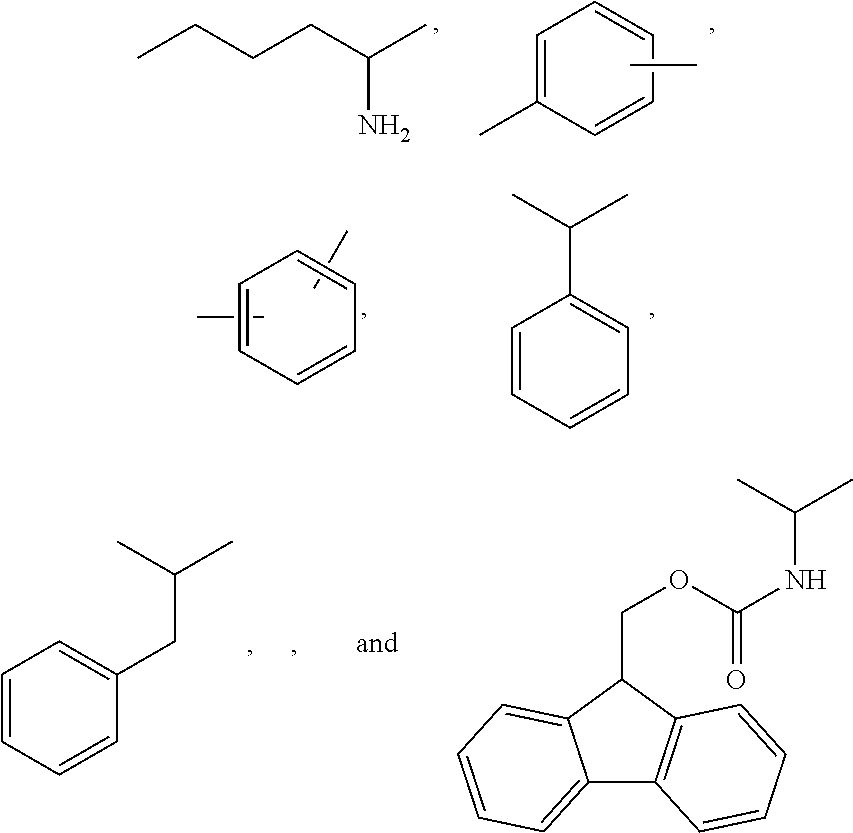
- wherein
u represents an integer ranging from 1 to 18,
v represents an integer ranging from 1 to 12,
RZc1 represents an amino-straight chain C1-5 alkyl-carbonyl group or X-straight chain C1-5 alkyl group,
RZc2 represents an amino-straight chain C1-5 alkyl-carbonyl amino-straight chain C1-5 alkyl group, and
X represents the same as mentioned above,
m2 represents an integer ranging from 0 to 15 (more preferably from 1 to 4, further preferably 1 or 2)
Cb represents a bond, —CO— or —SO2—, or
(ii) a divalent group represented by a formula: -Qc′-Cb′—
wherein
Qc′ represents a formula: —(CH2)m1′—Zc′—(CH2)m2—
wherein
m1′ represents an integer ranging from 0 to 15,
Zc′ represents -

- m2′ represents an integer ranging from 0 to 15,
Cb′ represents —CO—. - In the
embodiment 1, - (Lc)j preferably represents
(a) a bond,
(b) a divalent group selected from
—NH—(CH2)mc1—CO—, —NH—(CH2)mc2—CO—NH—(CH2)mc3—CO—, -


- wherein
mc1 represents an integer ranging from 1 to 11, mc2 and mc3 respectively represent an integer ranging from 1 to 5 (preferably the sum of mc2 and mc3 ranges from 4 to 7), mc4 represents an integer ranging from 1 to 5, and X represents the same meaning as mentioned above,
or so on. - If La is represented by
-

- preferably, Lb is a bond.
- If La is represented by
-

- then j is 0, namely (Lc)j is a bond.
- However, if La is represented by
-

- and Lb is represented by a bond, then Lc is preferably not a bond.
- Further, preferably if La is represented by
-

- and Lb is a divalent group represented by a formula: —CO-Qb2-B2b—
wherein -

- (wherein r is 2)
-

- then Lc is not a bond.
- A linker represented by L preferably represents a divalent group represented by a formula:
-

- wherein i is an integer ranging from 1 to 5;
Qb3 represents a divalent group represented by a formula: —(CH2)n1—Z—(CH2)n2—
wherein
n1 represents an integer ranging from 0 to 5,
n2 represents an integer ranging from 0 to 5,
Z represents a bond, —O—CO—, —CO—NH—, —CO—O—, —NH—CO—, -

- In particular, the provided is a neuromedin U derivative wherein
- i is 2 and Z is a bond.
- Preferably, a linker represented by L is a divalent group represented by
-

- wherein
i represents an integer ranging from 1 to 5;
Lc represents
(i) a divalent group represented by a formula: —Ca-Qc-Cb—
wherein
Ca represents —NH—,
Qc represents a divalent group represented by a formula: —(CH2)m1—Zc—(CH2)m2—
wherein
m1 represents an integer ranging from 0 to 15,
Zc represents
(a) a bond or
(b) a divalent group selected from —CO—, —O—CO—, —CO—NH—, —NH—CO—, —CO—NH—CO—, —NH—CO—NH—, —CH(NH2)—, —CH(—NHRZc1)—, —CH(RZc2)—, —CH(OH)—, —CH(COOH)—, —C(═NH)—, —CH(—NHX)— -


- wherein
RZc1 represents an amino-straight chain C1-5 alkyl-carbonyl group or X-straight chain C1-5 alkyl group, and
RZc2 represents an amino-straight chain C1-5 alkyl-carbonyl amino-straight chain C1-5 alkyl group, and
X represents the same as mentioned above,
m2 represents an integer ranging from 0 to 15,
Cb represents a bond, —CO— or —SO2—, or
(ii) a divalent group represented by a formula: -Qc′-Cb′—
wherein
Qc′ represents a formula: —(CH2)m1′—Zc′—(CH2)m2′—
wherein
m1′ represents an integer ranging from 0 to 15,
Zc′ represents -

- m2′ represents an integer ranging from 0 to 15, Cb′ represents —CO—, or —SO2—;
j represents an integer ranging from 1 to 3;
Lc can be identical or different when they are repeated. - In particular, the provided is a neuromedin U derivative wherein
- i is 3 and (Lc)j is a bond,
—NH—(CH2)mc1—CO—,
—NH—(CH2)mc2—CO—NH—(CH2)mc3—CO— -


- wherein
mc1 represents an integer ranging from 1 to 11, mc2 and mc3 respectively represent an integer ranging from 1 to 5 (preferably the sum of mc2 and mc3 ranges from 4 to 7), mc4 represents an integer ranging from 1 to 5, and X represents the same meaning as mentioned above. - A linker represented by L may also preferably be a divalent group represented by
-

- wherein
i represents an integer ranging from 1 to 5;
Lc represents
(i) a divalent group represented by a formula: —Ca-Qc-Cb—
wherein
Ca represents —NH—,
Qc represents a divalent group represented by a formula: —(CH2)m1—Zc—(CH2)m2—
wherein
m1 represents an integer ranging from 0 to 15,
Zc represents
a bond, —CO—, —O—CO—, —CO—NH—, —NH—CO—, —CO—NH—CO—, —NH—CO—NH—, —CH(NH2)—, —CH(OH)—, —CH(COOH)—, —C(═NH)—, -

- m2 represents an integer ranging from 0 to 15,
Cb represents —CO— or —SO2—, or
(ii) a divalent group represented by a formula: -Qc′-Cb′—
wherein
Qc′ represents a formula: —(CH2)m1′—Zc′—(CH2)m2′—
wherein
m1′ represents an integer ranging from 0 to 15,
Zc′ represents -

- m2′ represents an integer ranging from 0 to 15,
Cb′ represents —CO—;
j represents an integer ranging from 1 to 3.
Lc can be identical or different when they are repeated. - In particular, the provided is a neuromedin U derivative wherein
- i is 3 and (Lc)j is a bond,
—NH—(CH2)mc1—CO—,
—NH—(CH2)mc2—CO—NH—(CH2)mc3—CO— -

- wherein
mc1 represents an integer ranging from 1 to 11, mc2 and mc3 respectively represent an integer ranging from 1 to 5 (preferably the sum of mc2 and mc3 ranges from 4 to 7), mc4 represents an integer ranging from 1 to 5, and X represents the same meaning as mentioned above. - In another embodiment of the present invention, a linker represented by L represents a formula:
-

- In the
Embodiment 2, - LaIII represents a divalent or trivalent group represented by a formula:
-

- wherein
R represents a bond, —O—, —CO—O—, —O—CO—, —NH—, —CO—, —S—, —S—S—, —SO—, —SO2—, —NH—SO2, —SO2—NH—, —C(═O)—NH—N═CH—, —C(═NH)—NH—, —CO—CH2—S—, or -

- nIII represents an integer ranging from 0 to 5;
LbIII represents —(CH2)i— (wherein i represents an integer ranging from 1 to 5);
LcIII represents
(i) a divalent group represented by a formula: —NH-QcIII-CbIII—
wherein
QcIII represents a divalent group represented by a formula: —(CH2)m1—ZcIII—(CH2)m2—
wherein
m1 represents an integer ranging from 0 to 15,
ZcIII represents
(a) a bond or
(b) a divalent group selected from
—CO—, —O—CO—, —CO—O—, —CO—NH—, —NH—CO—, —CO—NH—CO—, —NH—CO—NH—, —CH(NH2)—, —CH(—NHRZc1)—, —CH(RZc2)—, —CH(OH)—, —CH(COOH)—, —C(═NH)—, —S—, —S—S—, —SO—, —SO2—, —NH—SO2, —SO2—NH—, -

- wherein
u represents an integer ranging from 1 to 18,
v represents an integer ranging from 1 to 12,
RZc1 represents an amino-straight chain C1-5 alkyl-carbonyl group or X-straight chain C1-5 alkyl group (X represents the same meaning as above),
RZc2 represents an amino-straight chain C1-5 alkyl-carbonyl amino-straight chain C1-5 alkyl group,
m2 represents an integer ranging from 0 to 15,
CbIII represents a bond, —CO— or —SO2—, or
(ii) a divalent group represented by a formula: -QcIII′-CbIII′—
wherein
QcIII′ represents a formula: —(CH2)m1—ZcIII′—(CH2)m2′
wherein
m1′ represents an integer ranging from 0 to 15,
ZcIII′ represents a divalent group selected from -

- m2′ represents an integer ranging from 0 to 15,
CbIII′ represents —CO— or —SO2—; and
jIII represents an integer ranging from 1 to 3. - In the
Embodiment 2, preferably, LaIII represents a divalent or trivalent group represented by a formula: -

- wherein
R represents —O—
nIII represents an integer of 1. - In the
Embodiment 2, preferably, LbIII represents —(CH2)i— (wherein i represents an integer of 3). - In the
Embodiment 2, preferably LcIII represents - (i) a divalent group represented by a formula: —NH-QcIII-CbIII—
wherein
QcIII represents a divalent group represented by a formula: —(CH2)m1—ZcIII—(CH2)m2—
wherein
m1 represents an integer of 0,
ZcIII represents
(a) a bond or
(b) a divalent group selected from —CO—, —CH(—NHRZc1)—, —CH(RZc2)—, -

- wherein
u represents an integer ranging from 1 to 18,
v represents an integer ranging from 1 to 12,
RZc1 represents an amino-straight chain C1-5 alkyl-carbonyl group or X-straight chain C1-5 alkyl group (X represents the same meaning as above),
RZc2 represents an amino-straight chain C1-5 alkyl-carbonyl amino-straight chain C1-5 alkyl group,
m2 represents an integer ranging from 0 to 10,
CbIII represents a bond, —CO— or —SO2—, or
(ii) a divalent group represented by a formula: -QcIII′-CbIII′—
wherein
QcIII′ represents a formula: —(CH2)m1′—ZcIII′—(CH2)m2′—
wherein
m1′ represents 0,
ZcIII′ represents a divalent group selected from -

- m2′ represents an integer ranging from 0 to 2,
CbIII represents —CO— or —SO2—; and
jIII represents an integer of 1 to 2. - In the
Embodiment 2, preferably LaIII is a divalent or trivalent group represented by a formula: -

- wherein
R represents —O—,
nIII represents an integer of 1;
LbIII is (CH2)j— (wherein i represents an integer of 3); and - (i) a divalent group represented by a formula: —NH-QcIII-CbIII—
wherein
QcIII represents a divalent group represented by a formula: —(CH2)m1—ZcIII—(CH2)m2—
wherein
m1 represents an integer of 0,
ZcIII represents
(a) a bond or -

- wherein
u represents an integer ranging from 1 to 18,
v represents an integer ranging from 1 to 12,
RZc1 represents an amino-straight chain C1-5 alkyl-carbonyl group or X-straight chain C1-5 alkyl group (X represents the same meaning as above),
RZc2 represents an amino-straight chain C1-5 alkyl-carbonyl amino-straight chain C1-5 alkyl group,
m2 represents an integer ranging from 0 to 10,
CbIII represents a bond, —CO— or —SO2—, or
(ii) a divalent group represented by a formula: -QcIII′-CbIII′—
wherein
QcIII′ represents a formula: —(CH2)m1—ZcIII′—(CH2)m2′—
wherein
m1′ represents 0,
ZcIII′ represents a divalent group selected from -

- m2′ represents an integer ranging from 0 to 2,
CbIII represents —CO— or —SO2—; and
jIII represents an integer of 1 to 2. - In the
Embodiment 2, the distance from the nitrogen atom closest to the Lb in the Lc to the nitrogen atom of the N-terminus of neuromedin U ranges from 3.5 to 30 Å and preferably from 3.5 to 15 Å - In the
Embodiment 2, preferably if LcIII represents - (i) a divalent group represented by a formula: —NH-QcIII-CbIII—
wherein
QcIII represents a divalent group represented by a formula: —(CH2)m1— (m1 is an integer ranging from 0 to 15),
CbIII represents a bond, —CO— or —SO2—, - The distance from the nitrogen atom of NH in (i) the formula: —NH-QcIII-CbIII— to the nitrogen atom of the N-terminus of neuromedin U ranges from 3.5 to 7.0 Å.
- In the
Embodiment 2, preferably if LcIII is - (i) a divalent group represented by a formula: —NH-QcIII-CbIII—
wherein
QcIII represents a formula: —(CH2)m1—ZcIII—(CH2)m2—
wherein
m1 represents an integer ranging from 0 to 10,
ZcIII represents a divalent group selected from
—CO—, —O—CO—, —CO—O—, —CO—NH—, —NH—CO—, —CO—NH—CO—, —NH—CO—NH—, —CH(NH2)—, —CH(—NHRZc1)—, —CH(RZc2)—, —CH(OH)—, —CH(COOH)—, —C(═NH)—, —S—, —S—S—, —SO—, —SO2—, —NH—SO2, —SO2—NH—, -


- wherein
u represents an integer ranging from 1 to 10,
v represents an integer ranging from 1 to 10,
RZc1 represents an amino-straight chain C1-5 alkyl-carbonyl group or X-straight chain C1-5 alkyl group (X represents the same meaning as above),
RZc2 represents an amino-straight chain C1-5 alkyl-carbonyl amino-straight chain C1-5 alkyl group,
m2 represents an integer ranging from 0 to 5,
CbIII represents a bond, —CO— or —SO2,
the distance from the nitrogen atom of NH in the formula: —NH-Qc-Cb— to the atom which is closest to the —(CH2)m1— part in the Zc ranges from 3.5 to 10 Å and the distance from the atom which is closest to the —(CH2)m1— part in the Zc to the nitrogen atom of the N terminus of neuromedin U ranges from 3.5 to 7.0 Å. - Further, in the
Embodiment 2, preferably if Lc is - (ii) a divalent group represented by the formula: —NH—
wherein
QcIII′ represents a formula: —(CH2)m1′—ZcIII′—(CH2)m2′—
wherein m1′ represents an integer ranging from 0 to 15,
ZcIII′ represents -

- m2′ represents an integer ranging from 0 to 15,
CbIII′ represents a bond, —CO— or —SO2, - The distance from the nitrogen closest to the Lb to the nitrogen atom of the N-terminus of neuromedin U in
-

- ranges from 5 to 10 Å.
- In the
Embodiment 2, examples of (Lc)j preferably include those listed as examples in theaforementioned Embodiment 1. - The inter-atomic distance is an inter-atomic distance in the three-dimensional stable structure that has been output when performing energy stabilization calculations as an extended structure using a compound or a three-dimensional molecular model for the compound using commercial molecular modeling and calculation software (e.g., Gaussian, MOPAC, AMBER, CHARMM, MOE, Insight, etc. that are sold by Ryoka Systems Inc.). With each software, parameters are pre-determined such that the inter-atomic distance corresponds to the estimated inter-atomic distance measured by X-ray crystal structural analysis (for example, Cambridge Structural Database, etc.). In the case of molecules consisting of approximately 20 regular heavy atoms, the error is less than 0.1 Å. (See J. Am. Chem. Soc, 106, 765-784 in the case of AMBER).
- In the aforementioned Embodiments 1 and 2, the linker which was branched into two branches and which can connect two methoxypolyethylene glycol molecules were explained. In one other embodiment of the present invention, the linker which was branched into many branches and by so doing, and could connect numerous methoxypolyethylene glycols was used.
- For example, a four-branched linker structure can be easily designed by a branching two branched linker alkylene portion.
- For example, if a neuromedin U derivative of the present invention having two branches has the following structure,
-

- a four-branched linker structure can be designed as follows.
-

- Further, if a neuromedin U derivative of the present invention having two branches has the following structure, a four-branched linker structure can be designed as follows.
-

- Similarly, 6-branched, 8-branched, 10-branched to 32-branched linkers can be designed. These linkers can also be used in the neuromedin U derivatives of the present invention.
- A neuromedin U derivative having a 4-branched linker will be explained below.
- Another embodiment of the present invention provides a neuromedin U derivative wherein a methoxypolyethylene glycol is bound via a linker to the polypeptide which contains at least 8 amino acids of the C-terminus of an amino acid sequence of neuromedin U and which consists of the same or substantially the same amino acid sequence as the amino acid sequence of neuromedin U which is represented by a formula:
-

- wherein
Y represents a polypeptide which contains at least 8 amino acids of an amino acid sequence at the C-terminus of neuromedin U and which consists of the same or substantially the same amino acid sequence as that of neuromedin U;
X represents a methoxypolyethylene glycol (here, methoxypolyethylene glycol represented by plural Xs can be identical or different);
Lb represents
(i) a bond,
(ii) a divalent group represented by a formula: —B1a-Qb1-B1b—
wherein
B1a and B1b represent —CO—,
Qb1 represents a divalent group selected from -

- wherein p represents an integer ranging from 2 to 8,
(iii) a divalent group represented by a formula: —B2a-Qb2-B2b—
wherein
B2a represents —CO—,
B2b represents -

- Qb2 represents a divalent group selected from
-

- wherein q represents an integer ranging from 3 to 10, r represents an integer ranging from 1 to 10, and t represents an integer ranging from 1 to 10, or
(iv) a divalent group represented by a formula: —B3a-Qb3-B3b—
wherein
B3a represents -

- or a bond,
B3b represents —CO—,
Qb3 represents a divalent group represented by —(CH2)n1—Z—(CH2)n2—
wherein
n1 represents an integer ranging from 0 to 5,
n2 represents an integer ranging from 0 to 5,
Z represents a bond, —O—CO—, —CO—NH—, —CO—O—, —NH—CO—, -

- Lc represents
(i) a divalent group represented by a formula: —Ca-Qc-Cb—
wherein
Ca represents —NH—,
Qc represents a divalent group represented by a formula: —(CH2)m1—Zc—(CH2)m2—
(wherein
m1 represents an integer ranging from 0 to 15,
Zc represents
(a) a bond or
(b) a divalent group selected from —CO—, —O—CO—, —CO—O—, —CO—NH—, —NH—CO—, —CO—NH—CO—, —NH—CO—NH—, —CH(NH2)—, —CH(—NHRZc1)—, —CH(RZc2)—, —CH(OH)—, —CH(COOH)—, —C(═NH)—, —CH(NHX)—, -


- (wherein
u represents an integer ranging from 1 to 18,
v represents an integer ranging from 1 to 12,
RZc1 represents an amino-straight chain C1-5 alkyl-carbonyl group or X-straight chain C1-5 alkyl group,
RZc2 represents an amino-straight chain C1-5 alkyl-carbonyl amino-straight chain C1-5 alkyl group, and
X represents the same as mentioned above),
m2 represents an integer ranging from 0 to 15),
Cb represents a bond, —CO—, or —SO2—, or
(ii) a formula: -Qc′-Cb′—
wherein
Qc′ represents a divalent group represented by a formula: —(CH2)m1′—Zc′—(CH2)m2′—
(wherein
m1′ represents an integer ranging from 0 to 15,
Zc′ represents -
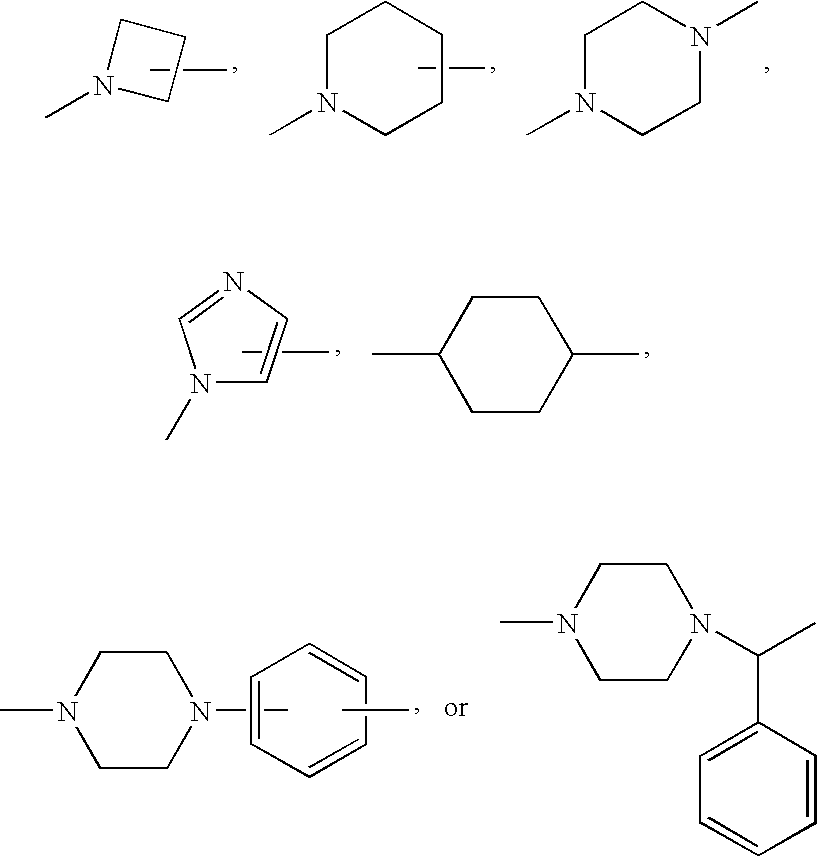
- and
m2′ represents an integer ranging from 0 to 15)
Cb′ represents —CO— or —SO2—;
kIV represents an integer ranging from 1 to 100;
mIV represents an integer ranging from 1 to 100;
pIV represents an integer ranging from 1 to 100; and
j represents an integer ranging from 0 to 3. - In particular, provided is a neuromedin U derivative wherein Lb is a bond and (Lc)j is as follows:
-

- Another embodiment of the present invention provides a neuromedin U derivative wherein a methoxypolyethylene glycol is bound via a linker to the polypeptide which contains at least 8 amino acids at the C-terminus of an amino acid sequence of neuromedin U and which consists of the same or substantially the same amino acid sequence as the amino acid sequence of neuromedin U which is represented by a formula:
-

- wherein
Y represents a polypeptide which contains at least 8 amino acids of an amino acid sequence at the C-terminus of neuromedin U and which consists of the same or substantially the same amino acid sequence as that of neuromedin U;
X represents a methoxyethylene glycol (here, polyethylene glycol represented by plural Xs can be identical or different and
X″ represents a polyethylene glycol (here, polyethylene glycol represented by plural X″s can be identical or different);
Lc represents a divalent group represented by
(i) a formula: —Ca-Qc-Cb—
wherein
Ca represents —NH—,
Qc represents a divalent group represented by a formula: —(CH2)m1—Zc—(CH2)m2—
(wherein
m1 represents an integer ranging from 0 to 15,
Zc represents
(a) a bond or
(b) a divalent group selected from —CO—, —O—CO—, —CO—O—, —CO—NH—, —NH—CO—, —CO—NH—CO—, —NH—CO—NH—, —CH(NH2)—, —CH(OH)—, —CH(COOH)—, —C(═NH)—, —CH(—NHX)—, —S—, —S—S—, —SO—, —SO2—, —NH—SO2—, —SO2—NH—, -


- (wherein
u represents an integer ranging from 1 to 18,
v represents an integer ranging from 1 to 12,
RZc1 represents an amino-straight chain C1-5 alkyl-carbonyl group or X-straight chain C1-5 alkyl group,
RZc2 represents an amino-straight chain C1-5 alkyl-carbonyl amino-chain C1-5 alkyl group, and
X represents the same as mentioned above,
m2 represents an integer ranging from 0 to 15,
Cb represents a bond, —CO—, or —SO2—, or
(ii) a formula: -Qc′-Cb′—
wherein
Qc′ represents a divalent group represented by a formula: —(CH2)m1′—Zc′—(CH2)m2′—
(wherein
m1′ represents an integer ranging from 0 to 15,
Zc′ represents -

- and
m2′ represents an integer ranging from 0 to 15)
Cb′ represents —CO— or —SO2—;
plural Rs are identical or different at different points of appearance, which represent a bond, -

- hv represents an integer ranging from 0 to 3; and
iv, jv, kv, mv and nv are respectively identical or different integers ranging from 0 to 5. - In particular, examples of a linker represented by L includes the following moieties:
-


- In particular, a neuromedin U derivative wherein nv is 0, R is a bond and (Lc)j is the following compound is desirable:
-

- A method of producing a neuromedin derivative will be explained below.
- The neuromedin derivatives of the present invention can be produced by binding a methoxypolyethylene glycol to a peptide to be used in the present invention via a linker.
- The neuromedin derivative of the present invention can be prepared by the known peptide purification method from the aforementioned warm-blooded animal cells or tissues. Specifically, the tissues or cells of warm-blooded animals are homogenized and the soluble fractions are isolated and purified by chromatography such as reversed phase chromatography, ion exchange chromatography, and affinity chromatography to prepare a neuromedin derivative of the present invention.
- Further, a neuromedin derivative in used the present invention can be purchased as a commercial product.
- A neuromedin of the present invention can be produced according to the known peptide synthetic method.
- A peptide synthetic method, for example, can be a solid phase synthetic method and a liquid phase synthetic method. A partial peptide or an amino acid that can constitute a neuromedin derivative of the present invention and a residual part are condensed and if the product has a protective group, a target peptide can be produced by dissociating the protective group.
- Here, condensation and dissociation of the protective group can be performed according to the methods described in the following items (1) through (5):
- (1) M. Bodanszky and M. A. Ondetti, Peptide Synthesis, Interscience Publishers, New York (1966).
- (2) Schroeder and Luebke, The Peptide, Academic Press, New York (1965).
- (3) Nobuo Izumiya et al. Peptide Synthesis Basics and Experiments, Maruzen (Inc.) (1975).
- (4) Haruaki Yashima and Shunpei Kambara, Biochemistry
Experimental Lecture Series 1, Protein Chemistry IV, 205, (1977). - (5) Edited by Haruaki Yashima, Development of Medicines (Second Edition), Vol. 14, Peptide Synthesis, Hirokawa Shoten
- The neuromedin derivative of the present invention thus obtained can be isolated and purified by the known purification methods.
- Further, the peptide used in the present invention can be produced by culturing a transformant containing nucleic acids coding the peptide and by isolating and purifying the peptide to be used in the present invention from the cultured product obtained.
- The nucleic acids for coding the peptide used in the present invention can be DNA or RNA, or DNA/RNA chimera. Preferably, DNA can be used. Further, nucleic acids can be made of double chains or single chains. In the case of double chains, double chain DNA, double chain RNA or hybrids of DNA-RNA are available. In the case of single chains, either sense chains (namely coded chains) or antisense chains (namely non-coded chains) are available.
- Examples of DNA coding a peptide to be used in the present invention includes genome DNA, cDNA originated from all cells of warm-blooded animals (e.g., humans, mice, rats, guinea pigs, hamsters, rabbits, sheep, goats, pigs, horses, roosters, cats, dogs, monkeys, chimpanzees) [e.g., pancreatic cells, neural cells, glial cells, pancreatic β-cells, bone marrow cells, mesangial cells, Langerhans cells, epidermal cells, epithelial cells, goblet cells, endothelial cells, smooth muscle cells, fibroblasts, fibrocytes, muscle cells, lipocytes, immune cells (macrophages, T-cells, B-cells, natural killer cells, mast cells, neurocytes, basophils, eosinophils, monocytes, dendrocytes), megakaryocytes, synovial cells, chondrocytes, osteocytes, osteoblasts, osteoclasts, mammary cells, hepatic cells or interstitial cells, or precursor cells, stem cells, or cancer cells of these cells], or the peptides originated from all tissues where such cells are present [e.g., brain, cerebral sites (e.g., olfactory, tonsil nucleus, cerebral basal cells, hippocampus, thalamus, hypothalamus, cerebral cortex, medulla oblongata, cerebellum), spinal cord, pituitary gland, stomach, pancreas, kidney, liver, gonad, thyroid gland, gall bladder, bone marrow, adrenal gland, skin, muscle, lung, gastrointestinal tract (e.g., colon, small intestine), blood vessel, heart, thymus gland, spleen, submandibular gland, peripheral blood, prostate gland, testis, ovary, placenta, uterus, bone, joints, adipose tissue, skeletal muscle, peritoneum], as well as a synthesized DNA.
- The genome DNA and cDNA for coding the peptide to be used in the present invention can be directly amplified according to the known method, for example, the Polymerase Chain Reaction (hereinafter referred to as “PCR method”) and the Reserve Transcriptase-PCR (hereinafter referred to as “RT-PCR method”) using the genome DNA fractions or total RNA or mRNA fractions prepared from the aforementioned cells and tissues respectively as a template. Alternatively, the genome DNA and cDNA for coding the peptide to be used in the present invention can be respectively cloned for example by colony or plaque hybridization method or PCR method according to the known method from the genome DNA library and cDNA library that are prepared by inserting segments of genome DNA and total RNA or mRNA prepared from the aforementioned cells and tissues into an appropriate vector. Examples of the vector to be used in the library include bacteriophages, plasmids, cosmids and phagemids, but any of the above can be used.
- The neuromedin derivative of the present invention can be synthesized, for example, by any of the following methods.
- (1) A PEGylation reagent having an active ester (e.g., SYNBRIGHT MEGC-30-TS (Product name), Nippon Yushi) is bound to an amino group of the peptide to be used in the present invention.
(2) A PEGylation reagent having an aldehyde (e.g., SYNBRIGHT ME-300-AL (Product name), Nippon Yushi) is bound to an amino group of the peptide to be used in the present invention.
(3) A divalent cross-linking reagent (e.g., GMBS (Dojin Kagaku), EMCS (Dojin Kagaku), KMUS (Dojin Kagaku), SMCC (Pierce)) is bound to the peptide to be used in the present invention and subsequently a PEGylation reagent having a thiol group (e.g., SUNBRIGHT ME-300-SH (Product name), Nippon Yushi) is bound. In this case, the linker in the neuromedin derivative of the present invention is originated from PEGylation reagents and divalent cross-linking reagents.
(4) A SH introduction agent (e.g., D-cysteine residue, L-cysteine residue, Traut's reagent) is introduced into the peptide to be used in the present invention and a PEGylation reagent having a maleimide group (e.g., SUNBRIGHT ME-300-MA (Product name) Nippon Yushi) is reacted with this thiol group. In this case, the linker in the neuromedin derivative of the present invention is originated from PEGylation reagents and SH introduction agents.
(5) A SH introduction agent (e.g., D-cysteine residue, L-cysteine residue, Traut's reagent) is introduced into the peptide to be used in the present invention and a PEGylation reagent having an iodo-acetamide group (e.g., SUNBRIGHT ME-300-IA (Product name) Nippon Yushi) is reacted with this thiol group. In this case, the linker in the neuromedin derivative of the present invention is originated from PEGylation reagents and SH introduction agents.
(6) ω-aminocarboxylic acid or α-amino acid is introduced as a linker to the N-terminal amino group of the peptide to be used in the present invention and a PEGylation reagent having an active ester (e.g., SUNBRIGHT MEGC-30-TS (Product name), Nippon Yushi) is reacted to the amino group originated from this linker. In this case, the linker in the neuromedin derivative of the present invention is originated from PEGylation reagents and ω-aminocarboxylic acid or PEGylation reagents and α-amino acid.
(7) ω-aminocarboxylic acid or α-amino acid is introduced as a linker to the N-terminal amino group of the peptide to be used in the present invention and a PEGylation reagent having an aldehyde group (e.g., SUNBRIGHT MEGC-30-AL (Product name), Nippon Yushi) is reacted to the amino group originated from this linker. In this case, the linker in the neuromedin derivative of the present invention is originated from PEGylation reagents and ω-aminocarboxylic acid or PEGylation reagents and α-amino acid. - The aforementioned reagents can be obtained, for example, as commercial products. Each reaction can be carried out by the method known to those in the art.
- The neuromedin U derivative of the present invention can be salts. Examples of such salts include salts with inorganic bases, salts with organic bases, salts with inorganic acids, salts with organic acids, salts with basic or acidic amino acids.
- Favorable examples of the salts with inorganic bases include alkali metal salts such as sodium salts and potassium salts; alkali earth metal salts such as calcium salts and magnesium salts; aluminum salts and ammonium salts.
- Favorable examples of the salts with organic bases include salts with trimethylamine, triethylamine, pyridine, picoline, ethanolamine, diethanolamine, triethanolamine, dicyclohexylamine, N,N-dibenzylethylenediamine.
- (1) Favorable examples of the salts with organic bases include salts with hydrochloric acid, hydrobromic acid, nitric acid, sulfuric acid, which is mentioned as salt and phosphate.
- Favorable examples of the salts with organic acids include salts with formic acid, acetic acid, trifluoroacetic acid, fumaric acid, oxalic acid, tartaric acid, maleic acid, succinic acid, malic acid, methanesulfonic acid, benzenesulfonic acid and p-toluenesulfonic acid.
- Favorable examples of the salts with basic amino acids include salts with arginine, lysine and ornithine.
- Favorable examples of the salts with acidic amino acids include salts with aspartic acid and glutamic acid.
- If the neuromedin U derivative of the present invention is obtained in a free state according to the aforementioned synthetic method, it can be converted to a salt according to the common method. Further, if it is obtained as a salt, it can be converted to a free form or other salts according to the common method. The neuromedin U derivative of the present invention thus obtained can be isolated and purified from the reaction solution by a known means such as phase transfer, concentration, solvent extraction, fractional distillation, crystallization, recrystallization and chromatography.
- If the neuromedin U derivative of the present invention is present as a configurational isomer (configurational isomer), diastereomer and conformer, if desirable, each can be isolated respectively by said separation and purification means. Further, if the neuromedin U derivative is a racemate, it can be separated into a S-form and a R-form by the ordinary optical dissolution means.
- If a stereoisomer is present in the neuromedin U derivative of the present invention, the present invention includes cases when this isomer is present independently or cases when they are present as a mixture thereof.
- Further, the neuromedin U derivative of the present invention can be a hydrate or non-hydrate. Further, the neuromedin U derivative of the present invention can be a solvate or a non-solvate.
- The neuromedin U derivative of the present invention can be labeled with isomers (e.g., 3H, 14C, 35S). Further, the neuromedin U derivative of the present invention can converted by deuterium.
- The neuromedin U derivative of the present invention is useful as an antifeedant, or as an agent for preventing or treating obesity.
- The neuromedin U derivative of the present invention is used as a medical composition obtained by formulation according to the known method (e.g., methods described in the Japanese Pharmacopoeia) along with a pharmacologically acceptable carrier.
- As a pharmacologically acceptable carrier, various kinds of organic or inorganic carrier substances that are commonly used can be used as formulation raw materials. As specific examples, vehicles, lubricants, binders, disintegrants are included in the solid formulations; solvents, solubilizing agents, suspending agents, isotonization agents, buffers and soothing agents are included in the liquid formulations. When formulating, if desirable, formulation additives such as antiseptics, antioxidants, colorants and sweeteners can be added.
- Favorable examples of vehicles include lactose, sucrose, D-mannitol, D-sorbitol, starch, α-starch, dextrin, crystalline cellulose, low-substituted hydroxypropyl cellulose, sodium carboxymethylcellulose, gum Arabic, pullulan, light silicic anhydride, synthetic aluminum silicate and magnesium metasilicic aluminate, xylitol, sorbitol and erythritol.
- Favorable examples of lubricants include magnesium stearate, calcium stearate, talc, colloidal silica and polyethylene glycol 6000.
- Favorable examples of binders include α-starch, sucrose, gelatin, gum Arabic, methylcellulose, carboxymethylcellulose, sodium carboxymethylcellulose, crystalline cellulose, sucrose, D-mannitol, trehalose, dextrin, pullulan, hydroxypropyl cellulose, hydroxypropyl methylcellulose and polyvinylpyrrolidone.
- Favorable examples of disintegrants are as follows: lactose, sucrose, starch, carboxymethylcellulose, calcium carboxymethylcellulose, croscarmellose sodium, sodium carboxymethyl starch, low-substituted hydroxypropylcellulose, light silicic anhydride and calcium carbonate.
- Favorable examples of solvents include water for injection, physiological saline, Ringer's solution, alcohol, propylene glycol, polyethylene glycol, sesame oil, corn oil, olive oil and cottonseed oil.
- Favorable examples of solubilizing agents include polyethylene glycol, propylene glycol, D-mannitol, trehalose, benzylbenzoate, ethanol, tris-aminomethane, cholesterol, triethanolamine, sodium carbonate, sodium citrate, sodium salicylate and sodium acetate.
- Favorable examples of suspending agents include surfactants such as stearyl triethanolamine, sodium laurylsulfate, lauryl amino propionic acid, lecithin, benzalkonium chloride, benzethonium chloride, and glycerin monostearate; hydrophilic polymers such as polyvinyl alcohol, polyvinyl pyrrolidone, sodium carboxymethylcellulose, methylcellulose, hydroxymethylcellulose, hydroxyethylcellulose and hydroxypropylcellulose; polysorbates, and polyoxyethylene-hardened castor oil.
- Favorable examples of isotonization agents include sodium chloride, glycerin, D-mannitol, D-sorbitol, glucose, xylitol and fructose.
- Favorable examples of buffers include buffer solutions of phosphates, acetates, carbonates and citrates.
- Favorable examples of soothing agents include propylene glycol, lidocaine hydrochloride and benzyl alcohol.
- Favorable examples of antiseptics include p-oxybenzoic acid esters, chlorobutanol, benzyl alcohol, phenethyl alcohol, dehydroacetic acid and sorbic acid.
- Favorable examples of antioxidants include sulfites and ascorbates.
- Favorable examples of colorants include water soluble edible tar dyes (e.g., edible dyes such as Food Red No. 2 and No. 3, Food Yellow No. 4 and No. 5, Food Blue No. 1 and 2); insoluble lake dyes (e.g., aluminum salts of the aforementioned water soluble edible tar dyes), natural dyes (e.g., β-carotene, chlorophyll, colcothar).
- Favorable examples of sweeteners include sodium saccharin, dipotassium glycyrrhizate, aspartame and stevia.
- Examples of form of the aforementioned medical composition include oral agents such as tablets (including sublingual tablets, orally-disintegrating tablets), capsules (including soft capsules and micro capsules), granular agents, powder agents, troches, syrups, emulsions and suspensions; non-oral agents such as injection solutions (e.g., subcutaneous injection agents, intravenous injection solutions, intramuscular injection agents, intraperitoneal injection agents, drip infusion agents), external agents (e.g., transcutaneous formulations and ointments), suppositories (e.g., rectal suppositories and vaginal suppositories), pellets, transnasal agents, transpulmonary agents (inhalation powder), eye drops. These formulations can be provided as controlled-release formulations such as quick release formulations or slow-release formulations (e.g., slow-release microcapsules).
- The content of the neuromedin U derivative in the aforementioned medical compositions, for example, ranges from 0.1 to 100 wt %.
- A method of producing oral agents and non-oral agents will be explained specifically below. Oral agents can be produced by adding a vehicle (e.g., lactose, sucrose, starch, D-mannitol, xylitol, sorbitol, erythritol, crystalline cellulose, light silicic anhydride), a disintegrant (e.g., calcium carbonate, starch, carboxymethylcellulose, calcium carboxymethylcellulose, low-substituted hydroxypropylcellulose, croscarmellose sodium, sodium carboxymethyl starch, light silicic anhydride), a binder (e.g., α-starch, gum Arabic, carboxymethylcellulose, hydroxypropylcellulose, hydroxypropyl methylcellulose, polyvinylpyrrolidone, crystalline cellulose, methylcellulose, sucrose, D-mannitol, trehalose, dextrin) or a lubricant (e.g., talc, magnesium stearate, calcium stearate, colloidal silica, polyethylene glycol 6000) to an active component followed by compression molding.
- Furthermore, for the purpose of masking tastes, enteric solubilization or slow-release, coating can be applied to the oral agent by a known method. As a coating agent, for example, enteric-soluble polymers (e.g., acetic acid phthalic acid cellulose, methacrylic acid copolymer L, methacrylic acid copolymer LD, methacrylic copolymer S, hydroxypropyl methylcellulose phthalate, hydroxypropyl methylcellulose acetate succinate, and carboxymethyl ethyl cellulose), gastric-soluble polymers (e.g., polyvinyl acetal diethylamino acetate and aminoalkyl methacrylate copolymer E), water-soluble polymers (e.g., hydroxypropyl cellulose and hydroxypropyl methylcellulose), water-insoluble polymers (e.g., ethylcellulose, aminoalkyl methacrylate copolymer RS and ethyl acrylate/methyl methacrylate copolymer), and wax can be used. When applying a coating, a plasticizer such as polyethylene glycol; and a light-shielding agent such as titanium oxide and iron sesquioxide can be used along with the aforementioned coating agent.
- Injection solutions can be produced by dissolving, suspending or emulsifying an active component along with a dispersant (e.g., Tween 80 (by Atraspowder Corporation, USA), HCO 60 (by Nikko Chemicals), Polyethylene glycol, carboxymethylcellulose and sodium arginate), a preservative (e.g., methylparaben, propylparaben, benzyl alcohol, chlorobutanol and phenol), an isotonization agent (e.g., sodium chloride, glycerin, D-sorbitol, D-mannitol, xylitol, glucose and fructose) in an aqueous solvent (e.g., distilled water, physiological saline and Ringer's solution) or an oil-base solvent (e.g., vegetable oils such as olive oil, sesame oil, cottonseed oil, corn oil; propylene glycol, macrogol, tricaprylin). In this case, if desirable, the following additives can be added: a solubilizing agent (e.g., sodium salicylate, sodium acetate, polyethylene glycol, propylene glycol, D-mannitol, trehalose, benzyl benzoate, ethanol, tris-aminomethane, cholesterol, ethanolamine, sodium carbonate, and sodium citrate), a suspending agent (e.g., surfactants such as stearyl triethanolamine, sodium laurylsulfate, lauryl amino propionic acid, lecithin, benzalkonium chloride, Benzethonium chloride and glycerin monostearate; hydrophilic polymers such as polyvinyl alcohol, polyvinyl pyrrolidone, sodium carboxymethylcellulose, methylcellulose, hydroxymethylcellulose, hydroxyethylcellulose and hydroxypropylcellulose), a buffer (e.g., buffer solutions such as phosphates, acetates, carboxylates and citrates), a stabilizer (e.g., human serum albumin), a soothing agent (e.g., propylene glycol, lidocaine hydrochloride and benzyl alcohol), an antiseptic (e.g., para-oxybenzoic acid esters, chlorobutanol, benzyl alcohol, phenethyl alcohol, dehydroacetic acid and sorbic acid).
- External agents can be produced by preparing an active component as solid, semi-solid or liquid compositions. For example, the aforementioned solid compositions can be produced directly from the active component or by adding a vehicle (e.g., lactose, D-mannitol, starch, crystalline cellulose and sucrose) and a thickening agent (e.g., natural gums, cellulose derivatives, acrylic acid polymers) or by blending to form a powder. The aforementioned liquid compositions can be produced almost similarly to the case of injection solutions. Semi-solid compositions are preferably prepared in aqueous or oil-base gelatin agents or in an ointment form. Further, all of these compositions can contain a pH regulator (e.g., phosphoric acid, citric acid, hydrochloric acid, sodium hydroxide), and an antiseptic (e.g., p-oxybenzoic acid esters, chlorobutanol, benzalkonium chloride, benzyl alcohol, phenethyl alcohol, dehydroacetic acid and sorbic acid). Suppositories can be produced by preparing an active component as oil-base or aqueous solid, semi-solid or liquid compositions. Examples of oily bases used when producing such compositions, for example, include higher fatty acid glycerides [e.g., cacao fat, Witepsol], intermediate fatty acid triglycerides [e.g., miglyols], vegetable oils (e.g., sesame oil, soybean oil, cottonseed oil). Examples of aqueous bases include, for example, polyethylene glycols and propylene glycol. Further, examples of aqueous gel bases include, for example, natural gums, cellulose derivatives, vinyl polymers and acrylic acid polymers.
- The dosage of the neuromedin U derivative of the present invention can be selected appropriately based on the subjects of administration, administration routes, target diseases and symptoms. A dosage when a medical composition containing the neuromedin U derivative of the present invention as an active ingredient is subcutaneously injected in adult patients generally ranges from approximately 5 to 5000 μg/human and preferably from approximately 5 to 500 μg/human as a single dose. It is desirable to administer this
dosage 1 to 3 times daily. - The neuromedin U derivative of the present invention (hereinafter simply called a compound of the present invention) can be used concomitantly with a concomitant drug having no adverse effects on the compound of the present invention for the purpose of enhancing the activity (e.g., antifeedant effect, preventive or therapeutic effect on obesity) and reducing the amount of the compound of the present invention to be used. Examples of such concomitant drugs include for example, “diabetes treatment drugs”, “diabetes complication treatment drugs”, “anti-obesity drugs”, and “hyperlipidemia treatment drugs”. Two or more concomitant drugs can be combined at an appropriate ratio.
- Examples of the aforementioned “diabetes treatment drugs” include the following drugs: insulin formulations (e.g., animal insulin formulations extracted from bovine and pig pancreas; human insulin formations synthesized by genetic engineering using E. coli and yeast; insulin zinc; protamine insulin zinc; insulin fragment or derivatives (e.g., INS1), oral insulin formulations), insulin resistance improvement agents (pioglitazone or its salts (preferably hydrochloride), rosiglitazone or its salts (preferably maleates), Tesaglitazar, Ragaglitazar, Muraglitazar, Edaglitazone, Metaglidasen, Naveglitazar, AMG-131, THR-0921), α-glycosidase inhibitor (e.g., voglibose, acarbose, miglitol, emiglitate), biguanide agents (e.g., metformin, buformin or their salts (e.g., hydrochloride, fumarates, succinates)), insulin secretion accelerators [sulfonylurea agents (e.g., tolbutamide, glybenclamide, gliclazide, chlorpropamide, tolazamide, acetohexamide, glyclopyramide, glimepiride, glipizide, glybuzole), repaglinide, nateglinide, mitiglinide or its calcium salt hydrate], dipeptidyl peptidase IV inhibitor (e.g., Vildagliptin, Sitagliptin, Saxagliptin, T-6666, TS-021), β3 agonist (e.g., AJ-9677), GPR40 agonist, GLP-1 receptor agonist [e.g., GLP-1, GLP-1MR agent, N,N-2211, AC-2993 (exendin-4), BIM-51077, Aib (8,35) hGLP-1 (7, 37) NH2, CJC-1131], amyrin agonists (e.g., Pramlintide), phosphotyrosine phosphorylase inhibitor (e.g., sodium vanadate), sugar generation inhibitors (e.g., glycogen phosphorylase inhibitor, glucose-6-phosphatase inhibitor, glucagon antagonist), SGLUT (sodium-glucose cotransporter) inhibitor (e.g., T-1095), 11β-hydroxysteroid dehydrogenase inhibitor (e.g., BVT-3498), adiponectin or its acting drug, IKK inhibitor (e.g., AS-2868), Leptin resistance improving drug, Somatostatin receptor acting drug, glucokinase activation drug (e.g., Ro-28-1675), GIP (Glucose-dependent Insulinotropic Peptide).
- Examples of the aforementioned “diabetes complication treatment drugs” include the following drugs: aldose reductive enzyme inhibitor (e.g., tolrestat, epalrestat, zenarestat, zopolrestat, minalrestat, fidarestat, Neurotrophin production/secretion accelerator described in WO01/14372 (e.g., 4-(4-chlorophenyl)-2-(2-methyl-1-imidazolyl)-5-[3-(2-methylphenoxy) propyl]oxazol)), PKC inhibitors (e.g., ruboxistaurin mesylate)), AGE inhibitors (e.g., ALT946, Pimagedine, N-phenacylthiazolium bromide, EXO-226, Pyridorin), Pyridoxamine), active enzyme deleting drug (e.g., thioctic acid), brain blood vessel dilator (e.g., tiapride, mexiletine), somatostatin receptor acting drug (e.g., (BIM23190), apoptosis signal regulating kinase (ASK-1) inhibitor neuro generation accelerator (e.g., Y-128, VX-853, prosaptide).
- Examples of the aforementioned “anti-obesity drug” include central anti-obesity drug (e.g., dexfenfluramine, fenfluramine, phentermine, Sibutramine, amfepramon, dexamfetamine, mazindol, phenylpropanolamine, clobenzorex; neuropeptide Y antagonists (e.g., CP-422935); cannabinoid receptor antagonists (e.g., SR-141716, SR-147778); ghrelin antagonists; 11β-hydroxysteroid dehydrogenase inhibitors (e.g., BVT-3498), pancreatic lipase inhibitors (e.g., orlistat, cetilistat, β3 agonist (e.g., AJ-9677), peptide antifeedant (e.g., leptin, CNTF (Ciliary Neurotrophic Factor), cholecystokinin agonists (e.g., lintitript, FPL-15849), and antifeedant (e.g., P-57).
- Examples of the aforementioned “hyperlipidemia treatment drug” include HMG-CoA reductase inhibitors (e.g., pravastatin, simvastatin, lovastatin, atorvastatin, fluvastatin, pitavastatin or their salts (e.g., sodium salts, calcium salts)), squalene synthase inhibitors (e.g., Compounds described in WO97/10224, for example, N-[[(3R,5S)-1-(3-acetoxy-2,2-dimethylpropyl)-7-chloro-5-(2,3-dimethoxyphenyl)-2-oxo-1,2,3,5-tetrahydro-4,1-benzoxazepin-3-yl]acetyl]piperidine-4-acetic acid), fibrate compounds (e.g., bezafibrate, clofibrate, simfibrate, clinofibrate), ACAT inhibitors (e.g., Avasimibe), Eflucimibe)), cation exchange resins (e.g., cholestyramine), probucol, nicotinic acid drugs (e.g., nicomol), niceritrol)), ethyl icosapentate, and plant sterols (e.g., soysterol, γ-oryzanol))
- Timing of administration of said concomitant drugs is not limited. The compound of the present invention and the concomitant drugs can be administered at the same time to the administration subjects, or can be administered at different times. The dosages of concomitant drugs are determined in compliance with the dosages applied clinically. It can be selected appropriately based on the administering subjects, administration routes, diseases and combinations.
- The form of administration of concomitant drugs with the compound of the present invention is not particularly limited and is acceptable as long as the compound of the present invention is combined with concomitant drugs at the time of administration. Examples of such forms of administration are as follows
- (1) Administration of a single formula obtained by simultaneous formulation of the compound of the present invention with a concomitant drug,
- (2) Simultaneous administration via the same administration route for two kinds of formulas obtained by independent formulations of the compound of the present invention and a concomitant drug,
- (3) Administrations at different times via the same administration route for two kinds of formulas obtained by independent formulations of the compound of the present invention and a concomitant drug,
- (4) Simultaneous administration via different administration routes for two kinds of formulas obtained by independent formulations of the compound of the present invention and a concomitant drug,
- (5) Administrations at different times via different administration routes for two kinds of formulas obtained by independent formulations of the compound of the present invention and a concomitant drug. (For example, administration in the order of the composition of the present invention and a concomitant drug, or administration in the reverse order).
- The mixing ratio between the compound of the present invention and a concomitant drug can be selected appropriately based on the administration subjects, administration routes and diseases.
- The compound of the present invention can be used along with dietary therapies (e.g., dietary therapies for diabetes) and physical therapies.
- When amino acids are displayed by abbreviations in the present specification, they are based on the abbreviations according to the IUPAC-IUB Commission on Biochemical Nomenclature or common abbreviations used in this field and examples will be shown below. If optical isomers are possibly present with regard to amino acids, they represent a L-form unless otherwise specifically mentioned.
- Gly: Glysine
- Ala: Alanine
- Val: Valine
- Leu: Leucine
- Ile: Isoleucine
- Ser: Serine
- Thr: Threonine
- Cys: Cysteine
- Met: Methionine
- Glu: Glutamic acid
- Asp: Aspartic acid
- Lys: Lysine
- Arg: Arginine
- His: Histidine
- Phe: Phenylalanine
- Tyr: Tyrosine
- Trp: Tryptophan
- Pro: Proline
- Asn: Asparagine
- Gln: Glutamine
- pGlu: Pyroglutamic acid
- Sec: Selenocysteine
- The sequence numbers in the sequence list in the specification of this application represent the following sequences.
- (Sequence No. 1) represents an amino acid sequence of porcine NMU-25.
(Sequence No. 2) represents an amino acid sequence of porcine NMU-8.
(Sequence No. 3) represents an amino acid sequence of human NMU-25.
(Sequence No. 4) represents an amino acid sequence of C-terminus 8 amino acid residue (human NMU-8) of human NMU-25.
(Sequence No. 5) represents an amino acid sequence of rat NMU-23.
(Sequence No. 6) represents an amino acid sequence of C-terminus 8 amino acid residue (rat NMU-8) of rat NMU-25.
(Sequence No. 7) represents an amino acid sequence of human NMUR1.
(Sequence No. 8) represents an amino acid sequence of human NMUR2
(Sequence No. 9) represents an amino acid sequence of rat NMS.
(Sequence No. 10) represents an amino acid sequence of human NMS.
(Sequence No. 11) represents an amino acid sequence of C-terminus 8 amino acid residue (human NMS-8) of human NMS. - The C terminals in
sequence numbers 1 through 6, 9 through 11 amidated. - [
FIG. 1 ] A graph showing an antifeedant activity of NMU-23 and NMS. - [
FIG. 2 ] A graph showing an antifeedant activity of NMU-23 and NMU-8. - [
FIG. 3A ] A graph showing the equilibrium bond of 125I-NMU8 in the FM3 membrane fraction by Scatchard plot analysis. - [
FIG. 3B ] A graph showing the equilibrium bond of 125I-NMU8 in the TGR1 membrane fraction by Scatchard plot analysis. - [
FIG. 4 A] A graph showing a mode of bond inhibition of 125I-NMU8 when adding a NMU derivative and a PEG conjugate with changes in concentration relative to the FM3 membrane fraction. - [
FIG. 4 B] A graph showing a mode of bond inhibition of 125I-NMU8 when adding a NMU derivative and a PEG conjugate with changes in concentration relative to the TGR1 membrane fraction. - [
FIG. 4 C] A graph showing a mode of bond inhibition of 125I-NMU8 when adding a NMU derivative and a PEG conjugate with changes in concentration relative to the FM3 membrane fraction. - [
FIG. 4 D] A graph showing a mode of bond inhibition of 125I-NMU8 when adding a NMU derivative and a PEG conjugate with changes in concentration relative to the TGR1 membrane fraction. - [
FIG. 5 ] A graph showing antifeedant activity of a NMU-8 PEG conjugate in mice. - [
FIG. 6 ] A graph showing antifeedant activity of a NMU-8 PEG conjugate in mice. - [
FIG. 7 ] A graph showing antifeedant activity of a NMU-8 PEG conjugate in mice. - [
FIG. 8 ] A graph showing antifeedant activity of a NMU-8 PEG conjugate in mice. - [
FIG. 9 ] A graph showing antifeedant activity of a NMU-8 PEG conjugate in mice. - [
FIG. 10 ] A graph showing the food intakes of diet-induced obesity mice and bodyweight changes when a NMU-8 PEG conjugate was administered repeatedly subcutaneously for 1 week. - [
FIG. 11 ] A graph showing the antifeedant activity of a NMU-8 PEG conjugate in mice. - [
FIG. 12 ] A graph showing anti-obesity activity of a NMU-8 PEG conjugate. - This invention will be further explained in detail below with reference to the following
- Test Examples, Reference Examples and Embodiments.
- 7 weeks old male C57BL/6J mice (mean bodyweight: 24 g) delivered from the Japan Charles River Company were raised for 5 to 7 days after the delivery under a feeding environment regulated for temperature and humidity with lighting time (25° C., 12 hours of lighted period and 12 hours of dark period, light was lit at 8:00). Four animals were placed in one cage. After handling the mice for 5 to 8 days, the animals were housed singly in each cage where a floor mesh was spread and acclimated by intraperitoneal injection for 3 days prior to the administration of a peptide. The animals acclimated were fasted for 16 hours from 18:00 prior to the administration of the peptide. However, the animals had free access to drinking water. Subsequently, a peptide, namely 720 μg/ml rat NMU-23 (peptide Institution) [Sequence No. 5], or rat NMS (Bachem) [Sequence No. 9] dissolved in physiological saline solution was intraperitoneally injected to the mice such that the dosage of each solution (100 μl) was 3 mg/kg at 10:00 on the day of administration. After the injection of the peptide solution, MF feed which had been weighed (Oriental Yeast Industry) was given freely to the mice. Further, the residual amount of the feed was measured after 3, 6 and 24 hours. The food intakes at 3, 6 and 24 hours were calculated by subtracting the residual amount of the feed after 3, 6 and 24 hours from the amount of the feed that was originally given. The results are shown in
FIG. 1 . As clearly shown inFIG. 1 , both rat NMU-23 and rat NMS significantly suppressed the intakes of the feed at 3, 6 and 24 hours. - [In
FIG. 1 , *, ** and *** tested by T-tests indicated to be lower at the levels of significance of 0.05, 0.01 and 0.001 (P<0.05, P<0.01, P<0.001)] - 7 weeks old male C57BL/6J mice (mean bodyweight: 25 g) delivered from the Japan Charles River Company were raised for 5 to 10 days after delivery under a feeding environment regulated for temperature and humidity with lighting time (25° C., 12 hours of lighted period and 12 hours of dark period, light was lit at 8:00). Four animals were placed in one cage. After handling the mice for 5 to 8 days, the animals were housed singly in each cage where a floor mesh was spread and acclimated by intraperitoneal injection for 3 days prior to the administration of a peptide. The animals acclimated were fasted for 16 hours from 18:00 prior to the administration of the peptide. However, the animals had free access to drinking water. Subsequently, a peptide, namely 750 μg/ml rat NMU-23 (peptide Institution) [Sequence No. 5], or porcine NMU-8 (Bachem) [Sequence No. 2] dissolved in physiological saline solution was intraperitoneally injected to the mice such that the dosage of each solution (100 μl) was 3 mg/kg at 10:00 on the day of administration. After the injection of the peptide solution, MF feed which had been weighed (Oriental Yeast Industry) was given freely to the mice. Further, the residual amount of the feed was measured after 3, 6 and 24 hours. The food intakes at 3, 6 and 24 hours were calculated by subtracting the residual amount of the feed after 3, 6 and 24 hours from the amount of the feed that was originally given. The results are shown in
FIG. 2 . As clearly shown inFIG. 2 , both rat NMU-23 significantly suppressed the intakes of the feed at 3 and 6 hours. - [In
FIG. 2 , * and ** tested by T-tests indicated to be lower at the levels of significance of 0.05 and 0.01 (P<0.05 and P<0.01] - Porcine NMU-8 (Bachem) [Sequence No. 2] 3.5 μmol (=3.85 mg) was dissolved in 500 μl of dimethylformamide and further 5 μmol (10 to 13 mg) of divalent cross-linking reagent [GMBS, EMCS, KMUS (Dojin Kagaku), or SMCC (Pierce)], and 2.5 μl (18 μmole) of 7.2 M triethylamine were dissolved in the solution to be used as a reaction solution and the reaction was carried out overnight at room temperature while light shielded. Each reaction solution was diluted with Solution A (0.1% trifluoroacetic acid/distilled water) by 20 times and injected at a flow rate of 4.5 ml/min. into a CAPCELL PAK, ODS column MGII, 10×250 mm, Shiseido) which was equilibrated with
Solution A 100%-Solution B (0.1% trifluoroacetic acid/80% acetonitrile) 0%. The concentration of Solution B was slowly increased fromSolution A 100%-Solution B 0% in order to separate the NMU-8 wherein each divalent cross-linking reagent was introduced from the unreacted NMU-8 and excess divalent cross-linking reagent to be eluted, and purified NMU-8 containing each divalent cross-linking agent was fractionated and treated by freeze drying. - Each freeze-dried product obtained was dissolved in 10 ml of 25% acetonitrile-75% distilled water. Further, PET (SUNBRIGHT ME300-SH, Nippon Yushi) 180 mg (6 μmole) containing thiol with a molecular weight of 30 k was dissolved in each NMU-8 solution containing each divalent cross-linking reagent and the reaction was carried out through two nights at 4° C. while light shielded. Acetic acid was added in such amount that the final concentration became 0.1 M and then loaded into a SP-
Sephadex C 50 ion exchange column (capacity 5 to 10 ml). After rinsing the column initially with 0.1 M acetic acid and subsequently with 10 mM ammonium formate/0.1 M acetic acid, each NMU-8 PEG conjugate was eluted using 2 M ammonium formate. Namely, PEG 30 k (GMBS)-NMU-8 [1], PEG 30k (EMCS)-NMU-8 [2], PEG 30k (KMUS)-NMU-8 [3], and PEG 30 k (SMCC)-NMU-8 [4] were eluted from the column. - Each eluate obtained was injected at a flow rate of 4.5 ml/min. into the CAPCELL PAK column C8 column (SG300, 10×250 mm, Shiseido) which was equilibrated with
Solution 100%-Solution 0%. After sharp elevation to Solution A 55%-Solution B 45%, further the concentration was elevated linearly toSolution A 40%-Solution B 60% during a period of 40 min. in order to elute each NMU-8 PEG conjugate respectively and a peak of each NMU-8 PEG conjugate was fractionated, further treated by freeze-drying. Each NMU-8 PEG conjugate obtained, namely PEG 30 k (GMBS)-NMU-8 [1], PEG 30 k (EMCS)-NMU-8 [2], PEG 30 k (KMUS)-NMU-8 [3], and PEG 30 k (SMCC)-NMU-8 [4] freeze-dried product was dissolved in distilled water. The peptide concentration was measured by amino acid analysis. -
TABLE 1 Structure Conjugate name [1] 
PEG30k(GMBS)-NMU-8 [2] 
PEG30k(EMCS)-NMU-8 [3] 
PEG30k(KMUS)-NMU-8 [4] 
PEG30k(SMCC)-NMU-8 (Porcine NMU-8 was bound to a linker at α-amino group.) - Porcine NMU 8 (Bachem) [Sequence No. 2] 7.2 mmol (8.0 mg) was dissolved in 500 μl of dimethylformamide and further 22 mmol (approximately 650 mg) of PEG containing n-hydroxysuccimide (SUNBRIGHT MEGC-30TS, Nippon Yushi) was dissolved in 7 ml of dimethylsulfoxide and subsequently 2.5 μl of triethylamine was added. The reaction was carried out at room temperature for 4 to 6 hours. After acetic acid was added to the reaction solution such that the final concentration became 0.1 M and the reaction solution was diluted with 42 ml of 0.1 M acetic acid, the solution was into a SP-Sephadex C50 ion exchange column (5 to 10 ml). After rinsing the column initially with 0.1 M acetic acid and subsequently with 10 mM ammonium formate/0.1 M acetic acid, a NMU-8 PEG conjugate namely PEG 30 k-NMU-8 [5] was eluted from the column using initially 2 M ammonium formate/20% acetonitrile and subsequently 3.2 M ammonium formate/20% acetonitrile.
- Each eluate obtained was injected at a flow rate of 4.5 ml/min. into the CAPCELL PAK column C8 column (SG300, 10×250 mm, Shiseido) which was equilibrated with
Solution A 100%-Solution B 0%. After sharp elevation toSolution A 60%-Solution B 40%, the concentration was further elevated linearly toSolution A 30%-Solution B 70% during a period of 40 min. in order to elute a PEG 30k-NMU-8 [5]. A peak of PEG 30 k-NMU-8 [5] was fractionated, and further treated by freeze drying. The PEG 30 k-NMU-8 [5] freeze-dried product obtained was dissolved in distilled water and the peptide concentration was measured by amino acid analysis. -
TABLE 2 Structure Conjugate name [5] 
PEG30k-NMU-8 (Porcine NMU-8 was bound to the linker originated from the PEGylation reagent at the α-amino group.) - Rat NMU-8 (Anygen) containing a L-Cys residue at the N-terminal [Sequence No. 6] 7.6 mmol (=8.9 mg) was dissolved in 10 ml of 10 mM phosphoric acid buffer/25% acetonitrile and then 20.9 mmol (627 mg) of PEG-maleimide (SUNBRIGHT ME-300MA, Nippon Yushi) was added. The reaction was carried out overnight at 4° C. while light shielded. Acetic acid was added to each reaction solution such that the final concentration became 0.1 M and the reaction solution was then loaded into a SP-
Sephadex C 50 ion exchange column (capacity ranging from 5 to 10 ml). After washing the column with 0.1 M acetic acid, and subsequently with 10 mM ammonium formate/0.1 M acetic acid, a NMU-8 PEG conjugate, namely PEG 30k-Cys-NMU-8 [6] was eluted from the column using 2 M ammonium formate/20% acetonitrile and subsequently 3.2 M ammonium formate/20% acetonitrile. - The eluate obtained was injected at a flow rate of 4.5 ml/min. into the CAPCELL PAK column C8 column (SG300, 10×250 mm, Shiseido) equilibrated with
Solution A 100%-Solution B 0%. After sharp elevation of the concentration toSolution A 60%-Solution B 40%, the concentration was further elevated linearly toSolution A 30%-Solution B 70% during a period of 40 min. to elute PEG 30 k-Cys-NMU-8 [6]. A peak of PEG 30 k-Cys-NMU-8 [6] was fractionated and further treated by freeze-drying. The freeze-dried product of PEG 30 k-Cys-NMU-8 [6] was dissolved in distilled water and the peptide concentration was measured by amino acid analysis. It is noted that, in the name of conjugate, the expression of L-indicating the L-form of amino acid may be omitted. -
TABLE 3 Structure Conjugate name [6] 
PEG30k-Cys-NMU-8 (Rat NMU-8 is bound to the L-Cys which is a part of the linker at α amino group.) - Porcine NMU-8 (Anygen) [Sequence No. 2] 7.2 mmol (8.1 mg) was dissolved in 500 μl of dimethylformamide. Further, 700 mM triethylamine 31 um (21.6 mmol) and 60 mM Traut's solution prepared by dissolving 20 mg of Traut's reagent (Pierce) in 2400 μl dimethylformamide 600 μl (36 mmol) were added to prepare a reaction solution. The reaction was carried out for 4 hours at room temperature while light shielded. The reaction solution was diluted with Solution A (0.1% trifluoroacetic acid/distilled water) by 20 times and then injected at a flow rate of 9.0 ml/min into a CAPCELL PAK column C 18 column (MGII, 20×250 mm, Shiseido) which was equilibrated with
Solution 100%-Solution B (0.1% trifluoroacetic acid/80% acetonitrile) 0%. After the sharp elevation to Solution A 75%-Solution B 25%, the concentration was further elevated linearlySolution A 60%-Solution B 40% during a period of 40 min. in order to elute Traut's-NMU-8. The peak was fractionated and treated by freeze drying. - Each freeze-dried product obtained was dissolved in 10 ml of 10 mM phosphoric acid rubber/25% acetonitrile and further 21.6 mmol (720 mg) of PEG-maleimide (Nippon Yushi) was added to the solution and the reaction was carried out overnight at 4° C. with light shielded. Acetic acid was added to each reaction mixture such that the final concentration became 0.1M and the reaction solution was loaded into a SP-Sephadex C50 ion exchange column (capacity ranging from 5 to 10 ml). After washing the column initially with 0.1 M acetic acid and subsequently with 10 mM ammonium formate/0.1 M acetic acid, a NMU-8 PEG conjugate, namely PEG 30 k (Traut)-NMU-8 [7] was eluted from the column initially using 2 M ammonium formate/20% acetonitrile and subsequently 3.2 M ammonium formate/20% acetonitrile.
- The eluate obtained was injected at a flow rate of 4.5 ml/min into a CAPCELL PAK column C8 column (SG300, 10×250 mm, Shiseido) which was equilibrated with
Solution A 100%-Solution B 0%. After the sharp elevation toSolution A 60%-Solution B 40%, the concentration was further elevated linearly toSolution A 30%-Solution B 70% during a period of 40 min. in order to elute PEG 30k (Traut)-NMU-8 [7]. The peak of PEG 30k (Traut)-NMU-8 [7] was fractionated and treated by freeze-drying. The freeze-dried PEG 30 k (Traut)-NMU-8 [7] obtained was dissolved in distilled water and the peptide concentration was measured by amino acid analysis. -
TABLE 4 Structure Conjugate name [7] 
PEG30k(Traut)-NMU-8 (Porcine NMU-8 is bound to a linker at α amino group.) - A porcine NMU-8 (Bachem) [Sequence No. 2] 18 mmol (20.0 mg) was dissolved in 500 μl of dimethylformamide. Separately, 27 mmol of diethyl cyanophosphate and 54 mmol of triethylamine were added to a solution prepared by dissolving 27 mmol equivalent Boc-ω amino carboxylic acid [Boc-Aze (2)-OH, Boc-Aze (3)-OH, Boc-A (4)-OH, Boc-(4) Ambz-OH, Boc 43-Ala-OH, Boc-Abu (4)-OH, Boc-(4) Ambz-OH, Boc-Ape (5)-OH, Boc-Acp (6)-OH, Boc-Aoc (8)-OH, Boc-11-Amino undecanoic-Acid, Boc-12-Amino dodecanoic-Acid (All the above by Watanabe Kagaku Kogyo K.K.), 500 μl of dimethylformamide, 2-(4-Boc-piperazinyl)-2-phenylacetic-Acid (ALDRICH Chemical Company), 3-(4-Boc-piperazine-1-yl) propionic-Acid, and 2-(4-Boc-piperazine-Y-YL) Acetic-Acid-Hydrate (All the above-by Fluorochem. Ltd.), 4′-[Boc-Amino]-[1,1′-biphenyl]-4-carboxylic acid, or 3′-[Boc-amino][1,1′-biphenyl]-4-carboxylic acid (All the above by Bio-Farma)) in 500 μl dimethylformamide and the reaction was carried out at room temperature for 1 hour. Each reaction solution was diluted by 20 times by Solution A (0.1% trifluoroacetic acid/distilled water). The solution was injected at a flow rate of 9.0 ml/min into the CAPCELL PAR: C18 column (MGII: 20×250 mm, Shiseido) which was equilibrated with
Solution A 100%-Solution B (0.1% trifluoroacetic acid/80% acetonitrile) 0% (Boc-11-Amino undecanoic-Acid and Boc-12-Amino dodecanoic-Acid (CAPCELL PAK, C1 column (UG120, 20×25; 0 mm, Shiseido)). After elevating sharply toSolution A 60%-Solution B 40% and then linearly toSolution A 30%-Solution B 70% during a period of 60 min. NMU-8 introduced with each ω-Boc was separated and eluted from unreactedNMU-8 and excess Boc-ω amino carboxylic acid. The purified NMU-8 introduced with ω amino carboxylic were each fractionated and the product was freeze-dried. - Each freeze-dried product was dissolved in 200 μl of distilled water. 2 ml of trifluoroacetic acid was added and the reaction was carried out at room temperature for 45 min. in order to remove the Boc group. The reaction solution was diluted with diethylether by 10 times and after mixing thoroughly, the mixture was centrifuged at 4° C., at 9500 rpm for 15 min. The supernatant was discarded by decantation and 5 ml of diethylether was added to the pellets and mixed thoroughly. The same procedure was repeated. After drying the pellets obtained at room temperature, they were dissolved in 6 ml of 0.1M column C18 column (MG11, 20×250 mm, acetic acid. The solution was injected at a flow rate of 9.0 ml/min into a CAPCELL Pak column which was equilibrated with
Solution A 100%/Solution B 0%. After the quick elevation to Solution A 75%-Solution B 25%, the concentration was linearly elevated further toSolution A 45% and Solution B 55% during a period of 60 min. in order to elute and fractionate each ω amino carboxylic acid-NMU 8 conjugate. The product was freeze-dried. - The ω amino carboxylic acid-
NMU 8 conjugate (equivalent to 2.0 mmol) obtained was dissolve in 500 μl of dimethylsulfoxide. Subsequently, 6.0 mmol (approximately 180 mg) of n-hydroxysuccimide-introduced PEG (SUNBRIGHT MEGC-30TS, Nippon Yushi) were dissolved in 1 ml dimethylsulfoxide and added to this solution. Subsequently 6.0 mmol of triethylamine was added and the reaction was carried out at room temperature for 2 hours. Acetic acid was added to the reaction solution in such an amount that the final concentration was 0.1 M. Further the solution was diluted with 40 ml of 0.1 M acetic acid and loaded into a SP-Sephadex C50 ion exchange column (capacity: 5 to 10 ml). After rinsing the column with 0.1 M acetic acid and then 10 mM ammonium formate/0.1 M acetic acid, the NMU-8 PEG conjugate was eluted from the column with 2 M ammonium formate/20% acetonitrile and then with 3.2 M ammonium formate/20% acetonitrile. - The eluate obtained was injected into a CAPCELL PAK column C8 column (SG300, 20×250 mm, Shiseido) which was equilibrated with
Solution A 100%/Solution B 0% at a flow rate of 9.0 ml/min. After the quick elevation to Solution A 55%/Solution B 45%, the concentration was further elevated linearly toSolution A 25%/Solution B 75% during a period of 60 min. in order to elute the NMU-8 PEG conjugate [8-22]. The peaks of the NMU-8 conjugate were fractionated and the product was freeze-dried. The freeze-dried product of the obtained NMU-8 conjugate [8]-[22] was dissolved in distilled water and the peptide concentration was determined by amino acid analysis. -
TABLE 5-1 Structure Conjugate name [8] 
PEG30k(Aze(2))-NMU-8 [9] 
PEG30k(Aze(3))-NMU-8 [10] 
PEG30k(β Ala)-NMU-8 [11] 
PEG30k(AB)-NMU-8 [12] 
PEG30k(AMBz)-NMU-8 [13] 
PEG30k(AP)-NMU-8 [14] 
PEG30k(ACP)-NMU-8 [15] 
PEG30k(AO)-NMU-8 [16] 
PEG30k(AU)-NMU-8 [17] 
PEG30k(AD)-NMU-8 [18] 
PEG30k(PIP-P2A)-NMU-8 [19] 
PEG30k(PIP-PR)-NMU-8 [20] 
PEG30k(PIP-AC)-NMU-8 [21] 
PEG30k(BIP-4′,2)-NMU-8 [22] 
PEG30k(BIP-3′,4)-NMU-8 - The ω amino carboxylic acid-NMU-8 conjugate obtained by the same method as in
Embodiment 5 or a NMU-8 itself in an amount equal to 2.0 mmol was dissolved in 500 μl dimethylsulfoxide. To the solution, added were 6.0 mmol (approximately 240 mg) of n-hydroxysuccimide introduced branched PEG (SUNBRIGHT GC2-400GS2, Nippon Yushi) dissolved in 1 ml of dimethylsulfoxide, and subsequent 6.0 mmol of triethylamine. The reaction was carried out at room temperature for 2 hours. Acetic acid was added to the reaction solution in such an amount that the final concentration was 0.1 M. Further the solution was diluted with 40 ml of 0.1 M acetic acid and loaded into a SP-Sephadex C50 ion exchange column (capacity: 5 to 10 ml). After rinsing the column with 0.1 M acetic acid and then 10 mM ammonium formate/0.1 M acetic acid, the NMU-8 PEG conjugate was eluted from the column with 2 M ammonium formate/20% acetonitrile and then with 3.2 M ammonium formate/20% acetonitrile. - The eluate obtained was injected into a CAPCELL PAK column C8 column (SG300, 20×250 mm, Shiseido) at a flow rate of 9.0 ml/min. The concentration was further elevated linearly to Solution A 55%/
Solution B 45% during a period of 60 min in order to elute the NMU-8 PEG conjugate [23]-[37]. The peaks of the NMU-8 conjugate were fractionated and the product was freeze-dried. The freeze-dried product of the obtained NMU-8 conjugate [23-38] was dissolved in distilled water and the peptide concentration was determined by amino acid analysis. -
Structure Conjugate name Table 6-1 [23] 
(PEG20k)2(Aze(2))-NMU-8 [24] 
(PEG20k)2(Aze(3))-NMU-8 [25] 
(PEG20k)2(β Ala)-NMU-8 [26] 
(PEG20k)2(AB)-NMU-8 [27] 
(PEG20k)2(AMBz)-NMU-8 [28] 
(PEG20k)2(AP)-NMU-8 [29] 
(PEG20k)2(ACP)-NMU-8 [30] 
(PEG20k)2(AO)-NMU-8 [31] 
(PEG20k)2(AU)-NMU-8 [32] 
(PEG20k)2(AD)-NMU-8 TABLE 6-2 [33] 
(PEG20k)2(PIP-P2A)-NMU-8 [34] 
(PEG20k)2(PIP-PR)-NMU-8 [35] 
(PEG20k)2(PIP-AC)-NMU-8 [36] 
(PEG20k)2(BIP-4',2)-NMU-8 [37] 
(PEG20k)2(BIP-3',4)-NMU-8 [38] 
(PEG20k)2-NMU-8 - The ω aminocarboxylic acid-NMU-8 conjugate obtained by the same method as in
Embodiment 5 or a NMU-8 itself in an amount equal to 1.0 mmol and 3.0 mmol of an Aldehyde group introduced PEG (SUNBRIGHT ME-300AL, Nippon Yushi) (approximately 100 mg) were dissolved in 1000 μl dimethylformaldehyde and further sodium cyanotrihydroborate in an amount equivalent to 20 μmol. The reaction was carried out at room temperature for 2 hours. - Acetic acid was added to the reaction solution in such an amount that the final concentration was 0.1 M. Further the solution was diluted with 40 ml of 0.1 M acetic acid and loaded into a SP-Sephadex C50 ion exchange column (capacity: 5 to 10 ml). After rinsing the column with 0.1 M acetic acid and then 10 mM ammonium formate/20% acetonitrile, the NMU-8 PEG conjugate was eluted from the column with 2 M ammonium formate/20% acetonitrile and then with 3.2 M ammonium formate/20% acetonitrile.
- The eluate obtained was injected into a CAPCELL PAK column C8 column (SG300, 20×250 mm, Shiseido) which was equilibrated with
Solution A 100%-Solution B 0% at a flow rate of 9.0 ml/min. After the concentration was further elevated abruptly to Solution A 55%/Solution B 45% during a period of 60 min., further elevated linearly toSolution A 25%-Solution B 75% in order to elute the NMU-8 PEG conjugate [39]-[54]. The peaks of the NMU-8 conjugate were fractionated and the product was freeze-dried. - The freeze-dried product of the obtained NMU-8 conjugate [39]-[54] was dissolved in distilled water and the peptide concentration was determined by amino acid analysis.
-
Structure Conjugate name Table 7-1 [39] 
PEG30k(NH- Aze(2))-NMU-8 [40] 
PEG30k(NH- Aze(3))-NMU-8 [41] 
PEG30k(NH- β Ala)-NMU-8 [42] 
PEG30k(NH- AB)-NMU-8 [43] 
PEG30k(NH- AMBz)-NMU-8 [44] 
PEG30k(NH- AP)-NMU-8 [45] 
PEG30k(NH- ACP)-NMU-8 [46] 
PEG30k(NH- AO)-NMU-8 [47] 
PEG30k(NH- AU)-NMU-8 TABLE 7-2 [48] 
PEG30k(NH- AD)-NMU-8 [49] 
PEG30k(N-PIP- P2A)-NMU-8 [50] 
PEG30k(N-PIP- PR)-NMU-8 [51] 
PEG30k(N-PIP- AC)-NMU-8 [52] 
PEG30k(NH-BIP- 4',2)-NMU-8 [53] 
PEG30k(NH- BIP-3',4)-NMU-8 [54] 
PEG30k-NH- NMU-8 - Rat NMU-8 (Anygen) [Sequence No. 6] wherein the Cys residue was introduced to the N-terminal (1.4 μmol=1.7 mg) and 2.1 mmol (=125 mg) of iodoacetamide-induced PEG (SUNBRIGHT ME-3001A) were dissolved in 1 ml of 50 mM Tris-HCL (pH 8.5) and 5 mM EDTA and the reaction was carried out by gently rotating the light-shield reactor at room temperature for 2 hours. Acetic acid was added to the reaction solution in such an amount that the final concentration was 0.1 M. Further the solution was diluted with 40 ml of 0.1 M acetic acid and loaded into a SP-Sephadex C50 ion exchange column (capacity: 5 to 10 ml). After rinsing the column with 0.1 M acetic acid and then 10 mM ammonium formate/0.1 M acetic acid, the NMU-8 PEG conjugate was eluted from the column with 2 M ammonium formate/20% acetonitrile and then with 3.2 M ammonium formate/20% acetonitrile.
- The eluate obtained was injected into a CAPCELL PAK column C8 column (SG300, 20×250 mm, Shiseido) which was equilibrated with
Solution A 100%-Solution B 0% at a flow rate of 9.0 ml/min. After the concentration was further elevated abruptly to Solution A 55%/Solution B 45% during a period of 60 min., it was further elevated linearly toSolution A 25%-Solution B 75% in order to elute the NMU-8 PEG conjugate [55]. The peaks of the NMU-8 conjugate were fractionated and the product was freeze-dried. - The freeze-dried product of the obtained NMU-8 conjugate [55] was dissolved in distilled water and the peptide concentration was determined by amino acid analysis.
-
TABLE 8 Structure Conjugate name [55] 
PEG30k(NHAc)-Cys-NMU-8 - Human FM3 represented CHO cells (dhfr-) and human TRI represented CHO cells (dhfr-) were cultured under 5% carbon dioxide conditions at 37° C. using a 10% dialyzed FBS-containing MEMα (Invitrogen) culture. The adhered cells were peeled with 10 ml of 0.1 mM EDTA containing DPB-S (Invitrogen) and cells were recovered by centrifugal separation at 4° C. at 1000 rpm for 10 min. 15 ml of homogenizer buffer (10 mM NaHCO3 (pH 7.4), 5 mM EDTA, Protein Inhibitors=0.5 mM PMSF, 10 μg/ml Pepstatin A, 20 μg/ml Leupeptin, 4 μg/ml E-64) were added to the cell pellets obtained. The cellular membrane was destroyed using a polytron homogenizer (Kinematica GmbH) and the supernatant was collected by centrifugal separation under the following conditions: 4° C. at 1000 g, 10 min. The process was repeated twice. After the ultra centrifugation under the conditions: 4° C., 30,000 rpm, 60 min., 8 ml of homogenizer buffer was added to the pellets and suspended homogeneously to prepare a membrane fraction. A protein concentration of the FM3 represented CHO cell membrane fraction was 1.2 mg/ml and a protein concentration of the TGR1 represented CHO cell membrane fraction was 1.1 mg/ml.
- Next, the reactivity between the radiation labeled ligand 125I-
NMU 8 and each receptor represented cell membrane fraction was analyzed by scatchard analysis using a reactive buffer (50 mM HEPES (pH 6.8), 1 mM EDTA, 0.1% BSA, Protein Inhibitors). - The FM3 membrane fraction (diluted by 100 times) and the TGR1 membrane fraction (diluted by 50 times) 110 μl (diluted with the reaction buffer) were provided and 10 μl 125I-
NMU 8 was added. After reacting at 25° C. for 75 min., 1.5 ml ice-cold rinsing buffer (20 mM (pH 7.4), 1 mM EDTA, 5 mM MgCl2, 0.1% (CHAPS) was added. Immediately, this was passed though a sample manifold (Millipore) containing a glass filter which has been treated with polyethylene imine. The amount of the labeled ligand remaining in the filter was measured using a γ-counter. The results were as follows: FM3 membrane fraction contained Kd 164 μM, Bmax 4.8 μmol/mg protein and TGR1 fraction contained 135 μM, Bmax 2.0 μmol/mg protein. Both fractions had uniform binding sites (FIG. 3A(FM3/CHO cellular membrane fraction),FIG. 3B (TGR1/CHO cellular membrane fraction)). The protein concentrations in the FM3 and TGR1 membrane fractions were 12 and 22 μg/ml, respectively. - The affinity of each NMU-8 PEG conjugate to each receptor shown in Table 9 was evaluated by 125I-
NMU 8 labeled ligand binding inhibition to the FM3 membrane fraction and TGR1 membrane fraction. Namely, dilution strings of NMU derivatives and PEG conjugates were provided and diluted membrane fraction solutions (200 μl) were added. The mixture was thoroughly blended with a Vortex and the labeledligand 2 μl (final concentration 75 μM) was added to carry out the reaction at 25° C. for 60 min. According to the aforementioned operations, the amount of binding of the labeled ligand remaining in the filter was measured and the IC50 values were calculated using graph pad PRISM (FIG. 4A (FM3 receptor binding),FIG. 4B (TGR1 receptor binding),FIG. 4C (FM3 receptor binding),FIG. 4D (TGR1 receptor binding) Table 9). InFIG. 4A andFIG. 4B , the horizontal axis indicates logarithmic values of the concentration of each derivative and the vertical axis indicates binding inhibition rates of various derivatives that are standardized by 0% to 100% residual radioactivity calculated from the binding of NMU. -
TABLE 9 FM3 RBA TGR1 RBA IC50 (nM) IC50 (nM) NMU-8 0.19 0.089 PEG30k(GMBS)-NMU-8 7.5 4.1 PEG30k(EMCS)-NMU-8 11 11 PEG30k(KMUS)-NMU-8 51 26 PEG30k(SMCC)-NMU-8 4.5 4.3 PEG30k-NMU-8 5.7 66 PEG30k-Cys-NMU-8 2.3 1.9 PEG30k(AD)-NMU-8 130 120 PEG30k(AU)-NMU-8 60 54 PEG30k(AMBz)-NMU-8 75 110 PKG30k(ACP)-NMU-8 59 PEG30k(AP)-NMU-8 64 PFG30k(AB)-NMU-8 82 (PEG20k)2(AD)-NMU-8 380 730 PEG20k)2(AU)-NMU-8 330 560 (PEG20k)2(AMBz)-NMU-8 210 320 (PEG20k)2(ACP)-NMU-8 280 420 (PEG20k)2(AP)-NMU-8 230 (PKG20k)2(AB)-NMU-8 380 (PFG20k)2-NMU-8 270 210 PEG30k(NH-AD)-NMU-8 7 32 PEG30k(NH-AU)-NMU-8 18 22 PEG30k(NH-AMBz)-NMU-8 6.7 9.4 PFG30k(NH-ACP)-NMU-8 7.3 7.9 PFG30k(NH-AP)-NMU-8 6.3 6.9 PEG30k(NH-AB)-NMU-8 2.4 2.5 PEG30k-NH-NMU-8 11 11 PFG30k(NHAc)-Cys-NMU-8 18 9.1 PEG30k(traut)-NMU-8 6.4 1.2 - 7 weeks old male C57BL/6J mice delivered from the Japan Charles River Company were raised for 5 to 10 days after delivery under a feeding environment regulated for temperature and humidity with lighting time (25° C., 12 hours of lighted period and 12 hours of dark period, light was lit at 8:00). Four animals were placed in one cage. After handling the mice for 5 to 8 days, the animals were housed singly in each cage where a floor mesh was spread and acclimated by intraperitoneal injection for 3 days prior to the administration of a peptide (conjugate). The animals acclimated were fasted for 16 hours from 18:00 prior to the administration of the peptide (conjugate). However, the animals had free access to drinking water). Subsequently, a peptide dissolved in physiological saline solution (conjugate) was intraperitoneally injected into the mice, namely 24.2 μM PEG30k (GMBS)-NMU-8 [1], 24.2 μM PEG30k (EMCS)-NMU-8 [2], 24.2 μM PEG30k (KMUS)-NMU-8 [3], 24.2 μM PEG30k (SMCC)-NMU-8 [4] were administered intraperitoneally at 10:00 on the day of administration to the mice such that the dosage of each solution (100 μl) was 100 nmol/kg. After the injection of the peptide (conjugate) solution, MF feed which had been weighed (Oriental Yeast Industry) was given freely to the mice. Further, the residual amount of the feed was measured after 3, 6 and 24 hours. The food intakes at 3, 6 and 24 hours were calculated by subtracting the residual amount of the feed after 3, 6 and 24 hours from the amount of the feed that was originally given. The results are shown in
FIG. 5 . As clearly shown inFIG. 5 , each NMU-8 PEG conjugate significantly suppressed the intakes of the feed at 3, 6 and 24 hours. - 7 weeks old male C57BL/6J mice delivered from the Japan Charles River Company were raised for 5 to 10 days after delivery under a feeding environment regulated for temperature and humidity with lighting time (25° C., 12 hours of lighted period and 12 hours of dark period, light was lit at 8:00). Four animals were placed in one cage. After handling the mice for 5 to 8 days, the animals were housed singly in each cage where a floor mesh was spread and acclimated by intraperitoneal injection using a syringe (micro injector, syringe for insulin administration, Terumo) for 3 days prior to the administration of a peptide (conjugate). The animals acclimated were fasted for 16 hours from 18:00 prior to the administration of the peptide (conjugate). However, the animals had free access to drinking water). Subsequently, a peptide dissolved in physiological saline solution (conjugate) namely 2.39 μM PEG30k (GMBS)-NMU-8 [1], 2.39 μM PEG30k (EMCS)-NMU-8 [2], 2.39 μM PEG30k (KMUS)-NMU-8 [3], 2.39 μM PEG30k (SMCC)-NMU-8 [4] were administered intraperitoneally at 10:00 on the day of administration to the mice such that the dosage of each solution (100 μl) was 10 nmol/kg. After the injection of the peptide (conjugate) solution, MF feed which had been weighed (Oriental Yeast Industry) was given freely to the mice. Further, the residual amount of the feed was measured after 3, 6 and 24 hours. The food intakes at 3, 6 and 24 hours were calculated by subtracting the residual amount of the feed after 3, 6 and 24 hours from the amount of the feed that was originally given. The results are shown in
FIG. 6 . As clearly shown inFIG. 6 , each NMU-8 PEG conjugate significantly suppressed the intakes of the feed at 3, 6 and 24 hours. - 7 weeks old male C57BL/6J mice delivered from the Japan Charles River Company were raised for 5 to 10 days after delivery under a feeding environment regulated for temperature and humidity with lighting time (25° C., 12 hours of lighted period and 12 hours of dark period, light was lit at 8:00). Four animals were placed in one cage. After handling the mice for 5 to 8 days, the animals were housed singly in each cage where a floor mesh was spread and acclimated by intraperitoneal injection for 3 days prior to the administration of a peptide (conjugate). The animals acclimated were fasted for 16 hours from 18:00 prior to the administration of the peptide (conjugate). However, the animals had free access to drinking water). Subsequently, a peptide (conjugate) dissolved in physiological saline solution was intraperitoneally injected to the mice, namely 24.5 μM PEG30k NMU-8 [5], 24.5 μM PEG30k-Cys-NMU-8 [6], 24.5 μM PEG30k (Traut)-NMU-8 [7], 24.5 μM PEG30k (SMCC)-NMU-8 [4] were administered intraperitoneally at 10:00 on the day to the mice such that the dosage of each solution (100 μl) was 100 nmol/kg. After the injection of the peptide (conjugate) solution, MF feed which had been weighed (Oriental Yeast Industry) was given freely to the mice. Further, the residual amount of the feed was measured after 3, 6 and 24 hours. The food intakes at 3, 6 and 24 hours were calculated by subtracting the residual amount of the feed after 3, 6 and 24 hours from the amount of the feed that was originally given. The results are shown in
FIG. 7 . As clearly shown inFIG. 7 , each NMU-8 PEG conjugate significantly suppressed the intakes of the feed at 3, 6 and 24 hours. - 7 weeks old male C57BL/6J mice delivered from the Japan Charles River Company were raised for 5 to 10 days after delivery under a feeding environment regulated for temperature and humidity with lighting time (25° C., 12 hours of lighted period and 12 hours of dark period, light was lit at 8:00). Four animals were placed in one cage. After handling the mice for 5 to 8 days, the animals were housed singly in each cage where a floor mesh was spread and acclimated by intraperitoneal injection using a syringe (micro injector, syringe for insulin administration, Terumo) for 3 days prior to the administration of a peptide (conjugate). The animals acclimated were fasted for 16 hours from 18:00 prior to the administration of the peptide (conjugate). However, the animals were free access to drinking water). Subsequently, a peptide dissolved in physiological saline solution (conjugate) namely 2.51 μM PEG30k-NMU-8 [5], 2.51 μM PEG30k-Cys-NMU-8 [6], 2.51 μM PEG30k-(Traut)-NMU-8 [7], 2.51 μM PEG30k (SMCC)-NMU-8 [4] were administered intraperitoneally at 10:00 on the day of administration to the mice such that the dosage of each solution (100 μl) was 10 nmol/kg. After the injection of the peptide (conjugate) solution, MF feed which had been weighed (Oriental Yeast Industry) was given freely to the mice. Further, the residual amount of the feed was measured after 3, 6 and 24 hours. The food intakes at 3, 6 and 24 hours were calculated by subtracting the residual amount of the feed after 3, 6 and 24 hours from the amount of the feed that was originally given. The results are shown in
FIG. 8 . As clearly shown inFIG. 8 , each NMU-8 PEG conjugate significantly suppressed the intakes of the feed at 3, 6 and 24 hours. - 7 weeks old male C57BL/6J mice delivered from the Japan Charles River Company were raised for 5 to 10 days after delivery under a feeding environment regulated for temperature and humidity with lighting time (25° C., 12 hours of lighted period and 12 hours of dark period, light was lit at 8:00). Four animals were placed in one cage. After handling the mice for 5 to 8 days, the animals were housed singly in each cage where a floor mesh was spread and acclimated by intraperitoneal injection for 3 days prior to the administration of a peptide (conjugate). The animals acclimated were fasted for 16 hours from 18:00 prior to the administration of the peptide (conjugate). However, the animals has free access to drinking water). Subsequently, a peptide (conjugate) dissolved in physiological saline solution was intraperitoneally injected to the mice, namely 24.3 μM PEG30k (ACP)-NMU-8 [14], 24.3 μM (PEG20k)2 (ACP)-NMU-8 [29], 24.3 μM PEG30k (AB)-NMU-8 [11], 24.3 μM (PEG20k)2 (AB)-NMU-8 [26], 24.3 μM PEG30k (NH-AB)-NMU-8 [42], 24.3 μM PEG30k (SMCC)-NMU-8 [4] were administered intraperitoneally at 10:00 on the day of administration to the mice such that the dosage of each solution (100 μl) was 100 nmol/kg. After the injection of the peptide (conjugate) solution, MF feed which had been weighed (Oriental Yeast Industry) was given freely to the mice. Further, the residual amount of the feed was measured after 3, 6 and 24 hours. The food intakes at 3, 6 and 24 hours were calculated by subtracting the residual amount of the feed after 3, 6 and 24 hours from the amount of the feed that was originally given. The results are shown in
FIG. 9 . As clearly shown inFIG. 9 , each NMU-8 PEG conjugate significantly suppressed the intakes of the feed at 3, 6 and 24 hours. - 5 weeks old male C57BL/6J mice delivered from the Japan Charles River Company were raised for 18 to 28 weeks to after delivery under a feeding environment regulated for temperature and humidity with lighting time (25° C., 12 hours of lighted period and 12 hours of dark period, light was lit at 8:00) using a special feed (58%, high fat diet, D12331, Research Diet Inc.). Five animals were placed in one cage. After handling the mice at a frequency of once every 1 to 2 weeks, the animals were moved under the following conditions: light and dark cycle of 12 hours (light on 0550 h). The animals were housed singly in each cage where a floor mesh was spread and acclimated for more than one week when the average bodyweight of the 60 mice exceeded 50 g. The mice when spilled food was observed were excluded and those which satisfied the range of the mean values±2SD were selected. 36 animals were selected on a completely random assignment basis based on the bodyweight on the day before administration as a single variable. The bodyweight of the acclimated mice and the food intake were measured at the time between 13:30 to 14:30 on the day before administration of the peptide (conjugate). The bodyweight of the mice and the food intake on the day of administration of the peptide (conjugate) were also measured at the time between 13:30 and 14:30. Subsequently, the peptide (conjugate) dissolved in physiological saline solution, namely each 100 μl solution of the following peptide solutions: 13.5 μM, 4.5 μM, 1.35 μM, 0.45 μM or 0.135 μM of PEG30k (EMCS)-NMU-8 [2] was administered subcutaneously on the back of the mice at the time between 15:00 and 16:00. After the treatment with the peptide solution (conjugate), the mice were allowed to eat food and behave freely until the time between 13:30 and 14:30 when bodyweight and food intake will be measured on the following day. Measurement of bodyweight of the mice and food intake, and administration of the peptide were repeated 7 times. After the 7th administration at the time between 15:00 and 16:00, bodyweight of the mice and food intake were measured on the following day (8th day) and on the 10th day. The daily food intake was calculated by subtracting the remaining amount of food on the following day from the amount of the feed given.
-
FIG. 10 shows the results of measurement of bodyweight and food intake. - [In the figure, : 27 nmol/kg, ◯: 9 nmol/kg, Δ: 2.7 nmol/kg, ▴: 0.9 nmol/kg, ▪: 0.27 nmol/kg, □: physiological saline. #: food intake on the 7th day or bodyweight changes tested by William's test. The level of significance was less than 0.25 (P<0.25)]
- 7 weeks old male C57BL/6J mice delivered from the Japan Charles River Company were raised for 5 to 10 days after delivery under a feeding environment regulated for temperature and humidity with lighting time (25° C., 12 hours of lighted period and 12 hours of dark period, light was lit at 8:00). Four animals were placed in one cage. After handling the mice for 5 to 8 days, the animals were housed singly in each cage where a floor mesh was spread and acclimated by intraperitoneal injection for 3 days prior to the administration of a peptide (conjugate). The animals acclimated were fasted for 16 hours from 18:00 prior to the administration of the peptide (conjugate). However, the animals had free access to drinking water). Subsequently, a peptide dissolved in physiological saline solution (conjugate) was intraperitoneally injected to the mice, namely 7.47 μM, 2.49 μM, 0.75 μM, 0.25 μM PEG30k (N-PIP-AC)-NMU-8 [51] were administered intraperitoneally at 10:00 on the day of administration to the mice such that the dosage of each solution (100 μl) was 30, 10, 3, 1 nmol/kg. After the injection of the peptide (conjugate) solution, MF feed which had been weighed (Oriental Yeast Industry) was given freely to the mice. Further, the residual amount of the feed was measured after 3 and 6 hours. The food intakes at 3 and 6 hours were calculated by subtracting the residual amount of the feed after 3 and 6 hours from the amount of the feed that was originally given. The results are shown in
FIG. 11 . As clearly shown inFIG. 11 , the PEG30k-N-PIP-Ac-NMU-8 dose-dependently suppressed the food intake at 3 and 6 hours. #: food intake was tested by William's test. It indicated that the level of significance was less than 0.0025 (P<0.025). - According to the method as in
Embodiment 5, a porcine NMU-8 (Bachem) [Sequence No. 2], Boc-Gly (Peptide Institute), Boc-9-amino nonanic acid (Tyger Sci, Inc.) or Boc-2-Abz-OH, Boc-3-Abz-OH, Boc-4=Abz-OH (All the above were provided by Watanabe Chemicals Industries) were reacted to obtain ω amino carboxylic acid-NMU-8 conjugate. - According to the same method as in
Embodiment 5, the obtained ω amino carboxylic acid-NMU-8 conjugate and n-hydroxysuccimide introduced PEG (SUNBRIGHT MEGC-30TS, Nippon Yushi) were reacted and the obtained NMU-8 PEG conjugates [56-60] were freeze-dried. - The freeze-dried products of the obtained NMU-8 PEG conjugates [56-60] were dissolved in distilled water and the peptide concentrations were determined by amino acid analysis.
-
TABLE 10 Structure Conjugate name [56] 
PEG30k(Gly)-NMU-8 [57] 
PEG30k(AN)-NMU-8 [58] 
PEG30k(Abz(2))-NMU-8 [59] 
PEG30k(Abz(3))-NMU-8 [60] 
PEG30k(Abz(4))-NMU-8 - According to the method as in
Embodiment 5, a rat NMU-8 (Anygen) wherein a L-Lys residue was introduced to the N-terminal and n-hydroxysuccimide introduced PEG (SUNBRIGHT MEGC-30 TS, Nippon Yushi) were reacted and the obtained NMU-8 PEG conjugate [61] was freeze-dried. - The freeze-dried product of the NMU-8 PEG conjugate [61] was dissolved in distilled water and the peptide concentration was determined by the amino acid analysis.
-
TABLE 11 [61] 
PEG30k(ε Lys)-NMU-8 - A porcine NMU-8 (Bachem) [Sequence No. 2] 18 mmol (20.0 mg) was dissolved in 500 μl of dimethylformamide. Subsequently, 27 mmol of sodium cyanotrihydroborate and 54 mmol of triethylamine were added to a solution prepared by dissolving 27 mmol equivalent Fmoc-cis-1,4-aminocyclohexane carboxylic acid (by Watanabe Kagaku Kogyo) in 500 μl of dimethylformamide. The reaction was carried out at room temperature for 1 hour. The reaction mixture was concentrated to approximately 100 μl by evaporator. Further, diethylamine in an equivalent to 54 mmol was added and the reaction was carried out at room temperature for 2 hours in order to remove the Fmoc group. After the reaction solution was neutralized using 0.1 M acetic acid, distilled water containing 0.1% FTA was added to dilute it to 20 ml. The sample solution was injected to a CAPCELL PAK C18 column (MG11, 20×25.0 mm, Shiseido) which was equilibrated by
Solution A 100% andSolution B 0% at a flow rate of 9.0 ml/ml. After sharply elevating the concentration to Solution A 75%-Solution B 25%, further the concentration was linearly elevated toSolution A 50% andSolution B 50% during a period of 40 min. in order to elute a NMU-8 PEG conjugate [62]. A fraction of the peak of the NMU-8 PEG conjugate was separated and further freeze-dried. - The freeze-dried product of the NMU-8 PEG conjugate obtained [62] was dissolved in distilled water and the peptide concentration was analyzed by amino acid analysis.
-
TABLE 12 [62] 
PEG30k(cHex)-NMU-8 - 7 weeks old male C57BL/6J mice delivered from the Japan Charles River Company were raised for 23 weeks after delivery under a feeding environment regulated for temperature and humidity with lighting time (25° C., 12 hours of lighted period and 12 hours of dark period, light was lit at 8:00) using a special feed (58% high fat diet, D12331, Research Diet Inc.). Five animals were placed in one cage. The animals were moved to other conditions of a 12 hour dark and light cycle (light on at 0400 h) and acclimated under such conditions for more than 1 week. The animals were housed singly in each cage where a floor mesh was spread and acclimated with handling for 6 days prior to administration of the peptide (conjugate). The mice when spilled food was observed were excluded and those which satisfied the range of the mean values±2SD were selected. 24 animals were selected on a completely random assignment basis based on the bodyweight on the day before administration as a single variable. The bodyweight on the day of administration of the peptide solution (conjugate) was measured at the time between 13:00 and 15:00. The peptide dissolved in physiological saline solution (conjugate), namely 7.5 μM, 2.5 μM, 0.75 μM of PEG30k (N-PIP-AC)-NMU-8 [51] was administered subcutaneously on the back of the mice at a dose of the bodyweight of each mice×4 μl. After the treatment with the peptide solution (conjugate), the mice were allowed to eat food and behave freely until the time between 13:30 and 15:00 when bodyweight was measured on the following day.
- The bodyweight was measured at the time between 15:00 and 16:00 before the treatment on the arbitrary days. The dose was calculated based on the bodyweight on the nearest day from the day of administration. The administration to the mice was repeated 26 times.
- The results of measurement of bodyweight are shown in
FIG. 12 . - [In the figure, : 30 nmol/kg, ▴: 10 nmol/kg, ▪: 3 nmol/kg, ◯: physiological saline. #: Examined by William's test for changes in bodyweight on the 26th day. This indicated that the level of significance was less than 0.025 (P<0.025).
-
-
(1) Compound of the present invention 50 mg (2) Lactose 34 mg (3) Corn starch 10.6 mg (4) Corn starch (in paste form) 5 mg (5) Magnesium stearate 0.4 mg (6) Calcium carboxymethyl cellulose 20 mg Total 120 mg - According to the common method, the aforementioned items (1) through (6) were mixed and tablets were punctured using a tablet puncturing device to produce tablets.
- A ω amino carboxylic acid-NMU-8 conjugate obtained by the same method as in Embodiment 5 [Gly-NMU-8, 13 Ala-NMU-8, or AB-NMU-8] and Boc-ω amino carboxylic acid [Bo Gly (Peptide Institution), Boc-β-Ala-OH, Boc-Abu (4)-OH, Boc-Ape (5)-OH, Boc-Acp (6)-OH (by Watanabe Chemical Industries)] were reacted by the same method as in
Embodiment 5 to obtain ω amino carboxylic acid (linked)-NMU-8 conjugate. - The ω amino carboxylic acid (linked)-NMU-8 conjugate obtained by the method as in
Embodiment 5 and PEG containing n-hydroxysuccimide (SUNBRIGHT MEGC-30TS, Nippon Yushi) were reacted and a NMU-8 PEG conjugate [63-69] was treated by freeze drying. - The freeze-dried product of the NMU-8 PEG conjugate [63-69] was dissolved in distilled water and the peptide concentration was measured by amino acid analysis.
-
TABLE 13 [63] 
PEG30k(ACP-Gly)-NMU-8 [64] 
PEG30k(AP-Gly)-NMU-8 [65] 
PEG30k(AB-β Ala)-NMU-8 [66] 
PEG30k(β Ala-AB)-NMU-8 [67] 
PEG30k(AB-Gly)-NMU-8 [68] 
PEG30k(β Ala-β Ala)-NMU-8 [69] 
PEG30k(Gly-AB)-NMU-8 - The ω amino carboxylic acid-NMU-8 conjugate described in
Embodiments Embodiment 7 were reacted and a NMU-8 PEG conjugate [70-84] obtained was freeze-dried. -
TABLE 14-1 [70] 
PEG30k(NH-Gly)-NMU-8 [71] 
PEG30k(NH-AN)-NMU-8 [72] 
PEG30k(NH-Abz(2))-NMU-8 [73] 
PEG30k(NH-Abz(3))-NMU-8 [74] 
PEG30k(NH-Abz(4))-NMU-8 [75] 
PEG30k(ε NH-Lys)-NMU-8 [76] 
PEG30k(NH-cHex)-NMU-8 [77] 
PEG30k(NH-ACP-Gly)-NMU-8 [78] 
PEG30k(NH-AP-β A1a)-NMU-8 [79] 
PEG30k(NH-AP-Gly)-NMU-8 TABLE 14-2 [80] 
PEG30k(NH-AB-(β Ala)-NMU-8 [81] 
PEG30k(NH-β Ala-AB)-NMU-8 [82] 
PEG30k(NH-AB-Gly)-NMU-8 [83] 
PEG30k(NH-β Ala-β Ala)-NMU-8 [84] 
PEG30k(NH-Gly-AB)-NMU-8 - A porcine NMU-8 containing Orn (L or D, N-terminal a amino group is protected by Fmoc)-Phg (L or D) at the N-terminus by Fmoc solid phase synthesis, or a porcine NMU-8 containing Orn (L or D, N-terminal a amino group is protected by Fmoc)-Gly (L or D) at the N-terminus was synthesized using a peptide synthesis machine (ABI Corporation) and injected at a flow rate of 9.0 ml/min into the CAPCELL Pak column C 18 column (MGII, 20×250 mm, Shiseido) which was equilibrated by
Solution A 100%-Solution B 0%. After the sharp elevation to Solution A 75%-Solution B 25%, the concentration was further elevated linearly up toSolution A 45%-Solution B 55% during a period of 60 min and after purification, the product was freeze dried. - The freeze-dried product and the PEG containing an aldehyde group (SUNBRIGHT ME-300AL, Japan Yushi) were reacted by the same method as in
Embodiment 7 to obtain a NMU-8 PEG conjugate [85-90]. Further, the Fmoc group was removed by the same method as inEmbodiment 11 to obtain a NMU-8 PEG conjugate [91-96]. - The freeze-dried product of the NMU-8 PEG conjugate [85-96] obtained was dissolved in distilled water and the peptide concentration was measured by amino acid analysis.
-
TABLE 15 [85]- [88] 
PEG30k(δ NH-Orn(Fmoc)-Phg)-NMU8 PEG30k(δ NH-D-Orn(Fmoc)-Phg)-NMU8 PEG30k(δ NH-Orn(Fmoc)-DPhg)-NMU8 PEG30k(δ NH-D-Orn(Fmoc)-D-Phg)-NMU8 [89]- [90] 
PEG30k(δ NH-Orn(Fmoc)-Gly)-NMU8 PEG30k(δ NH-IIIOrn(Fmoc)-Gly)-NMU8 [91]- [94] 
PEG30k(δ NH-Orn-Phg)-NMU8 PEG30k(δ NH-D-Orn-Phg)-NMU8 PEG30k(δ NH-Orn-D-Phg)-NMU8 PEG30k(δ NH-D-Orn-D-Phg)-NMU8 [95]- [96] 
PEG30k(δ NH-Orn-Gly)-NMU8 PEG30k(δ NH-D-Orn-Gly)-NMU8 - A porcine NMU-8 containing Phg (L or D) or Phe (L or D) at the N-terminus (Sigmagenosys) and Boc-Ape (5) —OH (by Watanabe Chemical Industry Co., Ltd.) were reacted by the same method as in
Embodiment 5 to obtain a NMU-8 conjugate containing ω aminocarboxylic acid-Phg (L or D) or Phe (L or D). - A NMU-8 conjugate containing the ω aminocarboxylic acid-Phg (L or D) or Phe (L or D), porcine NMU-8 containing Phg (L or D) or Phe (L or D) at the N-terminus (Sigmagenosys) and a PET containing an aldehyde group (SUNBRIGHT ME-300AL, Nippon Yushi) were reacted by the same method as in
Embodiment 7 to obtain a NMU-8 conjugate [97-104]. - The freeze-dried product of the NMU-8 PEG conjugate [97-104] obtained was dissolved in distilled water and the peptide concentration was measured by amino acid analysis.
-
TABLE 16 [97]- [98] 
PEG30k(NH-Phg)-NMU-8 PEG30k(NH-D-Phg)-NMU-8 [99]- [100] 
PEG30k(NH-Phe)-NMU-8 PEG30k(NH-D-Phe)-NMU-8 [101]- [102] 
PEG30k(NH-AP-Phg)-NMU-8 PEG30k(NH-AP-D-Phg)-NMU-8 [103]- [104] 
PEG30k(NH-AP-Phe)-NMU-8 PEG30k(NH-AP-D-Phe)-NMU-8 - Porcine NMU-8 containing Lys at the N-terminus (Anygen) and a PEG containing an aldehyde group (SUNBRIGHT ME-300AL, Nippon Yushi) were reacted with 0.1M acetic acid (Conditions at pH 5.0) instead of dimethylformamide in order to carry out reductive amination selectively at amino group by the same method as in
Embodiment 7 to obtain a NMU-8 PEG conjugate [105]. - The freeze-dried product of the NMU-8 PEG conjugate [105] obtained was dissolved in distilled water and the peptide concentration was measured by amino acid analysis.
-
TABLE 17 [105] 
PEG30k(α NH-Lys)-NMU-8 - A NMU-8 PEG conjugate [75, 105], a ω aminocarboxylic acid [Boc-Gly (Peptide Institution) or Boc-Ape (5)-OH (Watanabe Chemical Industries Corporation)] were reacted by the same method as in
Embodiment 5 to obtain a NMU-8 PEG conjugate [106-109]. - The freeze-dried product of the NMU-8 PEG conjugate [106-109] obtained was dissolved in distilled water and the peptide concentration was measured by amino acid analysis.
-
TABLE 18 [106] 
PEG30k(ε NH-Lys(α NH-Gly))-NMU-8 [107] 
PEG30k(ε NH-Lys(α NH-AP))-NMU-8 [108] 
PEG30k(α NH-Lys(ε NH-Gly))-NMU-8 [109] 
PEG30k(α NH-Lys(ε NH-AP))-NMU-8 - A NMU-8 PEG conjugate [75 or 105] and a PEG containing an aldehyde group (SUNBRIGHT ME-300 AL, Nippon Yushi) were reacted by the same method as in
Embodiment 7 to obtain a NMU-8 PEG conjugate [110]. - The freeze-dried product of the NMU-8 PEG conjugate [110] obtained was dissolved in distilled water and the peptide concentration was measured by amino acid analysis.
-
TABLE 19 [110] 
PEG30k(α, ε NH-Lys)-NMU-8 - A NMU-8 PEG conjugate [51] and a PEG containing an aldehyde group (SUNBRIGHT ME-200AL, ME-400AL2, GL 2-200AL, GL 4-400 AL, GL 2-400AL, and GL 3-400Al100U, Nippon Yushi) were reacted by the same method as in
Embodiment 7 to obtain a NMU-8 PEG conjugate [111]-116]. - The freeze-dried product of the NMU-8 PEG conjugate [111]-116] obtained was dissolved in distilled water and the peptide concentration was measured by amino acid analysis.
-
TABLE 20 [111] 
PEG20k(N- PIP-AC)-NMU-8 [112] 
PEG40k(N- PIP-AC)-NMU-8 [113] 
(PEG10k)2(N- PIP-AC)-NMU-8 [114] 
(PEG10k)4(N- PIP-AC)-NMU-8 [115] 
(PEG20k)2(N- PIP-AC)-NMU-8 [116] 
(PEG20k)2PEG10k- (N-PIP-AC)-NMU-8 - According to the present invention, a new antifeedant is provided.
Claims (18)
1. A neuromedin U derivative
which is a polypeptide consisting of an amino acid sequence which is bound with a methoxypolyethylene glycol(s) via a linker,
said amino acid sequence contains at least 8 amino acids of the C-terminus of an amino acid sequence of neuromedin U, and is the same or substantially the same as the amino acid sequence of neuromedin U, and which is represented by a formula:

wherein
Y represents a polypeptide consisting of a amino acid sequence which contains at least 8 amino acids of the C-terminus of neuromedin U and is the same or substantially the same as the amino acid sequence of neuromedin U;
X represents a methoxyethylene glycol;
X′ is absent or represents a methoxypolyethylene glycol;
the part represented by a formula (II):

represents a linker,
La represents a divalent or trivalent group selected from

wherein
i represents an integer ranging from 1 to 5 and
k represents an integer ranging from 1 to 100;
Lb represents
(i) a bond,
(ii) a divalent group represented by a formula: —B1a-Qb1-B1b—
wherein
B1a and B1b represent —CO—,
Qb1 represents a divalent group selected from

wherein p represents an integer ranging from 2 to 8,
(iii) a divalent group represented by a formula: —B2a-Qb2-B2b—
wherein
B2a represents —CO—,
B2b represents

Qb2 represents a divalent group selected from

wherein
q represents an integer ranging from 3 to 10,
r represents an integer ranging from 1 to 10, and
t represents an integer ranging from 1 to 10, or
(iv) a divalent group represented by a formula: —B3a-Qb3-B3b—
wherein
B3a represents

or a bond,
B3b represents —CO—,
Qb3 represents a divalent group represented by a formula: —(CH2)n1—Z—(CH2)n2—
wherein n1 represents an integer ranging from 0 to 5,
n2 represents an integer ranging from 0 to 5,
Z represents a bond, —O—CO—, —CO—NH—, —CO—O—, —NH—CO—,

Lc represents
(i) a divalent group represented by a formula: —Ca-Qc-Cb—
wherein
Ca represents —NH—,
Qc represents a divalent group of a formula: —(CH2)m1—Zc—(CH2)m2—
wherein
m1 represents an integer ranging from 0 to 15,
Zc represents
(a) a bond or
(b) a divalent group selected from —CO—, —O—CO—, —CO—O—, —CO—NH—, —NH—CO—, —CO—NH—CO—, —NH—CO—NH—, —CH(NH2)—, —CH(—NHRZc1)—CH(RZc2)—, —CH(OH)—, —CH(COOH)—, —C(═NH)—, —CH(—NHX)—,


wherein
u represents an integer ranging from 1 to 18,
v represents an integer ranging from 1 to 12,
RZc1 represents an amino-straight chain C1-5 alkyl-carbonyl group or X-straight chain C1-5 alkyl group,
RZc2 represents an amino-straight chain C1-5 alkyl-carbonyl amino-straight chain C1-5 alkyl group, and
X represents the same as mentioned above, and
m2 represents an integer ranging from 0 to 15, and
Cb represents a bond, —CO—, or —SO2—, or
(ii) a divalent group represented by a formula: -Qc′-Cb′—
wherein
Qc′ represents a divalent group represented by a formula: —(CH2)m1—Zc′—(CH2)m2′—
wherein
m1′ represents an integer ranging from 0 to 15,
Zc′ represents

and
m2′ represents an integer ranging from 0 to 15,
Cb′ represents —CO— or —SO2—;
j represents an integer ranging from 0 to 3,
provided that, if La is

and Lb is a bond,
then Lc is not a bond; and
further provided that
if La is

and
Lb is a divalent group represented by a formula: —CO-Qb2-B2b—
wherein
Qb2 is

wherein r is 2,
B2b is

then Lc is not a bond.
2. The neuromedin U derivative according to claim 1 wherein the neuromedin U consists of an amino acid sequence represented by one of the sequence numbers: 1 to 6.
3. The neuromedin U derivative according to claim 1 wherein the polypeptide consists of 8 amino acids of the C-terminus of an amino acid sequence of neuromedin U.
4. The neuromedin U derivative according to claim 3 wherein the polypeptide consists of an amino acid sequence represented by one of the sequence numbers: 2, 4 and 6.
5. The neuromedin U derivative according to claim 1 which is represented by a formula:

wherein
X represents a methoxypolyethylene glycol;
i represents an integer ranging from 0 to 5;
Qb3 represents a divalent group represented by a formula: —(CH2)n1—Z—(CH2)n2—
wherein
n1 represents an integer ranging from 0 to 5,
n2 represents an integer ranging from 0 to 5,
Z represents a bond, —O—CO—, —CO—NH—, —CO—O—, —NH—CO—,

Y represents a polypeptide consisting of a amino acid sequence which contains at least 8 amino acids of the C-terminus of neuromedin U and is the same or substantially the same as the amino acid sequence of neuromedin U.
6. The neuromedin U derivative according to claim 1 which is represented by a formula:

wherein
X represents a methoxypolyethylene glycol;
i represents an integer ranging from 1 to 5;
Lc represents
(i) a divalent group represented by a formula: —Ca-Qc-Cb—
wherein
Ca represents —NH—,
Qc represents a divalent group represented by a formula: —(CH2)m1—Zc—(CH2)m2—
wherein
m1 represents an integer ranging from 0 to 15,
Zc represents
(a) a bond or
(b) a divalent group selected from —CO—, —O—CO—, —CO—NH—, —NH—CO—, —CO—NH—CO—, —NH—CO—NH—, —CH(NH2)—, —CH(NHRZc1)—, —CH(RZc2)—, —CH(OH)—, —CH(COOH)—, —C(═NH)—, —CH(—NHX)—,

wherein
RZc1 represents an amino-straight chain C1-5 alkyl-carbonyl group or X-straight chain C1-5 alkyl group,
RZc2 represents an amino-straight chain C1-5 alkyl-carbonyl amino-straight chain C1-5 alkyl group, and
X represents the same as mentioned above, and
m2 represents an integer ranging from 0 to 15, and
Cb represents —CO—, or —SO2—, or
(ii) a divalent group represented by a formula: -Qc′-Cb′—
wherein
Qc′ represents a divalent group represented by a formula: —(CH2)m1′—Zc′—(CH2)m2′—
wherein
m1′ represents an integer ranging from 0 to 15,
Zc′ represents

and
m2′ represents an integer ranging from 0 to 15)
Cb represents —CO— or —SO2—;
j′ represents an integer ranging from 0 to 3; and
Y represents a polypeptide consisting of a amino acid sequence which contains at least 8 amino acids of the C-terminus of neuromedin U and is the same or substantially the same as the amino acid sequence of neuromedin U,
Lc can be identical or different when repeated.
7. The neuromedin U derivative according to claim 1 which is represented by a formula:

wherein
X represents a methoxypolyethylene glycol;
i represents an integer ranging from 1 to 5;
Lc represents
(i) a divalent group represented by a formula: —Ca-Qc-Cb′—
wherein
Ca represents —NH—,
Qc represents a divalent group represented by a formula: —(CH2)m1—Zc—(CH2)m2—
wherein
m1 represents an integer ranging from 0 to 15,
Zc represents a bond, —CO—, —O—CO—, —CO—NH—, —NH—CO—, —CO—NH—CO—, —NH—CO—NH—, —CH(NH2)—, —CH(OH)—, —CH(COOH)—, —C(═NH)—,

m2 represents an integer ranging from 0 to 15,
Cb′ represents —CO—, or —SO2—, or
(ii) a divalent group represented by a formula: -Qc′-Cb′—
wherein
Qc′ represents a divalent group represented by a formula: —(CH2)m1′—Zc′—(CH2)m2′—
wherein
m1′ represents an integer ranging from 0 to 15,
Zc′ represents

and
m2′ represents an integer ranging from 0 to 15, and
Cb′ represents —CO— or —SO2—,
j′ represents an integer ranging from 0 to 3, and
Y represents a polypeptide consisting of a amino acid sequence which contains at least 8 amino acids of the C-terminus of neuromedin U and is the same or substantially the same as the amino acid sequence of neuromedin U, and
Lc can be identical or different when repeated.
8. An antifeedant containing the neuromedin U derivative according to claim 1 .
9. An agent for preventing or treating obesity which contains the neuromedin U derivative according to claim 1 .
10. A method for preventing and treating obesity which is characterized in that an effective amount of the neuromedin U derivative according to claim 1 is administered in mammals.
11. Use of the neuromedin U derivative according to claim 1 for manufacturing an agent for preventing or treating.
12. A neuromedin U derivative
which is a polypeptide consisting of an amino acid sequence which is bound with a methoxypolyethylene glycol(s) via a linker,
said amino acid sequence contains at least 8 amino acids of the C-terminus of an amino acid sequence of neuromedin U, and is the same or substantially the same as the amino acid sequence of neuromedin U, and which is represented by a formula:

wherein
Y represents a polypeptide consisting of a amino acid sequence which contains at least 8 amino acids of the C-terminus of neuromedin U and is the same or substantially the same as the amino acid sequence of neuromedin U;
X represents a methoxyethylene glycol;
X′ is absent or represents a methoxypolyethylene glycol;
the part represented by a formula (III):

represents a linker,
LaIII represents a divalent or trivalent group represented by a formula:

wherein
R represents a bond, —O—, —CO—O—, —O—CO—, —NH—, —CO—, —S—, —S—S—, —SO—, —SO2—, —NH—SO2, —SO2—NH—, —C(═O)—NH—N═CH—, —C(═NH)—NH—, —CO—CH2—S—, or

and
nIII represents an integer ranging from 0 to 5;
LbIII represents —(CH2)i— (wherein i represents an integer ranging from 1 to 5);
LcIII represents
(i) a divalent group represented by a formula: —NH-QcIII-CbIII—
wherein
QcIII represents a divalent group represented by a formula: —(CH2)m1—ZcIII—(CH2)m2—
wherein
m1 represents an integer ranging from 0 to 15,
ZcIII represents
(a) a bond or
(b) a divalent group selected from —CO—, —O—CO—, —CO—O—, —CO—NH—, —NH—CO—, —CO—NH—CO—, —NH—CO—NH—, —CH(NH2)—, —CH(—NHRZc1)—, —CH(RZc2)—, —CH(OH)—, —CH(COOH)—, —C(═NH)—, —S—, —S—S—, —SO—, —SO2—, —NH—SO2,


wherein
u represents a integer ranging from 1 to 18,
v represents an integer ranging from 1 to 12,
RZc1 represents an amino-straight chain C1-5 alkyl-carbonyl group or X-straight chain C1-5 alkyl group,
RZc2 represents an amino-straight chain C1-5 alkyl-carbonyl amino-straight chain C1-5 alkyl group, and
X represents the same as mentioned above), and
m2 represents an integer ranging from 0 to 15),
CbIII represents a bond, —CO—, or —SO2—, or
(ii) a divalent group represented by a formula: -QcIII′-CbIII′—
wherein
QcIII′ represents a formula: —(CH2)m1′—ZcIII′—(CH2)m2′—
wherein
m1′ represents an integer ranging from 0 to 15,
ZcIII′ represents a divalent group selected from

and
m2′ represents an integer ranging from 0 to 15, and
CbIII′ represents —CO— or —SO2—; and
jIII represents an integer ranging from 1 to 3.
13. The neuromedin U derivative as in the aforementioned [12] wherein the distance from the nitrogen atom closest to the Lb in the Lc to the nitrogen atom at the N-terminus of neuromedin U ranges from 3.5 to 30 Å.
14. The neuromedin U derivative as in the aforementioned [12] wherein if LcIII is
(i) a divalent group represented by a formula: —NH-QcIII-CbIII—
wherein
QcIII represents a divalent group represented by a formula: —(CH2)m1—
wherein m1 is an integer ranging from 0 to 15, and
CbIII represents a bond, —CO—, or —SO2—,
then the distance from the nitrogen atom of NH in the formula: —NH-QcIII-CbIII— to the nitrogen atom of the N-terminus of neuromedin U ranges from 3.5 to 7.0 Å.
15. The neuromedin U derivative as in the aforementioned [12] wherein if LcIII is
(i) a divalent group represented by a formula: —NH-QcIII-CbIII—
wherein
QcIII represents a divalent group represented by a formula: —(CH2)m1—ZcIII-(CH2)m2—
wherein
m1 is an integer ranging from 0 to 10,
ZcIII represents a divalent group selected from —CO—, —O—CO—, —CO—O—, —CO—NH—, —NH—CO—, —CO—NH—CO—, —NH—CO—NH—, —CH(NH2)—, —CH(—NHRZc1)—, —CH(RZc2)—, —CH(OH)—, —CH(COOH)—, —C(═NH)—, —S—, —S—S—, —SO—, —SO2—, —NH—SO2, —SO2—NH—,


wherein
u represents an integer ranging from 1 to 10,
v represents an integer ranging from 1 to 10,
RZc1 represents an amino-straight chain C1-5 alkyl-carbonyl group or X-straight chain C1-5 alkyl group,
RZc2 represents an amino-straight chain C1-5 alkyl-carbonyl amino-straight chain C1-5 alkyl group, and
m2 represents an integer ranging from 0 to 5, and
CbIII represents a bond, —CO—, or —SO2—,
then the distance from the nitrogen atom of NH in the formula: —NH-Qc-Cb- to the atom nearest to the —(CH2)m1— part in the Zc ranges from 3.5 to 10 Å, and
the distance from the atom nearest to the —(CH2)m1— part in the Zc to the nitrogen atom of the N terminus of neuromedin U ranges from 3.5 to 7.0 Å.
16. The neuromedin U derivative as in the aforementioned [12] wherein if LcIII is
(ii) a divalent group represented by a formula: -QcIII′-CbIII′—
wherein
QcIII′ is a formula: —(CH2)m1′—Zc′—(CH2)m2′—
wherein
m1′ represents an integer ranging from 0 to 15,
Zc′ represents

and
m2′ represent an integer ranging from 0 to 15),
CbIII′ represents a bond, —CO— or —SO2—,
then the distance from the nitrogen atom nearest to Lb in

to the nitrogen atom of the N terminus of neuromedin U ranges from 5 to 10 Å.
17. A neuromedin U derivative
which is a polypeptide consisting of an amino acid sequence which is bound with a methoxypolyethylene glycol(s) via a linker,
said amino acid sequence contains at least 8 amino acids of the C-terminus of an amino acid sequence of neuromedin U, and is the same or substantially the same as the amino acid sequence of neuromedin U, and which is represented by a formula:

wherein
Y represents a polypeptide consisting of a amino acid sequence which contains at least 8 amino acids of the C-terminus of neuromedin U and is the same or substantially the same as the amino acid sequence of neuromedin U;
X represents a methoxypolyethylene glycol (here, the methoxypolyethylene glycol represented by plural Xs can be identical or different;
Lb represents
(i) a bond,
(ii) a divalent group represented by a formula: —B1a-Qb1-B1b—
wherein
B1a and B1b represent —CO—,
Qb1 represents a divalent group selected from

wherein p represents an integer ranging from 2 to 8,
(iii) a divalent group represented by a formula: —B2a-Qb2-B2b—
wherein
B2a represents —CO—,
B2b represents

Qb2 represents a divalent group selected from

wherein
q represents an integer ranging from 3 to 10,
r represents an integer ranging from 1 to 10, and
t represents an integer ranging from 1 to 10, or
(iv) a divalent group represented by a formula: —B3a-Qb3-B3b—
wherein
B3a represents

or a bond,
B3b represents —CO—,
Qb3 represents a divalent group represented by —(CH2)n1—Z—(CH2)n2—
wherein
n1 represents an integer ranging from 0 to 5,
n2 represents an integer ranging from 0 to 5,
Z represents a bond, —O—CO—, —CO—NH—, —CO—O—, —NH—CO—,

Lc represents
(i) a divalent group represented by a formula: —Ca-Qc-Cb—
wherein
Ca represents —NH—,
Qc represents a divalent group represented by a formula: —(CH2)m1—Zc—(CH2)m2—
wherein
m1 represents an integer ranging from 0 to 15,
Zc represents
(a) a bond or
(b) a divalent group selected from —CO—, —O—CO—, —CO—O—, —CO—NH—, —NH—CO—, —CO—NH—CO—, —NH—CO—NH—, —CH(NH2)—, —CH(—NHRZc1)—, —CH(RZc2)—, —CH(OH)—, —CH(COOH)—, —C(═NH)—, —CH(NHX)—,


wherein
u represents an integer ranging from 1 to 18,
v represents an integer ranging from 1 to 12,
RZc1 represents an amino-straight chain C1-5 alkyl-carbonyl group or X-straight chain C1-5 alkyl group,
RZc2 represents an amino-straight chain C1-5 alkyl-carbonyl amino-straight chain C1-5 alkyl group,
X represents the same as above,
m2 represents an integer ranging from 0 to 15,
Cb represents a bond, —CO— or —SO2—, or
(ii) a divalent group represented by -Qc′-Cb′—
wherein
Qc′ represents a formula: —(CH2)m1′—Zc′—(CH2)m2′—
wherein
m1′ represents an integer ranging from 0 to 15,
Zc′ represents

and
m2′ represents an integer ranging from 0 to 15,
Cb represents —CO— or —SO2—;
kIV represents an integer ranging from 1 to 100;
mIV represents an integer ranging from 1 to 100;
pIV represents an integer ranging from 1 to 100; and
j represents an integer ranging from 0 to 3.
18. A neuromedin U derivative
which is a polypeptide consisting of an amino acid sequence which is bound with a methoxypolyethylene glycol(s) via a linker,
said amino acid sequence contains at least 8 amino acids of the C-terminus of an amino acid sequence of neuromedin U, and is the same or substantially the same as the amino acid sequence of neuromedin U, and
which is represented by a formula:

wherein
Y represents a polypeptide consisting of a amino acid sequence which contains at least 8 amino acids of the C-terminus of neuromedin U and is the same or substantially the same as the amino acid sequence of neuromedin U;
X represents a methoxypolyethylene glycol (here, the methoxypolyethylene glycols represented by plural Xs can be identical or different),
X″ represents a polyethylene glycol (here, the polyethylene glycols represented by plural X″ can be identical or different),
Lc represents
(i) a divalent group represented by a formula: —Ca-QcCb—
wherein
Ca represents —NH—,
Qc represents a divalent group: —(CH2)m1—Zc—(CH2)m2—
wherein
m1 represents an integer ranging from 0 to 15,
Zc represents
(a) a bond or
(b) a divalent group selected from —CO—, —O—CO—, —CO—O—, —CO—NH—, —NH—CO—, —CO—NH—CO—, —NH—CO—NH—, —CH(NH2)—, —CH(—NHRZc1)—, —CH(RZc2)—, —CH(OH)—, —CH(COOH)—, —C(═NH)—, —CH(NHX)—, —S—, —S—S—, —SO—, —SO2—, —NH—SO2—, —SO2—NH—,


wherein
u represents an integer ranging from 1 to 18,
v represents an integer ranging from 1 to 12,
RZc1 represents an amino-straight chain C1-5 alkyl-carbonyl group or X-straight chain C1-5 alkyl group,
RZc2 represents an amino-straight chain C1-5 alkyl-carbonyl amino-straight chain C1-5 alkyl group,
X represents the same as above, and
m2 represents an integer ranging from 0 to 15, and
Cb represents a bond, —CO— or —SO2—, or
(ii) a divalent group represented by -Qc′-Cb′—
wherein
Qc′ represents a formula: —(CH2)m1′—Zc′—(CH2)m2′—
wherein
m1′ represents an integer ranging from 0 to 15,
Zc′ represents

m2′ represents an integer ranging from 0 to 15, and
Cb represents —CO— or —SO2—;
R is, at each occurrence, identical or different, and represents a divalent group selected from a bond, —O—, —CO—O—, —O—CO—, —NH—, —CO—, —S—, —S—S—, —SO—, —SO2—, —NH—SO2—, —SO2—NH—, —C(═O)—NH—N═CH—, —C(═NH)—NH—, —CO—CH2—S—, and

hv represents an integer ranging from 0 to 3; and
iv, jv, kv, mv and nv can be respectively identical or different, which represent an integer ranging from 0 to 5.
Applications Claiming Priority (3)
| Application Number | Priority Date | Filing Date | Title |
|---|---|---|---|
| JP2007261847 | 2007-10-05 | ||
| JP2007-261847 | 2007-10-05 | ||
| PCT/JP2008/068185 WO2009044918A1 (en) | 2007-10-05 | 2008-10-06 | Neuromedin u derivative |
Publications (1)
| Publication Number | Publication Date |
|---|---|
| US20100286035A1 true US20100286035A1 (en) | 2010-11-11 |
Family
ID=40526330
Family Applications (1)
| Application Number | Title | Priority Date | Filing Date |
|---|---|---|---|
| US12/681,747 Abandoned US20100286035A1 (en) | 2007-10-05 | 2008-10-06 | Neuromedin u derivative |
Country Status (5)
| Country | Link |
|---|---|
| US (1) | US20100286035A1 (en) |
| EP (1) | EP2206721A1 (en) |
| JP (1) | JPWO2009044918A1 (en) |
| CA (1) | CA2701612A1 (en) |
| WO (1) | WO2009044918A1 (en) |
Cited By (25)
| Publication number | Priority date | Publication date | Assignee | Title |
|---|---|---|---|---|
| US20090093615A1 (en) * | 2005-12-22 | 2009-04-09 | Takeda Pharmaceutical Company Limited | Metastin derivatives and use thereof |
| US20090099334A1 (en) * | 2005-12-22 | 2009-04-16 | Takeda Pharmaceutical Company Limited | Metastin derivatives and use thereof |
| US20090105152A1 (en) * | 2005-12-22 | 2009-04-23 | Takeda Pharmaceutical Company Limited | Metastin derivatives and use thereof |
| US20090298765A1 (en) * | 2004-06-25 | 2009-12-03 | Takeda Pharmaceutical Company Limited | Metastin derivatives and use thereof |
| US20090318365A1 (en) * | 2002-12-26 | 2009-12-24 | Takeda Pharmaceutical Company Limited | Metastin derivatives and use thereof |
| US20110118172A1 (en) * | 2008-04-24 | 2011-05-19 | Takeda Pharmaceutical Company Limited | Metastin derivative and use thereof |
| US20110212890A1 (en) * | 2008-07-30 | 2011-09-01 | Takeda Pharmaceutical Company Limited | Metastin derivative and use thereof |
| US8765909B2 (en) | 2006-10-25 | 2014-07-01 | Takeda Pharmaceutical Company Limited | Metastin derivatives and use thereof |
| WO2015095719A1 (en) * | 2013-12-20 | 2015-06-25 | The Regents Of The University Of California | Anti-obesity compounds derived from neuromedin u |
| US9175037B2 (en) | 2009-04-08 | 2015-11-03 | Takeda Pharmaceutical Company Limited | Neuromedin U derivative |
| WO2015159118A3 (en) * | 2013-09-17 | 2016-03-17 | Obi Pharma, Inc. | Compositions of carbohydrate vaccine for inducing immune response in cancer treatment |
| US10364164B2 (en) | 2015-12-04 | 2019-07-30 | King Fahd University Of Petroleum And Minerals | Cross-linked polymeric resin and methods for wastewater treatment |
| US10501341B2 (en) | 2015-12-04 | 2019-12-10 | King Fahd University Of Petroleum And Minerals | Method for removing heavy metals from wastewater |
| US10842879B2 (en) | 2015-09-18 | 2020-11-24 | University Of Miyazaki | Long-acting adrenomedullin derivative |
| US10935544B2 (en) | 2015-09-04 | 2021-03-02 | Obi Pharma, Inc. | Glycan arrays and method of use |
| US10980894B2 (en) | 2016-03-29 | 2021-04-20 | Obi Pharma, Inc. | Antibodies, pharmaceutical compositions and methods |
| US11000601B2 (en) | 2016-11-21 | 2021-05-11 | Obi Pharma, Inc. | Conjugated biological molecules, pharmaceutical compositions and methods |
| US11041017B2 (en) | 2016-03-29 | 2021-06-22 | Obi Pharma, Inc. | Antibodies, pharmaceutical compositions and methods |
| US11203645B2 (en) | 2018-06-27 | 2021-12-21 | Obi Pharma, Inc. | Glycosynthase variants for glycoprotein engineering and methods of use |
| US11530182B2 (en) | 2016-09-18 | 2022-12-20 | H. Lee Moffitt Cancer Center And Research Institute, Inc. | YAP1 inhibitors that target the interaction of YAP1 with Oct4 |
| US11583577B2 (en) | 2016-04-22 | 2023-02-21 | Obi Pharma, Inc. | Cancer immunotherapy by immune activation or immune modulation via Globo series antigens |
| US11643456B2 (en) | 2016-07-29 | 2023-05-09 | Obi Pharma, Inc. | Human antibodies, pharmaceutical compositions and methods |
| US11642400B2 (en) | 2016-07-27 | 2023-05-09 | Obi Pharma, Inc. | Immunogenic/therapeutic glycan compositions and uses thereof |
| US11685725B2 (en) | 2018-03-14 | 2023-06-27 | H. Lee Moffitt Cancer Center And Research Institute, Inc. | YAP1 inhibitors that target the interaction of YAP1 with OCT4 |
| US12161694B2 (en) | 2017-03-24 | 2024-12-10 | The Broad Institute, Inc. | Methods and compositions for regulating innate lymphoid cell inflammatory responses |
Families Citing this family (6)
| Publication number | Priority date | Publication date | Assignee | Title |
|---|---|---|---|---|
| JP2013209295A (en) | 2010-10-13 | 2013-10-10 | Takeda Chem Ind Ltd | Peptide derivative |
| WO2013075117A2 (en) * | 2011-11-17 | 2013-05-23 | John Wahren | Pegylated c-peptide |
| BR112019011832A2 (en) | 2016-12-13 | 2019-10-22 | Limm Therapeutics Sa | methods of treating ilc2 cell associated diseases |
| US11384130B2 (en) * | 2017-01-13 | 2022-07-12 | Vasomune Therapeutics Inc. | Agent for promoting angiogenesis and methods and uses thereof |
| CN120603839A (en) | 2023-01-12 | 2025-09-05 | 勃林格殷格翰国际有限公司 | NMU receptor 2 agonists |
| US20260015393A1 (en) | 2024-07-11 | 2026-01-15 | Boehringer Ingelheim International Gmbh | Novel nmu receptor 2 agonists |
Citations (2)
| Publication number | Priority date | Publication date | Assignee | Title |
|---|---|---|---|---|
| US20020120075A1 (en) * | 1998-03-24 | 2002-08-29 | Tohru Yasukohchi | Oxirane derivative and process for the preparation thereof |
| US6875841B2 (en) * | 2001-07-31 | 2005-04-05 | Nof Corporation | Polyoxyalkylene derivative and process of producing the same |
Family Cites Families (1)
| Publication number | Priority date | Publication date | Assignee | Title |
|---|---|---|---|---|
| BRPI0708943A2 (en) * | 2006-03-20 | 2011-06-14 | Merck & Co Inc | neuromidine receptor agonist, methods for producing a neuromidine receptor agonist and for the treatment of a metabolic disorder in an individual, use of the neuromedine receptor agonist, and, pharmaceutical composition |
-
2008
- 2008-10-06 US US12/681,747 patent/US20100286035A1/en not_active Abandoned
- 2008-10-06 WO PCT/JP2008/068185 patent/WO2009044918A1/en not_active Ceased
- 2008-10-06 CA CA2701612A patent/CA2701612A1/en not_active Abandoned
- 2008-10-06 EP EP08836074A patent/EP2206721A1/en not_active Withdrawn
- 2008-10-06 JP JP2009536136A patent/JPWO2009044918A1/en not_active Withdrawn
Patent Citations (3)
| Publication number | Priority date | Publication date | Assignee | Title |
|---|---|---|---|---|
| US20020120075A1 (en) * | 1998-03-24 | 2002-08-29 | Tohru Yasukohchi | Oxirane derivative and process for the preparation thereof |
| US6455639B1 (en) * | 1998-03-24 | 2002-09-24 | Nof Corporation | Oxirane derivative and process for the preparation thereof |
| US6875841B2 (en) * | 2001-07-31 | 2005-04-05 | Nof Corporation | Polyoxyalkylene derivative and process of producing the same |
Cited By (36)
| Publication number | Priority date | Publication date | Assignee | Title |
|---|---|---|---|---|
| US20090318365A1 (en) * | 2002-12-26 | 2009-12-24 | Takeda Pharmaceutical Company Limited | Metastin derivatives and use thereof |
| US8361968B2 (en) | 2002-12-26 | 2013-01-29 | Takeda Pharmaceutical Company Limited | Metastin derivatives and use thereof |
| US8778871B2 (en) | 2004-06-25 | 2014-07-15 | Takeda Pharmaceutical Company Limited | Metastin derivatives and use thereof |
| US20090298765A1 (en) * | 2004-06-25 | 2009-12-03 | Takeda Pharmaceutical Company Limited | Metastin derivatives and use thereof |
| US8404643B2 (en) | 2005-12-22 | 2013-03-26 | Takeda Pharmaceutical Company Limited | Metastin derivatives and use thereof |
| US20090105152A1 (en) * | 2005-12-22 | 2009-04-23 | Takeda Pharmaceutical Company Limited | Metastin derivatives and use thereof |
| US20090093615A1 (en) * | 2005-12-22 | 2009-04-09 | Takeda Pharmaceutical Company Limited | Metastin derivatives and use thereof |
| US20090099334A1 (en) * | 2005-12-22 | 2009-04-16 | Takeda Pharmaceutical Company Limited | Metastin derivatives and use thereof |
| US8765909B2 (en) | 2006-10-25 | 2014-07-01 | Takeda Pharmaceutical Company Limited | Metastin derivatives and use thereof |
| US20110118172A1 (en) * | 2008-04-24 | 2011-05-19 | Takeda Pharmaceutical Company Limited | Metastin derivative and use thereof |
| US20110212890A1 (en) * | 2008-07-30 | 2011-09-01 | Takeda Pharmaceutical Company Limited | Metastin derivative and use thereof |
| US9175037B2 (en) | 2009-04-08 | 2015-11-03 | Takeda Pharmaceutical Company Limited | Neuromedin U derivative |
| RU2666141C2 (en) * | 2013-09-17 | 2018-09-06 | Оби Фарма, Инк. | Compositions of carbohydrate vaccine for inducing immune responses and uses thereof in cancer treatment |
| WO2015159118A3 (en) * | 2013-09-17 | 2016-03-17 | Obi Pharma, Inc. | Compositions of carbohydrate vaccine for inducing immune response in cancer treatment |
| US12053514B2 (en) | 2013-09-17 | 2024-08-06 | Obi Pharma, Inc. | Compositions of a carbohydrate vaccine for inducing immune responses and uses thereof in cancer treatment |
| WO2015095719A1 (en) * | 2013-12-20 | 2015-06-25 | The Regents Of The University Of California | Anti-obesity compounds derived from neuromedin u |
| US10155798B2 (en) | 2013-12-20 | 2018-12-18 | The Regents Of The University Of California | Anti-obesity compounds derived from neuromedin U |
| US10935544B2 (en) | 2015-09-04 | 2021-03-02 | Obi Pharma, Inc. | Glycan arrays and method of use |
| US10842879B2 (en) | 2015-09-18 | 2020-11-24 | University Of Miyazaki | Long-acting adrenomedullin derivative |
| US12171836B2 (en) | 2015-09-18 | 2024-12-24 | University Of Miyazaki | Long-acting adrenomedullin derivative |
| US11478551B2 (en) | 2015-09-18 | 2022-10-25 | University Of Miyazaki | Long-acting adrenomedullin derivative |
| US10364164B2 (en) | 2015-12-04 | 2019-07-30 | King Fahd University Of Petroleum And Minerals | Cross-linked polymeric resin and methods for wastewater treatment |
| US10501341B2 (en) | 2015-12-04 | 2019-12-10 | King Fahd University Of Petroleum And Minerals | Method for removing heavy metals from wastewater |
| US11833223B2 (en) | 2016-03-29 | 2023-12-05 | Obi Pharma, Inc. | Antibodies, pharmaceutical compositions and methods |
| US10980894B2 (en) | 2016-03-29 | 2021-04-20 | Obi Pharma, Inc. | Antibodies, pharmaceutical compositions and methods |
| US11041017B2 (en) | 2016-03-29 | 2021-06-22 | Obi Pharma, Inc. | Antibodies, pharmaceutical compositions and methods |
| US11583577B2 (en) | 2016-04-22 | 2023-02-21 | Obi Pharma, Inc. | Cancer immunotherapy by immune activation or immune modulation via Globo series antigens |
| US11642400B2 (en) | 2016-07-27 | 2023-05-09 | Obi Pharma, Inc. | Immunogenic/therapeutic glycan compositions and uses thereof |
| US11643456B2 (en) | 2016-07-29 | 2023-05-09 | Obi Pharma, Inc. | Human antibodies, pharmaceutical compositions and methods |
| US11999695B2 (en) | 2016-09-18 | 2024-06-04 | H. Lee Moffitt Cancer Center And Research Institute, Inc. | YAP1 inhibitors that target the interaction of YAP1 with OCT4 |
| US11530182B2 (en) | 2016-09-18 | 2022-12-20 | H. Lee Moffitt Cancer Center And Research Institute, Inc. | YAP1 inhibitors that target the interaction of YAP1 with Oct4 |
| US12090212B2 (en) | 2016-11-21 | 2024-09-17 | Obi Pharma, Inc. | Conjugated biological molecules, pharmaceutical compositions and methods |
| US11000601B2 (en) | 2016-11-21 | 2021-05-11 | Obi Pharma, Inc. | Conjugated biological molecules, pharmaceutical compositions and methods |
| US12161694B2 (en) | 2017-03-24 | 2024-12-10 | The Broad Institute, Inc. | Methods and compositions for regulating innate lymphoid cell inflammatory responses |
| US11685725B2 (en) | 2018-03-14 | 2023-06-27 | H. Lee Moffitt Cancer Center And Research Institute, Inc. | YAP1 inhibitors that target the interaction of YAP1 with OCT4 |
| US11203645B2 (en) | 2018-06-27 | 2021-12-21 | Obi Pharma, Inc. | Glycosynthase variants for glycoprotein engineering and methods of use |
Also Published As
| Publication number | Publication date |
|---|---|
| WO2009044918A1 (en) | 2009-04-09 |
| JPWO2009044918A1 (en) | 2011-02-17 |
| CA2701612A1 (en) | 2009-04-09 |
| EP2206721A1 (en) | 2010-07-14 |
Similar Documents
| Publication | Publication Date | Title |
|---|---|---|
| US20100286035A1 (en) | Neuromedin u derivative | |
| US9175037B2 (en) | Neuromedin U derivative | |
| US20120094898A1 (en) | Peptide derivative | |
| JP5937963B2 (en) | Novel Exendin mutant and its composite | |
| RU2606840C2 (en) | Composition for treating diabetes, containing long-acting insulin conjugate and long-acting insulinotropic peptide conjugate | |
| US9260534B2 (en) | Site-directed PEG-modified exendin-4 analogs and uses thereof | |
| CN106715466A (en) | Exendin-4 derivatives as selective glucagon receptor agonists | |
| US11179440B2 (en) | Pharmaceutical composition containing FGF21 mutant fusion protein and method for treating hepatitis, hepatic fibrosis, and hepatic cirrhosis | |
| TW202140065A (en) | Composition for treating diabetes comprising long-acting insulin analogue conjugate and long-acting insulinotropic peptide conjugate | |
| US20150361154A1 (en) | Therapeutic agents, compositions, and methods for glycemic control | |
| AU2021229621B2 (en) | Peptides as selective GIP receptor agonists | |
| US20240360194A1 (en) | New Peptides as Potent and Selective GIP Receptor Agonists | |
| US12240879B2 (en) | Interleukin-22 fusion proteins, and their pharmaceutical compositions | |
| JP2021501798A (en) | Pharmaceutical constructs with enhanced binding affinity for albumin | |
| US20240424072A1 (en) | Albumin Bound Macromolecule Tri-Agonist Activating GLP 1/GIP/Glucagon Receptors And Methods Therefor | |
| WO2014184564A1 (en) | Novel polymer conjugates |
Legal Events
| Date | Code | Title | Description |
|---|---|---|---|
| STCB | Information on status: application discontinuation |
Free format text: ABANDONED -- FAILURE TO RESPOND TO AN OFFICE ACTION |