US20090209554A1 - Thiazoliums as transketolase inhibitors - Google Patents
Thiazoliums as transketolase inhibitors Download PDFInfo
- Publication number
- US20090209554A1 US20090209554A1 US10/593,910 US59391005A US2009209554A1 US 20090209554 A1 US20090209554 A1 US 20090209554A1 US 59391005 A US59391005 A US 59391005A US 2009209554 A1 US2009209554 A1 US 2009209554A1
- Authority
- US
- United States
- Prior art keywords
- alkyl
- compound
- methyl
- heteroaryl
- heterocyclyl
- Prior art date
- Legal status (The legal status is an assumption and is not a legal conclusion. Google has not performed a legal analysis and makes no representation as to the accuracy of the status listed.)
- Abandoned
Links
- 102000014701 Transketolase Human genes 0.000 title claims abstract description 30
- 108010043652 Transketolase Proteins 0.000 title claims abstract description 30
- 239000003112 inhibitor Substances 0.000 title abstract description 18
- 150000001875 compounds Chemical class 0.000 claims abstract description 151
- 206010028980 Neoplasm Diseases 0.000 claims abstract description 56
- 238000000034 method Methods 0.000 claims abstract description 43
- 239000008194 pharmaceutical composition Substances 0.000 claims abstract description 28
- 210000004881 tumor cell Anatomy 0.000 claims abstract description 19
- 230000002401 inhibitory effect Effects 0.000 claims abstract description 18
- 230000000694 effects Effects 0.000 claims abstract description 16
- PPQRONHOSHZGFQ-LMVFSUKVSA-N aldehydo-D-ribose 5-phosphate Chemical compound OP(=O)(O)OC[C@@H](O)[C@@H](O)[C@@H](O)C=O PPQRONHOSHZGFQ-LMVFSUKVSA-N 0.000 claims abstract description 11
- 230000004663 cell proliferation Effects 0.000 claims abstract description 9
- 230000006907 apoptotic process Effects 0.000 claims abstract description 7
- 230000001413 cellular effect Effects 0.000 claims abstract description 7
- 238000001668 nucleic acid synthesis Methods 0.000 claims abstract description 6
- 125000000217 alkyl group Chemical group 0.000 claims description 96
- -1 —N(Ro)2 Chemical group 0.000 claims description 84
- 125000002496 methyl group Chemical group [H]C([H])([H])* 0.000 claims description 53
- 125000000623 heterocyclic group Chemical group 0.000 claims description 46
- 210000004027 cell Anatomy 0.000 claims description 41
- 239000000203 mixture Substances 0.000 claims description 39
- 125000003118 aryl group Chemical group 0.000 claims description 37
- 125000001072 heteroaryl group Chemical group 0.000 claims description 37
- 125000001495 ethyl group Chemical group [H]C([H])([H])C([H])([H])* 0.000 claims description 26
- 125000003709 fluoroalkyl group Chemical group 0.000 claims description 26
- 229960003495 thiamine Drugs 0.000 claims description 26
- KYMBYSLLVAOCFI-UHFFFAOYSA-N thiamine Chemical compound CC1=C(CCO)SCN1CC1=CN=C(C)N=C1N KYMBYSLLVAOCFI-UHFFFAOYSA-N 0.000 claims description 25
- 239000011721 thiamine Substances 0.000 claims description 25
- IJGRMHOSHXDMSA-UHFFFAOYSA-N Atomic nitrogen Chemical compound N#N IJGRMHOSHXDMSA-UHFFFAOYSA-N 0.000 claims description 24
- JZRWCGZRTZMZEH-UHFFFAOYSA-N Thiamine Natural products CC1=C(CCO)SC=[N+]1CC1=CN=C(C)N=C1N JZRWCGZRTZMZEH-UHFFFAOYSA-N 0.000 claims description 24
- 125000003710 aryl alkyl group Chemical group 0.000 claims description 24
- 125000004452 carbocyclyl group Chemical group 0.000 claims description 24
- 235000019157 thiamine Nutrition 0.000 claims description 24
- 125000004475 heteroaralkyl group Chemical group 0.000 claims description 23
- 125000004415 heterocyclylalkyl group Chemical group 0.000 claims description 18
- 125000005884 carbocyclylalkyl group Chemical group 0.000 claims description 17
- 229910052757 nitrogen Inorganic materials 0.000 claims description 14
- 125000002924 primary amino group Chemical group [H]N([H])* 0.000 claims description 13
- 125000002023 trifluoromethyl group Chemical group FC(F)(F)* 0.000 claims description 13
- 229910052739 hydrogen Inorganic materials 0.000 claims description 11
- 206010021143 Hypoxia Diseases 0.000 claims description 9
- 239000003795 chemical substances by application Substances 0.000 claims description 9
- 150000001450 anions Chemical class 0.000 claims description 8
- 229910052799 carbon Inorganic materials 0.000 claims description 8
- 230000004614 tumor growth Effects 0.000 claims description 8
- 125000004169 (C1-C6) alkyl group Chemical group 0.000 claims description 7
- 239000012472 biological sample Substances 0.000 claims description 7
- 229910052801 chlorine Inorganic materials 0.000 claims description 7
- 230000001965 increasing effect Effects 0.000 claims description 6
- 229910052708 sodium Inorganic materials 0.000 claims description 6
- 229910018828 PO3H2 Inorganic materials 0.000 claims description 5
- 239000002246 antineoplastic agent Substances 0.000 claims description 5
- 229910052794 bromium Inorganic materials 0.000 claims description 5
- 125000002147 dimethylamino group Chemical group [H]C([H])([H])N(*)C([H])([H])[H] 0.000 claims description 5
- 150000004676 glycans Chemical class 0.000 claims description 5
- 125000002816 methylsulfanyl group Chemical group [H]C([H])([H])S[*] 0.000 claims description 5
- 229920001282 polysaccharide Polymers 0.000 claims description 5
- 239000005017 polysaccharide Substances 0.000 claims description 5
- 239000004037 angiogenesis inhibitor Substances 0.000 claims description 4
- 125000003178 carboxy group Chemical group [H]OC(*)=O 0.000 claims description 4
- 235000005911 diet Nutrition 0.000 claims description 4
- 230000037213 diet Effects 0.000 claims description 4
- 230000001146 hypoxic effect Effects 0.000 claims description 4
- 229910052744 lithium Inorganic materials 0.000 claims description 4
- 229910052700 potassium Inorganic materials 0.000 claims description 4
- 229940127089 cytotoxic agent Drugs 0.000 claims description 3
- 239000003937 drug carrier Substances 0.000 claims description 3
- CBOIHMRHGLHBPB-UHFFFAOYSA-N hydroxymethyl Chemical compound O[CH2] CBOIHMRHGLHBPB-UHFFFAOYSA-N 0.000 claims description 3
- 229910052749 magnesium Inorganic materials 0.000 claims description 3
- 230000002829 reductive effect Effects 0.000 claims description 3
- 230000011664 signaling Effects 0.000 claims description 3
- 230000008685 targeting Effects 0.000 claims description 3
- ZAQJHHRNXZUBTE-NQXXGFSBSA-N D-ribulose Chemical compound OC[C@@H](O)[C@@H](O)C(=O)CO ZAQJHHRNXZUBTE-NQXXGFSBSA-N 0.000 claims description 2
- ZAQJHHRNXZUBTE-UHFFFAOYSA-N D-threo-2-Pentulose Natural products OCC(O)C(O)C(=O)CO ZAQJHHRNXZUBTE-UHFFFAOYSA-N 0.000 claims description 2
- 208000005428 Thiamine Deficiency Diseases 0.000 claims description 2
- 208000002894 beriberi Diseases 0.000 claims description 2
- 229910052791 calcium Inorganic materials 0.000 claims description 2
- 230000000670 limiting effect Effects 0.000 claims description 2
- 229910052748 manganese Inorganic materials 0.000 claims description 2
- 125000000250 methylamino group Chemical group [H]N(*)C([H])([H])[H] 0.000 claims description 2
- 229910052759 nickel Inorganic materials 0.000 claims description 2
- 229910052705 radium Inorganic materials 0.000 claims description 2
- 229910052701 rubidium Inorganic materials 0.000 claims description 2
- 231100000419 toxicity Toxicity 0.000 claims description 2
- 230000001988 toxicity Effects 0.000 claims description 2
- 229910052725 zinc Inorganic materials 0.000 claims description 2
- 125000001475 halogen functional group Chemical group 0.000 claims 11
- 125000004356 hydroxy functional group Chemical group O* 0.000 claims 2
- 201000011510 cancer Diseases 0.000 abstract description 16
- 238000001727 in vivo Methods 0.000 abstract description 4
- 238000000338 in vitro Methods 0.000 abstract description 3
- 230000004936 stimulating effect Effects 0.000 abstract description 3
- 230000004565 tumor cell growth Effects 0.000 abstract description 3
- YMWUJEATGCHHMB-UHFFFAOYSA-N Dichloromethane Chemical compound ClCCl YMWUJEATGCHHMB-UHFFFAOYSA-N 0.000 description 36
- OKKJLVBELUTLKV-UHFFFAOYSA-N Methanol Chemical compound OC OKKJLVBELUTLKV-UHFFFAOYSA-N 0.000 description 27
- 238000005160 1H NMR spectroscopy Methods 0.000 description 20
- WYURNTSHIVDZCO-UHFFFAOYSA-N Tetrahydrofuran Chemical compound C1CCOC1 WYURNTSHIVDZCO-UHFFFAOYSA-N 0.000 description 20
- 150000003839 salts Chemical class 0.000 description 20
- 239000000243 solution Substances 0.000 description 20
- 239000007787 solid Substances 0.000 description 19
- 125000005843 halogen group Chemical group 0.000 description 18
- 239000004480 active ingredient Substances 0.000 description 17
- 125000004432 carbon atom Chemical group C* 0.000 description 17
- 239000003814 drug Substances 0.000 description 16
- 238000006243 chemical reaction Methods 0.000 description 15
- 239000000843 powder Substances 0.000 description 15
- XLYOFNOQVPJJNP-UHFFFAOYSA-N water Substances O XLYOFNOQVPJJNP-UHFFFAOYSA-N 0.000 description 14
- RTZKZFJDLAIYFH-UHFFFAOYSA-N Diethyl ether Chemical compound CCOCC RTZKZFJDLAIYFH-UHFFFAOYSA-N 0.000 description 13
- LFQSCWFLJHTTHZ-UHFFFAOYSA-N Ethanol Chemical compound CCO LFQSCWFLJHTTHZ-UHFFFAOYSA-N 0.000 description 13
- 0 [1*]C1=C(C([5*])([6*])[N+]2=C([7*])SC(C([Rb])([RaH])C([9*])(C)C)=C2[8*])[Y]=C([3*])C([2*])=N1 Chemical compound [1*]C1=C(C([5*])([6*])[N+]2=C([7*])SC(C([Rb])([RaH])C([9*])(C)C)=C2[8*])[Y]=C([3*])C([2*])=N1 0.000 description 13
- IAZDPXIOMUYVGZ-WFGJKAKNSA-N Dimethyl sulfoxide Chemical compound [2H]C([2H])([2H])S(=O)C([2H])([2H])[2H] IAZDPXIOMUYVGZ-WFGJKAKNSA-N 0.000 description 12
- IAZDPXIOMUYVGZ-UHFFFAOYSA-N Dimethylsulphoxide Chemical compound CS(C)=O IAZDPXIOMUYVGZ-UHFFFAOYSA-N 0.000 description 12
- 150000002148 esters Chemical class 0.000 description 12
- 125000004093 cyano group Chemical group *C#N 0.000 description 11
- 238000001914 filtration Methods 0.000 description 11
- 239000000460 chlorine Substances 0.000 description 10
- 239000011541 reaction mixture Substances 0.000 description 10
- YLQBMQCUIZJEEH-UHFFFAOYSA-N tetrahydrofuran Natural products C=1C=COC=1 YLQBMQCUIZJEEH-UHFFFAOYSA-N 0.000 description 10
- 229960002363 thiamine pyrophosphate Drugs 0.000 description 10
- 235000008170 thiamine pyrophosphate Nutrition 0.000 description 10
- 239000011678 thiamine pyrophosphate Substances 0.000 description 10
- YXVCLPJQTZXJLH-UHFFFAOYSA-N thiamine(1+) diphosphate chloride Chemical compound [Cl-].CC1=C(CCOP(O)(=O)OP(O)(O)=O)SC=[N+]1CC1=CN=C(C)N=C1N YXVCLPJQTZXJLH-UHFFFAOYSA-N 0.000 description 10
- CSCPPACGZOOCGX-UHFFFAOYSA-N Acetone Chemical compound CC(C)=O CSCPPACGZOOCGX-UHFFFAOYSA-N 0.000 description 9
- XEKOWRVHYACXOJ-UHFFFAOYSA-N Ethyl acetate Chemical compound CCOC(C)=O XEKOWRVHYACXOJ-UHFFFAOYSA-N 0.000 description 9
- HEMHJVSKTPXQMS-UHFFFAOYSA-M Sodium hydroxide Chemical compound [OH-].[Na+] HEMHJVSKTPXQMS-UHFFFAOYSA-M 0.000 description 9
- 239000002244 precipitate Substances 0.000 description 9
- BKAWJIRCKVUVED-UHFFFAOYSA-N 5-(2-hydroxyethyl)-4-methylthiazole Chemical compound CC=1N=CSC=1CCO BKAWJIRCKVUVED-UHFFFAOYSA-N 0.000 description 8
- TWRXJAOTZQYOKJ-UHFFFAOYSA-L Magnesium chloride Chemical compound [Mg+2].[Cl-].[Cl-] TWRXJAOTZQYOKJ-UHFFFAOYSA-L 0.000 description 8
- 239000007788 liquid Substances 0.000 description 8
- 229920006395 saturated elastomer Polymers 0.000 description 8
- 125000001424 substituent group Chemical group 0.000 description 8
- 239000000725 suspension Substances 0.000 description 8
- 229940124597 therapeutic agent Drugs 0.000 description 8
- 238000011282 treatment Methods 0.000 description 8
- QTBSBXVTEAMEQO-UHFFFAOYSA-N Acetic acid Natural products CC(O)=O QTBSBXVTEAMEQO-UHFFFAOYSA-N 0.000 description 7
- 125000005842 heteroatom Chemical group 0.000 description 7
- 125000002887 hydroxy group Chemical group [H]O* 0.000 description 7
- 230000005764 inhibitory process Effects 0.000 description 7
- 229910052760 oxygen Inorganic materials 0.000 description 7
- 150000003254 radicals Chemical class 0.000 description 7
- 210000001519 tissue Anatomy 0.000 description 7
- 102000004190 Enzymes Human genes 0.000 description 6
- 108090000790 Enzymes Proteins 0.000 description 6
- 230000037396 body weight Effects 0.000 description 6
- 125000000753 cycloalkyl group Chemical group 0.000 description 6
- 229940079593 drug Drugs 0.000 description 6
- 229940088598 enzyme Drugs 0.000 description 6
- 238000004895 liquid chromatography mass spectrometry Methods 0.000 description 6
- VLKZOEOYAKHREP-UHFFFAOYSA-N n-Hexane Chemical compound CCCCCC VLKZOEOYAKHREP-UHFFFAOYSA-N 0.000 description 6
- 239000000758 substrate Substances 0.000 description 6
- 229910052717 sulfur Inorganic materials 0.000 description 6
- FYSNRJHAOHDILO-UHFFFAOYSA-N thionyl chloride Chemical compound ClS(Cl)=O FYSNRJHAOHDILO-UHFFFAOYSA-N 0.000 description 6
- JKMHFZQWWAIEOD-UHFFFAOYSA-N 2-[4-(2-hydroxyethyl)piperazin-1-yl]ethanesulfonic acid Chemical compound OCC[NH+]1CCN(CCS([O-])(=O)=O)CC1 JKMHFZQWWAIEOD-UHFFFAOYSA-N 0.000 description 5
- QGZKDVFQNNGYKY-UHFFFAOYSA-N Ammonia Chemical compound N QGZKDVFQNNGYKY-UHFFFAOYSA-N 0.000 description 5
- OKTJSMMVPCPJKN-UHFFFAOYSA-N Carbon Chemical compound [C] OKTJSMMVPCPJKN-UHFFFAOYSA-N 0.000 description 5
- 239000007995 HEPES buffer Substances 0.000 description 5
- 241000124008 Mammalia Species 0.000 description 5
- VYPSYNLAJGMNEJ-UHFFFAOYSA-N Silicium dioxide Chemical compound O=[Si]=O VYPSYNLAJGMNEJ-UHFFFAOYSA-N 0.000 description 5
- 238000003556 assay Methods 0.000 description 5
- QVGXLLKOCUKJST-UHFFFAOYSA-N atomic oxygen Chemical compound [O] QVGXLLKOCUKJST-UHFFFAOYSA-N 0.000 description 5
- 210000004369 blood Anatomy 0.000 description 5
- 239000008280 blood Substances 0.000 description 5
- 125000002837 carbocyclic group Chemical group 0.000 description 5
- 239000000706 filtrate Substances 0.000 description 5
- 239000012634 fragment Substances 0.000 description 5
- 229920002674 hyaluronan Polymers 0.000 description 5
- 229960003160 hyaluronic acid Drugs 0.000 description 5
- 230000007954 hypoxia Effects 0.000 description 5
- 150000007523 nucleic acids Chemical class 0.000 description 5
- 108020004707 nucleic acids Proteins 0.000 description 5
- 102000039446 nucleic acids Human genes 0.000 description 5
- 230000001590 oxidative effect Effects 0.000 description 5
- 239000001301 oxygen Substances 0.000 description 5
- 125000001997 phenyl group Chemical group [H]C1=C([H])C([H])=C(*)C([H])=C1[H] 0.000 description 5
- 239000000047 product Substances 0.000 description 5
- 239000011734 sodium Substances 0.000 description 5
- 239000002904 solvent Substances 0.000 description 5
- 239000003826 tablet Substances 0.000 description 5
- KIUKXJAPPMFGSW-DNGZLQJQSA-N (2S,3S,4S,5R,6R)-6-[(2S,3R,4R,5S,6R)-3-Acetamido-2-[(2S,3S,4R,5R,6R)-6-[(2R,3R,4R,5S,6R)-3-acetamido-2,5-dihydroxy-6-(hydroxymethyl)oxan-4-yl]oxy-2-carboxy-4,5-dihydroxyoxan-3-yl]oxy-5-hydroxy-6-(hydroxymethyl)oxan-4-yl]oxy-3,4,5-trihydroxyoxane-2-carboxylic acid Chemical compound CC(=O)N[C@H]1[C@H](O)O[C@H](CO)[C@@H](O)[C@@H]1O[C@H]1[C@H](O)[C@@H](O)[C@H](O[C@H]2[C@@H]([C@@H](O[C@H]3[C@@H]([C@@H](O)[C@H](O)[C@H](O3)C(O)=O)O)[C@H](O)[C@@H](CO)O2)NC(C)=O)[C@@H](C(O)=O)O1 KIUKXJAPPMFGSW-DNGZLQJQSA-N 0.000 description 4
- BVKZGUZCCUSVTD-UHFFFAOYSA-L Carbonate Chemical compound [O-]C([O-])=O BVKZGUZCCUSVTD-UHFFFAOYSA-L 0.000 description 4
- 102000004225 Cathepsin B Human genes 0.000 description 4
- 108090000712 Cathepsin B Proteins 0.000 description 4
- FNZLKVNUWIIPSJ-UHNVWZDZSA-N D-ribulose 5-phosphate Chemical compound OCC(=O)[C@H](O)[C@H](O)COP(O)(O)=O FNZLKVNUWIIPSJ-UHNVWZDZSA-N 0.000 description 4
- PEDCQBHIVMGVHV-UHFFFAOYSA-N Glycerol Natural products OCC(O)CO PEDCQBHIVMGVHV-UHFFFAOYSA-N 0.000 description 4
- PCLIMKBDDGJMGD-UHFFFAOYSA-N N-bromosuccinimide Chemical compound BrN1C(=O)CCC1=O PCLIMKBDDGJMGD-UHFFFAOYSA-N 0.000 description 4
- 229910019142 PO4 Inorganic materials 0.000 description 4
- FNZLKVNUWIIPSJ-UHFFFAOYSA-N Rbl5P Natural products OCC(=O)C(O)C(O)COP(O)(O)=O FNZLKVNUWIIPSJ-UHFFFAOYSA-N 0.000 description 4
- 206010039491 Sarcoma Diseases 0.000 description 4
- NINIDFKCEFEMDL-UHFFFAOYSA-N Sulfur Chemical compound [S] NINIDFKCEFEMDL-UHFFFAOYSA-N 0.000 description 4
- 239000002253 acid Substances 0.000 description 4
- 239000002585 base Substances 0.000 description 4
- 230000015572 biosynthetic process Effects 0.000 description 4
- 239000000969 carrier Substances 0.000 description 4
- 102000006602 glyceraldehyde-3-phosphate dehydrogenase Human genes 0.000 description 4
- 108020004445 glyceraldehyde-3-phosphate dehydrogenase Proteins 0.000 description 4
- 239000004615 ingredient Substances 0.000 description 4
- 150000002500 ions Chemical class 0.000 description 4
- 229910001629 magnesium chloride Inorganic materials 0.000 description 4
- 125000006574 non-aromatic ring group Chemical group 0.000 description 4
- 210000000056 organ Anatomy 0.000 description 4
- 230000004108 pentose phosphate pathway Effects 0.000 description 4
- 235000021317 phosphate Nutrition 0.000 description 4
- 238000010992 reflux Methods 0.000 description 4
- 239000000741 silica gel Substances 0.000 description 4
- 229910002027 silica gel Inorganic materials 0.000 description 4
- 239000011593 sulfur Substances 0.000 description 4
- 125000001712 tetrahydronaphthyl group Chemical group C1(CCCC2=CC=CC=C12)* 0.000 description 4
- 125000004178 (C1-C4) alkyl group Chemical group 0.000 description 3
- VALVFHJCNDTVOI-UHFFFAOYSA-M 2-[3-[(2-amino-6-methylpyridin-3-yl)methyl]-2,4-dimethyl-1,3-thiazol-3-ium-5-yl]ethanol;chloride;hydrochloride Chemical compound Cl.[Cl-].S1C(CCO)=C(C)[N+](CC=2C(=NC(C)=CC=2)N)=C1C VALVFHJCNDTVOI-UHFFFAOYSA-M 0.000 description 3
- YJPQTVFWZKKKBW-UHFFFAOYSA-M 2-[3-[(2-aminopyridin-3-yl)methyl]-4-methyl-1,3-thiazol-3-ium-5-yl]ethanol;chloride;hydrochloride Chemical compound Cl.[Cl-].CC1=C(CCO)SC=[N+]1CC1=CC=CN=C1N YJPQTVFWZKKKBW-UHFFFAOYSA-M 0.000 description 3
- FVBGSJPRHYPDOH-UHFFFAOYSA-M 2-[3-[(3-amino-5-methylpyrazin-2-yl)methyl]-4-methyl-1,3-thiazol-3-ium-5-yl]ethanol;chloride;hydrochloride Chemical compound Cl.[Cl-].CC1=C(CCO)SC=[N+]1CC1=NC=C(C)N=C1N FVBGSJPRHYPDOH-UHFFFAOYSA-M 0.000 description 3
- ZCKLQGJQAUCSNP-UHFFFAOYSA-M 2-[3-[(6-aminopyridin-3-yl)methyl]-4-methyl-1,3-thiazol-3-ium-5-yl]ethanol;chloride;hydrochloride Chemical compound Cl.[Cl-].CC1=C(CCO)SC=[N+]1CC1=CC=C(N)N=C1 ZCKLQGJQAUCSNP-UHFFFAOYSA-M 0.000 description 3
- HZCZQUQKJLDDIN-UHFFFAOYSA-N CC(C)(C)C(=O)C(CP(=O)(O)O)C(=O)O.CC(C)(C)C(=O)C(N)C(C)(C)C.CC(C)(C)C(=O)C1=CC=NO1.CC(C)(C)C(=O)C1=COC=C1.CC(C)(C)C(=O)C1=CSC(C2COC3=C(C=CC=C3)O2)=N1.CC(C)(C)C(=O)C1CC1.CC(C)(C)C(=O)CCC1=CC=CN=C1.CC(C)(C)C1COCC1O.CC(C)(C)CC(O)C(F)(F)F.CC(C)(C)S(=O)(=O)C1=CC=C(C2=CC=CC=C2)C=C1.CC(C)(C)S(=O)(=O)C1CC1.CCCC(C)C1=CC=C(C(=O)C(C)(C)C)C=C1.CCOC(=O)C(C)(C)C.CCOC(=O)C(CP(=O)(OCC)OCC)C(=O)C(C)(C)C.CN(C)C(=O)C(C)(C)C Chemical compound CC(C)(C)C(=O)C(CP(=O)(O)O)C(=O)O.CC(C)(C)C(=O)C(N)C(C)(C)C.CC(C)(C)C(=O)C1=CC=NO1.CC(C)(C)C(=O)C1=COC=C1.CC(C)(C)C(=O)C1=CSC(C2COC3=C(C=CC=C3)O2)=N1.CC(C)(C)C(=O)C1CC1.CC(C)(C)C(=O)CCC1=CC=CN=C1.CC(C)(C)C1COCC1O.CC(C)(C)CC(O)C(F)(F)F.CC(C)(C)S(=O)(=O)C1=CC=C(C2=CC=CC=C2)C=C1.CC(C)(C)S(=O)(=O)C1CC1.CCCC(C)C1=CC=C(C(=O)C(C)(C)C)C=C1.CCOC(=O)C(C)(C)C.CCOC(=O)C(CP(=O)(OCC)OCC)C(=O)C(C)(C)C.CN(C)C(=O)C(C)(C)C HZCZQUQKJLDDIN-UHFFFAOYSA-N 0.000 description 3
- CSFAAYJPGUBDFV-UHFFFAOYSA-N CC(C)(C)C(=O)CCC1=CNC2=C1C=CC=C2.CC(C)(C)C(=O)CS(=O)(=O)C1=CC=CC=C1.CC(C)(C)CC(O)CS(=O)(=O)C1=CC=CC=C1Cl.CC(C)(C)CCC1=CC=CS1.CC(C)(C)S(=O)(=O)C1=CC=CC=C1.CC(C)(C)S(=O)(=O)CC1=CC=CC(C(F)(F)F)=C1.COC1=CC=CC(CC(=O)C(C)(C)C)=C1 Chemical compound CC(C)(C)C(=O)CCC1=CNC2=C1C=CC=C2.CC(C)(C)C(=O)CS(=O)(=O)C1=CC=CC=C1.CC(C)(C)CC(O)CS(=O)(=O)C1=CC=CC=C1Cl.CC(C)(C)CCC1=CC=CS1.CC(C)(C)S(=O)(=O)C1=CC=CC=C1.CC(C)(C)S(=O)(=O)CC1=CC=CC(C(F)(F)F)=C1.COC1=CC=CC(CC(=O)C(C)(C)C)=C1 CSFAAYJPGUBDFV-UHFFFAOYSA-N 0.000 description 3
- VEXZGXHMUGYJMC-UHFFFAOYSA-N Hydrochloric acid Chemical compound Cl VEXZGXHMUGYJMC-UHFFFAOYSA-N 0.000 description 3
- YXFVVABEGXRONW-UHFFFAOYSA-N Toluene Chemical compound CC1=CC=CC=C1 YXFVVABEGXRONW-UHFFFAOYSA-N 0.000 description 3
- 239000013543 active substance Substances 0.000 description 3
- 239000002671 adjuvant Substances 0.000 description 3
- 125000003545 alkoxy group Chemical group 0.000 description 3
- 239000000427 antigen Substances 0.000 description 3
- 108091007433 antigens Proteins 0.000 description 3
- 102000036639 antigens Human genes 0.000 description 3
- 125000005160 aryl oxy alkyl group Chemical group 0.000 description 3
- 125000001797 benzyl group Chemical group [H]C1=C([H])C([H])=C(C([H])=C1[H])C([H])([H])* 0.000 description 3
- 238000009835 boiling Methods 0.000 description 3
- 150000001721 carbon Chemical group 0.000 description 3
- 239000002552 dosage form Substances 0.000 description 3
- 239000000284 extract Substances 0.000 description 3
- 235000013305 food Nutrition 0.000 description 3
- 239000008187 granular material Substances 0.000 description 3
- 150000002430 hydrocarbons Chemical group 0.000 description 3
- 239000001257 hydrogen Substances 0.000 description 3
- 125000002768 hydroxyalkyl group Chemical group 0.000 description 3
- 210000004072 lung Anatomy 0.000 description 3
- 125000000449 nitro group Chemical group [O-][N+](*)=O 0.000 description 3
- 239000006072 paste Substances 0.000 description 3
- 230000037361 pathway Effects 0.000 description 3
- 125000004934 phenanthridinyl group Chemical group C1(=CC=CC2=NC=C3C=CC=CC3=C12)* 0.000 description 3
- 125000003367 polycyclic group Chemical group 0.000 description 3
- 229940002612 prodrug Drugs 0.000 description 3
- 239000000651 prodrug Substances 0.000 description 3
- 238000011160 research Methods 0.000 description 3
- FVAUCKIRQBBSSJ-UHFFFAOYSA-M sodium iodide Chemical compound [Na+].[I-] FVAUCKIRQBBSSJ-UHFFFAOYSA-M 0.000 description 3
- 238000003756 stirring Methods 0.000 description 3
- 239000000126 substance Substances 0.000 description 3
- 239000006228 supernatant Substances 0.000 description 3
- 230000001225 therapeutic effect Effects 0.000 description 3
- 230000000699 topical effect Effects 0.000 description 3
- 239000003981 vehicle Substances 0.000 description 3
- FEIACFYXEWBKHU-UHFFFAOYSA-N (2-aminopyridin-3-yl)methanol Chemical compound NC1=NC=CC=C1CO FEIACFYXEWBKHU-UHFFFAOYSA-N 0.000 description 2
- HCTJMRYVNPPZIS-UHFFFAOYSA-N (3-amino-5-methylpyrazin-2-yl)methanol Chemical compound CC1=CN=C(CO)C(N)=N1 HCTJMRYVNPPZIS-UHFFFAOYSA-N 0.000 description 2
- TXPRFSOGPYITOT-UHFFFAOYSA-N (6-aminopyridin-3-yl)methanol Chemical compound NC1=CC=C(CO)C=N1 TXPRFSOGPYITOT-UHFFFAOYSA-N 0.000 description 2
- BQQBMZMSRDSGKP-UHFFFAOYSA-N 2-(2,4-dimethyl-1,3-thiazol-5-yl)ethanol Chemical compound CC1=NC(C)=C(CCO)S1 BQQBMZMSRDSGKP-UHFFFAOYSA-N 0.000 description 2
- STVGVCNRIGXKJR-UHFFFAOYSA-N 2-(2,4-dimethyl-1,3-thiazol-5-yl)ethyl acetate Chemical compound CC(=O)OCCC=1SC(C)=NC=1C STVGVCNRIGXKJR-UHFFFAOYSA-N 0.000 description 2
- ZCZPLRYTBRYPGQ-UHFFFAOYSA-N 2-(5-methylpyridin-2-yl)isoindole-1,3-dione Chemical compound N1=CC(C)=CC=C1N1C(=O)C2=CC=CC=C2C1=O ZCZPLRYTBRYPGQ-UHFFFAOYSA-N 0.000 description 2
- OXHLMZNZRKBGRM-UHFFFAOYSA-M 2-[4-methyl-3-(pyridin-3-ylmethyl)-1,3-thiazol-3-ium-5-yl]ethanol;chloride;hydrochloride Chemical compound Cl.[Cl-].CC1=C(CCO)SC=[N+]1CC1=CC=CN=C1 OXHLMZNZRKBGRM-UHFFFAOYSA-M 0.000 description 2
- IYAPUAGSQBZYRT-UHFFFAOYSA-N 2-[5-(bromomethyl)pyridin-2-yl]isoindole-1,3-dione Chemical compound N1=CC(CBr)=CC=C1N1C(=O)C2=CC=CC=C2C1=O IYAPUAGSQBZYRT-UHFFFAOYSA-N 0.000 description 2
- CPUBMIYAPRJKMK-UHFFFAOYSA-N 3-(chloromethyl)-6-methylpyrazin-2-amine;hydrochloride Chemical compound Cl.CC1=CN=C(CCl)C(N)=N1 CPUBMIYAPRJKMK-UHFFFAOYSA-N 0.000 description 2
- RHOGALGREHFNEZ-UHFFFAOYSA-N 3-(chloromethyl)-6-methylpyridin-2-amine;hydrochloride Chemical compound Cl.CC1=CC=C(CCl)C(N)=N1 RHOGALGREHFNEZ-UHFFFAOYSA-N 0.000 description 2
- TWDVAWGPGZBFPK-UHFFFAOYSA-N 3-(chloromethyl)pyridin-2-amine;hydrochloride Chemical compound Cl.NC1=NC=CC=C1CCl TWDVAWGPGZBFPK-UHFFFAOYSA-N 0.000 description 2
- VUWIQUHYWDRRGC-UHFFFAOYSA-N 3-amino-5-methylpyrazine-2-carboxylic acid Chemical compound CC1=CN=C(C(O)=O)C(N)=N1 VUWIQUHYWDRRGC-UHFFFAOYSA-N 0.000 description 2
- MWSQHVUUIHWHBM-UHFFFAOYSA-N 5-(2-hydroxyethyl)-1,3-thiazole Chemical compound OCCC1=CN=CS1 MWSQHVUUIHWHBM-UHFFFAOYSA-N 0.000 description 2
- LGUMYAZLHLBVHS-UHFFFAOYSA-N 5-(chloromethyl)pyridin-2-amine;hydrochloride Chemical compound Cl.NC1=CC=C(CCl)C=N1 LGUMYAZLHLBVHS-UHFFFAOYSA-N 0.000 description 2
- WIXGFZWEUAUYGB-UHFFFAOYSA-N 7-methyl-1h-pteridine-2,4-dione Chemical compound N1C(=O)NC(=O)C=2C1=NC(C)=CN=2 WIXGFZWEUAUYGB-UHFFFAOYSA-N 0.000 description 2
- 241000220479 Acacia Species 0.000 description 2
- 108020000543 Adenylate kinase Proteins 0.000 description 2
- 102000002281 Adenylate kinase Human genes 0.000 description 2
- QGZKDVFQNNGYKY-UHFFFAOYSA-O Ammonium Chemical compound [NH4+] QGZKDVFQNNGYKY-UHFFFAOYSA-O 0.000 description 2
- IYMAXBFPHPZYIK-BQBZGAKWSA-N Arg-Gly-Asp Chemical group NC(N)=NCCC[C@H](N)C(=O)NCC(=O)N[C@@H](CC(O)=O)C(O)=O IYMAXBFPHPZYIK-BQBZGAKWSA-N 0.000 description 2
- 239000004342 Benzoyl peroxide Substances 0.000 description 2
- OMPJBNCRMGITSC-UHFFFAOYSA-N Benzoylperoxide Chemical compound C=1C=CC=CC=1C(=O)OOC(=O)C1=CC=CC=C1 OMPJBNCRMGITSC-UHFFFAOYSA-N 0.000 description 2
- COVZYZSDYWQREU-UHFFFAOYSA-N Busulfan Chemical compound CS(=O)(=O)OCCCCOS(C)(=O)=O COVZYZSDYWQREU-UHFFFAOYSA-N 0.000 description 2
- KRWSBNUXLKBCMX-UHFFFAOYSA-N CC1=NC(N)=C(C[N+]2=C(C)SC(CCO)=C2C)C=C1.[Cl-] Chemical compound CC1=NC(N)=C(C[N+]2=C(C)SC(CCO)=C2C)C=C1.[Cl-] KRWSBNUXLKBCMX-UHFFFAOYSA-N 0.000 description 2
- HEDRZPFGACZZDS-UHFFFAOYSA-N Chloroform Chemical compound ClC(Cl)Cl HEDRZPFGACZZDS-UHFFFAOYSA-N 0.000 description 2
- 206010009944 Colon cancer Diseases 0.000 description 2
- FNZLKVNUWIIPSJ-RFZPGFLSSA-N D-xylulose 5-phosphate Chemical compound OCC(=O)[C@@H](O)[C@H](O)COP(O)(O)=O FNZLKVNUWIIPSJ-RFZPGFLSSA-N 0.000 description 2
- ZHNUHDYFZUAESO-UHFFFAOYSA-N Formamide Chemical compound NC=O ZHNUHDYFZUAESO-UHFFFAOYSA-N 0.000 description 2
- 108010010803 Gelatin Proteins 0.000 description 2
- OAKJQQAXSVQMHS-UHFFFAOYSA-N Hydrazine Chemical compound NN OAKJQQAXSVQMHS-UHFFFAOYSA-N 0.000 description 2
- UFHFLCQGNIYNRP-UHFFFAOYSA-N Hydrogen Chemical compound [H][H] UFHFLCQGNIYNRP-UHFFFAOYSA-N 0.000 description 2
- DGAQECJNVWCQMB-PUAWFVPOSA-M Ilexoside XXIX Chemical compound C[C@@H]1CC[C@@]2(CC[C@@]3(C(=CC[C@H]4[C@]3(CC[C@@H]5[C@@]4(CC[C@@H](C5(C)C)OS(=O)(=O)[O-])C)C)[C@@H]2[C@]1(C)O)C)C(=O)O[C@H]6[C@@H]([C@H]([C@@H]([C@H](O6)CO)O)O)O.[Na+] DGAQECJNVWCQMB-PUAWFVPOSA-M 0.000 description 2
- 108060003951 Immunoglobulin Proteins 0.000 description 2
- KFZMGEQAYNKOFK-UHFFFAOYSA-N Isopropanol Chemical compound CC(C)O KFZMGEQAYNKOFK-UHFFFAOYSA-N 0.000 description 2
- 102000003855 L-lactate dehydrogenase Human genes 0.000 description 2
- 108700023483 L-lactate dehydrogenases Proteins 0.000 description 2
- 235000010643 Leucaena leucocephala Nutrition 0.000 description 2
- CSNNHWWHGAXBCP-UHFFFAOYSA-L Magnesium sulfate Chemical compound [Mg+2].[O-][S+2]([O-])([O-])[O-] CSNNHWWHGAXBCP-UHFFFAOYSA-L 0.000 description 2
- 206010027476 Metastases Diseases 0.000 description 2
- AIJULSRZWUXGPQ-UHFFFAOYSA-N Methylglyoxal Chemical compound CC(=O)C=O AIJULSRZWUXGPQ-UHFFFAOYSA-N 0.000 description 2
- WHNWPMSKXPGLAX-UHFFFAOYSA-N N-Vinyl-2-pyrrolidone Chemical compound C=CN1CCCC1=O WHNWPMSKXPGLAX-UHFFFAOYSA-N 0.000 description 2
- BAWFJGJZGIEFAR-NNYOXOHSSA-O NAD(+) Chemical compound NC(=O)C1=CC=C[N+]([C@H]2[C@@H]([C@H](O)[C@@H](COP(O)(=O)OP(O)(=O)OC[C@@H]3[C@H]([C@@H](O)[C@@H](O3)N3C4=NC=NC(N)=C4N=C3)O)O2)O)=C1 BAWFJGJZGIEFAR-NNYOXOHSSA-O 0.000 description 2
- 102000035195 Peptidases Human genes 0.000 description 2
- 108091005804 Peptidases Proteins 0.000 description 2
- ABLZXFCXXLZCGV-UHFFFAOYSA-N Phosphorous acid Chemical group OP(O)=O ABLZXFCXXLZCGV-UHFFFAOYSA-N 0.000 description 2
- 102000013009 Pyruvate Kinase Human genes 0.000 description 2
- 108020005115 Pyruvate Kinase Proteins 0.000 description 2
- 208000000453 Skin Neoplasms Diseases 0.000 description 2
- PMZURENOXWZQFD-UHFFFAOYSA-L Sodium Sulfate Chemical compound [Na+].[Na+].[O-]S([O-])(=O)=O PMZURENOXWZQFD-UHFFFAOYSA-L 0.000 description 2
- UIIMBOGNXHQVGW-UHFFFAOYSA-M Sodium bicarbonate Chemical compound [Na+].OC([O-])=O UIIMBOGNXHQVGW-UHFFFAOYSA-M 0.000 description 2
- CZMRCDWAGMRECN-UGDNZRGBSA-N Sucrose Chemical compound O[C@H]1[C@H](O)[C@@H](CO)O[C@@]1(CO)O[C@@H]1[C@H](O)[C@@H](O)[C@H](O)[C@@H](CO)O1 CZMRCDWAGMRECN-UGDNZRGBSA-N 0.000 description 2
- 229930006000 Sucrose Natural products 0.000 description 2
- QAOWNCQODCNURD-UHFFFAOYSA-N Sulfuric acid Chemical compound OS(O)(=O)=O QAOWNCQODCNURD-UHFFFAOYSA-N 0.000 description 2
- NKANXQFJJICGDU-QPLCGJKRSA-N Tamoxifen Chemical compound C=1C=CC=CC=1C(/CC)=C(C=1C=CC(OCCN(C)C)=CC=1)/C1=CC=CC=C1 NKANXQFJJICGDU-QPLCGJKRSA-N 0.000 description 2
- 208000007097 Urinary Bladder Neoplasms Diseases 0.000 description 2
- ZGGHQRZRRXQZMC-UHFFFAOYSA-N [6-(1,3-dioxoisoindol-2-yl)pyridin-3-yl]methyl acetate Chemical compound N1=CC(COC(=O)C)=CC=C1N1C(=O)C2=CC=CC=C2C1=O ZGGHQRZRRXQZMC-UHFFFAOYSA-N 0.000 description 2
- 150000007513 acids Chemical class 0.000 description 2
- 125000004183 alkoxy alkyl group Chemical group 0.000 description 2
- 125000004453 alkoxycarbonyl group Chemical group 0.000 description 2
- 229910021529 ammonia Inorganic materials 0.000 description 2
- 239000007864 aqueous solution Substances 0.000 description 2
- 125000002029 aromatic hydrocarbon group Chemical group 0.000 description 2
- WPYMKLBDIGXBTP-UHFFFAOYSA-N benzoic acid Chemical compound OC(=O)C1=CC=CC=C1 WPYMKLBDIGXBTP-UHFFFAOYSA-N 0.000 description 2
- 235000019400 benzoyl peroxide Nutrition 0.000 description 2
- 230000006696 biosynthetic metabolic pathway Effects 0.000 description 2
- 210000000481 breast Anatomy 0.000 description 2
- WERYXYBDKMZEQL-UHFFFAOYSA-N butane-1,4-diol Chemical compound OCCCCO WERYXYBDKMZEQL-UHFFFAOYSA-N 0.000 description 2
- 239000012830 cancer therapeutic Substances 0.000 description 2
- 239000011203 carbon fibre reinforced carbon Substances 0.000 description 2
- 150000001732 carboxylic acid derivatives Chemical group 0.000 description 2
- XPPKVPWEQAFLFU-UHFFFAOYSA-J diphosphate(4-) Chemical compound [O-]P([O-])(=O)OP([O-])([O-])=O XPPKVPWEQAFLFU-UHFFFAOYSA-J 0.000 description 2
- 235000011180 diphosphates Nutrition 0.000 description 2
- 239000000839 emulsion Substances 0.000 description 2
- 125000001153 fluoro group Chemical group F* 0.000 description 2
- 210000001035 gastrointestinal tract Anatomy 0.000 description 2
- 239000008273 gelatin Substances 0.000 description 2
- 229920000159 gelatin Polymers 0.000 description 2
- 235000019322 gelatine Nutrition 0.000 description 2
- 235000011852 gelatine desserts Nutrition 0.000 description 2
- 208000005017 glioblastoma Diseases 0.000 description 2
- 235000011187 glycerol Nutrition 0.000 description 2
- 230000002414 glycolytic effect Effects 0.000 description 2
- 229910052736 halogen Inorganic materials 0.000 description 2
- 150000002367 halogens Chemical class 0.000 description 2
- 239000001866 hydroxypropyl methyl cellulose Substances 0.000 description 2
- 235000010979 hydroxypropyl methyl cellulose Nutrition 0.000 description 2
- 229920003088 hydroxypropyl methyl cellulose Polymers 0.000 description 2
- UFVKGYZPFZQRLF-UHFFFAOYSA-N hydroxypropyl methyl cellulose Chemical compound OC1C(O)C(OC)OC(CO)C1OC1C(O)C(O)C(OC2C(C(O)C(OC3C(C(O)C(O)C(CO)O3)O)C(CO)O2)O)C(CO)O1 UFVKGYZPFZQRLF-UHFFFAOYSA-N 0.000 description 2
- 239000005457 ice water Substances 0.000 description 2
- 102000018358 immunoglobulin Human genes 0.000 description 2
- 125000003392 indanyl group Chemical group C1(CCC2=CC=CC=C12)* 0.000 description 2
- 230000001939 inductive effect Effects 0.000 description 2
- 238000002347 injection Methods 0.000 description 2
- 239000007924 injection Substances 0.000 description 2
- 239000000543 intermediate Substances 0.000 description 2
- 208000032839 leukemia Diseases 0.000 description 2
- 239000002502 liposome Substances 0.000 description 2
- 239000012280 lithium aluminium hydride Substances 0.000 description 2
- 208000020816 lung neoplasm Diseases 0.000 description 2
- 239000011777 magnesium Substances 0.000 description 2
- 238000004519 manufacturing process Methods 0.000 description 2
- 239000000463 material Substances 0.000 description 2
- 210000004379 membrane Anatomy 0.000 description 2
- 239000012528 membrane Substances 0.000 description 2
- 239000002207 metabolite Substances 0.000 description 2
- 206010061289 metastatic neoplasm Diseases 0.000 description 2
- 150000007522 mineralic acids Chemical class 0.000 description 2
- 125000002950 monocyclic group Chemical group 0.000 description 2
- 238000000465 moulding Methods 0.000 description 2
- 125000004108 n-butyl group Chemical group [H]C([H])([H])C([H])([H])C([H])([H])C([H])([H])* 0.000 description 2
- 125000004123 n-propyl group Chemical group [H]C([H])([H])C([H])([H])C([H])([H])* 0.000 description 2
- 201000001119 neuropathy Diseases 0.000 description 2
- 230000007823 neuropathy Effects 0.000 description 2
- 239000012044 organic layer Substances 0.000 description 2
- 230000002611 ovarian Effects 0.000 description 2
- 208000033808 peripheral neuropathy Diseases 0.000 description 2
- YBYRMVIVWMBXKQ-UHFFFAOYSA-N phenylmethanesulfonyl fluoride Chemical compound FS(=O)(=O)CC1=CC=CC=C1 YBYRMVIVWMBXKQ-UHFFFAOYSA-N 0.000 description 2
- 229920001467 poly(styrenesulfonates) Polymers 0.000 description 2
- 235000013855 polyvinylpyrrolidone Nutrition 0.000 description 2
- 229920000036 polyvinylpyrrolidone Polymers 0.000 description 2
- SCVFZCLFOSHCOH-UHFFFAOYSA-M potassium acetate Chemical compound [K+].CC([O-])=O SCVFZCLFOSHCOH-UHFFFAOYSA-M 0.000 description 2
- 229940069328 povidone Drugs 0.000 description 2
- 238000002360 preparation method Methods 0.000 description 2
- 230000008569 process Effects 0.000 description 2
- 108090000765 processed proteins & peptides Proteins 0.000 description 2
- 210000002307 prostate Anatomy 0.000 description 2
- 230000005855 radiation Effects 0.000 description 2
- 239000000523 sample Substances 0.000 description 2
- 238000007493 shaping process Methods 0.000 description 2
- 210000003491 skin Anatomy 0.000 description 2
- 229910052938 sodium sulfate Inorganic materials 0.000 description 2
- 235000011152 sodium sulphate Nutrition 0.000 description 2
- 241000894007 species Species 0.000 description 2
- 239000007858 starting material Substances 0.000 description 2
- 210000002784 stomach Anatomy 0.000 description 2
- 239000005720 sucrose Substances 0.000 description 2
- 239000000829 suppository Substances 0.000 description 2
- 208000024891 symptom Diseases 0.000 description 2
- 125000000999 tert-butyl group Chemical group [H]C([H])([H])C(*)(C([H])([H])[H])C([H])([H])[H] 0.000 description 2
- VZGDMQKNWNREIO-UHFFFAOYSA-N tetrachloromethane Chemical compound ClC(Cl)(Cl)Cl VZGDMQKNWNREIO-UHFFFAOYSA-N 0.000 description 2
- 238000002560 therapeutic procedure Methods 0.000 description 2
- 108010073742 thiamin-diphosphate kinase Proteins 0.000 description 2
- 150000003544 thiamines Chemical class 0.000 description 2
- 125000000335 thiazolyl group Chemical group 0.000 description 2
- 239000002562 thickening agent Substances 0.000 description 2
- 125000004568 thiomorpholinyl group Chemical group 0.000 description 2
- 235000019195 vitamin supplement Nutrition 0.000 description 2
- SRPULMRQHKGWCU-UHFFFAOYSA-N (3-chloro-4-oxobutyl) acetate Chemical compound CC(=O)OCCC(Cl)C=O SRPULMRQHKGWCU-UHFFFAOYSA-N 0.000 description 1
- LQKQGYIKTRJVJF-UHFFFAOYSA-N (3-chloro-4-oxopentyl) acetate Chemical compound CC(=O)OCCC(Cl)C(C)=O LQKQGYIKTRJVJF-UHFFFAOYSA-N 0.000 description 1
- 125000000229 (C1-C4)alkoxy group Chemical group 0.000 description 1
- NWUYHJFMYQTDRP-UHFFFAOYSA-N 1,2-bis(ethenyl)benzene;1-ethenyl-2-ethylbenzene;styrene Chemical compound C=CC1=CC=CC=C1.CCC1=CC=CC=C1C=C.C=CC1=CC=CC=C1C=C NWUYHJFMYQTDRP-UHFFFAOYSA-N 0.000 description 1
- ORECNKBJIMKZNX-UHFFFAOYSA-N 1,3-thiazol-3-ium;chloride Chemical compound Cl.C1=CSC=N1 ORECNKBJIMKZNX-UHFFFAOYSA-N 0.000 description 1
- 125000001637 1-naphthyl group Chemical group [H]C1=C([H])C([H])=C2C(*)=C([H])C([H])=C([H])C2=C1[H] 0.000 description 1
- YBYIRNPNPLQARY-UHFFFAOYSA-N 1H-indene Natural products C1=CC=C2CC=CC2=C1 YBYIRNPNPLQARY-UHFFFAOYSA-N 0.000 description 1
- WISNRDWBGRTSMA-UHFFFAOYSA-M 2-[3-[(2-amino-6-methylpyridin-3-yl)methyl]-1,3-thiazol-3-ium-5-yl]ethanol;chloride;hydrochloride Chemical compound Cl.[Cl-].NC1=NC(C)=CC=C1C[N+]1=CSC(CCO)=C1 WISNRDWBGRTSMA-UHFFFAOYSA-M 0.000 description 1
- IMCOIDTUMNWFER-UHFFFAOYSA-M 2-[3-[(2-amino-6-methylpyridin-3-yl)methyl]-4-methyl-1,3-thiazol-3-ium-5-yl]ethanol;chloride Chemical compound [Cl-].CC1=C(CCO)SC=[N+]1CC1=CC=C(C)N=C1N IMCOIDTUMNWFER-UHFFFAOYSA-M 0.000 description 1
- KPIVDNYJNOPGBE-UHFFFAOYSA-N 2-aminonicotinic acid Chemical compound NC1=NC=CC=C1C(O)=O KPIVDNYJNOPGBE-UHFFFAOYSA-N 0.000 description 1
- 125000001622 2-naphthyl group Chemical group [H]C1=C([H])C([H])=C2C([H])=C(*)C([H])=C([H])C2=C1[H] 0.000 description 1
- 125000000094 2-phenylethyl group Chemical group [H]C1=C([H])C([H])=C(C([H])=C1[H])C([H])([H])C([H])([H])* 0.000 description 1
- FNHPUOJKUXFUKN-UHFFFAOYSA-N 3-(bromomethyl)pyridine;hydron;bromide Chemical compound Br.BrCC1=CC=CN=C1 FNHPUOJKUXFUKN-UHFFFAOYSA-N 0.000 description 1
- OMQHDIHZSDEIFH-UHFFFAOYSA-N 3-Acetyldihydro-2(3H)-furanone Chemical compound CC(=O)C1CCOC1=O OMQHDIHZSDEIFH-UHFFFAOYSA-N 0.000 description 1
- VXCONGLPCAPYEU-UHFFFAOYSA-N 3-[(4-amino-2-methylpyrimidin-5-yl)methyl]-5-(2-hydroxyethyl)-4-methyl-1,3-thiazol-2-one Chemical compound CC1=C(CCO)SC(=O)N1CC1=CN=C(C)N=C1N VXCONGLPCAPYEU-UHFFFAOYSA-N 0.000 description 1
- FQRMUBVQMULNJZ-UHFFFAOYSA-N 3-[(4-amino-2-methylpyrimidin-5-yl)methyl]-5-(2-hydroxyethyl)-4-methyl-1,3-thiazol-2-one hydrochloride Chemical compound Cl.CC1=C(CCO)SC(=O)N1CC1=CN=C(C)N=C1N FQRMUBVQMULNJZ-UHFFFAOYSA-N 0.000 description 1
- WGJUBVJZKNTGRC-UHFFFAOYSA-N 5,6,7,8-tetrahydropyrido[3,4-d]pyrimidine Chemical compound N1=CN=C2CNCCC2=C1 WGJUBVJZKNTGRC-UHFFFAOYSA-N 0.000 description 1
- BBTNLADSUVOPPN-UHFFFAOYSA-N 5,6-diaminouracil Chemical compound NC=1NC(=O)NC(=O)C=1N BBTNLADSUVOPPN-UHFFFAOYSA-N 0.000 description 1
- CMBSSVKZOPZBKW-UHFFFAOYSA-N 5-methylpyridin-2-amine Chemical compound CC1=CC=C(N)N=C1 CMBSSVKZOPZBKW-UHFFFAOYSA-N 0.000 description 1
- KAPZWMVTIDPVGB-UHFFFAOYSA-N 7,8-dihydropyrido[3,4-d]pyrimidine Chemical compound N1=CN=C2CNC=CC2=C1 KAPZWMVTIDPVGB-UHFFFAOYSA-N 0.000 description 1
- ZCYVEMRRCGMTRW-UHFFFAOYSA-N 7553-56-2 Chemical compound [I] ZCYVEMRRCGMTRW-UHFFFAOYSA-N 0.000 description 1
- HBAQYPYDRFILMT-UHFFFAOYSA-N 8-[3-(1-cyclopropylpyrazol-4-yl)-1H-pyrazolo[4,3-d]pyrimidin-5-yl]-3-methyl-3,8-diazabicyclo[3.2.1]octan-2-one Chemical class C1(CC1)N1N=CC(=C1)C1=NNC2=C1N=C(N=C2)N1C2C(N(CC1CC2)C)=O HBAQYPYDRFILMT-UHFFFAOYSA-N 0.000 description 1
- QTBSBXVTEAMEQO-UHFFFAOYSA-M Acetate Chemical compound CC([O-])=O QTBSBXVTEAMEQO-UHFFFAOYSA-M 0.000 description 1
- 206010000830 Acute leukaemia Diseases 0.000 description 1
- 108020004306 Alpha-ketoglutarate dehydrogenase Proteins 0.000 description 1
- 102000006589 Alpha-ketoglutarate dehydrogenase Human genes 0.000 description 1
- 102400000068 Angiostatin Human genes 0.000 description 1
- 108010079709 Angiostatins Proteins 0.000 description 1
- 108010006591 Apoenzymes Proteins 0.000 description 1
- 241000416162 Astragalus gummifer Species 0.000 description 1
- 206010005949 Bone cancer Diseases 0.000 description 1
- 208000018084 Bone neoplasm Diseases 0.000 description 1
- MMQZRVGLPZMYMS-UHFFFAOYSA-N Br.BrCC1=CC=CN=C1.CC1=C(CCO)SC=N1.CC1=C(CCO)SC=[N+]1CC1=CC=CN=C1.Cl.[Cl-] Chemical compound Br.BrCC1=CC=CN=C1.CC1=C(CCO)SC=N1.CC1=C(CCO)SC=[N+]1CC1=CC=CN=C1.Cl.[Cl-] MMQZRVGLPZMYMS-UHFFFAOYSA-N 0.000 description 1
- 206010006143 Brain stem glioma Diseases 0.000 description 1
- 206010006187 Breast cancer Diseases 0.000 description 1
- 208000026310 Breast neoplasm Diseases 0.000 description 1
- WKBOTKDWSSQWDR-UHFFFAOYSA-N Bromine atom Chemical compound [Br] WKBOTKDWSSQWDR-UHFFFAOYSA-N 0.000 description 1
- GZTXROHWXZNSBK-UHFFFAOYSA-L C1CCOC1.CC1=C(CCO)SC=N1.CC1=CN=C(C(=O)O)C(N)=N1.CC1=CN=C(CCl)C(N)=N1.CC1=CN=C(CN2=CSC(CCO)=C2C)C(N)=N1.CC1=CN=C(CO)C(N)=N1.CC1=CN=C2C(O)=NC(O)=NC2=N1.Cl.Cl.NC1=C(N)C(O)=NC(O)=N1.O=S(=O)(O)O.O=S(Cl)Cl.O[Na].[Cl-].[H]C(=O)C(C)=O Chemical compound C1CCOC1.CC1=C(CCO)SC=N1.CC1=CN=C(C(=O)O)C(N)=N1.CC1=CN=C(CCl)C(N)=N1.CC1=CN=C(CN2=CSC(CCO)=C2C)C(N)=N1.CC1=CN=C(CO)C(N)=N1.CC1=CN=C2C(O)=NC(O)=NC2=N1.Cl.Cl.NC1=C(N)C(O)=NC(O)=N1.O=S(=O)(O)O.O=S(Cl)Cl.O[Na].[Cl-].[H]C(=O)C(C)=O GZTXROHWXZNSBK-UHFFFAOYSA-L 0.000 description 1
- IIDHFPRCUXZGGE-UHFFFAOYSA-O CC(=O)NC1=CC=C(C[N+]2=CSC(CCO)=C2C)C(N)=N1.[Cl-] Chemical compound CC(=O)NC1=CC=C(C[N+]2=CSC(CCO)=C2C)C(N)=N1.[Cl-] IIDHFPRCUXZGGE-UHFFFAOYSA-O 0.000 description 1
- JHQHXFVRZGXFCS-UHFFFAOYSA-M CC(=O)O.CC(=O)OCC1=CC=C(N2C(=O)C3=C(C=CC=C3)C2=O)N=C1.CC(=O)O[K].CC1=C(CCO)SC=N1.CC1=C(CCO)SC=[N+]1CC1=CC=C(N)N=C1.CC1=CC=C(N)N=C1.CC1=CC=C(N2C(=O)C3=C(C=CC=C3)C2=O)N=C1.CO.NC1=CC=C(CCl)C=N1.NC1=CC=C(CO)C=N1.NN.O=C1C2=C(C=CC=C2)C(=O)N1C1=CC=C(CBr)C=N1.O=C1CCC(=O)N1Br.O=C1OC(=O)C2=CC=CC=C12.O=S(Cl)Cl.[Cl-].[H]Cl.[H]Cl Chemical compound CC(=O)O.CC(=O)OCC1=CC=C(N2C(=O)C3=C(C=CC=C3)C2=O)N=C1.CC(=O)O[K].CC1=C(CCO)SC=N1.CC1=C(CCO)SC=[N+]1CC1=CC=C(N)N=C1.CC1=CC=C(N)N=C1.CC1=CC=C(N2C(=O)C3=C(C=CC=C3)C2=O)N=C1.CO.NC1=CC=C(CCl)C=N1.NC1=CC=C(CO)C=N1.NN.O=C1C2=C(C=CC=C2)C(=O)N1C1=CC=C(CBr)C=N1.O=C1CCC(=O)N1Br.O=C1OC(=O)C2=CC=CC=C12.O=S(Cl)Cl.[Cl-].[H]Cl.[H]Cl JHQHXFVRZGXFCS-UHFFFAOYSA-M 0.000 description 1
- MPMFPSHPIYEVMA-UHFFFAOYSA-M CC(=O)OCCC(Cl)C(C)=O.CC(=O)OCCC1=C(C)N=C(C)S1.CC(N)=S.CC1=CC=C(CCl)C(N)=N1.CC1=CC=C(C[N+]2=C(C)SC(CCO)=C2C)C(N)=N1.CC1=NC(C)=C(CCO)S1.CO.Cl.Cl.[Cl-].[Li]O Chemical compound CC(=O)OCCC(Cl)C(C)=O.CC(=O)OCCC1=C(C)N=C(C)S1.CC(N)=S.CC1=CC=C(CCl)C(N)=N1.CC1=CC=C(C[N+]2=C(C)SC(CCO)=C2C)C(N)=N1.CC1=NC(C)=C(CCO)S1.CO.Cl.Cl.[Cl-].[Li]O MPMFPSHPIYEVMA-UHFFFAOYSA-M 0.000 description 1
- OKMVCCGXWIHDTN-UHFFFAOYSA-N CC(=O)OCCC1=C(C)[N+](CC2=C(N)N=C(C)C=C2)=CS1.[Cl-] Chemical compound CC(=O)OCCC1=C(C)[N+](CC2=C(N)N=C(C)C=C2)=CS1.[Cl-] OKMVCCGXWIHDTN-UHFFFAOYSA-N 0.000 description 1
- YMYLOPPKGGRCNN-UHFFFAOYSA-N CC(=O)OCCC1=CN=CS1.CC1=CC=C(CCl)C(N)=N1.CC1=CC=C(C[NH+]2CCC(CCO)C2)C(N)=N1.CO.Cl.Cl.OCCC1=CN=CS1.[Cl-].[H]C(=O)C(Cl)CCOC(C)=O.[H]C(N)=S.[Li]O Chemical compound CC(=O)OCCC1=CN=CS1.CC1=CC=C(CCl)C(N)=N1.CC1=CC=C(C[NH+]2CCC(CCO)C2)C(N)=N1.CO.Cl.Cl.OCCC1=CN=CS1.[Cl-].[H]C(=O)C(Cl)CCOC(C)=O.[H]C(N)=S.[Li]O YMYLOPPKGGRCNN-UHFFFAOYSA-N 0.000 description 1
- NFPWCIYWLPQMLH-UHFFFAOYSA-M CC1=C(CCO)SC=N1.CC1=C(CCO)SC=N1CC1=CC=CN=C1N.Cl.Cl.NC1=NC=CC=C1C(=O)O.NC1=NC=CC=C1CCl.NC1=NC=CC=C1CO.O=S(Cl)Cl.[AlH3].[Cl-].[LiH] Chemical compound CC1=C(CCO)SC=N1.CC1=C(CCO)SC=N1CC1=CC=CN=C1N.Cl.Cl.NC1=NC=CC=C1C(=O)O.NC1=NC=CC=C1CCl.NC1=NC=CC=C1CO.O=S(Cl)Cl.[AlH3].[Cl-].[LiH] NFPWCIYWLPQMLH-UHFFFAOYSA-M 0.000 description 1
- SVQVPWORQWAIFJ-UHFFFAOYSA-N CC1=C(CCO)SC=[N+]1CC1=C(C#N)SC=C1.[Br-] Chemical compound CC1=C(CCO)SC=[N+]1CC1=C(C#N)SC=C1.[Br-] SVQVPWORQWAIFJ-UHFFFAOYSA-N 0.000 description 1
- VAJCAVWQLZJJSX-UHFFFAOYSA-O CC1=C(CCO)SC=[N+]1CC1=C(C(N)=O)SC=C1.[Br-] Chemical compound CC1=C(CCO)SC=[N+]1CC1=C(C(N)=O)SC=C1.[Br-] VAJCAVWQLZJJSX-UHFFFAOYSA-O 0.000 description 1
- MUSQODYNHOUVQV-UHFFFAOYSA-N CC1=C(CCO)SC=[N+]1CC1=C(N)C=CC=C1.[Br-] Chemical compound CC1=C(CCO)SC=[N+]1CC1=C(N)C=CC=C1.[Br-] MUSQODYNHOUVQV-UHFFFAOYSA-N 0.000 description 1
- VIGNIFPTGMMAJL-UHFFFAOYSA-N CC1=C(CCO)SC=[N+]1CC1=C(N)C=CN=C1.[Cl-] Chemical compound CC1=C(CCO)SC=[N+]1CC1=C(N)C=CN=C1.[Cl-] VIGNIFPTGMMAJL-UHFFFAOYSA-N 0.000 description 1
- VVEQGERZHKYNIA-UHFFFAOYSA-N CC1=C(CCO)SC=[N+]1CC1=C(N)N=C(Cl)C=C1.[Cl-] Chemical compound CC1=C(CCO)SC=[N+]1CC1=C(N)N=C(Cl)C=C1.[Cl-] VVEQGERZHKYNIA-UHFFFAOYSA-N 0.000 description 1
- ALRJRVZNTGJVPJ-UHFFFAOYSA-O CC1=C(CCO)SC=[N+]1CC1=C(O)C=CC([N+](=O)O)=C1.[Cl-] Chemical compound CC1=C(CCO)SC=[N+]1CC1=C(O)C=CC([N+](=O)O)=C1.[Cl-] ALRJRVZNTGJVPJ-UHFFFAOYSA-O 0.000 description 1
- WAILYTOKQIBJLU-UHFFFAOYSA-N CC1=C(CCO)SC=[N+]1CC1=C([N+](=O)[O-])C=CC=C1.[Br-] Chemical compound CC1=C(CCO)SC=[N+]1CC1=C([N+](=O)[O-])C=CC=C1.[Br-] WAILYTOKQIBJLU-UHFFFAOYSA-N 0.000 description 1
- XTAWSAXPXYYQJG-UHFFFAOYSA-N CC1=C(CCO)SC=[N+]1CC1=CC(C#N)=CN=C1.[Br-] Chemical compound CC1=C(CCO)SC=[N+]1CC1=CC(C#N)=CN=C1.[Br-] XTAWSAXPXYYQJG-UHFFFAOYSA-N 0.000 description 1
- NNVZYPUOTIFBOV-UHFFFAOYSA-N CC1=C(CCO)SC=[N+]1CC1=CC=C(C#N)N=C1N.[Cl-] Chemical compound CC1=C(CCO)SC=[N+]1CC1=CC=C(C#N)N=C1N.[Cl-] NNVZYPUOTIFBOV-UHFFFAOYSA-N 0.000 description 1
- NBHCYWXMGUQLBL-UHFFFAOYSA-O CC1=C(CCO)SC=[N+]1CC1=CC=C(C(=O)O)C=C1.[Br-] Chemical compound CC1=C(CCO)SC=[N+]1CC1=CC=C(C(=O)O)C=C1.[Br-] NBHCYWXMGUQLBL-UHFFFAOYSA-O 0.000 description 1
- LVVFZTBWBOICDD-UHFFFAOYSA-N CC1=C(CCO)SC=[N+]1CC1=CC=C(C(F)(F)F)N=C1.[Cl-] Chemical compound CC1=C(CCO)SC=[N+]1CC1=CC=C(C(F)(F)F)N=C1.[Cl-] LVVFZTBWBOICDD-UHFFFAOYSA-N 0.000 description 1
- ROHPYPVKNMKZMD-UHFFFAOYSA-N CC1=C(CCO)SC=[N+]1CC1=CC=C(C(F)(F)F)N=C1N.[Cl-] Chemical compound CC1=C(CCO)SC=[N+]1CC1=CC=C(C(F)(F)F)N=C1N.[Cl-] ROHPYPVKNMKZMD-UHFFFAOYSA-N 0.000 description 1
- UESNHALHQATOEV-UHFFFAOYSA-N CC1=C(CCO)SC=[N+]1CC1=CC=C(Cl)N=C1.CC1=CN=C(C[N+]2=CSC(CCO)=C2C)C(N)=N1.CC1=[N+](CC2=CC=CN=C2Cl)C=C(CCO)S1.CSC1=NC=CC=C1C[N+]1=C(C)SC(CCO)=C1.[Cl-].[Cl-].[Cl-].[Cl-] Chemical compound CC1=C(CCO)SC=[N+]1CC1=CC=C(Cl)N=C1.CC1=CN=C(C[N+]2=CSC(CCO)=C2C)C(N)=N1.CC1=[N+](CC2=CC=CN=C2Cl)C=C(CCO)S1.CSC1=NC=CC=C1C[N+]1=C(C)SC(CCO)=C1.[Cl-].[Cl-].[Cl-].[Cl-] UESNHALHQATOEV-UHFFFAOYSA-N 0.000 description 1
- NIIBNSQTYLYAJI-UHFFFAOYSA-N CC1=C(CCO)SC=[N+]1CC1=CC=C(N)N=C1.CC1=C(CCO)SC=[N+]1CC1=CC=CN=C1.CC1=C(CCO)SC=[N+]1CC1=CC=CN=C1N.CC1=CC(C)=C(C[N+]2=C(C)SC(CCO)=C2)C(N)=N1.CC1=CC(C)=C(C[N+]2=CSC(CCO)=C2)C(N)=N1.CC1=CC=C(C[N+]2=C(C)SC(CCO)=C2C)C(N)=N1.CC1=CC=C(C[N+]2=CSC(CCO)=C2)C(N)=N1.CC1=CC=C(C[N+]2=CSC(CCO)=C2C)C=N1.[Cl-].[Cl-].[Cl-].[Cl-].[Cl-].[Cl-].[Cl-].[Cl-] Chemical compound CC1=C(CCO)SC=[N+]1CC1=CC=C(N)N=C1.CC1=C(CCO)SC=[N+]1CC1=CC=CN=C1.CC1=C(CCO)SC=[N+]1CC1=CC=CN=C1N.CC1=CC(C)=C(C[N+]2=C(C)SC(CCO)=C2)C(N)=N1.CC1=CC(C)=C(C[N+]2=CSC(CCO)=C2)C(N)=N1.CC1=CC=C(C[N+]2=C(C)SC(CCO)=C2C)C(N)=N1.CC1=CC=C(C[N+]2=CSC(CCO)=C2)C(N)=N1.CC1=CC=C(C[N+]2=CSC(CCO)=C2C)C=N1.[Cl-].[Cl-].[Cl-].[Cl-].[Cl-].[Cl-].[Cl-].[Cl-] NIIBNSQTYLYAJI-UHFFFAOYSA-N 0.000 description 1
- MKDRNZZPIRGMLP-UHFFFAOYSA-N CC1=C(CCO)SC=[N+]1CC1=CC=C(N2C(=O)C3=C(C=CC=C3)C2=O)N=C1.[Br-] Chemical compound CC1=C(CCO)SC=[N+]1CC1=CC=C(N2C(=O)C3=C(C=CC=C3)C2=O)N=C1.[Br-] MKDRNZZPIRGMLP-UHFFFAOYSA-N 0.000 description 1
- GOSMELGUQOXWLK-UHFFFAOYSA-N CC1=C(CCO)SC=[N+]1CC1=CC=CC(N2C(=O)C3=C(C=CC=C3)C2=O)=N1.[Br-] Chemical compound CC1=C(CCO)SC=[N+]1CC1=CC=CC(N2C(=O)C3=C(C=CC=C3)C2=O)=N1.[Br-] GOSMELGUQOXWLK-UHFFFAOYSA-N 0.000 description 1
- KFFCZLRCIKDJRE-UHFFFAOYSA-N CC1=C(CCO)SC=[N+]1CC1=CC=CC=C1.[Cl-] Chemical compound CC1=C(CCO)SC=[N+]1CC1=CC=CC=C1.[Cl-] KFFCZLRCIKDJRE-UHFFFAOYSA-N 0.000 description 1
- BFGNJKZXMAKIGN-UHFFFAOYSA-N CC1=C(CCO)SC=[N+]1CC1=CC=CN=C1.[Cl-] Chemical compound CC1=C(CCO)SC=[N+]1CC1=CC=CN=C1.[Cl-] BFGNJKZXMAKIGN-UHFFFAOYSA-N 0.000 description 1
- BBMKVTGZVXAPQC-UHFFFAOYSA-N CC1=C(CCO)SC=[N+]1CC1=CC=CN=C1C#N.[Br-] Chemical compound CC1=C(CCO)SC=[N+]1CC1=CC=CN=C1C#N.[Br-] BBMKVTGZVXAPQC-UHFFFAOYSA-N 0.000 description 1
- YXLPPUHLHDUZMG-UHFFFAOYSA-N CC1=C(CCO)SC=[N+]1CC1=CC=CN=C1N.[Cl-] Chemical compound CC1=C(CCO)SC=[N+]1CC1=CC=CN=C1N.[Cl-] YXLPPUHLHDUZMG-UHFFFAOYSA-N 0.000 description 1
- LADIISAYNSRTDX-UHFFFAOYSA-N CC1=C(CCO)SC=[N+]1CC1=CC=NC=C1.[Cl-] Chemical compound CC1=C(CCO)SC=[N+]1CC1=CC=NC=C1.[Cl-] LADIISAYNSRTDX-UHFFFAOYSA-N 0.000 description 1
- CGNJGZNRJWCBRZ-UHFFFAOYSA-N CC1=C(CCO)SC=[N+]1CC1=CN=C(N)C=C1.[Cl-] Chemical compound CC1=C(CCO)SC=[N+]1CC1=CN=C(N)C=C1.[Cl-] CGNJGZNRJWCBRZ-UHFFFAOYSA-N 0.000 description 1
- ZZACZEPUJNQJGD-UHFFFAOYSA-N CC1=C(CCO)SC=[N+]1CC1=CN=CN=C1.[Cl-] Chemical compound CC1=C(CCO)SC=[N+]1CC1=CN=CN=C1.[Cl-] ZZACZEPUJNQJGD-UHFFFAOYSA-N 0.000 description 1
- MMXQEKYFNXAUPE-UHFFFAOYSA-N CC1=C(CCO)SC=[N+]1CC1=NC=CC=C1.[Cl-] Chemical compound CC1=C(CCO)SC=[N+]1CC1=NC=CC=C1.[Cl-] MMXQEKYFNXAUPE-UHFFFAOYSA-N 0.000 description 1
- DLCBJZRTLQPQLD-UHFFFAOYSA-N CC1=C(CCO)SC=[N+]1CC1=NC=CN=C1N.[Cl-] Chemical compound CC1=C(CCO)SC=[N+]1CC1=NC=CN=C1N.[Cl-] DLCBJZRTLQPQLD-UHFFFAOYSA-N 0.000 description 1
- GSJIEBVPEUFCSD-UHFFFAOYSA-N CC1=CC(C)=NC(N)=C1C[N+]1=C(C)SC(CCO)=C1.[Cl-] Chemical compound CC1=CC(C)=NC(N)=C1C[N+]1=C(C)SC(CCO)=C1.[Cl-] GSJIEBVPEUFCSD-UHFFFAOYSA-N 0.000 description 1
- STELNJMMXCTOBL-UHFFFAOYSA-N CC1=CC(C)=NC(N)=C1C[N+]1=CSC(C(O)CO)=C1C.[Cl-] Chemical compound CC1=CC(C)=NC(N)=C1C[N+]1=CSC(C(O)CO)=C1C.[Cl-] STELNJMMXCTOBL-UHFFFAOYSA-N 0.000 description 1
- GTTLHMLPJRJILL-UHFFFAOYSA-N CC1=CC(C)=NC(N)=C1C[N+]1=CSC(CCO)=C1.[Cl-] Chemical compound CC1=CC(C)=NC(N)=C1C[N+]1=CSC(CCO)=C1.[Cl-] GTTLHMLPJRJILL-UHFFFAOYSA-N 0.000 description 1
- MGRNODWVVROIBP-UHFFFAOYSA-N CC1=CC(C[N+]2=CSC(CCO)=C2C)=C(N)N=C1.[Cl-] Chemical compound CC1=CC(C[N+]2=CSC(CCO)=C2C)=C(N)N=C1.[Cl-] MGRNODWVVROIBP-UHFFFAOYSA-N 0.000 description 1
- ZINMLRSAANUAOY-UHFFFAOYSA-N CC1=CC(C[N+]2=CSC(CCO)=C2C)=NO1.[Cl-] Chemical compound CC1=CC(C[N+]2=CSC(CCO)=C2C)=NO1.[Cl-] ZINMLRSAANUAOY-UHFFFAOYSA-N 0.000 description 1
- GPDGHBFOHMKNMQ-UHFFFAOYSA-N CC1=CC=C(C[N+]2=CSC(CCO)=C2C)C(N)=N1.[Cl-] Chemical compound CC1=CC=C(C[N+]2=CSC(CCO)=C2C)C(N)=N1.[Cl-] GPDGHBFOHMKNMQ-UHFFFAOYSA-N 0.000 description 1
- CAEQKTZKEZIVFK-UHFFFAOYSA-N CC1=CN=CC(C[N+]2=CSC(CCO)=C2C)=C1.[Cl-] Chemical compound CC1=CN=CC(C[N+]2=CSC(CCO)=C2C)=C1.[Cl-] CAEQKTZKEZIVFK-UHFFFAOYSA-N 0.000 description 1
- DWRRTEDXTSWPON-UHFFFAOYSA-N CC1=NC(N)=C(C[N+]2=C(C(C)O)SC(CCO)=C2C)C=C1.[Cl-] Chemical compound CC1=NC(N)=C(C[N+]2=C(C(C)O)SC(CCO)=C2C)C=C1.[Cl-] DWRRTEDXTSWPON-UHFFFAOYSA-N 0.000 description 1
- CCZHGTQMWCCINX-UHFFFAOYSA-N CC1=NC(N)=C(C[N+]2=C(C(C)O)SC(CCO)=C2C)C=N1.[Cl-] Chemical compound CC1=NC(N)=C(C[N+]2=C(C(C)O)SC(CCO)=C2C)C=N1.[Cl-] CCZHGTQMWCCINX-UHFFFAOYSA-N 0.000 description 1
- XZYXLAKAMBDTPP-UHFFFAOYSA-N CC1=NC(N)=C(C[N+]2=C(C)SC(CCO)=C2)C=C1.[Cl-] Chemical compound CC1=NC(N)=C(C[N+]2=C(C)SC(CCO)=C2)C=C1.[Cl-] XZYXLAKAMBDTPP-UHFFFAOYSA-N 0.000 description 1
- PWJQGLWGZWNPKB-UHFFFAOYSA-N CC1=NC(N)=C(C[N+]2=C(C)SC(CCO)=C2C)C=N1.[Cl-] Chemical compound CC1=NC(N)=C(C[N+]2=C(C)SC(CCO)=C2C)C=N1.[Cl-] PWJQGLWGZWNPKB-UHFFFAOYSA-N 0.000 description 1
- XRAUWXIQAWUSJE-UHFFFAOYSA-N CC1=NC(N)=C(C[N+]2=C(C)SC(CO)=C2C)C=C1.[Cl-] Chemical compound CC1=NC(N)=C(C[N+]2=C(C)SC(CO)=C2C)C=C1.[Cl-] XRAUWXIQAWUSJE-UHFFFAOYSA-N 0.000 description 1
- CICAMVKCXQRVLY-UHFFFAOYSA-N CC1=NC(N)=C(C[N+]2=C(C3=CC4=C(C=C3)OCO4)SC(CCO)=C2C)C=C1.[Cl-] Chemical compound CC1=NC(N)=C(C[N+]2=C(C3=CC4=C(C=C3)OCO4)SC(CCO)=C2C)C=C1.[Cl-] CICAMVKCXQRVLY-UHFFFAOYSA-N 0.000 description 1
- AQDRMLZILQZWKT-UHFFFAOYSA-N CC1=NC(N)=C(C[N+]2=C(CC3=CN=CC=C3)SC(CCO)=C2C)C=C1.[Cl-] Chemical compound CC1=NC(N)=C(C[N+]2=C(CC3=CN=CC=C3)SC(CCO)=C2C)C=C1.[Cl-] AQDRMLZILQZWKT-UHFFFAOYSA-N 0.000 description 1
- GZGBFGKDECNZQT-UHFFFAOYSA-N CC1=NC(N)=C(C[N+]2=CSC(C(O)CO)=C2C)C=C1.[Cl-] Chemical compound CC1=NC(N)=C(C[N+]2=CSC(C(O)CO)=C2C)C=C1.[Cl-] GZGBFGKDECNZQT-UHFFFAOYSA-N 0.000 description 1
- VRJYBHUTQYTCCL-UHFFFAOYSA-N CC1=NC(N)=C(C[N+]2=CSC(CCC#N)=C2C)C=C1.[Cl-] Chemical compound CC1=NC(N)=C(C[N+]2=CSC(CCC#N)=C2C)C=C1.[Cl-] VRJYBHUTQYTCCL-UHFFFAOYSA-N 0.000 description 1
- ZQKZEMXLVSGVCS-UHFFFAOYSA-N CC1=NC(N)=C(C[N+]2=CSC(CCCO)=C2C)C=C1.[Cl-] Chemical compound CC1=NC(N)=C(C[N+]2=CSC(CCCO)=C2C)C=C1.[Cl-] ZQKZEMXLVSGVCS-UHFFFAOYSA-N 0.000 description 1
- UDMDPXOJERMBDV-UHFFFAOYSA-N CC1=NC(N)=C(C[N+]2=CSC(CCO)=C2)C=C1.[Cl-] Chemical compound CC1=NC(N)=C(C[N+]2=CSC(CCO)=C2)C=C1.[Cl-] UDMDPXOJERMBDV-UHFFFAOYSA-N 0.000 description 1
- LCVHHMFKAYOGMN-UHFFFAOYSA-N CC1=NC(N)=C(C[N+]2=CSC(CCO)=C2C)N=C1.[Cl-] Chemical compound CC1=NC(N)=C(C[N+]2=CSC(CCO)=C2C)N=C1.[Cl-] LCVHHMFKAYOGMN-UHFFFAOYSA-N 0.000 description 1
- CAWAVAAZFDOXAX-UHFFFAOYSA-N CC1=NC(N)=C(C[N+]2=CSC(CCO)=C2CO)C=C1.[Cl-] Chemical compound CC1=NC(N)=C(C[N+]2=CSC(CCO)=C2CO)C=C1.[Cl-] CAWAVAAZFDOXAX-UHFFFAOYSA-N 0.000 description 1
- GZGBFGKDECNZQT-NSHDSACASA-N CC1=NC(N)=C(C[N+]2=CSC([C@@H](O)CO)=C2C)C=C1.[Cl-] Chemical compound CC1=NC(N)=C(C[N+]2=CSC([C@@H](O)CO)=C2C)C=C1.[Cl-] GZGBFGKDECNZQT-NSHDSACASA-N 0.000 description 1
- GZGBFGKDECNZQT-LLVKDONJSA-N CC1=NC(N)=C(C[N+]2=CSC([C@H](O)CO)=C2C)C=C1.[Cl-] Chemical compound CC1=NC(N)=C(C[N+]2=CSC([C@H](O)CO)=C2C)C=C1.[Cl-] GZGBFGKDECNZQT-LLVKDONJSA-N 0.000 description 1
- SRDGSXVLAVRBLU-UHFFFAOYSA-O CC1=NC=C(C[N+]2=CSC(CCO)=C2C)C(=O)N1.[Cl-] Chemical compound CC1=NC=C(C[N+]2=CSC(CCO)=C2C)C(=O)N1.[Cl-] SRDGSXVLAVRBLU-UHFFFAOYSA-O 0.000 description 1
- DEHYNJIMUYEFER-UHFFFAOYSA-N CCC1=C(CCO)SC=[N+]1CC1=C(N)N=C(C)C=C1.[Cl-] Chemical compound CCC1=C(CCO)SC=[N+]1CC1=C(N)N=C(C)C=C1.[Cl-] DEHYNJIMUYEFER-UHFFFAOYSA-N 0.000 description 1
- XVKINCWVNVJAPK-UHFFFAOYSA-N CCC1=NC(N)=C(C[N+]2=CSC(CCO)=C2C)C=C1.[Cl-] Chemical compound CCC1=NC(N)=C(C[N+]2=CSC(CCO)=C2C)C=C1.[Cl-] XVKINCWVNVJAPK-UHFFFAOYSA-N 0.000 description 1
- JFQTWWXPQOMYDT-UHFFFAOYSA-N CCC1=[N+](CC2=C(N)N=C(C)C=C2)C(C)=C(CCO)S1.[Cl-] Chemical compound CCC1=[N+](CC2=C(N)N=C(C)C=C2)C(C)=C(CCO)S1.[Cl-] JFQTWWXPQOMYDT-UHFFFAOYSA-N 0.000 description 1
- NVHKSAAGRSBUTE-UHFFFAOYSA-N COC(=O)C1=CN=CC(C[N+]2=CSC(CCO)=C2C)=C1.[Br-] Chemical compound COC(=O)C1=CN=CC(C[N+]2=CSC(CCO)=C2C)=C1.[Br-] NVHKSAAGRSBUTE-UHFFFAOYSA-N 0.000 description 1
- IQQKVIAZJACLFJ-UHFFFAOYSA-N COC(=O)CCC1=C(C)[N+](CC2=C(N)N=C(C)C=C2)=CS1.[Cl-] Chemical compound COC(=O)CCC1=C(C)[N+](CC2=C(N)N=C(C)C=C2)=CS1.[Cl-] IQQKVIAZJACLFJ-UHFFFAOYSA-N 0.000 description 1
- ZPNHGSNYBLXGOL-UHFFFAOYSA-N COC1=NC(N)=C(CO)C=N1 Chemical compound COC1=NC(N)=C(CO)C=N1 ZPNHGSNYBLXGOL-UHFFFAOYSA-N 0.000 description 1
- MSQWWDBGHLEYAE-UHFFFAOYSA-O COC1=NC(NC(C)=O)=C(C[N+]2=CSC(CCO)=C2C)C=C1.[Cl-] Chemical compound COC1=NC(NC(C)=O)=C(C[N+]2=CSC(CCO)=C2C)C=C1.[Cl-] MSQWWDBGHLEYAE-UHFFFAOYSA-O 0.000 description 1
- 239000004215 Carbon black (E152) Substances 0.000 description 1
- 208000017897 Carcinoma of esophagus Diseases 0.000 description 1
- 229940123587 Cell cycle inhibitor Drugs 0.000 description 1
- 206010007953 Central nervous system lymphoma Diseases 0.000 description 1
- 206010008263 Cervical dysplasia Diseases 0.000 description 1
- 206010008342 Cervix carcinoma Diseases 0.000 description 1
- ZAMOUSCENKQFHK-UHFFFAOYSA-N Chlorine atom Chemical compound [Cl] ZAMOUSCENKQFHK-UHFFFAOYSA-N 0.000 description 1
- 208000006332 Choriocarcinoma Diseases 0.000 description 1
- 206010009192 Circulatory collapse Diseases 0.000 description 1
- 229920002785 Croscarmellose sodium Polymers 0.000 description 1
- CMSMOCZEIVJLDB-UHFFFAOYSA-N Cyclophosphamide Chemical compound ClCCN(CCCl)P1(=O)NCCCO1 CMSMOCZEIVJLDB-UHFFFAOYSA-N 0.000 description 1
- HMFHBZSHGGEWLO-SOOFDHNKSA-N D-ribofuranose Chemical compound OC[C@H]1OC(O)[C@H](O)[C@@H]1O HMFHBZSHGGEWLO-SOOFDHNKSA-N 0.000 description 1
- 101710088194 Dehydrogenase Proteins 0.000 description 1
- YZCKVEUIGOORGS-OUBTZVSYSA-N Deuterium Chemical compound [2H] YZCKVEUIGOORGS-OUBTZVSYSA-N 0.000 description 1
- FEWJPZIEWOKRBE-JCYAYHJZSA-N Dextrotartaric acid Chemical compound OC(=O)[C@H](O)[C@@H](O)C(O)=O FEWJPZIEWOKRBE-JCYAYHJZSA-N 0.000 description 1
- 239000006144 Dulbecco’s modified Eagle's medium Substances 0.000 description 1
- KCXVZYZYPLLWCC-UHFFFAOYSA-N EDTA Chemical compound OC(=O)CN(CC(O)=O)CCN(CC(O)=O)CC(O)=O KCXVZYZYPLLWCC-UHFFFAOYSA-N 0.000 description 1
- 102400001047 Endostatin Human genes 0.000 description 1
- 108010079505 Endostatins Proteins 0.000 description 1
- 208000000461 Esophageal Neoplasms Diseases 0.000 description 1
- 108010037362 Extracellular Matrix Proteins Proteins 0.000 description 1
- 102000010834 Extracellular Matrix Proteins Human genes 0.000 description 1
- 206010016807 Fluid retention Diseases 0.000 description 1
- GHASVSINZRGABV-UHFFFAOYSA-N Fluorouracil Chemical compound FC1=CNC(=O)NC1=O GHASVSINZRGABV-UHFFFAOYSA-N 0.000 description 1
- 208000005622 Gait Ataxia Diseases 0.000 description 1
- 208000032612 Glial tumor Diseases 0.000 description 1
- 206010018338 Glioma Diseases 0.000 description 1
- 206010019280 Heart failures Diseases 0.000 description 1
- 208000017604 Hodgkin disease Diseases 0.000 description 1
- 208000010747 Hodgkins lymphoma Diseases 0.000 description 1
- 241000282412 Homo Species 0.000 description 1
- 108010021625 Immunoglobulin Fragments Proteins 0.000 description 1
- 102000008394 Immunoglobulin Fragments Human genes 0.000 description 1
- 206010061252 Intraocular melanoma Diseases 0.000 description 1
- 208000007766 Kaposi sarcoma Diseases 0.000 description 1
- 208000008839 Kidney Neoplasms Diseases 0.000 description 1
- 208000006264 Korsakoff syndrome Diseases 0.000 description 1
- 125000002061 L-isoleucyl group Chemical group [H]N([H])[C@]([H])(C(=O)[*])[C@](C([H])([H])[H])([H])C(C([H])([H])[H])([H])[H] 0.000 description 1
- 125000003580 L-valyl group Chemical group [H]N([H])[C@]([H])(C(=O)[*])C(C([H])([H])[H])(C([H])([H])[H])[H] 0.000 description 1
- 206010058467 Lung neoplasm malignant Diseases 0.000 description 1
- 208000031422 Lymphocytic Chronic B-Cell Leukemia Diseases 0.000 description 1
- FYYHWMGAXLPEAU-UHFFFAOYSA-N Magnesium Chemical compound [Mg] FYYHWMGAXLPEAU-UHFFFAOYSA-N 0.000 description 1
- 206010027406 Mesothelioma Diseases 0.000 description 1
- AFVFQIVMOAPDHO-UHFFFAOYSA-N Methanesulfonic acid Chemical compound CS(O)(=O)=O AFVFQIVMOAPDHO-UHFFFAOYSA-N 0.000 description 1
- 208000034578 Multiple myelomas Diseases 0.000 description 1
- 206010030113 Oedema Diseases 0.000 description 1
- 108010038807 Oligopeptides Chemical class 0.000 description 1
- 102000015636 Oligopeptides Human genes 0.000 description 1
- 108700020796 Oncogene Proteins 0.000 description 1
- 102000043276 Oncogene Human genes 0.000 description 1
- 206010033128 Ovarian cancer Diseases 0.000 description 1
- 206010061535 Ovarian neoplasm Diseases 0.000 description 1
- 229930012538 Paclitaxel Natural products 0.000 description 1
- 206010061902 Pancreatic neoplasm Diseases 0.000 description 1
- 208000000821 Parathyroid Neoplasms Diseases 0.000 description 1
- 208000037273 Pathologic Processes Diseases 0.000 description 1
- 208000002471 Penile Neoplasms Diseases 0.000 description 1
- LGRFSURHDFAFJT-UHFFFAOYSA-N Phthalic anhydride Natural products C1=CC=C2C(=O)OC(=O)C2=C1 LGRFSURHDFAFJT-UHFFFAOYSA-N 0.000 description 1
- 208000007913 Pituitary Neoplasms Diseases 0.000 description 1
- 206010035226 Plasma cell myeloma Diseases 0.000 description 1
- 206010060862 Prostate cancer Diseases 0.000 description 1
- 208000000236 Prostatic Neoplasms Diseases 0.000 description 1
- 239000004365 Protease Substances 0.000 description 1
- 201000008183 Pulmonary blastoma Diseases 0.000 description 1
- LCTONWCANYUPML-UHFFFAOYSA-M Pyruvate Chemical compound CC(=O)C([O-])=O LCTONWCANYUPML-UHFFFAOYSA-M 0.000 description 1
- 208000015634 Rectal Neoplasms Diseases 0.000 description 1
- 208000006265 Renal cell carcinoma Diseases 0.000 description 1
- 208000007660 Residual Neoplasm Diseases 0.000 description 1
- PYMYPHUHKUWMLA-LMVFSUKVSA-N Ribose Natural products OC[C@@H](O)[C@@H](O)[C@@H](O)C=O PYMYPHUHKUWMLA-LMVFSUKVSA-N 0.000 description 1
- 229940124639 Selective inhibitor Drugs 0.000 description 1
- 206010041277 Sodium retention Diseases 0.000 description 1
- 208000005718 Stomach Neoplasms Diseases 0.000 description 1
- QAOWNCQODCNURD-UHFFFAOYSA-L Sulfate Chemical compound [O-]S([O-])(=O)=O QAOWNCQODCNURD-UHFFFAOYSA-L 0.000 description 1
- FZWLAAWBMGSTSO-UHFFFAOYSA-N Thiazole Chemical compound C1=CSC=N1 FZWLAAWBMGSTSO-UHFFFAOYSA-N 0.000 description 1
- 208000024770 Thyroid neoplasm Diseases 0.000 description 1
- 229920001615 Tragacanth Polymers 0.000 description 1
- 229940122852 Transketolase inhibitor Drugs 0.000 description 1
- DTQVDTLACAAQTR-UHFFFAOYSA-M Trifluoroacetate Chemical compound [O-]C(=O)C(F)(F)F DTQVDTLACAAQTR-UHFFFAOYSA-M 0.000 description 1
- YZCKVEUIGOORGS-NJFSPNSNSA-N Tritium Chemical compound [3H] YZCKVEUIGOORGS-NJFSPNSNSA-N 0.000 description 1
- 239000013504 Triton X-100 Substances 0.000 description 1
- 229920004890 Triton X-100 Polymers 0.000 description 1
- 208000023915 Ureteral Neoplasms Diseases 0.000 description 1
- 206010046458 Urethral neoplasms Diseases 0.000 description 1
- 208000006105 Uterine Cervical Neoplasms Diseases 0.000 description 1
- 208000002495 Uterine Neoplasms Diseases 0.000 description 1
- 201000005969 Uveal melanoma Diseases 0.000 description 1
- 201000003761 Vaginal carcinoma Diseases 0.000 description 1
- 229930003451 Vitamin B1 Natural products 0.000 description 1
- 201000008485 Wernicke-Korsakoff syndrome Diseases 0.000 description 1
- 235000021068 Western diet Nutrition 0.000 description 1
- XJLXINKUBYWONI-DQQFMEOOSA-N [[(2r,3r,4r,5r)-5-(6-aminopurin-9-yl)-3-hydroxy-4-phosphonooxyoxolan-2-yl]methoxy-hydroxyphosphoryl] [(2s,3r,4s,5s)-5-(3-carbamoylpyridin-1-ium-1-yl)-3,4-dihydroxyoxolan-2-yl]methyl phosphate Chemical compound NC(=O)C1=CC=C[N+]([C@@H]2[C@H]([C@@H](O)[C@H](COP([O-])(=O)OP(O)(=O)OC[C@@H]3[C@H]([C@@H](OP(O)(O)=O)[C@@H](O3)N3C4=NC=NC(N)=C4N=C3)O)O2)O)=C1 XJLXINKUBYWONI-DQQFMEOOSA-N 0.000 description 1
- 238000004847 absorption spectroscopy Methods 0.000 description 1
- 125000000218 acetic acid group Chemical group C(C)(=O)* 0.000 description 1
- 230000002378 acidificating effect Effects 0.000 description 1
- 125000000641 acridinyl group Chemical group C1(=CC=CC2=NC3=CC=CC=C3C=C12)* 0.000 description 1
- 230000009471 action Effects 0.000 description 1
- 239000000654 additive Substances 0.000 description 1
- 230000000996 additive effect Effects 0.000 description 1
- 102000019997 adhesion receptor Human genes 0.000 description 1
- 108010013985 adhesion receptor Proteins 0.000 description 1
- 239000000853 adhesive Substances 0.000 description 1
- 230000001070 adhesive effect Effects 0.000 description 1
- 210000004100 adrenal gland Anatomy 0.000 description 1
- 208000024447 adrenal gland neoplasm Diseases 0.000 description 1
- 229910052783 alkali metal Inorganic materials 0.000 description 1
- 150000001340 alkali metals Chemical class 0.000 description 1
- 229910052784 alkaline earth metal Inorganic materials 0.000 description 1
- 150000001342 alkaline earth metals Chemical class 0.000 description 1
- 125000003342 alkenyl group Chemical group 0.000 description 1
- 125000004457 alkyl amino carbonyl group Chemical group 0.000 description 1
- 125000005195 alkyl amino carbonyloxy group Chemical group 0.000 description 1
- 125000003282 alkyl amino group Chemical group 0.000 description 1
- 125000004448 alkyl carbonyl group Chemical group 0.000 description 1
- 125000004390 alkyl sulfonyl group Chemical group 0.000 description 1
- 239000002168 alkylating agent Substances 0.000 description 1
- 229940100198 alkylating agent Drugs 0.000 description 1
- 125000000304 alkynyl group Chemical group 0.000 description 1
- HMFHBZSHGGEWLO-UHFFFAOYSA-N alpha-D-Furanose-Ribose Natural products OCC1OC(O)C(O)C1O HMFHBZSHGGEWLO-UHFFFAOYSA-N 0.000 description 1
- HSFWRNGVRCDJHI-UHFFFAOYSA-N alpha-acetylene Natural products C#C HSFWRNGVRCDJHI-UHFFFAOYSA-N 0.000 description 1
- 125000003277 amino group Chemical group 0.000 description 1
- SWLVFNYSXGMGBS-UHFFFAOYSA-N ammonium bromide Chemical compound [NH4+].[Br-] SWLVFNYSXGMGBS-UHFFFAOYSA-N 0.000 description 1
- 230000033115 angiogenesis Effects 0.000 description 1
- 229910052925 anhydrite Inorganic materials 0.000 description 1
- 125000002178 anthracenyl group Chemical group C1(=CC=CC2=CC3=CC=CC=C3C=C12)* 0.000 description 1
- 229940124650 anti-cancer therapies Drugs 0.000 description 1
- 238000011319 anticancer therapy Methods 0.000 description 1
- 239000002257 antimetastatic agent Substances 0.000 description 1
- 229940034982 antineoplastic agent Drugs 0.000 description 1
- 239000003963 antioxidant agent Substances 0.000 description 1
- 235000006708 antioxidants Nutrition 0.000 description 1
- 238000013459 approach Methods 0.000 description 1
- 239000008346 aqueous phase Substances 0.000 description 1
- 125000005140 aralkylsulfonyl group Chemical group 0.000 description 1
- 150000005840 aryl radicals Chemical class 0.000 description 1
- FZCSTZYAHCUGEM-UHFFFAOYSA-N aspergillomarasmine B Natural products OC(=O)CNC(C(O)=O)CNC(C(O)=O)CC(O)=O FZCSTZYAHCUGEM-UHFFFAOYSA-N 0.000 description 1
- 239000012131 assay buffer Substances 0.000 description 1
- 125000004429 atom Chemical group 0.000 description 1
- 125000002785 azepinyl group Chemical group 0.000 description 1
- 125000003828 azulenyl group Chemical group 0.000 description 1
- 210000002469 basement membrane Anatomy 0.000 description 1
- 150000008107 benzenesulfonic acids Chemical class 0.000 description 1
- 125000003785 benzimidazolyl group Chemical group N1=C(NC2=C1C=CC=C2)* 0.000 description 1
- 125000002047 benzodioxolyl group Chemical group O1OC(C2=C1C=CC=C2)* 0.000 description 1
- 125000000499 benzofuranyl group Chemical group O1C(=CC2=C1C=CC=C2)* 0.000 description 1
- 125000001164 benzothiazolyl group Chemical group S1C(=NC2=C1C=CC=C2)* 0.000 description 1
- 125000004196 benzothienyl group Chemical group S1C(=CC2=C1C=CC=C2)* 0.000 description 1
- 125000003354 benzotriazolyl group Chemical group N1N=NC2=C1C=CC=C2* 0.000 description 1
- 125000004541 benzoxazolyl group Chemical group O1C(=NC2=C1C=CC=C2)* 0.000 description 1
- 229960000397 bevacizumab Drugs 0.000 description 1
- 125000002619 bicyclic group Chemical group 0.000 description 1
- 125000002618 bicyclic heterocycle group Chemical group 0.000 description 1
- 239000011230 binding agent Substances 0.000 description 1
- 238000001574 biopsy Methods 0.000 description 1
- 230000001851 biosynthetic effect Effects 0.000 description 1
- 239000012503 blood component Substances 0.000 description 1
- 210000001124 body fluid Anatomy 0.000 description 1
- 239000010839 body fluid Substances 0.000 description 1
- 210000004556 brain Anatomy 0.000 description 1
- GDTBXPJZTBHREO-UHFFFAOYSA-N bromine Substances BrBr GDTBXPJZTBHREO-UHFFFAOYSA-N 0.000 description 1
- 239000000872 buffer Substances 0.000 description 1
- 125000004369 butenyl group Chemical group C(=CCC)* 0.000 description 1
- JHIWVOJDXOSYLW-UHFFFAOYSA-N butyl 2,2-difluorocyclopropane-1-carboxylate Chemical compound CCCCOC(=O)C1CC1(F)F JHIWVOJDXOSYLW-UHFFFAOYSA-N 0.000 description 1
- 125000000480 butynyl group Chemical group [*]C#CC([H])([H])C([H])([H])[H] 0.000 description 1
- OSGAYBCDTDRGGQ-UHFFFAOYSA-L calcium sulfate Chemical compound [Ca+2].[O-]S([O-])(=O)=O OSGAYBCDTDRGGQ-UHFFFAOYSA-L 0.000 description 1
- 239000007894 caplet Substances 0.000 description 1
- 239000002775 capsule Substances 0.000 description 1
- 125000003917 carbamoyl group Chemical group [H]N([H])C(*)=O 0.000 description 1
- 125000000609 carbazolyl group Chemical group C1(=CC=CC=2C3=CC=CC=C3NC12)* 0.000 description 1
- 125000004623 carbolinyl group Chemical group 0.000 description 1
- 125000002915 carbonyl group Chemical group [*:2]C([*:1])=O 0.000 description 1
- 150000007942 carboxylates Chemical group 0.000 description 1
- 150000001733 carboxylic acid esters Chemical class 0.000 description 1
- 150000001735 carboxylic acids Chemical class 0.000 description 1
- 210000000748 cardiovascular system Anatomy 0.000 description 1
- 239000003729 cation exchange resin Substances 0.000 description 1
- 150000001768 cations Chemical class 0.000 description 1
- 230000021164 cell adhesion Effects 0.000 description 1
- 238000000423 cell based assay Methods 0.000 description 1
- 238000004113 cell culture Methods 0.000 description 1
- 230000030833 cell death Effects 0.000 description 1
- 230000032823 cell division Effects 0.000 description 1
- 230000003915 cell function Effects 0.000 description 1
- 230000010261 cell growth Effects 0.000 description 1
- 230000006037 cell lysis Effects 0.000 description 1
- 210000003169 central nervous system Anatomy 0.000 description 1
- 208000025434 cerebellar degeneration Diseases 0.000 description 1
- 201000010881 cervical cancer Diseases 0.000 description 1
- 208000019065 cervical carcinoma Diseases 0.000 description 1
- 208000007951 cervical intraepithelial neoplasia Diseases 0.000 description 1
- 230000008859 change Effects 0.000 description 1
- 125000003016 chromanyl group Chemical group O1C(CCC2=CC=CC=C12)* 0.000 description 1
- 238000004587 chromatography analysis Methods 0.000 description 1
- 230000001684 chronic effect Effects 0.000 description 1
- 208000024207 chronic leukemia Diseases 0.000 description 1
- DQLATGHUWYMOKM-UHFFFAOYSA-L cisplatin Chemical compound N[Pt](N)(Cl)Cl DQLATGHUWYMOKM-UHFFFAOYSA-L 0.000 description 1
- 229960004316 cisplatin Drugs 0.000 description 1
- 238000003776 cleavage reaction Methods 0.000 description 1
- 229940110456 cocoa butter Drugs 0.000 description 1
- 235000019868 cocoa butter Nutrition 0.000 description 1
- 210000001072 colon Anatomy 0.000 description 1
- 208000029742 colonic neoplasm Diseases 0.000 description 1
- 238000002648 combination therapy Methods 0.000 description 1
- 230000002860 competitive effect Effects 0.000 description 1
- 239000007891 compressed tablet Substances 0.000 description 1
- 230000006835 compression Effects 0.000 description 1
- 238000007906 compression Methods 0.000 description 1
- 238000013270 controlled release Methods 0.000 description 1
- 238000001816 cooling Methods 0.000 description 1
- 238000005859 coupling reaction Methods 0.000 description 1
- 239000006071 cream Substances 0.000 description 1
- 239000001767 crosslinked sodium carboxy methyl cellulose Substances 0.000 description 1
- 235000010947 crosslinked sodium carboxy methyl cellulose Nutrition 0.000 description 1
- 239000012043 crude product Substances 0.000 description 1
- 208000030381 cutaneous melanoma Diseases 0.000 description 1
- 125000001995 cyclobutyl group Chemical group [H]C1([H])C([H])([H])C([H])(*)C1([H])[H] 0.000 description 1
- 125000000596 cyclohexenyl group Chemical group C1(=CCCCC1)* 0.000 description 1
- 125000000113 cyclohexyl group Chemical group [H]C1([H])C([H])([H])C([H])([H])C([H])(*)C([H])([H])C1([H])[H] 0.000 description 1
- 125000001511 cyclopentyl group Chemical group [H]C1([H])C([H])([H])C([H])([H])C([H])(*)C1([H])[H] 0.000 description 1
- 125000001559 cyclopropyl group Chemical group [H]C1([H])C([H])([H])C1([H])* 0.000 description 1
- 230000001086 cytosolic effect Effects 0.000 description 1
- 230000002950 deficient Effects 0.000 description 1
- KXGVEGMKQFWNSR-LLQZFEROSA-N deoxycholic acid Chemical compound C([C@H]1CC2)[C@H](O)CC[C@]1(C)[C@@H]1[C@@H]2[C@@H]2CC[C@H]([C@@H](CCC(O)=O)C)[C@@]2(C)[C@@H](O)C1 KXGVEGMKQFWNSR-LLQZFEROSA-N 0.000 description 1
- 229960003964 deoxycholic acid Drugs 0.000 description 1
- 229910052805 deuterium Inorganic materials 0.000 description 1
- 238000011161 development Methods 0.000 description 1
- 125000004663 dialkyl amino group Chemical group 0.000 description 1
- 125000004473 dialkylaminocarbonyl group Chemical group 0.000 description 1
- 125000005202 dialkylaminocarbonyloxy group Chemical group 0.000 description 1
- 230000029087 digestion Effects 0.000 description 1
- 125000005043 dihydropyranyl group Chemical group O1C(CCC=C1)* 0.000 description 1
- 239000003085 diluting agent Substances 0.000 description 1
- 230000003467 diminishing effect Effects 0.000 description 1
- 125000000532 dioxanyl group Chemical group 0.000 description 1
- 125000000597 dioxinyl group Chemical group 0.000 description 1
- 125000005879 dioxolanyl group Chemical group 0.000 description 1
- 201000010099 disease Diseases 0.000 description 1
- 208000037265 diseases, disorders, signs and symptoms Diseases 0.000 description 1
- 239000007884 disintegrant Substances 0.000 description 1
- 239000002270 dispersing agent Substances 0.000 description 1
- 238000010494 dissociation reaction Methods 0.000 description 1
- 230000005593 dissociations Effects 0.000 description 1
- 125000005411 dithiolanyl group Chemical group S1SC(CC1)* 0.000 description 1
- 239000003534 dna topoisomerase inhibitor Substances 0.000 description 1
- 231100000673 dose–response relationship Toxicity 0.000 description 1
- 239000012154 double-distilled water Substances 0.000 description 1
- 201000002670 dry beriberi Diseases 0.000 description 1
- 230000002526 effect on cardiovascular system Effects 0.000 description 1
- 210000000750 endocrine system Anatomy 0.000 description 1
- 201000003914 endometrial carcinoma Diseases 0.000 description 1
- 230000003511 endothelial effect Effects 0.000 description 1
- 239000002702 enteric coating Substances 0.000 description 1
- 238000009505 enteric coating Methods 0.000 description 1
- 230000002255 enzymatic effect Effects 0.000 description 1
- 238000006911 enzymatic reaction Methods 0.000 description 1
- 210000002615 epidermis Anatomy 0.000 description 1
- 230000032050 esterification Effects 0.000 description 1
- 238000005886 esterification reaction Methods 0.000 description 1
- PQVSTLUFSYVLTO-UHFFFAOYSA-N ethyl n-ethoxycarbonylcarbamate Chemical compound CCOC(=O)NC(=O)OCC PQVSTLUFSYVLTO-UHFFFAOYSA-N 0.000 description 1
- 125000002534 ethynyl group Chemical group [H]C#C* 0.000 description 1
- 230000007717 exclusion Effects 0.000 description 1
- 210000002744 extracellular matrix Anatomy 0.000 description 1
- 201000001343 fallopian tube carcinoma Diseases 0.000 description 1
- 210000003608 fece Anatomy 0.000 description 1
- 208000028149 female reproductive system neoplasm Diseases 0.000 description 1
- 239000000796 flavoring agent Substances 0.000 description 1
- 125000003983 fluorenyl group Chemical group C1(=CC=CC=2C3=CC=CC=C3CC12)* 0.000 description 1
- 229910052731 fluorine Inorganic materials 0.000 description 1
- 239000011737 fluorine Substances 0.000 description 1
- 229960002949 fluorouracil Drugs 0.000 description 1
- 239000006260 foam Substances 0.000 description 1
- 235000013355 food flavoring agent Nutrition 0.000 description 1
- 235000003599 food sweetener Nutrition 0.000 description 1
- 230000006870 function Effects 0.000 description 1
- 125000003838 furazanyl group Chemical group 0.000 description 1
- 125000002541 furyl group Chemical group 0.000 description 1
- 206010017758 gastric cancer Diseases 0.000 description 1
- 230000002496 gastric effect Effects 0.000 description 1
- 239000000499 gel Substances 0.000 description 1
- 239000003102 growth factor Substances 0.000 description 1
- 125000004438 haloalkoxy group Chemical group 0.000 description 1
- 125000001188 haloalkyl group Chemical group 0.000 description 1
- 201000010536 head and neck cancer Diseases 0.000 description 1
- 208000014829 head and neck neoplasm Diseases 0.000 description 1
- 229940022353 herceptin Drugs 0.000 description 1
- 125000005114 heteroarylalkoxy group Chemical group 0.000 description 1
- 239000008241 heterogeneous mixture Substances 0.000 description 1
- 125000006038 hexenyl group Chemical group 0.000 description 1
- 238000004128 high performance liquid chromatography Methods 0.000 description 1
- 229930195733 hydrocarbon Natural products 0.000 description 1
- 150000002431 hydrogen Chemical group 0.000 description 1
- 125000004435 hydrogen atom Chemical group [H]* 0.000 description 1
- 230000003463 hyperproliferative effect Effects 0.000 description 1
- 229960002411 imatinib Drugs 0.000 description 1
- YLMAHDNUQAMNNX-UHFFFAOYSA-N imatinib methanesulfonate Chemical compound CS(O)(=O)=O.C1CN(C)CCN1CC1=CC=C(C(=O)NC=2C=C(NC=3N=C(C=CN=3)C=3C=NC=CC=3)C(C)=CC=2)C=C1 YLMAHDNUQAMNNX-UHFFFAOYSA-N 0.000 description 1
- 125000002632 imidazolidinyl group Chemical group 0.000 description 1
- 125000002636 imidazolinyl group Chemical group 0.000 description 1
- 125000002883 imidazolyl group Chemical group 0.000 description 1
- 229940127121 immunoconjugate Drugs 0.000 description 1
- 229940072221 immunoglobulins Drugs 0.000 description 1
- 231100000110 immunotoxic Toxicity 0.000 description 1
- 230000002625 immunotoxic effect Effects 0.000 description 1
- 238000000099 in vitro assay Methods 0.000 description 1
- 125000003453 indazolyl group Chemical group N1N=C(C2=C1C=CC=C2)* 0.000 description 1
- 125000003454 indenyl group Chemical group C1(C=CC2=CC=CC=C12)* 0.000 description 1
- 125000003387 indolinyl group Chemical group N1(CCC2=CC=CC=C12)* 0.000 description 1
- 125000001041 indolyl group Chemical group 0.000 description 1
- 239000003701 inert diluent Substances 0.000 description 1
- 230000000266 injurious effect Effects 0.000 description 1
- 239000012444 intercalating antibiotic Substances 0.000 description 1
- 238000007918 intramuscular administration Methods 0.000 description 1
- 230000002601 intratumoral effect Effects 0.000 description 1
- 238000001990 intravenous administration Methods 0.000 description 1
- 229910052740 iodine Inorganic materials 0.000 description 1
- 239000011630 iodine Substances 0.000 description 1
- 125000000959 isobutyl group Chemical group [H]C([H])([H])C([H])(C([H])([H])[H])C([H])([H])* 0.000 description 1
- 125000000904 isoindolyl group Chemical group C=1(NC=C2C=CC=CC12)* 0.000 description 1
- 125000001972 isopentyl group Chemical group [H]C([H])([H])C([H])(C([H])([H])[H])C([H])([H])C([H])([H])* 0.000 description 1
- 125000000555 isopropenyl group Chemical group [H]\C([H])=C(\*)C([H])([H])[H] 0.000 description 1
- 125000001449 isopropyl group Chemical group [H]C([H])([H])C([H])(*)C([H])([H])[H] 0.000 description 1
- 125000002183 isoquinolinyl group Chemical group C1(=NC=CC2=CC=CC=C12)* 0.000 description 1
- 125000005956 isoquinolyl group Chemical group 0.000 description 1
- 125000001786 isothiazolyl group Chemical group 0.000 description 1
- 210000003734 kidney Anatomy 0.000 description 1
- GLXDVVHUTZTUQK-UHFFFAOYSA-M lithium hydroxide monohydrate Substances [Li+].O.[OH-] GLXDVVHUTZTUQK-UHFFFAOYSA-M 0.000 description 1
- 229940040692 lithium hydroxide monohydrate Drugs 0.000 description 1
- 210000004185 liver Anatomy 0.000 description 1
- 239000007937 lozenge Substances 0.000 description 1
- 239000000314 lubricant Substances 0.000 description 1
- 201000005202 lung cancer Diseases 0.000 description 1
- 210000003563 lymphoid tissue Anatomy 0.000 description 1
- 239000006166 lysate Substances 0.000 description 1
- 239000012139 lysis buffer Substances 0.000 description 1
- 229910052943 magnesium sulfate Inorganic materials 0.000 description 1
- 235000019341 magnesium sulphate Nutrition 0.000 description 1
- VZCYOOQTPOCHFL-UPHRSURJSA-N maleic acid Chemical compound OC(=O)\C=C/C(O)=O VZCYOOQTPOCHFL-UPHRSURJSA-N 0.000 description 1
- 208000015486 malignant pancreatic neoplasm Diseases 0.000 description 1
- 238000005259 measurement Methods 0.000 description 1
- 230000010534 mechanism of action Effects 0.000 description 1
- 230000009401 metastasis Effects 0.000 description 1
- 230000001394 metastastic effect Effects 0.000 description 1
- CYEBJEDOHLIWNP-UHFFFAOYSA-N methanethioamide Chemical compound NC=S CYEBJEDOHLIWNP-UHFFFAOYSA-N 0.000 description 1
- HRDXJKGNWSUIBT-UHFFFAOYSA-N methoxybenzene Chemical group [CH2]OC1=CC=CC=C1 HRDXJKGNWSUIBT-UHFFFAOYSA-N 0.000 description 1
- 125000004184 methoxymethyl group Chemical group [H]C([H])([H])OC([H])([H])* 0.000 description 1
- 125000004170 methylsulfonyl group Chemical group [H]C([H])([H])S(*)(=O)=O 0.000 description 1
- 230000000394 mitotic effect Effects 0.000 description 1
- 230000004048 modification Effects 0.000 description 1
- 238000012986 modification Methods 0.000 description 1
- 239000007932 molded tablet Substances 0.000 description 1
- 125000002911 monocyclic heterocycle group Chemical group 0.000 description 1
- 125000002757 morpholinyl group Chemical group 0.000 description 1
- 239000004570 mortar (masonry) Substances 0.000 description 1
- 239000012452 mother liquor Substances 0.000 description 1
- 239000002324 mouth wash Substances 0.000 description 1
- 125000001280 n-hexyl group Chemical group C(CCCCC)* 0.000 description 1
- 125000001624 naphthyl group Chemical group 0.000 description 1
- 230000009826 neoplastic cell growth Effects 0.000 description 1
- 210000000653 nervous system Anatomy 0.000 description 1
- 230000007935 neutral effect Effects 0.000 description 1
- 229930027945 nicotinamide-adenine dinucleotide Natural products 0.000 description 1
- BOPGDPNILDQYTO-NNYOXOHSSA-N nicotinamide-adenine dinucleotide Chemical compound C1=CCC(C(=O)N)=CN1[C@H]1[C@H](O)[C@H](O)[C@@H](COP(O)(=O)OP(O)(=O)OC[C@@H]2[C@H]([C@@H](O)[C@@H](O2)N2C3=NC=NC(N)=C3N=C2)O)O1 BOPGDPNILDQYTO-NNYOXOHSSA-N 0.000 description 1
- 231100000252 nontoxic Toxicity 0.000 description 1
- 230000003000 nontoxic effect Effects 0.000 description 1
- 238000010899 nucleation Methods 0.000 description 1
- 201000002575 ocular melanoma Diseases 0.000 description 1
- 230000004433 ocular motility Effects 0.000 description 1
- 238000011275 oncology therapy Methods 0.000 description 1
- 238000005457 optimization Methods 0.000 description 1
- 150000007524 organic acids Chemical class 0.000 description 1
- 235000005985 organic acids Nutrition 0.000 description 1
- 239000012074 organic phase Substances 0.000 description 1
- 125000001715 oxadiazolyl group Chemical group 0.000 description 1
- 125000002971 oxazolyl group Chemical group 0.000 description 1
- 125000005476 oxopyrrolidinyl group Chemical group 0.000 description 1
- RNUAEUWXRHCGKX-UHFFFAOYSA-N oxythiamine chloride Chemical compound [Cl-].CC1=C(CCO)SC=[N+]1CC1=CN=C(C)NC1=O RNUAEUWXRHCGKX-UHFFFAOYSA-N 0.000 description 1
- 125000005489 p-toluenesulfonic acid group Chemical class 0.000 description 1
- 229960001592 paclitaxel Drugs 0.000 description 1
- 201000002528 pancreatic cancer Diseases 0.000 description 1
- 208000008443 pancreatic carcinoma Diseases 0.000 description 1
- 230000000849 parathyroid Effects 0.000 description 1
- 238000007911 parenteral administration Methods 0.000 description 1
- 230000036961 partial effect Effects 0.000 description 1
- 235000010603 pastilles Nutrition 0.000 description 1
- 230000009054 pathological process Effects 0.000 description 1
- 125000002255 pentenyl group Chemical group C(=CCCC)* 0.000 description 1
- 125000001147 pentyl group Chemical group C(CCCC)* 0.000 description 1
- 125000005981 pentynyl group Chemical group 0.000 description 1
- 230000002093 peripheral effect Effects 0.000 description 1
- 230000000144 pharmacologic effect Effects 0.000 description 1
- 239000012071 phase Substances 0.000 description 1
- 125000001792 phenanthrenyl group Chemical group C1(=CC=CC=2C3=CC=CC=C3C=CC12)* 0.000 description 1
- NBIIXXVUZAFLBC-UHFFFAOYSA-K phosphate Chemical compound [O-]P([O-])([O-])=O NBIIXXVUZAFLBC-UHFFFAOYSA-K 0.000 description 1
- 239000010452 phosphate Substances 0.000 description 1
- 239000008363 phosphate buffer Substances 0.000 description 1
- DTBNBXWJWCWCIK-UHFFFAOYSA-K phosphonatoenolpyruvate Chemical compound [O-]C(=O)C(=C)OP([O-])([O-])=O DTBNBXWJWCWCIK-UHFFFAOYSA-K 0.000 description 1
- 150000003014 phosphoric acid esters Chemical class 0.000 description 1
- 230000002165 photosensitisation Effects 0.000 description 1
- 239000003504 photosensitizing agent Substances 0.000 description 1
- 125000004193 piperazinyl group Chemical group 0.000 description 1
- 125000003386 piperidinyl group Chemical group 0.000 description 1
- 229920000642 polymer Polymers 0.000 description 1
- 235000011056 potassium acetate Nutrition 0.000 description 1
- 239000003755 preservative agent Substances 0.000 description 1
- 230000002335 preservative effect Effects 0.000 description 1
- 230000002265 prevention Effects 0.000 description 1
- 208000016800 primary central nervous system lymphoma Diseases 0.000 description 1
- 230000002062 proliferating effect Effects 0.000 description 1
- 230000035755 proliferation Effects 0.000 description 1
- 230000002035 prolonged effect Effects 0.000 description 1
- 125000004368 propenyl group Chemical group C(=CC)* 0.000 description 1
- 238000011321 prophylaxis Methods 0.000 description 1
- 125000002568 propynyl group Chemical group [*]C#CC([H])([H])[H] 0.000 description 1
- 239000003528 protein farnesyltransferase inhibitor Substances 0.000 description 1
- 108090000623 proteins and genes Proteins 0.000 description 1
- 229940024999 proteolytic enzymes for treatment of wounds and ulcers Drugs 0.000 description 1
- 238000000746 purification Methods 0.000 description 1
- 125000004309 pyranyl group Chemical group O1C(C=CC=C1)* 0.000 description 1
- 125000003373 pyrazinyl group Chemical group 0.000 description 1
- 125000002755 pyrazolinyl group Chemical group 0.000 description 1
- 125000003226 pyrazolyl group Chemical group 0.000 description 1
- 125000002098 pyridazinyl group Chemical group 0.000 description 1
- 125000005495 pyridazyl group Chemical group 0.000 description 1
- 125000004076 pyridyl group Chemical group 0.000 description 1
- 125000000714 pyrimidinyl group Chemical group 0.000 description 1
- 125000000719 pyrrolidinyl group Chemical group 0.000 description 1
- 125000001422 pyrrolinyl group Chemical group 0.000 description 1
- 125000000168 pyrrolyl group Chemical group 0.000 description 1
- 125000002943 quinolinyl group Chemical group N1=C(C=CC2=CC=CC=C12)* 0.000 description 1
- 125000005493 quinolyl group Chemical group 0.000 description 1
- 125000001567 quinoxalinyl group Chemical group N1=C(C=NC2=CC=CC=C12)* 0.000 description 1
- 108020003175 receptors Proteins 0.000 description 1
- 102000005962 receptors Human genes 0.000 description 1
- 238000001953 recrystallisation Methods 0.000 description 1
- 206010038038 rectal cancer Diseases 0.000 description 1
- 210000000664 rectum Anatomy 0.000 description 1
- 201000001275 rectum cancer Diseases 0.000 description 1
- 230000009467 reduction Effects 0.000 description 1
- 201000007444 renal pelvis carcinoma Diseases 0.000 description 1
- 230000020874 response to hypoxia Effects 0.000 description 1
- YGSDEFSMJLZEOE-UHFFFAOYSA-M salicylate Chemical compound OC1=CC=CC=C1C([O-])=O YGSDEFSMJLZEOE-UHFFFAOYSA-M 0.000 description 1
- 229960001860 salicylate Drugs 0.000 description 1
- 210000003296 saliva Anatomy 0.000 description 1
- 230000007017 scission Effects 0.000 description 1
- 125000002914 sec-butyl group Chemical group [H]C([H])([H])C([H])([H])C([H])(*)C([H])([H])[H] 0.000 description 1
- 210000000582 semen Anatomy 0.000 description 1
- 238000013207 serial dilution Methods 0.000 description 1
- 238000000526 short-path distillation Methods 0.000 description 1
- 230000019491 signal transduction Effects 0.000 description 1
- 238000009097 single-agent therapy Methods 0.000 description 1
- 201000000849 skin cancer Diseases 0.000 description 1
- 201000003708 skin melanoma Diseases 0.000 description 1
- 210000000813 small intestine Anatomy 0.000 description 1
- 235000017557 sodium bicarbonate Nutrition 0.000 description 1
- 229910000030 sodium bicarbonate Inorganic materials 0.000 description 1
- 235000009518 sodium iodide Nutrition 0.000 description 1
- 229940080313 sodium starch Drugs 0.000 description 1
- AKHNMLFCWUSKQB-UHFFFAOYSA-L sodium thiosulfate Chemical compound [Na+].[Na+].[O-]S([O-])(=O)=S AKHNMLFCWUSKQB-UHFFFAOYSA-L 0.000 description 1
- 235000019345 sodium thiosulphate Nutrition 0.000 description 1
- 210000004872 soft tissue Anatomy 0.000 description 1
- 230000009870 specific binding Effects 0.000 description 1
- 210000000952 spleen Anatomy 0.000 description 1
- 239000007921 spray Substances 0.000 description 1
- 239000011550 stock solution Substances 0.000 description 1
- 201000011549 stomach cancer Diseases 0.000 description 1
- 238000007920 subcutaneous administration Methods 0.000 description 1
- 125000003107 substituted aryl group Chemical group 0.000 description 1
- 238000006467 substitution reaction Methods 0.000 description 1
- KDYFGRWQOYBRFD-UHFFFAOYSA-L succinate(2-) Chemical compound [O-]C(=O)CCC([O-])=O KDYFGRWQOYBRFD-UHFFFAOYSA-L 0.000 description 1
- 235000011044 succinic acid Nutrition 0.000 description 1
- 150000003444 succinic acids Chemical class 0.000 description 1
- IIACRCGMVDHOTQ-UHFFFAOYSA-N sulfamic acid group Chemical class S(N)(O)(=O)=O IIACRCGMVDHOTQ-UHFFFAOYSA-N 0.000 description 1
- 150000003871 sulfonates Chemical class 0.000 description 1
- 150000003460 sulfonic acids Chemical class 0.000 description 1
- 150000003467 sulfuric acid derivatives Chemical class 0.000 description 1
- 239000004094 surface-active agent Substances 0.000 description 1
- 239000000375 suspending agent Substances 0.000 description 1
- 239000003765 sweetening agent Substances 0.000 description 1
- 229960001603 tamoxifen Drugs 0.000 description 1
- 229940095064 tartrate Drugs 0.000 description 1
- RCINICONZNJXQF-MZXODVADSA-N taxol Chemical compound O([C@@H]1[C@@]2(C[C@@H](C(C)=C(C2(C)C)[C@H](C([C@]2(C)[C@@H](O)C[C@H]3OC[C@]3([C@H]21)OC(C)=O)=O)OC(=O)C)OC(=O)[C@H](O)[C@@H](NC(=O)C=1C=CC=CC=1)C=1C=CC=CC=1)O)C(=O)C1=CC=CC=C1 RCINICONZNJXQF-MZXODVADSA-N 0.000 description 1
- 210000001138 tear Anatomy 0.000 description 1
- 125000003718 tetrahydrofuranyl group Chemical group 0.000 description 1
- 125000001412 tetrahydropyranyl group Chemical group 0.000 description 1
- 125000000147 tetrahydroquinolinyl group Chemical group N1(CCCC2=CC=CC=C12)* 0.000 description 1
- 125000003507 tetrahydrothiofenyl group Chemical group 0.000 description 1
- 125000003831 tetrazolyl group Chemical group 0.000 description 1
- 125000001113 thiadiazolyl group Chemical group 0.000 description 1
- 125000001984 thiazolidinyl group Chemical group 0.000 description 1
- 125000001544 thienyl group Chemical group 0.000 description 1
- YUKQRDCYNOVPGJ-UHFFFAOYSA-N thioacetamide Chemical compound CC(N)=S YUKQRDCYNOVPGJ-UHFFFAOYSA-N 0.000 description 1
- DLFVBJFMPXGRIB-UHFFFAOYSA-N thioacetamide Natural products CC(N)=O DLFVBJFMPXGRIB-UHFFFAOYSA-N 0.000 description 1
- 238000011200 topical administration Methods 0.000 description 1
- 229940044693 topoisomerase inhibitor Drugs 0.000 description 1
- 239000000196 tragacanth Substances 0.000 description 1
- 235000010487 tragacanth Nutrition 0.000 description 1
- 229940116362 tragacanth Drugs 0.000 description 1
- VZCYOOQTPOCHFL-UHFFFAOYSA-N trans-butenedioic acid Natural products OC(=O)C=CC(O)=O VZCYOOQTPOCHFL-UHFFFAOYSA-N 0.000 description 1
- 125000001425 triazolyl group Chemical group 0.000 description 1
- 125000000876 trifluoromethoxy group Chemical group FC(F)(F)O* 0.000 description 1
- UNXRWKVEANCORM-UHFFFAOYSA-N triphosphoric acid Chemical class OP(O)(=O)OP(O)(=O)OP(O)(O)=O UNXRWKVEANCORM-UHFFFAOYSA-N 0.000 description 1
- LWIHDJKSTIGBAC-UHFFFAOYSA-K tripotassium phosphate Chemical compound [K+].[K+].[K+].[O-]P([O-])([O-])=O LWIHDJKSTIGBAC-UHFFFAOYSA-K 0.000 description 1
- 229910000404 tripotassium phosphate Inorganic materials 0.000 description 1
- 229910052722 tritium Inorganic materials 0.000 description 1
- 231100000588 tumorigenic Toxicity 0.000 description 1
- 230000000381 tumorigenic effect Effects 0.000 description 1
- 238000000108 ultra-filtration Methods 0.000 description 1
- 229930195735 unsaturated hydrocarbon Natural products 0.000 description 1
- 210000000626 ureter Anatomy 0.000 description 1
- 210000002700 urine Anatomy 0.000 description 1
- 206010046766 uterine cancer Diseases 0.000 description 1
- 208000037965 uterine sarcoma Diseases 0.000 description 1
- 230000024883 vasodilation Effects 0.000 description 1
- 125000000391 vinyl group Chemical group [H]C([*])=C([H])[H] 0.000 description 1
- 235000010374 vitamin B1 Nutrition 0.000 description 1
- 239000011691 vitamin B1 Substances 0.000 description 1
- 208000013013 vulvar carcinoma Diseases 0.000 description 1
- 238000005406 washing Methods 0.000 description 1
- 239000008215 water for injection Substances 0.000 description 1
- 238000005303 weighing Methods 0.000 description 1
- 201000002671 wet beriberi Diseases 0.000 description 1
Classifications
-
- C—CHEMISTRY; METALLURGY
- C07—ORGANIC CHEMISTRY
- C07D—HETEROCYCLIC COMPOUNDS
- C07D417/00—Heterocyclic compounds containing two or more hetero rings, at least one ring having nitrogen and sulfur atoms as the only ring hetero atoms, not provided for by group C07D415/00
- C07D417/02—Heterocyclic compounds containing two or more hetero rings, at least one ring having nitrogen and sulfur atoms as the only ring hetero atoms, not provided for by group C07D415/00 containing two hetero rings
- C07D417/06—Heterocyclic compounds containing two or more hetero rings, at least one ring having nitrogen and sulfur atoms as the only ring hetero atoms, not provided for by group C07D415/00 containing two hetero rings linked by a carbon chain containing only aliphatic carbon atoms
-
- A—HUMAN NECESSITIES
- A61—MEDICAL OR VETERINARY SCIENCE; HYGIENE
- A61P—SPECIFIC THERAPEUTIC ACTIVITY OF CHEMICAL COMPOUNDS OR MEDICINAL PREPARATIONS
- A61P35/00—Antineoplastic agents
-
- C—CHEMISTRY; METALLURGY
- C07—ORGANIC CHEMISTRY
- C07D—HETEROCYCLIC COMPOUNDS
- C07D417/00—Heterocyclic compounds containing two or more hetero rings, at least one ring having nitrogen and sulfur atoms as the only ring hetero atoms, not provided for by group C07D415/00
- C07D417/14—Heterocyclic compounds containing two or more hetero rings, at least one ring having nitrogen and sulfur atoms as the only ring hetero atoms, not provided for by group C07D415/00 containing three or more hetero rings
Definitions
- the present invention relates to N-3′-pyridylmethyl or N-2′-pyrazinylmethyl thiazolium derivatives useful as transketolase inhibitors.
- the invention provides methods of using these compounds or pharmaceutical compositions comprising these compounds to inhibit transketolase activity.
- the invention further provides methods of utilizing these compounds or pharmaceutical compositions in the treatment and prevention of cancer.
- thiamine vitamin B1
- TPP thiamine pyrophosphate
- transketolase a key enzyme in non-oxidative pentose phosphate pathways which shunt carbon away from glycolytic intermediates and form ribose-5-phosphate for increased nucleic acid biosynthesis.
- Such pathways are often stimulated in situations of active cell proliferation, such as in tumor cells, where lack of oxygen can stimulate non-oxidative pathways which further deprive cells of reducing compounds (e.g., NADP) required for many normal cellular functions.
- Transketolase has been postulated to be a useful target for the development of anti-cancer therapies which inhibit nucleic acid biosynthetic pathways.
- Reported transketolase inhibitors include oxythiamine, 3-[(2-amino-6-methyl-3-pyridinyl)methyl]-5-(2-hydroxyethyl)-4-methyl thiazolium chloride (N 3′ PT), and 3-[(4-amino-2-methyl-5-pyrimidinyl)methyl]-5-(2-hydroxyethyl)-4-methyl 2(3H)-thiazolone chloride (thiamine thiazolone).
- TPP-related compounds that are selective inhibitors for transketolase (i.e., which at a selected concentration inhibit transketolase more than other TPP-utilizing enzymes).
- the present invention provides compounds that are transketolase inhibitors and therefore are useful in reducing cellular ribulose/ribose-5-phosphate levels, inhibiting nucleic acid synthesis and cell proliferation, increasing apoptosis in tumor cells and in reducing tumor growth.
- These compounds have the general formula I:
- R 1 , R 2 , R 3 , Y, R 5 -R 9 , R a -R d , n and X ⁇ are as defined herein.
- the compounds of this invention may also be in the form of pharmaceutically acceptable derivatives such as salts, esters, or salts of esters.
- the invention also provides pharmaceutical compositions comprising the present compounds, and methods for using the present compounds or pharmaceutical compositions.
- the invention provides methods for inhibiting transketolase activity, reducing cellular ribose-5-phosphate levels, inhibiting nucleic acid synthesis, inhibiting cell proliferation and tumor cell growth in vitro and in vivo, and stimulating apoptosis in tumor cells by administering a compound of the present invention or a pharmaceutical composition comprising a compound of the present invention, either alone or in combination with thiamine-restricted diet and/or other therapeutic agents.
- the present invention features a compound of formula I:
- Y is N or C(R 4 );
- R 1 is H, alkyl, —N(R) 2 , —(CH 2 ) 1-6 N(R o ) 2 , —(CH 2 ) 1-6 OR o , —NRC(O)R, —C(O)N(R) 2 , —CN, —NRSO 2 R, —COOR, —OR, —SR, —C(O)R, halo, —OC(O)R, —NRC(O)OR, —OC(O)N(R) 2 , —NRC(O)NR, —NRC(S)NR, —NRSO 2 NR, —C(O)NRN(R) 2 , heteroaryl, or heterocyclic;
- each R 2 , R 3 and R 4 is independently H, alkyl, fluoroalkyl, —C(O)R, —COOR, —C(O)N(R) 2 , —CN, —NRC(O)R, —OR, —SR, —N(R) 2 , —(CH 2 ) 1-6 OR o , —(CH 2 ) 1-6 N(R o ) 2 , or halo;
- each R 5 and R 6 is independently H, alkyl, or fluoroalkyl
- R 7 is H, alkyl, fluoroalkyl, aralkyl, carbocyclylalkyl, heterocyclyl, carbocyclyl, heterocyclylalkyl, aryl, heteroaryl, heteroaralkyl, —C(O)R, —(CH 2 ) 1-6 OR, —(CH 2 ) 1-6 N(R) 2 , —C(O)CH 2 C(O)R, —NRC(O)R, —N(R) 2 , —C(O)N(R) 2 , or —C(H)(OR)R;
- R 8 is H, alkyl, fluoroalkyl, carbocyclyl, carbocyclylalkyl, heteroaryl, heterocyclic, —CO 2 R, or —CON(R) 2 ;
- R 9 is —OR 10 or —NR 11 R 12 ;
- R 10 is R o , —C(O)R, —C(O)N(R) 2 , —C(O)OR, —(CH 2 ) 1-6 —C(O)R, —PO 3 M x , —P(O)(alkyl)OM′, —(PO 3 ) 2 M y , carbocyclyl, aryl, heterocyclyl, heteroaryl, carbocyclylalkyl, aralkyl, heterocyclylalkyl, heteroaralkyl, or a tumor-targeting moiety;
- x is 1 or 2;
- y is 1, 2 or 3;
- each M is independently H, Li, Na, K, Mg, Ca, Mn, Co, Ni, Zn, or alkyl;
- M′ is H, Li, Na, K, or alkyl
- R 11 is H or alkyl
- R 12 is H, alkyl, —C(O)R, —C(O)N(R) 2 , —C(O)OR, —SO 2 R, —SO 2 N(R) 2 , carbocyclyl, aryl, heterocyclyl, heteroaryl, carbocyclylalkyl, aralkyl, heterocyclylalkyl, heteroaralkyl or a tumor targeting moiety;
- each R c and R d is independently H, alkyl, or fluoroalkyl
- n 0-4;
- R o is H or alkyl
- R is R o , carbocyclyl, aryl, heterocyclyl, heteroaryl, carbocyclylalkyl, aralkyl, heterocyclylalkyl, or heteroaralkyl;
- alkyl refers to a C 1-12 straight or branched acyclic hydrocarbon radical that is either completely saturated or contains one or more units of unsaturation.
- an alkyl radical contains from one to six carbon atoms. More preferably, an alkyl radical contains from one to four carbon atoms.
- a C 2-12 linear or branched alkyl radical having at least one carbon-carbon double bond is also referred to as “alkenyl”.
- the double bond(s) of the unsaturated hydrocarbon chain may be in either the cis or trans configuration and may occur in any stable point along the chain.
- a C 2-12 linear or branched alkyl having at least one carbon-carbon triple bond is also referred to as “alkynyl”.
- the triple bond(s) in an alkynyl radical may occur in any stable point along the chain.
- alkoxy “hydroxyalkyl”, “alkoxyalkyl”, and “alkoxycarbonyl”, alone or in combination with any other term, include both straight and branched hydrocarbon chains.
- hydroxyalkyl refers to alkyl substituted with hydroxy.
- alkoxy refers to an alkyl ether radical (—O-alkyl).
- alkoxy radicals include, but are not limited to, methoxy, ethoxy, n-propoxy, isopropoxy, n-butoxy, isobutoxy, sec-butoxy, tert-butoxy and the like.
- a cycloalkyl, carbocyclyl, carbocyclic, carbocycle, or carbocyclo radical is either completely saturated or contains one or more units of unsaturation but is not aromatic. The unsaturation, if present, may occur in any point in the ring that may result in any chemically stable configuration.
- the term “cycloalkyl”, “carbocyclyl”, “carbocyclic”, “carbocycle”, or “carbocyclo” also includes hydrocarbon rings that are fused to one or more aromatic rings, such as in tetrahydronaphthyl, where the radical or point of attachment is on the non-aromatic ring.
- cabocyclylalkyl refers to an alkyl group substituted by a carbocycle.
- cycloalkyl also includes each possible positional isomer of a non-aromatic hydrocarbon radical, such as in 1-decahydronaphthyl, 2-decahydronaphthyl, 1-tetrahydronaphthyl and 2-tetrahydronaphthyl.
- Suitable cycloalkyl groups include, but are not limited to, cyclopropyl, cyclobutyl, cyclopentyl, cyclohexyl, cyclohexenyl, decahydronaphthyl, tetrahydronaphthyl and the like.
- halogen refers to fluorine (F), chlorine (Cl), bromine (Br), or iodine (I).
- aryl also includes each possible positional isomer of an aromatic hydrocarbon radical, such as in 1-naphthyl, 2-naphthyl, 5-tetrahydronaphthyl, 6-tetrahydronaphthyl, 1-phenanthridinyl, 2-phenanthridinyl, 3-phenanthridinyl, 4-phenanthridinyl, 7-phenanthridinyl, 8-phenanthridinyl, 9-phenanthridinyl and 10-phenanthridinyl.
- aryl radicals include, but are not limited to, phenyl, naphthyl, indenyl, azulenyl, fluorenyl, anthracenyl, phenanthrenyl, tetrahydronaphthyl, indanyl, phenanthridinyl and the like.
- aralkyl refers to an alkyl group substituted by an aryl. Examples of aralkyl groups include, but are not limited to, benzyl and phenethyl.
- heterocycle refers to a non-aromatic monocyclic or polycyclic ring radical containing three to twenty carbon atoms, preferably three to seven carbon atoms if monocyclic and eight to eleven carbon atoms if bicyclic, and in which one or more ring carbons, preferably one to four, are each replaced by a heteroatom such as N, O, and S.
- a heterocycle, heterocyclic, or heterocyclyl ring may be fully saturated or may contain one or more units of unsaturation but is not aromatic. The unsaturation, if present, may occur in any point in the ring that may result in any chemically stable configuration.
- the heterocyclic ring may be attached at a carbon or heteroatom that results in the creation of a stable structure.
- Preferred heterocycles include 5-7 membered monocyclic heterocycles and 8-10 membered bicyclic heterocycles.
- heterocycle is a group in which a non-aromatic ring is fused to one or more aromatic rings, such as in an indolinyl, chromanyl, phenanthridinyl or tetrahydro-quinolinyl, where the radical or point of attachment is on the non-aromatic ring.
- heterocycle also includes each possible positional isomer of a heterocyclic radical, such as in 1-decahydroquinoline, 2-decahydroquinoline, 3-decahydroquinoline, 4-decahydroquinoline, 5-decahydroquinoline, 6-decahydroquinoline, 7-decahydroquinoline, 7-decahydroquinoline, 8-decahydroquinoline, 4a-decahydroquinoline, 8a-decahydroquinoline, 1-indolinyl, 2-indolinyl, 3-indolinyl, 1-tetrahydroquinoline, 2-tetrahydro-quinoline, 3-tetrahydroquinoline and 4-tetrahydro-quinoline.
- heterocyclylalkyl refers to an alkyl group substituted by a heterocyclyl.
- heterocyclic groups include, but are not limited to, imidazolinyl, 2,3-dihydro-1H-imidazolyl, imidazolidinyl, indazolinolyl, perhydropyridazyl, pyrrolinyl, pyrrolidinyl, 4H-pyrazolyl, piperidinyl, pyranyl, pyrazolinyl, piperazinyl, morpholinyl, thiamorpholinyl, thiazolidinyl, thiamorpholinyl, oxopiperidinyl, oxopyrrolidinyl, azepinyl, tetrahydrofuranyl, oxoazepinyl, tetrahydropyranyl, thiazolyl, dioxolyl, dioxinyl, oxathiolyl, benzodioxolyl, dithiolyl, dithiolanyl, tetra
- heteroaryl is a group in which a heteroaromatic ring is fused to one or more aromatic or non-aromatic rings where the radical or point of attachment is on the heteroaromatic ring.
- heteroaromatic rings include, but are not limited to, pyrido[3,4-d]pyrimidinyl, 7,8-dihydro-pyrido[3,4-d]pyrimidine and 5,6,7,8-tetrahydro-pyrido[3,4-d]pyrimidine.
- heteroaryl also includes each possible positional isomer of a heteroaryl radical, such as in 2-pyrido[3,4-d]pyrimidinyl and 4-pyrido[3,4-d]pyrimidinyl.
- heteroarylkyl refers to an alkyl group substituted by a heteroaryl.
- heteroaryl groups include, but are not limited to, imidazolyl, quinolyl, isoquinolyl, indolyl, indazolyl, pyridazyl, pyridyl, pyrrolyl, pyrazolyl, pyrazinyl, quinoxalyl, pyrimidinyl, pyridazinyl, furyl, thienyl, triazolyl, thiazolyl, carbazolyl, carbolinyl, tetrazolyl, benzofuranyl, oxazolyl, benzoxazolyl, isoxozolyl, isothiazolyl, thiadiazolyl, furazanyl, oxadiazolyl, benzimidazolyl, benzothienyl, quinolinyl, benzotriazolyl, benzothiazolyl, isoquinolinyl, isoindolyl, acridinyl and benzoisox
- heteroatom means nitrogen, oxygen, or sulfur and includes any oxidized form of nitrogen such as N(O) [N + —O ⁇ ], of sulfur such as S(O) and S(O) 2 , and the quaternized form of any basic nitrogen.
- Suitable substituents on a substitutable ring nitrogen include alkyl, —N(R′) 2 , —C(O)R′, —CO 2 R′, —C(O)C(O)R′, —C(O)CH 2 C(O)R′, —SO 2 R′, —SO 2 N(R′) 2 , —C( ⁇ S)N(R′) 2 , —C( ⁇ NH)—N(R′) 2 , and —NR′SO 2 R′; wherein R′ is hydrogen, alkyl, phenyl (Ph), —OPh, —CH 2 Ph, wherein said alkyl or phenyl is optionally substituted by one or more groups independently chosen from alkyl, amino, alkylamino, dialkylamino, aminocarbonyl, halo, alkylaminocarbonyl, dialkylaminocarbonyl, alkylaminocarbonyloxy, dialkylaminocarbonyloxy, alkoxy
- an aryl including the aryl moiety in aralkyl, aralkoxy, aryloxyalkyl and the like
- heteroaryl including the heteroaryl moiety in heteroaralkyl and heteroarylalkoxy and the like
- substituents on the unsaturated carbon atom of an aryl or heteroaryl group include halo, —CF 3 , —OCF 3 , —OR ⁇ , —SR ⁇ , —SCF 3 , —R ⁇ , methylenedioxy, ethylenedioxy, —NO 2 , —CN, —N(R ⁇ ) 2 , —NR ⁇ C(O)R ⁇ , —NR ⁇ C(O)N(R ⁇ ) 2 , —NR ⁇ C(S)N(R ⁇ ) 2 , —NR ⁇ CO 2 R ⁇ , —NR ⁇ NR ⁇ C(O)R ⁇ , —NR ⁇ NR ⁇ C(O)N(R ⁇ ) 2 , —NR ⁇ NR ⁇ CO 2 R ⁇ , —C(O)C(O)R ⁇ , —C(O)CH 2 C(O)R ⁇ ,
- Each R ⁇ is independently selected from R ⁇ , —C(O)R ⁇ , or —S(O) t R ⁇ , wherein each member of R ⁇ except H is optionally substituted by one or more groups chosen from R ⁇ , —OR ⁇ , N(R ⁇ ) 2 , ⁇ O, ⁇ S, halo, —CF 3 , —NO 2 , —CN, —C(O)R ⁇ , —CO 2 R ⁇ , —C(O)-aryl, —C(O)-heteroaryl, —O-aryl, aralkyl, —S(O) t -aryl, —NR ⁇ SO 2 R ⁇ , —NR ⁇ C(O)R ⁇ , —NR ⁇ C(O)N(R ⁇ ) 2 , —N(R ⁇ )C(S)N(R ⁇ ) 2 , —NR ⁇ CO 2
- an alkyl including the alkyl moiety in aralkyl, aralkoxy, aryloxyalkyl, carbocyclylalkyl and the like
- carbocyclyl including the carbocyclyl moiety in carbocyclylalkyl
- heterocyclic group may contain one or more substituents.
- Examples of such suitable substituents on the saturated carbon of an alkyl or of a carbocyclic or heterocyclic ring include those listed above for the unsaturated carbon of an aryl or heteroaryl group and the following: ⁇ O, ⁇ S, ⁇ NNHR ⁇ , ⁇ NN(R ⁇ ) 2 , ⁇ N(CN), ⁇ NNHC(O)R ⁇ , ⁇ NNHCO 2 (alkyl), ⁇ NNHSO 2 (alkyl), or ⁇ NR ⁇ .
- a combination of substituents or variables is permissible only if such a combination results in a stable or chemically feasible compound.
- a stable compound or chemically feasible compound is one in which the chemical structure is not substantially altered when kept at a temperature of 40° C. or less, in the absence of moisture or other chemically reactive conditions, for at least a week.
- structures depicted herein are also meant to include all endo or exo, cis or trans isomers as well as all stereochemical forms of the structure, i.e., the R and S configurations for each asymmetric center. Therefore, racemates and racemic mixtures, single enantiomers, diastereomeric mixtures and individual diastereoisomers of the present compounds are expressly included within the scope of the invention. Although the specific compounds exemplified herein may be depicted in a particular stereochemical configuration, compounds having either the opposite stereochemistry at any given chiral center or mixtures thereof are also envisioned.
- structures depicted herein are also meant to include compounds which differ only in the presence of one or more isotopically enriched atoms.
- compounds having the present structures except for the replacement of a hydrogen by a deuterium or tritium, or the replacement of a carbon by a 13 C— or 14 C-enriched carbon are also within the scope of this invention.
- Certain embodiments of the present invention are compounds represented by formulae IIa, IIb, IIc and IId:
- R 1 -R 4 , R 7 -R 5 , R 10 -R 12 and X ⁇ are as defined in formula I.
- n 1
- X ⁇ is a monovalent anion.
- Suitable monovalent anions of this invention include Cl ⁇ , Br ⁇ , F ⁇ , I ⁇ , NO 3 ⁇ , acetate, trifluoroacetate, benzoate, maleate, methanesulfonate and the like.
- the counterion to the thiazolium ion is located elsewhere in the molecule, where a substituent at any of the R 1 -R 10 positions forms an inner salt with the thiazolium ion.
- R 1 -R 8 when any of R 1 -R 8 is a carboxylic acid moiety, the carboxylate group forms an inner salt with the thiazolium ion; or when R 10 is —PO 3 M x , —P(O)(alkyl)OM′, or —(PO 3 ) 2 M y , the phosphate, pyrophosphate or phosphonate forms an inner salt with the thiazolium ion.
- X ⁇ is a divalent anion.
- X ⁇ is a divalent anion
- a compound comprised of two thiazoliums of formula I and X ⁇ would form a neutral species; or alternatively, the second positive counterion may be located elsewhere in the molecule to produce a zero net charge in the molecule.
- Suitable divalent anions include sulfate, succinate, tartrate and the like.
- R 1 is H, —N(R) 2 , alkyl, —NR o C(O)NR, —NR o C(O)OR, —C(O)N(R) 2 , —(CH 2 ) 1-6 N(R o ) 2 , —NR o C(O)R, —CN, —COOR, —OR, —SR, or halo; and each R o and R is independently H or alkyl optionally substituted with halo, hydroxy or amino.
- R 1 examples include H, amino, —CH 2 NH 2 , —NHC(O)NHEt, —NHC(O)OEt, —NHCH 2 OH, —NHCH 2 CH 2 OH, —NH—CH 2 CH 2 Cl, —N(CH 2 OH) 2 , Cl, Br, —SCH 3 , CN, —C(O)NH 2 , —C(O)OH, methyl, ethyl and the like.
- R 2 is H, alkyl, fluoroalkyl, —OR o , —N(R o ) 2 , or halo.
- R o is preferably H or unsubstituted alkyl. Examples of R 2 include H, methyl, ethyl, amino, CF 3 , Cl, Br, and the like.
- R 3 and R 4 are independently H, alkyl, —OR o , —N(R) 2 , —(CH 2 ) 1-6 OR o , or —(CH 2 ) 1-6 N(R o ) 2 .
- R 3 include H, methyl, ethyl, amino, hydroxy and the like.
- R 4 include H, methyl, ethyl, —CH 2 OH, —CH 2 NH 2 and the like.
- R 5 , R 6 and R 8 are independently H, C 1-6 alkyl or fluoro(C 1-6 alkyl).
- R 5 , R 6 and R 8 include H, methyl, ethyl, —CH 2 F, —CHF 2 , —CF 3 and the like.
- R 7 is H, alkyl, fluoroalkyl, —(CH 2 ) 1-6 OR, —(CH 2 ) 1-6 N(R) 2 , —NR o C(O)R, —C(O)R, —C(H)(OR)R, aralkyl, heterocyclic, heterocyclylalkyl, heteroaryl, or heteroaralkyl.
- R 7 include H, methyl, ethyl, CF 3 , —CH(OH)CH 3 , —CH 2 OH, —CH 2 CH 2 OH and the like.
- R 10 is H, alkyl, —C(O)R, —PO 3 M x , —(PO 3 ) 2 M y , —P(O)(alkyl)OM′, —C(O)N(R) 2 , or —C(O)OR.
- R is alkyl or aryl.
- R 10 examples include H, methyl, ethyl, —C(O)alkyl, —C(O)NMe 2 , —C(O)-p-OMe-phenyl, —C(O)O-phenyl, —PO 3 H 2 , —P(O)(OMe) 2 , —P(O)(OMe)OH, —P(O)(Me)OH, —P(O)(OH)OP(O)(OH)(OH), and the like.
- R 11 is H or C 1-6 alkyl. Examples of R 11 include H, methyl, ethyl and the like.
- R 12 is H, alkyl, —C(O)R, —C(O)N(R) 2 , —C(O)OR, —SO 2 R, 5-membered heterocyclyl, or 5-membered heteroaralkyl.
- R 12 include H, methyl, ethyl, and the following:
- R 10 or R 12 is a moiety that specifically targets tumor cells.
- R 10 or R 12 includes polysaccharides (e.g., HA), oligopeptide analogs (—[C(O)CH(R)N(R)] 2-3 —R; for example, compounds of formula 1 and 2)
- tumor-targeting moieties examples include the following:
- Compounds with R 10 or R 12 tumor-targeting moieties can be prepared using methods known in the art. See, Luo et al., Bioconjugate Chem., 1999, 10, 755-763; Janssen et al., Cancer Research, 2002, 62, 6146-6151; Cumis et al., Cancer Research, 2004, 64, 565-571; and Toki et al., J. Org. Chem. 2002, 67, 1866-1872. The resulting conjugate aids the delivery of the compounds of the present invention to a mammal.
- the conjugate aids in delivering active compounds to one or more selective cell types, tissues or organs of the mammal, for example, by means of a cellular targeting molecule, e.g., an immunoconjugate or other cell surface specific conjugate.
- a cellular targeting molecule e.g., an immunoconjugate or other cell surface specific conjugate.
- Useful tissues and organs include lymphatic tissue, blood, brain, kidney, liver, lung, spleen. Useful tissues are not, however, limited to these organs.
- Compounds of the present invention are envisioned to be effective for reducing tumor growth in any tumor type in the body.
- the Arg-Gly-Asp moiety (a) interacts with the cell adhesion receptors including ⁇ v ⁇ 3 which is selectively expressed in tumor cells. Therefore, RGD esters would deliver the active drug to the site of action.
- Polysaccharide bioconjugate b e.g., hyaluronic acid (HA) and hyaluronic acid derivatives targets tumor cells expressing the HA receptor.
- HA hyaluronic acid
- hyaluronic acid derivatives targets tumor cells expressing the HA receptor.
- the peptide Z-Val-Cit-PABOH moiety (c) is cleaved by Cathepsin B in tumor cells to give the active drug.
- Proteolytic enzymes such as cathepsin B are often overexpressed by metastatic tumor cells.
- Cathepsin B among others, has been recognized to be critical for the metastatic process because of its capability to degrade the basement membrane and the extracellular matrix around tumor tissue.
- Cathepsin B has been shown to be clinically relevant in cancer progression and its cytosolic levels can be up to 11 times higher in tumor tissue compared to normal tissue. This specific target delivery approach using the peptide Z-Val-Cit-PABOH favors intratumoral drug efficiency while minimizing non-targeted tissues.
- the tumor-targeting moiety is an antibody.
- the antibody is raised against certain antigens expressed selectively or overexpressed on tumor cells.
- Such antibodies target the compounds of this invention to the tumor cells.
- Antibodies conjugated to a compound according to this invention are immunoglobulin molecules or portions thereof that are immunologically reactive with the antigens expressed on tumor cells.
- Antibodies exist for example, as intact immunoglobulins (consisting of two heavy chains and two light chains) or as a number of well-characterized fragments thereof. Such fragments include, but are not limited to, those produced by digestion with various proteases, those produced by chemical cleavage and/or chemical dissociation, and those produced recombinantly, so long as the fragment remains capable of specific binding to an antigen. Among these fragments are Fab, Fab′, F(ab′) 2 , and single chain Fv (scFv) fragments. Thus, as used herein, the term antibody includes antibody fragments produced by the modification of whole antibodies or those synthesized de novo.
- the antibody is conjugated to a liposome comprising the compounds of this invention.
- the invention also provides compounds of formula I, wherein R 10 or R 12 is a prodrug moiety.
- R 10 or R 12 is a prodrug moiety.
- R 13 is H, alkyl, optionally substituted aryl (see Sun et al., J. Med. Chem., 2001, 44, 2671-2674; Sun et al., Tetrahedron Letters, 2002, 43, 1161-1164; and U.S. Pat. No. 5,466,811).
- the oxodioxolenylmethyl carbonate (d) conjugated prodrugs are characterized as being more readily bioavailable, less irritating to topical and gastric mucosal membranes and more permeable through topical membranes than are the parent drugs from which they are derived. Therefore, the oxodioxolenylmethyl carbonate (d) conjugated prodrugs provide increased biomembrane transport such that the drug is more bioavailable, for example, from the GI tract, the rectum, the skin and the eye.
- Some embodiments of formula I have one or more, and more preferably all, of the features selected from the group consisting of:
- R 1 is —(CH 2 ) 1-6 N(R O ) 2 , —(CH 2 ) 1-6 OR o , —NRC(O)R, —C(O)N(R) 2 , —CN, —N(R)SO 2 R, —COOR, —SR, —C(O)R, halo, —OC(O)R, —NRC(O)OR, —OC(O)N(R) 2 , —N(R)C(O)N(R), —NRC(S)NR, —NRSO 2 NR, —C(O)NRN(R) 2 , heteroaryl or heterocyclyl;
- R 2 is H, fluoroalkyl, —C(O)R, —COOR, —C(O)N(R) 2 , —CN, —NRC(O)R, —OR, —SR, —N(R) 2 , —(CH 2 ) 1-6 OR o , —(CH 2 ) 1-6 N(R o ) 2 , or halo;
- R 3 is alkyl, fluoroalkyl, —C(O)R, —COOR, —C(O)N(R) 2 , —CN, —NRC(O)R, —SR, —N(R) 2 , —(CH 2 ) 1-6 OR o , —(CH 2 ) 1-6 N(R o ) 2 , or halo;
- R 4 is fluoroalkyl, —C(O)R, —COOR, —C(O)N(R) 2 , —CN, —NRC(O)R, —OR, —SR, —(CH 2 ) 1-6 N(R o ) 2 , or halo;
- R 10 is H, —PO 3 M x , —(PO 3 ) 2 M y or —P(O)(alkyl)OM′; or R 12 is H or C 1-6 alkyl;
- R 10 is —C(O)R, —C(O)N(R) 2 , —C(O)OR, —(CH 2 ) 1-6 —C(O)R, alkyl, carbocyclyl, aryl, heterocyclyl, heteroaryl, carbocyclylalkyl, aralkyl, heterocyclylalkyl, heteroaralkyl, or a tumor-targeting moiety; and R 12 is —C(O)R, —C(O)N(R) 2 , —C(O)OR, —SO 2 R, —SO 2 N(R) 2 , carbocyclyl, aryl, heterocyclyl, heteroaryl, carbocyclylalkyl, aralkyl, heterocyclylalkyl, heteroaralkyl or a tumor-targeting moiety.
- Some embodiments of the present invention have one or more, and more preferably all, of the features selected from the group consisting of:
- R 1 is H, —N(R) 2 , alkyl, —NR o C(O)NR, —NR o C(O)OR, —C(O)N(R) 2 , —(CH 2 ) 1-6 N(R o ) 2 , —NR o C(O)R, —CN, —COOR, —OR, —SR, or halo;
- R 2 is H, alkyl, fluoroalkyl, —OR o , —N(R o ) 2 , or halo;
- R 3 and R 4 are independently H, alkyl, —OR, —N(R) 2 , —(CH 2 ) 1-6 OR o , or —(CH 2 ) 1-6 N(R o ) 2 ;
- R 7 is H, alkyl, fluoroalkyl, —(CH 2 ) 1-6 OR, —(CH 2 ) 1-6 N(R) 2 , —NR o C(O)R, —C(O)R, —C(H)(OR)R, aralkyl, heterocyclic, heterocyclylalkyl, heteroaryl, or heteroaralkyl;
- R 10 is H, alkyl, —C(O)R, —PO 3 M x , —P(O)(alkyl)OM′, —(PO 3 ) 2 M y , —C(O)N(R) 2 , —C(O)OR, or a tumor-targeting moiety; or R 12 is H, alkyl, —C(O)R, —C(O)N(R) 2 , —C(O)OR, —SO 2 R, 5-membered heterocyclyl, 5-membered heteroaralkyl, or a tumor-targeting moiety; and
- R is R o , carbocyclyl, aryl, heteroaryl, heterocyclyl, aralkyl, heterocyclylalkyl or heteroaralkyl.
- R o is H or C 1-6 alkyl optionally substituted with halo, hydroxy or amino.
- R 1 is H, amino, —CH 2 NH 2 , —NHC(O)NHEt, —NHC(O)OEt, —NHCH 2 OH, —NHCH 2 CH 2 OH, —NH—CH 2 CH 2 Cl, —N(CH 2 OH) 2 , Cl, Br, —SCH 3 , CN, —C(O)NH 2 , —C(O)OH, methyl, or ethyl;
- R 3 is H, methyl, ethyl, amino, or hydroxy
- R 4 is H, methyl, ethyl, —CH 2 OH, or —CH 2 NH 2 ;
- each R 5 , R 6 and R 8 is independently H, methyl, ethyl, —CH 2 F, —CHF 2 , or —CF 3 ;
- R 10 is H, methyl, ethyl, —C(O)Me, —C(O)Et, —C(O)NMe 2 , —C(O)-p-OMe-phenyl, —C(O)O-phenyl, —PO 3 H 2 , —P(O)(OMe) 2 , —P(O)(OMe)OH, —P(O)(Me)OH, —P(O)(OH)OP(O)(OH)(OH), or R 14 ; and R 14 is selected from the group consisting of:
- R 12 is H, methyl, ethyl, R 14 ,
- Some embodiments of the present invention have one or more, and more preferably all, of the features selected from the group consisting of:
- R 1 is H, —N(R o ) 2 , —SR o , or halo;
- R 3 and R 4 are independently H or alkyl
- R 9 is —OR 10 and R 10 is H, C 1-6 unsubstituted alkyl, —C(O)R, —PO 3 M x , —P(O)(alkyl)OM′, —(PO 3 ) 2 M y , —C(O)OR, or a tumor-targeting moiety; and
- n 1
- R 1 is H, —NH 2 , —SCH 3 , or Cl;
- R 3 , R 4 , R 7 and R 8 are independently H or methyl
- the amount of the present compounds needed to achieve a therapeutic effect will vary depending on the individual tumor and subject treated, and may be determined empirically by one of skill in the art, e.g., by measuring transketolase activity in a tumor biopsy or in the blood of the treated subjects. In general, the level will depend on competing levels of thiamine and thiamine-derived compounds such as thiamine pyrophosphate (TPP), which is the cofactor for transketolase.
- TPP thiamine pyrophosphate
- the recommended daily allotment (RDA) of thiamine in humans is 1.5 mg. For a human weighing 70 kg, that corresponds to a recommended daily intake of 21 micrograms/kg body weight.
- the average 20 g mouse which ingests 1 g of food per day (mouse chow, Taklad Global 18%, contains 10 mg thiamine/kg), has a daily intake of about 500 micrograms/kg body weight.
- the skilled artisan may determine empirically a therapeutically effective range of the present compounds by taking into consideration estimated or measured thiamine levels in the subject to be treated.
- compositions may be formulated into compositions.
- the composition is a pharmaceutical composition, which comprises a compound of formulae I and IIa-d or derivatives thereof and pharmaceutically acceptable carrier, adjuvant or vehicle.
- the composition comprises an amount of a transketolase inhibitor of the present invention effective to inhibit transketolase activity in a biological sample or in a patient.
- compounds of this invention and pharmaceutical compositions thereof may be formulated for administration to a patient, for example, for oral administration, to treat or prevent cancer.
- pharmaceutically effective amount refers to an amount of a compound of this invention that is effective in treating cancer, in a patient either as monotherapy or in combination with other agents.
- the amount effective to inhibit transketolase activity is one that measurably inhibits the transketolase activity when compared to the activity of the enzyme in the absence of an inhibitor.
- Measurable inhibition means a measurable change in activity between a sample containing said inhibitor and transketolase and a sample containing said transketolase.
- the term “subject” refers to a patient or a biological sample.
- biological sample includes, without limitation, cell cultures or extracts thereof; preparations of an enzyme suitable for in vitro assay; biopsied material obtained from a mammal or extracts thereof; and blood, saliva, urine, feces, semen, tears, or other body fluids or extracts thereof.
- tumor-derived cell refers to a cell extracted from a tumor in a subject that has been cultured separately from the tumor, in vitro or in vivo.
- pharmaceutically acceptable carrier, adjuvant or vehicle refers to a carrier, adjuvant or vehicle that may be administered to a patient, together with a compound of this invention, and which does not destroy the pharmacological activity thereof and is nontoxic when administered in doses sufficient to deliver a therapeutic amount of the therapeutic agent.
- pharmaceutically acceptable derivative means any pharmaceutically acceptable salt, ester, salt of an ester, or other derivative of a compound of this invention which, upon administration to a recipient, is capable of providing (directly or indirectly) a compound of this invention or an inhibitorily active metabolite or residue thereof.
- Particularly favored derivatives are those that increase the bioavailability of the compounds of this invention when such compounds are administered to a patient (e.g., by allowing an orally administered compound to be more readily absorbed into the blood) or which enhance delivery of the parent compound to a biological compartment relative to the parent species.
- Pharmaceutically acceptable salts of the compounds according to the invention include those derived from pharmaceutically acceptable inorganic and organic acids and bases.
- suitable acids include hydrochloric, hydrobromic, sulfuric, nitric, perchloric, fumaric, maleic, phosphoric, glycollic, lactic, salicyclic, succinic, toluene-p-sulfonic, tartaric, acetic, citric, methanesulfonic, ethanesulfonic, formic, benzoic, malonic, naphthalene-2-sulfonic and benzenesulfonic acids.
- Other acids, such as oxalic while not in themselves pharmaceutically acceptable, may be employed in the preparation of salts useful as intermediates in obtaining the compounds of the invention and their pharmaceutically acceptable acid addition salts.
- Salts derived from appropriate bases include alkali metal (e.g. sodium), alkaline earth metal (e.g., magnesium), ammonium, NW 4 + (wherein W is C 1-4 alkyl) and other amine salts.
- Physiologically acceptable salts of a hydrogen atom or an amino group include salts of organic carboxylic acids such as acetic, lactic, tartaric, malic, isethionic, lactobionic and succinic acids; organic sulfonic acids such as methanesulfonic, ethanesulfonic, benzenesulfonic and p-toluenesulfonic acids and inorganic acids such as hydrochloric, sulfuric, phosphoric and sulfamic acids.
- Physiologically acceptable salts of a compound with a hydroxy group include the anion of said compound in combination with a suitable cation such as Na + , NH 4 + , and NW 4 + (wherein W is a C 1-4 alkyl group).
- Any reference to any of the above compounds also includes a reference to a pharmaceutically acceptable derivative thereof, such as a pharmaceutically acceptable salt, ester, and salt of an ester.
- Salts of the compounds of the present invention may be made by methods known to a person skilled in the art. For example, treatment of a compound of the present invention with an appropriate base or acid in an appropriate solvent will yield the corresponding salt.
- Esters of the compounds of the present invention are independently selected from the following groups: (1) carboxylic acid esters obtained by esterification of the hydroxy groups, in which the non-carbonyl moiety of the carboxylic acid portion of the ester grouping is selected from straight or branched chain alkyl (for example, acetyl, n-propyl, t-butyl, or n-butyl), alkoxyalkyl (for example, methoxymethyl), aralkyl (for example, benzyl), aryloxyalkyl (for example, phenoxymethyl), aryl (for example, phenyl optionally substituted by, for example, halogen, C 1-4 alkyl, or C 1-4 alkoxy or amino); (2) sulfonate esters, such as alkyl- or aralkylsulfonyl (for example, methanesulfonyl); (3) amino acid esters (for example, L-valyl or L-isoleucyl);
- any alkyl moiety present in such esters preferably contains from 1 to 18 carbon atoms, particularly from 1 to 6 carbon atoms, more particularly from 1 to 4 carbon atoms, Any cycloalkyl moiety present in such esters preferably contains from 3 to 6 carbon atoms. Any aryl moiety present in such esters preferably comprises a phenyl group.
- the present invention provides compounds and pharmaceutical compositions thereof and methods of using them to treat (i.e., ameliorate, mitigate, alleviate, slow, or inhibit) or prevent hyperproliferative diseases, such as cancers including but not limited to breast, prostate, ovarian, stomach, colerectal, skin, lung, cervical and bladder cancers, glioma, mesothelioma, as well as various leukemias and sarcomas, such as Kaposi's Sarcoma.
- the present compounds and pharmaceutical compositions are also useful to inhibit tumor growth, angiogenesis, metastasis and/or otherwise inappropriate cell proliferation. While not intending to be bound by theory, the present compounds inhibit tumor growth by inhibiting non-oxidative pentose phosphate pathways in cells and tumors.
- the invention thus provides additional methods for using the present compounds and compositions thereof, based on the biochemical activity of the present compounds in a cell.
- the invention provides a method for inhibiting nucleic acid synthesis in a tumor cell comprising administering to the cell an effective amount of a present compound.
- the invention provides a method for inhibiting cell proliferation of a tumor or tumor-derived cell comprising administering to the cell an effective amount of a present compound.
- the invention provides an inhibitor that inhibits the proliferation of tumor cells in vivo.
- the tumor cell may be derived from any cell type including, without limitation, epidermal, epithelial, endothelial or mesodermal cells.
- the tumor cells may be derived from solid or non-solid tumors including, but not limited to, leukemia, sarcoma, multiple myeloma, glioblastoma, choriocarcinoma, Kaposi or cervical intraepithelial neoplasia.
- an inhibitor of the present invention inhibits prostate, colon, breast, sarcoma, ovarian, lung and glioblastoma tumor growth in a subject.
- the invention provides a method for reducing tumor growth, thus treating cancer, in a patient comprising administering an effective amount of a present compound to the patient in need thereof.
- an inhibitor of the invention is used to treat lung cancer, bone cancer, pancreatic cancer, skin cancer, cancer of the head and neck, cutaneous or intraocular melanoma, uterine cancer, ovarian cancer, rectal cancer, cancer of the anal region, stomach cancer, colon cancer, breast cancer, gynecologic tumors (e.g., uterine sarcomas, carcinoma of the fallopian tubes, carcinoma of the endometrium, carcinoma of the cervix, carcinoma of the vagina or carcinoma of the vulva), Hodgkin's disease, cancer of the esophagus, cancer of the small intestine, cancer of the endocrine system (e.g., cancer of the thyroid, parathyroid or adrenal glands), sarcomas of soft tissues, cancer of the urethra, cancer of the penis, prostate cancer, chronic or acute leukemia, solid tumors of childhood, lymphocytic lymphomas, cancer of the bladder, cancer of the kidney or ureter
- the present invention provides the use of a compound according to the invention in the manufacture of a medicament for the treatment or prophylaxis of cancer and associated conditions.
- Combination therapies according to the present invention comprise the administration of a compound of the present invention or a pharmaceutically acceptable derivative thereof and another pharmaceutically active agent.
- the active ingredient(s) and pharmaceutically active agents may be administered simultaneously (i.e., concurrently) in either the same or different pharmaceutical compositions or sequentially in any order.
- the amounts of the active ingredient(s) and pharmaceutically active agent(s) and the relative timings of administration will be selected in order to achieve the desired combined therapeutic effect.
- Such therapeutic agents may also be a chemotherapeutic agent, an antiangiogenic agent, an agent which modulates signaling associated with hypoxic conditions in a cell (e.g., AvastinTM (bevacizumab), angiostatin and endostatin).
- Other therapeutic agents that may be used in combination with the present compounds or compositions include, but are not limited to, cancer therapeutics such as mitotic inhibitors, alkylating agents, alpha-metabolites, intercalating antibiotics, growth factor inhibitors, cell cycle inhibitors, enzymes, topoisomerase inhibitors, anti-metastatic agents, anti-angiogenic agents and radiation.
- Exemplary cancer therapeutics are farnesyl transferase inhibitors, tamoxifen, herceptin, taxol, STI571, cisplatin, 5-fluorouracil and cytoxan, some of which specifically target members of the ras tumorigenic pathway.
- hypoxia i.e., lack of oxygen
- hypoxia plays a fundamental role in many pathologic processes.
- cells activate and express multiple genes. Tumor cells may respond to hypoxia by diminishing their proliferative rates leaving the cells viable but nonproliferating.
- Some transformed cell lines can also undergo apoptosis in extreme hypoxia and an acidic environment.
- the tumor inhibiting effect of the present compounds or compositions may be associated with inhibition of the non-oxidative pentose phosphate pathway which shuttles carbon from glycolytic reactions to the formation of pentose phosphates used in nucleic acid biosynthesis, including ribulose-5-phosphate and ribose-5-phosphate.
- one or more hypoxia-inducing agents are administered simultaneously with, prior to, or subsequent to administration of the present compounds or compositions.
- the hypoxia-inducing agent may be administered in the same composition comprising the present compounds or may be administered in a separate composition.
- cancers that can be treated by these methods include, without limitation, cancers that have failed other therapies, cancers at various stages of evolution (including recurring, resistant and minimal residual cancers), cancers whose etiology involves ras, myc, p53, and all other oncogenes whose expression or mis-expression affects signal transduction pathways involved in cell growth, division, proliferation, apoptosis and/or cell death.
- the present invention further includes the use of a compound according to the invention in the manufacture of a medicament for simultaneous or sequential administration with at least another therapeutic agent, such as those defined hereinbefore.
- a suitable dose for each of the above-mentioned conditions will be in the range of 0.01 to 600 mg per kilogram body weight of the recipient (e.g. a human) per day, preferably in the range of 0.1 to 100 mg per kilogram body weight per day and most preferably in the range 0.5 to 30 mg per kilogram body weight per day and particularly in the range 1.0 to 20 mg per kilogram body weight per day.
- all weights of active ingredient are calculated as the parent compound of formula I; for derivatives, such as salts and esters thereof, the weights would be increased proportionally.
- the desired dose may be presented as one, two, three, four, five, six or more sub-doses administered at appropriate intervals throughout the day. In some cases the desired dose may be given on alternative days. These sub-doses may be administered in unit dosage forms, for example, containing 10 to 1000 mg or 50 to 500 mg, preferably 20 to 500 mg, and most preferably 50 to 400 mg of active ingredient per unit dosage form.
- compositions of the present invention comprise at least one active ingredient, as defined above, together with one or more acceptable carriers thereof and optionally other therapeutic agents.
- Each carrier must be acceptable in the sense of being compatible with the other ingredients of the composition and not injurious to the patient.
- compositions include those suitable for oral, rectal, nasal, topical (including transdermal, buccal and sublingual), vaginal or parenteral (including subcutaneous, intramuscular, intravenous, intradermal, and intravitreal) administration.
- the compositions may conveniently be presented in unit dosage form and may be prepared by any methods well known in the art of pharmacy. Such methods represent a further feature of the present invention and include the step of bringing into association the active ingredients with the carrier, which constitutes one or more accessory ingredients.
- the compositions are prepared by uniformly and intimately bringing into association the active ingredients with liquid carriers or finely divided solid carriers or both, and then if necessary shaping the product.
- the present invention further includes a pharmaceutical composition as hereinbefore defined wherein a compound of the present invention or a pharmaceutically acceptable derivative thereof and another therapeutic agent are presented separately from one another as a kit of parts.
- the present compositions can also be used in combination with other cancer therapies involving, e.g., radiation, photosensitizing compounds, anti-neoplastic agents and immunotoxics.
- compositions suitable for transdermal administration may be presented as discrete patches adapted to remain in intimate contact with the epidermis of the recipient for a prolonged period of time.
- patches suitably contain the active compound I) in an optionally buffered, aqueous solution or 2) dissolved and/or dispersed in an adhesive or 3) dispersed in a polymer.
- a suitable concentration of the active compound is about 1% to 25%, preferably about 3% to 15%.
- the active compound may be delivered from the patch by electrotransport or iontophoresis as generally described in Pharmaceutical Research 3(6), 318 (1986).
- compositions of the present invention suitable for oral administration may be presented as discrete units such as capsules, caplets, cachets or tablets each containing a predetermined amount of the active ingredients; as a powder or granules; as a solution or a suspension in an aqueous or non-aqueous liquid; or as an oil-in-water liquid emulsion or a water-in-oil liquid emulsion.
- the active ingredient may also be presented as a bolus, electuary or paste.
- a tablet may be made by compression or molding, optionally with one or more accessory ingredients.
- Compressed tablets may be prepared by compressing in a suitable machine the active ingredients in a free-flowing form such as a powder or granules, optionally mixed with a binder (e.g. povidone, gelatin, hydroxypropylmethyl cellulose), lubricant, inert diluent, preservative, disintegrant (e.g. sodium starch glycollate, cross-linked povidone, cross-linked sodium carboxymethyl cellulose) surface-active or dispersing agent.
- Molded tablets may be made by molding a mixture of the powdered compound moistened with an inert liquid diluent in a suitable machine.
- the tablets may optionally be coated or scored and may be formulated so as to provide slow or controlled release of the active ingredients therein using, for example, hydroxypropylmethyl cellulose in varying proportions to provide the desired release profile. Tablets may optionally be provided with an enteric coating, to provide release in parts of the gut other than the stomach.
- compositions suitable for topical administration in the mouth include lozenges comprising the active ingredients in a flavored base, usually sucrose and acacia or tragacanth; pastilles comprising the active ingredient in an inert basis such as gelatin and glycerin, or sucrose and acacia; and mouthwashes comprising the active ingredient in a suitable liquid carrier.
- compositions suitable for vaginal administration may be presented as pessaries, tampons, creams, gels, pastes, foams or spray Pharmaceutical compositions containing in addition to the active ingredient such carriers as are known in the art to be appropriate.
- compositions for rectal administration may be presented as a suppository with a suitable carrier comprising, for example, cocoa butter or a salicylate or other materials commonly used in the art.
- a suitable carrier comprising, for example, cocoa butter or a salicylate or other materials commonly used in the art.
- the suppositories may be conveniently formed by admixture of the active combination with the softened or melted carrier(s) followed by chilling and shaping in molds.
- compositions suitable for parenteral administration include aqueous and nonaqueous isotonic sterile injection solutions which may contain anti-oxidants, buffers, bacteriostats and solutes which render the pharmaceutical composition isotonic with the blood of the intended recipient; and aqueous and non-aqueous sterile suspensions which may include suspending agents and thickening agents; and liposomes or other microparticulate systems which are designed to target the compound to blood components or one or more organs.
- the pharmaceutical compositions may be presented in unit-dose or multi-dose sealed containers, for example, ampoules and vials, and may be stored in a freeze-dried (lyophilized) condition requiring only the addition of the sterile liquid carrier, for example water for injection, immediately prior to use.
- Extemporaneous injection solutions and suspensions may be prepared from sterile powders, granules and tablets of the kind previously described.
- Unit dosage pharmaceutical compositions include those containing a daily dose or daily subdose of the active ingredients, as hereinbefore recited, or an appropriate fraction thereof.
- compositions of this invention may include other agents conventional in the art having regard to the type of pharmaceutical composition in question, for example, those suitable for oral administration may include such further agents as sweeteners, thickeners and flavoring agents.
- each of the above-described methods is performed on a cell or cells in which the thiamine concentration has been reduced, as described below.
- a typical Western diet is rich in thiamine and many cancer patients take vitamin supplements containing thiamine.
- some of the present compounds are competitive inhibitors of transketolase.
- the present compounds will be more effective as an anti-cancer agent when combined with a low-thiamine diet, wherein vitamin supplements that contain thiamine and thiamine-supplemented or thiamine-rich foods are avoided. Any other method for reducing cellular concentrations of thiamine are envisioned to be useful in combination with the treatment methods of the invention.
- the invention also provides therapeutic methods which comprise the step of administering a present compound or a pharmaceutical composition thereof to a subject in which the thiamine concentration in the subject has been reduced.
- thiamine concentrations in the subject are limited during the administration step. More preferably, steps taken to limit thiamine concentrations in the subject are started before the administration of a present compound, e.g., at least 24 hours before, preferably at least 48 hours before, more preferably at least a week before, and most preferably at least two weeks before the administration step.
- thiamine levels continue to be controlled post administration, e.g., for at least 24 hours, preferably at least 48 hours, more preferably at least a week, and most preferably at least two weeks after the administration step.
- the recommended minimum thiamine intake level is one that is sufficient to avoid symptoms of toxicity associated with thiamine deficiency.
- symptoms which are usually mild but can become severe in some instances, include (but are not limited to) those of the cardiovascular and nervous systems such as those associated with wet or dry beriberi or neuropathy and/or Wernicke-Korsakoff syndrome, including peripheral vasodilation, biventricular myocardial failure, sodium and water retention, edema, fulminant cardiovascular collapse, confusion, disordered ocular motility, ataxia of gait, neuropathy and cerebellar degeneration. See, e.g., Singleton and Martin, Curr. Molecular Medicine 1: 197-207 (2001).
- 3-Bromomethylpyridine hydrobromide (5.06 g, 20.0 mmol) was added in portions over a 30-minute period to stirred 2-(4-methylthiazol-5-yl)ethanol (57.3 g, 400 mmol) that was heated to 90° C. The reaction was heated for an additional 30 minutes. The dark red mixture was cooled to room temperature and diluted with diethyl ether (50 mL). The heterogeneous mixture was stirred for 1 minute, and then the supernatant was decanted. This process was repeated four times, reserving the residual crude product. The combined supernatants were decanted leaving a second residue. The supernatants were discarded.
- the first and second residues were pooled and chromatographed on silica gel, Biotage Flash 40, eluting with 10% methanol (containing 7N ammonia) in dichloromethane, and then 20% methanol (containing 7N ammonia) in dichloromethane.
- the impure product (5.6 g) was a viscous, orange residue.
- the orange residue was triturated with boiling isopropanol (20 mL), and was allowed to cool to room temperature.
- the resulting white precipitate (1 g, presumably ammonium bromide) was removed by filtration, and the mother liquor was concentrated giving an orange residue (4.05 g).
- Acetic acid 2-(2,4-dimethylthiazol-5-yl)ethyl ester was prepared from 2-acetylbutyrolactone as described in J. Med. Chem. 1979, 22(3), 306) (4.75 g, 27 mmol) and thioacetamide (2 g, 27 mmol) were heated to 110-120° C. under a stream of nitrogen for 30 minutes.
- TPK1 thiamine pyrophosphate kinase 1
- the reaction was carried out in 50 mM HEPES, 1 mM DTT, 1 mM MgCl 2 , pH 8.0, 0.1 or 0.5 mM thiamine analog, 4 mM Mg-ATP, 1 mM phosphoenolpyruvate (PEP), 0.6 mM NADH, 5 units of adenylate kinase (AK), pyruvate kinase (PK), and lactate dehydrogenase (LDH), and 46.2 ⁇ g of TPK1 in a total volume of 100 ⁇ l.
- the reaction was monitored using absorption spectroscopy at 340 nm using a plate reader.
- Thiamine was used as a control substrate. A compound was scored as a TPK1 substrate if the slope of the initial rate exceeded 10% of that of thiamine.
- the reaction was initiated with the addition of 10 ⁇ L pentose phosphates (xylulose 5-phosphate and ribose 5-phosphate) with a final concentration of 0.5 mM.
- the reaction was monitored at 340 nm using a Molecular Devices Spectramax M2 plate reader.
- the IC50 values are listed in Table 1 (below).
- Log-phase cells were trypsinized, washed and resuspended in thiamine-free DMEM. Optimization of the initial cell counts was carried out for each cell line prior to IC50 measurements. For cell lines with a doubling time of approximately 24 hours and cellular transketolase levels high enough to be reliably detected with 5,000 cells (such as HCT116 and HT1080), 8,000 cells per well (in a 96-well plate) was found to be satisfactory. Using this initial cell count, IC 50 could be monitored for six days. Two to four days of treatment resulted in a value that was stable and reproducible.
- Lysis buffer (20 mM HEPES, pH 7.5, 1 mM EDTA, 0.2 g/l Triton X-100® and 0.2 g/L sodium deoxycholate, supplemented with 1 mM DTT and 1 mM PMSF just before use, 80 ⁇ l) were added to each well of the assay plate and allow cell lysis at RT with shaking.
- TPK-TK in the second column in Table 1 designates the thiamine pyrophosphate kinase/transketolase coupled reaction.
Landscapes
- Chemical & Material Sciences (AREA)
- Organic Chemistry (AREA)
- Health & Medical Sciences (AREA)
- Chemical Kinetics & Catalysis (AREA)
- General Chemical & Material Sciences (AREA)
- Medicinal Chemistry (AREA)
- Nuclear Medicine, Radiotherapy & Molecular Imaging (AREA)
- Pharmacology & Pharmacy (AREA)
- Life Sciences & Earth Sciences (AREA)
- Animal Behavior & Ethology (AREA)
- General Health & Medical Sciences (AREA)
- Public Health (AREA)
- Veterinary Medicine (AREA)
- Pharmaceuticals Containing Other Organic And Inorganic Compounds (AREA)
Abstract
The present invention provides N-3′-pyridyl-methyl or N-2′-pyrazinylmethyl thiazolium derivatives of formula (I) which are useful as transketolase inhibitors wherein R1, R2, R3, Y, R5-R9, Ra-Rd, n and X− are as defined herein. The present invention also provides pharmaceutical compositions comprising the compounds of formula (I). The invention provides methods for inhibiting transketolase activity, reducing cellular ribose-5-phosphate levels, inhibiting nucleic acid synthesis, inhibiting cell proliferation and tumor cell growth in vitro and in vivo, stimulating apoptosis in tumor cells and treating cancer by administering a compound of formula (I) or a pharmaceutical composition thereof.

Description
- This application claims priority to U.S. Provisional Application Ser. No. 60/556,217 filed Mar. 24, 2004, which is incorporated herein by reference in its entirety.
- The present invention relates to N-3′-pyridylmethyl or N-2′-pyrazinylmethyl thiazolium derivatives useful as transketolase inhibitors. The invention provides methods of using these compounds or pharmaceutical compositions comprising these compounds to inhibit transketolase activity. The invention further provides methods of utilizing these compounds or pharmaceutical compositions in the treatment and prevention of cancer.
- Advanced cancer patients are often deficient in, and their diets thus supplemented with, thiamine (vitamin B1), which is also a common additive in Western world foods as mammals lack the ability to synthesize thiamine. Thiamine is converted to thiamine pyrophosphate (TPP) which is a necessary cofactor for transketolase, a key enzyme in non-oxidative pentose phosphate pathways which shunt carbon away from glycolytic intermediates and form ribose-5-phosphate for increased nucleic acid biosynthesis. Such pathways are often stimulated in situations of active cell proliferation, such as in tumor cells, where lack of oxygen can stimulate non-oxidative pathways which further deprive cells of reducing compounds (e.g., NADP) required for many normal cellular functions. Transketolase has been postulated to be a useful target for the development of anti-cancer therapies which inhibit nucleic acid biosynthetic pathways.
- Reported transketolase inhibitors include oxythiamine, 3-[(2-amino-6-methyl-3-pyridinyl)methyl]-5-(2-hydroxyethyl)-4-methyl thiazolium chloride (N3′PT), and 3-[(4-amino-2-methyl-5-pyrimidinyl)methyl]-5-(2-hydroxyethyl)-4-methyl 2(3H)-thiazolone chloride (thiamine thiazolone). There is a need to find new transketolase inhibitors, especially TPP-related compounds that are selective inhibitors for transketolase (i.e., which at a selected concentration inhibit transketolase more than other TPP-utilizing enzymes).
- The present invention provides compounds that are transketolase inhibitors and therefore are useful in reducing cellular ribulose/ribose-5-phosphate levels, inhibiting nucleic acid synthesis and cell proliferation, increasing apoptosis in tumor cells and in reducing tumor growth. These compounds have the general formula I:
-

- wherein R1, R2, R3, Y, R5-R9, Ra-Rd, n and X− are as defined herein. The compounds of this invention may also be in the form of pharmaceutically acceptable derivatives such as salts, esters, or salts of esters.
- The invention also provides pharmaceutical compositions comprising the present compounds, and methods for using the present compounds or pharmaceutical compositions. The invention provides methods for inhibiting transketolase activity, reducing cellular ribose-5-phosphate levels, inhibiting nucleic acid synthesis, inhibiting cell proliferation and tumor cell growth in vitro and in vivo, and stimulating apoptosis in tumor cells by administering a compound of the present invention or a pharmaceutical composition comprising a compound of the present invention, either alone or in combination with thiamine-restricted diet and/or other therapeutic agents.
- The present invention features a compound of formula I:
-

- or a pharmaceutically acceptable derivative thereof, wherein:
- Y is N or C(R4);
- R1 is H, alkyl, —N(R)2, —(CH2)1-6N(Ro)2, —(CH2)1-6ORo, —NRC(O)R, —C(O)N(R)2, —CN, —NRSO2R, —COOR, —OR, —SR, —C(O)R, halo, —OC(O)R, —NRC(O)OR, —OC(O)N(R)2, —NRC(O)NR, —NRC(S)NR, —NRSO2NR, —C(O)NRN(R)2, heteroaryl, or heterocyclic;
- each R2, R3 and R4 is independently H, alkyl, fluoroalkyl, —C(O)R, —COOR, —C(O)N(R)2, —CN, —NRC(O)R, —OR, —SR, —N(R)2, —(CH2)1-6ORo, —(CH2)1-6N(Ro)2, or halo;
- each R5 and R6 is independently H, alkyl, or fluoroalkyl;
- R7 is H, alkyl, fluoroalkyl, aralkyl, carbocyclylalkyl, heterocyclyl, carbocyclyl, heterocyclylalkyl, aryl, heteroaryl, heteroaralkyl, —C(O)R, —(CH2)1-6OR, —(CH2)1-6N(R)2, —C(O)CH2C(O)R, —NRC(O)R, —N(R)2, —C(O)N(R)2, or —C(H)(OR)R;
- R8 is H, alkyl, fluoroalkyl, carbocyclyl, carbocyclylalkyl, heteroaryl, heterocyclic, —CO2R, or —CON(R)2;
- R9 is —OR10 or —NR11R12;
- R10 is Ro, —C(O)R, —C(O)N(R)2, —C(O)OR, —(CH2)1-6—C(O)R, —PO3Mx, —P(O)(alkyl)OM′, —(PO3)2My, carbocyclyl, aryl, heterocyclyl, heteroaryl, carbocyclylalkyl, aralkyl, heterocyclylalkyl, heteroaralkyl, or a tumor-targeting moiety;
- x is 1 or 2;
- y is 1, 2 or 3;
- each M is independently H, Li, Na, K, Mg, Ca, Mn, Co, Ni, Zn, or alkyl;
- M′ is H, Li, Na, K, or alkyl;
- R11 is H or alkyl;
- R12 is H, alkyl, —C(O)R, —C(O)N(R)2, —C(O)OR, —SO2R, —SO2N(R)2, carbocyclyl, aryl, heterocyclyl, heteroaryl, carbocyclylalkyl, aralkyl, heterocyclylalkyl, heteroaralkyl or a tumor targeting moiety;
- each Ra and Rb is independently H, ORo, alkyl, or fluoroalkyl;
- each Rc and Rd is independently H, alkyl, or fluoroalkyl;
- n is 0-4;
- X− is a monovalent or divalent anion, or a counterion to the thiazolium nitrogen located anywhere in the molecule;
- Ro is H or alkyl; and
- R is Ro, carbocyclyl, aryl, heterocyclyl, heteroaryl, carbocyclylalkyl, aralkyl, heterocyclylalkyl, or heteroaralkyl;
- provided that the following compounds are excluded:
-
- Y is C(R4);
- R5, R6, Ra, Rb, Rc and Rd are H;
- R8 is methyl;
- R9 is —OR10, and R10 is H, —PO3Mx, —(PO3)2My or —P(O)(alkyl)OM′;
- X−1 is Cl− or Br−;
- i) R1 is H, R2 is methyl, R3 is —OH, R4 is methyl, —CH2OH or —CH2NH2, and R7 is H;
- ii) R1 is —NH2, —NHMe or —N(Me)2, R2 is methyl, R3 is H, R4 is H or —CH3, and R7 is H;
- iii) R1 is —NH2 or OH, R2 is methyl, R3 is H, R4 is H, and R7 is H;
- iv) R1 and R3 are H, R2 is methyl, R4 is —NH2, and R7 is H;
- v) R1 is —NH2, R2 is methyl, R3 and R4 are H, and R7 is H, —CH(OH)CO2H or —C(OH)(Me)CO2H;
- vi) R1, R3, R4 and R7 are H and R2 is methyl; and
- vii) R1 is H, R2 is —NH2, R3 is —OH, R4 is —CH2CH2NH2, and R7 is H.
- As used herein, the following definitions shall apply unless otherwise indicated. The phrase “optionally substituted” is used interchangeably with the phrase “substituted or unsubstituted” or with the term “(un)substituted.” Unless otherwise indicated, the term “alkyl”, “carbocyclyl”, “heterocyclic”, “aryl”, or “heteroaryl”, alone or in combination with any other term, may be an optionally substituted group. Such an optionally substituted group may have a substituent at each substitutable position of the group, and each substitution is independent of the other.
- The term “alkyl”, alone or in combination with any other term, refers to a C1-12 straight or branched acyclic hydrocarbon radical that is either completely saturated or contains one or more units of unsaturation. Preferably, an alkyl radical contains from one to six carbon atoms. More preferably, an alkyl radical contains from one to four carbon atoms. A C2-12 linear or branched alkyl radical having at least one carbon-carbon double bond is also referred to as “alkenyl”. The double bond(s) of the unsaturated hydrocarbon chain may be in either the cis or trans configuration and may occur in any stable point along the chain. A C2-12 linear or branched alkyl having at least one carbon-carbon triple bond is also referred to as “alkynyl”. The triple bond(s) in an alkynyl radical may occur in any stable point along the chain. The terms “alkoxy”, “hydroxyalkyl”, “alkoxyalkyl”, and “alkoxycarbonyl”, alone or in combination with any other term, include both straight and branched hydrocarbon chains. The term “hydroxyalkyl” refers to alkyl substituted with hydroxy.
- Examples of alkyl radicals include, but are not limited to, methyl, ethyl, n-propyl, isopropyl, n-butyl, isobutyl, sec-butyl, tert-butyl, pentyl, isoamyl, n-hexyl, ethenyl, propenyl, isopropenyl, butenyl, isobutenyl, pentenyl, hexenyl, hexadienyl, ethynyl, propynyl, butynyl, pentynyl and the like.
- The term “alkoxy” refers to an alkyl ether radical (—O-alkyl). Examples of alkoxy radicals include, but are not limited to, methoxy, ethoxy, n-propoxy, isopropoxy, n-butoxy, isobutoxy, sec-butoxy, tert-butoxy and the like. The term “cycloalkyl”, “carbocyclyl”, “carbocyclic”, “carbocycle”, or “carbocyclo”, alone or in combination with any other term, refers to a monocyclic or polycyclic non-aromatic hydrocarbon ring radical having three to twenty carbon atoms, preferably from three to twelve carbon atoms, and more preferably from three to ten carbon atoms. A cycloalkyl, carbocyclyl, carbocyclic, carbocycle, or carbocyclo radical is either completely saturated or contains one or more units of unsaturation but is not aromatic. The unsaturation, if present, may occur in any point in the ring that may result in any chemically stable configuration. The term “cycloalkyl”, “carbocyclyl”, “carbocyclic”, “carbocycle”, or “carbocyclo” also includes hydrocarbon rings that are fused to one or more aromatic rings, such as in tetrahydronaphthyl, where the radical or point of attachment is on the non-aromatic ring. The term “cabocyclylalkyl” refers to an alkyl group substituted by a carbocycle.
- Unless otherwise indicated, the term “cycloalkyl”, “carbocyclyl”, “carbocyclic”, “carbocycle”, or “carbocyclo” also includes each possible positional isomer of a non-aromatic hydrocarbon radical, such as in 1-decahydronaphthyl, 2-decahydronaphthyl, 1-tetrahydronaphthyl and 2-tetrahydronaphthyl. Examples of suitable cycloalkyl groups include, but are not limited to, cyclopropyl, cyclobutyl, cyclopentyl, cyclohexyl, cyclohexenyl, decahydronaphthyl, tetrahydronaphthyl and the like.
- The term “halogen” or “halo” refers to fluorine (F), chlorine (Cl), bromine (Br), or iodine (I).
- The term “aryl”, alone or in combination with any other term, refers to an aromatic monocyclic or polycyclic hydrocarbon ring radical containing five to twenty carbon atoms, preferably from six to fourteen carbon atoms, and more preferably from six to ten carbon atoms. Also included within the scope of the term “aryl”, as it is used herein, is a group in which an aromatic hydrocarbon ring is fused to one or more non-aromatic carbocyclic or heteroatom-containing rings, such as in an indanyl, phenanthridinyl or tetrahydronaphthyl, where the radical or point of attachment is on the aromatic hydrocarbon ring.
- Unless otherwise indicated, the term “aryl” also includes each possible positional isomer of an aromatic hydrocarbon radical, such as in 1-naphthyl, 2-naphthyl, 5-tetrahydronaphthyl, 6-tetrahydronaphthyl, 1-phenanthridinyl, 2-phenanthridinyl, 3-phenanthridinyl, 4-phenanthridinyl, 7-phenanthridinyl, 8-phenanthridinyl, 9-phenanthridinyl and 10-phenanthridinyl. Examples of aryl radicals include, but are not limited to, phenyl, naphthyl, indenyl, azulenyl, fluorenyl, anthracenyl, phenanthrenyl, tetrahydronaphthyl, indanyl, phenanthridinyl and the like. The term “aralkyl” refers to an alkyl group substituted by an aryl. Examples of aralkyl groups include, but are not limited to, benzyl and phenethyl.
- The term “heterocycle”, “heterocyclic”, or “heterocyclyl”, alone or in combination with any other term, refers to a non-aromatic monocyclic or polycyclic ring radical containing three to twenty carbon atoms, preferably three to seven carbon atoms if monocyclic and eight to eleven carbon atoms if bicyclic, and in which one or more ring carbons, preferably one to four, are each replaced by a heteroatom such as N, O, and S. A heterocycle, heterocyclic, or heterocyclyl ring may be fully saturated or may contain one or more units of unsaturation but is not aromatic. The unsaturation, if present, may occur in any point in the ring that may result in any chemically stable configuration. The heterocyclic ring may be attached at a carbon or heteroatom that results in the creation of a stable structure. Preferred heterocycles include 5-7 membered monocyclic heterocycles and 8-10 membered bicyclic heterocycles.
- Also included within the scope of the term “heterocycle”, “heterocyclic”, or “heterocyclyl” is a group in which a non-aromatic ring is fused to one or more aromatic rings, such as in an indolinyl, chromanyl, phenanthridinyl or tetrahydro-quinolinyl, where the radical or point of attachment is on the non-aromatic ring. Unless otherwise indicated, the term “heterocycle”, “heterocyclic”, or “heterocyclyl” also includes each possible positional isomer of a heterocyclic radical, such as in 1-decahydroquinoline, 2-decahydroquinoline, 3-decahydroquinoline, 4-decahydroquinoline, 5-decahydroquinoline, 6-decahydroquinoline, 7-decahydroquinoline, 7-decahydroquinoline, 8-decahydroquinoline, 4a-decahydroquinoline, 8a-decahydroquinoline, 1-indolinyl, 2-indolinyl, 3-indolinyl, 1-tetrahydroquinoline, 2-tetrahydro-quinoline, 3-tetrahydroquinoline and 4-tetrahydro-quinoline. The term “heterocyclylalkyl” refers to an alkyl group substituted by a heterocyclyl.
- Examples of heterocyclic groups include, but are not limited to, imidazolinyl, 2,3-dihydro-1H-imidazolyl, imidazolidinyl, indazolinolyl, perhydropyridazyl, pyrrolinyl, pyrrolidinyl, 4H-pyrazolyl, piperidinyl, pyranyl, pyrazolinyl, piperazinyl, morpholinyl, thiamorpholinyl, thiazolidinyl, thiamorpholinyl, oxopiperidinyl, oxopyrrolidinyl, azepinyl, tetrahydrofuranyl, oxoazepinyl, tetrahydropyranyl, thiazolyl, dioxolyl, dioxinyl, oxathiolyl, benzodioxolyl, dithiolyl, dithiolanyl, tetrahydrothiophenyl, sulfolanyl, dioxanyl, dioxolanyl, tetahydrofurodihydrofuranyl, dihydropyranyl, tetrahydropyranodihydrofuranyl, tetrahydrofurofuranyl, tetrahydropyranofuranyl, diazolonyl, phthalimidinyl, benzoxanyl, benzopyrrolidinyl, benzopiperidinyl, benzoxolanyl, benzothiolanyl and benzothianyl.
- The term “heteroaryl”, alone or in combination with any other term, refers to an aromatic monocyclic or polycyclic ring radical containing five to twenty carbon atoms, preferably five to ten carbon atoms, in which one or more ring carbons, preferably one to four, are each replaced by a heteroatom such as N, O, and S. Preferred heteroaryl groups include 5-6 membered monocyclic heteroaryls and 8-10 membered bicyclic heteroaryls.
- Also included within the scope of the term “heteroaryl” is a group in which a heteroaromatic ring is fused to one or more aromatic or non-aromatic rings where the radical or point of attachment is on the heteroaromatic ring. Examples include, but are not limited to, pyrido[3,4-d]pyrimidinyl, 7,8-dihydro-pyrido[3,4-d]pyrimidine and 5,6,7,8-tetrahydro-pyrido[3,4-d]pyrimidine. Unless otherwise indicated, the term “heteroaryl” also includes each possible positional isomer of a heteroaryl radical, such as in 2-pyrido[3,4-d]pyrimidinyl and 4-pyrido[3,4-d]pyrimidinyl. The term “heteroaralkyl” refers to an alkyl group substituted by a heteroaryl.
- Examples of heteroaryl groups include, but are not limited to, imidazolyl, quinolyl, isoquinolyl, indolyl, indazolyl, pyridazyl, pyridyl, pyrrolyl, pyrazolyl, pyrazinyl, quinoxalyl, pyrimidinyl, pyridazinyl, furyl, thienyl, triazolyl, thiazolyl, carbazolyl, carbolinyl, tetrazolyl, benzofuranyl, oxazolyl, benzoxazolyl, isoxozolyl, isothiazolyl, thiadiazolyl, furazanyl, oxadiazolyl, benzimidazolyl, benzothienyl, quinolinyl, benzotriazolyl, benzothiazolyl, isoquinolinyl, isoindolyl, acridinyl and benzoisoxazolyl.
- The term “heteroatom” means nitrogen, oxygen, or sulfur and includes any oxidized form of nitrogen such as N(O) [N+—O−], of sulfur such as S(O) and S(O)2, and the quaternized form of any basic nitrogen. Suitable substituents on a substitutable ring nitrogen include alkyl, —N(R′)2, —C(O)R′, —CO2R′, —C(O)C(O)R′, —C(O)CH2C(O)R′, —SO2R′, —SO2N(R′)2, —C(═S)N(R′)2, —C(═NH)—N(R′)2, and —NR′SO2R′; wherein R′ is hydrogen, alkyl, phenyl (Ph), —OPh, —CH2Ph, wherein said alkyl or phenyl is optionally substituted by one or more groups independently chosen from alkyl, amino, alkylamino, dialkylamino, aminocarbonyl, halo, alkylaminocarbonyl, dialkylaminocarbonyl, alkylaminocarbonyloxy, dialkylaminocarbonyloxy, alkoxy, nitro, cyano, carboxy, alkoxycarbonyl, alkylcarbonyl, hydroxy, hydroxyalkyl, haloalkoxy, and haloalkyl.
- Unless otherwise indicated, an aryl (including the aryl moiety in aralkyl, aralkoxy, aryloxyalkyl and the like) or heteroaryl (including the heteroaryl moiety in heteroaralkyl and heteroarylalkoxy and the like) group may contain one or more substituents. Examples of such suitable substituents on the unsaturated carbon atom of an aryl or heteroaryl group include halo, —CF3, —OCF3, —OR†, —SR†, —SCF3, —R†, methylenedioxy, ethylenedioxy, —NO2, —CN, —N(R†)2, —NR†C(O)R†, —NR†C(O)N(R†)2, —NR†C(S)N(R†)2, —NR†CO2R†, —NR†NR†C(O)R†, —NR†NR†C(O)N(R†)2, —NR†NR†CO2R†, —C(O)C(O)R†, —C(O)CH2C(O)R†, —CO2R†, —O—C(O)R†, —C(O)R†, —C(O)N(R†)2, —OC(O)N(R†)2, —S(O)tR†, —S(O)t—OR†, —SO2N(R†)C(O)R†, —NR+SO2N(R†)2, —NR+SO2R†, —C(═S)N(R†)2, —C(—NH)—N(R†)2, —C(═N—OR†)—N(R†)2, —O—(CH2)0-6—SO2N(R†)2, —(CH2)1-6NHC(O)R†, —SO2N(R†)2, —(CH2)1-6—OR†, —(CH2)1-6—SR†, —(CH2)1-6—CN, —(CH2)1-6—N(R†)2, —(CH2)1-6CO2R†, —C(O)N(R†)N(R†)2, —C(O)N(R†)OH, —C(O)N(R†)SO2R†, —S(O)tN(R†)OR, and —(CH2)1-6—C(O)R†, wherein the two R†s on the same nitrogen optionally taken together forming a 5-8 membered saturated, partially saturated or aromatic ring having additional 0-4 ring heteroatoms selected from oxygen, nitrogen and sulfur.
- Each R† is independently selected from R‡, —C(O)R‡, or —S(O)tR‡, wherein each member of R† except H is optionally substituted by one or more groups chosen from R‡, —OR‡, N(R‡)2, ═O, ═S, halo, —CF3, —NO2, —CN, —C(O)R‡, —CO2R‡, —C(O)-aryl, —C(O)-heteroaryl, —O-aryl, aralkyl, —S(O)t-aryl, —NR‡SO2R‡, —NR‡C(O)R‡, —NR‡C(O)N(R‡)2, —N(R‡)C(S)N(R‡)2, —NR†CO2R‡, —NR‡NR‡C(O)R‡, —NR†NR‡C(O)N(R‡)2, —NR‡NR‡CO2R‡, —C(O)C(O)R‡, —C(O)CH2C(O)R†, —C(O)N(R‡)N(R‡)2, —C(O)N(R‡)2, —C(O)NR‡SO2R‡, —OC(O)N(R‡)2, —S(O)tR‡, —NR‡SO2N(R‡)2, and —SO2N(R‡)2 wherein the two R‡s on the same nitrogen optionally taken together form a 5-8 membered saturated, partially saturated or aromatic ring having additional 0-4 ring heteroatoms selected from oxygen, nitrogen, and sulfur. Each R‡ is independently H, unsubstituted alkyl, unsubstituted carbocyclyl, unsubstituted aryl, unsubstituted heteroaryl, unsubstituted heterocyclyl, unsubstituted carbocyclylalkyl, unsubstituted aralkyl, unsubstituted heteroaralkyl, or unsubstituted heterocyclylalkyl; and each t is independently 1 or 2.
- Unless otherwise indicated, an alkyl (including the alkyl moiety in aralkyl, aralkoxy, aryloxyalkyl, carbocyclylalkyl and the like), carbocyclyl (including the carbocyclyl moiety in carbocyclylalkyl) or heterocyclic group may contain one or more substituents. Examples of such suitable substituents on the saturated carbon of an alkyl or of a carbocyclic or heterocyclic ring include those listed above for the unsaturated carbon of an aryl or heteroaryl group and the following: ═O, ═S, ═NNHR†, ═NN(R†)2, ═N(CN), ═NNHC(O)R†, ═NNHCO2(alkyl), ═NNHSO2(alkyl), or ═NR†.
- A combination of substituents or variables is permissible only if such a combination results in a stable or chemically feasible compound. A stable compound or chemically feasible compound is one in which the chemical structure is not substantially altered when kept at a temperature of 40° C. or less, in the absence of moisture or other chemically reactive conditions, for at least a week.
- Unless otherwise stated, structures depicted herein are also meant to include all endo or exo, cis or trans isomers as well as all stereochemical forms of the structure, i.e., the R and S configurations for each asymmetric center. Therefore, racemates and racemic mixtures, single enantiomers, diastereomeric mixtures and individual diastereoisomers of the present compounds are expressly included within the scope of the invention. Although the specific compounds exemplified herein may be depicted in a particular stereochemical configuration, compounds having either the opposite stereochemistry at any given chiral center or mixtures thereof are also envisioned.
- Unless otherwise stated, structures depicted herein are also meant to include compounds which differ only in the presence of one or more isotopically enriched atoms. For example, compounds having the present structures except for the replacement of a hydrogen by a deuterium or tritium, or the replacement of a carbon by a 13C— or 14C-enriched carbon are also within the scope of this invention.
- It will be apparent to one skilled in the art that certain compounds of this invention may exist in alternative tautomeric forms. All such tautomeric forms of the present compounds are within the scope of the invention. Unless otherwise indicated, the representation of either tautomer is meant to include the other.
- Certain embodiments of the present invention are compounds represented by formulae IIa, IIb, IIc and IId:
-

- wherein R1-R4, R7-R5, R10-R12 and X− are as defined in formula I.
- According to some embodiments of the present invention, n is 1.
- In other embodiments, X− is a monovalent anion. Suitable monovalent anions of this invention include Cl−, Br−, F−, I−, NO3 −, acetate, trifluoroacetate, benzoate, maleate, methanesulfonate and the like. In some embodiments, the counterion to the thiazolium ion is located elsewhere in the molecule, where a substituent at any of the R1-R10 positions forms an inner salt with the thiazolium ion. For example, when any of R1-R8 is a carboxylic acid moiety, the carboxylate group forms an inner salt with the thiazolium ion; or when R10 is —PO3Mx, —P(O)(alkyl)OM′, or —(PO3)2My, the phosphate, pyrophosphate or phosphonate forms an inner salt with the thiazolium ion. In other embodiments, X− is a divalent anion. When X− is a divalent anion, a compound comprised of two thiazoliums of formula I and X− would form a neutral species; or alternatively, the second positive counterion may be located elsewhere in the molecule to produce a zero net charge in the molecule. Suitable divalent anions include sulfate, succinate, tartrate and the like.
- In some embodiments, R1 is H, —N(R)2, alkyl, —NRoC(O)NR, —NRoC(O)OR, —C(O)N(R)2, —(CH2)1-6N(Ro)2, —NRoC(O)R, —CN, —COOR, —OR, —SR, or halo; and each Ro and R is independently H or alkyl optionally substituted with halo, hydroxy or amino. Examples of R1 include H, amino, —CH2NH2, —NHC(O)NHEt, —NHC(O)OEt, —NHCH2OH, —NHCH2CH2OH, —NH—CH2CH2Cl, —N(CH2OH)2, Cl, Br, —SCH3, CN, —C(O)NH2, —C(O)OH, methyl, ethyl and the like.
- In other embodiments, R2 is H, alkyl, fluoroalkyl, —ORo, —N(Ro)2, or halo. Ro is preferably H or unsubstituted alkyl. Examples of R2 include H, methyl, ethyl, amino, CF3, Cl, Br, and the like.
- In some embodiments, R3 and R4 are independently H, alkyl, —ORo, —N(R)2, —(CH2)1-6ORo, or —(CH2)1-6N(Ro)2. Examples of R3 include H, methyl, ethyl, amino, hydroxy and the like. Examples of R4 include H, methyl, ethyl, —CH2OH, —CH2NH2 and the like.
- In some embodiments, R5, R6 and R8 are independently H, C1-6 alkyl or fluoro(C1-6 alkyl). Examples of R5, R6 and R8 include H, methyl, ethyl, —CH2F, —CHF2, —CF3 and the like.
- In some embodiments, R7 is H, alkyl, fluoroalkyl, —(CH2)1-6OR, —(CH2)1-6N(R)2, —NRoC(O)R, —C(O)R, —C(H)(OR)R, aralkyl, heterocyclic, heterocyclylalkyl, heteroaryl, or heteroaralkyl. Examples of R7 include H, methyl, ethyl, CF3, —CH(OH)CH3, —CH2OH, —CH2CH2OH and the like.
- In some embodiments, R10 is H, alkyl, —C(O)R, —PO3Mx, —(PO3)2My, —P(O)(alkyl)OM′, —C(O)N(R)2, or —C(O)OR. In some embodiments, R is alkyl or aryl. Examples of R10 include H, methyl, ethyl, —C(O)alkyl, —C(O)NMe2, —C(O)-p-OMe-phenyl, —C(O)O-phenyl, —PO3H2, —P(O)(OMe)2, —P(O)(OMe)OH, —P(O)(Me)OH, —P(O)(OH)OP(O)(OH)(OH), and the like.
- R11 is H or C1-6 alkyl. Examples of R11 include H, methyl, ethyl and the like.
- In some embodiments, R12 is H, alkyl, —C(O)R, —C(O)N(R)2, —C(O)OR, —SO2R, 5-membered heterocyclyl, or 5-membered heteroaralkyl. Examples of R12 include H, methyl, ethyl, and the following:
-
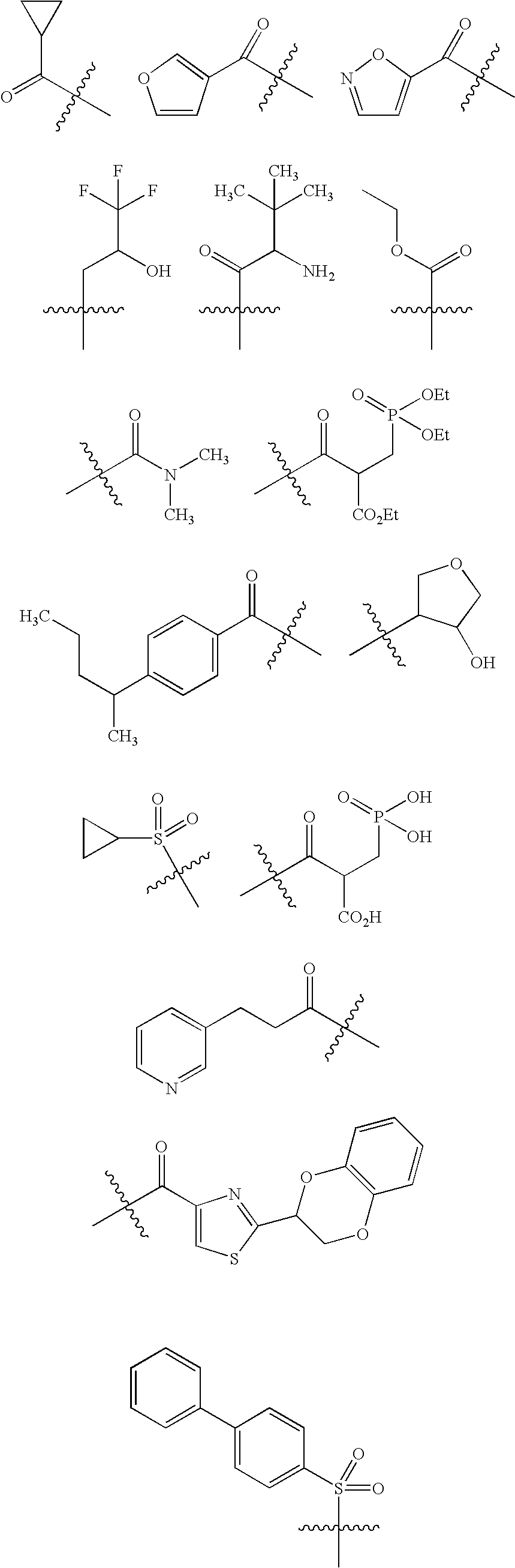
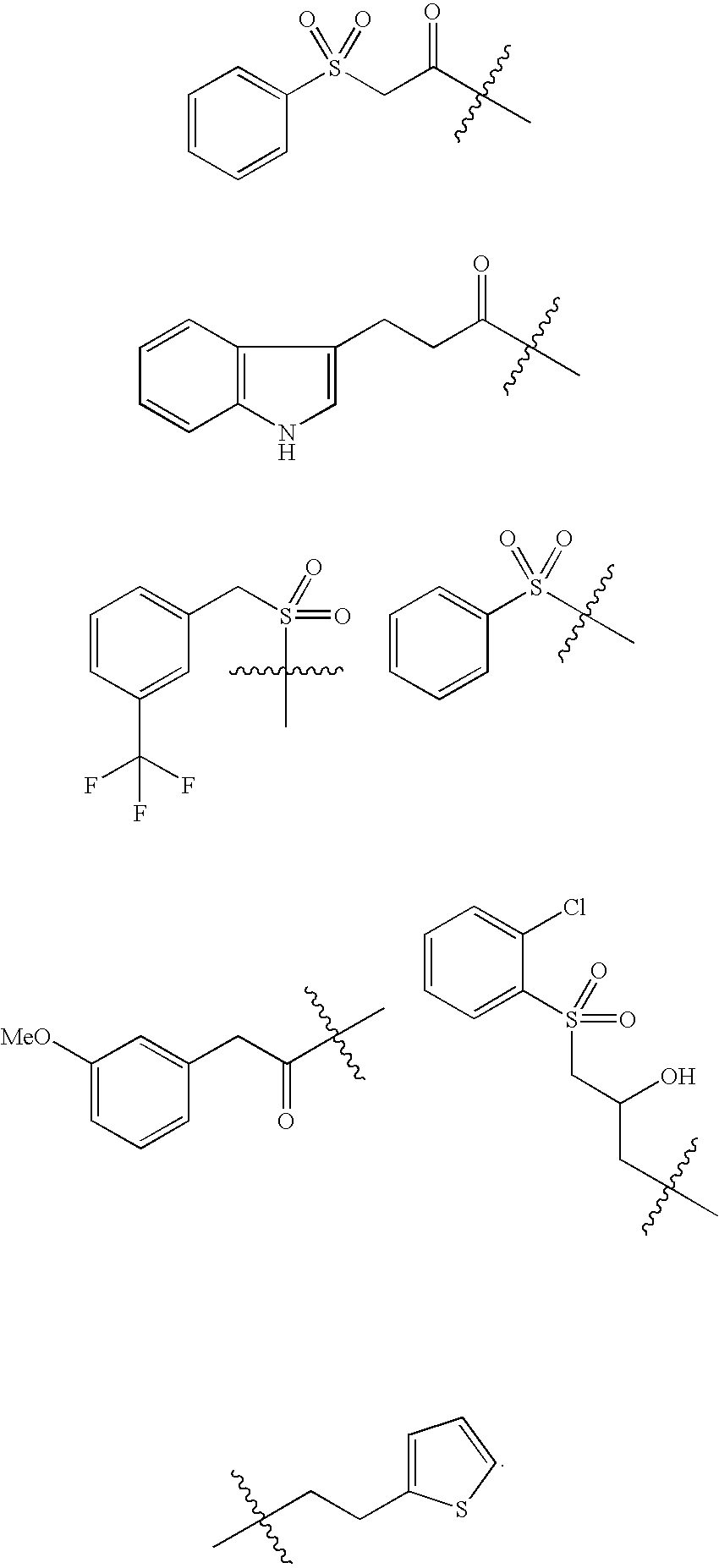
- In other embodiments, R10 or R12 is a moiety that specifically targets tumor cells. Such R10 or R12 includes polysaccharides (e.g., HA), oligopeptide analogs (—[C(O)CH(R)N(R)]2-3—R; for example, compounds of formula 1 and 2)
-

- and antibodies.
- Examples of such tumor-targeting moieties are known in the art and include the following:
-

- and an antibody.
- Compounds with R10 or R12 tumor-targeting moieties can be prepared using methods known in the art. See, Luo et al., Bioconjugate Chem., 1999, 10, 755-763; Janssen et al., Cancer Research, 2002, 62, 6146-6151; Cumis et al., Cancer Research, 2004, 64, 565-571; and Toki et al., J. Org. Chem. 2002, 67, 1866-1872. The resulting conjugate aids the delivery of the compounds of the present invention to a mammal. Preferably, the conjugate aids in delivering active compounds to one or more selective cell types, tissues or organs of the mammal, for example, by means of a cellular targeting molecule, e.g., an immunoconjugate or other cell surface specific conjugate. Useful tissues and organs include lymphatic tissue, blood, brain, kidney, liver, lung, spleen. Useful tissues are not, however, limited to these organs. Compounds of the present invention are envisioned to be effective for reducing tumor growth in any tumor type in the body.
- For example, the Arg-Gly-Asp moiety (a) interacts with the cell adhesion receptors including αvβ3 which is selectively expressed in tumor cells. Therefore, RGD esters would deliver the active drug to the site of action.
- Polysaccharide bioconjugate b (e.g., hyaluronic acid (HA) and hyaluronic acid derivatives) targets tumor cells expressing the HA receptor.
- The peptide Z-Val-Cit-PABOH moiety (c) is cleaved by Cathepsin B in tumor cells to give the active drug. Proteolytic enzymes such as cathepsin B are often overexpressed by metastatic tumor cells. Cathepsin B, among others, has been recognized to be critical for the metastatic process because of its capability to degrade the basement membrane and the extracellular matrix around tumor tissue. Cathepsin B has been shown to be clinically relevant in cancer progression and its cytosolic levels can be up to 11 times higher in tumor tissue compared to normal tissue. This specific target delivery approach using the peptide Z-Val-Cit-PABOH favors intratumoral drug efficiency while minimizing non-targeted tissues.
- In other embodiments the tumor-targeting moiety is an antibody. The antibody is raised against certain antigens expressed selectively or overexpressed on tumor cells. Such antibodies target the compounds of this invention to the tumor cells. Antibodies conjugated to a compound according to this invention are immunoglobulin molecules or portions thereof that are immunologically reactive with the antigens expressed on tumor cells.
- Antibodies exist for example, as intact immunoglobulins (consisting of two heavy chains and two light chains) or as a number of well-characterized fragments thereof. Such fragments include, but are not limited to, those produced by digestion with various proteases, those produced by chemical cleavage and/or chemical dissociation, and those produced recombinantly, so long as the fragment remains capable of specific binding to an antigen. Among these fragments are Fab, Fab′, F(ab′)2, and single chain Fv (scFv) fragments. Thus, as used herein, the term antibody includes antibody fragments produced by the modification of whole antibodies or those synthesized de novo.
- In other embodiments the antibody is conjugated to a liposome comprising the compounds of this invention.
- The invention also provides compounds of formula I, wherein R10 or R12 is a prodrug moiety. For example, R10 or R12 is
-

- wherein R13 is H, alkyl, optionally substituted aryl (see Sun et al., J. Med. Chem., 2001, 44, 2671-2674; Sun et al., Tetrahedron Letters, 2002, 43, 1161-1164; and U.S. Pat. No. 5,466,811).
- The oxodioxolenylmethyl carbonate (d) conjugated prodrugs are characterized as being more readily bioavailable, less irritating to topical and gastric mucosal membranes and more permeable through topical membranes than are the parent drugs from which they are derived. Therefore, the oxodioxolenylmethyl carbonate (d) conjugated prodrugs provide increased biomembrane transport such that the drug is more bioavailable, for example, from the GI tract, the rectum, the skin and the eye.
- Some embodiments of formula I have one or more, and more preferably all, of the features selected from the group consisting of:
- i) R1 is —(CH2)1-6N(RO)2, —(CH2)1-6ORo, —NRC(O)R, —C(O)N(R)2, —CN, —N(R)SO2R, —COOR, —SR, —C(O)R, halo, —OC(O)R, —NRC(O)OR, —OC(O)N(R)2, —N(R)C(O)N(R), —NRC(S)NR, —NRSO2NR, —C(O)NRN(R)2, heteroaryl or heterocyclyl;
- ii) R2 is H, fluoroalkyl, —C(O)R, —COOR, —C(O)N(R)2, —CN, —NRC(O)R, —OR, —SR, —N(R)2, —(CH2)1-6ORo, —(CH2)1-6N(Ro)2, or halo;
- iii) R3 is alkyl, fluoroalkyl, —C(O)R, —COOR, —C(O)N(R)2, —CN, —NRC(O)R, —SR, —N(R)2, —(CH2)1-6ORo, —(CH2)1-6N(Ro)2, or halo;
- iv) R4 is fluoroalkyl, —C(O)R, —COOR, —C(O)N(R)2, —CN, —NRC(O)R, —OR, —SR, —(CH2)1-6N(Ro)2, or halo;
- v) R10 is H, —PO3Mx, —(PO3)2My or —P(O)(alkyl)OM′; or R12 is H or C1-6 alkyl; and
- vi) n is 1.
- In some embodiments, R10 is —C(O)R, —C(O)N(R)2, —C(O)OR, —(CH2)1-6—C(O)R, alkyl, carbocyclyl, aryl, heterocyclyl, heteroaryl, carbocyclylalkyl, aralkyl, heterocyclylalkyl, heteroaralkyl, or a tumor-targeting moiety; and R12 is —C(O)R, —C(O)N(R)2, —C(O)OR, —SO2R, —SO2N(R)2, carbocyclyl, aryl, heterocyclyl, heteroaryl, carbocyclylalkyl, aralkyl, heterocyclylalkyl, heteroaralkyl or a tumor-targeting moiety. Some embodiments of the present invention have one or more, and more preferably all, of the features selected from the group consisting of:
- i) R1 is H, —N(R)2, alkyl, —NRoC(O)NR, —NRoC(O)OR, —C(O)N(R)2, —(CH2)1-6N(Ro)2, —NRoC(O)R, —CN, —COOR, —OR, —SR, or halo;
- ii) R2 is H, alkyl, fluoroalkyl, —ORo, —N(Ro)2, or halo;
- iii) R3 and R4 are independently H, alkyl, —OR, —N(R)2, —(CH2)1-6ORo, or —(CH2)1-6N(Ro)2;
- iv) R7 is H, alkyl, fluoroalkyl, —(CH2)1-6OR, —(CH2)1-6N(R)2, —NRoC(O)R, —C(O)R, —C(H)(OR)R, aralkyl, heterocyclic, heterocyclylalkyl, heteroaryl, or heteroaralkyl;
- v) R10 is H, alkyl, —C(O)R, —PO3Mx, —P(O)(alkyl)OM′, —(PO3)2My, —C(O)N(R)2, —C(O)OR, or a tumor-targeting moiety; or R12 is H, alkyl, —C(O)R, —C(O)N(R)2, —C(O)OR, —SO2R, 5-membered heterocyclyl, 5-membered heteroaralkyl, or a tumor-targeting moiety; and
- vi) n is 1.
- In some embodiments, R is Ro, carbocyclyl, aryl, heteroaryl, heterocyclyl, aralkyl, heterocyclylalkyl or heteroaralkyl. In other embodiments, Ro is H or C1-6 alkyl optionally substituted with halo, hydroxy or amino.
- Other embodiments of the present invention have one or more, and more preferably all, of the features selected from the group consisting of:
- i) R1 is H, amino, —CH2NH2, —NHC(O)NHEt, —NHC(O)OEt, —NHCH2OH, —NHCH2CH2OH, —NH—CH2CH2Cl, —N(CH2OH)2, Cl, Br, —SCH3, CN, —C(O)NH2, —C(O)OH, methyl, or ethyl;
- ii) R2 is H, methyl, ethyl, amino, CF3, Cl, or Br;
- iii) R3 is H, methyl, ethyl, amino, or hydroxy;
- iv) R4 is H, methyl, ethyl, —CH2OH, or —CH2NH2;
- v) each R5, R6 and R8 is independently H, methyl, ethyl, —CH2F, —CHF2, or —CF3;
- vi) R7 is H, methyl, ethyl, CF3, —CH(OH)CH3, —CH2OH, or —CH2CH2OH;
- vii) R10 is H, methyl, ethyl, —C(O)Me, —C(O)Et, —C(O)NMe2, —C(O)-p-OMe-phenyl, —C(O)O-phenyl, —PO3H2, —P(O)(OMe)2, —P(O)(OMe)OH, —P(O)(Me)OH, —P(O)(OH)OP(O)(OH)(OH), or R14; and R14 is selected from the group consisting of:
-

- and an antibody; or R12 is H, methyl, ethyl, R14,
-


- and
- viii) n is 1.
- Some embodiments of the present invention have one or more, and more preferably all, of the features selected from the group consisting of:
- i) R1 is H, —N(Ro)2, —SRo, or halo;
- ii) R2 is H, alkyl, fluoroalkyl, —N(Ro)2, or halo;
- iii) R3 and R4 are independently H or alkyl;
- iv) R7 is H or alkyl;
- v) R8 is H or C1-6 unsubstituted alkyl;
- vi) R9 is —OR10 and R10 is H, C1-6 unsubstituted alkyl, —C(O)R, —PO3Mx, —P(O)(alkyl)OM′, —(PO3)2My, —C(O)OR, or a tumor-targeting moiety; and
- vii) n is 1.
- Other embodiments of the present invention have one or more, and more preferably all, of the features selected from the group consisting of:
- i) R1 is H, —NH2, —SCH3, or Cl;
- ii) R2 is H, methyl, —CF3, —NH2, or Cl;
- iii) R3, R4, R7 and R8 are independently H or methyl;
- iv) R9 is —OR10 and R10 is H, H, —PO3H2, —P(O)(OMe)2, —P(O)(OMe)OH, —P(O)(Me)OH, —P(O)(OH)OP(O)(OH)(OH), or R14; and
- v) n is 1.
- Representative compounds of formula I are depicted below.
-

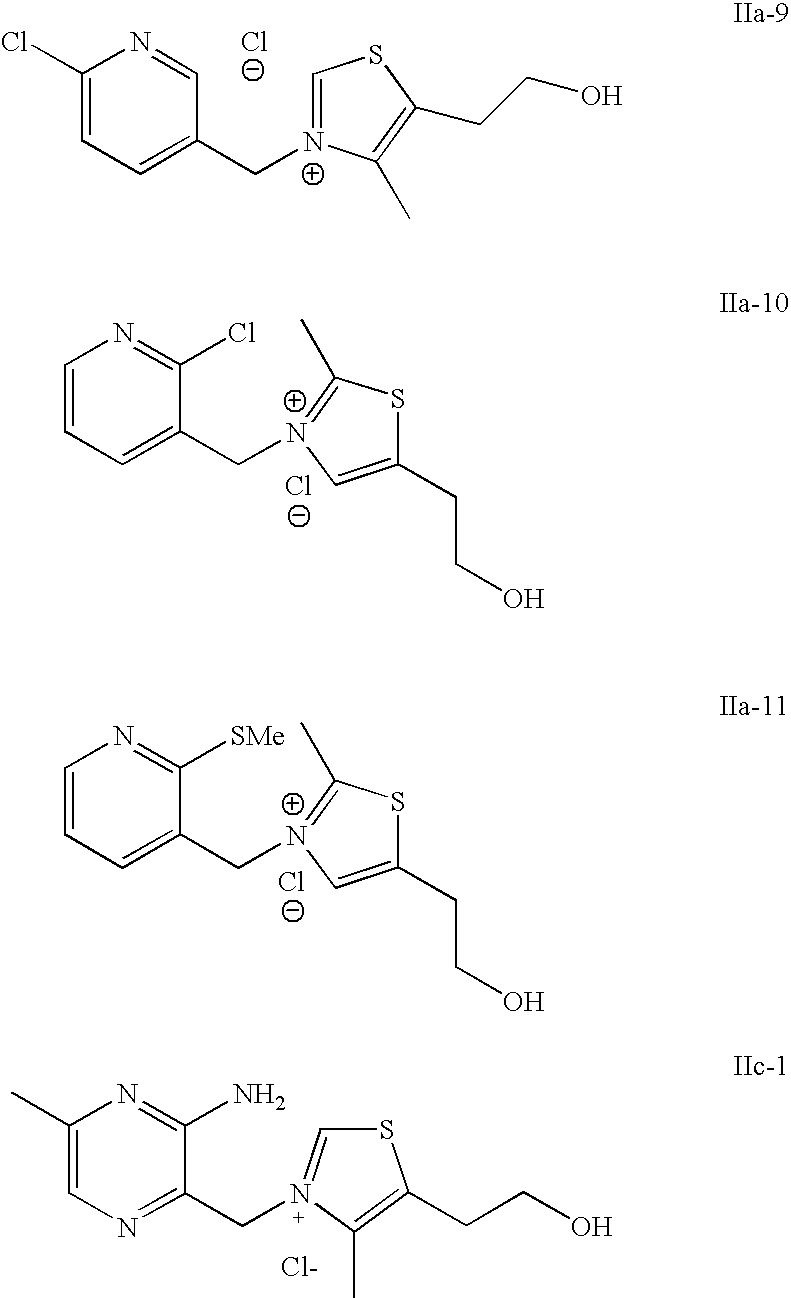
- The compounds of this invention generally may be obtained from known or readily prepared starting materials, following methods known to those skilled in the art, such as that illustrated by general Scheme I below, wherein R1-R3, Y, and R7-R9 are as defined in formula I, and by the examples described herein.
-

- Compounds with R5, R6, n and Ra-Rd other than those illustrated in Scheme I may be synthesized by modifying the synthetic routes disclosed herein using methods known in the art.
- Compounds of the present invention are useful as transketolase inhibitors. One aspect of the instant invention relates to methods of inhibiting transketolase activity in a biological sample comprising contacting the biological sample with compounds of formula I or pharmaceutically acceptable derivatives thereof. Another aspect of the instant invention relates to methods of inhibiting transketolase activity in a patient comprising administering to the patient in need thereof with a therapeutically effective amount of compounds of formula I or pharmaceutically acceptable derivatives thereof. The inhibitory activity of the present compounds towards transketolase may be assayed by methods known in the art (see, for example, Booth and Nixon, Eur. J. Biochem. 1993, 218:261-265). In a preferred embodiment, the present compounds selectively inhibit transketolase activity compared to their ability to inhibit another TPP-utilizing enzyme (e.g., alpha-ketoglutarate dehydrogenase or pyruvate dehydrogenase).
- The amount of the present compounds needed to achieve a therapeutic effect will vary depending on the individual tumor and subject treated, and may be determined empirically by one of skill in the art, e.g., by measuring transketolase activity in a tumor biopsy or in the blood of the treated subjects. In general, the level will depend on competing levels of thiamine and thiamine-derived compounds such as thiamine pyrophosphate (TPP), which is the cofactor for transketolase. The recommended daily allotment (RDA) of thiamine in humans is 1.5 mg. For a human weighing 70 kg, that corresponds to a recommended daily intake of 21 micrograms/kg body weight. The average 20 g mouse which ingests 1 g of food per day (mouse chow, Taklad Global 18%, contains 10 mg thiamine/kg), has a daily intake of about 500 micrograms/kg body weight. The skilled artisan may determine empirically a therapeutically effective range of the present compounds by taking into consideration estimated or measured thiamine levels in the subject to be treated.
- According to one embodiment of the invention, compounds of formulae I and IIa-d or derivatives thereof may be formulated into compositions. In one embodiment, the composition is a pharmaceutical composition, which comprises a compound of formulae I and IIa-d or derivatives thereof and pharmaceutically acceptable carrier, adjuvant or vehicle. In another embodiment, the composition comprises an amount of a transketolase inhibitor of the present invention effective to inhibit transketolase activity in a biological sample or in a patient. In another embodiment, compounds of this invention and pharmaceutical compositions thereof may be formulated for administration to a patient, for example, for oral administration, to treat or prevent cancer.
- The term “pharmaceutically effective amount” or “therapeutically effective amount” refers to an amount of a compound of this invention that is effective in treating cancer, in a patient either as monotherapy or in combination with other agents.
- The amount effective to inhibit transketolase activity is one that measurably inhibits the transketolase activity when compared to the activity of the enzyme in the absence of an inhibitor. Measurable inhibition means a measurable change in activity between a sample containing said inhibitor and transketolase and a sample containing said transketolase.
- Treatment of cancer includes any medical intervention resulting in the slowing of tumour growth or reduction in tumour metastases, as well as partial remission of the cancer in order to prolong life expectancy of a patient. As used herein, the term “patient” refers to a mammal, including a human.
- As used herein, the term “subject” refers to a patient or a biological sample. The term “biological sample”, as used herein, includes, without limitation, cell cultures or extracts thereof; preparations of an enzyme suitable for in vitro assay; biopsied material obtained from a mammal or extracts thereof; and blood, saliva, urine, feces, semen, tears, or other body fluids or extracts thereof. The term “tumor-derived cell” refers to a cell extracted from a tumor in a subject that has been cultured separately from the tumor, in vitro or in vivo.
- The term “pharmaceutically acceptable carrier, adjuvant or vehicle” refers to a carrier, adjuvant or vehicle that may be administered to a patient, together with a compound of this invention, and which does not destroy the pharmacological activity thereof and is nontoxic when administered in doses sufficient to deliver a therapeutic amount of the therapeutic agent.
- The term “pharmaceutically acceptable derivative” means any pharmaceutically acceptable salt, ester, salt of an ester, or other derivative of a compound of this invention which, upon administration to a recipient, is capable of providing (directly or indirectly) a compound of this invention or an inhibitorily active metabolite or residue thereof. Particularly favored derivatives are those that increase the bioavailability of the compounds of this invention when such compounds are administered to a patient (e.g., by allowing an orally administered compound to be more readily absorbed into the blood) or which enhance delivery of the parent compound to a biological compartment relative to the parent species.
- Throughout this specification, the word “comprise” or variations such as “comprises” or “comprising” will be understood to imply the inclusion of a stated integer or groups of integers but not the exclusion of any other integer or group of integers.
- Pharmaceutically acceptable salts of the compounds according to the invention include those derived from pharmaceutically acceptable inorganic and organic acids and bases. Examples of suitable acids include hydrochloric, hydrobromic, sulfuric, nitric, perchloric, fumaric, maleic, phosphoric, glycollic, lactic, salicyclic, succinic, toluene-p-sulfonic, tartaric, acetic, citric, methanesulfonic, ethanesulfonic, formic, benzoic, malonic, naphthalene-2-sulfonic and benzenesulfonic acids. Other acids, such as oxalic, while not in themselves pharmaceutically acceptable, may be employed in the preparation of salts useful as intermediates in obtaining the compounds of the invention and their pharmaceutically acceptable acid addition salts.
- Salts derived from appropriate bases include alkali metal (e.g. sodium), alkaline earth metal (e.g., magnesium), ammonium, NW4 + (wherein W is C1-4 alkyl) and other amine salts. Physiologically acceptable salts of a hydrogen atom or an amino group include salts of organic carboxylic acids such as acetic, lactic, tartaric, malic, isethionic, lactobionic and succinic acids; organic sulfonic acids such as methanesulfonic, ethanesulfonic, benzenesulfonic and p-toluenesulfonic acids and inorganic acids such as hydrochloric, sulfuric, phosphoric and sulfamic acids. Physiologically acceptable salts of a compound with a hydroxy group include the anion of said compound in combination with a suitable cation such as Na+, NH4 +, and NW4 + (wherein W is a C1-4alkyl group).
- Any reference to any of the above compounds also includes a reference to a pharmaceutically acceptable derivative thereof, such as a pharmaceutically acceptable salt, ester, and salt of an ester.
- Salts of the compounds of the present invention may be made by methods known to a person skilled in the art. For example, treatment of a compound of the present invention with an appropriate base or acid in an appropriate solvent will yield the corresponding salt.
- Esters of the compounds of the present invention are independently selected from the following groups: (1) carboxylic acid esters obtained by esterification of the hydroxy groups, in which the non-carbonyl moiety of the carboxylic acid portion of the ester grouping is selected from straight or branched chain alkyl (for example, acetyl, n-propyl, t-butyl, or n-butyl), alkoxyalkyl (for example, methoxymethyl), aralkyl (for example, benzyl), aryloxyalkyl (for example, phenoxymethyl), aryl (for example, phenyl optionally substituted by, for example, halogen, C1-4alkyl, or C1-4alkoxy or amino); (2) sulfonate esters, such as alkyl- or aralkylsulfonyl (for example, methanesulfonyl); (3) amino acid esters (for example, L-valyl or L-isoleucyl); (4) phosphonate esters and (5) mono-, di- or triphosphate esters. The phosphate esters may be further esterified by, for example, a C1-20 alcohol or reactive derivative thereof, or by a 2,3-di (C6-24)acyl glycerol.
- In such esters, unless otherwise specified, any alkyl moiety present preferably contains from 1 to 18 carbon atoms, particularly from 1 to 6 carbon atoms, more particularly from 1 to 4 carbon atoms, Any cycloalkyl moiety present in such esters preferably contains from 3 to 6 carbon atoms. Any aryl moiety present in such esters preferably comprises a phenyl group.
- The present invention provides compounds and pharmaceutical compositions thereof and methods of using them to treat (i.e., ameliorate, mitigate, alleviate, slow, or inhibit) or prevent hyperproliferative diseases, such as cancers including but not limited to breast, prostate, ovarian, stomach, colerectal, skin, lung, cervical and bladder cancers, glioma, mesothelioma, as well as various leukemias and sarcomas, such as Kaposi's Sarcoma. The present compounds and pharmaceutical compositions are also useful to inhibit tumor growth, angiogenesis, metastasis and/or otherwise inappropriate cell proliferation. While not intending to be bound by theory, the present compounds inhibit tumor growth by inhibiting non-oxidative pentose phosphate pathways in cells and tumors. The invention thus provides additional methods for using the present compounds and compositions thereof, based on the biochemical activity of the present compounds in a cell.
- Transketolase is known to participate in the non-oxidative pentose phosphate pathway which stimulates ribose biosynthetic pathways and thus increases steady-state levels of ribulose-5 phosphate and ribose-5-phosphate in a cell. In another embodiment, the invention provides a method for reducing levels of ribulose-5-phosphate or ribose-5-phosphate in a tumor cell comprising administering to the cell an effective amount of a present compound.
- Moreover, steady-state levels of pentose phosphates, such as ribulose-5-phosphate and ribose-5-phosphate (a substrate for nucleic acid synthesis), influence nucleic acid biosynthetic rates. Thus, in another embodiment, the invention provides a method for inhibiting nucleic acid synthesis in a tumor cell comprising administering to the cell an effective amount of a present compound.
- Increased nucleic acid biosynthesis is required for cell proliferation. Thus in another embodiment, the invention provides a method for inhibiting cell proliferation of a tumor or tumor-derived cell comprising administering to the cell an effective amount of a present compound.
- According to some embodiments, the invention provides an inhibitor that inhibits the proliferation of tumor cells in vivo. The tumor cell may be derived from any cell type including, without limitation, epidermal, epithelial, endothelial or mesodermal cells. The tumor cells may be derived from solid or non-solid tumors including, but not limited to, leukemia, sarcoma, multiple myeloma, glioblastoma, choriocarcinoma, Kaposi or cervical intraepithelial neoplasia. In another embodiment, an inhibitor of the present invention inhibits prostate, colon, breast, sarcoma, ovarian, lung and glioblastoma tumor growth in a subject.
- In another embodiment, the invention provides a method for stimulating apoptosis in a tumor or tumor-derived cell comprising administering to the cell an effective amount of a present compound.
- In another embodiment, the invention provides a method for reducing tumor growth, thus treating cancer, in a patient comprising administering an effective amount of a present compound to the patient in need thereof.
- In some embodiments, an inhibitor of the invention is used to treat lung cancer, bone cancer, pancreatic cancer, skin cancer, cancer of the head and neck, cutaneous or intraocular melanoma, uterine cancer, ovarian cancer, rectal cancer, cancer of the anal region, stomach cancer, colon cancer, breast cancer, gynecologic tumors (e.g., uterine sarcomas, carcinoma of the fallopian tubes, carcinoma of the endometrium, carcinoma of the cervix, carcinoma of the vagina or carcinoma of the vulva), Hodgkin's disease, cancer of the esophagus, cancer of the small intestine, cancer of the endocrine system (e.g., cancer of the thyroid, parathyroid or adrenal glands), sarcomas of soft tissues, cancer of the urethra, cancer of the penis, prostate cancer, chronic or acute leukemia, solid tumors of childhood, lymphocytic lymphomas, cancer of the bladder, cancer of the kidney or ureter (e.g., renal cell carcinoma, carcinoma of the renal pelvis), or neoplasms of the central nervous system (e.g., primary CNS lymphoma, spinal axis tumors, brain stem gliomas or pituitary adenomas).
- In yet a further aspect, the present invention provides the use of a compound according to the invention in the manufacture of a medicament for the treatment or prophylaxis of cancer and associated conditions.
- The above compounds according to the invention and their pharmaceutically acceptable derivatives may be employed in combination with other therapeutic agents for the treatment of the above conditions. Combination therapies according to the present invention comprise the administration of a compound of the present invention or a pharmaceutically acceptable derivative thereof and another pharmaceutically active agent. The active ingredient(s) and pharmaceutically active agents may be administered simultaneously (i.e., concurrently) in either the same or different pharmaceutical compositions or sequentially in any order. The amounts of the active ingredient(s) and pharmaceutically active agent(s) and the relative timings of administration will be selected in order to achieve the desired combined therapeutic effect.
- Such therapeutic agents may also be a chemotherapeutic agent, an antiangiogenic agent, an agent which modulates signaling associated with hypoxic conditions in a cell (e.g., Avastin™ (bevacizumab), angiostatin and endostatin). Other therapeutic agents that may be used in combination with the present compounds or compositions include, but are not limited to, cancer therapeutics such as mitotic inhibitors, alkylating agents, alpha-metabolites, intercalating antibiotics, growth factor inhibitors, cell cycle inhibitors, enzymes, topoisomerase inhibitors, anti-metastatic agents, anti-angiogenic agents and radiation. Exemplary cancer therapeutics are farnesyl transferase inhibitors, tamoxifen, herceptin, taxol, STI571, cisplatin, 5-fluorouracil and cytoxan, some of which specifically target members of the ras tumorigenic pathway.
- The present compounds and compositions can also be used in combination with agents that create a hypoxic environment. Hypoxia, i.e., lack of oxygen, plays a fundamental role in many pathologic processes. In response to hypoxia, cells activate and express multiple genes. Tumor cells may respond to hypoxia by diminishing their proliferative rates leaving the cells viable but nonproliferating. Some transformed cell lines can also undergo apoptosis in extreme hypoxia and an acidic environment.
- Further, without being limited to any particular mechanism of action, the tumor inhibiting effect of the present compounds or compositions may be associated with inhibition of the non-oxidative pentose phosphate pathway which shuttles carbon from glycolytic reactions to the formation of pentose phosphates used in nucleic acid biosynthesis, including ribulose-5-phosphate and ribose-5-phosphate. Accordingly, in some embodiments, one or more hypoxia-inducing agents are administered simultaneously with, prior to, or subsequent to administration of the present compounds or compositions. The hypoxia-inducing agent may be administered in the same composition comprising the present compounds or may be administered in a separate composition.
- When the present compounds and compositions are used to inhibit tumor cell growth, various stages of cancer are treated by these methods, including neoplasia and malignant tumors. Cancers that can be treated by these methods include, without limitation, cancers that have failed other therapies, cancers at various stages of evolution (including recurring, resistant and minimal residual cancers), cancers whose etiology involves ras, myc, p53, and all other oncogenes whose expression or mis-expression affects signal transduction pathways involved in cell growth, division, proliferation, apoptosis and/or cell death.
- The present invention further includes the use of a compound according to the invention in the manufacture of a medicament for simultaneous or sequential administration with at least another therapeutic agent, such as those defined hereinbefore.
- In general a suitable dose for each of the above-mentioned conditions will be in the range of 0.01 to 600 mg per kilogram body weight of the recipient (e.g. a human) per day, preferably in the range of 0.1 to 100 mg per kilogram body weight per day and most preferably in the range 0.5 to 30 mg per kilogram body weight per day and particularly in the range 1.0 to 20 mg per kilogram body weight per day. Unless otherwise indicated, all weights of active ingredient are calculated as the parent compound of formula I; for derivatives, such as salts and esters thereof, the weights would be increased proportionally. The desired dose may be presented as one, two, three, four, five, six or more sub-doses administered at appropriate intervals throughout the day. In some cases the desired dose may be given on alternative days. These sub-doses may be administered in unit dosage forms, for example, containing 10 to 1000 mg or 50 to 500 mg, preferably 20 to 500 mg, and most preferably 50 to 400 mg of active ingredient per unit dosage form.
- While it is possible for the active ingredient to be administered alone, it is preferable to present it as a pharmaceutical composition. The compositions of the present invention comprise at least one active ingredient, as defined above, together with one or more acceptable carriers thereof and optionally other therapeutic agents. Each carrier must be acceptable in the sense of being compatible with the other ingredients of the composition and not injurious to the patient.
- Pharmaceutical compositions include those suitable for oral, rectal, nasal, topical (including transdermal, buccal and sublingual), vaginal or parenteral (including subcutaneous, intramuscular, intravenous, intradermal, and intravitreal) administration. The compositions may conveniently be presented in unit dosage form and may be prepared by any methods well known in the art of pharmacy. Such methods represent a further feature of the present invention and include the step of bringing into association the active ingredients with the carrier, which constitutes one or more accessory ingredients. In general, the compositions are prepared by uniformly and intimately bringing into association the active ingredients with liquid carriers or finely divided solid carriers or both, and then if necessary shaping the product.
- The present invention further includes a pharmaceutical composition as hereinbefore defined wherein a compound of the present invention or a pharmaceutically acceptable derivative thereof and another therapeutic agent are presented separately from one another as a kit of parts. The present compositions can also be used in combination with other cancer therapies involving, e.g., radiation, photosensitizing compounds, anti-neoplastic agents and immunotoxics.
- Compositions suitable for transdermal administration may be presented as discrete patches adapted to remain in intimate contact with the epidermis of the recipient for a prolonged period of time. Such patches suitably contain the active compound I) in an optionally buffered, aqueous solution or 2) dissolved and/or dispersed in an adhesive or 3) dispersed in a polymer. A suitable concentration of the active compound is about 1% to 25%, preferably about 3% to 15%. As one particular possibility, the active compound may be delivered from the patch by electrotransport or iontophoresis as generally described in Pharmaceutical Research 3(6), 318 (1986).
- Pharmaceutical compositions of the present invention suitable for oral administration may be presented as discrete units such as capsules, caplets, cachets or tablets each containing a predetermined amount of the active ingredients; as a powder or granules; as a solution or a suspension in an aqueous or non-aqueous liquid; or as an oil-in-water liquid emulsion or a water-in-oil liquid emulsion. The active ingredient may also be presented as a bolus, electuary or paste.
- A tablet may be made by compression or molding, optionally with one or more accessory ingredients. Compressed tablets may be prepared by compressing in a suitable machine the active ingredients in a free-flowing form such as a powder or granules, optionally mixed with a binder (e.g. povidone, gelatin, hydroxypropylmethyl cellulose), lubricant, inert diluent, preservative, disintegrant (e.g. sodium starch glycollate, cross-linked povidone, cross-linked sodium carboxymethyl cellulose) surface-active or dispersing agent. Molded tablets may be made by molding a mixture of the powdered compound moistened with an inert liquid diluent in a suitable machine. The tablets may optionally be coated or scored and may be formulated so as to provide slow or controlled release of the active ingredients therein using, for example, hydroxypropylmethyl cellulose in varying proportions to provide the desired release profile. Tablets may optionally be provided with an enteric coating, to provide release in parts of the gut other than the stomach.
- Pharmaceutical compositions suitable for topical administration in the mouth include lozenges comprising the active ingredients in a flavored base, usually sucrose and acacia or tragacanth; pastilles comprising the active ingredient in an inert basis such as gelatin and glycerin, or sucrose and acacia; and mouthwashes comprising the active ingredient in a suitable liquid carrier.
- Pharmaceutical compositions suitable for vaginal administration may be presented as pessaries, tampons, creams, gels, pastes, foams or spray Pharmaceutical compositions containing in addition to the active ingredient such carriers as are known in the art to be appropriate.
- Pharmaceutical compositions for rectal administration may be presented as a suppository with a suitable carrier comprising, for example, cocoa butter or a salicylate or other materials commonly used in the art. The suppositories may be conveniently formed by admixture of the active combination with the softened or melted carrier(s) followed by chilling and shaping in molds.
- Pharmaceutical compositions suitable for parenteral administration include aqueous and nonaqueous isotonic sterile injection solutions which may contain anti-oxidants, buffers, bacteriostats and solutes which render the pharmaceutical composition isotonic with the blood of the intended recipient; and aqueous and non-aqueous sterile suspensions which may include suspending agents and thickening agents; and liposomes or other microparticulate systems which are designed to target the compound to blood components or one or more organs. The pharmaceutical compositions may be presented in unit-dose or multi-dose sealed containers, for example, ampoules and vials, and may be stored in a freeze-dried (lyophilized) condition requiring only the addition of the sterile liquid carrier, for example water for injection, immediately prior to use. Extemporaneous injection solutions and suspensions may be prepared from sterile powders, granules and tablets of the kind previously described.
- Unit dosage pharmaceutical compositions include those containing a daily dose or daily subdose of the active ingredients, as hereinbefore recited, or an appropriate fraction thereof.
- It should be understood that in addition to the ingredients particularly mentioned above the pharmaceutical compositions of this invention may include other agents conventional in the art having regard to the type of pharmaceutical composition in question, for example, those suitable for oral administration may include such further agents as sweeteners, thickeners and flavoring agents.
- In certain preferred embodiment, each of the above-described methods is performed on a cell or cells in which the thiamine concentration has been reduced, as described below.
- A typical Western diet is rich in thiamine and many cancer patients take vitamin supplements containing thiamine. Without being bound by theory, some of the present compounds are competitive inhibitors of transketolase. Thus, the present compounds will be more effective as an anti-cancer agent when combined with a low-thiamine diet, wherein vitamin supplements that contain thiamine and thiamine-supplemented or thiamine-rich foods are avoided. Any other method for reducing cellular concentrations of thiamine are envisioned to be useful in combination with the treatment methods of the invention.
- Accordingly, the invention also provides therapeutic methods which comprise the step of administering a present compound or a pharmaceutical composition thereof to a subject in which the thiamine concentration in the subject has been reduced. Preferably, thiamine concentrations in the subject are limited during the administration step. More preferably, steps taken to limit thiamine concentrations in the subject are started before the administration of a present compound, e.g., at least 24 hours before, preferably at least 48 hours before, more preferably at least a week before, and most preferably at least two weeks before the administration step. In addition, it is preferred that thiamine levels continue to be controlled post administration, e.g., for at least 24 hours, preferably at least 48 hours, more preferably at least a week, and most preferably at least two weeks after the administration step. The recommended minimum thiamine intake level is one that is sufficient to avoid symptoms of toxicity associated with thiamine deficiency. Such symptoms, which are usually mild but can become severe in some instances, include (but are not limited to) those of the cardiovascular and nervous systems such as those associated with wet or dry beriberi or neuropathy and/or Wernicke-Korsakoff syndrome, including peripheral vasodilation, biventricular myocardial failure, sodium and water retention, edema, fulminant cardiovascular collapse, confusion, disordered ocular motility, ataxia of gait, neuropathy and cerebellar degeneration. See, e.g., Singleton and Martin, Curr. Molecular Medicine 1: 197-207 (2001).
- In order that the invention described herein be more fully understood, the following examples are set forth. It should be understood that these examples are for illustrative purposes only and are not to be construed as limiting this invention in any manner.
-

- a) (2-Aminopyridin-3-yl)methanol. To a solution of 2-aminonicotinic acid (20.5 g, 148 mmol) in tetrahydrofuran (300 mL) at room temperature was added lithium aluminum hydride (1.0M in tetrahydrofuran, 300 mL, 300 mmol) dropwise over 45 minutes. The resulting solution was heated to reflux for 18 hrs. The mixture was cooled to room temperature and quenched by the sequential dropwise addition of water (11.5 mL), 15% aqueous sodium hydroxide (11.5 mL), and water (34.5 mL). The mixture was stirred for 15 min., then filtered through Celite 545. The filter pad was washed thoroughly with tetrahydrofuran (500 mL) and 5% methanol in chloroform (500 mL). The combined filtrate and washings were evaporated to give 17.7 g (96%) of the title compound as a yellow waxy solid. MS (LC/MS/pos): 125.0 (M+H)+. 1H NMR (CDCl3) δ 4.13 (br. s, 1H), 4.59 (s, 2H), 6.56 (m, 1H), 7.29 (d, 1H), 7.90 (d, 1H).
- b) 3-Chloromethylpyridin-2-ylamine hydrochloride. Thionyl chloride (12.4 mL, 170 mmol) was added to a 1 L round bottom flask containing tetrahydrofuran (500 mL). The flask was cooled in an ice-water bath and a solution of (2-aminopyridin-3-yl)methanol (17.6 g, 142 mmol) in tetrahydrofuran (150 mL) was added dropwise at a rate such that the temperature remained below 10° C. The reaction mixture was warmed to room temperature and stirred for an additional 30 minutes. The solvent was evaporated and the residual solid was ground to a fine powder with a mortar and pestle, then dried under vacuum to give 23.2 g (92%) of the title compound as a yellow powder. 1H NMR (CDCl3) δ 4.63 (s, 2H), 6.87 (m, 1H), 7.58 (br s, 2H), 7.85 (m, 2H).
- c) 3-(2-Aminopyridin-3-ylmethyl)-5-(2-hydroxyethyl)-4-methylthiazol-3-ium chloride hydrochloride. Into a 250 mL round bottom flask was placed 2-(4-methylthiazol-5-yl)ethanol (7.2 mL, 60 mmol) and the flask was placed in an oil bath heated to 100° C. 3-Chloromethylpyridin-2-ylamine hydrochloride (0.54 g, 3.0 mmol) was added as the solid in small portions and the mixture was stirred for 30 min. The reaction mixture was cooled to room temperature and diluted with dichloromethane (120 mL). After stirring for 30 min., the solvent was evaporated and the residual solid was triturated with a small amount of acetone. The suspension was cooled to 0° C. and the precipitated solid was removed by filtration and washed with acetone (3×10 mL). The crude precipitate was dissolved in a minimal amount of methanol and ether was added slowly until a white precipitate started to form. The suspension was placed in the freezer for 15 minutes after which time the precipitated solid was collected by filtration, washed generously with ether and dried under vacuum to give 0.33 g (35%) of the title compound as an off-white powder. MS (LC/MS/pos): 249.9 (M+). 1H NMR (DMSO-d6) δ 3.06 (t, 2H), 3.65 (t, 2H), 5.68 (s, 2H), 6.95 (t, 1H), 7.85 (d, 1H), 8.17 (d, 2H), 8.36 (br s, 1H), 9.90 (s, 1H).
-

- 3-Bromomethylpyridine hydrobromide (5.06 g, 20.0 mmol) was added in portions over a 30-minute period to stirred 2-(4-methylthiazol-5-yl)ethanol (57.3 g, 400 mmol) that was heated to 90° C. The reaction was heated for an additional 30 minutes. The dark red mixture was cooled to room temperature and diluted with diethyl ether (50 mL). The heterogeneous mixture was stirred for 1 minute, and then the supernatant was decanted. This process was repeated four times, reserving the residual crude product. The combined supernatants were decanted leaving a second residue. The supernatants were discarded. The first and second residues were pooled and chromatographed on silica gel, Biotage Flash 40, eluting with 10% methanol (containing 7N ammonia) in dichloromethane, and then 20% methanol (containing 7N ammonia) in dichloromethane. The impure product (5.6 g) was a viscous, orange residue. The orange residue was triturated with boiling isopropanol (20 mL), and was allowed to cool to room temperature. The resulting white precipitate (1 g, presumably ammonium bromide) was removed by filtration, and the mother liquor was concentrated giving an orange residue (4.05 g). A 1 g portion of this crude was dissolved in water (2 mL), and loaded on to a Dowex 50W-X8 cation exchange resin (5 cm×10 cm; 100-200 mesh; hydrogen form). The product was eluted with the following gradient: water, then 0.2N-6N aqueous HCl. The product-containing fractions were pooled and concentrated using a toluene azeotrope. The resulting residue was triturated with 1:1 ethanol/diethyl ether (100 mL), then filtered and dried under high vacuum (over a CaSO4 desiccator) to give 480 mg (32% yield based on amount subjected to Dowex) of the title compound as a fine, pink powder. MS (APCI+) m/z 235 (M+) detected; HPLC (C16-amide column using K3PO4 phosphate buffer): RT=5.44 min, 98.2% (230 nm); 1H NMR (400 MHz, D2O) δ 9.82 (m, 1H), 8.72 (m, 2H), 8.33 (m, 1H), 7.99 (m, 1H), 5.86 (m, 2H), 3.70 (m, 2H), 3.01 (m, 2H), 2.28 (m, 3H).
-
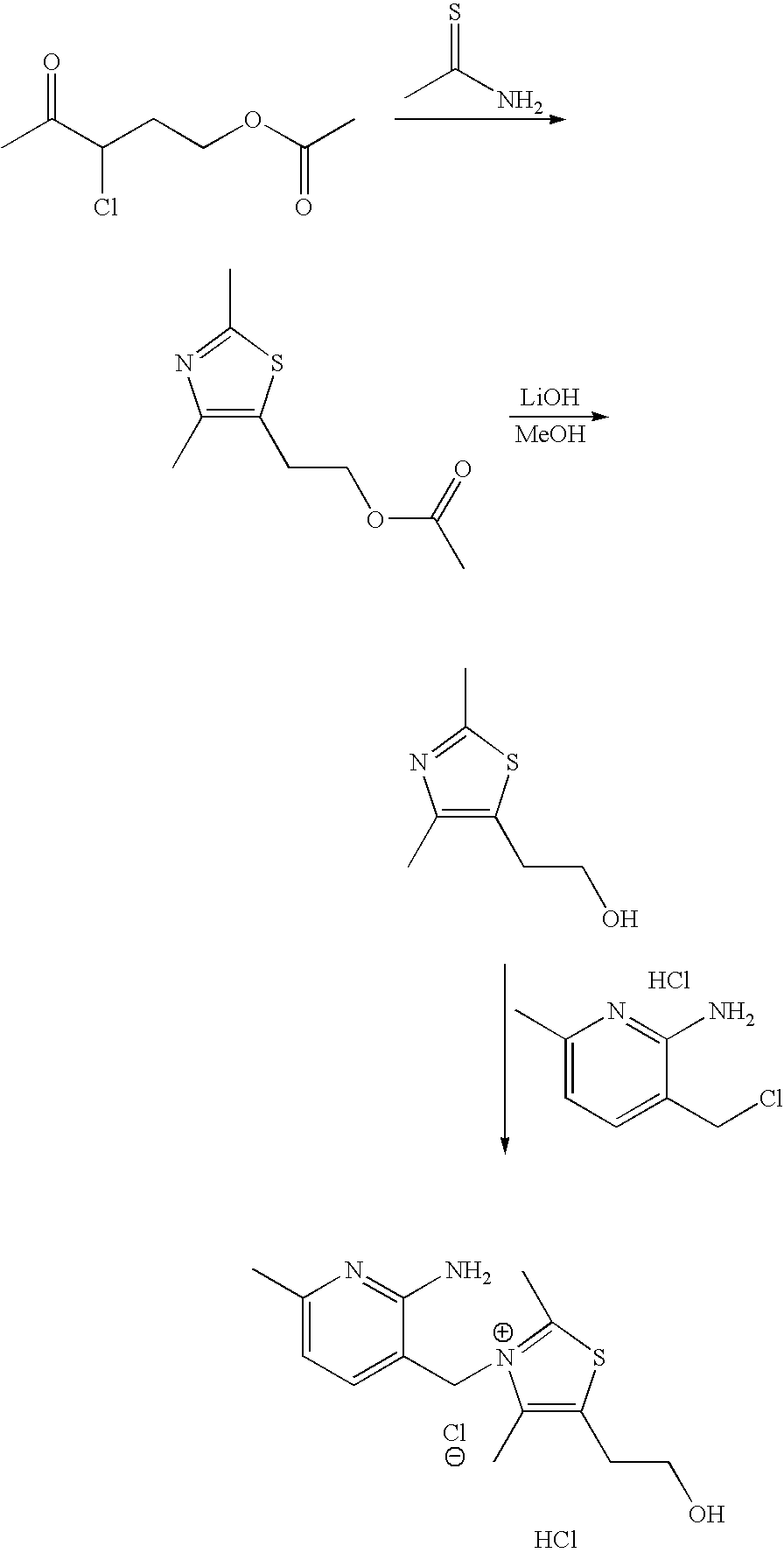
- a) Acetic acid 2-(2,4-dimethylthiazol-5-yl)ethyl ester. Acetic acid 3-chloro-4-oxo-pentyl ester (prepared from 2-acetylbutyrolactone as described in J. Med. Chem. 1979, 22(3), 306) (4.75 g, 27 mmol) and thioacetamide (2 g, 27 mmol) were heated to 110-120° C. under a stream of nitrogen for 30 minutes. Cooling of the reaction gave 5.3 g (100%) of the title compound as a thick tan oil: 1H NMR (CDCl3) δ 2.09 (s, 3H), 2.56 (s, 3H), 3.01 (s, 3H), 3.10 (t, 2H), 4.26 (t, 2H); MS (APCI+) m/z (rel intensity) 200.0 (100).
- b) 2-(2,4-Dimethylthiazol-5-yl)ethanol. To a solution of acetic acid 2-(2,4-dimethylthiazol-5-yl)ethyl ester (5 g, 25 mmol) in methanol (100 mL) was added lithium hydroxide monohydrate (1.05 g, 25 mmol) and the reaction was stirred for 1 hour. The solution was concentrated in vacuo and the resulting paste partitioned between water (100 mL) and dichloromethane (100 mL). The aqueous phase was extracted with dichloromethane and the combined organic phases were dried over magnesium sulfate. Concentration gave 3.2 g (81%) of the title compound as a clear oil: 1H NMR (CDCl3) δ 1.90 (t, 1H), 2.27 (s, 3H), 2.57 (s, 3H), 2.90 (t, 2H), 3.76 (q, 2H); MS (APCI+) m/z (rel intensity) 158.0 (100).
- c) 3-(2-Amino-6-methylpyridin-3-ylmethyl)-5-(2-hydroxyethyl)-2,4-dimethylthiazol-3-ium chloride hydrochloride. 2-(2,4-Dimethylthiazol-5-yl)ethanol (180 mg, 1.1 mmol) and 3-chloromethyl-6-methylpyridin-2-ylamine hydrochloride (Example 6, part (e), 200 mg, 1 mmol) were mixed together in a conical vial and stirred at 60° C. for 20 minutes. While the reaction was still warm, dichloromethane was added and the resulting solid was collected by filtration and dried under vacuum to give 271 mg (83%) of the title compound as a white powder: 1H NMR (d6-DMSO) δ 2.34 (s, 3H), 2.45 (s, 3H), 2.95 (s, 3H), 3.03 (t, 2H), 3.66 (t, 2H), 5.69 (s, 2H), 6.66 (d, 1H), 7.05 (d, 1H), 8.30 (br s, 1H); MS (APCI+) m/z (rel intensity) 278.0 (60).
-

- a) Acetic acid 2-thiazol-5-yl ethyl ester. Following the procedure described in Example 3, part (a), acetic acid 3-chloro-4-oxo-butyl ester (prepared from 1,4-butane-diol as described in J. Chem. Soc. Perkin Trans 1, 1998, 3565) (1.64 g, 10 mmol) and thioformamide (prepared from formamide as described in J. Am. Chem. Soc. 1953, 75(18), 4456) (610 mg, 10 mmol) gave 1.7 g (100%) of the title compound as a brown oil: 1H NMR (CDCl3) δ 2.10 (s, 3H), 3.30 (t, 2H), 4.34 (t, 2H), 8.00 (s, 1H), 9.58 (s, 1H); MS (APCI+) m/z (rel intensity) 171.9 (100).
- b) 2-Thiazol-5-ylethanol. The title compound (350 mg, 28%) was obtained as a clear liquid after purification by chromatography (dichloromethane/methanol 90/10), following the procedure described in Example 3, part (b) using acetic acid 2-thiazol-5-yl ethyl ester (1.7 g, 10 mmol): 1H NMR (CDCl3) δ 1.86 (t, 1H), 3.12 (t, 2H), 3.88 (q, 2H), 7.69 (s, 1H), 8.69 (s, 1H).
- c) 3-(2-Amino-6-methylpyridin-3-ylmethyl)-5-(2-hydroxyethyl)thiazol-3-ium chloride hydrochloride. Following the procedure described in Example 3, part (c), 2-thiazol-5-yl-ethanol (150 mg, 1.1 mmol) and 3-chloromethyl-6-methyl-pyridin-2-ylamine hydrochloride (200 mg, 1 mmol) gave, after recrystallization from hot ethanol, 173 mg (58%) of the title compound as a white solid: 1H NMR (d6-DMSO) δ 2.46 (s, 3H), 3.04 (t, 2H), 3.63 (t, 2H), 5.81 (s, 2H), 6.83 (d, 1H), 8.06 (d, 1H), 8.20 (br s, 1H), 8.34 (s, 1H), 10.28 (s, 1H); MS (APCI+) m/z (rel intensity) 250.0 (70).
-

- a) 2-(5-Methylpyridin-2-yl)isoindole-1,3-dione. To a solution of 5-methyl-pyridin-2-ylamine (4.00 g, 37.0 mmol) in acetic acid (100 mL) was added phthalic anhydride (5.48 mL, 37.0 mmol). The resulting solution was stirred and heated to 120° C. After 18 hrs, the solution was cooled to room temperature and treated with saturated aqueous sodium bicarbonate (1000 mL). The resulting mixture was extracted with dichloromethane (2×500 mL). The organic layer was dried over sodium sulfate and evaporated to give 7.85 g (89%) of the title compound as a white powder. LCMS (APCI+) RT=2.66 min. m/z 239 (M+H) detected. 1H NMR (400 MHz, CDCl3) δ 8.51 (s, 1H, Ar—H), 7.97 (m, 1H, Ar—H), 7.80 (m, 2H, Ar—H), 7.69 (m, 2H, Ar—H), 7.34 (d, 1H, J=7.81 Hz, Ar—H), 2.41 (s, 3H, Ar—CH3).
- b) 2-(5-Bromomethylpyridin-2-yl)isoindole-1,3-dione. To a solution of 2-(5-methylpyridin-2-yl)isoindole-1,3-dione (5.05 g, 21.2 mmol) in carbon tetrachloride (150 mL) was added N-bromosuccinimide (3.96 g, 22.3 mmol) with stirring. The solution was heated to 80° C. and placed behind a blast shield. Benzoyl peroxide (0.41 g, 1.7 mmol) was added in 100 mg portions over 6 hrs. Following completion of addition, the resulting dark mixture was stirred for 24 hrs. An additional 100 mg of benzoyl peroxide was added and the reaction mixture stirred for an additional 24 hrs. The mixture was cooled to room temperature, diluted with dichloromethane (200 mL), and washed with 1M sodium thiosulfate (250 mL) to destroy any unreacted N-bromosuccinimide. The organic layer was dried over sodium sulfate and evaporated. The residual oil was chromatographed on silica gel (Biotage 40; 50/50 hexane/ethyl acetate, fraction size 15 mL). The product coeluted with unreacted starting material. Like fractions were combined and evaporated to give 3.50 g (50% pure, 26% yield) of the title compound as a yellow powder. 1H NMR (400 MHz, CDCl3) δ 8.69 (d, 1H, J=2.73 Hz, Ar—H), 8.12 (d, 1H, J=8.59 Hz, Ar—H), 7.96 (m, 3H, Ar—H), 7.82 (m, 2H, Ar—H), 4.53 (s, 2H, AR-CH2—Br).
- c) Acetic acid 6-(1,3-dioxo-1,3-dihydroisoindol-2-yl)pyridin-3-ylmethyl ester. To a solution of 2-(5-bromomethyl-pyridin-2-yl)-isoindole-1,3-dione (1.75 g, 5.51 mmol, 35% by weight) in ethanol (70 mL) was added potassium acetate (0.28 g, 2.90 mmol) and sodium iodide (29 mg, 0.19 mmol). The mixture was stirred and heated to reflux for 18 hrs. The reaction mixture was cooled to room temperature and concentrated to dryness. The residue was dissolved in ethyl acetate and filtered to remove inorganic salts. The filtrate was chromatographed on silica gel (Biotage 15, 50/50 hexane/ethyl acetate, fraction size 4 mL). The like fractions were combined and concentrated to give 0.200 g (35%) of the title compound as a white powder. LCMS (APCI+) RT=2.92 min. m/z 285 (M−11) detected. 1H NMR (400 MHz, CDCl3) δ 9.50 (s, 1H, Ar—H), 8.40 (d, 1H, J=8.98 Hz, Ar—H), 7.98 (m, 2H, Ar—H), 7.75 (m, 2H, Ar—H), 7.54 (m, 1H, Ar—H), 4.97 (s, 2H, Ar—CH2—OAc), 2.10 (s, 3H, OCOCH3).
- d) (6-Amino-pyridin-3-yl)methanol. To a solution of acetic acid 6-(1,3-dioxo-1,3-dihydroisoindol-2-yl)pyridin-3-ylmethyl ester (0.200 g, 0.675 mmol) was added methanol (10 mL). Hydrazine (0.065 g, 2.03 mmol) was added and the mixture was heated to reflux for 2 hrs. A white precipitate formed after 30 min. The reaction was cooled to room temperature and filtered. The filtrate was concentrated and the residue was chromatographed on silica gel (Biotage 15, 15% 7N methanolic ammonium/dichloromethane) to give 0.025 g (30%) of the title compound as clear oil. LCMS (APCI+) RT=0.31 min. m/z 125 (M+H)+.
- e) 5-Chloromethylpyridin-2-ylamine hydrochloride. To a 25 mL flask was added (6-aminopyridin-3-yl)methanol (0.025 g, 0.20 mmol) and tetrahydrofuran (5 mL). Thionyl chloride (0.048 g, 0.405 mmol) was added with vigorous stirring. The mixture was stirred for 30 min and concentrated to dryness to afford 0.035 g (60%, 60% by weight) of the title compound as a bright yellow solid. 1H NMR (400 MHz, DMSO) δ 7.82 (s, 1H, Ar—H), 7.32 (d, 1H, J=8.20 Hz, Ar—H), 6.42 (d, 1H, J=8.20 Hz, Ar—H), 5.69 (s, 2H, Ar—NH2), 4.09 (s, 2H, Ar—CH—Cl).
- f) 3-(6-Aminopyridin-3-ylmethyl)-5-(2-hydroxyethyl)-4-methylthiazol-3-ium chloride hydrochloride. To a 20 mL flask was added 2-(4-methylthiazol-5-yl)ethanol (0.336 g, 2.35 mmol). The flask was placed in an oil bath heated to 100° C. 5-Chloromethylpyridin-2-ylamine hydrochloride (0.035 g, 1.18 mmol, 60% by wt), was added in portions over 10 min and the reaction mixture was stirred for 30 min. The mixture was cooled to room temperature and washed with diethyl ether (20 mL) to remove the majority of the excess thiazole. The residual oil was dissolved in methanol (1 mL) and precipitated with dichloromethane (5 mL). The precipitate was collected by filtration, washed with dichloromethane (20 mL), and dried under vacuum to give 14.2 mg (42%) of the title compound as a white powder. 1H NMR (400 MHz, D2O) δ 9.59 (s, 1H, Ar—H), 7.77 (m, 1H, Ar—H), 7.68 (m, 1H, Ar—H), 6.94 (d, 1H, J=9.37 Hz, Ar—H), 5.44 (s, 2H, ArCH2Ar), 3.69 (t, 2H, J=5.86 Hz, Ar—CH2CH2OH), 2.98 (t, 2H, J=5.86 Hz, Ar—CH2CH2OH), 2.32 (s, 3H, Ar—CH3).
-

- a) 7-Methylpteridine-2,4-diol. Prepared according to the procedure of Rimoli et al., Eur. J. Med. Chem. 1997, 32, 195-203. A suspension of 5,6-diaminouracil (97%, as the sulfate salt, 50 g, 254 mmol) in water (1400 mL) was treated with a 40% aqueous solution of methylglyoxal (100 mL, 660 mmol). Addition of 10% sulfuric acid (25 mL) brought the pH to 1.5. A short-path distillation head was attached and the mixture was stirred and heated to boiling. About 700 mL of water distilled off over 5 hours. The residual mixture was cooled to 2° C. in an ice-salt bath and the pH adjusted to around 9 with 6M sodium hydroxide. The cold mixture was allowed to stand in the refrigerator overnight. The precipitate that formed was collected by filtration, washed once with water, and dried under vacuum to give 40.4 g (89%) of the title compound as a light brown powder. MS (LC/MS/neg): 177.0 (M−H)−. 1H NMR (DMSO-d6) δ 2.37 (s, 3H), 7.80 (s, 1H).
- b) 3-Amino-5-methylpyrazine-2-carboxylic acid. Prepared according to the procedure of Rimoli et al., Eur. J. Med. Chem. 1997, 32, 195-203. To a solution of sodium hydroxide (34.0 g, 850 mmol) in water (210 mL) was added 7-methylpteridine-2,4-diol (40.4 g, 227 mmol), and the resulting mixture was stirred and heated to reflux for 4 days. The resulting solution was cooled to room temperature and acidified to pH 1.5 with concentrated hydrochloric acid. The resulting precipitate was collected by filtration, washed with water, and dried under vacuum to give 15.1 g (43%) of the title compound as a light tan powder. 1H NMR (DMSO-d6) δ 2.35 (s, 3H), 7.33 (br s, 2H), 7.79 (s, 1H).
- c) (3-Amino-5-methylpyrazin-2-yl)methanol. To a stirred suspension of 3-amino-5-methylpyrazine-2-carboxylic acid (15.1 g, 98.6 mmol) in tetrahydrofuran (750 mL) under nitrogen was added a solution of lithium aluminum hydride (1.0M in tetrahydrofuran, 110 mL, 110 mmol) dropwise over 30 minutes. The reaction mixture was stirred at room temperature for an additional hour. Water (35 mL) was added dropwise and the solid that formed was removed by filtration. The filtrate was evaporated and the crude solid was suspended in methanol (100 mL). The suspension was heated to boiling and the small amount of white precipitate was removed by hot filtration. The filtrate was cooled to room temperature, then evaporated to dryness to give 2.88 g (21%) of the title compound as a yellow solid. 1H NMR (DMSO-d6) δ 2.23 (s, 3H), 4.44 (br s, 2H), 5.20 (br s, 1H), 6.05 (br s, 2H), 7.55 (s, 1H).
- d) 3-Chloromethyl-6-methylpyrazin-2-ylamine hydrochloride. Thionyl chloride (2.0 mL, 27.6 mmol) was added to a 500 mL round bottom flask containing tetrahydrofuran (85 mL). The flask was cooled in an ice-water bath and a solution of (3-amino-5-methylpyrazin-2-yl)methanol (2.88 g, 23.0 mmol) in tetrahydrofuran (25 mL) was added dropwise at a rate such that the temperature remained below 10° C. The reaction mixture was allowed to warm to room temperature and was stirred for an additional 1 hour. The solvent was evaporated and the residual solid was dried under full vacuum to give 3.98 g (96%) of the title compound as brown powder. 1H NMR (DMSO-d6) δ 2.35 (s, 3H), 4.85 (s, 2H), 7.77 (s, 1H).
- e) 3-(3-Amino-5-methylpyrazin-2-ylmethyl)-5-(2-hydroxyethyl)-4-methylthiazol-3-ium chloride hydrochloride. Into a 50 mL round bottom flask was placed 2-(4-methylthiazol-5-yl)ethanol (3.1 mL, 26 mmol) and the flask was then placed in an oil bath heated to 100° C. Solid 3-chloromethyl-6-methylpyrazin-2-ylamine hydrochloride (250 mg, 1.3 mmol) was added as the solid in small portions and the mixture was stirred for an additional 30 min. The solvent was evaporated and the residual oil was triturated with acetone. A light brown precipitate formed and was collected by filtration. The solid was stirred in hot ethanol (10 mL) for 30 min and collected by filtration, then dried under vacuum to give 130 mg (30%) of the title compound as a brown solid. 1H NMR (D2O) δ 2.17 (s, 3H), 2.28 (s, 3H), 3.01 (t, 2H), 3.72 (t, 2H), 5.63 (s, 2H), 7.55 (s, 1H), 9.65 (s, 1H).
- Each compound was first evaluated for its ability to be pyrophosphorylated by thiamine pyrophosphate kinase 1 (TPK1). The reaction was carried out in 50 mM HEPES, 1 mM DTT, 1 mM MgCl2, pH 8.0, 0.1 or 0.5 mM thiamine analog, 4 mM Mg-ATP, 1 mM phosphoenolpyruvate (PEP), 0.6 mM NADH, 5 units of adenylate kinase (AK), pyruvate kinase (PK), and lactate dehydrogenase (LDH), and 46.2 μg of TPK1 in a total volume of 100 μl. The reaction was monitored using absorption spectroscopy at 340 nm using a plate reader. Thiamine was used as a control substrate. A compound was scored as a TPK1 substrate if the slope of the initial rate exceeded 10% of that of thiamine.
- Compounds scored as TPK1 substrates were then enzymatically converted to pyrophosphate and assessed for an ability to compete with TPP in inhibiting TK activity. The TK inhibition assay was carried out as follows. The pyrophosphorylation reaction mix consisted of 50 mM HEPES, 1 mM DTT, 1 mM MgCl2, pH 8.0, 1 to 10 mM thiamine analog, and 40 mM Mg-ATP. TKP1 (46.2 μg) was added in 10 μL aliquots every hour for 5 hours. The reaction mix was then incubated overnight at 4° C. TPK1 was removed by ultra-filtration using a 10,000 MWCO filter. The extent of reaction was monitored as described above.
- The assay used to determine the IC50 of pypophosphorylated compounds 0.025 to 500 μM of the modified compound, 50 mM HEPES, 3 mM DTT, 5 mM MgCl2, 5 mM Na2HAsO4, 0.5 mM NAD+, 5 U/mL of GAPDH, 100 nM TK and 20 μM TPP in a total volume of 50 μL. The above reaction mix (40 μL) was placed in a well of a Costar 3695 half-area plate and pre-incubated at room temperature for 30 min. It was then incubated for 2 minutes at 30° C. The reaction was initiated with the addition of 10 μL pentose phosphates (xylulose 5-phosphate and ribose 5-phosphate) with a final concentration of 0.5 mM. The reaction was monitored at 340 nm using a Molecular Devices Spectramax M2 plate reader. The IC50 values are listed in Table 1 (below).
- Log-phase cells were trypsinized, washed and resuspended in thiamine-free DMEM. Optimization of the initial cell counts was carried out for each cell line prior to IC50 measurements. For cell lines with a doubling time of approximately 24 hours and cellular transketolase levels high enough to be reliably detected with 5,000 cells (such as HCT116 and HT1080), 8,000 cells per well (in a 96-well plate) was found to be satisfactory. Using this initial cell count, IC50 could be monitored for six days. Two to four days of treatment resulted in a value that was stable and reproducible.
- Media containing 8,000 cells (95 μl) were used to seed individual wells in a 96-well clear-bottom cell cultured-treated sterile plate. Inhibitor compounds were dissolved in 100% DMSO as 10 mM solutions. Serial dilutions were then made in 100% DMSO to make up a 100× stock, then diluted to 20× in double-deionized H2O (ddH2O). Twenty-four hours after seeding, 5 μl of 20× inhibitor compound stock solution was added to the cells so that the final concentration of DMSO was 1%. Media were changed after 24 hours. Forty-eight hours after inhibitor compound treatment, the plates were inverted to remove media and blotted on a paper towel. The plates were then either subjected to enzymatic reactions immediately or were frozen at −20° C. for future assays.
- Lysis buffer (20 mM HEPES, pH 7.5, 1 mM EDTA, 0.2 g/l Triton X-100® and 0.2 g/L sodium deoxycholate, supplemented with 1 mM DTT and 1 mM PMSF just before use, 80 μl) were added to each well of the assay plate and allow cell lysis at RT with shaking. Then 15 ul of 5× assay buffer containing final concentrations of 50 mM HEPES, 40 mM KCl, 2.5 mM MgCl2, 5 mM NaArsenate, 1 mM NAD, 2 unit/ml glyceraldehyde-3-phosphate dehydrogenase (GAPDH) was added to the 80 ul of lysate. Reaction kinetics were monitored on a fluorescent plate reader to allow any possible background activity via GAPDH to burn out. Then 5 ul of substrate mix containing final concentrations of 0.5 mM ribose-5-phosphate and 0.5 mM xylulose-5-phosphate was added to initiate the reaction. Monitor reaction kinetics were monitored using a fluorescent plate reader and the slope of the initial linear range was recorded as the velocity of the reaction (FU/min). Enzymatic inhibition was expressed as percent of control wells that were not treated with compounds. The values (y) were plotted as function of the log concentration (x) and fitted to a sigmoidal dose-response curve with variable slopes that bears the equation: y-bottom+(top-bottom)/(1+10̂((log EC50−x)*hillslope)). The IC50 values for colon carcinoma HCT116 are listed in Table 1 (below).
-
TABLE 1 Inhibition Constants of TPP Mimetics HCT116 TPK-apoTK TK IC50 IC50 (nM, STRUCTURE (nM) mean) 
335.68 >100000 
108.57 >100000 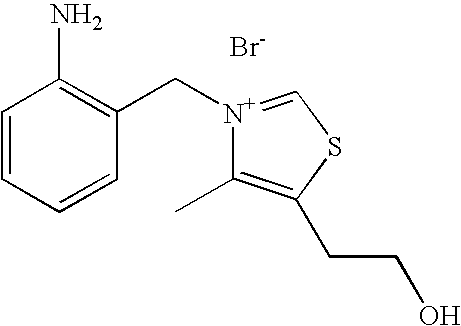
198.18 >100000 
>100000 
>100000 
8.83 24300 
Not a Substrate (“NS”) >100000 
NS >100000 
70.68 731 
36.48 111 
122.60 >33000 
104.20 119 
NS 156 
108.63 862 
387.15 471 
6.95 1610 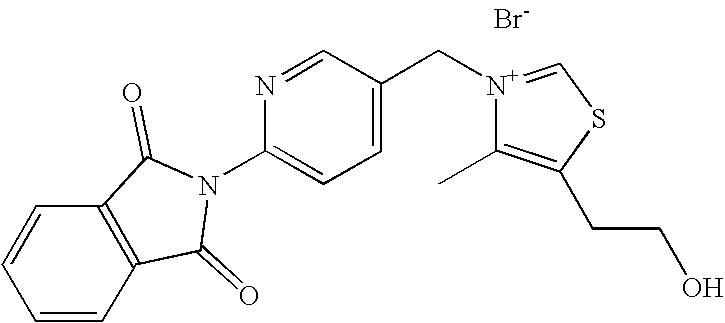
142.93 3150 
NS 37800 
294.00 118800 
382.30 >100000 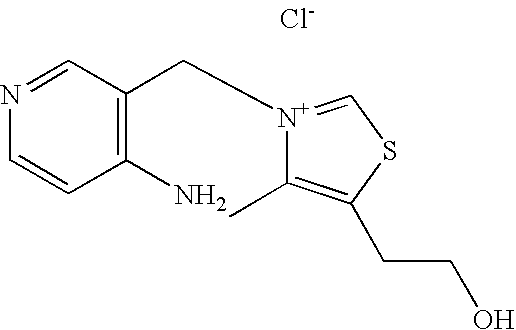
64.23 23900 
29.15 9540 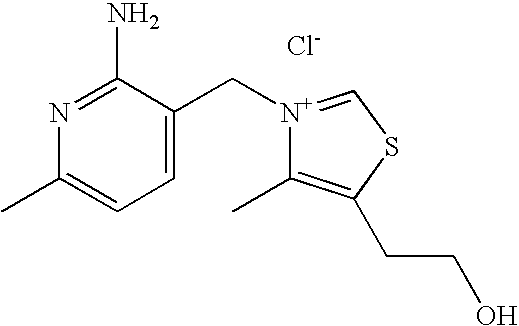
22.00 30 
NS 6 
74 
57.10 354 
31 
12500 
33.8 131 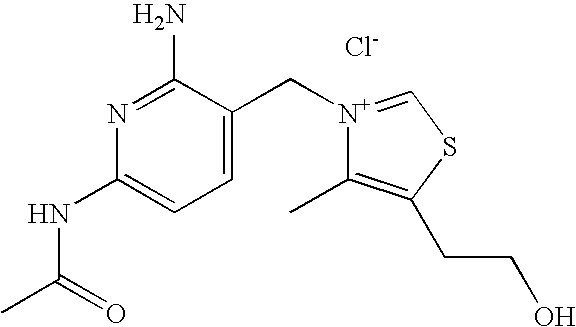
22.53 803 
170000 
35.59 489 
NS 26340 
24.55 49 
75.48 26 
91.40 34 
NS 25450 
838 
1720 
25.12 236 
NS 237 
53.42 269 
26.83 2200 
28.13 62 
90.03 3160 
NS 1033 
NS 2165 
NS 2330 
420.67 >100000 
1434.20 >100000 
NS 214 
851.00 >100000 
NS >100000 
76 
61.18 16500 
15.22 408 
5150 
138.30 >33000 
NS >33000 - “TPK-TK” in the second column in Table 1 designates the thiamine pyrophosphate kinase/transketolase coupled reaction.
Claims (27)
1. A compound of formula I:
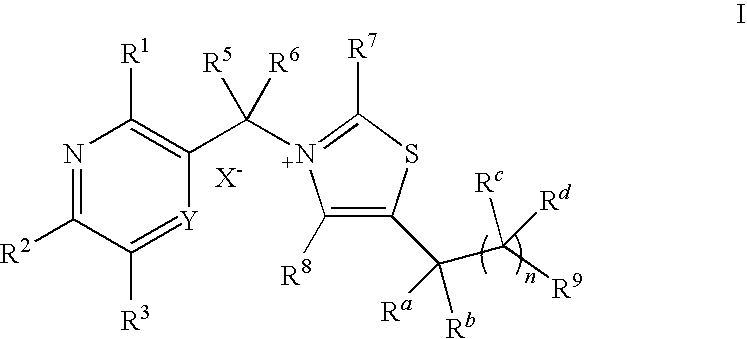
or a pharmaceutically acceptable derivative thereof, wherein:
Y is N or C(R4);
R1 is H, alkyl, —N(R)2, —(CH2)1-6N(Ro)2, —(CH2)1-6ORo—, —NRC(O)R, —C(O)N(R)2, —CN, —NRSO2R, —COO, —OR, —SR, —C(O)R, halo, —OC(O)R, —NRC(O)OR, —OC(O)N(R)2, —NRC(O)NR, —NRC(S)NR, —NRSO2NR, —C(O)NRN(R)2, heteroaryl, or heterocyclyl;
each R2, R3 and R4 is independently H, alkyl, fluoroalkyl, —C(O)R, —COOR, —C(O)N(R)2, —CN, —NRC(O)R, —OR, —SR, —N(R)2, —(CH2)1-6ORo, —(CH2)1-6N(Ro)2, or halo;
each R5 and R6 is independently H, alkyl, or fluoroalkyl;
R7 is H, alkyl, fluoroalkyl, aralkyl, carbocyclylalkyl, heterocyclyl, carbocyclyl, heterocyclylalkyl, aryl, heteroaryl, heteroaralkyl, —C(O)R, —(CH2)1-6OR, —(CH2)1-6N(R)2, —C(O)CH2C(O)R, —NRC(O)R, —N(R)2, —C(O)N(R)2, or —C(H)(OR)R;
R8 is H, alkyl, fluoroalkyl, carbocyclyl, carbocyclylalkyl, heteroaryl, heterocyclyl, —CO2R, or —CON(R)2;
R9 is —OR10 or —NR11R12;
R10 is Ro, —C(O)R, —C(O)N(R)2, —C(O)OR, —(CH2)1-6—C(O)R, —PO3Mx, —P(O)(alkyl)OM′, —(PO3)2My, carbocyclyl, aryl, heterocyclyl, heteroaryl, carbocyclylalkyl, aralkyl, heterocyclylalkyl, heteroaralkyl, or a tumor-targeting moiety;
x is 1 or 2;
y is 1, 2 or 3;
each M is independently H, Li, Na, K, Mg, Ca, Mn, Co, Ni, Zn, or alkyl;
M′ is H, Li, Na, K, or alkyl;
R11 is H or alkyl;
R12 is H, alkyl, —C(O)R, —C(O)N(R)2, —C(O)OR, —SO2R, —SO2N(R)2, carbocyclyl, aryl, heterocyclyl, heteroaryl, carbocyclylalkyl, aralkyl, heterocyclylalkyl, heteroaralkyl or a tumor targeting moiety;
each Ra and Rb is independently H, ORo, alkyl, or fluoroalkyl;
each Rc and Rd is independently H, alkyl, or fluoroalkyl;
n is 0-4;
X− is a monovalent or divalent anion, or a counterion to the thiazolium nitrogen located anywhere in the molecule;
Ro is H or alkyl; and
R is Ro, carbocyclyl, aryl, heterocyclyl, heteroaryl, carbocyclylalkyl, aralkyl, heterocyclylalkyl, or heteroaralkyl;
provided that the following compounds are excluded:
Y is C(R4);
R5, R6, Ra, Rb, Rc and Rd are H;
R8 is methyl;
R9 is —OR10, and R10 is H, —PO3Mx, —(PO3)2My or —P(O)(alkyl)OM′;
X− is Cl− or Br−;
i) R1 is H, R2 is methyl, R3 is —OH, R4 is methyl, —CH2OH or —CH2NH2, and R7 is H;
ii) R1 is —NH2, —NHMe or —N(Me)2, R2 is methyl, R3 is H, R4 is H or —CH3, and R7 is H;
iii) R1 is —NH2 or OH, R2 is methyl, R3 is H, R4 is H, and R7 is H;
iv) R1 and R3 are H, R2 is methyl, R4 is —NH2, and R7 is H;
v) R1 is —NH2, R2 is methyl, R3 and R4 are H, and R7 is H, —CH(OH)CO2H or —C(OH)(Me)CO2H;
vi) R1, R3, R4 and R7 are H and R2 is methyl; and
vii) R1 is H, R2 is —NH2, R3 is —OH, R4 is —CH2CH2NH2, and R7 is H.
2. The compound of claim 1 , wherein R10 is —C(O)R, —C(O)N(R)2, —C(O)OR, —(CH2)1-6—C(O)R, alkyl, carbocyclyl, aryl, heterocyclyl, heteroaryl, carbocyclylalkyl, aralkyl, heterocyclylalkyl, heteroaralkyl, or a tumor-targeting moiety; and R12 is —C(O)R, —C(O)N(R)2, —C(O)OR, —SO2R, —SO2N(R)2, carbocyclyl, aryl, heterocyclyl, heteroaryl, carbocyclylalkyl, aralkyl, heterocyclylalkyl, heteroaralkyl or a tumor-targeting moiety.
3. The compound of claim 1 , wherein R10 or R12 is a polysaccharide, —[C(O)CH(R)N(R)]2-3—R, an antibody, or

wherein R13 is H, alkyl, or aryl.
4. (canceled)
5. The compound of claim 1 , wherein:
i) R1 is —(CH2)16N(Ro)2, —(CH2)1-6ORo—, —NRC(O)R, —C(O)N(R)2, —CN, —N(R)SO2R, —COOR, —SR, —C(O)R, halo, —OC(O)R, —NRC(O)OR, —OC(O)N(R)2, —N(R)C(O)N(R), —NRC(S)NR, —NRSO2NR, —C(O)NRN(R)2, heteroaryl, or heterocyclyl;
ii) R2 is H, fluoroalkyl, —C(O)R, —COOR, —C(O)N(R)2, —CN, —NRC(O)R, —OR, —SR, —N(R)2, —(CH2)1-6ORo—, —(CH2)16N(Ro)2, or halo;
iii) R3 is alkyl, fluoroalkyl, —C(O)R, —COOR, —C(O)N(R)2, —CN, —NRC(O)R, —SR, —N(R)2, —(CH2)1-6ORo—, —(CH2)16N(Ro)2, or halo;
iv) R4 is fluoroalkyl, —C(O)R, —COOR, —C(O)N(R)2, —CN, —NRC(O)R, —OR, —SR, —(CH2)1-6N(Ro)2, or halo;
v) R10 is H, —PO3Mx, —(PO3)2My or —P(O)(alkyl)OM′; or R12 is H or C1-6 alkyl; and
vi) n is 1.
6. (canceled)
7. The compound of claim 1 , wherein:
i) R1 is H, —N(R)2, alkyl, —NRoC(O)NR, —NRoC(O)OR, —C(O)N(R)2, —(CH2)16N(Ro)2, —NRoC(O)R, —CN, —COOR, —OR, —SR, or halo;
ii) R2 is H, alkyl, fluoroalkyl, —ORo, —N(Ro)2, or halo;
iii) R3 and R4 are independently H, alkyl, —OR, —N(R)2, —(CH2)1-6ORo, or —(CH2)1-6N(Ro)2;
iv) R7 is H, alkyl, fluoroalkyl, —(CH2)1-6OR, —(CH2)1-6N(R)2, —NRoC(O)R, —C(O)R, —C(H)(OR)R, aralkyl, heterocyclyl, heterocyclylalkyl, heteroaryl, or heteroaralkyl;
v) R10 is H, alkyl, —C(O)R, —PO3Mx, —P(O)(alkyl)OM′, —(PO3)2My, —C(O)N(R)2, —C(O)OR, or a tumor-targeting moiety; or R12 is H, alkyl, —C(O)R, —C(O)N(R)2, —C(O)OR, —SO2R, 5-membered heterocyclyl, 5-membered heteroaralkyl, or a tumor-targeting moiety; and
vi) n is 1.
8. The compound of claim 7 , wherein R is Ro, carbocyclyl, aryl, heteroaryl, heterocyclyl, aralkyl, keterocyclylalkyl or heteroaralkyl.
9. The compound of claim 8 , wherein Ro is H or C1-6 alkyl optionally substituted with halo, hydroxy or amino.
10. The compound of claim 7 , wherein R10 or R12 is a polysaccharide, —[C(O)CH(R)N(R)]2-3—R, an antibody, or

wherein R13 is H, alkyl, or aryl.
11. The compound of claim 7 , wherein:
i) R1 is H, amino, —CH2NH2, —NHC(O)NHEt, —NHC(O)OEt, —NHCH2OH, —NHCH2CH2OH, —NH—CH2CH2Cl, —N(CH2OH)2, Cl, Br, —SCH3, CN, —C(O)NH2, —C(O)OH, methyl, or ethyl;
ii) R2 is H, methyl, ethyl, amino, CF3, Cl, or Br;
iii) R3 is H, methyl, ethyl, amino, or hydroxy;
iv) R4 is H, methyl, ethyl, —CH2OH, or —CH2NH2;
v) each R5, R6 and R8 is independently H, methyl, ethyl, —CH2F, —CHF2, or —CF3;
vi) R7 is H, methyl, ethyl, CF3, —CH(OH)CH3, —CH2OH, or —CH2CH2OH; and
vii) R10 is H, methyl, ethyl, —C(O)Me, —C(O)Et, —C(O)NMe2, —C(O)-p-OMe-phenyl, —C(O)O-phenyl, —PO3H2, —P(O)(OMe)2, —P(O)(OMe)OH, —P(O)(Me)OH, —P(O)(OH)OP(O)(OH)(OH), or R14; and R14 is selected from the group consisting of:

and an antibody; or R12 is H, methyl, ethyl, R4,


12. The compound of claim 7 , wherein:
i) R1 is H, —N(Ro)2, —SRo, or halo;
ii) R2 is H, alkyl, fluoroalkyl, —N(Ro)2, or halo;
iii) R3 and R4 are independently H or alkyl;
iv) R7 is H or alkyl;
v) R3 is H or C1-6 unsubstituted alkyl; and
vi) R9 is —OR10 and R10 is H, C1-6 unsubstituted alkyl, —C(O)R, —PO3Mx, —P(O)(alkyl)OM′, —(PO3)2My, —C(O)OR, or a tumor-targeting moiety.
13. The compound of claim 12 , wherein R10 is a polysaccharide, —[C(O)CH(R)N(R)]2-3—R, an antibody, or
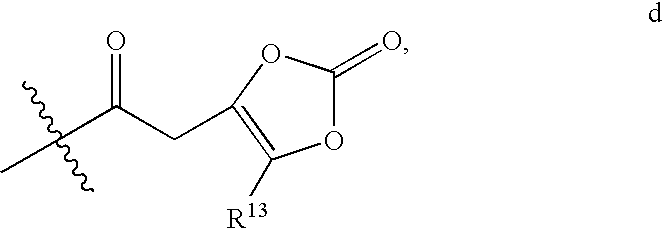
wherein R13 is H, alkyl, or aryl.
14. The compound of claim 12 , wherein:
i) R1 is H, —NH2, —SCH3, or Cl;
ii) R2 is H, methyl, —CF3, —NH2, or Cl;
iii) R3, R4, R7 and R8 are independently H or methyl; and
iv) R9 is —OR10 and R10 is H, H, —PO3H2, —P(O)(OMe)2, —P(O)(OMe)OH, —P(O)(Me)OH, —P(O)(OH)OP(O)(OH)(OH), or R14; and R14 is as defined in 11.
15. The compound of claim 1 , wherein said compound is IIa-1, IIa-2, IIa-3, IIa-4, IIa-5, IIa-6, IIa-7, IIa-8, IIa-9, IIa-10, IIa-11, or IIc-1.
16. A pharmaceutical composition comprising a compound of claim 1 and a pharmaceutically acceptable carrier.
17. The composition of claim 16 , further comprising at least one chemotherapeutic agent, antiangiogenic agent or agent which modulates signaling associated with hypoxic conditions in a cell.
18. A method for inhibiting transketolase activity in a biological sample or a patient in need thereof comprising contacting said biological sample with or administering to said patient an effective amount of a compound of claim 1 .
19. A method for reducing levels of ribulose/ribose-5-phosphate in a cell comprising administering to the cell an effective amount of a compound of claim 1 .
20. A method for inhibiting nucleic acid synthesis in a cell comprising administering to the cell an effective amount of a compound of claim 1 .
21. A method for inhibiting cell proliferation comprising administering to the cell an effective amount of a compound of claim 1 .
22. A method for increasing apoptosis in a tumor cell comprising administering to the cell an effective amount of a compound of claim 1 .
23. A method for reducing tumor growth in a patient comprising administering an effective amount of a compound of claim 1 to the patient in need thereof.
24. The method of claim 23 , further comprising administering at least one chemotherapeutic agent, antiangiogenic agent or agent which modulates signaling associated with hypoxic conditions in a cell.
25. The method of claim 23 , further comprising limiting thiamine concentrations in the patient during the administration step.
26. The method of claim 25 , wherein the patient is on a reduced thiamine diet during the administration step.
27. The method of claim 26 , wherein cellular thiamine concentrations are maintained at a level sufficient to avoid toxicity associated with thiamine deficiency.
Priority Applications (1)
| Application Number | Priority Date | Filing Date | Title |
|---|---|---|---|
| US10/593,910 US20090209554A1 (en) | 2004-03-24 | 2005-03-23 | Thiazoliums as transketolase inhibitors |
Applications Claiming Priority (3)
| Application Number | Priority Date | Filing Date | Title |
|---|---|---|---|
| US55621704P | 2004-03-24 | 2004-03-24 | |
| PCT/US2005/009970 WO2005095391A1 (en) | 2004-03-24 | 2005-03-23 | Thiazoliums as transketolase inhibitors |
| US10/593,910 US20090209554A1 (en) | 2004-03-24 | 2005-03-23 | Thiazoliums as transketolase inhibitors |
Publications (1)
| Publication Number | Publication Date |
|---|---|
| US20090209554A1 true US20090209554A1 (en) | 2009-08-20 |
Family
ID=34964848
Family Applications (1)
| Application Number | Title | Priority Date | Filing Date |
|---|---|---|---|
| US10/593,910 Abandoned US20090209554A1 (en) | 2004-03-24 | 2005-03-23 | Thiazoliums as transketolase inhibitors |
Country Status (2)
| Country | Link |
|---|---|
| US (1) | US20090209554A1 (en) |
| WO (1) | WO2005095391A1 (en) |
Cited By (23)
| Publication number | Priority date | Publication date | Assignee | Title |
|---|---|---|---|---|
| US20100016793A1 (en) * | 2006-06-01 | 2010-01-21 | Douglas Ivan Jennings | Injection Device |
| US20110130743A1 (en) * | 2008-06-19 | 2011-06-02 | Douglas Ivan Jennings | Re-Useable Auto-Injector with Filling Means |
| US8834419B2 (en) | 2008-06-19 | 2014-09-16 | Cilag Gmbh International | Reusable auto-injector |
| US8845594B2 (en) | 2008-06-19 | 2014-09-30 | Cilag Gmbh International | Auto-injector with filling means |
| US8939958B2 (en) | 2008-06-19 | 2015-01-27 | Cilag Gmbh International | Fluid transfer assembly for a syringe |
| US8968236B2 (en) | 2005-04-06 | 2015-03-03 | Cilag Gmbh International | Injection device |
| US9028453B2 (en) | 2008-06-19 | 2015-05-12 | Cilag Gmbh International | Reusable auto-injector |
| US9028451B2 (en) | 2006-06-01 | 2015-05-12 | Cilag Gmbh International | Injection device |
| US9358346B2 (en) | 2005-08-30 | 2016-06-07 | Cilag Gmbh International | Needle assembly for a prefilled syringe system |
| US9649441B2 (en) | 2005-04-06 | 2017-05-16 | Cilag Gmbh International | Injection device (bayonet cap removal) |
| US9675757B2 (en) | 2004-05-28 | 2017-06-13 | Cilag Gmbh International | Injection device |
| US9675758B2 (en) | 2004-05-28 | 2017-06-13 | Cilag Gmbh International | Injection device |
| US9731080B2 (en) | 2005-04-06 | 2017-08-15 | Cilag Gmbh International | Injection device |
| US9757520B2 (en) | 2006-06-01 | 2017-09-12 | Cilag Gmbh International | Injection device |
| US9770558B2 (en) | 2005-09-27 | 2017-09-26 | Cilag Gmbh International | Auto-injection device with needle protecting cap having outer and inner sleeves |
| US9895493B2 (en) | 2004-05-28 | 2018-02-20 | Cilag Gmbh International | Injection device |
| US10709849B2 (en) | 2013-06-11 | 2020-07-14 | Cilag Gmbh International | Guide for an injection device |
| US10799646B2 (en) | 2013-06-11 | 2020-10-13 | Cilag Gmbh International | Injection device |
| US11123492B2 (en) | 2013-06-11 | 2021-09-21 | Cilag Gmbh International | Injection device |
| US11173255B2 (en) | 2013-06-11 | 2021-11-16 | Cilag Gmbh International | Injection device |
| US20230226060A1 (en) * | 2020-06-27 | 2023-07-20 | TAVARGENIX GmbH | Use of co-enzyme antagonists to slow metabolism |
| CN116531373A (en) * | 2022-01-26 | 2023-08-04 | 上海日馨医药科技股份有限公司 | Thiazole compound, its pharmaceutical composition and application |
| CN117756782A (en) * | 2023-12-26 | 2024-03-26 | 江苏希迪制药有限公司 | A kind of preparation method of abeciclib intermediate 5-[(4-ethylpiperazin-1-yl)methyl]pyridin-2-amine |
Families Citing this family (3)
| Publication number | Priority date | Publication date | Assignee | Title |
|---|---|---|---|---|
| FI20060768A0 (en) * | 2006-08-28 | 2006-08-28 | Faron Pharmaceuticals Oy | Compositions especially suitable for treating or preventing metabolic syndrome |
| US8119651B2 (en) | 2004-01-30 | 2012-02-21 | Biotie Therapies Corp. | Compositions useful especially for treatment or prevention of metabolic syndrome |
| CN104603115B (en) * | 2012-08-21 | 2018-01-30 | 帝斯曼知识产权资产管理有限公司 | The synthetic method of thiazole |
Citations (3)
| Publication number | Priority date | Publication date | Assignee | Title |
|---|---|---|---|---|
| US5350759A (en) * | 1990-05-04 | 1994-09-27 | Allan Wissner | Bis-aryl amide antagonists of platelet activating factor |
| US5466811A (en) * | 1994-07-18 | 1995-11-14 | Merck & Co., Inc. | Dioxolenylmethyl carbamates pro moieties for amine drugs |
| US5618831A (en) * | 1992-11-17 | 1997-04-08 | Fuji Photo Film Co., Ltd. | Composition and method for treating cancer |
-
2005
- 2005-03-23 WO PCT/US2005/009970 patent/WO2005095391A1/en not_active Ceased
- 2005-03-23 US US10/593,910 patent/US20090209554A1/en not_active Abandoned
Patent Citations (3)
| Publication number | Priority date | Publication date | Assignee | Title |
|---|---|---|---|---|
| US5350759A (en) * | 1990-05-04 | 1994-09-27 | Allan Wissner | Bis-aryl amide antagonists of platelet activating factor |
| US5618831A (en) * | 1992-11-17 | 1997-04-08 | Fuji Photo Film Co., Ltd. | Composition and method for treating cancer |
| US5466811A (en) * | 1994-07-18 | 1995-11-14 | Merck & Co., Inc. | Dioxolenylmethyl carbamates pro moieties for amine drugs |
Cited By (26)
| Publication number | Priority date | Publication date | Assignee | Title |
|---|---|---|---|---|
| US9675758B2 (en) | 2004-05-28 | 2017-06-13 | Cilag Gmbh International | Injection device |
| US9895493B2 (en) | 2004-05-28 | 2018-02-20 | Cilag Gmbh International | Injection device |
| US9675757B2 (en) | 2004-05-28 | 2017-06-13 | Cilag Gmbh International | Injection device |
| US9731080B2 (en) | 2005-04-06 | 2017-08-15 | Cilag Gmbh International | Injection device |
| US8968236B2 (en) | 2005-04-06 | 2015-03-03 | Cilag Gmbh International | Injection device |
| US9649441B2 (en) | 2005-04-06 | 2017-05-16 | Cilag Gmbh International | Injection device (bayonet cap removal) |
| US9358346B2 (en) | 2005-08-30 | 2016-06-07 | Cilag Gmbh International | Needle assembly for a prefilled syringe system |
| US9770558B2 (en) | 2005-09-27 | 2017-09-26 | Cilag Gmbh International | Auto-injection device with needle protecting cap having outer and inner sleeves |
| US9757520B2 (en) | 2006-06-01 | 2017-09-12 | Cilag Gmbh International | Injection device |
| US20100016793A1 (en) * | 2006-06-01 | 2010-01-21 | Douglas Ivan Jennings | Injection Device |
| US9028451B2 (en) | 2006-06-01 | 2015-05-12 | Cilag Gmbh International | Injection device |
| US9072833B2 (en) | 2006-06-01 | 2015-07-07 | Cilag Gmbh International | Injection device |
| US9028453B2 (en) | 2008-06-19 | 2015-05-12 | Cilag Gmbh International | Reusable auto-injector |
| US9682194B2 (en) | 2008-06-19 | 2017-06-20 | Cilag Gmbh International | Re-useable auto-injector with filling means |
| US8939958B2 (en) | 2008-06-19 | 2015-01-27 | Cilag Gmbh International | Fluid transfer assembly for a syringe |
| US8845594B2 (en) | 2008-06-19 | 2014-09-30 | Cilag Gmbh International | Auto-injector with filling means |
| US8834419B2 (en) | 2008-06-19 | 2014-09-16 | Cilag Gmbh International | Reusable auto-injector |
| US20110130743A1 (en) * | 2008-06-19 | 2011-06-02 | Douglas Ivan Jennings | Re-Useable Auto-Injector with Filling Means |
| US10799646B2 (en) | 2013-06-11 | 2020-10-13 | Cilag Gmbh International | Injection device |
| US10709849B2 (en) | 2013-06-11 | 2020-07-14 | Cilag Gmbh International | Guide for an injection device |
| US11123492B2 (en) | 2013-06-11 | 2021-09-21 | Cilag Gmbh International | Injection device |
| US11173255B2 (en) | 2013-06-11 | 2021-11-16 | Cilag Gmbh International | Injection device |
| US20230226060A1 (en) * | 2020-06-27 | 2023-07-20 | TAVARGENIX GmbH | Use of co-enzyme antagonists to slow metabolism |
| US12168010B2 (en) * | 2020-06-27 | 2024-12-17 | TAVARGENIX GmbH | Use of co-enzyme antagonists to slow metabolism |
| CN116531373A (en) * | 2022-01-26 | 2023-08-04 | 上海日馨医药科技股份有限公司 | Thiazole compound, its pharmaceutical composition and application |
| CN117756782A (en) * | 2023-12-26 | 2024-03-26 | 江苏希迪制药有限公司 | A kind of preparation method of abeciclib intermediate 5-[(4-ethylpiperazin-1-yl)methyl]pyridin-2-amine |
Also Published As
| Publication number | Publication date |
|---|---|
| WO2005095391A1 (en) | 2005-10-13 |
Similar Documents
| Publication | Publication Date | Title |
|---|---|---|
| US20090209554A1 (en) | Thiazoliums as transketolase inhibitors | |
| US11059832B2 (en) | HPK1 inhibitors and methods of using same | |
| US11008305B2 (en) | DNA-PK inhibitors | |
| US8507502B2 (en) | Fused bicyclic and tricyclic pyrimidine compounds as tyrosine kinase inhibitors | |
| AU2015284135B2 (en) | Heteroaryl compounds useful as inhibitors of SUMO activating enzyme | |
| RU2667060C2 (en) | Secondary mannosis for bacterial infections treatment | |
| KR102746352B1 (en) | Inhibitors of tryptophan dioxygenases (ido1 and tdo) and their use in therapy | |
| US20080221125A1 (en) | Novel heterocyclic benzo[c]chromene derivatives useful as modulators of the estrogen receptors | |
| JP2016164163A (en) | Inhibitors of hiv replication | |
| WO2007136990A2 (en) | Prolyl hydroxylase inhibitors | |
| KR20160062170A (en) | Fused heterocyclic compound, preparation method therefor, pharmaceutical composition, and uses thereof | |
| CN104163813B (en) | Substituted indole compound, and preparation method and use thereof | |
| MX2011009926A (en) | Amino ester derivatives, salts thereof and methods of use. | |
| WO2017157882A1 (en) | Serine biosynthetic pathway inhibitors | |
| US11834432B2 (en) | Substituted amino six-membered nitric heterocyclic ring compound and preparation and use thereof | |
| KR102328921B1 (en) | 7-(morpholinyl)-2-(n-piperazinyl) methyl thieno [2,3-c] pyridine derivatives as anticancer drugs | |
| US12403142B2 (en) | Combination therapy with a phosphoinositide 3-kinase inhibitor with a zinc binding moiety | |
| CN114269720B (en) | Small molecule inhibitors of acetyl-CoA synthetase short chain 2 (ACSS2) | |
| CN115197221B (en) | Dihydropyrazolopyrimidinone macrocyclic derivatives and uses thereof | |
| US20250059206A1 (en) | Fused ring compound acting as shp2 inhibitor | |
| US7879885B2 (en) | Thioalkeneamides as transketolase inhibitors | |
| AU2018306726A1 (en) | Anticancer drugs and methods of making and using same | |
| US20250345441A1 (en) | Anticancer drugs and methods of making and using same | |
| WO2025038782A1 (en) | Adenosine ligands for the treatment of neurological disorders or chronic heart failure | |
| EA044974B1 (en) | COMBINED THERAPY WITH A PHOSPHOINOSITIDE 3-KINASE INHIBITOR WITH A ZINC-BINDING GROUP |
Legal Events
| Date | Code | Title | Description |
|---|---|---|---|
| AS | Assignment |
Owner name: ARRAY BIOPHARMA INC., COLORADO Free format text: ASSIGNMENT OF ASSIGNORS INTEREST;ASSIGNORS:BOYD, STEVEN A.;CONDROSKI, KEVIN R.;DE MEESE, JASON;AND OTHERS;REEL/FRAME:021082/0304;SIGNING DATES FROM 20050323 TO 20060720 |
|
| STCB | Information on status: application discontinuation |
Free format text: ABANDONED -- FAILURE TO RESPOND TO AN OFFICE ACTION |