US20070259907A1 - Aryl and arylalkylenyl substituted thiazoloquinolines and thiazolonaphthyridines - Google Patents
Aryl and arylalkylenyl substituted thiazoloquinolines and thiazolonaphthyridines Download PDFInfo
- Publication number
- US20070259907A1 US20070259907A1 US11/570,709 US57070906A US2007259907A1 US 20070259907 A1 US20070259907 A1 US 20070259907A1 US 57070906 A US57070906 A US 57070906A US 2007259907 A1 US2007259907 A1 US 2007259907A1
- Authority
- US
- United States
- Prior art keywords
- group
- alkyl
- alkylenyl
- hydrogen
- aryl
- Prior art date
- Legal status (The legal status is an assumption and is not a legal conclusion. Google has not performed a legal analysis and makes no representation as to the accuracy of the status listed.)
- Abandoned
Links
- 125000003118 aryl group Chemical group 0.000 title claims abstract description 106
- 150000001875 compounds Chemical class 0.000 claims abstract description 224
- 125000001424 substituent group Chemical group 0.000 claims abstract description 66
- 238000000034 method Methods 0.000 claims abstract description 56
- 102000004127 Cytokines Human genes 0.000 claims abstract description 41
- 108090000695 Cytokines Proteins 0.000 claims abstract description 41
- 208000037265 diseases, disorders, signs and symptoms Diseases 0.000 claims abstract description 31
- 241001465754 Metazoa Species 0.000 claims abstract description 29
- 201000010099 disease Diseases 0.000 claims abstract description 29
- 230000015572 biosynthetic process Effects 0.000 claims abstract description 23
- 230000003612 virological effect Effects 0.000 claims abstract description 12
- 230000001613 neoplastic effect Effects 0.000 claims abstract description 10
- 239000008194 pharmaceutical composition Substances 0.000 claims abstract description 6
- 125000000217 alkyl group Chemical group 0.000 claims description 229
- 229910052739 hydrogen Inorganic materials 0.000 claims description 142
- 239000001257 hydrogen Substances 0.000 claims description 142
- -1 methylenedioxy Chemical group 0.000 claims description 119
- 125000001072 heteroaryl group Chemical group 0.000 claims description 102
- 125000003342 alkenyl group Chemical group 0.000 claims description 87
- 125000000623 heterocyclic group Chemical group 0.000 claims description 87
- 150000003839 salts Chemical class 0.000 claims description 84
- 150000002431 hydrogen Chemical class 0.000 claims description 76
- 125000002947 alkylene group Chemical group 0.000 claims description 74
- 125000004663 dialkyl amino group Chemical group 0.000 claims description 54
- 125000004450 alkenylene group Chemical group 0.000 claims description 45
- 125000004419 alkynylene group Chemical group 0.000 claims description 44
- 125000003545 alkoxy group Chemical group 0.000 claims description 43
- 125000005466 alkylenyl group Chemical group 0.000 claims description 42
- 125000000304 alkynyl group Chemical group 0.000 claims description 42
- 125000003282 alkyl amino group Chemical group 0.000 claims description 41
- 125000000732 arylene group Chemical group 0.000 claims description 41
- 125000004435 hydrogen atom Chemical group [H]* 0.000 claims description 41
- 125000005549 heteroarylene group Chemical group 0.000 claims description 40
- 125000004104 aryloxy group Chemical group 0.000 claims description 39
- 125000005553 heteroaryloxy group Chemical group 0.000 claims description 39
- 125000001188 haloalkyl group Chemical group 0.000 claims description 37
- 125000001997 phenyl group Chemical group [H]C1=C([H])C([H])=C(*)C([H])=C1[H] 0.000 claims description 32
- 229910052736 halogen Inorganic materials 0.000 claims description 30
- 125000001797 benzyl group Chemical group [H]C1=C([H])C([H])=C(C([H])=C1[H])C([H])([H])* 0.000 claims description 28
- 150000002367 halogens Chemical group 0.000 claims description 28
- UFHFLCQGNIYNRP-UHFFFAOYSA-N Hydrogen Chemical compound [H][H] UFHFLCQGNIYNRP-UHFFFAOYSA-N 0.000 claims description 27
- 125000002102 aryl alkyloxo group Chemical group 0.000 claims description 26
- 125000004438 haloalkoxy group Chemical group 0.000 claims description 26
- 125000005114 heteroarylalkoxy group Chemical group 0.000 claims description 26
- 125000002768 hydroxyalkyl group Chemical group 0.000 claims description 26
- 125000002924 primary amino group Chemical group [H]N([H])* 0.000 claims description 26
- JUJWROOIHBZHMG-UHFFFAOYSA-N Pyridine Chemical group C1=CC=NC=C1 JUJWROOIHBZHMG-UHFFFAOYSA-N 0.000 claims description 24
- 125000004178 (C1-C4) alkyl group Chemical group 0.000 claims description 23
- 125000003178 carboxy group Chemical group [H]OC(*)=O 0.000 claims description 21
- 125000004169 (C1-C6) alkyl group Chemical group 0.000 claims description 19
- 125000005532 aryl alkyleneoxy group Chemical group 0.000 claims description 19
- 125000004076 pyridyl group Chemical group 0.000 claims description 17
- 125000002023 trifluoromethyl group Chemical group FC(F)(F)* 0.000 claims description 14
- 125000005529 alkyleneoxy group Chemical group 0.000 claims description 13
- 125000001309 chloro group Chemical group Cl* 0.000 claims description 13
- 125000004093 cyano group Chemical group *C#N 0.000 claims description 13
- 125000001153 fluoro group Chemical group F* 0.000 claims description 13
- 125000004415 heterocyclylalkyl group Chemical group 0.000 claims description 13
- 125000004043 oxo group Chemical group O=* 0.000 claims description 13
- 125000000266 alpha-aminoacyl group Chemical group 0.000 claims description 11
- 125000002496 methyl group Chemical group [H]C([H])([H])* 0.000 claims description 11
- 125000002541 furyl group Chemical group 0.000 claims description 7
- 125000000168 pyrrolyl group Chemical group 0.000 claims description 7
- 125000001544 thienyl group Chemical group 0.000 claims description 7
- 150000008575 L-amino acids Chemical class 0.000 claims description 6
- 125000000843 phenylene group Chemical group C1(=C(C=CC=C1)*)* 0.000 claims description 6
- 125000000449 nitro group Chemical group [O-][N+](*)=O 0.000 claims description 5
- 125000000008 (C1-C10) alkyl group Chemical group 0.000 claims description 4
- 125000000229 (C1-C4)alkoxy group Chemical group 0.000 claims description 4
- 125000006272 (C3-C7) cycloalkyl group Chemical group 0.000 claims description 4
- 125000004214 1-pyrrolidinyl group Chemical group [H]C1([H])N(*)C([H])([H])C([H])([H])C1([H])[H] 0.000 claims description 4
- 230000001939 inductive effect Effects 0.000 claims description 4
- 125000004573 morpholin-4-yl group Chemical group N1(CCOCC1)* 0.000 claims description 4
- 125000000587 piperidin-1-yl group Chemical group [H]C1([H])N(*)C([H])([H])C([H])([H])C([H])([H])C1([H])[H] 0.000 claims description 4
- 125000002252 acyl group Chemical group 0.000 claims description 3
- 150000001413 amino acids Chemical class 0.000 claims description 3
- 125000005843 halogen group Chemical group 0.000 claims description 3
- 239000003937 drug carrier Substances 0.000 claims description 2
- 125000002887 hydroxy group Chemical group [H]O* 0.000 claims 5
- PXQLVRUNWNTZOS-UHFFFAOYSA-N sulfanyl Chemical group [SH] PXQLVRUNWNTZOS-UHFFFAOYSA-N 0.000 claims 4
- 238000011282 treatment Methods 0.000 abstract description 12
- 239000000543 intermediate Substances 0.000 abstract description 7
- FXTRYBYAYXLBQD-UHFFFAOYSA-N [1,3]thiazolo[5,4-b][1,8]naphthyridine Chemical class C1=CN=C2N=C(SC=N3)C3=CC2=C1 FXTRYBYAYXLBQD-UHFFFAOYSA-N 0.000 abstract description 6
- BQFJXYBNTQREBM-UHFFFAOYSA-N [1,3]thiazolo[4,5-h]quinoline Chemical compound C1=CC=NC2=C(SC=N3)C3=CC=C21 BQFJXYBNTQREBM-UHFFFAOYSA-N 0.000 abstract description 5
- 239000002955 immunomodulating agent Substances 0.000 abstract description 3
- 229940121354 immunomodulator Drugs 0.000 abstract description 3
- 239000007787 solid Substances 0.000 description 102
- RTZKZFJDLAIYFH-UHFFFAOYSA-N Diethyl ether Chemical compound CCOCC RTZKZFJDLAIYFH-UHFFFAOYSA-N 0.000 description 101
- IAZDPXIOMUYVGZ-WFGJKAKNSA-N Dimethyl sulfoxide Chemical compound [2H]C([2H])([2H])S(=O)C([2H])([2H])[2H] IAZDPXIOMUYVGZ-WFGJKAKNSA-N 0.000 description 68
- HEDRZPFGACZZDS-UHFFFAOYSA-N Chloroform Chemical compound ClC(Cl)Cl HEDRZPFGACZZDS-UHFFFAOYSA-N 0.000 description 64
- 238000006243 chemical reaction Methods 0.000 description 60
- YMWUJEATGCHHMB-UHFFFAOYSA-N Dichloromethane Chemical compound ClCCl YMWUJEATGCHHMB-UHFFFAOYSA-N 0.000 description 54
- 0 [2*]C1=NC2=C(S1)C(C)=C(C)N=C2N Chemical compound [2*]C1=NC2=C(S1)C(C)=C(C)N=C2N 0.000 description 49
- 239000000243 solution Substances 0.000 description 43
- IAZDPXIOMUYVGZ-UHFFFAOYSA-N Dimethylsulphoxide Chemical compound CS(C)=O IAZDPXIOMUYVGZ-UHFFFAOYSA-N 0.000 description 38
- 108060008682 Tumor Necrosis Factor Proteins 0.000 description 36
- 102000000852 Tumor Necrosis Factor-alpha Human genes 0.000 description 36
- OKKJLVBELUTLKV-UHFFFAOYSA-N Methanol Chemical compound OC OKKJLVBELUTLKV-UHFFFAOYSA-N 0.000 description 33
- 238000001914 filtration Methods 0.000 description 32
- 238000005160 1H NMR spectroscopy Methods 0.000 description 31
- WEVYAHXRMPXWCK-UHFFFAOYSA-N Acetonitrile Chemical compound CC#N WEVYAHXRMPXWCK-UHFFFAOYSA-N 0.000 description 30
- VYPSYNLAJGMNEJ-UHFFFAOYSA-N Silicium dioxide Chemical compound O=[Si]=O VYPSYNLAJGMNEJ-UHFFFAOYSA-N 0.000 description 30
- CDBYLPFSWZWCQE-UHFFFAOYSA-L Sodium Carbonate Chemical compound [Na+].[Na+].[O-]C([O-])=O CDBYLPFSWZWCQE-UHFFFAOYSA-L 0.000 description 28
- 239000000203 mixture Substances 0.000 description 28
- 238000001644 13C nuclear magnetic resonance spectroscopy Methods 0.000 description 27
- 238000010828 elution Methods 0.000 description 27
- 239000000741 silica gel Substances 0.000 description 27
- 229910002027 silica gel Inorganic materials 0.000 description 27
- MZOFCQQQCNRIBI-VMXHOPILSA-N (3s)-4-[[(2s)-1-[[(2s)-1-[[(1s)-1-carboxy-2-hydroxyethyl]amino]-4-methyl-1-oxopentan-2-yl]amino]-5-(diaminomethylideneamino)-1-oxopentan-2-yl]amino]-3-[[2-[[(2s)-2,6-diaminohexanoyl]amino]acetyl]amino]-4-oxobutanoic acid Chemical compound OC[C@@H](C(O)=O)NC(=O)[C@H](CC(C)C)NC(=O)[C@H](CCCN=C(N)N)NC(=O)[C@H](CC(O)=O)NC(=O)CNC(=O)[C@@H](N)CCCCN MZOFCQQQCNRIBI-VMXHOPILSA-N 0.000 description 26
- 239000012043 crude product Substances 0.000 description 26
- ZMANZCXQSJIPKH-UHFFFAOYSA-N Triethylamine Chemical compound CCN(CC)CC ZMANZCXQSJIPKH-UHFFFAOYSA-N 0.000 description 25
- 108010047761 Interferon-alpha Proteins 0.000 description 23
- 102000006992 Interferon-alpha Human genes 0.000 description 23
- 210000004027 cell Anatomy 0.000 description 21
- 239000003153 chemical reaction reagent Substances 0.000 description 21
- 125000000286 phenylethyl group Chemical group [H]C1=C([H])C([H])=C(C([H])=C1[H])C([H])([H])C([H])([H])* 0.000 description 21
- 229910001868 water Inorganic materials 0.000 description 21
- OHDXDNUPVVYWOV-UHFFFAOYSA-N n-methyl-1-(2-naphthalen-1-ylsulfanylphenyl)methanamine Chemical compound CNCC1=CC=CC=C1SC1=CC=CC2=CC=CC=C12 OHDXDNUPVVYWOV-UHFFFAOYSA-N 0.000 description 20
- 238000012360 testing method Methods 0.000 description 20
- XLYOFNOQVPJJNP-UHFFFAOYSA-N water Chemical compound O XLYOFNOQVPJJNP-UHFFFAOYSA-N 0.000 description 20
- XKJZQMVGUJWKMZ-UHFFFAOYSA-N 7-bromo-2-propyl-[1,3]thiazolo[4,5-c]quinolin-4-amine Chemical compound C1=C(Br)C=CC2=C(SC(CCC)=N3)C3=C(N)N=C21 XKJZQMVGUJWKMZ-UHFFFAOYSA-N 0.000 description 19
- 238000002474 experimental method Methods 0.000 description 19
- BDERNNFJNOPAEC-UHFFFAOYSA-N propan-1-ol Chemical compound CCCO BDERNNFJNOPAEC-UHFFFAOYSA-N 0.000 description 18
- 239000002904 solvent Substances 0.000 description 17
- LFQSCWFLJHTTHZ-UHFFFAOYSA-N Ethanol Chemical compound CCO LFQSCWFLJHTTHZ-UHFFFAOYSA-N 0.000 description 16
- ZMXDDKWLCZADIW-UHFFFAOYSA-N N,N-Dimethylformamide Chemical compound CN(C)C=O ZMXDDKWLCZADIW-UHFFFAOYSA-N 0.000 description 16
- YXFVVABEGXRONW-UHFFFAOYSA-N Toluene Chemical compound CC1=CC=CC=C1 YXFVVABEGXRONW-UHFFFAOYSA-N 0.000 description 15
- FQYRLEXKXQRZDH-UHFFFAOYSA-N 4-aminoquinoline Chemical class C1=CC=C2C(N)=CC=NC2=C1 FQYRLEXKXQRZDH-UHFFFAOYSA-N 0.000 description 14
- IJGRMHOSHXDMSA-UHFFFAOYSA-N Atomic nitrogen Chemical compound N#N IJGRMHOSHXDMSA-UHFFFAOYSA-N 0.000 description 14
- 229910000029 sodium carbonate Inorganic materials 0.000 description 14
- MJCRTRHSSBEFQL-UHFFFAOYSA-N C[V]N Chemical compound C[V]N MJCRTRHSSBEFQL-UHFFFAOYSA-N 0.000 description 13
- 238000004519 manufacturing process Methods 0.000 description 13
- 210000003819 peripheral blood mononuclear cell Anatomy 0.000 description 13
- 239000011541 reaction mixture Substances 0.000 description 13
- 238000007796 conventional method Methods 0.000 description 12
- 125000004356 hydroxy functional group Chemical group O* 0.000 description 12
- 229910052757 nitrogen Inorganic materials 0.000 description 12
- 239000000651 prodrug Substances 0.000 description 12
- 229940002612 prodrug Drugs 0.000 description 12
- 239000000047 product Substances 0.000 description 12
- 230000002829 reductive effect Effects 0.000 description 12
- KTHVEAHLDBJOSB-UHFFFAOYSA-N 8-bromo-2-propyl-[1,3]thiazolo[4,5-c]quinolin-4-amine Chemical compound C1=CC(Br)=CC2=C(SC(CCC)=N3)C3=C(N)N=C21 KTHVEAHLDBJOSB-UHFFFAOYSA-N 0.000 description 11
- 238000004458 analytical method Methods 0.000 description 11
- 125000004432 carbon atom Chemical group C* 0.000 description 11
- 239000000725 suspension Substances 0.000 description 11
- VEXZGXHMUGYJMC-UHFFFAOYSA-N Hydrochloric acid Chemical compound Cl VEXZGXHMUGYJMC-UHFFFAOYSA-N 0.000 description 10
- CSNNHWWHGAXBCP-UHFFFAOYSA-L Magnesium sulfate Chemical compound [Mg+2].[O-][S+2]([O-])([O-])[O-] CSNNHWWHGAXBCP-UHFFFAOYSA-L 0.000 description 10
- VFRSADQPWYCXDG-LEUCUCNGSA-N ethyl (2s,5s)-5-methylpyrrolidine-2-carboxylate;2,2,2-trifluoroacetic acid Chemical compound OC(=O)C(F)(F)F.CCOC(=O)[C@@H]1CC[C@H](C)N1 VFRSADQPWYCXDG-LEUCUCNGSA-N 0.000 description 10
- 238000007429 general method Methods 0.000 description 10
- 230000028993 immune response Effects 0.000 description 10
- 230000006698 induction Effects 0.000 description 10
- 238000002360 preparation method Methods 0.000 description 10
- RIOQSEWOXXDEQQ-UHFFFAOYSA-N triphenylphosphine Chemical compound C1=CC=CC=C1P(C=1C=CC=CC=1)C1=CC=CC=C1 RIOQSEWOXXDEQQ-UHFFFAOYSA-N 0.000 description 10
- 239000006146 Roswell Park Memorial Institute medium Substances 0.000 description 9
- 125000004122 cyclic group Chemical group 0.000 description 9
- 125000003396 thiol group Chemical group [H]S* 0.000 description 9
- NVRXPVSRPYIBRZ-UHFFFAOYSA-N (7-bromo-4-oxo-1h-quinolin-3-yl)azanium;chloride Chemical compound Cl.C1=C(Br)C=CC2=C(O)C(N)=CN=C21 NVRXPVSRPYIBRZ-UHFFFAOYSA-N 0.000 description 8
- CURLTUGMZLYLDI-UHFFFAOYSA-N Carbon dioxide Chemical compound O=C=O CURLTUGMZLYLDI-UHFFFAOYSA-N 0.000 description 8
- 150000001204 N-oxides Chemical class 0.000 description 8
- DTQVDTLACAAQTR-UHFFFAOYSA-N Trifluoroacetic acid Chemical compound OC(=O)C(F)(F)F DTQVDTLACAAQTR-UHFFFAOYSA-N 0.000 description 8
- 210000004369 blood Anatomy 0.000 description 8
- 239000008280 blood Substances 0.000 description 8
- 239000002158 endotoxin Substances 0.000 description 8
- 238000011534 incubation Methods 0.000 description 8
- 229920006008 lipopolysaccharide Polymers 0.000 description 8
- 125000005842 heteroatom Chemical group 0.000 description 7
- 239000000463 material Substances 0.000 description 7
- 238000010992 reflux Methods 0.000 description 7
- YYROPELSRYBVMQ-UHFFFAOYSA-N 4-toluenesulfonyl chloride Chemical compound CC1=CC=C(S(Cl)(=O)=O)C=C1 YYROPELSRYBVMQ-UHFFFAOYSA-N 0.000 description 6
- 108091003079 Bovine Serum Albumin Proteins 0.000 description 6
- AQFWNELGMODZGC-UHFFFAOYSA-N CCON Chemical compound CCON AQFWNELGMODZGC-UHFFFAOYSA-N 0.000 description 6
- KFZMGEQAYNKOFK-UHFFFAOYSA-N Isopropanol Chemical compound CC(C)O KFZMGEQAYNKOFK-UHFFFAOYSA-N 0.000 description 6
- JGFZNNIVVJXRND-UHFFFAOYSA-N N,N-Diisopropylethylamine (DIPEA) Chemical compound CCN(C(C)C)C(C)C JGFZNNIVVJXRND-UHFFFAOYSA-N 0.000 description 6
- IMNFDUFMRHMDMM-UHFFFAOYSA-N N-Heptane Chemical compound CCCCCCC IMNFDUFMRHMDMM-UHFFFAOYSA-N 0.000 description 6
- 206010028980 Neoplasm Diseases 0.000 description 6
- KDLHZDBZIXYQEI-UHFFFAOYSA-N Palladium Chemical compound [Pd] KDLHZDBZIXYQEI-UHFFFAOYSA-N 0.000 description 6
- 150000008064 anhydrides Chemical class 0.000 description 6
- 238000003556 assay Methods 0.000 description 6
- ZADPBFCGQRWHPN-UHFFFAOYSA-N boronic acid Chemical compound OBO ZADPBFCGQRWHPN-UHFFFAOYSA-N 0.000 description 6
- XBDQKXXYIPTUBI-UHFFFAOYSA-N dimethylselenoniopropionate Natural products CCC(O)=O XBDQKXXYIPTUBI-UHFFFAOYSA-N 0.000 description 6
- 150000002148 esters Chemical class 0.000 description 6
- 210000000265 leukocyte Anatomy 0.000 description 6
- CYQAYERJWZKYML-UHFFFAOYSA-N phosphorus pentasulfide Chemical compound S1P(S2)(=S)SP3(=S)SP1(=S)SP2(=S)S3 CYQAYERJWZKYML-UHFFFAOYSA-N 0.000 description 6
- 238000002953 preparative HPLC Methods 0.000 description 6
- 230000004044 response Effects 0.000 description 6
- 238000003756 stirring Methods 0.000 description 6
- GRNOZCCBOFGDCL-UHFFFAOYSA-N 2,2,2-trichloroacetyl isocyanate Chemical compound ClC(Cl)(Cl)C(=O)N=C=O GRNOZCCBOFGDCL-UHFFFAOYSA-N 0.000 description 5
- PTOFSXRPYWPARI-UHFFFAOYSA-N 7-bromo-2-(2-methoxyethyl)-[1,3]thiazolo[4,5-c]quinolin-4-amine Chemical compound C1=C(Br)C=CC2=C(SC(CCOC)=N3)C3=C(N)N=C21 PTOFSXRPYWPARI-UHFFFAOYSA-N 0.000 description 5
- YIRKCGSKHQIODG-UHFFFAOYSA-N 7-bromo-2-(ethoxymethyl)-[1,3]thiazolo[4,5-c]quinolin-4-amine Chemical compound C1=C(Br)C=CC2=C(SC(COCC)=N3)C3=C(N)N=C21 YIRKCGSKHQIODG-UHFFFAOYSA-N 0.000 description 5
- VHUUQVKOLVNVRT-UHFFFAOYSA-N Ammonium hydroxide Chemical compound [NH4+].[OH-] VHUUQVKOLVNVRT-UHFFFAOYSA-N 0.000 description 5
- MRSCIYJTTAKRON-UHFFFAOYSA-N CC1=CC(C(=O)NC(C)C)=CC=C1 Chemical compound CC1=CC(C(=O)NC(C)C)=CC=C1 MRSCIYJTTAKRON-UHFFFAOYSA-N 0.000 description 5
- ANOZGSVWIWKADP-UHFFFAOYSA-N CC1=CC(CCCO)=CC=C1 Chemical compound CC1=CC(CCCO)=CC=C1 ANOZGSVWIWKADP-UHFFFAOYSA-N 0.000 description 5
- MRQAYFYTWNIVFN-UHFFFAOYSA-N CC1=CN=CC(CO)=C1 Chemical compound CC1=CN=CC(CO)=C1 MRQAYFYTWNIVFN-UHFFFAOYSA-N 0.000 description 5
- 101000611183 Homo sapiens Tumor necrosis factor Proteins 0.000 description 5
- QDCRYXCSQKAWNM-UHFFFAOYSA-N [3-(propan-2-ylcarbamoyl)phenyl]boronic acid Chemical compound CC(C)NC(=O)C1=CC=CC(B(O)O)=C1 QDCRYXCSQKAWNM-UHFFFAOYSA-N 0.000 description 5
- 150000001408 amides Chemical class 0.000 description 5
- 125000003277 amino group Chemical group 0.000 description 5
- 125000004202 aminomethyl group Chemical group [H]N([H])C([H])([H])* 0.000 description 5
- 239000000908 ammonium hydroxide Substances 0.000 description 5
- 239000012298 atmosphere Substances 0.000 description 5
- 239000002585 base Substances 0.000 description 5
- 210000000601 blood cell Anatomy 0.000 description 5
- 238000005859 coupling reaction Methods 0.000 description 5
- 125000001495 ethyl group Chemical group [H]C([H])([H])C([H])([H])* 0.000 description 5
- 239000012091 fetal bovine serum Substances 0.000 description 5
- 102000057041 human TNF Human genes 0.000 description 5
- 230000005764 inhibitory process Effects 0.000 description 5
- 229910052943 magnesium sulfate Inorganic materials 0.000 description 5
- 239000002609 medium Substances 0.000 description 5
- 229910052760 oxygen Inorganic materials 0.000 description 5
- YJVFFLUZDVXJQI-UHFFFAOYSA-L palladium(ii) acetate Chemical compound [Pd+2].CC([O-])=O.CC([O-])=O YJVFFLUZDVXJQI-UHFFFAOYSA-L 0.000 description 5
- UMJSCPRVCHMLSP-UHFFFAOYSA-N pyridine Natural products COC1=CC=CN=C1 UMJSCPRVCHMLSP-UHFFFAOYSA-N 0.000 description 5
- 239000007858 starting material Substances 0.000 description 5
- 229910052717 sulfur Inorganic materials 0.000 description 5
- 238000010189 synthetic method Methods 0.000 description 5
- 230000001225 therapeutic effect Effects 0.000 description 5
- 125000004209 (C1-C8) alkyl group Chemical group 0.000 description 4
- ZWEHNKRNPOVVGH-UHFFFAOYSA-N 2-Butanone Chemical compound CCC(C)=O ZWEHNKRNPOVVGH-UHFFFAOYSA-N 0.000 description 4
- DHYHYLGCQVVLOQ-UHFFFAOYSA-N 3-bromoaniline Chemical compound NC1=CC=CC(Br)=C1 DHYHYLGCQVVLOQ-UHFFFAOYSA-N 0.000 description 4
- NHQDETIJWKXCTC-UHFFFAOYSA-N 3-chloroperbenzoic acid Chemical compound OOC(=O)C1=CC=CC(Cl)=C1 NHQDETIJWKXCTC-UHFFFAOYSA-N 0.000 description 4
- SYFWOLLRZFPEHI-UHFFFAOYSA-N 7-(3-methylsulfonylphenyl)-2-propyl-[1,3]thiazolo[4,5-c]quinolin-4-amine Chemical compound C1=CC2=C3SC(CCC)=NC3=C(N)N=C2C=C1C1=CC=CC(S(C)(=O)=O)=C1 SYFWOLLRZFPEHI-UHFFFAOYSA-N 0.000 description 4
- MXXCFQWTXDQANT-UHFFFAOYSA-N 8-[2-(aminomethyl)-4-fluorophenyl]-2-propyl-[1,3]thiazolo[4,5-c]quinolin-4-amine Chemical compound C=1C2=C3SC(CCC)=NC3=C(N)N=C2C=CC=1C1=CC=C(F)C=C1CN MXXCFQWTXDQANT-UHFFFAOYSA-N 0.000 description 4
- ZHQKUJZZECGPTN-UHFFFAOYSA-N 8-[4-(aminomethyl)phenyl]-2-propyl-[1,3]thiazolo[4,5-c]quinolin-4-amine Chemical compound C=1C2=C3SC(CCC)=NC3=C(N)N=C2C=CC=1C1=CC=C(CN)C=C1 ZHQKUJZZECGPTN-UHFFFAOYSA-N 0.000 description 4
- CSCPPACGZOOCGX-UHFFFAOYSA-N Acetone Chemical compound CC(C)=O CSCPPACGZOOCGX-UHFFFAOYSA-N 0.000 description 4
- QGZKDVFQNNGYKY-UHFFFAOYSA-N Ammonia Chemical compound N QGZKDVFQNNGYKY-UHFFFAOYSA-N 0.000 description 4
- KDISMIMTGUMORD-UHFFFAOYSA-N CC(=O)N1CCCCC1 Chemical compound CC(=O)N1CCCCC1 KDISMIMTGUMORD-UHFFFAOYSA-N 0.000 description 4
- OFWPQEAIAAQOOJ-UHFFFAOYSA-N CC1=CC(C(=O)N2CCOCC2)=CC=C1 Chemical compound CC1=CC(C(=O)N2CCOCC2)=CC=C1 OFWPQEAIAAQOOJ-UHFFFAOYSA-N 0.000 description 4
- YRZQOYDLUVZCMU-UHFFFAOYSA-N CCCNC(=O)C1=CC=CC(C)=C1 Chemical compound CCCNC(=O)C1=CC=CC(C)=C1 YRZQOYDLUVZCMU-UHFFFAOYSA-N 0.000 description 4
- 239000012591 Dulbecco’s Phosphate Buffered Saline Substances 0.000 description 4
- 238000007341 Heck reaction Methods 0.000 description 4
- 102000014150 Interferons Human genes 0.000 description 4
- 108010050904 Interferons Proteins 0.000 description 4
- 239000012359 Methanesulfonyl chloride Substances 0.000 description 4
- FXHOOIRPVKKKFG-UHFFFAOYSA-N N,N-Dimethylacetamide Chemical compound CN(C)C(C)=O FXHOOIRPVKKKFG-UHFFFAOYSA-N 0.000 description 4
- WQDUMFSSJAZKTM-UHFFFAOYSA-N Sodium methoxide Chemical compound [Na+].[O-]C WQDUMFSSJAZKTM-UHFFFAOYSA-N 0.000 description 4
- OTCBPHAZRFXGKH-UHFFFAOYSA-N [3-(3-hydroxypropyl)phenyl]boronic acid Chemical compound OCCCC1=CC=CC(B(O)O)=C1 OTCBPHAZRFXGKH-UHFFFAOYSA-N 0.000 description 4
- OWBQYQJBNOFFIU-UHFFFAOYSA-N [3-(4-amino-2-propyl-[1,3]thiazolo[4,5-c]quinolin-7-yl)phenyl]-morpholin-4-ylmethanone Chemical compound C1=CC2=C3SC(CCC)=NC3=C(N)N=C2C=C1C(C=1)=CC=CC=1C(=O)N1CCOCC1 OWBQYQJBNOFFIU-UHFFFAOYSA-N 0.000 description 4
- XUIQQIRLFMCWLN-UHFFFAOYSA-N [3-(methanesulfonamido)phenyl]boronic acid Chemical compound CS(=O)(=O)NC1=CC=CC(B(O)O)=C1 XUIQQIRLFMCWLN-UHFFFAOYSA-N 0.000 description 4
- 150000003927 aminopyridines Chemical class 0.000 description 4
- 238000009835 boiling Methods 0.000 description 4
- DVECBJCOGJRVPX-UHFFFAOYSA-N butyryl chloride Chemical compound CCCC(Cl)=O DVECBJCOGJRVPX-UHFFFAOYSA-N 0.000 description 4
- 239000001569 carbon dioxide Substances 0.000 description 4
- 229910002092 carbon dioxide Inorganic materials 0.000 description 4
- 239000006285 cell suspension Substances 0.000 description 4
- 238000005119 centrifugation Methods 0.000 description 4
- 239000003795 chemical substances by application Substances 0.000 description 4
- 239000012228 culture supernatant Substances 0.000 description 4
- 238000001514 detection method Methods 0.000 description 4
- 231100000673 dose–response relationship Toxicity 0.000 description 4
- 230000000694 effects Effects 0.000 description 4
- AIMCUTZXDCCWFQ-UHFFFAOYSA-N ethanol hydrate Chemical compound O.C(C)O.C(C)O.C(C)O.C(C)O AIMCUTZXDCCWFQ-UHFFFAOYSA-N 0.000 description 4
- 238000009472 formulation Methods 0.000 description 4
- 210000005260 human cell Anatomy 0.000 description 4
- 229940079322 interferon Drugs 0.000 description 4
- 239000012948 isocyanate Substances 0.000 description 4
- 150000002513 isocyanates Chemical class 0.000 description 4
- 210000002540 macrophage Anatomy 0.000 description 4
- GXHFUVWIGNLZSC-UHFFFAOYSA-N meldrum's acid Chemical compound CC1(C)OC(=O)CC(=O)O1 GXHFUVWIGNLZSC-UHFFFAOYSA-N 0.000 description 4
- QARBMVPHQWIHKH-UHFFFAOYSA-N methanesulfonyl chloride Chemical compound CS(Cl)(=O)=O QARBMVPHQWIHKH-UHFFFAOYSA-N 0.000 description 4
- 239000003607 modifier Substances 0.000 description 4
- 239000012299 nitrogen atmosphere Substances 0.000 description 4
- 238000011321 prophylaxis Methods 0.000 description 4
- 238000000746 purification Methods 0.000 description 4
- IUVKMZGDUIUOCP-BTNSXGMBSA-N quinbolone Chemical compound O([C@H]1CC[C@H]2[C@H]3[C@@H]([C@]4(C=CC(=O)C=C4CC3)C)CC[C@@]21C)C1=CCCC1 IUVKMZGDUIUOCP-BTNSXGMBSA-N 0.000 description 4
- 239000000126 substance Substances 0.000 description 4
- QAHVHSLSRLSVGS-UHFFFAOYSA-N sulfamoyl chloride Chemical compound NS(Cl)(=O)=O QAHVHSLSRLSVGS-UHFFFAOYSA-N 0.000 description 4
- YBBRCQOCSYXUOC-UHFFFAOYSA-N sulfuryl dichloride Chemical compound ClS(Cl)(=O)=O YBBRCQOCSYXUOC-UHFFFAOYSA-N 0.000 description 4
- 238000003786 synthesis reaction Methods 0.000 description 4
- 210000001519 tissue Anatomy 0.000 description 4
- 239000003643 water by type Substances 0.000 description 4
- JACVYIZKCNBOQI-UHFFFAOYSA-N 2-(4-amino-2-propyl-[1,3]thiazolo[4,5-c]quinolin-7-yl)benzamide Chemical compound C1=CC2=C3SC(CCC)=NC3=C(N)N=C2C=C1C1=CC=CC=C1C(N)=O JACVYIZKCNBOQI-UHFFFAOYSA-N 0.000 description 3
- NGNBDVOYPDDBFK-UHFFFAOYSA-N 2-[2,4-di(pentan-2-yl)phenoxy]acetyl chloride Chemical compound CCCC(C)C1=CC=C(OCC(Cl)=O)C(C(C)CCC)=C1 NGNBDVOYPDDBFK-UHFFFAOYSA-N 0.000 description 3
- BMIBJCFFZPYJHF-UHFFFAOYSA-N 2-methoxy-5-methyl-3-(4,4,5,5-tetramethyl-1,3,2-dioxaborolan-2-yl)pyridine Chemical compound COC1=NC=C(C)C=C1B1OC(C)(C)C(C)(C)O1 BMIBJCFFZPYJHF-UHFFFAOYSA-N 0.000 description 3
- DGMOBVGABMBZSB-UHFFFAOYSA-N 2-methylpropanoyl chloride Chemical compound CC(C)C(Cl)=O DGMOBVGABMBZSB-UHFFFAOYSA-N 0.000 description 3
- XBAJNEAOFGFJKT-UHFFFAOYSA-N 3-(4-amino-2-propyl-[1,3]thiazolo[4,5-c]quinolin-7-yl)-n,n-diethylbenzamide Chemical compound C1=CC2=C3SC(CCC)=NC3=C(N)N=C2C=C1C1=CC=CC(C(=O)N(CC)CC)=C1 XBAJNEAOFGFJKT-UHFFFAOYSA-N 0.000 description 3
- LJFRGOKEGMVWBZ-UHFFFAOYSA-N 3-(4-amino-2-propyl-[1,3]thiazolo[4,5-c]quinolin-7-yl)-n-cyclopropylbenzamide Chemical compound C1=CC2=C3SC(CCC)=NC3=C(N)N=C2C=C1C(C=1)=CC=CC=1C(=O)NC1CC1 LJFRGOKEGMVWBZ-UHFFFAOYSA-N 0.000 description 3
- RWKBNMSHIJBNAO-UHFFFAOYSA-N 6-bromo-3,4-dihydro-2h-1,4-benzoxazine Chemical compound O1CCNC2=CC(Br)=CC=C21 RWKBNMSHIJBNAO-UHFFFAOYSA-N 0.000 description 3
- MDNBECLNAWOOFX-UHFFFAOYSA-N 7-[2-(aminomethyl)-4-fluorophenyl]-2-propyl-[1,3]thiazolo[4,5-c]quinolin-4-amine Chemical compound C1=CC2=C3SC(CCC)=NC3=C(N)N=C2C=C1C1=CC=C(F)C=C1CN MDNBECLNAWOOFX-UHFFFAOYSA-N 0.000 description 3
- TVVIFBWLHIMXFS-UHFFFAOYSA-N 7-[3-(aminomethyl)phenyl]-2-propyl-[1,3]thiazolo[4,5-c]quinolin-4-amine Chemical compound C1=CC2=C3SC(CCC)=NC3=C(N)N=C2C=C1C1=CC=CC(CN)=C1 TVVIFBWLHIMXFS-UHFFFAOYSA-N 0.000 description 3
- WKRWVAZFUSPREZ-UHFFFAOYSA-N 8-(3-methylsulfonylphenyl)-2-propyl-[1,3]thiazolo[4,5-c]quinolin-4-amine Chemical compound C=1C2=C3SC(CCC)=NC3=C(N)N=C2C=CC=1C1=CC=CC(S(C)(=O)=O)=C1 WKRWVAZFUSPREZ-UHFFFAOYSA-N 0.000 description 3
- HBAQYPYDRFILMT-UHFFFAOYSA-N 8-[3-(1-cyclopropylpyrazol-4-yl)-1H-pyrazolo[4,3-d]pyrimidin-5-yl]-3-methyl-3,8-diazabicyclo[3.2.1]octan-2-one Chemical class C1(CC1)N1N=CC(=C1)C1=NNC2=C1N=C(N=C2)N1C2C(N(CC1CC2)C)=O HBAQYPYDRFILMT-UHFFFAOYSA-N 0.000 description 3
- FYAAIHVLQYNITB-UHFFFAOYSA-N 8-[3-(aminomethyl)phenyl]-2-propyl-[1,3]thiazolo[4,5-c]quinolin-4-amine Chemical compound C=1C2=C3SC(CCC)=NC3=C(N)N=C2C=CC=1C1=CC=CC(CN)=C1 FYAAIHVLQYNITB-UHFFFAOYSA-N 0.000 description 3
- 208000023275 Autoimmune disease Diseases 0.000 description 3
- SYBYTAAJFKOIEJ-UHFFFAOYSA-N CC(=O)C(C)C Chemical compound CC(=O)C(C)C SYBYTAAJFKOIEJ-UHFFFAOYSA-N 0.000 description 3
- HVCFCNAITDHQFX-UHFFFAOYSA-N CC(=O)C1CC1 Chemical compound CC(=O)C1CC1 HVCFCNAITDHQFX-UHFFFAOYSA-N 0.000 description 3
- SWYVHBPXKKDGLL-UHFFFAOYSA-N CC1=CC(C(=O)N(C)C)=CC=C1 Chemical compound CC1=CC(C(=O)N(C)C)=CC=C1 SWYVHBPXKKDGLL-UHFFFAOYSA-N 0.000 description 3
- RZQSYVFYSMVASQ-UHFFFAOYSA-N CC1=CC(C(=O)N2CCCCC2)=CC=C1 Chemical compound CC1=CC(C(=O)N2CCCCC2)=CC=C1 RZQSYVFYSMVASQ-UHFFFAOYSA-N 0.000 description 3
- NIHPGNMGODURLK-UHFFFAOYSA-N CC1=CC(C(=O)NCC(C)C)=CC=C1 Chemical compound CC1=CC(C(=O)NCC(C)C)=CC=C1 NIHPGNMGODURLK-UHFFFAOYSA-N 0.000 description 3
- WGRPQCFFBRDZFV-UHFFFAOYSA-N CC1=CC(C(N)=O)=CC=C1 Chemical compound CC1=CC(C(N)=O)=CC=C1 WGRPQCFFBRDZFV-UHFFFAOYSA-N 0.000 description 3
- RSJSUIGBFVLACJ-UHFFFAOYSA-N CC1=CC=C(C(=O)NCC(C)C)C=C1 Chemical compound CC1=CC=C(C(=O)NCC(C)C)C=C1 RSJSUIGBFVLACJ-UHFFFAOYSA-N 0.000 description 3
- HMTSWYPNXFHGEP-UHFFFAOYSA-N CC1=CC=C(CN)C=C1 Chemical compound CC1=CC=C(CN)C=C1 HMTSWYPNXFHGEP-UHFFFAOYSA-N 0.000 description 3
- PGLRFAILADPRIX-UHFFFAOYSA-N CC1=CC=CC(NS(C)(=O)=O)=C1 Chemical compound CC1=CC=CC(NS(C)(=O)=O)=C1 PGLRFAILADPRIX-UHFFFAOYSA-N 0.000 description 3
- QAPSIUMUNHNUPW-UHFFFAOYSA-N CCCS(C)(=O)=O Chemical compound CCCS(C)(=O)=O QAPSIUMUNHNUPW-UHFFFAOYSA-N 0.000 description 3
- PMDCZENCAXMSOU-UHFFFAOYSA-N CCNC(C)=O Chemical compound CCNC(C)=O PMDCZENCAXMSOU-UHFFFAOYSA-N 0.000 description 3
- YBJCDTIWNDBNTM-UHFFFAOYSA-N CCS(C)(=O)=O Chemical compound CCS(C)(=O)=O YBJCDTIWNDBNTM-UHFFFAOYSA-N 0.000 description 3
- HHVIBTZHLRERCL-UHFFFAOYSA-N CS(C)(=O)=O Chemical compound CS(C)(=O)=O HHVIBTZHLRERCL-UHFFFAOYSA-N 0.000 description 3
- CKDWPUIZGOQOOM-UHFFFAOYSA-N Carbamyl chloride Chemical class NC(Cl)=O CKDWPUIZGOQOOM-UHFFFAOYSA-N 0.000 description 3
- 238000002965 ELISA Methods 0.000 description 3
- 241000725303 Human immunodeficiency virus Species 0.000 description 3
- GRYLNZFGIOXLOG-UHFFFAOYSA-N Nitric acid Chemical compound O[N+]([O-])=O GRYLNZFGIOXLOG-UHFFFAOYSA-N 0.000 description 3
- 241000725643 Respiratory syncytial virus Species 0.000 description 3
- 208000036142 Viral infection Diseases 0.000 description 3
- RPJYMHIIVBAHHD-UHFFFAOYSA-N [2-(4-amino-2-propyl-[1,3]thiazolo[4,5-c]quinolin-7-yl)phenyl]methanol Chemical compound C1=CC2=C3SC(CCC)=NC3=C(N)N=C2C=C1C1=CC=CC=C1CO RPJYMHIIVBAHHD-UHFFFAOYSA-N 0.000 description 3
- PTGKTEUKBRYVRG-UHFFFAOYSA-N [2-(4-amino-2-propyl-[1,3]thiazolo[4,5-c]quinolin-8-yl)phenyl]methanol Chemical compound C=1C2=C3SC(CCC)=NC3=C(N)N=C2C=CC=1C1=CC=CC=C1CO PTGKTEUKBRYVRG-UHFFFAOYSA-N 0.000 description 3
- AFHOBSCDNXGFMO-UHFFFAOYSA-N [2-(hydroxymethyl)phenyl]boronic acid Chemical compound OCC1=CC=CC=C1B(O)O AFHOBSCDNXGFMO-UHFFFAOYSA-N 0.000 description 3
- VRCFUCPIPJUGKG-UHFFFAOYSA-N [3-(2-methylpropylcarbamoyl)phenyl]boronic acid Chemical compound CC(C)CNC(=O)C1=CC=CC(B(O)O)=C1 VRCFUCPIPJUGKG-UHFFFAOYSA-N 0.000 description 3
- HVBFADHOMXRXLP-UHFFFAOYSA-N [3-(4-amino-2-propyl-[1,3]thiazolo[4,5-c]quinolin-7-yl)phenyl]-pyrrolidin-1-ylmethanone Chemical compound C1=CC2=C3SC(CCC)=NC3=C(N)N=C2C=C1C(C=1)=CC=CC=1C(=O)N1CCCC1 HVBFADHOMXRXLP-UHFFFAOYSA-N 0.000 description 3
- REVGWOMLQBLPFF-UHFFFAOYSA-N [3-(4-amino-2-propyl-[1,3]thiazolo[4,5-c]quinolin-7-yl)phenyl]methanol Chemical compound C1=CC2=C3SC(CCC)=NC3=C(N)N=C2C=C1C1=CC=CC(CO)=C1 REVGWOMLQBLPFF-UHFFFAOYSA-N 0.000 description 3
- KEXCKPDSUZSSNT-UHFFFAOYSA-N [3-(4-amino-2-propyl-[1,3]thiazolo[4,5-c]quinolin-8-yl)phenyl]methanol Chemical compound C=1C2=C3SC(CCC)=NC3=C(N)N=C2C=CC=1C1=CC=CC(CO)=C1 KEXCKPDSUZSSNT-UHFFFAOYSA-N 0.000 description 3
- NPTBTFRGCBFYPZ-UHFFFAOYSA-N [3-(aminomethyl)phenyl]boronic acid;hydrochloride Chemical compound [Cl-].[NH3+]CC1=CC=CC(B(O)O)=C1 NPTBTFRGCBFYPZ-UHFFFAOYSA-N 0.000 description 3
- DRZFURCXDFRZNR-UHFFFAOYSA-N [3-(morpholine-4-carbonyl)phenyl]boronic acid Chemical compound OB(O)C1=CC=CC(C(=O)N2CCOCC2)=C1 DRZFURCXDFRZNR-UHFFFAOYSA-N 0.000 description 3
- XFTARKGZGNWJJT-UHFFFAOYSA-N [3-(piperidine-1-carbonyl)phenyl]boronic acid Chemical compound OB(O)C1=CC=CC(C(=O)N2CCCCC2)=C1 XFTARKGZGNWJJT-UHFFFAOYSA-N 0.000 description 3
- DZGOREURDIPFFZ-UHFFFAOYSA-N [3-(propylcarbamoyl)phenyl]boronic acid Chemical compound CCCNC(=O)C1=CC=CC(B(O)O)=C1 DZGOREURDIPFFZ-UHFFFAOYSA-N 0.000 description 3
- OGNNFBSDMHWOHU-UHFFFAOYSA-N [4-(4-amino-2-propyl-[1,3]thiazolo[4,5-c]quinolin-8-yl)phenyl]methanol Chemical compound C=1C2=C3SC(CCC)=NC3=C(N)N=C2C=CC=1C1=CC=C(CO)C=C1 OGNNFBSDMHWOHU-UHFFFAOYSA-N 0.000 description 3
- PZRPBPMLSSNFOM-UHFFFAOYSA-N [4-(hydroxymethyl)phenyl]boronic acid Chemical compound OCC1=CC=C(B(O)O)C=C1 PZRPBPMLSSNFOM-UHFFFAOYSA-N 0.000 description 3
- 125000003158 alcohol group Chemical group 0.000 description 3
- 150000001448 anilines Chemical class 0.000 description 3
- 235000013877 carbamide Nutrition 0.000 description 3
- 230000008878 coupling Effects 0.000 description 3
- 238000010168 coupling process Methods 0.000 description 3
- ZOOSILUVXHVRJE-UHFFFAOYSA-N cyclopropanecarbonyl chloride Chemical compound ClC(=O)C1CC1 ZOOSILUVXHVRJE-UHFFFAOYSA-N 0.000 description 3
- 238000010790 dilution Methods 0.000 description 3
- 239000012895 dilution Substances 0.000 description 3
- 238000003182 dose-response assay Methods 0.000 description 3
- 238000001035 drying Methods 0.000 description 3
- FRYHCSODNHYDPU-UHFFFAOYSA-N ethanesulfonyl chloride Chemical compound CCS(Cl)(=O)=O FRYHCSODNHYDPU-UHFFFAOYSA-N 0.000 description 3
- WUDNUHPRLBTKOJ-UHFFFAOYSA-N ethyl isocyanate Chemical compound CCN=C=O WUDNUHPRLBTKOJ-UHFFFAOYSA-N 0.000 description 3
- 238000010438 heat treatment Methods 0.000 description 3
- IXCSERBJSXMMFS-UHFFFAOYSA-N hydrogen chloride Substances Cl.Cl IXCSERBJSXMMFS-UHFFFAOYSA-N 0.000 description 3
- 229910000041 hydrogen chloride Inorganic materials 0.000 description 3
- 238000005984 hydrogenation reaction Methods 0.000 description 3
- 208000015181 infectious disease Diseases 0.000 description 3
- 239000010410 layer Substances 0.000 description 3
- 239000007788 liquid Substances 0.000 description 3
- 235000019341 magnesium sulphate Nutrition 0.000 description 3
- JJSBETUWQSGYDM-UHFFFAOYSA-N n-(7-bromo-4-oxo-1h-quinolin-3-yl)-3-methoxypropanamide Chemical compound C1=C(Br)C=CC2=C(O)C(NC(=O)CCOC)=CN=C21 JJSBETUWQSGYDM-UHFFFAOYSA-N 0.000 description 3
- VBTOYWGXVDBGNL-UHFFFAOYSA-N n-[2-(4-amino-2-propyl-[1,3]thiazolo[4,5-c]quinolin-7-yl)phenyl]acetamide Chemical compound C1=CC2=C3SC(CCC)=NC3=C(N)N=C2C=C1C1=CC=CC=C1NC(C)=O VBTOYWGXVDBGNL-UHFFFAOYSA-N 0.000 description 3
- XTTRADBCQWRXPQ-UHFFFAOYSA-N n-[3-(4-amino-2-propyl-[1,3]thiazolo[4,5-c]quinolin-7-yl)phenyl]acetamide Chemical compound C1=CC2=C3SC(CCC)=NC3=C(N)N=C2C=C1C1=CC=CC(NC(C)=O)=C1 XTTRADBCQWRXPQ-UHFFFAOYSA-N 0.000 description 3
- YNWCHFYLEGZXNN-UHFFFAOYSA-N n-[3-(4-amino-2-propyl-[1,3]thiazolo[4,5-c]quinolin-7-yl)phenyl]methanesulfonamide Chemical compound C1=CC2=C3SC(CCC)=NC3=C(N)N=C2C=C1C1=CC=CC(NS(C)(=O)=O)=C1 YNWCHFYLEGZXNN-UHFFFAOYSA-N 0.000 description 3
- BLYQNKYGDWAZEI-UHFFFAOYSA-N n-[3-(4-amino-2-propyl-[1,3]thiazolo[4,5-c]quinolin-8-yl)phenyl]acetamide Chemical compound C=1C2=C3SC(CCC)=NC3=C(N)N=C2C=CC=1C1=CC=CC(NC(C)=O)=C1 BLYQNKYGDWAZEI-UHFFFAOYSA-N 0.000 description 3
- KNDPHPXYSRWXRV-UHFFFAOYSA-N n-[3-(4-amino-2-propyl-[1,3]thiazolo[4,5-c]quinolin-8-yl)phenyl]methanesulfonamide Chemical compound C=1C2=C3SC(CCC)=NC3=C(N)N=C2C=CC=1C1=CC=CC(NS(C)(=O)=O)=C1 KNDPHPXYSRWXRV-UHFFFAOYSA-N 0.000 description 3
- DSDOKUISLZJJKX-UHFFFAOYSA-N n-[4-(4-amino-2-propyl-[1,3]thiazolo[4,5-c]quinolin-7-yl)phenyl]acetamide Chemical compound C1=CC2=C3SC(CCC)=NC3=C(N)N=C2C=C1C1=CC=C(NC(C)=O)C=C1 DSDOKUISLZJJKX-UHFFFAOYSA-N 0.000 description 3
- WPSVSGQRPMEKHS-UHFFFAOYSA-N n-[4-(4-amino-2-propyl-[1,3]thiazolo[4,5-c]quinolin-8-yl)phenyl]acetamide Chemical compound C=1C2=C3SC(CCC)=NC3=C(N)N=C2C=CC=1C1=CC=C(NC(C)=O)C=C1 WPSVSGQRPMEKHS-UHFFFAOYSA-N 0.000 description 3
- 229910017604 nitric acid Inorganic materials 0.000 description 3
- LXNAVEXFUKBNMK-UHFFFAOYSA-N palladium(II) acetate Substances [Pd].CC(O)=O.CC(O)=O LXNAVEXFUKBNMK-UHFFFAOYSA-N 0.000 description 3
- BIFDXOOJPDHKJH-UHFFFAOYSA-N piperidine-1-carbonyl chloride Chemical compound ClC(=O)N1CCCCC1 BIFDXOOJPDHKJH-UHFFFAOYSA-N 0.000 description 3
- KPBSJEBFALFJTO-UHFFFAOYSA-N propane-1-sulfonyl chloride Chemical compound CCCS(Cl)(=O)=O KPBSJEBFALFJTO-UHFFFAOYSA-N 0.000 description 3
- RZWZRACFZGVKFM-UHFFFAOYSA-N propanoyl chloride Chemical compound CCC(Cl)=O RZWZRACFZGVKFM-UHFFFAOYSA-N 0.000 description 3
- 235000019260 propionic acid Nutrition 0.000 description 3
- 238000001953 recrystallisation Methods 0.000 description 3
- 230000009467 reduction Effects 0.000 description 3
- 229920006395 saturated elastomer Polymers 0.000 description 3
- 238000000926 separation method Methods 0.000 description 3
- 230000000638 stimulation Effects 0.000 description 3
- NVBFHJWHLNUMCV-UHFFFAOYSA-N sulfamide Chemical compound NS(N)(=O)=O NVBFHJWHLNUMCV-UHFFFAOYSA-N 0.000 description 3
- GKASDNZWUGIAMG-UHFFFAOYSA-N triethyl orthoformate Chemical compound CCOC(OCC)OCC GKASDNZWUGIAMG-UHFFFAOYSA-N 0.000 description 3
- 230000009385 viral infection Effects 0.000 description 3
- UMOPBIVXPOETPG-UHFFFAOYSA-N (2-acetamidophenyl)boronic acid Chemical compound CC(=O)NC1=CC=CC=C1B(O)O UMOPBIVXPOETPG-UHFFFAOYSA-N 0.000 description 2
- IBTSWKLSEOGJGJ-UHFFFAOYSA-N (3-acetamidophenyl)boronic acid Chemical compound CC(=O)NC1=CC=CC(B(O)O)=C1 IBTSWKLSEOGJGJ-UHFFFAOYSA-N 0.000 description 2
- WDGWHKRJEBENCE-UHFFFAOYSA-N (3-carbamoylphenyl)boronic acid Chemical compound NC(=O)C1=CC=CC(B(O)O)=C1 WDGWHKRJEBENCE-UHFFFAOYSA-N 0.000 description 2
- DQPDLDQJMUGVGI-UHFFFAOYSA-N (3-fluoro-4-phenylmethoxyphenyl)boronic acid Chemical compound FC1=CC(B(O)O)=CC=C1OCC1=CC=CC=C1 DQPDLDQJMUGVGI-UHFFFAOYSA-N 0.000 description 2
- HZFFUMBZBGETES-UHFFFAOYSA-N (3-methylsulfonylphenyl)boronic acid Chemical compound CS(=O)(=O)C1=CC=CC(B(O)O)=C1 HZFFUMBZBGETES-UHFFFAOYSA-N 0.000 description 2
- VYEWTHXZHHATTA-UHFFFAOYSA-N (4-acetamidophenyl)boronic acid Chemical compound CC(=O)NC1=CC=C(B(O)O)C=C1 VYEWTHXZHHATTA-UHFFFAOYSA-N 0.000 description 2
- LNYGHSISPRBLQB-UHFFFAOYSA-N (4-amino-7-bromo-[1,3]thiazolo[4,5-c]quinolin-2-yl)methanol Chemical compound NC1=NC2=CC(Br)=CC=C2C2=C1N=C(CO)S2 LNYGHSISPRBLQB-UHFFFAOYSA-N 0.000 description 2
- QWMJEUJXWVZSAG-UHFFFAOYSA-N (4-ethenylphenyl)boronic acid Chemical compound OB(O)C1=CC=C(C=C)C=C1 QWMJEUJXWVZSAG-UHFFFAOYSA-N 0.000 description 2
- PYNRWIUUJKDGAF-UHFFFAOYSA-N (7-bromo-[1,3]thiazolo[4,5-c]quinolin-2-yl)methyl acetate Chemical compound C1=C(Br)C=CC2=C(SC(COC(=O)C)=N3)C3=CN=C21 PYNRWIUUJKDGAF-UHFFFAOYSA-N 0.000 description 2
- MHCVCKDNQYMGEX-UHFFFAOYSA-N 1,1'-biphenyl;phenoxybenzene Chemical compound C1=CC=CC=C1C1=CC=CC=C1.C=1C=CC=CC=1OC1=CC=CC=C1 MHCVCKDNQYMGEX-UHFFFAOYSA-N 0.000 description 2
- CMHPUBKZZPSUIQ-UHFFFAOYSA-N 1,3-benzodioxol-5-ylboronic acid Chemical compound OB(O)C1=CC=C2OCOC2=C1 CMHPUBKZZPSUIQ-UHFFFAOYSA-N 0.000 description 2
- OQURWGJAWSLGQG-UHFFFAOYSA-N 1-isocyanatopropane Chemical compound CCCN=C=O OQURWGJAWSLGQG-UHFFFAOYSA-N 0.000 description 2
- ITIRVXDSMXFTPW-UHFFFAOYSA-N 1H-imidazo[4,5-c]quinoline Chemical group C1=CC=CC2=C(NC=N3)C3=CN=C21 ITIRVXDSMXFTPW-UHFFFAOYSA-N 0.000 description 2
- NFIVJOSXJDORSP-UHFFFAOYSA-N 2-azaniumyl-3-(4-boronophenyl)propanoate Chemical compound OC(=O)C(N)CC1=CC=C(B(O)O)C=C1 NFIVJOSXJDORSP-UHFFFAOYSA-N 0.000 description 2
- GSLTVFIVJMCNBH-UHFFFAOYSA-N 2-isocyanatopropane Chemical compound CC(C)N=C=O GSLTVFIVJMCNBH-UHFFFAOYSA-N 0.000 description 2
- PIHGQKMEAMSUNA-UHFFFAOYSA-N 3-Nitrofluoranthene Chemical compound C12=CC=CC=C2C2=CC=CC3=C2C1=CC=C3[N+](=O)[O-] PIHGQKMEAMSUNA-UHFFFAOYSA-N 0.000 description 2
- VHYFNPMBLIVWCW-UHFFFAOYSA-N 4-Dimethylaminopyridine Chemical compound CN(C)C1=CC=NC=C1 VHYFNPMBLIVWCW-UHFFFAOYSA-N 0.000 description 2
- GBOITXKUBJEVEA-UHFFFAOYSA-N 5-[(3-bromoanilino)methylidene]-2,2-dimethyl-1,3-dioxane-4,6-dione Chemical compound O=C1OC(C)(C)OC(=O)C1=CNC1=CC=CC(Br)=C1 GBOITXKUBJEVEA-UHFFFAOYSA-N 0.000 description 2
- JVJVXXMFTFTUDP-UHFFFAOYSA-N 5-[4-(chloromethyl)phenyl]-3-methyl-1,2-oxazole-4-carboxylic acid Chemical compound CC1=NOC(C=2C=CC(CCl)=CC=2)=C1C(O)=O JVJVXXMFTFTUDP-UHFFFAOYSA-N 0.000 description 2
- IEONGQZSAUAAKH-UHFFFAOYSA-N 6-bromo-5-methylpyridin-3-amine Chemical compound CC1=CC(N)=CN=C1Br IEONGQZSAUAAKH-UHFFFAOYSA-N 0.000 description 2
- GGCBEWNXEGDQAP-UHFFFAOYSA-N 7-bromo-1h-quinolin-4-one Chemical compound N1C=CC(=O)C=2C1=CC(Br)=CC=2 GGCBEWNXEGDQAP-UHFFFAOYSA-N 0.000 description 2
- DLJUSUVBCCFFPB-UHFFFAOYSA-N 7-bromo-2-(2-methoxyethyl)-[1,3]thiazolo[4,5-c]quinoline Chemical compound C1=C(Br)C=CC2=C(SC(CCOC)=N3)C3=CN=C21 DLJUSUVBCCFFPB-UHFFFAOYSA-N 0.000 description 2
- KJHFLEBDMWNNGD-UHFFFAOYSA-N 7-bromo-2-(ethoxymethyl)-5-oxido-[1,3]thiazolo[4,5-c]quinolin-5-ium Chemical compound C1=C(Br)C=CC2=C(SC(COCC)=N3)C3=C[N+]([O-])=C21 KJHFLEBDMWNNGD-UHFFFAOYSA-N 0.000 description 2
- FWLPRVLSFMSCTE-UHFFFAOYSA-N 7-bromo-2-(ethoxymethyl)-[1,3]thiazolo[4,5-c]quinoline Chemical compound C1=C(Br)C=CC2=C(SC(COCC)=N3)C3=CN=C21 FWLPRVLSFMSCTE-UHFFFAOYSA-N 0.000 description 2
- YBMHWDZMINFMNE-UHFFFAOYSA-N 7-bromo-2-propyl-[1,3]thiazolo[4,5-c][1,5]naphthyridin-4-amine Chemical compound C1=C(Br)C=NC2=C(SC(CCC)=N3)C3=C(N)N=C21 YBMHWDZMINFMNE-UHFFFAOYSA-N 0.000 description 2
- XVDRBMDHHYBOSN-UHFFFAOYSA-N 7-bromo-2-propyl-[1,3]thiazolo[4,5-c]quinoline Chemical compound C1=C(Br)C=CC2=C(SC(CCC)=N3)C3=CN=C21 XVDRBMDHHYBOSN-UHFFFAOYSA-N 0.000 description 2
- QJMLADCOCGDUQT-UHFFFAOYSA-N 7-bromo-3-nitro-1h-quinolin-4-one Chemical compound BrC1=CC=C2C(O)=C([N+]([O-])=O)C=NC2=C1 QJMLADCOCGDUQT-UHFFFAOYSA-N 0.000 description 2
- HJGLFECKFUJUCK-UHFFFAOYSA-N 7-bromo-5-oxido-2-propyl-[1,3]thiazolo[4,5-c]quinolin-5-ium Chemical compound C1=C(Br)C=CC2=C(SC(CCC)=N3)C3=C[N+]([O-])=C21 HJGLFECKFUJUCK-UHFFFAOYSA-N 0.000 description 2
- QTBSBXVTEAMEQO-UHFFFAOYSA-N Acetic acid Chemical compound CC(O)=O QTBSBXVTEAMEQO-UHFFFAOYSA-N 0.000 description 2
- ATRRKUHOCOJYRX-UHFFFAOYSA-N Ammonium bicarbonate Chemical compound [NH4+].OC([O-])=O ATRRKUHOCOJYRX-UHFFFAOYSA-N 0.000 description 2
- JLBJTVDPSNHSKJ-UHFFFAOYSA-N C=CC1=CC=C(C)C=C1 Chemical compound C=CC1=CC=C(C)C=C1 JLBJTVDPSNHSKJ-UHFFFAOYSA-N 0.000 description 2
- KWOLFJPFCHCOCG-UHFFFAOYSA-N CC(=O)C1=CC=CC=C1 Chemical compound CC(=O)C1=CC=CC=C1 KWOLFJPFCHCOCG-UHFFFAOYSA-N 0.000 description 2
- WEGYGNROSJDEIW-UHFFFAOYSA-N CC(=O)C1=CC=CN=C1 Chemical compound CC(=O)C1=CC=CN=C1 WEGYGNROSJDEIW-UHFFFAOYSA-N 0.000 description 2
- JPJOOTWNILDNAW-UHFFFAOYSA-N CC(=O)C1CCC1 Chemical compound CC(=O)C1CCC1 JPJOOTWNILDNAW-UHFFFAOYSA-N 0.000 description 2
- LKENTYLPIUIMFG-UHFFFAOYSA-N CC(=O)C1CCCC1 Chemical compound CC(=O)C1CCCC1 LKENTYLPIUIMFG-UHFFFAOYSA-N 0.000 description 2
- LNWWQYYLZVZXKS-UHFFFAOYSA-N CC(=O)N1CCCC1 Chemical compound CC(=O)N1CCCC1 LNWWQYYLZVZXKS-UHFFFAOYSA-N 0.000 description 2
- JJWACYUTERPMBM-UHFFFAOYSA-N CC(=O)N1CCNC1=O Chemical compound CC(=O)N1CCNC1=O JJWACYUTERPMBM-UHFFFAOYSA-N 0.000 description 2
- FZERHIULMFGESH-UHFFFAOYSA-N CC(=O)NC1=CC=CC=C1 Chemical compound CC(=O)NC1=CC=CC=C1 FZERHIULMFGESH-UHFFFAOYSA-N 0.000 description 2
- JTSGEWHPQPAXOR-UHFFFAOYSA-N CC(=O)NC1CCCC1 Chemical compound CC(=O)NC1CCCC1 JTSGEWHPQPAXOR-UHFFFAOYSA-N 0.000 description 2
- MODKMHXGCGKTLE-UHFFFAOYSA-N CC(=O)NCCC1=CC=CC=C1 Chemical compound CC(=O)NCCC1=CC=CC=C1 MODKMHXGCGKTLE-UHFFFAOYSA-N 0.000 description 2
- FTXNEZBEKIJPKB-UHFFFAOYSA-N CC(=S)NC1CC1 Chemical compound CC(=S)NC1CC1 FTXNEZBEKIJPKB-UHFFFAOYSA-N 0.000 description 2
- VTWYQAQIXXAXOR-UHFFFAOYSA-N CC(C)S(C)(=O)=O Chemical compound CC(C)S(C)(=O)=O VTWYQAQIXXAXOR-UHFFFAOYSA-N 0.000 description 2
- XPNGNIFUDRPBFJ-UHFFFAOYSA-N CC1=C(CO)C=CC=C1 Chemical compound CC1=C(CO)C=CC=C1 XPNGNIFUDRPBFJ-UHFFFAOYSA-N 0.000 description 2
- KNQRVGSKGZJGQV-UHFFFAOYSA-N CC1=CC(C(=O)NCC2=CC=CC=C2)=CC=C1 Chemical compound CC1=CC(C(=O)NCC2=CC=CC=C2)=CC=C1 KNQRVGSKGZJGQV-UHFFFAOYSA-N 0.000 description 2
- ALHHMPRUZZNJEH-UHFFFAOYSA-N CC1=CC(C(=O)NCC2=CC=CO2)=CC=C1 Chemical compound CC1=CC(C(=O)NCC2=CC=CO2)=CC=C1 ALHHMPRUZZNJEH-UHFFFAOYSA-N 0.000 description 2
- CWPHKBNSWZIERR-UHFFFAOYSA-N CC1=CC(F)=C(OCC2=CC=CC=C2)C=C1 Chemical compound CC1=CC(F)=C(OCC2=CC=CC=C2)C=C1 CWPHKBNSWZIERR-UHFFFAOYSA-N 0.000 description 2
- AUJPGGARDMBNMW-UHFFFAOYSA-N CC1=CC=C(C(=O)N2CCOCC2)C=C1 Chemical compound CC1=CC=C(C(=O)N2CCOCC2)C=C1 AUJPGGARDMBNMW-UHFFFAOYSA-N 0.000 description 2
- PULPYXXKSPRWDB-UHFFFAOYSA-N CC1=CC=C(C(=O)NC2CCCC2)C=C1 Chemical compound CC1=CC=C(C(=O)NC2CCCC2)C=C1 PULPYXXKSPRWDB-UHFFFAOYSA-N 0.000 description 2
- DQLHSFUMICQIMB-UHFFFAOYSA-N CC1=CC=C(CC(N)C(=O)O)C=C1 Chemical compound CC1=CC=C(CC(N)C(=O)O)C=C1 DQLHSFUMICQIMB-UHFFFAOYSA-N 0.000 description 2
- KMTDMTZBNYGUNX-UHFFFAOYSA-N CC1=CC=C(CO)C=C1 Chemical compound CC1=CC=C(CO)C=C1 KMTDMTZBNYGUNX-UHFFFAOYSA-N 0.000 description 2
- GHPODDMCSOYWNE-UHFFFAOYSA-N CC1=CC=C2OCOC2=C1 Chemical compound CC1=CC=C2OCOC2=C1 GHPODDMCSOYWNE-UHFFFAOYSA-N 0.000 description 2
- RGXUCUWVGKLACF-UHFFFAOYSA-N CC1=CC=CC(CN)=C1 Chemical compound CC1=CC=CC(CN)=C1 RGXUCUWVGKLACF-UHFFFAOYSA-N 0.000 description 2
- JMFHTDJSMGWOTJ-UHFFFAOYSA-N CC1=CN(S(=O)(=O)C2=CC=CC=C2)C2=CC=CC=C12 Chemical compound CC1=CN(S(=O)(=O)C2=CC=CC=C2)C2=CC=CC=C12 JMFHTDJSMGWOTJ-UHFFFAOYSA-N 0.000 description 2
- XNLICIUVMPYHGG-UHFFFAOYSA-N CCCC(C)=O Chemical compound CCCC(C)=O XNLICIUVMPYHGG-UHFFFAOYSA-N 0.000 description 2
- NXDWJMPJVGIQBB-UHFFFAOYSA-N CCCCNC(=O)C1=CC=CC(C)=C1 Chemical compound CCCCNC(=O)C1=CC=CC(C)=C1 NXDWJMPJVGIQBB-UHFFFAOYSA-N 0.000 description 2
- QRXUXNUNFHPWLQ-UHFFFAOYSA-N CCCCS(C)(=O)=O Chemical compound CCCCS(C)(=O)=O QRXUXNUNFHPWLQ-UHFFFAOYSA-N 0.000 description 2
- IHPHPGLJYCDONF-UHFFFAOYSA-N CCCNC(C)=O Chemical compound CCCNC(C)=O IHPHPGLJYCDONF-UHFFFAOYSA-N 0.000 description 2
- OHLUUHNLEMFGTQ-UHFFFAOYSA-N CNC(C)=O Chemical compound CNC(C)=O OHLUUHNLEMFGTQ-UHFFFAOYSA-N 0.000 description 2
- KXDHJXZQYSOELW-UHFFFAOYSA-M Carbamate Chemical compound NC([O-])=O KXDHJXZQYSOELW-UHFFFAOYSA-M 0.000 description 2
- OKTJSMMVPCPJKN-UHFFFAOYSA-N Carbon Chemical compound [C] OKTJSMMVPCPJKN-UHFFFAOYSA-N 0.000 description 2
- 241000606161 Chlamydia Species 0.000 description 2
- 206010008631 Cholera Diseases 0.000 description 2
- 206010012438 Dermatitis atopic Diseases 0.000 description 2
- KCXVZYZYPLLWCC-UHFFFAOYSA-N EDTA Chemical compound OC(=O)CN(CC(O)=O)CCN(CC(O)=O)CC(O)=O KCXVZYZYPLLWCC-UHFFFAOYSA-N 0.000 description 2
- 241000709661 Enterovirus Species 0.000 description 2
- 108010002352 Interleukin-1 Proteins 0.000 description 2
- 102000000589 Interleukin-1 Human genes 0.000 description 2
- 102000003814 Interleukin-10 Human genes 0.000 description 2
- 108090000174 Interleukin-10 Proteins 0.000 description 2
- 102000013462 Interleukin-12 Human genes 0.000 description 2
- 108010065805 Interleukin-12 Proteins 0.000 description 2
- 108090001005 Interleukin-6 Proteins 0.000 description 2
- 102000004889 Interleukin-6 Human genes 0.000 description 2
- 102000015696 Interleukins Human genes 0.000 description 2
- 108010063738 Interleukins Proteins 0.000 description 2
- JGFBQFKZKSSODQ-UHFFFAOYSA-N Isothiocyanatocyclopropane Chemical compound S=C=NC1CC1 JGFBQFKZKSSODQ-UHFFFAOYSA-N 0.000 description 2
- 101000648740 Mus musculus Tumor necrosis factor Proteins 0.000 description 2
- MWUXSHHQAYIFBG-UHFFFAOYSA-N Nitric oxide Chemical compound O=[N] MWUXSHHQAYIFBG-UHFFFAOYSA-N 0.000 description 2
- 241001631646 Papillomaviridae Species 0.000 description 2
- 239000012979 RPMI medium Substances 0.000 description 2
- 241000293869 Salmonella enterica subsp. enterica serovar Typhimurium Species 0.000 description 2
- 229910020813 Sn-C Inorganic materials 0.000 description 2
- 229910018732 Sn—C Inorganic materials 0.000 description 2
- 238000006619 Stille reaction Methods 0.000 description 2
- 238000006069 Suzuki reaction reaction Methods 0.000 description 2
- WYURNTSHIVDZCO-UHFFFAOYSA-N Tetrahydrofuran Chemical compound C1CCOC1 WYURNTSHIVDZCO-UHFFFAOYSA-N 0.000 description 2
- HEDRZPFGACZZDS-MICDWDOJSA-N Trichloro(2H)methane Chemical compound [2H]C(Cl)(Cl)Cl HEDRZPFGACZZDS-MICDWDOJSA-N 0.000 description 2
- XSQUKJJJFZCRTK-UHFFFAOYSA-N Urea Chemical compound NC(N)=O XSQUKJJJFZCRTK-UHFFFAOYSA-N 0.000 description 2
- 241000700605 Viruses Species 0.000 description 2
- 208000003152 Yellow Fever Diseases 0.000 description 2
- YKTZLHLBQGCFQX-UHFFFAOYSA-N [1-(benzenesulfonyl)indol-3-yl]boronic acid Chemical compound C12=CC=CC=C2C(B(O)O)=CN1S(=O)(=O)C1=CC=CC=C1 YKTZLHLBQGCFQX-UHFFFAOYSA-N 0.000 description 2
- IWBXNXDYMQDTHO-UHFFFAOYSA-N [2-(aminomethyl)-4-fluorophenyl]boronic acid;hydrochloride Chemical compound Cl.NCC1=CC(F)=CC=C1B(O)O IWBXNXDYMQDTHO-UHFFFAOYSA-N 0.000 description 2
- UMTGJEHDHSYNMS-UHFFFAOYSA-N [3-(butylcarbamoyl)phenyl]boronic acid Chemical compound CCCCNC(=O)C1=CC=CC(B(O)O)=C1 UMTGJEHDHSYNMS-UHFFFAOYSA-N 0.000 description 2
- BYRIHRGFMYXTLC-UHFFFAOYSA-N [3-(furan-2-ylmethylcarbamoyl)phenyl]boronic acid Chemical compound OB(O)C1=CC=CC(C(=O)NCC=2OC=CC=2)=C1 BYRIHRGFMYXTLC-UHFFFAOYSA-N 0.000 description 2
- HGTDLKXUWVKLQX-UHFFFAOYSA-N [3-(hydroxymethyl)phenyl]boronic acid Chemical compound OCC1=CC=CC(B(O)O)=C1 HGTDLKXUWVKLQX-UHFFFAOYSA-N 0.000 description 2
- SXTMJRKRWYTPLI-UHFFFAOYSA-N [3-(pyrrolidine-1-carbonyl)phenyl]boronic acid Chemical compound OB(O)C1=CC=CC(C(=O)N2CCCC2)=C1 SXTMJRKRWYTPLI-UHFFFAOYSA-N 0.000 description 2
- KMWLUGSVWULTHR-UHFFFAOYSA-N [4-(aminomethyl)phenyl]boronic acid Chemical compound NCC1=CC=C(B(O)O)C=C1 KMWLUGSVWULTHR-UHFFFAOYSA-N 0.000 description 2
- KMNLIQJXZPBCDU-UHFFFAOYSA-N [4-(morpholine-4-carbonyl)phenyl]boronic acid Chemical compound C1=CC(B(O)O)=CC=C1C(=O)N1CCOCC1 KMNLIQJXZPBCDU-UHFFFAOYSA-N 0.000 description 2
- FLRUIXQERZICDX-UHFFFAOYSA-N [5-[[tert-butyl(dimethyl)silyl]oxymethyl]pyridin-3-yl]boronic acid Chemical compound CC(C)(C)[Si](C)(C)OCC1=CN=CC(B(O)O)=C1 FLRUIXQERZICDX-UHFFFAOYSA-N 0.000 description 2
- KXKVLQRXCPHEJC-UHFFFAOYSA-N acetic acid trimethyl ester Natural products COC(C)=O KXKVLQRXCPHEJC-UHFFFAOYSA-N 0.000 description 2
- WETWJCDKMRHUPV-UHFFFAOYSA-N acetyl chloride Chemical compound CC(Cl)=O WETWJCDKMRHUPV-UHFFFAOYSA-N 0.000 description 2
- 239000012346 acetyl chloride Substances 0.000 description 2
- 239000002253 acid Substances 0.000 description 2
- 125000004423 acyloxy group Chemical group 0.000 description 2
- 150000001412 amines Chemical class 0.000 description 2
- 229910021529 ammonia Inorganic materials 0.000 description 2
- 239000001099 ammonium carbonate Substances 0.000 description 2
- 239000003443 antiviral agent Substances 0.000 description 2
- 201000008937 atopic dermatitis Diseases 0.000 description 2
- 210000003719 b-lymphocyte Anatomy 0.000 description 2
- 230000001580 bacterial effect Effects 0.000 description 2
- CSKNSYBAZOQPLR-UHFFFAOYSA-N benzenesulfonyl chloride Chemical compound ClS(=O)(=O)C1=CC=CC=C1 CSKNSYBAZOQPLR-UHFFFAOYSA-N 0.000 description 2
- PASDCCFISLVPSO-UHFFFAOYSA-N benzoyl chloride Chemical compound ClC(=O)C1=CC=CC=C1 PASDCCFISLVPSO-UHFFFAOYSA-N 0.000 description 2
- 239000012267 brine Substances 0.000 description 2
- WEDIIKBPDQQQJU-UHFFFAOYSA-N butane-1-sulfonyl chloride Chemical compound CCCCS(Cl)(=O)=O WEDIIKBPDQQQJU-UHFFFAOYSA-N 0.000 description 2
- 238000004364 calculation method Methods 0.000 description 2
- 239000004202 carbamide Substances 0.000 description 2
- 125000001589 carboacyl group Chemical group 0.000 description 2
- 229910052799 carbon Inorganic materials 0.000 description 2
- 150000001732 carboxylic acid derivatives Chemical class 0.000 description 2
- 239000003054 catalyst Substances 0.000 description 2
- 150000001805 chlorine compounds Chemical class 0.000 description 2
- JFWMYCVMQSLLOO-UHFFFAOYSA-N cyclobutanecarbonyl chloride Chemical compound ClC(=O)C1CCC1 JFWMYCVMQSLLOO-UHFFFAOYSA-N 0.000 description 2
- WEPUZBYKXNKSDH-UHFFFAOYSA-N cyclopentanecarbonyl chloride Chemical compound ClC(=O)C1CCCC1 WEPUZBYKXNKSDH-UHFFFAOYSA-N 0.000 description 2
- 239000008367 deionised water Substances 0.000 description 2
- 229910021641 deionized water Inorganic materials 0.000 description 2
- 238000000432 density-gradient centrifugation Methods 0.000 description 2
- ZUOUZKKEUPVFJK-UHFFFAOYSA-N diphenyl Chemical group C1=CC=CC=C1C1=CC=CC=C1 ZUOUZKKEUPVFJK-UHFFFAOYSA-N 0.000 description 2
- 208000035475 disorder Diseases 0.000 description 2
- 238000000605 extraction Methods 0.000 description 2
- 239000012997 ficoll-paque Substances 0.000 description 2
- 239000012065 filter cake Substances 0.000 description 2
- 239000000706 filtrate Substances 0.000 description 2
- 125000000524 functional group Chemical group 0.000 description 2
- 201000009277 hairy cell leukemia Diseases 0.000 description 2
- 239000013529 heat transfer fluid Substances 0.000 description 2
- 238000009904 heterogeneous catalytic hydrogenation reaction Methods 0.000 description 2
- 238000013537 high throughput screening Methods 0.000 description 2
- 230000007062 hydrolysis Effects 0.000 description 2
- 238000006460 hydrolysis reaction Methods 0.000 description 2
- MSYBLBLAMDYKKZ-UHFFFAOYSA-N hydron;pyridine-3-carbonyl chloride;chloride Chemical compound Cl.ClC(=O)C1=CC=CN=C1 MSYBLBLAMDYKKZ-UHFFFAOYSA-N 0.000 description 2
- 150000002466 imines Chemical class 0.000 description 2
- 238000003018 immunoassay Methods 0.000 description 2
- 230000002401 inhibitory effect Effects 0.000 description 2
- 229940047122 interleukins Drugs 0.000 description 2
- CZALJDQHONFVFU-UHFFFAOYSA-N isocyanatocyclopentane Chemical compound O=C=NC1CCCC1 CZALJDQHONFVFU-UHFFFAOYSA-N 0.000 description 2
- 208000032839 leukemia Diseases 0.000 description 2
- 230000007246 mechanism Effects 0.000 description 2
- 230000001404 mediated effect Effects 0.000 description 2
- HAMGRBXTJNITHG-UHFFFAOYSA-N methyl isocyanate Chemical compound CN=C=O HAMGRBXTJNITHG-UHFFFAOYSA-N 0.000 description 2
- 125000000325 methylidene group Chemical group [H]C([H])=* 0.000 description 2
- 230000004048 modification Effects 0.000 description 2
- 238000012986 modification Methods 0.000 description 2
- QHONYNNQUKLLQP-UHFFFAOYSA-N n-(7-bromo-2-propyl-[1,3]thiazolo[4,5-c]quinolin-4-yl)-2,2,2-trichloroacetamide Chemical compound C1=C(Br)C=CC2=C(SC(CCC)=N3)C3=C(NC(=O)C(Cl)(Cl)Cl)N=C21 QHONYNNQUKLLQP-UHFFFAOYSA-N 0.000 description 2
- LHNWNBQMMDRASA-UHFFFAOYSA-N n-(7-bromo-4-oxo-1h-quinolin-3-yl)-2-ethoxyacetamide Chemical compound C1=C(Br)C=CC2=C(O)C(NC(=O)COCC)=CN=C21 LHNWNBQMMDRASA-UHFFFAOYSA-N 0.000 description 2
- GWHOWPUTHWIUKR-UHFFFAOYSA-N n-(7-bromo-4-oxo-1h-quinolin-3-yl)butanamide Chemical compound C1=C(Br)C=CC2=C(O)C(NC(=O)CCC)=CN=C21 GWHOWPUTHWIUKR-UHFFFAOYSA-N 0.000 description 2
- YKYONYBAUNKHLG-UHFFFAOYSA-N n-Propyl acetate Natural products CCCOC(C)=O YKYONYBAUNKHLG-UHFFFAOYSA-N 0.000 description 2
- NMENXTGBFGCYSC-UHFFFAOYSA-N n-[7-bromo-2-(2-methoxyethyl)-[1,3]thiazolo[4,5-c]quinolin-4-yl]-2,2,2-trichloroacetamide Chemical compound C1=C(Br)C=CC2=C(SC(CCOC)=N3)C3=C(NC(=O)C(Cl)(Cl)Cl)N=C21 NMENXTGBFGCYSC-UHFFFAOYSA-N 0.000 description 2
- 125000004433 nitrogen atom Chemical group N* 0.000 description 2
- 239000012044 organic layer Substances 0.000 description 2
- 230000001151 other effect Effects 0.000 description 2
- 229910052763 palladium Inorganic materials 0.000 description 2
- DGTNSSLYPYDJGL-UHFFFAOYSA-N phenyl isocyanate Chemical compound O=C=NC1=CC=CC=C1 DGTNSSLYPYDJGL-UHFFFAOYSA-N 0.000 description 2
- 239000004033 plastic Substances 0.000 description 2
- BASFCYQUMIYNBI-UHFFFAOYSA-N platinum Chemical compound [Pt] BASFCYQUMIYNBI-UHFFFAOYSA-N 0.000 description 2
- 102000004196 processed proteins & peptides Human genes 0.000 description 2
- 108090000765 processed proteins & peptides Proteins 0.000 description 2
- DRINJBFRTLBHNF-UHFFFAOYSA-N propane-2-sulfonyl chloride Chemical compound CC(C)S(Cl)(=O)=O DRINJBFRTLBHNF-UHFFFAOYSA-N 0.000 description 2
- 229940090181 propyl acetate Drugs 0.000 description 2
- 102000004169 proteins and genes Human genes 0.000 description 2
- 108090000623 proteins and genes Proteins 0.000 description 2
- ABMYEXAYWZJVOV-UHFFFAOYSA-N pyridin-3-ylboronic acid Chemical compound OB(O)C1=CC=CN=C1 ABMYEXAYWZJVOV-UHFFFAOYSA-N 0.000 description 2
- XACWJIQLDLUFSR-UHFFFAOYSA-N pyrrolidine-1-carbonyl chloride Chemical compound ClC(=O)N1CCCC1 XACWJIQLDLUFSR-UHFFFAOYSA-N 0.000 description 2
- 238000009877 rendering Methods 0.000 description 2
- 238000007790 scraping Methods 0.000 description 2
- 201000010153 skin papilloma Diseases 0.000 description 2
- HPALAKNZSZLMCH-UHFFFAOYSA-M sodium;chloride;hydrate Chemical compound O.[Na+].[Cl-] HPALAKNZSZLMCH-UHFFFAOYSA-M 0.000 description 2
- 125000003003 spiro group Chemical group 0.000 description 2
- 239000000758 substrate Substances 0.000 description 2
- 239000006228 supernatant Substances 0.000 description 2
- 230000002194 synthesizing effect Effects 0.000 description 2
- 238000010998 test method Methods 0.000 description 2
- 238000001149 thermolysis Methods 0.000 description 2
- 230000009466 transformation Effects 0.000 description 2
- 241000701161 unidentified adenovirus Species 0.000 description 2
- 239000012646 vaccine adjuvant Substances 0.000 description 2
- 229940124931 vaccine adjuvant Drugs 0.000 description 2
- NQPDZGIKBAWPEJ-UHFFFAOYSA-N valeric acid Chemical compound CCCCC(O)=O NQPDZGIKBAWPEJ-UHFFFAOYSA-N 0.000 description 2
- 238000005406 washing Methods 0.000 description 2
- DTGKSKDOIYIVQL-WEDXCCLWSA-N (+)-borneol Chemical group C1C[C@@]2(C)[C@@H](O)C[C@@H]1C2(C)C DTGKSKDOIYIVQL-WEDXCCLWSA-N 0.000 description 1
- LBWJTKOVBMVJJX-UHFFFAOYSA-N (2-carbamoylphenyl)boronic acid Chemical compound NC(=O)C1=CC=CC=C1B(O)O LBWJTKOVBMVJJX-UHFFFAOYSA-N 0.000 description 1
- HZDNNJABYXNPPV-UHFFFAOYSA-N (2-chloro-2-oxoethyl) acetate Chemical compound CC(=O)OCC(Cl)=O HZDNNJABYXNPPV-UHFFFAOYSA-N 0.000 description 1
- CVBNDDGEVPNUNA-UHFFFAOYSA-N (4-ethylsulfonylphenyl)boronic acid Chemical compound CCS(=O)(=O)C1=CC=C(B(O)O)C=C1 CVBNDDGEVPNUNA-UHFFFAOYSA-N 0.000 description 1
- 125000004454 (C1-C6) alkoxycarbonyl group Chemical group 0.000 description 1
- MOWXJLUYGFNTAL-DEOSSOPVSA-N (s)-[2-chloro-4-fluoro-5-(7-morpholin-4-ylquinazolin-4-yl)phenyl]-(6-methoxypyridazin-3-yl)methanol Chemical compound N1=NC(OC)=CC=C1[C@@H](O)C1=CC(C=2C3=CC=C(C=C3N=CN=2)N2CCOCC2)=C(F)C=C1Cl MOWXJLUYGFNTAL-DEOSSOPVSA-N 0.000 description 1
- 125000005988 1,1-dioxo-thiomorpholinyl group Chemical group 0.000 description 1
- LSRVEPKOAZIZPE-UHFFFAOYSA-N 1,2,3,4-tetrahydro-1,8-naphthyridin-4-amine Chemical class C1=CC=C2C(N)CCNC2=N1 LSRVEPKOAZIZPE-UHFFFAOYSA-N 0.000 description 1
- UZAOPTDGCXICDB-UHFFFAOYSA-N 1,2,3,4-tetrahydroquinolin-4-amine Chemical class C1=CC=C2C(N)CCNC2=C1 UZAOPTDGCXICDB-UHFFFAOYSA-N 0.000 description 1
- WSLDOOZREJYCGB-UHFFFAOYSA-N 1,2-Dichloroethane Chemical compound ClCCCl WSLDOOZREJYCGB-UHFFFAOYSA-N 0.000 description 1
- JPRPJUMQRZTTED-UHFFFAOYSA-N 1,3-dioxolanyl Chemical group [CH]1OCCO1 JPRPJUMQRZTTED-UHFFFAOYSA-N 0.000 description 1
- 125000005962 1,4-oxazepanyl group Chemical group 0.000 description 1
- YJKZDGOMTKOYQK-UHFFFAOYSA-N 1-(2-piperidin-4-ylethyl)imidazo[4,5-c]quinoline Chemical compound C1=NC2=CN=C3C=CC=CC3=C2N1CCC1CCNCC1 YJKZDGOMTKOYQK-UHFFFAOYSA-N 0.000 description 1
- HDDNSPWJCZZICL-UHFFFAOYSA-N 1-(6-methoxyquinolin-8-yl)-2-methylimidazo[4,5-c]quinoline Chemical compound N1=CC=CC2=CC(OC)=CC(N3C4=C5C=CC=CC5=NC=C4N=C3C)=C21 HDDNSPWJCZZICL-UHFFFAOYSA-N 0.000 description 1
- KXUGUWTUFUWYRS-UHFFFAOYSA-N 1-methylimidazole-4-sulfonyl chloride Chemical compound CN1C=NC(S(Cl)(=O)=O)=C1 KXUGUWTUFUWYRS-UHFFFAOYSA-N 0.000 description 1
- YBYIRNPNPLQARY-UHFFFAOYSA-N 1H-indene Chemical group C1=CC=C2CC=CC2=C1 YBYIRNPNPLQARY-UHFFFAOYSA-N 0.000 description 1
- UHUHBFMZVCOEOV-UHFFFAOYSA-N 1h-imidazo[4,5-c]pyridin-4-amine Chemical class NC1=NC=CC2=C1N=CN2 UHUHBFMZVCOEOV-UHFFFAOYSA-N 0.000 description 1
- CXCHEKCRJQRVNG-UHFFFAOYSA-N 2,2,2-trifluoroethanesulfonyl chloride Chemical compound FC(F)(F)CS(Cl)(=O)=O CXCHEKCRJQRVNG-UHFFFAOYSA-N 0.000 description 1
- SDEXVKFYBBHUKN-UHFFFAOYSA-N 2-(dibutylcarbamoyloxy)ethyl-ethyl-dimethylazanium Chemical compound CCCCN(CCCC)C(=O)OCC[N+](C)(C)CC SDEXVKFYBBHUKN-UHFFFAOYSA-N 0.000 description 1
- ZPMWWAIBJJFPPQ-UHFFFAOYSA-N 2-ethoxyacetyl chloride Chemical compound CCOCC(Cl)=O ZPMWWAIBJJFPPQ-UHFFFAOYSA-N 0.000 description 1
- NXJZQSRAFBHNLI-UHFFFAOYSA-N 2-oxoimidazolidine-1-carbonyl chloride Chemical compound ClC(=O)N1CCNC1=O NXJZQSRAFBHNLI-UHFFFAOYSA-N 0.000 description 1
- HACRKYQRZABURO-UHFFFAOYSA-N 2-phenylethyl isocyanate Chemical compound O=C=NCCC1=CC=CC=C1 HACRKYQRZABURO-UHFFFAOYSA-N 0.000 description 1
- VPSARXNVXCRDIV-UHFFFAOYSA-N 3-(4-boronophenyl)propanoic acid Chemical compound OB(O)C1=CC=C(CCC(O)=O)C=C1 VPSARXNVXCRDIV-UHFFFAOYSA-N 0.000 description 1
- BYHQTRFJOGIQAO-GOSISDBHSA-N 3-(4-bromophenyl)-8-[(2R)-2-hydroxypropyl]-1-[(3-methoxyphenyl)methyl]-1,3,8-triazaspiro[4.5]decan-2-one Chemical compound C[C@H](CN1CCC2(CC1)CN(C(=O)N2CC3=CC(=CC=C3)OC)C4=CC=C(C=C4)Br)O BYHQTRFJOGIQAO-GOSISDBHSA-N 0.000 description 1
- JSMDUOFOPDSKIQ-UHFFFAOYSA-N 3-methoxypropanoyl chloride Chemical compound COCCC(Cl)=O JSMDUOFOPDSKIQ-UHFFFAOYSA-N 0.000 description 1
- HQBUPOAKJGJGCD-UHFFFAOYSA-N 3h-imidazo[4,5-c]quinolin-4-amine Chemical class NC1=NC2=CC=CC=C2C2=C1N=CN2 HQBUPOAKJGJGCD-UHFFFAOYSA-N 0.000 description 1
- WDFQBORIUYODSI-UHFFFAOYSA-N 4-bromoaniline Chemical compound NC1=CC=C(Br)C=C1 WDFQBORIUYODSI-UHFFFAOYSA-N 0.000 description 1
- FBAIGEMWTOSCRU-UHFFFAOYSA-N 4-methylpiperazine-1-carbonyl chloride Chemical compound CN1CCN(C(Cl)=O)CC1 FBAIGEMWTOSCRU-UHFFFAOYSA-N 0.000 description 1
- MDQXGHBCDCOOSM-UHFFFAOYSA-N 5-bromopyridin-3-amine Chemical compound NC1=CN=CC(Br)=C1 MDQXGHBCDCOOSM-UHFFFAOYSA-N 0.000 description 1
- KCBWAFJCKVKYHO-UHFFFAOYSA-N 6-(4-cyclopropyl-6-methoxypyrimidin-5-yl)-1-[[4-[1-propan-2-yl-4-(trifluoromethyl)imidazol-2-yl]phenyl]methyl]pyrazolo[3,4-d]pyrimidine Chemical compound C1(CC1)C1=NC=NC(=C1C1=NC=C2C(=N1)N(N=C2)CC1=CC=C(C=C1)C=1N(C=C(N=1)C(F)(F)F)C(C)C)OC KCBWAFJCKVKYHO-UHFFFAOYSA-N 0.000 description 1
- 208000024827 Alzheimer disease Diseases 0.000 description 1
- 229910000013 Ammonium bicarbonate Inorganic materials 0.000 description 1
- 239000004254 Ammonium phosphate Substances 0.000 description 1
- 206010059313 Anogenital warts Diseases 0.000 description 1
- 201000002909 Aspergillosis Diseases 0.000 description 1
- 208000036641 Aspergillus infections Diseases 0.000 description 1
- 208000012657 Atopic disease Diseases 0.000 description 1
- 208000010839 B-cell chronic lymphocytic leukemia Diseases 0.000 description 1
- 208000003950 B-cell lymphoma Diseases 0.000 description 1
- 241000193830 Bacillus <bacterium> Species 0.000 description 1
- 241000894006 Bacteria Species 0.000 description 1
- 208000035143 Bacterial infection Diseases 0.000 description 1
- 206010004146 Basal cell carcinoma Diseases 0.000 description 1
- 241000588807 Bordetella Species 0.000 description 1
- CPELXLSAUQHCOX-UHFFFAOYSA-M Bromide Chemical compound [Br-] CPELXLSAUQHCOX-UHFFFAOYSA-M 0.000 description 1
- 241000589562 Brucella Species 0.000 description 1
- WMQUKDQWMMOHSA-UHFFFAOYSA-N CC(=O)C1=CC=NC=C1 Chemical compound CC(=O)C1=CC=NC=C1 WMQUKDQWMMOHSA-UHFFFAOYSA-N 0.000 description 1
- RIFKADJTWUGDOV-UHFFFAOYSA-N CC(=O)C1CCCCC1 Chemical compound CC(=O)C1CCCCC1 RIFKADJTWUGDOV-UHFFFAOYSA-N 0.000 description 1
- YSDBJKNOEWSFGA-UHFFFAOYSA-N CC(=O)N1CCN(C)CC1 Chemical compound CC(=O)N1CCN(C)CC1 YSDBJKNOEWSFGA-UHFFFAOYSA-N 0.000 description 1
- KYWXRBNOYGGPIZ-UHFFFAOYSA-N CC(=O)N1CCOCC1 Chemical compound CC(=O)N1CCOCC1 KYWXRBNOYGGPIZ-UHFFFAOYSA-N 0.000 description 1
- PDUSWJORWQPNRP-UHFFFAOYSA-N CC(=O)NC(C)C Chemical compound CC(=O)NC(C)C PDUSWJORWQPNRP-UHFFFAOYSA-N 0.000 description 1
- GBBCPORJXMJYMP-UHFFFAOYSA-N CC(=O)NC(C)C.CCNC(C)=O Chemical compound CC(=O)NC(C)C.CCNC(C)=O GBBCPORJXMJYMP-UHFFFAOYSA-N 0.000 description 1
- BPEXTIMJLDWDTL-UHFFFAOYSA-N CC(=O)NC1=CC=CC=C1C Chemical compound CC(=O)NC1=CC=CC=C1C BPEXTIMJLDWDTL-UHFFFAOYSA-N 0.000 description 1
- WRAGCBBWIYQMRF-UHFFFAOYSA-N CC(=O)NC1CCCCC1 Chemical compound CC(=O)NC1CCCCC1 WRAGCBBWIYQMRF-UHFFFAOYSA-N 0.000 description 1
- LTUWAHJBVDUCBO-UHFFFAOYSA-N CC1=CC(C(=O)N2CCCC2)=CC=C1 Chemical compound CC1=CC(C(=O)N2CCCC2)=CC=C1 LTUWAHJBVDUCBO-UHFFFAOYSA-N 0.000 description 1
- SYWXLNAOEXIDMG-UHFFFAOYSA-N CC1=CC=C(C(=O)N2CCC(=O)CC2)C=C1 Chemical compound CC1=CC=C(C(=O)N2CCC(=O)CC2)C=C1 SYWXLNAOEXIDMG-UHFFFAOYSA-N 0.000 description 1
- BRCUSPLHYFOGLC-UHFFFAOYSA-N CC1=CC=C(C(=O)NC2CC2)C=C1 Chemical compound CC1=CC=C(C(=O)NC2CC2)C=C1 BRCUSPLHYFOGLC-UHFFFAOYSA-N 0.000 description 1
- LDYGRLNSOKABMM-UHFFFAOYSA-N CC1=CC=C(CCC(=O)O)C=C1 Chemical compound CC1=CC=C(CCC(=O)O)C=C1 LDYGRLNSOKABMM-UHFFFAOYSA-N 0.000 description 1
- QHVWXKISGZVZJZ-UHFFFAOYSA-N CC1=CC=CC(C(=O)NCCC#N)=C1 Chemical compound CC1=CC=CC(C(=O)NCCC#N)=C1 QHVWXKISGZVZJZ-UHFFFAOYSA-N 0.000 description 1
- GYLDXXLJMRTVSS-UHFFFAOYSA-N CCCCNC(C)=O Chemical compound CCCCNC(C)=O GYLDXXLJMRTVSS-UHFFFAOYSA-N 0.000 description 1
- XBZQMVYXYKDYPA-UHFFFAOYSA-N CCS(=O)(=O)C1=CC=C(C)C=C1 Chemical compound CCS(=O)(=O)C1=CC=C(C)C=C1 XBZQMVYXYKDYPA-UHFFFAOYSA-N 0.000 description 1
- WCFDSGHAIGTEKL-UHFFFAOYSA-N CN(C)S(C)(=O)=O Chemical compound CN(C)S(C)(=O)=O WCFDSGHAIGTEKL-UHFFFAOYSA-N 0.000 description 1
- GPYOMRBKIGMZEC-UHFFFAOYSA-N CN1C=NC(S(C)(=O)=O)=C1 Chemical compound CN1C=NC(S(C)(=O)=O)=C1 GPYOMRBKIGMZEC-UHFFFAOYSA-N 0.000 description 1
- JCDWETOKTFWTHA-UHFFFAOYSA-N CS(=O)(=O)C1=CC=CC=C1 Chemical compound CS(=O)(=O)C1=CC=CC=C1 JCDWETOKTFWTHA-UHFFFAOYSA-N 0.000 description 1
- UIFYSCAAYYIATA-UHFFFAOYSA-N CS(=O)(=O)CC(F)(F)F Chemical compound CS(=O)(=O)CC(F)(F)F UIFYSCAAYYIATA-UHFFFAOYSA-N 0.000 description 1
- 241000589876 Campylobacter Species 0.000 description 1
- 241000222122 Candida albicans Species 0.000 description 1
- 206010007134 Candida infections Diseases 0.000 description 1
- BVKZGUZCCUSVTD-UHFFFAOYSA-L Carbonate Chemical compound [O-]C([O-])=O BVKZGUZCCUSVTD-UHFFFAOYSA-L 0.000 description 1
- 206010008263 Cervical dysplasia Diseases 0.000 description 1
- 201000006082 Chickenpox Diseases 0.000 description 1
- 241000588881 Chromobacterium Species 0.000 description 1
- 241000193403 Clostridium Species 0.000 description 1
- 208000035473 Communicable disease Diseases 0.000 description 1
- 208000000907 Condylomata Acuminata Diseases 0.000 description 1
- 241000711573 Coronaviridae Species 0.000 description 1
- 241000186216 Corynebacterium Species 0.000 description 1
- 208000006081 Cryptococcal meningitis Diseases 0.000 description 1
- 208000008953 Cryptosporidiosis Diseases 0.000 description 1
- 206010011502 Cryptosporidiosis infection Diseases 0.000 description 1
- 241000701022 Cytomegalovirus Species 0.000 description 1
- 108010041986 DNA Vaccines Proteins 0.000 description 1
- 229940021995 DNA vaccine Drugs 0.000 description 1
- 208000001490 Dengue Diseases 0.000 description 1
- 206010012310 Dengue fever Diseases 0.000 description 1
- 241000725619 Dengue virus Species 0.000 description 1
- YIIMEMSDCNDGTB-UHFFFAOYSA-N Dimethylcarbamoyl chloride Chemical compound CN(C)C(Cl)=O YIIMEMSDCNDGTB-UHFFFAOYSA-N 0.000 description 1
- 206010014596 Encephalitis Japanese B Diseases 0.000 description 1
- 241000588914 Enterobacter Species 0.000 description 1
- 206010014950 Eosinophilia Diseases 0.000 description 1
- 241000588722 Escherichia Species 0.000 description 1
- 208000032027 Essential Thrombocythemia Diseases 0.000 description 1
- 208000004729 Feline Leukemia Diseases 0.000 description 1
- 241000710831 Flavivirus Species 0.000 description 1
- 102000003886 Glycoproteins Human genes 0.000 description 1
- 108090000288 Glycoproteins Proteins 0.000 description 1
- 241000606790 Haemophilus Species 0.000 description 1
- 241000589989 Helicobacter Species 0.000 description 1
- 241000711549 Hepacivirus C Species 0.000 description 1
- 241000700721 Hepatitis B virus Species 0.000 description 1
- 208000005176 Hepatitis C Diseases 0.000 description 1
- 201000002563 Histoplasmosis Diseases 0.000 description 1
- 101001034833 Homo sapiens Interferon alpha-21 Proteins 0.000 description 1
- 241000700588 Human alphaherpesvirus 1 Species 0.000 description 1
- 241000701074 Human alphaherpesvirus 2 Species 0.000 description 1
- 206010020751 Hypersensitivity Diseases 0.000 description 1
- 208000002979 Influenza in Birds Diseases 0.000 description 1
- 102100039729 Interferon alpha-21 Human genes 0.000 description 1
- 108010074328 Interferon-gamma Proteins 0.000 description 1
- 108090000176 Interleukin-13 Proteins 0.000 description 1
- 108090000978 Interleukin-4 Proteins 0.000 description 1
- 108010002616 Interleukin-5 Proteins 0.000 description 1
- 201000005807 Japanese encephalitis Diseases 0.000 description 1
- 241000710842 Japanese encephalitis virus Species 0.000 description 1
- 208000007766 Kaposi sarcoma Diseases 0.000 description 1
- 241000588748 Klebsiella Species 0.000 description 1
- 208000004554 Leishmaniasis Diseases 0.000 description 1
- 241000713666 Lentivirus Species 0.000 description 1
- 241000186781 Listeria Species 0.000 description 1
- 208000031422 Lymphocytic Chronic B-Cell Leukemia Diseases 0.000 description 1
- 241000721701 Lynx Species 0.000 description 1
- 201000005505 Measles Diseases 0.000 description 1
- 241000712079 Measles morbillivirus Species 0.000 description 1
- 206010027209 Meningitis cryptococcal Diseases 0.000 description 1
- UWWDHYUMIORJTA-HSQYWUDLSA-N Moexipril Chemical compound C([C@@H](C(=O)OCC)N[C@@H](C)C(=O)N1[C@@H](CC2=CC(OC)=C(OC)C=C2C1)C(O)=O)CC1=CC=CC=C1 UWWDHYUMIORJTA-HSQYWUDLSA-N 0.000 description 1
- 208000034578 Multiple myelomas Diseases 0.000 description 1
- 208000005647 Mumps Diseases 0.000 description 1
- 241000711386 Mumps virus Species 0.000 description 1
- 241000186359 Mycobacterium Species 0.000 description 1
- 241000204031 Mycoplasma Species 0.000 description 1
- 208000031888 Mycoses Diseases 0.000 description 1
- 241000588653 Neisseria Species 0.000 description 1
- 208000015914 Non-Hodgkin lymphomas Diseases 0.000 description 1
- 108091034117 Oligonucleotide Proteins 0.000 description 1
- 208000001388 Opportunistic Infections Diseases 0.000 description 1
- 241000700629 Orthopoxvirus Species 0.000 description 1
- 208000002606 Paramyxoviridae Infections Diseases 0.000 description 1
- 208000030852 Parasitic disease Diseases 0.000 description 1
- 241000709664 Picornaviridae Species 0.000 description 1
- 206010035148 Plague Diseases 0.000 description 1
- 206010035226 Plasma cell myeloma Diseases 0.000 description 1
- 241000233870 Pneumocystis Species 0.000 description 1
- 206010035664 Pneumonia Diseases 0.000 description 1
- 208000000474 Poliomyelitis Diseases 0.000 description 1
- 239000004743 Polypropylene Substances 0.000 description 1
- XBDQKXXYIPTUBI-UHFFFAOYSA-M Propionate Chemical compound CCC([O-])=O XBDQKXXYIPTUBI-UHFFFAOYSA-M 0.000 description 1
- 241000588769 Proteus <enterobacteria> Species 0.000 description 1
- 241000588768 Providencia Species 0.000 description 1
- 241000589516 Pseudomonas Species 0.000 description 1
- 206010037742 Rabies Diseases 0.000 description 1
- 108010008281 Recombinant Fusion Proteins Proteins 0.000 description 1
- 102000007056 Recombinant Fusion Proteins Human genes 0.000 description 1
- 208000006265 Renal cell carcinoma Diseases 0.000 description 1
- 206010039085 Rhinitis allergic Diseases 0.000 description 1
- 241000702670 Rotavirus Species 0.000 description 1
- 241000607142 Salmonella Species 0.000 description 1
- 241000607720 Serratia Species 0.000 description 1
- 241000607768 Shigella Species 0.000 description 1
- 229910018540 Si C Inorganic materials 0.000 description 1
- 208000001203 Smallpox Diseases 0.000 description 1
- UIIMBOGNXHQVGW-UHFFFAOYSA-M Sodium bicarbonate Chemical class [Na+].OC([O-])=O UIIMBOGNXHQVGW-UHFFFAOYSA-M 0.000 description 1
- 238000003477 Sonogashira cross-coupling reaction Methods 0.000 description 1
- 241000191940 Staphylococcus Species 0.000 description 1
- 241000194017 Streptococcus Species 0.000 description 1
- 230000024932 T cell mediated immunity Effects 0.000 description 1
- 208000031673 T-Cell Cutaneous Lymphoma Diseases 0.000 description 1
- 206010043376 Tetanus Diseases 0.000 description 1
- 201000005485 Toxoplasmosis Diseases 0.000 description 1
- 208000037386 Typhoid Diseases 0.000 description 1
- 206010046865 Vaccinia virus infection Diseases 0.000 description 1
- 206010046980 Varicella Diseases 0.000 description 1
- 241000870995 Variola Species 0.000 description 1
- 241000607598 Vibrio Species 0.000 description 1
- 206010052428 Wound Diseases 0.000 description 1
- 208000027418 Wounds and injury Diseases 0.000 description 1
- 241000607734 Yersinia <bacteria> Species 0.000 description 1
- 241000607479 Yersinia pestis Species 0.000 description 1
- WGAQYZQZAOYTFY-UHFFFAOYSA-N [2-(hydroxymethyl)phenyl]boronic acid;dihydrate Chemical compound O.O.OCC1=CC=CC=C1B(O)O WGAQYZQZAOYTFY-UHFFFAOYSA-N 0.000 description 1
- MXJIPHKRXSETQB-UHFFFAOYSA-N [2-[(7-bromo-4-oxo-1h-quinolin-3-yl)amino]-2-oxoethyl] acetate Chemical compound C1=C(Br)C=CC2=C(O)C(NC(=O)COC(=O)C)=CN=C21 MXJIPHKRXSETQB-UHFFFAOYSA-N 0.000 description 1
- RIXOLHWXBQWQFL-UHFFFAOYSA-N [3-(2-cyanoethylcarbamoyl)phenyl]boronic acid Chemical compound OB(O)C1=CC=CC(C(=O)NCCC#N)=C1 RIXOLHWXBQWQFL-UHFFFAOYSA-N 0.000 description 1
- YWZCOYQPEZBEOE-UHFFFAOYSA-N [3-(aminomethyl)phenyl]boronic acid Chemical compound NCC1=CC=CC(B(O)O)=C1 YWZCOYQPEZBEOE-UHFFFAOYSA-N 0.000 description 1
- DCXXIDMHTQDSLY-UHFFFAOYSA-N [3-(dimethylcarbamoyl)phenyl]boronic acid Chemical compound CN(C)C(=O)C1=CC=CC(B(O)O)=C1 DCXXIDMHTQDSLY-UHFFFAOYSA-N 0.000 description 1
- JLCPHMBAVCMARE-UHFFFAOYSA-N [3-[[3-[[3-[[3-[[3-[[3-[[3-[[3-[[3-[[3-[[3-[[5-(2-amino-6-oxo-1H-purin-9-yl)-3-[[3-[[3-[[3-[[3-[[3-[[5-(2-amino-6-oxo-1H-purin-9-yl)-3-[[5-(2-amino-6-oxo-1H-purin-9-yl)-3-hydroxyoxolan-2-yl]methoxy-hydroxyphosphoryl]oxyoxolan-2-yl]methoxy-hydroxyphosphoryl]oxy-5-(5-methyl-2,4-dioxopyrimidin-1-yl)oxolan-2-yl]methoxy-hydroxyphosphoryl]oxy-5-(6-aminopurin-9-yl)oxolan-2-yl]methoxy-hydroxyphosphoryl]oxy-5-(6-aminopurin-9-yl)oxolan-2-yl]methoxy-hydroxyphosphoryl]oxy-5-(6-aminopurin-9-yl)oxolan-2-yl]methoxy-hydroxyphosphoryl]oxy-5-(6-aminopurin-9-yl)oxolan-2-yl]methoxy-hydroxyphosphoryl]oxyoxolan-2-yl]methoxy-hydroxyphosphoryl]oxy-5-(5-methyl-2,4-dioxopyrimidin-1-yl)oxolan-2-yl]methoxy-hydroxyphosphoryl]oxy-5-(4-amino-2-oxopyrimidin-1-yl)oxolan-2-yl]methoxy-hydroxyphosphoryl]oxy-5-(5-methyl-2,4-dioxopyrimidin-1-yl)oxolan-2-yl]methoxy-hydroxyphosphoryl]oxy-5-(5-methyl-2,4-dioxopyrimidin-1-yl)oxolan-2-yl]methoxy-hydroxyphosphoryl]oxy-5-(6-aminopurin-9-yl)oxolan-2-yl]methoxy-hydroxyphosphoryl]oxy-5-(6-aminopurin-9-yl)oxolan-2-yl]methoxy-hydroxyphosphoryl]oxy-5-(4-amino-2-oxopyrimidin-1-yl)oxolan-2-yl]methoxy-hydroxyphosphoryl]oxy-5-(4-amino-2-oxopyrimidin-1-yl)oxolan-2-yl]methoxy-hydroxyphosphoryl]oxy-5-(4-amino-2-oxopyrimidin-1-yl)oxolan-2-yl]methoxy-hydroxyphosphoryl]oxy-5-(6-aminopurin-9-yl)oxolan-2-yl]methoxy-hydroxyphosphoryl]oxy-5-(4-amino-2-oxopyrimidin-1-yl)oxolan-2-yl]methyl [5-(6-aminopurin-9-yl)-2-(hydroxymethyl)oxolan-3-yl] hydrogen phosphate Polymers Cc1cn(C2CC(OP(O)(=O)OCC3OC(CC3OP(O)(=O)OCC3OC(CC3O)n3cnc4c3nc(N)[nH]c4=O)n3cnc4c3nc(N)[nH]c4=O)C(COP(O)(=O)OC3CC(OC3COP(O)(=O)OC3CC(OC3COP(O)(=O)OC3CC(OC3COP(O)(=O)OC3CC(OC3COP(O)(=O)OC3CC(OC3COP(O)(=O)OC3CC(OC3COP(O)(=O)OC3CC(OC3COP(O)(=O)OC3CC(OC3COP(O)(=O)OC3CC(OC3COP(O)(=O)OC3CC(OC3COP(O)(=O)OC3CC(OC3COP(O)(=O)OC3CC(OC3COP(O)(=O)OC3CC(OC3COP(O)(=O)OC3CC(OC3COP(O)(=O)OC3CC(OC3COP(O)(=O)OC3CC(OC3COP(O)(=O)OC3CC(OC3CO)n3cnc4c(N)ncnc34)n3ccc(N)nc3=O)n3cnc4c(N)ncnc34)n3ccc(N)nc3=O)n3ccc(N)nc3=O)n3ccc(N)nc3=O)n3cnc4c(N)ncnc34)n3cnc4c(N)ncnc34)n3cc(C)c(=O)[nH]c3=O)n3cc(C)c(=O)[nH]c3=O)n3ccc(N)nc3=O)n3cc(C)c(=O)[nH]c3=O)n3cnc4c3nc(N)[nH]c4=O)n3cnc4c(N)ncnc34)n3cnc4c(N)ncnc34)n3cnc4c(N)ncnc34)n3cnc4c(N)ncnc34)O2)c(=O)[nH]c1=O JLCPHMBAVCMARE-UHFFFAOYSA-N 0.000 description 1
- HUZNRXFJHYNUMV-UHFFFAOYSA-N [4-(aminomethyl)phenyl]boronic acid;hydron;chloride Chemical compound Cl.NCC1=CC=C(B(O)O)C=C1 HUZNRXFJHYNUMV-UHFFFAOYSA-N 0.000 description 1
- WCRPDYXXIVYAAJ-UHFFFAOYSA-N [4-(cyclopropylcarbamoyl)phenyl]boronic acid Chemical compound C1=CC(B(O)O)=CC=C1C(=O)NC1CC1 WCRPDYXXIVYAAJ-UHFFFAOYSA-N 0.000 description 1
- GVFUEPDDYMCAGA-UHFFFAOYSA-N [4-[[tert-butyl(dimethyl)silyl]oxymethyl]pyridin-3-yl]boronic acid Chemical compound CC(C)(C)[Si](C)(C)OCC1=CC=NC=C1B(O)O GVFUEPDDYMCAGA-UHFFFAOYSA-N 0.000 description 1
- 239000002250 absorbent Substances 0.000 description 1
- 230000002745 absorbent Effects 0.000 description 1
- 229960000583 acetic acid Drugs 0.000 description 1
- 150000008065 acid anhydrides Chemical class 0.000 description 1
- 208000009621 actinic keratosis Diseases 0.000 description 1
- 230000003213 activating effect Effects 0.000 description 1
- 230000004913 activation Effects 0.000 description 1
- 239000004480 active ingredient Substances 0.000 description 1
- 239000013543 active substance Substances 0.000 description 1
- 125000005042 acyloxymethyl group Chemical group 0.000 description 1
- 125000005073 adamantyl group Chemical group C12(CC3CC(CC(C1)C3)C2)* 0.000 description 1
- 230000033289 adaptive immune response Effects 0.000 description 1
- 239000000443 aerosol Substances 0.000 description 1
- 125000005206 alkoxycarbonyloxymethyl group Chemical group 0.000 description 1
- 125000005115 alkyl carbamoyl group Chemical group 0.000 description 1
- 125000004390 alkyl sulfonyl group Chemical group 0.000 description 1
- 208000026935 allergic disease Diseases 0.000 description 1
- 201000010105 allergic rhinitis Diseases 0.000 description 1
- 230000007815 allergy Effects 0.000 description 1
- 208000004631 alopecia areata Diseases 0.000 description 1
- 230000004075 alteration Effects 0.000 description 1
- 150000001409 amidines Chemical class 0.000 description 1
- 235000012538 ammonium bicarbonate Nutrition 0.000 description 1
- 235000012501 ammonium carbonate Nutrition 0.000 description 1
- 229910000148 ammonium phosphate Inorganic materials 0.000 description 1
- 235000019289 ammonium phosphates Nutrition 0.000 description 1
- 150000003863 ammonium salts Chemical class 0.000 description 1
- 210000004102 animal cell Anatomy 0.000 description 1
- 208000025009 anogenital human papillomavirus infection Diseases 0.000 description 1
- 201000004201 anogenital venereal wart Diseases 0.000 description 1
- 239000003242 anti bacterial agent Substances 0.000 description 1
- 230000003466 anti-cipated effect Effects 0.000 description 1
- 230000001773 anti-convulsant effect Effects 0.000 description 1
- 230000000259 anti-tumor effect Effects 0.000 description 1
- 230000000840 anti-viral effect Effects 0.000 description 1
- 229940088710 antibiotic agent Drugs 0.000 description 1
- 229940125681 anticonvulsant agent Drugs 0.000 description 1
- 239000001961 anticonvulsive agent Substances 0.000 description 1
- 239000000427 antigen Substances 0.000 description 1
- 239000003430 antimalarial agent Substances 0.000 description 1
- 229940121357 antivirals Drugs 0.000 description 1
- 125000005251 aryl acyl group Chemical group 0.000 description 1
- 208000006673 asthma Diseases 0.000 description 1
- 125000004429 atom Chemical group 0.000 description 1
- 208000010668 atopic eczema Diseases 0.000 description 1
- 229940037642 autologous vaccine Drugs 0.000 description 1
- 125000002393 azetidinyl group Chemical group 0.000 description 1
- 125000004069 aziridinyl group Chemical group 0.000 description 1
- WZSDNEJJUSYNSG-UHFFFAOYSA-N azocan-1-yl-(3,4,5-trimethoxyphenyl)methanone Chemical compound COC1=C(OC)C(OC)=CC(C(=O)N2CCCCCCC2)=C1 WZSDNEJJUSYNSG-UHFFFAOYSA-N 0.000 description 1
- 239000003637 basic solution Substances 0.000 description 1
- 230000008901 benefit Effects 0.000 description 1
- 125000003785 benzimidazolyl group Chemical group N1=C(NC2=C1C=CC=C2)* 0.000 description 1
- 125000000499 benzofuranyl group Chemical group O1C(=CC2=C1C=CC=C2)* 0.000 description 1
- 150000001558 benzoic acid derivatives Chemical class 0.000 description 1
- 125000001164 benzothiazolyl group Chemical group S1C(=NC2=C1C=CC=C2)* 0.000 description 1
- 125000004196 benzothienyl group Chemical group S1C(=CC2=C1C=CC=C2)* 0.000 description 1
- 125000004541 benzoxazolyl group Chemical group O1C(=NC2=C1C=CC=C2)* 0.000 description 1
- 230000004071 biological effect Effects 0.000 description 1
- 230000036983 biotransformation Effects 0.000 description 1
- 239000004305 biphenyl Chemical group 0.000 description 1
- 235000010290 biphenyl Nutrition 0.000 description 1
- 150000001642 boronic acid derivatives Chemical class 0.000 description 1
- 125000005620 boronic acid group Chemical class 0.000 description 1
- 229940098773 bovine serum albumin Drugs 0.000 description 1
- 125000001246 bromo group Chemical group Br* 0.000 description 1
- 229940124630 bronchodilator Drugs 0.000 description 1
- 239000000168 bronchodilator agent Substances 0.000 description 1
- 201000011510 cancer Diseases 0.000 description 1
- 201000003984 candidiasis Diseases 0.000 description 1
- 239000002775 capsule Substances 0.000 description 1
- 125000000609 carbazolyl group Chemical group C1(=CC=CC=2C3=CC=CC=C3NC12)* 0.000 description 1
- 125000002837 carbocyclic group Chemical group 0.000 description 1
- 150000001735 carboxylic acids Chemical class 0.000 description 1
- 229940125692 cardiovascular agent Drugs 0.000 description 1
- 239000002327 cardiovascular agent Substances 0.000 description 1
- 239000000969 carrier Substances 0.000 description 1
- 229940030156 cell vaccine Drugs 0.000 description 1
- 230000008859 change Effects 0.000 description 1
- 125000004218 chloromethyl group Chemical group [H]C([H])(Cl)* 0.000 description 1
- 238000004587 chromatography analysis Methods 0.000 description 1
- 230000001684 chronic effect Effects 0.000 description 1
- 208000032852 chronic lymphocytic leukemia Diseases 0.000 description 1
- 238000004440 column chromatography Methods 0.000 description 1
- 230000001010 compromised effect Effects 0.000 description 1
- 239000007859 condensation product Substances 0.000 description 1
- 238000001816 cooling Methods 0.000 description 1
- 239000006071 cream Substances 0.000 description 1
- 239000013078 crystal Substances 0.000 description 1
- 201000007241 cutaneous T cell lymphoma Diseases 0.000 description 1
- 125000000392 cycloalkenyl group Chemical group 0.000 description 1
- 125000000753 cycloalkyl group Chemical group 0.000 description 1
- RVOJTCZRIKWHDX-UHFFFAOYSA-N cyclohexanecarbonyl chloride Chemical compound ClC(=O)C1CCCCC1 RVOJTCZRIKWHDX-UHFFFAOYSA-N 0.000 description 1
- 125000000113 cyclohexyl group Chemical group [H]C1([H])C([H])([H])C([H])([H])C([H])(*)C([H])([H])C1([H])[H] 0.000 description 1
- KQWGXHWJMSMDJJ-UHFFFAOYSA-N cyclohexyl isocyanate Chemical compound O=C=NC1CCCCC1 KQWGXHWJMSMDJJ-UHFFFAOYSA-N 0.000 description 1
- 125000001511 cyclopentyl group Chemical group [H]C1([H])C([H])([H])C([H])([H])C([H])(*)C1([H])[H] 0.000 description 1
- 125000001559 cyclopropyl group Chemical group [H]C1([H])C([H])([H])C1([H])* 0.000 description 1
- 125000004186 cyclopropylmethyl group Chemical group [H]C([H])(*)C1([H])C([H])([H])C1([H])[H] 0.000 description 1
- 230000003247 decreasing effect Effects 0.000 description 1
- 210000004443 dendritic cell Anatomy 0.000 description 1
- 208000025729 dengue disease Diseases 0.000 description 1
- MNNHAPBLZZVQHP-UHFFFAOYSA-N diammonium hydrogen phosphate Chemical compound [NH4+].[NH4+].OP([O-])([O-])=O MNNHAPBLZZVQHP-UHFFFAOYSA-N 0.000 description 1
- 230000004069 differentiation Effects 0.000 description 1
- 206010013023 diphtheria Diseases 0.000 description 1
- 239000002552 dosage form Substances 0.000 description 1
- 239000003814 drug Substances 0.000 description 1
- 238000009510 drug design Methods 0.000 description 1
- 230000002708 enhancing effect Effects 0.000 description 1
- 230000002255 enzymatic effect Effects 0.000 description 1
- 238000003818 flash chromatography Methods 0.000 description 1
- 125000003983 fluorenyl group Chemical group C1(=CC=CC=2C3=CC=CC=C3CC12)* 0.000 description 1
- 230000002538 fungal effect Effects 0.000 description 1
- ZZUFCTLCJUWOSV-UHFFFAOYSA-N furosemide Chemical compound C1=C(Cl)C(S(=O)(=O)N)=CC(C(O)=O)=C1NCC1=CC=CO1 ZZUFCTLCJUWOSV-UHFFFAOYSA-N 0.000 description 1
- 239000007789 gas Substances 0.000 description 1
- 239000012362 glacial acetic acid Substances 0.000 description 1
- 150000004676 glycans Chemical class 0.000 description 1
- 239000001963 growth medium Substances 0.000 description 1
- 150000004820 halides Chemical class 0.000 description 1
- 239000011874 heated mixture Substances 0.000 description 1
- 208000005252 hepatitis A Diseases 0.000 description 1
- 208000002672 hepatitis B Diseases 0.000 description 1
- 238000004128 high performance liquid chromatography Methods 0.000 description 1
- 239000012456 homogeneous solution Substances 0.000 description 1
- 230000028996 humoral immune response Effects 0.000 description 1
- XMBWDFGMSWQBCA-UHFFFAOYSA-N hydrogen iodide Chemical compound I XMBWDFGMSWQBCA-UHFFFAOYSA-N 0.000 description 1
- OWULVAZDMWJBLB-UHFFFAOYSA-N hydron;[2-(phenylcarbamoyloxy)-3-piperidin-1-ylpropyl] n-phenylcarbamate;chloride Chemical compound Cl.C1CCCCN1CC(OC(=O)NC=1C=CC=CC=1)COC(=O)NC1=CC=CC=C1 OWULVAZDMWJBLB-UHFFFAOYSA-N 0.000 description 1
- BNTRVUUJBGBGLZ-UHFFFAOYSA-N hydron;pyridine-4-carbonyl chloride;chloride Chemical compound Cl.ClC(=O)C1=CC=NC=C1 BNTRVUUJBGBGLZ-UHFFFAOYSA-N 0.000 description 1
- NSHFLKZNBPJNPA-UHFFFAOYSA-N imidazo[4,5-c]quinolin-2-one Chemical class C1=CC=C2C3=NC(=O)N=C3C=NC2=C1 NSHFLKZNBPJNPA-UHFFFAOYSA-N 0.000 description 1
- 125000002632 imidazolidinyl group Chemical group 0.000 description 1
- 125000002883 imidazolyl group Chemical group 0.000 description 1
- 230000002519 immonomodulatory effect Effects 0.000 description 1
- 230000036737 immune function Effects 0.000 description 1
- 230000036039 immunity Effects 0.000 description 1
- 238000000338 in vitro Methods 0.000 description 1
- 238000001727 in vivo Methods 0.000 description 1
- 238000011065 in-situ storage Methods 0.000 description 1
- 125000003454 indenyl group Chemical group C1(C=CC2=CC=CC=C12)* 0.000 description 1
- 125000001041 indolyl group Chemical group 0.000 description 1
- 206010022000 influenza Diseases 0.000 description 1
- 208000037797 influenza A Diseases 0.000 description 1
- 208000037798 influenza B Diseases 0.000 description 1
- 230000015788 innate immune response Effects 0.000 description 1
- 208000020082 intraepithelial neoplasia Diseases 0.000 description 1
- 125000002346 iodo group Chemical group I* 0.000 description 1
- NONOKGVFTBWRLD-UHFFFAOYSA-N isocyanatosulfanylimino(oxo)methane Chemical compound O=C=NSN=C=O NONOKGVFTBWRLD-UHFFFAOYSA-N 0.000 description 1
- 125000000904 isoindolyl group Chemical group C=1(NC=C2C=CC=CC12)* 0.000 description 1
- 125000002183 isoquinolinyl group Chemical group C1(=NC=CC2=CC=CC=C12)* 0.000 description 1
- 125000004628 isothiazolidinyl group Chemical group S1N(CCC1)* 0.000 description 1
- 125000001786 isothiazolyl group Chemical group 0.000 description 1
- 125000000842 isoxazolyl group Chemical group 0.000 description 1
- 208000011379 keloid formation Diseases 0.000 description 1
- 230000003902 lesion Effects 0.000 description 1
- 230000021633 leukocyte mediated immunity Effects 0.000 description 1
- 230000000670 limiting effect Effects 0.000 description 1
- 239000007937 lozenge Substances 0.000 description 1
- 206010025135 lupus erythematosus Diseases 0.000 description 1
- 201000004792 malaria Diseases 0.000 description 1
- 238000005259 measurement Methods 0.000 description 1
- 201000001441 melanoma Diseases 0.000 description 1
- 229960005037 meningococcal vaccines Drugs 0.000 description 1
- 125000004184 methoxymethyl group Chemical group [H]C([H])([H])OC([H])([H])* 0.000 description 1
- XMJHPCRAQCTCFT-UHFFFAOYSA-N methyl chloroformate Chemical compound COC(Cl)=O XMJHPCRAQCTCFT-UHFFFAOYSA-N 0.000 description 1
- 239000008267 milk Substances 0.000 description 1
- 210000004080 milk Anatomy 0.000 description 1
- 235000013336 milk Nutrition 0.000 description 1
- 208000008588 molluscum contagiosum Diseases 0.000 description 1
- 125000002950 monocyclic group Chemical group 0.000 description 1
- 210000001616 monocyte Anatomy 0.000 description 1
- XMWFMEYDRNJSOO-UHFFFAOYSA-N morpholine-4-carbonyl chloride Chemical compound ClC(=O)N1CCOCC1 XMWFMEYDRNJSOO-UHFFFAOYSA-N 0.000 description 1
- 125000002757 morpholinyl group Chemical group 0.000 description 1
- 201000006417 multiple sclerosis Diseases 0.000 description 1
- 208000010805 mumps infectious disease Diseases 0.000 description 1
- 201000005962 mycosis fungoides Diseases 0.000 description 1
- JFCHSQDLLFJHOA-UHFFFAOYSA-N n,n-dimethylsulfamoyl chloride Chemical compound CN(C)S(Cl)(=O)=O JFCHSQDLLFJHOA-UHFFFAOYSA-N 0.000 description 1
- 125000004108 n-butyl group Chemical group [H]C([H])([H])C([H])([H])C([H])([H])C([H])([H])* 0.000 description 1
- HNHVTXYLRVGMHD-UHFFFAOYSA-N n-butyl isocyanate Chemical compound CCCCN=C=O HNHVTXYLRVGMHD-UHFFFAOYSA-N 0.000 description 1
- 125000004123 n-propyl group Chemical group [H]C([H])([H])C([H])([H])C([H])([H])* 0.000 description 1
- 125000001624 naphthyl group Chemical group 0.000 description 1
- 125000004593 naphthyridinyl group Chemical group N1=C(C=CC2=CC=CN=C12)* 0.000 description 1
- 210000000822 natural killer cell Anatomy 0.000 description 1
- 238000006396 nitration reaction Methods 0.000 description 1
- 125000006574 non-aromatic ring group Chemical group 0.000 description 1
- 125000003518 norbornenyl group Chemical group C12(C=CC(CC1)C2)* 0.000 description 1
- 125000002868 norbornyl group Chemical group C12(CCC(CC1)C2)* 0.000 description 1
- 239000002674 ointment Substances 0.000 description 1
- 125000001715 oxadiazolyl group Chemical group 0.000 description 1
- 125000002971 oxazolyl group Chemical group 0.000 description 1
- 239000007800 oxidant agent Substances 0.000 description 1
- 230000003071 parasitic effect Effects 0.000 description 1
- 239000002245 particle Substances 0.000 description 1
- 125000004193 piperazinyl group Chemical group 0.000 description 1
- 125000003386 piperidinyl group Chemical group 0.000 description 1
- 229960001973 pneumococcal vaccines Drugs 0.000 description 1
- 201000000317 pneumocystosis Diseases 0.000 description 1
- 125000003367 polycyclic group Chemical group 0.000 description 1
- 229920001155 polypropylene Polymers 0.000 description 1
- 229920001282 polysaccharide Polymers 0.000 description 1
- 239000005017 polysaccharide Substances 0.000 description 1
- RPDAUEIUDPHABB-UHFFFAOYSA-N potassium ethoxide Chemical compound [K+].CC[O-] RPDAUEIUDPHABB-UHFFFAOYSA-N 0.000 description 1
- 239000000843 powder Substances 0.000 description 1
- 208000025638 primary cutaneous T-cell non-Hodgkin lymphoma Diseases 0.000 description 1
- 230000008569 process Effects 0.000 description 1
- 230000035755 proliferation Effects 0.000 description 1
- 230000000069 prophylactic effect Effects 0.000 description 1
- 125000000561 purinyl group Chemical group N1=C(N=C2N=CNC2=C1)* 0.000 description 1
- 125000003373 pyrazinyl group Chemical group 0.000 description 1
- 125000003226 pyrazolyl group Chemical group 0.000 description 1
- 125000002098 pyridazinyl group Chemical group 0.000 description 1
- 125000000714 pyrimidinyl group Chemical group 0.000 description 1
- 125000000719 pyrrolidinyl group Chemical group 0.000 description 1
- 125000002294 quinazolinyl group Chemical group N1=C(N=CC2=CC=CC=C12)* 0.000 description 1
- 125000004159 quinolin-2-yl group Chemical group [H]C1=C([H])C([H])=C2C([H])=C([H])C(*)=NC2=C1[H] 0.000 description 1
- 125000002943 quinolinyl group Chemical group N1=C(C=CC2=CC=CC=C12)* 0.000 description 1
- 125000001567 quinoxalinyl group Chemical group N1=C(C=NC2=CC=CC=C12)* 0.000 description 1
- 125000004621 quinuclidinyl group Chemical group N12C(CC(CC1)CC2)* 0.000 description 1
- 238000010567 reverse phase preparative liquid chromatography Methods 0.000 description 1
- 238000007363 ring formation reaction Methods 0.000 description 1
- 201000005404 rubella Diseases 0.000 description 1
- 239000004576 sand Substances 0.000 description 1
- 238000003118 sandwich ELISA Methods 0.000 description 1
- 230000037390 scarring Effects 0.000 description 1
- 230000028327 secretion Effects 0.000 description 1
- 238000010898 silica gel chromatography Methods 0.000 description 1
- 229910010271 silicon carbide Inorganic materials 0.000 description 1
- 238000003533 single concentration assay Methods 0.000 description 1
- 239000012453 solvate Substances 0.000 description 1
- 238000003797 solvolysis reaction Methods 0.000 description 1
- 238000011895 specific detection Methods 0.000 description 1
- 230000003595 spectral effect Effects 0.000 description 1
- 206010041823 squamous cell carcinoma Diseases 0.000 description 1
- 229940124530 sulfonamide Drugs 0.000 description 1
- 150000003456 sulfonamides Chemical class 0.000 description 1
- BUXTXUBQAKIQKS-UHFFFAOYSA-N sulfuryl diisocyanate Chemical compound O=C=NS(=O)(=O)N=C=O BUXTXUBQAKIQKS-UHFFFAOYSA-N 0.000 description 1
- 239000013589 supplement Substances 0.000 description 1
- 230000001629 suppression Effects 0.000 description 1
- 208000011580 syndromic disease Diseases 0.000 description 1
- 239000006188 syrup Substances 0.000 description 1
- 235000020357 syrup Nutrition 0.000 description 1
- 201000000596 systemic lupus erythematosus Diseases 0.000 description 1
- 239000003826 tablet Substances 0.000 description 1
- 150000003512 tertiary amines Chemical class 0.000 description 1
- YLQBMQCUIZJEEH-UHFFFAOYSA-N tetrahydrofuran Natural products C=1C=COC=1 YLQBMQCUIZJEEH-UHFFFAOYSA-N 0.000 description 1
- 125000003718 tetrahydrofuranyl group Chemical group 0.000 description 1
- 125000001412 tetrahydropyranyl group Chemical group 0.000 description 1
- 125000005247 tetrazinyl group Chemical group N1=NN=NC(=C1)* 0.000 description 1
- 125000003831 tetrazolyl group Chemical group 0.000 description 1
- 229940124597 therapeutic agent Drugs 0.000 description 1
- 125000001113 thiadiazolyl group Chemical group 0.000 description 1
- 125000001984 thiazolidinyl group Chemical group 0.000 description 1
- 125000000335 thiazolyl group Chemical group 0.000 description 1
- 238000004809 thin layer chromatography Methods 0.000 description 1
- 125000004568 thiomorpholinyl group Chemical group 0.000 description 1
- 239000003053 toxin Substances 0.000 description 1
- 231100000765 toxin Toxicity 0.000 description 1
- 108700012359 toxins Proteins 0.000 description 1
- 238000000844 transformation Methods 0.000 description 1
- 238000011269 treatment regimen Methods 0.000 description 1
- 125000004306 triazinyl group Chemical group 0.000 description 1
- 125000001425 triazolyl group Chemical group 0.000 description 1
- COIOYMYWGDAQPM-UHFFFAOYSA-N tris(2-methylphenyl)phosphane Chemical compound CC1=CC=CC=C1P(C=1C(=CC=CC=1)C)C1=CC=CC=C1C COIOYMYWGDAQPM-UHFFFAOYSA-N 0.000 description 1
- 201000008827 tuberculosis Diseases 0.000 description 1
- 229960002109 tuberculosis vaccine Drugs 0.000 description 1
- 230000004565 tumor cell growth Effects 0.000 description 1
- 230000006433 tumor necrosis factor production Effects 0.000 description 1
- 201000008297 typhoid fever Diseases 0.000 description 1
- 241001529453 unidentified herpesvirus Species 0.000 description 1
- 241000712461 unidentified influenza virus Species 0.000 description 1
- 241001430294 unidentified retrovirus Species 0.000 description 1
- 150000003672 ureas Chemical class 0.000 description 1
- 208000007089 vaccinia Diseases 0.000 description 1
- 238000005292 vacuum distillation Methods 0.000 description 1
- 238000010626 work up procedure Methods 0.000 description 1
- 230000029663 wound healing Effects 0.000 description 1
- 230000037314 wound repair Effects 0.000 description 1
Classifications
-
- C—CHEMISTRY; METALLURGY
- C07—ORGANIC CHEMISTRY
- C07D—HETEROCYCLIC COMPOUNDS
- C07D513/00—Heterocyclic compounds containing in the condensed system at least one hetero ring having nitrogen and sulfur atoms as the only ring hetero atoms, not provided for in groups C07D463/00, C07D477/00 or C07D499/00 - C07D507/00
- C07D513/02—Heterocyclic compounds containing in the condensed system at least one hetero ring having nitrogen and sulfur atoms as the only ring hetero atoms, not provided for in groups C07D463/00, C07D477/00 or C07D499/00 - C07D507/00 in which the condensed system contains two hetero rings
- C07D513/04—Ortho-condensed systems
Definitions
- the present invention provides a new class of compounds that are useful in modulating cytokine biosynthesis in animals.
- the present invention provides compounds of the Formula (I): wherein:
- R 3 is selected from the group consisting of:
- the compounds of Formula I are useful, for example, as immune response modifiers (IRMs) due to their ability to modulate cytokine biosynthesis (e.g., induce or inhibit the biosynthesis or production of one or more cytokines) and otherwise modulate the immune response when administered to animals.
- IRMs immune response modifiers
- Compounds can be tested, for example, using the test procedures described in the Examples Section.
- Compounds can be tested for induction of cytokine biosynthesis by incubating human PBMC in a culture with the compound(s) at a concentration range of 30 to 0.014 ⁇ M and analyzing for interferon ( ⁇ ) or tumor necrosis factor ( ⁇ ) in the culture supernatant.
- Compounds can be tested for inhibition of cytokine biosynthesis by incubating mouse macrophage cell line Raw 264.7 in a culture with the compound(s) at a single concentration of, for example, 5 ⁇ M and analyzing for tumor necrosis factor ( ⁇ ) in the culture supernatant.
- the ability to modulate cytokine biosynthesis for example, induce the biosynthesis of one or more cytokines, makes the compounds useful in the treatment of a variety of conditions such as viral diseases and neoplastic diseases, that are responsive to such changes in the immune response.
- the present invention provides pharmaceutical compositions containing an effective amount of a compound of Formula I, and methods of inducing cytokine biosynthesis in animal cells, treating a viral disease in an animal, and/or treating a neoplastic disease in an animal by administering to the animal an effective amount of a compound of Formula I and/or a pharmaceutically acceptable salt thereof.
- the invention provides methods of synthesizing the compounds of Formula I and intermediates useful in the synthesis of these compounds.
- the present invention provides compounds of the following Formulas (I) through (VII): wherein R A , R B , R, R 2 , R 3 , Z, Ar, Ar′, X, Y, R 4 , R 5 , G, and n are as defined below.
- each one of the following variables e.g., R A , R B , R, R 2 , R 3 , Z, Ar, Ar′, X, Y, R 4 , R 5 , G, n, and so on
- each one of the following variables e.g., R A , R B , R, R 2 , R 3 , Z, Ar, Ar′, X, Y, R 4 , R 5 , G, n, and so on
- each of the resulting combinations of variables is an embodiment of the present invention.
- R is selected from the group consisting of fluoro, chloro, alkyl, alkoxy, hydroxy, and trifluoromethyl.
- R 2 is selected from the group consisting of: hydrogen, alkyl, hydroxyalkylenyl, haloalkylenyl, alkenyl, alkyl-O-alkylenyl, alkyl-O-alkenylenyl, alkenyl-O-alkylenyl, alkenyl-O-alkenylenyl, N(R 8 ) 2 -alkylenyl, N 3 -alkylenyl, N(R 8 ) 2 —C(O)—O-alkylenyl, heterocyclyl, heterocyclyl-O-alkylenyl, heterocyclyl-O-alkenylenyl, aryl, aryl-O-alkylenyl, aryl-O-alkenylenyl, heteroaryl, heteroaryl-O-alkylenyl, aryl-O-alkenylenyl, heteroaryl, heteroaryl-O-al
- R 2 is hydrogen, C 1-8 alkyl, or C 1-8 alkyl-O—C 1-8 alkylenyl. In some embodiments, R 2 is hydrogen, C 1-4 alkyl or C 1-4 alkyl-O—C 1-4 alkylenyl. In some embodiments, R 2 is ethyl, n-propyl, n-butyl, or methoxyethyl.
- R 3 is selected from the group consisting of: -Z-Ar, -Z-Ar′—Y—R 4 , -Z-Ar′—X—Y—R 4 , -Z-Ar′—R 5 , and -Z-Ar′—X R 5 .
- R 3 is -Z-Ar′—Y—R 4 , -Z-Ar′—X—Y—R 4 , or -Z-Ar′—R 5 .
- R 3 is -Z-Ar.
- R 3 is -Z-Ar′—Y—R 4 .
- R 3 is -Z-Ar′—X—Y—R 4 .
- R 3 is -Z-Ar′—R 5 .
- R 3 is attached at the 7-position (e.g., as in Figures IIIa, IVa, and Via).
- R 3 is selected from the group consisting of phenyl, pyridyl, pyrrolyl, thienyl, and furyl; each of which is substituted by one or more substituents selected from the group consisting of alkenyl, hydroxyalkylenyl, aminoalkylenyl, methylenedioxy, carboxy, and arylalkyleneoxy.
- R 4 when R 3 is -Z-Ar′—Y—R 4 and Y is —S—, then R 4 is other than alkyl. In some embodiments, when R 3 is -Z-Ar′—Y—R 4 and Y is —N(R 8 )-Q- and R 8 is hydrogen or alkyl and Q is a bond, then R 4 is other than hydrogen or alkyl. In some embodiments, when R 3 is -Z-Ar′—Y—R 4 and Y is —O—, then R 4 is other than hydrogen, alkyl, or haloalkyl. In some embodiments, when R 3 is -Z-Ar′—X—Y—R 4 and X is —CH 2 — and Y is —O—, then R 4 is other than alkyl.
- R 4 is selected from the group consisting of hydrogen, alkyl, alkenyl, alkynyl, aryl, arylalkylenyl, aryloxyalkylenyl, alkylarylenyl, heteroaryl, heteroarylalkylenyl, heteroaryloxyalkylenyl, alkylheteroarylenyl, and heterocyclyl wherein the alkyl, alkenyl, alkynyl, aryl, arylalkylenyl, aryloxyalkylenyl, alkylarylenyl, heteroaryl, heteroarylalkylenyl, heteroaryloxyalkylenyl, alkylheteroarylenyl, and heterocyclyl groups can be unsubstituted or substituted by one or more substituents independently selected from the group consisting of alkyl, alkoxy, hydroxyalkyl, haloalkyl, haloalkoxy,
- R 4 is selected from the group consisting of hydrogen, alkyl, aryl, arylalkylenyl, heteroaryl, and heteroarylalkylenyl. In some embodiments, R 4 is hydrogen or C 1-6 alkyl.
- R 4 is other than alkyl. In some embodiments, such as when Y is —S—, R 4 is other than hydrogen or alkyl.
- R 5 is
- R 5 is Preferably, in some of these embodiments, A is selected from the group consisting of —O—, —C(O)—, —S(O) 0-2 —, —CH 2 —, and —N(R 8 )—. Preferably, in some of these embodiments, A is selected from the group consisting of —O—, —CH 2 —, and —N(R 4 )—, wherein R 4 is is selected from the group consisting of hydrogen, alkyl, aryl, arylalkylenyl, heteroaryl, and heteroarylalkylenyl.
- R 6 is selected from the group consisting of ⁇ O and ⁇ S.
- R 7 is C 2-7 alkylene.
- R 8 is selected from the group consisting of hydrogen, alkyl, alkoxyalkylenyl, and arylalkylenyl. In some embodiments, R 8 is selected from the group consisting of hydrogen, C 1-4 alkyl, and alkoxyalkylenyl. In some embodiments, R 8 is hydrogen or alkyl. In some embodiments, R 8 is hydrogen or C 1-4 alkyl.
- R 9 is selected from the group consisting of hydrogen and alkyl.
- R 10 is independently C 3-8 alkylene.
- Ar is selected from the group consisting of aryl and heteroaryl both of which are substituted by one or more substituents independently selected from the group consisting of alkenyl, methylenedioxy, mercapto, carboxy, aryloxy, arylalkoxy, heteroaryloxy, heteroarylalkoxy, and alkyl wherein the alkyl group is substituted by one or more substituents selected from the group consisting of hydroxy, amino, alkylamino, dialkylamino, and carboxy.
- Ar is selected from the group consisting of phenyl, pyridyl, pyrrolyl, thienyl, and furyl; each of which is substituted by one or more substituents selected from the group consisting of alkenyl, methylenedioxy, carboxy, arylalkyleneoxy, and alkyl wherein the alkyl group is substituted by one or more substituents selected from the group consisting of hydroxy, amino, alkylamino, dialkylamino, and carboxy.
- Ar is phenyl or pyridyl. In some embodiments the phenyl or pyridyl group is substituted by one HO—C 1-4 alkylenyl.
- Ar′ is selected from the group consisting of arylene and heteroarylene both of which can be unsubstituted or can be substituted by one or more substituents independently selected from the group consisting of alkyl, alkenyl, alkoxy, haloalkyl, haloalkoxy, halogen, nitro, hydroxy, hydroxyalkyl, mercapto, cyano, carboxy, formyl, aryl, aryloxy, arylalkoxy, heteroaryl, heteroaryloxy, heteroarylalkoxy, heterocyclyl, heterocyclylalkyl, amino, alkylamino, and dialkylamino.
- Ar′ is phenyl or pyridyl.
- Ar′ is phenylene.
- A is selected from the group consisting of —O—, —C(O)—, —S(O) 0-2 —, —CH 2 —, and —N(R 4 )—. In some embodiments, A is selected from the group consisting of —O—, —C(O)—, —S(O) 0-2 —, —CH 2 —, and —N(R 8 )—. In some embodiments, A is selected from the group consisting of —O—, —CH 2 —, and —N(R 4 )—. In some embodiments, A is —O— or —CH 2 —.
- Q is selected from the group consisting of a bond, —C(R 6 )—, —C(R 6 )—C(R 6 )—, —S(O) 2 —, —C(R 6 )—N(R 8 )—W—, —S(O) 2 —N(R 8 )—, —C(R 6 )—O—, and —C(R 6 )—N(OR 9 )—.
- Q is a bond.
- Q is selected from the group consisting of a bond, —C(O)—, —C(R 6 )—N(R 8 )—, and —S(O) 2 —.
- Q is —C(O)— or —S(O) 2 —. In some embodiments, Q is selected from the group consisting of —C(O)—, —C(O)—NH—, and —S(O) 2 —.
- V is selected from the group consisting of —C(R 6 )—, —O—C(R 6 )—, —N(R 8 )—C(R 6 )—, and —S(O) 2 —.
- W is selected from the group consisting of a bond, —C(O)—, and —S(O) 2 —.
- X is selected from the group consisting of alkylene, alkenylene, alkynylene, arylene, heteroarylene, and heterocyclylene wherein the alkylene, alkenylene, and alkynylene groups can be optionally interrupted or terminated with arylene, heteroarylene, or heterocyclylene, and optionally interrupted by one or more —O— groups.
- X is C 1-4 alkylene. In some embodiments, X is C 1-3 alkylenyl.
- Y is selected from the group consisting of —O—, —S(O) 0-2 —, —S(O) 2 —N(R 8 )—, —O—C(R 6 )—, —O—C(O)—O—, —N(R 8 )-Q-, —C(R 6 )—N(R 8 )—, —O—C(R 6 )—N(R 8 )—, —C(R 6 )—N(OR 9 )—,
- Y is selected from the group consisting of —S(O) 0-2 —, —S(O) 2 —N(R 8 )—, —O—C(R 6 )—, —O—C(O)—O—, —N(R 8 )-Q-, —C(R 6 )—N(R 8 )—, —O—C(R 6 )—N(R 8 )—, —C(R 6 )—N(OR 9 )—
- Y is selected from the group consisting of —S(O) 0-2 —, —N(R 8 )-Q-, —C(R 6 )—N(R 8 )—, and —C(R 6 )—N(OR 9 )—.
- Q is —C(O)— or —S(O) 2 —.
- R 8 is selected from the group consisting of hydrogen, C 1-4 alkyl, and alkoxyalkylenyl.
- Y is —S(O) 0-2 — or —C(O)—N(R 8 )—.
- Y is selected from the group consisting of —S(O) 2 —, —NH-Q-, and —C(O)—N(R 8 )—.
- Q is selected from the group consisting of —C(O)—, —C(O)—NH—, and —S(O) 2 —.
- R 8 is hydrogen or C 1-4 alkyl.
- Y is selected from the group consisting of —S(O) 2 —, —N(R 8 )-Q-, and —C(O)—N(R 8 )—.
- Q is selected from the group consisting of a bond, —C(O)—, —C(R 6 )—N(R 8 )—, and —S(O) 2 —.
- R 8 is selected from the group consisting of hydrogen and C 1-4 alkyl.
- Y is —S—. In some embodiments, such as when R 4 is other than hydrogen or alkyl, Y is —N(R 8 )-Q-. In such embodiments, preferably Q is a bond.
- Z is selected from the group consisting of a bond, alkylene, alkenylene, and alkynylene. In some embodiments, Z is a bond.
- a and b are each an integer from 1 to 6 with the proviso that a+b is ⁇ 7. In some embodiments, a+b is 3 or 4.
- n is 0 or 1. In some embodiments, n is 0.
- the present invention provides thiazoloquinoline and thiazolonaphthyridine compounds of the following Formula (I): wherein:
- R A and R B taken together form a fused benzene ring or fused pyridine ring wherein the benzene ring or pyridine ring is substituted by one R 3 group, or substituted by one R 3 group and one R group;
- R 2 is selected from the group consisting of:
- R 3 is selected from the group consisting of:
- Ar is selected from the group consisting of aryl and heteroaryl both of which are substituted by one or more substituents independently selected from the group consisting of alkenyl, methylenedioxy, mercapto, carboxy, aryloxy, arylalkoxy, heteroaryloxy, heteroarylalkoxy, and alkyl wherein the alkyl group is substituted by one or more substituents selected from the group consisting of hydroxy, amino, alkylamino, dialkylamino, and carboxy;
- Ar′ is selected from the group consisting of arylene and heteroarylene both of which can be unsubstituted or can be substituted by one or more substituents independently selected from the group consisting of alkyl, alkenyl, alkoxy, haloalkyl, haloalkoxy, halogen, nitro, hydroxy, hydroxyalkyl, mercapto, cyano, carboxy, formyl, aryl, aryloxy, arylalkoxy, heteroaryl, heteroaryloxy, heteroarylalkoxy, heterocyclyl, heterocyclylalkyl, amino, alkylamino, and dialkylamino;
- X is selected from the group consisting of alkylene, alkenylene, alkynylene, arylene, heteroarylene, and heterocyclylene wherein the alkylene, alkenylene, and alkynylene groups can be optionally interrupted or terminated with arylene, heteroarylene, or heterocyclylene, and optionally interrupted by one or more —O— groups;
- Y is selected from the group consisting of:
- Z is selected from the group consisting of a bond, alkylene, alkenylene, and alkynylene;
- R 4 is selected from the group consisting of hydrogen, alkyl, alkenyl, alkynyl, aryl, arylalkylenyl, aryloxyalkylenyl, alkylarylenyl, heteroaryl, heteroarylalkylenyl, heteroaryloxyalkylenyl, alkylheteroarylenyl, and heterocyclyl wherein the alkyl, alkenyl, alkynyl, aryl, arylalkylenyl, aryloxyalkylenyl, alkylarylenyl, heteroaryl, heteroarylalkylenyl, heteroaryloxyalkylenyl, alkylheteroarylenyl, and heterocyclyl groups can be unsubstituted or substituted by one or more substituents independently selected from the group consisting of alkyl, alkoxy, hydroxyalkyl, haloalkyl, haloalkoxy, halogen,
- A is selected from the group consisting of —O—, —C(O)—, —S(O) 0-2 —, —CH 2 —, and —N(R 4 )—;
- Q is selected from the group consisting of a bond, —C(R 6 )—, —C(R 6 )—C(R 6 )—, —S(O) 2 —, —C(R 6 )—N(R 8 )—W—, —S(O) 2 —N(R 8 )—, —C(R 6 )—O—, and —C(R 6 )—N(OR 9 )—;
- V is selected from the group consisting of —C(R 6 )—, —O—C(R 6 )—, —N(R 8 )—C(R 6 )—, and —S(O) 2 —;
- W is selected from the group consisting of a bond, —C(O)—, and —S(O) 2 —;
- a and b are each an integer from 1 to 6 with the proviso that a+b is ⁇ 7;
- R 6 is selected from the group consisting of ⁇ O and ⁇ S;
- R 7 is C 2-7 alkylene
- R 8 is selected from the group consisting of hydrogen, alkyl, alkoxyalkylenyl, and arylalkylenyl;
- R 9 is selected from the group consisting of hydrogen and alkyl
- R 10 is independently C 3-8 alkylene
- R is selected from the group consisting of fluoro, chloro, alkyl, alkoxy, hydroxy, and trifluoromethyl;
- R 4 is other than alkyl; with the further proviso that when R 3 is -Z-Ar′—Y—R 4 and Y is —S—, then R 4 is other than alkyl; with the further proviso that when R 3 is -Z-Ar′—Y—R 4 and Y is —N(R 8 )-Q- and R 8 is hydrogen or alkyl and Q is a bond, then R 4 is other than hydrogen or alkyl; with the further proviso that when R 3 is -Z-Ar′—Y—R 4 and Y is —O—, then R 4 is other than hydrogen, alkyl, or haloalkyl; and with the further proviso that when R 3 is -Z-Ar′—X—Y—R 4 and X is —CH 2 — and Y is —O—, then R 4 is other than alkyl;
- the present invention provides thiazoloquinoline and thiazolonaphthyridine compounds of the following Formula (I): wherein:
- R A and R B taken together form a fused benzene ring or fused pyridine ring wherein the benzene ring or pyridine ring is substituted by one R 3 group, or substituted by one R 3 group and one R group;
- R 2 is selected from the group consisting of:
- R 3 is selected from the group consisting of:
- Ar is selected from the group consisting of aryl and heteroaryl both of which are substituted by one or more substituents independently selected from the group consisting of alkenyl, methylenedioxy, mercapto, carboxy, aryloxy, arylalkoxy, heteroaryloxy, heteroarylalkoxy, and alkyl wherein the alkyl group is substituted by one or more substituents selected from the group consisting of hydroxy, amino, alkylamino, dialkylamino, and carboxy;
- Ar′ is selected from the group consisting of arylene and heteroarylene both of which can be unsubstituted or can be substituted by one or more substituents independently selected from the group consisting of alkyl, alkenyl, alkoxy, haloalkyl, haloalkoxy, halogen, nitro, hydroxy, hydroxyalkyl, mercapto, cyano, carboxy, formyl, aryl, aryloxy, arylalkoxy, heteroaryl, heteroaryloxy, heteroarylalkoxy, heterocyclyl, heterocyclylalkyl, amino, alkylamino, and dialkylamino;
- X is selected from the group consisting of alkylene, alkenylene, alkynylene, arylene, heteroarylene, and heterocyclylene wherein the alkylene, alkenylene, and alkynylene groups can be optionally interrupted or terminated with arylene, heteroarylene, or heterocyclylene, and optionally interrupted by one or more —O— groups;
- Y is selected from the group consisting of:
- Z is selected from the group consisting of a bond, alkylene, alkenylene, and alkynylene;
- R 4 is selected from the group consisting of hydrogen, alkyl, alkenyl, alkynyl, aryl, arylalkylenyl, aryloxyalkylenyl, alkylarylenyl, heteroaryl, heteroarylalkylenyl, heteroaryloxyalkylenyl, alkylheteroarylenyl, and heterocyclyl wherein the alkyl, alkenyl, alkynyl, aryl, arylalkylenyl, aryloxyalkylenyl, alkylarylenyl, heteroaryl, heteroarylalkylenyl, heteroaryloxyalkylenyl, alkylheteroarylenyl, and heterocyclyl groups can be unsubstituted or substituted by one or more substituents independently selected from the group consisting of alkyl, alkoxy, hydroxyalkyl, haloalkyl, haloalkoxy, halogen,
- A is selected from the group consisting of —O—, —C(O)—, —S(O) 0-2 —, —CH 2 —, and —N(R 4 )—;
- Q is selected from the group consisting of a bond, —C(R 6 )—, —C(R 6 )—C(R 6 )—, —S(O) 2 —, —C(R 6 )—N(R 8 )—W—, —S(O) 2 —N(R 8 )—, —C(R 6 )—O—, and —C(R 6 )—N(OR 9 )—;
- V is selected from the group consisting of —C(R 6 )—, —O—C(R 6 )—, —N(R 8 )—C(R 6 )—, and —S(O) 2 —;
- W is selected from the group consisting of a bond, —C(O)—, and —S(O) 2 —;
- a and b are each an integer from 1 to 6 with the proviso that a+b is ⁇ 7;
- R 6 is selected from the group consisting of ⁇ O and ⁇ S;
- R 7 is C 2-7 alkylene
- R 8 is selected from the group consisting of hydrogen, alkyl, alkoxyalkylenyl, and arylalkylenyl;
- R 9 is selected from the group consisting of hydrogen and alkyl
- R 10 is C 3-8 alkylene
- R is selected from the group consisting of fluoro, chloro, alkyl, alkoxy, hydroxy, and trifluoromethyl;
- Z is a bond.
- R 3 is -Z-Ar. In certain embodiments Z is a bond.
- R 3 is -Z-Ar′—Y—R 4 , -Z-Ar′—X—Y—R 4 , or -Z-Ar—R 5 .
- Z is a bond.
- Y is selected from the group consisting of —S(O) 2 —, —C(O)—N(R 8 )—, and —N(R 8 )-Q-.
- R 3 is -Z-Ar′—Y—R 4 .
- Y is —S(O) 2 —, or —C(O)—N(R 8 )—
- R 8 is selected from the group consisting of hydrogen, C 1-4 alkyl, and alkoxyalkylenyl
- R 4 is selected from the group consisting of hydrogen, alkyl, aryl, arylalkylenyl, heteroaryl, and heteroarylalkylenyl.
- Z is a bond.
- R 5 is wherein A is selected from the group consisting of —O—, —C(O)—, —S(O) 0-2 —, —CH 2 —, and —N(R 8 )—.
- R 2 is selected from the group consisting of hydrogen, C 1-8 alkyl, and C 1-8 alkyl-O—C 1-8 alkylenyl. In certain more specific embodiments R 2 is hydrogen, C 1-4 alkyl or C 1-4 alkyl-O—C 1-4 alkylenyl.
- the present invention also provides thiazoloquinoline compounds of the following Formula (II): wherein:
- R 2 is selected from the group consisting of:
- R 3 is selected from the group consisting of:
- Ar is selected from the group consisting of aryl and heteroaryl both of which are substituted by one or more substituents independently selected from the group consisting of alkenyl, methylenedioxy, mercapto, carboxy, aryloxy, arylalkoxy, heteroaryloxy, heteroarylalkoxy, and alkyl wherein the alkyl group is substituted by one or more substituents selected from the group consisting of hydroxy, amino, alkylamino, dialkylamino, and carboxy;
- Ar′ is selected from the group consisting of arylene and heteroarylene both of which can be unsubstituted or can be substituted by one or more substituents independently selected from the group consisting of alkyl, alkenyl, alkoxy, haloalkyl, haloalkoxy, halogen, nitro, hydroxy, hydroxyalkyl, mercapto, cyano, carboxy, formyl, aryl, aryloxy, arylalkoxy, heteroaryl, heteroaryloxy, heteroarylalkoxy, heterocyclyl, heterocyclylalkyl, amino, alkylamino, and dialkylamino;
- X is selected from the group consisting of alkylene, alkenylene, alkynylene, arylene, heteroarylene, and heterocyclylene wherein the alkylene, alkenylene, and alkynylene groups can be optionally interrupted or terminated with arylene, heteroarylene, or heterocyclylene, and optionally interrupted by one or more —O— groups;
- Y is selected from the group consisting of:
- Z is selected from the group consisting of a bond, alkylene, alkenylene, and alkynylene;
- R 4 is selected from the group consisting of hydrogen, alkyl, alkenyl, alkynyl, aryl, arylalkylenyl, aryloxyalkylenyl, alkylarylenyl, heteroaryl, heteroarylalkylenyl, heteroaryloxyalkylenyl, alkylheteroarylenyl, and heterocyclyl wherein the alkyl, alkenyl, alkynyl, aryl, arylalkylenyl, aryloxyalkylenyl, alkylarylenyl, heteroaryl, heteroarylalkylenyl, heteroaryloxyalkylenyl, alkylheteroarylenyl, and heterocyclyl groups can be unsubstituted or substituted by one or more substituents independently selected from the group consisting of alkyl, alkoxy, hydroxyalkyl, haloalkyl, haloalkoxy, halogen,
- A is selected from the group consisting of —O—, —C(O)—, —S(O) 0-2 —, —CH 2 —, and —N(R 4 )—;
- Q is selected from the group consisting of a bond, —C(R 6 )—, —C(R 6 )—C(R 6 )—, —S(O) 2 —, —C(R 6 )—N(R 8 )—W—, —S(O) 2 —N(R 8 )—, —C(R 6 )—O—, and —C(R 6 )—N(OR 9 )—;
- V is selected from the group consisting of —C(R 6 )—, —O—C(R 6 )—, —N(R 8 )—C(R 6 )—, and —S(O) 2 —;
- W is selected from the group consisting of a bond, —C(O)—, and —S(O) 2 —;
- a and b are each an integer from 1 to 6 with the proviso that a+b is ⁇ 7;
- R 6 is selected from the group consisting of ⁇ O and ⁇ S;
- R 7 is C 2-7 alkylene
- R 8 is selected from the group consisting of hydrogen, alkyl, alkoxyalkylenyl, and arylalkylenyl;
- R 9 is selected from the group consisting of hydrogen and alkyl
- R 10 is independently C 3-8 alkylene
- R is selected from the group consisting of fluoro, chloro, alkyl, alkoxy, hydroxy, and trifluoromethyl
- n 0 or 1
- R 4 is other than alkyl; with the further proviso that when R 3 is -Z-Ar′—Y—R 4 and Y is —S—, then R 4 is other than alkyl; with the further proviso that when R 3 is -Z-Ar′—Y—R 4 and Y is —N(R 8 )-Q- and R 8 is hydrogen or alkyl and Q is a bond, then R 4 is other than hydrogen or alkyl; with the further proviso that when R 3 is -Z-Ar′—Y—R 4 and Y is —O—, then R 4 is other than hydrogen, alkyl, or haloalkyl; and with the further proviso that when R 3 is -Z-Ar′—X—Y—R 4 and X is —CH 2 — and Y is —O—, then R 4 is other than alkyl;
- the present invention also provides thiazoloquinoline compounds of the following Formula (II): wherein:
- R 2 is selected from the group consisting of:
- R 3 is selected from the group consisting of:
- Ar is selected from the group consisting of aryl and heteroaryl both of which are substituted by one or more substituents independently selected from the group consisting of alkenyl, methylenedioxy, mercapto, carboxy, aryloxy, arylalkoxy, heteroaryloxy, heteroarylalkoxy, and alkyl wherein the alkyl group is substituted by one or more substituents selected from the group consisting of hydroxy, amino, alkylamino, dialkylamino, and carboxy;
- Ar′ is selected from the group consisting of arylene and heteroarylene both of which can be unsubstituted or can be substituted by one or more substituents independently selected from the group consisting of alkyl, alkenyl, alkoxy, haloalkyl, haloalkoxy, halogen, nitro, hydroxy, hydroxyalkyl, mercapto, cyano, carboxy, formyl, aryl, aryloxy, arylalkoxy, heteroaryl, heteroaryloxy, heteroarylalkoxy, heterocyclyl, heterocyclylalkyl, amino, alkylamino, and dialkylamino;
- X is selected from the group consisting of alkylene, alkenylene, alkynylene, arylene, heteroarylene, and heterocyclylene wherein the alkylene, alkenylene, and alkynylene groups can be optionally interrupted or terminated with arylene, heteroarylene, or heterocyclylene, and optionally interrupted by one or more —O— groups;
- Y is selected from the group consisting of:
- Z is selected from the group consisting of a bond, alkylene, alkenylene, and alkynylene;
- R 4 is selected from the group consisting of hydrogen, alkyl, alkenyl, alkynyl, aryl, arylalkylenyl, aryloxyalkylenyl, alkylarylenyl, heteroaryl, heteroarylalkylenyl, heteroaryloxyalkylenyl, alkylheteroarylenyl, and heterocyclyl wherein the alkyl, alkenyl, alkynyl, aryl, arylalkylenyl, aryloxyalkylenyl, alkylarylenyl, heteroaryl, heteroarylalkylenyl, heteroaryloxyalkylenyl, alkylheteroarylenyl, and heterocyclyl groups can be unsubstituted or substituted by one or more substituents independently selected from the group consisting of alkyl, alkoxy, hydroxyalkyl, haloalkyl, haloalkoxy, halogen,
- A is selected from the group consisting of —O—, —C(O)—, —S(O) 0-2 —, —CH 2 —, and —N(R 4 )—;
- Q is selected from the group consisting of a bond, —C(R 6 )—, —C(R 6 )—C(R 6 )—, —S(O) 2 —, —C(R 6 )—N(R 8 )—W—, —S(O) 2 —N(R 8 )—, —C(R 6 )—O—, and —C(R 6 )—N(OR 9 )—;
- V is selected from the group consisting of —C(R 6 )—, —O—C(R 6 )—, —N(R 8 )—C(R 6 )—, and —S(O) 2 —;
- W is selected from the group consisting of a bond, —C(O)—, and —S(O) 2 —;
- a and b are each an integer from 1 to 6 with the proviso that a+b is ⁇ 7;
- R 6 is selected from the group consisting of ⁇ O and ⁇ S;
- R 7 is C 2-7 alkylene
- R 8 is selected from the group consisting of hydrogen, alkyl, alkoxyalkylenyl, and arylalkylenyl;
- R 9 is selected from the group consisting of hydrogen and alkyl
- R 10 is C 3-8 alkylene
- R is selected from the group consisting of fluoro, chloro, alkyl, alkoxy, hydroxy, and trifluoromethyl
- n 0 or 1
- Z is a bond.
- R 3 is -Z-Ar.
- Z is a bond.
- R 3 is selected from the group consisting of phenyl, pyridyl, pyrrolyl, thienyl, and furyl; each of which is substituted by one or more substituents selected from the group consisting of alkenyl, hydroxyalkylenyl, aminoalkylenyl, methylenedioxy, carboxy, and arylalkyleneoxy.
- R 3 is -Z-Ar′—Y—R 4 , -Z-Ar′—X—Y—R 4 , or -Z-Ar—R 5 .
- Z is a bond.
- Ar′ is phenyl or pyridyl; Y is selected from the group consisting of —S(O) 0-2 —, —N(R 8 )-Q-, —C(R 6 )—N(R 8 )—, and —C(R 6 )—N(OR 9 )—; wherein Q is selected from the group consisting of —C(O)— and —S(O) 2 —; and R 8 is selected from the group consisting of hydrogen, C 1-4 alkyl, and alkoxyalkylenyl; X is C 1-4 alkylene; R 4 is selected from the group consisting of hydrogen, alkyl, aryl, arylalkylenyl, heteroaryl,
- R 3 is -Z-Ar′—Y—R 4 .
- Y is selected from the group consisting of —S(O) 2 —, —C(O)—N(R 8 )—, and —N(R 8 )-Q-.
- Y is —S(O) 2 —, or —C(O)—N(R 8 )—
- R 8 is selected from the group consisting of hydrogen, C 1-4 alkyl, and alkoxyalkylenyl
- R 4 is selected from the group consisting of hydrogen, alkyl, aryl, arylalkylenyl, heteroaryl, and heteroarylalkylenyl.
- Z is a bond.
- R 2 is selected from the group consisting of hydrogen, C 1-8 alkyl, and C 1-8 alkyl-O—C 1-8 alkylenyl. In certain more specific embodiments R 2 is hydrogen, C 1-4 alkyl or C 1-4 alkyl-O—C 1-4 alkylenyl.
- R 3 is attached at the 7-position.
- n 0.
- the present invention also provides thiazolonaphthyridine compounds of the following Formula (III): wherein:
- R 2 is selected from the group consisting of:
- R 3 is selected from the group consisting of:
- Ar is selected from the group consisting of aryl and heteroaryl both of which are substituted by one or more substituents independently selected from the group consisting of alkenyl, methylenedioxy, mercapto, carboxy, aryloxy, arylalkoxy, heteroaryloxy, heteroarylalkoxy, and alkyl wherein the alkyl group is substituted by one or more substituents selected from the group consisting of hydroxy, amino, alkylamino, dialkylamino, and carboxy;
- Ar′ is selected from the group consisting of arylene and heteroarylene both of which can be unsubstituted or can be substituted by one or more substituents independently selected from the group consisting of alkyl, alkenyl, alkoxy, haloalkyl, haloalkoxy, halogen, nitro, hydroxy, hydroxyalkyl, mercapto, cyano, carboxy, formyl, aryl, aryloxy, arylalkoxy, heteroaryl, heteroaryloxy, heteroarylalkoxy, heterocyclyl, heterocyclylalkyl, amino, alkylamino, and dialkylamino;
- X is selected from the group consisting of alkylene, alkenylene, alkynylene, arylene, heteroarylene, and heterocyclylene wherein the alkylene, alkenylene, and alkynylene groups can be optionally interrupted or terminated with arylene, heteroarylene, or heterocyclylene, and optionally interrupted by one or more —O— groups;
- Y is selected from the group consisting of:
- Z is selected from the group consisting of a bond, alkylene, alkenylene, and alkynylene;
- R 4 is selected from the group consisting of hydrogen, alkyl, alkenyl, alkynyl, aryl, arylalkylenyl, aryloxyalkylenyl, alkylarylenyl, heteroaryl, heteroarylalkylenyl, heteroaryloxyalkylenyl, alkylheteroarylenyl, and heterocyclyl wherein the alkyl, alkenyl, alkynyl, aryl, arylalkylenyl, aryloxyalkylenyl, alkylarylenyl, heteroaryl, heteroarylalkylenyl, heteroaryloxyalkylenyl, alkylheteroarylenyl, and heterocyclyl groups can be unsubstituted or substituted by one or more substituents independently selected from the group consisting of alkyl, alkoxy, hydroxyalkyl, haloalkyl, haloalkoxy, halogen,
- A is selected from the group consisting of —O—, —C(O)—, —S(O) 0-2 —, —CH 2 —, and —N(R 4 )—;
- Q is selected from the group consisting of a bond, —C(R 6 )—, —C(R 6 )—C(R 6 )—, —S(O) 2 —, —C(R 6 )—N(R 8 )—W—, —S(O) 2 —N(R 8 )—, —C(R 6 )—O—, and —C(R 6 )—N(OR 9 )—;
- V is selected from the group consisting of —C(R 6 )—, —O—C(R 6 )—, —N(R 8 )—C(R 6 )—, and —S(O) 2 —;
- W is selected from the group consisting of a bond, —C(O)—, and —S(O) 2 —;
- a and b are each an integer from 1 to 6 with the proviso that a+b is ⁇ 7;
- R 6 is selected from the group consisting of ⁇ O and ⁇ S;
- R 7 is C 2-7 alkylene
- R 8 is selected from the group consisting of hydrogen, alkyl, alkoxyalkylenyl, and arylalkylenyl;
- R 9 is selected from the group consisting of hydrogen and alkyl
- R 10 is independently C 3-8 alkylene
- R is selected from the group consisting of fluoro, chloro, alkyl, alkoxy, hydroxy, and trifluoromethyl
- n 0 or 1
- R 4 is other than alkyl; with the further proviso that when R 3 is -Z-Ar′—Y—R 4 and Y is —S—, then R 4 is other than alkyl; with the further proviso that when R 3 is -Z-Ar′—Y—R 4 and Y is —N(R 8 )-Q- and R 8 is hydrogen or alkyl and Q is a bond, then R 4 is other than hydrogen or alkyl; with the further proviso that when R 3 is -Z-Ar′—Y—R 4 and Y is —O—, then R 4 is other than hydrogen, alkyl, or haloalkyl; and with the further proviso that when R 3 is -Z-Ar′—X—Y—R 4 and X is —CH 2 — and Y is —O—, then R 4 is other than alkyl;
- the present invention also provides thiazolonaphthyridine compounds of the following Formula (III): wherein:
- R 2 is selected from the group consisting of:
- R 3 is selected from the group consisting of:
- Ar is selected from the group consisting of aryl and heteroaryl both of which are substituted by one or more substituents independently selected from the group consisting of alkenyl, methylenedioxy, mercapto, carboxy, aryloxy, arylalkoxy, heteroaryloxy, heteroarylalkoxy, and alkyl wherein the alkyl group is substituted by one or more substituents selected from the group consisting of hydroxy, amino, alkylamino, dialkylamino, and carboxy;
- Ar′ is selected from the group consisting of arylene and heteroarylene both of which can be unsubstituted or can be substituted by one or more substituents independently selected from the group consisting of alkyl, alkenyl, alkoxy, haloalkyl, haloalkoxy, halogen, nitro, hydroxy, hydroxyalkyl, mercapto, cyano, carboxy, formyl, aryl, aryloxy, arylalkoxy, heteroaryl, heteroaryloxy, heteroarylalkoxy, heterocyclyl, heterocyclylalkyl, amino, alkylamino, and dialkylamino;
- X is selected from the group consisting of alkylene, alkenylene, alkynylene, arylene, heteroarylene, and heterocyclylene wherein the alkylene, alkenylene, and alkynylene groups can be optionally interrupted or terminated with arylene, heteroarylene, or heterocyclylene, and optionally interrupted by one or more —O— groups;
- Y is selected from the group consisting of:
- Z is selected from the group consisting of a bond, alkylene, alkenylene, and alkynylene;
- R 4 is selected from the group consisting of hydrogen, alkyl, alkenyl, alkynyl, aryl, arylalkylenyl, aryloxyalkylenyl, alkylarylenyl, heteroaryl, heteroarylalkylenyl, heteroaryloxyalkylenyl, alkylheteroarylenyl, and heterocyclyl wherein the alkyl, alkenyl, alkynyl, aryl, arylalkylenyl, aryloxyalkylenyl, alkylarylenyl, heteroaryl, heteroarylalkylenyl, heteroaryloxyalkylenyl, alkylheteroarylenyl, and heterocyclyl groups can be unsubstituted or substituted by one or more substituents independently selected from the group consisting of alkyl, alkoxy, hydroxyalkyl, haloalkyl, haloalkoxy, halogen,
- A is selected from the group consisting of —O—, —C(O)—, —S(O) 0-2 —, —CH 2 —, and —N(R 4 )—;
- Q is selected from the group consisting of a bond, —C(R 6 )—, —C(R 6 )—C(R 6 )—, —S(O) 2 —, —C(R 6 )—N(R 8 )—W—, —S(O) 2 —N(R 8 )—, —C(R 6 )—O—, and —C(R 6 )—N(OR 9 )—;
- V is selected from the group consisting of —C(R 6 )—, —O—C(R 6 )—, —N(R 8 )—C(R 6 )—, and —S(O) 2 —;
- W is selected from the group consisting of a bond, —C(O)—, and —S(O) 2 —;
- a and b are each an integer from 1 to 6 with the proviso that a+b is ⁇ 7;
- R 6 is selected from the group consisting of ⁇ O and ⁇ S;
- R 7 is C 2-7 alkylene
- R 8 is selected from the group consisting of hydrogen, alkyl, alkoxyalkylenyl, and arylalkylenyl;
- R 9 is selected from the group consisting of hydrogen and alkyl
- R 10 is C 3-8 alkylene
- R is selected from the group consisting of fluoro, chloro, alkyl, alkoxy, hydroxy, and trifluoromethyl
- n 0 or 1
- the present invention also provides thiazolonaphthyridine compounds of the following Formulas (IV, V, and VI): wherein:
- R 2 is selected from the group consisting of:
- R 3 is selected from the group consisting of:
- Ar is selected from the group consisting of aryl and heteroaryl both of which are substituted by one or more substituents independently selected from the group consisting of alkenyl, methylenedioxy, mercapto, carboxy, aryloxy, arylalkoxy, heteroaryloxy, heteroarylalkoxy, and alkyl wherein the alkyl group is substituted by one or more substituents selected from the group consisting of hydroxy, amino, alkylamino, dialkylamino, and carboxy;
- Ar′ is selected from the group consisting of arylene and heteroarylene both of which can be unsubstituted or can be substituted by one or more substituents independently selected from the group consisting of alkyl, alkenyl, alkoxy, haloalkyl, haloalkoxy, halogen, nitro, hydroxy, hydroxyalkyl, mercapto, cyano, carboxy, formyl, aryl, aryloxy, arylalkoxy, heteroaryl, heteroaryloxy, heteroarylalkoxy, heterocyclyl, heterocyclylalkyl, amino, alkylamino, and dialkylamino;
- X is selected from the group consisting of alkylene, alkenylene, alkynylene, arylene, heteroarylene, and heterocyclylene wherein the alkylene, alkenylene, and alkynylene groups can be optionally interrupted or terminated with arylene, heteroarylene, or heterocyclylene, and optionally interrupted by one or more —O— groups;
- Y is selected from the group consisting of:
- Z is selected from the group consisting of a bond, alkylene, alkenylene, and alkynylene;
- R 4 is selected from the group consisting of hydrogen, alkyl, alkenyl, alkynyl, aryl, arylalkylenyl, aryloxyalkylenyl, alkylarylenyl, heteroaryl, heteroarylalkylenyl, heteroaryloxyalkylenyl, alkylheteroarylenyl, and heterocyclyl wherein the alkyl, alkenyl, alkynyl, aryl, arylalkylenyl, aryloxyalkylenyl, alkylarylenyl, heteroaryl, heteroarylalkylenyl, heteroaryloxyalkylenyl, alkylheteroarylenyl, and heterocyclyl groups can be unsubstituted or substituted by one or more substituents independently selected from the group consisting of alkyl, alkoxy, hydroxyalkyl, haloalkyl, haloalkoxy, halogen,
- A is selected from the group consisting of —O—, —C(O)—, —S(O) 0-2 —, —CH 2 —, and —N(R 4 )—;
- Q is selected from the group consisting of a bond, —C(R 6 )—, —C(R 6 )—C(R 6 )—, —S(O) 2 —, —C(R 6 )—N(R 8 )—W—, —S(O) 2 —N(R 8 )—, —C(R 6 )—O—, and —C(R 6 )—N(OR 9 )—;
- V is selected from the group consisting of —C(R 6 )—, —O—C(R 6 )—, —N(R 8 )—C(R 6 )—, and —S(O) 2 —;
- W is selected from the group consisting of a bond, —C(O)—, and —S(O) 2 —;
- a and b are each an integer from 1 to 6 with the proviso that a+b is ⁇ 7;
- R 6 is selected from the group consisting of ⁇ O and ⁇ S;
- R 7 is C 2-7 alkylene
- R 8 is selected from the group consisting of hydrogen, alkyl, alkoxyalkylenyl, and arylalkylenyl;
- R 9 is selected from the group consisting of hydrogen and alkyl
- R 10 is C 3-8 alkylene
- R is selected from the group consisting of fluoro, chloro, alkyl, alkoxy, hydroxy, and trifluoromethyl
- n 0 or 1
- Z is a bond.
- R 3 is -Z-Ar.
- Z is a bond.
- R 3 is selected from the group consisting of phenyl, pyridyl, pyrrolyl, thienyl, and furyl; each of which is substituted by one or more substituents selected from the group consisting of alkenyl, hydroxyalkylenyl, aminoalkylenyl, methylenedioxy, carboxy, and arylalkyleneoxy.
- R 3 is -Z-Ar′—Y—R 4 , -Z-Ar′—X—Y—R 4 , or -Z-Ar—R 5 .
- Z is a bond.
- Ar′ is phenyl or pyridyl; Y is selected from the group consisting of —S(O) 0-2 —, —N(R 8 )-Q-, —C(R 6 )—N(R 8 )—, and —C(R 6 )—N(OR 9 )—; wherein Q is selected from the group consisting of —C(O)—and —S(O) 2 —; and R 8 is selected from the group consisting of hydrogen, C 1-4 alkyl, and alkoxyalkylenyl; X is C 1-4 alkylene; R 4 is selected from the group consisting of hydrogen, alkyl, aryl, arylalkylenyl, heteroaryl, and heteroarylalkylenyl; and R 5 is
- R 3 is -Z-Ar′—Y—R 4 .
- Y is selected from the group consisting of —S(O) 2 —, —C(O)—N(R 8 )—, and —N(R 8 )-Q-.
- Y is —S(O) 2 —, or —C(O)—N(R 8 )—
- R 8 is selected from the group consisting of hydrogen, C 1-4 alkyl, and alkoxyalkylenyl
- R 4 is selected from the group consisting of hydrogen, alkyl, aryl, arylalkylenyl, heteroaryl, and heteroarylalkylenyl.
- Z is a bond.
- R 2 is selected from the group consisting of hydrogen, C 1-8 alkyl, and C 1-8 alkyl-O—C 1-8 alkylenyl. In certain more specific embodiments R 2 is hydrogen, C 1-4 alkyl or C 1-4 alkyl-O—C 1-4 alkylenyl.
- R 3 is attached at the 7-position. That is, the thiazolonaphthyridines selected from Formulas III, IV, V, and VI are the compounds of the formulas (IIIa, IVa, and VIa):
- the thiazolonaphthyridines selected from Formulas III, IV, V, and VI or any one of the above embodiments described above for Formula III, IV, V, and VI are the compounds of the formula (III):
- n 0.
- R 3 is -Z-Ar′—Y—R 4 , -Z-Ar′—X—Y—R 4 , or -Z-Ar′—R 5 .
- Ar′ is phenyl or pyridyl.
- X is C 1-4 alkylene.
- R 4 is selected from the group consisting of hydrogen, alkyl, aryl, arylalkylenyl, heteroaryl, and heteroarylalkylenyl.
- R 5 is Preferably, in such embodiments, Y is selected from the group consisting of —S(O) 0-2 —, —N(R 8 )-Q-, —C(R 6 )—N(R 8 )—, and —C(R 6 )—N(OR 9 )—, wherein, preferably, Q is —C(O)— or —S(O) 2 —, and R 8 is selected from the group consisting of hydrogen, C 1-4 alkyl, and alkoxyalkylenyl.
- Y is selected from the group consisting of —S(O) 2 —, —C(O)—N(R 8 )—, and —N(R 8 )-Q-.
- R 3 is -Z-Ar.
- Ar is selected from the group consisting of phenyl, pyridyl, pyrrolyl, thienyl, and furyl; each of which is substituted by one or more substituents selected from the group consisting of alkenyl, methylenedioxy, carboxy, arylalkyleneoxy, and alkyl wherein the alkyl group is substituted by one or more substituents selected from the group consisting of hydroxy, amino, alkylamino, dialkylamino, and carboxy.
- Ar is phenyl or pyridyl, and even more preferably, the phenyl or pyridyl group is substituted by one HO—C 1-4 alkylenyl.
- R 3 is -Z-Ar′—R 5 .
- Ar′ is phenylene; and R 5 is
- A is selected from the group consisting of —O—, —CH 2 —, and —N(R 4 )—, and more preferably, A is —O— or —CH 2 —.
- R 4 is is selected from the group consisting of hydrogen, alkyl, aryl, arylalkylenyl, heteroaryl, and heteroarylalkylenyl.
- a+b is 3 or 4.
- R 3 is -Z-Ar′—Y—R 4 .
- R 4 is selected from the group consisting of hydrogen, alkyl, aryl, arylalkylenyl, heteroaryl, and heteroarylalkylenyl, and more preferably, R 4 is hydrogen or C 1-6 alkyl.
- Y is selected from the group consisting of —S(O) 2 —, —N(R 8 )-Q-, and —C(O)—N(R 8 )—, wherein, preferably, Q is selected from the group consisting of a bond, —C(O)—, —C(R 6 )—N(R 8 )—, and —S(O) 2 —, and R 8 is hydrogen or C 1-4 alkyl.
- Y is selected from the group consisting of —S(O) 2 —, —NH-Q-, and —C(O)—N(R 8 )—, wherein, preferably, Q is selected from the group consisting of —C(O)—, —C(O)—NH—, and —S(O) 2 —, and R 8 is hydrogen or C 1-4 alkyl.
- Ar′ is phenylene.
- Y is —S(O) 0-2 —, or —C(O)—N(R 8 )—, wherein, preferably, R 8 is selected from the group consisting of hydrogen, C 1-4 alkyl, and alkoxyalkylenyl.
- R 3 is -Z-Ar′—X—Y—R 4 .
- X is C 1-3 alkylenyl.
- R 4 is selected from the group consisting of hydrogen, alkyl, aryl, arylalkylenyl, heteroaryl, and heteroarylalkylenyl, and more preferably, R 4 is hydrogen or C 1-6 alkyl.
- Y is selected from the group consisting of —S(O) 2 —, —N(R 8 )-Q-, and —C(O)—N(R 8 )—, wherein, preferably, Q is selected from the group consisting of a bond, —C(O)—, —C(R 6 )—N(R 8 )—, and —S(O) 2 —, and R 8 is hydrogen or C 1-4 alkyl.
- Y is selected from the group consisting of —S(O) 2 —, —NH-Q-, and —C(O)—N(R 8 )—, wherein, preferably, Q is selected from the group consisting of —C(O)—, —C(O)—NH—, and —S(O) 2 —, and R 8 is hydrogen or C 1-4 alkyl.
- Ar′ is phenylene.
- the present invention provides a compound of the Formula (VII): wherein:
- R A and R B taken together form a fused benzene ring or fused pyridine ring wherein the benzene ring or pyridine ring is substituted by one R 3 group, or substituted by one R 3 group and one R group;
- R 2 is selected from the group consisting of:
- R 3 is selected from the group consisting of:
- Ar is selected from the group consisting of aryl and heteroaryl both of which are substituted by one or more substituents independently selected from the group consisting of alkenyl, methylenedioxy, mercapto, carboxy, aryloxy, arylalkoxy, heteroaryloxy, heteroarylalkoxy, and alkyl wherein the alkyl group is substituted by one or more substituents selected from the group consisting of hydroxy, amino, alkylamino, dialkylamino, and carboxy;
- Ar′ is selected from the group consisting of arylene and heteroarylene both of which can be unsubstituted or can be substituted by one or more substituents independently selected from the group consisting of alkyl, alkenyl, alkoxy, haloalkyl, haloalkoxy, halogen, nitro, hydroxy, hydroxyalkyl, mercapto, cyano, carboxy, formyl, aryl, aryloxy, arylalkoxy, heteroaryl, heteroaryloxy, heteroarylalkoxy, heterocyclyl, heterocyclylalkyl, amino, alkylamino, and dialkylamino;
- X is selected from the group consisting of alkylene, alkenylene, alkynylene, arylene, heteroarylene, and heterocyclylene wherein the alkylene, alkenylene, and alkynylene groups can be optionally interrupted or terminated with arylene, heteroarylene, or heterocyclylene, and optionally interrupted by one or more —O— groups;
- Y is selected from the group consisting of:
- Z is selected from the group consisting of a bond, alkylene, alkenylene, and alkynylene;
- R 4 is selected from the group consisting of hydrogen, alkyl, alkenyl, alkynyl, aryl, arylalkylenyl, aryloxyalkylenyl, alkylarylenyl, heteroaryl, heteroarylalkylenyl, heteroaryloxyalkylenyl, alkylheteroarylenyl, and heterocyclyl wherein the alkyl, alkenyl, alkynyl, aryl, arylalkylenyl, aryloxyalkylenyl, alkylarylenyl, heteroaryl, heteroarylalkylenyl, heteroaryloxyalkylenyl, alkylheteroarylenyl, and heterocyclyl groups can be unsubstituted or substituted by one or more substituents independently selected from the group consisting of alkyl, alkoxy, hydroxyalkyl, haloalkyl, haloalkoxy, halogen,
- A is selected from the group consisting of —O—, —C(O)—, —S(O) 0-2 —, —CH 2 —, and —N(R 4 )—;
- Q is selected from the group consisting of a bond, —C(R 6 )—, —C(R 6 )—C(R 6 )—, —S(O) 2 —, —C(R 6 )—N(R 8 )—W—, —S(O) 2 —N(R 8 )—, —C(R 6 )—O—, and —C(R 6 )—N(OR 9 )—;
- V is selected from the group consisting of —C(R 6 )—, —O—C(R 6 )—, —N(R 8 )—C(R 6 )—, and —S(O) 2 —;
- W is selected from the group consisting of a bond, —C(O)—, and —S(O) 2 —;
- a and b are each an integer from 1 to 6 with the proviso that a+b is ⁇ 7;
- R 6 is selected from the group consisting of ⁇ O and ⁇ S;
- R 7 is C 2-7 alkylene
- R 8 is selected from the group consisting of hydrogen, alkyl, alkoxyalkylenyl, and arylalkylenyl;
- R 9 is selected from the group consisting of hydrogen and alkyl
- R 10 is independently C 3-8 alkylene
- R is selected from the group consisting of fluoro, chloro, alkyl, alkoxy, hydroxy, and trifluoromethyl;
- G is selected from the group consisting of:
- R′ and R′′ are independently selected from the group consisting of C 1-10 alkyl, C 3-7 cycloalkyl, and benzyl, each of which may be unsubstituted or substituted by one or more substitutents selected from the group consisting of halogen, hydroxy, nitro, cyano, carboxy, C 1-6 alkyl, C 1-4 alkoxy, aryl, heteroaryl, arylC 1-4 alkylenyl, heteroarylC 1-4 alkylenyl, haloC 1-4 alkylenyl, haloC 1-4 alkoxy, —O—C(O)—CH 3 , —C(O)—O—CH 3 , —C(O)—NH 2 , —O—CH 2 —C(O)—NH 2 , —NH 2 , and —S(O) 2 —NH 2 , with the proviso that R′′ can also be hydrogen;
- ⁇ -aminoacyl is an acyl group derived from an amino acid selected from the group consisting of racemic, D-, and L-amino acids;
- Y′ is selected from the group consisting of hydrogen, C 1-6 alkyl, and benzyl;
- Y 0 is selected from the group consisting of C 1-6 alkyl, carboxyC 1-6 alkylenyl, aminoC 1-4 alkylenyl, mono-N—C 1-6 alkylaminoC 1-4 alkylenyl, and di-N,N—C 1-6 alkylaminoC 1-4 alkylenyl;
- Y 1 is selected from the group consisting of mono-N—C 1-6 alkylamino, di-N,N—C 1-6 alkylamino, morpholin-4-yl, piperidin-1-yl, pyrrolidin-1-yl, and 4-C 1-4 alkylpiperazin-1-yl;
- R 4 is other than alkyl; with the further proviso that when R 3 is -Z-Ar′—Y—R 4 and Y is —S—, then R 4 is other than alkyl; with the further proviso that when R 3 is -Z-Ar′—Y—R 4 and Y is —N(R 8 )-Q- and R 8 is hydrogen or alkyl and Q is a bond, then R 4 is other than hydrogen or alkyl; with the further proviso that when R 3 is -Z-Ar′—Y—R 4 and Y is —O—, then R 4 is other than hydrogen, alkyl, or haloalkyl; and with the further proviso that when R 3 is -Z-Ar′—X—Y—R 4 and X is —CH 2 — and Y is —O—, then R 4 is other than alkyl;
- the —NH 2 group can be replaced by an —NH-G group, as shown in the compound of Formula (VII), to form prodrugs.
- G is selected from the group consisting of: —C(O)—R′, ⁇ -aminoacyl, ⁇ -aminoacyl- ⁇ -aminoacyl, —C(O)—O—R′, —C(O)—N(R′′)R′, —C( ⁇ NY′)—R′, —CH(OH)—C(O)—OY′, —CH(OC 1-4 alkyl)Y 0 , —CH 2 Y 1 , and —CH(CH 3 )Y 1 .
- G is —C(O)—R′, ⁇ -aminoacyl, ⁇ -aminoacyl- ⁇ -aminoacyl, or —C(O)—O—R′.
- R′ and R′′ are independently selected from the group consisting of C 1-10 alkyl, C 3-7 cycloalkyl, and benzyl, each of which may be unsubstituted or substituted by one or more substitutents selected from the group consisting of halogen, hydroxy, nitro, cyano, carboxy, C 1-6 alkyl, C 1-4 alkoxy, aryl, heteroaryl, arylC 1-4 alkylenyl, heteroarylC 1-4 alkylenyl, haloC 1-4 alkylenyl, haloC 1-4 alkoxy, —O—C(O)—CH 3 , —C(O)—O—CH 3 , —C(O)—NH 2 , —O—
- R′′ can also be hydrogen.
- ⁇ -aminoacyl is an acyl group derived from an amino acid selected from the group consisting of racemic, D-, and L-amino acids.
- Y′ is selected from the group consisting of hydrogen, C 1-6 alkyl, and benzyl.
- Y 0 is selected from the group consisting of C 1-6 alkyl, carboxyC 1-6 alkylenyl, aminoC 1-4 alkylenyl, mono-N—C 1-6 alkylaminoC 1-4 alkylenyl, and di-N,N—C 1-6 alkylaminoC 1-4 alkylenyl.
- Y 1 is selected from the group consisting of mono-N—C 1-6 alkylamino, di-N,N—C 1-6 alkylamino, morpholin-4-yl, piperidin-1-yl, pyrrolidin-1-yl, and 4-C 1-4 alkylpiperazin-1-yl.
- alkyl As used herein, the terms “alkyl,” “alkenyl,” “alkynyl” and the prefix “alk-” are inclusive of both straight chain and branched chain groups and of cyclic groups, e.g., cycloalkyl and cycloalkenyl. Unless otherwise specified, these groups contain from 1 to 20 carbon atoms, with alkenyl groups containing from 2 to 20 carbon atoms, and alkynyl groups containing from 2 to 20 carbon atoms. In some embodiments, these groups have a total of up to 10 carbon atoms, up to 8 carbon atoms, up to 6 carbon atoms, or up to 4 carbon atoms.
- Cyclic groups can be monocyclic or polycyclic and preferably have from 3 to 10 ring carbon atoms.
- Exemplary cyclic groups include cyclopropyl, cyclopropylmethyl, cyclopentyl, cyclohexyl, adamantyl, and substituted and unsubstituted bornyl, norbornyl, and norbornenyl.
- alkylene alkenylene
- alkynylene are the divalent forms of the “alkyl,” “alkenyl,” and “alkynyl” groups defined above.
- the terms “alkylenyl,” “alkenylenyl,” and “alkynylenyl” are used when “alkylene”, “alkenylene, and “alkynylene”, respectively, are substituted.
- an arylalkylenyl group comprises an “alkylene” moiety to which an aryl group is attached.
- haloalkyl is inclusive of alkyl groups that are substituted by one or more halogen atoms, including perfluorinated groups. This is also true of other groups that include the prefix “halo-”. Examples of suitable haloalkyl groups are chloromethyl, trifluoromethyl, and the like.
- aryl as used herein includes carbocyclic aromatic rings or ring systems. Examples of aryl groups include phenyl, naphthyl, biphenyl, fluorenyl and indenyl.
- heteroatom refers to the atoms O, S, or N.
- heteroaryl includes aromatic rings or ring systems that contain at least one ring heteroatom (e.g., O, S, N).
- heteroaryl includes a ring or ring system that contains 2 to 12 carbon atoms, 1 to 3 rings, 1 to 4 heteroatoms, and O, S, and/or N as the heteroatoms.
- Suitable heteroaryl groups include furyl, thienyl, pyridyl, quinolinyl, isoquinolinyl, indolyl, isoindolyl, triazolyl, pyrrolyl, tetrazolyl, imidazolyl, pyrazolyl, oxazolyl, thiazolyl, benzofuranyl, benzothiophenyl, carbazolyl, benzoxazolyl, pyrimidinyl, benzimidazolyl, quinoxalinyl, benzothiazolyl, naphthyridinyl, isoxazolyl, isothiazolyl, purinyl, quinazolinyl, pyrazinyl, 1-oxidopyridyl, pyridazinyl, triazinyl, tetrazinyl, oxadiazolyl, thiadiazolyl, and so on.
- heterocyclyl includes non-aromatic rings or ring systems that contain at least one ring heteroatom (e.g., O, S, N) and includes all of the fully saturated and partially unsaturated derivatives of the above mentioned heteroaryl groups.
- heterocyclyl includes a ring or ring system that contains 2 to 12 carbon atoms, 1 to 3 rings, 1 to 4 heteroatoms, and O, S, and N as the heteroatoms.
- heterocyclic groups include pyrrolidinyl, tetrahydrofuranyl, morpholinyl, thiomorpholinyl, 1,1-dioxothiomorpholinyl, piperidinyl, piperazinyl, thiazolidinyl, imidazolidinyl, isothiazolidinyl, tetrahydropyranyl, quinuclidinyl, homopiperidinyl(azepanyl), 1,4-oxazepanyl, homopiperazinyl(diazepanyl), 1,3-dioxolanyl, aziridinyl, azetidinyl, dihydroisoquinolin-(1H)-yl, octahydroisoquinolin-(1H)-yl, dihydroquinolin-(2H)-yl, octahydroquinolin-(2H)-yl, dihydro-1H-imid
- heterocyclyl includes bicylic and tricyclic heterocyclic ring systems. Such ring systems include fused and/or bridged rings and spiro rings. Fused rings can include, in addition to a saturated or partially saturated ring, an aromatic ring, for example, a benzene ring. Spiro rings include two rings joined by one spiro atom and three rings joined by two spiro atoms.
- heterocyclyl contains a nitrogen atom
- the point of attachment of the heterocyclyl group may be the nitrogen atom
- arylene is the divalent forms of the “aryl,” “heteroaryl,” and “heterocyclyl” groups defined above.
- arylenyl is the divalent forms of the “aryl,” “heteroaryl,” and “heterocyclyl” groups defined above.
- an alkylarylenyl group comprises an arylene moiety to which an alkyl group is attached.
- each group is independently selected, whether specifically stated or not.
- each R 8 group is independently selected for the formula N(R 8 ) 2 -alkylenyl.
- each R 8 group is independently selected.
- an R 2 and an R 3 group both contain an R 8 group, each R 8 group is independently selected.
- the invention is inclusive of the compounds described herein and salts thereof in any of their pharmaceutically acceptable forms, including isomers such as diastereomers and enantiomers, solvates, polymorphs, prodrugs, and the like.
- the invention specifically includes each of the compound's enantiomers as well as racemic mixtures of the enantiomers.
- the term “compound” includes any or all of such forms, whether explicitly stated or not (although at times, “salts” are explicitly stated).
- prodrug means a compound that can be transformed in vivo to yield an immune response modifying compound in any of the salt, solvated, polymorphic, or isomeric forms described above.
- the prodrug itself, may be an immune response modifying compound in any of the salt, solvated, polymorphic, or isomeric forms described above.
- the transformation may occur by various mechanisms, such as through a chemical (e.g., solvolysis or hydrolysis, for example, in the blood) or enzymatic biotransformation.
- a discussion of the use of prodrugs is provided by T. Higuchi and W. Stella, “Pro-drugs as Novel Delivery Systems,” Vol. 14 of the A. C. S. Symposium Series, and in Bioreversible Carriers in Drug Design, ed. Edward B. Roche, American Pharmaceutical Association and Pergamon Press, 1987.
- Compounds of the invention may be synthesized by synthetic routes that include processes analogous to those well known in the chemical arts, particularly in light of the description contained herein.
- the starting materials are generally available from commercial sources such as Aldrich Chemicals (Milwaukee, Wis., USA) or are readily prepared using methods well known to those skilled in the art (e.g., prepared by methods generally described in Louis F. Fieser and Mary Fieser, Reagents for Organic Synthesis, v. 1-19, Wiley, New York, (1967-1999 ed.); Alan R. Katritsky, Otto Meth-Cohn, Charles W. Rees, Comprehensive Organic Functional Group Transformations, v 1-6, Pergamon Press, Oxford, England, (1995); Barry M.
- reaction schemes depicted below provide potential routes for synthesizing the compounds of the present invention as well as key intermediates.
- EXAMPLES section below For more detailed description of the individual reaction steps, see the EXAMPLES section below.
- Other synthetic routes may be used to synthesize the compounds of the invention.
- specific starting materials and reagents are depicted in the reaction schemes and discussed below, other starting materials and reagents can be easily substituted to provide a variety of derivatives and/or reaction conditions.
- many of the compounds prepared by the methods described below can be further modified in light of this disclosure using conventional methods well known to those skilled in the art.
- R, R 2 , and n are as defined above; E is a carbon or nitrogen; R 3b is -Z-Ar, -Z-Ar′—Y—R 4 , -Z-Ar′—X—Y—R 4 , or -Z-Ar′—R 5 wherein -Z- is a bond, alkenylene, or alkynylene; Hal is bromo or iodo; R 3c is -Z-Ar, -Z-Ar′—Y—R 4 , -Z-Ar′—X—Y—R 4 , or -Z-Ar′—R 5 wherein -Z- is alkylene; and Ar, Ar′, X, Y, R 4 , and R 5 are as defined above.
- Scheme I begins with a halogenated aniline or halogenated aminopyridine of Formula XV, many of which are commercially available or can be prepared using conventional synthetic methods.
- a halogenated aniline or halogenated aminopyridine of Formula XV is treated with the condensation product generated from 2,2-dimethyl-1,3-dioxane-4,6-dione (Meldrum's acid) and triethyl orthoformate to provide an imine of Formula XVI.
- the reaction is conveniently carried out by adding a solution of a halogenated aniline or halogenated aminopyridine of Formula XV to a heated mixture of Meldrum's acid and triethyl orthoformate and heating the reaction at an elevated temperature such as 55° C.
- step (2) of Reaction Scheme I an imine of Formula XVI undergoes thermolysis and cyclization to provide a compound of Formula XVII.
- the reaction is conveniently carried out in a medium such as DOWTHERM A heat transfer fluid at a temperature between 200 and 250° C.
- step (3) of Reaction Scheme I a compound of Formula XVII is nitrated under conventional nitration conditions to provide a compound of Formula XVIII.
- the reaction is conveniently carried out by adding nitric acid to a compound of Formula XVII in a suitable solvent such as propionic acid and heating the mixture at an elevated temperature such as 110° C.
- step (4) of Reaction Scheme I the nitro group of a compound of Formula XVIII is reduced to an amino group.
- the reaction can be carried out by hydrogenation using a heterogeneous hydrogenation catalyst such as platinum on carbon.
- the hydrogenation is conveniently carried out in a Parr apparatus in a suitable solvent such as toluene, methanol, acetonitrile, or N,N-dimethylformamide (DMF).
- the reaction can be carried out at ambient temperature.
- a compound of Formula XIX is reacted with a carboxylic acid or an equivalent thereof to provide a compound of Formula XX.
- Suitable equivalents to carboxylic acid include acid anhydrides and acid chlorides.
- the reaction is conveniently carried out by adding the acid chloride to a solution of a compound of Formula XIX in a suitable solvent such as dichloromethane or acetonitrile in the presence of a tertiary amine such as triethylamine, pyridine, or 4-dimethylaminopyridine to afford an amide.
- the reaction can be carried out at or below ambient temperature.
- step (6) of Reaction Scheme I an amide of Formula XX is reacted with phosphorus pentasulfide to provide a compound of compound of Formula XXI.
- the reaction can be carried out by adding phosphorus pentasulfide to a solution or suspension of a compound of Formula XX in a suitable solvent such as pyridine and heating the resulting mixture.
- a compound of Formula XXI is oxidized to provide an N-oxide of Formula XXII using a conventional oxidizing agent capable of forming N-oxides.
- the reaction is conveniently carried out by adding 3-chloroperoxybenzoic acid to a solution of the compound of Formula XXI in a solvent such dichloromethane or chloroform. The reaction can be carried out at ambient temperature.
- an N-oxide of Formula XXII is aminated to provide a compound of Formula XXIII.
- Step (8) can be carried out by the activation of an N-oxide of Formula XXII by conversion to an ester and then reacting the ester with an aminating agent.
- Suitable activating agents include alkyl- or arylsulfonyl chlorides such as benzenesulfonyl chloride, methanesulfonyl chloride, or p-toluenesulfonyl chloride.
- Suitable aminating agents include ammonia, in the form of ammonium hydroxide, for example, and ammonium salts such as ammonium carbonate, ammonium bicarbonate, and ammonium phosphate.
- the reaction is conveniently carried out by adding ammonium hydroxide followed by p-toluenesulfonyl chloride to a solution of the N-oxide of Formula XXII in a suitable solvent such as 1,2-dichloroethane at elevated temperature.
- the reaction may be carried out by adding ammonium hydroxide and p-toluenesulfonyl chloride to the reaction mixture from step (7) without isolating the N-oxide of Formula XXII.
- step (8) can be carried out by the reaction of a N-oxide of Formula XXII with trichloroacetyl isocyanate followed by hydrolysis of the resulting intermediate to provide a compound of Formula XXIII.
- the reaction is conveniently carried out in two steps by (i) adding trichloroacetyl isocyanate to a solution of the N-oxide of Formula XXII in a solvent such as dichloromethane and stirring at ambient temperature to provide an isolable amide intermediate.
- step (ii) a solution of the intermediate in methanol is treated with a base such as sodium methoxide or ammonium hydroxide at ambient temperature.
- Step (9) of Reaction Scheme I can be carried out using known palladium-catalyzed coupling reactions such as the Suzuki coupling and the Heck reaction.
- a compound of Formula XXIII undergoes Suzuki coupling with a boronic acid of Formula R 3b —B(OH) 2 , an anhydride thereof, or a boronic acid ester of Formula R 3b —B(O-alkyl) 2 to provide a compound of Formula XXIV, which is a subgenus of Formula I wherein R 3b is as defined above and Z is a bond or alkenylene.
- the coupling is carried out by combining a compound of Formula XXIII with a boronic acid or an ester or anhydride thereof in the presence of palladium (II) acetate, triphenylphosphine, and a base such as sodium carbonate in a suitable solvent such as n-propanol.
- the reaction can be carried out at an elevated temperature, for example, at the reflux temperature.
- Numerous boronic acids of Formula R 3b —B(OH) 2 , anhydrides thereof, and boronic acid esters of Formula R 3b —B(O-alkyl) 2 are commercially available; others can be readily prepared using known synthetic methods. See, for example, Li, W. et al, J. Org. Chem., 67, 5394-5397 (2002).
- the product of Formula XXIV or a pharmaceutically acceptable salt thereof can be isolated by conventional methods.
- the Heck reaction can also be used in step (9) of Reaction Scheme I to provide compounds of Formula XXIV, wherein R 3b is defined as above and -Z- is alkenylene.
- the Heck reaction is carried out by coupling a compound of Formula XXIII with a compound of the Formula H 2 C ⁇ C(H)—Ar, H 2 C ⁇ C(H)—Ar′—Y—R 4 , and H 2 C ⁇ C(H)—Ar′—X—Y—R 4 .
- Several of these vinyl-substituted compounds are commercially available; others can be prepared by known methods.
- the reaction is conveniently carried out by combining the compound of Formula XXIII and the vinyl-substituted compound in the presence of palladium (II) acetate, triphenylphosphine or tri-ortho-tolylphosphine, and a base such as triethylamine in a suitable solvent such as acetonitrile or toluene.
- the reaction can be carried out at an elevated temperature such as 100-120 ° C. under an inert atmosphere.
- a two step route may be utilized in which a compound of Formula XXIII undergoes a palladium catalyzed Stille coupling with a compound of the Formula (alkyl) 3 Sn—C(H) ⁇ CH 2 to yield an isolable vinyl-substituted compound which may be coupled in a Heck reaction with a compound of the Formula Ar-Halide or Ar′-Halide where Halide is preferably bromide or iodide.
- the product of Formula XXIV or pharmaceutically acceptable salt thereof can be isolated using conventional methods.
- Compounds of Formula XXIV, wherein R 3b is defined as above and -Z- is alkynylene, can also be prepared by palladium catalyzed coupling reactions such as the Stille coupling or Sonogashira coupling. These reactions are carried out by coupling a compound of Formula XXIII with a compound of the Formula (alkyl) 3 Sn—C ⁇ C—Ar or (alkyl) 3 Si—C ⁇ C—Ar.
- step (10) of Reaction Scheme I a compound of Formula XXIV, wherein R 3b is as defined above and -Z- is alkenylene or alkynylene, is reduced to provide a compound of Formula XXV, which is a subgenus of Formula I.
- the reduction can be carried out by hydrogenation using a conventional heterogeneous hydrogenation catalyst such as palladium on carbon.
- the reaction can conveniently be carried out on a Parr apparatus in a suitable solvent such as ethanol, methanol, or mixtures thereof.
- the product or pharmaceutically acceptable salt thereof can be isolated using conventional methods.
- step (1) of Reaction Scheme II a compound of Formula XXIIIa, which is a subgenus of Formula XXIII, is coupled with a boronic acid of Formula XXVI to provide a compound of Formula XXVII.
- the reaction can be carried out as described in step (9) of Reaction Scheme I.
- step (2) of Reaction Scheme II a compound of Formula XXVII is converted to an amide, sulfonamide, sulfamide, or urea of Formula XXVIII using conventional methods.
- a compound of Formula XXVII can react with an acid chloride of Formula R 4 C(O)Cl to provide a compound of Formula XXVIII in which -Q- is —C(O)—.
- a compound of Formula XXVII can react with sulfonyl chloride of Formula R 4 S(O) 2 Cl or a sulfonic anhydride of Formula (R 4 S(O) 2 ) 2 O to provide a compound of Formula XXVIII in which -Q- is —S(O) 2 —.
- Numerous acid chlorides of Formula R 4 C(O)Cl, sulfonyl chlorides of Formula R 4 S(O) 2 Cl, and sulfonic anhydrides of Formula (R 4 S(O) 2 ) 2 O are commercially available; others can be readily prepared using known synthetic methods.
- the reaction is conveniently carried out by adding the acid chloride of Formula R 4 C(O)Cl, sulfonyl chloride of Formula R 4 S(O) 2 Cl, or sulfonic anhydride of Formula (R 4 S(O) 2 ) 2 O to a solution of the compound of Formula XXVII in a suitable solvent such as chloroform, dichloromethane, DMF, or N,N-dimethylacetamide.
- a base such as triethylamine or N,N-diisopropylethylamine can be added.
- the reaction can be carried out at ambient temperature or a sub-ambient temperature such as 0° C.
- the product or pharmaceutically acceptable salt thereof can be isolated using conventional methods.
- Ureas of Formula XXVIII where -Q- is —C(O)—N(R 8 )— and R 8 is as defined above, can be prepared by reacting a compound of Formula XXVIII with isocyanates of Formula R 4 N ⁇ C ⁇ O or with carbamoyl chlorides of Formula R 4 N—(R 8 )—C(O)Cl.
- isocyanates of Formula R 4 N ⁇ C ⁇ O and carbamoyl chlorides of Formula R 4 N—(R 8 )—C(O)Cl are commercially available; others can be readily prepared using known synthetic methods.
- the reaction can be conveniently carried out by adding the isocyanate of Formula R 4 N ⁇ C ⁇ O or carbamoyl chloride of Formula R 4 N—(R 8 )—C(O)Cl to a solution of the compound of Formula XXVII in a suitable solvent such as DMF, chloroform, or N,N-dimethylacetamide.
- a suitable solvent such as DMF, chloroform, or N,N-dimethylacetamide.
- a base such as triethylamine or N,N-diisopropylethylamine can be added.
- the reaction can be carried out at ambient temperature or a sub-ambient temperature such as 0° C.
- a compound of Formula XXVII can be treated with an isocyanate of Formula R 4 (CO)N ⁇ C ⁇ O, a thioisocyanate of Formula R 4 N ⁇ C ⁇ S, or a sulfonyl isocyanate of Formula R 4 S(O) 2 N ⁇ C ⁇ O to provide a compound of Formula XXVIII, where -Q- is —C(O)—N(R 8 )—(CO)—, —C(S)—N(R 8 )—, or —C(O)—N(R 8 )—S(O) 2 —, respectively.
- the product or pharmaceutically acceptable salt thereof can be isolated using conventional methods.
- Sulfamides of Formula XXVIII can be prepared by reacting a compound of Formula XXVII with sulfuryl chloride to generate a sulfamoyl chloride in situ, and then reacting the sulfamoyl chloride with an amine of formula HN(R 8 )R 4 .
- sulfamides of Formula XXVIII can be prepared by reacting a compound of Formula XXVII with a sulfamoyl chloride of formula R 4 (R 8 )N—S(O) 2 Cl.
- the product or a pharmaceutically acceptable salt thereof can be isolated using conventional methods.
- Prodrugs can be prepared in a variety of ways.
- a compound wherein R 2 is hydroxyalkylenyl can be converted into a prodrug wherein R 2 is, for example, -alkylenyl-O—C(R 6 )—R 4 , -alkylenyl-O—C(R 6 )—O—R 4 , or -alkylenyl-O—C(R 6 )—N(R 8 )—R 4 , wherein R 4 , R 6 , and R 8 are as defined above, using methods known to one skilled in the art.
- a compound wherein Ar is substituted by a hydroxyalkylenyl group may also be converted to an ester, an ether, a carbonate, or a carbamate.
- a prodrug can be formed by the replacement of the hydrogen atom of the alcohol group with a group such as C 1-6 alkanoyloxymethyl, 1-(C 1-6 alkanoyloxy)ethyl, 1-methyl-1-(C 1-6 alkanoyloxy)ethyl, C 1-6 alkoxycarbonyloxymethyl, N—(C 1-6 alkoxycarbonyl)aminomethyl, succinoyl, C 1-6 alkanoyl, ⁇ -aminoC 1-4 alkanoyl, arylacyl, —P(O)(OH) 2 , —P(O)(O—C 1-6 alkyl) 2 , C 1-6 alkoxycarbonyl, C 1-6 alkylcarbamoyl, and
- esters made from carboxylic acids containing one to six carbon atoms are particularly useful prodrugs.
- unsubstituted or substituted benzoic acid esters are particularly useful prodrugs.
- Prodrugs can also be made from a compound containing an amino group by conversion of the amino group to a functional group such as an amide, carbamate, urea, amidine, or another hydrolysable group using conventional methods.
- a prodrug of this type can be made by the replacement of a hydrogen atom in an amino group, particularly the amino group at the 4-position, with a group such as —C(O)—R′, ⁇ -aminoacyl, ⁇ -aminoacyl- ⁇ -aminoacyl, —C(O)—O—R′, —C(O)—N(R′′)—R′, —C( ⁇ NY′)—R′, —CH(OH)—C(O)—OY′, —CH(OC 1-4 alkyl)Y 0 , —CH 2 Y 1 , or —CH(CH 3 )Y 1 ; wherein R′ and R′′ are each independently C 1-10 alkyl, C 3-7 cycloalkyl, or
- compositions of the invention contain a therapeutically effective amount of a compound or salt of the invention as described above in combination with a pharmaceutically acceptable carrier.
- a therapeutically effective amount and “effective amount” mean an amount of the compound or salt sufficient to induce a therapeutic or prophylactic effect, such as cytokine induction, immunomodulation, antitumor activity, and/or antiviral activity.
- a therapeutic or prophylactic effect such as cytokine induction, immunomodulation, antitumor activity, and/or antiviral activity.
- the exact amount of active compound or salt used in a pharmaceutical composition of the invention will vary according to factors known to those of skill in the art, such as the physical and chemical nature of the compound or salt, the nature of the carrier, and the intended dosing regimen, it is anticipated that the compositions of the invention will contain sufficient active ingredient to provide a dose of about 100 nanograms per kilogram (ng/kg) to about 50 milligrams per kilogram (mg/kg), preferably about 10 micrograms per kilogram ( ⁇ g/kg) to about 5 mg/kg, of the compound or salt to the subject.
- dosage forms may be used, such as tablets, lozenges, capsules, parent
- the compounds or salts of the invention can be administered as the single therapeutic agent in the treatment regimen, or the compounds or salts of the invention may be administered in combination with one another or with other active agents, including additional immune response modifiers, antivirals, antibiotics, antibodies, proteins, peptides, oligonucleotides, etc.
- Cytokines whose production may be induced by the administration of compounds or salts of the invention generally include interferon- ⁇ (IFN- ⁇ ) and/or tumor necrosis factor- ⁇ (TNF- ⁇ ) as well as certain interleukins (IL). Cytokines whose biosynthesis may be induced by compounds or salts of the invention include IFN- ⁇ , TNF- ⁇ , IL-1, IL-6, IL-10 and IL-12, and a variety of other cytokines. Among other effects, these and other cytokines can inhibit virus production and tumor cell growth, making the compounds or salts useful in the treatment of viral diseases and neoplastic diseases.
- IFN- ⁇ interferon- ⁇
- TNF- ⁇ tumor necrosis factor- ⁇
- IL-12 interleukins
- the invention provides a method of inducing cytokine biosynthesis in an animal comprising administering an effective amount of a compound or salt or composition of the invention to the animal.
- the animal to which the compound or salt or composition is administered for induction of cytokine biosynthesis may have a disease as described infra, for example a viral disease or a neoplastic disease, and administration of the compound or salt may provide therapeutic treatment.
- the compound or salt may be administered to the animal prior to the animal acquiring the disease so that administration of the compound or salt may provide a prophylactic treatment.
- compounds or salts of the invention can affect other aspects of the innate immune response. For example, natural killer cell activity may be stimulated, an effect that may be due to cytokine induction.
- the compounds or salts may also activate macrophages, which in turn stimulate secretion of nitric oxide and the production of additional cytokines. Further, the compounds or salts may cause proliferation and differentiation of B-lymphocytes.
- T H 1 T helper type 1
- T H 2 T helper type 2
- TNF- ⁇ tumor necrosis factor- ⁇
- the invention provides a method of inhibiting TNF- ⁇ biosynthesis in an animal comprising administering an effective amount of a compound or salt or composition of the invention to the animal.
- the animal to which the compound or salt or composition is administered for inhibition of TNF- ⁇ biosynthesis may have a disease as described infra, for example an autoimmune disease, and administration of the compound or salt may provide therapeutic treatment.
- the compound or salt may be administered to the animal prior to the animal acquiring the disease so that administration of the compound or salt may provide a prophylactic treatment.
- the compound or salt or composition may be administered alone or in combination with one or more active components as in, for example, a vaccine adjuvant.
- the compound or salt and other component or components may be administered separately; together but independently such as in a solution; or together and associated with one another such as (a) covalently linked or (b) non-covalently associated, e.g., in a colloidal suspension.
- Conditions for which compounds or salts identified herein may be used as treatments include, but are not limited to:
- viral diseases such as, for example, diseases resulting from infection by an adenovirus, a herpesvirus (e.g., HSV-I, HSV-II, CMV, or VZV), a poxvirus (e.g., an orthopoxvirus such as variola or vaccinia, or molluscum contagiosum), a picornavirus (e.g., rhinovirus or enterovirus), an orthomyxovirus (e.g., influenzavirus), a paramyxovirus (e.g., parainfluenzavirus, mumps virus, measles virus, and respiratory syncytial virus (RSV)), a coronavirus (e.g., SARS), a papovavirus (e.g., papillomaviruses, such as those that cause genital warts, common warts, or plantar warts), a hepadnavirus (e.g., hepatitis B virus),
- bacterial diseases such as, for example, diseases resulting from infection by bacteria of, for example, the genus Escherichia, Enterobacter, Salmonella, Staphylococcus, Shigella, Listeria, Aerobacter, Helicobacter, Klebsiella, Proteus, Pseudomonas, Streptococcus, Chlamydia, Mycoplasma, Pneumococcus, Neisseria, Clostridium, Bacillus, Corynebacterium, Mycobacterium, Campylobacter, Vibrio, Serratia, Providencia, Chromobacterium, Brucella, Yersinia, Haemophilus, or Bordetella;
- infectious diseases such as chlamydia, fungal diseases including but not limited to candidiasis, aspergillosis, histoplasmosis, cryptococcal meningitis, or parasitic diseases including but not limited to malaria, pneumocystis carnii pneumonia, leishmaniasis, cryptosporidiosis, toxoplasmosis, and trypanosome infection;
- neoplastic diseases such as intraepithelial neoplasias, cervical dysplasia, actinic keratosis, basal cell carcinoma, squamous cell carcinoma, renal cell carcinoma, Kaposi's sarcoma, melanoma, leukemias including but not limited to myelogeous leukemia, chronic lymphocytic leukemia, multiple myeloma, non-Hodgkin's lymphoma, cutaneous T-cell lymphoma, B-cell lymphoma, and hairy cell leukemia, and other cancers;
- neoplastic diseases such as intraepithelial neoplasias, cervical dysplasia, actinic keratosis, basal cell carcinoma, squamous cell carcinoma, renal cell carcinoma, Kaposi's sarcoma, melanoma
- leukemias including but not limited to myelogeous leukemia, chronic lymphocytic leukemia, multiple
- atopic diseases such as atopic dermatitis or eczema, eosinophilia, asthma, allergy, allergic rhinitis, and Ommen's syndrome;
- diseases associated with wound repair such as, for example, inhibition of keloid formation and other types of scarring (e.g., enhancing wound healing, including chronic wounds).
- a compound or salt of the present invention may be useful as a vaccine adjuvant for use in conjunction with any material that raises either humoral and/or cell mediated immune response, such as, for example, live viral, bacterial, or parasitic immunogens; inactivated viral, tumor-derived, protozoal, organism-derived, fungal, or bacterial immunogens; toxoids; toxins; self-antigens; polysaccharides; proteins; glycoproteins; peptides; cellular vaccines; DNA vaccines; autologous vaccines; recombinant proteins; and the like, for use in connection with, for example, BCG, cholera, plague, typhoid, hepatitis A, hepatitis B, hepatitis C, influenza A, influenza B, parainfluenza, polio, rabies, measles, mumps, rubella, yellow fever, tetanus, diphtheria, hemophilus influenza b, tuberculosis, mening
- Compounds or salts of the present invention may be particularly helpful in individuals having compromised immune function.
- compounds or salts may be used for treating the opportunistic infections and tumors that occur after suppression of cell mediated immunity in, for example, transplant patients, cancer patients and HIV patients.
- one or more of the above diseases or types of diseases for example, a viral disease or a neoplastic disease may be treated in an animal in need thereof (having the disease) by administering a therapeutically effective amount of a compound or salt of the invention to the animal.
- An amount of a compound or salt effective to induce or inhibit cytokine biosynthesis is an amount sufficient to cause one or more cell types, such as monocytes, macrophages, dendritic cells and B-cells to produce an amount of one or more cytokines such as, for example, IFN- ⁇ , TNF- ⁇ , IL-1, IL-6, IL-10 and IL-12 that is increased (induced) or decreased (inhibited) over a background level of such cytokines.
- the precise amount will vary according to factors known in the art but is expected to be a dose of about 100 ng/kg to about 50 mg/kg, preferably about 10 ⁇ g/kg to about 5 mg/kg.
- the invention also provides a method of treating a viral infection in an animal and a method of treating a neoplastic disease in an animal comprising administering an effective amount of a compound or salt or composition of the invention to the animal.
- An amount effective to treat or inhibit a viral infection is an amount that will cause a reduction in one or more of the manifestations of viral infection, such as viral lesions, viral load, rate of virus production, and mortality as compared to untreated control animals.
- the precise amount that is effective for such treatment will vary according to factors known in the art but is expected to be a dose of about 100 ng/kg to about 50 mg/kg, preferably about 10 ⁇ g/kg to about 5 mg/kg.
- An amount of a compound or salt effective to treat a neoplastic condition is an amount that will cause a reduction in tumor size or in the number of tumor foci. Again, the precise amount will vary according to factors known in the art but is expected to be a dose of about 100 ng/kg to about 50 mg/kg, preferably about 10 ⁇ g/kg to about 5 mg/kg.
- reaction solution was degassed and placed under a nitrogen atmosphere again.
- the solution was heated at 100° C. for 18.5 h, then was allowed to cool to rt.
- the 1-propanol was removed under reduced pressure and the remaining liquid was diluted with dichloromethane (150 mL), washed with 2 M Na 2 CO 3 (50 mL) and brine (50 mL), dried over MgSO 4 , filtered, and concentrated to yield a yellow solid.
- the solid was purified on a HORIZON High-Performance Flash Chromatography (HPFC) instrument (available from Biotage, Inc, Charlottesville, Va., USA) (silica gel, gradient elution with 0-25% CMA/chloroform where CMA is a solution comprised of 80% chloroform, 18% methanol, and 2% concentrated ammonium hydroxide) to yield a white solid that was recrystallized from boiling acetonitrile (50 mL). After drying at 60° C. under vacuum, [3-(4-amino-2-propylthiazolo[4,5-c]quinolin-7-yl)phenyl]methanol was isolated as a white solid (0.34 g), mp 186-188° C.
- HPFC High-Performance Flash Chromatography
- N-[3-(4-amino-2-propylthiazolo[4,5-c]quinolin-7-yl)phenyl]methanesulfonamide was isolated as yellow needles (0.49 g), mp 228-231° C.
- the 1-propanol was removed under reduced pressure and the remaining liquid was diluted with dichloromethane (150 mL) and washed with 2 M Na 2 CO 3 (50 mL) and brine (50 mL), dried over MgSO 4 , filtered, and concentrated to yield a yellow solid.
- the solid was purified by HPFC (silica gel, gradient elution with 0-25% CMA/chloroform) to yield a white solid that was recrystallized from boiling 2-butanone (60 mL). After drying at 60° C.
- Example 1 The general method described in part I of Example 1 was followed using N-[7-bromo-2-(2-methoxyethyl)thiazolo[4,5-c]quinolin-4-yl]-2,2,2-trichloroacetamide (15.82 g, 33.83 mmol) as the starting material to yield 8.60 g of 7-bromo-2-(2-methoxyethyl)thiazolo[4,5-c]quinolin-4-amine as light yellow solid. Recrystallization from boiling isopropanol yielded yellow needles of 7-bromo-2-(2-methoxyethyl)thiazolo[4,5-c]quinolin-4-amine, mp 172-175° C.
- the boronic acid (0.11 mmol) indicated in the table below and n-propanol (1.6 mL) were sequentially added, and the test tube was purged with nitrogen.
- the boronic acid used was 5-( ⁇ [tert-butyl(dimethyl)silyl]oxy ⁇ methyl)pyridin-3-ylboronic acid, which was synthesized by modifying procedures published by W. Li et al., J. Org. Chem., 67, pp. 5394-5397 (2002) and N. Zhang et al., J. Med. Chem., 45, pp. 2832-2840 (2002).
- the reaction mixture was sonicated until it had the consistency of milk.
- the solvent was removed by vacuum centrifugation, and glacial acetic acid (1 mL), tetrahydrofuran (1 mL), and deionized water (1 mL) were added to the test tube. The reaction was heated overnight at 60° C. or 80° C. The solvent was removed from the test tubes by vacuum centrifugation.
- each test tube was passed through a Waters Oasis Sample Extractions Cartridge MCX (6 cc) according to the following procedure. Hydrochloric acid (3 mL of 1 N) was added to adjust each example to pH 5-7, and the resulting solution was passed through the cartridge optionally using light nitrogen pressure. The cartridge was washed with methanol (5 mL) optionally using light nitrogen pressure and transferred to a clean test tube. A solution of 1% ammonia in methanol (2 ⁇ 5 mL) was then passed through the cartridge optionally using light nitrogen pressure, and the basic solution was collected and concentrated.
- Hydrochloric acid (3 mL of 1 N) was added to adjust each example to pH 5-7, and the resulting solution was passed through the cartridge optionally using light nitrogen pressure.
- the cartridge was washed with methanol (5 mL) optionally using light nitrogen pressure and transferred to a clean test tube. A solution of 1% ammonia in methanol (2 ⁇ 5 mL) was then passed through the cartridge optionally using light nitrogen pressure, and the
- the compounds were purified by preparative high performance liquid chromatography (prep HPLC) using a Waters Fraction Lynx automated purification system.
- the prep HPLC fractions were analyzed using a Micromass LC/TOF-MS, and the appropriate fractions were centrifuge evaporated to provide the trifluoroacetate salt of the desired compound.
- N-(7-bromo-4-hydroxyquinolin-3-yl)-2-ethoxyacetamide (22.29 g, 68.97 mmol) was reacted with phosphorous pentasulfide (15.33 g, 34.49 mmol).
- the reaction was worked up and the crude product was purified using the methods described in Part F of Example 1 to provide 6.0 g of 7-bromo-2-ethoxymethylthiazolo[4,5-c]quinoline as a light yellow solid.
- a reagent from the table below (1.1 equivalents) was added to a test tube containing a solution of 7-(4-aminomethyl)phenyl-2-(2-methoxyethyl)thiazolo[4,5-c]quinolin-4-amine (36.9 mg, 1.0 equivalents) in N,N-dimethylacetamide (1 mL) containing N,N-diisopropylethylamine (2.0 eq).
- the test tube was capped and placed on a shaker at ambient temperature overnight (approximately 18 hours). The reaction was quenched with water (2 drops). The solvent was removed by vacuum centrifugation.
- the compounds were purified by preparative high performance liquid chromatography (prep HPLC) using a Waters FractionLynx automated purification system.
- the prep HPLC fractions were analyzed using a Waters LC/TOF-MS, and the appropriate fractions were centrifuge evaporated to provide the trifluoroacetate salt of the desired compound.
- Reversed phase preparative liquid chromatography was performed with non-linear gradient elution from 5-95% B where A is 0.05% trifluoroacetic acid/water and B is 0.05% trifluoroacetic acid/acetonitrile. Fractions were collected by mass-selective triggering.
- the compounds in the table below were prepared using the method of Part B of Examples 66-90 using 7-(3-aminomethyl)phenyl-2-propylthiazolo[4,5-c]quinolin-4-amine in lieu of 7-(4-aminomethyl)phenyl-2-(2-methoxyethyl)thiazolo[4,5-c]quinolin-4-amine.
- the table below shows the reagent used for each example, the structure of the resulting compound, and the observed accurate mass for the isolated trifluoroacetate salt.
- the compounds in the table below were prepared using the method of Part B of Examples 66-90 using 7-(3-aminomethyl)phenyl-2-ethoxymethylthiazolo[4,5-c]quinolin-4-amine in lieu of 7-(4-aminomethyl)phenyl-2-(2-methoxyethyl)thiazolo[4,5-c]quinolin-4-amine.
- the table below shows the reagent used for each example, the structure of the resulting compound, and the observed accurate mass for the isolated trifluoroacetate salt.
- Triethylamine (161 g, 1.6 mole) was added to a suspension of 3-amino-7-bromoquinolin-4-ol hydrochloride (224.6 g, 0.8 mole) in dichloromethane (2.25 L). The mixture was cooled in an ice bath and acetoxy acetyl chloride was added dropwise over a period of 1 hour. The reaction mixture was stirred for 1 hour and then allowed to stand over the weekend. A solid was isolated by filtration. The solid was suspended in water (2 L), stirred for 2 hours, isolated by filtration, and then dried in an oven at 60-70° C. to provide 223 g of (7-bromo-4-hydroxyquinolin-3-ylcarbamoyl)methyl acetate as a reddish brown solid.
- Phosphorous pentasulfide (146 g, 0.32 mol) was added to a suspension of the material from Part A in pyridine (2 L). The reaction mixture was heated at reflux for 1.5 hours. A portion (1.8 L) of the pyridine was removed by vacuum distillation. A 1:1 mixture of aqueous saturated sodium bicarbonate and water (1.5 L) was slowly added. Additional solvent (750 mL) was distilled off and then the reaction mixture was stirred overnight. A solid was isolated by filtration, washed with water (3 ⁇ 500 mL), and suction dried to provide 220 g of (7-bromothiazolo[4,5-c]quinolin-2-yl)methyl acetate as a brown solid.
- Trichloroacetyl isocyanate (1.8 mL, 15 mmol) was added dropwise to a mixture of the material from Part C and chloroform (60 mL). The reaction mixture was stirred at ambient temperature for 45 minutes. More trichloroacetyl isocyanate (1.8 mL) was added and the reaction mixture was stirred overnight. The reaction mixture was concentrated under reduced pressure. The residue was combined with ethanol (60 mL) and potassium ethoxide (499 mg) and stirred at ambient temperature over the weekend. The reaction mixture was heated at reflux overnight and then concentrated under reduced pressure. The residue was combined with ethanol (20 mL) and filtered.
- Certain exemplary compounds including some of those described above in the Examples, have the following Formulas (IIa and IIIb) and the following R 2 and R 3 substituents, wherein each line of the table below is matched with Formula IIa or IIIb to represent a specific compound.
- Compounds of the invention have been found to modulate cytokine biosynthesis by inducing the production of interferon a and/or tumor necrosis factor a in human cells when tested using the method described below.
- cytokine induction An in vitro human blood cell system is used to assess cytokine induction. Activity is based on the measurement of interferon ( ⁇ ) and tumor necrosis factor ( ⁇ ) (IFN- ⁇ and TNF- ⁇ , respectively) secreted into culture media as described by Testerman et. al. in “Cytokine Induction by the Immunomodulators Iniquimod and S-27609” , Journal of Leukocyte Biology, 58, 365-372 (September, 1995).
- ⁇ interferon
- ⁇ tumor necrosis factor
- PBMC Peripheral blood mononuclear cells
- HISTOPAQUE-1077 Sigma, St. Louis, Mo.
- Ficoll-Paque Plus Amersham Biosciences Piscataway, N.J.
- Blood is diluted 1:1 with Dulbecco's Phosphate Buffered Saline (DPBS) or Hank's Balanced Salts Solution (HBSS).
- DPBS Dulbecco's Phosphate Buffered Saline
- HBSS Hank's Balanced Salts Solution
- PBMC whole blood is placed in Accuspin (Sigma) or LeucoSep (Greiner Bio-One, Inc., Longwood, Fla.) centrifuge frit tubes containing density gradient medium.
- the PBMC layer is collected and washed twice with DPBS or HBSS and re-suspended at 4 ⁇ 10 6 cells/mL in RPMI complete.
- the PBMC suspension is added to 96 well flat bottom sterile tissue culture plates containing an equal volume of RPMI complete media containing test compound.
- the compounds are solubilized in dimethyl sulfoxide (DMSO).
- DMSO concentration should not exceed a final concentration of 1% for addition to the culture wells.
- the compounds are generally tested at concentrations ranging from 30-0.014 ⁇ M. Controls include cell samples with media only, cell samples with DMSO only (no compound), and cell samples with reference compound.
- test compound is added at 60 ⁇ M to the first well containing RPMI complete and serial 3 fold dilutions are made in the wells.
- the PBMC suspension is then added to the wells in an equal volume, bringing the test compound concentrations to the desired range (usually 30-0.014 ⁇ M).
- the final concentration of PBMC suspension is 2 ⁇ 10 6 cells/mL.
- the plates are covered with sterile plastic lids, mixed gently and then incubated for 18 to 24 hours at 37° C. in a 5% carbon dioxide atmosphere.
- IFN- ⁇ concentration is determined with a human multi-subtype colorimetric sandwich ELISA (Catalog Number 41105) from PBL Biomedical Laboratories, Piscataway, N.J. Results are expressed in pg/mL.
- the TNF- ⁇ concentration is determined by ORIGEN M-Series Immunoassay and read on an IGEN M-8 analyzer from BioVeris Corporation, formerly known as IGEN International, Gaithersburg, Md.
- the immunoassay uses a human TNF- ⁇ capture and detection antibody pair (Catalog Numbers AHC3419 and AHC3712) from Biosource International, Camarillo, Calif. Results are expressed in pg/mL.
- the data output of the assay consists of concentration values of TNF- ⁇ and IFN- ⁇ (y-axis) as a function of compound concentration (x-axis).
- the reference compound used is 2-[4-amino-2-ethoxymethyl-6,7,8,9-tetrahydro- ⁇ , ⁇ -dimethyl-1H-imidazo[4,5-c]quinolin-1-yl]ethanol hydrate (U.S. Pat. No. 5,352,784; Example 91) and the expected area is the sum of the median dose values from the past 61 experiments.
- the minimum effective concentration is calculated based on the background-subtracted, reference-adjusted results for a given experiment and compound.
- the minimum effective concentration ( ⁇ molar) is the lowest of the tested compound concentrations that induces a response over a fixed cytokine concentration for the tested cytokine (usually 20 pg/mL for IFN- ⁇ and 40 pg/mL for TNF- ⁇ ).
- the maximal response is the maximal amount of cytokine (pg/ml) produced in the dose-response.
- the CYTOKINE INDUCTION IN HUMAN CELLS test method described above was modified as follows for high throughput screening.
- PBMC Peripheral blood mononuclear cells
- HISTOPAQUE-1077 Sigma, St. Louis, Mo.
- Ficoll-Paque Plus Amersham Biosciences Piscataway, N.J.
- Whole blood is placed in Accuspin (Sigma) or LeucoSep (Greiner Bio-One, Inc., Longwood, Fla.) centrifuge frit tubes containing density gradient medium.
- the PBMC layer is collected and washed twice with DPBS or HBSS and re-suspended at 4 ⁇ 10 6 cells/mL in RPMI complete (2-fold the final cell density).
- the PBMC suspension is added to 96-well flat bottom sterile tissue culture plates.
- the compounds are solubilized in dimethyl sulfoxide (DMSO).
- DMSO dimethyl sulfoxide
- Controls include cell samples with media only, cell samples with DMSO only (no compound), and cell samples with a reference compound 2-[4-amino-2-ethoxymethyl-6,7,8,9-tetrahydro- ⁇ , ⁇ -dimethyl-1H-imidazo[4,5-c]quinolin-1-yl]ethanol hydrate (U.S. Pat. No. 5,352,784; Example 91) on each plate.
- the solution of test compound is added at 7.5 mM to the first well of a dosing plate and serial 3 fold dilutions are made for the 7 subsequent concentrations in DMSO.
- RPMI Complete media is then added to the test compound dilutions in order to reach a final compound concentration of 2-fold higher (60-0.028 ⁇ M) than the final tested concentration range.
- test compound solution is then added to the wells containing the PBMC suspension bringing the test compound concentrations to the desired range (usually 30-0.014 ⁇ M) and the DMSO concentration to 0.4%.
- the final concentration of PBMC suspension is 2 ⁇ 10 6 cells/mL.
- the plates are covered with sterile plastic lids, mixed gently and then incubated for 18 to 24 hours at 37° C. in a 5% carbon dioxide atmosphere.
- MSD MULTI-SPOT plates contain within each well capture antibodies for human TNF- ⁇ and human IFN- ⁇ that have been pre-coated on specific spots. Each well contains four spots: one human TNF- ⁇ capture antibody (MSD) spot, one human IFN- ⁇ capture antibody (PBL Biomedical Laboratories, Piscataway, N.J.) spot, and two inactive bovine serum albumin spots.
- the human TNF- ⁇ capture and detection antibody pair is from MesoScale Discovery.
- the human IFN- ⁇ multi-subtype antibody (PBL Biomedical Laboratories) captures all IFN- ⁇ subtypes except IFN- ⁇ F (IFNA21).
- Standards consist of recombinant human TNF- ⁇ (R&D Systems, Minneapolis, Minn.) and IFN- ⁇ (PBL Biomedical Laboratories). Samples and separate standards are added at the time of analysis to each MSD plate. Two human IFN- ⁇ detection antibodies (Cat. Nos. 21112 & 21100, PBL) are used in a two to one ratio (weight:weight) to each other to determine the IFN- ⁇ concentrations.
- the cytokine-specific detection antibodies are labeled with the SULFO-TAG reagent (MSD). After adding the SULFO-TAG labeled detection antibodies to the wells, each well's electrochemoluminescent levels are read using MSD's SECTOR HTS READER. Results are expressed in pg/mL upon calculation with known cytokine standards.
- the data output of the assay consists of concentration values of TNF- ⁇ or IFN- ⁇ (y-axis) as a function of compound concentration (x-axis).
- a plate-wise scaling is performed within a given experiment aimed at reducing plate-to-plate variability associated within the same experiment.
- the greater of the median DMSO (DMSO control wells) or the experimental background (usually 20 pg/mL for IFN- ⁇ and 40 pg/mL for TNF- ⁇ ) is subtracted from each reading. Negative values that may result from background subtraction are set to zero.
- Each plate within a given experiment has a reference compound that serves as a control. This control is used to calculate a median expected area under the curve across all plates in the assay.
- a plate-wise scaling factor is calculated for each plate as a ratio of the area of the reference compound on the particular plate to the median expected area for the entire experiment.
- the data from each plate are then multiplied by the plate-wise scaling factor for all plates. Only data from plates bearing a scaling factor of between 0.5 and 2.0 (for both cytokines IFN- ⁇ , TNF- ⁇ ) are reported. Data from plates with scaling factors outside the above mentioned interval are retested until they bear scaling factors inside the above mentioned interval. The above method produces a scaling of the y-values without altering the shape of the curve.
- the reference compound used is 2-[4-amino-2-ethoxymethyl-6,7,8,9-tetrahydro- ⁇ , ⁇ -dimethyl-1H-imidazo[4,5-c]quinolin-1-yl]ethanol hydrate (U.S. Pat. No. 5,352,784; Example 91).
- the median expected area is the median area across all plates that are part of a given experiment.
- a second scaling may also be performed to reduce inter-experiment variability (across multiple experiments). All background-subtracted values are multiplied by a single adjustment ratio to decrease experiment-to-experiment variability.
- the adjustment ratio is the area of the reference compound in the new experiment divided by the expected area of the reference compound based on an average of previous experiments (unadjusted readings). This results in the scaling of the reading (y-axis) for the new data without changing the shape of the dose-response curve.
- the reference compound used is 2-[4-amino-2-ethoxymethyl-6,7,8,9-tetrahydro- ⁇ , ⁇ -dimethyl-1H-imidazo[4,5-c]quinolin-1-yl]ethanol hydrate (U.S. Pat. No. 5,352,784; Example 91) and the expected area is the sum of the median dose values from an average of previous experiments.
- the minimum effective concentration is calculated based on the background-subtracted, reference-adjusted results for a given experiment and compound.
- the minimum effective concentration ( ⁇ molar) is the lowest of the tested compound concentrations that induces a response over a fixed cytokine concentration for the tested cytokine (usually 20 pg/mL for IFN- ⁇ and 40 pg/mL for TNF- ⁇ ).
- the maximal response is the maximal amount of cytokine (pg/ml) produced in the dose-response.
- Certain compounds of the invention may modulate cytokine biosynthesis by inhibiting production of tumor necrosis factor ⁇ (TNF- ⁇ ) when tested using the method described below.
- TNF- ⁇ tumor necrosis factor ⁇
- the mouse macrophage cell line Raw 264.7 is used to assess the ability of compounds to inhibit tumor necrosis factor- ⁇ (TNF- ⁇ ) production upon stimulation by lipopolysaccharide (LPS).
- TNF- ⁇ tumor necrosis factor- ⁇
- LPS lipopolysaccharide
- Raw cells are harvested by gentle scraping and then counted.
- the cell suspension is brought to 3 ⁇ 10 5 cells/mL in RPMI with 10% fetal bovine serum (FBS).
- FBS fetal bovine serum
- Cell suspension 100 ⁇ L is added to 96-well flat bottom sterile tissues culture plates (Becton Dickinson Labware, Lincoln Park, N.J.). The final concentration of cells is 3 ⁇ 10 4 cells/well. The plates are incubated for 3 hours. Prior to the addition of test compound the medium is replaced with colorless RPMI medium with 3% FBS.
- the compounds are solubilized in dimethyl sulfoxide (DMSO).
- DMSO concentration should not exceed a final concentration of 1% for addition to the culture wells.
- Compounds are tested at 5 ⁇ M.
- LPS Lipopolysaccaride from Salmonella typhimurium, Sigma-Aldrich
- EC 70 concentration as measured by a dose response assay.
- test compound (1 ⁇ l) is added to each well.
- the plates are mixed on a microtiter plate shaker for 1 minute and then placed in an incubator. Twenty minutes later the solution of LPS (1 ⁇ L, EC 70 concentration ⁇ 10 ng/ml) is added and the plates are mixed for 1 minute on a shaker. The plates are incubated for 18 to 24 hours at 37° C. in a 5% carbon dioxide atmosphere.
- TNF- ⁇ concentration is determined by ELISA using a mouse TNF- ⁇ kit (from Biosource International, Camarillo, Calif.). Results are expressed in pg/mL. TNF- ⁇ expression upon LPS stimulation alone is considered a 100% response.
- Raw cells are harvested by gentle scraping and then counted.
- the cell suspension is brought to 4 ⁇ 10 5 cells/mL in RPMI with 10% FBS.
- Cell suspension 250 ⁇ L is added to 48-well flat bottom sterile tissues culture plates (Costar, Cambridge, Mass.). The final concentration of cells is 1 ⁇ 10 5 cells/well. The plates are incubated for 3 hours. Prior to the addition of test compound the medium is replaced with colorless RPMI medium with 3% FBS.
- the compounds are solubilized in dimethyl sulfoxide (DMSO).
- DMSO concentration should not exceed a final concentration of 1% for addition to the culture wells.
- Compounds are tested at 0.03, 0.1, 0.3, 1, 3, 5 and 10 ⁇ M.
- LPS Lipopolysaccaride from Salmonella typhimurium, Sigma-Aldrich
- EC 70 concentration as measured by dose response assay.
- test compound 200 ⁇ l
- the plates are mixed on a microtiter plate shaker for 1 minute and then placed in an incubator. Twenty minutes later the solution of LPS (200 ⁇ L, EC 70 concentration ⁇ 10 ng/ml) is added and the plates are mixed for 1 minute on a shaker. The plates are incubated for 18 to 24 hours at 37° C. in a 5% carbon dioxide atmosphere.
- TNF- ⁇ concentration is determined by ELISA using a mouse TNF- ⁇ kit (from Biosource International, Camarillo, Calif.). Results are expressed in pg/mL. TNF- ⁇ expression upon LPS stimulation alone is considered a 100% response.
Landscapes
- Chemical & Material Sciences (AREA)
- Organic Chemistry (AREA)
- Pharmaceuticals Containing Other Organic And Inorganic Compounds (AREA)
- Nitrogen And Oxygen Or Sulfur-Condensed Heterocyclic Ring Systems (AREA)
Abstract
Description
- The present invention claims priority to U.S. Provisional Application Ser. No. 60/581205, filed Jun. 18, 2004, which is incorporated herein by reference.
- In the 1950's the 1H-imidazo[4,5-c]quinoline ring system was developed, and 1-(6-methoxy-8-quinolinyl)-2-methyl-1H-imidazo[4,5-c]quinoline was synthesized for possible use as an antimalarial agent. Subsequently, syntheses of various substituted 1H-imidazo[4,5-c]quinolines were reported. For example, 1-[2-(4-piperidyl)ethyl]-1H-imidazo[4,5-c]quinoline was synthesized as a possible anticonvulsant and cardiovascular agent. Also, several 2-oxoimidazo[4,5-c]quinolines have been reported.
- Certain 1H-imidazo[4,5-c]quinolin-4-amines and 1- and 2-substituted derivatives thereof were later found to be useful as antiviral agents, bronchodilators and immunomodulators. Subsequently, certain substituted 1H-imidazo[4,5-c]pyridin-4-amine, quinolin-4-amine, tetrahydroquinolin-4-amine, naphthyridin-4-amine, and tetrahydronaphthyridin-4-amine compounds as well as certain analogous thiazolo and oxazolo compounds were synthesized and found to be useful as immune response modifiers, rendering them useful in the treatment of a variety of disorders.
- There continues to be interest in and a need for compounds that have the ability to modulate the immune response, by induction of cytokine biosynthesis or other mechanisms.
- The present invention provides a new class of compounds that are useful in modulating cytokine biosynthesis in animals. In one aspect, the present invention provides compounds of the Formula (I):

wherein: - RA and RB taken together form a fused benzene ring or fused pyridine ring wherein the benzene ring or pyridine ring is substituted by one R3 group, or substituted by one R3 group and one R group; and
- R3 is selected from the group consisting of:
-
- -Z-Ar,
- -Z-Ar′—Y—R4,
- -Z-Ar′—X—Y—R4,
- -Z-Ar′—R5, and
- -Z-Ar′—X—R5;
wherein R, R2, Z, Ar, Ar′, X, Y, R4, and R5 are as defined below;
and pharmaceutically acceptable salts thereof.
- The compounds of Formula I are useful, for example, as immune response modifiers (IRMs) due to their ability to modulate cytokine biosynthesis (e.g., induce or inhibit the biosynthesis or production of one or more cytokines) and otherwise modulate the immune response when administered to animals. Compounds can be tested, for example, using the test procedures described in the Examples Section. Compounds can be tested for induction of cytokine biosynthesis by incubating human PBMC in a culture with the compound(s) at a concentration range of 30 to 0.014 μM and analyzing for interferon (α) or tumor necrosis factor (α) in the culture supernatant. Compounds can be tested for inhibition of cytokine biosynthesis by incubating mouse macrophage cell line Raw 264.7 in a culture with the compound(s) at a single concentration of, for example, 5 μM and analyzing for tumor necrosis factor (α) in the culture supernatant. The ability to modulate cytokine biosynthesis, for example, induce the biosynthesis of one or more cytokines, makes the compounds useful in the treatment of a variety of conditions such as viral diseases and neoplastic diseases, that are responsive to such changes in the immune response.
- In another aspect, the present invention provides pharmaceutical compositions containing an effective amount of a compound of Formula I, and methods of inducing cytokine biosynthesis in animal cells, treating a viral disease in an animal, and/or treating a neoplastic disease in an animal by administering to the animal an effective amount of a compound of Formula I and/or a pharmaceutically acceptable salt thereof.
- In another aspect, the invention provides methods of synthesizing the compounds of Formula I and intermediates useful in the synthesis of these compounds.
- As used herein, “a,” “an,” “the,” “at least one,” and “one or more” are used interchangeably.
- The terms “comprising” and variations thereof do not have a limiting meaning where these terms appear in the description and claims.
- The above summary of the present invention is not intended to describe each disclosed embodiment or every implementation of the present invention. The description that follows more particularly exemplifies illustrative embodiments. Guidance is also provided herein through lists of examples, which can be used in various combinations. In each instance, the recited list serves only as a representative group and should not be interpreted as an exclusive or exhaustive list.
- The present invention provides compounds of the following Formulas (I) through (VII):


wherein RA, RB, R, R2, R3, Z, Ar, Ar′, X, Y, R4, R5, G, and n are as defined below. - For any of the compounds presented herein, each one of the following variables (e.g., RA, RB, R, R2, R3, Z, Ar, Ar′, X, Y, R4, R5, G, n, and so on) in any of its embodiments can be combined with any one or more of the other variables in any of their embodiments and associated with any one of the formulas described herein, as would be understood by one of skill in the art. Each of the resulting combinations of variables is an embodiment of the present invention.
- In some embodiments, RA and RB taken together form a fused benzene ring or fused pyridine ring wherein the benzene ring or pyridine ring is substituted by one R3 group, or substituted by one R3 group and one R group.
- In some embodiments, R is selected from the group consisting of fluoro, chloro, alkyl, alkoxy, hydroxy, and trifluoromethyl.
- In some embodiments, R2 is selected from the group consisting of: hydrogen, alkyl, hydroxyalkylenyl, haloalkylenyl, alkenyl, alkyl-O-alkylenyl, alkyl-O-alkenylenyl, alkenyl-O-alkylenyl, alkenyl-O-alkenylenyl, N(R8)2-alkylenyl, N3-alkylenyl, N(R8)2—C(O)—O-alkylenyl, heterocyclyl, heterocyclyl-O-alkylenyl, heterocyclyl-O-alkenylenyl, aryl, aryl-O-alkylenyl, aryl-O-alkenylenyl, heteroaryl, heteroaryl-O-alkylenyl, and heteroaryl-O-alkenylenyl. In some embodiments, R2 is hydrogen, C1-8 alkyl, or C1-8 alkyl-O—C1-8 alkylenyl. In some embodiments, R2 is hydrogen, C1-4 alkyl or C1-4 alkyl-O—C1-4 alkylenyl. In some embodiments, R2 is ethyl, n-propyl, n-butyl, or methoxyethyl.
- In some embodiments, R3 is selected from the group consisting of: -Z-Ar, -Z-Ar′—Y—R4, -Z-Ar′—X—Y—R4, -Z-Ar′—R5, and -Z-Ar′—XR 5. In some embodiments, R3 is -Z-Ar′—Y—R4, -Z-Ar′—X—Y—R4, or -Z-Ar′—R5. In some embodiments, R3 is -Z-Ar. In some embodiments, R3 is -Z-Ar′—Y—R4. In some embodiments, R3 is -Z-Ar′—X—Y—R4. In some embodiments, R3 is -Z-Ar′—R5.
- In some embodiments R3 is attached at the 7-position (e.g., as in Figures IIIa, IVa, and Via). In some embodiments, R3 is selected from the group consisting of phenyl, pyridyl, pyrrolyl, thienyl, and furyl; each of which is substituted by one or more substituents selected from the group consisting of alkenyl, hydroxyalkylenyl, aminoalkylenyl, methylenedioxy, carboxy, and arylalkyleneoxy.
- In some embodiments, when R3 is -Z-Ar′—Y—R4 and Y is —S—, then R4 is other than alkyl. In some embodiments, when R3 is -Z-Ar′—Y—R4 and Y is —N(R8)-Q- and R8 is hydrogen or alkyl and Q is a bond, then R4 is other than hydrogen or alkyl. In some embodiments, when R3 is -Z-Ar′—Y—R4 and Y is —O—, then R4 is other than hydrogen, alkyl, or haloalkyl. In some embodiments, when R3 is -Z-Ar′—X—Y—R4 and X is —CH2— and Y is —O—, then R4 is other than alkyl.
- In some embodiments, R4 is selected from the group consisting of hydrogen, alkyl, alkenyl, alkynyl, aryl, arylalkylenyl, aryloxyalkylenyl, alkylarylenyl, heteroaryl, heteroarylalkylenyl, heteroaryloxyalkylenyl, alkylheteroarylenyl, and heterocyclyl wherein the alkyl, alkenyl, alkynyl, aryl, arylalkylenyl, aryloxyalkylenyl, alkylarylenyl, heteroaryl, heteroarylalkylenyl, heteroaryloxyalkylenyl, alkylheteroarylenyl, and heterocyclyl groups can be unsubstituted or substituted by one or more substituents independently selected from the group consisting of alkyl, alkoxy, hydroxyalkyl, haloalkyl, haloalkoxy, halogen, nitro, hydroxy, mercapto, cyano, aryl, aryloxy, arylalkyleneoxy, heteroaryl, heteroaryloxy, heteroarylalkyleneoxy, heterocyclyl, amino, alkylamino, dialkylamino, (dialkylamino)alkyleneoxy, and in the case of alkyl, alkenyl, alkynyl, and heterocyclyl, oxo.
- In some embodiments, R4 is selected from the group consisting of hydrogen, alkyl, aryl, arylalkylenyl, heteroaryl, and heteroarylalkylenyl. In some embodiments, R4 is hydrogen or C1-6 alkyl.
- In some embodiments, such as when Y is —S—, R4 is other than alkyl. In some embodiments, such as when Y is —N(R8)-Q- and Q is a bond, R4 is other than hydrogen or alkyl.
- In some embodiments, R5 is

- In some embodiments, R5 is

Preferably, in some of these embodiments, A is selected from the group consisting of —O—, —C(O)—, —S(O)0-2—, —CH2—, and —N(R8)—. Preferably, in some of these embodiments, A is selected from the group consisting of —O—, —CH2—, and —N(R4)—, wherein R4 is is selected from the group consisting of hydrogen, alkyl, aryl, arylalkylenyl, heteroaryl, and heteroarylalkylenyl. - In some embodiments, R6 is selected from the group consisting of ═O and ═S.
- In some embodiments, R7 is C2-7 alkylene.
- In some embodiments, R8 is selected from the group consisting of hydrogen, alkyl, alkoxyalkylenyl, and arylalkylenyl. In some embodiments, R8 is selected from the group consisting of hydrogen, C1-4 alkyl, and alkoxyalkylenyl. In some embodiments, R8 is hydrogen or alkyl. In some embodiments, R8 is hydrogen or C1-4 alkyl.
- In some embodiments, R9 is selected from the group consisting of hydrogen and alkyl.
- In some embodiments, R10 is independently C3-8 alkylene.
- In some embodiments, Ar is selected from the group consisting of aryl and heteroaryl both of which are substituted by one or more substituents independently selected from the group consisting of alkenyl, methylenedioxy, mercapto, carboxy, aryloxy, arylalkoxy, heteroaryloxy, heteroarylalkoxy, and alkyl wherein the alkyl group is substituted by one or more substituents selected from the group consisting of hydroxy, amino, alkylamino, dialkylamino, and carboxy.
- In some embodiments, Ar is selected from the group consisting of phenyl, pyridyl, pyrrolyl, thienyl, and furyl; each of which is substituted by one or more substituents selected from the group consisting of alkenyl, methylenedioxy, carboxy, arylalkyleneoxy, and alkyl wherein the alkyl group is substituted by one or more substituents selected from the group consisting of hydroxy, amino, alkylamino, dialkylamino, and carboxy. In some embodiments, Ar is phenyl or pyridyl. In some embodiments the phenyl or pyridyl group is substituted by one HO—C1-4 alkylenyl.
- In some embodiments, Ar′ is selected from the group consisting of arylene and heteroarylene both of which can be unsubstituted or can be substituted by one or more substituents independently selected from the group consisting of alkyl, alkenyl, alkoxy, haloalkyl, haloalkoxy, halogen, nitro, hydroxy, hydroxyalkyl, mercapto, cyano, carboxy, formyl, aryl, aryloxy, arylalkoxy, heteroaryl, heteroaryloxy, heteroarylalkoxy, heterocyclyl, heterocyclylalkyl, amino, alkylamino, and dialkylamino. In some embodiments, Ar′ is phenyl or pyridyl. In some embodiments, Ar′ is phenylene.
- In some embodiments, A is selected from the group consisting of —O—, —C(O)—, —S(O)0-2—, —CH2—, and —N(R4)—. In some embodiments, A is selected from the group consisting of —O—, —C(O)—, —S(O)0-2—, —CH2—, and —N(R8)—. In some embodiments, A is selected from the group consisting of —O—, —CH2—, and —N(R4)—. In some embodiments, A is —O— or —CH2—.
- In some embodiments, Q is selected from the group consisting of a bond, —C(R6)—, —C(R6)—C(R6)—, —S(O)2—, —C(R6)—N(R8)—W—, —S(O)2—N(R8)—, —C(R6)—O—, and —C(R6)—N(OR9)—. In some embodiments, Q is a bond. In some embodiments, Q is selected from the group consisting of a bond, —C(O)—, —C(R6)—N(R8)—, and —S(O)2—. In some embodiments, Q is —C(O)— or —S(O)2—. In some embodiments, Q is selected from the group consisting of —C(O)—, —C(O)—NH—, and —S(O)2—.
- In some embodiments, V is selected from the group consisting of —C(R6)—, —O—C(R6)—, —N(R8)—C(R6)—, and —S(O)2—.
- In some embodiments, W is selected from the group consisting of a bond, —C(O)—, and —S(O)2—.
- In some embodiments, X is selected from the group consisting of alkylene, alkenylene, alkynylene, arylene, heteroarylene, and heterocyclylene wherein the alkylene, alkenylene, and alkynylene groups can be optionally interrupted or terminated with arylene, heteroarylene, or heterocyclylene, and optionally interrupted by one or more —O— groups. In some embodiments, X is C1-4 alkylene. In some embodiments, X is C1-3 alkylenyl.
- In some embodiments, Y is selected from the group consisting of —O—, —S(O)0-2—, —S(O)2—N(R8)—, —O—C(R6)—, —O—C(O)—O—, —N(R8)-Q-, —C(R6)—N(R8)—, —O—C(R6)—N(R8)—, —C(R6)—N(OR9)—,

- In some embodiments, Y is selected from the group consisting of —S(O)0-2—, —S(O)2—N(R8)—, —O—C(R6)—, —O—C(O)—O—, —N(R8)-Q-, —C(R6)—N(R8)—, —O—C(R6)—N(R8)—, —C(R6)—N(OR9)—

- In some embodiments, Y is selected from the group consisting of —S(O)0-2—, —N(R8)-Q-, —C(R6)—N(R8)—, and —C(R6)—N(OR9)—. Preferably, in such embodiments, Q is —C(O)— or —S(O)2—. Preferably, in such embodiments, R8 is selected from the group consisting of hydrogen, C1-4 alkyl, and alkoxyalkylenyl.
- In some embodiments, Y is —S(O)0-2— or —C(O)—N(R8)—.
- In some embodiments, Y is selected from the group consisting of —S(O)2—, —NH-Q-, and —C(O)—N(R8)—. Preferably, in such embodiments, Q is selected from the group consisting of —C(O)—, —C(O)—NH—, and —S(O)2—. Preferably, in such embodiments, R8 is hydrogen or C1-4 alkyl.
- In some embodiments, Y is selected from the group consisting of —S(O)2—, —N(R8)-Q-, and —C(O)—N(R8)—. Preferably, in such embodiments, Q is selected from the group consisting of a bond, —C(O)—, —C(R6)—N(R8)—, and —S(O)2—. Preferably, in such embodiments, R8 is selected from the group consisting of hydrogen and C1-4 alkyl.
- In some embodiments, such as when R4 is other than alkyl, Y is —S—. In some embodiments, such as when R4 is other than hydrogen or alkyl, Y is —N(R8)-Q-. In such embodiments, preferably Q is a bond.
- In some embodiments, Z is selected from the group consisting of a bond, alkylene, alkenylene, and alkynylene. In some embodiments, Z is a bond.
- In some embodiments, a and b are each an integer from 1 to 6 with the proviso that a+b is ≦7. In some embodiments, a+b is 3 or 4.
- In some embodiments, n is 0 or 1. In some embodiments, n is 0.
- In one aspect, the present invention provides thiazoloquinoline and thiazolonaphthyridine compounds of the following Formula (I):

wherein: - RA and RB taken together form a fused benzene ring or fused pyridine ring wherein the benzene ring or pyridine ring is substituted by one R3 group, or substituted by one R3 group and one R group;
- R2 is selected from the group consisting of:
-
- hydrogen,
- alkyl,
- hydroxyalkylenyl,
- haloalkylenyl,
- alkenyl,
- alkyl-O-alkylenyl,
- alkyl-O-alkenylenyl,
- alkenyl-O-alkylenyl,
- alkenyl-O-alkenylenyl,
- N(R8)2-alkylenyl,
- N3-alkylenyl,
- N(R8)2—C(O)—O-alkylenyl,
- heterocyclyl,
- heterocyclyl-O-alkylenyl,
- heterocyclyl-O-alkenylenyl,
- aryl,
- aryl-O-alkylenyl,
- aryl-O-alkenylenyl,
- heteroaryl,
- heteroaryl-O-alkylenyl, and
- heteroaryl-O-alkenylenyl;
- R3 is selected from the group consisting of:
-
- -Z-Ar,
- -Z-Ar′—Y—R4,
- -Z-Ar′—X—Y—R4,
- -Z-Ar′—R5, and
- -Z-Ar′—X—R5;
- Ar is selected from the group consisting of aryl and heteroaryl both of which are substituted by one or more substituents independently selected from the group consisting of alkenyl, methylenedioxy, mercapto, carboxy, aryloxy, arylalkoxy, heteroaryloxy, heteroarylalkoxy, and alkyl wherein the alkyl group is substituted by one or more substituents selected from the group consisting of hydroxy, amino, alkylamino, dialkylamino, and carboxy;
- Ar′ is selected from the group consisting of arylene and heteroarylene both of which can be unsubstituted or can be substituted by one or more substituents independently selected from the group consisting of alkyl, alkenyl, alkoxy, haloalkyl, haloalkoxy, halogen, nitro, hydroxy, hydroxyalkyl, mercapto, cyano, carboxy, formyl, aryl, aryloxy, arylalkoxy, heteroaryl, heteroaryloxy, heteroarylalkoxy, heterocyclyl, heterocyclylalkyl, amino, alkylamino, and dialkylamino;
- X is selected from the group consisting of alkylene, alkenylene, alkynylene, arylene, heteroarylene, and heterocyclylene wherein the alkylene, alkenylene, and alkynylene groups can be optionally interrupted or terminated with arylene, heteroarylene, or heterocyclylene, and optionally interrupted by one or more —O— groups;
- Y is selected from the group consisting of:
-
- —O—,
- —S(O)0-2—,
- —S(O)2—N(R8)—,
- —O—C(R6)—,
- —O—C(O)—O—,
- —N(R8)-Q-,
- —C(R6)—N(R8)—,
- —O—C(R6)—N(R8)—,
- —C(R6)—N(OR9)—,

- Z is selected from the group consisting of a bond, alkylene, alkenylene, and alkynylene;
- R4 is selected from the group consisting of hydrogen, alkyl, alkenyl, alkynyl, aryl, arylalkylenyl, aryloxyalkylenyl, alkylarylenyl, heteroaryl, heteroarylalkylenyl, heteroaryloxyalkylenyl, alkylheteroarylenyl, and heterocyclyl wherein the alkyl, alkenyl, alkynyl, aryl, arylalkylenyl, aryloxyalkylenyl, alkylarylenyl, heteroaryl, heteroarylalkylenyl, heteroaryloxyalkylenyl, alkylheteroarylenyl, and heterocyclyl groups can be unsubstituted or substituted by one or more substituents independently selected from the group consisting of alkyl, alkoxy, hydroxyalkyl, haloalkyl, haloalkoxy, halogen, nitro, hydroxy, mercapto, cyano, aryl, aryloxy, arylalkyleneoxy, heteroaryl, heteroaryloxy, heteroarylalkyleneoxy, heterocyclyl, amino, alkylamino, dialkylamino, (dialkylamino)alkyleneoxy, and in the case of alkyl, alkenyl, alkynyl, and heterocyclyl, oxo;
- R5 is

- A is selected from the group consisting of —O—, —C(O)—, —S(O)0-2—, —CH2—, and —N(R4)—;
- Q is selected from the group consisting of a bond, —C(R6)—, —C(R6)—C(R6)—, —S(O)2—, —C(R6)—N(R8)—W—, —S(O)2—N(R8)—, —C(R6)—O—, and —C(R6)—N(OR9)—;
- V is selected from the group consisting of —C(R6)—, —O—C(R6)—, —N(R8)—C(R6)—, and —S(O)2—;
- W is selected from the group consisting of a bond, —C(O)—, and —S(O)2—;
- a and b are each an integer from 1 to 6 with the proviso that a+b is ≦7;
- R6 is selected from the group consisting of ═O and ═S;
- R7 is C2-7 alkylene;
- R8 is selected from the group consisting of hydrogen, alkyl, alkoxyalkylenyl, and arylalkylenyl;
- R9 is selected from the group consisting of hydrogen and alkyl;
- R10 is independently C3-8 alkylene; and
- R is selected from the group consisting of fluoro, chloro, alkyl, alkoxy, hydroxy, and trifluoromethyl;
- with the proviso that when R3 is -Z-Ar′—Y—R4 and Y is —S—, then R4 is other than alkyl; with the further proviso that when R3 is -Z-Ar′—Y—R4 and Y is —N(R8)-Q- and R8 is hydrogen or alkyl and Q is a bond, then R4 is other than hydrogen or alkyl; with the further proviso that when R3 is -Z-Ar′—Y—R4 and Y is —O—, then R4 is other than hydrogen, alkyl, or haloalkyl; and with the further proviso that when R3 is -Z-Ar′—X—Y—R4 and X is —CH2— and Y is —O—, then R4 is other than alkyl;
- or a pharmaceutically acceptable salt thereof.
- In one aspect, the present invention provides thiazoloquinoline and thiazolonaphthyridine compounds of the following Formula (I):

wherein: - RA and RB taken together form a fused benzene ring or fused pyridine ring wherein the benzene ring or pyridine ring is substituted by one R3 group, or substituted by one R3 group and one R group;
- R2 is selected from the group consisting of:
-
- hydrogen,
- alkyl,
- hydroxyalkylenyl,
- haloalkylenyl,
- alkenyl,
- alkyl-O-alkylenyl,
- alkyl-O-alkenylenyl,
- alkenyl-O-alkylenyl,
- alkenyl-O-alkenylenyl,
- N(R8)2-alkylenyl,
- N3-alkylenyl,
- N(R8)2—C(O)—O-alkylenyl,
- heterocyclyl,
- heterocyclyl-O-alkylenyl,
- heterocyclyl-O-alkenylenyl,
- aryl,
- aryl-O-alkylenyl,
- aryl-O-alkenylenyl,
- heteroaryl,
- heteroaryl-O-alkylenyl, and
- heteroaryl-O-alkenylenyl;
- R3 is selected from the group consisting of:
-
- -Z-Ar,
- -Z-Ar′—Y—R4,
- -Z-Ar′—X—Y—R4,
- -Z-Ar′—R5, and
- -Z-Ar′—X—R5;
- Ar is selected from the group consisting of aryl and heteroaryl both of which are substituted by one or more substituents independently selected from the group consisting of alkenyl, methylenedioxy, mercapto, carboxy, aryloxy, arylalkoxy, heteroaryloxy, heteroarylalkoxy, and alkyl wherein the alkyl group is substituted by one or more substituents selected from the group consisting of hydroxy, amino, alkylamino, dialkylamino, and carboxy;
- Ar′ is selected from the group consisting of arylene and heteroarylene both of which can be unsubstituted or can be substituted by one or more substituents independently selected from the group consisting of alkyl, alkenyl, alkoxy, haloalkyl, haloalkoxy, halogen, nitro, hydroxy, hydroxyalkyl, mercapto, cyano, carboxy, formyl, aryl, aryloxy, arylalkoxy, heteroaryl, heteroaryloxy, heteroarylalkoxy, heterocyclyl, heterocyclylalkyl, amino, alkylamino, and dialkylamino;
- X is selected from the group consisting of alkylene, alkenylene, alkynylene, arylene, heteroarylene, and heterocyclylene wherein the alkylene, alkenylene, and alkynylene groups can be optionally interrupted or terminated with arylene, heteroarylene, or heterocyclylene, and optionally interrupted by one or more —O— groups;
- Y is selected from the group consisting of:
-
- —S(O)0-2—,
- —S(O)2—N(R8)—,
- —O—C(R6)—,
- —O—C(O)—O—,
- —N(R8)-Q-,
- —C(R6)—N(R8)—,
- —O—C(R6)—N(R8)—,
- —C(R6)—N(OR9)—,

- Z is selected from the group consisting of a bond, alkylene, alkenylene, and alkynylene;
- R4 is selected from the group consisting of hydrogen, alkyl, alkenyl, alkynyl, aryl, arylalkylenyl, aryloxyalkylenyl, alkylarylenyl, heteroaryl, heteroarylalkylenyl, heteroaryloxyalkylenyl, alkylheteroarylenyl, and heterocyclyl wherein the alkyl, alkenyl, alkynyl, aryl, arylalkylenyl, aryloxyalkylenyl, alkylarylenyl, heteroaryl, heteroarylalkylenyl, heteroaryloxyalkylenyl, alkylheteroarylenyl, and heterocyclyl groups can be unsubstituted or substituted by one or more substituents independently selected from the group consisting of alkyl, alkoxy, hydroxyalkyl, haloalkyl, haloalkoxy, halogen, nitro, hydroxy, mercapto, cyano, aryl, aryloxy, arylalkyleneoxy, heteroaryl, heteroaryloxy, heteroarylalkyleneoxy, heterocyclyl, amino, alkylamino, dialkylamino, (dialkylamino)alkyleneoxy, and in the case of alkyl, alkenyl, alkynyl, and heterocyclyl, oxo;
- R5 is

- A is selected from the group consisting of —O—, —C(O)—, —S(O)0-2—, —CH2—, and —N(R4)—;
- Q is selected from the group consisting of a bond, —C(R6)—, —C(R6)—C(R6)—, —S(O)2—, —C(R6)—N(R8)—W—, —S(O)2—N(R8)—, —C(R6)—O—, and —C(R6)—N(OR9)—;
- V is selected from the group consisting of —C(R6)—, —O—C(R6)—, —N(R8)—C(R6)—, and —S(O)2—;
- W is selected from the group consisting of a bond, —C(O)—, and —S(O)2—;
- a and b are each an integer from 1 to 6 with the proviso that a+b is ≦7;
- R6 is selected from the group consisting of ═O and ═S;
- R7 is C2-7 alkylene;
- R8 is selected from the group consisting of hydrogen, alkyl, alkoxyalkylenyl, and arylalkylenyl;
- R9 is selected from the group consisting of hydrogen and alkyl;
- R10 is C3-8 alkylene; and
- R is selected from the group consisting of fluoro, chloro, alkyl, alkoxy, hydroxy, and trifluoromethyl;
- with the proviso that when Y is —S—, then R4 is other than alkyl; and with the further proviso that when Y is —N(R8)-Q- and Q is a bond, then R4 is other than hydrogen or alkyl;
- or a pharmaceutically acceptable salt thereof.
- In some embodiments of Formula I, Z is a bond.
- In some embodiments of Formula I, R3 is -Z-Ar. In certain embodiments Z is a bond.
- In some embodiments of Formula I, R3 is -Z-Ar′—Y—R4, -Z-Ar′—X—Y—R4, or -Z-Ar—R5. In certain embodiments Z is a bond. In certain embodiments Y is selected from the group consisting of —S(O)2—, —C(O)—N(R8)—, and —N(R8)-Q-.
- In some embodiments of Formula I, R3 is -Z-Ar′—Y—R4. In certain embodiments Y is —S(O)2—, or —C(O)—N(R8)—, R8 is selected from the group consisting of hydrogen, C1-4 alkyl, and alkoxyalkylenyl; and R4 is selected from the group consisting of hydrogen, alkyl, aryl, arylalkylenyl, heteroaryl, and heteroarylalkylenyl. In certain embodiments Z is a bond.
- In some embodiments of Formula I, R5 is

wherein A is selected from the group consisting of —O—, —C(O)—, —S(O)0-2—, —CH2—, and —N(R8)—. - For some embodiments of Formula I or any one of the above embodiments, R2 is selected from the group consisting of hydrogen, C1-8 alkyl, and C1-8 alkyl-O—C1-8 alkylenyl. In certain more specific embodiments R2 is hydrogen, C1-4 alkyl or C1-4 alkyl-O—C1-4 alkylenyl.
- The present invention also provides thiazoloquinoline compounds of the following Formula (II):

wherein: - R2 is selected from the group consisting of:
-
- hydrogen,
- alkyl,
- hydroxyalkylenyl,
- haloalkylenyl,
- alkenyl,
- alkyl-O-alkylenyl,
- alkyl-O-alkenylenyl,
- alkenyl-O-alkylenyl,
- alkenyl-O-alkenylenyl,
- N(R8)2-alkylenyl,
- N3-alkylenyl,
- N(R8)2—C(O)—O-alkylenyl,
- heterocyclyl,
- heterocyclyl-O-alkylenyl,
- heterocyclyl-O-alkenylenyl,
- aryl,
- aryl-O-alkylenyl,
- aryl-O-alkenylenyl,
- heteroaryl,
- heteroaryl-O-alkylenyl, and
- heteroaryl-O-alkenylenyl;
- R3 is selected from the group consisting of:
-
- -Z-Ar,
- -Z-Ar′—Y—R4,
- -Z-Ar′—X—Y—R4,
- -Z-Ar′—R5, and
- -Z-Ar′—X—R5;
- Ar is selected from the group consisting of aryl and heteroaryl both of which are substituted by one or more substituents independently selected from the group consisting of alkenyl, methylenedioxy, mercapto, carboxy, aryloxy, arylalkoxy, heteroaryloxy, heteroarylalkoxy, and alkyl wherein the alkyl group is substituted by one or more substituents selected from the group consisting of hydroxy, amino, alkylamino, dialkylamino, and carboxy;
- Ar′ is selected from the group consisting of arylene and heteroarylene both of which can be unsubstituted or can be substituted by one or more substituents independently selected from the group consisting of alkyl, alkenyl, alkoxy, haloalkyl, haloalkoxy, halogen, nitro, hydroxy, hydroxyalkyl, mercapto, cyano, carboxy, formyl, aryl, aryloxy, arylalkoxy, heteroaryl, heteroaryloxy, heteroarylalkoxy, heterocyclyl, heterocyclylalkyl, amino, alkylamino, and dialkylamino;
- X is selected from the group consisting of alkylene, alkenylene, alkynylene, arylene, heteroarylene, and heterocyclylene wherein the alkylene, alkenylene, and alkynylene groups can be optionally interrupted or terminated with arylene, heteroarylene, or heterocyclylene, and optionally interrupted by one or more —O— groups;
- Y is selected from the group consisting of:
-
- —O—,
- —S(O)0-2—,
- —S(O)2—N(R8)—,
- —O—C(R6)—,
- —O—C(O)—O—,
- —N(R8)-Q-,
- —C(R6)—N(R8)—,
- —O—C(R6)—N(R8)—,
- —C(R6)—N(OR9)—,

- Z is selected from the group consisting of a bond, alkylene, alkenylene, and alkynylene;
- R4 is selected from the group consisting of hydrogen, alkyl, alkenyl, alkynyl, aryl, arylalkylenyl, aryloxyalkylenyl, alkylarylenyl, heteroaryl, heteroarylalkylenyl, heteroaryloxyalkylenyl, alkylheteroarylenyl, and heterocyclyl wherein the alkyl, alkenyl, alkynyl, aryl, arylalkylenyl, aryloxyalkylenyl, alkylarylenyl, heteroaryl, heteroarylalkylenyl, heteroaryloxyalkylenyl, alkylheteroarylenyl, and heterocyclyl groups can be unsubstituted or substituted by one or more substituents independently selected from the group consisting of alkyl, alkoxy, hydroxyalkyl, haloalkyl, haloalkoxy, halogen, nitro, hydroxy, mercapto, cyano, aryl, aryloxy, arylalkyleneoxy, heteroaryl, heteroaryloxy, heteroarylalkyleneoxy, heterocyclyl, amino, alkylamino, dialkylamino, (dialkylamino)alkyleneoxy, and in the case of alkyl, alkenyl, alkynyl, and heterocyclyl, oxo;
- R5 is

- A is selected from the group consisting of —O—, —C(O)—, —S(O)0-2—, —CH2—, and —N(R4)—;
- Q is selected from the group consisting of a bond, —C(R6)—, —C(R6)—C(R6)—, —S(O)2—, —C(R6)—N(R8)—W—, —S(O)2—N(R8)—, —C(R6)—O—, and —C(R6)—N(OR9)—;
- V is selected from the group consisting of —C(R6)—, —O—C(R6)—, —N(R8)—C(R6)—, and —S(O)2—;
- W is selected from the group consisting of a bond, —C(O)—, and —S(O)2—;
- a and b are each an integer from 1 to 6 with the proviso that a+b is ≦7;
- R6 is selected from the group consisting of ═O and ═S;
- R7 is C2-7 alkylene;
- R8 is selected from the group consisting of hydrogen, alkyl, alkoxyalkylenyl, and arylalkylenyl;
- R9 is selected from the group consisting of hydrogen and alkyl;
- R10 is independently C3-8 alkylene;
- R is selected from the group consisting of fluoro, chloro, alkyl, alkoxy, hydroxy, and trifluoromethyl; and
- n is 0 or 1;
- with the proviso that when R3 is -Z-Ar′—Y—R4 and Y is —S—, then R4 is other than alkyl; with the further proviso that when R3 is -Z-Ar′—Y—R4 and Y is —N(R8)-Q- and R8 is hydrogen or alkyl and Q is a bond, then R4 is other than hydrogen or alkyl; with the further proviso that when R3 is -Z-Ar′—Y—R4 and Y is —O—, then R4 is other than hydrogen, alkyl, or haloalkyl; and with the further proviso that when R3 is -Z-Ar′—X—Y—R4 and X is —CH2— and Y is —O—, then R4 is other than alkyl;
- or a pharmaceutically acceptable salt thereof.
- The present invention also provides thiazoloquinoline compounds of the following Formula (II):

wherein: - R2 is selected from the group consisting of:
-
- hydrogen,
- alkyl,
- hydroxyalkylenyl,
- haloalkylenyl,
- alkenyl,
- alkyl-O-alkylenyl,
- alkyl-O-alkenylenyl,
- alkenyl-O-alkylenyl,
- alkenyl-O-alkenylenyl,
- N(R8)2-alkylenyl,
- N3-alkylenyl,
- N(R8)2—C(O)—O-alkylenyl,
- heterocyclyl,
- heterocyclyl-O-alkylenyl,
- heterocyclyl-O-alkenylenyl,
- aryl,
- aryl-O-alkylenyl,
- aryl-O-alkenylenyl,
- heteroaryl,
- heteroaryl-O-alkylenyl, and
- heteroaryl-O-alkenylenyl;
- R3 is selected from the group consisting of:
-
- -Z-Ar,
- -Z-Ar′—Y—R4,
- -Z-Ar′—X—Y—R4,
- -Z-Ar′—R5, and
- -Z-Ar′—X—R5;
- Ar is selected from the group consisting of aryl and heteroaryl both of which are substituted by one or more substituents independently selected from the group consisting of alkenyl, methylenedioxy, mercapto, carboxy, aryloxy, arylalkoxy, heteroaryloxy, heteroarylalkoxy, and alkyl wherein the alkyl group is substituted by one or more substituents selected from the group consisting of hydroxy, amino, alkylamino, dialkylamino, and carboxy;
- Ar′ is selected from the group consisting of arylene and heteroarylene both of which can be unsubstituted or can be substituted by one or more substituents independently selected from the group consisting of alkyl, alkenyl, alkoxy, haloalkyl, haloalkoxy, halogen, nitro, hydroxy, hydroxyalkyl, mercapto, cyano, carboxy, formyl, aryl, aryloxy, arylalkoxy, heteroaryl, heteroaryloxy, heteroarylalkoxy, heterocyclyl, heterocyclylalkyl, amino, alkylamino, and dialkylamino;
- X is selected from the group consisting of alkylene, alkenylene, alkynylene, arylene, heteroarylene, and heterocyclylene wherein the alkylene, alkenylene, and alkynylene groups can be optionally interrupted or terminated with arylene, heteroarylene, or heterocyclylene, and optionally interrupted by one or more —O— groups;
- Y is selected from the group consisting of:
-
- —S(O)0-2—,
- —S(O)2—N(R8)—,
- —O—C(R6)—,
- —O—C(O)—O—,
- —N(R8)-Q-,
- —C(R6)—N(R8)—,
- —O—C(R6)—N(R8)—,
- —C(R6)—N(OR9)—,

- Z is selected from the group consisting of a bond, alkylene, alkenylene, and alkynylene;
- R4 is selected from the group consisting of hydrogen, alkyl, alkenyl, alkynyl, aryl, arylalkylenyl, aryloxyalkylenyl, alkylarylenyl, heteroaryl, heteroarylalkylenyl, heteroaryloxyalkylenyl, alkylheteroarylenyl, and heterocyclyl wherein the alkyl, alkenyl, alkynyl, aryl, arylalkylenyl, aryloxyalkylenyl, alkylarylenyl, heteroaryl, heteroarylalkylenyl, heteroaryloxyalkylenyl, alkylheteroarylenyl, and heterocyclyl groups can be unsubstituted or substituted by one or more substituents independently selected from the group consisting of alkyl, alkoxy, hydroxyalkyl, haloalkyl, haloalkoxy, halogen, nitro, hydroxy, mercapto, cyano, aryl, aryloxy, arylalkyleneoxy, heteroaryl, heteroaryloxy, heteroarylalkyleneoxy, heterocyclyl, amino, alkylamino, dialkylamino, (dialkylamino)alkyleneoxy, and in the case of alkyl, alkenyl, alkynyl, and heterocyclyl, oxo;
- R5 is

- A is selected from the group consisting of —O—, —C(O)—, —S(O)0-2—, —CH2—, and —N(R4)—;
- Q is selected from the group consisting of a bond, —C(R6)—, —C(R6)—C(R6)—, —S(O)2—, —C(R6)—N(R8)—W—, —S(O)2—N(R8)—, —C(R6)—O—, and —C(R6)—N(OR9)—;
- V is selected from the group consisting of —C(R6)—, —O—C(R6)—, —N(R8)—C(R6)—, and —S(O)2—;
- W is selected from the group consisting of a bond, —C(O)—, and —S(O)2—;
- a and b are each an integer from 1 to 6 with the proviso that a+b is ≦7;
- R6 is selected from the group consisting of ═O and ═S;
- R7 is C2-7 alkylene;
- R8 is selected from the group consisting of hydrogen, alkyl, alkoxyalkylenyl, and arylalkylenyl;
- R9 is selected from the group consisting of hydrogen and alkyl;
- R10 is C3-8 alkylene;
- R is selected from the group consisting of fluoro, chloro, alkyl, alkoxy, hydroxy, and trifluoromethyl; and
- n is 0 or 1;
- with the proviso that when Y is —S—, then R4 is other than alkyl; and with the further proviso that when Y is —N(R8)-Q- and Q is a bond, then R4 is other than hydrogen or alkyl;
- or a pharmaceutically acceptable salt thereof.
- In some embodiments of Formula II, Z is a bond.
- In some embodiments of Formula II, R3 is -Z-Ar. In certain embodiments Z is a bond. In certain embodiments R3 is selected from the group consisting of phenyl, pyridyl, pyrrolyl, thienyl, and furyl; each of which is substituted by one or more substituents selected from the group consisting of alkenyl, hydroxyalkylenyl, aminoalkylenyl, methylenedioxy, carboxy, and arylalkyleneoxy.
- In some embodiments of Formula II, R3 is -Z-Ar′—Y—R4, -Z-Ar′—X—Y—R4, or -Z-Ar—R5. In certain embodiments Z is a bond. In certain embodiments Ar′ is phenyl or pyridyl; Y is selected from the group consisting of —S(O)0-2—, —N(R8)-Q-, —C(R6)—N(R8)—, and —C(R6)—N(OR9)—; wherein Q is selected from the group consisting of —C(O)— and —S(O)2—; and R8 is selected from the group consisting of hydrogen, C1-4 alkyl, and alkoxyalkylenyl; X is C1-4 alkylene; R4 is selected from the group consisting of hydrogen, alkyl, aryl, arylalkylenyl, heteroaryl, and heteroarylalkylenyl; and R5 is

- In some embodiments of Formula II, R3 is -Z-Ar′—Y—R4. In certain embodiments Y is selected from the group consisting of —S(O)2—, —C(O)—N(R8)—, and —N(R8)-Q-. In certain embodiments Y is —S(O)2—, or —C(O)—N(R8)—, R8 is selected from the group consisting of hydrogen, C1-4 alkyl, and alkoxyalkylenyl; and R4 is selected from the group consisting of hydrogen, alkyl, aryl, arylalkylenyl, heteroaryl, and heteroarylalkylenyl. In certain embodiments Z is a bond.
- For some embodiments of Formula II or any one of the above embodiments of Formula II, R2 is selected from the group consisting of hydrogen, C1-8 alkyl, and C1-8 alkyl-O—C1-8 alkylenyl. In certain more specific embodiments R2 is hydrogen, C1-4 alkyl or C1-4 alkyl-O—C1-4 alkylenyl.
- For some embodiments of Formula II or any one of the above embodiments of Formula II, R3 is attached at the 7-position.
- For some embodiments of Formula II or any one of the above embodiments of Formula II, n is 0.
- The present invention also provides thiazolonaphthyridine compounds of the following Formula (III):

wherein: - R2 is selected from the group consisting of:
-
- hydrogen,
- alkyl,
- hydroxyalkylenyl,
- haloalkylenyl,
- alkenyl,
- alkyl-O-alkylenyl,
- alkyl-O-alkenylenyl,
- alkenyl-O-alkylenyl,
- alkenyl-O-alkenylenyl,
- N(R8)2-alkylenyl,
- N3-alkylenyl,
- N(R8)2—C(O)—O-alkylenyl,
- heterocyclyl,
- heterocyclyl-O-alkylenyl,
- heterocyclyl-O-alkenylenyl,
- aryl,
- aryl-O-alkylenyl,
- aryl-O-alkenylenyl,
- heteroaryl,
- heteroaryl-O-alkylenyl, and
- heteroaryl-O-alkenylenyl;
- R3 is selected from the group consisting of:
-
- -Z-Ar,
- -Z-Ar′—Y—R4,
- -Z-Ar′—X—Y—R4,
- -Z-Ar′—R5, and
- -Z-Ar′—X—R5;
- Ar is selected from the group consisting of aryl and heteroaryl both of which are substituted by one or more substituents independently selected from the group consisting of alkenyl, methylenedioxy, mercapto, carboxy, aryloxy, arylalkoxy, heteroaryloxy, heteroarylalkoxy, and alkyl wherein the alkyl group is substituted by one or more substituents selected from the group consisting of hydroxy, amino, alkylamino, dialkylamino, and carboxy;
- Ar′ is selected from the group consisting of arylene and heteroarylene both of which can be unsubstituted or can be substituted by one or more substituents independently selected from the group consisting of alkyl, alkenyl, alkoxy, haloalkyl, haloalkoxy, halogen, nitro, hydroxy, hydroxyalkyl, mercapto, cyano, carboxy, formyl, aryl, aryloxy, arylalkoxy, heteroaryl, heteroaryloxy, heteroarylalkoxy, heterocyclyl, heterocyclylalkyl, amino, alkylamino, and dialkylamino;
- X is selected from the group consisting of alkylene, alkenylene, alkynylene, arylene, heteroarylene, and heterocyclylene wherein the alkylene, alkenylene, and alkynylene groups can be optionally interrupted or terminated with arylene, heteroarylene, or heterocyclylene, and optionally interrupted by one or more —O— groups;
- Y is selected from the group consisting of:
-
- —O—,
- —S(O)0-2—,
- —S(O)2—N(R8)—,
- —O—C(R6)—,
- —O—C(O)—O—,
- —N(R8)-Q-,
- —C(R6)—N(R8)—,
- —O—C(R6)—N(R8)—,
- —C(R6)-N(OR9)—,

- Z is selected from the group consisting of a bond, alkylene, alkenylene, and alkynylene;
- R4 is selected from the group consisting of hydrogen, alkyl, alkenyl, alkynyl, aryl, arylalkylenyl, aryloxyalkylenyl, alkylarylenyl, heteroaryl, heteroarylalkylenyl, heteroaryloxyalkylenyl, alkylheteroarylenyl, and heterocyclyl wherein the alkyl, alkenyl, alkynyl, aryl, arylalkylenyl, aryloxyalkylenyl, alkylarylenyl, heteroaryl, heteroarylalkylenyl, heteroaryloxyalkylenyl, alkylheteroarylenyl, and heterocyclyl groups can be unsubstituted or substituted by one or more substituents independently selected from the group consisting of alkyl, alkoxy, hydroxyalkyl, haloalkyl, haloalkoxy, halogen, nitro, hydroxy, mercapto, cyano, aryl, aryloxy, arylalkyleneoxy, heteroaryl, heteroaryloxy, heteroarylalkyleneoxy, heterocyclyl, amino, alkylamino, dialkylamino, (dialkylamino)alkyleneoxy, and in the case of alkyl, alkenyl, alkynyl, and heterocyclyl, oxo;
- R5 is

- A is selected from the group consisting of —O—, —C(O)—, —S(O)0-2—, —CH2—, and —N(R4)—;
- Q is selected from the group consisting of a bond, —C(R6)—, —C(R6)—C(R6)—, —S(O)2—, —C(R6)—N(R8)—W—, —S(O)2—N(R8)—, —C(R6)—O—, and —C(R6)—N(OR9)—;
- V is selected from the group consisting of —C(R6)—, —O—C(R6)—, —N(R8)—C(R6)—, and —S(O)2—;
- W is selected from the group consisting of a bond, —C(O)—, and —S(O)2—;
- a and b are each an integer from 1 to 6 with the proviso that a+b is ≦7;
- R6 is selected from the group consisting of ═O and ═S;
- R7 is C2-7 alkylene;
- R8 is selected from the group consisting of hydrogen, alkyl, alkoxyalkylenyl, and arylalkylenyl;
- R9 is selected from the group consisting of hydrogen and alkyl;
- R10 is independently C3-8 alkylene;
- R is selected from the group consisting of fluoro, chloro, alkyl, alkoxy, hydroxy, and trifluoromethyl; and
- n is 0 or 1;
- with the proviso that when R3 is -Z-Ar′—Y—R4 and Y is —S—, then R4 is other than alkyl; with the further proviso that when R3 is -Z-Ar′—Y—R4 and Y is —N(R8)-Q- and R8 is hydrogen or alkyl and Q is a bond, then R4 is other than hydrogen or alkyl; with the further proviso that when R3 is -Z-Ar′—Y—R4 and Y is —O—, then R4 is other than hydrogen, alkyl, or haloalkyl; and with the further proviso that when R3 is -Z-Ar′—X—Y—R4 and X is —CH2— and Y is —O—, then R4 is other than alkyl;
- or a pharmaceutically acceptable salt thereof.
- The present invention also provides thiazolonaphthyridine compounds of the following Formula (III):

wherein: - R2 is selected from the group consisting of:
-
- hydrogen,
- alkyl,
- hydroxyalkylenyl,
- haloalkylenyl,
- alkenyl,
- alkyl-O-alkylenyl,
- alkyl-O-alkenylenyl,
- alkenyl-O-alkylenyl,
- alkenyl-O-alkenylenyl,
- N(R8)2-alkylenyl,
- N3-alkylenyl,
- N(R8)2—C(O)—O-alkylenyl,
- heterocyclyl,
- heterocyclyl-O-alkylenyl,
- heterocyclyl-O-alkenylenyl,
- aryl,
- aryl-O-alkylenyl,
- aryl-O-alkenylenyl,
- heteroaryl,
- heteroaryl-O-alkylenyl, and
- heteroaryl-O-alkenylenyl;
- R3 is selected from the group consisting of:
-
- -Z-Ar,
- -Z-Ar′—Y—R4,
- -Z-Ar′—X—Y—R4,
- -Z-Ar′—R5, and
- -Z-Ar′—X—R5;
- Ar is selected from the group consisting of aryl and heteroaryl both of which are substituted by one or more substituents independently selected from the group consisting of alkenyl, methylenedioxy, mercapto, carboxy, aryloxy, arylalkoxy, heteroaryloxy, heteroarylalkoxy, and alkyl wherein the alkyl group is substituted by one or more substituents selected from the group consisting of hydroxy, amino, alkylamino, dialkylamino, and carboxy;
- Ar′ is selected from the group consisting of arylene and heteroarylene both of which can be unsubstituted or can be substituted by one or more substituents independently selected from the group consisting of alkyl, alkenyl, alkoxy, haloalkyl, haloalkoxy, halogen, nitro, hydroxy, hydroxyalkyl, mercapto, cyano, carboxy, formyl, aryl, aryloxy, arylalkoxy, heteroaryl, heteroaryloxy, heteroarylalkoxy, heterocyclyl, heterocyclylalkyl, amino, alkylamino, and dialkylamino;
- X is selected from the group consisting of alkylene, alkenylene, alkynylene, arylene, heteroarylene, and heterocyclylene wherein the alkylene, alkenylene, and alkynylene groups can be optionally interrupted or terminated with arylene, heteroarylene, or heterocyclylene, and optionally interrupted by one or more —O— groups;
- Y is selected from the group consisting of:
-
- —S(O)0-2—,
- —S(O)2—N(R8)—,
- —O—C(R6)—,
- —O—C(O)—O—,
- —N(R8)-Q-,
- —C(R6)—N(R8)—,
- —O—C(R6)—N(R8)—,
- —C(R6)—N(OR9)—,

- Z is selected from the group consisting of a bond, alkylene, alkenylene, and alkynylene;
- R4 is selected from the group consisting of hydrogen, alkyl, alkenyl, alkynyl, aryl, arylalkylenyl, aryloxyalkylenyl, alkylarylenyl, heteroaryl, heteroarylalkylenyl, heteroaryloxyalkylenyl, alkylheteroarylenyl, and heterocyclyl wherein the alkyl, alkenyl, alkynyl, aryl, arylalkylenyl, aryloxyalkylenyl, alkylarylenyl, heteroaryl, heteroarylalkylenyl, heteroaryloxyalkylenyl, alkylheteroarylenyl, and heterocyclyl groups can be unsubstituted or substituted by one or more substituents independently selected from the group consisting of alkyl, alkoxy, hydroxyalkyl, haloalkyl, haloalkoxy, halogen, nitro, hydroxy, mercapto, cyano, aryl, aryloxy, arylalkyleneoxy, heteroaryl, heteroaryloxy, heteroarylalkyleneoxy, heterocyclyl, amino, alkylamino, dialkylamino, (dialkylamino)alkyleneoxy, and in the case of alkyl, alkenyl, alkynyl, and heterocyclyl, oxo;
- R5 is

- A is selected from the group consisting of —O—, —C(O)—, —S(O)0-2—, —CH2—, and —N(R4)—;
- Q is selected from the group consisting of a bond, —C(R6)—, —C(R6)—C(R6)—, —S(O)2—, —C(R6)—N(R8)—W—, —S(O)2—N(R8)—, —C(R6)—O—, and —C(R6)—N(OR9)—;
- V is selected from the group consisting of —C(R6)—, —O—C(R6)—, —N(R8)—C(R6)—, and —S(O)2—;
- W is selected from the group consisting of a bond, —C(O)—, and —S(O)2—;
- a and b are each an integer from 1 to 6 with the proviso that a+b is ≦7;
- R6 is selected from the group consisting of ═O and ═S;
- R7 is C2-7 alkylene;
- R8 is selected from the group consisting of hydrogen, alkyl, alkoxyalkylenyl, and arylalkylenyl;
- R9 is selected from the group consisting of hydrogen and alkyl;
- R10 is C3-8 alkylene;
- R is selected from the group consisting of fluoro, chloro, alkyl, alkoxy, hydroxy, and trifluoromethyl; and
- n is 0 or 1;
- with the proviso that when Y is —S—, then R4 is other than alkyl; and with the further proviso that when Y is —N(R8)-Q- and Q is a bond, then R4 is other than hydrogen or alkyl;
- or a pharmaceutically acceptable salt thereof.
- The present invention also provides thiazolonaphthyridine compounds of the following Formulas (IV, V, and VI):

wherein: - R2 is selected from the group consisting of:
-
- hydrogen,
- alkyl,
- hydroxyalkylenyl,
- haloalkylenyl,
- alkenyl,
- alkyl-O-alkylenyl,
- alkyl-O-alkenylenyl,
- alkenyl-O-alkylenyl,
- alkenyl-O-alkenylenyl,
- N(R8)2-alkylenyl,
- N3-alkylenyl,
- N(R8)2—C(O)—O-alkylenyl,
- heterocyclyl,
- heterocyclyl-O-alkylenyl,
- heterocyclyl-O-alkenylenyl,
- aryl,
- aryl-O-alkylenyl,
- aryl-O-alkenylenyl,
- heteroaryl,
- heteroaryl-O-alkylenyl, and
- heteroaryl-O-alkenylenyl;
- R3 is selected from the group consisting of:
-
- -Z-Ar,
- -Z-Ar′—Y—R4,
- -Z-Ar′—X—Y—R4,
- -Z-Ar′—R5, and
- -Z-Ar′—X—R5;
- Ar is selected from the group consisting of aryl and heteroaryl both of which are substituted by one or more substituents independently selected from the group consisting of alkenyl, methylenedioxy, mercapto, carboxy, aryloxy, arylalkoxy, heteroaryloxy, heteroarylalkoxy, and alkyl wherein the alkyl group is substituted by one or more substituents selected from the group consisting of hydroxy, amino, alkylamino, dialkylamino, and carboxy;
- Ar′ is selected from the group consisting of arylene and heteroarylene both of which can be unsubstituted or can be substituted by one or more substituents independently selected from the group consisting of alkyl, alkenyl, alkoxy, haloalkyl, haloalkoxy, halogen, nitro, hydroxy, hydroxyalkyl, mercapto, cyano, carboxy, formyl, aryl, aryloxy, arylalkoxy, heteroaryl, heteroaryloxy, heteroarylalkoxy, heterocyclyl, heterocyclylalkyl, amino, alkylamino, and dialkylamino;
- X is selected from the group consisting of alkylene, alkenylene, alkynylene, arylene, heteroarylene, and heterocyclylene wherein the alkylene, alkenylene, and alkynylene groups can be optionally interrupted or terminated with arylene, heteroarylene, or heterocyclylene, and optionally interrupted by one or more —O— groups;
- Y is selected from the group consisting of:
-
- —S(O)0-2—,
- —S(O)2—N(R8)—,
- —O—C(R6)—,
- —O—C(O)—O—,
- —N(R8)-Q-,
- —C(R6)—N(R8)—,
- —O—C(R6)—N(R8)—,
- —C(R6)—N(OR9)—,

- Z is selected from the group consisting of a bond, alkylene, alkenylene, and alkynylene;
- R4 is selected from the group consisting of hydrogen, alkyl, alkenyl, alkynyl, aryl, arylalkylenyl, aryloxyalkylenyl, alkylarylenyl, heteroaryl, heteroarylalkylenyl, heteroaryloxyalkylenyl, alkylheteroarylenyl, and heterocyclyl wherein the alkyl, alkenyl, alkynyl, aryl, arylalkylenyl, aryloxyalkylenyl, alkylarylenyl, heteroaryl, heteroarylalkylenyl, heteroaryloxyalkylenyl, alkylheteroarylenyl, and heterocyclyl groups can be unsubstituted or substituted by one or more substituents independently selected from the group consisting of alkyl, alkoxy, hydroxyalkyl, haloalkyl, haloalkoxy, halogen, nitro, hydroxy, mercapto, cyano, aryl, aryloxy, arylalkyleneoxy, heteroaryl, heteroaryloxy, heteroarylalkyleneoxy, heterocyclyl, amino, alkylamino, dialkylamino, (dialkylamino)alkyleneoxy, and in the case of alkyl, alkenyl, alkynyl, and heterocyclyl, oxo;
- R5 is

- A is selected from the group consisting of —O—, —C(O)—, —S(O)0-2—, —CH2—, and —N(R4)—;
- Q is selected from the group consisting of a bond, —C(R6)—, —C(R6)—C(R6)—, —S(O)2—, —C(R6)—N(R8)—W—, —S(O)2—N(R8)—, —C(R6)—O—, and —C(R6)—N(OR9)—;
- V is selected from the group consisting of —C(R6)—, —O—C(R6)—, —N(R8)—C(R6)—, and —S(O)2—;
- W is selected from the group consisting of a bond, —C(O)—, and —S(O)2—;
- a and b are each an integer from 1 to 6 with the proviso that a+b is ≦7;
- R6 is selected from the group consisting of ═O and ═S;
- R7 is C2-7 alkylene;
- R8 is selected from the group consisting of hydrogen, alkyl, alkoxyalkylenyl, and arylalkylenyl;
- R9 is selected from the group consisting of hydrogen and alkyl;
- R10 is C3-8 alkylene;
- R is selected from the group consisting of fluoro, chloro, alkyl, alkoxy, hydroxy, and trifluoromethyl; and
- n is 0 or 1;
- with the proviso that when Y is —S—, then R4 is other than alkyl; and with the further proviso that when Y is —N(R8)-Q- and Q is a bond, then R4 is other than hydrogen or alkyl;
- or a pharmaceutically acceptable salt thereof.
- In some embodiments of Formulas III, IV, V, and VI, Z is a bond.
- In some embodiments of Formulas III, IV, V, and VI, R3 is -Z-Ar. In certain embodiments Z is a bond. In certain embodiments R3 is selected from the group consisting of phenyl, pyridyl, pyrrolyl, thienyl, and furyl; each of which is substituted by one or more substituents selected from the group consisting of alkenyl, hydroxyalkylenyl, aminoalkylenyl, methylenedioxy, carboxy, and arylalkyleneoxy.
- In some embodiments of Formulas III, IV, V, and VI, R3 is -Z-Ar′—Y—R4, -Z-Ar′—X—Y—R4, or -Z-Ar—R5. In certain embodiments Z is a bond. In certain embodiments Ar′ is phenyl or pyridyl; Y is selected from the group consisting of —S(O)0-2—, —N(R8)-Q-, —C(R6)—N(R8)—, and —C(R6)—N(OR9)—; wherein Q is selected from the group consisting of —C(O)—and —S(O)2—; and R8 is selected from the group consisting of hydrogen, C1-4 alkyl, and alkoxyalkylenyl; X is C1-4 alkylene; R4 is selected from the group consisting of hydrogen, alkyl, aryl, arylalkylenyl, heteroaryl, and heteroarylalkylenyl; and R5 is

- In some embodiments of Formulas III, IV, V, and VI, R3 is -Z-Ar′—Y—R4. In certain embodiments Y is selected from the group consisting of —S(O)2—, —C(O)—N(R8)—, and —N(R8)-Q-. In certain embodiments Y is —S(O)2—, or —C(O)—N(R8)—, R8 is selected from the group consisting of hydrogen, C1-4 alkyl, and alkoxyalkylenyl; and R4 is selected from the group consisting of hydrogen, alkyl, aryl, arylalkylenyl, heteroaryl, and heteroarylalkylenyl. In certain embodiments Z is a bond.
- For some embodiments of Formulas III, IV, V, and VI or any one of the above embodiments of Formulas III, IV, V, and VI, R2 is selected from the group consisting of hydrogen, C1-8 alkyl, and C1-8 alkyl-O—C1-8 alkylenyl. In certain more specific embodiments R2 is hydrogen, C1-4 alkyl or C1-4 alkyl-O—C1-4 alkylenyl.
- In some embodiments of Formulas III, IV, and VI and any one of the above embodiments described above for Formulas III, IV, and VI, R3 is attached at the 7-position. That is, the thiazolonaphthyridines selected from Formulas III, IV, V, and VI are the compounds of the formulas (IIIa, IVa, and VIa):

- In some embodiments, the thiazolonaphthyridines selected from Formulas III, IV, V, and VI or any one of the above embodiments described above for Formula III, IV, V, and VI are the compounds of the formula (III):

- In some embodiments of Formulas III, IV, V, and VI or any one of the above embodiments of Formulas III, IV, V, and VI, n is 0.
- In some embodiments of any of the formulas presented herein, R3 is -Z-Ar′—Y—R4, -Z-Ar′—X—Y—R4, or -Z-Ar′—R5. Preferably, in such embodiments, Ar′ is phenyl or pyridyl. Preferably, in such embodiments, X is C1-4 alkylene. Preferably, in such embodiments, R4 is selected from the group consisting of hydrogen, alkyl, aryl, arylalkylenyl, heteroaryl, and heteroarylalkylenyl. Preferably, in such embodiments, R5 is

Preferably, in such embodiments, Y is selected from the group consisting of —S(O)0-2—, —N(R8)-Q-, —C(R6)—N(R8)—, and —C(R6)—N(OR9)—, wherein, preferably, Q is —C(O)— or —S(O)2—, and R8 is selected from the group consisting of hydrogen, C1-4 alkyl, and alkoxyalkylenyl. Alternatively, Y is selected from the group consisting of —S(O)2—, —C(O)—N(R8)—, and —N(R8)-Q-. - In some embodiments of any of the formulas presented herein, R3 is -Z-Ar. Preferably, in such embodiments, Ar is selected from the group consisting of phenyl, pyridyl, pyrrolyl, thienyl, and furyl; each of which is substituted by one or more substituents selected from the group consisting of alkenyl, methylenedioxy, carboxy, arylalkyleneoxy, and alkyl wherein the alkyl group is substituted by one or more substituents selected from the group consisting of hydroxy, amino, alkylamino, dialkylamino, and carboxy. In such embodiments, more preferably, Ar is phenyl or pyridyl, and even more preferably, the phenyl or pyridyl group is substituted by one HO—C1-4alkylenyl.
- In some embodiments of any of the formulas presented herein, R3 is -Z-Ar′—R5. Preferably, in such embodiments, Ar′ is phenylene; and R5 is

Preferably, in such embodiments, A is selected from the group consisting of —O—, —CH2—, and —N(R4)—, and more preferably, A is —O— or —CH2—. Preferably, in such embodiments, R4 is is selected from the group consisting of hydrogen, alkyl, aryl, arylalkylenyl, heteroaryl, and heteroarylalkylenyl. Preferably, in such embodiments, particularly when A is —O— or —CH2—, a+b is 3 or 4. - In some embodiments of any of the formulas presented herein, R3 is -Z-Ar′—Y—R4. In such embodiments, preferably, R4 is selected from the group consisting of hydrogen, alkyl, aryl, arylalkylenyl, heteroaryl, and heteroarylalkylenyl, and more preferably, R4 is hydrogen or C1-6 alkyl. Preferably, in such embodiments (particularly when R4 is selected from the group consisting of hydrogen, alkyl, aryl, arylalkylenyl, heteroaryl, and heteroarylalkylenyl), Y is selected from the group consisting of —S(O)2—, —N(R8)-Q-, and —C(O)—N(R8)—, wherein, preferably, Q is selected from the group consisting of a bond, —C(O)—, —C(R6)—N(R8)—, and —S(O)2—, and R8 is hydrogen or C1-4 alkyl. Alternatively (particularly, when R4 is hydrogen or C1-6 alkyl), Y is selected from the group consisting of —S(O)2—, —NH-Q-, and —C(O)—N(R8)—, wherein, preferably, Q is selected from the group consisting of —C(O)—, —C(O)—NH—, and —S(O)2—, and R8 is hydrogen or C1-4 alkyl. In such embodiments, preferably, Ar′ is phenylene. Alternatively (particularly when R4 is selected from the group consisting of hydrogen, alkyl, aryl, arylalkylenyl, heteroaryl, and heteroarylalkylenyl), Y is —S(O)0-2—, or —C(O)—N(R8)—, wherein, preferably, R8 is selected from the group consisting of hydrogen, C1-4 alkyl, and alkoxyalkylenyl.
- In some embodiments of any of the formulas presented herein, R3 is -Z-Ar′—X—Y—R4. In such embodiments, preferably, X is C1-3 alkylenyl. In such embodiments, preferably, R4 is selected from the group consisting of hydrogen, alkyl, aryl, arylalkylenyl, heteroaryl, and heteroarylalkylenyl, and more preferably, R4 is hydrogen or C1-6 alkyl. In such embodiments, preferably (particularly when R4 is selected from the group consisting of hydrogen, alkyl, aryl, arylalkylenyl, heteroaryl, and heteroarylalkylenyl), Y is selected from the group consisting of —S(O)2—, —N(R8)-Q-, and —C(O)—N(R8)—, wherein, preferably, Q is selected from the group consisting of a bond, —C(O)—, —C(R6)—N(R8)—, and —S(O)2—, and R8 is hydrogen or C1-4 alkyl. Preferably (particularly when R4 is hydrogen or C1-6 alkyl), Y is selected from the group consisting of —S(O)2—, —NH-Q-, and —C(O)—N(R8)—, wherein, preferably, Q is selected from the group consisting of —C(O)—, —C(O)—NH—, and —S(O)2—, and R8 is hydrogen or C1-4 alkyl. In such embodiments, preferably, Ar′ is phenylene.
- In one aspect, the present invention provides a compound of the Formula (VII):

wherein: - RA and RB taken together form a fused benzene ring or fused pyridine ring wherein the benzene ring or pyridine ring is substituted by one R3 group, or substituted by one R3 group and one R group;
- R2 is selected from the group consisting of:
-
- hydrogen,
- alkyl,
- hydroxyalkylenyl,
- haloalkylenyl,
- alkenyl,
- alkyl-O-alkylenyl,
- alkyl-O-alkenylenyl,
- alkenyl-O-alkylenyl,
- alkenyl-O-alkenylenyl,
- N(R8)2-alkylenyl,
- N3-alkylenyl,
- N(R8)2—C(O)—O-alkylenyl,
- heterocyclyl,
- heterocyclyl-O-alkylenyl,
- heterocyclyl-O-alkenylenyl,
- aryl,
- aryl-O-alkylenyl,
- aryl-O-alkenylenyl,
- heteroaryl,
- heteroaryl-O-alkylenyl, and
- heteroaryl-O-alkenylenyl;
- R3 is selected from the group consisting of:
-
- -Z-Ar,
- -Z-Ar′—Y—R4,
- -Z-Ar′—X—Y—R4,
- -Z-Ar′—R5, and
- -Z-Ar′—X—R5;
- Ar is selected from the group consisting of aryl and heteroaryl both of which are substituted by one or more substituents independently selected from the group consisting of alkenyl, methylenedioxy, mercapto, carboxy, aryloxy, arylalkoxy, heteroaryloxy, heteroarylalkoxy, and alkyl wherein the alkyl group is substituted by one or more substituents selected from the group consisting of hydroxy, amino, alkylamino, dialkylamino, and carboxy;
- Ar′ is selected from the group consisting of arylene and heteroarylene both of which can be unsubstituted or can be substituted by one or more substituents independently selected from the group consisting of alkyl, alkenyl, alkoxy, haloalkyl, haloalkoxy, halogen, nitro, hydroxy, hydroxyalkyl, mercapto, cyano, carboxy, formyl, aryl, aryloxy, arylalkoxy, heteroaryl, heteroaryloxy, heteroarylalkoxy, heterocyclyl, heterocyclylalkyl, amino, alkylamino, and dialkylamino;
- X is selected from the group consisting of alkylene, alkenylene, alkynylene, arylene, heteroarylene, and heterocyclylene wherein the alkylene, alkenylene, and alkynylene groups can be optionally interrupted or terminated with arylene, heteroarylene, or heterocyclylene, and optionally interrupted by one or more —O— groups;
- Y is selected from the group consisting of:
-
- —O—,
- —S(O)0-2—,
- —S(O)2—N(R8)—,
- —O—C(R6)—,
- —O—C(O)—O—,
- —N(R8)-Q-,
- —C(R6)—N(R8)—,
- —O—C(R6)—N(R8)—,
- —C(R6)—N(OR9)—,

- Z is selected from the group consisting of a bond, alkylene, alkenylene, and alkynylene;
- R4 is selected from the group consisting of hydrogen, alkyl, alkenyl, alkynyl, aryl, arylalkylenyl, aryloxyalkylenyl, alkylarylenyl, heteroaryl, heteroarylalkylenyl, heteroaryloxyalkylenyl, alkylheteroarylenyl, and heterocyclyl wherein the alkyl, alkenyl, alkynyl, aryl, arylalkylenyl, aryloxyalkylenyl, alkylarylenyl, heteroaryl, heteroarylalkylenyl, heteroaryloxyalkylenyl, alkylheteroarylenyl, and heterocyclyl groups can be unsubstituted or substituted by one or more substituents independently selected from the group consisting of alkyl, alkoxy, hydroxyalkyl, haloalkyl, haloalkoxy, halogen, nitro, hydroxy, mercapto, cyano, aryl, aryloxy, arylalkyleneoxy, heteroaryl, heteroaryloxy, heteroarylalkyleneoxy, heterocyclyl, amino, alkylamino, dialkylamino, (dialkylamino)alkyleneoxy, and in the case of alkyl, alkenyl, alkynyl, and heterocyclyl, oxo;
- R5 is

- A is selected from the group consisting of —O—, —C(O)—, —S(O)0-2—, —CH2—, and —N(R4)—;
- Q is selected from the group consisting of a bond, —C(R6)—, —C(R6)—C(R6)—, —S(O)2—, —C(R6)—N(R8)—W—, —S(O)2—N(R8)—, —C(R6)—O—, and —C(R6)—N(OR9)—;
- V is selected from the group consisting of —C(R6)—, —O—C(R6)—, —N(R8)—C(R6)—, and —S(O)2—;
- W is selected from the group consisting of a bond, —C(O)—, and —S(O)2—;
- a and b are each an integer from 1 to 6 with the proviso that a+b is ≦7;
- R6is selected from the group consisting of ═O and ═S;
- R7is C2-7 alkylene;
- R8 is selected from the group consisting of hydrogen, alkyl, alkoxyalkylenyl, and arylalkylenyl;
- R9 is selected from the group consisting of hydrogen and alkyl;
- R10 is independently C3-8 alkylene; and
- R is selected from the group consisting of fluoro, chloro, alkyl, alkoxy, hydroxy, and trifluoromethyl;
- G is selected from the group consisting of:
-
- —C(O)—R′,
- α-aminoacyl,
- α-aminoacyl-α-aminoacyl,
- —C(O)—O—R′,
- —C(O)—N(R″)R′,
- —C(═NY′)—R′,
- —CH(OH)—C(O)—OY′,
- —CH(OC1-4 alkyl)Y0,
- —CH2Y1, and
- —CH(CH3)Y1;
- R′ and R″ are independently selected from the group consisting of C1-10 alkyl, C3-7 cycloalkyl, and benzyl, each of which may be unsubstituted or substituted by one or more substitutents selected from the group consisting of halogen, hydroxy, nitro, cyano, carboxy, C1-6 alkyl, C1-4 alkoxy, aryl, heteroaryl, arylC1-4 alkylenyl, heteroarylC1-4 alkylenyl, haloC1-4 alkylenyl, haloC1-4 alkoxy, —O—C(O)—CH3, —C(O)—O—CH3, —C(O)—NH2, —O—CH2—C(O)—NH2, —NH2, and —S(O)2—NH2, with the proviso that R″ can also be hydrogen;
- α-aminoacyl is an acyl group derived from an amino acid selected from the group consisting of racemic, D-, and L-amino acids;
- Y′ is selected from the group consisting of hydrogen, C1-6 alkyl, and benzyl;
- Y0 is selected from the group consisting of C1-6 alkyl, carboxyC1-6 alkylenyl, aminoC1-4 alkylenyl, mono-N—C1-6 alkylaminoC1-4 alkylenyl, and di-N,N—C1-6 alkylaminoC1-4 alkylenyl;
- Y1 is selected from the group consisting of mono-N—C1-6 alkylamino, di-N,N—C1-6 alkylamino, morpholin-4-yl, piperidin-1-yl, pyrrolidin-1-yl, and 4-C1-4 alkylpiperazin-1-yl;
- with the proviso that when R3 is -Z-Ar′—Y—R4 and Y is —S—, then R4 is other than alkyl; with the further proviso that when R3 is -Z-Ar′—Y—R4 and Y is —N(R8)-Q- and R8 is hydrogen or alkyl and Q is a bond, then R4 is other than hydrogen or alkyl; with the further proviso that when R3 is -Z-Ar′—Y—R4 and Y is —O—, then R4 is other than hydrogen, alkyl, or haloalkyl; and with the further proviso that when R3 is -Z-Ar′—X—Y—R4 and X is —CH2— and Y is —O—, then R4 is other than alkyl;
- or a pharmaceutically acceptable salt thereof.
- For certain embodiments of the compounds of Formulas (I) through (VI), the —NH2 group can be replaced by an —NH-G group, as shown in the compound of Formula (VII), to form prodrugs. In such embodiments, G is selected from the group consisting of: —C(O)—R′,α-aminoacyl, α-aminoacyl-α-aminoacyl, —C(O)—O—R′, —C(O)—N(R″)R′, —C(═NY′)—R′, —CH(OH)—C(O)—OY′, —CH(OC1-4 alkyl)Y0, —CH2Y1, and —CH(CH3)Y1. In some of these embodiments G is —C(O)—R′,α-aminoacyl, α-aminoacyl-α-aminoacyl, or —C(O)—O—R′. Preferably, R′ and R″ are independently selected from the group consisting of C1-10 alkyl, C3-7 cycloalkyl, and benzyl, each of which may be unsubstituted or substituted by one or more substitutents selected from the group consisting of halogen, hydroxy, nitro, cyano, carboxy, C1-6 alkyl, C1-4 alkoxy, aryl, heteroaryl, arylC1-4 alkylenyl, heteroarylC1-4 alkylenyl, haloC1-4 alkylenyl, haloC1-4 alkoxy, —O—C(O)—CH3, —C(O)—O—CH3, —C(O)—NH2, —O—CH2—C(O)—NH2, —NH2, and —S(O)2—NH2. R″ can also be hydrogen. Preferably, α-aminoacyl is an acyl group derived from an amino acid selected from the group consisting of racemic, D-, and L-amino acids. Preferably, Y′ is selected from the group consisting of hydrogen, C1-6 alkyl, and benzyl. Preferably, Y0 is selected from the group consisting of C1-6 alkyl, carboxyC1-6 alkylenyl, aminoC1-4 alkylenyl, mono-N—C1-6 alkylaminoC1-4 alkylenyl, and di-N,N—C1-6 alkylaminoC1-4 alkylenyl. Preferably, Y1 is selected from the group consisting of mono-N—C1-6 alkylamino, di-N,N—C1-6 alkylamino, morpholin-4-yl, piperidin-1-yl, pyrrolidin-1-yl, and 4-C1-4 alkylpiperazin-1-yl.
- As used herein, the terms “alkyl,” “alkenyl,” “alkynyl” and the prefix “alk-” are inclusive of both straight chain and branched chain groups and of cyclic groups, e.g., cycloalkyl and cycloalkenyl. Unless otherwise specified, these groups contain from 1 to 20 carbon atoms, with alkenyl groups containing from 2 to 20 carbon atoms, and alkynyl groups containing from 2 to 20 carbon atoms. In some embodiments, these groups have a total of up to 10 carbon atoms, up to 8 carbon atoms, up to 6 carbon atoms, or up to 4 carbon atoms. Cyclic groups can be monocyclic or polycyclic and preferably have from 3 to 10 ring carbon atoms. Exemplary cyclic groups include cyclopropyl, cyclopropylmethyl, cyclopentyl, cyclohexyl, adamantyl, and substituted and unsubstituted bornyl, norbornyl, and norbornenyl.
- Unless otherwise specified, “alkylene,” “alkenylene,” and “alkynylene” are the divalent forms of the “alkyl,” “alkenyl,” and “alkynyl” groups defined above. The terms “alkylenyl,” “alkenylenyl,” and “alkynylenyl” are used when “alkylene”, “alkenylene, and “alkynylene”, respectively, are substituted. For example, an arylalkylenyl group comprises an “alkylene” moiety to which an aryl group is attached.
- The term “haloalkyl” is inclusive of alkyl groups that are substituted by one or more halogen atoms, including perfluorinated groups. This is also true of other groups that include the prefix “halo-”. Examples of suitable haloalkyl groups are chloromethyl, trifluoromethyl, and the like.
- The term “aryl” as used herein includes carbocyclic aromatic rings or ring systems. Examples of aryl groups include phenyl, naphthyl, biphenyl, fluorenyl and indenyl.
- The term “heteroatom” refers to the atoms O, S, or N.
- The term “heteroaryl” includes aromatic rings or ring systems that contain at least one ring heteroatom (e.g., O, S, N). In some embodiments, the term “heteroaryl” includes a ring or ring system that contains 2 to 12 carbon atoms, 1 to 3 rings, 1 to 4 heteroatoms, and O, S, and/or N as the heteroatoms. Suitable heteroaryl groups include furyl, thienyl, pyridyl, quinolinyl, isoquinolinyl, indolyl, isoindolyl, triazolyl, pyrrolyl, tetrazolyl, imidazolyl, pyrazolyl, oxazolyl, thiazolyl, benzofuranyl, benzothiophenyl, carbazolyl, benzoxazolyl, pyrimidinyl, benzimidazolyl, quinoxalinyl, benzothiazolyl, naphthyridinyl, isoxazolyl, isothiazolyl, purinyl, quinazolinyl, pyrazinyl, 1-oxidopyridyl, pyridazinyl, triazinyl, tetrazinyl, oxadiazolyl, thiadiazolyl, and so on.
- The term “heterocyclyl” includes non-aromatic rings or ring systems that contain at least one ring heteroatom (e.g., O, S, N) and includes all of the fully saturated and partially unsaturated derivatives of the above mentioned heteroaryl groups. In some embodiments, the term “heterocyclyl” includes a ring or ring system that contains 2 to 12 carbon atoms, 1 to 3 rings, 1 to 4 heteroatoms, and O, S, and N as the heteroatoms. Exemplary heterocyclic groups include pyrrolidinyl, tetrahydrofuranyl, morpholinyl, thiomorpholinyl, 1,1-dioxothiomorpholinyl, piperidinyl, piperazinyl, thiazolidinyl, imidazolidinyl, isothiazolidinyl, tetrahydropyranyl, quinuclidinyl, homopiperidinyl(azepanyl), 1,4-oxazepanyl, homopiperazinyl(diazepanyl), 1,3-dioxolanyl, aziridinyl, azetidinyl, dihydroisoquinolin-(1H)-yl, octahydroisoquinolin-(1H)-yl, dihydroquinolin-(2H)-yl, octahydroquinolin-(2H)-yl, dihydro-1H-imidazolyl, 3-azabicyclo[3.2.2]non-3-yl, and the like.
- The term “heterocyclyl” includes bicylic and tricyclic heterocyclic ring systems. Such ring systems include fused and/or bridged rings and spiro rings. Fused rings can include, in addition to a saturated or partially saturated ring, an aromatic ring, for example, a benzene ring. Spiro rings include two rings joined by one spiro atom and three rings joined by two spiro atoms.
- When “heterocyclyl” contains a nitrogen atom, the point of attachment of the heterocyclyl group may be the nitrogen atom.
- The terms “arylene,” “heteroarylene,” and “heterocyclylene” are the divalent forms of the “aryl,” “heteroaryl,” and “heterocyclyl” groups defined above. Likewise, “arylenyl,” “heteroarylenyl,” and “heterocyclylenyl” are the divalent forms of the “aryl,” “heteroaryl,” and “heterocyclyl” groups defined above. For example, an alkylarylenyl group comprises an arylene moiety to which an alkyl group is attached.
- When a group (or substituent or variable) is present more that once in any Formula described herein, each group (or substituent or variable) is independently selected, whether specifically stated or not. For example, for the formula N(R8)2-alkylenyl, each R8 group is independently selected. In another example, when an R2 and an R3 group both contain an R8 group, each R8 group is independently selected.
- The invention is inclusive of the compounds described herein and salts thereof in any of their pharmaceutically acceptable forms, including isomers such as diastereomers and enantiomers, solvates, polymorphs, prodrugs, and the like. In particular, if a compound is optically active, the invention specifically includes each of the compound's enantiomers as well as racemic mixtures of the enantiomers. It should be understood that the term “compound” includes any or all of such forms, whether explicitly stated or not (although at times, “salts” are explicitly stated).
- The term “prodrug” means a compound that can be transformed in vivo to yield an immune response modifying compound in any of the salt, solvated, polymorphic, or isomeric forms described above. The prodrug, itself, may be an immune response modifying compound in any of the salt, solvated, polymorphic, or isomeric forms described above. The transformation may occur by various mechanisms, such as through a chemical (e.g., solvolysis or hydrolysis, for example, in the blood) or enzymatic biotransformation. A discussion of the use of prodrugs is provided by T. Higuchi and W. Stella, “Pro-drugs as Novel Delivery Systems,” Vol. 14 of the A. C. S. Symposium Series, and in Bioreversible Carriers in Drug Design, ed. Edward B. Roche, American Pharmaceutical Association and Pergamon Press, 1987.
- Preparation of the Compounds
- Compounds of the invention may be synthesized by synthetic routes that include processes analogous to those well known in the chemical arts, particularly in light of the description contained herein. The starting materials are generally available from commercial sources such as Aldrich Chemicals (Milwaukee, Wis., USA) or are readily prepared using methods well known to those skilled in the art (e.g., prepared by methods generally described in Louis F. Fieser and Mary Fieser, Reagents for Organic Synthesis, v. 1-19, Wiley, New York, (1967-1999 ed.); Alan R. Katritsky, Otto Meth-Cohn, Charles W. Rees, Comprehensive Organic Functional Group Transformations, v 1-6, Pergamon Press, Oxford, England, (1995); Barry M. Trost and Ian Fleming, Comprehensive Organic Synthesis, v. 1-8, Pergamon Press, Oxford, England, (1991); or Beilsteins Handbuch der organischen Chemie, 4, Aufl. Ed. Springer-Verlag, Berlin, Germany, including supplements (also available via the Beilstein online database)).
- For illustrative purposes, the reaction schemes depicted below provide potential routes for synthesizing the compounds of the present invention as well as key intermediates. For more detailed description of the individual reaction steps, see the EXAMPLES section below. Those skilled in the art will appreciate that other synthetic routes may be used to synthesize the compounds of the invention. Although specific starting materials and reagents are depicted in the reaction schemes and discussed below, other starting materials and reagents can be easily substituted to provide a variety of derivatives and/or reaction conditions. In addition, many of the compounds prepared by the methods described below can be further modified in light of this disclosure using conventional methods well known to those skilled in the art.
- Conventional methods and techniques of separation and purification can be used to isolate compounds of the invention, pharmaceutically acceptable salts thereof, as well as various intermediates related thereto. Such techniques may include, for example, all types of chromatography (high performance liquid chromatography (HPLC), column chromatography using common absorbents such as silica gel, and thin layer chromatography), recrystallization, and differential (i.e., liquid-liquid) extraction techniques.
- Compounds of the invention can be prepared according to Reaction Scheme I, wherein R, R2, and n are as defined above; E is a carbon or nitrogen; R3b is -Z-Ar, -Z-Ar′—Y—R4, -Z-Ar′—X—Y—R4, or -Z-Ar′—R5 wherein -Z- is a bond, alkenylene, or alkynylene; Hal is bromo or iodo; R3c is -Z-Ar, -Z-Ar′—Y—R4, -Z-Ar′—X—Y—R4, or -Z-Ar′—R5 wherein -Z- is alkylene; and Ar, Ar′, X, Y, R4, and R5 are as defined above. Scheme I begins with a halogenated aniline or halogenated aminopyridine of Formula XV, many of which are commercially available or can be prepared using conventional synthetic methods. In step (1) of Reaction Scheme I, a halogenated aniline or halogenated aminopyridine of Formula XV is treated with the condensation product generated from 2,2-dimethyl-1,3-dioxane-4,6-dione (Meldrum's acid) and triethyl orthoformate to provide an imine of Formula XVI. The reaction is conveniently carried out by adding a solution of a halogenated aniline or halogenated aminopyridine of Formula XV to a heated mixture of Meldrum's acid and triethyl orthoformate and heating the reaction at an elevated temperature such as 55° C.
- In step (2) of Reaction Scheme I, an imine of Formula XVI undergoes thermolysis and cyclization to provide a compound of Formula XVII. The reaction is conveniently carried out in a medium such as DOWTHERM A heat transfer fluid at a temperature between 200 and 250° C.
- In step (3) of Reaction Scheme I, a compound of Formula XVII is nitrated under conventional nitration conditions to provide a compound of Formula XVIII. The reaction is conveniently carried out by adding nitric acid to a compound of Formula XVII in a suitable solvent such as propionic acid and heating the mixture at an elevated temperature such as 110° C.
- In step (4) of Reaction Scheme I, the nitro group of a compound of Formula XVIII is reduced to an amino group. The reaction can be carried out by hydrogenation using a heterogeneous hydrogenation catalyst such as platinum on carbon. The hydrogenation is conveniently carried out in a Parr apparatus in a suitable solvent such as toluene, methanol, acetonitrile, or N,N-dimethylformamide (DMF). The reaction can be carried out at ambient temperature.
- In step (5) of Reaction Scheme I, a compound of Formula XIX is reacted with a carboxylic acid or an equivalent thereof to provide a compound of Formula XX. Suitable equivalents to carboxylic acid include acid anhydrides and acid chlorides. The reaction is conveniently carried out by adding the acid chloride to a solution of a compound of Formula XIX in a suitable solvent such as dichloromethane or acetonitrile in the presence of a tertiary amine such as triethylamine, pyridine, or 4-dimethylaminopyridine to afford an amide. The reaction can be carried out at or below ambient temperature.
- In step (6) of Reaction Scheme I, an amide of Formula XX is reacted with phosphorus pentasulfide to provide a compound of compound of Formula XXI. The reaction can be carried out by adding phosphorus pentasulfide to a solution or suspension of a compound of Formula XX in a suitable solvent such as pyridine and heating the resulting mixture.
- In step (7) of Reaction Scheme I, a compound of Formula XXI is oxidized to provide an N-oxide of Formula XXII using a conventional oxidizing agent capable of forming N-oxides. The reaction is conveniently carried out by adding 3-chloroperoxybenzoic acid to a solution of the compound of Formula XXI in a solvent such dichloromethane or chloroform. The reaction can be carried out at ambient temperature.
- In step (8) of Reaction Scheme I, an N-oxide of Formula XXII is aminated to provide a compound of Formula XXIII. Step (8) can be carried out by the activation of an N-oxide of Formula XXII by conversion to an ester and then reacting the ester with an aminating agent. Suitable activating agents include alkyl- or arylsulfonyl chlorides such as benzenesulfonyl chloride, methanesulfonyl chloride, or p-toluenesulfonyl chloride. Suitable aminating agents include ammonia, in the form of ammonium hydroxide, for example, and ammonium salts such as ammonium carbonate, ammonium bicarbonate, and ammonium phosphate. The reaction is conveniently carried out by adding ammonium hydroxide followed by p-toluenesulfonyl chloride to a solution of the N-oxide of Formula XXII in a suitable solvent such as 1,2-dichloroethane at elevated temperature. The reaction may be carried out by adding ammonium hydroxide and p-toluenesulfonyl chloride to the reaction mixture from step (7) without isolating the N-oxide of Formula XXII.
- Alternatively step (8) can be carried out by the reaction of a N-oxide of Formula XXII with trichloroacetyl isocyanate followed by hydrolysis of the resulting intermediate to provide a compound of Formula XXIII. The reaction is conveniently carried out in two steps by (i) adding trichloroacetyl isocyanate to a solution of the N-oxide of Formula XXII in a solvent such as dichloromethane and stirring at ambient temperature to provide an isolable amide intermediate. In step (ii), a solution of the intermediate in methanol is treated with a base such as sodium methoxide or ammonium hydroxide at ambient temperature.
- Step (9) of Reaction Scheme I can be carried out using known palladium-catalyzed coupling reactions such as the Suzuki coupling and the Heck reaction. For example, a compound of Formula XXIII undergoes Suzuki coupling with a boronic acid of Formula R3b—B(OH)2, an anhydride thereof, or a boronic acid ester of Formula R3b—B(O-alkyl)2 to provide a compound of Formula XXIV, which is a subgenus of Formula I wherein R3b is as defined above and Z is a bond or alkenylene. The coupling is carried out by combining a compound of Formula XXIII with a boronic acid or an ester or anhydride thereof in the presence of palladium (II) acetate, triphenylphosphine, and a base such as sodium carbonate in a suitable solvent such as n-propanol. The reaction can be carried out at an elevated temperature, for example, at the reflux temperature. Numerous boronic acids of Formula R3b—B(OH)2, anhydrides thereof, and boronic acid esters of Formula R3b—B(O-alkyl)2 are commercially available; others can be readily prepared using known synthetic methods. See, for example, Li, W. et al, J. Org. Chem., 67, 5394-5397 (2002). The product of Formula XXIV or a pharmaceutically acceptable salt thereof can be isolated by conventional methods.
- The Heck reaction can also be used in step (9) of Reaction Scheme I to provide compounds of Formula XXIV, wherein R3b is defined as above and -Z- is alkenylene. The Heck reaction is carried out by coupling a compound of Formula XXIII with a compound of the Formula H2C═C(H)—Ar, H2C═C(H)—Ar′—Y—R4, and H2C═C(H)—Ar′—X—Y—R4. Several of these vinyl-substituted compounds are commercially available; others can be prepared by known methods. The reaction is conveniently carried out by combining the compound of Formula XXIII and the vinyl-substituted compound in the presence of palladium (II) acetate, triphenylphosphine or tri-ortho-tolylphosphine, and a base such as triethylamine in a suitable solvent such as acetonitrile or toluene. The reaction can be carried out at an elevated temperature such as 100-120 ° C. under an inert atmosphere. Alternatively, a two step route may be utilized in which a compound of Formula XXIII undergoes a palladium catalyzed Stille coupling with a compound of the Formula (alkyl)3Sn—C(H)═CH2 to yield an isolable vinyl-substituted compound which may be coupled in a Heck reaction with a compound of the Formula Ar-Halide or Ar′-Halide where Halide is preferably bromide or iodide. The product of Formula XXIV or pharmaceutically acceptable salt thereof can be isolated using conventional methods.
- Compounds of Formula XXIV, wherein R3b is defined as above and -Z- is alkynylene, can also be prepared by palladium catalyzed coupling reactions such as the Stille coupling or Sonogashira coupling. These reactions are carried out by coupling a compound of Formula XXIII with a compound of the Formula (alkyl)3Sn—C≡C—Ar or (alkyl)3Si—C≡C—Ar.
- Compounds of the invention, wherein -Z- is alkylene, can be prepared as shown in step (10) of Reaction Scheme I. In step (10) of Reaction Scheme I, a compound of Formula XXIV, wherein R3b is as defined above and -Z- is alkenylene or alkynylene, is reduced to provide a compound of Formula XXV, which is a subgenus of Formula I. The reduction can be carried out by hydrogenation using a conventional heterogeneous hydrogenation catalyst such as palladium on carbon. The reaction can conveniently be carried out on a Parr apparatus in a suitable solvent such as ethanol, methanol, or mixtures thereof. The product or pharmaceutically acceptable salt thereof can be isolated using conventional methods.
- Isomers of aminopyridines of Formula XV are also available and can be used to prepare compounds of Formulas IV, V, and VI according to Reaction Scheme I.

- Compounds of the invention can also be prepared according to Reaction Scheme II, wherein R2 and R4 are as defined above, E is a carbon or a nitrogen, X′ is a bond or methylene, and Q′ is selected from the group consisting of —C(R6)—, —S(O)2—, —C(R6)—N(R8)—W—, —S(O)2—N(R8)— wherein R6, R8, and W are as defined above.
- In step (1) of Reaction Scheme II, a compound of Formula XXIIIa, which is a subgenus of Formula XXIII, is coupled with a boronic acid of Formula XXVI to provide a compound of Formula XXVII. The reaction can be carried out as described in step (9) of Reaction Scheme I.
- In step (2) of Reaction Scheme II, a compound of Formula XXVII is converted to an amide, sulfonamide, sulfamide, or urea of Formula XXVIII using conventional methods. In step (2), a compound of Formula XXVII can react with an acid chloride of Formula R4C(O)Cl to provide a compound of Formula XXVIII in which -Q- is —C(O)—. In addition, a compound of Formula XXVII can react with sulfonyl chloride of Formula R4S(O)2Cl or a sulfonic anhydride of Formula (R4S(O)2)2O to provide a compound of Formula XXVIII in which -Q- is —S(O)2—. Numerous acid chlorides of Formula R4C(O)Cl, sulfonyl chlorides of Formula R4S(O)2Cl, and sulfonic anhydrides of Formula (R4S(O)2)2O are commercially available; others can be readily prepared using known synthetic methods. The reaction is conveniently carried out by adding the acid chloride of Formula R4C(O)Cl, sulfonyl chloride of Formula R4S(O)2Cl, or sulfonic anhydride of Formula (R4S(O)2)2O to a solution of the compound of Formula XXVII in a suitable solvent such as chloroform, dichloromethane, DMF, or N,N-dimethylacetamide. Optionally a base such as triethylamine or N,N-diisopropylethylamine can be added. The reaction can be carried out at ambient temperature or a sub-ambient temperature such as 0° C. The product or pharmaceutically acceptable salt thereof can be isolated using conventional methods.
- Ureas of Formula XXVIII, where -Q- is —C(O)—N(R8)— and R8 is as defined above, can be prepared by reacting a compound of Formula XXVIII with isocyanates of Formula R4N═C═O or with carbamoyl chlorides of Formula R4N—(R8)—C(O)Cl. Numerous isocyanates of Formula R4N═C═O and carbamoyl chlorides of Formula R4N—(R8)—C(O)Cl are commercially available; others can be readily prepared using known synthetic methods. The reaction can be conveniently carried out by adding the isocyanate of Formula R4N═C═O or carbamoyl chloride of Formula R4N—(R8)—C(O)Cl to a solution of the compound of Formula XXVII in a suitable solvent such as DMF, chloroform, or N,N-dimethylacetamide. Optionally a base such as triethylamine or N,N-diisopropylethylamine can be added. The reaction can be carried out at ambient temperature or a sub-ambient temperature such as 0° C. Alternatively, a compound of Formula XXVII can be treated with an isocyanate of Formula R4(CO)N═C═O, a thioisocyanate of Formula R4N═C═S, or a sulfonyl isocyanate of Formula R4S(O)2N═C═O to provide a compound of Formula XXVIII, where -Q- is —C(O)—N(R8)—(CO)—, —C(S)—N(R8)—, or —C(O)—N(R8)—S(O)2—, respectively. The product or pharmaceutically acceptable salt thereof can be isolated using conventional methods.
- Sulfamides of Formula XXVIII, where -Q- is —S(O)2—N(R8)—, can be prepared by reacting a compound of Formula XXVII with sulfuryl chloride to generate a sulfamoyl chloride in situ, and then reacting the sulfamoyl chloride with an amine of formula HN(R8)R4. Alternatively, sulfamides of Formula XXVIII can be prepared by reacting a compound of Formula XXVII with a sulfamoyl chloride of formula R4(R8)N—S(O)2Cl. The product or a pharmaceutically acceptable salt thereof can be isolated using conventional methods. Many amines of Formula HN(R8)R4 and some sulfamoyl chlorides of formula R4(R8)N—S(O)2Cl are commercially available; others can be prepared using known synthetic methods. The product or pharmaceutically acceptable salt thereof can be isolated using conventional methods.

- Compounds of the invention can also be prepared using the synthetic routes described in the EXAMPLES below.
- Prodrugs can be prepared in a variety of ways. For example, a compound wherein R2 is hydroxyalkylenyl can be converted into a prodrug wherein R2 is, for example, -alkylenyl-O—C(R6)—R4, -alkylenyl-O—C(R6)—O—R4, or -alkylenyl-O—C(R6)—N(R8)—R4, wherein R4, R6, and R8 are as defined above, using methods known to one skilled in the art. In addition, a compound wherein Ar is substituted by a hydroxyalkylenyl group may also be converted to an ester, an ether, a carbonate, or a carbamate. For any of these compounds containing an alcohol functional group, a prodrug can be formed by the replacement of the hydrogen atom of the alcohol group with a group such as C1-6 alkanoyloxymethyl, 1-(C1-6 alkanoyloxy)ethyl, 1-methyl-1-(C1-6 alkanoyloxy)ethyl, C1-6 alkoxycarbonyloxymethyl, N—(C1-6 alkoxycarbonyl)aminomethyl, succinoyl, C1-6 alkanoyl, α-aminoC1-4 alkanoyl, arylacyl, —P(O)(OH)2, —P(O)(O—C1-6 alkyl)2, C1-6 alkoxycarbonyl, C1-6 alkylcarbamoyl, and α-aminoacyl or α-aminoacyl-α-aminoacyl, where each α-aminoacyl group is independently selected from racemic, D-, and L-amino acids. For compounds containing an alcohol functional group, particularly useful prodrugs are esters made from carboxylic acids containing one to six carbon atoms, unsubstituted or substituted benzoic acid esters, or esters made from racemic, D-, or L-amino acids.
- Prodrugs can also be made from a compound containing an amino group by conversion of the amino group to a functional group such as an amide, carbamate, urea, amidine, or another hydrolysable group using conventional methods. A prodrug of this type can be made by the replacement of a hydrogen atom in an amino group, particularly the amino group at the 4-position, with a group such as —C(O)—R′, α-aminoacyl, α-aminoacyl-α-aminoacyl, —C(O)—O—R′, —C(O)—N(R″)—R′, —C(═NY′)—R′, —CH(OH)—C(O)—OY′, —CH(OC1-4 alkyl)Y0, —CH2Y1, or —CH(CH3)Y1; wherein R′ and R″ are each independently C1-10 alkyl, C3-7 cycloalkyl, or benzyl, each of which may be unsubstituted or substituted by one or more substituents selected from the group consisting of halogen, hydroxy, nitro, cyano, carboxy, C1-6 alkyl, C1-4 alkoxy, aryl, heteroaryl, arylC1-4 alkylenyl, heteroarylC1-4 alkylenyl, haloC1-4 alkylenyl, haloC1-4 alkoxy, —O—C(O)—CH3, —C(O)—O—CH3, —C(O)—NH2, —O—CH2—C(O)—NH2, —NH2, and —S(O)2—NH2, with the proviso that R″ can also be hydrogen; each α-aminoacyl group is independently selected from racemic, D-, and L-amino acids; Y′ is hydrogen, C1-6 alkyl, or benzyl; Y0 is C1-6 alkyl, carboxyC1-6 alkylenyl, aminoC1-4 alkylenyl, mono-N—C1-6 alkylaminoC1-4 alkylenyl, or di-N,N—C1-6 alkylaminoC1-4 alkylenyl; and Y1 is mono-N—C1-6 alkylamino, di-N,N-C1-6 alkylamino, morpholin-4-yl, piperidin-1-yl, pyrrolidin-1-yl, or 4-C1-4 alkylpiperazin-1-yl.
- Pharmaceutical Compositions and Biological Activity
- Pharmaceutical compositions of the invention contain a therapeutically effective amount of a compound or salt of the invention as described above in combination with a pharmaceutically acceptable carrier.
- The terms “a therapeutically effective amount” and “effective amount” mean an amount of the compound or salt sufficient to induce a therapeutic or prophylactic effect, such as cytokine induction, immunomodulation, antitumor activity, and/or antiviral activity. Although the exact amount of active compound or salt used in a pharmaceutical composition of the invention will vary according to factors known to those of skill in the art, such as the physical and chemical nature of the compound or salt, the nature of the carrier, and the intended dosing regimen, it is anticipated that the compositions of the invention will contain sufficient active ingredient to provide a dose of about 100 nanograms per kilogram (ng/kg) to about 50 milligrams per kilogram (mg/kg), preferably about 10 micrograms per kilogram (μg/kg) to about 5 mg/kg, of the compound or salt to the subject. A variety of dosage forms may be used, such as tablets, lozenges, capsules, parenteral formulations, syrups, creams, ointments, aerosol formulations, transdermal patches, transmucosal patches and the like.
- The compounds or salts of the invention can be administered as the single therapeutic agent in the treatment regimen, or the compounds or salts of the invention may be administered in combination with one another or with other active agents, including additional immune response modifiers, antivirals, antibiotics, antibodies, proteins, peptides, oligonucleotides, etc.
- Compounds or salts of the invention have been shown to induce, and certain compounds or salts of the invention may inhibit, the production of certain cytokines in experiments performed according to the tests set forth below. These results indicate that the compounds or salts are useful as immune response modifiers that can modulate the immune response in a number of different ways, rendering them useful in the treatment of a variety of disorders.
- Cytokines whose production may be induced by the administration of compounds or salts of the invention generally include interferon-α (IFN-α) and/or tumor necrosis factor-α (TNF-α) as well as certain interleukins (IL). Cytokines whose biosynthesis may be induced by compounds or salts of the invention include IFN-α, TNF-α, IL-1, IL-6, IL-10 and IL-12, and a variety of other cytokines. Among other effects, these and other cytokines can inhibit virus production and tumor cell growth, making the compounds or salts useful in the treatment of viral diseases and neoplastic diseases. Accordingly, the invention provides a method of inducing cytokine biosynthesis in an animal comprising administering an effective amount of a compound or salt or composition of the invention to the animal. The animal to which the compound or salt or composition is administered for induction of cytokine biosynthesis may have a disease as described infra, for example a viral disease or a neoplastic disease, and administration of the compound or salt may provide therapeutic treatment. Alternatively, the compound or salt may be administered to the animal prior to the animal acquiring the disease so that administration of the compound or salt may provide a prophylactic treatment.
- In addition to the ability to induce the production of cytokines, compounds or salts of the invention can affect other aspects of the innate immune response. For example, natural killer cell activity may be stimulated, an effect that may be due to cytokine induction. The compounds or salts may also activate macrophages, which in turn stimulate secretion of nitric oxide and the production of additional cytokines. Further, the compounds or salts may cause proliferation and differentiation of B-lymphocytes.
- Compounds or salts of the invention can also have an effect on the acquired immune response. For example, the production of the T helper type 1 (TH1) cytokine IFN-γ may be induced indirectly and the production of the T helper type 2 (TH2) cytokines IL-4, IL-5 and IL-13 may be inhibited upon administration of the compounds or salts.
- Other cytokines whose production may be inhibited by the administration of compounds or salts of the invention include tumor necrosis factor-α (TNF-α). Among other effects, inhibition of TNF-α production can provide prophylaxis or therapeutic treatment of TNF-α mediated diseases in animals, making the compounds or salt useful in the treatment of, for example, autoimmune diseases. Accordingly, the invention provides a method of inhibiting TNF-α biosynthesis in an animal comprising administering an effective amount of a compound or salt or composition of the invention to the animal. The animal to which the compound or salt or composition is administered for inhibition of TNF-α biosynthesis may have a disease as described infra, for example an autoimmune disease, and administration of the compound or salt may provide therapeutic treatment. Alternatively, the compound or salt may be administered to the animal prior to the animal acquiring the disease so that administration of the compound or salt may provide a prophylactic treatment.
- Whether for prophylaxis or therapeutic treatment of a disease, and whether for effecting innate or acquired immunity, the compound or salt or composition may be administered alone or in combination with one or more active components as in, for example, a vaccine adjuvant. When administered with other components, the compound or salt and other component or components may be administered separately; together but independently such as in a solution; or together and associated with one another such as (a) covalently linked or (b) non-covalently associated, e.g., in a colloidal suspension.
- Conditions for which compounds or salts identified herein may be used as treatments include, but are not limited to:
- (a) viral diseases such as, for example, diseases resulting from infection by an adenovirus, a herpesvirus (e.g., HSV-I, HSV-II, CMV, or VZV), a poxvirus (e.g., an orthopoxvirus such as variola or vaccinia, or molluscum contagiosum), a picornavirus (e.g., rhinovirus or enterovirus), an orthomyxovirus (e.g., influenzavirus), a paramyxovirus (e.g., parainfluenzavirus, mumps virus, measles virus, and respiratory syncytial virus (RSV)), a coronavirus (e.g., SARS), a papovavirus (e.g., papillomaviruses, such as those that cause genital warts, common warts, or plantar warts), a hepadnavirus (e.g., hepatitis B virus), a flavivirus (e.g., hepatitis C virus or Dengue virus), or a retrovirus (e.g., a lentivirus such as HIV);
- (b) bacterial diseases such as, for example, diseases resulting from infection by bacteria of, for example, the genus Escherichia, Enterobacter, Salmonella, Staphylococcus, Shigella, Listeria, Aerobacter, Helicobacter, Klebsiella, Proteus, Pseudomonas, Streptococcus, Chlamydia, Mycoplasma, Pneumococcus, Neisseria, Clostridium, Bacillus, Corynebacterium, Mycobacterium, Campylobacter, Vibrio, Serratia, Providencia, Chromobacterium, Brucella, Yersinia, Haemophilus, or Bordetella;
- (c) other infectious diseases, such chlamydia, fungal diseases including but not limited to candidiasis, aspergillosis, histoplasmosis, cryptococcal meningitis, or parasitic diseases including but not limited to malaria, pneumocystis carnii pneumonia, leishmaniasis, cryptosporidiosis, toxoplasmosis, and trypanosome infection;
- (d) neoplastic diseases, such as intraepithelial neoplasias, cervical dysplasia, actinic keratosis, basal cell carcinoma, squamous cell carcinoma, renal cell carcinoma, Kaposi's sarcoma, melanoma, leukemias including but not limited to myelogeous leukemia, chronic lymphocytic leukemia, multiple myeloma, non-Hodgkin's lymphoma, cutaneous T-cell lymphoma, B-cell lymphoma, and hairy cell leukemia, and other cancers;
- (e) TH2-mediated, atopic diseases, such as atopic dermatitis or eczema, eosinophilia, asthma, allergy, allergic rhinitis, and Ommen's syndrome;
- (f) certain autoimmune diseases such as systemic lupus erythematosus, essential thrombocythaemia, multiple sclerosis, discoid lupus, alopecia areata; and
- (g) diseases associated with wound repair such as, for example, inhibition of keloid formation and other types of scarring (e.g., enhancing wound healing, including chronic wounds).
- Additionally, a compound or salt of the present invention may be useful as a vaccine adjuvant for use in conjunction with any material that raises either humoral and/or cell mediated immune response, such as, for example, live viral, bacterial, or parasitic immunogens; inactivated viral, tumor-derived, protozoal, organism-derived, fungal, or bacterial immunogens; toxoids; toxins; self-antigens; polysaccharides; proteins; glycoproteins; peptides; cellular vaccines; DNA vaccines; autologous vaccines; recombinant proteins; and the like, for use in connection with, for example, BCG, cholera, plague, typhoid, hepatitis A, hepatitis B, hepatitis C, influenza A, influenza B, parainfluenza, polio, rabies, measles, mumps, rubella, yellow fever, tetanus, diphtheria, hemophilus influenza b, tuberculosis, meningococcal and pneumococcal vaccines, adenovirus, HIV, chicken pox, cytomegalovirus, dengue, feline leukemia, fowl plague, HSV-1 and HSV-2, hog cholera, Japanese encephalitis, respiratory syncytial virus, rotavirus, papilloma virus, yellow fever, and Alzheimer's Disease.
- Compounds or salts of the present invention may be particularly helpful in individuals having compromised immune function. For example, compounds or salts may be used for treating the opportunistic infections and tumors that occur after suppression of cell mediated immunity in, for example, transplant patients, cancer patients and HIV patients.
- Thus, one or more of the above diseases or types of diseases, for example, a viral disease or a neoplastic disease may be treated in an animal in need thereof (having the disease) by administering a therapeutically effective amount of a compound or salt of the invention to the animal.
- An amount of a compound or salt effective to induce or inhibit cytokine biosynthesis is an amount sufficient to cause one or more cell types, such as monocytes, macrophages, dendritic cells and B-cells to produce an amount of one or more cytokines such as, for example, IFN-α, TNF-α, IL-1, IL-6, IL-10 and IL-12 that is increased (induced) or decreased (inhibited) over a background level of such cytokines. The precise amount will vary according to factors known in the art but is expected to be a dose of about 100 ng/kg to about 50 mg/kg, preferably about 10 μg/kg to about 5 mg/kg. The invention also provides a method of treating a viral infection in an animal and a method of treating a neoplastic disease in an animal comprising administering an effective amount of a compound or salt or composition of the invention to the animal. An amount effective to treat or inhibit a viral infection is an amount that will cause a reduction in one or more of the manifestations of viral infection, such as viral lesions, viral load, rate of virus production, and mortality as compared to untreated control animals. The precise amount that is effective for such treatment will vary according to factors known in the art but is expected to be a dose of about 100 ng/kg to about 50 mg/kg, preferably about 10 μg/kg to about 5 mg/kg. An amount of a compound or salt effective to treat a neoplastic condition is an amount that will cause a reduction in tumor size or in the number of tumor foci. Again, the precise amount will vary according to factors known in the art but is expected to be a dose of about 100 ng/kg to about 50 mg/kg, preferably about 10 μg/kg to about 5 mg/kg.
- In addition to the formulations and uses described specifically herein, other formulations, uses, and administration devices suitable for compounds of the present invention are described in, for example, International Publication Nos. WO 03/077944 and WO 02/036592, U.S. Pat. No. 6,245,776, and U.S. Publication Nos. 2003/0139364, 2003/185835, 2004/0258698, 2004/0265351, 2004/076633, and 2005/0009858.
- Objects and advantages of this invention are further illustrated by the following examples, but the particular materials and amounts thereof recited in these examples, as well as other conditions and details, should not be construed to unduly limit this invention.
-

Part A - A mixture of triethyl orthoformate (154 grams (g), 1.04 moles (mol)) and Meldrum's acid (142 g, 0.983 mol) was heated to 55° C. for 4 hours (h). After cooling to 50° C., a solution of 3-bromoaniline (162.6 g, 0.945 mol) in ethanol (300 mL) was added such that the temperature of the reaction was maintained between 50-55° C. After half of the 3-bromoaniline had been added, stirring became difficult due to the formation of solids, so more ethanol (1 liter (L)) was added to facilitate stirring. Upon complete addition, the reaction was cooled to room temperature (rt), and the solids were collected by filtration. The filter cake was washed with ice cold ethanol until the washings were nearly colorless, and the product was dried at 65° C. under vacuum to afford 287 g of 5-[(3-bromophenylamino)methylene]-2,2-dimethyl-[1,3]dioxane-4,6-dione as an off-white solid. 1H NMR (300 MHz, CDCl3) δ 11.19 (brd, J=12.8 Hz, 1H), 8.60 (d, J=14.0 Hz, 1H), 7.44-7.38 (m, 2H), 7.30 (t, J=8.0 Hz, 1H), 7.18 (ddd, J=8.0, 2.2, 0.9 Hz, 1H), 1.75 (s, 6H).
- Part B
- 7-Bromoquinolin-4-ol was prepared in accordance with the literature procedure (D. Dibyendu et al., J. Med. Chem., 41, 4918-4926 (1998)) or by thermolysis of 5-[(3-bromophenylamino)methylene]-2,2-dimethyl-[1,3]dioxane-4,6-dione in DOWTHERM A heat transfer fluid and had the following spectral properties: 1H NMR (300 MHz, d6-DMSO) δ 11.70 (brs, 1H), 8.00 (d, J=8.7 Hz, 1H), 7.92 (d, J=7.5 Hz, 1H), 7.74 (d, J=1.9 Hz, 1H), 7.44 (dd, J=8.7, 1.9 Hz, 1H), 6.05 (d, J=7.5 Hz, 1H).
- Part C
- A stirred suspension of 7-bromoquinolin-4-ol (162 g, 0.723 mol) in propionic acid (1500 mL) was brought to 110° C. 70% Nitric acid (85 g) was added dropwise over 1 h such that the temperature was maintained between 110-115° C. After half of the nitric acid had been added, stirring became difficult due to the formation of solids and an additional 200 mL of propionic acid was added. Upon complete addition, the reaction was stirred for 1 h at 110° C., cooled to room temperature, and the solid was collected by filtration. The filter cake was washed with ice cold ethanol until the washings were nearly colorless (800 mL), and the product was dried at 60° C. under vacuum to afford 152 g of 7-bromo-3-nitro-quinolin-4-ol as a pale yellow solid. 1H NMR (300 MHz, d6-DMSO) δ 13.0 (brs, 1H), 9.22 (s, 1H), 8.15 (d, J=8.4 Hz, 1H), 7.90 (d, J=1.6 Hz, 1H), 7.66 (dd, J=8.7, 1.9 Hz, 1H).
- Part D
- A mixture of 7-bromo-3-nitroquinolin-4-ol (27.03 g, 100.5 mmol) and 5% platinum on carbon (2.70 g) in N,N-dimethylformamide (DMF, 270 mL) was hydrogenated on a Parr apparatus. The mixture was filtered through CELITE filter agent, which was washed with DMF. The filtrate was cooled to 0° C. and acidified with hydrogen chloride gas, resulting in the formation of a reddish-brown solid. The solid was filtered, washed with acetone, and dried to yield 25.68 g of 3-amino-7-bromoquinolin-4-ol hydrochloride as a tan solid.
- Part E
- To a solution of the crude 3-amino-7-bromoquinolin-4-ol hydrochloride (prepared as described in part D, 11.98 g, 43.5 mmol) and triethylamine (12.1 mL, 86.9 mmol) in dichloromethane (175 mL) at 0° C. was added butyryl chloride (4.5 mL, 43.5 mmol). The solution was stirred for 10 min at 0° C. then stirred at ambient temperature overnight. A solid was isolated by filtration and washed with dichloromethane. The solid was slurried with water (60 mL), isolated by filtration, and dried overnight at 60° C. under vacuum to yield 8.94 g of N-(7-bromo-4-hydroxyquinolin-3-yl)butanamide as a light red solid.
- Part F
- A mixture of N-(7-bromo-4-hydroxyquinolin-3-yl)butanamide (17.62 g, 57.0 mmol), phosphorus pentasulfide (12.67 g, 28.5 mmol), and pyridine (175 mL) was heated at reflux for 2 hours to afford a homogeneous solution. The solution allowed to cool to room temperature (rt) and the excess phosphorus pentasulfide was quenched slowly with 10% aqueous sodium carbonate. The reaction mixture was concentrated under reduced pressure to 100 mL and transferred to a separatory funnel containing water (100 mL). The mixture was extracted with dichloromethane (250 mL, then 100 mL). The combined organic layers were washed with 0.1 M aqueous hydrochloric acid, dried with magnesium sulfate, filtered, and concentrated under reduced pressure to afford a brownish-yellow solid that was concentrated once from heptane (100 mL). The material was boiled in heptane (175 mL) and filtered. The filtrate was allowed to cool to ambient temperature to afford a yellow solid that was isolated by filtration, washed with cold heptane, and dried to yield 12.20 g of 7-bromo-2-propylthiazolo[4,5-c]quinoline as a light yellow solid.
- Part G
- 3-Chloroperoxybenzoic acid (m-CPBA, 65% pure, 9.28 g, 35.0 mmol) was added in small portions to a solution of 7-bromo-2-propylthiazolo[4,5-c]quinoline (7.16 g, 23.3 mmol) in dichloromethane (115 mL) at ambient temperature. The reaction was stirred for 3 hours, then was transferred to a separatory funnel and washed with 10% aqueous sodium carbonate (2×50 mL). The aqueous layer was back-extracted with dichloromethane (50 mL). The combined organic layers were washed with water (75 mL), dried over magnesium sulfate, filtered, and concentrated under reduced pressure to yield 7.31 g of 7-bromo-2-propylthiazolo[4,5-c]quinoline 5-oxide as a light yellow solid.
- Part H
- Trichloroacetyl isocyanate (2.70 mL, 22.4 mmol) was added in one portion to a light orange solution of 7-bromo-2-propylthiazolo[4,5-c]quinoline 5-oxide (6.02 g, 18.6 mmol) in dichloromethane (120 mL) at 0° C., causing a color change to red. The reaction was allowed to warm to ambient temperature and was stirred overnight, then was concentrated under reduced pressure to yield 9.46 g (109%) of crude N-(7-bromo-2-propylthiazolo[4,5-c]quinolin-4-yl)-2,2,2-trichloroacetamide.
- Part I
- Sodium methoxide (25 wt. % solution in methanol, 14.1 mL, 65.2 mmol) was added to a mixture of the crude N-(7-bromo-2-propylthiazolo[4,5-c]quinolin-4-yl)-2,2,2-trichloroacetamide from Part H in methanol (120 mL) at rt, resulting in a solution from which a solid began to precipitate. After 2 hours (h), the mixture was concentrated under reduced pressure. The resulting solid was suspended in methanol (˜50 mL) and was isolated by filtration. The solid was washed with methanol and dried to yield 4.89 g of 7-bromo-2-propylthiazolo[4,5-c]quinolin-4-amine as a light yellow solid, mp 160-163° C. 1H NMR (300 MHz, d6-DMSO) δ 7.74 (d, J=1.9 Hz, 1H), 7.72 (d, J=7.8 Hz, 1H), 7.35 (dd, J=8.4, 1.9 Hz, 1H), 7.12 (s, 2H), 3.12 (t, J=7.8 Hz, 2H), 1.83 (sextet, J=7.2 Hz, 2H), 0.99 (t, J=7.5 Hz, 3H); 13C NMR (75 MHz, d6-DMSO) δ 171.2, 152.9, 146.0, 138.9, 137.6, 127.6, 126.5, 124.7, 121.5, 117.8, 35.1, 22.8, 13.5; Anal. calcd for C13H12N3SBr: C, 48.46; H, 3.75; N, 13.04. Found: C, 48.24; H, 3.51; N, 12.89.
- Part J
- A solution of 7-bromo-2-propylthiazolo[4,5-c]quinolin-4-amine prepared as described in Part I, 1.17 g, 3.63 mmol), 3-(hydroxymethyl)benzene boronic acid (0.66 g, 4.36 mmol), triphenylphosphine (28.6 mg, 0.11 mmol), water (3.5 mL), and 2 M Na2CO3 (2.2 mL, 4.4 mmol) in 1-propanol (25 mL) was degassed and placed under a nitrogen atmosphere. To the solution was added a solution of palladium acetate (8.1 mg, 0.036 mmol) in warm toluene (0.25 mL). The reaction solution was degassed and placed under a nitrogen atmosphere again. The solution was heated at 100° C. for 18.5 h, then was allowed to cool to rt. The 1-propanol was removed under reduced pressure and the remaining liquid was diluted with dichloromethane (150 mL), washed with 2 M Na2CO3 (50 mL) and brine (50 mL), dried over MgSO4, filtered, and concentrated to yield a yellow solid. The solid was purified on a HORIZON High-Performance Flash Chromatography (HPFC) instrument (available from Biotage, Inc, Charlottesville, Va., USA) (silica gel, gradient elution with 0-25% CMA/chloroform where CMA is a solution comprised of 80% chloroform, 18% methanol, and 2% concentrated ammonium hydroxide) to yield a white solid that was recrystallized from boiling acetonitrile (50 mL). After drying at 60° C. under vacuum, [3-(4-amino-2-propylthiazolo[4,5-c]quinolin-7-yl)phenyl]methanol was isolated as a white solid (0.34 g), mp 186-188° C. 1H NMR (300 MHz, d6-DMSO) δ 7.84 (d, J=8.1 Hz, 1H), 7.83 (d, J=1.9 Hz, 1H), 7.71 (s, 1H), 7.62 (d, J=7.8 Hz, 1H), 7.55 (dd, J=8.4, 1.8 Hz, 1H), 7.44 (t, J=7.8 Hz, 1H), 7.35 (d, J=7.8 Hz, 1H), 6.92 (s, 2H), 5.25 (t, J=6.0 Hz, 1H), 4.59 (d, J=5.9 Hz, 2H), 3.15 (t, J=7.8 Hz, 2H), 1.88 (sextet, J=7.2 Hz, 2H), 1.02 (t, J=7.5 Hz, 3H); 13C NMR (75 MHz, d6-DMSO) δ 170.6, 152.4, 145.2, 143.3, 140.5, 139.7, 138.9, 137.5, 128.7, 125.7, 125.2, 125.1, 124.9, 123.3, 121.0, 118.0, 62.9, 35.1, 22.7, 13.4; Anal. Calcd for C20H19N3OS: C, 68.74; H, 5.48; N, 12.02. Found: C, 68.49; H, 5.42; N, 11.93.
-

- The general method of Part J of Example 1 was followed to couple 7-bromo-2-propylthiazolo[4,5-c]quinolin-4-amine prepared as described in Parts A-I of Example 1, 1.17 g, 3.63 mmol) with 3-(methanesulfonylamino)phenyl boronic acid (0.94 g, 4.36 mmol). The reaction was complete in 3.25 hours. The crude product was isolated and then purified by HPFC (silica gel, gradient elution with 0-20% CMA/chloroform) to provide 0.76 g of a pale yellow solid. The product was further purified by recrystallization from boiling acetonitrile. After drying at 60° C. under vacuum, N-[3-(4-amino-2-propylthiazolo[4,5-c]quinolin-7-yl)phenyl]methanesulfonamide was isolated as yellow needles (0.49 g), mp 228-231° C. 1H NMR (300 MHz, d6-DMSO) δ 9.86 (s, 1H), 7.87 (d, J=8.4 Hz, 1H), 7.80 (d, J=6.0 Hz, 1H), 7.59 (m, 1H), 7.53-7.42 (m, 3H), 7.23 (ddd, J=8.2, 2.5, 1.9 Hz, 1H), 6.94 (s, 2H), 3.15 (t, J=7.8 Hz, 2H), 3.07 (s, 3H), 1.88 (sextet, J=7.2 Hz, 2H), 1.02 (t, J=7.5 Hz, 3H); 13C NMR (75 MHz, d6-DMSO) δ 170.8, 152.5, 145.2, 141.1, 139.9, 139.1, 138.9, 137.6, 130.0, 125.4, 123.4, 122.3, 120.8, 118.8, 118.2, 118.0, 39.3, 35.2, 22.8, 13.5; Anal. calcd for C20H20N4O2S2: C, 58.23; H, 4.89; N, 13.58. Found: C, 58.10; H, 4.65; N, 13.43.
-

- A solution of 7-bromo-2-propylthiazolo[4,5-c]quinolin-4-amine (prepared as described in Parts A-I of Example 1, 1.00 g, 3.10 mmol), 2-(hydroxymethyl)benzene boronic acid (0.57 g, 3.72 mmol), palladium acetate (7 mg, 0.03 mmol), triphenylphosphine (25 mg, 0.093 mmol), water (2 mL), and 2 M Na2CO3 (2.0 mL, 4.0 mmol) in 1-propanol (20 mL) was degassed and placed under a nitrogen atmosphere. The light yellow solution was heated at 100° C. for 20 h, then was allowed to cool to rt. The 1-propanol was removed under reduced pressure and the remaining liquid was diluted with dichloromethane (150 mL) and washed with 2 M Na2CO3 (50 mL) and brine (50 mL), dried over MgSO4, filtered, and concentrated to yield a yellow solid. The solid was purified by HPFC (silica gel, gradient elution with 0-25% CMA/chloroform) to yield a white solid that was recrystallized from boiling 2-butanone (60 mL). After drying at 60° C. under vacuum, [2-(4-amino-2-propylthiazolo[4,5-c]quinolin-7-yl)phenyl]methanol was isolated as a white solid (0.615 g), mp 216-219° C. 1H NMR (300 MHz, d6-DMSO) δ 7.82 (d, J=8.1 Hz, 1H), 7.61-7.58 (m, 2H), 7.43-7.25 (m, 4H), 6.93 (s, 2H), 5.15 (t, J=5.3 Hz, 1H), 4.45 (d, J=5.3 Hz, 2H), 3.16 (t, J=7.8 Hz, 2H), 1.89 (sextet, J=7.2 Hz, 2H), 1.02 (t, J=7.5 Hz, 3H); 13C NMR (75 MHz, d6-DMSO) δ 170.6, 152.5, 144.6, 140.8, 139.9, 139.3, 138.9, 137.6, 129.3, 128.2, 127.4, 126.9, 125.8, 124.4, 123.4, 117.7, 60.8, 35.2, 22.8, 13.4; Anal. calcd for C20H19N3OS.0.5 H2O: C, 67.06; H, 5.62; N, 11.63. Found: C, 66.92; H, 5.24; N, 11.49.
-

- 7-Bromo-2-propylthiazolo[4,5-c]quinolin-4-amine (prepared as described in Parts A-I of Example 1, 1.00 g, 3.10 mmol) was reacted with 3-(morpholin-4-ylcarbonyl)phenylboronic acid (0.75 g, 3.72 mmol) according to the method described in Example 3. After the workup and purification by HPFC (silica gel, gradient elution with 0-25% CMA/chloroform), the product was recrystallized from toluene (40 mL) and dried at 60° C. in a vacuum to provide 7-[3-(morpholin-4-ylcarbonyl)phenyl]-2-propylthiazolo[4,5-c]quinolin-4-amine as a light yellow solid (0.87 g, 65%), mp 190-193° C. 1H NMR (300 MHz, d6-DMSO) δ 7.88-7.84 (m, 3H), 7.76 (t, J=1.3 Hz, 1H), 7.59 (dd, J=8.2, 1.8 Hz, 1H), 7.57 (t, J=7.5 Hz, 1H), 7.42 (dt, J=7.8, 1.3 Hz, 1H), 6.94 (s, 2H), 3.75-3.40 (m, 8H), 3.15 (t, J=7.8 Hz, 2H), 1.87 (sextet, J=7.2 Hz, 2H), 1.02 (t, J=7.5 Hz, 3H); 13C NMR (75 MHz, d6-DMSO) δ 170.8, 168.8, 152.5, 145.2, 140.1, 139.6, 138.8, 137.7, 136.4, 129.2, 128.8, 128.2, 128.0, 126.2, 125.4, 125.3, 123.6, 121.0, 118.3, 66.0, 35.2, 22.8, 13.5; Anal. calcd for C24H24N4O2S.0.12 C7H8: C, 67.26; H, 5.67; N, 12.63. Found: C, 67.50; H, 5.91; N, 12.55.
- 7-Bromo-2-(2-methoxyethyl)thiazolo[4,5-c]quinolin-4-amine, which was used as a substrate in Examples 27-41, was prepared from 3-amino-7-bromoquinolin-4-ol hydrochloride as described in the following paragraphs.
- Part A
- The preparation of 3-amino-7-bromoquinolin-4-ol hydrochloride was described in Parts A-D of Example 1. The general method described in Part E of Example 1 was followed and 3-methoxypropionyl chloride (8.50 mL, 78.0 mmol) was added in lieu of butyryl chloride to a solution of 3-amino-7-bromoquinolin-4-ol hydrochloride (21.48 g, 77.96 mmol) and triethylamine (21.7 mL, 156 mmol) in dichloromethane (235 mL). The crude product was isolated from the reaction mixture by filtration, slurried in water (2×250 mL), filtered, washed with diethyl ether, and dried overnight at 60° C. in a vacuum oven to yield 23.3 g of N-(7-bromo-4-hydroxyquinolin-3-yl)-3-methoxypropanamide which was contaminated with triethylamine salts. Analysis by 1H NMR indicated that the mixture contained 17.75 g of the desired N-(7-bromo-4-hydroxyquinolin-3-yl)-3-methoxypropanamide.
- Part B
- A modification of the general method described in Part F of Example 1 was followed using the N-(7-bromo-4-hydroxyquinolin-3-yl)-3-methoxypropanamide (17.75 g, 54.6 mmol) prepared above in Part A as the starting material. The reaction yielded 11.80 g of 7-bromo-2-(2-methoxyethyl)thiazolo[4,5-c]quinoline as a light yellow solid.
- Part C
- The general methods described in Part G and H of Example 1, were used to convert 7-bromo-2-(2-methoxyethyl)thiazolo[4,5-c]quinoline (11.78 g, 36.47 mmol) to 15.82 g of N-[7-bromo-2-(2-methoxyethyl)thiazolo[4,5-c]quinolin-4-yl]-2,2,2-trichloroacetamide.
- Part D
- The general method described in part I of Example 1 was followed using N-[7-bromo-2-(2-methoxyethyl)thiazolo[4,5-c]quinolin-4-yl]-2,2,2-trichloroacetamide (15.82 g, 33.83 mmol) as the starting material to yield 8.60 g of 7-bromo-2-(2-methoxyethyl)thiazolo[4,5-c]quinolin-4-amine as light yellow solid. Recrystallization from boiling isopropanol yielded yellow needles of 7-bromo-2-(2-methoxyethyl)thiazolo[4,5-c]quinolin-4-amine, mp 172-175° C. 1H NMR (300 MHz, d6-DMSO) δ 7.74 (d, J=2.2 Hz, 1H), 7.72 (d, J=8.4 Hz, 1H), 7.35 (dd, J=8.4 Hz, 1.9, 1H), 7.12 (s, 2H), 3.78 (t, J=5.9 Hz, 2H), 3.39 (t, J=5.9 Hz, 2H), 3.31 (s, 3H); 13C NMR (75 MHz, d6-DMSO) δ 168.6, 152.9, 146.0, 139.2, 137.3, 127.6, 126.5, 124.6, 121.5, 117.7, 70.2, 58.0, 33.9; Anal. calcd for C13H12N3OS1Br1: C, 46.17; H, 3.58; N, 12.42. Found: C, 46.08; H, 3.29; N, 12.16.
- The compounds in the tables below were prepared according to the following method. A solution of 7-bromo-2-propylthiazolo[4,5-c]quinolin-4-amine (prepared as described in Parts A-I of Example 1, 32.2 mg, 0.10 mmol) or 7-bromo-2-(2-methoxyethyl)thiazolo[4,5-c]quinolin-4-amine (prepared as described above, 33.8 mg, 0.10 mmol) in 7:3 volume:volume (v:v) dichloromethane:methanol (1 mL) was added to a test tube, and the solvent was removed by vacuum centrifugation. The boronic acid (0.11 mmol) indicated in the table below and n-propanol (1.6 mL) were sequentially added, and the test tube was purged with nitrogen. For Example 24 and 28, the boronic acid used was 5-({[tert-butyl(dimethyl)silyl]oxy}methyl)pyridin-3-ylboronic acid, which was synthesized by modifying procedures published by W. Li et al., J. Org. Chem., 67, pp. 5394-5397 (2002) and N. Zhang et al., J. Med. Chem., 45, pp. 2832-2840 (2002). The reaction mixture was sonicated until it had the consistency of milk. Palladium (II) acetate (0.146 mL of a 0.018 M solution in toluene, 0.0026 mmol), 2M aqueous sodium carbonate solution (602 μL), deionized water (113 μL), and a solution of 0.15 M triphenylphosphine in n-propanol (53 μL, 0.0079 mmol) were sequentially added. The test tube was purged with nitrogen, capped, and then heated to 80° C. overnight in a sand bath. For Examples 24 and 28, the solvent was removed by vacuum centrifugation, and glacial acetic acid (1 mL), tetrahydrofuran (1 mL), and deionized water (1 mL) were added to the test tube. The reaction was heated overnight at 60° C. or 80° C. The solvent was removed from the test tubes by vacuum centrifugation.
- The contents of each test tube were passed through a Waters Oasis Sample Extractions Cartridge MCX (6 cc) according to the following procedure. Hydrochloric acid (3 mL of 1 N) was added to adjust each example to pH 5-7, and the resulting solution was passed through the cartridge optionally using light nitrogen pressure. The cartridge was washed with methanol (5 mL) optionally using light nitrogen pressure and transferred to a clean test tube. A solution of 1% ammonia in methanol (2×5 mL) was then passed through the cartridge optionally using light nitrogen pressure, and the basic solution was collected and concentrated.
- The compounds were purified by preparative high performance liquid chromatography (prep HPLC) using a Waters Fraction Lynx automated purification system. The prep HPLC fractions were analyzed using a Micromass LC/TOF-MS, and the appropriate fractions were centrifuge evaporated to provide the trifluoroacetate salt of the desired compound. Column: Zorbax BonusRP, 21.2×50 millimeters (mm), 5 micron particle size; non-linear gradient elution from 5-95% B where A is 0.05% trifluoroacetic acid/water and B is 0.05% trifluoroacetic acid/acetonitrile; fraction collection by mass-selective triggering. The table below shows the reagent used for each example, the structure of the resulting compound, and the observed accurate mass for the isolated trifluoroacetate salt.
Ex Reagent R3 Measured Mass (M + H) 
5 4-(Hydroxymethyl)phenylboronic acid 
350.1362 6 (2-Hydroxymethylphenyl)boronic acid dehydrate 
350.1337 7 3-(N,N-Di- methylaminocarbonyl)phenylboronic acid 
391.1570 8 3-(4-Boronophenyl)propionic acid 
392.1436 9 3-(N-Iso- propylaminocarbonyl)phenylboronic acid 
405.1737 10 4-Borono-DL-phenylalanine 
407.1543 11 4-(Ethylsulfonyl)phenylboronic acid 
412.1118 12 3-(2-Cyano- ethylaminocarbonyl)phenylboronic acid 
416.1528 13 3-(Butylaminocarbonyl)phenylboronic acid 
419.1900 14 3-(Isobutylaminocarbonyl)phenylboronic acid 
419.1927 15 4-(Isobutylaminocarbonyl)phenylboronic acid 
419.1907 16 3-(Piperidine-1-carbonyl)phenylboronic acid 
431.1881 17 4-(Cyclo- pentylaminocarbonyl)phenylboronic acid 
431.1898 18 3-(Morpholine-4-carbonyl)phenylboronic acid 
433.1711 19 4-(Morpholine-4-carbonyl)phenylboronic acid 
433.1704 20 3-(Furfurylaminocarbonyl)phenylboronic acid 
443.1528 21 4-Benzyloxy-3-fluorophenylboronic acid 
444.1540 22 4-(4-Oxopiperidine-1-carbo- nyl)phenylboronic acid 
445.1679 23 3-(N-Benzylaminocarbonyl)phenylboronic acid 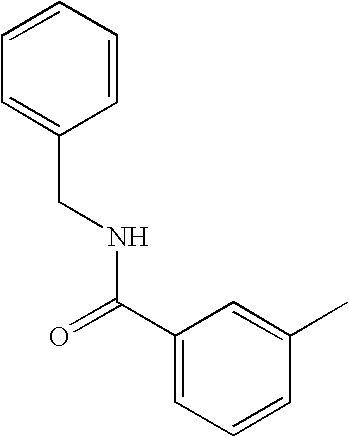
453.1748 24 4-({[tert- Butyl(dimethyl)silyl]oxy}methyl)pyridin- 3-ylboronic acid 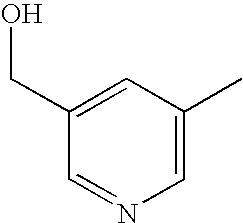
351.1284 25 (4-Aminomethylphenyl)boronic acid, pinacol ester, HCl 
349.1463 26 1-(Phenylsulfonyl)-1H-indol-3-ylboronic acid 
499.1215 
27 4-Vinylphenylboronic acid 
362.1311 28 5-({[tert- Butyl(dimethyl)silyl]oxy}methyl)pyridin-3- ylboronic acid 
367.1245 29 (3-Aminocarbonyl)phenylboronic acid 
379.1231 30 3,4-Methylenedioxyphenylboronic acid 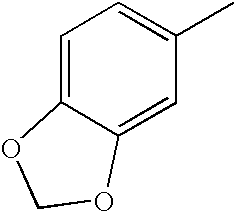
380.1064 31 [3-(Hydroxypropyl)phenyl]boronic acid 
394.1596 32 3-(N-Isopropylaminocarbonyl)phenylboronic acid 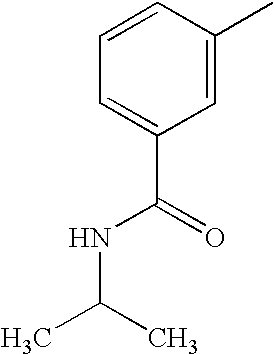
421.1711 33 3-(N-Propylaminocarbonyl)phenylboronic acid 
421.1684 34 4-Borono-DL-phenylalanine 
423.1499 35 3-(Butylaminocarbonyl)phenylboronic acid 
435.1833 36 3-(Isobutylaminocarbonyl)phenylboronic acid 
435.1849 37 4-(Isobutylaminocarbonyl)phenylboronic acid 
435.1833 38 3-(Piperidine-1-carbonyl)phenylboronic acid 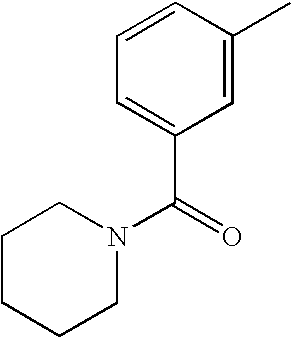
447.1839 39 4-(Cyclopentylaminocarbonyl)phenylboronic acid 
447.1892 40 4-Benzyloxy-3-fluorophenylboronic acid 
460.1492 41 4-(Aminomethylphenyl)boronic acid, pinacol ester, HCl 
365.1440 -

- 7-Bromo-2-propylthiazolo[4,5-c]quinolin-4-amine (0.50 g, 1.55 mmol) was coupled with 3-(N,N-diethylaminocarbonyl)phenylboronic acid (0.41 g, 1.86 mmol) using the method of Example 3. The crude product was purified by HPFC (silica gel, gradient elution with 0-30% CMA in chloroform) to provide a light yellow solid. The solid was suspended in cold diethyl ether (20 mL), isolated by filtration, rinsed with diethyl ether, and then dried in an oven at 80° C. to provide 0.374 g of 3-(4-amino-2-propylthiazolo[4,5-c]quinolin-7-yl)-N,N-diethylbenzamide as an off-white solid, mp 169-172° C. 1H NMR (500 MHz, d6-DMSO) δ 7.70 (d, J=8.2, 1H), 7.85 (d, J=1.9, 1H), 7.83 (d, J=7.9, 1H) 7.67 (s, 1 H), 7.58 (dd, J=8.2, 1.6, 1H), 7.55 (t, J=7.6, 1H), 7.35 (d, J=7.6, 1H), 6.94 (s, 2H), 3.45 (m, 2H), 3.24 (m, 2H) 3.16 (t, J=6.2, 2H), 1.87 (sextet, J=7.5, 2H), 1.16 (m, 3H), 1.09 (m, 3H), 1.02 (t, J=7.5, 3H); 13C NMR (125 MHz, d6-DMSO) δ 170.8, 169.7, 152.5, 145.2, 140.0, 139.7, 138.8, 138.1, 137.7, 129.2, 127.4, 125.4, 125.3, 124.3, 123.5, 121.0, 118.3, 35.2, 22.8, 14.1, 13.5, 12.8; Anal. calcd for C24H26N4OS: C, 68.87; H, 6.26; N, 13.39. Found: C, 68.72; H, 6.20; N, 13.37.
-

- 7-Bromo-2-propylthiazolo[4,5-c]quinolin-4-amine (0.50 g, 1.55 mmol) was coupled with 3-(pyrrolidin-1-ylcarbonyl)phenylboronic acid (0.41 g, 1.86 mmol) using the method of Example 3. The crude product was purified by HPFC (silica gel, gradient elution with 0-30% CMA in chloroform) to provide a light yellow solid. The solid was suspended in cold diethyl ether (20 mL), isolated by filtration, rinsed with diethyl ether, and then dried in an oven at 80° C. to provide 0.317 g of 2-propyl-7-[3-(pyrrolidin-1-ylcarbonyl)phenyl]thiazolo[4,5-c]quinolin-4-amine as an off-white solid, mp 177-180° C. 1H NMR (500 MHz, d6-DMSO) δ 7.88-7.83 (m, 4H), 7.58 (dd, J=8.2, 1.6, 1H), 7.55 (t, J=7.8, 1H), 7.51 (d, J=7.6, 1H), 6.93 (s, 2H), 3.49 (t, J=6.9, 2H), 3.45 (t, J=6.9, 2H), 3.16 (t, J=6.2, 2H), 1.90-1.81 (m, 6H), 1.02 (t, J=7.5, 3H); 13C NMR (125 MHz, d6-DMSO) δ 170.8, 168.0, 152.5, 145.2, 139.9, 139.7, 138.8, 138.0, 137.6, 129.0, 128.1, 126.2, 125.4, 125.3, 123.5, 121.1, 118.3, 48.9, 45.92, 35.2, 22.8, 13.5; Anal. calcd for C24H24N4OS: C, 69.20; H, 5.81; N, 13.45. Found: C, 69.01; H, 5.66; N, 13.35.
-

- 7-Bromo-2-propylthiazolo[4,5-c]quinolin-4-amine (0.50 g, 1.55 mmol) was coupled with 4-(acetylamino)phenylboronic acid (0.33 g, 1.86 mmol) using the method of Example 3. The crude product was purified by HPFC (silica gel, gradient elution with 0-30% CMA in chloroform) to provide a light yellow solid. The solid was suspended in cold diethyl ether (20 mL), isolated by filtration, rinsed with diethyl ether, and then dried in an oven at 80° C. to provide 0.351 g of N-[4-(4-amino-2-propylthiazolo[4,5-c]quinolin-7-yl)phenyl]acetamide as an off-white solid, mp 252-255° C. 1H NMR (500 MHz, d6-DMSO) δ 10.0 (s, 1H), 7.83 (d, J=8.2, 1H), 7.80 (d, J=1.9, 1H), 7.71 (s, 4H), 7.54 (dd, J=8.4, 1.9, 1H), 6.89 (s, 2H), 3.15 (t, J=6.2, 2H), 2.07 (s, 3H), 1.87 (sextet, J=7.5, 2H), 1.02 (t, J=7.5, 3H); 13C NMR (125 MHz, d6-DMSO) δ 170.5, 168.3, 152.4, 145.3, 140.0, 139.0, 138.9, 137.4, 134.3, 127.0, 125.2, 122.7, 120.7, 119.3, 117.7, 35.2, 24.0, 22.8, 13.5; Anal. calcd for C21H20N4OS: C, 67.00; H, 5.36; N, 14.88. Found: C, 66.85; H, 5.19; N, 14.87.
-

- 7-Bromo-2-propylthiazolo[4,5-c]quinolin-4-amine (0.50 g, 1.55 mmol) was coupled with 3-(cyclopropylaminocarbonyl)phenylboronic acid (0.38 g, 1.86 mmol) using the method of Example 3. The crude product was purified by HPFC (silica gel, gradient elution with 0-30% CMA in chloroform) to provide a light yellow solid. The solid was suspended in cold diethyl ether (20 mL), isolated by filtration, rinsed with diethyl ether, and then dried in an oven at 80° C. to provide 0.323 g of 3-(4-amino-2-propylthiazolo[4,5-c]quinolin-7-yl)-N-cyclopropylbenzamide as an off-white solid, mp 251-254° C. 1H NMR (300 MHz, d6-DMSO) δ 8.62 (d, J=4.1, 1H), 8.20 (s, 1H), 7.95 (d, J=1.9, 1H), 7.92-7.83 (m 3H), 7.62 (dd, J=8.2, 1.6, 1H), 7.56 (t, J=7.5, 1H), 6.92 (s, 2H), 3.16 (t, J=6.2, 2H), 2.88 (m 1H), 1.88 (sextet, J=7.5, 2H), 1.02 (t, J=7.5, 3H), 0.75-0.58 (m, 4H); 13C NMR (75 MHz, d6-DMSO) δ 170.8, 167.2, 152.5, 145.2, 139.9, 139.7, 138.9, 137.6, 135.1, 129.4, 129.0, 126.6, 125.3, 123.6, 121.0, 118.2, 35.2, 23.1, 22.8, 13.5, 5.7; Anal. calcd for C23H22N4OS: C, 68.63; H, 5.51; N, 13.92. Found: C, 68.50; H, 5.17; N, 13.86.
-

- 7-Bromo-2-propylthiazolo[4,5-c]quinolin-4-amine (0.50 g, 1.55 mmol) was coupled with 2-(acetylamino)phenylboronic acid (0.33 g, 1.86 mmol) using the method of Example 3. The crude product was purified by HPFC (silica gel, gradient elution with 0-30% CMA in chloroform) to provide a light yellow solid. The solid was suspended in cold diethyl ether (20 mL), isolated by filtration, rinsed with diethyl ether, and then dried in an oven at 80° C. to provide 0.305 g of N-[2-(4-amino-2-propylthiazolo[4,5-c]quinolin-7-yl)phenyl]acetamide as an off-white solid, mp 206-209° C. 1H NMR (300 MHz, d6-DMSO) δ 9.30 (s, 1H), 7.82 (d, J=8.1, 1H), 7.58 (d, J=1.6, 1H), 7.51 (d, J=7.8, 1H), 7.41-7.27 (m, 3H) 7.24 (dd, J=8.4, 1.8, 1H), 6.93 (s, 2H), 3.16 (t, J=7.5, 2H), 1.87 (s, 3H), 1.86 (sextet, J=7.5, 2H), 1.02 (t, J=7.5, 3H); 13C NMR (75 MHz, d6-DMSO) δ 170.6, 168.6, 152.4, 144.9, 139.4, 138.9, 137.6, 136.3, 135.0, 130.2, 127.7, 127.1, 125.9, 125.7, 124.5, 123.0, 117.8, 35.2, 23.0, 22.8, 13.4; Anal. calcd for C21H20N4OS: C, 67.00; H, 5.36; N, 14.88. Found: C, 66.99; H, 5.25; N, 14.84.
-

- 7-Bromo-2-propylthiazolo[4,5-c]quinolin-4-amine (0.50 g, 1.55 mmol) was coupled with 2-(aminocarbonyl)phenylboronic acid (0.31 g, 1.86 mmol) using the method of Example 3. The crude product was purified by HPFC (silica gel, gradient elution with 0-30% CMA in chloroform) to provide a light yellow solid. The solid was suspended in cold diethyl ether (20 mL), isolated by filtration, rinsed with diethyl ether, and then dried in an oven at 80° C. to provide 96 mg of 2-(4-amino-2-propylthiazolo[4,5-c]quinolin-7-yl)benzamide as an off-white solid, mp 274-276° C. 1H NMR (300 MHz, d6-DMSO) δ 7.81 (d, J=8.1, 1H), 7.70 (s, 1H), 7.68 (d, J=1.8, 1H), 7.54-7.39 (m, 4H), 7.31 (dd, J=8.4, 1.8, 1H), 7.30 (s, 1H), 6.90 (s, 2H), 3.16 (t, J=7.5, 2H), 1.86 (sextet, J=7.5, 2H), 1.02 (t, J=7.5, 3H); 13C NMR (75 MHz, d6-DMSO) δ 171.1, 170.6, 152.3, 144.7, 140.8, 138.9, 138.7, 137.52, 137.49, 129.9, 129.2, 127.6, 127.1, 125.3, 124.4, 122.8, 117.8, 35.2, 22.7, 13.5; Anal. calcd for C20H18N4OS: C, 66.28; H, 5.01; N, 15.46. Found: C, 66.15; H, 4.91; N, 15.42.
-

- 7-Bromo-2-propylthiazolo[4,5-c]quinolin-4-amine (0.50 g, 1.55 mmol) was coupled with 3-methylsulfonylphenylboronic acid (0.37 g, 1.86 mmol) using the method of Example 3. The crude product was purified by HPFC (silica gel, gradient elution with 0-35% CMA in chloroform) to provide a light yellow solid. The solid was suspended in cold diethyl ether (20 mL), isolated by filtration, rinsed with diethyl ether, and then dried in an oven at 80° C. to provide 0.174 g of 7-[3-(methylsulfonyl)phenyl]-2-propylthiazolo[4,5-c]quinolin-4-amine as an off-white solid, mp 242-245° C. 1H NMR (500 MHz, d6-DMSO) δ 8.26 (t, J=1.9, 1H), 8.15 (d, J=7.9, 1H), 7.95 (d, J=1.9, 1H), 7.93 (d, J=8.6, 1H), 7.92 (d, J=8.2, 1H), 7.77 (t, J=7.9, 1H), 7.65 (dd, J=8.2, 1.6, 1H), 6.96 (s, 2H), 3.32 (s, 3H), 3.17 (t, J=6.2, 2H), 1.88 (sextet, J=7.5, 2H), 1.03 (t, J=7.5, 3H); 13C NMR (125 MHz, d6-DMSO) δ 171.1, 152.6, 145.2, 141.7, 141.1, 138.8, 138.6, 137.8, 131.9, 130.1, 125.8, 125.6, 125.2, 123.9, 121.0, 118.6, 43.4, 35.2, 22.8, 13.5.
-

- 7-Bromo-2-propylthiazolo[4,5-c]quinolin-4-amine (0.50 g, 1.55 mmol) was coupled with 3-(acetylamino)phenylboronic acid (0.33 g, 1.86 mmol) using the method of Example 3. The crude product was purified by HPFC (silica gel, gradient elution with 0-35% CMA in chloroform) to provide a light yellow solid. The solid was suspended in cold diethyl ether (20 mL), isolated by filtration, rinsed with diethyl ether, and then dried in an oven at 80° C. to provide 45 mg of N-[3-(4-amino-2-propylthiazolo[4,5-c]quinolin-7-yl)phenyl]acetamide as an off-white solid, mp 173-176° C. 1H NMR (500 MHz, d6-DMSO) δ 10.0 (s, 1H), 8.03, (s, 1H), 7.87 (d, J=8.2, 1H), 7.79 (d, J=1.6, 1H), 7.57 (d, J=7.0, 1H), 7.50 (dd, J=8.2, 1.6, 1H), 7.43-7.39 (m, 2H), 6.93 (s, 2H), 3.16 (t, J=6.2, 2H), 2.07 (s, 3H), 1.87 (sextet, J=7.5, 2H), 1.02 (t, J=7.5, 3H); 13C NMR (125 MHz, d6-DMSO) δ 170.7, 168.4, 152.5, 145.2, 140.4, 140.3, 139.9, 138.9, 137.6, 129.4, 125.3, 123.3, 121.5, 120.9, 118.2, 118.1, 117.3, 35.2, 24.1, 22.8, 13.5.
-

- 7-Bromo-2-propylthiazolo[4,5-c]quinolin-4-amine (2.15 g, 6.67 mmol) was coupled with 3-(aminomethyl)phenylboronic acid hydrochloride (1.50 g, 8.00 mmol) using the method of Example 3 except that 2.4 equivalents of sodium carbonate was used. The crude product was purified by HPFC (silica gel, gradient elution with 0-40% CMA in chloroform) to provide 1.67 g of a light yellow solid. A portion (0.22 g) of this material was recrystallized from refluxing propyl acetate (15 mL), isolated by filtration, washed with cold propyl acetate, and dried in a vacuum oven at 60° C. to provide 80 mg of 7-(3-aminomethylphenyl)-2-propylthiazolo[4,5-c]quinolin-4-amine as a light yellow solid, mp 168-171° C. 1H NMR (500 MHz, d6-DMSO) δ 7.85 (m, 3H), 7.74 (s, 1H), 7.59-7.56 (m, 3H), 7.41 (t, J=7.6, 1H), 7.33 (d, J=7.5, 1H), 6.90 (s, 2H), 3.79 (s, 2H), 3.16 (t, J=7.6, 2H), 7.88 (sextet, J=7.5, 2H), 1.02 (t, J=7.2, 3H); 13C NMR (125 Hz, d6-DMSO) δ 170.6, 152.4, 145.2, 145.1, 140.7, 139.8, 138.9, 137.5, 128.7, 126.4, 125.6, 125.2, 124.6, 123.3, 121.1, 118.0, 45.7, 35.2, 22.8, 13.5; Anal, calcd for C20H20N4S: C, 68.94; H, 5.79; N, 16.08. Found: C, 68.96; H, 5.71; N, 16.03.
-

- 7-Bromo-2-propylthiazolo[4,5-c]quinolin-4-amine (0.50 g, 1.55 mmol) was coupled with 2-(aminomethyl)-4-fluorophenylboronic acid hydrochloride (0.38 g, 1.86 mmol) using the method of Example 3 except that 2.4 equivalents of sodium carbonate was used. The crude product was purified by HPFC (silica gel, gradient elution with 0-35% CMA in chloroform) to provide a light yellow solid. The solid was suspended in cold diethyl ether (20 mL), isolated by filtration, rinsed with diethyl ether, and then dried in an oven at 80° C. to provide 0.155 g of 7-[2-(aminomethyl)-4-fluorophenyl)-2-propylthiazolo[4,5-c]quinolin-4-amine as an off-white solid, mp 181-184° C. 1H NMR (500 MHz, d6-DMSO) δ 7.82 (d, J=8.1, 1H), 7.51 (d, J=1.6, 1H), 7.47 (dd, J=10.6, 2.5, 1H), 7.30 (dd, J=8.4, 6.0, 1H), 7.21 (dd, J=8.1, 1.6, 1H), 7.11 (td, J=8.5, 2.5, 1H), 6.93 (s, 2H), 3.67 (s, 2H), 3.16 (t, J=6.2, 2H), 1.87 (sextet, J=7.5, 2H), 1.84 (s, 2H), 1.02 (t, J=7.5, 3H); 13C NMR (125 MHz, d6-DMSO) δ 170.7, 163.4, 152.5, 144.7, 144.3, 140.2, 138.9, 137.6, 136.4, 131.2, 125.9, 124.5, 123.5, 117.7, 114.3, 112.8, 43.1, 35.2, 22.8, 13.4.
- 7-Bromo-2-ethoxymethylthiazolo[4,5-c]quinolin-4-amine, which was used as a substrate in the examples 52-65, was prepared from 3-amino-7-bromoquinolin-4-ol hydrochloride as described below.
- Part A
- Under a nitrogen atmosphere, a mixture of 3-amino-7-bromoquinolin-4-ol hydrochloride (19.0 g, 69 mmol), anhydrous dichloromethane (275 mL), and triethylamine (19.2 mL, 138 mmol) was cooled for 10 minutes in a 0° C. ice bath. Ethoxyacetyl chloride (8.87 g, 72.4 mmol) was added dropwise. The solution was allowed to stir for 10 minutes, the ice bath was removed, and the reaction mixture was allowed to stir for about 5 hours. A solid was isolated by filtration, washed with a small amount of dichloromethane, and then dried overnight in a vacuum oven at 60° C. to provide 25.63 g of N-(7-bromo-4-hydroxyquinolin-3-yl)-2-ethoxyacetamide as a light brown solid.
- Part B
- Using the general method of Part F of Example 1, N-(7-bromo-4-hydroxyquinolin-3-yl)-2-ethoxyacetamide (22.29 g, 68.97 mmol) was reacted with phosphorous pentasulfide (15.33 g, 34.49 mmol). The reaction was worked up and the crude product was purified using the methods described in Part F of Example 1 to provide 6.0 g of 7-bromo-2-ethoxymethylthiazolo[4,5-c]quinoline as a light yellow solid.
- Part C
- Using the general method of Part G of Example 1, 7-bromo-2-ethoxymethylthiazolo[4,5-c]quinoline (5.97 g) was oxidized to provide 6.27 g of 7-bromo-2-ethoxymethylthiazolo[4,5-c]quinoline 5-oxide as a light yellow powder.
- Part D
- Using the general methods of Part H and Part I, 7-bromo-2-ethoxymethylthiazolo[4,5-c]quinoline 5-oxide (6.27 g) was converted to 7-bromo-2-ethoxymethylthiazolo[4,5-c]quinolin-4-amine (5.10 g of a light yellow solid). A portion (0.31 g) was recrystallized from refluxing isopropanol (15 mL), isolated by filtration, rinsed with cold isopropanol, and dried in a vacuum oven at 60° C. to provide 0.13 g of pure 7-bromo-2-ethoxymethylthiazolo[4,5-c]quinolin-4-amine, mp 201-204° C. Anal. calcd for C13H12N3OS: C, 46.17; H, 3.58; N, 12.42. Found: C, 46.12; H, 3.51; N, 12.19.
- The compounds in the table below were prepared and purified using the methods described in Examples 5-41. 7-Bromo-2-ethoxymethylthiazolo[4,5-c]quinolin-4-amine was used in lieu of 7-bromo-2-propylthiazolo[4,5-c]quinolin-4-amine. The table below shows the reagent used for each example, the structure of the resulting compound, and the observed accurate mass for the isolated trifluoroacetate salt.

Ex Reagent R3 Measured Mass (M + H) 52 4-Vinylphenylboronic acid 
362.1304 53 3,4-Methylenedioxyphenylboronic acid 
380.1044 54 [3-(Hydroxypropyl)phenyl]boronic acid 
394.1602 55 (3-Aminomethylphenyl)boronic acid, hydrochloride 
365.1472 56 4-(Cyclopropylaminocarbonyl)phenylboronic acid 
419.1517 57 3-(N-Isopropylaminocarbonyl)phenylboronic acid 
421.1707 58 3-(N-Propylaminocarbonyl)phenylboronic acid 
421.1685 59 3-(Isobutylaminocarbonyl)phenylboronic acid 
435.1870 60 4-(Isobutylaminocarbonyl)phenylboronic acid 
435.1834 61 3-(Piperidine-1-carbonyl)phenylboronic acid 
447.1850 62 3-(Furfurylaminocarbonyl)phenylboronic acid 
459.1508 63 3-(N-Benzylaminocarbonyl)phenylboronic acid 
469.1738 64 (4-Aminomethylphenyl)boronic acid, pinacol ester, hydrochloride 
365.1426 65 1-(Phenylsulfonyl)-1H-indol-3-ylboronic acid 
515.1216 - Part A
- 7-bromo-2-(2-methoxyethyl)thiazolo[4,5-c]quinolin-4-amine (2.75 g, 8.13 mmol) was coupled with 4-(aminomethyl)phenylboronic acid hydrochloride (1.83 g, 9.8 mmol) using the method of Example 3. The crude product was purified by HPFC (silica gel, gradient elution with 0-30% CMA in chloroform) to provide 1.03 g of 7-(4-aminomethyl)phenyl-2-(2-methoxyethyl)thiazolo[4,5-c]quinolin-4-amine a light yellow solid.
- Part B
- A reagent from the table below (1.1 equivalents) was added to a test tube containing a solution of 7-(4-aminomethyl)phenyl-2-(2-methoxyethyl)thiazolo[4,5-c]quinolin-4-amine (36.9 mg, 1.0 equivalents) in N,N-dimethylacetamide (1 mL) containing N,N-diisopropylethylamine (2.0 eq). The test tube was capped and placed on a shaker at ambient temperature overnight (approximately 18 hours). The reaction was quenched with water (2 drops). The solvent was removed by vacuum centrifugation. The compounds were purified by preparative high performance liquid chromatography (prep HPLC) using a Waters FractionLynx automated purification system. The prep HPLC fractions were analyzed using a Waters LC/TOF-MS, and the appropriate fractions were centrifuge evaporated to provide the trifluoroacetate salt of the desired compound. Reversed phase preparative liquid chromatography was performed with non-linear gradient elution from 5-95% B where A is 0.05% trifluoroacetic acid/water and B is 0.05% trifluoroacetic acid/acetonitrile. Fractions were collected by mass-selective triggering. The table below shows the reagent used for each example, the structure of the resulting compound, and the observed accurate mass for the isolated trifluoroacetate salt.

Measured Ex- Mass ample Reagent R (M + H) 66 Acetyl chloride 
407.1548 67 Propionyl chloride 
421.1713 68 Cyclo- propanecarbonyl chloride 
433.1705 69 Butyryl chloride 
435.1883 70 Isobutyryl chloride 
435.1831 71 Cyclo- butanecarbonyl chloride 
447.1891 72 Cyclo- hexanecarbonyl chloride 
475.2144 73 Isonicotinoyl chloride hydrochloride 
470.1693 74 Nicotinoyl chloride hydrochloride 
470.1691 75 Methanesulfonyl chloride 
443.1222 76 Ethanesulfonyl chloride 
457.1357 77 1-Propanesulfonyl chloride 
471.1510 78 1-Butanesulfonyl chloride 
485.1676 79 Methyl isocyanate 
422.1677 80 Ethyl isocyanate 
436.1837 81 Isopropyl isocyanate 
450.1985 82 n-Butyl isocyanate 
464.2162 83 Cyclopropyl isothiocyanate 
464.1618 84 Cyclopentyl isocyanate 
476.2092 85 Cyclohexyl isocyanate 
490.2291 86 N,N- Dimethylcarbamoyl chloride 
436.1830 87 1-Piperidine- carbonyl chloride 
476.2140 88 2-Oxo-1- Imidazolidine- carbonyl chloride 
477.1733 89 4- Morpholinyl- carbonyl chloride 
478.1954 90 4-Meth- yl-1-piperazine- carbonyl chloride 
491.2264 - The compounds in the table below were prepared using the method of Part B of Examples 66-90 using 7-(3-aminomethyl)phenyl-2-propylthiazolo[4,5-c]quinolin-4-amine in lieu of 7-(4-aminomethyl)phenyl-2-(2-methoxyethyl)thiazolo[4,5-c]quinolin-4-amine. The table below shows the reagent used for each example, the structure of the resulting compound, and the observed accurate mass for the isolated trifluoroacetate salt.

Ex- Measured Mass ample Reagent R (M + H) 91 Propionyl chloride 
405.1767 92 Methyl chloroformate 
407.1520 93 Cyclopropanecarbonyl chloride 
417.1712 94 Butyryl chloride 
419.1897 95 Isobutyryl chloride 
419.1915 96 Cyclobutanecarbonyl chloride 
431.1918 97 Cyclopentanecarbonyl chloride 
445.2046 98 Benzoyl chloride 
453.1737 99 Methanesulfonyl chloride 
427.1282 100 Ethanesulfonyl chloride 
441.1412 101 1-Propanesulfonyl chloride 
455.1601 102 Isopropylsulfonyl chloride 
455.1581 103 Dimethylsulfamoyl chloride 
456.1487 104 1-Butanesulfonyl chloride 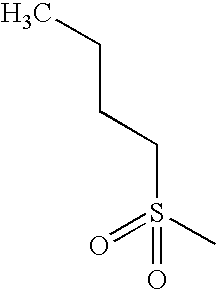
469.1739 105 1-Methylimidazole-4- sulfonyl chloride 
493.1484 106 Ethyl isocyanate 
420.1855 107 Isopropyl isocyanate 
434.2010 108 n-Propyl isocyanate 
434.2017 109 Cyclopropyl isothiocyanate 
448.1609 110 Cyclopentyl isocyanate 
460.2130 111 Phenyl isocyanate 
468.1835 112 2-Phenyl ethylisocyanate 
496.2164 113 1-Pyrrolidinecarbonyl chloride 
446.2010 114 1-Piperidinecarbonyl chloride 
460.2170 - Part A
- 7-Bromo-2-ethoxymethylthiazolo[4,5-c]quinolin-4-amine (2.25 g, 6.67 mmol) was coupled with 3-(aminomethyl)phenylboronic acid hydrochloride (1.50 g, 8.00 mmol) using the method of Example 3. The crude product was purified by HPFC (silica gel, gradient elution with 0-40% CMA in chloroform) to provide 1.12 g of 7-(3-aminomethyl)phenyl-2-ethoxymethylthiazolo[4,5-c]quinolin-4-amine a light yellow solid.
- Part B
- The compounds in the table below were prepared using the method of Part B of Examples 66-90 using 7-(3-aminomethyl)phenyl-2-ethoxymethylthiazolo[4,5-c]quinolin-4-amine in lieu of 7-(4-aminomethyl)phenyl-2-(2-methoxyethyl)thiazolo[4,5-c]quinolin-4-amine. The table below shows the reagent used for each example, the structure of the resulting compound, and the observed accurate mass for the isolated trifluoroacetate salt.

Ex- Measured Mass ample Reagent R (M + H) 115 Acetyl chloride 
407.1571 116 Propionyl chloride 
421.1739 117 Cyclopropanecarbonyl chloride 
433.1717 118 Isobutyryl chloride 
435.1892 119 Cyclopentanecarbonyl chloride 
461.2035 120 Benzoyl chloride 
469.1703 121 Nicotinoyl chloride hydrochloride 
470.1680 122 Methanesulfonyl chloride 
443.1197 123 Ethanesulfonyl chloride 
457.1377 124 1-Propanesulfonyl chloride 
471.1495 125 Isopropylsulfonyl chloride 
471.1536 126 Benzenesulfonyl chloride 
505.1389 127 2,2,2- Trifluoroethanesulfonyl chloride 
511.1107 128 Methyl isocyanate 
422.1651 129 Ethyl isocyanate 
436.1841 130 N-Propyl isocyanate 
450.1989 131 Phenyl isocyanate 
484.1795 132 1-Pyrrolidinecarbonyl chloride 
462.1973 133 1-Piperidinecarbonyl chloride 
476.2123 -

Part A - 8-Bromo-2-propylthiazolo[4,5-c]quinolin-4-amine was prepared according to the general method of Example 1 Parts A through I using 4-bromoaniline in lieu of 3-bromoaniline in Part A.
- Part B
- 8-Bromo-2-propylthiazolo[4,5-c]quinolin-4-amine (0.50 g, 1.55 mmol) was coupled with 3-methylsulfonylphenylboronic acid (0.37 g, 1.86 mmol) using the method of Example 3. The crude product was purified by HPFC (silica gel, gradient elution with 0-30% CMA in chloroform) to provide an off-white solid. The solid was suspended in cold diethyl ether (20 mL), isolated by filtration, rinsed with diethyl ether, and then dried in an oven at 80° C. to provide 0.503 g of 8-[3-(methylsulfonyl)phenyl]-2-propylthiazolo[4,5-c]quinolin-4-amine as an off-white solid, mp 252-255° C. 1H NMR (300 MHz, d6-DMSO) δ 8.29 (t, J=1.9, 1H), 8.18-8.15 (m, 2H), 7.94-7.88 (m, 2H), 7.77 (d, J=7.8, 1H), 7.72 (d, J=8.7, 1H), 7.02 (s, 2H), 3.32 (s, 3H), 3.17 (t, J=7.2, 2H), 1.88 (sextet, J=7.5, 2H), 1.03 (t, J=7.2, 3H); 13C NMR (75 MHz, d6-DMSO) δ 171.1, 152.6, 144.9, 141.7, 140.9, 139.3, 137.9, 131.8, 131.7, 130.0, 127.5, 126.7, 125.2, 124.8, 122.9, 119.2, 79.1, 35.2, 22.7, 13.4; Anal. calcd for C20H19N3O2S2: C, 60.43; H, 4.82; N, 10.57. Found: C, 60.30; H, 4.57; N, 10.60.
-

- 8-Bromo-2-propylthiazolo[4,5-c]quinolin-4-amine (0.50 g, 1.55 mmol) was coupled with 3-(acetylamino)phenylboronic acid (0.33 g, 1.86 mmol) using the method of Example 3. The crude product was purified by HPFC (silica gel, gradient elution with 0-30% CMA in chloroform) to provide a light yellow solid. The solid was suspended in cold diethyl ether (20 mL), isolated by filtration, rinsed with diethyl ether, and then dried in an oven at 80° C. to provide 0.229 g of N-[3-(4-amino-2-propylthiazolo[4,5-c]quinolin-8-yl)phenyl]acetamide as an off-white solid, mp 242-245° C. 1H NMR (300 MHz, d6-DMSO) δ 10.0 (s, 1H), 7.94 (t, J=1.9, 1H), 7.93 (d, J=2.2, 1H), 7.76 (dd, J=8.8, 2.2, 1H), 7.68 (d, J=8.7, 1H), 7.60 (dt, J=7.5, 1.6, 1H), 7.44 (dt, J=7.8, 1.9, 1H), 7.40 (t, J=7.8, 1H), 6.96 (s, 2H), 3.16 (t, J=7.5, 2H), 2.07 (s, 3H), 1.87 (sextet, J=7.4, 2H), 1.02 (t, J=7.2, 3H); 13C NMR (75 MHz, d6-DMSO) δ 170.8, 168.4, 152.3, 144.4, 140.1, 139.9, 139.2, 137.8, 129.3, 127.4, 126.5, 122.0, 121.4, 119.1, 117.8, 117.1, 35.2, 24.0, 22.7, 13.4; Anal. calcd for C21H20N4OS: C, 67.00; H, 5.36; N, 14.88. Found: C, 66.63; H, 4.98; N, 14.43.
-

- 8-Bromo-2-propylthiazolo[4,5-c]quinolin-4-amine (0.50 g, 1.55 mmol) was coupled with 2-(aminomethyl)-4-fluorophenylboronic acid hydrochloride (0.38 g, 1.86 mmol) using the method of Example 3 except that 2.4 equivalents of sodium carbonate was used. The crude product was purified by HPFC (silica gel, gradient elution with 0-30% CMA in chloroform) to provide a light yellow solid. The solid was suspended in cold diethyl ether (20 mL), isolated by filtration, rinsed with diethyl ether, and then dried in an oven at 80° C. to provide 0.215 g of 8-[2-(aminomethyl)-4-fluorophenyl]-2-propylthiazolo[4,5-c]quinolin-4-amine as an off-white solid, mp 198-201° C. 1H NMR (300 MHz, d6-DMSO) δ 7.72 (d, J=1.9, 1H), 7.63 (d, J=8.5, 1H), 7.48 (dd, J=8.5, 1.9, 1H), 7.46 (dd, J=10.9, 2.8, 1H), 7.31 (dd, J=8.4, 5.9, 1H), 7.10 (td, J=8.4, 2.9, 1H), 6.93 (s, 2H), 3.66 (s, 2H), 3.14 (t, J=7.5, 2H), 1.85 (sextet, J=7.2, 2H), 1.84 (s, 2H), 1.01 (t, J=7.5, 3H); 13C NMR (75 MHz, d6-DMSO) δ 170.8, 163.4, 152.3, 144.4, 143.9, 139.1, 137.8, 136.1, 133.5, 131.5, 130.0, 125.6, 124.7, 118.6, 114.5, 112.7, 43.1, 35.1, 22.8, 13.4.
-

- 8-Bromo-2-propylthiazolo[4,5-c]quinolin-4-amine (0.50 g, 1.55 mmol) was coupled with 4-(acetylamino)phenylboronic acid (0.33 g, 1.86 mmol) using the method of Example 3. The crude product was purified by HPFC (silica gel, gradient elution with 0-30% CMA in chloroform) to provide a light yellow solid. The solid was suspended in cold diethyl ether (20 mL), isolated by filtration, rinsed with diethyl ether, and then dried in an oven at 80° C. to provide 48 mg of N-[4-(4-amino-2-propylthiazolo[4,5-c]quinolin-8-yl)phenyl]acetamide as an off-white solid, mp 251-254° C. 1H NMR (300 MHz, d6-DMSO) δ 10.0 (s, 1H), 7.98 (d, J=2.2, 1H), 7.81 (dd, J=8.7, 2.2, 1H), 7.75-7.63 (m, 5H), 6.90 (s, 2H), 3.17 (t, J=7.5, 2H), 2.06 (s, 3H), 1.88 (sextet, J=7.5, 2H), 1.03 (t, J=7.2, 3H); 13C NMR (75 MHz, d6-DMSO) δ 170.8, 168.2, 152.1, 144.0, 138.6, 134.1, 133.4, 127.2, 126.8, 126.4, 121.5, 119.3, 119.2, 35.2, 24.0, 22.7, 13.4.
-

- 8-Bromo-2-propylthiazolo[4,5-c]quinolin-4-amine (0.500 g, 1.55 mmol) was coupled with 3-(methanesulfonylamino)phenylboronic acid (0.400 g, 1.86 mmol) using the method of Example 3. The crude product was recrystallized from acetonitrile and dried to provide 0.150 g of N-[3-(4-amino-2-propylthiazolo[4,5-c]quinolin-8-yl)phenyl]methanesulfonamide as tan crystals, mp 244-246° C.; 1H NMR (300 MHz, DMSO-d6) δ 9.82 (s, 1 H), 7.96 (d, J=1.8 Hz, 1 H), 7.90 (dd, J=8.7, 2.0 Hz, 1 H), 7.71 (d, J=8.7 Hz, 1 H), 7.58 (s, 1 H), 7.54 (d, J=7.9 Hz, 1 H), 7.46 (t, J=7.7 Hz, 1 H), 7.24 (d, J=7.8 Hz, 1 H), 6.99 (s, 2 H), 3.17 (t, J=7.5 Hz, 2 H), 3.06 (s, 3 H), 1.95-1.83 (m, 2 H), 1.04 (t, J=7.3 Hz, 3 H); 13C NMR (75 MHz, DMSO-d6) δ 171.3, 152.7, 144.9, 141.2, 139.6, 139.4, 138.2, 133.7, 130.3, 127.8, 127.0, 122.7, 122.6, 119.5, 118.8, 118.4, 35.6, 23.1, 13.8; MS (ESI) m/z 413.02 (M+H)+; Anal. Calcd for C20H20N4O2S2: C, 58.23; H, 4.89; N, 13.58; Found: C, 58.19; H, 4.61; N, 13.65.
-

- 8-Bromo-2-propylthiazolo[4,5-c]quinolin-4-amine (0.500 g, 1.55 mmol) was coupled with 2-(hydroxymethyl)phenylboronic acid (0.249 g, 1.86 mmol) using the method of Example 3. The crude product was purified by HPFC (silica gel, gradient elution with 0-35% CMA in chloroform) to provide an off-white solid. The solid was triturated with diethyl ether (10 mL), isolated by filtration, and then dried under vacuum at 100° C. to provide 0.294 g of [2-(4-amino-2-propylthiazolo[4,5-c]quinolin-8-yl)phenyl]methanol as an off-white solid, mp 194-196° C.; 1H NMR (300 MHz, DMSO-d6) δ 7.79 (d, J=1.8 Hz, 1 H), 7.68 (d, J=8.6 Hz, 1 H), 7.62-7.60 (m, 1 H), 7.56 (dd, J=8.5, 2.0 Hz, 1 H), 7.44-7.38 (m, 1 H), 7.37-7.35 (m, 2 H), 6.96 (s, 2 H), 5.19 (t, J=5.3 Hz, 1 H), 4.47 (d, J=5.3 Hz, 2 H), 3.15 (t, J=7.4 Hz, 2 H), 1.93-1.81 (m, 2 H), 1.02 (t, J=7.3 Hz, 3 H); 13C NMR (75 MHz, DMSO-d6) δ 171.2, 152.7, 144.3, 140.2, 139.7, 139.6, 138.1, 134.5, 130.3, 130.0, 128.8, 127.6, 127.3, 126.0, 125.0, 119.0, 61.4, 35.5, 23.1, 13.8; MS (ESI) m/z 350.11 (M+H)+; Anal. Calcd for C20H19N3OS: C, 68.74; H, 5.48; N, 12.02; Found: C, 68.48; H, 5.34; N, 12.04.
-

- 8-Bromo-2-propylthiazolo[4,5-c]quinolin-4-amine (0.500 g, 1.55 mmol) was coupled with 3-(hydroxymethyl)phenylboronic acid (0.249 g, 1.86 mmol) using the method of Example 3. The crude product was purified by HPFC (silica gel, gradient elution with 0-35% CMA in chloroform) to provide an off-white solid. The solid was triturated with diethyl ether (10 mL), isolated by filtration, and then dried under vacuum at 100° C. to provide 0.354 g of [3-(4-amino-2-propylthiazolo[4,5-c]quinolin-8-yl)phenyl]methanol as an off-white solid, mp 176-177° C.; 1H NMR (300 MHz, DMSO-d6) δ 8.01 (d, J=1.9 Hz, 1 H), 7.84 (dd, J=8.7, 2.1 Hz, 1 H), 7.74 (s, 1 H), 7.69 (d, J=8.6 Hz, 1 H), 7.66 (d, J=7.8 Hz, 1 H), 7.45 (t, J=7.6 Hz, 1 H), 7.32 (d, J=7.6 Hz, 1 H), 6.95 (s, 2 H), 5.25 (t, J=5.8 Hz, 1 H), 4.61 (d, J=5.8 Hz, 2 H), 3.17 (t, J=7.4 Hz, 2 H), 1.95-1.83 (m, 2 H), 1.04 (t, J=7.4 Hz, 3 H); 13C NMR (75 MHz, DMSO-d6) δ 171.2, 152.6, 144.7, 143.6, 139.8, 139.6, 138.2, 134.3, 129.1, 127.9, 126.9, 125.7, 125.4, 125.1, 122.4, 119.5, 63.3, 35.6, 23.1, 13.8; MS (ESI) m/z 350.11 (M+H)+; Anal. Calcd for C20H19N3OS: C, 68.74; H, 5.48; N, 12.02; Found: C, 68.47; H, 5.19; N, 12.02.
-

- 8-Bromo-2-propylthiazolo[4,5-c]quinolin-4-amine (0.500 g, 1.55 mmol) was coupled with 4-(hydroxymethyl)phenylboronic acid (0.249 g, 1.86 mmol) using the method of Example 3. The crude product was purified by HPFC (silica gel, gradient elution with 0-35% CMA in chloroform) to provide an off-white solid. The solid was triturated with diethyl ether (10 mL), isolated by filtration, and then dried under vacuum at 100° C. to provide 0.354 g of [4-(4-amino-2-propylthiazolo[4,5-c]quinolin-8-yl)phenyl]methanol as a yellow solid, mp 212-214° C.; 1H NMR (300 MHz, DMSO-d6) δ 8.01 (d, J=1.9 Hz, 1 H), 7.84 (dd, J=8.7, 2.1 Hz, 1 H), 7.76 (d, J=8.2 Hz, 2 H), 7.68 (d, J=8.3 Hz, 1 H), 7.43 (d, J=8.2 Hz, 2 H), 6.94 (s, 2 H), 5.22 (t, J=5.7 Hz, 1 H), 4.56 (d, J=5.7 Hz, 2 H), 3.17 (t, J=7.4Hz, 2 H), 1.95-1.83 (m, 2 H), 1.04 (t, J=7.3 Hz, 3 H); 13C NMR (75 MHz, DMSO-d6) δ 171.2, 152.6, 144.6, 141.9, 139.6, 138.4, 138.2, 134.1, 127.8, 127.4, 126.8, 126.7, 122.3, 119.6, 63.0, 35.6, 23.1, 13.8; MS (ESI) m/z 350.13 (M+H)+.
-

- 8-Bromo-2-propylthiazolo[4,5-c]quinolin-4-amine (0.500 g, 1.55 mmol) was coupled with 3-(aminomethyl)boronic acid hydrochloride (0.349 g, 1.86 mmol) using the method of Example 3 except that 2.2 equivalents of sodium carbonate was used. The crude product was purified by HPFC (silica gel, gradient elution with 0-35% CMA in chloroform) to provide an off-white solid. The solid was triturated with diethyl ether (10 mL), isolated by filtration, and then dried under vacuum at 100° C. to provide 0.270 g of 8-[3-(aminomethyl)phenyl]-2-propylthiazolo[4,5-c]quinolin-4-amine as an off-white solid, mp 189-191° C.; 1H NMR (300 MHz, DMSO-d6) δ 8.02 (d, J=1.8 Hz, 1 H), 7.85 (dd, J=8.7, 2.1 Hz, 1 H), 7.77 (s, 1 H), 7.68 (d, J=8.7 Hz, 1 H), 7.61 (d, J=7.8 Hz, 1 H), 7.41 (t, J=7.6 Hz, 1 H), 7.31 (d, J=7.6 Hz, 1 H), 6.94 (s, 2 H), 3.81 (s, 2 H), 3.18 (t, J=7.4 Hz, 2 H), 2.04 (bs, 2 H), 1.96-1.83 (m, 2 H), 1.04 (t, J=7.3 Hz, 3 H); 13C NMR (75 MHz, DMSO-d6) δ 171.2, 152.6, 145.4, 144.7, 139.8, 138.2, 134.5, 129.0, 128.0, 126.8, 126.3, 125.8, 124.9, 122.4, 119.5, 46.1, 35.6, 23.1, 13.8; MS (ESI) m/z 349.15 (M+H)+; Anal. Calcd for C20H20N4S: C, 68.94; H, 5.79; N, 16.08; Found: C, 68.68; H, 5.47; N, 15.98.
-

- 8-Bromo-2-propylthiazolo[4,5-c]quinolin-4-amine (0.500 g, 1.55 mmol) was coupled with 4-(aminomethyl)boronic acid hydrochloride (0.349 g, 1.86 mmol) using the method of Example 3 except that 2.2 equivalents of sodium carbonate was used. The crude product was purified by HPFC (silica gel, gradient elution with 0-35% CMA in chloroform) to provide an off-white solid. The solid was triturated with diethyl ether (10 mL), isolated by filtration, and then dried under vacuum at 100° C. to provide 0.141 g of 8-[4-(aminomethyl)phenyl]-2-propylthiazolo[4,5-c]quinolin-4-amine as an off-white solid, mp 225-226° C.; 1H NMR (300 MHz, DMSO-d6) δ 8.00 (d, J=2.0 Hz, 1 H), 7.83 (dd, J=8.7, 2.1 Hz, 1 H), 7.73 (d, J=8.2 Hz, 2 H), 7.67 (d, J=8.6 Hz, 1 H), 7.44 (d, J=8.2 Hz, 2 H), 6.92 (s, 2 H), 3.77 (s, 2 H), 3.18 (t, J=7.5 Hz, 2 H), 2.04 (bs, 2 H), 1.96-1.83 (m, 2 H), 1.04 (t, J=7.3 Hz, 3 H); 13C NMR (75 MHz, DMSO-d6, 350° K) δ 171.2, 152.5, 144.6, 143.6, 139.7, 138.1, 134.6, 127.9, 127.8, 127.0, 126.8, 122.1, 119.8, 45.8, 35.7, 22.9, 13.7; MS (ESI) m/z 349.16 (M+H)+; C20H20N4S: C, 68.94; H, 5.79; N, 16.08; Found: C, 68.74; H, 5.53; N, 16.09.
- The compounds in the table below were prepared and purified according to the methods of Examples 5-41. The table below shows the reagent used for each example, the structure of the resulting compound, and the observed accurate mass for the isolated trifluoroacetate salt.

Ex. Reagent R3 Measured Mass (M + H) 144 (2-Acetylaminophenyl)boronic acid 
377.1438 145 (3-Aminomethylphenyl)boronic acid, HCL 
349.1517 146 3-(Methylsulfonylamino)phenylboronic acid 
413.1084 - Part A
- Triethylamine (161 g, 1.6 mole) was added to a suspension of 3-amino-7-bromoquinolin-4-ol hydrochloride (224.6 g, 0.8 mole) in dichloromethane (2.25 L). The mixture was cooled in an ice bath and acetoxy acetyl chloride was added dropwise over a period of 1 hour. The reaction mixture was stirred for 1 hour and then allowed to stand over the weekend. A solid was isolated by filtration. The solid was suspended in water (2 L), stirred for 2 hours, isolated by filtration, and then dried in an oven at 60-70° C. to provide 223 g of (7-bromo-4-hydroxyquinolin-3-ylcarbamoyl)methyl acetate as a reddish brown solid.
- Part B
- Phosphorous pentasulfide (146 g, 0.32 mol) was added to a suspension of the material from Part A in pyridine (2 L). The reaction mixture was heated at reflux for 1.5 hours. A portion (1.8 L) of the pyridine was removed by vacuum distillation. A 1:1 mixture of aqueous saturated sodium bicarbonate and water (1.5 L) was slowly added. Additional solvent (750 mL) was distilled off and then the reaction mixture was stirred overnight. A solid was isolated by filtration, washed with water (3×500 mL), and suction dried to provide 220 g of (7-bromothiazolo[4,5-c]quinolin-2-yl)methyl acetate as a brown solid.
- Part C
- 3-Chloroperoxybenzoic acid (3.32 g of 77%, 14. 8 mmol) was added to a mixture of (7-bromothiazolo[4,5-c]quinolin-2-yl)methyl acetate (2 g, 6 mmol) and chloroform (60 mL). The reaction mixture was stirred for 2 hours and then washed with 10% aqueous sodium carbonate. The aqueous was extracted with dichloromethane (2×50 mL). The combined organics were dried over magnesium sulfate, filtered, and then concentrated under reduced pressure to provide crude (7-bromo-5-oxythiazolo[4,5-c]quinolin-2-yl)methyl acetate.
- Part D
- Trichloroacetyl isocyanate (1.8 mL, 15 mmol) was added dropwise to a mixture of the material from Part C and chloroform (60 mL). The reaction mixture was stirred at ambient temperature for 45 minutes. More trichloroacetyl isocyanate (1.8 mL) was added and the reaction mixture was stirred overnight. The reaction mixture was concentrated under reduced pressure. The residue was combined with ethanol (60 mL) and potassium ethoxide (499 mg) and stirred at ambient temperature over the weekend. The reaction mixture was heated at reflux overnight and then concentrated under reduced pressure. The residue was combined with ethanol (20 mL) and filtered. The isolated solid was washed with ethanol and diethyl ether and then dried to provide 1.68 g of (4-amino-7-bromothiazolo[4,5-c]quinolin-2-yl)methanol as a tan solid.
- Part E
- The compounds in the table below were prepared and purified using the methods described in Examples 5-41. (4-Amino-7-bromothiazolo[4,5-c]quinolin-2-yl)methanol was used in lieu of 7-bromo-2-propylthiazolo[4,5-c]quinolin-4-amine. The table below shows the reagent used for each example, the structure of the resulting compound, and the observed accurate mass for the isolated trifluoroacetate salt.

Ex Reagent R3 Measured Mass (M + H) 147 5-({[tert- Butyl(dimethyl)silyl]oxy}methyl)pyri- din-3-ylboronic acid 
339.0926 148 [3-(Hydroxypropyl)phenyl]boronic acid 
366.1313 149 3-(N,N- Dimethylaminocarbonyl)phenylboronic acid 
379.1237 150 3-(N- Isopropylaminocarbonyl)phenylboronic acid 
393.1368 151 3-(Pyrrolidine-1- carbonyl)phenylboronic acid 
405.1383 - 7-bromo-2-propylthiazolo[4,5-c][1,5]naphthyridin-4-amine was prepared according to the general methods of Example 1 Parts A through I using 5-bromopyridin-3-amine in lieu of 3-bromoaniline in Part A. The crude product was purified by HPFC (silica gel eluting with a gradient of 0-10% CMA in chloroform) to provide 0.66 g of a light yellow solid. This material was recrystallized from refluxing acetonitrile (25 mL), isolated by filtration, washed with cold acetonitrile, and dried in a vacuum oven at 60° C. to provide 475 mg of product as light yellow needles, mp 168-171° C. 1H NMR (500 MHz, d6-DMSO) δ 8.58 (d, J=2.2, 1H), 8.16 (d, J=1.9, 1H), 7.38 (s, 2H), 3.17 (d, J=7.2, 2H), 1.86 (sextet, J=7.6, 2H), 1.01 (t, J=7.5, 3H); 13C NMR (125 Hz, d6-DMSO) δ 173.7, 153.0, 144.7, 141.3, 140.0, 139.4, 135.4, 1343, 118.9, 35.3, 22.8, 13.4; Anal. calcd for C12H11N4SBr: C, 44.59; H, 3.48; N, 17.33. Found: C, 44.59; H, 3.15; N, 17.12.
- The compounds in the table below were prepared and purified using the methods described in Examples 5-41. 7-Bromo-2-propylthiazolo[4,5-c][1,5]naphthyridin-4-amine was used in lieu of 7-bromo-2-propylthiazolo[4,5-c]quinolin-4-amine. The table below shows the reagent used for each example, the structure of the resulting compound, and the observed accurate mass for the isolated trifluoroacetate salt.

Ex Reagent R3 Measured Mass (M + H) 152 (2-Hydroxymethylphenyl)boronic acid dihydrate 
351.1306 153 4-(Hydroxymethyl)phenylboronic acid 
351.1273 154 (3-Aminocarbonylphenyl)boronic acid 
364.1224 155 [3-(Hydroxypropyl)phenyl]boronic acid 
379.1570 156 3-(N,N- Dimethylaminocarbonyl)phenylboronic acid 
392.1551 157 3-(N- Isopropylaminocarbonyl)phenylboronic acid 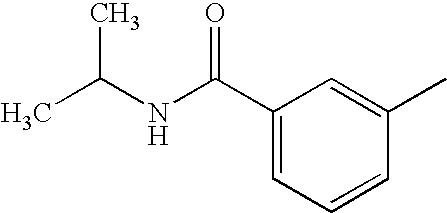
406.1711 158 3-(N- Propylaminocarbonyl)phenylboronic acid 
406.1707 159 3-(Methylsulfonylamino)phenylboronic acid 
414.1084 160 3-(Morpholine-4- carbonyl)phenylboronic acid 
434.1662 161 4-(Morpholine-4- carbonyl)phenylboronic acid 
434.1677 162 5-({[tert- Butyl(dimethyl)silyl]oxy}methyl)pyri- din-3-ylboronic acid 
352.1245
Exemplary Compounds - Certain exemplary compounds, including some of those described above in the Examples, have the following Formulas (IIa and IIIb) and the following R2 and R3 substituents, wherein each line of the table below is matched with Formula IIa or IIIb to represent a specific compound.
IIa 
IIIb 
R2 R3 methyl 3-aminocarbonylphenyl methyl 3-(N-propylaminocarbonyl)phenyl methyl 3-(N-isobutylaminocarbonyl)phenyl methyl 3-(N-isopropylaminocarbonyl)phenyl methyl 3-(N,N-dimethylaminocarbonyl)phenyl methyl 3-(piperidine-1-carbonyl)phenyl methyl 3-(morpholine-4-carbonyl)phenyl methyl 4-(morpholine-4-carbonyl)phenyl methyl 3-(N-cyclopentylaminocarbonyl)phenyl methyl 4-(methylsulfonyl)phenyl methyl 3-(methylsulfonylamino)phenyl methyl 3-(3-hydroxypropyl)phenyl methyl 2-(hydroxymethyl)phenyl methyl 5-hydroxymethylpyridin-3-yl methyl 4-(ethylsulfonyl)phenyl methyl 3-(hydroxymethyl)phenyl methyl 4-(hydroxymethyl)phenyl methyl 2-(acetylamino)phenyl methyl 4-(ethylaminocarbonylaminomethyl)phenyl methyl 4-(propylaminocarbonylaminomethyl)phenyl methyl 4-[(morpholine-4-carbonyl)aminomethyl]phenyl methyl 4-[(piperidine-1-carbonyl)aminomethyl]phenyl methyl 4-(isobutyrylaminomethyl)phenyl ethyl 3-aminocarbonyiphenyl ethyl 3-(N-propylaminocarbonyl)phenyl ethyl 3-(N-isobutylaminocarbonyl)phenyl ethyl 3-(N-isopropylaminocarbonyl)phenyl ethyl 3-(N,N-dimethylaminocarbonyl)phenyl ethyl 3-(piperidine-1-carbonyl)phenyl ethyl 3-(morpholine-4-carbonyl)phenyl ethyl 4-(morpholine-4-carbonyl)phenyl ethyl 3-(N-cyclopentylaminocarbonyl)phenyl ethyl 4-(methylsulfonyl)phenyl ethyl 3-(methylsulfonylamino)phenyl ethyl 3-(3-hydroxypropyl)phenyl ethyl 2-(hydroxymethyl)phenyl ethyl 5-hydroxymethylpyridin-3-yl ethyl 4-(ethylsulfonyl)phenyl ethyl 3-(hydroxymethyl)phenyl ethyl 4-(hydroxymethyl)phenyl ethyl 2-(acetylamino)phenyl ethyl 4-(ethylaminocarbonylaminomethyl)phenyl ethyl 4-(propylaminocarbonylaminomethyl)phenyl ethyl 4-{(morpholine-4-carbonyl)aminomethyl]phenyl ethyl 4-{(piperidine-1-carbonyl)aminomethyl]phenyl ethyl 4-(isobutyrylaminomethyl)phenyl n-propyl 3-aminocarbonylphenyl n-propyl 3-(N-propylaminocarbonyl)phenyl n-propyl 3-(N-isobutylaminocarbonyl)phenyl n-propyl 3-(N-isopropylaminocarbonyl)phenyl n-propyl 3-(N,N-dimethylaminocarbonyl)phenyl n-propyl 3-(piperidine-1-carbonyl)phenyl n-propyl 3-(morpholine-4-carbonyl)phenyl n-propyl 4-(morpholine-4-carbonyl)phenyl n-propyl 3-(N-cyclopentylaminocarbonyl)phenyl n-propyl 4-(methylsulfonyl)phenyl n-propyl 3-(methylsulfonylamino)phenyl n-propyl 3-(3-hydroxypropyl)phenyl n-propyl 2-(hydroxymethyl)phenyl n-propyl 5-hydroxymethylpyridin-3-yl n-propyl 4-(ethylsulfonyl)phenyl n-propyl 3-(hydroxymethyl)phenyl n-propyl 4-(hydroxymethyl)phenyl n-propyl 2-(acetylamino)phenyl n-propyl 4-(ethylaminocarbonylaminomethyl)phenyl n-propyl 4-(propylaminocarbonylaminomethyl)phenyl n-propyl 4-[(morpholine-4-carbonyl)aminomethyl]phenyl n-propyl 4-[(piperidine-1-carbonyl)aminomethyl]phenyl n-propyl 4-(isobutyrylaminomethyl)phenyl methoxymethyl 3-aminocarbonylphenyl methoxymethyl 3-(N-propylaminocarbonyl)phenyl methoxymethyl 3-(N-isobutylaminocarbonyl)phenyl methoxymethyl 3-(N-isopropylaminocarbonyl)phenyl methoxymethyl 3-(N,N-dimethylaminocarbonyl)phenyl methoxymethyl 3-(piperidine-1-carbonyl)phenyl methoxymethyl 3-(morpholine-4-carbonyl)phenyl methoxymethyl 4-(morpholine-4-carbonyl)phenyl methoxymethyl 3-(N-cyclopentylaminocarbonyl)phenyl methoxymethyl 4-(methylsulfonyl)phenyl methoxymethyl 3-(methylsulfonylamino)phenyl methoxymethyl 3-(3-hydroxypropyl)phenyl methoxymethyl 2-(hydroxymethyl)phenyl methoxymethyl 5-hydroxymethylpyridin-3-yl methoxymethyl 4-(ethylsulfonyl)phenyl methoxymethyl 3-(hydroxymethyl)phenyl methoxymethyl 4-(hydroxymethyl)phenyl methoxymethyl 2-(acetylamino)phenyl methoxymethyl 4-(ethylaminocarbonylaminomethyl)phenyl methoxymethyl 4-(propylaminocarbonylaminomethyl)phenyl methoxymethyl 4-[(morpholine-4-carbonyl)aminomethyl]phenyl methoxymethyl 4-[(piperidine-1-carbonyl)aminomethyl]phenyl methoxymethyl 4-(isobutyrylaminomethyl)phenyl ethoxymethyl 3-aminocarbonylphenyl ethoxymethyl 3-(N-propylaminocarbonyl)phenyl ethoxymethyl 3-(N-isobutylaminocarbonyl)phenyl ethoxymethyl 3-(N-isopropylaminocarbonyl)phenyl ethoxymethyl 3-(N,N-dimethylaminocarbonyl)phenyl ethoxymethyl 3-(piperidine-1-carbonyl)phenyl ethoxymethyl 3-(morpholine-4-carbonyl)phenyl ethoxymethyl 4-(morpholine-4-carbonyl)phenyl ethoxymethyl 3-(N-cyclopentylaminocarbonyl)phenyl ethoxymethyl 4-(methylsulfonyl)phenyl ethoxymethyl 3-(methylsulfonylamino)phenyl ethoxymethyl 3-(3-hydroxypropyl)phenyl ethoxymethyl 2-(hydroxymethyl)phenyl ethoxymethyl 5-hydroxymethylpyridin-3-yl ethoxymethyl 4-(ethylsulfonyl)phenyl ethoxymethyl 3-(hydroxymethyl)phenyl ethoxymethyl 4-(hydroxymethyl)phenyl ethoxymethyl 2-(acetylamino)phenyl ethoxymethyl 4-(ethylaminocarbonylaminomethyl)phenyl ethoxymethyl 4-(propylaminocarbonylaminomethyl)phenyl ethoxymethyl 4-[(morpholine-4-carbonyl)aminomethyl]phenyl ethoxymethyl 4-[(piperidine-1-carbonyl)aminomethyl]phenyl ethoxymethyl 4-(isobutyrylaminomethyl)phenyl 2-methoxyethyl 3-aminocarbonylphenyl 2-methoxyethyl 3-(N-propylaminocarbonyl)phenyl 2-methoxyethyl 3-(N-isobutylaminocarbonyl)phenyl 2-methoxyethyl 3-(N-isopropylaminocarbonyl)phenyl 2-methoxyethyl 3-(N,N-dimethylaminocarbonyl)phenyl 2-methoxyethyl 3-(piperidine-1-carbonyl)phenyl 2-methoxyethyl 3-(morpholine-4-carbonyl)phenyl 2-methoxyethyl 4-(morpholine-4-carbonyl)phenyl 2-methoxyethyl 3-(N-cyclopentylaminocarbonyl)phenyl 2-methoxyethyl 4-(methylsulfonyl)phenyl 2-methoxyethyl 3-(methylsulfonylamino)phenyl 2-methoxyethyl 3-(3-hydroxypropyl)phenyl 2-methoxyethyl 2-(hydroxymethyl)phenyl 2-methoxyethyl 5-hydroxymethylpyridin-3-yl 2-methoxyethyl 4-(ethylsulfonyl)phenyl 2-methoxyethyl 3-(hydroxymethyl)phenyl 2-methoxyethyl 4-(hydroxymethyl)phenyl 2-methoxyethyl 2-(acetylamino)phenyl 2-methoxyethyl 4-(ethylaminocarbonylaminomethyl)phenyl 2-methoxyethyl 4-(propylaminocarbonylaminomethyl)phenyl 2-methoxyethyl 4-[(morpholine-4-carbonyl)aminomethyl]phenyl 2-methoxyethyl 4-[(piperidine-1-carbonyl)aminomethyl]phenyl 2-methoxyethyl 4-(isobutyrylaminomethyl)phenyl - Compounds of the invention have been found to modulate cytokine biosynthesis by inducing the production of interferon a and/or tumor necrosis factor a in human cells when tested using the method described below.
- An in vitro human blood cell system is used to assess cytokine induction. Activity is based on the measurement of interferon (α) and tumor necrosis factor (α) (IFN-α and TNF-α, respectively) secreted into culture media as described by Testerman et. al. in “Cytokine Induction by the Immunomodulators Iniquimod and S-27609”, Journal of Leukocyte Biology, 58, 365-372 (September, 1995).
- Blood Cell Preparation for Culture
- Whole blood from healthy human donors is collected by venipuncture into vacutainer tubes or syringes containing EDTA. Peripheral blood mononuclear cells (PBMC) are separated from whole blood by density gradient centrifugation using HISTOPAQUE-1077 (Sigma, St. Louis, Mo.) or Ficoll-Paque Plus (Amersham Biosciences Piscataway, N.J.). Blood is diluted 1:1 with Dulbecco's Phosphate Buffered Saline (DPBS) or Hank's Balanced Salts Solution (HBSS). Alternately, whole blood is placed in Accuspin (Sigma) or LeucoSep (Greiner Bio-One, Inc., Longwood, Fla.) centrifuge frit tubes containing density gradient medium. The PBMC layer is collected and washed twice with DPBS or HBSS and re-suspended at 4×10⁶ cells/mL in RPMI complete. The PBMC suspension is added to 96 well flat bottom sterile tissue culture plates containing an equal volume of RPMI complete media containing test compound.
- Compound Preparation
- The compounds are solubilized in dimethyl sulfoxide (DMSO). The DMSO concentration should not exceed a final concentration of 1% for addition to the culture wells. The compounds are generally tested at concentrations ranging from 30-0.014 μM. Controls include cell samples with media only, cell samples with DMSO only (no compound), and cell samples with reference compound.
- Incubation
- The solution of test compound is added at 60 μM to the first well containing RPMI complete and serial 3 fold dilutions are made in the wells. The PBMC suspension is then added to the wells in an equal volume, bringing the test compound concentrations to the desired range (usually 30-0.014 μM). The final concentration of PBMC suspension is 2×10⁶ cells/mL. The plates are covered with sterile plastic lids, mixed gently and then incubated for 18 to 24 hours at 37° C. in a 5% carbon dioxide atmosphere.
- Separation
- Following incubation the plates are centrifuged for 10 minutes at 1000 rpm (approximately 200×g) at 4° C. The cell-free culture supernatant is removed and transferred to sterile polypropylene tubes. Samples are maintained at −30 to −70° C. until analysis. The samples are analyzed for IFN-α by ELISA and for TNF-α by IGEN/BioVeris Assay.
- Interferon (α) and Tumor Necrosis Factor (α) Analysis
- IFN-α concentration is determined with a human multi-subtype colorimetric sandwich ELISA (Catalog Number 41105) from PBL Biomedical Laboratories, Piscataway, N.J. Results are expressed in pg/mL.
- The TNF-α concentration is determined by ORIGEN M-Series Immunoassay and read on an IGEN M-8 analyzer from BioVeris Corporation, formerly known as IGEN International, Gaithersburg, Md. The immunoassay uses a human TNF-α capture and detection antibody pair (Catalog Numbers AHC3419 and AHC3712) from Biosource International, Camarillo, Calif. Results are expressed in pg/mL.
- Assay Data and Analysis
- In total, the data output of the assay consists of concentration values of TNF-α and IFN-α (y-axis) as a function of compound concentration (x-axis).
- Analysis of the data has two steps. First, the greater of the mean DMSO (DMSO control wells) or the experimental background (usually 20 pg/mL for IFN-α and 40 pg/mL for TNF-α) is subtracted from each reading. If any negative values result from background subtraction, the reading is reported as “*”, and is noted as not reliably detectable. In subsequent calculations and statistics, “*”, is treated as a zero. Second, all background subtracted values are multiplied by a single adjustment ratio to decrease experiment to experiment variability. The adjustment ratio is the area of the reference compound in the new experiment divided by the expected area of the reference compound based on the past 61 experiments (unadjusted readings). This results in the scaling of the reading (y-axis) for the new data without changing the shape of the dose-response curve. The reference compound used is 2-[4-amino-2-ethoxymethyl-6,7,8,9-tetrahydro-α,α-dimethyl-1H-imidazo[4,5-c]quinolin-1-yl]ethanol hydrate (U.S. Pat. No. 5,352,784; Example 91) and the expected area is the sum of the median dose values from the past 61 experiments.
- The minimum effective concentration is calculated based on the background-subtracted, reference-adjusted results for a given experiment and compound. The minimum effective concentration (μmolar) is the lowest of the tested compound concentrations that induces a response over a fixed cytokine concentration for the tested cytokine (usually 20 pg/mL for IFN-α and 40 pg/mL for TNF-α). The maximal response is the maximal amount of cytokine (pg/ml) produced in the dose-response.
- The CYTOKINE INDUCTION IN HUMAN CELLS test method described above was modified as follows for high throughput screening.
- Blood Cell Preparation for Culture
- Whole blood from healthy human donors is collected by venipuncture into vacutainer tubes or syringes containing EDTA. Peripheral blood mononuclear cells (PBMC) are separated from whole blood by density gradient centrifugation using HISTOPAQUE-1077 (Sigma, St. Louis, Mo.) or Ficoll-Paque Plus (Amersham Biosciences Piscataway, N.J.). Whole blood is placed in Accuspin (Sigma) or LeucoSep (Greiner Bio-One, Inc., Longwood, Fla.) centrifuge frit tubes containing density gradient medium. The PBMC layer is collected and washed twice with DPBS or HBSS and re-suspended at 4×10⁶ cells/mL in RPMI complete (2-fold the final cell density). The PBMC suspension is added to 96-well flat bottom sterile tissue culture plates.
- Compound Preparation
- The compounds are solubilized in dimethyl sulfoxide (DMSO). The compounds are generally tested at concentrations ranging from 30-0.014 μM. Controls include cell samples with media only, cell samples with DMSO only (no compound), and cell samples with a reference compound 2-[4-amino-2-ethoxymethyl-6,7,8,9-tetrahydro-α,α-dimethyl-1H-imidazo[4,5-c]quinolin-1-yl]ethanol hydrate (U.S. Pat. No. 5,352,784; Example 91) on each plate. The solution of test compound is added at 7.5 mM to the first well of a dosing plate and serial 3 fold dilutions are made for the 7 subsequent concentrations in DMSO. RPMI Complete media is then added to the test compound dilutions in order to reach a final compound concentration of 2-fold higher (60-0.028 μM) than the final tested concentration range.
- Incubation
- Compound solution is then added to the wells containing the PBMC suspension bringing the test compound concentrations to the desired range (usually 30-0.014 μM) and the DMSO concentration to 0.4%. The final concentration of PBMC suspension is 2×10⁶ cells/mL. The plates are covered with sterile plastic lids, mixed gently and then incubated for 18 to 24 hours at 37° C. in a 5% carbon dioxide atmosphere.
- Separation
- Following incubation the plates are centrifuged for 10 minutes at 1000 rpm (approximately 200 g) at 4° C. 4-plex Human Panel MSD MULTI-SPOT 96-well plates are pre-coated with the appropriate capture antibodies by MesoScale Discovery, Inc. (MSD, Gaithersburg, Md.). The cell-free culture supernatants are removed and transferred to the MSD plates. Fresh samples are typically tested, although they may be maintained at −30 to −70° C. until analysis.
- Interferon-α and Tumor Necrosis Factor-α Analysis
- MSD MULTI-SPOT plates contain within each well capture antibodies for human TNF-α and human IFN-α that have been pre-coated on specific spots. Each well contains four spots: one human TNF-α capture antibody (MSD) spot, one human IFN-α capture antibody (PBL Biomedical Laboratories, Piscataway, N.J.) spot, and two inactive bovine serum albumin spots. The human TNF-α capture and detection antibody pair is from MesoScale Discovery. The human IFN-α multi-subtype antibody (PBL Biomedical Laboratories) captures all IFN-α subtypes except IFN-α F (IFNA21). Standards consist of recombinant human TNF-α (R&D Systems, Minneapolis, Minn.) and IFN-α (PBL Biomedical Laboratories). Samples and separate standards are added at the time of analysis to each MSD plate. Two human IFN-α detection antibodies (Cat. Nos. 21112 & 21100, PBL) are used in a two to one ratio (weight:weight) to each other to determine the IFN-α concentrations. The cytokine-specific detection antibodies are labeled with the SULFO-TAG reagent (MSD). After adding the SULFO-TAG labeled detection antibodies to the wells, each well's electrochemoluminescent levels are read using MSD's SECTOR HTS READER. Results are expressed in pg/mL upon calculation with known cytokine standards.
- Assay Data and Analysis
- In total, the data output of the assay consists of concentration values of TNF-α or IFN-α (y-axis) as a function of compound concentration (x-axis).
- A plate-wise scaling is performed within a given experiment aimed at reducing plate-to-plate variability associated within the same experiment. First, the greater of the median DMSO (DMSO control wells) or the experimental background (usually 20 pg/mL for IFN-α and 40 pg/mL for TNF-α) is subtracted from each reading. Negative values that may result from background subtraction are set to zero. Each plate within a given experiment has a reference compound that serves as a control. This control is used to calculate a median expected area under the curve across all plates in the assay. A plate-wise scaling factor is calculated for each plate as a ratio of the area of the reference compound on the particular plate to the median expected area for the entire experiment. The data from each plate are then multiplied by the plate-wise scaling factor for all plates. Only data from plates bearing a scaling factor of between 0.5 and 2.0 (for both cytokines IFN-α, TNF-α) are reported. Data from plates with scaling factors outside the above mentioned interval are retested until they bear scaling factors inside the above mentioned interval. The above method produces a scaling of the y-values without altering the shape of the curve. The reference compound used is 2-[4-amino-2-ethoxymethyl-6,7,8,9-tetrahydro-α,α-dimethyl-1H-imidazo[4,5-c]quinolin-1-yl]ethanol hydrate (U.S. Pat. No. 5,352,784; Example 91). The median expected area is the median area across all plates that are part of a given experiment.
- A second scaling may also be performed to reduce inter-experiment variability (across multiple experiments). All background-subtracted values are multiplied by a single adjustment ratio to decrease experiment-to-experiment variability. The adjustment ratio is the area of the reference compound in the new experiment divided by the expected area of the reference compound based on an average of previous experiments (unadjusted readings). This results in the scaling of the reading (y-axis) for the new data without changing the shape of the dose-response curve. The reference compound used is 2-[4-amino-2-ethoxymethyl-6,7,8,9-tetrahydro-α,α-dimethyl-1H-imidazo[4,5-c]quinolin-1-yl]ethanol hydrate (U.S. Pat. No. 5,352,784; Example 91) and the expected area is the sum of the median dose values from an average of previous experiments.
- The minimum effective concentration is calculated based on the background-subtracted, reference-adjusted results for a given experiment and compound. The minimum effective concentration (μmolar) is the lowest of the tested compound concentrations that induces a response over a fixed cytokine concentration for the tested cytokine (usually 20 pg/mL for IFN-α and 40 pg/mL for TNF-α). The maximal response is the maximal amount of cytokine (pg/ml) produced in the dose-response.
- Certain compounds of the invention may modulate cytokine biosynthesis by inhibiting production of tumor necrosis factor α (TNF-α) when tested using the method described below.
- The mouse macrophage cell line Raw 264.7 is used to assess the ability of compounds to inhibit tumor necrosis factor-α (TNF-α) production upon stimulation by lipopolysaccharide (LPS).
- Single Concentration Assay:
- Blood Cell Preparation for Culture
- Raw cells (ATCC) are harvested by gentle scraping and then counted. The cell suspension is brought to 3×10⁵ cells/mL in RPMI with 10% fetal bovine serum (FBS). Cell suspension (100 μL) is added to 96-well flat bottom sterile tissues culture plates (Becton Dickinson Labware, Lincoln Park, N.J.). The final concentration of cells is 3×10⁴ cells/well. The plates are incubated for 3 hours. Prior to the addition of test compound the medium is replaced with colorless RPMI medium with 3% FBS.
- Compound Preparation
- The compounds are solubilized in dimethyl sulfoxide (DMSO). The DMSO concentration should not exceed a final concentration of 1% for addition to the culture wells. Compounds are tested at 5 μM. LPS (Lipopolysaccaride from Salmonella typhimurium, Sigma-Aldrich) is diluted with colorless RPMI to the EC70 concentration as measured by a dose response assay.
- Incubation
- A solution of test compound (1 μl) is added to each well. The plates are mixed on a microtiter plate shaker for 1 minute and then placed in an incubator. Twenty minutes later the solution of LPS (1 μL, EC70 concentration ˜10 ng/ml) is added and the plates are mixed for 1 minute on a shaker. The plates are incubated for 18 to 24 hours at 37° C. in a 5% carbon dioxide atmosphere.
- TNF-α Analysis
- Following the incubation the supernatant is removed with a pipet. TNF-α concentration is determined by ELISA using a mouse TNF-α kit (from Biosource International, Camarillo, Calif.). Results are expressed in pg/mL. TNF-α expression upon LPS stimulation alone is considered a 100% response.
- Dose Response Assay:
- Blood Cell Preparation for Culture
- Raw cells (ATCC) are harvested by gentle scraping and then counted. The cell suspension is brought to 4×10⁵ cells/mL in RPMI with 10% FBS. Cell suspension (250 μL) is added to 48-well flat bottom sterile tissues culture plates (Costar, Cambridge, Mass.). The final concentration of cells is 1×10⁵ cells/well. The plates are incubated for 3 hours. Prior to the addition of test compound the medium is replaced with colorless RPMI medium with 3% FBS.
- Compound Preparation
- The compounds are solubilized in dimethyl sulfoxide (DMSO). The DMSO concentration should not exceed a final concentration of 1% for addition to the culture wells. Compounds are tested at 0.03, 0.1, 0.3, 1, 3, 5 and 10 μM. LPS (Lipopolysaccaride from Salmonella typhimurium, Sigma-Aldrich) is diluted with colorless RPMI to the EC70 concentration as measured by dose response assay.
- Incubation
- A solution of test compound (200 μl) is added to each well. The plates are mixed on a microtiter plate shaker for 1 minute and then placed in an incubator. Twenty minutes later the solution of LPS (200 μL, EC70 concentration ˜10 ng/ml) is added and the plates are mixed for 1 minute on a shaker. The plates are incubated for 18 to 24 hours at 37° C. in a 5% carbon dioxide atmosphere.
- TNF-α Analysis
- Following the incubation the supernatant is removed with a pipet. TNF-α concentration is determined by ELISA using a mouse TNF-α kit (from Biosource International, Camarillo, Calif.). Results are expressed in pg/mL. TNF-α expression upon LPS stimulation alone is considered a 100% response.
- The complete disclosures of the patents, patent documents, and publications cited herein are incorporated by reference in their entirety as if each were individually incorporated. Various modifications and alterations to this invention will become apparent to those skilled in the art without departing from the scope and spirit of this invention. It should be understood that this invention is not intended to be unduly limited by the illustrative embodiments and examples set forth herein and that such examples and embodiments are presented by way of example only with the scope of the invention intended to be limited only by the claims set forth herein as follows.
Claims (31)


Priority Applications (1)
| Application Number | Priority Date | Filing Date | Title |
|---|---|---|---|
| US11/570,709 US20070259907A1 (en) | 2004-06-18 | 2005-06-17 | Aryl and arylalkylenyl substituted thiazoloquinolines and thiazolonaphthyridines |
Applications Claiming Priority (3)
| Application Number | Priority Date | Filing Date | Title |
|---|---|---|---|
| US58120504P | 2004-06-18 | 2004-06-18 | |
| PCT/US2005/021334 WO2006093514A2 (en) | 2004-06-18 | 2005-06-17 | Aryl and arylalkylenyl substituted thiazoloquinolines and thiazolonaphthyridines |
| US11/570,709 US20070259907A1 (en) | 2004-06-18 | 2005-06-17 | Aryl and arylalkylenyl substituted thiazoloquinolines and thiazolonaphthyridines |
Publications (1)
| Publication Number | Publication Date |
|---|---|
| US20070259907A1 true US20070259907A1 (en) | 2007-11-08 |
Family
ID=36941575
Family Applications (1)
| Application Number | Title | Priority Date | Filing Date |
|---|---|---|---|
| US11/570,709 Abandoned US20070259907A1 (en) | 2004-06-18 | 2005-06-17 | Aryl and arylalkylenyl substituted thiazoloquinolines and thiazolonaphthyridines |
Country Status (2)
| Country | Link |
|---|---|
| US (1) | US20070259907A1 (en) |
| WO (1) | WO2006093514A2 (en) |
Cited By (44)
| Publication number | Priority date | Publication date | Assignee | Title |
|---|---|---|---|---|
| US7879849B2 (en) | 2003-10-03 | 2011-02-01 | 3M Innovative Properties Company | Pyrazolopyridines and analogs thereof |
| US7897767B2 (en) | 2003-11-14 | 2011-03-01 | 3M Innovative Properties Company | Oxime substituted imidazoquinolines |
| US7897597B2 (en) | 2003-08-27 | 2011-03-01 | 3M Innovative Properties Company | Aryloxy and arylalkyleneoxy substituted imidazoquinolines |
| US7897609B2 (en) | 2004-06-18 | 2011-03-01 | 3M Innovative Properties Company | Aryl substituted imidazonaphthyridines |
| US7906506B2 (en) | 2006-07-12 | 2011-03-15 | 3M Innovative Properties Company | Substituted chiral fused [1,2] imidazo [4,5-c] ring compounds and methods |
| US7915281B2 (en) | 2004-06-18 | 2011-03-29 | 3M Innovative Properties Company | Isoxazole, dihydroisoxazole, and oxadiazole substituted imidazo ring compounds and method |
| US7923429B2 (en) | 2003-09-05 | 2011-04-12 | 3M Innovative Properties Company | Treatment for CD5+ B cell lymphoma |
| US7943636B2 (en) | 2005-04-01 | 2011-05-17 | 3M Innovative Properties Company | 1-substituted pyrazolo (3,4-C) ring compounds as modulators of cytokine biosynthesis for the treatment of viral infections and neoplastic diseases |
| US7943610B2 (en) | 2005-04-01 | 2011-05-17 | 3M Innovative Properties Company | Pyrazolopyridine-1,4-diamines and analogs thereof |
| US7943609B2 (en) | 2004-12-30 | 2011-05-17 | 3M Innovative Proprerties Company | Chiral fused [1,2]imidazo[4,5-C] ring compounds |
| US7968563B2 (en) | 2005-02-11 | 2011-06-28 | 3M Innovative Properties Company | Oxime and hydroxylamine substituted imidazo[4,5-c] ring compounds and methods |
| US8017779B2 (en) | 2004-06-15 | 2011-09-13 | 3M Innovative Properties Company | Nitrogen containing heterocyclyl substituted imidazoquinolines and imidazonaphthyridines |
| US8026366B2 (en) | 2004-06-18 | 2011-09-27 | 3M Innovative Properties Company | Aryloxy and arylalkyleneoxy substituted thiazoloquinolines and thiazolonaphthyridines |
| US8034938B2 (en) | 2004-12-30 | 2011-10-11 | 3M Innovative Properties Company | Substituted chiral fused [1,2]imidazo[4,5-c] ring compounds |
| US8088790B2 (en) | 2005-11-04 | 2012-01-03 | 3M Innovative Properties Company | Hydroxy and alkoxy substituted 1H-imidazoquinolines and methods |
| US8158794B2 (en) | 2005-02-23 | 2012-04-17 | 3M Innovative Properties Company | Hydroxyalkyl substituted imidazoquinoline compounds and methods |
| US8178539B2 (en) | 2006-09-06 | 2012-05-15 | 3M Innovative Properties Company | Substituted 3,4,6,7-tetrahydro-5H-1,2a,4a,8-tetraazacyclopenta[cd]phenalenes and methods |
| US8178677B2 (en) | 2005-02-23 | 2012-05-15 | 3M Innovative Properties Company | Hydroxyalkyl substituted imidazoquinolines |
| US8188111B2 (en) | 2005-09-09 | 2012-05-29 | 3M Innovative Properties Company | Amide and carbamate derivatives of alkyl substituted N-[4-(4-amino-1H-imidazo[4,5-c]quinolin-1-yl)butyI]methanesulfonamides and methods |
| US8329721B2 (en) | 2006-03-15 | 2012-12-11 | 3M Innovative Properties Company | Hydroxy and alkoxy substituted 1H-imidazonaphthyridines and methods |
| US8343993B2 (en) | 2005-02-23 | 2013-01-01 | 3M Innovative Properties Company | Hydroxyalkyl substituted imidazonaphthyridines |
| US8378102B2 (en) | 2005-02-09 | 2013-02-19 | 3M Innovative Properties Company | Oxime and hydroxylamine substituted thiazolo[4,5-c] ring compounds and methods |
| US8476292B2 (en) | 2005-09-09 | 2013-07-02 | 3M Innovative Properties Company | Amide and carbamate derivatives of N-{2-[4-amino-2-(ethoxymethyl)-1H-imidazo[4,5-c] quinolin-1-Yl]-1,1-dimethylethyl}methanesulfonamide and methods |
| US8541438B2 (en) | 2004-06-18 | 2013-09-24 | 3M Innovative Properties Company | Substituted imidazoquinolines, imidazopyridines, and imidazonaphthyridines |
| US8598192B2 (en) | 2003-11-14 | 2013-12-03 | 3M Innovative Properties Company | Hydroxylamine substituted imidazoquinolines |
| US8658666B2 (en) | 2005-02-11 | 2014-02-25 | 3M Innovative Properties Company | Substituted imidazoquinolines and imidazonaphthyridines |
| US8673932B2 (en) | 2003-08-12 | 2014-03-18 | 3M Innovative Properties Company | Oxime substituted imidazo-containing compounds |
| US8691837B2 (en) | 2003-11-25 | 2014-04-08 | 3M Innovative Properties Company | Substituted imidazo ring systems and methods |
| US8697873B2 (en) | 2004-03-24 | 2014-04-15 | 3M Innovative Properties Company | Amide substituted imidazopyridines, imidazoquinolines, and imidazonaphthyridines |
| US8735421B2 (en) | 2003-12-30 | 2014-05-27 | 3M Innovative Properties Company | Imidazoquinolinyl sulfonamides |
| US8802853B2 (en) | 2003-12-29 | 2014-08-12 | 3M Innovative Properties Company | Arylalkenyl and arylalkynyl substituted imidazoquinolines |
| US8846710B2 (en) | 2005-02-23 | 2014-09-30 | 3M Innovative Properties Company | Method of preferentially inducing the biosynthesis of interferon |
| US8871782B2 (en) | 2003-10-03 | 2014-10-28 | 3M Innovative Properties Company | Alkoxy substituted imidazoquinolines |
| US9107958B2 (en) | 2011-06-03 | 2015-08-18 | 3M Innovative Properties Company | Hydrazino 1H-imidazoquinolin-4-amines and conjugates made therefrom |
| US9145410B2 (en) | 2003-10-03 | 2015-09-29 | 3M Innovative Properties Company | Pyrazolopyridines and analogs thereof |
| US9242980B2 (en) | 2010-08-17 | 2016-01-26 | 3M Innovative Properties Company | Lipidated immune response modifier compound compositions, formulations, and methods |
| US9248127B2 (en) | 2005-02-04 | 2016-02-02 | 3M Innovative Properties Company | Aqueous gel formulations containing immune response modifiers |
| US9475804B2 (en) | 2011-06-03 | 2016-10-25 | 3M Innovative Properties Company | Heterobifunctional linkers with polyethylene glycol segments and immune response modifier conjugates made therefrom |
| US9546184B2 (en) | 2005-02-09 | 2017-01-17 | 3M Innovative Properties Company | Alkyloxy substituted thiazoloquinolines and thiazolonaphthyridines |
| US9801947B2 (en) | 2003-04-10 | 2017-10-31 | 3M Innovative Properties Company | Methods and compositions for enhancing immune response |
| US9957233B1 (en) | 2016-08-05 | 2018-05-01 | Calitor Sciences, Llc | Process for preparing substituted quinolin-4-ol compounds |
| US10472420B2 (en) | 2006-02-22 | 2019-11-12 | 3M Innovative Properties Company | Immune response modifier conjugates |
| US11306083B2 (en) | 2017-12-20 | 2022-04-19 | 3M Innovative Properties Company | Amide substituted imidazo[4,5-C]quinoline compounds with a branched chain linking group for use as an immune response modifier |
| US12037344B2 (en) | 2018-04-25 | 2024-07-16 | Innate Tumor Immunity, Inc | NLRP3 modulators |
Families Citing this family (12)
| Publication number | Priority date | Publication date | Assignee | Title |
|---|---|---|---|---|
| US20080149123A1 (en) | 2006-12-22 | 2008-06-26 | Mckay William D | Particulate material dispensing hairbrush with combination bristles |
| EP2858501A4 (en) * | 2012-05-22 | 2015-12-09 | Merck Sharp & Dohme | TRK-A KINASE INHIBITORS, COMPOSITIONS AND METHODS THEREOF |
| SMT202000597T1 (en) | 2013-01-07 | 2021-01-05 | Univ Pennsylvania | Compositions and methods for treating cutaneous t cell lymphoma |
| US10526309B2 (en) | 2015-10-02 | 2020-01-07 | The University Of North Carolina At Chapel Hill | Pan-TAM inhibitors and Mer/Axl dual inhibitors |
| KR20200128116A (en) | 2018-02-28 | 2020-11-11 | 화이자 인코포레이티드 | IL-15 variants and uses thereof |
| CN112153988A (en) | 2018-05-17 | 2020-12-29 | 博尔特生物治疗药物有限公司 | immunoconjugate |
| JP7057843B2 (en) | 2018-05-23 | 2022-04-20 | ファイザー・インク | GUCY2c-specific antibodies and their use |
| BR112020022897A2 (en) | 2018-05-23 | 2021-02-23 | Pfizer Inc. | specific antibodies to cd3 and their uses |
| WO2020128893A1 (en) | 2018-12-21 | 2020-06-25 | Pfizer Inc. | Combination treatments of cancer comprising a tlr agonist |
| MX2022006578A (en) | 2019-12-17 | 2022-07-04 | Pfizer | Antibodies specific for cd47, pd-l1, and uses thereof. |
| WO2022013775A1 (en) | 2020-07-17 | 2022-01-20 | Pfizer Inc. | Therapeutic antibodies and their uses |
| WO2025104289A1 (en) | 2023-11-17 | 2025-05-22 | Medincell S.A. | Antineoplastic combinations |
Citations (1)
| Publication number | Priority date | Publication date | Assignee | Title |
|---|---|---|---|---|
| US6110929A (en) * | 1998-07-28 | 2000-08-29 | 3M Innovative Properties Company | Oxazolo, thiazolo and selenazolo [4,5-c]-quinolin-4-amines and analogs thereof |
-
2005
- 2005-06-17 US US11/570,709 patent/US20070259907A1/en not_active Abandoned
- 2005-06-17 WO PCT/US2005/021334 patent/WO2006093514A2/en not_active Ceased
Patent Citations (5)
| Publication number | Priority date | Publication date | Assignee | Title |
|---|---|---|---|---|
| US6110929A (en) * | 1998-07-28 | 2000-08-29 | 3M Innovative Properties Company | Oxazolo, thiazolo and selenazolo [4,5-c]-quinolin-4-amines and analogs thereof |
| US6440992B1 (en) * | 1998-07-28 | 2002-08-27 | 3M Innovative Properties Company | Oxazolo, thiazolo and selenazolo [4,5-c]-quinolin-4-amines and analogs thereof |
| US6627638B2 (en) * | 1998-07-28 | 2003-09-30 | 3M Innovative Properties Company | Oxazolo, thiazolo and selenazolo [4,5-c]quinolin-4-amines and analogs thereof |
| US6677334B2 (en) * | 1998-07-28 | 2004-01-13 | 3M Innovative Properties Company | Oxazolo, thiazolo and selenazolo [4,5-c]-quinolin-4-amines and analogs thereof |
| US6703402B2 (en) * | 1998-07-28 | 2004-03-09 | 3M Innovative Properties Company | Oxazolo, thiazolo and selenazolo [4,5-c]-quinolin-4-amines and analogs thereof |
Cited By (67)
| Publication number | Priority date | Publication date | Assignee | Title |
|---|---|---|---|---|
| US9801947B2 (en) | 2003-04-10 | 2017-10-31 | 3M Innovative Properties Company | Methods and compositions for enhancing immune response |
| US8673932B2 (en) | 2003-08-12 | 2014-03-18 | 3M Innovative Properties Company | Oxime substituted imidazo-containing compounds |
| US7897597B2 (en) | 2003-08-27 | 2011-03-01 | 3M Innovative Properties Company | Aryloxy and arylalkyleneoxy substituted imidazoquinolines |
| US8263594B2 (en) | 2003-08-27 | 2012-09-11 | 3M Innovative Properties Company | Aryloxy and arylalkyleneoxy substituted imidazoquinolines |
| US7923429B2 (en) | 2003-09-05 | 2011-04-12 | 3M Innovative Properties Company | Treatment for CD5+ B cell lymphoma |
| US9365567B2 (en) | 2003-10-03 | 2016-06-14 | 3M Innovative Properties Company | Alkoxy substituted imidazoquinolines |
| US8871782B2 (en) | 2003-10-03 | 2014-10-28 | 3M Innovative Properties Company | Alkoxy substituted imidazoquinolines |
| US7879849B2 (en) | 2003-10-03 | 2011-02-01 | 3M Innovative Properties Company | Pyrazolopyridines and analogs thereof |
| US9856254B2 (en) | 2003-10-03 | 2018-01-02 | 3M Innovative Properties Company | Alkoxy substituted imidazoquinolines |
| US9145410B2 (en) | 2003-10-03 | 2015-09-29 | 3M Innovative Properties Company | Pyrazolopyridines and analogs thereof |
| US8598192B2 (en) | 2003-11-14 | 2013-12-03 | 3M Innovative Properties Company | Hydroxylamine substituted imidazoquinolines |
| US7897767B2 (en) | 2003-11-14 | 2011-03-01 | 3M Innovative Properties Company | Oxime substituted imidazoquinolines |
| US9328110B2 (en) | 2003-11-25 | 2016-05-03 | 3M Innovative Properties Company | Substituted imidazo ring systems and methods |
| US8691837B2 (en) | 2003-11-25 | 2014-04-08 | 3M Innovative Properties Company | Substituted imidazo ring systems and methods |
| US9765071B2 (en) | 2003-11-25 | 2017-09-19 | 3M Innovative Properties Company | Substituted imidazo ring systems and methods |
| US8802853B2 (en) | 2003-12-29 | 2014-08-12 | 3M Innovative Properties Company | Arylalkenyl and arylalkynyl substituted imidazoquinolines |
| US8735421B2 (en) | 2003-12-30 | 2014-05-27 | 3M Innovative Properties Company | Imidazoquinolinyl sulfonamides |
| US8697873B2 (en) | 2004-03-24 | 2014-04-15 | 3M Innovative Properties Company | Amide substituted imidazopyridines, imidazoquinolines, and imidazonaphthyridines |
| US8017779B2 (en) | 2004-06-15 | 2011-09-13 | 3M Innovative Properties Company | Nitrogen containing heterocyclyl substituted imidazoquinolines and imidazonaphthyridines |
| US9550773B2 (en) | 2004-06-18 | 2017-01-24 | 3M Innovative Properties Company | Substituted imidazoquinolines, imidazopyridines, and imidazonaphthyridines |
| US7915281B2 (en) | 2004-06-18 | 2011-03-29 | 3M Innovative Properties Company | Isoxazole, dihydroisoxazole, and oxadiazole substituted imidazo ring compounds and method |
| US9006264B2 (en) | 2004-06-18 | 2015-04-14 | 3M Innovative Properties Company | Substituted imidazoquinolines, imidazopyridines, and imidazonaphthyridines |
| US9938275B2 (en) | 2004-06-18 | 2018-04-10 | 3M Innovative Properties Company | Substituted imidazoquinolines, imidazopyridines, and imidazonaphthyridines |
| US8026366B2 (en) | 2004-06-18 | 2011-09-27 | 3M Innovative Properties Company | Aryloxy and arylalkyleneoxy substituted thiazoloquinolines and thiazolonaphthyridines |
| US7897609B2 (en) | 2004-06-18 | 2011-03-01 | 3M Innovative Properties Company | Aryl substituted imidazonaphthyridines |
| US8541438B2 (en) | 2004-06-18 | 2013-09-24 | 3M Innovative Properties Company | Substituted imidazoquinolines, imidazopyridines, and imidazonaphthyridines |
| US8546383B2 (en) | 2004-12-30 | 2013-10-01 | 3M Innovative Properties Company | Chiral fused [1,2]imidazo[4,5-c] ring compounds |
| US8350034B2 (en) | 2004-12-30 | 2013-01-08 | 3M Innovative Properties Company | Substituted chiral fused [1,2]imidazo[4,5-C] ring compounds |
| US8207162B2 (en) | 2004-12-30 | 2012-06-26 | 3M Innovative Properties Company | Chiral fused [1,2]imidazo[4,5-c] ring compounds |
| US7943609B2 (en) | 2004-12-30 | 2011-05-17 | 3M Innovative Proprerties Company | Chiral fused [1,2]imidazo[4,5-C] ring compounds |
| US8034938B2 (en) | 2004-12-30 | 2011-10-11 | 3M Innovative Properties Company | Substituted chiral fused [1,2]imidazo[4,5-c] ring compounds |
| US9248127B2 (en) | 2005-02-04 | 2016-02-02 | 3M Innovative Properties Company | Aqueous gel formulations containing immune response modifiers |
| US10071156B2 (en) | 2005-02-04 | 2018-09-11 | 3M Innovative Properties Company | Aqueous gel formulations containing immune response modifiers |
| US8378102B2 (en) | 2005-02-09 | 2013-02-19 | 3M Innovative Properties Company | Oxime and hydroxylamine substituted thiazolo[4,5-c] ring compounds and methods |
| US9546184B2 (en) | 2005-02-09 | 2017-01-17 | 3M Innovative Properties Company | Alkyloxy substituted thiazoloquinolines and thiazolonaphthyridines |
| US8658666B2 (en) | 2005-02-11 | 2014-02-25 | 3M Innovative Properties Company | Substituted imidazoquinolines and imidazonaphthyridines |
| US7968563B2 (en) | 2005-02-11 | 2011-06-28 | 3M Innovative Properties Company | Oxime and hydroxylamine substituted imidazo[4,5-c] ring compounds and methods |
| US8178677B2 (en) | 2005-02-23 | 2012-05-15 | 3M Innovative Properties Company | Hydroxyalkyl substituted imidazoquinolines |
| US8158794B2 (en) | 2005-02-23 | 2012-04-17 | 3M Innovative Properties Company | Hydroxyalkyl substituted imidazoquinoline compounds and methods |
| US8343993B2 (en) | 2005-02-23 | 2013-01-01 | 3M Innovative Properties Company | Hydroxyalkyl substituted imidazonaphthyridines |
| US8846710B2 (en) | 2005-02-23 | 2014-09-30 | 3M Innovative Properties Company | Method of preferentially inducing the biosynthesis of interferon |
| US7943636B2 (en) | 2005-04-01 | 2011-05-17 | 3M Innovative Properties Company | 1-substituted pyrazolo (3,4-C) ring compounds as modulators of cytokine biosynthesis for the treatment of viral infections and neoplastic diseases |
| US7943610B2 (en) | 2005-04-01 | 2011-05-17 | 3M Innovative Properties Company | Pyrazolopyridine-1,4-diamines and analogs thereof |
| US8188111B2 (en) | 2005-09-09 | 2012-05-29 | 3M Innovative Properties Company | Amide and carbamate derivatives of alkyl substituted N-[4-(4-amino-1H-imidazo[4,5-c]quinolin-1-yl)butyI]methanesulfonamides and methods |
| US8476292B2 (en) | 2005-09-09 | 2013-07-02 | 3M Innovative Properties Company | Amide and carbamate derivatives of N-{2-[4-amino-2-(ethoxymethyl)-1H-imidazo[4,5-c] quinolin-1-Yl]-1,1-dimethylethyl}methanesulfonamide and methods |
| US8088790B2 (en) | 2005-11-04 | 2012-01-03 | 3M Innovative Properties Company | Hydroxy and alkoxy substituted 1H-imidazoquinolines and methods |
| US8377957B2 (en) | 2005-11-04 | 2013-02-19 | 3M Innovative Properties Company | Hydroxy and alkoxy substituted 1H-imidazoquinolines and methods |
| US10472420B2 (en) | 2006-02-22 | 2019-11-12 | 3M Innovative Properties Company | Immune response modifier conjugates |
| US8329721B2 (en) | 2006-03-15 | 2012-12-11 | 3M Innovative Properties Company | Hydroxy and alkoxy substituted 1H-imidazonaphthyridines and methods |
| US7906506B2 (en) | 2006-07-12 | 2011-03-15 | 3M Innovative Properties Company | Substituted chiral fused [1,2] imidazo [4,5-c] ring compounds and methods |
| US8178539B2 (en) | 2006-09-06 | 2012-05-15 | 3M Innovative Properties Company | Substituted 3,4,6,7-tetrahydro-5H-1,2a,4a,8-tetraazacyclopenta[cd]phenalenes and methods |
| US11524071B2 (en) | 2010-08-17 | 2022-12-13 | 3M Innovative Properties Company | Lipidated immune response modifier compound compositions, formulations, and methods |
| US9795669B2 (en) | 2010-08-17 | 2017-10-24 | 3M Innovative Properties Company | Lipidated immune response modifier compound compositions, formulations, and methods |
| US10821176B2 (en) | 2010-08-17 | 2020-11-03 | 3M Innovative Properties Company | Lipidated immune response modifier compound compositions, formulations, and methods |
| US10383938B2 (en) | 2010-08-17 | 2019-08-20 | 3M Innovative Properties Company | Lipidated immune response modifier compound compositions, formulations, and methods |
| US9242980B2 (en) | 2010-08-17 | 2016-01-26 | 3M Innovative Properties Company | Lipidated immune response modifier compound compositions, formulations, and methods |
| US10052380B2 (en) | 2010-08-17 | 2018-08-21 | 3M Innovative Properties Company | Lipidated immune response modifier compound compositions, formulations, and methods |
| US12201688B2 (en) | 2010-08-17 | 2025-01-21 | Solventum Intellectual Properties Company | Lipidated immune response modifier compound compositions, formulations, and methods |
| US9475804B2 (en) | 2011-06-03 | 2016-10-25 | 3M Innovative Properties Company | Heterobifunctional linkers with polyethylene glycol segments and immune response modifier conjugates made therefrom |
| US10406142B2 (en) | 2011-06-03 | 2019-09-10 | 3M Lnnovative Properties Company | Hydrazino 1H-imidazoquinolin-4-amines and conjugates made therefrom |
| US10723731B2 (en) | 2011-06-03 | 2020-07-28 | 3M Innovative Properties Company | Heterobifunctional linkers with polyethylene glycol segments and immune response modifier conjugates made therefrom |
| US9902724B2 (en) | 2011-06-03 | 2018-02-27 | 3M Innovative Properties Company | Heterobifunctional linkers with polyethylene glycol segments and immune response modifier conjugates made therefrom |
| US9585968B2 (en) | 2011-06-03 | 2017-03-07 | 3M Innovative Properties Company | Hydrazino 1H-imidazoquinolin-4-amines and conjugates made therefrom |
| US9107958B2 (en) | 2011-06-03 | 2015-08-18 | 3M Innovative Properties Company | Hydrazino 1H-imidazoquinolin-4-amines and conjugates made therefrom |
| US9957233B1 (en) | 2016-08-05 | 2018-05-01 | Calitor Sciences, Llc | Process for preparing substituted quinolin-4-ol compounds |
| US11306083B2 (en) | 2017-12-20 | 2022-04-19 | 3M Innovative Properties Company | Amide substituted imidazo[4,5-C]quinoline compounds with a branched chain linking group for use as an immune response modifier |
| US12037344B2 (en) | 2018-04-25 | 2024-07-16 | Innate Tumor Immunity, Inc | NLRP3 modulators |
Also Published As
| Publication number | Publication date |
|---|---|
| WO2006093514A3 (en) | 2007-07-12 |
| WO2006093514A2 (en) | 2006-09-08 |
Similar Documents
| Publication | Publication Date | Title |
|---|---|---|
| US20070259907A1 (en) | Aryl and arylalkylenyl substituted thiazoloquinolines and thiazolonaphthyridines | |
| US8026366B2 (en) | Aryloxy and arylalkyleneoxy substituted thiazoloquinolines and thiazolonaphthyridines | |
| US7897609B2 (en) | Aryl substituted imidazonaphthyridines | |
| US8093390B2 (en) | Substituted fused [1,2]imidazo[4,5-C] ring compounds and methods | |
| US7939526B2 (en) | Sulfone substituted imidazo ring ethers | |
| US8143270B2 (en) | 2-amino 1H-in-imidazo ring systems and methods | |
| US8017779B2 (en) | Nitrogen containing heterocyclyl substituted imidazoquinolines and imidazonaphthyridines | |
| US8802853B2 (en) | Arylalkenyl and arylalkynyl substituted imidazoquinolines | |
| US8329721B2 (en) | Hydroxy and alkoxy substituted 1H-imidazonaphthyridines and methods | |
| US8088790B2 (en) | Hydroxy and alkoxy substituted 1H-imidazoquinolines and methods | |
| US8546383B2 (en) | Chiral fused [1,2]imidazo[4,5-c] ring compounds | |
| US7943610B2 (en) | Pyrazolopyridine-1,4-diamines and analogs thereof | |
| US8343993B2 (en) | Hydroxyalkyl substituted imidazonaphthyridines | |
| US20090270443A1 (en) | 1-amino imidazo-containing compounds and methods | |
| US20080015184A1 (en) | Urea Substituted Imidazopyridines, Imidazoquinolines, and Imidazonaphthyridines | |
| WO2005094531A2 (en) | Amide substituted imidazopyridines, imidazoquinolines, and imidazonaphthyridines |
Legal Events
| Date | Code | Title | Description |
|---|---|---|---|
| AS | Assignment |
Owner name: 3M INNOVATIVE PROPERTIES COMPANY, MINNESOTA Free format text: ASSIGNMENT OF ASSIGNORS INTEREST;ASSIGNORS:PRINCE, RYAN B.;MERRILL, BRYON A.;KSHIRSAGER, TUSHAR A.;AND OTHERS;REEL/FRAME:018662/0982;SIGNING DATES FROM 20060905 TO 20060906 |
|
| AS | Assignment |
Owner name: COLEY PHARMACEUTICAL GROUP, INC., MASSACHUSETTS Free format text: ASSIGNMENT OF ASSIGNORS INTEREST;ASSIGNOR:3M COMPANY; 3M INNOVATIVE PROPERTIES COMPANY;REEL/FRAME:019945/0698 Effective date: 20070723 |
|
| AS | Assignment |
Owner name: COLEY PHARMACEUTICAL GROUP, INC., MASSACHUSETTS Free format text: ASSIGNMENT OF ASSIGNORS INTEREST;ASSIGNORS:3M COMPANY;3M INNOVATIVE PROPERTIES COMPANY;REEL/FRAME:020342/0330 Effective date: 20070723 |
|
| AS | Assignment |
Owner name: 3M INNOVATIVE PROPERTIES COMPANY, MINNESOTA Free format text: ASSIGNMENT OF ASSIGNORS INTEREST;ASSIGNOR:COLEY PHARMACEUTICAL GROUP, INC.;REEL/FRAME:025839/0772 Effective date: 20110131 |
|
| STCB | Information on status: application discontinuation |
Free format text: ABANDONED -- FAILURE TO RESPOND TO AN OFFICE ACTION |