US20040170821A1 - Granules for formation of an electrode of an electric double layer capacitor, manufacturing mehtod thereof, electrode sheet, polarized electrode, and electric double layer capacitor using a polarized electrode - Google Patents
Granules for formation of an electrode of an electric double layer capacitor, manufacturing mehtod thereof, electrode sheet, polarized electrode, and electric double layer capacitor using a polarized electrode Download PDFInfo
- Publication number
- US20040170821A1 US20040170821A1 US10/721,754 US72175403A US2004170821A1 US 20040170821 A1 US20040170821 A1 US 20040170821A1 US 72175403 A US72175403 A US 72175403A US 2004170821 A1 US2004170821 A1 US 2004170821A1
- Authority
- US
- United States
- Prior art keywords
- electrode
- granules
- double layer
- electric double
- layer capacitor
- Prior art date
- Legal status (The legal status is an assumption and is not a legal conclusion. Google has not performed a legal analysis and makes no representation as to the accuracy of the status listed.)
- Granted
Links
- 239000008187 granular material Substances 0.000 title claims abstract description 131
- 239000003990 capacitor Substances 0.000 title claims abstract description 119
- 238000004519 manufacturing process Methods 0.000 title claims abstract description 40
- 230000015572 biosynthetic process Effects 0.000 title claims abstract description 30
- 239000000463 material Substances 0.000 claims abstract description 96
- 239000011230 binding agent Substances 0.000 claims abstract description 28
- 239000011231 conductive filler Substances 0.000 claims abstract description 26
- 238000004898 kneading Methods 0.000 claims abstract description 14
- 238000002156 mixing Methods 0.000 claims abstract description 14
- 238000005096 rolling process Methods 0.000 claims abstract description 9
- 239000000843 powder Substances 0.000 claims description 26
- 239000011888 foil Substances 0.000 claims description 24
- 239000003795 chemical substances by application Substances 0.000 claims description 14
- OKTJSMMVPCPJKN-UHFFFAOYSA-N Carbon Chemical compound [C] OKTJSMMVPCPJKN-UHFFFAOYSA-N 0.000 abstract description 51
- 229920001343 polytetrafluoroethylene Polymers 0.000 abstract description 17
- 239000004810 polytetrafluoroethylene Substances 0.000 abstract description 16
- 239000006229 carbon black Substances 0.000 abstract description 12
- 238000000034 method Methods 0.000 abstract description 10
- 239000010410 layer Substances 0.000 description 100
- KFZMGEQAYNKOFK-UHFFFAOYSA-N Isopropanol Chemical compound CC(C)O KFZMGEQAYNKOFK-UHFFFAOYSA-N 0.000 description 43
- 239000008151 electrolyte solution Substances 0.000 description 31
- 238000012423 maintenance Methods 0.000 description 18
- 230000000052 comparative effect Effects 0.000 description 15
- 239000000203 mixture Substances 0.000 description 15
- 229910052799 carbon Inorganic materials 0.000 description 13
- 239000000853 adhesive Substances 0.000 description 10
- 230000001070 adhesive effect Effects 0.000 description 10
- 229910052782 aluminium Inorganic materials 0.000 description 10
- XAGFODPZIPBFFR-UHFFFAOYSA-N aluminium Chemical compound [Al] XAGFODPZIPBFFR-UHFFFAOYSA-N 0.000 description 10
- 239000010419 fine particle Substances 0.000 description 10
- VNWKTOKETHGBQD-UHFFFAOYSA-N methane Chemical compound C VNWKTOKETHGBQD-UHFFFAOYSA-N 0.000 description 9
- 230000007423 decrease Effects 0.000 description 7
- -1 polyethylene Polymers 0.000 description 6
- 238000012360 testing method Methods 0.000 description 6
- LFQSCWFLJHTTHZ-UHFFFAOYSA-N Ethanol Chemical compound CCO LFQSCWFLJHTTHZ-UHFFFAOYSA-N 0.000 description 5
- 239000007772 electrode material Substances 0.000 description 5
- 239000000470 constituent Substances 0.000 description 4
- 238000005520 cutting process Methods 0.000 description 4
- 239000003792 electrolyte Substances 0.000 description 4
- 238000010030 laminating Methods 0.000 description 4
- WEVYAHXRMPXWCK-UHFFFAOYSA-N Acetonitrile Chemical compound CC#N WEVYAHXRMPXWCK-UHFFFAOYSA-N 0.000 description 3
- RTZKZFJDLAIYFH-UHFFFAOYSA-N Diethyl ether Chemical compound CCOCC RTZKZFJDLAIYFH-UHFFFAOYSA-N 0.000 description 3
- OKKJLVBELUTLKV-UHFFFAOYSA-N Methanol Chemical compound OC OKKJLVBELUTLKV-UHFFFAOYSA-N 0.000 description 3
- ZMXDDKWLCZADIW-UHFFFAOYSA-N N,N-Dimethylformamide Chemical compound CN(C)C=O ZMXDDKWLCZADIW-UHFFFAOYSA-N 0.000 description 3
- 238000003490 calendering Methods 0.000 description 3
- 239000007788 liquid Substances 0.000 description 3
- 239000002245 particle Substances 0.000 description 3
- YEJRWHAVMIAJKC-UHFFFAOYSA-N 4-Butyrolactone Chemical compound O=C1CCCO1 YEJRWHAVMIAJKC-UHFFFAOYSA-N 0.000 description 2
- XTHFKEDIFFGKHM-UHFFFAOYSA-N Dimethoxyethane Chemical compound COCCOC XTHFKEDIFFGKHM-UHFFFAOYSA-N 0.000 description 2
- NBIIXXVUZAFLBC-UHFFFAOYSA-N Phosphoric acid Chemical compound OP(O)(O)=O NBIIXXVUZAFLBC-UHFFFAOYSA-N 0.000 description 2
- QAOWNCQODCNURD-UHFFFAOYSA-N Sulfuric acid Chemical compound OS(O)(=O)=O QAOWNCQODCNURD-UHFFFAOYSA-N 0.000 description 2
- 239000004809 Teflon Substances 0.000 description 2
- 229920006362 Teflon® Polymers 0.000 description 2
- 239000002253 acid Substances 0.000 description 2
- 239000011149 active material Substances 0.000 description 2
- 230000003247 decreasing effect Effects 0.000 description 2
- 238000003795 desorption Methods 0.000 description 2
- 238000002474 experimental method Methods 0.000 description 2
- 238000005469 granulation Methods 0.000 description 2
- 230000003179 granulation Effects 0.000 description 2
- 238000002347 injection Methods 0.000 description 2
- 239000007924 injection Substances 0.000 description 2
- 238000003475 lamination Methods 0.000 description 2
- 229910052751 metal Inorganic materials 0.000 description 2
- 239000002184 metal Substances 0.000 description 2
- VLTRZXGMWDSKGL-UHFFFAOYSA-N perchloric acid Chemical compound OCl(=O)(=O)=O VLTRZXGMWDSKGL-UHFFFAOYSA-N 0.000 description 2
- 229920000642 polymer Polymers 0.000 description 2
- RUOJZAUFBMNUDX-UHFFFAOYSA-N propylene carbonate Chemical compound CC1COC(=O)O1 RUOJZAUFBMNUDX-UHFFFAOYSA-N 0.000 description 2
- 239000007858 starting material Substances 0.000 description 2
- 238000003756 stirring Methods 0.000 description 2
- 238000009864 tensile test Methods 0.000 description 2
- 150000005621 tetraalkylammonium salts Chemical class 0.000 description 2
- 238000001291 vacuum drying Methods 0.000 description 2
- BQCIDUSAKPWEOX-UHFFFAOYSA-N 1,1-Difluoroethene Chemical compound FC(F)=C BQCIDUSAKPWEOX-UHFFFAOYSA-N 0.000 description 1
- 229920000049 Carbon (fiber) Polymers 0.000 description 1
- 239000004698 Polyethylene Substances 0.000 description 1
- 239000004743 Polypropylene Substances 0.000 description 1
- 239000006230 acetylene black Substances 0.000 description 1
- 239000000654 additive Substances 0.000 description 1
- 239000012790 adhesive layer Substances 0.000 description 1
- 230000002411 adverse Effects 0.000 description 1
- 230000032683 aging Effects 0.000 description 1
- 239000000956 alloy Substances 0.000 description 1
- 229910045601 alloy Inorganic materials 0.000 description 1
- 229910000147 aluminium phosphate Inorganic materials 0.000 description 1
- KGBXLFKZBHKPEV-UHFFFAOYSA-N boric acid Chemical compound OB(O)O KGBXLFKZBHKPEV-UHFFFAOYSA-N 0.000 description 1
- 239000004327 boric acid Substances 0.000 description 1
- 239000000872 buffer Substances 0.000 description 1
- 239000004917 carbon fiber Substances 0.000 description 1
- 239000002041 carbon nanotube Substances 0.000 description 1
- 229910021393 carbon nanotube Inorganic materials 0.000 description 1
- 238000010000 carbonizing Methods 0.000 description 1
- 230000015556 catabolic process Effects 0.000 description 1
- 239000001913 cellulose Substances 0.000 description 1
- 229920002678 cellulose Polymers 0.000 description 1
- UUAGAQFQZIEFAH-UHFFFAOYSA-N chlorotrifluoroethylene Chemical group FC(F)=C(F)Cl UUAGAQFQZIEFAH-UHFFFAOYSA-N 0.000 description 1
- 229920001577 copolymer Polymers 0.000 description 1
- 238000005336 cracking Methods 0.000 description 1
- 238000001739 density measurement Methods 0.000 description 1
- 238000001035 drying Methods 0.000 description 1
- 238000005530 etching Methods 0.000 description 1
- 229920000840 ethylene tetrafluoroethylene copolymer Polymers 0.000 description 1
- 239000000835 fiber Substances 0.000 description 1
- 239000012467 final product Substances 0.000 description 1
- 238000005470 impregnation Methods 0.000 description 1
- 150000002576 ketones Chemical class 0.000 description 1
- 230000007774 longterm Effects 0.000 description 1
- 239000000314 lubricant Substances 0.000 description 1
- 239000010687 lubricating oil Substances 0.000 description 1
- 230000014759 maintenance of location Effects 0.000 description 1
- 238000005259 measurement Methods 0.000 description 1
- 150000002739 metals Chemical class 0.000 description 1
- MCSAJNNLRCFZED-UHFFFAOYSA-N nitroethane Chemical compound CC[N+]([O-])=O MCSAJNNLRCFZED-UHFFFAOYSA-N 0.000 description 1
- 239000003960 organic solvent Substances 0.000 description 1
- 239000002798 polar solvent Substances 0.000 description 1
- 229920000728 polyester Polymers 0.000 description 1
- 229920000573 polyethylene Polymers 0.000 description 1
- 229920005672 polyolefin resin Polymers 0.000 description 1
- 229920001155 polypropylene Polymers 0.000 description 1
- 238000007781 pre-processing Methods 0.000 description 1
- 239000000047 product Substances 0.000 description 1
- 150000003242 quaternary ammonium salts Chemical class 0.000 description 1
- 239000007787 solid Substances 0.000 description 1
- 239000000243 solution Substances 0.000 description 1
- 239000002904 solvent Substances 0.000 description 1
- 238000003860 storage Methods 0.000 description 1
- 239000000126 substance Substances 0.000 description 1
- HXJUTPCZVOIRIF-UHFFFAOYSA-N sulfolane Chemical compound O=S1(=O)CCCC1 HXJUTPCZVOIRIF-UHFFFAOYSA-N 0.000 description 1
- 238000004381 surface treatment Methods 0.000 description 1
- XLYOFNOQVPJJNP-UHFFFAOYSA-N water Substances O XLYOFNOQVPJJNP-UHFFFAOYSA-N 0.000 description 1
Images


Classifications
-
- H—ELECTRICITY
- H01—ELECTRIC ELEMENTS
- H01G—CAPACITORS; CAPACITORS, RECTIFIERS, DETECTORS, SWITCHING DEVICES, LIGHT-SENSITIVE OR TEMPERATURE-SENSITIVE DEVICES OF THE ELECTROLYTIC TYPE
- H01G11/00—Hybrid capacitors, i.e. capacitors having different positive and negative electrodes; Electric double-layer [EDL] capacitors; Processes for the manufacture thereof or of parts thereof
- H01G11/22—Electrodes
- H01G11/26—Electrodes characterised by their structure, e.g. multi-layered, porosity or surface features
- H01G11/28—Electrodes characterised by their structure, e.g. multi-layered, porosity or surface features arranged or disposed on a current collector; Layers or phases between electrodes and current collectors, e.g. adhesives
-
- H—ELECTRICITY
- H01—ELECTRIC ELEMENTS
- H01G—CAPACITORS; CAPACITORS, RECTIFIERS, DETECTORS, SWITCHING DEVICES, LIGHT-SENSITIVE OR TEMPERATURE-SENSITIVE DEVICES OF THE ELECTROLYTIC TYPE
- H01G11/00—Hybrid capacitors, i.e. capacitors having different positive and negative electrodes; Electric double-layer [EDL] capacitors; Processes for the manufacture thereof or of parts thereof
- H01G11/22—Electrodes
- H01G11/30—Electrodes characterised by their material
- H01G11/32—Carbon-based
- H01G11/38—Carbon pastes or blends; Binders or additives therein
-
- H—ELECTRICITY
- H01—ELECTRIC ELEMENTS
- H01G—CAPACITORS; CAPACITORS, RECTIFIERS, DETECTORS, SWITCHING DEVICES, LIGHT-SENSITIVE OR TEMPERATURE-SENSITIVE DEVICES OF THE ELECTROLYTIC TYPE
- H01G11/00—Hybrid capacitors, i.e. capacitors having different positive and negative electrodes; Electric double-layer [EDL] capacitors; Processes for the manufacture thereof or of parts thereof
- H01G11/22—Electrodes
- H01G11/30—Electrodes characterised by their material
- H01G11/32—Carbon-based
- H01G11/42—Powders or particles, e.g. composition thereof
-
- H—ELECTRICITY
- H01—ELECTRIC ELEMENTS
- H01G—CAPACITORS; CAPACITORS, RECTIFIERS, DETECTORS, SWITCHING DEVICES, LIGHT-SENSITIVE OR TEMPERATURE-SENSITIVE DEVICES OF THE ELECTROLYTIC TYPE
- H01G11/00—Hybrid capacitors, i.e. capacitors having different positive and negative electrodes; Electric double-layer [EDL] capacitors; Processes for the manufacture thereof or of parts thereof
- H01G11/84—Processes for the manufacture of hybrid or EDL capacitors, or components thereof
- H01G11/86—Processes for the manufacture of hybrid or EDL capacitors, or components thereof specially adapted for electrodes
-
- Y—GENERAL TAGGING OF NEW TECHNOLOGICAL DEVELOPMENTS; GENERAL TAGGING OF CROSS-SECTIONAL TECHNOLOGIES SPANNING OVER SEVERAL SECTIONS OF THE IPC; TECHNICAL SUBJECTS COVERED BY FORMER USPC CROSS-REFERENCE ART COLLECTIONS [XRACs] AND DIGESTS
- Y02—TECHNOLOGIES OR APPLICATIONS FOR MITIGATION OR ADAPTATION AGAINST CLIMATE CHANGE
- Y02E—REDUCTION OF GREENHOUSE GAS [GHG] EMISSIONS, RELATED TO ENERGY GENERATION, TRANSMISSION OR DISTRIBUTION
- Y02E60/00—Enabling technologies; Technologies with a potential or indirect contribution to GHG emissions mitigation
- Y02E60/13—Energy storage using capacitors
-
- Y—GENERAL TAGGING OF NEW TECHNOLOGICAL DEVELOPMENTS; GENERAL TAGGING OF CROSS-SECTIONAL TECHNOLOGIES SPANNING OVER SEVERAL SECTIONS OF THE IPC; TECHNICAL SUBJECTS COVERED BY FORMER USPC CROSS-REFERENCE ART COLLECTIONS [XRACs] AND DIGESTS
- Y10—TECHNICAL SUBJECTS COVERED BY FORMER USPC
- Y10T—TECHNICAL SUBJECTS COVERED BY FORMER US CLASSIFICATION
- Y10T428/00—Stock material or miscellaneous articles
- Y10T428/25—Web or sheet containing structurally defined element or component and including a second component containing structurally defined particles
-
- Y—GENERAL TAGGING OF NEW TECHNOLOGICAL DEVELOPMENTS; GENERAL TAGGING OF CROSS-SECTIONAL TECHNOLOGIES SPANNING OVER SEVERAL SECTIONS OF THE IPC; TECHNICAL SUBJECTS COVERED BY FORMER USPC CROSS-REFERENCE ART COLLECTIONS [XRACs] AND DIGESTS
- Y10—TECHNICAL SUBJECTS COVERED BY FORMER USPC
- Y10T—TECHNICAL SUBJECTS COVERED BY FORMER US CLASSIFICATION
- Y10T428/00—Stock material or miscellaneous articles
- Y10T428/29—Coated or structually defined flake, particle, cell, strand, strand portion, rod, filament, macroscopic fiber or mass thereof
- Y10T428/2982—Particulate matter [e.g., sphere, flake, etc.]
- Y10T428/2991—Coated
-
- Y—GENERAL TAGGING OF NEW TECHNOLOGICAL DEVELOPMENTS; GENERAL TAGGING OF CROSS-SECTIONAL TECHNOLOGIES SPANNING OVER SEVERAL SECTIONS OF THE IPC; TECHNICAL SUBJECTS COVERED BY FORMER USPC CROSS-REFERENCE ART COLLECTIONS [XRACs] AND DIGESTS
- Y10—TECHNICAL SUBJECTS COVERED BY FORMER USPC
- Y10T—TECHNICAL SUBJECTS COVERED BY FORMER US CLASSIFICATION
- Y10T428/00—Stock material or miscellaneous articles
- Y10T428/29—Coated or structually defined flake, particle, cell, strand, strand portion, rod, filament, macroscopic fiber or mass thereof
- Y10T428/2982—Particulate matter [e.g., sphere, flake, etc.]
- Y10T428/2991—Coated
- Y10T428/2998—Coated including synthetic resin or polymer
Definitions
- patent document 1 discloses a manufacturing method for manufacturing a polarized electrode of an electric double layer capacitor by forming a mixture of electrode materials that are a carbon fine powder (activated carbon), a conductive filler, a binder, etc. and a liquid lubricant into a sheet, removing the lubricant, and rolling the formed sheet along one or a plurality of axes.
- a carbon fine powder or fine particles of a conductive filler etc. that are peeled off or desorbed in a process of manufacturing a polarized electrode or in manufacturing an electric double layer capacitor by enclosing polarized electrodes in a container are not only granules as part of the electrodes in a completed capacitor but also fine granules that are produced unavoidably in manufacturing electrode formation granules.
- the inventors have made the present invention by finding out that the above problem can be solved by using granules in a prescribed diameter range as a starting material for formation of an electrode of an electric double layer capacitor.
- the coin-type electric double layer capacitor 1 is formed by housing the positive-pole-side polarized electrode 9 and the negative-pole-side polarized electrode 10 in the containers 2 and 2 ′ with the separator s interposed in between, the separator s being impregnated with the electrolytic solution.
- the top container 2 that is in contact with the positive-pole-side polarized electrode 9 functions as the positive pole
- the bottom container 2 ′ that is in contact with the negative-pole-side polarized electrode 10 functions as the negative pole.
- an electric double layer capacitor that has a large voltage maintenance ratio and is highly durable can be obtained.
- Embodiments 3-7 and Comparative Example 3 are formed into sheets, which are roller into sheet-like electrodes.
- Table 4 shows results of density measurements and tensile tests that are performed on the sheet-like electrodes thus obtained.
- the testing conditions of the tensile tests are as follows.
- the test sample piece assumed a plate-like shape measuring 15 mm in width, 0.14 mm in thickness, and 100 mm in length. Held by a chuck at both ends, the sample piece is pulled in the vertical direction (single axis) at a speed of 5 mm/min.
Landscapes
- Engineering & Computer Science (AREA)
- Power Engineering (AREA)
- Microelectronics & Electronic Packaging (AREA)
- Chemical & Material Sciences (AREA)
- Materials Engineering (AREA)
- Manufacturing & Machinery (AREA)
- Electric Double-Layer Capacitors Or The Like (AREA)
Abstract
Description
- The present invention relates to granules for formation of an electrode of an electric double layer capacitor, their manufacturing method, an electrode sheet, a polarized electrode, and an electric double layer capacitor using a polarized electrode.
- Further, the present invention relates to a manufacturing method of a sheet-like polarized electrode for an electric double layer capacitor.
- Electric double layer condensers (also called electric double layer capacitors) have farad-class large capacitance, are superior in the operating cycle characteristic, and can be charged quickly. For these reasons, electric double layer capacitors are used as backup power sources of electronic equipment and vehicular batteries (energy buffers) and for other purposes.
- An electric double layer capacitor will be outlined below with reference to FIG. 4.
- FIG. 4 is a sectional view showing the basic configuration of an electric double layer capacitor.
- The electric
double layer capacitor 101 shown in FIG. 4 is composed of acontainer 102 and a pair of carbon electrodes (polarized electrodes) 104 and a pair of collectors (collector members) 105 that are housed in thecontainer 102. Aseparator 103 is interposed between thecarbon electrodes 104. An ion-conductive electrolytic solution is provided in thecontainer 102. The electricdouble layer capacitor 101 is a capacitor in which charges (indicated by “+” and “−” in the figure) that are generated at each of the boundaries between the carbon electrodes 104 (solids) and the electrolytic solution (liquid) and are separated from each other by a molecule-level distance are used as corresponding to a dielectric of an ordinary capacitor. - Electrolytic solutions used in electric double layer capacitors are generally classified into what is called water-soluble-type electrolytic solutions obtained by adding an electrolyte to dilute sulfuric acid and what is called organic electrolytic solutions obtained by adding an electrolyte to an organic solvent, and selection is made between these two types in accordance with a purpose. That is, electric double layer capacitors using a water-soluble-type electrolytic solution are low in internal resistance and hence are advantageous in terms of power density. On the other hand, organic electrolytic solutions can increase the breakdown voltage per unit cell and hence are advantageous in terms of energy density. Further, organic electrolytic solutions enable use of inexpensive and light metals such as aluminum.
- In practice, as shown in FIG. 2, such electric double layer capacitors employ a laminated polarized electrode 9 (or 10) in which an electrode layer (electrode sheet) e and collector foil (metal foil) 11 (or 14) are bonded to each other via, if desired, a bonding layer.
- As shown in FIGS. 1A and 1B, an electric double layer capacitor is formed by laminating the polarized
electrodes container 2. - The electric
double layer capacitor 1 of FIG. 1A is mainly composed of thecylindrical container 2, anelectrode roll 3 that is a laminated body of the polarizedelectrodes container 2, and an electrolytic solution that is provided in thecontainer 2 as a result of injection. - On the other hand, the electric
double layer capacitor 1 of FIG. 1B is mainly composed of coin-type containers electrodes containers - Polarized electrodes to be used in electric double layer capacitors are required to have a porous structure. Further, since they are used for a long time in various forms, they are required not to be prone to cracks or damage and to be high in shape retention.
- There may occur an event that granules or particles of the electrode material such as carbon of the electrodes desorb to cause a voltage decrease or increase in internal resistance and the desorbed granules or particles of the electrode material are suspended in the electrolytic solution or interposed between the separators to disable long-term maintenance of a prescribed voltage.
- A method for preventing coming-off of electrode formation granules in an electric double layer capacitor is disclosed in
patent document 1, for example. That is,patent document 1 discloses a manufacturing method for manufacturing a polarized electrode of an electric double layer capacitor by forming a mixture of electrode materials that are a carbon fine powder (activated carbon), a conductive filler, a binder, etc. and a liquid lubricant into a sheet, removing the lubricant, and rolling the formed sheet along one or a plurality of axes. -
Patent document 2 discloses an electrode sheet for an electric double layer capacitor in which the tensile strength of a polarized electrode is set to 0.13 Pa to prevent carbon granules as part of an electrode from coming off into an electrolytic solution. - [Patent document 1]
- JP-B-7-105316
- [Patent document 2]
- JP-A-2001-267187
- Because electric double layer condensers (capacitors) have large capacitance and are superior in the operating cycle characteristic, studies are now being made to use those as various backup power sources of automobiles etc. When used as backup power sources of automobiles etc., electric double layer capacitors should have a large capacitance. Therefore, polarized electrodes used in such electric double layer capacitors should assume long, sheet-like shapes. And various manufacturing methods are proposed for such sheet-like polarized electrodes.
- The following method is known though it does not directly relate to problems to be solved by the invention. Activated carbon as a carbonaceous powder, carbon black as a conductivity-enhancing agent, and a fluororesin (PTFE (polytetrafluoroethylene)) as a binder, and ethanol are mixed together with a mixer. A resulting mixture is dried and then kneaded with a kneader. A resulting kneaded material is crushed with a mixer into granules of 2 mm or less in diameter. The granules are pressure-formed with parallel rolls into a sheet-like formed body (refer to
patent document 3, for example). - [Patent document 3]
- JP-A-2001-35756
- However, in the case of polarized electrodes produced by the methods of
patent documents - Incidentally, in manufacture of the above type of sheet-like polarized electrode, it is desired that the sheet not be prone to porosities or cracks and be high in tensile strength.
- An object of the invention is therefore to provide an electrode for an electric double layer capacitor having a large voltage maintenance ratio (i.e., a low degree of self-discharge) by preventing desorption of fine granules or particles of an active material, a conductive filler, etc.
- The inventors found that a carbon fine powder or fine particles of a conductive filler etc. that are peeled off or desorbed in a process of manufacturing a polarized electrode or in manufacturing an electric double layer capacitor by enclosing polarized electrodes in a container are not only granules as part of the electrodes in a completed capacitor but also fine granules that are produced unavoidably in manufacturing electrode formation granules. The inventors have made the present invention by finding out that the above problem can be solved by using granules in a prescribed diameter range as a starting material for formation of an electrode of an electric double layer capacitor.
- That is, the invention recited in
aspect 1 is granules for formation of an electrode of an electric double layer capacitor which are obtained by kneading and then crushing materials including an activated material, a conductive filler, and a binder at 50 to 97 mass-%, 1 to 30 mass-%, and 2 to 20 mass-%, respectively, characterized in that the granules for formation of an electrode are essentially granules whose diameter is in a range of 47 to 840 μm. - Forming an electrode of an electric double layer capacitor by using, as a starting material, thus-produced granules for formation of an electrode of an electric double layer capacitor prevents the phenomenon that a carbon fine powder or fine particles of a conductive filler etc. are peeled off or desorbed and then suspended in an electrolytic solution or interposed between separators. This makes it possible to produce an electrode of an electric double layer capacitor that has a large voltage maintenance ratio.
- The invention recited in
aspect 2 is a manufacturing method of granules for formation of an electrode of an electric double layer capacitor, characterized by including the steps of: - (a) producing material lumps by kneading materials including an activated material, a conductive filler, and a binder at 50 to 97 mass-%, 1 to 30 mass-%, and 2 to 20 mass-%, respectively, and thereby fibrillating the binder;
- (b) producing crushed granules by crushing the material lumps;
- (c) classifying the crushed granules to remove granules whose diameters are larger than 840 μm; and
- (d) classifying the crushed granules to remove granules whose diameters are smaller than 47 μm.
- This manufacturing method makes it possible to easily manufacture granules for formation of an electrode of an electric double layer capacitor that prevents the phenomenon that a carbon fine powder or fine particles of a conductive filler etc. are peeled off or desorbed and then suspended in an electrolytic solution or interposed between separators.
- The above manufacturing method of granules for formation of an electrode of an electric double layer capacitor according to the invention means that either of the steps (c) and (d) may be executed first.
- That is, fine granules may be removed (step (d)) after granules whose diameters are larger than a prescribed value are removed first (step (c)) from the crushed granules produced by step (b). Alternatively, granules whose diameters are larger than a prescribed value may be removed (step (c)) after fine granules are removed first (step (d)).
- The invention recited in
aspect 3 is an electrode sheet for an electric double layer capacitor which is produced by forming the granules for formation of an electrode of an electric double layer capacitor according to the invention into a sheet. - With the thus-configured electrode sheet, a carbon fine powder or fine particles of a conductive filler etc. are not peeled off or desorbed and then suspended in an electrolytic solution or interposed between separators. This makes it possible to produce an electrode of an electric double layer capacitor that has a large voltage maintenance ratio and hence can exhibit stable performance.
- The invention recited in
aspect 4 is a polarized electrode for an electric double layer capacitor wherein the electrode sheet for an electric double layer capacitor according to invention is laminated on collector foil with or without intervention of a bonding layer. - With the thus-configured polarized electrode for an electric double layer, a carbon fine powder or fine particles of a conductive filler etc. are not peeled off or desorbed and then suspended in an electrolytic solution or interposed between separators. Therefore, when it is incorporated in an electric double layer capacitor, a large voltage maintenance ratio can be attained. This makes it possible to produce an electric double layer capacitor that can supply a stable voltage and is highly durable.
- The invention recited in
aspect 5 is an electric double layer capacitor characterized by including the polarized electrode for an electric double layer capacitor according to the invention. - With this configuration, an electric double layer capacitor can be obtained that has a large voltage maintenance ratio and is highly durable.
- Further, the present invention is made in view of the above circumstances, and an object of the invention is therefore to provide a manufacturing method of a sheet-like polarized electrode for an electric double layer capacitor which can minimize the probability that porosities or cracks develop in a sheet-like formed body and can manufacture a polarized electrode that is high in tensile strength.
- To attain the above object, the invention recited in
aspect 6 is a method for manufacturing a sheet-like polarized electrode for an electric double layer capacitor by mixing and kneading materials including a carbonaceous powder, a conductivity-enhancing agent, and a binder into a kneaded material, producing a forming material by converting the kneaded material into granules, and forming and rolling the forming material, wherein the granules as the forming material produced from the kneaded material are generally glomerate and are in a diameter range that the diameter is larger than or equal to 47 μm and smaller than 840 μm. - To manufacture a sheet-like polarized electrode having high sheet strength without causing porosities or cracks, the inventors diligently studied the shape, the diameter range, and other factors of granules as a forming material (i.e., a material to be formed) and found that it is preferable that the forming material satisfy the conditions of
aspect 6. - First, it is preferable that the granules be generally glomerate and have no whisker-like projections. If the forming material had whisker-like projections, porosities or cracks would tend to develop when it is formed into a sheet and the resulting sheet would be liable to have low tensile strength. In contrast, in the case that the granules are generally glomerate and have no whisker-like projections, interstices are hardly prone to occur and hence porosities or cracks do not tend to develop and the tensile strength can therefore be made high.
- Making the diameter of the granules of the forming material larger than or equal to 47 μm and smaller than 840 μm can stabilize its quality, make porosities or cracks even less prone to occur, and increase the tensile strength further. Inclusion of granules whose diameter is smaller than 47 μm or larger than or equal to 840 μm renders the quality unstable and makes the tensile strength prone to decrease.
- Among the materials of a polarized electrode, the carbonaceous powder is mainly activated carbon and may be carbon nanotubes or fibrous carbon. Carbon black is mainly used as the conductivity-enhancing agent. It is preferable that the binder be a fluororesin as typified by PTFE.
- The invention recited aspect-7 is characterized in that the granules as the forming material produced from the kneaded material are such that a proportion of granules whose diameter is smaller than 243 μm is smaller than or equal to −30% of all the granules. If the proportion of relatively small granules whose diameter is smaller than 243 μm exceeded 30%, the sheet tensile strength would decrease. It is preferable to set that proportion low.
- The invention recited in
aspect 8 is characterized in that when a binder-assisting agent is added to and mixed with the forming material before the forming material is formed into a sheet, the binder-assisting agent and the forming material are mixed with each other in a tightly closed container. - Mixing the binder-assisting agent and the forming material together in a tightly closed container prevents the binder-assisting agent from being thrown away and makes it possible to handle them without changing the content of the binder-assisting agent, as a result of which they can be mixed with each other with as high a degree of uniformity as possible. This in turn makes it possible to stabilize the quality of the forming material and to manufacture even better sheet-like polarized electrodes.
- Examples of the binder-assisting agent are alcohol such as IPA (isopropyl alcohol), ethanol, and methanol, ether, ketone, etc.
- FIG. 1A is a schematic view of an exemplary electric double layer capacitor according to the invention or the prior art, and FIG. 1B is a schematic view of another electric double layer capacitor according to the invention or the prior art.
- FIGS. 2A and 2B are schematic views of a polarized electrode of an electric double layer capacitor.
- FIG. 3 is a flowchart of a manufacturing method of a polarized electrode of an electric double layer capacitor.
- FIG. 4 is a sectional view showing the basic configuration of an electric double layer capacitor.
- FIG. 5 shows a manufacturing process of an electrode sheet of an electric double layer capacitor according to an embodiment of the invention.
- FIG. 6 shows generally glomerate granules obtained by cutting a kneaded mixture.
- FIG. 7 shows granules having whisker-like projections.
- FIG. 8 is a side view of a mixer.
- FIG. 9 schematically shows the surface of a sheet-like electrode.
- The present invention will be hereinafter described with reference to the accompanying drawings.
- (Electric Double Layer Capacitor)
- First, granules for formation of an electrode of an electric double layer capacitor, their manufacturing method, an electrode sheet, a polarized electrode, and an electric double layer capacitor using a polarized electrode according to the invention will be described with reference to FIGS. 1 and 2.
- FIG. 1A is a schematic view of an exemplary electric double layer capacitor according to the invention or the prior art, and FIG. 1B is a schematic view of another electric double layer capacitor according to the invention or the prior art. FIGS. 2A and 2B are schematic views of a polarized electrode of an electric double layer capacitor.
- The electric
double layer capacitor 1 of FIG. 1A is mainly composed of acylindrical container 2, anelectrode roll 3 that is a laminated body ofpolarized electrodes container 2, and an electrolytic solution that is provided in thecontainer 2 as a result of injection. - The
container 2 is made of aluminum (alloy), for example, to attain high workability and a light weight. Thecontainer 2 is composed of a cylindricalmain body 4 having a closed bottom and aterminal plate 5 that closes the opening end of thecontainer 2. Theterminal plate 5 is provided with apositive terminal 6 and anegative terminal 7. Although in the figure thepositive terminal 6 and thenegative terminal 7 are provided in the same plane, they may be provided on the opposite sides. - As shown in FIG. 2, the
electrode roll 3 has a positive-pole-side, first band-shapedelectrode body 9 and a negative-pole-side, second band-shapedelectrode body 10. - The first band-shaped
electrode body 9 is formed by bonding band-shaped polarized electrodes (i.e., electrode sheets) e to the respective surfaces of a band-shapedcollector 11 that is aluminum foil (i.e., collector foil) with a conductive adhesive. The two polarized electrodes e constitute a band-shaped positive electrode (polarized electrode) 12. - The second band-shaped
electrode body 10 is formed by bonding band-shaped polarized electrodes (i.e., electrode sheets) e to the respective surfaces of a band-shapedcollector 14 that is aluminum foil (i.e., collector foil) with a conductive adhesive. The two polarized electrodes e constitute a band-shaped negative electrode (polarized electrode) 15. - The first band-shaped
electrode body 9 and the second band-shapedelectrode body 10 is separated from each other by a separator s. - That is, the
electrode roll 3 is formed by laminating thepolarized electrodes - The separator used in the invention is not limited to particular ones and separators that are ordinarily used in the technical field concerned can be used in the invention. For example, the separator may be mixed paper that is made from a porous olefin resin (polyethylene or polypropylene) or fiber of cellulose, polyester, or the like.
- The electrolytic solution used in the electric
double layer capacitor 1 of FIG. 1A is not limited to particular ones and known electrolytic solutions can be used. Exemplary electrolytes are perchloric acid, phosphoric acid hexafluoride, boric acid tetrafluoride, tetraalkylammonium salt or amine salt of trifluoroalkylsulfonic acid, and tetraalkylammonium salt or amine salt of tetrafluoroalkylsulfonic acid. - To form an electrolytic solution, the above electrolytes are dissolved in a polar solvent such as propylene carbonate, γ-butyrolactone, acetonitrile, dimethylformamide, 1,2-dimethoxyethane, sulfolane, or nitroethane.
- The electric
double layer capacitor 1 of FIG. 1B is a coin-type electric double layer capacitor that is a typical example of an electric double layer capacitor in which polarizedelectrodes electrode roll 3. However, the invention is not limited to such a coin-type electric double layer capacitor but covers electric double layer capacitors in which polarized electrodes are used as a laminated body as they are instead of being used as an electrode roll. - In the electric
double layer capacitor 1 of FIG. 1B, members having corresponding members in FIG. 1A are given the same reference symbols as the latter and will not be described. - The electric
double layer capacitor 1 of FIG. 1B is mainly composed ofconductive containers polarized electrodes - Like the
polarized electrodes polarized electrode 9 and the negative-pole-sidepolarized electrode 10 are each a laminated body formed by bonding electrode sheets to the respective surfaces of band-shaped collector foil 11 (or 14) that is aluminum foil with a conductive adhesive (adhesive layer) (also see FIG. 2). - The coin-type electric
double layer capacitor 1 is formed by housing the positive-pole-sidepolarized electrode 9 and the negative-pole-sidepolarized electrode 10 in thecontainers double layer capacitor 1, thetop container 2 that is in contact with the positive-pole-sidepolarized electrode 9 functions as the positive pole and thebottom container 2′ that is in contact with the negative-pole-sidepolarized electrode 10 functions as the negative pole. - The invention can also be applied to such an electric double layer capacitor.
- (Polarized Electrode)
- Next, a polarized electrode according to the invention will be described with reference to FIG. 2.
- As shown in FIG. 2, the polarized electrode is configured in such a manner that an electrode sheet e (described later) is laminated on one surface or each of the two surfaces of collector foil 11 (or 14) such as aluminum foil.
- The collector foil 11 (or 14) maybe subjected to surface treatment such as etching to increase the adhesiveness to the electrode sheet e.
- (Electrode Sheet)
- In the invention, the electrode sheet by forming, into a sheet, a material composition containing (a) an activated material (50 to 97 mass-%), (b) a conductive filler (1 to 30 mass-%), and (c) a binder (2 to 20 mass-%).
- The activated material of the polarized electrode according to the invention is not limited to particular ones and may be activated materials that are used in electrodes of conventional electric double layer capacitors. Activated carbon, carbon fiber, etc. may be used. In particular, to obtain an electric double layer capacitor having a large capacitance, activated carbon or activated carbon fiber having a large specific surface area, preferably, activated carbon such as mesophase carbon obtained by carbonizing an easily-graphitized material and alkali-activating a resulting carbide, can be used as an electrode material of the invention.
- The average granule diameter of the activated material is not limited to particular values; activated materials whose average granule diameter is, for example, 1 to 50 μm and preferably about 2 to 15 μm are used. The proportion of the activated material as a constituent material of the electrode sheet is in the range of 50 to 97 mass-% that is a conventional range. If the proportion of the activated material are smaller than this range, a desired capacitance could not be obtained. If, conversely, the proportion of the activated material are larger than this range, the conductivity would be too low. The proportion out of the above range is therefore not preferable.
- The conductive filler, which is used to render the electrode sheet conductive, is a conductive fine powder that is ordinarily used in the technical field concerned, such as carbon black. The amount of conductive filler as a constituent material of the electrode sheet according to the invention may be in a conventional range and is 1 to 30 mass-% in general. If the amount of conductive filler are smaller than this range, the conductivity of a resulting electrode sheet would be too low. If, conversely, the amount of conductive filler are larger than this range, the capacitance would be too small. The amount of conductive filler out of the above range is therefore not preferable.
- The binder is used for binding the above powdery constituent materials (granulation). Various binders that are known in the technical field concerned may be used in the invention. Exemplary binders that can suitably be used in the invention are fluororesins such as polytetrafluoroethylene (PTFE), an ethylene-tetrafluoroethylene copolymer, a chlorotrifluoroethylene polymer, a vinylidene fluoride polymer, and a tetrafluoroethylene-fluoroalkylvinyl ether copolymer. The binder is not limited to the above examples. Among these binders, from the viewpoints of heat resistance, chemical resistance, etc., it is preferable to use polytetrafluoroethylene (PTFE) as the binder that is used in the invention.
- The amount of binder as a constituent material of the electrode sheet according to the invention maybe in a conventional range and is 2 to 20 mass-% in general. If the amount of binder are smaller than this range, the binder function would be insufficient. If, conversely, the amount of binder are larger than this range, the capacitance of a resulting capacitor would be too small. The amount of binder out of the above range is therefore not preferable.
- Granules for formation of an electrode of an electric double layer capacitor according to the invention are obtained by kneading and crushing predetermined amounts of electrode materials mentioned above, and are characterized in that their diameter is in a range of 47 to 840 μm.
- If the granules for formation of an electrode of an electric double layer capacitor according to the invention included fine granules whose diameters are smaller than 47 μm, fine granules whose diameters are smaller than 47 μm would exist on the sheet surface when an electrode sheet is formed. Those fine granules existing on the surface would be prone to desorb during storage, in post-steps, and in assembling an electric double layer capacitor. In particular, after an electric double layer capacitor is assembled, fine granules whose diameters are smaller than 47 μm would be desorbed and then interposed between the separators or suspended in the electrolytic solution. As a result, the voltage maintenance ratio of the electric double layer capacitor would decrease, which is not preferable.
- On the other hand, the upper limit of the granules for formation of an electrode of an electric double layer capacitor according to the invention is set as appropriate in accordance with the thickness of an electrode sheet to be produced. In particular, in the case of a specification for automobiles etc. that requires a high output power, a relatively thin electrode sheet should be produced. The invention employs the value 840 μm that is the upper limit of granules that are used for producing such an electrode sheet.
- It is noted that the term “(granule) diameter” as used in the invention means the mesh size of a sieve.
- Granules for formation of an electrode of an electric double layer capacitor according to the invention whose diameter is in the prescribed range are formed into a sheet as an electrode sheet according to the invention, and polarized electrodes for an electric double layer capacitor according to the invention are produced by laminating the electrode sheet on collector foil (see FIG. 2). An electric double layer capacitor as shown in FIG. 1A or 1B is manufactured by using the polarized electrodes thus produced. As a result, the problem that fine granules whose diameters are smaller than 47 μm are desorbed and then interposed between the separators or suspended in the electrolytic solution. This provides an advantage that an electric double layer capacitor can be provided that has a small voltage decrease due to self-discharge (i.e., a large voltage maintenance ratio).
- (Manufacturing Method)
- Next, a manufacturing method of granules for formation of an electrode of an electric double layer capacitor, an electrode sheet, and a polarized electrode according to the invention will be described with reference to FIG. 3. FIG. 3 is a flowchart of a manufacturing method of a polarized electrode of an electric double layer capacitor. However, the invention is not limited to this manufacturing method.
- (Materials Mixing Step)
- In the invention, first, at step S 1, an activated material, a conductive filler, a binder, and additives that are added if necessary, all of which are in powder form, are put into a mixer in a prescribed mixing ratio and are dispersed uniformly in a mixture (e.g., by stirring those at a rotation speed of thousands of rotations per minute for about 20 minutes).
- (Kneading Step)
- Subsequently, a mixture of the materials that are dispersed uniformly at step S 1 is kneaded with a kneader, preferably, a biaxial kneader as shown in FIG. 3, at a high temperature (e.g., 60 to 90° C.) under a low pressure (e.g., 0.2 to 0.5 MPa) at low rotation speeds (e.g., about 10 to 40 rpm) for several minutes (e.g., 8 minutes). After the mixture of the materials is kneaded under the prescribed conditions in the kneading step S2, the binder is fibrillated to bond the activated material and the conductive filler together and relatively large electrode granules are thereby formed.
- (Crushing Step and Classification Step)
- At step S 3, the relatively large granules produced at the kneading step S2 are crushed into sizes that are suitable for granules for an electrode of an electric double layer capacitor.
- The granules produced by the crushing at the crushing step S 3 include granules that are not suitable for formation of an electrode, that is, fine granules and large granules. In the invention, the segranules are removed at step S4. For example, granules whose diameters are larger than 840 μm are removed by classifying the granules produced at step S3 by using a sieve having a mesh size of 840 μm. It is preferable that the removed granules whose diameters are larger than 840 μm be returned to the crushing step S3 and be crushed again there. Granules for formation of an electrode of an electric double layer capacitor according to the invention whose diameter is in the prescribed range can be obtained by removing fine granules by using a sieve having a mesh size of 47 μm, for example. The removed granules may be returned to the kneading step S2 and used for forming new granules.
- Although in the above example the above classification order is such that fine granules are removed after large granules are done, the order may be reversed. That is, in the invention, the classification order is not limited to any particular order.
- (First Forming Step)
- In the invention, granules for formation of an electrode of an electric double layer capacitor according to the invention are produced in the above-described manner by steps S 1-S4. The electrode formation granules thus produced are formed preliminarily at the next step S6 into an electrode pre-sheet.
- An electrode pre-sheet can be produced by a known method in which, for example, the granules for formation of an electrode of an electric double layer capacitor according to the invention and a solvent such as isopropanol are caused to pass between a pair of rollers having a prescribed gap.
- (Rolling Step)
- Subsequently, at step S 7, the electrode pre-sheet is formed into an electrode sheet having a prescribed thickness by a known method, that is, by causing it to pass between rolls. For example, as shown in FIG. 3, if it is desired to produce an electrode sheet having a sheet thickness of 130 to 160 μm, the electrode pre-sheet is caused to pass between three pairs of rolls having different roll gaps (the gap decreases downstream), whereby its thickness is decreased gradually. Decreasing the sheet thickness step by step makes it possible to prevent damage such as cracking of the sheet because no heavy load is imposed on the electrode pre-sheet in its thickness direction at a single position.
- Although in the rolling step S 7 of the invention an electrode sheet is produced by causing an electrode pre-sheet to pass between plural pairs of rolls successively, producing an electrode sheet by causing an electrode pre-sheet to pass between separately provided pairs of rolls is naturally covered by the invention.
- The thus-produced electrode sheet according to the invention contains the granules for formation of an electrode of an electric double layer capacitor according to the invention whose diameter is in the prescribed range because of the removal of fine granules and large granules. Therefore, no fine granules exist on the surface of the electrode sheet.
- (Bonding Step)
- Then, at step S 8, a polarized electrode according to the invention is formed by bonding the electrode sheet to collector foil such as aluminum foil. As shown in FIG. 3, this is done by a bonding line that is equipped with first rolls for taking an adhesive from an adhesive container and applying the adhesive to the collector foil at a prescribed thickness and second rolls for bonding the electrode sheet to the collector foil to which the adhesive is applied at the prescribed thickness by the first rolls.
- To form a polarized electrode according to the invention by laminating the electrode sheet on each of the two surfaces of the collector foil, step S 8 is executed for each of the two surfaces of the collector foil.
- The polarized electrode according to the invention in which the electrode sheet to one surface or each of the two surfaces of the collector foil is dried by an ordinary method and a final product is thereby obtained.
- Although the above description is directed to the case that a polarized electrode that is a laminated body of the collector foil and the electrode sheet is formed by using the conductive adhesive, a polarized electrode may be formed by pressure-bonding the collector foil and the electrode sheet together without intervention of an adhesive.
- The invention will be described below by using Embodiments. However, the invention is not limited to those Embodiments.
- (Embodiment 1)
- Activated carbon is used as an activated material. The activated carbon, acetylene black as a conductive filler, and Teflon (registered trademark) as a binder are mixed with each other at a ratio of 84:8:8. Isopropanol is added to a resulting mixture and they are pressure-kneaded, whereby the Teflon is fibrillated and a kneaded material is obtained. The kneaded material is crushed, whereby a crushed powder having an average diameter of about 0.5 mm is obtained.
- The crushed powder is sifted with a mesh, whereby fine granules whose diameters are smaller than 75 μm are removed. A resulting powder is given isopropyl alcohol and then subjected to calendering, whereby a sheet-like formed body is obtained. The sheet-like formed product is rolled into an electrode sheet. The electrode sheet is bonded to an aluminum collector, whereby an electrode body is formed. An adhesive G-5780 A produced by No-tape Industrial Co., Ltd. is used for the bonding.
- The thus-obtained electrode body is cut into electrodes having a prescribed length, which are wound together with two separators having a thickness of about 50 μm. A resulting roll is enclosed in a test cell and subjected to vacuum drying at 160° C. for 72 hours. A propylene carbonate solution of a quaternary ammonium salt (density: 1.8 mol/l) is injected as an electrolytic solution to form a cell.
- Impregnation is effected by increasing the temperature of the thus-obtained cell to 60° C. After prescribed aging treatment is performed for defoaming, charging is performed to 2.5 V. A voltage after a lapse of 312 hours is measured, and a voltage maintenance ratio is calculated by using that voltage. A result is shown in Table 2.
- (Embodiment 2)
- A cell is produced by a capacitor manufacturing process that is the same as described above except that granules whose diameters are smaller than 53 μm are removed. The cell is subjected to a similar test. A result is shown in Table 2.
- A cell is produced by a capacitor manufacturing process that is the same as described above except that granules whose diameters are smaller than 38 μm are removed. The cell is subjected to a similar test. A result is shown in Table 2.
- A cell is produced by a capacitor manufacturing process that is the same as described above except that no fine granules are removed. The cell is subjected to a similar test. A result is shown in Table 2.
- As a preliminary experiment, a crushed powder obtained after granulation is classified into powders of below 47 μm, 47 to 100 μm, and above 100 μm and their properties after forming into an electrode sheet are measured.
TABLE 1 Table: Diameters and electrode properties of granulated powders Electrode strength Electrode density (N/cm2) (g/cc) Below 47 μm 20286 0.58 47 to 100 μm 30460 0.66 Above 100 μm 31458 0.67 - As seen from Table 1, the electrode sheet produced from the crushed powder whose granule diameter is smaller than 47 μm is very weak and is low in density. It is thus found that the bonding of the crushed powder whose granule diameter is smaller than 47 μm is weak. It is highly probably that the weak bonding adversely affects the forming performance. Further, granules are prone to be desorbed or suspended in the electrolytic solution.
TABLE 2 Voltage maintenance ratio after a lapse of 312 hours Voltage maintenance ratio (%) Embodiment 192 Embodiment 292 Comparative Example 1 86 Comparative Example 2 84 - It is found that removing fine granules whose diameter is smaller than 47 μm as in
Embodiments - As described above, the invention provides the following superior advantages.
- According to
aspect 1, a carbon fine powder or fine particles of a conductive filler etc. are not peeled of for desorbed and then suspended in an electrolytic solution or interposed between separators. This makes it possible to produce an electrode of an electric double layer capacitor that has a large voltage maintenance ratio. - According to
aspect 2, granules for formation of an electrode of an electric double layer capacitor in which a carbon fine powder or fine particles of a conductive filler etc. are not peeled off or desorbed and then suspended in an electrolytic solution or interposed between separators can be manufactured easily. - According to
aspect 3, an electrode of an electric double layer capacitor in which a carbon fine powder or fine particles of a conductive filler etc. are not peeled off or desorbed and then suspended in an electrolytic solution or interposed between separators and that has a large voltage maintenance ratio and hence can exhibit stable performance can be obtained. - According to
aspect 4, a carbon fine powder or fine particles of a conductive filler etc. are not peeled off or desorbed and then suspended in an electrolytic solution or interposed between separators. Therefore, when the electrode is incorporated in an electric double layer capacitor, a large voltage maintenance ratio can be attained. This makes it possible to produce an electric double layer capacitor that can supply a stable voltage and is highly durable. - According to
aspect 5, an electric double layer capacitor that has a large voltage maintenance ratio and is highly durable can be obtained. - Further, an embodiment of the present invention will be hereinafter described with reference to the drawings.
- FIG. 5 shows a manufacturing process of an electrode sheet of an electric double layer capacitor. Materials that are used for manufacture of a polarized electrode are activated carbon as a carbonaceous powder, carbon black as a conductivity-enhancing agent, and a PTFE powder as a binder, and liquid IPA (isopropyl alcohol) as a binder-assisting agent. As for the mixing ratio (weight percentage) of the materials, activated carbon, carbon black, and PTFE account for 80%, 10%, and 10%, respectively. IPA is added by the same amount (corresponds to 10%) as the amount of PTFE.
- First, the individual materials are subjected to measurement. Then, activated carbon and carbon black are put into a mixer container and are mixed with each other by rotary stirring blades (first mixing), whereby they are mixed with each other with as high—a degree of uniformity as possible.
- Then, swelled PTFE that is obtained by mixing with IPA is put into the mixer container, and is thereby mixed with a mixture obtained by the first mixing (second mixing). As a result, not only are the activated carbon, carbon black, and PTFE are mixed with each other but also the PTFE is fiberized and twined around the activated carbon and carbon black.
- Subsequently, a mixture obtained by the second mixing is put into a kneader container. After a lid is put on the container, the mixture is kneaded by rotating the blades while being pressurized. As a result, the mixture is kneaded into clay-like form and the PTFE is further fiberized and twined around the activated carbon and carbon black. During the kneading, the kneader container, the lid, and the blades are temperature-controlled to 90°, for example.
- Then, a mixture obtained by the mixing using the kneader is put into a cutting machine container and cut into granules with rotary cutting blades. As shown in FIG. 6, it is preferable that the resulting granules 201 be generally glomerate and have no whisker-like projections. FIG. 7 shows an undesirable case in which granules 202 have whisker-like projections.
- Then, the granules obtained by the cutting are classified by sifting those. They are classified by using plural kinds of sifting meshes of #200 (granules whose diameter is smaller than 47 μm drop) to #20 (granules whose diameter is smaller than 840 μm drop), whereby granules whose diameter is larger than or equal to 47 μm and smaller than 840 μm are obtained and will be used as a forming material. The diameter profile of the forming material will be described later.
- Subsequently, in a calendering preprocessing step, the forming material is put into a container 204 of a mixer 203 (see FIG. 8). IPA that weighs 70% of the total weight of the original materials (activated carbon, carbon black, and PTFE) is added to and mixed with the forming material. The container 204 is generally cylindrical and can be closed tightly. The container 204 can be rotated in the circumferential direction by rollers 205 and can be moved up and down in the vertical direction together with a stage 206. The granular forming material and the liquid IPA in the tightly closed container 204 are mixed with each other with the mixer 203 with as high a degree of uniformity as possible.
- Then, in a calendering step, a mixture including the forming material obtained by the mixing using the mixer 203 is put into a hopper of a calender and caused to pass between two rollers. The mixture is formed into a sheet-like formed body, which is wound around a take-up roller. The thickness of the sheet-like formed body is set to 200 μm, for example.
- Then, in a rolling step, the sheet-like formed body is rolled by causing it to pass between two rollers. The sheet-like formed body is subjected to the rolling step plural times, whereby a sheet-like electrode having a prescribed thickness, for example, 160 μm is obtained as a polarized electrode. At the final stage of the rolling, both end portions, in the width direction, of the sheet-like electrode are cut away with a cutter.
- FIG. 9 schematically shows the surface of a sheet-like electrode. As seen from FIG. 9, fibrous PTFE 209 twines around activated carbon portions 207 and carbon black portions 208 that are smaller than the activated carbon portions 207.
- Subsequently, in a lamination step, the rolled sheet-like electrode is bonded to aluminum foil as a collector. A resulting electrode sheet is wound around a take-up roller.
- Then, in a drying step, water and residual IPA that are contained in the sheet-like electrode are removed. Vacuum drying may be performed if necessary.
- To investigate the relationship between the diameter profile of the above-described granular forming material and the density and tensile strength of the sheet-like electrode, the inventors conducted the following experiment. First, as shown in the following Table 3, forming materials of Embodiments 3-7 and Comparative Example 3 having different diameter profiles are prepared. As for the shapes of the forming materials, all the granules of Embodiments 3-7 had no whisker-like projections (FIG. 6) and the granules of Comparative Example 3 had whisker-like projections (see FIG. 7). As described above, the granules of Embodiments 3-7 and Comparative Example 3 had the same diameter range that the diameter is larger than or equal to 47 μm and smaller than 840 μm and had different diameter profiles. The total weight is 500 g in all of Embodiments 3-7 and Comparative Example 3.
TABLE 3 


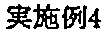
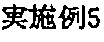
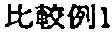


#24˜#20 728˜840 27 135 12.5 62.5 2 10 1 5 26 130 1 5 #30˜#24 637˜728 20 100 12.5 62.5 4 20 7 35 20 100 7 35 #32˜#30 544˜637 15 75 12.5 62.5 11 55 8 40 11 55 8 40 #40˜#32 445˜544 12 60 12.5 62.5 20 100 10 50 4 20 10 50 #60˜#40 343˜445 10 50 12.5 62.5 26 130 12 60 2 10 12 60 #70˜#60 243˜343 8 40 12.5 62.5 20 100 15 75 6 30 15 75 #110˜#70 141˜243 7 35 12.5 62.5 11 55 20 100 13 65 20 100 #200˜#110 47˜141 1 5 12.5 62.5 6 30 27 135 18 90 27 135 
100(%) 500(g) 100(%) 500(g) 100(%) 500(g) 100(%) 500(g) 100(%) 500(g) 100(%) 500(g) - The sifting mesh (JIS mesh) have finer meshes when its number is larger. In Table 3, the entry “#24-#20,” for example, in the column “mesh” means granules that are in such a range as to pass through the #20 mesh and not to pass through the #24 mesh. The other entries “#30-#24” etc. mean ranges that are defined in the same manner. The entry “728-840,” for example, in the column “granule diameter” means a range that the diameter is larger than or equal to 728 μm and smaller than 840 μm. The other entries “637-728” etc. mean ranges that are defined in the same manner.
- The forming materials of Embodiments 3-7 and Comparative Example 3 are formed into sheets, which are roller into sheet-like electrodes. Table 4 shows results of density measurements and tensile tests that are performed on the sheet-like electrodes thus obtained. The testing conditions of the tensile tests are as follows. The test sample piece assumed a plate-like shape measuring 15 mm in width, 0.14 mm in thickness, and 100 mm in length. Held by a chuck at both ends, the sample piece is pulled in the vertical direction (single axis) at a speed of 5 mm/min.
TABLE 4 Density (g/cm3) Tensile strength (MPa) Embodiment 30.727 0.35 Embodiment 40.725 0.33 Embodiment 50.726 0.32 Embodiment 60.723 0.26 Embodiment 70.728 0.27 Comparative Example 3 0.700 0.20 - Consideration will be given to the above results. As far as the density is concerned, the differences between Embodiments 3-7 and Comparative Example 3 are very small, the density value of Comparative Example 3 is smaller than the density values of Embodiments 3-7. This is considered due to the difference in the granule shape of the forming material. That is, it is considered that whereas interstices do not tend to develop between generally glomerate granules without whisker-like projections, interstices tend to occur between granules with whisker-like projections to lower the density.
- To enable continuous execution of each of the rolling step and the lamination step, it is preferable that the tensile strength is higher than 0.25 MPa. All of Embodiments 3-7, in which the tensile strength is higher than or equal to 0.26 MPa, satisfy this requirement. In contrast, Comparative Example 3 (tensile strength: 0.20 MPa) does not satisfy this requirement. It is therefore concluded that a polarized electrode that is high in tensile strength can be manufactured by using, as a forming material, granules that are generally glomerate, have no whisker-like projections, and are in a diameter range that the diameter is larger than or equal to 47 μm and smaller than 840 μm. It is noted that no porosities or cracks occurred when the forming materials of Embodiments 3-7 are formed into sheets.
- Further consideration of the results of Embodiments 3-7 tells that the tensile strength is higher than or equal to 0.32 Pa in Embodiments 3-5 and lower than or equal to 0.27 in
Embodiments 6 and 7 (i.e., lower than in Embodiments 3-5). The inventors studied the reason for this difference and found that it relates to the diameter profile of the formed material. Among Embodiments 3-7, the proportion of granules having small diameters (i.e., larger than or equal to 47 μm and smaller than 243 μm) is high in Embodiment 6 (47%=20%+27%) and Embodiment 7 (31%=13%+18%). In contrast, the proportion of granules having small diameters (i.e., larger than or equal to 47 μm and smaller than 243 μm) is 8% (7%+1%) inEmbodiment 3, 25% (12.5%+12.5%) inEmbodiment 4, and 17% (11%+6%) inEmbodiment 5; that is, the proportion is lower than 30% in Embodiments 3-5. From these results it can be said that it is even preferable in terms of the sheet tensile strength that the proportion of the granules of the forming material whose diameter is larger than or equal to 47 μm and smaller than 243 μm is lower than or equal to 30%. - In the above embodiment, when IPA is added to and mixed with a granular forming material before the forming material is formed into a sheet, the IPA and the forming material are mixed with each other in the container 204 that is closed tightly. As a result, they can be handled without changing the content of the IPA and hence can be mixed with each other with as high a degree of uniformity as possible. This in turn makes it possible to stabilize the quality of the forming material and to manufacture even better sheet-like electrodes.
Claims (8)
Applications Claiming Priority (4)
| Application Number | Priority Date | Filing Date | Title |
|---|---|---|---|
| JPP.2002-347939 | 2002-11-29 | ||
| JP2002347939A JP3776875B2 (en) | 2002-11-29 | 2002-11-29 | Method for producing polarizable electrode for electric double layer capacitor |
| JP2002349229A JP3884702B2 (en) | 2002-11-29 | 2002-11-29 | Granules for electrode formation of electric double layer capacitor, manufacturing method thereof, electrode sheet, polarizable electrode and electric double layer capacitor using polarizable electrode |
| JPP.2002-349229 | 2002-11-29 |
Publications (2)
| Publication Number | Publication Date |
|---|---|
| US20040170821A1 true US20040170821A1 (en) | 2004-09-02 |
| US7160615B2 US7160615B2 (en) | 2007-01-09 |
Family
ID=32910948
Family Applications (1)
| Application Number | Title | Priority Date | Filing Date |
|---|---|---|---|
| US10/721,754 Expired - Fee Related US7160615B2 (en) | 2002-11-29 | 2003-11-26 | Granules for formation of an electrode of an electric double layer capacitor, manufacturing method thereof, electrode sheet, polarized electrode, and electric double layer capacitor using a polarized electrode |
Country Status (1)
| Country | Link |
|---|---|
| US (1) | US7160615B2 (en) |
Cited By (12)
| Publication number | Priority date | Publication date | Assignee | Title |
|---|---|---|---|---|
| US20050042513A1 (en) * | 2003-08-19 | 2005-02-24 | Curran Patrick Michael | Carbon electrode for use in aqueous electrochemical devices and method of preparationo |
| US20080291775A1 (en) * | 2007-05-21 | 2008-11-27 | Daido Metal Company Ltd. | Method and apparatus for manufacturing polarizable electrode for electric double layer capacitor |
| US20090294081A1 (en) * | 2008-05-29 | 2009-12-03 | Kishor Purushottam Gadkaree | Electrodes For Electric Double Layer Devices |
| US20160005550A1 (en) * | 2013-02-26 | 2016-01-07 | Nippon Valqua Industries, Ltd. | Method for Producing Activated Carbon Sheet and Method for Improving Impregnation of Activated Carbon Sheet with Electrolyte Solution |
| CN105869904A (en) * | 2014-05-14 | 2016-08-17 | 韩国Jcc株式会社 | Low resistance electrode for electric dual layer capacitor and method of manufacturing the same |
| CN109074961A (en) * | 2016-03-01 | 2018-12-21 | 麦斯韦尔技术股份有限公司 | Electrode for energy storage device and method for manufacturing dry energy storage device electrode film |
| US10202294B2 (en) | 2009-09-08 | 2019-02-12 | Atlantis Technologies | Concentric layer electric double layer capacitor cylinder, system, and method of use |
| US10373768B2 (en) | 2013-08-06 | 2019-08-06 | Valqua, Ltd. | Method for producing electrode film for electric double layer capacitors |
| US10650985B2 (en) | 2013-05-24 | 2020-05-12 | Atlantis Technologies | Atomic capacitor |
| US10787378B2 (en) | 2018-05-30 | 2020-09-29 | Atlantis Technologies | Spirally wound electric double layer capacitor device and associated methods |
| CN111919273A (en) * | 2018-03-30 | 2020-11-10 | 阿维科斯公司 | Supercapacitor assembly with barrier layer |
| US12368009B2 (en) | 2016-03-01 | 2025-07-22 | Tesla, Inc. | Compositions and methods for energy storage device electrodes |
Families Citing this family (12)
| Publication number | Priority date | Publication date | Assignee | Title |
|---|---|---|---|---|
| US7504153B2 (en) * | 2003-05-13 | 2009-03-17 | Showa Denko K.K. | Porous body, production method thereof and composite material using the porous body |
| US7511943B2 (en) * | 2006-03-09 | 2009-03-31 | Avx Corporation | Wet electrolytic capacitor containing a cathode coating |
| US7480130B2 (en) * | 2006-03-09 | 2009-01-20 | Avx Corporation | Wet electrolytic capacitor |
| WO2008037763A1 (en) * | 2006-09-28 | 2008-04-03 | Siemens Aktiengesellschaft | Energy storage module |
| US7813107B1 (en) * | 2007-03-15 | 2010-10-12 | Greatbatch Ltd. | Wet tantalum capacitor with multiple anode connections |
| US7460356B2 (en) * | 2007-03-20 | 2008-12-02 | Avx Corporation | Neutral electrolyte for a wet electrolytic capacitor |
| US7649730B2 (en) * | 2007-03-20 | 2010-01-19 | Avx Corporation | Wet electrolytic capacitor containing a plurality of thin powder-formed anodes |
| US7554792B2 (en) * | 2007-03-20 | 2009-06-30 | Avx Corporation | Cathode coating for a wet electrolytic capacitor |
| CN101425381B (en) * | 2007-11-02 | 2012-07-18 | 清华大学 | Super capacitor and preparing method therefor |
| US10087330B2 (en) | 2008-02-19 | 2018-10-02 | Cabot Corporation | Mesoporous carbon black and processes for making same |
| US8345406B2 (en) * | 2009-03-23 | 2013-01-01 | Avx Corporation | Electric double layer capacitor |
| US8223473B2 (en) * | 2009-03-23 | 2012-07-17 | Avx Corporation | Electrolytic capacitor containing a liquid electrolyte |
Citations (3)
| Publication number | Priority date | Publication date | Assignee | Title |
|---|---|---|---|---|
| US6721168B2 (en) * | 2000-07-04 | 2004-04-13 | Jeol Ltd. | Electric double-layer capacitor and carbon material therefor |
| US6778379B2 (en) * | 2002-11-29 | 2004-08-17 | Honda Motor Co., Ltd. | Granules for electrode, method for manufacturing thereof, electrode sheet, polarizable electrode and electric double-layer capacitor |
| US6831826B2 (en) * | 2002-11-29 | 2004-12-14 | Honda Motor Co., Ltd. | Polarized electrode for electric double-layer condenser, and electric double-layer condenser manufactured using the same, and process for manufacturing electrode sheet for electric double-layer condenser, and laminating apparatus |
Family Cites Families (6)
| Publication number | Priority date | Publication date | Assignee | Title |
|---|---|---|---|---|
| US5380428A (en) | 1992-04-22 | 1995-01-10 | Product Research & Development | Pump for reverse osmosis system |
| JPH09293648A (en) | 1996-04-26 | 1997-11-11 | Nec Corp | Manufacturing method of polarized electrode |
| JP2001035756A (en) | 1999-07-16 | 2001-02-09 | Ngk Insulators Ltd | Manufacture of polarizable electrode for capacitor |
| JP2001230158A (en) | 2000-02-15 | 2001-08-24 | Ngk Insulators Ltd | Method of manufacturing polarizable electrode for capacitor |
| JP2001237148A (en) | 2000-02-23 | 2001-08-31 | Nippon Chemicon Corp | Electric double layer capacitor and method of manufacturing the same |
| JP2001267187A (en) | 2000-03-22 | 2001-09-28 | Ngk Insulators Ltd | Polarizable electrodes for electric double layer capacitors |
-
2003
- 2003-11-26 US US10/721,754 patent/US7160615B2/en not_active Expired - Fee Related
Patent Citations (3)
| Publication number | Priority date | Publication date | Assignee | Title |
|---|---|---|---|---|
| US6721168B2 (en) * | 2000-07-04 | 2004-04-13 | Jeol Ltd. | Electric double-layer capacitor and carbon material therefor |
| US6778379B2 (en) * | 2002-11-29 | 2004-08-17 | Honda Motor Co., Ltd. | Granules for electrode, method for manufacturing thereof, electrode sheet, polarizable electrode and electric double-layer capacitor |
| US6831826B2 (en) * | 2002-11-29 | 2004-12-14 | Honda Motor Co., Ltd. | Polarized electrode for electric double-layer condenser, and electric double-layer condenser manufactured using the same, and process for manufacturing electrode sheet for electric double-layer condenser, and laminating apparatus |
Cited By (19)
| Publication number | Priority date | Publication date | Assignee | Title |
|---|---|---|---|---|
| US20050042513A1 (en) * | 2003-08-19 | 2005-02-24 | Curran Patrick Michael | Carbon electrode for use in aqueous electrochemical devices and method of preparationo |
| US7175783B2 (en) * | 2003-08-19 | 2007-02-13 | Patrick Michael Curran | Carbon electrode for use in aqueous electrochemical devices and method of preparation |
| US20070075300A1 (en) * | 2003-08-19 | 2007-04-05 | Curran Patrick M | Carbon Electrode for use in aqueous electrochemical devices and method of preparation |
| US20080291775A1 (en) * | 2007-05-21 | 2008-11-27 | Daido Metal Company Ltd. | Method and apparatus for manufacturing polarizable electrode for electric double layer capacitor |
| DE102008024511B4 (en) * | 2007-05-21 | 2010-07-01 | Daido Metal Co. Ltd., Nagoya | Method and device for producing a polarizable electrode for a double-layer electric capacitor |
| US8197119B2 (en) * | 2007-05-21 | 2012-06-12 | Daido Metal Company Ltd. | Method and apparatus for manufacturing polarizable electrode for electric double layer capacitor |
| US20090294081A1 (en) * | 2008-05-29 | 2009-12-03 | Kishor Purushottam Gadkaree | Electrodes For Electric Double Layer Devices |
| US8002921B2 (en) | 2008-05-29 | 2011-08-23 | Corning Incorporated | Electrodes for electric double layer devices |
| US10202294B2 (en) | 2009-09-08 | 2019-02-12 | Atlantis Technologies | Concentric layer electric double layer capacitor cylinder, system, and method of use |
| US9859064B2 (en) * | 2013-02-26 | 2018-01-02 | Nippon Valqua Industries, Ltd. | Method for producing activated carbon sheet and method for improving impregnation of activated carbon sheet with electrolyte solution |
| US20160005550A1 (en) * | 2013-02-26 | 2016-01-07 | Nippon Valqua Industries, Ltd. | Method for Producing Activated Carbon Sheet and Method for Improving Impregnation of Activated Carbon Sheet with Electrolyte Solution |
| US10650985B2 (en) | 2013-05-24 | 2020-05-12 | Atlantis Technologies | Atomic capacitor |
| US10373768B2 (en) | 2013-08-06 | 2019-08-06 | Valqua, Ltd. | Method for producing electrode film for electric double layer capacitors |
| CN105869904A (en) * | 2014-05-14 | 2016-08-17 | 韩国Jcc株式会社 | Low resistance electrode for electric dual layer capacitor and method of manufacturing the same |
| CN109074961A (en) * | 2016-03-01 | 2018-12-21 | 麦斯韦尔技术股份有限公司 | Electrode for energy storage device and method for manufacturing dry energy storage device electrode film |
| US11587741B2 (en) | 2016-03-01 | 2023-02-21 | Tesla, Inc. | Compositions and methods for energy storage device electrodes |
| US12368009B2 (en) | 2016-03-01 | 2025-07-22 | Tesla, Inc. | Compositions and methods for energy storage device electrodes |
| CN111919273A (en) * | 2018-03-30 | 2020-11-10 | 阿维科斯公司 | Supercapacitor assembly with barrier layer |
| US10787378B2 (en) | 2018-05-30 | 2020-09-29 | Atlantis Technologies | Spirally wound electric double layer capacitor device and associated methods |
Also Published As
| Publication number | Publication date |
|---|---|
| US7160615B2 (en) | 2007-01-09 |
Similar Documents
| Publication | Publication Date | Title |
|---|---|---|
| US7160615B2 (en) | Granules for formation of an electrode of an electric double layer capacitor, manufacturing method thereof, electrode sheet, polarized electrode, and electric double layer capacitor using a polarized electrode | |
| JP7227328B2 (en) | Electrode films for energy storage devices, electrodes and energy storage devices | |
| KR101988691B1 (en) | Electrode for energy storage devices and method for making same | |
| US8279580B2 (en) | Electrode for energy storage device with microporous and mesoporous activated carbon particles | |
| JP6106362B2 (en) | Composition, sheet comprising composition and method for producing electrode comprising sheet | |
| US6795297B2 (en) | Electrode sheet, method for manufacturing thereof, polarizable electrode and electric double-layer capacitor | |
| JP2016534568A (en) | EDLC electrode and manufacturing process thereof | |
| KR20100129307A (en) | Electrode Membrane and Electrode Containing Ionic Liquid, Manufacturing Method thereof, and Storage Device | |
| US12368009B2 (en) | Compositions and methods for energy storage device electrodes | |
| US6778379B2 (en) | Granules for electrode, method for manufacturing thereof, electrode sheet, polarizable electrode and electric double-layer capacitor | |
| JP3884702B2 (en) | Granules for electrode formation of electric double layer capacitor, manufacturing method thereof, electrode sheet, polarizable electrode and electric double layer capacitor using polarizable electrode | |
| JP2004186266A (en) | Polarizable electrode for electric double layer capacitor, method of manufacturing this polarizable electrode, and electric double layer capacitor manufactured using this polarizable electrode | |
| HK40064460A (en) | Electrode film for use in an energy storage device, electrode and energy storage device comprising the same | |
| HK40002317A (en) | Electrode for an energy storage device and method for fabricating a dry energy storage device electrode film | |
| HK40002317B (en) | Electrode for an energy storage device and method for fabricating a dry energy storage device electrode film |
Legal Events
| Date | Code | Title | Description |
|---|---|---|---|
| AS | Assignment |
Owner name: DAIDO METAL COMPANY LTD., JAPAN Free format text: ASSIGNMENT OF ASSIGNORS INTEREST;ASSIGNORS:IWAIDA, MANABU;OYAMA, SHIGEKI;MURAKAMI, KENICHI;AND OTHERS;REEL/FRAME:015311/0349 Effective date: 20040401 Owner name: HONDA MOTORS CO. LTD., JAPAN Free format text: ASSIGNMENT OF ASSIGNORS INTEREST;ASSIGNORS:IWAIDA, MANABU;OYAMA, SHIGEKI;MURAKAMI, KENICHI;AND OTHERS;REEL/FRAME:015311/0349 Effective date: 20040401 |
|
| FEPP | Fee payment procedure |
Free format text: PAYOR NUMBER ASSIGNED (ORIGINAL EVENT CODE: ASPN); ENTITY STATUS OF PATENT OWNER: LARGE ENTITY |
|
| FPAY | Fee payment |
Year of fee payment: 4 |
|
| FPAY | Fee payment |
Year of fee payment: 8 |
|
| AS | Assignment |
Owner name: DAIDO METAL COMPANY LTD., JAPAN Free format text: ASSIGNMENT OF ASSIGNORS INTEREST;ASSIGNOR:HONDA MOTORS CO,. LTD.;REEL/FRAME:033211/0421 Effective date: 20140619 |
|
| FEPP | Fee payment procedure |
Free format text: MAINTENANCE FEE REMINDER MAILED (ORIGINAL EVENT CODE: REM.); ENTITY STATUS OF PATENT OWNER: LARGE ENTITY |
|
| LAPS | Lapse for failure to pay maintenance fees |
Free format text: PATENT EXPIRED FOR FAILURE TO PAY MAINTENANCE FEES (ORIGINAL EVENT CODE: EXP.); ENTITY STATUS OF PATENT OWNER: LARGE ENTITY |
|
| STCH | Information on status: patent discontinuation |
Free format text: PATENT EXPIRED DUE TO NONPAYMENT OF MAINTENANCE FEES UNDER 37 CFR 1.362 |
|
| FP | Lapsed due to failure to pay maintenance fee |
Effective date: 20190109 |