US20040142929A1 - Derivatives of aryl (or heteroaryl) azolylcarbinoles for the treatment of urinary incontinence - Google Patents
Derivatives of aryl (or heteroaryl) azolylcarbinoles for the treatment of urinary incontinence Download PDFInfo
- Publication number
- US20040142929A1 US20040142929A1 US10/753,161 US75316104A US2004142929A1 US 20040142929 A1 US20040142929 A1 US 20040142929A1 US 75316104 A US75316104 A US 75316104A US 2004142929 A1 US2004142929 A1 US 2004142929A1
- Authority
- US
- United States
- Prior art keywords
- methyl
- dimethylamino
- ethoxy
- pirazole
- benzyl
- Prior art date
- Legal status (The legal status is an assumption and is not a legal conclusion. Google has not performed a legal analysis and makes no representation as to the accuracy of the status listed.)
- Abandoned
Links
- 206010046543 Urinary incontinence Diseases 0.000 title claims abstract description 49
- 125000003118 aryl group Chemical group 0.000 title claims abstract description 6
- 125000001072 heteroaryl group Chemical group 0.000 title claims abstract description 6
- 238000011282 treatment Methods 0.000 title claims description 23
- 150000003839 salts Chemical class 0.000 claims abstract description 37
- 239000003814 drug Substances 0.000 claims abstract description 24
- 241000124008 Mammalia Species 0.000 claims abstract description 21
- 229940079593 drug Drugs 0.000 claims abstract description 19
- 125000004435 hydrogen atom Chemical group [H]* 0.000 claims abstract description 15
- 125000001424 substituent group Chemical group 0.000 claims abstract description 9
- 125000000217 alkyl group Chemical group 0.000 claims abstract description 7
- CIUQDSCDWFSTQR-UHFFFAOYSA-N [C]1=CC=CC=C1 Chemical group [C]1=CC=CC=C1 CIUQDSCDWFSTQR-UHFFFAOYSA-N 0.000 claims abstract description 5
- 125000001301 ethoxy group Chemical group [H]C([H])([H])C([H])([H])O* 0.000 claims description 171
- 238000000034 method Methods 0.000 claims description 163
- 125000001797 benzyl group Chemical group [H]C1=C([H])C([H])=C(C([H])=C1[H])C([H])([H])* 0.000 claims description 123
- KRKNYBCHXYNGOX-UHFFFAOYSA-K Citrate Chemical compound [O-]C(=O)CC(O)(CC([O-])=O)C([O-])=O KRKNYBCHXYNGOX-UHFFFAOYSA-K 0.000 claims description 75
- 150000001875 compounds Chemical class 0.000 claims description 70
- 125000002496 methyl group Chemical group [H]C([H])([H])* 0.000 claims description 48
- -1 thienyl radical Chemical class 0.000 claims description 25
- 239000000203 mixture Substances 0.000 claims description 22
- HBAQYPYDRFILMT-UHFFFAOYSA-N 8-[3-(1-cyclopropylpyrazol-4-yl)-1H-pyrazolo[4,3-d]pyrimidin-5-yl]-3-methyl-3,8-diazabicyclo[3.2.1]octan-2-one Chemical class C1(CC1)N1N=CC(=C1)C1=NNC2=C1N=C(N=C2)N1C2C(N(CC1CC2)C)=O HBAQYPYDRFILMT-UHFFFAOYSA-N 0.000 claims description 18
- CPELXLSAUQHCOX-UHFFFAOYSA-M Bromide Chemical compound [Br-] CPELXLSAUQHCOX-UHFFFAOYSA-M 0.000 claims description 18
- VEXZGXHMUGYJMC-UHFFFAOYSA-M Chloride anion Chemical compound [Cl-] VEXZGXHMUGYJMC-UHFFFAOYSA-M 0.000 claims description 18
- 206010066218 Stress Urinary Incontinence Diseases 0.000 claims description 14
- 238000009472 formulation Methods 0.000 claims description 14
- KRHYYFGTRYWZRS-UHFFFAOYSA-N Fluorane Chemical group F KRHYYFGTRYWZRS-UHFFFAOYSA-N 0.000 claims description 12
- QJGQUHMNIGDVPM-UHFFFAOYSA-N nitrogen group Chemical group [N] QJGQUHMNIGDVPM-UHFFFAOYSA-N 0.000 claims description 12
- 238000006467 substitution reaction Methods 0.000 claims description 11
- 239000002775 capsule Substances 0.000 claims description 10
- 239000001257 hydrogen Substances 0.000 claims description 10
- 229910052739 hydrogen Inorganic materials 0.000 claims description 10
- HQKMJHAJHXVSDF-UHFFFAOYSA-L magnesium stearate Chemical compound [Mg+2].CCCCCCCCCCCCCCCCCC([O-])=O.CCCCCCCCCCCCCCCCCC([O-])=O HQKMJHAJHXVSDF-UHFFFAOYSA-L 0.000 claims description 10
- 125000000956 methoxy group Chemical group [H]C([H])([H])O* 0.000 claims description 10
- 125000002023 trifluoromethyl group Chemical group FC(F)(F)* 0.000 claims description 10
- 208000008967 Enuresis Diseases 0.000 claims description 8
- 208000000921 Urge Urinary Incontinence Diseases 0.000 claims description 8
- 239000008194 pharmaceutical composition Substances 0.000 claims description 7
- KRHYYFGTRYWZRS-UHFFFAOYSA-M Fluoride anion Chemical compound [F-] KRHYYFGTRYWZRS-UHFFFAOYSA-M 0.000 claims description 6
- VYPSYNLAJGMNEJ-UHFFFAOYSA-N Silicium dioxide Chemical compound O=[Si]=O VYPSYNLAJGMNEJ-UHFFFAOYSA-N 0.000 claims description 6
- 239000008119 colloidal silica Substances 0.000 claims description 6
- 125000002757 morpholinyl group Chemical group 0.000 claims description 6
- 125000003386 piperidinyl group Chemical group 0.000 claims description 6
- 239000012453 solvate Substances 0.000 claims description 6
- WSVLPVUVIUVCRA-KPKNDVKVSA-N Alpha-lactose monohydrate Chemical compound O.O[C@@H]1[C@@H](O)[C@@H](O)[C@@H](CO)O[C@H]1O[C@@H]1[C@@H](CO)O[C@H](O)[C@H](O)[C@H]1O WSVLPVUVIUVCRA-KPKNDVKVSA-N 0.000 claims description 5
- 229920000168 Microcrystalline cellulose Polymers 0.000 claims description 5
- 239000002253 acid Substances 0.000 claims description 5
- 125000004103 aminoalkyl group Chemical group 0.000 claims description 5
- 229960001021 lactose monohydrate Drugs 0.000 claims description 5
- 235000019359 magnesium stearate Nutrition 0.000 claims description 5
- 238000004519 manufacturing process Methods 0.000 claims description 5
- 229940016286 microcrystalline cellulose Drugs 0.000 claims description 5
- 235000019813 microcrystalline cellulose Nutrition 0.000 claims description 5
- 239000008108 microcrystalline cellulose Substances 0.000 claims description 5
- 239000000546 pharmaceutical excipient Substances 0.000 claims description 5
- 150000003254 radicals Chemical class 0.000 claims description 5
- MZVQCMJNVPIDEA-UHFFFAOYSA-N [CH2]CN(CC)CC Chemical group [CH2]CN(CC)CC MZVQCMJNVPIDEA-UHFFFAOYSA-N 0.000 claims description 4
- 125000000484 butyl group Chemical group [H]C([*])([H])C([H])([H])C([H])([H])C([H])([H])[H] 0.000 claims description 4
- 125000001495 ethyl group Chemical group [H]C([H])([H])C([H])([H])* 0.000 claims description 4
- 239000012458 free base Substances 0.000 claims description 4
- 239000012729 immediate-release (IR) formulation Substances 0.000 claims description 4
- 125000000959 isobutyl group Chemical group [H]C([H])([H])C([H])(C([H])([H])[H])C([H])([H])* 0.000 claims description 4
- 125000001449 isopropyl group Chemical group [H]C([H])([H])C([H])(*)C([H])([H])[H] 0.000 claims description 4
- 125000004433 nitrogen atom Chemical group N* 0.000 claims description 4
- 125000001436 propyl group Chemical group [H]C([*])([H])C([H])([H])C([H])([H])[H] 0.000 claims description 4
- 125000002914 sec-butyl group Chemical group [H]C([H])([H])C([H])([H])C([H])(*)C([H])([H])[H] 0.000 claims description 4
- 125000000999 tert-butyl group Chemical group [H]C([H])([H])C(*)(C([H])([H])[H])C([H])([H])[H] 0.000 claims description 4
- DGAQECJNVWCQMB-PUAWFVPOSA-M Ilexoside XXIX Chemical compound C[C@@H]1CC[C@@]2(CC[C@@]3(C(=CC[C@H]4[C@]3(CC[C@@H]5[C@@]4(CC[C@@H](C5(C)C)OS(=O)(=O)[O-])C)C)[C@@H]2[C@]1(C)O)C)C(=O)O[C@H]6[C@@H]([C@H]([C@@H]([C@H](O6)CO)O)O)O.[Na+] DGAQECJNVWCQMB-PUAWFVPOSA-M 0.000 claims description 3
- 239000002585 base Substances 0.000 claims description 3
- 229910052708 sodium Inorganic materials 0.000 claims description 3
- 239000011734 sodium Substances 0.000 claims description 3
- WHNWPMSKXPGLAX-UHFFFAOYSA-N N-Vinyl-2-pyrrolidone Chemical compound C=CN1CCCC1=O WHNWPMSKXPGLAX-UHFFFAOYSA-N 0.000 claims description 2
- 239000002202 Polyethylene glycol Substances 0.000 claims description 2
- 235000021355 Stearic acid Nutrition 0.000 claims description 2
- QIQXTHQIDYTFRH-UHFFFAOYSA-N octadecanoic acid Chemical compound CCCCCCCCCCCCCCCCCC(O)=O QIQXTHQIDYTFRH-UHFFFAOYSA-N 0.000 claims description 2
- OQCDKBAXFALNLD-UHFFFAOYSA-N octadecanoic acid Natural products CCCCCCCC(C)CCCCCCCCC(O)=O OQCDKBAXFALNLD-UHFFFAOYSA-N 0.000 claims description 2
- 229920001223 polyethylene glycol Polymers 0.000 claims description 2
- 229920000036 polyvinylpyrrolidone Polymers 0.000 claims description 2
- 235000013855 polyvinylpyrrolidone Nutrition 0.000 claims description 2
- 229940069328 povidone Drugs 0.000 claims description 2
- 239000008117 stearic acid Substances 0.000 claims description 2
- 229940057948 magnesium stearate Drugs 0.000 claims 1
- 241000282414 Homo sapiens Species 0.000 abstract description 22
- KAESVJOAVNADME-UHFFFAOYSA-N Pyrrole Chemical compound C=1C=CNC=1 KAESVJOAVNADME-UHFFFAOYSA-N 0.000 abstract description 6
- 125000004985 dialkyl amino alkyl group Chemical group 0.000 abstract description 2
- 0 [1*]C(C)([Ar])O[2*] Chemical compound [1*]C(C)([Ar])O[2*] 0.000 description 15
- 206010021639 Incontinence Diseases 0.000 description 11
- 210000003932 urinary bladder Anatomy 0.000 description 11
- 206010020853 Hypertonic bladder Diseases 0.000 description 9
- 230000000694 effects Effects 0.000 description 9
- 229940068196 placebo Drugs 0.000 description 9
- 239000000902 placebo Substances 0.000 description 9
- 239000003826 tablet Substances 0.000 description 9
- 208000013403 hyperactivity Diseases 0.000 description 8
- 208000037265 diseases, disorders, signs and symptoms Diseases 0.000 description 5
- 230000027939 micturition Effects 0.000 description 5
- 210000003205 muscle Anatomy 0.000 description 5
- 208000022170 stress incontinence Diseases 0.000 description 5
- 210000002700 urine Anatomy 0.000 description 5
- CMSMOCZEIVJLDB-UHFFFAOYSA-N Cyclophosphamide Chemical compound ClCCN(CCCl)P1(=O)NCCCO1 CMSMOCZEIVJLDB-UHFFFAOYSA-N 0.000 description 4
- 230000009471 action Effects 0.000 description 4
- 208000035475 disorder Diseases 0.000 description 4
- 239000000463 material Substances 0.000 description 4
- 239000000243 solution Substances 0.000 description 4
- 206010046494 urge incontinence Diseases 0.000 description 4
- QTBSBXVTEAMEQO-UHFFFAOYSA-N Acetic acid Chemical compound CC(O)=O QTBSBXVTEAMEQO-UHFFFAOYSA-N 0.000 description 3
- 229920003084 Avicel® PH-102 Polymers 0.000 description 3
- VZCYOOQTPOCHFL-OWOJBTEDSA-N Fumaric acid Chemical compound OC(=O)\C=C\C(O)=O VZCYOOQTPOCHFL-OWOJBTEDSA-N 0.000 description 3
- 208000009722 Overactive Urinary Bladder Diseases 0.000 description 3
- MUBZPKHOEPUJKR-UHFFFAOYSA-N Oxalic acid Chemical compound OC(=O)C(O)=O MUBZPKHOEPUJKR-UHFFFAOYSA-N 0.000 description 3
- HEMHJVSKTPXQMS-UHFFFAOYSA-M Sodium hydroxide Chemical compound [OH-].[Na+] HEMHJVSKTPXQMS-UHFFFAOYSA-M 0.000 description 3
- 239000000654 additive Substances 0.000 description 3
- 230000002411 adverse Effects 0.000 description 3
- 230000001078 anti-cholinergic effect Effects 0.000 description 3
- KRKNYBCHXYNGOX-UHFFFAOYSA-N citric acid Chemical compound OC(=O)CC(O)(C(O)=O)CC(O)=O KRKNYBCHXYNGOX-UHFFFAOYSA-N 0.000 description 3
- 230000008602 contraction Effects 0.000 description 3
- 229960004397 cyclophosphamide Drugs 0.000 description 3
- 230000007246 mechanism Effects 0.000 description 3
- 208000020629 overactive bladder Diseases 0.000 description 3
- 230000001225 therapeutic effect Effects 0.000 description 3
- HRXKRNGNAMMEHJ-UHFFFAOYSA-K trisodium citrate Chemical compound [Na+].[Na+].[Na+].[O-]C(=O)CC(O)(CC([O-])=O)C([O-])=O HRXKRNGNAMMEHJ-UHFFFAOYSA-K 0.000 description 3
- 210000003708 urethra Anatomy 0.000 description 3
- 230000002485 urinary effect Effects 0.000 description 3
- 230000003202 urodynamic effect Effects 0.000 description 3
- KORIJXKQGMTQTO-UHFFFAOYSA-N 1h-pyrrol-2-ylmethanol Chemical class OCC1=CC=CN1 KORIJXKQGMTQTO-UHFFFAOYSA-N 0.000 description 2
- 208000000187 Abnormal Reflex Diseases 0.000 description 2
- HGINCPLSRVDWNT-UHFFFAOYSA-N Acrolein Chemical compound C=CC=O HGINCPLSRVDWNT-UHFFFAOYSA-N 0.000 description 2
- WKBOTKDWSSQWDR-UHFFFAOYSA-N Bromine atom Chemical compound [Br] WKBOTKDWSSQWDR-UHFFFAOYSA-N 0.000 description 2
- ZAMOUSCENKQFHK-UHFFFAOYSA-N Chlorine atom Chemical compound [Cl] ZAMOUSCENKQFHK-UHFFFAOYSA-N 0.000 description 2
- ROSDSFDQCJNGOL-UHFFFAOYSA-N Dimethylamine Chemical compound CNC ROSDSFDQCJNGOL-UHFFFAOYSA-N 0.000 description 2
- 206010015866 Extravasation Diseases 0.000 description 2
- PXGOKWXKJXAPGV-UHFFFAOYSA-N Fluorine Chemical compound FF PXGOKWXKJXAPGV-UHFFFAOYSA-N 0.000 description 2
- 241000282412 Homo Species 0.000 description 2
- VEXZGXHMUGYJMC-UHFFFAOYSA-N Hydrochloric acid Chemical compound Cl VEXZGXHMUGYJMC-UHFFFAOYSA-N 0.000 description 2
- 241001465754 Metazoa Species 0.000 description 2
- AFVFQIVMOAPDHO-UHFFFAOYSA-N Methanesulfonic acid Chemical compound CS(O)(=O)=O AFVFQIVMOAPDHO-UHFFFAOYSA-N 0.000 description 2
- 229940121948 Muscarinic receptor antagonist Drugs 0.000 description 2
- QIAFMBKCNZACKA-UHFFFAOYSA-N N-benzoylglycine Chemical compound OC(=O)CNC(=O)C1=CC=CC=C1 QIAFMBKCNZACKA-UHFFFAOYSA-N 0.000 description 2
- PVNIIMVLHYAWGP-UHFFFAOYSA-N Niacin Chemical compound OC(=O)C1=CC=CN=C1 PVNIIMVLHYAWGP-UHFFFAOYSA-N 0.000 description 2
- 229920003081 Povidone K 30 Polymers 0.000 description 2
- FAPWRFPIFSIZLT-UHFFFAOYSA-M Sodium chloride Chemical compound [Na+].[Cl-] FAPWRFPIFSIZLT-UHFFFAOYSA-M 0.000 description 2
- QAOWNCQODCNURD-UHFFFAOYSA-N Sulfuric acid Chemical compound OS(O)(=O)=O QAOWNCQODCNURD-UHFFFAOYSA-N 0.000 description 2
- 230000000996 additive effect Effects 0.000 description 2
- 230000000202 analgesic effect Effects 0.000 description 2
- 238000013459 approach Methods 0.000 description 2
- GDTBXPJZTBHREO-UHFFFAOYSA-N bromine Substances BrBr GDTBXPJZTBHREO-UHFFFAOYSA-N 0.000 description 2
- 229910052794 bromium Inorganic materials 0.000 description 2
- 125000004432 carbon atom Chemical group C* 0.000 description 2
- 150000001768 cations Chemical class 0.000 description 2
- 239000003795 chemical substances by application Substances 0.000 description 2
- 239000000460 chlorine Substances 0.000 description 2
- 229910052801 chlorine Inorganic materials 0.000 description 2
- 239000000812 cholinergic antagonist Substances 0.000 description 2
- 201000003146 cystitis Diseases 0.000 description 2
- 125000002147 dimethylamino group Chemical group [H]C([H])([H])N(*)C([H])([H])[H] 0.000 description 2
- 230000036251 extravasation Effects 0.000 description 2
- 239000011737 fluorine Substances 0.000 description 2
- 229910052731 fluorine Inorganic materials 0.000 description 2
- 206010020745 hyperreflexia Diseases 0.000 description 2
- 230000035859 hyperreflexia Effects 0.000 description 2
- 230000028709 inflammatory response Effects 0.000 description 2
- 238000001990 intravenous administration Methods 0.000 description 2
- 150000002500 ions Chemical class 0.000 description 2
- JVTAAEKCZFNVCJ-UHFFFAOYSA-N lactic acid Chemical compound CC(O)C(O)=O JVTAAEKCZFNVCJ-UHFFFAOYSA-N 0.000 description 2
- AGBQKNBQESQNJD-UHFFFAOYSA-N lipoic acid Chemical compound OC(=O)CCCCC1CCSS1 AGBQKNBQESQNJD-UHFFFAOYSA-N 0.000 description 2
- BDAGIHXWWSANSR-UHFFFAOYSA-N methanoic acid Natural products OC=O BDAGIHXWWSANSR-UHFFFAOYSA-N 0.000 description 2
- 238000011458 pharmacological treatment Methods 0.000 description 2
- 238000002360 preparation method Methods 0.000 description 2
- 230000009467 reduction Effects 0.000 description 2
- 230000000638 stimulation Effects 0.000 description 2
- 239000000829 suppository Substances 0.000 description 2
- 238000001356 surgical procedure Methods 0.000 description 2
- 239000000725 suspension Substances 0.000 description 2
- 208000024891 symptom Diseases 0.000 description 2
- VZCYOOQTPOCHFL-UHFFFAOYSA-N trans-butenedioic acid Natural products OC(=O)C=CC(O)=O VZCYOOQTPOCHFL-UHFFFAOYSA-N 0.000 description 2
- XWTYSIMOBUGWOL-UHFFFAOYSA-N (+-)-Terbutaline Chemical compound CC(C)(C)NCC(O)C1=CC(O)=CC(O)=C1 XWTYSIMOBUGWOL-UHFFFAOYSA-N 0.000 description 1
- QBYIENPQHBMVBV-HFEGYEGKSA-N (2R)-2-hydroxy-2-phenylacetic acid Chemical compound O[C@@H](C(O)=O)c1ccccc1.O[C@@H](C(O)=O)c1ccccc1 QBYIENPQHBMVBV-HFEGYEGKSA-N 0.000 description 1
- BJEPYKJPYRNKOW-REOHCLBHSA-N (S)-malic acid Chemical compound OC(=O)[C@@H](O)CC(O)=O BJEPYKJPYRNKOW-REOHCLBHSA-N 0.000 description 1
- FFFIRKXTFQCCKJ-UHFFFAOYSA-N 2,4,6-trimethylbenzoic acid Chemical compound CC1=CC(C)=C(C(O)=O)C(C)=C1 FFFIRKXTFQCCKJ-UHFFFAOYSA-N 0.000 description 1
- VIKBNMWOLLIQPG-UHFFFAOYSA-N 2-methyldecanedioic acid Chemical compound OC(=O)C(C)CCCCCCCC(O)=O VIKBNMWOLLIQPG-UHFFFAOYSA-N 0.000 description 1
- AJHPGXZOIAYYDW-UHFFFAOYSA-N 3-(2-cyanophenyl)-2-[(2-methylpropan-2-yl)oxycarbonylamino]propanoic acid Chemical compound CC(C)(C)OC(=O)NC(C(O)=O)CC1=CC=CC=C1C#N AJHPGXZOIAYYDW-UHFFFAOYSA-N 0.000 description 1
- BMYNFMYTOJXKLE-UHFFFAOYSA-N 3-azaniumyl-2-hydroxypropanoate Chemical compound NCC(O)C(O)=O BMYNFMYTOJXKLE-UHFFFAOYSA-N 0.000 description 1
- OSWFIVFLDKOXQC-UHFFFAOYSA-N 4-(3-methoxyphenyl)aniline Chemical compound COC1=CC=CC(C=2C=CC(N)=CC=2)=C1 OSWFIVFLDKOXQC-UHFFFAOYSA-N 0.000 description 1
- ALYNCZNDIQEVRV-PZFLKRBQSA-N 4-amino-3,5-ditritiobenzoic acid Chemical compound [3H]c1cc(cc([3H])c1N)C(O)=O ALYNCZNDIQEVRV-PZFLKRBQSA-N 0.000 description 1
- ODHCTXKNWHHXJC-VKHMYHEASA-N 5-oxo-L-proline Chemical compound OC(=O)[C@@H]1CCC(=O)N1 ODHCTXKNWHHXJC-VKHMYHEASA-N 0.000 description 1
- BSYNRYMUTXBXSQ-FOQJRBATSA-N 59096-14-9 Chemical compound CC(=O)OC1=CC=CC=C1[14C](O)=O BSYNRYMUTXBXSQ-FOQJRBATSA-N 0.000 description 1
- COXVTLYNGOIATD-HVMBLDELSA-N CC1=C(C=CC(=C1)C1=CC(C)=C(C=C1)\N=N\C1=C(O)C2=C(N)C(=CC(=C2C=C1)S(O)(=O)=O)S(O)(=O)=O)\N=N\C1=CC=C2C(=CC(=C(N)C2=C1O)S(O)(=O)=O)S(O)(=O)=O Chemical compound CC1=C(C=CC(=C1)C1=CC(C)=C(C=C1)\N=N\C1=C(O)C2=C(N)C(=CC(=C2C=C1)S(O)(=O)=O)S(O)(=O)=O)\N=N\C1=CC=C2C(=CC(=C(N)C2=C1O)S(O)(=O)=O)S(O)(=O)=O COXVTLYNGOIATD-HVMBLDELSA-N 0.000 description 1
- JLKUMSHHQYQLSG-UHFFFAOYSA-N CN(C)CCOC(C1=CC=CC=C1)C1=CC=NN1C.O=C(O)CC(O)(CC(=O)O)C(=O)O Chemical compound CN(C)CCOC(C1=CC=CC=C1)C1=CC=NN1C.O=C(O)CC(O)(CC(=O)O)C(=O)O JLKUMSHHQYQLSG-UHFFFAOYSA-N 0.000 description 1
- 206010010774 Constipation Diseases 0.000 description 1
- 206010011224 Cough Diseases 0.000 description 1
- FEWJPZIEWOKRBE-JCYAYHJZSA-N Dextrotartaric acid Chemical compound OC(=O)[C@H](O)[C@@H](O)C(O)=O FEWJPZIEWOKRBE-JCYAYHJZSA-N 0.000 description 1
- WHUUTDBJXJRKMK-UHFFFAOYSA-N Glutamic acid Natural products OC(=O)C(N)CCC(O)=O WHUUTDBJXJRKMK-UHFFFAOYSA-N 0.000 description 1
- 206010061218 Inflammation Diseases 0.000 description 1
- CKLJMWTZIZZHCS-REOHCLBHSA-N L-aspartic acid Chemical compound OC(=O)[C@@H](N)CC(O)=O CKLJMWTZIZZHCS-REOHCLBHSA-N 0.000 description 1
- WHUUTDBJXJRKMK-VKHMYHEASA-N L-glutamic acid Chemical compound OC(=O)[C@@H](N)CCC(O)=O WHUUTDBJXJRKMK-VKHMYHEASA-N 0.000 description 1
- GUBGYTABKSRVRQ-QKKXKWKRSA-N Lactose Natural products OC[C@H]1O[C@@H](O[C@H]2[C@H](O)[C@@H](O)C(O)O[C@@H]2CO)[C@H](O)[C@@H](O)[C@H]1O GUBGYTABKSRVRQ-QKKXKWKRSA-N 0.000 description 1
- 206010027566 Micturition urgency Diseases 0.000 description 1
- 206010053236 Mixed incontinence Diseases 0.000 description 1
- 102000014415 Muscarinic acetylcholine receptor Human genes 0.000 description 1
- 108050003473 Muscarinic acetylcholine receptor Proteins 0.000 description 1
- OKJIRPAQVSHGFK-UHFFFAOYSA-N N-acetylglycine Chemical compound CC(=O)NCC(O)=O OKJIRPAQVSHGFK-UHFFFAOYSA-N 0.000 description 1
- 206010028980 Neoplasm Diseases 0.000 description 1
- 208000012902 Nervous system disease Diseases 0.000 description 1
- 208000025966 Neurological disease Diseases 0.000 description 1
- 208000018737 Parkinson disease Diseases 0.000 description 1
- 239000004353 Polyethylene glycol 8000 Substances 0.000 description 1
- VVWYOYDLCMFIEM-UHFFFAOYSA-N Propantheline Chemical compound C1=CC=C2C(C(=O)OCC[N+](C)(C(C)C)C(C)C)C3=CC=CC=C3OC2=C1 VVWYOYDLCMFIEM-UHFFFAOYSA-N 0.000 description 1
- 206010037211 Psychomotor hyperactivity Diseases 0.000 description 1
- IWYDHOAUDWTVEP-UHFFFAOYSA-N R-2-phenyl-2-hydroxyacetic acid Natural products OC(=O)C(O)C1=CC=CC=C1 IWYDHOAUDWTVEP-UHFFFAOYSA-N 0.000 description 1
- 208000034189 Sclerosis Diseases 0.000 description 1
- 206010041349 Somnolence Diseases 0.000 description 1
- KDYFGRWQOYBRFD-UHFFFAOYSA-N Succinic acid Natural products OC(=O)CCC(O)=O KDYFGRWQOYBRFD-UHFFFAOYSA-N 0.000 description 1
- FEWJPZIEWOKRBE-UHFFFAOYSA-N Tartaric acid Natural products [H+].[H+].[O-]C(=O)C(O)C(O)C([O-])=O FEWJPZIEWOKRBE-UHFFFAOYSA-N 0.000 description 1
- YTPLMLYBLZKORZ-UHFFFAOYSA-N Thiophene Chemical group C=1C=CSC=1 YTPLMLYBLZKORZ-UHFFFAOYSA-N 0.000 description 1
- 229940123445 Tricyclic antidepressant Drugs 0.000 description 1
- 208000028938 Urination disease Diseases 0.000 description 1
- 230000003187 abdominal effect Effects 0.000 description 1
- 235000011054 acetic acid Nutrition 0.000 description 1
- ODHCTXKNWHHXJC-UHFFFAOYSA-N acide pyroglutamique Natural products OC(=O)C1CCC(=O)N1 ODHCTXKNWHHXJC-UHFFFAOYSA-N 0.000 description 1
- 150000007513 acids Chemical class 0.000 description 1
- 239000004480 active ingredient Substances 0.000 description 1
- 208000038016 acute inflammation Diseases 0.000 description 1
- 230000006022 acute inflammation Effects 0.000 description 1
- 239000000464 adrenergic agent Substances 0.000 description 1
- 239000000048 adrenergic agonist Substances 0.000 description 1
- 229940126157 adrenergic receptor agonist Drugs 0.000 description 1
- 239000000556 agonist Substances 0.000 description 1
- NDAUXUAQIAJITI-UHFFFAOYSA-N albuterol Chemical compound CC(C)(C)NCC(O)C1=CC=C(O)C(CO)=C1 NDAUXUAQIAJITI-UHFFFAOYSA-N 0.000 description 1
- 229910052783 alkali metal Inorganic materials 0.000 description 1
- 150000001340 alkali metals Chemical class 0.000 description 1
- 229910052784 alkaline earth metal Chemical class 0.000 description 1
- 150000001342 alkaline earth metals Chemical class 0.000 description 1
- 239000002160 alpha blocker Substances 0.000 description 1
- BJEPYKJPYRNKOW-UHFFFAOYSA-N alpha-hydroxysuccinic acid Natural products OC(=O)C(O)CC(O)=O BJEPYKJPYRNKOW-UHFFFAOYSA-N 0.000 description 1
- 150000001412 amines Chemical class 0.000 description 1
- 150000001450 anions Chemical class 0.000 description 1
- RWZYAGGXGHYGMB-UHFFFAOYSA-N anthranilic acid Chemical compound NC1=CC=CC=C1C(O)=O RWZYAGGXGHYGMB-UHFFFAOYSA-N 0.000 description 1
- 239000003963 antioxidant agent Substances 0.000 description 1
- 235000006708 antioxidants Nutrition 0.000 description 1
- 239000002249 anxiolytic agent Substances 0.000 description 1
- 235000003704 aspartic acid Nutrition 0.000 description 1
- 230000009286 beneficial effect Effects 0.000 description 1
- OQFSQFPPLPISGP-UHFFFAOYSA-N beta-carboxyaspartic acid Natural products OC(=O)C(N)C(C(O)=O)C(O)=O OQFSQFPPLPISGP-UHFFFAOYSA-N 0.000 description 1
- 239000011230 binding agent Substances 0.000 description 1
- 230000015572 biosynthetic process Effects 0.000 description 1
- 239000001045 blue dye Substances 0.000 description 1
- KDYFGRWQOYBRFD-NUQCWPJISA-N butanedioic acid Chemical compound O[14C](=O)CC[14C](O)=O KDYFGRWQOYBRFD-NUQCWPJISA-N 0.000 description 1
- 201000011510 cancer Diseases 0.000 description 1
- 230000007211 cardiovascular event Effects 0.000 description 1
- 239000000969 carrier Substances 0.000 description 1
- 238000006243 chemical reaction Methods 0.000 description 1
- 239000007910 chewable tablet Substances 0.000 description 1
- 235000015165 citric acid Nutrition 0.000 description 1
- 239000003086 colorant Substances 0.000 description 1
- 239000006071 cream Substances 0.000 description 1
- 230000002950 deficient Effects 0.000 description 1
- 230000036576 dermal application Effects 0.000 description 1
- 231100000223 dermal penetration Toxicity 0.000 description 1
- 235000014113 dietary fatty acids Nutrition 0.000 description 1
- 239000003085 diluting agent Substances 0.000 description 1
- 201000010099 disease Diseases 0.000 description 1
- 229960001389 doxazosin Drugs 0.000 description 1
- RUZYUOTYCVRMRZ-UHFFFAOYSA-N doxazosin Chemical compound C1OC2=CC=CC=C2OC1C(=O)N(CC1)CCN1C1=NC(N)=C(C=C(C(OC)=C2)OC)C2=N1 RUZYUOTYCVRMRZ-UHFFFAOYSA-N 0.000 description 1
- 239000008298 dragée Substances 0.000 description 1
- 239000006196 drop Substances 0.000 description 1
- 206010013781 dry mouth Diseases 0.000 description 1
- 230000004064 dysfunction Effects 0.000 description 1
- 230000002500 effect on skin Effects 0.000 description 1
- 239000003995 emulsifying agent Substances 0.000 description 1
- 239000000839 emulsion Substances 0.000 description 1
- 229960003699 evans blue Drugs 0.000 description 1
- 239000000194 fatty acid Substances 0.000 description 1
- 229930195729 fatty acid Natural products 0.000 description 1
- 239000000945 filler Substances 0.000 description 1
- 235000019253 formic acid Nutrition 0.000 description 1
- 239000013022 formulation composition Substances 0.000 description 1
- 235000011389 fruit/vegetable juice Nutrition 0.000 description 1
- 239000001530 fumaric acid Substances 0.000 description 1
- 235000011087 fumaric acid Nutrition 0.000 description 1
- 239000004220 glutamic acid Substances 0.000 description 1
- 235000013922 glutamic acid Nutrition 0.000 description 1
- 239000008187 granular material Substances 0.000 description 1
- 230000005802 health problem Effects 0.000 description 1
- FYAQQULBLMNGAH-UHFFFAOYSA-N hexane-1-sulfonic acid Chemical compound CCCCCCS(O)(=O)=O FYAQQULBLMNGAH-UHFFFAOYSA-N 0.000 description 1
- 206010020718 hyperplasia Diseases 0.000 description 1
- BCGWQEUPMDMJNV-UHFFFAOYSA-N imipramine Chemical compound C1CC2=CC=CC=C2N(CCCN(C)C)C2=CC=CC=C21 BCGWQEUPMDMJNV-UHFFFAOYSA-N 0.000 description 1
- 229960004801 imipramine Drugs 0.000 description 1
- 230000006872 improvement Effects 0.000 description 1
- 208000015181 infectious disease Diseases 0.000 description 1
- 230000004054 inflammatory process Effects 0.000 description 1
- 230000003993 interaction Effects 0.000 description 1
- 210000000936 intestine Anatomy 0.000 description 1
- 238000007918 intramuscular administration Methods 0.000 description 1
- 238000007912 intraperitoneal administration Methods 0.000 description 1
- 230000036724 intravesical pressure Effects 0.000 description 1
- 230000009191 jumping Effects 0.000 description 1
- 239000004310 lactic acid Substances 0.000 description 1
- 235000014655 lactic acid Nutrition 0.000 description 1
- 229960001375 lactose Drugs 0.000 description 1
- 239000008101 lactose Substances 0.000 description 1
- 235000019136 lipoic acid Nutrition 0.000 description 1
- 210000004185 liver Anatomy 0.000 description 1
- 239000006210 lotion Substances 0.000 description 1
- 239000001630 malic acid Substances 0.000 description 1
- 235000011090 malic acid Nutrition 0.000 description 1
- 229960002510 mandelic acid Drugs 0.000 description 1
- 238000005259 measurement Methods 0.000 description 1
- 229940126601 medicinal product Drugs 0.000 description 1
- 239000002207 metabolite Substances 0.000 description 1
- 229940098779 methanesulfonic acid Drugs 0.000 description 1
- 150000007522 mineralic acids Chemical class 0.000 description 1
- 201000006417 multiple sclerosis Diseases 0.000 description 1
- 230000003387 muscular Effects 0.000 description 1
- 239000002547 new drug Substances 0.000 description 1
- 229960003512 nicotinic acid Drugs 0.000 description 1
- 235000001968 nicotinic acid Nutrition 0.000 description 1
- 239000011664 nicotinic acid Substances 0.000 description 1
- 208000005346 nocturnal enuresis Diseases 0.000 description 1
- 239000002674 ointment Substances 0.000 description 1
- 150000007524 organic acids Chemical class 0.000 description 1
- 235000005985 organic acids Nutrition 0.000 description 1
- 235000006408 oxalic acid Nutrition 0.000 description 1
- 230000001575 pathological effect Effects 0.000 description 1
- 210000003903 pelvic floor Anatomy 0.000 description 1
- 230000035699 permeability Effects 0.000 description 1
- 230000003285 pharmacodynamic effect Effects 0.000 description 1
- 230000000144 pharmacologic effect Effects 0.000 description 1
- 238000009519 pharmacological trial Methods 0.000 description 1
- 125000001997 phenyl group Chemical group [H]C1=C([H])C([H])=C(*)C([H])=C1[H] 0.000 description 1
- 229940085678 polyethylene glycol 8000 Drugs 0.000 description 1
- 235000019446 polyethylene glycol 8000 Nutrition 0.000 description 1
- 229960001289 prazosin Drugs 0.000 description 1
- IENZQIKPVFGBNW-UHFFFAOYSA-N prazosin Chemical compound N=1C(N)=C2C=C(OC)C(OC)=CC2=NC=1N(CC1)CCN1C(=O)C1=CC=CO1 IENZQIKPVFGBNW-UHFFFAOYSA-N 0.000 description 1
- 230000008569 process Effects 0.000 description 1
- 229960000697 propantheline Drugs 0.000 description 1
- 235000018102 proteins Nutrition 0.000 description 1
- 102000004169 proteins and genes Human genes 0.000 description 1
- 108090000623 proteins and genes Proteins 0.000 description 1
- 230000001603 reducing effect Effects 0.000 description 1
- 230000004044 response Effects 0.000 description 1
- CVHZOJJKTDOEJC-UHFFFAOYSA-N saccharin Chemical compound C1=CC=C2C(=O)NS(=O)(=O)C2=C1 CVHZOJJKTDOEJC-UHFFFAOYSA-N 0.000 description 1
- 229960002052 salbutamol Drugs 0.000 description 1
- 210000003079 salivary gland Anatomy 0.000 description 1
- 229930195734 saturated hydrocarbon Natural products 0.000 description 1
- 239000011780 sodium chloride Substances 0.000 description 1
- 239000002904 solvent Substances 0.000 description 1
- 230000002269 spontaneous effect Effects 0.000 description 1
- 239000007921 spray Substances 0.000 description 1
- 238000007920 subcutaneous administration Methods 0.000 description 1
- 239000000126 substance Substances 0.000 description 1
- 235000000346 sugar Nutrition 0.000 description 1
- 150000008163 sugars Chemical class 0.000 description 1
- 238000003786 synthesis reaction Methods 0.000 description 1
- 235000020357 syrup Nutrition 0.000 description 1
- 239000006188 syrup Substances 0.000 description 1
- 239000011975 tartaric acid Substances 0.000 description 1
- 235000002906 tartaric acid Nutrition 0.000 description 1
- VCKUSRYTPJJLNI-UHFFFAOYSA-N terazosin Chemical compound N=1C(N)=C2C=C(OC)C(OC)=CC2=NC=1N(CC1)CCN1C(=O)C1CCCO1 VCKUSRYTPJJLNI-UHFFFAOYSA-N 0.000 description 1
- 229960001693 terazosin Drugs 0.000 description 1
- 229960000195 terbutaline Drugs 0.000 description 1
- 238000002560 therapeutic procedure Methods 0.000 description 1
- 229960002663 thioctic acid Drugs 0.000 description 1
- 229960004045 tolterodine Drugs 0.000 description 1
- OOGJQPCLVADCPB-HXUWFJFHSA-N tolterodine Chemical compound C1([C@@H](CCN(C(C)C)C(C)C)C=2C(=CC=C(C)C=2)O)=CC=CC=C1 OOGJQPCLVADCPB-HXUWFJFHSA-N 0.000 description 1
- 230000000699 topical effect Effects 0.000 description 1
- 239000003029 tricyclic antidepressant agent Substances 0.000 description 1
- 210000001635 urinary tract Anatomy 0.000 description 1
- 210000003741 urothelium Anatomy 0.000 description 1
- BDIAUFOIMFAIPU-UHFFFAOYSA-N valepotriate Natural products CC(C)CC(=O)OC1C=C(C(=COC2OC(=O)CC(C)C)COC(C)=O)C2C11CO1 BDIAUFOIMFAIPU-UHFFFAOYSA-N 0.000 description 1
- 230000002747 voluntary effect Effects 0.000 description 1
- XLYOFNOQVPJJNP-UHFFFAOYSA-N water Chemical compound O XLYOFNOQVPJJNP-UHFFFAOYSA-N 0.000 description 1
- 239000008215 water for injection Substances 0.000 description 1
- 239000001993 wax Substances 0.000 description 1
Images


Classifications
-
- A—HUMAN NECESSITIES
- A61—MEDICAL OR VETERINARY SCIENCE; HYGIENE
- A61K—PREPARATIONS FOR MEDICAL, DENTAL OR TOILETRY PURPOSES
- A61K31/00—Medicinal preparations containing organic active ingredients
- A61K31/33—Heterocyclic compounds
- A61K31/395—Heterocyclic compounds having nitrogen as a ring hetero atom, e.g. guanethidine or rifamycins
- A61K31/40—Heterocyclic compounds having nitrogen as a ring hetero atom, e.g. guanethidine or rifamycins having five-membered rings with one nitrogen as the only ring hetero atom, e.g. sulpiride, succinimide, tolmetin, buflomedil
-
- A—HUMAN NECESSITIES
- A61—MEDICAL OR VETERINARY SCIENCE; HYGIENE
- A61K—PREPARATIONS FOR MEDICAL, DENTAL OR TOILETRY PURPOSES
- A61K31/00—Medicinal preparations containing organic active ingredients
- A61K31/33—Heterocyclic compounds
- A61K31/395—Heterocyclic compounds having nitrogen as a ring hetero atom, e.g. guanethidine or rifamycins
- A61K31/41—Heterocyclic compounds having nitrogen as a ring hetero atom, e.g. guanethidine or rifamycins having five-membered rings with two or more ring hetero atoms, at least one of which being nitrogen, e.g. tetrazole
- A61K31/415—1,2-Diazoles
-
- A—HUMAN NECESSITIES
- A61—MEDICAL OR VETERINARY SCIENCE; HYGIENE
- A61K—PREPARATIONS FOR MEDICAL, DENTAL OR TOILETRY PURPOSES
- A61K31/00—Medicinal preparations containing organic active ingredients
- A61K31/33—Heterocyclic compounds
- A61K31/395—Heterocyclic compounds having nitrogen as a ring hetero atom, e.g. guanethidine or rifamycins
- A61K31/41—Heterocyclic compounds having nitrogen as a ring hetero atom, e.g. guanethidine or rifamycins having five-membered rings with two or more ring hetero atoms, at least one of which being nitrogen, e.g. tetrazole
- A61K31/415—1,2-Diazoles
- A61K31/4155—1,2-Diazoles non condensed and containing further heterocyclic rings
-
- A—HUMAN NECESSITIES
- A61—MEDICAL OR VETERINARY SCIENCE; HYGIENE
- A61K—PREPARATIONS FOR MEDICAL, DENTAL OR TOILETRY PURPOSES
- A61K31/00—Medicinal preparations containing organic active ingredients
- A61K31/33—Heterocyclic compounds
- A61K31/395—Heterocyclic compounds having nitrogen as a ring hetero atom, e.g. guanethidine or rifamycins
- A61K31/41—Heterocyclic compounds having nitrogen as a ring hetero atom, e.g. guanethidine or rifamycins having five-membered rings with two or more ring hetero atoms, at least one of which being nitrogen, e.g. tetrazole
- A61K31/4164—1,3-Diazoles
-
- A—HUMAN NECESSITIES
- A61—MEDICAL OR VETERINARY SCIENCE; HYGIENE
- A61K—PREPARATIONS FOR MEDICAL, DENTAL OR TOILETRY PURPOSES
- A61K31/00—Medicinal preparations containing organic active ingredients
- A61K31/33—Heterocyclic compounds
- A61K31/395—Heterocyclic compounds having nitrogen as a ring hetero atom, e.g. guanethidine or rifamycins
- A61K31/41—Heterocyclic compounds having nitrogen as a ring hetero atom, e.g. guanethidine or rifamycins having five-membered rings with two or more ring hetero atoms, at least one of which being nitrogen, e.g. tetrazole
- A61K31/4196—1,2,4-Triazoles
-
- A—HUMAN NECESSITIES
- A61—MEDICAL OR VETERINARY SCIENCE; HYGIENE
- A61P—SPECIFIC THERAPEUTIC ACTIVITY OF CHEMICAL COMPOUNDS OR MEDICINAL PREPARATIONS
- A61P13/00—Drugs for disorders of the urinary system
-
- A—HUMAN NECESSITIES
- A61—MEDICAL OR VETERINARY SCIENCE; HYGIENE
- A61P—SPECIFIC THERAPEUTIC ACTIVITY OF CHEMICAL COMPOUNDS OR MEDICINAL PREPARATIONS
- A61P13/00—Drugs for disorders of the urinary system
- A61P13/02—Drugs for disorders of the urinary system of urine or of the urinary tract, e.g. urine acidifiers
-
- A—HUMAN NECESSITIES
- A61—MEDICAL OR VETERINARY SCIENCE; HYGIENE
- A61P—SPECIFIC THERAPEUTIC ACTIVITY OF CHEMICAL COMPOUNDS OR MEDICINAL PREPARATIONS
- A61P13/00—Drugs for disorders of the urinary system
- A61P13/10—Drugs for disorders of the urinary system of the bladder
Definitions
- the present invention refers to the use of derivatives of aryl (or heteroaryl) azolylcarbinols of general formula (I), and their physiologically acceptable salts, as medicinal products for human and/or animal therapeutics for the treatment of urinary incontinence.
- Urination is a function of the lower urinary tract that is defined as discharge of urine through the urethra. Urination is considered to be normal in an adult when it is voluntary, continuous, complete, satisfactory, interruptible, spaced out in time (at socially acceptable intervals), without causing abdominal pressure, without urgency, and only occasional at night.
- Urinary incontinence a urinary disorder
- This functional disorder of bladder is a health problem of increasing social and hygienic relevance for the population that suffers from it.
- urinary incontinence occurs in approximately 1.5 to 5% of men and 10 to 30% of women in the population between 15 and 64 years old.
- the non-hospitalised population sector over 60 years old, the prevalence ranges from 15% to 35% of this population.
- hospitalised patients over 60 years old are studied, the incidence is higher.
- Urinary incontinence affects approximately 2 million of the Spanish population.
- Urinary incontinence can be considered as a symptom, sign or pathological condition. The following is one of the possible classifications of this functional disorder.
- Imperative micturition or urge incontinence This is when the involuntary discharge of urine is accompanied by an intense desire to urinate (urgency). This can be separated into motor urgency incontinence or sensitive urgency incontinence. Motor urgency incontinence is associated with hyperactivity of the detrusor muscle and/or reduced distensibility of the detrusor. Hyperactivity is characterised by involuntary contractions of the detrusor during the filling stage, either spontaneous or provoked, that the patient cannot totally suppress. Hyperactivity of the detrusor muscle can occur when there is obstruction of the exiting urinary flow, inflammation and conditions in which the bladder is irritated, or it can be of unknown aetiology (idiopathic).
- Hyperreflexia is described as a condition that presents uncontrolled contractions of the detrusor muscle associated with neurological disorders such as multiple sclerosis or plaque sclerosis, sequelae of medular traumatisms or Parkinson's disease.
- Urinary stress incontinence due to a defective urethral closure mechanism there is involuntary discharge of urine in the absence of detrusor contraction that occurs when the intravesical pressure exceeds the pressure in the urethra. Involuntary discharge occurs when some physical exertion is made such as jumping, coughing, going down stairs etc.
- One additional factor can be due to structural changes in the urethra due to menopausal hypooestrogenia.
- Enuresis this term refers to any involuntary loss of urine and more specifically refers to incontinence during sleep. It most often applies to children with a higher incidence in boys and in the age group of up to 5 years.
- the therapeutic options for urinary incontinence depend on the type of incontinence.
- urgency incontinence the first and most effective therapeutic approach is pharmacological treatment accompanied by a series of hygiene regulations and patient education, with secondary approaches including other therapies such as maximum electrical stimulation or surgical treatment.
- Conservative measures such as pelvic floor exercises and surgical treatment, as a first option, are reserved for stress incontinence.
- the drugs used to treat urinary incontinence include a wide therapeutic range of drugs from different pharmacological groups with different action mechanisms [Hattori T., Drug treatment of urinary incontinence. Drugs of Today, 1998, 34 (2): 125-138], although there is a great deal of confusion and the clinical efficacy of these has not been completely demonstrated.
- propantheline can be considered as a pure anticholinergic agent.
- tolterodine that has a selective anticholinergic action but that is not selective for the different subtypes of muscarinic receptors although it does appear to have a selectivity of action that is centred around the urinary bladder (detrusor), salivary glands and human intestine.
- oxybutin is a drug with a mixed action, a moderate anticholinergic agent and is a strong direct muscular relaxant.
- Oxybutin is now the first drug of choice for this disorder, in spite of its tolerability profile with non-severe but annoying adverse effects such as dry mouth, constipation and drowsiness that, in some cases, can cause the patient to abandon the treatment.
- the ⁇ -adrenergic antagonists such as prazosin, terazosin or doxazosin can improve detrusor hyperactivity and symptoms related with detrusor dysfunction in patients with benign prostrate hyperplasia, although the evidence for this effect in hyperactive bladder is currently under discussion and there are no data to support its use in urgency incontinence.
- Another therapeutically interesting group corresponds to the ⁇ -adrenergics, although there is still little information available about their efficacy. It is known that ⁇ -adrenergic stimulation can relax the human bladder in normal conditions. The detrusor muscle, both in normal conditions or in the case of an unstable bladder shows a similar degree of response, relaxation, to an p-agonist drug. The ⁇ 2 -adrenergic receptor agonists, such as terbutaline or albuterol, have been shown to be able to increase the bladder capacity. In contrast, efficacy of this drug in the treatment of detrusor hyperactivity has been shown in very few controlled clinical studies and in only a small sample of patients.
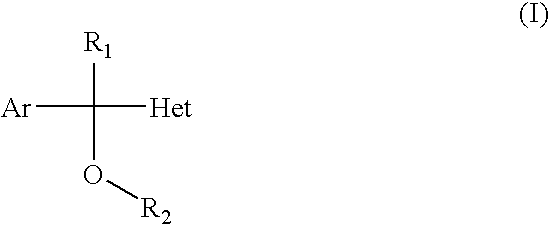
- Ar represents a benzene ring or a thiophene ring with or without substitutions
- R 1 represents a hydrogen atom or a lower alkyl group from C 1 to C 4
- R 2 represents a dialkylaminoalkyl or azaheterocyclylalkyl
- Het represents an azole with or without substitutions, and their physiologically acceptable salts.
- the present invention refers to the use of derivatives of aryl (or heteroaryl) azolylcarbinols of general formula (I)
- Ar represents a phenyl radical or a thienyl radical, without substitutions or optionally with 1,2 or 3 equal or different substituents selected from a group comprised of fluorine, chlorine, bromine, methyl, trifluoromethyl and methoxy;
- R 1 represents a hydrogen atom or a lower alkyl group from C 1 to C 4 ;
- R 2 represents a dialkyl (C 1 -C 4 ) aminoalkyl (C 2 -C 3 ) radical, or azaheterocyclylalkyl (C 2 -C 3 );
- Het represents an azole, i.e. a five-membered nitrogenated aromatic heterocycle that contains from one to three nitrogen atoms, without substitutions or optionally with substitutions by 1 or 2 equal or different substituents selected from a group comprised of fluorine, chlorine, bromine and methyl;
- lower alkyl group from C 1 to C 4 (which is equivalent to “lower C (1-4 )-Alkyl”) represents a linear or branched chain radical derived from a saturated hydrocarbon of 1 to 4 carbon atoms, such as methyl, ethyl, propyl, isopropyl, butyl, isobutyl, sec-butyl and tert-butyl.
- dialkyl(C 1 -C 4 )aminoalkyl (C 2 -C 3 ), or azaheterocyclylalkyl (C 2 -C 3 ) represents an alkyl radical with two or three carbon atoms joined to a dialkyl (C 1 -C 4 ) amine or to a cyclic amine, such as, for example, dimethylaminoethyl, dimethylaminopropyl, diethylaminoethyl, piperidinylethyl, morpholinylpropyl, pirrolidinylalkyl, etc.
- the compounds of general formula (I) can be synthesised according to the procedures described in patents EP 289380, U.S. Pat. No. 5,017,596 or WO 99/52525.
- the compounds of general formula (I) have a stereogenic centre and the invention refers both to the use of a pure enantiomer and to the use of a mixture of enantiomers.
- the enantiomers can be prepared by any of the procedures described in our patents WO 97/20817 (U.S. Pat. No. 5,849,931), WO 99/02500 (U.S. Pat. No. 6,187,930), WO 99/07684 (U.S. Pat. No. 6,118,009) and WO 99/52525 (U.S. Pat. No. 6,410,582).
- the activity of general formula (I) compounds has been demonstrated in processes of hyperactivity of the urinary bladder, and they are, therefore, useful in urinary incontinence due to hyperreflexive detrusor activity and urgency incontinence. The same applies to enuresis or stress incontinence.
- Another aspect of the invention is a method of treatment of a patient or a mammal, including man, suffering from urinary incontinence characterized in that the method comprises the administration of a therapeutically effective amount of a compound of general formula (I)
- Ar represents a phenyl radical or a thienyl radical, with no substitutions or optionally with 1, 2 or 3 equal or different substituents, selected from a group consisting of fluoride, chloride, bromide, methyl, trifluoromethyl and methoxy;
- R 1 represents hydrogen or a lower alkyl group from C 1 to C 4 ;
- R 2 represents a dialkyl(C 1 -C 4 )aminoalkyl (C 2 -C 3 ), or azaheterocyclylalkyl (C 2 -C 3 ) radical;
- Het represents a five-armed nitrogenated aromatic heterocycle that contains one to three nitrogen atoms, without substitutions or optionally substituted by 1 or 2 equal or different substituents selected from a group consisting of fluoride, chloride, bromide and methyl;
- salt is to be understood as meaning any form of the active compound according to the invention in which this assumes an ionic form or is charged and is coupled with a counter-ion (a cation or anion) or is in solution.
- a counter-ion a cation or anion
- complexes of the active compound with other molecules and ions in particular complexes which are complexed via ionic interactions.
- physiologically acceptable salt is understood in particular, in the context of this invention, as salt formed either with a physiologically tolerated acid, that is to say salts of the particular active compound with inorganic or organic acids which are physiologically tolerated—especially if used on humans and/or mammals—or with at least one, preferably inorganic, cation which are physiologically tolerated—especially if used on humans and/or mammals.
- physiologically tolerated salts of particular acids are salts of: hydrochloric acid, hydrobromic acid, sulfuric acid, methanesulfonic acid, formic acid, acetic acid, oxalic acid, succinic acid, malic acid, tartaric acid, mandelic acid, fumaric acid, lactic acid, citric acid, glutamic acid, 1,1-dioxo-1,2-dihydrol6-benzo[d]isothiazol-3-one (saccharin acid), monomethylsebacic acid, 5-oxo-proline, hexane-1-sulfonic acid, nicotinic acid, 2-, 3- or 4-aminobenzoic acid, 2,4,6-trimethyl-benzoic acid, alpha-lipoic acid, acetylglycine, acetylsalicylic acid, hippuric acid and/or aspartic acid.
- physiologically tolerated salts of particular bases are salts of alkali metals and alkal
- the preferred salt is a salt of the particular active compound with a physiologically tolerated acid.
- the salt particularly preferred in the context of this invention is the citrate.
- patient does mean any human being in need of treatment. In particular this encompasses man, woman and children.
- patient group most preferably treated can vary and at times (for example with stress incontinence) include more women, sometimes more elderly women, at times more men, especially elderly men, and sometimes, more children (for example in enuresis).
- a preferred method according to the invention is characterized in that it comprises the administration of a compound of general formula (I), in which R 1 is selected from hydrogen or from a group consisting of methyl, ethyl, propyl, isopropyl, butyl, isobutyl, sec-butyl and tert-butyl.
- R 1 is selected from hydrogen or from a group consisting of methyl, ethyl, propyl, isopropyl, butyl, isobutyl, sec-butyl and tert-butyl.
- Another preferred method according to the invention is characterized in that it comprises the administration of a compound of general formula (I), in which R 2 is selected from among a group consisting of dimethylaminoethyl, dimethylaminopropyl, diethylaminoethyl, piperidinylethyl, morpholinylpropyl and pirrolidinylethyl.
- R 2 is selected from among a group consisting of dimethylaminoethyl, dimethylaminopropyl, diethylaminoethyl, piperidinylethyl, morpholinylpropyl and pirrolidinylethyl.
- Another preferred method according to the invention is characterized in that it comprises the administration of a compound of general formula (Ia)
- n 1 or 2;
- R 3 is selected from:
- R 4 is selected from hydrogen, fluoride, chloride, bromide and methyl
- R 5 and R 6 are independently selected from lower C (1-4) -Alkyl or together with the Nitrogen form an azaheterocyclic ring;
- R 7 is selected from the group consisting of hydrogen, fluoride, chloride, bromide, methyl, trifluoromethyl and methoxy.
- a preferred method according to (this (above) aspect of) the invention is characterized in that it comprises the administration of a compound of general formula (Ia), in which R 7 is hydrogen.
- Another preferred method according to (this (above) aspect of) the invention is characterized in that it comprises the administration of a compound of general formula (Ia), in which R 4 is Methyl.
- Another preferred method according to (this (above) aspect of) the invention is characterized in that it comprises the administration of a compound of general formula (Ia), in which R 4 and R 5 are either CH 3 or C 2 H 5 or together with the Nitrogen form a piperidinyl, morpholinyl or pirrolidinyl ring.
- Another preferred method according to (this (above) aspect of) the invention is characterized in that it comprises the administration of a compound of general formula (Ia) selected from among a group consisting of:
- Another preferred method according to (this (above) aspect of) the invention is characterized in that it comprises the administration of a compound of general formula (Ib)
- m is 1 or 2;
- R 8 is selected from hydrogen, fluoride, chloride, bromide and methyl
- R 9 and R 10 are independently selected from lower C (1-4) -Alkyl or together with the Nitrogen form an azaheterocyclic ring;
- R 11 is selected from the group consisting of hydrogen, fluoride, chloride, bromide, methyl, trifluoromethyl and methoxy.
- a preferred method according to (this (above) aspect of) the invention is characterized in that it comprises the administration of a compound of general formula (Ib), in which R 11 is hydrogen.
- Another preferred method according to (this (above) aspect of) the invention is characterized in that it comprises the administration of a compound of general formula (Ib), in which R 8 is Methyl.
- Another preferred method according to (this (above) aspect of) the invention is characterized in that it comprises the administration of a compound of general formula (Ib), in which R 9 and R 10 are either CH 3 or C 2 H 5 or together with the Nitrogen form a piperidinyl, morpholinyl or pirrolidinyl ring;
- R 9 and R 10 are either CH 3 or C 2 H 5 ;
- R 9 and R 10 are equal and either CH 3 or C 2 H 5 ;
- R 9 and R 10 are both CH 3 .
- Another preferred method according to (this (above) aspect of) the invention is characterized in that it comprises the administration of a compound of general formula (Ib), in which m is 1.
- Another preferred method according to (this (above) aspect of) the invention is characterized in that it comprises the administration of a compound of general formula (Ib) selected from among a group consisting of:
- Another preferred method according to (this (above) aspect of) the invention is characterized in that it comprises the administration of
- Another preferred method according to (this (above) aspect of) the invention is characterized in that it comprises the administration of
- Another preferred method according to (this (above) aspect of) the invention is characterized in that it comprises the administration of
- Another preferred method according to (this (above) aspect of) the invention is characterized in that it comprises the administration of
- Another preferred method according to (this (above) aspect of) the invention is characterized in that it comprises the administration of
- Another preferred method according to (this (above) aspect of) the invention is characterized in that it comprises the administration of
- Another preferred method according to (this (above) aspect of) the invention is characterized in that it comprises the administration of
- Another preferred method according to (this (above) aspect of) the invention is characterized in that it comprises the administration of
- a preferred method according to the invention is characterized in that it comprises the administration of a compound of general formula (Ic)
- p is 1 or 2;
- R 12 is selected from hydrogen, fluoride, chloride, bromide and methyl;
- R 13 and R 14 are independently selected from lower C (1-4) -Alkyl or together with the Nitrogen form an azaheterocyclic ring;
- R 15 is selected from the group consisting of hydrogen, fluoride, chloride, bromide, methyl, trifluoromethyl and methoxy.
- a preferred method according to (this (above) aspect of) the invention is characterized in that it comprises the administration of a compound of general formula (Ic), in which R 15 is hydrogen.
- Another preferred method according to (this (above) aspect of) the invention is characterized in that it comprises the administration of a compound of general formula (Ic), in which R 12 is Methyl.
- Another preferred method according to (this (above) aspect of) the invention is characterized in that it comprises the administration of a compound of general formula (Ic), in which R 13 and R 14 are either CH 3 or C 2 H 5 or together with the Nitrogen form a piperidinyl, morpholinyl or pirrolidinyl ring;
- R 13 and R 14 are either CH 3 or C 2 H 5 ;
- R 13 and R 14 are equal and either CH 3 or C 2 H 5 ;
- R 13 and R 14 are both CH 3 .
- Another preferred method according to (this (above) aspect of) the invention is characterized in that it comprises the administration of a compound of general formula (Ic), in which p is 1.
- Another preferred method according to (this (above) aspect of) the invention is characterized in that it comprises the administration of a compound of general formula (Ic) selected from among a group consisting of:
- Another preferred method according to (this (above) aspect of) the invention is characterized in that it comprises the administration of:
- Another preferred method according to (this (above) aspect of) the invention is characterized in that it comprises the administration of:
- a preferred method according to the invention is characterized in that man means a female.
- a preferred method according to the invention is characterized in that man means a male.
- a preferred method according to the invention is characterized in that the patient is a woman.
- a preferred method according to the invention is characterized in that the patient is an elderly woman.
- a preferred method according to the invention is characterized in that the patient is a man.
- a preferred method according to the invention is characterized in that the patient is an elderly man.
- a preferred method according to the invention is characterized in that the patient is a child.
- a preferred method according to the invention is characterized in that the urinary incontinence the patient or mammal, including man, is suffering from is urge urinary incontinence.
- a preferred method according to the invention is characterized in that the urinary incontinence the patient or mammal, including man, is suffering from is stress urinary incontinence or urinary stress incontinence.
- a preferred method according to the invention is characterized in that the urinary incontinence the patient or mammal, including man, is suffering from is hyperreflexive urinary incontinence.
- a preferred method according to the invention is characterized in that the urinary incontinence the patient or mammal, including man, is suffering from is enuresis.
- a preferred method according to the invention is characterized in that the therapeutically effective amount of the active compound is administered at a dose between 50 and 400 mg/day or between 200 and 600 mg/day.
- dose means the dose of the active compound without the salt (which means without the counter ion, for example the citrate ion).
- a preferred method according to the invention is characterized in that the compound is administered in form of a tablet or capsule.
- a preferred method according to the invention is characterized in that the compound is administered in form of an immediate release formulation.
- immediate release formulation means any formulation with a release profile from which measured according to a standard measurement (e.g. using the paddle method according to the Pharmacopeia) (e.g. in 0.1% NaCl solution) within 30 minutes more than 50%, more preferably 60%, or even more preferably 70% of the active compound is released.
- a specially preferred aspect is a method of treatment of a patient suffering from urinary incontinence characterized in that the method comprises the administration of a therapeutically effective amount of
- a preferred method according to the specially preferred aspect of the invention is characterized in that it comprises the administration of
- Another preferred method according to the specially preferred aspect of the invention is characterized in that it comprises the administration of
- Another preferred method according to the specially preferred aspect of the invention is characterized in that it comprises the administration of
- Another preferred method according to the specially preferred aspect of the invention is characterized in that it comprises the administration of
- Another preferred method according to the specially preferred aspect of the invention is characterized in that it comprises the administration of
- Another preferred method according to the specially preferred aspect of the invention is characterized in that it comprises the administration of
- Another preferred method according to the specially preferred aspect of the invention is characterized in that it comprises the administration of
- Another preferred method according to the specially preferred aspect of the invention is characterized in that the patient is a woman.
- Another preferred method according to the specially preferred aspect of the invention is characterized in that the patient is an elderly woman.
- Another preferred method according to the specially preferred aspect of the invention is characterized in that the patient is a man.
- Another preferred method according to the specially preferred aspect of the invention is characterized in that the patient is an elderly man.
- Another preferred method according to the specially preferred aspect of the invention is characterized in that the patient is a child.
- Another preferred method according to the specially preferred aspect of the invention is characterized in that the urinary incontinence the patient is suffering from is urge urinary incontinence.
- Another preferred method according to the specially preferred aspect of the invention is characterized in that the urinary incontinence the patient is suffering from is stress urinary incontinence or urinary stress incontinence.
- Another preferred method according to the specially preferred aspect of the invention is characterized in that the urinary incontinence the patient is suffering from is hyperreflexive urinary incontinence.
- Another preferred method according to the specially preferred aspect of the invention is characterized in that the urinary incontinence the patient is suffering from is enuresis.
- Another preferred method according to the specially preferred aspect of the invention is characterized in that the therapeutically effective amount of 5- ⁇ -[2-(dimethylamino)ethoxy]benzyl ⁇ -1-methyl-1H-pirazole is administered at a dose between 50 and 400 mg/day or between 200 and 600 mg/day.
- Another preferred method according to the specially preferred aspect of the invention is characterized in that the therapeutically effective amount of ( ⁇ )-5- ⁇ -[2-(dimethylamino)ethoxy]benzyl ⁇ -1-methyl-1H-pirazole is administered at a dose between 50 and 400 mg/day or between 200 and 600 mg/day.
- Another preferred method according to the specially preferred aspect of the invention is characterized in that the therapeutically effective amount of (+)-5- ⁇ -[2-(dimethylamino)ethoxy]benzyl ⁇ -1-methyl-1H-pirazole is administered at a dose between 50 and 400 mg/day or between 200 and 600 mg/day.
- Another preferred method according to the specially preferred aspect of the invention is characterized in that the therapeutically effective amount of ( ⁇ )-5- ⁇ -[2-(dimethylamino)ethoxy]benzyl ⁇ -1-methyl-1H-pirazole is administered at a dose between 50 and 400 mg/day or between 200 and 600 mg/day.
- Another preferred method according to the specially preferred aspect of the invention is characterized in that 5- ⁇ -[2-(dimethylamino)ethoxy]benzyl ⁇ -1-methyl-1H-pirazole is administered at a dose of 230 mg/day, 460 mg/day or 345 mg/day.
- Another preferred method according to the specially preferred aspect of the invention is characterized in that ( ⁇ )-5- ⁇ -[2-(dimethylamino)ethoxy]benzyl ⁇ -1-methyl-1H-pirazole is administered at a dose of 230 mg/day, 345 mg/day, 460 mg/day or 575 mg/day, preferably 345 mg/day or 460 mg/day.
- Another preferred method according to the specially preferred aspect of the invention is characterized in that 5- ⁇ -[2-(dimethylamino)ethoxy]benzyl ⁇ -1-methyl-1H-pirazole citrate is administered at a dose of 400 mg/day, 600 mg/day, 800 mg/day or 1000 mg/day, preferably 600 mg/day or 800 mg/day.
- Another preferred method according to the specially preferred aspect of the invention is characterized in that ( ⁇ )-5- ⁇ -[2-(dimethylamino)ethoxy]benzyl ⁇ -1-methyl-1H-pirazole citrate is administered at a dose of 400 mg/day, 600 mg/day, 800 mg/day or 1000 mg/day, preferably 600 mg/day or 800 mg/day.
- Another preferred method according to the specially preferred aspect of the invention is characterized in that 5- ⁇ -[2-(dimethylamino)ethoxy]benzyl ⁇ -1-methyl-1H-pirazole is administered twice daily.
- Another preferred method according to the specially preferred aspect of the invention is characterized in that 5- ⁇ -[2-(dimethylamino)ethoxy]benzyl ⁇ -1-methyl-1H-pirazole is administered orally.
- Another preferred method according to the specially preferred aspect of the invention is characterized in that 5- ⁇ -[2-(dimethylamino)ethoxy]benzyl ⁇ -1-methyl-1H-pirazole is administered in form of a tablet or capsule.
- Another preferred method according to the specially preferred aspect of the invention is characterized in that 5- ⁇ -[2-(dimethylamino)ethoxy]benzyl ⁇ -1-methyl-1H-pirazole is administered in form of an immediate release formulation.
- Another preferred method according to the specially preferred aspect of the invention is characterized in that 5- ⁇ -[2-(dimethylamino)ethoxy]benzyl ⁇ -1-methyl-1H-pirazole is administered in form of a formulation comprising any of the following:
- Another preferred method according to the specially preferred aspect of the invention is characterized in that 5- ⁇ -[2-(dimethylamino)ethoxy]benzyl ⁇ -1-methyl-1H-pirazole is administered in form of a formulation according to example 5.
- Another preferred method according to the specially preferred aspect of the invention is characterized in that 5- ⁇ -[2-(dimethylamino)ethoxy]benzyl ⁇ -1-methyl-1H-pirazole is administered in form of a formulation according to example 7.
- derivatives of aryl(or heteroaryl)azolylcarbinol can be used satisfactorily in human and animal therapeutics to cure and relieve urinary incontinence.
- the dose administered of the compounds of the invention depends on the severity of the infection to be treated. It is normally between 50 and 400 mg/day or 200 and 600 mg/day.
- the compounds of the invention are administered for example in the form of capsules or tablets.
- Any formulation or pharmaceutical composition according to the invention contains the active ingredient as well as optionally at least one auxiliary material and/or additive.
- the auxiliary material and/or additive can be selected from carrier, excipient, support materials, glidants, fillers, solvents, diluents, colorants, taste conditioners like sugars, antioxidants and/or binders. In the case of a suppository this might involve waxes or fatty acid esters or conserving agents, emulsifiers and/or carriers for parenteral application.
- carrier excipient
- support materials glidants
- fillers solvents, diluents, colorants, taste conditioners like sugars, antioxidants and/or binders.
- solvents e.g., diluents, colorants, taste conditioners like sugars, antioxidants and/or binders.
- a suppository this might involve waxes or fatty acid esters or conserving agents, emulsifiers and/or carriers for parenteral application.
- the selection of these auxiliary materials and/or additives and of the amounts to be used depends upon how the pharmaceutical composition is to
- Examples include here oral or parenteral like pulmonal, nasal, rectal and/or intravenous application. Therefore the pharmaceutical composition according to the invention can be adapted for topical or systemical application, especially dermal, subcutaneous, intramuscular, intra-articular and/or intraperitoneal, pulmonal, buccal, sublingual, nasal, percutaneous, vaginal, oral or parenteral, pulmonal, nasal, rectal and/or intravenous application.
- FIG. 1 illustrates results of example 2.
- FIG. 2 illustrates results of example 3.
- the patients were treated within one group with ( ⁇ )-5- ⁇ -[2-(dimethylamino)ethoxy]benzyl ⁇ -1-methyl-1H-pirazole citrate, 400 mg, twice a day, tablets for oral administration, or within another group with placebo in matching tablets, twice a day, for administration by oral route.
- the patients were treated for 84 days.
- the primary efficacy analysis was based on the PP population.
- the treatment groups were compared with respect to the treatment effect, defined as the difference between treatment groups for changes from baseline in the number of voidings per 24 hours.
- Efficacy was measured by the difference from baseline in the mean number of voidings/24 hours as provided by a 7-day frequency-volume chart in the end of study visit.
- the primary efficacy analysis was based on the PP population.
- the treatment groups were compared with respect to the treatment effect, defined as the difference between treatment groups for changes from baseline in the number of voidings per 24 hours.
- Example of Formulation for an Injectable (im/iv) Solution Citrate of ( ⁇ )-5- ⁇ -[2- 50 mg (dimethylamino)ethoxy]benzyl ⁇ - 1-methyl-1H-pirazole 0.1 N Sodium hydroxide c.s. pH 6 Water for injection c.s.p. 1 ml
- Cyclophosphamide is an effective form of treatment for several diseases including cancer.
- One possible side effect of this product is acute inflammation of the bladder. Its activity is based on conversion of the active metabolite in the liver.
- Treatment with cyclosphosphamide can give rise to several complications of adverse effects including urinary bladder cystitis, that is mainly due to another cyclophosphamide metabolite, acroleine.
- urinary bladder cystitis that is mainly due to another cyclophosphamide metabolite, acroleine.
- cyclophosphamide-induced cystitis is due to direct contact of acroleine with the urothelium, although the precise mechanism of this inflammatory response is largely unknown.
- One of the manifestations of inflammatory response is extravasation of plasma in the urinary bladder. Extravasation of plasmatic proteins has been measured by the permeability technique using Evan's blue dye, described by A. Saria and J. M. Lundberg (J
Landscapes
- Health & Medical Sciences (AREA)
- Animal Behavior & Ethology (AREA)
- Public Health (AREA)
- Veterinary Medicine (AREA)
- Chemical & Material Sciences (AREA)
- Life Sciences & Earth Sciences (AREA)
- General Health & Medical Sciences (AREA)
- Medicinal Chemistry (AREA)
- Pharmacology & Pharmacy (AREA)
- Epidemiology (AREA)
- Bioinformatics & Cheminformatics (AREA)
- Nuclear Medicine, Radiotherapy & Molecular Imaging (AREA)
- Organic Chemistry (AREA)
- Engineering & Computer Science (AREA)
- General Chemical & Material Sciences (AREA)
- Chemical Kinetics & Catalysis (AREA)
- Urology & Nephrology (AREA)
- Pharmaceuticals Containing Other Organic And Inorganic Compounds (AREA)
Abstract
Derivatives of aryl(or heteroaryl)azolylcarbinols of general formula (I), in which Ar represents a phenyl radical or a thienyl radical, optionally substituted, R1 represents a hydrogen atom or a lower alkyl group, R2 represents a dialkylaminoalkyl or azaheterocylclylalkyl and Het represents an azole unsubstituted or optionally substituted by one or two substituents, and their physiologically acceptable salts; are useful as drugs in human and/or veterinary therapeutics to treat urinary incontinence in mammals, including man.

Description
- The present invention refers to the use of derivatives of aryl (or heteroaryl) azolylcarbinols of general formula (I), and their physiologically acceptable salts, as medicinal products for human and/or animal therapeutics for the treatment of urinary incontinence.
- Urination is a function of the lower urinary tract that is defined as discharge of urine through the urethra. Urination is considered to be normal in an adult when it is voluntary, continuous, complete, satisfactory, interruptible, spaced out in time (at socially acceptable intervals), without causing abdominal pressure, without urgency, and only occasional at night.
- Urinary incontinence, a urinary disorder, is defined as the involuntarily discharge of urine, which can be demonstrated objectively. This functional disorder of bladder is a health problem of increasing social and hygienic relevance for the population that suffers from it. According to our data, urinary incontinence occurs in approximately 1.5 to 5% of men and 10 to 30% of women in the population between 15 and 64 years old. However, if we select the non-hospitalised population sector over 60 years old, the prevalence ranges from 15% to 35% of this population. On the other hand, when hospitalised patients over 60 years old are studied, the incidence is higher. Urinary incontinence affects approximately 2 million of the Spanish population.
- Urinary incontinence can be considered as a symptom, sign or pathological condition. The following is one of the possible classifications of this functional disorder.
- Imperative micturition or urge incontinence. This is when the involuntary discharge of urine is accompanied by an intense desire to urinate (urgency). This can be separated into motor urgency incontinence or sensitive urgency incontinence. Motor urgency incontinence is associated with hyperactivity of the detrusor muscle and/or reduced distensibility of the detrusor. Hyperactivity is characterised by involuntary contractions of the detrusor during the filling stage, either spontaneous or provoked, that the patient cannot totally suppress. Hyperactivity of the detrusor muscle can occur when there is obstruction of the exiting urinary flow, inflammation and conditions in which the bladder is irritated, or it can be of unknown aetiology (idiopathic).
- Hyperreflexia, is described as a condition that presents uncontrolled contractions of the detrusor muscle associated with neurological disorders such as multiple sclerosis or plaque sclerosis, sequelae of medular traumatisms or Parkinson's disease.
- Urinary stress incontinence due to a defective urethral closure mechanism, there is involuntary discharge of urine in the absence of detrusor contraction that occurs when the intravesical pressure exceeds the pressure in the urethra. Involuntary discharge occurs when some physical exertion is made such as jumping, coughing, going down stairs etc. One additional factor can be due to structural changes in the urethra due to menopausal hypooestrogenia.
- Mixed incontinence, this term refers to the existence of both urgency incontinence and stress incontinence.
- Enuresis, this term refers to any involuntary loss of urine and more specifically refers to incontinence during sleep. It most often applies to children with a higher incidence in boys and in the age group of up to 5 years.
- For more definitions and a standardisation of Terminology reference is made to Abrams et al, Neurology and Urodynamics 21:167-178 (2002)
- The therapeutic options for urinary incontinence depend on the type of incontinence. In urgency incontinence, the first and most effective therapeutic approach is pharmacological treatment accompanied by a series of hygiene regulations and patient education, with secondary approaches including other therapies such as maximum electrical stimulation or surgical treatment. Conservative measures such as pelvic floor exercises and surgical treatment, as a first option, are reserved for stress incontinence.
- Pharmacological treatment of urinary urgency incontinence and of hyperreflexia is aimed at reducing activity of the detrusor muscle and increasing the bladder capacity. In cases of stress incontinence, the treatment is aimed at increasing resistance to urinary discharge.
- The drugs used to treat urinary incontinence include a wide therapeutic range of drugs from different pharmacological groups with different action mechanisms [Hattori T., Drug treatment of urinary incontinence. Drugs of Today, 1998, 34 (2): 125-138], although there is a great deal of confusion and the clinical efficacy of these has not been completely demonstrated.
- In a first group of drugs that have an anticholinergic action, propantheline can be considered as a pure anticholinergic agent. There is also a new drug, tolterodine, that has a selective anticholinergic action but that is not selective for the different subtypes of muscarinic receptors although it does appear to have a selectivity of action that is centred around the urinary bladder (detrusor), salivary glands and human intestine. One of the drugs with an anticholinergic action, oxybutin, is a drug with a mixed action, a moderate anticholinergic agent and is a strong direct muscular relaxant. Oxybutin is now the first drug of choice for this disorder, in spite of its tolerability profile with non-severe but annoying adverse effects such as dry mouth, constipation and drowsiness that, in some cases, can cause the patient to abandon the treatment.
- Several tricyclic antidepressants have beneficial effects in patients with detrusor hyperactivity. Imipramine, a drug used in clinical practise, has been shown to be an effective treatment for nocturnal enuresis in children and vesical hyperactivity, for example, in the elderly. Owing to the different adverse events reported for this group of drugs, sometimes of strong intensity (e.g. cardiovascular events), the risk-benefits of this treatment for urination disorders must be studied in certain populations, especially in the elderly.
- The α-adrenergic antagonists such as prazosin, terazosin or doxazosin can improve detrusor hyperactivity and symptoms related with detrusor dysfunction in patients with benign prostrate hyperplasia, although the evidence for this effect in hyperactive bladder is currently under discussion and there are no data to support its use in urgency incontinence.
- Another therapeutically interesting group corresponds to the β-adrenergics, although there is still little information available about their efficacy. It is known that β-adrenergic stimulation can relax the human bladder in normal conditions. The detrusor muscle, both in normal conditions or in the case of an unstable bladder shows a similar degree of response, relaxation, to an p-agonist drug. The β 2-adrenergic receptor agonists, such as terbutaline or albuterol, have been shown to be able to increase the bladder capacity. In contrast, efficacy of this drug in the treatment of detrusor hyperactivity has been shown in very few controlled clinical studies and in only a small sample of patients.
- In our patents EP 289380 B1 (U.S. Pat. No. 5,017,596) and WO 99/52525 (U.S. Pat. No. 6,410,582) we have described derivatives of carbinols of general formula (I) with analgesic activity,

- In these compounds of general formula (I). Ar represents a benzene ring or a thiophene ring with or without substitutions, R 1 represents a hydrogen atom or a lower alkyl group from C1 to C4; R2 represents a dialkylaminoalkyl or azaheterocyclylalkyl and Het represents an azole with or without substitutions, and their physiologically acceptable salts.
- In our patent applications WO 97/20817 (U.S. Pat. No. 5,849,931), WO 99/02500 (U.S. Pat. No. 6,187,930), WO 99/07684 (U.S. Pat. No. 6,118,009) and WO 99/52525 (U.S. Pat. No. 6,410,582) we have also described several procedures to prepare enantiomerically pure compounds with general formula (I).
- We have also discovered now that general formula (I) compounds, and their physiologically acceptable salts, are especially useful for producing drugs, in human or veterinary therapeutics, to cure or relieve urinary incontinence.
- The present invention refers to the use of derivatives of aryl (or heteroaryl) azolylcarbinols of general formula (I)

- in which
- Ar represents a phenyl radical or a thienyl radical, without substitutions or optionally with 1,2 or 3 equal or different substituents selected from a group comprised of fluorine, chlorine, bromine, methyl, trifluoromethyl and methoxy;
- R 1 represents a hydrogen atom or a lower alkyl group from C1 to C4;
- R 2 represents a dialkyl (C1-C4) aminoalkyl (C2-C3) radical, or azaheterocyclylalkyl (C2-C3); and
- Het represents an azole, i.e. a five-membered nitrogenated aromatic heterocycle that contains from one to three nitrogen atoms, without substitutions or optionally with substitutions by 1 or 2 equal or different substituents selected from a group comprised of fluorine, chlorine, bromine and methyl;
- or one of its physiologically acceptable salts,
- In the production of a drug to treat urinary incontinence, in mammals, including man, especially in patients that present an urgency or hyperreflexive incontinence.
- The term “lower alkyl group from C 1 to C4” (which is equivalent to “lower C(1-4)-Alkyl”) represents a linear or branched chain radical derived from a saturated hydrocarbon of 1 to 4 carbon atoms, such as methyl, ethyl, propyl, isopropyl, butyl, isobutyl, sec-butyl and tert-butyl.
- The term “dialkyl(C 1-C4)aminoalkyl (C2-C3), or azaheterocyclylalkyl (C2-C3)” represents an alkyl radical with two or three carbon atoms joined to a dialkyl (C1-C4) amine or to a cyclic amine, such as, for example, dimethylaminoethyl, dimethylaminopropyl, diethylaminoethyl, piperidinylethyl, morpholinylpropyl, pirrolidinylalkyl, etc.
- Illustrative examples of compounds included in the present invention include:
- (±)-5-{α-[2-(dimethylamino)ethoxy]benzyl}-1-methyl-1H-pirazole.
- (±)-5-{α-[2-(dimethylamino)ethoxy]benzyl}-1-methyl-1H-pirazole citrate.
- (+)-5-{α-[2-(dimethylamino)ethoxy]benzyl}-1-methyl-1H-pirazole.
- (−)-5-{α-[2-(dimethylamino)ethoxy]benzyl}-1-methyl-1H-pirazole.
- (+)-5-{α-[2-(dimethylamino)ethoxy]benzyl}-1-methyl-1H-pirazole citrate.
- (−)-5-{α-[2-(dimethylamino)ethoxy]benzyl}-1-methyl-1H-pirazole.
- (±)-5-{α-[2-(dimethylamino)ethoxy]-2-thienylmethyl}-1-methyl-1H-pirazole.
- (±)-5-{α-[2-(dimethylamino)ethoxy]-2-thienylmethyl}-1-methyl-1H-pirazole citrate.
- (+)-5-{α-[2-(dimethylamino)ethoxy]-2-thienylmethyl}-1-methyl-1H-pirazole.
- (−)-5-{α-[2-(dimethylamino)ethoxy]-2-thienylmethyl}-1-methyl-1H-pirazole.
- (+)-5-{α-[2-(dimethylamino)ethoxy]-2-thienylmethyl}-1-methyl-1H-pirazole citrate.
- (−)-5-{α-[2-(dimethylamino)ethoxy]-2-thienylmethyl}-1-methyl-1H-pirazole citrate.
- The compounds of general formula (I) can be synthesised according to the procedures described in patents EP 289380, U.S. Pat. No. 5,017,596 or WO 99/52525. The compounds of general formula (I) have a stereogenic centre and the invention refers both to the use of a pure enantiomer and to the use of a mixture of enantiomers. The enantiomers can be prepared by any of the procedures described in our patents WO 97/20817 (U.S. Pat. No. 5,849,931), WO 99/02500 (U.S. Pat. No. 6,187,930), WO 99/07684 (U.S. Pat. No. 6,118,009) and WO 99/52525 (U.S. Pat. No. 6,410,582).
- In the context of this invention the term “(dimethylamino)” shall be treated and considered absolutely identical to the term “(dimethylamine). The selection of the first term to describe compounds was only due a seeming more fitting chemical nomenclature.
- In the present invention, the activity of general formula (I) compounds has been demonstrated in processes of hyperactivity of the urinary bladder, and they are, therefore, useful in urinary incontinence due to hyperreflexive detrusor activity and urgency incontinence. The same applies to enuresis or stress incontinence. Another aspect of the invention is a method of treatment of a patient or a mammal, including man, suffering from urinary incontinence characterized in that the method comprises the administration of a therapeutically effective amount of a compound of general formula (I)

- in which
- Ar represents a phenyl radical or a thienyl radical, with no substitutions or optionally with 1, 2 or 3 equal or different substituents, selected from a group consisting of fluoride, chloride, bromide, methyl, trifluoromethyl and methoxy;
- R 1 represents hydrogen or a lower alkyl group from C1 to C4;
- R 2 represents a dialkyl(C1-C4)aminoalkyl (C2-C3), or azaheterocyclylalkyl (C2-C3) radical; and
- Het represents a five-armed nitrogenated aromatic heterocycle that contains one to three nitrogen atoms, without substitutions or optionally substituted by 1 or 2 equal or different substituents selected from a group consisting of fluoride, chloride, bromide and methyl;
- optionally in the form of its racemate, pure stereoisomers, especially enantiomers or diastereomers or in the form of mixtures of stereoisomers, especially enantiomers or diastereomers, in any suitable ratio;
- in the form shown or in form of the acid or base or in form of a salt, especially a physiologically acceptable salt, or in form of a solvate, especially a hydrate.
- The term “salt” is to be understood as meaning any form of the active compound according to the invention in which this assumes an ionic form or is charged and is coupled with a counter-ion (a cation or anion) or is in solution. By this are also to be understood complexes of the active compound with other molecules and ions, in particular complexes which are complexed via ionic interactions.
- The term “physiologically acceptable salt” is understood in particular, in the context of this invention, as salt formed either with a physiologically tolerated acid, that is to say salts of the particular active compound with inorganic or organic acids which are physiologically tolerated—especially if used on humans and/or mammals—or with at least one, preferably inorganic, cation which are physiologically tolerated—especially if used on humans and/or mammals. Examples of physiologically tolerated salts of particular acids are salts of: hydrochloric acid, hydrobromic acid, sulfuric acid, methanesulfonic acid, formic acid, acetic acid, oxalic acid, succinic acid, malic acid, tartaric acid, mandelic acid, fumaric acid, lactic acid, citric acid, glutamic acid, 1,1-dioxo-1,2-dihydrol6-benzo[d]isothiazol-3-one (saccharin acid), monomethylsebacic acid, 5-oxo-proline, hexane-1-sulfonic acid, nicotinic acid, 2-, 3- or 4-aminobenzoic acid, 2,4,6-trimethyl-benzoic acid, alpha-lipoic acid, acetylglycine, acetylsalicylic acid, hippuric acid and/or aspartic acid. Examples of physiologically tolerated salts of particular bases are salts of alkali metals and alkaline earth metals and with NH 4.
- In the context of this invention the preferred salt is a salt of the particular active compound with a physiologically tolerated acid.
- The salt particularly preferred in the context of this invention is the citrate.
- In the context of this invention patient does mean any human being in need of treatment. In particular this encompasses man, woman and children. Depending on the specific kind of Urinary Incontinence encountered, the patient group most preferably treated can vary and at times (for example with stress incontinence) include more women, sometimes more elderly women, at times more men, especially elderly men, and sometimes, more children (for example in enuresis).
- A preferred method according to the invention is characterized in that it comprises the administration of a compound of general formula (I), in which R 1 is selected from hydrogen or from a group consisting of methyl, ethyl, propyl, isopropyl, butyl, isobutyl, sec-butyl and tert-butyl.
- Another preferred method according to the invention is characterized in that it comprises the administration of a compound of general formula (I), in which R 2 is selected from among a group consisting of dimethylaminoethyl, dimethylaminopropyl, diethylaminoethyl, piperidinylethyl, morpholinylpropyl and pirrolidinylethyl.
- Another preferred method according to the invention is characterized in that it comprises the administration of a compound of general formula (Ia)

- in which
- n is 1 or 2;
- R 3 is selected from:

- R 4 is selected from hydrogen, fluoride, chloride, bromide and methyl;
- R 5 and R6 are independently selected from lower C(1-4)-Alkyl or together with the Nitrogen form an azaheterocyclic ring;
- R 7 is selected from the group consisting of hydrogen, fluoride, chloride, bromide, methyl, trifluoromethyl and methoxy.
- A preferred method according to (this (above) aspect of) the invention is characterized in that it comprises the administration of a compound of general formula (Ia), in which R 7 is hydrogen.
- Another preferred method according to (this (above) aspect of) the invention is characterized in that it comprises the administration of a compound of general formula (Ia), in which R 4 is Methyl.
- Another preferred method according to (this (above) aspect of) the invention is characterized in that it comprises the administration of a compound of general formula (Ia), in which R 4 and R5 are either CH3 or C2H5 or together with the Nitrogen form a piperidinyl, morpholinyl or pirrolidinyl ring.
- Another preferred method according to (this (above) aspect of) the invention is characterized in that it comprises the administration of a compound of general formula (Ia) selected from among a group consisting of:
- 5-{α-[2-(dimethylamino)ethoxy]benzyl}-1-methyl-1H-pirazole,
- (±)-5-{α-[2-(dimethylamino)ethoxy]benzyl}-1-methyl-1H-pirazole,
- (+)-5-{α-[2-(dimethylamino)ethoxy]benzyl}-1-methyl-1H-pirazole,
- (−)-5-{α-[2-(dimethylamino)ethoxy]benzyl}-1-methyl-1H-pirazole,
- 5-{α-[2-(dimethylamino)ethoxy]benzyl}-1-methyl-1H-pirazole citrate,
- (+)-5-{α-[2-(dimethylamino)ethoxy]benzyl}-1-methyl-1H-pirazole citrate,
- (+)-5-{α-[2-(dimethylamino)ethoxy]benzyl}-1-methyl-1H-pirazole citrate,
- (−)-5-{α-[2-(dimethylamino)ethoxy]benzyl}-1-methyl-1H-pirazole citrate,
- 5-{α-[2-(dimethylamino)ethoxy]-2-thienylmethyl}-1-methyl-1H-pirazole,
- (+)-5-{α-[2-(dimethylamino)ethoxy]-2-thienylmethyl}-1-methyl-1H-pirazole,
- (+)-5-{α-[2-(dimethylamino)ethoxy]-2-thienylmethyl}-1-methyl-1H-pirazole,
- (−)-5-{α-[2-(dimethylamino)ethoxy]-2-thienylmethyl}-1-methyl-1H-pirazole,
- 5-{α-[2-(dimethylamino)ethoxy]-2-thienylmethyl}-1-methyl-1H-pirazole citrate,
- (+)-5-{α-[2-(dimethylamino)ethoxy]-2-thienylmethyl}-1-methyl-1H-pirazole citrate,
- (+)-5-{α-[2-(dimethylamino)ethoxy]-2-thienylmethyl}-1-methyl-1H-pirazole citrate,
- (−)-5-{α-[2-(dimethylamino)ethoxy]-2-thienylmethyl}-1-methyl-1H-pirazole citrate.
- Another preferred method according to (this (above) aspect of) the invention is characterized in that it comprises the administration of a compound of general formula (Ib)

- in which
- m is 1 or 2;
- R 8 is selected from hydrogen, fluoride, chloride, bromide and methyl;
- R 9 and R10 are independently selected from lower C(1-4)-Alkyl or together with the Nitrogen form an azaheterocyclic ring;
- R 11 is selected from the group consisting of hydrogen, fluoride, chloride, bromide, methyl, trifluoromethyl and methoxy.
- A preferred method according to (this (above) aspect of) the invention is characterized in that it comprises the administration of a compound of general formula (Ib), in which R 11 is hydrogen.
- Another preferred method according to (this (above) aspect of) the invention is characterized in that it comprises the administration of a compound of general formula (Ib), in which R 8 is Methyl.
- Another preferred method according to (this (above) aspect of) the invention is characterized in that it comprises the administration of a compound of general formula (Ib), in which R 9 and R10 are either CH3 or C2H5 or together with the Nitrogen form a piperidinyl, morpholinyl or pirrolidinyl ring;
- preferably in which R 9 and R10 are either CH3 or C2H5;
- especially in which R 9 and R10 are equal and either CH3 or C2H5;
- most preferably in which R 9 and R10 are both CH3.
- Another preferred method according to (this (above) aspect of) the invention is characterized in that it comprises the administration of a compound of general formula (Ib), in which m is 1.
- Another preferred method according to (this (above) aspect of) the invention is characterized in that it comprises the administration of a compound of general formula (Ib) selected from among a group consisting of:
- 5-{α-[2-(dimethylamino)ethoxy]benzyl}-1-methyl-1H-pirazole,
- (+)-5-{α-[2-(dimethylamino)ethoxy]benzyl}-1-methyl-1H-pirazole,
- (+)-5-{α-[2-(dimethylamino)ethoxy]benzyl}-1-methyl-1H-pirazole,
- (−)-5-{α-[2-(dimethylamino)ethoxy]benzyl}-1-methyl-1H-pirazole,
- 5-{α-[2-(dimethylamino)ethoxy]benzyl}-1-methyl-1H-pirazole citrate,
- (±)-5-{α-[2-(dimethylamino)ethoxy]benzyl}-1-methyl-1H-pirazole citrate,
- (+)-5-{α-[2-(dimethylamino)ethoxy]benzyl}-1-methyl-1H-pirazole citrate,
- (−)-5-{α-[2-(dimethylamino)ethoxy]benzyl}-1-methyl-1H-pirazole citrate.
- Another preferred method according to (this (above) aspect of) the invention is characterized in that it comprises the administration of
- 5-{α-[2-(dimethylamino)ethoxy]benzyl}-1-methyl-1H-pirazole.
- Another preferred method according to (this (above) aspect of) the invention is characterized in that it comprises the administration of
- (±)-5-{α-[2-(dimethylamino)ethoxy]benzyl}-1-methyl-1H-pirazole.
- Another preferred method according to (this (above) aspect of) the invention is characterized in that it comprises the administration of
- (+)-5-{α-[2-(dimethylamino)ethoxy]benzyl}-1-methyl-1H-pirazole.
- Another preferred method according to (this (above) aspect of) the invention is characterized in that it comprises the administration of
- (−)-5-{α-[2-(dimethylamino)ethoxy]benzyl}-1-methyl-1H-pirazole.
- Another preferred method according to (this (above) aspect of) the invention is characterized in that it comprises the administration of
- 5-{α-[2-(dimethylamino)ethoxy]benzyl}-1-methyl-1H-pirazole citrate.
- Another preferred method according to (this (above) aspect of) the invention is characterized in that it comprises the administration of
- (+)-5-{α-[2-(dimethylamino)ethoxy]benzyl}-1-methyl-1H-pirazole citrate.
- Another preferred method according to (this (above) aspect of) the invention is characterized in that it comprises the administration of
- (+)-5-{α-[2-(dimethylamino)ethoxy]benzyl}-1-methyl-1H-pirazole citrate.
- Another preferred method according to (this (above) aspect of) the invention is characterized in that it comprises the administration of
- (−)-5-{α-[2-(dimethylamino)ethoxy]benzyl}-1-methyl-1H-pirazole citrate.
- A preferred method according to the invention is characterized in that it comprises the administration of a compound of general formula (Ic)

- in which
- p is 1 or 2;
- R 12 is selected from hydrogen, fluoride, chloride, bromide and methyl; R13 and R14 are independently selected from lower C(1-4)-Alkyl or together with the Nitrogen form an azaheterocyclic ring;
- R 15 is selected from the group consisting of hydrogen, fluoride, chloride, bromide, methyl, trifluoromethyl and methoxy.
- A preferred method according to (this (above) aspect of) the invention is characterized in that it comprises the administration of a compound of general formula (Ic), in which R 15 is hydrogen.
- Another preferred method according to (this (above) aspect of) the invention is characterized in that it comprises the administration of a compound of general formula (Ic), in which R 12 is Methyl.
- Another preferred method according to (this (above) aspect of) the invention is characterized in that it comprises the administration of a compound of general formula (Ic), in which R 13 and R14 are either CH3 or C2H5 or together with the Nitrogen form a piperidinyl, morpholinyl or pirrolidinyl ring;
- preferably in which R 13 and R14 are either CH3 or C2H5;
- especially in which R 13 and R14 are equal and either CH3 or C2H5;
- most preferably in which R 13 and R14 are both CH3.
- Another preferred method according to (this (above) aspect of) the invention is characterized in that it comprises the administration of a compound of general formula (Ic), in which p is 1.
- Another preferred method according to (this (above) aspect of) the invention is characterized in that it comprises the administration of a compound of general formula (Ic) selected from among a group consisting of:
- 5-{α-[2-(dimethylamino)ethoxy]-2-thienylmethyl}-1-methyl-1H-pirazole,
- (±)-5-{α-[2-(dimethylamino)ethoxy]-2-thienylmethyl}-1-methyl-1H-pirazole,
- (+)-5-{α-[2-(dimethylamino)ethoxy]-2-thienylmethyl}-1-methyl-1H-pirazole,
- (−)-5-{α-[2-(dimethylamino)ethoxy]-2-thienylmethyl}-1-methyl-1H-pirazole,
- 5-{α-[2-(dimethylamino)ethoxy]-2-thienylmethyl}-1-methyl-1H-pirazole citrate,
- (±)-5-{α-[2-(dimethylamino)ethoxy]-2-thienylmethyl}-1-methyl-1H-pirazole citrate,
- (+)-5-{α-[2-(dimethylamino)ethoxy]-2-thienylmethyl}-1-methyl-1H-pirazole citrate,
- (−)-5-{α-[2-(dimethylamino)ethoxy]-2-thienylmethyl}-1-methyl-1H-pirazole citrate.
- Another preferred method according to (this (above) aspect of) the invention is characterized in that it comprises the administration of:
- 5-{α-[2-(dimethylamino)ethoxy]-2-thienylmethyl}-1-methyl-1H-pirazole,
- ,optionally in the form of its racemate, pure stereoisomers, especially enantiomers or diastereomers or in the form of mixtures of stereoisomers, especially enantiomers or diastereomers, in any suitable ratio;
- in form of the free base or in form of a salt, especially a physiologically acceptable salt, or in form of a solvate, especially a hydrate.
- Another preferred method according to (this (above) aspect of) the invention is characterized in that it comprises the administration of:
- 5-{α-[2-(dimethylamino)ethoxy]-2-thienylmethyl}-1-methyl-1H-pirazole citrate,
- ,optionally in the form of its racemate, pure stereoisomers, especially enantiomers or diastereomers or in the form of mixtures of stereoisomers, especially enantiomers or diastereomers, in any suitable ratio.
- A preferred method according to the invention is characterized in that man means a female.
- A preferred method according to the invention is characterized in that man means a male.
- A preferred method according to the invention is characterized in that the patient is a woman.
- A preferred method according to the invention is characterized in that the patient is an elderly woman.
- A preferred method according to the invention is characterized in that the patient is a man.
- 25
- A preferred method according to the invention is characterized in that the patient is an elderly man.
- A preferred method according to the invention is characterized in that the patient is a child. A preferred method according to the invention is characterized in that the urinary incontinence the patient or mammal, including man, is suffering from is urge urinary incontinence.
- A preferred method according to the invention is characterized in that the urinary incontinence the patient or mammal, including man, is suffering from is stress urinary incontinence or urinary stress incontinence.
- A preferred method according to the invention is characterized in that the urinary incontinence the patient or mammal, including man, is suffering from is hyperreflexive urinary incontinence.
- A preferred method according to the invention is characterized in that the urinary incontinence the patient or mammal, including man, is suffering from is enuresis.
- A preferred method according to the invention is characterized in that the therapeutically effective amount of the active compound is administered at a dose between 50 and 400 mg/day or between 200 and 600 mg/day.
- In the context of this invention—if not clearly expressed as meaning the complete salt—dose means the dose of the active compound without the salt (which means without the counter ion, for example the citrate ion).
- A preferred method according to the invention is characterized in that the compound is administered in form of a tablet or capsule.
- A preferred method according to the invention is characterized in that the compound is administered in form of an immediate release formulation.
- In the context of this invention “immediately release formulation” means any formulation with a release profile from which measured according to a standard measurement (e.g. using the paddle method according to the Pharmacopeia) (e.g. in 0.1% NaCl solution) within 30 minutes more than 50%, more preferably 60%, or even more preferably 70% of the active compound is released.
- A specially preferred aspect is a method of treatment of a patient suffering from urinary incontinence characterized in that the method comprises the administration of a therapeutically effective amount of
- 5-{α-[2-(dimethylamino)ethoxy]benzyl}-1-methyl-1H-pirazole,
- ,optionally in the form of its racemate, pure stereoisomers, especially enantiomers or diastereomers or in the form of mixtures of stereoisomers, especially enantiomers or diastereomers, in any suitable ratio;
- in form of the free base or in form of a salt, especially a physiologically acceptable salt, or in form of a solvate, especially a hydrate.
- A preferred method according to the specially preferred aspect of the invention is characterized in that it comprises the administration of
- (+)-5-{α-[2-(dimethylamino)ethoxy]benzyl}-1-methyl-1H-pirazole.
- Another preferred method according to the specially preferred aspect of the invention is characterized in that it comprises the administration of
- (+)-5-{α-[2-(dimethylamino)ethoxy]benzyl}-1-methyl-1H-pirazole.
- Another preferred method according to the specially preferred aspect of the invention is characterized in that it comprises the administration of
- (−)-5-{α-[2-(dimethylamino)ethoxy]benzyl}-1-methyl-1H-pirazole.
- Another preferred method according to the specially preferred aspect of the invention is characterized in that it comprises the administration of
- 5-{α-[2-(dimethylamino)ethoxy]benzyl}-1-methyl-1H-pirazole citrate.
- Another preferred method according to the specially preferred aspect of the invention is characterized in that it comprises the administration of
- (±)-5-{α-[2-(dimethylamino)ethoxy]benzyl}-1-methyl-1H-pirazole citrate.
- Another preferred method according to the specially preferred aspect of the invention is characterized in that it comprises the administration of
- (+)-5-{α-[2-(dimethylamino)ethoxy]benzyl}-1-methyl-1H-pirazole citrate.
- Another preferred method according to the specially preferred aspect of the invention is characterized in that it comprises the administration of
- (−)-5-{α-[2-(dimethylamino)ethoxy]benzyl}-1-methyl-1H-pirazole citrate.
- Another preferred method according to the specially preferred aspect of the invention is characterized in that the patient is a woman.
- Another preferred method according to the specially preferred aspect of the invention is characterized in that the patient is an elderly woman.
- Another preferred method according to the specially preferred aspect of the invention is characterized in that the patient is a man.
- Another preferred method according to the specially preferred aspect of the invention is characterized in that the patient is an elderly man.
- Another preferred method according to the specially preferred aspect of the invention is characterized in that the patient is a child.
- Another preferred method according to the specially preferred aspect of the invention is characterized in that the urinary incontinence the patient is suffering from is urge urinary incontinence.
- Another preferred method according to the specially preferred aspect of the invention is characterized in that the urinary incontinence the patient is suffering from is stress urinary incontinence or urinary stress incontinence.
- Another preferred method according to the specially preferred aspect of the invention is characterized in that the urinary incontinence the patient is suffering from is hyperreflexive urinary incontinence.
- Another preferred method according to the specially preferred aspect of the invention is characterized in that the urinary incontinence the patient is suffering from is enuresis.
- Another preferred method according to the specially preferred aspect of the invention is characterized in that the therapeutically effective amount of 5-{α-[2-(dimethylamino)ethoxy]benzyl}-1-methyl-1H-pirazole is administered at a dose between 50 and 400 mg/day or between 200 and 600 mg/day.
- Another preferred method according to the specially preferred aspect of the invention is characterized in that the therapeutically effective amount of (±)-5-{α-[2-(dimethylamino)ethoxy]benzyl}-1-methyl-1H-pirazole is administered at a dose between 50 and 400 mg/day or between 200 and 600 mg/day.
- Another preferred method according to the specially preferred aspect of the invention is characterized in that the therapeutically effective amount of (+)-5-{α-[2-(dimethylamino)ethoxy]benzyl}-1-methyl-1H-pirazole is administered at a dose between 50 and 400 mg/day or between 200 and 600 mg/day.
- Another preferred method according to the specially preferred aspect of the invention is characterized in that the therapeutically effective amount of (−)-5-{α-[2-(dimethylamino)ethoxy]benzyl}-1-methyl-1H-pirazole is administered at a dose between 50 and 400 mg/day or between 200 and 600 mg/day.
- Another preferred method according to the specially preferred aspect of the invention is characterized in that 5-{α-[2-(dimethylamino)ethoxy]benzyl}-1-methyl-1H-pirazole is administered at a dose of 230 mg/day, 460 mg/day or 345 mg/day.
- Another preferred method according to the specially preferred aspect of the invention is characterized in that (±)-5-{α-[2-(dimethylamino)ethoxy]benzyl}-1-methyl-1H-pirazole is administered at a dose of 230 mg/day, 345 mg/day, 460 mg/day or 575 mg/day, preferably 345 mg/day or 460 mg/day.
- Another preferred method according to the specially preferred aspect of the invention is characterized in that 5-{α-[2-(dimethylamino)ethoxy]benzyl}-1-methyl-1H-pirazole citrate is administered at a dose of 400 mg/day, 600 mg/day, 800 mg/day or 1000 mg/day, preferably 600 mg/day or 800 mg/day.
- Another preferred method according to the specially preferred aspect of the invention is characterized in that (±)-5-{α-[2-(dimethylamino)ethoxy]benzyl}-1-methyl-1H-pirazole citrate is administered at a dose of 400 mg/day, 600 mg/day, 800 mg/day or 1000 mg/day, preferably 600 mg/day or 800 mg/day.
- Another preferred method according to the specially preferred aspect of the invention is characterized in that 5-{α-[2-(dimethylamino)ethoxy]benzyl}-1-methyl-1H-pirazole is administered twice daily.
- Another preferred method according to the specially preferred aspect of the invention is characterized in that 5-{α-[2-(dimethylamino)ethoxy]benzyl}-1-methyl-1H-pirazole is administered orally.
- Another preferred method according to the specially preferred aspect of the invention is characterized in that 5-{α-[2-(dimethylamino)ethoxy]benzyl}-1-methyl-1H-pirazole is administered in form of a tablet or capsule.
- Another preferred method according to the specially preferred aspect of the invention is characterized in that 5-{α-[2-(dimethylamino)ethoxy]benzyl}-1-methyl-1H-pirazole is administered in form of an immediate release formulation.
- Another preferred method according to the specially preferred aspect of the invention is characterized in that 5-{α-[2-(dimethylamino)ethoxy]benzyl}-1-methyl-1H-pirazole is administered in form of a formulation comprising any of the following:
- sodium croscarmelose
- colloidal silica dioxide,
- a salt with stearic acid, especially magnesium stearate,
- povidone,
- microcrystalline cellulose
- lactose monohydrate
- polyethylene glycol.
- Another preferred method according to the specially preferred aspect of the invention is characterized in that 5-{α-[2-(dimethylamino)ethoxy]benzyl}-1-methyl-1H-pirazole is administered in form of a formulation according to example 5.
- Another preferred method according to the specially preferred aspect of the invention is characterized in that 5-{α-[2-(dimethylamino)ethoxy]benzyl}-1-methyl-1H-pirazole is administered in form of a formulation according to example 7.
- Taking into account its good pharmacodynamic properties, derivatives of aryl(or heteroaryl)azolylcarbinol, according to the invention, can be used satisfactorily in human and animal therapeutics to cure and relieve urinary incontinence.
- In human therapeutics, the dose administered of the compounds of the invention depends on the severity of the infection to be treated. It is normally between 50 and 400 mg/day or 200 and 600 mg/day. The compounds of the invention are administered for example in the form of capsules or tablets.
- Any formulation or pharmaceutical composition according to the invention contains the active ingredient as well as optionally at least one auxiliary material and/or additive.
- The auxiliary material and/or additive can be selected from carrier, excipient, support materials, glidants, fillers, solvents, diluents, colorants, taste conditioners like sugars, antioxidants and/or binders. In the case of a suppository this might involve waxes or fatty acid esters or conserving agents, emulsifiers and/or carriers for parenteral application. The selection of these auxiliary materials and/or additives and of the amounts to be used depends upon how the pharmaceutical composition is to be applied.
- Examples include here oral or parenteral like pulmonal, nasal, rectal and/or intravenous application. Therefore the pharmaceutical composition according to the invention can be adapted for topical or systemical application, especially dermal, subcutaneous, intramuscular, intra-articular and/or intraperitoneal, pulmonal, buccal, sublingual, nasal, percutaneous, vaginal, oral or parenteral, pulmonal, nasal, rectal and/or intravenous application.
- For oral application preparations in the form of tablets, chewable tablets, dragees, capsules, granules, drops, juices and syrups are suitable. Solutions, suspensions, readily reconstitutable dry preparations and sprays are suitable i.a. for parenteral application. The compounds according to the invention as a deposit in a dissolved form or in a patch, optionally with the addition of agents which promote dermal penetration, are examples of suitable percutaneous forms of application. Dermal applications include i.a. an ointment, a gel, a cream, a lotion, a suspension, an emulsion whereas the preferred form for rectal application is a suppository.
- The examples and figures in the following section describing pharmacological trials are merely illustrative and the invention cannot be considered in any way as being restricted to these applications.
- Figures:
- FIG. 1 illustrates results of example 2.
- FIG. 2 illustrates results of example 3.
- (±)-5-{o-[2-(dimethylamino)ethoxy]benzyl}-1-methyl-1H-pirazole or (±)-5-{α-[2-(dimethylamino)ethoxy]benzyl}-1-methyl-1H-pirazole citrate of the formula

- is already described in U.S. Pat. No. 5,017,596 and EP 289 380 B1 including its synthesis and analgetic properties.
- Clinical Study A:
- In a placebo controlled clinical trial 79 patients were randomised. Patients from both genders aged between 18 and 80 years (both inclusive) were included. They had Urinary incontinence secondary to overactive bladder (detrusor hyperreflexia or instability) or idiopathic urge incontinence confirmed by the medical history and urodynamic study.
- The patients were treated within one group with (±)-5-{α-[2-(dimethylamino)ethoxy]benzyl}-1-methyl-1H-pirazole citrate, 400 mg, twice a day, tablets for oral administration, or within another group with placebo in matching tablets, twice a day, for administration by oral route. The patients were treated for 84 days.
- Efficacy was measured by the difference from baseline in the mean number of leakages, micturitions, urgencies and voidings/24 hours as provided by a 7-day frequency-volume chart in the end of study visit
- The primary efficacy analysis was based on the PP population. The treatment groups were compared with respect to the treatment effect, defined as the difference between treatment groups for changes from baseline in the number of voidings per 24 hours.
- Four hundred mg dose of (±)-5-{α-[2-(dimethylamino)ethoxy]benzyl}-1-methyl-1H-pirazole citrate showed a significant reduction of the mean number of daily voidings, leakages, urgencies and micturitions compared with placebo.
- As an addition the percentage of responders was compared based on an analysis of the number of patients having <8 voidings/day or experienced complete dryness or both. The statistical significance was determined. (±)-5-{α-[2-(dimethylamino)ethoxy]benzyl}-1-methyl-1H-pirazole was superior to placebo (see FIG. 1).
- This clinical trial has demonstrated the potential of (±)-5-{α-[2-(dimethylamino)ethoxy]benzyl}-1-methyl-1H-
pirazole citrate 400 mg twice a day. (equivalent to 230 mg of (±)-5-{α-[2-(dimethylamino)ethoxy]benzyl}-1-methyl-1H-pirazole twice a day) by oral route for improving urge incontinence caused by overactive bladder, by showing statistical and clinically significant improvements compared to placebo in the majority of efficacy variables considered. - Clinical Study B:
- In a placebo controlled clinical trial 135 patients were randomised. Patients from both genders aged between 18 and 80 years (both inclusive) were included. They had Urinary incontinence secondary to overactive bladder (detrusor hyperreflexia or instability) or idiopathic urge incontinence confirmed by the medical history and urodynamic study.
- The patients were treated within one group with (+)-5-{α-[2-(dimethylamino)ethoxy]benzyl}-1-methyl-1H-pirazole citrate, 230 mg b.i.d, capsules (meaning 400 mg (±)-5-{α-[2-(dimethylamino)ethoxy]benzyl}-1-methyl-1H-pirazole citrate/capsule) for oral administration (twice daily) or within another group with placebo, matching capsules, three per day (morning, afternoon and evening), for administration by oral route. The patients were treated for 84 days.
- Efficacy was measured by the difference from baseline in the mean number of voidings/24 hours as provided by a 7-day frequency-volume chart in the end of study visit.
- The primary efficacy analysis was based on the PP population. The treatment groups were compared with respect to the treatment effect, defined as the difference between treatment groups for changes from baseline in the number of voidings per 24 hours.
- Treatment with (±)-5-{α-[2-(dimethylamino)ethoxy]benzyl}-1-methyl-1H-pirazole reduced the mean number of voidings per 24 hours in 5.83 units while placebo achieved a reduction of 2.39 units. The difference between them was statistically significant (95% confidence interval for the difference: −5.60, −1.28).
- As an addition the percentage of responders was compared based on an analysis of the number of patients having <8 voidings/day or experienced complete dryness or both. The statistical significance was determined. (±)-5-{α-[2-(dimethylamino)ethoxy]benzyl}-1-methyl-1H-pirazole was superior to placebo (see FIG. 2).
- The potential of (±)-5-{α-[2-(dimethylamino)ethoxy]benzyl}-1-methyl-1H-pirazole (230 mg b.i.d. by oral route) to improve bladder overactivity has been properly demonstrated in this clinical trial.
- Example of Formulation for an Injectable (im/iv) Solution:
Citrate of (±)-5-{α-[2- 50 mg (dimethylamino)ethoxy]benzyl}- 1-methyl-1H-pirazole 0.1 N Sodium hydroxide c.s. pH 6 Water for injection c.s.p. 1 ml - Example of a Formulation (A) for a Tablet
(±)-5-{α-[2-(dimethylamino)ethoxy]benzyl}- 400 mg 1-methyl-1H-pirazole citrate Sodium croscarmelose (Ac-Di-Sol) 32 mg Colloidal silica dioxide (Aerosyl 200) 8 mg Magnesium stearate, NF 16 mg Povidone K-30 40 mg Microcrystalline cellulose (Avicel PH-102) 146 mg Lactose monohydrate (Farmatose 200M) 158 mg Total 800 mg - Example of a Formulation (B) for a Tablet
(±)-5-{α-[2-(dimethylamino)ethoxy]benzyl}- 200 mg 1-methyl-1H-pirazole citrate Sodium croscarmelose (Ac-Di-Sol) 32 mg Colloidal silica dioxide (Aerosyl 200) 8 mg Magnesium stearate, NF 16 mg Povidone K-30 40 mg Microcrystalline cellulose (Avicel PH-102) 246 mg Lactose monohydrate (Farmatose 200M) 258 mg Total 800 mg - Example of a Formulation (C) for a Tablet
(±)-5-{α-[2-(dimethylamino)ethoxy]benzyl}- 400 mg 1-methyl-1H-pirazole citrate Sodium croscarmelose (Ac-Di-Sol) 35 mg Colloidal silica dioxide (Aerosyl 200) 3 mg Sodium stearic fumarate 12 mg Polyethylene glycol 8000 30 mg Microcrystalline cellulose (Avicel PH-102) 75 mg Lactose monohydrate (Farmatose 200M) 45 mg Total 600 mg - Example of a Formulation of a Capsule
(±)-5-{α-[2-(dimethylamino)ethoxy]benzyl}- 200.0 mg 1-methyl-1H-pirazole citrate Colloidal silica dioxide 0.8 mg Magnesium stearate 2.4 mg Lactose 276.8 mg Total 480 mg - Actions of Cyclophosphamide
- Cyclophosphamide is an effective form of treatment for several diseases including cancer. One possible side effect of this product is acute inflammation of the bladder. Its activity is based on conversion of the active metabolite in the liver. Treatment with cyclosphosphamide can give rise to several complications of adverse effects including urinary bladder cystitis, that is mainly due to another cyclophosphamide metabolite, acroleine. It is known that cyclophosphamide-induced cystitis is due to direct contact of acroleine with the urothelium, although the precise mechanism of this inflammatory response is largely unknown. One of the manifestations of inflammatory response is extravasation of plasma in the urinary bladder. Extravasation of plasmatic proteins has been measured by the permeability technique using Evan's blue dye, described by A. Saria and J. M. Lundberg (J. Neurosci. Methods 8: 41-49, 1983).
Claims (84)
1. Use of an aryl derivative (or heteroaryl)azolylcarbinole of general formula (I)
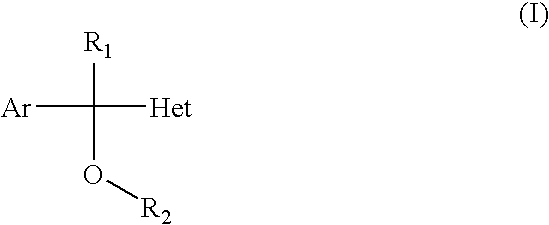
in which
Ar represents a phenyl radical or a thienyl radical, with no substitutions or optionally with 1, 2 or 3 equal or different substituents, selected from the group comprised of fluoride, chloride, bromide, methyl, trifluoromethyl and methoxy;
R1 represents a hydrogen atom or a lower alkyl group from C, to C4;
R2 represents a dialkyl(C1-C4)aminoalkyl (C2-C3), or azaheterocyclylalkyl (C2-C3) radical; and
Het represents a five-armed nitrogenated aromatic heterocycle that contains one to three nitrogen atoms, without substitutions or optionally substituted by 1 or 2 equal or different substituents selected from a group comprised by fluoride, chloride, bromide and methyl;
or one of its physiologically acceptable salts,
in the production of a drug to treat urinary incontinence, in mammals, and also in man.
2. Use, according to claim 1 , of a compound of general formula (I), in which R1 is selected from a hydrogen atom or from the group comprised by methyl, ethyl, propyl, isopropyl, butyl, isobutyl, secbutyl and tert-butyl, in the production of a drug for the treatment of urinary incontinence, in mammals, including man.
3. Use, according to claim 1 , of a compound of general formula (I), in which R2 is selected from among a group comprised of dimethylaminoethyl, dimethylaminopropyl, diethylaminoethyl, piperidinylethyl, morpholinylpropyl and pirrolidinylethyl, in the production of a drug to treat urinary incontinence, in mammals, including man.
4. Use, according to claim 1 , of a compound of general formula (I) selected from among a group comprised by:
(±)-5-{α-[2-(dimethylamino)ethoxy]benzyl}-1-methyl-1H-pirazole.
(±)-5-{α-[2-(dimethylamino)ethoxy]benzyl}-1-methyl-1H-pirazole citrate.
(+)-5-{α-[2-(dimethylamino)ethoxy]benzyl}-1-methyl-1H-pirazole.
(−)-5-{α-[2-(dimethylamino)ethoxy]benzyl}-1-methyl-1H-pirazole.
(+)-5-{α-[2-(dimethylamino)ethoxy]benzyl}-1-methyl-1H-pirazole citrate.
(−)-5-{α-[2-(dimethylamino)ethoxy]benzyl}-1-methyl-1H-pirazole citrate.
(±)-5-{α-[2-(dimethylamino)ethoxy]-2-thienylmethyl}-1-methyl-1H-pirazole.
(±)-5-{α-[2-(dimethylamino)ethoxy]-2-thienylmethyl}-1-methyl-1H-pirazole citrate.
(+)-5-{α-[2-(dimethylamino)ethoxy]-2-thienylmethyl}-1-methyl-1H-pirazole
(−)-5-{α-[2-(dimethylamino)ethoxy]-2-thienylmethyl}-1-methyl-1H-pirazole.
(+)-5-{α-[2-(dimethylamino)ethoxy]-2-thienylmethyl}-1-methyl-1H-pirazole citrate.
(−)-5-{α-[2-(dimethylamino)ethoxy]-2-thienylmethyl}-1-methyl-1H-pirazole citrate,
in the production of a drug to treat urinary incontinence, in mammals, including man.
5. A pharmaceutical composition, characterised because it contains, at least, one compound of general formula (I) or one of its physiologically acceptable salts, according to claim 1 , and the pharmaceutically acceptable excipients, to treat urinary incontinence, in mammals, including man.
6. A pharmaceutical composition, characterised because it contains, at least, one compound of general formula (I) or one of its physiologically acceptable salts, according to claim 2 , and the pharmaceutically acceptable excipients, to treat urinary incontinence, in mammals, including man.
7. A pharmaceutical composition, characterised because it contains, at least, one compound of general formula (I) or one of its physiologically acceptable salts, according to claim 3 , and the pharmaceutically acceptable excipients, to treat urinary incontinence, in mammals, including man.
8. A pharmaceutical composition, characterised because it contains, at least, one compound of general formula (I) or one of its physiologically acceptable salts, according to claim 4 , and the pharmaceutically acceptable excipients, to treat urinary incontinence, in mammals, including man.
9. Method of treatment of a patient or a mammal, including man, suffering from urinary incontinence characterized in that the method comprises the administration of a therapeutically effective amount of a compound of general formula (I)
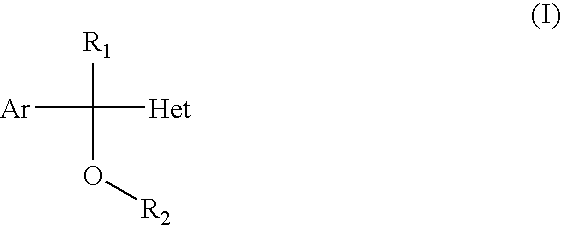
in which
Ar represents a phenyl radical or a thienyl radical, with no substitutions or optionally with 1, 2 or 3 equal or different substituents, selected from a group consisting of fluoride, chloride, bromide, methyl, trifluoromethyl and methoxy;
R1 represents hydrogen or a lower alkyl group from C1 to C4;
R2 represents a dialkyl(C1-C4)aminoalkyl (C2-C3), or azaheterocyclylalkyl (C2-C3) radical; and
Het represents a five-armed nitrogenated aromatic heterocycle that contains one to three nitrogen atoms, without substitutions or optionally substituted by 1 or 2 equal or different substituents selected from a group consisting of fluoride, chloride, bromide and methyl;
optionally in the form of its racemate, pure stereoisomers, especially enantiomers or diastereomers or in the form of mixtures of stereoisomers, especially enantiomers or diastereomers, in any suitable ratio;
in the form shown or in form of the acid or base or in form of a salt, especially a physiologically acceptable salt, or in form of a solvate, especially a hydrate.
10. Method, according to claim 9 , characterized in that it comprises the administration of a compound of general formula (I), in which R1 is selected from hydrogen or from a group consisting of methyl, ethyl, propyl, isopropyl, butyl, isobutyl, sec-butyl and tert-butyl.
11. Method, according to claim 9 , characterized in that it comprises the administration of a compound of general formula (I), in which R2 is selected from among a group consisting of dimethylaminoethyl, dimethylaminopropyl, diethylaminoethyl, piperidinylethyl, morpholinylpropyl and pirrolidinylethyl.
12. Method according to claim 9 , characterized in that it comprises the administration of a compound of general formula (Ia)
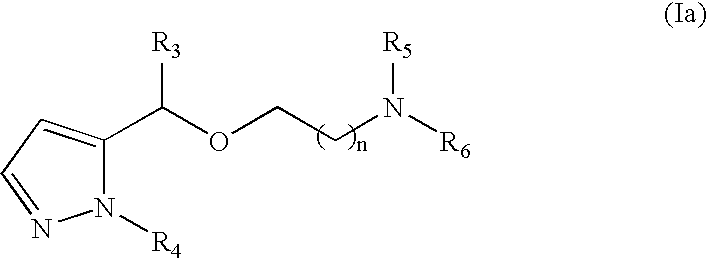
in which
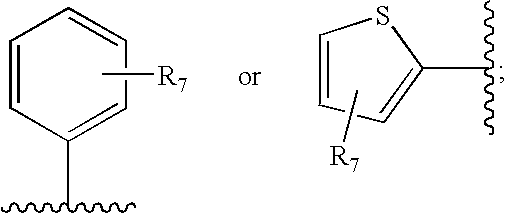
n is 1 or 2;
R3 is selected from:
R4 is selected from hydrogen, fluoride, chloride, bromide and methyl;
R5 and R6 are independently selected from lower C(1-4)-Alkyl or together with the Nitrogen form an azaheterocyclic ring;
R7 is selected from the group consisting of hydrogen, fluoride, chloride, bromide, methyl, trifluoromethyl and methoxy.
13. Method, according to claim 12 , characterized in that it comprises the administration of a compound of general formula (Ia), in which R7 is hydrogen.
14. Method, according to claim 12 , characterized in that it comprises the administration of a compound of general formula (Ia), in which R4 is Methyl.
15. Method, according to claim 12 , characterized in that it comprises the administration of a compound of general formula (Ia), in which R4 and R5 are either CH3 or C2H5 or together with the Nitrogen form a piperidinyl, morpholinyl or pirrolidinyl ring.
16. Method, according to claim 12 , characterized in that it comprises the administration of a compound of general formula (Ia) selected from among a group consisting of:
5-{α-[2-(dimethylamino)ethoxy]benzyl}-1-methyl-1H-pirazole,
(±)-5-{α-[2-(dimethylamino)ethoxy]benzyl}-1-methyl-1H-pirazole,
(+)-5-{α-[2-(dimethylamino)ethoxy]benzyl}-1-methyl-1H-pirazole,
(−)-5-{α-[2-(dimethylamino)ethoxy]benzyl}-1-methyl-1H-pirazole,
5-{α-[2-(dimethylamino)ethoxy]benzyl}-1-methyl-1H-pirazole citrate,
(±)-5-{α-[2-(dimethylamino)ethoxy]benzyl}-1-methyl-1H-pirazole citrate,
(+)-5-{α-[2-(dimethylamino)ethoxy]benzyl}-1-methyl-1H-pirazole citrate,
(−)-5-{α-[2-(dimethylamino)ethoxy]benzyl}-1-methyl-1H-pirazole citrate,
5-{α-[2-(dimethylamino)ethoxy]-2-thienylmethyl}-1-methyl-1H-pirazole,
(±)-5-{α-[2-(dimethylamino)ethoxy]-2-thienylmethyl}-1-methyl-1H-pirazole,
(+)-5-{α-[2-(dimethylamino)ethoxy]-2-thienylmethyl}-1-methyl-1H-pirazole,
(−)-5-{α-[2-(dimethylamino)ethoxy]-2-thienylmethyl}-1-methyl-1H-pirazole,
5-{α-[2-(dimethylamino)ethoxy]-2-thienylmethyl}-1-methyl-1H-pirazole citrate,
(±)-5-{α-[2-(dimethylamino)ethoxy]-2-thienylmethyl}-1-methyl-1H-pirazole citrate,
(+)-5-{α-[2-(dimethylamino)ethoxy]-2-thienylmethyl}-1-methyl-1H-pirazole citrate,
(−)-5-{α-[2-(dimethylamino)ethoxy]-2-thienylmethyl}-1-methyl-1H-pirazole citrate.
17. Method according to claim 12 , characterized in that it comprises the administration of a compound of general formula (Ib)

in which
m is 1 or 2;
R8 is selected from hydrogen, fluoride, chloride, bromide and methyl;
R9 and R10 are independently selected from lower C(1-4)-Alkyl or together with the Nitrogen form an azaheterocyclic ring;
R11 is selected from the group consisting of hydrogen, fluoride, chloride, bromide, methyl, trifluoromethyl and methoxy.
18. Method, according to claim 17 , characterized in that it comprises the administration of a compound of general formula (Ib), in which R11 is hydrogen.
19. Method, according to claim 17 , characterized in that it comprises the administration of a compound of general formula (Ib), in which R8 is Methyl.
20. Method, according to claim 17 , characterized in that it comprises the administration of a compound of general formula (Ib), in which R9 and R10 are either CH3 or C2H5 or together with the Nitrogen form a piperidinyl, morpholinyl or pirrolidinyl ring;
preferably in which R9 and R10 are either CH3 or C2H5;
especially in which R9 and R10 are equal and either CH3 or C2H5;
most preferably in which R9 and R10 are both CH3.
21. Method, according to claim 17 , characterized in that it comprises the administration of a compound of general formula (Ib), in which m is 1.
22. Method, according to claim 17 , characterized in that it comprises the administration of a compound of general formula (Ib) selected from among a group consisting of:
5-{α-[2-(dimethylamino)ethoxy]benzyl}-1-methyl-1H-pirazole,
(±)-5-{α-[2-(dimethylamino)ethoxy]benzyl}-1-methyl-1H-pirazole,
(+)-5-{α-[2-(dimethylamino)ethoxy]benzyl}-1-methyl-1H-pirazole,
(−)-5-{α-[2-(dimethylamino)ethoxy]benzyl}-1-methyl-1H-pirazole,
5-{α-[2-(dimethylamino)ethoxy]benzyl}-1-methyl-1H-pirazole citrate,
(±)-5-{α-[2-(dimethylamino)ethoxy]benzyl}-1-methyl-1H-pirazole citrate,
(+)-5-{α-[2-(dimethylamino)ethoxy]benzyl}-1-methyl-1H-pirazole citrate,
(−)-5-{α-[2-(dimethylamino)ethoxy]benzyl}-1-methyl-1H-pirazole citrate.
23. Method, according to claim 17 , characterized in that it comprises the administration of
5-{α-[2-(dimethylamino)ethoxy]benzyl}-1-methyl-1H-pirazole.
24. Method, according to claim 17 , characterized in that it comprises the administration of
(±)-5-{α-[2-(dimethylamino)ethoxy]benzyl}-1-methyl-1H-pirazole.
25. Method, according to claim 17 , characterized in that it comprises the administration of
(+)-5-{α-[2-(dimethylamino)ethoxy]benzyl}-1-methyl-1H-pirazole.
26. Method, according to claim 17 , characterized in that it comprises the administration of
(−)-5-{α-[2-(dimethylamino)ethoxy]benzyl}-1-methyl-1H-pirazole.
27. Method, according to claim 17 , characterized in that it comprises the administration of
5-{α-[2-(dimethylamino)ethoxy]benzyl}-1-methyl-1H-pirazole citrate.
28. Method, according to claim 17 , characterized in that it comprises the administration of
(±)-5-{α-[2-(dimethylamino)ethoxy]benzyl}-1-methyl-1H-pirazole citrate.
29. Method, according to claim 17 , characterized in that it comprises the administration of
(+)-5-{α-[2-(dimethylamino)ethoxy]benzyl}-1-methyl-1H-pirazole citrate.
30. Method, according to claim 17 , characterized in that it comprises the administration of
(−)-5-{α-[2-(dimethylamino)ethoxy]benzyl}-1-methyl-1H-pirazole citrate.
31. Method according to claim 12 , characterized in that it comprises the administration of a compound of general formula (Ic)

in which
p is 1 or 2;
R12 is selected from hydrogen, fluoride, chloride, bromide and methyl;
R13 and R14 are independently selected from lower C(1-4)-Alkyl or together with the Nitrogen form an azaheterocyclic ring;
R15 is selected from the group consisting of hydrogen, fluoride, chloride, bromide, methyl, trifluoromethyl and methoxy.
32. Method, according to claim 31 , characterized in that it comprises the administration of a compound of general formula (Ic), in which R15 is hydrogen.
33. Method, according to claim 31 , characterized in that it comprises the administration of a compound of general formula (Ic), in which R12 is Methyl.
34. Method, according to claim 31 , characterized in that it comprises the administration of a compound of general formula (Ic), in which R13 and R14 are either CH3 or C2H5 or together with the Nitrogen form a piperidinyl, morpholinyl or pirrolidinyl ring;
preferably in which R13 and R14 are either CH3 or C2H5;
especially in which R13 and R14 are equal and either CH3 or C2H5;
most preferably in which R13 and R14 are both CH3.
35. Method, according to claim 31 , characterized in that it comprises the administration of a compound of general formula (Ic), in which p is 1.
36. Method, according to claim 31 , characterized in that it comprises the administration of a compound of general formula (Ic) selected from among a group consisting of:
5-{α-[2-(dimethylamino)ethoxy]-2-thienylmethyl}-1-methyl-1H-pirazole,
(±)-5-{α-[2-(dimethylamino)ethoxy]-2-thienylmethyl}-1-methyl-1H-pirazole,
(+)-5-{α-[2-(dimethylamino)ethoxy]-2-thienylmethyl}-1-methyl-1H-pirazole,
(−)-5-{α-[2-(dimethylamino)ethoxy]-2-thienylmethyl}-1-methyl-1H-pirazole,
5-{α-[2-(dimethylamino)ethoxy]-2-thienylmethyl}-1-methyl-1H-pirazole citrate,
(±)-5-{α-[2-(dimethylamino)ethoxy]-2-thienylmethyl}-1-methyl-1H-pirazole citrate,
(+)-5-{α-[2-(dimethylamino)ethoxy]-2-thienylmethyl}-1-methyl-1H-pirazole citrate,
(−)-5-{α-[2-(dimethylamino)ethoxy]-2-thienylmethyl}-1-methyl-1H-pirazole citrate.
37. Method, according to claim 31 , characterized in that it comprises the administration of:
5-{α-[2-(dimethylamino)ethoxy]-2-thienylmethyl}-1-methyl-1H-pirazole,
,optionally in the form of its racemate, pure stereoisomers, especially enantiomers or diastereomers or in the form of mixtures of stereoisomers, especially enantiomers or diastereomers, in any suitable ratio;
in form of the free base or in form of a salt, especially a physiologically acceptable salt, or in form of a solvate, especially a hydrate.
38. Method, according to claim 31 , characterized in that it comprises the administration of:
5-{α-[2-(dimethylamino)ethoxy]-2-thienylmethyl}-1-methyl-1H-pirazole citrate,
,optionally in the form of its racemate, pure stereoisomers, especially enantiomers or diastereomers or in the form of mixtures of stereoisomers, especially enantiomers or diastereomers, in any suitable ratio.
39. Method, according to claim 9 , characterized in that man means a female.
40. Method, according to claim 9 , characterized in that man means a male.
41. Method, according to claim 9 , characterized in that the patient is a woman.
42. Method, according to claim 9 , characterized in that the patient is an elderly woman.
43. Method, according to claim 9 , characterized in that the patient is a man.
44. Method, according to claim 9 , characterized in that the patient is an elderly man.
45. Method, according to claim 9 , characterized in that the patient is a child.
46. Method, according to claim 9 , characterized in that the urinary incontinence the patient or mammal, including man, is suffering from is urge urinary incontinence.
47. Method, according to claim 9 , characterized in that the urinary incontinence the patient or mammal, including man, is suffering from is stress urinary incontinence or urinary stress incontinence.
48. Method, according to claim 9 , characterized in that the urinary incontinence the patient or mammal, including man, is suffering from is hyperreflexive urinary incontinence.
49. Method, according to claim 9 , characterized in that the urinary incontinence the patient or mammal, including man, is suffering from is enuresis.
50. Method according to claim 9 characterized in that the therapeutically effective amount of the active compound is administered at a dose between 50 and 400 mg/day or between 200 and 600 mg/day.
51. Method according to claim 9 characterized in that the compound is administered in form of a tablet or capsule.
52. Method according to claim 9 characterized in that the compound is administered in form of an immediate release formulation.
53. Method of treatment of a patient suffering from urinary incontinence characterized in that the method comprises the administration of a therapeutically effective amount of
5-{α-[2-(dimethylamino)ethoxy]benzyl}-1-methyl-1H-pirazole,
,optionally in the form of its racemate, pure stereoisomers, especially enantiomers or diastereomers or in the form of mixtures of stereoisomers, especially enantiomers or diastereomers, in any suitable ratio;
in form of the free base or in form of a salt, especially a physiologically acceptable salt, or in form of a solvate, especially a hydrate.
54. Method, according to claim 53 , characterized in that it comprises the administration of
(±)-5-{α-[2-(dimethylamino)ethoxy]benzyl}-1-methyl-1H-pirazole.
55. Method, according to claim 53 , characterized in that it comprises the administration of
(+)-5-{α-[2-(dimethylamino)ethoxy]benzyl}-1-methyl-1H-pirazole.
56. Method, according to claim 53 , characterized in that it comprises the administration of
(−)-5-{α-[2-(dimethylamino)ethoxy]benzyl}-1-methyl-1H-pirazole.
57. Method, according to claim 53 , characterized in that it comprises the administration of
5-{α-[2-(dimethylamino)ethoxy]benzyl}-1-methyl-1H-pirazole citrate.
58. Method, according to claim 53 , characterized in that it comprises the administration of
(±)-5-{α-[2-(dimethylamino)ethoxy]benzyl}-1-methyl-1H-pirazole citrate.
59. Method, according to claim 53 , characterized in that it comprises the administration of
(+)-5-{α-[2-(dimethylamino)ethoxy]benzyl}-1-methyl-1H-pirazole citrate.
60. Method, according to claim 53 , characterized in that it comprises the administration of
(−)-5-{α-[2-(dimethylamino)ethoxy]benzyl}-1-methyl-1H-pirazole citrate.
61. Method, according to claim 53 , characterized in that the patient is a woman.
62. Method, according to claim 53 , characterized in that the patient is an elderly woman.
63. Method, according to claim 53 , characterized in that the patient is a man.
64. Method, according to claim 53 , characterized in that the patient is an elderly man.
65. Method, according to claim 53 , characterized in that the patient is a child.
66. Method, according to claim 53 , characterized in that the urinary incontinence the patient is suffering from is urge urinary incontinence.
67. Method, according to claim 53 , characterized in that the urinary incontinence the patient is suffering from is stress urinary incontinence or urinary stress incontinence.
68. Method, according to claim 53 , characterized in that the urinary incontinence the patient is suffering from is hyperreflexive urinary incontinence.
69. Method, according to claim 53 , characterized in that the urinary incontinence the patient is suffering from is enuresis.
70. Method according to claim 53 characterized in that the therapeutically effective amount of 5-{α-[2-(dimethylamino)ethoxy]benzyl}-1-methyl-1H-pirazole is administered at a dose between 50 and 400 mg/day or between 200 and 600 mg/day.
71. Method according to claim 53 characterized in that the therapeutically effective amount of (±)-5-{α-[2-(dimethylamino)ethoxy]benzyl}-1-methyl-1H-pirazole is administered at a dose between 50 and 400 mg/day or between 200 and 600 mg/day.
72. Method according to claim 53 characterized in that the therapeutically effective amount of (+)-5-{α-[2-(dimethylamino)ethoxy]benzyl}-1-methyl-1H-pirazole is administered at a dose between 50 and 400 mg/day or between 200 and 600 mg/day.
73. Method according to claim 53 characterized in that the therapeutically effective amount of (−)-5-{α-[2-(dimethylamino)ethoxy]benzyl}-1-methyl-1H-pirazole is administered at a dose between 50 and 400 mg/day or between 200 and 600 mg/day.
74. Method according to claim 53 characterized in that 5-{α-[2-(dimethylamino)ethoxy]benzyl}-1-methyl-1H-pirazole is administered at a dose of 230 mg/day, 460 mg/day or 345 mg/day.
75. Method according to claim 53 characterized in that (±)-5-{α-[2-(dimethylamino)ethoxy]benzyl}-1-methyl-1H-pirazole is administered at a dose of 230 mg/day, 345 mg/day, 460 mg/day or 575 mg/day, preferably 345 mg/day or 460 mg/day.
76. Method according to claim 53 characterized in that 5-{α-[2-(dimethylamino)ethoxy]benzyl}-1-methyl-1H-pirazole citrate is administered at a dose of 400 mg/day, 600 mg/day, 800 mg/day or 1000 mg/day, preferably 600 mg/day or 800 mg/day.
77. Method according to claim 53 characterized in that (±)-5-{α-[2-(dimethylamino)ethoxy]benzyl}-1-methyl-1H-pirazole citrate is administered at a dose of 400 mg/day, 600 mg/day, 800 mg/day or 1000 mg/day, preferably 600 mg/day or 800 mg/day.
78. Method according to claim 53 characterized in that 5-{α-[2-(dimethylamino)ethoxy]benzyl}-1-methyl-1H-pirazole is administered twice daily.
79. Method according to claim 53 characterized in that 5-{α-[2-(dimethylamino)ethoxy]benzyl}-1-methyl-1H-pirazole is administered orally.
80. Method according to claim 53 characterized in that 5-{α-[2-(dimethylamino)ethoxy]benzyl}-1-methyl-1H-pirazole is administered in form of a tablet or capsule.
81. Method according to claim 53 characterized in that 5-{α-[2-(dimethylamino)ethoxy]benzyl}-1-methyl-1H-pirazole is administered in form of an immediate release formulation.
82. Method according to claim 53 characterized in that 5-{α-[2-(dimethylamino)ethoxy]benzyl}-1-methyl-1H-pirazole is administered in form of a formulation comprising any of the following:
sodium croscarmelose
colloidal silica dioxide,
a salt with stearic acid, especially magnesium stearate,
povidone,
microcrystalline cellulose
lactose monohydrate
polyethylene glycol.
83. Method according to claim 53 characterized in that 5-{α-[2-(dimethylamino)ethoxy]benzyl}-1-methyl-1H-pirazole is administered in form of a formulation according to example 5.
84. Method according to claim 53 characterized in that 5-{α-[2-(dimethylamino)ethoxy]benzyl}-1-methyl-1H-pirazole is administered in form of a formulation according to example 7.
Priority Applications (4)
| Application Number | Priority Date | Filing Date | Title |
|---|---|---|---|
| US10/753,161 US20040142929A1 (en) | 2001-07-06 | 2004-01-06 | Derivatives of aryl (or heteroaryl) azolylcarbinoles for the treatment of urinary incontinence |
| EP05706837A EP1740174A1 (en) | 2004-01-06 | 2005-01-06 | Derivatives of aryl(or heteroaryl) azolylcarbinols for the treatment of enuresis |
| PCT/EP2005/000052 WO2005067925A1 (en) | 2004-01-06 | 2005-01-06 | Derivatives of aryl(or heteroaryl) azolylcarbinols for the treatment of enuresis |
| JP2006548213A JP2007517822A (en) | 2004-01-06 | 2005-01-06 | Derivatives of aryl (or heteroaryl) azolyl carbinol for treating enuresis |
Applications Claiming Priority (5)
| Application Number | Priority Date | Filing Date | Title |
|---|---|---|---|
| ESP200101587 | 2001-07-06 | ||
| ES200101587A ES2180449B1 (en) | 2001-07-06 | 2001-07-06 | DERIVATIVES OF ARIL (OR HETEROARIL) AZOLILCARBINOLES FOR THE TREATMENT OF URINARY INCONTINENCE. |
| PCT/ES2002/000326 WO2003004022A1 (en) | 2001-07-06 | 2002-07-01 | Aryl (or heteroaryl) azolylcarbynol derivatives for the treatment of urinary incontinence |
| US10/189,915 US20030022925A1 (en) | 2001-07-06 | 2002-07-03 | Derivatives of aryl (or heteroaryl) azolylcarbinoles for the treatment of urinary incontinence |
| US10/753,161 US20040142929A1 (en) | 2001-07-06 | 2004-01-06 | Derivatives of aryl (or heteroaryl) azolylcarbinoles for the treatment of urinary incontinence |
Related Parent Applications (2)
| Application Number | Title | Priority Date | Filing Date |
|---|---|---|---|
| PCT/ES2002/000326 Continuation-In-Part WO2003004022A1 (en) | 2001-07-06 | 2002-07-01 | Aryl (or heteroaryl) azolylcarbynol derivatives for the treatment of urinary incontinence |
| US10/189,915 Continuation-In-Part US20030022925A1 (en) | 2001-07-06 | 2002-07-03 | Derivatives of aryl (or heteroaryl) azolylcarbinoles for the treatment of urinary incontinence |
Publications (1)
| Publication Number | Publication Date |
|---|---|
| US20040142929A1 true US20040142929A1 (en) | 2004-07-22 |
Family
ID=34794704
Family Applications (1)
| Application Number | Title | Priority Date | Filing Date |
|---|---|---|---|
| US10/753,161 Abandoned US20040142929A1 (en) | 2001-07-06 | 2004-01-06 | Derivatives of aryl (or heteroaryl) azolylcarbinoles for the treatment of urinary incontinence |
Country Status (4)
| Country | Link |
|---|---|
| US (1) | US20040142929A1 (en) |
| EP (1) | EP1740174A1 (en) |
| JP (1) | JP2007517822A (en) |
| WO (1) | WO2005067925A1 (en) |
Cited By (7)
| Publication number | Priority date | Publication date | Assignee | Title |
|---|---|---|---|---|
| WO2005067925A1 (en) * | 2004-01-06 | 2005-07-28 | Laboratorios Dr. Esteve S.A. | Derivatives of aryl(or heteroaryl) azolylcarbinols for the treatment of enuresis |
| WO2006010627A1 (en) * | 2004-07-30 | 2006-02-02 | Laboratorios Del Dr. Esteve, S.A. | Aryl (or heteroaryl) azolylcarbinols |
| US20070021485A1 (en) * | 2005-07-22 | 2007-01-25 | Gomis Antonio F | Aryl (or heteroaryl) azolylcarbinols |
| US20070082893A1 (en) * | 2004-04-05 | 2007-04-12 | Laboratorios Del Dr. Esteve S.A | Active substance combination |
| US20070088024A1 (en) * | 2004-04-05 | 2007-04-19 | Laboratorios Del Dr. Esteve S.A. | Active substance combination comprising a carbinol combined to at least an NSAID |
| WO2007017127A3 (en) * | 2005-07-29 | 2007-04-19 | Esteve Labor Dr | Controlled realease dosage form of pirazole compounds to treat urinary incontinence |
| US20100291151A1 (en) * | 2009-04-21 | 2010-11-18 | Auspex Pharmaceuticals, Inc. | 1-methylpyrazole modulators of substance p, calcitonin gene-related peptide, adrenergic receptor, and/or 5-ht receptor |
Families Citing this family (1)
| Publication number | Priority date | Publication date | Assignee | Title |
|---|---|---|---|---|
| EP1820502A1 (en) * | 2006-02-10 | 2007-08-22 | Laboratorios Del Dr. Esteve, S.A. | Active substance combination comprising azolylcarbinol compounds |
Citations (11)
| Publication number | Priority date | Publication date | Assignee | Title |
|---|---|---|---|---|
| US4416894A (en) * | 1981-01-30 | 1983-11-22 | Sandoz Ltd. | Organic compounds |
| US5703240A (en) * | 1993-09-22 | 1997-12-30 | Glaxo Group Limited | Piperidine derivatives |
| US5843961A (en) * | 1988-09-02 | 1998-12-01 | Kock; Nils G. | Method and composition for treating erectile dysfunction |
| US5849931A (en) * | 1995-12-06 | 1998-12-15 | Laboratorios Del Dr. Esteve S.A. | Process for separating carbinols |
| US5869499A (en) * | 1993-07-15 | 1999-02-09 | Pfizer Inc | Benzyloxyquinuclidines as substance P antagonists |
| US5939434A (en) * | 1996-09-12 | 1999-08-17 | Satake; Kunio | Tetrazolyl-substituted quinuclidines as substance P antagonists |
| US6020346A (en) * | 1995-01-12 | 2000-02-01 | Glaxo Wellcome Inc. | Piperidine derivatives having tachykinin antagonist activity |
| US6118009A (en) * | 1997-08-04 | 2000-09-12 | Laboratorios Del Dr. Esteve, S.A. | Process for obtaining enantiomers of cis-olirtine |
| US6187930B1 (en) * | 1997-07-10 | 2001-02-13 | Laboratorios Del Dr. Esteve, S.A. | Resolution of amines |
| US6410582B1 (en) * | 1998-04-15 | 2002-06-25 | Laboratorios Del Dr. Esteve, S.A. | Thienylazolylalcoxyethanamines, their preparation and their application as medicaments |
| US6518295B1 (en) * | 1998-08-07 | 2003-02-11 | Laboratorios Del Dr. Esteve, S.A. | Utilization of aryl(or heteroaryl)azolylcarbinol derivatives in the preparation of a medicament for the treatment of troubles mediated by an excess of substance P |
Family Cites Families (3)
| Publication number | Priority date | Publication date | Assignee | Title |
|---|---|---|---|---|
| US20040142929A1 (en) * | 2001-07-06 | 2004-07-22 | Ramon Merce-Vidal | Derivatives of aryl (or heteroaryl) azolylcarbinoles for the treatment of urinary incontinence |
| ES2180449B1 (en) * | 2001-07-06 | 2004-01-16 | Esteve Labor Dr | DERIVATIVES OF ARIL (OR HETEROARIL) AZOLILCARBINOLES FOR THE TREATMENT OF URINARY INCONTINENCE. |
| DE10335566A1 (en) * | 2003-07-31 | 2005-02-24 | Grünenthal GmbH | Medicaments containing derivatives of aryl (or heteroaryl) azolylcarbinols |
-
2004
- 2004-01-06 US US10/753,161 patent/US20040142929A1/en not_active Abandoned
-
2005
- 2005-01-06 JP JP2006548213A patent/JP2007517822A/en active Pending
- 2005-01-06 WO PCT/EP2005/000052 patent/WO2005067925A1/en not_active Ceased
- 2005-01-06 EP EP05706837A patent/EP1740174A1/en not_active Withdrawn
Patent Citations (11)
| Publication number | Priority date | Publication date | Assignee | Title |
|---|---|---|---|---|
| US4416894A (en) * | 1981-01-30 | 1983-11-22 | Sandoz Ltd. | Organic compounds |
| US5843961A (en) * | 1988-09-02 | 1998-12-01 | Kock; Nils G. | Method and composition for treating erectile dysfunction |
| US5869499A (en) * | 1993-07-15 | 1999-02-09 | Pfizer Inc | Benzyloxyquinuclidines as substance P antagonists |
| US5703240A (en) * | 1993-09-22 | 1997-12-30 | Glaxo Group Limited | Piperidine derivatives |
| US6020346A (en) * | 1995-01-12 | 2000-02-01 | Glaxo Wellcome Inc. | Piperidine derivatives having tachykinin antagonist activity |
| US5849931A (en) * | 1995-12-06 | 1998-12-15 | Laboratorios Del Dr. Esteve S.A. | Process for separating carbinols |
| US5939434A (en) * | 1996-09-12 | 1999-08-17 | Satake; Kunio | Tetrazolyl-substituted quinuclidines as substance P antagonists |
| US6187930B1 (en) * | 1997-07-10 | 2001-02-13 | Laboratorios Del Dr. Esteve, S.A. | Resolution of amines |
| US6118009A (en) * | 1997-08-04 | 2000-09-12 | Laboratorios Del Dr. Esteve, S.A. | Process for obtaining enantiomers of cis-olirtine |
| US6410582B1 (en) * | 1998-04-15 | 2002-06-25 | Laboratorios Del Dr. Esteve, S.A. | Thienylazolylalcoxyethanamines, their preparation and their application as medicaments |
| US6518295B1 (en) * | 1998-08-07 | 2003-02-11 | Laboratorios Del Dr. Esteve, S.A. | Utilization of aryl(or heteroaryl)azolylcarbinol derivatives in the preparation of a medicament for the treatment of troubles mediated by an excess of substance P |
Cited By (8)
| Publication number | Priority date | Publication date | Assignee | Title |
|---|---|---|---|---|
| WO2005067925A1 (en) * | 2004-01-06 | 2005-07-28 | Laboratorios Dr. Esteve S.A. | Derivatives of aryl(or heteroaryl) azolylcarbinols for the treatment of enuresis |
| US20070082893A1 (en) * | 2004-04-05 | 2007-04-12 | Laboratorios Del Dr. Esteve S.A | Active substance combination |
| US20070088024A1 (en) * | 2004-04-05 | 2007-04-19 | Laboratorios Del Dr. Esteve S.A. | Active substance combination comprising a carbinol combined to at least an NSAID |
| WO2006010627A1 (en) * | 2004-07-30 | 2006-02-02 | Laboratorios Del Dr. Esteve, S.A. | Aryl (or heteroaryl) azolylcarbinols |
| US20070021485A1 (en) * | 2005-07-22 | 2007-01-25 | Gomis Antonio F | Aryl (or heteroaryl) azolylcarbinols |
| WO2007017127A3 (en) * | 2005-07-29 | 2007-04-19 | Esteve Labor Dr | Controlled realease dosage form of pirazole compounds to treat urinary incontinence |
| ES2334548A1 (en) * | 2005-07-29 | 2010-03-11 | Laboratorios Del Dr. Esteve, S.A | DOSAGE FORM OF CONTROLLED RELEASE OF PIRAZOL COMPOUNDS FOR THE TREATMENT OF URINARY INCONTINENCE. |
| US20100291151A1 (en) * | 2009-04-21 | 2010-11-18 | Auspex Pharmaceuticals, Inc. | 1-methylpyrazole modulators of substance p, calcitonin gene-related peptide, adrenergic receptor, and/or 5-ht receptor |
Also Published As
| Publication number | Publication date |
|---|---|
| EP1740174A1 (en) | 2007-01-10 |
| JP2007517822A (en) | 2007-07-05 |
| WO2005067925A1 (en) | 2005-07-28 |
Similar Documents
| Publication | Publication Date | Title |
|---|---|---|
| KR101054248B1 (en) | Disease Therapies | |
| EP1413305B1 (en) | Aryl (or heteroaryl) azolylcarbynol derivatives for the treatment of urinary incontinence | |
| MXPA05005483A (en) | PHARMACEUTICAL COMPOSITION BASED ON A BETA-3 ADRENERGIC RECEIVER AGONIST AND AN INHIBITOR OF THE REABSORTION OF SEROTONINE AND / OR NOREPINEFRINE. | |
| RU2305562C2 (en) | Combination of specific opioids with muscarine antagonists for incontinence therapy | |
| JP5477881B2 (en) | (+)-Tramadol, O-demethyltramadol or (+)-O-demethyltramadol, O-desmethyl-N-mono-desmethyl-tramadol or (+)-O-desmethyl-N-mono-desmethyl-tramadol Methods used to treat urinary incontinence | |
| Lose et al. | Intravesical oxybutynin for treating incontinence resulting from an overactive detrusor. | |
| US20040142929A1 (en) | Derivatives of aryl (or heteroaryl) azolylcarbinoles for the treatment of urinary incontinence | |
| RU2286768C2 (en) | Application of 1-phenyl-3-methylaminopropane compounds for enuresis therapy | |
| US20100331361A1 (en) | Pharmaceutical composition containing alpha-adrenergic receptor antagonist and an anti-muscarinic agent and method of improving lower urinary tract symptoms associated with prostatic hypertrophy | |
| CN1518444B (en) | Use of substituted 6-dimethylaminomethyl-1-phenylcyclohexane compound in preparation of medicine for treating urinary incontinence | |
| KR20040039436A (en) | Pharmaceutical composition | |
| RU2280444C2 (en) | Use of 6-dimethylaminomethyl-1-phenylcyclohexane compounds in enuresis therapy | |
| US20080242674A1 (en) | Medicine For Prevention or Treatment of Frequent Urination or Urinary Incontinence | |
| JP5313686B2 (en) | Incontinence treatment method | |
| CN101027052A (en) | Prophylactic and/or therapeutic agent for urinary collection disorder associated with lower urinary tract obstruction | |
| JP4808613B2 (en) | Pharmaceuticals for the prevention or treatment of frequent urination or incontinence | |
| HK1069530A (en) | Aryl (or heteroaryl) azolylcarbynol derivatives for the treatment of urinary incontinence | |
| HK1203159B (en) | Prophylactic agent and/or therapeutic agent for stress urinary incontinence | |
| HK1203159A1 (en) | Prophylactic agent and/or therapeutic agent for stress urinary incontinence | |
| TW201043610A (en) | Methods of treating bladder dysfunction using netupitant |
Legal Events
| Date | Code | Title | Description |
|---|---|---|---|
| AS | Assignment |
Owner name: LABORATORIOS DEL DR. ESTEVE, S.A., SPAIN Free format text: ASSIGNMENT OF ASSIGNORS INTEREST;ASSIGNORS:MERCE-VIDAL, RAMON;ANDALUZ-MATARO, BLAS;FRIGOLA-CONSTANSA, JORDI;REEL/FRAME:015102/0258 Effective date: 20040303 |
|
| STCB | Information on status: application discontinuation |
Free format text: ABANDONED -- FAILURE TO RESPOND TO AN OFFICE ACTION |