US12329760B2 - Methods and compositions for targeting retinoic acid for solid tumor immunotherapy - Google Patents
Methods and compositions for targeting retinoic acid for solid tumor immunotherapy Download PDFInfo
- Publication number
- US12329760B2 US12329760B2 US16/869,356 US202016869356A US12329760B2 US 12329760 B2 US12329760 B2 US 12329760B2 US 202016869356 A US202016869356 A US 202016869356A US 12329760 B2 US12329760 B2 US 12329760B2
- Authority
- US
- United States
- Prior art keywords
- retinoic acid
- inhibitor
- cells
- antibody
- tumor
- Prior art date
- Legal status (The legal status is an assumption and is not a legal conclusion. Google has not performed a legal analysis and makes no representation as to the accuracy of the status listed.)
- Active, expires
Links
Images




Classifications
-
- A—HUMAN NECESSITIES
- A61—MEDICAL OR VETERINARY SCIENCE; HYGIENE
- A61K—PREPARATIONS FOR MEDICAL, DENTAL OR TOILETRY PURPOSES
- A61K31/00—Medicinal preparations containing organic active ingredients
- A61K31/33—Heterocyclic compounds
- A61K31/395—Heterocyclic compounds having nitrogen as a ring hetero atom, e.g. guanethidine or rifamycins
- A61K31/55—Heterocyclic compounds having nitrogen as a ring hetero atom, e.g. guanethidine or rifamycins having seven-membered rings, e.g. azelastine, pentylenetetrazole
- A61K31/551—Heterocyclic compounds having nitrogen as a ring hetero atom, e.g. guanethidine or rifamycins having seven-membered rings, e.g. azelastine, pentylenetetrazole having two nitrogen atoms, e.g. dilazep
- A61K31/5513—1,4-Benzodiazepines, e.g. diazepam or clozapine
-
- A—HUMAN NECESSITIES
- A61—MEDICAL OR VETERINARY SCIENCE; HYGIENE
- A61K—PREPARATIONS FOR MEDICAL, DENTAL OR TOILETRY PURPOSES
- A61K31/00—Medicinal preparations containing organic active ingredients
- A61K31/33—Heterocyclic compounds
- A61K31/395—Heterocyclic compounds having nitrogen as a ring hetero atom, e.g. guanethidine or rifamycins
- A61K31/495—Heterocyclic compounds having nitrogen as a ring hetero atom, e.g. guanethidine or rifamycins having six-membered rings with two or more nitrogen atoms as the only ring heteroatoms, e.g. piperazine or tetrazines
- A61K31/505—Pyrimidines; Hydrogenated pyrimidines, e.g. trimethoprim
-
- A—HUMAN NECESSITIES
- A61—MEDICAL OR VETERINARY SCIENCE; HYGIENE
- A61K—PREPARATIONS FOR MEDICAL, DENTAL OR TOILETRY PURPOSES
- A61K39/00—Medicinal preparations containing antigens or antibodies
- A61K39/395—Antibodies; Immunoglobulins; Immune serum, e.g. antilymphocytic serum
- A61K39/39533—Antibodies; Immunoglobulins; Immune serum, e.g. antilymphocytic serum against materials from animals
- A61K39/3955—Antibodies; Immunoglobulins; Immune serum, e.g. antilymphocytic serum against materials from animals against proteinaceous materials, e.g. enzymes, hormones, lymphokines
-
- A—HUMAN NECESSITIES
- A61—MEDICAL OR VETERINARY SCIENCE; HYGIENE
- A61P—SPECIFIC THERAPEUTIC ACTIVITY OF CHEMICAL COMPOUNDS OR MEDICINAL PREPARATIONS
- A61P35/00—Antineoplastic agents
-
- C—CHEMISTRY; METALLURGY
- C07—ORGANIC CHEMISTRY
- C07K—PEPTIDES
- C07K16/00—Immunoglobulins [IGs], e.g. monoclonal or polyclonal antibodies
- C07K16/18—Immunoglobulins [IGs], e.g. monoclonal or polyclonal antibodies against material from animals or humans
- C07K16/24—Immunoglobulins [IGs], e.g. monoclonal or polyclonal antibodies against material from animals or humans against cytokines, lymphokines or interferons
- C07K16/244—Interleukins [IL]
-
- C—CHEMISTRY; METALLURGY
- C07—ORGANIC CHEMISTRY
- C07K—PEPTIDES
- C07K16/00—Immunoglobulins [IGs], e.g. monoclonal or polyclonal antibodies
- C07K16/18—Immunoglobulins [IGs], e.g. monoclonal or polyclonal antibodies against material from animals or humans
- C07K16/28—Immunoglobulins [IGs], e.g. monoclonal or polyclonal antibodies against material from animals or humans against receptors, cell surface antigens or cell surface determinants
- C07K16/2803—Immunoglobulins [IGs], e.g. monoclonal or polyclonal antibodies against material from animals or humans against receptors, cell surface antigens or cell surface determinants against the immunoglobulin superfamily
- C07K16/2818—Immunoglobulins [IGs], e.g. monoclonal or polyclonal antibodies against material from animals or humans against receptors, cell surface antigens or cell surface determinants against the immunoglobulin superfamily against CD28 or CD152
-
- C—CHEMISTRY; METALLURGY
- C07—ORGANIC CHEMISTRY
- C07K—PEPTIDES
- C07K16/00—Immunoglobulins [IGs], e.g. monoclonal or polyclonal antibodies
- C07K16/18—Immunoglobulins [IGs], e.g. monoclonal or polyclonal antibodies against material from animals or humans
- C07K16/28—Immunoglobulins [IGs], e.g. monoclonal or polyclonal antibodies against material from animals or humans against receptors, cell surface antigens or cell surface determinants
- C07K16/2803—Immunoglobulins [IGs], e.g. monoclonal or polyclonal antibodies against material from animals or humans against receptors, cell surface antigens or cell surface determinants against the immunoglobulin superfamily
- C07K16/2827—Immunoglobulins [IGs], e.g. monoclonal or polyclonal antibodies against material from animals or humans against receptors, cell surface antigens or cell surface determinants against the immunoglobulin superfamily against B7 molecules, e.g. CD80, CD86
-
- G—PHYSICS
- G01—MEASURING; TESTING
- G01N—INVESTIGATING OR ANALYSING MATERIALS BY DETERMINING THEIR CHEMICAL OR PHYSICAL PROPERTIES
- G01N33/00—Investigating or analysing materials by specific methods not covered by groups G01N1/00 - G01N31/00
- G01N33/48—Biological material, e.g. blood, urine; Haemocytometers
- G01N33/50—Chemical analysis of biological material, e.g. blood, urine; Testing involving biospecific ligand binding methods; Immunological testing
- G01N33/53—Immunoassay; Biospecific binding assay; Materials therefor
- G01N33/574—Immunoassay; Biospecific binding assay; Materials therefor for cancer
-
- G01N33/575—
-
- A—HUMAN NECESSITIES
- A61—MEDICAL OR VETERINARY SCIENCE; HYGIENE
- A61K—PREPARATIONS FOR MEDICAL, DENTAL OR TOILETRY PURPOSES
- A61K39/00—Medicinal preparations containing antigens or antibodies
- A61K2039/505—Medicinal preparations containing antigens or antibodies comprising antibodies
-
- G—PHYSICS
- G01—MEASURING; TESTING
- G01N—INVESTIGATING OR ANALYSING MATERIALS BY DETERMINING THEIR CHEMICAL OR PHYSICAL PROPERTIES
- G01N2333/00—Assays involving biological materials from specific organisms or of a specific nature
- G01N2333/435—Assays involving biological materials from specific organisms or of a specific nature from animals; from humans
- G01N2333/705—Assays involving receptors, cell surface antigens or cell surface determinants
- G01N2333/70567—Nuclear receptors, e.g. retinoic acid receptor [RAR], RXR, nuclear orphan receptors
Definitions
- Sarcomas are a rare but diverse group of mesenchymal malignancies. There are over 70 different molecular subtypes of sarcomas. The five year survival rate is less than 15%. Treatment is limited to surgery and radiation. Immunotherapies such as immune checkpoint blockers are ineffective in the majority of patients.
- compositions and methods comprising a retinoic acid receptor inhibitor, a retinoic X receptor inhibitor, or an inhibitor of an enzyme in the retinoic acid biosynthesis pathway for treatment of a patient having a solid tumor.
- the invention provides a method for treating a patient having a solid tumor.
- the method comprises administering to the patient an effective amount of a retinoic acid receptor inhibitor, a retinoic X receptor inhibitor, or any combination thereof.
- the retinoic acid receptor inhibitor is selected from the group consisting of AGN 193109, BMS 195614, BMS 493, CD 2665, ER 50891, LE 135, LY 2955303, MM 11253, any salt or solvate thereof, and any combinations thereof.
- the retinoic X receptor inhibitor is selected from the group consisting of HX 531, PA 452, and UVI 3003, any salt or solvate thereof, and any combinations thereof.
- the method further comprises administering to the patient an immune checkpoint inhibitor.
- the immune checkpoint inhibitor is selected from the group consisting of an anti-PD1 antibody, an anti-PD-L1 antibody, an anti-CTLA4 antibody, any fragment thereof, and any combinations thereof.
- the method further comprises administering to the patient an anti-IL13 antibody or fragment thereof.
- the retinoic acid receptor inhibitor, the retinoic X receptor inhibitor, the immune checkpoint inhibitor, the anti-IL13 antibody or any combinations thereof are administered to the patient simultaneously or sequentially.
- the retinoic acid receptor inhibitor, the retinoic X receptor inhibitor, the immune checkpoint inhibitor, the anti-IL13 antibody or any combinations thereof further comprise a pharmaceutically acceptable carrier or adjuvant.
- the solid tumor is a sarcoma.
- the invention provides a composition comprising a retinoic acid receptor inhibitor, a retinoic X receptor inhibitor or any combination thereof, and an immune checkpoint inhibitor.
- the composition further comprises an anti-IL13 antibody.
- the immune checkpoint inhibitor is selected from the group consisting of an anti-PD1 antibody, an anti-PD-L1 antibody, an anti-CTLA4 antibody, any fragment thereof, and any combinations thereof.
- the invention provides a method for treating a patient having a solid tumor.
- the method comprises administering to the patient an effective amount of an inhibitor of an enzyme in the retinoic acid biosynthesis pathway.
- the enzyme in the retinoic acid biosynthesis pathway is selected from the group consisting of RALDH1, RALDH2 and RALDH3.
- the method further comprises administering to the patient an immune checkpoint inhibitor.
- the immune checkpoint inhibitor is selected from the group consisting of an anti-PD1 antibody, an anti-PD-L1 antibody, an anti-CTLA4 antibody, any fragment thereof, and any combinations thereof.
- the method further comprises administering to the patient an anti-IL13 antibody or fragment thereof.
- the inhibitor of an enzyme in the retinoic acid biosynthesis pathway, the immune checkpoint inhibitor, the anti-IL13 antibody or any combinations thereof are administered to the patient simultaneously or sequentially.
- the inhibitor of an enzyme in the retinoic acid biosynthesis pathway, the immune checkpoint inhibitor, the anti-IL13 antibody or any combinations thereof further comprise a pharmaceutically acceptable carrier or adjuvant.
- the solid tumor is a sarcoma.
- the invention provides a composition comprising an inhibitor of an enzyme in the retinoic acid biosynthesis pathway and an immune checkpoint inhibitor.
- the composition further comprises an anti-IL13 antibody.
- the immune checkpoint inhibitor is selected from the group consisting of an anti-PD1 antibody, an anti-PD-L1 antibody, an anti-CTLA4 antibody, any fragment thereof, and any combinations thereof.
- the invention provides a method of selecting a patient having a solid tumor for treatment with a retinoic acid receptor inhibitor, a retinoic X receptor inhibitor or an inhibitor of an enzyme in the retinoic acid biosynthesis pathway.
- the method comprises obtaining a tumor sample from a patient, detecting the expression level of a retinoic acid regulated gene in the tumor sample, and selecting the patient for treatment with a retinoic acid receptor inhibitor, a retinoic X receptor inhibitor or an inhibitor of an enzyme in the retinoic acid biosynthesis pathway if the expression level of the retinoic acid regulated gene is above that of a control.
- FIG. 1 is a schematic that illustrates the pathways for monocyte differentiation into tumor-associated macrophages (TAMs) or dendritic cells (DCs).
- TAMs tumor-associated macrophages
- DCs dendritic cells
- FIG. 2 is a schematic that illustrates the discovery by the present inventors that tumors produce large amounts of retinoic acid (RA), which blocks monocyte differentiation into DCs, instead generating TAMs. It was discovered that blocking RA production by the tumor cells or blocking RA signaling in the tumor-infiltrating monocytes increased the frequency of immunostimulatory DCs while reducing TAMs in a mouse model of fibrosarcoma. Importantly, RA-blockade dramatically synergized with anti-PD1 therapy to induce long-term remission in these mouse models. Therefore, RA signaling blockade, alone or in combination with immune checkpoint blockade, is a novel approach in solid tumor immunotherapy.
- RA retinoic acid
- FIG. 3 is a schematic that illustrates the ontogeny of mononuclear phagocytes.
- the figures is a schematic of macrophage, monocyte and dendritic cell development.
- HSC Hematopoietic stem cells
- CMP Common myeloid progenitor
- MDP Macrophage DC progenitor
- CMoP Common monocyte progenitor
- PreDC Pre-dendritic cells.
- Macrophage and DCs depicted here represent all subsets.
- Yok sac-derived progenitors of macrophages seed tissue during embryogenesis and are maintained by proliferation.
- FIG. 4 is a schematic illustrating retinoic acid biosynthesis and activity. Major steps in the conversion of Vitamin A to bioactive retinoic acid and its subsequent metabolism to inert metabolites is shown.
- RDH Retinol dehydrogenase
- RALDH Retinaldehyde dehydrogenase
- Cyp26 Cytochrome P450, family 26.
- RARE Retinoic acid response element.
- FIG. 5 is a schematic illustrating retinoic acid (RA) biosynthesis and its mode of action.
- RALDH are rate limiting enzymes for RA production. It was discovered by the present inventors that different tumors utilize different isoforms of RALDH. However, when one enzyme is knocked down, there is a compensatory increase in the other isoforms. There are non-specific inhibitors of RALDH, but not isoform-specific inhibitors. RA produced in one cell can be released into the microenvironment where it can act as a signaling molecule for neighboring cells. RA binds to cognate receptors that are transcription factors and are comprised of an RAR and RXR heterodimer.
- BMS493 is a pan-RAR inverse agonist, which blocks all RAR signaling.
- FIGS. 6 A- 6 D illustrate APC distribution in sarcoma.
- UPS FIG. 6 A
- SS FIG. 6 B
- FIG. 6 C shows a series of histograms. Fibrosarcomas were generated by transplanting MCAS in a Zbtb46 GFP mouse. The Zbtb46-GFP mouse expresses the GFP reporter molecule in dendritic cells. Histograms depict expression of Zbtb46-GFP within the indicated population (gating scheme shown in FIG. 6 A and FIG. 6 B ).
- FIG. 6 D shows cells corresponding to FIG. 6 C (arrows).
- FIGS. 7 A- 7 B illustrate the origin of sarcoma APCs.
- FIG. 7 A fibrosarcomas generated in Lysm Cre/+ :Rosa tdt/+ :Zbtb46 gfp/+ mice by transplanting MCAS cells were analyzed by FCM. Headers denote gating for population shown below. Data is representative of >5 experiments.
- FIG. 7 B Monocytes were purified from bone marrow of Lysm Cre/+ :Rosa tdt/+ :Zbtb46 gfp/+ mice using the miltenyi monocyte isolation kit and injected directly into fibrosarcomas generated by transplanting MCAS cells into wild type B6 mice. Transplanted monocytes (tdt+) were analyzed after 6 days. Data is representative of 3 experiments.
- FIGS. 8 A- 8 D illustrate RA activity in tumors.
- FIGS. 8 A- 8 B Gene expression profile Microarray, Affymetrix Gene 1.0ST) of F4/80+CD11C-macrophages from UPS (UPS Mac) compared to various tissue resident macrophages (obtained from immgen.org). Shown are the expression of two cellular retinoic acid binding proteins CRABP1 ( FIG. 8 A ) and CRABP2 ( FIG. 8 B ).
- Y-axis Expression levels, linear scale, mean value of 2 independent samples.
- PEC Peritoneal cavity macrophage
- RPM Red pulp macrophage
- BMM Bone marrow macrophage
- Alv Mac Alveolar macrophage.
- FIG. 8 C Gene expression profile (Microarray, Affymetrix mouse gene 2.0) of murine SS tumors compared to surrounding muscle. Y-axis: expression levels, linear scale, mean value of 2 independent samples. Aldh1a2: Aldehyde dehydrogenase 1A2; TAM: Tumor associated F4/80+CD11Cmacrophage; DC: Dendritic cells.
- FIG. 8 D Liquid chromatography/mass-spectrometry based measurement of RA in murine sarcomas and surrounding muscle. Y-axis: nanograms of RA detected per milligram of tissue tested. Acitretin was used as internal standard for LC/MS. P ⁇ 0.05 for RA levels in Tumors vs. Skeletal muscle.
- FIG. 9 illustrates that RA blocks monocyte-derived DCs.
- Mouse (top) and human (bottom) monocytes were cultured for 5 days in RPMI media containing 10% FCS and 20 ng/ml (mouse) or 50 ng/ml (human) of GM-CSF and IL4.
- RA 100 nM mice 20 nM human
- DMSO DMSO
- FIGS. 10 A- 10 B illustrate that RA regulates DC- and macrophage-associated genes.
- Microarray Affymetrix mouse gene 1.0ST, Y axis-expression value, linear scale ⁇ 10, mean of 2 independent samples
- FIG. 10 A human
- FIG. 10 B mouse
- monocytes treated with RA and DMSO monocytes treated with RA and DMSO.
- FIG. 11 illustrates that RA impacts monocyte differentiation.
- RT-QPCR for irf4 promotes monocyte to DC differentiation
- Zbtb46 expressed in all DCs irrespective of source
- RA agonist of RA signaling
- BMS493 antagonist of RA signaling
- DMSO control
- P ⁇ 0.05 for agonist (RA and CH55) vs. agonist+antagonist (RA or CH55+BMS493) Data shown is representative of >4 independent experiments 3 replicates per condition in each experiment.
- FIG. 12 illustrates that RA blocks monocyte to DC differentiation in tumors.
- MCAS-ShRNA(RALDH3)-RFP cells were transplanted into wild type (C57BL/6J) mice. Tumors were transplanted with monocytes from Lysm Cre/+ :Rosa tdt/+ :Zbtb46 gfp/+ mice. Mice were treated with doxycycline beginning the day of monocyte transplant and tumors analyzed after 6 days by FCM. RFP expression demonstrates induction of shRNA with doxycycline treatment. TDT expression distinguishes transplanted from host monocytes. Data is representative of 3 experiments.
- FIG. 13 illustrates RA production in TME.
- Single cell suspension from a murine synovial sarcoma were stained with indicated antibodies and subjected to aldered (Millipore) assay.
- Cells expressing RALDH enzymes become fluorescent (ALDERED+) in this assay.
- Tumor cells (EGFP) have significantly more ALDERED activity compared to leukocytes or other stromal cells. Similar results were obtained with other murine sarcomas. Data is representative of >10 experiments.
- FIGS. 14 A- 14 C illustrate that RA controls anti-tumor adaptive immune response.
- FIG. 14 A Doxycycline-induced expression of RALDH3-targeting shRNA in MCASshRNA (RALDH3)-RFP tumors leads to reduced number of RFP+(RALDH3 deficient) tumor cells in immunocompetent (C57BL/6J) but not immunodeficient (NU/J) mice.
- FIG. 14 B Reduced RA (via induction of RALDH3-targeting shRNA) leads to increased T cells (25% vs. 7%) in immunocompetent mice.
- FIG. 14 A , FIG. 14 B Mice received doxycycline (or no treatment in control group) beginning the day of tumor transplant and tumors analyzed after 13 days.
- FIG. 14 C CRISPR/Cas9-based deletion of RALDH3 gene leads to tumor rejection in immunocompetent but not immunodeficient NU/J mice.
- Two distinct exons (2 and 7) were targeted to establish two distinct RALDH3 knockout cell lines.
- Data shown is cumulative (percentage mice harboring tumors) from >3 experiments that include 50 mice (25 cas9 only, 20 Cas9+sgRNA-exon 7, and cas9+sgRNA-exon 3) immunocompetent C57BL/6J mice and 10 (5 cas9 only and 5 cas9+sgRNA-exon 7) NU/J immunodeficient mice.
- FIGS. 15 A- 15 B illustrate that RA production is inducible in tumors.
- FIG. 15 A MCAS tumors were labelled for RA production using the aldefluor assay.
- FIG. 15 B Aldefluor positive and negative cells from tumors were purified by FACS and the expression (relative to 18S) of RALDH3 quantified by RT-QPCR. Also shown is the expression of RALDH3 in vitro in MCAS cells. Data is representative of 3 independent experiments.
- FIGS. 16 A- 16 C show 1L13 and RALDH expression.
- FIG. 16 B IL13 and IL13R ⁇ 1 staining in murine UPS.
- FIG. 17 is a schematic illustrating that 1L13 induces RA production by tumor cells, which blocks DC and promotes TAM differentiation from TME monocytes.
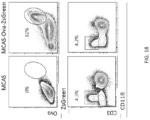
- FIG. 18 illustrates expression of a model antigen in the tumor.
- OVA-associated SIINFEKL peptide and ZsGreen reporter were expressed in MCAS cell lines.
- the resulting MCAS-Ova-ZsGreen cells were transplanted into B6 mice and tumors analyzed after 7 days.
- SIINFEKL peptide bound to MHC-I molecule was detected by fluorescent antibody (top).
- Data is representative of 3 experiments.
- FIG. 19 illustrates IL13 signaling (from Oh et al. Eur. Respir. Rev. Off J. Eur. Respir. Soc. 19, 46-54 (2010)).
- IL4 and IL13 share receptor subunits and control downstream gene expression via STAT transcription factors.
- FIGS. 20 A- 20 B illustrate negative regulation of RALDH3 by RA.
- FIG. 20 A MCAS cells were treated with indicated compounds and RALDH3 expression (relative to 18S) measured by RT-QPCR. P ⁇ 0.01 for DMSO vs. IL13. P ⁇ 0.05 for IL13 vs. IL13+BMS493.
- FIG. 20 B Schematic of RALDH3 regulation by RA.
- FIG. 21 illustrates that ATRA levels are significantly higher in sarcomas compared to surrounding tissue.
- Tumor or normal skeletal muscle tissue was dissected out from euthanized mice. The tissues were stored in a ⁇ 80 degree Celsius freezer. All trans retinoic acid (ATRA) levels were measured by liquid chromatography/mass spectrometry.
- ATRA trans retinoic acid
- FIG. 22 illustrates that RA inhibits DC and promotes macrophage differentiation in sorted tumor monocytes.
- Ly6C+ZBTB46-GFP-monocytes were purified (by cell sorting) from fibrosarcoma (FS) tumors generated by syngeneic transplant of FS cells into ZBTB46-GFP mice.
- the purified monocytes were cultured for 3d with GM-CSF (20 ng/mL) and IL-4 (20 ng/mL).
- FIG. 23 illustrates an assay to identify RA producing cells in sarcomas.
- FIGS. 24 A- 24 B illustrate that the majority of RA is produced by tumor cells.
- ALDERED assay EMD Millipore, SCR150
- SS mouse synovial sarcoma
- Representative contour plot of eGFP+tumors cells, CD45+leukocytes and stromal cells (Left, FIG. 24 A ).
- FIGS. 25 A- 25 C illustrate that the majority of RA is produced by tumor cells.
- ALDEFLUOR assay similar to ALDERED described above with a different fluorophore was performed on mouse undifferentiated pleomorphic sarcoma (UPS, FIG. 25 A ), mouse FS ( FIG. 25 B ), and human UPS ( FIG. 25 C ).
- FIG. 25 C shows the histogram from ALDH+cells in one human UPS.
- FIG. 26 illustrates CRISPR-Cas9 deletion of RA producing enzymes.
- CRISPR-Cas9 system was used to delete both Raldh1 and Raldh3 genes to reduce RA production in murine FS cells (also denoted as ‘MCA’ sarcoma as these FS tumor cells are derived from murine sarcomas generated by exposure to methylcholanthrene, or MCA, many years ago and carried forward as a cell line).
- the bar graph on the left shows expression of Raldh1 and Raldh3 by qPCR in RALDH1/3 double knockout (DKO) vs.
- the bar graph on the right shows median fluorescence intensity of RALDH activity in CD45-ALDH+cells assessed by ALDEFLUOR assay in RALDH1/3 DKO vs. Cas9 Control FS
- FIG. 27 illustrates RALDH1/3 KO sarcomas demonstrate inhibited growth in immunocompetent mice.
- FIG. 28 illustrates that inhibiting tumor-derived RA decreases suppressive macrophage generation in vivo.
- Top left panel shows the frequency of CD11b+F4/80+tumor-associated macrophages (TAMs) in RALDH/3 DKO or Cas9 Control FS tumors.
- Bottom left panel shows the frequency of TAMs expressing both CD11c and MHCII (pregated on CD11b+F4/80+) in RALDH1/3 DKO or Cas9 Control FS tumors.
- FIG. 29 illustrates that inhibiting tumor-derived RA decreases suppressive macrophage generation in vivo.
- FIG. 30 illustrates that inhibiting tumor-derived RA increases frequency of CD11b DCs in vivo. Gating strategy to identify CD11b+ and CD103+DC subsets in FS tumors.
- FIG. 31 illustrates that RALDH1/3 KO synergizes with PD-1.
- Anti-PD1 or isotype control antibody
- RALDH/3 DKO or Cas9 Control FS tumors Three doses (200 ⁇ g intraperitoneal) at Day 7, 10 and 13 were given.
- the graph on left shows tumor growth curves.
- On right is shown waterfall plots of change in tumor volume at day 12.
- FIG. 32 is a schematic illustrating the tumor microenvironment.
- FIGS. 33 A- 33 E illustrate the effect of RA-signaling blockade on murine fibrosarcomas.
- Murine fibrosarcoma cells MCA
- FIGS. 33 A- 33 C MCA cells expressing CAS9 only (control) or CAS9+guide RNA for RALDH1 and RALDH3 (RALDH 1/3 double knockout) were transplanted and tumor volume ( FIG. 33 A ), tumor weight ( FIG. 33 B ), and Survival ( FIG. 33 C , based on maximum allowable tumor size) were measured.
- Tumor growth curve FIG. 33 A
- tumor weight FIG.
- FIG. 33 D Control and double knockout MCA cells were transplanted, followed by treatment with anti-PD1 or control isotype antibodies as denoted.
- Anti-PD1 (or isotype control antibody) was administered to C57BL/6 mice starting 7d post-implantation of RALDH/3 DKO or Cas9 control tumors. Three doses (200 ug i.p.) at Day 7, 10 and 13 were given. Shown are the tumor growth curves.
- an element means one element or more than one element.
- “About” as used herein when referring to a measurable value such as an amount, a temporal duration, and the like, is meant to encompass variations of ⁇ 20% or ⁇ 10%, more preferably ⁇ 5%, even more preferably ⁇ 1%, and still more preferably ⁇ 0.1% from the specified value, as such variations are appropriate to perform the disclosed methods.
- anti-tumor effect refers to a biological effect which can be manifested by a decrease in tumor volume, a decrease in the number of tumor cells, a decrease in the number of metastases, an increase in life expectancy, or amelioration of various physiological symptoms associated with the cancerous condition.
- An “anti-tumor effect” can also be manifested by the ability of the peptides, polynucleotides, molecules, cells and antibodies of the invention in prevention of the occurrence of tumor in the first place.
- cancer as used herein is defined as disease characterized by the rapid and uncontrolled growth of aberrant cells. Cancer cells can spread locally or through the bloodstream and lymphatic system to other parts of the body. Examples of various cancers include but are not limited to, breast cancer, prostate cancer, ovarian cancer, cervical cancer, skin cancer, pancreatic cancer, colorectal cancer, renal cancer, liver cancer, brain cancer, lymphoma, leukemia, lung cancer and the like. In certain embodiments, the cancer is medullary thyroid carcinoma.
- cleavage refers to the breakage of covalent bonds, such as in the backbone of a nucleic acid molecule. Cleavage can be initiated by a variety of methods, including, but not limited to, enzymatic or chemical hydrolysis of a phosphodiester bond. Both single-stranded cleavage and double-stranded cleavage are possible. Double-stranded cleavage can occur as a result of two distinct single-stranded cleavage events. DNA cleavage can result in the production of either blunt ends or staggered ends. In certain embodiments, fusion polypeptides may be used for targeting cleaved double-stranded DNA.
- CRISPR/CAS Clustering regularly interspaced short palindromic repeats system
- CRISPR refers to DNA loci containing short repetitions of base sequences. Each repetition is followed by short segments of spacer DNA from previous exposures to a virus.
- Bacteria and archaea have evolved adaptive immune defenses termed CRISPR-CRISPR-associated (Cas) systems that use short RNA to direct degradation of foreign nucleic acids.
- CRISPR-CRISPR-associated (Cas) systems that use short RNA to direct degradation of foreign nucleic acids.
- the CRISPR system provides acquired immunity against invading foreign DNA via RNA-guided DNA cleavage.
- spacers short segments of foreign DNA, termed “spacers” are integrated within the CRISPR genomic loci and transcribed and processed into short CRISPR RNA (crRNA). These crRNAs anneal to trans-activating crRNAs (tracrRNAs) and direct sequence-specific cleavage and silencing of pathogenic DNA by Cas proteins. Recent work has shown that target recognition by the Cas9 protein requires a “seed” sequence within the crRNA and a conserved dinucleotide-containing protospacer adjacent motif (PAM) sequence upstream of the crRNA-binding region.
- PAM protospacer adjacent motif
- crRNA-tracrRNA fusion transcripts hereafter referred to as “guide RNAs” or “gRNAs” may be designed, from human U6 polymerase III promoter.
- guide RNAs CRISPR/CAS mediated genome editing and regulation, highlighted its transformative potential for basic science, cellular engineering and therapeutics.
- CRISPRi refers to a CRISPR system for sequence specific gene repression or inhibition of gene expression, such as at the transcriptional level.
- a “disease” is a state of health of an animal wherein the animal cannot maintain homeostasis, and wherein if the disease is not ameliorated then the animal's health continues to deteriorate.
- a “disorder” in an animal is a state of health in which the animal is able to maintain homeostasis, but in which the animal's state of health is less favorable than it would be in the absence of the disorder. Left untreated, a disorder does not necessarily cause a further decrease in the animal's state of health.
- Effective amount or “therapeutically effective amount” are used interchangeably herein, and refer to an amount of a compound, formulation, material, or composition, as described herein effective to achieve a particular biological result or provides a therapeutic or prophylactic benefit. Such results may include, but are not limited to, anti-tumor activity as determined by any means suitable in the art.
- Encoding refers to the inherent property of specific sequences of nucleotides in a polynucleotide, such as a gene, a cDNA, or an mRNA, to serve as templates for synthesis of other polymers and macromolecules in biological processes having either a defined sequence of nucleotides (i.e., rRNA, tRNA and mRNA) or a defined sequence of amino acids and the biological properties resulting therefrom.
- a gene encodes a protein if transcription and translation of mRNA corresponding to that gene produces the protein in a cell or other biological system.
- Both the coding strand the nucleotide sequence of which is identical to the mRNA sequence and is usually provided in sequence listings, and the non-coding strand, used as the template for transcription of a gene or cDNA, can be referred to as encoding the protein or other product of that gene or cDNA.
- endogenous refers to any material from or produced inside an organism, cell, tissue or system.
- exogenous refers to any material introduced from or produced outside an organism, cell, tissue or system.
- ex vivo refers to cells that have been removed from a living organism, (e.g., a human) and propagated outside the organism (e.g., in a culture dish, test tube, or bioreactor).
- expression is defined as the transcription and/or translation of a particular nucleotide sequence driven by its promoter.
- “Expression vector” refers to a vector comprising a recombinant polynucleotide comprising expression control sequences operatively linked to a nucleotide sequence to be expressed.
- An expression vector comprises sufficient cis-acting elements for expression; other elements for expression can be supplied by the host cell or in an in vitro expression system.
- Expression vectors include all those known in the art, such as cosmids, plasmids (e.g., naked or contained in liposomes) and viruses (e.g., sendai viruses, lentiviruses, retroviruses, adenoviruses, and adeno-associated viruses) that incorporate the recombinant polynucleotide.
- “Homologous” as used herein refers to the subunit sequence identity between two polymeric molecules, e.g., between two nucleic acid molecules, such as, two DNA molecules or two RNA molecules, or between two polypeptide molecules. When a subunit position in both of the two molecules is occupied by the same monomeric subunit; e.g., if a position in each of two DNA molecules is occupied by adenine, then they are homologous at that position.
- the homology between two sequences is a direct function of the number of matching or homologous positions; e.g., if half (e.g., five positions in a polymer ten subunits in length) of the positions in two sequences are homologous, the two sequences are 50% homologous; if 90% of the positions (e.g., 9 of 10), are matched or homologous, the two sequences are 90% homologous.
- Identity refers to the subunit sequence identity between two polymeric molecules particularly between two amino acid molecules, such as, between two polypeptide molecules. When two amino acid sequences have the same residues at the same positions; e.g., if a position in each of two polypeptide molecules is occupied by an Arginine, then they are identical at that position. The identity or extent to which two amino acid sequences have the same residues at the same positions in an alignment is often expressed as a percentage.
- the identity between two amino acid sequences is a direct function of the number of matching or identical positions; e.g., if half (e.g., five positions in a polymer ten amino acids in length) of the positions in two sequences are identical, the two sequences are 50% identical; if 90% of the positions (e.g., 9 of 10), are matched or identical, the two amino acids sequences are 90% identical.
- immunoglobulin or “Ig,” as used herein is defined as a class of proteins, which function as antibodies. Antibodies expressed by B cells are sometimes referred to as the BCR (B cell receptor) or antigen receptor. The five members included in this class of proteins are IgA, IgG, IgM, IgD, and IgE.
- IgA is the primary antibody that is present in body secretions, such as saliva, tears, breast milk, gastrointestinal secretions and mucus secretions of the respiratory and genitourinary tracts.
- IgG is the most common circulating antibody.
- IgM is the main immunoglobulin produced in the primary immune response in most subjects.
- IgD is the immunoglobulin that has no known antibody function, but may serve as an antigen receptor.
- IgE is the immunoglobulin that mediates immediate hypersensitivity by causing release of mediators from mast cells and basophils upon exposure to allergen.
- immune response is defined as a cellular response to an antigen that occurs when lymphocytes identify antigenic molecules as foreign and induce the formation of antibodies and/or activate lymphocytes to remove the antigen.
- isolated means altered or removed from the natural state.
- a nucleic acid or a peptide naturally present in a living animal is not “isolated,” but the same nucleic acid or peptide partially or completely separated from the coexisting materials of its natural state is “isolated.”
- An isolated nucleic acid or protein can exist in substantially purified form, or can exist in a non-native environment such as, for example, a host cell.
- modified is meant a changed state or structure of a molecule or cell of the invention.
- Molecules may be modified in many ways, including chemically, structurally, and functionally.
- Cells may be modified through the introduction of nucleic acids.
- moduleating mediating a detectable increase or decrease in the level of a response in a subject compared with the level of a response in the subject in the absence of a treatment or compound, and/or compared with the level of a response in an otherwise identical but untreated subject.
- the term encompasses perturbing and/or affecting a native signal or response thereby mediating a beneficial therapeutic response in a subject, preferably, a human.
- A refers to adenosine
- C refers to cytosine
- G refers to guanosine
- T refers to thymidine
- U refers to uridine.
- nucleotide sequence encoding an amino acid sequence includes all nucleotide sequences that are degenerate versions of each other and that encode the same amino acid sequence.
- the phrase nucleotide sequence that encodes a protein or an RNA may also include introns to the extent that the nucleotide sequence encoding the protein may in some version contain an intron(s).
- operably linked refers to functional linkage between a regulatory sequence and a heterologous nucleic acid sequence resulting in expression of the latter.
- a first nucleic acid sequence is operably linked with a second nucleic acid sequence when the first nucleic acid sequence is placed in a functional relationship with the second nucleic acid sequence.
- a promoter is operably linked to a coding sequence if the promoter affects the transcription or expression of the coding sequence.
- operably linked DNA sequences are contiguous and, where necessary to join two protein coding regions, in the same reading frame.
- parenteral administration of an immunogenic composition includes, e.g., subcutaneous (s.c.), intravenous (i.v.), intramuscular (i.m.), or intrasternal injection, or infusion techniques.
- nucleotide as used herein is defined as a chain of nucleotides.
- nucleic acids are polymers of nucleotides.
- nucleic acids and polynucleotides as used herein are interchangeable.
- nucleic acids are polynucleotides, which can be hydrolyzed into the monomeric “nucleotides.” The monomeric nucleotides can be hydrolyzed into nucleosides.
- polynucleotides include, but are not limited to, all nucleic acid sequences which are obtained by any means available in the art, including, without limitation, recombinant means, i.e., the cloning of nucleic acid sequences from a recombinant library or a cell genome, using ordinary cloning technology and PCRTM, and the like, and by synthetic means.
- recombinant means i.e., the cloning of nucleic acid sequences from a recombinant library or a cell genome, using ordinary cloning technology and PCRTM, and the like, and by synthetic means.
- peptide As used herein, the terms “peptide,” “polypeptide,” and “protein” are used interchangeably, and refer to a compound comprised of amino acid residues covalently linked by peptide bonds.
- a protein or peptide must contain at least two amino acids, and no limitation is placed on the maximum number of amino acids that can comprise a protein's or peptide's sequence.
- Polypeptides include any peptide or protein comprising two or more amino acids joined to each other by peptide bonds.
- the term refers to both short chains, which also commonly are referred to in the art as peptides, oligopeptides and oligomers, for example, and to longer chains, which generally are referred to in the art as proteins, of which there are many types.
- Polypeptides include, for example, biologically active fragments, substantially homologous polypeptides, oligopeptides, homodimers, heterodimers, variants of polypeptides, modified polypeptides, derivatives, analogs, fusion proteins, among others.
- the polypeptides include natural peptides, recombinant peptides, synthetic peptides, or a combination thereof.
- promoter as used herein is defined as a DNA sequence recognized by the synthetic machinery of the cell, or introduced synthetic machinery, required to initiate the specific transcription of a polynucleotide sequence.
- promoter/regulatory sequence means a nucleic acid sequence which is required for expression of a gene product operably linked to the promoter/regulatory sequence.
- this sequence may be the core promoter sequence and in other instances, this sequence may also include an enhancer sequence and other regulatory elements which are required for expression of the gene product.
- the promoter/regulatory sequence may, for example, be one which expresses the gene product in a tissue specific manner.
- a “constitutive” promoter is a nucleotide sequence which, when operably linked with a polynucleotide which encodes or specifies a gene product, causes the gene product to be produced in a cell under most or all physiological conditions of the cell.
- an “inducible” promoter is a nucleotide sequence which, when operably linked with a polynucleotide which encodes or specifies a gene product, causes the gene product to be produced in a cell substantially only when an inducer which corresponds to the promoter is present in the cell.
- tissue-specific promoter is a nucleotide sequence which, when operably linked with a polynucleotide encodes or specified by a gene, causes the gene product to be produced in a cell substantially only if the cell is a cell of the tissue type corresponding to the promoter.
- an antibody which recognizes a specific antigen, but does not substantially recognize or bind other molecules in a sample.
- an antibody that specifically binds to an antigen from one species may also bind to that antigen from one or more species. But, such cross-species reactivity does not itself alter the classification of an antibody as specific.
- an antibody that specifically binds to an antigen may also bind to different allelic forms of the antigen. However, such cross reactivity does not itself alter the classification of an antibody as specific.
- the terms “specific binding” or “specifically binding,” can be used in reference to the interaction of an antibody, a protein, or a peptide with a second chemical species, to mean that the interaction is dependent upon the presence of a particular structure (e.g., an antigenic determinant or epitope) on the chemical species; for example, an antibody recognizes and binds to a specific protein structure rather than to proteins generally. If an antibody is specific for epitope “A”, the presence of a molecule containing epitope A (or free, unlabeled A), in a reaction containing labeled “A” and the antibody, will reduce the amount of labeled A bound to the antibody.
- a particular structure e.g., an antigenic determinant or epitope
- subject is intended to include living organisms in which an immune response can be elicited (e.g., mammals).
- a “subject” or “patient,” as used therein, may be a human or non-human mammal.
- Non-human mammals include, for example, livestock and pets, such as ovine, bovine, porcine, canine, feline and murine mammals.
- the subject is human.
- substantially purified cell is a cell that is essentially free of other cell types.
- a substantially purified cell also refers to a cell which has been separated from other cell types with which it is normally associated in its naturally occurring state.
- a population of substantially purified cells refers to a homogenous population of cells. In other instances, this term refers simply to cell that have been separated from the cells with which they are naturally associated in their natural state.
- the cells are cultured in vitro. In other embodiments, the cells are not cultured in vitro.
- target site or “target sequence” refers to a genomic nucleic acid sequence that defines a portion of a nucleic acid to which a binding molecule may specifically bind under conditions sufficient for binding to occur.
- terapéutica as used herein means a treatment and/or prophylaxis.
- a therapeutic effect is obtained by suppression, remission, or eradication of a disease state.
- transfected or “transformed” or “transduced” as used herein refers to a process by which exogenous nucleic acid is transferred or introduced into the host cell.
- a “transfected” or “transformed” or “transduced” cell is one which has been transfected, transformed or transduced with exogenous nucleic acid.
- the cell includes the primary subject cell and its progeny.
- under transcriptional control or “operatively linked” as used herein means that the promoter is in the correct location and orientation in relation to a polynucleotide to control the initiation of transcription by RNA polymerase and expression of the polynucleotide.
- a “vector” is a composition of matter which comprises an isolated nucleic acid and which can be used to deliver the isolated nucleic acid to the interior of a cell.
- vectors are known in the art including, but not limited to, linear polynucleotides, polynucleotides associated with ionic or amphiphilic compounds, plasmids, and viruses.
- the term “vector” includes an autonomously replicating plasmid or a virus.
- the term should also be construed to include non-plasmid and non-viral compounds which facilitate transfer of nucleic acid into cells, such as, for example, polylysine compounds, liposomes, and the like.
- viral vectors include, but are not limited to, Sendai viral vectors, adenoviral vectors, adeno-associated virus vectors, retroviral vectors, lentiviral vectors, and the like.
- ranges throughout this disclosure, various aspects of the invention can be presented in a range format. It should be understood that the description in range format is merely for convenience and brevity and should not be construed as an inflexible limitation on the scope of the invention. Accordingly, the description of a range should be considered to have specifically disclosed all the possible subranges as well as individual numerical values within that range. For example, description of a range such as from 1 to 6 should be considered to have specifically disclosed subranges such as from 1 to 3, from 1 to 4, from 1 to 5, from 2 to 4, from 2 to 6, from 3 to 6 etc., as well as individual numbers within that range, for example, 1, 2, 2.7, 3, 4, 5, 5.3, and 6. This applies regardless of the breadth of the range.
- RA retinoic acid
- DCs are key are key cells of the immune system that (1) detect infection or cancer, (2) alert the rest of the immune system, (3) initiate appropriate T cell responses, and (4) provide support to the activated T cells. Without DCs, there cannot be a productive adaptive immune response. Macrophages are closely related to DCs, but within tumors (TAMs) they are generally immunosuppressive and help promote tumor growth. Macrophages and DCs can originate from monocytes or other precursor cells. However, monocytes are far more abundant than DC precursors (Pre-DC). Most solid tumors have abundant monocyte-derived TAMs but rare DCs. The reason why monocytes generate TAMs but not DCs was not previously understood.
- Pre-DC DC precursors
- blocking RA production by the tumor cells or blocking RA signaling in the tumor-infiltrating monocytes increased the frequency of immunostimulatory DCs while reducing TAMs in a mouse model of fibrosarcoma.
- RA-blockade dramatically synergized with anti-PD1 therapy to induce long-term remission in these mouse models. Therefore, blocking RA signaling, for example through the use of a retinoic acid receptor inhibitor, a retinoic X receptor inhibitor, or an inhibitor of an enzyme in the retinoic acid biosynthesis pathway, alone or in combination with immune checkpoint blockade, is a novel approach in solid tumor immunotherapy.
- a method for treating a patient having a solid tumor comprising administering to the patient an effective amount of a retinoic acid receptor inhibitor, a retinoic X receptor inhibitor, or any combination thereof.
- the method further comprising administering to the patient an immune checkpoint inhibitor.
- the method further comprises administering to the patient an anti-IL13 antibody or fragment thereof.
- composition comprising: a retinoic acid receptor inhibitor, a retinoic X receptor inhibitor or any combination thereof; and an immune checkpoint inhibitor.
- the composition further comprises an anti-IL13 antibody.
- a method for treating a patient having a solid tumor comprising administering to the patient an effective amount of an inhibitor of an enzyme in the retinoic acid biosynthesis pathway.
- the method further comprising administering to the patient an immune checkpoint inhibitor.
- the method further comprises administering to the patient an anti-IL13 antibody or fragment thereof.
- composition comprising an inhibitor of an enzyme in the retinoic acid biosynthesis pathway and an immune checkpoint inhibitor.
- the composition further comprises an anti-IL13 antibody.
- the method comprises obtaining a tumor sample from a patient; detecting the expression level of a retinoic acid regulated gene in the tumor sample; and selecting the patient for treatment with a retinoic acid receptor inhibitor, a retinoic X receptor inhibitor or an inhibitor of an enzyme in the retinoic acid biosynthesis pathway if the expression level of the retinoic acid regulated gene is above that of a control.
- the solid tumor is a sarcoma, lymphoma, carcinoma or melanoma. In further embodiments, the solid tumor is a sarcoma. In some embodiments, the sarcoma is Kaposi's sarcoma, gynecologic sarcoma, uterus sarcoma, soft tissue sarcoma, or leiomyosarcoma, synovial sarcoma (SS), undifferentiated pleomorphic sarcoma (UPS), or fibrosarcoma.
- SS synovial sarcoma
- UPS undifferentiated pleomorphic sarcoma
- the carcinoma is a mammary ductal carcinoma, lobular carcinoma, adenocarcinoma (e.g. pancreatic cancer or colon cancer), small cell lung carcinoma, non small cell lung carcinoma.
- adenocarcinoma e.g. pancreatic cancer or colon cancer
- small cell lung carcinoma non small cell lung carcinoma.
- Retinoic acid receptor inhibitors or retinoic X receptor inhibitors for use in the methods described herein may be chemically synthesized by methods known in the art, or they may be purchased from commercial sources.
- the retinoic acid receptor inhibitor is selected from the group consisting of AGN 193109, BMS 195614, BMS 493 CD 2665, ER 50891, LE 135, LY 2955303, MM 11253 any salt or solvate thereof, and any combinations thereof.
- AGN 193109 is a PAN-RAR antagonist.
- BMS 195614 is a selective RAR-alpha antagonist.
- BMS 493 is a PAN-RAR antagonist/inverse agonist.
- CD 2665 is a selective RAR-beta and RAR-gamma antagonist.
- ER 50891 is a selective RAR-alpha antagonist.
- LE 135 is a selective RAR-beta antagonist.
- LY 2955303 is a selective RAR-gamma antagonist.
- MM 11253 is a selective RAR-gamma antagonist.
- the retinoic X receptor inhibitor is selected from the group consisting of HX 531, PA 452, and UVI 3003, any salt or solvate thereof, and any combinations thereof.
- HX 531 is a PAN-RXR antagonist.
- PA 452 is a PAN-RXR antagonist.
- UVI 3003 is a PAN-RXR antagonist.
- Inhibitors of an enzyme in the retinoic acid biosynthesis pathway for use in the methods described herein may be chemically synthesized by methods known in the art, or they may be purchased from commercial sources.
- inhibitors of retinaldehyde dehydrogenases to block retinoic acid biosynthesis is selected from the group consisting of Ampal, Benomyl, Citral, Chloral hydrate, chlorpropamide analog NPI-1, Coprine, Cyanamide, Daidzin, CVT-10216, DEAB, DPAB, Disulfiram, Gossypol, Molinate, Nitroglycerin, Pargyline, any salt or solvate thereof, and any combinations thereof.
- an immune checkpoint inhibitor is administered to the patient.
- the immune checkpoint inhibitor is selected from the group consisting of an anti-PD1 antibody, an anti-PD-L1, an anti-CTLA4 antibody, any fragment thereof, and any combinations thereof.
- the anti-PD1 antibody is lambrolizumab.
- the immune checkpoint inhibitor is an antibody that blocks the interaction between the PD1 receptor and its ligands PD-L1 and PD-L2.
- compositions of the present invention may comprise a retinoic acid pathway inhibitor as described herein, and/or an immune checkpoint inhibitor, in combination with one or more pharmaceutically or physiologically acceptable carriers, diluents, adjuvants or excipients.
- Such compositions may comprise buffers such as neutral buffered saline, phosphate buffered saline and the like; carbohydrates such as glucose, mannose, sucrose or dextrans, mannitol; proteins; polypeptides or amino acids such as glycine; antioxidants; chelating agents such as EDTA or glutathione; adjuvants (e.g., aluminum hydroxide); and preservatives.
- Compositions of the present invention are preferably formulated for intravenous administration.
- compositions of the present invention may be administered in a manner appropriate to the disease to be treated (or prevented).
- the quantity and frequency of administration will be determined by such factors as the condition of the patient, and the type and severity of the patient's disease, although appropriate dosages may be determined by clinical trials.
- the dosage of the above treatments to be administered to a patient will vary with the precise nature of the condition being treated and the recipient of the treatment.
- the scaling of dosages for human administration can be performed according to art-accepted practices.
- the dose for CAMPATH for example, will generally be in the range 1 to about 100 mg for an adult patient, usually administered daily for a period between 1 and 30 days.
- the preferred daily dose is 1 to 10 mg per day although in some instances larger doses of up to 40 mg per day may be used (described in U.S. Pat. No. 6,120,766).
- the dosage of an inhibitor, for example a retinoic acid receptor inhibitor or a retinoic X receptor inhibitor or an inhibitor of an enzyme in the retinoic acid biosynthesis pathway, to be administered to a patient may be from about 0.1 to about 100 mg/m 2 . In certain embodiments, the dosage may be from about 0.1 to about 70 mg/m 2 . In certain embodiments, the dosage may be from about 0.1 to about 60 mg/m 2 . In some embodiments, the dosage may be from about 0.1 to about 1, 5, 10, 15, 20, 15, 30, 35, 40, 41, 42, 43, 44, 45, 46, 47, 48, 49, 50, 51, 52, 53, 54, 55, 56, 57, 58, 59 or 60 mg/m 2 .
- an inhibitor for example a retinoic acid receptor inhibitor or a retinoic X receptor inhibitor or an inhibitor of an enzyme in the retinoic acid biosynthesis pathway
- the dosage may be about 0.1, 1, 5, 10, 15, 20, 15, 30, 35, 40, 41, 42, 43, 44, 45, 46, 47, 48, 49, 50, 51, 52, 53, 54, 55, 56, 57, 58, 59 or 60 mg/m 2 .
- the dosage may include an effective amount from between about 0.001 mg compound/Kg body weight to about 100 mg compound/Kg body weight; or from about 0.05 mg/Kg body weight to about 75 mg/Kg body weight or from about 0.1 mg/Kg body weight to about 50 mg/Kg body weight; or from about 0.5 mg/Kg body weight to about 40 mg/Kg body weight; or from about 0.1 mg/Kg body weight to about 30 mg/Kg body weight; or from about 1 mg/Kg body weight to about 20 mg/Kg body weight.
- the effective amount may be about 0.001, 0.002, 0.003, 0.004, 0.005, 0.006, 0.007, 0.008, 0.009, 0.01, 0.02, 0.03, 0.04, 0.05, 0.06, 0.07, 0.08, 0.09, 0.1, 0.2, 0.3, 0.4, 0.5, 0.6, 0.7, 0.8, 0.9, 1, 2, 3, 4, 5, 6, 7, 8, 9, 10, 15, 20, 25, 30, 35, 40, 45, 50, 55, 60, 65, 70, 75, 80, 85, 90, 95, or about 100 mg/Kg body weight.
- effective amounts may be in the range of about 2 mg compound to about 100 mg compound.
- the effective amount may be about 1, 2, 3, 4, 5, 6, 7, 8, 9, 10, 11, 12, 13, 14, 15, 16, 17, 18, 19, or 20 mg per single dose. In another embodiment, the effective amount comprises less than about 2, 3, 4, 5, 6, 7, 8, 9, 10, 15, 20, 25, 30, 35, 40, 45, 50, 55, 60, 65, 70, 75, 80, 85, 90, 95 mg daily. In an exemplary embodiment, the effective amount comprises less than about 50 mg daily.
- the single dosage amount or daily dosage amount may be adjusted upward or downward, as is routinely done in such treatment protocols, depending on the results of the initial clinical trials and the needs of a particular patient.
- the methods of the invention provide for the administration of a composition of the invention to a suitable animal model to identify the dosage of the composition(s), concentration of components therein and timing of administering the composition(s), which elicit tissue repair, reduce cell death, or induce another desirable biological response.
- Such determinations do not require undue experimentation, but are routine and can be ascertained without undue experimentation.
- the biologically active agents can be conveniently provided to a subject as sterile liquid preparations, e.g., isotonic aqueous solutions, suspensions, emulsions, dispersions, or viscous compositions, which may be buffered to a selected pH.
- Cells and agents of the invention may be provided as liquid or viscous formulations.
- liquid formations are desirable because they are convenient to administer, especially by injection.
- a viscous composition may be preferred.
- Such compositions are formulated within the appropriate viscosity range.
- Liquid or viscous compositions can comprise carriers, which can be a solvent or dispersing medium containing, for example, water, saline, phosphate buffered saline, polyol (for example, glycerol, propylene glycol, liquid polyethylene glycol, and the like) and suitable mixtures thereof.
- carriers can be a solvent or dispersing medium containing, for example, water, saline, phosphate buffered saline, polyol (for example, glycerol, propylene glycol, liquid polyethylene glycol, and the like) and suitable mixtures thereof.
- Sterile injectable solutions are prepared by suspending talampanel and/or perampanel in the required amount of the appropriate solvent with various amounts of the other ingredients, as desired.
- Such compositions may be in admixture with a suitable carrier, diluent, or excipient, such as sterile water, physiological saline, glucose, dextrose, or the like.
- the compositions can also be lyophilized.
- the compositions can contain auxiliary substances such as wetting, dispersing, or emulsifying agents (e.g., methylcellulose), pH buffering agents, gelling or viscosity enhancing additives, preservatives, flavoring agents, colors, and the like, depending upon the route of administration and the preparation desired.
- Standard texts such as “REMINGTON'S PHARMACEUTICAL SCIENCE”, 17th edition, 1985, incorporated herein by reference, may be consulted to prepare suitable preparations, without undue experimentation.
- compositions which enhance the stability and sterility of the compositions, including antimicrobial preservatives, antioxidants, chelating agents, and buffers, can be added.
- antimicrobial preservatives for example, parabens, chlorobutanol, phenol, sorbic acid, and the like.
- Prolonged absorption of the injectable pharmaceutical form can be brought about by the use of agents delaying absorption, for example, aluminum monostearate and gelatin. According to the present invention, however, any vehicle, diluent, or additive used would have to be compatible with the cells or agents present in their conditioned media.
- compositions can be isotonic, i.e., they can have the same osmotic pressure as blood and lacrimal fluid.
- the desired isotonicity of the compositions of this invention may be accomplished using sodium chloride, or other pharmaceutically acceptable agents such as dextrose, boric acid, sodium tartrate, propylene glycol or other inorganic or organic solutes.
- Sodium chloride is preferred particularly for buffers containing sodium ions.
- Viscosity of the compositions can be maintained at the selected level using a pharmaceutically acceptable thickening agent, such as methylcellulose.
- suitable thickening agents include, for example, xanthan gum, carboxymethyl cellulose, hydroxypropyl cellulose, carbomer, and the like.
- suitable carriers and other additives will depend on the exact route of administration and the nature of the particular dosage form, e.g., liquid dosage form (e.g., whether the composition is to be formulated into a solution, a suspension, gel or another liquid form, such as a time release form or liquid-filled form).
- liquid dosage form e.g., whether the composition is to be formulated into a solution, a suspension, gel or another liquid form, such as a time release form or liquid-filled form.
- the components of the compositions should be selected to be chemically inert.
- TAMs Immunosuppressive tumor associated macrophages
- TME solid tumor microenvironment
- RA tissue metabolite retinoic acid
- APCs APCs in solid tumors were studied using sarcomas as a model.
- Sarcomas are very heterogeneous with more than 60 diagnostic subtypes that can be loosely classified into three groups based on the underlying genetic aberrations: (1) sarcomas with unique translocation that create fusion oncogenes, (2) sarcomas with mutations in tumor suppressors or oncogenes, and (3) sarcomas with genomic instability but not demonstrating a consistent mutation.
- One mouse model representing each of the three groups was selected: (1) SYT-SSX fusion oncogene-driven mouse model of synovial sarcoma (SS) (Barrott et al.
- SS was generated in mice conditionally expressing human SYT-SSX2 fusion oncogene and a stabilized form of ⁇ -catenin by injecting Cre protein (TAT-CRE, Millipore) in the hind limb musculature of Rosasyt-ssx:Catnblox(e3) mice.
- UPS was generated by hind limb intramuscular injection of TAT-Cre in KrasG12D:Trp53flox mice.
- Previous genomic profiling of tumors from the aforementioned models demonstrated (1) thousands of mutations in MCAS, (2) about 100-200 in UPS, and (3) a few dozen in SS. Therefore, besides representing the diversity of sarcomas the three mouse models also capture the range of mutational load associated with solid tumors in general.
- Intra-tumoral APCs were identified by the expression pattern of conventional APC surface markers in combination with the DC lineage reporter Zbtb46-GFP ( FIGS. 6 A- 6 C ). To further confirm identity, each population was purified by FACS and their gene expression profile (microarray-based) compared to tissue APCs. In all three murine sarcoma models, F4/80+CD11C-macrophages were abundant ( FIGS. 6 A- 6 B ). The F4/80+/ ⁇ CD11C+MHCII+cells comprised of rare Zbtb46+DCs and numerous Zbtb46 negative cells ( FIG. 6 C ). The majority of these Zbtb46 negative cells appear to be macrophages by morphology ( FIG.
- LysmCre:RosatdT:Zbtb46GFP mice were generated that harbor Lysm-Cre (expresses Cre recombinase in monocytesxClausen et al. Transgenic Res. 8:256-277 (1999)), Rosa-TdTomato (expresses the fluorescent TdTomato in Cre-dependent manner)(Madisen et al. Nat. Neurosci. 13:133-140 (2010)), and Zbtb46-GFP (expresses GFP in DCs)(Satpathy et al. J. Exp. Med. 209:1135-1152 (2012)).
- mice were transplanted with MCAS cells. Analyses of the resulting tumors revealed that the F4/80+TAMs and CD11b+DCs, but not CD103+DCs, largely originated from monocytes ( FIG. 7 A ). Intra-tumoral TAMs and CD11b+DCs were also reduced in CCR2 knockout (engenders monocyte deficiency) 50 mice; further confirming their monocyte origins. Finally, the ability of monocytes to differentiate into TAMs and DCs in situ within TME was confirmed by performing intra-tumoral monocyte transplant. Here, monocytes from LysmCre:RosatdT:Zbtb46GFP mice were injected into syngeneic MCAS fibrosarcomas.
- results described above suggested that monocytes preferentially generate TAMs but not DCs in sarcomas. Therefore, TME associated factors that may affect monocyte-differentiation were identified. Comparing gene expression profiles (microarray-based) of sarcoma-associated TAMs with tissue-resident macrophages revealed higher expression of cellular retinoic acid binding proteins (CRABP) in TAMS ( FIGS. 8 A- 8 B ). Additionally, sarcomas expressed higher levels of RA-producing enzymes compared to surrounding tissue ( FIG. 8 C ). Consistent with this, mass-spectrometry based measurements revealed significantly elevated RA in tumors ( FIG. 8 D ). RA signaling has known roles in hematopoietic cell development.
- CRABP retinoic acid binding proteins
- RA producing cells in MCAS-fibrosarcomas expressed high levels of RALDH3 ( FIGS. 15 A- 15 B ).
- the aldefluor assay demonstrated fibrosarcomas to be heterogeneous for RA production ( FIGS. 13 and 15 ). Furthermore, MCAS cell lines expressed very low levels of RALDH3, which was dramatically upregulated upon transplantation ( FIG. 15 ).
- Aldefluor positive and negative cells were purified from murine fibrosarcomas and were transplanted into syngeneic B6 mice. Tumors derived from both types of cells generated both aldefluor positive and negative cells. This indicated the existence of an environmental signal in the TME that induces RA production in tumor cells. Th2 cytokines such as IL4 and IL13 can promote the differentiation of monocytes into either immunostimulatory DCs or immunosuppressive TAMS.
- IL4 or IL13 might induce RA production in the presence of IL4 or IL13 to block DC and promote TAM differentiation.
- MCAS cell lines were treated with cytokines promoting macrophage and DC differentiation and measured the expression of RALDH enzymes. While IL4 and IL13 both induced the expression of RALDH3, IL13 was more potent in this regard ( FIG. 16 A ). IL13 and its receptor IL13R ⁇ 1 were also detected in murine sarcomas by IHC ( FIG. 16 B ). Notably, while the IL13 receptor expression was similar in tumor cells and infiltrating leukocytes, IL13 cytokine was predominantly produced by leukocytes ( FIG. 16 C ).
- IL13 signaling promotes RA production in sarcoma cells.
- IL13 treatment of sarcoma cells induces several genes with known roles in tumor progression. Therefore, blocking IL13 signaling may have additional anti-tumor effects beyond its impact on RA.
- blocking RA signaling in tumor cells was found to lead to compensatory increases in RALDH3 expression ( FIG. 20 ).
- This type of feedback loops are common in metabolic enzymes. Without wishing to be bound by theory, this feedback loop suggests that RA production is important for the tumor.
- the CRISPR-Cas9 deletion of RA producing enzymes is illustrated in FIG. 26 .
- a CRISPR-Cas9 system was used to delete both Raldh1 and Raldh3 genes to reduce RA production in murine FS cells (also denoted as ‘MCA’ sarcoma as these FS tumor cells are derived from murine sarcomas generated by exposure to methylcholanthrene, or MCA, many years ago and carried forward as a cell line).
- Example 9-Inhibiting Tumor-Derived RA Decreases Suppressive Macrophage Generation In Vivo
- FIG. 28 The results are show in FIG. 28 and FIG. 29 .
- FIG. 28 Top left panel shows the frequency of CD11b+F4/80+tumor-associated macrophages (TAMs) in RALDH1/3 DKO or Cas9 Control FS tumors.
- the bottom left panel shows the frequency of TAMs expressing both CD11c and MHCII (pregated on CD11b+F4/80+) in RALDH1/3 DKO or Cas9 Control FS tumors.
- FIG. 28 Top left panel shows the frequency of CD11b+F4/80+tumor-associated macrophages (TAMs) in RALDH1/3 DKO or Cas9 Control FS tumors.
- T cell suppression assay using TAMs sorted from RALDH1/3 DKO or Cas9 Control tumors Sorted TAMs were co-cultured with CFSE labeled and anti-CD3/28 stimulated splenic T cells obtained from a non-tumor bearing host. Representative histograms (left), frequencies (middle bar graph), and absolute numbers (right bar graph) of proliferated T cells are shown. Data are representative of two independent experiments.
- FIG. 30 The results are shown in FIG. 30 . Gating strategy to identify CD11b+ and CD103+DC subsets in FS tumors is shown.
- FIG. 31 The results are shown in FIG. 31 .
- Anti-PD1 or isotype control antibody
- the graph on the left of FIG. 31 shows tumor growth curves.
- FIGS. 33 A- 33 E The results are shown in FIGS. 33 A- 33 E .
- Tumor growth curve ( FIG. 33 A ) or tumor weight ( FIG. 33 B ) of RALDH1/3 DKO or Cas9 Control FS tumors implanted subcutaneously into C57BL/6 mice. Tumor volume was measured every three days starting at 7d post-implantation (n 8 tumors per group; data are representative of three independent experiments).
- FIG. 33 A Tumor growth curve
- FIG. 33 B Tumor weight
- FIG. 33 D shows anti-PD1 (or isotype control antibody) was administered to C57BL/6 mice starting 7d post-implantation of RALDH1/3 DKO or Cas9 control tumors. Three doses (200 ug i.p.) at Day 7, 10 and 13 were given. Shown are the tumor growth curves.
- RA-score Human and mouse primary monocytes were cultured in GM-CSF+IL4 to generate DCs. At the onset of the culture, retinoic acid was added to some samples. RNA was extracted 24 hours after the addition of retinoic acid (or control solution). Microarray based gene expression profiling was performed using affymetrix arrays. Genes induced or suppressed upon RA exposure were identified. This list of ‘RA-regulated genes’ was used to calculate an ‘RA-score.’ This RA score was tested on publicly available TCGA gene expression datasets from multiple human tumors to identify cancers that may produce high levels of RA for immune escape.
Landscapes
- Health & Medical Sciences (AREA)
- Chemical & Material Sciences (AREA)
- Immunology (AREA)
- Life Sciences & Earth Sciences (AREA)
- Medicinal Chemistry (AREA)
- General Health & Medical Sciences (AREA)
- Organic Chemistry (AREA)
- Animal Behavior & Ethology (AREA)
- Public Health (AREA)
- Veterinary Medicine (AREA)
- Molecular Biology (AREA)
- Pharmacology & Pharmacy (AREA)
- Biochemistry (AREA)
- Genetics & Genomics (AREA)
- Biophysics (AREA)
- Proteomics, Peptides & Aminoacids (AREA)
- Epidemiology (AREA)
- Engineering & Computer Science (AREA)
- Chemical Kinetics & Catalysis (AREA)
- General Chemical & Material Sciences (AREA)
- Nuclear Medicine, Radiotherapy & Molecular Imaging (AREA)
- Microbiology (AREA)
- Urology & Nephrology (AREA)
- Hematology (AREA)
- Biomedical Technology (AREA)
- Oncology (AREA)
- Food Science & Technology (AREA)
- Endocrinology (AREA)
- Biotechnology (AREA)
- Cell Biology (AREA)
- Bioinformatics & Cheminformatics (AREA)
- Mycology (AREA)
- Hospice & Palliative Care (AREA)
- Physics & Mathematics (AREA)
- Analytical Chemistry (AREA)
- General Physics & Mathematics (AREA)
- Pathology (AREA)
- Medicines That Contain Protein Lipid Enzymes And Other Medicines (AREA)
- Medicines Containing Antibodies Or Antigens For Use As Internal Diagnostic Agents (AREA)
Abstract
Description
Claims (17)
Priority Applications (2)
| Application Number | Priority Date | Filing Date | Title |
|---|---|---|---|
| US16/869,356 US12329760B2 (en) | 2019-05-10 | 2020-05-07 | Methods and compositions for targeting retinoic acid for solid tumor immunotherapy |
| US19/212,164 US20260014168A1 (en) | 2019-05-10 | 2025-05-19 | Methods and Compositions For Targeting Retinoic Acid For Solid Tumor Immunotherapy |
Applications Claiming Priority (2)
| Application Number | Priority Date | Filing Date | Title |
|---|---|---|---|
| US201962846160P | 2019-05-10 | 2019-05-10 | |
| US16/869,356 US12329760B2 (en) | 2019-05-10 | 2020-05-07 | Methods and compositions for targeting retinoic acid for solid tumor immunotherapy |
Related Child Applications (1)
| Application Number | Title | Priority Date | Filing Date |
|---|---|---|---|
| US19/212,164 Continuation US20260014168A1 (en) | 2019-05-10 | 2025-05-19 | Methods and Compositions For Targeting Retinoic Acid For Solid Tumor Immunotherapy |
Publications (2)
| Publication Number | Publication Date |
|---|---|
| US20200352958A1 US20200352958A1 (en) | 2020-11-12 |
| US12329760B2 true US12329760B2 (en) | 2025-06-17 |
Family
ID=73046247
Family Applications (2)
| Application Number | Title | Priority Date | Filing Date |
|---|---|---|---|
| US16/869,356 Active 2042-01-06 US12329760B2 (en) | 2019-05-10 | 2020-05-07 | Methods and compositions for targeting retinoic acid for solid tumor immunotherapy |
| US19/212,164 Pending US20260014168A1 (en) | 2019-05-10 | 2025-05-19 | Methods and Compositions For Targeting Retinoic Acid For Solid Tumor Immunotherapy |
Family Applications After (1)
| Application Number | Title | Priority Date | Filing Date |
|---|---|---|---|
| US19/212,164 Pending US20260014168A1 (en) | 2019-05-10 | 2025-05-19 | Methods and Compositions For Targeting Retinoic Acid For Solid Tumor Immunotherapy |
Country Status (1)
| Country | Link |
|---|---|
| US (2) | US12329760B2 (en) |
Families Citing this family (1)
| Publication number | Priority date | Publication date | Assignee | Title |
|---|---|---|---|---|
| GB202019475D0 (en) | 2020-12-10 | 2021-01-27 | Cancer Research Tech Ltd | Therapeutic compounds and their use |
Citations (6)
| Publication number | Priority date | Publication date | Assignee | Title |
|---|---|---|---|---|
| US20010003780A1 (en) * | 1997-04-11 | 2001-06-14 | Tramposch Kenneth M. | Retinoid antagonists and uses thereof |
| WO2005062972A2 (en) * | 2003-12-23 | 2005-07-14 | Tanox, Inc. | Treatment of cancer with novel anti-il 13 monoclonal antibodies |
| US20160324874A1 (en) | 2013-10-25 | 2016-11-10 | St. Jude Children's Research Hospital, Inc. | Retinoid x receptor-gamma agonists and retinoid x receptor-alpha antagonists for treatment of cancer |
| WO2017049110A1 (en) * | 2015-09-17 | 2017-03-23 | The Board Of Regents Of The University Of Oklahoma | Inhibitors of retinaldehyde dehydrogenases and methods of use |
| US20170354623A1 (en) * | 2016-06-10 | 2017-12-14 | Io Therapeutics, Inc. | Receptor subtype and function selective retinoid and rexinoid compounds in combination with immune modulators for cancer immunotherapy |
| US20170369841A1 (en) | 2014-12-25 | 2017-12-28 | International Institute Of Cancer Immunology, Inc. | Method for modifying t cell population |
-
2020
- 2020-05-07 US US16/869,356 patent/US12329760B2/en active Active
-
2025
- 2025-05-19 US US19/212,164 patent/US20260014168A1/en active Pending
Patent Citations (6)
| Publication number | Priority date | Publication date | Assignee | Title |
|---|---|---|---|---|
| US20010003780A1 (en) * | 1997-04-11 | 2001-06-14 | Tramposch Kenneth M. | Retinoid antagonists and uses thereof |
| WO2005062972A2 (en) * | 2003-12-23 | 2005-07-14 | Tanox, Inc. | Treatment of cancer with novel anti-il 13 monoclonal antibodies |
| US20160324874A1 (en) | 2013-10-25 | 2016-11-10 | St. Jude Children's Research Hospital, Inc. | Retinoid x receptor-gamma agonists and retinoid x receptor-alpha antagonists for treatment of cancer |
| US20170369841A1 (en) | 2014-12-25 | 2017-12-28 | International Institute Of Cancer Immunology, Inc. | Method for modifying t cell population |
| WO2017049110A1 (en) * | 2015-09-17 | 2017-03-23 | The Board Of Regents Of The University Of Oklahoma | Inhibitors of retinaldehyde dehydrogenases and methods of use |
| US20170354623A1 (en) * | 2016-06-10 | 2017-12-14 | Io Therapeutics, Inc. | Receptor subtype and function selective retinoid and rexinoid compounds in combination with immune modulators for cancer immunotherapy |
Non-Patent Citations (8)
Also Published As
| Publication number | Publication date |
|---|---|
| US20200352958A1 (en) | 2020-11-12 |
| US20260014168A1 (en) | 2026-01-15 |
Similar Documents
| Publication | Publication Date | Title |
|---|---|---|
| JP7118072B2 (en) | Genetically modified NK-92 cells with reduced CD96/TIGIT expression | |
| JP2023179469A (en) | Methods, compositions, and components for CRISPR-CAS9 editing of TGFBR2 in T cells for immunotherapy | |
| US20200347386A1 (en) | Combination gene targets for improved immunotherapy | |
| CA3128888A1 (en) | Modified natural killer (nk) cells for immunotherapy | |
| TW201928052A (en) | Genetically modified immune cells targeting NY-ESO-1 and methods of use thereof | |
| JP2022523052A (en) | Compositions and Methods for Targeting Mutant RAS | |
| CN108295087A (en) | Furin-knockdown and GM-CSF-enhanced (FANG) cancer vaccines | |
| JP2002531050A (en) | Use of methioninase in anti-methionine and anti-homocysteine chemotherapy | |
| US20260014168A1 (en) | Methods and Compositions For Targeting Retinoic Acid For Solid Tumor Immunotherapy | |
| WO2021108677A1 (en) | Natural killer cell immunotherapy for the treatment of glioblastoma and other cancers | |
| US20130189302A1 (en) | Immunotherapeutic method using artificial adjuvant vector cells that co-express cd1d and target antigen | |
| TW202405166A (en) | Compositions and methods for activating immune cells | |
| Wang et al. | Interleukin-10 overexpression in 4T1 cells: A gateway to suppressing mammary carcinoma growth | |
| EP4137563A1 (en) | Natural killer cells | |
| US20220202900A1 (en) | Compositions and methods for crispr/cas9 knock-out of cd33 in human hematopoietic stem / progenitor cells for allogenic transplantation in patients with relapsed - refractory acute myeloid leukemia | |
| WO2020033331A1 (en) | Method and compositions for treating colon cancer and breast cancer | |
| JP5210303B2 (en) | How to manipulate stem cells | |
| Kerzel | L’IFN-alpha secreto da macrofagi ingegnerizzati in vivo riduce le metastasi al fegato e induce l’attivazione di processi contro regolatori che ne limitano l’efficacia | |
| US20230365973A1 (en) | Fats as a target for treating tumors and uses thereof | |
| US20230374506A1 (en) | Foxp3s-promoting morpholinos | |
| Nishibata et al. | Research Article Blockade of EP4 by ASP7657 Modulates Myeloid Cell Differentiation In Vivo and Enhances the Antitumor Effect of Radiotherapy | |
| EP4060026A1 (en) | Ex-vivo proliferation of human phagocytic cells | |
| CN116987666A (en) | Targeting the STING pathway to prepare therapeutic NK cells | |
| WO2024102777A2 (en) | Compositions and method for expansion of embryonic stem cells | |
| US20230270855A1 (en) | Genetically Modified T-Cells and PI3K/AKT Inhibitors For Cancer Treatment |
Legal Events
| Date | Code | Title | Description |
|---|---|---|---|
| FEPP | Fee payment procedure |
Free format text: ENTITY STATUS SET TO UNDISCOUNTED (ORIGINAL EVENT CODE: BIG.); ENTITY STATUS OF PATENT OWNER: SMALL ENTITY |
|
| FEPP | Fee payment procedure |
Free format text: ENTITY STATUS SET TO SMALL (ORIGINAL EVENT CODE: SMAL); ENTITY STATUS OF PATENT OWNER: SMALL ENTITY |
|
| STPP | Information on status: patent application and granting procedure in general |
Free format text: APPLICATION DISPATCHED FROM PREEXAM, NOT YET DOCKETED |
|
| STPP | Information on status: patent application and granting procedure in general |
Free format text: DOCKETED NEW CASE - READY FOR EXAMINATION |
|
| STPP | Information on status: patent application and granting procedure in general |
Free format text: NON FINAL ACTION MAILED |
|
| STPP | Information on status: patent application and granting procedure in general |
Free format text: FINAL REJECTION MAILED |
|
| STPP | Information on status: patent application and granting procedure in general |
Free format text: DOCKETED NEW CASE - READY FOR EXAMINATION |
|
| STPP | Information on status: patent application and granting procedure in general |
Free format text: NON FINAL ACTION MAILED |
|
| STPP | Information on status: patent application and granting procedure in general |
Free format text: RESPONSE TO NON-FINAL OFFICE ACTION ENTERED AND FORWARDED TO EXAMINER |
|
| STPP | Information on status: patent application and granting procedure in general |
Free format text: EX PARTE QUAYLE ACTION MAILED |
|
| STPP | Information on status: patent application and granting procedure in general |
Free format text: RESPONSE TO EX PARTE QUAYLE ACTION ENTERED AND FORWARDED TO EXAMINER |
|
| STPP | Information on status: patent application and granting procedure in general |
Free format text: NOTICE OF ALLOWANCE MAILED -- APPLICATION RECEIVED IN OFFICE OF PUBLICATIONS |
|
| AS | Assignment |
Owner name: THE TRUSTEES OF THE UNIVERSITY OF PENNSYLVANIA, PENNSYLVANIA Free format text: ASSIGNMENT OF ASSIGNORS INTEREST;ASSIGNORS:HALDAR, MALAY;DEVALARAJA, SAMIRKUMAR;SIGNING DATES FROM 20250219 TO 20250308;REEL/FRAME:070487/0498 |
|
| STCF | Information on status: patent grant |
Free format text: PATENTED CASE |