US12299982B2 - Systems and methods for partially supervised online action detection in untrimmed videos - Google Patents
Systems and methods for partially supervised online action detection in untrimmed videos Download PDFInfo
- Publication number
- US12299982B2 US12299982B2 US16/931,228 US202016931228A US12299982B2 US 12299982 B2 US12299982 B2 US 12299982B2 US 202016931228 A US202016931228 A US 202016931228A US 12299982 B2 US12299982 B2 US 12299982B2
- Authority
- US
- United States
- Prior art keywords
- action
- video
- class
- frame
- neural network
- Prior art date
- Legal status (The legal status is an assumption and is not a legal conclusion. Google has not performed a legal analysis and makes no representation as to the accuracy of the status listed.)
- Active, expires
Links
Images




Classifications
-
- G—PHYSICS
- G06—COMPUTING OR CALCULATING; COUNTING
- G06V—IMAGE OR VIDEO RECOGNITION OR UNDERSTANDING
- G06V20/00—Scenes; Scene-specific elements
- G06V20/40—Scenes; Scene-specific elements in video content
- G06V20/44—Event detection
-
- G—PHYSICS
- G06—COMPUTING OR CALCULATING; COUNTING
- G06F—ELECTRIC DIGITAL DATA PROCESSING
- G06F17/00—Digital computing or data processing equipment or methods, specially adapted for specific functions
- G06F17/10—Complex mathematical operations
- G06F17/18—Complex mathematical operations for evaluating statistical data, e.g. average values, frequency distributions, probability functions, regression analysis
-
- G—PHYSICS
- G06—COMPUTING OR CALCULATING; COUNTING
- G06F—ELECTRIC DIGITAL DATA PROCESSING
- G06F18/00—Pattern recognition
- G06F18/20—Analysing
- G06F18/21—Design or setup of recognition systems or techniques; Extraction of features in feature space; Blind source separation
- G06F18/211—Selection of the most significant subset of features
- G06F18/2113—Selection of the most significant subset of features by ranking or filtering the set of features, e.g. using a measure of variance or of feature cross-correlation
-
- G—PHYSICS
- G06—COMPUTING OR CALCULATING; COUNTING
- G06F—ELECTRIC DIGITAL DATA PROCESSING
- G06F18/00—Pattern recognition
- G06F18/20—Analysing
- G06F18/21—Design or setup of recognition systems or techniques; Extraction of features in feature space; Blind source separation
- G06F18/214—Generating training patterns; Bootstrap methods, e.g. bagging or boosting
-
- G—PHYSICS
- G06—COMPUTING OR CALCULATING; COUNTING
- G06F—ELECTRIC DIGITAL DATA PROCESSING
- G06F18/00—Pattern recognition
- G06F18/20—Analysing
- G06F18/24—Classification techniques
- G06F18/243—Classification techniques relating to the number of classes
- G06F18/2431—Multiple classes
-
- G—PHYSICS
- G06—COMPUTING OR CALCULATING; COUNTING
- G06N—COMPUTING ARRANGEMENTS BASED ON SPECIFIC COMPUTATIONAL MODELS
- G06N3/00—Computing arrangements based on biological models
- G06N3/02—Neural networks
- G06N3/04—Architecture, e.g. interconnection topology
- G06N3/044—Recurrent networks, e.g. Hopfield networks
-
- G—PHYSICS
- G06—COMPUTING OR CALCULATING; COUNTING
- G06N—COMPUTING ARRANGEMENTS BASED ON SPECIFIC COMPUTATIONAL MODELS
- G06N3/00—Computing arrangements based on biological models
- G06N3/02—Neural networks
- G06N3/04—Architecture, e.g. interconnection topology
- G06N3/044—Recurrent networks, e.g. Hopfield networks
- G06N3/0442—Recurrent networks, e.g. Hopfield networks characterised by memory or gating, e.g. long short-term memory [LSTM] or gated recurrent units [GRU]
-
- G—PHYSICS
- G06—COMPUTING OR CALCULATING; COUNTING
- G06N—COMPUTING ARRANGEMENTS BASED ON SPECIFIC COMPUTATIONAL MODELS
- G06N3/00—Computing arrangements based on biological models
- G06N3/02—Neural networks
- G06N3/04—Architecture, e.g. interconnection topology
- G06N3/0499—Feedforward networks
-
- G—PHYSICS
- G06—COMPUTING OR CALCULATING; COUNTING
- G06N—COMPUTING ARRANGEMENTS BASED ON SPECIFIC COMPUTATIONAL MODELS
- G06N3/00—Computing arrangements based on biological models
- G06N3/02—Neural networks
- G06N3/08—Learning methods
- G06N3/084—Backpropagation, e.g. using gradient descent
-
- G—PHYSICS
- G06—COMPUTING OR CALCULATING; COUNTING
- G06N—COMPUTING ARRANGEMENTS BASED ON SPECIFIC COMPUTATIONAL MODELS
- G06N3/00—Computing arrangements based on biological models
- G06N3/02—Neural networks
- G06N3/08—Learning methods
- G06N3/0895—Weakly supervised learning, e.g. semi-supervised or self-supervised learning
-
- G—PHYSICS
- G06—COMPUTING OR CALCULATING; COUNTING
- G06N—COMPUTING ARRANGEMENTS BASED ON SPECIFIC COMPUTATIONAL MODELS
- G06N3/00—Computing arrangements based on biological models
- G06N3/02—Neural networks
- G06N3/08—Learning methods
- G06N3/09—Supervised learning
-
- G—PHYSICS
- G06—COMPUTING OR CALCULATING; COUNTING
- G06V—IMAGE OR VIDEO RECOGNITION OR UNDERSTANDING
- G06V10/00—Arrangements for image or video recognition or understanding
- G06V10/70—Arrangements for image or video recognition or understanding using pattern recognition or machine learning
- G06V10/764—Arrangements for image or video recognition or understanding using pattern recognition or machine learning using classification, e.g. of video objects
-
- G—PHYSICS
- G06—COMPUTING OR CALCULATING; COUNTING
- G06V—IMAGE OR VIDEO RECOGNITION OR UNDERSTANDING
- G06V10/00—Arrangements for image or video recognition or understanding
- G06V10/70—Arrangements for image or video recognition or understanding using pattern recognition or machine learning
- G06V10/82—Arrangements for image or video recognition or understanding using pattern recognition or machine learning using neural networks
-
- G—PHYSICS
- G06—COMPUTING OR CALCULATING; COUNTING
- G06V—IMAGE OR VIDEO RECOGNITION OR UNDERSTANDING
- G06V20/00—Scenes; Scene-specific elements
- G06V20/20—Scenes; Scene-specific elements in augmented reality scenes
-
- G—PHYSICS
- G06—COMPUTING OR CALCULATING; COUNTING
- G06V—IMAGE OR VIDEO RECOGNITION OR UNDERSTANDING
- G06V20/00—Scenes; Scene-specific elements
- G06V20/40—Scenes; Scene-specific elements in video content
-
- G—PHYSICS
- G06—COMPUTING OR CALCULATING; COUNTING
- G06N—COMPUTING ARRANGEMENTS BASED ON SPECIFIC COMPUTATIONAL MODELS
- G06N3/00—Computing arrangements based on biological models
- G06N3/02—Neural networks
- G06N3/04—Architecture, e.g. interconnection topology
- G06N3/048—Activation functions
Definitions
- the present disclosure relates generally to machine learning models and neural networks, and more specifically, to partially supervised online action detection in untrimmed videos.
- Temporal action localization is often applied to detect temporal action boundaries in long, untrimmed videos.
- temporal action detection is performed offline when the entire video can be observed before making decisions.
- Such offline analysis for action start detection usually require information from the video segments after the action start.
- an accurate action start of a particular action is identified in real time.
- an autonomous driving car should detect the start of the action of “pedestrian crossing” as soon as the action happens to avoid collision.
- a surveillance system should detect the start of an action of “trespasser entering premises” to generate an immediate alert.
- Some systems apply online action detection to identify actions occurring at the current time without having access to the future video information.
- FIG. 1 is a simplified diagram illustrating training an online action detection (OAD) module with video-level labels, according to one embodiment.
- OAD online action detection
- FIG. 3 is a simplified diagram illustrating an example structure of the partially supervised OAD module described in FIGS. 1 - 2 , according to some embodiments.
- FIG. 4 A is a simplified diagram illustrating an example structure of the TPG module described in FIG. 3 , according to some embodiments.
- FIG. 4 B is a simplified diagram illustrating an example structure of the OAR module described in FIG. 3 , according to some embodiments.
- FIG. 5 is a simplified logic flow diagram illustrating a method for training an online action detection module using partially annotated data, according to some embodiments.
- FIGS. 6 A- 6 B shows data tables illustrating example performance of the OAD module using different datasets as training data, according to one embodiment.
- FIGS. 7 A- 7 B provide example data tables illustrating performance of online per-frame action recognition, according to one embodiment.
- FIGS. 8 A- 8 B show example performance of the OAD module trained with a combination of partial supervision and strong supervision, according to one embodiment.
- the online action detection framework may include two modules that are trained jointly—a Temporal Proposal Generator (TPG) and an Online Action Recognizer (OAR).
- TPG Temporal Proposal Generator
- OAR Online Action Recognizer
- TPG generates class-wise temporal action proposals serving as noisy supervisions for OAR.
- TPG is then optimized with the video-level annotations. In this way, the online action detection framework can be trained with video-category labels only without pre-annotated segment-level boundary labels.
- the partially supervised training using only video-category labels and supervised training using the strong annotations can be combined to improve model performance.
- network may comprise any hardware or software-based framework that includes any artificial intelligence network or system, neural network or system and/or any training or learning models implemented thereon or therewith.
- module may comprise hardware or software-based framework that performs one or more functions.
- the module may be implemented on one or more neural networks.
- partially is used to refer to something that is to a limited extent.
- a partially annotated video may be annotated with only a certain type of labels (e.g., video-level action class labels, etc.), while absent another type of labels (e.g., the usually costly segment-level labels, etc.).
- partially supervised training is used to refer to a training mechanism using only training data with one or more limited types of annotated labels.
- partially supervised online action detection is used to refer to an online action detection mechanism that is trained using untrimmed videos annotated with only video-level action class labels but without segment-level boundaries (e.g., the start and end times of each action).
- FIG. 1 is a simplified diagram illustrating training an OAD module with video-level labels, according to one embodiment.
- FIG. 1 shows a partially supervised OAD framework, that can be trained with video-class labels only.
- training videos 141 , 142 which are pre-annotated with video-level labels only, are input to the OAD module 130 as training videos.
- the input videos 141 - 142 may only contain labels indicating that the respective video contains an action class such as “rolling,” “jumping,” “lifting,” and/or the like.
- the input videos 141 - 142 may not contain any segment-level label, e.g., no pre-annotated label indicating whether a specific video frame I t contains an action start of a specific action class.
- the OAD module 130 is configured to receive an input of untrimmed videos and generate an output 150 , which may include probabilities of an action start corresponding to action classes, per-frame action classification, and/or the like. In some embodiments, the OAD module 130 receives an input of a streaming video and outputs the action start probabilities corresponding to action classes and/or action classification probabilities 150 at each time t, without future information of the streaming video. Detecting actions using partial supervision in an online scenario may be challenging, because (1) online action detectors generally require per-frame labels for training, so it is hard to utilize video-level labels as supervision and (2) it is not trivial for a model to be accurate for action recognition and sensitive to action starts without access to future information.
- Embodiments described herein provide a training mechanism for the OAD module 130 to train with video-level labels, e.g., shown at process 160 , of the input videos 141 - 142 .
- the OAD module 130 includes two jointly-trained modules, e.g., a Temporal Proposal Generator (TPG) module and Online Action Recognizer (OAR) module.
- TPG Temporal Proposal Generator
- OAR Online Action Recognizer
- the TPG module supervised by video-class labels, generates class-wise temporal action proposals, e.g., proposed action starts of each action class, that can be used as pseudo per-frame labels for the OAR module.
- the OAR module conducts both per-frame action recognition and start point detection jointly in an online fashion.
- the output of action start probability of each specific action class and/or the per-frame action score 150 may then be used to compute a loss for the OAR module using the pseudo ground truth output from the TPG module.
- the OAR module 130 may jointly train the two modules TPG and OAR end-to-end using the video-level labels from the input videos 141 - 142 .
- FIG. 2 is a simplified diagram of a computing device for implementing a neural network for online action detection training using partially annotated training data, according to some embodiments.
- computing device 100 includes a processor 110 coupled to memory 120 . Operation of computing device 100 is controlled by processor 110 .
- processor 110 may be representative of one or more central processing units, multi-core processors, microprocessors, microcontrollers, digital signal processors, field programmable gate arrays (FPGAs), application specific integrated circuits (ASICs), graphics processing units (GPUs) and/or the like in computing device 100 .
- Computing device 100 may be implemented as a stand-alone subsystem, as a board added to a computing device, and/or as a virtual machine.
- Memory 120 may be used to store software executed by computing device 100 and/or one or more data structures used during operation of computing device 100 .
- Memory 120 may include one or more types of machine readable media. Some common forms of machine readable media may include floppy disk, flexible disk, hard disk, magnetic tape, any other magnetic medium, CD-ROM, any other optical medium, punch cards, paper tape, any other physical medium with patterns of holes, RAM, PROM, EPROM, FLASH-EPROM, any other memory chip or cartridge, and/or any other medium from which a processor or computer is adapted to read.
- Processor 110 and/or memory 120 may be arranged in any suitable physical arrangement.
- processor 110 and/or memory 120 may be implemented on a same board, in a same package (e.g., system-in-package), on a same chip (e.g., system-on-chip), and/or the like.
- processor 110 and/or memory 120 may include distributed, virtualized, and/or containerized computing resources. Consistent with such embodiments, processor 110 and/or memory 120 may be located in one or more data centers and/or cloud computing facilities.
- memory 120 may include non-transitory, tangible, machine readable media that includes executable code that when run by one or more processors (e.g., processor 110 ) may cause the one or more processors to perform the methods described in further detail herein.
- memory 120 includes instructions for a partially supervised online action detection (OAD) module 130 that may be used to implement and/or emulate the systems and models, and/or to implement any of the methods described further herein.
- OAD partially supervised online action detection
- the partially supervised OAD module 130 may be used to receive, from a communication interface 115 , and handle the input of untrimmed videos 140 and generate an output of the detected action 150 which may include an action class and the start and end times of the specific action.
- FIG. 3 is a simplified diagram illustrating an example structure of the partially supervised OAD module 130 described in FIGS. 1 - 2 , according to some embodiments.
- the input to the OAD module 130 is a streaming, untrimmed video 140 , Vi, represented as a sequence of image frames [I i 1 , I i 2 , . . . , I i T i ], where i denotes video index and T i is video length.
- the OAD module 130 takes an image frame I i t as input.
- the TPG module 131 may be used only during training for pseudo labels generation, so it can fully utilize temporal relation of frames (e.g. grouping nearby frames of the same class to improve proposal generation) without online constraint.
- the design of the OAR module 132 can then directly target on improving the online tasks without being distracted by the partially supervised setting.
- the two-module structure also makes it flexible to take strong annotations when they are available for some videos and the joint end-to-end training can help both the TPG module 131 and the OAR module 132 simultaneously by improving the shared features.
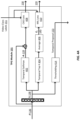
- FIG. 4 A is a simplified diagram illustrating an example structure of the TPG module 131 described in FIG. 3 , according to some embodiments.
- Per-frame scores 138 , S i [s i 1 , s i 2 , . . .
- the set of top Ki frames having the top scores for class c over all Ti frames is denoted by ic .
- the parameter Ki may be set in Paul et al., Weakly-supervised temporal activity localization and classification, in proceedings of ECCV, 2018, which is hereby expressly incorporated by reference herein in its entirety.
- the video-level score 143 is also used in computing a co-activity similarity (CAS) loss.
- the CAS loss encourages regions of videos containing similar activities to have similar feature representations, and those containing different activities to have different representations.
- the temporal attention vector 139 A i for each class c is then multiplied with the feature representation F i 136 , to produce a high-attention region feature representation vector ⁇ ic and a low-attention region feature representation vector ⁇ ic :
- ⁇ ic aggregates features of regions with high probability containing the activity
- ⁇ ic aggregates those of regions that are unlikely involving in the activity.
- V i and V j a positive video pair
- Their pair-wise loss is calculated as: 1 ⁇ 2 ⁇ max(0, d ( ⁇ ic , ⁇ jc ) ⁇ d ( ⁇ ic , ⁇ jc )+ ⁇ )+max(0, d ( ⁇ ic , ⁇ jc ) ⁇ d ( ⁇ ic , ⁇ jc )+ ⁇ ) ⁇ .
- the CAS loss module 408 can then compute the CAS loss 158 using the computed pair-wise loss and information from the video-class labels 151 by taking the average loss over all the positive video pairs of all classes in the training batch:
- the video-level scores 138 may be used for proposal generation at the TPG module 131 .
- the video-level scores 138 are passed to a two-stage thresholding module 414 .
- a threshold is used to discard categories that have small video-level confidence scores ⁇ ic for each class c, e.g., when the video-level score is lower than the first threshold.
- a second threshold is applied on the frame scores of the remaining categories, s i t , along the temporal axis, e.g., video-level scores corresponding to certain time instances that are lower than the second threshold are discarded.
- frames that are adjacent or closely nearby and have the same category are grouped to obtain the class-wise temporal proposals by taking advantage of temporal constraint of frames.
- the two thresholds used by the thresholding module 414 may be determined using a similar mechanism described in Paul et al.
- the thresholding module 414 may then use the video-class labels 151 to filter out the proposals with wrong categories and output the temporal proposal 153 .
- FIG. 4 B is a simplified diagram illustrating an example structure of the OAR module 132 described in FIG. 3 , according to some embodiments.
- the feature representations 136 is sequentially input into the OAR module 132 , e.g., each f i t over time t, and generates per-frame action scores over classes including background, a i t ⁇ (C+1) the probability of the current action category (online per-frame action recognition) and the class-agnostic start score, st i t ⁇ 2 , a two-dimensional vector indicating the probability of this frame being a start point and the probability that this frame is not a start point.
- the OAD module 132 includes a series of sequentially connected long short-term memories (LSTM), e.g., 420 , 422 , etc., each of which receives an input of the feature representation f i t out of a period of time t ⁇ M to t.
- LSTM long short-term memories
- the feature representation f i t ⁇ M at time t ⁇ M is input to the first LSTM 420
- the feature representation f i t is input to the last LSTM 422 .
- a i t and st i t are then obtained by a linear projection followed by the softmax operation on h i t and ⁇ tilde over (h) ⁇ i t , respectively.
- the frame loss module 428 is then configured to compute a cross entropy loss between the per-frame action labels and the predicted action probability a jc as the frame loss 161 :
- the start loss module 430 is configured to utilize focal loss between the binary start labels, ⁇ jm , and the predicted start probability, st jm , to construct start loss 162 , where is a hyper parameter:
- ⁇ is a weighting parameter.
- L MIL is computed for each video and L CAS is calculated using the positive video pairs in the training batch.
- Each video is segmented to non-overlapping training sequences which are used to calculate L OAR .
- the temporal proposals 153 for OAR supervision may be continuously, constantly, intermittently, or periodically updated. For example, the temporal proposals may updated periodically for every N (e.g., 500, 1000, etc.) training iterations.
- the OAR module 132 outputs a i t and st i t by the softmax layers 423 and 425 , respectively, at each time step t.
- a i t may be used directly as the per-frame action prediction.
- st i t is used to boost the score if a start is predicted at time t and suppress those otherwise.
- FIG. 5 is a simplified logic flow diagram illustrating a method for training an online action detection module using partially annotated data, according to some embodiments.
- One or more of the processes 510 - 560 of method 500 may be implemented, at least in part, in the form of executable code stored on non-transitory, tangible, machine-readable media that when run by one or more processors may cause the one or more processors to perform one or more of the processes 510 - 560 .
- method 500 may correspond to the method used by the partially supervised OAD module 130 for training with only video-level labels.
- an input of untrimmed video including a set of video-level annotations is received.
- the untrimmed video may be a real-time video stream from a live application such as a surveillance system, an automatic navigation system on an autonomous vehicle, and/or the like.
- the input video may be received via the communication interface 115 as shown in FIG. 2 .
- feature representation of the untrimmed video is generated.
- the feature representation vector may be generated by the feature extractor 133 and the fully-connected layer 134 shown in FIG. 3 .
- the feature extractor may extract features of the untrimmed videos, and a fully connected layer 134 may encode the features of the untrimmed videos into the feature representations with ReLU as an activation function.
- class-wise temporal proposal may be generated from the feature representation.
- the class-wise temporal proposals indicate an estimated action start label for each action class.
- the TPG module 131 may generate, for each untrimmed video with a video-level annotation, per-frame action scores for each action class using supervised offline action localization, and compute a video-level score for each action class based on the generated per-frame action scores.
- the temporal proposal may be generated by selecting a first set of action classes corresponding to the video-level scores higher than a first threshold and applying a second threshold on a subset of the per-frame scores that corresponds to the first set of action classes along a temporal axis.
- the class-wise temporal proposals are obtained based temporal constraints of the subset of the per-frame scores.
- per-frame action scores over action classes indicating whether each frame contains a specific action class and a class-agnostic start score indicating whether the respective frame contains a start of any action based on the feature representations are generated. For example, at each timestep, a hidden state and a cell state of a long short-term memory is updated based on an input of the feature representations. Max pooling is then applied on a set of hidden states between a current timestep and a past timestep to obtain an average hidden state.
- the per-frame action scores may be generated based on the hidden state and a first vector of classifier parameters, and the class-agnostic score is generated based on the average hidden state and a second vector of classifier parameters.
- the OAD module may compute a loss metric based on the per-frame action scores, the class-agnostic start scores and the class-wise temporal proposals.
- the loss metric includes the cross entropy between predicted video class probabilities as indicated by the temporal proposal and the video-level labels, e.g., L MIL .
- the loss metric includes a difference between high and low attention region aggregated feature representations, e.g., L CAS . This loss metric encourages regions of videos containing similar activities having similar feature representations, while others containing different activities having different representations.
- the loss metric includes a cross entropy between predicted action probabilities indicated by the action score and action labels obtained from proposal boundaries of each action class, e.g., L OAR .
- the OAD module 130 may be updated based on the loss metric.
- the OAD module may be trained end-to-end by jointly updating the TPG module 131 and the OAR module 132 , e.g., via backpropagation using the computed loss metric.
- method 500 may be combined with supervised training of the OAD module.
- the input videos may include a first batch of untrimmed videos having video-level annotations only, and a second batch of untrimmed videos having frame-level annotations.
- the OAD module may then be trained alternately by the first batch using method 500 and by the second batch supervised by the frame-level annotations.
- FIGS. 6 A- 6 B shows data tables illustrating example performance of the OAD module using different datasets as training data, according to one embodiment.
- two example action recognition datasets may be used, such as THUMOS'14 (Jiang et al., THUMOS challenge: Action recognition with a large number of classes, 2014) and ActivityNet1.2 (Heilbron et al., Activitynet: A large-scale video benchmark for human activity understanding, in proceedings of CVPR, 2015).
- THUMOS'14 contains 20 sport-related action classes.
- a validation set (200 videos) is used for training and evaluated on the testing set (213 videos). Each video contains 15 action instances on average.
- ActivityNet1.2 contains 100 action classes with an average of 1.5 action instances per video.
- a training set (4819 videos) is used to train the OAD module and evaluate on validation set (2383 videos).
- ActivityNet1.2 is much larger, THUMOS'14 has varying video lengths and much denser temporally annotated actions, which may provide a more challenging training scenario.
- F-AP frame-based average precision
- P-AP point-based average precision
- TRN Temporal recurrent networks for online action detection, in proceedings of ICCV, 2019
- StarNet StarNet
- SOTA state-of-the-art
- the example feature extractor (e.g., 133 in FIG. 3 ) is implemented on a two-stream (optical flow stream and RGB stream) I3D network pre-trained on Kinetics. Features are extracted at the chunk level. Video frames are extracted at 25 FPS and the chunk size is 16. The final features are the concatenation of the outputs of the two streams, resulting in a dimension of 2048.
- both the OAD module 130 and the baselines use the pre-extracted features provided in Paul et al., W-talc: Weakly-supervised temporal activity localization and classification, in proceedings of ECCV, 2018, which is hereby expressly incorporated by reference herein in its entirety.
- the dimension of h i t is set to be 4096 and the length of training sequence for LSTM is 64.
- M in temporal pooling is fixed to be 3, and is set to be 2. Since starts are sparsely located in each video, all positive frames are used and are randomly sampled 3 times than the negative ones in each training batch to compute start loss.
- ⁇ is fixed to be 0.5.
- Batch size of training videos is set to be 10.
- the OAD module 130 model is optimized for 4000 and 60000 iterations for THUMOS'14 and ActivityNet, respectively.
- the weight decay is set to be 5 ⁇ 10 ⁇ 4 and set learning rate to be 1 ⁇ 10 ⁇ 4 .
- FIGS. 6 A- 6 B comparisons in terms of P-AP between OAD module 130 and the previous methods shows that when only using video-level annotations, the OAD module 130 obtains better performance than StartNet in general on both THUMOS'14 and ActivityNet.
- FIG. 6 A shows online detection of action start on THUMOS'14.
- TS indicates the two-stream features used in Shou et al., Online action detection in untrimmed, streaming videos-modeling and evaluation, in proceedings of ECCV, 2018.
- V and S denote video-level (weak) and segment-level (strong) supervision, respectively. The best and second-best performance per column are highlighted.
- FIG. 6 B shows online detection of action start on ActivityNet.
- V and S denote video-level (weak) and segment-level (strong) supervision, respectively.
- the best and second-best per column are highlighted.
- FIGS. 7 A- 7 B provide example data tables illustrating performance of online per-frame action recognition, according to one embodiment. Comparisons in terms of F-AP are shown in FIGS. 7 A- 7 B .
- Method 500 for the OAD module 130 achieves 54.4% mean F-AP improving the strongly-supervised TRN by 3.4% on THUMOS'14, and obtains 66.7% mean F-AP which is only 2.4% lower than TRN on ActivityNet.
- THUMOS'14 is a more challenging dataset, containing 10 ⁇ action instances per video as compared to ActivityNet, so it leaves more room for our model to improve the performance.
- method 500 gains much better results on THUMOS'14. Besides the model accuracy, efficiency is also important for online methods.
- the OAD module 130 is much smaller and faster than TRN.
- FIG. 7 A shows online per-frame action recognition on THUMOS'14. The reported times do not include the processing time of feature extraction.
- TS indicates the two-stream features used in Xu et al., Temporal recurrent networks for online action detection, in proceedings of ICCV, 2019.
- V and S indicate video-level (weak) and segment-level (strong) supervision, respectively.
- FIG. 7 B shows a comparison with ActivityNet. V+30% S means that 30% of videos have segment-level (strong) annotations and others have video-level (weak) annotations.
- FIGS. 8 A- 8 B show example performance of the OAD module trained with a combination of partial supervision and strong supervision, according to one embodiment.
- the OAD module 130 largely outperforms TRN on THUMOS'14 (16.1% mean F-AP, see FIG. 8 A ).
- ActivityNet the OAD module 130 achieves new state-of-the-art performance of 70.7% mean F-AP (see FIG. 8 B ).
- StarNet consistently for all time thresholds on both THUMOS'14 (see FIG. 6 A ) and ActivityNet (see FIG. 6 B ).
- the performance gap between strong- and weak-supervision settings is only 4% mean F-AP on ActivityNet, whereas the gap is 12.7% on THUMOS'14. This may be because that the average ratio of action length over video length in ActivityNet is 43%, while the ratio is 2% in THUMOS'14.
- OAD module 130 is the flexibility of taking different forms of supervision for different videos. Here only a portion of randomly selected videos have segment-level annotations is evaluated. As shown in FIG. 8 A , the performance of OAD module 130 improves when more segment-level labels are available. On ActivityNet, the OAD module 130 achieves comparable performance to previous SOTA method when only 70% of data contains segment-level annotations.
- the superior performance of OAD module 130 may attribute to (1) the improved feature representations by jointly training TPG 131 and OAR 132 , (2) the effectiveness of the supervision combination strategy and (3) a desirable structure. Ablation studies are shown in FIG. 8 B to analyze the effect of each component of OAD module 130 .
- the shared feature can be potentially improved by training TPG jointly with OAR, so that it can boost the performance of OAR. For example, as shown in FIG. 8 B , disabling L TPG results in 5.9% lower mean F-AP and 3.5% lower mean P-AP.
- TPG alone can also be used for online action detection, as the S i of TPG are per-frame scores for each class.
- S i of TPG are per-frame scores for each class.
- using TPG results in decreasing mean F-AP and P-AP by 6.4% and 5.7%, respectively. This may due to the lack of employing temporal information of videos.
- TPG is constructed by feed-forward networks and trained with video-level labels.
- the OAR is built upon recurrent neural networks and trained with per-frame pseudo labels that are improved by incorporating the temporal constraint of frames (see proposal generation).
- FIG. 8 B also illustrates the effect of start point prediction. As shown, removing st i t results in decreasing mean P-AP by 1.7% with time threshold equals 1 second. As expected, start point prediction improves the accuracy of action start generation by suppressing false positives at non-start frames.
- the hyper parameter ⁇ controls the contribution of the losses from the TPG and OAR modules to the total loss.
- ⁇ is set to be 0.5 as default.
- Method 500 is relatively robust in this hyper-parameter choice.
- the OAD module achieves 54.4%, 55.0% and 54.6% mean F-AP when ⁇ equals 0.5, 1.0 and 2.0, respectively.
- the OAD module 130 obtains 67.1%, 66.3% and 66.6% mean F-AP accordingly.
- the OAD module 130 achieves 46.3% mean F-AP and 16.4% mean P-AP with time threshold equals 1 second. These results are much lower than those of I3D features.
- proposals of TPG can be used for offline action localization. Under the offline setting, a predicted proposal is counted as correct if its IoU with ground truth exceeds a threshold.
- the OAD module 130 may achieve 24.4% mAP when IoU threshold is set to be 0.5, while the baseline has 22.8%. The improvement may come from the joint training of TPG and OAR.
- the inference times after feature extraction are compared. Different models are tested under the same environment with a single Tesla V100 GPU. The per-frame inference times of TRN, StartNet and our method averaging over the entire test set of THUMOS'14 are 2.60 ms, 0.56 ms and 0.40 ms respectively. The results suggest that the OAD module 130 achieve the fastest performance, around 6 ⁇ faster than TRN. Model size is another key factor, especially for online tasks. Given similar model accuracy, smaller models are preferable, since they require less memory. Number of parameters of TRN, StartNet and our method (TPG+OAR) are 314M, 118M and 110M. The OAD module 130 has the least number of parameters (3 ⁇ smaller than TRN).
- embodiments described herein address online action detection using weak or partial supervision.
- Previous methods rely on segment-level annotations for training which leads to significant amount of human effort and hinders the model scalability.
- the proposed OAD module 130 can be trained using only video-level labels and is largely improved when strong labels are available.
- Experimental results demonstrate that the training method (e.g., method 500 ) with weak supervision obtains comparable performance to the existing approaches on the online action detection tasks and outperforms the state-of-the-arts when strongly supervised.
- computing devices such as computing device 100 may include non-transitory, tangible, machine readable media that include executable code that when run by one or more processors (e.g., processor 110 ) may cause the one or more processors to perform the processes of method 200 .
- processors e.g., processor 110
- Some common forms of machine readable media that may include the processes of method 200 are, for example, floppy disk, flexible disk, hard disk, magnetic tape, any other magnetic medium, CD-ROM, any other optical medium, punch cards, paper tape, any other physical medium with patterns of holes, RAM, PROM, EPROM, FLASH-EPROM, any other memory chip or cartridge, and/or any other medium from which a processor or computer is adapted to read.
Landscapes
- Engineering & Computer Science (AREA)
- Theoretical Computer Science (AREA)
- Physics & Mathematics (AREA)
- General Physics & Mathematics (AREA)
- Data Mining & Analysis (AREA)
- Evolutionary Computation (AREA)
- Artificial Intelligence (AREA)
- Software Systems (AREA)
- General Engineering & Computer Science (AREA)
- Life Sciences & Earth Sciences (AREA)
- Computing Systems (AREA)
- General Health & Medical Sciences (AREA)
- Health & Medical Sciences (AREA)
- Mathematical Physics (AREA)
- Multimedia (AREA)
- Computer Vision & Pattern Recognition (AREA)
- Biophysics (AREA)
- Computational Linguistics (AREA)
- Biomedical Technology (AREA)
- Molecular Biology (AREA)
- Databases & Information Systems (AREA)
- Bioinformatics & Cheminformatics (AREA)
- Evolutionary Biology (AREA)
- Bioinformatics & Computational Biology (AREA)
- Medical Informatics (AREA)
- Computational Mathematics (AREA)
- Mathematical Analysis (AREA)
- Mathematical Optimization (AREA)
- Pure & Applied Mathematics (AREA)
- Operations Research (AREA)
- Probability & Statistics with Applications (AREA)
- Algebra (AREA)
- Image Analysis (AREA)
Abstract
Description


where c is the class index and

½{max(0,d(Ψic,Ψjc)−d(Ψic,Φjc)+δ)+max(0,d(Ψic,Ψjc)−d(Φic,Φjc)+δ)}.
where d(x,y) denotes cosine similarity of vector x and y, and δ is a margin parameter. The
h i t ,c i t=LSTM(h i t−1 ,c i t−1 ,f i t).
{tilde over (h)} i t=max pool(h i t−M ,h i t−M+1 , . . . ,h i t).
a i t=softmax(W a T h i t)
and the
st i t=softmax(W st T {tilde over (h)} i t)
where Wa T and Wst T indicate the parameters of the classifiers.
The

L total =L OAR +λL TPG.
where λ is a weighting parameter. During the end-to-end training, LMIL is computed for each video and LCAS is calculated using the positive video pairs in the training batch. Each video is segmented to non-overlapping training sequences which are used to calculate LOAR.
In one implementation, the
Claims (20)
Priority Applications (1)
| Application Number | Priority Date | Filing Date | Title |
|---|---|---|---|
| US16/931,228 US12299982B2 (en) | 2020-05-12 | 2020-07-16 | Systems and methods for partially supervised online action detection in untrimmed videos |
Applications Claiming Priority (2)
| Application Number | Priority Date | Filing Date | Title |
|---|---|---|---|
| US202063023402P | 2020-05-12 | 2020-05-12 | |
| US16/931,228 US12299982B2 (en) | 2020-05-12 | 2020-07-16 | Systems and methods for partially supervised online action detection in untrimmed videos |
Publications (2)
| Publication Number | Publication Date |
|---|---|
| US20210357687A1 US20210357687A1 (en) | 2021-11-18 |
| US12299982B2 true US12299982B2 (en) | 2025-05-13 |
Family
ID=78512498
Family Applications (1)
| Application Number | Title | Priority Date | Filing Date |
|---|---|---|---|
| US16/931,228 Active 2043-01-13 US12299982B2 (en) | 2020-05-12 | 2020-07-16 | Systems and methods for partially supervised online action detection in untrimmed videos |
Country Status (1)
| Country | Link |
|---|---|
| US (1) | US12299982B2 (en) |
Cited By (2)
| Publication number | Priority date | Publication date | Assignee | Title |
|---|---|---|---|---|
| US20240371166A1 (en) * | 2023-04-27 | 2024-11-07 | Honda Motor Co., Ltd. | Weakly supervised action segmentation |
| US12548335B2 (en) * | 2023-04-27 | 2026-02-10 | Honda Motor Co., Ltd. | Weakly supervised action segmentation |
Families Citing this family (15)
| Publication number | Priority date | Publication date | Assignee | Title |
|---|---|---|---|---|
| US12412394B2 (en) * | 2021-03-31 | 2025-09-09 | International Business Machines Corporation | Action recognition using limited data |
| US12541963B2 (en) * | 2021-11-16 | 2026-02-03 | Samsung Electronics Co., Ltd. | Method and device with neural network training and image processing |
| CN114120189B (en) * | 2021-11-22 | 2025-07-25 | 上海交通大学 | Online action detection method and system for progressive privilege information distillation |
| CN114255414B (en) * | 2021-11-25 | 2025-02-25 | 北京达佳互联信息技术有限公司 | Video marking method, device and electronic equipment |
| CN114898462A (en) * | 2022-05-09 | 2022-08-12 | 南京航空航天大学 | Real-time online dynamic gesture recognition method based on convolutional neural network |
| CN115116131B (en) * | 2022-06-14 | 2024-11-08 | 中原动力智能机器人有限公司 | A method, device and system for identifying falling action |
| CN115115985B (en) * | 2022-06-28 | 2025-08-15 | 腾讯科技(深圳)有限公司 | Video analysis method and device, electronic equipment and storage medium |
| US20240095583A1 (en) * | 2022-09-14 | 2024-03-21 | Unitedhealth Group Incorporated | Machine learning training approach for a multitask predictive domain |
| CN115546831A (en) * | 2022-10-11 | 2022-12-30 | 同济人工智能研究院(苏州)有限公司 | Cross-modal pedestrian searching method and system based on multi-granularity attention mechanism |
| CN116030538B (en) * | 2023-03-30 | 2023-06-16 | 中国科学技术大学 | Weak supervision action detection method, system, equipment and storage medium |
| CN116740810B (en) * | 2023-06-06 | 2025-06-03 | 南京理工大学 | A semi-supervised action recognition training method based on frame-level and feature-level enhancement |
| CN116503959B (en) * | 2023-06-30 | 2023-09-08 | 山东省人工智能研究院 | Weak supervision time sequence action positioning method and system based on uncertainty perception |
| CN116844086B (en) * | 2023-06-30 | 2025-10-10 | 华东师范大学 | A traffic accident detection method based on video clip saliency guidance |
| CN119131578B (en) * | 2024-08-19 | 2025-10-31 | 中国科学院空天信息创新研究院 | Flood damage farmland detection method, device, equipment and storage medium |
| CN120412070B (en) * | 2025-03-25 | 2026-01-02 | 乐清市电力实业有限公司 | A Video Action Localization Method Based on Multimodal Dynamic Prompts and Spatiotemporal Sparsity |
Citations (52)
| Publication number | Priority date | Publication date | Assignee | Title |
|---|---|---|---|---|
| US20160234464A1 (en) * | 2015-02-06 | 2016-08-11 | Xerox Corporation | Computer-vision based process recognition |
| US9432671B2 (en) | 2014-05-22 | 2016-08-30 | Xerox Corporation | Method and apparatus for classifying machine printed text and handwritten text |
| US20160350653A1 (en) | 2015-06-01 | 2016-12-01 | Salesforce.Com, Inc. | Dynamic Memory Network |
| US20170024645A1 (en) | 2015-06-01 | 2017-01-26 | Salesforce.Com, Inc. | Dynamic Memory Network |
| US20170032280A1 (en) | 2015-07-27 | 2017-02-02 | Salesforce.Com, Inc. | Engagement estimator |
| US20170140240A1 (en) | 2015-07-27 | 2017-05-18 | Salesforce.Com, Inc. | Neural network combined image and text evaluator and classifier |
| US20180121787A1 (en) | 2016-11-03 | 2018-05-03 | Salesforce.Com, Inc. | Joint Many-Task Neural Network Model for Multiple Natural Language Processing (NLP) Tasks |
| US20180129937A1 (en) | 2016-11-04 | 2018-05-10 | Salesforce.Com, Inc. | Quasi-recurrent neural network |
| US20180129938A1 (en) | 2016-11-04 | 2018-05-10 | Salesforce.Com, Inc. | Dynamic coattention network for question answering |
| US20180268287A1 (en) | 2017-03-15 | 2018-09-20 | Salesforce.Com, Inc. | Probability-Based Guider |
| US20180336453A1 (en) | 2017-05-19 | 2018-11-22 | Salesforce.Com, Inc. | Domain specific language for generation of recurrent neural network architectures |
| US20180373987A1 (en) | 2017-05-18 | 2018-12-27 | salesforce.com,inc. | Block-diagonal hessian-free optimization for recurrent and convolutional neural networks |
| US20180373682A1 (en) | 2017-05-19 | 2018-12-27 | salesforce.come, inc, | Natural language processing using context-specific word vectors |
| US20190108400A1 (en) * | 2017-10-05 | 2019-04-11 | Qualcomm Incorporated | Actor-deformation-invariant action proposals |
| US20190130312A1 (en) | 2017-10-27 | 2019-05-02 | Salesforce.Com, Inc. | Hierarchical and interpretable skill acquisition in multi-task reinforcement learning |
| US20190130249A1 (en) | 2017-10-27 | 2019-05-02 | Salesforce.Com, Inc. | Sequence-to-sequence prediction using a neural network model |
| US20190130273A1 (en) | 2017-10-27 | 2019-05-02 | Salesforce.Com, Inc. | Sequence-to-sequence prediction using a neural network model |
| US20190130248A1 (en) | 2017-10-27 | 2019-05-02 | Salesforce.Com, Inc. | Generating dual sequence inferences using a neural network model |
| US20190130896A1 (en) | 2017-10-26 | 2019-05-02 | Salesforce.Com, Inc. | Regularization Techniques for End-To-End Speech Recognition |
| US10282663B2 (en) | 2015-08-15 | 2019-05-07 | Salesforce.Com, Inc. | Three-dimensional (3D) convolution with 3D batch normalization |
| US20190188568A1 (en) | 2017-12-20 | 2019-06-20 | Salesforce.Com, Inc. | Hybrid training of deep networks |
| US20190251431A1 (en) | 2018-02-09 | 2019-08-15 | Salesforce.Com, Inc. | Multitask Learning As Question Answering |
| US20190258939A1 (en) | 2018-02-22 | 2019-08-22 | Salesforce.Com, Inc. | Question Answering From Minimal Context Over Documents |
| US20190258714A1 (en) | 2018-02-22 | 2019-08-22 | Salesforce.Com, Inc. | Dialogue state tracking using a global-local encoder |
| US20190286073A1 (en) | 2018-03-16 | 2019-09-19 | Salesforce.Com, Inc. | Systems and methods for learning for domain adaptation |
| US20190295530A1 (en) | 2018-03-16 | 2019-09-26 | Salesforce.Com, Inc. | Unsupervised non-parallel speech domain adaptation using a multi-discriminator adversarial network |
| US10474709B2 (en) | 2017-04-14 | 2019-11-12 | Salesforce.Com, Inc. | Deep reinforced model for abstractive summarization |
| US20190355270A1 (en) | 2018-05-18 | 2019-11-21 | Salesforce.Com, Inc. | Multitask Learning As Question Answering |
| US20190362020A1 (en) | 2018-05-22 | 2019-11-28 | Salesforce.Com, Inc. | Abstraction of text summarizaton |
| US20200005765A1 (en) | 2017-10-27 | 2020-01-02 | Salesforce.Com, Inc. | End-To-End Speech Recognition with Policy Learning |
| US10542270B2 (en) | 2017-11-15 | 2020-01-21 | Salesforce.Com, Inc. | Dense video captioning |
| US10546217B2 (en) | 2017-11-01 | 2020-01-28 | Salesforce.Com, Inc. | Training a neural network using augmented training datasets |
| US10558750B2 (en) | 2016-11-18 | 2020-02-11 | Salesforce.Com, Inc. | Spatial attention model for image captioning |
| US10565318B2 (en) | 2017-04-14 | 2020-02-18 | Salesforce.Com, Inc. | Neural machine translation with latent tree attention |
| US10565493B2 (en) | 2016-09-22 | 2020-02-18 | Salesforce.Com, Inc. | Pointer sentinel mixture architecture |
| US10592767B2 (en) | 2017-10-27 | 2020-03-17 | Salesforce.Com, Inc. | Interpretable counting in visual question answering |
| US20200090033A1 (en) | 2018-09-18 | 2020-03-19 | Salesforce.Com, Inc. | Systems and Methods for Named Entity Recognition |
| US20200090034A1 (en) | 2018-09-18 | 2020-03-19 | Salesforce.Com, Inc. | Determining Intent from Unstructured Input to Update Heterogeneous Data Stores |
| US20200089757A1 (en) | 2018-09-18 | 2020-03-19 | Salesforce.Com, Inc. | Using Unstructured Input to Update Heterogeneous Data Stores |
| US20200104699A1 (en) | 2018-09-27 | 2020-04-02 | Salesforce.Com, Inc. | Continual Neural Network Learning Via Explicit Structure Learning |
| US20200105272A1 (en) | 2018-09-27 | 2020-04-02 | Salesforce.Com, Inc. | Global-to-Local Memory Pointer Networks for Task-Oriented Dialogue |
| US20200104643A1 (en) | 2018-09-27 | 2020-04-02 | Salesforce.Com, Inc. | Prediction-Correction Approach to Zero Shot Learning |
| US20200103911A1 (en) | 2018-09-27 | 2020-04-02 | Salesforce.Com, Inc. | Self-Aware Visual-Textual Co-Grounded Navigation Agent |
| US20200184020A1 (en) | 2018-12-11 | 2020-06-11 | Salesforce.Com, Inc. | Structured Text Translation |
| US20200234113A1 (en) | 2019-01-17 | 2020-07-23 | Salesforce.Com, Inc. | Meta-Reinforcement Learning Gradient Estimation with Variance Reduction |
| US10747761B2 (en) | 2017-05-18 | 2020-08-18 | Salesforce.Com, Inc. | Neural network based translation of natural language queries to database queries |
| US20200272940A1 (en) | 2019-02-25 | 2020-08-27 | Salesforce.Com, Inc. | Data privacy protected machine learning systems |
| US20200285705A1 (en) | 2019-03-05 | 2020-09-10 | Salesforce.Com, Inc. | Agent persona grounded chit-chat generation framework |
| US20200285704A1 (en) | 2019-03-04 | 2020-09-10 | Salesforce.Com, Inc. | Leveraging Language Models for Generating Commonsense Explanations |
| US20200285706A1 (en) | 2019-03-04 | 2020-09-10 | Salesforce.Com, Inc. | Cross-Lingual Regularization for Multilingual Generalization |
| US20200285993A1 (en) | 2019-03-05 | 2020-09-10 | Salesforce.Com, Inc. | Efficient Off-Policy Credit Assignment |
| US20200302236A1 (en) | 2019-03-22 | 2020-09-24 | Salesforce.Com, Inc, | Two-Stage Online Detection of Action Start In Untrimmed Videos |
-
2020
- 2020-07-16 US US16/931,228 patent/US12299982B2/en active Active
Patent Citations (73)
| Publication number | Priority date | Publication date | Assignee | Title |
|---|---|---|---|---|
| US9432671B2 (en) | 2014-05-22 | 2016-08-30 | Xerox Corporation | Method and apparatus for classifying machine printed text and handwritten text |
| US20160234464A1 (en) * | 2015-02-06 | 2016-08-11 | Xerox Corporation | Computer-vision based process recognition |
| US20160350653A1 (en) | 2015-06-01 | 2016-12-01 | Salesforce.Com, Inc. | Dynamic Memory Network |
| US20170024645A1 (en) | 2015-06-01 | 2017-01-26 | Salesforce.Com, Inc. | Dynamic Memory Network |
| US20170032280A1 (en) | 2015-07-27 | 2017-02-02 | Salesforce.Com, Inc. | Engagement estimator |
| US20170140240A1 (en) | 2015-07-27 | 2017-05-18 | Salesforce.Com, Inc. | Neural network combined image and text evaluator and classifier |
| US20180096219A1 (en) | 2015-07-27 | 2018-04-05 | Salesforce.Com, Inc. | Neural network combined image and text evaluator and classifier |
| US10282663B2 (en) | 2015-08-15 | 2019-05-07 | Salesforce.Com, Inc. | Three-dimensional (3D) convolution with 3D batch normalization |
| US20190213482A1 (en) | 2015-08-15 | 2019-07-11 | Salesforce.Com, Inc. | Three-Dimensional (3D) Convolution With 3D Batch Normalization |
| US20200065651A1 (en) | 2016-09-22 | 2020-02-27 | Salesforce.Com, Inc. | Pointer sentinel mixture architecture |
| US10565493B2 (en) | 2016-09-22 | 2020-02-18 | Salesforce.Com, Inc. | Pointer sentinel mixture architecture |
| US20180121787A1 (en) | 2016-11-03 | 2018-05-03 | Salesforce.Com, Inc. | Joint Many-Task Neural Network Model for Multiple Natural Language Processing (NLP) Tasks |
| US20180121788A1 (en) | 2016-11-03 | 2018-05-03 | Salesforce.Com, Inc. | Deep Neural Network Model for Processing Data Through Mutliple Linguistic Task Hiearchies |
| US20180121799A1 (en) | 2016-11-03 | 2018-05-03 | Salesforce.Com, Inc. | Training a Joint Many-Task Neural Network Model using Successive Regularization |
| US20180129937A1 (en) | 2016-11-04 | 2018-05-10 | Salesforce.Com, Inc. | Quasi-recurrent neural network |
| US20180129938A1 (en) | 2016-11-04 | 2018-05-10 | Salesforce.Com, Inc. | Dynamic coattention network for question answering |
| US20180129931A1 (en) | 2016-11-04 | 2018-05-10 | Salesforce.Com, Inc. | Quasi-recurrent neural network based encoder-decoder model |
| US10558750B2 (en) | 2016-11-18 | 2020-02-11 | Salesforce.Com, Inc. | Spatial attention model for image captioning |
| US10565306B2 (en) | 2016-11-18 | 2020-02-18 | Salesforce.Com, Inc. | Sentinel gate for modulating auxiliary information in a long short-term memory (LSTM) neural network |
| US10565305B2 (en) | 2016-11-18 | 2020-02-18 | Salesforce.Com, Inc. | Adaptive attention model for image captioning |
| US20200057805A1 (en) | 2016-11-18 | 2020-02-20 | Salesforce.Com, Inc. | Spatial attention model for image captioning |
| US20200117854A1 (en) | 2016-11-18 | 2020-04-16 | Salesforce.Com, Inc. | Adaptive Attention Model for Image Captioning |
| US20180268287A1 (en) | 2017-03-15 | 2018-09-20 | Salesforce.Com, Inc. | Probability-Based Guider |
| US20180268298A1 (en) | 2017-03-15 | 2018-09-20 | Salesforce.Com, Inc. | Deep Neural Network-Based Decision Network |
| US20200142917A1 (en) | 2017-04-14 | 2020-05-07 | Salesforce.Com, Inc. | Deep Reinforced Model for Abstractive Summarization |
| US20200117861A1 (en) | 2017-04-14 | 2020-04-16 | Salesforce.Com, Inc. | Neural Machine Translation with Latent Tree Attention |
| US10474709B2 (en) | 2017-04-14 | 2019-11-12 | Salesforce.Com, Inc. | Deep reinforced model for abstractive summarization |
| US10565318B2 (en) | 2017-04-14 | 2020-02-18 | Salesforce.Com, Inc. | Neural machine translation with latent tree attention |
| US10521465B2 (en) | 2017-04-14 | 2019-12-31 | Salesforce.Com, Inc. | Deep reinforced model for abstractive summarization |
| US10747761B2 (en) | 2017-05-18 | 2020-08-18 | Salesforce.Com, Inc. | Neural network based translation of natural language queries to database queries |
| US20180373987A1 (en) | 2017-05-18 | 2018-12-27 | salesforce.com,inc. | Block-diagonal hessian-free optimization for recurrent and convolutional neural networks |
| US10699060B2 (en) | 2017-05-19 | 2020-06-30 | Salesforce.Com, Inc. | Natural language processing using a neural network |
| US20180373682A1 (en) | 2017-05-19 | 2018-12-27 | salesforce.come, inc, | Natural language processing using context-specific word vectors |
| US20180336453A1 (en) | 2017-05-19 | 2018-11-22 | Salesforce.Com, Inc. | Domain specific language for generation of recurrent neural network architectures |
| US20190108400A1 (en) * | 2017-10-05 | 2019-04-11 | Qualcomm Incorporated | Actor-deformation-invariant action proposals |
| US20190130896A1 (en) | 2017-10-26 | 2019-05-02 | Salesforce.Com, Inc. | Regularization Techniques for End-To-End Speech Recognition |
| US20200005765A1 (en) | 2017-10-27 | 2020-01-02 | Salesforce.Com, Inc. | End-To-End Speech Recognition with Policy Learning |
| US10592767B2 (en) | 2017-10-27 | 2020-03-17 | Salesforce.Com, Inc. | Interpretable counting in visual question answering |
| US20200175305A1 (en) | 2017-10-27 | 2020-06-04 | Salesforce.Com, Inc. | Interpretable Counting in Visual Question Answering |
| US20190130273A1 (en) | 2017-10-27 | 2019-05-02 | Salesforce.Com, Inc. | Sequence-to-sequence prediction using a neural network model |
| US20190130248A1 (en) | 2017-10-27 | 2019-05-02 | Salesforce.Com, Inc. | Generating dual sequence inferences using a neural network model |
| US20190130249A1 (en) | 2017-10-27 | 2019-05-02 | Salesforce.Com, Inc. | Sequence-to-sequence prediction using a neural network model |
| US20190130312A1 (en) | 2017-10-27 | 2019-05-02 | Salesforce.Com, Inc. | Hierarchical and interpretable skill acquisition in multi-task reinforcement learning |
| US10573295B2 (en) | 2017-10-27 | 2020-02-25 | Salesforce.Com, Inc. | End-to-end speech recognition with policy learning |
| US10546217B2 (en) | 2017-11-01 | 2020-01-28 | Salesforce.Com, Inc. | Training a neural network using augmented training datasets |
| US10542270B2 (en) | 2017-11-15 | 2020-01-21 | Salesforce.Com, Inc. | Dense video captioning |
| US20200084465A1 (en) | 2017-11-15 | 2020-03-12 | Salesforce.Com, Inc. | Dense Video Captioning |
| US20190188568A1 (en) | 2017-12-20 | 2019-06-20 | Salesforce.Com, Inc. | Hybrid training of deep networks |
| US20190251431A1 (en) | 2018-02-09 | 2019-08-15 | Salesforce.Com, Inc. | Multitask Learning As Question Answering |
| US10776581B2 (en) | 2018-02-09 | 2020-09-15 | Salesforce.Com, Inc. | Multitask learning as question answering |
| US20190258939A1 (en) | 2018-02-22 | 2019-08-22 | Salesforce.Com, Inc. | Question Answering From Minimal Context Over Documents |
| US20190258714A1 (en) | 2018-02-22 | 2019-08-22 | Salesforce.Com, Inc. | Dialogue state tracking using a global-local encoder |
| US20190286073A1 (en) | 2018-03-16 | 2019-09-19 | Salesforce.Com, Inc. | Systems and methods for learning for domain adaptation |
| US10783875B2 (en) | 2018-03-16 | 2020-09-22 | Salesforce.Com, Inc. | Unsupervised non-parallel speech domain adaptation using a multi-discriminator adversarial network |
| US20190295530A1 (en) | 2018-03-16 | 2019-09-26 | Salesforce.Com, Inc. | Unsupervised non-parallel speech domain adaptation using a multi-discriminator adversarial network |
| US20190355270A1 (en) | 2018-05-18 | 2019-11-21 | Salesforce.Com, Inc. | Multitask Learning As Question Answering |
| US20190362020A1 (en) | 2018-05-22 | 2019-11-28 | Salesforce.Com, Inc. | Abstraction of text summarizaton |
| US20200089757A1 (en) | 2018-09-18 | 2020-03-19 | Salesforce.Com, Inc. | Using Unstructured Input to Update Heterogeneous Data Stores |
| US20200090034A1 (en) | 2018-09-18 | 2020-03-19 | Salesforce.Com, Inc. | Determining Intent from Unstructured Input to Update Heterogeneous Data Stores |
| US20200090033A1 (en) | 2018-09-18 | 2020-03-19 | Salesforce.Com, Inc. | Systems and Methods for Named Entity Recognition |
| US20200103911A1 (en) | 2018-09-27 | 2020-04-02 | Salesforce.Com, Inc. | Self-Aware Visual-Textual Co-Grounded Navigation Agent |
| US20200104643A1 (en) | 2018-09-27 | 2020-04-02 | Salesforce.Com, Inc. | Prediction-Correction Approach to Zero Shot Learning |
| US20200105272A1 (en) | 2018-09-27 | 2020-04-02 | Salesforce.Com, Inc. | Global-to-Local Memory Pointer Networks for Task-Oriented Dialogue |
| US20200104699A1 (en) | 2018-09-27 | 2020-04-02 | Salesforce.Com, Inc. | Continual Neural Network Learning Via Explicit Structure Learning |
| US20200184020A1 (en) | 2018-12-11 | 2020-06-11 | Salesforce.Com, Inc. | Structured Text Translation |
| US20200234113A1 (en) | 2019-01-17 | 2020-07-23 | Salesforce.Com, Inc. | Meta-Reinforcement Learning Gradient Estimation with Variance Reduction |
| US20200272940A1 (en) | 2019-02-25 | 2020-08-27 | Salesforce.Com, Inc. | Data privacy protected machine learning systems |
| US20200285704A1 (en) | 2019-03-04 | 2020-09-10 | Salesforce.Com, Inc. | Leveraging Language Models for Generating Commonsense Explanations |
| US20200285706A1 (en) | 2019-03-04 | 2020-09-10 | Salesforce.Com, Inc. | Cross-Lingual Regularization for Multilingual Generalization |
| US20200285705A1 (en) | 2019-03-05 | 2020-09-10 | Salesforce.Com, Inc. | Agent persona grounded chit-chat generation framework |
| US20200285993A1 (en) | 2019-03-05 | 2020-09-10 | Salesforce.Com, Inc. | Efficient Off-Policy Credit Assignment |
| US20200302236A1 (en) | 2019-03-22 | 2020-09-24 | Salesforce.Com, Inc, | Two-Stage Online Detection of Action Start In Untrimmed Videos |
| US20200302178A1 (en) | 2019-03-22 | 2020-09-24 | Salesforce.Com, Inc. | Two-Stage Online Detection of Action Start In Untrimmed Videos |
Non-Patent Citations (38)
| Title |
|---|
| B. G. Fabian Caba Heilbron, Victor Escorcia and J. C. Niebles. Activitynet: A large-scale video benchmark for human activity understanding. In CVPR, 2015. |
| D. Liu, T. Jiang, and Y. Wang. Completeness modeling and context separation for weakly supervised temporal action localization. In The IEEE Conference on Computer Vision and Pattern Recognition (CVPR), Jun. 2019. |
| D. P. Kingma and J. Ba. Adam: A method for stochastic optimization. arXiv:1412.6980, 2014. |
| D.-A. Huang, L. Fei-Fei, and J. C. Niebles. Connectionist temporal modeling for weakly supervised action labeling. In European Conference on Computer Vision, pp. 137-153. Springer, 2016. |
| Eliáš, RNDr Petr. "Action Recognition, Annotation, and Searching in Motion Data." (Year: 2019). * |
| H. Xu, A. Das, and K. Saenko. R-C3D: Region convolutional 3d network for temporal activity detection. In ICCV, 2017. |
| J. Carreira and A. Zisserman. Quo vadis, action recognition? a new model and the kinetics dataset. In CVPR, 2017. |
| J. Gao, Z. Yang, and R. Nevatia. RED: Reinforced encoder-decoder networks for action anticipation. In BMVC, 2017. |
| J. Gao, Z. Yang, C. Sun, K. Chen, and R. Nevatia. TURN TAP: Temporal unit regression network for temporal action proposals. ICCV, 2017. |
| L. Wang, Y. Xiong, D. Lin, and L. Van Gool. Untrimmednets for weakly supervised action recognition and detection. In Proceedings of the IEEE Conference on Computer Vision and Pattern Recognition, pp. 4325-4334, 2017. |
| Liu, Jiaying, et al. "Multi-modality multi-task recurrent neural network for online action detection." IEEE Transactions on Circuits and Systems for Video Technology 29.9 (2018): 2667-2682. (Year: 2018). * |
| M. Gao, M. Xu, L. S. Davis, R. Socher, and C. Xiong. Startnet: Online detection of action start in untrimmed videos. In IEEE International Conference on Computer Vision (ICCV), 2019. |
| M. Xu, M. Gao, Y.-T. Chen, L. S. Davis, and D. J. Crandall. Temporal recurrent networks for online action detection. In IEEE International Conference on Computer Vision (ICCV), 2019. |
| Mahmud, Tahmida, Mahmudul Hasan, and Amit K. Roy-Chowdhury. "Joint prediction of activity labels and starting times in untrimmed videos." Proceedings of the IEEE International conference on Computer Vision. 2017. (Year: 2017). * |
| O. Duchenne, I. Laptev, J. Sivic, F. R. Bach, and J. Ponce. Automatic annotation of human actions in video. In ICCV, vol. 1, pp. 3-2, 2009. |
| P. Bojanowski, et al. Weakly supervised action labeling in videos under ordering constraints. In European Conference on Computer Vision, pp. 628-643. Springer, 2014. |
| P. Lee, Y. Uh, and H. Byun. Background suppression network for weakly-supervised temporal action localization. In AAAI, 2020. |
| Parsa, Behnoosh, et al. "Predicting ergonomic risks during indoor object manipulation using spatiotemporal convolutional networks." CORR. 2019. (Year: 2019). * |
| R. De Geest, E. Gavves, A. Ghodrati, Z. Li, C. Snoek, and T. Tuytelaars. Online action detection. In ECCV, 2016.; arxiv:1604.06506v2 [cs.CV] Aug. 30, 2016. |
| R. Zeng, W. Huang, M. Tan, Y. Rong, P. Zhao, J. Huang, and C. Gan. Graph convolutional networks for temporal action localization. In Proceedings of the IEEE International Conference on Computer Vision, pp. 7094-7103, 2019. |
| S. Buch, V. Escorcia, C. Shen, B. Ghanem, and J. C. Niebles. SST: Single-stream temporal action proposals. In CVPR, 2017. |
| S. Narayan, H. Cholakkal, F. Shahbaz Khan, and L. Shao. 3c-net: Category count and center loss for weakly-supervised action localization. arXiv preprint arXiv:1908.08216, 2019. |
| S. Paul, S. Roy, and A. K. Roy-Chowdhury. W-talc: Weakly-supervised temporal activity localization and classification. In Proceedings of the European Conference on Computer Vision (ECCV), pp. 563-579, 2018. |
| Shou, Zheng, et al. "Online action detection in untrimmed, streaming videos-modeling and evaluation." ECCV. vol. 1. No. 2. 2018. (Year: 2018). * |
| Song, Xiaolin, et al. "Temporal-spatial mapping for action recognition." IEEE Transactions on Circuits and Systems for Video Technology 30.3 (2019): 748-759. (Year: 2019). * |
| T. N. Kipf and M. Welling. Semi-supervised classification with graph convolutional networks. arXiv preprint arXiv:1609.02907, 2016. |
| T.-Y. Lin, P. Goyal, R. Girshick, K. He, and P. Dollár. Focal loss for dense object detection. In Proceedings of the IEEE international conference on computer vision, pp. 2980-2988, 2017. |
| Tang, Fengxiao, et al. "On extracting the spatial-temporal features of network traffic patterns: A tensor based deep learning model." 2018 International Conference on Network Infrastructure and Digital Content (IC-NIDC). IEEE, 2018. (Year: 2018). * |
| X. Dai, B. Singh, G. Zhang, L. S. Davis, and Y. Q. Chen. Temporal context network for activity localization in videos. In ICCV, 2017. |
| Xu, Mingze, et al. "Temporal recurrent networks for online action detection." Proceedings of the IEEE/CVF international conference on computer vision. 2019. (Year: 2019). * |
| Y. Yuan, Y. Lyu, X. Shen, I. W. Tsang, and D.-Y. Yeung. Marginalized average attentional network for weakly-supervised learning. In International Conference on Learning Representations (ICLR), 2019. |
| Y. Zhao, Y. Xiong, L. Wang, Z. Wu, X. Tang, and D. Lin. Temporal action detection with structured segment networks. In ICCV, 2017. |
| Y.-G. Jiang, J. Liu, A. Roshan Zamir, G. Toderici, I. Laptev, M. Shah, and R. Sukthankar. THUMOS challenge: Action recognition with a large No. of classes. http://crcv.ucf.edu/THUMOS14/, 2014. |
| Y.-W. Chao, S. Vijayanarasimhan, B. Seybold, D. A. Ross, J. Deng, and R. Sukthankar. Rethinking the faster r-cnn architecture for temporal action localization. In CVPR, 2018. |
| Yoshikawa, Taizo, Viktor Losing, and Emel Demircan. "Machine learning for human movement understanding." Advanced Robotics 34.13 (2020): 828-844. (Year: 2020). * |
| Z. Shou, D. Wang, and S.-F. Chang. Temporal action localization in untrimmed videos via multi-stage cnns. In CVPR, 2016. |
| Z. Shou, H. Gao, L. Zhang, K. Miyazawa, and S.-F. Chang. Autoloc: Weakly-supervised temporal action localization in untrimmed videos. In Proceedings of the European Conference on Computer Vision (ECCV), pp. 154-171, 2018. |
| Z. Shou, J. Pan, J. Chan, K. Miyazawa, H. Mansour, A. Vetro, X. Giro-i Nieto, and S.-F. Chang. Online action detection in untrimmed, streaming videos-modeling and evaluation. In ECCV, 2018. |
Cited By (2)
| Publication number | Priority date | Publication date | Assignee | Title |
|---|---|---|---|---|
| US20240371166A1 (en) * | 2023-04-27 | 2024-11-07 | Honda Motor Co., Ltd. | Weakly supervised action segmentation |
| US12548335B2 (en) * | 2023-04-27 | 2026-02-10 | Honda Motor Co., Ltd. | Weakly supervised action segmentation |
Also Published As
| Publication number | Publication date |
|---|---|
| US20210357687A1 (en) | 2021-11-18 |
Similar Documents
| Publication | Publication Date | Title |
|---|---|---|
| US12299982B2 (en) | Systems and methods for partially supervised online action detection in untrimmed videos | |
| Chen et al. | Mgfn: Magnitude-contrastive glance-and-focus network for weakly-supervised video anomaly detection | |
| US11657269B2 (en) | Systems and methods for verification of discriminative models | |
| US10902289B2 (en) | Two-stage online detection of action start in untrimmed videos | |
| Yuan et al. | Marginalized average attentional network for weakly-supervised learning | |
| US12112523B2 (en) | Systems and methods for vision-language distribution alignment | |
| US11288835B2 (en) | Lighttrack: system and method for online top-down human pose tracking | |
| Chen et al. | Conditional detr v2: Efficient detection transformer with box queries | |
| US12106541B2 (en) | Systems and methods for contrastive pretraining with video tracking supervision | |
| Chen et al. | A vision based traffic accident detection method using extreme learning machine | |
| Gong et al. | Recurrent embedding aggregation network for video face recognition | |
| Nayak et al. | Video anomaly detection using convolutional spatiotemporal autoencoder | |
| US20230297823A1 (en) | Method and system for training a neural network for improving adversarial robustness | |
| Nguyen et al. | Fa-yolov9: Improved yolov9 based on feature attention block | |
| Rahimpour et al. | Video anomaly detection using transformers and ensemble of convolutional auto-encoders | |
| Adžemović | Deep learning-based multi-object tracking: A comprehensive survey from foundations to state-of-the-art | |
| Astrid et al. | Limiting reconstruction capability of autoencoders using moving backward pseudo anomalies | |
| Gao et al. | STEAD: Spatio-temporal efficient anomaly detection for time and compute sensitive applications | |
| Ciarfuglia et al. | A discriminative approach for appearance based loop closing | |
| Trinh et al. | SeaDSC: A video-based unsupervised method for dynamic scene change detection in unmanned surface vehicles | |
| Hussaini et al. | Improving visual place recognition with sequence-matching receptiveness prediction | |
| Zheng et al. | Learn++ for robust object tracking | |
| Kasegn et al. | Enhancing surveillance video abnormal behavior detection using deep convolutional generative adversarial network with GRU model | |
| Li et al. | Anomaly detection with multi-scale pyramid grid templates | |
| Wu et al. | Real-time compressive tracking with motion estimation |
Legal Events
| Date | Code | Title | Description |
|---|---|---|---|
| AS | Assignment |
Owner name: SALESFORCE.COM, INC., CALIFORNIA Free format text: ASSIGNMENT OF ASSIGNORS INTEREST;ASSIGNORS:GAO, MINGFEI;ZHOU, YINGBO;XU, RAN;AND OTHERS;REEL/FRAME:053233/0440 Effective date: 20200714 |
|
| FEPP | Fee payment procedure |
Free format text: ENTITY STATUS SET TO UNDISCOUNTED (ORIGINAL EVENT CODE: BIG.); ENTITY STATUS OF PATENT OWNER: LARGE ENTITY |
|
| STPP | Information on status: patent application and granting procedure in general |
Free format text: DOCKETED NEW CASE - READY FOR EXAMINATION |
|
| STPP | Information on status: patent application and granting procedure in general |
Free format text: NON FINAL ACTION MAILED |
|
| STPP | Information on status: patent application and granting procedure in general |
Free format text: RESPONSE TO NON-FINAL OFFICE ACTION ENTERED AND FORWARDED TO EXAMINER |
|
| STPP | Information on status: patent application and granting procedure in general |
Free format text: FINAL REJECTION MAILED |
|
| STPP | Information on status: patent application and granting procedure in general |
Free format text: DOCKETED NEW CASE - READY FOR EXAMINATION |
|
| STPP | Information on status: patent application and granting procedure in general |
Free format text: NON FINAL ACTION MAILED |
|
| STPP | Information on status: patent application and granting procedure in general |
Free format text: RESPONSE TO NON-FINAL OFFICE ACTION ENTERED AND FORWARDED TO EXAMINER |
|
| STPP | Information on status: patent application and granting procedure in general |
Free format text: NOTICE OF ALLOWANCE MAILED -- APPLICATION RECEIVED IN OFFICE OF PUBLICATIONS |
|
| STCF | Information on status: patent grant |
Free format text: PATENTED CASE |