US12273331B2 - Call recording authentication using distributed transaction ledgers - Google Patents
Call recording authentication using distributed transaction ledgers Download PDFInfo
- Publication number
- US12273331B2 US12273331B2 US17/390,730 US202117390730A US12273331B2 US 12273331 B2 US12273331 B2 US 12273331B2 US 202117390730 A US202117390730 A US 202117390730A US 12273331 B2 US12273331 B2 US 12273331B2
- Authority
- US
- United States
- Prior art keywords
- call recording
- record
- call
- distributed transaction
- transaction ledger
- Prior art date
- Legal status (The legal status is an assumption and is not a legal conclusion. Google has not performed a legal analysis and makes no representation as to the accuracy of the status listed.)
- Active, expires
Links
Images




Classifications
-
- H—ELECTRICITY
- H04—ELECTRIC COMMUNICATION TECHNIQUE
- H04L—TRANSMISSION OF DIGITAL INFORMATION, e.g. TELEGRAPHIC COMMUNICATION
- H04L63/00—Network architectures or network communication protocols for network security
- H04L63/12—Applying verification of the received information
-
- H—ELECTRICITY
- H04—ELECTRIC COMMUNICATION TECHNIQUE
- H04L—TRANSMISSION OF DIGITAL INFORMATION, e.g. TELEGRAPHIC COMMUNICATION
- H04L63/00—Network architectures or network communication protocols for network security
- H04L63/08—Network architectures or network communication protocols for network security for authentication of entities
-
- G—PHYSICS
- G06—COMPUTING OR CALCULATING; COUNTING
- G06F—ELECTRIC DIGITAL DATA PROCESSING
- G06F16/00—Information retrieval; Database structures therefor; File system structures therefor
- G06F16/20—Information retrieval; Database structures therefor; File system structures therefor of structured data, e.g. relational data
- G06F16/23—Updating
- G06F16/2379—Updates performed during online database operations; commit processing
-
- G—PHYSICS
- G06—COMPUTING OR CALCULATING; COUNTING
- G06F—ELECTRIC DIGITAL DATA PROCESSING
- G06F16/00—Information retrieval; Database structures therefor; File system structures therefor
- G06F16/20—Information retrieval; Database structures therefor; File system structures therefor of structured data, e.g. relational data
- G06F16/27—Replication, distribution or synchronisation of data between databases or within a distributed database system; Distributed database system architectures therefor
- G06F16/275—Synchronous replication
-
- H—ELECTRICITY
- H04—ELECTRIC COMMUNICATION TECHNIQUE
- H04L—TRANSMISSION OF DIGITAL INFORMATION, e.g. TELEGRAPHIC COMMUNICATION
- H04L9/00—Cryptographic mechanisms or cryptographic arrangements for secret or secure communications; Network security protocols
- H04L9/50—Cryptographic mechanisms or cryptographic arrangements for secret or secure communications; Network security protocols using hash chains, e.g. blockchains or hash trees
-
- H—ELECTRICITY
- H04—ELECTRIC COMMUNICATION TECHNIQUE
- H04M—TELEPHONIC COMMUNICATION
- H04M3/00—Automatic or semi-automatic exchanges
- H04M3/42—Systems providing special services or facilities to subscribers
- H04M3/42221—Conversation recording systems
-
- H—ELECTRICITY
- H04—ELECTRIC COMMUNICATION TECHNIQUE
- H04M—TELEPHONIC COMMUNICATION
- H04M2203/00—Aspects of automatic or semi-automatic exchanges
- H04M2203/30—Aspects of automatic or semi-automatic exchanges related to audio recordings in general
- H04M2203/301—Management of recordings
-
- H—ELECTRICITY
- H04—ELECTRIC COMMUNICATION TECHNIQUE
- H04M—TELEPHONIC COMMUNICATION
- H04M2203/00—Aspects of automatic or semi-automatic exchanges
- H04M2203/55—Aspects of automatic or semi-automatic exchanges related to network data storage and management
- H04M2203/559—Sorting systems
-
- H—ELECTRICITY
- H04—ELECTRIC COMMUNICATION TECHNIQUE
- H04M—TELEPHONIC COMMUNICATION
- H04M2203/00—Aspects of automatic or semi-automatic exchanges
- H04M2203/60—Aspects of automatic or semi-automatic exchanges related to security aspects in telephonic communication systems
Definitions
- FIG. 1 is a block diagram of an example of an electronic computing and communications system.
- FIG. 2 is a block diagram of an example internal configuration of a computing device of an electronic computing and communications system.
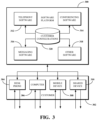
- FIG. 3 is a block diagram of an example of a software platform implemented by an electronic computing and communications system.
- FIG. 4 is a block diagram of an example of a system for call recording authentication using distributed transaction ledgers.
- FIG. 5 is a block diagram of an example of an audit trail exposed for a distributed transaction ledger which stores records associated with a call recording.
- FIG. 6 is a flowchart of an example of a technique for call recording authentication using distributed transaction ledgers.
- FIG. 7 is a flowchart of an example of a technique 700 for audit tracing of call recordings using distributed transaction ledgers.
- Disclosed herein are, inter alia, implementations of systems and techniques for call recording authentication using distributed transaction ledgers.
- One aspect of this disclosure is a method, which includes recording a call between two or more participants to generate a call recording, storing a record of the call recording within a distributed transaction ledger, authenticating the call recording based on information associated with the record within the distributed transaction ledger, and outputting an indication of the authentication.
- Another aspect of this disclosure is a system, which includes a telephony system configured to enable a call between two or more participants, and an authentication system configured to store a record of the call recording within a distributed transaction ledger and authenticate the call recording based on information associated with the record within the distributed transaction ledger.
- Yet another aspect of this disclosure is an apparatus, which includes a memory and a processor configured to execute instructions stored in the memory to store a record of a call recording within a distributed transaction ledger, authenticate the call recording based on information associated with the record within the distributed transaction ledger in response to a request from an operator device, and output an indication of the authentication to the operator device.
- a call may be recording on behalf of all parties to the call.
- a call center may by default record some or all incoming or outgoing calls with a notice to callers that their calls may be recorded.
- some or all incoming or outgoing calls may be recorded for later review, such as to verify whether the call participants complied with relevant rules, regulations, and/or laws.
- a call recording can be considered a true representation of a subject call where the contents of the call recording match the contents of the call. For example, if there is a period of silence within a call recording, the call recording may be considered a true representation of the subject call where that period of silence was also present in the call itself. In particular, it is important to verify whether a call recording is a true representation of a subject call to determine whether the call recording has been tampered with or otherwise altered.
- One approach to authenticating a call recording includes identifying call artifacts based on network connectivity issues of a participant to the call.
- a score may be computed during a call based on network information, such as the quality of packets signaled during the call from a device of that participant.
- the resulting score can imply the presence of some anomaly representative of a call artifact during the call, and a determination can then be made as to whether the call recording includes the same anomaly. For example, scores determined at times throughout a call can be compared against scores determined at times throughout a call recording to determine whether audio quality events associated with those same packet signaling events appear to be present in the call recording.
- this approach may be effective in some cases, it relies upon the active processing of a call during the call and the subsequent processing of a call recording, thus demanding compute resources to match aspects of each. Furthermore, this approach may not capture important transactional information relative to the call or the call recording, such as information related to the parties to the call, a software platform user for whom the recording was generated, and the like. This transactional information may be very useful for authenticating the call recording as a true representation of the call as well as for auditing purposes.
- Implementations of this disclosure address problems such as these by authenticating a recording of a call using a distributed transaction ledger.
- a call between two or more participants is recorded to generate a call recording.
- a record of the call recording is stored within a distributed transaction ledger.
- the call recording is authenticated based on information associated with the record within the distributed transaction ledger.
- An indication of the authentication is then output, such as for further processing or display.
- An audit trail for the call recording record is exposed within the distributed transaction ledger, and later accesses of or changes to the call recording are represented in new records linked to the call recording record within the distributed transaction ledger.
- a call is a communication between two or more participants over a telephony service
- a conference is a communication between two or more participants over a conference service.
- Both a telephony service and a conference service may be used to record contents of calls or conferences, respectively.
- the call recording authentication operations using distributed transaction ledgers as disclosed herein may thus be performed for both calls and call recordings as well as conferences and conference recordings.
- FIG. 1 is a block diagram of an example of an electronic computing and communications system 100 , which can be or include a distributed computing system (e.g., a client-server computing system), a cloud computing system, a clustered computing system, or the like.
- a distributed computing system e.g., a client-server computing system
- a cloud computing system e.g., a clustered computing system, or the like.
- the system 100 includes one or more customers, such as customers 102 A through 102 B, which may each be a public entity, private entity, or another corporate entity or individual that purchases or otherwise uses software services, such as of a UCaaS platform provider.
- Each customer can include one or more clients.
- the customer 102 A can include clients 104 A through 104 B
- the customer 102 B can include clients 104 C through 104 D.
- a customer can include a customer network or domain.
- the clients 104 A through 104 B can be associated or communicate with a customer network or domain for the customer 102 A and the clients 104 C through 104 D can be associated or communicate with a customer network or domain for the customer 102 B.
- a client such as one of the clients 104 A through 104 D, may be or otherwise refer to one or both of a client device or a client application.
- the client can comprise a computing system, which can include one or more computing devices, such as a mobile phone, a tablet computer, a laptop computer, a notebook computer, a desktop computer, or another suitable computing device or combination of computing devices.
- the client instead is or refers to a client application, the client can be an instance of software running on a customer device (e.g., a client device or another device).
- a client can be implemented as a single physical unit or as a combination of physical units.
- a single physical unit can include multiple clients.
- the system 100 can include a number of customers and/or clients or can have a configuration of customers or clients different from that generally illustrated in FIG. 1 .
- the system 100 can include hundreds or thousands of customers, and at least some of the customers can include or be associated with a number of clients.
- the system 100 includes a datacenter 106 , which may include one or more servers.
- the datacenter 106 can represent a geographic location, which can include a facility, where the one or more servers are located.
- the system 100 can include a number of datacenters and servers or can include a configuration of datacenters and servers different from that generally illustrated in FIG. 1 .
- the system 100 can include tens of datacenters, and at least some of the datacenters can include hundreds or another suitable number of servers.
- the datacenter 106 can be associated or communicate with one or more datacenter networks or domains, which can include domains other than the customer domains for the customers 102 A through 102 B.
- the datacenter 106 includes servers used for implementing software services of a UCaaS platform.
- the datacenter 106 as generally illustrated includes an application server 108 , a database server 110 , and a telephony server 112 .
- the servers 108 through 112 can each be a computing system, which can include one or more computing devices, such as a desktop computer, a server computer, or another computer capable of operating as a server, or a combination thereof.
- a suitable number of each of the servers 108 through 112 can be implemented at the datacenter 106 .
- the UCaaS platform uses a multi-tenant architecture in which installations or instantiations of the servers 108 through 112 is shared amongst the customers 102 A through 102 B.
- one or more of the servers 108 through 112 can be a non-hardware server implemented on a physical device, such as a hardware server.
- a combination of two or more of the application server 108 , the database server 110 , and the telephony server 112 can be implemented as a single hardware server or as a single non-hardware server implemented on a single hardware server.
- the datacenter 106 can include servers other than or in addition to the servers 108 through 112 , for example, a media server, a proxy server, or a web server.
- the application server 108 runs web-based software services deliverable to a client, such as one of the clients 104 A through 104 D.
- the software services may be of a UCaaS platform.
- the application server 108 can implement all or a portion of a UCaaS platform, including conferencing software, messaging software, and/or other intra-party or inter-party communications software.
- the application server 108 may, for example, be or include a unitary Java Virtual Machine (JVM).
- JVM Java Virtual Machine
- the application server 108 can include an application node, which can be a process executed on the application server 108 .
- the application node can be executed in order to deliver software services to a client, such as one of the clients 104 A through 104 D, as part of a software application.
- the application node can be implemented using processing threads, virtual machine instantiations, or other computing features of the application server 108 .
- the application server 108 can include a suitable number of application nodes, depending upon a system load or other characteristics associated with the application server 108 .
- the application server 108 can include two or more nodes forming a node cluster.
- the application nodes implemented on a single application server 108 can run on different hardware servers.
- the database server 110 stores, manages, or otherwise provides data for delivering software services of the application server 108 to a client, such as one of the clients 104 A through 104 D.
- the database server 110 may implement one or more databases, tables, or other information sources suitable for use with a software application implemented using the application server 108 .
- the database server 110 may include a data storage unit accessible by software executed on the application server 108 .
- a database implemented by the database server 110 may be a relational database management system (RDBMS), an object database, an XML database, a configuration management database (CMDB), a management information base (MIB), one or more flat files, other suitable non-transient storage mechanisms, or a combination thereof.
- the system 100 can include one or more database servers, in which each database server can include one, two, three, or another suitable number of databases configured as or comprising a suitable database type or combination thereof.
- one or more databases, tables, other suitable information sources, or portions or combinations thereof may be stored, managed, or otherwise provided by one or more of the elements of the system 100 other than the database server 110 , for example, the client 104 or the application server 108 .
- the telephony server 112 enables network-based telephony and web communications from and to clients of a customer, such as the clients 104 A through 104 B for the customer 102 A or the clients 104 C through 104 D for the customer 102 B. Some or all of the clients 104 A through 104 D may be voice over internet protocol (VOIP)-enabled devices configured to send and receive calls over a network 114 .
- the telephony server 112 includes a session initiation protocol (SIP) zone and a web zone.
- SIP session initiation protocol
- the SIP zone enables a client of a customer, such as the customer 102 A or 102 B, to send and receive calls over the network 114 using SIP requests and responses.
- the web zone integrates telephony data with the application server 108 to enable telephony-based traffic access to software services run by the application server 108 .
- the telephony server 112 may be or include a cloud-based private branch exchange (PBX) system.
- PBX private branch exchange
- the SIP zone receives telephony traffic from a client of a customer and directs same to a destination device.
- the SIP zone may include one or more call switches for routing the telephony traffic. For example, to route a VOIP call from a first VOIP-enabled client of a customer to a second VOIP-enabled client of the same customer, the telephony server 112 may initiate a SIP transaction between a first client and the second client using a PBX for the customer.
- the telephony server 112 may initiate a SIP transaction via a VOIP gateway that transmits the SIP signal to a public switched telephone network (PSTN) system for outbound communication to the non-VOIP-enabled client or non-client phone.
- PSTN public switched telephone network
- the telephony server 112 may include a PSTN system and may in some cases access an external PSTN system.
- the telephony server 112 includes one or more session border controllers (SBCs) for interfacing the SIP zone with one or more aspects external to the telephony server 112 .
- SBCs session border controllers
- an SBC can act as an intermediary to transmit and receive SIP requests and responses between clients or non-client devices of a given customer with clients or non-client devices external to that customer.
- a SBC receives the traffic and forwards it to a call switch for routing to the client.
- the telephony server 112 via the SIP zone, may enable one or more forms of peering to a carrier or customer premise.
- Internet peering to a customer premise may be enabled to ease the migration of the customer from a legacy provider to a service provider operating the telephony server 112 .
- private peering to a customer premise may be enabled to leverage a private connection terminating at one end at the telephony server 112 and at the other end at a computing aspect of the customer environment.
- carrier peering may be enabled to leverage a connection of a peered carrier to the telephony server 112 .
- a SBC or telephony gateway within the customer environment may operate as an intermediary between the SBC of the telephony server 112 and a PSTN for a peered carrier.
- a call from a client can be routed through the SBC to a load balancer of the SIP zone, which directs the traffic to a call switch of the telephony server 112 .
- the SBC may be configured to communicate directly with the call switch.
- the web zone receives telephony traffic from a client of a customer, via the SIP zone, and directs same to the application server 108 via one or more Domain Name System (DNS) resolutions.
- DNS Domain Name System
- a first DNS within the web zone may process a request received via the SIP zone and then deliver the processed request to a web service which connects to a second DNS at or otherwise associated with the application server 108 . Once the second DNS resolves the request, it is delivered to the destination service at the application server 108 .
- the web zone may also include a database for authenticating access to a software application for telephony traffic processed within the SIP zone, for example, a softphone.
- the clients 104 A through 104 D communicate with the servers 108 through 112 of the datacenter 106 via the network 114 .
- the network 114 can be or include, for example, the Internet, a local area network (LAN), a wide area network (WAN), a virtual private network (VPN), or another public or private means of electronic computer communication capable of transferring data between a client and one or more servers.
- a client can connect to the network 114 via a communal connection point, link, or path, or using a distinct connection point, link, or path.
- a connection point, link, or path can be wired, wireless, use other communications technologies, or a combination thereof.
- the network 114 , the datacenter 106 , or another element, or combination of elements, of the system 100 can include network hardware such as routers, switches, other network devices, or combinations thereof.
- the datacenter 106 can include a load balancer 116 for routing traffic from the network 114 to various servers associated with the datacenter 106 .
- the load balancer 116 can route, or direct, computing communications traffic, such as signals or messages, to respective elements of the datacenter 106 .
- the load balancer 116 can operate as a proxy, or reverse proxy, for a service, such as a service provided to one or more remote clients, such as one or more of the clients 104 A through 104 D, by the application server 108 , the telephony server 112 , and/or another server. Routing functions of the load balancer 116 can be configured directly or via a DNS.
- the load balancer 116 can coordinate requests from remote clients and can simplify client access by masking the internal configuration of the datacenter 106 from the remote clients.
- the load balancer 116 can operate as a firewall, allowing or preventing communications based on configuration settings. Although the load balancer 116 is depicted in FIG. 1 as being within the datacenter 106 , in some implementations, the load balancer 116 can instead be located outside of the datacenter 106 , for example, when providing global routing for multiple datacenters. In some implementations, load balancers can be included both within and outside of the datacenter 106 . In some implementations, the load balancer 116 can be omitted.
- FIG. 2 is a block diagram of an example internal configuration of a computing device 200 of an electronic computing and communications system.
- the computing device 200 may implement one or more of the client 104 , the application server 108 , the database server 110 , or the telephony server 112 of the system 100 shown in FIG. 1 .
- the computing device 200 includes components or units, such as a processor 202 , a memory 204 , a bus 206 , a power source 208 , peripherals 210 , a user interface 212 , a network interface 214 , other suitable components, or a combination thereof.
- a processor 202 a memory 204 , a bus 206 , a power source 208 , peripherals 210 , a user interface 212 , a network interface 214 , other suitable components, or a combination thereof.
- One or more of the memory 204 , the power source 208 , the peripherals 210 , the user interface 212 , or the network interface 214 can communicate with the processor 202 via the bus 206 .
- the processor 202 is a central processing unit, such as a microprocessor, and can include single or multiple processors having single or multiple processing cores. Alternatively, the processor 202 can include another type of device, or multiple devices, configured for manipulating or processing information. For example, the processor 202 can include multiple processors interconnected in one or more manners, including hardwired or networked. The operations of the processor 202 can be distributed across multiple devices or units that can be coupled directly or across a local area or other suitable type of network.
- the processor 202 can include a cache, or cache memory, for local storage of operating data or instructions.
- the memory 204 includes one or more memory components, which may each be volatile memory or non-volatile memory.
- the volatile memory can be random access memory (RAM) (e.g., a DRAM module, such as DDR SDRAM).
- the non-volatile memory of the memory 204 can be a disk drive, a solid state drive, flash memory, or phase-change memory.
- the memory 204 can be distributed across multiple devices.
- the memory 204 can include network-based memory or memory in multiple clients or servers performing the operations of those multiple devices.
- the memory 204 can include data for immediate access by the processor 202 .
- the memory 204 can include executable instructions 216 , application data 218 , and an operating system 220 .
- the executable instructions 216 can include one or more application programs, which can be loaded or copied, in whole or in part, from non-volatile memory to volatile memory to be executed by the processor 202 .
- the executable instructions 216 can include instructions for performing some or all of the techniques of this disclosure.
- the application data 218 can include user data, database data (e.g., database catalogs or dictionaries), or the like.
- the application data 218 can include functional programs, such as a web browser, a web server, a database server, another program, or a combination thereof.
- the operating system 220 can be, for example, Microsoft Windows®, Mac OS X®, or Linux®; an operating system for a mobile device, such as a smartphone or tablet device; or an operating system for a non-mobile device, such as a mainframe computer.
- the power source 208 provides power to the computing device 200 .
- the power source 208 can be an interface to an external power distribution system.
- the power source 208 can be a battery, such as where the computing device 200 is a mobile device or is otherwise configured to operate independently of an external power distribution system.
- the computing device 200 may include or otherwise use multiple power sources.
- the power source 208 can be a backup battery.
- the peripherals 210 includes one or more sensors, detectors, or other devices configured for monitoring the computing device 200 or the environment around the computing device 200 .
- the peripherals 210 can include a geolocation component, such as a global positioning system location unit.
- the peripherals can include a temperature sensor for measuring temperatures of components of the computing device 200 , such as the processor 202 .
- the computing device 200 can omit the peripherals 210 .
- the user interface 212 includes one or more input interfaces and/or output interfaces.
- An input interface may, for example, be a positional input device, such as a mouse, touchpad, touchscreen, or the like; a keyboard; or another suitable human or machine interface device.
- An output interface may, for example, be a display, such as a liquid crystal display, a cathode-ray tube, a light emitting diode display, or other suitable display.
- the network interface 214 provides a connection or link to a network (e.g., the network 114 shown in FIG. 1 ).
- the network interface 214 can be a wired network interface or a wireless network interface.
- the computing device 200 can communicate with other devices via the network interface 214 using one or more network protocols, such as using Ethernet, transmission control protocol (TCP), internet protocol (IP), power line communication, an IEEE 802.X protocol (e.g., Wi-Fi, Bluetooth, or ZigBee), infrared, visible light, general packet radio service (GPRS), global system for mobile communications (GSM), code-division multiple access (CDMA), Z-Wave, another protocol, or a combination thereof.
- TCP transmission control protocol
- IP internet protocol
- ZigBee IEEE 802.X protocol
- GPRS general packet radio service
- GSM global system for mobile communications
- CDMA code-division multiple access
- Z-Wave another protocol, or a combination thereof.
- FIG. 3 is a block diagram of an example of a software platform 300 implemented by an electronic computing and communications system, for example, the system 100 shown in FIG. 1 .
- the software platform 300 is a UCaaS platform accessible by clients of a customer of a UCaaS platform provider, for example, the clients 104 A through 104 B of the customer 102 A or the clients 104 C through 104 D of the customer 102 B shown in FIG. 1 .
- the software platform 300 may be a multi-tenant platform instantiated using one or more servers at one or more datacenters including, for example, the application server 108 , the database server 110 , and the telephony server 112 of the datacenter 106 shown in FIG. 1 .
- the software platform 300 includes software services accessible using one or more clients.
- a customer 302 as shown includes four clients—a desk phone 304 , a computer 306 , a mobile device 308 , and a shared device 310 .
- the desk phone 304 is a desktop unit configured to at least send and receive calls and includes an input device for receiving a telephone number or extension to dial to and an output device for outputting audio and/or video for a call in progress.
- the computer 306 is a desktop, laptop, or tablet computer including an input device for receiving some form of user input and an output device for outputting information in an audio and/or visual format.
- the mobile device 308 is a smartphone, wearable device, or other mobile computing aspect including an input device for receiving some form of user input and an output device for outputting information in an audio and/or visual format.
- the desk phone 304 , the computer 306 , and the mobile device 308 may generally be considered personal devices configured for use by a single user.
- the shared device 310 is a desk phone, a computer, a mobile device, or a different device which may instead be configured for use by multiple specified or unspecified users.
- Each of the clients 304 through 310 includes or runs on a computing device configured to access at least a portion of the software platform 300 .
- the customer 302 may include additional clients not shown.
- the customer 302 may include multiple clients of one or more client types (e.g., multiple desk phones or multiple computers) and/or one or more clients of a client type not shown in FIG. 3 (e.g., wearable devices or televisions other than as shared devices).
- the customer 302 may have tens or hundreds of desk phones, computers, mobile devices, and/or shared devices.
- the software services of the software platform 300 generally relate to communications tools, but are in no way limited in scope.
- the software services of the software platform 300 include telephony software 312 , conferencing software 314 , messaging software 316 , and other software 318 .
- Some or all of the software 312 through 318 uses customer configurations 320 specific to the customer 302 .
- the customer configurations 320 may, for example, be data stored within a database or other data store at a database server, such as the database server 110 shown in FIG. 1 .
- the telephony software 312 enables telephony traffic between ones of the clients 304 through 310 and other telephony-enabled devices, which may be other ones of the clients 304 through 310 , other VOIP-enabled clients of the customer 302 , non-VOIP-enabled devices of the customer 302 , VOIP-enabled clients of another customer, non-VOIP-enabled devices of another customer, or other VOIP-enabled clients or non-VOIP-enabled devices.
- Calls sent or received using the telephony software 312 may, for example, be sent or received using the desk phone 304 , a softphone running on the computer 306 , a mobile application running on the mobile device 308 , or using the shared device 310 that includes telephony features.
- the telephony software 312 further enables phones that do not include a client application to connect to other software services of the software platform 300 .
- the telephony software 312 may receive and process calls from phones not associated with the customer 302 to route that telephony traffic to one or more of the conferencing software 314 , the messaging software 316 , or the other software 318 .
- the conferencing software 314 enables audio, video, and/or other forms of conferences between multiple participants, such as to facilitate a conference between those participants.
- the participants may all be physically present within a single location, for example, a conference room, in which the conferencing software 314 may facilitate a conference between only those participants and using one or more clients within the conference room.
- one or more participants may be physically present within a single location and one or more other participants may be remote, in which the conferencing software 314 may facilitate a conference between all of those participants using one or more clients within the conference room and one or more remote clients.
- the participants may all be remote, in which the conferencing software 314 may facilitate a conference between the participants using different clients for the participants.
- the conferencing software 314 can include functionality for hosting, presenting scheduling, joining, or otherwise participating in a conference.
- the conferencing software 314 may further include functionality for recording some or all of a conference and/or documenting a transcript for the conference.
- the messaging software 316 enables instant messaging, unified messaging, and other types of messaging communications between multiple devices, such as to facilitate a chat or other virtual conversation between users of those devices.
- the unified messaging functionality of the messaging software 316 may, for example, refer to email messaging which includes a voicemail transcription service delivered in email format.
- the other software 318 enables other functionality of the software platform 300 .
- Examples of the other software 318 include, but are not limited to, device management software, resource provisioning and deployment software, administrative software, third party integration software, and the like.
- the other software 318 can include software for authenticating call recordings using distributed transaction ledgers.
- the software 312 through 318 may be implemented using one or more servers, for example, of a datacenter such as the datacenter 106 shown in FIG. 1 .
- one or more of the software 312 through 318 may be implemented using an application server, a database server, and/or a telephony server, such as the servers 108 through 112 shown in FIG. 1 .
- one or more of the software 312 through 318 may be implemented using servers not shown in FIG. 1 , for example, a meeting server, a web server, or another server.
- one or more of the software 312 through 318 may be implemented using one or more of the servers 108 through 112 and one or more other servers.
- the software 312 through 318 may be implemented by different servers or by the same server.
- the messaging software 316 may include a user interface element configured to initiate a call with another user of the customer 302 .
- the telephony software 312 may include functionality for elevating a telephone call to a conference.
- the conferencing software 314 may include functionality for sending and receiving instant messages between participants and/or other users of the customer 302 .
- the conferencing software 314 may include functionality for file sharing between participants and/or other users of the customer 302 .
- some or all of the software 312 through 318 may be combined into a single software application run on clients of the customer, such as one or more of the clients 304 through 310 .
- FIG. 4 is a block diagram of an example of a system 400 for call recording authentication using distributed transaction ledgers.
- the system 400 includes a telephony system 402 and an authentication system 404 .
- the telephony system 402 includes hardware and/or software configured to enable a call between two or more participants including, as shown, an operator of a caller device 1 406 and an operator of a caller device N 408 in which N is an integer greater than 1.
- the authentication system 404 includes hardware and/or software configured to store records of call recordings generated based on calls facilitated by the telephony system 402 within distributed transaction ledgers and to authenticate those call recordings based on information associated with respective records within those distributed transaction ledgers.
- Each of the caller devices 1 406 through N 408 is a telephony device (e.g., the desk phone 304 , the mobile device 308 , or the shared device 310 shown in FIG. 3 ) which may or may not be a client device.
- a telephony device e.g., the desk phone 304 , the mobile device 308 , or the shared device 310 shown in FIG. 3 .
- the telephony system 402 includes call facilitation components 410 and call recording components 412 .
- the call facilitation components 410 enable a call between the operators of the caller devices 1 406 through N 408 .
- the call facilitation components 410 use hardware and/or software for enabling calls, for example, using the telephony server 112 shown in FIG. 1 and/or the telephony software 312 shown in FIG. 3 .
- the call recording components 412 listen to the call enabled by the call facilitation components 410 and generate a call recording of the call.
- the call recording components 412 use hardware and/or software to process audio data received from the call facilitation components 410 to generate the call recording.
- the call recording is incrementally generated during the call such that the call record as a whole is considered generated upon the processing of the last audio data at the end of the call.
- the call recording is generated after the call ends using audio data which is temporarily stored for processing following the end of the call.
- Other approaches for the call recording generation are also possible.
- the authentication system 404 includes ledger writing components 414 , a distributed transaction ledger data store 416 , and recording authentication components 418 .
- the ledger writing components 414 receive the call recording generated by the call recording components 412 and information associated with the call recording and write a record associated with the call recording within a distributed transaction ledger stored at the distributed transaction ledger data store 416 .
- the ledger writing components 414 write data used to reconstruct the call recording and the information associated with the call recording within a new record inserted within the distributed transaction ledger.
- the information associated with the call recording includes one or more of an identifier of the record, an identifier of the distributed transaction ledger, an identifier of one or more of the two or more participants of the call, content of the call, a duration of the call, or a non-participant custodian of the distributed transaction ledger.
- the distributed transaction ledger stores one or more records associated with one or more call recordings.
- the particular format of the record may vary based on the structure of the distributed transaction ledgers used with the system 400 .
- the format may be a block-based format in which a new record is written to a block within the distributed transaction ledger, a table-based format in which a new record is written to a table row or column within the distributed transaction ledger, or a diagram-based format in which a new record is written to a new entity diagrammatically connected to one or more other entities within the distributed transaction ledger.
- the ledger writing components 414 write the record of the call recording received from the telephony system 412 within a next data space (e.g., a next block) within the distributed transaction ledger.
- the distributed transaction ledger to which the ledger writing components 414 write the record is associated with an entity, for example, a customer of a software platform provider.
- the distributed transaction ledger data store 416 is a data store, database, or other repository that stores one or more distributed transaction ledgers, including the distributed transaction ledger within which the record of the call recording is written by the ledger writing components 414 .
- the distributed transaction ledger data store 414 may, for example, be implemented using the database server 110 shown in FIG. 1 .
- the distributed transaction ledgers stored within the distributed transaction ledger data store 416 are distributed a network for access by multiple operator devices, including an operator device 420 .
- the operator devices are associated with the entity with which the distributed transaction ledger is associated.
- the operator devices are authenticated to access some or all of the distributed transaction ledger and may be client devices or non-client devices.
- copies of the distributed transaction ledger into which the ledger writing components 414 wrote the record associated with the call recording received from the call recording components 412 may exist across a network. Those copies may be updated to include the record associated with the call recording such as responsive to the ledger writing components 414 writing the record associated with the call recording into the distributed transaction record.
- the recording authentication components 418 authenticate a call recording associated with a call as a true representation of a subject call based on information stored within a distributed transaction ledger at the distributed transaction ledger data store 416 .
- Authenticating a call recording based on the information stored within a distributed transaction ledger at the distributed transaction ledger data store 416 includes verifying transactional information stored within a record associated with the call recording within the distributed transaction ledger to confirm that the record was written when the call recording was generated.
- the recording authentication components 418 can determine whether a latest record which includes data usable to reconstruct the call recording matches the transactional identifier generated for the original writing of the call recording data into the distributed transaction ledger.
- the recording authentication components 418 output an indication 422 of the authentication for further processing or display at the operator device 420 .
- the indication of the authentication indicates that the call recording is a true representation of the call where a record which includes data usable to reconstruct the call recording and an identifier written based on the original writing of the call recording to the distributed transaction ledger is a latest such record within the distributed transaction ledger.
- the indication of the authentication indicates that the call recording is not a true representation of the call where a later record including data usable to reconstruct the call recording includes an identifier not based on the original writing of the call recording to the distributed transaction ledger.
- the form of the indication output for further processing or display may be a visual indicator, an audio indicator, a text indicator, or the like.
- the indication may be output over one or more modalities including without limitation telephony, conference, messaging, or the like.
- the recording authentication components 418 perform the authentication based on a request 424 received from the operator device 420 .
- the recording authentication components 418 output the indication 422 of the authentication to the operator device 420 in response to the request 424 .
- the request 424 may, for example, be a request to audit the record of the call recording within the distributed transaction ledger.
- the use of the distributed transaction ledger enables audit tracing of the call recording to authenticate the call recording as a true representation of the subject call at various times during the life of the call recording, as will be further discussed below with respect to FIG. 5 .
- the operator device 420 is shown as a device separate from the caller devices 1 406 through N 408 so as to indicate that the operator device 420 was not a device used by a participant of the call, in some implementations, the operator device 420 may be one of the caller devices 1 406 through N 408 .
- each record within a distributed transaction ledger corresponds to a different call recording, and records associated with call recordings may continue to be written within the distributed transaction ledger until the distributed transaction ledger is full (e.g., as determined based on a maximum number of records defined for the distributed transaction ledger or due to compute resource limitations).
- a record within a distributed transaction ledger may correspond to a portion of a call recording rather than to an entire call recording.
- the distributed transaction ledger may be generated for the subject call, and records may be written therein to represent different parts of a call recording, such as where the call recording is pushed in pieces to the authentication system 404 .
- a different distributed transaction ledger may be used for each different call recording.
- records associated with different call recordings may be stored in the same distributed transaction ledger.
- the status of all compute nodes which implement copies of the distributed transaction ledger may be checked before a call recording stored within a record of the distributed transaction ledger may be accessed or modified. For example, where one or more such compute nodes are offline or otherwise not discoverable at a given time, the access to or modification of the call recording may result in different information being recorded across the copies of the distributed transaction ledger. Accordingly, in such a case, access to the records of the distributed transaction ledger which correspond to the call recording may be restricted until all compute nodes are determined to be available.
- the status of the compute nodes may be determined by pinging those compute nodes and determining whether a response is received therefrom or based on information pushed or pulled from those compute nodes.
- the telephony system 402 may be replaced with a conferencing system.
- the conferencing system may include hardware and/or software, such as the conferencing software 314 shown in FIG. 3 and/or the application server 108 shown in FIG. 1 , for implementing a conference between the operators of the caller devices 1 406 through N 408 .
- the operators of the caller devices 1 406 through N 408 are participants of a conference, which may include an audio component, a video component, or both.
- media of the audio channel capturing that audio component of the conference can be used by the call recording components 412 , as conference reporting components, to generate a conference recording of the conference.
- Information associated with the conference recording may then be determined and stored in a record within the distributed transaction ledger data store 414 .
- the recording authentication components 416 then performs operations against a distributed transaction ledger wholly or partially within the recorded distributed transaction ledger data store 414 to determine whether the conference recording is authenticated and thus to output an indication of the authentication the conference recording.
- the system 400 may be implemented as part of a software platform, for example, the software platform 300 shown in FIG. 3 , which includes telephony services as well as related services.
- system 400 may be implemented as part of a telephony platform which includes functionality for supporting or enhancing call technology.
- the system 400 may exclude the telephony system 402 .
- the authentication system 404 may be implemented by an entity which does not also implement the telephony system 402 .
- the telephony system 402 and the authentication system 404 may be configured to communicate with one another to perform the functionality of the system 400 as described herein.
- FIG. 5 is a block diagram of an example of an audit trail exposed for a distributed transaction ledger 500 which stores records associated with a call recording.
- An original record associated with a call recording is stored within the distributed transaction ledger 500 when the call recording is generated.
- the original record includes data usable to reconstruct the call recording such as for later playback at an operator device (e.g., the operator device 420 shown in FIG. 4 ).
- additional records associated with the call recording may also be stored with the distributed transaction ledger 500 , such as by linking those additional records to the original record. Examples of additional records which may be stored include access-only records indicative of a read-only access of records associated with the call recording, such as for auditing purposes, and modification records indicative of a change to the data recorded to the initial record of the call recording.
- Access-only records may be generated and written into the distributed transaction ledger 500 in response to an operator device accessing the original record, transmitting an authentication request to authenticate a record of the call recording within the distributed transaction ledger 500 , or accessing the distributed transaction ledger 500 to perform an audit of recordings associated with the call recording.
- Modification records may be generated and written into the distributed transaction ledger 500 in response to a detected modification to a file of the call recording, such as where a copy of the call recording is created or changed. The modification may, for example, be detected based on a diffing operation performed against the new file and the original file from the original record for the call recording.
- the distributed transaction ledger 500 includes a record 1 502 , a record 2 504 , and a record 3 506 .
- the record 1 502 is an original record for the call recording and includes reconstruction data usable to reconstruct the original call recording file for later playback.
- the record 1 502 is generated and written into the distributed transaction ledger 500 in response to the generation of the call recording by a telephony system which facilitated the subject call.
- the record 2 504 is an access-only record generated and written into the distributed transaction ledger 500 in response to an operator device accessing the record 1 502 without copying or changing the call recording data.
- the record 3 506 is a modification record generated and written into the distributed transaction ledger 500 in response to an operator device accessing the record 1 502 and creating a copy of or otherwise changing the call recording data from the record 1 502 .
- This audit trail including the record 1 502 , the record 2 504 , and the record 3 506 is exposed to one or more devices which can access the distributed transaction ledger 500 .
- This audit trail can be inspected or evaluated at various times throughout the life of the call recording (e.g., a period of time during which the recording must be maintained) to understand when, how, and by who changes occur to the call recording. For example, the audit trail may remain available during a compliance time period set based on the entity for which the records 502 through 506 are generated.
- FIG. 6 is a flowchart of an example of a technique 600 for call recording authentication using distributed transaction ledgers.
- FIG. 7 is a flowchart of an example of a technique 700 for audit tracing of call recordings using distributed transaction ledgers.
- the technique 600 and/or the technique 700 can be executed using computing devices, such as the systems, hardware, and software described with respect to FIGS. 1 - 5 .
- the technique 600 and/or the technique 700 can be performed, for example, by executing a machine-readable program or other computer-executable instructions, such as routines, instructions, programs, or other code.
- the steps, or operations, of the technique 600 and/or the technique 700 or another technique, method, process, or algorithm described in connection with the implementations disclosed herein can be implemented directly in hardware, firmware, software executed by hardware, circuitry, or a combination thereof.
- the technique 600 and the technique 700 are each depicted and described herein as a series of steps or operations. However, the steps or operations in accordance with this disclosure can occur in various orders and/or concurrently. Additionally, other steps or operations not presented and described herein may be used. Furthermore, not all illustrated steps or operations may be required to implement a technique in accordance with the disclosed subject matter.
- a call is enabled between two or more participants. Enabling the call can include facilitating a direct or indirect telephony connection between the two or more participants in which at least two devices are connected to an intermediary telephony service.
- the call may be enabled by a telephony system of a software platform which includes an authentication system for later authenticating a recording of that call.
- the call may be enabled by a telephony system which is external to a system which includes the authentication system.
- the call is recorded to generate a call recording for the call.
- Recording the call to generate the call recording includes recording the call as it occurs or converting temporarily stored audio data of the call into a call recording.
- the call recording may in at least some cases be stored in a data store at the telephony system.
- a record of the call recording is stored within a distributed transaction ledger.
- the distributed transaction ledger within which the record of the call recording is to be written may be identified based on information associated with the call. For example, the distributed transaction ledger may be identified based on an entity for which the call recording was generated, such as a software platform customer. In another example, the distributed transaction ledger may be identified based on an identifier of one or more of the call participants and/or of a subject topic of the call. In some cases where a single distributed transaction ledger remains open for new records to be written therein at a given time, such as where records are sequentially written without some grouping approach being used, that single distributed transaction ledger is identified. Once the distributed transaction ledger is identified, a new record is written therein to represent the call recording. A unique transaction identifier is written along with the record.
- information associated with the record stored within the distributed transaction ledger is accessed.
- the information associated with the record may be accessed based on an authentication request received from an operator device, which may be a device used by a participant to the subject call or another device.
- the operator device is a device used by an operator who is permitted to access the distributed transaction ledger, such as a person who works for the entity for which the call recording was generated.
- the authentication request is a request to authenticate the call recording as a true representation of the subject call.
- the authentication request may be part of an audit tracing process, such as to verify an audit history of the call recording.
- the call recording is authenticated based on the accessed information associated with the record. Authenticating the call recording based on the information associated with the record includes determining whether a latest record which includes data usable to reconstruct the call recording matches the transactional identifier generated for the original writing of the call recording data into the distributed transaction ledger.
- the information accessed may indicate a transactional identifier for the record, which the system can then compare against a known transaction identifier included in the record written into the distributed transaction ledger for the call recording.
- the call recording is authenticated using the distributed transaction ledger where the transactional identifier associated with the latest record which includes the data usable to reconstruct the call recording matches the known transaction identifier for the record written into the distributed transaction ledger for the call recording.
- the call recording may not be authenticated where a later record for the call recording exists within distributed transaction ledger, which may indicate that the call recording has been modified in some way.
- an indication of the authentication is output, such as for further processing or display.
- the indication of the authentication may be output to one or more client devices or other devices and over one or more modalities including without limitation telephony, conference, messaging, or the like.
- an audit trail for a call recording is exposed within a distributed transaction ledger.
- the audit trail identifies records associated with the call recording within the distributed transaction ledger.
- the audit trail may further identify information associated with those records, such as a type of those records (e.g., initial, access-only, or modification).
- the exposure of the audit trail refers to the accessibility or other visibility of the records associated with the call recording by one or more operator devices.
- an access request associated with the call recording is received.
- the access request is received from an operator device to which the audit trail for the call recording is exposed.
- the access request may, for example, be received from a client application or a web browser running at the operator device.
- a type of the requested access is determined.
- the type of the requested access may be determined based on metadata associated with the access request, a form which receives the access request from the operator device, input received from the operator device indicating the type of access request, or the like.
- the type of the requested access indicates how to serve information from the distributed transaction ledger to the operator device as well as the type of next record which will be added into the distributed transaction ledger for the call recording.
- a new record is generated for the call recording based on the access type.
- the new record indicates the determined type of the requested access to indicate the manner by which the pre-existing call recording record or records were interacted with.
- Generating the new record may include receiving data from the operator device which transmitted the access request to indicate whether any changes were made to the call recording as may have been retrieved from a pre-existing call recording record and what those changes were, as applicable.
- the new record is generated to include a unique transaction identifier.
- a new record is stored within the distributed transaction ledger in connection with the call recording. Storing the new record includes modifying the audit trail for the call recording to include the new record, such as to indicate the access to the pre-existing call recording record or records to later auditors.
- the new record is distributed to copies of the distributed transaction ledger within a network to cause all versions of the distributed transaction ledger to represent the same set of records for the call recording.
- the implementations of this disclosure can be described in terms of functional block components and various processing operations. Such functional block components can be realized by a number of hardware or software components that perform the specified functions.
- the disclosed implementations can employ various integrated circuit components (e.g., memory elements, processing elements, logic elements, look-up tables, and the like), which can carry out a variety of functions under the control of one or more microprocessors or other control devices.
- the systems and techniques can be implemented with a programming or scripting language, such as C, C++, Java, JavaScript, assembler, or the like, with the various algorithms being implemented with a combination of data structures, objects, processes, routines, or other programming elements.
- Implementations or portions of implementations of the above disclosure can take the form of a computer program product accessible from, for example, a computer-usable or computer-readable medium.
- a computer-usable or computer-readable medium can be a device that can, for example, tangibly contain, store, communicate, or transport a program or data structure for use by or in connection with a processor.
- the medium can be, for example, an electronic, magnetic, optical, electromagnetic, or semiconductor device.
- Such computer-usable or computer-readable media can be referred to as non-transitory memory or media, and can include volatile memory or non-volatile memory that can change over time.
- the quality of memory or media being non-transitory refers to such memory or media storing data for some period of time or otherwise based on device power or a device power cycle.
- a memory of an apparatus described herein, unless otherwise specified, does not have to be physically contained by the apparatus, but is one that can be accessed remotely by the apparatus, and does not have to be contiguous with other memory that might be physically contained by the apparatus.
Landscapes
- Engineering & Computer Science (AREA)
- Databases & Information Systems (AREA)
- General Engineering & Computer Science (AREA)
- Theoretical Computer Science (AREA)
- Computer Security & Cryptography (AREA)
- Signal Processing (AREA)
- Computing Systems (AREA)
- Computer Networks & Wireless Communication (AREA)
- Data Mining & Analysis (AREA)
- General Physics & Mathematics (AREA)
- Physics & Mathematics (AREA)
- Computer Hardware Design (AREA)
- Telephonic Communication Services (AREA)
Abstract
Description
Claims (18)
Priority Applications (2)
| Application Number | Priority Date | Filing Date | Title |
|---|---|---|---|
| US17/390,730 US12273331B2 (en) | 2021-07-30 | 2021-07-30 | Call recording authentication using distributed transaction ledgers |
| US19/068,776 US20250202880A1 (en) | 2021-07-30 | 2025-03-03 | Call Recording Authentication Using A Transaction Identifier Stored In A Record Within A Distributed Transaction Ledger |
Applications Claiming Priority (1)
| Application Number | Priority Date | Filing Date | Title |
|---|---|---|---|
| US17/390,730 US12273331B2 (en) | 2021-07-30 | 2021-07-30 | Call recording authentication using distributed transaction ledgers |
Related Child Applications (1)
| Application Number | Title | Priority Date | Filing Date |
|---|---|---|---|
| US19/068,776 Continuation US20250202880A1 (en) | 2021-07-30 | 2025-03-03 | Call Recording Authentication Using A Transaction Identifier Stored In A Record Within A Distributed Transaction Ledger |
Publications (2)
| Publication Number | Publication Date |
|---|---|
| US20230032477A1 US20230032477A1 (en) | 2023-02-02 |
| US12273331B2 true US12273331B2 (en) | 2025-04-08 |
Family
ID=85038226
Family Applications (2)
| Application Number | Title | Priority Date | Filing Date |
|---|---|---|---|
| US17/390,730 Active 2042-09-25 US12273331B2 (en) | 2021-07-30 | 2021-07-30 | Call recording authentication using distributed transaction ledgers |
| US19/068,776 Pending US20250202880A1 (en) | 2021-07-30 | 2025-03-03 | Call Recording Authentication Using A Transaction Identifier Stored In A Record Within A Distributed Transaction Ledger |
Family Applications After (1)
| Application Number | Title | Priority Date | Filing Date |
|---|---|---|---|
| US19/068,776 Pending US20250202880A1 (en) | 2021-07-30 | 2025-03-03 | Call Recording Authentication Using A Transaction Identifier Stored In A Record Within A Distributed Transaction Ledger |
Country Status (1)
| Country | Link |
|---|---|
| US (2) | US12273331B2 (en) |
Families Citing this family (1)
| Publication number | Priority date | Publication date | Assignee | Title |
|---|---|---|---|---|
| US11758040B2 (en) * | 2020-12-31 | 2023-09-12 | Bce Inc. | Systems and methods for use in blocking of robocall and scam call phone numbers |
Citations (42)
| Publication number | Priority date | Publication date | Assignee | Title |
|---|---|---|---|---|
| US6345094B1 (en) | 1998-06-08 | 2002-02-05 | Davox Corporation | Inbound/outbound call record processing system and method |
| US6785370B2 (en) | 1999-06-08 | 2004-08-31 | Dictaphone Corporation | System and method for integrating call record information |
| US20070217649A1 (en) | 2006-03-15 | 2007-09-20 | Lowe Steven A | Digital Differential Watermark and Method |
| US20080002854A1 (en) | 2003-10-08 | 2008-01-03 | Verance Corporation | Signal continuity assessment using embedded watermarks |
| US8121264B1 (en) | 2006-11-22 | 2012-02-21 | Securus Technologies, Inc. | Protected data container for storing data relating to recorded calls in a manner that enables the data to be authenticated |
| US8718262B2 (en) | 2007-03-30 | 2014-05-06 | Mattersight Corporation | Method and system for automatically routing a telephonic communication base on analytic attributes associated with prior telephonic communication |
| US20140247926A1 (en) | 2010-09-07 | 2014-09-04 | Jay Gainsboro | Multi-party conversation analyzer & logger |
| US9197744B2 (en) | 2013-12-31 | 2015-11-24 | Nice-Systems Ltd. | Call recording with interaction metadata correlation |
| US20160165044A1 (en) | 2014-12-05 | 2016-06-09 | Stephanie Yinman Chan | System and method for call authentication |
| US20170111506A1 (en) | 2015-10-14 | 2017-04-20 | Pindrop Security, Inc. | Fraud detection in interactive voice response systems |
| US20180034961A1 (en) | 2014-02-28 | 2018-02-01 | Ultratec, Inc. | Semiautomated Relay Method and Apparatus |
| US20180146370A1 (en) | 2016-11-22 | 2018-05-24 | Ashok Krishnaswamy | Method and apparatus for secured authentication using voice biometrics and watermarking |
| US20180174590A1 (en) | 2016-12-19 | 2018-06-21 | Bank Of America Corporation | Synthesized Voice Authentication Engine |
| US20180255130A1 (en) * | 2017-03-03 | 2018-09-06 | International Business Machines Corporation | Blockchain-enhanced mobile telecommunication device |
| US20180254046A1 (en) | 2017-03-03 | 2018-09-06 | Pindrop Security, Inc. | Method and apparatus for detecting spoofing conditions |
| US10079024B1 (en) | 2016-08-19 | 2018-09-18 | Amazon Technologies, Inc. | Detecting replay attacks in voice-based authentication |
| US20180350356A1 (en) | 2017-06-05 | 2018-12-06 | Google Inc. | Recorded media hotword trigger suppression |
| US20190238682A1 (en) | 2015-12-23 | 2019-08-01 | Shoutpoint, Inc. | Conference call platform capable of generating engagement scores |
| US20190253558A1 (en) | 2018-02-13 | 2019-08-15 | Risto Haukioja | System and method to automatically monitor service level agreement compliance in call centers |
| US20190341050A1 (en) | 2018-05-04 | 2019-11-07 | Microsoft Technology Licensing, Llc | Computerized intelligent assistant for conferences |
| EP3582465A1 (en) | 2018-06-15 | 2019-12-18 | Telia Company AB | Solution for determining an authenticity of an audio stream of a voice call |
| US20200007311A1 (en) | 2018-06-28 | 2020-01-02 | International Business Machines Corporation | Audit trail configuration in a blockchain |
| US20200119936A1 (en) * | 2018-10-12 | 2020-04-16 | Avaya Inc. | Distributed ledger and blockchain to confirm validity of call recordings |
| US10650476B2 (en) | 2017-11-28 | 2020-05-12 | International Bussiness Machines Corporation | Electronic discovery process using a blockchain |
| US10657971B1 (en) | 2017-12-15 | 2020-05-19 | NortonLifeLock Inc. | Systems and methods for detecting suspicious voice calls |
| US20200175554A1 (en) * | 2018-12-04 | 2020-06-04 | Capital One Services, Llc | Identification of targets for a campaign by referencing a blockchain and/or a distributed system file system |
| US20200211571A1 (en) | 2018-12-31 | 2020-07-02 | Nice Ltd | Method and system for separating and authenticating speech of a speaker on an audio stream of speakers |
| US20200250287A1 (en) | 2019-02-03 | 2020-08-06 | Fmr Llc | Systems and Methods for Optimizing Voice Verification From Multiple Sources Against a Common Voiceprint |
| US10750009B1 (en) | 2016-12-02 | 2020-08-18 | TrustID, Inc. | Using calling party number for caller authentication |
| US20200304632A1 (en) * | 2019-03-18 | 2020-09-24 | Numeracle, Inc. | Validating Telephone Calls by Verifying Entity Identities Using Blockchains |
| US20200313901A1 (en) * | 2019-03-26 | 2020-10-01 | Acer Incorporated | Method of Identity Authentication for Voice over Internet Protocol Call and Related Device |
| US20200336601A1 (en) * | 2019-04-18 | 2020-10-22 | Red Hat, Inc. | Control information for public switched telephone network (pstn) using blockchain system |
| US20200349949A1 (en) | 2019-04-30 | 2020-11-05 | Microsoft Technology Licensing, Llc | Distributed Device Meeting Initiation |
| US20200411013A1 (en) | 2016-01-12 | 2020-12-31 | Andrew Horton | Caller identification in a secure environment using voice biometrics |
| US20210037136A1 (en) | 2019-07-30 | 2021-02-04 | Nice Ltd | Method and system for proactive fraudster exposure in a customer service channel |
| US20220013114A1 (en) | 2020-07-10 | 2022-01-13 | Capital One Services, Llc | System and method for quantifying meeting effectiveness using natural language processing |
| US20220014820A1 (en) | 2019-12-12 | 2022-01-13 | Martin Hannes | Software based system to provide advanced personalized information and recommendations on what watch to viewers of video content (on tv, online and other platforms) |
| US20220067870A1 (en) | 2020-08-25 | 2022-03-03 | Kyndryl, Inc. | Wearable watermarks |
| US20220148601A1 (en) | 2020-11-06 | 2022-05-12 | Google Llc | Multi-factor audio watermarking |
| US11483427B1 (en) | 2021-04-28 | 2022-10-25 | Zoom Video Communications, Inc. | Call recording authentication |
| US20230067155A1 (en) * | 2021-09-01 | 2023-03-02 | Total Network Services Corp. | Detecting spoof communications using non-fungible tokens on a distributed ledger |
| US12026239B1 (en) | 2021-03-11 | 2024-07-02 | United Services Automobile Association (Usaa) | Ambient sounds-based authentication method and system |
-
2021
- 2021-07-30 US US17/390,730 patent/US12273331B2/en active Active
-
2025
- 2025-03-03 US US19/068,776 patent/US20250202880A1/en active Pending
Patent Citations (44)
| Publication number | Priority date | Publication date | Assignee | Title |
|---|---|---|---|---|
| US6345094B1 (en) | 1998-06-08 | 2002-02-05 | Davox Corporation | Inbound/outbound call record processing system and method |
| US6785370B2 (en) | 1999-06-08 | 2004-08-31 | Dictaphone Corporation | System and method for integrating call record information |
| US20080002854A1 (en) | 2003-10-08 | 2008-01-03 | Verance Corporation | Signal continuity assessment using embedded watermarks |
| US20070217649A1 (en) | 2006-03-15 | 2007-09-20 | Lowe Steven A | Digital Differential Watermark and Method |
| US8121264B1 (en) | 2006-11-22 | 2012-02-21 | Securus Technologies, Inc. | Protected data container for storing data relating to recorded calls in a manner that enables the data to be authenticated |
| US8718262B2 (en) | 2007-03-30 | 2014-05-06 | Mattersight Corporation | Method and system for automatically routing a telephonic communication base on analytic attributes associated with prior telephonic communication |
| US20140247926A1 (en) | 2010-09-07 | 2014-09-04 | Jay Gainsboro | Multi-party conversation analyzer & logger |
| US9197744B2 (en) | 2013-12-31 | 2015-11-24 | Nice-Systems Ltd. | Call recording with interaction metadata correlation |
| US20180034961A1 (en) | 2014-02-28 | 2018-02-01 | Ultratec, Inc. | Semiautomated Relay Method and Apparatus |
| US20160165044A1 (en) | 2014-12-05 | 2016-06-09 | Stephanie Yinman Chan | System and method for call authentication |
| US20170111506A1 (en) | 2015-10-14 | 2017-04-20 | Pindrop Security, Inc. | Fraud detection in interactive voice response systems |
| US20190238682A1 (en) | 2015-12-23 | 2019-08-01 | Shoutpoint, Inc. | Conference call platform capable of generating engagement scores |
| US20200411013A1 (en) | 2016-01-12 | 2020-12-31 | Andrew Horton | Caller identification in a secure environment using voice biometrics |
| US10079024B1 (en) | 2016-08-19 | 2018-09-18 | Amazon Technologies, Inc. | Detecting replay attacks in voice-based authentication |
| US20180146370A1 (en) | 2016-11-22 | 2018-05-24 | Ashok Krishnaswamy | Method and apparatus for secured authentication using voice biometrics and watermarking |
| US10750009B1 (en) | 2016-12-02 | 2020-08-18 | TrustID, Inc. | Using calling party number for caller authentication |
| US20180174590A1 (en) | 2016-12-19 | 2018-06-21 | Bank Of America Corporation | Synthesized Voice Authentication Engine |
| US20180254046A1 (en) | 2017-03-03 | 2018-09-06 | Pindrop Security, Inc. | Method and apparatus for detecting spoofing conditions |
| US20180255130A1 (en) * | 2017-03-03 | 2018-09-06 | International Business Machines Corporation | Blockchain-enhanced mobile telecommunication device |
| US20180350356A1 (en) | 2017-06-05 | 2018-12-06 | Google Inc. | Recorded media hotword trigger suppression |
| US10650476B2 (en) | 2017-11-28 | 2020-05-12 | International Bussiness Machines Corporation | Electronic discovery process using a blockchain |
| US10657971B1 (en) | 2017-12-15 | 2020-05-19 | NortonLifeLock Inc. | Systems and methods for detecting suspicious voice calls |
| US20190253558A1 (en) | 2018-02-13 | 2019-08-15 | Risto Haukioja | System and method to automatically monitor service level agreement compliance in call centers |
| US20190341050A1 (en) | 2018-05-04 | 2019-11-07 | Microsoft Technology Licensing, Llc | Computerized intelligent assistant for conferences |
| EP3582465A1 (en) | 2018-06-15 | 2019-12-18 | Telia Company AB | Solution for determining an authenticity of an audio stream of a voice call |
| US20190385623A1 (en) | 2018-06-15 | 2019-12-19 | Telia Company Ab | Solution for determining an authenticity of an audio stream of a voice call |
| US20200007311A1 (en) | 2018-06-28 | 2020-01-02 | International Business Machines Corporation | Audit trail configuration in a blockchain |
| US10887081B2 (en) | 2018-06-28 | 2021-01-05 | International Business Machines Corporation | Audit trail configuration in a blockchain |
| US20200119936A1 (en) * | 2018-10-12 | 2020-04-16 | Avaya Inc. | Distributed ledger and blockchain to confirm validity of call recordings |
| US20200175554A1 (en) * | 2018-12-04 | 2020-06-04 | Capital One Services, Llc | Identification of targets for a campaign by referencing a blockchain and/or a distributed system file system |
| US20200211571A1 (en) | 2018-12-31 | 2020-07-02 | Nice Ltd | Method and system for separating and authenticating speech of a speaker on an audio stream of speakers |
| US20200250287A1 (en) | 2019-02-03 | 2020-08-06 | Fmr Llc | Systems and Methods for Optimizing Voice Verification From Multiple Sources Against a Common Voiceprint |
| US20200304632A1 (en) * | 2019-03-18 | 2020-09-24 | Numeracle, Inc. | Validating Telephone Calls by Verifying Entity Identities Using Blockchains |
| US20200313901A1 (en) * | 2019-03-26 | 2020-10-01 | Acer Incorporated | Method of Identity Authentication for Voice over Internet Protocol Call and Related Device |
| US20200336601A1 (en) * | 2019-04-18 | 2020-10-22 | Red Hat, Inc. | Control information for public switched telephone network (pstn) using blockchain system |
| US20200349949A1 (en) | 2019-04-30 | 2020-11-05 | Microsoft Technology Licensing, Llc | Distributed Device Meeting Initiation |
| US20210037136A1 (en) | 2019-07-30 | 2021-02-04 | Nice Ltd | Method and system for proactive fraudster exposure in a customer service channel |
| US20220014820A1 (en) | 2019-12-12 | 2022-01-13 | Martin Hannes | Software based system to provide advanced personalized information and recommendations on what watch to viewers of video content (on tv, online and other platforms) |
| US20220013114A1 (en) | 2020-07-10 | 2022-01-13 | Capital One Services, Llc | System and method for quantifying meeting effectiveness using natural language processing |
| US20220067870A1 (en) | 2020-08-25 | 2022-03-03 | Kyndryl, Inc. | Wearable watermarks |
| US20220148601A1 (en) | 2020-11-06 | 2022-05-12 | Google Llc | Multi-factor audio watermarking |
| US12026239B1 (en) | 2021-03-11 | 2024-07-02 | United Services Automobile Association (Usaa) | Ambient sounds-based authentication method and system |
| US11483427B1 (en) | 2021-04-28 | 2022-10-25 | Zoom Video Communications, Inc. | Call recording authentication |
| US20230067155A1 (en) * | 2021-09-01 | 2023-03-02 | Total Network Services Corp. | Detecting spoof communications using non-fungible tokens on a distributed ledger |
Non-Patent Citations (3)
| Title |
|---|
| HAL archives-ouvertes.fr, Blockchain-Based Auditing of Transpared Log Servers, Nguyen et al., <https://hal.archives-ouvertes.fr/hal-01917636/document>, Jul. 2018, 18 pages. |
| International Search Report and Written Opinion, mailed Jun. 29, 2022 in corresponding PCT Application No. PCT/US2022/024827. |
| Jonkoping University, International Business School, Blockchain in audit trails—An investigation of how blockchain can help auditors to implement audit trails, Rebecka Levenby and Emma Sahlin, <http://hj.diva-portal.org/smash/get/diva2:1212665/FULLTEXT01.pdf>, May 2018, 54 pages. |
Also Published As
| Publication number | Publication date |
|---|---|
| US20250202880A1 (en) | 2025-06-19 |
| US20230032477A1 (en) | 2023-02-02 |
Similar Documents
| Publication | Publication Date | Title |
|---|---|---|
| US20250080644A1 (en) | Authenticating A Call Recording Using Audio Scores | |
| US11985187B2 (en) | Phone system failover management | |
| US12127304B2 (en) | Participating in a text message communication using an assigned | |
| US12348672B2 (en) | Routing an inbound call to a virtual meeting via an interactive voice response system | |
| US20240364761A1 (en) | Signaling Virtual Meeting Information Within An Outbound Call | |
| US11785077B2 (en) | Active-active standby for real-time telephony traffic | |
| US20250202880A1 (en) | Call Recording Authentication Using A Transaction Identifier Stored In A Record Within A Distributed Transaction Ledger | |
| US20260019456A1 (en) | Method And Device Of Determining A Content Element Of A Digital Collaboration Space | |
| US20250030799A1 (en) | Message Recording According To In-Call Option-Based Selection | |
| US20240396996A1 (en) | Locally Recorded Media Inclusion In A Recording Of A Multi-Participant Communication | |
| US20250225059A1 (en) | Generating Test Data Based On Actual Usage Data | |
| US11909918B2 (en) | Mapping a universal contact center service access point to a service access point specific to a determined modality | |
| US12506628B1 (en) | Blockchain for contact center engagement data | |
| US20240007565A1 (en) | On-Network Routing For Inter-Carrier Calling |
Legal Events
| Date | Code | Title | Description |
|---|---|---|---|
| AS | Assignment |
Owner name: ZOOM VIDEO COMMUNICATIONS, INC., CALIFORNIA Free format text: ASSIGNMENT OF ASSIGNORS INTEREST;ASSIGNORS:ANDERSON, WALTER F. C.;CHAU, VI DINH;SIGNING DATES FROM 20210729 TO 20210730;REEL/FRAME:057041/0538 |
|
| FEPP | Fee payment procedure |
Free format text: ENTITY STATUS SET TO UNDISCOUNTED (ORIGINAL EVENT CODE: BIG.); ENTITY STATUS OF PATENT OWNER: LARGE ENTITY |
|
| STPP | Information on status: patent application and granting procedure in general |
Free format text: DOCKETED NEW CASE - READY FOR EXAMINATION |
|
| STPP | Information on status: patent application and granting procedure in general |
Free format text: NON FINAL ACTION MAILED |
|
| STPP | Information on status: patent application and granting procedure in general |
Free format text: RESPONSE TO NON-FINAL OFFICE ACTION ENTERED AND FORWARDED TO EXAMINER |
|
| STPP | Information on status: patent application and granting procedure in general |
Free format text: FINAL REJECTION MAILED |
|
| STPP | Information on status: patent application and granting procedure in general |
Free format text: ADVISORY ACTION MAILED |
|
| STPP | Information on status: patent application and granting procedure in general |
Free format text: DOCKETED NEW CASE - READY FOR EXAMINATION |
|
| STPP | Information on status: patent application and granting procedure in general |
Free format text: NON FINAL ACTION MAILED |
|
| STPP | Information on status: patent application and granting procedure in general |
Free format text: RESPONSE TO NON-FINAL OFFICE ACTION ENTERED AND FORWARDED TO EXAMINER |
|
| STPP | Information on status: patent application and granting procedure in general |
Free format text: NOTICE OF ALLOWANCE MAILED -- APPLICATION RECEIVED IN OFFICE OF PUBLICATIONS |
|
| AS | Assignment |
Owner name: ZOOM COMMUNICATIONS, INC., CALIFORNIA Free format text: CHANGE OF NAME;ASSIGNOR:ZOOM VIDEO COMMUNICATIONS, INC.;REEL/FRAME:069839/0593 Effective date: 20241125 |
|
| STPP | Information on status: patent application and granting procedure in general |
Free format text: PUBLICATIONS -- ISSUE FEE PAYMENT VERIFIED |
|
| STCF | Information on status: patent grant |
Free format text: PATENTED CASE |