[go: up one dir, main page]

US12234294B2 - Pharmaceutical composition of a humanized anti-CD40 antibody - Google Patents

Pharmaceutical composition of a humanized anti-CD40 antibody Download PDF

Info

Publication number
US12234294B2
US12234294B2 US18/051,833 US202218051833A US12234294B2 US 12234294 B2 US12234294 B2 US 12234294B2 US 202218051833 A US202218051833 A US 202218051833A US 12234294 B2 US12234294 B2 US 12234294B2
Authority
US
United States
Prior art keywords
formulation
report
kpl
result
formulations
Prior art date
Legal status (The legal status is an assumption and is not a legal conclusion. Google has not performed a legal analysis and makes no representation as to the accuracy of the status listed.)
Active, expires
Application number
US18/051,833
Other versions
US20230203179A1 (en
Inventor
James Kranz
Current Assignee (The listed assignees may be inaccurate. Google has not performed a legal analysis and makes no representation or warranty as to the accuracy of the list.)
Kiniksa Pharmaceuticals GmbH
Original Assignee
Kiniksa Pharmaceuticals GmbH
Priority date (The priority date is an assumption and is not a legal conclusion. Google has not performed a legal analysis and makes no representation as to the accuracy of the date listed.)
Filing date
Publication date
Application filed by Kiniksa Pharmaceuticals GmbH filed Critical Kiniksa Pharmaceuticals GmbH
Priority to US18/051,833 priority Critical patent/US12234294B2/en
Assigned to KINIKSA PHARMACEUTICALS, LTD. reassignment KINIKSA PHARMACEUTICALS, LTD. ASSIGNMENT OF ASSIGNORS INTEREST (SEE DOCUMENT FOR DETAILS). Assignors: KRANZ, James
Publication of US20230203179A1 publication Critical patent/US20230203179A1/en
Assigned to KINIKSA PHARMACEUTICALS, GMBH reassignment KINIKSA PHARMACEUTICALS, GMBH ASSIGNMENT OF ASSIGNORS INTEREST (SEE DOCUMENT FOR DETAILS). Assignors: KINIKSA PHARMACEUTICALS, LTD.
Application granted granted Critical
Publication of US12234294B2 publication Critical patent/US12234294B2/en
Active legal-status Critical Current
Adjusted expiration legal-status Critical

Links

Images

Classifications

    • AHUMAN NECESSITIES
    • A61MEDICAL OR VETERINARY SCIENCE; HYGIENE
    • A61KPREPARATIONS FOR MEDICAL, DENTAL OR TOILETRY PURPOSES
    • A61K9/00Medicinal preparations characterised by special physical form
    • A61K9/0012Galenical forms characterised by the site of application
    • A61K9/0019Injectable compositions; Intramuscular, intravenous, arterial, subcutaneous administration; Compositions to be administered through the skin in an invasive manner
    • CCHEMISTRY; METALLURGY
    • C07ORGANIC CHEMISTRY
    • C07KPEPTIDES
    • C07K16/00Immunoglobulins [IGs], e.g. monoclonal or polyclonal antibodies
    • C07K16/18Immunoglobulins [IGs], e.g. monoclonal or polyclonal antibodies against material from animals or humans
    • C07K16/28Immunoglobulins [IGs], e.g. monoclonal or polyclonal antibodies against material from animals or humans against receptors, cell surface antigens or cell surface determinants
    • C07K16/2878Immunoglobulins [IGs], e.g. monoclonal or polyclonal antibodies against material from animals or humans against receptors, cell surface antigens or cell surface determinants against the NGF-receptor/TNF-receptor superfamily, e.g. CD27, CD30, CD40, CD95
    • AHUMAN NECESSITIES
    • A61MEDICAL OR VETERINARY SCIENCE; HYGIENE
    • A61KPREPARATIONS FOR MEDICAL, DENTAL OR TOILETRY PURPOSES
    • A61K39/00Medicinal preparations containing antigens or antibodies
    • A61K39/395Antibodies; Immunoglobulins; Immune serum, e.g. antilymphocytic serum
    • A61K39/39591Stabilisation, fragmentation
    • AHUMAN NECESSITIES
    • A61MEDICAL OR VETERINARY SCIENCE; HYGIENE
    • A61KPREPARATIONS FOR MEDICAL, DENTAL OR TOILETRY PURPOSES
    • A61K47/00Medicinal preparations characterised by the non-active ingredients used, e.g. carriers or inert additives; Targeting or modifying agents chemically bound to the active ingredient
    • A61K47/06Organic compounds, e.g. natural or synthetic hydrocarbons, polyolefins, mineral oil, petrolatum or ozokerite
    • A61K47/16Organic compounds, e.g. natural or synthetic hydrocarbons, polyolefins, mineral oil, petrolatum or ozokerite containing nitrogen, e.g. nitro-, nitroso-, azo-compounds, nitriles, cyanates
    • A61K47/18Amines; Amides; Ureas; Quaternary ammonium compounds; Amino acids; Oligopeptides having up to five amino acids
    • A61K47/183Amino acids, e.g. glycine, EDTA or aspartame
    • CCHEMISTRY; METALLURGY
    • C07ORGANIC CHEMISTRY
    • C07KPEPTIDES
    • C07K2317/00Immunoglobulins specific features
    • C07K2317/20Immunoglobulins specific features characterized by taxonomic origin
    • C07K2317/24Immunoglobulins specific features characterized by taxonomic origin containing regions, domains or residues from different species, e.g. chimeric, humanized or veneered
    • CCHEMISTRY; METALLURGY
    • C07ORGANIC CHEMISTRY
    • C07KPEPTIDES
    • C07K2317/00Immunoglobulins specific features
    • C07K2317/50Immunoglobulins specific features characterized by immunoglobulin fragments
    • C07K2317/56Immunoglobulins specific features characterized by immunoglobulin fragments variable (Fv) region, i.e. VH and/or VL

Definitions

  • Suppression of the immune system is beneficial in organ transplantation and treatment of autoimmune disorders.
  • CD40/CD154 interaction One target for suppressing the immune system is the CD40/CD154 interaction.
  • CD40 is expressed primarily on the surface of B lymphocytes and other antigen-presenting cells (APCs) such as dendritic cells and macrophages.
  • APCs antigen-presenting cells
  • CD154 is expressed primarily on the surface of T cells. The interaction between these two proteins is associated with B cell activation, which triggers cytokine expression as well as expression of cell surface markers including CD23, CD80, and CD86.
  • Antibodies e.g., humanized antibodies that target the CD40/CD154 interaction have been developed. There exists a need for pharmaceutical formulations suitable for preparing and administering such antibodies.
  • a pharmaceutical composition formulated for intravenous injection that contains 200 mg/mL of an anti-CD40 antibody with a heavy chain variable region having the amino acid sequence set forth in SEQ ID NO: 1 and a light chain variable region having the amino acid sequence set forth in SEQ ID NO: 2.
  • the pharmaceutical composition includes 0.02% polysorbate 20, 50 mM sodium acetate, 100 mM arginine, and 100 mM glutamate, a pH of 5.4.
  • the composition is formulated in a volume of 2.0 mL.
  • at least 98% of the humanized anti-CD40 antibody is present in the composition in a monomeric form.
  • less than 2% of the humanized anti-CD40 antibody in the composition is present as a high molecular weight (HMW) species.
  • HMW high molecular weight
  • a pharmaceutical composition formulated for subcutaneous injection that contains 200 mg/mL of an anti-CD40 antibody with a heavy chain variable region having the amino acid sequence set forth in SEQ ID NO: 1 and a light chain variable region having the amino acid sequence set forth in SEQ ID NO: 2.
  • the pharmaceutical composition includes 0.02% polysorbate 20, 50 mM sodium acetate, 100 mM arginine, and 100 mM glutamate, a pH of 5.4.
  • the composition is formulated in a volume of 2.0 mL.
  • at least 98% of the humanized anti-CD40 antibody is present in the composition in a monomeric form.
  • less than 2% of the humanized anti-CD40 antibody in the composition is present as an HMW species.
  • featured is a method of suppressing the immune system in a human subject by administering to the human subject by intravenous injection of a pharmaceutical composition that contains 200 mg/mL of an anti-CD40 antibody with a heavy chain variable region having the amino acid sequence set forth in SEQ ID NO: 1 and a light chain variable region having the amino acid sequence set forth in SEQ ID NO: 2.
  • the pharmaceutical composition includes 0.02% polysorbate 20, 50 mM sodium acetate, 100 mM arginine, and 100 mM glutamate and has a pH of 5.4.
  • the composition is formulated in a volume of 2.0 mL.
  • featured is a method of suppressing the immune system in a human subject by administering to the human subject by subcutaneous injection of a pharmaceutical composition that contains 200 mg/mL of an anti-CD40 antibody with a heavy chain variable region having the amino acid sequence set forth in SEQ ID NO: 1 and a light chain variable region having the amino acid sequence set forth in SEQ ID NO: 2.
  • the pharmaceutical composition includes 0.02% polysorbate 20, 50 mM sodium acetate, 100 mM arginine, and 100 mM glutamate and has a pH of 5.4.
  • the composition is formulated in a volume of 2.0 mL.
  • FIGS. 2 A and 2 B are graphs showing comparison of particle concentrations from biophysical characterization studies.
  • FIG. 2 A shows 200 mg/mL KPL-404 Formulations A-C (no PS20 in Formulation C), and
  • FIG. 2 B shows high concentrations of KPL-404 in Formulations A-C.
  • FIG. 3 is a graph showing viscosity vs. shear rate for high concentration KPL-404 formulations.
  • FIG. 4 is a graph showing Total KPL-404 species Population by CG-MALS for formulation A.
  • FIG. 5 is a graph showing Total KPL-404 species Population by CG-MALS for formulation B.
  • FIG. 6 is a graph showing Total KPL-404 species Population by CG-MALS for formulation C.
  • FIG. 7 is a graph showing Exponential dependence of measured viscosity vs protein concentration for formulation A (circles), B (squares), and C (triangles).
  • FIG. 8 is a graph showing Instron Force Profiles, KPL-404 in Formulation A, with Injection times from a Standard Ypsomate Autoinjector (2.25 mL).
  • FIG. 9 is a graph showing Instron Force Profiles, KPL-404 in Formulation B, with Injection times from a Standard Ypsomate Autoinjector (2.25 mL).
  • FIGS. 10 A and 10 B are graphs showing Instron Force Profiles, KPL-404 in Formulation C, with Injection times from a Standard Ypsomate ( FIG. 10 A ) or Ypsomate Pro ( FIG. 10 B ) Autoinjector (2.25 mL).
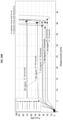
  • FIG. 13 is a graph showing SEC % Main as a function of time, 5° C. storage.
  • FIG. 14 is a graph showing SEC % Main as a function of time, 25° C. storage.
  • FIG. 15 is a graph showing SEC % Main as a function of time, 40° C. storage.
  • FIG. 16 is a graph showing SEC % Main as a function of time, ⁇ 70° C. storage.
  • the present disclosure features a pharmaceutical composition containing an anti-CD40 antibody (see, e.g., PCT Pub. Nos. WO 2012/125569 and WO 2017/040932, which are herein incorporated by reference in their entirety) at a concentration of 200 mg/mL.
  • the composition includes 0.02% polysorbate 20, 50 mM sodium acetate, 100 mM arginine, and 100 mM glutamate, has a pH of 5.4.
  • the composition may be present in a container in a volume of 2.0 mL.
  • the formulation described herein contains a high concentration (as described herein) of the anti-CD40 antibody.
  • the formulation enhances the stability of the antibody (e.g., exhibits an extended shelf-life), reduces aggregation of the antibody, and improves viscosity parameters of the composition.
  • the pharmaceutical composition described herein includes an anti-CD40 antibody (KPL-404).
  • the heavy chain of the antibody is set forth in SEQ ID NO: 1 and the light chain of the antibody is set forth in SEQ ID NO: 2.
  • KPL-404 Heavy Chain (SEQ ID NO: 1) QVQLVQSGAEVKKPGASVKVSCKASGYTFTNYWMHWVRQAPGQRLEWIGY INPSNDYTKYNQKFKDRATLTADKSANTAYMELSSLRSEDTAVYYCARQG FPYWGQGTLVTVSSASTKGPSVFPLAPCSRSTSESTAALGCLVKDYFPEP VTVSWNSGALTSGVHTFPAVLQSSGLYSLSSVVTVPSSSLGTKTYTCNVD HKPSNTKVDKRVESKYGPPCPPCPAPEFLGGPSVFLFPPKPKDTLMISRT PEVTCVVVDVSQEDPEVQFNWYVDGVEVHNAKTKPREEQFNSTYRVVSVL TVLHQDWLNGKEYKCKVSNKGLPSSIEKTISKAKGQPREPQVYTLPPSQE EMTKNQVSLTCLVKGFYPSDIAVEWESNGQPENNYKTTPPVLDSDG
  • the anti-CD40 antibody, KPL-404 can be incorporated into a formulation for intravenous injection.
  • the pharmaceutical composition has 200 mg/mL of the anti-CD40 antibody (KPL-404), 0.02% polysorbate 20, 50 mM sodium acetate, 100 mM arginine, 100 mM glutamate, and a pH of 5.4.
  • the composition may be present in a container with about 2.0 mL extractable volume.
  • the anti-CD40 antibody, 2C10 can be incorporated into a formulation for subcutaneous injection.
  • the pharmaceutical composition can include 200 mg/mL of the anti-CD40 antibody (KPL-404), 0.02% polysorbate 20, 50 mM sodium acetate, 100 mM arginine, 100 mM glutamate, and a pH of 5.4.
  • the composition may be present in a container with about 2.0 mL extractable volume.
  • the disclosure also features a kit with a container that includes, for example, 2.0 mL of the pharmaceutical composition of the anti-CD40 antibody, KPL-404, described herein.
  • the container can include a label providing details of the composition.
  • Suitable containers include, for example, bottles, vials, syringes, and test tubes.
  • the containers may be formed from a variety of materials such as glass or plastic.
  • the container holds a pharmaceutical composition as described herein and may include, e.g., a sterile access port.
  • the composition may also be formulated in a prefilled syringe.
  • the composition may also be formulated in an autoinjector.
  • the container may be an intravenous solution bag or a vial having a stopper pierceable by a hypodermic injection needle.
  • the kit may also include a second container with a pharmaceutically acceptable buffer, such as phosphate-buffered saline, Ringer's solution, and dextrose solution.
  • the kit may include other materials, including buffers, diluents, filters, needles, syringes, and package inserts with instructions for use.
  • candidate formulations described herein include KPL-404 and the following excipients:
  • Formulation C was selected as the formulation for 200 mg/mL KPL-404 formulation for drug substance (DS) and drug product (DP) with 0.02% PS20, instead of 0.01% PS20.
  • KPL-404 was exchanged into 12 different buffers, including Formulations A (pH 5.6), 1 and 2. Freeze/Thaw (F/T) stress was assessed, cycling samples between ⁇ 70 C and ambient temperature three times. Agitation stress was also assessed by shaking at 200 rpm for 48 hours in the upright position. A short-term stability study was conducted, with samples stored at 2-8° C., 25° C., or at 40° C. for up to 3 weeks.
  • Formulations A pH 5.6
  • F/T Freeze/Thaw
  • the SEC results show that the excipient does play an important role in ensuring KPL-404 stability following F/T and agitation stress, with glycine Formulations 1 and 2 being most susceptible to degradation, i.e., loss of % Main species, or increase either in % HMW or % LMW species.
  • KPL-404 was stable in Formulation A, which included sucrose as a stabilizing agent.
  • SEC results for screened formulations A, 1, and 2 are presented graphically in FIG. 1 . There are clear differences among the formulations, with Formulation 2 being the least stable showing loss of main and increase of both HMW and LMW species.
  • Formulation 1 showed increases in HMW species at 40° C. and was unstable during F/T stress and agitation tests.
  • Formulation A was the lead candidate in these screening studies and was selected for further development studies.
  • Viscosity and Instron testing were performed as a function of protein concentration to assess syringeability.
  • KPL-404 could achieve a concentration of up to 292 mg/mL in Formulation C.
  • Abbreviated stability studies were performed at 220 mg/mL each of Formulations A and B, and at 235 mg/mL in Formulation C.
  • Formulation C at 200 mg/mL KPL-404 for both drug substance and for drug product based on its improved characteristics relative to Formulations A and B.
  • Non-GMP drug substance was diluted into each of the three buffers, followed by concentration to 200 mg/mL. It was expected that the polysorbate 20 present in the DS would co-concentrate with KPL-404 in the centrifugal unit.
  • a system rinse using 1 ⁇ to 1.5 ⁇ the holdup volume was performed to allow for a process step mass balance calculation.
  • a PS20 stock solution of 10% w/v was prepared in each respective formulation buffer and spiked into both the target 200 g/L sample to a target 0.01% PS20.
  • Final 0.2 ⁇ m filtration was performed using 3.5 cm 2 PES filters from Sartorius. Each pool was filtered separately, and the pressure monitored. The remainder of the drug substance pools were handled in accordance with the DP stability study to ensure compliance with that study's objectives.
  • KPL-404 drug substance i.e., an antibody having a heavy chain with the amino acid sequence set forth in SEQ ID NO: 1, and a light chain with the amino acid sequence set forth in SEQ ID NO: 2
  • UFDF ultrafiltration/diafiltration
  • Formulations were studied by a variety of biophysical techniques, including dynamic light scattering, static light scattering (B22 and CIMax), electrophoretic light scattering (Zeff), thermodynamic stability by differential scanning calorimetry (melting transitions), injectability by microcapillary viscometry and rheology, and nanoparticle tracking analysis.
  • Formulation C had the lowest colloidal stability based on kD value. Similarly, Formulation C had the highest concentration of subvisible particles (C s ⁇ p ) compared to Formulations A and B ( FIG. 2 A ).
  • Concentration-gradient multiangle light scattering was employed to assess oligomeric behavior of KPL-404 over a range of concentrations. Individual samples were prepared at different concentrations and analyzed by static light scattering (SLS).
  • Wyatt technologies has implemented CG-MALS by merging an autosampler that generates a concentration gradient from two solutions (from a high concentration protein formulation and matched placebo) in conjunction with in-line sample analysis.
  • KPL-404 formulations and matching formulation buffers were filtered using 0.22 ⁇ m syringe filters. Fifteen concentrations were analyzed per formulation, with concentrations confirmed by UV Absorbance.
  • CG-MALS demonstrates KPL-404 readily forms reversible dimers and higher ordered oligomer that are not detected by SEC (which dilutes to ⁇ 1 mg/mL prior to injection).
  • Results were generally consistent with a hard sphere repulsive behavior, with underlying attractive behavior in all formulations as indicated by the need to include reversible associations in global analysis.
  • Formulation A was more effective at inhibiting formation of reversible oligomers below 125 mg/mL, but data were not fittable at higher concentrations.
  • Formulation B was the least stable with respect to oligomerization, with reversible oligomers becoming the dominant species at ⁇ 35 mg/mL.
  • Formulation C shows oligomers become the dominant species at >60 mg/mL, and has lower viscosity compared to formulation A, which is consistent with lower energy self-association at elevated concentrations for Formulation C.
  • KPL-404 is less prone to aggregation not only at concentrations exceeding 200 mg/mL, but also at lower concentrations, e.g., 150-200 mg/mL. Both the rheology and light scattering data suggest that KPL-404 self-association tends to increase with increasing concentration.
  • the shear-thinning data reveal a notable and unexpected difference between the self-association dynamics of formulation C from the other formulations, suggesting that arginine and glutamate affect these interactions via a different mechanism.
  • the light scattering data demonstrate that KPL-404 is predominantly a monomer in Formulations A, B and C below ⁇ 100 mg/mL. At higher concentrations, however, these data suggest that Formulation C has a superior ratio of reversible dimer to non-reversible dimer compared to Formulations A and B.
  • Viscosity was assessed as a function of variable concentration for each of the three formulations, Table 4 and FIG. 7 .
  • the inset in FIG. 7 highlights the KPL-404 concentration where a given formulation crosses 25 cP, a theoretical upper limit on syringeability based on extrusion force.
  • Formulation A with sucrose exceeded 25 cP at ⁇ 200 mg/mL
  • Formulations B and C exceeded 25 cP above 220 mg/mL
  • Formulation C being slightly less viscous than B.
  • KPL-404-A KPL-404-B KPL-404-C nominal Viscosity nominal Viscosity nominal Viscosity Dilution conc, of conc, of conc, of Factor mg/mL A, cP mg/mL B, cP mg/mL C, cP 1.00 272.0 130.8 274.0 103.0 292.0 116.0 0.90 244.8 68.4 246.6 46.4 262.8 61.2 0.85 231.2 46.1 232.9 34.5 248.2 45.6 0.80 217.6 34.7 219.2 24.8 233.6 31.0 0.75 204.0 25.5 205.5 19.6 219.0 26.1 0.70 190.4 17.8 191.8 14.2 204.4 17.9 0.60 163.2 10.3 164.4 8.0 175.2 9.4
  • Formulations A, B, and C were filled by hand into a 2.25 mL BD Neopak syringe. The same sample was tested five times with a new syringe for each test. Instron testing was performed, recording gliding forces as a function of protein concentration for each formulation, Table 5. To reserve sample, testing utilized the highest concentration sample of each formulation, diluting the recovered sample with buffer to generate lower concentration. The results show decreasing injection force as a function of decreasing concentration.
  • Injection times for the lowest three concentrations were recorded using manually assembled Auto-Injectors (AI) with each of the candidate formulations in a 2.25 mL BD Neopak syringe, Table 5.
  • the time was established by video recording, calculating time from frame rate and the number of frames from first to last drop.
  • Formulation B can support 220 mg/mL.
  • Formulation A and B were put on short-term stability (3 months) at 220 mg/mL.
  • Injectability data suggests Formulation C can support 235 mg/mL, which was likewise put on short-term stability (3 mo). The data are summarized in Tables 6-14.
  • Formulation A 200 mg/mL stability, 5° C. Tests Criteria t0 2 w, 5 C. 1 M, 5 C. 2 M, 5 C. 3 M, 5 C. 6 M, 5 C. 9 M, 5 C. 12 M, 5 C.
  • Formulation B 200 mg/mL stability: agitation, stressed at 40° C., accelerated at 25° C. 1 w, 2 w, 1 M, 1 w, 2 w, 1 M, 2 M, 3 M, 6 M, Tests Criteria t 0 agitation 40 C. 40 C. 40 C. 25 C. 25 C. 25 C. 25 C. 25 C. 25 C. 25 C. 25 C.
  • Formulation B 200 mg/mL stability, frozen at ⁇ 20° C. or ⁇ 70° C. Tests Criteria t 0 3 M, ⁇ 20 C. 3 M, ⁇ 70 C. 6 M, ⁇ 70 C. 9 M, ⁇ 70 C. 12 M, ⁇ 70 C.
  • Aggregation data were also produced for Formulation C (200 mg/mL KPL-404 in 50 mM sodium acetate, 100 mM L-Arginine, 100 mM L-Glutamate, 0.02% polysorbate 20, pH 5.4) KPL-404 up to 12 months at 2-8° C.
  • FIG. 1 shows a set of graphs showing SEC results presented graphically for % Main, % HMW and % LMW species of KPL-404 for Formulations A, 1 and 2. Chromatograms of initial samples are shown in FIG. 11 , showing initially all three formulations are essentially the same as the reference standard.
  • KPL-404 was stable at 5° C. in the current formulation at 100 mg/mL, showing slow rate of change over 12 months with a slope that projects a ⁇ 1% change after 60 months.
  • Formulation C was more stable than both Formulations A and B; the slope for Formulation C predicts a ⁇ 1% change after ⁇ 36 months, whereas A and B project twice the rate of change as Formulation C.
  • KPL-404 was stable at ⁇ 70° C., with change of % Main occurring at a similar rate for Formulation A at 100 mg/mL and for Formulations A, B, and C at 200 mg/mL. Note that only Formulation A at 100 mg/mL had sufficient data for meaningful statistical analysis; analysis of higher concentration data sets are included in Table 15 for qualitative comparison. The data predict no statistically meaningful change in % Main purity while held frozen, through 12 months of data.
  • a 100 mg/mL ⁇ 0.0099 0.0656 200 mg/mL 0.0119 0.1185 1 B 200 mg/mL 0.0024 0.7283 1 C 200 mg/mL 0.0119 0.1185 1 1 P-value is not meaningful with fewer than 5 points, but is included for qualitative comparison
  • KPL-404 is stable in all three formulations, but Formulation C is superior to both Formulation A and B in supporting concentrations above 200 mg/mL.
  • KPL-404 was formulated at 200 mg/mL in each of the three candidate formulations by UF/DF and set on stability in a vial presentation.
  • KPL-404 was highly concentrated by UF/DF until the flux went to zero.
  • concentrations that were achieved were 272 and 274 mg/mL in Formulation A and B, respectively, and 291 mg/mL in Formulation C.
  • Viscosity and Instron testing were performed as a function of protein concentration to assess syringeability. Results showed Formulation C is more effective at reducing viscosity, and can support higher concentrations as compared to Formulations A and B.
  • Formulation C exhibits superior properties, either in a standard Yposmate autoinjector up to 235 mg/mL, or up to 270 mg/mL in the Ypsomate Pro.
  • Formulation C at 200 mg/mL was approximately as stable as Formulation A at 100 mg/mL.
  • Formulation C was identified as a superior formulation, relative to Formulations A and B, for KPL-404.
  • An upper concentration limit of 250 mg/mL can be supported for drug substance final UF/DF.
  • the objectives of this study were to evaluate the toxicity of KPL-404 prepared in Formulation C (200 mg/mL KPL-404, 50 mM Acetate, 100 mM L-Arginine, 100 mM L-Glutamate, 0.02% polysorbate 20, pH 5.4, when administered by intravenous or subcutaneous injection once weekly over a 26-week period to cynomolgus monkeys and to evaluate the potential reversibility or delayed occurrence of any effects over an 8-week recovery period.
  • the toxicokinetic characteristics of the test article were determined.
  • KPL-404 was administered to 5 male and 5 female cynomolgus monkey per group via subcutaneous (SC) injection or intravenous bolus (IV) injection at doses of 30 or 97 mg/kg, once weekly for 26 weeks, according to the study design in In-text Table 1.
  • SC subcutaneous
  • IV intravenous bolus
  • KPL-404 is stable in all three formulations, but Formulation C is superior to both Formulation A and B in providing stable formulations of KPL-404, and Formulation C was further demonstrated to be safe in non-human primate toxicity studies.

Landscapes

  • Health & Medical Sciences (AREA)
  • Chemical & Material Sciences (AREA)
  • Life Sciences & Earth Sciences (AREA)
  • Medicinal Chemistry (AREA)
  • General Health & Medical Sciences (AREA)
  • Immunology (AREA)
  • Organic Chemistry (AREA)
  • Pharmacology & Pharmacy (AREA)
  • Epidemiology (AREA)
  • Animal Behavior & Ethology (AREA)
  • Public Health (AREA)
  • Veterinary Medicine (AREA)
  • Proteomics, Peptides & Aminoacids (AREA)
  • Biophysics (AREA)
  • Biochemistry (AREA)
  • Genetics & Genomics (AREA)
  • Molecular Biology (AREA)
  • Dermatology (AREA)
  • Engineering & Computer Science (AREA)
  • General Chemical & Material Sciences (AREA)
  • Oil, Petroleum & Natural Gas (AREA)
  • Chemical Kinetics & Catalysis (AREA)
  • Bioinformatics & Cheminformatics (AREA)
  • Microbiology (AREA)
  • Mycology (AREA)
  • Medicinal Preparation (AREA)

Abstract

The present disclosure features a pharmaceutical formulation containing an anti-CD40 antibody, KPL-404.

Description

SEQUENCE LISTING
This application contains a Sequence Listing which has been filed electronically in Extensible Markup Language (XML) format and is hereby incorporated by reference in its entirety. Said XML copy, created on Oct. 28, 2022, is named 51383-004002_Sequence_Listing_10_28_22.XML and is 3,277 bytes in size.
BACKGROUND
Suppression of the immune system, particularly the humoral immune system, is beneficial in organ transplantation and treatment of autoimmune disorders.
One target for suppressing the immune system is the CD40/CD154 interaction. CD40 is expressed primarily on the surface of B lymphocytes and other antigen-presenting cells (APCs) such as dendritic cells and macrophages. CD154 is expressed primarily on the surface of T cells. The interaction between these two proteins is associated with B cell activation, which triggers cytokine expression as well as expression of cell surface markers including CD23, CD80, and CD86. Antibodies (e.g., humanized antibodies) that target the CD40/CD154 interaction have been developed. There exists a need for pharmaceutical formulations suitable for preparing and administering such antibodies.
SUMMARY
In one aspect, featured is a pharmaceutical composition formulated for intravenous injection that contains 200 mg/mL of an anti-CD40 antibody with a heavy chain variable region having the amino acid sequence set forth in SEQ ID NO: 1 and a light chain variable region having the amino acid sequence set forth in SEQ ID NO: 2. The pharmaceutical composition includes 0.02% polysorbate 20, 50 mM sodium acetate, 100 mM arginine, and 100 mM glutamate, a pH of 5.4. In some embodiments, the composition is formulated in a volume of 2.0 mL. In some embodiments, at least 98% of the humanized anti-CD40 antibody is present in the composition in a monomeric form. In some embodiments, less than 2% of the humanized anti-CD40 antibody in the composition is present as a high molecular weight (HMW) species.
In another aspect, featured is a pharmaceutical composition formulated for subcutaneous injection that contains 200 mg/mL of an anti-CD40 antibody with a heavy chain variable region having the amino acid sequence set forth in SEQ ID NO: 1 and a light chain variable region having the amino acid sequence set forth in SEQ ID NO: 2. The pharmaceutical composition includes 0.02% polysorbate 20, 50 mM sodium acetate, 100 mM arginine, and 100 mM glutamate, a pH of 5.4. In some embodiments, the composition is formulated in a volume of 2.0 mL. In some embodiments, at least 98% of the humanized anti-CD40 antibody is present in the composition in a monomeric form. In some embodiments, less than 2% of the humanized anti-CD40 antibody in the composition is present as an HMW species.
In another aspect, featured is a method of suppressing the immune system in a human subject by administering to the human subject by intravenous injection of a pharmaceutical composition that contains 200 mg/mL of an anti-CD40 antibody with a heavy chain variable region having the amino acid sequence set forth in SEQ ID NO: 1 and a light chain variable region having the amino acid sequence set forth in SEQ ID NO: 2. The pharmaceutical composition includes 0.02% polysorbate 20, 50 mM sodium acetate, 100 mM arginine, and 100 mM glutamate and has a pH of 5.4. In some embodiments, the composition is formulated in a volume of 2.0 mL.
In another aspect, featured is a method of suppressing the immune system in a human subject by administering to the human subject by subcutaneous injection of a pharmaceutical composition that contains 200 mg/mL of an anti-CD40 antibody with a heavy chain variable region having the amino acid sequence set forth in SEQ ID NO: 1 and a light chain variable region having the amino acid sequence set forth in SEQ ID NO: 2. The pharmaceutical composition includes 0.02% polysorbate 20, 50 mM sodium acetate, 100 mM arginine, and 100 mM glutamate and has a pH of 5.4. In some embodiments, the composition is formulated in a volume of 2.0 mL.
BRIEF DESCRIPTION OF THE DRAWINGS
FIG. 1 is a set of graphs showing SEC results presented graphically for % Main, % HMW and % LMW species of KPL-404 for Formulations A, 1 and 2.
FIGS. 2A and 2B are graphs showing comparison of particle concentrations from biophysical characterization studies. FIG. 2A shows 200 mg/mL KPL-404 Formulations A-C (no PS20 in Formulation C), and FIG. 2B shows high concentrations of KPL-404 in Formulations A-C.
FIG. 3 is a graph showing viscosity vs. shear rate for high concentration KPL-404 formulations.
FIG. 4 is a graph showing Total KPL-404 species Population by CG-MALS for formulation A.
FIG. 5 is a graph showing Total KPL-404 species Population by CG-MALS for formulation B.
FIG. 6 is a graph showing Total KPL-404 species Population by CG-MALS for formulation C.
FIG. 7 is a graph showing Exponential dependence of measured viscosity vs protein concentration for formulation A (circles), B (squares), and C (triangles).
FIG. 8 is a graph showing Instron Force Profiles, KPL-404 in Formulation A, with Injection times from a Standard Ypsomate Autoinjector (2.25 mL).
FIG. 9 is a graph showing Instron Force Profiles, KPL-404 in Formulation B, with Injection times from a Standard Ypsomate Autoinjector (2.25 mL).
FIGS. 10A and 10B are graphs showing Instron Force Profiles, KPL-404 in Formulation C, with Injection times from a Standard Ypsomate (FIG. 10A) or Ypsomate Pro (FIG. 10B) Autoinjector (2.25 mL).
FIG. 11 is a set of SEC Chromatograms of Formulations A, B, and C, t=0 (initial). The right side shows an enhanced view of the left panel.
FIG. 12 is a set of SEC Chromatograms of Formulations A, B, and C, t=2w, 40° C. The right side shows an enhanced view of the left panel.
FIG. 13 is a graph showing SEC % Main as a function of time, 5° C. storage.
FIG. 14 is a graph showing SEC % Main as a function of time, 25° C. storage.
FIG. 15 is a graph showing SEC % Main as a function of time, 40° C. storage.
FIG. 16 is a graph showing SEC % Main as a function of time, −70° C. storage.
DETAILED DESCRIPTION
The present disclosure features a pharmaceutical composition containing an anti-CD40 antibody (see, e.g., PCT Pub. Nos. WO 2012/125569 and WO 2017/040932, which are herein incorporated by reference in their entirety) at a concentration of 200 mg/mL. The composition includes 0.02% polysorbate 20, 50 mM sodium acetate, 100 mM arginine, and 100 mM glutamate, has a pH of 5.4. The composition may be present in a container in a volume of 2.0 mL. The formulation described herein contains a high concentration (as described herein) of the anti-CD40 antibody. The formulation enhances the stability of the antibody (e.g., exhibits an extended shelf-life), reduces aggregation of the antibody, and improves viscosity parameters of the composition.
Anti-CD40 Antibody
The pharmaceutical composition described herein includes an anti-CD40 antibody (KPL-404). The heavy chain of the antibody is set forth in SEQ ID NO: 1 and the light chain of the antibody is set forth in SEQ ID NO: 2.
KPL-404 Heavy Chain 
(SEQ ID NO: 1)
QVQLVQSGAEVKKPGASVKVSCKASGYTFTNYWMHWVRQAPGQRLEWIGY
INPSNDYTKYNQKFKDRATLTADKSANTAYMELSSLRSEDTAVYYCARQG
FPYWGQGTLVTVSSASTKGPSVFPLAPCSRSTSESTAALGCLVKDYFPEP
VTVSWNSGALTSGVHTFPAVLQSSGLYSLSSVVTVPSSSLGTKTYTCNVD
HKPSNTKVDKRVESKYGPPCPPCPAPEFLGGPSVFLFPPKPKDTLMISRT
PEVTCVVVDVSQEDPEVQFNWYVDGVEVHNAKTKPREEQFNSTYRVVSVL
TVLHQDWLNGKEYKCKVSNKGLPSSIEKTISKAKGQPREPQVYTLPPSQE
EMTKNQVSLTCLVKGFYPSDIAVEWESNGQPENNYKTTPPVLDSDGSFFL
YSRLTVDKSRWQEGNVFSCSVMHEALHNHYTQKSLSLSPGK
KPL-404 Light Chain 
(SEQ ID NO: 2)
EIVLTQSPATLSLSPGERATLSCSASSSVSYMHWYQQKPGQAPRRWIYDT
SKLASGVPARFSGSGSGTDYTLTISSLEPEDFAVYYCHQLSSDPFTFGGG
TKVEIKRTVAAPSVFIFPPSDEQLKSGTASVVCLLNNFYPREAKVQWKVD
NALQSGNSQESVTEQDSKDSTYSLSSTLTLSKADYEKHKVYACEVTHQGL
SSPVTKSFNRGEC

Pharmaceutical Composition
The anti-CD40 antibody, KPL-404, can be incorporated into a formulation for intravenous injection. The pharmaceutical composition has 200 mg/mL of the anti-CD40 antibody (KPL-404), 0.02 % polysorbate 20, 50 mM sodium acetate, 100 mM arginine, 100 mM glutamate, and a pH of 5.4. The composition may be present in a container with about 2.0 mL extractable volume.
The anti-CD40 antibody, 2C10, can be incorporated into a formulation for subcutaneous injection. The pharmaceutical composition can include 200 mg/mL of the anti-CD40 antibody (KPL-404), 0.02 % polysorbate 20, 50 mM sodium acetate, 100 mM arginine, 100 mM glutamate, and a pH of 5.4. The composition may be present in a container with about 2.0 mL extractable volume.
Kits
The disclosure also features a kit with a container that includes, for example, 2.0 mL of the pharmaceutical composition of the anti-CD40 antibody, KPL-404, described herein. The container can include a label providing details of the composition. Suitable containers include, for example, bottles, vials, syringes, and test tubes. The containers may be formed from a variety of materials such as glass or plastic. The container holds a pharmaceutical composition as described herein and may include, e.g., a sterile access port. The composition may also be formulated in a prefilled syringe. The composition may also be formulated in an autoinjector.
For example, the container may be an intravenous solution bag or a vial having a stopper pierceable by a hypodermic injection needle. The kit may also include a second container with a pharmaceutically acceptable buffer, such as phosphate-buffered saline, Ringer's solution, and dextrose solution. The kit may include other materials, including buffers, diluents, filters, needles, syringes, and package inserts with instructions for use.
EXAMPLES
The following examples of specific aspects for carrying out the present disclosure are offered for illustrative purposes only and are not intended to limit the scope of the present disclosure in any way.
Example 1
Described herein are studies that were performed to assess formulations that would allow for an increase in the concentration of KPL-404 to at least 100 mg/mL.
Unless otherwise noted, the candidate formulations described herein include KPL-404 and the following excipients:
    • Formulation 1: 20 mM sodium phosphate, 200 mM glycine, 0.01% polysorbate 20 (PS20), pH 6.5
    • Formulation 2: 50 mM sodium Acetate/NaAcetate, 200 mM glycine 0.01% PS20, pH 5.5
    • Formulation A: 50 mM Acetate/NaAcetate, 7% (w/v) sucrose, 0.01% PS20, pH 5.4
    • Formulation B: 50 mM Acetate/NaAcetate, 2.5% (w/v) sorbitol, 70 mM NaCl, 0.01% PS20, pH 5.4
    • Formulation C: 50 mM Acetate/NaAcetate, 100 mM Arginine, 100 mM Glutamate, 0.01% PS20, pH 5.4
Formulation C was selected as the formulation for 200 mg/mL KPL-404 formulation for drug substance (DS) and drug product (DP) with 0.02% PS20, instead of 0.01% PS20.
Screening Studies
To evaluate the stability of KPL-404 in a formulation screen, KPL-404 was exchanged into 12 different buffers, including Formulations A (pH 5.6), 1 and 2. Freeze/Thaw (F/T) stress was assessed, cycling samples between −70 C and ambient temperature three times. Agitation stress was also assessed by shaking at 200 rpm for 48 hours in the upright position. A short-term stability study was conducted, with samples stored at 2-8° C., 25° C., or at 40° C. for up to 3 weeks. The SEC results show that the excipient does play an important role in ensuring KPL-404 stability following F/T and agitation stress, with glycine Formulations 1 and 2 being most susceptible to degradation, i.e., loss of % Main species, or increase either in % HMW or % LMW species. KPL-404 was stable in Formulation A, which included sucrose as a stabilizing agent. SEC results for screened formulations A, 1, and 2 are presented graphically in FIG. 1 . There are clear differences among the formulations, with Formulation 2 being the least stable showing loss of main and increase of both HMW and LMW species. Formulation 1 showed increases in HMW species at 40° C. and was unstable during F/T stress and agitation tests. Formulation A was the lead candidate in these screening studies and was selected for further development studies.
Development Studies
Following the screening studies, subsequent studies were performed in three candidate formulations that were identified as part of the development studies:
    • KPL-404 was formulated at 200 mg/mL in each of the three candidate formulations (Formulations A-C) by UF/DF and set on stability in a vial presentation.
    • KPL-404 was highly concentrated by UF/DF until the flux went to zero. The concentrations that were achieved were:
    • 272 mg/mL KPL-404 in Formulation A: (50 mM Acetate, 7% (w/v) sucrose, 0.001% PS20, pH 5.4)
    • 274 mg/mL KPL-404 in Formulation B: 50 mM Acetate, 2.5% (w/v) sorbitol, 70 mM NaCl, 0.001% PS20, pH 5.4
    • 291 mg/mL KPL-404 in Formulation C: 50 mM Acetate, 100 mM Arg/100 mM Glu, 0.001% PS20, pH 5.4
Samples of each of these were characterized externally using biophysical techniques to characterize self-association as a function of protein concentrations. Drug substance material used to prepare these formulations was initially manufactured with PS20 at 0.001%. Separately, formulations were spiked with 10% (w/v) PS20 to achieve 0.01% PS20 and were also analyzed.
In parallel, CG-MALS testing was performed on formulations with PS20 adjusted to 0.01%.
Viscosity and Instron testing were performed as a function of protein concentration to assess syringeability.
From these characterization studies, it was concluded that KPL-404 could achieve a concentration of up to 292 mg/mL in Formulation C. Abbreviated stability studies were performed at 220 mg/mL each of Formulations A and B, and at 235 mg/mL in Formulation C.
We selected Formulation C at 200 mg/mL KPL-404 for both drug substance and for drug product based on its improved characteristics relative to Formulations A and B.
Materials
Material Generation for Assessing High Concentration of KPL-404
Initial Testing
Non-GMP drug substance was diluted into each of the three buffers, followed by concentration to 200 mg/mL. It was expected that the polysorbate 20 present in the DS would co-concentrate with KPL-404 in the centrifugal unit.
Material Generation for Stability Studies
UFDF Testing:
To generate load material for each ProA cycle, drug substance was thawed in a 25° C. water bath and adjusted using ProA equilibration buffer to a target 10 g/L. The conditioned ProA load material was 0.2 μm filtered prior to loading the column. Each Pro A eluate was neutralized to target pH 5.00, 0.2 μm filtered, and stored at ≤−65° C. A total of 4 cycles were performed to generate 68 grams of UFDF load material for high concentration studies.
Material Generation for UFDF Confirmation:
To generate load material for each ProA cycle, drug substance was thawed at 2-8° C. overnight and adjusted using ProA equilibration buffer to a target 10 g/L. The conditioned ProA load material was 0.2 μm filtered prior to loading the column. Each Pro A eluate was 0.2 μm filtered and stored at ≤−65° C. A total of 3 cycles were performed to generate 54 grams of UFDF load material for high concentration studies.
For each run, neutralized ProA eluate was thawed at 2-8° C., 0.2 μm filtered, and used as UFDF load. The starting material was concentrated to a target 50 g/L, diafiltered into the relevant buffer and then concentrated until a prohibitive drop in flux occurred or the retentate showed visual deterioration. During processing, when a target of 200 g/L was reached, 40 mL of the in-process pool was sampled for drug product processing. The remaining pool was then further concentrated while adjusting feed flow rate and transmembrane pressure to ensure equipment capacity was not exceeded at high concentration and high pressure.
A system rinse using 1× to 1.5× the holdup volume was performed to allow for a process step mass balance calculation. A PS20 stock solution of 10% w/v was prepared in each respective formulation buffer and spiked into both the target 200 g/L sample to a target 0.01% PS20. Final 0.2 μm filtration was performed using 3.5 cm2 PES filters from Sartorius. Each pool was filtered separately, and the pressure monitored. The remainder of the drug substance pools were handled in accordance with the DP stability study to ensure compliance with that study's objectives.
Results and Discussion
Effect of Formulations A-C on >200 mg/mL KPL-404
Small scale UF/DF was performed to generate the following samples, which were concentrated until the tangential flow stopped. These were considered to be at their threshold of solubility:
    • Formulation A (sucrose-based, Ph1 formulation): 50 mM Acetate, 7% (w/v) sucrose, 0.01% PS20, pH 5.4—achieved 212.6 mg/mL KPL-404
    • Formulation B (sorbitol-based): 50 mM Acetate, 2.5% (w/v) sorbitol, 70 mM NaCl, 0.01% PS20, pH 5.4—achieved 195.5 mg/mL KPL-404
    • Formulation C (Arg/Glu-based): 50 mM Acetate, 100 mM Arg/100 mM Glu, 0.01% PS20, pH 5.4—achieved 214.1 mg/mL KPL-404
The study used KPL-404 drug substance (i.e., an antibody having a heavy chain with the amino acid sequence set forth in SEQ ID NO: 1, and a light chain with the amino acid sequence set forth in SEQ ID NO: 2) that was processed over a Protein-A column to remove all residual buffer components including PS20, followed by ultrafiltration/diafiltration (UFDF) into each of Formulation A, Formulation B, or Formulation C, at 200 mg/mL. The formulations were then further concentrated up to ˜250 mg/mL. To all of these, PS20 was added to a target of 0.01% and then filtered.
Biophysical Characterization
Malvern Panalytical Studies
Formulations were studied by a variety of biophysical techniques, including dynamic light scattering, static light scattering (B22 and CIMax), electrophoretic light scattering (Zeff), thermodynamic stability by differential scanning calorimetry (melting transitions), injectability by microcapillary viscometry and rheology, and nanoparticle tracking analysis.
An initial set of formulations were characterized at 200 mg/mL as shown in Table 2. It was discovered that Formulation C lacked PS20 after testing had been completed.
TABLE 2
Biophysical Stability Profiles of 200 mg/mL KPL-404 Formulations
Developability Injectability Manufacturability SVPs
Formulation B22 RS kD kD* Zeff CIMax η100 ηstock T0 Tm1 Tm2 Tm3 Csμp
A 8.9e−5 5.1 −0.65 5.79 1.4 113 2.296 21.22 57.4 65.7 72.1 75.2 5.15e7
B 4.4e−5 5.3 −2.26 3.49 2.0 113 2.071 14.45 56.5 64.9 71.5 74.1 3.85e8
C 1.8e−5 5.4 −1.91 3.08 1.8 108 2.035 14.79 56.5 64.6 71.5 74.5 1.51e9
With~0.001% polysorbate 20;
*viscosity-corrected kD
TABLE 3
Biophysical Stability Profiles of High Concentration KPL-404 Formulations
Developability Injectability Manufacturability SVPs
Formulation B22 RS kD kD* Zeff CIMax η100 ηstock T0 Tm1 Tm2 Tm3 Csμp
A 6.9e−5 5.1 −2.43 3.41 N.T. 113 2.630 91.10 56.8 65.4 72.5 75.3 3.05e8
B 4.1e−5 5.4 −3.08 9.60 N.T. 113 3.100 48.20 53.8 67.2 73.0 9.47e8
C 7.9e−5 5.4 −1.01 19.92 N.T. 108 2.330 67.10 56.3 67.7 73.7 7.42e8
With~0.02% polysorbate 20;
*viscosity-corrected kD
With the formulations containing nominal levels of PS20, Formulation C had the lowest colloidal stability based on kD value. Similarly, Formulation C had the highest concentration of subvisible particles (Csμp) compared to Formulations A and B (FIG. 2A).
Thermal analysis indicated similar thermal stability for aggregation onset and for each of the three observed thermal transitions, with Formulation A being higher in stability due to sucrose, in comparison to Formulations B and C which were essentially equivalent.
Biophysical characterization studies were repeated following generation of high concentration (>200 mg/mL) KPL-404 formulations, including 0.02% PS20 in Formulation C, Table 3. When 0.02% PS20 was in the formulations, Formulation C had the highest colloidal stability based on kD value. Similarly, Formulation C had a lower concentration of subvisible particles (Csμp) compared to Formulation B (FIG. 2B).
Rheological assessment of viscosity as a function of shear rate showed different behavior at 100 mg/mL and >200 mg/mL (FIG. 3 ).
At 100 mg/mL, all formulations demonstrated Newtonian behavior with similar viscosities as a function of shear rate. However, at >200 mg/mL a common non-Newtonian “shear-thinning” effect for Formulations A and B, but a static invariant viscosity vs shear rate is observed for Formulation C. This suggests the Arg/Glu excipients in Formulation C inhibit self-association at high concentration, whereas low energy self-associations were present at low shear-rates for Formulations A and B that were disrupted as the shear rate increases.
This behavior is consistent with a change in mechanism of colloidal stability above 250 mg/mL, wherein protein self-association becomes dominant rather than the hard sphere mixture model that is characteristic of a dilute protein solution for KPL-404 in Formulations A and B. Conversely, for KPL-404 in Formulation C, the absence of shear thinning at elevated concentrations translates to an exponential increase in viscosity as a function of protein concentration up to 292 mg/mL. The combination of arginine and glutamate stabilizes KPL-404 against self-association via a different mechanism than sucrose in Formulation A or sorbitol/NaCl in Formulation B.
In summary, biophysical characterization of KPL-404 formulations showed differences in mechanism of stabilization, with the sucrose Formulation A being less optimal than either Formulation B or C. Data suggest Formulation C may be most effective at limiting self-association at elevated concentrations through a combination of Arg/Glu and PS20.
Biophysical Studies
Concentration-gradient multiangle light scattering (CG-MALS) was employed to assess oligomeric behavior of KPL-404 over a range of concentrations. Individual samples were prepared at different concentrations and analyzed by static light scattering (SLS).
Wyatt technologies has implemented CG-MALS by merging an autosampler that generates a concentration gradient from two solutions (from a high concentration protein formulation and matched placebo) in conjunction with in-line sample analysis.
KPL-404 formulations and matching formulation buffers were filtered using 0.22 μm syringe filters. Fifteen concentrations were analyzed per formulation, with concentrations confirmed by UV Absorbance.
Fitting of data to reversible/irreversible association models were performed using Wyatt Calypso software (144 kDa monomer).
CG-MALS Results for Formulation A
No reversible associations could be modeled with the highest concentration points included. The inability to fit reversible oligomers may be due to repulsive interactions at higher concentrations dominating and masking the underlying attractive interactions
Due to strong repulsive interactions masking underlying attractive interactions, the highest concentration we could fit with the reversible associations model was ˜127 mg/mL with reversible dimer. Data up to ˜127 mg/mL could be modeled with reversible dimer. Concentration of reversible dimer did not exceed the monomer within the concentration range that we could fit. Reversible dimer was present even at the lowest concentration (˜0.5 mg/mL); see FIG. 4 .
CG-MALS Results for Formulation B
Similarly, no reversible associations could be modeled with the highest concentration points included. Due to strong repulsive interactions masking underlying attractive interactions, the highest concentration that could be fit with the reversible associations model was ˜163 mg/mL with reversible dimer and hexamer (FIG. 5 ).
The percentage of reversible oligomers exceed the monomer at ˜35 mg/mL. Reversible dimer was present even at the lowest concentration (˜0.5 mg/mL),
CG-MALS Results for Formulation C
Similarly, no reversible associations could be modeled with the highest concentration points included. Due to strong repulsive interactions masking underlying attractive interactions, the highest concentration we could fit with the reversible associations model was ˜126 mg/mL with reversible dimer and hexamer (FIG. 6 ).
The percentage of reversible oligomers exceed the monomer at ˜60 mg/mL. Reversible hexamer starts to form at ˜25 mg/mL. Approximately 2% dimer was present even at lowest total protein concentration
In summary, CG-MALS demonstrates KPL-404 readily forms reversible dimers and higher ordered oligomer that are not detected by SEC (which dilutes to ˜1 mg/mL prior to injection).
Results were generally consistent with a hard sphere repulsive behavior, with underlying attractive behavior in all formulations as indicated by the need to include reversible associations in global analysis.
Formulation A was more effective at inhibiting formation of reversible oligomers below 125 mg/mL, but data were not fittable at higher concentrations.
Formulation B was the least stable with respect to oligomerization, with reversible oligomers becoming the dominant species at ˜35 mg/mL.
Formulation C shows oligomers become the dominant species at >60 mg/mL, and has lower viscosity compared to formulation A, which is consistent with lower energy self-association at elevated concentrations for Formulation C.
These data suggest that KPL-404 is less prone to aggregation not only at concentrations exceeding 200 mg/mL, but also at lower concentrations, e.g., 150-200 mg/mL. Both the rheology and light scattering data suggest that KPL-404 self-association tends to increase with increasing concentration. The shear-thinning data reveal a notable and unexpected difference between the self-association dynamics of formulation C from the other formulations, suggesting that arginine and glutamate affect these interactions via a different mechanism. The light scattering data demonstrate that KPL-404 is predominantly a monomer in Formulations A, B and C below ˜100 mg/mL. At higher concentrations, however, these data suggest that Formulation C has a superior ratio of reversible dimer to non-reversible dimer compared to Formulations A and B.
Syringeability Characterization.
Viscosity was assessed as a function of variable concentration for each of the three formulations, Table 4 and FIG. 7 .
Viscosity varied exponentially with respect to protein concentration. The inset in FIG. 7 highlights the KPL-404 concentration where a given formulation crosses 25 cP, a theoretical upper limit on syringeability based on extrusion force. Formulation A with sucrose exceeded 25 cP at ˜200 mg/mL, Formulations B and C exceeded 25 cP above 220 mg/mL, with Formulation C being slightly less viscous than B.
TABLE 4
Conditions for KPL-404 Current Formulation PFS Stability Study.
KPL-404-A KPL-404-B KPL-404-C
nominal Viscosity nominal Viscosity nominal Viscosity
Dilution conc, of conc, of conc, of
Factor mg/mL A, cP mg/mL B, cP mg/mL C, cP
1.00 272.0 130.8 274.0 103.0 292.0 116.0
0.90 244.8 68.4 246.6 46.4 262.8 61.2
0.85 231.2 46.1 232.9 34.5 248.2 45.6
0.80 217.6 34.7 219.2 24.8 233.6 31.0
0.75 204.0 25.5 205.5 19.6 219.0 26.1
0.70 190.4 17.8 191.8 14.2 204.4 17.9
0.60 163.2 10.3 164.4 8.0 175.2 9.4
Each of Formulations A, B, and C were filled by hand into a 2.25 mL BD Neopak syringe. The same sample was tested five times with a new syringe for each test. Instron testing was performed, recording gliding forces as a function of protein concentration for each formulation, Table 5. To reserve sample, testing utilized the highest concentration sample of each formulation, diluting the recovered sample with buffer to generate lower concentration. The results show decreasing injection force as a function of decreasing concentration.
Injection times for the lowest three concentrations were recorded using manually assembled Auto-Injectors (AI) with each of the candidate formulations in a 2.25 mL BD Neopak syringe, Table 5. The time was established by video recording, calculating time from frame rate and the number of frames from first to last drop.
The Standard Ypsomate AI was Tested in all Three Candidates:
    • Injection times (into air) for formulation A were ≥20 s at 220 mg/mL and higher and was ˜15 s at 200 mg/mL.
    • Injection times for formulation B were ≥20 s at 237 mg/mL and were 15 s at 220 mg/mL.
    • Injection times for formulation C were ≥20 s at 252 mg/mL and were 15 s at 234 mg/mL.
      The Ypsomate Pro AI was Tested Only on Formulation C:
    • Injection times for formulation C were ≥20 s at 271 mg/mL and were 15 s at 262 mg/mL.
      See Table 5 and FIGS. 8-10B.
TABLE 5
Syringeability of KPL-404 High Concentration
Formulation Candidates.
End of Injection Injection
Injection Time for Std Time for
Concentration, Gliding Yposmate Yposmate-
Formulation mg/mL Force, N Al, s Pro Al, s
A 272 ~80 N.A. N.A.
253 ~45 N.A. N.A.
235 ~30 ~25 N.A.
219 ~20 ~20 N.A.
203 ~15 ~15 N.A.
B 274 ~60 N.A. N.A.
255 ~30 N.A. N.A.
237 ~20 ~20 N.A.
220 ~15 ~15 N.A.
205 ~10 ~10 N.A.
C
291 ~70 N.A. ~40
281 ~45 N.A. ~25
271 ~33 N.A. ~20
262 ~26 N.A. ~15
252 ~20 ~20 ~12
234 ~15 ~15 N.A.
218 ~10 ~10 N.A.
In summary, glide forces and injection times generally correlate with viscosities, but Formulation C consistently achieved higher concentrations as compared to Formulation B, with the sucrose Formulation A performing poorer than B and C.
Stability of 200 mg/mL and >200 mg/mL KPL-404 Formulations
All three formulations were examined for stability at 200 mg/mL, which is the upper concentration limit for Formulation A based on injectability data.
Injectability data suggests that Formulation B can support 220 mg/mL. For head-to-head comparison, both Formulations A and B were put on short-term stability (3 months) at 220 mg/mL. Injectability data suggests Formulation C can support 235 mg/mL, which was likewise put on short-term stability (3 mo). The data are summarized in Tables 6-14.
TABLE 6
Formulation A, 200 mg/mL stability, 5° C.
Tests Criteria t0 2 w, 5 C. 1 M, 5 C. 2 M, 5 C. 3 M, 5 C. 6 M, 5 C. 9 M, 5 C. 12 M, 5 C.
icIEF-% Acidic Report 33.4 NT NT NT 34.8 NT NT NT
Result
icIEF-% Main Report 50.2 NT NT NT 47.9 NT NT NT
Result
icIEF-% Basic Report 16.4 NT NT NT 17.3 NT NT NT
Result
NR CE-SDS-% Report NT NT NT NT 99.0 NT NT NT
IgG Result
NR CE-SDS-% Report NT NT NT NT 0.5 NT NT NT
Highest Impurity Result
SEC % Main ≥95% 98.9 98.6 98.7 98.5 98.5 98.2 98.2 98.1
SEC % HMW Report 1.1 1.4 1.4 1.5 1.5 1.8 1.9 1.9
Result
SEC % LMW Report ND ND ND ND ND ND ND ND
Result
SVP analysis
≥2 to <10 μm Report 31 21640 1965 2455 7485 6080 3975 26117
Result
≥10 μm Report 1 440 55 90 195 160 175 95
Result
≥25 μm Report 99 10 0 25 15 40 25 0
Result
NT = Not tested,
ND = Not detectable (<LOD)
TABLE 7
Formulation A, 200 mg/mL stability: agitation, stressed at 40° C., accelerated at 25° C.
1 w, 2 w, 1 M, 1 w, 2 w, 1 M, 2 M, 3 M, 6 M,
Tests Criteria t0 agitation 40 C. 40 C. 40 C. 25 C. 25 C. 25 C. 25 C. 25 C. 25 C.
icIEF-% Acidic Report 33.4 NT NT NT 44.4 NT NT NT NT 39.5 NT
Result
icIEF-% Main Report 50.2 NT NT NT 40.2 NT NT NT NT 44.3 NT
Result
icIEF-% Basic Report 16.4 NT NT NT 15.3 NT NT NT NT 16.2 NT
Result
NR CE-SDS-% Report NT NT NT NT 97.8 NT NT NT NT 98.4 NT
IgG Result
NR CE-SDS-% Report NT NT NT NT 0.7 NT NT NT NT 0.6 NT
Highest Impurity Result
SEC % Main ≥95% 98.9 98.7 97.7 97.3 96.2 98.5 98.3 98.2 97.8 97.6 97.1
SEC % HMW Report 1.1 1.3 2.3 2.7 3.7 1.6 1.7 1.8 2.2 2.4 3.0
Result
SEC % LMW Report ND ND 0.0 0.0 0.1 ND ND ND 0.0 0.1 ND
Result
SVP analysis
≥2 to <10 μm Report 31 0 24270 4800 1685 5710 12060 1595 2100 11995
Result
≥10 μm Report 1 1 310 120 15 140 330 25 30 215
Result
≥25 μm Report 99 99 40 20 0 20 30 5 5 40
Result
NT = Not tested,
ND = Not detectable (<LOD)
TABLE 8
Formulation A, 200 mg/mL stability, frozen at −20° C. or −70° C.
Tests Criteria t0 3 M, −20 C. 3 M, −70 C. 6 M, −70 C. 9 M, −70 C. 12 M, −70 C.
icIEF-% Acidic Report 33.4 NT NT NT 36.0 34.9
Result
icIEF-% Main Report 50.2 NT NT NT 47.1 48.2
Result
icIEF-% Basic Report 16.4 NT NT NT 16.9 16.9
Result
NR CE-SDS-% Report NT NT NT NT 99.0 98.9
IgG Result
NR CE-SDS-% Report NT NT NT NT 0.5 0.5
Highest Impurity Result
SEC % Main ≥95% 98.9 98.7 98.7 NT 98.8 98.8
SEC % HMW Report 1.1 1.4 1.3 NT 1.2 1.2
Result
SEC % LMW Report ND ND ND NT ND ND
Result
SVP analysis
≥2 to <10 μm Report 31 44720 54875 NT 178840 126116
Result
≥10 μm Report 1 2310 3085 NT 3700 3725
Result
≥25 μm Report 99 350 450 NT 307 317
Result
NT = Not tested,
ND = Not detectable (<LOD)
TABLE 9
Formulation B, 200 mg/mL stability, 5° C.
Tests Criteria t 0 2 w, 5 C. 1 M, 5 C. 2 M, 5 C. 3 M, 5 C. 6 M, 5 C. 9 M, 5 C. 12 M, 5 C.
icIEF-% Acidic Report 34.6 NT NT NT 34.7 NT NT NT
Result
icIEF-% Main Report 50.9 NT NT NT 48.3 NT NT NT
Result
icIEF-% Basic Report 14.5 NT NT NT 17.0 NT NT NT
Result
NR CE-SDS-% Report NT NT NT NT 99.1 NT NT NT
IgG Result
NR CE-SDS-% Report NT NT NT NT 0.4 NT NT NT
Highest Impurity Result
SEC % Main ≥95% 98.9 98.7 98.6 98.5 98.5 98.2 98.2 98.1
SEC % HMW Report 1.1 1.3 1.4 1.5 1.5 1.8 1.9 1.9
Result
SEC % LMW Report ND ND ND ND ND ND ND ND
Result
SVP analysis
≥2 to <10 μm Report 0 4980 2665 1270 6570 14130 5835 9111
Result
≥10 μm Report 1 40 110 40 160 345 165 275
Result
≥25 μm Report 99 20 5 15 35 15 5 0
Result
NT = Not tested,
ND = Not detectable (<LOD)
TABLE 10
Formulation B, 200 mg/mL stability: agitation, stressed at 40° C., accelerated at 25° C.
1 w, 2 w, 1 M, 1 w, 2 w, 1 M, 2 M, 3 M, 6 M,
Tests Criteria t0 agitation 40 C. 40 C. 40 C. 25 C. 25 C. 25 C. 25 C. 25 C. 25 C.
icIEF-% Acidic Report 34.6 NT NT NT 44.2 NT NT NT NT 38.7 NT
Result
icIEF-% Main Report 50.9 NT NT NT 39.9 NT NT NT NT 44.6 NT
Result
icIEF-% Basic Report 14.5 NT NT NT 15.9 NT NT NT NT 16.8 NT
Result
NR CE-SDS-% Report NT NT NT NT 97.9 NT NT NT NT 98.5 NT
IgG Result
NR CE-SDS-% Report NT NT NT NT 0.6 NT NT NT NT 0.6 NT
Highest Impurity Result
SEC % Main ≥95% 98.9 98.5 97.6 97.2 96.1 98.4 98.4 98.1 97.9 97.6 97.1
SEC % HMW Report 1.1 1.5 2.4 2.8 3.8 1.6 1.6 1.9 2.1 2.4 2.9
Result
SEC % LMW Report ND ND 0.1 0.1 0.1 ND ND ND ND 0.0 ND
Result
SVP analysis
≥2 to <10 μm Report 0 0 8510 5990 1950 5440 6080 2365 1695 9045 NT
Result
≥10 μm Report 1 2 170 190 35 210 110 100 30 385 NT
Result
≥25 μm Report 99 99 40 30 5 40 0 10 10 70 NT
Result
NT = Not tested,
ND = Not detectable (<LOD)
TABLE 11
Formulation B, 200 mg/mL stability, frozen at −20° C. or −70° C.
Tests Criteria t0 3 M, −20 C. 3 M, −70 C. 6 M, −70 C. 9 M, −70 C. 12 M, −70 C.
icIEF-% Acidic Report 34.6 NT NT NT 35.0 34.9
Result
icIEF-% Main Report 50.9 NT NT NT 48.2 48.6
Result
icIEF-% Basic Report 14.5 NT NT NT 16.7 16.5
Result
NR CE-SDS-% Report NT NT NT NT 99.0 98.9
IgG Result
NR CE-SDS-% Report NT NT NT NT 0.5 0.5
Highest Impurity Result
SEC % Main ≥95% 98.9 98.5 98.7 NT 98.8 98.7
SEC % HMW Report 1.1 1.5 1.3 NT 1.2 1.3
Result
SEC % LMW Report ND ND ND NT ND ND
Result
SVP analysis
≥2 to <10 μm Report 0 27225 90130 NT 100040 169540
Result
≥10 μm Report 1 1665 1870 NT 2640 2968
Result
≥25 μm Report 99 105 145 NT 233 143
Result
NT = Not tested,
ND = Not detectable (<LOD)
TABLE 12
Formulation C, 200 mg/mL stability, 5° C.
Tests Criteria t 0 2 w, 5 C. 1 M, 5 C. 2 M, 5 C. 3 M, 5 C. 6 M, 5 C. 9 M, 5 C. 12 M, 5 C.
icIEF-% Acidic Report 31.9 NT NT NT 35.6 NT NT NT
Result
icIEF-% Main Report 54.6 NT NT NT 47.7 NT NT NT
Result
icIEF-% Basic Report 13.5 NT NT NT 16.7 NT NT NT
Result
NR CE-SDS-% Report NT NT NT NT 99.1 NT NT NT
IgG Result
NR CE-SDS-% Report NT NT NT NT 0.5 NT NT NT
Highest Impurity Result
SEC % Main ≥95% 99.1 98.9 98.8 98.8 98.7 98.7 98.7 98.6
SEC % HMW Report 0.9 1.1 1.2 1.3 1.3 1.3 1.4 1.4
Result
SEC % LMW Report ND ND ND ND ND ND ND ND
Result
SVP analysis
≥2 to <10 μm Report 25 4250 2250 3570 10850 22315 13830 41865
Result
≥10 μm Report 1 50 95 80 240 720 165 389
Result
≥25 μm Report 99 0 5 5 5 5 10 0
Result
NT = Not tested,
ND = Not detectable (<LOD)
TABLE 13
Formulation C, 200 mg/mL stability: agitation, stressed at 40° C., accelerated at 25° C.
1 w, 2 w, 1 M, 1 w, 2 w, 1 M, 2 M, 3 M, 6 M,
Tests Criteria t0 agitation 40 C. 40 C. 40 C. 25 C. 25 C. 25 C. 25 C. 25 C. 25 C.
icIEF-% Acidic Report 31.9 NT NT NT 45.7 NT NT NT NT 39.1 NT
Result
icIEF-% Main Report 54.6 NT NT NT 39.4 NT NT NT NT 44.5 NT
Result
icIEF-% Basic Report 13.5 NT NT NT 15.0 NT NT NT NT 16.4 NT
Result
NR CE-SDS-% Report NT NT NT NT 97.5 NT NT NT NT 98.4 NT
IgG Result
NR CE-SDS-% Report NT NT NT NT 0.8 NT NT NT NT 0.6 NT
Highest Impurity Result
SEC % Main ≥95% 99.1 98.8 98.1 97.8 97.0 98.7 98.8 98.6 98.3 98.2 97.8
SEC % HMW Report 0.9 1.2 1.8 2.1 2.9 1.3 1.2 1.5 1.7 1.8 2.2
Result
SEC % LMW Report ND ND 0.1 0.0 0.1 ND ND ND 0.0 0.0 0.1
Result
SVP analysis
≥2 to <10 μm Report 25 0 4980 7410 4005 4026 3760 6067 4565 12795 NT
Result
≥10 μm Report 1 1 120 260 60 67 160 180 145 210 NT
Result
≥25 μm Report 99 99 40 30 0 40 40 20 15 10 NT
Result
NT = Not tested,
ND = Not detectable (<LOD)
TABLE 14
Formulation C, 200 mg/mL stability, frozen at −20° C.or −70°C.
Tests Criteria t0 3 M, −20 C. 3 M, −70 C. 6 M, −70 C. 9 M, −70 C. 12 M, −70 C.
icIEF-% Acidic Report 31.9 NT NT NT 35.7 34.5
Result
icIEF-% Main Report 54.6 NT NT NT 47.2 48.6
Result
icIEF-% Basic Report 13.5 NT NT NT 17.1 16.9
Result
NR CE-SDS-% Report NT NT NT NT 98.9 98.9
IgG Result
NR CE-SDS-% Report NT NT NT NT 0.6 0.6
Highest Impurity Result
SEC % Main ≥95% 99.1 98.8 98.9 NT 99.0 99.0
SEC % HMW Report 0.9 1.2 1.1 NT 1.0 1.0
Result
SEC % LMW Report ND ND ND NT ND ND
Result
SVP analysis
≥2 to <10 μm Report 25 36415 15600 NT 150695 88307
Result
≥10 μm Report 1 1165 500 NT 3490 1026
Result
≥25 μm Report 99 100 35 NT 210 32
Result
NT = Not tested,
ND = Not detectable (<LOD)
Subsequent aggregation data were produced for Formulation A (100 mg/mL KPL-404 in 50 mM sodium acetate, 7% (w/v) sucrose, 0.01% (w/v) polysorbate 20, pH 5.4) KPL-404 up to 24 months at 2-8° C. In a first lot, the main peak in the SEC was 98.3% at T=0 and 97.6% at T=12 months and T=24 months, indicating a ΔSEC (main peak) of −0.71%, which was unchanged from 12 to 24 months. The high molecular weight (HMW) peak for the SEC, which represents aggregates of the antibody, was 1.3% at T=0, 1.6% at T=12 months, and 1.8% at T=24 months, indicating very little increase in aggregation over time. In a second lot, the main peak in the SEC was 98.6% at T=0 and 97.8% at T=12 months, indicating a ΔSEC (main peak) of −0.81%. Data were not produced to 24 months. The high molecular weight (HMW) peak for the SEC in the second lot was 0.9% at T=0, 1.4% at T=12 months, and 1.5% at T=18 months, also indicating very little increase in aggregation over time.
Aggregation data were also produced for Formulation C (200 mg/mL KPL-404 in 50 mM sodium acetate, 100 mM L-Arginine, 100 mM L-Glutamate, 0.02% polysorbate 20, pH 5.4) KPL-404 up to 12 months at 2-8° C. In a first lot, the protein exhibited an SEC main peak of 99.2% and 98.9% at T=0 and T=12 months, respectively, indicating a ΔSEC (main peak) of −0.3%. The HMW peak was 0.60% at T=0 and 0.70% at T=12 months, indicating a slight increase in aggregation over time. In a second lot, the protein exhibited an SEC main peak of 98.7% and 98.1% at T=0 and T=9 months, respectively, indicating a ΔSEC (main peak) of −0.61%. The HMW peak was 0.40% at T=0 and 0.70% at T=9 months, indicating a slight increase in aggregation over time.
Aggregation by SEC is a major degradation pathway. FIG. 1 shows a set of graphs showing SEC results presented graphically for % Main, % HMW and % LMW species of KPL-404 for Formulations A, 1 and 2. Chromatograms of initial samples are shown in FIG. 11 , showing initially all three formulations are essentially the same as the reference standard.
Following thermal stress at 40° C. for 2 weeks, FIG. 12 , aggregation was observed for all three formulations, with species larger than a dimer formed for Formulations A and B. Formulation C minimized formation of higher-ordered species in comparison, consistent with the Arg/Glu excipients enabling higher protein concentrations of KPL-404 relative to sucrose and sorbitol.
A statistical analysis was performed for SEC results from Formulations held at the recommended storage condition, 5° C. (FIG. 13 ), at accelerated storage condition, 25° C. (FIG. 14 ), at the stressed storage condition, 40° C. (FIG. 15 ), and at frozen storage condition, −70° C. (F6).
The statistical analysis assessed the Null Hypothesis (zero slope) with a one-sided 95% confidence interval; statistical significance was set at p-value<0.05 for the slope being statistically non-zero, Table 15.
KPL-404 was stable at 5° C. in the current formulation at 100 mg/mL, showing slow rate of change over 12 months with a slope that projects a ˜1% change after 60 months. Of the three formulations at 200 mg/mL, Formulation C was more stable than both Formulations A and B; the slope for Formulation C predicts a ˜1% change after ˜36 months, whereas A and B project twice the rate of change as Formulation C. There is a sharp increase in loss of main through aggregation for all three formulations at 220 mg/mL for A and B, and 235 mg/mL for C.
Trends observed at 5° C. were recapitulated in the accelerated stress condition at 25° C., with change of % Main occurring at a similar rate for Formulation A at 100 mg/mL and Formulation C at 200 mg/mL. The stability of KPL-404 in Formulation C at 235 mg/mL is consistently more stable than Formulations A and B at 220 mg/mL, whereas at 5° C. they were essentially equivalent.
Trends observed at 40° C. mirrored trends at 25° C. and 5° C., with change of % Main occurring at a similar rate for Formulation A at 100 mg/mL and Formulation C at 200 mg/mL. Note that only Formulation A at 100 mg/mL had sufficient data for meaningful statistical analysis; analysis of higher concentration data sets are included in Table 15 for qualitative comparison, which shows Formulation C was superior to Formulations A and B at reducing aggregation when held at the stressed storage condition 40° C. The results also show that even at elevated concentrations studied here, KPL-404 is a generally stable mAb against aggregation.
KPL-404 was stable at −70° C., with change of % Main occurring at a similar rate for Formulation A at 100 mg/mL and for Formulations A, B, and C at 200 mg/mL. Note that only Formulation A at 100 mg/mL had sufficient data for meaningful statistical analysis; analysis of higher concentration data sets are included in Table 15 for qualitative comparison. The data predict no statistically meaningful change in % Main purity while held frozen, through 12 months of data.
TABLE 15
Summary of P-values for Slope of SEC
Results as a Function of Time.
Temperature Formulation Concentration Slope P-value (slope)
 5 C. A 100 mg/mL −0.017 0.0809
200 mg/mL −0.058 <.0001
220 mg/mL −0.114 0.0072
B 200 mg/mL −0.058 <.0001
220 mg/mL −0.034 0.3896
C 200 mg/mL −0.028 0.002
235 mg/mL −0.071 0.0834
25 C. A 100 mg/mL −0.171 <.0001
200 mg/mL −0.235 <.0001
220 mg/mL −0.383 <.0001
B 200 mg/mL −0.23 <.0001
220 mg/mL −0.329 <.0001
C 200 mg/mL −0.169 <.0001
235 mg/mL −0.275 <.0001
40 C. A 100 mg/mL −1.861 <.0001
200 mg/mL −2.029 <.00011
220 mg/mL −2.549 <.00011
B 200 mg/mL −2.029 <.00011
220 mg/mL −2.48 <.00011
C 200 mg/mL −1.486 <.00011
235 mg/mL −2.171 <.00011
−70 C.  A 100 mg/mL −0.0099 0.0656
200 mg/mL 0.0119 0.11851
B 200 mg/mL 0.0024 0.72831
C 200 mg/mL 0.0119 0.11851
1P-value is not meaningful with fewer than 5 points, but is included for qualitative comparison
In summary, KPL-404 is stable in all three formulations, but Formulation C is superior to both Formulation A and B in supporting concentrations above 200 mg/mL.
Studies were performed in three candidate formulations. KPL-404 was formulated at 200 mg/mL in each of the three candidate formulations by UF/DF and set on stability in a vial presentation.
KPL-404 was highly concentrated by UF/DF until the flux went to zero. The concentrations that were achieved were 272 and 274 mg/mL in Formulation A and B, respectively, and 291 mg/mL in Formulation C.
Samples of each of these were characterized externally using biophysical techniques available at Malvern Panalytical and at FDB.
These studies show that KPL-404 is well described by reversible monomer-dimer equilibrium below ˜130 mg/mL.
At elevated concentrations from ˜130 to 200 mg/mL, higher ordered reversible oligomers were formed in all three Formulations to varying degrees.
Viscosity and Instron testing were performed as a function of protein concentration to assess syringeability. Results showed Formulation C is more effective at reducing viscosity, and can support higher concentrations as compared to Formulations A and B.
Formulation C exhibits superior properties, either in a standard Yposmate autoinjector up to 235 mg/mL, or up to 270 mg/mL in the Ypsomate Pro.
All three formulations were placed on stability at 200 mg/mL, which is the upper concentration limit for Formulation A based on injectability data. Short-term (3 months) stability was also assessed at 220 mg/mL in Formulation A and B, and at 235 mg/mL in Formulation C.
Formulation C at 200 mg/mL was approximately as stable as Formulation A at 100 mg/mL.
Based all results collected, Formulation C was identified as a superior formulation, relative to Formulations A and B, for KPL-404. An upper concentration limit of 250 mg/mL can be supported for drug substance final UF/DF.
Example 2
A 26-Week Repeat-Dose Toxicity and Toxicokinetic Study of KPL-404 Administered Once Weekly Via Intravenous or Subcutaneous Injection to Cynomolgus Monkeys with an 8-Week Recovery Period
The objectives of this study were to evaluate the toxicity of KPL-404 prepared in Formulation C (200 mg/mL KPL-404, 50 mM Acetate, 100 mM L-Arginine, 100 mM L-Glutamate, 0.02% polysorbate 20, pH 5.4, when administered by intravenous or subcutaneous injection once weekly over a 26-week period to cynomolgus monkeys and to evaluate the potential reversibility or delayed occurrence of any effects over an 8-week recovery period. In addition, the toxicokinetic characteristics of the test article were determined. KPL-404 was administered to 5 male and 5 female cynomolgus monkey per group via subcutaneous (SC) injection or intravenous bolus (IV) injection at doses of 30 or 97 mg/kg, once weekly for 26 weeks, according to the study design in In-text Table 1. The control article, Formulation C without KPL-404, was given by SC injection at the same dosing frequency.
TABLE 16
Experimental Design
Dose Dose Dose
Test (mg/kg) (mg/mL) (mL/kg) Terminal Recovery
Group Material Route* Level Conc. Volume Male Female Male Female
1 Control SC 0 0 0.5 3 3 2 2
2 KPL-404 SC 30 60 0.5 3 3 2 2
3 KPL-404 SC 97 194 0.5 3 3 2 2
4 KPL-404 IV 30 60 0.5 3 3 2 2
5 KPL-404 IV 97 194 0.5 3 3 2 2
*SC = Subcutaneous;
IV = Intravenous

Toxicology Results
No unexpected adverse effects were observed in cynomolgus monkeys treated with placebo, or with either the low 30 mg/kg or high doses 97 mg/kg dose levels of KPL-404 in Formulation C; all effects observed were attributable to the pharmacological action of KPL-404.
CONCLUSION
KPL-404 is stable in all three formulations, but Formulation C is superior to both Formulation A and B in providing stable formulations of KPL-404, and Formulation C was further demonstrated to be safe in non-human primate toxicity studies.
Other Embodiments
While specific aspects of the invention have been described and illustrated, such aspects should be considered illustrative of the invention only and not as limiting the invention as construed in accordance with the accompanying claims. All publications and patent applications cited in this specification are herein incorporated by reference in their entirety for all purposes as if each individual publication or patent application were specifically and individually indicated to be incorporated by reference for all purposes. Although the foregoing invention has been described in some detail by way of illustration and example for purposes of clarity of understanding, it will be readily apparent to one of ordinary skill in the art in light of the teachings of this invention that certain changes and modifications can be made thereto without departing from the spirit or scope of the appended claims.

Claims (8)

The invention claimed is:
1. A pharmaceutical composition formulated for intravenous injection comprising 200 mg/ml of an anti-CD40 antibody or antigen-binding fragment thereof comprising a heavy chain comprising the amino acid sequence set forth in SEQ ID NO: 1, and a light chain comprising the amino acid sequence set forth in SEQ ID NO: 2, wherein the pharmaceutical composition comprises 0.02% polysorbate 20, 50 mM sodium acetate, 100 mM arginine, and 100 mM glutamate, a pH of 5.4.
2. The pharmaceutical composition of claim 1, wherein the pharmaceutical composition is present in a volume of 2.0 mL.
3. A pharmaceutical composition formulated for subcutaneous injection comprising 200 mg/ml of an anti-CD40 antibody or antigen-binding fragment thereof comprising a heavy chain comprising the amino acid sequence set forth in SEQ ID NO: 1, and a light chain comprising the amino acid sequence set forth in SEQ ID NO: 2, wherein the pharmaceutical composition comprises 0.02% polysorbate 20, 50 mM sodium acetate, 100 mM arginine, and 100 mM glutamate, a pH of 5.4.
4. The pharmaceutical composition of claim 3, wherein the pharmaceutical composition is present in a volume of 2.0 mL.
5. A method of suppressing the immune system in a human subject comprising administering to the human subject by intravenous injection a pharmaceutical composition comprising 200 mg/ml of an anti-CD40 antibody or antigen-binding fragment thereof comprising a heavy chain comprising the amino acid sequence set forth in SEQ ID NO: 1, and a light chain comprising the amino acid sequence set forth in SEQ ID NO: 2, wherein the pharmaceutical composition comprises 0.02% polysorbate 20, 50 mM sodium acetate, 100 mM arginine, and 100 mM glutamate, a pH of 5.4.
6. The method of claim 5, wherein the pharmaceutical composition is present in a volume of 2.0 mL.
7. A method of suppressing the immune system in a human subject comprising administering to the human subject by subcutaneous injection a pharmaceutical composition comprising 200 mg/ml of an anti-CD40 antibody or antigen-binding fragment thereof comprising a heavy chain comprising the amino acid sequence set forth in SEQ ID NO: 1, and a light chain comprising the amino acid sequence set forth in SEQ ID NO: 2, wherein the pharmaceutical composition comprises 0.02% polysorbate 20, 50 mM sodium acetate, 100 mM arginine, and 100 mM glutamate, a pH of 5.4.
8. The method of claim 7, wherein the pharmaceutical composition is present in a volume of 2.0 mL.
US18/051,833 2021-11-05 2022-11-01 Pharmaceutical composition of a humanized anti-CD40 antibody Active 2042-11-01 US12234294B2 (en)

Priority Applications (1)

Application Number Priority Date Filing Date Title
US18/051,833 US12234294B2 (en) 2021-11-05 2022-11-01 Pharmaceutical composition of a humanized anti-CD40 antibody

Applications Claiming Priority (2)

Application Number Priority Date Filing Date Title
US202163276388P 2021-11-05 2021-11-05
US18/051,833 US12234294B2 (en) 2021-11-05 2022-11-01 Pharmaceutical composition of a humanized anti-CD40 antibody

Publications (2)

Publication Number Publication Date
US20230203179A1 US20230203179A1 (en) 2023-06-29
US12234294B2 true US12234294B2 (en) 2025-02-25

Family

ID=86898317

Family Applications (1)

Application Number Title Priority Date Filing Date
US18/051,833 Active 2042-11-01 US12234294B2 (en) 2021-11-05 2022-11-01 Pharmaceutical composition of a humanized anti-CD40 antibody

Country Status (1)

Country Link
US (1) US12234294B2 (en)

Cited By (1)

* Cited by examiner, † Cited by third party
Publication number Priority date Publication date Assignee Title
US12514924B2 (en) 2015-09-04 2026-01-06 Primatope Therapeutics Inc. Humanized anti-CD40 antibodies and uses thereof

Families Citing this family (2)

* Cited by examiner, † Cited by third party
Publication number Priority date Publication date Assignee Title
WO2025184567A1 (en) 2024-03-01 2025-09-04 Regeneron Pharmaceuticals, Inc. Methods and compositions for re-dosing aav using anti-cd40 antagonistic antibody to suppress host anti-aav antibody response
US20250277048A1 (en) 2024-03-01 2025-09-04 Regeneron Pharmaceuticals, Inc. The use of cd40 inhibitors for inhibiting an immune response and enabling immunogen administration and re-administration

Citations (59)

* Cited by examiner, † Cited by third party
Publication number Priority date Publication date Assignee Title
US5225539A (en) 1986-03-27 1993-07-06 Medical Research Council Recombinant altered antibodies and methods of making altered antibodies
US5677165A (en) 1992-07-09 1997-10-14 Chiron Corporation Anti-CD40 monoclonal antibodies capable of blocking B-cell activation
US5693762A (en) 1988-12-28 1997-12-02 Protein Design Labs, Inc. Humanized immunoglobulins
US5801227A (en) 1993-10-01 1998-09-01 Fanslow, Iii; William C. Antibodies to CD40
US5874082A (en) 1992-07-09 1999-02-23 Chiron Corporation Humanized anti-CD40 monoclonal antibodies and fragments capable of blocking B cell proliferation
US6051228A (en) 1998-02-19 2000-04-18 Bristol-Myers Squibb Co. Antibodies against human CD40
US6054297A (en) 1991-06-14 2000-04-25 Genentech, Inc. Humanized antibodies and methods for making them
US6132978A (en) 1995-12-19 2000-10-17 National Jewish Medical And Research Center Method to regulate CD40 signaling
US6280957B1 (en) 1998-02-04 2001-08-28 The General Hospital Corporation Costimulatory blockade and mixed chimerism in allo-transplantation
WO2001098357A2 (en) 2000-06-19 2001-12-27 Beth Israel Deaconess Medical Center Compositions and methods of monoclonal and polyclonal antibodies specific for t cell subpopulations
US20020031512A1 (en) 2000-04-19 2002-03-14 M. C. Pasch CD40 antagonists for use in treating psoriasis and other inflammatory skin conditions
WO2003040170A2 (en) 2001-11-09 2003-05-15 Pfizer Products Inc. Antibodies to cd40
US6632927B2 (en) 1989-12-21 2003-10-14 Celltech Therapeutics Limited Humanized antibodies
US20040110226A1 (en) 2002-03-01 2004-06-10 Xencor Antibody optimization
US20040120948A1 (en) 2001-04-27 2004-06-24 Toshifumi Mikayama Anti-CD40 monoclonal antibody
WO2005044854A2 (en) 2003-11-04 2005-05-19 Chiron Corporation Antagonist anti-cd40 monoclonal antibodies and methods for their use
WO2005044307A2 (en) 2003-11-04 2005-05-19 Chiron Corporation Methods of therapy for b cell-related cancers
US20050118166A1 (en) 1995-12-01 2005-06-02 Biogen Incorporated Therapeutic applications for the anti-T-BAM (CD40-1) monoclonal antibody 5C8
US7063845B2 (en) 2000-04-28 2006-06-20 Gemini Science, Inc. Human anti-CD40 antibodies
EP1707627A1 (en) 2003-12-25 2006-10-04 Kirin Beer Kabushiki Kaisha Mutants of anti-cd40 antibody
WO2007053661A2 (en) 2005-11-01 2007-05-10 Novartis Ag Uses of anti-cd40 antibodies
WO2007053767A1 (en) 2005-11-01 2007-05-10 Novartis Ag Uses of anti-cd40 antibodies
US20070110754A1 (en) 2003-11-04 2007-05-17 Chiron Corporation Use of antagonist anti-cd40 antibodies for treatment of chronic lymphocytic leukemia
WO2007075326A2 (en) 2005-12-09 2007-07-05 Seattle Genetics, Inc. Methods of using cd40 binding agents
US20070218060A1 (en) 2003-11-04 2007-09-20 Chiron Corporation Use of Antagonist Anti-Cd40 Monoclonal Antibodies for Treatment of Multiple Myeloma
US20080085531A1 (en) 2006-05-09 2008-04-10 Pangenetics B.V. Antagonistic anti-human CD40 monoclonal antibody
WO2008118356A2 (en) 2007-03-22 2008-10-02 Biogen Idec Ma Inc. Binding proteins, including antibodies, antibody derivatives and antibody fragments, that specifically bind cd154 and uses thereof
US7445780B2 (en) 2000-10-02 2008-11-04 Novartis Vaccines And Diagnostics, Inc. Antagonistic anti-CD40 antibodies
US7498032B2 (en) 1999-06-08 2009-03-03 Seattle Genetics, Inc. Methods for treating immune disorders or cancer with anti-CD40 antibodies
WO2009062054A1 (en) 2007-11-09 2009-05-14 Novartis Ag Uses of anti-cd40 antibodies
US20090304706A1 (en) * 2006-04-21 2009-12-10 Novartis Ag Antagonist anti-cd40 antibody pharmaceutical compositions
US20090311268A1 (en) 2000-02-01 2009-12-17 Pangenetics Bv Cd40-binding activating antibodies
WO2010065819A1 (en) 2008-12-05 2010-06-10 Als Therapy Development Institute Method for the treatment of neurodegenerative diseases
US20100239575A1 (en) 2009-03-10 2010-09-23 Baylor Research Institute Anti-cd40 antibodies and uses thereof
US20110027276A1 (en) 2008-01-23 2011-02-03 Xencor ,Inc. Optimized CD40 Antibodies and Methods of Using the Same
US20110243932A1 (en) 2010-03-31 2011-10-06 Boehringer Ingelheim International Gmbh Anti-cd40 antibodies
US8106164B2 (en) 2004-06-21 2012-01-31 Bioarctic Neuroscience Ab Antibodies specific for soluble amyloid beta peptide protofibrils and uses thereof
US8138134B2 (en) 2006-09-29 2012-03-20 Union Carbide Chemicals & Plastics Technology Llc Quaternized cellulose ethers for personal care products
US20120121585A1 (en) 2010-11-15 2012-05-17 Novartis Ag SILENT Fc VARIANTS OF ANTI-CD40 ANTIBODIES
US8226952B2 (en) 2005-02-02 2012-07-24 University Of Massachusetts Human antibodies against rabies and uses thereof
WO2012125569A2 (en) 2011-03-11 2012-09-20 Beth Israel Deaconess Medical Center, Inc. Anti-cd40 antibodies and uses thereof
US8277810B2 (en) 2003-11-04 2012-10-02 Novartis Vaccines & Diagnostics, Inc. Antagonist anti-CD40 antibodies
US8303955B2 (en) 2005-05-26 2012-11-06 Seattle Genetics, Inc. Humanized anti-CD40 antibodies and their methods of use
WO2013164789A2 (en) 2012-05-04 2013-11-07 Novartis Ag Antibody formulatoin
US20130323267A1 (en) 2011-02-17 2013-12-05 Kyowa Hakko Kirin Co., Ltd. Highly concentrated anti-cd40 antibody pharmaceutical preparation
WO2014121099A1 (en) 2013-01-31 2014-08-07 Thomas Jefferson University Agonist fusion protein for cd40 ox40 and uses thereof
US8911726B2 (en) 2004-09-22 2014-12-16 Kyowa Hakko Kirin Co., Ltd Stabilized human Igg4 antibodies
WO2016119909A1 (en) 2015-01-30 2016-08-04 Ucb Biopharma Sprl Treatment of autoimmune disorders with cd154 antibodies
WO2016126702A1 (en) 2015-02-03 2016-08-11 Als Therapy Development Institute Anti-cd40l antibodies and methods for treating cd40l-related diseases or disorders
US9475879B2 (en) 2011-04-21 2016-10-25 Bristol-Myers Squibb Company Antibody polypeptides that antagonize CD40
WO2017004006A1 (en) 2015-06-29 2017-01-05 Bristol-Myers Squibb Company Antibodies to cd40
WO2017040932A1 (en) * 2015-09-04 2017-03-09 Primatope Therapeutics Inc. Humanized anti-cd40 antibodies and uses thereof
WO2020078453A1 (en) 2018-10-18 2020-04-23 Sinomab Bioscience Limited Methods of treating rheumatoid arthritis
US20200261547A1 (en) 2015-06-09 2020-08-20 B. G. Negev Technologies And Applications Ltd Controlled release system for pulmonary delivery of surfactant protein d
US20210079093A1 (en) 2013-03-15 2021-03-18 The Board Of Trustees Of The Leland Stanford Junior University Methods for achieving therapeutically effective doses of anti-cd47 agents
WO2023044048A1 (en) 2021-09-17 2023-03-23 Novartis Ag Methods for prevention of graft rejection in xenotransplantation
US20230183367A1 (en) 2021-11-05 2023-06-15 Kiniksa Pharmaceuticals, Ltd. Pharmaceutical compositions of humanized anti-cd40 antibodies and uses thereof
US20230279135A1 (en) 2021-11-05 2023-09-07 Kiniksa Pharmaceuticals, Ltd. Pharmaceutical compositions of humanized anti-cd40 antibodies
US20230287132A1 (en) 2022-01-10 2023-09-14 Kiniksa Pharmaceuticals, Ltd. Methods of treating or reducing risk of transplant rejection

Patent Citations (110)

* Cited by examiner, † Cited by third party
Publication number Priority date Publication date Assignee Title
US5225539A (en) 1986-03-27 1993-07-06 Medical Research Council Recombinant altered antibodies and methods of making altered antibodies
US5693762A (en) 1988-12-28 1997-12-02 Protein Design Labs, Inc. Humanized immunoglobulins
US5693761A (en) 1988-12-28 1997-12-02 Protein Design Labs, Inc. Polynucleotides encoding improved humanized immunoglobulins
US6632927B2 (en) 1989-12-21 2003-10-14 Celltech Therapeutics Limited Humanized antibodies
US6054297A (en) 1991-06-14 2000-04-25 Genentech, Inc. Humanized antibodies and methods for making them
US6315998B1 (en) 1992-07-09 2001-11-13 Chiron Corporation Methods of blocking B-cell activation using anti-CD40 monoclonal antibodies
US5677165A (en) 1992-07-09 1997-10-14 Chiron Corporation Anti-CD40 monoclonal antibodies capable of blocking B-cell activation
US5874082A (en) 1992-07-09 1999-02-23 Chiron Corporation Humanized anti-CD40 monoclonal antibodies and fragments capable of blocking B cell proliferation
US6004552A (en) 1992-07-09 1999-12-21 Chiron Corporation Methods of blocking B cell proliferation using anti-CD40 monoclonal antibodies
US7361345B2 (en) 1992-07-09 2008-04-22 Novartis Vaccines And Diagnostics, Inc. Anti-CD40 antibodies capable of blocking B-cell activation
US6056959A (en) 1992-07-09 2000-05-02 Chiron Corporation CD40 antigen antibody complex
US7790166B2 (en) 1992-07-09 2010-09-07 Novartis Vaccines And Diagnostics, Inc. Anti-CD40 antibodies capable of blocking B-cell activation
US5801227A (en) 1993-10-01 1998-09-01 Fanslow, Iii; William C. Antibodies to CD40
US20050118166A1 (en) 1995-12-01 2005-06-02 Biogen Incorporated Therapeutic applications for the anti-T-BAM (CD40-1) monoclonal antibody 5C8
US6132978A (en) 1995-12-19 2000-10-17 National Jewish Medical And Research Center Method to regulate CD40 signaling
US6280957B1 (en) 1998-02-04 2001-08-28 The General Hospital Corporation Costimulatory blockade and mixed chimerism in allo-transplantation
US6051228A (en) 1998-02-19 2000-04-18 Bristol-Myers Squibb Co. Antibodies against human CD40
US6413514B1 (en) 1998-02-19 2002-07-02 Bristol-Myers Squibb Company Methods of using antibodies against human CD40
US6312693B1 (en) 1998-02-19 2001-11-06 Alejandro A. Aruffo Antibodies against human CD40
US7498032B2 (en) 1999-06-08 2009-03-03 Seattle Genetics, Inc. Methods for treating immune disorders or cancer with anti-CD40 antibodies
US20090311268A1 (en) 2000-02-01 2009-12-17 Pangenetics Bv Cd40-binding activating antibodies
US20020031512A1 (en) 2000-04-19 2002-03-14 M. C. Pasch CD40 antagonists for use in treating psoriasis and other inflammatory skin conditions
US7537763B2 (en) 2000-04-28 2009-05-26 Kyowa Hakko Kirin Co., Ltd. Anti-CD40 monoclonal antibody
US7063845B2 (en) 2000-04-28 2006-06-20 Gemini Science, Inc. Human anti-CD40 antibodies
EP1297017A2 (en) 2000-06-19 2003-04-02 Beth Israel Deaconess Medical Center Compositions and methods of monoclonal and polyclonal antibodies specific for t cell subpopulations
EP1297017B1 (en) 2000-06-19 2012-06-13 Beth Israel Deaconess Medical Center Compositions and methods of monoclonal and polyclonal antibodies specific for t cell subpopulations
WO2001098357A2 (en) 2000-06-19 2001-12-27 Beth Israel Deaconess Medical Center Compositions and methods of monoclonal and polyclonal antibodies specific for t cell subpopulations
US7445780B2 (en) 2000-10-02 2008-11-04 Novartis Vaccines And Diagnostics, Inc. Antagonistic anti-CD40 antibodies
US20100234578A1 (en) 2001-04-27 2010-09-16 Kyowa Hakko Kirin Co., Ltd. Anti-cd40 monoclonal antibody
US20040120948A1 (en) 2001-04-27 2004-06-24 Toshifumi Mikayama Anti-CD40 monoclonal antibody
US7193064B2 (en) 2001-04-27 2007-03-20 Kirin Beer Kabushiki Kaisha Anti-CD40 monoclonal antibody
US20090123466A1 (en) 2001-04-27 2009-05-14 Toshifumi Mikayama Anti-cd40 monoclonal antibody
US20100098694A1 (en) 2001-11-09 2010-04-22 Amgen Fremont Inc. Antibodies to cd40
JP2005508176A (en) 2001-11-09 2005-03-31 ファイザー・プロダクツ・インク Antibody against CD40
US20030211100A1 (en) 2001-11-09 2003-11-13 Vahe Bedian Antibodies to CD40
US20070190051A1 (en) 2001-11-09 2007-08-16 Abgenix, Inc. Antibodies to CD40
WO2003040170A2 (en) 2001-11-09 2003-05-15 Pfizer Products Inc. Antibodies to cd40
US7288251B2 (en) 2001-11-09 2007-10-30 Abgenix, Inc. Antibodies to CD40
US20040110226A1 (en) 2002-03-01 2004-06-10 Xencor Antibody optimization
US20070110754A1 (en) 2003-11-04 2007-05-17 Chiron Corporation Use of antagonist anti-cd40 antibodies for treatment of chronic lymphocytic leukemia
EP1682180A2 (en) 2003-11-04 2006-07-26 Chiron Corporation Antagonist anti-cd40 monoclonal antibodies and methods for their use
US20070218060A1 (en) 2003-11-04 2007-09-20 Chiron Corporation Use of Antagonist Anti-Cd40 Monoclonal Antibodies for Treatment of Multiple Myeloma
WO2005044307A2 (en) 2003-11-04 2005-05-19 Chiron Corporation Methods of therapy for b cell-related cancers
WO2005044854A2 (en) 2003-11-04 2005-05-19 Chiron Corporation Antagonist anti-cd40 monoclonal antibodies and methods for their use
EP1682180B1 (en) 2003-11-04 2009-11-04 Novartis Vaccines and Diagnostics, Inc. Antagonist anti-cd40 monoclonal antibodies and methods for their use
JP2007513073A (en) 2003-11-04 2007-05-24 カイロン コーポレイション Method for treating cancer associated with B cells
US8277810B2 (en) 2003-11-04 2012-10-02 Novartis Vaccines & Diagnostics, Inc. Antagonist anti-CD40 antibodies
US9023361B2 (en) 2003-12-25 2015-05-05 Kyowa Hakko Kirin Co., Ltd. Methods for treating transplant rejection by administering anti-CD40 antibody
EP1707627A1 (en) 2003-12-25 2006-10-04 Kirin Beer Kabushiki Kaisha Mutants of anti-cd40 antibody
US9023360B2 (en) 2003-12-25 2015-05-05 Kyowa Hakko Kirin Co., Ltd. Methods of treating autoimmune disease with anti-CD40 antibodies
US9598494B2 (en) 2003-12-25 2017-03-21 Kyowa Hakko Kirin Co., Ltd. Anti-CD40 antibody mutants
US8106164B2 (en) 2004-06-21 2012-01-31 Bioarctic Neuroscience Ab Antibodies specific for soluble amyloid beta peptide protofibrils and uses thereof
US8911726B2 (en) 2004-09-22 2014-12-16 Kyowa Hakko Kirin Co., Ltd Stabilized human Igg4 antibodies
US8226952B2 (en) 2005-02-02 2012-07-24 University Of Massachusetts Human antibodies against rabies and uses thereof
US8303955B2 (en) 2005-05-26 2012-11-06 Seattle Genetics, Inc. Humanized anti-CD40 antibodies and their methods of use
EP1945260B1 (en) 2005-11-01 2012-10-24 Novartis AG Uses of anti-cd40 antibodies
US20090202531A1 (en) 2005-11-01 2009-08-13 Novartis Ag Uses of anti-cd40 antibodies
WO2007053661A2 (en) 2005-11-01 2007-05-10 Novartis Ag Uses of anti-cd40 antibodies
WO2007053767A1 (en) 2005-11-01 2007-05-10 Novartis Ag Uses of anti-cd40 antibodies
JP2009513712A (en) 2005-11-01 2009-04-02 ノバルティス アーゲー Use of anti-CD40 antibodies
WO2007075326A2 (en) 2005-12-09 2007-07-05 Seattle Genetics, Inc. Methods of using cd40 binding agents
US20150110783A1 (en) 2006-04-21 2015-04-23 Xoma Technology Ltd. Antagonist anti-cd40 antibody pharmaceutical compositions
US20090304706A1 (en) * 2006-04-21 2009-12-10 Novartis Ag Antagonist anti-cd40 antibody pharmaceutical compositions
US20080085531A1 (en) 2006-05-09 2008-04-10 Pangenetics B.V. Antagonistic anti-human CD40 monoclonal antibody
US8138134B2 (en) 2006-09-29 2012-03-20 Union Carbide Chemicals & Plastics Technology Llc Quaternized cellulose ethers for personal care products
WO2008118356A2 (en) 2007-03-22 2008-10-02 Biogen Idec Ma Inc. Binding proteins, including antibodies, antibody derivatives and antibody fragments, that specifically bind cd154 and uses thereof
US8784823B2 (en) 2007-03-22 2014-07-22 Biogen Idec Ma Inc. Binding proteins, including antibodies, antibody derivatives and antibody fragments, that specifically bind CD154 and uses thereof
WO2009062054A1 (en) 2007-11-09 2009-05-14 Novartis Ag Uses of anti-cd40 antibodies
JP2011503098A (en) 2007-11-09 2011-01-27 ノバルティス アーゲー Use of anti-CD40 antibodies
US20110027276A1 (en) 2008-01-23 2011-02-03 Xencor ,Inc. Optimized CD40 Antibodies and Methods of Using the Same
US8435514B2 (en) 2008-12-05 2013-05-07 Als Therapy Development Institute Method for the treatment of neurodegenerative diseases
WO2010065819A1 (en) 2008-12-05 2010-06-10 Als Therapy Development Institute Method for the treatment of neurodegenerative diseases
US20100239575A1 (en) 2009-03-10 2010-09-23 Baylor Research Institute Anti-cd40 antibodies and uses thereof
US8591900B2 (en) 2010-03-31 2013-11-26 Boehringer Ingelheim International Gmbh Anti-CD40 antibodies
US20110243932A1 (en) 2010-03-31 2011-10-06 Boehringer Ingelheim International Gmbh Anti-cd40 antibodies
US8828396B2 (en) 2010-11-15 2014-09-09 Novartis Ag Silent Fc variants of anti-CD40 antibodies
WO2012065950A1 (en) 2010-11-15 2012-05-24 Novartis Ag Silent fc variants of anti-cd40 antibodies
US20120121585A1 (en) 2010-11-15 2012-05-17 Novartis Ag SILENT Fc VARIANTS OF ANTI-CD40 ANTIBODIES
US20130323267A1 (en) 2011-02-17 2013-12-05 Kyowa Hakko Kirin Co., Ltd. Highly concentrated anti-cd40 antibody pharmaceutical preparation
US9125893B2 (en) 2011-02-17 2015-09-08 Kyowa Hakko Kirin Co., Ltd. Highly concentrated anti-CD40 antibody pharmaceutical preparation
US10561728B2 (en) 2011-03-11 2020-02-18 Beth Israel Deaconess Medical Center, Inc. Polynucleotides encoding anti-CD40 antibodies
CN103596593A (en) 2011-03-11 2014-02-19 贝丝以色列女执事医疗中心 anti-CD 40 antibodies and uses thereof
US20180344845A1 (en) 2011-03-11 2018-12-06 Beth Israel Deaconess Medical Center, Inc. Anti-cd40 antibodies and uses thereof
US9987356B2 (en) 2011-03-11 2018-06-05 Beth Israel Deaconess Medical Center, Inc. Anti-CD40 antibodies and methods of administering thereof
WO2012125569A2 (en) 2011-03-11 2012-09-20 Beth Israel Deaconess Medical Center, Inc. Anti-cd40 antibodies and uses thereof
US20220133887A1 (en) 2011-03-11 2022-05-05 Beth Israel Deaconess Medical Center, Inc. Anti-cd40 antibodies and uses thereof
US20140093497A1 (en) 2011-03-11 2014-04-03 Emory University Anti-cd40 antibodies and uses thereof
US9475879B2 (en) 2011-04-21 2016-10-25 Bristol-Myers Squibb Company Antibody polypeptides that antagonize CD40
WO2013164789A2 (en) 2012-05-04 2013-11-07 Novartis Ag Antibody formulatoin
WO2014121099A1 (en) 2013-01-31 2014-08-07 Thomas Jefferson University Agonist fusion protein for cd40 ox40 and uses thereof
US20210079093A1 (en) 2013-03-15 2021-03-18 The Board Of Trustees Of The Leland Stanford Junior University Methods for achieving therapeutically effective doses of anti-cd47 agents
WO2016119909A1 (en) 2015-01-30 2016-08-04 Ucb Biopharma Sprl Treatment of autoimmune disorders with cd154 antibodies
WO2016126702A1 (en) 2015-02-03 2016-08-11 Als Therapy Development Institute Anti-cd40l antibodies and methods for treating cd40l-related diseases or disorders
US20200261547A1 (en) 2015-06-09 2020-08-20 B. G. Negev Technologies And Applications Ltd Controlled release system for pulmonary delivery of surfactant protein d
WO2017004006A1 (en) 2015-06-29 2017-01-05 Bristol-Myers Squibb Company Antibodies to cd40
US20220387587A1 (en) 2015-09-04 2022-12-08 Primatope Therapeutics Inc. Humanized anti-cd40 antibodies and uses thereof
US10201608B2 (en) 2015-09-04 2019-02-12 Primatope Therapeutics Inc. Polynucleotides encoding humanized anti-CD40 antibodies
US20190117771A1 (en) 2015-09-04 2019-04-25 Primatope Therapeutics Inc. Humanized anti-cd40 antibodies and methods of administering thereof
US9974855B2 (en) 2015-09-04 2018-05-22 Primatope Therapeutics Inc. Humanized anti-CD40 antibodies and methods of administering thereof
US20180280507A1 (en) 2015-09-04 2018-10-04 Primatope Therapeutics Inc. Humanized anti-cd40 antibodies and uses thereof
US20180078640A1 (en) 2015-09-04 2018-03-22 Primatope Therapeutics Inc. Humanized anti-cd40 antibodies and uses thereof
US10772958B2 (en) 2015-09-04 2020-09-15 Primatope Therapeutics Inc. Humanized anti-CD40 antibodies and methods of administering thereof
US20200384107A1 (en) 2015-09-04 2020-12-10 Primatope Therapeutics Inc. Humanized anti-cd40 antibodies and uses thereof
WO2017040932A1 (en) * 2015-09-04 2017-03-09 Primatope Therapeutics Inc. Humanized anti-cd40 antibodies and uses thereof
US11439706B2 (en) 2015-09-04 2022-09-13 Primatope Therapeutics Inc. Polynucleotides encoding a humanized anti-CD40 antibody
WO2020078453A1 (en) 2018-10-18 2020-04-23 Sinomab Bioscience Limited Methods of treating rheumatoid arthritis
WO2023044048A1 (en) 2021-09-17 2023-03-23 Novartis Ag Methods for prevention of graft rejection in xenotransplantation
US20230183367A1 (en) 2021-11-05 2023-06-15 Kiniksa Pharmaceuticals, Ltd. Pharmaceutical compositions of humanized anti-cd40 antibodies and uses thereof
US20230279135A1 (en) 2021-11-05 2023-09-07 Kiniksa Pharmaceuticals, Ltd. Pharmaceutical compositions of humanized anti-cd40 antibodies
US20230287132A1 (en) 2022-01-10 2023-09-14 Kiniksa Pharmaceuticals, Ltd. Methods of treating or reducing risk of transplant rejection

Non-Patent Citations (101)

* Cited by examiner, † Cited by third party
Title
Adams et al., "Development of a chimeric anti-CD40 monoclonal antibody that synergizes with LEA29Y to prolong islet allograft survival," J Immunol. 174(1):542-50 (2005) (10 pages).
Albach et al., "Safety, pharmacokinetics, and pharmacodynamics of single rising doses of BI 655064, an antagonistic anti-CD40 antibody in healthy subjects: a potential novel treatment for autoimmune disease," Eur J Clin Pharmacol. 74(2):161-169 (2018).
Almagro et al., "Humanization of antibodies," Front Biosci. 13:1619-33 (2008).
Amgen, Inc., Petitioner v. Abbvie Biotechnology Ltd., Patent Owner, Case IPR2015-01514, U.S. Pat. No. 8,916,157 B2, Entered: Jan. 14, 2015 (25 pages).
Aoyagi et al., "A human anti-CD40 monoclonal antibody, 4D11, for kidney transplantation in cynomolgus monkeys: induction and maintenance therapy," Am J Transplant. 9(8):1732-41 (2009).
Apexigen Inc., APX005M Briefing Materials, Oncologic Drugs Advisory Committee, Jun. 21, 2017 (22 pages).
Badell et al., "Nondepleting anti-CD40-based therapy prolongs allograft survival in nonhuman primates," Am J Transplant. 12(1):126-35 (2012).
Bankert et al., "Induction of an altered CD40 signaling complex by an antagonistic human monoclonal antibody to CD40," J Immunol. 194(9):4319-27 (2015).
Boon et al., "Preclinical assessment of anti-CD40 Mab 5D12 in cynomolgus monkeys," Toxicology. 174(1):53-65 (2002).
Boon et al., "Prevention of experimental autoimmune encephalomyelitis in the common marmoset (Callithrix jacchus) using a chimeric antagonist monoclonal antibody against human CD40 is associated with altered B cell responses," J Immunol. 167(5):2942-9 (2001) (9 pages).
Bramham JE, Davies SA, Podmore A, Golovanov AP. Stability of a high-concentration monoclonal antibody solution produced by liquid-liquid phase separation. MAbs. Jan.-Dec. 2021;13(1):1940666. doi: 10.1080/19420862.2021.1940666. PMID: 34225583; PMCID: PMC8265796. (Year: 2021). *
Bruns et al, "Prospective cohort study of effects of infliximab on rheumatoid factor, anti-cyclic citrullinated peptide antibodies and antinuclear antibodies in patients with long-standing rheumatoid arthritis", Joint Bone Spine. 76:248-253 (Feb. 2009).
Carpenter et al., "Activation of human B cells by the agonist CD40 antibody CP-870,893 and augmentation with simultaneous toll-like receptor 9 stimulation," J Transl Med. 7:93 (2009) (10 pages).
Carter et al., "Humanization of an anti-p185HER2 antibody for human cancer therapy," Proc Natl Acad Sci U.S.A. 89(10):4285-9 (1992).
Chamberlain et al., "Repeated administration of dapirolizumab pegol in a randomised phase I study is well tolerated and accompanied by improvements in several composite measures of systemic lupus erythematosus disease activity and changes in whole blood transcriptomic profiles," Ann Rheum Dis. 76(11): 1837-44 (2017) (9 pages).
Chen et al., "Enhancement and destruction of antibody function by somatic mutation: unequal occurrence is controlled by V gene combinatorial associations," EMBO J. 14(12):2784-94 (1995).
Colman, "Effects of amino acid sequence changes on antibody-antigen interactions," Res Immunol. 145(1):33-6 (1994).
Communication and substantive Office Action for European Patent Application No. 12758099.1, dated Dec. 22, 2016 (7 pages).
Communication for European Application No. 12758099.1-1412, mailed Aug. 26, 2014 (7 pages).
Cooper et al., "Platelet-associated antibodies, cellular immunity and FCGR3a genotype influence the response to rituximab in immune thrombocytopenia," Br J Haematol. 158(4):539-47 (2012).
Cordoba et al., "A novel, blocking, Fc-silent anti-CD40 monoclonal antibody prolongs nonhuman primate renal allograft survival in the absence of B cell depletion," Am J Transplant. 15(11):2825-36 (2015).
D'Angelo et al., "Many Routes to an Antibody Heavy-Chain CDR3: Necessary, Yet Insufficient, for Specific Binding," Front Immunol. 9:395 (2018) (13 pages).
Daniluk et al., "SAT0147 Safety and Efficacy of BI 655064, An Antagonistic Anti-CD40 Antibody in Rheumatoid Arthritis (RA) Patients," Ann Rheum Dis. 75(suppl 2) (2016) (3 pages) (Abstract only).
De Boer et al., "Generation of monoclonal antibodies to human lymphocyte cell surface antigens using insect cells expressing recombinant proteins," J Immunol Methods. 152(1):15-23 (1992).
Denton et al., "Central role for CD40/CD40 ligand (CD154) interactions in transplant rejection," Pediatr Transplant. 2(1):6-15 (1998) (1 page). Abstract Only. Retrieved from <http://www.ncbi.nlm.nih.gov/pubmed/10084754> on Nov. 18, 2013.
Extended European Search Report for European Application No. 16843066.8, dated Apr. 26, 2018 (12 pages).
Extended European Search Report for European Application No. 19156093.7, mailed Sep. 25, 2019 (8 pages).
Extended European Search Report for European Patent Application No. 16843066.8, dated Apr. 26, 2018 (11 pages).
Extended European Search Report for European Patent Application No. 21156562.7 dated Oct. 8, 2021 (13 pages).
Extended European Search Report for European Patent Application No. 23212999.9, dated Apr. 16, 2024 (9 pages).
Final Rejection for Japanese Application No. 2013-557941, dated Mar. 7, 2017 (10 pages).
First Examination Report for Australian Patent Application No. 2012229236, issued May 4, 2016 (4 pages).
First Examination Report for Australian Patent Application No. 2016315873, dated Mar. 30, 2022 (3 pages).
First Examination Report for Australian Patent Application No. 2017216556, issued Nov. 30, 2018 (6 pages).
Fourth Office Action for Chinese Application No. 201280022277.3, issued Dec. 2, 2015 (8 pages).
Genovese et al., "Efficacy and Safety of ABT-494, a Selective JAK-1 Inhibitor, in a Phase IIb Study in Patients With Rheumatoid Arthritis and an Inadequate Response to Methotrexate," Arthritis Rheumatol. 68(12):2857-2866 (Dec. 2016).
Gershoni et al., "Epitope mapping—the first step in developing epitope-based vaccines," BioDrugs. 21(3):145-56 (2007).
Gilson et al., "Anti-CD40 monoclonal antibody synergizes with CTLA4-Ig in promoting long-term graft survival in murine models of transplantation," J Immunol. 183(3):1625-35 (2009) (12 pages).
Grammer et al., "Abnormal germinal center reactions in systemic lupus erythematosus demonstrated by blockade of CD154-CD40 interactions," J Clin Invest. 112(10):1506-20 (2003).
Haanstra et al., "Prevention of kidney allograft rejection using anti-CD40 and anti-CD86 in primates." Transplantation. 75(5):637-43 (2003).
International Search Report and Written Opinion for International Application No. PCT/US2012/028782, mailed Sep. 14, 2012 (11 pages).
International Search Report and Written Opinion for International Application No. PCT/US2016/050114, mailed Jan. 19, 2017 (15 pages).
International Search Report and Written Opinion for PCT/US2022/079072, mailed Feb. 8, 2023 (23 pages).
International Search Report and Written Opinion for PCT/US2023/060358, dated May 30, 2023 (16 pages).
Kang J, Lin X, Penera J. Rapid formulation development for monoclonal antibodies. BioProcess Technical. Apr. 2016. 14(4). (Year: 2016). *
Kasran et al., "Safety and tolerability of antagonist anti-human CD40 Mab ch5D12 in patients with moderate to severe Crohn's disease," Aliment Pharmacol Ther. 22(2):111-22 (2005).
Kettleborough et al., "Humanization of a mouse monoclonal antibody by CDR-grafting: the importance of framework residues on loop conformation," Protein Eng. 4(7):773-83 (1991).
Kheddo P, Tracka M, Armer J, Dearman RJ, Uddin S, van der Walle CF, Golovanov AP. The effect of arginine glutamate on the stability of monoclonal antibodies in solution. Int J Pharm. Oct. 1, 2014;473(1-2):126-33. (Year: 2014). *
Kim et al., "Costimulation blockade alters germinal center responses and prevents antibody-mediated rejection," available in PMC Apr. 14, 2014, published in final edited form as: Am J Transplant. 14(1):59-69 (2014) (19 pages).
Kim et al., "Fc-Silent Anti-CD154 Domain Antibody Effectively Prevents Nonhuman Primate Renal Allograft Rejection," available in PMC May 1, 2018, published in final edited form as: Am J Transplant. 17(5):1182-92 (2017) (24 pages).
Kussie et al., "A Single Engineered Amino Acid Substitution Changes Antibody Fine Specificity," J Immunol. 152(1):146-52 (1994).
Kuwana et al., "Effect of a single injection of humanized anti-CD154 monoclonal antibody on the platelet-specific autoimmune response in patients with immune thrombocytopenia purpura," Blood. 103(4): 1229-36 (2004) (9 pages).
Lazar et al., "A Molecular Immunology Approach to Antibody Humanization and Functional Optimization," Molecular Immunol. 44(8): 1986-98 (2007) (Abstract only) (1 page).
Lee et al., "In vitro testing of an anti-CD40 monoclonal antibody, clone 2010, in primates and pigs," available in PMC Nov. 1, 2016, published in final edited form as: Transpl Immunol. 33(3):185-191 (2015) (17 pages).
Liu et al., "Agonistic antibody to CD40 boosts the antitumor activity of adoptively transferred T cells in vivo," 35(3):276-82 (2012).
Lowe et al., "A novel monoclonal antibody to CD40 prolongs islet allograft survival," Am J Transplant. 12(8):2079-87 (2012).
Luqman et al., "The antileukemia activity of a human anti-CD40 antagonist antibody, HCD122, on human chronic lymphocytic leukemia cells," Blood. 112(3):711-20 (2008) (11 pages).
Malmborg Hager et al., "Affinity and epitope profiling of mouse anti-CD40 monoclonal antibodies," Scand J Immunol. 57(6):517-24 (2003).
Margolis et al., "Long-acting antiviral agents for HIV treatment," Curr Opin HIV AIDS. 10(4):246-52 (Jul. 2015).
Moel et al., "In rheumatoid arthritis, changes in autoantibody levels reflect intensity of immunosuppression, not subsequent treatment response", Arthritis Research & Therapy. 21:28 (Jan. 2019) (8 pages).
Mohiuddin et al., "Role of anti-CD40 antibody-mediated costimulation blockade on non-Gal antibody production and heterotopic cardiac xenograft survival in a GTKO.hCD46Tg pig-to-baboon model," available in PMC Sep. 18, 2017, published in final edited form as: Xenotransplantation. 21(1): 35-45 (2014) (18 pages).
Mohiuddin MM, Singh AK, Corcoran PC, et al. Chimeric 2010R4 anti-CD40 antibody therapy is critical for long-term survival of GTKO.hCD46.hTBM pig-to-primate cardiac xenograft. Nat Commun. 2016;7:11138. Published Apr. 5, 2016. doi:10.1038/ncomms11138 (10 pages).
Molano et al., "Prolonged islet allograft survival in diabetic NOD mice by targeting CD45RB and CD154," Diabetes. 52(4):957-64 (2003).
Morris, Epitope mapping of protein antigens by competition ELISA. The Protein Protocols Handbook. Humana Press, 595-600 (1996).
Najafian et al., "CTLA4-Ig: a novel immunosuppressive agent," Expert Opin Investig Drugs. 9(9):2147-57 (2000).
Office Action for Canadian Patent Application No. 3,122,934, dated Jul. 25, 2022 (3 pages).
Office Action for Chinese Application No. 201280022277.3, mailed Aug. 25, 2014 (19 pages).
Office Action for Japanese Application No. 2013-557941, dated Jul. 26, 2016 (16 pages).
Office Action for Japanese Application No. 2013-557941, mailed Oct. 27, 2015 (16 pages).
Okimura et al. "Characterization of ASKP1240, a fully human antibody targeting human CD40 with potent immunosuppressive effects," Am J Transplant. 14(6):1290-99 (2014).
O'Neill et al,. "Comparative Evaluation of alphaCD40 (2010R4) and alphaCD154 (5C8H1 and IDEC-131) in a Nonhuman Primate Cardiac Allotransplant Model," available in PMC Sep. 1, 2018, published in final edited form as: Transplantation. 101(9):2038-47 (2017) (22 pages).
Oura et al., "Long-term hepatic allograft acceptance based on CD40 blockade by ASKP1240 in nonhuman primates," Am J Transplant. 12(7):1740-54 (2012).
Pearson et al., "Anti-CD40 therapy extends renal allograft survival in rhesus macaques," Transplantation. 74(7):933-40 (2002).
Piche-Nicholas et al., "Changes in Complementarity-Determining Regions Significantly Alter IgG Binding to the Neonatal Fc Receptor (FcRn) and Pharmacokinetics," MAbs. 10(1):81-94 (2018).
Queen et al., "A humanized antibody that binds to the interleukin 2 receptor," Proc Natl Acad Sci U S A. 86(24):10029-33 (1989).
Reimann, "Epitope Correction," received Aug. 14, 2017 (2 pages).
Roguska et al., "Humanization of murine monoclonal antibodies through variable domain resurfacing," Proc Natl Acad Sci U.S.A. 91(3):969-73 (1994).
Rudikoff et al., "Single amino acid substitution altering antigen-binding specificity," Proc Natl Acad Sci U S A. 79(6):1979-83 (1982).
Russo et al., "Platelet-activating factor mediates CD40-dependent angiogenesis and endothelial- smooth muscle cell interaction," J Immunol. 171(10):5489-97 (2003) (10 pages).
Schwabe et al., "FRI0168 Safety, Tolerability, Pharmacokinetics (PK) and Pharmacodynamics (PD) of BI 655064, An Antagonistic Anti-CD40 Antibody in Healthy Volunteers," Ann Rheum Dis. 74(suppl 2) (2015) (3 pages) (Abstract only).
Second Office Action for Chinese Application No. 201280022277.3, issued Mar. 24, 2015 (12 pages).
Sho et al., "Requirements for induction and maintenance of peripheral tolerance in stringent allograft models," Proc Natl Acad Sci USA. 102(37):13230-5 (2005).
Shock et al., "CDP7657, an anti-CD40L antibody lacking an Fc domain, inhibits CD40L-dependent immune responses without thrombotic complications: an in vivo study," Arthritis Res Ther. 17:234 (2015) (12 pages).
Slade et al., "Assessment of Safety, Pharmacokinetics and Pharmacodynamics of a Novel Anti-CD40 Monoclonal Antibody, CFZ533, in Healthy Volunteers and in Rheumatoid Arthritis Patients," 2016 ACR/ARHP Annual Meeting, Nov. 11-16, Washington, DC. 68 (suppl 10), Abstract 1582 (2016) (2 pages).
Strickley RG, Lambert WJ. A review of Formulations of Commercially Available Antibodies. J Pharm Sci. Jul. 2021; 110(7):2590-2608.e56. doi: 10.1016/j.xphs.2021.03.017. Epub Mar. 28, 2021. PMID: 33789155. (Year: 2021). *
Strohl, "Optimization of Fc-mediated effector functions of monoclonal antibodies," Curr Opin Biotechnol. 20(6):685-91 (2009).
Sutherland et al., "Anti-CD45RB antibody deters xenograft rejection by modulating T cell priming and homing," Int Immunol. 14(8):953-62 (2002).
Third Office Action for Chinese Application No. 201280022277.3, issued Aug. 24, 2015 (10 pages).
Thompson et al., "CD40-specific costimulation blockade enhances neonatal porcine islet survival in nonhuman primates," Am J Transplant. 11(5):947-57 (2011).
U.S. Appl. No. 18/051,764, Paolini et al.
U.S. Appl. No. 18/051,807, Kranz.
U.S. Appl. No. 18/152,519, Paolini et al.
Visvanathan et al., "Effects of BI 655064, an antagonistic anti-CD40 antibody, on clinical and biomarker variables in patients with active rheumatoid arthritis: a randomised, double-blind, placebo-controlled, phase lla study," Ann Rheum Dis. 78(6):754-760 (Jun. 2019) (Epub Mar. 22, 2019).
Visvanathan et al., "FRI0231 Treatment with BI 655064 (Antagonistic Anti-CD40 Antibody) Modulates Biomarkers Associated with Rheumatoid Arthritis (RA)," Ann Rhem Dis. 75(suppl 2) (2016) (3 pages) (Abstract only).
Visvanathan et al., "Treatment with BI 655064 (Antagonistic Anti-CD40 Antibody) Modulates Clinical and Biomarker Parameters Associated with Rheumatoid Arthritis (RA)," Scientific Abstracts, p. 517 Jun. 10, 2016.
Vonderheide et al., "Agonistic CD40 Antibodies and Cancer Therapy," Clin Cancer Res. 19(5):1035-1043 (2013) (10 pages).
Wang et al., "Antibody structure, instability, and formulation," J Pharm Sci. 96(1): 1-26 (Jan. 2007).
Wilson, "Rheumatoid factors in patients with rheumatoid arthritis", Canadian Family Physician. 52 (Feb. 2006) (2 pages).
Winter et al., "Humanized antibodies," Trends Pharmacol Sci. 14(5):139-43 (1993).
Wu, Chapter 12: Simultaneous Humanization and Affinity Optimization of Monoclonal Antibodies. Methods in Molecular Biology, vol. 207: Recombinant Antibodies for Cancer Therapy: Methods and Protocols. Humana Press Inc., 197-212 (2003).
Yamniuk et al., "Functional Antagonism of Human CD40 Achieved by Targeting a Unique Species-Specific Epitope," J Mol Biol. 428(14):2860-79 (2016).

Cited By (1)

* Cited by examiner, † Cited by third party
Publication number Priority date Publication date Assignee Title
US12514924B2 (en) 2015-09-04 2026-01-06 Primatope Therapeutics Inc. Humanized anti-CD40 antibodies and uses thereof

Also Published As

Publication number Publication date
US20230203179A1 (en) 2023-06-29

Similar Documents

Publication Publication Date Title
US12234294B2 (en) Pharmaceutical composition of a humanized anti-CD40 antibody
US20230279135A1 (en) Pharmaceutical compositions of humanized anti-cd40 antibodies
EP3606504B1 (en) Stable antibody formulation
JP6084987B2 (en) Stabilized protein composition based on semifluorinated alkanes
JP6884858B2 (en) Pharmaceutical product and its manufacturing method
EP3518891A1 (en) Liquid pharmaceutical composition
US20250114449A1 (en) Stable anti-osmr antibody formulation
JP6897570B2 (en) Anti-human TSLP receptor antibody-containing pharmaceutical composition
EP2822590B1 (en) Il-17 antibody formulation
US20250179177A1 (en) Stable antibody formulation
AU2021250949A1 (en) Liquid Pharmaceutical Composition
BR122024022996A2 (en) STABLE FORMULATION OF ANTI-OSMR ANTIBODY AND USES OF ANTI-OSMR ANTIBODY AND STABLE FORMULATION THEREOF
HK40021840A (en) Stable antibody formulation
HK40021840B (en) Stable antibody formulation
BR112019007858B1 (en) PHARMACEUTICAL COMPOSITIONS, RELATED METHODS, KIT, SINGLE DOSE CONTAINER AND USE

Legal Events

Date Code Title Description
FEPP Fee payment procedure

Free format text: ENTITY STATUS SET TO UNDISCOUNTED (ORIGINAL EVENT CODE: BIG.); ENTITY STATUS OF PATENT OWNER: SMALL ENTITY

AS Assignment

Owner name: KINIKSA PHARMACEUTICALS, LTD., BERMUDA

Free format text: ASSIGNMENT OF ASSIGNORS INTEREST;ASSIGNOR:KRANZ, JAMES;REEL/FRAME:062006/0904

Effective date: 20221110

FEPP Fee payment procedure

Free format text: ENTITY STATUS SET TO SMALL (ORIGINAL EVENT CODE: SMAL); ENTITY STATUS OF PATENT OWNER: SMALL ENTITY

STPP Information on status: patent application and granting procedure in general

Free format text: DOCKETED NEW CASE - READY FOR EXAMINATION

STPP Information on status: patent application and granting procedure in general

Free format text: NON FINAL ACTION MAILED

STPP Information on status: patent application and granting procedure in general

Free format text: RESPONSE TO NON-FINAL OFFICE ACTION ENTERED AND FORWARDED TO EXAMINER

AS Assignment

Owner name: KINIKSA PHARMACEUTICALS, GMBH, SWITZERLAND

Free format text: ASSIGNMENT OF ASSIGNORS INTEREST;ASSIGNOR:KINIKSA PHARMACEUTICALS, LTD.;REEL/FRAME:067728/0352

Effective date: 20240101

STPP Information on status: patent application and granting procedure in general

Free format text: FINAL REJECTION MAILED

STPP Information on status: patent application and granting procedure in general

Free format text: DOCKETED NEW CASE - READY FOR EXAMINATION

STPP Information on status: patent application and granting procedure in general

Free format text: NOTICE OF ALLOWANCE MAILED -- APPLICATION RECEIVED IN OFFICE OF PUBLICATIONS

STPP Information on status: patent application and granting procedure in general

Free format text: PUBLICATIONS -- ISSUE FEE PAYMENT VERIFIED

STCF Information on status: patent grant

Free format text: PATENTED CASE