US12010151B2 - Systems and methods for deploying configurations on computing devices and validating compliance with the configurations during scheduled intervals - Google Patents
Systems and methods for deploying configurations on computing devices and validating compliance with the configurations during scheduled intervals Download PDFInfo
- Publication number
- US12010151B2 US12010151B2 US17/445,473 US202117445473A US12010151B2 US 12010151 B2 US12010151 B2 US 12010151B2 US 202117445473 A US202117445473 A US 202117445473A US 12010151 B2 US12010151 B2 US 12010151B2
- Authority
- US
- United States
- Prior art keywords
- configurations
- computing device
- configuration
- list
- management platform
- Prior art date
- Legal status (The legal status is an assumption and is not a legal conclusion. Google has not performed a legal analysis and makes no representation as to the accuracy of the status listed.)
- Active, expires
Links
Images




Classifications
-
- H—ELECTRICITY
- H04—ELECTRIC COMMUNICATION TECHNIQUE
- H04L—TRANSMISSION OF DIGITAL INFORMATION, e.g. TELEGRAPHIC COMMUNICATION
- H04L41/00—Arrangements for maintenance, administration or management of data switching networks, e.g. of packet switching networks
- H04L41/08—Configuration management of networks or network elements
- H04L41/0866—Checking the configuration
-
- H—ELECTRICITY
- H04—ELECTRIC COMMUNICATION TECHNIQUE
- H04L—TRANSMISSION OF DIGITAL INFORMATION, e.g. TELEGRAPHIC COMMUNICATION
- H04L41/00—Arrangements for maintenance, administration or management of data switching networks, e.g. of packet switching networks
- H04L41/08—Configuration management of networks or network elements
- H04L41/0803—Configuration setting
- H04L41/0813—Configuration setting characterised by the conditions triggering a change of settings
-
- H—ELECTRICITY
- H04—ELECTRIC COMMUNICATION TECHNIQUE
- H04L—TRANSMISSION OF DIGITAL INFORMATION, e.g. TELEGRAPHIC COMMUNICATION
- H04L41/00—Arrangements for maintenance, administration or management of data switching networks, e.g. of packet switching networks
- H04L41/08—Configuration management of networks or network elements
- H04L41/085—Retrieval of network configuration; Tracking network configuration history
-
- H—ELECTRICITY
- H04—ELECTRIC COMMUNICATION TECHNIQUE
- H04L—TRANSMISSION OF DIGITAL INFORMATION, e.g. TELEGRAPHIC COMMUNICATION
- H04L63/00—Network architectures or network communication protocols for network security
- H04L63/20—Network architectures or network communication protocols for network security for managing network security; network security policies in general
- H04L63/205—Network architectures or network communication protocols for network security for managing network security; network security policies in general involving negotiation or determination of the one or more network security mechanisms to be used, e.g. by negotiation between the client and the server or between peers or by selection according to the capabilities of the entities involved
-
- H—ELECTRICITY
- H04—ELECTRIC COMMUNICATION TECHNIQUE
- H04L—TRANSMISSION OF DIGITAL INFORMATION, e.g. TELEGRAPHIC COMMUNICATION
- H04L41/00—Arrangements for maintenance, administration or management of data switching networks, e.g. of packet switching networks
- H04L41/04—Network management architectures or arrangements
- H04L41/046—Network management architectures or arrangements comprising network management agents or mobile agents therefor
-
- H—ELECTRICITY
- H04—ELECTRIC COMMUNICATION TECHNIQUE
- H04L—TRANSMISSION OF DIGITAL INFORMATION, e.g. TELEGRAPHIC COMMUNICATION
- H04L41/00—Arrangements for maintenance, administration or management of data switching networks, e.g. of packet switching networks
- H04L41/08—Configuration management of networks or network elements
- H04L41/0803—Configuration setting
- H04L41/0813—Configuration setting characterised by the conditions triggering a change of settings
- H04L41/0816—Configuration setting characterised by the conditions triggering a change of settings the condition being an adaptation, e.g. in response to network events
-
- H—ELECTRICITY
- H04—ELECTRIC COMMUNICATION TECHNIQUE
- H04L—TRANSMISSION OF DIGITAL INFORMATION, e.g. TELEGRAPHIC COMMUNICATION
- H04L41/00—Arrangements for maintenance, administration or management of data switching networks, e.g. of packet switching networks
- H04L41/08—Configuration management of networks or network elements
- H04L41/085—Retrieval of network configuration; Tracking network configuration history
- H04L41/0853—Retrieval of network configuration; Tracking network configuration history by actively collecting configuration information or by backing up configuration information
Definitions
- Security policies that govern the behavior of computing devices within a network vary by different enterprises, vary within different areas of an enterprise, and can vary for different computing devices. Instituting different security policies in addition to ensuring compliance with those policies are difficult and costly tasks for individual enterprises. If an enterprise were to internally institute security policies, that enterprise would need to create security software that configures different computing devices to behave in particular ways that comply with the security policies. Updates to the security software would be critical as standardized security procedures evolve to address security vulnerabilities that could be exploited by bad actors. However, updating software over time may not be feasible when internal resources for managing the updates are scarce or non-existent. Also, interpretation of security standards by personal within an enterprise can lead to inaccurate implementations of those standards, which can make an enterprise vulnerable to various risks. In some cases, proper interpretation of security standards requires hiring a consultant, which is a long and costly activity. Ensuring compliance by computing devices is also difficult and costly.
- Improvements to implementing security policies and ensuring compliance of security policies over time while reducing use of finite IT resources are needed. Such improvements should by customizable, eliminate any need for using IT resources to develop or maintain software code, suggest configurations for complying with industry standards, regularly enforce compliance of individual computing devices over time, and report statuses of compliance for each computing device on an on-going basis.
- FIG. 1 depicts an operational environment in which systems and methods for deploying configurations on computing devices and validating compliance with the configurations during scheduled intervals may operate.
- FIG. 2 depicts a process for determining sets of configurations to associate with groups of computing devices.
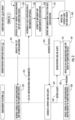
- FIG. 3 depicts a process for implementing a set of configurations on a computing device and validating compliance with the configurations during scheduled intervals.
- FIG. 4 A through 4 M depict user interfaces that illustrate embodiments of particular steps from FIG. 2 and FIG. 3 .
- Enterprises e.g., businesses or other organizations
- security software could initially configure computing devices to comply with a set of security policies, ensuring compliance by those computing devices over time may not be possible given finite resources and other factors.
- Improved systems and methods for implementing security policies of an enterprise on different computing devices and validating compliance with the security policies during regular intervals are described below.
- the improved systems and methods offer different advantages, including: simultaneous use by multiple enterprises to implement and monitor compliance of different security policies of those enterprises; easy and quick customization of different security policies for different computing devices within an enterprise; efficient implementation of security policies based on standards; ability to enforce any number of security policies for any number of computing device groups; easy modification of security policies over time; monitoring of compliance on an on-going basis; and real-time reporting of compliance.
- Security policies in the improved systems and methods can be implemented using configurations that define particular behaviors of computing devices, where those behaviors are required by the security policies. For example, one configuration may require that a parameter be set on a computing device that ensures placement of a Wi-Fi status indicator on a menu bar of an operating system's graphical user interface. Another configuration may require that a firewall is enabled on a computing device. Another configuration may require activation of a screen saver on a computing device after a defined period of inactivity (e.g., 5 minutes).
- the improved systems and methods utilize a data source for storing an expansive pre-built library of configurations, some of which can be customized with different values of variables.
- the pre-built library is updated as needed over time. Collections of configurations that are based on compliance standards are also determined and stored over time.
- the improved systems and methods utilize a web portal for:
- the improved systems and methods utilize a local agent installed on each computing device for implementing selected configurations, checking compliance with current configurations over time, remediating non-compliance of particular configurations either automatically or by prompting manual action by an end user of the non-compliant computing device, and reporting compliance status per configuration at regular intervals.
- the improved systems and methods store historical compliance statuses to track compliance over time.
- FIG. 1 Attention is initially drawn to an operational environment illustrated in FIG. 1 in which systems and methods for deploying configurations on computing devices and validating compliance with the configurations during scheduled intervals may operate.
- the environment includes a management platform 110 in communication with one or more network platforms 120 a - n via the internet 101 or another suitable communication pathway.
- the management platform 110 provides many different functionalities, including: maintaining available configurations, and also maintaining collections of configurations that are based on security standards; receiving administrator selections of configurations that apply to identified groups of computing devices; providing local agents to the identified computing devices to register computing devices, and to enable implementation and remediation of configurations; providing selected configurations and any modules needed to implement the configurations to computing devices; and generating reports that detail compliance statuses of computing devices.
- the management platform 110 includes one or more data sources 111 that store different data that is used during methods for determining sets of configurations to associated with groups of computing devices ( FIG. 2 ) and methods for implementing a set of configurations on a computing device and validating compliance with the configurations during scheduled intervals ( FIG. 3 ).
- the data stored in the data sources 111 specifies or represents a library of separate configurations or collections of configurations, sets of configurations selected by administrators of network platforms 120 a - n , groups of computing devices selected by administrators of network platforms 120 a - n , and reportable data that is determined from data reported by groups of computing devices.
- Individual, pre-built scripts for implementing individual configurations are also stored in the data source 111 .
- the management platform 110 also includes memory 113 for storing computer software instructions—e.g., different software modules—that are used to carry out different aspects of methods for determining sets of configurations to associated with groups of computing devices ( FIG. 2 ) and for implementing a set of configurations on a computing device and validating compliance with the configurations during scheduled intervals ( FIG. 3 ).
- modules include: module(s) for generating configurations (e.g., see step 201 of FIG. 2 ); module(s) for determining sets of configurations (e.g., see steps 203 through 211 of FIG. 2 ); module(s) for determining groups of computing devices (e.g., see steps 213 through 221 of FIG.
- module(s) for generating installers of local agents e.g., see step 223 of FIG. 2
- module(s) for generating reports and alerts e.g., see step 347 of FIG. 3
- Other modules associated with other steps performed by the management platform during the processes of FIG. 2 and FIG. 3 are also contemplated even if not shown in FIG. 1 . Details of each module will become more apparent during the discussion of steps in FIG. 2 and FIG. 3 below, which may be implemented by executing instructions of different modules.
- the management platform 110 also includes one or more processors 115 for executing computer software instructions. Examples of processors include servers or other suitable machines.
- a web interface 119 can also be used by the management platform 110 to enable communication with the network platforms 120 a - n via the internet 101 . Connections among the components of the management platform 110 may be provided using any suitable wired or wireless communication pathways.
- a network platform 120 includes a network of an enterprise on which different computing devices 124 operate.
- a network platform 120 can include a single location or multiple different locations from which different computing devices 124 have access to network resources of the network platform 120 (e.g., databases, a local area network, email servers, etc.), where access to different network resources requires the computing devices 124 to behave in particular ways (e.g., be configured with particular parameters).
- the network platform 120 a may include an administrator device 122 , and one or more computing devices 124 that are operated by one or more users.
- a web interface 128 can also be used by the network platform 120 a to enable communication with the management platform 110 via the internet 101 .
- the administrator device 122 includes a computing device operated by an administrator of the network platform 120 a . Functions of the administrator device 122 are further described in FIG. 2 and FIG. 3 , and include using a web-based portal to select sets of configurations to apply to groups of computing devices within the network platform 120 a , and also using a web-based portal to review reports detailing configuration compliance status at each computing device to which configurations apply.
- the computing devices 124 may each include memory 123 for storing computer software instructions—e.g., different software modules—that are used to carry out different aspects of a method for implementing a set of configurations on a computing device and validating compliance with the configurations during scheduled intervals ( FIG. 3 ).
- modules include: module(s) for retrieving configurations (e.g., see step 329 of FIG. 3 ); module(s) for implementing configurations (e.g., see step 339 of FIG. 3 ); module(s) for checking implementation statuses (e.g., see step 337 of FIG. 3 ); and module(s) for collecting data about statuses (e.g., see step 341 of FIG. 3 ).
- Each of the computing devices 124 may include one or more processors 125 for executing computer instructions of the modules, data sources (not shown) for storing the collected data, user interfaces (not shown) for allowing a user to provide inputs and receive outputs, and means for communicating with the management platform 110 (e.g., the web interface 128 of the network platform 120 a , or another interface of the computing device 124 a ).
- Connections among the components of each computing device may be provided using any suitable wired or wireless communication pathways.
- Connections among the devices of each network platform may be provided using any suitable wired or wireless communication pathways.
- FIG. 2 Processes for deploying configurations on computing devices and validating compliance with the configurations during scheduled intervals are shown in FIG. 2 through FIG. 3 .
- FIG. 2 A process for determining sets of configurations to associate with groups of computing devices is shown in FIG. 2 .
- the management platform 110 generates and stores configurations (step 201 ). Configurations may be defined by preset parameters or adjustable variable parameters that control behaviors of computing devices. For each configuration, a description of the behavior controlled by the parameters of that configuration may be stored for later viewing and optional selection by an operator of an administrator device 122 .
- the management platform 110 stores computer code (e.g., modules) that can be executed by a local agent of a computing device to implement that configuration (e.g., by setting parameters on the computing device that achieve particular behaviors of the configuration).
- the code for a configuration is generated manually by a user, and then stored in association with stored information about that configuration (e.g., details about the configuration, including any description and parameters for carrying out the configuration).
- An identifier of the configuration may be used to make the association.
- collections of configurations that comply with particular compliance security standards e.g., CIS, FedRamp, HIPAA, HiTrust, ISO, NIST, DISA, STIG, or others
- compliance security standards e.g., CIS, FedRamp, HIPAA, HiTrust, ISO, NIST, DISA, STIG, or others
- Determining a configuration or a collection of configurations can be a manual process performed by someone who generates configurations or creates collections of configurations by evaluating a benchmark of standards published by various agencies (CIS, NIST, DISA STIG, etc.) and creates sets of configuration(s) that are needed to meet the benchmark.
- a configuration may include parameters that specify: a Wi-Fi status indicator must be placed on a menu bar of an operating system's graphical user interface; a firewall is enabled; a screen saver must be activated within a defined period of time after inactivity (e.g., 5 minutes); passwords used to access the computing device must have particular characteristics (e.g., minimum length, may use particular types of characters, cannot use particular types of characters); only a defined number of login attempts are permitted; and any other possible settings to a computing device.
- a Wi-Fi status indicator must be placed on a menu bar of an operating system's graphical user interface
- a firewall is enabled
- a screen saver must be activated within a defined period of time after inactivity (e.g., 5 minutes)
- passwords used to access the computing device must have particular characteristics (e.g., minimum length, may use particular types of characters, cannot use particular types of characters); only a defined number of login attempts are permitted; and any other possible settings to a computing device.
- Configurations can also provide blacklisting functions, where applications or processes are selectable by name, identifier, path or code signature, and those applications or processes are terminated upon launch of a computing device on which the configurations are implemented.
- a UI window for providing details of the blacklisting policy to a user of the computing device can also be activated, which can include a custom configured message and/or button for opening a URL.
- the management platform 110 After different configurations are determined and stored, the management platform 110 generates an interface (e.g., a web-portal) that allows different administrator devices of different network platforms to determine (e.g., select) one or more sets of configurations that will respectively be applied to one or more different groups of computing devices (step 203 ).
- the interface is provided by the management platform 110 to the administrator device 122 of the network platform 120 (step 205 ).
- an operator of the administrator device 122 selects a set of configurations (step 207 ). Selection of a particular configuration may be carried out by way of providing an input that identifies desired use of the configuration—e.g., selecting an option to activate the configuration, such as keeping a toggle at an “on” state or moving a toggle to an “on” state. Deselection of a particular configuration may be carried out by way of providing an input that identifies use of the configuration is not desired—e.g., selecting an option to deactivate the configuration, such as keeping a toggle at an “off” state or moving a toggle to an “off” state. While selecting configurations to include in a set, certain selected configurations may require initialization of or allow for adjustment to variables of those configurations (e.g., lengths of time associated with functionality of the configurations, or other options affecting how configurations run on computing devices).
- step 207 the operator of the administrator device 122 is presented with a predefined collection of configurations, and selects particular configurations by keeping a toggle at an “on” state for those configurations of the predefined collection, and moving a toggle to an “off” state for non-selected configurations of the predefined collection.
- Predefined collections may come in different forms, including collections of suggested configurations for complying with different compliance security standards, and the operator can select a particular collection for a particular standard from among other collections for other standards via a display presented by the web portal.
- step 207 the operator of the administrator device 122 selects a previously created set of configurations, and then edits that set by adding or removing configurations from the set, or by modifying values of adjustable variables for particular configurations before saving an updated version that set that includes the modifications.
- step 207 the operator of the administrator device 122 may select configurations using other approaches—e.g., searching for particular configurations.
- selections of configurations and any values of initialized or modified variables for particular configurations are transmitted from the administrator device 122 to the management platform 110 (step 209 ).
- the management platform 110 stores identifiers of received sets of configurations and values of variables (step 211 ). Any user-created code may also be stored. In one embodiment, identifiers of selected configurations and any values of variables are stored by the management platform 110 to represent the set. In another embodiment, the actual configurations are stored as a set. However, storage of identifiers is more efficient in terms of minimizing use of limited storage capacity at the management platform 110 . A name of the set may also be defined by the operator of the administrator device 122 and stored along with the set.
- the management platform 110 generates an interface (e.g., web-portal) that allows the administrator device 122 of the network platform 120 to determine groups of computing devices to which a set of configurations will apply (step 213 ).
- the interface is provided by the management platform 110 to the administrator device 122 of the network platform 120 (step 215 ).
- an operator of the administrator device 122 selects computing devices for inclusion in a group of computing devices (step 217 ).
- An existing group can be selected and modified to add or remove a computing device.
- different computing devices of a network platform 120 are registered with the management platform 110 so they can be selected by the operator of the administrator device 122 of that network platform 120 (e.g., selected by device name or another unique identifier). Registration can be carried out in different ways.
- an installer with an agent that is associated with the network platform 120 is installed on computing devices of that network platform 120 .
- a package generation script is used by the management platform 110 , which generates and sends a request to build a new package with configuration options that identify where to store the installer file (e.g., a directory owned by the company of a network platform 120 ) and a unique key that is later used to identify and register a computing device that receives the installer.
- Installation of the agent associates a computing device with the network platform 120 , and the agent transmits a unique identifier from the computing device (e.g., name of the computing device, serial number, UUID, other) to the management platform 110 .
- That unique identifier can be selected by the operator of the administrator device 122 and added to a group of computing devices to which a set of configurations will apply.
- the agent may be a unique agent for the purpose of registering a computing device.
- the agent may be the same local agent of steps 223 - 227 , such that steps 223 - 227 occur before steps 213 - 221 and optionally before steps 203 - 211 .
- steps 213 - 221 are not performed, and the operator of the administrator device 122 selects an option to create the installer of step 223 , and then identifies individual computing devices to which that installer is transmitted.
- a unique identifier is transmitted for the computing device (e.g., name of the device, serial number, UUID, other) to the management platform 110 to register the computing device in association with a network platform 120 of the administrator device 122 .
- other information associated with a computing device is collected, including users of the device, processors, RAM, hard drives, boot information, device information, and/or OS version.
- this information is stored in association with the unique identifier of the computing device. All unique identifiers of computing devices of a network platform 120 have a stored association with an identifier of that network platform 120 .
- selections of computing devices to include in a group are transmitted from the administrator device 122 to the management platform 110 (step 219 ).
- the management platform 110 stores the group of selected computing devices (step 221 )—e.g., by storing the unique identifiers of the selected computing devices in association with the selected set of configurations.
- steps 213 through 221 can be performed before or after steps 203 through 211 .
- an option to select a group of computing devices to associate with a set of configurations is provided via the web-portal—e.g., the operator of the administrator device 122 is provided with an option to “view all” computing devices and/or all preset groups of computing devices of the network platform 120 , and then select from the list.
- the management platform 110 After a group of computing devices has been determined and associated with a set of configurations, the management platform 110 generates an installer for each computing device of a group (step 223 ).
- the installer includes an executable file that is configured to install a local agent on the computing device for which the custom installer has been created. In some embodiments (discussed previously), this step is performed prior to steps 213 - 221 and optionally steps 203 - 211 (i.e., when a computing device joins the network platform 120 , or when the network platform 120 initially engages with the management platform 110 ).
- Each installer for each computing device of the group is transmitted from the management platform 110 to the particular computing device 124 (step 225 ).
- an installer may be provided by the management platform 110 to the administrator device 122 , and the administrator device 122 provides the installer to selected computing devices 124 . Transmission of the installer can be manually driven by a user of the computing device 124 or the operator of the administrator device 122 .
- the particular computing device 124 runs the installer to install a local agent (step 227 ) that is used to carry out a process shown in FIG. 3 for implementing a set of configurations on the computing device 124 and for validating the computing device's compliance with the configurations during scheduled intervals.
- the local agent includes different executable modules for different possible configurations, and different logical instructions for implementing a configuration based on different operating systems and versions of operating systems, such that a first set of logical instructions for implementing a particular configuration will be selected by the local agent running on a first computing device with a first operating system (or a first version of an operating system), and a second set of logical instructions for implementing the particular configuration will be selected by the local agent running on a second computing device with a second operating system (or a second version of the operating system).
- the same local agent and executable modules are installed on every computing device of the selected group of computing devices, and the executable modules include modules for a superset of possible configurations that may include more configurations than are selected for the group of computing devices.
- the same local agent and executable modules are installed on every computing device from two or more groups of computing devices (e.g. from the same network platform or different network platforms), and the executable modules include modules for a superset of possible configurations that may include more configurations than are selected for each of the groups.
- step 223 another step before step 223 is performed, where a user of a computing device receives notification that the computing device has been assigned to a set of configurations, after which the user then initiates a download of a specific installer (alternative step 223 ) that includes a local agent with modules for the set of configurations assigned to that computing device.
- the local agent need not include modules for implementing a superset of configurations. Instead, only modules for implementing configurations of the set assigned to the computing device is included. If new configurations are added to the set, then modules for implementing those new configurations are sent to the computing device.
- each computing device of a group receives modules with only the logical instructions needed for implementing configurations based on the operating system and/or version of operating system of that computing device, and without logical instructions for implementing configurations based on other operating systems and/or other versions of the operating system.
- FIG. 3 A process for implementing a set of configurations on a computing device and validating compliance with the configurations during scheduled intervals is shown in FIG. 3 .
- a local agent installed on a computing device 124 may be used to perform steps of this process that are carried out on the computing device 124 .
- the computing device 124 retrieves identifiers of current configurations assigned to that the computing device (step 329 )—e.g., a set of configurations associated with a group of computing devices to which the computing device 124 belongs.
- the local agent installed on the computing device 124 generates a request that contains information used by the management platform 110 to locate and retrieve identifiers of configurations for the set of configurations assigned to the computing device 124 .
- the information may take different forms.
- each computing device uses a unique key to authenticate to a webapp API of the management platform 110 . This computer-specific key is also used to identify which computing device is making the request, and the identity of the computing device is used to identify the configuration group to which that computing device belongs.
- the local agent calls a parameters API endpoint using its unique key to authenticate the request, and the management platform 110 (e.g., webapp) determines what data to send based upon the authentication. Likewise, when the local agent submits data back to the management platform 110 (e.g., webapp), the key is used to determine the device to which the data belongs.
- the management platform 110 e.g., webapp
- the request for current configurations is transmitted from the computing device 124 to the management platform 110 (step 331 ).
- the management platform 110 retrieves stored identifiers of the set of configurations for the computing device 124 (step 333 ).
- the management platform 110 uses the information of the request to locate, from storage, identifiers for the current set of configurations for the computing device (e.g., for the group of computing devices in which the computing device is a member).
- Particular values of variables for particular configurations of the current set of configurations are also retrieved from storage where those variables are stored in association with the identifiers (e.g., nested in an object of the identifier).
- Values of variables can be text, integers, boolean true/false values as single items, values, lists, dictionaries, or other data.
- the identifiers will be returned by the management platform 110 to the local agent of the computing device 124 , and the local agent can use the identifiers to select modules of associated configurations for execution using the variable values.
- the retrieved identifiers of the set of configurations for the computing device 124 are transmitted (step 335 ). Any retrieved values of variables for the set of configurations are also transmitted from the management platform 110 to the computing device 124 . In some embodiments, modules for any newly created configurations are also transmitted from the management platform 110 to the computing device 124 for installation with the local agent.
- the computing device 124 stores and uses received configuration identifiers and any variable values to determine if each configuration in the set of configurations is implemented properly (step 337 ).
- an initial check if a selected configuration is already implemented is made (e.g., by checking if a received value of a variable for that configuration is already set, by checking if functionality of the computing device complies with the configuration, or other approach). Instructions that perform this check may be included in each module for each configuration, or in a separate module of the local agent.
- received parameters for identified configurations are compared to implemented parameters of the configurations to determine if there is a mismatch, and determinations are made that (i) a configuration is implemented when there is no mismatch for that configuration, or (ii) a configuration is not implemented when there is a mismatch for that configuration. In other embodiments, no check is made, and all configurations are implemented.
- step 337 is may be skipped in some embodiments.
- the local agent retrieves and stores the OS version, computer model and serial number for the computing device 124 after the local agent is installed on the computing device 124 .
- the agent uses information like OS version for selecting conditional logic and to determine compatibility with parameters of selected configurations.
- the local agent of the computing device 124 attempts to implement any unimplemented configuration (step 339 ). Identifiers of configurations returned by the management platform 110 to the local agent of the computing device 124 are used by the local agent to select modules associated with those configurations to implement (e.g., the agent may associate identifiers with functions, chains of functions, class objects, etc.). If different logical instructions for different operating systems or versions of an operating system exist for a selected module, the local agent of the computing device 124 will access available information about the operating system and/or version of the computing device 124 , and then select logical instructions for that operating system and/or version.
- modules associated with those configurations to implement e.g., the agent may associate identifiers with functions, chains of functions, class objects, etc.
- any existing variable values associated with that configuration are used to set functionality of the computing device 124 so it complies with the configuration.
- an initial check to determine if a selected configuration is already implemented can be performed in some embodiments. If the configuration is not yet implemented, then instructions from the module for that configuration are executed to implement the configuration on the computing device 124 . After implementations of configurations, a restart of the computing device 124 is performed if needed. In some cases, configurations are able to use native frameworks directly without needing to touch anything in a filesystem of the computing device 124 .
- some embodiments monitor filesystem events on the computing device 124 using the local agent, which checks all of the files for the local agent against a database of known-good checksums to determine if any local agent files are missing (e.g., have been moved or deleted) or modified. If there is a mismatch (e.g., a file is missing or modified), the local agent downloads and reinstalls the missing or modified files to restore them to their intended state.
- the process of monitoring filesystem events may occur at different times, including before step 329 or any time thereafter.
- a missing or modified file may be downloaded when the local agent generates a request for a file containing the module, sends the request to the management platform 110 , receives the requested file from the management platform 110 , and downloads the received file.
- backup files may be stored on the computing device 124 (e.g., in case the computing device 124 goes offline or another reason), and the file may be retrieved from the backup files.
- the local agent of the computing device 124 generates data specifying the statuses of configurations on the computing device 124 (step 341 )—e.g., for each configuration, a status indicating whether that configuration is implemented or not.
- the local agent may provide alerts about unimplemented statuses of configurations and prompt the user to implement the configurations when automatic implementation is not possible.
- Actions by users of computing devices can also be logged and transmitted to the management platform 110 —e.g., user attempts to use a blacklisted application or program, user attempts to remove required configurations, or user attempts to modify required parameters of configurations.
- statuses may include: implemented; remediated (e.g., implemented after being not implemented); not implemented (error—e.g., no ability to apply the configuration to the computing device 124 ); not implemented (alert for user intervention—e.g., alert to manually implement the configuration was provided or scheduled to be provided to a user of the computing device 124 ).
- the local agent may, in some embodiments, collect other information about the computing device 124 , such as connected hard drives, installed applications, configuration profiles and user accounts (e.g., determined from a property list file on the computing device 124 if available).
- the local agent of the computing device 124 returns to step 329 at regularly scheduled intervals (e.g., every 15 minutes), or after the computing device 124 is powered on (step 343 ).
- the operator of the administrator device 122 is permitted to set the duration of the scheduled intervals via the web-portal, and the duration is stored for later retrieval by the local agent or is coded into the local agent.
- steps 329 through 341 on a regular basis permits deployment of updates to the set of configurations, and/or ensures a computing device continually complies with the set of configurations over time under circumstances when the set of configurations remains unchanged over time or evolves over time. If the local agent is unable to retrieve configurations during steps 329 through 335 , which may occur when the computing device 124 is offline or otherwise unable to connect to the management platform 110 , then steps 337 through 343 are performed for the most recently retrieved configurations.
- the statuses of configurations on the computing device 124 are transmitted to the management platform 110 (step 345 ). If the local agent is unable to transmit the statuses due to the computing device 124 being offline or otherwise unable to connect to the management platform 110 , transmission occurs after the computing device 124 can connect to the management platform 110 .
- the management platform 110 stores the statuses in the data source 111 , and then generates a report along with any alerts for viewing by the administrator device 122 via a web portal (step 347 ). Generated reports along with any alerts are transmitted to the administrator device 122 (step 349 ), and an operator of the administrator device 122 views the reports and any alerts (step 351 ). Reports may include different details, including: an overall status for a computing device (e.g., all configurations implemented, some configurations not implemented); a status for individual configurations, including compliant and non-compliant statuses for particular computing devices; historical statuses for computing devices; indicators that a previously non-compliant status for a configuration was remediated to a compliant status for that configuration; or other desired features.
- an overall status for a computing device e.g., all configurations implemented, some configurations not implemented
- a status for individual configurations including compliant and non-compliant statuses for particular computing devices
- historical statuses for computing devices indicators that a
- an operator of the administrator device 122 can modify a set of configurations, and/or modify a group of computing devices associated with a set of configurations (step 361 ).
- Modification of a set of configurations may be performed by removing or adding a configuration, or by modifying values of variables for a configuration.
- Modification of a group of computing devices may be by removing or adding a computing device.
- sets of configurations and/or groups of computing devices can be deleted, and groups of computing devices or individual computing devices can be re-associated with other sets of configurations. Any modifications made by the operator are transmitted to the management platform 110 for storage (step 363 ), and the management platform 110 updates stored set of configurations and/or groups of computing devices to reflect the modifications (step 365 ).
- the local agent of the computing device 124 may optionally interact with the user of the computing device 124 in different ways, including: displaying an icon on the menu bar to indicate the local agent is installed and functioning; prompting the user to take action (e.g., to implement a configuration); requesting submission of diagnostic data for troubleshooting; or other interactions.
- the steps for the computing device shown in FIG. 2 and FIG. 3 are repeated for different computing devices in groups of computing devices that are associated different sets of configurations.
- the steps for the administrator device shown in FIG. 2 and FIG. 3 are repeated for different administrator devices of different network platforms.
- FIG. 4 A through FIG. 4 M Different user interfaces for different functionalities related to deploying configurations on computing devices and validating compliance with the configurations are illustrated in FIG. 4 A through FIG. 4 M .
- Steps of a process for creating a set of configurations can be at least partially carried out using the user interfaces shown in FIG. 4 A through FIG. 4 D .
- FIG. 4 A depicts an interface for selecting an option to create a new set of configurations.
- FIG. 4 B depicts an interface for optionally selecting a collection of configurations that are based on a security standard.
- FIG. 4 C depicts an interface for selecting configurations from the collection by activating configurations and setting parameters (adjustable variables) of those configurations.
- FIG. 4 D depicts an interface for saving a selected set of configurations.
- Steps of a process for editing previously generated sets of configurations can be at least partially carried out using the user interfaces shown in FIG. 4 E through FIG. 4 H .
- FIG. 4 E depicts an interface for selecting a set of configurations to edit.
- FIG. 4 F depicts an interface for selecting an option to edit.
- FIG. 4 G depicts an interface for enabling or disabling configurations of the set, and for editing parameters of particular configurations.
- FIG. 4 H depicts an interface for saving edits.
- Steps of a process for enrolling groups of computing devices can be at least partially carried out using the user interfaces shown in FIG. 4 I through FIG. 4 J .
- FIG. 4 I depicts an interface for selecting a set of configurations, which may indicate a pre-existing association with a group of computing devices (“executive team”).
- FIG. 4 J depicts an interface for selecting an option to enroll the group associated with the set of configurations.
- Steps of a process for providing interface on a particular computing device for downloading a custom installer after enrollment of that computing device can be at least partially carried out using the user interfaces shown in FIG. 4 K through FIG. 4 L .
- Steps of a process for providing reports to an administrator can be at least partially carried out using the user interface shown in FIG. 4 M .
- a non-exhaustive list of configurations and variables for specification by an administrator include: Disable the “root” user; Disable inactive user accounts [variable(s): specify days until disabled]; Create user accounts [variable(s): specify one or more account names, home folder name, user type, and password]; Demote user accounts to Standard [variable(s): specify any usernames to exclude from being demoted]; Don't allow the Guest user to log in; Remove the Guest user home folder; Don't allow guests to connect to shared folders; Disable automatic login; Display login window as name and password; Disable and remove password hints; Disable fast user switching menu; Disable console login; Enforce a custom message for the lock screen [variable(s): specify message text]; Enforce a custom policy banner [variable(s): specify banner type and contents]; Set a CLI login banner [variable(s): specify login banner message text]; Disable the ability to login to another user's active and locked session; Disallow
- Each embodiment in the following set of embodiments includes a system for deploying configurations on computing devices and validating compliance with the configurations during scheduled intervals, wherein the system comprises a first computing device configured to perform a first method that comprises, during a first time period: sending a request, to a management platform, for a list of configurations that are assigned to the first computing device during the first time period; receiving, from the management platform, the requested list of configurations that are assigned to the first computing device during the first time period, wherein the list includes identifiers of the configurations that are assigned to the first computing device during the first time period; receiving, from the management platform, any values of variables associated with configurations in the list of configurations that are assigned to the first computing device during the first time period; and using the received list of configurations that are assigned to the first computing device during the first time period to determine if each of the configurations in that list are implemented.
- the first method comprises, during a second time period: sending another request, to management platform, for a list of configurations that are assigned to the first computing device during the second time period; receiving, from the management platform, the requested list of configurations that are assigned to the first computing device during the second time period, wherein the list includes identifiers of the configurations that are assigned to the first computing device during the second time period; receiving, from the management platform, any values of variables associated with configurations in the list of configurations that are assigned to the first computing device during the second time period; and using the received list of configurations that are assigned to the first computing device during the second time period to determine if each of the configurations in that list are implemented.
- the first method comprises: if a determination is made that a first configuration assigned to the first computing device is not implemented, implementing the first configuration on the first computing device.
- the first method comprises: responsive to determining that a first configuration assigned to the first computing device is not implemented, implementing the first configuration on the first computing device using a first value of a first variable, from received values of variables associated with configurations in the list of configurations, that is associated with the first configuration.
- the first method comprises: if a determination is made that a first configuration assigned to the first computing device is not implemented, determining if a first set of executable instructions that are configured to implement the first configuration on the first computing device are stored on the first computing device; if the first set of executable instructions are stored on the first computing device, implementing the first configuration on the first computing device by executing the first set of executable instructions; and if the first set of executable instructions are not stored on the first computing device: (i) requesting the first set of executable instructions from the management platform, (ii) receiving the first set of executable instructions from the management platform, and (iii) implementing the first configuration on the first computing device by executing first set of executable instructions.
- the system comprises a management platform configured to perform a second method that comprises: providing a first collection of available configurations to a first administrator device of a first enterprise; receiving, from the first administrator device, a first set of configurations that were selected from the first collection of available configurations; receiving, from the first administrator device, a first group of computing devices to which the first set of configurations are to be applied, wherein the first group of computing devices includes the first computing device; receiving, from the first administrator device, any values of variables associated with any configurations from the first set of configurations; storing a first set of configuration identifiers that identify configurations in the first set of configurations; storing any received values of variables associated with any configurations from the first set of configurations; and storing an association between the first set of configuration identifiers and each computing device in the first group of computing devices.
- the second method is performed before the first method.
- the first method comprises (i) if a determination is made that a first configuration assigned to the first computing device is not implemented, generate data specifying that the first configuration is not implemented on the first computing device, and transmitting the generated data to the management platform
- the second method comprises (i) receiving the generated data from the first computing device, (ii) using the generated data to generate a report that indicates the first configuration is not implemented on the first computing device, and (iii) providing the report to the first administrator device.
- the second method comprises: receiving a request from the first computing device for the list of configurations assigned to the first computing device during the first time period; responsive to the request, identifying the first set of configuration identifiers; transmitting, to the first computing device, the first set of configuration identifiers; and retrieving any values of variables associated with any configurations from the first set of configurations and transmitting any retrieved values to the first computing device.
- the system includes a data source that stores different predefined collections of configurations from the available configurations that each represent a different security standard
- the second method comprises: receiving, from the first administrator device, a selection of a predefined collection of configurations that is based on a security standard, wherein the first collection of available configurations includes the predefined collection of configurations, and wherein the first collection of available configurations is provided responsive to receiving the selection of the predefined collection of configurations.
- the second method comprises: providing a second collection of available configurations to a second administrator device of a second enterprise; receiving, from the second administrator device, a second set of configurations that were selected from the second collection of available configurations; receiving, from the second administrator device, a second group of computing devices to which the second set of configurations are to be applied, wherein the second group of computing devices does not include the first computing device; receiving, from the second administrator device, any values of variables associated with any configurations from the second set of configurations; storing a second set of configuration identifiers that identify configurations in the second set of configurations; storing any received values of variables associated with any configurations from the second set of configurations; and storing an association between each computing device in the second group of computing devices and the second set of configuration identifiers, wherein the first and second enterprises are different enterprises.
- the first computing device includes a first memory storing a first set of machine-executable instructions, wherein execution of the first set of machine-executable instructions causes one or more machines of the first computing device to perform the first method
- the management platform includes a second memory storing a second set of machine-executable instructions, wherein execution of the second set of machine-executable instructions causes one or more machines of the management platform to perform the second method.
- machines may include one or more computing device(s), processor(s), controller(s), integrated circuit(s), chip(s), system(s) on a chip, server(s), programmable logic device(s), field programmable gate array(s), electronic device(s), special purpose circuitry, and/or other suitable device(s) described herein or otherwise known in the art.
- Computing devices may include different devices, including a hand-held device, a laptop or notebook computer, a desktop computer, a personal digital assistant, a tablet, or other suitable computing device.
- One or more non-transitory machine-readable media embodying program instructions that, when executed by one or more machines, cause the one or more machines to perform or implement operations comprising the steps of any of the methods described herein are contemplated herein.
- machine-readable media includes all forms of machine-readable media, including but not limited to one or more non-volatile or volatile storage media, removable or non-removable media, integrated circuit media, magnetic storage media, optical storage media, or any other storage media, including RAM, ROM, and EEPROM, that may be patented under the laws of the jurisdiction in which this application is filed, but does not include machine-readable media that cannot be patented under the laws of the jurisdiction in which this application is filed (e.g., transitory propagating signals).
- Methods disclosed herein provide sets of rules that are performed.
- Systems that include one or more machines and one or more non-transitory machine-readable media for implementing any method described herein are also contemplated herein.
- One or more machines that perform or implement, or are configured, operable or adapted to perform or implement operations comprising the steps of any methods described herein are also contemplated herein.
- Each method described herein that is not prior art represents a specific set of rules in a process flow that provides significant advantages in the field of deploying configurations on computing devices and validating compliance with the configurations during scheduled intervals.
- Method steps described herein may be order independent and can be performed in parallel or in an order different from that described if possible to do so. Different method steps described herein can be combined to form any number of methods, as would be understood by one of ordinary skill in the art. Any method step or feature disclosed herein may be omitted from a claim for any reason.
- the words comprise, comprising, include, including and the like are to be construed in an inclusive sense (i.e., not limited to) as opposed to an exclusive sense (i.e., consisting only of). Words using the singular or plural number also include the plural or singular number, respectively, unless otherwise stated.
- the word “or” and the word “and” as used in the Detailed Description cover any of the items and all of the items in a list unless otherwise stated. The words some, any and at least one refer to one or more.
- access to data from a source of data may be achieved using known techniques (e.g., requesting component requests the data from the source via a query or other known approach, the source searches for and locates the data, and the source collects and transmits the data to the requesting component, or other known techniques).
Landscapes
- Engineering & Computer Science (AREA)
- Computer Security & Cryptography (AREA)
- Computer Networks & Wireless Communication (AREA)
- Signal Processing (AREA)
- Computer Hardware Design (AREA)
- Computing Systems (AREA)
- General Engineering & Computer Science (AREA)
- Information Transfer Between Computers (AREA)
- Computer And Data Communications (AREA)
Abstract
Description
-
- suggesting collections of configurations based on standardized security policies;
- allowing administrators of different enterprises to select configurations that represent security policies of interest to those enterprises, and to optionally select different sets of configurations for different policies that apply to different groups of computing devices;
- allowing administrators of different enterprises to select groups of computing devices that need to comply with particular sets of configurations;
- allowing administrators of different enterprises to edit sets of configurations and groups of computing devices over time as circumstances change; and
- providing, to administrators of different enterprises, generated reports detailing whether particular computing devices are complying with selected configurations or have not complied with particular configurations.
Claims (20)
Priority Applications (1)
| Application Number | Priority Date | Filing Date | Title |
|---|---|---|---|
| US17/445,473 US12010151B2 (en) | 2019-08-02 | 2021-08-19 | Systems and methods for deploying configurations on computing devices and validating compliance with the configurations during scheduled intervals |
Applications Claiming Priority (2)
| Application Number | Priority Date | Filing Date | Title |
|---|---|---|---|
| US16/530,290 US11102251B1 (en) | 2019-08-02 | 2019-08-02 | Systems and methods for deploying configurations on computing devices and validating compliance with the configurations during scheduled intervals |
| US17/445,473 US12010151B2 (en) | 2019-08-02 | 2021-08-19 | Systems and methods for deploying configurations on computing devices and validating compliance with the configurations during scheduled intervals |
Related Parent Applications (1)
| Application Number | Title | Priority Date | Filing Date |
|---|---|---|---|
| US16/530,290 Continuation US11102251B1 (en) | 2019-08-02 | 2019-08-02 | Systems and methods for deploying configurations on computing devices and validating compliance with the configurations during scheduled intervals |
Publications (2)
| Publication Number | Publication Date |
|---|---|
| US20210385254A1 US20210385254A1 (en) | 2021-12-09 |
| US12010151B2 true US12010151B2 (en) | 2024-06-11 |
Family
ID=77389971
Family Applications (2)
| Application Number | Title | Priority Date | Filing Date |
|---|---|---|---|
| US16/530,290 Active 2039-12-27 US11102251B1 (en) | 2019-08-02 | 2019-08-02 | Systems and methods for deploying configurations on computing devices and validating compliance with the configurations during scheduled intervals |
| US17/445,473 Active 2040-08-08 US12010151B2 (en) | 2019-08-02 | 2021-08-19 | Systems and methods for deploying configurations on computing devices and validating compliance with the configurations during scheduled intervals |
Family Applications Before (1)
| Application Number | Title | Priority Date | Filing Date |
|---|---|---|---|
| US16/530,290 Active 2039-12-27 US11102251B1 (en) | 2019-08-02 | 2019-08-02 | Systems and methods for deploying configurations on computing devices and validating compliance with the configurations during scheduled intervals |
Country Status (1)
| Country | Link |
|---|---|
| US (2) | US11102251B1 (en) |
Families Citing this family (19)
| Publication number | Priority date | Publication date | Assignee | Title |
|---|---|---|---|---|
| US11399031B2 (en) * | 2019-02-05 | 2022-07-26 | Centurylink Intellectual Property Llc | Tracking or storing of equipment configuration data using immutable ledger functionality of blockchains |
| US11573861B2 (en) | 2019-05-10 | 2023-02-07 | Cohesity, Inc. | Continuous data protection using a write filter |
| US11397649B2 (en) | 2019-10-22 | 2022-07-26 | Cohesity, Inc. | Generating standby cloud versions of a virtual machine |
| US11250136B2 (en) | 2019-10-22 | 2022-02-15 | Cohesity, Inc. | Scanning a backup for vulnerabilities |
| US11487549B2 (en) | 2019-12-11 | 2022-11-01 | Cohesity, Inc. | Virtual machine boot data prediction |
| US11716354B2 (en) * | 2019-12-18 | 2023-08-01 | Raytheon Company | Determination of compliance with security technical implementation guide standards |
| US11537476B2 (en) * | 2020-03-25 | 2022-12-27 | Sap Se | Database management system backup and recovery management |
| US11614954B2 (en) | 2020-12-08 | 2023-03-28 | Cohesity, Inc. | Graphical user interface to specify an intent-based data management plan |
| US11914480B2 (en) | 2020-12-08 | 2024-02-27 | Cohesity, Inc. | Standbys for continuous data protection-enabled objects |
| US11768745B2 (en) | 2020-12-08 | 2023-09-26 | Cohesity, Inc. | Automatically implementing a specification of a data protection intent |
| US11862175B2 (en) * | 2021-01-28 | 2024-01-02 | Verizon Patent And Licensing Inc. | User identification and authentication |
| US11481287B2 (en) | 2021-02-22 | 2022-10-25 | Cohesity, Inc. | Using a stream of source system storage changes to update a continuous data protection-enabled hot standby |
| US12321732B2 (en) | 2021-08-10 | 2025-06-03 | Keross Fz-Llc | Extensible platform for orchestration of data using probes |
| US12001576B2 (en) * | 2021-08-10 | 2024-06-04 | Keross Fz-Llc | Extensible platform for orchestration of data with enhanced security |
| US12417105B2 (en) | 2021-08-10 | 2025-09-16 | Keross Fz-Llc | Extensible platform for orchestration of data with built-in scalability and clustering |
| US20230259383A1 (en) * | 2022-02-16 | 2023-08-17 | Google Llc | User-Interface-Based Fleetwide Agent Installation With Intelligent Nudges |
| US12210655B2 (en) * | 2022-07-19 | 2025-01-28 | Qualcomm Incorporated | Controlling access to restricted and unrestricted software functionality |
| US20250045243A1 (en) * | 2023-08-02 | 2025-02-06 | Dell Products L.P. | Generating fast and guaranteed reports for retention locked files in a backup system |
| US20250045244A1 (en) * | 2023-08-02 | 2025-02-06 | Dell Products L.P. | Generating guaranteed retention lock audit reports for cascaded replication in a deduplication backup system |
Citations (53)
| Publication number | Priority date | Publication date | Assignee | Title |
|---|---|---|---|---|
| US20030220945A1 (en) | 2002-05-21 | 2003-11-27 | Bellsouth Intellectual Property Corporation | Network update manager |
| US20040103310A1 (en) | 2002-11-27 | 2004-05-27 | Sobel William E. | Enforcement of compliance with network security policies |
| US6772221B1 (en) | 2000-02-17 | 2004-08-03 | International Business Machines Corporation | Dynamically configuring and 5 monitoring hosts connected in a computing network having a gateway device |
| US20060179476A1 (en) | 2005-02-09 | 2006-08-10 | International Business Machines Corporation | Data security regulatory rule compliance |
| US20070027965A1 (en) | 2005-07-28 | 2007-02-01 | Brenes Manrique J | Remote configuration and management via electronic mail |
| US20090059818A1 (en) | 1998-04-03 | 2009-03-05 | Pickett Scott K | Systems and methods for providing configurable caller id iformation |
| US20090300742A1 (en) | 2008-05-27 | 2009-12-03 | Open Invention Network Llc | Identity selector for use with a user-portable device and method of use in a user-centric identity management system |
| US20100050229A1 (en) | 2008-08-19 | 2010-02-25 | International Business Machines Corporation | Validating network security policy compliance |
| US20100234009A1 (en) * | 2009-03-12 | 2010-09-16 | International Business Machines Corporation | Centrally managing user-specified configuration data for a configurable device |
| US20110249658A1 (en) | 2010-04-08 | 2011-10-13 | At&T Intellectual Property I, L.P. | Presence-based communication routing service and regulation of same |
| US20120331524A1 (en) | 2008-01-17 | 2012-12-27 | Aerohive Networks, Inc. | Networking as a service |
| US20130014107A1 (en) | 2011-07-07 | 2013-01-10 | VCE Company LLC | Automatic monitoring and just-in-time resource provisioning system |
| US8473938B1 (en) | 2007-06-21 | 2013-06-25 | Open Invention Network Llc | Security patch update processor |
| WO2013096758A1 (en) | 2011-12-21 | 2013-06-27 | Akamai Technologies, Inc. | Security policy editor |
| US20140024400A1 (en) | 2012-07-20 | 2014-01-23 | Lg Cns Co., Ltd. | Management of mobile device originated meetings |
| US20140082693A1 (en) | 2012-09-14 | 2014-03-20 | Shaun Wackerly | Updating security bindings in a network device |
| US20140365624A1 (en) | 2013-06-07 | 2014-12-11 | Apple Inc. | Configuring computing devices using a bootstrap configuration |
| US20150249617A1 (en) | 2014-02-28 | 2015-09-03 | Mobile Iron, Inc. | Enrolling a mobile device with an enterprise mobile device management environment |
| US20150341340A1 (en) | 2012-12-21 | 2015-11-26 | Gemalto Sa | A system and method of dynamic issuance of privacy preserving credentials |
| US9218178B2 (en) | 2012-08-29 | 2015-12-22 | Microsoft Technology Licensing, Llc | Secure firmware updates |
| US20160036667A1 (en) * | 2014-07-29 | 2016-02-04 | Commvault Systems, Inc. | Customized deployment in information management systems |
| US9288117B1 (en) | 2011-02-08 | 2016-03-15 | Gogrid, LLC | System and method for managing virtual and dedicated servers |
| US20160087940A1 (en) | 2014-09-19 | 2016-03-24 | Amazon Technologies, Inc. | Private alias endpoints for isolated virtual networks |
| US20160094531A1 (en) | 2014-09-29 | 2016-03-31 | Microsoft Technology Licensing, Llc | Challenge-based authentication for resource access |
| US9350681B1 (en) | 2013-05-31 | 2016-05-24 | Gogrid, LLC | System and method for distributed management of cloud resources in a hosting environment |
| US20160285858A1 (en) | 2015-03-27 | 2016-09-29 | Hong Li | Technologies for authentication and single-sign-on using device security assertions |
| US20170013021A1 (en) | 2015-07-11 | 2017-01-12 | International Business Machines Corporation | Secure application zones for cloud burst environments |
| US20170147928A1 (en) * | 2015-11-24 | 2017-05-25 | Sap Se | Generating predictive models to reconfigure electronic devices |
| US20170212782A1 (en) | 2015-04-29 | 2017-07-27 | Bank Of America Corporation | Executable Process-Management Engines |
| US9727326B2 (en) | 2013-03-15 | 2017-08-08 | Apple Inc. | Providing customized notifications for security software updates |
| US20170279934A1 (en) | 2016-03-27 | 2017-09-28 | Qualcomm Incorporated | Data compression for cellular internet of things (ciot) |
| US20170364381A1 (en) | 2015-01-13 | 2017-12-21 | Hewlett Packard Enterprise Development Lp | Data center configuration |
| US20180062923A1 (en) | 2016-08-31 | 2018-03-01 | Nicira, Inc. | Use of Public Cloud Inventory Tags to Configure Data Compute Node for Logical Network |
| US9948617B2 (en) | 2004-11-12 | 2018-04-17 | Apple Inc. | Secure software updates |
| US20180165088A1 (en) | 2016-12-14 | 2018-06-14 | Microsoft Technology Licensing, Llc | Secure iot device update |
| US20180239787A1 (en) | 2017-02-22 | 2018-08-23 | Sap Se | Configurable provider for layered repository |
| US10147039B1 (en) * | 2015-08-12 | 2018-12-04 | VCE IP Holding Company LLC | Non-deterministic rules configuration system and method for an integrated computing system |
| US20180365043A1 (en) * | 2017-06-16 | 2018-12-20 | Microsoft Technology Licensing, Llc | Diagnostics for policy compliance |
| US20190018964A1 (en) | 2017-07-14 | 2019-01-17 | Google Inc. | Secure Persistent Software Updates |
| US20190139056A1 (en) * | 2014-04-04 | 2019-05-09 | CellSec, Inc. | Authenticating and enforcing compliance of devices using external services |
| US20190261179A1 (en) | 2016-09-18 | 2019-08-22 | Alcatel Lucent | Unified security architecture |
| US20190278928A1 (en) | 2018-03-06 | 2019-09-12 | Amazon Technologies, Inc. | Pre-deployment security analyzer service for virtual computing resources |
| US20190281046A1 (en) | 2016-01-29 | 2019-09-12 | Vmware, Inc. | System and method for transferring device identifying information |
| US20200092294A1 (en) | 2018-09-19 | 2020-03-19 | CloudSimple, Inc. | Escalating User Privileges in Cloud Computing Environments |
| US10708125B1 (en) | 2018-09-05 | 2020-07-07 | Amazon Technologies, Inc. | Gateway configuration using a network manager |
| US10719332B1 (en) | 2019-04-29 | 2020-07-21 | Splunk Inc. | Provisioning a client device with a multi-component application |
| US20200274828A1 (en) | 2019-02-27 | 2020-08-27 | Vmware, Inc. | Deploying a software defined networking (sdn) solution on a host using a single active uplink |
| US20210051204A1 (en) | 2019-08-12 | 2021-02-18 | Addigy, Inc. | Intelligent persistent mobile device management |
| US10944654B2 (en) | 2018-06-06 | 2021-03-09 | Servicenow, Inc. | Discovery and mapping of containerized software applications |
| US20210243085A1 (en) | 2018-06-04 | 2021-08-05 | Vmware, Inc. | Deploying data-loss-prevention policies to user devices |
| US11244034B1 (en) | 2019-06-17 | 2022-02-08 | Amazon Technologies, Inc. | Identity and access management for human machine interface applications of industrial control systems |
| US11277375B1 (en) * | 2021-01-04 | 2022-03-15 | Saudi Arabian Oil Company | Sender policy framework (SPF) configuration validator and security examinator |
| US11461459B1 (en) | 2021-11-02 | 2022-10-04 | Kandji, Inc. | User device authentication gateway module |
-
2019
- 2019-08-02 US US16/530,290 patent/US11102251B1/en active Active
-
2021
- 2021-08-19 US US17/445,473 patent/US12010151B2/en active Active
Patent Citations (56)
| Publication number | Priority date | Publication date | Assignee | Title |
|---|---|---|---|---|
| US20090059818A1 (en) | 1998-04-03 | 2009-03-05 | Pickett Scott K | Systems and methods for providing configurable caller id iformation |
| US6772221B1 (en) | 2000-02-17 | 2004-08-03 | International Business Machines Corporation | Dynamically configuring and 5 monitoring hosts connected in a computing network having a gateway device |
| US7136858B2 (en) | 2002-05-21 | 2006-11-14 | Bellsouth Intellectual Property Corporation | Network update manager |
| US20030220945A1 (en) | 2002-05-21 | 2003-11-27 | Bellsouth Intellectual Property Corporation | Network update manager |
| US20040103310A1 (en) | 2002-11-27 | 2004-05-27 | Sobel William E. | Enforcement of compliance with network security policies |
| US7249187B2 (en) | 2002-11-27 | 2007-07-24 | Symantec Corporation | Enforcement of compliance with network security policies |
| US9948617B2 (en) | 2004-11-12 | 2018-04-17 | Apple Inc. | Secure software updates |
| US20060179476A1 (en) | 2005-02-09 | 2006-08-10 | International Business Machines Corporation | Data security regulatory rule compliance |
| US20180302385A1 (en) | 2005-07-26 | 2018-10-18 | Apple Inc. | Secure software updates |
| US20070027965A1 (en) | 2005-07-28 | 2007-02-01 | Brenes Manrique J | Remote configuration and management via electronic mail |
| US8473938B1 (en) | 2007-06-21 | 2013-06-25 | Open Invention Network Llc | Security patch update processor |
| US20120331524A1 (en) | 2008-01-17 | 2012-12-27 | Aerohive Networks, Inc. | Networking as a service |
| US20090300742A1 (en) | 2008-05-27 | 2009-12-03 | Open Invention Network Llc | Identity selector for use with a user-portable device and method of use in a user-centric identity management system |
| US20100050229A1 (en) | 2008-08-19 | 2010-02-25 | International Business Machines Corporation | Validating network security policy compliance |
| US20100234009A1 (en) * | 2009-03-12 | 2010-09-16 | International Business Machines Corporation | Centrally managing user-specified configuration data for a configurable device |
| US20110249658A1 (en) | 2010-04-08 | 2011-10-13 | At&T Intellectual Property I, L.P. | Presence-based communication routing service and regulation of same |
| US9288117B1 (en) | 2011-02-08 | 2016-03-15 | Gogrid, LLC | System and method for managing virtual and dedicated servers |
| US20130014107A1 (en) | 2011-07-07 | 2013-01-10 | VCE Company LLC | Automatic monitoring and just-in-time resource provisioning system |
| WO2013096758A1 (en) | 2011-12-21 | 2013-06-27 | Akamai Technologies, Inc. | Security policy editor |
| US20140024400A1 (en) | 2012-07-20 | 2014-01-23 | Lg Cns Co., Ltd. | Management of mobile device originated meetings |
| US9218178B2 (en) | 2012-08-29 | 2015-12-22 | Microsoft Technology Licensing, Llc | Secure firmware updates |
| US20140082693A1 (en) | 2012-09-14 | 2014-03-20 | Shaun Wackerly | Updating security bindings in a network device |
| US20150341340A1 (en) | 2012-12-21 | 2015-11-26 | Gemalto Sa | A system and method of dynamic issuance of privacy preserving credentials |
| US9727326B2 (en) | 2013-03-15 | 2017-08-08 | Apple Inc. | Providing customized notifications for security software updates |
| US9350681B1 (en) | 2013-05-31 | 2016-05-24 | Gogrid, LLC | System and method for distributed management of cloud resources in a hosting environment |
| US20140365624A1 (en) | 2013-06-07 | 2014-12-11 | Apple Inc. | Configuring computing devices using a bootstrap configuration |
| US20150249617A1 (en) | 2014-02-28 | 2015-09-03 | Mobile Iron, Inc. | Enrolling a mobile device with an enterprise mobile device management environment |
| US20190139056A1 (en) * | 2014-04-04 | 2019-05-09 | CellSec, Inc. | Authenticating and enforcing compliance of devices using external services |
| US20160036667A1 (en) * | 2014-07-29 | 2016-02-04 | Commvault Systems, Inc. | Customized deployment in information management systems |
| US20160087940A1 (en) | 2014-09-19 | 2016-03-24 | Amazon Technologies, Inc. | Private alias endpoints for isolated virtual networks |
| US20160094531A1 (en) | 2014-09-29 | 2016-03-31 | Microsoft Technology Licensing, Llc | Challenge-based authentication for resource access |
| US20170364381A1 (en) | 2015-01-13 | 2017-12-21 | Hewlett Packard Enterprise Development Lp | Data center configuration |
| US20160285858A1 (en) | 2015-03-27 | 2016-09-29 | Hong Li | Technologies for authentication and single-sign-on using device security assertions |
| US20170212782A1 (en) | 2015-04-29 | 2017-07-27 | Bank Of America Corporation | Executable Process-Management Engines |
| US20170013021A1 (en) | 2015-07-11 | 2017-01-12 | International Business Machines Corporation | Secure application zones for cloud burst environments |
| US10147039B1 (en) * | 2015-08-12 | 2018-12-04 | VCE IP Holding Company LLC | Non-deterministic rules configuration system and method for an integrated computing system |
| US20170147928A1 (en) * | 2015-11-24 | 2017-05-25 | Sap Se | Generating predictive models to reconfigure electronic devices |
| US20190281046A1 (en) | 2016-01-29 | 2019-09-12 | Vmware, Inc. | System and method for transferring device identifying information |
| US20170279934A1 (en) | 2016-03-27 | 2017-09-28 | Qualcomm Incorporated | Data compression for cellular internet of things (ciot) |
| US20180062923A1 (en) | 2016-08-31 | 2018-03-01 | Nicira, Inc. | Use of Public Cloud Inventory Tags to Configure Data Compute Node for Logical Network |
| US20190261179A1 (en) | 2016-09-18 | 2019-08-22 | Alcatel Lucent | Unified security architecture |
| US20180165088A1 (en) | 2016-12-14 | 2018-06-14 | Microsoft Technology Licensing, Llc | Secure iot device update |
| US20180239787A1 (en) | 2017-02-22 | 2018-08-23 | Sap Se | Configurable provider for layered repository |
| US20180365043A1 (en) * | 2017-06-16 | 2018-12-20 | Microsoft Technology Licensing, Llc | Diagnostics for policy compliance |
| US20190018964A1 (en) | 2017-07-14 | 2019-01-17 | Google Inc. | Secure Persistent Software Updates |
| US20190278928A1 (en) | 2018-03-06 | 2019-09-12 | Amazon Technologies, Inc. | Pre-deployment security analyzer service for virtual computing resources |
| US20210243085A1 (en) | 2018-06-04 | 2021-08-05 | Vmware, Inc. | Deploying data-loss-prevention policies to user devices |
| US10944654B2 (en) | 2018-06-06 | 2021-03-09 | Servicenow, Inc. | Discovery and mapping of containerized software applications |
| US10708125B1 (en) | 2018-09-05 | 2020-07-07 | Amazon Technologies, Inc. | Gateway configuration using a network manager |
| US20200092294A1 (en) | 2018-09-19 | 2020-03-19 | CloudSimple, Inc. | Escalating User Privileges in Cloud Computing Environments |
| US20200274828A1 (en) | 2019-02-27 | 2020-08-27 | Vmware, Inc. | Deploying a software defined networking (sdn) solution on a host using a single active uplink |
| US10719332B1 (en) | 2019-04-29 | 2020-07-21 | Splunk Inc. | Provisioning a client device with a multi-component application |
| US11244034B1 (en) | 2019-06-17 | 2022-02-08 | Amazon Technologies, Inc. | Identity and access management for human machine interface applications of industrial control systems |
| US20210051204A1 (en) | 2019-08-12 | 2021-02-18 | Addigy, Inc. | Intelligent persistent mobile device management |
| US11277375B1 (en) * | 2021-01-04 | 2022-03-15 | Saudi Arabian Oil Company | Sender policy framework (SPF) configuration validator and security examinator |
| US11461459B1 (en) | 2021-11-02 | 2022-10-04 | Kandji, Inc. | User device authentication gateway module |
Non-Patent Citations (17)
| Title |
|---|
| Braun et al., "A Web Portal for CMS Grid Job Submission and Management", 2010 (Year: 2010). |
| Cheng et al., "A service oriented framework for construction supply chain integration", 2009 (Year: 2009). |
| Chi for et al., 2018 IEEE, "A Flexible Authorization Mechanism for Enterprise Networks Using Smart-phone Devices", pp. 437-440 (Year: 2018). |
| Dipu, "Deployment of Wi-Fi Network", 2014 (Year: 2014). |
| Fernandez et al., "BigDataDIRAC: deploying distributed Big Data applications", 2015 (Year: 2015). |
| Gao et al., "Wireless Medical Sensor Networks in Emergency Response: Implementation and Pilot Results", 2008 (Year: 2008). |
| Grguric et al., "The SmartHabits: An Intelligent Privacy-Aware Home Care Assistance System", 2018 (Year: 2018). |
| International Search Report and Written Opinion dated Jan. 31, 2023 for PCT Patent Application No. PCT/IB2022/060276. |
| Manuja et al., "Moving Agile based projects on Cloud", 2014 (Year: 2014). |
| Murray, "An Investigation of Specifications for Migrating to a Web Portal Framework for the Dissemination of Health Information within a Public Health Network", 2002 (Year: 2002). |
| Notice of Allowance and Fees dated Jul. 15, 2021 for U.S. Appl. No. 16/530,290. |
| Notice of Allowance and Fees dated Oct. 19, 2023 for U.S. Appl. No. 17/931,927. |
| Office Action dated Feb. 22, 2022 for U.S. Appl. No. 17/453,219. |
| Office Action dated Feb. 26, 2021 for U.S. Appl. No. 16/530,290. |
| Office Action dated May 31, 2023 for U.S. Appl. No. 17/931,927. |
| Stoev et al., "Architectural framework for Dynamic Web-applications", 2008 (Year: 2008). |
| Vecchio et al., "Evaluating Grid Portal Security", 2006 (Year: 2006). |
Also Published As
| Publication number | Publication date |
|---|---|
| US20210385254A1 (en) | 2021-12-09 |
| US11102251B1 (en) | 2021-08-24 |
Similar Documents
| Publication | Publication Date | Title |
|---|---|---|
| US12010151B2 (en) | Systems and methods for deploying configurations on computing devices and validating compliance with the configurations during scheduled intervals | |
| US12430142B2 (en) | Customizable initialization orchestration module providing a graphical preview of a graphical status screen user interface | |
| US11595392B2 (en) | Gateway enrollment for internet of things device management | |
| US10445082B2 (en) | Persistent mobile device enrollment | |
| US9467474B2 (en) | Conjuring and providing profiles that manage execution of mobile applications | |
| CA2874189C (en) | Cyber security analzer | |
| CN1791871B (en) | Enterprise Console | |
| US11677696B2 (en) | Architecture for performing action in a third-party service by an email client | |
| US10579810B2 (en) | Policy protected file access | |
| US10911299B2 (en) | Multiuser device staging | |
| US10582005B2 (en) | Architecture for performing actions in a third-party service by an email client | |
| US20120084412A1 (en) | Configuration reporting | |
| Aiftimiei et al. | Towards next generations of software for distributed infrastructures: The european middleware initiative | |
| US11743124B2 (en) | Deploying data-loss-prevention policies to user devices | |
| Bickel et al. | Guide to Securing Microsoft Windows XP | |
| US10862747B2 (en) | Single user device staging | |
| Lhotsky | Instant OSSEC Host-based Intrusion Detection | |
| US20250123829A1 (en) | Expedited update framework | |
| Rahman | Azure Sentinel: Next-Generation SIEM | |
| Sheikh | Baseline and Secure Software Development | |
| Westfall | Administrator’s Weekly Checklist | |
| Spendolini | Instance Settings | |
| LaVelle | A preliminary analysis for porting XML-based chat to MYSEA |
Legal Events
| Date | Code | Title | Description |
|---|---|---|---|
| FEPP | Fee payment procedure |
Free format text: ENTITY STATUS SET TO UNDISCOUNTED (ORIGINAL EVENT CODE: BIG.); ENTITY STATUS OF PATENT OWNER: SMALL ENTITY |
|
| AS | Assignment |
Owner name: KANDJI, INC., CALIFORNIA Free format text: ASSIGNMENT OF ASSIGNORS INTEREST;ASSIGNORS:PETTIT, ADAM;PETTIT, WESLEY;DAUGHTERS, MARK;AND OTHERS;SIGNING DATES FROM 20210811 TO 20210817;REEL/FRAME:057237/0886 |
|
| FEPP | Fee payment procedure |
Free format text: ENTITY STATUS SET TO SMALL (ORIGINAL EVENT CODE: SMAL); ENTITY STATUS OF PATENT OWNER: SMALL ENTITY |
|
| STPP | Information on status: patent application and granting procedure in general |
Free format text: DOCKETED NEW CASE - READY FOR EXAMINATION |
|
| AS | Assignment |
Owner name: JPMORGAN CHASE BANK, N.A., NEW YORK Free format text: SECURITY INTEREST;ASSIGNOR:KANDJI, INC.;REEL/FRAME:061197/0084 Effective date: 20220922 |
|
| STPP | Information on status: patent application and granting procedure in general |
Free format text: NON FINAL ACTION MAILED |
|
| STPP | Information on status: patent application and granting procedure in general |
Free format text: NOTICE OF ALLOWANCE MAILED -- APPLICATION RECEIVED IN OFFICE OF PUBLICATIONS |
|
| STPP | Information on status: patent application and granting procedure in general |
Free format text: PUBLICATIONS -- ISSUE FEE PAYMENT VERIFIED |
|
| STCF | Information on status: patent grant |
Free format text: PATENTED CASE |
|
| AS | Assignment |
Owner name: IRU, INC., FLORIDA Free format text: CHANGE OF NAME;ASSIGNOR:KANDJI, INC.;REEL/FRAME:073267/0071 Effective date: 20251022 |