US11811793B2 - Targeted attack protection from malicious links in messages using predictive sandboxing - Google Patents
Targeted attack protection from malicious links in messages using predictive sandboxing Download PDFInfo
- Publication number
- US11811793B2 US11811793B2 US17/150,779 US202117150779A US11811793B2 US 11811793 B2 US11811793 B2 US 11811793B2 US 202117150779 A US202117150779 A US 202117150779A US 11811793 B2 US11811793 B2 US 11811793B2
- Authority
- US
- United States
- Prior art keywords
- url link
- url
- domain
- sandboxing
- selection criteria
- Prior art date
- Legal status (The legal status is an assumption and is not a legal conclusion. Google has not performed a legal analysis and makes no representation as to the accuracy of the status listed.)
- Active, expires
Links
Images



Classifications
-
- H—ELECTRICITY
- H04—ELECTRIC COMMUNICATION TECHNIQUE
- H04L—TRANSMISSION OF DIGITAL INFORMATION, e.g. TELEGRAPHIC COMMUNICATION
- H04L63/00—Network architectures or network communication protocols for network security
- H04L63/14—Network architectures or network communication protocols for network security for detecting or protecting against malicious traffic
- H04L63/1408—Network architectures or network communication protocols for network security for detecting or protecting against malicious traffic by monitoring network traffic
- H04L63/1416—Event detection, e.g. attack signature detection
-
- G—PHYSICS
- G06—COMPUTING OR CALCULATING; COUNTING
- G06F—ELECTRIC DIGITAL DATA PROCESSING
- G06F21/00—Security arrangements for protecting computers, components thereof, programs or data against unauthorised activity
- G06F21/50—Monitoring users, programs or devices to maintain the integrity of platforms, e.g. of processors, firmware or operating systems
- G06F21/52—Monitoring users, programs or devices to maintain the integrity of platforms, e.g. of processors, firmware or operating systems during program execution, e.g. stack integrity ; Preventing unwanted data erasure; Buffer overflow
- G06F21/53—Monitoring users, programs or devices to maintain the integrity of platforms, e.g. of processors, firmware or operating systems during program execution, e.g. stack integrity ; Preventing unwanted data erasure; Buffer overflow by executing in a restricted environment, e.g. sandbox or secure virtual machine
-
- G—PHYSICS
- G06—COMPUTING OR CALCULATING; COUNTING
- G06F—ELECTRIC DIGITAL DATA PROCESSING
- G06F21/00—Security arrangements for protecting computers, components thereof, programs or data against unauthorised activity
- G06F21/50—Monitoring users, programs or devices to maintain the integrity of platforms, e.g. of processors, firmware or operating systems
- G06F21/55—Detecting local intrusion or implementing counter-measures
- G06F21/56—Computer malware detection or handling, e.g. anti-virus arrangements
- G06F21/566—Dynamic detection, i.e. detection performed at run-time, e.g. emulation, suspicious activities
-
- H—ELECTRICITY
- H04—ELECTRIC COMMUNICATION TECHNIQUE
- H04L—TRANSMISSION OF DIGITAL INFORMATION, e.g. TELEGRAPHIC COMMUNICATION
- H04L63/00—Network architectures or network communication protocols for network security
- H04L63/02—Network architectures or network communication protocols for network security for separating internal from external traffic, e.g. firewalls
- H04L63/0227—Filtering policies
- H04L63/0236—Filtering by address, protocol, port number or service, e.g. IP-address or URL
-
- H—ELECTRICITY
- H04—ELECTRIC COMMUNICATION TECHNIQUE
- H04L—TRANSMISSION OF DIGITAL INFORMATION, e.g. TELEGRAPHIC COMMUNICATION
- H04L63/00—Network architectures or network communication protocols for network security
- H04L63/10—Network architectures or network communication protocols for network security for controlling access to devices or network resources
- H04L63/101—Access control lists [ACL]
-
- H—ELECTRICITY
- H04—ELECTRIC COMMUNICATION TECHNIQUE
- H04L—TRANSMISSION OF DIGITAL INFORMATION, e.g. TELEGRAPHIC COMMUNICATION
- H04L63/00—Network architectures or network communication protocols for network security
- H04L63/14—Network architectures or network communication protocols for network security for detecting or protecting against malicious traffic
- H04L63/1408—Network architectures or network communication protocols for network security for detecting or protecting against malicious traffic by monitoring network traffic
- H04L63/1425—Traffic logging, e.g. anomaly detection
-
- H—ELECTRICITY
- H04—ELECTRIC COMMUNICATION TECHNIQUE
- H04L—TRANSMISSION OF DIGITAL INFORMATION, e.g. TELEGRAPHIC COMMUNICATION
- H04L63/00—Network architectures or network communication protocols for network security
- H04L63/14—Network architectures or network communication protocols for network security for detecting or protecting against malicious traffic
- H04L63/1441—Countermeasures against malicious traffic
-
- H—ELECTRICITY
- H04—ELECTRIC COMMUNICATION TECHNIQUE
- H04L—TRANSMISSION OF DIGITAL INFORMATION, e.g. TELEGRAPHIC COMMUNICATION
- H04L63/00—Network architectures or network communication protocols for network security
- H04L63/14—Network architectures or network communication protocols for network security for detecting or protecting against malicious traffic
- H04L63/1441—Countermeasures against malicious traffic
- H04L63/1466—Active attacks involving interception, injection, modification, spoofing of data unit addresses, e.g. hijacking, packet injection or TCP sequence number attacks
-
- G—PHYSICS
- G06—COMPUTING OR CALCULATING; COUNTING
- G06F—ELECTRIC DIGITAL DATA PROCESSING
- G06F2221/00—Indexing scheme relating to security arrangements for protecting computers, components thereof, programs or data against unauthorised activity
- G06F2221/03—Indexing scheme relating to G06F21/50, monitoring users, programs or devices to maintain the integrity of platforms
- G06F2221/034—Test or assess a computer or a system
-
- H—ELECTRICITY
- H04—ELECTRIC COMMUNICATION TECHNIQUE
- H04L—TRANSMISSION OF DIGITAL INFORMATION, e.g. TELEGRAPHIC COMMUNICATION
- H04L63/00—Network architectures or network communication protocols for network security
- H04L63/14—Network architectures or network communication protocols for network security for detecting or protecting against malicious traffic
- H04L63/1441—Countermeasures against malicious traffic
- H04L63/145—Countermeasures against malicious traffic the attack involving the propagation of malware through the network, e.g. viruses, trojans or worms
Definitions
- the present technology pertains to data security, and more specifically, but not by limitation, to systems and methods that employ predictive sandboxing regarding testing URLs (“Uniform Resource Locators”) found in electronic messages for maliciousness.
- URLs Uniform Resource Locators
- Various embodiments provide methods configured to process URLs using a multifaceted exclusionary process such that only relevant URLs are analyzed, so as to reduce analysis redundancy and improve process quality.
- the present technology is directed to a method comprising: discarding a URL included in an electronic message if the URL is included in a uniform resource indicator (URI) blacklist, otherwise: discarding the URL if the URL has been sandboxed for analysis within a recent time period, otherwise: normalizing the URL to a domain name and resource, and discarding the URL if the domain name is in a domain name ignore list or a domain blacklist, otherwise: selectively placing the URL in a sandbox for analysis.
- URI uniform resource indicator
- the present technology is directed to a method comprising: retrieving a URL from a message of a user; performing a preliminary determination to determine if the URL is not a candidate for sandboxing; computing a plurality of selection criteria factors for the URL, if the URL passes the preliminary determination, each selection criteria factor having a respective factor threshold; determining if any of the selection criteria factors for the URL exceeds the respective factor threshold for the respective selection criteria factor; and based on the determining, if any of the selection criteria factors exceeds the factor threshold for the selection criteria factor, automatically processing the URL using a sandbox.
- the present technology is directed to a method comprising performing any combination of two or more of: discarding from sandboxing a URL included in an electronic message if the URL is included in a uniform resource indicator (URI) blacklist; discarding from sandboxing the URL if the URL has been sandboxed for analysis within a recent time period; discarding from sandboxing the URL if a normalized version of the URL has a domain name is in a domain ignore list or a domain blacklist; discarding from sandboxing the URL if a number of messages comprising the URL exceeds a message count threshold; discarding the URL if a count of messages comprising the URL and associated with the domain name exceeds a domain count threshold; and discarding from sandboxing the URL if a sandbox has received a number of URLs that meet a predetermined sandbox limit.
- URI uniform resource indicator
- FIG. 1 is a schematic diagram of an example computing environment for practicing aspects of the present technology.
- FIG. 2 is a decision tree showing an example predictive sandboxing method.
- FIG. 3 is a flowchart of an example method for calculating and using a message count.
- FIG. 4 is a flowchart of an example method for calculating and applying a dynamic reputation score for a URL.
- FIG. 5 is a flowchart of an example method for calculating and applying a targeted attack preparation score for a URL.
- FIG. 6 is a flowchart of an example predictive sandboxing method.
- FIG. 7 is a schematic diagram of another example computing environment for practicing aspects of the present technology.
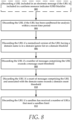
- FIG. 8 is a flowchart of an example predictive sandboxing method.
- FIG. 9 is a schematic diagram of an example computing system that can be used to practice aspects of the present technology.
- the present technology provides a data driven prediction and real-time scoring engine that utilizes statistical modeling to predict URL destinations likely to be malicious. These URL destinations are often part of an emerging attack.
- This predictive defense may incorporate “Big Data” techniques (but may apply equally well in “small data” situations) and apply machine-learning heuristics to determine, infer, and/or deduce suspicious email messages.
- the email processing method described herein can be executed on a per user, per group, per company, per vertical, per country, or other desired basis, and may be performed at cloud-level across all traffic as part of an email threat protection system such as a Targeted Attack Protection (TAP) system, which will be described in greater detail herein.
- TAP Targeted Attack Protection
- the present technology allows for predictive determination of malicious emails, email attachments, and URLs.
- the email threat protection system can be configured to take preemptive steps before any user has a chance to click and have their machine compromised.
- a preemptive step can include URL or domain condemnation/blacklisting, email message delivery delays, as well as other preemptive steps provided herein which are used to prevent the user from being affected by malware or malicious attack.
- systems and methods described below utilize preemptive sandboxing of URLs observed in an incoming email stream.
- the goal is to dramatically increase the detection of malicious URLs to prevent customer clicks on them.
- the present technology can be implemented within an exemplary computing environment 100 .
- the computing environment 100 comprises a plurality of email users 105 A-N, an email threat protection system, hereinafter “system 110 ”, and a plurality of email sources 115 A-N.
- the email users 105 A-N are recipients of email or other electronic messages that are transmitted by one or more of the plurality of email sources 115 A-N.
- some of email sources 115 A-N may be malicious computing devices, or computing devices operated by fraudsters, or the like.
- the email sources 115 A-N can also include computing devices that have been co-opted by malicious software and used to execute various malicious email attacks, such as spear-phishing or other similar attacks.
- the functionalities of the system 110 can be incorporated into any of the SMTP server 130 or the MX server 125 .
- the system 110 can be configured to intercept email messages before receipt by the SMTP server 130 from the email sources 115 A-N, or after transmission of the email messages by the SMTP server 130 .
- the MX server 125 can include, for example, an enterprise email server that transmits emails to the system 110 for processing, prior to delivery to individual corporate email users.
- the plurality of email users 105 A-N are each communicatively couplable to the system 110 via a network 145 .
- the network 145 may include private or public communication channels such as the Internet. Suitable networks may include, or interface with, any one or more of a local intranet, a PAN (Personal Area Network), a LAN (Local Area Network), a WAN (Wide Area Network), a MAN (Metropolitan Area Network), a virtual private network (VPN), a storage area network (SAN), a frame relay connection, an Advanced Intelligent Network (AIN) connection, a synchronous optical network (SONET) connection, a digital T1, T3, E1 or E3 line, Digital Data Service (DDS) connection, DSL (Digital Subscriber Line) connection, an Ethernet connection, an ISDN (Integrated Services Digital Network) line, a dial-up port such as a V.90, V.34 or V.34bis analog modem connection, a cable modem, an ATM (Asynchronous Transfer Mode) connection, or an
- communications may also include links to any of a variety of wireless networks; including WAP (Wireless Application Protocol), GPRS (General Packet Radio Service), GSM (Global System for Mobile Communication), CDMA (Code Division Multiple Access) or TDMA (Time Division Multiple Access), cellular phone networks, GPS (Global Positioning System), CDPD (cellular digital packet data), RIM (Research in Motion, Limited) duplex paging network, Bluetooth radio, or an IEEE 802.11-based radio frequency network.
- WAP Wireless Application Protocol
- GPRS General Packet Radio Service
- GSM Global System for Mobile Communication
- CDMA Code Division Multiple Access
- TDMA Time Division Multiple Access
- cellular phone networks GPS (Global Positioning System)
- CDPD cellular digital packet data
- RIM Research in Motion, Limited
- Bluetooth radio or an IEEE 802.11-based radio frequency network.
- the system 110 can intercept messages, process the messages, and pass the email messages to the plurality of email users 105 A-N if the email messages are determined to be safe (e.g., not including a malicious URL).
- the cloud may be formed, for example, by a network of web servers such as web servers 120 A-N with each web server (or at least a plurality thereof) providing processor and/or storage resources. These servers may manage workloads provided by multiple users (e.g., cloud resource customers or other users). Typically, each user places workload demands upon the cloud that vary in real-time, sometimes dramatically. The nature and extent of these variations typically depend on the type of business associated with the user.
- the system 110 may be generally described as a particular purpose computing environment that includes executable instructions that are configured to enhance threat analysis and detection, using predictive sandboxing of electronic message components, such as URLs.
- the system 110 can be configured to receive email messages that include URL links embedded or otherwise included in the email messages.
- the system 110 is configured to determine the presence of a URL link in an email message. While a URL link has been disclosed, the present technology can be used to evaluate any similar link, such as a clickable email address or other clickable object that launches a program such as a web browser, an email program, or other similar resource.
- the system 110 is configured to provide the following non-limiting URL analysis features.
- the extent to which a URL is normalized can be established by a system administrator. For example, URLs may be normalized by only removing subdomains, anchors, or other email attributes. Various permutations of email attributes can be removed as needed. In some embodiments, normalization is not required. Thus, normalization is a selectable feature that may not be required for every use.
- normalization techniques can be extended to different malicious email campaign types, and broaden the ability to condemn patterns of URLs rather than individual URLs.
- the system 110 can be configured to recognize that the presence of the same subdomain in a URL is indicative of the URL being associated with a malicious resource. Thus, the system 110 can immediately condemn all URLs containing the subdomain.
- a URL blacklist resource such as a uniform resource indicator (URI) black list.
- URI uniform resource indicator
- Other similar blacklisting or quarantining resources can also likewise be utilized to store information about a condemned URL.
- Some malicious email campaigns randomize on subdomain, or page name, or subdirectory, and so forth.
- An entire domain or a page name associated with the domain name may be condemned to save time and resources that would be required to sandbox each subdomain/page name/subdirectory individually.
- Using such normalization techniques can be advantageous when processing very large numbers of email messages. For example, by normalizing URLs by removing subdomains, query strings and anchors, the number of URLs sandboxed by the system 110 may be reduced significantly (of course, dependent upon the specific body of data processed).
- the system 110 uses a domain or URL reputation database to identify potentially malicious URLs. To be sure, the system 110 may query the URL or domain against various third party resources that include reputation information. The sensitivity of the system 110 to certain reputation information can be selectively adjusted. For example, if the URL or domain has a very poor reputation, the URL or domain can be immediately condemned. If the URL or domain has a suspect reputation, but mixed opinions are present, the URL or domain may be further processed by the system 110 . Thus, the presence of some degree of negative information about the URL or domain is not always entirely sufficient to deem the URL or domain as malicious enough to condemn, but the URL or domain may also not be worrisome enough to justify being placed in the sandbox. Thus, other tests may be performed on the URL or domain as described herein.
- the system 110 is configured to perform a URL validity check before sandboxing. Invalid URLs may be submitted for predictive sandboxing by the system 110 querying various sources such as web traffic data ranking websites.
- the system 110 may advantageously avoid sandboxing clearly invalid URLs. These invalid URLs can be condemned.
- the system 110 can also be configured to grant priority to publishing normalized URLs over redundant URLs if, for example, a URL reputation database publications requests are throttled. This type of throttling can occur when too many requests for URL analysis are received by the reputation database.
- the system 110 may build and utilizes an internal URL reputation database.
- the system 110 can utilize a third party reputation database in addition to, or in place of, a local URL reputation database.
- the system 110 comprises a sandbox environment 110 A that comprises a virtual machine simulated environment for testing a URL to determine if the URL is malicious.
- the method comprises, at 200 , receiving an email message by the system 110 .
- the system 110 can receive emails from a variety of sources such as SMTP servers, enterprise email servers, and/or email user computing systems.
- the method can include the system 110 evaluating, at 202 , the email messages to determine if any of the email messages include a URL. If an email message does not include a URL (or other object that contains an HTML link, pointer to a website resource, or a link that launches a program), the method comprises discarding 204 the email message (e.g., discard from sandboxing).
- the method includes queuing, at 206 , the email message for analysis using a preemptive sandboxing process.
- the method comprises checking, at 208 , the URL against a URI (uniform resource identifier) Black List (“URIBL”). If the URL is included in the URIBL, the method comprises discarding the email message as in step 204 . To be sure, the URL can be queried against numerous URIBLs if desired.
- URI uniform resource identifier
- thresholds established within the system 110 . These thresholds, such as a domain count threshold, a blacklisting threshold, a message count threshold, and a sandbox limit. These thresholds are generally referred to as a factor threshold.
- the email message is further processed by determining, at 210 , if the URL has been predictively sandboxed within a recent time period.
- the system 110 can be configured with a recent time period such as an hour, a day, a week, a month, or any other time frame.
- the exemplary system 110 maintains a database or list of each URL evaluated.
- the URLs can be stored in their original format or in a normalized format, as will be described in greater detail below.
- the method comprises the system 110 comparing each URL against the list/database of previously evaluated URLs. If the URL has been evaluated in the recent time period, the method includes the system 110 discarding the URL from further sandboxing as in step 204 . To be sure, the discarding or excluding of the email message from consideration or sandboxing does not require or imply that the email message is deleted and/or not transmitted to the recipient. In some embodiments, the method comprises the system 110 delaying, at 212 . delivery of the email message until the URL associated with the email message has been fully processed by the system 110 to determine if the URL is or is not associated with a malicious resource or malware.
- the ability to exclude email messages from sandboxing if the URL has been recently sandboxed will improve system efficiency and increase the likelihood that URLs with malicious content will be discovered more rapidly as system resources can be dedicated to analysis of URLs that are likely to be associated with malicious content.
- the method may further include the system 110 normalizing, at 214 , the URL.
- the concept of URL normalization can be understood to include the reformatting or rewriting of a URL in a more concise manner. For example, one normalization technique is to remove subdomains, query strings and anchors.
- Normalization allows the system to determine resource specific information. For example, the system 110 can determine from sandboxing methods that any URL that points to a webpage that comprises a file name of “seeme.mp3” launches a malware attack against the end user. In another embodiment, the system can determine that any webpage or resource that emanates from www.foo.com (domain) includes malware. This domain level knowledge is improved by reducing URLs to basic domain name and/or resource information. The normalization process allows the system 110 to make broad decisions about a domain, which will allow the system 110 to quickly discard any future emails messages that have URLs that direct to that domain, without the need to sandbox each URL received from that domain.
- the method includes, at 216 , the system 110 determining if the domain is in a list of domains to ignore. If so, the system discards the URL from sandboxing as in step 204 .
- the method includes the system 110 comparing the domain of the URL to domains in a domain name ignore list such as Alexa'sTM. Top 100 ignore list. Other similar domain ignore lists can be consulted by the system.
- the system 110 can create and maintain its own list of domains. This list may be updated as data is accumulated about domains by the system 110 .
- the domain ignore list can include domains that are considered safe and malware free.
- the system 110 can optimize its sandboxing procedures by ignoring safe domains.
- the method includes the system 110 using, at 218 , email pattern matching to remove from consideration the sandboxing of URLs which indicate that the URL is likely to direct the user to damaging content.
- email pattern matching could include a URL link that would unsubscribe a recipient from a mailing list.
- Other email patterns may indicate that an email message includes a URL that is potentially malicious, and can likewise be utilized in accordance with the present technology.
- Email patterns may be based on URLs observed in messages at a global level across organizations.
- the method includes the system 110 ignoring, at 220 , the URL, if the URL is pointing to images or other non-threatening content that may prevent unnecessary sandboxing.
- the system 110 can examine the URL for resource information such as file extensions of .jpg, .png, .tiff, .gif, and so forth.
- the URLs can be further processed by executing one or more algorithms to further process the URLs prior to sandboxing.
- the method can include sandboxing, at 222 , URLs that remain after passing through steps 200 - 220 , or any combination of steps 200 - 220 .
- an example processing algorithm includes the system 110 calculating, at 302 , or counting a number of messages in which a particular URL appears.
- the method comprises comparing, at 304 , the count to a message count threshold.
- a message count threshold includes 25 messages. If the number of messages comprising the URL meets or exceeds the 25 message threshold, the method includes the system 110 placing, at 306 , the URL into a sandbox environment for testing. To be sure, other example message count threshold values can be utilized.
- the system 110 can track each message with a unique identifier. According to some embodiments, the system 110 is configured to determine duplicate events and count numbers of these duplicate events. In other embodiments, the system 110 is configured to determine if the URL appears in a predetermined number of locations or is directed to a certain number of email users. Thus, the system 110 can be configured to track an aggregate number of email users that are targeted with the same URL.
- the method includes the system 110 determining (e.g., lookup/evaluate) the IP (Internet Protocol) reputation of the email sender.
- IP Internet Protocol
- the system 110 determining (e.g., lookup/evaluate) the IP (Internet Protocol) reputation of the email sender.
- IP Internet Protocol
- an SMTP server associated with a domain is known for being used to execute malware attacks.
- the IP address of the SMTP server 130 may be identified as being used by malicious attackers.
- the reputation of the email sender e.g., sending email party
- a predetermined email threat protection threshold can be established for the system 110 , e.g., based on historical data, system criticality, to name just a few.
- the threat protection score can be based on the URL criteria, such as how broadly the URL has been seen within a given timeframe, how many customers received this URL, IP reputation, Spam score, or other metadata. Those considerations may also be used in determining the associated predetermined threshold.
- FIG. 4 illustrates an example scoring algorithm that involves dynamic reputation values.
- the method comprises the system 110 calculating, at 402 , a dynamic reputation score for a URL of an email message.
- the score may be based on how broadly the URL and/or domain has been seen within a given timeframe, how many customers received this URL, IP reputation, Spam score, or other metadata and historical data. Further details regarding exemplary reputation scores and the calculation thereof are found in commonly assigned U.S. patent application Ser. Nos. 14/486,990 and 13/491,494, which are incorporated by reference herein in their entirety.
- the method includes a step of the system 110 comparing, at 404 , the dynamic reputation score to a reputation score threshold.
- the reputation score values can range between zero and one, with zero being an extremely poor reputation.
- the method includes placing, at 406 , the URL in a sandbox if the message has a reputation score that exceeds the reputation score threshold.
- FIG. 5 illustrates an example scoring algorithm that involves a targeted attack preparation score.
- the method comprises the system 110 calculating, at 502 , a targeted attack preparation score for a URL of an email message.
- the score may be based on various historical data, e.g., data relating to the URL and/or domain being used for spear-phishing and other malicious attacks. Observation of normal mail flow characteristics for every user mailbox, and analysis of the inbound email in real-time may be used to identify anomalies and thus influence the targeted attack preparation score.
- the method includes a step of the system 110 comparing, at 504 , the targeted attack preparation score to a targeted attack preparation threshold.
- the targeted attack preparation score values can range between zero and one, with zero being very susceptible to a malicious attack, and one signifying very protected from potential attacks.
- the method includes placing, at 506 , the URL in a sandbox if the message has a targeted attack preparation score that exceeds the targeted attack preparation threshold.
- the system can apply selection criteria for sandboxing a URL which requires a minimum average of targeted attack preparation scores and reputation scores.
- the system can apply selection criteria for sandboxing a URL such as minimum message counts and customer counts (e.g., number of customers receiving the same URL).
- the system 110 may have a domain count threshold established that defines how many URLs for a domain can be analyzed within a given time, within the sandbox environment. If the domain count threshold is met, the system 110 can ignore any additional URLs for the given period of time.
- system 110 can be configured to eliminate the domain count threshold if any of the URLs in the sandbox are malicious.
- sandboxing of URLs can be resource intensive, and therefore it may be beneficial to prevent overloading of the sandbox by placing criteria such as total number of URLs processed in a given timeframe, number of URLs processed from a given location, or other such limiting criteria.
- the normalized domain can be checked against a set of undesired domains that should not be accessed using a URL link.
- normalization is applied to both URLs in the pipeline as well as the domains in the whitelist. Again, the URL can be discarded from sandboxing if present in the whitelist.
- the system 110 can queue URLs for sandboxing and update a local state database with various metrics.
- Example metrics comprise an indication that the URLs are being sandboxed, an update of the count per domain of URLs being sandboxed, an update of the total count of URLs that have been sandboxed, as well as combinations thereof.
- a preemptive sandboxing tap 712 is also configured to transmit condemned URLs or URL fragments (such as normalized parts of a URL) to an MTS 718 (reputation handling system) or blacklist.
- a method can include combining various pluralities of discarding steps so as to filter URLs from being sandboxed.
- the method optionally comprises discarding, at 802 , a URL included in an electronic message if the URL is included in a uniform resource indicator (URI) blacklist.
- the method includes discarding, at 804 , the URL if the URL has been sandboxed for analysis within a recent time period and/or discarding, at 806 , the URL if a normalized version of the URL having a domain name is in a domain ignore list or a domain blacklist.
- URI uniform resource indicator
- the method can continue with discarding, at 812 , the URL if a sandbox has received a number of URLs that meet a sandbox limit.
- the system 110 is configured to ensure that the sandbox does not exceed the sandbox limit, which would potentially monopolize system resources due to analyzing too many URLs at one time.
- FIG. 9 is a diagrammatic representation of an example machine in the form of a computer system 1 , within which a set of instructions for causing the machine to perform any one or more of the methodologies discussed herein may be executed.
- the machine operates as a standalone device or may be connected (e.g., networked) to other machines.
- the machine may operate in the capacity of a server or a client machine in a server-client network environment, or as a peer machine in a peer-to-peer (or distributed) network environment.
- Instructions 55 a - d may further be transmitted or received over a network via the network interface device 45 utilizing any one of a number of well-known transfer protocols (e.g., Hyper Text Transfer Protocol (HTTP)).
- HTTP Hyper Text Transfer Protocol
- machine-readable medium 50 is shown in an example embodiment to be a single medium, the term “computer-readable medium” should be taken to include a single medium or multiple media (e.g., a centralized or distributed database and/or associated caches and servers) that store the one or more sets of instructions.
- the Internet service may be configured to provide Internet access to one or more computing devices that are coupled to the Internet service, and that the computing devices may include one or more processors, buses, memory devices, display devices, input/output devices, and the like.
- the Internet service may be coupled to one or more databases, repositories, servers, and the like, which may be utilized in order to implement any of the embodiments of the disclosure as described herein.
- These computer program instructions may also be stored in a computer readable medium that can direct a computer, other programmable data processing apparatus, or other devices to function in a particular manner, such that the instructions stored in the computer readable medium produce an article of manufacture including instructions which implement the function/act specified in the flowchart and/or block diagram block or blocks.
- the computer program instructions may also be loaded onto a computer, other programmable data processing apparatus, or other devices to cause a series of operational steps to be performed on the computer, other programmable apparatus or other devices to produce a computer implemented process such that the instructions which execute on the computer or other programmable apparatus provide processes for implementing the functions/acts specified in the flowchart and/or block diagram block or blocks.
- each block in the flowchart or block diagrams may represent a module, segment, or portion of code, which comprises one or more executable instructions for implementing the specified logical function(s).
- the functions noted in the block may occur out of the order noted in the figures. For example, two blocks shown in succession may, in fact, be executed substantially concurrently, or the blocks may sometimes be executed in the reverse order, depending upon the functionality involved.
- a hyphenated term (e.g., “on-demand”) may be occasionally interchangeably used with its non-hyphenated version (e.g., “on demand”)
- a capitalized entry e.g., “Software”
- a non-capitalized version e.g., “software”
- a plural term may be indicated with or without an apostrophe (e.g., PE's or PEs)
- an italicized term e.g., “N+1” may be interchangeably used with its non-italicized version (e.g., “N+1”).
- Such occasional interchangeable uses shall not be considered inconsistent with each other.
- a “means for” may be expressed herein in terms of a structure, such as a processor, a memory, an I/O device such as a camera, or combinations thereof.
- the “means for” may include an algorithm that is descriptive of a function or method step, while in yet other embodiments the “means for” is expressed in terms of a mathematical formula, prose, or as a flow chart or signal diagram.
- Coupled “connected”, “connecting”, “electrically connected”, etc., are used interchangeably herein to generally refer to the condition of being electrically/electronically connected.
- a first entity is considered to be in “communication” with a second entity (or entities) when the first entity electrically sends and/or receives (whether through wireline or wireless means) information signals (whether containing data information or non-data/control information) to the second entity regardless of the type (analog or digital) of those signals.
- various figures (including component diagrams) shown and discussed herein are for illustrative purpose only, and are not drawn to scale.
Landscapes
- Engineering & Computer Science (AREA)
- Computer Security & Cryptography (AREA)
- General Engineering & Computer Science (AREA)
- Computer Hardware Design (AREA)
- Signal Processing (AREA)
- Computer Networks & Wireless Communication (AREA)
- Computing Systems (AREA)
- Software Systems (AREA)
- Theoretical Computer Science (AREA)
- Physics & Mathematics (AREA)
- General Physics & Mathematics (AREA)
- Health & Medical Sciences (AREA)
- General Health & Medical Sciences (AREA)
- Virology (AREA)
- Information Transfer Between Computers (AREA)
Abstract
Description
Claims (19)
Priority Applications (1)
| Application Number | Priority Date | Filing Date | Title |
|---|---|---|---|
| US17/150,779 US11811793B2 (en) | 2014-02-18 | 2021-01-15 | Targeted attack protection from malicious links in messages using predictive sandboxing |
Applications Claiming Priority (7)
| Application Number | Priority Date | Filing Date | Title |
|---|---|---|---|
| US201461941407P | 2014-02-18 | 2014-02-18 | |
| US14/625,240 US9596264B2 (en) | 2014-02-18 | 2015-02-18 | Targeted attack protection using predictive sandboxing |
| US15/418,357 US9762609B2 (en) | 2014-02-18 | 2017-01-27 | Targeted attack protection using predictive sandboxing |
| US15/667,430 US10009362B2 (en) | 2014-02-18 | 2017-08-02 | Systems and methods for targeted attack protection using predictive sandboxing |
| US15/986,558 US10419464B2 (en) | 2014-02-18 | 2018-05-22 | Systems and methods for targeted attack protection using predictive sandboxing |
| US16/523,439 US10911467B2 (en) | 2014-02-18 | 2019-07-26 | Targeted attack protection from malicious links in messages using predictive sandboxing |
| US17/150,779 US11811793B2 (en) | 2014-02-18 | 2021-01-15 | Targeted attack protection from malicious links in messages using predictive sandboxing |
Related Parent Applications (1)
| Application Number | Title | Priority Date | Filing Date |
|---|---|---|---|
| US16/523,439 Continuation US10911467B2 (en) | 2014-02-18 | 2019-07-26 | Targeted attack protection from malicious links in messages using predictive sandboxing |
Publications (2)
| Publication Number | Publication Date |
|---|---|
| US20210136094A1 US20210136094A1 (en) | 2021-05-06 |
| US11811793B2 true US11811793B2 (en) | 2023-11-07 |
Family
ID=53799175
Family Applications (6)
| Application Number | Title | Priority Date | Filing Date |
|---|---|---|---|
| US14/625,240 Active 2035-02-24 US9596264B2 (en) | 2014-02-18 | 2015-02-18 | Targeted attack protection using predictive sandboxing |
| US15/418,357 Active US9762609B2 (en) | 2014-02-18 | 2017-01-27 | Targeted attack protection using predictive sandboxing |
| US15/667,430 Active US10009362B2 (en) | 2014-02-18 | 2017-08-02 | Systems and methods for targeted attack protection using predictive sandboxing |
| US15/986,558 Active US10419464B2 (en) | 2014-02-18 | 2018-05-22 | Systems and methods for targeted attack protection using predictive sandboxing |
| US16/523,439 Active 2035-02-20 US10911467B2 (en) | 2014-02-18 | 2019-07-26 | Targeted attack protection from malicious links in messages using predictive sandboxing |
| US17/150,779 Active 2035-07-28 US11811793B2 (en) | 2014-02-18 | 2021-01-15 | Targeted attack protection from malicious links in messages using predictive sandboxing |
Family Applications Before (5)
| Application Number | Title | Priority Date | Filing Date |
|---|---|---|---|
| US14/625,240 Active 2035-02-24 US9596264B2 (en) | 2014-02-18 | 2015-02-18 | Targeted attack protection using predictive sandboxing |
| US15/418,357 Active US9762609B2 (en) | 2014-02-18 | 2017-01-27 | Targeted attack protection using predictive sandboxing |
| US15/667,430 Active US10009362B2 (en) | 2014-02-18 | 2017-08-02 | Systems and methods for targeted attack protection using predictive sandboxing |
| US15/986,558 Active US10419464B2 (en) | 2014-02-18 | 2018-05-22 | Systems and methods for targeted attack protection using predictive sandboxing |
| US16/523,439 Active 2035-02-20 US10911467B2 (en) | 2014-02-18 | 2019-07-26 | Targeted attack protection from malicious links in messages using predictive sandboxing |
Country Status (3)
| Country | Link |
|---|---|
| US (6) | US9596264B2 (en) |
| EP (1) | EP3108395B1 (en) |
| WO (1) | WO2015126924A1 (en) |
Cited By (1)
| Publication number | Priority date | Publication date | Assignee | Title |
|---|---|---|---|---|
| US20220131877A1 (en) * | 2020-10-23 | 2022-04-28 | Paypal, Inc. | Neutralizing Evasion Techniques of Malicious Websites |
Families Citing this family (71)
| Publication number | Priority date | Publication date | Assignee | Title |
|---|---|---|---|---|
| US11201848B2 (en) | 2011-07-06 | 2021-12-14 | Akamai Technologies, Inc. | DNS-based ranking of domain names |
| US10742591B2 (en) | 2011-07-06 | 2020-08-11 | Akamai Technologies Inc. | System for domain reputation scoring |
| US9843601B2 (en) * | 2011-07-06 | 2017-12-12 | Nominum, Inc. | Analyzing DNS requests for anomaly detection |
| US9241009B1 (en) | 2012-06-07 | 2016-01-19 | Proofpoint, Inc. | Malicious message detection and processing |
| US9596264B2 (en) | 2014-02-18 | 2017-03-14 | Proofpoint, Inc. | Targeted attack protection using predictive sandboxing |
| US9886581B2 (en) | 2014-02-25 | 2018-02-06 | Accenture Global Solutions Limited | Automated intelligence graph construction and countermeasure deployment |
| US9686278B1 (en) * | 2014-05-07 | 2017-06-20 | Skyport Systems, Inc. | Method and system for configuring computing devices |
| US10565402B2 (en) * | 2014-10-14 | 2020-02-18 | Dropbox, Inc. | System and method for serving online synchronized content from a sandbox domain via a temporary address |
| EP3217309A4 (en) * | 2014-11-07 | 2018-07-04 | Suhjun Park | Protective system, device, and method for protecting electronic communication device |
| US20160337394A1 (en) * | 2015-05-11 | 2016-11-17 | The Boeing Company | Newborn domain screening of electronic mail messages |
| US10050980B2 (en) * | 2015-06-27 | 2018-08-14 | Mcafee, Llc | Enterprise reputations for uniform resource locators |
| US9825989B1 (en) * | 2015-09-30 | 2017-11-21 | Fireeye, Inc. | Cyber attack early warning system |
| EP3363189A1 (en) * | 2015-10-14 | 2018-08-22 | Pindrop Security, Inc. | Call detail record analysis to identify fraudulent activity and fraud detection in interactive voice response systems |
| US20230171292A1 (en) * | 2015-10-28 | 2023-06-01 | Qomplx, Inc. | Holistic external network cybersecurity evaluation and scoring |
| US10963565B1 (en) * | 2015-10-29 | 2021-03-30 | Palo Alto Networks, Inc. | Integrated application analysis and endpoint protection |
| US9906531B2 (en) * | 2015-11-23 | 2018-02-27 | International Business Machines Corporation | Cross-site request forgery (CSRF) prevention |
| US10860715B2 (en) * | 2016-05-26 | 2020-12-08 | Barracuda Networks, Inc. | Method and apparatus for proactively identifying and mitigating malware attacks via hosted web assets |
| US10091235B1 (en) * | 2016-06-07 | 2018-10-02 | Juniper Networks, Inc. | Method, system, and apparatus for detecting and preventing targeted attacks |
| US10141009B2 (en) | 2016-06-28 | 2018-11-27 | Pindrop Security, Inc. | System and method for cluster-based audio event detection |
| US10574672B2 (en) * | 2016-07-01 | 2020-02-25 | Mcafee, Llc | System and method to detect bypass of a sandbox application |
| US10353978B2 (en) * | 2016-07-06 | 2019-07-16 | Facebook, Inc. | URL normalization |
| US9824692B1 (en) | 2016-09-12 | 2017-11-21 | Pindrop Security, Inc. | End-to-end speaker recognition using deep neural network |
| US10347256B2 (en) | 2016-09-19 | 2019-07-09 | Pindrop Security, Inc. | Channel-compensated low-level features for speaker recognition |
| US10325601B2 (en) | 2016-09-19 | 2019-06-18 | Pindrop Security, Inc. | Speaker recognition in the call center |
| US9876753B1 (en) | 2016-12-22 | 2018-01-23 | Wombat Security Technologies, Inc. | Automated message security scanner detection system |
| US10397398B2 (en) | 2017-01-17 | 2019-08-27 | Pindrop Security, Inc. | Authentication using DTMF tones |
| US10237300B2 (en) | 2017-04-06 | 2019-03-19 | Microsoft Technology Licensing, Llc | System and method for detecting directed cyber-attacks targeting a particular set of cloud based machines |
| US10419377B2 (en) * | 2017-05-31 | 2019-09-17 | Apple Inc. | Method and system for categorizing instant messages |
| US10708283B2 (en) * | 2017-06-30 | 2020-07-07 | Fortinet, Inc. | Detection and mitigation of time-delay based network attacks |
| US10375091B2 (en) | 2017-07-11 | 2019-08-06 | Horizon Healthcare Services, Inc. | Method, device and assembly operable to enhance security of networks |
| CN107241352B (en) * | 2017-07-17 | 2020-01-21 | 浙江鹏信信息科技股份有限公司 | Network security event classification and prediction method and system |
| CN107465686A (en) * | 2017-08-23 | 2017-12-12 | 杭州安恒信息技术有限公司 | IP credit worthinesses computational methods and device based on the heterogeneous big data of network |
| US10715545B2 (en) * | 2017-09-22 | 2020-07-14 | Microsoft Technology Licensing, Llc | Detection and identification of targeted attacks on a computing system |
| US10693891B2 (en) * | 2017-12-06 | 2020-06-23 | Chicago Mercantile Exchange Inc. | Electronic mail security system |
| US11477222B2 (en) * | 2018-02-20 | 2022-10-18 | Darktrace Holdings Limited | Cyber threat defense system protecting email networks with machine learning models using a range of metadata from observed email communications |
| US11075930B1 (en) | 2018-06-27 | 2021-07-27 | Fireeye, Inc. | System and method for detecting repetitive cybersecurity attacks constituting an email campaign |
| US11431738B2 (en) | 2018-12-19 | 2022-08-30 | Abnormal Security Corporation | Multistage analysis of emails to identify security threats |
| US11050793B2 (en) * | 2018-12-19 | 2021-06-29 | Abnormal Security Corporation | Retrospective learning of communication patterns by machine learning models for discovering abnormal behavior |
| US11824870B2 (en) | 2018-12-19 | 2023-11-21 | Abnormal Security Corporation | Threat detection platforms for detecting, characterizing, and remediating email-based threats in real time |
| US11032312B2 (en) | 2018-12-19 | 2021-06-08 | Abnormal Security Corporation | Programmatic discovery, retrieval, and analysis of communications to identify abnormal communication activity |
| WO2020163624A1 (en) * | 2019-02-06 | 2020-08-13 | Pindrop Security, Inc. | Systems and methods of gateway detection in a telephone network |
| US11646018B2 (en) | 2019-03-25 | 2023-05-09 | Pindrop Security, Inc. | Detection of calls from voice assistants |
| US10686826B1 (en) | 2019-03-28 | 2020-06-16 | Vade Secure Inc. | Optical scanning parameters computation methods, devices and systems for malicious URL detection |
| US12015637B2 (en) | 2019-04-08 | 2024-06-18 | Pindrop Security, Inc. | Systems and methods for end-to-end architectures for voice spoofing detection |
| US11206265B2 (en) * | 2019-04-30 | 2021-12-21 | Infoblox Inc. | Smart whitelisting for DNS security |
| US12265907B2 (en) * | 2019-05-03 | 2025-04-01 | Open Text Inc. | System and method for predicting domain reputation |
| US11470194B2 (en) | 2019-08-19 | 2022-10-11 | Pindrop Security, Inc. | Caller verification via carrier metadata |
| CN110381089A (en) * | 2019-08-23 | 2019-10-25 | 南京邮电大学 | Means of defence is detected to malice domain name based on deep learning |
| US11201893B2 (en) * | 2019-10-08 | 2021-12-14 | The Boeing Company | Systems and methods for performing cybersecurity risk assessments |
| US11470042B2 (en) | 2020-02-21 | 2022-10-11 | Abnormal Security Corporation | Discovering email account compromise through assessments of digital activities |
| US11582250B2 (en) | 2020-02-24 | 2023-02-14 | Bank Of America Corporation | Scanning of content in weblink |
| US11477234B2 (en) | 2020-02-28 | 2022-10-18 | Abnormal Security Corporation | Federated database for establishing and tracking risk of interactions with third parties |
| US11252189B2 (en) | 2020-03-02 | 2022-02-15 | Abnormal Security Corporation | Abuse mailbox for facilitating discovery, investigation, and analysis of email-based threats |
| US11790060B2 (en) | 2020-03-02 | 2023-10-17 | Abnormal Security Corporation | Multichannel threat detection for protecting against account compromise |
| US11451576B2 (en) | 2020-03-12 | 2022-09-20 | Abnormal Security Corporation | Investigation of threats using queryable records of behavior |
| US11715106B2 (en) | 2020-04-01 | 2023-08-01 | Mastercard International Incorporated | Systems and methods for real-time institution analysis based on message traffic |
| US11410178B2 (en) | 2020-04-01 | 2022-08-09 | Mastercard International Incorporated | Systems and methods for message tracking using real-time normalized scoring |
| US11470108B2 (en) | 2020-04-23 | 2022-10-11 | Abnormal Security Corporation | Detection and prevention of external fraud |
| JP7459962B2 (en) * | 2020-10-14 | 2024-04-02 | 日本電信電話株式会社 | DETECTION APPARATUS, DETECTION METHOD, AND DETECTION PROGRAM |
| US11528242B2 (en) | 2020-10-23 | 2022-12-13 | Abnormal Security Corporation | Discovering graymail through real-time analysis of incoming email |
| US11687648B2 (en) | 2020-12-10 | 2023-06-27 | Abnormal Security Corporation | Deriving and surfacing insights regarding security threats |
| AU2021269370A1 (en) | 2020-12-18 | 2022-07-07 | The Boeing Company | Systems and methods for context aware cybersecurity |
| US11882131B1 (en) * | 2020-12-31 | 2024-01-23 | Proofpoint, Inc. | Systems and methods for prioritizing URL review for sandboxing based on accelerated velocities of URL features in network traffic |
| US11831661B2 (en) | 2021-06-03 | 2023-11-28 | Abnormal Security Corporation | Multi-tiered approach to payload detection for incoming communications |
| US11914709B2 (en) * | 2021-07-20 | 2024-02-27 | Bank Of America Corporation | Hybrid machine learning and knowledge graph approach for estimating and mitigating the spread of malicious software |
| US12067123B2 (en) | 2021-08-16 | 2024-08-20 | Bank Of America Corporation | Relay-switch with sandbox communication connections |
| US12079378B2 (en) * | 2021-10-25 | 2024-09-03 | Kyndryl, Inc. | Gathering universal serial bus threat intelligence |
| KR102684310B1 (en) * | 2022-02-25 | 2024-07-11 | 주식회사 에이아이스페라 | Method and apparatus for searching hidden ip address of malicious site using domain name system service |
| US12238121B2 (en) * | 2022-03-30 | 2025-02-25 | Sophos Limited | Assessing behavior patterns and reputation scores related to email messages |
| US11949707B1 (en) * | 2023-06-20 | 2024-04-02 | Cloudfare, Inc. | Isolating suspicious links in email messages |
| US20250323924A1 (en) * | 2024-04-12 | 2025-10-16 | Sunyool KWON | System for automatically determining scam message including scam url |
Citations (45)
| Publication number | Priority date | Publication date | Assignee | Title |
|---|---|---|---|---|
| TW348122B (en) | 1995-01-05 | 1998-12-21 | Goodyear Tire & Rubber | Cylindrical unvulcanized carcass for a radial ply pneumatic tire and radial ply pneumatic tire |
| TW593266B (en) | 2000-06-23 | 2004-06-21 | Ciba Sc Holding Ag | Method for preparing hydroxyphenyl carboxylic acid esters |
| US20060021031A1 (en) | 2004-06-30 | 2006-01-26 | Scott Leahy | Method and system for preventing fraudulent activities |
| US20060095955A1 (en) | 2004-11-01 | 2006-05-04 | Vong Jeffrey C V | Jurisdiction-wide anti-phishing network service |
| US20060101120A1 (en) | 2004-11-10 | 2006-05-11 | David Helsper | Email anti-phishing inspector |
| US20060101334A1 (en) | 2004-10-21 | 2006-05-11 | Trend Micro, Inc. | Controlling hostile electronic mail content |
| US20060129644A1 (en) | 2004-12-14 | 2006-06-15 | Brad Owen | Email filtering system and method |
| US20060251068A1 (en) | 2002-03-08 | 2006-11-09 | Ciphertrust, Inc. | Systems and Methods for Identifying Potentially Malicious Messages |
| WO2006136605A1 (en) | 2005-06-22 | 2006-12-28 | Surfcontrol On-Demand Limited | Method and system for filtering electronic messages |
| US20070136806A1 (en) | 2005-12-14 | 2007-06-14 | Aladdin Knowledge Systems Ltd. | Method and system for blocking phishing scams |
| US20070136279A1 (en) | 2005-11-29 | 2007-06-14 | Yahoo! Inc. | URL shortening and authentication with reverse hash lookup |
| US20080133540A1 (en) | 2006-12-01 | 2008-06-05 | Websense, Inc. | System and method of analyzing web addresses |
| TW200844876A (en) | 2007-05-11 | 2008-11-16 | Chunghwa Telecom Co Ltd | Monitoring system for enterprise service integrated messages bus (ESB) platform |
| US20090064330A1 (en) | 2004-05-02 | 2009-03-05 | Markmonitor Inc. | Methods and systems for analyzing data related to possible online fraud |
| US20090089857A1 (en) | 2007-09-28 | 2009-04-02 | Jason Allen Sabin | Identity-based address normalization |
| US7516488B1 (en) | 2005-02-23 | 2009-04-07 | Symantec Corporation | Preventing data from being submitted to a remote system in response to a malicious e-mail |
| US20090328216A1 (en) | 2008-06-30 | 2009-12-31 | Microsoft Corporation | Personalized honeypot for detecting information leaks and security breaches |
| TW201004264A (en) | 2008-07-08 | 2010-01-16 | Taiwan Secom Co Ltd | Method for transmitting security service data safely |
| US7690023B2 (en) * | 2001-12-13 | 2010-03-30 | Japan Science And Technology Agency | Software safety execution system |
| US20100082979A1 (en) | 2005-09-23 | 2010-04-01 | Scansafe Limited | Method for the provision of a network service |
| US20100154059A1 (en) | 2008-12-11 | 2010-06-17 | Kindsight | Network based malware detection and reporting |
| US20100192224A1 (en) | 2009-01-26 | 2010-07-29 | International Business Machines Corporation | Sandbox web navigation |
| US7854001B1 (en) | 2007-06-29 | 2010-12-14 | Trend Micro Incorporated | Aggregation-based phishing site detection |
| US20100318642A1 (en) | 2009-03-05 | 2010-12-16 | Linda Dozier | System and method for managing and monitoring electronic communications |
| EP2326057A1 (en) | 2009-11-20 | 2011-05-25 | British Telecommunications public limited company | Detecting malicious behaviour on a network |
| US20110314546A1 (en) | 2004-04-01 | 2011-12-22 | Ashar Aziz | Electronic Message Analysis for Malware Detection |
| US20120030302A1 (en) | 2004-05-25 | 2012-02-02 | Google Inc. | Electronic message source reputation information system |
| US20120047577A1 (en) | 2010-08-23 | 2012-02-23 | Microsoft Corporation | Safe url shortening |
| US20120060221A1 (en) | 2010-09-08 | 2012-03-08 | At&T Intellectual Property I, L.P. | Prioritizing Malicious Website Detection |
| US20120079596A1 (en) | 2010-08-26 | 2012-03-29 | Verisign, Inc. | Method and system for automatic detection and analysis of malware |
| US20120102545A1 (en) | 2010-10-20 | 2012-04-26 | Mcafee, Inc. | Method and system for protecting against unknown malicious activities by determining a reputation of a link |
| US20120151585A1 (en) | 2006-03-27 | 2012-06-14 | Gerardo Lamastra | Method and System for Identifying Malicious Messages in Mobile Communication Networks, Related Network and Computer Program Product Therefor |
| US20130097699A1 (en) | 2011-10-18 | 2013-04-18 | Mcafee, Inc. | System and method for detecting a malicious command and control channel |
| US8479286B2 (en) | 2009-12-15 | 2013-07-02 | Mcafee, Inc. | Systems and methods for behavioral sandboxing |
| US8544086B2 (en) * | 2004-10-29 | 2013-09-24 | Microsoft Corporation | Tagging obtained content for white and black listing |
| US20130333026A1 (en) | 2012-06-07 | 2013-12-12 | Angelo Starink | Malicious message detection and processing |
| US20140181216A1 (en) | 2012-12-20 | 2014-06-26 | Mcafee, Inc. | Just-In-Time, Email Embedded URL Reputation Determination |
| US20140201126A1 (en) | 2012-09-15 | 2014-07-17 | Lotfi A. Zadeh | Methods and Systems for Applications for Z-numbers |
| US20140259158A1 (en) | 2013-03-11 | 2014-09-11 | Bank Of America Corporation | Risk Ranking Referential Links in Electronic Messages |
| US20150237068A1 (en) | 2014-02-18 | 2015-08-20 | Proofpoint, Inc. | Targeted attack protection using predictive sandboxing |
| US9185064B2 (en) * | 2010-01-15 | 2015-11-10 | Microsoft Technology Licensing, Llc | Interactive email |
| US20150381653A1 (en) | 2012-06-07 | 2015-12-31 | Proofpoint, Inc. | Malicious message detection and processing |
| US20160036833A1 (en) | 2014-07-29 | 2016-02-04 | Aruba Networks, Inc. | Client Reputation Driven Role-Based Access Control |
| WO2016044065A1 (en) | 2014-09-15 | 2016-03-24 | Proofpoint, Inc. | Malicious message detection and processing |
| US9811665B1 (en) * | 2013-07-30 | 2017-11-07 | Palo Alto Networks, Inc. | Static and dynamic security analysis of apps for mobile devices |
-
2015
- 2015-02-18 US US14/625,240 patent/US9596264B2/en active Active
- 2015-02-18 EP EP15752623.7A patent/EP3108395B1/en active Active
- 2015-02-18 WO PCT/US2015/016351 patent/WO2015126924A1/en not_active Ceased
-
2017
- 2017-01-27 US US15/418,357 patent/US9762609B2/en active Active
- 2017-08-02 US US15/667,430 patent/US10009362B2/en active Active
-
2018
- 2018-05-22 US US15/986,558 patent/US10419464B2/en active Active
-
2019
- 2019-07-26 US US16/523,439 patent/US10911467B2/en active Active
-
2021
- 2021-01-15 US US17/150,779 patent/US11811793B2/en active Active
Patent Citations (71)
| Publication number | Priority date | Publication date | Assignee | Title |
|---|---|---|---|---|
| TW348122B (en) | 1995-01-05 | 1998-12-21 | Goodyear Tire & Rubber | Cylindrical unvulcanized carcass for a radial ply pneumatic tire and radial ply pneumatic tire |
| TW593266B (en) | 2000-06-23 | 2004-06-21 | Ciba Sc Holding Ag | Method for preparing hydroxyphenyl carboxylic acid esters |
| US7690023B2 (en) * | 2001-12-13 | 2010-03-30 | Japan Science And Technology Agency | Software safety execution system |
| US20060251068A1 (en) | 2002-03-08 | 2006-11-09 | Ciphertrust, Inc. | Systems and Methods for Identifying Potentially Malicious Messages |
| US20110314546A1 (en) | 2004-04-01 | 2011-12-22 | Ashar Aziz | Electronic Message Analysis for Malware Detection |
| US20090064330A1 (en) | 2004-05-02 | 2009-03-05 | Markmonitor Inc. | Methods and systems for analyzing data related to possible online fraud |
| US20120030302A1 (en) | 2004-05-25 | 2012-02-02 | Google Inc. | Electronic message source reputation information system |
| US20060021031A1 (en) | 2004-06-30 | 2006-01-26 | Scott Leahy | Method and system for preventing fraudulent activities |
| US20060101334A1 (en) | 2004-10-21 | 2006-05-11 | Trend Micro, Inc. | Controlling hostile electronic mail content |
| US8544086B2 (en) * | 2004-10-29 | 2013-09-24 | Microsoft Corporation | Tagging obtained content for white and black listing |
| US20060095955A1 (en) | 2004-11-01 | 2006-05-04 | Vong Jeffrey C V | Jurisdiction-wide anti-phishing network service |
| US20060101120A1 (en) | 2004-11-10 | 2006-05-11 | David Helsper | Email anti-phishing inspector |
| US20060129644A1 (en) | 2004-12-14 | 2006-06-15 | Brad Owen | Email filtering system and method |
| US7516488B1 (en) | 2005-02-23 | 2009-04-07 | Symantec Corporation | Preventing data from being submitted to a remote system in response to a malicious e-mail |
| WO2006136605A1 (en) | 2005-06-22 | 2006-12-28 | Surfcontrol On-Demand Limited | Method and system for filtering electronic messages |
| US20080256187A1 (en) | 2005-06-22 | 2008-10-16 | Blackspider Technologies | Method and System for Filtering Electronic Messages |
| US20100082979A1 (en) | 2005-09-23 | 2010-04-01 | Scansafe Limited | Method for the provision of a network service |
| US20070136279A1 (en) | 2005-11-29 | 2007-06-14 | Yahoo! Inc. | URL shortening and authentication with reverse hash lookup |
| EP1801745A1 (en) | 2005-12-14 | 2007-06-27 | Aladdin Knowledge Systems, Ltd. | Method and system for blocking phishing scams |
| US20070136806A1 (en) | 2005-12-14 | 2007-06-14 | Aladdin Knowledge Systems Ltd. | Method and system for blocking phishing scams |
| US20120151585A1 (en) | 2006-03-27 | 2012-06-14 | Gerardo Lamastra | Method and System for Identifying Malicious Messages in Mobile Communication Networks, Related Network and Computer Program Product Therefor |
| US20080133540A1 (en) | 2006-12-01 | 2008-06-05 | Websense, Inc. | System and method of analyzing web addresses |
| TW200844876A (en) | 2007-05-11 | 2008-11-16 | Chunghwa Telecom Co Ltd | Monitoring system for enterprise service integrated messages bus (ESB) platform |
| US7854001B1 (en) | 2007-06-29 | 2010-12-14 | Trend Micro Incorporated | Aggregation-based phishing site detection |
| US20090089857A1 (en) | 2007-09-28 | 2009-04-02 | Jason Allen Sabin | Identity-based address normalization |
| US20090328216A1 (en) | 2008-06-30 | 2009-12-31 | Microsoft Corporation | Personalized honeypot for detecting information leaks and security breaches |
| TW201004264A (en) | 2008-07-08 | 2010-01-16 | Taiwan Secom Co Ltd | Method for transmitting security service data safely |
| US20100154059A1 (en) | 2008-12-11 | 2010-06-17 | Kindsight | Network based malware detection and reporting |
| US20100192224A1 (en) | 2009-01-26 | 2010-07-29 | International Business Machines Corporation | Sandbox web navigation |
| US20100318642A1 (en) | 2009-03-05 | 2010-12-16 | Linda Dozier | System and method for managing and monitoring electronic communications |
| EP2326057A1 (en) | 2009-11-20 | 2011-05-25 | British Telecommunications public limited company | Detecting malicious behaviour on a network |
| US8479286B2 (en) | 2009-12-15 | 2013-07-02 | Mcafee, Inc. | Systems and methods for behavioral sandboxing |
| US9185064B2 (en) * | 2010-01-15 | 2015-11-10 | Microsoft Technology Licensing, Llc | Interactive email |
| US20120047577A1 (en) | 2010-08-23 | 2012-02-23 | Microsoft Corporation | Safe url shortening |
| US20120079596A1 (en) | 2010-08-26 | 2012-03-29 | Verisign, Inc. | Method and system for automatic detection and analysis of malware |
| US20120060221A1 (en) | 2010-09-08 | 2012-03-08 | At&T Intellectual Property I, L.P. | Prioritizing Malicious Website Detection |
| US20130298240A1 (en) | 2010-09-08 | 2013-11-07 | At&T Intellectual Property I, L.P. | Prioritizing Malicious Website Detection |
| US20120102545A1 (en) | 2010-10-20 | 2012-04-26 | Mcafee, Inc. | Method and system for protecting against unknown malicious activities by determining a reputation of a link |
| US20130097699A1 (en) | 2011-10-18 | 2013-04-18 | Mcafee, Inc. | System and method for detecting a malicious command and control channel |
| US8677487B2 (en) * | 2011-10-18 | 2014-03-18 | Mcafee, Inc. | System and method for detecting a malicious command and control channel |
| US20170230411A1 (en) | 2012-06-07 | 2017-08-10 | Proofpoint, Inc. | Malicious Message Detection and Processing |
| US20150381653A1 (en) | 2012-06-07 | 2015-12-31 | Proofpoint, Inc. | Malicious message detection and processing |
| US20130333026A1 (en) | 2012-06-07 | 2013-12-12 | Angelo Starink | Malicious message detection and processing |
| US20160127399A1 (en) | 2012-06-07 | 2016-05-05 | Proofpoint, Inc. | Malicious Message Detection and Processing |
| US8839401B2 (en) | 2012-06-07 | 2014-09-16 | Proofpoint, Inc. | Malicious message detection and processing |
| EP2859495A2 (en) | 2012-06-07 | 2015-04-15 | Proofpoint, Inc. | Malicious message detection and processing |
| US20200076848A1 (en) | 2012-06-07 | 2020-03-05 | Proofpoint, Inc. | Methods and Systems for Malicious Message Detection and Processing |
| US10530806B2 (en) | 2012-06-07 | 2020-01-07 | Proofpoint, Inc. | Methods and systems for malicious message detection and processing |
| TW201414260A (en) | 2012-06-07 | 2014-04-01 | Angelo Starink | Malicious message detection and processing |
| US9686297B2 (en) | 2012-06-07 | 2017-06-20 | Proofpoint, Inc. | Malicious message detection and processing |
| US9241009B1 (en) | 2012-06-07 | 2016-01-19 | Proofpoint, Inc. | Malicious message detection and processing |
| US20190245885A1 (en) | 2012-06-07 | 2019-08-08 | Proofpoint, Inc. | Methods and Systems for Malicious Message Detection and Processing |
| US10326791B2 (en) | 2012-06-07 | 2019-06-18 | Proofpoint, Inc. | Malicious message detection and processing |
| US20140201126A1 (en) | 2012-09-15 | 2014-07-17 | Lotfi A. Zadeh | Methods and Systems for Applications for Z-numbers |
| US20140181216A1 (en) | 2012-12-20 | 2014-06-26 | Mcafee, Inc. | Just-In-Time, Email Embedded URL Reputation Determination |
| US20140259158A1 (en) | 2013-03-11 | 2014-09-11 | Bank Of America Corporation | Risk Ranking Referential Links in Electronic Messages |
| US9811665B1 (en) * | 2013-07-30 | 2017-11-07 | Palo Alto Networks, Inc. | Static and dynamic security analysis of apps for mobile devices |
| US9596264B2 (en) | 2014-02-18 | 2017-03-14 | Proofpoint, Inc. | Targeted attack protection using predictive sandboxing |
| US20180270258A1 (en) | 2014-02-18 | 2018-09-20 | Proofpoint, Inc. | Systems and Methods for Targeted Attack Protection Using Predictive Sandboxing |
| US20170142150A1 (en) | 2014-02-18 | 2017-05-18 | Proofpoint, Inc. | Targeted attack protection using predictive sandboxing |
| US9762609B2 (en) | 2014-02-18 | 2017-09-12 | Proofpoint, Inc. | Targeted attack protection using predictive sandboxing |
| EP3108395A1 (en) | 2014-02-18 | 2016-12-28 | Proofpoint, Inc. | Targeted attack protection using predictive sandboxing |
| US20170331843A1 (en) | 2014-02-18 | 2017-11-16 | Proofpoint, Inc. | Systems and Methods for Targeted Attack Protection Using Predictive Sandboxing |
| US10009362B2 (en) | 2014-02-18 | 2018-06-26 | Proofpoint, Inc. | Systems and methods for targeted attack protection using predictive sandboxing |
| US20150237068A1 (en) | 2014-02-18 | 2015-08-20 | Proofpoint, Inc. | Targeted attack protection using predictive sandboxing |
| WO2015126924A1 (en) | 2014-02-18 | 2015-08-27 | Proofpoint, Inc. | Targeted attack protection using predictive sandboxing |
| US20190356681A1 (en) | 2014-02-18 | 2019-11-21 | Proofpoint, Inc. | Targeted Attack Protection from Malicious Links in Messages Using Predictive Sandboxing |
| US10419464B2 (en) | 2014-02-18 | 2019-09-17 | Proofpoint, Inc. | Systems and methods for targeted attack protection using predictive sandboxing |
| US20160036833A1 (en) | 2014-07-29 | 2016-02-04 | Aruba Networks, Inc. | Client Reputation Driven Role-Based Access Control |
| WO2016044065A1 (en) | 2014-09-15 | 2016-03-24 | Proofpoint, Inc. | Malicious message detection and processing |
| EP3195140A1 (en) | 2014-09-15 | 2017-07-26 | Proofpoint, Inc. | Malicious message detection and processing |
Non-Patent Citations (16)
| Title |
|---|
| "An Android application sandbox system fo suspicious software detection"—by Blashing (published in IEEE—2010). * |
| "Extended European Search Report," European Patent Application No. 15752623.7, dated Jun. 23, 2017, 7 pages. |
| "Extended European Search Report," European Patent Application No. 15842030.7, dated Feb. 15, 2018,7 pages. |
| "Notice of Allowance," European Patent Application No. 13800202.7, dated May 30, 2018, 9 pages. |
| "Notice of Allowance," European Patent Application No. 15752623.7, dated Jun. 26, 2018, 8 pages. |
| "Notice of Allowance," European Patent Application No. 15842030.7, dated Apr. 30, 2020, 7 pages. |
| "Notice of Allowance," Taiwan Patent Application No. 102120185, dated Mar. 27, 2017, 3 pages. |
| "Office Action," Taiwan Patent Application No. 102120185, dated Nov. 29, 2016, 12 pages with Translation. |
| Extended European Search Report dated Dec. 23, 2015 in European Patent Application No. 13800202.7,8 pages. |
| International Search Report and Written Opinion dated Dec. 17, 2015 in Patent Cooperation Treaty Application No. PCT/US2015/049496, filed Sep. 10, 2015, 14 pages. |
| International Search Report and Written Opinion dated Jan. 3, 2014 in Patent Cooperation Treaty Application No. PCT/US2013/043790, 11 pages. |
| International Search Report and Written Opinion dated May 22, 2015 in Patent Cooperation Treaty Application No. PCT/US2015/016351, filed Feb. 18, 2015, 9 pages. |
| Notice of Allowance issued for U.S. Appl. No. 16/523,439, dated Sep. 28, 2020, 11 pages. |
| Office Action issued for U.S. Appl. No. 14/625,240, dated Aug. 17, 2016, 14 pages. |
| Office Action issued for U.S. Appl. No. 14/625,240, dated May 5, 2016, 12 pages. |
| Proofpoint. Proofpoint Targeted Attack Protection. 2013 [retrieved on Apr. 22, 2015]. Retrieved from the internet: <<https:/lwww.proofpoinl.com/sites/defauillfiles/documents/bnt_download/proofpoint-targeted-attack-protection-ds.pdf>>, 2 pages. |
Cited By (2)
| Publication number | Priority date | Publication date | Assignee | Title |
|---|---|---|---|---|
| US20220131877A1 (en) * | 2020-10-23 | 2022-04-28 | Paypal, Inc. | Neutralizing Evasion Techniques of Malicious Websites |
| US12363161B2 (en) * | 2020-10-23 | 2025-07-15 | Paypal, Inc. | Neutralizing evasion techniques of malicious websites |
Also Published As
| Publication number | Publication date |
|---|---|
| US10419464B2 (en) | 2019-09-17 |
| US20150237068A1 (en) | 2015-08-20 |
| US20210136094A1 (en) | 2021-05-06 |
| US20190356681A1 (en) | 2019-11-21 |
| US10911467B2 (en) | 2021-02-02 |
| US9596264B2 (en) | 2017-03-14 |
| WO2015126924A1 (en) | 2015-08-27 |
| US20170142150A1 (en) | 2017-05-18 |
| EP3108395B1 (en) | 2018-10-24 |
| EP3108395A4 (en) | 2017-07-26 |
| EP3108395A1 (en) | 2016-12-28 |
| US10009362B2 (en) | 2018-06-26 |
| US20180270258A1 (en) | 2018-09-20 |
| US20170331843A1 (en) | 2017-11-16 |
| US9762609B2 (en) | 2017-09-12 |
Similar Documents
| Publication | Publication Date | Title |
|---|---|---|
| US11811793B2 (en) | Targeted attack protection from malicious links in messages using predictive sandboxing | |
| US12267369B2 (en) | Cybersecurity analysis and protection using distributed systems | |
| US11019094B2 (en) | Methods and systems for malicious message detection and processing | |
| US10616272B2 (en) | Dynamically detecting abnormalities in otherwise legitimate emails containing uniform resource locators (URLs) | |
| US8787567B2 (en) | System and method for decrypting files | |
| JP5118020B2 (en) | Identifying threats in electronic messages | |
| US8850571B2 (en) | Systems and methods for detecting malicious network content | |
| US8549642B2 (en) | Method and system for using spam e-mail honeypots to identify potential malware containing e-mails | |
| US8719352B2 (en) | Reputation management for network content classification | |
| WO2012100088A1 (en) | Systems and methods for detecting malicious pdf network content | |
| Sun et al. | Impulsive artificial defense against advanced persistent threat | |
| US20250202916A1 (en) | Real-time attribution of tools and campaigns for dns tunneling traffic | |
| EP3195140B1 (en) | Malicious message detection and processing | |
| US20250323953A1 (en) | Cybersecurity Analysis and Protection Using Distributed Systems | |
| CN102438233A (en) | A mobile phone worm detection method | |
| US12537852B2 (en) | Systems and methods for detecting and mitigating threats in electronic messages | |
| Chen et al. | Implementation of an SMS spam control system based on trust management | |
| Chin | A Reputation Score Driven E-Mail Mitigation System | |
| Nichols | MalWebID-Autodetection and Identification of Malicious Web Hosts Through Live Traffic Analysis |
Legal Events
| Date | Code | Title | Description |
|---|---|---|---|
| FEPP | Fee payment procedure |
Free format text: ENTITY STATUS SET TO UNDISCOUNTED (ORIGINAL EVENT CODE: BIG.); ENTITY STATUS OF PATENT OWNER: LARGE ENTITY |
|
| STPP | Information on status: patent application and granting procedure in general |
Free format text: APPLICATION DISPATCHED FROM PREEXAM, NOT YET DOCKETED |
|
| AS | Assignment |
Owner name: PROOFPOINT, INC., CALIFORNIA Free format text: ASSIGNMENT OF ASSIGNORS INTEREST;ASSIGNORS:SANDKE, STEVEN ROBERT;BURNS, BRYAN;SIGNING DATES FROM 20150602 TO 20150603;REEL/FRAME:056293/0893 |
|
| STPP | Information on status: patent application and granting procedure in general |
Free format text: DOCKETED NEW CASE - READY FOR EXAMINATION |
|
| AS | Assignment |
Owner name: GOLDMAN SACHS BANK USA, AS COLLATERAL AGENT, NEW YORK Free format text: SECOND LIEN INTELLECTUAL PROPERTY SECURITY AGREEMENT;ASSIGNOR:PROOFPOINT, INC.;REEL/FRAME:057389/0642 Effective date: 20210831 Owner name: GOLDMAN SACHS BANK USA, AS COLLATERAL AGENT, NEW YORK Free format text: FIRST LIEN INTELLECTUAL PROPERTY SECURITY AGREEMENT;ASSIGNOR:PROOFPOINT, INC.;REEL/FRAME:057389/0615 Effective date: 20210831 |
|
| STPP | Information on status: patent application and granting procedure in general |
Free format text: NON FINAL ACTION MAILED |
|
| STPP | Information on status: patent application and granting procedure in general |
Free format text: NOTICE OF ALLOWANCE MAILED -- APPLICATION RECEIVED IN OFFICE OF PUBLICATIONS |
|
| STPP | Information on status: patent application and granting procedure in general |
Free format text: NOTICE OF ALLOWANCE MAILED -- APPLICATION RECEIVED IN OFFICE OF PUBLICATIONS |
|
| STPP | Information on status: patent application and granting procedure in general |
Free format text: NOTICE OF ALLOWANCE MAILED -- APPLICATION RECEIVED IN OFFICE OF PUBLICATIONS |
|
| STPP | Information on status: patent application and granting procedure in general |
Free format text: PUBLICATIONS -- ISSUE FEE PAYMENT VERIFIED |
|
| STCF | Information on status: patent grant |
Free format text: PATENTED CASE |
|
| AS | Assignment |
Owner name: PROOFPOINT, INC., CALIFORNIA Free format text: RELEASE OF SECOND LIEN SECURITY INTEREST IN INTELLECTUAL PROPERTY;ASSIGNOR:GOLDMAN SACHS BANK USA, AS AGENT;REEL/FRAME:066865/0648 Effective date: 20240321 |