US11695619B2 - System and method for root cause analysis of call failures in a communication network - Google Patents
System and method for root cause analysis of call failures in a communication network Download PDFInfo
- Publication number
- US11695619B2 US11695619B2 US16/784,441 US202016784441A US11695619B2 US 11695619 B2 US11695619 B2 US 11695619B2 US 202016784441 A US202016784441 A US 202016784441A US 11695619 B2 US11695619 B2 US 11695619B2
- Authority
- US
- United States
- Prior art keywords
- data
- network
- solutions
- response
- root cause
- Prior art date
- Legal status (The legal status is an assumption and is not a legal conclusion. Google has not performed a legal analysis and makes no representation as to the accuracy of the status listed.)
- Active, expires
Links
Images




Classifications
-
- H—ELECTRICITY
- H04—ELECTRIC COMMUNICATION TECHNIQUE
- H04L—TRANSMISSION OF DIGITAL INFORMATION, e.g. TELEGRAPHIC COMMUNICATION
- H04L41/00—Arrangements for maintenance, administration or management of data switching networks, e.g. of packet switching networks
- H04L41/06—Management of faults, events, alarms or notifications
- H04L41/0631—Management of faults, events, alarms or notifications using root cause analysis; using analysis of correlation between notifications, alarms or events based on decision criteria, e.g. hierarchy, tree or time analysis
- H04L41/0645—Management of faults, events, alarms or notifications using root cause analysis; using analysis of correlation between notifications, alarms or events based on decision criteria, e.g. hierarchy, tree or time analysis by additionally acting on or stimulating the network after receiving notifications
-
- G—PHYSICS
- G05—CONTROLLING; REGULATING
- G05B—CONTROL OR REGULATING SYSTEMS IN GENERAL; FUNCTIONAL ELEMENTS OF SUCH SYSTEMS; MONITORING OR TESTING ARRANGEMENTS FOR SUCH SYSTEMS OR ELEMENTS
- G05B23/00—Testing or monitoring of control systems or parts thereof
- G05B23/02—Electric testing or monitoring
- G05B23/0205—Electric testing or monitoring by means of a monitoring system capable of detecting and responding to faults
- G05B23/0259—Electric testing or monitoring by means of a monitoring system capable of detecting and responding to faults characterized by the response to fault detection
- G05B23/0275—Fault isolation and identification, e.g. classify fault; estimate cause or root of failure
- G05B23/0281—Quantitative, e.g. mathematical distance; Clustering; Neural networks; Statistical analysis
-
- G—PHYSICS
- G06—COMPUTING OR CALCULATING; COUNTING
- G06F—ELECTRIC DIGITAL DATA PROCESSING
- G06F11/00—Error detection; Error correction; Monitoring
- G06F11/07—Responding to the occurrence of a fault, e.g. fault tolerance
- G06F11/0703—Error or fault processing not based on redundancy, i.e. by taking additional measures to deal with the error or fault not making use of redundancy in operation, in hardware, or in data representation
- G06F11/0706—Error or fault processing not based on redundancy, i.e. by taking additional measures to deal with the error or fault not making use of redundancy in operation, in hardware, or in data representation the processing taking place on a specific hardware platform or in a specific software environment
- G06F11/0709—Error or fault processing not based on redundancy, i.e. by taking additional measures to deal with the error or fault not making use of redundancy in operation, in hardware, or in data representation the processing taking place on a specific hardware platform or in a specific software environment in a distributed system consisting of a plurality of standalone computer nodes, e.g. clusters, client-server systems
-
- G—PHYSICS
- G06—COMPUTING OR CALCULATING; COUNTING
- G06F—ELECTRIC DIGITAL DATA PROCESSING
- G06F11/00—Error detection; Error correction; Monitoring
- G06F11/07—Responding to the occurrence of a fault, e.g. fault tolerance
- G06F11/0703—Error or fault processing not based on redundancy, i.e. by taking additional measures to deal with the error or fault not making use of redundancy in operation, in hardware, or in data representation
- G06F11/0751—Error or fault detection not based on redundancy
-
- G—PHYSICS
- G06—COMPUTING OR CALCULATING; COUNTING
- G06F—ELECTRIC DIGITAL DATA PROCESSING
- G06F11/00—Error detection; Error correction; Monitoring
- G06F11/07—Responding to the occurrence of a fault, e.g. fault tolerance
- G06F11/0703—Error or fault processing not based on redundancy, i.e. by taking additional measures to deal with the error or fault not making use of redundancy in operation, in hardware, or in data representation
- G06F11/079—Root cause analysis, i.e. error or fault diagnosis
-
- G—PHYSICS
- G06—COMPUTING OR CALCULATING; COUNTING
- G06F—ELECTRIC DIGITAL DATA PROCESSING
- G06F16/00—Information retrieval; Database structures therefor; File system structures therefor
- G06F16/20—Information retrieval; Database structures therefor; File system structures therefor of structured data, e.g. relational data
- G06F16/24—Querying
- G06F16/242—Query formulation
- G06F16/2433—Query languages
- G06F16/244—Grouping and aggregation
-
- G—PHYSICS
- G06—COMPUTING OR CALCULATING; COUNTING
- G06N—COMPUTING ARRANGEMENTS BASED ON SPECIFIC COMPUTATIONAL MODELS
- G06N20/00—Machine learning
-
- G—PHYSICS
- G06—COMPUTING OR CALCULATING; COUNTING
- G06N—COMPUTING ARRANGEMENTS BASED ON SPECIFIC COMPUTATIONAL MODELS
- G06N20/00—Machine learning
- G06N20/10—Machine learning using kernel methods, e.g. support vector machines [SVM]
-
- G—PHYSICS
- G06—COMPUTING OR CALCULATING; COUNTING
- G06Q—INFORMATION AND COMMUNICATION TECHNOLOGY [ICT] SPECIALLY ADAPTED FOR ADMINISTRATIVE, COMMERCIAL, FINANCIAL, MANAGERIAL OR SUPERVISORY PURPOSES; SYSTEMS OR METHODS SPECIALLY ADAPTED FOR ADMINISTRATIVE, COMMERCIAL, FINANCIAL, MANAGERIAL OR SUPERVISORY PURPOSES, NOT OTHERWISE PROVIDED FOR
- G06Q10/00—Administration; Management
- G06Q10/06—Resources, workflows, human or project management; Enterprise or organisation planning; Enterprise or organisation modelling
- G06Q10/063—Operations research, analysis or management
- G06Q10/0639—Performance analysis of employees; Performance analysis of enterprise or organisation operations
- G06Q10/06393—Score-carding, benchmarking or key performance indicator [KPI] analysis
-
- H—ELECTRICITY
- H04—ELECTRIC COMMUNICATION TECHNIQUE
- H04L—TRANSMISSION OF DIGITAL INFORMATION, e.g. TELEGRAPHIC COMMUNICATION
- H04L41/00—Arrangements for maintenance, administration or management of data switching networks, e.g. of packet switching networks
- H04L41/06—Management of faults, events, alarms or notifications
- H04L41/0631—Management of faults, events, alarms or notifications using root cause analysis; using analysis of correlation between notifications, alarms or events based on decision criteria, e.g. hierarchy, tree or time analysis
- H04L41/064—Management of faults, events, alarms or notifications using root cause analysis; using analysis of correlation between notifications, alarms or events based on decision criteria, e.g. hierarchy, tree or time analysis involving time analysis
-
- H—ELECTRICITY
- H04—ELECTRIC COMMUNICATION TECHNIQUE
- H04L—TRANSMISSION OF DIGITAL INFORMATION, e.g. TELEGRAPHIC COMMUNICATION
- H04L41/00—Arrangements for maintenance, administration or management of data switching networks, e.g. of packet switching networks
- H04L41/06—Management of faults, events, alarms or notifications
- H04L41/0631—Management of faults, events, alarms or notifications using root cause analysis; using analysis of correlation between notifications, alarms or events based on decision criteria, e.g. hierarchy, tree or time analysis
- H04L41/065—Management of faults, events, alarms or notifications using root cause analysis; using analysis of correlation between notifications, alarms or events based on decision criteria, e.g. hierarchy, tree or time analysis involving logical or physical relationship, e.g. grouping and hierarchies
-
- H—ELECTRICITY
- H04—ELECTRIC COMMUNICATION TECHNIQUE
- H04L—TRANSMISSION OF DIGITAL INFORMATION, e.g. TELEGRAPHIC COMMUNICATION
- H04L41/00—Arrangements for maintenance, administration or management of data switching networks, e.g. of packet switching networks
- H04L41/06—Management of faults, events, alarms or notifications
- H04L41/0654—Management of faults, events, alarms or notifications using network fault recovery
-
- H—ELECTRICITY
- H04—ELECTRIC COMMUNICATION TECHNIQUE
- H04L—TRANSMISSION OF DIGITAL INFORMATION, e.g. TELEGRAPHIC COMMUNICATION
- H04L41/00—Arrangements for maintenance, administration or management of data switching networks, e.g. of packet switching networks
- H04L41/06—Management of faults, events, alarms or notifications
- H04L41/0681—Configuration of triggering conditions
-
- H—ELECTRICITY
- H04—ELECTRIC COMMUNICATION TECHNIQUE
- H04L—TRANSMISSION OF DIGITAL INFORMATION, e.g. TELEGRAPHIC COMMUNICATION
- H04L41/00—Arrangements for maintenance, administration or management of data switching networks, e.g. of packet switching networks
- H04L41/06—Management of faults, events, alarms or notifications
- H04L41/069—Management of faults, events, alarms or notifications using logs of notifications; Post-processing of notifications
-
- H—ELECTRICITY
- H04—ELECTRIC COMMUNICATION TECHNIQUE
- H04W—WIRELESS COMMUNICATION NETWORKS
- H04W24/00—Supervisory, monitoring or testing arrangements
- H04W24/04—Arrangements for maintaining operational condition
-
- H—ELECTRICITY
- H04—ELECTRIC COMMUNICATION TECHNIQUE
- H04W—WIRELESS COMMUNICATION NETWORKS
- H04W28/00—Network traffic management; Network resource management
- H04W28/02—Traffic management, e.g. flow control or congestion control
- H04W28/04—Error control
-
- G—PHYSICS
- G05—CONTROLLING; REGULATING
- G05B—CONTROL OR REGULATING SYSTEMS IN GENERAL; FUNCTIONAL ELEMENTS OF SUCH SYSTEMS; MONITORING OR TESTING ARRANGEMENTS FOR SUCH SYSTEMS OR ELEMENTS
- G05B2219/00—Program-control systems
- G05B2219/30—Nc systems
- G05B2219/45—Nc applications
- G05B2219/45066—Inspection robot
-
- G—PHYSICS
- G05—CONTROLLING; REGULATING
- G05B—CONTROL OR REGULATING SYSTEMS IN GENERAL; FUNCTIONAL ELEMENTS OF SUCH SYSTEMS; MONITORING OR TESTING ARRANGEMENTS FOR SUCH SYSTEMS OR ELEMENTS
- G05B2219/00—Program-control systems
- G05B2219/30—Nc systems
- G05B2219/45—Nc applications
- G05B2219/45084—Service robot
-
- G—PHYSICS
- G05—CONTROLLING; REGULATING
- G05B—CONTROL OR REGULATING SYSTEMS IN GENERAL; FUNCTIONAL ELEMENTS OF SUCH SYSTEMS; MONITORING OR TESTING ARRANGEMENTS FOR SUCH SYSTEMS OR ELEMENTS
- G05B2219/00—Program-control systems
- G05B2219/30—Nc systems
- G05B2219/50—Machine tool, machine tool null till machine tool work handling
- G05B2219/50391—Robot
-
- H—ELECTRICITY
- H01—ELECTRIC ELEMENTS
- H01H—ELECTRIC SWITCHES; RELAYS; SELECTORS; EMERGENCY PROTECTIVE DEVICES
- H01H2231/00—Applications
- H01H2231/04—Robot
-
- H—ELECTRICITY
- H04—ELECTRIC COMMUNICATION TECHNIQUE
- H04L—TRANSMISSION OF DIGITAL INFORMATION, e.g. TELEGRAPHIC COMMUNICATION
- H04L41/00—Arrangements for maintenance, administration or management of data switching networks, e.g. of packet switching networks
- H04L41/14—Network analysis or design
- H04L41/142—Network analysis or design using statistical or mathematical methods
-
- H—ELECTRICITY
- H04—ELECTRIC COMMUNICATION TECHNIQUE
- H04L—TRANSMISSION OF DIGITAL INFORMATION, e.g. TELEGRAPHIC COMMUNICATION
- H04L41/00—Arrangements for maintenance, administration or management of data switching networks, e.g. of packet switching networks
- H04L41/16—Arrangements for maintenance, administration or management of data switching networks, e.g. of packet switching networks using machine learning or artificial intelligence
Definitions
- Root cause analysis is often used to attempt to identify the origin of a problem.
- RF radio frequency
- KPI key performance indicators
- RAN radio access network
- the claimed system and method describes a root cause analysis (RCA) system for a radio access network (RAN).
- Some aspects include automatic identification of possible causes for network issues, their ranking, determination of the root (main) cause and execution of related best actions, alerts and reporting in order to automatically identify, mitigate or eliminate the problem.
- the system may be modular and may be easily expanded. As a result of the system architecture, multiple people may be able to work on different components without conflict, making it quite efficient for development.
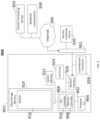
- FIG. 1 may be a high level illustration of the root cause analysis system
- FIG. 2 may be an illustration of one embodiment of an aggregator
- FIG. 3 may be an illustration of the system in more detail, including a perspective of multiple correlator nodes
- FIG. 4 may be an illustration of a sample computing device used by the system
- FIG. 5 may be an illustration of a method used by the system
- FIG. 6 may be an illustration of machine learning architecture
- FIG. 7 may be another illustration of machine learning architecture
- FIG. 8 may be an illustration of a user interface showing how a problem has been addressed by the system
- FIG. 9 may be an illustration of data collected and reported by a node related to a neighbor down (intra-frequency);
- FIG. 10 may be an illustration of data collected and reported by a node related to a neighbor down (inter-frequency);
- FIG. 11 may be an illustration of data collected and reported by a node related to a cell being down
- FIG. 12 may be an illustration of a user interface showing how a problem has been addressed by the system
- FIG. 13 may be a sample illustration of problems in a network and how the problems are set to be addressed.
- FIG. 14 may be an illustration of the computing elements in a robot used by the system.
- FIG. 1 may illustrate one embodiment of a system 100 for root cause analysis (RCA) of wireless network failures.
- Root cause analysis is often used to attempt to identify the origin of a problem. As part of the daily tasks of RF engineers, it may be necessary to investigate what could be the cause for key performance indicators (KPI) fluctuations. If the access failure increased, an engineer would need to manually investigate possible causes of the failures.
- the system 100 aims to answer the very challenging question of what causes daily radio access network (RAN) issues and act on the causes.
- RAN radio access network
- RCA may be broken down into a series of steps to find the primary cause of a problem.
- the amount of data in modern communication systems may be overwhelming and lack the value that could be obtained from the data if it was analyzed.
- the claimed system and method describes a root cause analysis for a radio access network (RAN).
- RAN radio access network
- Some aspects include focusing on real and most common root cause analysis cases, having a system that may be easily expanded, estimates the root cause when several root cause may apply and may take actions.
- multiple people may be able to work on different components without conflict, making it quite efficient for development.
- actions tied to the root cause analysis the system is able to mitigate or eliminate problem automatically.
- Root cause analysis is a systematic process for identifying “root causes” of problems or events and an approach for responding to them. Root cause analysis is based on the basic idea that effective management requires more than merely “putting out fires” for problems that develop, but finding a way to prevent them. Root cause analysis helps pinpoint contributing factors to a problem or event
- Root cause analysis helps organizations avoid the tendency to single out one factor to arrive at the most expedient (but generally incomplete) resolution. Root cause analysis also helps to avoid treating symptoms rather than true, underlying problems that contribute to a problem or event. While root cause analysis is used in a generic sense, there is an implication that a methodology is used in the analysis. Achievement of total prevention by a single intervention is not always possible and root cause analysis may be viewed as an ongoing process that strives for continuous improvement.
- the primary goal of using root cause analysis is to analyze problems or events to identify:
- an aggregator 110 may be part of the system.
- the aggregator 110 may receive data on network anomalies from at least one network node 112 .
- Network nodes 112 may take on a variety of forms.
- the node 112 may be the controlling system for the cellular network.
- network monitoring computers may be considered nodes 112 , as well as any database with relevant data.
- the aggregator 110 may have a processor, a memory and an input output circuit to receive the electronic data from the nodes as described in FIG. 4 .
- the input output circuit may be especially fast and efficient to handle the large amount of data that may flow to it.
- the nodes 112 may gather factual information about the network. Some sample nodes reports (and not limitations) may include data that may indicate a cell is down, that a cellular neighbor station may be down, that a cellular station may have limited capacity, that the tilt of an antenna may have changed, that a hand over list may have changed, that a new cell was activated nearby, that a return (RET) signal is missing, that a neighbor tilt has changed, that software has changed, etc.
- the nodes 112 may logically have a processor, a memory and an input output circuit to communicate the data such as illustrated in FIG. 4 .
- the processor in the nodes 112 may be physically configured to analyze the data from the node 112 and format it according to a protocol or an API.
- the nodes 112 may simply be sensors and may communicate readings, measurements, status, etc. which may be received and processed by the aggregator 110 .
- the nodes 112 may also be thought of as elements of the root cause analysis system 100 and be useful in determining a root cause of a problem.
- FIG. 2 may illustrate a sample aggregator 110 .
- the aggregator 110 may be designed to receive data from one or more data sources and periodically report it to the rest of the system 100 such as the correlator 130 .
- the data may relate to performance of the network and may come from a variety of sources. Some data may come from crowd source data 211 , outside databases and API called data 213 , data from self-organizing networks (SON) 215 , machine learning data 217 and opportunities data 219 .
- SON self-organizing networks
- the system 100 may also receive data that may be useful in self-organizing networks (SON) 215 .
- SON self-organizing networks
- a SON module may be executed to set up the network site. If there is severe weather, a SON module may be executed to address the likely weather impact. High cell churn may result in another SON module being executed. Similarly, an outage may indicate that another module should be started.
- the self-organizing network data 215 may be fed to the system to assist in troubleshooting or root cause analysis.
- the aggregator 110 may have proprietary information/data 221 such as past issues with nodes and past fixes which may be network specific or network operator specific.
- the data may be stored in database such as by topic including parameter changes 231 , neighbor changes 233 , tilt changes 235 , current parameters 237 , current neighbors 239 , changes of neighbors 241 , etc.
- topics may be available and are contemplated.
- the system may also include a correlator 130 which may receive data on network issues.
- FIG. 3 may illustrate a sample system with correlator nodes 130 .
- the correlator may attempt to correlate problems with solutions.
- the data on network issues may represent network status data and may come from one or more aggregators 110 , an anomaly detector 140 , a network watchdog 150 and a configuration manager (CM) watchdog 160 which may be part of the system 100 .
- data may also be received from a machine learning processor 170 .
- the machine learning processor 170 may be part of the correlators 130 .
- the correlators 130 may include a processor, a memory and an input/output circuit as disclosed in FIG. 4 .
- the processor may be physically configured with logic to analyze the data and make some determinations about the data such as what is the most likely cause of a particular problem on a network.
- FIGS. 9 - 11 may illustrate sample correlator 120 and aggregator 110 nodes for data collection.
- the collection may include aggregator data 910 and correlator data 920 .
- the aggregator data 910 may be more factual regarding events on the network while the correlator data may have logic applied to it which may analyze data and determine results based on the logic.
- the data source for the aggregator data 910 may simply be whether a cell site is available at the current time while the correlator data 920 may make the determination based on the aggregator data 910 whether the cell has been down for more than 90% of the time which may indicate the cell is down.
- the machine learning processor 170 may receive data from the correlator 130 .
- the correlator 130 may have already performed some analysis on the data from the aggregator 110 and other network data sources as mentioned in reference to FIGS. 9 - 11 .
- the machine learning processor 170 may receive additional data from a configuration management watchdog 160 .
- the configuration management watchdog 160 may track configuration changes over time and may note when configuration changes have resulted in errors.
- the machine learning processor 170 may also receive notifications from a network watchdog 150 .
- the network watchdog 150 may observe the network and note when obvious problems are occurring or when network performance has dropped.
- the machine learning processor 170 may be physically configured to analyze the data to determine and select a most likely solution from a plurality of solutions based on past problems and previous solutions. For example, a particular problem may have a variety of possible causes with some causes being remote and other causes being more likely. The system may rank the likely causes and start by executing the most likely causes first.
- a machine learning (ML) architecture 300 may be used with the correlator 130 of system 100 in accordance with the current disclosure.
- a machine learning module 170 may include instructions for execution on the processor that implement the machine learning architecture 300 .
- the machine learning architecture 300 may include an input layer 302 , a hidden layer 304 , and an output layer 306 .
- the input layer 302 may include inputs 308 A, 308 B, etc., coupled to the correlator 130 and represent those inputs that are observed from actual network related data.
- the hidden layer 304 may include weighted nodes 310 that have been trained for the transactions being observed.
- Each node 310 of the hidden layer 304 may receive the sum of all inputs 308 A, 308 B, etc., multiplied by a corresponding weight.
- the output layer 306 may present various outcomes 312 based on the input values 308 A, 308 B, etc., and the weighting of the hidden layer 304 .
- the machine learning architecture 300 may be trained to analyze a likely outcome for a given set of inputs based on thousands or even millions of observations of previous network problems and solutions. For example, the architecture 300 may be trained to determine root cause analysis to be associated with the problem data.
- a dataset of inputs may be applied and the weights of the hidden layer 310 may be adjusted for the known outcome (e.g., a transaction analysis baseline) associated with that dataset.
- the weighting accuracy may improve so that the outcome prediction is constantly refined to a more accurate result.
- the problem repository and/or the root cause respectively may including problems, solutions and outcome and may provide datasets for initial training and ongoing refining of the machine learning architecture 300 .
- Additional training of the machine learning architecture 300 may include an machine learning engine (AI engine) 314 providing additional values to one or more controllable inputs 316 so that outcomes may be observed for particular changes to the network related data.
- the values selected may represent different data types such as neighbor tilt, neighbor down, configuration changes and other alternative data presented at various points in the network with the network related data and may be generated at random or by a pseudo-random process.
- the impact may be measured and fed back into the machine learning architecture 300 weighting to allow capture of an impact on a proposed change to the network in order to optimize the network.
- the impact of various different data at different points in the network may be used to predict an outcome for a given set of observed values at the inputs layer 302 .
- data from the hidden layer may be fed to the machine learning engine 314 to generate values for controllable input(s) 316 to optimize the root cause analysis.
- data from the output layer may be fed back into the machine learning engine 314 so that the machine learning engine 314 may, in some embodiments, iterate with different data to determine via the trained machine learning architecture 300 , whether the network related data is accurate, and other determinations.
- the machine learning 170 may determine one or more root causes 323 , create reports 329 such as in FIGS. 8 , 12 and 13 , may determine actions to take 327 and may determine whether alerts 321 are needed.
- create reports 329 such as in FIGS. 8 , 12 and 13
- actions to take 327 may determine whether alerts 321 are needed.
- the machine learning architecture 300 and machine learning engine 314 which may operate inside the machine learning module 170 may include a second instance of a machine learning architecture 400 and/or an additional node layer may be used.
- a network analysis data layer 402 may determine an optimum root cause analysis 404 from observed inputs 404 A, 404 B.
- a analysis layer 406 with outputs 408 A, 408 B, etc., may be used to generate analysis recommendations 411 to an machine learning engine 412 , which in turn, may modify one or more of data generally and the network analysis data in particular when communicating this data via an appropriate SDK.
- the system 100 may also receive data through a data grabber 225 .
- the data grabber 225 may be a high speed data input circuit and may be available to promptly receive and forward data.
- the data grabber 225 may be useful in receiving and forwarding data regarding self-organizing networks (SON) 215 .
- SON self-organizing networks
- the SON 215 data may be fed to the system to assist in troubleshooting or root cause analysis.
- the system may also take into account machine learning anomalies 217 which may indicate a deeper problem.
- the system 100 may also refer to a proprietary databases of previous data and solutions. Each network provider may keep data on root problems, attempted response, successes, failure, time to a response, cost of a response, etc. This data may be useful in determining and refining responses to identified root cause problems.
- the proprietary data may also be used by the machine learning module 170 to identify root causes.
- the system 100 may take a variety of steps once the root causes have been determined and ranked. Some common responses may include (and are limited to) creating and communicating a report, taking a corrective action, creating and communicating an alert and determining and implementing an optimization.
- the system may monitor if the correction has occurred. If the correction has not taken place or the results of the correction are not as desired, the system may take additional steps such as creating an alert to a supervisor. In other embodiments, the system may proceed through the determined likely root causes and implement one after the other until all the root cause solutions have been tried and then if none of the solutions are effective, an alert may be created to a supervisor.
- a cost function 311 may be part of the system to assess which is the most likely root cause among all the events detected by the correlators. For example, in some instances, the increase in dropped calls in an area may have been caused by detected correlator events like antenna tilt change, a cell being down and a parameter change. Such cost function 311 analyzes the three detected cases and determines the likelihood of each one being the main factor that cause the issue.
- the cost function 311 may have a processor, a memory and an input/output circuit such as illustrated in FIG. 4 .
- the processor in the cost function 311 may be physically configured according to an algorithm that determines the appropriate solution in view of the time, cost and labor required.
- the algorithm may be improved over time using machine learning to analyze past attempted fixes and the results.
- FIG. 5 may illustrate a method used by the system 100 .
- network data may be collected at network nodes 112 .
- the data may take in a variety of aspects of the network. Examples of the data may include whether parameters of elements of the network have changed, whether there have been any network outages identified by the node, whether there have been any neighbor changes noticed by the node, whether there has been any changes in tilt to the node in question or on any neighbor nodes, whether there have been any alarms detected by the node, any from any other data gathering nodes on the network.
- Some sample illustrations of node data may be illustrated in FIG. 9 - 11 .
- the network data may be communicated to an aggregator 110 .
- the aggregator 110 may aggregated the network data into aggregate data.
- the data may be reviewed for duplicates or for changes that are more recent than older data.
- the aggregator data 910 may be primarily factual about the status of elements of the network.
- the aggregate data may be communicated to a correlator 130 .
- the correlator 130 may take in data from the aggregator 110 and analyze it. In an attempt to find conclusions about the cause of identified problems on the network
- anomaly data from an anomaly detector 140 may be communicated to the correlator 130 .
- the anomaly data may come from an anomaly detector 140 or from other nodes on the network.
- the aggregate data and anomaly data may be analyzed by the correlator 130 to determine root cause data.
- the aggregate data and anomaly data may have been studied previously and the most likely root cause from past experience may be stored in a memory.
- the aggregate data and anomaly data may be analyzed to determine the most likely caused based on past experience.
- a machine learning processor 170 may receive data from the root cause analysis performed in the correlator 130 .
- the data may include the root cause data from the correlator 130 , configuration data from a configuration management watchdog 160 and data from a network watchdog 150 .
- the machine learning 170 may be used to improve the identified causes of network problems over time. By studying large amounts of data over time, the ability to identify likely causes may be improved by using machine learning 170 to study the problems and solutions.
- the data may be analyzed to determine and select a most likely solution from a plurality of solutions based on past problems and previous solutions.
- the machine learning 170 may improve the identification of problems and solutions. Further, the machine learning 170 may be able to see problems and solutions in a different way.
- a root cause analysis operator or evaluator 311 ( FIG. 4 ) possible solutions may be analyzed. Some solutions may be more relevant for the event
- the analysis 311 may take into account the correlator event type and radio frequency analysis of the various solutions and outputs 317 and may take into the need created by the problem. For example, it a problem has created a total outage, a more aggressive solution may be given a heavier weight. If a problem is more of an annoyance, a less aggressive solution may be given a heavier weight.
- a ranking of possible solutions may be determined.
- the level of the problem may affect the weight given to the various solutions. For example, a critical problem may allow responses that are expensive but will work quickly may be ranked higher. Similarly, a minor problem may allow for responses that take longer time and cost less.
- a response to the root cause may be created by following the ranking of possible solutions.
- the root cause analysis attempts to determine the cause of a problem on the network. However, finding a specific, single cause may be a challenge. There may be instances where more than one cause may be determined as being a possible root cause. Thus, the causes may be ranked in probability order 325 of being most likely to be the root cause. Logically, each root cause may have more than one solution or responses and the solutions/responses may be ranked according to the likelihood of success.
- the solutions/responses may be further refined using machine learning 170 to review past root causes and proposed solutions. By observing which solutions worked for the root cause, the best solutions based on past performance may be determined. Logically, the best performing response/solution may change over time as the network may change. For example, a response/solution for a 3G system may not be appropriate for a 5G system. Possible solutions may include optimizations 319 , alerts 321 , root cause analysis refinements 323 , creating a probability list of solutions 325 and actions to address the root cause 327 . In addition, the possible solutions may vary over time and over dates as some times and dates may be less busy while other times and dates may be very busy making a solution more imperative.
- the response or action 327 to address the current root cause under analysis may be communicated to the network.
- the response 327 may take on a variety of forms from adjusting antenna tilt to changing a configuration.
- the response may follow a protocol and may be encrypted for security before it is communicated.
- additional machinery such as purpose built robots 1400 ( FIG. 14 ) may be part of the response or action that may be a solution.
- an antenna may be jammed in a non optimal direction.
- a robot 1400 may be programmed to position itself, grab the antenna and use force to adjust the antenna.
- the robot 1400 may also have image sensors that may be used to identify the cause of the problem.
- the robot 1400 may also have force sensors that may recognize when the force is too great and may damage the antenna.
- Other robots 1400 may be used in a similar manner. For example, if a power supply in a server has failed, the robot 1400 may recognize a series of steps that may be taken to fix the problem.
- the steps may include obtaining a new power supply from storage, obtaining the tools necessary to open the server, moving to the server, turning off power to the server, removing the server case, removing the broken power supply, replacing the case, turning on power to the server, testing the server and recycling the failed power supply.
- the robot 1400 may also communicate a message that the failed power supply is ready to be recycled and that a new spare power supply should be ordered for the inventory.
- the robot 1400 may communicate with a variety of systems such as inventory, accounting, scheduling, maintenance, error logs and best practices database.
- the robots 1400 may be designed for a generic task or may be purpose designed for a specific task.
- the robots 1400 may have a variety of tools and access to additional tools.
- the robots 1400 may have interchangeable tools, arms, legs, tracks or other climbing and grabbing tools.
- the robots may have a power source 1410 , a processor 1420 , a memory 1430 , an input output circuit 1450 , an antenna 1440 , a vision device (no shown), along with motors to drive a variety of mechanical devices 1460 such as tools to perform tasks.
- the parts of the robots 1400 may be interchangeable and may perform a variety of functions.
- the robots 1400 may have stored solutions to known problems, may have access to stored solutions or may have partial solutions and may learn solutions by piecing together a plurality of known solutions to create a new solution.
- a server may have a hard drive error.
- the process to open the server may be the same as when open the server to replace a power supply.
- the solution of opening the server to replace the power supply may be used as part of a procedure to open the server and replace a hard drive.
- the robot 1400 may observe a worker manually correct a problem, translate the worker's actions into actions performable by the robot and storing the sequence in a library.
- the robot 1400 may also query other equipment to see if similar problems have been faced, how the problems were fixed and what tools may be needed to implement that fix on the problem at hand.
- the information may be stored in a central database or may be distributed across a network of nodes.
- the various solutions may be reviewed to find the optimal solution to a repeat problem.
- the problem and solution may be pushed to other nodes or may be available upon being queried.
- the robots 1400 may be in separate locations or the same location.
- the system 100 may monitor if the response has the desired result. For example, if there are a number of dropped calls identified as the problem, the result of the root cause analysis should result in less dropped calls.
- a decision may be made whether the response had the desired result. If the response had the desired result, at block 565 , the response may be added to a database for future reference and the method may end.
- additional responses may be attempted.
- the possible responses may be ranked from most likely to least likely.
- the system may iterate through the possible solutions until all the solutions have been tried or until one has the desired results. For example, the second ranked solution may fix the problem and the system may stop as there is no need for future solutions.
- an alert 321 may be communicated to a supervisor.
- the alert 321 may take on a variety of forms.
- the alert may be an email or communication to a supervisor.
- the communication may be an alert to another software or hardware system that the problem should be given greater importance.
- FIG. 8 may illustrate an example of a user interface that may be generated by the system 100 . If the dropped call rate (DCR) has increase, a cell responsible for the dropped calls may be identified 805 . The root cause analysis may be listed 810 and a further description may be given describing the root cause analysis system 815 . An action may be listed 820 that was taken to address the problem and an indication 825 may be given whether the action was taken. If the action was an auto correcting action 830 , it may be noted. If an alert was necessary 835 , it may also be noted. Finally, other possible actions 840 may be available to be selected.
- DCR dropped call rate
- FIGS. 9 - 12 may illustrate the readings and logic of some sample nodes.
- the nodes may collect data about aspects of the network and report that data to the aggregator 110 .
- the nodes may have logic that may be communicated to the correlator nodes 120 .
- FIG. 9 may show a sample node reading for a neighbor down (intra).
- Data sources may include a reading on cell availability and neighbor handover attempts.
- the logic which may be communicated to the correlator 120 may include the results of an analysis of the neighbor handoff attempts.
- FIG. 10 may show a sample node reading for a neighbor down (inter).
- Data sources 1020 may include a reading on cell availability and neighbor handover attempts.
- the logic 1010 which may be communicated to the correlator 120 may include the results of an analysis of the neighbor handoff attempts.
- FIG. 11 may show a sample node reading when a cell is down.
- the data to the aggregators is a relatively simple report of the cell availability.
- the data to the correlator may analyze 1120 whether the cell has been down for greater than 90 percent of the time by reviewing the data sources 1110 of cell availability.
- FIG. 12 may illustrate how cell performance may change when a problem is faced and addressed. As may be seen, confidence 1210 of a root cause 1220 may be determined along with the description 1230 and appropriate action 1240 in response. The user interface may indicate whether the action ran 1250 , whether it was an auto correct action 1260 , whether the action was validated 1270 and whether an alert was sent 1280 and whether additional steps need to be taken 1290 .
- FIG. 13 may illustrate a user interface that may allow numerous problems and corrective actions to be reviewed.
- the various problems may be in categories 1310 which may be expanded 1320 and the various descriptions and actions may be reviewed.
- the automatic responses may be reviewed.
- the robot 1400 may include a power source 1410 , a processor 1420 , a memory 1430 , an antenna 1440 and input output circuit 1450 and a mechanical device 1460 .
- the power source 1410 may be a battery, a capacitor, a solar cell, a wireless power source that may be awoken when in range of a wireless power source or a combination of all of these power sources.
- the processor 1420 may be a purpose built processor designed to minimize power use to conserve battery light.
- the capabilities of the processor 1420 may be adapted to work with the mechanical device 1460 in the robot 1400 as the mechanical device 1460 may purpose built also.
- FIG. 4 may be a sample computing device used by the system 100 .
- the various servers and computing devices described herein may have a similar design but the servers may be modified to specifically excel at the services provided.
- the computing device 901 may include a processor 902 that may be coupled to an interconnection bus.
- the processor 902 may include a register set or register space 904 , which is depicted in FIG. 4 as being entirely on-chip, but which may alternatively be located entirely or partially off-chip and directly coupled to the processor 902 via dedicated electrical connections and/or via the interconnection bus.
- the processor 902 may be any suitable processor, processing unit or microprocessor.
- the computing device 901 may be a multi-processor device and, thus, may include one or more additional processors that are identical or similar to the processor 902 and that are communicatively coupled to the interconnection bus.
- the processor 902 of FIG. 4 may be coupled to a chipset 906 , which includes a memory controller 908 and a peripheral input/output (I/O) controller 910 .
- a chipset typically provides I/O and memory management functions as well as a plurality of general purpose and/or special purpose registers, timers, etc. that are accessible or used by one or more processors coupled to the chipset 906 .
- the memory controller 908 may perform functions that enable the processor 902 (or processors if there are multiple processors) to access a system memory 912 and a mass storage memory 914 , that may include either or both of an in-memory cache (e.g., a cache within the memory 912 ) or an on-disk cache (e.g., a cache within the mass storage memory 914 ).
- an in-memory cache e.g., a cache within the memory 912
- an on-disk cache e.g., a cache within the mass storage memory 914 .
- the system memory 912 may include any desired type of volatile and/or non-volatile memory such as, for example, static random access memory (SRAM), dynamic random access memory (DRAM), flash memory, read-only memory (ROM), etc.
- the mass storage memory 914 may include any desired type of mass storage device.
- the computing device 901 may be used to implement a module 916 (e.g., the various modules as herein described).
- the mass storage memory 914 may include a hard disk drive, an optical drive, a tape storage device, a solid-state memory (e.g., a flash memory, a RAM memory, etc.), a magnetic memory (e.g., a hard drive), or any other memory suitable for mass storage.
- module, block, function, operation, procedure, routine, step, and method refer to tangible computer program logic or tangible computer executable instructions that provide the specified functionality to the computing device 901 , the systems and methods described herein.
- a module, block, function, operation, procedure, routine, step, and method may be implemented in hardware, firmware, and/or software.
- program modules and routines are stored in mass storage memory 914 , loaded into system memory 912 , and executed by a processor 902 or may be provided from computer program products that are stored in tangible computer-readable storage mediums (e.g. RAM, hard disk, optical/magnetic media, etc.).
- the peripheral I/O controller 910 may perform functions that enable the processor 902 to communicate with a peripheral input/output (I/O) device 924 , a network interface 926 , a local network transceiver 928 , (via the network interface 926 ) via a peripheral I/O bus.
- the I/O device 924 may be any desired type of I/O device such as, for example, a keyboard, a display (e.g., a liquid crystal display (LCD), a cathode ray tube (CRT) display, etc.), a navigation device (e.g., a mouse, a trackball, a capacitive touch pad, a joystick, etc.), etc.
- the I/O device 924 may be used with the module 916 , etc., to receive data from the transceiver 928 , send the data to the components of the system 100 , and perform any operations related to the methods as described herein.
- the local network transceiver 928 may include support for a Wi-Fi network, Bluetooth, Infrared, cellular, or other wireless data transmission protocols.
- one element may simultaneously support each of the various wireless protocols employed by the computing device 901 .
- a software-defined radio may be able to support multiple protocols via downloadable instructions.
- the computing device 901 may be able to periodically poll for visible wireless network transmitters (both cellular and local network) on a periodic basis.
- the network interface 926 may be, for example, an Ethernet device, an asynchronous transfer mode (ATM) device, an 802.11 wireless interface device, a DSL modem, a cable modem, a cellular modem, etc., that enables the system 100 to communicate with another computer system having at least the elements described in relation to the system 100 .
- ATM asynchronous transfer mode
- 802.11 wireless interface device a DSL modem
- cable modem a cable modem
- a cellular modem etc.
- the computing environment 900 may also implement the module 916 on a remote computing device 930 .
- the remote computing device 930 may communicate with the computing device 901 over an Ethernet link 932 .
- the module 916 may be retrieved by the computing device 901 from a cloud computing server 934 via the Internet 936 . When using the cloud computing server 934 , the retrieved module 916 may be programmatically linked with the computing device 901 .
- the module 916 may be a collection of various software platforms including machine learning software and document creation software or may also be a Java® applet executing within a Java® Virtual Machine (JVM) environment resident in the computing device 901 or the remote computing device 930 .
- the module 916 may also be a “plug-in” adapted to execute in a web-browser located on the computing devices 901 and 930 .
- the module 916 may communicate with back end components 938 via the Internet 936 .
- the system 900 may include but is not limited to any combination of a LAN, a MAN, a WAN, a mobile, a wired or wireless network, a private network, or a virtual private network.
- a remote computing device 930 is illustrated in FIG. 7 to simplify and clarify the description, it is understood that any number of client computers are supported and may be in communication within the system 900 .
- Modules may constitute either software modules (e.g., code or instructions embodied on a machine-readable medium or in a transmission signal, wherein the code is executed by a processor) or hardware modules.
- a hardware module is tangible unit capable of performing certain operations and may be configured or arranged in a certain manner.
- one or more computer systems e.g., a standalone, client or server computer system
- one or more hardware modules of a computer system e.g., a processor or a group of processors
- software e.g., an application or application portion
- a hardware module may be implemented mechanically or electronically.
- a hardware module may comprise dedicated circuitry or logic that is permanently configured (e.g., as a special-purpose processor, such as a field programmable gate array (FPGA) or an application-specific integrated circuit (ASIC)) to perform certain operations.
- a hardware module may also comprise programmable logic or circuitry (e.g., as encompassed within a general-purpose processor or other programmable processor) that is temporarily configured by software to perform certain operations. It will be appreciated that the decision to implement a hardware module mechanically, in dedicated and permanently configured circuitry, or in temporarily configured circuitry (e.g., configured by software) may be driven by cost and time considerations.
- hardware module should be understood to encompass a tangible entity, be that an entity that is physically constructed, permanently configured (e.g., hardwired), or temporarily configured (e.g., programmed) to operate in a certain manner or to perform certain operations described herein.
- “hardware-implemented module” refers to a hardware module. Considering embodiments in which hardware modules are temporarily configured (e.g., programmed), each of the hardware modules need not be configured or instantiated at any one instance in time. For example, where the hardware modules comprise a general-purpose processor configured using software, the general-purpose processor may be configured as respective different hardware modules at different times. Software may accordingly configure a processor, for example, to constitute a particular hardware module at one instance of time and to constitute a different hardware module at a different instance of time.
- Hardware modules may provide information to, and receive information from, other hardware modules. Accordingly, the described hardware modules may be regarded as being communicatively coupled. Where multiple of such hardware modules exist contemporaneously, communications may be achieved through signal transmission (e.g., over appropriate circuits and buses) that connect the hardware modules. In embodiments in which multiple hardware modules are configured or instantiated at different times, communications between such hardware modules may be achieved, for example, through the storage and retrieval of information in memory structures to which the multiple hardware modules have access. For example, one hardware module may perform an operation and store the output of that operation in a memory device to which it is communicatively coupled. A further hardware module may then, at a later time, access the memory device to retrieve and process the stored output. Hardware modules may also initiate communications with input or output devices, and may operate on a resource (e.g., a collection of information).
- a resource e.g., a collection of information
- processors may be temporarily configured (e.g., by software) or permanently configured to perform the relevant operations. Whether temporarily or permanently configured, such processors may constitute processor-implemented modules that operate to perform one or more operations or functions.
- the modules referred to herein may, in some example embodiments, comprise processor-implemented modules.
- the methods or routines described herein may be at least partially processor-implemented. For example, at least some of the operations of a method may be performed by one or processors or processor-implemented hardware modules. The performance of certain of the operations may be distributed among the one or more processors, not only residing within a single machine, but deployed across a number of machines. In some example embodiments, the processor or processors may be located in a single location (e.g., within a home environment, an office environment or as a server farm), while in other embodiments the processors may be distributed across a number of locations.
- the one or more processors may also operate to support performance of the relevant operations in a “cloud computing” environment or as a “software as a service” (SaaS). For example, at least some of the operations may be performed by a group of computers (as examples of machines including processors), these operations being accessible via a network (e.g., the Internet) and via one or more appropriate interfaces (e.g., application program interfaces (APIs).)
- SaaS software as a service
- the performance of certain of the operations may be distributed among the one or more processors, not only residing within a single machine, but deployed across a number of machines.
- the one or more processors or processor-implemented modules may be located in a single geographic location (e.g., within a home environment, an office environment, or a server farm). In other example embodiments, the one or more processors or processor-implemented modules may be distributed across a number of geographic locations.
- any reference to “some embodiments” or “an embodiment” or “teaching” means that a particular element, feature, structure, or characteristic described in connection with the embodiment is included in at least one embodiment.
- the appearances of the phrase “in some embodiments” or “teachings” in various places in the specification are not necessarily all referring to the same embodiment.
- Coupled and “connected” along with their derivatives.
- some embodiments may be described using the term “coupled” to indicate that two or more elements are in direct physical or electrical contact.
- the term “coupled,” however, may also mean that two or more elements are not in direct contact with each other, but yet still co-operate or interact with each other.
- the embodiments are not limited in this context.
- the design of the system 100 is modular so one part of the system 100 may be adjusted while the rest of the system 100 may continue to operate. Further, solutions to network problems may now be automatically identified through analysis including machine learning and future problems may be automatically addressed through technical solutions which have been ranked on the likelihood of being successful. Further, GUIs may be created to illustrate the system attempting to fix itself. In addition, protocols and APIs may be used to ensure network data and network solutions are systematically shared in a consistent manner across the system 100 .
Landscapes
- Engineering & Computer Science (AREA)
- Theoretical Computer Science (AREA)
- Physics & Mathematics (AREA)
- General Physics & Mathematics (AREA)
- Business, Economics & Management (AREA)
- Human Resources & Organizations (AREA)
- Signal Processing (AREA)
- Computer Networks & Wireless Communication (AREA)
- General Engineering & Computer Science (AREA)
- Mathematical Physics (AREA)
- Quality & Reliability (AREA)
- Entrepreneurship & Innovation (AREA)
- Software Systems (AREA)
- Strategic Management (AREA)
- Artificial Intelligence (AREA)
- Evolutionary Computation (AREA)
- Economics (AREA)
- Educational Administration (AREA)
- Development Economics (AREA)
- Data Mining & Analysis (AREA)
- Computer Vision & Pattern Recognition (AREA)
- Game Theory and Decision Science (AREA)
- Probability & Statistics with Applications (AREA)
- Pure & Applied Mathematics (AREA)
- Automation & Control Theory (AREA)
- Mathematical Analysis (AREA)
- Computing Systems (AREA)
- Algebra (AREA)
- Biomedical Technology (AREA)
- Health & Medical Sciences (AREA)
- General Business, Economics & Management (AREA)
- Mathematical Optimization (AREA)
- Medical Informatics (AREA)
- Marketing (AREA)
- Operations Research (AREA)
- Tourism & Hospitality (AREA)
- Computational Linguistics (AREA)
- Databases & Information Systems (AREA)
- Computer Hardware Design (AREA)
- Mobile Radio Communication Systems (AREA)
Abstract
Description
Claims (20)
Priority Applications (2)
| Application Number | Priority Date | Filing Date | Title |
|---|---|---|---|
| US16/784,441 US11695619B2 (en) | 2019-02-07 | 2020-02-07 | System and method for root cause analysis of call failures in a communication network |
| US18/199,444 US11968076B2 (en) | 2019-02-07 | 2023-05-19 | System and method for root cause analysis of call failures in a communication network |
Applications Claiming Priority (2)
| Application Number | Priority Date | Filing Date | Title |
|---|---|---|---|
| US201962802334P | 2019-02-07 | 2019-02-07 | |
| US16/784,441 US11695619B2 (en) | 2019-02-07 | 2020-02-07 | System and method for root cause analysis of call failures in a communication network |
Related Child Applications (1)
| Application Number | Title | Priority Date | Filing Date |
|---|---|---|---|
| US18/199,444 Continuation US11968076B2 (en) | 2019-02-07 | 2023-05-19 | System and method for root cause analysis of call failures in a communication network |
Publications (2)
| Publication Number | Publication Date |
|---|---|
| US20200259701A1 US20200259701A1 (en) | 2020-08-13 |
| US11695619B2 true US11695619B2 (en) | 2023-07-04 |
Family
ID=71944914
Family Applications (2)
| Application Number | Title | Priority Date | Filing Date |
|---|---|---|---|
| US16/784,441 Active 2042-02-05 US11695619B2 (en) | 2019-02-07 | 2020-02-07 | System and method for root cause analysis of call failures in a communication network |
| US18/199,444 Active US11968076B2 (en) | 2019-02-07 | 2023-05-19 | System and method for root cause analysis of call failures in a communication network |
Family Applications After (1)
| Application Number | Title | Priority Date | Filing Date |
|---|---|---|---|
| US18/199,444 Active US11968076B2 (en) | 2019-02-07 | 2023-05-19 | System and method for root cause analysis of call failures in a communication network |
Country Status (1)
| Country | Link |
|---|---|
| US (2) | US11695619B2 (en) |
Cited By (3)
| Publication number | Priority date | Publication date | Assignee | Title |
|---|---|---|---|---|
| US20230291635A1 (en) * | 2019-02-07 | 2023-09-14 | T-Mobile Usa, Inc. | System and method for root cause analysis of call failures in a communication network |
| US20230353447A1 (en) * | 2020-10-08 | 2023-11-02 | Telefonaktiebolaget Lm Ericsson (Publ) | Root cause analysis |
| US12470494B1 (en) | 2024-06-24 | 2025-11-11 | Ford Global Technologies, Llc | Vehicle and remote computer communication |
Families Citing this family (9)
| Publication number | Priority date | Publication date | Assignee | Title |
|---|---|---|---|---|
| US11513886B2 (en) * | 2021-03-11 | 2022-11-29 | UiPath, Inc. | System and computer-implemented method for managing robotic process automation (RPA) robots |
| US20230069177A1 (en) * | 2021-08-18 | 2023-03-02 | Nvidia Corporation | Data center self-healing |
| US12541785B2 (en) | 2023-03-03 | 2026-02-03 | State Farm Mutual Automobile Insurance Company | Chatbot to assist in vehicle shopping |
| US11831490B1 (en) * | 2023-03-27 | 2023-11-28 | Fmr Llc | Systems, methods, and media for performing information technology service management correlation for infrastructure environment functions |
| US20240330151A1 (en) | 2023-04-03 | 2024-10-03 | State Farm Mutual Automobile Insurance Company | Generative Artificial Intelligence for Source Code Security Vulnerability Inspection and Remediation |
| US12538147B2 (en) * | 2023-05-24 | 2026-01-27 | T-Mobile Usa, Inc. | Determining a root cause of a failed interaction between a mobile device and a wireless telecommunication network |
| CN116933188B (en) * | 2023-06-19 | 2024-09-17 | 江苏师范大学 | Recognition method for evolution stage of network learning resource platform |
| WO2025013031A1 (en) * | 2023-07-12 | 2025-01-16 | Jio Platforms Limited | Method and system for identification of problem causing network nodes and sessions using ladder diagram |
| AT526785B1 (en) * | 2023-08-07 | 2024-07-15 | Creative Bits Og | Device for event-related interruption of a signal line connecting two network interfaces |
Citations (3)
| Publication number | Priority date | Publication date | Assignee | Title |
|---|---|---|---|---|
| US20190239100A1 (en) * | 2018-01-26 | 2019-08-01 | Cisco Technology, Inc. | Machine learning-based approach to network planning using observed patterns |
| US20200052981A1 (en) * | 2018-08-10 | 2020-02-13 | Cisco Technology, Inc. | Machine learning-based client selection and testing in a network assurance system |
| US11138168B2 (en) * | 2017-03-31 | 2021-10-05 | Bank Of America Corporation | Data analysis and support engine |
Family Cites Families (4)
| Publication number | Priority date | Publication date | Assignee | Title |
|---|---|---|---|---|
| WO2017196821A1 (en) * | 2016-05-09 | 2017-11-16 | Strong Force Iot Portfolio 2016, Llc | Methods and systems for the industrial internet of things |
| US11238338B2 (en) * | 2017-04-24 | 2022-02-01 | Intel Corporation | Real time context dependent deep learning |
| US11695619B2 (en) | 2019-02-07 | 2023-07-04 | T-Mobile Usa, Inc. | System and method for root cause analysis of call failures in a communication network |
| US10461421B1 (en) * | 2019-05-07 | 2019-10-29 | Bao Tran | Cellular system |
-
2020
- 2020-02-07 US US16/784,441 patent/US11695619B2/en active Active
-
2023
- 2023-05-19 US US18/199,444 patent/US11968076B2/en active Active
Patent Citations (3)
| Publication number | Priority date | Publication date | Assignee | Title |
|---|---|---|---|---|
| US11138168B2 (en) * | 2017-03-31 | 2021-10-05 | Bank Of America Corporation | Data analysis and support engine |
| US20190239100A1 (en) * | 2018-01-26 | 2019-08-01 | Cisco Technology, Inc. | Machine learning-based approach to network planning using observed patterns |
| US20200052981A1 (en) * | 2018-08-10 | 2020-02-13 | Cisco Technology, Inc. | Machine learning-based client selection and testing in a network assurance system |
Cited By (5)
| Publication number | Priority date | Publication date | Assignee | Title |
|---|---|---|---|---|
| US20230291635A1 (en) * | 2019-02-07 | 2023-09-14 | T-Mobile Usa, Inc. | System and method for root cause analysis of call failures in a communication network |
| US11968076B2 (en) * | 2019-02-07 | 2024-04-23 | T-Mobile Usa, Inc. | System and method for root cause analysis of call failures in a communication network |
| US20230353447A1 (en) * | 2020-10-08 | 2023-11-02 | Telefonaktiebolaget Lm Ericsson (Publ) | Root cause analysis |
| US12531773B2 (en) * | 2020-10-08 | 2026-01-20 | Telefonaktiebolaget Lm Ericsson (Publ) | Root cause analysis |
| US12470494B1 (en) | 2024-06-24 | 2025-11-11 | Ford Global Technologies, Llc | Vehicle and remote computer communication |
Also Published As
| Publication number | Publication date |
|---|---|
| US20200259701A1 (en) | 2020-08-13 |
| US20230291635A1 (en) | 2023-09-14 |
| US11968076B2 (en) | 2024-04-23 |
Similar Documents
| Publication | Publication Date | Title |
|---|---|---|
| US11968076B2 (en) | System and method for root cause analysis of call failures in a communication network | |
| US11868237B2 (en) | Intelligent services for application dependency discovery, reporting, and management tool | |
| US20230267074A1 (en) | Testing agent for application dependency discovery, reporting, and management tool | |
| US20220300290A1 (en) | Determining problem dependencies in application dependency discovery, reporting, and management tool | |
| US20230401114A1 (en) | Dependency analyzer in application dependency discovery, reporting, and management tool | |
| US11620211B2 (en) | Discovery crawler for application dependency discovery, reporting, and management tool | |
| US20250103475A1 (en) | Intelligent Services and Training Agent for Application Dependency Discovery, Reporting and Manageme | |
| US11379292B2 (en) | Baseline modeling for application dependency discovery, reporting, and management tool | |
| US20220036264A1 (en) | Real-time adaptive operations performance management system | |
| US9672085B2 (en) | Adaptive fault diagnosis | |
| US12348990B2 (en) | Automatic troubleshooting system for user-level performance degradation in cellular services | |
| US12470955B2 (en) | Automated AI/ML event management system | |
| WO2020264319A1 (en) | Determining problem dependencies in application dependency discovery, reporting, and management tool | |
| CN120358147A (en) | Monitoring index dependency analysis and topology establishment method and device and computer equipment | |
| US20240121628A1 (en) | Automated ai/ml management of user experiences: system and method | |
| US20260040099A1 (en) | Automated ai/ml event management system | |
| US20260032038A1 (en) | Network service assurance predictive analysis system and method |
Legal Events
| Date | Code | Title | Description |
|---|---|---|---|
| FEPP | Fee payment procedure |
Free format text: ENTITY STATUS SET TO UNDISCOUNTED (ORIGINAL EVENT CODE: BIG.); ENTITY STATUS OF PATENT OWNER: LARGE ENTITY |
|
| STPP | Information on status: patent application and granting procedure in general |
Free format text: DOCKETED NEW CASE - READY FOR EXAMINATION |
|
| AS | Assignment |
Owner name: DEUTSCHE BANK TRUST COMPANY AMERICAS, NEW YORK Free format text: SECURITY AGREEMENT;ASSIGNORS:T-MOBILE USA, INC.;ISBV LLC;T-MOBILE CENTRAL LLC;AND OTHERS;REEL/FRAME:053182/0001 Effective date: 20200401 |
|
| AS | Assignment |
Owner name: SPRINT SPECTRUM LLC, KANSAS Free format text: RELEASE BY SECURED PARTY;ASSIGNOR:DEUTSCHE BANK TRUST COMPANY AMERICAS;REEL/FRAME:062595/0001 Effective date: 20220822 Owner name: SPRINT INTERNATIONAL INCORPORATED, KANSAS Free format text: RELEASE BY SECURED PARTY;ASSIGNOR:DEUTSCHE BANK TRUST COMPANY AMERICAS;REEL/FRAME:062595/0001 Effective date: 20220822 Owner name: SPRINT COMMUNICATIONS COMPANY L.P., KANSAS Free format text: RELEASE BY SECURED PARTY;ASSIGNOR:DEUTSCHE BANK TRUST COMPANY AMERICAS;REEL/FRAME:062595/0001 Effective date: 20220822 Owner name: SPRINTCOM LLC, KANSAS Free format text: RELEASE BY SECURED PARTY;ASSIGNOR:DEUTSCHE BANK TRUST COMPANY AMERICAS;REEL/FRAME:062595/0001 Effective date: 20220822 Owner name: CLEARWIRE IP HOLDINGS LLC, KANSAS Free format text: RELEASE BY SECURED PARTY;ASSIGNOR:DEUTSCHE BANK TRUST COMPANY AMERICAS;REEL/FRAME:062595/0001 Effective date: 20220822 Owner name: CLEARWIRE COMMUNICATIONS LLC, KANSAS Free format text: RELEASE BY SECURED PARTY;ASSIGNOR:DEUTSCHE BANK TRUST COMPANY AMERICAS;REEL/FRAME:062595/0001 Effective date: 20220822 Owner name: BOOST WORLDWIDE, LLC, KANSAS Free format text: RELEASE BY SECURED PARTY;ASSIGNOR:DEUTSCHE BANK TRUST COMPANY AMERICAS;REEL/FRAME:062595/0001 Effective date: 20220822 Owner name: ASSURANCE WIRELESS USA, L.P., KANSAS Free format text: RELEASE BY SECURED PARTY;ASSIGNOR:DEUTSCHE BANK TRUST COMPANY AMERICAS;REEL/FRAME:062595/0001 Effective date: 20220822 Owner name: T-MOBILE USA, INC., WASHINGTON Free format text: RELEASE BY SECURED PARTY;ASSIGNOR:DEUTSCHE BANK TRUST COMPANY AMERICAS;REEL/FRAME:062595/0001 Effective date: 20220822 Owner name: T-MOBILE CENTRAL LLC, WASHINGTON Free format text: RELEASE BY SECURED PARTY;ASSIGNOR:DEUTSCHE BANK TRUST COMPANY AMERICAS;REEL/FRAME:062595/0001 Effective date: 20220822 Owner name: PUSHSPRING, LLC, WASHINGTON Free format text: RELEASE BY SECURED PARTY;ASSIGNOR:DEUTSCHE BANK TRUST COMPANY AMERICAS;REEL/FRAME:062595/0001 Effective date: 20220822 Owner name: LAYER3 TV, LLC, WASHINGTON Free format text: RELEASE BY SECURED PARTY;ASSIGNOR:DEUTSCHE BANK TRUST COMPANY AMERICAS;REEL/FRAME:062595/0001 Effective date: 20220822 Owner name: IBSV LLC, WASHINGTON Free format text: RELEASE BY SECURED PARTY;ASSIGNOR:DEUTSCHE BANK TRUST COMPANY AMERICAS;REEL/FRAME:062595/0001 Effective date: 20220822 Owner name: IBSV LLC, WASHINGTON Free format text: RELEASE OF SECURITY INTEREST;ASSIGNOR:DEUTSCHE BANK TRUST COMPANY AMERICAS;REEL/FRAME:062595/0001 Effective date: 20220822 Owner name: LAYER3 TV, LLC, WASHINGTON Free format text: RELEASE OF SECURITY INTEREST;ASSIGNOR:DEUTSCHE BANK TRUST COMPANY AMERICAS;REEL/FRAME:062595/0001 Effective date: 20220822 Owner name: PUSHSPRING, LLC, WASHINGTON Free format text: RELEASE OF SECURITY INTEREST;ASSIGNOR:DEUTSCHE BANK TRUST COMPANY AMERICAS;REEL/FRAME:062595/0001 Effective date: 20220822 Owner name: T-MOBILE CENTRAL LLC, WASHINGTON Free format text: RELEASE OF SECURITY INTEREST;ASSIGNOR:DEUTSCHE BANK TRUST COMPANY AMERICAS;REEL/FRAME:062595/0001 Effective date: 20220822 Owner name: T-MOBILE USA, INC., WASHINGTON Free format text: RELEASE OF SECURITY INTEREST;ASSIGNOR:DEUTSCHE BANK TRUST COMPANY AMERICAS;REEL/FRAME:062595/0001 Effective date: 20220822 Owner name: ASSURANCE WIRELESS USA, L.P., KANSAS Free format text: RELEASE OF SECURITY INTEREST;ASSIGNOR:DEUTSCHE BANK TRUST COMPANY AMERICAS;REEL/FRAME:062595/0001 Effective date: 20220822 Owner name: BOOST WORLDWIDE, LLC, KANSAS Free format text: RELEASE OF SECURITY INTEREST;ASSIGNOR:DEUTSCHE BANK TRUST COMPANY AMERICAS;REEL/FRAME:062595/0001 Effective date: 20220822 Owner name: CLEARWIRE COMMUNICATIONS LLC, KANSAS Free format text: RELEASE OF SECURITY INTEREST;ASSIGNOR:DEUTSCHE BANK TRUST COMPANY AMERICAS;REEL/FRAME:062595/0001 Effective date: 20220822 Owner name: CLEARWIRE IP HOLDINGS LLC, KANSAS Free format text: RELEASE OF SECURITY INTEREST;ASSIGNOR:DEUTSCHE BANK TRUST COMPANY AMERICAS;REEL/FRAME:062595/0001 Effective date: 20220822 Owner name: SPRINTCOM LLC, KANSAS Free format text: RELEASE OF SECURITY INTEREST;ASSIGNOR:DEUTSCHE BANK TRUST COMPANY AMERICAS;REEL/FRAME:062595/0001 Effective date: 20220822 Owner name: SPRINT COMMUNICATIONS COMPANY L.P., KANSAS Free format text: RELEASE OF SECURITY INTEREST;ASSIGNOR:DEUTSCHE BANK TRUST COMPANY AMERICAS;REEL/FRAME:062595/0001 Effective date: 20220822 Owner name: SPRINT INTERNATIONAL INCORPORATED, KANSAS Free format text: RELEASE OF SECURITY INTEREST;ASSIGNOR:DEUTSCHE BANK TRUST COMPANY AMERICAS;REEL/FRAME:062595/0001 Effective date: 20220822 Owner name: SPRINT SPECTRUM LLC, KANSAS Free format text: RELEASE OF SECURITY INTEREST;ASSIGNOR:DEUTSCHE BANK TRUST COMPANY AMERICAS;REEL/FRAME:062595/0001 Effective date: 20220822 |
|
| STPP | Information on status: patent application and granting procedure in general |
Free format text: NON FINAL ACTION MAILED |
|
| STCF | Information on status: patent grant |
Free format text: PATENTED CASE |