US11670152B2 - Alarm notification system - Google Patents
Alarm notification system Download PDFInfo
- Publication number
- US11670152B2 US11670152B2 US15/735,106 US201615735106A US11670152B2 US 11670152 B2 US11670152 B2 US 11670152B2 US 201615735106 A US201615735106 A US 201615735106A US 11670152 B2 US11670152 B2 US 11670152B2
- Authority
- US
- United States
- Prior art keywords
- user
- electronic device
- personal electronic
- message
- contact
- Prior art date
- Legal status (The legal status is an assumption and is not a legal conclusion. Google has not performed a legal analysis and makes no representation as to the accuracy of the status listed.)
- Active, expires
Links
- 238000004891 communication Methods 0.000 claims description 49
- 230000004044 response Effects 0.000 claims description 24
- 238000012544 monitoring process Methods 0.000 claims description 13
- 230000009471 action Effects 0.000 claims description 11
- 239000004165 Methyl ester of fatty acids Substances 0.000 claims description 6
- 230000005540 biological transmission Effects 0.000 claims description 4
- 238000000034 method Methods 0.000 abstract description 25
- 238000010586 diagram Methods 0.000 description 19
- 230000006870 function Effects 0.000 description 8
- 230000009429 distress Effects 0.000 description 6
- 230000011664 signaling Effects 0.000 description 4
- 230000010354 integration Effects 0.000 description 3
- 230000008569 process Effects 0.000 description 3
- 238000003490 calendering Methods 0.000 description 2
- 238000013479 data entry Methods 0.000 description 2
- 230000000977 initiatory effect Effects 0.000 description 2
- 239000007921 spray Substances 0.000 description 2
- 239000000126 substance Substances 0.000 description 2
- 235000009421 Myristica fragrans Nutrition 0.000 description 1
- 101150013568 US16 gene Proteins 0.000 description 1
- 208000027418 Wounds and injury Diseases 0.000 description 1
- 230000003213 activating effect Effects 0.000 description 1
- 239000008186 active pharmaceutical agent Substances 0.000 description 1
- 230000002411 adverse Effects 0.000 description 1
- 230000004075 alteration Effects 0.000 description 1
- 230000003466 anti-cipated effect Effects 0.000 description 1
- 230000008901 benefit Effects 0.000 description 1
- 238000012790 confirmation Methods 0.000 description 1
- 230000006378 damage Effects 0.000 description 1
- 230000000881 depressing effect Effects 0.000 description 1
- 238000011161 development Methods 0.000 description 1
- 208000014674 injury Diseases 0.000 description 1
- 239000001115 mace Substances 0.000 description 1
- 239000000463 material Substances 0.000 description 1
- 230000001459 mortal effect Effects 0.000 description 1
- 230000003287 optical effect Effects 0.000 description 1
- 230000008092 positive effect Effects 0.000 description 1
- 238000011160 research Methods 0.000 description 1
- 210000000707 wrist Anatomy 0.000 description 1
Images


Classifications
-
- G—PHYSICS
- G08—SIGNALLING
- G08B—SIGNALLING OR CALLING SYSTEMS; ORDER TELEGRAPHS; ALARM SYSTEMS
- G08B21/00—Alarms responsive to a single specified undesired or abnormal condition and not otherwise provided for
- G08B21/02—Alarms for ensuring the safety of persons
-
- G—PHYSICS
- G08—SIGNALLING
- G08B—SIGNALLING OR CALLING SYSTEMS; ORDER TELEGRAPHS; ALARM SYSTEMS
- G08B21/00—Alarms responsive to a single specified undesired or abnormal condition and not otherwise provided for
- G08B21/02—Alarms for ensuring the safety of persons
- G08B21/04—Alarms for ensuring the safety of persons responsive to non-activity, e.g. of elderly persons
- G08B21/0407—Alarms for ensuring the safety of persons responsive to non-activity, e.g. of elderly persons based on behaviour analysis
- G08B21/0415—Alarms for ensuring the safety of persons responsive to non-activity, e.g. of elderly persons based on behaviour analysis detecting absence of activity per se
-
- G—PHYSICS
- G08—SIGNALLING
- G08B—SIGNALLING OR CALLING SYSTEMS; ORDER TELEGRAPHS; ALARM SYSTEMS
- G08B21/00—Alarms responsive to a single specified undesired or abnormal condition and not otherwise provided for
- G08B21/02—Alarms for ensuring the safety of persons
- G08B21/04—Alarms for ensuring the safety of persons responsive to non-activity, e.g. of elderly persons
-
- G—PHYSICS
- G08—SIGNALLING
- G08B—SIGNALLING OR CALLING SYSTEMS; ORDER TELEGRAPHS; ALARM SYSTEMS
- G08B21/00—Alarms responsive to a single specified undesired or abnormal condition and not otherwise provided for
- G08B21/02—Alarms for ensuring the safety of persons
- G08B21/04—Alarms for ensuring the safety of persons responsive to non-activity, e.g. of elderly persons
- G08B21/0407—Alarms for ensuring the safety of persons responsive to non-activity, e.g. of elderly persons based on behaviour analysis
- G08B21/0423—Alarms for ensuring the safety of persons responsive to non-activity, e.g. of elderly persons based on behaviour analysis detecting deviation from an expected pattern of behaviour or schedule
-
- G—PHYSICS
- G08—SIGNALLING
- G08B—SIGNALLING OR CALLING SYSTEMS; ORDER TELEGRAPHS; ALARM SYSTEMS
- G08B21/00—Alarms responsive to a single specified undesired or abnormal condition and not otherwise provided for
- G08B21/02—Alarms for ensuring the safety of persons
- G08B21/04—Alarms for ensuring the safety of persons responsive to non-activity, e.g. of elderly persons
- G08B21/0438—Sensor means for detecting
- G08B21/0453—Sensor means for detecting worn on the body to detect health condition by physiological monitoring, e.g. electrocardiogram, temperature, breathing
-
- G—PHYSICS
- G08—SIGNALLING
- G08B—SIGNALLING OR CALLING SYSTEMS; ORDER TELEGRAPHS; ALARM SYSTEMS
- G08B25/00—Alarm systems in which the location of the alarm condition is signalled to a central station, e.g. fire or police telegraphic systems
- G08B25/001—Alarm cancelling procedures or alarm forwarding decisions, e.g. based on absence of alarm confirmation
-
- G—PHYSICS
- G08—SIGNALLING
- G08B—SIGNALLING OR CALLING SYSTEMS; ORDER TELEGRAPHS; ALARM SYSTEMS
- G08B25/00—Alarm systems in which the location of the alarm condition is signalled to a central station, e.g. fire or police telegraphic systems
- G08B25/01—Alarm systems in which the location of the alarm condition is signalled to a central station, e.g. fire or police telegraphic systems characterised by the transmission medium
- G08B25/012—Alarm systems in which the location of the alarm condition is signalled to a central station, e.g. fire or police telegraphic systems characterised by the transmission medium using recorded signals, e.g. speech
-
- G—PHYSICS
- G08—SIGNALLING
- G08B—SIGNALLING OR CALLING SYSTEMS; ORDER TELEGRAPHS; ALARM SYSTEMS
- G08B25/00—Alarm systems in which the location of the alarm condition is signalled to a central station, e.g. fire or police telegraphic systems
- G08B25/01—Alarm systems in which the location of the alarm condition is signalled to a central station, e.g. fire or police telegraphic systems characterised by the transmission medium
- G08B25/10—Alarm systems in which the location of the alarm condition is signalled to a central station, e.g. fire or police telegraphic systems characterised by the transmission medium using wireless transmission systems
-
- H—ELECTRICITY
- H04—ELECTRIC COMMUNICATION TECHNIQUE
- H04M—TELEPHONIC COMMUNICATION
- H04M11/00—Telephonic communication systems specially adapted for combination with other electrical systems
- H04M11/04—Telephonic communication systems specially adapted for combination with other electrical systems with alarm systems, e.g. fire, police or burglar alarm systems
-
- H—ELECTRICITY
- H04—ELECTRIC COMMUNICATION TECHNIQUE
- H04W—WIRELESS COMMUNICATION NETWORKS
- H04W4/00—Services specially adapted for wireless communication networks; Facilities therefor
- H04W4/12—Messaging; Mailboxes; Announcements
- H04W4/14—Short messaging services, e.g. short message services [SMS] or unstructured supplementary service data [USSD]
-
- H—ELECTRICITY
- H04—ELECTRIC COMMUNICATION TECHNIQUE
- H04W—WIRELESS COMMUNICATION NETWORKS
- H04W4/00—Services specially adapted for wireless communication networks; Facilities therefor
- H04W4/90—Services for handling of emergency or hazardous situations, e.g. earthquake and tsunami warning systems [ETWS]
Definitions
- This invention relates to the field of devices, systems and methods for personal protection. More specifically, the invention relates to the field of notification systems that may notify authorities or other designated individuals in the event a user is in personal danger, is missing, is unable to respond, has directly signaled that they are in distress or otherwise may be subject to an unsafe condition or environment.
- Devices that have historically been utilized for personal protection and/or notification of a designated individual or authorities in the event in which a user is subjected to a personal danger typical rely upon some positive action to be taken by the user.
- certain devices have been suggested as personal safety devices such as whistles, handguns, spray containers containing a defensive chemicals such as Mace®, the use of cell phones to dial 911 in case of an emergency, and other like devices and systems which require affirmative action by the user if they should find themselves in a dangerous condition or environment, or under personal threat.
- a significant drawback of the systems and devices of the prior art is that they require affirmative action to be taken by the user. Thus, if the user is surprised or caught unaware so as to allow an attacker to disable their ability to take the affirmative action, no distress or other signal can be communicated by the victim, leaving them in danger which may include mortal peril.
- This drawback of the prior art is a significant one, because there are many situations which arise in which a victim may be caught unawares and rendered unable to, for example, dial 911, signal using a whistle or other device, or reach into a purse or other container to retrieve a weapon such as a handgun or defensive chemical spray. In these situations a victim may be caught unawares, rendered defenseless, and attacked without any opportunity for the victim to signal for help.
- Such situations include but are not limited to real estate professionals who may be showing properties to potential participants in real estate transaction; individuals who are alone with others in social situations such as, for example, dating; children who may be participating in events outside of their parents supervision or returning home from school while their parents are at work; elderly or physically challenged individuals who live alone or may be taking, for example, trips or extended vacations without companions; and numerous other like situations.
- the present invention overcomes the shortcomings of the prior art by providing a system and method for alerting a third party that an individual may have encountered a threat to their personal safety, or may have suffered a medical event, that has rendered them unable to call for help.
- FIG. 1 depicts a system diagram of an embodiment of the personal protection system of the invention.
- FIG. 2 depicts a flowchart of an embodiment of the system of the invention, depicting the user login step; step of user identification of alarm information contacts, plans for meetings and the like; step of updating the alarm database; step of system monitoring alarms; and the steps related to verifying whether it is time for a user to check in and initiating the check-in procedure.
- FIG. 3 depicts a flowchart of an embodiment of the system of the invention, depicting the predetermined action steps and the system responses to possible user replies, including a no-reply condition.
- FIG. 4 A depicts a flow diagram of steps of the invention for entering contact information.
- FIG. 4 B depicts a flow diagram of steps of the invention for adding events to a user's electronic calendar and for enabling geolocation tracking.
- FIG. 4 C depicts a flow diagram of steps of the invention for monitoring whether a user has arrived at, or moved from, an event location.
- FIG. 4 D depicts a flow diagram for check-in with a user by calling a user's cell phone.
- FIG. 4 E depicts a flow diagram for check-in with a user by sending a message such as an SMS message or pre-recorded voice message to a user's personal electronic device, which may be any electronic device capable of receiving the message such as a cell phone, tablet or other electronic device.
- a message such as an SMS message or pre-recorded voice message
- a user's personal electronic device which may be any electronic device capable of receiving the message such as a cell phone, tablet or other electronic device.
- FIG. 5 depicts a flow diagram for selecting an embodiment of the invention in which a user may designate an event type is depicted.
- FIG. 6 depicts a flow diagram for integration with a fitness device, and for monitoring biological data of the user.
- FIG. 7 depicts a flow diagram for identifying an emergency contact, and for querying a prospective emergency contact to ascertain whether the emergency contact accepts the designation of emergency contact, is depicted.
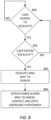
- FIG. 8 depicts a flow diagram for the escalation of an alarm indicating a need for help.
- a user 100 may access the system through any user data terminal 105 that is connected to the Internet by Internet connection 200 .
- User data terminal 105 may be any electronic device that is able receive user data entered by user 100 as described herein, and to communicate said user data with other electronic devices that are also connected to the Internet.
- user data terminal 105 may comprise a controller for executing non-transitory computer executable instructions stored in non-transitory computer readable media in communication with non-transitory physical computer readable media such as an electronic memory, at least one data transceiver for transmitting and receiving data and audio information on links 200 and 210 , a video display, and a user data input device such as a keyboard or touchscreen.
- user data terminal may be a cell phone or other mobile phone, an electronic tablet, a personal digital assistant (PDA), a computer or any other electronic device.
- PDA personal digital assistant
- Personal electronic device 106 may be any electronic device that is able receive user data entered by user 100 as described herein, and to communicate said user data with other electronic devices that are also connected to the Internet.
- personal electronic device 106 may comprise a controller for executing non-transitory computer executable instructions stored in non-transitory computer readable media in communication with non-transitory physical computer readable media such as an electronic media, at least one data transceiver for transmitting and receiving data and audio information on links 208 and 209 , a video display, and a user data input device such as a keyboard or touchscreen.
- a personal electronic device may also comprise a geolocation receiver, such as Global Positioning Receiver, for determining the personal electronic device's geographic location and producing an output signal containing the personal electronic device's geographic location information to the personal electronic device's geographic location controller.
- a geolocation receiver such as Global Positioning Receiver
- user data terminal may be a cell phone, mobile phone, an electronic tablet, a personal digital assistant (PDA) or any other electronic device.
- PDA personal digital assistant
- Server 101 may be any electronic device capable of connecting to the Internet and communicating with user data terminal 105 and user personal electronic device 106 via Internet connection 205 , or, in the case in which user data terminal 105 or personal electronic device 106 is a mobile phone, via a telephone connection 201 .
- Server 101 may comprise a controller for executing non-transitory computer executable instructions stored in server non-transitory computer readable media.
- the server non-transitory computer readable media is in communication with the server controller.
- Server 101 may also comprise as least one transceiver for transmitting and receiving data and telephone audio via links 201 and 205 .
- contact means an individual with whom a user plans to meet at an event.
- event means a location, date and time where a user plans to meet a contact.
- “emergency contact” is a person who has been designated by the user as a person to whom the user desires to send alarms, and who is able to send and receive voice or SMS messages in response to alerts transmitted by server 101 .
- “emergency responder” means an entity such as a law enforcement agency or other government entity that provides response to emergencies.
- An example is the United States 911 and E911 systems.
- alert means an attempt taken by server 101 to contact a user by transmitting an alert to the user at a predetermined check-in time.
- check-in means an attempt by a user 100 to respond to an alert message transmitted by server 101 .
- escalate an alarm means the transmission of an alarm message to at least one pre-determined emergency contact or to an emergency responder, or both.
- SMS Short Message Service
- text message means Short Message Service
- fit device means a device that comprises a wireless transceiver for communication with user data terminal 105 via any data communication link 207 such as an RF or optical data link, for example Bluetooth®, WiFi IEEE 802.11, Near Field Communication (NFC) or the like.
- any data communication link 207 such as an RF or optical data link, for example Bluetooth®, WiFi IEEE 802.11, Near Field Communication (NFC) or the like.
- event information means any, all, or any combination of date and time of an event, geographic location of an event, user identifying indicia, or a contact's identifying indicia.
- contact identifying indicia means any, all, or any combination of the contact's name, the contact's photograph, the contact person's physical address, the contact person's email address, the contact's telephone number, or close associates of the contact.
- user's identifying indicia means any, all, or any combination of a user's name, age, physical address, email address, telephone number, photograph, or other user identifying information.
- the method steps of the invention may be carried out the server, personal electronic devices and user data terminal controllers executing non-transitory computer executable instructions stored in non-transitory computer readable media in server 101 , personal electronic device 106 , or in user data terminal 105 .
- a user may utilize user data terminal 105 to access system server 101 through Internet connection 200 to perform steps of the invention described herein; for example, logging in, providing emergency contact information, entering alarm information, entering information regarding an event, which event information may include location, contact person's name and contact information, the person's photograph, the contact person's physical address, the contact person's email address or telephone number, or other information about the person.
- System server 101 may store this information, for example in a database comprising non-transitory computer readable media, as described below.
- the invention may be carried out in one of two basic modes. In a first mode it is not necessary for a user to carry a personal electronic device, such as a cell phone, on their person. In a second mode, a user may carry a personal electronic device on their person, which allows the user to self-escalate an alarm, respond to alerts or perform other steps of the invention.
- a personal electronic device such as a cell phone
- an aspect of this embodiment of the invention is that user 100 does not need to continue Internet access or telephone access, or any other communication, with system server 101 in order for the system a method of the invention to provide its notification functions.
- the user 100 In the first mode, once the user 100 has entered their information into system server 101 , they do not need to remain in contact with the server in order for the server to perform its alarm notification functions.
- a user 100 may keep on their person a personal electronic device 106 that is able to receive global positioning signal (GPS) information from a GPS satellite constellation.
- GPS global positioning signal
- a user may carry an electronic device that includes a geolocation function such that the user's geo-location information stored on the device.
- the user's device may communicate through Internet connection 205 to system server 101 and in a second mode embodiment, monitor the geo-location of a user so that the user 100 's whereabouts and last location may be logged by system server 101 and reported to an emergency contact or law enforcement in the case that an alarm escalation event occurs.
- Alarm escalation events are described in further detail below.
- System server 101 may also be in communication with a telephone interface, or telco system, 102 , which may communicate directly 203 or indirectly with a telephone system via communication link 203 for the purposes of communicating with at least one pre-designated emergency contact 103 .
- Telco system 102 may also interface with telephone systems that are Internet enabled through the telco internet communication link 202 . In this manner, telco system 102 is operable to place telephone calls as needed, which may occur, for example, in the instance when an alarm escalation event has occurred. In such an event, system server 101 may communicate with telco system 102 to initiate telephone calls to pre-designated contacts identified by the user as emergency contacts, should an alarm escalation event.
- system server 101 may communicate with telco system 102 to initiate telephone calls to emergency responders such as law enforcement agencies 104 , for example, by communication link 206 , which may be any data network, landline, wireless or wired connection, including but not limited to the Internet.
- Telephone interface, or telco system, 102 may communicate with a law enforcement agency or other entity 104 by communicating an emergency message to an emergency response communication point.
- the 911 and E911 systems are examples of emergency response communication points.
- the emergency response communication point is termed a Public Safety Answering Point (PSAP).
- PSAP Public Safety Answering Point
- the invention may communicate with an emergency response communication point by dialing 911, which will cause local law enforcement to respond using a 911 or Enhanced 911 (E 911) system.
- PSAP Public Safety Answering Point
- Emergency contacts 103 may be in communication with the Internet via communication link 204 .
- a user 100 may carry on their person a personal electronic device 106 that is connected to the Internet through communication link 208 and to a telephone network 102 through communication link 209 .
- Both communication links 208 and 209 may be wireless and may be direct, or indirect, as is known in the art.
- FIG. 2 a flowchart of an embodiment of the system of the invention, depicting the user login step; step of user identification of alarm information contacts, plans for meetings and the like; step of updating the alarm database; step of system monitoring alarms; and the steps related to verifying whether it is time for a user to check in and initiating the check-in procedure is depicted.
- a user may log into the system of the invention using login credentials that provide protection, such as password protection, the prohibit unauthorized access to a user's account but allows an user their own account for the purposes described below.
- login credentials that provide protection, such as password protection, the prohibit unauthorized access to a user's account but allows an user their own account for the purposes described below.
- Once a user has logged into the system they may provide information to the system that will be stored by the system and utilized for the various system functions as herein described 301 .
- the type of information provided to the system by a user may include but not be limited to:
- the system of the invention stores the information provided by user 100 by any means known in the ar. Specifically, alert information may stored in alarm database 400 , which may also be stored in non-transitory computer readable media.
- the method of the system of the invention may be carried out by any means known in the art.
- the method of the invention may be carried out by non-transitory computer readable and executable instructions stored in non-transitory computer readable media that is in electrical communication with, or forms a part of, system server 101 . It is not necessary that the non-transitory computer readable media be co-located with system server 101 .
- System server 101 may comprise any system that is capable of executing computer readable instructions to perform the method steps described herein.
- System server 101 may further comprise communication means such as communication transceivers, which may communicate wirelessly or in wired fashion, as is known in the art, to communicate through the Internet and with the other elements of the system as identified herein.
- user 100 may utilize any electronic computing device or other device to communicate with system server 101 as described herein.
- user 100 may use a personal computer, cell phone, tablet computer, personal digital assistant, or any other electronic means known in the art capable of communicating with the Internet via communication link 200 so that it can communicate with system server 101 to provide the steps described herein.
- the steps herein may be embodied in non-transitory computer readable and executable instructions implemented in a computer language such as, by way of example and not by way of limitation, JAVA.
- the method steps described herein may be carried out in a web browser API or may be carried out in a mobile device application resident on a user's mobile computing device such as cell phone, tablet computer, or the like.
- the system of the invention may execute instructions to read alert information from alarm database 400 such that it monitors the passing of time and compares the present time to the time allocated for check-in that has been entered by the user as hereinbefore described and stored in alarm database 400 .
- time arrives for the system to check in with a user 304 it initiates check-in procedure 305 . If time has not yet arrived for the system to check in with the user, the system continues to monitor the passing of time and compare the present time to the time allocated for check-in that has been entered by the user.
- a next step 306 the system reads from non-transitory computer readable media the instructions created by the system when the user entered alarm information in step 301 and executes those to perform the steps as entered by the user in step 301 (not shown in FIG. 3 , but shown in FIG. 2 ). These steps may be, but are not limited to, any of the following: 1) place a phone call to the user; or 2) send a text message to the user.
- the system proceeds as desired by the user to place a phone call to the user, send a text message to the user or to check in with the user in any other means identified by the user 306 .
- the system then waits for a response from the user for a designated time period.
- the designated time period is programmable to a predetermined value and may be one of the alarm characteristics entered into the system in step 301 .
- the system waits for a response by waiting to receive a return phone call or text from the user.
- the user may be required to enter their PIN in the case where a return text has been selected as the users choice for responding to the check-in message transmitted by system of the invention.
- an adverse party cannot respond to the check-in message unless they know the user's PIN without triggering the system to escalate an alert event. If the user is forced to provide their PIN, they may provide their PIN in reverse order of digits to signal that they are in distress.
- FIG. 3 there are at least four possible user responses to a check-in message from the system period.
- the user may select to respond with a SNOOZE message 307 .
- the system When the system receives a SNOOZE response from a user, the system will set a timer, delay for a specific time 308 , and repeat the check in action 306 . This feature is useful in the case when a meeting has taken longer than the user had anticipated but there is no distress or other danger to the user, and the user wishes the system to check back in with them at a later time.
- the user may elect to respond the check-in message with a DISMISS response.
- the system may receive a directly initiated alarm 312 by providing, or a user providing, their reverse PIN in response to a check-in message, or by activating a button on a personal electronic device such as a cell phone, tablet computer, PDA or other device that is connected to the Internet and is capable of executing non-transitory computer readable instructions stored in non-transitory computer reader media to perform the steps described herein.
- a fourth potential response from the user is NO RESPONSE.
- Alert event escalation steps may include telephone contact with a person or persons designated by the user, telephone contact with law enforcement, emergency telephone contact such as 911 or E911, or any other contact via electronic means such as Internet connection or by telephonic means such as telephone or other connections.
- the system will alert the person or persons, including but not limited to personal contacts in law enforcement, designated by the user when the user establish the alarm information in step 301 .
- the server may effectuate these communications automatically, or may provide a message to a call center that is manned by individuals who may place telephone calls, text messages, and other communications as was designated by the user when the user establish the alarm information instead of 301 .
- a password may be required to gain entry to the application. This password may be separate from the users PIN.
- the system may not be disarmed by simple entry of a password; the PIN must be used to disarm the alarm.
- step 401 a user indicates that he/she desires to enter contact information, and enters the identifying indicia for the contact.
- step 402 the user is queried if more than one contact is desired to be entered. This would occur, for example, when a user has scheduled an event, such as a meeting, with more than one person. If it is desired to enter more than a single contact for an event, the user answers YES and proceeds to enter the additional contact's identifying indicia.
- step 403 event information is entered. Once event information has been entered, emergency contact information is entered directly, or selected from a pre-stored contact database, in step 404 . As it is possible to enter more than a single emergency contact for an event, the user is queried in step 405 if there are additional emergency contacts to enter. If the user indicates YES, additional emergency contact information is entered until all emergency contacts have been entered, whereupon the user will respond NO to the query of step 405 . In step 406 , all data entered by the user is stored in non-transitory media that is either a part of, or in communication with, server 101 .
- FIG. 4 B a flow diagram of steps of the invention for adding events to a user's electronic calendar and for enabling geolocation tracking is depicted.
- calendaring functions allowing a user to store calendar events. These calendaring functions typically also provide an option for alerting a user prior to a calendared event so that the user does not miss an event.
- user 100 is presented with a query as to whether the user desires to add an event to the user's electronic device calendar.
- the query will ask whether user 100 wishes to add the event to the user's calendar function residing on the user's cell phone.
- User 100 may indicate YES, in which the event information is added as a calendar event to the user's electronic calendar residing on user data terminal 105 in step 408 . If user 100 indicates NO, no calendar information is stored in the user's electronic calendar.
- the user is queried as to whether geolocation tracking is desired.
- Geolocation tracking may be provided by any means such as Global Positioning System (GPS) receivers integrated into user data terminal 105 , triangulation using radio frequency communication links, or any other geolocation means.
- GPS Global Positioning System
- personal electronic device 106 begins to communicate personal electronic device 106 's geographic location information to server 101 , whereupon server 101 , in step 412 , maintains information identifying the geolocation of user 100 .
- This information may be stored and utilized to analyze personal electronic device 106 's physical movements over time. It may be assumed that user 100 and personal electronic device 106 are co-located; as would be the case, for example, if personal electronic device 106 is a mobile phone and is being carried on user 100 's person.
- user 100 may be presented with a query as to whether user 100 desires server 101 to monitor user 100 's geographic location and to take certain actions when user 100 arrives at the event location, or in proximity thereto, or when user 100 leaves the event location. If user 100 desires such check-in tracking, he/she indicates YES to the query of 410 ; if user 100 does not wish actions to be taken by server 101 upon their arrival at or near the event location, or their departure from the event location, they indicate NO to the inquiry of step 410 .
- FIG. 4 C a flow diagram of steps of the invention for monitoring whether a user has arrived at, or moved from, an event location is depicted.
- the user's geographic location is transmitted from personal electronic device 106 to server 101 , whereupon server 101 monitors user 100 's geographic location in step 413 .
- User 100 's geographic location is monitored by server 101 to ascertain whether user 100 has arrived at or near a scheduled event location in step 414 . If user 100 has not reached a scheduled event location within a predetermined time of the event, a message indicating that user 100 has not arrived at an event location is transmitted to the at least one emergency contact for that event in step 415 .
- server 101 If user 100 does arrive at an event location within a predetermined time of the scheduled event, server 101 transmits either an SMS or pre-corded audio telephone message to the designated emergency contacts for that event in step 416 , indicating that user 100 has arrived at the designated event location within a predetermined time of the scheduled event. This provides confirmation that user 100 has arrived for their event as expected. Server 101 continues to monitor user 100 's geographic location. If user 100 does not move from the event location 417 , server 101 transmits a check-in alert to user 100 in step 419 .
- server 101 may escalate an alarm by transmitting an alarm message to the designated emergency contacts for that event and also transmits an emergency message to an emergency responder using, for example, 911 or E911 if in the United States or other jurisdiction using such emergency codes.
- FIG. 4 D a flow diagram for check-in with a user by calling a user's cell phone is depicted.
- the server decides, in step 420 , whether to check-in with a user using a voice call or non-voice message such as, for example, an SMS or text message.
- server 101 elects to check-in with the user by voice call, it will place a voice call 421 to the user's personal electronic device 106 , which may be, for example, a mobile phone.
- the user may be presented with a pre-recorded message requesting that the user enter the PIN into the personal electronic device data entry device, which may be, for example, keypad or touchscreen.
- the user is presented with an option to clear the check-in alert by entering a code using the personal electronic device's keypad, or to elect to SNOOZE for a pre-determined period of time, for example fifteen minutes, by entering a specific code into the personal electronic device keypad.
- the user may be presented with an audio message stating “to clear check-in alert, press 1: to snooze for fifteen minutes, press 2”.
- the user's personal electronic device transmits the clear code to server 101 , whereupon server 101 clears the alert and ends the call 425 .
- the user's personal electronic device 106 transmits the snooze code to server 101 , whereupon server 101 ends the call in step 433 , waits for the SNOOZE timeout period to expire in step 432 , and returns to step 421 at the end of the pre-determined SNOOZE time, repeating the call-based check-in process.
- step 422 If user 100 fails to answer the check-in call in step 422 , or if the user does not respond with the correct PIN (or enters an incorrect PIN after a predetermined number of attempts, for example three attempts) in step 423 , or 424 user 100 fails to respond to the request to the user to either enter a code for clearing the alert or enter a code for electing to SNOOZE, an alarm is escalated in step 426 , in which server 101 may transmit a non-voice message or place a phone call, or both, to the at least one emergency contact, and may also place a call to an emergency responder, whereupon a voice message may be played to the emergency responder providing any of the user's identity, the event details and contact information.
- server 101 may elect to check-in with user 100 by transmitting a non-voice messages such as an SMS message to the user's personal electronic device 106 .
- server 101 In the case where server 101 elects to check-in with the user by non-voice message, it will transmit a non-voice message to the user's personal electronic device, step 427 , prompting user 100 to enter a PIN into a keypad of user 100 's personal electronic device.
- the user's personal electronic device may transmit the code to server 101 , whereupon server 101 may clear the alert in step 429 ; or, in an alternate embodiment, server 101 may transmit an SMS message to the user, presenting user 100 with an option to enter a code to elect to clear the alert by entering a specific code into the personal electronic device keypad, or to elect to SNOOZE for a pre-determined period of time, for example fifteen minutes by entering a specific code into the personal electronic device keypad. If user 100 enters the SNOOZE code into the personal electronic device keypad in step 436 , the user's personal electronic device transmits the snooze code to server 101 .
- the user may be presented with an SMS message stating “to clear check-in alert, press 1: to snooze for fifteen minutes, press 2”. If user 100 enters the code to clear the alert, the user's personal electronic device 106 transmits the clear code to server 101 , whereupon server 101 clears the alert 429 . If user 100 enters the code for SNOOZE, the user's personal electronic device 106 transmits the snooze code to server 101 , server 101 may wait for a predetermined SNOOZE timeout period to expire in step 435 , then return to step 427 at the end of the pre-determined SNOOZE time, repeating the non-voice-based check-in process.
- step 431 server 101 may transmit a non-voice message or place a phone call, or both, to the at least one emergency contact, and may also place a call to an emergency responder, whereupon a voice message may be played to the emergency responder providing any of the user's identity, the event details and contact information.
- event types may have differing characteristics such that the invention may enable a user to store different types of relevant information for each type of event.
- event types may be a 1) safety event; a 2) dating event; a 3) travel event; or 4) a taxi event.
- the user may enter data indicating that they wish to designate an event type to an event.
- step 501 , 502 , 503 , and 504 user 100 is either presented with inquiries as to the type of event being scheduled, or is provided the ability to select an event type from a pre-determined list.
- user 100 may enter information specific to a particular event based on the event type in step 507 , whereupon the event information is stored 508 in non-transitory computer readable media in communication with server 101 .
- the user may also be presented with the option to select bodyguard mode in step 505 , 506 .
- geolocation information is transmitted from personal electronic device 106 to server 101 , whereupon server 101 tracks user 100 's location and keeps a history of user 100 's movements so that if an alarm is escalated, user 100 's most recent geographic position, and, optionally, a history of their movements, may be transmitted to either the designated emergency contact(s) for that event, or to emergency responder(s), or both.
- a fitness device is typically a wearable device, sometimes worn on the wrist, which measures biometric data for a user.
- the biometric data may, for example, include heart rate information.
- user 100 is presented with an option to enable fitness device integration. If the user selects this option, the user may be presented with the opportunity to enter emergency contact information in step 601 . This step may be repeated until all desired emergency contacts have been entered.
- the personal electronic device 106 which may be, for example, a mobile phone with a transceiver adapted to communicate wirelessly with the fitness device via link 207 as shown in FIG.
- step 603 either personal electronic device 106 or server 101 monitors the user's biometric data and compares the biometric data to a predetermined threshold. If the biometric data exceeds a threshold, step 606 , an alarm message is transmitted by server 101 to the at least one emergency contact in step 607 .
- step 604 a user may also initiate the geolocation feature of their personal electronic device 106 , whereupon user data terminal may provide the user's geolocation information in step 605 to server 101 .
- the alarm message that is transmitted to the at least one emergency contact may also include user 100 's last known geographic location.
- server 101 may transmit an alarm message to the emergency contact and may also provide user 100 's last known location.
- step 700 user 100 may be presented with the ability to identify enter emergency contacts.
- step 701 user 100 enters emergency contact information, or may select a contact from a pre-existing contact database that has previously been stored on the user's user data terminal 105 . For example, this may be the user's contact list stored in the user's cell phone.
- step 702 server 101 may transmit a message to the prospective emergency contact. This message may be a text message, an email message, or any other message type.
- the prospective emergency contact may either respond or not respond, step 704 . If the prospective emergency contact does not respond within a predetermined time, the prospective emergency contact is deemed to have rejected the request to be an emergency contact for the user, step 706 , and that prospective emergency contact will not be utilized as an emergency contact. If the prospective emergency contact does respond, they may either respond with a “reject” or an “accept” code that is provided to them in the message sent to them in step 702 . If the prospective emergency contact responds with a “reject” code, that prospective emergency contact is deemed to have rejected the request to be an emergency contact for the user, step 706 , and that prospective emergency contact will not be utilized as an emergency contact. If the prospective emergency contact responds with an “accept” code, that prospective emergency contact will be added to the emergency contact list stored on server 101 , and a “thank you” message may be generated and transmitted to the emergency contact, step 705 .
- FIG. 8 a flow diagram for the escalation of an alarm indicating a need for help is depicted.
- the user is presented with an option to escalate an alarm, step 800 .
- User escalation may be initiated by selecting or depressing a button for data entry presented on the touchscreen of a mobile phone that is being utilized as a personal electronic device 106 , or by programming one of the physical buttons on a cell phone to act as an escalate button. If user 100 elects to escalate an alarm, they select or depress the escalate button, step 801 , causing an “escalate alarm” message to be transmitted 802 from personal electronic device 106 to server 101 .
- Server 101 transmits an alarm message 803 to all the emergency contacts that have been designated by user 100 , and server 101 also optionally transmits an alarm message to an emergency responder.
- an SMS or pre-recorded telephone message may be transmitted to either an emergency contact, or an emergency responder, or both, containing any one, any combination or all of the user identifying indicia, contact identifying indicia, or event information.
- Any alarm message, and any check-in or alert message may be either telephone call, which may comprise a pre-recorded audio message, or may be an SMS message.
- a system and method providing for ascertaining the status of a user and escalating an alarm in the event the user is ascertained to be disposed in a dangerous condition.
- the of the invention attempts to contact the user at a predetermined check-in time, and notifies a pre-designated third-party which may be an emergency responder such as law enforcement or other emergency contact in the event that the user fails to respond to the check in request or signals that they are in danger using an escalate feature of the invention.
- the system operates autonomously to notify pre-designated emergency contacts or emergency responders in the case in which a user has been rendered unable to respond.
- the user may identify specific individuals with whom they plan to meet and the invention may also track the user's geo-location.
- the invention may also monitor biometric data of the user.
- the system and method of the invention provide notification to emergency contacts and emergency responders at a pre-determined time relative to a known event such as a meeting, date, or other event.
- the method and system of the invention allow for a greatly reduced timeframe for emergency response, which is likely to have a significant positive impact on the probability that an emergency responder, such as law enforcement officers, will be able to successfully intervene and resolve a dangerous event before the event escalates beyond control, or before a victim has been seriously injured or taken.
Landscapes
- Health & Medical Sciences (AREA)
- Emergency Management (AREA)
- Business, Economics & Management (AREA)
- General Physics & Mathematics (AREA)
- Physics & Mathematics (AREA)
- General Health & Medical Sciences (AREA)
- Engineering & Computer Science (AREA)
- Gerontology & Geriatric Medicine (AREA)
- Computer Networks & Wireless Communication (AREA)
- Social Psychology (AREA)
- Psychiatry (AREA)
- Psychology (AREA)
- Signal Processing (AREA)
- Biophysics (AREA)
- Environmental & Geological Engineering (AREA)
- Life Sciences & Earth Sciences (AREA)
- Public Health (AREA)
- Cardiology (AREA)
- Heart & Thoracic Surgery (AREA)
- Physical Education & Sports Medicine (AREA)
- Physiology (AREA)
- Pulmonology (AREA)
- Audiology, Speech & Language Pathology (AREA)
- Telephonic Communication Services (AREA)
- Alarm Systems (AREA)
Abstract
Description
-
- their own identifying information such as name, address, date of birth, physical characteristics such as height and weight in color of hair, race, or any other identifying information;
- a personal identification number, or PIN;
- password for disarming; and
- alert information comprising information related to a time for the system to check in with the user; identification of persons with whom the user may be meeting which may include name, telephone number, address, identifying physical characteristics, type of car driven, license plate number, telephone number, email address and any other identifying information; description of the type of meeting; location of the meeting; description of the method that will be used by the system to perform check-in with the user, and any other information regarding alerts;
- identification of persons to be alerted in case an alarm is escalated, and the method by which those persons should be contacted; and
- any other information related to the manner in which an identity to whom alerts should be sent by the system of the invention.
Claims (25)
Priority Applications (1)
| Application Number | Priority Date | Filing Date | Title |
|---|---|---|---|
| US15/735,106 US11670152B2 (en) | 2015-06-10 | 2016-06-10 | Alarm notification system |
Applications Claiming Priority (3)
| Application Number | Priority Date | Filing Date | Title |
|---|---|---|---|
| US201562173397P | 2015-06-10 | 2015-06-10 | |
| US15/735,106 US11670152B2 (en) | 2015-06-10 | 2016-06-10 | Alarm notification system |
| PCT/US2016/037094 WO2016201376A1 (en) | 2015-06-10 | 2016-06-10 | Alarm notification system |
Related Parent Applications (1)
| Application Number | Title | Priority Date | Filing Date |
|---|---|---|---|
| PCT/US2016/037094 A-371-Of-International WO2016201376A1 (en) | 2015-06-10 | 2016-06-10 | Alarm notification system |
Related Child Applications (1)
| Application Number | Title | Priority Date | Filing Date |
|---|---|---|---|
| US17/665,572 Continuation-In-Part US12507053B2 (en) | 2015-06-10 | 2022-02-06 | Personal safety and responder notification system and method |
Publications (2)
| Publication Number | Publication Date |
|---|---|
| US20190371151A1 US20190371151A1 (en) | 2019-12-05 |
| US11670152B2 true US11670152B2 (en) | 2023-06-06 |
Family
ID=57504017
Family Applications (1)
| Application Number | Title | Priority Date | Filing Date |
|---|---|---|---|
| US15/735,106 Active 2036-09-07 US11670152B2 (en) | 2015-06-10 | 2016-06-10 | Alarm notification system |
Country Status (2)
| Country | Link |
|---|---|
| US (1) | US11670152B2 (en) |
| WO (1) | WO2016201376A1 (en) |
Families Citing this family (6)
| Publication number | Priority date | Publication date | Assignee | Title |
|---|---|---|---|---|
| US9990826B1 (en) * | 2016-12-07 | 2018-06-05 | Global Tel*Link Corporation | System for monitoring offender during correctional supervisory program |
| US10068398B1 (en) * | 2017-08-03 | 2018-09-04 | Global Tel*Link Corporation | Release monitoring through check-in and tethering system |
| CN114067544A (en) * | 2020-08-06 | 2022-02-18 | 苏州水桥智能科技有限公司 | Monitoring method and computer readable storage medium |
| CN113066495B (en) * | 2021-03-17 | 2024-04-09 | 北京骑胜科技有限公司 | Help seeking method, device, storage medium, and computer program product |
| TWI793806B (en) * | 2021-10-15 | 2023-02-21 | 蔡牧辰 | Smart home security service system |
| CN114333091B (en) * | 2021-11-19 | 2024-04-16 | 合肥晶合集成电路股份有限公司 | Evacuation roll call system, secure evacuation method, readable storage medium, and electronic device |
Citations (61)
| Publication number | Priority date | Publication date | Assignee | Title |
|---|---|---|---|---|
| US6175329B1 (en) * | 1999-11-22 | 2001-01-16 | University Of North Carolina - Chapel Hill | Automatic emergency and position indicator |
| US20020107927A1 (en) * | 1999-06-17 | 2002-08-08 | Gallant Stephen I. | Apparatus and method for increasing safety using the internet |
| US20040180683A1 (en) * | 2003-03-13 | 2004-09-16 | Dennis Gary J. | Systems, methods and computer program products for communicating amber alerts to a mobile workforce |
| US20040248573A1 (en) * | 2001-10-01 | 2004-12-09 | Matthias Wandel | Contact management for mobile communication devices in wireless packet switched networks |
| US20050086261A1 (en) * | 2003-10-20 | 2005-04-21 | Richard Mammone | Child locator apparatus and method |
| US20050151642A1 (en) * | 2003-12-30 | 2005-07-14 | Motorola, Inc. | Method and system for use in emergency notification and determining location |
| US20050208925A1 (en) * | 2004-03-16 | 2005-09-22 | Texas Instruments Incorporated | Handheld portable automatic emergency alert system and method |
| US7076235B2 (en) * | 2002-12-03 | 2006-07-11 | Sony Ericsson Mobile Communications Ab | Automatic notification of personal emergency contacts from a wireless communications device |
| US7224956B1 (en) * | 2001-06-18 | 2007-05-29 | At & T Corp. | Enhanced 911 system for providing witness identification in a wireless communication system |
| US20070167147A1 (en) * | 2003-05-20 | 2007-07-19 | Krasner Norman F | Method and apparatus for communicating emergency information using wireless devices |
| US20070293186A1 (en) * | 2004-02-11 | 2007-12-20 | Ctl Analyzers, Llc | Systems and Methods for a Personal Safety Device |
| US20080188198A1 (en) * | 2006-01-17 | 2008-08-07 | Medical Envelope L.L.C. | System and method for providing medical and contact information during an emergency call |
| US20080214142A1 (en) * | 2007-03-02 | 2008-09-04 | Michelle Stephanie Morin | Emergency Alerting System |
| US7629891B1 (en) * | 2007-07-30 | 2009-12-08 | Scott Douglas Bell | Personal safety check-in and follow-up system and method |
| US20100097989A1 (en) * | 2008-10-20 | 2010-04-22 | Quanta Computer Inc. | Communication system and communication method for assisting user retrieving geography-associated multimedia information |
| US7831235B2 (en) * | 2006-03-17 | 2010-11-09 | Nokia Corporation | System and method for requesting remote care using mobile devices |
| US7855935B1 (en) * | 2006-10-05 | 2010-12-21 | Shotspotter, Inc. | Weapon fire location systems and methods involving mobile device and/or other features |
| US7880610B2 (en) * | 2005-12-15 | 2011-02-01 | Binforma Group Limited Liability Company | System and method that provide emergency instructions |
| US7928851B2 (en) * | 2002-03-12 | 2011-04-19 | Celphinder Technologies Inc. | Personal alarm system for obtaining assistance from remote recipients |
| US20110288379A1 (en) * | 2007-08-02 | 2011-11-24 | Wuxi Microsens Co., Ltd. | Body sign dynamically monitoring system |
| US20110294457A1 (en) * | 2008-10-17 | 2011-12-01 | Stewart Edward Braznell | Status monitoring method and system |
| US20110319051A1 (en) * | 2010-06-25 | 2011-12-29 | EmergenSee, LLC | Emergency Notification System for Mobile Devices |
| US8116724B2 (en) * | 2009-05-11 | 2012-02-14 | Vocare, Inc. | System containing location-based personal emergency response device |
| US8116723B2 (en) * | 2008-01-17 | 2012-02-14 | Kaltsukis Calvin L | Network server emergency information accessing method |
| US8170525B2 (en) * | 2000-12-26 | 2012-05-01 | At&T Intellectual Property I, L.P. | System and method for initiating communication |
| US20120126974A1 (en) * | 2005-05-27 | 2012-05-24 | Ebay Inc. | Location-based services |
| US20120246089A1 (en) * | 2011-03-22 | 2012-09-27 | Visionsync, Inc. | Method and Apparatus to Enable Safer Meetings and Dates |
| US20120268269A1 (en) * | 2011-04-19 | 2012-10-25 | Qualcomm Incorporated | Threat score generation |
| US20120329420A1 (en) * | 2009-11-12 | 2012-12-27 | Soteria Systems, Llc | Personal safety application for mobile device and method |
| US8515452B2 (en) * | 2007-02-28 | 2013-08-20 | At&T Intellectual Property I, L.P. | Methods and systems for location-based management of wireless devices |
| US8548422B2 (en) * | 2008-03-05 | 2013-10-01 | Nevin C. Jenkins | Versatile personal medical emergency communication system |
| US8554170B2 (en) * | 2010-11-15 | 2013-10-08 | Quid Fit Llc | Automated alert generation in response to a predetermined communication on a telecommunication device |
| US20140019184A1 (en) * | 2007-11-06 | 2014-01-16 | Three H, Llc | Safety Monitoring Method and System |
| US8706093B2 (en) * | 2010-02-09 | 2014-04-22 | Eldon Technology Limited | Predictive calendar |
| US8761720B2 (en) * | 2008-07-03 | 2014-06-24 | Centurylink Intellectual Property Llc | System and method for generating and communicating updated emergency messages |
| WO2014100893A1 (en) | 2012-12-28 | 2014-07-03 | Jérémie Salvatore De Villiers | System and method for the automated customization of audio and video media |
| US20140248858A1 (en) * | 2011-10-18 | 2014-09-04 | Koninklijke Philips N.V. | Content specific ring tones for clinician alerts |
| US20140351958A1 (en) * | 2013-05-24 | 2014-11-27 | Microsoft Corporation | User centric data maintenance |
| US8918075B2 (en) * | 2006-05-16 | 2014-12-23 | RedSky Technologies, Inc. | Method and system for an emergency location information service (E-LIS) from wearable devices |
| US8924676B1 (en) * | 2011-06-29 | 2014-12-30 | Emc Corporation | Efficient storage load redistribution |
| US20150009011A1 (en) * | 2012-03-02 | 2015-01-08 | Clandestine Development LLC | Personal security system |
| US20150031348A1 (en) * | 2013-07-24 | 2015-01-29 | Htc Corporation | Method for continuing operation on mobile electronic device, mobile device using the same, wearable device using the same, and computer readable medium |
| US20150112748A1 (en) * | 2013-10-18 | 2015-04-23 | Plantronics, Inc. | Automated Multi-Media Conference Call System and Method |
| US20150269835A1 (en) * | 2012-06-13 | 2015-09-24 | David B. Benoit | Systems and methods for managing an emergency situation |
| US20150296360A1 (en) * | 2006-03-20 | 2015-10-15 | Rave Wireless, Inc. | Personal security system |
| US20150346983A1 (en) * | 2014-05-30 | 2015-12-03 | Apple Inc. | Travel time estimation and alerting |
| US20150347591A1 (en) * | 2014-06-03 | 2015-12-03 | Yahoo! Inc. | Information matching and match validation |
| US20160088435A1 (en) * | 2014-09-23 | 2016-03-24 | Lenovo (Singapore) Pte. Ltd. | Location based automated meeting attendance |
| US9342976B2 (en) * | 2008-05-09 | 2016-05-17 | The Israelife Foundation | Incident response system |
| US20160232773A1 (en) * | 2015-02-10 | 2016-08-11 | Allwater Marine Group, LLC | Emergency Response System |
| US9483932B2 (en) * | 2009-08-24 | 2016-11-01 | David Amis | Systems and methods for a safety status indicator system |
| US20170099579A1 (en) * | 2015-07-09 | 2017-04-06 | GeoVisible, Inc. | Method and system for geolocation and coordinated communication with emergency responders |
| US20170279751A1 (en) * | 2016-03-22 | 2017-09-28 | Chat-Me-In | Social platform for event creation and communication and method therefor |
| US9860721B2 (en) * | 2010-01-25 | 2018-01-02 | Tw Mobile Co., Ltd. | Intelligent emergency signal transmission system using mobile phone and method thereof |
| US20190156655A1 (en) * | 2017-11-17 | 2019-05-23 | International Business Machines Corporation | Responding to personal danger using a mobile electronic device |
| US10373121B2 (en) * | 2011-09-13 | 2019-08-06 | International Business Machines Corporation | Integrating a calendaring system with a mashup page containing widgets to provide information regarding the calendared event |
| US20200143654A1 (en) * | 2018-11-01 | 2020-05-07 | Apple Inc. | Fall detection - audio looping |
| US20200413238A1 (en) * | 2015-08-25 | 2020-12-31 | Axon Enterprise, Inc. | Communication between responders |
| US11129010B2 (en) * | 2018-05-21 | 2021-09-21 | Retrac, Inc. | Emergency management system |
| US20210314756A1 (en) * | 2019-05-18 | 2021-10-07 | David Andrew Brooks | Decentralized Emergency Response by Friends and Family |
| US20210352438A1 (en) * | 2020-05-08 | 2021-11-11 | Texas Emergency Network, LLC | Location-specific notification system |
-
2016
- 2016-06-10 US US15/735,106 patent/US11670152B2/en active Active
- 2016-06-10 WO PCT/US2016/037094 patent/WO2016201376A1/en not_active Ceased
Patent Citations (64)
| Publication number | Priority date | Publication date | Assignee | Title |
|---|---|---|---|---|
| US20020107927A1 (en) * | 1999-06-17 | 2002-08-08 | Gallant Stephen I. | Apparatus and method for increasing safety using the internet |
| US6175329B1 (en) * | 1999-11-22 | 2001-01-16 | University Of North Carolina - Chapel Hill | Automatic emergency and position indicator |
| US8170525B2 (en) * | 2000-12-26 | 2012-05-01 | At&T Intellectual Property I, L.P. | System and method for initiating communication |
| US7224956B1 (en) * | 2001-06-18 | 2007-05-29 | At & T Corp. | Enhanced 911 system for providing witness identification in a wireless communication system |
| US20040248573A1 (en) * | 2001-10-01 | 2004-12-09 | Matthias Wandel | Contact management for mobile communication devices in wireless packet switched networks |
| US7928851B2 (en) * | 2002-03-12 | 2011-04-19 | Celphinder Technologies Inc. | Personal alarm system for obtaining assistance from remote recipients |
| US7076235B2 (en) * | 2002-12-03 | 2006-07-11 | Sony Ericsson Mobile Communications Ab | Automatic notification of personal emergency contacts from a wireless communications device |
| US20040180683A1 (en) * | 2003-03-13 | 2004-09-16 | Dennis Gary J. | Systems, methods and computer program products for communicating amber alerts to a mobile workforce |
| US20070167147A1 (en) * | 2003-05-20 | 2007-07-19 | Krasner Norman F | Method and apparatus for communicating emergency information using wireless devices |
| US20050086261A1 (en) * | 2003-10-20 | 2005-04-21 | Richard Mammone | Child locator apparatus and method |
| US20050151642A1 (en) * | 2003-12-30 | 2005-07-14 | Motorola, Inc. | Method and system for use in emergency notification and determining location |
| US20070293186A1 (en) * | 2004-02-11 | 2007-12-20 | Ctl Analyzers, Llc | Systems and Methods for a Personal Safety Device |
| US20050208925A1 (en) * | 2004-03-16 | 2005-09-22 | Texas Instruments Incorporated | Handheld portable automatic emergency alert system and method |
| US20120126974A1 (en) * | 2005-05-27 | 2012-05-24 | Ebay Inc. | Location-based services |
| US8909248B2 (en) * | 2005-05-27 | 2014-12-09 | Ebay Inc. | Location-based services |
| US20150163632A1 (en) * | 2005-05-27 | 2015-06-11 | Ebay Inc. | Location-based services |
| US7880610B2 (en) * | 2005-12-15 | 2011-02-01 | Binforma Group Limited Liability Company | System and method that provide emergency instructions |
| US20080188198A1 (en) * | 2006-01-17 | 2008-08-07 | Medical Envelope L.L.C. | System and method for providing medical and contact information during an emergency call |
| US7831235B2 (en) * | 2006-03-17 | 2010-11-09 | Nokia Corporation | System and method for requesting remote care using mobile devices |
| US20150296360A1 (en) * | 2006-03-20 | 2015-10-15 | Rave Wireless, Inc. | Personal security system |
| US8918075B2 (en) * | 2006-05-16 | 2014-12-23 | RedSky Technologies, Inc. | Method and system for an emergency location information service (E-LIS) from wearable devices |
| US7855935B1 (en) * | 2006-10-05 | 2010-12-21 | Shotspotter, Inc. | Weapon fire location systems and methods involving mobile device and/or other features |
| US8515452B2 (en) * | 2007-02-28 | 2013-08-20 | At&T Intellectual Property I, L.P. | Methods and systems for location-based management of wireless devices |
| US20080214142A1 (en) * | 2007-03-02 | 2008-09-04 | Michelle Stephanie Morin | Emergency Alerting System |
| US7629891B1 (en) * | 2007-07-30 | 2009-12-08 | Scott Douglas Bell | Personal safety check-in and follow-up system and method |
| US20110288379A1 (en) * | 2007-08-02 | 2011-11-24 | Wuxi Microsens Co., Ltd. | Body sign dynamically monitoring system |
| US20140019184A1 (en) * | 2007-11-06 | 2014-01-16 | Three H, Llc | Safety Monitoring Method and System |
| US8116723B2 (en) * | 2008-01-17 | 2012-02-14 | Kaltsukis Calvin L | Network server emergency information accessing method |
| US8548422B2 (en) * | 2008-03-05 | 2013-10-01 | Nevin C. Jenkins | Versatile personal medical emergency communication system |
| US9342976B2 (en) * | 2008-05-09 | 2016-05-17 | The Israelife Foundation | Incident response system |
| US8761720B2 (en) * | 2008-07-03 | 2014-06-24 | Centurylink Intellectual Property Llc | System and method for generating and communicating updated emergency messages |
| US20110294457A1 (en) * | 2008-10-17 | 2011-12-01 | Stewart Edward Braznell | Status monitoring method and system |
| US20100097989A1 (en) * | 2008-10-20 | 2010-04-22 | Quanta Computer Inc. | Communication system and communication method for assisting user retrieving geography-associated multimedia information |
| US8116724B2 (en) * | 2009-05-11 | 2012-02-14 | Vocare, Inc. | System containing location-based personal emergency response device |
| US9483932B2 (en) * | 2009-08-24 | 2016-11-01 | David Amis | Systems and methods for a safety status indicator system |
| US20120329420A1 (en) * | 2009-11-12 | 2012-12-27 | Soteria Systems, Llc | Personal safety application for mobile device and method |
| US9860721B2 (en) * | 2010-01-25 | 2018-01-02 | Tw Mobile Co., Ltd. | Intelligent emergency signal transmission system using mobile phone and method thereof |
| US8706093B2 (en) * | 2010-02-09 | 2014-04-22 | Eldon Technology Limited | Predictive calendar |
| US20110319051A1 (en) * | 2010-06-25 | 2011-12-29 | EmergenSee, LLC | Emergency Notification System for Mobile Devices |
| US8554170B2 (en) * | 2010-11-15 | 2013-10-08 | Quid Fit Llc | Automated alert generation in response to a predetermined communication on a telecommunication device |
| US20120246089A1 (en) * | 2011-03-22 | 2012-09-27 | Visionsync, Inc. | Method and Apparatus to Enable Safer Meetings and Dates |
| US20120268269A1 (en) * | 2011-04-19 | 2012-10-25 | Qualcomm Incorporated | Threat score generation |
| US8924676B1 (en) * | 2011-06-29 | 2014-12-30 | Emc Corporation | Efficient storage load redistribution |
| US10373121B2 (en) * | 2011-09-13 | 2019-08-06 | International Business Machines Corporation | Integrating a calendaring system with a mashup page containing widgets to provide information regarding the calendared event |
| US20140248858A1 (en) * | 2011-10-18 | 2014-09-04 | Koninklijke Philips N.V. | Content specific ring tones for clinician alerts |
| US20150009011A1 (en) * | 2012-03-02 | 2015-01-08 | Clandestine Development LLC | Personal security system |
| US20150269835A1 (en) * | 2012-06-13 | 2015-09-24 | David B. Benoit | Systems and methods for managing an emergency situation |
| WO2014100893A1 (en) | 2012-12-28 | 2014-07-03 | Jérémie Salvatore De Villiers | System and method for the automated customization of audio and video media |
| US20140351958A1 (en) * | 2013-05-24 | 2014-11-27 | Microsoft Corporation | User centric data maintenance |
| US20150031348A1 (en) * | 2013-07-24 | 2015-01-29 | Htc Corporation | Method for continuing operation on mobile electronic device, mobile device using the same, wearable device using the same, and computer readable medium |
| US20150112748A1 (en) * | 2013-10-18 | 2015-04-23 | Plantronics, Inc. | Automated Multi-Media Conference Call System and Method |
| US20150346983A1 (en) * | 2014-05-30 | 2015-12-03 | Apple Inc. | Travel time estimation and alerting |
| US20150347591A1 (en) * | 2014-06-03 | 2015-12-03 | Yahoo! Inc. | Information matching and match validation |
| US20160088435A1 (en) * | 2014-09-23 | 2016-03-24 | Lenovo (Singapore) Pte. Ltd. | Location based automated meeting attendance |
| US20160232773A1 (en) * | 2015-02-10 | 2016-08-11 | Allwater Marine Group, LLC | Emergency Response System |
| US20170099579A1 (en) * | 2015-07-09 | 2017-04-06 | GeoVisible, Inc. | Method and system for geolocation and coordinated communication with emergency responders |
| US20200413238A1 (en) * | 2015-08-25 | 2020-12-31 | Axon Enterprise, Inc. | Communication between responders |
| US20170279751A1 (en) * | 2016-03-22 | 2017-09-28 | Chat-Me-In | Social platform for event creation and communication and method therefor |
| US20190156655A1 (en) * | 2017-11-17 | 2019-05-23 | International Business Machines Corporation | Responding to personal danger using a mobile electronic device |
| US10424185B2 (en) * | 2017-11-17 | 2019-09-24 | International Business Machines Corporation | Responding to personal danger using a mobile electronic device |
| US11129010B2 (en) * | 2018-05-21 | 2021-09-21 | Retrac, Inc. | Emergency management system |
| US20200143654A1 (en) * | 2018-11-01 | 2020-05-07 | Apple Inc. | Fall detection - audio looping |
| US20210314756A1 (en) * | 2019-05-18 | 2021-10-07 | David Andrew Brooks | Decentralized Emergency Response by Friends and Family |
| US20210352438A1 (en) * | 2020-05-08 | 2021-11-11 | Texas Emergency Network, LLC | Location-specific notification system |
Non-Patent Citations (3)
| Title |
|---|
| NoJitter, Understanding Enterprise E911 (Year: 2009). * |
| PCT International Search Report, PCT/US16/37094, dated Aug. 30, 2016. |
| Thibault Serlet, E911 Phone Tracking and How to Troll It (Year: 2015). * |
Also Published As
| Publication number | Publication date |
|---|---|
| WO2016201376A1 (en) | 2016-12-15 |
| US20190371151A1 (en) | 2019-12-05 |
Similar Documents
| Publication | Publication Date | Title |
|---|---|---|
| US12323557B2 (en) | Apparatus and method for emergency dispatch | |
| US11670152B2 (en) | Alarm notification system | |
| US12507053B2 (en) | Personal safety and responder notification system and method | |
| US20250203007A1 (en) | Unmanned aerial vehicle emergency dispatch and diagnostics data apparatus, systems and methods | |
| US20220051548A1 (en) | Apparatus, Systems and Methods For Providing Alarm and Sensor Data To Emergency Networks | |
| US8649781B2 (en) | System and method for group-based monitoring of mobile objects using a wireless communication network | |
| US9414212B2 (en) | Community emergency request communication system | |
| US11908553B2 (en) | Apparatus and method for emergency response data acquisition and retrieval | |
| EP3654678B1 (en) | System, device, and method for recommending public safety resource allocation | |
| US20040239498A1 (en) | System and method for signaling emergency responses | |
| US20130040600A1 (en) | Notification and Tracking System for Mobile Devices | |
| US20150261769A1 (en) | Local Safety Network | |
| US9183594B1 (en) | Safety notification service | |
| US20170055138A1 (en) | Computerized crime and suspicious activity reporting system | |
| US20240396625A1 (en) | Apparatus, systems and methods for providing emergency assistance communication and data to emergency networks using a satellite communication system | |
| SI24268A (en) | Procedure of notification, alarms and rendering of assistance trough a mobile phone and/or web interface | |
| US20250037569A1 (en) | Determining emergency severity and response strategy | |
| US20150098553A1 (en) | System And Method For Providing Alerts | |
| US8610568B2 (en) | Emergency response system and method | |
| WO2019138615A1 (en) | Portable wireless device, communication method, and server | |
| JP6106352B2 (en) | Peripheral status notification portable information terminal, peripheral status notification application program, and peripheral status notification system that communicate in a distributed manner | |
| CN109671252A (en) | Intelligent alarm and the method and device for handling help information | |
| US20230047318A1 (en) | Systems to infer identities of persons of interest rapidly and alert first responders | |
| WO2024167439A1 (en) | Method for emergency notification of a safety threat to a user | |
| WO2017201561A1 (en) | Personal security system and device |
Legal Events
| Date | Code | Title | Description |
|---|---|---|---|
| FEPP | Fee payment procedure |
Free format text: ENTITY STATUS SET TO UNDISCOUNTED (ORIGINAL EVENT CODE: BIG.); ENTITY STATUS OF PATENT OWNER: MICROENTITY |
|
| FEPP | Fee payment procedure |
Free format text: ENTITY STATUS SET TO SMALL (ORIGINAL EVENT CODE: SMAL); ENTITY STATUS OF PATENT OWNER: MICROENTITY |
|
| FEPP | Fee payment procedure |
Free format text: ENTITY STATUS SET TO MICRO (ORIGINAL EVENT CODE: MICR); ENTITY STATUS OF PATENT OWNER: MICROENTITY |
|
| STPP | Information on status: patent application and granting procedure in general |
Free format text: NON FINAL ACTION MAILED |
|
| STPP | Information on status: patent application and granting procedure in general |
Free format text: RESPONSE TO NON-FINAL OFFICE ACTION ENTERED AND FORWARDED TO EXAMINER |
|
| STPP | Information on status: patent application and granting procedure in general |
Free format text: FINAL REJECTION MAILED |
|
| STPP | Information on status: patent application and granting procedure in general |
Free format text: DOCKETED NEW CASE - READY FOR EXAMINATION |
|
| STPP | Information on status: patent application and granting procedure in general |
Free format text: NON FINAL ACTION MAILED |
|
| STPP | Information on status: patent application and granting procedure in general |
Free format text: RESPONSE TO NON-FINAL OFFICE ACTION ENTERED AND FORWARDED TO EXAMINER |
|
| STPP | Information on status: patent application and granting procedure in general |
Free format text: FINAL REJECTION MAILED |
|
| STPP | Information on status: patent application and granting procedure in general |
Free format text: NOTICE OF ALLOWANCE MAILED -- APPLICATION RECEIVED IN OFFICE OF PUBLICATIONS |
|
| STPP | Information on status: patent application and granting procedure in general |
Free format text: NOTICE OF ALLOWANCE MAILED -- APPLICATION RECEIVED IN OFFICE OF PUBLICATIONS |
|
| STPP | Information on status: patent application and granting procedure in general |
Free format text: DOCKETED NEW CASE - READY FOR EXAMINATION |
|
| STPP | Information on status: patent application and granting procedure in general |
Free format text: NOTICE OF ALLOWANCE MAILED -- APPLICATION RECEIVED IN OFFICE OF PUBLICATIONS |
|
| STCF | Information on status: patent grant |
Free format text: PATENTED CASE |