US11667299B2 - System for monitoring and classifying vehicle operator behavior - Google Patents
System for monitoring and classifying vehicle operator behavior Download PDFInfo
- Publication number
- US11667299B2 US11667299B2 US16/288,884 US201916288884A US11667299B2 US 11667299 B2 US11667299 B2 US 11667299B2 US 201916288884 A US201916288884 A US 201916288884A US 11667299 B2 US11667299 B2 US 11667299B2
- Authority
- US
- United States
- Prior art keywords
- operator
- monitoring device
- personal monitoring
- mobile device
- information
- Prior art date
- Legal status (The legal status is an assumption and is not a legal conclusion. Google has not performed a legal analysis and makes no representation as to the accuracy of the status listed.)
- Active, expires
Links
Images




Classifications
-
- B—PERFORMING OPERATIONS; TRANSPORTING
- B60—VEHICLES IN GENERAL
- B60W—CONJOINT CONTROL OF VEHICLE SUB-UNITS OF DIFFERENT TYPE OR DIFFERENT FUNCTION; CONTROL SYSTEMS SPECIALLY ADAPTED FOR HYBRID VEHICLES; ROAD VEHICLE DRIVE CONTROL SYSTEMS FOR PURPOSES NOT RELATED TO THE CONTROL OF A PARTICULAR SUB-UNIT
- B60W40/00—Estimation or calculation of non-directly measurable driving parameters for road vehicle drive control systems not related to the control of a particular sub unit, e.g. by using mathematical models
- B60W40/08—Estimation or calculation of non-directly measurable driving parameters for road vehicle drive control systems not related to the control of a particular sub unit, e.g. by using mathematical models related to drivers or passengers
- B60W40/09—Driving style or behaviour
-
- G—PHYSICS
- G06—COMPUTING OR CALCULATING; COUNTING
- G06Q—INFORMATION AND COMMUNICATION TECHNOLOGY [ICT] SPECIALLY ADAPTED FOR ADMINISTRATIVE, COMMERCIAL, FINANCIAL, MANAGERIAL OR SUPERVISORY PURPOSES; SYSTEMS OR METHODS SPECIALLY ADAPTED FOR ADMINISTRATIVE, COMMERCIAL, FINANCIAL, MANAGERIAL OR SUPERVISORY PURPOSES, NOT OTHERWISE PROVIDED FOR
- G06Q10/00—Administration; Management
- G06Q10/10—Office automation; Time management
- G06Q10/105—Human resources
- G06Q10/1053—Employment or hiring
-
- G—PHYSICS
- G06—COMPUTING OR CALCULATING; COUNTING
- G06Q—INFORMATION AND COMMUNICATION TECHNOLOGY [ICT] SPECIALLY ADAPTED FOR ADMINISTRATIVE, COMMERCIAL, FINANCIAL, MANAGERIAL OR SUPERVISORY PURPOSES; SYSTEMS OR METHODS SPECIALLY ADAPTED FOR ADMINISTRATIVE, COMMERCIAL, FINANCIAL, MANAGERIAL OR SUPERVISORY PURPOSES, NOT OTHERWISE PROVIDED FOR
- G06Q40/00—Finance; Insurance; Tax strategies; Processing of corporate or income taxes
- G06Q40/08—Insurance
-
- G—PHYSICS
- G06—COMPUTING OR CALCULATING; COUNTING
- G06Q—INFORMATION AND COMMUNICATION TECHNOLOGY [ICT] SPECIALLY ADAPTED FOR ADMINISTRATIVE, COMMERCIAL, FINANCIAL, MANAGERIAL OR SUPERVISORY PURPOSES; SYSTEMS OR METHODS SPECIALLY ADAPTED FOR ADMINISTRATIVE, COMMERCIAL, FINANCIAL, MANAGERIAL OR SUPERVISORY PURPOSES, NOT OTHERWISE PROVIDED FOR
- G06Q40/00—Finance; Insurance; Tax strategies; Processing of corporate or income taxes
- G06Q40/12—Accounting
-
- G—PHYSICS
- G07—CHECKING-DEVICES
- G07C—TIME OR ATTENDANCE REGISTERS; REGISTERING OR INDICATING THE WORKING OF MACHINES; GENERATING RANDOM NUMBERS; VOTING OR LOTTERY APPARATUS; ARRANGEMENTS, SYSTEMS OR APPARATUS FOR CHECKING NOT PROVIDED FOR ELSEWHERE
- G07C5/00—Registering or indicating the working of vehicles
- G07C5/008—Registering or indicating the working of vehicles communicating information to a remotely located station
-
- G—PHYSICS
- G07—CHECKING-DEVICES
- G07C—TIME OR ATTENDANCE REGISTERS; REGISTERING OR INDICATING THE WORKING OF MACHINES; GENERATING RANDOM NUMBERS; VOTING OR LOTTERY APPARATUS; ARRANGEMENTS, SYSTEMS OR APPARATUS FOR CHECKING NOT PROVIDED FOR ELSEWHERE
- G07C5/00—Registering or indicating the working of vehicles
- G07C5/08—Registering or indicating performance data other than driving, working, idle, or waiting time, with or without registering driving, working, idle or waiting time
- G07C5/0841—Registering performance data
-
- B—PERFORMING OPERATIONS; TRANSPORTING
- B60—VEHICLES IN GENERAL
- B60W—CONJOINT CONTROL OF VEHICLE SUB-UNITS OF DIFFERENT TYPE OR DIFFERENT FUNCTION; CONTROL SYSTEMS SPECIALLY ADAPTED FOR HYBRID VEHICLES; ROAD VEHICLE DRIVE CONTROL SYSTEMS FOR PURPOSES NOT RELATED TO THE CONTROL OF A PARTICULAR SUB-UNIT
- B60W40/00—Estimation or calculation of non-directly measurable driving parameters for road vehicle drive control systems not related to the control of a particular sub unit, e.g. by using mathematical models
- B60W40/08—Estimation or calculation of non-directly measurable driving parameters for road vehicle drive control systems not related to the control of a particular sub unit, e.g. by using mathematical models related to drivers or passengers
- B60W2040/0818—Inactivity or incapacity of driver
-
- B—PERFORMING OPERATIONS; TRANSPORTING
- B60—VEHICLES IN GENERAL
- B60W—CONJOINT CONTROL OF VEHICLE SUB-UNITS OF DIFFERENT TYPE OR DIFFERENT FUNCTION; CONTROL SYSTEMS SPECIALLY ADAPTED FOR HYBRID VEHICLES; ROAD VEHICLE DRIVE CONTROL SYSTEMS FOR PURPOSES NOT RELATED TO THE CONTROL OF A PARTICULAR SUB-UNIT
- B60W40/00—Estimation or calculation of non-directly measurable driving parameters for road vehicle drive control systems not related to the control of a particular sub unit, e.g. by using mathematical models
- B60W40/08—Estimation or calculation of non-directly measurable driving parameters for road vehicle drive control systems not related to the control of a particular sub unit, e.g. by using mathematical models related to drivers or passengers
- B60W2040/0872—Driver physiology
-
- B—PERFORMING OPERATIONS; TRANSPORTING
- B60—VEHICLES IN GENERAL
- B60W—CONJOINT CONTROL OF VEHICLE SUB-UNITS OF DIFFERENT TYPE OR DIFFERENT FUNCTION; CONTROL SYSTEMS SPECIALLY ADAPTED FOR HYBRID VEHICLES; ROAD VEHICLE DRIVE CONTROL SYSTEMS FOR PURPOSES NOT RELATED TO THE CONTROL OF A PARTICULAR SUB-UNIT
- B60W2556/00—Input parameters relating to data
- B60W2556/45—External transmission of data to or from the vehicle
Definitions
- the described invention relates in general to systems and methods for monitoring, evaluating and classifying vehicle operator behavior, vehicle behavior, details of geography, details of environment or combinations thereof and more specifically to a system for monitoring, evaluating and classifying vehicle operator behavior, motor vehicle behavior, details of geography, details of environment or combinations thereof using a mobile device such as a cell phone, smartphone or the like; a personal tracking device or a wearable electronic device such as smartwatch, fitness tracker or the like; and classifying the behaviors and details into groups based on quantitative patterns, relationships and interrelationships.
- a mobile device such as a cell phone, smartphone or the like
- a personal tracking device or a wearable electronic device such as smartwatch, fitness tracker or the like
- monitoring devices may include an onboard computer and multiple sensors or data readers that plug into an on-board diagnostic port that collect vehicle operation data such as, for example, speed, location, and time of day.
- vehicle operation data such as, for example, speed, location, and time of day.
- these monitoring systems are not designed to be portable and cannot be easily transferred from one vehicle to another. Furthermore, incorrect installation may interfere with the normal and safe operation of the vehicle. Additionally, these monitoring systems may limit the monitoring and recording of data to the operation/function of the motor vehicle itself and may not monitor and record information regarding the operator's own behavior (such as texting or phone usage while driving), which may cause distraction and diminish the operator's ability to safely operate the motor vehicle.
- the systems are not designed to monitor the operator when the operator is not operating the vehicle or do not take into account lifestyle or health factors (such as sleep deprivation, shaky hands or blood alcohol level) that may further diminish operator's ability to safely operate a motor vehicle.
- the systems are not designed to collect vehicle location or environment information when it is not being operated by the operator, limiting the comprehensiveness of information collected and are thus not able to predict the likelihood of damage due to events like vandalism, theft or hail-storm, among others.
- a system for monitoring and classifying driving behavior of an operator of a motor vehicle includes at least one personal monitoring device such as, for example, a smartwatch, a fitness tracker or other similar wearable portable electronic device; wherein the personal monitoring device includes one or more mechanisms for wearing the personal monitoring device by the operator; attaching the personal monitoring device to the operator or combinations thereof independently from the motor vehicle; wherein the personal monitoring device further includes hardware including a local memory, a battery, and sensors; wherein the sensors include a health and fitness sensor, an accelerometer, and a gyroscope; and the personal monitoring device provides functions including a Global Positioning System (GPS) function and a communication function; and wherein the personal monitoring device is operative to monitor and communicate information about the driving behavior of the operator, wherein the driving behavior includes speed, acceleration, and braking data that is solely collected by the personal monitoring device without receiving such driving data from vehicle sensors, calculated or derived based on data solely collected by the personal monitoring device without receiving such data from
- GPS Global Positioning System
- an alternate system for monitoring and classifying driving behavior of an operator of a motor vehicle includes at least one mobile device, such as, for example, a smartphone; a cellular phone, personal digital assistant or the like; wherein the mobile device is not installed in the motor vehicle being monitored; and wherein the mobile device includes hardware including an accelerometer, a gyroscope, a local memory, and a battery, and provides functions including a Global Positioning System (GPS) function and a communication function; wherein the system further includes at least one personal monitoring device, wherein the personal monitoring device includes one or more mechanisms for wearing the personal monitoring device by the operator, attaching the personal monitoring device to the operator or combinations thereof independently from the motor vehicle; wherein the personal monitoring device further includes hardware including a local memory, a battery, and sensors; and wherein the sensors include a health and fitness sensor; wherein the personal monitoring device further provides functions including a Global Positioning System (GPS) function and a communication function; and wherein the mobile device and the personal
- GPS Global Positioning System
- an alternate system for determining qualification for insurance, cost of insurance or combinations thereof includes at least one mobile device, wherein the mobile device is disposed within a motor vehicle being monitored, but is not installed within the motor vehicle; wherein the mobile device includes hardware including a local memory, a battery, and sensors; wherein the sensors include an accelerometer and a gyroscope; the personal monitoring device further provides functions including a Global Positioning System (GPS) function and a communication function; wherein the hardware of the mobile device further includes at least one information processor; wherein the mobile device is operative to collect and communicate information used for determining qualification for insurance, cost of insurance or combinations thereof for an operator of the motor vehicle, including at least driving data that is collected when an operator is operating the motor vehicle; wherein the driving data includes speed, acceleration, and braking and is solely collected by the mobile device without receiving such information from vehicle sensors, calculated or derived based on data solely collected by the mobile device without receiving such data from vehicle sensors, or combinations thereof; and wherein
- GPS Global Positioning System
- FIG. 1 A is a block diagram of an exemplary embodiment of a system for monitoring and classifying vehicle operator behavior of the present invention illustrating the components and subsystems thereof;
- FIG. 1 B is a block diagram of an exemplary embodiment of a system for monitoring and classifying vehicle operator behavior of the present invention illustrating the components of the system that are resident on the handheld device, the components that are resident on the central control system and the means by which these components communicate internally and externally;
- FIG. 1 C is a block diagram illustrating that the central control system of the present invention may be in simultaneous communication with a plurality of handheld devices;
- FIG. 1 D is a block diagram of an exemplary embodiment of the present invention illustrating the components of system that are resident on the personal monitoring device; additional components resident on the handheld device; central control system; and that these components communicate internally and externally;
- FIG. 1 E is a block diagram of an exemplary embodiment of the present invention illustrating the information and components resident on the central control system; wherein a central control system may be in simultaneous communication with plurality of handheld devices, personal monitoring devices, or combinations thereof; wherein some of the information and components resident on a central control system may be updated from a plurality of external information sources;
- FIG. 2 is a flow chart illustrating the operation of set-up subsystem of a system for monitoring and classifying vehicle operator behavior of the present invention
- FIG. 3 A is a flow chart illustrating the operation of administrative control subsystem of a system for monitoring and classifying vehicle operator behavior of the present invention with regard to data collection;
- FIG. 3 B is a flow chart illustrating the operation of administrative control subsystem of a system for monitoring and classifying vehicle operator behavior of the present invention with regard to data transfer;
- FIG. 3 C is a flow chart illustrating the operation of administrative control subsystem of a system for monitoring and classifying vehicle operator behavior of the present invention with regard to reporting and feedback;
- FIG. 4 is a flow chart illustrating the operation of data collection subsystem of a system for monitoring and classifying vehicle operator behavior of the present invention
- FIG. 5 is a flow chart illustrating the operation of data transmission subsystem of a system for monitoring and classifying vehicle operator behavior of the present invention
- FIG. 6 is a table presenting examples of various trigger events used in the operation of a system for monitoring and classifying vehicle operator behavior of the present invention
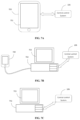
- FIG. 7 A depicts an embodiment of the present invention wherein the user interface includes a handheld device such as mobile telephone, smartphone, personal digital assistant or the like;
- FIG. 7 B depicts an embodiment of the present invention wherein the user interface includes a handheld device such as a mobile telephone and a computer;
- FIG. 7 C depicts an embodiment of the present invention wherein the user interface includes a computer
- FIG. 7 D depicts an embodiment of the present invention wherein the user interface includes a personal monitoring device and a mobile device;
- FIG. 7 E depicts an embodiment of the present invention wherein the user interface includes a personal monitoring device, such as, a smartwatch, fitness tracker, portable health monitor or wearable electronic device;
- a personal monitoring device such as, a smartwatch, fitness tracker, portable health monitor or wearable electronic device
- FIG. 8 A depicts first sample data transmission file in accordance with a system for monitoring and classifying vehicle operator behavior of the present invention
- FIG. 8 B depicts second sample data transmission file in accordance with a system for monitoring and classifying vehicle operator behavior of the present invention
- FIG. 8 C depicts third sample data transmission file in accordance with a system for monitoring and classifying vehicle operator behavior of the present invention
- FIG. 9 is a first example of a trip summary report in accordance with a system for monitoring and classifying vehicle operator behavior of the present invention.
- FIG. 10 is a second example of a trip summary report in accordance with a system for monitoring and classifying vehicle operator behavior of the present invention.
- FIGS. 11 A- 11 B illustrate a first set of examples of a usage summary report in accordance with a system for monitoring and classifying vehicle operator behavior of the present invention
- FIGS. 11 C- 11 D illustrate a set of examples of a usage summary report in accordance with a system for monitoring and classifying vehicle operator behavior of the present invention
- FIGS. 11 E- 11 F illustrate a set of examples of a usage summary report in accordance with a system for monitoring and classifying vehicle operator behavior of the present invention
- FIGS. 11 G- 11 H illustrate a fourth set of examples of a usage summary report in accordance with a system for monitoring and classifying vehicle operator behavior of the present invention
- FIG. 11 I- 11 J is a fifth set of examples of a usage summary report in accordance with a system for monitoring and classifying vehicle operator behavior of the present invention.
- FIG. 11 K is a sixth set of examples of a usage summary report in accordance with a system for monitoring and classifying vehicle operator behavior of the present invention.
- FIG. 11 L is a seventh set of examples of a usage summary report in accordance with a system for monitoring and classifying vehicle operator behavior of the present invention.
- FIG. 12 is a flowchart illustrating the operation of a reporting and feedback subsystem of the present invention.
- FIG. 13 depicts examples of various designs or embodiments of personal monitoring device illustrating the locations of sensors of the present invention
- FIG. 14 A illustrates an embodiment of personal monitoring device design illustrating that a personal monitoring device may be directly attached to mobile handheld device
- FIG. 14 B illustrate an embodiment of personal monitoring device design illustrating that a personal monitoring device may be attached to a mobile phone case and/or indirectly attached to a mobile handheld device;
- FIG. 15 is an illustration presenting examples of various location where personal monitoring device may be worn or attached to an operator in the operation of a system for monitoring and classifying vehicle operator behavior of the present invention.
- FIG. 16 is an illustration of an example of classification, groupings and calculations in accordance with a system for monitoring and classifying vehicle operator behavior.
- the present invention relates to a system for monitoring and classifying the behavior of motor vehicle operator, the behavior of motor vehicle, the details of geography where the motor vehicle is operated, the details of environment where the motor vehicle is operated, and combinations thereof.
- Relevant data is collected using a mobile device, mobile telephone; smart phone; personable digital assistant; personal or wearable monitoring device (such as smartwatch or fitness tracker); other portable electronic devices; or combinations thereof. Relevant data collection may occur when the vehicle operator is operating the motor vehicle as well as other times when the vehicle operator is not operating the motor vehicle (vehicle is parked); or combinations thereof.
- the information collected or derived is transmitted to a remote server where the data is recorded, further processed, characterized, compared, classified and communicated to the vehicle operator and/or to another user of the system.
- the remote server may include additional data from third party sources and data providers.
- One or more algorithms included in this invention may be used to analyze data gathered by the system and assign classification or rating (or other characterization) to the operator, the vehicle, the geography, the environment or combinations thereof.
- classifications or rating may be calculated by grouping behaviors and/or characteristics of the operators, the vehicles, the geographies, the environments or combinations thereof based on quantitative patterns, relationships and interrelationships.
- Information collected and/or derived may be further used for developing predictive models, decision models and/or descriptive models.
- Data recorded and/or derived from this invention may be used for purposes such as, for example, determining employability and compensation rate; providing travel and entertainment services; determining the insurability and cost of motor vehicle insurance; determining insurability and cost of health insurance; determining insurability and cost of life insurance; dispatching emergency services; commercial fleet management; route optimization; education; law enforcement; and monitoring and supervising drivers.
- the present invention gathers useful data from existing mobile devices such as smartphones, personal digital assistants and wearable and personal monitoring devices and does not require hard-wiring a device into a vehicle or other installation procedures, the incorrect execution of which may affect vehicle function or distract the vehicle's operator.
- the present invention gathers useful information about the health and fitness of the operator; and geography and environment of the operator and vehicle, even when the operator is not operating a motor vehicle.
- Application software resident on the mobile device and personal monitoring device component of this invention may also be used to independently verify the date and time using a variety of external sources including the central processing system, the mobile device (for personal monitoring device), the personal monitoring device (for mobile device), one or more atomic clocks, cellular service providers, or by other means.
- FIG. 1 A illustrates the components and subsystems of an exemplary embodiment of the present invention.
- Set-up subsystem 100 is used by the motor vehicle operator to install and configure monitoring system 10 .
- the monitoring system 10 then operates within the guidance and control of administrative subsystem 101 .
- the administrative subsystem 101 guides and controls the operations of data collection subsystem 102 , data transmission subsystem 103 , local database 104 , data transmission file 105 and reporting and feedback subsystem 107 .
- the data transmission subsystem 103 uses the data transmission file 105 to communicate with central control system 106 .
- the reporting and feedback subsystem 107 may provide reports and feedback to a user of the monitoring system 10 either from the local database 104 or from the central control system 106 , or from a combination of both.
- FIG. 6 is a table presenting examples of various trigger events used by the subsystems of the monitoring system 10 . These trigger events may be used to start a subsystem, stop a subsystem or modify the behavior of a subsystem.
- FIG. 1 B illustrates some of the components of a system 10 that are resident on handheld mobile device 700 , some of the components that are resident on central control system 106 and the means by which these components communicate internally and externally.
- Local monitoring system 112 receives, processes, and stores information from a variety of local application software, system components, sensors, and/or local hardware available to a mobile device including those shown in FIG. 1 B and FIG. 1 D (or other components).
- Mobile device 700 may also communicate with one or more satellites 116 and/or mobile network 118 .
- a central control system 106 typically includes the components shown in FIG. 1 B and FIG.
- 1 E (or other components) and communicates with a handheld device 700 by a variety of communication means including one or more cellular networks 118 , satellites 116 , radio signals, audio signals, electromagnetic signals, thermoelectric signals, Bluetooth, infrared, and/or internet connection 110 , among others.
- communication means including one or more cellular networks 118 , satellites 116 , radio signals, audio signals, electromagnetic signals, thermoelectric signals, Bluetooth, infrared, and/or internet connection 110 , among others.
- FIG. 1 C illustrates that a central processing system 106 of the present invention may be in simultaneous communication with a plurality of handheld devices 700 at any given time.
- FIG. 1 D illustrates the components of an exemplary embodiment of the present invention with personal monitoring device 120 such as smartwatch, fitness tracker, blood alcohol monitor or other portable electronic devices popularly known as wearable electronics; components 122 on a personable monitoring device 120 ; components 119 on mobile device 700 in addition to components already illustrated in FIG. 1 B ; central processing system 106 ; and that these components communicate internally and externally.
- Local monitoring system 121 on the personal monitoring device 120 receives, processes, and stores information from a variety of local application software, system components, and/or local hardware and sensors available to the personal monitoring device including those shown in FIG. 1 D (or other components).
- Personal monitoring device 120 may operate independently or in combination with a handheld mobile device 700 to collect, process, store and communicate information relevant to the behavior and/or characteristics of the operator, the motor vehicle, the geography, the environment or combinations thereof; Personal monitoring device 120 may communicate with a handheld device 700 and/or the central control system 106 by a variety of short range and long range communication means including wired or wireless means such as cellular networks 118 , satellites 116 , Bluetooth, infrared, radio signals, audio signals, electromagnetic signals, thermoelectric signals, cellular network and/or internet, among others.
- wired or wireless means such as cellular networks 118 , satellites 116 , Bluetooth, infrared, radio signals, audio signals, electromagnetic signals, thermoelectric signals, cellular network and/or internet, among others.
- FIG. 1 E illustrates some of the information and components resident on a central control system 106 of an exemplary embodiment of the present invention.
- FIG. 1 E illustrates that the central control system 106 may be in direct or indirect communication with plurality of handheld mobile devices 700 ; plurality of personal monitoring devices 120 ; plurality of personal monitoring devices 120 working in combination with mobile devices 700 ; or combinations thereof.
- the information resident on the central control system 106 may be updated or synchronized with a number of external information sources 150 including census information; national and local weather information; mapping and geographical information; traffic information; operator background and driving history (from sources like self reporting, law enforcement, department of motor vehicle, insurance companies, employment records, credit bureaus, third party information provider or combinations thereof); motor vehicle history (from sources like department of motor vehicle, vehicle manufacturer, current and prior owners, vehicle repair and service facilities, law enforcement, third party provider or combinations thereof); health and medical records of the operator (from sources like self reporting, national or local databases, medical service providers, medical research facilities, third party providers or combinations thereof); other third party information providers or combinations thereof.
- external information sources 150 including census information; national and local weather information; mapping and geographical information; traffic information; operator background and driving history (from sources like self reporting, law enforcement, department of motor vehicle, insurance companies, employment records, credit bureaus, third party information provider or combinations thereof); motor vehicle history (from sources like department of motor vehicle, vehicle manufacturer, current and prior owners, vehicle repair and service facilities, law enforcement, third party
- Central processing system 106 may communicate with internal and external components and data-sources 150 using a variety of short range and long range communication means including wired or wireless means such as cellular networks 118 , satellites 116 , Bluetooth, infrared, radio signals, audio signals, electromagnetic signals, thermoelectric signals, cellular network and/or internet, among others.
- wired or wireless means such as cellular networks 118 , satellites 116 , Bluetooth, infrared, radio signals, audio signals, electromagnetic signals, thermoelectric signals, cellular network and/or internet, among others.
- Set-up subsystem 100 is initiated at step 200 when a user first starts using the monitoring system 10 and each time the user wishes to re-configure the monitoring system 10 thereafter.
- set-up subsystem 100 acquires information such as, for example, confirmation of software license for use of system 10 ; date of license grant (initial or renewed); vehicle identification number; vehicle make, vehicle model, vehicle model year, operator driving history, operator health and medical information, operator lifestyle, operator demographic information, among others.
- the set-up subsystem 100 also acquires user preferences at step 201 , which may include auto/manual updates to system software, real-time versus batch data transmission, data transmission preferences, data sharing, display reports, colors and themes, among others.
- the set-up subsystem 100 may also acquire information about multiple devices connected to the system 10 such as, for example, mobile device, smartwatch, fitness tracker; primary data source, and user preferences regarding their interconnectivity, data sharing, frequency of updates and synchronization.
- the set-up subsystem 100 may also acquire user preference and permissions about data sharing and data collection in reference with other users of the system 10 such as, for example, current or potential employer, motor insurance companies, health insurance company, life insurance company, travel and entertainment company, law enforcement, among others.
- the set-up subsystem 100 derives and calculates a plurality of control triggers for all of the subsystems of monitoring system 10 .
- the set-up subsystem 100 initiates administrative control subsystem 203 .
- FIGS. 3 A- 3 C illustrate the functionality and operation of administrative control subsystem 101 , which controls the operations of all the other subsystems in a monitoring system 10 .
- the administrative control subsystem 101 monitors the system 10 for a plurality of trigger events to start, stop or modify the behavior of the other subsystems.
- the administrative control subsystem 101 controls the operation of data collection subsystem 102 by beginning at step 30 , acquiring control triggers and user preferences from the set-up subsystem 100 at step 300 and monitoring the system 10 for trigger events at step 301 .
- Decision step 302 is based on the presence of a trigger, or the lack thereof, to initiate the data collection subsystem 102 .
- Lack of a trigger results in no action at step 303 , while the presence of a “start” trigger initiates the data collection subsystem 102 at step 305 .
- Decision step 307 is based on the presence of a trigger, or the lack thereof, to terminate the data collection subsystem 102 .
- Lack of a trigger results in continued running of the data collection subsystem 102 at step 308 , while the presence of a “stop” trigger terminates the data collection subsystem 102 at step 310 .
- Examples of trigger events used by the data collection sub-system 102 includes time of day, speed above predetermined speed, change in heart rate, presence of blood alcohol above predetermined level, change in location, force start and force stop among others. Examples of additional triggers are included in table in FIG. 6 . In FIG.
- the administrative control subsystem 101 controls the operation of data transmission subsystem 103 by beginning at step 30 , acquiring control triggers and user preferences from the set-up subsystem 100 at step 300 and monitoring the system 10 for trigger events at step 301 .
- Decision step 304 is based on the presence of a trigger, or the lack thereof, to initiate the data transmission subsystem 103 . Lack of a trigger results in no action at step 303 , while the presence of a “start” trigger initiates the data collection subsystem 103 at step 306 .
- Decision step 309 is based on the presence of a trigger, or the lack thereof, to terminate the data transmission subsystem 103 .
- the administrative control subsystem 101 controls the operation of reporting and feedback subsystem 107 by beginning at step 30 , acquiring control triggers and user preferences from the set-up subsystem 100 at step 300 and monitoring the system 10 for trigger events at step 301 .
- Decision step 314 is based on the presence of a trigger, or the lack thereof, to initiate the data reporting and feedback subsystem 107 . Lack of a trigger results in no action at step 303 , while the presence of a “start” trigger initiates the data reporting and feedback subsystem 107 at step 316 . Decision step 318 is based on the presence of a trigger, or the lack thereof, to terminate the data reporting and feedback subsystem 107 . Lack of a trigger results in continued running of the data reporting and feedback subsystem 107 at step 308 , while the presence of a “stop” trigger terminates the data reporting and feedback subsystem 107 at step 320 .
- Examples of trigger events used by the reporting and feedback sub-system 107 includes time of day, achievement of predetermined goal, presence of data, message from central control event, distance from predetermined location, system alerts, force start and force stop among others. Examples of additional triggers are included in table in FIG. 6 . Additional triggers used by the system 10 includes presence of valid license agreement, datalink between components of monitoring system 10 , battery level, number of attempts, restarting of a component of the monitoring system 10 , among others. The administrative control subsystem 101 or other subsystems would use these triggers to start, stop or modify the behavior of the components of the present invention.
- the flow chart provided in FIG. 4 illustrates the operations of the data collection subsystem 102 , which collects data based on predetermined trigger events. Operation of data collection subsystem 102 begins at step 400 and proceeds to decision step 402 . If no “start” trigger event has occurred, the data collection subsystem 102 continues to monitor system 10 for trigger events at step 401 . If a “start” trigger event has occurred at decision step 402 , the data collection subsystem 102 begins to collect operational data at step 403 . This data is then stored in local database 104 , which typically resides on a mobile phone, personal monitoring device or similar devices, at step 404 .
- a “stop” trigger event occurs at step 405 at which point the data collection subsystem 102 will cease collecting operational data and/or other data.
- An example of a trigger event would be detecting predetermined speed of motion.
- Another example of a trigger event would be detecting physical activity like walking, running etc.
- Another example of a trigger event would be a system alarm or predetermined time intervals.
- the data collection subsystem 102 would use the “start” trigger to start collecting operational data.
- the data collection subsystem 102 is operative to monitor and record data when the operator is driving motor vehicle as well as when the operator is not driving the motor vehicle.
- the data collection subsystem 102 is typically operative to monitor and record certain data such as, for example, date; time; current geographic location; speed of motion; direction of motion; use of cellular phone by the operator; drug and alcohol use by the operator; amount of physical activity; and health and fitness of the operator.
- the data may then be used to calculate and derive or determine other relevant factors such as, for example, rapid acceleration; rapid deceleration; change in direction; speed of change in direction; distance travelled; total travel time; amount of sleep or rest; heart rate above or below predetermined levels; blood alcohol level above predetermined levels; level of alertness; level of physical activity above or below predetermined physical activity level; response time; change in relevant factors over time; among others.
- the data collection subsystem 102 typically utilizes multiple sensors and services (e.g.
- GPS global positioning system
- FIG. 5 is a flow chart illustrating the operations of the data transmission subsystem 103 , which monitors and manages transmission files 105 , which are resident on the mobile device or on the personal monitoring device 120 .
- the transmission files 105 may be created by the various subsystems in the monitoring system 10 .
- Operations of the data transmission subsystem 103 begins at step 500 and proceeds to decision step 501 . If a transmission file 105 is available at step 501 , the data transmission subsystem 103 then checks for the presence of a datalink and/or internet access at step 502 . If a datalink and/or internet access is confirmed, the data transmission subsystem 103 then checks for the availability of central control system 106 or handheld mobile device 700 at step 503 based on where the data needs to be transmitted.
- the data transmission subsystem 103 will transmit the local transmission files 105 to the central control system 106 or the handheld device 700 at step 504 and then receive a transmission file 505 from the central control system 106 or the handheld mobile device 700 at step 505 .
- the data transmission subsystem 103 may use one or more encryption technologies while communicating with internal and/or external components of the system 10 . If the transmission file 505 confirms the data transmission was successful at step 506 , the data transmission subsystem 103 will then determine the need to keep the local transmission file 105 at step 507 or to free up local resources (i.e., memory) by deleting the local transmission file 105 .
- the data transmission subsystem 103 may utilize one or more data transmission technologies such as, for example, wired and wireless connections, internet, Wi-Fi, Bluetooth, infrared, radio signals, sound waves, electromagnetic signals, thermoelectric signals, cellular networks 118 , satellites 116 , among others.
- data transmission occurs in real-time and in other embodiments, the transmission files 105 are stored in the mobile device 700 or the personal monitoring device 120 for a period of time prior to transmission.
- the central control system 106 is operative to compare collected, calculated and/or derived data to known or predetermined parameters and conditions. Observed, calculated and/or derived information may include information relevant to the behavior and/or characteristics of the vehicle operator, the vehicle, the geography, the environment or combinations thereof, such as, for example: time of day; presence of accident; road construction; full or partial road closures; snowfall; rainfall; fog; health and fitness level; medical condition; drug or alcohol use; among others.
- Predetermined parameters and conditions may be grouped based on quantitative patterns, relationships and interrelationships such as, of example: vehicles driving within predetermined miles per hour groups; vehicles with predetermined cargo capacity groups; amount of driving and non driving time; total amount of driving; number of geographies visited; operators with predetermined amount of sleep deprivation; operators with predetermined fitness level groups; operators with predetermined amount of drug or alcohol in body groups; operators using predetermined amount of mobile phone while driving group; operators taking predetermined amount of rest/breaks groups; geographies with predetermined speed limit groups, geographies by distance from predetermined location groups (e.g.
- Observed behavior may be enhanced by adding self reported and/or third party information such as, of example: operators in predetermined demographic groups; operators in predetermined age groups; operators within predetermined credit score groups; operators with predetermined driving history groups (e.g. accidents, traffic violations, experience driving predetermined cargo/passenger or lack thereof); operators with predetermined medical condition groups; number of passengers or amount of cargo in the vehicle groups; actuarial information relevant to motor vehicle insurance; actuarial information relevant to health and medical insurance; actuarial information relevant to life insurance; life expectancy; mortality rates; among others.
- third party information such as, of example: operators in predetermined demographic groups; operators in predetermined age groups; operators within predetermined credit score groups; operators with predetermined driving history groups (e.g. accidents, traffic violations, experience driving predetermined cargo/passenger or lack thereof); operators with predetermined medical condition groups; number of passengers or amount of cargo in the vehicle groups; actuarial information relevant to motor vehicle insurance; actuarial information relevant to health and medical insurance; actuarial information relevant to life insurance
- One or more algorithms within the central control system 106 may classify the operator, the vehicle, the geography, the environment or combinations thereof, differently at different times based on available information such as, for example: placing an operator operating a motor vehicle at a posted speed limit under one group or classification when no road construction is present and placing the same operator under another group or classification when road construction is present; placing an operator operating a motor vehicle at posted speed limit under one group or classification when there is no snowfall and placing the same operator under another group or classification when there is snowfall in excess of selected amount; among others.
- the behavior and/or characteristics may be placed in appropriate reference group for further processing, predictive modeling, decision modeling, descriptive modeling or combinations thereof.
- Classifications and groupings may be designed for specific purpose or multiple purposes by selecting and grouping information relevant to the purpose from the information collected (observed, self reported, from third parties or combinations thereof) and/or derived.
- a user of the system 10 may be able to configure the system 10 for one or more specific purposes. In some embodiments the user may change the configurations and/or specific purposes multiple times while in other embodiments the configurations and/or specific purposes may not be changed after the initial selection. Further, some embodiments may allow a user to configure the system 10 to use for more than single purpose at the same time.
- An example of classifications and groupings, with regard to specific purpose such as for example vehicle fleet management, may include: operator availability; distance/time from a predetermined location groups; available capacity groups (e.g.
- classifications and groupings with regard to specific purpose, such as for example health and medical insurance, may include: medical history groups; family medical history groups; type of allergies group; gender; ethnicity; distance from medical facility offering predetermined services; amount of driving; type of driving (e.g.
- high/low risk driving transport hazardous material, amount of cellular phone use while driving, etc.
- air pollution levels measured in geographies visited; diseases and infections present in geographies visited; level of physical activity; lifestyle (e.g. amount of sleep, amount of alcohol use, etc.); actuarial information relevant to health and medical insurance; life expectancy; mortality rates; among others.
- One or more algorithms may also provide classifications, ranking and rating based on relative classifications of the operators, the vehicles, the geographies, the environment or combinations thereof such as, for example: the average speed of operators using the system 10 could be determined for a predefined area at a predetermined time and a relative classification could be assigned to any operator deviating from the average speed; average ratio of driving time to resting time within predetermined time period (e.g.
- a relative classification could be assigned to any operator deviating from the average amount of driving time to resting time ratio; average distance travelled within a predetermined time period (e.g., night, rush hour, day, month and year, among others) could be determined and a relative classification may be assigned to any operator deviating from the average distance travelled; average number of geographies visited within a predetermined time period (e.g.
- Operator driving history such as, for example: a history of previous traffic incidents including accidents and traffic violations may also be used to determine or assign groups or classifications.
- Operator medical history such as, for example: history of allergies, medical conditions, previous illness, pregnancy and predispositions to certain illnesses or medical conditions based on family history may also be used to determine or assign groups or classifications.
- One or more algorithms may further provide classifications, ranking and rating derived from information collected over time such as, for example: average behavior of an operator may be classified relative to behavior when geographic location is experiencing rain, snow or road construction; average driving speed may be classified under different light conditions; average driving and non-driving time in a geographic location may be classified relative to each other; average behavior during day, night and/or rush hour may be classified relative to each other; average behavior of an operator before, during and after predetermined actions or conditions (e.g., pregnancy; physical exercise; drug or alcohol use; texting or talking and driving; temporary or long term illness; commuting or vacationing among others) may be classified relative to each other; average behavior when the motor vehicle has been modified (e.g., for towing or carrying passenger and/or cargo; for farm use; for sporting activity among others) may be classified relative to each other and average behavior when there are no such modifications, among others.
- predetermined actions or conditions e.g., pregnancy; physical exercise; drug or alcohol use; texting or talking and driving; temporary or long term illness
- One or more algorithms may determine presence of duplicate information for the same activity such as, for example: mobile device and personal monitoring device both recording the amount of physical activity at the same time (e.g. running, walking) for an operator; and mobile device and personal monitoring device both recording speed of motion at the same time for an operator, among others.
- One or more algorithms may further determine presence of contradiction in the data collected through multiple components of the system 10 such as, of example: information from mobile device showing rest while information from personal mobile device showing physical activity for an operator; information from mobile phone and personal monitoring device showing different speed of motion for a vehicle; self reported and driving records showing different number of traffic violations; among others.
- One or more algorithms may further determine presence of information gaps or data errors, such as for example: information not collected when the battery resident of personal monitoring device is being charged; information gap when the operator is not carrying the mobile device; data errors due to low memory levels; data errors due to device operating system failure, among others.
- One or more algorithms may further determine presence of information biases, such as for example: information only collected or missing for certain time of day; sample data collected has greater/under representation of certain information; limited data collected for a demographic group; statistically insufficient data; among others.
- One or more algorithms may utilize various methodologies for data cleansing, sanitizing and enhancement to handle data issues such as, for example: suppress or eliminate appropriate data points; select primary data source; supplementary/complementary data; combine data; data sampling; clustering; or other statistical processes; among others.
- One or more statistical and mathematical processes and/or algorithms may further provide grouping to the operator behavior, the vehicle behavior, the geography, the environment or any combinations thereof based on quantitative patterns, relationships and interrelationships as depicted in FIG. 16 .
- Use of statistical and mathematical processes to group and classify all operator behaviors, vehicle behaviors, geographical characteristics and environmental characteristics greatly reduces the computational power required compared to using every variation of operator behaviors, vehicle behaviors, geographical characteristics and environmental characteristics (which may be infinite) and thus, greatly improves the efficiency of the system 10 such as, for example, using distance travelled in groups of 1000 miles vs. using very single mile travelled independently; using number of steps walked/run per day in increments of 2000 steps vs. using every single step count independently; among others.
- the use of statistical and mathematical processes to group and classify all information collected reduces computational power required to process the information as compared to using such methods on only a portion of information and not on others (e.g. only using statistical and mathematical processes to group and classify the operator behavior and the vehicle behavior but using every variation of geographical characteristics and environmental conditions).
- the use of statistical and mathematical processes to group and classify all operator behaviors, vehicle behaviors, geographical characteristics and environmental characteristics produces more comprehensive results compared to using such methods on only few combinations of operator behaviors, vehicle behaviors, geographical characteristics and environmental characteristics and using only specific characteristics of others i.e. not using all available information (e.g. using statistical and mathematical processes to group and classify the operator behavior and the vehicle behavior but only using specific characteristics of the geographical conditions and specific characteristics of the environmental conditions i.e. not using all available geographical and environmental conditions).
- Analytical techniques used to provide grouping, classifications, ranking and rating to the operators, the vehicles, the geographies, the environment or any combinations thereof may further include regressions techniques such as, for example: Linear regression model, Discrete choice model, Logistic model, Multinomial model, Probit model, Logit model, Time series model, Survival or duration model, Classification and regression trees, Multivariate models and Multivariate adaptive regression splines; machine learning techniques such as, for example: Neural networks, Multilayer Perceptron, Radial basis functions, Support vector machines, Naive Bayes, k-nearest neighbours and Geospatial predictive modeling; or combinations thereof.
- regressions techniques such as, for example: Linear regression model, Discrete choice model, Logistic model, Multinomial model, Probit model, Logit model, Time series model, Survival or duration model, Classification and regression trees, Multivariate models and Multivariate adaptive regression splines
- machine learning techniques such as, for example: Neural networks, Multilayer Perceptron, Radial basis
- Classification, ranking and rating may be used to determine employability in trade such as, for example: private and public transportation drivers; school bus drivers; police, ambulance, fire and/or emergency services providers; race car drivers; driving school instructors; hazardous material driver; trucking and cargo drivers; travelling sales personnel; insurance claims personnel; taxi drivers; and delivery service drivers; among others.
- Vehicle operators that meet predetermined criteria and/or rank above a predetermined threshold may qualify for employment while others that do not meet the predetermined criteria and/or rank below the threshold may not qualify for employment.
- classification, ranking and rating may be used to determine pay rate or compensation when vehicle operators are found to qualify for employment such as, for example: vehicle operators that are ranked or rated highest are paid and/or compensated more than vehicle operators that are ranked below them; average operator is paid predetermined pay rate and/or compensation while operators ranked higher and/or lower are paid or compensated on a relative basis; among others.
- information collected or derived by system 10 may be used to periodically update the employability and compensation rate decision (e.g. insufficient information at the time of initial employment or compensation decision is updated after evaluation period; annual compensation is updated based on performance over predetermined period, etc.)
- Classification, ranking and rating may be further designed for the purpose of determining perks, services, discount and/or surcharge in travel and tourism industry such as, for example: rental car companies using predetermined criteria to determine whether or not to rent to potential vehicle renter; rental car companies determining cost of rental and/or insurance; rental car companies determining rewards, discount or marketing offers; hotel and/or airline companies determining cost of their goods and/or services; hotel and/or airline companies determining rewards, discount or marketing offers; and travel services company determining rewards, discount or marketing offers, among others. Further, information collected or derived by the system 10 may be used to periodically update the pricing, reward or other services and benefits (e.g. rental car companies offering lower price to operators driving in lower risk geographies or exhibiting lower risk driving behavior etc.)
- Classification, ranking and rating may be further used to determine qualification and/or the cost of motor vehicle insurance.
- Vehicle operators that meet predetermined criteria and/or rank above a predetermined threshold may qualify for motor vehicle insurance while others that do not meet the predetermined criteria and/or rank below the predetermined threshold may not qualify for motor vehicle insurance offered by an insurance company (different motor vehicle insurance programs may use different thresholds).
- the classification, ranking and rating may be used to determine the cost of insurance such as, for example: when vehicle operators are found to qualify for motor vehicle insurance by an insurance company, vehicle operators that are ranked or rated highest pay a lower cost for motor vehicle insurance compared to vehicle operators that are ranked below them; average drivers is charged predetermined cost of insurance while drivers ranked higher and/or lower are charged on a relative basis; among others.
- information collected or derived by the system 10 may be used to periodically update the insurability and/or cost of motor vehicle insurance (e.g. motor vehicle insurance premium is updated periodically, e.g. at renewal, based on updated classification or ranking; insufficient information at the time of initial motor vehicle insurance sale is updated after evaluation period; driving behavior is used to determine fault after the operator is involved in an motor vehicle accident and motor vehicle insurance premium is adjusted based on predetermined criteria, etc.)
- motor vehicle insurance premium is updated periodically, e.g. at renewal, based on updated classification or ranking
- insufficient information at the time of initial motor vehicle insurance sale is updated after evaluation period
- driving behavior is used to determine fault after the operator is involved in an motor vehicle accident and motor vehicle insurance premium is adjusted based on predetermined criteria, etc.
- Classification, ranking and rating may be further used to determine qualification and/or the cost of medical and health insurance.
- System 10 users that meet predetermined criteria and/or rank above a predetermined threshold may qualify for health insurance while others that do not meet the predetermined criteria and/or rank below the predetermined threshold may not qualify for health insurance offered by an insurance company (different health insurance programs may use different thresholds).
- classification, ranking and rating may be further used to determine the cost of insurance by an insurance company, such as, for example: when a user of the system 10 is found to qualify for health insurance by an insurance company, system 10 users that are ranked or rated highest pay a lower premium for health insurance compared to system 10 users that are ranked below them; average user is charged predetermined cost of insurance while users ranked higher and/or lower are charged on a relative basis; among others.
- information collected or derived by the system 10 may be used to periodically update the insurability and/or cost of health insurance (e.g. health insurance premium is updated periodically, e.g. annually, based on updated classification or ranking; insufficient information at the time of initial health insurance sale is updated after evaluation period and health insurance premium adjusted accordingly, etc.)
- Classification, ranking and rating may be further used to manage fleet operations such as, for example: align vehicle operators and projects based on operator classification and history; determine best route to transport cargo or passengers between predetermined locations; determine new routes to transport cargo or passengers between predetermined locations when route determined earlier is no longer available; provide new cargo when already dispatched cargo is unable to reach predetermined location on time and/or with desired quality; to provide dispatch and/or passenger pickup services; determine best route to intercept criminal and/or illegal activities; determine best way to provide logistical support to predetermined locations and/or facility; and determine best route to evacuate in case or emergency; among others.
- Classification, ranking and rating may be further used to provide marketing services such as, for example: location based services (e.g. food, shopping, sports, entertainment, transportation, tourism and hotels among others); delivery services (e.g. food, groceries, shopping, medicines, cargo and personal services among others) qualification for motor vehicle insurance; cost of motor vehicle insurance; employment offers; compensation; fleet management; and educational among others.
- location based services e.g. food, shopping, sports, entertainment, transportation, tourism and hotels among others
- delivery services e.g. food, groceries, shopping, medicines, cargo and personal services among others
- qualification for motor vehicle insurance e.g. food, groceries, shopping, medicines, cargo and personal services among others
- cost of motor vehicle insurance e.g., employment offers; compensation; fleet management; and educational among others.
- Classification, ranking and rating may be further used to provide educational programs such as, for example: young driver education; driving license examination (e.g. operator behavior observed for extended period of time instead of one time driving exam; operators need to cross predetermined thresholds, operators are required to exhibit predetermined behavior over predetermined period of time, etc.); rehabilitation after injury and/or illness; driver safety education (e.g. exhibit safe driving behavior over predetermined period); food and nutrition education; commercial driving education to non-commercial drivers; operating specialized motor vehicles; and operating predetermined type of vehicles; among others. (e.g. vehicle operators at the beginning of the educational program is given initial classification; this classification is updated based on operator exhibiting predetermined behavior or meeting predetermined thresholds).
- driving license examination e.g. operator behavior observed for extended period of time instead of one time driving exam; operators need to cross predetermined thresholds, operators are required to exhibit predetermined behavior over predetermined period of time, etc.
- rehabilitation after injury and/or illness driver safety education (e.g. exhibit safe driving behavior over predetermined period)
- food and nutrition education e
- Classification, ranking and rating may be further used to provide emergency services such as, for example: dispatch ambulance when health and fitness of the vehicle operator indicates certain predetermined signs (e.g. cardiac arrest); dispatch fire, police and/or ambulance in case of accident; provide relief supplies when stranded in remote location; provide evacuation services after emergency; and search and/or find services among others.
- emergency services such as, for example: dispatch ambulance when health and fitness of the vehicle operator indicates certain predetermined signs (e.g. cardiac arrest); dispatch fire, police and/or ambulance in case of accident; provide relief supplies when stranded in remote location; provide evacuation services after emergency; and search and/or find services among others.
- Classification, ranking and rating may be further used for law enforcement such as, for example: determine and take action against traffic violators; determine and take action against court ordered geographic boundary and/or limitation violators; determine criminal and/or illegal trespassing; and determine when a known suspect and/or fugitive is located within jurisdiction; among others.
- law enforcement applications include: vehicle operator exceeding speed limit on a given trip is charged appropriate penalty after the trip even when no law enforcement office caught the operator speeding during the trip; vehicle operator operating the vehicle with blood alcohol level exceeding legal limit is charged appropriate penalty after the trip even when no law enforcement office caught the operator during the trip; fault for an accident is determined based on vehicle operator behavior, among others.
- FIG. 7 A depicts an embodiment of the present invention wherein the user interface with the central control system 106 includes a handheld device such as mobile telephone 700 having a visual display 701 .
- FIG. 7 B depicts an embodiment of the present invention wherein the user interface with the central control system 106 includes a handheld device such as mobile telephone 700 , which is in communication with a computer 702 having a visual display 703 .
- FIG. 7 C depicts an embodiment of the present invention wherein the user interface with the central control system 106 includes a computer 702 having a visual display 703 .
- FIG. 7 D depicts an embodiment of the present invention wherein the user interfaces with the central control system 106 includes a personal monitoring device 120 and a mobile device 700 .
- FIG. 7 E depicts another embodiment of the present invention wherein the user interfaces with the central control system 106 includes a personal monitoring device 120 . Some or all of these embodiments may be used for the initial setup of the monitoring system 10 , viewing trip summaries and/or performance reports, upgrading software, and sending information to and receiving information from the central control system 106 , among other purposes.
- FIG. 8 A depicts a sample data transmission file that includes a plurality of records, each containing some or all of the data recorded and/or derived from the data recorded by the data collection sub system 102 including date, time, vehicle speed, speed limit, zip code, direction, use of mobile phone, latitude, longitude, step count, and active time during the day.
- FIG. 8 B depicts another sample data transmission file that includes a plurality of records, each containing some or all of the data recorded and/or derived from the data recorded by the data collection sub-system 102 including, date, time, blood pressure, blood glucose level, body temperature, heart rate, and blood alcohol level.
- FIG. 8 A depicts a sample data transmission file that includes a plurality of records, each containing some or all of the data recorded and/or derived from the data recorded by the data collection sub-system 102 including, date, time, blood pressure, blood glucose level, body temperature, heart rate, and blood alcohol level.
- FIG. 8 C depicts another sample data transmission file that includes a plurality of records, each containing some or all of the data recorded and/or derived from the data recorded by data collection sub-system 102 including, date, time, body temperature, awake time, active time, walking step count, running step count, stairs or vertical step count, calories burnt, distance travelled.
- FIG. 9 is a first example of a trip summary report recorded by the data collection subsystem 102 showing a starting point for a trip, the route followed, and ending point of the trip on a map.
- FIG. 10 is a second example of a trip summary report recorded by the data collection subsystem 102 showing the actual speed of the vehicle and the speed limit posted on the route followed.
- the graphical representation may also show periods of rapid acceleration, deceleration, or hard braking.
- the graphical representation may include date and time of the trip.
- FIGS. 11 A- 11 L provide various examples of usage reports comparing the operator, the vehicle, the geography and the environment performance to others. These reports may include summaries of various behaviors and characteristics collected including calculated and/or derived values and classifications such as, for example: an individual operator's behavior may include information about operator's driving history including miles driven; driving time; average speed; number of rapid acceleration; number of hard braking; health and fitness level; active time; driving in sleep deprivation state; calculated group ranking or classification; graphical representations of classification; graphical representation of the operator performance compared to other operators or groups; use of cellular phone; and geographies visited; among others.
- Reports may classify, rate and/or group the driver behavior, the vehicle behavior, the geographical characteristic and the environmental conditions based on quantitative patterns, relationships and interrelationships.
- the reports may include classification information about groups such as for example: the group behavior; relative ranking of the group compared to other groups; optimal range; relative risk; and productivity; among others.
- Reports may also include classification information based on the specific configuration of the system 10 such as, for example: specific type of employment score and/or group and information relevant to employment score and/or group; travel and entertainment score and/or group and information relevant to travel and entertainment score and/or group; risk score and/or group for motor vehicle insurance and information relevant to motor vehicle insurance score and/or group; risk score and/or group for health insurance and information relevant to health insurance score and/or group; risk score and/or group for life insurance and information relevant to life insurance score and/or group; number of milestones achieved and/or need to achieve to get driving license; among others.
- classification information based on the specific configuration of the system 10 such as, for example: specific type of employment score and/or group and information relevant to employment score and/or group; travel and entertainment score and/or group and information relevant to travel and entertainment score and/or group; risk score and/or group for motor vehicle insurance and information relevant to motor vehicle insurance score and/or group; risk score and/or group for health insurance and information relevant to health insurance score and/or group; risk
- FIG. 12 is a flowchart illustrating the operation of the reporting and feedback subsystem 107 .
- the operation of reporting and feedback subsystem 107 begins at step 1200 and proceeds to decision step 1202 . If no “start” trigger event has occurred, the reporting and feedback subsystem 107 continues to monitor the system 10 for trigger events at step 1204 . If a “start” trigger event has occurred at decision step 1202 , the reporting and feedback subsystem 107 displays choice of available reports and feedback options at step 1206 . The user selects one or more options at decision step 1208 , which results in the selected option being displayed at step 1210 or the process ending at step 1212 .
- FIG. 13 illustrates examples of various designs of the personal monitoring device 120 and location of various sensors 1502 (e.g. health, fitness and medical sensors, among others) on the personal monitoring device 120 of a vehicle operator monitoring and classification system of the present invention.
- the personal monitoring device 120 design includes watch, band and/or personal clothing item (e.g. hat, shirt, gloves, shoe among others).
- the personal monitoring device includes one or more mechanism for the operator to wear or attach the device to themselves including a strap, a band, Velcro, tape or equivalent 1501 .
- the personal monitoring device may be worn; attached directly or indirectly (e.g. over clothing item); kept in close proximity; or combinations thereof, to the operator at various locations as illustrated in FIG. 15 (among others).
- the sensors 1502 resident on the personal monitoring device may be arranged in various positions/locations including back, side, band or combinations thereof.
- the sensors 1502 may or may not be placed externally or placed inside a protective covering and thus may or may not be visible to operator as depicted in FIG. 13 .
- FIG. 14 A illustrates an embodiment of the present invention that includes the personal monitoring device 120 and the resident sensors 1502 that may be temporarily and/or permanently attached to the handheld device mobile device 700 like a smartphone.
- the location of attachment includes front, back, sides, top, bottom, or combinations thereof.
- the personal monitoring device 120 may use one or more port and/or interface available on the handheld mobile device 700 to communicate and/or interface with the mobile device 700 .
- the personal monitoring device 120 may include its own battery and/or power source, use mobile device 700 to draw power or combinations thereof.
- FIG. 14 B illustrate another embodiment of the present invention illustrating that the personal monitoring device 120 may be attached to and/or designed as a case 1601 for the handheld mobile device 700 such as a smartphone.
- the electrical circuitry 1502 is housed inside the case's design.
- the personal monitoring device 120 includes interface 1605 that connects with the mobile device 700 .
- the personal monitoring device 120 may include its own battery and/or power source, use mobile device 700 to draw power or combinations thereof.
Landscapes
- Business, Economics & Management (AREA)
- Engineering & Computer Science (AREA)
- Physics & Mathematics (AREA)
- General Physics & Mathematics (AREA)
- Accounting & Taxation (AREA)
- Human Resources & Organizations (AREA)
- Strategic Management (AREA)
- Finance (AREA)
- Marketing (AREA)
- General Business, Economics & Management (AREA)
- Economics (AREA)
- Theoretical Computer Science (AREA)
- Development Economics (AREA)
- Entrepreneurship & Innovation (AREA)
- Technology Law (AREA)
- Automation & Control Theory (AREA)
- Mathematical Physics (AREA)
- Mechanical Engineering (AREA)
- Data Mining & Analysis (AREA)
- Transportation (AREA)
- Operations Research (AREA)
- Quality & Reliability (AREA)
- Tourism & Hospitality (AREA)
- Telephonic Communication Services (AREA)
- Traffic Control Systems (AREA)
- Alarm Systems (AREA)
Abstract
Description
Claims (20)
Priority Applications (3)
| Application Number | Priority Date | Filing Date | Title |
|---|---|---|---|
| US16/288,884 US11667299B2 (en) | 2015-11-19 | 2019-02-28 | System for monitoring and classifying vehicle operator behavior |
| US18/061,160 US12403914B2 (en) | 2015-11-19 | 2022-12-02 | System for monitoring and classifying vehicle operator behavior |
| US19/308,930 US20250388217A1 (en) | 2015-11-19 | 2025-08-25 | System for monitoring and classifying vehicle operator behavior |
Applications Claiming Priority (2)
| Application Number | Priority Date | Filing Date | Title |
|---|---|---|---|
| US14/945,904 US10259466B2 (en) | 2015-11-19 | 2015-11-19 | System for monitoring and classifying vehicle operator behavior |
| US16/288,884 US11667299B2 (en) | 2015-11-19 | 2019-02-28 | System for monitoring and classifying vehicle operator behavior |
Related Parent Applications (1)
| Application Number | Title | Priority Date | Filing Date |
|---|---|---|---|
| US14/945,904 Continuation US10259466B2 (en) | 2015-11-19 | 2015-11-19 | System for monitoring and classifying vehicle operator behavior |
Related Child Applications (1)
| Application Number | Title | Priority Date | Filing Date |
|---|---|---|---|
| US18/061,160 Continuation US12403914B2 (en) | 2015-11-19 | 2022-12-02 | System for monitoring and classifying vehicle operator behavior |
Publications (2)
| Publication Number | Publication Date |
|---|---|
| US20190193743A1 US20190193743A1 (en) | 2019-06-27 |
| US11667299B2 true US11667299B2 (en) | 2023-06-06 |
Family
ID=58720447
Family Applications (4)
| Application Number | Title | Priority Date | Filing Date |
|---|---|---|---|
| US14/945,904 Active 2036-05-30 US10259466B2 (en) | 2015-11-19 | 2015-11-19 | System for monitoring and classifying vehicle operator behavior |
| US16/288,884 Active 2037-01-14 US11667299B2 (en) | 2015-11-19 | 2019-02-28 | System for monitoring and classifying vehicle operator behavior |
| US18/061,160 Active 2036-06-24 US12403914B2 (en) | 2015-11-19 | 2022-12-02 | System for monitoring and classifying vehicle operator behavior |
| US19/308,930 Pending US20250388217A1 (en) | 2015-11-19 | 2025-08-25 | System for monitoring and classifying vehicle operator behavior |
Family Applications Before (1)
| Application Number | Title | Priority Date | Filing Date |
|---|---|---|---|
| US14/945,904 Active 2036-05-30 US10259466B2 (en) | 2015-11-19 | 2015-11-19 | System for monitoring and classifying vehicle operator behavior |
Family Applications After (2)
| Application Number | Title | Priority Date | Filing Date |
|---|---|---|---|
| US18/061,160 Active 2036-06-24 US12403914B2 (en) | 2015-11-19 | 2022-12-02 | System for monitoring and classifying vehicle operator behavior |
| US19/308,930 Pending US20250388217A1 (en) | 2015-11-19 | 2025-08-25 | System for monitoring and classifying vehicle operator behavior |
Country Status (1)
| Country | Link |
|---|---|
| US (4) | US10259466B2 (en) |
Cited By (2)
| Publication number | Priority date | Publication date | Assignee | Title |
|---|---|---|---|---|
| US20220126854A1 (en) * | 2020-10-26 | 2022-04-28 | Hyundai Motor Company | Vehicle and method of controlling the same |
| US12462194B2 (en) | 2023-07-19 | 2025-11-04 | Toyota Motor North America, Inc. | Vehicle occupant behavior monitoring application |
Families Citing this family (57)
| Publication number | Priority date | Publication date | Assignee | Title |
|---|---|---|---|---|
| US9704396B1 (en) * | 2014-10-24 | 2017-07-11 | Allstate Insurance Company | Roadside reporter system |
| US10259466B2 (en) * | 2015-11-19 | 2019-04-16 | Depura Partners, Llc | System for monitoring and classifying vehicle operator behavior |
| US9749866B2 (en) * | 2015-11-20 | 2017-08-29 | Centric Consulting, LLC | Vehicle safety system and method |
| US20210295440A1 (en) | 2016-05-11 | 2021-09-23 | State Farm Mutual Automobile Insurance Company | Systems and methods for allocating vehicle costs between vehicle users using pre-paid accounts |
| EP3482678A4 (en) * | 2016-07-07 | 2020-03-04 | National Institute of Advanced Industrial Science and Technology | PHYSIOLOGICAL CONDITION EVALUATION DEVICE, PHYSIOLOGICAL CONDITION EVALUATION METHOD, PROGRAM FOR PHYSIOLOGICAL CONDITION EVALUATION DEVICE AND PHYSIOLOGICAL CONDITION EVALUATION SYSTEM |
| US10051427B2 (en) * | 2016-08-22 | 2018-08-14 | Qualcomm Incorporated | Techniques for providing location-based health alerts based on biological indicators |
| US10214220B2 (en) * | 2016-09-30 | 2019-02-26 | International Business Machines Corporation | Intelligent driving recommendation system |
| US10832261B1 (en) | 2016-10-28 | 2020-11-10 | State Farm Mutual Automobile Insurance Company | Driver profiles based upon driving behavior with passengers |
| WO2018119605A1 (en) * | 2016-12-26 | 2018-07-05 | 华为技术有限公司 | Device, method, and graphical user interface for use in starting application |
| US10977604B2 (en) | 2017-01-23 | 2021-04-13 | Uber Technologies, Inc. | Systems for routing and controlling vehicles for freight |
| US20180268489A1 (en) * | 2017-03-17 | 2018-09-20 | Service First Insurance Group LLC | System and methods for risk management optimization |
| WO2018229550A1 (en) * | 2017-06-16 | 2018-12-20 | Nauto Global Limited | System and method for adverse vehicle event determination |
| US10654411B2 (en) * | 2017-07-26 | 2020-05-19 | Uber Technologies, Inc. | Detecting service provider state based on received and historic telematics data and service provider characteristics |
| US10832342B1 (en) * | 2017-07-31 | 2020-11-10 | United Services Automobile Association (Usaa) | Systems and methods for adjusting premium rate based on usage |
| US20190135177A1 (en) * | 2017-09-07 | 2019-05-09 | Truemotion, Inc. | Method and system for aggregation of behavior modification results |
| US10354534B1 (en) * | 2017-09-20 | 2019-07-16 | BlueOwl, LLC | System and method for identifying a vehicle via audio signature matching |
| US20190087903A1 (en) * | 2017-09-20 | 2019-03-21 | State Farm Mutual Automobile Insurance Company | System and computer-implemented method for multi-stage processing of sensor data |
| US11250372B2 (en) | 2017-09-22 | 2022-02-15 | Uber Technologies, Inc | Freight network system using modularized trailers |
| US10373492B2 (en) | 2017-10-25 | 2019-08-06 | Uber Technologies, Inc. | Network computer system to evaluate an operator of a freight vehicle |
| US11273778B1 (en) * | 2017-11-09 | 2022-03-15 | Amazon Technologies, Inc. | Vehicle voice user interface |
| US11404075B1 (en) * | 2017-11-09 | 2022-08-02 | Amazon Technologies, Inc. | Vehicle voice user interface |
| US10832593B1 (en) * | 2018-01-25 | 2020-11-10 | BlueOwl, LLC | System and method of facilitating driving behavior modification through driving challenges |
| US10358116B1 (en) * | 2018-02-22 | 2019-07-23 | Ford Global Technologies, Llc | Vehicle security |
| JP7013993B2 (en) * | 2018-03-26 | 2022-02-01 | トヨタ自動車株式会社 | Diagnostic device and diagnostic method |
| US11392881B2 (en) | 2018-04-16 | 2022-07-19 | Uber Technologies, Inc. | Freight vehicle matching and operation |
| CN110733509A (en) * | 2018-07-18 | 2020-01-31 | 阿里巴巴集团控股有限公司 | Driving behavior analysis method, device, equipment and storage medium |
| US20200074558A1 (en) * | 2018-09-05 | 2020-03-05 | Hartford Fire Insurance Company | Claims insight factory utilizing a data analytics predictive model |
| JP6631746B1 (en) * | 2018-09-28 | 2020-01-15 | ダイキン工業株式会社 | Cluster classification device, environment generation device, and environment generation system |
| US10894542B2 (en) * | 2018-10-30 | 2021-01-19 | International Business Machines Corporation | Driving feedback based safety system |
| US11915306B1 (en) | 2019-02-04 | 2024-02-27 | State Farm Mutual Automobile Insurance Company | System and methods for determining rental eligibility based on contextual telematics data |
| US10703379B1 (en) | 2019-02-04 | 2020-07-07 | State Farm Mutual Automobile Insurance Company | System and methods for determining owner's preferences based on vehicle owner's telematics data |
| US11176562B1 (en) | 2019-02-04 | 2021-11-16 | State Farm Mutual Automobile Insurance Company | System and methods for predicting rental vehicle use preferences |
| US11257146B1 (en) * | 2019-02-04 | 2022-02-22 | State Farm Mutual Automobile Insurance Company | Incentivizing and/or penalizing vehicle renters based on telematics data |
| JP7136720B2 (en) * | 2019-02-27 | 2022-09-13 | トヨタ自動車株式会社 | Evaluation device |
| US11155263B2 (en) | 2019-03-08 | 2021-10-26 | Uber Technologies, Inc. | Network computer system to control freight vehicle operation configurations |
| US10799090B1 (en) * | 2019-06-13 | 2020-10-13 | Verb Surgical Inc. | Method and system for automatically turning on/off a light source for an endoscope during a surgery |
| US10885728B1 (en) * | 2019-10-02 | 2021-01-05 | William H. Havins | Cognitively optimized user interface for motor vehicle |
| US11106336B2 (en) * | 2019-10-02 | 2021-08-31 | William H. Havins | Cognitively optimized user interface for static equipment |
| US12474175B2 (en) * | 2019-10-11 | 2025-11-18 | United States Postal Service | System and method for optimizing delivery route based on mobile device analytics |
| US11599951B1 (en) * | 2020-01-13 | 2023-03-07 | State Farm Mutual Automobile Insurance Company | Systems and methods for generating on-demand insurance policies |
| US20220028187A1 (en) * | 2020-07-23 | 2022-01-27 | Denso International America, Inc. | Method and system of managing a vehicle abnormality of a fleet vehicle |
| US11613271B2 (en) | 2020-08-18 | 2023-03-28 | Allstate Insurance Company | Driver behavior tracking and prediction |
| CN112677985B (en) * | 2020-12-24 | 2021-10-15 | 禾多科技(北京)有限公司 | Method, device, electronic device and medium for determining activation level of vehicle central control function |
| JP7491225B2 (en) * | 2021-01-15 | 2024-05-28 | トヨタ自動車株式会社 | Information processing device, method and program |
| US20220366738A1 (en) * | 2021-05-13 | 2022-11-17 | Stocked Robotics, Inc. | Method and apparatus for automated impact recording, access control, geo-fencing, and operator compliance in industrial lift trucks |
| US12139133B1 (en) * | 2021-06-30 | 2024-11-12 | Zoox, Inc. | Training vehicle behavior labels |
| WO2023014899A1 (en) | 2021-08-05 | 2023-02-09 | Vinli, Inc. | Normalizing and securely transmitting telematics data |
| US12026680B2 (en) * | 2021-09-01 | 2024-07-02 | Caterpillar Inc. | System and method for inferring machine failure, estimating when the machine will be repaired, and computing an optimal solution |
| US11827213B2 (en) * | 2021-10-01 | 2023-11-28 | Volvo Truck Corporation | Personalized notification system for a vehicle |
| US20230227046A1 (en) * | 2022-01-14 | 2023-07-20 | Toyota Motor North America, Inc. | Mobility index determination |
| US12345825B2 (en) | 2022-03-18 | 2025-07-01 | United States Postal Service | Systems and methods utilizing mobile delivery devices in item delivery |
| US20230343150A1 (en) * | 2022-04-25 | 2023-10-26 | Ford Global Technologies, Llc | Systems and methods for fleet based incremental job assignment |
| US20230382350A1 (en) | 2022-05-30 | 2023-11-30 | Toyota Connected North America, Inc. | Vehicle security mode |
| US12269371B2 (en) | 2022-05-30 | 2025-04-08 | Toyota Connected North America, Inc. | In-cabin detection framework |
| WO2024030650A1 (en) * | 2022-08-05 | 2024-02-08 | Integrity Security Services Llc | Methods and systems for securely accessing operational data |
| US12153586B2 (en) * | 2022-08-31 | 2024-11-26 | Alfred R. Barber | Systems and methods for older driver/certified driver evaluation |
| US20240193697A1 (en) * | 2022-12-09 | 2024-06-13 | International Business Machines Corporation | Intelligent best driver recommendation assistant for better rental and insurance rates |
Citations (11)
| Publication number | Priority date | Publication date | Assignee | Title |
|---|---|---|---|---|
| US20120123806A1 (en) | 2009-12-31 | 2012-05-17 | Schumann Jr Douglas D | Systems and methods for providing a safety score associated with a user location |
| US20130304276A1 (en) * | 2012-05-10 | 2013-11-14 | Qualcomm Incorporated | Off-board hours-of-service ("hos") processing |
| US20140046701A1 (en) * | 2012-08-12 | 2014-02-13 | Insurance Services Office, Inc. | Apparatus and Method for Detecting Driving Performance Data |
| US8924240B2 (en) | 2011-05-25 | 2014-12-30 | Shailendra Depura | System for monitoring vehicle and operator behavior |
| US20150025917A1 (en) | 2013-07-15 | 2015-01-22 | Advanced Insurance Products & Services, Inc. | System and method for determining an underwriting risk, risk score, or price of insurance using cognitive information |
| US20150170289A1 (en) | 2011-06-29 | 2015-06-18 | State Farm Mutual Automobile Insurance Company | Systems And Methods Using A Mobile Device To Collect Data For Insurance Premiums |
| US20170084089A1 (en) * | 2015-09-23 | 2017-03-23 | Caterpillar Inc. | Method and system for collecting machine operation data using a mobile device |
| US9995584B1 (en) * | 2014-01-10 | 2018-06-12 | Allstate Insurance Company | Driving patterns |
| US10445758B1 (en) * | 2013-03-15 | 2019-10-15 | Allstate Insurance Company | Providing rewards based on driving behaviors detected by a mobile computing device |
| US10902521B1 (en) * | 2014-01-10 | 2021-01-26 | Allstate Insurance Company | Driving patterns |
| US11257162B1 (en) * | 2013-12-05 | 2022-02-22 | Allstate Insurance Company | Insurance based on driving data |
Family Cites Families (15)
| Publication number | Priority date | Publication date | Assignee | Title |
|---|---|---|---|---|
| EP2578996B1 (en) * | 2008-02-15 | 2018-10-17 | Continental Teves AG & Co. OHG | Vehicle system for navigating and/or driver assistance |
| AU2009302470A1 (en) * | 2008-10-09 | 2010-04-15 | University Of Utah Research Foundation | System and method for preventing cell phone use while driving |
| US9378602B2 (en) * | 2012-03-14 | 2016-06-28 | Autoconnect Holdings Llc | Traffic consolidation based on vehicle destination |
| WO2014031723A2 (en) * | 2012-08-21 | 2014-02-27 | Insurance Services Office, Inc. | Apparatus and method for analyzing driving performance data |
| US9141975B2 (en) * | 2012-09-23 | 2015-09-22 | Intel Corporation | Inferring user risk profile from travel patterns |
| US10262373B2 (en) * | 2013-06-07 | 2019-04-16 | State Farm Mutual Automobile Insurance Company | Systems and methods for grid-based insurance rating |
| TW201508550A (en) * | 2013-08-30 | 2015-03-01 | Hung-Yao Yeh | Wearable ring shaped electronic device and the controlling method thereof |
| US9141112B1 (en) * | 2013-10-16 | 2015-09-22 | Allstate Insurance Company | Caravan management |
| US9305317B2 (en) * | 2013-10-24 | 2016-04-05 | Tourmaline Labs, Inc. | Systems and methods for collecting and transmitting telematics data from a mobile device |
| US10898133B1 (en) * | 2014-02-18 | 2021-01-26 | Orbital Reserach Inc. | Head-mounted physiological signal monitoring system, devices and methods |
| EP3158392B1 (en) * | 2014-06-23 | 2020-03-04 | Honda Motor Co., Ltd. | System and method for responding to driver state |
| US10540723B1 (en) * | 2014-07-21 | 2020-01-21 | State Farm Mutual Automobile Insurance Company | Methods of providing insurance savings based upon telematics and usage-based insurance |
| US9586591B1 (en) * | 2015-05-04 | 2017-03-07 | State Farm Mutual Automobile Insurance Company | Real-time driver observation and progress monitoring |
| US10259466B2 (en) * | 2015-11-19 | 2019-04-16 | Depura Partners, Llc | System for monitoring and classifying vehicle operator behavior |
| US10467488B2 (en) * | 2016-11-21 | 2019-11-05 | TeleLingo | Method to analyze attention margin and to prevent inattentive and unsafe driving |
-
2015
- 2015-11-19 US US14/945,904 patent/US10259466B2/en active Active
-
2019
- 2019-02-28 US US16/288,884 patent/US11667299B2/en active Active
-
2022
- 2022-12-02 US US18/061,160 patent/US12403914B2/en active Active
-
2025
- 2025-08-25 US US19/308,930 patent/US20250388217A1/en active Pending
Patent Citations (11)
| Publication number | Priority date | Publication date | Assignee | Title |
|---|---|---|---|---|
| US20120123806A1 (en) | 2009-12-31 | 2012-05-17 | Schumann Jr Douglas D | Systems and methods for providing a safety score associated with a user location |
| US8924240B2 (en) | 2011-05-25 | 2014-12-30 | Shailendra Depura | System for monitoring vehicle and operator behavior |
| US20150170289A1 (en) | 2011-06-29 | 2015-06-18 | State Farm Mutual Automobile Insurance Company | Systems And Methods Using A Mobile Device To Collect Data For Insurance Premiums |
| US20130304276A1 (en) * | 2012-05-10 | 2013-11-14 | Qualcomm Incorporated | Off-board hours-of-service ("hos") processing |
| US20140046701A1 (en) * | 2012-08-12 | 2014-02-13 | Insurance Services Office, Inc. | Apparatus and Method for Detecting Driving Performance Data |
| US10445758B1 (en) * | 2013-03-15 | 2019-10-15 | Allstate Insurance Company | Providing rewards based on driving behaviors detected by a mobile computing device |
| US20150025917A1 (en) | 2013-07-15 | 2015-01-22 | Advanced Insurance Products & Services, Inc. | System and method for determining an underwriting risk, risk score, or price of insurance using cognitive information |
| US11257162B1 (en) * | 2013-12-05 | 2022-02-22 | Allstate Insurance Company | Insurance based on driving data |
| US9995584B1 (en) * | 2014-01-10 | 2018-06-12 | Allstate Insurance Company | Driving patterns |
| US10902521B1 (en) * | 2014-01-10 | 2021-01-26 | Allstate Insurance Company | Driving patterns |
| US20170084089A1 (en) * | 2015-09-23 | 2017-03-23 | Caterpillar Inc. | Method and system for collecting machine operation data using a mobile device |
Cited By (7)
| Publication number | Priority date | Publication date | Assignee | Title |
|---|---|---|---|---|
| US20220126854A1 (en) * | 2020-10-26 | 2022-04-28 | Hyundai Motor Company | Vehicle and method of controlling the same |
| US12371040B2 (en) * | 2020-10-26 | 2025-07-29 | Hyundai Motor Company | Vehicle and method of controlling the same |
| US12462194B2 (en) | 2023-07-19 | 2025-11-04 | Toyota Motor North America, Inc. | Vehicle occupant behavior monitoring application |
| US12518215B2 (en) | 2023-07-19 | 2026-01-06 | Toyota Motor North America, Inc. | Controlling application use during vehicle operation |
| US12530625B2 (en) | 2023-07-19 | 2026-01-20 | Toyota Motor North America, Inc. | Vehicle occupant health monitoring application |
| US12536473B2 (en) | 2023-07-19 | 2026-01-27 | Toyota Motor North America, Inc. | Handoff sequence for city nodes |
| US12541718B2 (en) | 2023-07-19 | 2026-02-03 | Toyota Motor North America, Inc. | Route prediction with city nodes |
Also Published As
| Publication number | Publication date |
|---|---|
| US10259466B2 (en) | 2019-04-16 |
| US20250388217A1 (en) | 2025-12-25 |
| US20230166739A1 (en) | 2023-06-01 |
| US20170144671A1 (en) | 2017-05-25 |
| US20190193743A1 (en) | 2019-06-27 |
| US12403914B2 (en) | 2025-09-02 |
Similar Documents
| Publication | Publication Date | Title |
|---|---|---|
| US12403914B2 (en) | System for monitoring and classifying vehicle operator behavior | |
| US11663675B1 (en) | Systems and methods for automatic detection of gig-economy activity | |
| US11891070B2 (en) | Motor vehicle operating data collection and analysis | |
| US10217169B2 (en) | Computer system for determining geographic-location associated conditions | |
| US11397993B2 (en) | Electronic logging and track identification system for mobile telematics devices, and corresponding method thereof | |
| US12299747B2 (en) | Vehicle router | |
| US20110213628A1 (en) | Systems and methods for providing a safety score associated with a user location | |
| US8799461B2 (en) | System for collecting, analyzing, and transmitting information relevant to transportation networks | |
| US9477639B2 (en) | Safe driving monitoring system | |
| US9832610B2 (en) | System for collecting, analyzing, and transmitting information relevant to transportation networks | |
| US11669756B2 (en) | Partitioning sensor based data to generate driving pattern map | |
| WO2010062899A1 (en) | Dynamic insurance customization and adoption | |
| CN103890730A (en) | A computing platform for development and deployment of sensor-driven vehicle telemetry applications and services | |
| CA2912906A1 (en) | System for monitoring and classifying vehicle operator behavior | |
| CN111598370A (en) | Female safety risk prevention method and system | |
| KR20230061177A (en) | Method for restricting operation of user terminal during walking, user terminal, service server and reward server |
Legal Events
| Date | Code | Title | Description |
|---|---|---|---|
| FEPP | Fee payment procedure |
Free format text: ENTITY STATUS SET TO UNDISCOUNTED (ORIGINAL EVENT CODE: BIG.); ENTITY STATUS OF PATENT OWNER: SMALL ENTITY |
|
| FEPP | Fee payment procedure |
Free format text: ENTITY STATUS SET TO SMALL (ORIGINAL EVENT CODE: SMAL); ENTITY STATUS OF PATENT OWNER: SMALL ENTITY |
|
| STPP | Information on status: patent application and granting procedure in general |
Free format text: DOCKETED NEW CASE - READY FOR EXAMINATION |
|
| AS | Assignment |
Owner name: DEPURA PARTNERS LLC, OHIO Free format text: ASSIGNMENT OF ASSIGNORS INTEREST;ASSIGNORS:DEPURA, BHAVNA;MEMANI, SHALINI;DEPURA, JAMNA LAL;SIGNING DATES FROM 20151201 TO 20151202;REEL/FRAME:049857/0851 |
|
| AS | Assignment |
Owner name: DEPURA PARTNERS LLC, WISCONSIN Free format text: ENTITY CONVERSION;ASSIGNOR:DEPURA PARTNERS LLC;REEL/FRAME:050090/0264 Effective date: 20170430 |
|
| STPP | Information on status: patent application and granting procedure in general |
Free format text: NON FINAL ACTION MAILED |
|
| STPP | Information on status: patent application and granting procedure in general |
Free format text: FINAL REJECTION MAILED |
|
| STPP | Information on status: patent application and granting procedure in general |
Free format text: DOCKETED NEW CASE - READY FOR EXAMINATION |
|
| STPP | Information on status: patent application and granting procedure in general |
Free format text: NON FINAL ACTION MAILED |
|
| STPP | Information on status: patent application and granting procedure in general |
Free format text: RESPONSE TO NON-FINAL OFFICE ACTION ENTERED AND FORWARDED TO EXAMINER |
|
| STPP | Information on status: patent application and granting procedure in general |
Free format text: NOTICE OF ALLOWANCE MAILED -- APPLICATION RECEIVED IN OFFICE OF PUBLICATIONS |
|
| STPP | Information on status: patent application and granting procedure in general |
Free format text: PUBLICATIONS -- ISSUE FEE PAYMENT VERIFIED |
|
| STCF | Information on status: patent grant |
Free format text: PATENTED CASE |
|
| AS | Assignment |
Owner name: DEPURA PARTNERS LLC, VIRGINIA Free format text: CHANGE OF ADDRESS;ASSIGNOR:DEPURA PARTNERS LLC;REEL/FRAME:072513/0051 Effective date: 20250819 |