US11666560B2 - Anti-fibrotic agent - Google Patents
Anti-fibrotic agent Download PDFInfo
- Publication number
- US11666560B2 US11666560B2 US17/031,183 US202017031183A US11666560B2 US 11666560 B2 US11666560 B2 US 11666560B2 US 202017031183 A US202017031183 A US 202017031183A US 11666560 B2 US11666560 B2 US 11666560B2
- Authority
- US
- United States
- Prior art keywords
- compound
- binding region
- fibrosis
- ipf
- calcineurin
- Prior art date
- Legal status (The legal status is an assumption and is not a legal conclusion. Google has not performed a legal analysis and makes no representation as to the accuracy of the status listed.)
- Active
Links
Images


Classifications
-
- A—HUMAN NECESSITIES
- A61—MEDICAL OR VETERINARY SCIENCE; HYGIENE
- A61K—PREPARATIONS FOR MEDICAL, DENTAL OR TOILETRY PURPOSES
- A61K31/00—Medicinal preparations containing organic active ingredients
- A61K31/33—Heterocyclic compounds
- A61K31/395—Heterocyclic compounds having nitrogen as a ring hetero atom, e.g. guanethidine or rifamycins
- A61K31/435—Heterocyclic compounds having nitrogen as a ring hetero atom, e.g. guanethidine or rifamycins having six-membered rings with one nitrogen as the only ring hetero atom
- A61K31/439—Heterocyclic compounds having nitrogen as a ring hetero atom, e.g. guanethidine or rifamycins having six-membered rings with one nitrogen as the only ring hetero atom the ring forming part of a bridged ring system, e.g. quinuclidine
-
- A—HUMAN NECESSITIES
- A61—MEDICAL OR VETERINARY SCIENCE; HYGIENE
- A61P—SPECIFIC THERAPEUTIC ACTIVITY OF CHEMICAL COMPOUNDS OR MEDICINAL PREPARATIONS
- A61P11/00—Drugs for disorders of the respiratory system
Definitions
- This invention relates to a compound to treat fibrosis, more particularly to Idiopathic pulmonary fibrosis (IPF).
- the invention relates to a method to produce the compound to treat fibrosis.
- Fibrosis is defined by the overgrowth, hardening, and/or scarring of various tissues and is attributed to excess deposition of extracellular matrix components including collagen (1). Fibrosis is aftermath of chronic inflammatory reactions induced by a variety of stimuli including persistent infections, autoimmune reactions, allergic responses, chemical insults, radiation, and tissue injury (2). Different types of fibrosis include Idiopathic pulmonary fibrosis, liver cirrhosis, systemic sclerosis, progressive kidney disease, and cardiovascular fibrosis (3). Idiopathic pulmonary fibrosis (IPF) is the most common and deadly form of idiopathic interstitial pneumonia (4).
- Idiopathic pulmonary fibrosis IPF
- IPF is defined as a chronic lung disease characterized by a progressive and irreversible decline in lung function due to fibrosis. It is a disease where the lungs become fibrotic and the patient can no longer breathe.
- IPF accounts for approximately 55% of all idiopathic interstitial pneumonias (IIP) and 25% of all interstitial lung diseases (ILD) with about 35,000 new diagnoses per year in Europe and 5 million in the world. It is a disabling and fatal disease with a poor prognosis. Five-year survival is 20-40%, which is lower than for breast cancer, colorectal cancer and pulmonary arterial hypertension.”
- Patients with IPF usually die within 3 to 5 years, and there is no effective therapy to cure patients. The mortality from diagnosis is estimated between 3 and 5 years, and onset of the disease usually occurs in elderly adults.
- the goal of IPF treatment is to stabilize or reduce the rate of disease progression.
- IPF includes the use of corticosteroids, N-acetylcysteine, gastroesophageal reflux medications, endothelin-receptor antagonists, phosphodiesterase-5 inhibitors, pirfenidone, and nintedanib (5).
- Pirfenidone and nintedanib are widely used medications for treatment of IPF.
- Pirfenidone Esbriet®, Pirfenex®, Pirespa®
- OFEV® nintedanib
- U.S. Ser. No. 10/450,258B2 discloses the substituted aromatic compounds for the treatment of various types of fibrosis.
- US20160025745A1 discloses the methods of diagnosing and treating a fibrotic condition in a mammalian subject.
- US20180303828A1 discloses a unit dose of an MDM2 inhibitor that provides long-lasting relief from IPF and other Pulmonary conditions by selectively removing senescent cells from the lung.
- US 2020/0121625 discloses a combination therapy for the treatment of inflammatory, metabolic, fibrotic and cholestatic diseases.
- US 2020/0061028 describes novel combinations of (i) NTZ or an analogue thereof, and (ii) an anti-NASH, anti-fibrotic or anti-cholestatic agent, and their use in therapy, in particular in the treatment of inflammatory, metabolic, fibrotic and cholestatic diseases.
- IPF insulin fibrosis factor
- fibrosis in IPF has been linked to cigarette smoking, environmental factors (e.g. occupational exposure to gases, smoke, chemicals or dusts), other medical conditions including gastroesophageal reflux disease (GERD), or to genetic predisposition (familial IPF).
- GFD gastroesophageal reflux disease
- Familial IPF genetic predisposition
- the goal of present invention is to provide a treatment for IPF, essentially to reduce the symptoms, stop disease progression, prevent acute exacerbations, and prolong survival.
- the technology in the present invention is to stop or possibly reverse fibrosis in patients that suffer from IPF.
- An embodiment relates to a method comprises administering a compound in a subject, wherein the compound is configured to reduce fibrosis in the subject, wherein the compound comprises a FKBP binding domain and a blocked calcineurin binding domain.
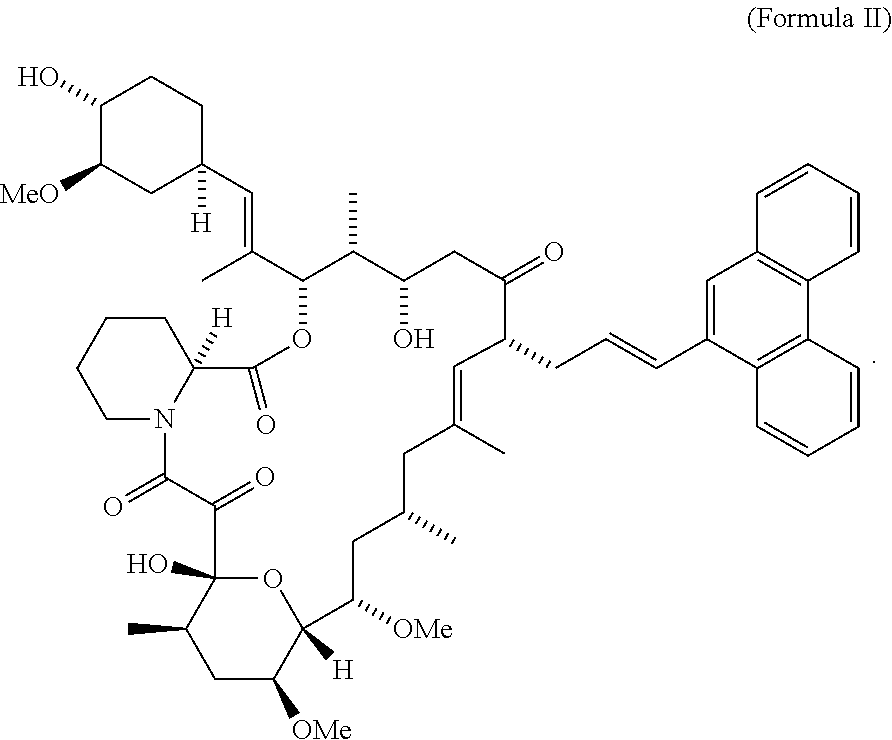
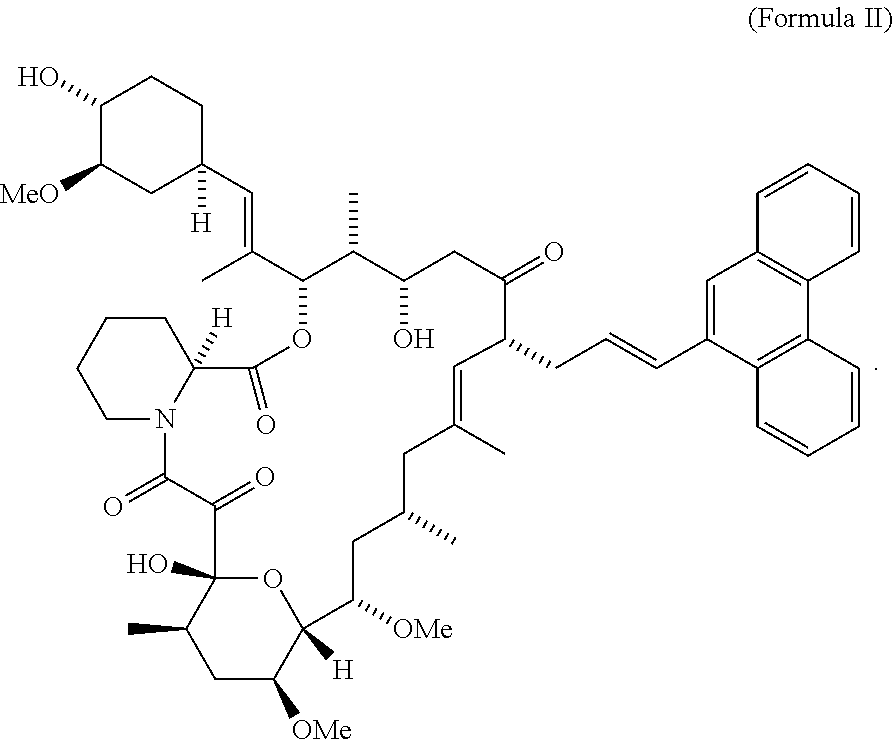
- the compound is represented by a Formula II
- the compound is not an immunosuppressant.
- the compound is configured to inhibit a peptidyl-prolyl cis/trans isomerase (PPIase) macrophage infectivity potentiator (MIP).
- PPIase peptidyl-prolyl cis/trans isomerase
- MIP macrophage infectivity potentiator
- the compound comprises a solvent accessible region.
- the compound is configured to solubilize collagen in the subject.
- a compound comprising a FKBP binding domain and a blocked calcineurin binding domain, wherein the compound is configured to reduce fibrosis in the subject.
- the Heck reaction is carried in a reaction mixture comprising the FK-506 or its analogue and an unsaturated halide in presence of a Pd catalyst.
- the Heck reaction is carried within a temperature range of about 60° C. to about 120° C.
- the product is extracted from the reaction mixture and then purified to get a purified product.
- yield of purified product is within a range of about 50 to about 95%.
- the compound with Formula II is configured to inhibit FKBP65 and/or FKBP12.
- FIG. 1 shows the synthesis of CT-474 from FK-506 by traditional Heck reaction.
- the reactant is FK-506 and the product is CT474.
- FIG. 2 shows the synthesis of CT-474 from FK-506 by method oxidative Heck reaction.
- the reactant is FK-506 and the product is CT474.
- FIG. 3 show CFU of Klebsiella pneumoniae cultured in tryptic soy broth at 37° C. for 24 h with 0, 10 nM, 100 nM, 1 ⁇ M, and 10 ⁇ M CT474 dissolved in 1% Dimethyl sulfoxide (DMSO).
- DMSO Dimethyl sulfoxide
- FIG. 4 shows blocked calcineurin binding domain in CT474.
- FIG. 5 shows flow cytometry of peripheral blood buffy coat after being treated with either vehicle or CT474. Buffy coat leukocytes were stained with CD45 and CD3 antibodies.
- FIG. 6 shows pre-mortem Pressure-Volume curve using Sireq Flexivent in murine lung exposed to bleomycin then treated from days 7 to 13 with vehicle or CT474.
- any one of the listed items can be employed by itself or in combination with any one or more of the listed items.
- the expression “A and/or B” is intended to mean either or both of A and B, i.e. A alone, B alone or A and B in combination.
- the expression “A, Band/or C” is intended to mean A alone, B alone, C alone, A and B in combination, A and C in combination, B and C in combination or A, B, and C in combination.
- “approximately”, “about” can, in some embodiments, mean within plus or minus ten percent of the stated value. In other embodiments, “about” can mean within plus or minus five percent of the stated value. In further embodiments, “about” can mean within plus or minus three percent of the stated value. In yet other embodiments, “about” can mean within plus or minus one percent of the stated value.
- range format is merely for convenience and brevity and should not be construed as an inflexible limitation on the scope of the invention. Accordingly, the description of a range should be considered to have specifically disclosed all the possible sub-ranges as well as individual numerical values within that range. For example, description of a range such as from 50% to 70% should be considered to have specifically disclosed sub-ranges such as from 50 to 52, from 50 to 55, from 55 to 60, from 60 to 65, from 60 to 70, from 67 to 70, from 66 to 70 etc., as well as individual numbers within that range, for example, 50, 52, 55, 62, 63, 67 etc. This applies regardless of the breadth of the range.
- phrase “have formula” or “there is structure” or “represented by formula” be not intended to have it is restricted and with Essential Terms “bag Containing” identical mode uses. For example, if unless otherwise stated, depicting a kind of structure, then it should be understood that all In stereoisomer and tautomeric forms are encompassed by.
- Fibrosis is defined by the overgrowth, hardening, and/or scarring of various tissues and is attributed to excess deposition of extracellular matrix components including collagen.
- the key cellular mediator of fibrosis is the fibroblast such as myofibroplast, which when activated serves as the primary collagen-producing cell.
- Anti-fibrotic agent It is a class of medications which are used to treat or reduce the effects of fibrosis.
- Reduce Fibrosis As used herein, the term signifies that the fibrosis after the administration of an agent has decreased or has reduced the progression of fibrosis in the subject. In an embodiment reduction can vary from at least about 10%, at least about 20%, at least about 30%, at least about 40%, at least about 50%, at least about 60%, at least about 70%, at least about 80%, at least about 90% or more.
- Treatment is broadly defined as an attempted remediation of a health problem such as but not limited to reduce the symptoms, stop disease progression, prevent acute exacerbations, and prolong survival of IPF patients. Treatment and therapy are generally considered synonyms. “Treat” or “treatment” are used interchangeably through-out the specification.
- Calcineurin is an enzyme that activates T-cells of the immune system.
- T-cells also called T-lymphocytes
- T-lymphocytes are a type of white blood cell that play a key role in cell-mediated immunity.
- Calcineurin binding domain Domain is a functional and/or structural unit of a protein.
- a binding domain broadly defined as a structural unit of the protein that posse's ability to bind with the desired target, such as a calcineurin binding domain would bind to calcineurin.
- calcineurin Upon binding of calcineurin with the calcineurin binding domain there is conformational change in calcineurin, leading to series of down reaction.
- Catalysis is the process of increasing the rate of a chemical reaction by adding a substance known as a catalyst, which is not consumed in the catalyzed reaction and can continue to act repeatedly.
- FK506 is the active ingredient in Tacrolimus®. FK-506 and FK506 are used interchangeably throughout the specification.
- Immunosuppression is a reduction of the activation or efficacy of the immune system. Reduction of Immune system can vary from at least about 10%, at least about 20%, at least about 30%, at least about 40%, at least about 50%, at least about 60%, at least about 70%, at least about 80%, at least about 90% or more.
- Immunosuppressive agent A medication or drugs that depresses or halts immune system activity. Some of these drugs are used to make the body less likely to reject a transplanted organ, such as a liver, heart, or kidney. For example, such as calcineurin inhibitors such as Tacrolimus and Cyclosporine. Tacrolimus drug is used as an immunosuppressant primarily in liver and kidney transplantations, although in some clinics it is used in heart, lung, and heart/lung transplantations. “Immunosuppressive agent” or “Immunosuppressant” is used interchangeably through-out the specification.
- Calcineurin inhibitors Molecules which inhibit the action of calcineurin, such as but not limited to cyclosporine, voclosporin, pimecrolimus and tacrolimus and their analogs with the similar function of binding to calcineurin.
- Not immunosuppressant As used herein, the term is defined as with a reduced ability to inhibit T cells or immune activity compared to FK506. In an embodiment, the reduced ability can vary from at least about 10%, at least about 20%, at least about 30%, at least about 40%, at least about 50%, at least about 60%, at least about 70%, at least about 80%, at least about 90% or more.
- Reduced immune suppress activity As used herein, the term is defined as suppression of immune response is less compared to FK506. In an embodiment, less can vary from at least about 10%, at least about 20%, at least about 30%, at least about 40%, at least about 50%, at least about 60%, at least about 70%, at least about 80%, at least about 90% or more.
- IPF Idiopathic pulmonary fibrosis
- IPF Idiopathic pulmonary fibrosis
- pulmonary fibrosis is a chronic lung disease where the lungs become fibrotic and characterized by a progressive and irreversible decline in lung function due to fibrosis due to which the patient can no longer breathe. Patients with IPF usually die within 3 to 5 years of diagnosis.
- Other names for IPF includes cryptogenic fibrosing alveolitis, idiopathic fibrosing alveolitis (chronic form), usual interstitial pneumonia.
- Small molecule refers to an organic compound usually smaller than 1 KDa in molecular weight that is used to modulate a biological system.
- PPIase PPlases catalyze the cis to trans isomerization of certain proline imidic bonds in proteins.
- Two families of PPlases are the FK506 binding proteins (FKBPs), and cyclophilins (CyPs).
- FKBPs FK506 binding proteins
- CyPs cyclophilins
- the active site of PPIases is shallow and solvent exposed.
- Each of the PPIases contains at least one PPIase domain. This domain is composed of antiparallel ⁇ -sheets that position a short ⁇ -helix. A shallow groove between the ⁇ -helix and ⁇ -sheets forms a solvent-exposed active site that binds to the target proline.
- the PPIase activity of FKBPs is inhibited by binding to agents.
- the agents may be immunosuppressants such as but not limited to FK506 or rapamycin.
- PPIase binding domain It is defined as a Peptidyl-Proline Isomerases binding domain.
- Synthetic route Chemical transformation one compound into another compound.
- Transformation means chemical transformation of a chemical substance to another chemical substance.
- Alkyl means an aliphatic hydrocarbon group that can be linear or branched acyclic or cyclic and comprises 1 to 25 carbon atoms in the chain. In one embodiment, useful alkyl groups comprise 1 to 12 carbon atoms in the chain. “Branched” means that one or more lower alkyl groups such as methyl, ethyl or propyl, are attached to a linear alkyl chain. The alkyl group can contain one or more heteroatoms selected from F, O, N, and Si.
- Non-limiting examples of suitable alkyl groups include methyl, ethyl, n-propyl, isopropyl, n-butyl, t-butyl, n-pentyl, hexyl, heptyl, nonyl, decyl, cyclohexyl and cyclopropylmethyl.
- Aryl means an aromatic monocyclic or multicyclic ring system comprising 5 to 14 carbon atoms, preferably 6 to 10 carbon atoms.
- the aryl group can contain one or more heteroatoms selected from F, O, N and Si.
- the aryl group can be substituted with one or more “ring system substituents” which may be the same or different and include hydrocarbyl substituents.
- suitable aryl groups include phenyl, naphthyl, indenyl, tetrahydronaphthyl and indanyl.
- Aralkyl or arylalkyl means an aryl-alkyl-group in-which both aryl and alkyl are as previously described.
- useful aralkyls comprise a lower alkyl group.
- suitable aralkyl groups include benzyl, phenethyl and naphthlenylmethyl where the aralkyl is linked to the norbornene through the alkylene group.
- the aralkyl group can contain one or more heteroatoms selected from F, O, N and Si.
- Halogen refers to F, Cl. Br, and I.
- CT474 The anti-fibrotic agent to treat IPF.
- CT-474 or CT474 are used interchangeably throughout the specification.
- Extraction It is the first step to separate the desired products from the reacted reaction mixture. Extraction methods include solvent extraction, distillation method, pressing and sublimation according to the extraction principle. Solvent extraction is the most widely used method. The selection of the solvent is crucial for solvent extraction. Selectivity, solubility, cost and safety should be considered in selection of solvents. Based on the law of similarity and intermiscibility (like dissolves like), solvents with a polarity value near to the polarity of the solute are likely to perform better and vice versa. Extraction produces an extracted product. The extracted product can also be called as crude product.
- Crude product is defined as an unrefined or unpurified product produced from the transformation of FK506 to CT474.
- the crude product may contain product of interest (which herein in CT474) and many contaminating or undesired substances along with it. Purification of crude product help in separating the product of interest from undesired substances.
- Purified Product The product obtained after purification of crude product.
- Yield is defined as a measure of a chemical reaction's efficiency. In an embodiment, yield is ratio of moles of purified product to moles of the limiting reactant. In an embodiment, the yield is expressed in percentage.
- Subject refers to an animal, a non-human mammal, or a human.
- a subject in need refers to a patient.
- MIC the minimum or minimal inhibitory concentration (MIC) is the lowest concentration of a chemical, usually a drug, which prevents visible growth of a bacterium or bacteria.
- Tacrolimus analogue Analogue is broadly defined as a compound with a molecular structure closely similar to that of another.
- FK506 analogues are FK520, dihydrotacrolimus, FK523, FK525 or the like are known, in which FK520 is a 23-membered macrolide compound and an ethyl analog of FK506, dihydrotacrolimus is a C21-propyl analogue of FK506, FK523 is a C21-methyl analogue of FK-506, and FK-525 is a prolyl analogue of FK506.
- analogoues may be 31-O-demethyl-FK506, 9-deoxo-FK506, 9-deoxo-31-O-demethyl-FK506, and 9-deoxo-prolyl-FK506.
- Tacrolimus analogue is also called as FK506 analogue.
- Inhibit as used herein is broadly defined to restrain biological activity. In an embodiment, inhibition can vary from at least about 10%, at least about 20%, at least about 30%, at least about 40%, at least about 50%, at least about 60%, at least about 70%, at least about 80%, at least about 90% or more.
- Collagen is the main structural protein in the extracellular matrix in the various connective tissues in the body. Collagen consists of amino acids bound together to form a triple helix of elongated fibril known as a collagen helix. The collagen helix is stabilized by many hydrogen bonds. The fibroblast is the most common cell that creates collagen. Fibroblast associated with fibrosis is myofibroblast.
- Prevention of Stabilization of Collagen as used herein is broadly defined as an ability to decrease the deposition of collagen.
- the deposition of collagen can be inhibited by reducing the proliferation and activation fibroblast or actively induce myofibroblast apoptosis.
- F1 CT474 for treating IPF.
- F2 Anti-fibrotic drug that is not immunosuppressant.
- F4 Compounds having calcineurin binding domain blocked.
- F5 Compounds inhibit peptidyl-prolyl cis/trans isomerase (PPIase) macrophage infectivity protentiator (MIP) protein.
- PPIase peptidyl-prolyl cis/trans isomerase
- MIP macrophage infectivity protentiator
- IPF IPF
- Some risk factors accountable for the IPF include smoking, acid reflux, bacterial and viral infections, exposure at work places, a family history of pulmonary fibrosis, presence of certain genes such as MUC5B, TERT, TERC, DKC1, RTEL1, AKAP13, DSP, FAM13A, DPP9, and TOLLIP.
- IPF idiopathic pulmonary fibrosis
- Gram-negative bacteria are the most common pathogens isolated from patients with IPF who are hospitalized for pulmonary infections.
- Bacteria held responsible for IPF are Haemophilus influenzae, Pseudomonas aeruginosa, Staphylococcus aureus, Branhamella catarrhalis , and Klebsiella pneumoniae.
- Klebsiella pneumoniae is a common cause of nosocomial pneumonia.
- the invention is to stop or possibly reverse fibrosis in patients that suffer from IPF.
- Tacrolimus® is an immunosuppressive drug.
- Immunosuppressive drugs also known as immunosuppressive agent, immunosuppressants and antirejection medications. These drugs inhibit or prevent activity of the immune system.
- Tacrolimus® also known Fujimycin is a product of the bacterium Streptomyces tsukubaensis . It is a macrolide lactone and acts by inhibiting calcineurin. The drug is used primarily in liver and kidney transplantations, although in some clinics it is used in heart, lung, and heart/lung transplantations. It reduces peptidyl-prolyl isomerase activity by binding to FKBP12 (FK506 binding protein) creating anew complex. This FKBP12-FK506 complex inhibits calcineurin which inhibits T-lymphocyte signal transduction and IL-2 transcription. It prevents cell from transitioning from the G0 into G1 phase of the cell cycle.
- Tacrolimus also prevents the dephosphorylation and translocation of nuclear factor of activated T-cells (NF-AT), a nuclear component thought to initiate gene transcription for the formation of lymphokines. Tacrolimus also inhibits the transcription for genes such as that encode IL-3, IL-4, IL-5, GM-CSF, and TNF, all of which are involved in the early stages of T-cell activation. Additionally, tacrolimus has been shown to inhibit the release of pre-formed mediators from skin mast cells and basophils, and to downregulate the expression of FceRI on Langerhans cells.
- NF-AT nuclear factor of activated T-cells
- immunosuppressive drugs act non-selectively, resulting in increased susceptibility to infections and decreased cancer immunosurveillance. Immunosuppressive drugs also cause other side-effects, such as hypertension, dyslipidemia, hyperglycemia, peptic ulcers, lipodystrophy, moon face, liver and kidney injury. The immunosuppressive drugs interact with other medicines and affect their metabolism and action.
- FK506 is an active ingredient in Tacrolimus®. Therefore, Tacrolimus is also known as FK506. However, the immunosuppression function of FK506 prevents its use as an anti-fibrotic.
- the present invention relates to making a new analog of FK506 that does not cause immunosuppression. In an embodiment, the present invention relates to development of new analog of FK506 that can be used as anti-fibrotic and do not cause immunosuppression. In an embodiment, the present invention relates to development of new analog of FK506 with a reduced immune suppression activity but with retained FKBP binding activity.
- the new analog is CT474.
- the FK506 is transformed to CT474.
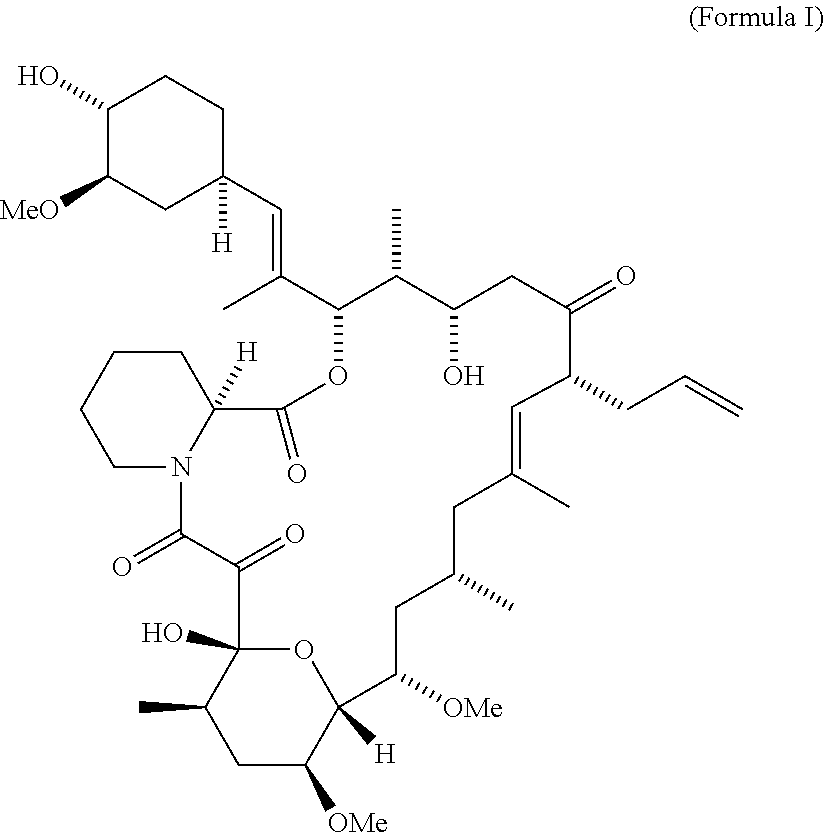
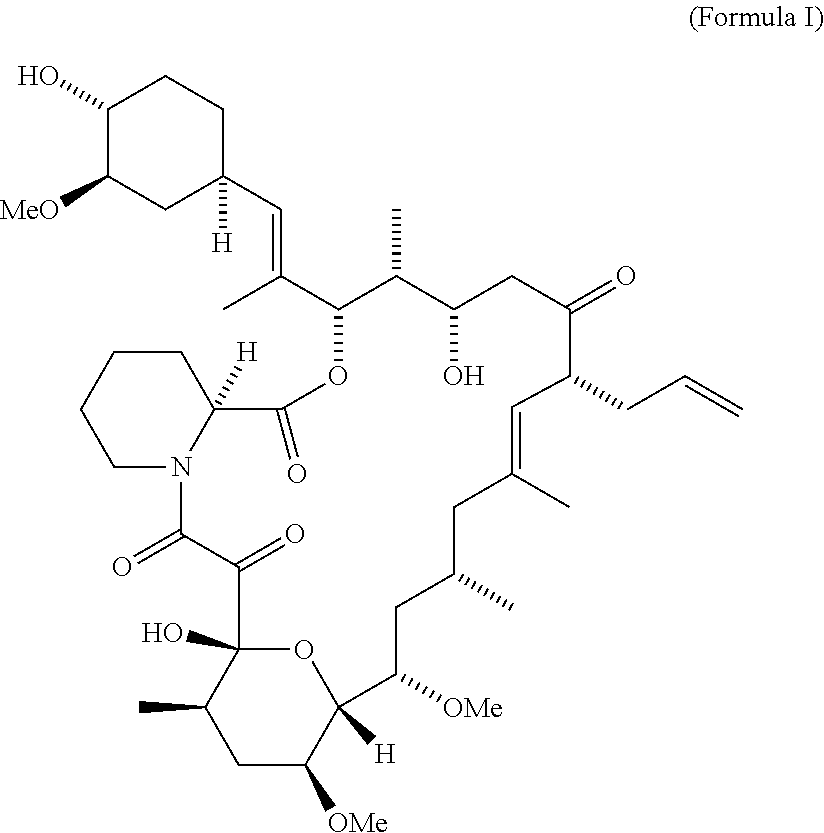
- the FK506 is represented by Formula I.
- CT474 is represented by a Formula II
- OH represents hydroxyl group
- OMe represents methoxy group
- H represent Hydrogen
- 0 represents oxygen
- N represents nitrogen
- CT474 is used for therapeutically targeted treatment of fibrosis, more preferably for treatment of IPF in a subject.
- CT474 comprises a blocked calcineurin binding domain.
- Calcineurin activates nuclear factor of activated T cell cytoplasmic (NFATc), a transcription factor, by dephosphorylating it. The activated NFATc is then translocated into the nucleus, where it upregulates the expression of interleukin 2 (IL-2), which, in turn, stimulates the growth and differentiation of the T cell response.
- NFATc activated T cell cytoplasmic
- IL-2 interleukin 2
- Calcineurin is the target for a class of drugs called calcineurin inhibitors.
- Calcineurin inhibitors have calcineurin binding domain to inhibit the action of calcineurin. Calcineurin inhibitors suppress the immune system.
- Tacromilus or its active ingredient FK506 is immunosuppressant.
- FK506 has calcineurin binding domain.
- CT474 the compound described in the present disclosure and prepared from FK506 is not immunosuppressive.
- FIG. 4 shows blocked calcineurin binding domain in CT474.
- CT474 comprises a PPIase binding domain.
- PPIases are involved in a plethora of biological processes, such as gene expression, signal transduction, protein secretion, development, and tissue regeneration. PPIases catalyze the isomerization of proline, acting as a regulatory switch during folding, activation of many proteins. These proteins have shown key roles in cancer, neurodegeneration, and psychiatric disorders.
- PPIase are present in Bacteria, Protozoa, Fungi, Plantae and Animalia.
- PPIase may help to regulate proteins associated with many pathogens. The extent of contribution to virulence is highly variable and dependent on the pleiotropic roles of a single PPIase in the respective pathogen.
- PPIase inhibitors are important therapeutics.
- PPIase inhibitors have PPIase binding domain to inhibit the action of PPIase.
- CT474 has a binding domain or region for FKBP. CT474 does not suppress immune response. In an embodiment, CT474 has reduced immune suppress activity.
- FKBP binding region binds FKBP.
- the binding of FKBP binding region with FKBP can be used to manipulate protein localization, signaling pathways and protein activation.
- FKBPs are present in mammals such as humans as well as microbes. In humans FKBPs are associated with many diseases. Human FKBPs can be subdivided into four groups: the cytoplasmic, endoplasmic reticulum, nuclear, and TPR (tetratricopeptide repeats)-containing FKBPs. There are five members of the FKBP family which are named according to their calculated molecular masses (FKBP12, FKBP13, FKBP25, FKBP52, and FKBP65).
- CT474 bind with the human FKBP. In an embodiment, CT474 binds with FKBP12 and/or FKBP13 and/or FKBP25 and/or FKBP52 and/or FKBP65.
- PPIases in bacteria are associated with virulence.
- PPIase in bacteria belong to soluble PPIases and membrane bound PPIase.
- Soluble PPIases are either cytosolic or periplasmic in gram-negative bacteria, and some of them are secreted extracellularly.
- Membrane-bound bacterial PPIases can face the exterior environment or the interior periplasm depending on the membrane in which they are anchored.
- Macrophage infectivity potentiator (MIP) like PPIases are virulence-associated, secreted, and, typically, outer membrane-localized FK506 Binding Proteins of Gram-negative bacteria.
- CT474 binds with microbial PPIase.
- the ‘microbe’ used herein is defined as tiny living things that are found all around us and are too small to be seen by the naked eye. Microbes could be bacteria, fungi, algae and/or protists.
- CT474 binds with the microbial FKBP.
- CT474 binds with the bacterial FKBP.
- CT474 binds with the fungal FKBP.
- CT474 has anti-bacterial activity.
- CT474 has anti-fungal activity.
- CT474 has anti-microbial activity.
- CT474 has anti-insecticidal activity.
- anti-microbial signify is an agent that kills microorganisms or stops their growth.
- anti-bacterial, anti-fungal, anti-insecticidal define an agent that kills or stops the growth of bacteria, fungi and insect respectively.
- the agent stop the growth of microbe or bacteria or fungi or insect by more than about 60%, about 70%, about 75%, about 80%, about 90% or more.
- CT474 is configured to inhibit a peptidyl-prolyl cis-trans isomerase (PPIase) macrophage infectivity protentiator (MIP).
- PPIase peptidyl-prolyl cis-trans isomerase
- MIP macrophage infectivity protentiator
- CT474 has suppressive effects on gram negative bacteria responsible for IPF, such as but not limited to Haemophilus influenzae, Pseudomonas aeruginosa, Staphylococcus aureus, Branhamella catarrhalis , and Klebsiella pneumoniae.
- CT474 has a suppressive effect on Klebsiella pneumoniae.
- the minimum concentration of CT474 that can inhibit or suppress the growth of Klebsiella pneumoniae is 5 nm, 10 nm, 50 nm, 100 nm, 150 nm, 200 nm, 300 nm, 500 nm, 750 nm, 1 ⁇ m, 2 ⁇ m, 3 ⁇ m, 4 ⁇ m, 5 ⁇ m, 6 ⁇ m, 7 ⁇ m, 8 ⁇ m, 9 ⁇ m, 10 ⁇ m, 15 ⁇ m, 20 ⁇ m and more.
- the minimum concentration of CT474 that can inhibit or suppress the growth of gram negative bacteria responsible for IPF is 5 nm, 10 nm, 50 nm, 100 nm, 150 nm, 200 nm, 300 nm, 500 nm, 750 nm, 1 ⁇ m, 2 ⁇ m, 3 ⁇ m, 4 ⁇ m, 5 ⁇ m, 6 ⁇ m, 7 ⁇ m, 8 ⁇ m, 9 ⁇ m, 10 ⁇ m, 15 ⁇ m, 20 ⁇ m and more.
- CT474 concentration and suppressive property to inhibit or suppress the growth of gram negative bacteria responsible for IPF are in positive correlation.
- the positive correlation signifies that with increasing concentration of CT474 the suppressive property to inhibit the growth of gram negative bacteria also increases.
- CT474 concentration and suppressive property to inhibit or suppress the growth of Klebsiella pneumoniae are in positive correlation.
- the positive correlation signifies that with increasing concentration of CT474 the suppressive property to inhibit the growth of Klebsiella pneumoniae also increases.
- CFU colony forming units
- CT474 can inhibit growth of any bacteria possessing PPIase such as but not limited to gram negative bacteria.
- CT474 can inhibit growth of any microbe possessing PPIase such as but not limited to gram negative bacteria.
- CT474 comprises a solvent accessible region.
- the solvent accessible region helps in proper protein folding.
- CT474 comprises of FKBP binding region and solvent accessible region as shown in FIG. 4
- the present disclosure demonstrates the method to prepare CT474 from FK-506.
- the FK506 is represented by Formula I.
- the method to prepare CT474 from FK506 follow Heck's reaction.
- FK506 is reacted with unsaturated halide in presence of catalyst(s) to obtain a crude product.
- the crude product can be diluted.
- step of the present invention is: FK506 and unsaturated halide are dissolved in the solution of organic solvent and organic bases, add palladium catalyst and part then, rise to the suitable temp reaction gradually, after reaction finishes, cooling, refining of the product.
- FK506 is reacted with Triflate in presence of catalyst(s) to obtain a crude product.
- Triflate also known by the systematic name trifluoromethanesulfonate, is a functional group with the formula CF3SO3-.
- Tacrolimus analogues as that disclosed in U.S. Pat. No. 6,387,918 or U.S. Pat. No. 9,505,779 or any other known substitutes of Tacrolimus known to a person skilled in the art at the time of this invention can also be reacted with unsaturated halides according to Heck reaction, to form a similar non-immunosuppressant compound.
- an unsaturated halide is an aryl halide or an alkyl halide or an aryl alkyl halide such as but not limited to 9-Iodophenanthrene, 9-Bromophenanthrene, 9-Chlorophenanthrene, 9-Fluorophenanthrene, phenanthrene-9-boronic acid.
- the unsaturated halide is 9-Iodophenanthrene and/or phenanthrene-9-boronic acid.
- the ratio of FK506 and the unsaturated halide is in equivalents ratio of about 1:1, about 1:1.5, about 1:2, about 1:2.5, about 1:3, about 1:3.5, about 1:4, about about 1:4.5, about 1:5, about 1:6, about 1:7, about 1:8, about 1:9, about 1:10, about 2:1: about about 2:0.5, about 2:3, about 2:5, about 3:1, about 4:1, about 5:1.
- the ratio of FK506 and the unsaturated halide is about 1:2.
- the ratio of FK506 and the unsaturated halide is about 1:1.5.
- FK506 used in Heck reaction is FK506 hydrate.
- the ratio of FK506 and the Triflate is in equivalents ratio of about 1:1, about 1:1.5, about 1:2, about 1:2.5, about 1:3, about 1:3.5, about 1:4, about about 1:4.5, about 1:5, about 1:6, about 1:7, about 1:8, about 1:9, about 1:10, about 2:1: about about 2:0.5, about 2:3, about 2:5, about 3:1, about 4:1, about 5:1.
- the ratio of FK506 and the Triflate is about 1:2.
- the ratio of FK506 and the Triflate is about 1:1.5.
- the catalyst comprises a base and/or a palladium catalyst.
- the catalyst is selected from but not limited to palladium(II) acetate, SPhos, K3PO4, XPhos, CPhos, JohnPhos, DavePhos, BrettPhos, X-Phos, RuPhos, White catalyst, 2,6-dimethyl-p-benzoquinone, dioxane, organic acids such as but not limited to acetic acids, ethers, transition metal coordination complex, triethylamine, Trifunctional N,N,O-terdentate amido/pyridyl carboxylate Pd(II) complexes, N-Heterocyclic Carbene Palladium Complex/Ionic Liquid Matrix, Pd(quinoline-8-carboxylate)2, Triethanolamine base, phosphine-free catalyst or combination thereof.
- catalyst employed in this invention as stated above can be in form of catalyst complex and/or captured on a carrier etc.
- the term “catalyst complex” as used herein relates to a metal organic complex with catalytic
- Organic solvent is the higher solvent, such as acetonitrile, dioxane, toluene, p-Xylol, Methyl isobutyl ketone, butylacetate, N-pyrrolidone, N, and dinethylformamide, chlorobenzene etc.
- Organic bases are non-coordination organic amine alkali, such as N, and N-dimethyl benzylamine, N-methylmorpholine, N, N-xylidene(s), dimethyl aminopyridine etc.
- the reaction of the aromatic compound according to the present invention is carried out at a temperature of from about 20° C. to about 200° C., preferably from about 60° C. to about 160° C., more preferably from about 60° C. to about 120° C.
- the reaction time of the present invention is preferably about 30 minutes to about 24 hours, preferably about 2 hour to about 16 hours, more preferably about 2 hours to about 10 hours.
- the yield of purified product is in a range with the lower limit in being from about 20%, about 25%, about 30%, about 35%, about 40%, about 45%, about 50%, about 55%, about 60% with increment of 5% from about 20% to about 60%, and with upper limit about 50% to about 95% in increment of 5% from about 50% to about 90% such that upper limit include about 50%, about 55%, about 60%, about 65%, about 70%, about 75%, about 80%, about 85%, about 90%, about 95% or more.
- yield is measured after purification of product in the present disclosure.
- Heck reaction is carried in a sealed vessel.
- crude product of CT474 is extracted from the reacted reaction mixture.
- the crude product is extracted from the reacted reaction mixture using solvent extraction procedure.
- Solvent extraction procedure as used herein is Liquid-liquid extraction (LLE). It is a method to separate compounds or metal complexes, based on their relative solubilities in two different immiscible liquids, usually polar and an organic solvent (non-polar). There is a net transfer of one or more species from one liquid into another liquid phase, generally from polar to non-polar. The transfer is driven by chemical potential, i.e. once the transfer is complete, the overall system of chemical components that make up the solutes and the solvents are in a more stable configuration (lower free energy).
- the solvent that is enriched in solute(s) is called extract.
- the feed solution that is depleted in solute(s) is called the raffinate.
- the solvent extraction process can employ organic and/or inorganic solvent, polar and/or non-polar solvent, ionic and/or non-ionic solvent.
- extraction process of CT474 includes solvent extraction and/or distillation method and/or precipitation and/or sublimation and/or dynamic extraction method and/or supercritical fluid extraction, counter current extraction, microwave assisted extraction, ultrasonication-assisted extraction and/or digestion to be done manually and/or by using any instrument like rotary evaporator, freeze drier, supercritical CO2 process and/or any other analytical method known to the person skilled in the art.
- purification methods include techniques like various forms of chromatography.
- Chromatography is an analytical technique commonly used for separating a mixture of chemical substances into its individual components, so that the individual components can be thoroughly analyzed.
- chromatography e.g., liquid chromatography, gas chromatography, ion-exchange chromatography, affinity chromatography such as e.g. silica gel chromatography, Thin layer chromatography, Paper chromatography, High performance liquid chromatography (HPLC), Low performance liquid chromatography (LPLC).
- HPLC High performance liquid chromatography
- LPLC Low performance liquid chromatography
- the amount that each component of a mixture travels in a chromatography can be quantified using retention factors (Rf).
- Rf quantify the amount of retardation of a sample in a stationary phase relative to a mobile phase.
- purification method employs vacuum assisted methods, solvent-free methods, sublimation, crystallization, fractional distillation, application, distillation under reduced pressure, steam distillation, differential extraction, filtration, recrystallization.
- silica gel chromatography has been used for purification in the present disclosure.
- the anti-fibrotic agent CT474 is to stop or reverse the effects of IPF.
- the present invention describes the regulation of the anti-fibrotic agent to the patient or the subject in which CT-474 has been administrated.
- the present disclosure describes the synthetic route to transform FK506 to CT474.
- the factor causing the IPF comprises a bacterial, a viral, a mold, an animal protein, a gene, an age, a gender, an acid reflux, environmental, smoking or exposure to inorganic dust including asbestos, silica, coal dust, beryllium, or hard metal dusts.
- the present disclosure also describes methods of treating fibrosis or alleviating the symptoms caused by fibrosis by administering an anti-fibrotic agent described herein in combination with another therapy and drugs known to alleviate the symptoms of fibrosis or IPF.
- compositions and pharmaceutical compositions including the anti-fibrotic agent that targets the respiratory pathway for administering to cells and subjects.
- the compositions or pharmaceutical compositions described herein include the anti-fibrotic agent and a carrier or a pharmaceutically acceptable carrier, respectively.
- the pharmaceutical compositions described herein include a therapeutically effective amount of the therapeutic anti-fibrotic agent and a pharmaceutically acceptable carrier.
- the pharmaceutical compositions are formulated to be suitable for the route of administration to a subject.
- the therapeutic anti-fibrotic agent such as an anti-fibrotic-agent that targets the cells infected with fibrosis. So, it includes dosage forms to contain a therapeutically effective amount for administration.
- the pharmaceutical composition including the therapeutic anti-fibrotic agent described herein can be administered in combination with other therapies.
- the dosage of the anti-fibrotic agents to be administered to a subject will vary with the precise stage of the fibrosis being treated and the recipient of the treatment.
- the scaling of dosages for human administration can be performed according to art-accepted practices by a physician depending on various factors.
- the administration of an amount of anti-fibrotic agent, in a particular dose as well as the interval between doses can depend on the characteristics of the individual, such as general health, age, sex, body weight and tolerance to drugs as well as the type and severity of fibrosis.
- CT474 can be administered alone or before, along with, or subsequent to administration of the medication(s) used in the ART.
- the amount of CT474 thereof to be administered in each dose can be an amount which is effective to produce a desired pharmacokinetic or pharmacodynamic effect.
- Methods disclosed herein include treating subjects such as mammals.
- mammals include human, chimpanzees, monkeys, dogs, cats, mice, rats, and transgenic species thereof.
- Subjects in need of a treatment are subjects infected with fibrosis.
- carrier refers to a diluent, adjuvant (e.g., Freund's adjuvant (complete and incomplete)), excipient, or vehicle with which the therapeutic is administered.
- Pharmaceutical carriers can be sterile liquids, such as water and oils, including those of petroleum, animal, vegetable or synthetic origin, such as peanut oil, soybean oil, mineral oil, sesame oil and the like. Water is usually used as the carrier when the pharmaceutical composition is administered intravenously. Saline solutions and aqueous dextrose and glycerol solutions can also be employed as liquid carriers, particularly for injectable solutions.
- Suitable pharmaceutical excipients include starch, glucose, lactose, sucrose, gelatin, malt, rice, flour, chalk, silica gel, sodium stearate, glycerol monostearate, talc, sodium chloride, dried skim milk, glycerol, propylene, glycol, water, ethanol and the like.
- further excipients please also see “Handbook of Pharmaceutical Excipients”, fifth edition, R. C. Rowe, P. J. Seskey and S. C. Owen, Pharmaceutical Press, London, Chicago.
- the composition if desired, can also contain minor amounts of wetting or emulsifying agents, or pH buffering agents.
- compositions can take the form of solutions, suspensions, emulsion, tablets, pills, capsules, powders, sustained-release formulations and the like.
- Oral formulation can include standard carriers such as pharmaceutical grades of mannitol, lactose, starch, magnesium stearate, sodium saccharine, cellulose, magnesium carbonate, etc. Examples of suitable pharmaceutical carriers are described in “Remington's Pharmaceutical Sciences” by E. W. Martin.
- Such compositions will contain a therapeutically effective amount of the agent, preferably in purified form, together with a suitable amount of carrier so as to provide the form for proper administration to the patient.
- the formulation should suit the mode of administration.
- compositions described herein can be formulated into various dosage forms including solid dosage forms for oral administration such as capsules, tablets, pills, powders and granules, liquid dosage forms for oral administration such as pharmaceutically acceptable emulsions, microemulsions, solutions, suspensions, syrups and elixirs, injectable preparations, for example, sterile injectable aqueous or oleaginous suspensions, compositions for rectal or vaginal administration, preferably suppositories.
- solid dosage forms for oral administration such as capsules, tablets, pills, powders and granules
- liquid dosage forms for oral administration such as pharmaceutically acceptable emulsions, microemulsions, solutions, suspensions, syrups and elixirs
- injectable preparations for example, sterile injectable aqueous or oleaginous suspensions
- compositions for rectal or vaginal administration preferably suppositories.
- compositions may be administered in a manner appropriate treatment of fibrosis or alleviation of symptoms of fibrosis.
- the quantity and frequency of administration will be determined by such factors as the condition of the subject, and the type and severity of the fibrosis, although appropriate dosages may be determined by clinical trials.
- compositions described herein may be carried out in any convenient manner, including by aerosol inhalation, injection, ingestion, transfusion, implantation or transplantation.
- the pharmaceutical compositions described herein may be administered to a patient subcutaneously, intradermally, intratumorally, intranodally, intramedullary, intramuscularly, by intravenous (i. v.) injection, or intraperitoneally.
- therapeutically effective amount refers to the amount of an agent that will elicit the biological or medical response of cells, tissue, system, or subject that is being sought by the researcher, veterinarian, medical doctor or another clinician.
- therapeutically effective amount includes that amount of a compound that, when administered, is sufficient to alleviate to some extent, one or more of the signs or symptoms of fibrosis.
- the therapeutically effective amount will vary depending on the agent, the severity and stage of fibrosis, and the age, weight, etc., of the subject to be treated.
- Statistical significance By “statistically significant,” it is meant that the result was unlikely to have occurred by chance. Statistical significance can be determined by any method known in the art. Commonly used measures of significance include the p-value, which is the frequency or probability with which the observed event would occur if the null hypothesis were true. If the obtained p-value is smaller than the significance level, then the null hypothesis is rejected. In simple cases, the significance level is defined at a p-value of 0.05 or less.
- a “decreased” or “reduced” or “lesser” amount is typically a “statistically significant” or a physiologically significant amount, and may include a decrease that is about 1.1, 1.2, 1.3, 1.4, 1.5, 1.6 1.7, 1.8, 1.9, 2, 2.5, 3, 3.5, 4, 4.5, 5, 6, 7, 8, 9, 10, 15, 20, 30, 40, or 50 or more times (e.g., 100, 500, 1000 times) (including all integers and decimal points in between and above 1, e.g., 1.5, 1.6, 1.7. 1.8, etc.) an amount or level described herein.
- Klebsiella pneumoniae strain 43816 American Type Culture Collection, Manassas, Va. was used for the studies.
- TLC indicated the presence of multiple UV active products. Diluted reaction with water and extracted with CH2Cl2 three times and EtOAc (ethyl acetate) once. Dried organic layer with Na2SO4 and concentrated in vacuo. The crude was purified via silica gel chromatography with 2% MeOH, 1% NH4OH, 97% DCM solvent mixture. The yield was 59% based on the limiting reactant. The reaction is illustrated in FIG. 1 .
- TLC analysis indicated a new UV active spot with an Rf of 0.56-0.6 in 9:0.9:0.1 DCM-MeOH—NH4OH (Dichloromethane-methanol-ammonium hydroxide).
- the reaction mixture was diluted with H2O and extracted with CH2Cl2 (2 times). The combined organics were dried over Na2SO4. The mixture was filtered and concentrated in vacuo.
- the crude was purified via silica gel chromatography with 2.5% MeOH, 1% NH4OH, 96.5% DCM solvent mixture.
- TLC indicated starting FK506 eluted with desired product.
- the mixture was subjected to preparatory LC purification using MeCN/water gradient (acetonitrile/water), which was successful in separating the starting material from the product. The yield was 85% based on the limiting reactant.
- the reaction is illustrated in FIG. 2 .
- the minimal inhibitory concentration (MIC) method was used to characterize the in vitro efficacy of the compound as shown in the FIG. 3 .
- Klebsiella pneumoniae strain 43816 American Type Culture Collection, Manassas, Va.
- CT474 was initially suspended with DMSO, then diluted in the culture broth with final concentrations of CT474 at 0 nM (1% DMSO alone), 10 nM, 100 nM, 1 ⁇ M, and 10 ⁇ M with 10,000 CFU Klebsiella pneumoniae in 10 mL tryptic soy broth.
- OD 600 was measured 24 h later, then the CFU was determined using a standard curve.
- increasing doses of CT474 showed increasingly suppressive effects on the growth of Klebsiella pneumoniae.
- “Vehicle” as used herein is the substance used as a carrier for the pharmaceutical agent to include aqueous solutions or oils. Oils are derived from petroleum, animal, vegetable or synthetic origin, such as peanut oil. In FIGS. 5 - 7 signify “veh” signify vehicle. Flow cytometry of peripheral blood buffy coat after being treated with either vehicle or CT474. Buffy coat leukocytes were stained with CD45 and CD3 antibodies is shown in FIG. 5 .
- Pre-mortem Pressure-Volume curve using Sireq Flexivent in murine lung exposed to bleomycin then treated from days 7 to 13 with vehicle or CT474 is shown in FIG. 6 .
- Statistical calculations were performed using from repeated measures. Analysis of variation (ANOVA) was used to determine differences between groups.
Landscapes
- Health & Medical Sciences (AREA)
- Veterinary Medicine (AREA)
- Chemical & Material Sciences (AREA)
- Medicinal Chemistry (AREA)
- Pharmacology & Pharmacy (AREA)
- Life Sciences & Earth Sciences (AREA)
- Animal Behavior & Ethology (AREA)
- General Health & Medical Sciences (AREA)
- Public Health (AREA)
- Epidemiology (AREA)
- Engineering & Computer Science (AREA)
- Bioinformatics & Cheminformatics (AREA)
- Pulmonology (AREA)
- Chemical Kinetics & Catalysis (AREA)
- General Chemical & Material Sciences (AREA)
- Nuclear Medicine, Radiotherapy & Molecular Imaging (AREA)
- Organic Chemistry (AREA)
- Pharmaceuticals Containing Other Organic And Inorganic Compounds (AREA)
Abstract
Description


- 1. Wayn T A, Cellular and molecular mechanisms of fibrosis. J Pathol. 2008; 214(2): 199-210. doi:10.1002/path.2277.
- 2. Paola et al., Adrenomedullin in inflammatory process associated with experimental pulmonary fibrosis. Respiratory Research, 2011; 12:41. http://respiratory-research.com/content/12/1/41
- 3. Wayn et al., Mechanisms of fibrosis: therapeutic translation for fibrotic disease. Nat Med, 18(7): 1028-1040. doi:10.1038/nm.2807.
- 4. Bois et al., An earlier and more confident diagnosis of idiopathic pulmonary fibrosis. Eur Respir Rev, 2012; 21: 124, 141-146.doi: 10.1183/09059180.00000812.
- 5. Baddini-Martinez J et al., Brazilian guidelines for the pharmacological treatment of idiopathic pulmonary fibrosis. Official document of the Brazilian Thoracic Association based on the GRADE methodology. J Bras Pneumol. 2020; 46(2):e20190423. doi: https://dx.doi.org/10.36416/1806-3756/e20190423.
- 6. Delcamp, J. H.; Brucks, A. P.; White, M. C. A General and Highly Selective Chelate-Controlled Intermolecular Oxidative Heck Reaction J. Am. Chem. Soc. 2008, 130, 11270-11271.
Claims (12)

Priority Applications (1)
| Application Number | Priority Date | Filing Date | Title |
|---|---|---|---|
| US17/031,183 US11666560B2 (en) | 2020-09-24 | 2020-09-24 | Anti-fibrotic agent |
Applications Claiming Priority (1)
| Application Number | Priority Date | Filing Date | Title |
|---|---|---|---|
| US17/031,183 US11666560B2 (en) | 2020-09-24 | 2020-09-24 | Anti-fibrotic agent |
Publications (2)
| Publication Number | Publication Date |
|---|---|
| US20220087986A1 US20220087986A1 (en) | 2022-03-24 |
| US11666560B2 true US11666560B2 (en) | 2023-06-06 |
Family
ID=80739636
Family Applications (1)
| Application Number | Title | Priority Date | Filing Date |
|---|---|---|---|
| US17/031,183 Active US11666560B2 (en) | 2020-09-24 | 2020-09-24 | Anti-fibrotic agent |
Country Status (1)
| Country | Link |
|---|---|
| US (1) | US11666560B2 (en) |
Citations (12)
| Publication number | Priority date | Publication date | Assignee | Title |
|---|---|---|---|---|
| US5348966A (en) | 1990-10-24 | 1994-09-20 | Fujisawa Pharmaceutical Co., Ltd. | Method for treating pyoderma and Sezary's syndrome using FK 506 and related compounds |
| WO2001026374A1 (en) * | 1999-10-07 | 2001-04-12 | Thomson Licensing S.A. | Producing a trick modes signal for digital video recorder |
| US20100086592A1 (en) | 2007-03-29 | 2010-04-08 | Panacea Biotec Limited. | Modified dosage forms of tacrolimus |
| US20100297221A1 (en) | 2007-04-04 | 2010-11-25 | Ivan Coulter | pharmaceutical composition of tacrolimus |
| US20110281906A1 (en) | 2006-12-28 | 2011-11-17 | Astellas Pharma Inc. | Sustained release formulation for tacrolimus |
| US20110318277A1 (en) | 2010-06-25 | 2011-12-29 | APT Pharmaceuticals, Inc. University of Maryland, Baltimore | Tacrolimus compositions for aerosol administration |
| US8591946B2 (en) | 2003-08-29 | 2013-11-26 | Veloxis Pharmaceuticals A/S | Modified release compositions comprising tacrolimus |
| US8889186B2 (en) | 2003-08-29 | 2014-11-18 | Veloxis Pharmaceuticals A/S | Modified release compositions comprising tacrolimus |
| US20160296500A1 (en) | 2013-05-24 | 2016-10-13 | Chronos Therapeutics Limited | Tacrolimus for use in treating diseases characterized by protein aggregate deposition in neuronal cells |
| US20170072058A1 (en) | 2014-11-21 | 2017-03-16 | Solipharma Llc | Pharmaceutical composition containing tacrolimus and preparation methods thereof |
| US20190015395A1 (en) | 2016-01-08 | 2019-01-17 | Chronos Therapeutics Limited | Tacrolimus for treating tdp-43 proteinopathy |
| US10752642B1 (en) | 2019-04-30 | 2020-08-25 | George Mason University | Macrocyclic lactones |
-
2020
- 2020-09-24 US US17/031,183 patent/US11666560B2/en active Active
Patent Citations (13)
| Publication number | Priority date | Publication date | Assignee | Title |
|---|---|---|---|---|
| US5348966A (en) | 1990-10-24 | 1994-09-20 | Fujisawa Pharmaceutical Co., Ltd. | Method for treating pyoderma and Sezary's syndrome using FK 506 and related compounds |
| WO2001026374A1 (en) * | 1999-10-07 | 2001-04-12 | Thomson Licensing S.A. | Producing a trick modes signal for digital video recorder |
| US8591946B2 (en) | 2003-08-29 | 2013-11-26 | Veloxis Pharmaceuticals A/S | Modified release compositions comprising tacrolimus |
| US8889186B2 (en) | 2003-08-29 | 2014-11-18 | Veloxis Pharmaceuticals A/S | Modified release compositions comprising tacrolimus |
| US20110281906A1 (en) | 2006-12-28 | 2011-11-17 | Astellas Pharma Inc. | Sustained release formulation for tacrolimus |
| US20100086592A1 (en) | 2007-03-29 | 2010-04-08 | Panacea Biotec Limited. | Modified dosage forms of tacrolimus |
| US20100297221A1 (en) | 2007-04-04 | 2010-11-25 | Ivan Coulter | pharmaceutical composition of tacrolimus |
| US8911777B2 (en) | 2007-04-04 | 2014-12-16 | Sigmoid Pharma Limited | Pharmaceutical composition of tacrolimus |
| US20110318277A1 (en) | 2010-06-25 | 2011-12-29 | APT Pharmaceuticals, Inc. University of Maryland, Baltimore | Tacrolimus compositions for aerosol administration |
| US20160296500A1 (en) | 2013-05-24 | 2016-10-13 | Chronos Therapeutics Limited | Tacrolimus for use in treating diseases characterized by protein aggregate deposition in neuronal cells |
| US20170072058A1 (en) | 2014-11-21 | 2017-03-16 | Solipharma Llc | Pharmaceutical composition containing tacrolimus and preparation methods thereof |
| US20190015395A1 (en) | 2016-01-08 | 2019-01-17 | Chronos Therapeutics Limited | Tacrolimus for treating tdp-43 proteinopathy |
| US10752642B1 (en) | 2019-04-30 | 2020-08-25 | George Mason University | Macrocyclic lactones |
Non-Patent Citations (9)
| Title |
|---|
| Balakin. Current Drug Discovery Technologies, 2005, 2, 99-113. |
| Ertl, P.; Rohde, B.; and Selzer, P. Fast Calculation of Molecular Polar Surface Area as a Sum of Fragment-Based Contributions and Its Application to the Prediction of Drug Transport Properties. J_Med. Chem., 2000, 43, 3714-3717. |
| Lemons, P.A.; Gladstone, B. G.; Seth, A.; Chao, E. D.; Foley, M.A.; Schreiber, S. L. Synthesis of alcineurin-Resistant Derivates of FK506 and Selection of Compensatory Receptors. Chemistry & Biology, 2002, 9. 19-61. |
| Nagano, J.; Iyonaga, K.; Kawamura, K.; Yamashita, A; Ichiyasu, H.; Okamoto, T.; Suga, M.; Sasaki, Y; and Koh Rogi, H., Use of tacrolimus, a potent antifibrotic agent, in bieomycininduced lung fibrosis. Eur. Respir. J_2006, 27, 460-9. |
| Non-Final office action issued for the U.S. Appl. No. 16/399,357, dated Feb. 4, 2020, 5 pages. |
| Notice of Allowance issued for the U.S. Appl. No. 16/399,357, dated May 20, 2020, 5 pages. |
| Perren. Neurobiology of Aging, 2014, 36, 1559-68. |
| Rutger, A. F.; Gjaltema, B.; Van Der Stoela. M.; Bersemaa, M. B.; and Bank, R. A. Disentangling mechanisms involved in collagen pyridinoline cross-linking: The immunophilin FKBP65 is critical for dimerization of lysyl hydroxylase 2. Proc. Nall. Acad. Sci. USA 2016, 113, 7142-7147. |
| Shivshankar. Journal of Drug Delivery Science and Technology, 2014, 24(5), 469-77. |
Also Published As
| Publication number | Publication date |
|---|---|
| US20220087986A1 (en) | 2022-03-24 |
Similar Documents
| Publication | Publication Date | Title |
|---|---|---|
| US20240262867A1 (en) | Hybrid cyclic libraries and screens thereof | |
| US20240424108A1 (en) | Asgpr-binding compounds for the degradation of extracellular proteins | |
| US10822339B2 (en) | Pyrrolopyrimidine five-membered azacyclic derivative and application thereof | |
| US20200392159A1 (en) | Novel rapamycin derivatives | |
| Burnett et al. | Discovery of RMC-5552, a selective bi-steric inhibitor of mTORC1, for the treatment of mTORC1-activated tumors | |
| JP2022504601A (en) | MST1 kinase inhibitors and their use | |
| US20190177310A1 (en) | Inhibitors of integrated stress response pathway | |
| US11639343B2 (en) | Compounds targeting and degrading BCR-ABL protein and its antitumor application | |
| KR101599982B1 (en) | Cyclic peptide from nonomuraea sp., process for the production thereof, and pharmaceutical composition for the prevention or treatment of mycobacteria related disease comprising the same | |
| WO2008089636A1 (en) | Derivatives of azabicyclo octane, the method of making them and the uses thereof as inhibitors of dipeptidyl peptidase iv | |
| Guduru et al. | Synthesis and biological evaluation of rapamycin-derived, next generation small molecules | |
| US11666560B2 (en) | Anti-fibrotic agent | |
| WO2023217179A1 (en) | Use of mannose in inhibiting pyroptosis or relieving toxic and side effects of chemotherapy drug | |
| WO2020021252A1 (en) | Compounds for treating infections caused by rifampicin-resistant bacteria | |
| EP4010324B1 (en) | Pyrimidine-5-carboxamide compound | |
| KR20080064177A (en) | How to treat diarrhea associated with Clostridium difficile | |
| US20250250265A1 (en) | Benzothiazole-phenylsulfonyl-piperidine analogs as activators of nacylphosphatidylethanolamine hydrolyzing phospholipase d | |
| JP2025526320A (en) | Therapeutic compounds, formulations, and uses thereof | |
| Ikpa et al. | In Silico Docking Analysis of Anti-malaria and Anti-typhoid Potentials of Phytochemical Constituents of Ethanol Extract of Dryopteris dilatata. | |
| US11135203B2 (en) | Forazolines, compositions thereof and uses thereof | |
| JPWO2019189331A1 (en) | New K95-5901-1 substance and its manufacturing method | |
| Ramesh | From Glycals to Nitrogen Heterocycles and Carbocycles via “Cleavage‐Intramolecular Recombination Strategy” | |
| CN114181225B (en) | Michelia lactone derivative, pharmaceutical composition, preparation method and application thereof | |
| WO2020040670A1 (en) | Novel zinc complex, production and use of same | |
| Jagdish | Design, Synthesis and Characterization of Artificial Siderophores and their Conjugates |
Legal Events
| Date | Code | Title | Description |
|---|---|---|---|
| FEPP | Fee payment procedure |
Free format text: ENTITY STATUS SET TO UNDISCOUNTED (ORIGINAL EVENT CODE: BIG.); ENTITY STATUS OF PATENT OWNER: SMALL ENTITY |
|
| FEPP | Fee payment procedure |
Free format text: ENTITY STATUS SET TO SMALL (ORIGINAL EVENT CODE: SMAL); ENTITY STATUS OF PATENT OWNER: SMALL ENTITY |
|
| AS | Assignment |
Owner name: UNIVERSITY OF VIRGINIA PATENT FOUNDATION, VIRGINIA Free format text: ASSIGNMENT OF ASSIGNORS INTEREST;ASSIGNOR:UNIVERSITY OF VIRGINIA;REEL/FRAME:055851/0812 Effective date: 20210326 Owner name: GEORGE MASON UNIVERSITY, VIRGINIA Free format text: ASSIGNMENT OF ASSIGNORS INTEREST;ASSIGNORS:PAIGE, MIKELL;PETRUNCIO, GREGORY MICHAEL;SIGNING DATES FROM 20210302 TO 20210303;REEL/FRAME:055849/0426 Owner name: UNIVERSITY OF VIRGINIA, VIRGINIA Free format text: ASSIGNMENT OF ASSIGNORS INTEREST;ASSIGNOR:SHIM, YUN MICHAEL;REEL/FRAME:055851/0212 Effective date: 20210324 |
|
| STPP | Information on status: patent application and granting procedure in general |
Free format text: FINAL REJECTION MAILED |
|
| STPP | Information on status: patent application and granting procedure in general |
Free format text: NON FINAL ACTION MAILED |
|
| STPP | Information on status: patent application and granting procedure in general |
Free format text: FINAL REJECTION MAILED |
|
| STCF | Information on status: patent grant |
Free format text: PATENTED CASE |