US11428689B2 - Methods and uses for remotely triggered protease activity measurements - Google Patents
Methods and uses for remotely triggered protease activity measurements Download PDFInfo
- Publication number
- US11428689B2 US11428689B2 US16/099,147 US201716099147A US11428689B2 US 11428689 B2 US11428689 B2 US 11428689B2 US 201716099147 A US201716099147 A US 201716099147A US 11428689 B2 US11428689 B2 US 11428689B2
- Authority
- US
- United States
- Prior art keywords
- protease
- peptide
- tumor
- enzyme
- urine
- Prior art date
- Legal status (The legal status is an assumption and is not a legal conclusion. Google has not performed a legal analysis and makes no representation as to the accuracy of the status listed.)
- Active, expires
Links
Images




Classifications
-
- G—PHYSICS
- G01—MEASURING; TESTING
- G01N—INVESTIGATING OR ANALYSING MATERIALS BY DETERMINING THEIR CHEMICAL OR PHYSICAL PROPERTIES
- G01N33/00—Investigating or analysing materials by specific methods not covered by groups G01N1/00 - G01N31/00
- G01N33/48—Biological material, e.g. blood, urine; Haemocytometers
- G01N33/50—Chemical analysis of biological material, e.g. blood, urine; Testing involving biospecific ligand binding methods; Immunological testing
- G01N33/53—Immunoassay; Biospecific binding assay; Materials therefor
- G01N33/543—Immunoassay; Biospecific binding assay; Materials therefor with an insoluble carrier for immobilising immunochemicals
- G01N33/54313—Immunoassay; Biospecific binding assay; Materials therefor with an insoluble carrier for immobilising immunochemicals the carrier being characterised by its particulate form
- G01N33/54346—Nanoparticles
-
- C—CHEMISTRY; METALLURGY
- C12—BIOCHEMISTRY; BEER; SPIRITS; WINE; VINEGAR; MICROBIOLOGY; ENZYMOLOGY; MUTATION OR GENETIC ENGINEERING
- C12Q—MEASURING OR TESTING PROCESSES INVOLVING ENZYMES, NUCLEIC ACIDS OR MICROORGANISMS; COMPOSITIONS OR TEST PAPERS THEREFOR; PROCESSES OF PREPARING SUCH COMPOSITIONS; CONDITION-RESPONSIVE CONTROL IN MICROBIOLOGICAL OR ENZYMOLOGICAL PROCESSES
- C12Q1/00—Measuring or testing processes involving enzymes, nucleic acids or microorganisms; Compositions therefor; Processes of preparing such compositions
- C12Q1/34—Measuring or testing processes involving enzymes, nucleic acids or microorganisms; Compositions therefor; Processes of preparing such compositions involving hydrolase
- C12Q1/37—Measuring or testing processes involving enzymes, nucleic acids or microorganisms; Compositions therefor; Processes of preparing such compositions involving hydrolase involving peptidase or proteinase
-
- G—PHYSICS
- G01—MEASURING; TESTING
- G01N—INVESTIGATING OR ANALYSING MATERIALS BY DETERMINING THEIR CHEMICAL OR PHYSICAL PROPERTIES
- G01N33/00—Investigating or analysing materials by specific methods not covered by groups G01N1/00 - G01N31/00
- G01N33/48—Biological material, e.g. blood, urine; Haemocytometers
- G01N33/50—Chemical analysis of biological material, e.g. blood, urine; Testing involving biospecific ligand binding methods; Immunological testing
- G01N33/58—Chemical analysis of biological material, e.g. blood, urine; Testing involving biospecific ligand binding methods; Immunological testing involving labelled substances
-
- G—PHYSICS
- G01—MEASURING; TESTING
- G01N—INVESTIGATING OR ANALYSING MATERIALS BY DETERMINING THEIR CHEMICAL OR PHYSICAL PROPERTIES
- G01N33/00—Investigating or analysing materials by specific methods not covered by groups G01N1/00 - G01N31/00
- G01N33/48—Biological material, e.g. blood, urine; Haemocytometers
- G01N33/50—Chemical analysis of biological material, e.g. blood, urine; Testing involving biospecific ligand binding methods; Immunological testing
- G01N33/58—Chemical analysis of biological material, e.g. blood, urine; Testing involving biospecific ligand binding methods; Immunological testing involving labelled substances
- G01N33/585—Chemical analysis of biological material, e.g. blood, urine; Testing involving biospecific ligand binding methods; Immunological testing involving labelled substances with a particulate label, e.g. coloured latex
- G01N33/587—Nanoparticles
-
- G—PHYSICS
- G01—MEASURING; TESTING
- G01N—INVESTIGATING OR ANALYSING MATERIALS BY DETERMINING THEIR CHEMICAL OR PHYSICAL PROPERTIES
- G01N33/00—Investigating or analysing materials by specific methods not covered by groups G01N1/00 - G01N31/00
- G01N33/48—Biological material, e.g. blood, urine; Haemocytometers
- G01N33/50—Chemical analysis of biological material, e.g. blood, urine; Testing involving biospecific ligand binding methods; Immunological testing
- G01N33/68—Chemical analysis of biological material, e.g. blood, urine; Testing involving biospecific ligand binding methods; Immunological testing involving proteins, peptides or amino acids
-
- B—PERFORMING OPERATIONS; TRANSPORTING
- B82—NANOTECHNOLOGY
- B82Y—SPECIFIC USES OR APPLICATIONS OF NANOSTRUCTURES; MEASUREMENT OR ANALYSIS OF NANOSTRUCTURES; MANUFACTURE OR TREATMENT OF NANOSTRUCTURES
- B82Y15/00—Nanotechnology for interacting, sensing or actuating, e.g. quantum dots as markers in protein assays or molecular motors
-
- B—PERFORMING OPERATIONS; TRANSPORTING
- B82—NANOTECHNOLOGY
- B82Y—SPECIFIC USES OR APPLICATIONS OF NANOSTRUCTURES; MEASUREMENT OR ANALYSIS OF NANOSTRUCTURES; MANUFACTURE OR TREATMENT OF NANOSTRUCTURES
- B82Y5/00—Nanobiotechnology or nanomedicine, e.g. protein engineering or drug delivery
-
- C—CHEMISTRY; METALLURGY
- C12—BIOCHEMISTRY; BEER; SPIRITS; WINE; VINEGAR; MICROBIOLOGY; ENZYMOLOGY; MUTATION OR GENETIC ENGINEERING
- C12Y—ENZYMES
- C12Y304/00—Hydrolases acting on peptide bonds, i.e. peptidases (3.4)
- C12Y304/21—Serine endopeptidases (3.4.21)
- C12Y304/21014—Microbial serine proteases (3.4.21.14)
-
- Y—GENERAL TAGGING OF NEW TECHNOLOGICAL DEVELOPMENTS; GENERAL TAGGING OF CROSS-SECTIONAL TECHNOLOGIES SPANNING OVER SEVERAL SECTIONS OF THE IPC; TECHNICAL SUBJECTS COVERED BY FORMER USPC CROSS-REFERENCE ART COLLECTIONS [XRACs] AND DIGESTS
- Y02—TECHNOLOGIES OR APPLICATIONS FOR MITIGATION OR ADAPTATION AGAINST CLIMATE CHANGE
- Y02P—CLIMATE CHANGE MITIGATION TECHNOLOGIES IN THE PRODUCTION OR PROCESSING OF GOODS
- Y02P20/00—Technologies relating to chemical industry
- Y02P20/50—Improvements relating to the production of bulk chemicals
- Y02P20/55—Design of synthesis routes, e.g. reducing the use of auxiliary or protecting groups
Definitions
- Targeted cancer therapies require a precise determination of the underlying biological processes driving tumorigenesis.
- Tumors are complex systems, with the tumor microenvironment, including stroma, extracellular matrix factors, and immune cells, actively contributing to disease progression. Therefore, new diagnostic tools that capture the activity at the disease site in vivo are needed to better understand individual tumor behavior and ultimately maximize therapeutic response.
- Matrix metalloproteinases MMPs play an important role in driving multiple aspects of tumorigenesis, and their activity can be monitored using engineered peptide substrates as protease-specific probes. To identify tumor specific activity profiles, enhanced specific sampling of the tumor microenvironment is necessary.
- Current strategies for detecting protease activity are focused on functionalizing synthetic peptide substrates with reporters that emit detection signals following peptide cleavage. However, these activity-based probes lack the capacity to be turned on at sites of interest and, therefore, are subject to off-target activation.
- the present disclosure relates to methods and products associated with in vitro and in vivo protease activity measurements and enzyme profiling. Some aspects of the present disclosure relate to measuring remotely triggered protease activity. In particular, the disclosure relates to methods of in vivo processing of exogenous molecules followed by detection of signature molecules as representative of the presence or absence of active enzymes associated with disease or conditions. The disclosure also relates to products, kits, and databases for use in the methods as described by the disclosure.
- the disclosure provides a composition of a biomarker nanoparticle, wherein the biomarker nanoparticle comprises a modular structure having a carrier domain linked to an enzyme susceptible detectable marker, wherein the enzyme susceptible detectable marker is comprised of an enzyme susceptible domain linked to a detectable marker and a protecting group, whereby the detectable marker is capable of being released from the biomarker nanoparticle when exposed to an enzyme when the protecting group is deactivated.
- the protecting group is positioned at a residue adjacent to an enzyme-target scissile bond in the enzyme susceptible detectable marker.
- the protecting group is a photolabile group.
- the protecting group is a thermosensitive molecule, such as a thermosensitive liposome.
- the photolabile group is a large molecule that provides steric hindrance protection from enzymatic cleavage.
- the enzyme susceptible domain in some embodiments, is a cancer substrate.
- the carrier domain is an iron oxide nanoparticle and the enzyme susceptible detectable marker is fluorescein-conjugated.
- the method involves administering to a subject a biomarker nanoparticle as described herein; exposing the subject to an external force to deactivate the protecting group; analyzing a biological sample from the subject, wherein the biological sample is not a sample from the site of administration of the biomarker nanoparticle, and determining whether the detectable marker is in the biological sample, wherein the presence of the detectable marker in the biological sample is indicative of the enzyme being present in an active form within the subject.
- the biological sample is urine.
- the biomarker nanoparticle in some embodiments, is a multiplexed library of enzyme susceptible detectable markers.
- the multiplexed library of enzyme susceptible detectable markers is 2 or more enzyme susceptible detectable markers, 5 or more enzyme susceptible detectable markers, or 10 or more enzyme susceptible detectable markers.
- the enzyme susceptible detectable markers are mass encoded protease substrates or ligand encoded protease substrates.
- the step of analyzing the biological sample detectable markers involves, in some embodiments, identifying mass-encoded protease substrates using LC-MS/MS.
- the external force may be any kind of force that exerts an effect on the protecting group.
- the external force may be a magnetic field source such as an alternating magnetic field (AMF), an ultraviolet A (UVA) light source or an infrared light source.
- the UVA light is 365 nm.
- the UVA light is administered via photon upconversion or two-photon technology.
- the UVA light is administered via an implantable light source.
- the protecting group is a photolabile group.
- the photolabile group may be a small molecule responsive to different wavelength activations.
- the photolabile group is 1-(4,5-dimethoxy-2-nitrophenyl) diazoethane (DMNPE), coumarin, or benoquinolone.
- the protecting group is a thermosensitive molecule, such as a thermosensitive liposome.
- the thermosensitive liposome is a liposome nanocarrier containing magnetic nanoparticles.
- FIG. 1 illustrates photoactivatable sensors of protease activity.
- FIG. 1A shows the enablement of remotely activated protease activity measurements via the coupling of photolabile groups directly to peptide substrates, hindering protease access until activation.
- the photolabile groups can be efficiently photolyzed with 365 nm light to unveil enzyme cleavage sites and enable local protease activity measurements. The principle was used to probe local protease activity in models of cancer.
- FIGS. 2A-2E show that protecting groups can be coupled to amino acids adjacent to the scissile bond.
- FIG. 2A shows that the peptide backbone can be directly modified with a photolabile group (DMNPE) at acidic residues. Adjacent to the peptide substrate, reporters that can be either fluorigenic or ligand-encoded are released upon cleavage. Activation by light removes the photolabile group and enables proteases to access the peptide.
- the sequences correspond to SEQ ID NOs: 9 and 10 from left to right, respectively.
- FIG. 2B shows a mass spectrometry analysis of the native peptide sequence (SEQ ID NO: 3).
- FIG. 2C shows identification of the scissile bond by mass spectrometry analysis of a MMP9-cleaved peptide fragment (SEQ ID NO: 11).
- FIG. 2D shows coupling of a DMNPE molecule is confirmed by an m/z shift corresponding to the mass of one DMNPE molecule. Photolysis results in a mass shift back to the original mass of the native peptide.
- FIG. 2E shows the spectral characteristic of NP-peptides (triangles) and spectral shift with DMNPE coupled (circle) that approximately matches spectra of free DMNPE.
- FIGS. 3A-3H show STREAM sensing of recombinant proteases.
- FIG. 3A shows fluorescence dequenching measurements of protease cleavage by multiple enzymes targeting C1-NPs. MMP13, 7, 1, 9, and 14 are able to cleave the substrate, with MMP13 as the most efficient.
- FIG. 3B shows a heatmap of cleavage velocity of the different proteases.
- FIG. 3C shows the Michaelis-Menten analysis of MMP9 cleavage of C1-NPs.
- FIG. 3D shows the Michaelis-Menten analysis of MMP13 cleavage of C1-NPs.
- FIG. 3A shows fluorescence dequenching measurements of protease cleavage by multiple enzymes targeting C1-NPs. MMP13, 7, 1, 9, and 14 are able to cleave the substrate, with MMP13 as the most efficient.
- FIG. 3B shows a heatmap of cleavage velocity of the
- FIG. 3E shows dequenching measurements of MMP9 cleavage against unmodified C1-NPs and DMNPE-veiled C1-NPs.
- FIG. 3F shows dequenching measurements of MMP9 cleavage against unmodified C1-NPs and DMNPE-veiled C1-NPs.
- FIG. 3G shows light activation of particles and subsequent increase in MMP9 activity.
- FIG. 3H shows light activation of particles and subsequent increase in MMP13 activity.
- FIGS. 4A-4C shows STREAMs embedded in cancer tissue models for protease sensing.
- FIG. 4A shows 3D collagen tissues containing embedded colorectal cancer cells established as an in vitro model of the tumor microenvironment. Cells inside the collagen gel can be visualized and are homogeneously distributed (scale bar: 200 ⁇ m). C1-NPs (veiled or unmodified, L and D stereoisomers) were also embedded. One day after forming the gel, the surrounding media was assessed for peptide fluorescence ( FIG. 4B ).
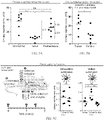
- FIGS. 5A-5C shows in vivo STREAMs for urinary measurements of protease activity.
- FIG. 5A shows V1-NPs were veiled with DMNPE and injected into healthy mice. This resulted in a ⁇ 4-fold decrease in signal compared to unmodified substrates. Ex vivo activation and subsequent infusion into mice resulted in a signal increase of a ⁇ 3-fold (***P ⁇ 0.001, two-tail Student's t-test).
- FIG. 5B shows urinary reporter concentrations from tumor mice were significantly greater than healthy mice confirming that V1-NPs could be used as synthetic biomarkers of cancer (*P ⁇ 0.05, two-tail Student's t-test).
- mice were voided of urine, and STREAMs were activated at the tumor ( FIG. 5C ).
- Urine was collected 30 min after. Approximately a 2-fold increase could be detected with the addition of light at the tumor.
- the same protocol was followed using unmodified substrates. There was no significant difference between the tumor animals and the control animals with unmodified substrates being exposed to light at this 1.5 h time point, owing to rapid depletion of available substrates (*P ⁇ 0.05, **P ⁇ 0.01, two-tail Student's t-test; light exposure: 30 s at 200 mW/cm 2 ).
- FIGS. 6A-6B shows the design of protease sensing nanoparticles for in vitro applications.
- FIG. 6A shows dynamic light scattering measurement of nanoparticle size.
- FIG. 6B shows the in vitro protease sensor (C1-NPs) is comprised of a fluorescent reporter connected to the substrate and coupled to NPs. The sequence corresponds to SEQ ID NO: 12.
- FIGS. 7A-7C shows nanoparticle and photolabile group characterization.
- FIG. 7C shows nanoparticles added to human control serum and fluorescence was measured over 24 hours. No dequenching was observed.
- FIGS. 8A-8C show the biochemical characterization of substrate susceptibility of substrate to proteases.
- FIG. 8A shows a subset of proteases from FIG. 3A that can cleave the substrate.
- FIG. 8B shows that Marimastat, an MMP inhibitor, abrogates cleavage showing fluorescence is generated through proteolysis.
- FIG. 8C shows that DMNPE conjugation is stable. Samples tested for proteolysis against MMP9 two weeks after conjugation perform similarly to freshly coupled DMNPE-peptide conjugates.
- FIGS. 9A-9C show STREAMs can be unveiled by two-photon light.
- FIG. 9A shows that two-photon light at 690 nm is able to unveil the STREAM particles.
- FIG. 9B shows NVOC-rhodamine used to test if exposure to two-photon light for 120 seconds would cause an increase in rhodamine fluorescence. Mean rhodamine intensity increased after light exposure.
- FIGS. 10A-10C show an application of photolabile group to an alternate substrate.
- FIG. 10A shows alternate substrate/reporter pair veiled by DMNPE and tested against plasmin.
- FIG. 10B shows the addition of DMNPE confirmed by shifts in absorbance from 300-400 nm. Photolysis shifts the absorbance back towards unmodified.
- FIG. 10C shows proteolysis mitigated by DMNPE veiling, which is recovered by light unveiling.
- FIGS. 11A-11C show that cellular proteases can cleave protease sensors.
- FIG. 11A shows C1-NPs were exposed to supernatant from colorectal cancer cells (LS174 Ts) to determine if they can detect protease activity of a cellular origin. D-amino acid control sequence: c1, FAM-sk-plGleea-GC (SEQ ID NO: 14).
- FIG. 11B shows protease sensors are sensitive to cellular concentration by incubating sensors at the same concentration in conditioned media from high or low-density cell cultures.
- FIG. 11A shows C1-NPs were exposed to supernatant from colorectal cancer cells (LS174 Ts) to determine if they can detect protease activity of a cellular origin. D-amino acid control sequence: c1, FAM-sk-plGleea-GC (SEQ ID NO: 14).
- FIG. 11B shows protease sensors are sensitive to cellular
- FIGS. 12A-12B show the characterization of a collagen cancer model.
- FIG. 12A shows the fluorescence of light-sensitive rhodamine. After light activation on the left half of the gel, rhodamine fluorescence is visualized on the left side. Quantification of rhodamine intensity on either side of the gel. Increases can be detected in the side corresponding with side that was illuminated (*P ⁇ 0.05, ns P>0.05, two-tail, Student's t-test).
- FIG. 13 shows the design of in vivo STREAM synthetic biomarkers.
- the in vivo protease sensor (V1-NPs) is comprised of a urinary reporter that clears through kidney into urine where it can be detected using a customized sandwich ELISA, coupled to the substrate.
- the sequence corresponds to SEQ ID NO: 13.
- FIGS. 14A-14C show in vivo assay analysis.
- FIG. 14B shows the absorbance spectra of nanoparticles used in experiments described in FIG. 5A . The same quantity of peptide for unmodified and veiled was injected in mice.
- FIG. 14C shows that, after light activation of protected peptides, the relative absorbance at 350 nm associated with DMNPE decreases down closer to unprotected substrates.
- FIG. 15 shows STREAMs are protected from non-specific cleavage by thrombin.
- Recombinant thrombin a representative blood protease, elicits reduced proteolysis of the veiled sensors enabling a decrease in background blood signal.
- C1-NPs unmodified or veiled were exposed at the same concentration to thrombin and cleavage was monitored by fluorescence release.
- FIGS. 16A-16C present a 3D agarose hydrogel demonstration.
- FIG. 16A shows agarose hydrogels embedded with STREAMs and recombinant MMP9 at concentrations approximately those expected in vivo.
- FIG. 16B shows that agarose hydrogels have similar transmission to skin at 365 nm. This is important, as it serves to validate that light activation through skin is feasible.
- FIG. 16C shows that light activation of 1 minute is sufficient to drastically increase the proteolysis measurements made in the hydrogel. The signal generated can be measured over several hours (200 mW/cm 2 ).
- FIGS. 18A-18C show magnetically actuated protease sensors (MAPS).
- FIG. 18A shows thermosensitive liposomes encapsulated with magnetic nanoparticles and synthetic peptides. Upon exposure to alternating magnetic fields, heat is dissipated by the co-entrapped MNPs due to hysteresis losses. The permeabilized membrane allows peptides to diffuse to the exterior where they are cleaved by proteases. Cleaved and uncleaved peptides clear into urine, where cleaved reporters are isolated by depletion of uncleaved reporters using streptavidin-coated magnetic beads.
- FIG. 18B shows the characterization of a cleavage quantification assay and protease specificities.
- the top image is a schematic of the assay.
- the N-terminal biotin identifies an uncleaved substrate, which can be depleted using streptavidin beads. Measurements of cleaved reporters is enabled by a Cy7 fluorophore.
- the lower image illustrates three different results: left, a Cy7 signal of an initial peptide solution before the addition of MMP, middle, no fluorescence signal was detected after the depletion with streptavidin beads, and right, the addition of MMP9 and subsequent streptavidin depletion results in similar fluorescent levels as the initial peptide solution, showing robust cleavage of the substrate.
- FIG. 18C shows a recombination assay performed for three distinct peptides substrates. Data was clustered via hierarchical clustering (one minus Pearson correlation), revealing substrate cleavage patterns.
- FIGS. 19A-19E show MAPS enable in vivo profiling of protease activity in tumors.
- FIG. 19A is a schematic of the in vivo profiling assay. One hour after MAPS administration, urine was collected to measure background signal. Three hours post injection, AMF was applied locally at the tumor and urine collected one hour after activation.
- FIG. 19B shows that, prior to activation, two cohorts of mice show similar urine reporter concentrations.
- FIG. 19D presents MAPS urinary signatures after activation across the three substrates for LS174T and HCT-8 ( FIG. 19E ), revealing that S1 and S3 are cleaved at greater rate than S2 in LS174T.
- FIGS. 20A-20D present MAPS characterization: size, composition, magnetic properties and stability.
- FIG. 20A shows dynamic light scattering measurements of MAPS (purple) and disrupted MAPS after addition of 0.1% TritonX, showing the release of coentrapped MNPs. Separate measurement of pure MNPs is overlaid in black. The inset on the left shows a Transmission Electron Microscopy image of an individual MAPS.
- FIG. 20B shows absorbance spectra of various components of MAPS. The final spectra of MAPS shows characteristic absorbance of NPs in liposomes and IR-tagged peptides.
- FIG. 20C demonstrates that no calcein release was measured from MAPS at 37° C. over 30 min.
- FIG. 20D shows that, at higher temperatures, the release of calcein was detected.
- FIGS. 21A-21D show magnetothermal activation: coil design and parameter determination for magnetically-induced release.
- FIG. 21A shows optimal AMF parameters evaluated by calorimetric measurements. Increase of SLP with increasing field strength at 515 kHz (resonance frequency) was measured and extrapolated with a power law valid for field strength magnitudes between 0 and 20 kA/m. The inset depicts the fluid temperature increase during 30 s of AMF exposure at 515 kHz and 15 kA/m, the conditions that were applied in for in vitro and in vivo activation of MAPS.
- FIG. 21B is a technical drawing of coil with ferromagnetic core utilized in studies.
- FIG. 21C depicts IR measurements of heat dissipation in gap of coil during a duty cycle of 40 s on time and 240 s off time, showing steady coil temperature cycles that do not exceed 36° C.
- FIG. 21D shows liposomes prepared with quenched calcein solution and with and without MNPs exposed to an AMF sequence (515 kHz, 15 kA/m for 40 s). Fluorescence release was quantified. The release profiles were compared to fluorescence signal increase by the addition of Triton-X, which destroys the liposomal structure.
- FIG. 22 shows the quantification of iron content through ICP-OES measurements.
- FIG. 23 shows modeling of magnetic field strength along the centerline for varying gap size.
- FIG. 24 shows thermal imaging of heat dissipation of a coil during duty cycles using an infrared camera.
- the temperature values plotted are derived from the averaged temperature across the area of a circle of 10 mm diameter located in the center of the gap, i.e. the location of the flank tumor during operation.
- FIGS. 25A-25C show urine depletion of uncleaved substances.
- FIG. 25A shows the approach for isolating uncleaved substrate-reporter tandems.
- FIGS. 25B and 25C demonstrate depletion in PBS ( FIG. 25B ) and 2% urine ( FIG. 25C ).
- FIGS. 26A-26B show Cy7 ladder reading on an IR scanner.
- the scanner is sensitive to large dynamic range of peptide concentrations at different intensity gains enabling both high ( FIG. 26A ) and low ( FIG. 26B ) peptide concentration quantification.
- FIGS. 27A-27B show peptides shielded inside liposomes.
- FIG. 27A shows an analysis of whether streptavidin beads could bind to unencapsulated peptides inside liposomes after synthesis and purification. When the peptide was encapsulated, very little fluorescence was detected.
- FIG. 27B shows the quantification of peptide fluorescence isolated by streptavidin beads.
- FIGS. 28A-28B show the pharmacokinetic characterization of MAPS.
- FIG. 28A shows plasma concentration of fluorescently labelled liposomes fit to a one-phase exponential decay equation. Activation should occur at a time greater than half-life to avoid blood activation.
- FIG. 28B shows the accumulation of MAPS measured by an IR scanner of organs and tumors harvested after 3, 6 and 12 hours. The relatively low fluorescence signal in the kidneys indicates that the liposomes had not released their fluorescent contents, which would result in high kidney fluorescence. Combined, these studies indicate that 3 hours post injection would be an optimal time point for triggering of the peptide release.
- FIG. 29 shows thermal imaging of coil during an in vivo trial.
- T start and T end denote the time at the beginning and end of a duty cycle, respectively. No tumor specific heating due to local heat dissipation of the coil was observed, and the temperature of the mouse appears homogenous across the body.
- FIGS. 30A-30C show in vitro cellular protease analysis.
- FIG. 30A demonstrates secreted MMP2 levels between LS174T and HCT-8 as measured by an ELISA.
- FIG. 30C shows the cleavage of S1-3 by secreted proteases from conditioned media from HCT-8 cells.
- FIGS. 31A-31C show the in vivo performance of unencapsulated S1-3 peptides.
- FIG. 31A illustrates that free peptides injected into healthy nude mice showed S3 with lowest background proteolysis.
- FIG. 31B illustrates that free peptides injected into LS174T flank tumor bearing mice show a different proteolysis pattern than MAPS.
- FIG. 31C shows that a heatmap and clustering of all in vivo experiments reflect the similar performances of S1 and S3 as seen in the in vitro recombinant enzyme experiments ( FIG. 18C ).
- the status of physiological conditions of a subject can be assessed using the methods of the disclosure, for example by identifying molecular properties also referred to as “molecular signatures” or “detectable markers”.
- molecular signatures are useful, in some embodiments, for diagnosing diseases such as cancer, infectious disease and arteriosclerosis, as well as for prognostic indicators.
- the response of most cancers to medical intervention is currently monitored by physical exams and various clinical imaging modalities. A few cancers such as prostate and ovarian cancer are monitored by use of single biomarkers in the blood.
- diagnostic techniques are achieved, for instance using fluorescence detection of molecular markers which are activated in a particular disease state.
- the present disclosure uses external forces to precisely control both the location and time of activity-based sensing.
- photocaged activity-based sensors were created by conjugating photolabile molecules directly onto peptide substrates, thereby blocking protease cleavage by steric hindrance.
- exposure to ultraviolet light or other external forces unveils the nanosensors to allow proteases to cleave and release a reporter fragment that can be detected remotely.
- the spatiotemporally controlled system is applied to probe secreted protease activity in vitro and tumor protease activity in vivo. In vitro, the ability to dynamically and spatially measure metalloproteinase activity in a 3D model of colorectal cancer was demonstrated.
- veiled nanosensors were selectively activated at the primary tumor site in colorectal cancer xenografts to capture the tumor microenvironment-enriched protease activity.
- the ability to remotely control activity-based sensors offers a valuable tool for measuring biological activity.
- the present disclosure includes a protease-activity nanosensor that can be remotely activated at the site of disease via alternating magnetic fields at 500 kHz and 15 kA/m.
- the nanosensor is comprised of thermosensitive liposome incorporating functionalized peptide substrates that are unveiled at the target site by remotely triggered heat dissipation of co-encapsulated magnetic nanoparticles (MNPs). High specific power losses of our co-encapsulated MNPs on the order of 600 W/g were found, making them amenable to remote triggering.
- a unique detection assay to quantify the amount of cleaved substrates in the urine was also designed.
- the spatiotemporally controlled system was used to determine tumor protease activity in vivo and differences in MMP profiles between two in vivo human colorectal cancer models that could not be assayed in vitro were identified.
- the disclosure relates to the delivery of a set of protease-sensitive substrates to a subject.
- a remote control or external force
- the protease-sensitive substrate is free to encounter their cognate proteases.
- the peptide substrates are cleaved and detectable markers are excreted into urine, providing a non-invasive diagnostic readout.
- the delivered substrates are responsive to proteases enriched in different stages of tumor invasiveness (e.g., metastasis) and provide a high resolution, functionality driven snapshot of a particular tumor microenvironment (e.g., metastases).
- the disclosure provides a composition comprising a biomarker nanoparticle, wherein the biomarker nanoparticle comprises a modular structure having a carrier domain linked to an enzyme susceptible detectable marker, wherein the enzyme susceptible detectable marker is comprised of an enzyme susceptible domain linked to a detectable marker and a protecting group, whereby the detectable marker is capable of being released from the biomarker nanoparticle when exposed to an enzyme when the protecting group is deactivated.
- the biomarker nanoparticle comprises a modular structure having a carrier domain linked to an enzyme susceptible detectable marker.
- a modular structure refers to a molecule having multiple domains.
- the carrier domain may include a single type of enzyme susceptible detectable marker, such as, a single type of enzyme susceptible domain and or detectable marker or it may include multiple type of enzyme susceptible detectable markers, such as, different enzyme susceptible domains and detectable markers.
- each carrier may include 1 type of enzyme susceptible detectable marker or it may include 2-1,000 different enzyme susceptible detectable markers or any integer therebetween.
- each carrier may include greater than 1,000 enzyme susceptible detectable markers.
- Multiple copies of the biomarker nanoparticle are administered to the subject. Some mixtures of biomarker nanoparticles may include enzyme susceptible detectable markers that are enzymes, others may be enzymatic susceptible domains, and other may be mixtures of the two.
- a plurality of different biomarker nanoparticles may be administered to the subject to determine whether multiple enzymes and/or substrates are present.
- the plurality of different biomarker nanoparticles includes a plurality of detectable markers, such that each enzyme susceptible domain is associated with a particular detectable marker or molecules.
- carriers include, but are not limited to, microparticles, nanoparticles, aptamers, peptides (RGD, iRGD, LyP-1, CREKA, etc.), proteins, nucleic acids, polysaccharides, polymers, antibodies or antibody fragments (e.g., herceptin, cetuximab, panitumumab, etc.) and small molecules (e.g., erlotinib, gefitinib, sorafenib, etc.).
- the carrier domain is also the protecting group.
- the carrier/protecting group can serve two functions in a single component module or domain.
- nanoparticle includes nanoparticles as well as microparticles.
- Nanoparticles are defined as particles of less than 1.0 ⁇ m in diameter.
- a preparation of nanoparticles includes particles having an average particle size of less than 1.0 ⁇ m in diameter.
- Microparticles are particles of greater than 1.0 ⁇ m in diameter but less than 1 mm.
- a preparation of microparticles includes particles having an average particle size of greater than 1.0 ⁇ m in diameter.
- the microparticles may therefore have a diameter of at least 5, at least 10, at least 25, at least 50, or at least 75 microns, including sizes in ranges of 5-10 microns, 5-15 microns, 5-20 microns, 5-30 microns, 5-40 microns, or 5-50 microns.
- a composition of particles may have heterogeneous size distributions ranging from 10 nm to mm sizes.
- the diameter is about 5 nm to about 500 nm.
- the diameter is about 100 nm to about 200 nm.
- the diameter is about 10 nm to about 100 nm.
- the particles may be composed of a variety of materials including iron, ceramic, metallic, natural polymer materials (including lipids, sugars, chitosan, hyaluronic acid etc.), synthetic polymer materials (including poly-lactide-coglycolide, poly-glycerol sebacate, etc.), and non-polymer materials, or combinations thereof.
- the particles may comprise a calcium salt such as calcium carbonate, a zirconium salt such as zirconium dioxide, a zinc salt such as zinc oxide, a magnesium salt such as magnesium silicate, a silicon salt such as silicon dioxide or a titanium salt such as titanium oxide or titanium dioxide.
- a calcium salt such as calcium carbonate
- a zirconium salt such as zirconium dioxide
- a zinc salt such as zinc oxide
- a magnesium salt such as magnesium silicate
- silicon salt such as silicon dioxide or a titanium salt such as titanium oxide or titanium dioxide.
- biodegradable and non-biodegradable biocompatible polymers are known in the field of polymeric biomaterials, controlled drug release and tissue engineering (see, for example, U.S. Pat. Nos. 6,123,727; 5,804,178; 5,770,417; 5,736,372; 5,716,404 to Vacanti; U.S. Pat. Nos. 6,095,148; 5,837,752 to Shastri; U.S. Pat. No. 5,902,599 to Anseth; U.S. Pat. Nos. 5,696,175; 5,514,378; 5,512,600 to Mikos; U.S. Pat. No. 5,399,665 to Barrera; U.S. Pat. No.
- Polymers include, but are not limited to: polyamides, polycarbonates, polyalkylenes, polyalkylene glycols, polyalkylene oxides, polyalkylene terepthalates, polyvinyl alcohols, polyvinyl ethers, polyvinyl esters, polyvinyl halides, polyglycolides, polysiloxanes, polyurethanes and copolymers thereof, alkyl cellulose, hydroxyalkyl celluloses, cellulose ethers, cellulose esters, nitro celluloses, polymers of acrylic and methacrylic esters, methyl cellulose, ethyl cellulose, hydroxypropyl cellulose, hydroxy-propyl methyl cellulose, hydroxybutyl methyl cellulose, cellulose acetate, cellulose propionate, cellulose acetate butyrate, cellulose acetate phthalate, carboxylethyl cellulose, cellulose triacetate, cellulose sulphate sodium salt, poly(methyl methacrylate), poly(
- non-biodegradable polymers include ethylene vinyl acetate, poly(meth) acrylic acid, polyamides, copolymers and mixtures thereof.
- biodegradable polymers include synthetic polymers such as polymers of lactic acid and glycolic acid, polyanhydrides, poly(ortho)esters, polyurethanes, poly(butic acid), poly(valeric acid), poly(caprolactone), poly(hydroxybutyrate), poly(lactide-co-glycolide) and poly(lactide-co-caprolactone), and natural polymers such as algninate and other polysaccharides including dextran and cellulose, collagen, chemical derivatives thereof (substitutions, additions of chemical groups, for example, alkyl, alkylene, hydroxylations, oxidations, and other modifications routinely made by those skilled in the art), albumin and other hydrophilic proteins, zein and other prolamines and hydrophobic proteins, copolymers and mixtures thereof.
- synthetic polymers such as polymers of lactic acid and glycolic acid, polyanhydrides, poly(ortho)esters, polyurethanes, poly(butic acid), poly(valeric
- these materials degrade either by enzymatic hydrolysis or exposure to water in vivo, by surface or bulk erosion.
- the foregoing materials may be used alone, as physical mixtures (blends), or as co-polymers.
- the polymers are polyesters, polyanhydrides, polystyrenes, polylactic acid, polyglycolic acid, and copolymers of lactic and glycoloic acid and blends thereof.
- PVP is a non-ionogenic, hydrophilic polymer having a mean molecular weight ranging from approximately 10,000 to 700,000 and the chemical formula (C 6 H 9 NO)[n].
- PVP is also known as poly[1-(2-oxo-1-pyrrolidinyl)ethylene], PovidoneTM, PolyvidoneTM, RP 143TM, KollidonTM, Peregal STTM, PeristonTM, PlasdoneTM, PlasmosanTM, ProtagentTM, SubtosanTM, and VinisilTM.
- PVP is non-toxic, highly hygroscopic and readily dissolves in water or organic solvents.
- Polyethylene glycol also known as poly(oxyethylene) glycol, is a condensation polymer of ethylene oxide and water having the general chemical formula HO(CH 2 CH 2 O) [n]H.
- Polyvinyl alcohol is a polymer prepared from polyvinyl acetates by replacement of the acetate groups with hydroxyl groups and has the formula (CH 2 CHOH)[n]. Most polyvinyl alcohols are soluble in water.
- PEG, PVA and PVP are commercially available from chemical suppliers such as the Sigma Chemical Company (St. Louis, Mo.).
- the particles may comprise poly(lactic-co-glycolic acid) (PLGA).
- PLGA poly(lactic-co-glycolic acid)
- the carrier may be composed of inorganic materials.
- Inorganic materials include, for instance, magnetic materials, conductive materials, and semiconductor materials.
- the carrier may be composed of any organic carrier, including biological and living carriers such as cells, viruses, bacteria, as well as any non-living organic carriers, or any composition enabling exposure of enzyme substrates to enzymes in disease (including extracellular, membrane-bound, and intracellular enzymes).
- the particles are porous.
- a porous particle can be a particle having one or more channels that extend from its outer surface into the core of the particle.
- the channel may extend through the particle such that its ends are both located at the surface of the particle. These channels are typically formed during synthesis of the particle by inclusion followed by removal of a channel forming reagent in the particle.
- the size of the pores may depend upon the size of the particle.
- the pores have a diameter of less than 15 microns, less than 10 microns, less than 7.5 microns, less than 5 microns, less than 2.5 microns, less than 1 micron, less than 0.5 microns, or less than 0.1 microns.
- the degree of porosity in porous particles may range from greater than 0 to less than 100% of the particle volume.
- the degree of porosity may be less than 1%, less than 5%, less than 10%, less than 15%, less than 20%, less than 25%, less than 30%, less than 35%, less than 40%, less than 45%, or less than 50%.
- the degree of porosity can be determined in a number of ways. For example, the degree of porosity can be determined based on the synthesis protocol of the carriers (e.g., based on the volume of the aqueous solution or other channel-forming reagent) or by microscopic inspection of the carriers post-synthesis.
- the plurality of particles may be homogeneous for one or more parameters or characteristics.
- a plurality that is homogeneous for a given parameter in some instances, means that particles within the plurality deviate from each other no more than about +/ ⁇ 10%, preferably no more than about +/ ⁇ 5%, and most preferably no more than about +/ ⁇ 1% of a given quantitative measure of the parameter.
- the particles may be homogeneously porous. This means that the degree of porosity within the particles of the plurality differs by not more than +/ ⁇ 10% of the average porosity.
- a plurality that is homogeneous means that all the particles in the plurality were treated or processed in the same manner, including for example exposure to the same agent regardless of whether every particle ultimately has all the same properties.
- a plurality that is homogeneous means that at least 80%, preferably at least 90%, and more preferably at least 95% of particles are identical for a given parameter.
- the plurality of particles may be heterogeneous for one or more parameters or characteristics.
- a plurality that is heterogeneous for a given parameter in some instances, means that particles within the plurality deviate from the average by more than about +/ ⁇ 10%, including more than about +/ ⁇ 20%.
- Heterogeneous particles may differ with respect to a number of parameters including their size or diameter, their shape, their composition, their surface charge, their degradation profile, whether and what type of agent is comprised by the particle, the location of such agent (e.g., on the surface or internally), the number of agents comprised by the particle, etc.
- the disclosure contemplates separate synthesis of various types of particles which are then combined in any one of a number of pre-determined ratios prior to contact with the sample.
- the particles may be homogeneous with respect to shape (e.g., at least 95% are spherical in shape) but may be heterogeneous with respect to size, degradation profile and/or agent comprised therein.
- Particle size, shape and release kinetics can also be controlled by adjusting the particle formation conditions.
- particle formation conditions can be optimized to produce smaller or larger particles, or the overall incubation time or incubation temperature can be increased, resulting in particles which have prolonged release kinetics.
- the particles may also be coated with one or more stabilizing substances, which may be particularly useful for long term depoting with parenteral administration or for oral delivery by allowing passage of the particles through the stomach or gut without dissolution.
- particles intended for oral delivery may be stabilized with a coating of a substance such as mucin, a secretion containing mucopolysaccharides produced by the goblet cells of the intestine, the submaxillary glands, and other mucous glandular cells.
- the particles may be liposomes or lipid-based carriers. To enhance delivery the particles may be liposomes, virosomes, cationic lipids or other lipid based structures.
- cationic lipid refers to lipids which carry a net positive charge at physiological pH. Such lipids include, but are not limited to, DODAC, DOTMA, DDAB, DOTAP, DC-Chol and DMRIE. Additionally, a number of commercial preparations of cationic lipids are available.
- LIPOFECTIN® commercially available cationic liposomes comprising DOTMA and DOPE, from GIBCO/BRL, Grand Island, N.Y., USA
- LIPOFECTAMINE® commercially available cationic liposomes comprising DOSPA and DOPE, from GIBCO/BRL
- TRANSFECTAM® commercially available cationic lipids comprising DOGS in ethanol from Promega Corp., Madison, Wis., USA.
- a variety of methods are available for preparing liposomes e.g., U.S. Pat. Nos.
- the particles may also be composed in whole or in part of GRAS components. i.e., ingredients are those that are Generally Regarded As Safe (GRAS) by the US FDA.
- GRAS components useful as particle material include non-degradable food based particles such as cellulose.
- the carrier domain can serve several functions. As discussed above, it may be useful for targeting the product to a specific region, such as a tissue. In that instance it could include a targeting agent such as a glycoprotein, an antibody, or a binding protein.
- the carrier domain may also serve as the protecting group.
- a protecting group is a group, optionally a small molecule, that protects the enzyme cleavable domain from the protease.
- the protecting group can be removed by a remote signal, or external force.
- One the protecting group is removed the protease is able to cleave the sensitive domain and releases the detectable marker.
- the external force is a magnetic field source, an ultraviolet A (UVA) light source, an alternating magnetic field (AMF) or an infrared light source.
- UVA light may be administered via photon upconversion or two-photon technology or via an implantable light source.
- the protecting group is a photolabile group.
- a photolabile group in some embodiments is a small molecule responsive to different wavelength activations, 1-(4,5-dimethoxy-2-nitrophenyl) diazoethane (DMNPE), coumarin, benoquinolone, a thermosensitive molecule such as a thermosensitive liposome, a liposomal carrier containing gold nanoparticles, a pH-responsive liposomal nanocarrier or a reactive oxygen-responsive liposomal nanocarrier.
- the thermosensitive liposome is a liposome nanocarrier containing magnetic nanoparticles.
- the photolabile group is a large molecule that provides greater steric hindrance and therefore greater protection from enzymatic cleavage.
- the size of the carrier domain may be adjusted based on the particular use of the biomarker nanoparticle.
- the carrier domain may be designed to have a size greater than 5 nm. Particles, for instance, of greater than 5 nm are not capable of entering the urine, but rather, are cleared through the reticuloendothelial system (RES; liver, spleen, and lymph nodes). By being excluded from the removal through the kidneys any uncleaved biomarker nanoparticle will not be detected in the urine during the analysis step.
- RES reticuloendothelial system
- the carrier domain is 500 microns-5 nm, 250 microns-5 nm, 100 microns-5 nm, 10 microns-5 nm, 1 micron-5 nm, 100 nm-5 nm, 100 nm-10 nm, 50 nm-10 nm or any integer size range therebetween.
- the carrier domain is smaller than 5 nm in size. In such instance the biomarker nanoparticle will be cleared into the urine. However, the presence of free detectable marker can still be detected for instance using mass spectrometry.
- the carrier domain is 1-5 nm, 2-5 nm, 3-5 nm, or 4-5 nm.
- the carrier domain may include a biological agent.
- a biological agent could be incorporated in the carrier domain or it may make up the carrier domain. For instance, it may form the scaffold or platform that the proteolytic domain is attached to.
- the biological agent may be an enzyme inhibitor.
- the biological agent can inhibit proteolytic activity at a local site and the detectable marker can be used to test the activity of that particular therapeutic at the site of action.
- HIV is an example of the disease in which active proteases can be monitored.
- the composition may include a micro-particle or other delivery device carrying a protease inhibitor. The protease susceptible site may be sensitive to the HIV proteases such that feedback can be provided regarding the activity of the particular protease inhibitor.
- the enzyme susceptible detectable marker is a portion of the modular structure that is connected to the carrier.
- An enzyme susceptible detectable marker as used herein, is the portion of the modular structure that promotes the enzymatic reaction in the subject, causing the release of a detectable marker.
- the enzyme susceptible detectable marker is an enzyme susceptible domain linked to a detectable marker.
- the enzyme susceptible site is dependent on enzymes that are active in a specific disease state. For instance, tumors are associated with a specific set of enzymes. If the disease state being analyzed is a tumor then the product is designed with an enzyme susceptible site that matches that of the enzyme expressed by the tumor or other diseased tissue.
- the enzyme specific site may be associated with enzymes that are ordinarily present but are absent in a particular disease state.
- a disease state would be associated with a lack or signal associated with the enzyme, or reduced levels of signal compared to a normal reference.
- Enzymes refers to any of numerous proteins produced in living cells that accelerate or catalyze the metabolic processes of an organism. Enzymes act on substrates. The substrate binds to the enzyme at a location called the active site just before the reaction catalyzed by the enzyme takes place. Enzymes include but are not limited to proteases, glycosidases, lipases, heparinases, phosphatases.
- the enzyme susceptible site may be optimized to provide both high catalytic activity (or other enzymatic activity) for specified target enzymes but to also release optimized detectable markers for detection.
- Patient outcome depends on the phenotype of individual diseases at the molecular level, and this is often reflected in expression of enzymes.
- bioinformatics The recent explosion of bioinformatics has facilitated exploration of complex patterns of gene expression in human tissues (Fodor, S. A. Massively parallel genomics. Science 277, 393-395 (1997)).
- Sophisticated computer algorithms have been recently developed capable of molecular diagnosis of tumors using the immense data sets generated by expression profiling (Khan J, Wei J S, Ringner M, Saal L H, Ladanyi M, Westermann F, et al.
- the enzyme susceptible domain is an enzyme susceptible domain.
- enzyme susceptible domain refers to an enzyme susceptible domain that is capable of being cleaved by a protease that is present (or upregulated) in a subject having a disease (e.g., cancer, metastatic cancer, an infection with a pathogenic agent, etc.).
- An enzyme susceptible detectable marker may be attached directly to the carrier. For instance it may be coated directly on the surface of nanoparticles using known techniques. Alternatively if the carrier is a protein material it may be directly connected through a peptide bond. Additionally, the enzyme susceptible detectable marker may be connected to the carrier domain through the use of a linker.
- linker As used herein “linked” or “linkage” means two entities are bound to one another by any physicochemical means. Any linkage known to those of ordinary skill in the art, covalent or non-covalent, is embraced.
- the carrier has a linker attached to an external surface, which can be used to link the enzyme susceptible detectable marker. Another molecule can also be attached to the linker. In some embodiments, two molecules are linked using a transpeptidase, for example Sortase A. If the nanocarrier is a liposome, the enzyme susceptible detectable marker may be incorporated into the liposome using well known teachings.
- the enzyme susceptible detectable marker is preferably a polymer made up of a plurality of chemical units.
- a “chemical unit” as used herein is a building block or monomer which may be linked directly or indirectly to other building blocks or monomers to form a polymer.
- the detectable marker is capable of being released from the biomarker nanoparticle when exposed to an enzyme in vivo.
- the detectable marker once released is free to travel to a remote site for detection.
- a remote site is used herein to refer to a site in the body that is distinct from the bodily tissue housing the enzyme where the enzymatic reaction occurs.
- the remote site is a biological 1 sample or tissue that is different than the biological sample where the enzyme susceptible detectable marker is administered and/or where the protease cleaves the molecule.
- the bodily tissue housing the enzyme where the enzymatic reaction occurs is the blood or the tissue in a or surrounding a tumor.
- the remote site in some embodiments is urine.
- the enzyme susceptible detectable marker is an enzyme the enzyme cleaves an endogenous substrate producing a detectable marker from the endogenous substrate.
- the detectable marker is a detectable molecule. It can be part of the enzyme susceptible domain, e.g. the piece that is released or added upon cleavage or it can be a separate entity.
- the detectable marker may be composed of two ligands joined by a linker.
- the detectable marker may be comprised of, for instance one or more of a peptide, nucleic acid, small molecule, fluorophore/quencher, carbohydrate, particle, radiolabel, MRI-active compound, inorganic material, organic material, with encoded characteristics to facilitate optimal detection.
- the peptide itself may be the detectable maker, as it can be detected in the urine using known methods e.g. as described herein.
- an enzyme susceptible detectable marker that comprises a capture ligand is a molecule that is capable of being captured by a binding partner.
- the detection ligand is a molecule that is capable of being detected by any of a variety of methods. While the capture ligand and the detection ligand will be distinct from one another in a particular detectable marker, the class of molecules that make us capture and detection ligands overlap significantly. For instance, many molecules are capable of being captured and detected. In some instances these molecules may be detected by being captured or capturing a probe.
- the capture and detection ligand each independently may be one or more of the following: a protein, a peptide, a polysaccharide, a nucleic acid, a fluorescent molecule, or a small molecule, for example.
- the detection ligand or the capture ligand may be, but is not limited to, one of the following: Alexa488, TAMRA, DNP, fluorescein, Oregon Green, Texas Red, dansyl, BODIPY, Alexa405, Cascade Blue, Lucifer Yellow, Nitrotyrosine, HA-tag, FLAG-tag, His-tag, Myc-tag, V5-tag, S-tag, biotin or streptavidin.
- the capture ligand and a detection ligand are connected by a linker.
- the purpose of the linker is prevent steric hindrance between the two ligands.
- the linker may be any type of molecule that achieves this.
- the linker may be, for instance, a polymer such as PEG, a protein, a peptide, a polysaccharide, a nucleic acid, or a small molecule.
- the linker is a protein of 10-100 amino acids in length.
- the linker is GluFib (SEQ ID NO. 1).
- the linker may be 8 nm-100 nm, 6 nm-100 nm, 8 nm-80 nm, 10 nm-100 nm, 13 nm-100 nm, 15 nm-50 nm, or 10 nm-50 nm in length.
- the detectable marker is a ligand encoded reporter.
- a ligand encoded reporter binds to a target molecule, allowing for detection of the target molecule at a site remote from where the ligand encoded reporter bound to the target.
- a ligand encoded reporter binds to a target molecule associated with a pathogenic agent.
- pathogenic agent refers to a molecule that is indicative of the presence of a particular infectious agent (e.g., a virus, bacterium, parasite, etc.). Examples of pathogenic agents include viral proteins, bacterial proteins, biological toxins, and parasite-specific proteins (e.g., S. mansoni OVA protein).
- a detectable marker is a mass encoded reporter, for example an iCORE as described in WO2012/125808, filed Mar. 3, 2012, the entire contents of which are incorporated herein by reference.
- the iCORE agents Upon arrival in the diseased microenvironment, the iCORE agents interface with aberrantly active proteases to direct the cleavage and release of surface-conjugated, mass-encoded peptide substrates into host urine for detection by mass spectrometry (MS) as synthetic biomarkers of disease.
- MS mass spectrometry
- the detectable marker may be detected by any known detection methods to achieve the capture/detection step. A variety of methods may be used, depending on the nature of the detectable marker. Detectable markers may be directly detected, following capture, through optical density, radioactive emissions, nonradiative energy transfers, or detectable markers may be indirectly detected with antibody conjugates, affinity columns, strepavidin-biotin conjugates, PCR analysis, DNA microarray, and fluorescence analysis.
- the capture assay in some embodiments involves a detection step selected from the group consisting of an ELISA, including fluorescent, colorimetric, bioluminescent and chemiluminescent ELISAs, a paper test strip or LFA, bead-based fluorescent assay, and label-free detection, such as surface plasmon resonance (SPR).
- the capture assay may involve, for instance, binding of the capture ligand to an affinity agent.
- the analysis step may be performed directly on the biological sample or the signature component may be purified to some degree first.
- a purification step may involve isolating the detectable marker from other components in the biological sample.
- Purification steps include methods such as affinity chromatography.
- an “isolated molecule” or “purified molecule” is a detectable marker that is isolated to some extent from its natural environment. The isolated or purified molecule need not be 100% pure or even substantially pure prior to analysis.
- the methods for analysing detectable markers by identifying the presence of a detectable marker may be used to provide a qualitative assessment of the molecule (e.g., whether the detectable marker is present or absent) or a quantitative assessment (e.g., the amount of detectable marker present to indicate a comparative activity level of the enzymes.
- the quantitative value may be calculated by any means, such as, by determining the percent relative amount of each fraction present in the sample. Methods for making these types of calculations are known in the art.
- the detectable marker may be labeled.
- a label may be added directly to a nucleic acid when the isolated detectable marker is subjected to PCR.
- PCR a PCR reaction performed using labeled primers or labeled nucleotides will produce a labeled product.
- Labeled nucleotides e.g., fluorescein-labeled CTP
- Methods for attaching labels to nucleic acids are well known to those of ordinary skill in the art and, in addition to the PCR method, include, for example, nick translation and end-labeling.
- Labels suitable for use in the methods of the present disclosure include any type of label detectable by standard means, including spectroscopic, photochemical, biochemical, electrical, optical, or chemical methods.
- Preferred types of labels include fluorescent labels such as fluorescein.
- a fluorescent label is a compound comprising at least one fluorophore.
- Commercially available fluorescent labels include, for example, fluorescein phosphoramidides such as fluoreprime (Pharmacia, Piscataway, N.J.), fluoredite (Millipore, Bedford, Mass.), FAM (ABI, Foster City, Calif.), rhodamine, polymethadine dye derivative, phosphores, Texas red, green fluorescent protein, CY3, and CY5.
- Polynucleotides can be labeled with one or more spectrally distinct fluorescent labels.
- “Spectrally distinct” fluorescent labels are labels which can be distinguished from one another based on one or more of their characteristic absorption spectra, emission spectra, fluorescent lifetimes, or the like. Spectrally distinct fluorescent labels have the advantage that they may be used in combination (“multiplexed”).
- Radionuclides such as 3H, 125I, 35S, 14C, or 32P are also useful labels according to the methods of the disclosure.
- a plurality of radioactively distinguishable radionuclides can be used. Such radionuclides can be distinguished, for example, based on the type of radiation (e.g. ⁇ , ( ⁇ , or ⁇ radiation) emitted by the radionuclides.
- the 32P signal can be detected using a phosphoimager, which currently has a resolution of approximately 50 microns. Other known techniques, such as chemiluminescence or colormetric (enzymatic color reaction), can also be used
- Quencher compositions in which a “donor” fluorophore is joined to an “acceptor” chromophore by a short bridge that is the binding site for the enzyme may also be used.
- the signal of the donor fluorophore is quenched by the acceptor chromophore through a process believed to involve resonance energy transfer (RET). Cleavage of the peptide results in separation of the chromophore and fluorophore, removal of the quench, and generation of a subsequent signal measured from the donor fluorophore.
- RET resonance energy transfer
- the disease or condition assessed according to the methods of the disclosure is any disease or condition that is associated with an enzyme.
- an enzyme for instance, cancer, cardiovascular disease, arthritis, viral, bacterial, parasitic or fungal infection, Alzheimer's disease emphysema, thrombosis, hemophilia, stroke, organ dysfunction, any inflammatory condition, vascular disease, parenchymal disease, or a pharmacologically-induced state are all known to be associated with enzymes.
- a pharmacologically induced state is a condition in which enzyme inhibitors and other agents directly or indirectly affect enzyme activities. Thus each of the these can be assessed or monitored or studied according to methods of the disclosure.
- metastasis is a major cause of treatment failure in cancer patients. If metastasis can be detected early, it can be treated aggressively in order to slow the progression of the disease. Metastasis is a complex process involving detachment of cells from a primary tumor, movement of the cells through the circulation, and eventual colonization of tumor cells at local or distant tissue sites. Additionally, it is desirable to be able to detect a predisposition for development of a particular cancer such that monitoring and early treatment may be initiated.
- Solid tumors progress from tumorigenesis through a metastatic stage and into a stage at which several different active proteases can be involved. Some protease are believed to alter the tumor such that it can progress to the next stage, i.e., by conferring proliferative advantages, the ability to develop drug resistance or enhanced angiogenesis, proteolysis, or metastatic capacity.
- the disclosure provides a method for determining metastatic stage of a tumor comprising administering to the subject having a tumor a biomarker nanoparticle, wherein the biomarker nanoparticle comprises a modular structure having a carrier domain linked to an enzyme susceptible detectable marker, wherein the enzyme susceptible detectable marker is comprised of an enzyme susceptible domain linked to a detectable marker whereby the detectable marker is capable of being released from the biomarker nanoparticle when exposed to a metastatic tumor-associated enzyme; obtaining a urine sample from the subject for detection of the detectable marker; and, analyzing the urine sample using a capture assay in order to detect the presence of the detectable marker, wherein the presence of the detectable marker in the urine sample is indicative of the subject having a metastatic tumor.
- a protease detected by methods and compositions described herein is associated with a pathogenic agent and is thus indicative of infection in a subject.
- the disclosure provide a method for identifying a pathogenic agent comprising administering to the subject infected or suspected of being infected with a pathogenic agent a biomarker nanoparticle, wherein the biomarker nanoparticle comprises a modular structure having a carrier domain linked to an enzyme susceptible detectable marker, wherein the enzyme susceptible detectable marker is comprised of an enzyme susceptible domain linked to a detectable marker whereby the detectable marker is capable of being released from the biomarker nanoparticle when exposed to an enzyme associated with a pathogenic agent; obtaining a urine sample from the subject for detection of the marker; and, analyzing the urine sample using a capture assay in order to detect the presence of the detectable marker, wherein the presence of the detectable marker in the urine sample is indicative of the subject being infected with the pathogenic agent.
- infectious diseases examples include but are not limited to bacterial infections, viral infections, fungal infections, and parasitic infections.
- compositions described herein can be administered to any suitable subject.
- a subject is a human, non-human primate, cow, horse, pig, sheep, goat, dog, cat, or rodent. In all embodiments human subjects are preferred.
- the subject preferably is a human suspected of having cancer, or a human having been previously diagnosed as having cancer.
- Methods for identifying subjects suspected of having cancer may include physical examination, subject's family medical history, subject's medical history, biopsy, or a number of imaging technologies such as ultrasonography, computed tomography, magnetic resonance imaging, magnetic resonance spectroscopy, or positron emission tomography.
- a biological sample is a tissue sample.
- the biological sample may be examined in the body, for instance, by detecting a label at the site of the tissue, i.e. urine.
- the biological sample may be collected from the subject and examined in vitro.
- Biological samples include but are not limited to urine, blood, saliva, or mucous secretion.
- the tissue sample is obtained non-invasively, such as the urine.
- a “plurality” of elements, as used throughout the application refers to 2 or more of the elements.
- the biomarker nanoparticles of the disclosure are administered to the subject in an effective amount for detecting enzyme activity.
- An “effective amount”, for instance, is an amount necessary or sufficient to cause release of a detectable level of detectable marker in the presence of an enzyme.
- the effective amount of a compound of the disclosure described herein may vary depending upon the specific compound used, the mode of delivery of the compound, and whether it is used alone or in combination.
- the effective amount for any particular application can also vary depending on such factors as the disease being assessed or treated, the particular compound being administered, the size of the subject, or the severity of the disease or condition as well as the detection method.
- One of ordinary skill in the art can empirically determine the effective amount of a particular molecule of the disclosure without necessitating undue experimentation. Combined with the teachings provided herein, by choosing among the various active compounds and weighing factors such as potency, relative bioavailability, patient body weight, severity of adverse side-effects and preferred mode of administration, an effective regimen can be planned.
- compositions of the present disclosure comprise an effective amount of one or more agents, dissolved or dispersed in a pharmaceutically acceptable carrier.
- pharmaceutically acceptable refers to molecular entities and compositions that do not produce an adverse, allergic or other untoward reaction when administered to an animal, such as, for example, a human, as appropriate.
- animal e.g., human
- preparations should meet sterility, pyrogenicity, general safety and purity standards as required by FDA Office of Biological Standards.
- “pharmaceutically acceptable carrier” includes any and all solvents, dispersion media, coatings, surfactants, antioxidants, preservatives (e.g., antibacterial agents, antifungal agents), isotonic agents, absorption delaying agents, salts, preservatives, drugs, drug stabilizers, gels, binders, excipients, disintegration agents, lubricants, sweetening agents, flavoring agents, dyes, such like materials and combinations thereof, as would be known to one of ordinary skill in the art (see, for example, Remington's Pharmaceutical Sciences (1990), incorporated herein by reference). Except insofar as any conventional carrier is incompatible with the active ingredient, its use in the therapeutic or pharmaceutical compositions is contemplated.
- the agent may comprise different types of carriers depending on whether it is to be administered in solid, liquid or aerosol form, and whether it need to be sterile for such routes of administration as injection.
- the material is injected into the body but could also be administered by other routes.
- the compounds of the present disclosure can be administered intravenously, intradermally, intraarterially, intralesionally, intratumorally, intracranially, intraarticularly, intraprostaticaly, intrapleurally, intratracheally, intranasally, intravitreally, intravaginally, intrarectally, topically, intratumorally, intramuscularly, intraperitoneally, subcutaneously, subconjunctival, intravesicularlly, mucosally, intrapericardially, intraumbilically, intraocularally, orally, topically, locally, inhalation (e.g., aerosol inhalation), injection, infusion, continuous infusion, localized perfusion bathing target cells directly, via a catheter, via a lavage, in creams, in lipid compositions (e.g., liposomes), or by other method or any combination of the forgoing as would be known to one of ordinary skill in the art (see
- Example 1 Photoactivated Spatiotemporally-Responsive Nanosensors of In Vivo Protease Activity
- Biological function is context dependent, with diverse regulatory mechanisms that function at the transcriptional, translational, and post-translational levels to modulate both the abundance and functional status of proteins. Therefore, the capacity to make dynamic measurements of protein function is crucial in achieving a thorough understanding of biological processes.
- Proteases are a key example of a protein family that needs to be studied at the activity level due to their extensive post-translational modifications, presence of endogenous inhibitors (e.g., R2-macroglobulin) and pivotal roles played by these proteins in the bioregulation of healthy and disease processes.
- endogenous inhibitors e.g., R2-macroglobulin
- both the intratumoral localization and the dynamics of protease activity throughout disease progression are relevant to pathogenesis. Therefore, activity-based measurements that can capture this spatiotemporal heterogeneity may provide important insights.
- a class of activity-based probes called “synthetic biomarkers” that produce a detection signal following protease cleavage similar to fluorigenic probes has been previous reported.
- synthetic biomarkers that produce a detection signal following protease cleavage similar to fluorigenic probes
- the system is designed such that the liberated peptide fragments are concentrated in the urine and detectable by a variety of analytical techniques ranging from mass spectrometry to single molecule assays. As the function of these systems is initiated by an active protease, the measurements collected reflect protease activity rather than abundance. While each of these activity-based approaches are promising, they lack the ability to be remotely controlled.
- MMPs Matrix metalloproteinases
- DMNPE photolabile small molecule 1-(4,5-dimethoxy-2-nitrophenyl) diazoethane
- FIG. 1 DMNPE reacts with acidic groups and, by coupling it to an MMP substrate sequence containing free carboxylic acid side chains, serves as a removable barrier to block enzymatic cleavage.
- DMNPE should be located within a few amino acids from the putative cleavage site in order to effectively block protease activity by steric hindrance. Based on these design criteria, a peptide sequence that is sensitive to MMP activity (sequence: PLGLEEA; SEQ ID NO: 2) and contains carboxylic acid side chains adjacent to the scissile bond (G-L) was selected. Iron oxide NPs (diameter ⁇ 100 nm; FIG.
- the size of the NP is larger than the kidney filtration limit and therefore acts to prevent urinary filtration of the STREAMs construct prior to peptide cleavage for applications in vivo.
- DMNPE was selectively removed after photolysis in the presence of 365 nm light, making the peptide substrate avail-able for cleavage by proteases and resulting in the release of reporters ( FIG. 1 ).
- these constructs have the potential to enable spatiotemporal control of the accessibility of the substrate during measurements of protease activity. Since MMP activity is commonly implicated in cancer progression, 5 the utility of these STREAMs in both in vitro and in vivo models of cancer was tested.
- STREAMs are designed to leverage the strengths of numerous techniques, such that the unique combination of photolabile chemistry, NP formulation, and protease sensing enables STREAMs to perform the complex task of measuring in vivo enzyme activity with spatial and temporal control.
- Previous demonstrations of protease measurements in vivo lack external control (e.g., controlled triggering at the tumor site), and the addition of these traits with the STREAM platform may enable greater sensitivity and tumor contrast.
- synthetic biomarkers are vulnerable to background activation in circulation.
- the previous utilizations of DMNPE have been varied, ranging from caging nucleic acids (DNA and RNA) to caging Ca2 .
- a general strategy for caging peptide substrates of proteases has not been previously described.
- DMNPE is comprised of a nitrophenyl group that is efficiently activated by 365 nm light, resulting in photolysis of the veiled substrate.
- DMNPE reacts with weak oxo-acids and thus can modify the glutamic acids that reside at the substrate's P2 0 and P3 0 positions, located toward the C-terminal end of the scissile bond ( FIG. 2A ).
- ESI-MS was used to analyze the conjugate because electrospray ionization does not lead to photolysis of DMNPE.
- Mass spectrometry analysis of the conjugate resulted in a mass shift associated with DMNPE coupled to the peptide ( FIG. 2D , top).
- MALDI where ionization is based on UV light pulses, was used to simultaneously photolyze the DMNPE molecules and detect the uncaged peptide backbone.
- DMNPE groups were directly coupled to the conjugated C1-NPs. Uncoupled DMNPE was removed via spin filtration or FPLC, and successful conjugation of DMNPE was confirmed by shifts in absorbance values ( FIG. 2E ). Following conjugation of DMNPE with peptides, NPs should exhibit significant absorption at 300-350 nm, which would result in an overall absorbance shift, relative to that of unmodified NPs that should be reversed after photolysis. Consistent with this expectation, after light exposure, STREAMs exhibited an absorption peak that shifted back to overlap with that of preconjugated particles, demonstrating that DMNPE was released from the peptides ( FIG. 7A ).
- STREAMs could provide both spatial and temporal control of MMP activity measurements was tested.
- Proteolytic kinetics can be altered by presentation of peptides on surfaces. Therefore, measurements of proteolysis by recombinant enzymes were performed with the substrate on the particle, in the same formulation used in vivo, to accurately capture differences due to presentation. Proteolysis of this substrate was profiled by a panel of proteases consisting of MMPs, ADAMs, and blood-borne proteases. The unmodified substrate (C1-NP) was observed to be significantly cleaved by MMP13, 7, 1, and 9 ( FIGS. 3A, 3B, 8A ). It is important to note, however, that some of the differences observed in enzyme-mediated substrate cleavage across enzymes may be due in part to the activity of the recombinant enzymes in vitro.
- the STREAMs principle was applied to a second peptide sequence. Additionally, the reporter for this additional sequence was designed to be orthogonal to the original sequence (containing a near IR dye as opposed to fluorescein). Coupling of DMNPE to this second substrate (RLVGEGC; SEQ ID NO: 15) reduced proteolysis by plasmin, which was recovered by UV exposure ( FIG. 10 ).
- RLVGEGC SEQ ID NO: 15
- the ability to produce STREAMs with orthogonal reporters for multiple substrate targets in some embodiments, enables multiplexing. Additionally, coupling this approach with alternate modes for multiplexing analyte detection, in some embodiments, enables simultaneous monitoring of several substrates.
- STREAM constructs might be applied in more complex settings, their performance as proteolysis sensors in a 3D cancer model in vitro was assayed.
- the LS174T cell line which has been used extensively for in vivo cancer models and is known to secrete active MMPs (including MMP2, 9) was selected.
- fluorigenic C1-NPs were incubated with conditioned media from LS174T cells grown on tissue culture plastic, which resulted in peptide cleavage and a dose-dependent increase in fluorescence that was specific for the L-amino acid version of the protease sensor.
- L-amino acid sensors produced significantly less peptide fluorescence compared to unmodified L-amino acid sensors, indicating that the photolabile groups shielded the NPs from proteolytic cleavage in the context of cell-secreted proteases ( FIG. 4B ).
- STREAMs can be used to spatially and temporally detect cancer cell-derived MMP activity
- a method to measure protease activity in vivo was derived.
- Synthetic biomarkers are comprised of peptide-reporter tandem conjugates that are coupled to a NP core. These protease nanosensors are infused intravenously and passively accumulate at sites of disease. Proteolysis of the peptide substrate liberates the reporter, which accumulates in the urine and can be quantified by mass spectrometry or ELISA.
- This urinary reporter is comprised of a poly(ethylene-glycol) element (PEG; 5 kDa) that efficiently clears into the urine and bears a fluorescein group and a biotin, enabling detection in the urine via a sandwich ELISA for the reporter (sequence: Biotin-PEG(5 kDa)-(KFAM)-PLGLEEA-GC; SEQ ID NO: 4; reporter: Biotin-PEG(5 kDa)-(KFAM); name: V1).
- This reporter element is released upon proteolysis and clears into the urine for quantification ( FIG. 13 ).
- the custom sandwich ELISA exhibited high sensitivity, as it detected low picomolar concentrations of the reporter ( FIG. 14A ).
- This peptide-reporter element is coupled to PEGylated (20 kDa) NPs and modified with DMNPE in the same manner as in vitro STREAMs. All in vivo experiments were performed with the V1 substrate coupled to NPs.
- the platform was utilized to interrogate protease activity of the tumor microenvironment. Since the V1 peptide had yet to be validated within the synthetic biomarker framework to detect cancer, its capacity to distinguish healthy mice from those bearing bilateral flank human colorectal cancer xenografts was first tested. Previous work identified an optimal time frame in which to perform urinary measurements to achieve signal separation between tumor-bearing and healthy mice. At early time points (minutes), signal is primarily generated by blood-borne protease activity as NPs need longer periods in order to accumulate at the tumor site via the enhanced permeability and retention effect.
- FIG. 16A An agarose gel embedded with recombinant MMP9 and STREAMs was developed ( FIG. 16A ) with similar transmittance at 365 nm as skin (10% vs 17%; 44 FIG. 16B ).
- a brief light exposure (1 min) of the gel resulted in dramatic increase in proteolytic cleavage of the sensors, indicating that transdermal activation is feasible in vivo ( FIG. 16C ).
- STREAMs approach provides greater temporal flexibility in when urine samples are collected, as the kinetics of the experiment are externally controlled by initiating activation with light.
- a significantly higher signal was present in the urine of tumor-bearing mice after light activation of STREAM synthetic bio-markers when compared to the nonilluminated cohort (2.1-fold). This finding indicates that STREAMs were activated at the tumor by light and cleaved by tumor-associated proteases.
- the urine signals obtained from the light-activated group were also significantly higher than the STREAM-derived signal observed in healthy animals without light treatment (2.6-fold; FIG. 5C ).
- STREAM This signal enhancement is consistent with previous work, but in the case of STREAMs, it is associated with proteases in the tumor bed as opposed to tumor-derived proteases secreted into the bloodstream.
- UV exposure itself had an impact on the proteolysis of unmodified substrates
- urine in mice with and without light exposure was tested and no significant differences of the urine signals collected in each case were observed ( FIG. 17 ).
- STREAM synthetic biomarkers enable the tissue specific detection of protease activity in vivo with simple quantifications in the urine.
- UVA light 320-400 nm
- UVB light 280-320 nm
- the present system is compatible with two-photon unveiling, which should benefit potential in vivo applications ( FIG. 8 ).
- implantable light sources can be used to probe previously inaccessible tumors.
- STREAMs have the potential to help guide the development of therapeutics as well as profile the invasive potential of tumors.
- STREAMs By measuring activity in patient-derived xenografts, STREAMs could be used to identify optimal substrates that can mask therapeutics, such that their specific release occurs only at tumor sites. This capacity may instill the STREAM platform with the potential to stratify protease-activated therapeutics based on tumor type and specific protease activity in vivo.
- Example 8 Materials and Methods of Examples 1-7
- Fluorescein-conjugated peptides (MMP sensitive, C1: FAM-sk-PLGLEEA-GC; SEQ ID NO: 3) were synthesized. D-amino acid controls were also synthesized, where the substrate sequence was all D-stereoisomers.
- Peptides for in vivo studies that contain a ligand-encoded reporter for urinary clearance and subsequent ELISA detection were synthesized (V1: Biotin-PEG(5 kDa)-(KFAM)-PLGLEEA-GC; SEQ ID NO: 4). The PEG 5 kDa reporter is efficiently cleared by the renal system into the urine and can be quantified by ELISA for the conjugated ligands.
- VT750 PerkinElmer was conjugated to the free lysine prior to coupling to DMNPE.
- DMNPE can indeed react with numerous glutamic acids throughout the tandem peptide, necessitating a high DMNPE:peptide excess of 100:1.
- NPs were formed by reacting iron(III) chloride hexahydrate and iron(II) chloride tetrahydrate with dextran as previously described. NPs were aminated by reacting with ammonium hydroxide. Size measurements were performed by dynamic light scattering (Malvern Instruments Nano ZS90) revealed a mean diameter less than 100 nm. NPs were reacted with a 500-fold molar excess of N-succinimidyl iodoacetate (SIA) (Pierce) for 1 h at room temperature in 50 mM sodium borate, pH 8.3, 5 mM EDTA to provide thiol reactive handles.
- SIA N-succinimidyl iodoacetate
- SIA-NPs were reacted with peptide substrate-reporter complexes at a 1:95 ratio in the borate buffer overnight at room temperature.
- mPEG thiol (20 kDa, Laysan) was also reacted with at a 20 molar excess ratio to NPs to provide stability and prevent phagocytic uptake.
- peptide-reporter valency was quantified by absorbance. For strong quenching, valency>20 was needed.
- NP-peptide-reporter complexes were stored at 4° C.
- DMNPE was generated using the DMNPE generation kit (Life Technologies) according to manufacturer protocols. DMNPE was then allowed to react with peptides in a 50:50 DMSO to PBS ratio overnight on a shaker with excess DMNPE. After the reaction was completed, excess DMNPE was removed either by high-pressure liquid chromatography (HPLC) or by FPLC/spin filters (if peptide was already coupled to NPs). Confirmation of modification was either verified by absorbance changes (DMNPE has a max absorbance around 350 nm) or by mass spectrometry.
- peptide-DMNPE was analyzed by mass spectrometry by ESI-MS.
- Typical MALDI analysis cannot be used to detect DMNPE, as the MALDI laser operates at the same wavelength as DMNPE max absorbance. Therefore, to demonstrate that DMNPE can be removed by light treatment, the MALDI analysis was performed on the same peptide-DMNPE complex showing a mass shift back to the original peptide mass.
- C1-NP complexes sensitive to MMP cleavage were mixed with 1% (wt/vol) BSA (Sigma) and incubated with recombinant proteases (MMPs and ADAMs: Enzo Life Sciences; Clotting proteases: Haematologic Technologies) in a final volume of 100 ⁇ L in enzyme-specific buffers (MMP buffer: 50 mM Tris, 150 mM NaCl, 5 mM CaCl2, 1 ⁇ M ZnCl2, pH 7.5; Clotting proteases: PBS) in a 384-well plate for time-lapse fluorimetry to measure dequenching from homoquenched peptides at 37° C. (SpectroMax Gemini EM Microplate Reader).
- UVActivation of peptides for biochemical studies was performed using a CL-1000 UV Cross-linker (UVP, 8 mW/cm 2 ). Power density was measured by an OAI 306 UV power meter at 365 nm. Typical exposure time for these studies was 10-30 min.
- Lumen Dynamics UV system with 365 nm fiber light guide was used (OmniCure 1000, 200 mW/cm 2 ).
- mice were anesthetized, and the light was guided through an optical cable and placed approximately 3 cm from the flank tumor. Each flank tumor was exposed for 30 s.
- Two-photon unveiling was performed at the KI Microscopy Core with a multiphoton microscope (Olympus FV-1000MP) operating at 690 nm with a Spectra-Physics Deepsea Tia-sapphire laser at power 1 W using a 25 ⁇ objective with 1.05 NA. Samples were placed in glass bottom 384-well plates. Images were captured at 840 nm.
- LS174T and CCD-18Co (ATCC CRL-1459) cells were cultured in Eagle's Minimal Essential Medium (ATCC) supplemented with 10% FBS (Gibco) and 1% penicillin-streptomycin (CellGro). Cells were passaged when confluence reached 80%. To isolate secreted proteases, after cells were plated, cells were washed and replaced in serum-free media. Conditioned media was collected 24 h later and exposed to C1-NPs to measure fluorescence dequenching.
- ATCC Eagle's Minimal Essential Medium
- FBS Gibco
- CellGro penicillin-streptomycin
- LS174T cells were encapsulated in 2.5 mg/mL collagen hydrogels (rat tail collagen type I, Corning). Imaging was done on Nikon Eclipse Ti Inverted Microscopes and Zeiss Stereoscope Discovery v20. When protease activity was measured, surrounding media was serum-free.
- V1-NPs The in vivo STREAM synthetic biomarkers (V1-NPs) were diluted to 1 ⁇ M in sterile PBS. Wild-type, female Swiss Webster mice (4-6 wk, Taconic) were infused intravenously via the tail vein. Immediately after infusion, mice were placed in an in-house devised urine collector with a 96-well plate base. To quantify level of protection, unmodified synthetic biomarkers were also injected. Additionally, for a third group, STREAMs were activated prior to injection. Thirty min post-injection, urine was collected and stored at ⁇ 80° C.
- urine was diluted from 100 ⁇ to 10,000 ⁇ in PBS BSA (1%). Reporter concentration was quantified by a custom designed and characterized ELISA as described previously. 22,23 Briefly, R-FITC antibodies (GeneTex) were used as the capture antibody at the bottom of a high-binding 96-well plate. NeutrAvidin-HRP (Pierce) was used as the detection antibody to recognize the N-terminal biotin on the reporter. Bound HRP was exposed to Ultra-TMB (Pierce) substrate, and the reaction was allowed to progress. The reaction was quenched when the ladder could be visualized using 1 M HCl. Absorbance was measured at 450 nm using a plate reader (Molecular Devices SpectraMax Plus).
- mice Female NCr Nude mice (4-6 week, Taconic) were inoculated subcutaneously with 3 ⁇ 10 6 LS174T cells per flank and allowed to grow. Two weeks after inoculation, the mice were infused with the STREAMs. Tumor-bearing mice and age-matched controls were infused with STREAM synthetic biomarkers and placed in urine collectors. After 1 h, the mice were voided of urine. A fraction of these animals were exposed to light over the flank tumors as described. All animals were infused with 0.5 mL of PBS subcutaneously to increase urine production at 1 h. The animals were placed back into urine collectors. Urine from all animals was collected 30 min later and analyzed as described above. Unmodified synthetic biomarkers were also infused in a different cohort of mice, and a similar set of operations was performed.
- protease-activated therapeutics which have the promise to improve therapeutic windows of numerous agents and represent an exciting class of proteins to target as they play a role in almost every hallmark of cancer.
- Protease-activated antibodies, ‘probodies’, being commercialized by CytoMx are one such example.
- Functional diagnostics that provide information on the activity and function of proteases within the tumor will further increase the utility of these therapies.
- Protease activity is typically measured using functionalized synthetic peptide sequences that generate image contrast after cleavage. Proteases, however, are promiscuous in their cleavage specificities for short synthetic peptides resulting in high-background and off-target activation.
- MAPS magnetically actuated protease sensors
- AMF alternating magnetic fields
- Matrix metalloproteinases are a family of structurally related, zinc-dependent endopeptidases with important roles in development, tissue injury and repair, and many diseases. In cancer, MMPs promote invasion and metastasis and different tumors often have unique MMP expression profiles. Determination of tumor MMP activity profiles of individual patients would enable the development of targeted therapeutics in a personalized manner. Thus, a remotely controllable nanosensor was designed to locally assay MMP profiles in tumors by encapsulating protease-sensitive substrates into thermosensitive liposomes capable of remotely triggered release after excitation with AMF.
- the capability of liposomal carrier to entrap a variety of materials and their ability to accumulate at tumor sites via the enhanced permeability and retention (EPR) effect was utilized to shield the peptide-substrates from nonspecific cleavage in the blood stream.
- the sensor consisted of a liposomal, thermosensitive shell loaded with a selection of protease-cleavable substrates in tandem with urinary reporters and co-entrapped magnetic NPs enabling electromagnetically induced heat triggers ( FIG. 18A ).
- These magnetically activatable protease sensors (MAPS) are triggered to release the peptide substrates by applying alternating magnetic fields (AMF) in the range of hundreds of kHz. Heat is dissipated through hysteretic losses of the co-entrapped magnetic nanomaterial, which results in permeabilization of the thermosensitive liposomal bilayer ( FIG. 18 ).
- thermosensitive liposome formulation containing DCCP the most commonly phosphoglyceride used as backbone for liposomal bilayer preparation
- lysolipid MSPC
- DSPE-PEG DSPE-PEG
- This thermosensitive construct has been widely studied due to a rapid increase of membrane permeability for fast release, which results in a sharp thermal transition at ideally moderate temperatures, while preserving stability and sufficiently long circulation time in blood at body temperature.
- liposomal bilayers exhibit leaky interfacial regions between still solid and melting liquid phases.
- the resulting permeability can be significantly enhanced through the addition of the lysolipid MSPC, which is assumed to stabilize the pores yielding higher and faster release rates.
- the critical melting temperature was determined as T m ⁇ 41° C., 72, 74 and thus, required only mild temperature elevation through externally triggered magnetic heat dissipation.
- iron oxide nanoparticles with a diameter of 25 nm were selected.
- the final sensor containing MNPs and peptides yield a narrow size distribution of 130 nm ( FIG. 20A ) and the amount of the individual loaded components of MAPS suspensions after filtration was measured by absorbance spectroscopy ( FIG. 20B ).
- Sufficient loading of MAPS with MNPs is crucial to ensure magnetothermal activation and the iron content was determined by inductively coupled plasma optical emission spectrometry (ICP-OES) yielding 1.89 ⁇ 0.15 mg/ml ( FIG. 22 ).
- thermosensitivity and temperature-related release profile Prior to applying MAPS to profile MMP activity, the thermosensitivity and temperature-related release profile was characterized. A calcein-based assay utilizing the homoquenching at high concentrations of this membrane impermeable dye was used, which allowed release quantification, by measuring the increase of the fluorescence signal.
- a high specific loss power (SLP) of the co-encapsulated MNPs is needed such that there is sufficiently high heat dissipation at the liposomal bilayer to achieve melting of the membrane.
- SLP specific loss power
- several parameters come into play such as the strength of the externally applied magnetic field and its frequency, and intrinsic factors such as the nanoparticle size, shape anisotropy and composition.
- IPLP individual particle loss power
- W/g Particle Size SLP
- fW 10 nm 75 ⁇ 5 0.15 15 nm 302 ⁇ 16 2.0 20 nm 569 ⁇ 17 8.4 25 nm 610 ⁇ 16 19.0
- the SLP at 515 kHz and 15 kA/m was determined as 610 ⁇ 16 W/g(Fe) using a fiber optic sensor for temperature monitoring of the ferrofluid ( FIG. 21A , and inset).
- a duty cycle at heating intervals of 40 sec with a 240 sec break yielding in steady state operation conditions was determined.
- the SLP was also modeled across the operating area to ensure sufficient heating rates across the tumor ( FIG. 21B ).
- the release profile was probed by remotely induced in situ heat dissipation using AMF.
- Samples were exposed with and without MNPs to AMF activation sequences of 40 s.
- the relative fluorescence signal did not significantly increase for the control sample, which did not contain coencapsulated MNPs ( FIG. 21D ).
- the fluid temperature was monitored with a fiber optic sensor ensuring that heat contributions from the setup did not exceed 38° C. Increasing the cycle number was found to cause a corresponding increase in release when MNPs were coencapsulated ( FIG. 21D ).
- This dose response relationship between AMF exposure and content release indicated that graded control for use in dynamic and repeated measurements was applicable. Liposome disruption was achieved using Triton X-100 and resulted in fluorescence increase on par with magnetic release ( FIG. 21D ).
- protease substrates that respond to MMPs were chosen. These protease substrates are each in tandem with a D-stereoisomer of glutamate fibrinopeptide coupled with a near IR dye as a urinary reporter, similar to previous synthetic biomarker developments ( FIG. 18B , Table 2).
- synthetic biomarkers were constructed of peptide-reporter tandem conjugates coupled to iron oxide nanoparticle backbones. Upon intravenous injection, these biomarkers passively accumulated at sites of disease and proteolysis of the peptide substrate freed the reporter, which was then be detected in the urine.
- Cy7 measurements were robust and could be measured over several log dilutions using an IR fluorescence scanner ( FIG. 26 ). Moreover, the shielding mechanism of the liposomal bilayer was confirmed by incubating MAPS with streptavidin beads and exposure to a permanent magnet ( FIG. 27 ). Using this new detection method, relative proteolysis of the substrates by several MMPs was measured ( FIGS. 18B, 18C ). By hierarchical clustering, S1 and S3 performed similarly and responded primarily to MMP2 and MMP9. S2 was cleaved efficiently by MMP7 and MMP19 ( FIG. 18C ). Using three distinct substrates was thought to enable more specific profiling of tumor protease activity in vivo.
- the performance of MAPS in vivo was next assayed.
- the blood half-life of fluorescently labeled liposomes in healthy mice was determined to be approximately 1 hour and it was hypothesized that this ensures sufficiently long circulation time to allow for passive accumulation at the tumor ( FIG. 28A ).
- organ and tumor accumulation in nude mice over time was measured to identify the optimal timepoint for remote triggering with AMF ( FIG. 28B ).
- Significant accumulation in the liver was measured, as was expected for nanomaterials.
- the high liver accumulation highlights the importance of site-specific triggering.
- the kidneys did not have very high fluorescence, which would be indicative of leakage of cargo from the liposomes.
- Tumor accumulation was also observed and was relatively constant for several hours.
- the optimal time for tumor activation of the MAPS was determined to be 3 hours post-administration, as there should be relatively low blood concentration and reasonable tumor accumulation for specific activation.
- MAPS were applied to profile tumor protease activity in vivo using the synthetic biomarker system developed. Local activation of MAPS by AMF was first confirmed to be feasible. Flank tumors were implanted using the colorectal cancer cell line LS174T, which has been used extensively for in vivo cancer models and secretes active MMPs, including MMP2, 9. MAPS-S3 were intravenously injected in two cohorts of mice. One hour post-administration, urine from both cohorts was collected; two hours later, one group was exposed to AMF by fitting the flank tumor within a 12.5 mm large gap of a custom-made ring coil at the and urine collected again one hour later ( FIG. 19A and FIG. 29 ).
- Example 16 MAPS Distinguish MMP Profiles of Tumor Variants In Vivo
- HCT-8 Another human colon carcinoma line, HCT-8, was selected because it previously showed lower MMP9 secretion compared to LS174T. Additionally, HCT-8 had lower MMP2 secretion compared to LS174T by ELISA for the protein in cell culture supernatant ( FIG. 30A ). Cleavage of the substrates was tested by cell-secreted proteases by employing fluorescently quenched versions and exposing them to conditioned supernatant. From these in vitro cleavage assays, S1 was cleaved most significantly by LS174T proteases and minimal cleavage of S2 and S3 was observed ( FIG. 30B ). This proteolysis was abrogated in the presence of Marimastat, an MMP inhibitor. In contrast, none of the substrates were efficiently cleaved by HCT-8 secreted proteases ( FIG. 30C ).
- the in vivo activation protocol was applied to specifically activate the three sets of MAPS to profile tumor protease activity between LS174T and HCT8 tumors.
- LS174T mice, MAPS-S1 and MAPS-S3 had higher urinary signal compared to MAPS-S2 ( FIG. 19D ).
- This difference highlights the importance of performing these assays in an in vivo setting as previous work has highlighted the biological difference from 2D culture to in vivo.
- One potential explanation could be that the proteases are not adequately processed from their zymogen form when secreted in vitro. All three constructs generated similar urine signals when tested in HCT8 tumor-bearing mice ( FIG. 19E ).
- Hierarchical clustering of urine signal from in vivo experiments shows the need to shield and locally assay protease activity, the capability of MAPS to distinguish protease profiles of two human colon cancer lines with differing protease levels ( FIG. 5 , FIG. 19F , and FIG. 30 ).
- peptide-reporter tandems are comprised of an N-terminal biotin for depletion, followed by protease substrate, and then D-stereoisomer of Glutamate Fibrinopeptide conjugated to Cy7 for urinary measurements. Liposomes were prepared by applying the lipid-film hydration method with subsequent sequential extrusion.
- DCCP dipalmitoylphosphatidyl-choline
- MSPC monostearoylphosphatidylcholine
- DSCP-PEG-2000 poly(ethylene glycol)-conjugated distearoylphosphatidylethanolamine
- a volume of 300 ⁇ l trizma-based hydration media was prepared and mixed with magnetic nanoparticles (Ocean Nanotech, SHA-25) at a final iron concentration of 2.5 mg/mL and DMSO-based peptide solutions at a concentration of 2 ⁇ M.
- the solution was pre-warmed to 65° C. and added to the liposomal cake which was hydrated for 1 hour at 65° C. in a water bath under continuous agitation.
- 80 mM calcein was added to the trizma solution instead of peptide substrates. At this concentration, the self-quenching properties of calcein in solution were ensured.
- the liposomes were extruded sequentially using 400, 200 and 100 nm large filter membranes to narrow the size distribution.
- the solutions were then purified from excess particles and free substrates by gravity column filtration.
- the resulting size was quantified by dynamic light scattering and peptide and iron concentration were measured by absorbance scans.
- the final solutions for in vivo injection were equally adjusted to 0.5 ⁇ M for peptides S1, S2 and S3 by dilution in PBS.
- Magnetic activation of the liposomes was performed using a custom AMF setup. Two coils were fabricated and specifically designed to fit the requirements for in vitro and in vivo experiments. A toroid composed of a soft ferromagnetic material optimized for high frequency power transformers (Ferroxcube 3F3) was used as coil core. A transformer circuit with a resistive ballast in the primary circuit was used to generate high, stable currents in the secondary while simultaneously matching the impedance of the variable frequency 200 W amplifier (1020L, Electronics & Innovation). In the secondary, the coil acted as the resistive and inductive elements of an RLC resonance circuit, with a high voltage series capacitor setting the resonant frequency. The field magnitude was measured by a custom built probe employing a pickup loop and an oscilloscope.
- a simple cooling system with circulating ice water was coupled to the coil via silicone tubing and an electric fan was positioned in proximity to the coil.
- temperature measurements were conducted using an AMF insensitive fiber optic temperature probe and recorded during AMF exposure. SLP measurements were repeated 3 times and control samples with only water were measured after every 4 trials to determine the background heating rate. All samples were 1 mL with a MNP concentration of approximately 2 mg/mL. The SLP value measured was normalized to the metal content determined by elemental analysis.
- MMPs ( ⁇ 100 nM working concentration, Enzo Life Sciences) were added to substrates in 384-well plates in activity buffer (50 mM Tris, 150 mM NaCl, 5 mM CaCl 2 , 1 ⁇ M ZnCl2) containing 1% BSA. After one hour, uncleaved peptide was extracted using Dynabeads Strepatividin C1 (Life Technologies) as per manufacturer protocols. An excess of Dynabeads was used.
- LS174T and HCT-8 cells were cultured in Eagle's Minimal Essential Medium (ATCC) supplemented with 10% FBS (Gibco) and 1% penicillin-streptomycin (CellGro). Cells were passaged when confluence reached 80%. To isolate secreted proteases, after cells were plated, cells were washed and replaced in serum-free media. Media was collected and MMP2 was measured in supernatant using a Quantikine MMP-2 kit following manufacturer protocols (R&D Systems). Secretion was normalized to number of cells and days in culture. A similar approach was used when collecting supernatants for measuring proteolysis of S1-3.
- ATCC Eagle's Minimal Essential Medium
- FBS Gibco
- CellGro penicillin-streptomycin
- Wild-type, female Swiss Webster mice (4-6 wk, Taconic) were infused intravenously via the tail vein with liposomes carrying a near IR dye (VT750, Perkin Elmer).
- Blood was withdrawn retro-orbitally ( ⁇ 10 ⁇ L) and then immediately transferred into 90 ⁇ L of PBS with 5 mM EDTA and spun at 1000 ⁇ g to pellet blood cells. Concentration of liposome was measured using an Odyssey Infrared scanner (Li-Cor Inc.).
- Nude mice bearing LS174T tumors (see below) were infused with labeled liposomes. Mice were sacrificed at different timepoints, followed by necropsy to remove organs and tumors. Organ accumulation was measured using an Odyssey scanner and quantified using ImageJ (NIH).
- mice Female nude mice (4-6 week, Taconic) were inoculated subcutaneously with 3 ⁇ 10 6 LS174T cells and HCT-8 cells on the hind flank and allowed to grow. Two weeks after inoculation, tumor-bearing mice were infused with MAPS. Suspensions were diluted to each 0.5 ⁇ M peptide concentration in 200 ⁇ l sterile PBS Immediately after infusion, mice were placed in an in-house devised urine collector with a 96 well plate base. Urine was collected and stored at ⁇ 80° C. For analysis, urine was diluted from 25-fold in PBS. Reporter concentration was quantified by Cy7 fluorescence measurements in the Odyseey Scanner and compared to a ladder ( FIG. 30 ).
Landscapes
- Health & Medical Sciences (AREA)
- Life Sciences & Earth Sciences (AREA)
- Engineering & Computer Science (AREA)
- Chemical & Material Sciences (AREA)
- Immunology (AREA)
- Molecular Biology (AREA)
- Biomedical Technology (AREA)
- Hematology (AREA)
- Urology & Nephrology (AREA)
- Biochemistry (AREA)
- Physics & Mathematics (AREA)
- Analytical Chemistry (AREA)
- Biotechnology (AREA)
- General Health & Medical Sciences (AREA)
- Microbiology (AREA)
- Cell Biology (AREA)
- Food Science & Technology (AREA)
- Medicinal Chemistry (AREA)
- General Physics & Mathematics (AREA)
- Pathology (AREA)
- Organic Chemistry (AREA)
- Proteomics, Peptides & Aminoacids (AREA)
- Nanotechnology (AREA)
- Wood Science & Technology (AREA)
- Zoology (AREA)
- Biophysics (AREA)
- Bioinformatics & Cheminformatics (AREA)
- General Engineering & Computer Science (AREA)
- Genetics & Genomics (AREA)
- Measuring Or Testing Involving Enzymes Or Micro-Organisms (AREA)
- Peptides Or Proteins (AREA)
- Medicinal Preparation (AREA)
Abstract
Description

| TABLE 1 |
| Estimations of individual particle loss |
| power (IPLP) for increasing particle size |
| Particle Size | SLP (W/g) | Estimated IPLP (fW) |
| 10 nm | 75 ± 5 | 0.15 |
| 15 nm | 302 ± 16 | 2.0 |
| 20 nm | 569 ± 17 | 8.4 |
| 25 nm | 610 ± 16 | 19.0 |
| TABLE 2 |
| Sequences of peptides employed in study |
| Peptide | |
| Name | Sequence |
| S1 | Biotin-CG PVGLIG K(Cy7) eGvndneeGffsar-NH 2 (SEQ ID |
| NO: 6) | |
| S2 | Biotin-CG PVPLSLVM K(Cy7) eGvndneeGffsar-NH 2 (SEQ ID |
| NO: 7) | |
| S3 | Biotin-CG PLGVRGK K(Cy7) eGvndneeGffsar-NH 2 (SEQ ID |
| NO: 8) | |
| Legend: | |
| molecular spacers, | |
| fluorophore, | |
| protease substrate, | |
| urinary reporter | |
| Note: | |
| biotin is for isolation of uncleaved substrates; | |
| lowercase letters indicate D-steroisomers | |
Claims (9)
Priority Applications (1)
| Application Number | Priority Date | Filing Date | Title |
|---|---|---|---|
| US16/099,147 US11428689B2 (en) | 2016-05-05 | 2017-05-05 | Methods and uses for remotely triggered protease activity measurements |
Applications Claiming Priority (3)
| Application Number | Priority Date | Filing Date | Title |
|---|---|---|---|
| US201662332096P | 2016-05-05 | 2016-05-05 | |
| US16/099,147 US11428689B2 (en) | 2016-05-05 | 2017-05-05 | Methods and uses for remotely triggered protease activity measurements |
| PCT/US2017/031401 WO2017193070A1 (en) | 2016-05-05 | 2017-05-05 | Methods and uses for remotely triggered protease activity measurements |
Related Parent Applications (1)
| Application Number | Title | Priority Date | Filing Date |
|---|---|---|---|
| PCT/US2017/031401 A-371-Of-International WO2017193070A1 (en) | 2016-05-05 | 2017-05-05 | Methods and uses for remotely triggered protease activity measurements |
Related Child Applications (1)
| Application Number | Title | Priority Date | Filing Date |
|---|---|---|---|
| US17/813,899 Division US20220404349A1 (en) | 2016-05-05 | 2022-07-20 | Methods and uses for remotely triggered protease activity measurements |
Publications (2)
| Publication Number | Publication Date |
|---|---|
| US20190144917A1 US20190144917A1 (en) | 2019-05-16 |
| US11428689B2 true US11428689B2 (en) | 2022-08-30 |
Family
ID=60203513
Family Applications (2)
| Application Number | Title | Priority Date | Filing Date |
|---|---|---|---|
| US16/099,147 Active 2039-06-02 US11428689B2 (en) | 2016-05-05 | 2017-05-05 | Methods and uses for remotely triggered protease activity measurements |
| US17/813,899 Abandoned US20220404349A1 (en) | 2016-05-05 | 2022-07-20 | Methods and uses for remotely triggered protease activity measurements |
Family Applications After (1)
| Application Number | Title | Priority Date | Filing Date |
|---|---|---|---|
| US17/813,899 Abandoned US20220404349A1 (en) | 2016-05-05 | 2022-07-20 | Methods and uses for remotely triggered protease activity measurements |
Country Status (4)
| Country | Link |
|---|---|
| US (2) | US11428689B2 (en) |
| EP (1) | EP3452407B1 (en) |
| CA (1) | CA3022928A1 (en) |
| WO (1) | WO2017193070A1 (en) |
Cited By (6)
| Publication number | Priority date | Publication date | Assignee | Title |
|---|---|---|---|---|
| US20200249229A1 (en) * | 2019-02-01 | 2020-08-06 | Glympse Bio, Inc. | Bodily processing of activity sensors |
| US11703510B2 (en) | 2009-03-02 | 2023-07-18 | Massachusetts Institute Of Technology | Methods and products for in vivo enzyme profiling |
| US11835522B2 (en) | 2019-01-17 | 2023-12-05 | Massachusetts Institute Of Technology | Sensors for detecting and imaging of cancer metastasis |
| US11977074B2 (en) | 2013-06-07 | 2024-05-07 | Massachusetts Institute Of Technology | Affinity-based detection of ligand-encoded synthetic biomarkers |
| US12173349B2 (en) | 2018-09-25 | 2024-12-24 | Massachusetts Institute Of Technology | Lung protease nanosensors and uses thereof |
| US12320801B2 (en) | 2017-04-07 | 2025-06-03 | Massachusetts Institute Of Technology | Methods to spatially profile protease activity in tissue and sections |
Families Citing this family (11)
| Publication number | Priority date | Publication date | Assignee | Title |
|---|---|---|---|---|
| CA3020324A1 (en) | 2016-04-08 | 2017-10-12 | Massachusetts Institute Of Technology | Methods to specifically profile protease activity at lymph nodes |
| WO2019173332A1 (en) | 2018-03-05 | 2019-09-12 | Massachusetts Institute Of Technology | Inhalable nanosensors with volatile reporters and uses thereof |
| US11732009B2 (en) * | 2018-06-08 | 2023-08-22 | Glympse Bio, Inc. | Activity sensor with tunable analyte |
| CA3109379A1 (en) * | 2018-06-08 | 2019-12-12 | Glympse Bio, Inc. | Activity sensor design |
| US11028425B2 (en) | 2018-06-08 | 2021-06-08 | Glympse Bio, Inc. | Diagnosis and monitoring of liver disease |
| CN109559527B (en) * | 2018-12-04 | 2021-03-30 | 深圳大学 | Intersection signal timing method, storage medium and server |
| US12338483B2 (en) | 2019-02-28 | 2025-06-24 | Georgia Tech Research Corporation | Compositions and methods for logic-gated profiling of biologic activity |
| US20210262025A1 (en) | 2020-02-18 | 2021-08-26 | Massachusetts Institute Of Technology | Multiplexed in vivo disease sensing with nucleic acid-barcoded reporters |
| CA3181049A1 (en) * | 2020-04-24 | 2021-10-28 | Glympse Bio, Inc. | Multi-factor activity monitoring |
| CN111504995B (en) * | 2020-05-13 | 2021-10-12 | 暨南大学 | A method for detecting phospholipase A2 based on colorimetric principle and its application |
| EP4211468A4 (en) | 2020-09-11 | 2024-10-09 | Glympse Bio, Inc. | EX-VIVO PROTEASE ACTIVITY DETECTION FOR DISEASE DETECTION/DIAGNOSTICS, CLASSIFICATION, MONITORING AND TREATMENT |
Citations (118)
| Publication number | Priority date | Publication date | Assignee | Title |
|---|---|---|---|---|
| US5500161A (en) | 1993-09-21 | 1996-03-19 | Massachusetts Institute Of Technology And Virus Research Institute | Method for making hydrophobic polymeric microparticles |
| US5811252A (en) | 1994-07-07 | 1998-09-22 | Nederlandse Organisatie Voor Toegepast-Natuurwetenschappelijk Onderzoek Tno | Modified proenzymes as substrates for proteolytic enzymes |
| US5885775A (en) | 1996-10-04 | 1999-03-23 | Perseptive Biosystems, Inc. | Methods for determining sequences information in polynucleotides using mass spectrometry |
| US6312390B1 (en) | 1997-03-26 | 2001-11-06 | Michael Phillips | Breath test for detection of lung cancer |
| US6335429B1 (en) | 1997-10-10 | 2002-01-01 | Cytovia, Inc. | Fluorogenic or fluorescent reporter molecules and their applications for whole-cell fluorescence screening assays for caspases and other enzymes and the use thereof |
| WO2002014867A2 (en) | 2000-08-11 | 2002-02-21 | Agilix Corporation | Ultra-sensitive detection systems |
| US20020119490A1 (en) | 2000-12-26 | 2002-08-29 | Aebersold Ruedi H. | Methods for rapid and quantitative proteome analysis |
| US20030059952A1 (en) | 1992-05-29 | 2003-03-27 | Chait Brian T. | Method and product for the sequence determination of peptides using a mass spectrometer |
| US6592847B1 (en) | 1998-05-14 | 2003-07-15 | The General Hospital Corporation | Intramolecularly-quenched near infrared flourescent probes |
| US6597996B1 (en) | 1999-04-23 | 2003-07-22 | Massachusetts Institute Of Technology | Method for indentifying or characterizing properties of polymeric units |
| US6629040B1 (en) | 1999-03-19 | 2003-09-30 | University Of Washington | Isotope distribution encoded tags for protein identification |
| US20040014652A1 (en) | 2000-06-01 | 2004-01-22 | Andre Trouet | Tumor activated prodrug compounds and methods of making and using the same |
| JP2004129651A (en) | 2002-08-22 | 2004-04-30 | Bioarray Solutions Ltd | Molecular construct and method for using the same in detecting biochemical reaction |
| US20040091943A1 (en) | 1999-04-20 | 2004-05-13 | Target Discovery, Inc. | Methods for conducting metabolic analyses |
| US20050107583A1 (en) | 2003-10-31 | 2005-05-19 | Tao Jiang | Peptides whose uptake by cells is controllable |
| US20050260695A1 (en) | 2003-09-23 | 2005-11-24 | Genprime, Inc. | Methods, compositions, devices, and kits for detecting mastitis |
| US20060008856A1 (en) | 2000-10-25 | 2006-01-12 | Ppd Biomarker Discovery Sciences, Llc | Mass tags for quantitative analysis |
| WO2006034370A2 (en) | 2004-09-20 | 2006-03-30 | University Of Florida Research Foundation, Inc. | Systems and methods for evaluating enzyme competency |
| US20060257883A1 (en) | 2005-05-10 | 2006-11-16 | Bjoraker David G | Detection and measurement of hematological parameters characterizing cellular blood components |
| US20060292631A1 (en) | 2003-09-25 | 2006-12-28 | Per Broberg | Elastin peptide fingerprints and analysis methods for mmp12 related to copd |
| US20070010433A1 (en) | 2002-07-11 | 2007-01-11 | Sema Aps | Use of compounds capable of inhibiting the proteolytic processing of semaphorins for prevention, treatment, diagnosis and prognosis of an invasive disease |
| US7169892B2 (en) | 2003-01-10 | 2007-01-30 | Astellas Pharma Inc. | Lipid-peptide-polymer conjugates for long blood circulation and tumor specific drug delivery systems |
| JP2007024631A (en) | 2005-07-14 | 2007-02-01 | Human Science Shinko Zaidan | Isotope labeling |
| US7179655B2 (en) | 2001-03-02 | 2007-02-20 | Activx Biosciences, Inc. | Protein profiling platform |
| US20070048752A1 (en) | 2004-07-12 | 2007-03-01 | Applera Corporation | Mass tags for quantitative analyses |
| WO2007060921A1 (en) | 2005-11-25 | 2007-05-31 | Daikin Industries, Ltd. | Air conditioner |
| WO2007072070A1 (en) | 2005-11-08 | 2007-06-28 | Oxford Genome Sciences (Uk) Ltd | New protein isoforms and uses thereof |
| JP2007206054A (en) | 1995-05-19 | 2007-08-16 | Perseptive Biosystems Inc | Method and apparatus for statistically reliable polymer sequencing using mass spectral analysis |
| US20070207555A1 (en) | 2005-02-03 | 2007-09-06 | Cesar Guerra | Ultra-sensitive detection systems using multidimension signals |
| US20080026480A1 (en) | 2006-02-14 | 2008-01-31 | Perkinelmer Las, Inc. | Detection systems for mass labels |
| US7329506B2 (en) | 2004-12-03 | 2008-02-12 | Rutgers, The State University | Apparatuses and methods for determining protease activity |
| US20080095758A1 (en) | 2006-10-23 | 2008-04-24 | The Brigham And Women's Hospital, Inc. | Protease resistant mutants of stromal cell derived factor-1 in the repair of tissue damage |
| US20080113875A1 (en) | 2006-09-08 | 2008-05-15 | Pierre Chaurand | Molecular detection by matrix free desorption ionization mass spectrometry |
| WO2008072676A1 (en) | 2006-12-12 | 2008-06-19 | Kagoshima University | Novel disease marker and diagnosis using the same |
| WO2008093513A1 (en) | 2007-02-02 | 2008-08-07 | Soken Chemical & Engineering Co., Ltd. | Crosslinkable polymer compound and photosensitive resin composition containing the same |
| US20080213377A1 (en) | 2006-12-08 | 2008-09-04 | Bhatia Sangeeta N | Delivery of Nanoparticles and/or Agents to Cells |
| US20080226562A1 (en) | 2005-12-22 | 2008-09-18 | Kevin Groves | Biocompatible fluorescent metal oxide nanoparticles |
| US20080241955A1 (en) | 2006-06-30 | 2008-10-02 | Applera Corporation | Methods, Mixtures, Kits And Compositions Pertaining To Analyte Determination |
| US20080253960A1 (en) | 2004-04-01 | 2008-10-16 | The Trustees Of The University Of Pennsylvania Center For Technology Transfer | Lipoprotein-Based Nanoplatforms |
| WO2008127019A1 (en) | 2007-04-11 | 2008-10-23 | Korea Institute Of Science And Technology | A gold nanoparticle based protease imaging probes and use thereof |
| US7456269B2 (en) | 1998-09-24 | 2008-11-25 | Pharmacia & Upjohn Company | Alzheimer's disease secretase, APP substrates thereof, and uses thereof |
| US7468258B2 (en) | 2006-03-07 | 2008-12-23 | Wake Forest University Health Sciences | Self-quenching homofluorophore compositions for detecting enzyme activity |
| US20090016988A1 (en) | 2005-11-21 | 2009-01-15 | Buckley J Thomas | Modified Pore-Forming Protein Toxins and Use Thereof |
| US20090088332A1 (en) | 2005-11-21 | 2009-04-02 | Jingyue Ju | Multiplex Digital Immuno-Sensing Using a Library of Photocleavable Mass Tags |
| JP2009108037A (en) | 2007-09-28 | 2009-05-21 | National Agriculture & Food Research Organization | Receptor reconstructed product and disease test method using the same |
| US7544518B2 (en) | 1998-08-25 | 2009-06-09 | University Of Washington | Rapid quantitative analysis of proteins or protein function in complex mixtures |
| US20090156424A1 (en) | 2004-05-20 | 2009-06-18 | Trillion Genomics Limited | Use of mass labeled probes to detect target nucleic acids using mass spectrometry |
| JP2009524688A (en) | 2006-01-24 | 2009-07-02 | アプレラ コーポレイション | Methods, mixtures, kits and compositions related to analyte determination |
| US20090230300A1 (en) | 2007-10-19 | 2009-09-17 | Jose Miguel Trevejo | Rapid detection of volatile organic compounds for identification of bacteria in a sample |
| US7595155B2 (en) | 2004-02-27 | 2009-09-29 | Hitachi Chemical Research Center | Multiplex detection probes |
| US20090246142A1 (en) | 2006-03-10 | 2009-10-01 | Massachusetts Institute Of Technology | Triggered Self-Assembly of Nanoparticles In Vivo |
| US20090252677A1 (en) | 2008-04-03 | 2009-10-08 | The Board Of Trustees Of The Leland Stanford Junior University | Probes for In Vivo Targeting of Active Cysteine Proteases |
| JP2009538430A (en) | 2006-05-25 | 2009-11-05 | アプライド バイオシステムズ, エルエルシー | Quantifying expression using mass spectrometry |
| US20100022408A1 (en) | 2007-09-14 | 2010-01-28 | Prometheus Laboratories Inc. | Addressable antibody arrays and methods of use |
| US20100190193A1 (en) | 2007-02-01 | 2010-07-29 | Dsm Ip Assets B.V. | Diagnostic composition and its use in the determination of coagulation characteristics of a test liquid |
| WO2010101628A2 (en) | 2009-03-02 | 2010-09-10 | Massachusetts Institute Of Technology | Methods and products for in vivo enzyme profiling |
| US20100317542A1 (en) | 2007-11-06 | 2010-12-16 | Ambergen, Inc. | Methods For Detecting Biomarkers |
| WO2011008996A2 (en) | 2009-07-15 | 2011-01-20 | The Regents Of The University Of California | Peptides whose uptake in cells is controllable |
| US20110014125A1 (en) | 2008-03-03 | 2011-01-20 | Kansas State University Research Foundation | Protease assay |
| US20110021908A1 (en) | 2009-05-27 | 2011-01-27 | Lumicell Diagnostics, Inc. | Methods and systems for spatially identifying abnormal cells |
| US7879574B2 (en) | 1997-02-20 | 2011-02-01 | Oncoimmunin, Inc. | Compositions for the detection of enzyme activity in biological samples and methods of use thereof |
| US20110104052A1 (en) | 2007-12-03 | 2011-05-05 | The Johns Hopkins University | Methods of synthesis and use of chemospheres |
| US20110104071A1 (en) | 2009-05-27 | 2011-05-05 | Lumicell Diagnostics, Inc. | Methods and systems for spatially identifying abnormal cells |
| US7985401B2 (en) | 2003-10-31 | 2011-07-26 | The Regents Of The University Of California | Peptides whose uptake by cells is controllable |
| US20120039990A1 (en) | 2010-08-13 | 2012-02-16 | Reshetnyak Yana K | Liposome Compositions and Methods of Use Thereof |
| WO2012031250A2 (en) | 2010-09-02 | 2012-03-08 | Avelas Biosciences, Nc. | Compositions for labeling nerves and methods of use |
| US20120150164A1 (en) | 2010-12-08 | 2012-06-14 | Lumicell Diagnostics, Inc. | Methods and System for Image Guided Cell Ablation with Microscopic Resolution |
| WO2012085080A1 (en) | 2010-12-22 | 2012-06-28 | Universita' Degli Studi Di Padova | Method of detecting a proteolytic enzyme by means of gold nanoparticles- catalyzed amplification of a signal |
| CN102558362A (en) | 2012-02-17 | 2012-07-11 | 东莞金朗生物科技有限公司 | A fusion protein for treating diabetes and its preparation method |
| WO2012125808A1 (en) | 2011-03-15 | 2012-09-20 | Massachusetts Institute Of Technology | Multiplexed detection with isotope-coded reporters |
| US20130078188A1 (en) | 2003-10-31 | 2013-03-28 | The Regents Of The University Of California | Activatable cell penetrating peptides with quenched fluorophores |
| CN103012595A (en) | 2012-12-17 | 2013-04-03 | 同昕生物技术(北京)有限公司 | Stable NT-probBNP calibrator and application thereof |
| JP2013060452A (en) | 2002-02-21 | 2013-04-04 | Inst Of Virology | SOLUBLE FORM OF CARBONIC ANHYDRASE IX (s-CA IX), ASSAY TO DETECT s-CA IX, CA IX's COEXPRESSION WITH HER-2/neu/c-erbB-2, AND CA IX-SPECIFIC MONOCLONAL ANTIBODY AGAINST NON-IMMUNODOMINANT EPITOPE |
| US20130295129A1 (en) | 2012-04-05 | 2013-11-07 | Massachusetts Institute Of Technology | Immunostimulatory compositions and methods of use thereof |
| US20130315906A1 (en) | 2012-04-27 | 2013-11-28 | Cytomx Therapeutics, Inc. | Activatable Antibodies That Bind Epidermal Growth Factor Receptor And Methods Of Use Thereof |
| WO2014107599A2 (en) | 2013-01-04 | 2014-07-10 | Cytomx Therapeutics, Inc. | Compositions and methods for detecting protease activity in biological systems |
| WO2014120619A2 (en) | 2013-01-30 | 2014-08-07 | Ngm Biopharmaceuticals, Inc. | Compositions and methods of use in treating metabolic disorders |
| WO2014120974A1 (en) | 2013-01-30 | 2014-08-07 | Avelas Biosciences, Inc. | Selective delivery molecules and methods of use |
| US20140276103A1 (en) | 2013-03-14 | 2014-09-18 | Lumicell, Inc. | Medical imaging device and methods of use |
| US8841085B2 (en) | 2008-08-29 | 2014-09-23 | Korea Institute Of Science And Technology | Nanoparticle sensor for measuring protease activity and method for manufacturing the same |
| WO2014176284A1 (en) | 2013-04-22 | 2014-10-30 | Avelas Biosciences, Inc. | Selective drug delivery compositions and methods of use |
| WO2014197840A1 (en) | 2013-06-07 | 2014-12-11 | Massachusetts Institute Of Technology | Affinity-based detection of ligand-encoded synthetic biomarkers |
| WO2014197816A1 (en) | 2013-06-06 | 2014-12-11 | Massachusetts Institute Of Technology | Stimulus responsive nanocomplexes and methods of use thereof |
| US20150051153A1 (en) | 2010-07-13 | 2015-02-19 | Yana K. Reshetnyak | Environmentally Sensitive Compositions |
| US20150080721A1 (en) | 2013-09-17 | 2015-03-19 | Blaze Bioscience, Inc. | Detection of tumor microenvironment with chlorotoxin conjugates |
| WO2015042202A1 (en) | 2013-09-17 | 2015-03-26 | Blaze Bioscience, Inc. | Chlorotoxin conjugates and methods of use thereof |
| US9006415B2 (en) | 2010-04-06 | 2015-04-14 | Massachusetts Institute Of Technology | Targeted delivery of nucleic acids |
| US20150104381A1 (en) | 2011-07-08 | 2015-04-16 | Biosynthema Inc. | Enhanced in vivo Targeting of Radiolabelled Peptides with the Means of Enzyme Inhibitors |
| US20150165062A1 (en) | 2012-05-21 | 2015-06-18 | Massachusetts Institute Of Technology | Translocation of non-natural chemical entities through anthrax protective antigen pore |
| US20160184459A1 (en) | 2013-08-09 | 2016-06-30 | The Research Foundation For The State University Of New York | Cancer cell specific imaging probes and methods of use |
| US20160289324A1 (en) | 2015-01-20 | 2016-10-06 | Cytomx Therapeutics, Inc. | Matrix metalloprotease-cleavable and serine protease-cleavable substrates and methods of use thereof |
| WO2017044894A2 (en) | 2015-09-09 | 2017-03-16 | Fred Hutchinson Cancer Research Center | Cartilage-homing peptides |
| US9657326B2 (en) | 2011-12-06 | 2017-05-23 | Meon Medical Solutions Gmbh & Co. Kg | Method of diagnosing pneumonia by detecting a volatile organic compound |
| WO2017120410A1 (en) | 2016-01-08 | 2017-07-13 | University Of Georgia Research Foundation, Inc. | Methods for cleaving dna and rna molecules |
| US20170267727A1 (en) | 2016-03-04 | 2017-09-21 | Lehigh University | Conjugates of pH Low Insertion Peptide and Monomethyl Auristatins in the Treatment of Solid Tumors |
| WO2017177115A1 (en) | 2016-04-08 | 2017-10-12 | Massachusetts Institute Of Technology | Methods to specifically profile protease activity at lymph nodes |
| WO2017181149A1 (en) | 2016-04-15 | 2017-10-19 | Blaze Bioscience, Inc. | Methods of treating breast cancer |
| WO2017180789A2 (en) | 2016-04-12 | 2017-10-19 | Blaze Bioscience, Inc. | Methods of treatment using chlorotoxin conjugates |
| WO2018049285A1 (en) | 2016-09-09 | 2018-03-15 | Fred Hutchinson Cancer Research Center | Stable peptides and methods of use thereof |
| WO2018064383A1 (en) | 2016-09-28 | 2018-04-05 | Georgia Tech Research Corporation | Methods and compositions for noninvasive detection of organ transplant rejection |
| CN108484847A (en) | 2018-02-27 | 2018-09-04 | 同济大学 | A kind of preparation method of the multiple response block copolymer nano material containing gold nanoparticle |
| WO2018187688A1 (en) | 2017-04-07 | 2018-10-11 | Massachusetts Institute Of Technology | Methods to spatially profile protease activity in tissue and sections |
| WO2018227132A1 (en) | 2017-06-09 | 2018-12-13 | Rhode Island Council On Postsecondary Education | Linked and other ph-triggered compounds |
| US20190076081A1 (en) | 2017-09-12 | 2019-03-14 | Elwha Llc | Systems, compositions, and methods for targeted challenge and identification of gut microbiota |
| WO2019071051A1 (en) | 2017-10-04 | 2019-04-11 | The Broad Institute, Inc. | Crispr effector system based diagnostics |
| WO2019075292A1 (en) | 2017-10-12 | 2019-04-18 | Massachusetts Institute Of Technology | Prostate cancer protease nanosensors and uses thereof |
| WO2019089820A1 (en) | 2017-11-01 | 2019-05-09 | The Regents Of The University Of California | Casz compositions and methods of use |
| WO2019089804A1 (en) | 2017-11-01 | 2019-05-09 | The Regents Of The University Of California | Casy compositions and methods of use |
| WO2019126716A1 (en) | 2017-12-22 | 2019-06-27 | The Broad Institute, Inc. | Cas12b systems, methods, and compositions for targeted rna base editing |
| WO2019126577A2 (en) | 2017-12-22 | 2019-06-27 | The Broad Institute, Inc. | Crispr effector system based multiplex diagnostics |
| WO2019126762A2 (en) | 2017-12-22 | 2019-06-27 | The Broad Institute, Inc. | Cas12a systems, methods, and compositions for targeted rna base editing |
| WO2019148206A1 (en) | 2018-01-29 | 2019-08-01 | The Broad Institute, Inc. | Crispr effector system based diagnostics |
| US20190271704A1 (en) | 2018-03-05 | 2019-09-05 | Massachusetts Institute Of Technology | Inhalable nanosensors with volatile reporters and uses thereof |
| US20190376113A1 (en) | 2018-06-08 | 2019-12-12 | Glympse Bio, Inc. | Activity sensor with tunable analyte |
| US20200096514A1 (en) | 2018-09-25 | 2020-03-26 | Massachusetts Institute Of Technology | Lung protease nanosensors and uses thereof |
| US20200116725A1 (en) | 2018-10-16 | 2020-04-16 | Massachusetts Institute Of Technology | Renal clearable nanocatalysts for disease monitoring |
| US20200232986A1 (en) | 2019-01-17 | 2020-07-23 | Massachusetts Institute Of Technology | Sensors for detecting and imaging of cancer metastasis |
| US20210262025A1 (en) | 2020-02-18 | 2021-08-26 | Massachusetts Institute Of Technology | Multiplexed in vivo disease sensing with nucleic acid-barcoded reporters |
-
2017
- 2017-05-05 US US16/099,147 patent/US11428689B2/en active Active
- 2017-05-05 CA CA3022928A patent/CA3022928A1/en active Pending
- 2017-05-05 WO PCT/US2017/031401 patent/WO2017193070A1/en not_active Ceased
- 2017-05-05 EP EP17793501.2A patent/EP3452407B1/en active Active
-
2022
- 2022-07-20 US US17/813,899 patent/US20220404349A1/en not_active Abandoned
Patent Citations (160)
| Publication number | Priority date | Publication date | Assignee | Title |
|---|---|---|---|---|
| US20030059952A1 (en) | 1992-05-29 | 2003-03-27 | Chait Brian T. | Method and product for the sequence determination of peptides using a mass spectrometer |
| US5500161A (en) | 1993-09-21 | 1996-03-19 | Massachusetts Institute Of Technology And Virus Research Institute | Method for making hydrophobic polymeric microparticles |
| US5811252A (en) | 1994-07-07 | 1998-09-22 | Nederlandse Organisatie Voor Toegepast-Natuurwetenschappelijk Onderzoek Tno | Modified proenzymes as substrates for proteolytic enzymes |
| JP2007206054A (en) | 1995-05-19 | 2007-08-16 | Perseptive Biosystems Inc | Method and apparatus for statistically reliable polymer sequencing using mass spectral analysis |
| US5885775A (en) | 1996-10-04 | 1999-03-23 | Perseptive Biosystems, Inc. | Methods for determining sequences information in polynucleotides using mass spectrometry |
| US7879574B2 (en) | 1997-02-20 | 2011-02-01 | Oncoimmunin, Inc. | Compositions for the detection of enzyme activity in biological samples and methods of use thereof |
| US6312390B1 (en) | 1997-03-26 | 2001-11-06 | Michael Phillips | Breath test for detection of lung cancer |
| US6335429B1 (en) | 1997-10-10 | 2002-01-01 | Cytovia, Inc. | Fluorogenic or fluorescent reporter molecules and their applications for whole-cell fluorescence screening assays for caspases and other enzymes and the use thereof |
| US6592847B1 (en) | 1998-05-14 | 2003-07-15 | The General Hospital Corporation | Intramolecularly-quenched near infrared flourescent probes |
| US7544518B2 (en) | 1998-08-25 | 2009-06-09 | University Of Washington | Rapid quantitative analysis of proteins or protein function in complex mixtures |
| US7456269B2 (en) | 1998-09-24 | 2008-11-25 | Pharmacia & Upjohn Company | Alzheimer's disease secretase, APP substrates thereof, and uses thereof |
| US6629040B1 (en) | 1999-03-19 | 2003-09-30 | University Of Washington | Isotope distribution encoded tags for protein identification |
| US20040091943A1 (en) | 1999-04-20 | 2004-05-13 | Target Discovery, Inc. | Methods for conducting metabolic analyses |
| US6597996B1 (en) | 1999-04-23 | 2003-07-22 | Massachusetts Institute Of Technology | Method for indentifying or characterizing properties of polymeric units |
| US7412332B1 (en) | 1999-04-23 | 2008-08-12 | Massachusetts Institute Of Technology | Method for analyzing polysaccharides |
| US20040014652A1 (en) | 2000-06-01 | 2004-01-22 | Andre Trouet | Tumor activated prodrug compounds and methods of making and using the same |
| JP2004506900A (en) | 2000-08-11 | 2004-03-04 | アジリックス・コーポレイション | Ultra-sensitive detection system |
| US6824981B2 (en) | 2000-08-11 | 2004-11-30 | Agilix Corporation | Ultra-sensitive detection systems using alterable peptide tags |
| WO2002014867A2 (en) | 2000-08-11 | 2002-02-21 | Agilix Corporation | Ultra-sensitive detection systems |
| US20060008856A1 (en) | 2000-10-25 | 2006-01-12 | Ppd Biomarker Discovery Sciences, Llc | Mass tags for quantitative analysis |
| US20020119490A1 (en) | 2000-12-26 | 2002-08-29 | Aebersold Ruedi H. | Methods for rapid and quantitative proteome analysis |
| US7179655B2 (en) | 2001-03-02 | 2007-02-20 | Activx Biosciences, Inc. | Protein profiling platform |
| JP2013060452A (en) | 2002-02-21 | 2013-04-04 | Inst Of Virology | SOLUBLE FORM OF CARBONIC ANHYDRASE IX (s-CA IX), ASSAY TO DETECT s-CA IX, CA IX's COEXPRESSION WITH HER-2/neu/c-erbB-2, AND CA IX-SPECIFIC MONOCLONAL ANTIBODY AGAINST NON-IMMUNODOMINANT EPITOPE |
| US20070010433A1 (en) | 2002-07-11 | 2007-01-11 | Sema Aps | Use of compounds capable of inhibiting the proteolytic processing of semaphorins for prevention, treatment, diagnosis and prognosis of an invasive disease |
| JP2004129651A (en) | 2002-08-22 | 2004-04-30 | Bioarray Solutions Ltd | Molecular construct and method for using the same in detecting biochemical reaction |
| US20080064607A1 (en) | 2002-08-22 | 2008-03-13 | Bioarray Solutions Ltd. | Dual-Labeled Molecular Constructs for Detection of Biochemical Reactions |
| US7041453B2 (en) | 2002-08-22 | 2006-05-09 | Bioarray Solutions Ltd. | Molecular constructs and methods of use for detection of biochemical reactions |
| US7169892B2 (en) | 2003-01-10 | 2007-01-30 | Astellas Pharma Inc. | Lipid-peptide-polymer conjugates for long blood circulation and tumor specific drug delivery systems |
| US20050260695A1 (en) | 2003-09-23 | 2005-11-24 | Genprime, Inc. | Methods, compositions, devices, and kits for detecting mastitis |
| US20060292631A1 (en) | 2003-09-25 | 2006-12-28 | Per Broberg | Elastin peptide fingerprints and analysis methods for mmp12 related to copd |
| US7985401B2 (en) | 2003-10-31 | 2011-07-26 | The Regents Of The University Of California | Peptides whose uptake by cells is controllable |
| US20050107583A1 (en) | 2003-10-31 | 2005-05-19 | Tao Jiang | Peptides whose uptake by cells is controllable |
| US20130078188A1 (en) | 2003-10-31 | 2013-03-28 | The Regents Of The University Of California | Activatable cell penetrating peptides with quenched fluorophores |
| US9072792B2 (en) | 2003-10-31 | 2015-07-07 | The Regents Of The University Of California | Peptides whose uptake by cells is controllable |
| US7595155B2 (en) | 2004-02-27 | 2009-09-29 | Hitachi Chemical Research Center | Multiplex detection probes |
| US20080253960A1 (en) | 2004-04-01 | 2008-10-16 | The Trustees Of The University Of Pennsylvania Center For Technology Transfer | Lipoprotein-Based Nanoplatforms |
| US20090156424A1 (en) | 2004-05-20 | 2009-06-18 | Trillion Genomics Limited | Use of mass labeled probes to detect target nucleic acids using mass spectrometry |
| US20070048752A1 (en) | 2004-07-12 | 2007-03-01 | Applera Corporation | Mass tags for quantitative analyses |
| WO2006034370A2 (en) | 2004-09-20 | 2006-03-30 | University Of Florida Research Foundation, Inc. | Systems and methods for evaluating enzyme competency |
| US7329506B2 (en) | 2004-12-03 | 2008-02-12 | Rutgers, The State University | Apparatuses and methods for determining protease activity |
| US20070207555A1 (en) | 2005-02-03 | 2007-09-06 | Cesar Guerra | Ultra-sensitive detection systems using multidimension signals |
| US20060257883A1 (en) | 2005-05-10 | 2006-11-16 | Bjoraker David G | Detection and measurement of hematological parameters characterizing cellular blood components |
| JP2007024631A (en) | 2005-07-14 | 2007-02-01 | Human Science Shinko Zaidan | Isotope labeling |
| WO2007072070A1 (en) | 2005-11-08 | 2007-06-28 | Oxford Genome Sciences (Uk) Ltd | New protein isoforms and uses thereof |
| US20090016988A1 (en) | 2005-11-21 | 2009-01-15 | Buckley J Thomas | Modified Pore-Forming Protein Toxins and Use Thereof |
| US20090088332A1 (en) | 2005-11-21 | 2009-04-02 | Jingyue Ju | Multiplex Digital Immuno-Sensing Using a Library of Photocleavable Mass Tags |
| WO2007060921A1 (en) | 2005-11-25 | 2007-05-31 | Daikin Industries, Ltd. | Air conditioner |
| US20080226562A1 (en) | 2005-12-22 | 2008-09-18 | Kevin Groves | Biocompatible fluorescent metal oxide nanoparticles |
| US9913917B2 (en) | 2005-12-22 | 2018-03-13 | Visen Medical, Inc. | Biocompatible fluorescent metal oxide nanoparticles |
| JP2009524688A (en) | 2006-01-24 | 2009-07-02 | アプレラ コーポレイション | Methods, mixtures, kits and compositions related to analyte determination |
| US20080026480A1 (en) | 2006-02-14 | 2008-01-31 | Perkinelmer Las, Inc. | Detection systems for mass labels |
| US7468258B2 (en) | 2006-03-07 | 2008-12-23 | Wake Forest University Health Sciences | Self-quenching homofluorophore compositions for detecting enzyme activity |
| US20090246142A1 (en) | 2006-03-10 | 2009-10-01 | Massachusetts Institute Of Technology | Triggered Self-Assembly of Nanoparticles In Vivo |
| JP2009538430A (en) | 2006-05-25 | 2009-11-05 | アプライド バイオシステムズ, エルエルシー | Quantifying expression using mass spectrometry |
| US20080241955A1 (en) | 2006-06-30 | 2008-10-02 | Applera Corporation | Methods, Mixtures, Kits And Compositions Pertaining To Analyte Determination |
| US20080113875A1 (en) | 2006-09-08 | 2008-05-15 | Pierre Chaurand | Molecular detection by matrix free desorption ionization mass spectrometry |
| US20080095758A1 (en) | 2006-10-23 | 2008-04-24 | The Brigham And Women's Hospital, Inc. | Protease resistant mutants of stromal cell derived factor-1 in the repair of tissue damage |
| US20080213377A1 (en) | 2006-12-08 | 2008-09-04 | Bhatia Sangeeta N | Delivery of Nanoparticles and/or Agents to Cells |
| WO2008072676A1 (en) | 2006-12-12 | 2008-06-19 | Kagoshima University | Novel disease marker and diagnosis using the same |
| US20100190193A1 (en) | 2007-02-01 | 2010-07-29 | Dsm Ip Assets B.V. | Diagnostic composition and its use in the determination of coagulation characteristics of a test liquid |
| WO2008093513A1 (en) | 2007-02-02 | 2008-08-07 | Soken Chemical & Engineering Co., Ltd. | Crosslinkable polymer compound and photosensitive resin composition containing the same |
| WO2008127019A1 (en) | 2007-04-11 | 2008-10-23 | Korea Institute Of Science And Technology | A gold nanoparticle based protease imaging probes and use thereof |
| US20100124757A1 (en) | 2007-04-11 | 2010-05-20 | Ick-Chan Kwon | Gold nanoparticle based protease imaging probes and use thereof |
| US20100022408A1 (en) | 2007-09-14 | 2010-01-28 | Prometheus Laboratories Inc. | Addressable antibody arrays and methods of use |
| JP2009108037A (en) | 2007-09-28 | 2009-05-21 | National Agriculture & Food Research Organization | Receptor reconstructed product and disease test method using the same |
| US20090230300A1 (en) | 2007-10-19 | 2009-09-17 | Jose Miguel Trevejo | Rapid detection of volatile organic compounds for identification of bacteria in a sample |
| US20100317542A1 (en) | 2007-11-06 | 2010-12-16 | Ambergen, Inc. | Methods For Detecting Biomarkers |
| US20110104052A1 (en) | 2007-12-03 | 2011-05-05 | The Johns Hopkins University | Methods of synthesis and use of chemospheres |
| US20110014125A1 (en) | 2008-03-03 | 2011-01-20 | Kansas State University Research Foundation | Protease assay |
| US8969027B2 (en) | 2008-03-03 | 2015-03-03 | Kansas State University Research Foundation | Protease assay |
| WO2009124265A1 (en) | 2008-04-03 | 2009-10-08 | The Board Of Trustees Of The Leland Stanford Junior University | Probes for in vivo targeting of active cysteine proteases |
| US20090252677A1 (en) | 2008-04-03 | 2009-10-08 | The Board Of Trustees Of The Leland Stanford Junior University | Probes for In Vivo Targeting of Active Cysteine Proteases |
| US8841085B2 (en) | 2008-08-29 | 2014-09-23 | Korea Institute Of Science And Technology | Nanoparticle sensor for measuring protease activity and method for manufacturing the same |
| US20180328941A1 (en) | 2009-03-02 | 2018-11-15 | Massachusetts Institute Of Technology | Methods and products for in vivo enzyme profiling |
| US20140234431A1 (en) * | 2009-03-02 | 2014-08-21 | Massachusetts Institute Of Technology | Methods and products for in vivo enzyme profiling |
| US20100240050A1 (en) | 2009-03-02 | 2010-09-23 | Massachusetts Institute Of Technology | Methods and Products For In Vivo Enzyme Profiling |
| US20210148926A1 (en) | 2009-03-02 | 2021-05-20 | Massachusetts Institute Of Technology | Methods and products for in vivo enzyme profiling |
| WO2010101628A2 (en) | 2009-03-02 | 2010-09-10 | Massachusetts Institute Of Technology | Methods and products for in vivo enzyme profiling |
| US9970941B2 (en) | 2009-03-02 | 2018-05-15 | Massachusetts Institute Of Technology | Methods and products for in vivo enzyme profiling |
| US10883998B2 (en) * | 2009-03-02 | 2021-01-05 | Massachusetts Institute Of Technology | Methods and products for in vivo enzyme profiling |
| US8673267B2 (en) | 2009-03-02 | 2014-03-18 | Massachusetts Institute Of Technology | Methods and products for in vivo enzyme profiling |
| US20110104071A1 (en) | 2009-05-27 | 2011-05-05 | Lumicell Diagnostics, Inc. | Methods and systems for spatially identifying abnormal cells |
| US9155471B2 (en) | 2009-05-27 | 2015-10-13 | Lumicell, Inc'. | Methods and systems for spatially identifying abnormal cells |
| US20160025632A1 (en) | 2009-05-27 | 2016-01-28 | Lumicell, Inc. | Methods and systems for spatially identifying abnormal cells |
| US20110021908A1 (en) | 2009-05-27 | 2011-01-27 | Lumicell Diagnostics, Inc. | Methods and systems for spatially identifying abnormal cells |
| US20170305968A1 (en) | 2009-07-15 | 2017-10-26 | The Regents Of The University Of California | Peptides whose uptake in cells is controllable |
| WO2011008996A2 (en) | 2009-07-15 | 2011-01-20 | The Regents Of The University Of California | Peptides whose uptake in cells is controllable |
| US9808532B2 (en) | 2009-07-15 | 2017-11-07 | The Regents Of The University Of California | Peptides whose uptake in cells is controllable |
| US9006415B2 (en) | 2010-04-06 | 2015-04-14 | Massachusetts Institute Of Technology | Targeted delivery of nucleic acids |
| US20150051153A1 (en) | 2010-07-13 | 2015-02-19 | Yana K. Reshetnyak | Environmentally Sensitive Compositions |
| US20120039990A1 (en) | 2010-08-13 | 2012-02-16 | Reshetnyak Yana K | Liposome Compositions and Methods of Use Thereof |
| WO2012031250A2 (en) | 2010-09-02 | 2012-03-08 | Avelas Biosciences, Nc. | Compositions for labeling nerves and methods of use |
| US20180021090A1 (en) | 2010-12-08 | 2018-01-25 | Lumicell, Inc. | Methods and system for image guided cell ablation with microscopic resolution |
| US20120150164A1 (en) | 2010-12-08 | 2012-06-14 | Lumicell Diagnostics, Inc. | Methods and System for Image Guided Cell Ablation with Microscopic Resolution |
| US20140207129A1 (en) | 2010-12-08 | 2014-07-24 | Lumicell, Inc. | Methods and system for image guided cell ablation with microscopic resolution |
| WO2012085080A1 (en) | 2010-12-22 | 2012-06-28 | Universita' Degli Studi Di Padova | Method of detecting a proteolytic enzyme by means of gold nanoparticles- catalyzed amplification of a signal |
| US20180196058A1 (en) | 2011-03-15 | 2018-07-12 | Massachusetts Institute Of Technology | Multiplexed detection with isotope-coded reporters |
| US20140303014A1 (en) | 2011-03-15 | 2014-10-09 | Massachusetts Institute Of Technology | Multiplexed detection with isotope-coded reporters |
| WO2012125808A1 (en) | 2011-03-15 | 2012-09-20 | Massachusetts Institute Of Technology | Multiplexed detection with isotope-coded reporters |
| US10006916B2 (en) | 2011-03-15 | 2018-06-26 | Massachusetts Institute Of Technology | Multiplexed detection with isotope-coded reporters |
| US20150104381A1 (en) | 2011-07-08 | 2015-04-16 | Biosynthema Inc. | Enhanced in vivo Targeting of Radiolabelled Peptides with the Means of Enzyme Inhibitors |
| US9657326B2 (en) | 2011-12-06 | 2017-05-23 | Meon Medical Solutions Gmbh & Co. Kg | Method of diagnosing pneumonia by detecting a volatile organic compound |
| CN102558362A (en) | 2012-02-17 | 2012-07-11 | 东莞金朗生物科技有限公司 | A fusion protein for treating diabetes and its preparation method |
| US20130295129A1 (en) | 2012-04-05 | 2013-11-07 | Massachusetts Institute Of Technology | Immunostimulatory compositions and methods of use thereof |
| US20130315906A1 (en) | 2012-04-27 | 2013-11-28 | Cytomx Therapeutics, Inc. | Activatable Antibodies That Bind Epidermal Growth Factor Receptor And Methods Of Use Thereof |
| US20150165062A1 (en) | 2012-05-21 | 2015-06-18 | Massachusetts Institute Of Technology | Translocation of non-natural chemical entities through anthrax protective antigen pore |
| CN103012595A (en) | 2012-12-17 | 2013-04-03 | 同昕生物技术(北京)有限公司 | Stable NT-probBNP calibrator and application thereof |
| US20140255313A1 (en) | 2013-01-04 | 2014-09-11 | Cytomx Therapeutics, Inc. | Compositions and Methods for Detecting Protease Activity in Biological Systems |
| WO2014107599A2 (en) | 2013-01-04 | 2014-07-10 | Cytomx Therapeutics, Inc. | Compositions and methods for detecting protease activity in biological systems |
| WO2014120619A2 (en) | 2013-01-30 | 2014-08-07 | Ngm Biopharmaceuticals, Inc. | Compositions and methods of use in treating metabolic disorders |
| WO2014120974A1 (en) | 2013-01-30 | 2014-08-07 | Avelas Biosciences, Inc. | Selective delivery molecules and methods of use |
| US20160317037A1 (en) | 2013-03-14 | 2016-11-03 | Lumicell, Inc. | Medical imaging device and methods of use |
| US20140276103A1 (en) | 2013-03-14 | 2014-09-18 | Lumicell, Inc. | Medical imaging device and methods of use |
| US20140276102A1 (en) | 2013-03-14 | 2014-09-18 | Lumicell, Inc. | Medical imaging device and methods of use |
| US20140301950A1 (en) | 2013-03-14 | 2014-10-09 | Lumicell, Inc. | Imaging agent for detection of diseased cells |
| WO2014176284A1 (en) | 2013-04-22 | 2014-10-30 | Avelas Biosciences, Inc. | Selective drug delivery compositions and methods of use |
| WO2014197816A1 (en) | 2013-06-06 | 2014-12-11 | Massachusetts Institute Of Technology | Stimulus responsive nanocomplexes and methods of use thereof |
| US20140364368A1 (en) * | 2013-06-06 | 2014-12-11 | Massachusetts Institute Of Technology | Stimulus responsive nanocomplexes and methods of use thereof |
| JP2016520327A (en) | 2013-06-07 | 2016-07-14 | マサチューセッツ インスティテュート オブ テクノロジー | Affinity-based detection of synthetic biomarkers encoding ligands |
| US10527619B2 (en) | 2013-06-07 | 2020-01-07 | Massachusetts Institute Of Technology | Affinity-based detection of ligand-encoded synthetic biomarkers |
| US20200225231A1 (en) | 2013-06-07 | 2020-07-16 | Massachusetts Institute Of Technology | Affinity-based detection of ligand-encoded synthetic biomarkers |
| US20140363833A1 (en) | 2013-06-07 | 2014-12-11 | Massachusetts Institute Of Technology | Affinity-based detection of ligand-encoded synthetic biomarkers |
| WO2014197840A1 (en) | 2013-06-07 | 2014-12-11 | Massachusetts Institute Of Technology | Affinity-based detection of ligand-encoded synthetic biomarkers |
| US20160184459A1 (en) | 2013-08-09 | 2016-06-30 | The Research Foundation For The State University Of New York | Cancer cell specific imaging probes and methods of use |
| US20150080721A1 (en) | 2013-09-17 | 2015-03-19 | Blaze Bioscience, Inc. | Detection of tumor microenvironment with chlorotoxin conjugates |
| WO2015042202A1 (en) | 2013-09-17 | 2015-03-26 | Blaze Bioscience, Inc. | Chlorotoxin conjugates and methods of use thereof |
| US20160096869A1 (en) | 2013-09-17 | 2016-04-07 | Blaze Bioscience, Inc. | Chlorotoxin conjugates and methods of use thereof |
| US20160289324A1 (en) | 2015-01-20 | 2016-10-06 | Cytomx Therapeutics, Inc. | Matrix metalloprotease-cleavable and serine protease-cleavable substrates and methods of use thereof |
| WO2017044894A2 (en) | 2015-09-09 | 2017-03-16 | Fred Hutchinson Cancer Research Center | Cartilage-homing peptides |
| WO2017120410A1 (en) | 2016-01-08 | 2017-07-13 | University Of Georgia Research Foundation, Inc. | Methods for cleaving dna and rna molecules |
| US20170267727A1 (en) | 2016-03-04 | 2017-09-21 | Lehigh University | Conjugates of pH Low Insertion Peptide and Monomethyl Auristatins in the Treatment of Solid Tumors |
| US20190128873A1 (en) | 2016-04-08 | 2019-05-02 | Massachusetts Institute Of Technology | Methods to specifically profile protease activity at lymph nodes |
| WO2017177115A1 (en) | 2016-04-08 | 2017-10-12 | Massachusetts Institute Of Technology | Methods to specifically profile protease activity at lymph nodes |
| WO2017180789A2 (en) | 2016-04-12 | 2017-10-19 | Blaze Bioscience, Inc. | Methods of treatment using chlorotoxin conjugates |
| WO2017181149A1 (en) | 2016-04-15 | 2017-10-19 | Blaze Bioscience, Inc. | Methods of treating breast cancer |
| WO2018049285A1 (en) | 2016-09-09 | 2018-03-15 | Fred Hutchinson Cancer Research Center | Stable peptides and methods of use thereof |
| WO2018064383A1 (en) | 2016-09-28 | 2018-04-05 | Georgia Tech Research Corporation | Methods and compositions for noninvasive detection of organ transplant rejection |
| US20190345534A1 (en) | 2016-09-28 | 2019-11-14 | Georgia Tech Research Corporation | Methods And Compositions For Noninvasive Detection Of Organ Transplant Rejection |
| WO2018187688A1 (en) | 2017-04-07 | 2018-10-11 | Massachusetts Institute Of Technology | Methods to spatially profile protease activity in tissue and sections |
| US20180335429A1 (en) | 2017-04-07 | 2018-11-22 | Massachusetts Institute Of Technology | Methods to spatially profile protease activity in tissue and sections |
| WO2018227132A1 (en) | 2017-06-09 | 2018-12-13 | Rhode Island Council On Postsecondary Education | Linked and other ph-triggered compounds |
| US20190076081A1 (en) | 2017-09-12 | 2019-03-14 | Elwha Llc | Systems, compositions, and methods for targeted challenge and identification of gut microbiota |
| WO2019071051A1 (en) | 2017-10-04 | 2019-04-11 | The Broad Institute, Inc. | Crispr effector system based diagnostics |
| US20190212291A1 (en) | 2017-10-12 | 2019-07-11 | Massachusetts Institute Of Technology | Prostate protease nanosensors and uses thereof |
| US20200249194A9 (en) | 2017-10-12 | 2020-08-06 | Massachusetts Institute Of Technology | Prostate protease nanosensors and uses thereof |
| WO2019075292A1 (en) | 2017-10-12 | 2019-04-18 | Massachusetts Institute Of Technology | Prostate cancer protease nanosensors and uses thereof |
| WO2019089804A1 (en) | 2017-11-01 | 2019-05-09 | The Regents Of The University Of California | Casy compositions and methods of use |
| WO2019089820A1 (en) | 2017-11-01 | 2019-05-09 | The Regents Of The University Of California | Casz compositions and methods of use |
| WO2019126762A2 (en) | 2017-12-22 | 2019-06-27 | The Broad Institute, Inc. | Cas12a systems, methods, and compositions for targeted rna base editing |
| WO2019126577A2 (en) | 2017-12-22 | 2019-06-27 | The Broad Institute, Inc. | Crispr effector system based multiplex diagnostics |
| WO2019126716A1 (en) | 2017-12-22 | 2019-06-27 | The Broad Institute, Inc. | Cas12b systems, methods, and compositions for targeted rna base editing |
| WO2019148206A1 (en) | 2018-01-29 | 2019-08-01 | The Broad Institute, Inc. | Crispr effector system based diagnostics |
| CN108484847A (en) | 2018-02-27 | 2018-09-04 | 同济大学 | A kind of preparation method of the multiple response block copolymer nano material containing gold nanoparticle |
| US20190271704A1 (en) | 2018-03-05 | 2019-09-05 | Massachusetts Institute Of Technology | Inhalable nanosensors with volatile reporters and uses thereof |
| US11054428B2 (en) | 2018-03-05 | 2021-07-06 | Massachusetts Institute Of Technology | Inhalable nanosensors with volatile reporters and uses thereof |
| US20190376113A1 (en) | 2018-06-08 | 2019-12-12 | Glympse Bio, Inc. | Activity sensor with tunable analyte |
| US20200096514A1 (en) | 2018-09-25 | 2020-03-26 | Massachusetts Institute Of Technology | Lung protease nanosensors and uses thereof |
| US20200116725A1 (en) | 2018-10-16 | 2020-04-16 | Massachusetts Institute Of Technology | Renal clearable nanocatalysts for disease monitoring |
| US20200232986A1 (en) | 2019-01-17 | 2020-07-23 | Massachusetts Institute Of Technology | Sensors for detecting and imaging of cancer metastasis |
| US20210262025A1 (en) | 2020-02-18 | 2021-08-26 | Massachusetts Institute Of Technology | Multiplexed in vivo disease sensing with nucleic acid-barcoded reporters |
Non-Patent Citations (246)
| Title |
|---|
| [No Author Listed] Summary for peptidase S01.010: granzyme B. MEROPS. Retrieved from <https://www.ebi.ac.uk/merops/cgi-bin/pepsum?id=S01.010;type=P>. Apr. 26, 2019. 2 pages. |
| [No Author Listed] Summary for peptidase S01.135: granzyme A. MEROPS. Retrieved from <https://www.ebi.ac.uk/merops/cgi-bin/pepsum?id=S01.135;type=P>. Apr. 26, 2019. 2 pages. |
| [No Author Listed] Summary for peptidase S01.146: granzyme K. MEROPS. Retrieved from <https://www.ebi.ac.uk/merops/cgi-bin/pepsum?id=S01.146;type=P>. Apr. 26, 2019. 2 pages. |
| [No Author Listed], Amidase Protein Classification Interpro. 2021. 2 pages. |
| [No Author Listed], DQ™ Gelatin From Pig Skin, Fluorescein Conjugate—Special Packaging. ThermoFisher Scientific. Enzchek® Gelatinase/Collagenase Assay Kit Product Information Sheet. Accessed on Jul. 14, 2020. Retrieved from: <https://www.thermofisher.com/order/catalog/product/D12054#/D12054>. 4 pages. |
| [No Author Listed], EMBOSS Needle Sequence Alignment. 2021. 2 pages. |
| Aalipour et al., Engineered immune cells as highly sensitive cancer diagnostics. Nat Biotechnol. 2019;37:531-9. |
| Abrahamson et al., Isolation of six cysteine proteinase inhibitors from human urine. Their physicochemical and enzyme kinetic properties and concentrations in biological fluids. J Biol Chem. Aug. 25, 1986;261(24):11282-9. |
| Abudayyeh, Nanoparticle-Chaperoned Urinary "Synthetic Biomarkers" for Profiling Proteases in Cancer. Thesis. Department of Mechanical Engineering. Jun. 2012. |
| Acharige et al., Breath-based diagnosis of fungal infections. J Breath Res. Feb. 6, 2018;12(2):027108. doi: 10.1088/1752-7163/aa98a1. |
| Amstad et al., Photo- and thermoresponsive polymersomes for triggered release. Angew Chem Int Ed. 2012;51:1-6. |
| Anderson et al., Mass spectrometric quantitation of peptides and proteins using Stable Isotope Standards and Capture by Anti-Peptide Antibodies (SISCAPA). J Proteome Res. Mar.-Apr. 2004;3(2):235-44. |
| Asai et al., A colorimetric assay for plasma antithrombin III using a new synthetic peptide substrate (PS-915). Clin Chim Acta. Dec. 29, 1984;144(2-3):163-71. |
| Bartlett, Diagnostic tests for agents of community-acquired pneumonia. Clin Infect Dis. May 2011;52 Suppl 4:S296-304. doi: 10.1093/cid/cir045. |
| Baruch et al., Enzyme activity—it's all about image. Trends Cell Biol. Jan. 2004;14(1):29-35. |
| Bascomb et al., Use of Enzyme Tests in Characterization and Identification of Aerobic and Facultatively Anaerobic Gram-Positive Cocci. Clin Microbiol Rev. Apr. 1998; 11(2): 318-340. |
| Beauchamp et al., Real-time breath gas analysis for pharmacokinetics: monitoring exhaled breath by on-line proton-transfer-reaction mass spectrometry after ingestion of eucalyptol-containing capsules. J Breath Res. Jun. 2010;4(2):026006. doi: 10.1088/1752-7155/4/2/026006. Epub Apr. 22, 2010. |
| Becker et al., Thrombin: Structure, Biochemistry, Measurement, and Status in Clinical Medicine. J Thromb Thrombolysis. Jul. 1998;5(3):215-229. |
| Berger, Helicobacter pylori breath tests. BMJ. 2002;324:1263. |
| Blum et al., Noninvasive optical imaging of cysteine protease activity using fluorescently quenched activity-based probes. Nat Chem Biol. Oct. 2007;3(10):668-77. Epub Sep. 9, 2007. |
| Böhm et al., uPA/PAI-1 ratios distinguish benign prostatic hyperplasia and prostate cancer. J Cancer Res Clin Oncol. Jul. 2013;139(7):1221-8. doi: 10.1007/s00432-013-1428-y. Epub Apr. 18, 2013. |
| Bonomi et al., Detection of enzyme activity through catalytic signal amplification with functionalized gold nanoparticles. Angew Chem Int Ed. 2011;50:2307-12. |
| Bounameaux et al., Plasma measurement of D-dimer as diagnostic aid in suspected venous thromboembolism: an overview. Thromb Haemost. Jan. 1994;71(1):1-6. |
| Buss et al., Protease activity sensors noninvasively classify bacterial infections and antibiotic responses. EBioMedicine. Dec. 2018;38:248-56. doi:10.1016/j.ebiom.2018.11.031. |
| Caliendo et al., Better Tests, Better Care: Improved Diagnostics for Infectious Diseases. Clin Infect Dis. Dec. 2013;57(3):S139-S170. |
| Castillo et al., Sensitive substrates for human leukocyte and porcine pancreatic elastase: A study of the merits of various chromophoric and fluorogenic leaving groups in assays for serine proteases. Anal Biochem. Oct. 1979;99(1):53-64. |
| Chan et al., Engineering synthetic breath biomarkers for respiratory disease. Nature Nanotechnol. Jul. 20, 2020;15:792-800. |
| Chan et al., Inhalable Nanosensors for Rapid Breath-Based Pathogen Identification in Respiratory Infection. Revolutions in Biotechnology. MIT. Presented Mar. 5-6, 2018 at Tang Center, MIT Campus. 1 page. |
| Chen et al., A unique substrate recognition profile for matrix metalloproteinase-2. J Biol Chem. Feb. 8, 2002;277(6):4485-91. |
| Chen et al., CRISPR-Cas12a target binding unleashes indiscriminate single-stranded DNase activity. Science. Apr. 27, 2018;360(6387):436-439. Erratum in: Science. Feb. 19, 2021;371(6531): 1-4. |
| Cheng et al., Multifunctional nanoparticles: Cost versus benefit of adding targeting and imaging capabilities. Sci. Nov. 16, 2012;338(6109):903-10. |
| Cheng et al., Ultrasensitive scanometric strategy for detection of matrix metalloproteinases using a histidine tagged peptide—Au nanoparticle probe. Chem Commun. 2011;47:2877-9. |
| Coelho et al., Usefulness of C-reactive protein in monitoring the severe community-acquired pneumonia clinical course. Crit Care. Aug. 2007; 11(4):R92. |
| Cohen et al., Detection and localization of surgically resectable cancers with a multi-analyte blood test. Science. 2018;3247(80):1-10. |
| Daniel et al., Implantable diagnostic device for cancer monitoring. Biosens Bioelectron. Jul. 15, 2009;24(11):3252-7. Epub Apr. 16, 2009. |
| Danino et al., Programmable probiotics for detection of cancer in urine. Sci Transl Med. May 27, 2015;7(289):289ra84. doi: 10.1126/scitranslmed.aaa3519. PMID: 26019220; PMCID: PMC4511399. |
| De La Rica et al., Enzyme-responsive nanoparticles for drug release and diagnostics. Adv Drug Deliv Rev. Aug. 2012;64(11):967-78. doi: 10.1016/j.addr.2012.01.002. Epub Jan. 14, 2012. |
| Deng et al., Gold nanoparticles based molecular beacons for in vitro and in vivo detection of the matriptase expression on tumor. Biosens Bioelectron. Nov. 15, 2013;49:216-21. doi: 10.1016/j.bios.2013.05.018. Epub May 25, 2013. |
| Dennis et al., Albumin binding as a general strategy for improving the pharmacokinetics ofproteins. J Biol Chem. Sep. 20, 2002;277(38):35035-43. Epub Jul. 15, 2002. |
| Deshpande et al., Current trends in the use of liposomes for tumor targeting. Nanomedicine (Lond). Sep. 2013;8(9):1509-28. doi:10.2217/nnm.13.118. |
| Dranoff, Cytokines in cancer pathogenesis and cancer therapy. Nat Rev Cancer. Jan. 2004;4(1):11-22. |
| D'Souza et al., A strategy for blood biomarker amplification and localization using ultrasound. Proc Natl Acad Sci U S A. Oct. 6, 2009;106(40):17152-7. doi: 10.1073/pnas.0903437106. Epub Sep. 23, 2009. |
| Dudani et al., Classification of prostate cancer using a protease activity nanosensor library. Proc Natl Acad Sci U S A. Sep. 4, 2018;115(36):8954-8959. doi: 10.1073/pnas.1805337115. Epub Aug. 20, 2018. |
| Dudani et al., Harnessing Protease Activity to Improve Cancer Care. Ann Rev Cancer Biol. Mar. 2018;2:353-376. |
| Dudani et al., Photoactivated Spatiotemporally-Responsive Nanosensors of in Vivo Protease Activity. ACS Nano. Dec. 22, 2015;9(12):11708-17. doi: 10.1021/acsnano.5b05946. Epub Nov. 13, 2015. |
| Dudani et al., Sustained-release synthetic biomarkers for monitoring thrombosis and inflammation using point-of-care compatible readouts. Adv Funct Mater. May 3, 2016;26(17):2919-2928. doi: 10.1002/adfm.201505142. Epub Mar. 22, 2016. |
| El Badrawy et al., Matrix Metalloproteinase-9 Expression in Lung Cancer Patients and Its Relation to Serum MMP-9 Activity, Pathologic Type, and Prognosis. J Bronchol Interven Pulmonol. Oct. 2014; 21(4):327-34. doi: 10.1097/LBR.0000000000000094. |
| Elegbede et al., Mechanistic studies of the triggered release of liposomal contents by matrix metalloproteinase-9. J Am Chem Soc. Aug. 13, 2008;130(32):10633-42. doi: 10.1021/ja801548g. Epub Jul. 22, 2008. |
| Elston et al., New continuous and specific fluorometric assays for Pseudomonas aeruginosa elastase and LasA protease. Anal Biochem. Sep. 2007;368(1):87-94. |
| EP 17793501.2, Oct. 11, 2019, Extended European Search Report. |
| Extended European Search Report for EP 17793501.2 dated Oct. 11, 2019. |
| Farrell et al., Non-motor parkinsonian pathology in aging A53T α-synuclein mice is associated with progressive synucleinopathy and altered enzymatic function. J Neurochem. Feb. 2014;128(4):536-46. doi: 10.1111/jnc.12481. Epub Nov. 20, 2013. |
| Farwell et al., PET/CT imaging in cancer: current applications and future directions. Cancer. Nov. 15, 2014;120(22):3433-45. doi: 10.1002/cncr.28860. Epub Jun. 19, 2014. PMID: 24947987. |
| Fernandez et al., Volatile Biomarkers in Breath Associated With Liver Cirrhosis—Comparisons of Pre- and Post-liver Transplant Breath Samples. EBIOM. 2015;2:1243-50. |
| Figueiredo et al., Near infrared thoracoscopy of tumoral protease activity for improved detection of peripheral lung cancer. Int J Cancer. Jun. 2006;118(11):2672-7. doi: 10.1002/ijc.21713. |
| Fowlkes et al., Proteolysis of insulin-like growth factor binding protein-3 during rat pregnancy: a role for matrix metalloproteinases. Endocrinology. Dec. 1994;135(6):2810-3. |
| Fusaro et al., Prediction of high-responding peptides for targeted protein assays by mass spectrometry. Nat Biotechnol. Feb. 2009;27(2):190-8. doi: 10.1038/nbt.1524. Epub Jan. 25, 2009. |
| Gaieska et al., Impact of time to antibiotics on survival in patients with severe sepsis or septic shock in whom early goal-directed therapy was initiated in the emergency department. Crit Care Med. Apr. 2010;38(4):1045-53. doi: 10.1097/CCM.0b013e3181cc4824. |
| Galati et al., Increased resistance of peptides to serum proteases by modification of their amino groups. Resist peptides against serum proteases. Jan. 8, 2003;58:558-61. |
| Gartrell et al., Managing bone metastases and reducing skeletal related events in prostate cancer. Nat Rev Clin Oncol. Jun. 2014;11(6):335-45. doi: 10.1038/nrclinonc.2014.70. Epub May 13, 2014. Review. Erratum in: Nat Rev Clin Oncol. Jan. 2015;12(1). doi:10.1038/nrclinonc.2014.70. |
| Gatter et al., Transferrin receptors in human tissues: their distribution and possible clinical relevance. J Clin Pathol. May 1983;36(5):539-45. doi: 10.1136/jcp.36.5.539. PMID: 6302135; PMCID: PMC498283. |
| Genbank Submission; NIH/NCBI, Accession No. 2WV1_A; Kovalevskiy et al.; Mar. 24, 2010. |
| Genbank Submission; NIH/NCBI, Accession No. CAG01641; Mar. 17, 2004. |
| Genbank Submission; NIH/NCBI, Accession No. NP_731669; Hoskins et al.; Dec. 18, 2009. |
| Genbank Submission; NIH/NCBI, Accession No. NP_938673; Cerdeno-Tarraga et al.; Jun. 3, 2010. |
| Genbank Submission; NIH/NCBI, Accession No. XP_001385378; Jeffries et al.; Apr. 11, 2008. |
| Genbank Submission; NIH/NCBI, Accession No. XP_002097000; Clark et al.; Aug. 12, 2009. |
| Genbank Submission; NIH/NCBI, Accession No. XP_00234527.; Jul. 7, 2006. |
| Genbank Submission; NIH/NCBI, Accession No. ZP_03507634; Gonzalez et al.; Dec. 19, 2008. |
| Genbank Submission; NIH/NCBI, Accession No. ZP_06431346; Small et al.; Jun. 9, 2010. |
| Ghadiali, James E. et al., "Enzyme-Responsive Nanoparticle Systems," Advanced Materials, vol. 20(22):4359-4363 (2008). |
| Ghoshal et al., How to Interpret Hydrogen Breath Tests. J Neurogastroenterol Motil. 2011;17:312-7. |
| Giljohann, et al., Drivers of biodiagnostic development. Nature. Nov. 26, 2009;462(7272):461-4. doi: 10.1038/nature08605. |
| Ginsberg et al., Sensitivity and specificity of a rapid whole-blood assay for D-dimer in the diagnosis of pulmonary embolism. Ann Intern Med. Dec. 15, 1998;129(12):1006-11. |
| Gootenberg et al., Multiplexed and portable nucleic acid detection platform with Cas13, Cas12a, and Csm6. Science. Apr. 27, 2018;360(6387):439-444. doi: 10.1126/science.aaq0179. Epub Feb. 15, 2018. |
| Grayson et al., Multi-pulse drug delivery from a resorbable polymeric microchip device. Nat Mater. Nov. 2003;2(11):767-72. |
| Gross, Mass Spectrometry: A Textbook. Springer. 2nd ed. Mar. 1, 2011. Chapter 9. 415-452. |
| Guimaraes et al., Site-specific C-terminal internal loop labeling of proteins using sortase-mediated reactions. Nat Protoc. 2013;8:1787-99. |
| Haiko et al., The omptins of Yersinia pestis and Salmonella enterica cleave the reactive center loop of plasminogen activator inhibitor 1. J Bacteriol. Sep. 2010;192(18):4553-61. doi: 10.1128/JB.00458-10. Epub Jul. 16, 2010. |
| Hao et al., CRISPR-Cas-amplified urine biomarkers for multiplexed and portable cancer diagnostics. bioRxiv Jun. 17, 2020. |
| Haro et al., Matrix metalloproteinase-7-dependent release of tumor necrosis factor-alpha in a model of herniated disc resorption. J Clin Invest. Jan. 2000;105(2):143-50. |
| Harris et al., Protease-triggered unveiling of bioactive nanoparticles. Small. 2008;4(9):1307-12. doi: 10.1002/sm11.200701319. Epub Aug. 8, 2008. |
| Haskins, The application of stable isotopes in biomedical research. Biomed Mass Spectrom. Jul. 1982;9(7):269-77. |
| Haun et al., Micro-NMR for rapid molecular analysis of human tumor samples. Sci Transl Med. Feb. 23, 2011;3(71):71ra16. doi: 10.1126/scitranslmed.3002048. |
| Heaney et al., Real-time monitoring of exhaled volatiles using atmospheric pressure chemical ionization on a compact mass spectrometer. Bioanalysis. Jul. 2016;8(13):1325-36. doi: 10.4155/bio-2016-0045. Epub Jun. 9, 2016. |
| Herbig et al., Towards standardization in the analysis of breath gas volatiles. J Breath Res. 2014;8:1-11. |
| Holliday et al., Rapid Identification of Staphylococcus aureus by Using Fluorescent Staphylocoagulase Assays. J Clin Microbiol. Apr. 1999;37(4):1190-2. |
| Imai et al., Degradation of decorin by matrix metalloproteinases: identification of the cleavage sites, kinetic analyses and transforming growth factor-beta1 release. Biochem J. Mar. 15, 1997;322 (Pt 3):809-14. |
| Ito et al., Degradation of interleukin 1beta by matrix metalloproteinases. J Biol Chem. Jun. 21, 1996;271(25):14657-60. |
| Iwasaki et al., Control of adaptive immunity by the innate immune system. Nat Immunol. Mar. 19, 2015;16(4):343-53. |
| Jaffer et al., In vivo imaging of thrombin activity in experimental thrombi with thrombin-sensitive near-infrared molecular probe. Arterioscler Thromb Vasc Biol. Nov. 1, 2002;22(11):1929-35. |
| Jambunathan et al., Prolyl endopeptidase activity in bronchoalveolar lavage fluid: a novel diagnostic biomarker in a guinea pig model of invasive pulmonary aspergillosis. Med Mycol. Aug. 2013;51(6):592-602. doi: 10.3109/13693786.2012.761360. Epub Jan. 28, 2013. |
| Janzen et al., Colorimetric sensor arrays for volatile organic compounds. Anal Chem. Jun. 1, 2006;78(11):3591-600. |
| Jiang et al., Tumor imaging by means of proteolytic activation of cell-penetrating peptides. Proc. Natl. Acad. Sci. U. S. A. 2004;101:17867-17872. |
| Johnson et al., Active-site gating regulates substrate selectivity in a chymotrypsin-like serine protease the structure of haemophilus influenzae immunoglobulin A1 protease. J Mol Biol. Jun. 12, 2009;389(3):559-74. doi: 10.1016/j.jmb.2009.04.041. Epub Apr. 23, 2009. |
| Johnson et al., Computer program (SEQPEP) to aid in the interpretation of high-energy collision tandem mass spectra of peptides. Biomed Environ Mass Spectrom. Nov. 1989;18(11):945-57. |
| Kalinska et al., Substrate specificity of Staphylococcus aureus cysteine proteases— Staphopains A, B and C. Biochimie. Feb. 2012;94(2):318-27. doi: 10.1016/j.biochi.2011.07.020. Epub Jul. 23, 2011. |
| Kaman et al., Evaluation of a FRET-Peptide Substrate to Predict Virulence in Pseudomonas aeruginosa. PLoS One; Nov. 2013;8(11):e81428. |
| Kaminskas et al., Methotrexate-conjugated PEGylated dendrimers show differential patterns of deposition and activity in tumor-burdened lymph nodes after intravenous and subcutaneous administration in rats. Mol Pharm. Feb. 2, 2015;12(2):432-43. doi: 10.1021/mp500531e. Epub Jan. 20, 2015. |
| Kasperkiewicz et al., Design of ultrasensitive probes for human neutrophil elastase through hybrid combinatorial substrate library profiling. PNAS. 2014;111:2518-23. |
| Kastelic et al., Stefin B, the major low molecular weight inhibitor in ovarian carcinoma. Cancer Lett. Jul. 15, 1994;82(1):81-8. |
| Kim et al., Applications of stable, nonradioactive isotope tracers in in vivo human metabolic research. Exp Mol Med. Jan. 2016; 48(1): e203. Epub Jan. 15, 2016. doi: 10.1038/emm.2015.97. |
| Kircher et al., A dual fluorochrome probe for imaging proteases. Bioconjug Chem. Mar.-Apr. 2004;15(2):242-8. |
| Kirkpatrick et al., Noninvasive lung cancer detection via pulmonary protease profiling. bioRxiv. 36 pages. doi: https://doi.org/10.1101/495259, (2018). |
| Klan et al., Photoremovable protecting groups in chemistry and biology: reaction mechanisms and efficacy. Chem Rev. Jan. 9, 2013;113(1):119-91. doi: 10.1021/cr300177k. Epub Dec. 21, 2012. |
| Klotz et al., Management of low risk prostate cancer-active surveillance and focal therapy. Nat Rev Clin Oncol. Jun. 2014;11(6):324-34. doi: 10.1038/nrclinonc.2014.73. Epub May 13, 2014. |
| Krebs et al., Molecular analysis of circulating tumour cells—biology and biomarkers. Nat Rev Clin Oncol. 2014;11:129-44. |
| Krilaviciute et al., Detection of cancer through exhaled breath : a systematic review Literature search. Oncotarget. 2015;6:38643-57. |
| Ku et al., In vivo sensing of proteolytic activity with an NSET-based NIR fluorogenic nanosensor. Biosens Bioelectron. Mar. 15, 2016;77:471-7. doi: 10.1016/j.bios.2015.09.067. Epub Sep. 30, 2015. |
| Kuhn et al., Developing multiplexed assays for troponin I and interleukin-33 in plasma by peptide immunoaffinity enrichment and targeted mass spectrometry. Clin Chem. Jun. 2009;55(6):1108-17. doi: 10.1373/clinchem.2009.123935. Epub Apr. 16, 2009. |
| Kulkarni et al. MMP-9 Responsive PEG Cleavable Nanovesicles for Efficient Delivery of Chemotherapeutics to Pancreatic Cancer. Mol. Pharmaceutics 11: 2390-2399 (2014). * |
| Kulkarni et al., MMP-9 Responsive PEG Cleavable Nano vesicles for Efficient Delivery of Chemotherapeutics to Pancreatic Cancer. Mol Pharm. Jul. 7, 2014; 11(7): 2390-2399. doi: 10.1021/mp500108p. |
| Kwak et al., Volatile disease biomarkers in breath: a critique. Curr Pharm Biotechnol; 2011;12:1067-74. |
| Kwon et al., Porous Silicon Nanoparticle Delivery of Tandem Peptide Anti-Infectives for the Treatment of Pseudomonas aeruginosa Lung Infections. Adv Mat. Sep. 20, 2017;29(35). 21pages. |
| Kwon et al., Ultrasensitive tumour-penetrating nanosensors of protease activity. Nat Biomed Eng. 2017;1. pii: 0054. doi:10.1038/s41551-017-0054. Epub Apr. 10, 2017. |
| Kwong et al., Mass-encoded synthetic biomarkers for multiplexed urinary monitoring of disease. Nat Biotechnol. Jan. 2013;31(1):63-70. doi: 10.1038/nbt.2464. Epub Dec. 16, 2012. |
| Kwong et al., Mathematical framework for activity-based cancer biomarkers. Proc Natl Acad Sci U S A. Oct. 13, 2015;112(41):12627-32. doi: 10.1073/pnas.1506925112. Epub Sep. 28, 2015. |
| Lange et al., Selected reaction monitoring for quantitative proteomics: a tutorial. Mol Syst Biol. 2008;4:222. doi: 10.1038/msb.2008.61. Epub Oct. 14, 2008. |
| Larsen et al., Assay of plasma heparin using thrombin and the chromogenic substrate H-D-Phe-Pip-Arg-pNA (S-2238). Thromb Res. Aug. 1978;13(2):285-8. |
| Laupland et al., The changing culture of the microbiology laboratory. Can J Infect Dis Med Microbiol. 2013 Autumn; 24(3):125-128. doi: 10.1155/2013/101630. |
| Lebeau et al., Imaging active urokinase plasminogen activator in prostate cancer. Cancer Res. Apr. 1, 2015;75(7):1225-35. doi:10.1158/0008-5472.CAN-14-2185. Epub Feb. 11, 2015. |
| Levi et al., Matrix metalloproteinase 2 releases active soluble ectodomain of fibroblast growth factor receptor 1. Proc Natl Acad Sci U S A. Jul. 9, 1996;93(14):7069-74. |
| Lin et al., Drug-induced amplification of nanoparticle targeting to tumors. Nano Today. Oct. 2014;9(5):550-559. doi:10.1016/j.nantod.2014.09.001. Epub Sep. 23, 2014. |
| Lin et al., Nanoparticles that sense thrombin activity as synthetic urinary biomarkers of thrombosis. ACS Nano. Oct. 22, 2013;7(10):9001-9. doi: 10.1021/nn403550c. Epub Sep. 12, 2013. |
| Liou et al., Nonisotropic Enzyme-Inhibitor Interactions: A Novel Nonoxidative Mechanism for Quantum Proteolysis by Human Neutrophils. Biochem. 1995;34(49):16171-7. |
| Liu et al., Structure-based programming of lymph-node targeting in molecular vaccines. Nature. Mar. 27, 2014;507(7493):519-22. doi: 10.1038/naturel2978. Epub Feb. 16, 2014. |
| Longo et al., In Vivo Imaging of Tumor Metabolism and Acidosis by Combining PET and MRI-CEST pH Imaging. Cancer Res. Nov. 15, 2016;76(22):6463-6470. doi: 10.1158/0008-5472.CAN-16-0825. Epub Sep. 20, 2016. PMID: 27651313. |
| Loynachan et al., ANYL 234: Catalytic nanomaterials for amplified biosensing. Abstract of Papers, 256th National Meeting & Exposition of the ACS. ACS National Meeting & Exposition. Aug. 19, 2018. 1 page. |
| Loynachan et al., Renal clearable catalytic gold nanoclusters for in vivo disease monitoring. Nat Nanotechnol. Sep. 2019;14(9):883-890. doi: 10.1038/s41565-019-0527-6. Epub Sep. 2, 2019. PMID: 31477801; PMCID: PMC7045344. |
| Mallick et al., Computational prediction of proteotypic peptides for quantitative proteomics. Nat Biotechnol. Jan. 2007;25(1):125-31. Epub Dec. 31, 2006. |
| Mañes et al., The matrix metalloproteinase-9 regulates the insulin-like growth factor-triggered autocrine response in DU-145 carcinoma cells. J Biol Chem. Mar. 12, 1999;274(11):6935-45. |
| Martinez et al., Diagnostics for the developing world: microfluidic paper-based analytical devices. Anal Chem. Jan. 1, 2010;82(1):3-10. doi: 10.1021/ac9013989. |
| Matsumoto et al., Role of bacterial proteases in pseudomonal and serratial keratitis. Biol Chem. Jan. 2004;385(11):1007-16. |
| McCarter et al. Substrate Specificity of the Escherichia coli Outer Membrane Protease OmpT. Journal of Bacteriology 186 (17): 5919-5925 (Sep. 2004). * |
| McCarter et al., Substrate Specificity of the Escherichia coli Outer Membrane Protease OmpT. J Bacteriol. Sep. 2004; 186(17): 5919-5925. doi: 10.1128/JB.186.17.5919-5925.2004. |
| McLennan et al., Subcutaneous drug delivery and the role of the lymphatics. Drug Discov Today Technol. 2005 Spring;2(1):89-96. doi:10.1016/j.ddtec.2005.05.006. |
| Meyer et al., Respiratory protease / antiprotease balance determines susceptibility to viral infection and can be modified by nutritional antioxidants. Am J Physiol Lung Cell Mol Physiol. 2015;308:L1189-L1201. |
| Mira et al., Insulin-like growth factor I-triggered cell migration and invasion are mediated by matrix metalloproteinase-9. Endocrinology. Apr. 1999;140(4):1657-64. |
| Mirtti et al., Expression of cystatins, high molecular weight cytokeratin, and proliferation markers in prostatic adenocarcinoma and hyperplasia. Prostate. Mar. 1, 2003;54(4):290-8. |
| Mitchell et al., Assay for plasma heparin using a synthetic peptide substrate for thrombin: introduction of the fluorophore aminoisophthalic acid, dimethyl ester. Thromb Res. Jul. 1978;13(1):47-52. |
| Morgia et al., Matrix metalloproteinases as diagnostic (MMP-13) and prognostic (MMP-2, MMP-9) markers of prostate cancer. Urol Res. Feb. 2005;33(1):44-50. Epub Oct. 22, 2004. |
| Morihara, Pseudolysin and other pathogen endopeptidases of thermolysin family. Methods in Enzymol. 1995;248:242-53. |
| Morris et al., Urine and plasma levels of fibrinopeptide B in patients with deep vein thrombosis and pulmonary embolism. Thromb Res. May 1, 2003;110(2-3):159-65. |
| Murray, What Is New in Clinical Microbiology—Microbial Identification by MALDI-TOF Mass Spectrometry. JMDI. 2012;14:419-23. |
| Nagase et al., Matrix metalloproteinases. J Biol Chem. Jul. 30, 1999;274(31):21491-4. |
| Nahrendorf et al., Hybrid in vivo FMT-CT imaging of protease activity in atherosclerosis with customized nanosensors. Arterioscler Thromb Vasc Biol. Oct. 2009;29(10):1444-51. doi:10.1161/ATVBAHA.109.193086. Epub Jul. 16, 2009. Supplemental Material. |
| Nizio et al., In vitro volatile organic compound profiling using GCxGC-TOFMS to differentiate bacteria associated with lung infections: a proof-of-concept study. J Breath Res. Apr. 27, 2016;10:026008, 12 pages. |
| Nomura et al., Activity-based protein profiling for biochemical pathway discovery in cancer. Nat Rev Cancer. Sep. 2010;10(9):630-8. doi: 10.1038/nrc2901. Epub Aug. 12, 2010. |
| Nouh et al., Cathepsin B: a potential prognostic marker for inflammatory breast cancer. J Transl Med. 2011;9(1):8 pages. |
| Olson et al., In vivo characterization of activatable cell penetrating peptides for targeting protease activity in cancer. Integr Biol (Camb). Jun. 2009; 1(5-6):382-93. |
| Olson et al., In vivo fluorescence imaging of atherosclerotic plaques with activatable cell-penetrating peptides targeting thrombin activity. Integr Biol (Camb). Jun. 2012;4(6):595-605. doi: 10.1039/c2ib00161f. Epub Apr. 26, 2012. |
| Ong et al., Inhalable nanosensors for rapid breath-based pathogen identification in respiratory infection. Adv Res Technol Symp. Mar. 5, 2018. 102 pages. |
| Ong et al., Use of Mass Spectrometric Vapor Analysis To Improve Canine Explosive Detection Efficiency. Anal Chem. 2017;89:6482-90. |
| Park et al., Magnetic Iron Oxide Nanoworms for Tumor Targeting and Imaging. Adv Mater. May 5, 2008;20(9):1630-1635. |
| Park et al., Systematic surface engineering of magnetic nanoworms for in vivo tumor targeting. Small. Mar. 2009;5(6):694-700. doi: 10.1002/smll.200801789. |
| Parker et al., Folate receptor expression in carcinomas and normal tissues determined by a quantitative radioligand binding assay. Anal Biochem. Mar. 15, 2005;338(2):284-93. doi: 10.1016/j.ab.2004.12.026. PMID: 15745749. |
| Parks et al., Matrix metalloproteinases as modulators of inflammation and innate immunity. Nat Rev Immunol. Aug. 2004;4(8):617-29. |
| Patton et al., Inhaling medicines: delivering drugs to the body through the lungs. Nat Rev Drug Discov. Jan. 2007;6(1):67-74. |
| Patton et al., The lungs as a portal of entry for systemic drug delivery. Proc Am Thorac Soc. 2004;1(4):338-44. |
| PCT/US2017/031401, Jul. 3, 2017, International Search Report and Written Opinion. |
| PCT/US2017/031401, Nov. 15, 2018, International Preliminary Report on Patentability. |
| Peer et al., Nanocarriers as an emerging platform for cancer therapy. Nat Nanotechnol. Dec. 2007;2(12):751-60. |
| Phillips et al., Variation in volatile organic compounds in the breath of normal humans. J Chromatogr B. 1999;729:75-88. |
| Pomerantz et al., Determination of oligonucleotide composition from mass spectrometrically measured molecular weight. J Am Soc Mass Spectrom. Mar. 1993;4(3):204-9. doi: 10.1016/1044-0305(93)85082-9. |
| Posthuma-Trumpie et al., Lateral flow (immuno)assay: its strengths, weaknesses, opportunities and threats. A literature survey. Anal Bioanal Chem. Jan. 2009;393(2):569-82. doi: 10.1007/s00216-008-2287-2. Epub Aug. 13, 2008. |
| Potempa et al., Corruption of innate immunity by bacterial proteases. J Innate Immun. 2009;1(2):70-87. |
| Powell et al., The metalloproteinase matrilysin proteolytically generates active soluble Fas ligand and potentiates epithelial cell apoptosis. Curr Biol. Dec. 16-30, 1999;9(24):1441-7. |
| Prensner et al., Beyond PSA: the next generation of prostate cancer biomarkers. Sci Transl Med. Mar. 28, 2012;4(127):127rv3. doi:10.1126/scitranslmed.3003180. |
| Rajah et al., Elevated levels of the IGF-binding protein protease MMP-1 in asthmatic airway smooth muscle. Am J Respir Cell Mol Biol. Feb. 1999;20(2):199-208. |
| Rashidian et al., Noninvasive imaging of immune responses. Proc Natl Acad Sci U S A. May 12, 2015;112(19):6146-51. doi: 10.1073/pnas.1502609112. Epub Apr. 20, 2015. Erratum in: Proc Natl Acad Sci U S A. Jul. 3, 2018;115(27):E6387. PMID: 25902531; PMCID: PMC4434737. |
| Rashidian et al., Predicting the response to CTLA-4 blockade by longitudinal noninvasive monitoring of CD8 T cells. J Exp Med. Aug. 7, 2017;214(8):2243-2255. doi: 10.1084/jem.20161950. Epub Jun. 30, 2017. PMID: 28666979; PMCID: PMC5551571. |
| Rawlings et al., The MEROPS database of proteolytic enzymes, their substrates and inhibitors in 2017 and a comparison with peptidases in the PANTHER database. Nucleic Acid Res. Jan. 4, 2018;46(D1):D624-D632. |
| Rennke, How does glomerular epithelial cell injury contribute to progressive glomerular damage? Kidney Int Suppl. Feb. 1994;45:S58-63. |
| Rijkers et al., Design and synthesis of thrombin substrates with modified kinetic parameters. Thromb Res. Sep. 15, 1995;79(5-6):491-9. |
| Roepstorff et al., Proposal for a common nomenclature for sequence ions in mass spectra of peptides. Biomed Mass Spectrom. Nov. 1984;11(11):601. |
| Ross et al., Multiplexed protein quantitation in Saccharomyces cerevisiae using amine-reactive isobaric tagging reagents. Mol Cell Proteomics. Dec. 2004;3(12):1154-69. Epub Sep. 22, 2004. |
| Ross et al., Volatile compounds in blood headspace and nasal breath. J Breath Res. Sep. 13, 2017;11(4):046001. doi: 10.1088/1752-7163/aa7d10. |
| Rousalova et al., Granzyme B-induced apoptosis in cancer cells and its regulation (review). Int J Oncol. Dec. 2010;37(6):1361-78. doi: 10.3892/ijo_00000788. PMID: 21042704. |
| Roy et al., Matrix metalloproteinases as novel biomarkers and potential therapeutic targets in human cancer. J Clin Oncol. 2009;27:5287-97. |
| Ruoslahti et al., Targeting of drugs and nanoparticles to tumors. J Cell Biol. Mar. 22, 2010;188(6):759-68. doi: 10.1083/jcb.200910104. Epub Mar. 15, 2010. |
| Santini et al., A controlled-release microchip. Nature. Jan. 28, 1999;397(6717):335-8. |
| Sawyers, The cancer biomarker problem. Nature. Apr. 3, 2008;452(7187):548-52. doi: 10.1038/nature06913. |
| Schmid et al., Albumin-binding prodrugs of camptothecin and doxorubicin with an ala-leu-ala-leu-linker that are cleaved by cathepsin b: synthesis and antitumor efficacy. Bioconj Chem. 2007;18(3):702-16. |
| Schonbeck et al., Generation of biologically active IL-1 beta by matrix metalloproteinases: a novel caspase-1-independent pathway of IL-1 beta processing. J Immunol. Oct. 1, 1998;161(7):3340-6. |
| Schuerle et al., Magnetically Actuated Protease Sensors for in Vivo Tumor Profiling. Nano Lett. Oct. 12, 2016;16(10):6303-6310. Epub Sep. 13, 2016. |
| Sethi et al., Clinical application of volatile organic compound analysis for detecting infectious diseases. Clin Microbiol Rev. Jul. 2013;26(3):462-75. doi: 10.1128/CMR.00020-13. |
| Shariat et al., Urine detection of survivin is a sensitive marker for the noninvasive diagnosis of bladder cancer. J Urol. Feb. 2004;171(2 Pt 1):626-30. |
| Shaw et al., The role and regulation of the extracellular proteases of Staphylococcus aureus. Microbiol. Jan. 2004;150:217-28. doi: 10.1099/mic.0.26634-0. |
| Shibuya et al., Pseudomonas aeruginosa alkaline proteinase might share a biological function with plasmin. Biochim Biophys Acta. Apr. 29, 1991; 1077(3):316-24. |
| Smith et al., Rapid identification of highly active and selective substrates for stromelysin and matrilysin using bacteriophage peptide display libraries. J Biol Chem. Mar. 24, 1995;270(12):6440-9 |
| Soleimany et al., Activity-Based Diagnostics: An Emerging Paradigm for Disease Detection and Monitoring. Trends Mol Med. May 2020;26(5):450-468. doi: 10.1016/j.molmed.2020.01.013. Epub Apr. 5, 2020. PMID: 32359477; PMCID: PMC8290463. |
| Stach et al., Unique Substrate Specificity of SplE Serine Protease from Staphylococcus aureus. Structure. Apr. 3, 2018;26(4):572-579.e4. doi: 10.1016/j.str.2018.02.008. Epub Mar. 8, 2018. |
| Stein et al., Ultrasensitive Scaffold-Dependent Protease Sensors with Large Dynamic Range. ACS Synth Biol. Jul. 21, 2017;6(7):1337-1342. doi: 10.1021/acssynbio.6b00370. Epub Mar. 28, 2017. |
| Sugahara et al., Coadministration of a tumor-penetrating peptide enhances the efficacy of cancer drugs. Science. May 21, 2010;328(5981):1031-5. doi:10.1126/science.1183057. Epub Apr. 8, 2010. |
| Sun et al., A PET imaging approach for determining EGFR mutation status for improved lung cancer patient management. Sci Transl Med. Mar. 7, 2018;10(431):eaan8840. doi: 10.1126/scitranslmed.aan8840. PMID: 29515002. |
| Sutherland et al., RGD-Binding Integrins in Prostate Cancer: Expression Patterns and Therapeutic Prospects against Bone Metastasis. Cancers (Basel). Oct. 26, 2012;4(4):1106-45. doi:10.3390/cancers4041106. |
| Suzuki et al., Matrix metalloproteinase-3 releases active heparin-binding EGF-like growth factor by cleavage at a specific juxtamembrane site. J Biol Chem. Dec. 12, 1997;272(50):31730-7. |
| Sweeney et al., Robust classification of bacterial and viral infections via integrated host gene expression diagnostics. Sci Transl Med. Jul. 2016;8(346):346ra91. |
| Tascilar et al., Role of tumor markers and mutations in cells and pancreatic juice in the diagnosis of pancreatic cancer. Ann Oncol. 1999;10 Suppl 4:107-10. |
| Taylor et al., Integrative genomic profiling of human prostate cancer. Cancer Cell. Jul. 13, 2010;18(1):11-22. doi:10.1016/j.ccr.2010.05.026. Epub Jun. 24, 2010. |
| Thomassin et al., OmpT Outer Membrane Proteases of Enterohemorrhagic and Enteropathogenic Escherichia coli Contribute Differently to the Degradation of Human LL-37. Infect Immun. Feb. 2012; 80(2): 483-492. doi: 10.1128/IAI.05674-11. |
| Thompson et al., Tandem mass tags: a novel quantification strategy for comparative analysis of complex protein mixtures by MS/MS. Anal Chem. Apr. 15, 2003;75(8):1895-904. Erratum in: Anal Chem. Sep. 15, 2003;75(18):4942. Johnstone, R [added]. Anal Chem. Jun. 15, 2006;78(12):4235. Mohammed, A Karim A [added]. |
| Thorek et al., Internalization of secreted antigen-targeted antibodies by the neonatal Fc receptor for precision imaging of the androgen receptor axis. Sci Transl Med. Nov. 30, 2016;8(367):367ra167. |
| Tockman et al., Considerations in bringing a cancer biomarker to clinical application. Cancer Res. May 1, 1992;52(9 Suppl):2711s-2718s. |
| Trapani et al., Killing by cytotoxic T cells and natural killer cells: multiple granule serine proteases as initiators of DNA fragmentation. Immunol Cell Biol. 1993;71(3):201-8. |
| Traxlmayr et al., Strong Enrichment of Aromatic Residues in Binding Sites from a Charge-neutralized Hyperthermostable Sso7d Scaffold Library. J Biol Chem. Oct. 21, 2016;291(43):22496-22508. Epub Aug. 30, 2016. |
| Truong et al., Isotope-coded chemical reporter and acid-cleavable affinity reagents for monitoring protein sulfenic acids. Bioorg Med Chem Lett. Sep. 1, 2011;21(17):5015-20. doi: 10.1016/j.bmcl.2011.04.115. Epub May 3, 2011. |
| Tung et al., A novel near-infrared fluorescence sensor for detection of thrombin activation in blood. Chembiochem. Mar. 1, 2002;3(2-3):207-11. |
| U.S. Appl. No. 16/091,145, filed Oct. 4, 2018, Bhatia et al. |
| U.S. Appl. No. 16/159,340, filed Oct. 12, 2018, Dudani et al. |
| U.S. Appl. No. 17/091,075, filed Nov. 6, 2020, Bhatia et al. |
| U.S. Appl. No. 17/124,999, filed Dec. 17, 2020, Bhatia et al. |
| Van Der Schee et al., Breathomics in lung disease. Chest. 2015;147:224-31. |
| Vandooren et al., Zymography Methods for Visualizing Hydrolytic Enzymes. Nat Methods. Mar. 2013;10(3):211-20. doi: 10.1038/nmeth.2371. |
| Vasiljeva et al., Monitoring protease activity in biological tissues using antibody prodrugs as sensing probes. Sci Rep. Apr. 3, 2020;10(1):5894. |
| Vessillier et al., Hydrolysis of glycine-containing elastin pentapeptides by LasA, a metalloelastase from Pseudomonas aeruginosa. Eur J Biochem. Feb. 2001;268(4):1049-57. |
| Wang et al., Intrinsic enzyme mimicking activity of gold nanoclusters upon visible light triggering and its application for colorimetric trypsin detection. Biosens Bioelectronics. 2015;64:523-9. Epub Sep. 30, 2014. |
| Warren et al., Disease detection by ultrasensitive quantification of microdosed synthetic urinary biomarkers. J Am Chem Soc. 2014;136:13709-14. |
| Warren et al., Harnessing protease activity to improve cancer care. Annual Rev Cancer Biol. 2018;2:353-76. |
| Warren et al., Point-of-care diagnostics for noncommunicable diseases using synthetic urinary biomarkers and paper microfluidics. Proc Natl Acad Sci U S A. Mar. 11, 2014;111(10):3671-6. doi:10.1073/pnas.1314651111. Epub Feb. 24, 2014. |
| Weerakkody et al., Family of pH (low) insertion peptides for tumor targeting. Proc Natl Acad Sci U S A. Apr. 9, 2013;110(15):5834-9. doi: 10.1073/pnas.1303708110. Epub Mar. 25, 2013. PMID: 23530249; PMCID: PMC3625278. |
| Weissleder et al., In vivo imaging of tumors with protease-activated near-infrared fluorescent probes. Nat Biotechnol. Apr. 1999;17(4):375-8. |
| Welser et al. Protease responsive nanoprobes with tethered fluorogenic peptidyl 3-arylcoumarin substrates. Chem. Commun. 671-673 (2009). * |
| Welser et al., Protease responsive nanoprobes with tethered fluorogenic peptidyl 3-arylcoumarin substrates. Chem Commun (Camb). Feb. 14, 2009;(6):671-3. Epub Dec. 8, 2008. |
| Welser et al., Protease sensing with nanoparticle based platforms. Analyst. Jan. 7, 2011;136(1):29-41. doi: 10.1039/c0an00429d. Epub Sep. 28, 2010. |
| Whiteaker et al., An automated and multiplexed method for high throughput peptide immunoaffinity enrichment and multiple reaction monitoring mass spectrometry-based quantification of protein biomarkers. Mol Cell Proteomics. Jan. 2010;9(1):184-96. doi: 10.1074/mcp.M900254-MCP200. Epub Oct. 20, 2009. |
| Whiteaker et al., Antibody-based enrichment of peptides on magnetic beads for mass-spectrometry-based quantification of serum biomarkers. Anal Biochem. Mar. 1, 2007;362(1):44-54. Epub Dec. 20, 2006. |
| Whitney et al., Ratiometric activatable cell-penetrating peptides provide rapid in vivo readout of thrombin activation. Angew Chem Int Ed Engl. Jan. 2, 2013;52(1):325-30. doi: 10.1002/anie.201205721. Epub Oct. 18, 2012. |
| Wildeboer et al., Characterization of bacterial proteases with a panel of fluorescent peptide substrates. Anal Biochem. Jan. 15, 2009;384(2):321-8. doi: 10.1016/j.ab.2008.10.004. Epub Oct. 11, 2008. |
| Wilkinson et al., Ventilator-Associated Pneumonia Is Characterized by Excessive Release of Neutrophil Proteases in the Lung. Chest. Dec. 2012;142(6):1425-32. |
| Wilson et al., Applications and Advances in Electronic-Nose Technologies. Sensors (Basel). 2009;9(7):5099-148. doi: 10.3390/s90705099. Epub Jun. 29, 2009. |
| Withana et al., Labeling of active proteases in fresh-frozen tissues by topical application of quenched activity-based probes. Nat Protoc. Jan. 2016;11(1):184-91. doi: 10.1038/nprot.2016.004. Epub Dec. 30, 2015. |
| Wollscheid et al., Mass-spectrometric identification and relative quantification of N-linked cell surface glycoproteins. Nat Biotechnol. Apr. 2009;27(4):378-86. doi: 10.1038/nbt.1532. Epub Apr. 6, 2009. Erratum in: Nat Biotechnol. Sep. 2009;27(9):864. |
| Wu et al., Expression and clinical significance of matrix metalloproteinase-9 in lymphatic invasiveness and metastasis of breast cancer. PLOS ONE. 2014;9(5):e97804. |
| Xia et al., Multiplex detection of protease activity with quantum dot nanosenors prepared by Intein-Mediated specific bioconjugation. Analytical Chemistry. Nov. 15, 2008; 22(80) 8649-8655. |
| Yager et al., Point-of-care diagnostics for global health. Annu Rev Biomed Eng. 2008; 10:107-44. doi: 10.1146/annurev.bioeng.10.061807.160524. |
| Yan et al., In Situ Zymography: A Molecular Pathology Technique to Localize Endogenous Protease Activity in Tissue Sections. Vet Pathol May 2003;40(3):227-36. |
| Yoo et al., 2′-O-methyl-modified phosphorothioate antisense oligonucleotides have reduced non-specific effects in vitro. Nucleic Acids Res. Apr. 2, 2004;32(6):2008-16. doi: 10.1093/nar/gkh516. PMID: 15064360; PMCID: PMC390367. |
| Yu et al., Cell surface-localized matrix metalloproteinase-9 proteolytically activates TGF-beta and promotes tumor invasion and angiogenesis. Genes Dev. Jan. 15, 2000;14(2):163-76. |
| Zhang et al., Identification and quantification of N-linked glycoproteins using hydrazide chemistry, stable isotope labeling and mass spectrometry. Nat Biotechnol. Jun. 2003;21(6):660-6. Epub May 18, 2003. |
| Zheng et al., Dual-reaction triggered sensitivity amplification for ultrasensitive peptide-cleavage based electrochemical detection of matrix metalloproteinase-7. Biosens Bioelectronics. 2018;103:46-52. Epub Feb. 21, 2018. |
| Zhou et al., Thermo-sensitive microgels supported gold nanoparticles as temperature-mediated catalyst. Chinese J Polym Sci. 2019;37:235-42. Epub Aug. 30, 2018. |
| Zhu et al., Detecting bacterial lung infections: in vivo evaluation of in vitro volatile fingerprints. J Breath Res. Jan. 10, 2013;7(1):016003, 7 pages. |
| Zieske, A perspective on the use of iTRAQ reagent technology for protein complex and profiling studies. J Exp Bot. 2006;57(7):1501-8. Epub Mar. 30, 2006. |
| Zinnhardt et al., Combined PET Imaging of the Inflammatory Tumor Microenvironment Identifies Margins of Unique Radiotracer Uptake. Cancer Res. Apr. 15, 2017;77(8):1831-1841. doi: 10.1158/0008-5472.CAN-16-2628. Epub Jan. 30, 2017. PMID: 28137769. |
| Zumla et al., Rapid point of care diagnostic tests for viral and bacterial respiratory tract infections-needs, advances, and future prospects. Lancet Infect Dis. 2014;14(11):1123-35. |
Cited By (6)
| Publication number | Priority date | Publication date | Assignee | Title |
|---|---|---|---|---|
| US11703510B2 (en) | 2009-03-02 | 2023-07-18 | Massachusetts Institute Of Technology | Methods and products for in vivo enzyme profiling |
| US11977074B2 (en) | 2013-06-07 | 2024-05-07 | Massachusetts Institute Of Technology | Affinity-based detection of ligand-encoded synthetic biomarkers |
| US12320801B2 (en) | 2017-04-07 | 2025-06-03 | Massachusetts Institute Of Technology | Methods to spatially profile protease activity in tissue and sections |
| US12173349B2 (en) | 2018-09-25 | 2024-12-24 | Massachusetts Institute Of Technology | Lung protease nanosensors and uses thereof |
| US11835522B2 (en) | 2019-01-17 | 2023-12-05 | Massachusetts Institute Of Technology | Sensors for detecting and imaging of cancer metastasis |
| US20200249229A1 (en) * | 2019-02-01 | 2020-08-06 | Glympse Bio, Inc. | Bodily processing of activity sensors |
Also Published As
| Publication number | Publication date |
|---|---|
| US20220404349A1 (en) | 2022-12-22 |
| WO2017193070A1 (en) | 2017-11-09 |
| CA3022928A1 (en) | 2017-11-09 |
| EP3452407B1 (en) | 2024-04-03 |
| US20190144917A1 (en) | 2019-05-16 |
| EP3452407A4 (en) | 2019-11-13 |
| EP3452407A1 (en) | 2019-03-13 |
Similar Documents
| Publication | Publication Date | Title |
|---|---|---|
| US20220404349A1 (en) | Methods and uses for remotely triggered protease activity measurements | |
| US12320801B2 (en) | Methods to spatially profile protease activity in tissue and sections | |
| US20230040528A1 (en) | Methods to specifically profile protease activity at lymph nodes | |
| JP7368868B2 (en) | Affinity-based detection of synthetic biomarkers encoding ligands | |
| US20240280576A1 (en) | Sensors for detecting and imaging of cancer metastasis | |
| Ofori et al. | Design of protease activated optical contrast agents that exploit a latent lysosomotropic effect for use in fluorescence-guided surgery | |
| US20200249194A9 (en) | Prostate protease nanosensors and uses thereof | |
| Knapinska et al. | Chemical biology for understanding matrix metalloproteinase function | |
| US20210262025A1 (en) | Multiplexed in vivo disease sensing with nucleic acid-barcoded reporters | |
| US20200116725A1 (en) | Renal clearable nanocatalysts for disease monitoring | |
| Zhao et al. | In Vivo Assembly and Disassembly of Probes to Improve Near‐Infrared Optical Bioimaging | |
| van Duijnhoven et al. | Bioresponsive probes for molecular imaging: concepts and in vivo applications | |
| Zhang et al. | Bright semiconductor quantum dots shed new light on precision nanomedicine for various diseases | |
| Fuchigami et al. | Synthesis and evaluation of radioactive/fluorescent peptide probes for imaging of legumain activity | |
| Wang et al. | Tumor-targeted fluorescent/photoacoustic imaging of legumain activity in vivo | |
| Nguyen et al. | Chemical probes for enzyme imaging: challenges in design, synthesis and biomedical applications | |
| Udukala | Protease assays for cancer diagnostics | |
| Abudayyeh | Nanoparticle-chaperoned urinary'synthetic biomarkers' for profiling proteases in cancer |
Legal Events
| Date | Code | Title | Description |
|---|---|---|---|
| FEPP | Fee payment procedure |
Free format text: ENTITY STATUS SET TO UNDISCOUNTED (ORIGINAL EVENT CODE: BIG.); ENTITY STATUS OF PATENT OWNER: LARGE ENTITY |
|
| AS | Assignment |
Owner name: MASSACHUSETTS INSTITUTE OF TECHNOLOGY, MASSACHUSETTS Free format text: ASSIGNMENT OF ASSIGNORS INTEREST;ASSIGNORS:BHATIA, SANGEETA N.;KWONG, GABRIEL A.;JAIN, PIYUSH K.;AND OTHERS;SIGNING DATES FROM 20170914 TO 20190222;REEL/FRAME:050413/0944 Owner name: MASSACHUSETTS INSTITUTE OF TECHNOLOGY, MASSACHUSETTS Free format text: ASSIGNMENT OF ASSIGNORS INTEREST;ASSIGNORS:BHATIA, SANGEETA N.;KWONG, GABRIEL A.;JAIN, PIYUSH K.;AND OTHERS;SIGNING DATES FROM 20170914 TO 20190222;REEL/FRAME:050413/0892 Owner name: MASSACHUSETTS INSTITUTE OF TECHNOLOGY, MASSACHUSET Free format text: ASSIGNMENT OF ASSIGNORS INTEREST;ASSIGNORS:BHATIA, SANGEETA N.;KWONG, GABRIEL A.;JAIN, PIYUSH K.;AND OTHERS;SIGNING DATES FROM 20170914 TO 20190222;REEL/FRAME:050413/0892 Owner name: HOWARD HUGHES MEDICAL INSTITUTE, MARYLAND Free format text: ASSIGNMENT OF ASSIGNORS INTEREST;ASSIGNOR:BHATIA, SANGEETA N.;REEL/FRAME:050413/0884 Effective date: 20160112 Owner name: MASSACHUSETTS INSTITUTE OF TECHNOLOGY, MASSACHUSET Free format text: ASSIGNMENT OF ASSIGNORS INTEREST;ASSIGNORS:BHATIA, SANGEETA N.;KWONG, GABRIEL A.;JAIN, PIYUSH K.;AND OTHERS;SIGNING DATES FROM 20170914 TO 20190222;REEL/FRAME:050413/0944 Owner name: BHATIA, SANGEETA N., MASSACHUSETTS Free format text: APPOINTMENT OF INVESTIGATOR AS AGENT;ASSIGNOR:HOWARD HUGHES MEDICAL INSTITUTE;REEL/FRAME:050414/0031 Effective date: 20160129 Owner name: BHATIA, SANGEETA N., MASSACHUSETTS Free format text: APPOINTMENT OF INVESTIGATOR AS AGENT;ASSIGNOR:HOWARD HUGHES MEDICAL INSTITUTE;REEL/FRAME:050414/0055 Effective date: 20160129 Owner name: HOWARD HUGHES MEDICAL INSTITUTE, MARYLAND Free format text: ASSIGNMENT OF ASSIGNORS INTEREST;ASSIGNOR:BHATIA, SANGEETA N.;REEL/FRAME:050414/0015 Effective date: 20160112 |
|
| STPP | Information on status: patent application and granting procedure in general |
Free format text: DOCKETED NEW CASE - READY FOR EXAMINATION |
|
| STPP | Information on status: patent application and granting procedure in general |
Free format text: NON FINAL ACTION MAILED |
|
| STPP | Information on status: patent application and granting procedure in general |
Free format text: RESPONSE TO NON-FINAL OFFICE ACTION ENTERED AND FORWARDED TO EXAMINER |
|
| STPP | Information on status: patent application and granting procedure in general |
Free format text: NON FINAL ACTION MAILED |
|
| STPP | Information on status: patent application and granting procedure in general |
Free format text: RESPONSE TO NON-FINAL OFFICE ACTION ENTERED AND FORWARDED TO EXAMINER |
|
| STPP | Information on status: patent application and granting procedure in general |
Free format text: NOTICE OF ALLOWANCE MAILED -- APPLICATION RECEIVED IN OFFICE OF PUBLICATIONS |
|
| STPP | Information on status: patent application and granting procedure in general |
Free format text: NOTICE OF ALLOWANCE MAILED -- APPLICATION RECEIVED IN OFFICE OF PUBLICATIONS |
|
| STPP | Information on status: patent application and granting procedure in general |
Free format text: PUBLICATIONS -- ISSUE FEE PAYMENT VERIFIED |
|
| STCF | Information on status: patent grant |
Free format text: PATENTED CASE |
|
| CC | Certificate of correction | ||
| FEPP | Fee payment procedure |
Free format text: ENTITY STATUS SET TO SMALL (ORIGINAL EVENT CODE: SMAL); ENTITY STATUS OF PATENT OWNER: SMALL ENTITY |