US11425459B2 - Systems and methods to generate guaranteed advertisement impressions - Google Patents
Systems and methods to generate guaranteed advertisement impressions Download PDFInfo
- Publication number
- US11425459B2 US11425459B2 US16/886,455 US202016886455A US11425459B2 US 11425459 B2 US11425459 B2 US 11425459B2 US 202016886455 A US202016886455 A US 202016886455A US 11425459 B2 US11425459 B2 US 11425459B2
- Authority
- US
- United States
- Prior art keywords
- remote
- control device
- media content
- content segment
- media
- Prior art date
- Legal status (The legal status is an assumption and is not a legal conclusion. Google has not performed a legal analysis and makes no representation as to the accuracy of the status listed.)
- Active
Links
Images



Classifications
-
- H—ELECTRICITY
- H04—ELECTRIC COMMUNICATION TECHNIQUE
- H04N—PICTORIAL COMMUNICATION, e.g. TELEVISION
- H04N21/00—Selective content distribution, e.g. interactive television or video on demand [VOD]
- H04N21/40—Client devices specifically adapted for the reception of or interaction with content, e.g. set-top-box [STB]; Operations thereof
- H04N21/43—Processing of content or additional data, e.g. demultiplexing additional data from a digital video stream; Elementary client operations, e.g. monitoring of home network or synchronising decoder's clock; Client middleware
- H04N21/443—OS processes, e.g. booting an STB, implementing a Java virtual machine in an STB or power management in an STB
-
- H—ELECTRICITY
- H04—ELECTRIC COMMUNICATION TECHNIQUE
- H04N—PICTORIAL COMMUNICATION, e.g. TELEVISION
- H04N21/00—Selective content distribution, e.g. interactive television or video on demand [VOD]
- H04N21/40—Client devices specifically adapted for the reception of or interaction with content, e.g. set-top-box [STB]; Operations thereof
- H04N21/41—Structure of client; Structure of client peripherals
- H04N21/422—Input-only peripherals, i.e. input devices connected to specially adapted client devices, e.g. global positioning system [GPS]
- H04N21/42204—User interfaces specially adapted for controlling a client device through a remote control device; Remote control devices therefor
-
- H—ELECTRICITY
- H04—ELECTRIC COMMUNICATION TECHNIQUE
- H04N—PICTORIAL COMMUNICATION, e.g. TELEVISION
- H04N21/00—Selective content distribution, e.g. interactive television or video on demand [VOD]
- H04N21/40—Client devices specifically adapted for the reception of or interaction with content, e.g. set-top-box [STB]; Operations thereof
- H04N21/45—Management operations performed by the client for facilitating the reception of or the interaction with the content or administrating data related to the end-user or to the client device itself, e.g. learning user preferences for recommending movies, resolving scheduling conflicts
- H04N21/454—Content or additional data filtering, e.g. blocking advertisements
- H04N21/4545—Input to filtering algorithms, e.g. filtering a region of the image
- H04N21/45457—Input to filtering algorithms, e.g. filtering a region of the image applied to a time segment
-
- H—ELECTRICITY
- H04—ELECTRIC COMMUNICATION TECHNIQUE
- H04N—PICTORIAL COMMUNICATION, e.g. TELEVISION
- H04N21/00—Selective content distribution, e.g. interactive television or video on demand [VOD]
- H04N21/40—Client devices specifically adapted for the reception of or interaction with content, e.g. set-top-box [STB]; Operations thereof
- H04N21/47—End-user applications
- H04N21/472—End-user interface for requesting content, additional data or services; End-user interface for interacting with content, e.g. for content reservation or setting reminders, for requesting event notification, for manipulating displayed content
- H04N21/47217—End-user interface for requesting content, additional data or services; End-user interface for interacting with content, e.g. for content reservation or setting reminders, for requesting event notification, for manipulating displayed content for controlling playback functions for recorded or on-demand content, e.g. using progress bars, mode or play-point indicators or bookmarks
-
- H—ELECTRICITY
- H04—ELECTRIC COMMUNICATION TECHNIQUE
- H04N—PICTORIAL COMMUNICATION, e.g. TELEVISION
- H04N21/00—Selective content distribution, e.g. interactive television or video on demand [VOD]
- H04N21/80—Generation or processing of content or additional data by content creator independently of the distribution process; Content per se
- H04N21/81—Monomedia components thereof
- H04N21/812—Monomedia components thereof involving advertisement data
Definitions
- the present disclosure relates playing advertisements impressions, and in particular to systems and methods to technologically generate guaranteed advertisement impressions.
- Television advertisements may be inserted into programming, appear in recorded programs, appear in streaming media, and appear in buffered programming due to pausing of live television broadcasts. In such cases, the viewer may fast forward or skip through the advertisements, rendering them ineffective and preventing an advertisement impression from being created.
- a computerized system for guaranteed advertisement impressions recognizes an identifier of a media content segment (e.g., an advertisement) to be played before playing of a recorded program as a result of selection of or initiation of playing a recorded program.
- the system recognizes an identifier of a media content segment at or during initiation of playing the of the media content segment, or during playback of a media content stream including a recorded program.
- the system In response to the recognition of the identifier, the system ignores, for a predetermined time period, all commands received from a remote-control device to skip or fast forward through all or part of the media content segment.
- the receiving device playing the media content segment additionally or instead transmits a signal to a remote-control device, which disables, for a predetermined time, the fast-forward or skip function.
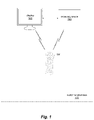
- FIG. 1 is a diagram depicting an example environment in which a system to generate guaranteed advertisement impressions may be implemented, according to various embodiments described herein.
- FIG. 2 is a block diagram depicting example components incorporated in a receiving device on which the system to generate guaranteed advertisement impressions operates, according to various embodiments described herein.
- FIG. 3 is a block diagram depicting components of a sample embodiment of a remote-control device for the system to generate guaranteed advertisement impressions, according to various embodiments described herein.
- FIG. 4 is a signal diagram of an example program content stream used in the system to generate guaranteed advertisement impressions, according to various embodiments described herein.
- FIG. 5 is a flow diagram of a process to ignore a remote-control device during playback of a media content segment, used by the system to generate guaranteed advertisement impressions according to various embodiments described herein.
- FIG. 6 is a flow diagram of a process to disable a remote-control device during playback of a program content stream, used by the system to generate guaranteed advertisement impressions, according to various embodiments described herein.
- FIG. 7 is a flow diagram of a process to disable a remote-control device by a receiving device, used by the system to generate guaranteed advertisement impressions, according to various embodiments described herein.
- FIG. 8 is a flow diagram of a process to disable a function of a remote-control device, used by the system to generate guaranteed advertisement impressions, according to various embodiments described herein.
- media companies In providing advertisements to consumers, media companies generally determine whether a viewer has seen an advertisement merely by determining if the advertisement was transmitted to the viewer's media device, such as a television, smartphone, computer, etc. However, in order for a media company to be paid for transmitting an advertisement, they must prove that an “advertisement impression” was made when the viewer received the advertisement. In order to prove the advertisement impression was made, a media company may keep track of the time the advertisement is playing on the viewer's device; if the advertisement is viewed for a certain period of time, an advertisement impression is presumed to be made.
- This method does not guarantee the viewer actually viewed the advertisement because the viewer may mute their media device, perform other tasks with the device until the advertisement has ended, turn off the screen of their device, etc. Additionally, in the case of stored advertisements to be inserted into programming, recorded programs which already contain advertisements, streaming media including advertisements, and buffered programming including advertisements due to pausing of live television broadcasts, the viewer may fast forward or skip through the advertisements, rendering them ineffective and preventing an advertisement impression from being created.
- a computerized system for guaranteed advertisement impressions receives a program content stream and identifies a specific media content segment. After identifying the media content segment, the system disables at least one function of a remote-control device for a predetermined time period, to guarantee that the viewer cannot skip the media content segment for that time period.
- the program content stream includes a recorded program.
- the system includes an advertisement in the program content stream with the recorded program, and identifies at least a portion of the advertisement as the specific media content segment.
- the advertisement is included in the program content stream before the recorded program.
- the advertisement is a targeted advertisement.
- the system identifies playback of the program content stream has reached an advertisement, and disables at least one function of the remote-control device. In some embodiments, at least one function of the remote-control device is disabled for a predetermined time period. In some embodiments, the predetermined time period is long enough to generate an advertisement impression. In some embodiments, all functions of the remote-control device are disabled.
- At least one function of the remote-control device is disabled by sending signals to the remote-control device instructing it to refuse input from buttons related to the at least one function. In some embodiments, at least one function of the remote-control device is disabled by instructing a receiving device to refuse signals from the remote-control device related to that function of the remote-control device. In some embodiments, at least one function of the remote-control device is disabled by instructing the remote-control device to stop transmitting signals related to the at least one function of the remote-control device.
- FIG. 1 is a diagram depicting an example environment in which a system to generate guaranteed advertisement impressions may be implemented. It is to be appreciated that FIG. 1 illustrates just one example of a customer premises 101 environment and that the various embodiments discussed herein are not limited to the use of such environment.
- the customer premises 101 can include a variety of communication systems and can use a variety of communication devices, presentation devices and media including, but not limited to, media provided by satellite, cable, and Internet streaming services.
- Audio, video, and/or data service providers such as, but not limited to, television service providers, provide their customers a multitude of audio/video and/or data programming (hereafter, collectively and/or exclusively “programming”). Such programming is often provided by use of a receiving device 102 communicatively coupled to a display 103 configured to receive the programming.
- Receiving device 102 may interconnect to one or more communications media or sources, such as a cable head-end, satellite antenna, telephone company switch, Ethernet portal, off-air antenna, or the like, that provide the programming.
- the receiving device 102 commonly receives a plurality of programming by way of the communications media or other sources. Based upon selection by the user, the receiving device 102 processes and communicates the selected programming to the one or more displays 103 .
- the receiving device 102 may include devices such as a “television converter,” “receiver,” “set-top box,” “television receiving device,” “television receiver,” “television recording device,” “digital video recorder (DVR),” “satellite set-top box,” “satellite receiver,” “cable set-top box,” “cable receiver,” “media player,” “Internet streaming device,” “television tuner,” “media receiver,” and/or “media playback device.” Accordingly, the receiving device 102 may be any suitable converter device or electronic equipment that is operable to receive and/or play programming. Further, the receiving device 102 may itself include user interface devices, such as buttons, switches and displays. In many applications, a remote-control device 104 is operable to control the display 103 and communicate with the receiving device 102 .
- a remote-control device 104 is operable to control the display 103 and communicate with the receiving device 102 .
- Examples of a display 103 include, but are not limited to, a television (“TV”), a personal computer (“PC”), a monitor, a touch screen, a game system, or the like.
- a display 103 may employ one or more speakers (not shown) and/or other output devices to communicate video and/or audio content to a user (not shown).
- one or more displays 103 reside in or near a customer's premises 101 and are communicatively coupled, directly or indirectly, to the receiving device 102 . Further, the receiving device 102 and the display 103 may be integrated into a single device. Such a single device may have the functionality of the receiving device 102 described herein and the display 103 , or may even have additional functionality.
- the receiving device 102 may receive a signal from a communications media or source.
- the receiving device 102 may be a conversion device that converts, also referred to as formatting, the received signal into a signal suitable for communication to a display 103 .
- the receiving device 102 may receive programming partially from, or entirely from, another source other than that described above. Other embodiments of the receiving device 102 may receive locally broadcast RF signals, or may be coupled to a communications system via any suitable medium. Non-limiting examples of medium communicatively coupling the receiving device 102 to a communications system include cable, fiber optic, or Internet media.
- Customer premises 101 may include other devices which are communicatively coupled to the receiving device 102 and/or a communication system via a suitable media.
- some customer premises 101 include an optional network, communication system or networked system (not shown), to which receiving device 102 and display 103 can be coupled, collectively referred to as endpoint devices.
- Non-limiting examples of such a network or communication system include, but are not limited to, an Ethernet system, twisted pair Ethernet system, an intranet, a local area network (“LAN”) system, short range wireless network (e.g., Bluetooth®), a personal area network (e.g., a Zigbee network based on the IEEE 802.15.4 specification), a Consumer Electronics Control (CEC) communication system or the like.
- LAN local area network
- Bluetooth® short range wireless network
- personal area network e.g., a Zigbee network based on the IEEE 802.15.4 specification
- CEC Consumer Electronics Control
- One or more endpoint devices such as PCs, data storage devices, TVs, game systems, sound system receivers, Internet connection devices, digital subscriber loop (“DSL”) devices, wireless LAN, WiFi, Worldwide Interoperability for Microwave Access (“WiMax”) devices, or the like, may be communicatively coupled to the network or to each other so that the plurality of endpoint devices are communicatively coupled together.
- DSL digital subscriber loop
- WiFi Worldwide Interoperability for Microwave Access
- WiMax Worldwide Interoperability for Microwave Access
- a hand-held remote-control device 104 may provide an interface between the receiving device 102 and a user.
- Remote-control device 104 typically communicates with the receiving device 102 using a suitable wireless medium, such as infrared (“IR”), radio frequency (“RF”), or the like and may be any wireless handheld device, including a mobile device such as a cellular telephone or a tablet device.
- IR infrared
- RF radio frequency
- Other input or control devices may also be communicatively coupled to the receiving device 102 .
- Non-limiting examples include game device controllers, keyboards, touch pads, touch screens, pointing devices and the like.
- the remote-control device 104 may also control other devices such as the display 103 and/or other endpoint devices (not shown).
- the remote-control device 104 may be a “universal” remote or otherwise programmable or configurable by a manufacturer, user, and/or other device to control such other devices.
- the remote-control device 104 may be a multibrand remote that comes to the user preprogrammed with the codes to operate a number of standard home electronic devices. Such a remote may be able to control multiple devices and, in some embodiments, control their main functions, such as channel turning, volume control and other functions.
- the remote-control device 104 may also be a “learning” remote. In particular, while the remote-control device 104 may be preprogrammed to operate a number of popular electronic models, it may also have the ability to learn the functions of the original manufacturer's remote of each device.
- this may be accomplished by placing the remote-control device 104 head-to-head with the device's original manufacturer's remote and infrared signals will be transmitted to the learning remote that allow it to duplicate the other remote's commands.
- learning can also be accomplished via RF or wired communication between remote-control devices and/or other devices.
- the remote-control device 104 can receive signals from the receiving device 102 . In many such embodiments, the remote-control device 104 can also execute instructions contained in the signals received from the receiving device 102 . In some embodiments, the remote-control device 104 can disable its own functionality by refusing to send signals related to one or more functions. In some embodiments, remote-control device 104 can disable its own functionality by disabling one or more buttons related to one or more functions.
- the above description of the customer premises 101 , and the various devices therein, is intended as a broad, non-limiting overview of an example environment in which various embodiments of a system to guarantee advertisement impressions can be implemented.
- the customer premises 101 and the various devices therein, may contain other devices, systems and/or media not specifically described herein.
- Example embodiments described herein provide applications, tools, data structures and other support to implement systems and methods for generating guaranteed advertisement impressions by disabling a remote-control device that may control various media devices.
- the example embodiments described herein additionally provide applications, tools, data structures and other support to implement systems and methods for generating guaranteed advertisement impressions by selecting media content segments for playback and ignoring commands from a remote-control device that may control various media devices.
- Other embodiments of the described techniques may be used for other purposes, including for controlling the operation of remote-control devices generally.
- numerous specific details are set forth in order to provide a thorough understanding of the described techniques.
- FIG. 2 is a block diagram depicting example components incorporated in a receiving device 102 on which the system to generate guaranteed advertisement impressions operates, according to various embodiments described herein.
- the receiving device 102 includes one or more of the following: a central processing unit (“CPU”) 201 for executing computer programs; a computer memory 202 for storing programs and data while they are being used, including the facility and associated data, an operating system including a kernel, and device drivers; a persistent storage device 203 , such as a hard drive or flash drive for persistently storing programs and data; a network connection 204 for connecting the computer system to satellite, cable, and Internet streaming services, remote control devices, such as remote control device 104 , and/or other computer systems to send and/or receive data, such as via the Internet or another network and its networking hardware, such as switches, routers, repeaters, electrical cables and optical fibers, light emitters and receivers, radio transmitters and receivers, and the like; and a display connection 205 for causing visual information or data to be displayed,
- the memory 201 may have computer-executable instructions stored thereon, that, when executed by the CPU 202 , cause the receiving device 102 and/or remote-control device 104 to perform the operations and functions described herein.
- FIG. 3 is a block diagram depicting components of a sample embodiment of a remote-control device 104 for the system to generate guaranteed advertisement impressions.
- remote-control device 104 comprises a computer memory (“memory”) 301 and one or more Central Processing Units (“CPU”) 302 .
- CPU Central Processing Unit
- I/O Input/Output “I/O” controls 303 , including, but not limited to: buttons, virtual buttons, switches, keypads, keyboards, touchpads, touchscreens, display screens, liquid crystal displays, speakers, scroll wheel inputs, optical sensors, gesture sensors, accelerometers, motion control sensors, voice command sensors, microphones, track ball's and/or joysticks, etc.
- the remote-control device 104 may also include other computer-readable media 304 (e.g., flash memory, SIM card) and a network connection 305 .
- the I/O controls 303 may include buttons, although different numbers and configurations of controls exist in various embodiments, including those with touch screen buttons and other input controls.
- the network connection 305 includes one or more communication interfaces to various media devices, including but not limited to, radio frequency transceivers, infrared transceivers, wireless Ethernet (“Wi-Fi”) interfaces, short range wireless (e.g., Bluetooth®) interfaces and the like.
- the one or more Central Processing Units (“CPU”) 302 may be communicatively coupled to the memory 301 , the Input/Output controls 303 , other computer-readable media 304 and network connection 305 , (e.g., via a communications bus) in a manner to control one or more operations of those various components.
- CPU Central Processing Unit
- the remote-control device 104 may communicate with receiving device 102 , display 103 , and possibly other media devices, such as via the network connection 305 .
- Example media devices include other remote-control devices, media players, streaming media devices, DVRs, DVD players, video recorders, audio systems, displays, personal computers, set-top boxes, mobile devices and the like.
- Remote-control device logic 310 and device information 311 is shown residing in memory 301 .
- some portion of the device information and some of, or all of, the components of the logic 310 may be stored on the other computer-readable media 304 .
- the logic 310 may include computer-executable instructions stored on the memory that preferably execute on one or more CPUs 302 and manages operation of the remote-control device 104 , including causing the remote-control device 104 to perform the operations and functions described herein.
- the logic 310 may comprise or implement a system control module as executed by one or more CPUs 302 that are communicatively coupled to the I/O controls 303 and other components of the remote-control device 104 .
- code or programs and potentially other data/information may also reside in the memory 301 , and may execute on one or more CPUs 302 .
- one or more of the components in FIG. 3 may not be present in any specific implementation. For example, some embodiments may not provide other computer readable media 304 .
- the logic 310 performs the core functions of the remote-control device 104 , as discussed herein and also with respect to FIGS. 4 through 8 .
- the logic 310 reads input that results from activation of I/O controls 303 on the remote-control device 104 by the user and performs the function corresponding to the input, including sending commands to various devices and performing internal operations of the remote-control device 104 .
- the remote-control device 104 may receive signals at the network connection 305 representing commands to perform operations in the remote-control device 104 . These commands can include additional logic regarding the actions taken by remote-control device 104 after activation of certain I/O controls 303 , such as preventing the function corresponding to the input from being performed. In some embodiments, the commands can include additional instructions, such as specifying a time period to disable certain functions.
- remote and/or programmatic access is provided to at least some of the functionality of the remote-control device 104 .
- the remote-control device 104 may provide to other media devices an application program interface (“API”) that provides access to various functions of the remote-control device 104 , including access to information stored by the remote-control device 104 such as whether functions of the remote are currently disabled.
- API application program interface
- the logic 310 and/or computer-executable instructions stored on memory 201 of the receiving device 102 are implemented using standard programming techniques.
- the logic 310 and/or computer-executable instructions stored on memory 201 of the receiving device 102 may be implemented as a “native” executable running on CPU 202 and/or the CPU 302 , along with one or more static or dynamic libraries.
- the logic 310 and/or computer-executable instructions stored on memory 201 of the receiving device 102 may be implemented as instructions processed by a virtual machine that executes as some other program.
- a range of programming languages may be employed for implementing such example embodiments, including representative implementations of various programming language paradigms and platforms, including but not limited to, object-oriented (e.g., Java, C++, C#, Visual Basic.NET, Smalltalk, and the like), functional (e.g., ML, Lisp, Scheme, and the like), procedural (e.g., C, Pascal, Ada, Modula, and the like), scripting (e.g., Perl, Ruby, PHP, Python, JavaScript, VBScript, and the like) and declarative (e.g., SQL, Prolog, and the like).
- object-oriented e.g., Java, C++, C#, Visual Basic.NET, Smalltalk, and the like
- functional e.g., ML, Lisp, Scheme, and the like
- procedural e.g., C, Pascal, Ada, Modula, and the like
- scripting e.g., Perl, Ruby, PHP, Python, JavaScript, VBScript
- the embodiments described above may also use synchronous or asynchronous client-server computing techniques.
- the various components may be implemented using more monolithic programming techniques as well, for example, as an executable running on a single CPU computer system, or alternatively decomposed using a variety of structuring techniques known in the art, including but not limited to, multiprogramming, multithreading, client-server, or peer-to-peer, running on one or more computer systems each having one or more CPUs.
- Some embodiments may execute concurrently and asynchronously, and communicate using message passing techniques. Equivalent synchronous embodiments are also supported.
- other functions could be implemented and/or performed by each component/module, and in different orders, and by different components/modules, yet still achieve the functions of the remote-control device 104 .
- programming interfaces to the data stored as part of the device information 311 can be available by standard mechanisms such as through C, C++, C#, and Java APIs; libraries for accessing files, databases, or other data repositories; through scripting languages such as JavaScript and VBScript; or through Web servers, FTP servers, or other types of servers providing access to stored data.
- the device information 311 may be implemented as one or more database systems, file systems, or any other technique for storing such information, or any combination of the above, including implementations using distributed computing techniques.
- some or all of the components/portions of the logic 310 and/or functionality provided by the computer-executable instructions stored on memory 201 of the receiving device 102 may be implemented or provided in other manners, such as at least partially in firmware and/or hardware, including, but not limited to one or more application-specific integrated circuits (“ASICs”), standard integrated circuits, controllers (e.g., by executing appropriate instructions, and including microcontrollers and/or embedded controllers), field-programmable gate arrays (“FPGAs”), complex programmable logic devices (“CPLDs”), and the like.
- ASICs application-specific integrated circuits
- controllers e.g., by executing appropriate instructions, and including microcontrollers and/or embedded controllers
- FPGAs field-programmable gate arrays
- CPLDs complex programmable logic devices
- system components and/or data structures may also be stored as contents (e.g., as executable or other machine-readable software instructions or structured data) on a computer-readable medium (e.g., as a hard disk; a memory; a computer network or cellular wireless network; or a portable media article to be read by an appropriate drive or via an appropriate connection, such as a DVD or flash memory device) so as to enable or configure the computer-readable medium and/or one or more associated computing systems or devices to execute or otherwise use or provide the contents to perform at least some of the described techniques.
- a computer-readable medium e.g., as a hard disk; a memory; a computer network or cellular wireless network; or a portable media article to be read by an appropriate drive or via an appropriate connection, such as a DVD or flash memory device
- Such computer program products may also take other forms in other embodiments. Accordingly, embodiments of this disclosure may be practiced with other computer system configurations.
- FIG. 4 is a signal diagram of an example program content stream 400 used in the system to guarantee advertisement impressions, according to various embodiments described herein.
- the program content stream 400 includes audio, video, text, etc. data representing media.
- the program content stream 400 includes a media content segment 401 and a recorded program 402 .
- the receiving device 102 transmits the program content stream 400 to the display 103 .
- the media content segment 401 includes an identifier, which informs the receiving device when playback of the program content stream 400 reaches the media content segment 401 .
- the identifier may include a code, value, name, cue, header, transition indication, presentation time stamp value, metadata and/or other information indicative of the media content segment 401 and/or when the media content segment 401 appears or is to appear in the program content stream 400 .
- the media content segment 401 may be a separate file (e.g., an advertisement) stored on the receiving device 102 , selected by the receiving device 102 for insertion into the program content stream 400 , or selected for playback of the media content segment 401 to occur immediately before playing of the recorded program 402 . Such selection of the media content segment 401 may be in response to selection of the recorded program 402 for playing from the beginning of the recorded program 402 .
- the identifier may be selection for play and or initiation of play of the media content segment stored on the receiving device 102 .
- the media content segment 401 is an advertisement. In some embodiments, the media content segment 401 is a targeted advertisement. In some embodiments, the media content segment 401 is not an advertisement.
- the recorded program 402 is stored on the receiving device 102 . In some embodiments, the recorded program 402 is received from a source external to the receiving device, such as: another device on the premises, such as a personal computer, smartphone, laptop, personal media server, etc.; the “cloud”; a computer-readable media device, such as a USB drive, CD, DVD, Blu-Ray Disc, etc.; the Internet or any other computer network; etc.
- the receiving device 102 inserts the media content segment 401 into the program content stream 400 before the recorded program 402 . In some embodiments, the receiving device 102 inserts the media content segment 401 into the program content stream during the recorded program 402 . In some embodiments, the receiving device 102 inserts the media content into the program content stream 400 after the recorded program 402 . In some embodiments, a device other than the receiving device 102 inserts the media content segment 401 into the program content stream 400 . In some embodiments, the receiving device 102 receives the program content stream 400 from another device, with the media content segment 401 and the recorded program 402 already being included in the program content stream 400 .
- the receiving device 102 may recognize an identifier of or indication that a media content segment 401 (e.g., an advertisement) is playing or will be played before playing of the recorded program 402 after or as a result of selection of or initiation of playing a recorded program 402 or the media content segment 401 . For example, this may be based on media asset metadata stored on the receiving device 102 associated with the media content segment 402 , which may have been selected for play based on the selection of or initiation of playing a recorded program 402 . In some embodiments, the system recognizes an identifier or indication of the media content segment 401 at or during initiation of playing the of the media content segment 401 , or during playback of a media content stream including a recorded program 402 .
- a media content segment 401 e.g., an advertisement
- the receiving device 102 In in response to the recognition of the identifier or indication that a media content segment 401 is playing or will be played before playing of the recorded program 402 , the receiving device 102 ignores for a predetermined time period, all commands received from the remote-control device 104 to skip or fast forward through all or part of the media content segment 40 . In some embodiments, the receiving device additionally or instead transmits a signal to the remote-control device 104 , which disables, for a predetermined time, at least one function of the remote-control device (e.g., the fast-forward or skip function).
- the remote-control device e.g., the fast-forward or skip function
- FIG. 5 is a flow diagram of a process to ignore a remote-control device during playback of a media content segment, used by the system to generate guaranteed advertisement impressions in some implementations.
- the receiving device receives an indication from a user to play a recorded program stored on the receiving device from the beginning of the recorded program.
- the receiving device selects a media content segment stored on the receiving device to play before the recorded program.
- the receiving device automatically selects the media content segment from a plurality of media content segments stored on the receiving device.
- the receiving device begins to play the media content segment on the display.
- the receiving device receives a command from the remote-control device to skip or fast forward through all of part of the media content segment.
- the receiving device ignores the command from the remote-control device for a predetermined time period. The predetermined time period is shorter than the duration of the media content segment. In some embodiments, the receiving device determines the time period in act 505 based on media asset metadata stored on the receiving device associated with the media content segment.
- the media content segment is an advertisement.
- the predetermined time period is based on a type of advertisement spot indicated by the media asset metadata stored on the DVR.
- the receiving device receives media asset metadata which causes the receiving device to select a media content segment stored on the receiving device from a plurality of media content segments based on the media asset metadata and plays the selected media content segment before playing the recorded program.
- the predetermined time period is one second. In some embodiments, the predetermined time period is based on an order for insertion of the media content segment to occur at the receiving device upon selection of a recorded program stored on the receiving device. In some embodiments, the receiving device selects the media content segment by determining that the media asset metadata includes a service identifier indicating an addressable service of the receiving device and selecting the media content segment and predetermined time period based on a characteristic of the media content segment associated with the service identifier.
- FIG. 6 is a flow diagram of a process to disable a remote-control device during playback of a program content stream, used by the system to generate guaranteed advertisement impressions in some implementations.
- a receiving device initiates playback of a program content stream.
- the receiving device recognizes an identifier of a media content segment during the playback of the program content stream.
- the receiving device transmits a signal to a remote-control device which disables at least one function of the remote-control device.
- the remote-control device is disabled for a predetermined time period. In some embodiments, the signal transmitted by the receiving device instructs the remote-control device to ignore input and output related to the at least one function of the remote-control device, thereby disabling that function of the remote-control device. In some embodiments, the signal transmitted by the receiving device instructs the remote-control device to stop transmitting signals related to the at least one function of the remote-control device. In some embodiments, the function disabled by the remote-control device is a fast forward function or a skip function. In some embodiments, the signal transmitted by the receiving device disables all functions of a remote-control device.
- the receiving device transmits the signal disabling at least one function of the remote-control device if the media content segment is located before the recorded program in the program content stream. In some embodiments, the receiving device transmits the signal disabling at least one function of the remote-control device if the program content stream includes a recorded program, and playback of the program content stream starts at the beginning of the recorded program.
- FIG. 7 is a flow diagram of a process to disable a remote-control device by a receiving device, used by the system to generate guaranteed advertisement impressions in some implementations.
- the receiving device receives a program content stream containing a media content segment identifier.
- the receiving device detects the location of the media content segment identifier in the program content stream.
- the receiving device determines if the playback of the program content stream has reached the location of the media content segment identifier.
- the process moves to act 705 , otherwise it returns to act 703 .
- the receiving device disables at least one function of a remote-control device.
- the receiving device determines whether the media content segment identifier indicates the media content segment occurs immediately before a beginning of the recorded program. The receiving device then disables at least one function of the remote-control device, for a predetermined time period, when playback of the program content stream reaches the location of the media content segment identifier, in response to a determination that the media content segment identifier indicates the media content segment occurs immediately before the beginning of the program content stream.
- the receiving device if the location of the media content segment identifier does not indicate the media content segment occurs immediately before a beginning of the recorded program in the program content stream, the receiving device does not disable the at least one function of the remote-control device. In some embodiments, if the program content stream contains a recorded program, and the playback of the recorded program does not start at the beginning of the recorded program, the receiving device does not disable the at least one function of the remote-control device.
- the at least one function of the remote-control device is disabled for a predetermined time period. In some embodiments, the at least one function of the remote-control device is a fast forward function or a skip function. In some embodiments, all functions of the remote-control device are disabled. In some embodiments, the disabling of the at least one function of the remote-control device is performed by sending a signal from the receiving device to the remote-control device, instructing the remote-control device to disable the at least one function. In some embodiments, the signal instructing the remote-control device to disable at least one function includes instructions for the remote-control device to stop sending signals related to the at least one function. In some embodiments, the receiving device disables the at least one function of the remote-control device by refusing to accept signals from the remote-control device.
- FIG. 8 is a flow diagram of a process to disable a function of a remote-control device, used by the system to generate guaranteed advertisement impressions in some implementations.
- a remote-control device receives a signal containing instructions to disable a function of the remote-control device for a period of time.
- the remote-control device disables the function.
- the remote-control device disables the function by ignoring signals from input and output related to the function.
- the remote-control device disables the function by refusing to transmit signals relating to the function.
- the function disabled is a fast forward function or a skip function. In some embodiments, all functions of the remote-control device are disabled.
- the remote-control device checks if the period of time has elapsed. In act 804 , if the period of time has elapsed the process moves to act 805 , otherwise it returns to act 803 . At act 805 , the remote-control device re-enables the at least one function.
- the remote-control device receives the signal in act 801 from a receiving device. In some embodiments, the remote-control device receives the signal after a receiving device encounters a media content segment identifier in a program content stream. In some embodiments, the remote-control device receives the signal after a receiving device determines playback of a program content stream has reached a media content segment. In some embodiments, the remote-control device receives the signal if the receiving device determines the media content segment identifier is located at the beginning of a recorded program included in the program content stream. In some embodiments, the remote-control device receives the signal if the receiving device determines the playback of a recorded program included in the program content stream starts at the beginning of the recorded program.
Landscapes
- Engineering & Computer Science (AREA)
- Multimedia (AREA)
- Signal Processing (AREA)
- Human Computer Interaction (AREA)
- Databases & Information Systems (AREA)
- Business, Economics & Management (AREA)
- Marketing (AREA)
- Software Systems (AREA)
- Two-Way Televisions, Distribution Of Moving Picture Or The Like (AREA)
Abstract
Description
Claims (25)
Priority Applications (1)
| Application Number | Priority Date | Filing Date | Title |
|---|---|---|---|
| US16/886,455 US11425459B2 (en) | 2020-05-28 | 2020-05-28 | Systems and methods to generate guaranteed advertisement impressions |
Applications Claiming Priority (1)
| Application Number | Priority Date | Filing Date | Title |
|---|---|---|---|
| US16/886,455 US11425459B2 (en) | 2020-05-28 | 2020-05-28 | Systems and methods to generate guaranteed advertisement impressions |
Publications (2)
| Publication Number | Publication Date |
|---|---|
| US20210377597A1 US20210377597A1 (en) | 2021-12-02 |
| US11425459B2 true US11425459B2 (en) | 2022-08-23 |
Family
ID=78704525
Family Applications (1)
| Application Number | Title | Priority Date | Filing Date |
|---|---|---|---|
| US16/886,455 Active US11425459B2 (en) | 2020-05-28 | 2020-05-28 | Systems and methods to generate guaranteed advertisement impressions |
Country Status (1)
| Country | Link |
|---|---|
| US (1) | US11425459B2 (en) |
Citations (81)
| Publication number | Priority date | Publication date | Assignee | Title |
|---|---|---|---|---|
| US5983369A (en) | 1996-06-17 | 1999-11-09 | Sony Corporation | Online simultaneous/altering-audio/video/voice data based service and support for computer systems |
| US5987213A (en) | 1993-03-05 | 1999-11-16 | Gemstar Development Corporation | System and method for automatically recording television programs in television systems with tuners external to video recorders |
| US6084628A (en) | 1998-12-18 | 2000-07-04 | Telefonaktiebolaget Lm Ericsson (Publ) | System and method of providing targeted advertising during video telephone calls |
| US6177931B1 (en) | 1996-12-19 | 2001-01-23 | Index Systems, Inc. | Systems and methods for displaying and recording control interface with television programs, video, advertising information and program scheduling information |
| US20010009548A1 (en) | 1999-12-30 | 2001-07-26 | U.S. Philips Corporation | Method and apparatus for converting data streams |
| US20010049820A1 (en) | 1999-12-21 | 2001-12-06 | Barton James M. | Method for enhancing digital video recorder television advertising viewership |
| US20020042914A1 (en) | 2000-10-11 | 2002-04-11 | United Video Properties, Inc. | Systems and methods for providing targeted advertisements based on current activity |
| US20020057893A1 (en) | 1998-08-11 | 2002-05-16 | Anthony Wood | Digital recording and playback |
| US20020066106A1 (en) | 2000-11-28 | 2002-05-30 | Navic Systems, Inc. | Promotion server using video on demand channel |
| US20020078444A1 (en) | 2000-12-15 | 2002-06-20 | William Krewin | System and method for the scaleable delivery of targeted commercials |
| US20020083439A1 (en) | 2000-08-31 | 2002-06-27 | Eldering Charles A. | System for rescheduling and inserting advertisements |
| US20020087975A1 (en) | 2000-08-31 | 2002-07-04 | Schlack John A. | System and method for delivering targeted advertisements using multiple presentation streams |
| US20020100062A1 (en) | 2001-01-19 | 2002-07-25 | Lowthert Jonathan E. | Content with advertisement information segment |
| US20020124249A1 (en) | 2001-01-02 | 2002-09-05 | Shintani Peter Rae | Targeted advertising during playback of stored content |
| US20020161739A1 (en) | 2000-02-24 | 2002-10-31 | Byeong-Seok Oh | Multimedia contents providing system and a method thereof |
| US20020174430A1 (en) | 2001-02-21 | 2002-11-21 | Ellis Michael D. | Systems and methods for interactive program guides with personal video recording features |
| US20020184639A1 (en) | 2001-04-10 | 2002-12-05 | Frost Jonathan Andrew | Broadcast data system |
| US20030110499A1 (en) | 1998-03-04 | 2003-06-12 | United Video Properties, Inc. | Program guide system with targeted advertising |
| US20030154128A1 (en) | 2002-02-11 | 2003-08-14 | Liga Kevin M. | Communicating and displaying an advertisement using a personal video recorder |
| US20040158858A1 (en) | 2003-02-12 | 2004-08-12 | Brian Paxton | System and method for identification and insertion of advertising in broadcast programs |
| US20050060229A1 (en) | 2003-09-15 | 2005-03-17 | Steve Riedl | System and method for advertisement delivery within a video time shifting architecture |
| US20050114204A1 (en) | 2003-11-20 | 2005-05-26 | Jong-Kyung Kim | Advertisement providing system using video chatting service and the method thereof |
| US20050235319A1 (en) | 1999-12-10 | 2005-10-20 | Carpenter Kenneth F | Features for use with advanced set-top applications on interactive television systems |
| US20060031262A1 (en) | 2003-12-12 | 2006-02-09 | International Business Machines Corporation | Synchronizing client data and server data |
| US6999990B1 (en) | 1998-12-18 | 2006-02-14 | Motive, Inc. | Technical support chain automation with guided self-help capability, escalation to live help, and active journaling |
| US20060156352A1 (en) | 2004-12-15 | 2006-07-13 | Microsoft Corporation | Mixed-media service collections for multimedia platforms |
| US20070077028A1 (en) | 1999-08-09 | 2007-04-05 | British Sky Broadcasting Limited | Receivers for television signals |
| US20070204310A1 (en) | 2006-02-27 | 2007-08-30 | Microsoft Corporation | Automatically Inserting Advertisements into Source Video Content Playback Streams |
| US7281034B1 (en) | 2000-01-24 | 2007-10-09 | Friskit, Inc. | System and method for media playback over a network using links that contain control signals and commands |
| US20080127246A1 (en) | 2006-09-14 | 2008-05-29 | Nortel Networks Limited | Digital media recorder based advertising |
| US20090031335A1 (en) | 1992-12-09 | 2009-01-29 | Hendricks John S | Digital broadcast program ordering |
| US20090106104A1 (en) | 2007-10-17 | 2009-04-23 | Yahoo! Inc. | System and method for implementing an ad management system for an extensible media player |
| US20090138907A1 (en) | 2007-11-02 | 2009-05-28 | Wiser Philip R | Remote control unit for a personalized video programming system |
| US20090158341A1 (en) | 2007-12-17 | 2009-06-18 | Kerry Philip Miller | Electronic program guide generation apparatus, systems, and methods |
| US20090210899A1 (en) | 2008-02-19 | 2009-08-20 | Marc Lawrence-Apfelbaum | Methods and apparatus for enhanced advertising and promotional delivery in a network |
| US20090307612A1 (en) | 2008-06-05 | 2009-12-10 | Microsoft Corporation | Initiating a support chat session in response to the occurrence of a support event with transmission of detailed event information |
| US20100153885A1 (en) | 2005-12-29 | 2010-06-17 | Rovi Technologies Corporation | Systems and methods for interacting with advanced displays provided by an interactive media guidance application |
| US20100161429A1 (en) | 2008-12-19 | 2010-06-24 | Mandel Edward W | System and Method for Live-Interaction Advertising |
| US20100218030A1 (en) | 2009-02-20 | 2010-08-26 | International Business Machines Corporation | Interactive problem resolution presented within the context of major observable application behaviors |
| US20100238924A1 (en) | 2009-03-20 | 2010-09-23 | Cisco Technology, Inc. | Switched Unicast in an Internet Protocol Television Environment |
| US20100325657A1 (en) | 2009-06-17 | 2010-12-23 | General Instrument Corporation | Insertion of recorded secondary digital video content during playback of primary digital video content |
| US7899305B2 (en) | 2005-08-09 | 2011-03-01 | At&T Intellectual Property I, L.P. | Digital video recorder having skip-to-interval-from-end button |
| US20110110515A1 (en) | 2009-11-11 | 2011-05-12 | Justin Tidwell | Methods and apparatus for audience data collection and analysis in a content delivery network |
| US20110194838A1 (en) | 2010-02-09 | 2011-08-11 | Echostar Global B.V. | Methods and Apparatus For Presenting Supplemental Content In Association With Recorded Content |
| US20110238507A1 (en) | 2010-03-09 | 2011-09-29 | Sandisk Il Ltd. | Combining user content with supplemental content at a data storage device |
| US20110249081A1 (en) | 2010-04-09 | 2011-10-13 | Kay Christopher E | System and Method for Providing Customer Support on a User Interface |
| US8117564B2 (en) | 2009-04-10 | 2012-02-14 | United Video Properties, Inc. | Systems and methods for generating a media guidance application with multiple perspective views |
| US20120072282A1 (en) | 2009-09-02 | 2012-03-22 | Nds Limited | Advertisement selection |
| US20120096489A1 (en) | 2010-10-15 | 2012-04-19 | Intent IQ, LLC | Systems and methods for selecting television advertisements for a set-top box requesting an advertisement without knowing what program or channel is being watched |
| US20120110620A1 (en) | 2008-03-10 | 2012-05-03 | Hulu Llc | Method and apparatus for user selection of advertising combinations |
| US20120114302A1 (en) | 2010-11-08 | 2012-05-10 | Deluxe Digital Studios, Inc. | Methods and systems for use in controlling playback of content in relation to recorded content |
| US20120172033A1 (en) | 2010-12-29 | 2012-07-05 | Eldon Technology Limited | Playback Pause Before Signal Loss of a Mobile Device |
| US20120209961A1 (en) | 2011-02-16 | 2012-08-16 | Sony Network Entertainment International Llc | Method and apparatus for use in tracking playback of media streams while in stand-by mode |
| US20120216224A1 (en) | 2011-02-22 | 2012-08-23 | Motorola Mobility, Inc. | Method and apparatus for managing targeted advertisements for a linear television service |
| US8281339B1 (en) | 2004-01-12 | 2012-10-02 | United Video Properties, Inc. | Customizable flip and browse overlays in an interactive television system |
| US20130007799A1 (en) | 2011-06-30 | 2013-01-03 | Cable Television Laboratories, Inc. | Dynamic advertisement copy insert |
| US20130014171A1 (en) | 2009-09-10 | 2013-01-10 | Patrick Michael Sansom | Content item receiver module and method |
| US20130055309A1 (en) | 2011-08-23 | 2013-02-28 | Audience Partners LLC | Targeting online ads based on political demographics |
| US20130179917A1 (en) | 2012-01-09 | 2013-07-11 | Seachange International, Inc. | Multi-Component Advertising Campaigns |
| US20130227013A1 (en) | 2011-08-19 | 2013-08-29 | Redbox Automated Retail, Llc | System and method for providing supplemental information related to media content |
| US20140130111A1 (en) | 2012-11-06 | 2014-05-08 | Tollgrade Communications, Inc. | Agent-based communication service quality monitoring and diagnostics |
| US20140259057A1 (en) | 2012-05-23 | 2014-09-11 | Huawei Device Co., Ltd. | IPTV Server and Method for Playing Recorded Content |
| US20140298381A1 (en) | 2011-12-16 | 2014-10-02 | Sony Computer Entertainment | Broadcast program processing device, broadcast program processing method, broadcasting station device, information distribution server, program, and information storage media |
| US20140329565A1 (en) | 2013-05-06 | 2014-11-06 | Nuvo Llc | Cellular Phone with Automatic Advertising |
| US20150256581A1 (en) | 2014-03-07 | 2015-09-10 | Ericsson Television Inc. | Abr video white spot coverage system and method |
| US20150324832A1 (en) | 2014-05-02 | 2015-11-12 | Jason Scott Kaufman | System And Process For Controlling A Computerized Entertainment Property Playlist. |
| US20160094600A1 (en) * | 2014-09-30 | 2016-03-31 | The Nielsen Company (Us), Llc | Methods and apparatus to measure exposure to streaming media |
| US20160219142A1 (en) | 2009-04-06 | 2016-07-28 | Wendell D. Brown | Method and apparatus for content presentation in association with a communication connection |
| US20160294897A1 (en) | 2014-04-18 | 2016-10-06 | You42 Radio, Inc. | System, method and network device for streaming data from a network |
| US20170064398A1 (en) | 2015-08-31 | 2017-03-02 | Verizon Patent And Licensing Inc. | Video on demand platform |
| US20170180448A1 (en) | 2015-12-17 | 2017-06-22 | Google Inc. | Automatically providing media items in environments with limited network performance |
| US20170188116A1 (en) * | 2015-12-29 | 2017-06-29 | Echostar Technologies L.L.C. | Methods and apparatus for presenting advertisements during playback of recorded television content |
| US20170286969A1 (en) | 2011-06-20 | 2017-10-05 | Dell Products, Lp | System and Method for Device Specific Customer Support |
| US20180103080A1 (en) | 2016-10-11 | 2018-04-12 | Arris Enterprises Llc | Establishing media device control based on wireless device proximity |
| US20180262809A1 (en) | 2015-11-27 | 2018-09-13 | Le Holdings (Beijing) Co., Ltd. | Method and Device for switching Broadcast TV Program to on-demand Program |
| US20190082226A1 (en) | 2017-09-08 | 2019-03-14 | Arris Enterprises Llc | System and method for recommendations for smart foreground viewing among multiple tuned channels based on audio content and user profiles |
| US10250917B1 (en) | 2016-04-22 | 2019-04-02 | Cox Communications, Inc. | Inserting secondary content after pause in delivery |
| US20190332162A1 (en) | 2018-04-30 | 2019-10-31 | Centurylink Intellectual Property Llc | Method and System for Implementing Auto-Switching or Auto-Playing Video Content |
| US20200036942A1 (en) | 2016-04-14 | 2020-01-30 | Popio Ip Holdings, Llc | Methods and systems for utilizing multi-pane video communications in connection with check depositing |
| US10693856B2 (en) | 2017-08-08 | 2020-06-23 | Fmr Llc | Automatic authentication switching in online live chat applications |
| US10986414B1 (en) | 2015-12-17 | 2021-04-20 | Amazon Technologies, Inc. | Resource management for video playback and chat |
-
2020
- 2020-05-28 US US16/886,455 patent/US11425459B2/en active Active
Patent Citations (81)
| Publication number | Priority date | Publication date | Assignee | Title |
|---|---|---|---|---|
| US20090031335A1 (en) | 1992-12-09 | 2009-01-29 | Hendricks John S | Digital broadcast program ordering |
| US5987213A (en) | 1993-03-05 | 1999-11-16 | Gemstar Development Corporation | System and method for automatically recording television programs in television systems with tuners external to video recorders |
| US5983369A (en) | 1996-06-17 | 1999-11-09 | Sony Corporation | Online simultaneous/altering-audio/video/voice data based service and support for computer systems |
| US6177931B1 (en) | 1996-12-19 | 2001-01-23 | Index Systems, Inc. | Systems and methods for displaying and recording control interface with television programs, video, advertising information and program scheduling information |
| US20030110499A1 (en) | 1998-03-04 | 2003-06-12 | United Video Properties, Inc. | Program guide system with targeted advertising |
| US20020057893A1 (en) | 1998-08-11 | 2002-05-16 | Anthony Wood | Digital recording and playback |
| US6084628A (en) | 1998-12-18 | 2000-07-04 | Telefonaktiebolaget Lm Ericsson (Publ) | System and method of providing targeted advertising during video telephone calls |
| US6999990B1 (en) | 1998-12-18 | 2006-02-14 | Motive, Inc. | Technical support chain automation with guided self-help capability, escalation to live help, and active journaling |
| US20070077028A1 (en) | 1999-08-09 | 2007-04-05 | British Sky Broadcasting Limited | Receivers for television signals |
| US20050235319A1 (en) | 1999-12-10 | 2005-10-20 | Carpenter Kenneth F | Features for use with advanced set-top applications on interactive television systems |
| US20010049820A1 (en) | 1999-12-21 | 2001-12-06 | Barton James M. | Method for enhancing digital video recorder television advertising viewership |
| US20010009548A1 (en) | 1999-12-30 | 2001-07-26 | U.S. Philips Corporation | Method and apparatus for converting data streams |
| US7281034B1 (en) | 2000-01-24 | 2007-10-09 | Friskit, Inc. | System and method for media playback over a network using links that contain control signals and commands |
| US20020161739A1 (en) | 2000-02-24 | 2002-10-31 | Byeong-Seok Oh | Multimedia contents providing system and a method thereof |
| US20020083439A1 (en) | 2000-08-31 | 2002-06-27 | Eldering Charles A. | System for rescheduling and inserting advertisements |
| US20020087975A1 (en) | 2000-08-31 | 2002-07-04 | Schlack John A. | System and method for delivering targeted advertisements using multiple presentation streams |
| US20020042914A1 (en) | 2000-10-11 | 2002-04-11 | United Video Properties, Inc. | Systems and methods for providing targeted advertisements based on current activity |
| US20020066106A1 (en) | 2000-11-28 | 2002-05-30 | Navic Systems, Inc. | Promotion server using video on demand channel |
| US20020078444A1 (en) | 2000-12-15 | 2002-06-20 | William Krewin | System and method for the scaleable delivery of targeted commercials |
| US20020124249A1 (en) | 2001-01-02 | 2002-09-05 | Shintani Peter Rae | Targeted advertising during playback of stored content |
| US20020100062A1 (en) | 2001-01-19 | 2002-07-25 | Lowthert Jonathan E. | Content with advertisement information segment |
| US20020174430A1 (en) | 2001-02-21 | 2002-11-21 | Ellis Michael D. | Systems and methods for interactive program guides with personal video recording features |
| US20020184639A1 (en) | 2001-04-10 | 2002-12-05 | Frost Jonathan Andrew | Broadcast data system |
| US20030154128A1 (en) | 2002-02-11 | 2003-08-14 | Liga Kevin M. | Communicating and displaying an advertisement using a personal video recorder |
| US20040158858A1 (en) | 2003-02-12 | 2004-08-12 | Brian Paxton | System and method for identification and insertion of advertising in broadcast programs |
| US20050060229A1 (en) | 2003-09-15 | 2005-03-17 | Steve Riedl | System and method for advertisement delivery within a video time shifting architecture |
| US20050114204A1 (en) | 2003-11-20 | 2005-05-26 | Jong-Kyung Kim | Advertisement providing system using video chatting service and the method thereof |
| US20060031262A1 (en) | 2003-12-12 | 2006-02-09 | International Business Machines Corporation | Synchronizing client data and server data |
| US8281339B1 (en) | 2004-01-12 | 2012-10-02 | United Video Properties, Inc. | Customizable flip and browse overlays in an interactive television system |
| US20060156352A1 (en) | 2004-12-15 | 2006-07-13 | Microsoft Corporation | Mixed-media service collections for multimedia platforms |
| US7899305B2 (en) | 2005-08-09 | 2011-03-01 | At&T Intellectual Property I, L.P. | Digital video recorder having skip-to-interval-from-end button |
| US20100153885A1 (en) | 2005-12-29 | 2010-06-17 | Rovi Technologies Corporation | Systems and methods for interacting with advanced displays provided by an interactive media guidance application |
| US20070204310A1 (en) | 2006-02-27 | 2007-08-30 | Microsoft Corporation | Automatically Inserting Advertisements into Source Video Content Playback Streams |
| US20080127246A1 (en) | 2006-09-14 | 2008-05-29 | Nortel Networks Limited | Digital media recorder based advertising |
| US20090106104A1 (en) | 2007-10-17 | 2009-04-23 | Yahoo! Inc. | System and method for implementing an ad management system for an extensible media player |
| US20090138907A1 (en) | 2007-11-02 | 2009-05-28 | Wiser Philip R | Remote control unit for a personalized video programming system |
| US20090158341A1 (en) | 2007-12-17 | 2009-06-18 | Kerry Philip Miller | Electronic program guide generation apparatus, systems, and methods |
| US20090210899A1 (en) | 2008-02-19 | 2009-08-20 | Marc Lawrence-Apfelbaum | Methods and apparatus for enhanced advertising and promotional delivery in a network |
| US20120110620A1 (en) | 2008-03-10 | 2012-05-03 | Hulu Llc | Method and apparatus for user selection of advertising combinations |
| US20090307612A1 (en) | 2008-06-05 | 2009-12-10 | Microsoft Corporation | Initiating a support chat session in response to the occurrence of a support event with transmission of detailed event information |
| US20100161429A1 (en) | 2008-12-19 | 2010-06-24 | Mandel Edward W | System and Method for Live-Interaction Advertising |
| US20100218030A1 (en) | 2009-02-20 | 2010-08-26 | International Business Machines Corporation | Interactive problem resolution presented within the context of major observable application behaviors |
| US20100238924A1 (en) | 2009-03-20 | 2010-09-23 | Cisco Technology, Inc. | Switched Unicast in an Internet Protocol Television Environment |
| US20160219142A1 (en) | 2009-04-06 | 2016-07-28 | Wendell D. Brown | Method and apparatus for content presentation in association with a communication connection |
| US8117564B2 (en) | 2009-04-10 | 2012-02-14 | United Video Properties, Inc. | Systems and methods for generating a media guidance application with multiple perspective views |
| US20100325657A1 (en) | 2009-06-17 | 2010-12-23 | General Instrument Corporation | Insertion of recorded secondary digital video content during playback of primary digital video content |
| US20120072282A1 (en) | 2009-09-02 | 2012-03-22 | Nds Limited | Advertisement selection |
| US20130014171A1 (en) | 2009-09-10 | 2013-01-10 | Patrick Michael Sansom | Content item receiver module and method |
| US20110110515A1 (en) | 2009-11-11 | 2011-05-12 | Justin Tidwell | Methods and apparatus for audience data collection and analysis in a content delivery network |
| US20110194838A1 (en) | 2010-02-09 | 2011-08-11 | Echostar Global B.V. | Methods and Apparatus For Presenting Supplemental Content In Association With Recorded Content |
| US20110238507A1 (en) | 2010-03-09 | 2011-09-29 | Sandisk Il Ltd. | Combining user content with supplemental content at a data storage device |
| US20110249081A1 (en) | 2010-04-09 | 2011-10-13 | Kay Christopher E | System and Method for Providing Customer Support on a User Interface |
| US20120096489A1 (en) | 2010-10-15 | 2012-04-19 | Intent IQ, LLC | Systems and methods for selecting television advertisements for a set-top box requesting an advertisement without knowing what program or channel is being watched |
| US20120114302A1 (en) | 2010-11-08 | 2012-05-10 | Deluxe Digital Studios, Inc. | Methods and systems for use in controlling playback of content in relation to recorded content |
| US20120172033A1 (en) | 2010-12-29 | 2012-07-05 | Eldon Technology Limited | Playback Pause Before Signal Loss of a Mobile Device |
| US20120209961A1 (en) | 2011-02-16 | 2012-08-16 | Sony Network Entertainment International Llc | Method and apparatus for use in tracking playback of media streams while in stand-by mode |
| US20120216224A1 (en) | 2011-02-22 | 2012-08-23 | Motorola Mobility, Inc. | Method and apparatus for managing targeted advertisements for a linear television service |
| US20170286969A1 (en) | 2011-06-20 | 2017-10-05 | Dell Products, Lp | System and Method for Device Specific Customer Support |
| US20130007799A1 (en) | 2011-06-30 | 2013-01-03 | Cable Television Laboratories, Inc. | Dynamic advertisement copy insert |
| US20130227013A1 (en) | 2011-08-19 | 2013-08-29 | Redbox Automated Retail, Llc | System and method for providing supplemental information related to media content |
| US20130055309A1 (en) | 2011-08-23 | 2013-02-28 | Audience Partners LLC | Targeting online ads based on political demographics |
| US20140298381A1 (en) | 2011-12-16 | 2014-10-02 | Sony Computer Entertainment | Broadcast program processing device, broadcast program processing method, broadcasting station device, information distribution server, program, and information storage media |
| US20130179917A1 (en) | 2012-01-09 | 2013-07-11 | Seachange International, Inc. | Multi-Component Advertising Campaigns |
| US20140259057A1 (en) | 2012-05-23 | 2014-09-11 | Huawei Device Co., Ltd. | IPTV Server and Method for Playing Recorded Content |
| US20140130111A1 (en) | 2012-11-06 | 2014-05-08 | Tollgrade Communications, Inc. | Agent-based communication service quality monitoring and diagnostics |
| US20140329565A1 (en) | 2013-05-06 | 2014-11-06 | Nuvo Llc | Cellular Phone with Automatic Advertising |
| US20150256581A1 (en) | 2014-03-07 | 2015-09-10 | Ericsson Television Inc. | Abr video white spot coverage system and method |
| US20160294897A1 (en) | 2014-04-18 | 2016-10-06 | You42 Radio, Inc. | System, method and network device for streaming data from a network |
| US20150324832A1 (en) | 2014-05-02 | 2015-11-12 | Jason Scott Kaufman | System And Process For Controlling A Computerized Entertainment Property Playlist. |
| US20160094600A1 (en) * | 2014-09-30 | 2016-03-31 | The Nielsen Company (Us), Llc | Methods and apparatus to measure exposure to streaming media |
| US20170064398A1 (en) | 2015-08-31 | 2017-03-02 | Verizon Patent And Licensing Inc. | Video on demand platform |
| US20180262809A1 (en) | 2015-11-27 | 2018-09-13 | Le Holdings (Beijing) Co., Ltd. | Method and Device for switching Broadcast TV Program to on-demand Program |
| US20170180448A1 (en) | 2015-12-17 | 2017-06-22 | Google Inc. | Automatically providing media items in environments with limited network performance |
| US10986414B1 (en) | 2015-12-17 | 2021-04-20 | Amazon Technologies, Inc. | Resource management for video playback and chat |
| US20170188116A1 (en) * | 2015-12-29 | 2017-06-29 | Echostar Technologies L.L.C. | Methods and apparatus for presenting advertisements during playback of recorded television content |
| US20200036942A1 (en) | 2016-04-14 | 2020-01-30 | Popio Ip Holdings, Llc | Methods and systems for utilizing multi-pane video communications in connection with check depositing |
| US10250917B1 (en) | 2016-04-22 | 2019-04-02 | Cox Communications, Inc. | Inserting secondary content after pause in delivery |
| US20180103080A1 (en) | 2016-10-11 | 2018-04-12 | Arris Enterprises Llc | Establishing media device control based on wireless device proximity |
| US10693856B2 (en) | 2017-08-08 | 2020-06-23 | Fmr Llc | Automatic authentication switching in online live chat applications |
| US20190082226A1 (en) | 2017-09-08 | 2019-03-14 | Arris Enterprises Llc | System and method for recommendations for smart foreground viewing among multiple tuned channels based on audio content and user profiles |
| US20190332162A1 (en) | 2018-04-30 | 2019-10-31 | Centurylink Intellectual Property Llc | Method and System for Implementing Auto-Switching or Auto-Playing Video Content |
Non-Patent Citations (7)
Also Published As
| Publication number | Publication date |
|---|---|
| US20210377597A1 (en) | 2021-12-02 |
Similar Documents
| Publication | Publication Date | Title |
|---|---|---|
| JP6416626B2 (en) | Play alternate view video on second screen | |
| US9582246B2 (en) | Voice-command suggestions based on computer context | |
| KR101843592B1 (en) | Primary screen view control through kinetic ui framework | |
| RU2557457C2 (en) | Control function gestures | |
| US10142585B2 (en) | Methods and systems for synching supplemental audio content to video content | |
| US8793753B2 (en) | Transferring a broadcast transmission to a remote device | |
| US8640052B2 (en) | User interface enhancements for media content access systems and methods | |
| US20150256873A1 (en) | Relayed voice control of devices | |
| US20150254057A1 (en) | Voice-command suggestions | |
| US20140150023A1 (en) | Contextual user interface | |
| JP2014510425A (en) | Method and system for providing additional content related to displayed content | |
| US10390103B2 (en) | Remote control devices, systems, and methods to output content while fastforwarding through content on a separate display device | |
| US20250350793A1 (en) | Systems and methods for handling audio disruptions | |
| US11425459B2 (en) | Systems and methods to generate guaranteed advertisement impressions | |
| KR20230029438A (en) | Display device and controlling method of display device | |
| KR102506608B1 (en) | An electronic apparatus and a method for operating in the electronic apparatus | |
| WO2024131099A1 (en) | Display device and media asset playing method | |
| US20060294557A1 (en) | Presentation of information relating to change of a programming state | |
| KR102157397B1 (en) | Method and apparatus for contents playing | |
| KR20250150917A (en) | An electronic apparatus and a method of operating the electronic apparatus | |
| CN119404512A (en) | Display device and data processing method | |
| US20160192018A1 (en) | Previewing content available at local media sources |
Legal Events
| Date | Code | Title | Description |
|---|---|---|---|
| FEPP | Fee payment procedure |
Free format text: ENTITY STATUS SET TO UNDISCOUNTED (ORIGINAL EVENT CODE: BIG.); ENTITY STATUS OF PATENT OWNER: LARGE ENTITY |
|
| AS | Assignment |
Owner name: DISH NETWORK L.L.C., COLORADO Free format text: ASSIGNMENT OF ASSIGNORS INTEREST;ASSIGNOR:MINNICK, DANNY J.;REEL/FRAME:053739/0246 Effective date: 20200605 |
|
| STPP | Information on status: patent application and granting procedure in general |
Free format text: DOCKETED NEW CASE - READY FOR EXAMINATION |
|
| STPP | Information on status: patent application and granting procedure in general |
Free format text: NON FINAL ACTION MAILED |
|
| STPP | Information on status: patent application and granting procedure in general |
Free format text: RESPONSE TO NON-FINAL OFFICE ACTION ENTERED AND FORWARDED TO EXAMINER |
|
| STPP | Information on status: patent application and granting procedure in general |
Free format text: NOTICE OF ALLOWANCE MAILED -- APPLICATION RECEIVED IN OFFICE OF PUBLICATIONS |
|
| STPP | Information on status: patent application and granting procedure in general |
Free format text: PUBLICATIONS -- ISSUE FEE PAYMENT VERIFIED |
|
| STCF | Information on status: patent grant |
Free format text: PATENTED CASE |