US11326173B2 - Method of fermentative alpha-ionone production - Google Patents
Method of fermentative alpha-ionone production Download PDFInfo
- Publication number
- US11326173B2 US11326173B2 US15/755,976 US201515755976A US11326173B2 US 11326173 B2 US11326173 B2 US 11326173B2 US 201515755976 A US201515755976 A US 201515755976A US 11326173 B2 US11326173 B2 US 11326173B2
- Authority
- US
- United States
- Prior art keywords
- epsilon
- lycopene
- plasmid
- ionone
- present
- Prior art date
- Legal status (The legal status is an assumption and is not a legal conclusion. Google has not performed a legal analysis and makes no representation as to the accuracy of the status listed.)
- Active, expires
Links
Images




Classifications
-
- C—CHEMISTRY; METALLURGY
- C12—BIOCHEMISTRY; BEER; SPIRITS; WINE; VINEGAR; MICROBIOLOGY; ENZYMOLOGY; MUTATION OR GENETIC ENGINEERING
- C12N—MICROORGANISMS OR ENZYMES; COMPOSITIONS THEREOF; PROPAGATING, PRESERVING, OR MAINTAINING MICROORGANISMS; MUTATION OR GENETIC ENGINEERING; CULTURE MEDIA
- C12N15/00—Mutation or genetic engineering; DNA or RNA concerning genetic engineering, vectors, e.g. plasmids, or their isolation, preparation or purification; Use of hosts therefor
- C12N15/09—Recombinant DNA-technology
- C12N15/63—Introduction of foreign genetic material using vectors; Vectors; Use of hosts therefor; Regulation of expression
-
- C—CHEMISTRY; METALLURGY
- C12—BIOCHEMISTRY; BEER; SPIRITS; WINE; VINEGAR; MICROBIOLOGY; ENZYMOLOGY; MUTATION OR GENETIC ENGINEERING
- C12N—MICROORGANISMS OR ENZYMES; COMPOSITIONS THEREOF; PROPAGATING, PRESERVING, OR MAINTAINING MICROORGANISMS; MUTATION OR GENETIC ENGINEERING; CULTURE MEDIA
- C12N15/00—Mutation or genetic engineering; DNA or RNA concerning genetic engineering, vectors, e.g. plasmids, or their isolation, preparation or purification; Use of hosts therefor
- C12N15/09—Recombinant DNA-technology
- C12N15/63—Introduction of foreign genetic material using vectors; Vectors; Use of hosts therefor; Regulation of expression
- C12N15/74—Vectors or expression systems specially adapted for prokaryotic hosts other than E. coli, e.g. Lactobacillus, Micromonospora
-
- C—CHEMISTRY; METALLURGY
- C12—BIOCHEMISTRY; BEER; SPIRITS; WINE; VINEGAR; MICROBIOLOGY; ENZYMOLOGY; MUTATION OR GENETIC ENGINEERING
- C12N—MICROORGANISMS OR ENZYMES; COMPOSITIONS THEREOF; PROPAGATING, PRESERVING, OR MAINTAINING MICROORGANISMS; MUTATION OR GENETIC ENGINEERING; CULTURE MEDIA
- C12N9/00—Enzymes; Proenzymes; Compositions thereof; Processes for preparing, activating, inhibiting, separating or purifying enzymes
- C12N9/0004—Oxidoreductases (1.)
- C12N9/0069—Oxidoreductases (1.) acting on single donors with incorporation of molecular oxygen, i.e. oxygenases (1.13)
-
- C—CHEMISTRY; METALLURGY
- C12—BIOCHEMISTRY; BEER; SPIRITS; WINE; VINEGAR; MICROBIOLOGY; ENZYMOLOGY; MUTATION OR GENETIC ENGINEERING
- C12N—MICROORGANISMS OR ENZYMES; COMPOSITIONS THEREOF; PROPAGATING, PRESERVING, OR MAINTAINING MICROORGANISMS; MUTATION OR GENETIC ENGINEERING; CULTURE MEDIA
- C12N9/00—Enzymes; Proenzymes; Compositions thereof; Processes for preparing, activating, inhibiting, separating or purifying enzymes
- C12N9/10—Transferases (2.)
-
- C—CHEMISTRY; METALLURGY
- C12—BIOCHEMISTRY; BEER; SPIRITS; WINE; VINEGAR; MICROBIOLOGY; ENZYMOLOGY; MUTATION OR GENETIC ENGINEERING
- C12N—MICROORGANISMS OR ENZYMES; COMPOSITIONS THEREOF; PROPAGATING, PRESERVING, OR MAINTAINING MICROORGANISMS; MUTATION OR GENETIC ENGINEERING; CULTURE MEDIA
- C12N9/00—Enzymes; Proenzymes; Compositions thereof; Processes for preparing, activating, inhibiting, separating or purifying enzymes
- C12N9/90—Isomerases (5.)
-
- C—CHEMISTRY; METALLURGY
- C12—BIOCHEMISTRY; BEER; SPIRITS; WINE; VINEGAR; MICROBIOLOGY; ENZYMOLOGY; MUTATION OR GENETIC ENGINEERING
- C12P—FERMENTATION OR ENZYME-USING PROCESSES TO SYNTHESISE A DESIRED CHEMICAL COMPOUND OR COMPOSITION OR TO SEPARATE OPTICAL ISOMERS FROM A RACEMIC MIXTURE
- C12P23/00—Preparation of compounds containing a cyclohexene ring having an unsaturated side chain containing at least ten carbon atoms bound by conjugated double bonds, e.g. carotenes
-
- C—CHEMISTRY; METALLURGY
- C12—BIOCHEMISTRY; BEER; SPIRITS; WINE; VINEGAR; MICROBIOLOGY; ENZYMOLOGY; MUTATION OR GENETIC ENGINEERING
- C12P—FERMENTATION OR ENZYME-USING PROCESSES TO SYNTHESISE A DESIRED CHEMICAL COMPOUND OR COMPOSITION OR TO SEPARATE OPTICAL ISOMERS FROM A RACEMIC MIXTURE
- C12P5/00—Preparation of hydrocarbons or halogenated hydrocarbons
- C12P5/007—Preparation of hydrocarbons or halogenated hydrocarbons containing one or more isoprene units, i.e. terpenes
-
- C—CHEMISTRY; METALLURGY
- C12—BIOCHEMISTRY; BEER; SPIRITS; WINE; VINEGAR; MICROBIOLOGY; ENZYMOLOGY; MUTATION OR GENETIC ENGINEERING
- C12N—MICROORGANISMS OR ENZYMES; COMPOSITIONS THEREOF; PROPAGATING, PRESERVING, OR MAINTAINING MICROORGANISMS; MUTATION OR GENETIC ENGINEERING; CULTURE MEDIA
- C12N1/00—Microorganisms, e.g. protozoa; Compositions thereof; Processes of propagating, maintaining or preserving microorganisms or compositions thereof; Processes of preparing or isolating a composition containing a microorganism; Culture media therefor
- C12N1/20—Bacteria; Culture media therefor
- C12N1/205—Bacterial isolates
-
- C—CHEMISTRY; METALLURGY
- C12—BIOCHEMISTRY; BEER; SPIRITS; WINE; VINEGAR; MICROBIOLOGY; ENZYMOLOGY; MUTATION OR GENETIC ENGINEERING
- C12R—INDEXING SCHEME ASSOCIATED WITH SUBCLASSES C12C - C12Q, RELATING TO MICROORGANISMS
- C12R2001/00—Microorganisms ; Processes using microorganisms
- C12R2001/01—Bacteria or Actinomycetales ; using bacteria or Actinomycetales
-
- C—CHEMISTRY; METALLURGY
- C12—BIOCHEMISTRY; BEER; SPIRITS; WINE; VINEGAR; MICROBIOLOGY; ENZYMOLOGY; MUTATION OR GENETIC ENGINEERING
- C12Y—ENZYMES
- C12Y103/00—Oxidoreductases acting on the CH-CH group of donors (1.3)
- C12Y103/99—Oxidoreductases acting on the CH-CH group of donors (1.3) with other acceptors (1.3.99)
- C12Y103/9903—Phytoene desaturase (3,4-didehydrolycopene-forming) (1.3.99.30)
-
- C—CHEMISTRY; METALLURGY
- C12—BIOCHEMISTRY; BEER; SPIRITS; WINE; VINEGAR; MICROBIOLOGY; ENZYMOLOGY; MUTATION OR GENETIC ENGINEERING
- C12Y—ENZYMES
- C12Y104/00—Oxidoreductases acting on the CH-NH2 group of donors (1.4)
- C12Y104/99—Oxidoreductases acting on the CH-NH2 group of donors (1.4) with other acceptors (1.4.99)
-
- C—CHEMISTRY; METALLURGY
- C12—BIOCHEMISTRY; BEER; SPIRITS; WINE; VINEGAR; MICROBIOLOGY; ENZYMOLOGY; MUTATION OR GENETIC ENGINEERING
- C12Y—ENZYMES
- C12Y202/00—Transferases transferring aldehyde or ketonic groups (2.2)
- C12Y202/01—Transketolases and transaldolases (2.2.1)
- C12Y202/01007—1-Deoxy-D-xylulose-5-phosphate synthase (2.2.1.7)
-
- C—CHEMISTRY; METALLURGY
- C12—BIOCHEMISTRY; BEER; SPIRITS; WINE; VINEGAR; MICROBIOLOGY; ENZYMOLOGY; MUTATION OR GENETIC ENGINEERING
- C12Y—ENZYMES
- C12Y205/00—Transferases transferring alkyl or aryl groups, other than methyl groups (2.5)
- C12Y205/01—Transferases transferring alkyl or aryl groups, other than methyl groups (2.5) transferring alkyl or aryl groups, other than methyl groups (2.5.1)
- C12Y205/01029—Geranylgeranyl diphosphate synthase (2.5.1.29)
-
- C—CHEMISTRY; METALLURGY
- C12—BIOCHEMISTRY; BEER; SPIRITS; WINE; VINEGAR; MICROBIOLOGY; ENZYMOLOGY; MUTATION OR GENETIC ENGINEERING
- C12Y—ENZYMES
- C12Y205/00—Transferases transferring alkyl or aryl groups, other than methyl groups (2.5)
- C12Y205/01—Transferases transferring alkyl or aryl groups, other than methyl groups (2.5) transferring alkyl or aryl groups, other than methyl groups (2.5.1)
- C12Y205/01032—15-Cis-phytoene synthase (2.5.1.32)
-
- C—CHEMISTRY; METALLURGY
- C12—BIOCHEMISTRY; BEER; SPIRITS; WINE; VINEGAR; MICROBIOLOGY; ENZYMOLOGY; MUTATION OR GENETIC ENGINEERING
- C12Y—ENZYMES
- C12Y503/00—Intramolecular oxidoreductases (5.3)
- C12Y503/03—Intramolecular oxidoreductases (5.3) transposing C=C bonds (5.3.3)
- C12Y503/03002—Isopentenyl-diphosphate DELTA-isomerase (5.3.3.2)
-
- C—CHEMISTRY; METALLURGY
- C12—BIOCHEMISTRY; BEER; SPIRITS; WINE; VINEGAR; MICROBIOLOGY; ENZYMOLOGY; MUTATION OR GENETIC ENGINEERING
- C12Y—ENZYMES
- C12Y505/00—Intramolecular lyases (5.5)
- C12Y505/01—Intramolecular lyases (5.5.1)
- C12Y505/01018—Lycopene epsilon-cyclase (5.5.1.18)
Definitions
- the present invention concerns a method of producing enantiomerically pure alpha-ionone.
- a nucleic acid which comprises a sequence, which encodes a lycopene-epsilon-cyclase (EC), plasmids, which encode components of the alpha-ionone biosynthesis, and a microorganism, which contains heterologous nucleotide sequences, which encode the enzymes geranylgeranyl-diphosphate-synthase, isopentenyl-diphosphate-isomerase (IPI), phytoene-desaturase/dehydrogenase (crtI), phytoene synthase (crtB), and lycopene-epsilon-cyclase (EC) or geranylgeranyl-diphosphate-synthase, isopentenyl-diphosphate-isomerase (IPI), phytoene-desaturase/dehydrogenas
- fragrances are used in many products, such as detergents and cleaning agents, but also in numerous cosmetic skin and body care products, deodorants and perfumes. These fragrances do not only have to be produced in sufficient amounts and affordably, but also have to be available in highly pure form. The latter is necessary to prevent unwanted side effects, but also to have maximal freedom with regard to the formulation of fragrance mixtures.
- the ionones are a group of ubiquitous natural products that belong to the terpenes, which are produced in many plants through the conversion of carotenoids. Ionones are used in the fragrance industry in great amounts as fragrances.
- the substance group comprises the individual substances alpha-, beta-, and gamma-ionone, which differ in the position of the double bond in the ionone-ring structure.
- alpha- and gamma-ionone two enantiomers exist: (R)-alpha-ionone and (S)-alpha-ionone or (R)-gamma-ionone and (S)-gamma-ionone ( FIG. 1 ). All individual substances differ in their scent.
- ionones In natural sources the ionones always exist as mixtures of different composition. The most common representatives are alpha- and beta-ionone wherein beta-ionone is the main product and alpha-ionone exists in lower amounts as additional component. Gamma-ionone is produced only by a few plants. Therefore, to obtain the individual substances in pure form from nature and to provide them for industrial use laborious and costly enrichment and purification steps are necessary. This is particularly true for the industrially highly relevant but very rare (R)-alpha-ionone.
- the formation of the ionones occurs through a multistep synthetic pathway: initially the linear carotenoid lycopene is produced, which is subsequently transformed in different further mono- or bi-cyclic carotenoids through the activity of different lycopene-cyclases ( FIG. 2A ).
- the main product is most often beta-carotene.
- the ionone-formation occurs in a further step through oxidative cleavage of the generated carotenoids through carotenase enzymes, which are also referred to as carotenoid-cleavage-dioxygenase (CCD) ( FIG. 2A ).
- alpha-ionone In plants, the transformation of different carotenes through carotenases (CCD) leads to the formation of alpha-ionone ( FIG. 2A ). In most cases, alpha-carotene is transformed, which leads to a mixture of alpha- and beta-ionone. In contrast, the exclusive formation of alpha-ionone occurs through the CCD-catalytic cleavage of epsilon-carotene or its precursor delta-carotene. This pathway hardly contributes to the generated total amount of alpha-ionone, since delta-carotene and epsilon-carotene are not produced in most plants or only in trace amounts.
- Alpha-ionone can also be chemically synthesized.
- a method of synthesizing alpha- and beta-ionone from citral has already been developed and patented in 1893.
- This chemically synthesized alpha-ionone exists as racemic mixture and thus contains enantiomers with different scent.
- the utility for the fragrance industry is therefore limited.
- More recently enantio-selective synthetic methods for (S)-alpha-ionone (Bovolenta et al., 2004) or (R)-alpha-ionone (Soorukram and Knochel, 2004) have been described.
- the enantiomeric purity of the so produced (R)-alpha-ionone is 97%.
- substantial amounts of the (5)-enantiomer are still contained.
- the yield is 61%.
- delta-carotene and epsilon-carotene producing microorganisms are suitable for the production of alpha-ionone.
- the use of delta-carotene as starting material for an efficient alpha-ionone production is however not sensible, since only one molecule ionone per starting molecule can be obtained from this monocyclic substrate.
- a biosynthesis using epsilon-carotene is preferred, since the yield of alpha-ionone per starting molecule epsilon-carotene can be doubled.
- CCD1-enzymes have a broad spectrum of substrates and that they transform the substrates with different preferences.
- CCD1-enzymes were tested in strains that provide lycopene, beta-carotene or zeaxanthin.
- Carotenoids are ubiquitous lipophilic pigments that belong to the class of tetraterpenes. Most carotenoids can be formally derived from acyclic lycopene and are formed through cyclization of the end groups, hydrogenation or dehydrogenation or also through the introduction of oxygen.
- IPP isoprene derivative isopentenyl-diphosphate
- DMAPP isomer dimethyl-allyl-diphosphate
- the colorless phytoene is then through repeated desaturation and isomerisation transformed into the red lycopene, which is the essential intermediate, from which through different cyclization reactions the carotenoids alpha-, beta-, gamma-, delta- and epsilon-carotene are formed.
- An overview is depicted in FIG. 2A .
- Carotenoid biosynthesis pathways have not only been identified for plants, but also for different microorganisms (bacteria and yeast) and the corresponding genes or gene clusters have been isolated.
- bacteria and yeast the corresponding genes or gene clusters have been isolated.
- a corresponding bacterial gene cascade was cloned by Perry and coworkers from Erwinia herbicola for the expression in E. coli (Perry et al, 1986).
- the analogous expression cassette from Erwinia uredovora was described for the first time in 1990 (Misawa et al., 1990).
- Cunningham and coworkers described a recombinant microbial system for the synthesis of carotenoids in E. coli, which used the biosynthesis genes of the above mentioned known Erwinia species, E. uredovora and E. herbicola (Cunningham et al., 1996).
- Lycopene-epsilon-cyclases catalyze the formation of alpha-ionone-ring structures at the ends of the lycopene molecule, wherein initially the monocyclic delta-carotene is produced as an intermediate, which is then transformed to epsilon-carotene through several lycopene-epsilon-cyclases (EC) under formation of a second alpha-ionone ring.
- EC lycopene-epsilon-cyclases
- two classes of lycopene-epsilon-cyclases can be distinguished: one class of which can only produce a single ring and therefore exclusively synthesize delta-carotene.
- the second EC-class can also generate a second ring at the same molecule (or the monocyclic intermediate) and thus can also produce epsilon-carotene.
- the EC-enzyme of Lactuca sativa (salad) belongs to this class. It predominantly produces epsilon-carotene.
- Carotenases are plant enzymes that are able to cleave mono and bicyclic carotenoids in the area of the linear central molecule structure. The reaction occurs under O 2 consumption. According to the reaction mechanism, the enzymes are also referred to as carotenoid-cleaving-dioxygenases, CCD. The respective CCD-enzyme determines in which position the substrate molecules are cleaved—this is a fundamental enzyme characteristic. Only CCD-enzymes that are able to cleave carotene substrates between the positions 9, 10 and 9′, 10′ are able to release ionones.
- the carotenoid-cleavage-dioxygenase 1 of A. thaliana accepts a broad spectrum of linear and cyclic carotenoid-substrates, as do its homologues of corn and tomato, and can cleave lycopene in addition to alpha- and beta-carotene (Vogel et al., 2008). The authors also show the cleavage of ⁇ -carotene for the corn-CCD1. For CCD1 of Osmanthus fragrans (OfCCD1) it has been shown that it in vitro transforms alpha- and beta-carotene and in doing so produces beta- and alpha-ionone (Baldermann et al., 2010).
- the CCD of Daucus carota has greater substrate specificity and cannot transform lycopene, phytoene or GGPP, but is able to transform zeaxanthin, beta-carotene and delta-carotene (Yahyaa et al., 2013).
- alpha-ionone and in particular (R)-alpha-ionone is an important raw material for the fragrance industry.
- the presently available methods of producing alpha-ionone by means of isolation from natural sources or chemical synthesis provide only insufficient access to this important raw material in insufficient quantity and purity.
- an alternative to classical chemical synthesis is desirable.
- a method of producing enantiomerically pure alpha-ionone comprising the culturing of a microorganism, which contains heterologous nucleotide sequences, which encode the following enzymes: geranylgeranyl-diphosphate-synthase, isopentenyl-diphosphate-isomerase (IPI), phytoene-desaturase/dehydrogenase (crtI), phytoene synthase (crtB), lycopene-epsilon-cyclase (EC) and carotenoid-cleavage-dioxygenase (CCD1).
- IPI isopentenyl-diphosphate-isomerase
- crtI phytoene-desaturase/dehydrogenase
- crtB phytoene synthase
- EC carotenoid-cleavage-dioxygenase
- a nucleic acid which comprises a sequence, which encodes a lycopene-epsilon-cyclase (EC), which catalyzes the transformation of lycopene to epsilon-carotene, wherein the lycopene-epsilon-cyclase (EC) leads to a greater epsilon-carotene yield than a reference lycopene-epsilon-cyclase (EC) with a sequence according to SEQ ID No. 26.
- the problem is solved by the provision of the lycopene-epsilon-cyclase (EC) itself that is encoded by the nucleic acid.
- the provided plasmid contributes to the solution of the problem, wherein the plasmid is characterized in that it comprises nucleotide sequences that encode the enzymes geranylgeranyl-diphosphate-synthase, isopentenyl-diphosphate-isomerase (IPI), phytoene-desaturase/dehydrogenase (crtI) and phytoene synthase (crtB), wherein the heterologous expression of the lycopene-biosynthetic pathway that is encoded by the plasmid leads to a grater lycopene-yield compared to the heterologous expression of the lycopene-biosynthetic pathway that is encoded by the plasmid pACBETAipi- ⁇ crtY (SEQ ID No. 28).
- IPI isopentenyl-diphosphate-isomerase
- crtI phytoene-desaturase/dehydrogena
- the microorganism provided by the invention contributes to the solution of the problem, wherein the microorganism comprises heterologous nucleotide sequences that encode the following enzymes: geranylgeranyl-diphosphate-synthase, isopentenyl-diphosphate-isomerase (IPI), phytoene-desaturase/dehydrogenase (crtI), phytoene synthase (crtB), and lycopene-epsilon-cyclase (EC) or geranylgeranyl-diphosphate-synthase, isopentenyl-diphosphate-isomerase (IPI), phytoene-desaturase/dehydrogenase (crtI), phytoene synthase (crtB), lycopene-epsilon-cyclase (EC) and carotenoid-cleavage-dioxygenase (CCD1).
- IPI
- the method of producing highly pure epsilon-carotene also contributes to the solution of the problem, wherein the method comprises the culturing of a microorganism, which comprises heterologous nucleotide sequences, which encode the following enzymes: geranylgeranyl-diphosphate-synthase, isopentenyl-diphosphate-isomerase (IPI), phytoene-desaturase/dehydrogenase (crtI), phytoene synthase (crtB) and lycopene-epsilon-cyclase (EC).
- geranylgeranyl-diphosphate-synthase isopentenyl-diphosphate-isomerase (IPI), phytoene-desaturase/dehydrogenase (crtI), phytoene synthase (crtB) and lycopene-epsilon-cyclase (EC).
- the provided plasmid also contributes to the solution of the problem, wherein the plasmid is characterized in that it comprises nucleotide sequences that encode the following enzyme: 1-desoxy-D-xylulose-5-phosphate-synthase (DXS) and isopentenyl-pyrophosphate-isomerase (CwIPI).
- DXS 1-desoxy-D-xylulose-5-phosphate-synthase
- CwIPI isopentenyl-pyrophosphate-isomerase
- nucleic acids, lycopene-epsilon-cyclases, plasmids, microorganisms and methods according to the present invention enable the efficient fermentative production of lycopene with clearly improved yields compared to the state of the art, as well as epsilon-carotene, with clearly improved yields of epsilon-carotene compared to the state of the art.
- Both, lycopene as well as epsilon-carotene are intermediates in the production of alpha-ionone.
- the present invention is, among other things, characterized by an improved production of the two intermediates of the alpha-ionone biosynthesis compared to the state of the art, lycopene and epsilon-carotene ( FIG. 2B ).
- This aspect of the present invention considerably contributes to the production of alpha-ionone, and in particular (R)-alpha-ionone, by means of an environment friendly and sustainable method in sufficient quantity and purity.
- a further advantage of the present invention compared to the state of the art is the provision of (R)-alpha-ionone in enantiomerically pure form in sufficient quantity and purity.
- fermentative methods of the present invention are more environment friendly and more sustainable than the traditional chemical synthetic methods of the state of the art.
- FIG. 1A Ionone-structures including the structure of the (R)- and (S)-enantiomer of alpha-ionone.
- FIG. 1B Reaction scheme of the CCD-catalyzed-ionone formation through carotene-cleavage. The positions of the cleaved double bonds are numbered.
- CCD carotenoid-cleavage-dioxygenase.
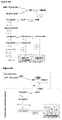
- FIG. 2A Ionone-synthetic pathway in plants.
- Starting materials of the carotenoid synthesis are the isoprene derivatives isopentenyl-diphosphate (IPP) and its isomer dimethyl-allyl-diphosphate (DMAPP), which, in plants are produced via the so called non-mevalonate pathway (MEP pathway) and/or the so called mevalonate pathway (MVA pathway).
- IPP isopentenyl-diphosphate
- DMAPP isomer dimethyl-allyl-diphosphate
- MAPP non-mevalonate pathway
- MAPP non-mevalonate pathway
- MVA pathway mevalonate pathway
- Plants require four different enzymes to transform phytoene into lycopene, whereas according to the synthetic pathway of the present invention only the bacterial enzyme crtI is required ( FIG. 2B ).
- both the enzyme lycopene-epsilon-cyclase (EC) and the lycopene-beta-cyclase (BC) are encompassed.
- EC lycopene-epsilon-cyclase
- BC lycopene-beta-cyclase
- a mixture of alpha-, beta- and epsilon-carotene is generated, wherein epsilon-carotene has been detected only in a small number of plants in very small amounts.
- Beta-carotene is the main product.
- Alpha-carotene is mostly produced in small amounts.
- the cleavage of carotenoids to ionones occurs in two steps through the combination of the enzymes CCD1 and CCD4 or CCD1 and CCD7. According to the present substrate distribution predominantly beta-ionone is generated. The additionally, in small amounts, present alpha-carotene is cleaved in equal amounts to alpha- and beta-ionone. Accordingly, alpha-ionone is always present in small amounts as an additive compared to the predominantly produced beta-ionone.
- the names of the required enzymes are represented in italics and are assigned to the corresponding reaction arrows.
- IPI isopentenyl diphosphate isomerase
- GGPPS geranylgeranyl-diphosphate-synthase
- PSY phytoene synthase
- PDS phytoene-desaturase
- Z-ISO zeta-carotene-isomerase
- ZDS zeta-carotene-desaturase
- crtISO cis-lycopene-isomerase
- EC lycopene-epsilon-cyclase
- BC lycopene-beta-cyclase
- CCD1 carotenoid-cleavage-dioxygenase 1 (cytosolic);
- CCD4 carotenoid-cleavage-dioxygenase 4 (plastidic);
- CCD7 carotenoid-cleavage-dioxygenase 7 (plastidic).
- FIG. 2B An example of the ionone synthetic pathway according to the present invention.
- epsilon-carotene By means of preventing beta-cyclase activity and using a mutated lycopene-epsilon-cyclase exclusively epsilon-carotene is generated (the ⁇ -carotene intermediate can be detected in traces, if at all). Only one enzyme is required for cleavage and pure alpha-ionone is generated. The names of the used enzymes are depicted in italics and are assigned to the corresponding reaction arrow.
- dxs desoxy-D-xylulose-5-phosphate-synthase
- IPI isopentenyl diphosphate Isomerase
- CwIPI isopentenyl diphosphate Isomerase from Curcuma wenyujin
- idsA geranylgeranyl-diphosphate-synthase
- crtI phytoen-desaturase/dehydrogenase
- crtB phytoenesynthase
- ECmut mutated lycopene-epsilon-cyclase according to the invention
- CCD1 carotenoid-cleavage-dioxygenase (AtCCD1 or OfCCD1).
- FIG. 3 Plasmid map pGT1036 (“Lyc-synthesis” plasmid, expression plasmid). The coding sequences of the indicated proteins are depicted as arrows. Regulatory DNA sequences are depicted as box. The positions of unique restriction enzyme sites are indicated. The exact positions of the labeled genetic elements and their functions are listed in the table.
- FIG. 4 Plasmid map pGT1066 (“eCaro-synthesis” plasmid, expression plasmid). The coding sequences of the indicated proteins are depicted as arrows. Regulatory DNA sequences are depicted as box. The positions of unique restriction enzyme sites are indicated. The exact positions of the labeled genetic elements and their functions are listed in the table.
- FIG. 5 Homology comparison of AtECmut3 and position of the point mutations.
- the chloroplast targeting signal (N-terminal 44 amino acids), which was detected in the wild type enzyme AtEC is underscored.
- AtEC-del is the protein variant that has been cloned from A. thaliana and shortened at the N-terminus by 44 amino acids, and which is the common basis for the generated mutants (AtECmut) of the present invention.
- the mutated positions 403, 404 and 445 are indicated (boxes).
- the corresponding positions for the full length-wild type-AtEC-protein are added in parentheses.
- the positions of the mutations that have been described for the salad- or corn-enzyme are indicated.
- FIG. 6 Quantitative HPLC analysis of the AtECmut product profiles. Measurement of the yields of lycopene, delta-carotene and epsilon-carotene for the differently obtained mutants of the lycopene-epsilon-cyclase (ECmut).
- the corresponding expression vectors were introduced in E. coli TOP10 cells and the resulting strains were analyzed concerning the synthesized carotenoids per HPLC. The cells were cultured for 24 hours at 28° C. in dYT-medium (+chloramphenicol and ampicillin). The generated carotenoids were quantitatively extracted with acetone and transferred into the HPLC solvent. Absolute values of the determined peak areas are indicated for equal cell numbers of the different strains.
- the variant ECmut1 corresponds to mutants that were previously described in the literature (Cunningham & Gantt, 2001) und serves as reference.
- the mutants ECmut 9, 10, 11, 12, 16, 21, 3.2, 3.3, 3.8 und 3.16 are significantly better than the reference in terms of the product amount and product purity.
- FIG. 7 Plasmid maps of the plasmids pGT1069 und pGT1070 (expression plasmids for AtCCD1 und OfCCD1). The coding sequences of the labeled proteins are depicted as arrows. Regulatory DNA sequences are depicted as box. The exact positions of the labeled elements are listed in both tables.
- FIG. 8 Detection of alpha-ionone production.
- An HPLC chromatogram and a LC-MS-spectrum are depicted.
- a multitransgenic E. coli strain with the enzymes crtE, IPI, crtB, crtI, ECmut3, AtCCD1 was incubated for 24 hours at 28° C. in LB medium while shaking same and the expression of the AtCCD1 enzyme was induced by the addition of arabinose for 4 hours (final concentration: 0.1% (w/v)).
- the resulting epsilon-carotene-degradation products were subsequent to lyses of the cells extracted with diethyl ether and then analyzed by HPLC.
- FIG. 9 Plasmid map pGT1518 (“eCaro-synthesis” plasmid, expression plasmid).
- This plasmid codes for the lycopene biosynthetic pathway according to the present invention (idsA, IPI, crtI und crtB) under der control of the pTet-ml promoter and for the lycopene-epsilon-cyclase (EC) with the mutation combination ECmut 3.3 under the control of the aP12 promoter.
- the coding sequences of the labeled proteins are depicted as arrows. Regulatory DNA sequences are depicted as box. The positions of unique restriction enzyme sites are indicated. The exact positions of the labeled genetic elements and their functions are listed in the table.
- FIG. 10 Plasmid map pGT1543 (“eCaro-synthesis” plasmid, expression plasmid).
- This plasmid encodes the lycopene biosynthetic pathway according to the present invention (idsA, IPI, crtI und crtB) under the control of the aP40 promoter and for the lycopene-epsilon-cyclase (EC) with the mutation combination ECmut3.3 under the control of the aP12 promoter.
- the coding sequences of the labeled proteins are depicted as arrows. Regulatory DNA sequences are depicted as box. The positions of unique restriction enzyme sites are indicated. The exact positions of the labeled genetic elements and their functions are listed in the table.
- FIG. 11 Plasmid map pGT1454 (“eCaro-cleavage” plasmid, expression plasmid). This plasmid encodes the carotenoid-cleavage-dioxygenase (CCD1) from Arabidopsis thaliana (AtCCD1). The coding sequences of the labeled proteins are depicted as arrows. Regulatory DNA sequences are depicted as box. The positions of unique restriction enzyme sites are indicated. The exact positions of the labeled genetic elements and their functions are listed in the table.
- FIG. 12 Plasmid map pGT1575 (“ionone-synthesis” plasmid, expression plasmid).
- This plasmid encodes the lycopene biosynthetic pathway according to the present invention (idsA, IPI, crtI und crtB) under the control of pTet-ml promoter and for the lycopene-epsilon-cyclase (EC) with the mutation combination ECmut 3.3 as well as for the carotenoid-cleavage-dioxygenase (CCD1) of Osmanthus fragrans (OfCCDI), both under the control of the aP12 promoter.
- the coding sequences of the labeled proteins are depicted as arrows. Regulatory DNA sequences are depicted as box. The positions of unique restriction enzyme sites are indicated. The exact positions of the labeled genetic elements and their functions are listed in the table.
- FIG. 13 Plasmid map pGT1534 (“MEP-pathway” plasmid, expression plasmid).
- This plasmid encodes the 1-desoxy-D-xylulose-5-phosphate-synthase (DXS) according to the present invention under the control of the aP15 promoter and the isopentenyl-diphosphate-Isomerase (CwIPI-co2), a codon optimized variant of the isopentenyl-diphosphate-Isomerase (CwIPI) from Curcuma wenyujin, according to the present invention, under the control of the pTet-ml promoter.
- the coding sequences of the labeled proteins are depicted as arrows. Regulatory DNA sequences are depicted as box. The positions of unique restriction enzyme sites are indicated. The exact positions of the labeled genetic elements and their functions are listed in the table.
- FIG. 14 The table shows a selection of plasmids according to the present invention, namely “Lyc-synthesis” plasmids, “eCaro-synthesis” plasmids, “eCaro-cleavage” plasmids, “ionone-synthesis” plasmids and “MEP-pathway” plasmids.
- the table shows the respective expression cassettes of the plasmids according to the present invention, which are organized either polycistronically or monocistronically.
- aP5, aP12, aP15, aP32, aP40 and aP47.2 denominate the constitutive promoters according to the present invention.
- pTet tetracycline-promoter of E.
- pLac Lac-promoter; promoter region of the genomic E. coli Lac operon.
- pBAD arabinose inducible promoter; promoter region of the genomic E. coli Arabinose operon.
- pXyl xylose inducible promoter; regulatory sequences of the E.coli xylose operon consisting of the bidirectional promoter region (cis-regulatory sequences), which controls the polycistronic operons xylA/xylB and xylF/xylG/xylH/xylR, wherein its activity is regulated through the xylR gene product of the xylFGHR operon.
- pTet-ml 12 bp deletion in the promoter of LYC operon; promotor activity is improved by the factor 2.8.
- pXyl0 synthetic xylose inducible promoter. Resulting from the direct coupling of the xylR gene with the cis-regulatory sequences (by means of deletion of the xylF-, xylG- and xylH gene sequences). Basic construct. Inducibility: 25 ⁇ ; relative expression strength (max): 2.5% of the reference promoter (pLac).
- pXyl1 Combination of pXyl0 with an optimized ribosomen binding site (Shine-Dalgarno-sequence) for the efficient translation of targeted genes.
- pXyl1 Promoter 3-4 ⁇ more active than pXyl0 (maximally 10% of the pLac activity).
- pXyl2 Based on pXyl1, the sequence of the ⁇ 10 region (binding site of the RNA-polymerase) of the downstream-directed promoter element was modified. Promoter 3-4 ⁇ more active than pXyl0 (maximally 36% of the pLac activity).
- FIG. 15 The promoters according to the present invention.
- the present invention is not limited to the specifically mentioned products and methods herein, but provides a general technical teaching, which enables the skilled person to achieve the advantages described herein.
- the used terminology should not limit the general technical teaching described herein in any form, but serves merely to describe the specific embodiments.
- EC-classification numbers classify enzymes according to the reactions that they catalyze. These EC-numbers are issued by the International Union of Biochemistry and Molecular Biology (UIBMB) and can be searched by the skilled person on the internet.
- accession numbers serve for the unambiguous characterization of nucleotide sequences or amino acid sequences and are taken from the webpage of the NCBI (National Center for Biotechnology Information).
- Arabidopsis thaliana lycopene-epsilon-cyclase (EC) with the GenBank accession number GenBank: AAL85102.1.
- LsEC as used herein describes the Lactuca sativa lycopene-epsilon-cyclase (EC) with the GenBank accession number GenBank: AAK07434.1.
- ZmEC as used herein describes the Zea mays lycopene-epsilon-cyclase (EC) with the GenBank accession number GenBank: ABU93262.1.
- lycopene as used herein describes a linear carotenoid that is known to the skilled person, which is also known to the skilled person under the name “lycopin” and “leukopin” or “all-trans-lycopene”. These terms can be used interchangeably.
- lycopene-biosynthetic pathway describes the combination of the enzymes geranylgeranyl-diphosphate-synthase, isopentenyl-diphosphate-isomerase (IPI), phytoene-desaturase/dehydrogenase (crtI) and phytoene synthase (crtB).
- AtECmut as used herein describes the mutants of the Arabidopsis thaliana lycopene-epsilon-cyclase according to the present invention, wherein the term may refer to the entire protein or only to the specific mutation, which is appended to the term as a number (e.g. AtECmut3). The meaning of the term follows for the skilled person unambiguously from the respective context.
- AtECmut is used herein equivalently with the term “ECmut”.
- yield describes the amount of a produced material based on a determined culture volume (liquid culture of a microorganism) or the isolated dry matter from a determined culture volume or based on a different reference value.
- amount describes the amount of substance of a material or a different measure, whose value is directly dependent on the amount of substance of the material, for example the peak area of an HPLC absorption chromatogram.
- sequence identity describes the agreement of two nucleotide sequences or amino acid sequences, given in percent, and depends on the number of identical positions between the two sequences, wherein the number and length of gaps that need to be introduced to achieve an optimal sequence alignment is taken into account.
- sequence identity is determined according to the BLAST-algorithm (Altschul et al., 1990).
- sequence identity can be determined according to the BLAST-algorithm for nucleotide sequences (blastn) or amino acid sequences (blastp) simply on the NCBI webpage (http://blast.ncbi.nlm.nih.gov/Blast.cgi).
- geranylgeranyl-diphosphate-synthase as used herein describes an enzyme with the EC-number EC 2.5.1.29, which catalyzes the condensation of farnesyl-diphosphate and isopentenyl-diphosphate to geranylgeranyl-diphosphate.
- Preferred embodiments are the geranylgeranyl-diphosphate-synthase crtE and idsA.
- DXS 1-desoxy-D-xylulose-5-phosphate-synthase
- isopentenyl-diphosphate-isomerase as used herein describes an enzyme with the EC-number EC 5.3.3.2, which catalyzes the rearrangement of isopentenyl-diphosphate (IPP) to dimethylallyl-diphosphate (DMAPP), or the converse reaction.
- the enzymes CwIPI or the codon-optimized variant CwIPI-co2 are isopentenyl-diphosphate-isomerases with an enzymatic activity according to the EC-number EC 5.3.3.2.
- phytoene-desaturase/dehydrogenase as used herein describes an enzyme with the EC-number EC 1.3.99.31, which catalyzes the desaturation (oxidation) of phytoene to all-trans-lycopene.
- phytoene synthase as used herein describes an enzyme with the EC-number EC 2.5.1.32, which catalyzes the condensation of two molecules of geranylgeranyl-diphosphate to phytoene.
- An aspect of the invention concerns a nucleic acid, which encodes lycopene-epsilon-cyclase.
- the nucleic acid according to the present invention is characterized in that it comprises a sequence which encodes lycopene-epsilon-cyclase (EC), which catalyzes the transformation of lycopene to epsilon-carotene, wherein the lycopene-epsilon-cyclase (EC) leads to a greater epsilon-carotene yield as a reference lycopene-epsilon-cyclase with a sequence according to SEQ ID NO: 26 (AtECmut1).
- EC lycopene-epsilon-cyclase
- the lycopene-epsilon-cyclase (EC) leads to a greater epsilon-carotene yield, wherein the lycopene-epsilon-cyclase (EC) is a expressed in a microorganism.
- both cyclases are expressed in the same microorganism under the same conditions.
- a plasmid that encodes the lycopene-epsilon-cyclase (EC) or a reference lycopene-epsilon-cyclase can be introduced into a microorganism by means of transformation.
- the encoded lycopene-epsilon-cyclase has a sequence with at least 80% or at least 85%, 90%, 91%, 92%, 93%, 94%, 95%, 96%, 97%, 98%, 99% or 100% sequence identity with the sequence according to SEQ ID NO: 19 (AtEC-del).
- SEQ ID NO: 19 (AtEC-del) defines the sequence of the lycopene-epsilon-cyclase of Arabidopsis thaliana having the N-terminal 44 amino acids (not including the N-terminal methionine) of the wildtype sequence removed.
- This N-terminal peptide is a chloroplast import signal (transit peptide) which affects the transport of the newly synthesized proteins into the chloroplasts in the plant.
- the positions of the amino acids of the mutations according to the present invention of the different lycopene-epsilon-cyclase variants are indicated relative to this N-terminal truncated version of the lycopene-epsilon-cyclase of A.
- position 403 in the truncated version corresponds to position 447 in the wildtype sequence (AAL85102.1)
- position 404 corresponds to position 448
- position 445 corresponds to position 489.
- sequence of the encoded lycopene-epsilon-cyclase differs in at least one of the positions 403, 404 and 445 from the sequence according to SEQ ID NO: 19 (AtEC-del).
- the encoded lycopene-epsilon-cyclase comprises one of the following mutations or mutation combinations: ECmut2 (A445S), ECmut9 (L404S), ECmut3 (L404H/A445S), ECmut3.10 (A403C/A445S), ECmut3.12 (L404T/A445S), ECmut4 (A403S/L404H), ECmut5 (A403F/L404W), ECmut6 (A403G/L404G), ECmut7 (A403K/L404D), ECmut8 (A403W/L404R), ECmut10 (A403S/L404T), ECmut11 (A403F/L404S), ECmut12 (A403C/L404S), ECmut13 (A403I/L404T), ECmut14 (
- the encoded lycopene-epsilon-cyclase comprises one of the mutations or mutation combinations: ECmut16 (A403W/L404G), ECmut3.12 (L404T/A445S), ECmut3.3 (A403E/L404A/A445S), ECmut3.5 (A403M/L404A/A445S), ECmut3.8 (A403H/L404S/A445S), ECmut3.9 (A403E/L404G/A445S), ECmut3.16 (A403G/L404G/A445S), ECmut9 (L404S), ECmut10 (A403S/L404T) and ECmut3.2 (A403C/L404C/A445S).
- the encoded lycopene-epsilon-cyclase comprises one of the following mutations or mutation combinations: ECmut9 (L404S), ECmut10 (A403S/L404T) and ECmut3.2 (A403C/L404C/A445S).
- the encoded lycopene-epsilon-cyclase consists of a sequence according to SEQ ID NO: 19 and has one of the above-mentioned mutations or mutation combinations.
- a mutation combination selected from the group consisting of ECmut16 (A403W/L404G), ECmut3.12 (L404T/A445S), ECmut3.3 (A403E/L404A/A445S), ECmut3.5 (A403M/L404A/A445S), ECmut3.8 (A403H/L404S/A445S), ECmut3.9 (A403E/L404G/A445S) and ECmut3.16 (A403G/L404G/A445S) and particularly preferred are embodiments with a mutation or a mutation combination selected from the group consisting of ECmut9 (L404S), ECmut10 (A403S/L404T) and ECmut3.2 (A403C/L404C/A445S).
- a further aspect of the invention concerns the lycopene-epsilon-cyclase itself.
- the lycopene-epsilon-cyclase according to the present invention is characterized in that it is encoded by one of the above-described nucleic acids.
- the encoded lycopene-epsilon-cyclase consists of a sequence according to SEQ ID NO: 19 and has one of the mutations or mutation combinations according to the present invention.
- a mutation combination selected from the group consisting of ECmut16 (A403W/L404G), ECmut3.12 (L404T/A445S), ECmut3.3 (A403E/L404A/A445S), ECmut3.5 (A403M/L404A/A445S), ECmut3.8 (A403H/L404S/A445S), ECmut3.9 (A403E/L404G/A445S) and ECmut3.16 (A403G/L404G/A445S) and particularly preferred are embodiments with a mutation or a mutation combination selected from the group consisting of ECmut9 (L404S), ECmut10 (A403S/L404T) and ECmut3.2 (A403C/L404C/A445S).
- Part of the invention also are different plasmids, which comprise nucleotide sequences which encode the components of the present invention of the lycopene, epsilon-carotene and/or alpha-ionone biosynthesis. Particularly preferred embodiments of these plasmids according to the present invention are listed in FIG. 14 .
- Part of the invention is a plasmid which comprises nucleotide sequences which encode components according to the present invention of the lycopene biosynthesis geranylgeranyl-diphosphate-synthase, isopentenyl-diphosphate-isomerase (IPI), phytoene-desaturase/dehydrogenase (crtI) and phytoene synthase (crtB) (“Lyc-synthesis” plasmid).
- IPI isopentenyl-diphosphate-isomerase
- crtI phytoene-desaturase/dehydrogenase
- crtB phytoene synthase
- Part of the invention is further a plasmid which comprises a nucleotide sequence which encodes components according to the present invention of the epsilon-carotene biosynthesis, geranylgeranyl-diphosphate-synthase, isopentenyl-diphosphate-isomerase (IPI), phytoene-desaturase/dehydrogenase (crtI), phytoene synthase (crtB) and lycopene-epsilon-cyclase (EC) (“eCaro-synthesis” plasmid).
- IPI isopentenyl-diphosphate-isomerase
- crtI phytoene-desaturase/dehydrogenase
- crtB phytoene synthase
- EC lycopene-epsilon-cyclase
- part of the invention is a plasmid which comprises nucleotide sequences which encode the components according to the present invention for cleaving epsilon-carotene to alpha-ionone carotenoid-cleavage-dioxygenase (CCD1) (“eCaro-cleavage” plasmid).
- CCD1 carotenoid-cleavage-dioxygenase
- Part of the invention is also a plasmid which comprises nucleotide sequences which encode the components according to the present invention of the alpha-ionone biosynthesis geranylgeranyl-diphosphate-synthase, isopentenyl-diphosphate-isomerase (IPI), phytoene-desaturase/dehydrogenase (crtI), phytoene synthase (crtB), lycopene-epsilon-cyclase (EC) and carotenoid-cleavage-dioxygenase (CCD1) (“ionone synthesis” plasmid).
- IPI isopentenyl-diphosphate-isomerase
- crtI phytoene-desaturase/dehydrogenase
- crtB phytoene synthase
- EC lycopene-epsilon-cyclase
- CCD1 carotenoid-cleavage-d
- Equally part of the invention is a plasmid which comprises nucleotide sequences which encode the components according to the present invention for connecting the non-mevalonate pathway (MEP pathway) to the lycopene, epsilon-carotene and/or alpha-ionone biosynthesis, namely 1-desoxy-D-xylulose-5-phosphat-synthase (DXS) (“MEP pathway” plasmid).
- MEP pathway non-mevalonate pathway
- DXS 1-desoxy-D-xylulose-5-phosphat-synthase
- the heterologous expression of the lycopene biosynthetic pathway that is encoded by the plasmid leads to an increased lycopene yield in a microorganism, preferably a bacterium.
- a preferred bacterium is E. coli. Particularly preferred in this context are the E.
- the microorganism according to the present invention can be the E. coli strain TOP10.
- the E. coli strain BL21gold (DE3) is particularly preferred.
- the enzymes geranylgeranyl-diphosphate-synthase, isopentenyl-diphosphate-Isomerase (IPI), phytoene-desaturase/dehydrogenase (crtI) and phytoene synthase (crtB) are the corresponding enzymes of Erwinia herbicola.
- the enzymes encoded by the plasmid are under the control of an inducible promoter.
- an inducible promoter Particularly preferred are the inducible promoters pTet, pBAD, pLac, and pXyl, which are also described in more detail in Example 10 and FIG. 15 .
- the enzymes encoded by the plasmid are under the control of a constitutive promoter.
- a constitutive promoter Particularly preferred are the constitutive promoters according to the present invention aP5, aP12, aP15, aP32 and aP47.2 (Example 10 and FIG. 15 ).
- the “Lyc-synthesis” plasmid according to the present invention is characterized in that it comprises nucleotide sequences that encode the following enzymes: geranylgeranyl-diphosphate-synthase, isopentenyl-diphosphate-Isomerase (IPI), phytoene-desaturase/dehydrogenase (crtI) and phytoene synthase (crtB), wherein the heterologous expression of the lycopene-biosynthetic pathway that is encoded by the plasmid leads to an increased lycopene yield compared to the heterologous expression of the lycopene biosynthetic pathway that is encoded by the plasmid pAC-BETAipi- ⁇ crtY (SEQ ID Nr. 28).
- IPI isopentenyl-diphosphate-Isomerase
- crtI phytoene-desaturase/dehydrogenase
- crtB
- the plasmid comprises a sequence or preferably consists of this sequence, which has at least 80% or at least 85%, 90%, 91%, 92%, 93%, 94%, 95%, 96%, 97%, 98%, 99% or 100% sequence identity with a reference sequence.
- the reference sequence is a sequence according to SEQ ID Nr. 28, wherein the reference sequence has a deletion of the bases 984-1394 and 3432-4198 relative to the sequence according to SEQ ID Nr. 28 (pAC-BETAipi- ⁇ crtY).
- the reference sequence has a deletion of the bases 984-1394, 3432-4198 and 6605-7242 relative to the sequence according to SEQ ID Nr. 28 (pAC-BETAipi- ⁇ crtY).
- the reference sequence is a sequence according to SEQ ID Nr. 11 (pGT1036).
- the sequence of the plasmid according to the invention can comprise a sequence, which is identical to the sequence according to SEQ ID Nr. 11.
- the plasmid consists of a sequence that is identical to the sequence according to SEQ ID Nr. 11.
- the “eCaro-synthesis” plasmid according to the present invention is characterized in that it comprises nucleotide sequences that encode the following enzymes: geranylgeranyl-diphosphate-synthase, isopentenyl-diphosphate-Isomerase (IPI), phytoene-desaturase/dehydrogenase (crtI) and phytoene synthase (crtB) and lycopene-epsilon-cyclase (EC), wherein the heterologous expression of the lycopene biosynthetic pathway that is encoded by the plasmid leads to an increased lycopene yield compared to the heterologous expression of the lycopene biosynthetic pathway that is encoded by the plasmid pAC-BETAIPI- ⁇ crtY (SEQ ID Nr. 28).
- IPI isopentenyl-diphosphate-Isomerase
- crtI phytoene-
- the “eCaro-synthesis” plasmid according to the present invention comprises particularly also all embodiments of the “Lyc-synthesis” plasmids according to the present invention and of the lycopene-epsilon-cyclase (EC) according to the present invention.
- the reference sequence (characterized in the passage “Lyc-synthesis” plasmid) is a sequence according to SEQ ID Nr. 18 (pGT1066*, corresponding to pGT1066, however with n, corresponding to a, t, c or g, for the nucleotides of the codons that encode for amino acid positions 403, 404 and 445 of the AtEC-del-enzyme).
- the sequence of the plasmid according to the present invention can also comprise a sequence that is identical to the sequence according to SEQ ID Nr. 18.
- the plasmid consists of a sequence that is identical to the sequence according to SEQ ID Nr. 18.
- the reference sequence is a sequence according to SEQ ID No. 29 (pGT1066-AtEC-del), wherein the lycopene-epsilon-cyclase (EC) that is encoded by the plasmid comprises or has one of the following mutations or mutation combinations: ECmut2 (A445S), ECmut9 (L404S), ECmut3 (L404H/A445S), ECmut3.10 (A403C/A445S), ECmut3.12 (L404T/A445S), ECmut4 (A403S/L404H), ECmut5 (A403F/L404W), ECmut6 (A403G/L404G), ECmut7 (A403K/L404D), ECmut8 (A403W/L404R), ECmut10 (A403S), ECmut9 (L404S), ECmut3 (L404H/A445S), ECmut3.10 (A403C/A445
- mutation combinations are ECmut16 (A403W/L404G), ECmut3.12 (L404T/A445S), ECmut3.3 (A403E/L404A/A445S), ECmut3.5 (A403M/L404A/A445S), ECmut3.8 (A403H/L404S/A445S), ECmut3.9 (A403E/L404G/A445S) and ECmut3.16 (A403G/L404G/A445S).
- Particularly preferred are the mutations or mutation combinations ECmut9 (L404S), ECmut10 (A403S/L404T) and ECmut3.2 (A403C/L404C/A445S).
- the plasmid consists of a sequence according to SEQ ID No. 29 (pGT1066-AtEC-del), wherein the lycopene-epsilon-cyclase (EC) that is encoded by the plasmid has one of the following mutations or mutation combinations: ECmut9 (L404S), ECmut10 (A403S/L404T), ECmut3.2 (A403C/L404C/A445S) and ECmut3.3 (A403E/L404A/A445S).
- the plasmid has at least 80% or at least 85%, 90%, 91%, 92%, 93%, 94%, 95%, 96%, 97%, 98%, 99% oder 100% sequence identity with a sequence according to SEQ ID No. 30, 31, 32, 33, 34, 35 or 36.
- the “eCaro-cleavage” plasmid according to the present invention is characterized in that it comprises a nucleotide sequence that encodes the enzyme carotenoid-cleavage-dioxygenase (CCD1).
- CCD1 carotenoid-cleavage-dioxygenase
- the carotenoid-cleavage-dioxygenase is a carotenoid-cleavage-dioxygenase 30 (CCD1) of Arabidopsis thaliana or Osmanthus fragrans.
- the plasmid has at least 80% or at least 85%, 90%, 91%, 92%, 93%, 94%, 95%, 96%, 97%, 98%, 99% or 100% sequence identity with a sequence according to SEQ ID No. 21, 24, 37, 38, 39, 40, 41 or 42. Particularly preferred are the sequences according to SEQ ID No. 37 and 41.
- the “ionone synthesis” plasmid characterized in that it comprises nucleotide sequences that encode the following enzymes: geranylgeranyl-diphosphate-synthase, isopentenyl-diphosphate-Isomerase (IPI), phytoene-desaturase/dehydrogenase (crtI) and phytoene synthase (crtB) and lycopene-epsilon-cyclase (EC) and carotenoid-cleavage-dioxygenase (CCD1), wherein the heterologous expression of the lycopene biosynthetic pathway that is encoded by the plasmid leads to an increased lycopene yield compared to heterologous expression of the lycopene biosynthetic pathway that is encoded by the plasmid pAC-BETAIPI- ⁇ crtY (SEQ ID No. 28).
- IPI isopentenyl-diphosphate
- the “ionone synthesis” plasmid according to the present invention comprises also in particular all embodiments of the “Lyc-synthesis” plasmids according to the present invention, the lycopene-epsilon-cyclase (EC) according to the present invention and the “eCaro-Synthesis” plasmids according to the present invention.
- the plasmid has at least 80% or at least 85%, 90%, 91%, 92%, 93%, 94%, 95%, 96%, 97%, 98%, 99% or 100% sequence identity with a sequence according to SEQ ID No. 43 or 44, wherein die sequence according to SEQ ID No. 44 is particularly preferred.
- a plasmid that has a sequence according to SEQ ID No. 44.
- the “MEP pathway” plasmid according to the present invention is characterized in that it comprises nucleotide sequences that encode the following enzyme: 1-desoxy-D-xylulose-5-phosphate-synthase (DXS).
- DXS 1-desoxy-D-xylulose-5-phosphate-synthase
- the plasmid comprises nucleotide sequences that encode the isopentenyl-diphosphate-Isomerase (CwIPI) of Curcuma wenyujin. Particularly preferred is a codon optimized synthetic gene sequence of the isopentenyl-diphosphate-Isomerase (CwIPI-co2).
- the isopentenyl-diphosphate-Isomerase (CwIPI) is per se not necessary for the coupling of the lycopene-epsilon-carotene and/or alpha-ionone biosynthesis to the MEP pathway.
- the “MEP pathway” plasmid has at least 80% or at least 85%, 90% 91%, 92%, 93%, 94%, 95%, 96%, 97%, 98%, 99% or 100% sequence identity with a sequence according to SEQ ID No. 45, 46 or 47, wherein the sequence according to SEQ ID No. 45 is particularly preferred.
- Particularly preferred is a plasmid that has a sequence according to SEQ ID No. 45.
- a further aspect of the invention concerns the expression cassettes according to the present invention, which the skilled person can take from the figures, in particular FIGS. 3, 4, 7 and 9 to 14 , as well as the sequence protocol.
- the expression cassettes according to the present invention can be present in a way that it is integrated in the genome of the microorganism according to the present invention.
- the expression cassettes can be integrated into the genome of a microorganism with methods that are known to the skilled person, in particular with homologous recombination.
- the expression cassettes according to the present invention can be present in an E.
- the microorganism according to the present invention can be an E. coli strain TOP10.
- the E. coli strain BL21gold (DE3) is particularly preferred.
- the expression cassettes according to the present invention comprise particularly the expression cassettes as listed in FIG. 14 .
- the expression cassettes according to the present invention which preferably are present in the genome of a microorganism, such as E. coli, comprise expression cassettes that have at least 80% or at least 85%, 90%, 91%, 92%, 93%, 94%, 95%, 96%, 97%, 98%, 99% or 100% sequence identity with the expression cassettes according to FIG. 14 .
- the enzymes that are encoded by the expression cassettes according to the present invention are under the control of a constitutive promoter.
- the particularly preferred constitutive promoters according to the present invention are aP5, aP12, aP15, aP32 and aP47.2.
- the enzymes that are encoded by the expression cassettes are under the control of an inducible promoter.
- an inducible promoter particularly preferred are the inducible promoters pTet, pBAD, pLac, and pXyl, which are also described in detail in Example 10.
- the microorganism according to the present invention is characterized in that it contains heterologous nucleotide sequences that encode the following enzymes: geranylgeranyl-diphosphate-synthase, isopentenyl-diphosphate-Isomerase (IPI), phytoene- desaturase/dehydrogenase (crtI), phytoene synthase (crtB) and lycopene-epsilon-cyclase (EC), or geranylgeranyl-diphosphate-synthase, isopentenyl-diphosphate-Isomerase (IPI), phytoene-desaturase/dehydrogenase (crtI), phytoene synthase (crtB), lycopene-epsilon-cyclase (EC) and carotenoid-cleavage-dioxygenase (CCD1).
- IPI isopentenyl-diphosphat
- the enzymes are encoded on one or more plasmids.
- Particularly preferred embodiments of the microorganism according to the present invention contain one or multiple plasmids according to the present invention. Particularly preferred are the “Lyc-synthesis”, “eCaro-synthesis”, “eCaro-cleavage”, “ionone-synthesis” and “MEP pathway” plasmids.
- the enzymes geranylgeranyl-diphosphate-synthase, isopentenyl-diphosphate-Isomerase (IPI), phytoene-desaturase/dehydrogenase (crtI) and phytoene synthase (crtB) are the corresponding enzymes of Erwinia herbicola.
- the plasmid or the plasmids are present in the microorganism as individual structures or are integrated into the genome of the microorganism.
- the expression of the carotenoid-cleavage-dioxygenase (CCD1) is under the transcriptional control of an inducible promoter.
- the inducible promoter is the arabinose inducible promoter pBAD.
- Particularly preferred are furthermore the constitutive and/or inducible promoters pXYL1, pXYL2, aP5 and aP15.
- the microorganism contains the nucleic acid according to the present invention that encodes a lycopene-epsilon-cyclase.
- the carotenoid-cleavage-dioxygenase (CCD1) oxidatively cleaves the 9, 10- and 9′, 10′-double bonds of the epsilon-carotene.
- the microorganism contains the “eCaro-synthesis” plasmid according to the present invention, which comprises a sequence or consists of it, which has at least 80% or at least 85%, 90%, 91%, 92%, 93%, 94%, 95%, 96%, 97%, 98%, 99% or 100% sequence identity with a sequence according to SEQ ID No.
- ECmut16 A403W/L404G
- ECmut3.12 L404T/A445S
- ECmut3.3 A403E/L404A/A445S
- ECmut3.5 A403M/L404A/A445S
- ECmut3.8 A403H/L404S/A445S
- ECmut3.9 A403E/L404G/A445S
- ECmut3.16 A403G/L404G/A445S
- ECmut9 L404S
- ECmut10 A403S/L404T
- ECmut3.2 A403C/L404C/A445S
- Particularly preferred are the mutations or mutation combinations ECmut9 (L404S), ECmut10 (A403S/L404T) and ECmut3.2 (A403C/L404C/A445S).
- Particularly preferred are the mutations or mutation combinations ECmut9 (L404S), ECmut10 (A403S/L404T
- the microorganism contains the “eCaro-synthesis” plasmid according to the present invention, which consists of a sequence according to SEQ ID No. 29, wherein the lycopene-epsilon-cyclase (EC) that is encoded by the plasmid has one of the following mutations or mutation combinations: ECmut9 (L404S), ECmut10 (A403S/L404T) and ECmut3.2 (A403C/L404C/A445S).
- ECmut9 L404S
- ECmut10 A403S/L404T
- ECmut3.2 A403C/L404C/A445S
- the microorganism is an E. coli strain.
- E. coli strains XL1-blue, TOP10, XL10 blue, DH5-alpha, JM109, C41, BL21gold (DE3) and W3110.
- the microorganism according to the present invention can be the E. coli strain TOP10.
- E. coli strain BL21gold (DE3) is particularly preferred.
- the microorganism contains the “eCaro-synthesis” plasmid according to the present invention and the “eCaro-cleavage” plasmid, which has at least 80% or at least 85%, 90%, 91%, 92 according to SEQ ID No. 21 (pGT1069) or according to SEQ ID No. 24 (pGT1070).
- Particularly preferred embodiments of the microorganism contain the “eCaro-synthesis” plasmid according to the present invention and the “eCaro-cleavage” plasmid with a sequence according to SEQ ID Nr. 21 (pGT1069) or according to SEQ ID Nr.
- eCaro-synthesis plasmid wherein the “eCaro-synthesis” plasmid according to the present invention preferably consists of a sequence according to SEQ ID No. 29 (pGT1066-AtEC-del), wherein the lycopene-epsilon-cyclase (EC) that is encoded by the plasmid has one of the following mutations or mutation combinations: ECmut9 (L404S), ECmut10 (A403S/L404T) and ECmut3.2 (A403C/L404C/A445S).
- the microorganism corresponds to the microorganism that is cultivated in the method according to the present invention of producing a highly epsilon-carotene or in the method according to the present invention of producing enantiomerically pure alpha-ionone.
- the method of producing highly pure epsilon-carotene from lycopene comprises the culturing of a microorganism that contains heterologous nucleotide sequences that encode the following enzymes: geranylgeranyl-diphosphate-synthase, isopentenyl-diphosphate-Isomerase (IPI), phytoene-desaturase/dehydrogenase (crtI), phytoene synthase (crtB) and lycopene-epsilon-cyclase (EC).
- geranylgeranyl-diphosphate-synthase isopentenyl-diphosphate-Isomerase (IPI), phytoene-desaturase/dehydrogenase (crtI), phytoene synthase (crtB) and lycopene-epsilon-cyclase (EC).
- IPI isopentenyl-di
- the microorganism according to the present invention is cultured.
- the geranylgeranyl-diphosphate-synthase is the geranylgeranyl-diphosphate-synthase crtE or the geranylgeranyl-diphosphate-synthase idsA.
- the lycopene-epsilon-cyclase (EC) is the lycopene-epsilon-cyclase (EC) according to the present invention.
- the lycopene-epsilon-cyclase (EC) has at least 80% or at least 85%, 90%, 91%, 92%, 93%, 94%, 95%, 96%, 97%, 98%, 99% or 100% sequence identity with a sequence according to SEQ ID No.
- the lycopene-epsilon-cyclase (EC) according to the present invention comprises one of the following mutations: ECmut9 (L404S), ECmut10 (A403S/L404T), ECmut3.3 (A403E/L404A/A445S) and ECmut3.2 (A403C/L404C/A445S).
- the enzymes are encoded on one or multiple plasmids. These plasmids can be present as individual structures in the microorganisms or be integrated into the genome of the microorganism. These enzymes can be co-expressed.
- the microorganism contains a Plasmid with at least 80% or at least 85%, 90%, 91%, 92%, 93%, 94%, 95%, 96%, 97%, 98%, 99% or 100 sequence identity with a sequence according to SEQ ID No. 30, 31, 32, 33, 34, 35 or 36.
- the microorganism contains a plasmid with at least 80% or at least 85%, 90%, 91%, 92%, 93%, 94%, 95%, 96%, 97%, 98%, 99% or 100 sequence identity with a sequence according to SEQ ID No. 45, 46 or 47.
- the microorganism according to the present invention is cultured, which contains the “eCaro-synthesis” plasmid according to present invention, which comprises a sequence or consists of it, which has at least 80% or at least 85%, 90%, 91%, 92%, 93%, 94%, 95%, 96%, 97%, 98%, 99% or 100% sequence identity with a sequence according to SEQ ID No.
- ECmut2 (A445S), ECmut9 (L404S), ECmut3 (L404H/A445S), ECmut3.10 (A403C/A445S), ECmut3.12 (L404T/A445S), ECmut4 (A403S/L404H), ECmut5 (A403F/L404W), ECmut6 (A403G/L404G), ECmut7 (A403K/L404D), ECmut8 (A403W/L404R), ECmut10 (A403S/L404T), ECmut11 (A403F/L404S), ECmut12 (A403C/L404S), ECmut13 (A403I/L404T), ECmut14 (A445S), ECmut9 (L404S), ECmut3 (L404H/A445S), ECmut3.10 (A403C/A445S), ECmut3.12 (L404T/A445S),
- the microorganism according to the present invention is cultured, which contains the “eCaro-synthesis” plasmid according to the present invention, which consists of a sequence according to SEQ ID No.
- ECmut9 L404S
- ECmut10 A403S/L404T
- ECmut3.2 A403C/L404C/A445S
- ECmut3.3 A403E/L404A/A445S
- the microorganism according to the present invention is E. coli.
- E. coli particularly preferred in this context are the E. coli strains XL1-blue, TOP10, XL10 blue, DH5-alpha, JM109, C41, BL21gold (DE3) and W3110.
- the microorganism can be the E. coli strain TOP10.
- E. coli strain BL21gold (DE3) Particularly preferred is the E. coli strain BL21gold (DE3).
- the microorganism according to the present invention contains heterologous nucleotide sequences, which encode the enzyme 1-desoxy-D-xylulose-5-phosphate-synthase (DXS).
- DXS 1-desoxy-D-xylulose-5-phosphate-synthase
- the microorganism contains heterologous nucleotide sequences that encode the enzyme isopentenyl-diphosphate-isomerase (CwIPI).
- the microorganism contains a plasmid that has at least 80% or at least 85%, 90%, 91%, 92%, 93%, 94%, 95%, 96%, 97%, 98%, 99% or 100% sequence identity with a sequence according to SEQ ID No. 45, 46 or 47, wherein the sequence according to SEQ ID No. 45 is particularly preferred.
- a plasmid that has a sequence according to SEQ ID No. 45.
- the method of producing enantiomerically pure alpha-ionone according to the present invention comprises the culturing of a microorganism that contains heterologous nucleotide sequences, which encode the following enzymes: geranylgeranyl-diphosphate-synthase, isopentenyl-diphosphate-Isomerase (IPI), phytoene-desaturase/dehydrogenase (crtI), phytoene synthase (crtB), lycopene-epsilon-cyclase (EC) and carotenoid-cleavage-dioxygenase (CCD1).
- heterologous nucleotide sequences which encode the following enzymes: geranylgeranyl-diphosphate-synthase, isopentenyl-diphosphate-Isomerase (IPI), phytoene-desaturase/dehydrogenase (crtI), phytoene synthase
- the microorganism according to the present invention is cultured.
- the geranylgeranyl-diphosphate-synthase is the geranylgeranyl-diphosphate-synthase crtE or the geranylgeranyl-diphosphate-synthase idsA.
- the lycopene-epsilon-cyclase (EC) is the lycopene-epsilon-cyclase (EC) according to the present invention.
- Particularly preferred in this context are embodiments in which the lycopene-epsilon-cyclase (EC) has at least 80% or at least 85%, 90%, 91%, 92%, 93%, 94%, 95%, 96%, 97%, 98%, 99% or 100% sequence identity with a sequence according to SEQ ID No.
- the lycopene-epsilon-cyclase (EC) according to the present invention comprises one of the following mutations or mutation come nations: ECmut9 (L404S), ECmut10 (A403S/L404T), ECmut3.3 (A403E/L404A/A445S) and ECmut3.2 (A403C/L404C/A445S).
- the carotenoid-cleavage-dioxygenase is a carotenoid-cleavage-dioxygenase (CCD1) of Arabidopsis thaliana or Osmanthus fragrans.
- the enzymes are encoded by one or multiple plasmids. These plasmids can be present in the microorganism as individual structures or can be integrated into the genome des microorganism. These enzymes can be co-expressed.
- the microorganism is cultured, which contains the “eCaro-synthesis” plasmid and the “eCaro-cleavage” plasmid according to the present invention, wherein the “eCaro-synthesis” plasmid according to the present invention comprises a sequence or consists of it, which has at least 80% or at least 85%, 90%, 91%, 92%, 93%, 94%, 95%, 96%, 97%, 98%, 99% or 100% sequence identity with a sequence according to SEQ ID No.
- ECmut2 (A445S), ECmut9 (L404S), ECmut3 (L404H/A445S), ECmut3.10 (A403C/A445S), ECmut3.12 (L404T/A445S), ECmut4 (A403S/L404H), ECmut5 (A403F/L404W), ECmut6 (A403G/L404G), ECmut7 (A403K/L404D), ECmut8 (A403W/L404R), ECmut10 (A403S/L404T), ECmut11 (A403F/L404S), ECmut12 (A403C/L404S), ECmut13 (A403I/L404T), ECmut14 (A445S), ECmut9 (L404S), ECmut3 (L404H/A445S), ECmut3.10 (A403C/A445S), ECmut3.12 (L404T/A445S),
- the “eCaro-cleavage” plasmid is preferably a plasmid that has at least 80% or at least 85%, 90%, 91%, 92%, 93%, 94%, 95%, 96%, 97%, 98%, 99 or 100% sequence identity with a sequence according to SEQ ID No. 21 (pGT1069) or according to SEQ ID No. 24 (pGT1070).
- a further plasmid that has a sequence that is identical with a sequence according to SEQ ID Nr. 21 (pGT1069) or according to SEQ ID No. 24 (pGT1070).
- the microorganism according to the present invention is cultured, which contains the “eCaro-synthesis” plasmid and the “eCaro-cleavage” plasmid according to the present invention, wherein the “eCaro-synthesis” plasmid consists of a sequence according to SEQ ID No.
- ECmut9 L404S
- ECmut10 A403S/L404T
- ECmut3.2 A403C/L404C/A445S
- ECmut3.3 A403E/L404A/A445S
- the “eCaro-cleavage” plasmid consists of a sequence according to SEQ ID NO. 21 (pGT1069) or according to SEQ ID NO. 24 (pGT1070).
- the microorganism according to the present invention is cultured, which contains the “eCaro-synthesis” plasmid and the “eCaro-cleavage” plasmid, wherein the “eCaro-cleavage” plasmid consists of a sequence according to SEQ ID No. 21 (pGT1066-AtEC-del) or according to SEQ ID Nr.
- ECmut9 L404S
- ECmut10 A403S/L404T
- ECmut3.2 A403C/L404C/A445S
- ECmut3.3 A403E/L404A/A445S
- the microorganism contains a plasmid with at least 80% or at least 85%, 90%, 91%, 92%, 93%, 94%, 95%, 96%, 97%, 98%, 99% or 100 sequence identity with a sequence according to SEQ ID No. 30, 31, 32, 33, 34, 35 or 36.
- the microorganism contains a plasmid with at least 80% or at least 85%, 90%, 91%, 92%, 93%, 94%, 95%, 96%, 97%, 98%, 99% or 100 sequence identity with a sequence according to SEQ ID No. 21, 24, 37, 38, 39, 40, 41 or 42.
- the microorganism contains a plasmid with at least 80% or at least 85%, 90%, 91%, 92%, 93%, 94%, 95%, 96%, 97%, 98%, 99% or 100 sequence identity with a sequence according to SEQ ID No. 43 or 44.
- the microorganism contains a plasmid with at least 80% or at least 85%, 90%, 91%, 92%, 93%, 94%, 95%, 96%, 97%, 98%, 99% or 100 sequence identity with a sequence according to SEQ ID No. 45, 46 or 47.
- the microorganism contains a plasmid with at least 80% or at least 85%, 90%, 91%, 92%, 93%, 94%, 95%, 96%, 97%, 98%, 99% or 100 sequence identity with a sequence according to SEQ ID No. 33 and a plasmid with at least 80% or at least 85%, 90%, 91%, 92%, 93%, 94%, 95%, 96%, 97%, 98%, 99% oder 100% sequence identity with a sequence according to SEQ ID Nr. 37.
- the microorganism contains a plasmid with at least 80% or at least 85%, 90%, 91%, 92%, 93%, 94%, 95%, 96%, 97%, 98%, 99% or 100% sequence identity with a sequence according to SEQ ID No. 33 and a plasmid with at least 80% or at least 85%, 90%, 91%, 92%, 93%, 94%, 95%, 96%, 97%, 98%, 99% or 100% sequence identity with a sequence according to SEQ ID No. 41.
- the microorganism contains a plasmid with at least 80% or at least 85%, 90%, 91%, 92%, 93%, 94%, 95%, 96%, 97%, 98%, 99% or 100% sequence identity with a sequence according to SEQ ID No. 44 and a plasmid with at least 80% or at least 85%, 90%, 91%, 92%, 93%, 94%, 95%, 96%, 97%, 98%, 99% or 100% sequence identity with a sequence according to SEQ ID No. 45.
- the microorganism contains a plasmid with a sequence according to SEQ ID No. 33 and a plasmid with a sequence according to SEQ ID No. 37, or a plasmid with a sequence according to SEQ ID Nr. 33 and a plasmid with a sequence according to SEQ ID No. 41, or a plasmid with a sequence according to SEQ ID No. 44 and a plasmid with a sequence according to SEQ ID Nr. 45.
- the microorganism is an E. coli strain.
- E. coli strains Particularly preferred in this context is die E. coli strains, XL1-blue, TOP10, XL10 blue, DH5-alpha, JM109, C41, BL21gold (DE3) and W3110.
- the microorganism according to the present invention can be the E. coli strain TOP10.
- E. coli strain BL21gold (DE3) is particularly preferred.
- the microorganism contains heterologous nucleotide sequences that encode the enzyme 1-desoxy-D-xylulose-5-phosphat-synthase (DXS).
- DXS 1-desoxy-D-xylulose-5-phosphat-synthase
- the microorganism contains heterologous nucleotide sequences that encode the enzyme isopentenyl-diphosphate-Isomerase (CwIPI).
- the microorganism contains a plasmid that has at least 80% or at least 85%, 90%, 91%, 92%, 93%, 94%, 95%, 96%, 97%, 98%, 99% or 100% sequence identity with a sequence according to SEQ ID Nr. 45, 46 or 47, wherein the sequence according to SEQ ID No. 45 is particularly preferred.
- a plasmid that has a sequence according to SEQ ID No. 45.
- Embodiment 1 Nucleic acid characterized in that it comprises a sequence that encodes a lycopene-epsilon-cyclase (EC), which catalyzes the transformation of lycopene to epsilon-carotene, wherein the encoded lycopene-epsilon-cyclase (EC) leads to greater epsilon- carotene yield compared to a reference lycopene-epsilon-cyclase (EC) with a sequence according to SEQ ID No. 26.
- EC lycopene-epsilon-cyclase
- Embodiment 2 Nucleic acid according to Embodiment 1, wherein the encoded lycopene-epsilon-cyclase (EC) has a sequence that has at least 80% sequence identity with a sequence according to SEQ ID No. 19.
- Embodiment 3 Nucleic acid according to Embodiment 2, wherein the sequence of the encoded lycopene-epsilon-cyclase (EC) deviates at least at one of the Positions 403, 404 and 445 of the sequence according to SEQ ID No. 19.
- Embodiment 4 Nucleic acid according to one of the Embodiments 1 to 3, wherein the encoded lycopene-epsilon-cyclase (EC) comprises one of the following mutations or mutation combinations: ECmut9 (L404S), ECmut10 (A403S/L404T), ECmut3.2 (A403C/L404C/A445S) and ECmut3.3 (A403E/L404A/A445S),
- Embodiment 5 Nucleic acid according to one of the Embodiments 1 to 4, wherein the encoded lycopene-epsilon-cyclase (EC) consists of a sequence according to SEQ ID No. 19, which has one of the following mutations or mutation combinations: ECmut9 (L404S), ECmut10 (A403S/L404T), ECmut3.2 (A403C/L404C/A445S) and ECmut3.3 (A403E/L404A/A445S),
- Embodiment 6 Lycopene-epsilon-cyclase (EC) encoded by a nucleic acid according to one of Embodiments 1 to 5.
- Embodiment 7 Plasmid characterized in that it comprises nucleotide sequences that encode the following enzymes:
- IPI isopentenyl-diphosphate-Isomerase
- heterologous Expression of the lycopene-biosynthetic pathway that is encoded by the plasmid leads to an increased lycopene yield compared to the heterologous expression of the lycopene-biosynthetic pathway that is encoded by the plasmid pAC-BETAIPI- ⁇ crtY (SEQ ID No. 28).
- Embodiment 8 Plasmid according to Embodiment 7, comprising a sequence that has at least 80% sequence identity with a reference sequence, wherein the reference sequence is a sequence according to SEQ ID No. 28, wherein the reference sequence has, relative to the sequence according to SEQ ID No. 28, a deletion of the Bases 984-1394 and 3432-4198.
- Embodiment 9 Plasmid according to Embodiment 8, wherein the reference sequence relative to the sequence according to SEQ ID No. 28 has a deletion of the Bases 984-1394, 3432-4198 and 6605-7242.
- Embodiment 10 Plasmid according to Embodiment 7, comprising a sequence that has at least 80% sequence identity with a reference sequence, wherein the reference sequence is a sequence according to SEQ ID No. 11.
- Embodiment 11 Plasmid according to one of the Embodiments 7 to 10, wherein the plasmid further comprises a nucleic acid sequence according to one of the Embodiments 1 to 5.
- Embodiment 12 Plasmid according to Embodiment 7, comprising a sequence that has at least 80% sequence identity with a reference sequence, wherein the reference sequence is a sequence according to SEQ ID No. 18.
- Embodiment 13 Plasmid according to Embodiment 7, comprising a sequence that has at least 80% sequence identity with a reference sequence, wherein the reference sequence is a sequence according to SEQ ID No. 29, wherein the lycopene-epsilon-cyclase (EC) that is encoded by the plasmid has one of the following mutations or mutation combinations: ECmut9 (L404S), ECmut10 (A403S/L404T), ECmut3.2 (A403C/L404C/A445S) and ECmut3.3 (A403E/L404A/A445S).
- ECmut9 L404S
- ECmut10 A403S/L404T
- ECmut3.2 A403C/L404C/A445S
- ECmut3.3 A403E/L404A/A445S
- Embodiment 14 Microorganism characterized in that it contains heterologous nucleotide sequences, which encode the following enzymes:
- geranylgeranyl-diphosphate-synthase isopentenyl-diphosphate-Isomerase (IPI), phytoene-desaturase/dehydrogenase (crtI), phytoene synthase (crtB), and lycopene-epsilon-cyclase (EC), or
- geranylgeranyl-diphosphate-synthase isopentenyl-diphosphate-Isomerase (IPI), phytoene-desaturase/dehydrogenase (crtI), phytoene synthase (crtB), lycopene-epsilon-cyclase (EC) and carotenoid-cleavage-dioxygenase (CCD1).
- IPI isopentenyl-diphosphate-Isomerase
- crtI phytoene-desaturase/dehydrogenase
- crtB phytoene synthase
- EC lycopene-epsilon-cyclase
- CCD1 carotenoid-cleavage-dioxygenase
- Embodiment 15 Microorganism according to Embodiment 14, wherein the enzymes are encoded on one or multiple plasmids.
- Embodiment 16 Microorganism according to Embodiment 14 or 15, wherein the one or multiple plasmids are present in the microorganism as individual structures or are integrated into the genome of the microorganism.
- Embodiment 17 Microorganism according to one of the Embodiments 14 to 16, wherein the encoded enzymes are co-expressed.
- Embodiment 18 Microorganism according to one of the Embodiments 14 to 17, wherein the expression of the carotenoid-cleavage-dioxygenase (CDD1) is under the transcriptional control of an inducible promoter, preferably under the control of the arabinose inducible promoter pBAD.
- CDD1 carotenoid-cleavage-dioxygenase
- Embodiment 19 Microorganism according to one of the Embodiments 14 to 18, wherein the microorganism contains a nucleic acid according to one of Embodiments 1 to 5.
- Embodiment 20 Microorganism according to one of the Embodiments 14 to 19, wherein the microorganism contains the plasmid according to one of Embodiments 7 to 13.
- Embodiment 21 Microorganism according to one of the Embodiments 14 to 20, wherein the carotenoid-cleavage-dioxygenase (CDD1) oxidatively cleaves the 9, 10- and 9′, 10′-double bonds of the epsilon-Carotene.
- CDD1 carotenoid-cleavage-dioxygenase
- Embodiment 22 Microorganism according to one of the Embodiments 14 to 21, wherein the microorganism contains the plasmid pGT1069 (SEQ ID Nr. 21) or pGT1070 (SEQ ID Nr. 24).
- Embodiment 23 Method of producing highly pure epsilon-Carotene from lycopene, characterized in that a microorganism is cultured that contains a heterologous nucleotide sequences that encode the following enzymes:
- IPI isopentenyl-diphosphate-Isomerase
- Embodiment 24 Method according to Embodiment 23, wherein the cultivated microorganism is a microorganism according to one of Embodiments 14 to 22.
- Embodiment 25 Method of producing enantiomerically pure alpha-ionone, characterized in that a microorganism is cultured that contains heterologous nucleotide sequences that encode the following enzymes:
- IPI isopentenyl-diphosphate-Isomerase
- CCD1 carotenoid-cleavage-dioxygenase
- Embodiment 26 Method according to Embodiment 25, wherein the cultivated microorganism is a microorganism according to one of Embodiments 14 to 22.
- plasmid pAC-BET Aipi (Cunningham et al., 2007), which carries carotenoid genes of E. herbicola (crtE, IPI, crtB and crtl).
- plasmid pAC-BET Aipi was modified as follows, so as to produce the plasmid pGT1036 (SEQ ID No. 11) using Molecular Biology standard methods known to the skilled person (Sambrook J, Fritsch E F, Maniatis T.
- FIG. 3A A plasmid map of the resulting plasmids pGT1036 is depicted in FIG. 3A and FIG. 3B lists the complete acid nucleic sequence of pGT1036.
- the analysis of the lycopene yield was conducted analogously to the analysis described in Example 6 for the epsilon-Carotene yield. Briefly: The HPLC analysis of the bacterial carotenoid extracts was conducted using an HP-Series II 1090 liquid chromatograph (Agilent Technologies, Boblingen) with ternary pump system and diode-array-detector. For resolution, a Zorbax SB-C18 separation column (3.5 ⁇ m, 4.6 ⁇ 150 mm, Agilent Technologies, Boblingen) at a column temperature of 40° C.
- HPLC conditions were as follows: Column—Zorbax C18 3,5 ⁇ m 150-4.6 (Agilent), column temperature—40° C., solvent A—acetonitrile, solvent B—ethyl acetate, flow rate—1 ml/min, and gradient—2 minutes isocratically at 20% B, in 10 minutes up to 50% B, 3 minutes isocratically at 50% B.
- the analysis/detection was performed by means of absorption measurement. lycopene was detected at a wavelength of 450 nm.
- the area of the corresponding peaks in the chromatogram is calculated. It is directly proportional to the amount of substance.
- the given amount of substance (in g) can be calculated from the peak area.
- the above-described changes to the plasmid pAC-BETAipi lead to a significant increase of lycopene yield.
- the plasmid pGT1036 has a 4.2-fold increased lycopene yield.
- SEQ ID No. 1 NNNNNNNNAACGGGATTTTTTGCTGAAAGGAGGAACTATATCC
- SEQ ID No. 2 NNNNNNNNNNAACGGGCTTTGTTAGCAGCCGG
- the PCR reaction (50 ⁇ l end volume) contained the following in bidest. water dissolved components: 5ng pGJ2720 plasmid (template), 20 ⁇ mol each of primers P2750 and P2751, 10 nmol each of nucleotides dATP, dCTP, dGTP, dTTP and 5 ⁇ l Q5-Puffer(10 ⁇ ).
- the following program was used: 2 minutes at 98° C., then 30 cycles each with 30 seconds at 98° C., 30 seconds at 65° C. and 90 seconds 72° C., followed by 5 minutes at 72° C.
- the PCR reaction was then incubated for 1 hour at 37° C. Subsequently, the resulting PCR product, in accordance with the manufacturer's instructions, was purified in a column (PCR Purification-Kit; Maschery and Nagel).
- PCR Purification-Kit PCR Purification-Kit; Maschery and Nagel.
- the eluate 50 ⁇ l was combined with 2 ⁇ l 10 mM ATP and 1 ⁇ l polynucleotide-kinase and incubated for 15 minutes at 37° C. and then for 20 minutes at 65° C. 5 ⁇ l of this preparation were then added to a standard ligation reaction (Sambrook et al.; final volume 20 ⁇ l).
- the ligation products were then introduced into E. coli cells using standard transformation methods.
- the identification of functional terminator sequences was subsequent performed via the analysis of the reported gene expression of the resulting clones.
- a collection of functional clones was prepared, the corresponding plasmid DNA isolated and the sequence of the corresponding terminator sequence identified via DNA sequencing.
- Example 3 Cloning of the Lycopene-Epsilon-Cyclase (EC) of A. Thaliana
- a lycopene-epsilon-cyclase (EC) expression cassette was generated.
- the generated EC-expression cassette consisting of Lac promoter (pLac), the sequence that encodes AtEC-del (SEQ ID No. 19) and the terminator aTerm5 (see Example 2), was amplified using PCR reaction and introduced into the generated plasmid pGT1036 ( FIG. 3A , SEQ ID No. 11).
- FIG. 4 shows exemplarily the plasmid map and the nucleotide sequence for an expression plasmid containing the gene for ECmut3 (pGT1066, SEQ ID No. 17).
- the targeted mutations L404H, A445S, L404H/A445S, A403S/L404H
- random mutations were introduced by means of a PCR reaction into Positions 403/404 and/or 445 of the AtEC-del-amino acid sequence (see FIG. 5 ):
- the PCR reactions (50 ⁇ l final volume) contain the following in bidest. water dissolved components: 5 ng pGJ2720 plasmid (template), 20 ⁇ mol each of one of the primer combinations (SEQ ID No. 3/SEQ ID No. 4, SEQ ID No. 5/SEQ ID No. 6, SEQ ID No. 7/SEQ ID No. 8 or SEQ ID No. 9/SEQ ID No. 10), 10 ⁇ mol each of the nucleotides dATP, dCTP, dGTP, dTTP and 5 ⁇ l Q5 buffer (10 ⁇ ).
- the following program was used: 2 minutes at 98° C., then 30 cycles each with 30 seconds at 98° C., 30 seconds at 60° C.
- PCR reaction was then incubated for 1 hour at 37° C. Subsequently, the resulting PCR product was purified by a column following the manufacturer's instructions (PCR Purification-Kit; Maschery and Nagel).
- PCR Purification-Kit ligation independent cloning
- AtEC-del-random mutants The screening of the AtEC-del-random mutants was performed by plating the transformants on solid medium (LB+Chloramphenicol), incubation for 24 hours at 28° C. and the subsequent selection from colonies with the most intense yellow coloration due to the epsilon-carotenoid content. For determining the resulting mutation, the plasmid DNA of the selected clone was isolated and analyzed by means of DNA sequencing.
- ECmut4 (A403S/L404H), ECmut5 (A403F/L404W), ECmut6 (A403G/L404G),
- ECmut7 (A403K/L404D), ECmut8 (A403W/L404R), ECmut10 (A403S/L404T), ECmut11 (A403F/L404S), ECmut12 (A403C/L404S), ECmut13 (A403I/L404T), ECmut14 (A403T/L404R), ECmut15 (A403F/L404R), ECmut16 (A403W/L404G),
- ECmut17 (A403C/A404C), ECmut18 (A403L/L404V), ECmut19 (A403K/L404R), ECmut20 (A403Y/L404K), ECmut21 (A403Q/L404K), ECmut22 (A403G/L404Q),
- ECmut3.1 (A403S/L404H/A445S)
- ECmut3.2 (A403C/L404C/A445S)
- ECmut3.5 (A403M/L404A/A445S), ECmut3.6 (A403N/L404T/A445S),
- ECmut3.13 (A403R/L404S/A445S), ECmut3.14 (A403G/L404R/A445S),
- ECmut3.15 (A403F/L404V/A445S), ECmut3.16 (A403G/L404G/A445S)
- the recombinant strains were analyzed concerning their synthesized carotenoids using HPLC.
- the recombinant strains were generated by transforming an E. coli strain with different expression plasmids, which contain, in addition to crtE, IPI, crtI and crtB, the nucleic acid for one of the different lycopene-epsilon-cyclase mutants (ECmut).
- HPLC analysis of the bacterial carotenoid extracts was performed by using the HP Series II 1090 Liquid Chromatograph (Agilent Technologies, Boblingen) with ternary pump system and diode-array-detector.
- HP Series II 1090 Liquid Chromatograph Agilent Technologies, Boblingen
- ternary pump system and diode-array-detector.
- Zorbax SB-C18 separation column 3.5 ⁇ m, 4.6 ⁇ 150 mm, Agilent Technologies, Boblingen
- the separation of the carotenoids was performed initially over 2 minutes isocratically with 20% ethyl acetate (EtAc) in acetonitrile (AcN), subsequently via a gradient from 20% EtAc in AcN to 50% EtAc in AcN for 10 minutes, and subsequently for 3 minutes, isocratically at 50% EtAc in AcN with a flow rate of 1 ml per minute.
- EtAc ethyl acetate
- AcN acetonitrile
- the mutants ECmut9, -10, -11, -12, -16, -21, -3.2, -3.3, -3.5, -3.8, -3.9, -3.12 and -3.16 are significantly better than the reference concerning the product purity and amount of product.
- the proportion of the epsilon-Carotene synthesized by the EC mutants compared to the total carotenoid content of the cells is 97.7% to 100% (see Table 1), whereas for the reference (ECmut1), a proportion of 94.3% was determined, which is thus slightly above the published reference value (92%; Cunningham et al., 2001).
- the best mutants (ECmut9, -10, -3.2, -3.3, -3.5, -3.8, -3.9, -3.12) yielded epsilon-Carotene contents of 99.3%-100%.
- the ratio of epsilon-Carotene to its precursor delta-Carotene for the indicated mutants lies within 147:1 to 492:1 and is thus 3 to 10 times higher than the best amount ratios published so far, which ranged from 10:1 to 49:1 (see Table 1 and Cunningham et al., 2001, Bai et al. 2009).
- the delta-Carotene amount was below the detection threshold, so that due to the total conversion, no quotient could be determined here or it is infinitely large.
- the first two columns name the enzyme or the enzyme mutant and the corresponding amino acid exchanges.
- the mutations of the ECmut enzymes according to the present invention are indicated according to the full length enzymes.
- Positions 447, 448 and 489 of the wild type A. thaliana enzyme lycopene-epsilon-cyclase (AtEC) correspond to the positions 403, 404 and 445 of the mutants AtEC-del according to the present invention (SEQ ID No. 19) (see FIG.
- the described carotenoid yields in percent for Lyc, a-Caro, g-Caro, d-Caro, e-Caro depict the percental proportion of the respective carotenoid compared to the total amount of the mentioned carotenoids.
- the described e-Carotene yield indicates the ratio expressed in percent between the amount of formed epsilon-Carotene of the reference mutant ECmut1 (L448H) and the respective EC mutant according to the present invention, wherein reference value (ECmut1 (L448H)) was fixed as 100%.
- the expression plasmids (e.g. pGT1066 coding for ECmut3 and a CCD1 expression plasmid pGT1069 or pGT1070) according to the present invention were introduced together into E. coli -TOP10 using standard transformation protocols, which were then cultured under selective conditions (selection with chloramphenicol (25 mg/L) and ampicillin (100 mg/L)) on agar plates with LB Medium (incubation for 24 hours at 28-30° C.).
- selection with chloramphenicol 25 mg/L
- ampicillin 100 mg/L
- liquid medium dYT+chloramphenicol (25 mg/L) and ampicillin (100 mg/L)
- CCD carotenoid-cleavage-dioxygenase
- the culture was then incubated for additional 4hours at 28° C.
- the bacterial cells were separated by centrifugation (10 minutes; 5000 rpm), subsequently lysed and the lysate shaken with diethyl ether.
- the produced epsilon-carotene was quantitatively transformed, which was already macroscopically visible based on the discoloration of the cells.
- the bacterial cells were separated by centrifugation (10 minutes; 5000 g), subsequently lysed and the lysate shaken with diethyl ether, as already described in Example 7.
- the resulting preparations were analyzed did HPLC and LC-MS ( FIG. 8 ).
- the HPLC analysis of the bacterial carotenoid extracts was done with a HP Series II 1090 Liquid Chromatograph (Agilent Technologies, Boblingen) with a ternary pump system and a diode-array-detector.
- the analysis of the fermentatively produced alpha-ionone with regard to the enantiomer distribution/purity was done by GC-mass spectrometry.
- the diethyl ether extracts (see Example 8) were evaporated to dryness, to remove the diethyl ether, and the obtained dry substance was dissolved in acetonitrile. This sample was then used for GC-mass spectrometry without dilution.
- GC/MS enantiomer selective gas chromatography/mass spectrometry
- the content of beta-ionone was below the detection threshold ( ⁇ 2 ⁇ g/I).
- the sample contains pure alpha-ionone.
- the synthesis of the intermediates (lycopene, epsilon-carotene) and the end product (alpha-ionone) can be fine-tuned.
- inducible or constitutive promoters can be used.
- free plasmids or the integration of one expression cassette, respectively, in the microbial genome different promoter strengths are desirable.
- the used promoters were derived from a collection of constitutive expressing promoters, which were generated via a PCR-based approach.
- a promoter free RFP reporter construct (pGJ2720del) served in this context as template.
- the entire plasmid sequence is amplified with a proofreading polymerase, wherein the DNA fragment is extended by the additional sequences contained in the oligonucleotide primers.
- Primer 1 ( ⁇ 10-primer) binds to the template DNA in the area of the ribosome binding site before the reporter gene. Its extension consists of 9 random bases followed by the sequence TATAAT and 6 additional random bases.
- Primer 2 binds (in reverse orientation) directly before the binding site of primer 1.
- the primer 2 extension ( ⁇ 35-primer) consists of 9 random bases followed by the sequence TGTCAA and 6 further random bases. Primer 1 and 2 have annealing temperatures of 60° C.
- the primers were phosphorylated with the enzyme polynucleotide kinase (New England Biolabs) according to the manufacturer's instructions and then used for the amplification of the template with the following PCR program: 2 minutes at 98° C., followed by 30 cycles with 45 seconds at 98° C., 30 seconds at 60° C. and 2 minutes at 72° C.
- the resulting PCR fragment was separated electrophoretically on an agarose gel and the DNA band was isolated from the gel (PCR and gel extraction kit, Machery & Nagel).
- T4-DNA-ligase and autoligation of the isolated DNA fragments was performed.
- the ligation products were transformed into E. coli XL1 cells using standard transformation methods and recombinant cells were cultured on selective media.
- the selection of the resulting functional promoters was done macroscopically based on the RFP reporter gene expression (red coloration) and in comparison to a corresponding microorganism, which expresses the RFP reporter gene under the control of a maximally induced pLac promoter.
- Loans with different expression levels were selected, the plasmid DNA isolated and the respectively obtained promoter sequence identified by DNA sequencing.
- the denomination was done according to the scheme aPxx according to the clone selection.
- the promoter number does not correlate with the expression strength.
- the carotenoid-producing E. coli strain is cultured in liquid dYT medium for 18 to 48 hours at 28° C.
- the cells from 1 mL of these cultures are pelleted by centrifugation (1 minute, 13,000 rpm) and the supernatant is transferred. If the pellet still contains carotenoids (coloration still visible) extraction is repeated and the supernatants of the extractions are combined.
- the carotenoid concentrations of the extracts are determined photometrically (in g/L) by recording absorption spectra (against acetone as reference) and by converting the measured extinctions at 474 nm (lycopene) or 442 nm (e-carotene) based on the specific extinction coefficients (lycopene: 3450 (L*g-1*cm-1); e-carotene: 2900 (L*g-1*cm-1)).
- TGw g/L
Landscapes
- Chemical & Material Sciences (AREA)
- Life Sciences & Earth Sciences (AREA)
- Health & Medical Sciences (AREA)
- Organic Chemistry (AREA)
- Engineering & Computer Science (AREA)
- Genetics & Genomics (AREA)
- Zoology (AREA)
- Wood Science & Technology (AREA)
- Bioinformatics & Cheminformatics (AREA)
- Biotechnology (AREA)
- General Engineering & Computer Science (AREA)
- Microbiology (AREA)
- Biochemistry (AREA)
- General Health & Medical Sciences (AREA)
- Biomedical Technology (AREA)
- Molecular Biology (AREA)
- Medicinal Chemistry (AREA)
- Chemical Kinetics & Catalysis (AREA)
- General Chemical & Material Sciences (AREA)
- Biophysics (AREA)
- Physics & Mathematics (AREA)
- Plant Pathology (AREA)
- Preparation Of Compounds By Using Micro-Organisms (AREA)
- Micro-Organisms Or Cultivation Processes Thereof (AREA)
- Enzymes And Modification Thereof (AREA)
Abstract
Description
| SEQ ID No. 1: | |
| NNNNNNNNAACGGGATTTTTTGCTGAAAGGAGGAACTATATCC | |
| SEQ ID No. 2: | |
| NNNNNNNNNNAACGGGCTTTGTTAGCAGCCGG |
| SEQ ID No. 3: |
| GTCTTGCACACATAGTTCAATTCG |
| SEQ ID No. 4: |
| CTATGTGTGCAAGACCAAAGAGAAAGAATGCTCTCTG |
| SEQ ID No. 5: |
| CTCTTTTCTTTATACATGTTCGTCATTTCACC |
| SEQ ID No. 6: |
| GTATAAAGAAAAGAGAACGAGATCTCCTG |
| SEQ ID No. 7: |
| GTCTTTCACACATAGTTCAATTCGATACCG |
| SEQ ID No. 8: |
| CTATGTGTGAAAGACCAAAGAGAAAGAATGCTC |
| SEQ ID No. 9: |
| GCATTCTTTCTCTTTGGTCTTNNKNNKATAGTTCAATTCGATACCGA |
| AGGC |
| SEQ ID No. 10: |
| CCAAAGAGAAAGAATGCTCTCTG |
| TABLE 1 |
| Comparison of the carotenoid yields of known lycopene-epsilon-cyclases |
| (EC) with the mutants according to the present invention (ECmut) |
| Carotinoid yield (% of the total yield) | e-Caro/ | e-Caro- |
| Enzyme | Mutation | Lyc | a-Caro | g-Caro | d-Caro | e-Caro | d-Caro | yield (%) | Ref. |
| AtEC | — | 1 | 98 | 1 | 0.01 | Cunningham 2001 | |||
| — | 2 | 0 | 13.6 | 84.2 | 0.2 | 0.00 | Bai 2009 | ||
| A447S/L448H/Q451L/F452M | 0 | 2 | 98 | 49 | Cunningham 2001 | ||||
| L448H | 0 | 8 | 92 | 11.5 | Cunningham 2001 | ||||
| L448R | 0 | 8 | 92 | 11.5 | Cunningham 2001 | ||||
| |
37 | 56 | 8 | 0.14 | Cunningham 2001 | ||||
| |
1 | 98 | 1 | 0.01 | Cunningham 2001 | ||||
| LsEC | — | 3 | 8 | 90 | 11.25 | Cunningham 2001 | |||
| — | 6.3 | 12 | 4.2 | 7.1 | 70.3 | 9.90 | Bai 2009 | ||
| |
3 | 6 | 91 | 15.17 | Cunningham 2001 | ||||
| H457D | 22 | 18 | 60 | 3.33 | Cunningham 2001 | ||||
| H457L | 17 | 73 | 10 | 0.14 | Cunningham 2001 | ||||
| AaEC | 0 | 44 | 56 | 1.27 | Cunningham 2001 | ||||
| ZmEC | — | 5.5 | 3.4 | 9.3 | 42.6 | 39.2 | 0.92 | Bai 2009 | |
| |
4 | 9.5 | 5 | 5.4 | 76.1 | 14.09 | Bai 2009 | ||
| S502A | 2.9 | 0.2 | 11.8 | 80.6 | 4.5 | 0.06 | Bai 2009 | ||
| ECmut1 (Re) | L448H | 0 | 5.7 | 94.3 | 16.48 | 100 | |||
| ECmut9 | L448S | 0 | 0.4 | 99.6 | 221.7 | 167 | |||
| ECmut10 | A447S/L448T | 0 | 0.6 | 99.4 | 170.1 | 162 | |||
| ECmut3.12 | L448T/A489S | 0 | 0.7 | 99.3 | 147.1 | 140 | |||
| ECmut3.2 | A447C/L448C/A489S | 0 | 0.7 | 99.3 | 133.8 | 164 | |||
| ECmut3.3 | A447E/L448A/A489S | 0 | 0.2 | 99.8 | 492.5 | 148 | |||
| ECmut3.5 | A447M/L448A/A489S | 0 | 0 | 100 | nb | 99 | |||
| ECmut3.8 | A447H/L448S/A489S | 0.2 | 0.2 | 99.6 | 410.7 | 124 | |||
| ECmut3.9 | A447E/L448G/A489S | 0 | 0.5 | 99.5 | 184.3 | 106 | |||
| ECmut3.16 | A447G/L448G/A489S | 0.8 | 0.6 | 98.6 | 152.2 | 156 | |||
-
- Sample injection: on column, 40° C., 1 μl injection volume
- Carrier gas: helium,
flow rate 35 cm/s - Mass spectrometer: ion trap Saturn 2000-2000 R, Varian, Darmstadt
- Temperature program: temperature gradient 70-220° C. with 0 minutes at 70° C., 4° C. per minute increase, 5 minutes at 220° C.
-
- Sample injection: on column, 40° C., 1 μl injection volume
- Carrier gas: helium,
flow rate 35 cm/s - Mass spectrometer: ion trap Saturn 2000-2000 R, Varian, Darmstadt
- temperature program: temperature gradient 40-240° C. with 1 minute at 40° C., 60° C. per minute increase, 5 minutes at 240° C.
-
- pTet, tetracycline promoter from E. coli plasmid pBR332( ), constitutive
- pLac: Lac promoter, promoter region of the genomic E. coli Lac-operon
- pBAD: arabinose inducible promoter; promoter region of the genomic E. coli arabinose-operon
- pXyl promoter: xylose inducible promoter; regulatory sequences from the E. coli xylose-operon consisting of the bidirectional promoter region (cis-regulatory sequences), which control the polycistronic operons xylA/xylB and xylF/xylG/xylH/xylR, wherein its activity is regulated through the xylR gene product of the xylFGHR operon.
-
- pTet-m1: 12 bp-deletion in promoter before Lyc operon, promoter activity is increased by the factor 2.8
- pXyl0: synthetic xylose inducible promoter. Generated through direct coupling of the xylR gene with the cis-regulatory sequences (by way of deletion of the xylF-, xylG- and xylH-gene sequences). Base construct. Inducibility: 25×; relative expression strength (max): 2.5% of the reference promoter (pLac)
- pXyl1: combination of pXyl0 with an optimized ribosome binding site (Shine-Dalgarno-sequence) for the efficient translation of target genes. Promoter3-4× more active than pXyl0 (max 10% of the pLac activity)
- pXyl2: based on pXyl1 the sequence of the −10-region (binding site for the RNA polymerase) of the downstream oriented promoter element was modified. Promoter 3-4× more active than pXyl0 (max 36% of the pLac activity)
-
- aP12: activity: 35% of the pLac promoter (induced)
- aP15: activity: 39% of the pLac promoter (induced)
- pP32: activity: 51% of the pLac promoter (induced)
- aP47.2: activity: 180% of the pLac promoter (induced)
Example 11: Carotenoid Yield
| TABLE 2 | ||
| Rel. yield* | ||
| Plasmid | Change | Carotenoid |
| pAC-BETAipi-d- | — | 1.0x |
| crtY |
| pGT1036** | 1. | Deletion bases 984-1394 | 4.2x |
| (formation new crtE-Shine- | |||
| Dalgarno-Sequenz) | |||
| 2. | Deletion bases 3432-4198 | ||
| 3. | Insertion of sequence | ||
| GGAGGTACAAC at this position | |||
| and modification 3418-3432 | |||
| (formation of new crtl-Shine- | |||
| Dalgarno) | |||
| 4. | Deletion bases 6605-7242 | ||
| 5. | Insertion terminator sequence |
| pGT1066 | Integration pLac:ECmutX.x cassette | 4.2x |
| pGT1182 | =pGT1066 with ECmut3.3 | 4.2x |
| pGT1464*** | Replacement of bases 5183-6146 with | 8.0x |
| aP12-sequence | ||
| (−>exchange pLac-promoter before | ||
| ECmut3.3 for PHY-promoter aP12) | ||
| pGT1484*** | Replacement der Basen 96-1015 | 10.0x |
| durch idsA- Sequenz | ||
| (−>exchange crtE for idsA) | ||
| pGT1518**** | Deletion of bases 123-140 (17 bp) | 11.8x |
| in pTet-promoter (−>pTet-m1 | ||
| (activity 2.8x higher!)) | ||
| pGT1543**** | Deletion of bases 8669-141 and | 12.5x |
| insertion of aP30-promoters | ||
| *Relative to equal biomass amounts | ||
| **Position information relate to pAC-BETAipi-d-crtY | ||
| ***Position information relate to pGT1182 | ||
| ****Position information relate to pGT1484 | ||
| TABLE 3 | |||
| Plasmid Combinations | Relative alpha-lonone-Yield | ||
| pGT1182/pGT1454 | 1x | ||
| pGT1464/pGT1454 | 1.6x | ||
| pGT1484/pGT1454 | 1.8x | ||
| pGT1518/pGT1454 | 2.4x | ||
| pGT1518/pGT1584 | 3.0x | ||
| pGT1575/pGT1534 | 4.8x | ||
Claims (4)
Applications Claiming Priority (1)
| Application Number | Priority Date | Filing Date | Title |
|---|---|---|---|
| PCT/EP2015/069751 WO2017036495A1 (en) | 2015-08-28 | 2015-08-28 | Method of fermentative alpha-ionone production |
Publications (2)
| Publication Number | Publication Date |
|---|---|
| US20180251796A1 US20180251796A1 (en) | 2018-09-06 |
| US11326173B2 true US11326173B2 (en) | 2022-05-10 |
Family
ID=58188456
Family Applications (1)
| Application Number | Title | Priority Date | Filing Date |
|---|---|---|---|
| US15/755,976 Active 2035-11-28 US11326173B2 (en) | 2015-08-28 | 2015-08-28 | Method of fermentative alpha-ionone production |
Country Status (7)
| Country | Link |
|---|---|
| US (1) | US11326173B2 (en) |
| EP (1) | EP3341490B1 (en) |
| JP (1) | JP6940503B2 (en) |
| CA (1) | CA2996711C (en) |
| ES (1) | ES2882077T3 (en) |
| HU (1) | HUE055431T2 (en) |
| WO (1) | WO2017036495A1 (en) |
Families Citing this family (7)
| Publication number | Priority date | Publication date | Assignee | Title |
|---|---|---|---|---|
| US10364434B2 (en) | 2015-03-23 | 2019-07-30 | Arch Innotek, Llc | Compositions and methods of biosynthesizing carotenoids and their derivatives |
| SG11201907812TA (en) | 2017-02-24 | 2019-09-27 | Agency Science Tech & Res | Production of carotenoids and apocarotenoids |
| EP3404107A1 (en) * | 2017-05-19 | 2018-11-21 | Jowat SE | Method for the fermentative de novo synthesis of resin acids |
| CN108285902A (en) * | 2017-11-03 | 2018-07-17 | 杭州爱蔻思生物科技有限公司 | Produce the building method of the engineering bacteria of high value natural products |
| US11124809B2 (en) * | 2017-12-21 | 2021-09-21 | Centrome, Inc. | Production of alpha-(R)-(E)-(+)-ionone in recombinant Saccharomyces cerevisiae |
| CN114502718A (en) * | 2019-10-04 | 2022-05-13 | 科纳根公司 | Biosynthesis of alpha-ionones and beta-ionones |
| KR102508254B1 (en) * | 2021-01-15 | 2023-03-09 | 한국과학기술원 | Recombinant microorganism having high ability to produce lutein and method for producing lutein using the same |
Citations (9)
| Publication number | Priority date | Publication date | Assignee | Title |
|---|---|---|---|---|
| WO1999061399A1 (en) | 1998-05-26 | 1999-12-02 | The University Of Maryland | Genes encoding epsilon lycopene cyclase and method for producing bicyclic epsilon carotene |
| WO2002061050A2 (en) | 2001-01-12 | 2002-08-08 | University Of Maryland, College Park | Methods for determining ring number in carotenoids by lycopene epsilon-cyclases and uses thereof |
| WO2005087942A1 (en) | 2004-03-05 | 2005-09-22 | E.I. Dupont De Nemours And Company | Process for expresson of foreign genes in methylotrophic bacteria through chromosomal integration |
| US6989257B2 (en) * | 2001-06-06 | 2006-01-24 | Dsm Ip Assets B.V. | Isoprenoid production |
| US20090216039A1 (en) | 2005-09-13 | 2009-08-27 | Takasago International Corporation | Method for Producing Optically Active Alpha-Ionone |
| US20140170720A1 (en) * | 2011-07-29 | 2014-06-19 | Industry-Academic Cooperation Foundation Gyeongsang National University | Method for producing retinoid from microorganism |
| WO2014204058A1 (en) * | 2013-06-20 | 2014-12-24 | 경상대학교산학협력단 | Microorganism comprising gene for coding enzyme involved in producing retinoid and method for producing retinoid by using same |
| US10059974B2 (en) * | 2012-02-06 | 2018-08-28 | The Research Foundation Of The City University Of New York | Cells and methods for producing lutein |
| US10364434B2 (en) * | 2015-03-23 | 2019-07-30 | Arch Innotek, Llc | Compositions and methods of biosynthesizing carotenoids and their derivatives |
Family Cites Families (1)
| Publication number | Priority date | Publication date | Assignee | Title |
|---|---|---|---|---|
| WO2016036915A1 (en) * | 2014-09-03 | 2016-03-10 | Coffa Gianguido | Genetically modified microbes for the biological conversion of carbonaceous materials to protocatechuic acid |
-
2015
- 2015-08-28 CA CA2996711A patent/CA2996711C/en active Active
- 2015-08-28 WO PCT/EP2015/069751 patent/WO2017036495A1/en not_active Ceased
- 2015-08-28 HU HUE15757235A patent/HUE055431T2/en unknown
- 2015-08-28 US US15/755,976 patent/US11326173B2/en active Active
- 2015-08-28 JP JP2018529709A patent/JP6940503B2/en active Active
- 2015-08-28 EP EP15757235.5A patent/EP3341490B1/en active Active
- 2015-08-28 ES ES15757235T patent/ES2882077T3/en active Active
Patent Citations (10)
| Publication number | Priority date | Publication date | Assignee | Title |
|---|---|---|---|---|
| WO1999061399A1 (en) | 1998-05-26 | 1999-12-02 | The University Of Maryland | Genes encoding epsilon lycopene cyclase and method for producing bicyclic epsilon carotene |
| WO2002061050A2 (en) | 2001-01-12 | 2002-08-08 | University Of Maryland, College Park | Methods for determining ring number in carotenoids by lycopene epsilon-cyclases and uses thereof |
| US6989257B2 (en) * | 2001-06-06 | 2006-01-24 | Dsm Ip Assets B.V. | Isoprenoid production |
| WO2005087942A1 (en) | 2004-03-05 | 2005-09-22 | E.I. Dupont De Nemours And Company | Process for expresson of foreign genes in methylotrophic bacteria through chromosomal integration |
| US20090216039A1 (en) | 2005-09-13 | 2009-08-27 | Takasago International Corporation | Method for Producing Optically Active Alpha-Ionone |
| US20140170720A1 (en) * | 2011-07-29 | 2014-06-19 | Industry-Academic Cooperation Foundation Gyeongsang National University | Method for producing retinoid from microorganism |
| US10059974B2 (en) * | 2012-02-06 | 2018-08-28 | The Research Foundation Of The City University Of New York | Cells and methods for producing lutein |
| WO2014204058A1 (en) * | 2013-06-20 | 2014-12-24 | 경상대학교산학협력단 | Microorganism comprising gene for coding enzyme involved in producing retinoid and method for producing retinoid by using same |
| US10030258B2 (en) * | 2013-06-20 | 2018-07-24 | Industrial-Academic Cooperation Foundation Gyeongsang National University | Microorganism comprising gene for coding enzyme involved in producing retinoid and method for producing retinoid by using same |
| US10364434B2 (en) * | 2015-03-23 | 2019-07-30 | Arch Innotek, Llc | Compositions and methods of biosynthesizing carotenoids and their derivatives |
Non-Patent Citations (24)
| Title |
|---|
| Bai et al. , "Novel Lycopene Epsilon Cyclase Activities in Maize Revealed Through Perturbation of Carotenoid Biosynthesis," The Plant Journal, Aug. 2009, vol. 59 (4), pp. 588-599. |
| Baldermann et al., "Biosynthesis of alpha- and beta-Ionone, Prominent Scent Compounds, in Flowers of Osmanthus Fragrans," Acta Biochimica Polonica, 2012, vol. 59 (1), pp. 79-81. |
| Baldermann et al., "Functional Characterization of a Carotenoid Cleavage Dioxygenase 1 and Its Relation to the Carotenoid Accumulation and Volatile Emission During the Floral Development of Osmanthus Fragrans Lour," Journal of Experimental Botany, Jun. 2010, vol. 61 (11), pp. 2967-2977. |
| Bovolenta et al., "A Simple and Efficient Highly Enantioselective Synthesis of alpha-Ionone and alpha-Damascone," The Journal of Organic Chemistry, Dec. 2004, vol. 69 (25), pp. 8959-8962. |
| Canadian Patent Application No. CA2996711, Office Action dated Feb. 28, 2020. |
| Cunningham et al., "A Portfolio of Plasmids for Identification and Analysis of Carotenoid Pathway Enzymes: Adonis Aestivalis as a Case Study," Photosynthesis Research, May 2007, vol. 92 (2), pp. 245-259. |
| Cunningham et al., "A Study in Scarlet: Enzymes of Ketocarotenoid Biosynthesis in the Flowers of Adonis Aestivalis," Plant Journal, Feb. 2005, vol. 41 (3), pp. 478-492. |
| Cunningham et al., "Functional Analysis of the Beta and Epsilon Lycopene Cyclase Enzymes of Arabidopsis Reveals a Mechanism for Control of Cyclic Carotenoid Formation," The Plant Cell, Sep. 1996, vol. 8 (9), pp. 1613-1626. |
| Cunningham et al., "Molecular Structure and Enzymatic Function of Lycopene Cyclase From the Cyanobacterium synechococcus sp Strain PCC7942," The Plant cell, Aug. 1994, vol. 6 (8), pp. 1107-1121. |
| Cunningham et al., "One Ring or Two? Determination of Ring Number in Carotenoids by Lycopene Epsilon-Cyclases," Proceedings of the National Academy of Sciences of the United States of America, Feb. 2001, vol. 98 (5), pp. 2905-2910. |
| Gao et al., "Molecular Cloning, Characterization and Functional Analysis of a New Isopentenyl Diphosphate Isomerase Gene (IPI) From Curcuma Wenyujin," Journal of Medicinal Plants Research, Apr. 2012, vol. 6 (16), pp. 3148-3155. |
| Ibdah et al., "Functional Characterization of CmCCD1, a Carotenoid Cleavage Dioxygenase From Melon," Phytochemistry, Aug. 2006, vol. 67 (15), pp. 1579-1589. |
| International Patent Application No. PCT/EP2015/069751, International Preliminary Report on Patentability dated Mar. 15, 2018. |
| International Patent Application No. PCT/EP2015/069751, International Search Report and Written Opinion dated Feb. 29, 2016. |
| Jach et al., "An Improved mRFP1 Adds Red to Bimolecular Fluorescence Complementation," Nature Methods, Aug. 2006, vol. 3 (8), pp. 597-600. |
| Misawa et al., "Elucidation of the Erwinia Uredovora Carotenoid Biosynthetic Pathway by Functional Analysis of Gene Products Expressed in Escherichia coli," Journal of Bacteriology, Dec. 1990, vol. 172 (12), pp. 6704-6712. |
| Perry et al., "Cloning and Regulation of Erwinia Herbicola Pigment Genes," Journal of Bacteriology, Nov. 1986, vol. 168 (2), pp. 607-612. |
| Schwartz. Characterization of a novel carotenoid cleavage dioxygenase from Plants. J. Biol. Chem. 276:25208-25211(2001). * |
| Soorukram et al., "Enantioselective Synthesis of alpha-Ionone Derivatives Using an Anti SN2′ Substitution of Functionalized Zinc Organometallics," Organic Letters, Jun. 2004, vol. 6 (14), pp. 2409-2411. |
| Studer. Residue mutations and their impact on protein structure and function: detecting beneficial and pathogenic changes. Biochem. J. (2013) 449, 581-594. * |
| Vogel et al., "The Carotenoid Cleavage Dioxygenase 1 Enzyme Has Broad Substrate Specificity, Cleaving Multiple Carotenoids at Two Different Bond Positions," Journal of Biological Chemistry, Apr. 2008, vol. 283 (17), pp. 11364-11373. |
| Yahyaa et al., "Formation of Norisoprenoid Flavor Compounds in Carrot (Daucus carotaL.) Roots: Characterization of a Cyclic-Specific Carotenoid Cleavage Dioxygenase 1 Gene," Journal of Agricultural and Food Chemistry, Nov. 2013, vol. 61 (50), pp. 12244-12252. |
| Yoon et al., "Combinatorial Expression of Bacterial Whole Mevalonate Pathway for the Production of Beta-Carotene in E. coli," Journal of Biotechnology, Mar. 2009, vol. 140 (3-4), pp. 218-226. |
| Zhang et al., "Reconstruction of the Carotenoid Biosynthetic Pathway of Cronobacter sakazakii BAA894 in Escherichia coli," PLoS One, Jan. 2014, vol. 9 (1), pp. e86739. |
Also Published As
| Publication number | Publication date |
|---|---|
| CA2996711A1 (en) | 2017-03-09 |
| EP3341490B1 (en) | 2021-05-12 |
| JP2018526027A (en) | 2018-09-13 |
| WO2017036495A1 (en) | 2017-03-09 |
| CA2996711C (en) | 2021-09-28 |
| HUE055431T2 (en) | 2021-11-29 |
| ES2882077T3 (en) | 2021-12-01 |
| EP3341490A1 (en) | 2018-07-04 |
| US20180251796A1 (en) | 2018-09-06 |
| JP6940503B2 (en) | 2021-09-29 |
Similar Documents
| Publication | Publication Date | Title |
|---|---|---|
| US11326173B2 (en) | Method of fermentative alpha-ionone production | |
| López et al. | Production of β-ionone by combined expression of carotenogenic and plant CCD1 genes in Saccharomyces cerevisiae | |
| Zhang et al. | A “plug‐n‐play” modular metabolic system for the production of apocarotenoids | |
| Netzer et al. | Biosynthetic pathway for γ-cyclic sarcinaxanthin in Micrococcus luteus: Heterologous expression and evidence for diverse and multiple catalytic functions of C50 carotenoid cyclases | |
| Heider et al. | Carotenoid biosynthesis and overproduction in Corynebacterium glutamicum | |
| CN101978062B (en) | Method for producing alpha-santalene | |
| Wu et al. | Establishment of strigolactone-producing bacterium-yeast consortium | |
| US10000749B2 (en) | Valencene synthase polypeptides, encoding nucleic acid molecules and uses thereof | |
| JP6410802B2 (en) | Method for producing aromatic alcohol | |
| Li et al. | Heterologous production of α-carotene in Corynebacterium glutamicum using a multi-copy chromosomal integration method | |
| EP3585903B1 (en) | Production of carotenoids and apocarotenoids | |
| US9562220B2 (en) | Method for producing carotenoids each having 50 carbon atoms | |
| US20220002763A1 (en) | Production of alpha-(R)-(E)-(+)-ionone in recombinant Saccharomyces cerevisiae | |
| Li et al. | Genetically engineered biosynthetic pathways for nonnatural C60 carotenoids using C5-elongases and C50-cyclases in Escherichia coli | |
| Lee et al. | Complete microbial synthesis of crocetin and crocins from glycerol in Escherichia coli | |
| Wu et al. | Identification of a Prunus MAX1 homolog as a unique strigol synthase | |
| US20090176287A1 (en) | Producing carotenoids | |
| Jiang et al. | High-efficiency production of plant-derived pigment dopaxanthin in Escherichia coli by combination engineering | |
| JP4528297B2 (en) | Improved production of coenzyme Q-10 | |
| Tao et al. | Metabolic engineering for synthesis of aryl carotenoids in Rhodococcus | |
| Chen et al. | De novo biosynthesis of zeaxanthin and 3-hydroxy-β-ionone by engineered Yarrowia lipolytica | |
| JP2019524104A (en) | Vetiver | |
| KR20210018056A (en) | Viridiflorol Production In Auxotrophic Escherichia Coli | |
| US20240287548A1 (en) | Method for constructing a recombinant bacterium with high productivity of beta-elemene and germacrene a | |
| JP7813719B2 (en) | Transformant and method for producing carotenoid composition using the same |
Legal Events
| Date | Code | Title | Description |
|---|---|---|---|
| FEPP | Fee payment procedure |
Free format text: ENTITY STATUS SET TO UNDISCOUNTED (ORIGINAL EVENT CODE: BIG.); ENTITY STATUS OF PATENT OWNER: SMALL ENTITY |
|
| FEPP | Fee payment procedure |
Free format text: ENTITY STATUS SET TO SMALL (ORIGINAL EVENT CODE: SMAL); ENTITY STATUS OF PATENT OWNER: SMALL ENTITY |
|
| AS | Assignment |
Owner name: PHYTOWELT GREENTECHNOLOGIES GMBH, GERMANY Free format text: ASSIGNMENT OF ASSIGNORS INTEREST;ASSIGNORS:JACH, GUIDO;AZDOUFFAL, SANAE;SCHULLEHNER, KATRIN;AND OTHERS;SIGNING DATES FROM 20180613 TO 20180618;REEL/FRAME:046394/0684 |
|
| AS | Assignment |
Owner name: PHYTOWELT GREENTECHNOLOGIES GMBH, GERMANY Free format text: ASSIGNMENT OF ASSIGNORS INTEREST;ASSIGNORS:JACH, GUIDO;AZDOUFFAL, SANAE;SCHULLEHNER, KATRIN;AND OTHERS;SIGNING DATES FROM 20180613 TO 20180618;REEL/FRAME:046217/0767 |
|
| STPP | Information on status: patent application and granting procedure in general |
Free format text: APPLICATION DISPATCHED FROM PREEXAM, NOT YET DOCKETED |
|
| STPP | Information on status: patent application and granting procedure in general |
Free format text: DOCKETED NEW CASE - READY FOR EXAMINATION |
|
| STPP | Information on status: patent application and granting procedure in general |
Free format text: NON FINAL ACTION MAILED |
|
| STPP | Information on status: patent application and granting procedure in general |
Free format text: RESPONSE TO NON-FINAL OFFICE ACTION ENTERED AND FORWARDED TO EXAMINER |
|
| STPP | Information on status: patent application and granting procedure in general |
Free format text: NON FINAL ACTION MAILED |
|
| STPP | Information on status: patent application and granting procedure in general |
Free format text: RESPONSE TO NON-FINAL OFFICE ACTION ENTERED AND FORWARDED TO EXAMINER |
|
| STPP | Information on status: patent application and granting procedure in general |
Free format text: FINAL REJECTION MAILED |
|
| STPP | Information on status: patent application and granting procedure in general |
Free format text: NON FINAL ACTION MAILED |
|
| STPP | Information on status: patent application and granting procedure in general |
Free format text: RESPONSE TO NON-FINAL OFFICE ACTION ENTERED AND FORWARDED TO EXAMINER |
|
| STPP | Information on status: patent application and granting procedure in general |
Free format text: FINAL REJECTION MAILED |
|
| STPP | Information on status: patent application and granting procedure in general |
Free format text: RESPONSE AFTER FINAL ACTION FORWARDED TO EXAMINER |
|
| STPP | Information on status: patent application and granting procedure in general |
Free format text: NOTICE OF ALLOWANCE MAILED -- APPLICATION RECEIVED IN OFFICE OF PUBLICATIONS |
|
| STCB | Information on status: application discontinuation |
Free format text: ABANDONMENT FOR FAILURE TO CORRECT DRAWINGS/OATH/NONPUB REQUEST |
|
| STPP | Information on status: patent application and granting procedure in general |
Free format text: PUBLICATIONS -- ISSUE FEE PAYMENT VERIFIED |
|
| STCF | Information on status: patent grant |
Free format text: PATENTED CASE |
|
| MAFP | Maintenance fee payment |
Free format text: PAYMENT OF MAINTENANCE FEE, 4TH YR, SMALL ENTITY (ORIGINAL EVENT CODE: M2551); ENTITY STATUS OF PATENT OWNER: SMALL ENTITY Year of fee payment: 4 |