US11227042B2 - Screen unlocking method and apparatus, and storage medium - Google Patents
Screen unlocking method and apparatus, and storage medium Download PDFInfo
- Publication number
- US11227042B2 US11227042B2 US15/728,051 US201715728051A US11227042B2 US 11227042 B2 US11227042 B2 US 11227042B2 US 201715728051 A US201715728051 A US 201715728051A US 11227042 B2 US11227042 B2 US 11227042B2
- Authority
- US
- United States
- Prior art keywords
- terminal
- identification information
- screen
- message
- unlocking
- Prior art date
- Legal status (The legal status is an assumption and is not a legal conclusion. Google has not performed a legal analysis and makes no representation as to the accuracy of the status listed.)
- Active, expires
Links
Images



Classifications
-
- G—PHYSICS
- G06—COMPUTING OR CALCULATING; COUNTING
- G06F—ELECTRIC DIGITAL DATA PROCESSING
- G06F21/00—Security arrangements for protecting computers, components thereof, programs or data against unauthorised activity
- G06F21/30—Authentication, i.e. establishing the identity or authorisation of security principals
- G06F21/31—User authentication
- G06F21/34—User authentication involving the use of external additional devices, e.g. dongles or smart cards
-
- H—ELECTRICITY
- H04—ELECTRIC COMMUNICATION TECHNIQUE
- H04M—TELEPHONIC COMMUNICATION
- H04M1/00—Substation equipment, e.g. for use by subscribers
- H04M1/72—Mobile telephones; Cordless telephones, i.e. devices for establishing wireless links to base stations without route selection
- H04M1/724—User interfaces specially adapted for cordless or mobile telephones
- H04M1/72403—User interfaces specially adapted for cordless or mobile telephones with means for local support of applications that increase the functionality
- H04M1/72409—User interfaces specially adapted for cordless or mobile telephones with means for local support of applications that increase the functionality by interfacing with external accessories
- H04M1/72412—User interfaces specially adapted for cordless or mobile telephones with means for local support of applications that increase the functionality by interfacing with external accessories using two-way short-range wireless interfaces
-
- H—ELECTRICITY
- H04—ELECTRIC COMMUNICATION TECHNIQUE
- H04M—TELEPHONIC COMMUNICATION
- H04M1/00—Substation equipment, e.g. for use by subscribers
- H04M1/72—Mobile telephones; Cordless telephones, i.e. devices for establishing wireless links to base stations without route selection
- H04M1/724—User interfaces specially adapted for cordless or mobile telephones
- H04M1/72448—User interfaces specially adapted for cordless or mobile telephones with means for adapting the functionality of the device according to specific conditions
- H04M1/72463—User interfaces specially adapted for cordless or mobile telephones with means for adapting the functionality of the device according to specific conditions to restrict the functionality of the device
- H04M1/724631—User interfaces specially adapted for cordless or mobile telephones with means for adapting the functionality of the device according to specific conditions to restrict the functionality of the device by limiting the access to the user interface, e.g. locking a touch-screen or a keypad
-
- H—ELECTRICITY
- H04—ELECTRIC COMMUNICATION TECHNIQUE
- H04W—WIRELESS COMMUNICATION NETWORKS
- H04W12/00—Security arrangements; Authentication; Protecting privacy or anonymity
- H04W12/06—Authentication
- H04W12/069—Authentication using certificates or pre-shared keys
-
- G—PHYSICS
- G06—COMPUTING OR CALCULATING; COUNTING
- G06F—ELECTRIC DIGITAL DATA PROCESSING
- G06F3/00—Input arrangements for transferring data to be processed into a form capable of being handled by the computer; Output arrangements for transferring data from processing unit to output unit, e.g. interface arrangements
- G06F3/01—Input arrangements or combined input and output arrangements for interaction between user and computer
- G06F3/048—Interaction techniques based on graphical user interfaces [GUI]
- G06F3/0487—Interaction techniques based on graphical user interfaces [GUI] using specific features provided by the input device, e.g. functions controlled by the rotation of a mouse with dual sensing arrangements, or of the nature of the input device, e.g. tap gestures based on pressure sensed by a digitiser
- G06F3/0488—Interaction techniques based on graphical user interfaces [GUI] using specific features provided by the input device, e.g. functions controlled by the rotation of a mouse with dual sensing arrangements, or of the nature of the input device, e.g. tap gestures based on pressure sensed by a digitiser using a touch-screen or digitiser, e.g. input of commands through traced gestures
-
- H—ELECTRICITY
- H04—ELECTRIC COMMUNICATION TECHNIQUE
- H04M—TELEPHONIC COMMUNICATION
- H04M1/00—Substation equipment, e.g. for use by subscribers
- H04M1/72—Mobile telephones; Cordless telephones, i.e. devices for establishing wireless links to base stations without route selection
- H04M1/724—User interfaces specially adapted for cordless or mobile telephones
- H04M1/72448—User interfaces specially adapted for cordless or mobile telephones with means for adapting the functionality of the device according to specific conditions
- H04M1/72463—User interfaces specially adapted for cordless or mobile telephones with means for adapting the functionality of the device according to specific conditions to restrict the functionality of the device
Definitions
- the present disclosure relates to the field of communications technology, and in particular, to a screen unlocking method and apparatus, and a storage medium.
- a main method for unlocking a screen of the mobile terminal is pressing a physical button to lighten the screen and then unlocking the screen by operating a touchscreen using a designated gesture. For example, after the touchscreen of the mobile terminal is lightened by pressing a button, a sliding block on the touchscreen is slid to a designated position.
- a user may further set a password to guarantee information security of the user, and unlocking can be achieved only when an input password is correct. That is, a password needs to be input each time when the mobile terminal is waken up, and if a wrong password is input, a password needs to be further input for unlocking.
- a user can perform operations on a mobile terminal only after picking up the mobile terminal, for example, unlocking can be performed by pressing a physical button of the mobile terminal, which causes complexity of the unlocking process and time-consuming of the unlocking method.
- An objective of the present disclosure lies in providing a screen unlocking method and apparatus, intended to simplify a terminal unlocking process and improve the unlocking efficiency.
- One aspect of the present disclosure provides a screen unlocking method, including: obtaining a message that carries identity identification information of the first terminal; matching the identity identification information of the first terminal with a preset identification information matching rule; and controlling the screen to be unlocked in response to determining that the identity identification information of the first terminal meets the preset identification information matching rule; or feeding back an indication message of performing unlocking by using a password in response to determining that the identity identification information of the first terminal does not meet the preset identification information matching rule.
- a screen unlocking apparatus including: a user interface having a screen; a communication interface; a memory; at least one processor coupled to the user interface, the communication interface, the memory.
- the at least on processor is configured to obtain a message carrying identity identification information of a first terminal; and match the identity identification information of the first terminal with a preset identification information matching rule stored in the memory; and control the screen to be unlocked in response to determining that the identity identification information of the first terminal meets the preset identification information matching rule.
- Another aspect of the present disclosures provides a storage medium, for storing a processor executable instruction, the processor executable instruction being executed to perform a screen unlocking method, the method including: obtaining a message that carries identity identification information of the first terminal; matching the identity identification information of the first terminal with a preset identification information matching rule; and controlling the screen to be unlocked in response to determining that the identity identification information of the first terminal meets the preset identification information matching rule.
- identity identification information sent by a first terminal is obtained; the identity identification information is matched with a preset identification information matching rule; and the screen is controlled to be unlocked if it is determined that the identity identification information meets the preset identification information matching rule.
- determining and analysis are performed on the received identity identification information of the first terminal, and whether to unlock the screen is controlled automatically according to the analysis result.
- the embodiments simplify the terminal unlocking process, and improve the unlocking efficiency.
- FIG. 1 is a schematic flowchart of a screen unlocking method according to embodiments of the present disclosures
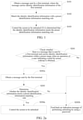
- FIG. 2 a is a schematic flowchart of a screen unlocking method according to embodiments of the present disclosures
- FIG. 2 b is a schematic structural diagram of a screen unlocking system according to embodiments of the present disclosures
- FIG. 3 is a schematic structural diagram of a screen unlocking apparatus according to embodiments of the present disclosures.
- FIG. 4 is a schematic structural diagram of a screen unlocking apparatus according to embodiments of the present disclosures.
- FIG. 5 is a schematic structural diagram of a terminal according to embodiments of the present disclosures.
- the principle of the present disclosure is to perform operations by using a lot of other extensive or particular calculation, communication environment, or configuration.
- Well-known examples of calculation systems, environments and configuration that are applicable to the present disclosure may include (but is not limited to) a hand-held phone, a personal computer, a server, a multi-processor system, a system mainly using a microcomputer, a main-architecture computer, and a distributed calculation environment, and include any of the foregoing system or apparatus.
- module used in the present disclosure may be considered as a plurality of integrated hardware elements, comprising a memory, a user interface, a communication interface and at least one processor coupled to the memory, the user interface and the communication interface, perform at least a certain function.
- the different components, modules, engines, and services in this specification may be considered as implementation objects in the calculation system.
- FIG. 1 is a schematic flowchart of a screen unlocking method according to one of the Embodiments of the present disclosures. The method includes:
- Step S 101 A second terminal obtains a message sent by a first terminal, where the message carries identity identification information of the first terminal.
- the screen unlocking method may be run based on the second terminal, and the first terminal and the second terminal may both be constructed by a terminal that has a storage unit and in which a microprocessor is installed and therefore has a calculation capability, such as a notebook computer, a tablet personal computer (PC), and a mobile phone, which is not specifically limited in the present disclosures.
- a terminal that has a storage unit and in which a microprocessor is installed and therefore has a calculation capability, such as a notebook computer, a tablet personal computer (PC), and a mobile phone, which is not specifically limited in the present disclosures.
- the first terminal may perform message interaction with the second terminal by means of short-distance communication.
- the first terminal broadcasts and transmits identity identification information to the second terminal by using an iBeacon technology.
- iBeacon A working manner of iBeacon is that a device having a Bluetooth low energy (BLE, Bluetooth low energy) communication function sends a distinctive identity identification number (IDentity) of the device to the surroundings by using the BLE technology.
- BLE Bluetooth low energy
- IDentity distinctive identity identification number
- a terminal that receives identity identification information is referred to as a second terminal, to distinguish the terminal from a first terminal that sends the identity identification information.
- the “first” and “second” herein are merely defined for distinguishing, and do not affect implementation of solutions of the present disclosures.
- Step S 102 The second terminal matches the identity identification information with a preset identification information matching rule.
- Step S 103 The second terminal controls a screen to be unlocked if it is determined that the identity identification information meets the preset identification information matching rule.
- Step S 102 and step S 103 specifically may be performed in the manners:
- an identification information matching rule is preset, and the identification information matching rule is used for verifying an identity of a user who logs in the terminal; if the identity identification information meets the preset identification information matching rule, it is indicated that the identity verification is successful; and a screen of the second terminal is unlocked, so that the user performs corresponding operations on the second terminal.
- identity identification information sent by a first terminal is obtained; the identity identification information is matched with the preset identification information matching rule; and the screen is controlled to be unlocked if it is determined that the identity identification information meets the preset identification information matching rule.
- determining and analysis are performed on the received identity identification information of the first terminal, and whether to unlock the screen is controlled automatically according to the analysis result.
- FIG. 2 a is a schematic flowchart of a screen unlocking method according to an exemplary embodiment of the present disclosures.
- the screen unlocking method may be run based on a second terminal, and the second terminal may be constructed by a terminal that has a storage unit and in which a microprocessor is installed and therefore has a calculation capability, such as a notebook computer, a tablet PC, and a mobile phone, which is not specifically limited in the present disclosures.
- the method includes:
- Step S 201 The second terminal checks whether there is a message that is sent by a first terminal and carries identity identification information within a preset range after an operation of a user indicating a need for screen wakeup is obtained.
- the first terminal may broadcast a message carrying identity identification information to the surroundings within a preset time interval; and when the second terminal receives an operation of the user indicating a need for screen wakeup, the second terminal is triggered to check whether there is a message that is broadcast by the first terminal and carries the identity identification information within a preset range.
- a screen wakeup operation needs to be performed when the second terminal is used for a next time.
- a user lightens the screen by pressing or touching
- it is determined that an operation of a user indicating a need for screen wakeup is obtained.
- the screen is lightened by pressing a physical button on the second terminal, which is not specifically limited herein.
- step S 202 a if the second terminal detects the message that is broadcast by the first terminal and carries the identity identification information within a preset range, step S 202 a is performed; or if the second terminal detects no message that is broadcast by the first terminal and carries the identity identification information within a preset range, step S 202 b is performed.
- Step S 202 a The second terminal obtains the message sent by the first terminal.
- step S 203 After the message that is sent by the first terminal and carries the identity identification information, step S 203 is performed.
- Step S 202 b The second terminal feeds back an indication message of performing unlocking by using a password.
- the check result of that there is not the identity identification information within the preset range may be further fed back, and displayed on the screen of the second terminal.
- Step S 203 The second terminal determines whether the identity identification information meets a preset identification information matching rule.
- step S 204 a is performed; or if the identity identification information does not meet the preset identification information matching rule (for example, the identity identification information is not consistent with the preset identification information), step S 202 b is performed, that is, feeding back an indication message for performing unlocking by using a password.
- Step S 204 a The second terminal controls the screen to be unlocked.
- the first terminal may include a portable terminal device such as a wearable device, for example, a smart watch, a smart eyeglass, or a smart earphone; the wearable device broadcasts and transmits identity identification information by using an iBeacon technology; and when the wearable device approaches the second terminal (such as a smart phone or a tablet computer), the second terminal may be automatically unlocked.
- a portable terminal device such as a wearable device, for example, a smart watch, a smart eyeglass, or a smart earphone
- the wearable device broadcasts and transmits identity identification information by using an iBeacon technology
- the wearable device approaches the second terminal (such as a smart phone or a tablet computer)
- the second terminal such as a smart phone or a tablet computer
- FIG. 2 b is a schematic structural diagram of an unlocking system, and the system includes a first terminal 21 and a second terminal 22 .
- a working manner of iBeacon is that a device having a Bluetooth low energy (BLE) communication function sends a distinctive identity identification number (IDentity) of the device to the surroundings by using the BLE technology, and application software that receives the ID may take some actions according to the ID.
- BLE Bluetooth low energy
- IDentity distinctive identity identification number
- an iBeacon communication module is disposed in the wearable device, and sends a message carrying identity identification information to the surroundings by using the BLE technology.
- a terminal receives the ID and determines that the ID meets a verification requirement, a screen of the terminal is unlocked to perform corresponding operations.
- identity identification information sent by a first terminal is obtained; the identity identification information is matched with a preset identification information matching rule; and the screen is controlled to be unlocked if it is determined that the identity identification information meets the preset identification information matching rule.
- determining and analysis are performed on the received identity identification information of the first terminal, and whether to unlock the screen is controlled automatically according to the analysis result.
- this embodiment of the present disclosures further provides an apparatus based on the foregoing screen unlocking method. Meanings of terms are the same as those in the foregoing screen unlocking method, and description in the method embodiments can be referred to for specific implementation details.
- FIG. 3 is a schematic structural diagram of a screen unlocking apparatus provided in this embodiment of the present disclosures.
- the screen unlocking apparatus may be run based on a second terminal, and the second terminal may be constructed by a terminal that has a storage unit and in which a microprocessor is installed and therefore has a calculation capability, such as a notebook computer, a tablet PC, or a mobile phone, which is not specifically limited in the present disclosures.
- the screen unlocking apparatus in the present disclosures may include an obtaining module 301 , a matching module 302 , and a control module 303 .
- the modules as identified above are the integrated hardware elements, comprising a user interface having a screen, a communication interface, a memory and at least one processor coupled to the user interface, the communication interface and the memory to perform at least a certain function.
- the obtaining module 301 is configured to obtain a message sent by a first terminal, where the message carries identity identification information of the first terminal.
- the matching module 302 is configured to match the identity identification information with the preset identification information matching rule.
- the control module 303 is configured to control the screen to be unlocked if it is determined that the identity identification information meets the preset identification information matching rule.
- an identification information matching rule is preset, and the identification information matching rule is used for verifying an identity of a user who logs in the terminal; if the identity identification information meets the preset identification information matching rule, it is indicated that the identity verification is successful; and a screen of the second terminal is unlocked, so that the user performs corresponding operations on the second terminal.
- identity identification information sent by a first terminal is obtained; the identity identification information is matched with a preset identification information matching rule; and the screen is controlled to be unlocked if it is determined that the identity identification information meets the preset identification information matching rule.
- determining and analysis are performed on the received identity identification information of the first terminal, and whether to unlock the screen is controlled automatically according to the analysis result.
- FIG. 4 is a schematic structural diagram of a screen unlocking apparatus provided in an exemplary embodiment of the present disclosures.
- the screen unlocking apparatus includes: an obtaining module 401 , a matching module 402 , and a control module 403 .
- Related description of the obtaining module 301 , the matching module 302 , and the control module 303 may be referred to for functions and effects of the foregoing function modules in this embodiment, and details are not described herein again.
- the apparatus may further include: a feedback module 404 , configured to feed back an indication message of performing unlocking by using a password if it is determined that the identity identification information does not meet the preset identification information matching rule.
- a feedback module 404 configured to feed back an indication message of performing unlocking by using a password if it is determined that the identity identification information does not meet the preset identification information matching rule.
- the apparatus may further include: a check module 405 , configured to check whether there is a message that is sent by the first terminal and carries the identity identification information within a preset range after an operation of a user indicating a need for screen wakeup is obtained; a triggering module 406 , configured to trigger the obtaining module 401 to obtain the message sent by the first terminal if there is a message that is sent by the first terminal and carries the identity identification information within a preset range; and the feedback module 404 , further configured to feed back an indication message of performing unlocking by using a password if there is not a message that is sent by the first terminal and carries the identity identification information within a preset range.
- a check module 405 configured to check whether there is a message that is sent by the first terminal and carries the identity identification information within a preset range after an operation of a user indicating a need for screen wakeup is obtained
- a triggering module 406 configured to trigger the obtaining module 401 to obtain the message sent by the first terminal
- the first terminal may broadcast a message carrying the identity identification information to the surroundings within a preset time interval; and when the second terminal receives an operation of the user indicating a need for screen wakeup, the second terminal is triggered to check whether there is the identity identification information within a preset range.
- a screen wakeup operation needs to be performed when the second terminal is used for a next time.
- a user lightens the screen by pressing or touching
- it is determined that an operation of a user indicating a need for screen wakeup is obtained.
- the screen is lightened by pressing a physical button on the second terminal, which is not specifically limited herein.
- the feedback module 404 may further feed back, while feeding back an indication message of performing unlocking by using a password, the check result that there is not the identity identification information within a preset range, and display the check result on the screen of the second terminal.
- the apparatus may further include: a determining module, configured to determine that an operation of a user indicating a need for screen wakeup is obtained if it is obtained that the user lightens a screen by pressing or touching.
- a determining module configured to determine that an operation of a user indicating a need for screen wakeup is obtained if it is obtained that the user lightens a screen by pressing or touching.
- the obtaining module 401 is specifically configured to obtain a message that is sent by the wearable device based on the Bluetooth low energy protocol.
- the wearable device broadcasts and transmits identity identification information by using the iBeacon technology.
- a second terminal such as a smart phone or a tablet computer
- the second terminal may be automatically unlocked.
- iBeacon a working manner of iBeacon is that a device having a Bluetooth low energy (BLE) communication function sends a distinctive identity identification number (IDentity) of the device to the surroundings by using the BLE technology, and application software that receives the ID may take some actions according to the ID.
- BLE Bluetooth low energy
- an iBeacon communication module is disposed in the wearable device, and sends a message carrying identity identification information to the surroundings by using the BLE technology.
- a terminal receives the ID and determines that the ID meets a verification requirement, a screen of the terminal is unlocked to perform corresponding operations.
- identity identification information sent by a first terminal is obtained; the identity identification information is matched with a preset identification information matching rule; and the screen is controlled to be unlocked if it is determined that the identity identification information meets the preset identification information matching rule.
- determining and analysis are performed on the received identity identification information of the first terminal, and whether to unlock the screen is controlled automatically according to the analysis result.
- this embodiment simplifies the terminal unlocking process, and improves the unlocking efficiency.
- the terminal may include components such as a radio frequency (RF) circuit 501 , a memory 502 including one or more computer readable storage media, an input unit 503 , a display unit 504 , a sensor 505 , an audio circuit 506 , a wireless fidelity (WiFi) module 507 , a processor 508 including one or more processing cores, and a power supply 509 .
- RF radio frequency
- the structure of the terminal shown in FIG. 5 does not constitute a limitation to the terminal, and the terminal may include more components or fewer components than those shown in the figure, or some components may be combined, or a different component deployment may be used.
- the RF circuit 501 may be configured to receive and send signals during an information receiving and sending process or a call process. Particularly, the RF circuit 501 receives downlink information from a base station, then delivers the downlink information to one or more processors 508 for processing, and sends related uplink data to the base station.
- the RF circuit 501 includes, but is not limited to, an antenna, at least one amplifier, a tuner, one or more oscillators, a subscriber identity module (SIM) card, a transceiver, a coupler, a low noise amplifier (LNA), a duplexer, and the like.
- SIM subscriber identity module
- LNA low noise amplifier
- the RF circuit 501 may also communicate with a network and another device by wireless communication.
- the wireless communication may use any communication standard or protocol, which includes, but is not limited to, Global System of Mobile communication (GSM), General Packet Radio Service (GPRS), Code Division Multiple Access (CDMA), Wideband Code Division Multiple Access (WCDMA), Long Term Evolution (LTE), e-mail, Short Messaging Service (SMS), and the like.
- GSM Global System of Mobile communication
- GPRS General Packet Radio Service
- CDMA Code Division Multiple Access
- WCDMA Wideband Code Division Multiple Access
- LTE Long Term Evolution
- SMS Short Messaging Service
- the memory 502 may be configured to store a software program and module, and the processor 508 runs the software program and module that are stored in the memory 502 , to perform various functional applications and data processing.
- the memory 502 may mainly include a program storage area and a data storage area.
- the program storage area may store an operating system, an application program required by at least one function (such as an audio playing function and an image playing function), and the like.
- the data storage area may store data (such as audio data and an address book) created according to use of the terminal.
- the memory 502 may include a high speed random access memory, and may also include a non-volatile memory such as at least one magnetic disk storage component, a flash component, or another volatile solid-state memory device.
- the memory 502 may further include a memory controller, so as to provide access of the processor 508 and the input unit 503 to the memory 502 .
- the input unit 503 may be configured to receive input digit or character information, and generate a keyboard, mouse, joystick, optical, or track ball signal input related to the user setting and function control.
- the input unit 503 may include a touch-sensitive surface and another input device.
- the touch-sensitive surface which may also be referred to as a touch screen or a touch panel, may collect a touch operation of a user on or near the touch-sensitive surface (such as an operation of a user on or near the touch-sensitive surface 131 by using any suitable object or accessory, such as a finger or a stylus), and drive a corresponding connection apparatus according to a preset program.
- the touch-sensitive surface may include two parts: a touch detection apparatus and a touch controller.
- the touch detection apparatus detects a touch position of the user, detects a signal generated by the touch operation, and transfers the signal to the touch controller.
- the touch controller receives the touch signal from the touch detection apparatus, converts the touch signal into touch point coordinates, and sends the touch point coordinates to the processor 508 .
- the touch controller can receive and execute a command sent from the processor 508 .
- the touch-sensitive surface may be a resistive, capacitive, infrared, or surface sound wave type touch-sensitive surface.
- the input unit 503 may further include another input device.
- the another input device may include, but is not limited to, one or more of a physical keyboard, a functional key (such as a volume control key or a switch key), a track ball, a mouse, and a joystick.
- the display unit 504 may be configured to display information input by the user or information provided for the user, and various graphical user interfaces of the terminal.
- the graphical user interfaces may be formed by a graph, a text, an icon, a video, or any combination thereof.
- the display unit 504 may include a display panel.
- the display panel may be configured by using a liquid crystal display (LCD), an organic light-emitting diode (OLED), or the like.
- the touch-sensitive surface may cover the display panel. After detecting a touch operation on or near the touch-sensitive surface, the touch-sensitive surface transfers the touch operation to the processor 508 , so as to determine the type of the touch event.
- the processor 508 provides a corresponding visual output on the display panel according to the type of the touch event.
- the touch-sensitive surface and the display panel are used as two separate parts to implement input and output functions, in some embodiments, the touch-sensitive surface and the display panel may be integrated to implement the input and output functions.
- the terminal may further include at least one sensor 505 , such as an optical sensor, a motion sensor, and other sensors.
- the optical sensor may include an ambient light sensor and a proximity sensor.
- the ambient light sensor can adjust luminance of the display panel according to brightness of the ambient light.
- the proximity sensor may switch off the display panel and/or backlight when the terminal is moved to the ear.
- a gravity acceleration sensor can detect magnitude of accelerations in various directions (generally on three axes), may detect magnitude and a direction of the gravity when static, and may be applied to an application that recognizes the attitude of the mobile phone (for example, switching between landscape orientation and portrait orientation, a related game, and magnetometer attitude calibration), a function related to vibration recognition (such as a pedometer and a knock), and the like.
- Other sensors such as a gyroscope, a barometer, a hygrometer, a thermometer, and an infrared sensor, which may be configured in the terminal, are not further described herein.
- the audio circuit 506 , a loudspeaker, and a microphone may provide audio interfaces between the user and the terminal.
- the audio circuit 506 may convert received audio data into an electric signal and transmit the electric signal to the loudspeaker.
- the loudspeaker converts the electric signal into a sound signal for output.
- the microphone converts a collected sound signal into an electric signal.
- the audio circuit 506 receives the electric signal and converts the electric signal into audio data, and outputs the audio data to the processor 508 for processing. Then, the processor 508 sends the audio data to, for example, another terminal by using the RF circuit 501 , or outputs the audio data to the memory 502 for further processing.
- the audio circuit 506 may further include an earplug jack, so as to provide communication between a peripheral headset and the terminal.
- WiFi is a short distance wireless transmission technology.
- the terminal may help, by using the WiFi module 507 , the user to receive and send e-mails, browse a webpage, access streaming media, and so on, which provides wireless broadband internet access for the user.
- FIG. 5 shows the WiFi module 507 , it may be understood that the WiFi module is not a necessary component of the terminal, and when required, the WiFi module may be omitted as long as the scope of the essence of the present disclosure is not changed.
- the processor 508 is the control center of the terminal, and is connected to various parts of the mobile phone by using various interfaces and lines. By running or executing the software program and/or module stored in the memory 502 , and invoking data stored in the memory 502 , the processor 508 performs various functions and data processing of the terminal, thereby performing overall monitoring on the mobile phone.
- the processor 508 may include one or more processing cores.
- the processor 508 may integrate an application processor and a modem.
- the application processor mainly processes an operating system, a user interface, an application program, and the like.
- the modem mainly processes wireless communication. It should be understood that the foregoing modem may not be integrated into the processor 508 .
- the terminal further includes the power supply 509 (such as a battery) for supplying power to the components.
- the power supply may be logically connected to the processor 508 by using a power management system, thereby implementing functions such as charging, discharging, and power consumption management by using the power management system.
- the power supply 509 may further include one or more of a direct current or alternating current power supply, a re-charging system, a power failure detection circuit, a power supply converter or inverter, a power supply state indicator, and any other components.
- the terminal may further include a camera, a Bluetooth module, and the like, which are not further described herein.
- the processor 508 in the terminal may download, according to the following instruction, executable files corresponding to processes of one or more application programs, in the memory 502 , and the processor 508 runs an application program stored in the memory 502 , so as to implement various functions:
- the message carrying identity identification information of the first terminal; matching the identity identification information with a preset identification information matching rule; and controlling the screen to be unlocked if it is determined that the identity identification information meets the preset identification information matching rule.
- the processor 508 may further configured to feed back an indication message of performing unlocking by using a password if it is determined that the identity identification information does not meet the preset identification information matching rule.
- the processor 508 may further configured to: check whether there is a message that is sent by the first terminal and carries identity identification information within a preset range after an operation of a user indicating a need for screen wakeup is obtained; and trigger to perform the step of obtaining a message sent by the first terminal if there is a message that is sent by the first terminal and carries identity identification information within a preset range; or feed back an indication message of performing unlocking by using a password if there is not a message that is sent by the first terminal and carries identity identification information within a preset range.
- the processor 508 may further be configured to determine that an operation of a user indicating a need for screen wakeup is obtained if it is obtained that the user lightens a screen by pressing or touching.
- the first terminal includes a wearable device; and the processor 508 may further be configured to obtain a message that is sent by the wearable device based on the Bluetooth low energy protocol.
- identity identification information sent by a first terminal is obtained; the identity identification information is matched with a preset identification information matching rule; and the screen is controlled to be unlocked if it is determined that the identity identification information meets the preset identification information matching result.
- determining and analysis are performed on the received identity identification information of the first terminal, and whether to unlock the screen is controlled automatically according to the analysis result.
- the screen unlocking apparatus provided in this embodiment of the present disclosures may be a computer, a tablet computer, a mobile phone having a touching function, or the like.
- the screen unlocking apparatus and the screen unlocking method in the embodiments of the foregoing text are based on the same concept. Any method provided in the embodiments of the screen unlocking method may be run on the screen unlocking apparatus.
- the embodiments of the screen unlocking method for a specific implementation process may be referred to, and details are not described herein again.
- the computer program may be stored in a computer readable program, for example, stored in a memory of a terminal, and performed by at least one processor in the terminal, and during a performing process, a procedure of an embodiment of the screen unlocking method may be included.
- the foregoing storage medium may be a magnetic disk, an optical disc, a read-only memory (ROM), a random-access memory (RAM), or the like.
- functional modules may be integrated in a processing chip, or may physically and independently exist, or two or more of the functions are integrated in one module.
- the foregoing integrated module may be implemented in a form of hardware, or may be implemented in a form of a software function module.
- the integrated module may be stored, if implemented by using a form of a software function module, and sold or used as an independent product, in a computer readable storage medium, where the storage medium is a read-only memory, a magnetic disk, a disc, or the like.
Landscapes
- Engineering & Computer Science (AREA)
- Computer Networks & Wireless Communication (AREA)
- Human Computer Interaction (AREA)
- Computer Security & Cryptography (AREA)
- Theoretical Computer Science (AREA)
- Signal Processing (AREA)
- General Engineering & Computer Science (AREA)
- Physics & Mathematics (AREA)
- General Physics & Mathematics (AREA)
- Computer Hardware Design (AREA)
- Software Systems (AREA)
- Telephone Function (AREA)
Abstract
Description
Claims (10)
Applications Claiming Priority (3)
| Application Number | Priority Date | Filing Date | Title |
|---|---|---|---|
| CN201510261340.4 | 2015-05-21 | ||
| CN201510261340.4A CN106293308B (en) | 2015-05-21 | 2015-05-21 | Screen unlocking method and device |
| PCT/CN2016/081561 WO2016184330A1 (en) | 2015-05-21 | 2016-05-10 | Screen unlocking method and device, and storage medium |
Related Parent Applications (1)
| Application Number | Title | Priority Date | Filing Date |
|---|---|---|---|
| PCT/CN2016/081561 Continuation WO2016184330A1 (en) | 2015-05-21 | 2016-05-10 | Screen unlocking method and device, and storage medium |
Publications (2)
| Publication Number | Publication Date |
|---|---|
| US20180035296A1 US20180035296A1 (en) | 2018-02-01 |
| US11227042B2 true US11227042B2 (en) | 2022-01-18 |
Family
ID=57319415
Family Applications (1)
| Application Number | Title | Priority Date | Filing Date |
|---|---|---|---|
| US15/728,051 Active 2036-10-20 US11227042B2 (en) | 2015-05-21 | 2017-10-09 | Screen unlocking method and apparatus, and storage medium |
Country Status (3)
| Country | Link |
|---|---|
| US (1) | US11227042B2 (en) |
| CN (1) | CN106293308B (en) |
| WO (1) | WO2016184330A1 (en) |
Cited By (1)
| Publication number | Priority date | Publication date | Assignee | Title |
|---|---|---|---|---|
| US12475201B2 (en) * | 2021-12-27 | 2025-11-18 | Feitian Technologies Co., Ltd. | Automatic screen unlocking method and device, electronic equipment and readable storage medium |
Families Citing this family (13)
| Publication number | Priority date | Publication date | Assignee | Title |
|---|---|---|---|---|
| CN106250774A (en) * | 2016-08-16 | 2016-12-21 | 三星电子(中国)研发中心 | Main equipment and auxiliary equipment and the processing method of operation thereof |
| CN109669600A (en) | 2017-10-13 | 2019-04-23 | 华为终端(东莞)有限公司 | Control method, device and the terminal of terminal light on and off screen |
| TWI694356B (en) * | 2018-04-03 | 2020-05-21 | 義隆電子股份有限公司 | electronic system |
| CN109857274B (en) * | 2018-12-25 | 2024-09-10 | 深圳视爵光旭电子有限公司 | Display device and control method and system thereof |
| CN110647727A (en) * | 2019-08-16 | 2020-01-03 | 维沃移动通信有限公司 | A terminal control method and terminal |
| CN110673725A (en) * | 2019-09-18 | 2020-01-10 | 努比亚技术有限公司 | Wearable device control method, wearable device, and computer-readable storage medium |
| CN112822092B (en) * | 2019-11-18 | 2022-07-26 | 腾讯科技(深圳)有限公司 | Message reminding method and device and computer readable storage medium |
| CN113030560B (en) * | 2019-12-24 | 2023-06-13 | 深圳市万普拉斯科技有限公司 | Mobile Terminals, Test Instruments and Test Systems |
| CN112347918A (en) * | 2020-11-05 | 2021-02-09 | 深圳Tcl新技术有限公司 | Screen control method, system, terminal device and computer readable storage medium |
| CN112306614A (en) * | 2020-11-05 | 2021-02-02 | Oppo广东移动通信有限公司 | Screen control method and device, electronic equipment, user equipment and readable medium |
| CN113256370B (en) * | 2021-05-10 | 2022-03-08 | 深圳掌酷软件有限公司 | Screen-locking shopping joining method, device, equipment and storage medium |
| CN115257630B (en) * | 2022-08-19 | 2024-06-14 | 中国第一汽车股份有限公司 | Vehicle control method and device and vehicle |
| CN118843115A (en) * | 2024-07-01 | 2024-10-25 | 湖北星纪魅族集团有限公司 | A smart glasses unlocking method and Bluetooth device |
Citations (20)
| Publication number | Priority date | Publication date | Assignee | Title |
|---|---|---|---|---|
| US20060282541A1 (en) * | 2005-06-13 | 2006-12-14 | Canon Kabushiki Kaisha | Method for setting communication parameters and communication device |
| CN102946484A (en) | 2012-11-16 | 2013-02-27 | Tcl通讯(宁波)有限公司 | Method for unlocking mobile terminal by near-filed communication and system |
| US20130106603A1 (en) * | 2010-11-01 | 2013-05-02 | Nike, Inc. | Wearable Device Assembly Having Athletic Functionality |
| US20140155031A1 (en) * | 2012-12-03 | 2014-06-05 | Samsung Electronics Co., Ltd. | Method and mobile terminal for controlling screen lock |
| CN103957103A (en) | 2014-04-17 | 2014-07-30 | 小米科技有限责任公司 | Safety authentication method and device and mobile terminal |
| WO2014143843A1 (en) | 2013-03-15 | 2014-09-18 | Bodhi Technology Ventures Llc | Controlling wireless device access to host device functionality |
| WO2014143814A1 (en) | 2013-03-15 | 2014-09-18 | Bodhi Technology Ventures Llc | Facilitating a secure session between paired devices |
| WO2014143997A1 (en) | 2013-03-15 | 2014-09-18 | Bodhi Technology Ventures Llc | Facilitating access to location-specific information using wireless devices |
| CN104238940A (en) | 2014-08-29 | 2014-12-24 | 广州三星通信技术研究有限公司 | Intelligent wearable device and relevance machine control method thereof |
| US20150020081A1 (en) * | 2013-07-11 | 2015-01-15 | Lg Electronics Inc. | Digital device and method for controlling the same |
| US20150026580A1 (en) * | 2013-07-19 | 2015-01-22 | Samsung Electronics Co., Ltd. | Method and device for communication |
| US20150028996A1 (en) * | 2013-07-25 | 2015-01-29 | Bionym Inc. | Preauthorized wearable biometric device, system and method for use thereof |
| US20150074615A1 (en) * | 2013-09-09 | 2015-03-12 | Apple Inc. | Device, method, and graphical user interface for manipulating user interfaces based on fingerprint sensor inputs |
| CN104573473A (en) | 2014-12-05 | 2015-04-29 | 小米科技有限责任公司 | Method and authentication device for unlocking administration authority |
| US20150128257A1 (en) * | 2012-11-27 | 2015-05-07 | Huawei Device Co., Ltd. | Method for unlocking terminal device and terminal device |
| US20150296074A1 (en) * | 2014-04-15 | 2015-10-15 | Google Inc. | Limiting user interaction with a computing device based on proximity of a user |
| US20150371026A1 (en) * | 2014-06-24 | 2015-12-24 | Ebay Inc. | Systems and methods for authentication via bluetooth device |
| US20160044445A1 (en) * | 2014-04-14 | 2016-02-11 | Huizhou Tcl Mobile Communication Co., Ltd. | Method For Achieving Short-Distance Unlocking According To The Electrocardiogram And System Thereof |
| US20160155281A1 (en) * | 2014-12-01 | 2016-06-02 | Ebay Inc. | Pairable secure-access facilities |
| US20160342784A1 (en) * | 2011-07-15 | 2016-11-24 | Vmware, Inc. | Mobile device authentication |
Family Cites Families (2)
| Publication number | Priority date | Publication date | Assignee | Title |
|---|---|---|---|---|
| JP2004341723A (en) * | 2003-05-14 | 2004-12-02 | Nec Personal Products Co Ltd | Information terminal device and method and program for processing electronic information thereof |
| CN102611753B (en) * | 2012-03-21 | 2015-01-14 | 张雷 | System and method for controlling controlled equipment through mobile terminal based on cloud platform |
-
2015
- 2015-05-21 CN CN201510261340.4A patent/CN106293308B/en active Active
-
2016
- 2016-05-10 WO PCT/CN2016/081561 patent/WO2016184330A1/en not_active Ceased
-
2017
- 2017-10-09 US US15/728,051 patent/US11227042B2/en active Active
Patent Citations (22)
| Publication number | Priority date | Publication date | Assignee | Title |
|---|---|---|---|---|
| US20060282541A1 (en) * | 2005-06-13 | 2006-12-14 | Canon Kabushiki Kaisha | Method for setting communication parameters and communication device |
| US20130106603A1 (en) * | 2010-11-01 | 2013-05-02 | Nike, Inc. | Wearable Device Assembly Having Athletic Functionality |
| US20160342784A1 (en) * | 2011-07-15 | 2016-11-24 | Vmware, Inc. | Mobile device authentication |
| CN102946484A (en) | 2012-11-16 | 2013-02-27 | Tcl通讯(宁波)有限公司 | Method for unlocking mobile terminal by near-filed communication and system |
| US20150128257A1 (en) * | 2012-11-27 | 2015-05-07 | Huawei Device Co., Ltd. | Method for unlocking terminal device and terminal device |
| US20140155031A1 (en) * | 2012-12-03 | 2014-06-05 | Samsung Electronics Co., Ltd. | Method and mobile terminal for controlling screen lock |
| WO2014143843A1 (en) | 2013-03-15 | 2014-09-18 | Bodhi Technology Ventures Llc | Controlling wireless device access to host device functionality |
| WO2014143814A1 (en) | 2013-03-15 | 2014-09-18 | Bodhi Technology Ventures Llc | Facilitating a secure session between paired devices |
| US20160037346A1 (en) * | 2013-03-15 | 2016-02-04 | Apple Inc. | Facilitating a secure session between paired devices |
| WO2014143997A1 (en) | 2013-03-15 | 2014-09-18 | Bodhi Technology Ventures Llc | Facilitating access to location-specific information using wireless devices |
| US20150020081A1 (en) * | 2013-07-11 | 2015-01-15 | Lg Electronics Inc. | Digital device and method for controlling the same |
| US20150026580A1 (en) * | 2013-07-19 | 2015-01-22 | Samsung Electronics Co., Ltd. | Method and device for communication |
| WO2015009122A1 (en) | 2013-07-19 | 2015-01-22 | Samsung Electronics Co., Ltd. | Method and device for communication |
| US20150028996A1 (en) * | 2013-07-25 | 2015-01-29 | Bionym Inc. | Preauthorized wearable biometric device, system and method for use thereof |
| US20150074615A1 (en) * | 2013-09-09 | 2015-03-12 | Apple Inc. | Device, method, and graphical user interface for manipulating user interfaces based on fingerprint sensor inputs |
| US20160044445A1 (en) * | 2014-04-14 | 2016-02-11 | Huizhou Tcl Mobile Communication Co., Ltd. | Method For Achieving Short-Distance Unlocking According To The Electrocardiogram And System Thereof |
| US20150296074A1 (en) * | 2014-04-15 | 2015-10-15 | Google Inc. | Limiting user interaction with a computing device based on proximity of a user |
| CN103957103A (en) | 2014-04-17 | 2014-07-30 | 小米科技有限责任公司 | Safety authentication method and device and mobile terminal |
| US20150371026A1 (en) * | 2014-06-24 | 2015-12-24 | Ebay Inc. | Systems and methods for authentication via bluetooth device |
| CN104238940A (en) | 2014-08-29 | 2014-12-24 | 广州三星通信技术研究有限公司 | Intelligent wearable device and relevance machine control method thereof |
| US20160155281A1 (en) * | 2014-12-01 | 2016-06-02 | Ebay Inc. | Pairable secure-access facilities |
| CN104573473A (en) | 2014-12-05 | 2015-04-29 | 小米科技有限责任公司 | Method and authentication device for unlocking administration authority |
Non-Patent Citations (2)
| Title |
|---|
| The State Intellectual Property Office of the People's Republic of China (SIPO) Office Action 2 for 201510261340.4 dated Oct. 28, 2019 7 Pages (including translation). |
| The World Intellectual Property Organization (WIPO) International Search Report for PCT/CN2016/081561 dated Aug. 16, 2016 7 Pages (including translation). |
Cited By (1)
| Publication number | Priority date | Publication date | Assignee | Title |
|---|---|---|---|---|
| US12475201B2 (en) * | 2021-12-27 | 2025-11-18 | Feitian Technologies Co., Ltd. | Automatic screen unlocking method and device, electronic equipment and readable storage medium |
Also Published As
| Publication number | Publication date |
|---|---|
| US20180035296A1 (en) | 2018-02-01 |
| CN106293308B (en) | 2020-06-02 |
| WO2016184330A1 (en) | 2016-11-24 |
| CN106293308A (en) | 2017-01-04 |
Similar Documents
| Publication | Publication Date | Title |
|---|---|---|
| US11227042B2 (en) | Screen unlocking method and apparatus, and storage medium | |
| US11057376B2 (en) | Method, apparatus, and system for controlling intelligent device, and storage medium | |
| US10834237B2 (en) | Method, apparatus, and storage medium for controlling cooperation of multiple intelligent devices with social application platform | |
| US11184754B2 (en) | Data sharing method and terminal | |
| CN106778175B (en) | Interface locking method and device and terminal equipment | |
| CN103389863B (en) | A kind of display control method and device | |
| CN104852885B (en) | Method, device and system for verifying verification code | |
| US20170316781A1 (en) | Remote electronic service requesting and processing method, server, and terminal | |
| US20170315777A1 (en) | Method, terminal, and storage medium for starting voice input function of terminal | |
| US11176228B2 (en) | Application interface display method, apparatus, and terminal, and storage medium | |
| WO2015131790A1 (en) | Network connection method, application authentication server, terminal and router | |
| CN103677633B (en) | Unlocking screen method, device and terminal | |
| US12483552B2 (en) | Authentication window display method and apparatus | |
| CN106534324A (en) | Data sharing method and cloud server | |
| CN107451450A (en) | Biometric discrimination method and Related product | |
| US10372895B2 (en) | Apparatus and method for providing a security environment | |
| CN106940770A (en) | A screen locking method, device and terminal | |
| WO2015070718A1 (en) | Communication number notification method and communication device | |
| CN106164840A (en) | A keyboard display method, device and terminal equipment | |
| CN108897467B (en) | Display control method and terminal equipment | |
| CN111182141B (en) | Method, device and storage medium for acquiring state of terminal device | |
| CN117473566A (en) | Secret data verification device, system and electronic equipment | |
| CN113889242A (en) | Registration method and device, storage medium and electronic equipment | |
| CN113889244A (en) | Fingerprint-based registration method and device, storage medium and electronic equipment | |
| CN111596820A (en) | Avatar setting method and device |
Legal Events
| Date | Code | Title | Description |
|---|---|---|---|
| AS | Assignment |
Owner name: TENCENT TECHNOLOGY (SHENZHEN) COMPANY LIMITED, CHINA Free format text: ASSIGNMENT OF ASSIGNORS INTEREST;ASSIGNOR:WU, ZHENHAI;REEL/FRAME:043815/0874 Effective date: 20171009 Owner name: TENCENT TECHNOLOGY (SHENZHEN) COMPANY LIMITED, CHI Free format text: ASSIGNMENT OF ASSIGNORS INTEREST;ASSIGNOR:WU, ZHENHAI;REEL/FRAME:043815/0874 Effective date: 20171009 |
|
| FEPP | Fee payment procedure |
Free format text: ENTITY STATUS SET TO UNDISCOUNTED (ORIGINAL EVENT CODE: BIG.); ENTITY STATUS OF PATENT OWNER: LARGE ENTITY |
|
| STPP | Information on status: patent application and granting procedure in general |
Free format text: DOCKETED NEW CASE - READY FOR EXAMINATION |
|
| STPP | Information on status: patent application and granting procedure in general |
Free format text: NON FINAL ACTION MAILED |
|
| STPP | Information on status: patent application and granting procedure in general |
Free format text: RESPONSE TO NON-FINAL OFFICE ACTION ENTERED AND FORWARDED TO EXAMINER |
|
| STPP | Information on status: patent application and granting procedure in general |
Free format text: FINAL REJECTION MAILED |
|
| STPP | Information on status: patent application and granting procedure in general |
Free format text: RESPONSE AFTER FINAL ACTION FORWARDED TO EXAMINER |
|
| STPP | Information on status: patent application and granting procedure in general |
Free format text: DOCKETED NEW CASE - READY FOR EXAMINATION |
|
| STPP | Information on status: patent application and granting procedure in general |
Free format text: NON FINAL ACTION MAILED |
|
| STPP | Information on status: patent application and granting procedure in general |
Free format text: RESPONSE AFTER FINAL ACTION FORWARDED TO EXAMINER |
|
| STPP | Information on status: patent application and granting procedure in general |
Free format text: DOCKETED NEW CASE - READY FOR EXAMINATION |
|
| STPP | Information on status: patent application and granting procedure in general |
Free format text: NON FINAL ACTION MAILED |
|
| STPP | Information on status: patent application and granting procedure in general |
Free format text: RESPONSE TO NON-FINAL OFFICE ACTION ENTERED AND FORWARDED TO EXAMINER |
|
| STPP | Information on status: patent application and granting procedure in general |
Free format text: NOTICE OF ALLOWANCE MAILED -- APPLICATION RECEIVED IN OFFICE OF PUBLICATIONS |
|
| STPP | Information on status: patent application and granting procedure in general |
Free format text: PUBLICATIONS -- ISSUE FEE PAYMENT RECEIVED |
|
| STPP | Information on status: patent application and granting procedure in general |
Free format text: PUBLICATIONS -- ISSUE FEE PAYMENT VERIFIED |
|
| STCF | Information on status: patent grant |
Free format text: PATENTED CASE |
|
| MAFP | Maintenance fee payment |
Free format text: PAYMENT OF MAINTENANCE FEE, 4TH YEAR, LARGE ENTITY (ORIGINAL EVENT CODE: M1551); ENTITY STATUS OF PATENT OWNER: LARGE ENTITY Year of fee payment: 4 |