US11154972B2 - Switch device for nail gun - Google Patents
Switch device for nail gun Download PDFInfo
- Publication number
- US11154972B2 US11154972B2 US16/750,070 US202016750070A US11154972B2 US 11154972 B2 US11154972 B2 US 11154972B2 US 202016750070 A US202016750070 A US 202016750070A US 11154972 B2 US11154972 B2 US 11154972B2
- Authority
- US
- United States
- Prior art keywords
- groove
- outside
- communicates
- engaged
- recess
- Prior art date
- Legal status (The legal status is an assumption and is not a legal conclusion. Google has not performed a legal analysis and makes no representation as to the accuracy of the status listed.)
- Expired - Fee Related, expires
Links
Images



Classifications
-
- B—PERFORMING OPERATIONS; TRANSPORTING
- B25—HAND TOOLS; PORTABLE POWER-DRIVEN TOOLS; MANIPULATORS
- B25C—HAND-HELD NAILING OR STAPLING TOOLS; MANUALLY OPERATED PORTABLE STAPLING TOOLS
- B25C1/00—Hand-held nailing tools; Nail feeding devices
- B25C1/04—Hand-held nailing tools; Nail feeding devices operated by fluid pressure, e.g. by air pressure
- B25C1/041—Hand-held nailing tools; Nail feeding devices operated by fluid pressure, e.g. by air pressure with fixed main cylinder
- B25C1/043—Trigger valve and trigger mechanism
-
- B—PERFORMING OPERATIONS; TRANSPORTING
- B25—HAND TOOLS; PORTABLE POWER-DRIVEN TOOLS; MANIPULATORS
- B25C—HAND-HELD NAILING OR STAPLING TOOLS; MANUALLY OPERATED PORTABLE STAPLING TOOLS
- B25C1/00—Hand-held nailing tools; Nail feeding devices
- B25C1/04—Hand-held nailing tools; Nail feeding devices operated by fluid pressure, e.g. by air pressure
- B25C1/047—Mechanical details
-
- B—PERFORMING OPERATIONS; TRANSPORTING
- B25—HAND TOOLS; PORTABLE POWER-DRIVEN TOOLS; MANIPULATORS
- B25C—HAND-HELD NAILING OR STAPLING TOOLS; MANUALLY OPERATED PORTABLE STAPLING TOOLS
- B25C1/00—Hand-held nailing tools; Nail feeding devices
- B25C1/04—Hand-held nailing tools; Nail feeding devices operated by fluid pressure, e.g. by air pressure
- B25C1/041—Hand-held nailing tools; Nail feeding devices operated by fluid pressure, e.g. by air pressure with fixed main cylinder
- B25C1/042—Main valve and main cylinder
Definitions
- the present invention relates to a nail gun, and more particularly, to a switch device for switching features of single mode and automatic mode.
- the conventional nail gun generally includes a cylinder in the body of the nail gun, and the piston returns to shoot nails or clips by compressed air.
- An end member is connected to the rear end of the body of the nail gun so that when the piston moves toward the end member, the end member moves backward to seal a release. Therefore, compressed air is restricted between the piston head and the end member, such that when the trigger is pulled, the compressed air in the cylinder pushes the piston and sends the nail out.
- the compressed air in the cylinder pushes the piston to shoot the nail, and in the meanwhile the compressed air is released from the front end of the nail gun.
- a portion of the compressed air flows into the cylinder to push the piston back to its initial position. This action completes a single shot.
- the nails are required to shoot continuously to increase the efficiency.
- the present invention is intended to provide a switch device for a nail gun, and the users can optionally choose the features of single mode or automatic mode by operating the switching device.
- the present invention relates to a switch device for a nail gun, and comprises a body having a main chamber and a cylinder is received in the main chamber.
- a main path communicates with the cylinder.
- a recess is formed in the body and located beside the main path.
- a valve is received in the recess.
- An end member is connected to the rear end of the body.
- An air way communicates between the recess and the end member.
- a first release path communicates the recess and outside of the body.
- a communication path communicates between the main chamber and the recess.
- the end member has a receiving area in which a movable member is accommodated.
- a bore is defined through the rear end of the end member.
- An air path is formed between the recess and the receiving area.
- the movable member has a first groove defined in the outside thereof
- a seal is engaged with the first groove.
- a passage is defined axially through the movable member.
- a spring is biased between the movable member and the inside of the end member.
- a piston includes a piston head and a strike member extending from the piston head.
- the piston head is movably located in the cylinder, and the strike member extends through the cylinder.
- the piston head includes a second groove in which another seal is engaged.
- the valve includes a ring, an inside part and an outside part respectively located in the recess.
- a first movable part is movably located between the ring and a room in the inside part.
- a second movable member has a first end thereof located in a first axial hole of the first movable part.
- a second end of the second movable member is movably located between the ring and the outside member.
- An axle has the first end thereof located in a second axial hole of the second movable member. A second end of the axle movably protrudes beyond a central hole of the outside member.
- the inside part 50 has a third groove 500 defined in the outside thereof. Another seal is engaged with the third groove.
- a room is defied in the inside part and the first movable part is movably located in the room.
- a first radial hole and a second radial hole are respectively defined radially through the wall of the inside part.
- the first radial hole communicates with the air way.
- the second radial hole communicates with the first release path.
- the first movable part includes a first outer groove and another seal is engaged with the first outer groove.
- the ring includes through hole, and an inner groove is defined in the inner periphery of the through hoe. Another seal is engaged with the inner groove.
- the ring includes a second outer groove defined in the outside thereof. Another seal is engaged with the second outer groove.
- the second movable part includes a third outer groove defined in the outside thereof. Another seal is engaged with the third outer groove. A third radial hole and a fourth hole are respectively defined radially through the wall of the second movable part. Air enters into and leaves from a first space that is formed between the first movable part and the ring via the third radial hole. Air enters into and leaves from a second space that is formed between the second movable part and the ring via the fourth radial hole.
- the axle has a fourth groove defined in the outside thereof and another seal is engaged with the fourth groove. A contact portion extends from the second end of the axle that movably protrudes beyond the central hole of the outside member.
- the outside member includes an engaging groove defined in an outside thereof and another seal is engaged with the engaging groove.
- a reception area is defined in the outside member and the second movable part is partially located in the reception area.
- a fifth radial hole is defined radially through the wall of the outside member and communicates with the reception area. The fifth radial hole communicates with the communication path.
- a switch member includes a first annular groove and a second annular groove defined in the outside thereof. Another seal is engaged with the first annular groove.
- a clip is engaged with the second annular groove. The valve controls the movable member to move to switch the nail gun between features of single mode and automatic mode.
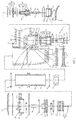
- FIG. 1 is an exploded and cross sectional showing the switch device of nail gun of the present invention
- FIG. 2 is a cross sectional showing the switch device of nail gun of the present invention
- FIG. 3 is a cross sectional view to show one status of the switch member of the switch device of nail gun of the present invention
- FIG. 4 is a cross sectional view to show that the trigger is pulled
- FIG. 5 is a cross sectional view to show that the trigger is not pulled
- FIG. 6 is a cross sectional view to show that the switch member is operated to switch the nail gun to the feature of automatic mode
- FIG. 7 is a cross sectional view to show the nail gun of the present invention at the status as disclosed in FIG. 6 ;
- FIG. 8 shows a status following the status as disclosed in FIG. 7 ;
- FIG. 9 shows a status following the status as disclosed in FIG. 8 ;
- FIG. 10 shows a status following the status as disclosed in FIG. 9 ;
- FIG. 11 shows a status following the status as disclosed in FIG. 10 .
- FIG. 12 shows that the adjustment member is rotated.
- the nail gun of the present invention comprises a body 1 having a main chamber 10 , a cylinder 30 received in the main chamber 10 , a recess, an air way 120 , a first release path “C” and a communication path “B”.
- the main chamber 10 is defined to include a first chamber 100 and a second chamber 101 .
- the second chamber 101 communicates with the second area 122 via the communication path “B”.
- a ring 53 of the valve 5 defines the recess 12 into a first area 121 and a second area 122 .
- the air way 120 communicates the first area 121 with the end member 20 .
- the first release path “C” communicates with the first area 121 with the outside of the body 10 .
- the first release path “C” allows the air located behind the movable member 25 to be released to outside of the nail gun.
- a first compartment 13 and a second compartment 14 are respectively defined between the recess 12 and the main chamber 10 .
- the first and second compartments 13 , 14 respectively accommodate the switch member 6 and the adjustment member 7 received therein.
- the first aperture 131 and the second aperture 132 respectively communicate with the second chamber 101 and the second compartment 14 .
- the second compartment 14 communicates with the second area 122 via the third aperture 133 .
- the first aperture 131 , the first compartment 13 , the second aperture 132 and the third aperture 133 (or the first aperture 131 , the first compartment 13 , the second aperture 132 , the second compartment 14 and the third aperture 13 ) define the communication path “B”.
- the end member 20 is connected to the rear end of the body 1 , and an urging plate 21 is located between the body 1 and the end member 20 .
- the end member 20 having a receiving area 200 in which a movable member 25 is accommodated.
- a bore 201 is defined through the rear end of the end member 20 .
- the end member 20 includes a lateral hole 202 that communicates with the receiving area 200 .
- An air path “A” is formed between the lateral hole 202 and the air way 120 . Air enters into and leaves from an area between the movable member 25 and the receiving are 200 via the air path “A”.
- the movable member 25 is connected between the receiving area 200 and the cylinder 30 .
- the movable member 25 has a first groove 251 defined in the outside thereof.
- a seal 9 is engaged with the first groove 251 .
- a passage 252 is defined axially through the movable member 25 .
- a spring 26 is biased between the movable member 25 and the inside of the end member 20 .
- the cylinder 30 includes the piston 35 movably received therein.
- the cylinder 30 includes a first hole 301 and a second hole 302 to respectively communicate with the second chamber 101 .
- a seal 9 is mounted to the cylinder 30 and engaged with the first hole 301 so that when the piston head 351 moves, air in the cylinder 30 is pushed into the second chamber 101 and stored in the second chamber 101 .
- the pressurized air that flows into the cylinder 30 pushes the seal 9 corresponding to the first hole 301 outward and enters into the second chamber 101 .
- the piston 35 includes the piston head 351 and a strike member 352 that extends from the piston head 351 .
- the piston head 352 is movably located in the cylinder 30 and the strike member 352 extends through the cylinder 30 .
- the piston head 352 includes a second groove 353 in which another seal 9 is engaged.
- the valve 5 is located in the recess 12 .
- a ring 53 , an inside part 50 located in the first area 121 and an outside part 56 located in the second area 122 are respectively located in the recess 12 .
- a first movable part 51 is movably located between the ring 53 and a room 501 in the inside part 50 .
- a second movable member 54 has the first end thereof located in the first movable part 51 .
- the second end of the second movable member 54 is movably located between the ring 53 and the outside member 56 .
- An axle 55 has the first end thereof located in a second axial hole 541 of the second movable member 54 .
- the second end of the axle 55 movably protrudes beyond a central hole 561 of the outside member 56 .
- the inside part 50 has a third groove 500 defined in the outside thereof, and another seal 9 is engaged with the third groove 500 .
- a room 501 is defined in the inside part 50 and the first movable part 51 is movably located in the room 501 .
- a first radial hole 503 and a second radial hole 504 are respectively defined radially through the wall of the inside part 50 .
- the first radial hole 503 communicates with the air way 120
- the second radial hole 504 communicates with the first release path “C”.
- the first movable part 51 includes a first outer groove 510 and another seal 9 is engaged with the first outer groove 510 .
- the first movable part 51 includes a first axial hole 511 so as to accommodate the first end of the second movable part 54 .
- the ring 53 includes through hole 531 .
- An inner groove 532 is defined in the inner periphery of the through hoe 531 .
- Another seal 9 is engaged with the inner groove 532 .
- the ring 53 further includes a second outer groove 533 defined in the outside thereof, and another seal 9 is engaged with the second outer groove 533 .
- the second movable part 54 includes a third outer groove 540 defined in the outside thereof, and another seal 9 is engaged with the third outer groove 540 .
- a third radial hole 543 and a fourth hole 544 are respectively defined radially through the wall of the second movable part 54 .
- the axle 55 has a fourth groove 550 defined in an outside thereof and another seal 9 is engaged with the fourth groove 550 .
- a contact portion 551 extends from the second end of the axle 55 that movably protrudes beyond the central hole 561 of the outside member 56 .
- the outside member 56 includes two engaging grooves 560 defined in the outside thereof and two respective seal 9 are engaged with the engaging grooves 560 .
- a reception area 562 is defined in the outside member 56 and the second movable part 54 is partially located in the reception area 562 .
- a fifth radial hole 563 is defined radially through the wall of the outside member 56 and communicates with the reception area 562 .
- the fifth radial hole 563 is located between the two engaging grooves 560 and communicates with the third aperture 133 or the communication path “B” such that air is allowed to enter into the third space “F”.
- the switch member 6 movably located in the first compartment 13 and includes a first annular groove 60 and a second annular groove 61 defined in the outside thereof. Another seal 9 is engaged with the first annular groove 60 , and a clip 90 is engaged with the second annular groove 61 .
- the adjustment member 7 is rotatably located in the second compartment 14 to control air volume that enters into the cylinder 30 .
- the adjustment member 7 includes a receiving groove 70 defined in the outside thereof and another seal 9 is engaged with the receiving groove 70 .
- the adjustment member 7 includes a threaded section 71 which is threadedly connected to the second compartment 14 .
- a restriction groove 72 is defined in the outside of the adjustment member 7 and a clip 90 is engaged with the restriction groove 72 .
- the pressurized air flows through the first axial hole 511 of the first movable part 51 , and then flows through the second axial hole 541 and the third radial hole 543 of the second movable part 54 , and fills the first space “D” between the first movable part 51 and the ring 53 . Because the area on one end of the first movable part 51 is larger than the area on the other end of first movable part 51 , so that the first movable part 51 moves until the seal 9 at the middle section of the first movable part 51 contacts the inclined wall of the room 501 of the inside part 50 . The seal 9 in the first outer groove 510 does not block the room 501 of the inside part 50 .
- the switch member 6 Before shooting, the switch member 6 is pushed to let the seal 9 at the middle section of the switch member 6 and the seal 9 at the right end ( FIG. 1 ) are respectively located on two sides of the first aperture 131 to communicate the first aperture 131 with the first compartment 13 , while the first compartment 13 does not communicate with the second aperture 132 as shown in FIG. 3 .
- the trigger 40 is then pulled to push the axle 55 along the second axial hole 541 of the second movable part 54 until the seal 9 at the fourth groove 550 moves over the third radial hole 543 to stop the pressurized air from the first space “D” between the first movable part 51 and the ring 53 .
- the third radial hole 543 communicates with the gap between the outside of the axle 55 and the second axial hole 541 , so that the pressurized air in the space “D” passes through the third radial hole 543 and the gap, and is released from the central hole 561 of the outside part 56 . Therefore, the first movable part 51 is applied by the compressed air from the main path 11 and moves until the seal 9 of the first movable part 51 completely blocks the room 501 of the inside part 50 , and the seal 9 at the middle section of the first movable part 51 does not contact the inclined wall of the room 501 .
- the first radial hole 503 , the room 501 , the second radial hole 504 , the air path “A” and the first release path “C” is in communication with each other so that the compressed air behind the movable member 25 releases to outside of the nail gun via the air path “A”, first radial hole 503 , the room 501 , the second radial hole 504 and the first release path “C”. Therefore, the force of the compressed air in the main path 11 is larger than that of the spring 26 so that the movable member 25 is pushed until the movable member 25 is completely separated from the cylinder 30 , and the compressed air suddenly fills the cylinder 30 and pushes the piston 35 to hit the pad 80 to complete the shooting action.
- the compressed air pushes the seal 9 from the first hole 301 and then flows into the second chamber 101 and is stored in the second chamber 101 .
- the compressed air then flows into the first compartment 13 via the first aperture 131 .
- the two seals 9 of the first annular grooves 60 of the switch member 6 are able to move the two sides of the first aperture 131 to stop the compressed air in the first compartment 13 from entering into the second compartment 14 as shown in FIG. 4 .
- the compressed air pushes the axle 55 to its initial position, and the third radial hole 543 communicates with the second axial hole 541 and the main path 11 , so that the compressed air quickly pushes the first movable part 51 until the seal 9 at the middle section of the first movable part 51 contacts the inclined wall of the room 501 of the inside part 50 . Therefore, the sea 9 of the first movable part 51 located close to one end thereof does not block the room 501 , and there is a gap formed between the first movable part 51 and the room 501 , and the gap communicates with the air path “A”.
- the compressed air flows through the gap and the air path “A”, and together with the spring 26 to push the movable member 25 to contact the cylinder 30 .
- a gap is formed between the movable member 25 and the cap 85 , so that the compressed air behind the movable member 25 releases from the gap.
- the compressed air stored in the second chamber 101 flows into the cylinder 30 via the second hole 302 to push the piston 35 back to its initial position as shown in FIG. 5 to complete the action of single mode.
- the switch member 6 When the users want to use the feature of automatic mode, the switch member 6 is pushed to the right viewed from the drawings, the seal 9 at the middle section of the switch member 6 is removed from the left side of first aperture 131 to the right side of the first aperture 131 of the drawings, so that the first aperture 131 , the first compartment 13 , the second aperture 132 , the second compartment 14 and the third aperture 133 (the communication path “B”) are in communication with each other.
- the trigger 40 When the trigger 40 is pulled, the piston 35 moves as described before.
- the compressed air in the cylinder 30 pushes the seal 9 outward from the first hole 301 , and then flows into the second chamber 101 and is stored in the second chamber 101 .
- the second movable part 54 is then pushed by the compressed air via the communication path “B”, the fifth radial hole 563 of the outside part 56 , the second space “F”, until the third radial hole 543 moves over the seal 9 on the axle 55 .
- the third radial hole 543 communicates with the second axial hole 541 . Such that the compressed air in the main path 11 flows into the position beneath ( FIG. 7 ) the first movable part 51 via the first axial hole 511 , the second axial hole 541 and the third radial hole 543 .
- the areas of the two ends of the first movable part 51 are different so that the first movable part 51 is pushed until the seal 9 at the middle section of the first movable part 51 contacts the inclined wall of the room 501 .
- the seal 9 located close to one end of the first movable part 51 does not block the room 501 , and a gap is formed between the first movable part 51 and the room 501 .
- the gap communicates with the air path “A” as shown in FIG. 8 , the compressed air flows through the gap and the air path “a”, and then applies a force together with the spring 26 to push the movable member 25 to contact the cylinder 30 as shown in FIG. 9 .
- the compressed air in the first space “D” releases to outside from the third radial hole 543 , the gap and the central hole 561 of the outside part 56 .
- the first movable part 51 is then pushed downward as shown in FIG. 7 .
- the reciprocated actions allows the nail gun to continuously shoot by one-time pulling the trigger 40 .
- the seal 9 at the middle section 9 located close to the threaded section 71 ) of the adjustment member 7 partially blocks the third aperture 133 to narrow the opening area of the third aperture 133 so that the volume and the speed of the compressed air is adjusted and controlled to adjust the shooting speed of the nails under the automatic mode.
Landscapes
- Physics & Mathematics (AREA)
- Fluid Mechanics (AREA)
- Engineering & Computer Science (AREA)
- Mechanical Engineering (AREA)
- Portable Nailing Machines And Staplers (AREA)
Abstract
Description
Claims (9)
Priority Applications (1)
| Application Number | Priority Date | Filing Date | Title |
|---|---|---|---|
| US16/750,070 US11154972B2 (en) | 2020-01-23 | 2020-01-23 | Switch device for nail gun |
Applications Claiming Priority (1)
| Application Number | Priority Date | Filing Date | Title |
|---|---|---|---|
| US16/750,070 US11154972B2 (en) | 2020-01-23 | 2020-01-23 | Switch device for nail gun |
Publications (2)
| Publication Number | Publication Date |
|---|---|
| US20210229250A1 US20210229250A1 (en) | 2021-07-29 |
| US11154972B2 true US11154972B2 (en) | 2021-10-26 |
Family
ID=76969670
Family Applications (1)
| Application Number | Title | Priority Date | Filing Date |
|---|---|---|---|
| US16/750,070 Expired - Fee Related US11154972B2 (en) | 2020-01-23 | 2020-01-23 | Switch device for nail gun |
Country Status (1)
| Country | Link |
|---|---|
| US (1) | US11154972B2 (en) |
Citations (16)
| Publication number | Priority date | Publication date | Assignee | Title |
|---|---|---|---|---|
| US3088440A (en) * | 1960-08-01 | 1963-05-07 | Ingersoll Rand Co | Impact tools |
| US3094900A (en) * | 1956-12-27 | 1963-06-25 | Fastener Corp | Fastener driving apparatus |
| US3194324A (en) * | 1963-03-13 | 1965-07-13 | Signode Corp | Fastener driving tool |
| US4384668A (en) * | 1979-02-28 | 1983-05-24 | Max Co., Ltd. | Safety system for pneumatic impact tool |
| US5671880A (en) * | 1995-11-02 | 1997-09-30 | Fasco S.P.A. | Compressed-air nail firing tool with head valve, operating with single and repeat firing |
| US6039231A (en) * | 1994-05-18 | 2000-03-21 | Stanley Fastening Systems, L.P. | Adjustable energy control valve for a fastener driving device |
| US20070119899A1 (en) * | 2003-12-10 | 2007-05-31 | Fasco S.P.A. | Pneutmatic fixing machine |
| US7255257B2 (en) * | 2003-10-14 | 2007-08-14 | Hitachi Koki Co., Ltd. | Pneumatically operated power tool having mechanism for changing compressed air pressure |
| US20100012699A1 (en) * | 2008-07-15 | 2010-01-21 | Chia-Sheng Liang | Control mechanism for Pneumatic Nail Guns |
| US20100038398A1 (en) * | 2008-08-17 | 2010-02-18 | Chia-Sheng Liang | Linkage Mechanism for Control Valve in Pneumatic Nail Guns |
| US7896101B2 (en) * | 2007-02-07 | 2011-03-01 | Hitachi Koki Co., Ltd. | Pneumatically operated power tool having mechanism for changing compressed air pressure |
| US20120061445A1 (en) * | 2010-09-13 | 2012-03-15 | Basso Industry Corp. | Pneumatic tool having a passage unit |
| US20140202724A1 (en) * | 2012-06-21 | 2014-07-24 | Illinois Tool Works Inc. | Fastener-driving tool with an electric power generator |
| US20190022842A1 (en) * | 2015-12-28 | 2019-01-24 | Koki Holdings Co., Ltd. | Driving tool |
| US20190099872A1 (en) * | 2017-09-29 | 2019-04-04 | Max Co., Ltd. | Driving tool |
| US20200306940A1 (en) * | 2017-11-01 | 2020-10-01 | Joh. Friedrich Behrens Ag | Compressed air nailer with safety valve arrangement |
-
2020
- 2020-01-23 US US16/750,070 patent/US11154972B2/en not_active Expired - Fee Related
Patent Citations (16)
| Publication number | Priority date | Publication date | Assignee | Title |
|---|---|---|---|---|
| US3094900A (en) * | 1956-12-27 | 1963-06-25 | Fastener Corp | Fastener driving apparatus |
| US3088440A (en) * | 1960-08-01 | 1963-05-07 | Ingersoll Rand Co | Impact tools |
| US3194324A (en) * | 1963-03-13 | 1965-07-13 | Signode Corp | Fastener driving tool |
| US4384668A (en) * | 1979-02-28 | 1983-05-24 | Max Co., Ltd. | Safety system for pneumatic impact tool |
| US6039231A (en) * | 1994-05-18 | 2000-03-21 | Stanley Fastening Systems, L.P. | Adjustable energy control valve for a fastener driving device |
| US5671880A (en) * | 1995-11-02 | 1997-09-30 | Fasco S.P.A. | Compressed-air nail firing tool with head valve, operating with single and repeat firing |
| US7255257B2 (en) * | 2003-10-14 | 2007-08-14 | Hitachi Koki Co., Ltd. | Pneumatically operated power tool having mechanism for changing compressed air pressure |
| US20070119899A1 (en) * | 2003-12-10 | 2007-05-31 | Fasco S.P.A. | Pneutmatic fixing machine |
| US7896101B2 (en) * | 2007-02-07 | 2011-03-01 | Hitachi Koki Co., Ltd. | Pneumatically operated power tool having mechanism for changing compressed air pressure |
| US20100012699A1 (en) * | 2008-07-15 | 2010-01-21 | Chia-Sheng Liang | Control mechanism for Pneumatic Nail Guns |
| US20100038398A1 (en) * | 2008-08-17 | 2010-02-18 | Chia-Sheng Liang | Linkage Mechanism for Control Valve in Pneumatic Nail Guns |
| US20120061445A1 (en) * | 2010-09-13 | 2012-03-15 | Basso Industry Corp. | Pneumatic tool having a passage unit |
| US20140202724A1 (en) * | 2012-06-21 | 2014-07-24 | Illinois Tool Works Inc. | Fastener-driving tool with an electric power generator |
| US20190022842A1 (en) * | 2015-12-28 | 2019-01-24 | Koki Holdings Co., Ltd. | Driving tool |
| US20190099872A1 (en) * | 2017-09-29 | 2019-04-04 | Max Co., Ltd. | Driving tool |
| US20200306940A1 (en) * | 2017-11-01 | 2020-10-01 | Joh. Friedrich Behrens Ag | Compressed air nailer with safety valve arrangement |
Also Published As
| Publication number | Publication date |
|---|---|
| US20210229250A1 (en) | 2021-07-29 |
Similar Documents
| Publication | Publication Date | Title |
|---|---|---|
| US6810871B2 (en) | Pneumatic assembly for a paintball gun | |
| US6691907B1 (en) | Combination of safety assembly and trigger assembly for staple guns | |
| US7299796B2 (en) | Gas powered gun with primary and secondary pistons | |
| US7225961B1 (en) | Air path arrangement for pneumatic nail gun | |
| US4280248A (en) | Compressed-air pistol of the humane killer type | |
| US8434465B2 (en) | Blowback assembly | |
| US20060169266A1 (en) | Mechanism for gas operated gun | |
| US7793644B2 (en) | Firing mechanism for paintball gun | |
| US9835404B2 (en) | Pneumatic firing device | |
| US20030066520A1 (en) | Triggering mechanism for paint ball guns | |
| US6662989B1 (en) | Device for adjusting single or auto shooting for staple guns | |
| US7735479B1 (en) | Hollow tube paintball marker | |
| US5531575A (en) | Hand pump apparatus having two pumping strokes | |
| US11154972B2 (en) | Switch device for nail gun | |
| US20090283086A1 (en) | Paint ball gun | |
| US20100101550A1 (en) | Gas operated gun mechanism | |
| US20030024519A1 (en) | Pneumatic toy gun | |
| TW201341752A (en) | Gas gun | |
| JP3203343U (en) | Shooting device that launches using air pressure | |
| US20190329390A1 (en) | Nail gun with dry fire prevention device | |
| US7059316B1 (en) | Paintball shooting structure for a paintball gun | |
| US7628148B2 (en) | Shooting mechanism for paint ball gun | |
| US11338420B2 (en) | Powder actuated nail gun | |
| US12078444B2 (en) | Gas projectile platform and assembly | |
| US6739324B2 (en) | Compressed air distributor |
Legal Events
| Date | Code | Title | Description |
|---|---|---|---|
| AS | Assignment |
Owner name: SAMSON POWER TOOL CO., LTD., TAIWAN Free format text: ASSIGNMENT OF ASSIGNORS INTEREST;ASSIGNOR:LEE, YI-KUAN;REEL/FRAME:051592/0969 Effective date: 20200122 |
|
| FEPP | Fee payment procedure |
Free format text: ENTITY STATUS SET TO UNDISCOUNTED (ORIGINAL EVENT CODE: BIG.); ENTITY STATUS OF PATENT OWNER: SMALL ENTITY |
|
| FEPP | Fee payment procedure |
Free format text: ENTITY STATUS SET TO SMALL (ORIGINAL EVENT CODE: SMAL); ENTITY STATUS OF PATENT OWNER: SMALL ENTITY |
|
| STPP | Information on status: patent application and granting procedure in general |
Free format text: NOTICE OF ALLOWANCE MAILED -- APPLICATION RECEIVED IN OFFICE OF PUBLICATIONS |
|
| STPP | Information on status: patent application and granting procedure in general |
Free format text: PUBLICATIONS -- ISSUE FEE PAYMENT VERIFIED |
|
| STCF | Information on status: patent grant |
Free format text: PATENTED CASE |
|
| FEPP | Fee payment procedure |
Free format text: MAINTENANCE FEE REMINDER MAILED (ORIGINAL EVENT CODE: REM.); ENTITY STATUS OF PATENT OWNER: SMALL ENTITY |
|
| LAPS | Lapse for failure to pay maintenance fees |
Free format text: PATENT EXPIRED FOR FAILURE TO PAY MAINTENANCE FEES (ORIGINAL EVENT CODE: EXP.); ENTITY STATUS OF PATENT OWNER: SMALL ENTITY |
|
| STCH | Information on status: patent discontinuation |
Free format text: PATENT EXPIRED DUE TO NONPAYMENT OF MAINTENANCE FEES UNDER 37 CFR 1.362 |
|
| FP | Lapsed due to failure to pay maintenance fee |
Effective date: 20251026 |