US11122065B2 - Adaptive anomaly detection for computer systems - Google Patents
Adaptive anomaly detection for computer systems Download PDFInfo
- Publication number
- US11122065B2 US11122065B2 US16/103,108 US201816103108A US11122065B2 US 11122065 B2 US11122065 B2 US 11122065B2 US 201816103108 A US201816103108 A US 201816103108A US 11122065 B2 US11122065 B2 US 11122065B2
- Authority
- US
- United States
- Prior art keywords
- application
- feature
- feature vectors
- clusters
- process data
- Prior art date
- Legal status (The legal status is an assumption and is not a legal conclusion. Google has not performed a legal analysis and makes no representation as to the accuracy of the status listed.)
- Active, expires
Links
Images




Classifications
-
- H—ELECTRICITY
- H04—ELECTRIC COMMUNICATION TECHNIQUE
- H04L—TRANSMISSION OF DIGITAL INFORMATION, e.g. TELEGRAPHIC COMMUNICATION
- H04L63/00—Network architectures or network communication protocols for network security
- H04L63/14—Network architectures or network communication protocols for network security for detecting or protecting against malicious traffic
- H04L63/1408—Network architectures or network communication protocols for network security for detecting or protecting against malicious traffic by monitoring network traffic
- H04L63/1425—Traffic logging, e.g. anomaly detection
-
- G—PHYSICS
- G06—COMPUTING OR CALCULATING; COUNTING
- G06F—ELECTRIC DIGITAL DATA PROCESSING
- G06F18/00—Pattern recognition
- G06F18/20—Analysing
- G06F18/23—Clustering techniques
- G06F18/232—Non-hierarchical techniques
- G06F18/2321—Non-hierarchical techniques using statistics or function optimisation, e.g. modelling of probability density functions
- G06F18/23213—Non-hierarchical techniques using statistics or function optimisation, e.g. modelling of probability density functions with fixed number of clusters, e.g. K-means clustering
-
- G—PHYSICS
- G06—COMPUTING OR CALCULATING; COUNTING
- G06F—ELECTRIC DIGITAL DATA PROCESSING
- G06F18/00—Pattern recognition
- G06F18/20—Analysing
- G06F18/24—Classification techniques
- G06F18/241—Classification techniques relating to the classification model, e.g. parametric or non-parametric approaches
- G06F18/2413—Classification techniques relating to the classification model, e.g. parametric or non-parametric approaches based on distances to training or reference patterns
- G06F18/24133—Distances to prototypes
- G06F18/24137—Distances to cluster centroïds
-
- G06K9/6223—
-
- G06K9/6272—
-
- H—ELECTRICITY
- H04—ELECTRIC COMMUNICATION TECHNIQUE
- H04L—TRANSMISSION OF DIGITAL INFORMATION, e.g. TELEGRAPHIC COMMUNICATION
- H04L63/00—Network architectures or network communication protocols for network security
- H04L63/02—Network architectures or network communication protocols for network security for separating internal from external traffic, e.g. firewalls
- H04L63/0227—Filtering policies
-
- H—ELECTRICITY
- H04—ELECTRIC COMMUNICATION TECHNIQUE
- H04L—TRANSMISSION OF DIGITAL INFORMATION, e.g. TELEGRAPHIC COMMUNICATION
- H04L63/00—Network architectures or network communication protocols for network security
- H04L63/14—Network architectures or network communication protocols for network security for detecting or protecting against malicious traffic
- H04L63/1408—Network architectures or network communication protocols for network security for detecting or protecting against malicious traffic by monitoring network traffic
- H04L63/1416—Event detection, e.g. attack signature detection
Definitions
- Blacklists and whitelists are two approaches to avoiding such disruptions.
- Blacklists identify sources of disruptions directly.
- a whitelist identifies normal behaviors; behaviors that do not match an item on a whitelist can be flagged as anomalies and potential sources of disruption.
- One advantage of a whitelist is that it can detect a first occurrence of a problem that a blacklist would have to be updated to detect.
- FIG. 1 is a schematic diagram of a computer system including an application protector.
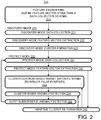
- FIG. 2 is a flow chart of an application-protection process implementable in the computer system of FIG. 1 and in other systems.
- FIG. 3 is an allowed-behavior table.
- FIG. 4 is an allowed-connection table.
- FIG. 5 is a schematic diagram of a feature vector.
- the present invention provides a whitelist that adapts as the behaviors of the respective application evolve.
- Process data is captured describing various application processes. Feature vectors are extracted from the process data and are arranged as datapoints in a multi-dimensional vector space. The datapoints are grouped into clusters, e.g., defined by respective centroids and diameters or radii. Subsequently acquired datapoints that fall outside these clusters may be flagged as anomalies. (The subsequently acquired datapoints may be filtered to reduce the number of false positives.) Also, datapoints acquired after clusters are defined may be used to adjust or re-determine the clusters to reflect changes in the normal behaviors of the application.
- a cloud-based computer-network management system 100 shown in FIG. 1 , includes a cloud-based computer-network manager 102 , a managed computer-network system 104 , and other managed computer-network systems 106 .
- Cloud-based manager 102 includes an application protector (AP) 110 .
- Application protector 110 includes data storage 112 , a feature-vector extractor 114 , an X-means cluster generator 116 , non-anomalous clusters 118 , a subset match filter 120 , a cluster-based anomaly detector 122 , and an alert generator 124 .
- Managed system 104 includes hardware 130 including one or more processors and one or more hypervisors 132 for virtualizing the hardware to support one or more enterprise applications 140 .
- Each enterprise application includes plural virtual machines 142 .
- Each virtual machine at any given time, is executing processes 144 , which, in turn, are making respective connections 146 .
- Installed in each virtual machine 142 is a respective application-protector (AP) agent 150 of application protector 110 .
- Each application-protector agent 150 collects process data characterizing processes 144 and connections 146 of virtual machines 106 .
- Agents 150 provide data collections 152 to application protector 110 , which issues anomaly alerts 154 based on data collections 152 .
- the illustrated embodiment uses an X-means clustering approach; another embodiment uses the more traditional K-means approach.
- the X-means approach has the following advantages: 1) it scales better; 2) the X-means approach can determine an optimal number of clusters, whereas the K-means approach is limited to a number provided to it; and 3) a local minimum issue is reduced.
- the X-means approach starts with a number “k” of clusters equal to the lower bound of the given range and continues to add centroids as needed until a diminishing-returns threshold is reached.
- the X-means approach consists of the following two operations repeated until completion: Improve-Params and Improve-structure.
- the improve-params consists of running conventional K-means to convergence. The improve-structure operation finds out whether and where new centroids should appear. See “X-means: Extending K-means with efficient estimation of the number of clusters—Pelleg, Moore—2000, In Proceedings of the 17th International Conf. on Machine Learning.
- a process 200 implementable in system 100 and in other systems, is flow-charted in FIG. 2 .
- feature engineering defines the structure of feature vectors and the data collection schema.
- the data collection schema are represented in FIGS. 3 and 4 in the form of allowed-behavior table 300 and allowed-connection table 400 .
- the feature-vector structure is represented in one instance as feature vector 500 in FIG. 5 .
- Feature engineering 210 is followed by a discovery mode 220 and a protect mode 230 .
- Discovery mode 220 is designed to establish an initial set of clusters. At 221 , discovery-mode data collection is performed. Each process of each virtual machine is characterize using the parameters of table 300 , FIG. 3 , while each connection is characterized using the parameters of table 400 , FIG. 4 .
- features are extracted from the data collected at 221 .
- feature extraction involves determining which features represented in the feature vector are present in a given process instance. For each feature listed in FIG. 5 , a “1” indicates the feature is present in the process instance and a “0” indicates that it is not. Of course, the meanings of “0” and “1” can be reversed. For generality, one can say a “true” value can indicate the feature is present, while a “false” value can indicate that it is not.
- discovery-mode cluster formation is performed.
- the feature vectors extracted at 222 are arranged in groups by proximity. While a conventional K-means approach can be used to form the clusters, the illustrated embodiment uses an X-means approach, which has several advantages. For example, while the K-means approach requires the number of clusters to be predetermined, while the X-means approach can determine an appropriate number of clusters according to a diminishing returns threshold. For the most part, clusters represent normal operation, while points outside the clusters represent potential anomalies. However, clusters with at most a few datapoints may also be deemed to be anomalies. The other, non-anomalous, clusters are used for detecting anomalous processes.
- process 200 is switched from discovery mode 220 to protect mode 230 .
- protect-mode data collection is performed; protect-mode data collection is essentially the same as discovery-mode data collection except that it is performed during protect mode 230 .
- protect-mode feature extraction 232 is basically the same as discovery-mode feature extraction.
- cluster-centroid-based subset match filtering is performed to reduce false positive anomaly detections.
- Each centroid corresponds to a feature vector of binary values assigned to the features listed in FIG. 5 .
- Each incoming feature vector that only has 1s (“true” values) in positions that a centroid has 1s is filtered out. For example, a feature vector with three of the five 1s in a centroid is filtered out providing it has no 1s in positions in which the centroid has a zero.
- incoming feature vectors in which the set of all positions occupied by 1s (“true” values) is a non-empty but possibly exhaustive subset of the set of all positions occupied by 1s in a centroid is filtered out from further consideration as an anomaly.
- the basic idea is that some features may not have occurred at the time the process data for the incoming feature vector was collected but may appear later.
- Incoming feature vectors in which the set of all positions with 1s not a subset of the set of all positions with 1s of the centroid of a non-anomalous cluster are passed on for further consideration as possibly anomalous.
- an alert is sent to a subscriber, allowing the subscriber to make further investigation. Whether or not an alert is sent, protection is continued as indicated by arrow 236 from 235 to protect-mode data collection 231 . However, it is more accurate to characterize actions 231 - 235 as an ongoing pipeline than as a loop.
- a feature vector that is not within, i.e., within the bounds of, at least one non-anomalous cluster is treated as anomalous.
- the bounds of a cluster must be determined.
- the clusters are characterized by a centroid and a diameter.
- each cluster is, in effect, an n-dimensional sphere and the diameter is large enough so that sphere includes all the feature vectors that constitute the cluster.
- Characterizing a cluster using a single diameter or radius treats the cluster as isotropic (extending the same amount in every direction).
- anisotropic clusters can be accommodated, e.g., by allowing the diameter or radius to change as a function of direction from the centroid. However, the additional processing required to accommodate anisotropic clusters may make it cost ineffective.
- adaptive cluster reformation is performed at 240 .
- the protect-mode cluster reformation is similar to the discovery-mode cluster formation at 223 .
- the datapoints are weighted in favor of more recent datapoints; in other words, the weight of a datapoint decays over time as a function of process last update time in allowed behavior table 300 . The effect is that the clusters gradually track changes in application behavior so that anomaly detections remain accurate.
- EWMA exponentially weighted moving average
Landscapes
- Engineering & Computer Science (AREA)
- Computer Security & Cryptography (AREA)
- General Engineering & Computer Science (AREA)
- Computer Hardware Design (AREA)
- Computing Systems (AREA)
- Computer Networks & Wireless Communication (AREA)
- Signal Processing (AREA)
- Data Mining & Analysis (AREA)
- Theoretical Computer Science (AREA)
- Physics & Mathematics (AREA)
- Life Sciences & Earth Sciences (AREA)
- Artificial Intelligence (AREA)
- Bioinformatics & Cheminformatics (AREA)
- Bioinformatics & Computational Biology (AREA)
- Computer Vision & Pattern Recognition (AREA)
- Evolutionary Biology (AREA)
- Evolutionary Computation (AREA)
- General Physics & Mathematics (AREA)
- Probability & Statistics with Applications (AREA)
- Data Exchanges In Wide-Area Networks (AREA)
Abstract
Description
Claims (12)
Priority Applications (1)
| Application Number | Priority Date | Filing Date | Title |
|---|---|---|---|
| US16/103,108 US11122065B2 (en) | 2018-08-14 | 2018-08-14 | Adaptive anomaly detection for computer systems |
Applications Claiming Priority (1)
| Application Number | Priority Date | Filing Date | Title |
|---|---|---|---|
| US16/103,108 US11122065B2 (en) | 2018-08-14 | 2018-08-14 | Adaptive anomaly detection for computer systems |
Publications (2)
| Publication Number | Publication Date |
|---|---|
| US20200059482A1 US20200059482A1 (en) | 2020-02-20 |
| US11122065B2 true US11122065B2 (en) | 2021-09-14 |
Family
ID=69523651
Family Applications (1)
| Application Number | Title | Priority Date | Filing Date |
|---|---|---|---|
| US16/103,108 Active 2039-08-25 US11122065B2 (en) | 2018-08-14 | 2018-08-14 | Adaptive anomaly detection for computer systems |
Country Status (1)
| Country | Link |
|---|---|
| US (1) | US11122065B2 (en) |
Families Citing this family (2)
| Publication number | Priority date | Publication date | Assignee | Title |
|---|---|---|---|---|
| US11290329B2 (en) * | 2020-04-30 | 2022-03-29 | Hewlett Packard Enterprise Development Lp | Configuring a network based on a centroid configuration of a group of network entities |
| CN116781389B (en) * | 2023-07-18 | 2023-12-22 | 山东溯源安全科技有限公司 | Determination method of abnormal data list, electronic equipment and storage medium |
Citations (9)
| Publication number | Priority date | Publication date | Assignee | Title |
|---|---|---|---|---|
| US7424619B1 (en) | 2001-10-11 | 2008-09-09 | The Trustees Of Columbia University In The City Of New York | System and methods for anomaly detection and adaptive learning |
| US20130097706A1 (en) * | 2011-09-16 | 2013-04-18 | Veracode, Inc. | Automated behavioral and static analysis using an instrumented sandbox and machine learning classification for mobile security |
| US8800036B2 (en) | 2010-01-22 | 2014-08-05 | The School Of Electrical Engineering And Computer Science (Seecs), National University Of Sciences And Technology (Nust) | Method and system for adaptive anomaly-based intrusion detection |
| US20150220847A1 (en) * | 2014-02-05 | 2015-08-06 | Hitachi Power Solutions Co., Ltd. | Information Processing Apparatus, Diagnosis Method, and Program |
| US20150363925A1 (en) * | 2013-01-22 | 2015-12-17 | Hitachi, Ltd. | Anomaly Diagnosis Method and Apparatus |
| US20160285700A1 (en) | 2015-03-24 | 2016-09-29 | Futurewei Technologies, Inc. | Adaptive, Anomaly Detection Based Predictor for Network Time Series Data |
| US9544321B2 (en) | 2015-01-30 | 2017-01-10 | Securonix, Inc. | Anomaly detection using adaptive behavioral profiles |
| US9699206B2 (en) | 2012-03-22 | 2017-07-04 | Los Alamos National Security, Llc | Using new edges for anomaly detection in computer networks |
| US10659477B2 (en) * | 2017-12-19 | 2020-05-19 | The Boeing Company | Method and system for vehicle cyber-attack event detection |
-
2018
- 2018-08-14 US US16/103,108 patent/US11122065B2/en active Active
Patent Citations (9)
| Publication number | Priority date | Publication date | Assignee | Title |
|---|---|---|---|---|
| US7424619B1 (en) | 2001-10-11 | 2008-09-09 | The Trustees Of Columbia University In The City Of New York | System and methods for anomaly detection and adaptive learning |
| US8800036B2 (en) | 2010-01-22 | 2014-08-05 | The School Of Electrical Engineering And Computer Science (Seecs), National University Of Sciences And Technology (Nust) | Method and system for adaptive anomaly-based intrusion detection |
| US20130097706A1 (en) * | 2011-09-16 | 2013-04-18 | Veracode, Inc. | Automated behavioral and static analysis using an instrumented sandbox and machine learning classification for mobile security |
| US9699206B2 (en) | 2012-03-22 | 2017-07-04 | Los Alamos National Security, Llc | Using new edges for anomaly detection in computer networks |
| US20150363925A1 (en) * | 2013-01-22 | 2015-12-17 | Hitachi, Ltd. | Anomaly Diagnosis Method and Apparatus |
| US20150220847A1 (en) * | 2014-02-05 | 2015-08-06 | Hitachi Power Solutions Co., Ltd. | Information Processing Apparatus, Diagnosis Method, and Program |
| US9544321B2 (en) | 2015-01-30 | 2017-01-10 | Securonix, Inc. | Anomaly detection using adaptive behavioral profiles |
| US20160285700A1 (en) | 2015-03-24 | 2016-09-29 | Futurewei Technologies, Inc. | Adaptive, Anomaly Detection Based Predictor for Network Time Series Data |
| US10659477B2 (en) * | 2017-12-19 | 2020-05-19 | The Boeing Company | Method and system for vehicle cyber-attack event detection |
Non-Patent Citations (1)
| Title |
|---|
| Pelleg, Dan, and Moore, Andrew "X-means: Extending K-means with Efficient Estimation of the Number of Clusters", In Proceedings of the 17th International Conf. on Machine Learning, 2000, Pittsburg, PA, US, pp. 1-8. |
Also Published As
| Publication number | Publication date |
|---|---|
| US20200059482A1 (en) | 2020-02-20 |
Similar Documents
| Publication | Publication Date | Title |
|---|---|---|
| CN110826648B (en) | Method for realizing fault detection by utilizing time sequence clustering algorithm | |
| EP3671466B1 (en) | Unsupervised anomaly detection for arbitrary time series | |
| CN109522716B (en) | Network intrusion detection method and device based on time sequence neural network | |
| KR101621019B1 (en) | Method for detecting attack suspected anomal event | |
| US9665713B2 (en) | System and method for automated machine-learning, zero-day malware detection | |
| CN103955645B (en) | The detection method of malicious process behavior, apparatus and system | |
| Deng | Research on anomaly detection method based on DBSCAN clustering algorithm | |
| US9224067B1 (en) | System and methods for digital artifact genetic modeling and forensic analysis | |
| KR102534334B1 (en) | Detection of software attacks on processes in computing devices | |
| Darshan et al. | Performance evaluation of filter-based feature selection techniques in classifying portable executable files | |
| EP3455773A1 (en) | Inferential exploit attempt detection | |
| EP3905084B1 (en) | Method and device for detecting malware | |
| US11122065B2 (en) | Adaptive anomaly detection for computer systems | |
| KR101988747B1 (en) | Ransomware dectecting method and apparatus based on machine learning through hybrid analysis | |
| CN111786986A (en) | A kind of numerical control system network intrusion prevention system and method | |
| CN113746780A (en) | Abnormal host detection method, device, medium and equipment based on host image | |
| US20240241945A1 (en) | System and method for correlating alerts generated by endpoints | |
| KR20180133726A (en) | Appratus and method for classifying data using feature vector | |
| KR20210054799A (en) | Method and apparatus for generating summary of url for url clustering | |
| CN119051935B (en) | A method for detecting APT attacks based on malicious intent representation graph | |
| CN111800312B (en) | Message content analysis-based industrial control system anomaly detection method and system | |
| US20240205245A1 (en) | Method and system of filtering out alerts that trigger on legitimate activity | |
| JP7460242B2 (en) | KNOWLEDGE CREATION DEVICE, CONTROL METHOD, AND PROGRAM | |
| Moradi Koupaie et al. | Outlier detection in stream data by machine learning and feature selection methods | |
| Dubey et al. | A Survey on Anomaly Detection in IoT Networks: From Classical Methods to AI-Powered Solutions |
Legal Events
| Date | Code | Title | Description |
|---|---|---|---|
| FEPP | Fee payment procedure |
Free format text: ENTITY STATUS SET TO UNDISCOUNTED (ORIGINAL EVENT CODE: BIG.); ENTITY STATUS OF PATENT OWNER: LARGE ENTITY |
|
| AS | Assignment |
Owner name: VMWARE, INC., CALIFORNIA Free format text: ASSIGNMENT OF ASSIGNORS INTEREST;ASSIGNORS:ZAN, BIN;WANG, DEXIANG;MO, ZHEN;AND OTHERS;REEL/FRAME:051684/0043 Effective date: 20180813 |
|
| STPP | Information on status: patent application and granting procedure in general |
Free format text: RESPONSE TO NON-FINAL OFFICE ACTION ENTERED AND FORWARDED TO EXAMINER |
|
| STPP | Information on status: patent application and granting procedure in general |
Free format text: NOTICE OF ALLOWANCE MAILED -- APPLICATION RECEIVED IN OFFICE OF PUBLICATIONS |
|
| STPP | Information on status: patent application and granting procedure in general |
Free format text: PUBLICATIONS -- ISSUE FEE PAYMENT RECEIVED |
|
| STPP | Information on status: patent application and granting procedure in general |
Free format text: PUBLICATIONS -- ISSUE FEE PAYMENT VERIFIED |
|
| STPP | Information on status: patent application and granting procedure in general |
Free format text: AWAITING TC RESP, ISSUE FEE PAYMENT VERIFIED |
|
| STPP | Information on status: patent application and granting procedure in general |
Free format text: PUBLICATIONS -- ISSUE FEE PAYMENT VERIFIED |
|
| STCF | Information on status: patent grant |
Free format text: PATENTED CASE |
|
| AS | Assignment |
Owner name: VMWARE LLC, CALIFORNIA Free format text: CHANGE OF NAME;ASSIGNOR:VMWARE, INC.;REEL/FRAME:067102/0314 Effective date: 20231121 |
|
| MAFP | Maintenance fee payment |
Free format text: PAYMENT OF MAINTENANCE FEE, 4TH YEAR, LARGE ENTITY (ORIGINAL EVENT CODE: M1551); ENTITY STATUS OF PATENT OWNER: LARGE ENTITY Year of fee payment: 4 |