US11093638B2 - Distributed management of user privacy information - Google Patents
Distributed management of user privacy information Download PDFInfo
- Publication number
- US11093638B2 US11093638B2 US16/399,318 US201916399318A US11093638B2 US 11093638 B2 US11093638 B2 US 11093638B2 US 201916399318 A US201916399318 A US 201916399318A US 11093638 B2 US11093638 B2 US 11093638B2
- Authority
- US
- United States
- Prior art keywords
- encrypted
- information
- user
- user information
- device information
- Prior art date
- Legal status (The legal status is an assumption and is not a legal conclusion. Google has not performed a legal analysis and makes no representation as to the accuracy of the status listed.)
- Active, expires
Links
Images



Classifications
-
- H—ELECTRICITY
- H04—ELECTRIC COMMUNICATION TECHNIQUE
- H04L—TRANSMISSION OF DIGITAL INFORMATION, e.g. TELEGRAPHIC COMMUNICATION
- H04L9/00—Cryptographic mechanisms or cryptographic arrangements for secret or secure communications; Network security protocols
- H04L9/32—Cryptographic mechanisms or cryptographic arrangements for secret or secure communications; Network security protocols including means for verifying the identity or authority of a user of the system or for message authentication, e.g. authorization, entity authentication, data integrity or data verification, non-repudiation, key authentication or verification of credentials
- H04L9/3236—Cryptographic mechanisms or cryptographic arrangements for secret or secure communications; Network security protocols including means for verifying the identity or authority of a user of the system or for message authentication, e.g. authorization, entity authentication, data integrity or data verification, non-repudiation, key authentication or verification of credentials using cryptographic hash functions
- H04L9/3239—Cryptographic mechanisms or cryptographic arrangements for secret or secure communications; Network security protocols including means for verifying the identity or authority of a user of the system or for message authentication, e.g. authorization, entity authentication, data integrity or data verification, non-repudiation, key authentication or verification of credentials using cryptographic hash functions involving non-keyed hash functions, e.g. modification detection codes [MDCs], MD5, SHA or RIPEMD
-
- G—PHYSICS
- G06—COMPUTING OR CALCULATING; COUNTING
- G06F—ELECTRIC DIGITAL DATA PROCESSING
- G06F21/00—Security arrangements for protecting computers, components thereof, programs or data against unauthorised activity
- G06F21/60—Protecting data
- G06F21/62—Protecting access to data via a platform, e.g. using keys or access control rules
- G06F21/6218—Protecting access to data via a platform, e.g. using keys or access control rules to a system of files or objects, e.g. local or distributed file system or database
- G06F21/6245—Protecting personal data, e.g. for financial or medical purposes
-
- G—PHYSICS
- G06—COMPUTING OR CALCULATING; COUNTING
- G06F—ELECTRIC DIGITAL DATA PROCESSING
- G06F21/00—Security arrangements for protecting computers, components thereof, programs or data against unauthorised activity
- G06F21/60—Protecting data
- G06F21/602—Providing cryptographic facilities or services
-
- H—ELECTRICITY
- H04—ELECTRIC COMMUNICATION TECHNIQUE
- H04L—TRANSMISSION OF DIGITAL INFORMATION, e.g. TELEGRAPHIC COMMUNICATION
- H04L63/00—Network architectures or network communication protocols for network security
- H04L63/04—Network architectures or network communication protocols for network security for providing a confidential data exchange among entities communicating through data packet networks
- H04L63/0428—Network architectures or network communication protocols for network security for providing a confidential data exchange among entities communicating through data packet networks wherein the data content is protected, e.g. by encrypting or encapsulating the payload
-
- H—ELECTRICITY
- H04—ELECTRIC COMMUNICATION TECHNIQUE
- H04L—TRANSMISSION OF DIGITAL INFORMATION, e.g. TELEGRAPHIC COMMUNICATION
- H04L63/00—Network architectures or network communication protocols for network security
- H04L63/10—Network architectures or network communication protocols for network security for controlling access to devices or network resources
- H04L63/105—Multiple levels of security
-
- H—ELECTRICITY
- H04—ELECTRIC COMMUNICATION TECHNIQUE
- H04L—TRANSMISSION OF DIGITAL INFORMATION, e.g. TELEGRAPHIC COMMUNICATION
- H04L63/00—Network architectures or network communication protocols for network security
- H04L63/10—Network architectures or network communication protocols for network security for controlling access to devices or network resources
- H04L63/108—Network architectures or network communication protocols for network security for controlling access to devices or network resources when the policy decisions are valid for a limited amount of time
-
- H—ELECTRICITY
- H04—ELECTRIC COMMUNICATION TECHNIQUE
- H04L—TRANSMISSION OF DIGITAL INFORMATION, e.g. TELEGRAPHIC COMMUNICATION
- H04L63/00—Network architectures or network communication protocols for network security
- H04L63/12—Applying verification of the received information
-
- H—ELECTRICITY
- H04—ELECTRIC COMMUNICATION TECHNIQUE
- H04L—TRANSMISSION OF DIGITAL INFORMATION, e.g. TELEGRAPHIC COMMUNICATION
- H04L9/00—Cryptographic mechanisms or cryptographic arrangements for secret or secure communications; Network security protocols
- H04L9/08—Key distribution or management, e.g. generation, sharing or updating, of cryptographic keys or passwords
- H04L9/0894—Escrow, recovery or storing of secret information, e.g. secret key escrow or cryptographic key storage
-
- H—ELECTRICITY
- H04—ELECTRIC COMMUNICATION TECHNIQUE
- H04L—TRANSMISSION OF DIGITAL INFORMATION, e.g. TELEGRAPHIC COMMUNICATION
- H04L9/00—Cryptographic mechanisms or cryptographic arrangements for secret or secure communications; Network security protocols
- H04L9/14—Cryptographic mechanisms or cryptographic arrangements for secret or secure communications; Network security protocols using a plurality of keys or algorithms
-
- H—ELECTRICITY
- H04—ELECTRIC COMMUNICATION TECHNIQUE
- H04L—TRANSMISSION OF DIGITAL INFORMATION, e.g. TELEGRAPHIC COMMUNICATION
- H04L9/00—Cryptographic mechanisms or cryptographic arrangements for secret or secure communications; Network security protocols
- H04L9/32—Cryptographic mechanisms or cryptographic arrangements for secret or secure communications; Network security protocols including means for verifying the identity or authority of a user of the system or for message authentication, e.g. authorization, entity authentication, data integrity or data verification, non-repudiation, key authentication or verification of credentials
- H04L9/3236—Cryptographic mechanisms or cryptographic arrangements for secret or secure communications; Network security protocols including means for verifying the identity or authority of a user of the system or for message authentication, e.g. authorization, entity authentication, data integrity or data verification, non-repudiation, key authentication or verification of credentials using cryptographic hash functions
- H04L9/3242—Cryptographic mechanisms or cryptographic arrangements for secret or secure communications; Network security protocols including means for verifying the identity or authority of a user of the system or for message authentication, e.g. authorization, entity authentication, data integrity or data verification, non-repudiation, key authentication or verification of credentials using cryptographic hash functions involving keyed hash functions, e.g. message authentication codes [MACs], CBC-MAC or HMAC
-
- H—ELECTRICITY
- H04—ELECTRIC COMMUNICATION TECHNIQUE
- H04L—TRANSMISSION OF DIGITAL INFORMATION, e.g. TELEGRAPHIC COMMUNICATION
- H04L9/00—Cryptographic mechanisms or cryptographic arrangements for secret or secure communications; Network security protocols
- H04L9/50—Cryptographic mechanisms or cryptographic arrangements for secret or secure communications; Network security protocols using hash chains, e.g. blockchains or hash trees
-
- H—ELECTRICITY
- H04—ELECTRIC COMMUNICATION TECHNIQUE
- H04L—TRANSMISSION OF DIGITAL INFORMATION, e.g. TELEGRAPHIC COMMUNICATION
- H04L2463/00—Additional details relating to network architectures or network communication protocols for network security covered by H04L63/00
- H04L2463/121—Timestamp
Definitions
- a method comprising receiving an identity that comprises device information regarding a user device and user information regarding a user of the user device, encrypting the device information to create encrypted device information, and encrypting the user information to create encrypted user information.
- the method may further comprise storing the encrypted device information and the encrypted user information in a repository, storing indications of the encrypted device information and the encrypted user information on a distributed ledger, and enforcing a first access policy on the encrypted device information and a second access policy on the encrypted user information.
- storing indications of the encrypted device information and the encrypted user information on the distributed ledger comprises storing the first and second encryption keys on the distributed ledger.
- storing the encrypted device information and the encrypted user information in the repository comprises storing the encrypted device information and the encrypted user information in separate containers of the repository.
- the separate containers of the repository are separate segmented memories of the repository.
- the identity further includes a unique identifier and both the encrypted device information and the encrypted user information are stored in association with the unique identifier.
- the unique identifier is encrypted with the device information and the user information to form the encrypted device information and the encrypted user information.
- the encrypted device information and the encrypted user information are stored with associations to the unique identifier.
- the unique identifier is hashed before storing to generate a hashed unique identifier that is stored in association with the encrypted device information and the encrypted user information.
- the method further comprises storing the first and second encryption keys via a privacy manager configured to enforce the first and second access policies.
- the first access policy includes a first time stamp and the second access policy includes a second time stamp that is earlier than the first time stamp.
- the privacy manager is configured to delete the encrypted device information after the first time stamp and to delete the encrypted user information after the second time stamp.
- the method further comprises receiving, at the privacy manager, a request to access the user information from a requesting party, determining that the requesting party is authorized under the second access policy, and allowing the requesting party to access the data.
- allowing the requesting party to access the data comprises providing the requesting party with the encryption key.
- allowing the requesting party to access the data comprises decrypting the encrypted user information with the second encryption key and providing the user information to the requesting party.
- providing the user information to the requesting party comprises providing indirect access to the user information.
- the method further comprises receiving a request from the user to revoke access for a removed party to one or both of the user information and the device information and removing the removed party from the associated access policy.
- the method further comprises receiving a request from the user to remove all access to one or both of the device information and the user information and removing the associated encryption key.
- the first access policy includes no user-based access restrictions.
- the second access policy allows only authorized accessors to access the user information.
- At least one of the authorized accessors is granted permission by the user.
- the user grants at least one authorized accessor access for a limited time.
- the second access policy restricts access to the user information based on country location of one or both of the user and a requesting party seeking access to the user information.
- the identity is a full identity that is sufficient to personally identify the user.
- the identity is a partial identity that is insufficient to personally identify the user.
- a system comprising a processor and a memory.
- the memory stores instructions which, when executed by the processor, cause the processor to receive an identity that comprises device information regarding a user device and user information regarding a user of the user device, separate the device information and the user information, and encrypt the device information with a first encryption key to create encrypted device information.
- the memory may store further instructions which, when executed by the processor, cause the processor to encrypt the user information with a second encryption key to create encrypted user information, store indications of the encrypted device information and the encrypted user information on the distributed ledger, and enforce a first access policy on the device information and a second access policy on the user information.
- a non-transitory, computer-readable medium storing instructions which, when executed by a processor, cause the processor to receive an identity that comprises device information regarding a user device and user information regarding a user of the user device, separate the device information and the user information, and encrypt the device information with a first encryption key to create encrypted device information.
- the non-transitory, computer-readable medium may store further instructions which, when executed by the processor, cause the processor to encrypt the user information with a second encryption key to create encrypted user information, store indications of the encrypted device information and the encrypted user information on the distributed ledger, and enforce a first access policy on the device information and a second access policy on the user information.
- a method is comprising receiving an identity that comprises device information regarding a user device and user information regarding a user of the user device, generating a unique identifier corresponding to the identity, and encrypting the device information with a first encryption key to create encrypted device information.
- the method may further comprise encrypting the user information with a second encryption key to create encrypted user information, storing a first hash of the encrypted device information on a distributed ledger in association with the unique identifier, and storing a second hash of the encrypted user information on the distributed ledger in association with the unique identifier.
- the method may still further comprise receiving a data access request including the unique identifier and one or both of the first hash and the second hash, enforcing a first access policy on the data access request if the data access request includes the first hash, and enforcing a second access policy on the data access request if the data access request includes the second hash.
- the first and second access policies may be stored in association with the unique identifier.
- FIG. 1 illustrates a system according to an exemplary embodiment of the present disclosure.
- FIG. 2 illustrates a key generation system according to an exemplary embodiment of the present disclosure.
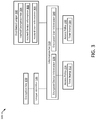
- FIG. 3 illustrates a data schema according to an exemplary embodiment of the present disclosure.
- FIG. 4 illustrates a method according to an exemplary embodiment of the present disclosure.
- One way to address the above-identified problems is to provide a system capable of separating sensitive user privacy information from less-sensitive user privacy information in order to enforce differing access policies according to the information sensitivity.
- such systems should also be able to allow analytics and other review of collected information in compliance with the pertinent access policies. For example, access may be permitted to perform system analytics or to provide service recommendations based on determined user preferences.
- the system may also process requests from a user to change access policies to certain pieces of information and to enforce such changes on future requests to access the information.
- FIG. 1 depicts a system 100 according to an exemplary embodiment of the present disclosure.
- the system 100 may be configured to receive and securely process and manage user privacy information.
- the system 100 includes user devices 102 , 108 , a user identifier 112 , a privacy manager 122 , a key store 142 , and a secure repository 148 .
- One of more of the user identifier 112 , the privacy manager 122 , the key store 142 , and the secure repository 148 may be implemented by one or more CPUs and memories.
- the memories may store one or more instructions which, when executed by the CPUs, cause the CPUs to implement one or more functions of the user identifier 112 , the privacy manager 122 , the key store 142 , and the secure repository 148 .
- the above-mentioned components of the system 100 may communicate along the links depicted in FIG. 1 .
- These communicative links may be implemented as a network connection, such as a local network connection or a network connection via the Internet or similar external network. These communications may take place along one or more wired or wireless network interfaces (e.g., ETHERNET, WI-FI, BLUETOOTH, and cellular interface connections).
- the user devices 102 , 108 may be used by users (e.g., customers or other individuals of interest). For example, the user device 102 may be used by a user to connect to a wireless network provided by a business. While the user device 102 interacts with the network, the user device 102 may exchange identifying information 106 of the user device (e.g., a MAC address, a serial number, an IMEI identifier, and/or an IP address). The user devices 102 , 108 may also generate access control requests 104 for manipulating access policies 154 , 160 and/or data access requests 110 for accessing data stored on the secure repository 148 , as discussed below.
- the user devices 102 , 108 may be implemented by computing devices such as smartphones, personal computers, tablet computers.
- the user identifier 112 may be configured to generate identities corresponding to user devices 102 , 108 .
- the user identifier 112 may generate a partial identity 114 reflecting at least a partial identification of a user associated with the user device 102 , 108 and/or a full identity 120 representing a complete identification of the user associated with the user device 102 , 108 .
- the user identifier 112 may receive and process the identifying information 106 from the user devices 102 , 108 .
- the user identifier 112 may receive the identifying information 106 and may monitor network traffic associated with the user identifier 112 to generate the partial identity 114 and the full identity.
- the partial identity 114 is depicted as including device information 116 , such as identifying information regarding the user device 102 , and user information 118 , such as preferences or other identifying information of the user associated with the user device 102 .
- the full identity 120 may include similar information. Additional information regarding generation of the partial identity 114 and the full identity 120 is provided in U.S. application Ser. No. 16/376,313, entitled “Network-Based Partial and Full User Identification Techniques,” which is hereby incorporated by reference.
- the privacy manager 122 may be configured to receive and process information reflected in the identities 114 , 120 (e.g., device information 116 and user information 118 ) to protect user privacy.
- the user information 118 may implicate greater privacy concerns due to higher user privacy expectations and/or statutory privacy requirements (e.g., under the Health Insurance Portability and Accountability Act, the EU General Data Protection Regulation, and the California Consumer Privacy Act).
- the device information 116 may concern less-sensitive information and may therefore be subject to more relaxed access concerns. Based on these discrepancies, the privacy manager 122 may allow easier access (e.g., for analytics and research) to device information 116 than to the user information 118 .
- the privacy manager 122 includes a key generation system 124 that may be configured to generate encryption keys 128 , 130 for encryption of the device information 116 and the user information 118 .
- the key generation 124 may generate one or more encryption keys 128 , 130 based on a unique identifier 126 of a user (e.g., the user associated with the user device 102 , 108 ).
- the unique identifier 126 may be a unique identifier of the user device 102 , such as a MAC address of the user device 102 from which a corresponding identity 114 , 120 is generated.
- the unique identifier 126 may be received with the identity 114 , 120 .
- the key generation system 124 may generate one or more encryption keys 128 , 130 for each received identity 114 , 120 .
- the key generation system 124 may generate a single encryption key 130 for encrypting both the device information 116 and the user information 118 .
- the key generation system 124 may generate a first encryption key 128 for encrypting the device information 116 and a second encryption key 130 for encrypting the user information 118 .
- One or both of the encryption keys 128 , 130 may include a private key 134 and a public key 132 , as depicted for the encryption key 130 .
- the information encryption system 136 may be configured to encrypt the device information 116 and the user information 118 to generate encrypted device information 138 and encrypted user information 140 , respectively.
- the information encryption system 136 may encrypt the device information 116 and the user information 118 using the one or more encryption keys 128 , 130 .
- the privacy manager 122 may then store the encrypted device information 138 and the encrypted user information 140 in the secure repository 148 .
- the secure repository 148 may store the encrypted device information 138 in association with the unique identifier 126 and an access policy 154 and may store the encrypted user information 140 in association with the unique identifier 126 and a different access policy 154 .
- the encrypted device information 138 and the encrypted user information 140 may be stored separately in the secure repository 148 (e.g., in different containers or on different storage media of the secure repository 148 ).
- the privacy manager 122 may also store the encryption keys 128 , 130 in the key store 142 .
- the key store 142 may store both public keys 132 and private keys 134 in certain implementations. In other implementations, the key store 142 may store public keys and the secure repository 148 may store private keys 134 . In still further implementations, all or part of the encryption keys 128 , 130 may be encrypted before storage within the key store 142 . For example, the private key 134 may be encrypted prior to storage within the key store 142 (e.g., using a private key of the privacy manager 122 ).
- FIG. 2 depicts a key generation system 200 according to an exemplary embodiment of the present disclosure.
- the key generation system 200 may be an exemplary implementation of the key generation system 124 and may depict a key generation operation.
- the key generation system 200 as depicted may perform a key generation operation using the unique identifier 126 to generate the encryption key 130 .
- the key generation system 200 may hash the unique identifier 126 with salt 202 (e.g., random data) to generate the key seed 204 .
- the key seed 204 may then be used to generate an ID key 206 .
- the ID key 206 may, in certain implementations be used by the privacy manager 122 in a temporal manner. For example, where a user device 102 interacts with the user identifier 112 multiple times over a given duration, the ID key 206 may be used to link these interactions across the different interactions if it is generated from the unique identifier 126 associated with the user device 102 .
- the key generation system 200 may then generate one or more encryptions keys 130 based on the ID key 206 .
- a Merkle tree structure such as a Merkle signature scheme, may be used for each block of data from the user information 118 and the device information 116 that is encrypted. Such implementations may create a stateful, hash-based encryption for the encrypted device information 138 and the encrypted user information 140 .
- the public key 132 may be a value of or may be bound to the root node of the Merkle tree structure and the private key 138 may be an aggregation of each of the one-time signatures used in the interior branches of the Merkle tree structure.
- the privacy manager 122 may manage the Merkle tree structure and one or more one-time signatures thereof.
- the public key 134 for these encrypted information sets may then be made available to requesting entities as appropriate, such as those undertaking evaluation, analytics, aggregation or other processing of these information sets.
- this can include system operations, host customer resource management (CRM) services, machine learning operations, pattern and matching operations, and analytics.
- CRM host customer resource management
- FIG. 3 depicts a data schema 300 according to an exemplary embodiment of the present disclosure.
- the data schema 300 may depict one exemplary form of storing user privacy information in an encrypted fashion such that one or more parties may be granted access according to an access policy 154 , 160 .
- the data schema 300 may be implemented by the system 100 (e.g., by the privacy manager 122 , key store 142 , and/or secure repository 148 ) to store and control access to encrypted device information 138 , 140 in a decentralized fashion.
- the data schema 300 further includes a distributed ledger 302 , which may store indications of the data stored in the secure repository 148 .
- the distributed ledger 302 may be implemented using one or more public or private implementations.
- the distributed ledger 302 may be implemented by one or more nodes (e.g., computing devices) implementing a blockchain.
- the implementing nodes may be all or partly controlled by an entity implementing the system.
- the distributed ledger 302 may be implemented as a private blockchain.
- the distributed ledger 302 may be implemented as a public blockchain (e.g., the Ethereum® or Bitcoin® blockchains).
- the encryption 130 is stored in association with the unique identifier 126 .
- the encryption key 130 may be stored in the key store 142 alongside an indicator referring to the unique identifier 126 (e.g., the unique identifier 126 itself and/or a hash of the unique identifier 126 ).
- the public key 132 and the private key 134 may be stored separately.
- the public key 132 may be stored in a publicly-available key store 142
- the private key 134 may be stored in the secure repository 148 .
- the data schema 300 also includes an information set 310 , which includes the encrypted device information 138 and the encrypted user information 140 .
- the information set 310 may be stored in the secure repository 148 .
- the information set 310 may be stored associated with the unique identifier 126 . Similar to the encryption key 130 , the information set 310 may be stored alongside an indicator referring to the unique identifier 126 (e.g., the unique identifier 126 itself and/or a hash of the unique identifier 126 ).
- the encrypted device information 138 and the encrypted user information 140 may be stored in separate containers of the secure repository 148 . In such implementations, each of the encrypted device information 138 and the encrypted user information 140 may separately store an association with the unique identifier 126 .
- the encrypted device information 138 has a first associated access policy 154
- the encrypted user information 140 has a second associated access policy 160 .
- These associations may be stored with the access policies 154 , 160 as an identifier of the corresponding encrypted information 138 , 140 and/or with the encrypted information 138 , 140 as an identifier of the corresponding access policy 154 , 160 .
- Each of the encrypted device information 138 and the encrypted user information 140 may require its own access policy 154 , 160 because of the varying sensitivity of the corresponding information.
- each access policy 154 , 160 may have its own associated time stamp 312 , 314 , indicating a time after which the associated encrypted information will no longer be accessible, or no longer accessible for certain requesting parties.
- the time stamp 312 may be later in time than the time stamp 314 , because a longer duration of accessibility of the device information 116 may be acceptable.
- the distributed ledger 302 may store information regarding the data stored in the secure repository 148 .
- the privacy manager 122 may store indications of the stored information 116 , 118 on the distributed ledger 302 .
- Interested parties may then submit data access requests 110 to access the stored data according to the associated access policies 154 , 160 .
- the privacy manager 122 may hash one or more of the stored items to generate, e.g., a hashed encryption key 304 , hashed device information 306 , and/or hashed user information 308 .
- the hashed indications may then be stored on the distributed ledger 302 and available to other parties.
- the privacy manager 122 may generate the hashes using a one-time signature (e.g., a Lamport signature).
- a one-time signature e.g., a Lamport signature
- a user device 108 may generate a data access request 110 (e.g., at a user's request) requesting access to the associated information set 310 within the secure repository 148 .
- the data access request 110 may include the hashed encryption key 304 , which the privacy manager 122 may use to identify the corresponding encryption key 130 (e.g., by comparing hashes of the stored encryption keys 128 , 130 ).
- the privacy manager 122 can traverse the data schema 300 to identify the corresponding unique identifier 126 and information set 310 .
- the data schema 300 may enable limited data to be publicly available on the distributed ledger 302 , while still allowing for interested parties to request access to specific information sets, or parts thereof, within the secure repository 148 .
- such implementations may allow a subsequent requesting party view the information in the distributed ledger and authenticate the validity of that information without access to the underlying data. In this manner a requester may validate whether certain events occurred, such as one or a number of devices and their users where present at a specific location.
- FIG. 4 depicts a method 400 according to an exemplary embodiment of the present disclosure.
- the method 400 may be performed to receive and manage user privacy information in a distributed manner.
- the method 400 may be performed by the system 100 to receive and process device information 116 and user information 118 from identities 114 , 120 .
- the method 400 may be implemented on a computer system, such as the system 100 .
- the method 400 may be implemented by the privacy manager 122 , the secure repository 148 , the key store 142 , and the distributed ledger 302 .
- the method 400 may also be implemented by a set of instructions stored on a computer readable medium that, when executed by a processor, cause the computer system to perform the method.
- all or part of the method 400 may be implemented by one or more CPUs and memories configured to implement the functions of the privacy manager 122 , the secure repository 148 , and the key store 142 .
- the examples below are described with reference to the flowchart illustrated in FIG. 4 , many other methods of performing the acts associated with FIG. 4 may be used. For example, the order of some of the blocks may be changed, certain blocks may be combined with other blocks, one or more of the blocks may be repeated, and some of the blocks described may be optional.
- the method 400 may begin with the privacy manager 122 receiving an identity 114 , 120 comprising device information 116 and user information 118 (block 402 ).
- the privacy manager 122 may receive the identity 114 , 120 from the user identifier 112 after the user identifier 112 creates or updates the identity 114 , 120 .
- the privacy manager 122 may then encrypt the device information 116 to create encrypted device information 138 (block 404 ) and may encrypt the user information 118 to create encrypted user information 140 (block 406 ).
- the privacy manager 122 may encrypt the device information 116 and the user information 118 using one or more encryption keys 128 , 130 generated by the key generation system 124 .
- the device information 116 may be encrypted using a first encryption key 128 while the user information 118 may be encrypted using a second encryption key 130 .
- the privacy manager 122 may then store the encrypted device information 138 and the encrypted user information 140 in a repository (e.g., the secure repository 148 ) (block 408 ).
- the privacy manager 122 may store the encrypted device information 138 and the encrypted user information 140 in the secure repository 138 as an information set 310 according to the data schema 300 .
- the privacy manager 122 may store associated access policies 154 , 160 in the secure repository 148 along with the encrypted device information 138 and the encrypted user information 140 .
- one or both of the encrypted device information 138 and the encrypted user information 140 may be stored associated with a unique identifier 126 (e.g., an identifier associated with the user device 102 corresponding to the received identity 114 , 120 ).
- the privacy manager 122 may store all or part of the used encryption key 128 , 130 in the key store 142 , as discussed above.
- the privacy manager 122 may then store indications of the stored encrypted device information 138 and encrypted user information 140 on a distributed ledger 302 (block 410 ). For example, and as explained further above, the privacy manager 122 may hash one or more of the encryption key 128 , 130 , the encrypted device information 138 , and the encrypted user information 140 to generate a hashed encryption key 304 , hashed device information 306 , and/or hashed user information 308 . One or more of these indications 304 , 306 , 308 may then be uploaded to the distributed ledger 302 for storage. Once uploaded to the distributed ledger 302 , the indications 304 , 306 , 308 may be visible to one or more other users or computer processes (e.g., processes controlled by an entity that created the identity 114 , 120 ).
- the privacy manager 122 may hash one or more of the encryption key 128 , 130 , the encrypted device information 138 , and the encrypted user information 140 to generate a hashed encryption key 304
- the encrypted device information 138 and/or the encrypted user information 140 may include one or more timestamped data entries forming a series of events and may have a one time signature applied to the data entries. For example, if a user interacts with an entities network upon awakening at a location associated with the entity (e.g., a hotel), until departing that hotel for the day. The data entries associated with that time period may be encrypted and added to the encrypted device information 138 and/or the encrypted user information 140 within the Merkle tree. Upon returning to the hotel in the evening, the user may initiate a further session by interacting with the network and associated information may be added to the encrypted device information 138 and the encrypted user information 140 . As the information sets are augmented over time and the one time signatures comprising the Merkle tree, each may be treated separately and may have unique keys assigned to them such that access control according to the access policies 154 , 160 can be employed on a per-entry basis.
- a session associated with at least one user may be parsed by a process to determine a specific topic or event set that is part of a user's session interacting with the entity's network.
- Data entries may then be extracted from the session and may be encrypted and stored using encryption keys 128 , 130 according to a separate branch of the Merkle tree or other hash tree arrangement and as such may have encryption keys 128 , 130 bound to the tree.
- the privacy manager 122 may then enforce a first access policy 154 on the encrypted device information 138 and a second access policy 160 on the encrypted user information 140 (block 412 ).
- the privacy manager 122 may receive a data access request 110 from a user device 108 associated with the other users or processes.
- the data access request 110 may request access to one or both of the encrypted device information 138 and the encrypted user information 140 by including the indication 304 , 306 , 308 in the data access request 110 .
- the privacy manager 122 may enforce the first access policy 154 based on a time stamp 312 associated with the first access policy 154 .
- the first access policy 154 and related time stamp 312 may be less strict than the second access policy 160 (e.g., the time stamp 312 may be later than the time stamp 314 ). If the data access request 110 is received after the time stamp 312 specified in the first access policy 154 , the privacy manager 122 may block the request and prevent access. If the data access request 110 additionally or alternatively requests access to the encrypted user information 140 , the privacy manager 122 may additionally or alternatively enforce the second access policy 160 on the data access request 110 . For example, if the data access request 110 is received after the time stamp 314 associated with the second access policy 160 , the privacy manager 122 may block the request.
- the privacy manager may enforce both the first and second access policies 154 , 160 . For example, if such a data access request 110 is received after the time stamp 314 of the second access policy 160 but before the time stamp 312 of the first access policy 154 , the privacy manager 122 may grant access to the encrypted device information 138 and block access to the encrypted user information 140 . In granting access, the privacy manager 122 may provide access to the public key 132 used to encrypt the granted encrypted information 138 , 140 . In other embodiments, the key generation system 124 may create and manage a separate encryption key for the purpose of providing access to the encrypted information 138 , 140 for a specified period of time and/or by a specified entity.
- the encrypted device information 138 and the encrypted user information 140 may be generated in a segmented manner using a Merkle hash tree, which may be based on criteria such as time, data volume, topic, or other specified conditions.
- the privacy manager 122 may discard the private key 134 used to generate the encrypted device information 138 and/or encrypted user information 140 .
- the private key 134 is deleted, it will not be possible to decrypt and access the device information 116 and/or user information 118 , completely preventing future access to the data. That said, the existence of the information 116 , 118 may still be verifiable through the immutable record of the distributed ledger 302 .
- the privacy manager 122 may employ DRM techniques (e.g., Marlin DRM or Widevine DRM) and/or may use other access control and rights management techniques. This can include rights management solutions that are based on rulesets, which are managed by privacy manager 122 . The enforcement of such rules can be managed by the privacy manager 122 or other components of the system, e.g., user devices 102 , 108 , the user identifier 112 , the secure repository 148 , and/or the key store 142 .
- DRM techniques e.g., Marlin DRM or Widevine DRM
- This can include rights management solutions that are based on rulesets, which are managed by privacy manager 122 .
- the enforcement of such rules can be managed by the privacy manager 122 or other components of the system, e.g., user devices 102 , 108 , the user identifier 112 , the secure repository 148 , and/or the key store 142 .
- the encryption keys 128 , 130 may be delivered throughout the system 129 , 130 using secure communication channels, such as a secure messaging system. For example, the encryption keys 128 , 130 to an approved, validated, or authenticated requester or deleting, in a securer and validated manner, the keys from the repositories operated by the system.
- the analytics undertaken by the system may be retained though without any direct or traceable artifact of the original identity of the requester whose events and interactions have been analyzed.
- the system 100 may account for the separate privacy needs of both sensitive user information 118 and less-sensitive device information 116 .
- indication 304 , 306 , 308 of the received and processed user privacy information are stored on a distributed ledger 302 , users and other system processes can take advantage of the stored information without running afoul of the access policies 154 , 160 or related regulations.
- the privacy manager 122 may also receive and process access control requests 104 from user devices 102 associated with the identities 114 , 120 to adjust or edit access policies 154 , 160 .
- the privacy manager 122 may be configured to accept access control requests 104 from parties to remove, restrict, or add access to the encrypted device information 138 and/or encrypted user information 140 associated with the party.
- the access control request 104 may add authorized accessors, remove authorized accessors, and/or adjust the level of access granted to authorized accessors (e.g., adding or removing all or part of the encrypted device information 138 and the encrypted user information 140 ) or a duration of granted access associated with one or more authorized accessors.
- Such requests may require levels of authentication and validation of the requesting user device 102 . For example if a user device 102 whose unique identity 126 has been used to generate one or more authentication keys 128 , 130 , generates a access control request 104 that the device information 116 and/or the user information 118 collected during their use of host systems (e.g., host-provided wireless networking services) over a period of time be deleted or made permanently unavailable. Subsequent to verifying the user device 102 and user and in compliance with the configuration of the privacy manager 122 , the corresponding encrypted device information 138 and/or encrypted user information 140 may be made permanently unavailable through deletion of the encryption keys 128 , 130 for that user.
- host systems e.g., host-provided wireless networking services
- the privacy manager 122 may require that a user ID associated with the user or the access control request 104 is sufficient to match a user ID associated with the encrypted device information 138 and the encrypted user information 140 .
- the user may be made aware of retention of information though an opt in notice or another notification regarding retention policies in compliance with regulatory requirements.
- a degree of certainty of identity of the user of a device may in part determine the user's ability to request removal, deletion or obscuring of the encrypted device information 138 and/or the encrypted user information 140 .
- a user through a software application, portal, loyalty program membership, or other information transfer has made their identity available to the system, such that their device and interactions with the system can be reliably assigned to that identity, then a request emanating from that validated identity can be serviced by the system to remove or revoke access to any or all of the events of that they have undertaken and that are stored by the system.
- the user device 102 may transmit the access control request 104 via a portal associated with the privacy manager 122 .
- the privacy manager 122 may implement a software portal accessible over a network such as the internet.
- the user's identify may be sufficiently determined (e.g., based on credentials or other identifiers provided by the user to access the portal) to enable and authorize data access requests 104 on behalf of the user.
- the user may be prompted with a series of questions to respond to (e.g., to identify a time span and/or location of interaction with the user identifier 112 or related system).
- the privacy manager 122 may enable direct or indirect interaction with the secure repository 148 containing the information sets 310 of that user or to modify access policies 154 , 160 associated with such information sets 310 .
- This interaction may also or alternatively include deletion or removal of the encrypted information 138 , 140 and/or the encryption keys 128 , 130 controlling access to the information.
- the user may be offered various selections, such as complete removal, partial removal or retention of access for one or more authorized accessors or for access requestors generally.
- the distributed ledger 302 may be accessible to a user, for example through a connected repository or directly through a public or accessible interface. If a user who has sufficient information, for example a public key 132 or other indication of encrypted information 138 , 140 stored in the secure repository 148 , digital token that corresponds to at least one record held in the distributed ledger, the user may add the access control request 104 to the distributed ledger and the privacy manager 122 may monitor the distributed ledger 302 for access control requests 104 for subsequent processing as discussed above.
- the access policies 154 , 160 may include one or more authorized accessors.
- the access policies 154 , 160 may include one or more access control lists (ACLs) specifying one or more authorized forbidden accessors.
- the ACL list may be provided, for example using a rules based approach, or calculated by determining the identities involved in the information transfer or transaction.
- All of the disclosed methods and procedures described in this disclosure can be implemented using one or more computer programs or components. These components may be provided as a series of computer instructions on any conventional computer readable medium or machine readable medium, including volatile and non-volatile memory, such as RAM, ROM, flash memory, magnetic or optical disks, optical memory, or other storage media.
- the instructions may be provided as software or firmware, and may be implemented in whole or in part in hardware components such as ASICs, FPGAs, DSPs, or any other similar devices.
- the instructions may be configured to be executed by one or more processors, which when executing the series of computer instructions, performs or facilitates the performance of all or part of the disclosed methods and procedures.
Landscapes
- Engineering & Computer Science (AREA)
- Computer Security & Cryptography (AREA)
- Computer Networks & Wireless Communication (AREA)
- Signal Processing (AREA)
- Theoretical Computer Science (AREA)
- Computer Hardware Design (AREA)
- General Engineering & Computer Science (AREA)
- Bioethics (AREA)
- Health & Medical Sciences (AREA)
- General Health & Medical Sciences (AREA)
- Software Systems (AREA)
- Physics & Mathematics (AREA)
- General Physics & Mathematics (AREA)
- Computing Systems (AREA)
- Medical Informatics (AREA)
- Databases & Information Systems (AREA)
- Power Engineering (AREA)
- Storage Device Security (AREA)
Abstract
Description
Claims (20)
Priority Applications (2)
| Application Number | Priority Date | Filing Date | Title |
|---|---|---|---|
| US16/399,318 US11093638B2 (en) | 2019-04-05 | 2019-04-30 | Distributed management of user privacy information |
| PCT/IB2020/053179 WO2020202082A1 (en) | 2019-04-05 | 2020-04-03 | Distributed management of user privacy information |
Applications Claiming Priority (2)
| Application Number | Priority Date | Filing Date | Title |
|---|---|---|---|
| US16/376,313 US11140170B2 (en) | 2019-04-05 | 2019-04-05 | Network-based partial and full user identification techniques |
| US16/399,318 US11093638B2 (en) | 2019-04-05 | 2019-04-30 | Distributed management of user privacy information |
Related Parent Applications (1)
| Application Number | Title | Priority Date | Filing Date |
|---|---|---|---|
| US16/376,313 Continuation-In-Part US11140170B2 (en) | 2019-04-05 | 2019-04-05 | Network-based partial and full user identification techniques |
Publications (2)
| Publication Number | Publication Date |
|---|---|
| US20200320219A1 US20200320219A1 (en) | 2020-10-08 |
| US11093638B2 true US11093638B2 (en) | 2021-08-17 |
Family
ID=72662529
Family Applications (1)
| Application Number | Title | Priority Date | Filing Date |
|---|---|---|---|
| US16/399,318 Active 2039-08-13 US11093638B2 (en) | 2019-04-05 | 2019-04-30 | Distributed management of user privacy information |
Country Status (2)
| Country | Link |
|---|---|
| US (1) | US11093638B2 (en) |
| WO (1) | WO2020202082A1 (en) |
Cited By (1)
| Publication number | Priority date | Publication date | Assignee | Title |
|---|---|---|---|---|
| US20250272420A1 (en) * | 2024-02-27 | 2025-08-28 | Bmc Software, Inc. | Dynamic distributed data access control |
Families Citing this family (19)
| Publication number | Priority date | Publication date | Assignee | Title |
|---|---|---|---|---|
| US12284191B2 (en) * | 2015-11-25 | 2025-04-22 | Yaron Gvili | Selectivity in privacy and verification with applications |
| US12483397B1 (en) * | 2018-04-13 | 2025-11-25 | Hushmesh Inc. | Use of cryptographic twins for secure storage and access of entity data |
| WO2021007250A1 (en) * | 2019-07-08 | 2021-01-14 | Tartle Llc | Secure personal data transfer using a personal data sharing platform |
| US11443056B2 (en) | 2019-09-20 | 2022-09-13 | International Business Machines Corporation | File access restrictions enforcement |
| US11321488B2 (en) | 2019-09-20 | 2022-05-03 | International Business Machines Corporation | Policy driven data movement |
| US11106813B2 (en) * | 2019-09-20 | 2021-08-31 | International Business Machines Corporation | Credentials for consent based file access |
| US11188680B2 (en) | 2019-09-20 | 2021-11-30 | International Business Machines Corporation | Creating research study corpus |
| US11327665B2 (en) | 2019-09-20 | 2022-05-10 | International Business Machines Corporation | Managing data on volumes |
| US11328089B2 (en) | 2019-09-20 | 2022-05-10 | International Business Machines Corporation | Built-in legal framework file management |
| US11349647B2 (en) * | 2020-06-03 | 2022-05-31 | Capital One Services, Llc | Key broker for a network monitoring device, and applications thereof |
| US11265156B2 (en) * | 2020-07-24 | 2022-03-01 | Salesforce.Com, Inc. | Secrets management using key agreement |
| US12041180B2 (en) * | 2021-02-10 | 2024-07-16 | Guardtime Sa | Method and system for generating data signatures using an unbounded, stateless private key |
| US12229542B2 (en) | 2021-10-15 | 2025-02-18 | International Business Machines Corporation | Dynamic virtual network access |
| IT202100031529A1 (en) * | 2021-12-16 | 2023-06-16 | X Consulting S R L | METHOD OF MANAGEMENT OF A CUSTOMER DATABASE OF A PLATFORM FOR THE PROVISION OF SERVICES AND RELATED PLATFORM |
| US20240061941A1 (en) * | 2022-08-22 | 2024-02-22 | Servicenow, Inc. | Distribution of Secure Data for Networked Transactions |
| US12506721B1 (en) | 2023-05-04 | 2025-12-23 | Juniper Networks, LLC. | Systems and methods for configuring secure links |
| CN119155052A (en) * | 2023-06-14 | 2024-12-17 | 瞻博网络公司 | Apparatus, system, and method for implementing quantum security data in a multi-tenant environment |
| CN116738493B (en) * | 2023-08-15 | 2024-02-09 | 广州淘通科技股份有限公司 | Data encryption storage method and device based on classification category |
| US12118117B1 (en) * | 2023-12-04 | 2024-10-15 | Validate Me LLC | Counting machine for manufacturing and validating event-relevant identities via an ensemble network |
Citations (28)
| Publication number | Priority date | Publication date | Assignee | Title |
|---|---|---|---|---|
| US20020130180A1 (en) * | 2001-03-15 | 2002-09-19 | Astra Gesellschaft Fur Asset Management Mbh & Co. Kg | System for storage and output of objects |
| US20090182873A1 (en) | 2000-06-30 | 2009-07-16 | Hitwise Pty, Ltd | Method and system for monitoring online computer network behavior and creating online behavior profiles |
| US20100262703A1 (en) | 2009-04-09 | 2010-10-14 | Igor Faynberg | Identity management services provided by network operator |
| KR101040519B1 (en) | 2008-11-06 | 2011-06-16 | 주식회사 케이티 | Personalized service provision method and system |
| US20130144721A1 (en) | 2011-12-05 | 2013-06-06 | Electronics And Telecommunications Research Institute | Individualization service providing system, server, terminal using user's feed back and privacy based on user and method thereof |
| US8561127B1 (en) | 2006-03-01 | 2013-10-15 | Adobe Systems Incorporated | Classification of security sensitive information and application of customizable security policies |
| US8572697B2 (en) | 2011-11-18 | 2013-10-29 | Blackridge Technology Holdings, Inc. | Method for statistical object identification |
| US20130346357A1 (en) | 2008-07-22 | 2013-12-26 | New Jersey Institute Of Technology | System and Method for Protecting User Privacy Using Social Inference Protection Techniques |
| US20140025786A1 (en) | 2008-02-12 | 2014-01-23 | Rockstar Consortium Us Lp | Method and system for client context dissemination for web-based applications |
| US20140129831A1 (en) * | 2012-03-30 | 2014-05-08 | Intellisist, Inc. | Computer-Implemented System And Method For Individual Message Encryption Using A Unique Key |
| US20150032821A1 (en) | 2013-07-24 | 2015-01-29 | International Business Machines Corporation | Activity analysis for monitoring and updating a personal profile |
| US20150066669A1 (en) | 2007-02-26 | 2015-03-05 | Picup Llc | Network identify management system and method |
| US20150113126A1 (en) | 2013-10-23 | 2015-04-23 | Vocus, Inc. | Web browser tracking |
| US9219736B1 (en) * | 2013-12-20 | 2015-12-22 | Google Inc. | Application programming interface for rendering personalized related content to third party applications |
| US20150371258A1 (en) * | 2013-02-25 | 2015-12-24 | Robert Bramucci | Methods, products and systems for managing information |
| US9590950B2 (en) | 2014-04-18 | 2017-03-07 | Locality Systems Inc. | Source based anonymity and segmentation for visitors |
| US9665638B2 (en) | 2012-10-30 | 2017-05-30 | FHOOSH, Inc. | Systems and methods for secure storage of user information in a user profile |
| US20170223015A1 (en) | 2016-02-02 | 2017-08-03 | S-Printing Solution Co., Ltd. | Method and apparatus for providing securities to electronic devices |
| US20180025140A1 (en) | 2016-07-24 | 2018-01-25 | Darrin Edelman | Identity Assurance Method |
| US20180249330A1 (en) | 2011-10-27 | 2018-08-30 | Huawei Technologies Co.,Ltd. | Encryption method, decryption method, and related apparatus |
| US20180331836A1 (en) | 2012-08-30 | 2018-11-15 | The Nielsen Company (Us), Llc | Methods and apparatus to collect distributed user information for media impressions and search terms |
| US10231100B2 (en) | 2011-04-13 | 2019-03-12 | Jingle Technologies Llc | Systems and methods for transmitting information, alerts, and/or comments to participants based on location information |
| US10237256B1 (en) | 2015-01-26 | 2019-03-19 | Microstrategy Incorporated | Dynamic identity profiles |
| US10282753B2 (en) | 2014-12-10 | 2019-05-07 | Ebay Inc. | Geo-fenced marketplace |
| US10311250B2 (en) | 2016-04-05 | 2019-06-04 | Vchain Technology Limited | Method and system for managing personal information within independent computer systems and digital networks |
| US10380568B1 (en) * | 2005-12-20 | 2019-08-13 | Emc Corporation | Accessing rights-managed content from constrained connectivity devices |
| US10419219B1 (en) * | 2018-10-08 | 2019-09-17 | Capital One Services, Llc | System, method, and computer-accessible medium for actionable push notifications |
| US10535062B1 (en) * | 2019-03-20 | 2020-01-14 | Capital One Services, Llc | Using a contactless card to securely share personal data stored in a blockchain |
-
2019
- 2019-04-30 US US16/399,318 patent/US11093638B2/en active Active
-
2020
- 2020-04-03 WO PCT/IB2020/053179 patent/WO2020202082A1/en not_active Ceased
Patent Citations (29)
| Publication number | Priority date | Publication date | Assignee | Title |
|---|---|---|---|---|
| US20090182873A1 (en) | 2000-06-30 | 2009-07-16 | Hitwise Pty, Ltd | Method and system for monitoring online computer network behavior and creating online behavior profiles |
| US20020130180A1 (en) * | 2001-03-15 | 2002-09-19 | Astra Gesellschaft Fur Asset Management Mbh & Co. Kg | System for storage and output of objects |
| US10380568B1 (en) * | 2005-12-20 | 2019-08-13 | Emc Corporation | Accessing rights-managed content from constrained connectivity devices |
| US8561127B1 (en) | 2006-03-01 | 2013-10-15 | Adobe Systems Incorporated | Classification of security sensitive information and application of customizable security policies |
| US20150066669A1 (en) | 2007-02-26 | 2015-03-05 | Picup Llc | Network identify management system and method |
| US20140025786A1 (en) | 2008-02-12 | 2014-01-23 | Rockstar Consortium Us Lp | Method and system for client context dissemination for web-based applications |
| US20130346357A1 (en) | 2008-07-22 | 2013-12-26 | New Jersey Institute Of Technology | System and Method for Protecting User Privacy Using Social Inference Protection Techniques |
| KR101040519B1 (en) | 2008-11-06 | 2011-06-16 | 주식회사 케이티 | Personalized service provision method and system |
| US20100262703A1 (en) | 2009-04-09 | 2010-10-14 | Igor Faynberg | Identity management services provided by network operator |
| US10231100B2 (en) | 2011-04-13 | 2019-03-12 | Jingle Technologies Llc | Systems and methods for transmitting information, alerts, and/or comments to participants based on location information |
| US20180249330A1 (en) | 2011-10-27 | 2018-08-30 | Huawei Technologies Co.,Ltd. | Encryption method, decryption method, and related apparatus |
| US8572697B2 (en) | 2011-11-18 | 2013-10-29 | Blackridge Technology Holdings, Inc. | Method for statistical object identification |
| US20130144721A1 (en) | 2011-12-05 | 2013-06-06 | Electronics And Telecommunications Research Institute | Individualization service providing system, server, terminal using user's feed back and privacy based on user and method thereof |
| US20140129831A1 (en) * | 2012-03-30 | 2014-05-08 | Intellisist, Inc. | Computer-Implemented System And Method For Individual Message Encryption Using A Unique Key |
| US20180331836A1 (en) | 2012-08-30 | 2018-11-15 | The Nielsen Company (Us), Llc | Methods and apparatus to collect distributed user information for media impressions and search terms |
| US9665638B2 (en) | 2012-10-30 | 2017-05-30 | FHOOSH, Inc. | Systems and methods for secure storage of user information in a user profile |
| US20150371258A1 (en) * | 2013-02-25 | 2015-12-24 | Robert Bramucci | Methods, products and systems for managing information |
| US20150032821A1 (en) | 2013-07-24 | 2015-01-29 | International Business Machines Corporation | Activity analysis for monitoring and updating a personal profile |
| US20150113126A1 (en) | 2013-10-23 | 2015-04-23 | Vocus, Inc. | Web browser tracking |
| US9219736B1 (en) * | 2013-12-20 | 2015-12-22 | Google Inc. | Application programming interface for rendering personalized related content to third party applications |
| US9590950B2 (en) | 2014-04-18 | 2017-03-07 | Locality Systems Inc. | Source based anonymity and segmentation for visitors |
| US10282753B2 (en) | 2014-12-10 | 2019-05-07 | Ebay Inc. | Geo-fenced marketplace |
| US10237256B1 (en) | 2015-01-26 | 2019-03-19 | Microstrategy Incorporated | Dynamic identity profiles |
| KR20170091951A (en) | 2016-02-02 | 2017-08-10 | 에스프린팅솔루션 주식회사 | Method and apparatus for providing securities to electoronic devices |
| US20170223015A1 (en) | 2016-02-02 | 2017-08-03 | S-Printing Solution Co., Ltd. | Method and apparatus for providing securities to electronic devices |
| US10311250B2 (en) | 2016-04-05 | 2019-06-04 | Vchain Technology Limited | Method and system for managing personal information within independent computer systems and digital networks |
| US20180025140A1 (en) | 2016-07-24 | 2018-01-25 | Darrin Edelman | Identity Assurance Method |
| US10419219B1 (en) * | 2018-10-08 | 2019-09-17 | Capital One Services, Llc | System, method, and computer-accessible medium for actionable push notifications |
| US10535062B1 (en) * | 2019-03-20 | 2020-01-14 | Capital One Services, Llc | Using a contactless card to securely share personal data stored in a blockchain |
Non-Patent Citations (2)
| Title |
|---|
| International Search Report and Written Opinion dated Jul. 20, 2020 issued for International PCT Application No. PCT/IB2020/053334. |
| International Search Report and Written Opinion dated Jul. 21, 2020 issued for International PCT Application No. PCT/IB2020/053179. |
Cited By (1)
| Publication number | Priority date | Publication date | Assignee | Title |
|---|---|---|---|---|
| US20250272420A1 (en) * | 2024-02-27 | 2025-08-28 | Bmc Software, Inc. | Dynamic distributed data access control |
Also Published As
| Publication number | Publication date |
|---|---|
| US20200320219A1 (en) | 2020-10-08 |
| WO2020202082A1 (en) | 2020-10-08 |
Similar Documents
| Publication | Publication Date | Title |
|---|---|---|
| US11093638B2 (en) | Distributed management of user privacy information | |
| US11805131B2 (en) | Methods and systems for virtual file storage and encryption | |
| CN111143880B (en) | Data processing method and device, electronic equipment and readable medium | |
| US11126743B2 (en) | Sensitive data service access | |
| US8447983B1 (en) | Token exchange | |
| US20220222373A1 (en) | A Computer System and Method of Operating Same for Handling Anonymous Data | |
| US9246922B2 (en) | Programmatically enabling user access to CRM secured field instances based on secured field instance settings | |
| US8990896B2 (en) | Extensible mechanism for securing objects using claims | |
| US12430466B2 (en) | Data processing apparatus and methods for the controlled sharing of data | |
| KR20170052465A (en) | Computer-implemented system and method for anonymizing encrypted data | |
| CN112115199A (en) | A data management system based on blockchain technology | |
| EP3479274B1 (en) | Sensitive data service storage | |
| US11983284B2 (en) | Consent management methods | |
| US20230394481A1 (en) | Authorizing public trust ledger actions via a database system | |
| Agarwal et al. | Geoblocks: Trustless geospatial data sharing with accountability and decentralized access control | |
| US20210224416A1 (en) | Cryptographic key management | |
| US12353584B2 (en) | Real-time servicing of verification queries using hybrid data sources | |
| US12210645B1 (en) | Information compartmentalizing data store | |
| Leila et al. | New framework model to secure Cloud data storage | |
| Ots | Workload Protection–Data | |
| NZ722853B2 (en) | Methods and systems for virtual file storage and encryption |
Legal Events
| Date | Code | Title | Description |
|---|---|---|---|
| FEPP | Fee payment procedure |
Free format text: ENTITY STATUS SET TO UNDISCOUNTED (ORIGINAL EVENT CODE: BIG.); ENTITY STATUS OF PATENT OWNER: SMALL ENTITY |
|
| FEPP | Fee payment procedure |
Free format text: ENTITY STATUS SET TO SMALL (ORIGINAL EVENT CODE: SMAL); ENTITY STATUS OF PATENT OWNER: SMALL ENTITY |
|
| STPP | Information on status: patent application and granting procedure in general |
Free format text: NON FINAL ACTION MAILED |
|
| STPP | Information on status: patent application and granting procedure in general |
Free format text: RESPONSE TO NON-FINAL OFFICE ACTION ENTERED AND FORWARDED TO EXAMINER |
|
| STPP | Information on status: patent application and granting procedure in general |
Free format text: NOTICE OF ALLOWANCE MAILED -- APPLICATION RECEIVED IN OFFICE OF PUBLICATIONS |
|
| AS | Assignment |
Owner name: ONLINE MEDIA HOLDINGS LTD, AUSTRALIA Free format text: ASSIGNMENT OF ASSIGNORS INTEREST;ASSIGNORS:BAROUCH, JONATHAN;WILLIAMS, PETER;SIGNING DATES FROM 20190516 TO 20200304;REEL/FRAME:056439/0507 |
|
| STPP | Information on status: patent application and granting procedure in general |
Free format text: PUBLICATIONS -- ISSUE FEE PAYMENT RECEIVED |
|
| STPP | Information on status: patent application and granting procedure in general |
Free format text: PUBLICATIONS -- ISSUE FEE PAYMENT VERIFIED |
|
| STCF | Information on status: patent grant |
Free format text: PATENTED CASE |
|
| FEPP | Fee payment procedure |
Free format text: MAINTENANCE FEE REMINDER MAILED (ORIGINAL EVENT CODE: REM.); ENTITY STATUS OF PATENT OWNER: SMALL ENTITY |
|
| FEPP | Fee payment procedure |
Free format text: SURCHARGE FOR LATE PAYMENT, SMALL ENTITY (ORIGINAL EVENT CODE: M2554); ENTITY STATUS OF PATENT OWNER: SMALL ENTITY |
|
| MAFP | Maintenance fee payment |
Free format text: PAYMENT OF MAINTENANCE FEE, 4TH YR, SMALL ENTITY (ORIGINAL EVENT CODE: M2551); ENTITY STATUS OF PATENT OWNER: SMALL ENTITY Year of fee payment: 4 |
|
| AS | Assignment |
Owner name: ZENDESK, INC., CALIFORNIA Free format text: ASSIGNMENT OF ASSIGNOR'S INTEREST;ASSIGNOR:ONLINE MEDIA HOLDINGS LTD;REEL/FRAME:073132/0725 Effective date: 20250520 Owner name: ZENDESK, INC., CALIFORNIA Free format text: ASSIGNMENT OF ASSIGNORS INTEREST;ASSIGNOR:ONLINE MEDIA HOLDINGS LTD;REEL/FRAME:073132/0725 Effective date: 20250520 |