US10970681B2 - Camera gesture clock in - Google Patents
Camera gesture clock in Download PDFInfo
- Publication number
- US10970681B2 US10970681B2 US15/690,695 US201715690695A US10970681B2 US 10970681 B2 US10970681 B2 US 10970681B2 US 201715690695 A US201715690695 A US 201715690695A US 10970681 B2 US10970681 B2 US 10970681B2
- Authority
- US
- United States
- Prior art keywords
- employee
- features
- full
- gesture
- body images
- Prior art date
- Legal status (The legal status is an assumption and is not a legal conclusion. Google has not performed a legal analysis and makes no representation as to the accuracy of the status listed.)
- Active, expires
Links
Images


Classifications
-
- G—PHYSICS
- G06—COMPUTING OR CALCULATING; COUNTING
- G06Q—INFORMATION AND COMMUNICATION TECHNOLOGY [ICT] SPECIALLY ADAPTED FOR ADMINISTRATIVE, COMMERCIAL, FINANCIAL, MANAGERIAL OR SUPERVISORY PURPOSES; SYSTEMS OR METHODS SPECIALLY ADAPTED FOR ADMINISTRATIVE, COMMERCIAL, FINANCIAL, MANAGERIAL OR SUPERVISORY PURPOSES, NOT OTHERWISE PROVIDED FOR
- G06Q10/00—Administration; Management
- G06Q10/10—Office automation; Time management
- G06Q10/109—Time management, e.g. calendars, reminders, meetings or time accounting
- G06Q10/1091—Recording time for administrative or management purposes
-
- G—PHYSICS
- G06—COMPUTING OR CALCULATING; COUNTING
- G06Q—INFORMATION AND COMMUNICATION TECHNOLOGY [ICT] SPECIALLY ADAPTED FOR ADMINISTRATIVE, COMMERCIAL, FINANCIAL, MANAGERIAL OR SUPERVISORY PURPOSES; SYSTEMS OR METHODS SPECIALLY ADAPTED FOR ADMINISTRATIVE, COMMERCIAL, FINANCIAL, MANAGERIAL OR SUPERVISORY PURPOSES, NOT OTHERWISE PROVIDED FOR
- G06Q40/00—Finance; Insurance; Tax strategies; Processing of corporate or income taxes
- G06Q40/12—Accounting
- G06Q40/125—Finance or payroll
Definitions
- aspects of the present invention relate to a system for keeping track of when each employee begins and ends work and more specifically to a more accurate and entertaining system for keeping track of when an employee begins and ends work.
- An entity such as an employer must keep track of when personnel, such as employees, subcontractors, and others working on the premises (collectively referred to as “employees”) arrive at a work location and when they leave a work location. This may be for a number of reasons. The most common reason is that employees are paid on an hourly basis which is based upon when they check in to begin work (“clock in”), and when they check out indicating that they have ended a shift, or a portion of the shift (“clock out”). Typically, the employee is paid for the time between clock in and clock out.
- Employers must also keep track of clock in and clock out of employees to account for them in case of emergency or disaster. Information about employees that have clocked in but have not clocked out, and are possibly on the premises, may be used to aid emergency personnel in finding and rescuing employees.
- employees may also clock out for lunch, then clock in again after lunch, depending upon their employment agreement. In some cases, employees must clock out if they are driving to another location or going on a business trip. In any case, employees clock in and out at least twice a working day, and in some cases several times more.
- clocking in or clocking out will involve presenting some form of identification to a reader which would identify the employee, then determine if the employee was clocking in or clocking out and store this information along with an official time and date. In some cases, the identification would be a card given to the employee.
- a system with a card for identification can be inaccurate. If someone brought in a card of an employee and clocked the card in and then later clocked the card out, it would appear that the employee associated with the card was present and worked that day.
- the claimed invention allows employees to clock in or out in an easier, more entertaining manner and more accurate manner as compared with current clock in systems.
- the employee proves his/her identity and provides information to create an employee profile. A whole body image is captured of the employee and analyzed. It also performs biometric analyses such as face analysis. All of the information is stored in the employee profile.
- the employee creates a personalized, custom pose or gesture that is captured by a camera. This gesture is analyzed and broken down to readily recognizable elements and stored in the employee profile.
- the employee When the employee is ready to clock in or out of the system, he/she steps in front of the system camera and performs his/her custom pose. The camera will match this pose to those previously stored and identify a matching pose. If there are no matching poses, the employee is allowed to make the gesture again which is also analyzed and matched. This is allowed to be repeated a predetermined number of times before the system tries alternative methods of identification such as full-body identification, or biometric identification, such as face recognition or a combination of several types of identification. Other types of non-visual identification may be used such as usernames/passwords or security questions.
- the system may drop back to full-body recognition, face recognition or security questions for accurate identification. Once the employee 1 is identified, the system will know if he/she is already clocked in, and if so, would be clocking out. If the system determines that employee 1 is not clocked in, then the system checks human resource rules to determine if the employee is eligible to be clocked in. If so, the official time, date and other clock in information is then stored for employee 1 .
- the current invention may be embodied as an employee timekeeping system for keeping track of the time worked by an employee, having an image acquisition device adapted to acquire at least one full-body image of an employee during a predetermined acquisition window, an image analysis device adapted to receive the at least one acquired full-body image and determine features in the acquired images, and a timekeeping device for providing a date and time when the images were acquired. It also includes an image database having a plurality of prestored features of images each associated with an employee, a time and attendance database for storing when each employee started and ended work, and a controller. The controller is coupled to the image acquisition device, the analysis device, the image database and the time and attendance database.
- the controller is adapted to receive the images acquired from the image acquisition device, receive a date and time from the timekeeping device when the images were acquired, provide the images to the image analysis device, receive a set of features from image analysis device, search the image database for similar sets of features, and determine if there is a match.
- a match is defined as being closer than a predetermined error. Once a match is found, the prestored profile of the employee associated with the matching features is acquired. If the employee is clocking in, and is allowed to clock in, the identification of the employee and the date/time of the image acquisition are stored in the time and attendance database.
- the system according to one embodiment of the current invention may also be described as a method of keeping track of the work time of an employee comprising the steps of determining if an employee profile has been stored, and if not, then, acquiring identification information identifying the employee, storing it as an employee profile, acquiring full-body images of the employee, analyzing the acquired full-body images to define features, associating the defined features with the employee profile, having the employee perform a gesture, acquiring images of the gesture, and analyzing the acquired images for features. The analyzed features are then stored in the employee profile.
- the current invention may also be embodied as an employee timekeeping system for keeping track of the work time of an employee having an image acquisition device adapted to acquire at least one full-body image of an employee during a predetermined acquisition window, a timekeeping device for providing a date and time when the images were acquired, and a computing device.
- the computing device is coupled to the image acquisition device and the timekeeping device and has a non-volatile storage device having prestored images, each associated with an employee.
- the employee timekeeping system has a controller adapted to receive the images acquired from the image acquisition device, and receive a date and time from the timekeeping device when the images were acquired, determine features in the acquired images, search the prestored images for features similar to the features of the acquired images, determine if there is a match closer than a predetermined error, and if so, identifying the employee associated with the matching features.
- the controller determines if the employee is compliant with the company's prestored human resource (HR) rules regarding time and attendance, and stores the employee profile, the date/time of the image acquisition, and clock in information if the features match.
- HR human resource
- the controller is further adapted to indicate a start time and an end time of the image acquisition window to acquire images thereby allowing the image acquisition device to acquire images of an employee performing a gesture.
- FIG. 1 illustrates a schematic block diagram of an employee timekeeping system in accordance with one embodiment of the present invention.
- FIG. 2 is a flowchart illustrating the steps of setting up an employee profile in the employee timekeeping system shown in FIG. 1 , prior to clocking the employee in.
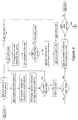
- FIG. 3 is a flowchart illustrating the steps of clocking in an employee into the employee timekeeping system of FIG. 1 after setting up the employee profile as shown in FIG. 2 .
- the employee timekeeping system requires set up of employee profiles before it can be used to identify the employee.
- the employee provides identification information to the system and the system creates an employee profile for this employee.
- the system acquires at least one image of the employee and their facial features. After the employee profile is finished, it may be used to identify the employee.
- the employee When the employee arrives and desires to be clocked in or out, the employee is instructed to perform his/her unique, personalized gesture.
- a system camera acquires a full body image of the employee performing his/her clock in gesture in front of the camera for recognition. If the gesture is successfully recognized, the employee is identified. Records on the employee are searched regarding current status, employee type, hours worked, etc. This information is compared to human resource rules to determine if this employee can be clocked in. If so, the official date/time and other clock in information is stored for this employee, and the employee is notified that he/she has successfully clocked in to work. If not, then the employee is notified and no clock in occurs.
- the employee is alerted and given a predetermined number of additional re-tries.
- additional means of identification are used including either full body recognition or facial recognition, or both.
- Other conventional means of identification may be used, such as passwords, security questions and text verification with a known cell phone number.
- FIG. 1 illustrates a schematic block diagram of an employee timekeeping system in accordance with one embodiment of the present invention.
- FIG. 2 is a flowchart illustrating the steps of setting up an employee profile in the employee timekeeping system shown in FIG. 1 .
- the initial set up of the employee timekeeping system 100 will be described in connection with both FIGS. 1 and 2 . This initial set up prepares the system for operation.
- step 201 of FIG. 2 the process starts.
- employee 1 interacts with controller 105 to create an employee profile.
- Employee 1 may provide identification information to a system administrator 3 which interacts with an interface 111 to provide the identification information to controller 105 .
- Controller 105 stores the employee profile in a time and attendance database 113 .
- the employee profile may be stored anywhere in the system in which it may be retrieved by controller 105 ; however, it is preferable to store it in the time and attendance database 113 .
- the identification information stored may be any type of information which may uniquely identify employee 1 . This may be information a) which the employee ‘knows’, such as Social Security number, driver's license number, answers to security questions, orb) visual features of employee 1 .
- an image acquisition device 101 acquires a full body image of employee 1 .
- image acquisition device 101 has the ability to determine its distance from the employee 1 . Distance from the employee allows one to estimate actual size of features in the images acquired and is important in image recognition and identification of the employee.
- step 207 the full-body image is provided to controller 105 and the passes it to an image analysis device 107 .
- the image analysis device analyzes the full-body image to extract visual features that may be used to match it up against features of other images that have also been stored.
- a gesture timing device 103 indicates when the image acquisition device 101 is to begin recording the gesture, and when it is to end recording of the gesture.
- step 209 employee 1 is instructed to start performing the employee's unique gesture in front of image acquisition device 101 .
- Employee 1 may also be instructed when to complete his/her unique gesture.
- step 211 image acquisition device 101 acquires a short video of employee 1 performing his/her unique gesture.
- step 213 the recording of the gesture is provided to controller 105 which passes it to image analysis device 107 .
- Image analysis device analyzes the recording to reduce it to simplified elements and their relative motion to each other. Since the human body has solid structural pieces which are linked together at pivot points, a human gesture can be reduced to the relative motion of these body parts to each other, or to a fixed reference point. Therefore, a gesture may be quickly recognized and matched to features of another gesture.
- the analysis of the gesture is then passed back to controller 105 which stores it in image database 109 .
- the analyzed features are stored and associated with the employee profile.
- they may be stored in the same physical location as the employee profile or in the 2 nd case they can have a link to the location of the employee profile.
- step 217 the employee is notified that the setup has been successfully completed.
- step 219 the setup process is completed for this employee 1 .
- FIG. 3 is a flowchart illustrating the steps of operating the employee timekeeping system of FIG. 1 after the initial setup shown in FIG. 2 .
- the system is ready to clock him/her in.
- the process starts at step 301 in which employee 1 moves to a location visible to image acquisition device 101 .
- step 303 the employee 1 is notified to begin to perform the gesture in front of the image acquisition device 101 .
- Employee 1 then performs the unique gesture which he/she had performed during set up the employee profile.
- the image acquisition device 101 acquires images of employee 1 performing the gesture.
- the gesture timing device 103 allows the image acquisition device to acquire images of the gesture when the employee 1 starts the gesture, and stops after the gesture has been completed. This may be done a number of ways, such as by having controller 105 indicate to the employee when to start the gesture, and then activating image acquisition device 101 to acquire the gesture.
- the image acquisition device 101 then acquires images of the gesture being performed for at least a predetermined length of time. Conventional methods of identifying the beginning and end of a gesture can also be used.
- step 307 images from the image acquisition device are provided to a controller 105 that forwards the images to the image analysis device 107 which analyzes the images to extract unique features in the images.
- step 309 image features from the image analysis device 107 are provided to controller 105 and then compares them to images features stored in image database 109 .
- step 311 is determined if the employee's gestures are recognized.
- Recognition means that features of the acquired images deviate no more than a predetermined amount from features found in image database 109 . Deviations less than a predetermined amount may be called a ‘match’. If a match is found, the employee 1 is notified in step 317 . This notification may be and audible or visual notification form controller 105 through interface 111 .
- controller 105 now knows the identity of employee 1 and looks up information, such as the accumulated time worked by employee 1 in the time and attendance database 113 .
- controller 105 compares information about employee 1 to the rules stored in HR rules database 121 and makes a determination if the employee is allowed to clock in and continue work. If the employee is not allowed to clock in in step 333 , the employee is notified and the process then continues in step 331 with a next employee.
- controller 105 acquires an official time and date from timekeeping device 115 , and other information required to clock in employee 1 .
- controller 105 stores the date/time and other information for clocking in employee 1 into time and attendance database 113 , and the employee 1 is clocked in.
- step 335 the employee is notified that he/she is clocked in and the next employee is then processed beginning at step 331 .
- step 311 if the employee is not recognized (“no”), then the employee is notified in step 313 .
- step 315 it is determined if the employee has tried to clock in more than a maximum number of allowed tries, and if not is allowed to repeat the clock in procedure starting back at step 303 .
- the employee is notified by the system through interface 111 which may be a screen which displays visual information such as images, text and video, and/or an audible notification, such as an intercom, prerecorded voice, voice synthesizer or audible sounds.
- interface 111 may be a screen which displays visual information such as images, text and video, and/or an audible notification, such as an intercom, prerecorded voice, voice synthesizer or audible sounds.
- step 315 if the employee 1 has exceeded the maximum number of retries (“yes”), then another method of identification should be performed starting in step 329 .
- step 337 the employee is asked if he/she would like to set up their gesture again. If so (“yes”), then processing continues to the marker “A” in FIG. 2 , and processing continues at step 203 of FIG. 2 .
- step 337 if the employee would not like to set up his/her gesture again, the process then stops in step 339 .
- the above invention results in a system which accurately clocks an employee in or out of work that is accurate and entertaining. It allows the employee 1 to use their imagination which tends to increase morale.
- image acquisition device 101 acquires a full body image
- other aspects of the full-body image may also be used for matching purposes. These may be the overall height to width ratio, arm length, leg length, body shape, eye color, facial features, etc.
- the confidence used to determine if there is a match may be a function of these and other visual aspects.
- the system may also have optical character recognition capability and read text appearing on a badge worn by employee 1 . Therefore, a match may be determined based upon the totality and closeness that each of the above features match features in the image database 109 .
- the employee timekeeping system 100 first tries to identify the employee 1 by using various identifications processes starting with the easiest and most entertaining, to the more accurate, but slower identification process.
- the employee timekeeping system 100 first tries to identify the employee by the gesture he/she performs in front of the image acquisition device 101 , as described above.
- the relative positions and orientations of appendages of employee 1 are analyzed in their relative motion during the gesture period. These may be compared to gestures stored in image database 109 and determine a deviation from the closest gesture found.
- the number of common features found and their deviation from a prestored gesture provide the confidence level that there is a match. Once this confidence level exceeds a predetermined value, a match is determined.
- the employee may repeat the gesture which is analyzed again. If the first gesture does not produce a match and identify the employee, the process may be repeated a predetermined number of times.
- the system may try to match features of the full body images to those that have been prestored. This may involve looking for matching body shapes, eye color, hair color, skin tone, relative arm length, relative leg length, posture, etc. Again, there must be at least a predetermined confidence value to determine a match. Other visual features may be used, such as optical character recognition to read a badge of the employee.
- the system may then request information that the employee ‘knows’ such as their social security number, driver's license number, or have them answer security questions which they had entered during the profile set up of the employee profile. These may be “What is your mother's maiden name?” or “What is the name of your first pet?”
- the system can revert to texting the employee answers on the mobile phone number stored during setup.
- the employee can speak with the system administrator 3 .
Landscapes
- Business, Economics & Management (AREA)
- Engineering & Computer Science (AREA)
- Human Resources & Organizations (AREA)
- Strategic Management (AREA)
- Accounting & Taxation (AREA)
- Finance (AREA)
- General Business, Economics & Management (AREA)
- Entrepreneurship & Innovation (AREA)
- Marketing (AREA)
- Physics & Mathematics (AREA)
- Economics (AREA)
- General Physics & Mathematics (AREA)
- Theoretical Computer Science (AREA)
- Educational Administration (AREA)
- Development Economics (AREA)
- Data Mining & Analysis (AREA)
- Technology Law (AREA)
- Operations Research (AREA)
- Quality & Reliability (AREA)
- Tourism & Hospitality (AREA)
- Time Recorders, Dirve Recorders, Access Control (AREA)
- Management, Administration, Business Operations System, And Electronic Commerce (AREA)
Abstract
Description
Claims (17)
Priority Applications (1)
| Application Number | Priority Date | Filing Date | Title |
|---|---|---|---|
| US15/690,695 US10970681B2 (en) | 2016-09-29 | 2017-08-30 | Camera gesture clock in |
Applications Claiming Priority (2)
| Application Number | Priority Date | Filing Date | Title |
|---|---|---|---|
| US201662401449P | 2016-09-29 | 2016-09-29 | |
| US15/690,695 US10970681B2 (en) | 2016-09-29 | 2017-08-30 | Camera gesture clock in |
Publications (2)
| Publication Number | Publication Date |
|---|---|
| US20180089630A1 US20180089630A1 (en) | 2018-03-29 |
| US10970681B2 true US10970681B2 (en) | 2021-04-06 |
Family
ID=61688022
Family Applications (1)
| Application Number | Title | Priority Date | Filing Date |
|---|---|---|---|
| US15/690,695 Active 2038-11-25 US10970681B2 (en) | 2016-09-29 | 2017-08-30 | Camera gesture clock in |
Country Status (1)
| Country | Link |
|---|---|
| US (1) | US10970681B2 (en) |
Families Citing this family (5)
| Publication number | Priority date | Publication date | Assignee | Title |
|---|---|---|---|---|
| US20180225888A1 (en) * | 2017-02-07 | 2018-08-09 | Wal-Mart Stores, Inc. | Systems and methods for employee time recording |
| JP6810295B1 (en) * | 2019-09-25 | 2021-01-06 | 宇雄 丹野 | Attendance management methods, attendance management programs, and attendance management systems |
| CN110838053A (en) * | 2019-11-12 | 2020-02-25 | 河北幸福消费金融股份有限公司 | Financial business system, financial processing method and computer storage medium thereof |
| US20210264374A1 (en) * | 2020-02-25 | 2021-08-26 | Tachyons Inc. | Time monitoring system |
| EP4202605A1 (en) * | 2021-12-22 | 2023-06-28 | dormakaba EAD GmbH | Presence detection terminal |
Citations (14)
| Publication number | Priority date | Publication date | Assignee | Title |
|---|---|---|---|---|
| US20030156756A1 (en) * | 2002-02-15 | 2003-08-21 | Gokturk Salih Burak | Gesture recognition system using depth perceptive sensors |
| US6950534B2 (en) * | 1998-08-10 | 2005-09-27 | Cybernet Systems Corporation | Gesture-controlled interfaces for self-service machines and other applications |
| US7404086B2 (en) * | 2003-01-24 | 2008-07-22 | Ac Technology, Inc. | Method and apparatus for biometric authentication |
| US7864987B2 (en) | 2006-04-18 | 2011-01-04 | Infosys Technologies Ltd. | Methods and systems for secured access to devices and systems |
| US20110082777A1 (en) * | 2009-10-06 | 2011-04-07 | Chess Steven M | Timekeeping Computer System with Image Capture and Quick View |
| US8261090B1 (en) | 2011-09-28 | 2012-09-04 | Google Inc. | Login to a computing device based on facial recognition |
| US20140015930A1 (en) | 2012-06-20 | 2014-01-16 | Kuntal Sengupta | Active presence detection with depth sensing |
| CN103714282A (en) | 2013-12-20 | 2014-04-09 | 天津大学 | Interactive type identification method based on biological features |
| US8824749B2 (en) | 2011-04-05 | 2014-09-02 | Microsoft Corporation | Biometric recognition |
| US8924735B2 (en) | 2013-02-15 | 2014-12-30 | Microsoft Corporation | Managed biometric identity |
| US8970569B2 (en) | 2005-03-01 | 2015-03-03 | Eyesmatch Ltd | Devices, systems and methods of virtualizing a mirror |
| US9032510B2 (en) | 2012-09-11 | 2015-05-12 | Sony Corporation | Gesture- and expression-based authentication |
| US9089270B2 (en) | 2011-06-29 | 2015-07-28 | Lg Electronics Inc. | Terminal and control method thereof |
| US9244533B2 (en) | 2009-12-17 | 2016-01-26 | Microsoft Technology Licensing, Llc | Camera navigation for presentations |
-
2017
- 2017-08-30 US US15/690,695 patent/US10970681B2/en active Active
Patent Citations (14)
| Publication number | Priority date | Publication date | Assignee | Title |
|---|---|---|---|---|
| US6950534B2 (en) * | 1998-08-10 | 2005-09-27 | Cybernet Systems Corporation | Gesture-controlled interfaces for self-service machines and other applications |
| US20030156756A1 (en) * | 2002-02-15 | 2003-08-21 | Gokturk Salih Burak | Gesture recognition system using depth perceptive sensors |
| US7404086B2 (en) * | 2003-01-24 | 2008-07-22 | Ac Technology, Inc. | Method and apparatus for biometric authentication |
| US8970569B2 (en) | 2005-03-01 | 2015-03-03 | Eyesmatch Ltd | Devices, systems and methods of virtualizing a mirror |
| US7864987B2 (en) | 2006-04-18 | 2011-01-04 | Infosys Technologies Ltd. | Methods and systems for secured access to devices and systems |
| US20110082777A1 (en) * | 2009-10-06 | 2011-04-07 | Chess Steven M | Timekeeping Computer System with Image Capture and Quick View |
| US9244533B2 (en) | 2009-12-17 | 2016-01-26 | Microsoft Technology Licensing, Llc | Camera navigation for presentations |
| US8824749B2 (en) | 2011-04-05 | 2014-09-02 | Microsoft Corporation | Biometric recognition |
| US9089270B2 (en) | 2011-06-29 | 2015-07-28 | Lg Electronics Inc. | Terminal and control method thereof |
| US8261090B1 (en) | 2011-09-28 | 2012-09-04 | Google Inc. | Login to a computing device based on facial recognition |
| US20140015930A1 (en) | 2012-06-20 | 2014-01-16 | Kuntal Sengupta | Active presence detection with depth sensing |
| US9032510B2 (en) | 2012-09-11 | 2015-05-12 | Sony Corporation | Gesture- and expression-based authentication |
| US8924735B2 (en) | 2013-02-15 | 2014-12-30 | Microsoft Corporation | Managed biometric identity |
| CN103714282A (en) | 2013-12-20 | 2014-04-09 | 天津大学 | Interactive type identification method based on biological features |
Non-Patent Citations (1)
| Title |
|---|
| Compumatictime, "Compumatic CFR-20/20 Face Recognition Biometric Time Clock," YouTube.com, Mar. 19, 2014. |
Also Published As
| Publication number | Publication date |
|---|---|
| US20180089630A1 (en) | 2018-03-29 |
Similar Documents
| Publication | Publication Date | Title |
|---|---|---|
| US10970681B2 (en) | Camera gesture clock in | |
| US12242584B2 (en) | Authentication device, authentication system, and authentication method | |
| EP2797019B1 (en) | Biometric authentication device and method | |
| US8254691B2 (en) | Facial expression recognition apparatus and method, and image capturing apparatus | |
| US20200257889A1 (en) | Facial recognitions based on contextual information | |
| KR100703693B1 (en) | System and method for face recognition | |
| JP2007257221A (en) | Face recognition system | |
| CN105654048A (en) | Multi-visual-angle face comparison method | |
| TWI679584B (en) | Human recognition method based on data fusion | |
| US20210406567A1 (en) | Authentication device, authentication method, and recording medium | |
| US11961329B2 (en) | Iris authentication device, iris authentication method and recording medium | |
| KR102530141B1 (en) | Method and apparatus for face authentication using face matching rate calculation based on artificial intelligence | |
| CN110516426A (en) | Identity identifying method, certification terminal, device and readable storage medium storing program for executing | |
| EP3920136B1 (en) | Authentication system and authentication method | |
| EP2535835B1 (en) | Real-time user identification by hand motion signatures | |
| GR | Analysis of automated attendance management system using face recognition | |
| CN106447812A (en) | Attendance method and system | |
| JP2015169977A (en) | User authentication device, user authentication method, user authentication program, and automatic transaction system | |
| JP2008004050A (en) | Personal information authentication system, personal information authentication method, program, and recording medium | |
| US11087440B2 (en) | Collation device and collation method | |
| JP4937639B2 (en) | Authentication method, authentication device, authentication program, and recording medium on which the program is recorded | |
| US9508205B1 (en) | Method, apparatus, and computer-readable medium for enrollment | |
| CN105184288A (en) | Face recognition method and system | |
| CN110765969A (en) | Photographing method and system | |
| CN110110630B (en) | Face recognition method and device |
Legal Events
| Date | Code | Title | Description |
|---|---|---|---|
| FEPP | Fee payment procedure |
Free format text: ENTITY STATUS SET TO UNDISCOUNTED (ORIGINAL EVENT CODE: BIG.); ENTITY STATUS OF PATENT OWNER: LARGE ENTITY |
|
| AS | Assignment |
Owner name: WAL-MART STORES, INC., ARKANSAS Free format text: ASSIGNMENT OF ASSIGNORS INTEREST;ASSIGNORS:LEWIS, STEVEN;JONES, NICHOLAUS ADAM;BIERMANN, MATTHEW DWAIN;SIGNING DATES FROM 20160929 TO 20160930;REEL/FRAME:045100/0258 |
|
| STPP | Information on status: patent application and granting procedure in general |
Free format text: DOCKETED NEW CASE - READY FOR EXAMINATION |
|
| AS | Assignment |
Owner name: WALMART APOLLO, LLC, ARKANSAS Free format text: ASSIGNMENT OF ASSIGNORS INTEREST;ASSIGNOR:WAL-MART STORES, INC.;REEL/FRAME:045856/0582 Effective date: 20180226 |
|
| STPP | Information on status: patent application and granting procedure in general |
Free format text: NON FINAL ACTION MAILED |
|
| STPP | Information on status: patent application and granting procedure in general |
Free format text: RESPONSE TO NON-FINAL OFFICE ACTION ENTERED AND FORWARDED TO EXAMINER |
|
| STPP | Information on status: patent application and granting procedure in general |
Free format text: FINAL REJECTION MAILED |
|
| STPP | Information on status: patent application and granting procedure in general |
Free format text: RESPONSE AFTER FINAL ACTION FORWARDED TO EXAMINER |
|
| STPP | Information on status: patent application and granting procedure in general |
Free format text: ADVISORY ACTION MAILED |
|
| STPP | Information on status: patent application and granting procedure in general |
Free format text: DOCKETED NEW CASE - READY FOR EXAMINATION |
|
| STPP | Information on status: patent application and granting procedure in general |
Free format text: NOTICE OF ALLOWANCE MAILED -- APPLICATION RECEIVED IN OFFICE OF PUBLICATIONS |
|
| STPP | Information on status: patent application and granting procedure in general |
Free format text: PUBLICATIONS -- ISSUE FEE PAYMENT RECEIVED |
|
| STPP | Information on status: patent application and granting procedure in general |
Free format text: PUBLICATIONS -- ISSUE FEE PAYMENT VERIFIED |
|
| STCF | Information on status: patent grant |
Free format text: PATENTED CASE |
|
| MAFP | Maintenance fee payment |
Free format text: PAYMENT OF MAINTENANCE FEE, 4TH YEAR, LARGE ENTITY (ORIGINAL EVENT CODE: M1551); ENTITY STATUS OF PATENT OWNER: LARGE ENTITY Year of fee payment: 4 |