US10933077B2 - TLR4 inhibitors for the treatment of human infectious and inflammatory disorders - Google Patents
TLR4 inhibitors for the treatment of human infectious and inflammatory disorders Download PDFInfo
- Publication number
- US10933077B2 US10933077B2 US16/386,886 US201916386886A US10933077B2 US 10933077 B2 US10933077 B2 US 10933077B2 US 201916386886 A US201916386886 A US 201916386886A US 10933077 B2 US10933077 B2 US 10933077B2
- Authority
- US
- United States
- Prior art keywords
- subject
- acetylamino
- tlr4
- acetyl
- compound
- Prior art date
- Legal status (The legal status is an assumption and is not a legal conclusion. Google has not performed a legal analysis and makes no representation as to the accuracy of the status listed.)
- Active
Links
- 0 C*C(OC(CO)[C@@](C1O)O)=C1NC(C)=O Chemical compound C*C(OC(CO)[C@@](C1O)O)=C1NC(C)=O 0.000 description 3
- RIIDTOBZOMPOTA-UHFFFAOYSA-N CC(=O)CC1C(OC(C)C)OC(COC(C)=O)C(OC(C)=O)C1OC(C)=O Chemical compound CC(=O)CC1C(OC(C)C)OC(COC(C)=O)C(OC(C)=O)C1OC(C)=O RIIDTOBZOMPOTA-UHFFFAOYSA-N 0.000 description 1
- MGJDWXFUCWVFAW-LRBPMPIRSA-N CC(=O)NC1C(C)OC(CO)[C@H](O)[C@H]1O Chemical compound CC(=O)NC1C(C)OC(CO)[C@H](O)[C@H]1O MGJDWXFUCWVFAW-LRBPMPIRSA-N 0.000 description 1
- RQNFGIWYOACERD-UHFFFAOYSA-N CC(=O)NC1C(OC2C(O)C(CO)OC(OC3C(CO)OC(O)C(O)C3O)C2O)OC(CO)C(OC2OC(C)C(O)C(O)C2O)C1OC1OC(CO)C(O)C(O)C1OC1OC(C)C(O)C(O)C1O Chemical compound CC(=O)NC1C(OC2C(O)C(CO)OC(OC3C(CO)OC(O)C(O)C3O)C2O)OC(CO)C(OC2OC(C)C(O)C(O)C2O)C1OC1OC(CO)C(O)C(O)C1OC1OC(C)C(O)C(O)C1O RQNFGIWYOACERD-UHFFFAOYSA-N 0.000 description 1
- UYOXIEKZYYFWPR-FFKOECFSSA-N CC(=O)NC1[C@@H](C)[C@@H](C)C(COC(C)=O)O[C@H]1OC(C)C.CC(=O)NC1[C@@H](C)[C@@H](C)C(COC(C)=O)O[C@H]1OC/C=C(\C)CCC=C(C)C.CC(=O)NC1[C@@H](C)[C@@H](C)C(COC(C)=O)O[C@H]1OC1CCCCC1.CC(=O)NC1[C@@H](C)[C@H](C)C(COC(C)=O)O[C@H]1OC(C)C.CC(=O)NC1[C@@H](C)[C@H](C)C(COC(C)=O)O[C@H]1OC/C=C(\C)CCC=C(C)C.CC(=O)NC1[C@@H](C)[C@H](C)C(COC(C)=O)O[C@H]1OC1CCCCC1.CC(=O)NC1[C@H](CC(C)C)OC(COC(C)=O)[C@@H](C)[C@@H]1C.CC(=O)NC1[C@H](CC(C)C)OC(COC(C)=O)[C@H](C)[C@@H]1C Chemical compound CC(=O)NC1[C@@H](C)[C@@H](C)C(COC(C)=O)O[C@H]1OC(C)C.CC(=O)NC1[C@@H](C)[C@@H](C)C(COC(C)=O)O[C@H]1OC/C=C(\C)CCC=C(C)C.CC(=O)NC1[C@@H](C)[C@@H](C)C(COC(C)=O)O[C@H]1OC1CCCCC1.CC(=O)NC1[C@@H](C)[C@H](C)C(COC(C)=O)O[C@H]1OC(C)C.CC(=O)NC1[C@@H](C)[C@H](C)C(COC(C)=O)O[C@H]1OC/C=C(\C)CCC=C(C)C.CC(=O)NC1[C@@H](C)[C@H](C)C(COC(C)=O)O[C@H]1OC1CCCCC1.CC(=O)NC1[C@H](CC(C)C)OC(COC(C)=O)[C@@H](C)[C@@H]1C.CC(=O)NC1[C@H](CC(C)C)OC(COC(C)=O)[C@H](C)[C@@H]1C UYOXIEKZYYFWPR-FFKOECFSSA-N 0.000 description 1
- BURCFRBDABEZHT-BNSJAMQNSA-N CC(=O)NC1[C@@H](C)[C@@H](C)C(COC(C)=O)O[C@H]1OC(C)C.CC(=O)NC1[C@@H](C)[C@H](C)C(COC(C)=O)O[C@H]1OC(C)C Chemical compound CC(=O)NC1[C@@H](C)[C@@H](C)C(COC(C)=O)O[C@H]1OC(C)C.CC(=O)NC1[C@@H](C)[C@H](C)C(COC(C)=O)O[C@H]1OC(C)C BURCFRBDABEZHT-BNSJAMQNSA-N 0.000 description 1
- CHPFWORZTFZDTE-UIBGQCFLSA-N CC1C(O)OC(CO)[C@@H](O[C@@H]2OC(CO)[C@H](O)[C@H](O)C2O)[C@@H]1O Chemical compound CC1C(O)OC(CO)[C@@H](O[C@@H]2OC(CO)[C@H](O)[C@H](O)C2O)[C@@H]1O CHPFWORZTFZDTE-UIBGQCFLSA-N 0.000 description 1
- JMBCKNMAWOZWIH-LKRPSQJTSA-N CO[C@H]1O[C@H](OP(=O)(O)O)C(NC(C)=O)[C@@H](O)[C@@H]1O Chemical compound CO[C@H]1O[C@H](OP(=O)(O)O)C(NC(C)=O)[C@@H](O)[C@@H]1O JMBCKNMAWOZWIH-LKRPSQJTSA-N 0.000 description 1
- KRQDUKGDTPUTQA-NOUCPOMNSA-N NC1CCCCC1.NC1CCCCC1.NC1CCCCC1.NC1CCCCC1.O.O=P(O)(O)OCC1OC(OP(=O)(O)O)C(O)[C@H](O)[C@@H]1O Chemical compound NC1CCCCC1.NC1CCCCC1.NC1CCCCC1.NC1CCCCC1.O.O=P(O)(O)OCC1OC(OP(=O)(O)O)C(O)[C@H](O)[C@@H]1O KRQDUKGDTPUTQA-NOUCPOMNSA-N 0.000 description 1
Images


Classifications
-
- A—HUMAN NECESSITIES
- A61—MEDICAL OR VETERINARY SCIENCE; HYGIENE
- A61K—PREPARATIONS FOR MEDICAL, DENTAL OR TOILETRY PURPOSES
- A61K31/00—Medicinal preparations containing organic active ingredients
- A61K31/70—Carbohydrates; Sugars; Derivatives thereof
- A61K31/7028—Compounds having saccharide radicals attached to non-saccharide compounds by glycosidic linkages
-
- A—HUMAN NECESSITIES
- A61—MEDICAL OR VETERINARY SCIENCE; HYGIENE
- A61K—PREPARATIONS FOR MEDICAL, DENTAL OR TOILETRY PURPOSES
- A61K31/00—Medicinal preparations containing organic active ingredients
- A61K31/33—Heterocyclic compounds
- A61K31/335—Heterocyclic compounds having oxygen as the only ring hetero atom, e.g. fungichromin
- A61K31/35—Heterocyclic compounds having oxygen as the only ring hetero atom, e.g. fungichromin having six-membered rings with one oxygen as the only ring hetero atom
- A61K31/351—Heterocyclic compounds having oxygen as the only ring hetero atom, e.g. fungichromin having six-membered rings with one oxygen as the only ring hetero atom not condensed with another ring
-
- A—HUMAN NECESSITIES
- A61—MEDICAL OR VETERINARY SCIENCE; HYGIENE
- A61K—PREPARATIONS FOR MEDICAL, DENTAL OR TOILETRY PURPOSES
- A61K31/00—Medicinal preparations containing organic active ingredients
- A61K31/70—Carbohydrates; Sugars; Derivatives thereof
- A61K31/7008—Compounds having an amino group directly attached to a carbon atom of the saccharide radical, e.g. D-galactosamine, ranimustine
-
- A—HUMAN NECESSITIES
- A61—MEDICAL OR VETERINARY SCIENCE; HYGIENE
- A61K—PREPARATIONS FOR MEDICAL, DENTAL OR TOILETRY PURPOSES
- A61K31/00—Medicinal preparations containing organic active ingredients
- A61K31/70—Carbohydrates; Sugars; Derivatives thereof
- A61K31/7024—Esters of saccharides
-
- A—HUMAN NECESSITIES
- A61—MEDICAL OR VETERINARY SCIENCE; HYGIENE
- A61K—PREPARATIONS FOR MEDICAL, DENTAL OR TOILETRY PURPOSES
- A61K31/00—Medicinal preparations containing organic active ingredients
- A61K31/70—Carbohydrates; Sugars; Derivatives thereof
- A61K31/7028—Compounds having saccharide radicals attached to non-saccharide compounds by glycosidic linkages
- A61K31/7034—Compounds having saccharide radicals attached to non-saccharide compounds by glycosidic linkages attached to a carbocyclic compound, e.g. phloridzin
Definitions
- the present invention relates to methods of treating infectious, inflammatory and post-traumatic disorders by administering various compounds newly discovered to have TLR4 inhibitory activity.
- TLR4 The innate immune receptor Toll-like receptor 4 (“TLR4”) has been recognized to be the receptor on hematopoietic and non-hematopoietic cells for endotoxin (lipopolysaccharide, “LPS”) as well as a variety of endogenous molecules that are released within the body during inflammatory or infectious disorders. Strategies to discover molecules that are capable of neutralizing the ability of TLR4 to signal are likely to show promise as novel anti-infective and/or antiinflammatory agents.
- LPS lipopolysaccharide
- the present invention relates to methods of treating infectious, inflammatory and post-traumatic disorders by administering various compounds newly discovered to have TLR4 inhibitory activity.
- Compounds that may be used according to the invention are set forth in TABLE 1, below.
- the present invention further provides for pharmaceutical compositions comprising said compounds, together with a suitable pharmaceutical carrier. Because TLR4 is the most upstream receptor in the pro-inflammatory LPS signaling cascade, treatments of the invention, which inhibit or antagonize TLR4 action, may avoid the pitfalls associated with other cytokine inhibitors that act further down the pathway and accordingly play a less specific (and perhaps non-critical) role.
- FIG. 1A-B NFkB luciferase reporter mice treated with either (A) LPS (positive control, left) or saline (negative control; right) or (B) Bay-11-7082+LPS (left) or compound 1+LPS (right), imaged using the IVIS Lumina 3D Optical system.
- FIG. 2A-B NFkB luciferase reporter mice treated with either (A) LPS (positive control, left) or saline (negative control, right) or (B) compound 3+LPS (left) or compound 2+LPS (right), imaged using the IVIS Lumina 3D Optical system.
- FIG. 3A-C Intestines from NFkB luciferase reporter mice of FIGS. 1A-B and 2 A-B, in particular (A) mice treated with LPS (left) or saline (right) or (B) Bay-11-7082+LPS (left) or compound 1+LPS (right) or (C) compound 2+LPS or compound 3+LPS (left), imaged using the IVIS Lumina 3D Optical system.
- FIG. 4A-B NFkB luciferase reporter mice treated with either (A) saline (left) or LPS (right) or (B) compound 4+LPS, imaged using the IVIS Lumina 3D Optical system.
- FIG. 5 NFkB luciferase reporter mice treated with either saline (left), compound 5+LPS (center) or compound 6+LPS (right) imaged using the IVIS Lumina 3D Optical system.
- FIG. 6A-B Intestines from NFkB luciferase reporter mice of FIG. 4A-B , in particular mice treated with (A) saline or (B) LPS (left) or compound 4+LPS (right), imaged using the IVIS Lumina 3D Optical system.
- FIG. 7A-B Intestines from NFkB luciferase reporter mice of FIG. 5 , in particular mice treated with (A) saline or (B) compound 5+LPS (left) or compound 6+LPS (right), imaged using the IVIS Lumina 3D Optical system.
- FIG. 8A-B Summary of results of FIGS. 1-7 , above.
- FIG. 9A-B ELISA results showing IL6 production.
- FIG. 10A-B NF ⁇ B luciferase reporter mice treated with either (A) LPS (in the animal on the right with an animal treated with saline control on the left) or (B) LPS plus compound (with the animal on the right treated with C34+LPS and the animal on the left treated with C16+LPS).
- FIG. 11 iNOS mRNA levels in breast-fed (BF) controls and a CFW-NEC model induced by formula feeding (FF).
- FIG. 12 TNF ⁇ mRNA levels in human NEC tissue explants treated with LPS as compared to LPS+C34.
- FIG. 13 iNOS mRNA levels in human NEC tissue explants treated with LPS as compared to LPS+C34.
- FIG. 14 TLR4 mRNA levels in breast-fed untreated or C34-treated controls as compared to formula-fed (CFW-NEC) rats that were untreated or treated with C34.
- FIG. 15A-B (A) AST levels in control animals as compared with hemorrhage-shock (H/S) model animals, and H/S animals treated with C34. ALT levels in control animals as compared with hemorrhage-shock (H/S) model animals, and H/S animals treated with C34
- T4ICs Compounds that may be used to inhibit TLR4 (also referred to herein as “T4ICs”) according to the invention are set forth, below, in TABLE 1.
- T4Ics compounds that may be used to inhibit TLR
- T4Ics include compounds 1, 3, 4, 5, 6, 8, 16, 21, 22, 27, 28, 29, 30, 45, and 47.
- the T4IC compound is compound 3, which is 4-O-(3-O- ⁇ 2-(acetylamino)-2-deoxy-4-O-(6-deoxyhexopyranosyl)-3-O-[2-O-(6-deoxyhexopyranosyl) hexopyranosyl]hexopyranosyl ⁇ hexopyranosyl)hexopyranose, having the structure:
- the T4IC compound is compound 4, which is 3-acetamido-4,5-dihydroxy-6-(hydroxymethyl)tetrahydro-2H-pyran-2-yl dihydrogen phosphate, sodium salt, having the structure:
- the T4IC compound is compound 8, cyclohexanamine compound with 1,6-di-O-phosphono-beta-D-glycero-hexopyranose (4:1) hydrate, having the structure:
- the T4IC compound is compound 16, 2-(acetylamino)-2-deoxy-D-galactopyranose hydrate, having the structure:
- the T4IC compound is compound 27, 2-(acetylamino)-2-deoxy-4-O-hexopyranosylhexopyranose, having the structure:
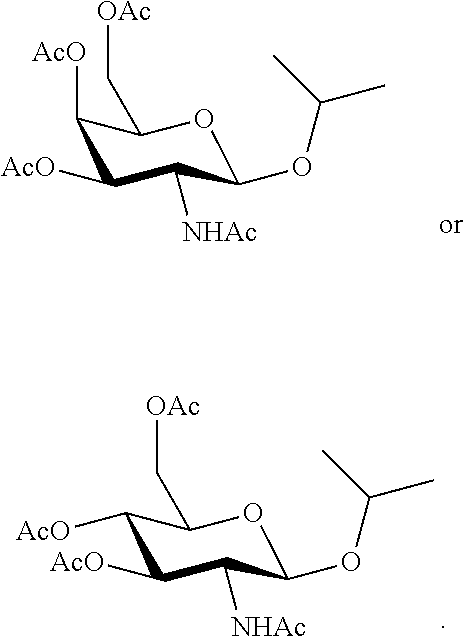
- the T4IC compound is compound 34, isopropyl 3,4,6-tri-O-acetyl-2-(acetylamino)-2-deoxyhexopyranoside, having the structure:
- the present invention provides for derivatives of isopropyl 3,4,6-tri-O-acetyl-2-(acetylamino)-2-deoxyhexopyranoside.
- said derivatives may have FORMULA I, as follows:
- R is selected from R 1 and —O—R 1 , where R 1 may be a substituted or unsubstituted alkane or alkene, where the substituent if present may be methyl or ethyl, where the alkane or alkene portion optionally comprises a branched or cyclic component, and may have between 1 and 12 or between 1 and 6 carbon atoms.
- said derivatives may have FORMULA II, as follows:
- R is selected from R 1 and —O—R 1 , where R 1 may be a substituted or unsubstituted alkane or alkene, where the substituent if present may be methyl or ethyl, where the alkane or alkene portion optionally comprises a branched or cyclic component, and may have between 1 and 12 or between 1 and 6 carbon atoms.
- a derivative of isopropyl 3,4,6-tri-O-acetyl-2-(acetylamino)-2-deoxyhexopyranoside may be selected from the following group of compounds:
- isopropyl 3,4,6-tri-O-acetyl-2-(acetylamino)-2-deoxyhexopyranoside may be prepared by the following method:
- Example 4 A working example containing further details of the synthesis is set forth below as section 9, Example 4, and is incorporated by reference herein.
- compositions comprising therapeutically effective amounts of any of the foregoing compounds, for example but not limited to together with a pharmaceutical carrier such as water or other physiologic solvent.
- a therapeutically effective amount inhibits TLR4.
- a compound is considered to inhibit TLR4 (that is, be a T4IC) if it inhibits one or preferably more sign or symptom of inflammation, such as, for example, activation of NFkB, increased expression/levels of interleukin 6 (“IL-6”), elevated erythrocyte sedimentation rate, elevated C reactive protein, fever, tachypnea, lethargy, swelling, redness, and/or pain.
- IL-6 interleukin 6
- the ability for a compound and/or a particular concentration of a compound to inhibit TLR4 may be determined using an assay for TLR4 activity which may assess one of the abovelisted signs or symptoms.
- TLR4 inhibition may be assayed using a method that measures the affect of a compound on NFkB activity, for example, but not limited to, the NFkB luciferase reporter mouse model, stimulated with a TLR4 ligand such as LPS, described in the example below or HEK-Blue-4 cells (InvivoGen).
- a TLR4 ligand such as LPS, described in the example below or HEK-Blue-4 cells
- CWT mice may be treated with LPS and a test compound and monitored for signs and symptoms of inflammation, and/or C3H/WT cells (InvivoGen) may be treated with LPS and a test compound and tested for NFkB activation, IL6 production, or other markers of the inflammatory process.
- the present invention provides for pharmaceutical compositions comprising a T4IC, as described above, in a suitable pharmaceutical carrier.
- the amount of T4IC present in the composition may be calculated to provide, when administered to a subject in need of such treatment, an effective amount of T4IC.
- the T4IC may be comprised in a coated particle, micelle, liposome, or similar structure.
- a pharmaceutical composition may be a liquid, comprising a T4IC in a liquid pharmaceutical carrier comprising, for example, water (an aqueous carrier) or saline.
- a liquid pharmaceutical carrier comprising, for example, water (an aqueous carrier) or saline.
- Said liquid composition may optionally further contain one or more of a buffer or a preservative.
- a pharmaceutical composition may be a solid, for example in the form of a tablet, capsule, sachet or suppository, comprising a dose of T4IC that provides an effective amount of T4IC to a subject in need of such treatment when administered according to a dosing regimen.
- Said solid pharmaceutical composition may further comprise one or more excipients, for example, but not limited to, lactose, sucrose, mannitol, erythritol, carboxymethylcellulose, microcrystalline cellulose, hydroxypropylmethylcellulose, starch, polyvinylpyrrolidone, etc
- a pharmaceutical composition according to the invention may, in non-limiting embodiments, comprise an additional agent that may have antimicrobial and/or antiinflammatory activity, for example, but not limited to, an antibiotic agent, a steroid, or a non-steroidal antiinflammatory agent.
- a pharmaceutical composition may comprise an analgesic agent.
- a pharmaceutical composition may comprise an agent that improves cardiac function and/or reduces cardiac stress, for example, but not limited to, an angiotensin converting enzyme inhibitor, a beta blocker, nitroglycerin or a related nitrate compound, digoxin or a related compound, or a calcium channel blocker.
- the present invention may be used to treat any disease/disorder (“disorder”) involving TLR4 activation, including, but not limited to, infectious diseases and inflammatory disorders such as sepsis, necrotizing enterocolitis, autoimmune diseases, Crohn's disease, celiac disease, ulcerative colitis, rheumatoid arthritis, cardiovascular disease including myocardial infarction, epilepsy, gram negative bacterial infections, aspergillosis, periodontal disease, Alzheimer's disease, cigarette smoke mediated lung inflammation, viral hepatitis (including hepatitis C virus hepatitis), alcoholic hepatitis, insulin resistance in adipocytes, and others. See, for example, United States Patent Application Publication No.
- the present invention may also be used, in non-limiting embodiments, to treat post traumatic conditions, including ischemic injury and traumatic injury to the heart, liver, lung, kidney, intestine, brain, eye and pancreas.
- the present invention provides for a method of treating an infectious or inflammatory disorder comprising administering, to a subject in need of such treatment, an effective amount of a T4IC that reduces one or more sign or symptom of inflammation in the subject.
- the present invention provides for a method of treating an intestinal inflammatory disorder in a subject comprising administering, to a subject in need of such treatment, an effective amount of a T4IC that reduces intestinal inflammation in the subject.
- the present invention provides for a method of treating a cardiovascular disease in a subject comprising administering, to a subject in need of such treatment, an effective amount of a T4IC that reduces myocardial ischemia in the subject.
- the subject may be suffering from cardiac angina, may have suffered or is suffering a myocardial infarction, and/or may be at risk for suffering a myocardial infarction.
- the present invention provides for a method of treating an inflammatory pulmonary disease in a subject comprising administering, to a subject in need of such treatment, an effective amount of a T4IC that reduces pulmonary airway inflammation in the subject.
- the present invention provides for a method of treating a traumatic injury in a subject comprising administering, to a subject in need of such treatment, an effective amount of a T4IC that reduces TLR4-induced post-traumatic injury.
- the traumatic injury is to an organ selected from the group consisting of the heart, the liver, the lung, the kidney, the intestine, the brain, the eye and the pancreas.
- a subject may be a human or a non-human subject.
- a T4IC may be administered by any standard route including but not limited to oral, intraperitoneal (i.p), intravenous (i.v.), subcutaneous (s.c.), intradermal, intramuscular (i.m.) intraarticular, intrathecal, intraarterial, intravaginal, rectal, nasal, pulmonary, etc.
- an effective dose may be determined using methods known in the art (including but not limited to TLR4 activity assays described herein).
- an effective dose may be between about 0.01 and 50 micromoles of T4IC per kilogram weight of the subject, or between about 0.1 and 20 micromoles of T4IC per kilogram weight of the subject.
- the dose of T4IC may be between about 0.001 and 100 milligrams per kilogram weight of the subject, or between about 0.01 and 10 milligrams per kilogram weight of the subject, or between about 0.1 and 10 milligrams per kilogram weight of the subject, or between about 0.5 and 5 milligrams per kilogram weight of the subject.
- E5564 is a second-generation synthetic analogue of the lipid A component of endotoxin (lipopolysaccharide [LPS]). Based on the published structure of E5564, an in silico similarity screen was conducted using the on-line iResearch library of ChemNavigator (San Diego, Calif.) accessed at www.chemnavigator.com. This compound library was chosen to maximize structural diversity while including drug-like structures, and also to include multiple Food and Drug Administration-approved drugs, known bioactive compounds, metabolites, natural products and related compounds.
- LPS lipopolysaccharide
- NFkB-luciferase reporter mice assay.
- NFkB-luciferase reporter mice in which the NFkB is downstream of the luciferase gene, were subjected to endotoxemia with or without pretreatment with experimental compounds.
- the experimental compounds treated by this assay were compounds 1-6, with compounds 1-3 tested first and compounds 4-6 tested later.
- the mice were 6 weeks old on the date of the experiment.
- luciferin 160 ug/kg, Invitrogen
- a whole animal image was obtained using the IVIS Lumina 3D Optical in vivo imaging system (Caliper Life Sciences, Hopkinton, Mass.) under 1.5% isofluorane anesthesia.
- IVIS Lumina 3D Optical in vivo imaging system Caliper Life Sciences, Hopkinton, Mass.
- isofluorane anesthesia After whole body imaging, an additional injection of luciferin is given and animals were euthanized, organs were harvested, and the extent of NFkB activation within various tissues was further analyzed by an additional luminescence image of the individual organs.
- mice from the second and third experiments were observed within their cages and videotaped to document behavior and phenotypic differences to assess for an inhibitory effect of compound pretreatment on the effects of LPS.
- Mice were identified by a number previously placed using permanent marker on their tails. The degree of piloerection, tachypnea, location in the cage (center of cage versus corners), degree of activity, and behavior relative to other animals was observed and documented via video for each mouse.
- Enzyme linked immunosorbent assay Prior to being euthanized, mice from the NFkB luciferase and all three CFW endotoxemia experiments were anesthetized (1.5% isofluorane) and a retro-orbital sinus puncture was performed to obtain a blood sample. Serum was obtained via centrifugation and an ELISA was performed to assess for IL-6 expression using a pre-made kit (R&D Biosystems). Results are reported relative to a standard curve for each experiment as pg/ml.
- TLR4 inhibitors With a view to identifying TLR4 inhibitors amongst previously known compounds (that were not hitherto known to have TLR4 inhibitory activity), a library of compounds was screened for those bearing structural similarity to the known TLR4 inhibitor, E5564. A total of 124,413,264 samples within the library were screened, and a total of 100 structures were identified with a similarity greater than 70%. Excluding the known TLR4 agonist, LPS, which was identified in the search, the remaining 99 compounds were then researched for commercial availability. A total of 65 commercially available compounds were identified and obtained in amounts ranging from 1-100 mg from ChemNavigator. These 65 compounds are shown in TABLE 1.
- test compounds 1-6 were tested to determine whether they exhibit TLR4 inhibitory activity in a murine LPS-induced model for endotoxemia.
- the first series of experiments involved the use of the NFkB luciferase reporter mice (testing compounds 1-6), while the second utilized CFW mice (testing compounds 3-65). In all cases, each mouse received 20 nanomoles of test compound, or approximately 1 micromole per kilogram weight.
- FIGS. 1-8 The results of the studies in NFkB luciferase reporter mice are shown in FIGS. 1-8 ; FIGS. 1-7 are photographs generated by the IVIS Lumina 3D Optical in vivo imaging system, and FIG. 8A-B are bar graphs summarizing the results.
- Bay-11-7082 was used as a positive control for TLR4 inhibitory activity.
- NF ⁇ B luciferase reporter mice as described above, in which NF ⁇ B is downstream of the luciferase gene, were treated with either (i) saline ( FIG. 10A , animal on the left); (ii) LPS alone (2 mg/kg; FIG. 10A , animal on the right)); (iii) LPS plus C16 ((1 mg/kg, intraperitoneal (i.p.) injection); FIG. 10B , animal on the left) or (iv) LPS plus C34 ((1 mg/kg, i.p. injection); FIG. 10B , animal on the right).
- the imaging studies indicate that both compounds C16 and C34 reduced NF ⁇ B signalling.
- Inducible nitric oxide synthase is associated with necrotizing enterocolitis (NEC) in human infants.
- NEC necrotizing enterocolitis
- a model system for NEC was induced in newborn mouse pups by formula feeding, where control animals were breast-fed (Sodhi et al., 2010, Gastroenterol. 138(1):185-196; Richardson et al., 2010, Gastroenterol. 139(3):904-917).
- the level of iNOS was substantially increased in the formula-fed (FF) group.
- RPLO 505 ribosomal subunit protein L15, an acknowledged housekeeping gene, which means that it is a constitutive gene expressed at relatively constant levels by all cells and is thus used as a reference for comparing other genes which may vary under experimental conditions.
- levels of TLR4 mRNA levels were also evaluated. The level of TLR4 mRNA seen in breast-fed animals, including breast-fed animals treated with C34, was substantially increased in the FF animals. In contrast, the level of TLR4 was not increased in FF animals treated with C34 (1 mg/kg, i.p. once daily for the first four days of the five day model) and indeed mRNA levels were 30 percent below normal (see FIG. 14 ).
Landscapes
- Health & Medical Sciences (AREA)
- Life Sciences & Earth Sciences (AREA)
- Chemical & Material Sciences (AREA)
- Medicinal Chemistry (AREA)
- Pharmacology & Pharmacy (AREA)
- Epidemiology (AREA)
- Animal Behavior & Ethology (AREA)
- General Health & Medical Sciences (AREA)
- Public Health (AREA)
- Veterinary Medicine (AREA)
- Molecular Biology (AREA)
- Pharmaceuticals Containing Other Organic And Inorganic Compounds (AREA)
Abstract
Description


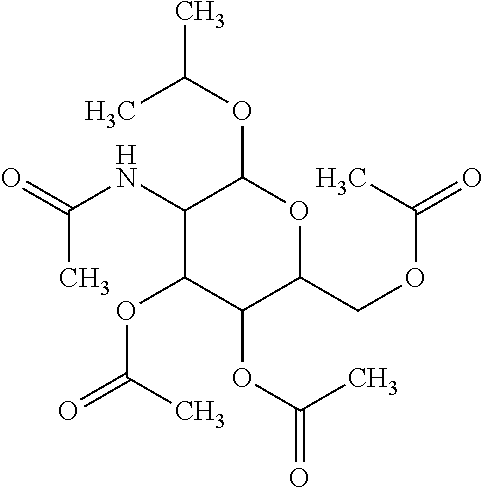

where R is selected from R1 and —O—R1, where R1 may be a substituted or unsubstituted alkane or alkene, where the substituent if present may be methyl or ethyl, where the alkane or alkene portion optionally comprises a branched or cyclic component, and may have between 1 and 12 or between 1 and 6 carbon atoms.

where R is selected from R1 and —O—R1, where R1 may be a substituted or unsubstituted alkane or alkene, where the substituent if present may be methyl or ethyl, where the alkane or alkene portion optionally comprises a branched or cyclic component, and may have between 1 and 12 or between 1 and 6 carbon atoms.


A working example containing further details of the synthesis is set forth below as section 9, Example 4, and is incorporated by reference herein.
| TABLE 1 | ||
| Compound | Stock | |
| ID | IUPAC Name | number |
| 11 | (2S-2-((4aR,6R,7R,8R,8aS)-7-acetamido- | 2010749 |
| 6-(2,3-bis(dodecyloxy)propoxy)-2,2-dimethylhexahydropyrano[3,2- | ||
| d][1,3]dioxin- | ||
| 8-yloxy)propanoic acid | ||
| 33 | dodecyl 3,4,6-tri-O-acetyl-2-(acetylamino)-2-deoxy-beta-D- | 2010752 |
| glucopyranoside | ||
| 14 | butyl 2-(acetylamino)-2-deoxy-3,4-di-O-methyl-beta-D- | 2010750 |
| glucopyranoside | ||
| 34 | isopropyl 3,4,6-tri-O-acetyl-2-(acetylamino)-2-deoxyhexopyranoside | 2010760 |
| 35 | cyclohexyl 3,4,6-tri-O-acetyl-2-(acetylamino)-2-deoxy-alpha-D- | 2010748 |
| glucopyranoside | ||
| 36 | hexyl 3,4,6-tri-O-acetyl-2-(acetylamino)-2-deoxy-beta-D- | 2010747 |
| glucopyranoside | ||
| 37 | N-[(2R,3R,4R,5S,6R)-2-[(1′S,2′R,6′R,8′R,9′S)-dispiro[cyclohexane-1,4′- | 2010754 |
| [3,5,7,10,12] | ||
| pentaoxatricyclo[7.3.0.0{circumflex over ( )}{2,6}]dodecane-11′,1″-cyclohexane]-8′- | ||
| ylmethoxy]-4,5- | ||
| dihydroxy-6-(hydroxymethyl)oxan-3-yl]acetamide | ||
| 38 | (2R,3S,4R,5R,6R)-5-acetamido-2-(acetoxymethyl)- | 2010753 |
| 6-(((3aR,5R,5aS,8aS,8bR)-2,2,7,7-tetramethyltetrahydro- | ||
| 3aH-bis[1,3]dioxolo[4,5-b:4′,5′-d]pyran-5-yl)methoxy)tetrahydro-2H- | ||
| pyran-3,4-diyl-diacetate | ||
| 21 | N-((2R,3R,4R,5S,6R)-4,5-dihydroxy-6-(hydroxymethyl)- | 2010759 |
| 2-(((3aR,5R,5aS,8aS,8bR)-2,2,7,7-tetramethyltetrahydro-3a | ||
| H-bis[1,3]dioxolo[4,5-b:4′,5′-d]pyran-5-yl)methoxy)tetrahydro-2H- | ||
| pyran-3-yl) acetamide | ||
| 12 | propyl 3,4,6-tri-O-acetyl-2-(acetylamino)-2-deoxyhexopyranoside | 2010761 |
| 24 | 1,3,4,6-tetra-O-acetyl-2-deoxy-2-(palmitoylamino)hexopyranose | 2010762 |
| 10 | 6-O-[2-(acetylamino)-2-deoxy-beta-D-glucopyranosyl]-3-O-isopentyl- | 2010757 |
| 1,2-O-(1-methylethylidene)- | ||
| alpha-D-xylo-hexofuranose | ||
| 39 | 6-O-[2-(acetylamino)-2-deoxy-beta-D-glucopyranosyl]-1,2-O-(1- | 2010758 |
| methylethylidene)-3-O-propyl- | ||
| alpha-D-xylo-hexofuranose | ||
| 17 | 1,2-O-(1-methylethylidene)-3-O-propyl-6-O-[3,4,6-tri-O-acetyl-2- | 2010755 |
| (acetylamino)-2-deoxy-beta- | ||
| D-glucopyranosyl]-alpha-D-xylo-hexofuranose | ||
| 9 | 1,2-O-(1-methylethylidene)-3-O-pentyl-6-O-[3,4,6-tri-O-acetyl-2- | 2010756 |
| (acetylamino)-2-deoxy-beta- | ||
| D-glucopyranosyl]-alpha-D-xylo-hexofuranose | ||
| 13 | octyl 2-(acetylamino)-2-deoxy-beta-D-glycero-hexopyranoside | 2010751 |
| 22 | sec-butyl 2-(acetylamino)-2-deoxyhexopyranoside | 2010763 |
| 19 | (2S,4S,5R,6R)-5-acetamido-2-((2R,3S,4S,5R, | 2010745 |
| 6S)-3,5-dihydroxy-2-(hydroxymethyl)-6-((2R,3S,4R,5S)- | ||
| 4,5,6-trihydroxy-2-(hydroxymethyl)tetrahydro-2H-pyran-3-yloxy) | ||
| 32 | sodium (2S,3S,4R,5R,6R)-3-((2S,3R,5S, | 2010739 |
| 6R)-3-acetamido-5-hydroxy-6-(hydroxymethyl)tetrahydro-2H-pyran- | ||
| 2-yloxy)-4,5, | ||
| 6-trihydroxytetrahydro-2H-pyran-2-carboxylate | ||
| 1 | 2-(acetylamino)-4-O-{2-(acetylamino)-4-O-[2-(acetylamino)-2-deoxy- | 2010744 |
| beta-D-glucopyranosyl]- | ||
| 2-deoxy-beta-D-glucopyranosyl}-2-deoxy-D-glucopyranose | ||
| 4 | 3-acetamido-4,5-dihydroxy-6-(hydroxymethyl)tetrahydro-2H-pyran- | 2010742 |
| 2-yl dihydrogen | ||
| phosphate, sodium salt | ||
| 15 | sulfuric acid compound with (2R)-4-amino-N-{(1R,2S,3S,4R,5S)-5- | 2010737 |
| amino-2-[(3-amino-3-deoxy- | ||
| alpha-D-glucopyranosyl)oxy]-4-[(6-amino-6-deoxy-alpha-D- | ||
| glucopyranosyl)oxy]- | ||
| 3-hydroxycyclohexyl}-2-hydroxybutanamide (1:1) | ||
| 40 | (4R)-4-((2S)-2-((2R)-2-((3R,4R,5S,6R)-3-acetamido- | 2010746 |
| 2,5-dihydroxy-6-(hydroxymethyl)tetrahydro-2H-pyran-4- | ||
| yloxy)propanamido)propanamido)- | ||
| 5-amino-5-oxopentanoic acid | ||
| 41 | Uridine 5′-diphospho-N-acetylglucosamine sodium salt | 2010741 |
| 18 | Uridine 5′-diphospho-N-acetylgalactosamine disodium salt | 2010743 |
| 42 | 2-(acetylamino)-3-O-{4-O-[2-(acetylamino)-2-deoxy-3-O-alpha-D- | 2010792 |
| xylo-hexopyranuronosyl-beta- | ||
| D-ribo-hexopyranosyl]-beta-D-xylo-hexopyranuronosyl}-2-deoxy-D- | ||
| glucopyranose | ||
| 43 | 2-(acetylamino)-2-deoxy-3-O-(6,8-dideoxy-beta-L-glycero- | 2010793 |
| octopyranosyl-7-ulose)-4-O-sulfo- | ||
| L-erythro-hexopyranose | ||
| 27 | 2-(acetylamino)-2-deoxy-4-O-hexopyranosylhexopyranose | 2010777 |
| 2 | N-{(1S,2S,3R)-1-[(beta-L-glycero-hexopyranosyloxy)methyl]-2,3- | 2010778 |
| dihydroxyheptadecyl}hexacosanamide | ||
| 25 | dimethyl 5-(acetylamino)-3,5-dideoxy-D-erythro-non-2- | 2010764 |
| ulopyranosidonate | ||
| 20 | methyl 2-(acetylamino)-2-deoxy-3-O-hexopyranosylhexopyranoside | 2010776 |
| 44 | 8-{[2-(acetylamino)-4-O-[2-(acetylamino)-2-deoxyhexopyranosyl]-2- | 2010781 |
| deoxy-6-O-(6-deoxyhexopyranosyl) | ||
| hexopyranosyl]oxy}octyl acetate | ||
| 26 | octyl 2-(acetylamino)-2-deoxyhexopyranoside | 2010775 |
| 45 | 2-(acetylamino)-2-deoxy-4-O-(6-deoxyhexopyranosyl)-3-O- | 2010774 |
| hexopyranosylhexopyranose | ||
| 31 | 2-(acetylamino)-2-deoxy-alpha-D-lyxo-hexopyranose | 2010772 |
| 46 | 2-(acetylamino)-2-deoxy-D-glucopyranose | 2010773 |
| 47 | allyl 3,4,6-tri-O-acetyl-2-(acetylamino)-2-deoxy-beta-D-lyxo- | 2010780 |
| hexopyranoside | ||
| 48 | N-{(1S,2R,3E)-1-[(beta-L-ribo-hexopyranosyloxy)methyl]-2-hydroxy- | 2010779 |
| 3-heptadecenyl}octadecanamide | ||
| 49 | sodium ((3S,6R)-5-acetamido-3,4,6-trihydroxytetrahydro-2H-pyran-2- | 2010787 |
| yl)methyl | ||
| phosphate | ||
| 30 | 2-((2R,5S)-3-acetamido-2,5-dihydroxy-6-(hydroxymethyl)tetrahydro- | 2010782 |
| 2H-pyran- | ||
| 4-yloxy)propanoic acid | ||
| 50 | allyl 2-(acetylamino)-2-deoxy-beta-D-glycero-hexopyranoside | 2010765 |
| 51 | 1,3,4,6-tetra-O-acetyl-2-(acetylamino)-2-deoxy-beta-D-glycero- | 2010766 |
| hexopyranose | ||
| 52 | 2-(acetylamino)-2-deoxy-beta-D-glycero-hexopyranose | 2010769 |
| 53 | 4-O-[2-(acetylamino)-2-deoxyhexopyranosyl]-1,5-anhydro-2- | 2010791 |
| deoxyhexitol | ||
| 54 | ethyl 2-(acetylamino)-2-deoxy-beta-D-glycero-hexopyranoside | 2010785 |
| 55 | ethyl 3,4,6-tri-O-acetyl-2-(acetylamino)-2-deoxy-beta-D-glycero- | 2010784 |
| hexopyranoside | ||
| 5 | 5-acetamido-6-((1R,2R>)-3-(3-(3-acetamido-5-hydroxy-6- | 2010770 |
| (hydroxymethyl)-4-(3,4,5- | ||
| trihydroxy-6-(hydroxymethyl)tetrahydro-2H>-pyran-2- | ||
| yloxy)tetrahydro-2H-pyran-2- | ||
| yloxy)-6-(4,5-dihydroxy-6-((E)-3-hydroxy-2-stearamidooctadec-4-e | ||
| 8 | cyclohexanamine compound with 1,6-di-O-phosphono-beta-D- | 2010788 |
| glycero-hexopyranose (4:1) hydrate | ||
| 3 | 4-O-(3-O-{2-(acetylamino)-2-deoxy-4-O-(6-deoxyhexopyranosyl)-3-O- | 2010789 |
| [2-O-(6-deoxyhexopyranosyl) | ||
| hexopyranosyl]hexopyranosyl}hexopyranosyl)hexopyranose | ||
| 6 | 3-O-(3-O-{2-(acetylamino)-2-deoxy-3-O-[2-O-(6- | 2010783 |
| deoxyhexopyranosyl)hexopyranosyl]hexopyranosyl} | ||
| hexopyranosyl)-D-arabinose | ||
| 23 | 2-(acetylamino)-2-deoxy-3-O-(6-deoxyhexopyranosyl)-4-O- | 2010790 |
| hexopyranosylhexopyranose | ||
| 56 | nonyl 2-(acetylamino)-2-deoxy-beta-D-glycero-hexopyranoside | 2010767 |
| 57 | octadecyl 2-(acetylamino)-2-deoxy-beta-D-glycero-hexopyranoside | 2010768 |
| 58 | 4-O-{6-O[5-(acetylamino)-3,5-dideoxy-D-erythro-non-2- | 2010786 |
| ulopyranonosyl]hexopyranosyl}hexopyranose | ||
| 59 | 2-deoxy-2-(propionylamino)-D-glucopyranose | 2010771 |
| 7 | cyclohexane-1,2,3,4,5,6-hexayl hexakis(dihydrogen phosphate), | 2010736 |
| magnesium potassium salt | ||
| 60 | 1,3,4,6-tetra-O-acetyl-2-(acetylamino)-2-deoxy-beta-D- | 2010738 |
| glucopyranose | ||
| 16 | 2-(acetylamino)-2-deoxy-D-galactopyranose hydrate | 2010740 |
| 28 | [(4R)-5-acetamido-3,4,6-triacetyloxy-oxan-2-yl]methyl acetate | 2017191 |
| 61 | [5-acetamido-3-acetyloxy-2-(acetyloxymethyl)-6-hexadecoxy-oxan-4- | 2017186 |
| yl] acetate | ||
| 29 | (5-acetamido-3,4-diacetyloxy-6-pentoxy-oxan-2-yl)methyl acetate | 2017187 |
| 62 | (5-acetamido-3,4-diacetyloxy-6-methoxy-oxan-2-yl)methyl acetate | 2017188 |
| 63 | N-[2-ethoxy-4,5-dihydroxy-6-(hydroxymethyl)oxan-3-yl]acetamide | 2017189 |
| 64 | [2,5-diacetyloxy-6-(acetyloxymethyl)-3-(dodecanoylamino)oxan-4-yl] | 2017190 |
| acetate | ||
| 65 | N-[2-(dispiro[BLAH]ylmethoxy)-4,5-dihydroxy-6- | 2017192 |
| (hydroxymethyl)oxan-3-yl]acetamide | ||
| TABLE 2 | ||
| Observation | ||
| Compound | |
| “Hits” | |
| 3* | More active, remained in center rather than huddling in |
| corner, less tachypneic, sniffing and crawling over other | |
| affected mice in cage | |
| 4* | Appears similar to saline, robust activity, self grooming and |
| very active | |
| 8* | More mobile, less piloerection |
| 16* | Nearly appeared unaffected, no piloerection obvious, very |
| active, minimal tachypnea | |
| 21 | More active, crawled over other mice, less piloerection |
| 27* | Less piloerection, less tachypnea, scattered when top of |
| cage removed, jumping and moving throughout the cage | |
| unstimulated | |
| 29 | More mobile, less piloerection, less tachypnea, scattered |
| when top of cage removed | |
| 30 | Less tachypnea, more mobile |
| 34* | Similar activity to C27, much more active, less tachypnea |
| 35 | More mobile, less piloerection, less tachypnea, scattered |
| when top of cage removed | |
| 36 | More active, crawled over other mice, less piloerection |
| 42 | Less tachypnea, more mobile |
| 43 | More active, crawled over other mice, less piloerection |
| 45 | More active, crawled over other mice, less piloerection |
| 47 | More active, crawled over other mice, less piloerection |
| 50 | More active |
| 52 | More active, less piloerection |
| 54 | Less piloerection, less tachypnea |
| 55 | Less piloerection, less tachypnea, more active |
| 61 | Less piloerection, less tachypnea |
| 63 | More mobile, less piloerection |
| Compound | |
| “Negatives” | |
| 1 | More tachypnea, rigors |
| 5* | Little activity, huddled in corner, very tachynpeic, no |
| resistance to being handled | |
| 14 | Refused to move from corner, very tachpneic |
| 25 | More piloerection, less mobile than other in the cage |
| 31 | More tachypneic, more piloerection |
| 32 | More tachypneic, more piloerection |
| 37 | More tachypneic, less active |
| 38 | Less active |
| 40 | Less active, huddled in corner |
| 41 | Less active, huddled in corner |
| 62* | Nearly static, little movement, rigors |
| *Indicates most profound phenotypic differences from each group (positive or negative). | |
| The results of the ELISA study showing IL6 production are presented in FIG. 9A. | |
Claims (11)
Priority Applications (2)
| Application Number | Priority Date | Filing Date | Title |
|---|---|---|---|
| US16/386,886 US10933077B2 (en) | 2010-09-24 | 2019-04-17 | TLR4 inhibitors for the treatment of human infectious and inflammatory disorders |
| US17/174,018 US20210308162A1 (en) | 2010-09-24 | 2021-02-11 | Novel tlr4 inhibitors for the treatment of human infectious and inflammatory disorders |
Applications Claiming Priority (7)
| Application Number | Priority Date | Filing Date | Title |
|---|---|---|---|
| US38634510P | 2010-09-24 | 2010-09-24 | |
| US38733510P | 2010-09-28 | 2010-09-28 | |
| PCT/US2011/053293 WO2012040719A2 (en) | 2010-09-24 | 2011-09-26 | Novel tlr4 inhibitors for the treatment of human infectious and inflammatory disorders |
| US13/848,809 US9072760B2 (en) | 2010-09-24 | 2013-03-22 | TLR4 inhibitors for the treatment of human infectious and inflammatory disorders |
| US14/717,349 US9532999B2 (en) | 2010-09-24 | 2015-05-20 | TLR4 inhibitors for the treatment of human infectious and inflammatory disorders |
| US15/383,625 US10300083B2 (en) | 2010-09-24 | 2016-12-19 | TLR4 inhibitors for the treatment of human infectious and inflammatory disorders |
| US16/386,886 US10933077B2 (en) | 2010-09-24 | 2019-04-17 | TLR4 inhibitors for the treatment of human infectious and inflammatory disorders |
Related Parent Applications (1)
| Application Number | Title | Priority Date | Filing Date |
|---|---|---|---|
| US15/383,625 Continuation US10300083B2 (en) | 2010-09-24 | 2016-12-19 | TLR4 inhibitors for the treatment of human infectious and inflammatory disorders |
Related Child Applications (1)
| Application Number | Title | Priority Date | Filing Date |
|---|---|---|---|
| US17/174,018 Continuation US20210308162A1 (en) | 2010-09-24 | 2021-02-11 | Novel tlr4 inhibitors for the treatment of human infectious and inflammatory disorders |
Publications (2)
| Publication Number | Publication Date |
|---|---|
| US20190374562A1 US20190374562A1 (en) | 2019-12-12 |
| US10933077B2 true US10933077B2 (en) | 2021-03-02 |
Family
ID=49380662
Family Applications (5)
| Application Number | Title | Priority Date | Filing Date |
|---|---|---|---|
| US13/848,809 Active 2032-03-16 US9072760B2 (en) | 2010-09-24 | 2013-03-22 | TLR4 inhibitors for the treatment of human infectious and inflammatory disorders |
| US14/717,349 Active US9532999B2 (en) | 2010-09-24 | 2015-05-20 | TLR4 inhibitors for the treatment of human infectious and inflammatory disorders |
| US15/383,625 Active US10300083B2 (en) | 2010-09-24 | 2016-12-19 | TLR4 inhibitors for the treatment of human infectious and inflammatory disorders |
| US16/386,886 Active US10933077B2 (en) | 2010-09-24 | 2019-04-17 | TLR4 inhibitors for the treatment of human infectious and inflammatory disorders |
| US17/174,018 Abandoned US20210308162A1 (en) | 2010-09-24 | 2021-02-11 | Novel tlr4 inhibitors for the treatment of human infectious and inflammatory disorders |
Family Applications Before (3)
| Application Number | Title | Priority Date | Filing Date |
|---|---|---|---|
| US13/848,809 Active 2032-03-16 US9072760B2 (en) | 2010-09-24 | 2013-03-22 | TLR4 inhibitors for the treatment of human infectious and inflammatory disorders |
| US14/717,349 Active US9532999B2 (en) | 2010-09-24 | 2015-05-20 | TLR4 inhibitors for the treatment of human infectious and inflammatory disorders |
| US15/383,625 Active US10300083B2 (en) | 2010-09-24 | 2016-12-19 | TLR4 inhibitors for the treatment of human infectious and inflammatory disorders |
Family Applications After (1)
| Application Number | Title | Priority Date | Filing Date |
|---|---|---|---|
| US17/174,018 Abandoned US20210308162A1 (en) | 2010-09-24 | 2021-02-11 | Novel tlr4 inhibitors for the treatment of human infectious and inflammatory disorders |
Country Status (1)
| Country | Link |
|---|---|
| US (5) | US9072760B2 (en) |
Families Citing this family (9)
| Publication number | Priority date | Publication date | Assignee | Title |
|---|---|---|---|---|
| US8518903B2 (en) | 2007-04-19 | 2013-08-27 | University of Pittsburgh—of the Commonwealth System of Higher Education | Use of toll-like receptor-9 agonists |
| US10668092B2 (en) | 2010-09-24 | 2020-06-02 | The John Hopkins University | Compositions and methods for treatment of inflammatory disorders |
| US9072760B2 (en) | 2010-09-24 | 2015-07-07 | University of Pittsburgh—of the Commonwealth System of Higher Education | TLR4 inhibitors for the treatment of human infectious and inflammatory disorders |
| WO2012088425A2 (en) | 2010-12-22 | 2012-06-28 | University Of Pittsburgh - Of The Commonwealth System Of Higher Education | Gap junction-enhancing agents for treatment of necrotizing enterocolitis and inflammatory bowel disease |
| US20130280252A1 (en) * | 2011-01-06 | 2013-10-24 | Mochida Pharmaceutical Co., Ltd. | Method for selecting patient to be given drug for treating septicemia |
| US9562066B2 (en) | 2012-09-25 | 2017-02-07 | University Of Pittsburgh-Of The Commonwealth System Of Higher Education | Oral therapy of necrotizing enterocolitis |
| CA2970529C (en) * | 2014-12-12 | 2019-07-02 | The Feinstein Institute For Medical Research | Treatment of hmgb1-mediated inflammation |
| US20220143059A1 (en) * | 2016-03-30 | 2022-05-12 | Ayuvis Research, Inc. | Compositions and therapeutic methods |
| AU2017244114B2 (en) * | 2016-03-30 | 2021-07-22 | Ayuvis Research, Inc. | Novel compositions and therapeutic methods |
Citations (40)
| Publication number | Priority date | Publication date | Assignee | Title |
|---|---|---|---|---|
| US4357322A (en) | 1980-07-29 | 1982-11-02 | Syntex (U.S.A.) Inc. | Method of preventing, reducing or inhibiting inflammation |
| JPH01180894A (en) | 1988-01-07 | 1989-07-18 | Wako Pure Chem Ind Ltd | Novel production of amino sugar derivative |
| US5506204A (en) | 1991-11-19 | 1996-04-09 | Peptech (Uk) Limited | Muramyl compounds for treatment of septic shock |
| WO1998018810A1 (en) | 1996-10-30 | 1998-05-07 | The University Of Iowa Research Foundation | Immunostimulatory nucleic acid molecules |
| US5756718A (en) | 1991-10-11 | 1998-05-26 | Eisai Co., Ltd. | Anti-endotoxin compounds |
| WO1998037919A1 (en) | 1997-02-28 | 1998-09-03 | University Of Iowa Research Foundation | USE OF NUCLEIC ACIDS CONTAINING UNMETHYLATED CpG DINUCLEOTIDE IN THE TREATMENT OF LPS-ASSOCIATED DISORDERS |
| WO1998052581A1 (en) | 1997-05-20 | 1998-11-26 | Ottawa Civic Hospital Loeb Research Institute | Vectors and methods for immunization or therapeutic protocols |
| WO1999033488A2 (en) | 1997-12-24 | 1999-07-08 | Smithkline Beecham Biologicals S.A. | Adjuvanted vaccine formulation |
| US5962636A (en) | 1998-08-12 | 1999-10-05 | Amgen Canada Inc. | Peptides capable of modulating inflammatory heart disease |
| WO2000061555A1 (en) | 1999-04-12 | 2000-10-19 | Gerhard Eisenbrand | Indigoid bisindole derivatives |
| US6218371B1 (en) | 1998-04-03 | 2001-04-17 | University Of Iowa Research Foundation | Methods and products for stimulating the immune system using immunotherapeutic oligonucleotides and cytokines |
| US6239116B1 (en) | 1994-07-15 | 2001-05-29 | University Of Iowa Research Foundation | Immunostimulatory nucleic acid molecules |
| US6406705B1 (en) | 1997-03-10 | 2002-06-18 | University Of Iowa Research Foundation | Use of nucleic acids containing unmethylated CpG dinucleotide as an adjuvant |
| US6429199B1 (en) | 1994-07-15 | 2002-08-06 | University Of Iowa Research Foundation | Immunostimulatory nucleic acid molecules for activating dendritic cells |
| US6544518B1 (en) | 1999-04-19 | 2003-04-08 | Smithkline Beecham Biologicals S.A. | Vaccines |
| US6558670B1 (en) | 1999-04-19 | 2003-05-06 | Smithkline Beechman Biologicals S.A. | Vaccine adjuvants |
| US6613751B2 (en) | 2000-02-23 | 2003-09-02 | The Regents Of The University Of California | Method for treating inflammatory bowel disease and other forms of gastrointestinal inflammation |
| US6652392B2 (en) | 2000-12-22 | 2003-11-25 | Bridgestone Sports Co., Ltd. | Multi-piece solid golf ball |
| WO2004096156A2 (en) | 2003-04-29 | 2004-11-11 | Centocor, Inc. | Toll-like receptor 9 effector agents and uses thereof |
| US20050250726A1 (en) | 2001-03-29 | 2005-11-10 | University Of Iowa Research Foundation | Immunostimulatory nucleic acid for treatment of non-allergic inflammatory diseases |
| US7038029B2 (en) | 2002-05-30 | 2006-05-02 | Immunotech S.A. | Immunostimulatory oligonucleotides and uses thereof |
| US7049302B1 (en) | 1998-08-10 | 2006-05-23 | Antigenics Inc. | Compositions of CPG and saponin adjuvants and uses thereof |
| WO2006092049A1 (en) | 2005-03-01 | 2006-09-08 | Simon Fraser University | Selective glycosidase inhibitors, methods of making inhibitors, and uses thereof |
| US20060211752A1 (en) | 2004-03-16 | 2006-09-21 | Kohn Leonard D | Use of phenylmethimazoles, methimazole derivatives, and tautomeric cyclic thiones for the treatment of autoimmune/inflammatory diseases associated with toll-like receptor overexpression |
| US20060241040A1 (en) | 2005-04-06 | 2006-10-26 | Alberto Visintin | Methods of treating disorders associated with toll-like receptor 4 (TLR4) signalling |
| US7129222B2 (en) | 2000-03-10 | 2006-10-31 | Dynavax Technologies Corporation | Immunomodulatory formulations and methods for use thereof |
| US20070004654A1 (en) | 2005-02-22 | 2007-01-04 | Eyal Raz | Methods of treating gastrointestinal inflammation |
| US7250397B2 (en) | 2000-02-23 | 2007-07-31 | Zealand Pharma A/S | Antiarrhythmic peptides |
| WO2007106886A2 (en) | 2006-03-15 | 2007-09-20 | Trustees Of Tufts College | Fluorinated carbohydrates and their use in tumor visualization, tissue engineering, and cancer chemotherapy |
| WO2007120368A2 (en) | 2006-01-09 | 2007-10-25 | The Regents Of The University Of California | Immunostimulatory combinations for vaccine adjuvants |
| US7348316B2 (en) | 2000-06-09 | 2008-03-25 | Eisai R&D Management Co., Ltd. | Use of an anti-endotoxin drug in the prevention and treatment of disease |
| WO2008131074A1 (en) | 2007-04-19 | 2008-10-30 | University Of Pittsburgh - Of The Commonwealth System Of Higher Education | Use of toll-like receptor-9 agonists, toll-like receptor-4 antagonists, and/or nuclear oligomerization domain-2 agonists for the treatment or prevention of toll-like receptor-4-associated disorders |
| US20090010902A1 (en) | 2007-07-06 | 2009-01-08 | Toa Pharmaceutical Co., Ltd. | TLR4 Transcription Activity Suppressor |
| US7744884B2 (en) | 2003-12-10 | 2010-06-29 | Novimmune S.A. | Neutralizing antibodies and methods of use thereof |
| US7851451B2 (en) | 2004-03-12 | 2010-12-14 | Mti Meta Tech Inc. | Formulations for mediating inflammatory bowel disorders |
| US20120077868A1 (en) | 2007-04-19 | 2012-03-29 | Hackam David J | Use of Toll-like receptor-9 agonists, Toll-like receptor-4 antagonists, and/or nuclear oligomerization domain-2 agonists for the treatment or prevention of Toll-like receptor-4-associated disorders |
| US20130281395A1 (en) | 2010-09-24 | 2013-10-24 | University of Pittsburgh - Of the Commonwealth System of Higher Education | Novel tlr4 inhibitors for the treatment of human infectious and inflammatory disorders |
| US20130345154A1 (en) | 2010-12-22 | 2013-12-26 | University Of Pittsburgh - Of The Commonwealth System Of Higher Education | Gap Junction-Enhancing Agents for Treatment of Necrotizing Enterocolitis and Inflammatory Bowel Disease |
| US20140086982A1 (en) | 2012-09-25 | 2014-03-27 | University Of Pittsburgh - Of The Commonwealth System Of Higher Education | Oral therapy of necrotizing enterocolitis |
| US20140377238A1 (en) | 2011-06-20 | 2014-12-25 | H.J. Heinz Company | Probiotic compositions and methods |
-
2013
- 2013-03-22 US US13/848,809 patent/US9072760B2/en active Active
-
2015
- 2015-05-20 US US14/717,349 patent/US9532999B2/en active Active
-
2016
- 2016-12-19 US US15/383,625 patent/US10300083B2/en active Active
-
2019
- 2019-04-17 US US16/386,886 patent/US10933077B2/en active Active
-
2021
- 2021-02-11 US US17/174,018 patent/US20210308162A1/en not_active Abandoned
Patent Citations (54)
| Publication number | Priority date | Publication date | Assignee | Title |
|---|---|---|---|---|
| US4357322A (en) | 1980-07-29 | 1982-11-02 | Syntex (U.S.A.) Inc. | Method of preventing, reducing or inhibiting inflammation |
| JPH01180894A (en) | 1988-01-07 | 1989-07-18 | Wako Pure Chem Ind Ltd | Novel production of amino sugar derivative |
| US5756718A (en) | 1991-10-11 | 1998-05-26 | Eisai Co., Ltd. | Anti-endotoxin compounds |
| US5506204A (en) | 1991-11-19 | 1996-04-09 | Peptech (Uk) Limited | Muramyl compounds for treatment of septic shock |
| US6207646B1 (en) | 1994-07-15 | 2001-03-27 | University Of Iowa Research Foundation | Immunostimulatory nucleic acid molecules |
| US6429199B1 (en) | 1994-07-15 | 2002-08-06 | University Of Iowa Research Foundation | Immunostimulatory nucleic acid molecules for activating dendritic cells |
| US6239116B1 (en) | 1994-07-15 | 2001-05-29 | University Of Iowa Research Foundation | Immunostimulatory nucleic acid molecules |
| WO1998018810A1 (en) | 1996-10-30 | 1998-05-07 | The University Of Iowa Research Foundation | Immunostimulatory nucleic acid molecules |
| WO1998037919A1 (en) | 1997-02-28 | 1998-09-03 | University Of Iowa Research Foundation | USE OF NUCLEIC ACIDS CONTAINING UNMETHYLATED CpG DINUCLEOTIDE IN THE TREATMENT OF LPS-ASSOCIATED DISORDERS |
| US6214806B1 (en) | 1997-02-28 | 2001-04-10 | University Of Iowa Research Foundation | Use of nucleic acids containing unmethylated CPC dinucleotide in the treatment of LPS-associated disorders |
| US6406705B1 (en) | 1997-03-10 | 2002-06-18 | University Of Iowa Research Foundation | Use of nucleic acids containing unmethylated CpG dinucleotide as an adjuvant |
| US6339068B1 (en) | 1997-05-20 | 2002-01-15 | University Of Iowa Research Foundation | Vectors and methods for immunization or therapeutic protocols |
| WO1998052581A1 (en) | 1997-05-20 | 1998-11-26 | Ottawa Civic Hospital Loeb Research Institute | Vectors and methods for immunization or therapeutic protocols |
| WO1999033488A2 (en) | 1997-12-24 | 1999-07-08 | Smithkline Beecham Biologicals S.A. | Adjuvanted vaccine formulation |
| US6218371B1 (en) | 1998-04-03 | 2001-04-17 | University Of Iowa Research Foundation | Methods and products for stimulating the immune system using immunotherapeutic oligonucleotides and cytokines |
| US20020064515A1 (en) | 1998-04-03 | 2002-05-30 | Krieg Arthur M. | Methods and products for stimulating the immune system using immunotherapeutic oligonucleotides and cytokines |
| US7049302B1 (en) | 1998-08-10 | 2006-05-23 | Antigenics Inc. | Compositions of CPG and saponin adjuvants and uses thereof |
| US6034230A (en) | 1998-08-12 | 2000-03-07 | Amgen Canada Inc. | Nucleic acids encoding myocardial peptides |
| US5962636A (en) | 1998-08-12 | 1999-10-05 | Amgen Canada Inc. | Peptides capable of modulating inflammatory heart disease |
| WO2000061555A1 (en) | 1999-04-12 | 2000-10-19 | Gerhard Eisenbrand | Indigoid bisindole derivatives |
| US6558670B1 (en) | 1999-04-19 | 2003-05-06 | Smithkline Beechman Biologicals S.A. | Vaccine adjuvants |
| US6544518B1 (en) | 1999-04-19 | 2003-04-08 | Smithkline Beecham Biologicals S.A. | Vaccines |
| US6613751B2 (en) | 2000-02-23 | 2003-09-02 | The Regents Of The University Of California | Method for treating inflammatory bowel disease and other forms of gastrointestinal inflammation |
| US7250397B2 (en) | 2000-02-23 | 2007-07-31 | Zealand Pharma A/S | Antiarrhythmic peptides |
| US7129222B2 (en) | 2000-03-10 | 2006-10-31 | Dynavax Technologies Corporation | Immunomodulatory formulations and methods for use thereof |
| US7183111B2 (en) | 2000-03-10 | 2007-02-27 | Dynavax Technologies Corporation | Immunomodulatory formulations and methods for use thereof |
| US7348316B2 (en) | 2000-06-09 | 2008-03-25 | Eisai R&D Management Co., Ltd. | Use of an anti-endotoxin drug in the prevention and treatment of disease |
| US6652392B2 (en) | 2000-12-22 | 2003-11-25 | Bridgestone Sports Co., Ltd. | Multi-piece solid golf ball |
| US20050250726A1 (en) | 2001-03-29 | 2005-11-10 | University Of Iowa Research Foundation | Immunostimulatory nucleic acid for treatment of non-allergic inflammatory diseases |
| US7038029B2 (en) | 2002-05-30 | 2006-05-02 | Immunotech S.A. | Immunostimulatory oligonucleotides and uses thereof |
| WO2004096156A2 (en) | 2003-04-29 | 2004-11-11 | Centocor, Inc. | Toll-like receptor 9 effector agents and uses thereof |
| US7744884B2 (en) | 2003-12-10 | 2010-06-29 | Novimmune S.A. | Neutralizing antibodies and methods of use thereof |
| US7851451B2 (en) | 2004-03-12 | 2010-12-14 | Mti Meta Tech Inc. | Formulations for mediating inflammatory bowel disorders |
| US20060211752A1 (en) | 2004-03-16 | 2006-09-21 | Kohn Leonard D | Use of phenylmethimazoles, methimazole derivatives, and tautomeric cyclic thiones for the treatment of autoimmune/inflammatory diseases associated with toll-like receptor overexpression |
| US20070004654A1 (en) | 2005-02-22 | 2007-01-04 | Eyal Raz | Methods of treating gastrointestinal inflammation |
| WO2006092049A1 (en) | 2005-03-01 | 2006-09-08 | Simon Fraser University | Selective glycosidase inhibitors, methods of making inhibitors, and uses thereof |
| US20060241040A1 (en) | 2005-04-06 | 2006-10-26 | Alberto Visintin | Methods of treating disorders associated with toll-like receptor 4 (TLR4) signalling |
| WO2007120368A2 (en) | 2006-01-09 | 2007-10-25 | The Regents Of The University Of California | Immunostimulatory combinations for vaccine adjuvants |
| WO2007106886A2 (en) | 2006-03-15 | 2007-09-20 | Trustees Of Tufts College | Fluorinated carbohydrates and their use in tumor visualization, tissue engineering, and cancer chemotherapy |
| US20120077868A1 (en) | 2007-04-19 | 2012-03-29 | Hackam David J | Use of Toll-like receptor-9 agonists, Toll-like receptor-4 antagonists, and/or nuclear oligomerization domain-2 agonists for the treatment or prevention of Toll-like receptor-4-associated disorders |
| US8518905B2 (en) | 2007-04-19 | 2013-08-27 | University Of Pittsburgh-Of The Commonwealth System Of Higher Education | Use of toll-like receptor-9 agonists, toll-like receptor-4 antagonists, and/or nuclear oligomerization domain-2 agonists for the treatment of prevention of toll-like receptor-4-associated disorders |
| US20080311112A1 (en) | 2007-04-19 | 2008-12-18 | Hackam David J | Use of toll-like receptor-9 agonists, toll-like receptor-4 antagonists, and/or nuclear oligomerization domain-2 agonists for the treatment or prevention of toll-like receptor-4-associated disorders |
| WO2008131074A1 (en) | 2007-04-19 | 2008-10-30 | University Of Pittsburgh - Of The Commonwealth System Of Higher Education | Use of toll-like receptor-9 agonists, toll-like receptor-4 antagonists, and/or nuclear oligomerization domain-2 agonists for the treatment or prevention of toll-like receptor-4-associated disorders |
| US8188058B2 (en) | 2007-04-19 | 2012-05-29 | University of Pittsburgh—of the Commonwealth System of Higher Education | Use of toll-like receptor-9 agonists, toll-like receptor-4 antagonists, and/or nuclear oligomerization domain-2 agonists for the treatment or prevention of toll-like receptor-4-associated disorders |
| US20130072547A1 (en) | 2007-04-19 | 2013-03-21 | University of Pittsburgh - of the Commonwealth of Higher Education | Use of toll-like receptor-9 agonists, toll-like receptor-4 antagonists, and/or nuclear oligomerization domain-2 agonists for the treatment of prevention of toll-like receptor-4-associated disorders |
| US8518903B2 (en) | 2007-04-19 | 2013-08-27 | University of Pittsburgh—of the Commonwealth System of Higher Education | Use of toll-like receptor-9 agonists |
| US20150056217A1 (en) | 2007-04-19 | 2015-02-26 | University of Pittsburgh - of the Commonwealth System of Highter Education | Use of toll-like receptor-9 agonists, toll-like receptor-4 antagonists, and/or nuclear oligomerization domain-2 agonists for the treatment or prevention of toll-like receptor-4 associated disorders |
| US20090010902A1 (en) | 2007-07-06 | 2009-01-08 | Toa Pharmaceutical Co., Ltd. | TLR4 Transcription Activity Suppressor |
| US20130281395A1 (en) | 2010-09-24 | 2013-10-24 | University of Pittsburgh - Of the Commonwealth System of Higher Education | Novel tlr4 inhibitors for the treatment of human infectious and inflammatory disorders |
| US9072760B2 (en) | 2010-09-24 | 2015-07-07 | University of Pittsburgh—of the Commonwealth System of Higher Education | TLR4 inhibitors for the treatment of human infectious and inflammatory disorders |
| US20130345154A1 (en) | 2010-12-22 | 2013-12-26 | University Of Pittsburgh - Of The Commonwealth System Of Higher Education | Gap Junction-Enhancing Agents for Treatment of Necrotizing Enterocolitis and Inflammatory Bowel Disease |
| US20140377238A1 (en) | 2011-06-20 | 2014-12-25 | H.J. Heinz Company | Probiotic compositions and methods |
| US20140086982A1 (en) | 2012-09-25 | 2014-03-27 | University Of Pittsburgh - Of The Commonwealth System Of Higher Education | Oral therapy of necrotizing enterocolitis |
| WO2014052453A1 (en) | 2012-09-25 | 2014-04-03 | University Of Pittsburgh - Of The Commonwealth System Of Higher Education | Oral therapy of necrotizing enterocolitis |
Non-Patent Citations (243)
| Title |
|---|
| Abreu et al., 2005, "TLR Signaling in the Gut in Health and Disease." J Immunol 174:4453-4460. |
| Abreu, "Toll-like receptor signalling in the intestinal epithelium: how bacterial recognition shapes intestinal function," Nature Reviews Immunology 10:131-143 (2010). |
| Achkar, "Ulcerative colitis: Responding to the challenges", Cleveland Clinic J. Med., 2007; 74(9):657-660. |
| Afrazi et al. "New insights into the pathogenesis and treatment of necrotizing enterocolitis: Toll-like receptors and beyond", Pediatr Res., 2011; 69:183-188. |
| Afrazi et al., "Intracellular heat shock protein-70 negatively regulates TLR4 signaling in the newborn intestinal epithelium", J. Immunol., 2012, 188:4543-4557. |
| Aki Tsukioka, "Eisai Successfully Completes Phase II Trial of Eritoran, Drug Candidate for Severe Sepsis." JCN Network, Aug. 30, 2005 p. 1. Downloaded on Nov. 20, 2009 from http://www.japancorp.net/printarticle.asp?Art_ID=10765. |
| Amer et al., "Platelet-activating factor concentration in the stool of human newborns: effects of enteral feeding and neonatal necrotizing enterocolitis", Biol Neonate, 2004; 85:159-166. |
| Anand et al., 2007, "The Role of the Intestinal Barrier in the Pathogenesis of Necrotizing Enterocolitis." Shock 27:124-133. |
| Anderson, 2001, "Infant, neonatal, and postnatal deaths, percent of total deaths, and mortality rates for the 10 leading causes of infant death by race and sex: United States: 1999." National Vital Statistics Reports. 49:73. |
| Arciero et al, "Modeling the interactions of bacteria and Toll-like receptor-mediated inflammation in necrotizing enterocolitis," Journal of Theoretical Biology 321:83-99 (2013). |
| Blakely et al., "Postoperative outcomes of extremely low birth-weight infants with necrotizing enterocolitis or isolated intestinal perforation: a prospective cohort study by the NICHD Neonatal Research Network", Ann Surg. 2005; 241(6):984-989. |
| Borges et al., "Immune response by nasal delivery of hepatitis B surface and antigen and codelivery of a CpG ODN in alginate coated chitosan nanoparticles", European Journal of Pharmaceutics and Biopharmaceutics, 59:405-416 (2008). |
| Borzutzky et al., "NOD2-associated diseases: Bridging innate immunity and autoinflammation", Clin Immunol., 2010; 134:251-261. |
| Bozorgzadeh et al. The American Journal of Surgery (1999), vol. 177, pp. 125-131. * |
| Caplan et al., "Neonatal necrotizing entercolitis: possible role of probiotic supplementation", Journal of Pediatric Gastroenterology and Nutrition, 30(2):S18-S22 (2000). |
| Caplan et al., "The platelet activating factor receptor antagonist WEB 2170 prevents neonatal necrotizing enterocolitis in rats", J Pediatr Gastroenterol Nutr. 1997; 24:296-301. |
| Caplan et al., "The role of recombinant platelet activating factor acetylhydrolase in a neonatal rat model of necrotizing enterocolitis", Pediatr Res., 1997; 42:779-783. |
| Caradonna et al., "Phagocytosis, killing, lymphocyte-mediated antibacterial activity, serum autoantibodies, and plasma endotoxins in inflammatory bowel disease", Am J Gastroenterol. 2000; 95:1495-1502. |
| Career Opportunities-Eisai annuonces Phase II results, plans to initiate phase III clinical-Aug. 29, 2005. Downloaded on Apr. 18, 2007 from http://www.eisai.com/view_pressrelease.asp?ID=145&press=124. |
| Career Opportunities—Eisai annuonces Phase II results, plans to initiate phase III clinical—Aug. 29, 2005. Downloaded on Apr. 18, 2007 from http://www.eisai.com/view_pressrelease.asp?ID=145&press=124. |
| Cario et al., 2000, "Lipopolysaccharide activates distinct signaling pathways in intestinal epithelial cell lines expressing Toll-like receptors." J Immunol. 164(2):966-72. |
| Carneiro et al., 2008, "Nod-like proteins in inflammation and disease." J Pathol. 214(2):136-48. |
| Cavallo et al., 2006 "The expression and function of enterocyte toll like receptor-4 are enhanced by lipopolysaccharide in vitro and during systemic endotoxemia." Association for academic surgery and society of university surgeons-Abstracts. Journal of Surgical Research vol. 130, Issue 2, p. 232, No. 189. |
| Cavallo et al., 2006 "The expression and function of enterocyte toll like receptor-4 are enhanced by lipopolysaccharide in vitro and during systemic endotoxemia." Association for academic surgery and society of university surgeons—Abstracts. Journal of Surgical Research vol. 130, Issue 2, p. 232, No. 189. |
| Cetin et al., 2004, "Endotoxin inhibits intestinal epithelial restitution through activation of Rho-GTPase and increased focal adhesions." J Biol Chem. 279(23):24592-600. Epub Mar. 30, 2004. |
| Cetin et al., 2007, "Nitric oxide inhibits enterocyte migration through activation of RhoA-GTPase in a SHP-2-dependent manner." Am J Physiol Gastrointest Liver Physiol 292:G1347-1358. |
| Chan et al., "Role of LPS/CD14/TLR4-mediated inflammation in necrotizing enterocolitis: pathogenesis and therapeutic implications", World J Gastroenterol., 2009; 15:4745-4752. |
| Cho et al., 2007, "The genetics of inflammatory bowel disease." Gastroenterology 133:1327-1339. |
| Creagh et al., 2006, "TLRs, NLRs and RLRs: a trinity of pathogen sensors that co-operate in innate immunity." Trends Immunol. 27(8):352-7. Epub Jun. 27, 2006. |
| Dai et al., "Extracellular high mobility group box1 (HMGB1) inhibits enterocyte migration via activation of toll like receptor 4 and increased cell-matrix adhesiveness", J Biol Chem., 2010; 285:4995-5002. |
| Daubenberger, 2007, "TLR9 agonists as adjuvants for prophylactic and therapeutic vaccines." Curr. Opin. Molec. Ther. 9:45-52. |
| Ding et al., 1998, "Characterization and quantitation of NF-kappaB nuclear translocation induced by interleukin-1 and tumor necrosis factor-alpha. Development and use of a high capacity fluorescence cytometric system." J Biol Chem. 273(44):28897-905. |
| Diwan et al., "Enhancement of immune responses by co-delivery of a CpG oligodeoxynucleotide and tetanus toxoid in biodegradable nanospheres", J. Control Release, 85(1-3):247-262 (2002). |
| Duffy et al., "Concordance of bacterial cultures with endotoxin and interleukin-6 in necrotizing enterocolitis", Dig Dis Sci. 1997; 42:359-365. |
| Eich et al. Pediatr Radiol (1994), vol. 24, pp. 558-563. * |
| Ewaschuk et al., 2007, "Surface expression of Toll-like receptor 9 is upregulated on intestinal epithelial cells in response to pathogenic bacterial DNA." Infect Immun. 75(5):2572-9. Epub Feb. 26, 2007. |
| Ey et al., "TLR2 mediates gap junctional intercellular communication through connexin-43 in intestinal epithelial barrier injury", The Journal of Biological Chemistry, 284:22332-22343 (2009). |
| Feng et al., "Heparin-binding epidermal growth factor-like growth factor promotes enterocyte migration and proliferation in neonatal rats with necrotizing enterocolitis", J Pediatr Surg., 2007; 42:214-220. |
| Feng et al., 2005, "Heparin-binding EGF-like growth factor (HB-EGF) and necrotizing enterocolitis." Semin Pediatr Surg. 14(3):167-74. |
| Franchi et al., 2008, "Intracellular NOD-like receptors in innate immunity, infection and disease." Cell Microbiol 10:1-8. |
| Fukata et al., "Cox-2 is regulated by Toll-like receptor-4 (TLR4) signaling: Role in proliferation and apoptosis in the intestine", Gastroenterology, 2006; 131:862-877. |
| Fukata et al., "Innate immune signaling by Toll-like receptor-4 (TLR4) shapes the inflammatory microenvironment in colitis-associated tumors", Inflamm Bowel Dis. 2009; 15:997-1006. |
| Fukata et al., "TLR4 signaling in the intestine in health and disease",Biochemical Society Transactions, 35(6):1473-1478 (2007). |
| Fukata et al., "Toll-like receptor-4 is required for intestinal response to epithelial injury and limiting bacterial translocation in a murine model of acute colitis", Am J Physiol Gastrointest Liver Physiol., 2005; 288:G1055-G1065. |
| Gagliardi et al., "Necrotising enterocolitis in very low birth weight infants in Italy: incidence and non-nutritional risk factors", J. Pediatr Gastroenterol Nutr., 2008; 47(2):206-210. |
| Gheorghiade et al. Circulation (2004), vol. 109, pp. 2959-2964. * |
| Good et al., "Evidence based feeding strategies before and after the development of necrotizing enterocolitis," Expert Rev Clin Immunol., Jul. 2014; 10(7):875-884. |
| Goodenough, "Bulk isolation of mouse hepatocyte gap junctions. Characterization of the principal protein connexin", J. Cell Biol., 1974; 61: 557-563. |
| Goodenough, "The structure of cell membranes involved in intercellular communication", Am. J. Clin. Pathol., 1975; 63:636-645. |
| Grave et al., "New therapies and preventive approaches for necrotizing enterocolitis: report of a research planning workshop", Pediatr Res., 2007; 62:510-514. |
| Gribar et al., "Reciprocal expression and signaling of TLR4 and TLR9 in the pathogenesis and treatment of necrotizing entercolitis", Journal of Immunologists, 182(1):636-646 (2009). |
| Gribar et al., 2008, "The role of epithelial Toll-like receptor signaling in the pathogenesis of intestinal inflammation." J Leukoc Biol. 83(3):493-8. Epub Dec. 26, 2007. |
| Grimm et al., "NOD2 Mutations and Crohn's Disease: Are Paneth Cells and Their Antimicrobial Peptides the Link?" Gut; 53(11): 1558-1560, Nov. 2004, entire document especially p. 2. |
| Guthrie et al., 2003, "Necrotizing enterocolitis among neonates in the United States." J Perinatol 23:278-285. |
| Hackam et al., "Mechanisms of gut barrier failure in the pathogenesis of necrotizing enter-ocolitis: toll like receptors throw the switch," Semin Pediatr Surg 22(2):76-82 (2013). |
| Halpern et al., "Reduction of experimental necrotizing enterocolitis with anti-TNF-alpha", Am J Physiol Gastrointest Liver Physiol 290:757-764, 2006, First published Nov. 3, 2005, entire document especially abstract; p. 1. |
| Halpern et al., 2006, "Reduction of experimental necrotizing enterocolitis with anti-TNF-α." Am J. Physiol Gastrointest Liver Physiol 290, pp. G757-G764. |
| Henckaerts et al., "NOD/CARD15 Disease Associations Other Than Crohn's disease," Inflamm Bowel Dis 13:235-241 (2007). |
| Henry et al., 2005, "Surgical therapy for necrotizing enterocolitis: bringing evidence to the bedside." Semin Pediatr Surg. 14(3):181-90. |
| Henry et al., 2006, "Laparotomy Versus Peritoneal Drainage for Perforated Necrotizing Enterocolitis." Neoreviews 7:456-462. |
| Hotta et al., "Lipopolysaccharide-induced colitis in rabbits", Res Exp Med (Berl) 1986; 186:61-69. |
| Hsueh et al., 2003, "Neonatal necrotizing enterocolitis: clinical considerations and pathogenetic concepts." Pediatr Dev Pathol 6:6-23. |
| Hugot et al., "Association of NOD2 leucine-rich repeat variants with susceptibility to Crohn's disease." Nature. 411(6837):599-603 (2001). |
| I EC-6 cells, Sigma Aldrich, accessed Aug. 2, 2016 at URL sigmaaldrich.com/catalog/product/sigma/88071401, 1 page. |
| International Search Report for PCT/US2011/053293, dated Apr. 9, 2012. |
| InvivoGen: Delivering Genes. "TLR9 Ligands." Downloaded on Apr. 16, 2007 from hrrp://www.invivogen.com/family.php?ID=104&ID_cat=2&ID_sscat=9. |
| Iwasaki et al., "Regulation of adaptive immunity by the innate immune system", Science, 2010; 327:291-295. |
| Izumi et al., "Platelet-activating factor receptor: gene expression and signal transduction", Biochim Biophys Acta, 1995; 1259:317-333. |
| Jesse et al., 2006, "Necotrizing enterocolitis: Relationship to Innate Immunity, Clinical Features, and Strategies for Prevention." NeoReviews 7:143-150. |
| Jilling et al., "The roles of bacteria and TLR4 in rat and murine models of necrotizing enterocolitis." J Immunol. 177(5):3273-82 (2006). |
| Kanneganti et al., 2007, "Intracellular NOD-like receptors in host defense and disease." Immunity 27:549-559. |
| Katakura et al., "Toll-like receptor 9-induced type I IFN protects mice from experimental colitis." J Clin Invest. 115(3):695-702. Erratum in: J Clin Invest. 2005 115(4):1100 (2005). |
| Kitagaki et al., "Oral administration of CpG-ODNs suppresses antigen-induced asthma in mice", British Society for Immunology, Clinical and Experimental Immunology, 143:249-259 (2005). |
| Knapp, et al., "Thionation: GlcNAc-Thiazoline Triacetate {(3aR,5R,6S,7R,7aR)-5-Acetoxymethyl-6, 7-Diacetoxy-2-Methyl-5,6,7,7a-Tetrahydro-3aH-Pyrano[3,2-d]Thiazole}", Organic Syntheses, 84:68-76 (2007). |
| Kobayashi et al., "Suppression of murine endotoxin response by E5531, a novel synthetic lipid A antagonist." Antimicrob Agents Chemother. 42(11):2824-9 (1998). |
| Kosloske, 1994, "Epidemiology of necrotizing enterocolitis." Acta Pediatr. Suppl. 396:2-7. |
| Krieg, 2006, "Therapeutic potential of Toll-like receptor 9 activation." Nat. Rev. Drug Disc. 5:471-484. |
| Kruis et al., "Circulating lipid A antibodies despite absence of systemic endotoxemia in patients with Crohn's disease", Dig Dis Sci., 1984; 29:502-507. |
| Laird, "Connexin phosphorylation as a regulatory event linked to gap junction internalization and degradation", Biochi. Biophys. Acta, 2005; 1711: 172-182. |
| Lampe et al., "Phosphorylation of connexin-43 on serine 368 by protein kinase C regulates gap junction communication", J. Cell Biol., (2000) 149:1503-1512. |
| Lavelle et al., "The role of TLRs, NLRs, and RLRs in mucosal innate immunity and homeostasis," Mucosal Immunol 3(1):17-28 (2010). |
| Leapart et al., "Interferon-γ inhibits enterocyte migration by reversibly displacing connexion43 from lipid rafts", Am J Physiol Gastrointest Liver Physiol, 2008; 295:G559-G569. |
| Leaphart et al., 2007, "Interferon-gamma inhibits intestinal restitution by preventing gap junction communication between enterocytes." Gastroenterology. 132(7):2395-411. Epub Mar. 21, 2007. |
| Leaphart et al., 2007. "A Critical Role for TLR4 in the Pathogenesis of Necrotizing Enterocolitis by Modulating Intestinal Injury and Repair." J Immunology 179:4808-4820. |
| Lee et al., 2006, "Homeostatic effects of TLR9 signaling in experimental colitis." Ann NY Acad Sci. 1072:351-5. |
| Lemaitre et al., "The dorsoventral regulatory gene cassette spätzle/Toll/cactus controls the potent antifungal response in Drosophila adults", Cell, 1996; 86:973-983. |
| Lin et al., "Oral probiotics reduce the incidence and severity of necrotizing enterocolitis in very low birth weight infants", Pediatrics, 2005; 115:1-4. |
| Lin et al., 2006, "Necrotising enterocolitis." Lancet 368:1271-1283. |
| Liu et al., "Changes in intestinal toll-like receptors and cytokines precede histological injury in a rat model of necrotizing enterocolitis", Am J Physiol Gastrointest Liver Physiol., 2009; 297:G442-G450. |
| Lotz et al., "Postnatal acquisition of endotoxin tolerance in intestinal epithelial cells", J Exp Med., 2006; 203:973-984. |
| Lu et al., "Polyunsaturated fatty acid supplementation alters proinflammatory gene expression and reduces the incidence of necrotizing enterocolitis in a neonatal rat model", Pediatr Res., 2007; 61:427-432. |
| Luig et al., "Epidemiology of necrotizing enterocolitis-PartI: Changing regional trends in extremely preterm infants over 14 years", J. Paediatr Child Health, 2005; 41(4):169-73. |
| Luig et al., "Epidemiology of necrotizing enterocolitis—PartI: Changing regional trends in extremely preterm infants over 14 years", J. Paediatr Child Health, 2005; 41(4):169-73. |
| Macagno et al., 2006, "A cyanobacterial LPS antagonist prevents endotoxin shock and blocks sustained TLR4 stimulation required for cytokine expression." J. Exp. Med. 203(6):1481-1492. |
| Maeda et al., 2005, "Nod2 mutation in Crohn's disease potentiates NF-kappaB activity and IL-1beta processing." Science 307:734-738. Erratum in Science. Apr. 29, 2005;308(5722):633. |
| Medzhitov et al., "A human homologue of the Drosophila Toll protein signals activation of adaptive immunity", Nature, 1997; 388:394-397. |
| Merck Manual website, Nov. 2007 by William J. Cochran, MD. Downloaded on Nov. 7, 2011 from <http://www.merckmanuals.com/professional/pediatrics/gastrointestinal_disorders_ in_neonates_and_infants/necrotizing_enterocolitis.html>. |
| Michaelsson et al., "Regulation of T cell responses in the developing human fetus", J. Immunol., 2006; 176(10):5741-5748. |
| Milla et al., "Small intestinal motility patterns in the perinatal period", J Pediatr. Gastroenterol Nutr., 1983; 2:S141-S144. |
| Mizrahi et al., "Necrotizing enterocolitis in premature infants", J Pediatr., 1965; 66:697-705. |
| Moss et al., 2006, "Laparotomy versus peritoneal drainage for necrotizing enterocolitis and perforation." N. Engl. J. Med. 354:2225-2234. |
| Muguruma et al., "The central role of PAF in necrotizing enterocolitis development", Adv Exp Med Biol. 1997; 407:379-382. |
| Mullarkey et al., 2003, "Inhibition of endotoxin response by e5564, a novel Toll-like receptor 4-directed endotoxin antagonist." J Pharmacol Exp Ther. 304(3):1093-102. |
| Neal et al., "A critical role for TLR4 induction of autophagy in the regulation of enterocyte migration and the pathogenesis of necrotizing enterocolitis", J. Immunol., 2013; 190(7):3541-3551. |
| Neal et al., "Enterocyte TLR4 mediates phagocytosis and translocation of bacteria across the intestinal barrier." J Immunol. 176(5):3070-9 (2006). |
| Neu et al., 2005, "Intestinal innate immunity: how does it relate to the pathogenesis of necrotizing enterocolitis." Semin. Pediatr. Surg. 14: 137-144. |
| Neu, 1996, "Necrotizing enterocolitis: the search for a unifying pathogenic theory leading to prevention." Pediatr Clin North Am. 43(2):409-32. |
| Ng, 2001, "Necrotizing enterocolitis in the full-term neonate." J Paediatr Child Health. 37(1):1-4. |
| Noerr, "Current controversies in the understanding of necrotizing enterocolitis", Adv Neonatal Care, 2003; 3:107-120. |
| Obermeier et al. 2002, "CpG motifs of bacterial DNA exacerbate colitis of dextran sulfate sodium-treated mice." Eur J Immunol. Jul. 2002;32(7):2084-92. |
| Obermeier et al., "Contrasting activity of cytosin-guanosin dinucleotide oligonucleotides in mice with experimental colitis", Clin Exp Immunol., 134(2):217-224 (2003). |
| Ogura et al., "A frameshift mutation in NOD2 associated with susceptibility to Crohn's disease." Nature. 411(6837):603-6 (2001). |
| Otte et al., 2004, "Mechanisms of cross hyporesponsiveness to Toll-like receptor bacterial ligands in intestinal epithelial cells." Gastroenterology. 126(4):1054-70. |
| Panigrahi, "Necrotizing enterocolitis", Paediatr. Drugs, 2006; 8(3):151-165. |
| Parant et al., "Stimulation of Non-specific Resistance to Infections by Synthetic Immuno-regulatory Agents," Infection 12(3):230-234 (1984). |
| Pierro, 2005, "The surgical management of necrotising enterocolitis." Early Hum Dev. 81(1):79-85. |
| Poltorak et al., 1998, "Defective LPS Signaling in C3H/HeJ and C57BL/10ScCr Mice: Mutations in Tlr4 Gene." Science 282: 2085-2088. |
| Prohinar et al., "Specific high affinity interactions of monomeric endotoxin.protein complexes with Toll-like receptor 4 ectodomain." J Biol Chem. 282(2):1010-7. (2007). |
| Putta et al., 2006, "Novel oligodeoxynucleotide agonists of TLR9 containing N3-Me-dC or N1-Me-dG modifications." Nucleic Acids Res. 34(11):3231-8. |
| Qureshi et al., "Increased expression and function of integrins in enterocytes by endotoxin impairs epithelial restitution", Gastroenterology, 2005; 128:1012-1022. |
| Rachmelewitz et al., 2004, "Toll-like receptor 9 signaling mediates the anti-inflammatory effects of probiotics in murine experimental colitis." Gastroenterology. 126(2):520-8. |
| Rakoff-Nahoum et al., "Recognition of commensal microflora by toll-like receptors is required for intestinal homeostasis", Cell, 2004; 118:229-241. |
| Richardson, et al., "Nucleotide-binding Oligomerization Domain-2 Inhibits Toll Like Receptor-4 Signaling in the Intestinal Epithelium", Gastroenterology, 139(3):904-917 (2010). |
| Roach et al., "The evolution of vertebrate Toll-like receptors", PNAS, 2005; 102:9577-9582. |
| Rossignol et al., 2004, "Safety, pharmacokinetics, pharmacodynamics, and plasma lipoprotein distribution of eritoran (E5564) during continuous intravenous infusion into healthy volunteers." Antimicrob Agents Chemother. 48(9):3233-40. |
| Sartor, "Targeting enteric bacteria in treatment of inflammatory bowel diseases: why, how, and when," Current Opinion in Gastroenterology 19:358-365 (2003). |
| Shan et al., "Regulation of toll-like receptor 4-induced proasthmatic changes in airway smooth muscle function by opposing actions of ERK1/2 and p38 MAPK signaling", Am J. Physiol. Lung Cell Mol. Physiol., 291(3):L324-L333 (2006). |
| Sharma et al., 2007, "Neonatal gut barrier and multiple organ failure: role of endotoxin and proinflammatory cytokines in sepsis and necrotizing enterocolitis." J Pediatr Surg 42:454-461. |
| Shin et al., 2000, "Diminished epidermal growth factor levels in infants with necrotizing enterocolitis." J Pediatr Surg. 35(2):173-6; discussion 177. |
| Shindou et al., "Roles of cytosolic phospholipase A2 and platelet-activating factor receptor in the Ca-induced biosynthesis of PAF", Biochem Biophys Res Commun. 2000; 271:812-817. |
| Shuto et al., "Activation of NF-kappa B by nontypeable hemophilus influenzae is mediated by toll-like receptor 2-TAK1-dependent NIK-IKK alpha/beta-I kappa B alpha and MKK3/6-p38 MAP kinase signaling pathways in epithelial cells", PNAS, 98(15):8774-8779 (2001). |
| Sodhi, et al., "DNA Attenuates Enterocyte Toll-like Receptor 4-Mediated Intestinal Mucosal Injury After Remote Trauma", Am J Physiol Gastrointest Liver Physiol., 300:G862-G873 (2011). |
| Sodhi, et al., "Toll-like-receptor-4 Inhibits Enterocyte Proliferation via Impaired β-Catenin Signaling in Necrotizing Enterocolitis", Gastroenterology, 138(1):185-196 (2010). |
| Strober et al., 2006, "Signalling pathways and molecular interactions of NOD1 and NOD2." Nat Rev Immunol. 6:9-20. |
| Supplemental European Search Report for EP Application No. 08746070.5, dated May 25, 2011. |
| Svetlov et al., "Regulation of platelet-activating factor (PAF) biosynthesis via coenzyme A-independent transacylase in the macrophage cell line IC-21 stimulated with lipopolysaccharide", Biochim Biophys Acta, 1997; 1346:120-130. |
| Takeda et al., "Toll-like receptors in innate immunity." Int Immunol. 17(1):1-14. |
| Takeda et al., 2001, "Roles of Toll-like receptors in innate immune responses." Genes Cells 6:733-742. |
| Tatum et al., "The role of toll-like receptor 9 in an animal model of necrotizing entercolitis", Journal of Investigative Medicine, 58(2):436 (2010). |
| Thompson et al., "Necrotizing enterocolitis in newborns", Drugs, 2008; 68(9):1227-1238. |
| U.S. Appl. No. 12/104,816 (U.S. Pat. No. 8,188,058), filed Apr. 17, 2008 (May 29, 2012). |
| U.S. Appl. No. 12/104,816, Apr. 23, 2012 Issue Fee payment. |
| U.S. Appl. No. 12/104,816, Aug. 9, 2010 Restriction Requirement. |
| U.S. Appl. No. 12/104,816, Feb. 24, 2011 Response to Non-Final Office Action. |
| U.S. Appl. No. 12/104,816, Jan. 23, 2012 Notice of Allowance. |
| U.S. Appl. No. 12/104,816, May 10, 2011 Final Office Action. |
| U.S. Appl. No. 12/104,816, May 14, 2013 Certificate of Correction. |
| U.S. Appl. No. 12/104,816, Nov. 10, 2011 Amendment and Request for Continued Examination (RCE). |
| U.S. Appl. No. 12/104,816, Nov. 24, 2010 Non-Final Office Action. |
| U.S. Appl. No. 12/104,816, Sep. 15, 2010 Response to Restriction Requirement. |
| U.S. Appl. No. 13/068,553 (U.S. Pat. No. 8,518,903), filed May 13, 2011 (Aug. 27, 2013). |
| U.S. Appl. No. 13/068,553, Apr. 12, 2013 Response to Non-Final Office Action. |
| U.S. Appl. No. 13/068,553, Apr. 30, 2013 Notice of Allowance. |
| U.S. Appl. No. 13/068,553, Jan. 15, 2013 Non-Final Office Action. |
| U.S. Appl. No. 13/068,553, Jul. 25, 2013 Issue Fee payment. |
| U.S. Appl. No. 13/461,672 (U.S. Pat. No. 8,518,905), filed May 1, 2012 (Aug. 27, 2013). |
| U.S. Appl. No. 13/461,672, Apr. 12, 2013 Response to Non-Final Office Action. |
| U.S. Appl. No. 13/461,672, Apr. 29, 2013 Notice of Allowance. |
| U.S. Appl. No. 13/461,672, Jan. 14, 2013 Non-Final Office Action. |
| U.S. Appl. No. 13/461,672, Jul. 25, 2013 Issue Fee payment. |
| U.S. Appl. No. 13/488,809 (U.S. Pat. No. 9,072,760), filed Mar. 22, 2013 (Jul. 7, 2015). |
| U.S. Appl. No. 13/848,809 (U.S. Pat. No. 9,072,760), filed Mar. 22, 2013 (Jul. 7, 2015). |
| U.S. Appl. No. 13/848,809, Feb. 17, 2015 Notice of Allowance. |
| U.S. Appl. No. 13/848,809, Feb. 3, 2015 Request for Continued Examination (RCE). |
| U.S. Appl. No. 13/848,809, May 12, 2015 Issue Fee Payment. |
| U.S. Appl. No. 13/848,809, Nov. 10, 2014 Notice of Allowance. |
| U.S. Appl. No. 13/921,865 (U.S. Pat. No. 10,172,848), filed Jun. 19, 2013 (Jan. 8, 2019). |
| U.S. Appl. No. 13/921,865, Apr. 25, 2016 Response to Non-Final Office Action. |
| U.S. Appl. No. 13/921,865, Aug. 11, 2015 Amendment and Request for Continued Examination (RCE). |
| U.S. Appl. No. 13/921,865, Aug. 14, 2014 Non-Final Office Action. |
| U.S. Appl. No. 13/921,865, Aug. 16, 2018 Notice of Allowance. |
| U.S. Appl. No. 13/921,865, Aug. 6, 2018 Response after Final Action. |
| U.S. Appl. No. 13/921,865, Aug. 8, 2016 Final Office Action. |
| U.S. Appl. No. 13/921,865, Feb. 14, 2018 Response to Non-Final Office Action. |
| U.S. Appl. No. 13/921,865, Jan. 25, 2016 Non-Final Office Action. |
| U.S. Appl. No. 13/921,865, Jul. 10, 2014 Response to Non-Final Office Action. |
| U.S. Appl. No. 13/921,865, Jun. 7, 2018 Final Office Action. |
| U.S. Appl. No. 13/921,865, Mar. 11, 2015 Final Office Action. |
| U.S. Appl. No. 13/921,865, Mar. 12, 2014 Non-Final Office Action. |
| U.S. Appl. No. 13/921,865, Nov. 14, 2014 Response to Non-Final Office Action. |
| U.S. Appl. No. 13/921,865, Nov. 14, 2017 Non-Final Office Action. |
| U.S. Appl. No. 13/921,865, Nov. 16, 2018 Issue Fee Payment. |
| U.S. Appl. No. 13/921,865, Nov. 27, 2013 Response to Restriction Requirement. |
| U.S. Appl. No. 13/921,865, Nov. 8, 2016 Amendment and Request for Continued Examination (RCE). |
| U.S. Appl. No. 13/921,865, Sep. 27, 2013 Restriction Requirement. |
| U.S. Appl. No. 14/010,232 (U.S. Pat. No. 9,549,980), filed Aug. 26, 2013 (Jan. 24, 2017). |
| U.S. Appl. No. 14/010,232, Aug. 10, 2016 Amendment and Request for Continued Examination (RCE). |
| U.S. Appl. No. 14/010,232, Feb. 27, 2015 Restriction Requirement. |
| U.S. Appl. No. 14/010,232, Jun. 19, 2015 Non-Final Office Action. |
| U.S. Appl. No. 14/010,232, May 10, 2016 Final Office Action. |
| U.S. Appl. No. 14/010,232, May 27, 2015 Response to Restriction Requirement. |
| U.S. Appl. No. 14/010,232, Nov. 23, 2016 Issue Fee Payment. |
| U.S. Appl. No. 14/010,232, Sep. 21, 2015 Response to Non-Final Office Action. |
| U.S. Appl. No. 14/010,232, Sep. 28, 2016 Notice of Allowance. |
| U.S. Appl. No. 14/036,960 (U.S. Pat. No. 9,562,066), filed Sep. 25, 2013 (Feb. 7, 2017). |
| U.S. Appl. No. 14/036,960, Apr. 20, 2016 Non-Final Office Action. |
| U.S. Appl. No. 14/036,960, Dec. 21, 2016 Issue Fee Payment. |
| U.S. Appl. No. 14/036,960, Dec. 22, 2014 Response to Restriction Requirement. |
| U.S. Appl. No. 14/036,960, Jan. 12, 2015 Non-Final Office Action. |
| U.S. Appl. No. 14/036,960, Jan. 4, 2016 Response to Non-Final Office Action. |
| U.S. Appl. No. 14/036,960, Jul. 20, 2016 Response to Non-Final Office Action. |
| U.S. Appl. No. 14/036,960, Jul. 9, 2015 Response to Non-Final Office Action. |
| U.S. Appl. No. 14/036,960, Oct. 1, 2015 Non-Final Office Action. |
| U.S. Appl. No. 14/036,960, Oct. 26, 2016 Notice of Allowance. |
| U.S. Appl. No. 14/036,960, Sep. 23, 2014 Restriction Requirement. |
| U.S. Appl. No. 14/717,349 (U.S. Pat. No. 9,532,999), filed May 20, 2015 (Jan. 3, 2017). |
| U.S. Appl. No. 14/717,349, Aug. 15, 2016 Response after Final Office Action. |
| U.S. Appl. No. 14/717,349, Aug. 29, 2016 Notice of Allowance. |
| U.S. Appl. No. 14/717,349, Dec. 10, 2015 Non-Final Office Action. |
| U.S. Appl. No. 14/717,349, Mar. 10, 2016 Response to Non-Final Office Action. |
| U.S. Appl. No. 14/717,349, May 26, 2016 Final Office Action. |
| U.S. Appl. No. 14/717,349, Nov. 22, 2016 Issue Fee Payment. |
| U.S. Appl. No. 15/383,625 (U.S. Pat. No. 10,300,083), filed Dec. 19, 2016 (May 28, 2019). |
| U.S. Appl. No. 15/383,625, Apr. 11, 2018 Response to Non-Final Office Action. |
| U.S. Appl. No. 15/383,625, Apr. 9, 2019 Issue Fee Payment. |
| U.S. Appl. No. 15/383,625, Jan. 11, 2018 Non-Final Office Action. |
| U.S. Appl. No. 15/383,625, Jan. 9, 2019 Notice of Allowance. |
| U.S. Appl. No. 15/383,625, Jul. 19, 2018 Non-Final Office Action. |
| U.S. Appl. No. 15/383,625, Oct. 18, 2018 Response to Non-Final Office Action. |
| Uauy et al., 1991, "Necrotizing enterocolitis in very low birth weight infants: biodemographic and clinical correlates." National Institute of Child Health and Human Development Neonatal Research Network. J Pediatr 119:630-638. |
| University of Pittsburgh Department of Critical Care Medicine: Research-The Crisma Laboratory, pp. 1-11. Downloaded on Apr. 19, 2007 from http:/www.ccm.upmc.edu/research/res_crisma.htlm. |
| University of Pittsburgh Department of Critical Care Medicine: Research—The Crisma Laboratory, pp. 1-11. Downloaded on Apr. 19, 2007 from http:/www.ccm.upmc.edu/research/res_crisma.htlm. |
| Van Heel et al., "Synergy between TLR9 and NOD2 innate immune responses is lost in genetic Chrohn's disease" GUT, British Medical Association, 54(11):1553-1557 (2005). |
| Verma et al., "Novel pharmacophores of connexin-43 based on the "RXP" series of Cx43-binding peptides", Circ. Res., 2009; 105(2):176-184. |
| Verthelyi et al., "Human peripheral blood cells differentially recognize and respond to two distinct CPG motifs." J Immunol. 166(4):2372-7 (2001). |
| Vink et al., 2002, "In vivo evidence for a role of toll-like receptor 4 in the development of intimal lesions." Circulation. 106(15):1985-90. |
| Wang et al., "NF-κB-mediated expression of MAPK phosphatase-1 is an early step in desensitization to TLR ligands in enterocytes", Mucosal Immunol., 2010; 3:523-534. |
| Wang et al., "Ubiquitin-editing enzyme A20 promotes tolerance to lipopolysaccharide in enterocytes", J Immunol., 2009; 183:1384-1392. |
| Warner et al., 2005, "Role of epidermal growth factor in the pathogenesis of neonatal necrotizing enterocolitis." Semin Pediatr Surg. 14(3):175-80. |
| Watanabe et al., "Muramyl dipeptide activation of nucleotide-binding oligomerization domain 2 protects mice from experimental colitis," J Clin Invest 118(2):545-559 (2008). |
| Watanabe et al., "Muramyl dipeptide activation of nucleotide-binding oligomerization domain 2 protects mice from experimental colitis." J Clin Invest 118:545-559 (2008). |
| Wirtz et al., "Illuminating the role of type I IFNs in colitis." J Clin Invest. 115(3):586-8 (2005). |
| Wolfs et al., "Localization of the lipopolysaccharide recognition complex in the human healthy and inflamed premature and adult gut", Inflamm Bowel Dis., 2010; 16:68-75. |
| Worthen et al., "The priming of neutrophils by lipopolysaccharide for production of intracellular platelet-activating factor: potential role in mediation of enhanced superoxide secretion", J Immunol., 1988; 140:3553-3559. |
| Wynn et al., "The host response to sepsis and developmental impact", Pediatrics, 2010; 125:1031-1041. |
| Yang et al., "NOD2 transgenic mice exhibit enhanced MDP-mediated down-regulation of TLR2 responses and resistance to colitis induction." Gastroenterology 133:1510-1521 (2007). |
| Yang et al., 2005, "Role of Toll-like receptor 4/NF-kappaB pathway in monocyte-endothelial adhesion induced by low shear stress and ox-LDL." Biorheology. 42(3):225-236. |
| Yang et al., 2007, "NOD2 pathway activation by MDP or Mycobacterium tuberculosis infection involves the stable polyubiquitination of Rip2." J Biol Chem 282:36223-36229. |
| Yeung et al. Organic Letters (2000), vol. 2, pp. 3135-3138. * |
| Zhai et al., "Cutting edge: TLR4 activation mediates liver ischemia/reperfusion inflammatory response via IFN regulatory factor 3-dependent MyD88-independent pathway", J. Immunol., 173(12):7115-7119 (2004). |
| Zheng et al., "Regulation of colonic epithelial repair in mice by Toll-like receptors and hyaluronic acid", Gastroenterology, 2009; 137:2041-2051. |
| Zhou et al., "Oral administration of plant-based rotavirus VP6 induces antigen-specific IgAs, IgGs and passive protection in mice" Vaccine, 28:6021-6027 (2010). |
| Zouali et al., "CARD15/NOD2 Is Not a Predisposing Factor for Necrotizing Enterocolitis," Digestive Diseases and Sci 50(9):1684-1687 (2005). |
Also Published As
| Publication number | Publication date |
|---|---|
| US9072760B2 (en) | 2015-07-07 |
| US20150250809A1 (en) | 2015-09-10 |
| US20130281395A1 (en) | 2013-10-24 |
| US20170095493A1 (en) | 2017-04-06 |
| US9532999B2 (en) | 2017-01-03 |
| US10300083B2 (en) | 2019-05-28 |
| US20210308162A1 (en) | 2021-10-07 |
| US20190374562A1 (en) | 2019-12-12 |
Similar Documents
| Publication | Publication Date | Title |
|---|---|---|
| US10933077B2 (en) | TLR4 inhibitors for the treatment of human infectious and inflammatory disorders | |
| RU2170738C2 (en) | Substituted liposaccharides used for treatment and prophylaxis of endotoxicosis | |
| Cui et al. | Mdivi-1 protects against ischemic brain injury via elevating extracellular adenosine in a cAMP/CREB-CD39-dependent manner | |
| US20210079392A1 (en) | Inhibition of mir-22 mirna by apt-110 | |
| US20100137345A1 (en) | Prophylactic and therapeutic use of sirtuin inhibitors in tnf-alpha mediated pathologies | |
| CN112367987A (en) | Active agents and methods for their use in treating metabolic disorders and non-alcoholic fatty liver disease | |
| Bao et al. | Adenosine and the adenosine A2A receptor agonist, CGS21680, upregulate CD39 and CD73 expression through E2F-1 and CREB in regulatory T cells isolated from septic mice | |
| JP5890043B2 (en) | Novel acetate of 2-deoxy monosaccharide having anticancer activity | |
| EP3787689A1 (en) | Drug delivery | |
| Lee et al. | JH‐4 reduces HMGB1‐mediated septic responses and improves survival rate in septic mice | |
| WO2012040719A2 (en) | Novel tlr4 inhibitors for the treatment of human infectious and inflammatory disorders | |
| US9693994B2 (en) | Class IIa HDAC inhibitors for the treatment of infection | |
| US8921533B2 (en) | Glycosylated valproic acid analogs and uses thereof | |
| US20220356170A1 (en) | Srebp inhibitor comprising a thiophene central ring | |
| US20200239512A1 (en) | Methods of preventing or treating atherosclerosis with inhibitors of specific isoenzymes of human neuraminidase | |
| JP2022041479A (en) | Pharmaceutical composition for the treatment of skin cancer or precancerous lesions thereof | |
| Borio et al. | Disaccharide-based Anionic Amphiphiles as Potent Inhibitors of LPS-induced Inflammation. | |
| ES2365314A1 (en) | SULFURIZED DERIVATIVES OF N-ACETYLHEXOSAMINS AND ITS USE AS INHIBITORS OF THE TUMOR CELL DIVISION. |
Legal Events
| Date | Code | Title | Description |
|---|---|---|---|
| FEPP | Fee payment procedure |
Free format text: ENTITY STATUS SET TO UNDISCOUNTED (ORIGINAL EVENT CODE: BIG.); ENTITY STATUS OF PATENT OWNER: SMALL ENTITY |
|
| FEPP | Fee payment procedure |
Free format text: ENTITY STATUS SET TO SMALL (ORIGINAL EVENT CODE: SMAL); ENTITY STATUS OF PATENT OWNER: SMALL ENTITY |
|
| STPP | Information on status: patent application and granting procedure in general |
Free format text: DOCKETED NEW CASE - READY FOR EXAMINATION |
|
| STPP | Information on status: patent application and granting procedure in general |
Free format text: NON FINAL ACTION MAILED |
|
| STPP | Information on status: patent application and granting procedure in general |
Free format text: RESPONSE TO NON-FINAL OFFICE ACTION ENTERED AND FORWARDED TO EXAMINER |
|
| STPP | Information on status: patent application and granting procedure in general |
Free format text: NOTICE OF ALLOWANCE MAILED -- APPLICATION RECEIVED IN OFFICE OF PUBLICATIONS |
|
| AS | Assignment |
Owner name: UNIVERSITY OF PITTSBURGH - OF THE COMMONWEALTH SYSTEM OF HIGHER EDUCATION, PENNSYLVANIA Free format text: ASSIGNMENT OF ASSIGNORS INTEREST;ASSIGNORS:WIPF, PETER;NEAL, MATTHEW D.;SODHI, CHHINDER P.;AND OTHERS;SIGNING DATES FROM 20130523 TO 20130614;REEL/FRAME:054245/0082 Owner name: UNIVERSITY OF PITTSBURGH - OF THE COMMONWEALTH SYSTEM OF HIGHER EDUCATION, PENNSYLVANIA Free format text: CHANGE OF ADDRESS;ASSIGNOR:UNIVERSITY OF PITTSBURGH - OF THE COMMONWEALTH SYSTEM OF HIGHER EDUCATION;REEL/FRAME:054279/0777 Effective date: 20160721 |
|
| STCF | Information on status: patent grant |
Free format text: PATENTED CASE |
|
| MAFP | Maintenance fee payment |
Free format text: PAYMENT OF MAINTENANCE FEE, 4TH YR, SMALL ENTITY (ORIGINAL EVENT CODE: M2551); ENTITY STATUS OF PATENT OWNER: SMALL ENTITY Year of fee payment: 4 |